
Okay, yes, it’s an unflattering photo. But such things are easy to get your hands on for Bentley’s new luxo-SUV, the Bentayga – the dubious recipient of our inaugural Dropped Pie Award.
Looking like the lovechild of a wombat and a Westinghouse, possibly the most worrisome thing about the Bentayga is, if it didn’t have Bentley badges on it, ask most punters what it is and they’re likely to give quite upsetting answers.
It’s true that beauty is in the eye of the beholder and who are we to bag the Bentayga on subjective grounds. And to those people we say: jeans and joggers? Really?
Best Detail of 2016: Audi R8 V10 Plus rear wing
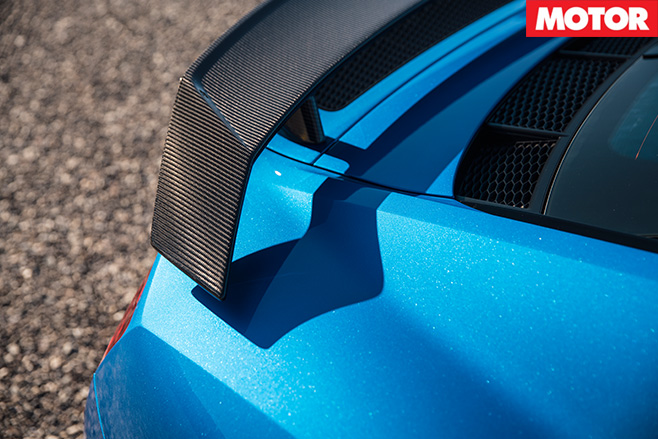
Ingolstadt’s flagship supercar, the R8 V10, comes with a standard extending spoiler that lets its gorgeous silhouette run undisturbed. However, on the faster Plus, it’s traded for a fixed unit so gorgeous it was clearly crafted by people who love cars and have a passion for the details.
Finished in gloss carbon fibre it matches the rear diffuser’s race-bred looks, while at maximum velocity, which is 330km/h, it helps load the car’s rear axle with 100kg.
Of course, while it does its part for downforce, it’s svelte enough to hardly disturb rear vision. A lesson in both form and function.
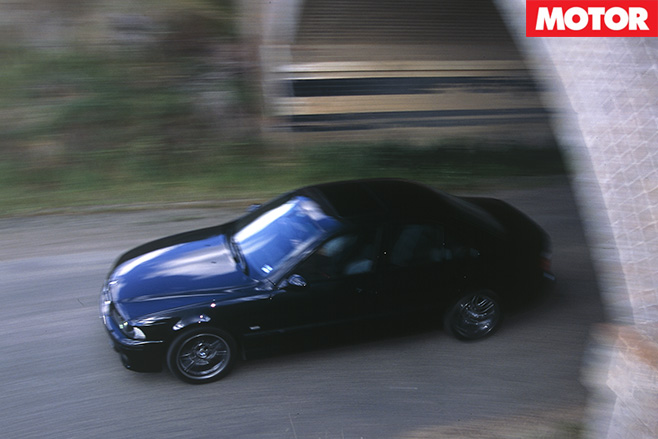
If you really want my opinion (or if it’s my money we’re spending) then there’s really only one BMW M5 I want parked in my shed.
This story was originally published in the October 2005 issue of MOTOR.
Oh sure, the current-model twin-turbo bruiser is a slingshot par excellence and, for many folks the be-all-and-end-all. But for mefatself, it’s just got to be an E34, complete with that rippling straight-six.
But where does that leave the E39 version of the M5; you know, the one with the atmo V8? Actually, neither the birth of the boosted eight, the screaming F1-esque V10 nor the quirky proclivities of we inline-six pervs can take anything away from the E39, because any way you cut the deck, it’s one of the most rapid, capable four-doors on the planet, regardless of badge or price.
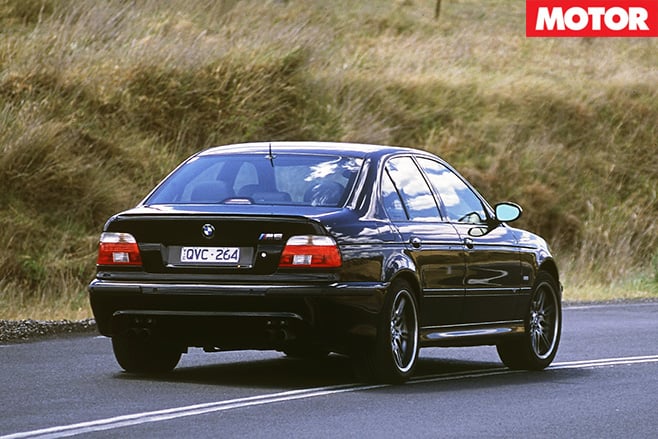
This seems a little strange given there’s no signature layout or cylinder tally, but it makes sense when you consider that no M5 has ever really wanted for more engine. Six, eight or 10-potter it doesn’t matter; not when the end result is inevitably such a ball-tearer.
For the E39, BMW’s M-tuners took the standard 4.4-litre V8 as seen in more pedestrian versions of the 5-Series, turned it inside out, and wound up with one of the true über-mills of the late ’90s. Actually, it’s not just a bored-out version of the S62 V8, it was a specific casting which hogged out the holes to allow for a 94mm bore instead of the S62’s 92mm.
Downstairs, BMW went along its favourite track and stroked the bugger. We’re not talking a little stretch either; think 89mm versus the 4.4’s 82.7mm, so the capacity hike from 4.4 to nearly a full 5.0 litres (actually, it’s a 4.9, but don’t let the truth get in the way of marketing) is more about stroke than simply bigger slugs. As such, BMW had to develop a specific three-layer steel head gasket.
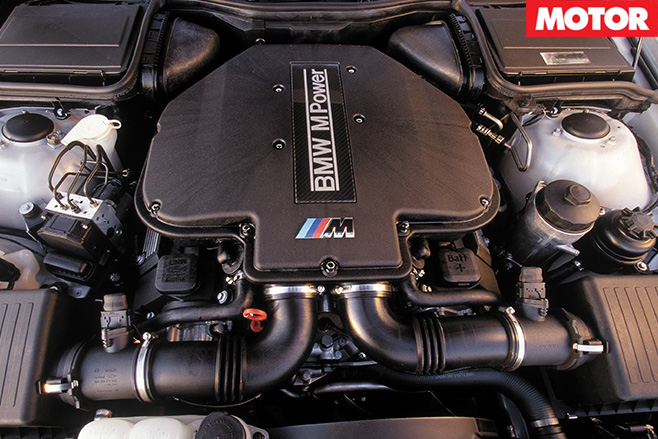
As well as the usual oil pump, there’s also a single scavenging pump for each bank of cylinders. In normal driving, these pick up oil from the back of the engine and return it to the sump.
But when things start getting jiggy, the on-board lateral g-force sensor detects big side forces and switches the scavenging pumps to a different pick-up point at the outer side of each cylinder head. Smart? You wouldn’t want to challenge an M5 to a game of Trivial Pursuit.
Throw in the trick manifolding and double VANOS (variable valve timing) and you’re staring at some big numbers. Try 294kW and a neat 500Nm, making the V8 yet one more normally aspirated BMW engine that cracks the magic 100Nm per litre mark.
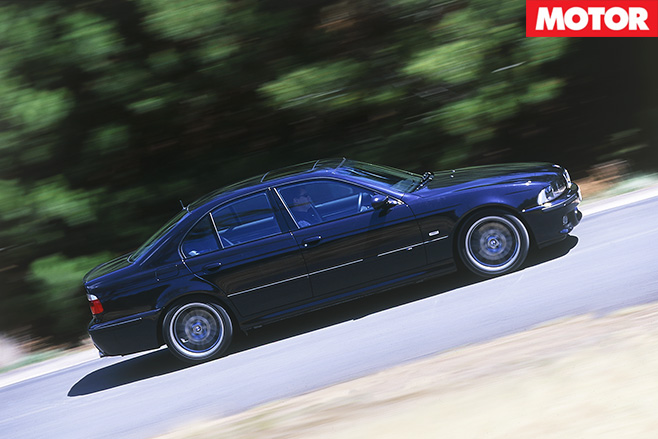
For all that, it wails too when you get fair up it, and the redline is easily tagged (as is the limiter) if you’re up to the challenge. Meanwhile, there’s a beaut soundtrack to go with it and even if those four, big stainless zorst pipes seem a bit over the top, you’ve got to admit it sounds like a proper big-inch V8 from both within and without.
It’s perhaps a little odd that BMW never offered an automatic gearbox option on the E39 M5, especially since it was aimed at rich buggers. Still, we’d have taken the six-speed manual every time purely because the fastest Five was such a performance car in every other regard.
One mechanic I talked to about the M5 was of the opinion that BMW was almost having a lend calling the car an E39 in the first place. The logic there is that there’s virtually no component interchangeability between the M and lesser Fives. Meanwhile, the suspension, driveline and brakes are all M5-specific and that’s part of the reason the thing was such a stormer: It doesn’t feel like a warmed up Munich taxi, because it isn’t one.

The M5 not only accelerates like a bastard, it does so effortlessly and with absolutely zero fuss. There’s no thrashing from the valve gear, no strained, whining noises from the driveline and no clumsy clutch-gearstick action. It just buggers off, that’s all.
Top speed is limited to about 250km/h, but you should reach 100km/h in a low-five and cover the standing quarter in under 13.5 seconds. Inherent ability and BMW’s legendary damping prowess make sure the M5 is just about unstoppable as a road car.
Sure, the ride is firmish by limousine standards, but it’s an absolute armchair compared with a lot of other performance sedans. Part of that must surely be the kerb mass which tops out at the best part of 1800kg with a full tank of PULP on board.

The rest of the package is just what you’d expect from a late-model BMW costing a bee’s dick short of $200,000 when it was brand spanking. The standard equipment list is long and heavily weighted towards electrical gizmos that relieve you of the obligation to actually do anything apart from steer and change gears.
Even the tacho is smarter than the average bear with a variable redline that changes according to whether the engine oil is fully warmed through or not.

And that’s really a big part of the deal, isn’t it? There’s absolutely no doubt that an E39 still looks the business and hasn’t yet started to show its age in any area. The fact you’re buying a near-new car for around a quarter of its original price is a fact of luxury-car life and while it must keep accountants awake at night, it’s brilliant news for the likes of us.
The problem with the relative scarcity of the M5 is that no mechanics we talked to had seen a whole bunch of them through the door, so finding out what really goes wrong with them is a bit more hit and miss than it would be for a Camry. That said, it appears the drivelines are more or less bulletproof and only the odd electrical gremlin seems to upset ye olde applecarte.
Oh, and a new one will set you back better than a grand. Er, and there’s two of them, remember.
Other than that, look out for crash damage and anything that leads you to believe it’s been club raced (rare, but possible), if you can see evidence of it, then steer a wide berth. See, correctly repaired damage shouldn’t be visible at all and a car like an M5 will only ever be as good as the maintenance and repairs that have been foisted upon it.
SPECS Body: 4-door sedan Drive: rear-wheel Engine: 4941cc V8, DOHC, 32v Power: 294kW @ 6600rpm Torque: 500Nm @ 3800rpm Compression ratio: 11.0:1 Bore x Stroke: 94.0mm x 89.0mm Weight: 1790kg Weight/Power: 6.08kg/kW Specific Power: 60.0kW/litre Transmission: six-speed manual Suspension: MacPherson struts, coil springs, anti-roll bar (f); multi-link, coil springs, anti-roll bar (r) L/W/H: 4784/1800/1437mm Wheelbase: 2830mm Track: 1515mm (f); 1527mm (r) Brakes: 345mm ventilated discs, two-piston calipers (f); 328mm ventilated discs, two-piston calipers (r), ABS Wheels: 18 x 8.0 inch (f); 18 x 9.5-inch (r), alloy Tyres: Dunlop SP Sport 8000, 245/40 ZR18 (f); 275/35 ZR18 (r) Fuel: 70 litres, PULP Price: $198,500 (December 2002)
FAST TIMES 0-100km/h 5.19secs 0-400m 13.46 @ 172km/h
With summer slowly turning up the dial on Melbourne’s temperature, we’re glad to welcome Mazda’s latest MX-5 in 2.0-litre form. But it has some mighty big tracks to fill.
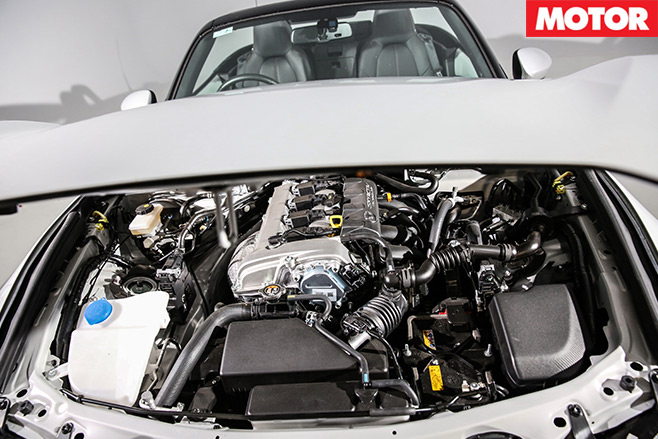
See, two months ago we bid Chrysler’s mighty 300 SRT goodbye. And in place of a huge 6.4-litre HEMI V8, our new arrival’s plucked its 2.0-litre four banger straight from a Mazda 3, which spins four less cylinders and ignites less than a third of the V8’s capacity. And this is Mazda’s ‘big-block’ variant. Gulp.
That’s right, Japan never really wanted to build this car. If it wasn’t for America stomping its feet about the 1.5-litre base roadster being a little short on poke, it would have never existed.
Mazda has promised grunt-lovers a longer innings this time ’round, as the MX-5 launched with both the 1.5-litre and 2.0-litre donks to serve up an interesting choice between ‘purity’ and ‘power’.
Why’d we go for the latter? We threw both into the ring last year and the family fight revealed 500cc makes a lot of difference.
That’s knocking on the door of VW Golf GTI pace, covers off the mini turbo hot hatches you’d find at Ford, Peugeot, or Renault, and is more than a second healthier than its less endowed bro.
Straight-line go isn’t all you get with the bigger engine, either. Mazda also chucks in bigger wheels, beefier brakes, stickier tyres and stiffer suspension. This, it says, help deal with the engine’s extra weight.
Crucially, however, we’ve found the suspension bits to do more than just keep belly fat in check. The engine lets you thrust into traffic gaps more quickly, the ABS remains unfettered and violent pitch and roll has been reduced.
So, really, Mazda’s saved you the cut knuckles and forum-digging usually needed for an engine swap. And you haven’t had to sit down with a mechanical engineer to dream up the right spring rates, tyre sizes and brake package to suit.
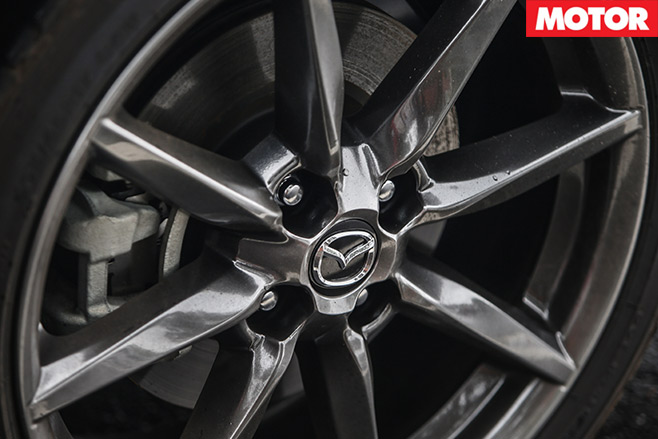
Don’t get us wrong, it’s not tuner-proof. We’d love to shrink the gap between its wheels and guards, and a couple of Jet Black MX-5s getting around Melbourne make our 2.0-litre’s Crystal White Mica paint look a little bland.
That’s fine, though, because we’ll fix that up over the next few months. The Kuroi styling pack, which proved popular on the Mazda 3, has spurned a new version for the MX-5, and we’ve put our name down for it.
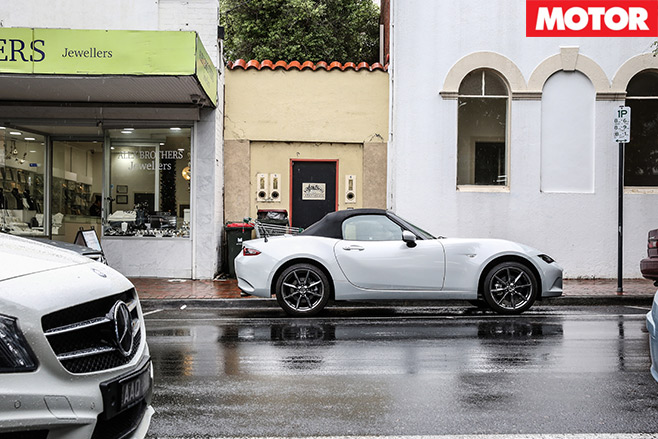
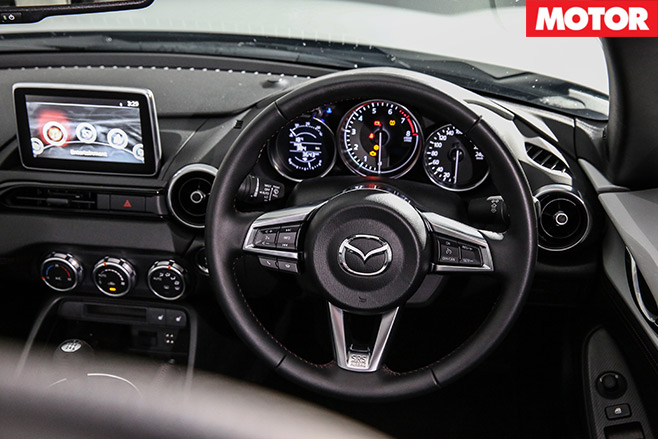
First impressions, otherwise, is that inside the MX-5’s certainly no Chrysler 300. We’ve bagged a GT-spec 2.0-litre, that runs up its ask to $39,550 and scores heated seats, leather, along with climate control, but you can sense the compromise around the cabin.
Engineers slaved to make the fourth-generation lighter than the porky NC before it, but you’d appreciate somewhere to hide your phone, more sound deadening at the rear, and a glovebox up front.
On the other hand, we love that you can slam-dunk the manually-operated roof whenever you want, and while it’s no 300 SRT to drive, that’s entirely the point. We’ve swapped a Big Mac for sashimi. And we’re relishing the taste.
QUESTION – GEOFF: I need a comfortable car to drive for everyday purposes but it also needs to tow a 2400kg caravan when on holidays (and then retirement).
Does such a car exist; to play both roles? Any suggestions? Thanks.
BUDGET: $60000
RESPONSE – FRASER: Yes, such a car does exist provided your definition of a “car” extends to largish SUV or a 4WD. With your 2400kg towing requirement that’s where you’ll inevitably end up…
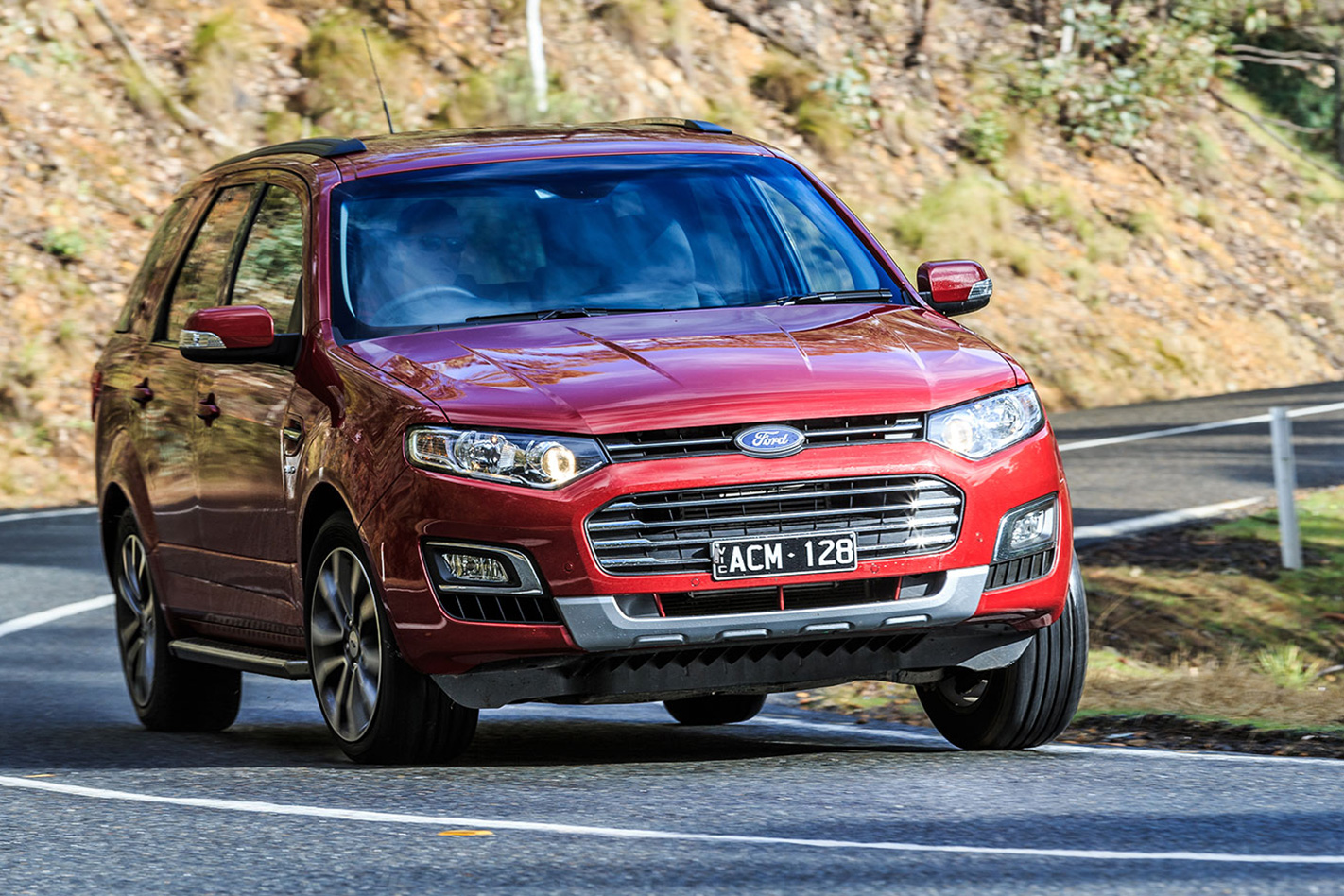
If you can cope with an SUV or a 4WD for the day-to-day side of driving my first choice would be a Ford Territory, in particular the all-wheel-drive diesel model. The Ford Territory AWD diesel is the only variant to meet your 2500kg towing requirement and only then with a genuine Ford accessory heavy-duty towbar.
The Territory AWD diesel is comfortable, smooth riding and offers effortless performance combined with good economy. It tows well and is an excellent open-road car. The trouble is the Territory will be phased out from next year so you’ll need to get in quickly if you wish to go that way! Like the Falcon, the Territory is made in Australia so when Ford stops selling its locally built cars in 2017 it will cease to exist, at least as a new car. I suspect the cessation of production will bump up the value of second-hand examples.
Other possibilities include the Toyota Fortuner and the Mitsubishi Pajero Sport, although both of these 4WD wagons are based on 4WD utes (the Hilux and Triton respectively) and aren’t as comfortable as the Territory or Prado.
Whincup fought tenaciously but van Gisbergen prevailed in battle of the Bulls…
Joh Bjelke-Petersen, Phar Lap, Dinah Lee, ANZAC biscuits, Max Merritt, Robbie Francevic, Russell Crowe, the pavlova, Jack Davey, Sam Neill, Jim Richards, Neil Finn, Keith Urban… Now add the name of Shane van Gisbergen to the impressive list of New Zealand products to have registered strongly in Australia.
In his time learning his craft in Australian Supercars, we noted his blinding speed and expressive car control. But doubts lingered whether he could put together the speed and thinking-on-the-fly for a full championship season.
Joining an expanded Triple Eight Race Engineering squad in 2016s year gave the exuberant, untamed van Gisbergen the chance to put it all together, operating to the stricter dictates of owner Roland Dane. Yes, there were other serious questions too – whether Red Bull Racing Australia team-mates van Gisbergen and six-time Supercars champion Jamie Whincup could work as team players whilst fiercely pursuing their own ambitions, and whether Triple Eight could successfully run three cars in a hectic championship.
And as the year unfolded, there were a couple of occasions when the Bulls got together unexpectedly, notably at Pukekohe. More than once though they duelled spectacularly and without grief, giving us breathtaking racing of the very highest quality.
By mid-season, van Gisbergen and Whincup had shaken off most of their challengers, with only Craig Lowndes and Scott McLaughlin within shouting distance.
Mount Panorama proved to be the turning point in the championship, with Whincup losing a swag of points in circumstances still debated now.
After that, he was desperately playing catch up.
Going into the finale at Homebush, Whincup trailed by such a margin that his rival needed only to finish fifth in the first of the weekend’s two 250km races.
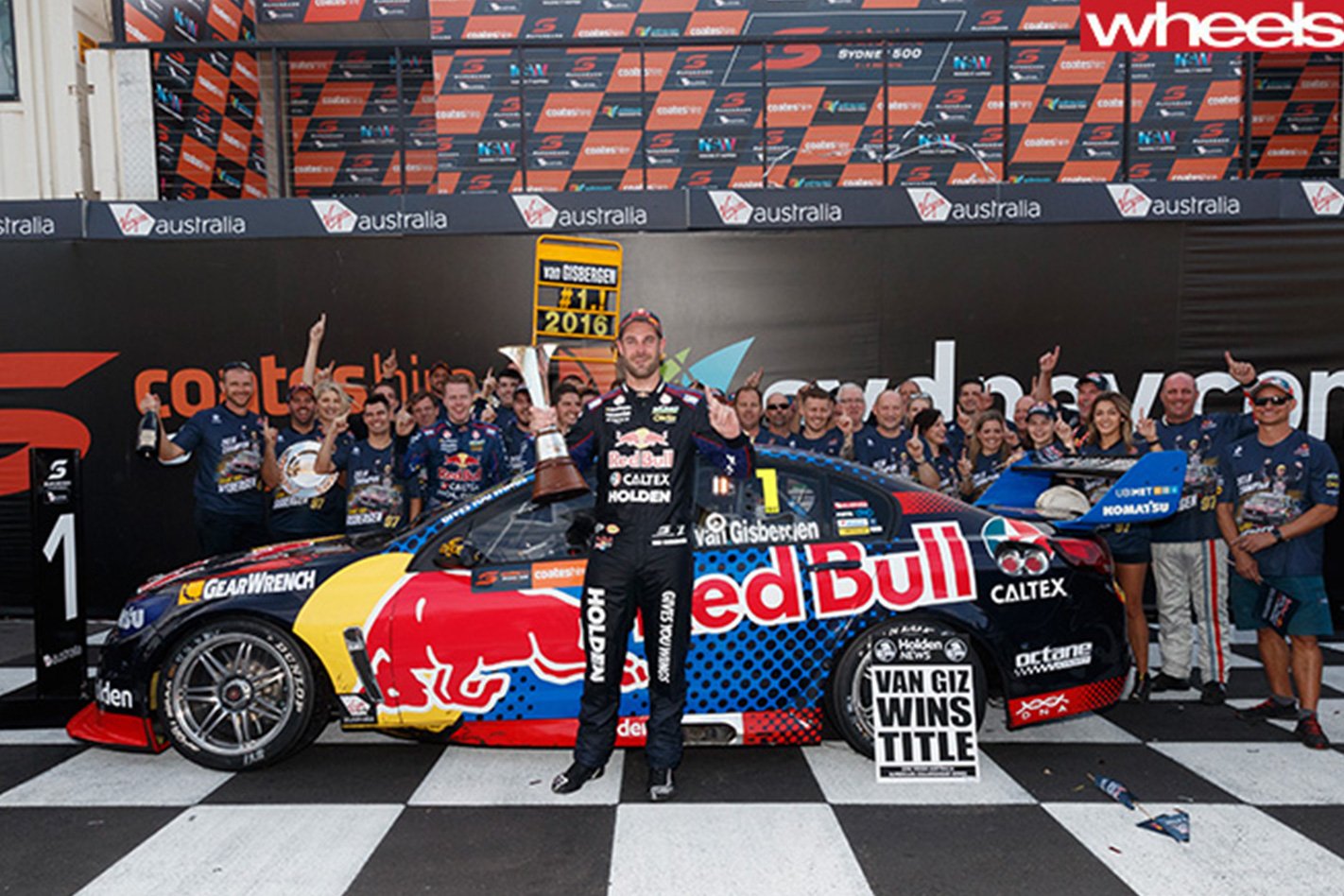
Whincup fought like he always does, winning the race. But van Gisbergen came through to third to clinch his first championship. Of course, he did conclude the whole experience was “awesome”, his favourite word.
In the last race of the year, SVG drove like a champion-elect, storming home ahead of Garth Tander, who had plenty to prove in his farewell drive with the Walkinshaw HRT.
Grabbing a nice seeya gift for Garry Rogers Motorsport, the departing McLaughlin bested Lowndes in the fight for third in the standings, depriving the greedy Triple Eight camp of a triple treat at the top of the table.
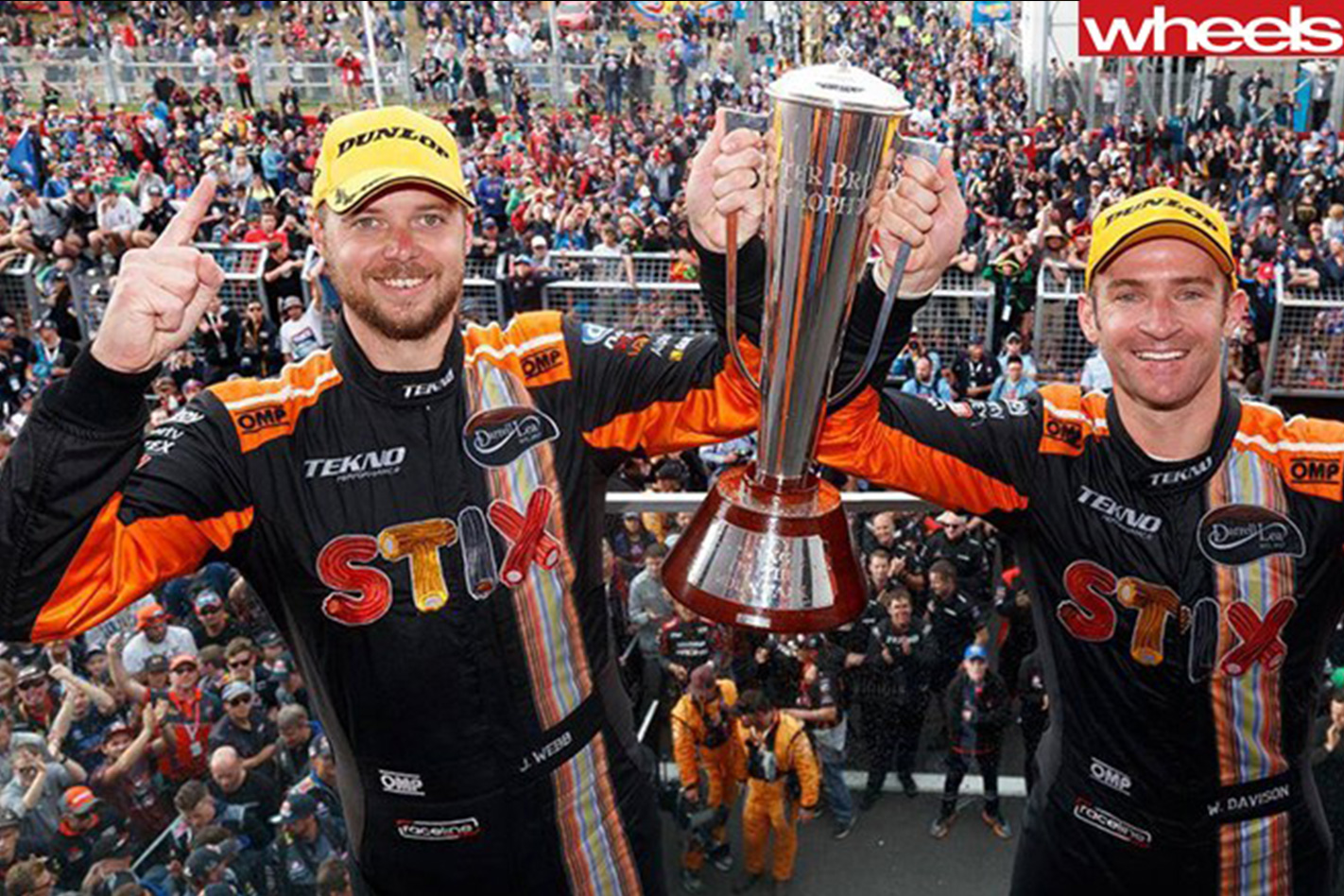
Fifth in the championship was Will Davison, the one-entry Tekno Autosports team being the mouse that roared in 2016. Moving to Tekno (and back to a Holden product) handed Davison victory in the second round of the year, the Tasmania SuperSprint. Then after a dry spell mid year, he took third in the Sandown 500 with Jonathon Webb before the pair capitalised on the late dramas of others to win the Bathurst 1000, despite not leading any laps.
There is often an argument that champions struggle to keep their hunger for winning burning after a long, tough campaign. In Supercars, Whincup is one obvious, recent standout exception.
Reigning champ Mark Winterbottom vowed to go hard after back-to-back titles but then struggled to mount a tigerish defence, perhaps largely because his Prodrive Australia team lost some of its potency in 2016.
None of the Prodrive Falcons qualified or raced consistently, Frosty not scoring a podium until five races into the season, at Symmons Plains.
Winterbottom’s first victory of the year was in Perth when his fighting qualities were on show. Two podiums at Winton gave Winterbottom the championship lead, albeit briefly. That was as good as it got for Frosty and the Blue Oval followers. The second half was patchy and forgettable with only one more win – in Auckland.
At the season’s end, he’d finished sixth overall, and best of the Fordsters. Still readjusting after his huge Bathurst shunt in 2015, Ford team-mate Chaz Mostert, was next, ahead of BJR’s Tim Slade, a Winton double winner.
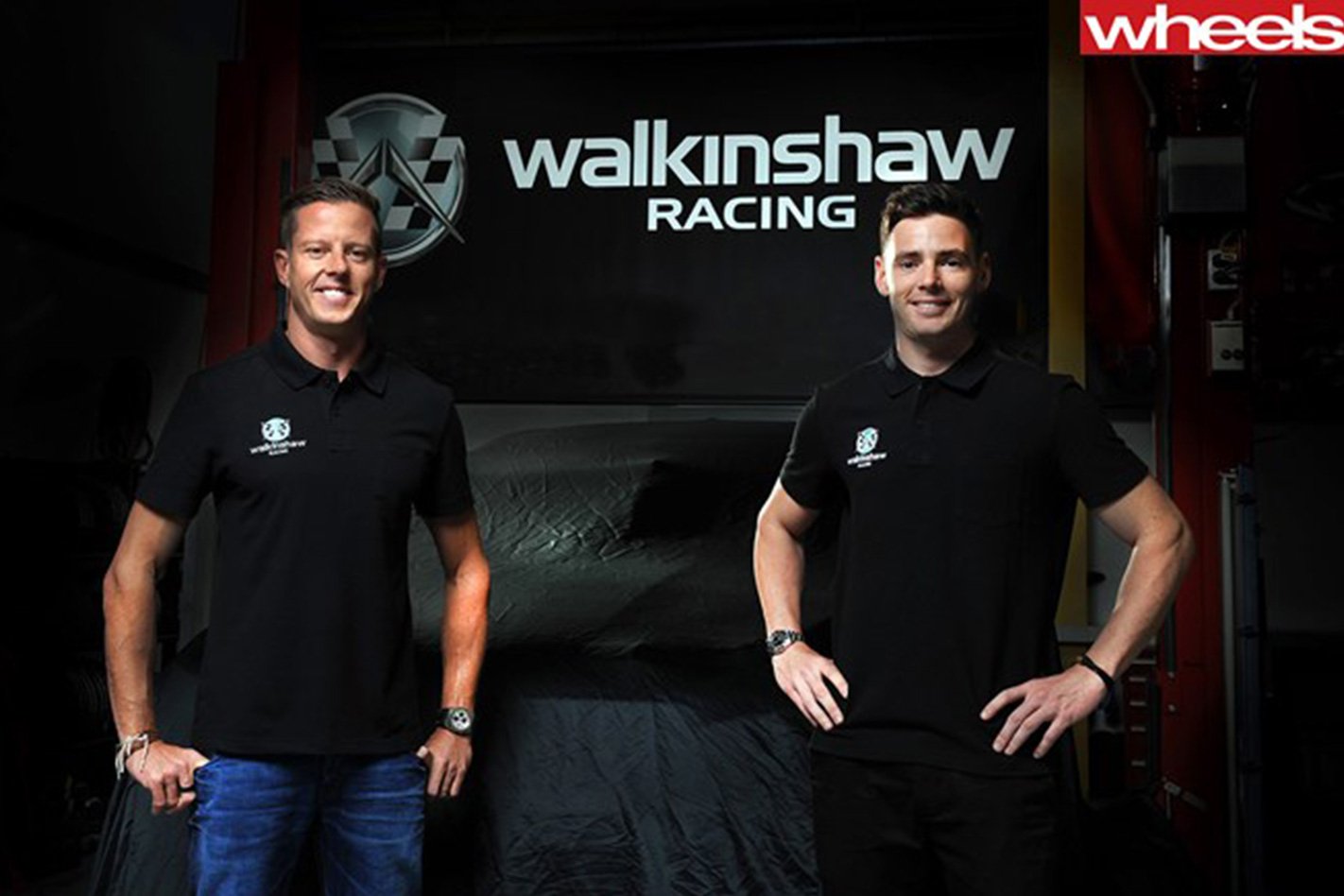
A new chassis in the latter part of the season reinvigorated Tander, who won the Sandown 500 with Warren Luff, shone brightly in the Bathurst 1000 (before his shunt), and then finished brilliantly at Homebush with a pole and a pair of second places. Still one of the best pack slicers-and-dicers in the business, Tander’s vigorous late push landed him ninth place in the championship, a couple of slots ahead of the driver remaining with the Walkinshaw stable next year, James Courtney.
Just four days after Tander won the Sandown enduro, Walkinshaw/HRT dumped the star in favour of younger (and certainly cheaper) signing Scott Pye.
One championship position further back and the pick of the Kelly Nissan foursome was Michael Caruso, 10th in the points, helped by a win in Darwin.
Through much of year, Nissan’s head office kept its Australian arm on tenderhooks, along with the Kelly team, plus the chaps at Supercars. Would the Japanese brand commit to Supercars into 2017 and beyond, or follow Ford and Volvo out the door? And just when the doubting Thomas’ sensed all was lost, along came the announcement that the Nissans would be continuing…
Not so New Zealand team Super Black. Gone! Sad it is that a country spawning so many fine racing drivers cannot sustain a full-time Supercars team.
Gone too is the Holden Racing Team as we know it. In August, Holden ended its 26-year relationship with the legendary HRT, withdrawing factory support and stripping it of its famous name. The HRT nomenclature will in 2017 be part of the Red Bull team handle.
Also gone is the silly, unloved, taxpayers’-funded Homebush street circuit, conceived by people who should have known better than to foist such a spectator-unfriendly, economically unviable venue on race fans. Eight years of bent cars and the most abominable spectating in Australian motor sport. Good riddance.
The late-2016 come-uppence for the odiously corrupt former NSW Labor powerbroker Eddie Obeid also raised hopes that ICAC (Independent Commission Against Corruption) may get serious about delving deeper into the controversial ministerial decision by the egregious State minister (and Obeid associate) Ian Macdonald to tip in $35 million to fund the V8 supercar racing at Homebush. A subsequent report by the Auditor-General was scathing about the deal. The disgraced and disgraceful Macdonald signed taxpayers up to the V8 Supercars race without a system to manage potential conflicts of interest, without advice from the government’s major events body and without a proper business case, the NSW Auditor-General found. The deal stunk.
If only the money spent by the NSW Government over eight years had been ploughed into a permanent circuit…
Another late 2016 departure from Supercars was that of Jason Bargwanna, the Driving Standards Observer. Maybe his card was marked at Bathurst following the hotly contested decision to blame Whincup for the late race incident which also entangled McLaughlin’s Volvo and Tander’s HRT Commodore.
Watching that incident on video countless times and, funny thing, nothing changes. The Volvo driver left a gap, and Whincup was quite entitled to have a crack.
What happened in the ensuring couple of seconds was largely the fault of McLaughlin, who re-entered the track dangerously and made high speed contact with Tander, who was busily avoiding the redressing Whincup.
The decision to penalise Whincup changed the course of the championship, and likely cost the Red Bull Racing driver another Bathurst 1000 victory.
He and co-driver Paul Dumbrell had absolutely dominated that race until the fateful overtaking attempt.
And this is to take nothing away from Tekno’s Davison and Webb, who went on to win the Bathurst 1000. They were in the right place to take advantage of the slap down of Whincup.
2017: More of the same or can others carry the fight to the Bulls?
And when will the frightening potential of DJR-Team Penske be realised?
Making predictions in motor sport is, well, notoriously fraught. But it is a safe bet to suggest that the 2017 Supercars championship will again feature the prime protagonists from the previous season, titleholder Shane van Gisbergen and six-times champ Jamie Whincup.
The carefree, drive-anything Kiwi will be buoyed by greater familiarity with the Red Bull Racing Australia team, and the knowledge that he possesses the right stuff.
Whincup will focus on banishing the mistakes –one or two self inflicted and others outside his control – that cost him the crown in 2016.
On the basis of pure talent, a few others should challenge too. Scott McLaughlin’s move to DJR-TeamPenske promises a lot, the proviso being that the blended outfit of two great names on either side of the Pacific hits its straps, eliminates some of the stuff-ups of 2016, and gets on terms with the benchmark Bulls.
Craig Lowndes should be thereabouts too, the sparkling veteran still capable of taking it to his Triple Eight (RBRA) team-mates.
Question marks hang over what sort of impact Garth Tander will make in his return to the Garry Rogers Motorsport team that gave him his 1998 start in the then V8 Supercars category.
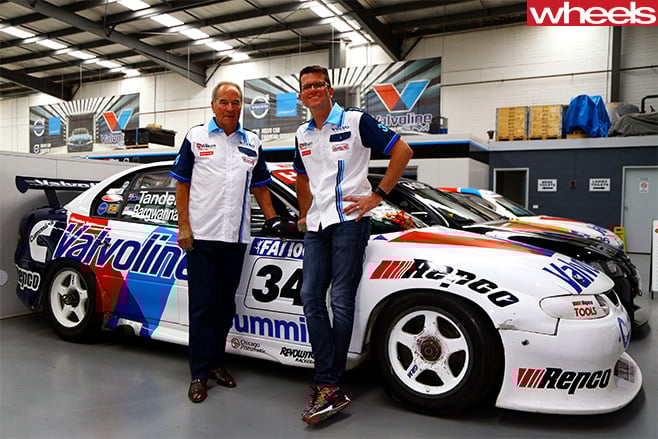
Garry Rogers sees an extended future for Tander at GRM, with his role expanding beyond just race driving. “Garth’s business acumen is important; he is very smart as well as being a great driver so I think he will be a person to help [Garry’s son] Barry not only maintain but also grow the team.
“I have no doubt that Garth will be a serious contender on track. As a driver he has a few good years left in him in my opinion and whether that’s two or 10, I don’t know.”
Tander’s homecoming was announced slap-bang in the middle of tense mediation sessions centred on whether GRM can use the Volvo S60 hardware from three rather successful seasons of Supercars racing.
GRM has shown it can field cars capable of winning, but the legal wrangle may not bring the best possible outcome for the team, and therefore for Tander and his team-mate in 2017, James Moffat.
Replacing the star veteran at The Team Formerly Known as HRT, is Scott Pye, who will be under pressure to perform at the same level as the triple Bathurst 1000 winner whom he replaces, and carryover driver James Courtney, his very worthy Holden team-mate. The HRT/Walkinshaw outfit showed some signs of renewal late in 2016, but will have to lift again to embarrass the T8 steamroller. And it will have to get by without Holden factory status and a budget from Fisherman’s Bend. Still, neither of these elements helped the Walkinshaw operation much in recent times…
Other changes to team driver line-ups also bear watching. Nick Percat, who did some impressive stuff with the under-fed Lucas Dumbrell team last season, has been lured to Brad Jones Racing.
The South Australian replaced Jason Bright who after seven years with the Albury-based team re-emerges under the Prodrive umbrella. Despite what must be measured as an ordinary year, the fast approaching 44 year-old was keen to remain a full-timer on the Supercars’ grid and canvassed several opportunities before Super Black’s wobbly and ultimately terminal future led to the deal to return to the Ford squad, driving its fourth Falcon.
Bright joins Mark Winterbottom, Chaz Mostert and Cam Waters in a squad that needs to lift its car speed and consistency in 2017.
Supercars Australia finally got its wish to secure a full-time gig for a quality female driver, helping fund Swiss open wheel driver Simona de Silvestro into one of the four Kelly brothers’ Nissans.
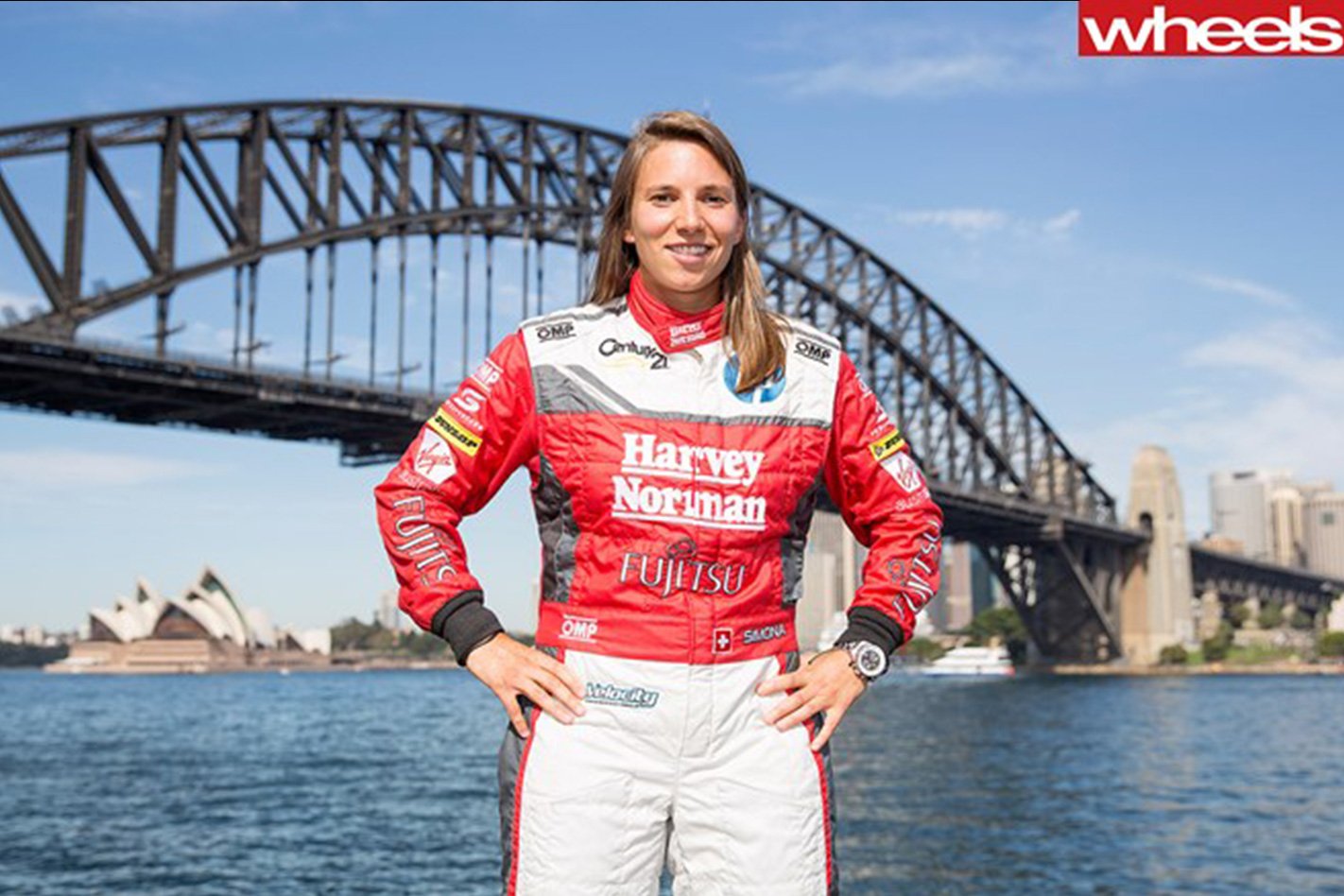
De Silvestro looked very capable when she raced in the Bathurst 1000 in 2015 and 2016.
With her background in IndyCars, Formula Atlantic and, more recently, Formula E, the 28-year-old driver understands she faces a difficult transition to taxis: “I think it’s going to be a pretty big challenge for me. Like I’ve said before, most of my career has been in open wheel. The Nissan Altima was feeling pretty great at Bathurst, so I’m sure at the other tracks I’m going to be able to adapt a lot quicker. Learning the tracks and working with the team will be a big challenge but looking forward to it.”
Fans should cut any newcomer plenty of slack. Remember the difficulties faced by others new to Supercars in the recent past? These include Robert Dahlgren, Maro Engel and Alex Premat, who like de Silvestro had to learn new tracks, a grid of drivers of varying levels of aggression, a new car and a new team. Never easy.
Betty Klimenko’s Erebus Motorsport had some heartening results in 2016 with the quick and effervescent David Reynolds, who took his first podium for the team on the streets of Sydney in the last round of the championship. Reynolds is particularly lively on street layouts but his all-round game is clever enough to threaten lots of rival teams at every stop on the schedule in 2017.
“We’ve had great momentum going the last few rounds and if we keep playing it smart, there’s no reason we can’t be at the front straight away next season,” Reynolds said.
A sidebar to his broader championship assault is the reality that he still owes van Gisbergen a serious return of serve for that scary unload at Phillip Island in 2015.
Erebus has also signed 2013 Dunlop Series winner Dale Wood to drive the #4 Commodore in next year’s Supercars Championship. After a very ordinary 2016 at the wheel of a Nissan, Wood surely realises he needs to stay out of strife and improve his consistency to hold his place in the main game.
With one exception, the Supercars circus will play at venues largely familiar to teams and spectators.
New for everyone will be the street circuit to host the Newcastle 500, set to take place from November 24-26, 2017, making it the final round on the calendar, replacing unloved Homebush.
The 2.6km track incorporates parts of the CBD and local landmarks such as Nobbys Beach, Fort Scratchley and the harbour foreshore.
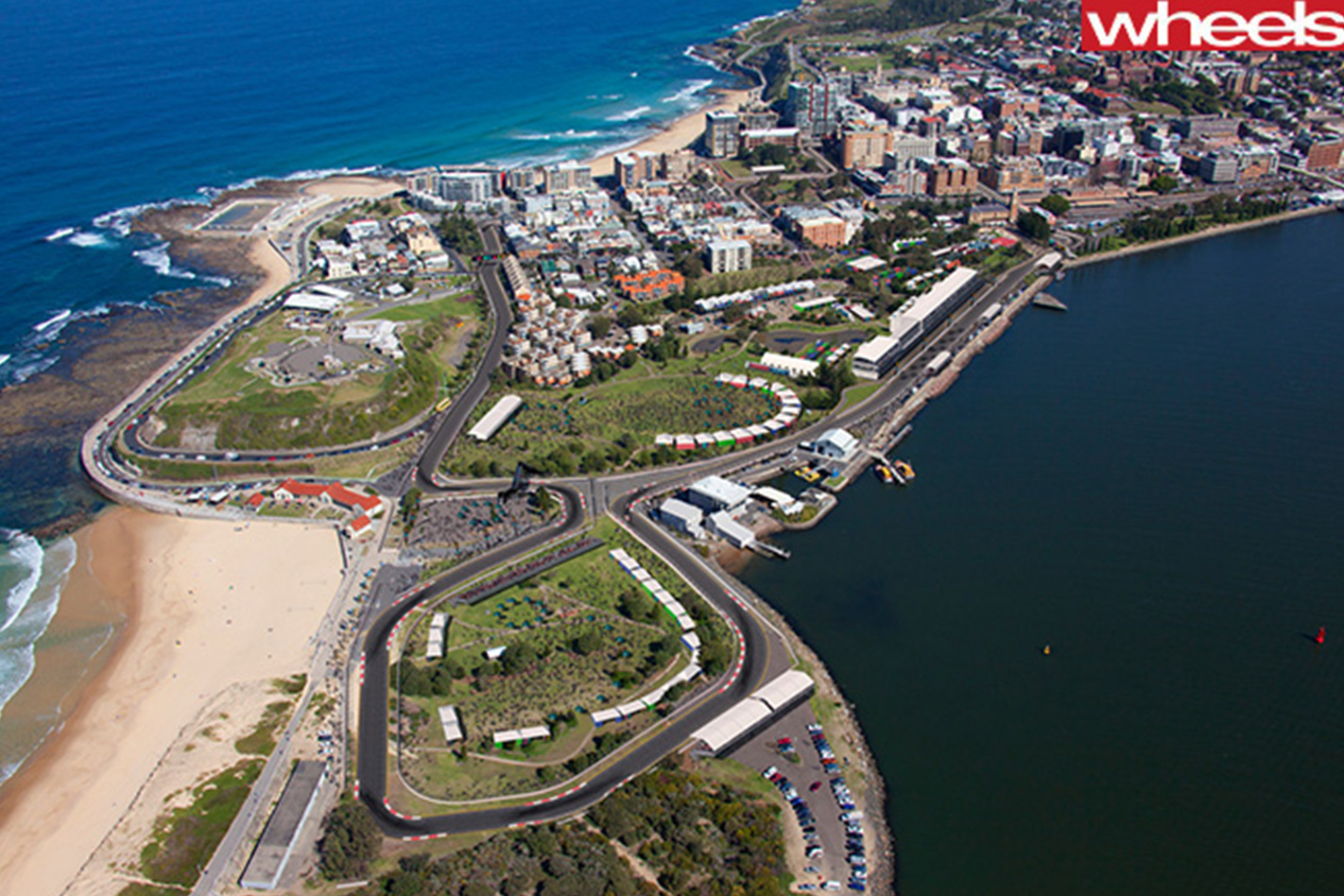
Supercars had hoped to stage the Newcastle finale one weekend earlier, but that slot was snaffled by the Rally Australia world championship event, to be held in Coffs Harbour.
Let’s hope local fans enjoy the Newcastle event, because they’re helping pay for it.
Then there’s the ongoing debate about whether the Supercars championship really needs a heavy involvement from the manufacturers. Sure, the variety expressed by having a welter of brands is useful, but does it matter that there are just two factory teams in 2017 – Holden, and Nissan?
The truth is that, apart from the grilles, the track machines bear scant resemblance to the production versions.
This will change in 2018, when Holden’s new racecar adopts a competition turbo version of its V6, one of the three engine choices in the next production Commodore, an Opel-sourced front-drive/all-wheel-drive Insignia hatchback …
Death of the Falcon, sizzling HSVs, hot property and F1 flops. Here are the top Wheels stories that lit a fire under readers in 2016.
What a year 2016 was. It will largely be remembered for the long goodbye started with the last Falcon-badged Fords rolling off the carmaker’s Broadmeadows production line – the first of the three remaining Aussie manufacturers to end decades of local manufacturing.
But there were other good, strong stories, too; some courting controversy and comment while others inspired and delighted. Here’s our pick of the year’s top stories.
Mark Webber calls out Pastor Maldonado
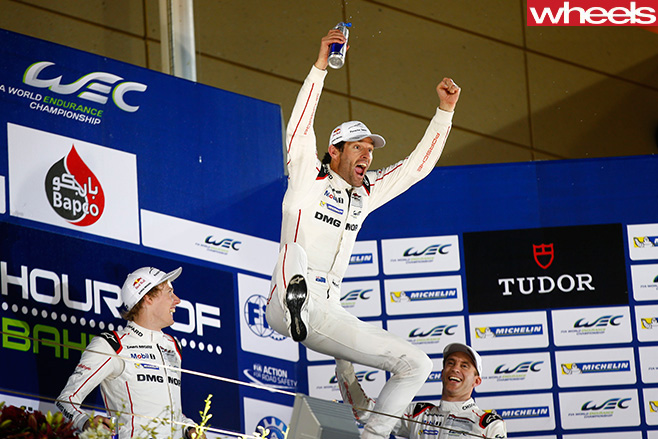
Former Red Bull teammate Sebastian Vettel, he reckoned, was the best driver in the sport – no worries with that, even if he did end up fourth behind Daniel Ricciardo in the drivers’ championship standings – while former Lotus pilot Pastor Maldonado earned Webber’s scorn as the worst on the grid.
“He’s out of his depth and just shouldn’t be there. He’s making up the numbers basically,” Webber said.
Ouch. Someone call the Maldonambulance.
Maccas drive-through in a WRC car Sometimes the ridiculousness of a situation is the story. That appears to be the case when Wheels was offered to have a steer of Hyundai’s World Rally Championship ride at the end of the season, at the Rally of Australia in sunny Coffs Harbour.
So, what do you do with a 232kW rally car with a six-speed sequential gearbox before it is shipped off back home? Take it for a run through Maccas, that’s what. Journalist Alex Inwood had to deal with a popping clutch, no sound dampening, the steering wheel on the wrong side of the car and sliding portholes instead of windows in his attempt to mix fast food with fast cars.
There’s a happy ending: despite all the trials, Alex does get eventually get his meal.
Holden resurrects Peter Brock’s Director badge
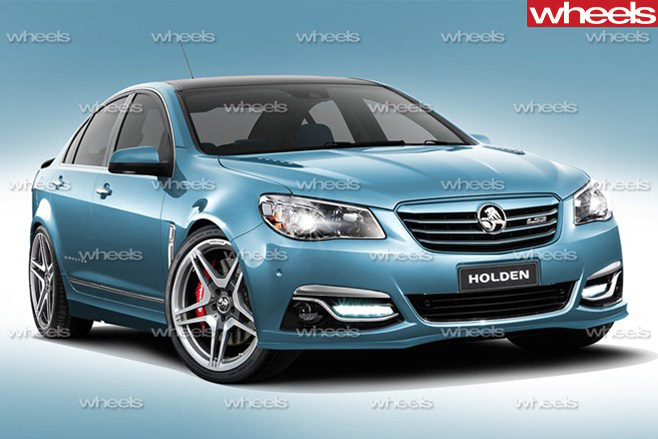
The badge was controversial enough when Brock applied it to a version of the car that saw him dumped by Holden over the use of a device dubbed the Polariser, which Brock believed improved the car’s performance.
The modern-day interpretation of the Director will be a limited-run version of the Commodore with equal measures of luxury and performance – just like the original.
Underneath, expect it to be a Holden Calais V, but with a subtle but distinctive rear wing, unique 20-inch alloys and interior appointments such as Director embroidery and badging.
The most expensive Holden-badged Commodore ever – it will come in at around $70,000 – is also expected to gain HSV’s magnetic ride control and bigger brakes.
Rumours rumble over HSV’s 476kW monster
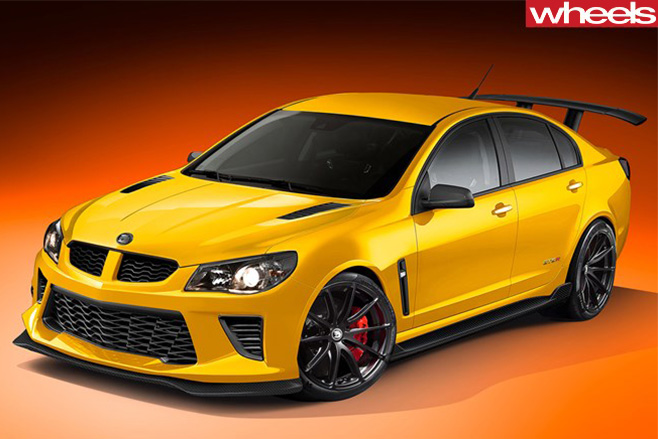
Dubbed the GTS-R W1, the 476kW Chevrolet Corvette LS9-engined hero will arrive in mid-2017, sitting above the standard GTS-R and with a price tag of around $170,000 – almost $20,000 more than the GFC-spanked W427 fitted with the Chevrolet Camaro Z06’s 375kW/620Nm 7.0-litre V8.
The GTS-R W1 is believed to be equipped exclusively with a manual gearbox, with an automatic transmission allegedly too expensive to integrate into the car’s chassis to justify its development.
Block heads: NSW police nix Gymkhana 9 video
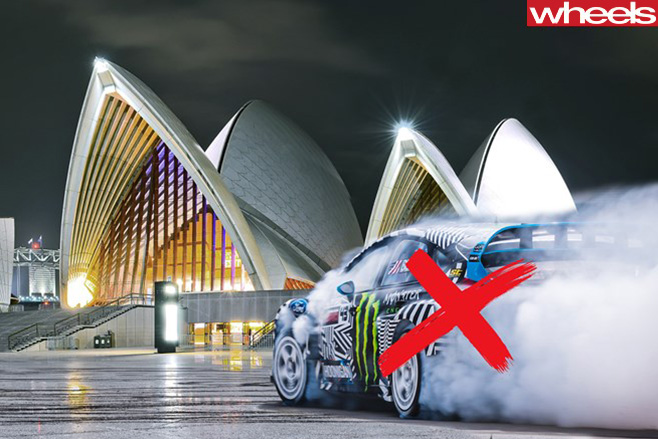
The Hoonigan series had planned to come here to film in Sydney and surrounds including the Harbour Bridge, but elected to go elsewhere after NSW Police put on the fun police hat and said no.
“The police down there [Australia] started to make things difficult with the permitting process for the locations we were trying to secure, both public and private,” Hoonigan spokesman Matt Tuccillo told Jalopnik.
“Apparently we were going to be ‘bad’ for Australia and as we got closer and closer to filming we started to lose more and more locations that we had secured, ultimately forcing us to abandon the concept.”
Organisers even offered to shoot a separate video warning kids not to try mad skids at home, but police were unmoved. Not to worry, the video game Forza Horizon 3 is set in Australia. Police are yet to outlaw playing it.
Tickford tricks up a trade ute
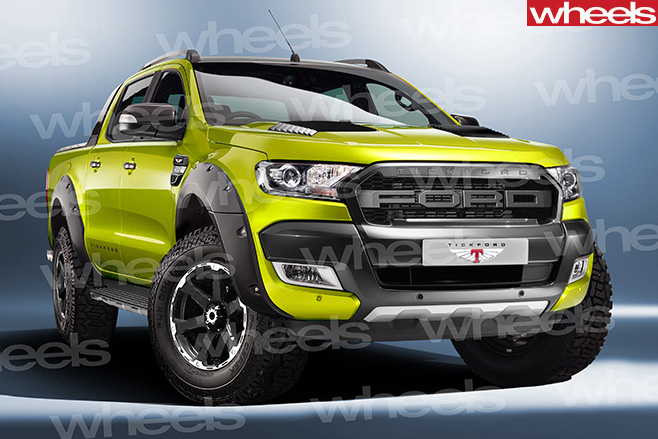
In the meantime, it gives ’Straya a chance to turn its attention, and affection, to the new concept of super trade utes, such as the Tickford-tuned Ford Ranger. Tickford is a blast from the past, a former offshoot of Prodrive Racing Australia. It has taken a Ranger and made performance tweaks to the engine and chassis, as well as delivering exterior and interior styling enhancements.
The engine puts out about 160kW after passing through the full list of Tickford add-ons, with torque jumping to about 570Nm. Adding the full list of Tickford tweaks costs more than $20,000.
Ford’s Sprint to the finish Finally, we had some real excitement early in the year with Ford reviving the Sprint name to mark the last official updates to the Falcon line. The limited-run XR6 Turbo Sprint, and XR8 Sprint models were a final salute to almost 60 years of Aussie development.
We gave the Sprint a fond farewell, sending Ponch on a 2500-kilometre road trip to bond for the last time.
Over its 56-year history, 3,578,689 Falcon-badged sedans, wagons and vans were made. The first of the Sprint series, an XR8 unveiled in February, sold for $92,500, while the last registrable car, an XR6 Turbo, sold for just $81,500.
The last car off the line, an XR6 that includes a Geelong-cast 4.0-litre in-line six-cylinder engine and has no vehicle identification number so it can never be registered for the road, will live on as a museum piece.
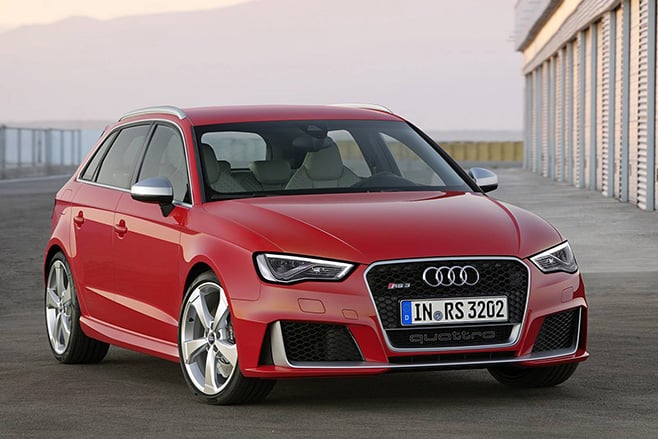
AUDI RS3 SPORTBACK | 79/100
Price & Equipment | 14/20
Despite the RS3 being some $28K pricier than the RS, this pair go toe-to-toe for key features and equipment. Both feature dual-zone climate, cruise, smart-key entry and start, auto headlights and wipers, LED DRLs, tyre pressure monitors and multimedia system with digital radio, Bluetooth connectivity, reversing camera and satellite navigation.
Interior & Versatility | 17/20
Typically cool mood-lit Audi cabin theme is evident, with some RS-style sportification. It’s a class act. More generously padded front seats are comfier than the Ford’s while offering lateral support up to its prodigious cornering ability. The RS3 also has a slightly bigger boot – 280 litres plays 260 – though neither is especially capacious for their size.
Performance & Economy | 18/20
Five-pot arrangement gives the RS3 an aural edge. It’s more tuneful and wilder-sounding than the RS; it sounds like half a Huracan. At 2.5 litres, it also has capacity on its side, and an extra 13kW and 35Nm driving through the seamless seven-speed dual-clutch transmission makes it a bit snarlier in a straight line than the six-speed manual Ford.
Ride & Refinement | 15/20
The Audi manages a better splitting of its personalities – rapid premium compact and road-rocket – at the expense of ultimate engagement and ability. But for those times you’re not back-road strapping, the RS3 makes noticeably smoother, quieter and calmer transport, and you don’t have to deal with operating a 465Nm-capable clutch.
Steering & Handling | 15/20
The ability to send 100 percent of torque to the rear tyres does not make the RS3 behave like a rear-drive at the limit; it favours mild understeer and resists wild attitudes. The RS3 needs Audi’s Sport rear diff (an S4 option that can send 100 percent of torque to either rear wheel) and greater feel from the flat-bottomed wheel to be a true great.
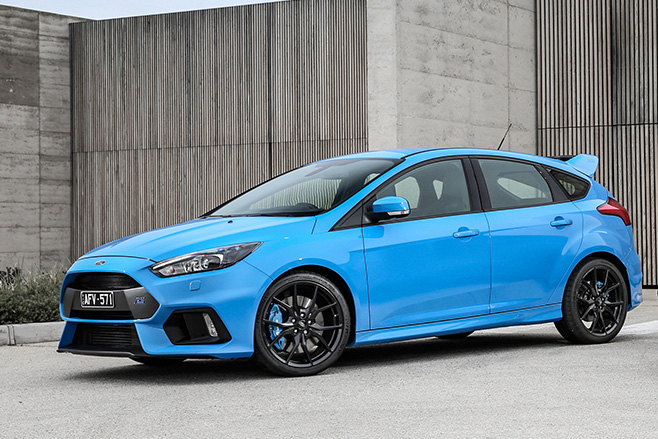
FORD FOCUS RS | 80/100
Price & Equipment | 17/20
Given the price gulf, we’ll forgive the Ford for not having some of the Audi’s niceties. It misses out on driver’s knee and front side airbags – the latter because of its track-oriented Recaro seats that also rule out powered lumbar support and seat heaters. They’re standard in the Audi, though you pay $4500 for optional bucket seats in that.
Interior & Versatility | 14/20
The tangible result of Ford containing the RS to $51K is its considerably less-special cabin. However, given the RS’s performance, erm, focus, we’re happy with a pair of uncompromising Recaros, liberal blue stitching and a nicely sculpted and trimmed wheel. Pity the front seats are not height-adjustable – and they’re set too high.
Performance & Economy | 17/20
They’re both in the hyper-hatch league, but the RS isn’t quite as quick. The 2.3-litre Ford has masses of low-down torque and an urgent top-end. It’s especially responsive in Race mode, where it hits hard, backed by an induction, exhaust and cracking soundtrack on shifts. Slightly lower outputs translate to lower fuel use at an official 7.7L/100km.
Ride & Refinement | 14/20
The RS’s track tendency comes across in its ride as much as heightened dynamic qualities. It’s firmly sprung and damped, and the thinly padded Recaros magnify the sensation. The ride is well judged in Normal and Sport modes – only just – but the hardcore Race is over-the-top. It’s too harsh for the street, but that’s why it’s called Race.
Steering & Handling | 18/20
This is where the Ford hurts the Audi, and for $28K less! Purists will love the RS, whereas the RS3 leaves something on the dynamic shelf. For all its rival’s point-and-shoot pace, the Ford has steering connection and feel and chassis adjustability that would be entertaining on their own, let alone with a desperately eager 257kW underfoot.
VERDICT
Before the Focus RS, the circa-$80K hyper-hatch – championed by the Mercedes A45 and Audi RS3 – presented a compelling case for spending large for speed in a concentrate. Now the Ford does much of what its pricey premium rivals do for fewer dollars – some 35 percent fewer, or $28,910 less than the Audi. On the other hand, cabin class, speed and soundtrack are the justification for spending more for the RS3. As ever, it will come down to your preferences. Bothered by the Ford’s four-star safety rating? You’ll choose the Audi. You’re a purist who puts steering and dynamic involvement first? It’ll be the Ford, then. Simply looking for the biggest bang for your buck?
Our winner is the Focus RS.
This article was originally published in Wheels Summer 2016.
QUESTION – PETER: I’m looking to purchase a small to medium SUV for myself and my wife. We are in our early sixties and live in a rural area outside the city. We are both currently working in town and commute each workday. We often travel long distances to visit family and enjoy travelling in country areas. The following is a bucket list of things that are important to us:
1. Safety is our number one priority, followed by running costs (including servicing). 2. Comfort and lack of road noise. 3. Performance. Don’t like engine lag or slow performance. 130kW is probably a minimum. Open to advice however. 4. Climate controlled air conditioning. 5. Prefer a full size spare for country use, however, this is not a game-changer. 6. Alloy rims – 18-inch or 19-inch wheels? 7. AWD is my preference, but I am open to your advice. 8. Satellite navigation; Bluetooth; voice-activated handsfree technology. Currently have Apple devices. 9. Good sound system for long journeys. 10. Driving usage is approximately 500km per week on sealed roads, often highway conditions. Very little, if any, slow traffic conditions or off-road. 11. Hot and dry in the summer and wet, frosty and cold in the winter months. Perfect the rest of the time! 12. Features as above, as well as good cabin space. Fold down rear seats would be helpful. We do not plan to tow with this vehicle. Automatic transmission is now a must for us, as is good emissions control. 13. We are happy to entertain the purchase of a demonstrator to get the things that we are looking for. 14. We are getting close to our retirement years and appreciate our comfort. Safety, however, is our main priority. 15. We are currently doing our research and are looking at Ford Kuga; Mazda CX-5; Renault Koleos; Hyundai? We are open to any advice you may be able to provide us with. Thank you for providing this service.
BUDGET: $40,000
RESPONSE – TOBY: Considering your requirements for safety there are two cars that stand out. Each gets the latest active safety features, which can help afford a crash in the first place; the key one is AEB, or autonomous emergency braking, which can automatically apply the brakes to avoid a nose-to-tail crash. On top of that each also matches others in the class for all-round airbag protection and a solid body structure that helps protect occupants in a crash.
The first is the Mazda CX-5. It’s an excellent value mid-sized SUV with an elegant interior and punchy 2.5-litre four-cylinder engine in the all-wheel drive models (the 2.0-litre is underpowered, so we’d leave that off your shortlist). Or you can choose a diesel engine, which could be the better bet for you considering the country driving you do; the diesel has more pulling power, so is great for freeway driving. Plus, it’ll use less fuel.The CX-5 also has plenty of gear in the cabin, including satellite-navigation on all but the base model. There’s also a great Bose sound system on the top two models, the GT and Akera. And if you can stretch the budget to that Akera it comes with radar cruise control, which maintains a set distance to the car in front.
Keep in mind, though, that Mazda will begin selling an all-new CX-5 in about March/April next year. It’s expected to make another leap in fuel economy and refinement, so if you can wait it could be worth it.The other car worth a look is the Volkswagen Tiguan. With a new body, it has a much bigger body than the original Tiguan and is a huge step up when it comes to occupant comfort; refinement, in particular, is impressive, so it’s relatively quiet on big freeway drives. It also gets Apple CarPlay and Android Auto connectivity, which is a great way to connect the latest smartphones, allowing main features to be controlled through the central touchscreen.
The Tiguan also has a wide range of engine options, with the 132TSI (petrol) or 140TDI (diesel) the best suited to your requirements. The petrol engine requires premium unleaded, but the trade-off is very low fuel use. They’re linked to a slick-shifting DSG automatic transmission, which is very intuitive and smooth in its gear changes. However, that DSG can hesitate when taking off from a standstill, particularly on hills or more sudden take-offs.
The Tiguan is also more expensive than most rivals, in part because it has fantastic attention to detail and an upmarket interior. So in some ways you’re paying for the core engineering rather than just features.
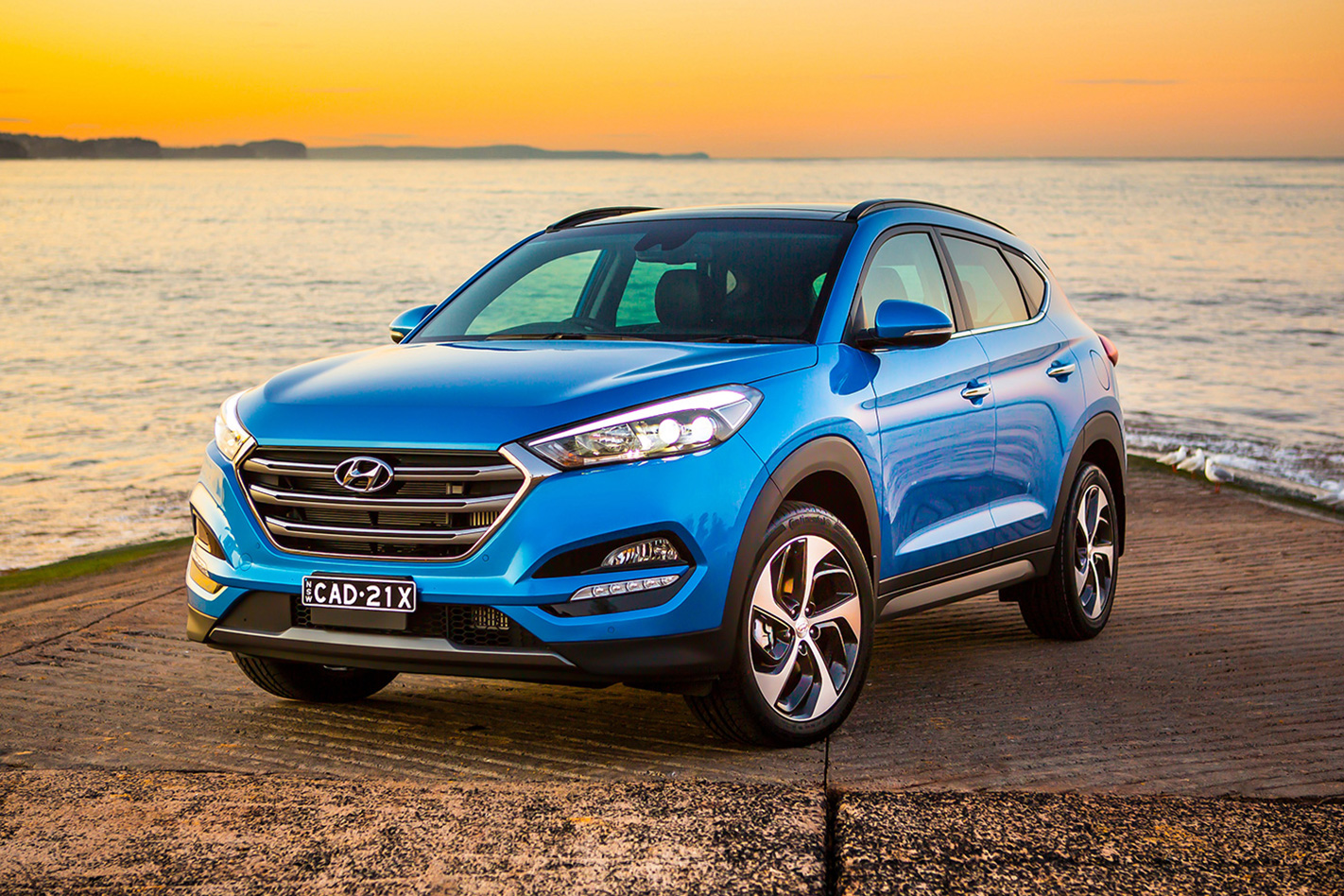
Speaking of wheels, you mention 18- and 19-inch alloys. We wouldn’t get too hung up on the diameter, mainly because the bigger wheels on cars like this are often chosen because they give the car a more aggressive look. Larger wheels can also improve steering accuracy. However big wheels often have a lower profile tyre (meaning less air between the rim and the road) so can make the ride slightly bumpier. As a general rule, bigger tyres also cost more to replace. And those low profile tyres aren’t as well suited to driving on gravel (especially sharp rocks) because they are more susceptible to punctures.
And then, stunning most of us – but not Hamilton, apparently – Rosberg took his crown and walked off into the sunset…
More than anything, the 2016 Formula One World Championship was not so much a belting, bruising battlefield between 22 drivers and cars but a quite personal duel between two Mercedes-Benz Silver Arrows drivers with only sporadic involvement from others.
From the first race in Melbourne, the signs were strong that Nico Rosberg and defending champion Lewis Hamilton – childhood karting mates who became rancorous F1 rivals – would be the main (and most likely the only genuine) title protagonists.
And looking back at the 21-race season, that’s the way it rolled, with the only intrusions into what was a Mercedes-Benz romp being Max Verstappen’s victory in Spain and Daniel Ricciardo’s triumph in Malaysia.
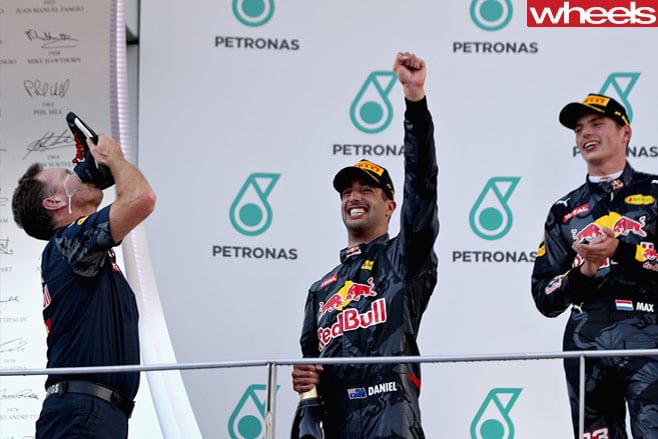
Issues with his car’s hybrid system had Hamilton starting down the grid in the grands prix of China and Russia, where he finished seventh and second respectively.
Hamilton fought back brilliantly to land his first win of 2016, in Monaco, while Rosberg struggled to seventh. This started a stunning period for Hamilton, who scored six wins from seven races, to kick start his championship bid.
But he had to deal with repercussions from needing replacement parts early in the year which led to the Briton getting a grid penalty and a start at the back in the Belgian GP.
Third was nevertheless a great fightback result in a race won by Rosberg, who then went on to land 25 pointers in Italy and Singapore.
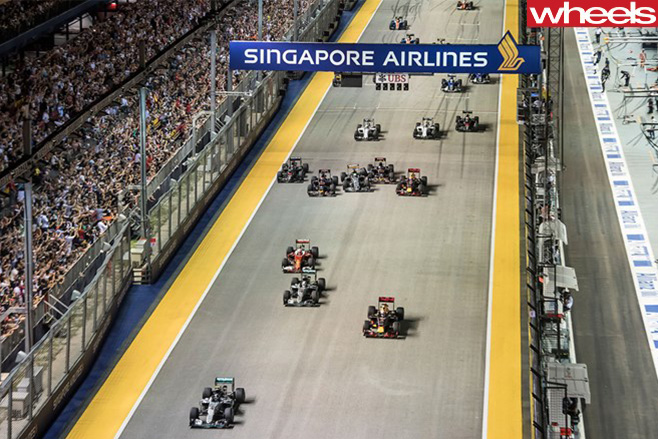
Ricciardo won that GP, with Rosberg third.
Hamilton’s non finish meant that instead of holding a small points lead over Rosberg with five races remaining, he faced a 23-point deficit. This blew out to 33 points when he finished third to a rampant Rosberg after a woeful start at Suzuka.
With four rounds remaining, Rosberg didn’t even need another win to take his maiden title. Hamilton didn’t throw in the towel though. He worked harder – way harder – on his Achilles heel, his starts.
He then reeled off three impressive wins while Rosberg followed the conservative option, on each occasion taking second place.
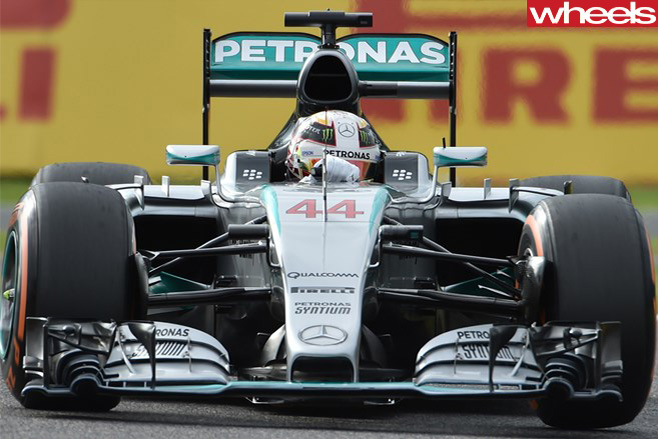
Hamilton did all he could, taking pole and controlling the race throughout, but also using questionable – some said dirty – tactics to try to back Rosberg into the clutches of Ferrari’s Sebastian Vettel and Red Bull’s Verstappen. He repeatedly defied calls from his Mercedes team to speed up.
Hamilton’s refusal to follow orders produced a dramatic denouncement for spectators and TV viewers with the outcome in doubt until the final corner. But Mercedes executives were dismayed with their British driver’s unsporting behaviour and probably felt that seeing they were paying him maybe $30 million a year perhaps he should do what was asked of him.
His relief palpable, Rosberg, winner of the world championship by a margin of five points, described the race as the toughest of his life.
There was criticism of Hamilton from many quarters, but also some support, principally from the English media.
Rosberg cut his rival some slack: “It’s about the world championship so you can understand that he wanted to try whatever it was possible to do.”
Ever the unsporting loser, Hamilton was quick to present his season in a favourable light, suggesting that car failures were the reason he lost the championship. “I was generally quickest most of the year, so it’s definitely been a positive, a lot of positives to take from it,” Hamilton said.
Verstappen probably provided a more impartial assessment. “Of course Lewis had some bad luck, but Nico has had some very strong races, too,” commented the Red Bull racer. “That is racing. It is a mechanical sport, and these things can happen. This year, definitely compared to last year, Nico really stepped up and he has some great results.”
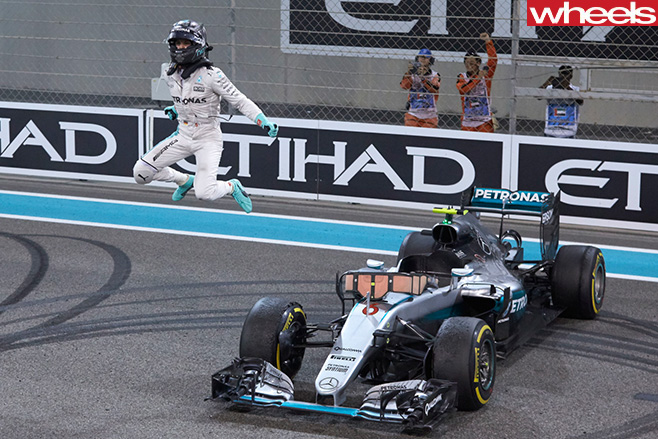
It may be argued that Hamilton is the faster, more natural driver than Rosberg over one lap, but the Briton makes more mistakes. He has turned plenty of Pirellis into octagons.
Rosberg, who won nine GPs to Hamilton’s 10, tended to handle on-track problems more analytically and with greater calm. He followed direction from the pit wall.
During his title-winning season too, he refused to buckle to the mounting pressure, taking on a toughness lacking back when he attracted the unflattering sobriquet “Nicole”.
Eight poles suggest Rosberg was also quick enough.
We should remember too, the brilliant overtake on Verstappen in the decider, which he needed to make to keep second place. “[Verstappen] went full-on aggressive of course, he didn’t given an inch, as usual but fair play, we didn’t collide and I got by, so that felt amazingly good. It was an awesome feeling at the time, really, very relieving and so intense, unbelievably intense really, in the car. I’ve never felt something like that in the car before.”
A huge asset of Rosberg’s was his detailed analysis of his car’s behaviour and feedback, which his engineers insisted was probably the best in F1.
While Hamilton, replete with body graffiti and the swagger and fashion sense of a Baltimore pimp, appears to be doing his best to promote Brand Lewis, disciplined family man Rosberg’s priorities have been easier to understand, and laud.
Sponsors and TV interviewers loved him.
Fluent in six languages, Rosberg tends to be measured in what he says. He would never embarrass his employer or sponsors.
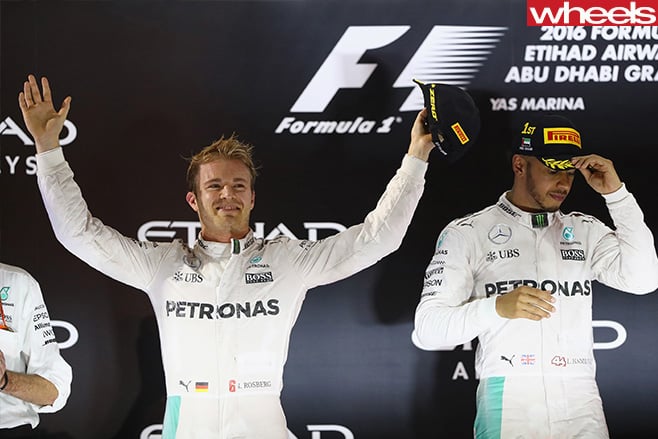
“It feels like I’ve been racing him for ever and always he’s just managed to edge me out and get the title even when we were small in go-karts.
“And he’s just an amazing driver and of course one of the best in history so it’s unbelievably special to beat him because the level is so high and that makes this even more… for sure, so much more satisfying for me…
“… and I took the world championship away from him which is a phenomenal feeling. “It’s been a great year as well, for sure he drove at an extremely high level, he’s done some incredible racing so he’s been a very, very tough competitor.”
And what about our boy Dan…?
After finishing third in the 2016 world championship, Ricciardo reflected positively on his year: “Overall I’m super happy and very pleased with the year. It’s definitely been more highs than lows this year with a lot of podiums, satisfying races and a good chunk of points. I got amongst it when I could, so I think it was a good 2016 for sure.”
Ferrari? No wins in 2016; just a succession of ball-breaking headlines.
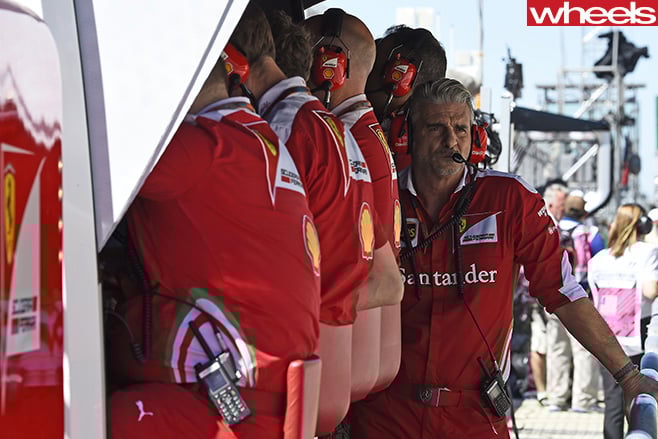
Job done. Danke.
The decision rocked Mercedes to the core. But not Hamilton. He said he wasn’t surprised. The 2016 season also marked the retirement of two of the more likeable drivers in F1.
Felipe Massa’s career will be remembered by his 11 GP wins and his gutsy comeback from a life-threatening injury, but also for the heart-wrenching conclusion to the 2008 season when he was world champion for 20 seconds.
World champion in 2009 in a Brawn, Jenson Button may have left F1 for good. Or not. “I’m taking a sabbatical, that’s what it says in the contract,” he says. “I’ve got the opportunity to race in 2018, but the reason I wanted to retire in the first place is that I didn’t want to race [an F1 car] next year… but I’ve got the nice option if I do.”
Button says he’ll be going testing, definitely tackling some rallycross, and maybe looking at Super GT in Japan and Le Mans.
IN THE vast world of cars, the so-called land yachts are regarded as passenger sedans that are huge and heavy, immensely powerful, ride wonderfully and offer mad lashings of luxury – sometimes with a price tag to match.
We’ve narrowed a list of the best down to a top five, each having their own strengths and weaknesses. However, at this level of luxury, the boundaries start to blur – is expense and therefore exclusivity better than a car with similar levels yacht-ness, but coming at a significantly lesser cost?
Not to spoil it, but there are no surprises as to the winner.
1. Rolls-Royce Phantom Drophead
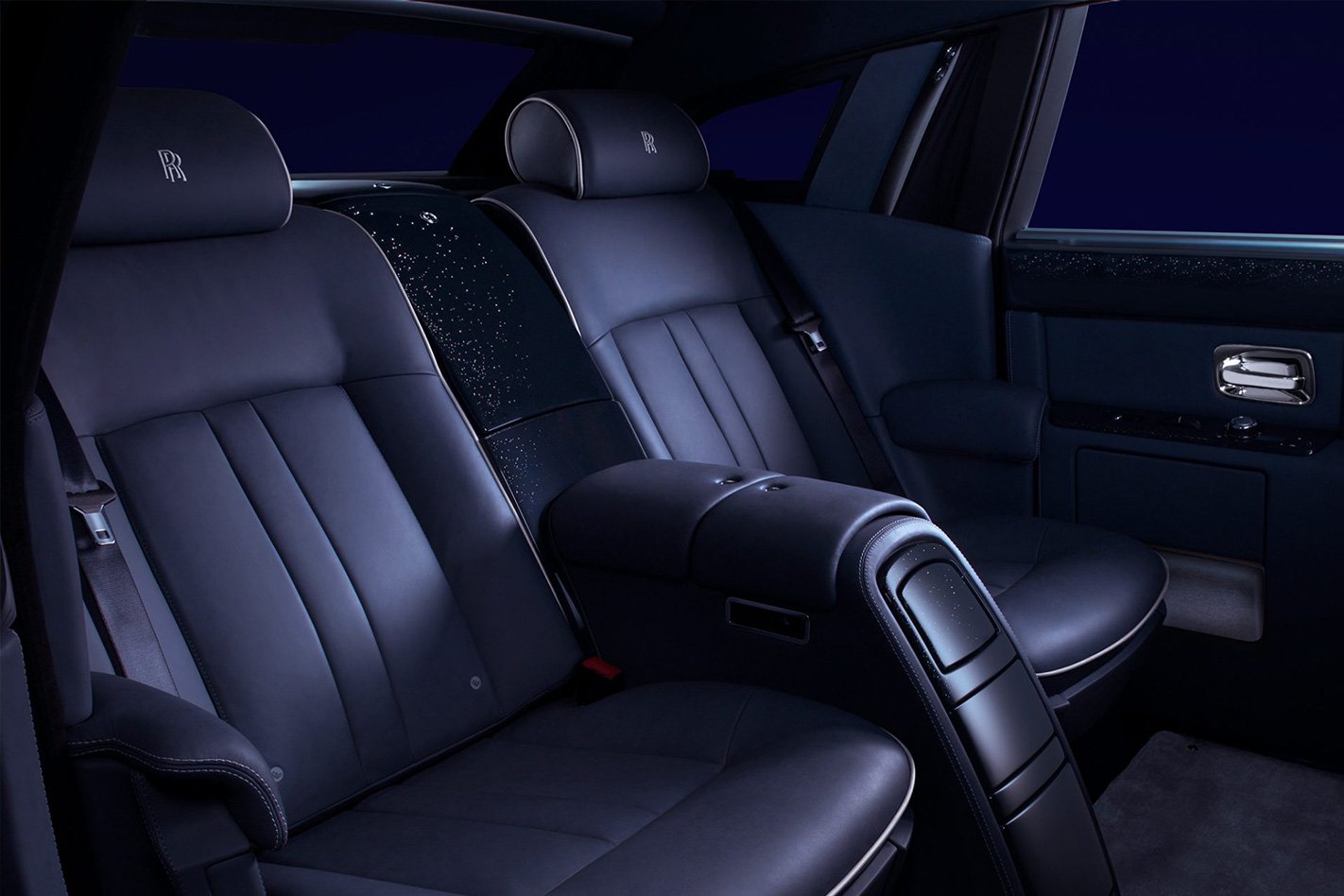
Quite simply, this list would be completely irrelevant if it had anything but a Rolls-Royce at the top of the tree.
Any of the four Rolls-Royce models in Australia could comfortably take out the land yacht of the year award, but it’s the eye-watering $1,075,000 Phantom-based Drophead soft-top that stands above the rest.
It’s the Wild Oats of the field, the yacht that over the past few years has been expected to win, and usually does.
The most expensive passenger car on the Australian market by more than $250,000, the Phantom is also one of the heaviest, clocking in at a peak kerb weight of 2630kg.
To put that into perspective, consider the fact it dwarfs even the 4×4 Land Rover Discovery, which weighs in at “just” 2558kg but doesn’t quite match up to a Nissan Y62 Patrol with all the bells and whistles (2829kg).
Parts of the car have been inspired by racing yachts, from the hand-finished wood panelling behind the rear seats to the refined canvas roof. Under the long bonnet is a 6.7-litre V12 that is a nod to the old 6 ¾-litre engine, producing 338kW and 720Nm.
Personalisation? Anything you want.
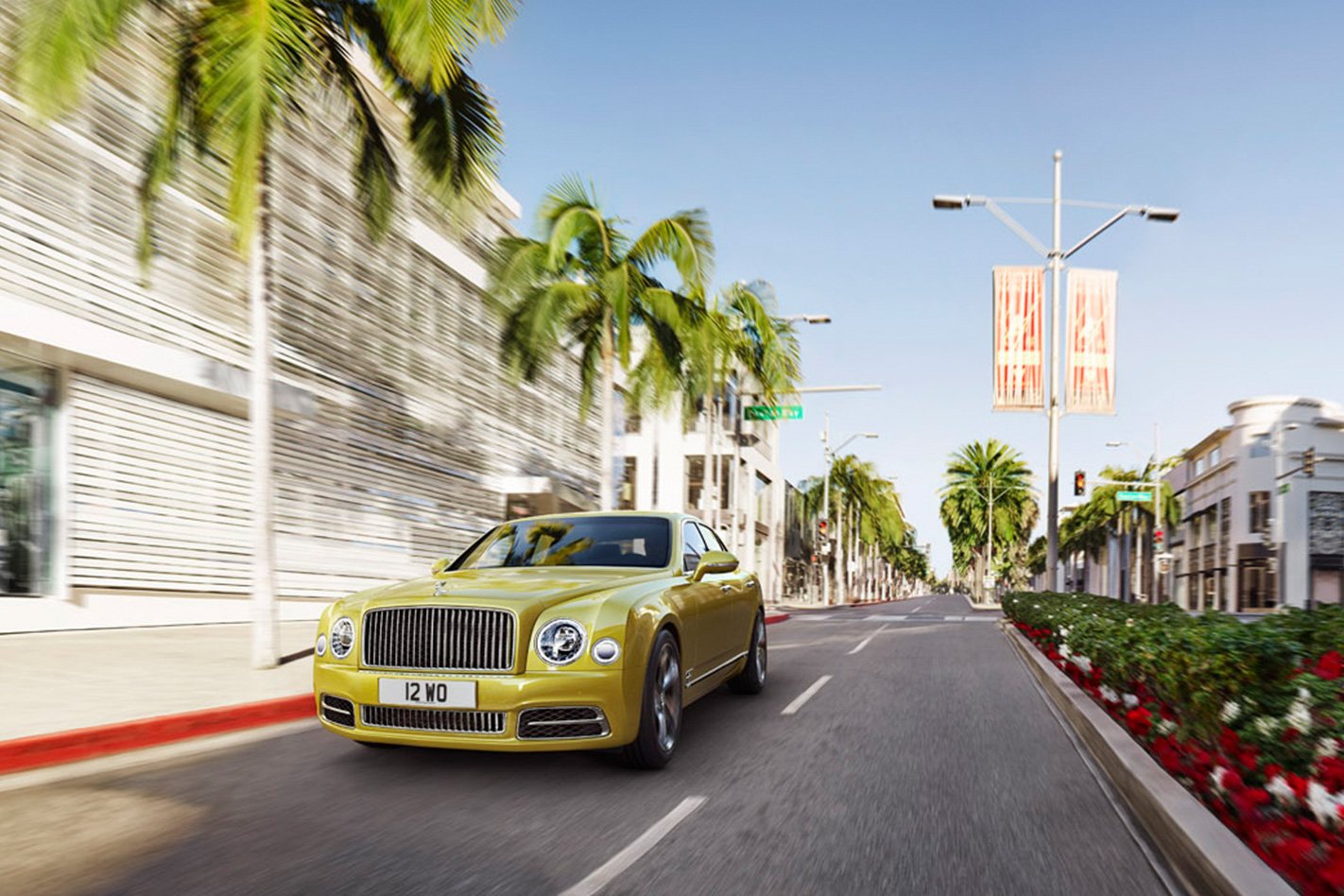
The most premium of the premium Bentleys, the Mulsanne is one of the few cars that hold a candle to Rolls-Royce.
Although the big Bentley is slightly shorter and narrower than the Phantom, it is comfortably heavier at a staggering 2711kg.
This is courtesy of a more powerful, 6.8 litre twin-turbo V8 capable of 395kW and 1100Nm under the bonnet of the Speed.
Priced from $733,387, the Mulsanne Speed is a cheaper alternative to the Roller, but hey, if you have that kind of money to spend, you might as well go for peak exclusivity and take the Phantom.
The Flying-B has in-car Wi-Fi, programmable personal settings for multiple users that remember different preferences for steering column adjustment, radio station, phonebook, and even in-seat massage mode selections!
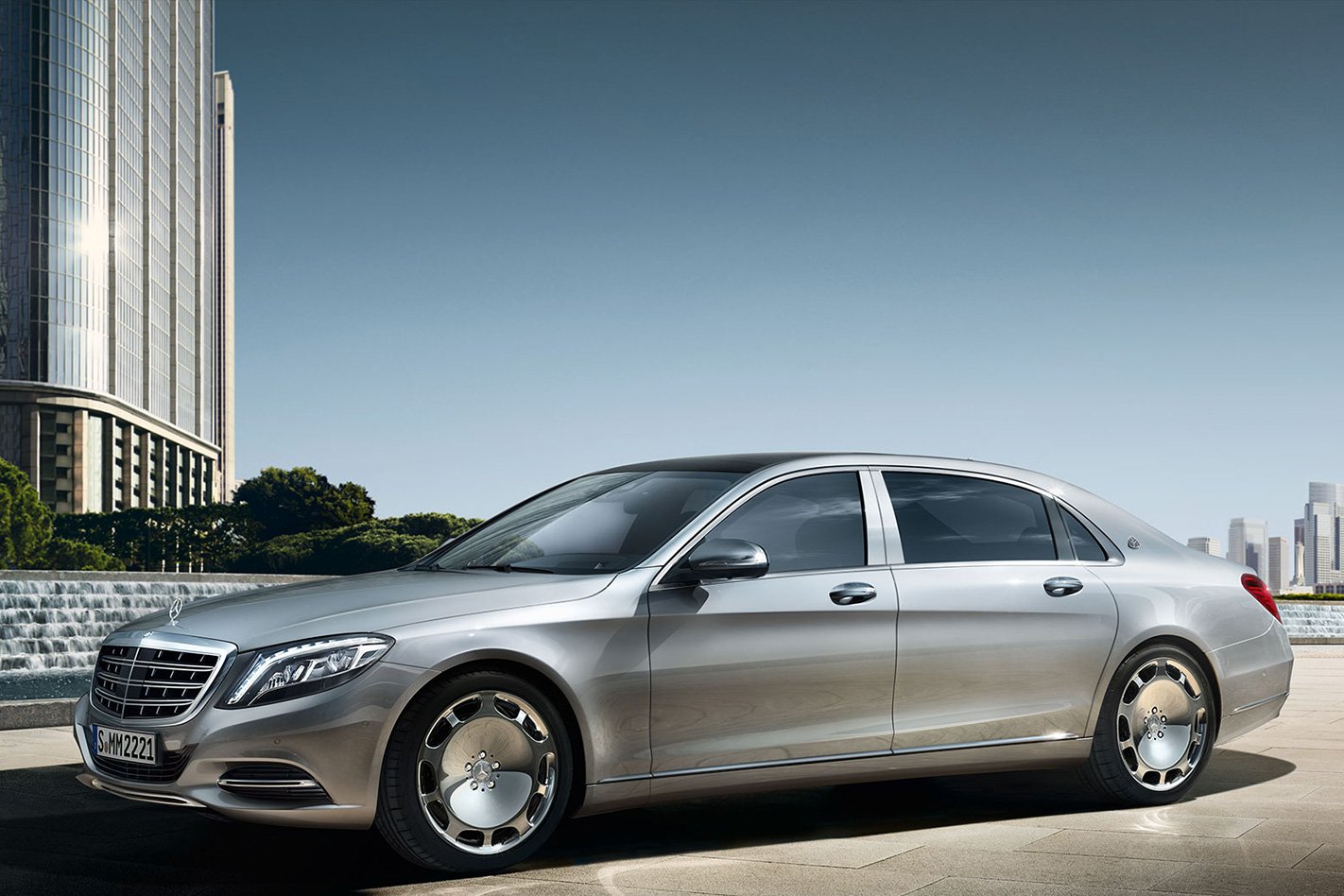
Maybach is back, but this time it is more closely associated with its parent company, Mercedes-Benz.
The much closer association has brought down the price of owning a Maybach, but it still costs $448,325.
Every piece of high-tech wizardry you could want is fitted as standard to the Mercedes-Maybach: it even has reclining seats and folding tables in the back. Optional extras even include champagne flutes.
Beneath the bonnet is a 6.0-litre twin-turbo V12 good to haul the 2260kg Maybach to 100km/h in a spritely 5.0 seconds.
Its opulence has earned the big Merc a number of titles as the world’s best sedan, and with such a level of tech and refinement it isn’t hard to see why.
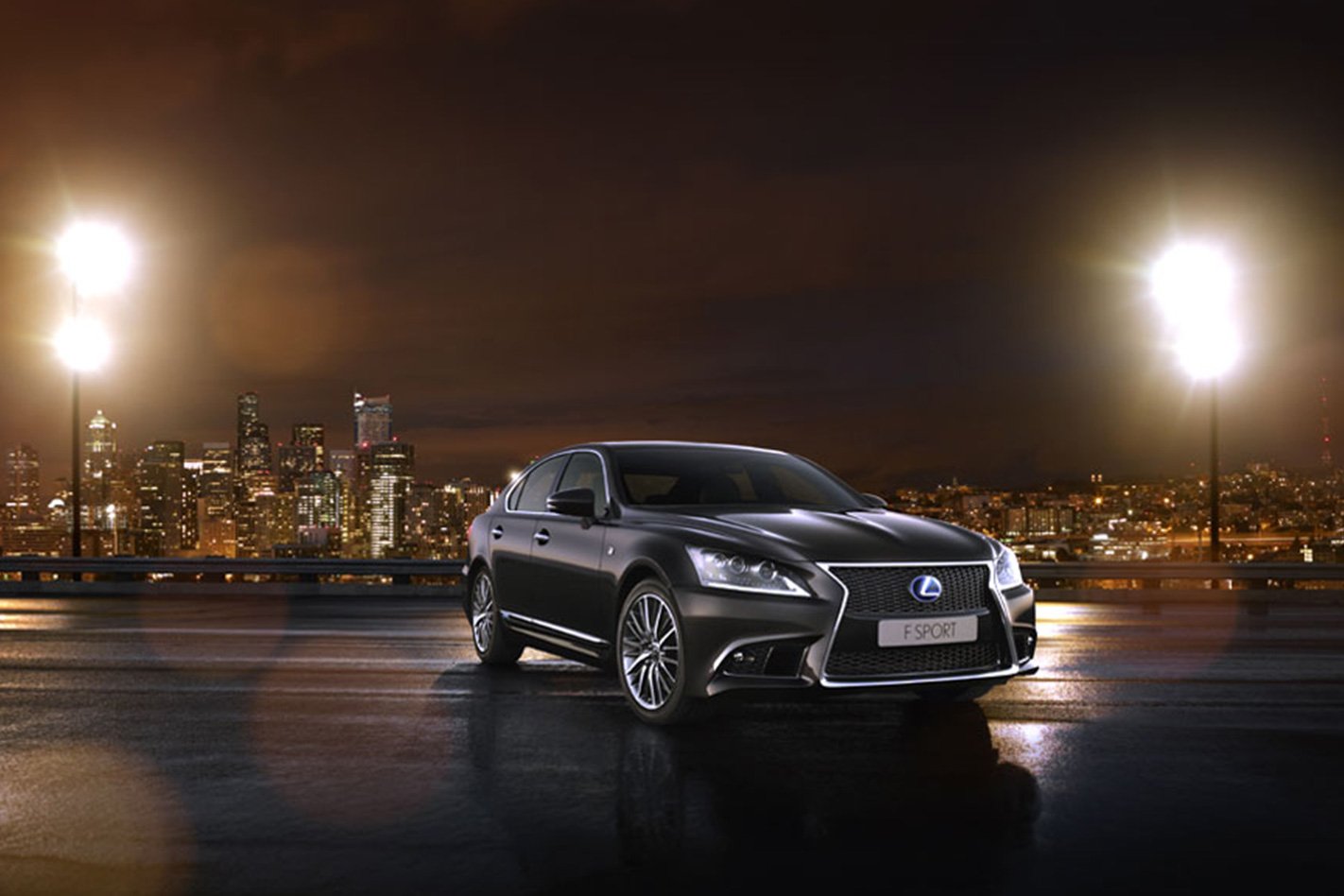
A Lexus being included among the best of the land yachts really shows how far Toyota’s luxury brand has come.
The LS range F-Sport (don’t be fooled, its 2230kg kerb mass means it can’t be all that sporty) is the only hybrid vehicle on this list. and kills its nearest rival, the BMW 7 Series, for tech.
Priced from $214,030, the V8 hybrid savours its fuel compared with the fossil fuel-burning Bentley, at just 8.6L/100km compared to 15.0L/100km.
Still, Lexus claim the car is the most powerful full hybrid sedan in the world, churning out 290kW and 520Nm.
Meantime, take a step further and the LS 600hL manages its exclusivity by being available by ‘special order’ only, and features a left rear Ottoman recliner with full massage function, along with infrared rear temperature detection. A new version of the LS is on the cards for a Detroit motor show reveal.
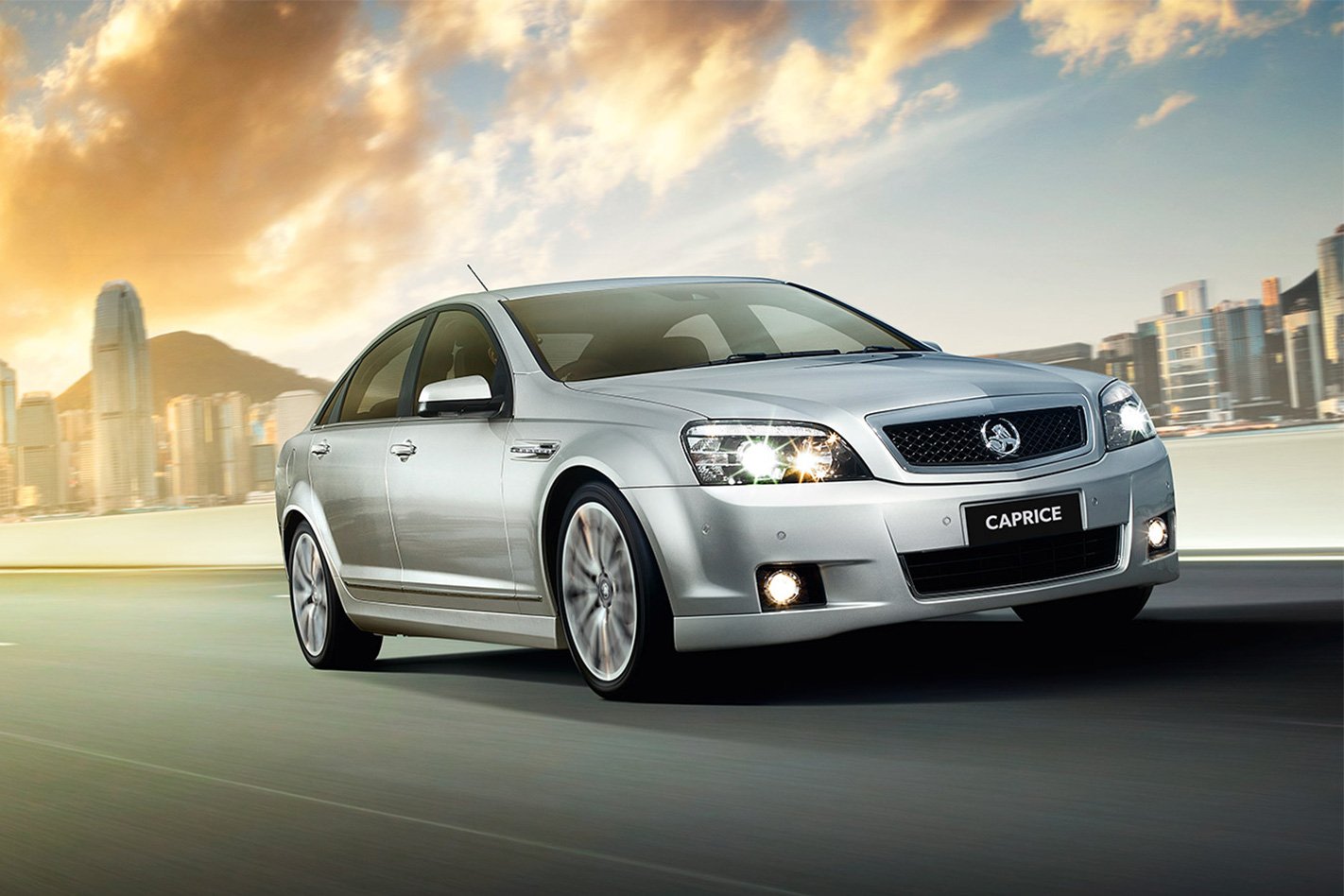
A comparative lightweight compared with the rest of the competition, the Commodore-based Holden Caprice continues to lead the charge in the everyman’s land yacht department.
It’s the good news underdog story that everyone wants to see pull though to win the Sydney to Hobart, even though deep inside we know it never will.
At $60,990, the Caprice sails in at less than an eighteenth of the price of a Drophead, but still performs well under such circumstances.
It has the ride and handling to rival Luxury BMWs, and the power to match. Having said this, the Caprice starting to look a bit aged on the outside after missing out on the updates extended to the VF Commodore with which it shares its development, especially in regard to the headlamps and tail-lights.
And by late 2017, it’s all over for the home-grown version of a luxury land yacht. Still, the Caprice is the world’s best-value limo, and for a limited time at least, a new one is worth every dollar.
