
JEEP will muscle in Australia’s booming 4×4 Pick-Up market with a four-door utility based on the next-generation JL Wrangler.
Championed for almost a decade by Fiat Chrysler Automobiles group chief operating officer for Asia/Pacific, Michael Manley, the JT Wrangler Pick-Up will enter production in the third quarter of 2018, about nine months after the three-door hardtop and five-door Unlimited wagon versions arrive.
“The first production will be August or September 2018, so by the time that gets into our international markets, we’re probably looking at very early 2019.
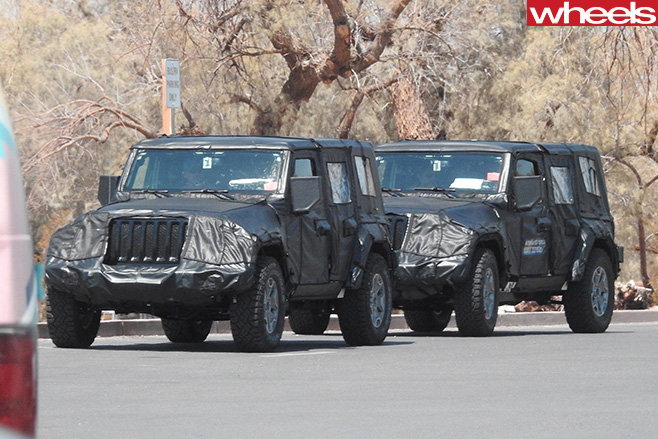
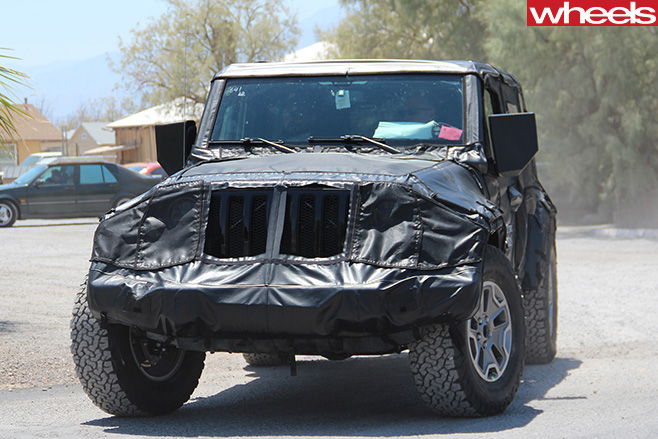
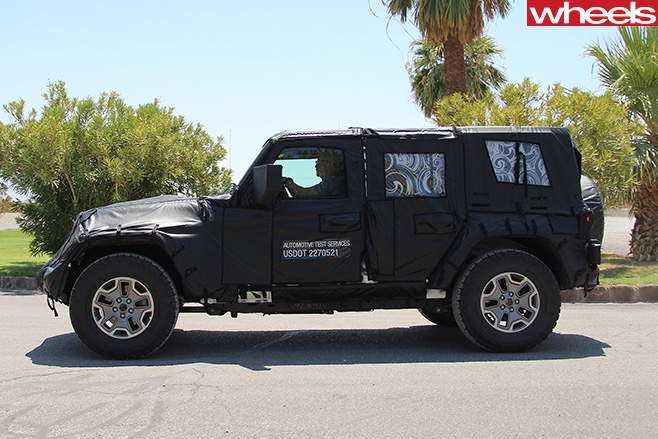
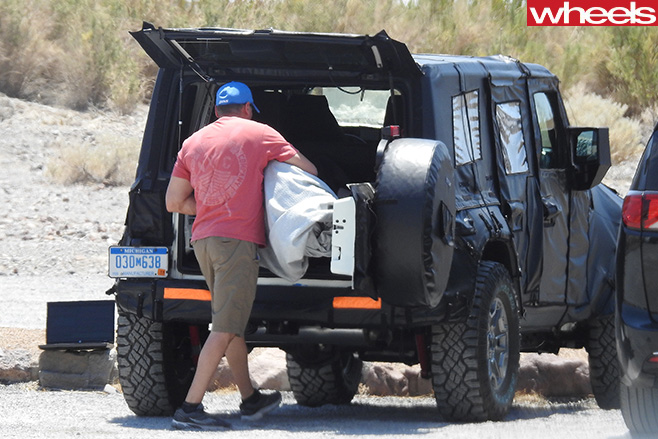
Spy shots reveal a four-door dual-cab utility body, integrated neatly behind the future Jeep Wrangler front. As a rugged 4×4 vehicle it will retain a body-on-frame construction, but we hear that the newcomer’s doors and front mudguards will switch to aluminium to cut weight.
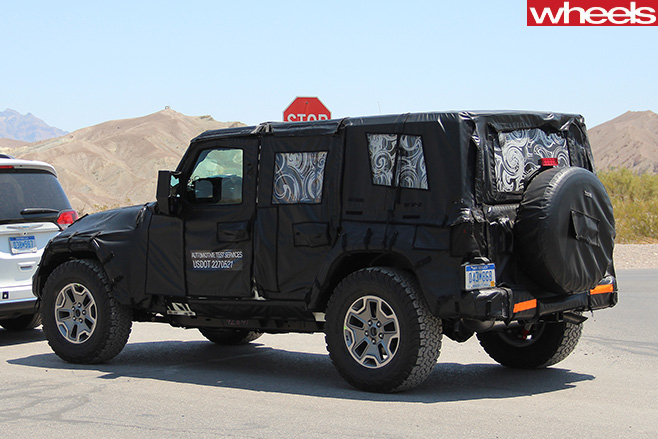
While the next-gen Wrangler’s styling is a gentle evolution of an eight-decade-old design, there are many detailed changes, including larger circular headlights with LED inserts, a more angled grille, longer bonnet, and a slightly more raked windscreen.
Jeep has been on the Wrangler ute scent since it displayed the Gladiator Concept at the 2005 Detroit Auto Show – though nothing came of that.
The Ford Ranger and Toyota Hilux are locked in battle for leadership with around 25,000 registrations apiece, with the Mitsubishi Triton third with almost 15,000 sales.
ONE of the most eagerly awaited hot-hatches in years might still be about nine months from your dealership, but the 2017 Honda Civic Type R is already strutting its stuff in Australia.
Sprung stalking the streets of suburban Sydney this week, the high-performance flagship of the 10th-generation small-car range is here undergoing final hot-climate testing, before landing officially in the second-half of next year.
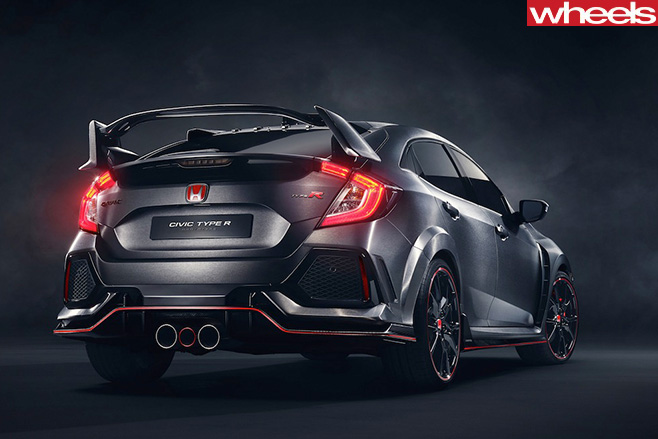
And how could anybody miss this camouflaged crusader against the Volkswagen Golf GTI, Ford Focus RS, Peugeot 308 GTi and Renault Megane RS 265, with its diamond mesh grilles, bulging bonnet scoop, massive air intakes behind the front wheels, wide-track 20-inch black alloys with Brembo brake callipers, triple exhaust outlets and aircraft-carrier-sized rear spoiler? This thing means business!
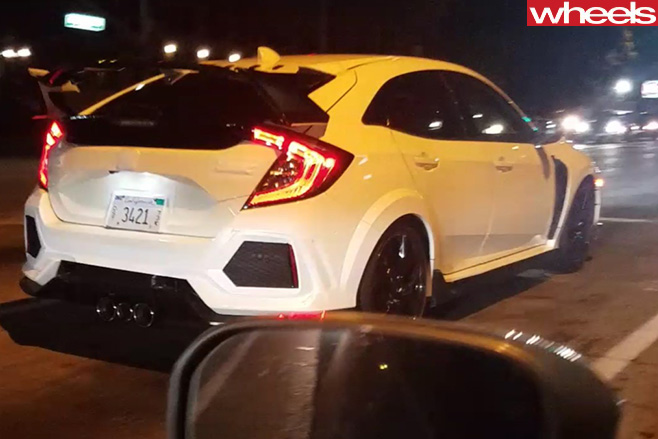
A similar but production-ready looking evaluation 2017 Civic Type R hatch – and this time minus the swirls – was also spotted stretching its legs this week, this time in Southern California.
“Obviously we are doing a lot of testing globally, including in California. As we’re planning to sell the car here, it is important that it undergoes validation drives in each market, starting with some hot-weather testing,” he revealed.
“We did a similar thing with the NSX some time ago, where Honda Motor brought several prototypes out to Australia also for hot-weather testing, because it is an important part of the validation process.”
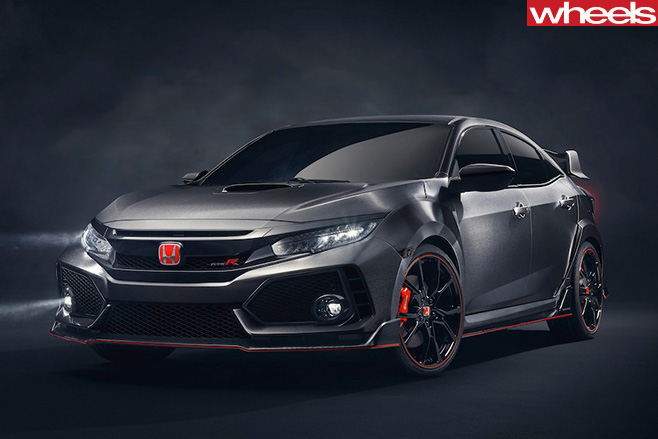
To recap, the version that lands next September Down Under will be powered by a 2.0-litre turbo petrol screamer that should easily eclipse the 228kW/400Nm outputs boasted by the existing, Europe-only Mk9 Civic Type R hatch. Expect a circa-5.5s sprint time to 100km/h, and a top speed in excess of 275km/h. Heady stuff!
We obviously cannot wait, so as soon as more info comes to hand, we’ll let you know too. Watch this space.
***
Have spy pics of your own? We’d love to see them. Just email them to [email protected]
A blink-and-you’ll-miss-it but worthwhile update for the third-generation Lexus IS, making it smoother, safer and sexier.
WHAT IS IT? A mid-cycle refresh for the three-year-old, current-gen Lexus IS – just in time for the nameplate to celebrate one million global sales – focusing on improved ride and refinement, flashier multimedia, an edgier front-end and upgraded active-safety systems intended to flesh out its repertoire in the face of increasing competition.
WHY WE’RE TESTING IT? Because it remains the most competitive Lexus relative to its class, and, until the stunning Lexus LC Coupe launches around May next year, one of the prettiest.
MAIN RIVALS Audi A4, BMW 3 Series, Mercedes-Benz C-Class, Jaguar XE, Infiniti Q50, Volvo S60 and the about-to-launch Alfa Romeo Giulia.

PLUS: Individual and expressive styling; rear-drive handling balance; decent ride; spritely 2.0-litre turbo-petrol four; excellent eight-speed automatic transmission; superb trim quality MINUS: Tyre noise; below-par cabin storage; doors lack that German ‘thunk’; average rear-seat room; ageing 3.5-litre V6 isn’t the range-topping engine it should be
THE WHEELS REVIEW WITH much of the action in the premium-medium sedan segment focused on the latest breed of European entrants, you could be forgiven for dismissing the third-generation Lexus IS.
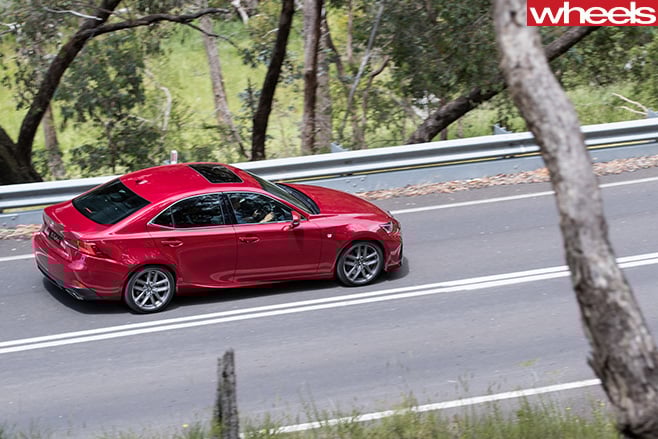
As far as mid-cycle enhancements go, this IS update bucks the trend by hiding the best bits beneath its crisply folded exterior. Beyond its more masculine exterior enhancements – trick new LED lights at each end, a new front bumper and grille, new rear bar with different exhaust outlets, new alloys for Luxury and Sports Luxury models, and two new colours (Deep Blue and Graphite Black) – the 2017 Lexus IS features an extensively modified chassis.
New springs, dampers and anti-roll bars feature in all models, along with new aluminium front suspension arms and revised bushings to “enhance rigidity and yaw response during steering”, as well as revised upper suspension mounts at both ends.

What’s obvious from the outset is that the revised Lexus IS200t F-Sport ($67,480) is a really sweet package. Sharing its retuned adaptive dampers with other F-Sport and Sports Luxury models, the 18-inch-wheeled IS200t’s suspension (in Normal mode) does an impressive job absorbing country-road lumps and bumps, while maintaining consistently well-weighted and accurate steering connection. The only real downside is persistent tyre rumble.
With almost as much torque as the 3.5-litre atmo V6, the 2.0-litre turbo blends seamlessly with its eight-speed automatic ’box, and if you nudge the centre ‘Drive Mode’ controller into Sport, there’s a tangible uplift in throttle sharpness and shift calibration, including intuitive downshifting on twisty roads. Admittedly, the IS200t doesn’t really need a ‘sport’ steering setting, but it’s relatively subtle in its weight increase over the default tune.
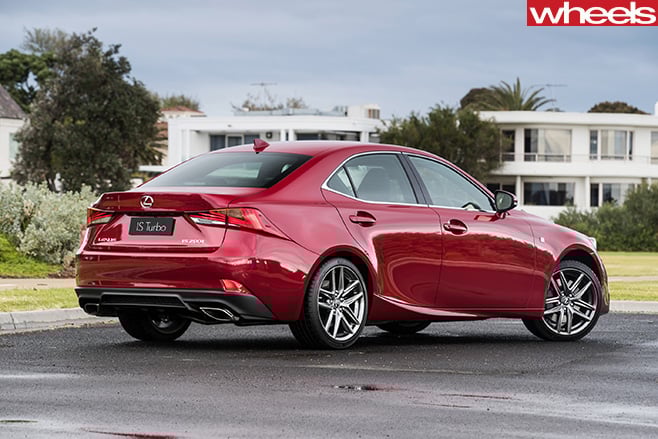
We also drove a flagship IS350 Sports Luxury ($84,160), packing a 233kW/378Nm 3.5-litre V6 and eight-speed auto, and discovered it lacks the cohesion of the IS200t F-Sport. Some inconsistency in its steering weighting implies the variable-ratio set-up lacks the crispness of the turbo-four’s steering. And the V6 engine – while respectably brisk (0-100km/h in a claimed 5.9sec) and somewhat characterful – lags well behind the best six-pot donks its rivals offer, especially considering the IS350 Sport Luxury is barely $6K cheaper than a less well-equipped, but much gruntier BMW 340i.
A new grilled-mounted camera enhances the IS’s active safety, adding steering assistance and a vibration alert to the upgraded ‘lane departure warning +’ system, while inside, Lexus claims 15 interior features have been changed.
New trim colours – Nuance Black, Noble Brown and a light-coloured Chateau hue, adding to Dark Rose (red) and another black – highlight Lexus’s beautifully supple leather upholstery, while each grade gets new trim inserts, none of which lift the IS’s quirky interior by any huge measure.

And the IS’s cabin has a few other spoilers, including centre cupholders mounted exactly where the front passenger rests his/her elbow, and if you happen to be carrying any drinks, nowhere whatsoever to put a bloody phone! The driver’s centre armrest can also bump your elbow during enthusiastic cornering.
But overall, the Lexus IS is ageing quite gracefully, tyre noise aside. It still looks fit, its seats are cossetting and comfortable, its 480-litre boot is beautifully trimmed and useful, and in terms of standard features for the price, it knocks it out of the park.
The current IS is sized right, too – small and nimble, without severely compromising rear-seat space like the first two generations did – and that’s refreshing in this SUV-obsessed era.
SPECS Model: Lexus IS200t F-Sport Engine: 1998cc 4cyl, dohc, 16v, turbo Max power: 180kW @ 5800rpm Max torque: 350Nm @ 1650-4400rpm Transmission: 8-speed automatic Weight: 1680kg 0-100km/h: 7.0sec (claimed) Fuel economy: 7.5L/100km Price: $67,480 On sale: Now
With a year to go before the all-new Holden Barina arrives in its showrooms, Holden has given the current model a facelift and extra equipment while keeping entry-level pricing the same.
The 2017 Barina has been restyled to complement new arrivals such as the Opel-designed Holden Astra, with a more mature face that includes reshaped headlamps, narrower top grille and a broader lower grille.
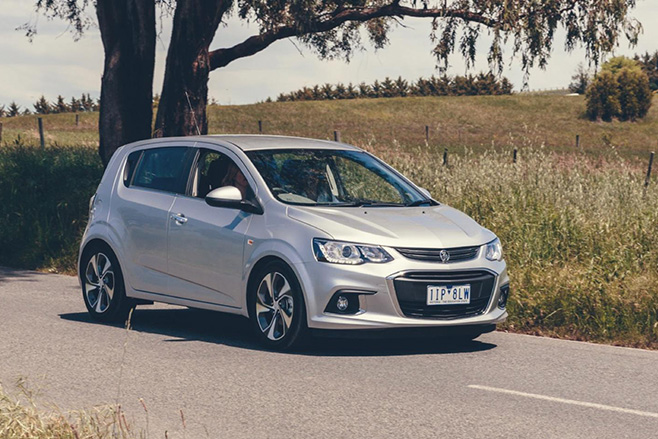
The rear end has also received a nip and tuck and the upgraded interior finally has a grown up dashboard with a gauge cluster that doesn’t look glued on as an afterthought.
The MY17 Barina comes in two variants, the LS and LT, which replace the CD, CDX. The facelift doesn’t apply to the sedan, which is still available in MY16 guise, and the sporty RS variant is no longer available at all.
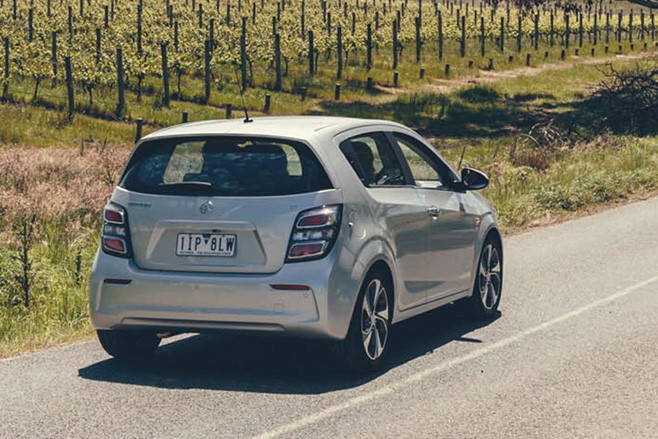
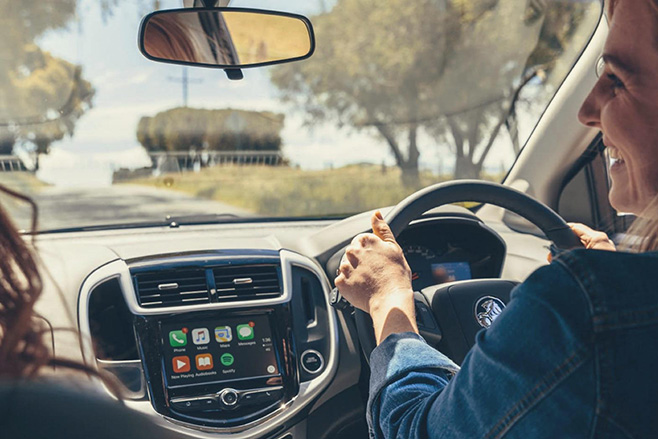
The base model LS is $400 cheaper than the CD it replaces with a retail price of $14,990, but comes with extra standard equipment which includes a reverse camera, the latest 7.0-inch MyLink infotainment system with Apple CarPlay and Android Auto compatibility, LED daytime-running lights, six airbags, automatic headlights, rear parking sensors, fog lights, cruise control and 16-inch alloy wheels.
For an extra $5400 ($20,360) the LT comes with leather steering wheel, ‘Sportec’ leatherette seat trim, heated front seats, keyless entry, push button start, 17-inch alloys and six-speed automatic transmission.
Both are powered by the same 1.6-litre four-cylinder petrol engine with the LS getting a choice of a five-speed manual transmission or, for an extra $2271, the LT’s six-speed auto.
The MY17 Barina range is now available in Holden showrooms.
More punch and extra gear are the highlights of an update to Volkswagen’s impressive Amarok ute.
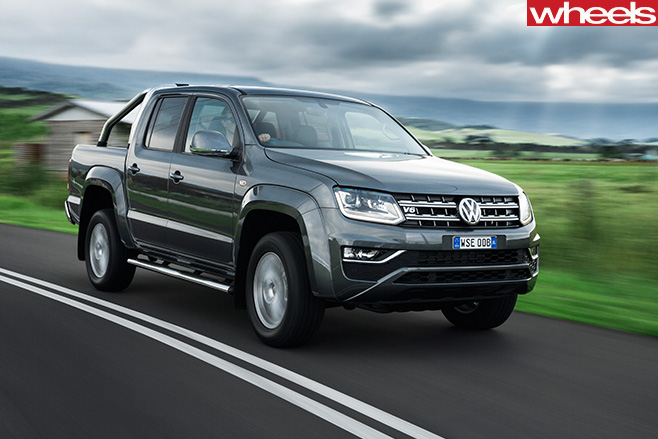
PLUS: Strong and smooth engine; great driving position; classy interior; competent dynamics (for a ute!); sizeable tray MINUS: Missing some equipment, including rear airbags and AEB; busy ride when unladenTHE WHEELS REVIEW A BIGGER engine and more power. Success in Australia can sometimes be a simple thing, as Holden, Ford and others have established over many decades.
But rarely has that formula been applied to the workhorse ute market – and never with much success; at least until the arrival of the Volkswagen Amarok V6.
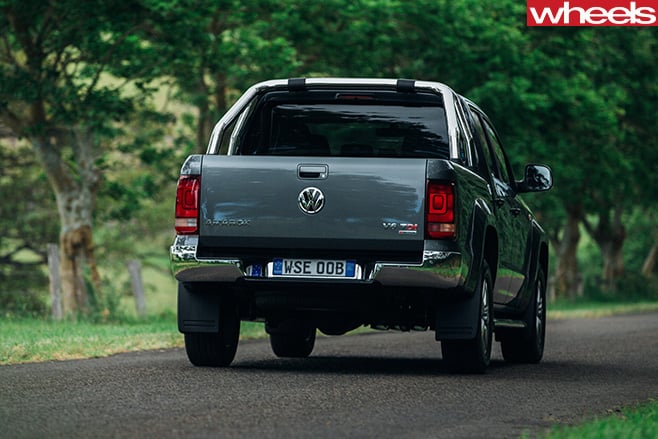
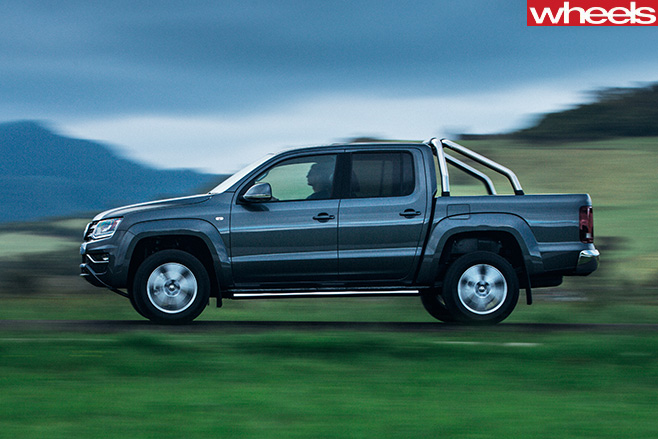
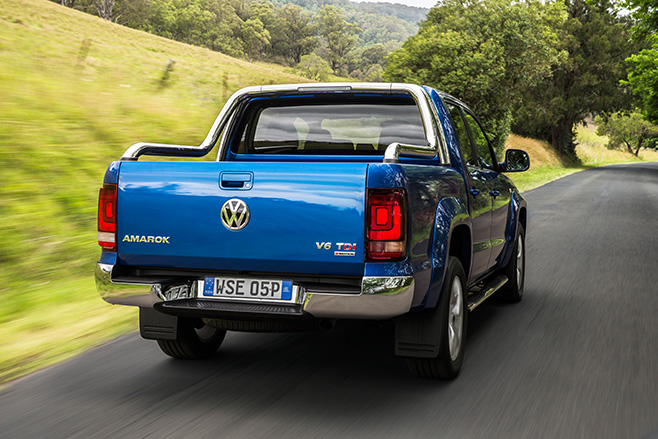
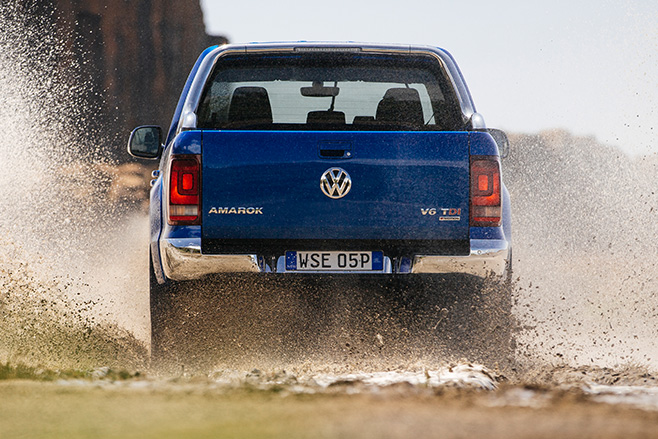
It’s a long way from an HSV Maloo (up to 400kW/671Nm) but the Amarok can also tow 3000kg, take up to 911kg in its tray, bounce over rocks and sand dunes, and ford rivers up to half a metre deep. It’s arguably as Swiss Army knife as a car can get.
Yet the same can be said for so many dual-cab utes. They’re multipurpose vehicles, increasingly used as family cars and adventure machines. Enter the V6 diesel, the first in this class since Nissan dropped the V6 Navara in 2015.
That the Volksie V6 delivers its grunt with a smooth, free revving charm encourages the occasional full throttle blast.
The eight-speed auto is a gem, too, slipping between ratios briskly and cleanly. It’s surprisingly short geared, grabbing fourth well before the 100km/h milestone arrives, so there’s rarely a speed where it’s fumbling to uncover the engine’s sweet spot.
Despite its low-rev focus, the 3.0 V6 doesn’t mind stretching at the other end. It typically shifts between 4000rpm and 4500rpm, although hold it under brakes before taking off and it’ll wind beyond 5000rpm.
The V6 engine can overboost up to 180kW. When the software sees the throttle below the 70 percent position it extends the torque delivery using the turbo for an additional 15kW for up to 10 seconds. It’s designed predominantly for overtaking between 80km/h and 120km/h.
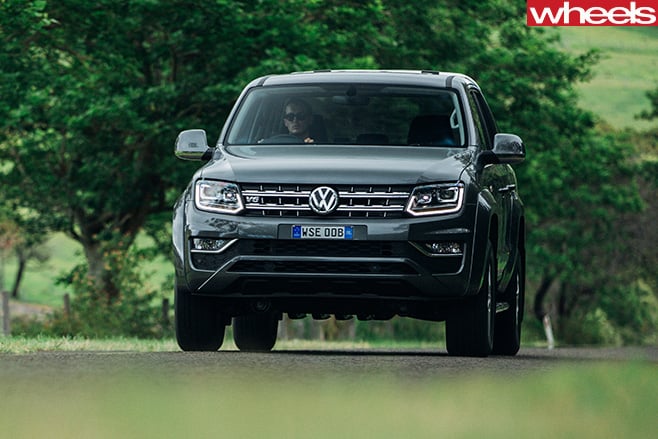
The V6 package also brings bigger brakes; the fronts are up to 332mm – the biggest in the class – and the rears are discs where drums are the norm. It’s not about to out-brake a passenger car, but the Amarok’s anchors felt solid after some high speed punishment.
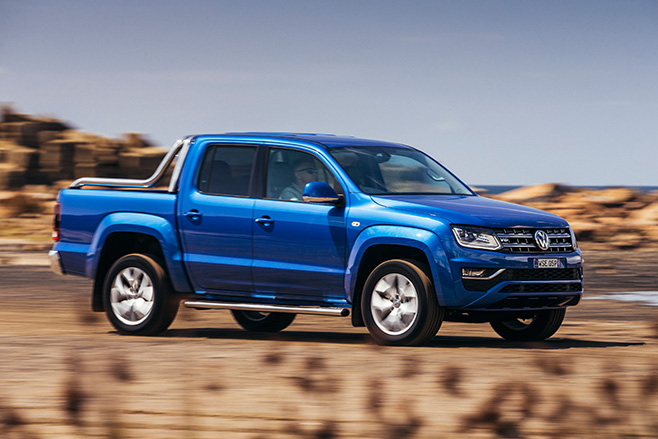
Dynamically, there’s plenty of ute in the equation, arguably more so because our Ultimate was running on optional off-road 17-inch all-terrain tyres rather than the 19-inch regular hoops it comes with. Launched at tightening bends there was predictable understeer.
Driving through all four wheels all the time – a rarity in the segment – ups the confidence in unleashing the torque on loose gravel or wet bitumen. It’s surprisingly reassuring, let down only by some rear-end bounciness as the unladen tail deals with bumps.
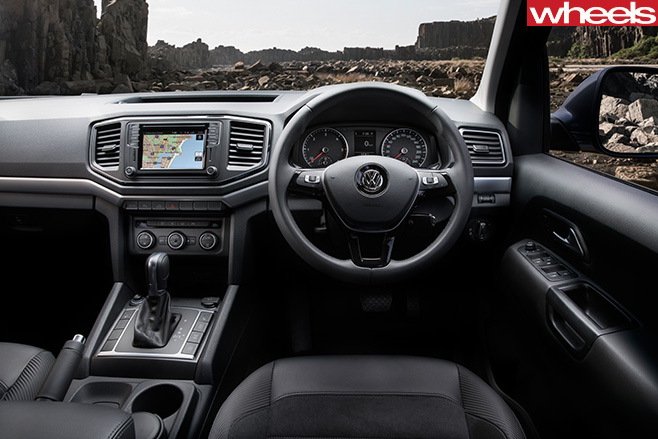
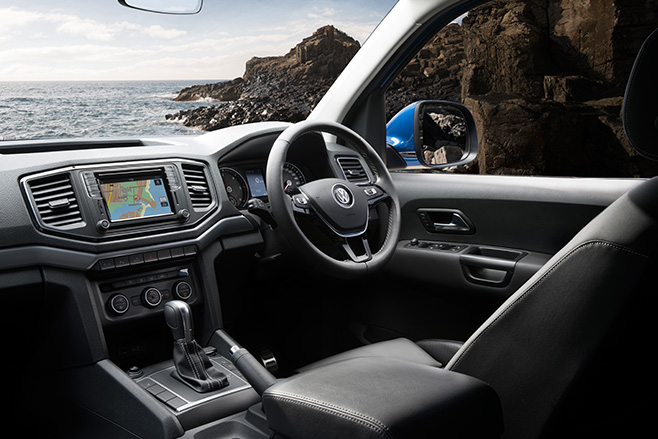
The interior is broad and accommodating, with the excellent front seats and driving position (the steering adjusts for rake and reach) standouts. Rear legroom is average for the class, and there are no rear vents.
The tray is huge and well proportioned, with the ability to carry a pallet between its wheel arches. And with four floor-mounted tie-down points it’s well suited to carrying up to 911kg.
For now the Amarok V6 is available in two trims – Highline ($59,990) and Ultimate ($67,990) – and if you want any colour but white it’s another $590.
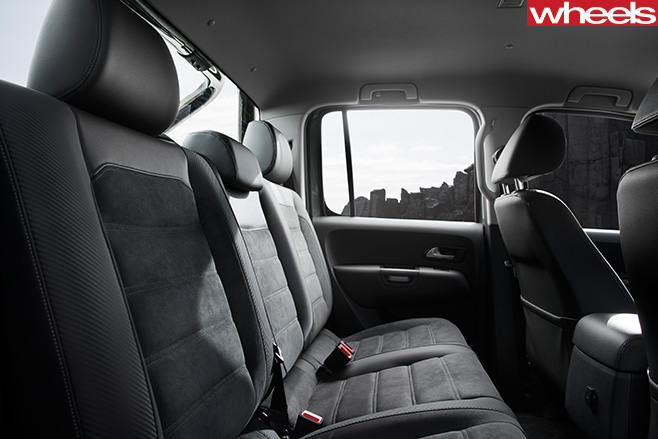
Ultimate ups the wheels to 19s and brings a colour multifunction display in the instrument cluster, heated front seats, puddle lights in the side steps, a plastic tub liner, shift paddles on the steering wheel and a sport mode for the transmission. There’s also a unique chrome sports bar that extends to the rear of the car.
It’s a lot of money, but a lot of ute, too.
Load ’em up
For now the V6 is only available as a Highline or Ultimate, where it replaces the four-cylinder engines. However, expect the V6 family to expand; a V6 Core seems logical and Volkswagen hasn’t ruled out other models to flesh out the price range, especially below the Highline’s start point. Volkswagen will also introduce a flagship Aventura around May, 2017, while a V6 manual joins the line-up later in the year.SPECS Model: Volkswagen Amarok Ultimate Engine: 2967cc V6 turbo diesel Max power: 165kW @ 2500-4500rpm Max torque: 550Nm @ 1500-2500rpm Transmission: 8-speed auto Kerb weight: 2216kg 0-100km/h: 7.9sec (claimed) Price: $67,990 On sale: Now
VOLKSWAGEN is finally looking to engineer rear curtain airbags for its popular Volkswagen Amarok ute.
However, the potentially life-saving features aren’t available on the just updated model – and aren’t likely to be until at least 2018.
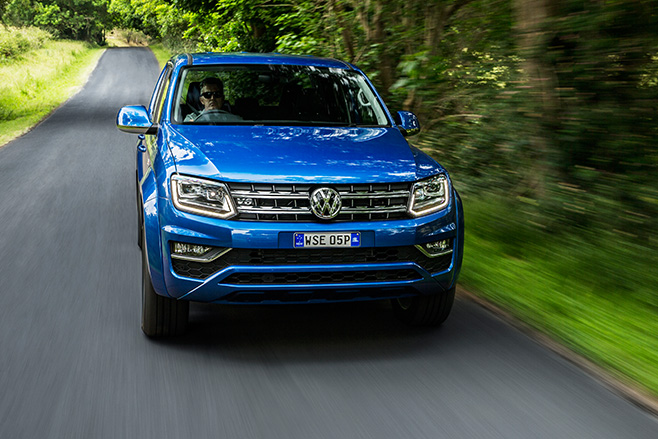
“We are working on it … we are currently looking at it,” said Dr Jan Michel, Volkswagen’s global export sales director for commercial vehicles. “Australia is pushing for it. We know all the reasons … we all know SUV customers would like to have it. They compare the Amarok to SUVs and so ‘OK, this is maybe a feature we would like to have’.
“Therefore we put really a lot of pressure in our organisation to work on [rear side curtain airbags].”
Volkswagen Australia corporate communications general manager Paul Pottinger defended the decision to only fit the Amarok with airbags that protect front-seat occupants, arguing the ute had plenty of appeal beyond its airbag count.
“I don’t think anyone is hiding the fact of how many airbags we’ve got, but I think what people are interested in is the cylinders under the bonnet.”
The current Amarok is the only mainstream dual-cab ute on the market not to fit the potentially life-saving features to the rear seats.
It’s the legacy of a cost-saving exercise done when the Amarok was being developed prior to going on sale in 2011.
Back then, the leading independent crash testing authority, the New Car Assessment Program (NCAP), decided not to test or award points for rear occupant protection, so Volkswagen engineers decided not to fit rear curtain airbags to some models, including the Amarok. Instead, the dual-cab version of the Amarok relies on a specially engineered safety cell built into its chassis to absorb the energy of a crash
NCAP and its Australasia offshoot ANCAP has since adjusted its testing, something that would see the just-released updated Amarok awarded four stars if it were retested today (because ANCAP doesn’t always reassess cars, the Amarok keeps its maximum five-star rating despite the safety oversight).
Michel acknowledged that the Australian voice was increasingly being listened to with Amarok because it is the single biggest market for the car globally.
“This is by far our biggest market,” he said. “The quality requirements of the customers … it’s challenging. That’s why we are looking for Australia, you can learn the most out of the market.”
A Volkswagen source told Wheels the carmaker’s Australian business had urged the Amarok’s development team to try and fit side-curtain SRS airbags as part of the mid-life overhaul of the trade ute, which includes giving it a more car-like interior that blurs the line even further between workhorse and family hauler.
The appeal stemmed from concerns that the Amarok would fall further behind competitors that are starting to offer more passenger car-like levels of comfort, safety and driver assistance technology that is not yet available to Volkswagen’s product.
WANT to know what the next generation Volkswagen Amarok ute will be like? Look more towards the features, safety and comfort levels of modern and soon-to-arrive SUVs.
“SUV-like utes; this is really now the focus,” said Volkswagen Australia sales director for exported commercial vehicles, Dr Jan Michel.
Australia is now the single biggest market for the Amarok ute – something that ensures Volkswagen Australia has a louder voice at its German head office when it comes to future models.
However, despite that increased focus, Volkswagen has no plans to start testing future versions of the Amarok here.
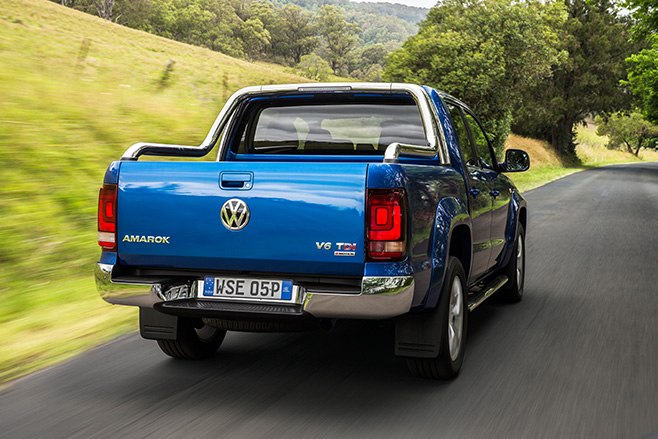
While Ford, Toyota, Mazda and Mitsubishi all tested their respective utes in Australia – with Mercedes-Benz also planning to do the same here with its upcoming Mercedes-Benz X-Class pick-up – Volkswagen says there are other parts of the world that can replicate the notoriously tough off-road conditions in Australia.
Instead, Australia will play a key role in setting the parameters of the Amarok of the future, having a major input on everything from the size and features to powertrains and ability.
“We have a factory in Argentina … and Argentina has also tough conditions so it’s easier to test there,” said Michel.
“For me it’s really learning from the market; Australia is really important.”
Michel also said Volkswagen would continue to expand its range of factory-approved accessories for the Amarok, something that has already grown with this current model.
“The accessory business is one thing we are really putting high attention [into],” he said. “You can have happy car dealers, you can have a happy importer and happy customers providing the right range of accessories … and this is what we are now doing.”
It’s believed a factory-approved bullbar – something developed for full airbag compatibility – will arrive in 2017.
“I don’t want to go too much into the detail, but wait for 2017,” hinted Michel.
THE Volkswagen Amarok V6 diesel could soon pack a 230kW punch – 50 percent more than its closest workhorse pick-up competitor.
That’s the unofficial hint from Volkswagen top brass, keen to point out the potential of the 3.0-litre V6 turbo diesel that has just gone on sale as the most powerful diesel-powered off-road ute in its segment.
“The engine can do more than what we offer right now … just look at the application of the engine in other [Volkswagen Group] brands,” said one Volkswagen executive, asking not to be named.
The same basic 3.0-litre V6 diesel is used in various Audis – including the sporty SQ5 – where it produces 230kW and 650Nm. It’s also utilised in Porsches, including the Cayenne (193kW/580Nm).

“It’s a very, very strong transmission, very capable,” said Volkswagen Australia technical training manager Kieren Gradidge.
Until the arrival of the Amarok V6 the Holden Colorado boasted the biggest outputs, with 147kW and 500Nm from its 2.8-litre four-cylinder.
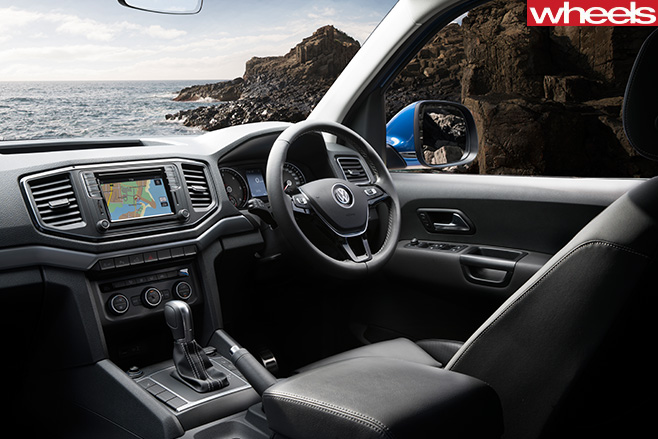
“You are a really an SUV focused market not … and the SUV segment is also helping us because we conquer some customers from the SUV market with this car now, with the [Amarok] V6,” said Volkswagen’s director of international sales, Dr Jan Michel.
Volkswagen Australia director of commercial vehicles, Carlos Santos, says there is room to expand the V6 Amarok family.
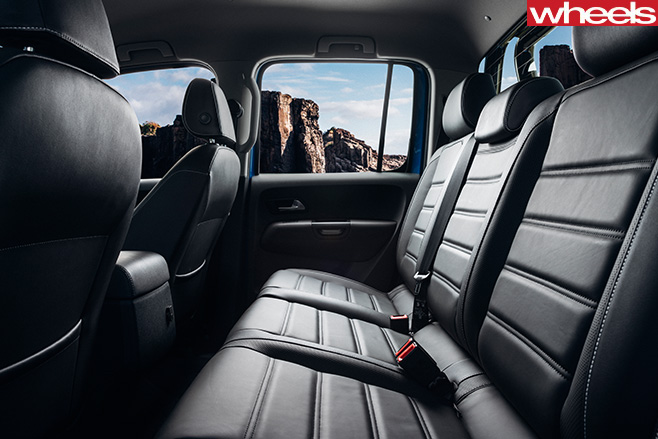
Santos also said he would consider the lower output versions of the same engine for more affordable Amaroks, although some quietly question the logic given the way the premium end of the ute market is shifting.
“We’ll start with the high ones … and as we develop … we’ll look at all those options that become available to us over time, definitely,” said Santos.
Good news, Lexus Australia fans. The brand will rearm its range with a flagship sports coupe by mid-2017.
Revealed in pre-production spec to local journalists yesterday, Lexus’s new LC500 is pitted to combat staple picks like BMW’s 6 Series and Maserati’s GranTurismo when it launches globally early 2017.
Developed with American markets in mind production will first focus on Stateside markets, but we’re told the all-new LC500 will arrive on local shores before July next year.
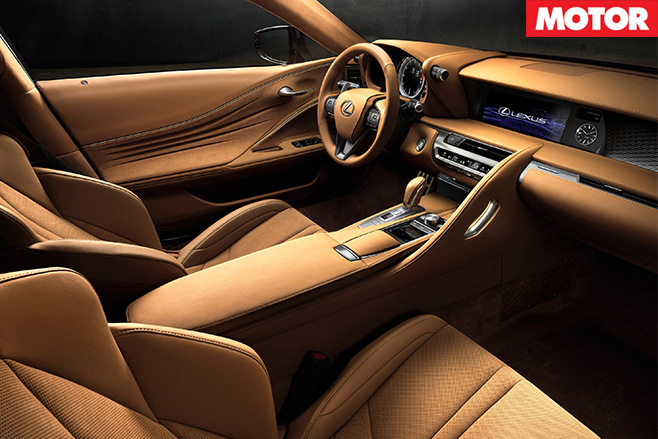
Lexus didn’t imply it’ll be cheap, as the brand wants the car’s exclusivity to remain high.
The LC has been built off the company’s GA-L platform, a multi-material platform that will form the basis of future front-engine, rear drive models.
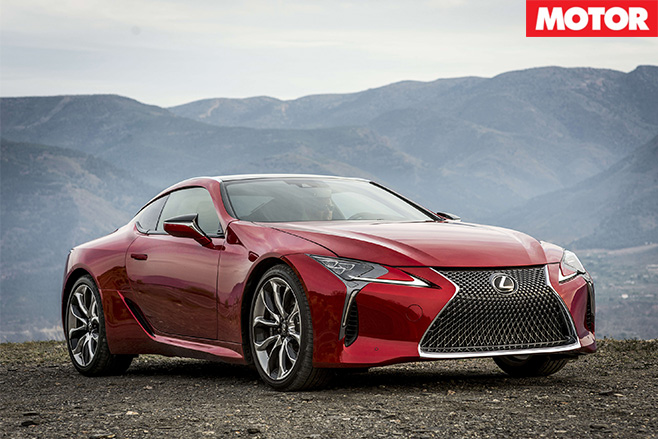
The LFA was a car, if you can remember, that Lexus was so particular about it scrapped plans on using aluminium to begin instead with a stiffer carbon fibre structure.
Unlike the LFA, however, the LC500 will rely upon a 5.0-litre DOHC V8 borrowed from the current Lexus RC F.
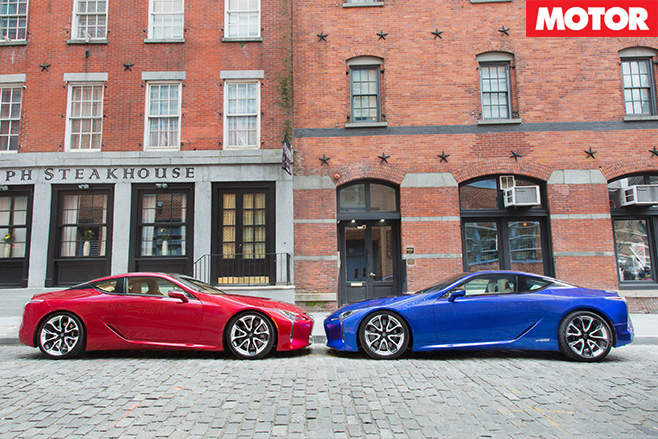
It’ll be matched to the world’s first 10-speed automatic, built by Aisin, and there will also be a hybrid 3.5-litre V6 variant in the wings featuring a four-speed hybrid transmission.
When it does arrive next year, the LC500 will mark four years since LFA production wrapped up, arming Lexus once again with a flagship it compares with its original LS sedan.
This car is so important to Renault, Australia is the first market to receive the Koleos. With mid-size SUVs continuing to sell big, Renault is hoping to make this model a favourite Down Under.
Unlike the original, slightly odd-looking Koleos, this second-generation version is all new, with sharper looks, a classy interior and strong bang for your buck value.
With an impressive array of equipment, it’s well worth having a look at the latest generation Renault Koleos.
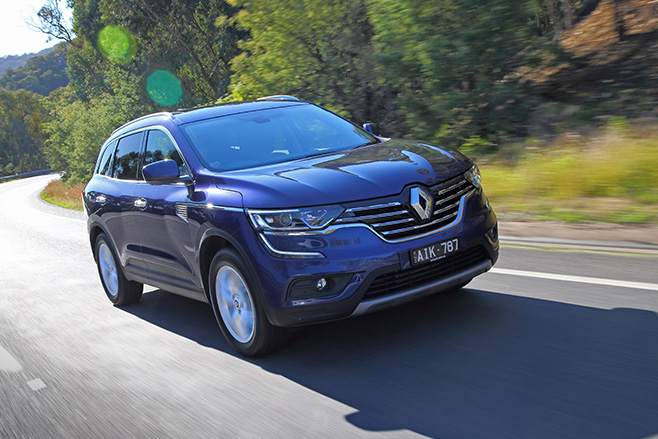
WHAT STANDS OUT
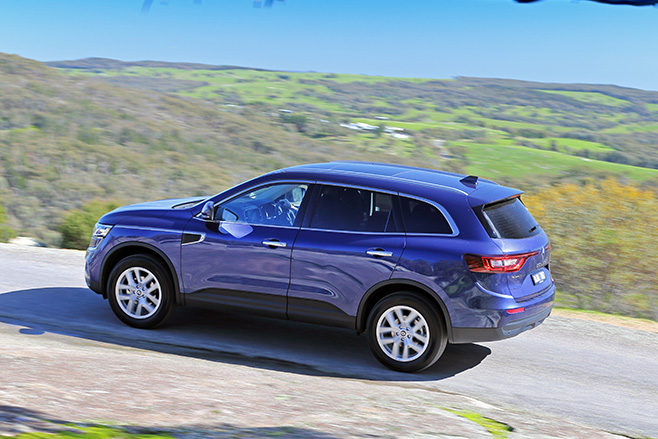
First off, the exterior styling of the Koleos is much better than its dumpy predecessor, with classy touches like the striking headlight and taillight treatment. It certainly stands out against more traditional designs.
As a bonus, the Koleos has a confident and nimble ride. The electric steering is light, and means you can manoeuvre around tight spaces without breaking a sweat. The Koleos also deals well with rough roads, the suspension soaking up big lumps and potholes with ease.
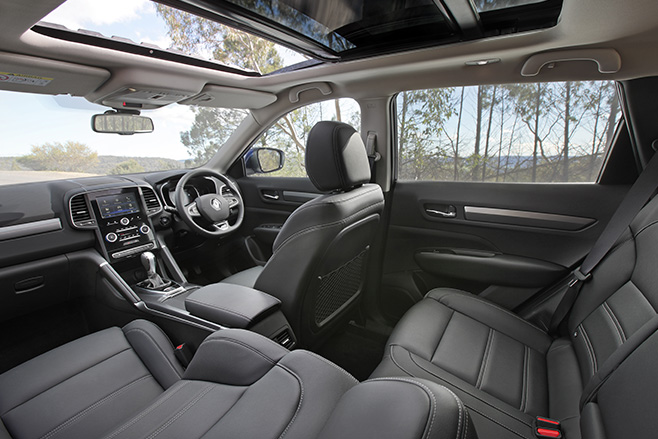
However, one of the best things about the Koleos is the space within the cabin. It doesn’t matter if you are in the front seats or the rear, anyone that rides in the Koleos won’t be complaining about legroom, headroom, or space in general. The panoramic glass sunroof is an excellent touch.
The addition of heated and cooled seats up front, Bose audio system, and power tailgate make the top-level Intens 4WD a very nice car to spend time in.
WHAT’S INSIDE
The Koleos doesn’t have as much quirkiness as you may expect from a French manufacturer. However, the cabin is well thought-out, so instead of oddball features, you are treated to smart ideas like a roller shutter to hide the cup holders. It is the small things like the clock which appears when you aren’t using the central infotainment display, and changeable interior lighting which makes the Koleos’s cabin a treat.
Everything is controlled through the 8.7-inch tablet-style touchscreen in the centre console. It is here you can set the satellite navigation, operate parking assist, and decide what you want to listen to.
The high-resolution colour TFT instrument panel is a nice touch, and is easy to read at a glance. A minor let down is the steering wheel and interior plastics. Hard, scratchy surfaces spoil the cabin, and the wheel isn’t quite up to scratch in feel and ease of use.
Boot space has grown in the new-generation Koleos, with 458 litres of seats-up luggage capacity and a total of 1690 litres with the 60/40 split rear seats folded down and cargo stacked to the roofliner.
CHOOSING YOURS
A naturally-aspirated 2.5-litre petrol four-cylinder powers the entire Koleos range, with a CVT automatic the only transmission option. With a 126kW and 226Nm, there is enough power to shift the Koleos without too much objection. A turbo-diesel engine is expected mid-2017.
There are three levels of spec for the Koleos, starting with the Life which is only available in front wheel drive. The mid-spec Zen model can be bought in either front or all-wheel drive configurations, while the flagship Intens is only available in all-wheel drive. The top-level version gives you the best bang for your buck, with competitive pricing and a swag of equipment as standard, and it is for those reasons the Koleos Intens is the WhichCar pick of the bunch.
SUMMING UP
The medium SUV segment is incredibly competitive. The Koleos is up against worthy rivals like the Mazda CX-5, Hyundai Tuscon, Kia Sportage, and Nissan X-Trail. However, its competitive price point, ample standard equipment, roomy cabin, and comfortable ride make it a well worth your time.
