
1. This isn’t the first time a roofless Range Rover has been available, however it is the first time one has been an official part of the Rangie line up. Back in the 1970s one could, with the right amount of money, buy a first-generation Range Rover three- or five-door with its roof lopped off by an aftermarket company. The Range Rover Evoque drop-top, however, has been designed to be a convertible from the very beginning.
2. The roof can be raised or lowered at a push of a button at speeds up to 50km/h. That’s a high threshold for a convertible, and means you won’t have to sweat about whether you’ve got enough time at the lights to put the roof down. How much time will you need? Just 18 seconds when lowering, or 21 when raising.
3. The roof doesn’t impact boot space when lowered, and there are no cumbersome cargo covers to wrestle with if you want to enjoy the fresh air in roof-down mode. That said, the Evoque’s bootlid is hinged at the top and the boot measures just 251 litres, so carrying cargo is not its strong suit.
4. While the Range Rover Evoque Convertible is available overseas in a lighter and more affordable front-wheel drive configuration, that drivetrain won’t be offered in Australia. Why? Because it only comes paired with a six-speed manual transmission rather than the nine-speed auto that’s standard on Australian-market AWD models. In manual-shy Australia, the lack of an auto trans is a definite deal-breaker.
5. Concerned about safety in a rollover? Don’t be. Behind each rear seat headrest is a pop-up roll-over bar, which can deploy in just 90 milliseconds if the Evoque Convertible senses a roll is imminent.
6. The Evoque Convertible is not a small car, and with its fabric roof stretching all the way from the windscreen to its tailgate, it holds the title of the longest and widest soft top currently in production.
7. Convertibles typically have trouble suppressing noise intrusion from the outside environment and wind rustle, however Range Rover says the Evoque Convertible’s acoustically-insulated roof offers similar refinement to the Evoque five-door.
Oh well, I suppose it has come to this.” The quote is from Ned Kelly, allegedly uttered as he stepped on to the gallows at Old Melbourne Gaol on November 11, 1880.
If old Ned did make the statement, it was surely a sign that he knew the jig was finally up. The fat lady had sung. And as a yardstick for the way we fans of local performance cars are feeling, it’s capital-P poignant.
Just as surely as Ned knew he was going to swing for killing three troopers at Stringybark Creek two years earlier, the news that Ford is turning off the presses and powering down its Aussie production line for the last time comes as no surprise. But it’s no less final, nor any less irreversible. And it’s no less tragic.
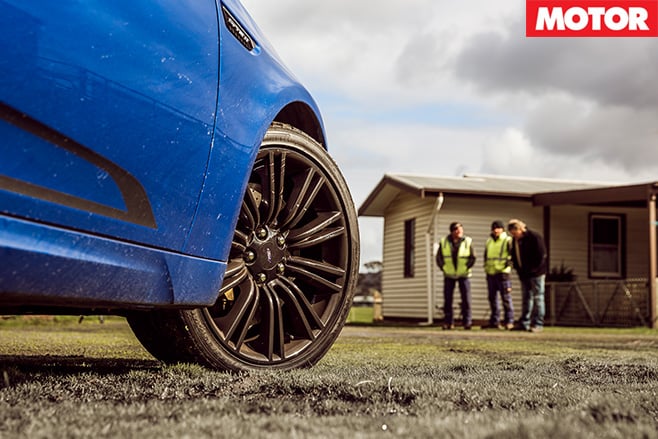
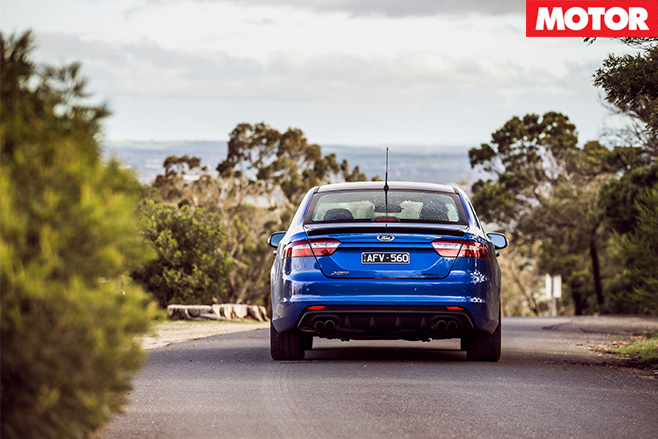
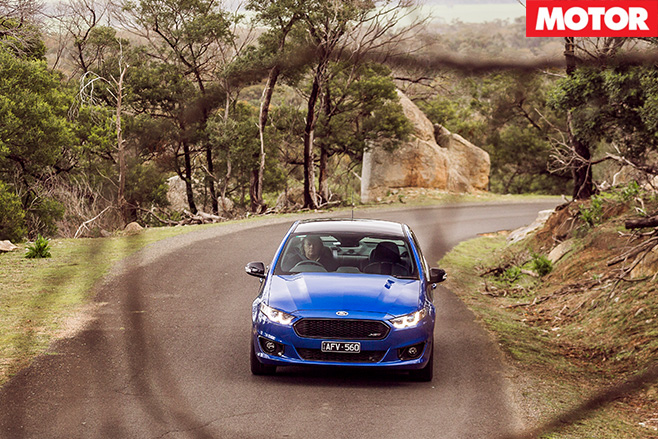
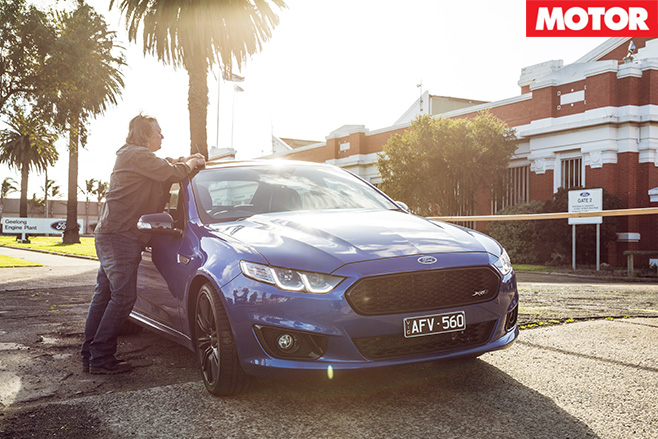
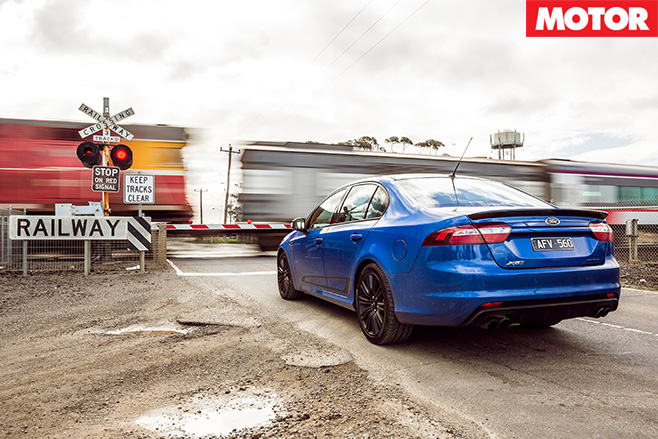
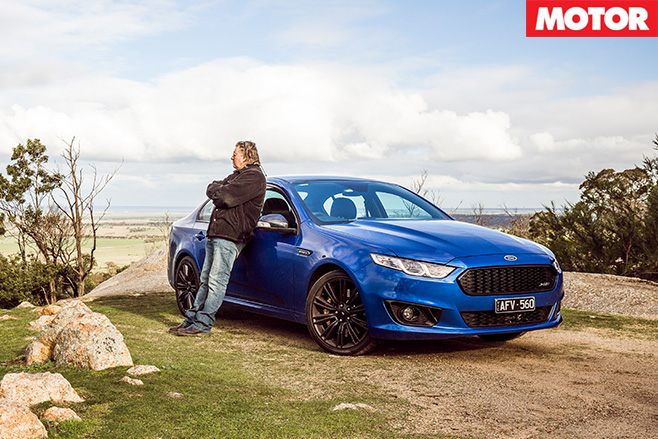
But I’ll be damned if that’s going to stop me grabbing the last of the hairy-chested Falcons, the XR8 Sprint, and pointing it at a few Ford Oz landmarks. Call it nostalgia – for old time’s sake – a blown-V8 trip down Memory Lane.
But whatever you call it, you can’t escape the sense of loss and wonder what might have been; it’s a feeling amplified every time one of those big Miami pistons takes a force-fed journey down its beautifully honed bore.
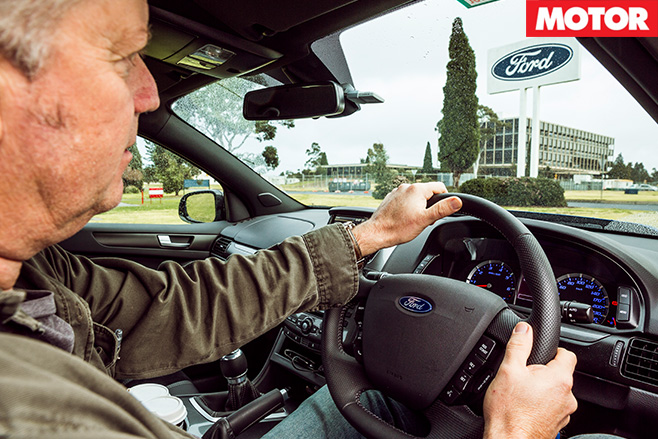
This, apparently, was the standard to which all Ford headquarters were built, regardless of where they were located. Forget the fact that it doesn’t even rain at Broadmeadows. In a way, I reckon that building code is a metaphor for what’s going on here in 2016: Ford is doing things in a global way for a global market and that doesn’t include an outpost doing its own thing. Especially if it refuses to snow out there in Ass-Trailer.
Announced in 1958, the multi-storey bunker was part of the bigger plan to shift manufacturing away from Geelong to the new site – a giant paddock in those days – in Broadmeadows. Typically, Ford got the land cheap (500 quid per acre for all 450 acres – call it 180-odd hectares) and the state government even graciously rezoned the land for heavy industry, such was the vote-grabbing potential of what was then the biggest automotive plant in the southern hemisphere.
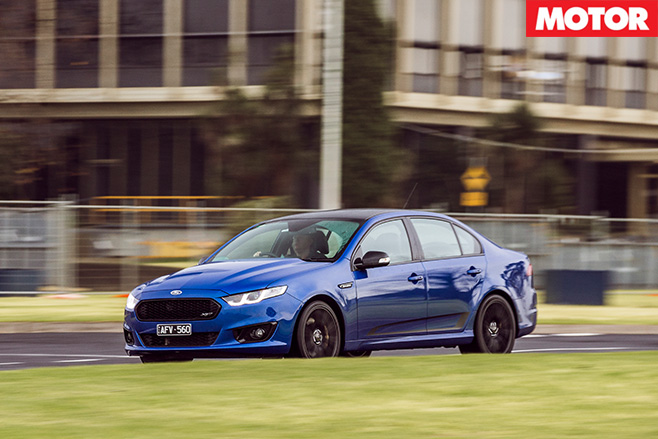
These days, the whole place has – if you’ll excuse the term – the smell of death about it. The production line is, from the outside, just a big shed (and has always been thus) and head office, which must have looked like it had been dropped from a space-ship in 1950s Broadmeadows, is barricaded off while the building is gutted and repurposed as Ford’s Asia-Pacific design centre of excellence. Or somesuch.
When that becomes reality, clearly the stench of rigor-mortis will lift and the place will become inhabited by critters other than the sparrows and spiders that live there now, but in the meantime, it all looks awfully bleak.
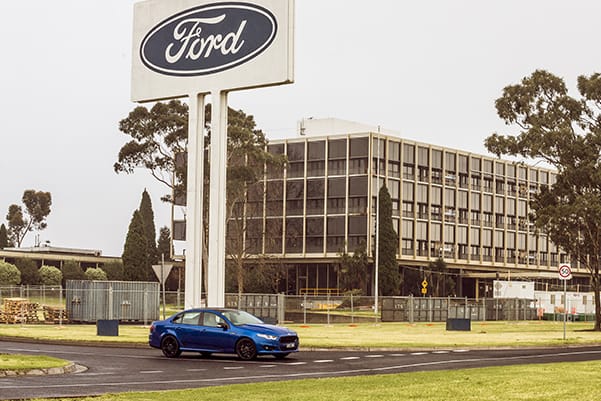
A little piece of Canberra in Melbourne’s outer north. If The Brady Bunch had been set in a boardroom, it would have looked like this joint. At least you know what inspired the tacky, fake timber trim on the Squire wagon.
But the Laminex-clad Squire was the exception and the bulk of Falcon models that came out of this place have been dynamic and, for their time, right up there with anything when it comes to appealing to a chap or chapette who reckoned it was at least partly about the journey and not just the destination.
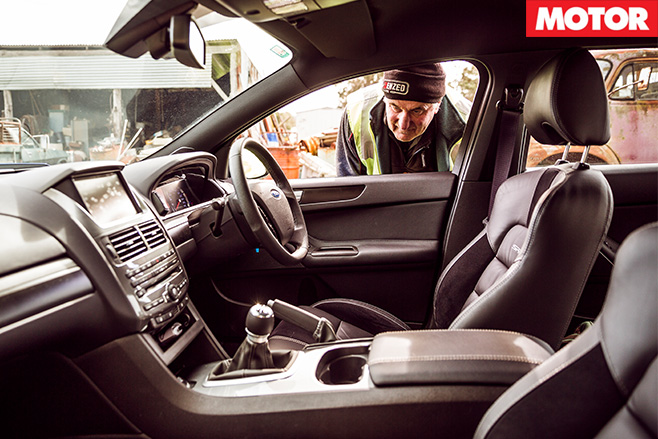
Time to hit the freeway and then some back roads; both Falcon strengths over the years. In fact, I’ve driven a 1960 XK Falcon and even if it was a bit low-tech, it was more than capable of cruising at 110km/h.
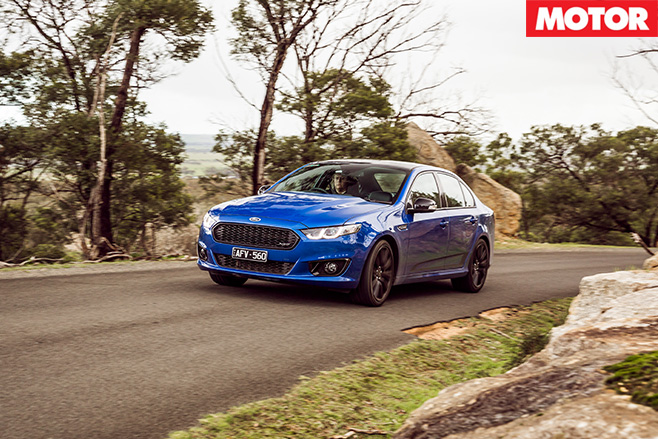
The big advance came in 1967 when Ford took the step of using a V8 engine to create a performance car rather than – as Valiant had done – a luxury car. And it doesn’t matter whether you’re a Ford or Holden fan, if you love a grunty family car with a great soundtrack, then you owe the XR GT of 1967 a huge debt of gratitude.
Those coke-bottle XR/T/W and XY cars eventually morphed into the mighty Phase III, but even after the supercar scare of the early ’70s, you could still strap into a Falcon with a 351 cubic-inch Cleveland plant for just a few hundred bucks more than the base Falcon 500.
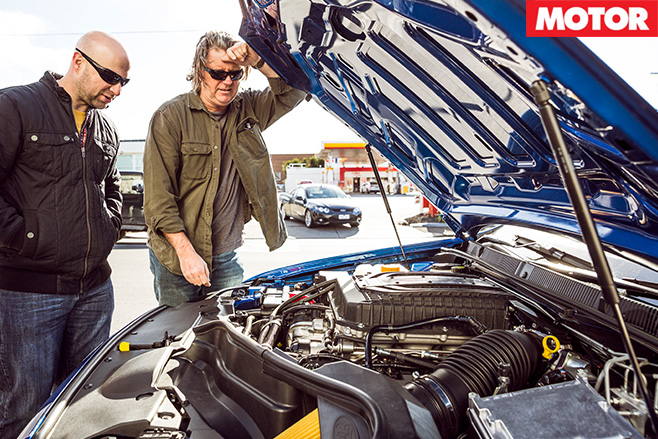
It took Ford almost a decade to wake up to its stupidity and reinstate the V8 and when it did, it was the EB Falcon with a 5.0-litre Windsor under the lid. Despite the Windsor V8 being used globally mostly for inboard-mounted boat engines, Ford Oz developed the driveline to the point where it was displacing 5.6 litres and cranking out 250kW.
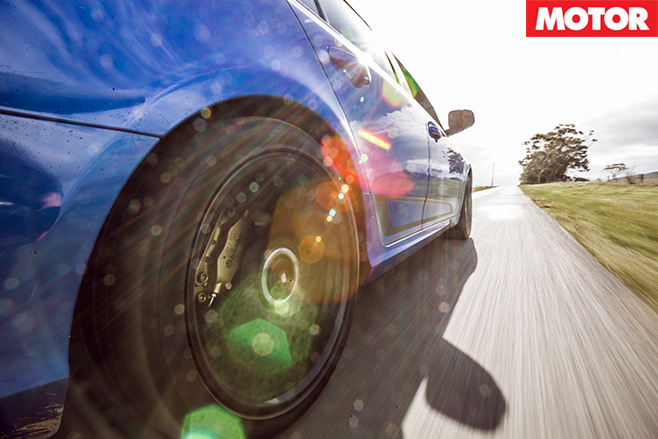
We arrive at You Yangs mid-morning after watching what looked like three-quarters of Geelong going the other way on the Princes Highway. How do people do this every day? At least if you had a job at the You Yangs you wouldn’t have been battling peak hour and if you drove a Falcon to work, you at least had yourself a proper driver’s car.
Mind you, if you’d been a test driver you probably would have got the odd whiff of kangaroo, too, because the place is crawling with them. Of course, I can see how they get in; the fencing here just isn’t up to the job of keeping a large, furry critter able to leap two storeys at bay. It couldn’t keep a young motoring journo and his freelance photographer mate out back in the day, either.
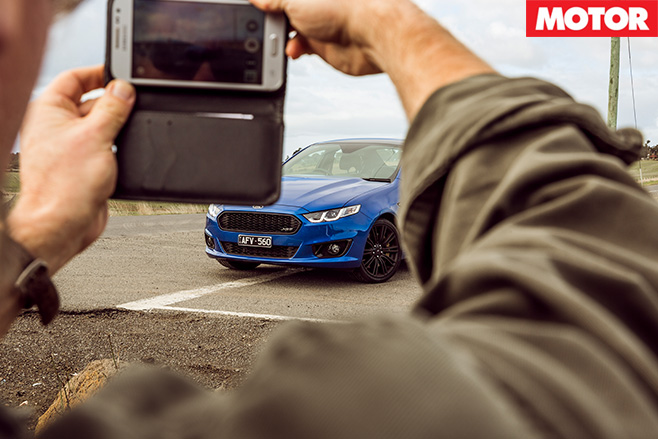
Our plan was to spring the new-for-’88 EA Falcon as it underwent final testing. We did, too, and our blurry shot of the EA with a fifth wheel attached made the cover of Car Australia (which is now MOTOR) much to the chagrin of Ford’s PR folks and, presumably, their higher-ups. Somehow, we did it without being spotted. Somewhere, I still have a glove in that bush, lost as we scrambled for the perimeter when the security guards got too close. Happy days.
The You Yangs Proving Ground was built between the rocky outcrops that spring from the windswept plains outside Geelong in 1965. According to legend, after Henry Ford II heard about Aussie Falcons failing in service, he made a surprise visit to get to the bottom of it.
The proving ground’s finest moment came in its first 12 months when Ford hatched the crazy idea to drive five of its bog-stock new XP Falcons over 70,000 miles, non-stop over five days to remove the memories of the earlier failures. Crazily, it worked although it wasn’t without its moments.
My mate, the late Bill Tuckey, was one of the drivers conscripted to help with the driving and recalled that it was dangerous and scary in equal measures. Bill told me that all but one of the five Falcons was rolled (some went tits-up several times) and by the end of the five days, they were all held together with “wire, straps and race tape”. But it worked and the publicity and plaudits were huge. More than that, the move saved both the Falcon and Ford Australia.
That sort of thing still kind of appeals to me… in a weird way. I think that could be an Australian thing, but, whatever it is, successive generations of Falcons have tapped into it.
Like the Broadmeadows bunker, You Yangs is set to stay within Ford ownership and also has a brighter-than-you-might-think future. It will remain a hub for testing in the Asia-Pacific region and will work with the engineering and design centre back at Broady.
The facility will also remain one of just a handful of fully-equipped Ford proving grounds on the planet. Of all the places on today’s itinerary, the You Yangs Proving Ground stands to lose the least as the production line grinds to a halt.
From the You Yangs we head south to Geelong and the terrain looks eerily familiar. Well, it does to a bloke like me who has spent too many late nights with green cans, cold pizza and re-runs of the original (and best) Mad Max movie.
Soon, though, we’re rolling into Geelong, a town that I reckon cops an unfair degree of crap – but screw the intelligentsia: a lot of those same dickheads probably didn’t like Mad Max. And they likely hated the sinister, black, blown two-door Falcon Hardtop that absolutely made that flick and helped the Falcon GT along the path to immortality.
Ford’s facilities in Geelong are the oldest in the local Blue Oval portfolio. As they would be because it was in Geelong that Ford Australia was created back in 1925. The lure of getting rid of the profit margin going to its distributors in Australia and the hassles with high import duties, convinced head office in Dearborn that a plant in each state, other than Tasmania, was a great idea.
Ford and Geelong have enormous history, of course, with the most recent activities in the coastal city being the production of the Falcon six-cylinder engine; a task the Geelong plant had been responsible for since the XK Falcon hit showrooms back in April 1960. It received a reprieve in late-2008 when it was suggested it should close.
But demand for the Falcon’s inline-six was still strong and it was granted a stay of execution, along with a cash injection of $21 million to bring the 4.0-litre six into line with Euro IV emission targets. But nothing, it seems, lasts forever.
And I’ll tell you how inseparable Ford and Geelong are these days: The company’s sponsorship of the Geelong Cats footy club is the longest running, continuous sporting sponsorship deal in the world. Apparently.
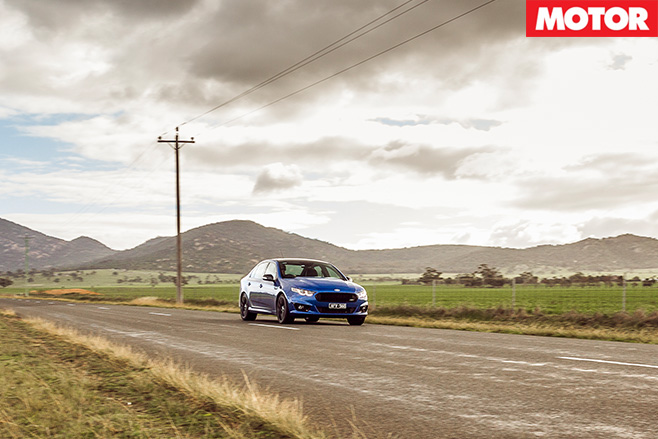
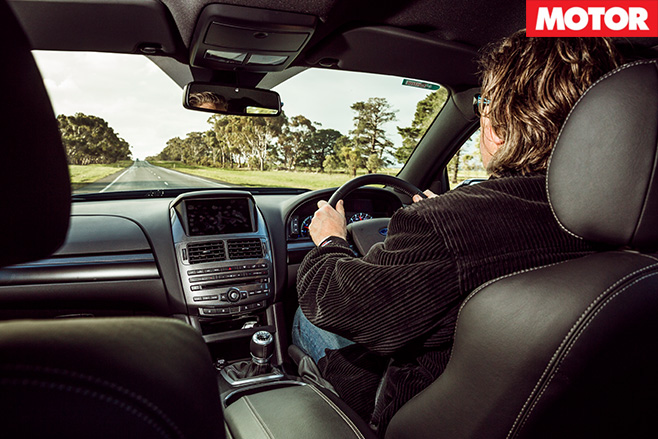
It’s back on the road and back towards Melbourne and it occurs to me that I’m sitting in the last Falcon test car I’ll probably ever drive. Given that I’ve road-tested every model since (and including) the XF, this seems like a fairly momentous occasion. For all the wrong reasons. It doesn’t seem fair; it doesn’t seem right. But that’s how it is. As Ned Kelly put it (in his other oft-quoted pronouncement that day in 1880): Such is life.
The best thing about the digital age is that you can learn to do almost anything online. Last week, I watched a video on how to repair a car dent with hot water and a plunger, how to fix a crack in the windshield and how to replace your car’s brake pads.
There’s no shortage on things you can learn via a quick Google and a few hours on YouTube. But does the internet have a place when it comes to learning to drive?
According to a report from the NSW Bureau of Transport Statistics (BTS), fewer teens are learning to drive with a 10 percent drop in the number of people in their 20s learning to drive compared to the 1990s.
Again, car licence rates in Victoria for people under 25 have fallen from 77 percent to 66 percent since 2000.
According to the BTS, the amount of effort and cost in getting your licence is one of the major deterrents for young people.
So then, is the internet the answer?
Various automobile clubs around Australia have long provided support for learners, offering online practice tests for those wanting to obtain L Plates and P Plates. South Australia’s Royal Automobile Association (RAA), for example, offer learners a give way and multiple choice practice test. Other states also offer similar services.
According to Simon Strode, the managing director of EZLicence, an online driver training website, “the average learner driver only received three face-to-face lessons with a professional instructor, leaving parents and other family and friends to provide the bulk of the driving education.”
It was for this reason the website was started as a support for parents and a resource for students.
But the intention of these online courses isn’t to avoid practical lessons. It offers a more theoretical knowledge behind driving a car.
“We decided to create this tool to provide all the information a parent needs to teach their child, and that an L-plate driver needs to be a safe and informed driver,” said Strode.
“Especially since many [parents] will have forgotten some of the road rules or developed poor habits they might unwittingly pass on to their child.”
There’s no question that videos, like those offered by EZLicence certainly serve an important purpose in teaching new drivers important practical skills, even if they are a little boring.
The site offers 200 video tutorials, averaging 2 minutes in length, so while it may not save learners and parents much time in the long run, it’s a step toward helping create safer drivers.
Holden will have a jacked up all-wheel drive wagon version of the 2018 imported Holden Commodore, but no folks, it won’t be called Adventra.
Like the five-door hatch and wagon already confirmed for Australia, it will be based on the next generation Opel Insignia and use the same GKN Twinster-based AWD technology that will underpin the V6 version of the next Holden Commodore.
The lid was lifted on the third Commodore model this week when Opel announced its 2017 launch plans included three versions of the Insignia and revealed their names – Grand Sports for the hatch, Sports Tourer for the wagon and Country Tourer for its Volkswagen Passat Alltrack rival.
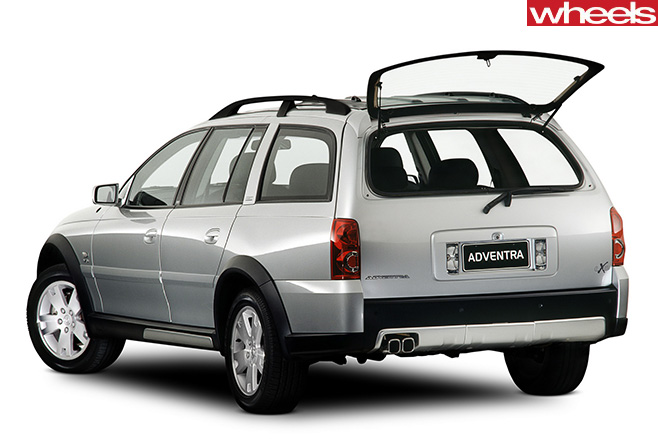
Holden sources admitted to Wheels the Opel announcement had caught them by surprise, but were prepared to indicate a Commodore version of the Country Tourer would be part of the line-up.
However, just what it will be called is something that won’t be made known for a while yet.
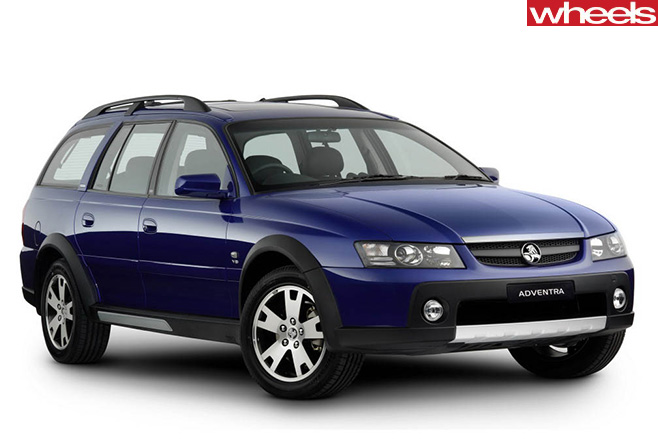
“It’s an interesting concept but … but I wouldn’t be holding my breath to be honest,” said one Holden executive.
The arrival of the high-riding Commodore makes perfect sense in Australia where anything vaguely SUV-ish is now a hot item, while traditional large car sales sink to record lows.
THE phrase “best American cars” is considered by some as oxymoron. But include the word ‘built’ into the sentence and suddenly some decent cars are added to the list. Here are five good and popular cars which have made their way to Australian showrooms via the Pacific Ocean.
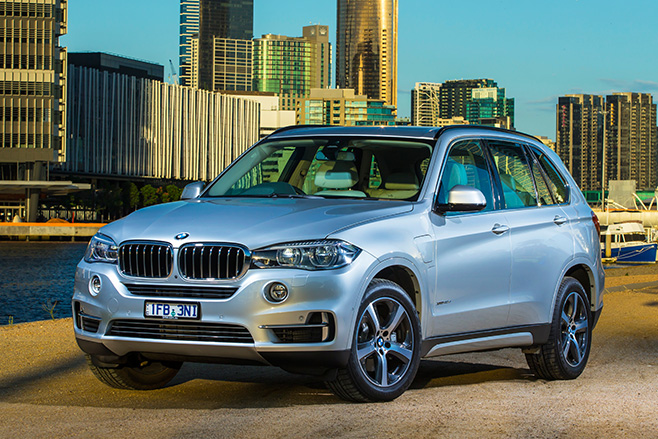
BMW builds almost all its SUVs in the US, where demand is high. There’s reasonable demand for the X5 here, too, with 3676 sold so far in 2016 making it the most popular large SUV priced at more than $70,000. Built in Spartanburg, North Carolina, the X5 is anything but frugal and provides an excellent package of comfort, practicality and driver enjoyment. The X5 range includes rear- and all-wheel-drive options with a choice of petrol, diesel or hybrid powertrains.
Our pick: BMW X5 xDrive 30d
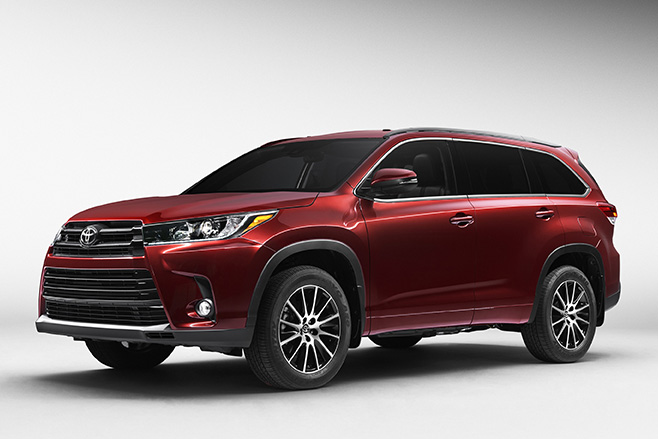
THE Kluger looks and feels American with a nice big, practical interior and gutsy 3.5-litre V6 engine that ably pulls its two-tonne bulk along. With the American styling comes Toyota quality and reliability, which makes it one of the most popular seven-seat soft-roaders on the Australian market. There are several variants with either front- or all-wheel drive.
Our pick: Kluger GXL AWD
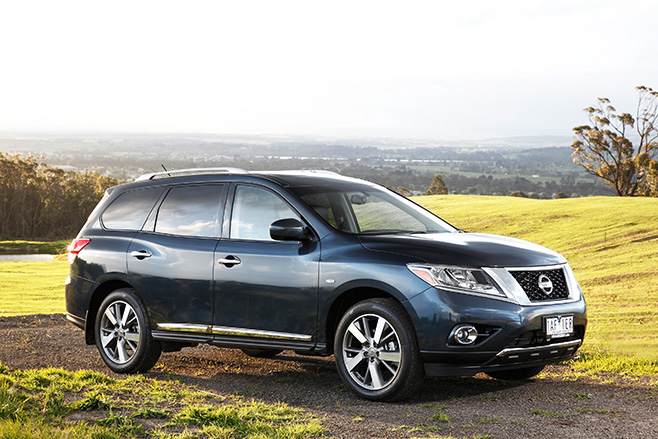
Another ‘foreign’ SUV built for the US market, the Pathfinder is a great value family wagon, with seven seats, plenty of space and a lot of equipment. You can get it with a petrol V6 engine, or as a petrol-electric hybrid that saves fuel in the city. There are front-wheel drive and all-wheel drive versions.
Our pick: Pathfinder STL-L Hybrid (4×4) 4D Wagon.
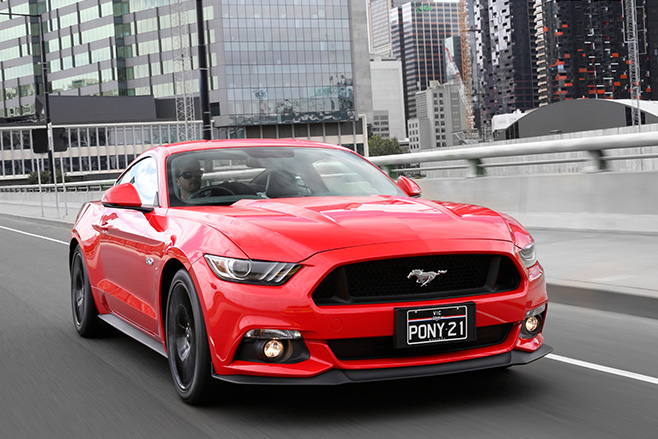
As American as apple pie and Botox, the Ford Mustang is Australia’s top-selling sports car and has even outsold the locally made and loved Falcon. It is a tough, muscular looking car as only the US of A can produce, even if you include the models powered by the 2.3-litre four-cylinder turbo Ecoboost engine. As well as being a head-turner, it’s a credible daily drive that comes in coupe and convertible body styles. Such is its allure that you’ll tolerate the untidy, somewhat low-rent interior.
Our pick: Either of the 5.0-litre V8 Mustang GT models
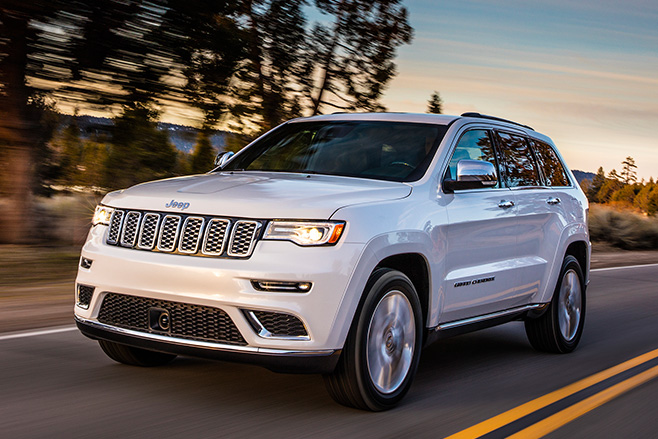
Of all the big SUVs out there, few have the driveway cred of a big Jeep. It handles and performs well for a big unit and comes with a heap of equipment, though noticeably lacks a seven-seat option. Built on the same platform as the much more expensive Mercedes-Benz ML-Class large four-wheel-drive SUV, the 4X4 versions are very capable off-road. There are four engine options including a 3.6-litre V6 petrol, 5.7-litre and Hemi 6.4-litre V8 petrols, and a 3.0-litre CRD turbo-diesel V6 across five variants.
Our pick: Grand Cherokee Laredo CRD
BATTERY-powered versions of the BMW X3 and Mini will go on sale by 2020 after the German brand confirmed its commitment to more electrified models.
BMW’s announcement comes weeks after the Reuters news agency reported the company’s senior executives had skipped the 2016 Paris motor show to urgently discuss its future electric-vehicle strategy.
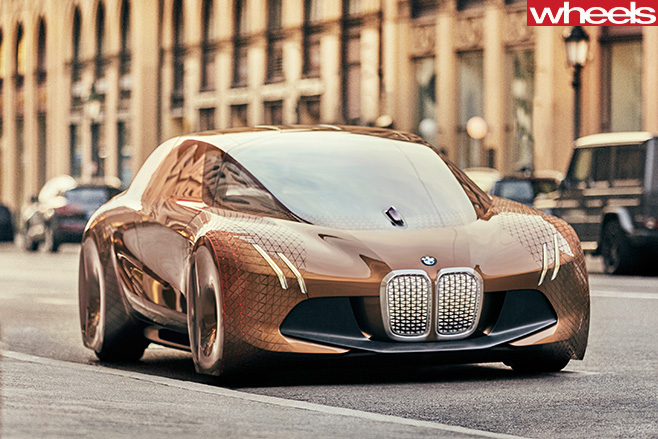
The company has already confirmed a Roadster version of its i8 petrol-electric supercar, due in 2018, as well as an “iNext” project expected to be the long-rumoured i5 mid-size passenger car.
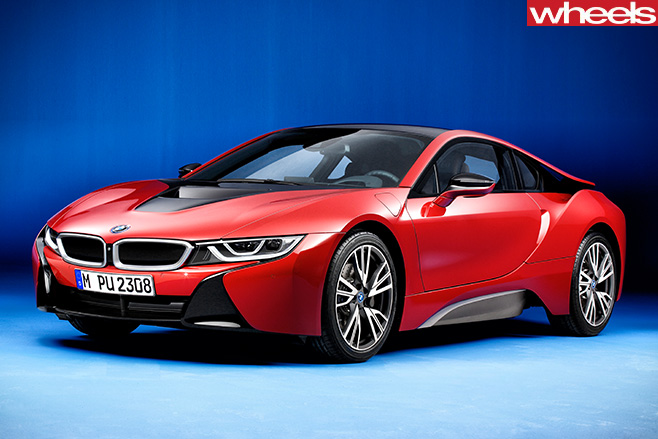
BMW this year released a more advanced version of its i3 city car, which made its debut in 2013 in both electric-only and range-extended guises – the latter version featuring a two-cylinder petrol engine. The BMW i3 won Wheels Car of the Year in 2014.
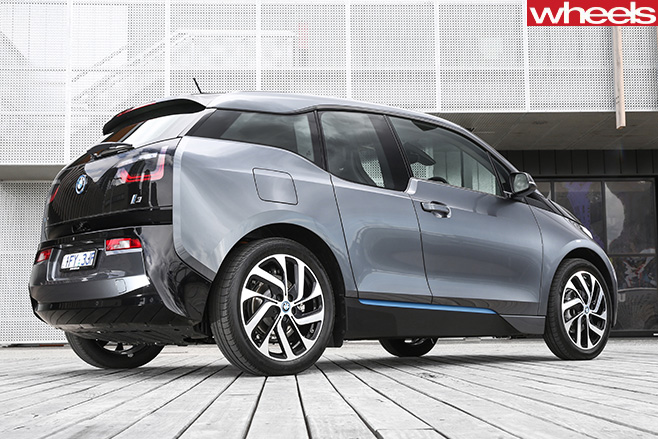
More than 18,000 i and iPerformance models were sold in the third quarter of this year, according to BMW – totalling more than 40,000 to September 2016.
NEW Ferraris from 2019 onwards will feature some form of electrification as the supercar brand targets greater performance and efficiency on the way to a “possible” 10,000 annual sales.
Ferrari chief executive and Fiat Chrysler Automobiles chief Sergio Marchionne has reportedly told financial analysts this week that there will be a “fundamental shift” in the company’s approach to building cars.
The company is on track to register 8000 sales in 2016, and Marchionne said there is potential to easily surpass five figures within the next decade.
“Although I neither commit to this nor do I give any sort of certification of it being our objective, it is possible that the [annual sales] number could be well in excess of 10,000 cars in 2025,” Marchionne is reported to have said.
Ferrari, notably under former boss Luca di Montezemolo, has previously resisted the urge to increase sales, instead aiming to focus on exclusivity.

Speculation also points to a hybrid variant in addition to a turbocharged V8 model, as Ferrari shifts hybrid technology from just a single model – the circa-$3 million LaFerrari flagship – to the rest of the range.
The successor for today’s F12 is expected to be first ‘mainstream’ hybrid Ferrari in 2020, when all signs point to the V12 being paired with at least one electric motor.
Earlier this year, UK magazine Autocar uncovered Ferrari patents that indicated Ferrari was working on technology capable of a 48km electric-only range.
Ferrari’s share price lifted seven per cent this week after the company announced an eight per cent increase in sales and a 10 per cent increase in adjusted core earnings for the third quarter.
We could try to sugar-coat this, but the fact remains that the AU Falcon of 1998 was a bit of a stinker.
In volume-selling form, it was an ungainly thing with a whale-eating-krill grille, skinny little wheels and tyres, too-high suspension and a melted-at-each-end appearance. When Ford pulled the wraps off it for the motoring press, we all looked at our feet and toed the ground. Awkward.
But out of that disaster came the AU Series 3 and the Tickford derivatives. And within that mix was the rather special home-brewed 5.6-litre version. Designed to give Holden’s 5.7-litre Chevy-sourced V8 a run for its coin, Ford rolled up its sleeves and locally developed a stroker crank for the 5.0-litre Windsor, taking the capacity out to 5.6 litres, power to 250kW and torque to 500Nm.
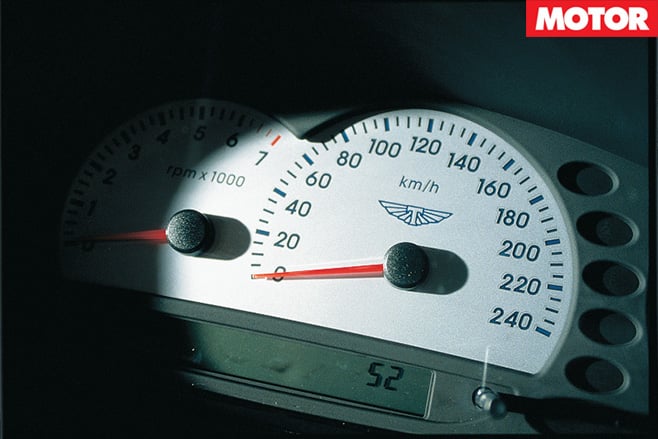
With the 5.6 on board, the Tickford sedans were suddenly proper HSV competitors. That said, the bigger Tickford mill was never as smooth as it was in 5.0-litre form and it drank like a supertanker. Twenty litres per 100km around town? Not a problem.
While the TE50 and TS50 Tickfords were available with the 5.0-litre Windsor, either of them could be ordered with the 5.6, the TS getting alloy heads. Same with the long wheelbase Fairlane Ghia-based TL50, but only three were ever built.
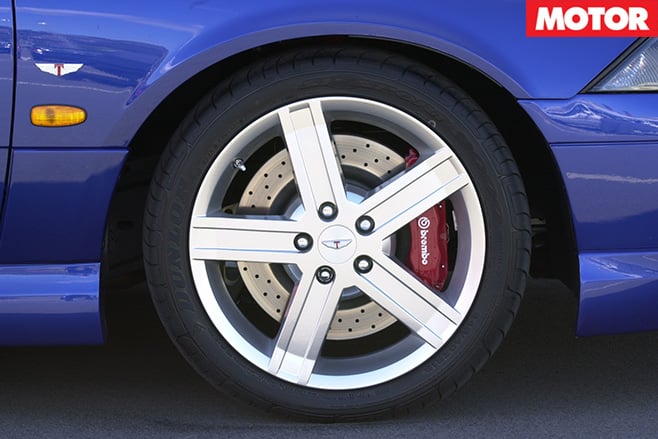
In any case, those stroker-engined cars deserve their spot here because they showed at the time that factories didn’t need to borrow engines from parent companies; mumbo could be designed and built right here – and be extra proud of it.
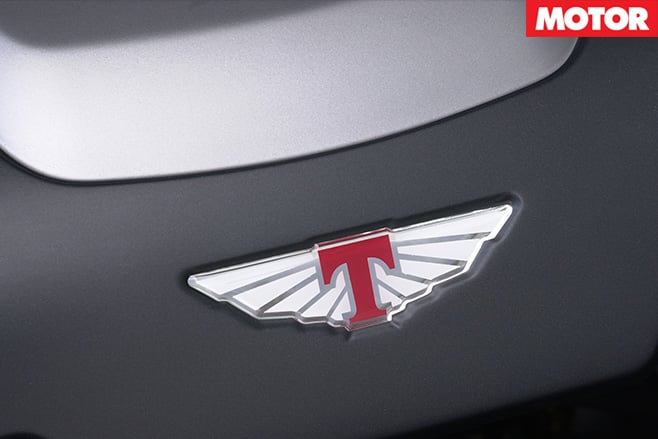
To prove the Tickford engine was special, Ford took a leaf out of Aston Martin’s book and made up a little plaque with the engine-builder’s name on it and applied it to the driver’s side rocker cover. Nice.
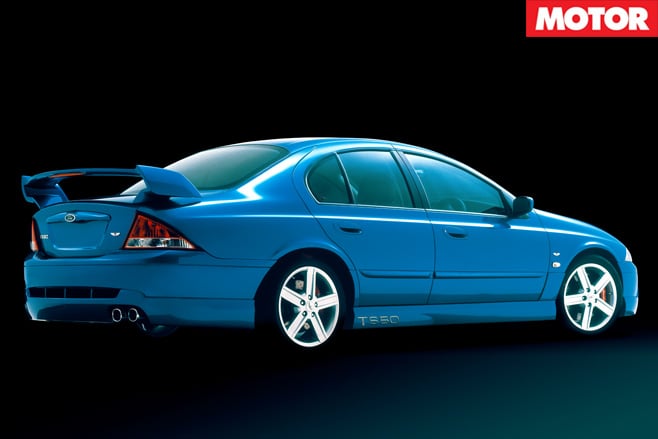
What’s our fave Falcon? Check out MOTOR’s take on the top 10 Fast Ford Falcons ever made here.
First published in the October 2016 issue of Wheels magazine, Australia’s best car mag since 1953.
An odyssey is an ‘epic journey’. Unfortunately for the Japanese carmaker, the story of the Honda Odyssey has been one of a downward slide.
Can’t wait to see the final score? Jump to the verdict now.
HONDA seems to have, at last, turned a corner, with models like the latest Honda Civic demonstrating that the one-time ‘Fear of Europe’ can again deliver progressive and enjoyable cars.
So in finishing ninth, the fifth-gen Odyssey – launched in 2014 – clearly isn’t one of them, even if it does subscribe to the Japanese company’s ethos of efficient engineering and easy operation.
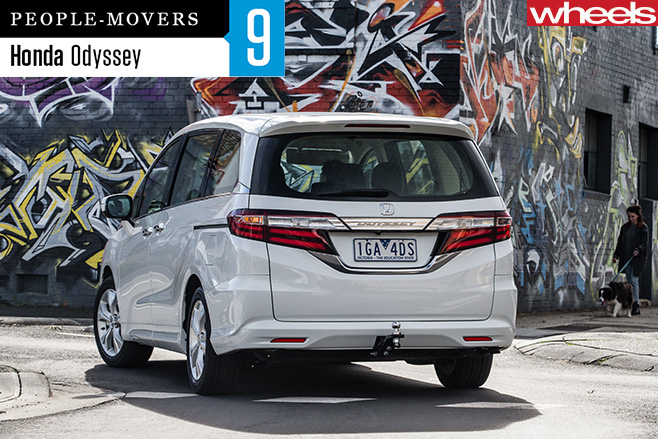
Additionally, while light enough for ferrying kids in heavy traffic, the steering also responds with more conviction than Odyssey’s drowse-inducing styling might suggest, backed up by precise and flat handling (the upshot of a low centre of gravity) and impressive braking capability. This is a surprisingly capable machine to point and shoot through a corner, particularly at speed.
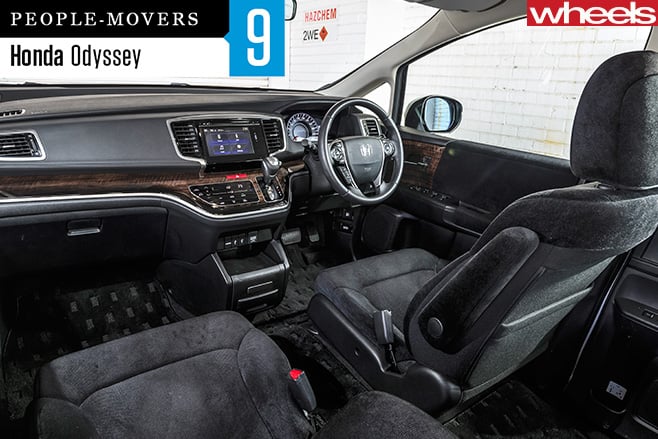
However, even with keen $37,610 pricing, and a generous bounty including a reverse camera, offside electric sliding door, and 17-inch alloys, the Odyssey VTi stumbles, and often needlessly.
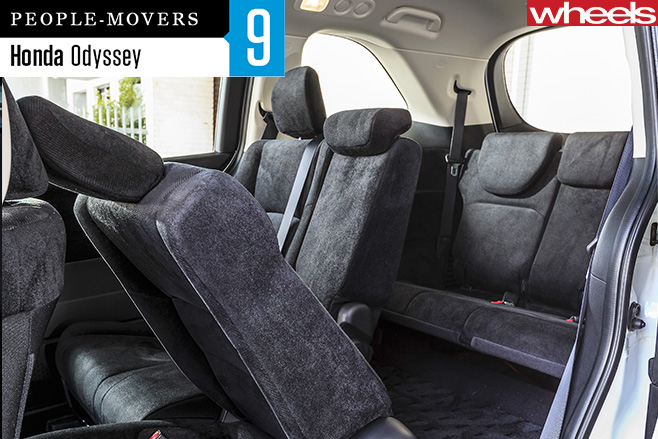
More frustratingly, in the absence of ISOFIX latches, using the inferior anchorage-point alternatives mounted above the third-row occupants means nobody other than the posthumous Marie Antoinette could actually sit there. Plus, despite protective shrouding, we fear taller craniums may come into painful contact with them during hard cornering. Why can’t Honda have just engineered every seat with in-built latches like everybody else? A total rethink is required.
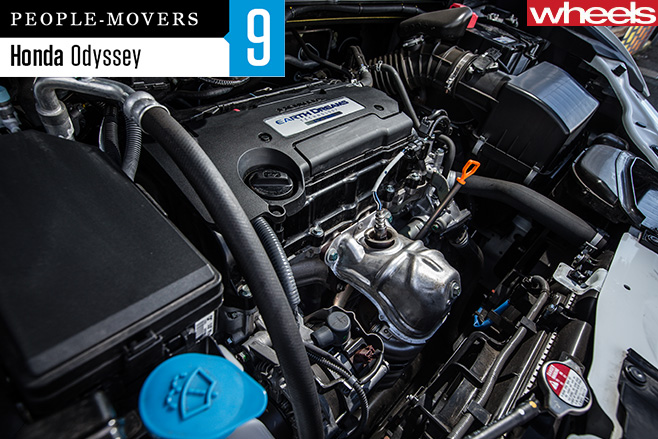
Such cost cutting is disheartening because access to both rear rows is unimpeded, most essentials like air vents, lighting, storage, and 12V outlets are present, and the seat-folding system works effectively, turning this into a super-spacious two-seater wagon with an 1867-litre cargo hold if desired.
But the flair of previous models has disappeared. The original Odyssey was our 1995 Car of the Year, but this fifth-gen model smacks of cynical, expedient engineering. Talk about a disappointment.
Why fewer chairs seat more
WE’D recommend the $46,090 VTi-L with its seven seats over the base VTi eight-seater, since the three-person middle bench is binned for a pair of ‘Captain’s Chairs’ with ottoman leg rests. Besides being comfier, they feature self-contained child-seat anchorage hooks, meaning the third-row seats can be used since there won’t be straps reaching up to the back of the ceiling with a kiddie seat fitted.
Plus, cornering headlights, a surround-view camera, fog lights, keyless entry/start, auto parking, sunroof, tri-zone climate, blind-spot monitoring, Cross-Traffic alert, heated/electric front seats, leather, and twin electric sliding side doors with blinds go some way to easing the pain of Odyssey’s styling and ride quality.
Specifications
- Price as tested: $37,750* includes floor mats ($140)
- Engine: 2356cc 4cyl, dohc, 16v
- Power: 129kW @ 6200rpm
- Torque: 225Nm @ 4000rpm
- Transmission: CVT automatic
- Dimensions (L/W/H/W-B): 4840/1800/1695/2900mm
- Weight: 1776kg
- Cargo capacity: 1332 litres (to ceiling)
- Tyres: Yokohama BluEarth A34 215/55R17 98V
- Test fuel cons: 11.2L/100km
- 0-100km/h: >10.2sec
- 0-400m: 17.5sec @ 131.9km/h
- 80-120km/h: 7.0sec
- 3yr resale: 64%
- Plus: Driveability and efficiency; keen handling; dash layout
- Minus: Noisy ride; child-seat limitations; packaging
- Verdict: 5.0
Other seven seater options
Holden Captiva LT AWD
The Holden Captiva LT AWD fails to make a captivating argument for why you’d bother over other, more composed competitors.
Nissan Pathfinder ST AWD
Opportunity knocked, but Nissan didn’t fully open the door. We find the Nissan Pathfinder, while smooth and likeable, falls short of the competition.
Toyota Kluger GX AWD
The Toyota Kluger offends no one by sticking to the middle of the road. There’s no escaping that the Toyota offers plenty for the money.
Hyundai Santa Fe 30
The Hyundai Santa Fe better at pleasing its driver, rather than shifting a tribe of seven, as we uncover headroom and visibility issues in the third row.
Volkswagen Multivan
The Volkswagen Multivan is certainly the leader of the space race, if not quite the final frontier. Commercial vehicle origins let it down against more sophisticated competition.
First published in the October 2016 issue of Wheels magazine, Australia’s best car mag since 1953.
The Holden Captiva LT AWD fails to make a captivating argument for why you’d bother over other, more composed competitors.
Can’t wait to see the final score? Jump to the verdict now.
IF A WEEK is a long time in politics, then a decade is an eternity in the fashion-driven world of SUVs. Yet that’s how long the basic Holden Captiva model has been with us, the South-Korean-built five- and seven-seater soldiering on with just one major facelift and a couple of upgrades along the way. To say the basic product is starting to look and feel its age is no stretch of the truth.
This mid-spec Holden Captiva LT V6 translates to an all-wheel-drive version of the long-lived GM Theta platform with the same Melbourne-built 3.0-litre V6 as seen in its Commodore stablemate since 2009. Holden claims 190kW and 288Nm but, in the real world, the Captiva’s performance is weak. The main problem is a lack of low-end grunt and, with a very lazy throttle calibration in Eco mode (to which our car defaulted to at every opportunity) there’s a constant need to be slamming the accelerator pedal floorward to extract anything like major thrust.

Captiva’s transmission doesn’t help, either, and that lack of beans below 4000rpm means the six-speed auto is constantly hunting for a ratio, especially in hilly country where it feverishly roves between fifth and sixth, and sometimes even fourth. And it gets worse with a full load on board.
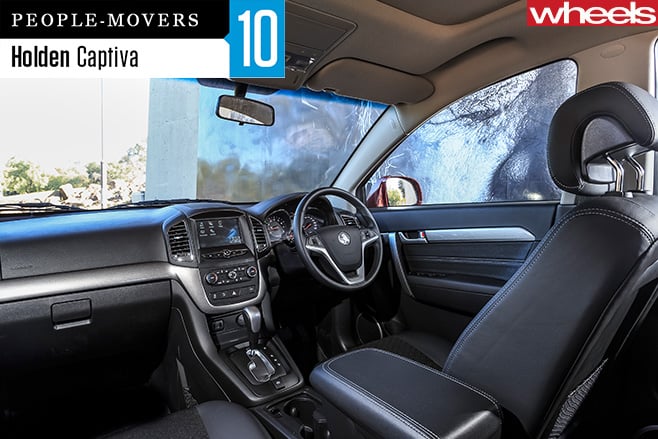
On the road, Captiva looks and feels as if it’s short and quite narrow and, for once, appearances are far from deceiving. That’s felt most once you start to load a few bodies into it and discover the monster trade off in luggage space when all seven chairs are fixed into place. In fact, with just 280mm of space between the back of the third row and the tailgate, the Captiva is easily the shortest of this bunch. Now we know why you see so many Captivas towing small trailers during the school holidays.

There’s no doubt it will do the job but, frankly, the rest of the SUV world has moved on a bit. By about two generations.

Plenty of these cars have evidence of having started life as left-hand-drive models. Gearshift graphics on the wrong side on the centre-console, volume knobs a huge stretch away, you name it.
In the Captiva, though, it’s a bit more annoying due to the way the second row of seats is laid out and how it affects useability. Basically, in order to get those in the third row out on the safe (kerb) side, two (rather than one) of the three second-row inhabitants have to jump out first for the second row to be tilted for access. The second row is simply split the wrong way round: 60/40 left/right. It should be 60/40 right/left.
|
 SPECS
SPECSOther seven seater options
 Nissan Pathfinder ST AWD
Opportunity knocked, but Nissan didn’t fully open the door. We find the Nissan Pathfinder, while smooth and likeable, falls short of the competition.
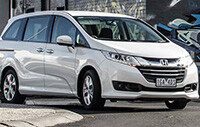 Honda Odyssey VTi
An odyssey is an ‘epic journey’. Unfortunately for the Japanese carmaker, the story of the Honda Odyssey has been one of a downward slide.
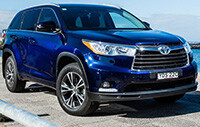 Toyota Kluger GX AWD
The Toyota Kluger offends no one by sticking to the middle of the road. There’s no escaping that the Toyota offers plenty for the money.
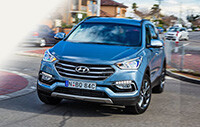 Hyundai Santa Fe 30
The Hyundai Santa Fe better at pleasing its driver, rather than shifting a tribe of seven, as we uncover headroom and visibility issues in the third row.
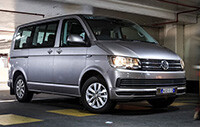 Volkswagen Multivan
The Volkswagen Multivan is certainly the leader of the space race, if not quite the final frontier. Commercial vehicle origins let it down against more sophisticated competition.
