
WHAT IS IT? A tweaked up, and dare I say “sporty” lifestyle variant of the Renault Trafic commercial van. The current Trafic medium van platform arrived in Australia back in mid-2015 and brought more kit and striking Euro looks to the white-bread van segment for a reasonable price point. You can even have lairy colours.
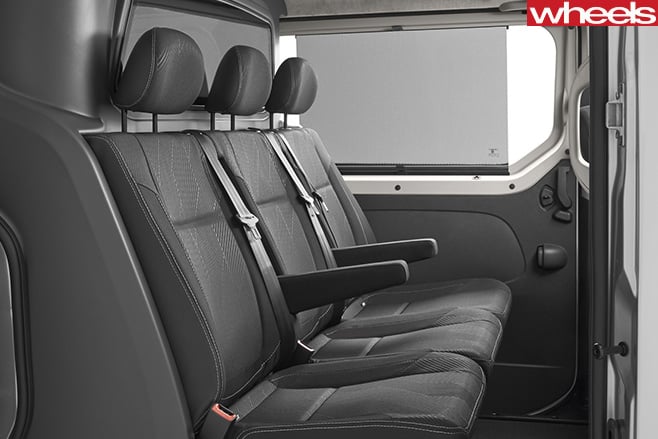
WHY WE’RE TESTING IT The Trafic hit the market already touting strong commercial credentials and now Renault is exploring the work and play potential of the Trafic. 6-seater crew versions of the Trafic are expected in Australia in early 2017 and the Sport package is expected to arrive mid-2017. Dual cab utes for dual purposes have become hugely popular, maybe the door is now open for vans to become cool again?
MAIN RIVALS Ford Transit, Toyota HiAce, Hyundai iLoad.
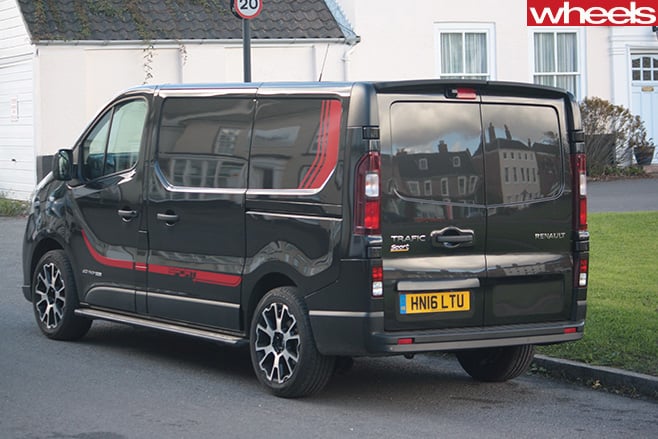
Plus: Punchy, thrifty and sophisticated bi-turbo diesel engine, slick manual gear shift. Minus: No automatic transmission option, front wheel drive affects turning circle and on road dynamics. Can feel bigger than it is from the driver’s seat.
THE WHEELS REVIEW If you’ve ever swept the shattered remains of a mega-dollar bicycle off your driveway you may want to keep reading. You won’t be the first or last person to forget that your carbon fibre treadly is still on the roof racks as you drive into your garage. Or maybe you’ve starred in one of the many online videos showing epic dirt bike-into-ute loading fails. Then life possibly could be easier with a van.
The Trafic uses a 1.6 litre dCi four pot diesel for power. Base models are armed with a single turbo 66kW/260Nm version of the powerplant while high spec variants like the Sport get a twin-turbo 103kW/340Nm version.
To make the Trafic a little more A-Team and a little less Bob the Builder, the Sport features a 7-inch multi-media touch screen with DAB radio and nav, auto headlights and wipers and highlights around the dash. Funky colour coded instrumentation, cruise control and speed limiter as well as Hill Start Assist and a Grip Xtend feature that helps with traction on slippery surfaces.
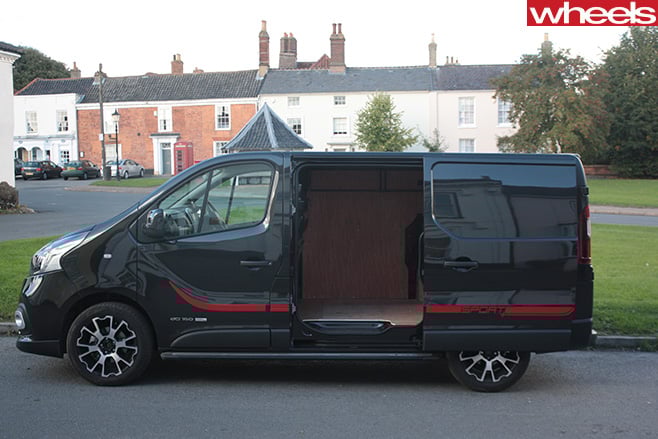
The short wheel base Sport we drove had 5.2 cubic metres of load capacity and the Trafic can carry 1,200kg. Access to the rear is via a sliding door on the passenger side or via barn doors on the rear.
Our drive of the UK version of the Trafic Sport took in motorways as well as rural back roads and the Renault was an easy drive on all. The 1.6 litre oiler has plenty of poke with peak torque coming in at a relatively low 1500rpm. Peak power comes in at 3,500rpm. Renault currently claims a thrifty 6.2L/100km for this van yet it happily buzzed along at the 70mph motorway limit.
The Trafic is only offered in manual guise which may be an issue for some. But the 6-speed manual is a light shifter and as we found in London peak traffic not hard work to stir through the slots. The low torque curve of the dCi engine also helped when idling along in congested streets.
Pricing and spec is yet to be announced by Renault Australia. However, the Trafic Sport makes for a quite un-commercial commercial that could well be a safer way to transport your toys.
SPEC Model: Renault Trafic Energy dCi140 Sport Engine: 1598cc twin-turbo common rail diesel Max Power: 103kW@3500rpm Max Torque: 340Nm@ 1500rpm Transmission: 6-speed manual Weight: 1,683kg Fuel Economy: 6.2l/100km 0-100km/h: 10.8 sec Price: TBA On Sale: Mid-2017
BMW has released a limited run of race-ready M4 DTM Champion Edition road cars to celebrate the 2016 German touring car title it wrapped up at Hockenheim last weekend. And several examples could come to Australia, priced around $300,000.
Power for the DTM edition matches the BMW M4 GTS at 368kW/600Nm, up 51kW/50Nm on the regular M4, and 37kW/50Nm above the M4 Competition. It covers 0-100km/h in 3.8sec, and only 200 examples will be made worldwide.
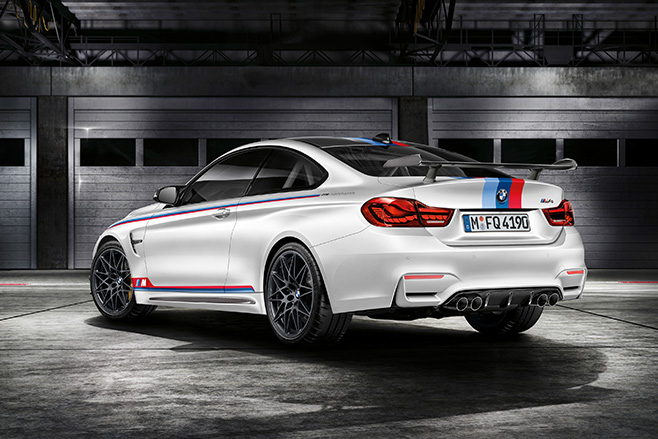
M Performance stripes inspired by BMW’s DTM race livery distinguish the limited edition two-seat M4 DTM from the high-performance M4 GTS on which it is largely based.
“It takes some of the components you know and love from M4 GTS, but gives a whole new character to the car,” says BMW Australia head of product Shawn Ticehurst.
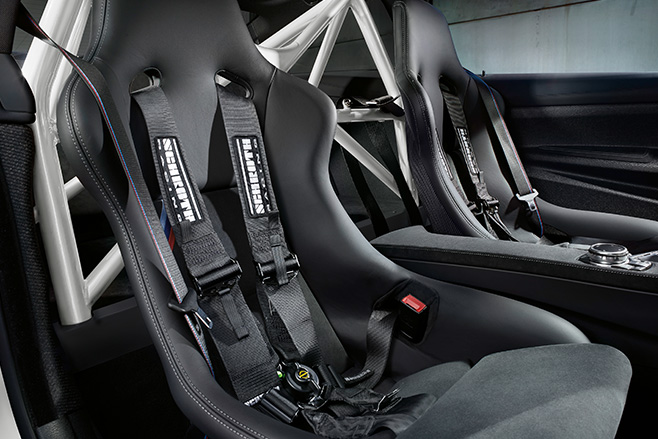
The track-focussed GTS treatment extends to the M4 DTM in the form of a half roll-cage, fixed back racing bucket seats, harnesses, lashings of Alcantara and an upgraded aerodynamics package consisting of side skirts, diffusers, canards and a large rear spoiler.
Carbon ceramic brakes are standard, as are three-way mechanically adjustable coilover dampers and lightweight alloy wheels painted in a unique gunmetal grey. Carbonfibre has been used for the bonnet, roof, instrument panel support, seats and rear diffuser. The rear muffler is titanium.
“We’re looking into it for Australia at this stage,” said Ticehurst. “Nothing to confirm at the moment, but being such a big M market and knowing there’s so many enthusiasts out here it’s a car we’re excited about.”
Marco Wittman drove the M4 DTM race car to victory, claiming BMW’s third title in three consecutive years.
“Never before has one of our edition models been so closely linked to motor racing,” said BMW M president Frank van Meel.
The M4 DTM Champion Edition is on sale now in Europe, priced approximately $9000 above the M4 GTS. In Australia, the sold-out GTS retailed for $295,000, meaning the DTM edition could cost north of $300K.
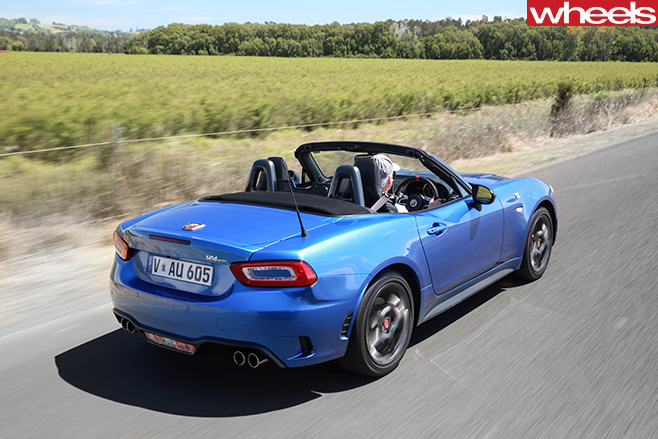
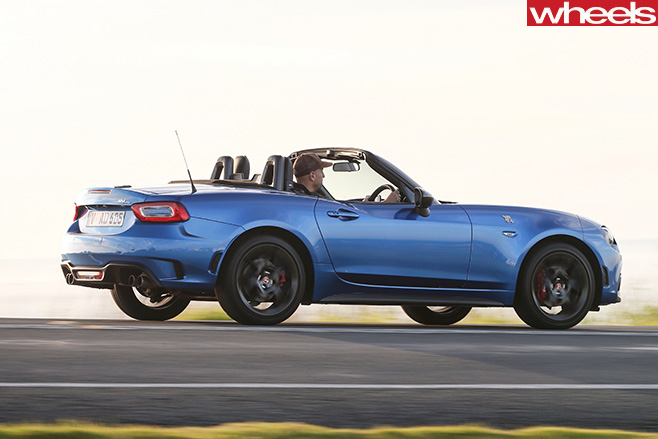
The Abarth 124 Spider recalls the Fiat motorsport outfit’s 1970s rally roadster icon, built around a brilliant dynamic donor in the form of the Mazda MX-5. A distinctive look and turbo power give the Spider appeal all of its own, and strong equipment and keen pricing see it make an equally compelling case on the value front.
WHAT IS IT? The 2017 Abarth 124 Spider is essentially the Italian brand’s second-generation model, the first having run from 1966 to ’85 and in Abarth World Rally form from 1971 to ’76.
The 2017 edition borrows its underpinnings from the current fourth-gen (ND) Mazda MX-5, before applying a nostalgic styling treatment that leaves just one exterior panel untouched.
The Fiat group provides the 1.4-litre turbo engine – the turbo being a power-adding feature historically available in very few MX-5 models, including the current one.
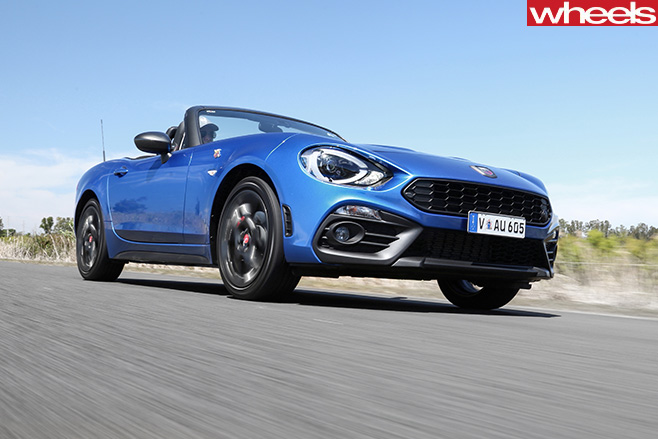
WHY WE’RE TESTING IT Wheels was given a drive of the 2017 Abarth 124 Spider in the Gold Coast and Byron Bay hinterland and at the Gold Coast’s Norwell Motorplex as the model went on sale in Australia.
MAIN RIVALS
Mazda MX-5
PLUS: Torque; speed; economy; equipment; sports suspension and brakes; auto still gets the mechanical LSD MINUS: Polarising styling; you’ll forever be explaining what it is, despite the fact Abarth has been around since 1949
IT’S NOT surprising that Turin’s take on Hiroshima’s evergreen roadster handles much like an MX-5, which is already one of the world’s great steers.
Even if you consider the 124 Spider its own thing – it shares next to nothing with Mazda externally – and a nice nod to the Fiat racing division’s 70s rally star, comparisons with its step brother are inevitable … and the Abarth stacks up pretty well.
That the MX-5’s malleable handling and sweet ride/handling compromise (mostly) carry into the 124 is a great thing, but there are differences beneath the Italianate exterior. Mazda resisted enthusiast pressure to build a turbocharged MX-5 for 15 years, eventually relenting with 2004’s SE, but Abarth has no historical distaste for the snail.
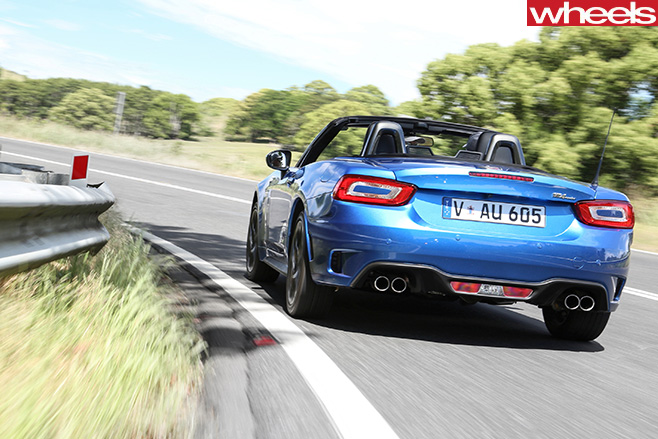
The little Fiat mill, familiar from the group’s small cars, has a subtly raspy character, and is firmly a torque engine – it doesn’t want to be spun hard, and you don’t need to when the 125kW peak is delivered at 5500rpm. Working the gearbox is a delight – it’s a unique unit, specced to transmit the extra twist.
It all works very nicely on the road, where the 124 Spider bites a bit harder, while the specs says it’s a fraction more economical compared with its atmo counterpart, and quantify the extra sting – half a second quicker 0-100km/h – despite the fact the Abarth carries somewhere between 50 and 100 more kilos (distributed 50/50).
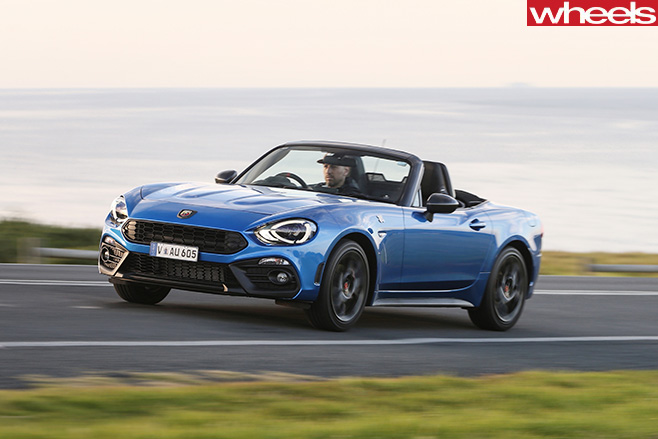
A sport mode enlivens the throttle response, beefs up the steering weight without polluting feel, and ups the ESC threshold. It’s said to sharpen the auto’s shifts too, though we didn’t get to drive it.
The exterior sheetmetal, polarising as it is, says this is something special and the cabin duly continues the theme while keeping the donor’s best bits, such as the 7in touchscreen and rotary controller, and classic-looking IP layout.
A persuasive suite of standard equipment (see sidebar) and keen pricing seal a convincing case to fly the Italian ragtop, especially if you take up the initial $43,500 drive-away deal for the manual.
SPECS Model: Abarth 124 Spider Engine: 1368cc 4cyl, dohc, 16v turbo Max power: 125kW @ 5500rpm Max torque: 250Nm @ 2500rpm Transmission: 6-speed manual Weight: 1100kg 0-100km/h: 6.8sec (claimed) Fuel economy: 6.5L/100km Price: $41,990
Newborn Chinese manufacturer Lynk & Co debuts production-ready SUV with global ambition.
Punctuation has no place in a car name, so we’ll understand if your first reaction to the launch of a new brand called Lynk & Co is to wonder quite what the marketing team responsible for the name were smoking at the time. But daft title aside, the rest of the project is properly serious.
There’s a lot to get through, so we’ll start with the distilled highlights. Lynk will be an offshoot of Chinese automaker Geely, which also owns Volvo, and is set to launch a series of new models based on the same Compact Modular Architecture (CMA) that will underpin the next generation of ‘40 series Ovlovs, which we told you about earlier this year.
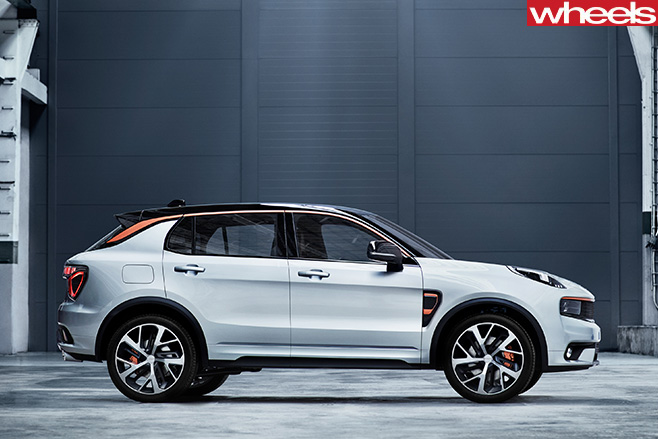
Half of those sales are anticipated to be in China, where all of the company’s models will be produced, initially at least. But engineering and design is being led from Sweden, and Lynk wants us to regard it as a “northern European” brand that just happens to build its cars elsewhere; apparently Chinese consumers are reluctant to buy cars from what are seen as Chinese companies.
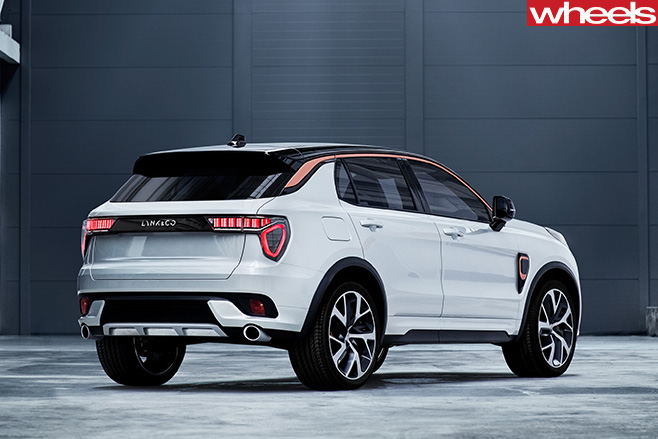
Underneath the 01 and its siblings will be closely related to the next generation of small Volvos, with Lynk executives saying that electrification will be offered on all models, and it may well be that all versions sold outside China will be either hybrids or pure EVs. Other than confirming that both three- and four-cylinder engines will be offered there was no news on the oily bits, but the presence of the same cutaway that Volvo showed at the unveiling of the Volvo XC40 concept in May, and which we know shows a three-cylinder petrol engine with a seven-speed DCT and hybrid assistance, suggests we can expect to see the same powerplant in its Lynk sisters. We were also told that both front-drive and all-drive versions will be offered.
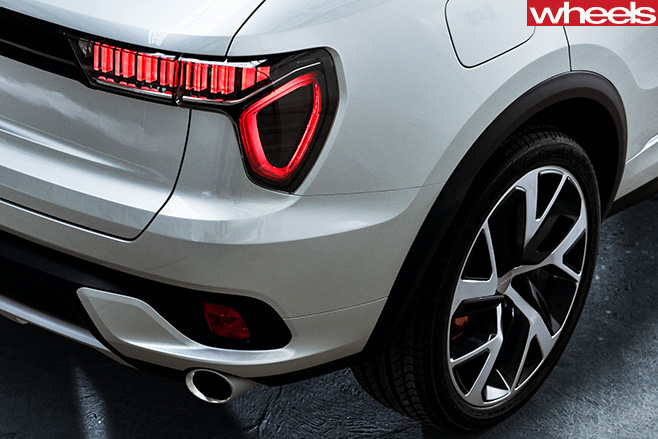
Geely’s design director Peter Horbury introduced journalists to the 01; he formerly held the same position at Volvo and Ford and – as an avuncular Brit – is one of the few people we can think of who could have got away with saying “ta-da!” as the sheet was twitched off. He later confirmed that there will be at least four Lynk variants at or shortly after the launch of the brand which will take place next year in China, and in other major markets including Australia in 2018.
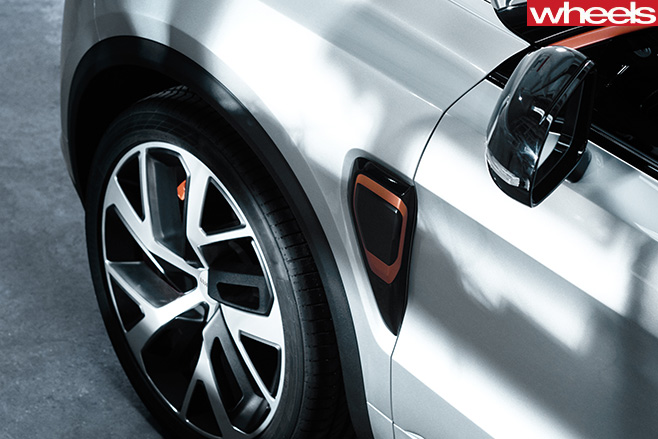
At this stage it’s fair to say there are more questions than answers, not least how Lynk hopes to get itself to half a million sales from a standing start despite what we’re told by Visser will be “ultra competitive” pricing. We’re sure we won’t have to wait long to start filling in some blanks.
Volkswagen must think its 2011 and 2012 Bang For Your Bucks trophies look awful lonely in its poolroom.
Given the chance to make it three wins last year with a new Polo GTI, it didn’t muck around when cooking up a contender. The car was stuffed with a bigger engine, more power and priced lower than before.
But while this gifted it cracking pace on the dragstrip, it was left dynamically wanting. It took third in class and we reckoned VW’s choice to launch the car without adjustable dampers might’ve been the difference.
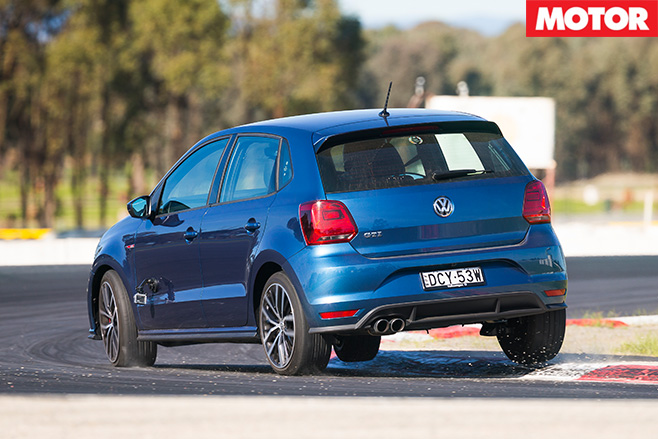
So this year when Wolfsburg’s updated mite tore down Winton’s bumpy access-road-slash-dragstrip and the data started to trickle in, we grabbed the blank trophies and fired up the engraving tool. It beat every front-driver in its class to 100km/h, including the more powerful (by 43kW/60Nm) and lighter (19kg) Peugeot 308 GTi 250.
Most of the pack catches it by the quarter mile, and blow by in roll-on acceleration, but the Polo notches up a string of small wins. It claims the third-best braking result and its new dampers unearth new pace around Winton Raceway.

However, while the new suspension unlocks extra speed in isolation, it can’t gift it the edge among classmates. And only to highlight how fast ‘cheap’ cars have become, the Polo manages the third-slowest lap time, and third-slowest speed through the sweeper.
Neither does the new suspension transform the car’s on-limit behaviour. Initially there’s a lot to like about the chassis. You can tell it’s pliant, even on a track, and balanced enough to chuck around. But for a car less than four metres long you expect it to feel more agile as you up the pace.
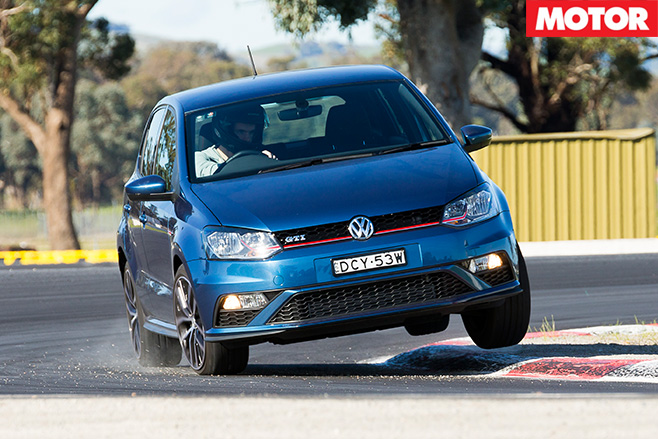
The judges speak with their votes, however, and it’s no surprise the Polo is picked fourth-last from the line-up. While it has some strong foundations – a strong engine, good grip, and upgraded suspension – it didn’t use them all to extract the most from the car.
Inside the cockpit, it’s less involving than others. Its gear shift action feels adrift, and its steering rack was simply outshone by the Fiesta ST’s for sharpness and pinpoint accuracy. But its price sure helped – if anything, the Polo’s strongest performance. It’s cheaper than it was five years ago by $300, or $2500 if you account for inflation, meaning even though VW’s developed its pace, the price is generously left well alone. And to its benefit.
Even with the formula skewed towards performance, its thrifty tag was enough to give it a combined index that trumped everything else. Well, everything expect a certain big-engined Aussie that offers about as much fun as you can have on four wheels.
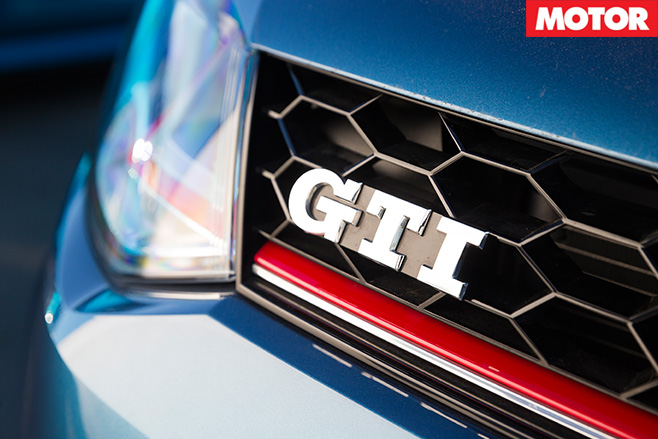
JUDGES’ COMMENTS 04. David Morley “A truly relevant and resolved car this time around.”
07. Dylan Campbell “A hot hatch for over-30s; makes the Fiesta feel like a car for teenagers.”
08. Louis Cordony “Great car, small price. Just missing that X-factor.”
06. Scott Newman “Huge performance, but needs a little more driver appeal.”
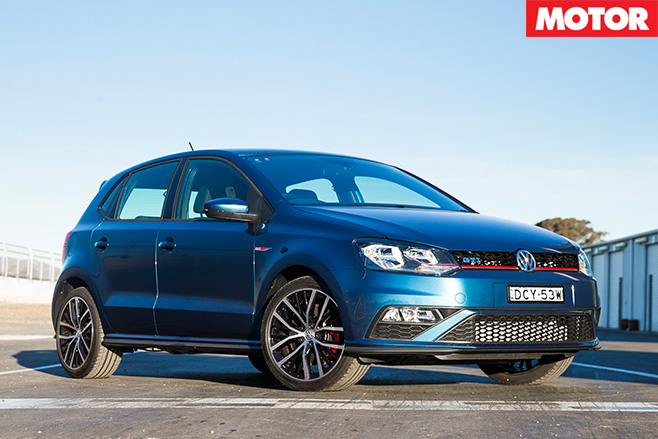
SCORES Price: $27,490 Bang Index: 91.7 Bucks Index: 142.7 BFYB Index: 173.2
WARREN LUFF SAYS 03. “It’s a very refined package, and very sure-footed on the limit”
“Probably the most complete package of all the hot hatches as well; not as sketchy on the limit. Everything is pretty good – the engine, brakes and the speed that you can get out of this thing.
“I’d like to see it more agile in the rear, so you could have that hot hatch characteristic and use the rear of the car a little bit more.
“Great engine, probably a little bit long in the gear ratios because, like for most of it around here, you’re only in second or third gear, but, certainly a fun car and easy to drive on the limit as well.”
Want more? Check out the rest of 2016 Bang For Your Bucks.
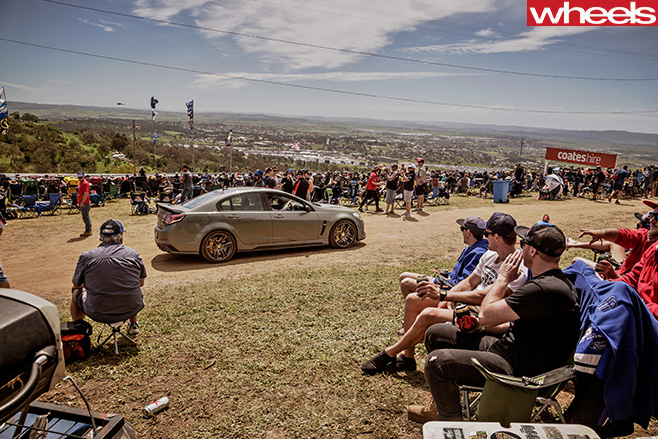
HOLDEN will not cease local manufacturing on the same weekend as next year’s Bathurst 1000, avoiding a repeat of Ford’s awkward timing with signing off on the Falcon.
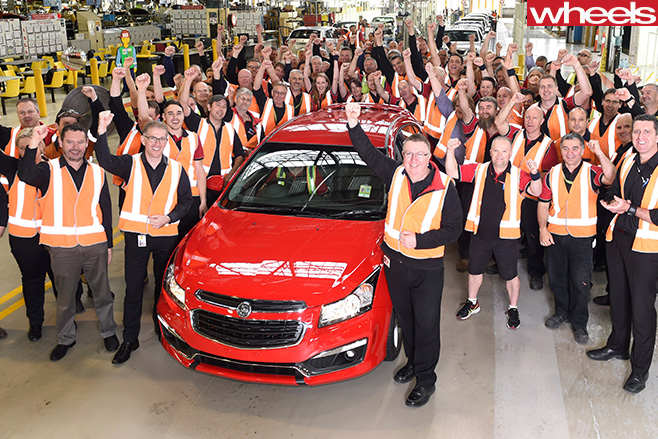
The last ever locally produced Ford Falcon rolled off the Broadmeadows production line on Friday October 7, the same day qualifying was taking place in Bathurst for The Great Race.
This drew the ire of the Ford faithful, motorsport fans, and automotive enthusiasts alike, with many likening it to a serious lack of foresight, or disrespectful planning.
However, Holden is yet to confirm exactly when the last Commodore will be bolted together.
“We haven’t settled on a month [to end Commodore production], let alone an actual date,” Poppitt said. “We’re just working through all the plans. There’s no rush for us to set a date; there’s no internal or external pressures to do so at this point.
“But we haven’t set a date yet.”
Holden is believed to be considering the timing of the closure to fall around late October or early November as it plans to close off on almost 40 years of Commodore production, and almost 70 years of Australian manufacturing.
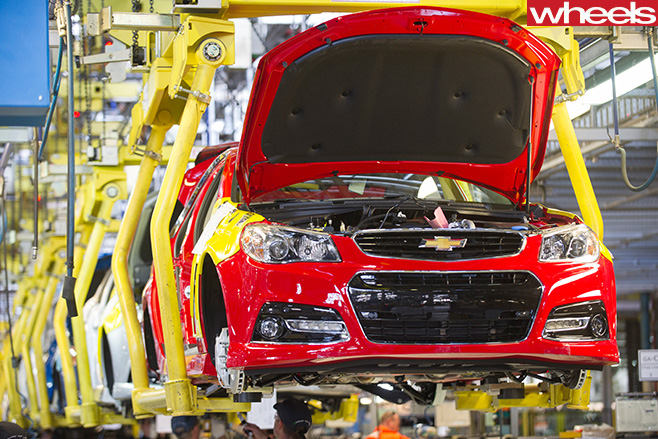
Holden will continue to build around 175 Commodores a day, as well as filling an order for an extra 1000 Chevrolet-badged versions of the car to fill an expected rush from US buyers as they realise the tap will soon turn off on the vehicle they regard as a four-door Camaro.
Holden Special Vehicles is moving house, signing a 15-year lease on an even larger factory and warehouse complex that will house the entire Walkinshaw Group on the one site.
Property management group Propertylink announced the 15-year deal with Premoso, a branch of the Walkinshaw Group that produces the HSV range of Holden Commodores under licence for Holden.
It said Premoso would move to the new site on the corner of Whiteside Road and Main Road, Clayton South, on September 1 next year. The new site is close to HSV’s existing home base at Rayhur Street, Clayton, and features three freestanding warehouses with large concrete aprons.
It will house Walkinshaw’s growing list of businesses that includes the Australian distributorship for Indian carmaker Tata, the Walkinshaw Automotive Group that modifies other Holden products such as the Colorado trade ute, and the recently announced joint venture with Epping-based New Age Caravans that will work on developing cutting-edge camping products. Walkinshaw also contracts its design and engineering talent to other companies outside Australia.
The company’s Rayhur Street site also houses the Holden Racing Team, which will become Walkinshaw Racing next year as the HRT mantle is handed over to Triple Eight Race Engineering’s pair of Red Bull Racing Commodores.
Walkinshaw Group director Ryan Walkinshaw confirmed the deal in a post to Twitter. “Great to announce that we have signed a deal to move the whole Walkinshaw Group to a newer, bigger and more advanced facility next year!” he said.
“Propertylink said it was “delighted” to enter into a long-term partnership with Walkinshaw Automotive Group.
“Walkinshaw is an iconic presence in Australian motorsport and is a global leader in the design, engineering, development and marketing of performance vehicles,” the company’s chief executive, Stuart Dawes, said.
Premoso is believed to have renewed its licence with Holden last year to use the HSV name, an important sign of faith for Walkinshaw in the wake of the carmaker saying it would end local production of the Commodore – and HSV’s feedstock – in late 2017 and replace it with a rebadged European-designed mid-size car.
Holden has said performance versions of the Astra hatchback and the Insignia mid-size car (that will become the next Commodore), will be badged with its logo. Signalling Walkinshaw will need to do something special with its portfolio of modified cars in an import-only future.
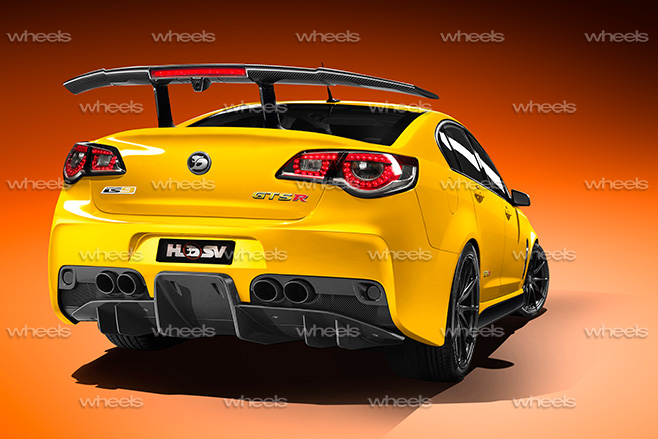
HSV will sign off on the Commodore with a 476kW bang, resurrecting the GTS-R badge for the last time on an eye-popping, locally made Holden-sourced car.
Walkinshaw Group has openly admitted it has been in talks with other brands since 2014, aiming to widen its portfolio of performance-enhanced products beyond GM-based products alone.
Walkinshaw’s move into caravans comes as no real surprise: HSV’s former engineering director Joel Stoddart left briefly to head up the design arm of caravan maker Jayco. He’s since returned to the Walkinshaw fold.
TELL ME ABOUT THIS CAR
This is the middle of the range model in Mazda’s current Mazda CX-9 line-up. The seven-seat large SUV completes the range of current-gen Mazda SUVs, sitting above the Mazda CX-3 and CX-5. A $57,362 price tag makes it a serious competitor in a popular and important category.
STRENGTHS
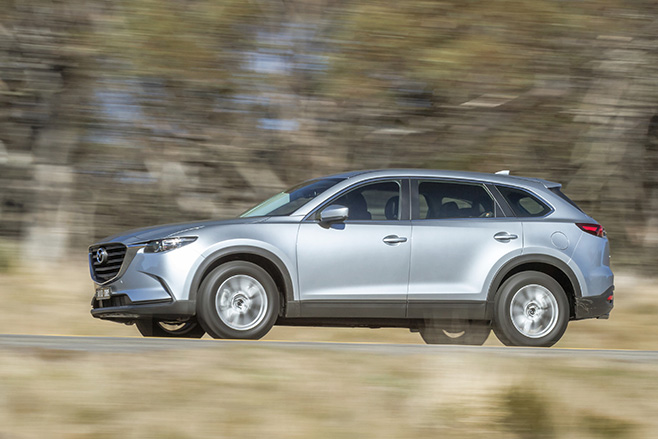
- The ride in the CX-9 is sublime. It is a sizeable car, but it handles rough roads with poise, and you don’t feel jostled inside the cabin. Its weight and expanse means you aren’t likely to carve up mountain roads, but if you do take the scenic route, the steering and suspension allow you to be confident. The CX-9 holds the road well, and the AWD system is handy when pushing on in damp conditions.
- The CX-9 is a family car, so it should come as no surprise that it’s extremely practical. Large cupholders, plenty of storage space, easy to use infotainment system, dual climate control, and heated seats make the cabin a great place to spend time.
- Aside from its practicality, the interior of the CX-9 is also comfortable. Plenty of legroom in the second row means you can load up fully grown adults without complaint. The seats are comfortable, if they do lack some lateral support. Standard heated seats are always a welcome inclusion.
- There is only one engine option for the current CX-9, a 170kW/420Nm 2.5-litre turbo four cylinder petrol. Despite its small size, the CX-9 has plenty of get up and go, and isn’t too much of a gas-guzzler, with a claimed fuel economy of 8.4-8.8L/100km.
WEAKNESSES
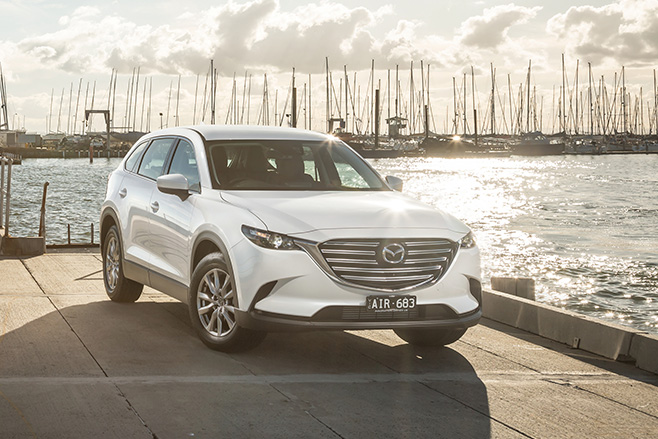
- The brakes in the Mazda CX-9 Touring leave something to be desired. Weighing in at 1911kg in AWD trim, the CX-9 requires some decent stoppers, and the 320/325mm units don’t always perform as expected. Even in slow moving traffic the brakes can ask for more stopping force, with a slightly spongey feel through the pedal.
- This is a very, very large car. While fantastic for boot space, and room inside the cabin, the CX-9 is imposingly large on the road, and you feel it. Parking spaces are tight, suburban streets are a squeeze, and manoeuvring carparks can be stressful. It isn’t a deal breaker, but it is a niggle that means driving the CX-9 is not as relaxing as it could be.
The CX-9 won our latest seven-seat megatest, but the Kia Carnival and Kia Sorento were worthy opponents, and worth looking at. Citroen Grand C4 Picasso, Toyota Kluger, and the Hyundai Santa Fe are also worth considering.
Melbourne drivers will be able to escape the dreaded red-light-run home thanks to a new traffic-signalling technology which connects to your smartphone or GPS.
The technology communicates with drivers’ smartphones or GPS to alert them to the speed they should be travelling to pass through a wave of green lights.
As part of the Intelligent Transport System Transport Technology Grant Program under the Victorian Government, VicRoads gave tech company Intelematics $765,000 to develop the app which will be trialled on Hoddle St, Punt Rd, Nepean Highway, Dandenong Rd and Warrigal Rd for 18 months.
“This is about taking a smart approach to managing traffic – looking at new practical ways to make our road network safer and more efficient,” said Luke Donnellan, Minister for Roads and Roads Safety.
The green light app aims to ease congestion, cut down travel time and put an end to stop-start traffic.
A similar system is already in use in other parts of the world, including Copenhagen, Amsterdam, San Francisco and Vienna, to aid cyclists dodge the reds.
More to come.
Skoda’s Yeti SUV line up is now an all-petrol affair, with the top-spec 4×4 Outdoor’s 2.0 turbo diesel engine making way for a 1.4-litre 110TSI turbo petrol unit taken from the Octavia mid-size sedan.
The change, necessitated by the unavailability of the oil burner in Australia, means a $1400 price reduction for the Outdoor to $32,990.
The 110kW turbocharged petrol engine is mated to a six-speed DSG automatic transmission, and has virtually the same power and efficiency as the diesel unit it replaces, sipping just 6.6 litres/100km.
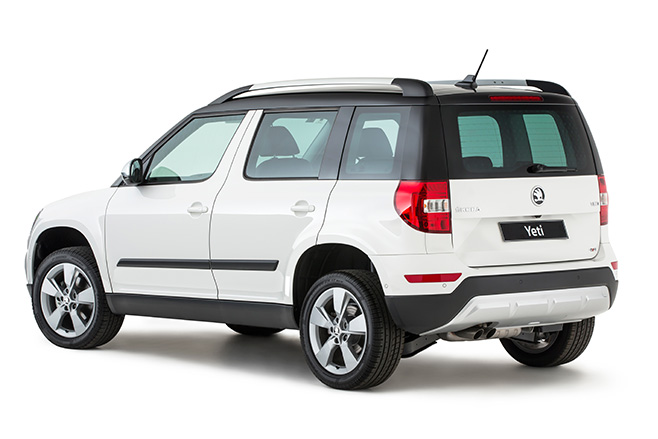
The 1.4-litre 92TSI engine in the mid-spec Yeti Ambition is also gone, along with that model variant, as Skoda simplifies the Yeti range with the long-awaited (some say overdue) next generation model still at least a year away.
This leaves just three Yeti variants, the aforementioned 110TSI 4×4 Outdoor, and manual and automatic versions of the 2WD 81TSI – formerly known as the Yeti Active – which are powered by a 1.2-litre, 81kW four-pot turbo petrol engine
While the Outdoor benefits from a price reduction, the entry-level 81TSI manual has increased $1100 to $25,490, while the automatic’s price heads north by $2000 to $27,790.
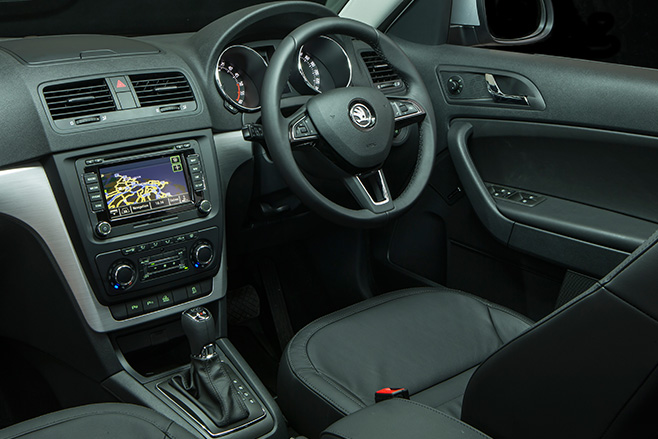
All three variants come with a complimentary Navi Pack with satellite navigation, metallic or pearl effect paint, front parking sensors, privacy glass and front fog lights.
For the extra money the Outdoor has more standard equipment, including climate control air conditioning, chrome inner door handles and black sills as well as the four-paw drivetrain.
Outside it differs with hard-wearing black bumpers, 17-inch ‘Erebus’ black alloy wheels and silver roof rails.
The Skoda Yeti Outdoor 110TSI is available now at Skoda dealers.
