
Toyota has dropped the price of its enduring Tarago people-mover down to “1990s levels”, despite giving it an interior upgrade and new technology.
Toyota says the new $45,490 starting price for the four-cylinder range hasn’t been this low for a couple of decades, while the $50,490 for the V6 GLi is cheaper than when first introduced in 2007.
The latest reductions – $1500 from the base-model GLi and GLX four-cylinder and V6 variants and $1716 from the Ultima V6 – follow price cuts early last year flowing from the free-trade agreement with Japan.
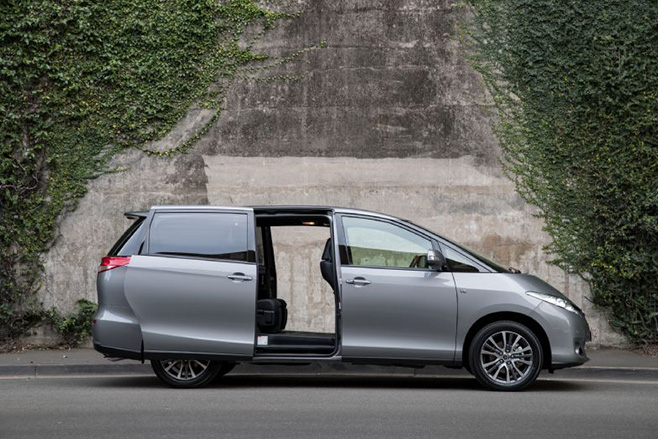
Satellite navigation is now standard across the range, but for some reason Toyota has chosen to only install a reversing camera in the range-topping Ultima V6, despite the substantial rear blind spot.
All Toyota Tarago interiors have been freshened up, with a black soft-touch dashboard, new-look centre cluster and air vents, and improved heater/air-conditioning controls with easier-to-use electrostatic switches. A small 6.1-inch touchscreen displays sat-nav, media controls and reversing camera where fitted.
The instrument cluster now has a colour 4.2-inch multi-information display (MID) alongside the gauges, with controls in the steering wheel.
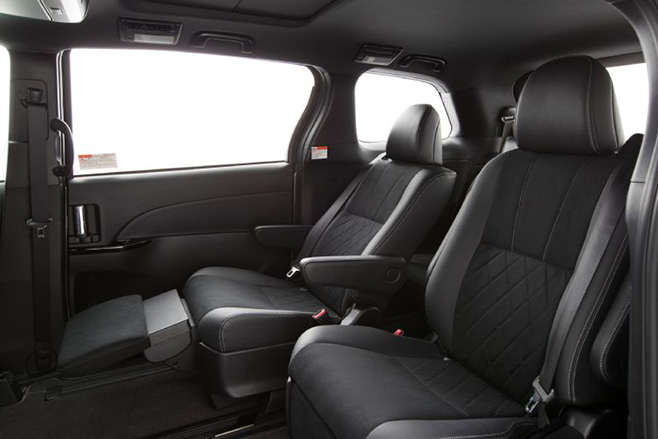
Standard safety equipment includes seven airbags, vehicle stability and traction control, anti-skid brakes, electronic brake-force distribution and brake assist. All models have cruise control, hill-start assist and remote central locking. Two front corner and four rear parking sensors are standard on GLX and Ultima.
The Tarago comes in seven exterior paint colours, including six premium options, which for an extra $550 include self-restoring paint technology with scratch-resistant elasticity.
Toyota Tarago prices
| Model | Price |
| 4-cyl GLi | $45,490 (-$1,500) |
| 4-cyl GLX | $47,990 (-$1,500) |
| V6 GLi | $50,490 (-$1,500) |
| V6 GLX | $55,990 (-$1,500) |
| V6 Ultima | $65,600 (-$1,716) |
Honda’s new NSX hybrid supercar might cost more than the combined sticker price of every new Honda model currently sold in Australia, but that won’t stop the company selling every single one it can land here.
That’s the view of Honda Australia marketing boss Scott McGregor, who has taken a bullish position on the new supercar despite its towering $420,000 price tag.
“The feeling is it’s highly likely we’ll end up with more orders than cars,” said Mr McGregor.
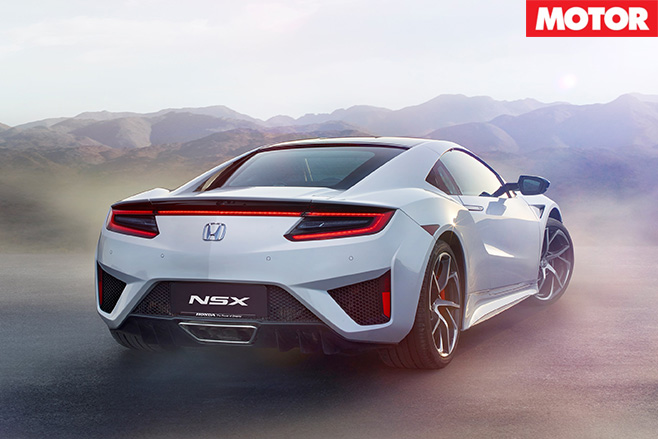
Unlike the original of 25 years ago, which was built primarily to challenge Ferrari’s hegemony in this elite category, the new NSX faces a vastly different competitive landscape.
This new car must not only beat the best that Fiorano can offer, but also see off rivals from the likes of Aston Martin, Audi, Lamborghini, McLaren, Mercedes-AMG, Porsche and more.
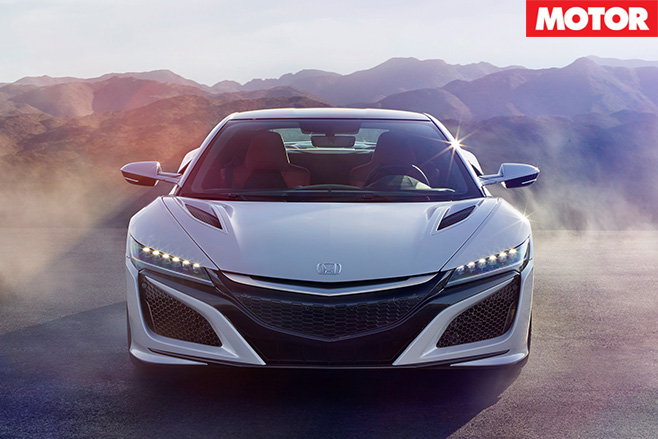
Buyers must also come to grip with the fact that each car will be built to order, and that Australian volumes will be extremely tight, meaning a likely delay of between six to 12-months from order to delivery.
Globally, it is North America that will account for the bulk of the annual 1500 NSXs built at Honda’s Ohio assembly plant, with the Yanks securing around 50 per cent of the annual build.
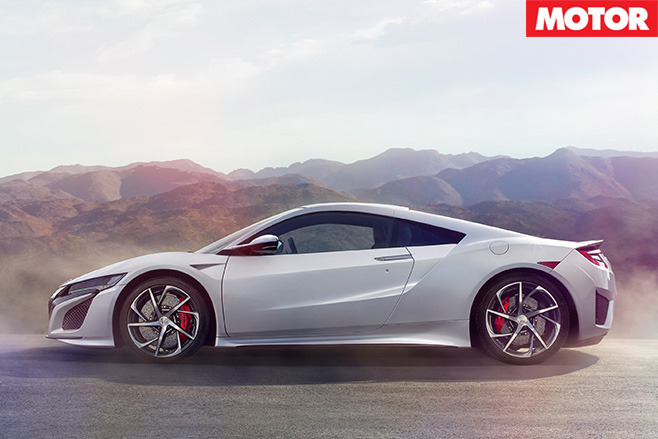
Based on this, Australia will be lucky to get more than a handful of cars in 2017, with initial deliveries likely to be targeted at putting an NSX in the showroom of each of the five mainland dealers selected to sell the new supercar.
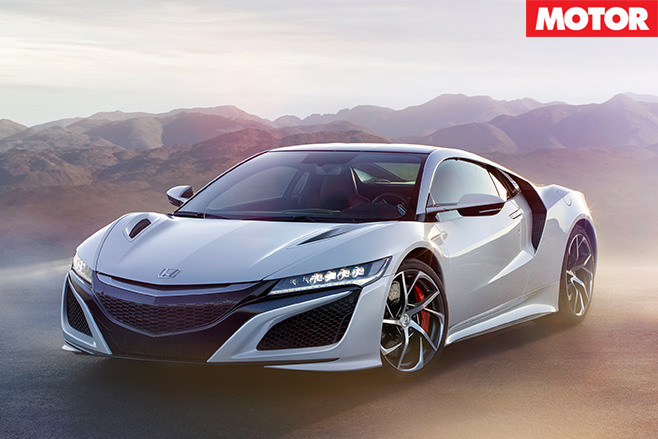
“We don’t want to saturate the market; we want to deliver one less than demand,” said NSX engineering project leader Jason Bilotta.
Welcome to a preview of the September issue of MOTOR magazine.
It’s available in stores and also in digital format on iPad or Zinio.
Our cover story this month is a first drive of Herrod Performance’s 500kW+ Ford Mustang. It can use the power, too, laying down some very impressive acceleration numbers.
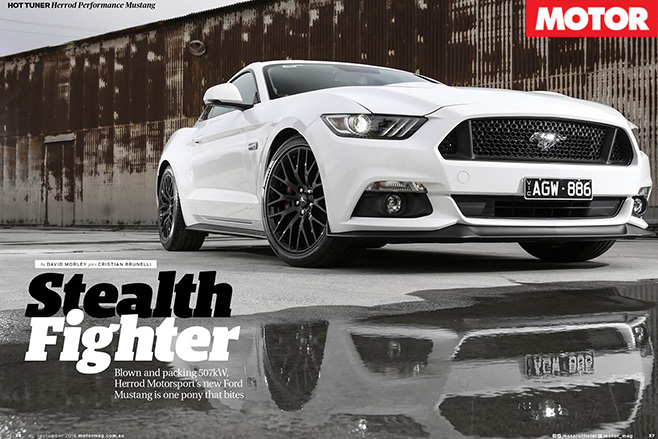
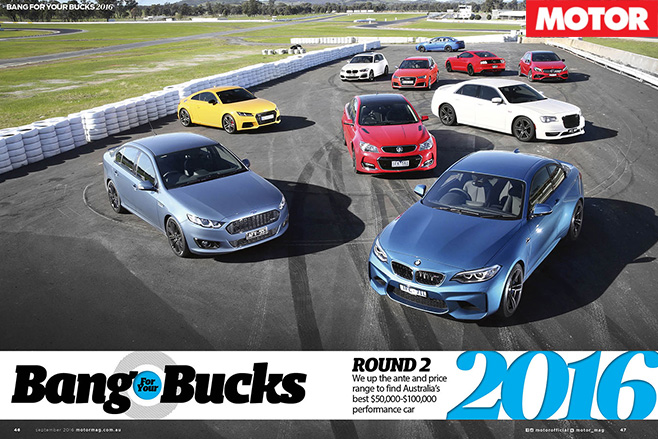
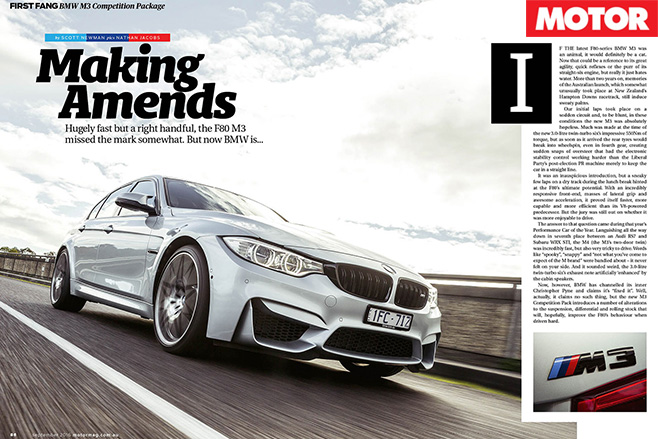
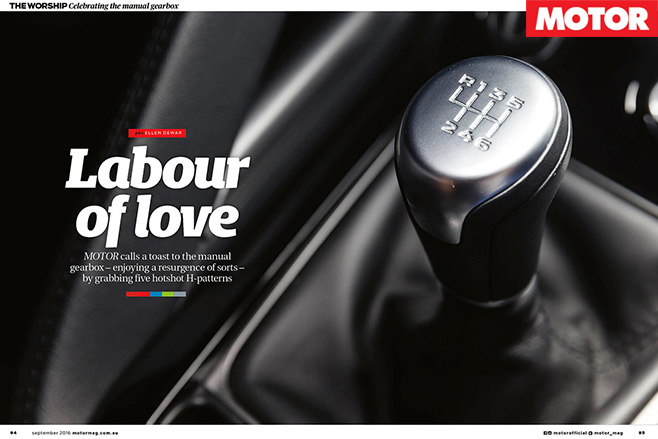
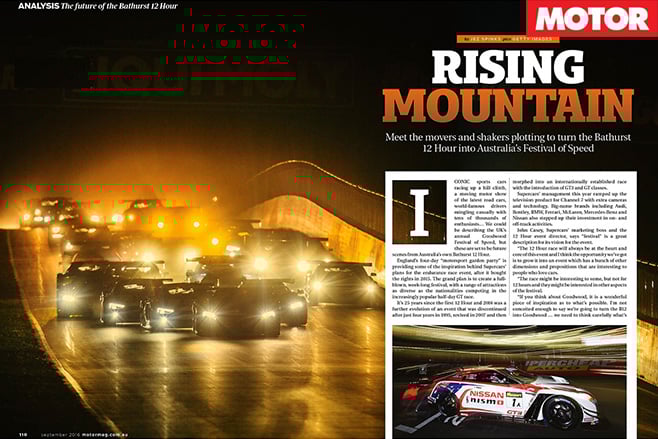
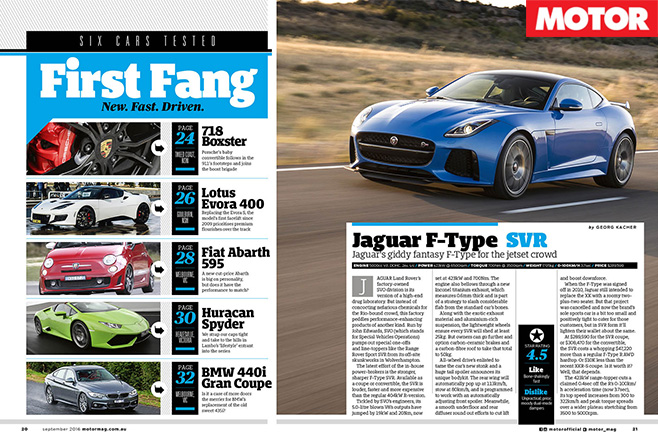
Money doesn’t necessarily buy happiness, but it can buy a crazy video-game inspired concept car that one even knew was for sale.
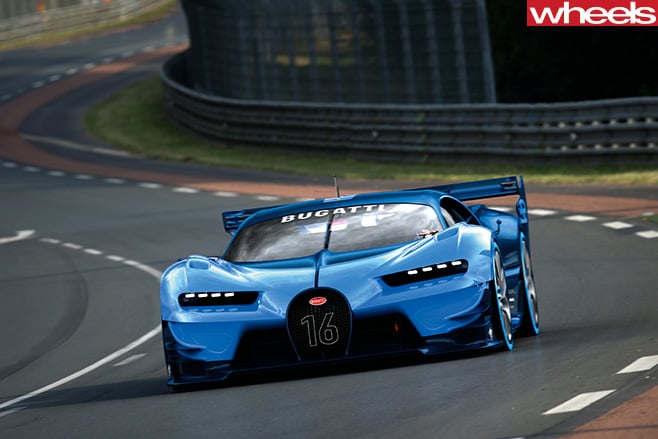
Remember the Bugatti Chiron Gran Turismo Vision concept? In case you need reminding, it was an out-of-this-world version of the most outlandish car made by a company renowned for incredible vehicles. Essentially it was the answer to the question of what would happen if Bugatti’s engineers were given free reign to create what they wanted. The result was an incredible looking concept car and Bugatti just sold it!
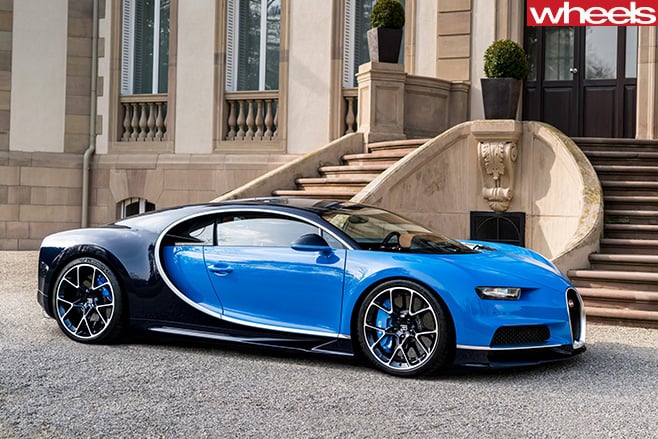
It is unknown how much cash was dropped for Prince Badr bin Saud to add the cars to his collection, but Bugatti did say on social media “The customer was awarded the contract after submitting the most convincing bid”. Or, in other words, he made an offer so ridiculous it would have been stupid to turn it down.
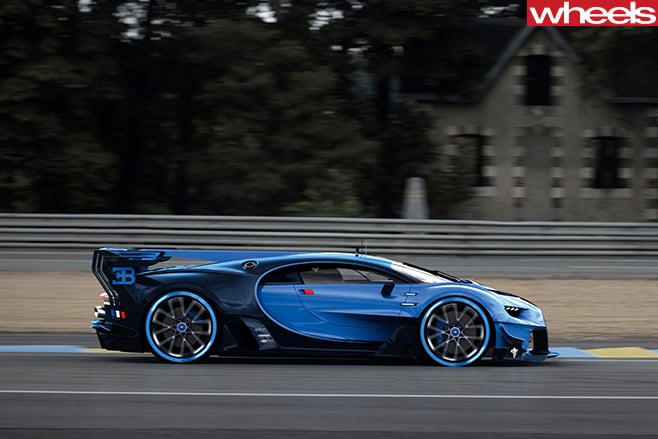
Judging from pictures, the Vision concept is already running Saudi number plates, so expect pictures of the car hitting the street to crop up online eventually.
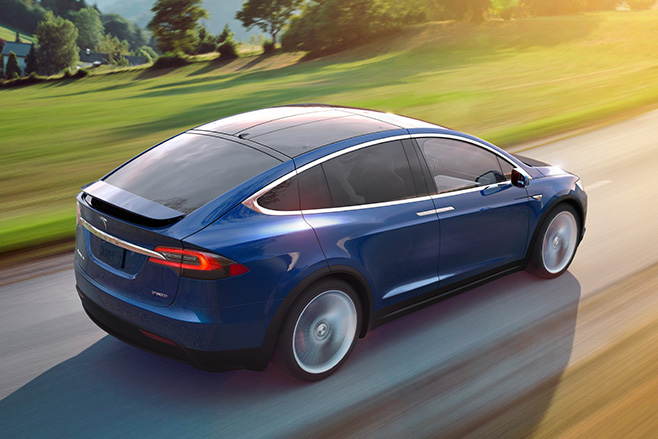
Tesla has revealed the prices for the full Tesla Model X range, which is due to arrive in Australia later this year.
The all-electric SUV is one of the most anticipated cars of 2016, with four different variations available for purchase – 60D, 75D, 90D, and the high-performance P90D.
The cheapest Model X is the 60D, with the recommended retail price already announced at $111,900. This blows out to between $123,958 and $130,087 once the luxury car tax and on-road costs are added depending on which state you live in.
The 75D costs $140,998 and $149,834 to get onto the road, putting it in the realms of a Porsche Cayenne GTS or Range Rover Sport Hybrid in terms of cost.
The more powerful 90D jumps to between $167,204 and $174,754 to own, while the top of the range P90D will cost owners $202,218 and $215,044.
Despite the $200k+ price tag, the Tesla Model X P90D boasts Ferrari beating performance due to its twin electric motors.
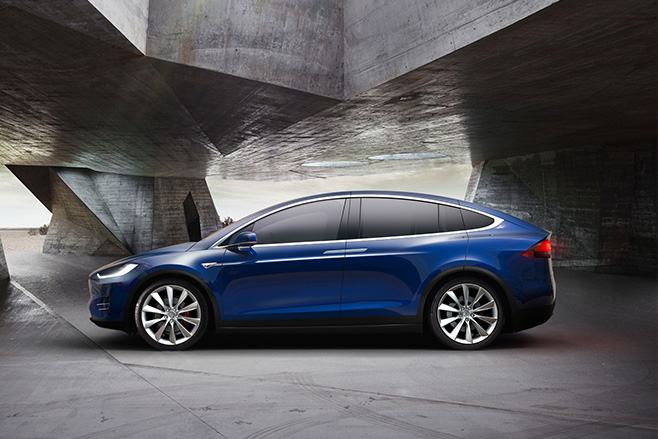
The Model X is also cheaper than Tesla’s current Model S sedan, which retails for $208,334 for the P90D version compared to the Model X’s $172,100.
Deliveries for the Model X have not been finalises, but Tesla has confirmed the cars will arrive later this year.
Customers are able to purchase a car ahead of its arrival in Australia.
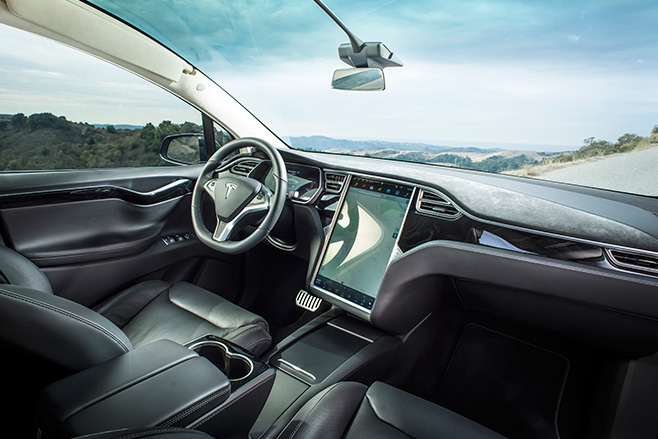
Competitors to the Model X include the Porsche Cayenne which retails for between $107,900 and $156,400, Mercedes-Benz GLE which costs between $86,900 and $189,900, Range Rover Sport which costs between $90,900 and $191,510, recently released Jaguar F-Pace priced between $74,340 and $103,420, and BMW X5 which will set you back between $86,200 and $185,510.
Despite the cost difference, it should be noted you can charge a Model X at Tesla’s supercharging stations free of charge. This can add up to significant fuel-cost savings over the lifetime of a car.
Mid-sized cars missed out on the buyer exodus from large cars, with Australians swarming instead to either small cars or SUVs. But they remain a solid segment locally, and contain some household names.
Three of these are also the biggest-selling models in the medium-car class: the Toyota Camry, Mazda 6 and Subaru Liberty.
Here, WhichCar provides a guide to any changes planned or expected for these models – to help you pick the perfect timing for buying one.
TOYOTA CAMRY
The current Camry continues to be unassailable in the medium-car sales chart but will be the last produced in Australia. When Toyota Australia ceases local manufacturing at the end of 2017, the Toyota Camry will transition to an eighth-generation model that will be imported from 2018.
Toyota may send off the locally built Camry with special editions or special deals in 2017, though don’t expect any significant changes after the model underwent a major makeover in mid-2015.
Significantly new sheetmetal was draped over the architecture that was introduced in late 2011, an interior upgrade included the addition of a new touchscreen and the Toyota Link internet-app system, and pricing was sharpened.
The Atara SX model was even given a unique local suspension tune, 18-inch alloy wheels, and sharper steering.
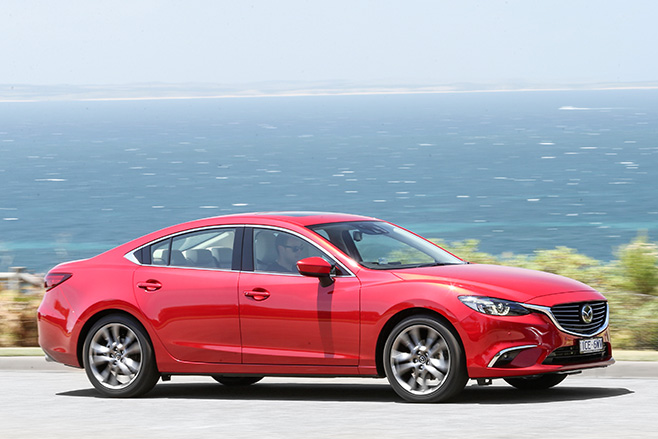
MAZDA 6
Three generations of Mazda’s mid-sizer have been divided by between five and six years, so the fourth all-new 6 could conceivably appear in late 2017.
What is certain is that the current Mazda 6 will get its second update of 2016 in September.
After a safety pack – comprising autonomous emergency braking, blind spot monitoring and rear cross traffic alert – was added as standard to all models, expect more value and tech to arrive.
Mazda’s G-Vectoring Control system, which can step in and reduce the engine’s revs to improve the car’s cornering balance, will be one of the headline additions.
The Driver Attention Alert that detects if you’re becoming tired, and Traffic Sign Recognition system that can read speed signs and alert the driver have just been added to the SP25 variants of the Mazda 3 small car would also be expected to be made available on at least some versions of the revised 6.
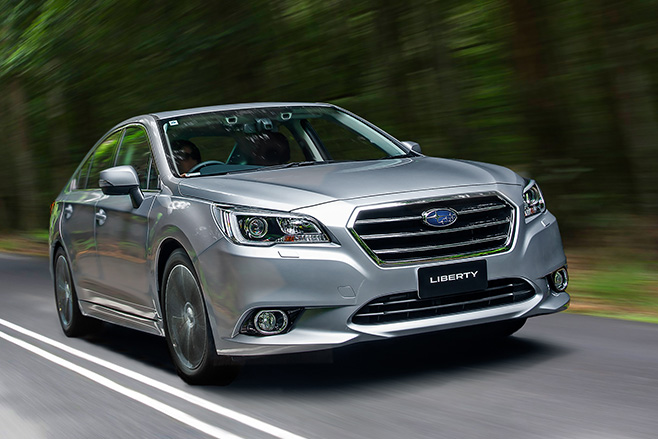
SUBARU LIBERTY
Active safety technology is clearly all the rage in the mid-size segment for 2016. In February, Subaru added a new Vision Assist pack as standard to its 2.0i Premium and 3.6R Premium Liberty models. It includes blind spot detection, lane change assist that warns of a car in your blind spot, automatic high-beam dipping and a rear cross-traffic alert that stops you backing out of a parking space into oncoming traffic.
All Liberty models also gained auto hazard-lights function for emergency braking situations, as well as reducing the amount of noise transferred from the road to the cabin via suspension tweaks.
The sixth-generation Liberty was released in late 2014 – five years after the fifth iteration – so an all-new replacement isn’t anticipated until the very end of the decade.
There are no imminent changes coming for the Liberty. A mid-life update is likely in late 2017 or early 2018.
LE-badged versions of the Honda HR-V compact SUV and City light sedan have been added to the Japanese brand’s showrooms – signifying limited edition variants offering extra value.
The Honda HR-V LE costs $1500 more than the $24,990 VTi on which it is based but adds equipment valued at $3200.
The additional features include side steps, front foglights, rear sensors and 17-inch alloy wheels that replace the standard 16s.
Honda Australia is also offering the HR-V LE with a driveaway price of $28,490, bringing further savings over the VTi.
The $22,990 Honda City LE charges another $1600 over the VTi-L donor variant, though compensates with extra features valued at $4000.
They include a Modulo Sports Pack bodykit comprising front and rear under-spoilers, side skirt and rear spoiler, sports grille, metallic paint, and rear sensors.
Honda Australia will be hoping the LE gives the City a market boost, with sales down 38 per cent year to date.
The HR-V is performing well without such special editions. While July sales were down 35 per cent on July 2015, the rival for the likes of the Mazda CX-3 is up 20 per cent year to date and battling the Nissan Qashqai for third place in the segment’s sales race.
The HR-V is also Honda’s best-selling model currently in Australia.
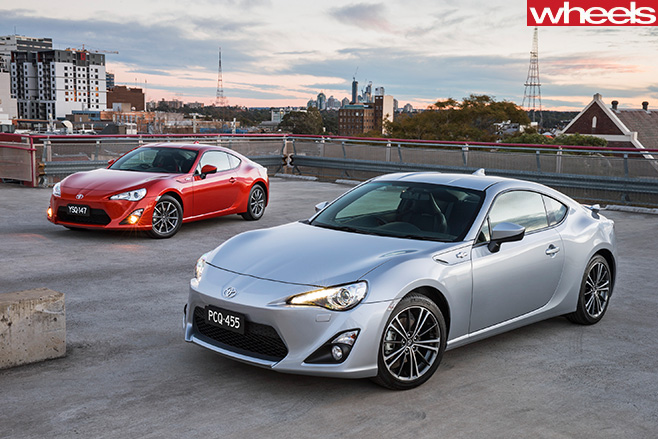
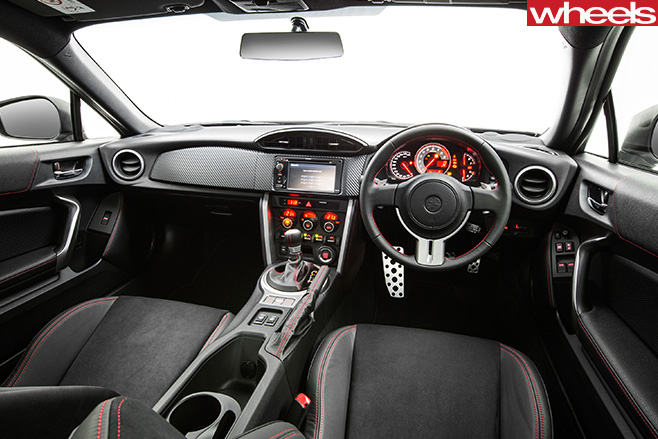
Toyota Australia says an issue with the layout of the coupe’s wire harness could lead to a loss of electrical assistance to the steering.
All 14,906 86s sold between the model’s debut in April 2012 and March 2015 are affected. Toyota says there have been a total of 62 reports of the issue since 2013.
“Due to an improper wire harness layout, there is a possibility that the electric power steering harness may interfere with the instrumental panel lower cover which contains the driver’s knee airbag on Australian specification vehicles,” said Toyota Australia in a statement.“If this happens, there could be an electrical contact failure which may result in the loss of power steering assist.”
Replacement parts won’t be available until September, though Toyota says owners can continue to drive their car as “manual steering control is maintained” in the event of a failure.
The fix will take just over an hour.
The company says a recall wasn’t issued earlier as it has been continuing to look into the various reports.
“With a recall, we have to investigate to make sure there’s the right fix and see if there is a trend,” says Toyota Australia spokeswoman Beck Angel. “And if there is a trend, and we know the fix, we start the recall process.”
Subaru’s near-identical twin, the BRZ, is also affected. Subaru has followed Toyota’s recall announcement with a statement confirming the owners of 3016 MY13-My15 BRZs will be contacted about rectifying the problem.
The Toyota 86 and Subaru BRZ shared victory in the 2012 Wheels Car of the Year. The 86 has been Australia’s best-selling sports car for the past three years, though it is currently second to the new Ford Mustang in 2016.
1. After a slump in sales, Honda is back with its new, 10th generation Civic range.
2. This model boasts Honda’s first 1.5-litre turbo-charged engine – which provides more than adequate grunt while remaining quiet.
3. The VTi-LX is extremely fuel efficient. When tested it consumed just 6.6L/100kms (close to Honda’s promise of 6L/100kms).
4. The 517-litre capacity boot is huge.
5. The 452-watt premium audio system with 10 speakers plus subwoofer is loud.
6. The VTi-LX comes with Honda’s Sensing suite of driver assist technologies for extra safety. This includes Lane Keep Assist, Lane Watch and Adaptive Cruise Control which includes Low-Speed Following.
7. The new lane watch feature projects potential blind spots onto the display screen when the left or right indicator is used.
8. The front seats are heated.
9. At 4.64 metres it’s a long vehicle.
10. Younger drivers may prefer the shorter hatch, due for release early next year.
TELL ME ABOUT THIS CAR
Honda has sold an impressive 23 million Civics since its launch in 1972. The brand used to be hot, but for some reason they drove right off the car map.
Now, Honda – using its “Dare to Dream” motto – is trying to woo back drivers with its bold, new 10th generation Honda Civic.
The top of the range VTi-LX sedan boasts Honda’s first 1.5-litre turbocharged engine. Honda claims an average fuel consumption of just 6L/100km. This model comes with all the bells and the whistles and is priced at a competitive $33,590 ($34,165 with metallic paint). The entry-level model is available for just $22,390.
Only the sedan version is currently available but for those looking for something a bit zippier, a hatch is due to arrive in 2017.
STRENGTHS
- Efficiency. Average fuel consumption is a claimed 6L/100km. Real life driving, with a combination of freeway and city travel, saw an impressive 6.6L/100km.
- The 1.5-litre turbocharged engine provides ample power (127 kW @ 5500RPM) and performance.
- The boot’s 517L capacity is huge thanks to a space saver spare.
- The classy, leather appointed cabin gives it a more premium feel.
- It’s got heated front seats – you’ll never go back!
- The Civic comes with a 452-watt premium audio system with 10 speakers and a subwoofer.
- The VTi-LX comes with Honda’s new sensing safety suite of driver assist technologies including Lane Keeping Assis” (which detects if you’re wandering from a lane) and Adaptive Cruise Control with Low-Speed Following (which slows the car down to match the speed of the vehicle in front).
- The Lane Watch feature, mounted beneath the left-hand door mirror, projects any potential blind spots onto the display screen the moment you indicate left or right.
- At 4.64m in length it’s a big vehicle. Younger drivers may prefer the shorter hatch, due for release early 2017.
- The LCD touch screen comes with digital radio, built in satnav and Bluetooth phone and audio connectivity, but it’s overly complicated and confusing.
- The USB input is almost impossible to find. Once you do source it (tucked either in the back of the armrest console or underneath the instrument panel) it allows Apple CarPlay and Android Auto.
- Honda has killed off the volume wheel. Instead it relies on both an overly touch-sensitive control on the glass screen, plus an infuriating steering wheel mounted roller control. Neither of these make it easy to achieve the correct volume.
- The sunroof is perfunctory and far from panoramic.
- It’s RIP for the manual gearbox. This model only comes equipped with a Continuously Variable Transmission, which takes a little getting used to.
