Best Small SUVs in Australia
Looking to get into a brand-new small SUV? Our stories below will guide you to the model that best suits your needs:

US electric car maker, Tesla, has officially called time on two of its longest-serving models, the revolutionary Model S and the large falcon-winged SUV Model X.
Tesla confirmed the axing via social media platform, the Elon-Musk-owned X, stating that “the last Model S and the last Model X have been produced at Fremont Factory”.
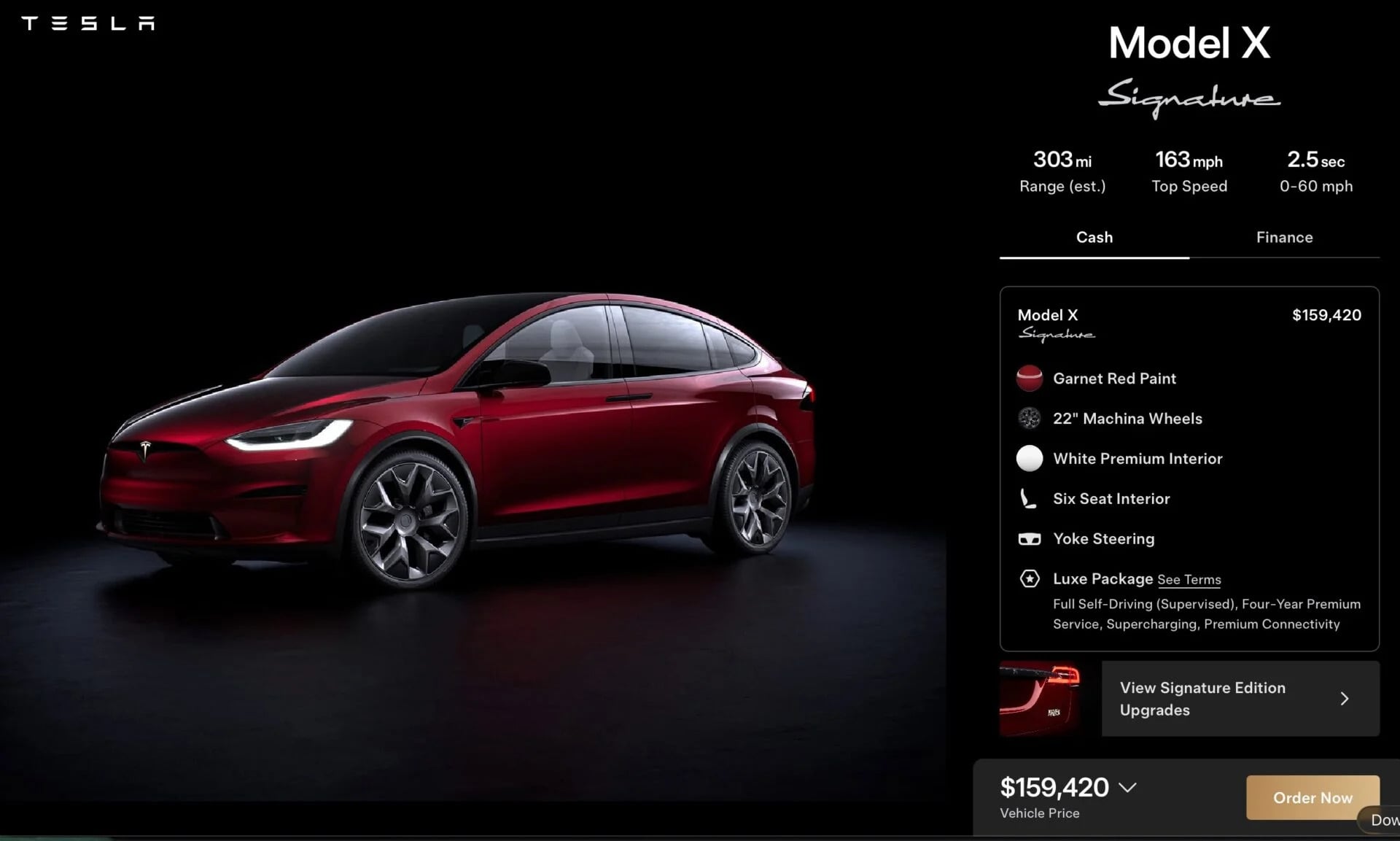
Musk first floated the idea of killing off both models in January of this year, claiming that the world’s second-largest maker of electric vehicles was repurposing its Fremont facility – where both Model S and X are manufactured – to manufacturing its forthcoming Optimus humanoid robots.
Sales of Model s and Model X had been in decline for years (in 2025, Model S accounted for just 0.6 per cent of total Tesla sales while X fared just slightly better with 1 per cent.
Tesla’s sales success continues to be dominated by Model Y (66.4 per cent of total sales) and Model 3 (30.5 per cent) with the polarising Cybertruck adding 1.5 per cent to the brand’s total volume.
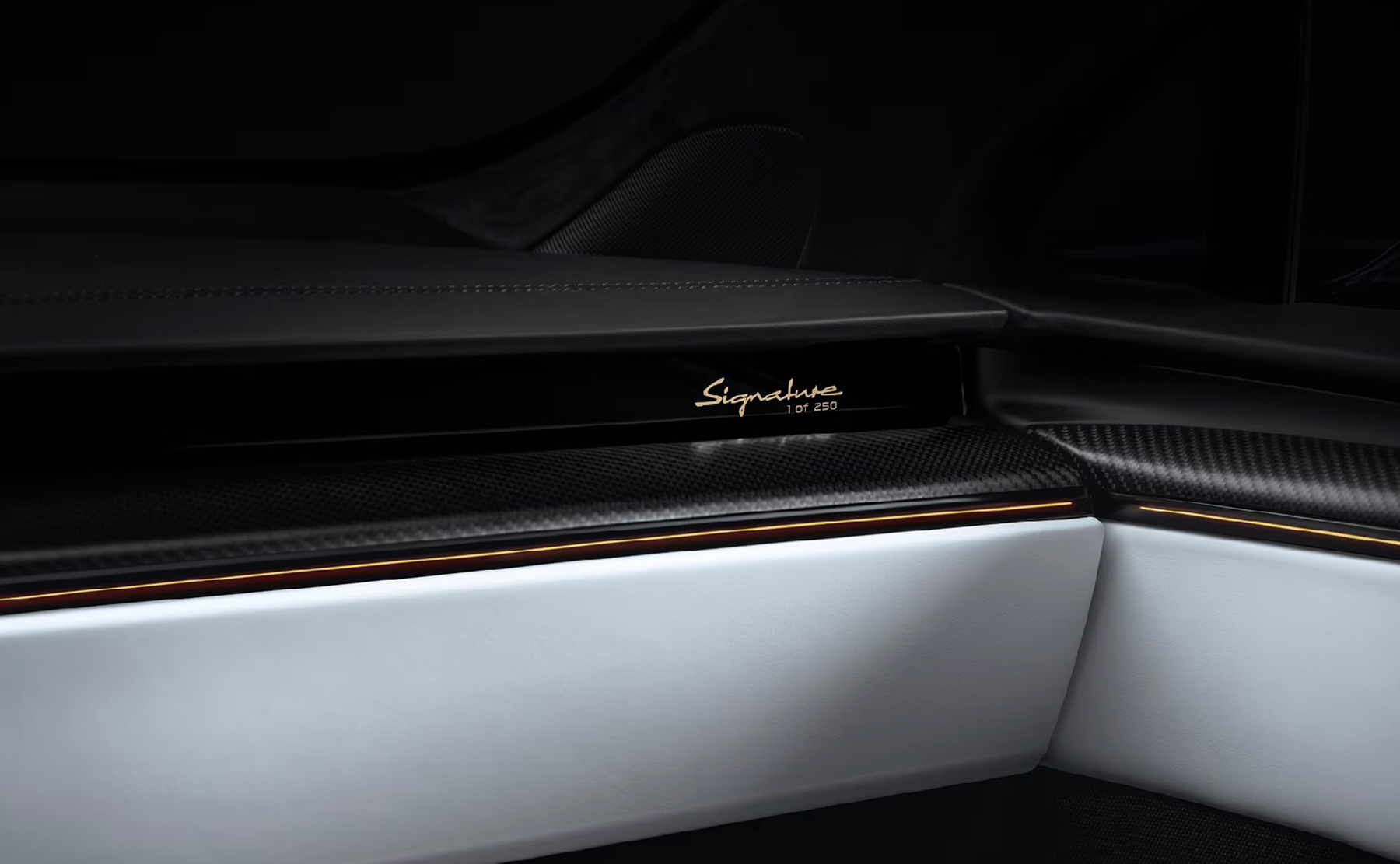
The culling of the range ends 14 years of Model S production while Model X enjoyed an 11-year run.
Tesla farewelled the pair with a special run of ‘Signature Edition’ models, based on Plaid model variants. Just 250 Signature Edition Model S and 100 Model X, priced at US$159,420 have been released.
Neither Model S or Model X have been available in Australia since 2020 after Tesla confirmed it would no longer make those models for right-hand drive markets.
| Price | From $32,900 driveaway (Vi X), $39,900 driveaway (e:HEV X), $42,900 driveaway (e:HEV L) |
|---|---|
| Drivetrain | 1.5-litre four-cylinder petrol or 1.5-litre four-cylinder hybrid, CVT (petrol) or e-CVT (hybrid) automatic, FWD |
| Outputs | 89kW/145Nm (petrol) – 96kW/253Nm (hybrid) |
| Combined fuel economy | 4.3L/100km (hybrid) – 6.2L/100km (petrol) |
| Warranty | Five-year/unlimited km (car), eight-year/160,000km (hybrid battery) |
| Five-year service cost | $995 ($199 per year) |
| Driving | |
| Interior | |
| Practicality | |
| Overall value | |
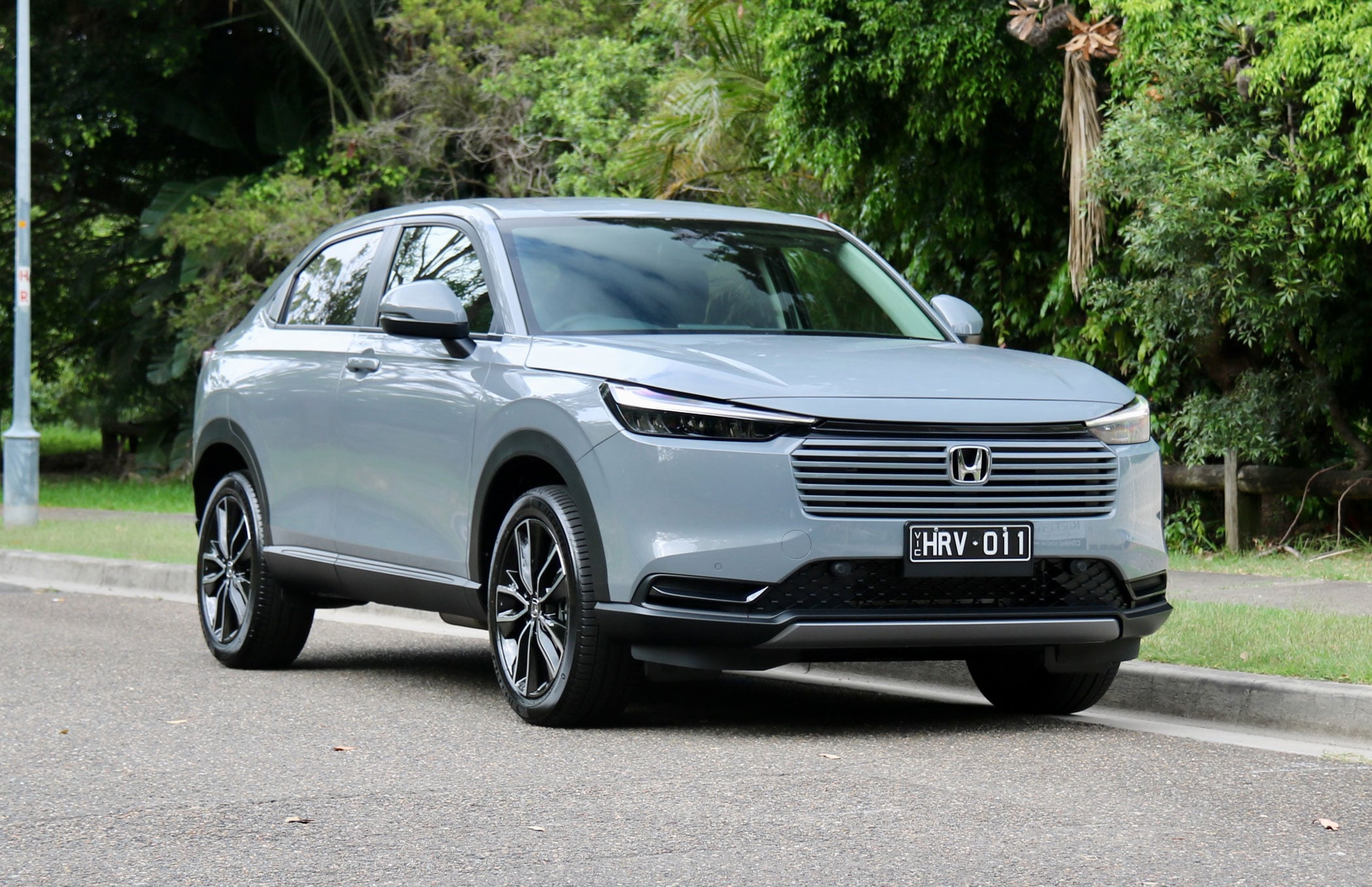
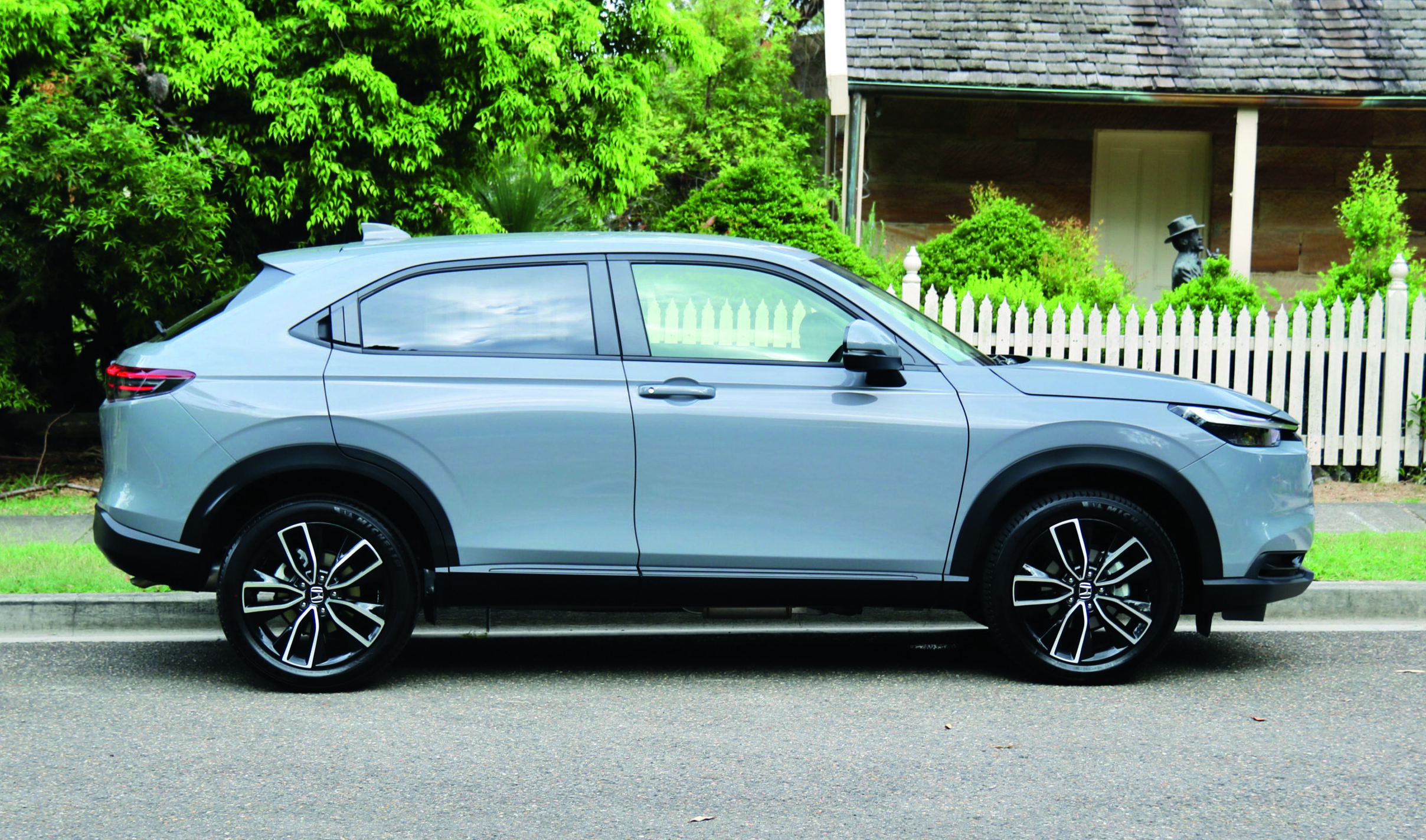
The original HR-V was arguably ahead of its time. In 2026, small SUVs are significantly more popular than ever, and even almost 30 years later, the HR-V holds its place in the segment. Put simply, if you’re after a small SUV, the HR-V should be first on your test drive list.
Buying an HR-V in Australia is easy because there are only three models available: Entry-level Vi X ($32,900 driveaway), mid-spec hybrid e:HEV X ($39,900 driveaway) and top-spec hybrid e:HEV L ($42,900 driveaway). We think the HR-V suits a range of budgets. Thanks to Honda Australia’s agency model, the price for each model is the same nationwide, so you won’t get a better deal elsewhere.
Standard equipment on the Vi X includes 18-inch alloy wheels, automatic LED exterior lighting, keyless entry with push button start, automatic walk away locking, a leather-wrapped steering wheel and gear knob, single-zone automatic climate control, a 9-inch touchscreen with satellite navigation, wireless Apple CarPlay and Android Auto, six airbags, autonomous emergency braking, adaptive cruise control with traffic jam assist, lane keeping assistance with adaptive lane guidance, auto high beam, traffic sign recognition, front and rear parking sensors and a reversing camera.
But move up the range – as we would do – to the e:HEV X and not only does a hybrid drivetrain get added but also LED front fog lights, leatherette and cloth upholstery, heated front seats and more safety features like blind-spot monitoring, rear cross-traffic alert and upgraded LED headlights with auto-levelling, sequential indicators and Matrix adaptive high beam.
At the top of the HR-V tree is the e:HEV L, which further adds a power tailgate with automatic walk away closing, heated and auto-folding mirrors that drop in reverse on the passenger side, dual-zone climate control with rear air vents, rear USB ports, a heated steering wheel, automatic windows with remote opening and automatic rain-sensing wipers.
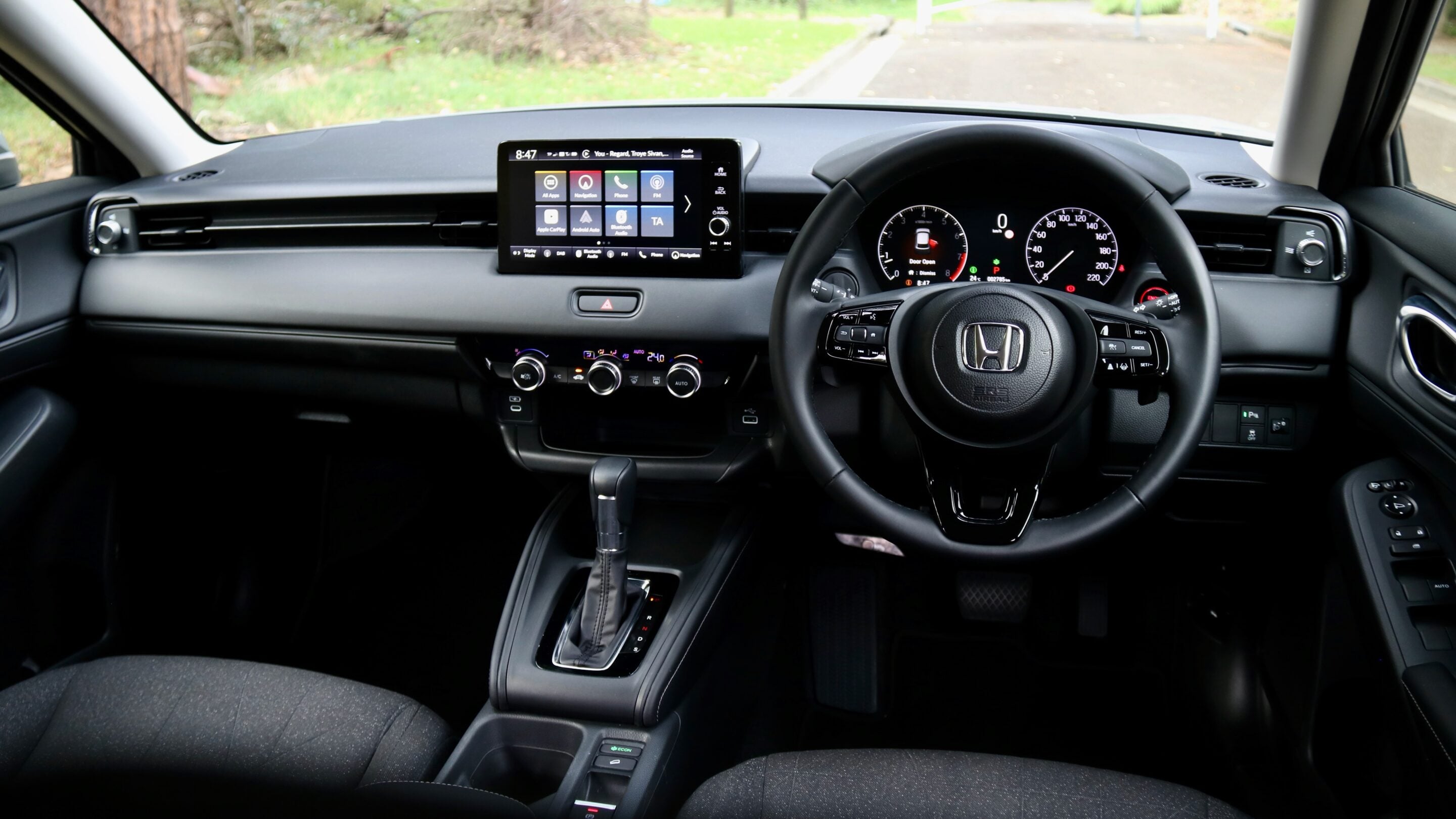
The HR-V’s interior exhibits Honda’s typical good quality, featuring a well-built feel and solid materials. Clever touches include the climate control knobs lighting up blue or red when adjusting the temperature and side air vents that can direct airflow towards the roof. Storage is plentiful, and front seat comfort is good too. The 9.0-inch central touchscreen is quite easy to use and features sat-nav, DAB+ digital radio and wireless smartphone mirroring across the range.
Turning to the back seat reveals the HR-V’s party piece in the small SUV segment: its excellent packaging. The rear seat is one of the roomiest in the segment with excellent legroom and headroom, while two adults will be quite comfortable. Amenities include a centre armrest, map pockets and door pockets, with the upper-spec e:HEV L further adding the aforementioned air vents and USB charging ports as well. It does lack a fifth seat, however, which may or may not matter to you.
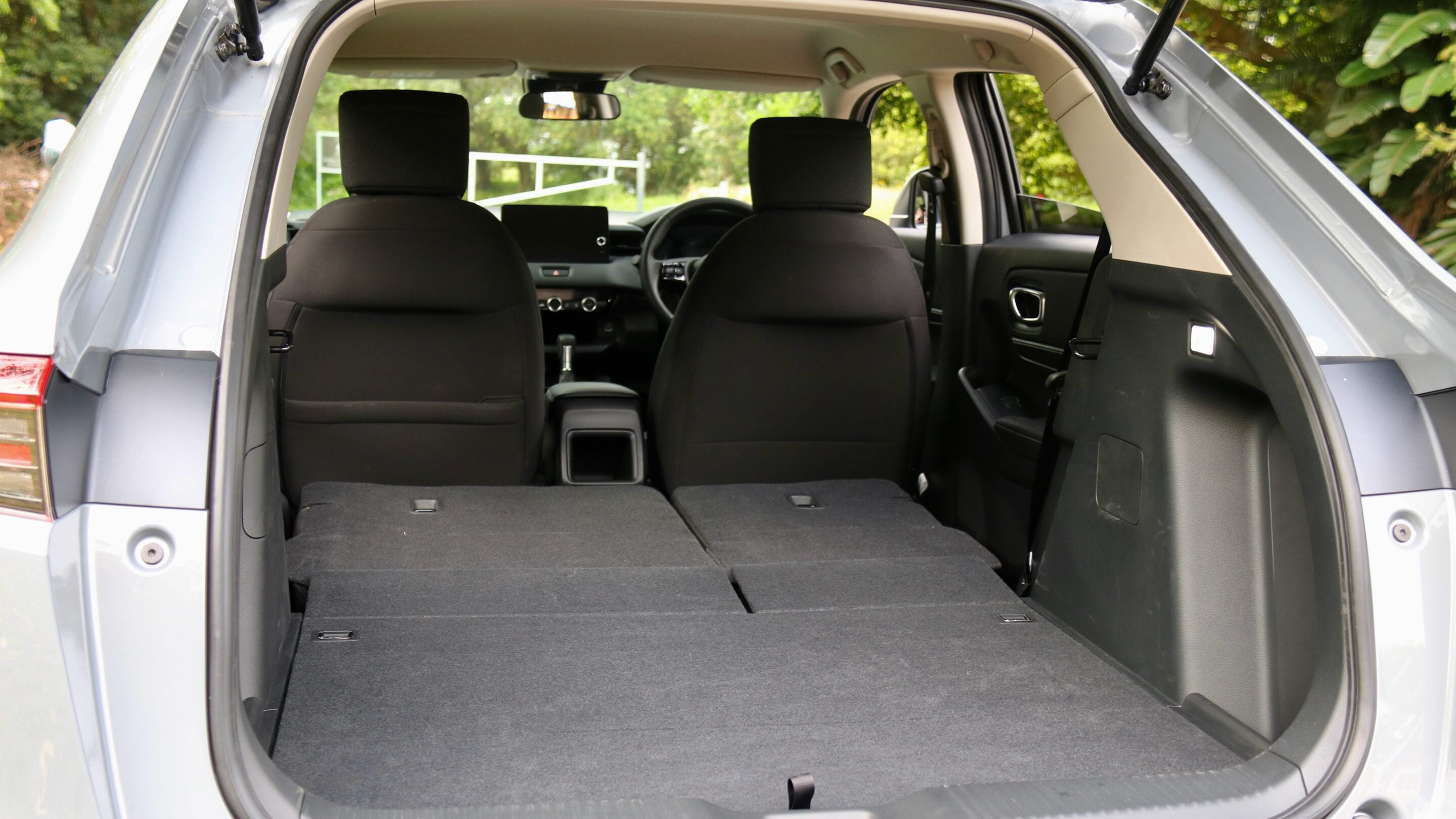
Making up for the lack of a fifth seat, however, are Honda’s Magic Seats, which allow for a completely flat floor with the rear seats folded. Pioneered in the original Honda Jazz and proudly featured today, their most magical trick is that the seat base folds up against the backrest, and combined with the flat floor in the rear cabin, taller items can be carried. Ikea trips are no match for the HR-V. The boot capacity is not massive at 304 litres, though it extends to a large 1,274L with the rear seats folded.
Two drivetrains are available in the HR-V in Australia: a 1.5-litre naturally aspirated engine or a 1.5-litre hybrid. Unless you’re on a tight budget, choose the hybrid. Making a solid 96kW of power and 253Nm of torque and mated to an e-CVT transmission with stepping to make it feel like a regular automatic, the HR-V hybrid drivetrain is refined, quite efficient rated at just 4.3L/100km and also more than quick enough in everyday driving. On the road, the HR-V drives well with nicely weighted steering, a tight chassis with good handling and a composed ride as well.
The cherry on top of the HR-V cake is that Honda’s five-year/unlimited km warranty can be extended to eight years in total if it’s serviced at a Honda dealer during that time. A separate eight-year/160,000km warranty covers the hybrid battery. It costs just $995 to service over the first five years/50,000km of ownership, which is some of the lowest on the market, especially for an ICE product. By comparison, servicing a Hyundai Kona Hybrid costs over $2000 more over the same period.
The Honda HR-V is a talented, high-quality small SUV that deserves to win Wheels Best Small SUV 2026. Some buyers may dislike that it’s only a four-seater, and the lack of a spare wheel isn’t great, but it compensates with strong practicality thanks to its Magic Seats, great cabin quality and a comfortable and engaging driving experience. Add in a simple model line-up, an efficient and punchy hybrid drivetrain, and a great aftersales program with some of the cheapest servicing on the new car market, and the HR-V should always be near the top of your contenders list.
Looking to get into a brand-new small SUV? Our stories below will guide you to the model that best suits your needs:
Performance SUVs no longer have to sacrifice everyday usability for speed, with the latest compact contenders blending serious pace, sharp dynamics and premium tech into family-friendly packages. From turbocharged petrol power to high-performance EV drivetrains, the segment is broader – and quicker – than ever in 2026. Here are the small SUVs proving practicality and driving enjoyment can coexist.
Price: From $96,900 plus on-road costs
Drivetrain: 2.0L 4-cylinder turbo-petrol, 225kW/400Nm, 8-speed dual-clutch auto, AWD
Combined fuel economy, CO2 emissions, fuel type: 9.0L/100km, 276g/km, 98RON
Warranty: Five-year/unlimited km, 5 years’ roadside assistance
Five-year service cost: $6675 ($1335 per year)
| Driving | |
| Interior | |
| Practicality | |
| Overall value | |
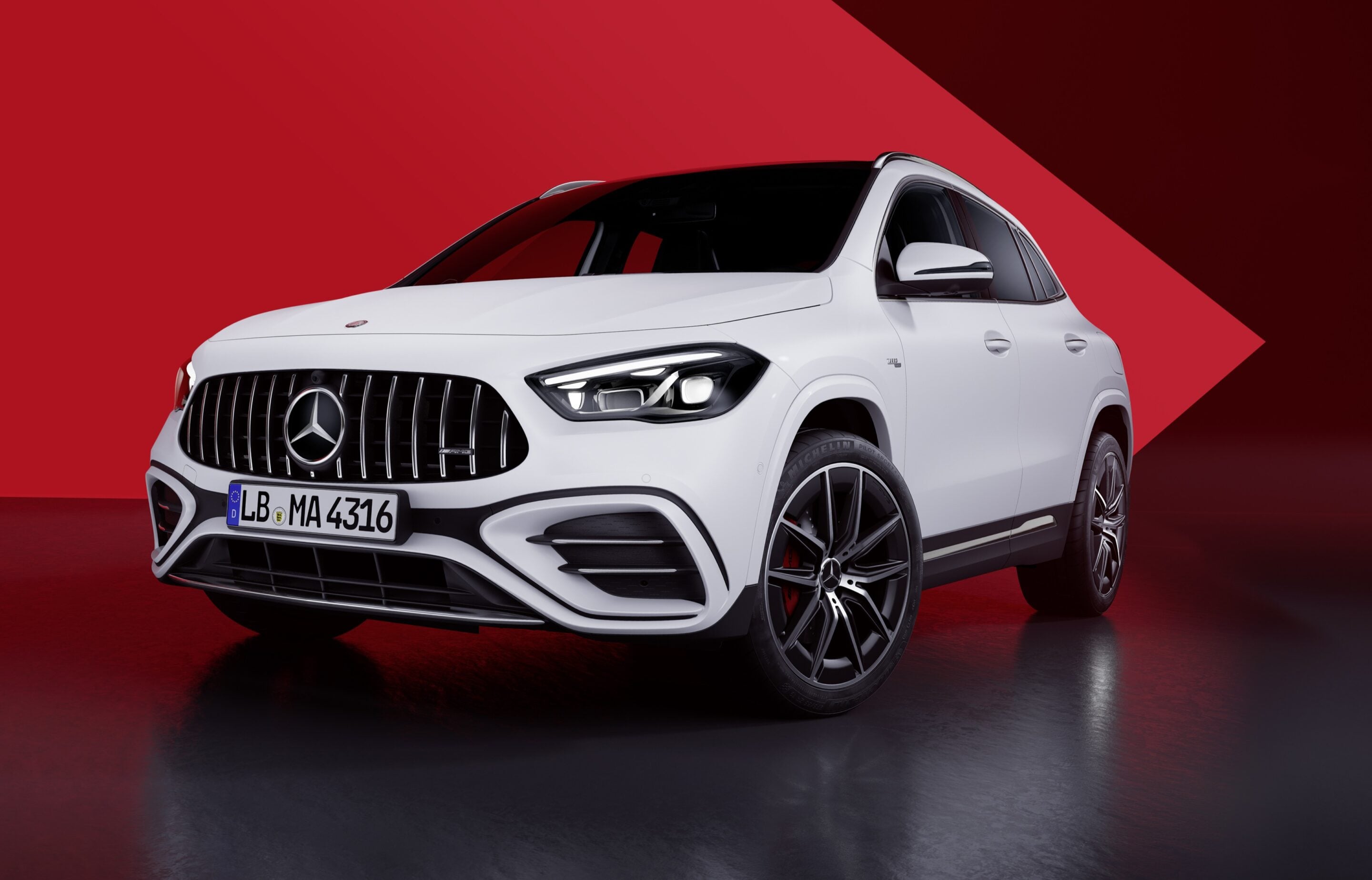
Mercedes-AMG’s smallest SUV has been around for a while now, but a 2024 update for MY25 has kept it fresh in the face of an ever-increasing slew of rivals.
With a potent 2.0-litre turbocharged four pumping out 225kW and 400Nm, the GLA 35 is no slouch, covering the sprint from zero to 100km/h in a scant 5.2 seconds. That’s faster than a lot of today’s hot hatches, and all wrapped in a distinctly subtle ‘AMG’ package that eschews the flair of other models wearing the three-letter acronym on the tailgate. But don’t be fooled by its demure styling. Thankfully, the GLA35’s slightly coquettish appearance doesn’t carry over to its muscly turbo four-pot which gives off enough of the snarling, popping and whoomping anger the brand is known for.
A new for MY25 eight-speed dual-clutch auto is an improvement over the older model’s seven-speed DCT. It’s quick to rifle through the cogs in the hunt for fuel efficiency, but equally as skilled in letting the compact SUV off its chain when the right road and situation presents itself. But it’s here where there are some compromises to be found, the little AMG’s trading off brittle ride comfort for excellent dynamics. Still, throw the little AMG at some corners and the regards are plentiful with enough sharp handling and pacy performance to leave you grinning for days.
Inside, the GLA35 adheres to the broader Mercedes-Benz school of interior design, with plenty of premium touches enhanced by some AMG specific elements that serve to remind you this SUV is a cut above the broader GLA line-up. In-car technology benefitted from the MY25 update and to good effect and while its compact dimensions might suggest compromises in the second row, it remains a surprisingly usable area for adults. Cargo space is rated at 435L/1430L which is decent enough for the segment.
The GLA35 is a decent option for buyers who want all the performance trappings of the AMG brand but without the flashy trimmings.
Price: From $93,900 plus on-road costs
Drivetrain: 2.0L 4-cylinder turbo-petrol, 233kW/400Nm, 7-speed dual-clutch auto, AWD
Combined fuel economy, CO2 emissions, fuel type: 7.8L/100km, 176g/km, 95RON
Warranty: Five-year/unlimited km, 3 years’ roadside assistance
Five-year service cost: $2495 ($499 per year)
| Driving | |
| Interior | |
| Practicality | |
| Overall value | |
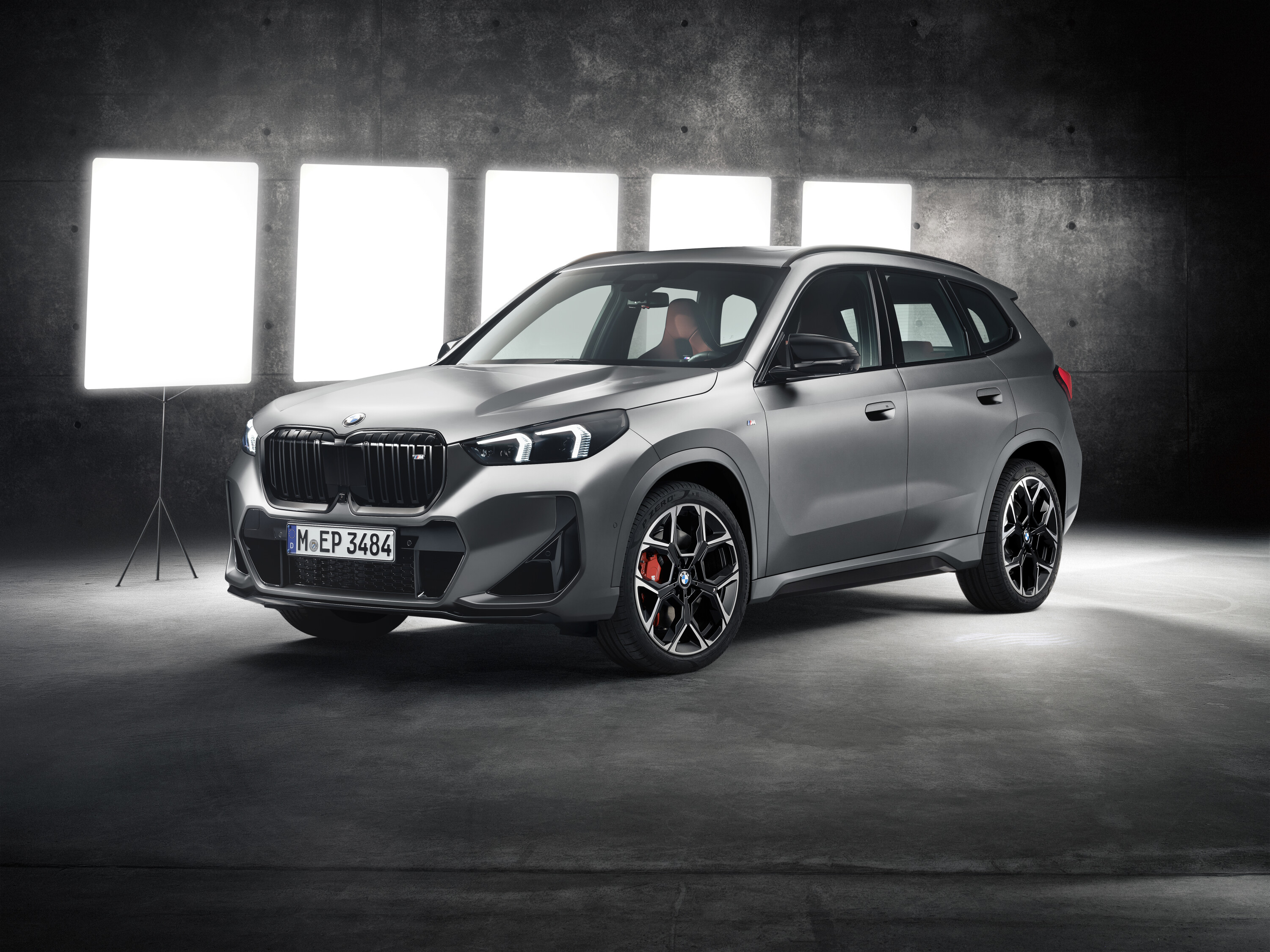
BMW’s baby M treads where its rival from Mercedes-AMG doesn’t, making no apologies for its M badge with plenty of tough-looking design elements to set it apart from its X1 team-mates further down the pecking order.
An M-specific grille, extended sideskirts, rear bumper, rear wing mounted on top of the tailgate, lowered ride height by 15mm, and menacing quad exhaust pipes out back all point to the X1’s performance chops, lending it a swagger on the road that’s hard not to be smitten by.
That also rings true of the B48 generation 2.0-litre turbo-four doing the grunt work under the bonnet. Outputs of 233kW and 400Nm are generous, and help move the X1 M35 from 0-100km/h in 5.4 seconds and it does so with a gruff soundtrack that while not as sonorous as some, gives off enough M vibes to satisfy most, although the occasional hint of turbo-lag makes its presence felt during more spirited driving.
Ride quality is as you’d expect on standard-fit 20-inch alloys, prioritising handling over comfort while road noise does intrude into the cabin.
Inside, the X1 M35 boasts of its M credentials with two-tone Veganza leather including a striking coral red and black colourway that looks as impressive as it feels. But overall ergonomics are let down by an over-reliance on the X1’s touchscreen interface for even basic functions, such as climate controls. Second-row comfort is good, helped by a sliding rear bench, freeing up legroom or increasing cargo capacity as desired. And it’s a generous boot, BMW claiming 540L/1600L, decent for the segment.
Having an M badge on the boot has always meant something, and while the X1 M35 isn’t the full-cream milk M, there’s enough of the skunkworks’ inherent goodness engineered in to make BMW’s baby SUV a decent option.
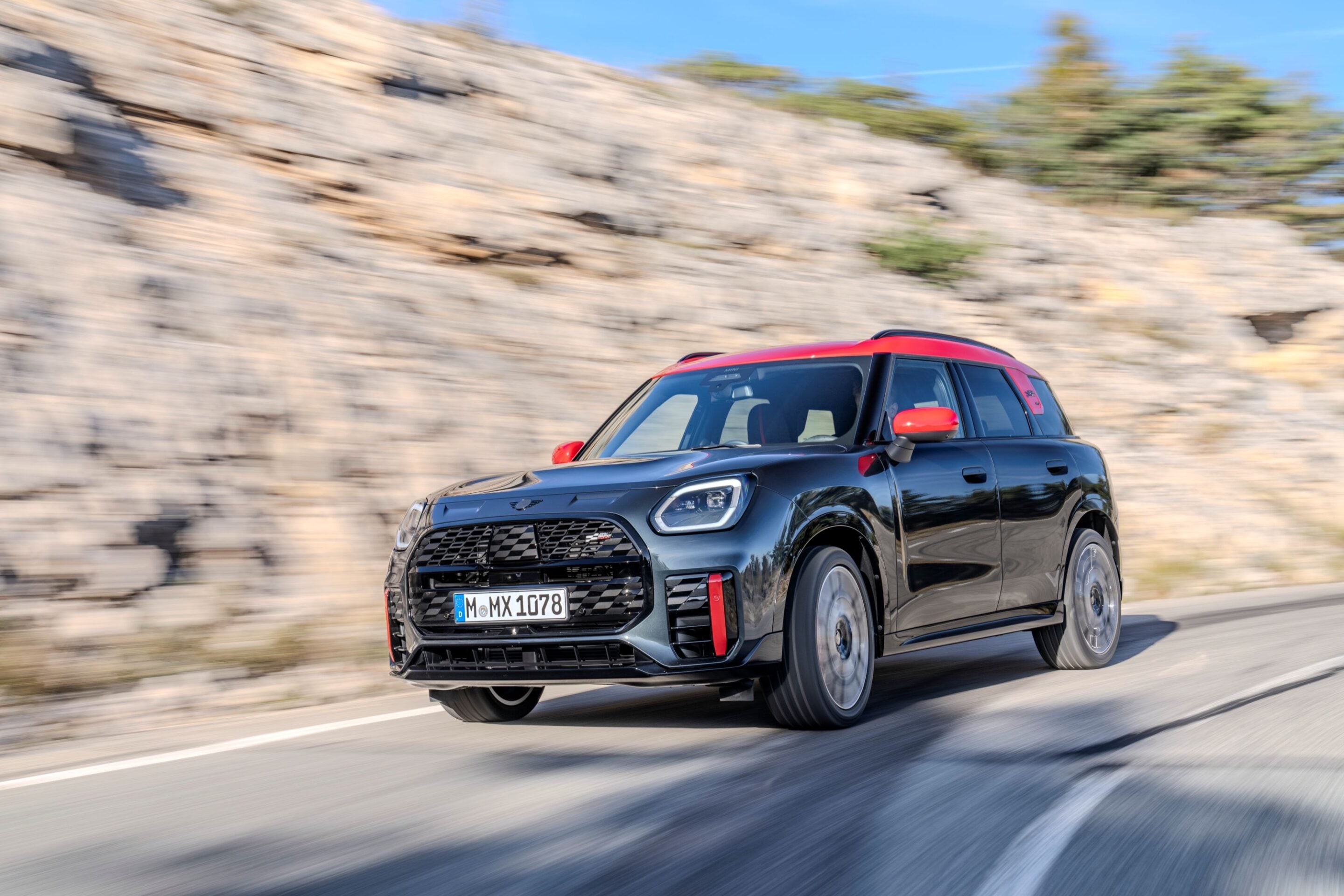
Price: From $70,990 plus on-road costs
Drivetrain: 2.0L 4-cylinder turbo-petrol, 221kW/400Nm, 7-speed dual-clutch auto, AWD
Combined fuel economy, CO2 emissions, fuel type: 7.7L/100km, 177g/km, 95RON
Warranty: Five-year/unlimited km, 5 years’ roadside assistance
Five-year service cost: $2425 ($485 per year)
| Driving | |
| Interior | |
| Practicality | |
| Overall value | |
An oversized hot hatch in crossover SUV clothing, the Mini Countryman JCW wears its John Cooper Works name with pride. Now in its third-generation, the Countryman blends Mini’s funky and unmistakable styling with the same B48 2.0-litre turbo-four as found in the BMW X1 M35. And that’s no bad thing, the little screamer good for 221kW and 400Nm and a zero to 100km/h sprint time of 5.4 seconds. A seven-speed dual-clutch transmits those outputs to all four wheels.
If that all sounds a little familiar, that’s because it is, the Countryman sharing its platform and much of its under-pinnings with its brother from another mother, BMW X1 M35. BMW, of course, owns Mini these days.
Where the Mini forges its own identity is in its quirky, yet fun styling, especially inside where the brand’s heritage is given more than a passing nod with circular screens and toggle switches redolent of the original Mini.
On the road, the JCW Countryman forges its own path with punchy performance (although idle stop-start can be a little recalcitrant) and Mini’s famous ‘go-kart-like’ handling that keeps the crossover SUV nice and flat during more adventurous drives. There’s even a ‘go-kart’ drive mode for exactly those times. And a ‘boost’ function, activated by the left-hand paddle-shifter, unleashes all that the JCW’s four-pot has to offer for 10 seconds. The trade-off, as with so many performance-focused SUVs, comes in ride comfort, the Countryman riding roughshod over patchy and uneven road surfaces.
Despite its ‘Mini’ name, the Countryman is a practical SUV, with second row comfort on par with its rivals and a cargo area measuring in at 505L/1530L, underscoring what is a practical yet fun SUV delivering on its JCW promise.
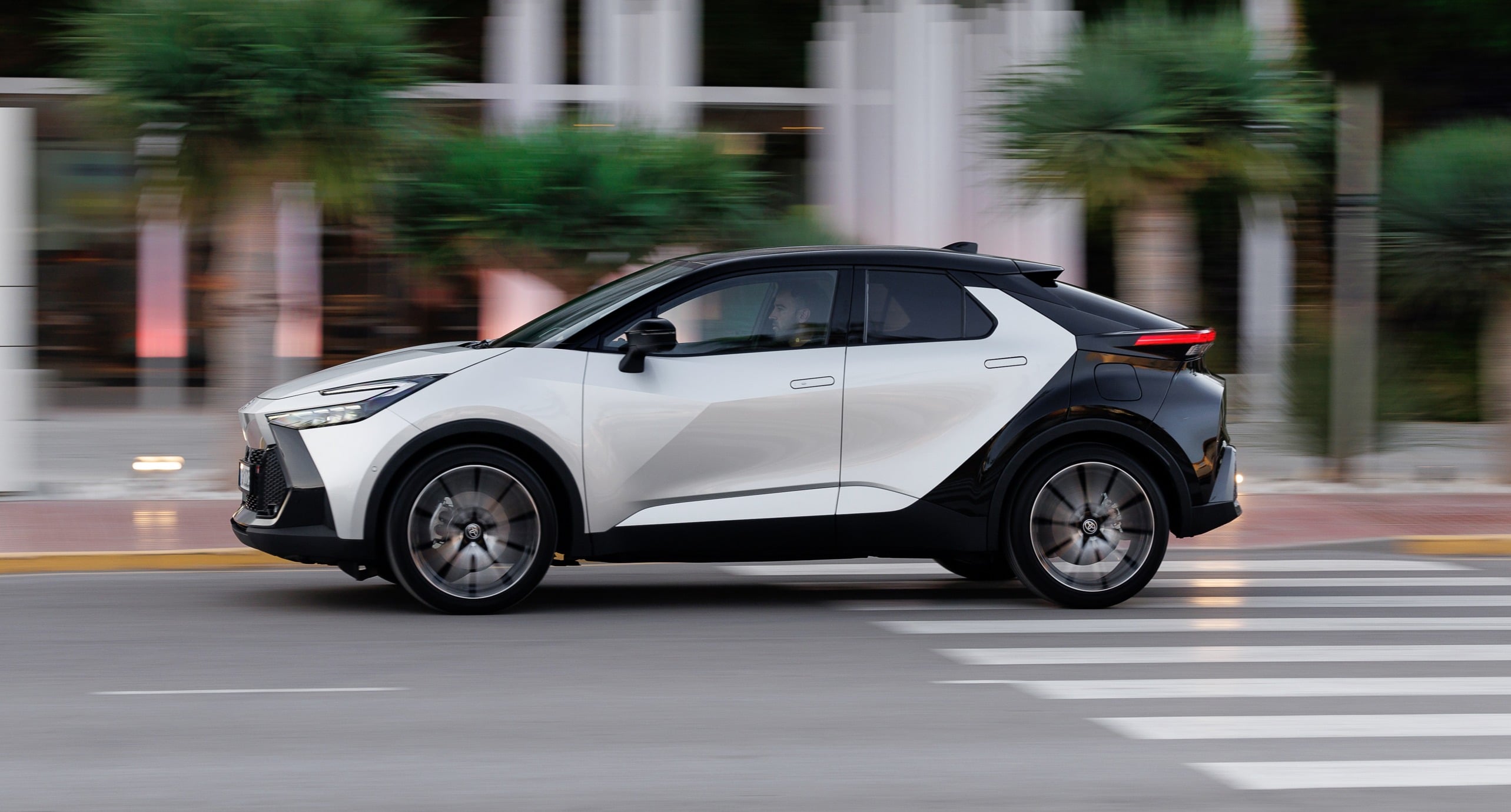
Price: From $58,890 plus on-road costs
Drivetrain: 2.0L 4-cylinder petrol-hybrid, 146kW/188Nm (combined), CVT, AWD
Combined fuel economy, CO2 emissions, fuel type: 4.1L/100km, 107g/km, 91RON
Warranty: Five-year/unlimited km
Five-year service cost: $1375 ($275 per year)
| Driving | |
| Interior | |
| Practicality | |
| Overall value | |
Giving the Toyota C-HR the GR Sport treatment has certainly elevated the Japanese brand’s small SUV into the ‘warm’ performance sphere. A larger 2.0-litre naturally-aspirated four-cylinder, augmented by two electric motors, affords the GR Sport a sprinkling of zestiness, if not outright chest-tumping mambo.
With combined outputs of 146kW and 188Nm, matched to a continuously variable transmission and all-wheel drive on demand, the spicy-looking C-HR is a competent, if not exactly thrilling warm SUV. It does its best work around town, with brisk performance from standstill and an urgency not usually associated with the C-HR. But in this company, that’s not enough, especially for the over $60k asking price once on-road costs are added.
It does offer a bit of sparkle out on the open road, with perky, if not thrilling performance when tackling some twisties, the highlight its composed road manners. On the downside, the drone from the CVT becomes very tiring, very quickly.
Where the C-HR sparkles, as so many of today’s Toyotas do, is in providing excellent fuel economy, thanks to the brand’s well-sorted petrol-hybrid powertrain. Toyota claims the C-HR will use just 4.1L/100km although real-world use suggests closer to 5.0L/100km is more realistic.
Inside, the C-HR really doesn’t do enough to justify its elevated price tag over its team-mates further down the range. Yes, there are GR Sport specific elements, but the cabin doesn’t feel nearly as special as its price suggests. Comfortable front seats and Toyota’s decision to stick with physical switches and dials, aren’t enough to make up for a prevalence of hard plastics, a cramped second row, and small cargo area (362L/1134L).
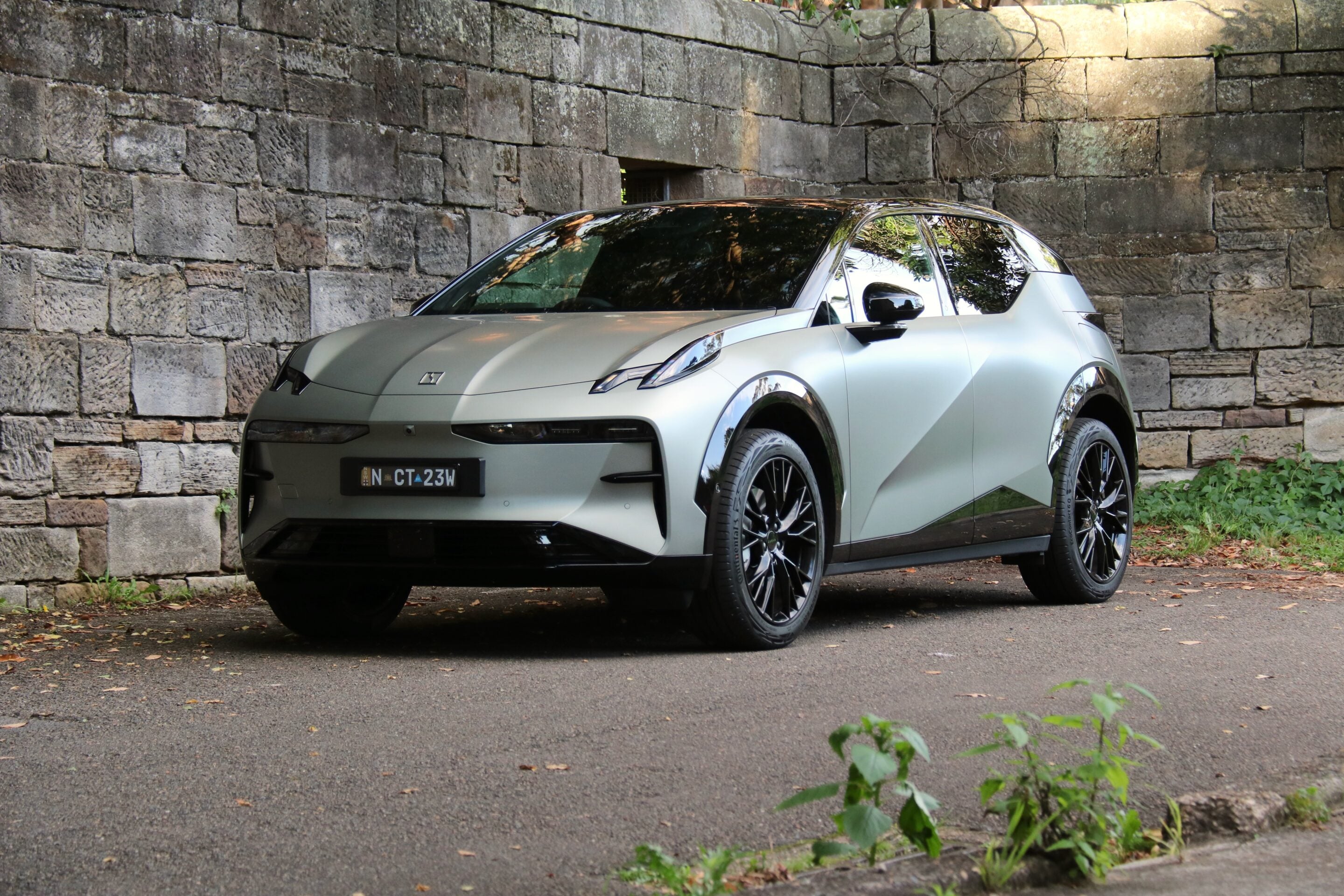
Price: From $57,900 driveaway
Drivetrain: Dual electric motors 365kW/573Nm, single-speed, AWD
Battery size, energy consumption, driving range: 66kWh, 17kWh/100 (tested), 415km (WLTP)
Warranty: Five-year/unlimited km
Five-year service cost: $2662 ($532.40 per year)
| Driving | |
| Interior | |
| Practicality | |
| Overall value | |
Chinese challenger brand Zeekr hasn’t been in Australia all that long. But its electric vehicles that blend performance with an upmarket focus are beginning to make inroads into our market.
The Zeekr X was the first model to launch locally in 2024 and it hasn’t taken long for the brand to bring an updated model to market. And it’s done so to good effect, with increased power outputs, sharper pricing and even more standard equipment for the money.
An electric SUV that can cover the sprint from 0-100km/h in just 3.7 seconds is nothing new in these electrified times, but the Zeekr X matches its straight-line speed with a pretty good handling package that doesn’t feel overwhelmed by its prodigious power outputs. Exploiting the X’s speed results in a chassis remaining on the side of balanced in the handling ledger while steering and ride comfort are commendable, if not outstanding.
Inside, Zeekr trades on its generous equipment list and overall polish and presentation. Yes, there’s an over-reliance on the central screen for many of the X’s vital functions, (and the are a few too many gimmicks such as the electronic door-openers and the welcome animation on the b-pillars), but overall quality and finish is on par with its sharp driveaway pricing. A highlight remains the feeling of calm inside the cabin, even while enjoying some more spirited driving. The second row is comfortable while cargo capacities of 404L/1247L are acceptable.
The 66kWh battery brings a claimed 415km of range, based on WLTP testing and that’s where the Zeekr X loses some of its gloss, with 500km-plus ranges increasingly the norm at this higher end of the EV sandpit.
But for those looking for something just a little bit different, the Zeekr X AWD’s blend of style, generous equipment and outright performance will appeal.
Looking to get into a brand-new small SUV? Our stories below will guide you to the model that best suits your needs:
Luxury small SUVs have become the sweet spot of the premium market, blending city-friendly dimensions with the comfort, technology and refinement buyers once expected only from larger models. In 2026, the category is broader than ever, with petrol, hybrid and electric options all competing for attention.
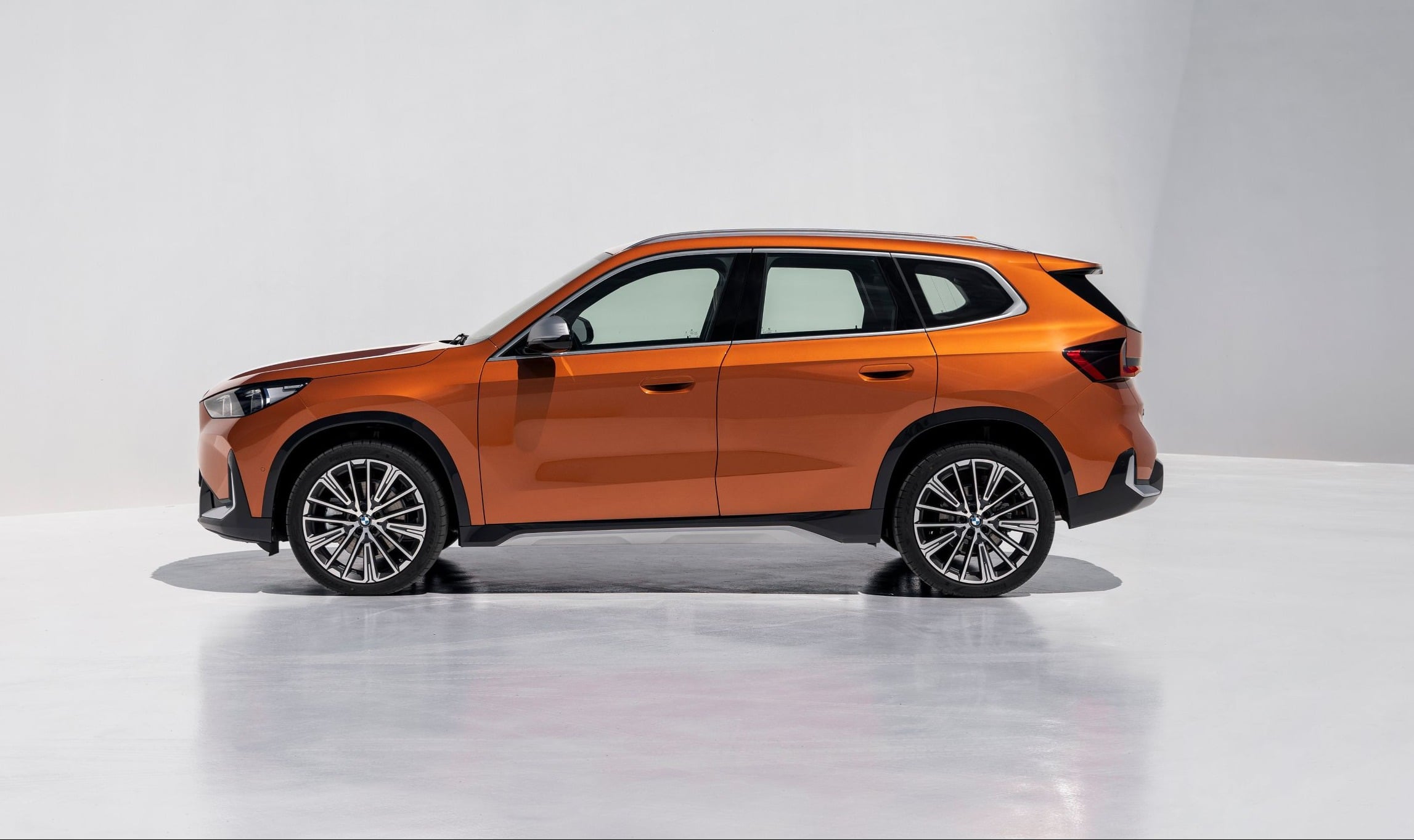
Price: From $66,700 Plus on-road costs (X1) from $77,900 plus on-road costs (iX1)
Drivetrain: 115kW/230Nm 1.5L three-cylinder (X1 sDrive18i), 230kW/494Nm dual motor
65kWh (iX1)
WLTP range, peak charging speed: 400-466km, 130kW
Fuel consumption: 6.5L/100km
Warranty: Five-year/unlimited kilometre
Five-year service cost: $2150 (X1) $2200 (iX1)
| Driving | |
| Interior | |
| Practicality | |
| Overall value | |
The strongest weapon in the BMW X1’s armoury is its availability with either conventional internal combustion, or more modern electric powertrains. Buyers can therefore choose whichever already-excellent small SUV best suits their needs.
The entry-grade X1 sDrive 18i is the smart pick in the regular range, with all the luxury and amenity you’d expect from BMW, but at a sharp, sub-70k starting price. There are of course, more expensive variants available, but the entry-grade X1 delivers a quality feel without the high price.
The dual-motor, AWD electric iX1 concentrates more on smarts and range than outright speed, with a WLTP claimed driving range of up to 466km in a compact package. 230kW is still a formable power output, though. And, while it’s not rapid in the way some electric vehicles can be, it’s an engaging small SUV to drive in the sense that it injects some fun into an otherwise bland segment. A recent cut to the cost of entry – $8900 – makes an electric X1 even more attractive than it was previously.
X1 gets a healthy list of standard equipment, and a stylish exterior design that, beyond the badge cache, ensures it stands out in an otherwise bland SUV sea. Both petrol and electric propulsion deliver an engaging, enjoyable drive, with the thrummy 1.5-litre three cylinder driving though a sharp-shifting 7-speed DCT, and using as little as 6.6L/100km.
The X1 puts forward a compelling case that you may not need the medium SUV you assumed you did. Clever packaging, useful storage, interior comfort, and compact exterior dimensions mean the X1 is as useful around town as it is on a longer road trip.
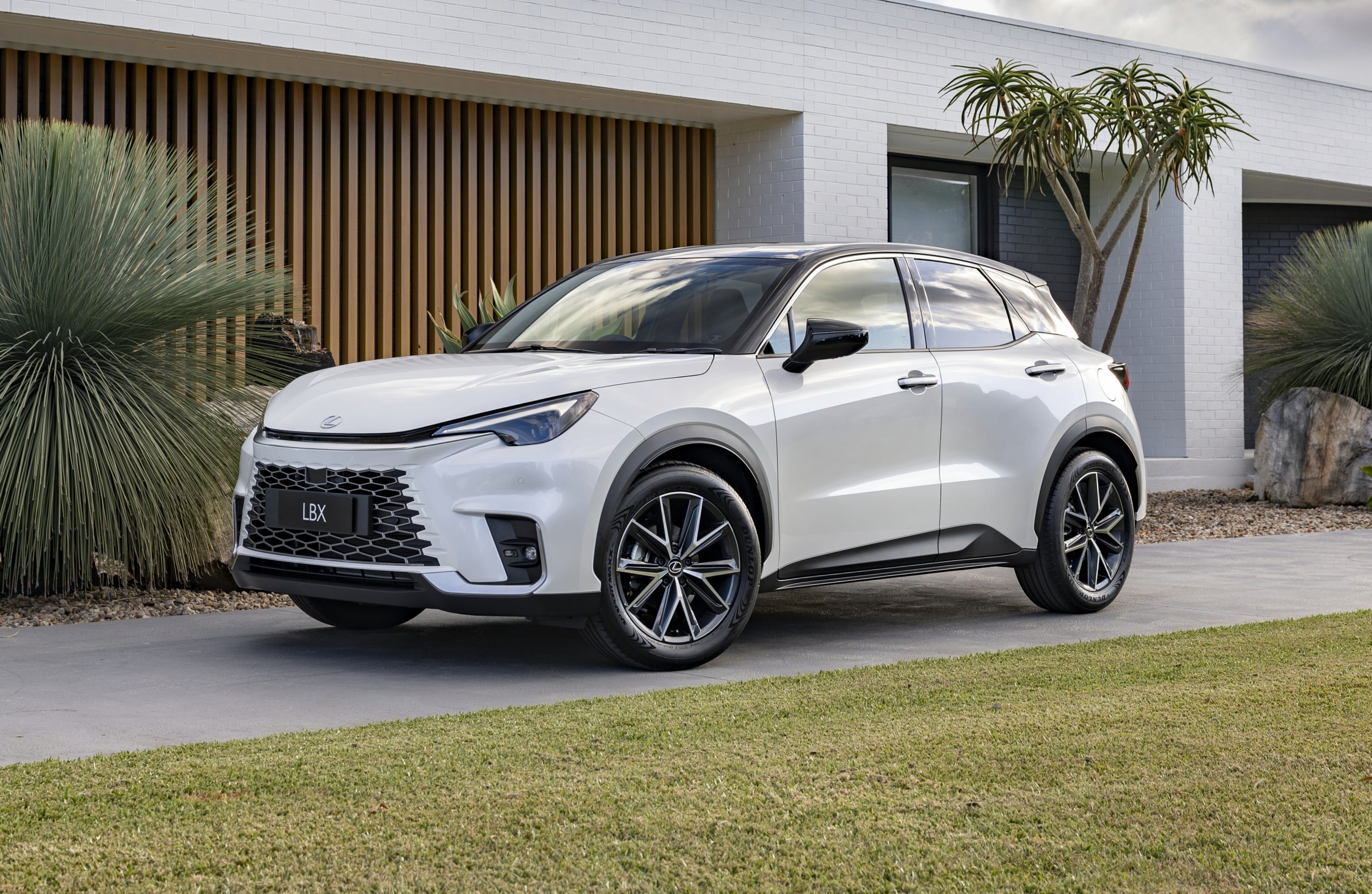
Price: $47,550 plus ORC (Luxury 2WD)
Drivetrain: 100kW/185Nm 1.5-litre, three-cylinder, petrol-hybrid
Fuel consumption: 3.8L/100km
Warranty: Five-year/unlimited kilometre
Five-year service cost: $2975
| Driving | |
| Interior | |
| Practicality | |
| Overall value | |
The smallest Lexus on sale in Australia is available in three model grades in the regular range with the hot Morizo RR sitting above them, and getting GR Yaris drivetrain performance. However, there’s a lot to like about the more affordable ‘regular’ LBX.
The first of those factors is ownership, with the premium Lexus owner’s experience extending to the brand’s more affordable models. Save your money and opt for the still-premium Luxury 2WD model, which gets the same efficient hybrid drivetrain, and cabin amenities without the higher price tag.
Even the Luxury 2Wd gets 18-inch alloy wheels, a 12.3-inch digital instrument display, 9.8-inch infotainment touschscreen, synthetic leather-look seat trim, heated front seats and a 360-degree camera.
The tight confines of the second row mean the LBX isn’t the choice – in this segment – for families with older children or those who need to move four adults around regularly. The boot is also quite small, but still useful for two-up road trips.
Despite the use of an e-CVT, the LBX is still a fun small SUV to drive, with cabin smarts, Lexus attention to detail and fit and finish, and a refined, insulated driving experience. Some engine noise will enter the cabin if you work it hard, but the cabin is largely serene.
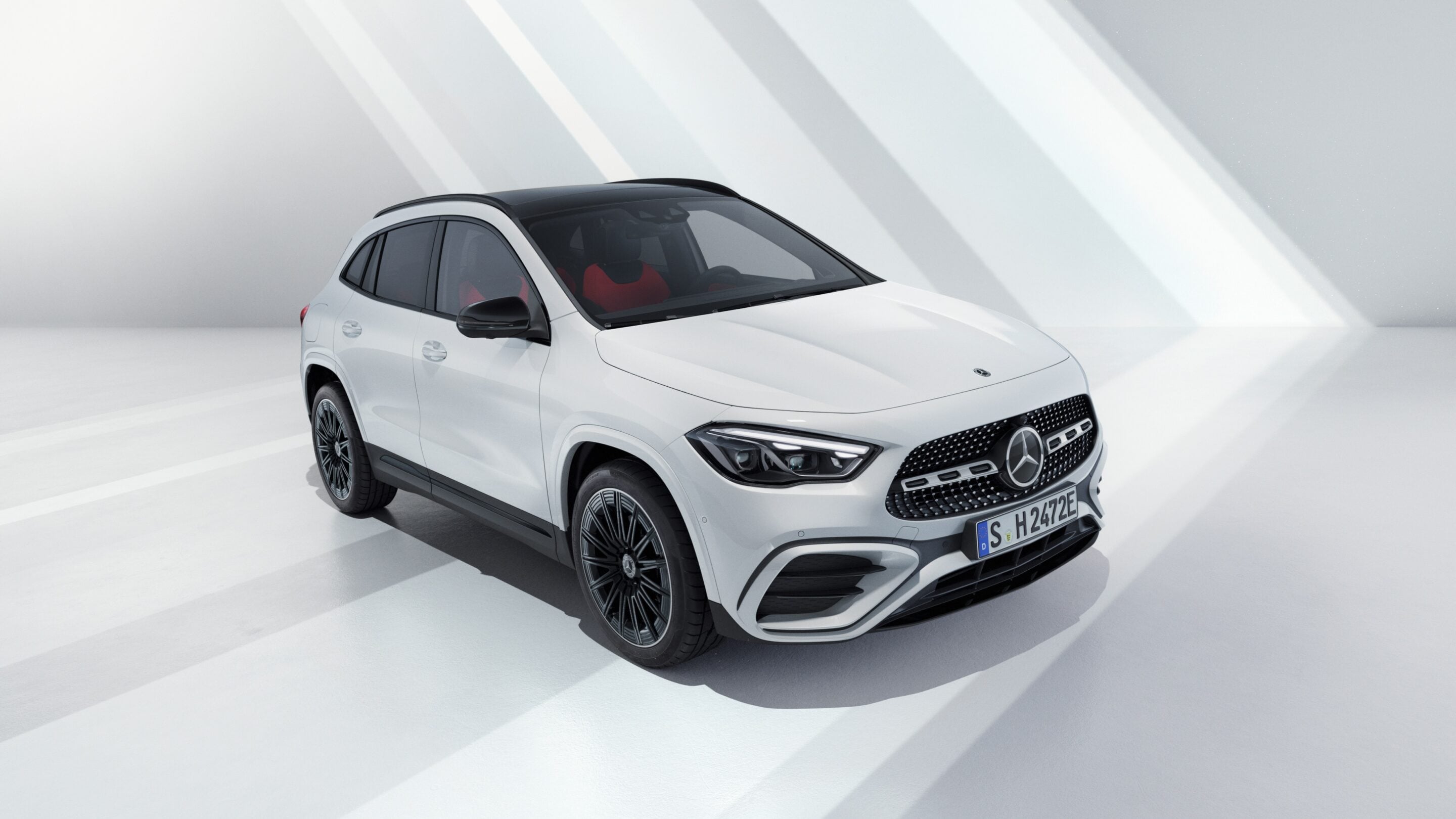
Price: $69,630 drive away (GLA 200), $92,777 drive away (EQA250+)
Drivetrain: 120kW/270Nm, 1.3-litre, turbocharged four-cylinder petrol FWD (GLA200),
140kW/375Nm single motor, FWD 70kWh (EQA250+)
WLTP range: 426km
Fuel consumption: 6.2L/100km
Warranty: five-year/unlimited kilometre
Five-year service cost: $2500 (City)
| Driving | |
| Interior | |
| Practicality | |
| Overall value | |
Like some of the competition here, Mercedes-Benz offers the choice of petrol or electric drivetrains within its GLA/EQA model structure, with competitive pricing the key for what is a luxury offering. And, AMG-tweaked versions are also available.
Entry into the Mercedes-Benz SUV stable by way of the stylish GLA, brings with it a sense of premium attention to detail, stylish design and beautiful execution inside the cabin especially. The including of technology gives the GLA a high-tech, up to date feel, with two big screens commanding attention. Mercedes’ excellent MBUX infotainment control system is fast, reliable and easy to use.
There’s more space than you might expect inside the cabin, and GLA is a comfortable road-trip companion despite the compact dimensions. A higher seating position than the old model, gives a commanding view of the road ahead.
Even in its most affordable, base model guise, the GLA’s engine is punchy and responsive, and rewarding to drive on any road. Not as sharp as some, given it feels a little heavier through the wheel, the GLA is nonetheless capable across all road surfaces, riding with comfort over even the nastiest of roads.
We’ve listed the piano black trim as a negative because of its tendency to attract dust, but what it does do when clean is lend a premium, high-end level of detail to the cabin. If you’re looking for quality, the ‘Benz small SUV delivers.
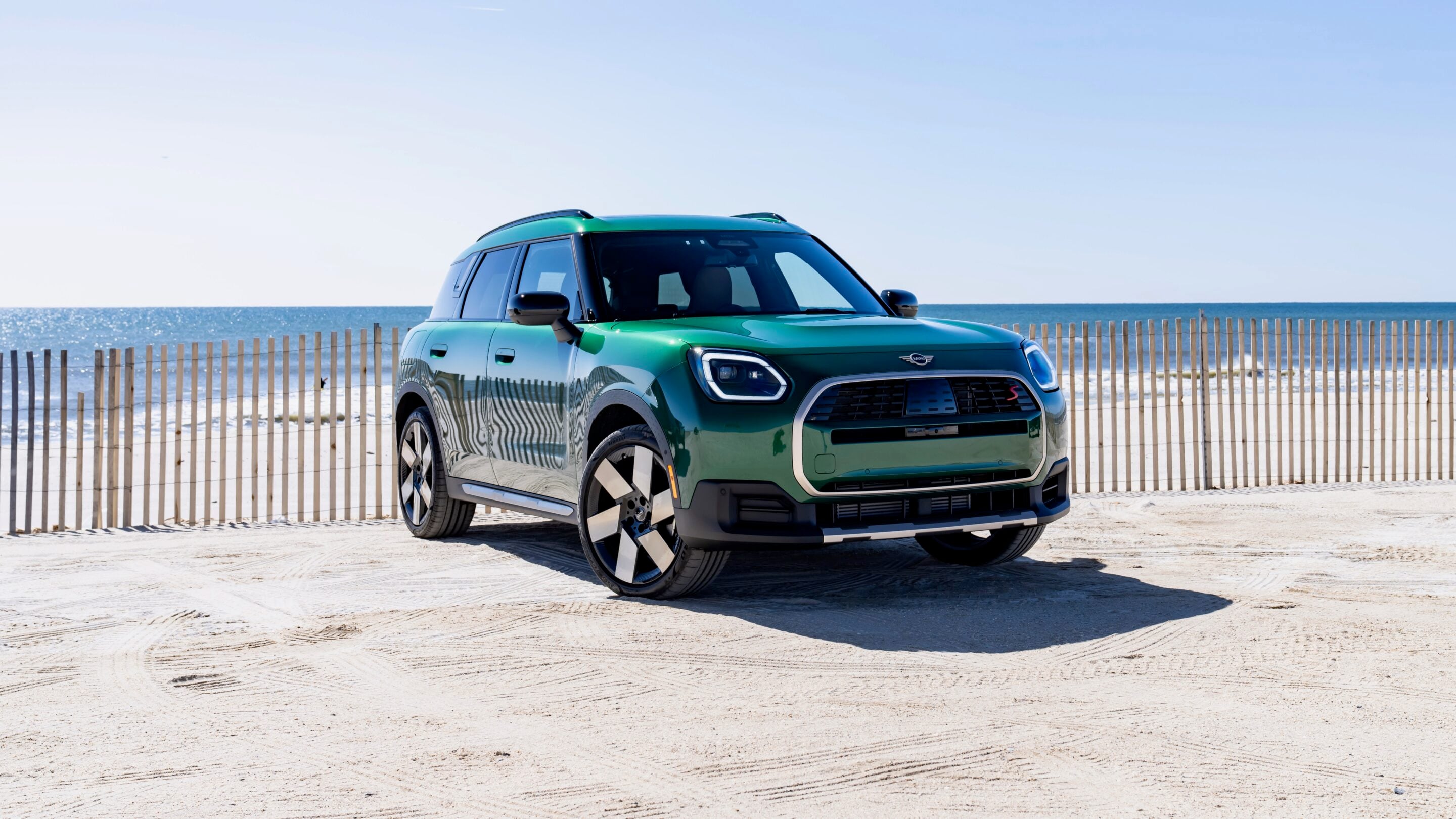
Price: $49,990 plus ORC (Core) $67,990 plus ORC (E)
Drivetrain: 1.5-litre, turbocharged four-cylinder petrol FWD (Core), 150kW/250Nm single-
motor, FWD (E)
WLTP range: 501km
Fuel consumption: 6.8L/100km
Warranty: Five-year/unlimited kilometre
Five-year service cost: $2425 (Core), $2360 (six years E)
| Driving | |
| Interior | |
| Practicality | |
| Overall value | |
Bringing practicality and user-friendliness to the cheeky Mini styling and heritage, Countryman provides a left-field alternative to the other SUVs in this segment. Those of you looking to make the switch to electric power can opt for the second most expensive in the range, with the electric E only beaten by the John Cooper Works in regard to asking price. However, the most cost effective is the sharply-priced mild-hybrid Core.
Without doubt, the biggest strength of the Countryman is that it looks and feels like a Mini from the inside. The cabin is cleverly designed, funky and stylish, with practicality and comfort beyond the looks.
While the electric Countryman is sharp on any road, the petrol-powered model gets an engaging 2.0-litre turbocharged engine that feels lively and peppy, while delivering reasonable fuel efficiency. It’s a hoot to drive on any road, in any conditions, such is the Mini way. The sharp handling and feedback through the steering wheel offer up an engaging drive for those of you who love driving.
Like the Range Rover Evoque it shares segment space with, the Mini is an inspired choice for those of you looking to stand out. With style very much at the forefront of the appeal, it’s still a practical SUV that works for the daily grind.
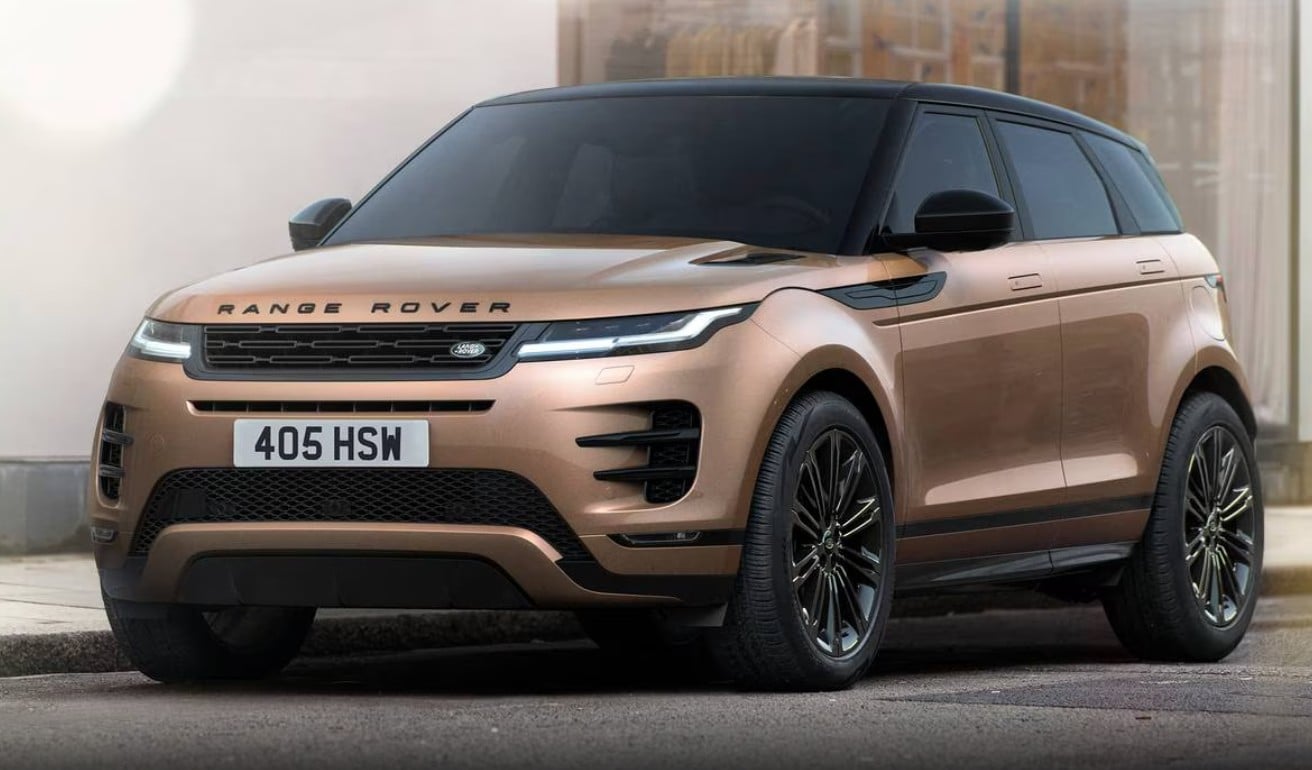
Price: $84,050 plus ORC (Dynamic SE)
Drivetrain: 2.0-litre, turbocharged four-cylinder petrol, AWD
Fuel consumption: 8.3L/100km
Warranty: Five-year/unlimited kilometre
Five-year service cost: $1950
| Driving | |
| Interior | |
| Practicality | |
| Overall value | |
A perennial premium favourite in this segment thanks to its stylish exterior and luxurious attention to detail, the Evoque is now available across three variants – Dynamic SE, Hoxton and Autobiography – with the 2.0-litre petrol engine paired to mild hybrid technology and a more efficient PHEV as well.
Starting at just more than $84,000, Evoque is a discerning choice in this segment for those not so concerned by budgetary constraints. Step right up to there PHEV at the top end of the range and you’ll be paying six figures before on-road costs are factored in.
With AWD standard, as per the Range Rover brief, and a smooth nine-speed automatic, even the entry-grade Dynamic SE is a luxurious way to tackle the medium SUV segment. Evoque has always set a standard of luxury from inside the cabin, and that remains the case with a quiet and refined deriving experience, and Land Rover’s signature attention too suspension detail.
Not as sharp under acceleration as the electric options in this segment, it’s less sporty than the styling might indicate. Off-road capability is a non-negotiable for the British manufacturer, with drive modes making the rough stuff easy even for beginners.
If you’re looking in this segment and you value luxury, quality materials and attention to detail, the ‘mini Range Rover’ as it’s become known is a choice to consider. It’s elegant styling will ensure it stands out from the crowd.
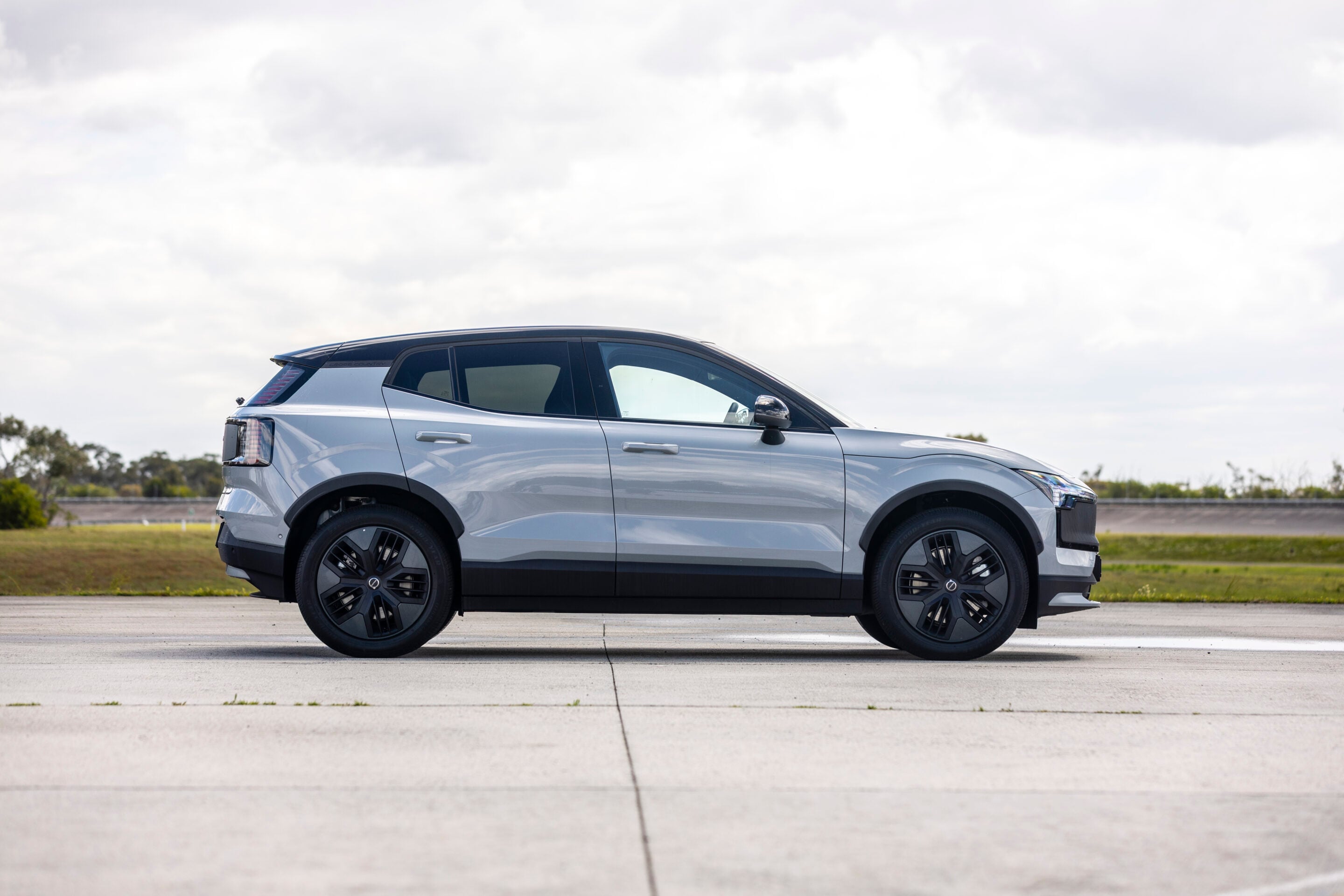
Price: $49,990 plus ORC (Single Motor Extended Range Plus)
Drivetrain: 200kW/343Nm single-motor RWD 69kWh
WLTP range: 480km
Warranty: five-year/unlimited kilometre
Five-year service cost: $5995
| Driving | |
| Interior | |
| Practicality | |
| Overall value | |
Volvo’s EX30 is the electric vehicle that Volvo wanted in the Australian market as soon as it could secure it – and with good reason. Across three model grades, and with a sense of luxury synonymous with the Swedish manufacturer, the EX30 is priced to appeal not just to EV converts, but also to those skeptical of EV ownership.
As much as $10,000 was recently cut from the asking price, with the entry-grade single motor, extended range EX30 costing $49,990 before on-road costs. Single-motor, and dual-motor models are available, with 200kW or 315kW on offer, and a WLTP-claimed range up to 480km.
With Volvo’s signature minimalistic, clean aesthetic, especially inside the cabin, along with up to date tech, recycled material choices, advanced safety features, and integrated Google technology, the EX30 is as premium as it is enjoyable to drive.
As is often the case with electric vehicles, the smart choice in the range is the entry-grade RWD EX30, with the aforementioned 480km range on offer, 0-100km/h time of just 5.3 seconds and 200kW. Buyers still get five-star ANCAP safety, and all of the standard equipment you’ll want in the segment. Given you get that for a starting price beneath $50,000, that sets the EX30 in line with electric vehicles from less established manufacturers.
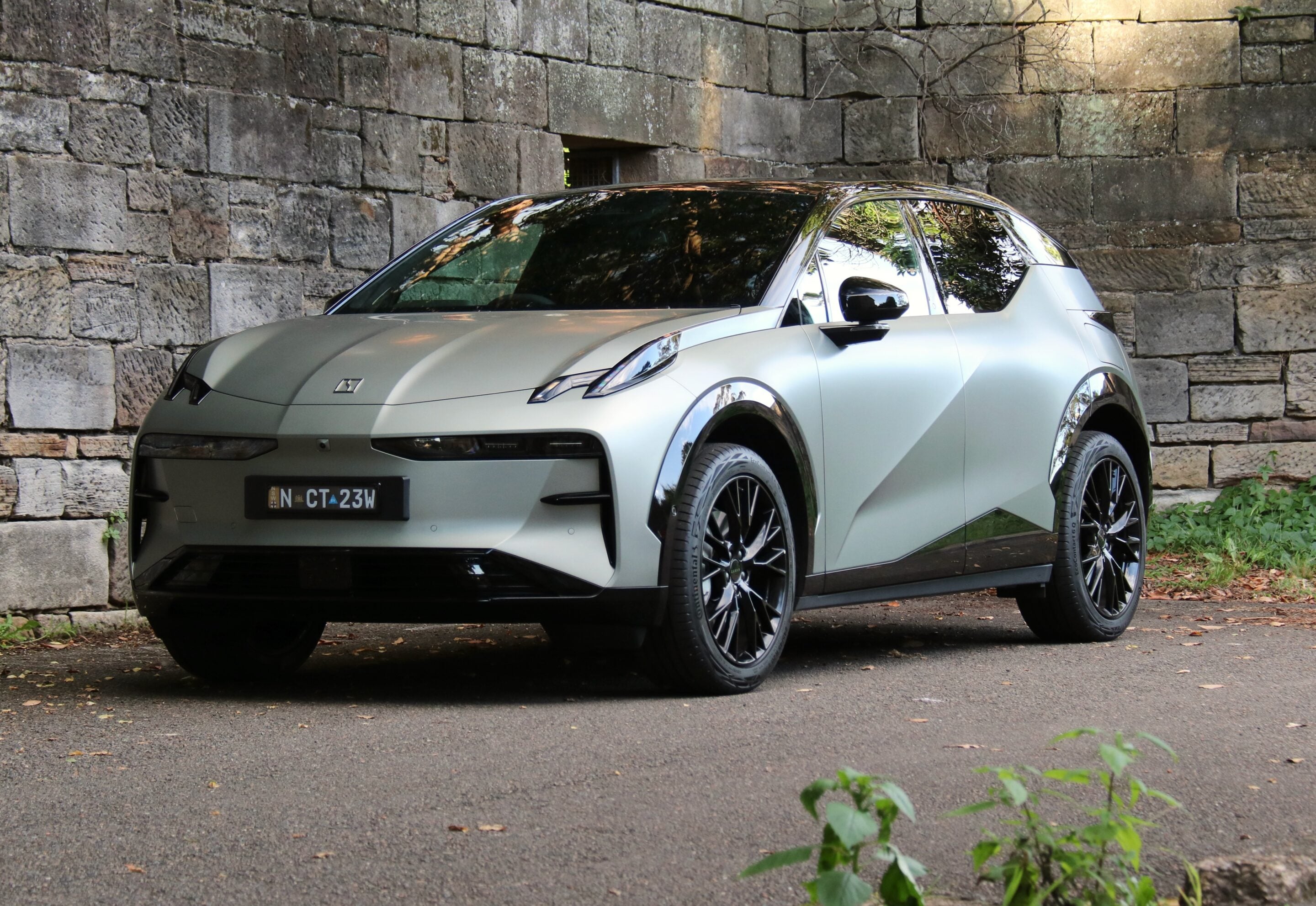
Price: $47,900 drive away (RWD)
Drivetrain: 250kW/373Nm single-motor RWD 61kWh
WLTP range: 405km
Warranty: five-year/unlimited kilometre
Five-year service cost: $2532
| Driving | |
| Interior | |
| Practicality | |
| Overall value | |
The updated Zeekr X is the latest entrant from Chinese manufacturer Zeekr, to sit alongside 7X in Zeekr showrooms, and it’s an impressive SUV in this segment – keeping in mind it came to market before the 7X. While it looks almost identical from the outside, the new X has gained plenty of upgrades to make it even more attractive to buyers.
There’s a serious price cut for starters – now below 50k drive away, but there’s a new electric motor, new battery for the RWD model, faster charging capability and interior changes that make it easier, and more practical to live with.
Standard features are impressive with the likes of heated and ventilated front seats, electric adjustability for the passenger, driver’s seat memory, heated steering wheel, and premium Yamaha audio, all standard compared to being optional previously.
Even the RWD model makes 250kW and 373Nm, ensuring it’s a snappy SUV even in its most affordable guise. Zeekr X is a good thing to drive, too, thanks to revised suspension that is taut enough to feel sporty, but not so hard as to be uncomfortable around town.
Looking to get into a brand-new small SUV? Our stories below will guide you to the model that best suits your needs:
Urban small SUVs are evolving rapidly as buyers prioritise compact dimensions, low running costs and easy manoeuvrability for city life. In 2026, the category covers vehicles compact petrol crossovers to affordable EVs, all designed to maximise practicality in tight urban environments. The best contenders combine clever packaging, strong value and modern technology without sacrificing comfort or everyday usability.
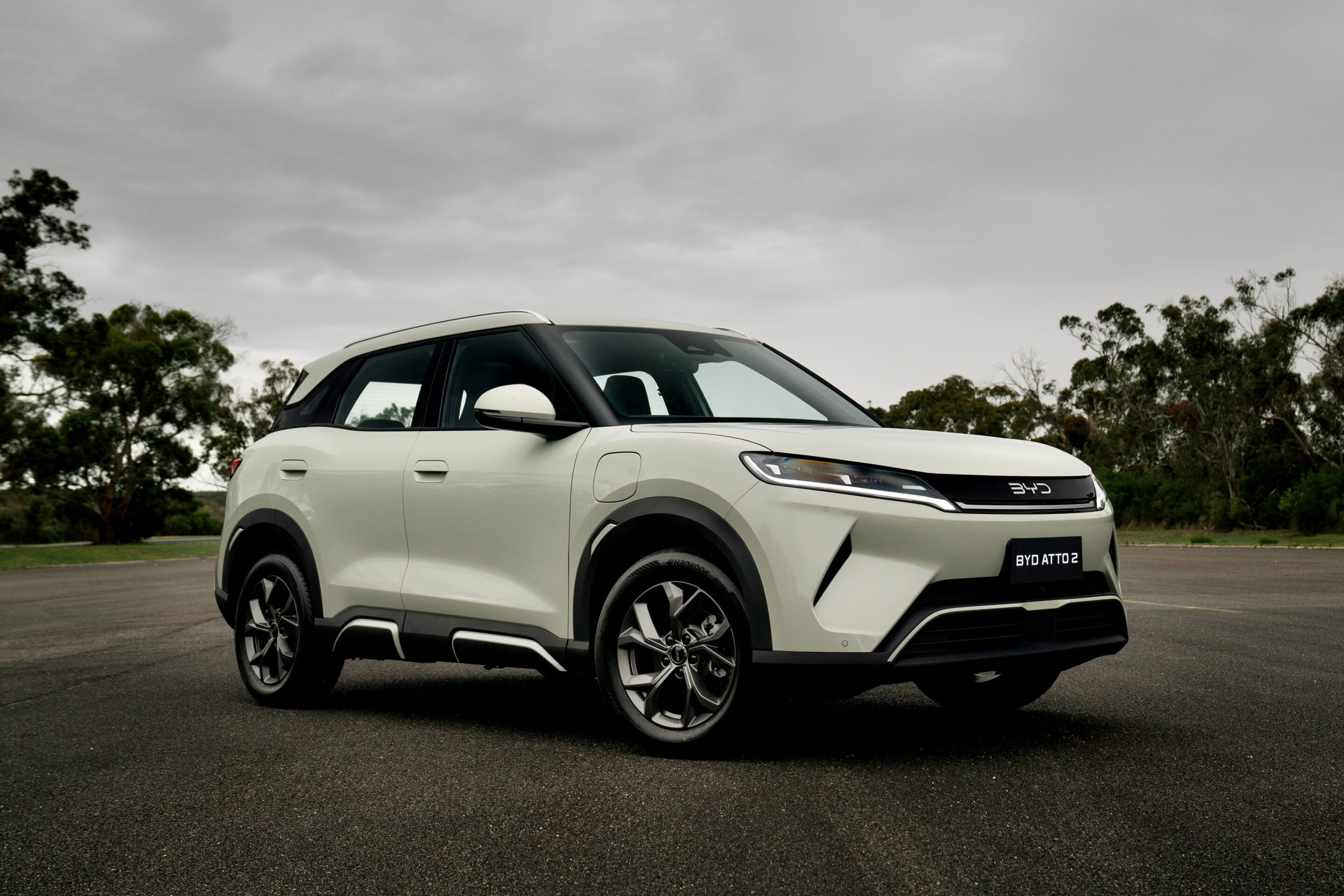
Price: From $31,990 plus on-road costs
Drivetrain: Single-motor electric, 51.1kWh battery
Outputs: 130kW/290Nm
Range (WLTP): 345km
Warranty: Six-year/150,000km
Five-year service cost: $1430 ($286 per year)
| Driving | |
| Interior | |
| Practicality | |
| Overall value | |
Priced from just $31,990 plus on-road costs, the BYD Atto 2 is officially Australia’s cheapest electric SUV, which is a massive feat considering that just a few years ago, most were comfortably above $40,000. Beyond its obvious value, however, Wheels thinks its the best equipped small SUV for urban driving on the market, blending excellent equipment levels, superior practicality, latest tech and good range.
The low starting price gets you a lot of car and even in entry-level Dynamic form, a lot of equipment. Features include 16-inch alloy wheels, automatic exterior lighting and wipers, synthetic leather upholstery, automatic climate control with rear air vents, a 10.1-inch touchscreen with wireless smartphone connectivity and over-the-air updates, a heat pump and a long list of safety kit.
Above the Dynamic sits the $35,990 +ORC Premium, and that adds extra features like larger 17-inch wheels, roof rails, a panoramic sunroof, auto-folding mirrors, electric front seat adjustment with heating and ventilation, a larger 12.8-inch touchscreen and a wireless phone charger. At around $40,000 including on-road costs, the Atto 2 Premium is very well equipped, but both models are excellent value.
The cabin of the Atto 2 is its strongest attribute as not only is it spacious, but it’s also good quality, comfortable and easy to use in every-day, urban driving. The entry-level Dynamic features a 10.1-inch touchscreen, which is well featured and accessible, though its small icons make interacting with it more difficult than necessary. Storage is impressive up front, as is seat comfort, and both the rear seat and 380-litre (1320L with the seats folded) boot are larger than you’d expect.
On the road, the Atto 2 works excellently as an urban small SUV because of its comfortable ride quality, good visibility and light steering. A 130kW/290Nm front electric motor provides propulsion, which is more than enough grunt, and the 51.3kWh battery gives a WLTP-rated range of 345km, which is more than enough for those doing primarily city driving.
The BYD Atto 2 wins this segment thanks to its low opening price, long list of standard features, comfortable and practical cabin, and reasonably long six-year/150,000km warranty. It could be better to drive and its charge speed is slow compared to some rivals, but for primarily city drivers wanting a cheap, practical small SUV that happens to be electric, it’s one of the main options.
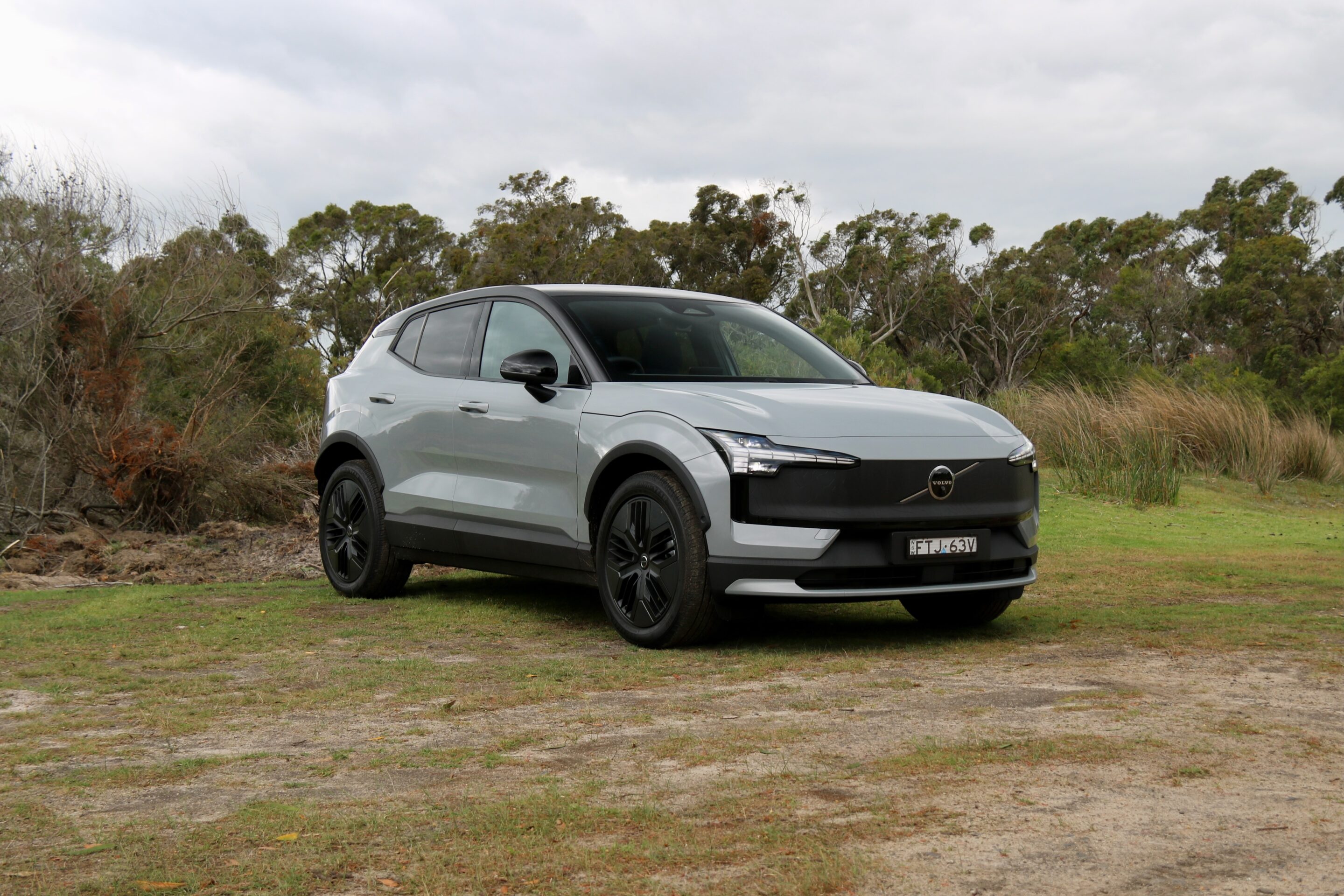
Price: From $49,990 plus on-road costs
Drivetrain: Single or dual-motor electric, RWD or AWD, 69kWh battery
Outputs: 200kW/343Nm – 315kW/543Nm
Range (NEDC): 417km – 462km
Warranty: Five-year/unlimited km
Five-year service cost: Included
| Driving | |
| Interior | |
| Practicality | |
| Overall value | |
Launched locally in 2024, the Volvo EX30 is the brand’s smallest product and rides on a new Geely-derived platform. Pricing starts at $49,990 plus on-road costs, which is $10,000 lower than the pre-updated model, making it much better value than before. Peak charging speed is a healthy 175kW for a 10-80 per cent charge in 28 minutes, while the 69kWh battery allows for a claimed NEDC driving range of up to 462km for the single motor variant (417km for the dual motor Cross Country).
Inside the EX30 is definitely not huge, but it may be more practical than you might initially think considering its tiny footprint. Two six-foot adults will just about fit in the rear seat with just enough legroom and headroom, though the 318-litre boot is not huge (it opens up to 1000 litres with the rear seats folded). Quality is solid with lots of sustainable materials that look and feel high quality used throughout the cabin, and there’s plenty of cabin storage space in the front seat, including a cool opening centre console in the front cabin and large door bins.
Centre of the cabin is a 12.3-inch touchscreen that controls almost every function of the car with very little in the way of buttons – there isn’t even a driver’s display to show the car’s speed, like in a Tesla, which could prove extra annoying in urban driving. The touchscreen is quick to use and the display is bright, but functions such as the headlights and mirrors are buried within and often take two or three presses to activate, taking eyes off the road.
Surprisingly given Volvo’s somewhat beige reputation, even the base model EX30 makes 200kW of power, enough for a quick 5.3-second 0-100km/h sprint time, while the top-spec 315kW dual-motor variant is even quicker. The driving experience of the EX30 is fun, with direct, nicely-weighted steering and enjoyable handling, though some might find its ride quality to be a bit firm in everyday use, especially those driving only in urban conditions where bumps are easily felt in the cabin.
The EX30’s aftersales package is good with a five-year service plan included in the price and two-
year service intervals, making the EX30 pretty painless from an ownership point of view. Overall,
the Volvo EX30 is a strong entrant into the electric small SUV segment – that is, if you don’t need
the largest or most practical cabin. It’s fun to drive with a reasonable range, good equipment list
and, thanks to a recent cut, an accessible price.
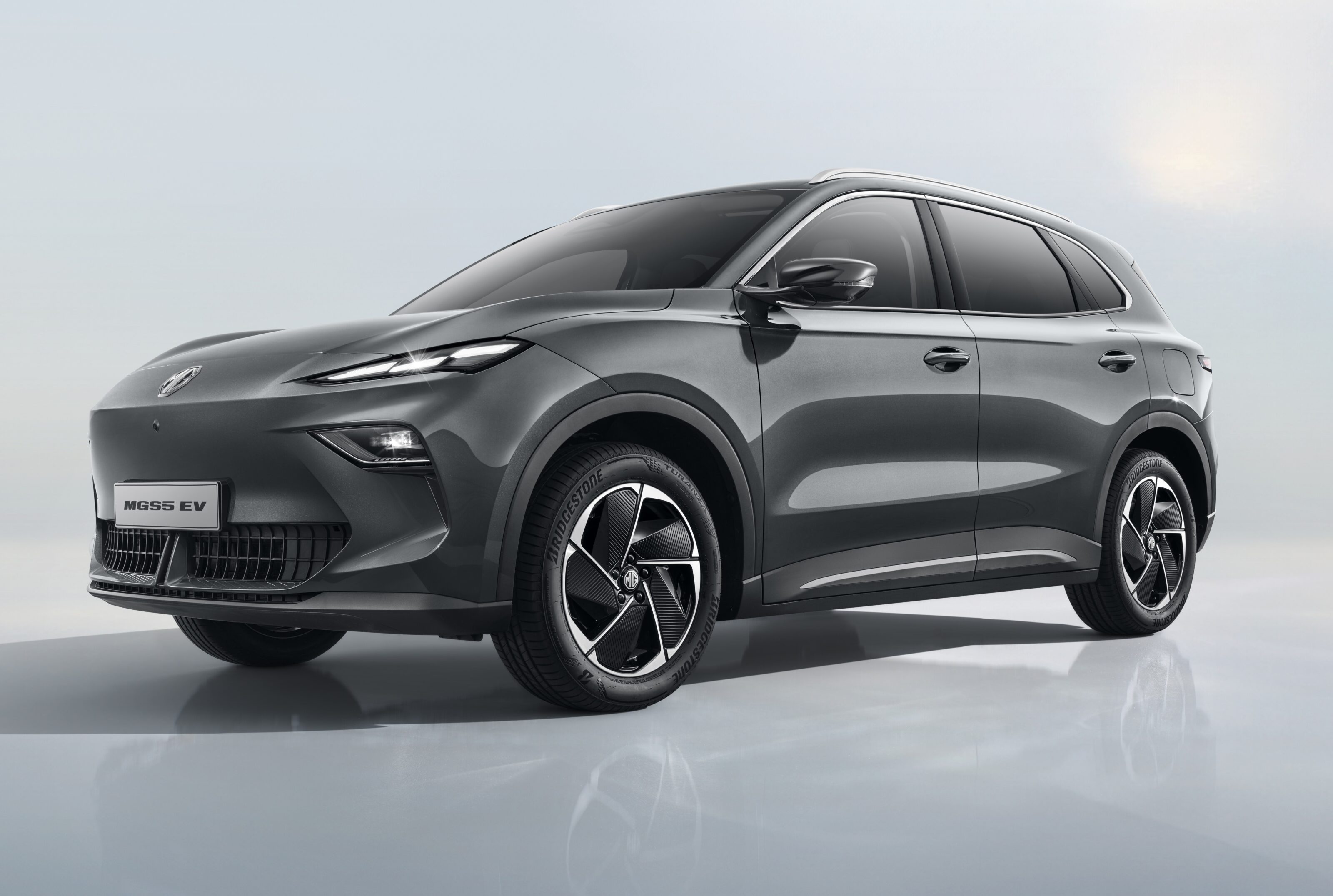
Price: From $40,990 driveaway
Drivetrain: Single-motor electric, RWD, 49kWh or 62kWh batteries
Outputs: 125kW/250Nm
Range (WLTP): 340km – 425km
Warranty: Seven-year/unlimited km (service-activated up to 10 years/250,000km)
Five-year service cost: $1967 ($393 per year)
| Driving | |
| Interior | |
| Practicality | |
| Overall value | |
Based on the same excellent platform as the MG4 hatchback – not the new MG4 Urban – the MGS5 EV was launched in Australia in 2025. Building on the strengths of the MG4, including its great chassis, keen pricing and good practicality with a more practical body and a new dashboard layout with higher quality materials, the MGS5 EV is a great option for an electric small SUV.
Pricing starts at just $40,990 driveaway for the entry-level Excite 49, which features a 49kWh LFP battery for a claimed 340km of range (WLTP) and a 125kW/250Nm rear-mounted motor. Sitting above that are a larger 62kWh battery and the higher-spec Essence model (which also offers both battery sizes), with the top-spec Essence 62 priced from $45,990 driveway – or the same price point that the entry-level Hyundai Kona Electric is currently being offered at on special.
As we’ve come to expect from the MG brand, the MGS5 EV is great value for money and even for a base model, the Excite is well equipped. Standard features include 17-inch alloy wheels, automatic LED exterior lighting, cloth seat upholstery, single-zone automatic climate control with rear air vents, a large 12.8-inch touchscreen with live services and wireless phone mirroring, plus the MG Pilot suite of active safety features.
Charging speeds for the S5 EV are reasonable, with the smaller battery capable of 120kW and the larger 139kW for a 10-80 per cent charge time of as little as 19 minutes for the smaller unit. On the road, the S5 EV impresses with a keen chassis and excellent ride quality. It’s a breeze to drive in urban conditions thanks to good visibility and a comfortable ride quality, while the quick steering makes it fun from behind the wheel too.
The S5 EV’s cabin is good quality and spacious, and the 12.8-inch touchscreen is easy to use and – unlike many new cars – features buttons located below to help with usability. Two six-footers will be more than comfortable in the rear seat, and the 453-litre boot is a reasonable size, opening up to 1441 litres with the rear seats folded.
The MGS5 EV is a pretty good option if you’re after a value-packed electric small SUV. Prices start at just $40,990 driveaway for the entry-level Excite 49, which provides a reasonable range of up to 325km (WLTP), but if you’re wanting more, the larger battery can give up to 430km of range. We wish that the more powerful motors offered overseas were sold in Australia, but 125kW is enough to motivate the S5’s keen chassis.
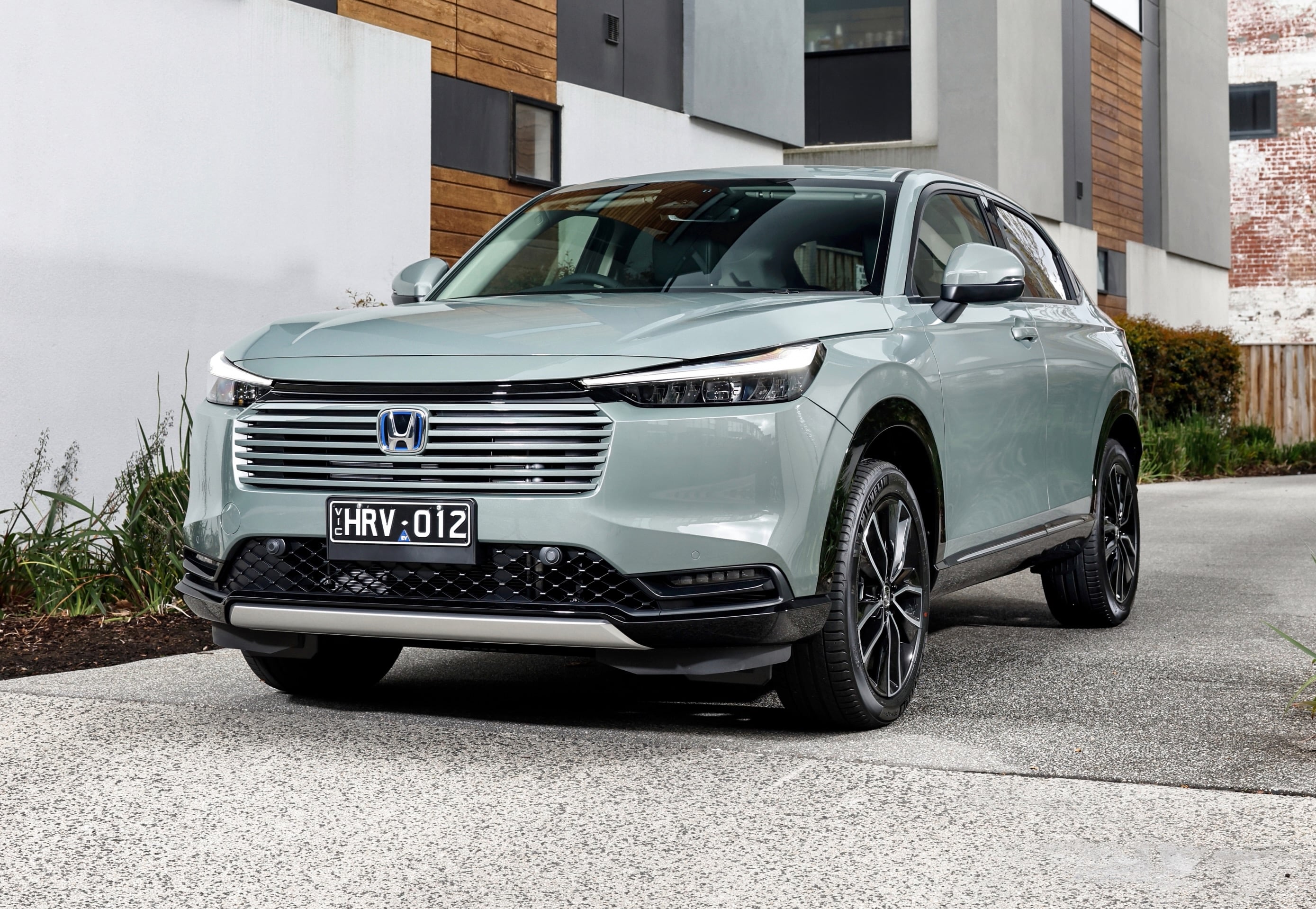
Price: From $32,900 drive away (e:HEV X)
Drivetrain: 1.5-litre four-cylinder petrol or 1.5-litre four-cylinder hybrid, CVT or e-CVT auto, FWD
Outputs: 89kW/145Nm (1.5L petrol), 96kW/253Nm (1.5L hybrid)
Combined fuel economy: 4.3L/100km (hybrid) – 6.2L/100km (1.5L petrol)
Warranty: Five-year/unlimited km
Five-year service cost: $995 ($199 per year)
| Driving | |
| Interior | |
| Practicality | |
| Overall value | |
The Honda HR-V is one of the most dependable options in the small SUV segment, with a wide range of talents. Pricing starts at $32,900 driveaway, though the entry-level hybrid is $39,900 driveaway. It’s only available as a four-seater in Australia, which may be unsuitable depending on your situation. Features like rear air vents – which we think all cars should feature as standard – are also only available on the top-spec e:HEV L. If those issues don’t bother you, the HR-V is a great choice, especially if you’re an urban dweller.
There are two drivetrains available in Australia for the HR-V – a 1.5-litre petrol or a 1.5-litre hybrid – and if you’re wondering, the hybrid is the clear choice as it’s not only more powerful than the petrol but more refined and a lot more fuel efficient as well. The HR-V is a good thing to drive too, with a nimble chassis, planted ride quality and hybrid system that doesn’t just give you a wall of noise when you plant the throttle. Around town, the HR-V is easy to drive and its active safety features feel as though they’re assisting – not constantly correcting – you.
The interior of the HR-V is typically Honda-high quality, with cool touches like the climate control knobs lighting up blue or red when adjusting the temperature and side air vents that can be set to direct airflow towards the roof. Storage is plentiful and front seat comfort is good too, though electric adjustment would be a nice feature to have. The 9.0-inch central touchscreen could be sharper but it’s a breeze to use and features sat-nav, DAB+ digital radio and wireless smartphone mirroring.
Turning to the back seat reveals the HR-V’s party piece in the small SUV segment: its excellent packaging. The rear seat is one of the roomiest in the segment with excellent legroom and headroom for two adults. Amenities include a centre armrest, map pockets and door pockets, with the upper-spec e:HEV L further adding the aforementioned air vents and USB charging ports as well.
Slightly making up for the lack of a fifth seat is Honda’s ‘Magic Seats’ system, which allows for a completely flat floor with the rear seats folded, but their coolest trick is that the seat base folds up to rest against the backrest, and combined with the flat floor, taller items like plants or furniture can be carried in the rear cabin. The boot is not massive at 304 litres, though that extends to a large 1274L with the rear seats folded. Annoyingly, there’s no spare wheel.
All in all, if you can get past the lack of a fifth seat and the fact the starting price might be higher than you’d expect, plus that some features we expect in all models are limited to the top-spec car, the Honda HR-V is a sure choice for an urban small SUV. It’s quite fuel efficient as a hybrid, enjoyable to drive around town, good quality inside, quite practical and very cheap to service as well.
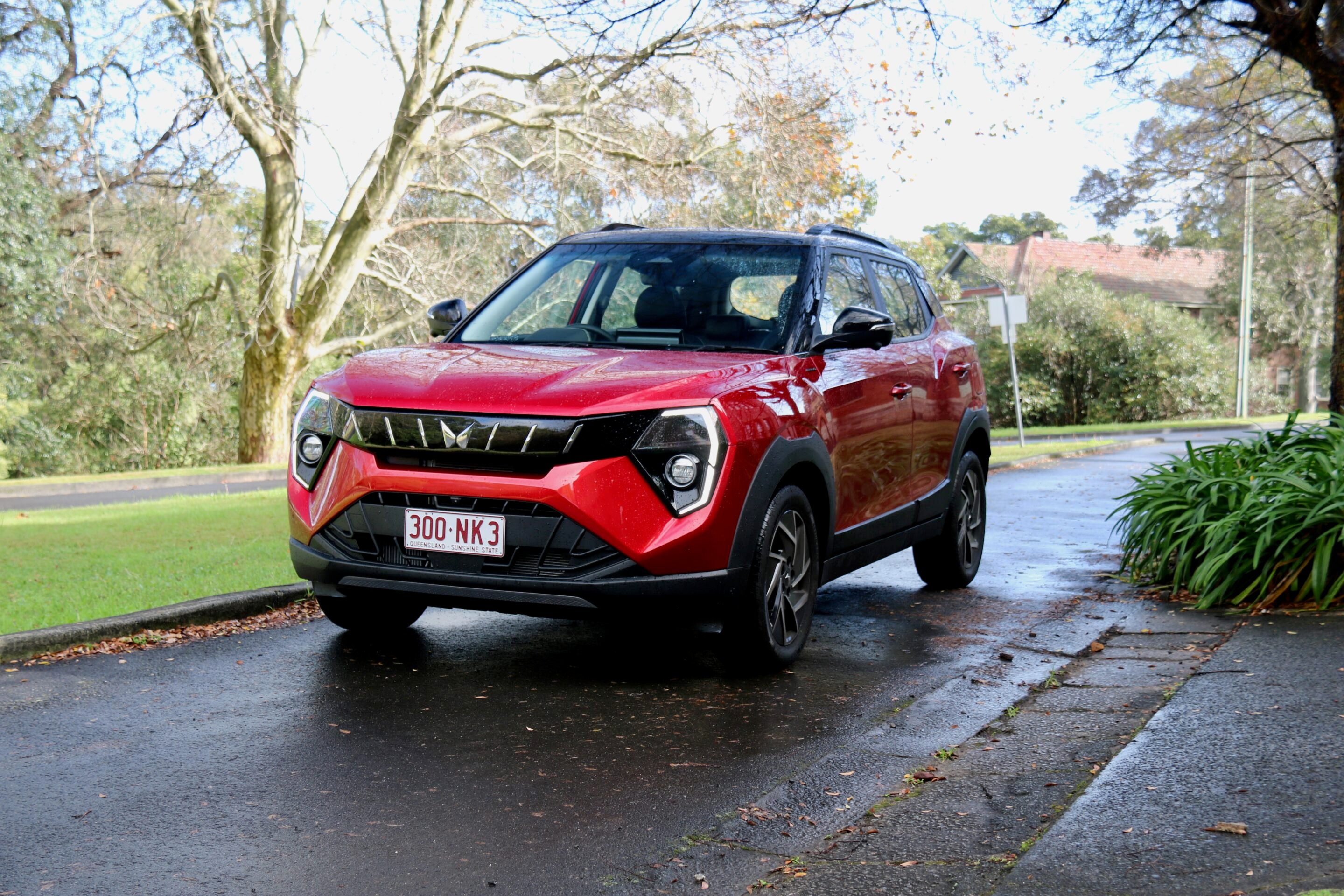
Price: From $23,990 driveaway
Drivetrain: 1.2-litre turbocharged three-cylinder petrol, six-speed auto
Outputs: 82kW/200Nm
Combined fuel economy: 6.5L/100km
Warranty: Seven-year/unlimited km
Five-year service cost: $1595 ($319 per year)
| Driving | |
| Interior | |
| Practicality | |
| Overall value | |
Mahindra launched the XUV 3XO in Australia in 2025 and above all else, it delivered a really affordable option that we think will continue to win it a lot of fans locally. Pricing kicks off from $23,990 driveaway –the same pricepoint as the entry-level Tiggo 4 – and standard equipment on the entry-level AX5L is impressive.
Equipment highlights include 16-inch alloy wheels, keyless entry with push button start, dual-zone automatic climate control with rear air vents, a leather-wrapped steering wheel and gear knob,
automatic LED headlights, rain-sensing wipers, dual 10.25-inch displays, wireless Apple CarPlay and Android Auto, and safety equipment like autonomous emergency braking, lane keeping assistance, adaptive cruise control and traffic sign recognition. Even a sunroof is standard.
Jump up to the upper-spec AX7L and features like a 360-degree camera, a blind-spot camera, leatherette upholstery, a panoramic sunroof and a thumping (seriously, it’s excellent) Harman Kardon sound system. Yet, it’s only $26,990 driveaway. Adding further to the XUV 3XO’s impressive value is the brand’s seven-year/150,000km warranty and five years of servicing only costs $1595, or just $319 per year.
The XUV 3XO uses a turbocharged 1.2-litre three-cylinder engine, which makes 82kW/200Nm outputs and is mated to a six-speed automatic transmission as standard. It’s a grunty and characterful engine, with impressive refinement as well. The XUV 3XO drives well, too, its tight, nimble chassis delivering excellent ride quality that soaks up bad road surfaces.
Inside, the XUV 3XO isn’t the most modern or up to date, but it’s good quality, practical for its small size and well featured. The 10.25-inch touchscreen could be faster, but its graphics are sharp and it’s easy to use. The rear seat is impressively spacious for its size too, though its boot is quite small. In the XUV 3XO Mahindra delivers a good car that is practical, good to drive, well equipped and covered by a long warranty. For a lot of buyers, that will make it a winner.
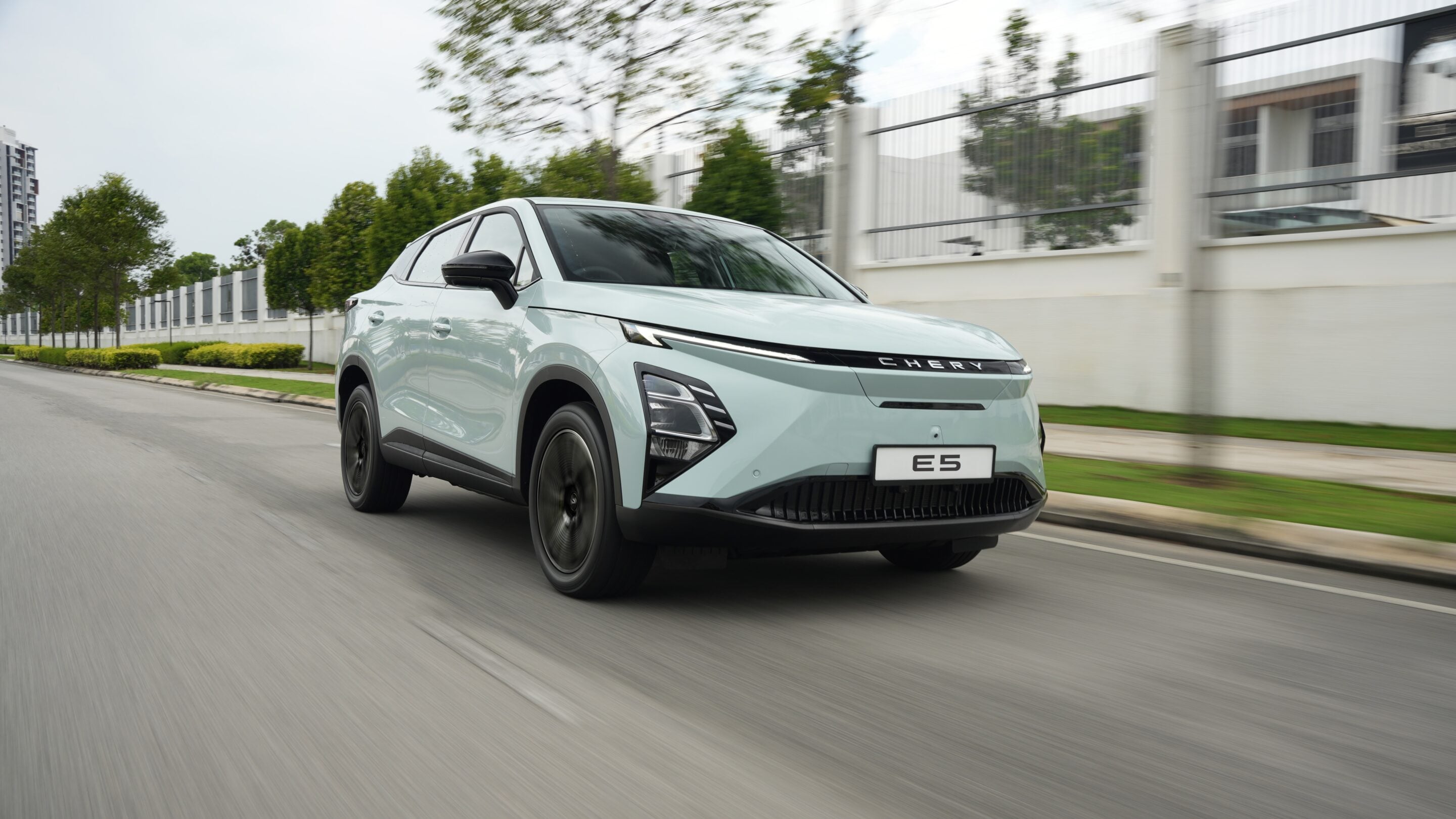
Price: From $37,990 driveaway
Drivetrain: Front-mounted single-motor, FWD, 58.9kWh battery
Outputs: 155kW/288Nm
Range (WLTP): 345km
Warranty: Seven-year/unlimited km
Five-year service cost: $1145 ($229 per year)
| Driving | |
| Interior | |
| Practicality | |
| Overall value | |
Formerly known as the Omoda E5 before Omoda became a separate brand in Australia, the Chery E5 is its smallest electric SUV in Australia and it’s a great option for those wanting an urban option for that type of vehicle. Its small dimensions make it easy to drive in traffic, its ride quality soaks up Australia’s poor quality roads with ease, and its ample grunt and instant torque makes darting through traffic easy.
Chery just rejigged the local E5 line-up and made the former top-spec Ultimate the only model available, but it’s now priced $3000 lower at $37,990 driveaway, making it great value for money.
Standard equipment is lengthy and includes a sunroof, synthetic leather upholstery, heated front and rear seats, dual 12.3-inch displays, wireless phone charging, a suite of safety features like adaptive cruise control and traffic jam plus – rarely for an electric vehicle – a full-size spare wheel.
Using a 58.9kWh LFP battery, the E5 offers a WLTP-rated range of 430km (505km on the more lenient NEDC cycle) and its battery can be charged at up to 130kW for a claimed 30 to 80 per cent charge time of 30 minutes. Powering the E5 is a front-mounted 155kW/288Nm electric motor with more than ample performance.
The interior of the E5 is attractive with its waterfall centre console and sharp dual 12.3-inch displays, while plenty of soft touch materials elevate the aesthetic. Front seat comfort is good, though extra driver’s seat adjustment like lumbar and under-thigh angle would make the driving position that much better. The E5 is spacious and four adults will fit fine, thanks to fine rear leg- and headroom, while the 300-litre boot is a good size (though its maximum capacity of 1079 litres isn’t huge). What’s more impressive is the aforementioned spare wheel, which most modern EVs don’t include.
Chery’s aftersales program is one of the best in the industry with a seven-year/unlimited km warranty covering the E5 and five years of servicing costs just $1145 or only $229 per year.
The Chery E5 is comfortable and drives well in urban conditions, where its suspension soaks up bumps well. Its quick, light steering makes tight streets easy to drive on. And while it could be more practical inside and its active safety systems are overzealous at higher speeds, it a solid value-for-money option.
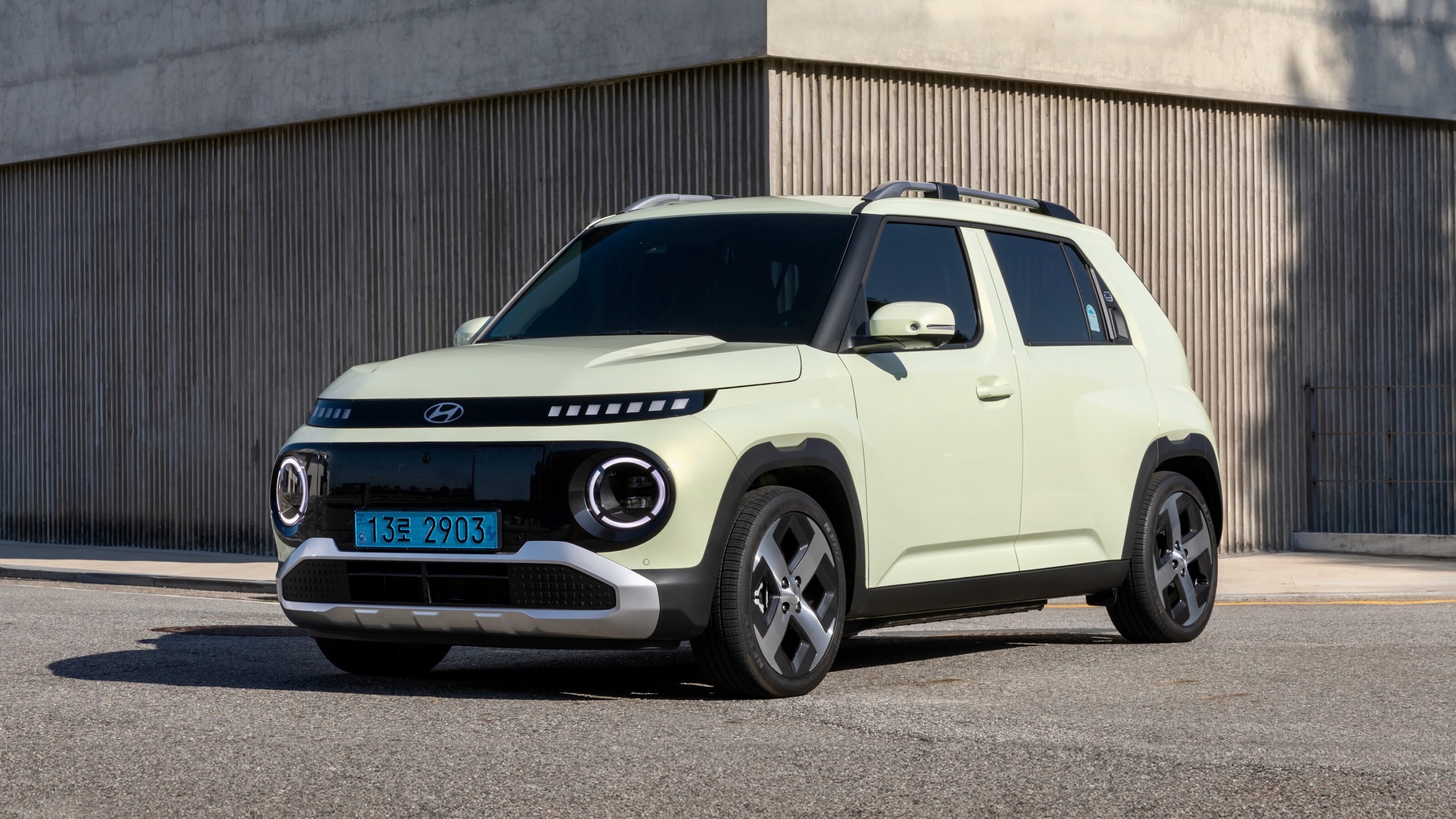
Price: From $39,000 plus on-road costs
Drivetrain: Front-mounted single-motor, FWD, 42kWh or 49kWh battery
Outputs: 71kW/142Nm (Standard Range) or 85kW147Nm (Extended Range)
Range (WLTP): 293km – 360km
Warranty: Seven-year/unlimited km
Five-year service cost: $1340 ($268 per year)
| Driving | |
| Interior | |
| Practicality | |
| Overall value | |
One of the cutest car releases of 2025 was the Hyundai Inster, which is the brand’s smallest electric SUV in Australia. Just look at it: those eyes, that funky boxy shape and cool details like a screwdriver pattern on the door panels. It’s clear that Hyundai let its designers let loose with the Inster and as a result, they created something really cool.
The Inster is actually based on the petrol-powered Casper sold in the South Korean market, but was extended in length to accommodate its battery and electric motor. It may be small from the outside, but it’s actually very well packaged.
There are two Inster models available in Australia: entry level and upper-spec and off-road themed Cross, with two battery sizes: a smaller 42kWh unit in the base model or a larger 49kWh version that’s available in both models. Prices start at $39,000 plus on-road costs for the entry-level model, and standard features include 15-inch alloy wheels, automatic LED exterior lighting with automatic wipers, keyless entry with push button start, automatic climate control, dual 10.25-inch screens and a lot of active safety features. But while it’s reasonably well equipped, it’s not cheap and top-spec models are priced at almost $50,000 once on-road costs are included.
The claimed WLTP range is between 293km and 360km, which wouldn’t be enough to tour Australia, but great for urban driving. A 71kW motor features with the smaller battery and a more powerful 85kW motor with the larger one, but even the lesser amount is more than enough grunt for city life. As with all EVs, it feels quicker in real life than its outputs suggest, and its darty chassis and tiny sizing make it perfect for urban driving. Having said that, its firm ride quality is less than ideal considering how bad our urban roads can be.
Inside the Inster is a surprisingly spacious for such a small car thanks to its excellent packaging. Strictly a four-seater, the Inster’s two rear seats slide and recline independently, opening up either rear seat space or the boot. Minimum space is a small 280 litres, though moving the seats forward expands that. With the rear seats folded, 1059 litres of space is on offer, which is huge for such a small car.
Hyundai covers the Inster with its five-year warranty, though that’s extended to seven years in total if serviced through a Hyundai dealership in that time. Five years of servicing costs $1340, or only $268 per year. Overall, the Hyundai Inster isn’t cheap and it is a bit firm to drive around town, but it is cool, very well packaged, practical, good to drive and did we mention it looks cool?
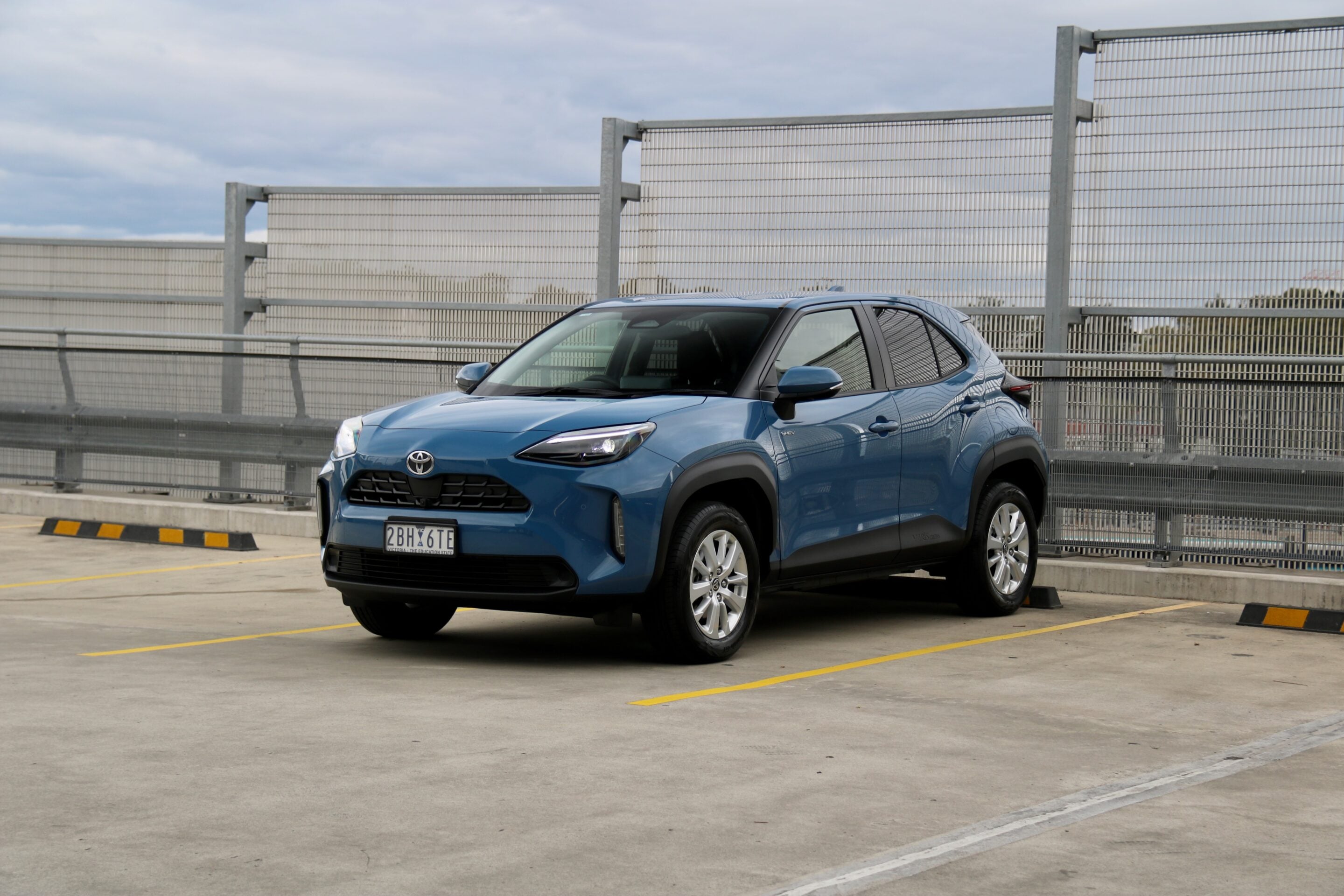
Price: From $31,790 plus on-road costs
Drivetrain: 1.5-litre three-cylinder hybrid, FWD or e-AWD
Outputs: 85kW
Combined fuel consumption: 3.8L/100km
Warranty: Five-year/unlimited km
Five-year service cost: $1250 ($250 per year)
| Driving | |
| Interior | |
| Practicality | |
| Overall value | |
Toyota offers three small SUVs in Australia and the Yaris Cross is the smallest – and best option for urban driving – of them all. Pricing starts at $31,790 plus on-road costs and there are four models on offer: entry-level GX, mid-spec GXL, sporty-looking GR Sport and top-spec Urban. We’d pick the $34,790 +ORC GXL as it adds a number of useful features to the GX and includes features like automatic LED lighting, automatic climate control, keyless entry and push button start, rear privacy glass and safety kit like a 360-degree camera, eight airbags, adaptive cruise control and adaptive lane guidance.
All Yaris Cross models use a 1.5-litre three-cylinder hybrid drivetrain making a combined power output of 85kW, and while Toyota doesn’t quote an equivalent torque figure, it’s got more than enough shove for city driving as its electric motor pitches in from zero. When it comes to ride and handling, the Yaris Cross is excellent. Its small-ish 16-inch alloy wheels with plenty of sidewall provide a great ride quality, while its quick steering rack offers fun handling.
While there has been a huge increase in electric vehicle sales recently thanks to those wanting to lessen costs and ditch fuel altogether, the Yaris Cross makes a great case for buying a hybrid instead – it’s rated at just 3.8L/100km on the combined cycle and, being a hybrid, doesn’t need to be charged with a plug as braking and coasting instead tops up the battery. Importantly, unlike some cars, the Yaris Cross will easily do close to its fuel consumption claim.
Inside, the Yaris Cross is starting to feel a bit dated thanks to its basic materials, including plenty of hard plastics and blank buttons making you wonder what features Australia missed out on. A quick 8.0-inch touchscreen is standard with features like wireless smartphone mirroring and live services, and there are plenty of storage spaces in the front cabin, though rear seat room is tight for taller adults. The 390-litre boot is large, though reduces to 314 litres if equipped with the optional all-wheel drive system – we wouldn’t bother as the Yaris Cross is at home in the city.
Toyota covers the Yaris Cross with a five-year/unlimited km warranty, but servicing it at a Toyota dealer will extend the battery warranty up to 10 years, which is excellent coverage. Its service pricing is also cheap at $250 per year, though roadside assistance is an extra cost item. For city drivers, Yaris Cross is a winning urban small SUV thanks to its efficient hybrid drivetrain, nimble chassis, small size, good practicality and long list of features.
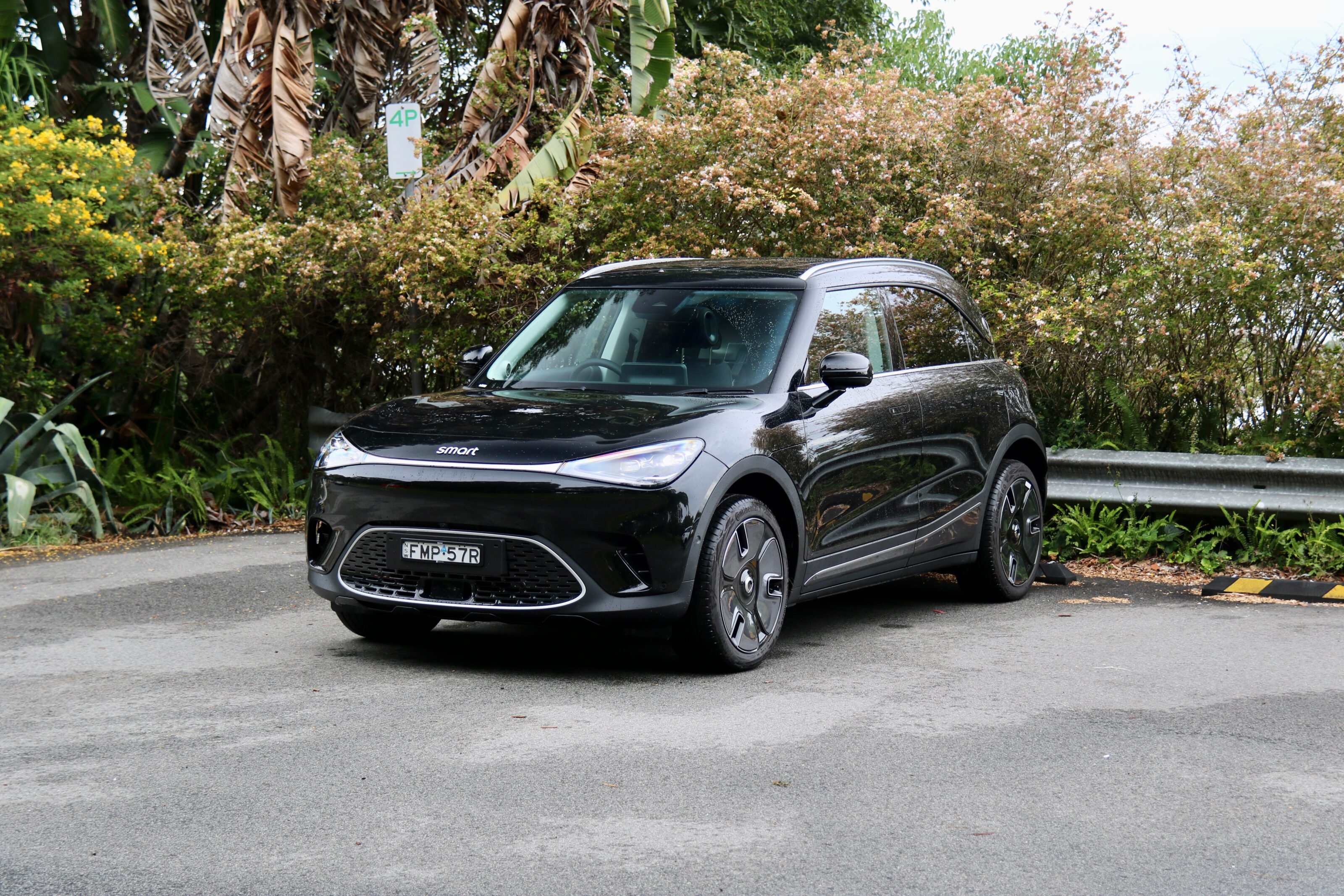
Price: From $54,900 plus on-road costs
Drivetrain: Front-mounted single-motor or dual-motor, RWD or AWD, 66kWh battery
Outputs: 200kW/343Nm or 315kW/543Nm
Range (WLTP): 400km – 440km
Warranty: Five-year/150,000km
Five-year service cost: $1998 – $2208 ($399 to $442 per year)
| Driving | |
| Interior | |
| Practicality | |
| Overall value | |
Famous for its tiny city cars from the late 1990s (2003 in Australia), now-part-Chinese-owned brand Smart returned to local shores in 2024 with two models: the #1 and #3 (yes, the hashtag is part of the name). Both are electric small SUVs and in the urban section, we’re focusing on the smaller #1. It uses the same platform as the Volvo EX30, and also uses the same 66kWh battery for a claimed WLTP range of up to 440km.
Pricing starts at $54,900 plus on-road costs, and three models are offered: the entry-level Pro+, mid-spec Premium and top-spec Brabus (yes, as in Brabus the famous tuner). All three are quite well equipped, with 19-inch alloy wheels, LED lighting, a panoramic glass roof, an electric tailgate, heated electric front seats, synthetic leather trim and a 12.8-inch touchscreen with live services.
The Premium adds real leather trim and a Beats sound system, while the Brabus adds sportier exterior and interior styling and an extra motor at the front for 315kW of total power.
On the road, the Smart #1 drives really well and is at home in urban conditions. Thanks to its funky tallboy body with big windows and mirrors, visibility is excellent, and its quick steering and small position on the road makes it easy to drive. Yet even the base Pro+ is surprisingly powerful making 200kW, which is enough grunt to see it hit 100km/h in 6.7 seconds.
The #1’s cabin is modern, good quality and practical. The 12.8-inch touchscreen is a bit confusing to use at first – activating the live services helps unlock its full functionality, thanks to its menu structure – but screen quality is sharp and the fox gives it character compared to more austere rivals. Material quality is good, with synthetic leather trim around, while thanks again to the tallboy body, rear headroom is awesome. The 313-litre boot isn’t huge, however, but the second layer below the floor unlocks an extra 70 litres of space.
Addressing past criticism, Smart has reduced the servicing costs for the #1 and it now costs between $1998 and $2208 to service over the first five years/100,000km – a reduction of up to $912, and far more competitive. A five-year/150,000km remains, and still looks a bit short in the industry. But overall, the Smart #1 is a great choice for an urban small SUV thanks to its small size, fun to drive nature, good interior quality and long list of standard features.
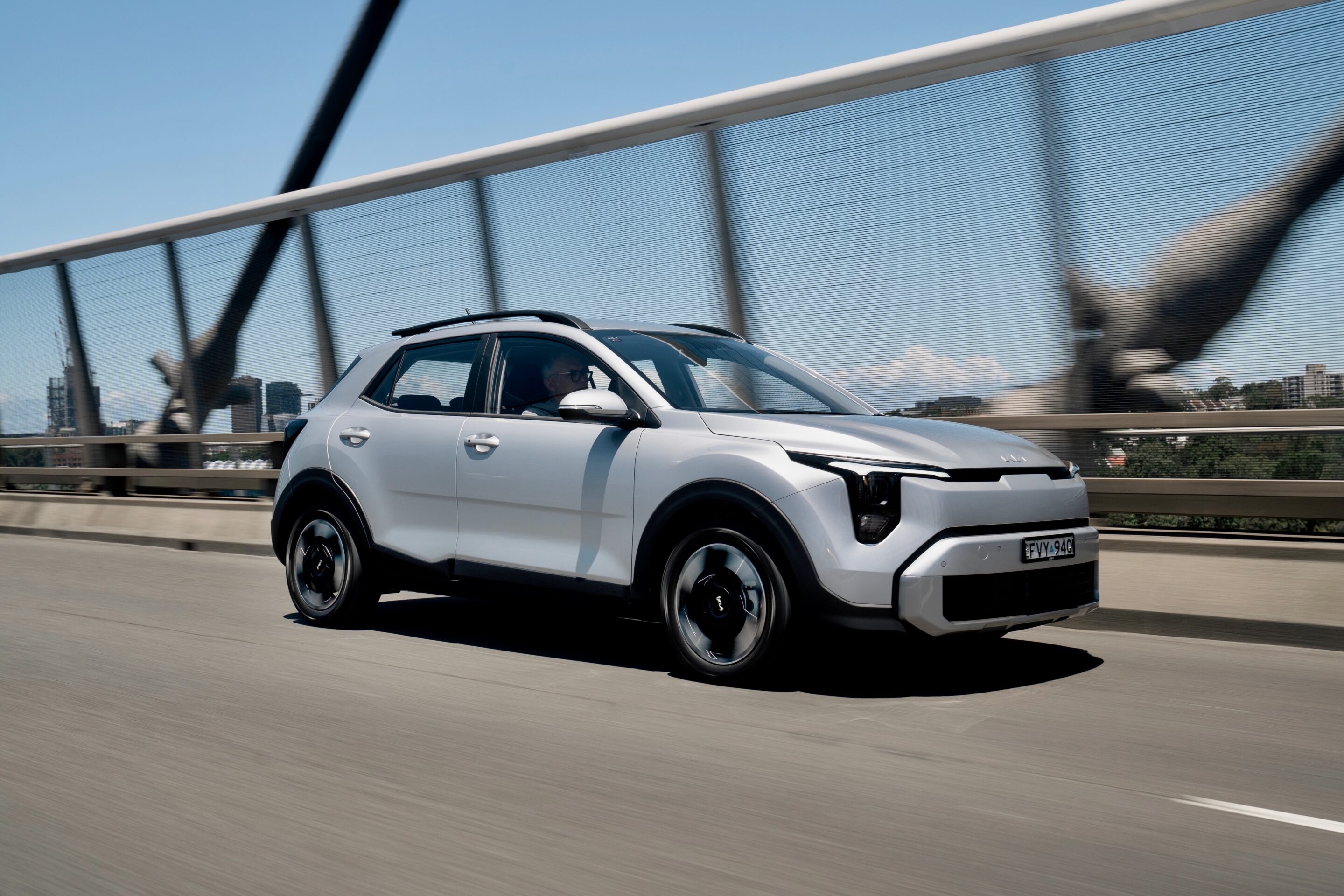
Price: From $28,180 driveaway
Drivetrain: 1.0-litre three-cylinder turbocharged mild-hybrid, seven-speed dual-clutch, FWD
Outputs: 88kW/172Nm
Combined fuel consumption: 5.0L/100km
Warranty: Seven-year/unlimited km
Five-year service cost: $2464 ($493 per year)
| Driving | |
| Interior | |
| Practicality | |
| Overall value | |
Having received a big mid-life in late 2025, the Kia Stonic is now a far more serious option in the small SUV segment. Pricing starts at $28,190 plus on-road costs, which is a lot more expensive than it used to be before it was facelifted, but with new styling and a new dashboard, a new mild-hybrid drivetrain and more standard equipment across the range, we think the price rise is worth it.
Three models are offered in the Australian Stonic range: entry-level S, mid-spec Sport and top-spec GT-Line, and all three are well equipped. The S offers a 16-inch wheels, automatic lighting, an 8.0-inch touchscreen with wireless smartphone mirroring, keyless entry with push button start and important safety features like autonomous emergency assist and adaptive lane guidance.
The Sport adds larger 17-inch wheels, a 12.3-inch touchscreen (which oddly reverts to wired smartphone mirroring), automatic climate control and live services, with the top-spec GT-Line adding a sunroof, LED headlights, a wireless phone charger, heated front seats and a heated steering wheel. Driveaway, you’re looking at over $38,000 for the GT-Line, but we think it’s good value for money.
The only drivetrain available on the Australian Stonic range is a 1.0-litre turbocharged three-cylinder petrol engine with new mild-hybrid assistance, making 88kW/172Nm outputs and mated to a seven-speed dual-clutch transmission as standard. It’s more refined and quicker than the former 1.4-litre naturally aspirated engine that used to feature in S and Sport variants of the Stonic, and it’s far more fuel efficient too, rated at 5.0L/100km. Like all new Kia models, the Stonic features a unique suspension and steering tune for Australian roads which is noticeable as it handles and rides very well. Around town, its visibility is excellent and it’s quite darty, too.
Inside, the Stonic’s mid-life update brought a new dashboard that follows more expensive Kia models, more storage thanks to a new centre console layout, upgraded materials and more modern displays. The rear seat and boot didn’t change much – aside from removing the former spare wheel and adding a new boot floor so that there’s a seamless connection to the rear seat base – but it’s still a roomy and practical small SUV.
The Stonic is covered by Kia’s seven-year/unlimited km warranty, with five years of servicing priced at an expensive $2464 and with short 10,000km service intervals. Aside from that, the updated Kia Stonic is a really solid choice for a small SUV as it’s well equipped, practical, drives well and is good value for money.
Looking to get into a brand-new small SUV? Our stories below will guide you to the model that best suits your needs:
Lamborghini has taken the cover off its latest bedroom wall poster creation, the Fenomeno Roadster. Based on the Fenomeno coupe revealed last year but featuring an extensive redesign to turn it topless, it’s understood just 15 units of the Fenomeno Roadster will be built and one of those is destined for Australia.
Using a 794kW 6.5-litre V12 plug-in hybrid drivetrain, the Fenomeno will hit a top speed of over 340km/h and its price tag is reportedly in excess of a cool $8 million.
Featuring the same carbon fibre monocoque chassis as the Fenomeno coupe, the roadster’s induction system and engine cover had to be redesigned for better cooling to the engine. Likely because of that, it actually has no roof at all, not even an emergency cloth top. A longer windscreen rail to channel air to the engine and a new pair of roll-over hoops also differ from the coupe.
According to Lamborghini, those changes have boosted the Fenomeno Roadster’s downforce by 30 per cent without sacrificing any cooling performance.
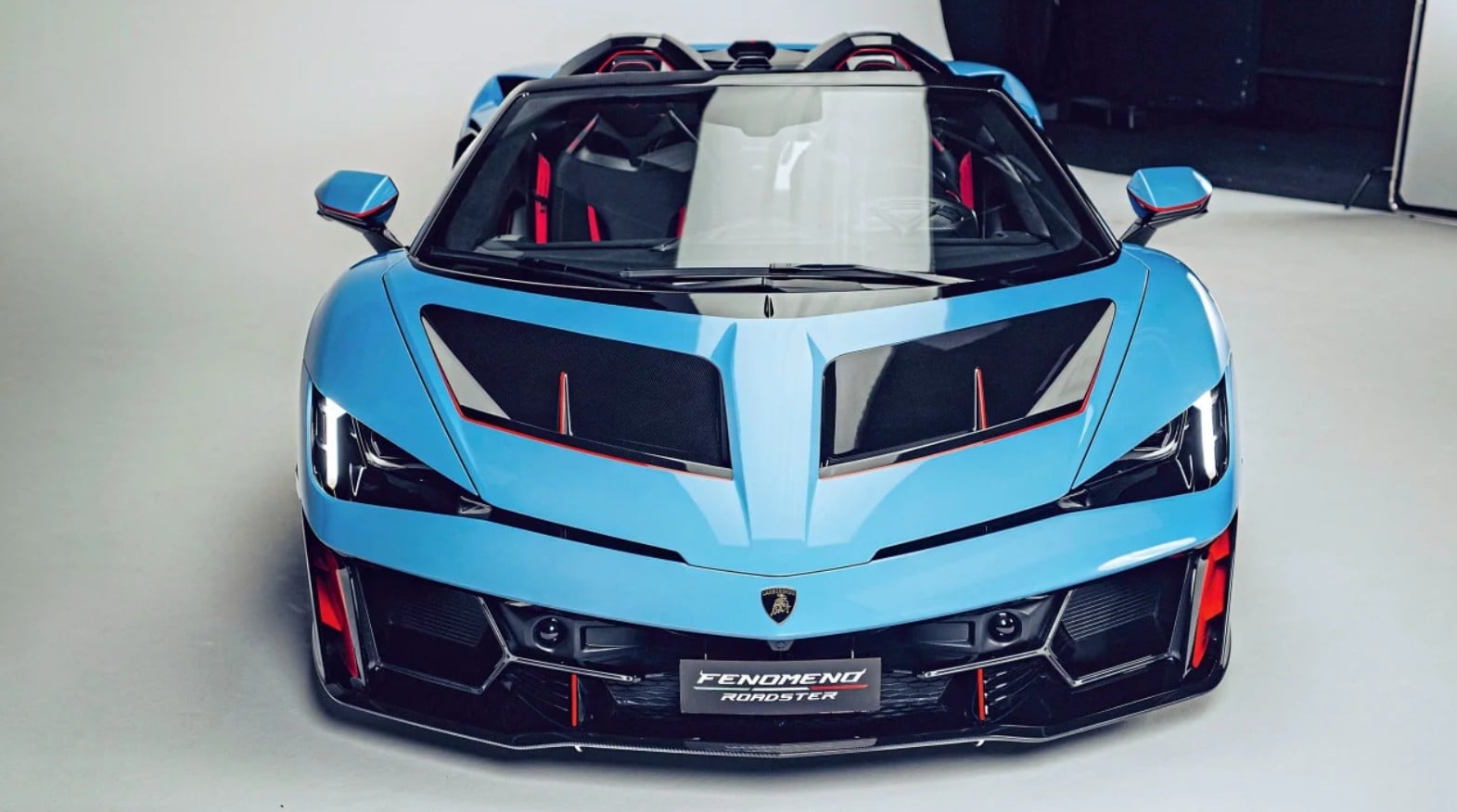
Like the Fenomeno coupe, the Roadster is based on the Revuelto hypercar and features the same 6.5-litre V12 hybrid plug-in drivetrain with three electric motors making huge 794kW and 1075Nm outputs. An eight-speed dual-clutch transmission is standard sending grunt to all four wheels, and the 0-100km/h dash is completed in just 2.4 seconds and 0-200km/h in just 6.8 seconds.
Yet, thanks to a 7.4kWh battery, the Fenomeno Roadster can cover up to 20km on electric power.
Keeping the Fenomeno Roadster’s weight as low as possible was the aim for the engineers, and at a reasonable 1780kg, it only weighs 8kg more than a Revuelto. Part of its weight economy is accounted for by the extensive use of carbon fibre, including a new carbon fibre wheel design that saves 3kg at each corner and the brand’s new ‘CCM-R’ carbon-ceramic brakes.
Under the body are a set of manually-adjustable dampers, which allow the suspension to be tailored to each driver’s taste. While the braking and steering is carried over from the coupe, Bridgestone has developed a bespoke set of tyres specifically for the roofless car’s 21 and 22-inch staggered wheel sizes.
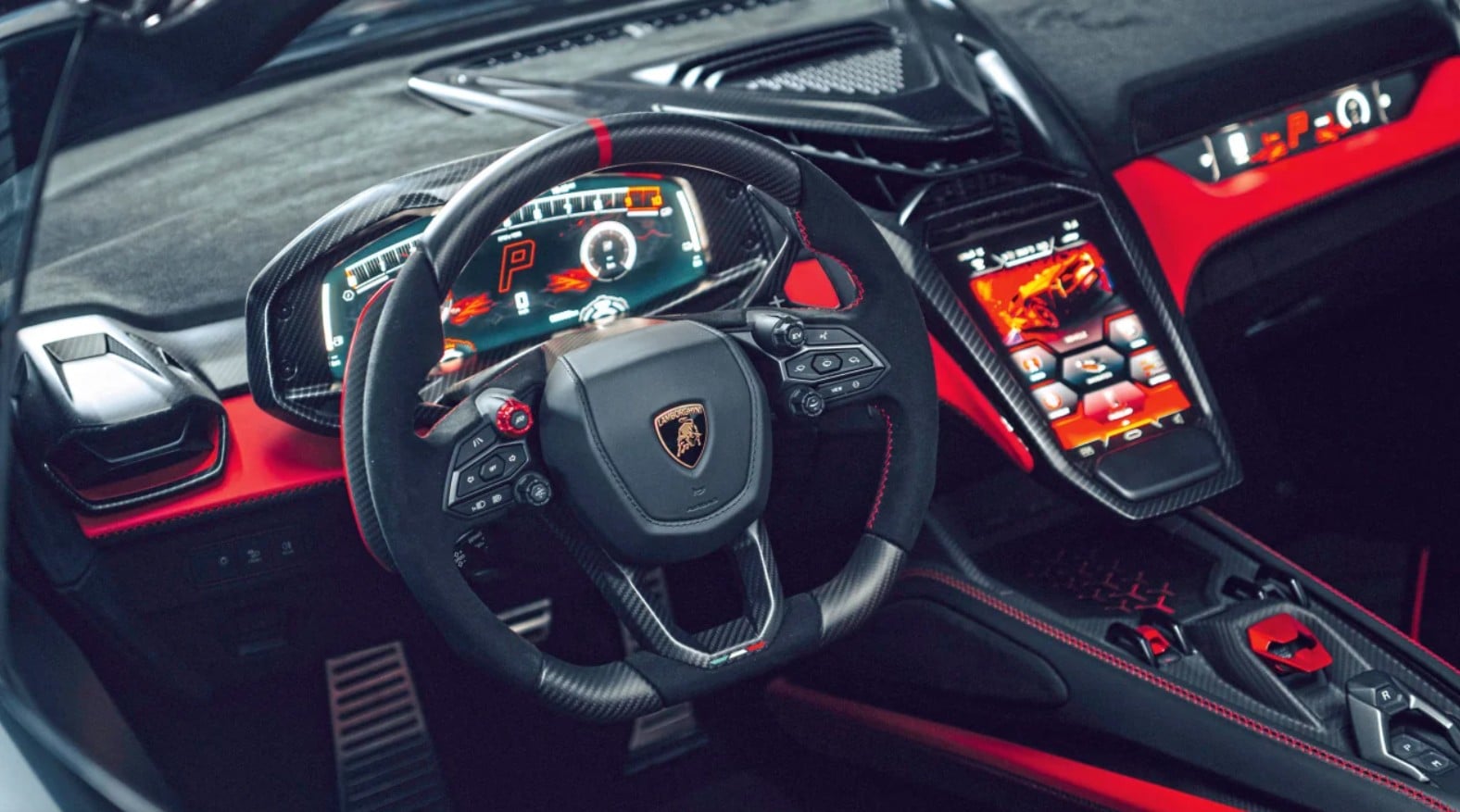
The interior of the Fenomeno Roadster is largely identical to the coupe, though the brand says that a further range of interior colour options will be available. Each Fenomeno Roadster will be specified to its owner’s requirements, and a naked carbon body is reportedly on the options list.
The first Lamborghini Fenomeno Roadsters will start deliveries in Europe later this year.
The updated Ariya has been announced for a UK release, following its introduction in Japan earlier this year. In the UK, the Ariya is one of five EVs Nissan offers, alongside the Micra, Leaf, and a pair of vans, the Townstar and Interstar.
In Australia, the Ariya is holding the fort as the only EV in Nissan’s local line-up.
Headlining the changes to the 2026 Ariya is a redesigned front end that swaps the black-pannel V-motion grille frame of the current Ariya for a simpler design with new headlights and running lights, and a closed-off front face.
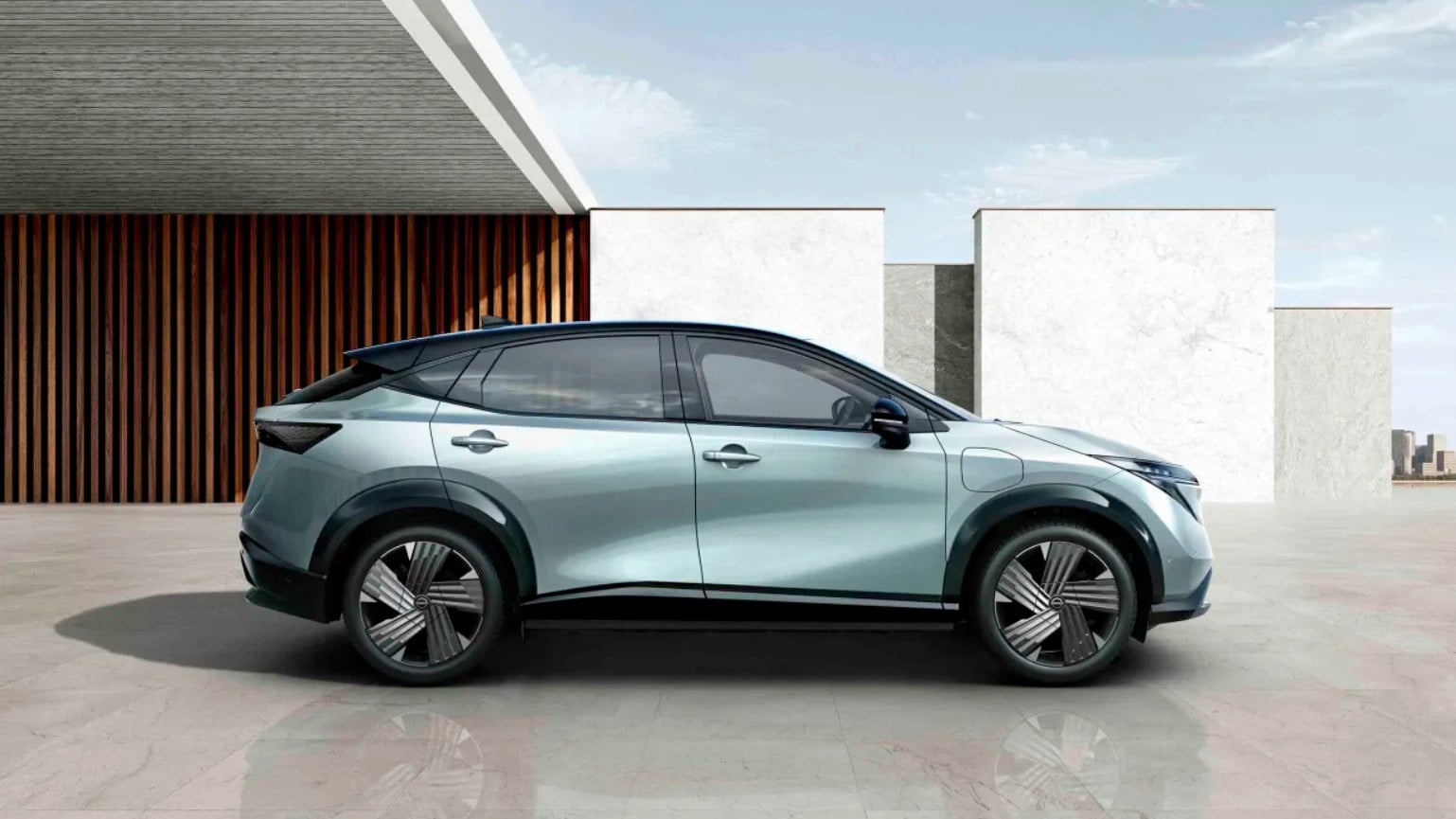
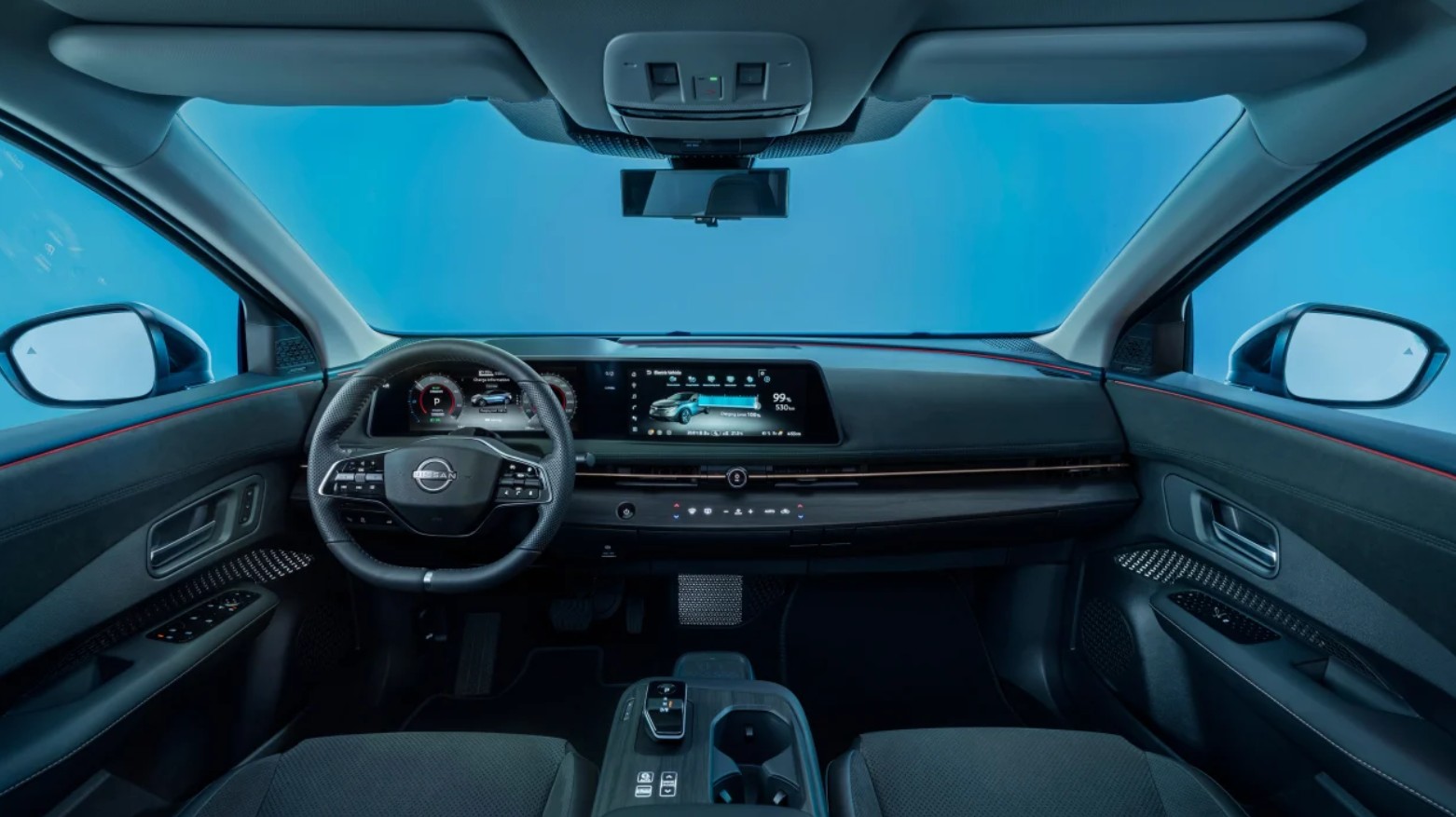
A new Plasma Green paint colour and new alloy wheel designs round out the external styling revisions. Inside the 2026 Ariya gains an updated Nissan Connect infotainment system with Google built-in compatibility, a redesigned centre console, and a 15-watt wireless phone charger.
The UK line-up has been trimmed to just two models, down from three, with the Engage+ featuring a 63kWh battery and Advance offering a larger 87kWh battery. Battery capacities are carried over from the pre-update version, and previous all-wheel-drive dual-motor versions have not yet been announced for the UK market.
The new trim levels replace the UK’s previous Advance, Evolve and Nismo grades. Maximum DC charging at 130kW remains, while UK cars offer AC charging at up to 11kW, unlike Australia’s 22kW AC maximum. Official WLTP range claims are yet to be published.
Pricing starts from £37,000 (A$69,600) for the Ariya Engage+ or $£43,425 ($81,685) for the Advance, around £500 (A$940) less than the pre-update versions in the UK. Australian pricing for the current Ariya ranges from $55,840 to $71,840 before on-road costs.
The Nissan Ariya has sold 104 units in Australia to the end of April 2026, 53 of which were in the month of April alone, spurred on by a $53,990 drive-away deal. Year to date, the Ariya has been outsold by EV rivals like the BYD Sealion 7 (6248 units), Geely EX5 (2639), Hyundai Elexio (446), Kia EV5 (1942), Subaru Solterra (324), Tesla Model Y (6719), Toyota bZ4X (1323), and Zeekr 7X (2698).
A Nissan Australia spokesperson told WhichCar, “There are currently no immediate plans to introduce the facelifted Ariya to Australia, and Nissan will continue to offer the current Australian-specification Ariya locally.”
“The Ariya remains an important part of Nissan’s electrification strategy in Australia. There is currently ample availability of Ariya vehicles across our dealer network nationally, and customers interested in purchasing an Ariya can readily secure one via their local dealer.”
Electric small SUVs have moved from niche alternatives to mainstream family transport, combining longer driving ranges, faster charging and increasingly polished road manners. In 2026, the category spans affordable city-focused EVs through to premium compact crossovers, giving buyers more choice than ever before. The result is one of the most competitive segments on the market, where efficiency, technology and everyday practicality all matter equally.
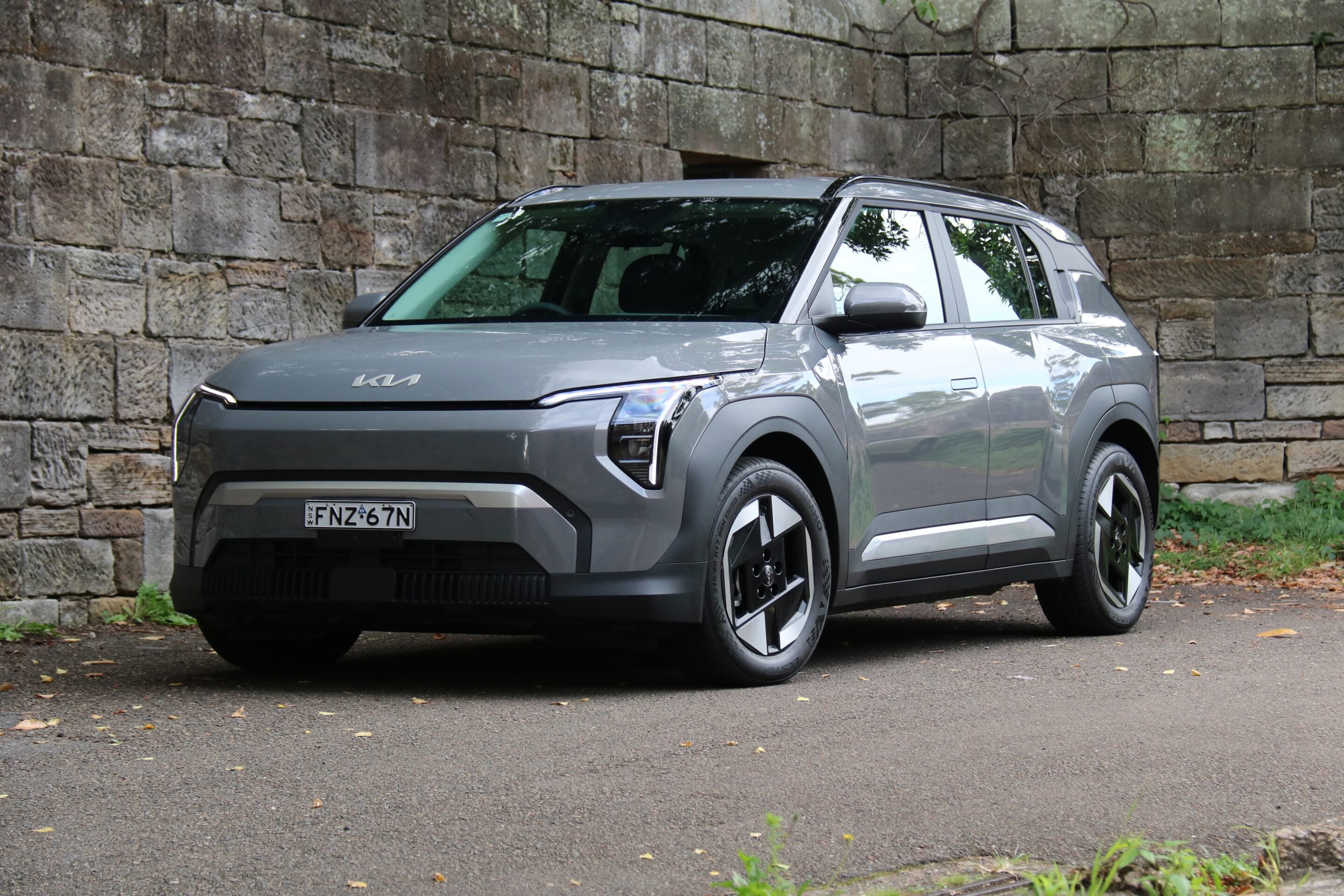
Price: From $46,990 driveaway
Drivetrain: Single-motor electric, 58.3kWh or 81.4kWh batteries
Outputs: 150kW/283Nm
Range (WLTP): 436km (Standard Range) – 604km (Long Range)
Warranty: Seven-year/unlimited km
Five-year service cost: $1308 ($261 per year)
| Driving | |
| Interior | |
| Practicality | |
| Overall value | |
Wheels thinks the EV3 – the smallest and cheapest electric vehicle that Kia currently sells in Australia – is the best electric option in this category in 2026. That decision is made based on its excellent practicality, a rewarding driving experience and a very solid list of standard features. Pricing starts at $46,990 driveaway, which is more expensive than something like the BYD Atto 2, but it does offer more range than the BYD thanks to its 58.3kWh battery. If you want more range, a larger battery is also available at additional cost.
Standard equipment on the entry-level Air includes 16-inch alloy wheels, dual-zone automatic climate control with rear vents, dual 12.3-inch screens, wireless Apple CarPlay and Android Auto, a wireless phone charger, keyless entry with push button start, a synthetic leather steering wheel, cloth upholstery and a long list of safety features like a central airbag, autonomous emergency braking, adaptive cruise control, adaptive lane guidance and blind-spot monitoring with rear cross-traffic alert.
Annoyingly, buyers wanting more features must spend a lot more money – the mid-spec Earth asks more than $60,000 including on-road costs, but it’s the cheapest way to get features like an electric driver seat adjustment, heated and ventilated front seats and synthetic leather trim. The $70k GT-Line further adds a sunroof, larger wheels, Harman Kardon audio, electric front passenger seat adjustment and a head-up display. Disappointingly, no EV3 offers a 360-degree camera in Australia.
The EV3’s cabin uses its brand’s latest design theme inside, which may be too minimalist for some. A 12.3-inch touchscreen is located in the centre of the dashboard, which is well featured and quick to use, while the 5.0-inch touch panel next to it controls the climate, though it can be obscured by the steering wheel. Thankfully, there are a reasonable selection of hard buttons throughout the cabin, including a second set of climate buttons. The rear seat of the EV3 will easily accommodate two adults, while the 460-litre boot is a great size too.
All EV3 models in Australia use a front-mounted 150kW/283Nm electric motor, which provides more than ample performance. Charging speeds are also reasonable, at up to 100kW in the Standard Range and 130kW in the Long Range models, with a 10-80 per cent charge taking around half an hour at that speed. The EV3’s driving experience stands out in this segment, giving the driver a planted feeling, excellent suspension tuning, steering with actual weighting, and a darty and reasonably fun chassis.
The Kia EV3 is a great electric small SUV that deserves attention. Sure, it’s more expensive to buy and some Chinese rivals may shade it on equipment levels, but it wins back value points with its excellent driving dynamics, spacious cabin, large boot, healthy charging speeds for the segment and good efficiency and range as well.
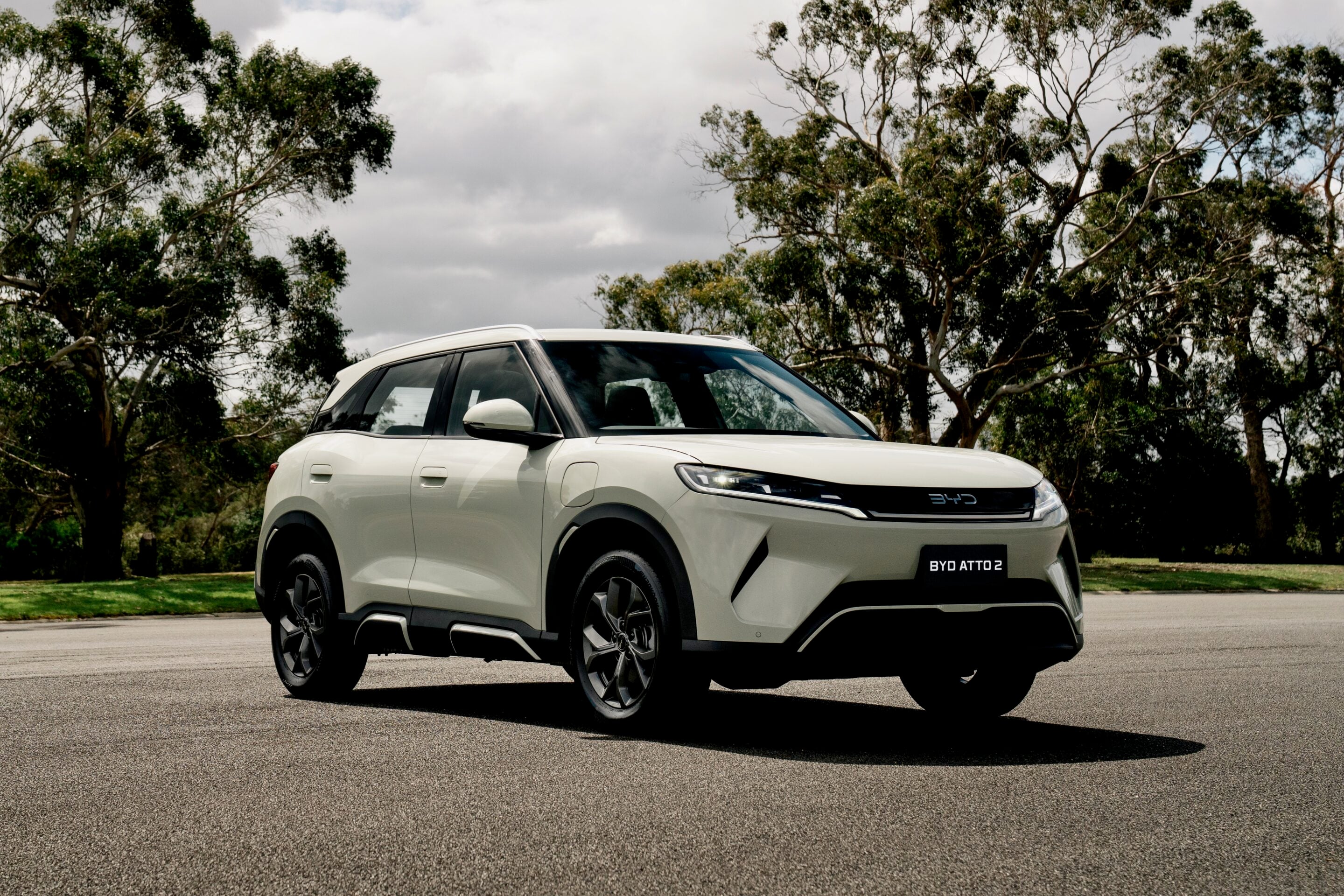
Price: From $31,990 plus on-road costs
Drivetrain: Single-motor electric, 51.1kWh battery
Outputs: 130kW/290Nm
Range (WLTP): 345km
Warranty: Six-year/150,000km
Five-year service cost: $1430 ($286 per year)
| Driving | |
| Interior | |
| Practicality | |
| Overall value | |
BYD surprised in late 2025 by offering not only Australia’s cheapest EV – the $23,990 +ORC Atto 1 – but also Australia’s cheapest electric SUV: The $31,990 +ORC Atto 2. That low starting price won’t only get you a lot of car, but it’s also quite well equipped in entry-level Dynamic form, with features including 16-inch alloy wheels, automatic exterior lighting and wipers, synthetic leather upholstery, automatic climate control with rear air vents, a 10.1-inch touchscreen with wireless smartphone connectivity and over-the-air updates, a heat pump and a long list of safety kit.
Above the Dynamic sits the $35,990 +ORC Premium, and that adds a lot more features: larger 17-inch wheels, roof rails, a panoramic sunroof, auto-folding mirrors, electric front seat adjustment with heating and ventilation, a larger 12.8-inch touchscreen and a wireless phone charger. At around $40,000 including on-road costs, the Atto 2 Premium is very well equipped, and both models are excellent value.
The cabin of the Atto 2 is its strongest attribute as not only is it spacious, but it’s also good quality, comfortable and relatively easy to use. The entry-level Dynamic features a 10.1-inch touchscreen, which is well featured and accessible, though its small icons make interacting with it more difficult than necessary. Storage is impressive up front, as is seat comfort, and both the rear seat and boot are larger than you’d expect.
On the road, the Atto 2 isn’t as impressive as a Kia EV3, but it is still more than comfortable enough for city use. A 130kW/290Nm front electric motor provides propulsion, which is more than enough grunt for even highway use, and the 51.3kWh battery gives a WLTP-rated range of 345km, which is more than enough for those doing primarily city driving. A peak charge speed of 82kW allows for a claimed 10-80 per cent charge time of 39 minutes, which could be quicker.
The BYD Atto 2 shines as Australia’s cheapest electric small SUV thanks to its low opening price, long list of standard features, comfortable and practical cabin, and reasonably long six-year/150,000km warranty. It could be better to drive and its charge speed is slow compared to some rivals, but if you’re wanting a cheap, practical small SUV that happens to be electric, it provides excellent value for money.
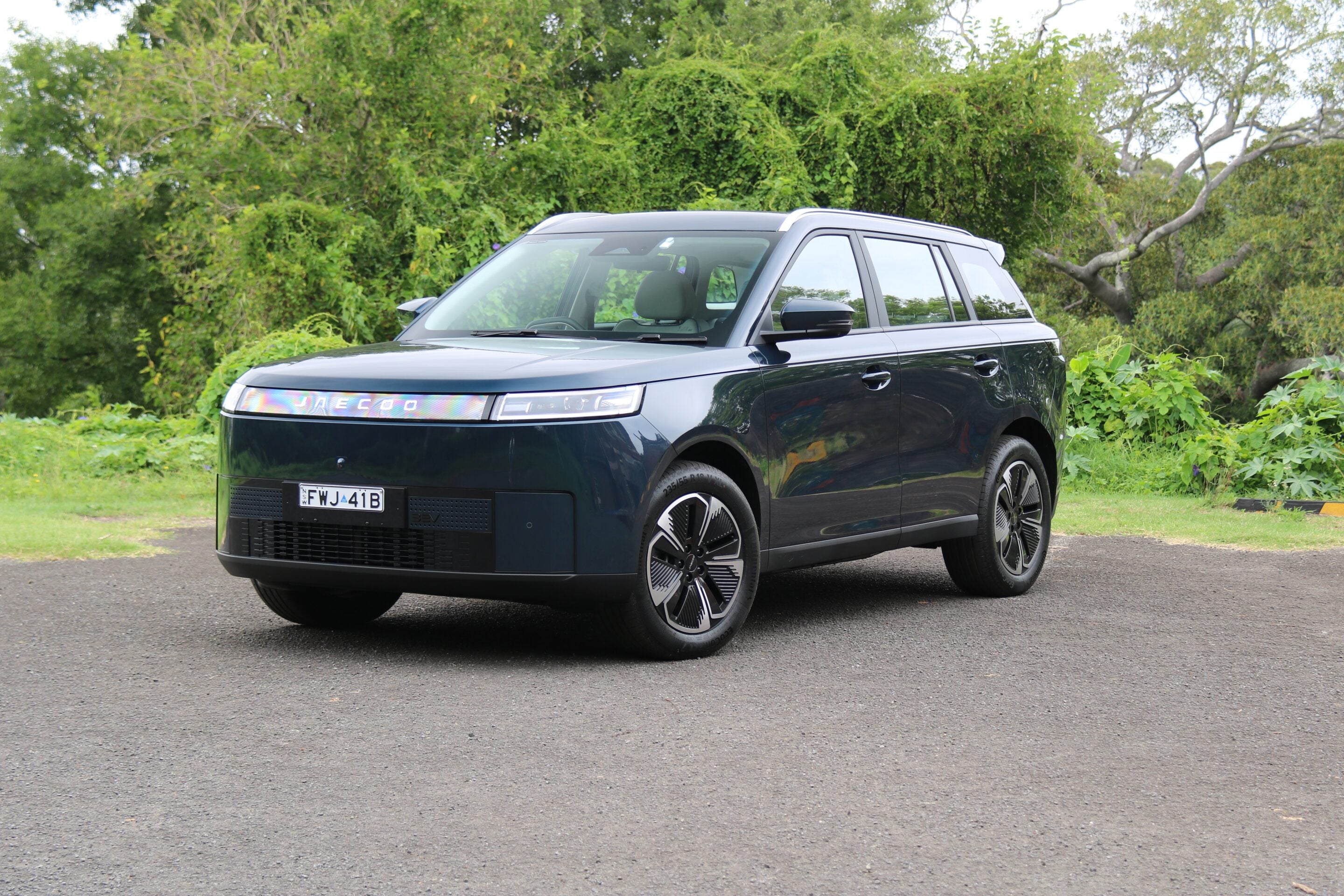
Price: From $36,990 driveaway
Drivetrains: Single-motor electric, 58.9kWh battery
Outputs: 155kW/288Nm
Electric range (WLTP): 402km
Warranty: Eight-year/unlimited km
Five-year service cost: $915 ($183 per year)
| Driving | |
| Interior | |
| Practicality | |
| Overall value | |
Jaecoo’s smallest offering, the J5 small SUV, launched locally in electric form in late 2025 to much fanfare. It’s well priced at $36,990 driveway, surprisingly practical inside, very well equipped and uses a 58.9kWh battery for a healthy 402km of claimed WLTP range. Considering its Range Rover-like styling, it’s not difficult to see why Jaecoo’s initial 3000 unit allocation is already sold out.
Only the upper-spec Summit model is available in Australia for now and it’s very well equipped, including features like a panoramic glass roof, electric tailgate, dual-zone automatic climate control, synthetic leather upholstery, electric front seats with heating and ventilation, and a rear central armrest with cupholders are added. A loaded electric small SUV for under $40k on the road? Not bad at all, especially considering that it’s covered by one of the longest warranties on the new car market.
It must be said that the J5’s driving experience could be improved. We’ve not driven the yet-to-be-launched petrol car but the EV’s soft suspension and light steering make the driver feel disconnected from the car. However, it’s still comfortable enough for everyday life and while the active safety systems could use a bit more refinement, they have come a long way since Chery – Jaecoo’s parent brand – re-launched locally.
The EV provides ample grunt at 155kW, and its 58.9kWh battery provides a reasonable 402km of WLTP range. For replenishing that range, the J5 EV can be recharged at up to 130kW for a 30 to 80 per cent charge in a claimed 28 minutes.
The cabin of the J5 is good quality for the money, quite practical and comfortable too. We wish that the huge 13.2-inch touchscreen featured more shortcut buttons to aid usage, but the system is quick to use and screen quality is impressive. The rear seat can handle two taller adults easily, while the 384-litre boot is large for its size as well. For now, the Jaecoo J5 will need to overcome a lack of name recognition among Australian buyers but we think it has potential to sell well given its value proposition, spacious interior, equipment levels and long warranty.
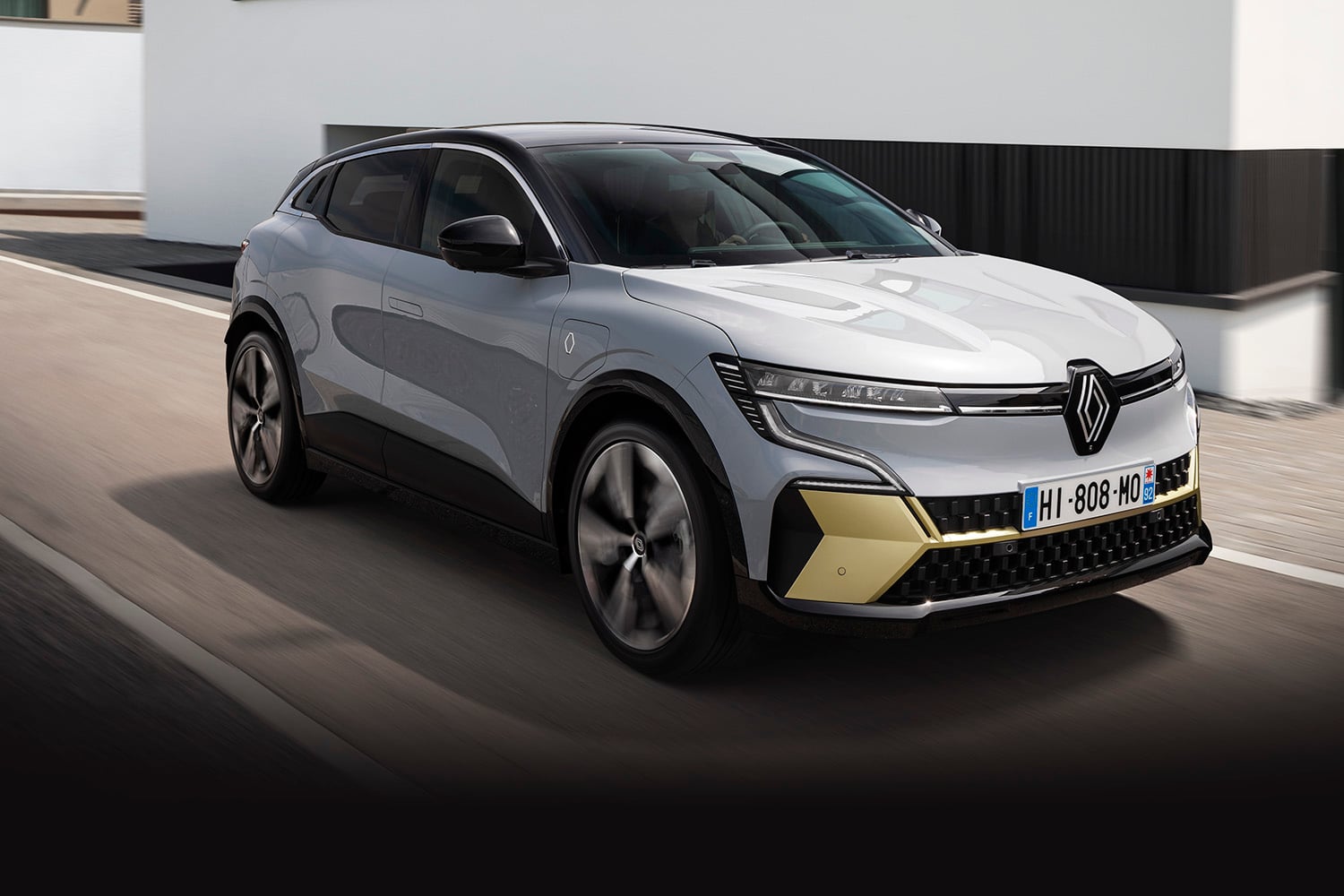
Price: From $49,990 driveaway
Drivetrain: Single-motor electric, FWD, 60kWh battery
Outputs: 160kW/300Nm
Range (WLTP): 454km
Warranty: Five-year/100,000km
Five-year service cost: $1625 ($325 per year)
| Driving | |
| Interior | |
| Practicality | |
| Overall value | |
For some, Renault is not a company that they’d expect a strong electric small SUV to come from, but the Megane E-Tech is one such product. It wasn’t the brand’s first electric vehicle to launch locally – that honour went to the Kangoo van and Zoe hatchback – but it was its first serious attempt at mainstream electric vehicles in Australia. It’s since launched the larger Scenic E-Tech as well, and both vehicles are well worth consideration.
Just one model of Megane E-Tech is currently offered locally, which is called the Techno and it’s currently available for $49,990 driveaway, placing it at the same price point as the Skoda Elroq 60 and only $4000 more expensive than the less plush/shorter range Hyundai Kona Electric. Standard features include huge 20-inch alloy wheels, LED exterior lighting, fabric and synthetic leather upholstery, heated front seats and steering wheel, a 9.0-inch infotainment system and a full active safety suite.
The sole Megane E-Tech model uses a 60kWh NMC battery for a claimed 454km of WLTP range, which is reasonable, and it can be recharged at up to 130kW for a claimed 15-80 per cent charge in as little as 35 minutes. A 160kW/300Nm motor drives the Megane E-Tech, providing more than ample performance. It drives well, with a nimble chassis and sweet steering.
Inside the Megane E-Tech is a funky and high quality cabin. Highlights include recycled cloth and synthetic leather upholstery that immediately looks warmer and more characterful than the masses of fake leather trim used in many other EVs, as well as a 9.0-inch touchscreen that features wireless smartphone mirroring, though – oddly enough, like the Elroq – Australia doesn’t receive the inbuilt sat-nav or live services that European models get, which could be annoying for some. The rear seat is large though, and the 440-litre boot is a good size too.
The Renault Megane E-Tech offers a solid option for an electric small SUV. It looks great, it’s well finished inside, drives well, is reasonably practical and did we mention its cool styling? It’s cheap to service as well, though annoyingly, there’s only model available in Australia for now and it misses out on some features available in Europe, like live services and sat-nav. But at under $50,000 driveaway, the Megane E-Tech is well worth consideration.
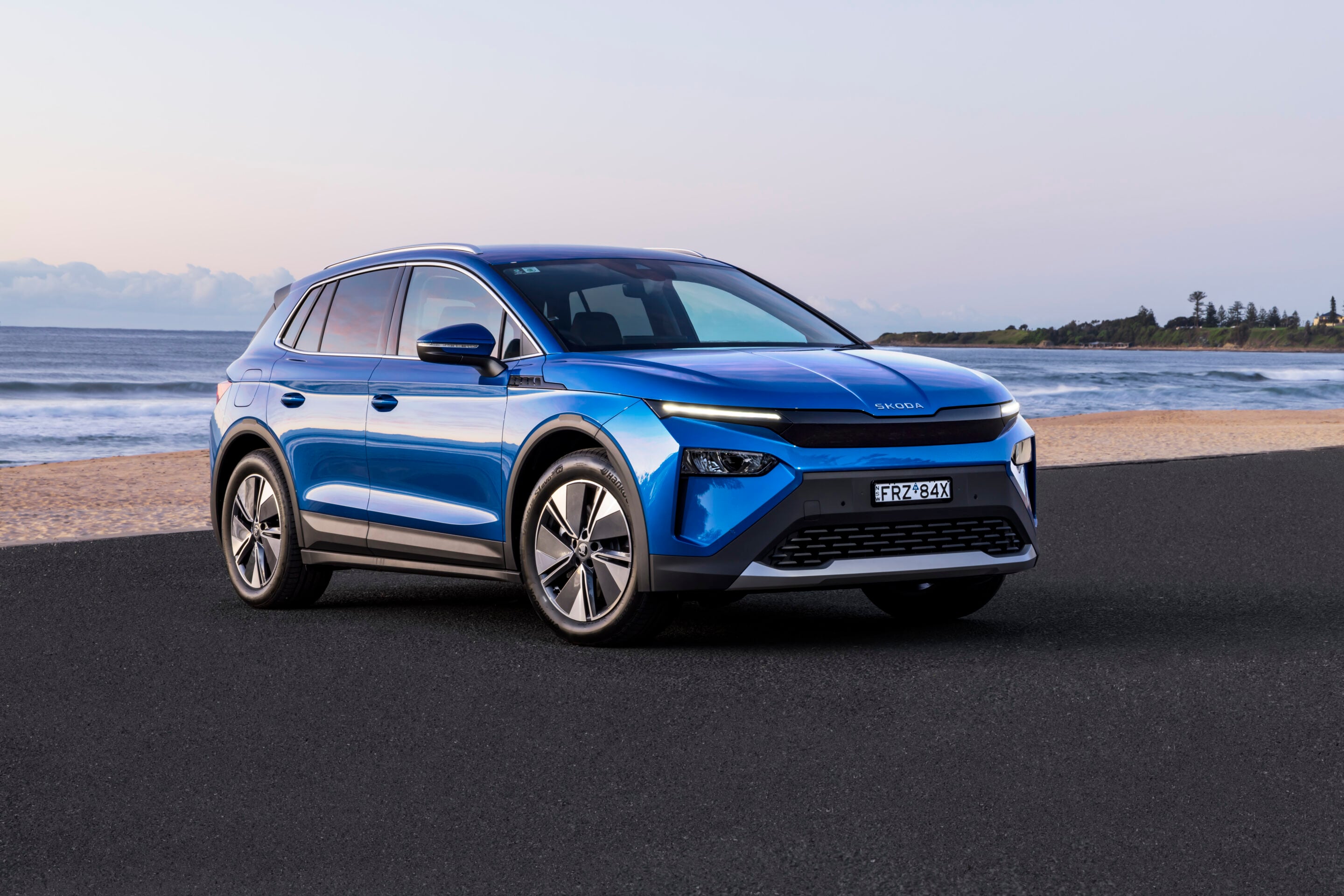
Price: From $49,990 driveaway
Drivetrain: Single-motor electric, RWD, 49kWh or 82kWh batteries
Outputs: 150kW/310Nm or 210kW/545Nm
Range (WLTP): 395km – 529km
Warranty: Seven-year/unlimited km
10-year service cost: $1950 ($195 per year)
| Driving | |
| Interior | |
| Practicality | |
| Overall value | |
From having no electric vehicles in Australia just a few years ago, the brand now offers two with another two waiting in the wings, and the smallest at the moment is the new Elroq. It launched locally in 2025 priced from $59,990 driveaway for the 85, which offers up to 529km of range, but the brand has recently added a new entry-level Elroq 60 with a smaller battery for a claimed 395km of range.
Standard equipment in even the 60 is lengthy, including 19-inch alloy wheels, LED exterior lighting, dual-zone climate control with rear air vents, a 13-inch touchscreen, heated front seats, a heated leather steering wheel and a full suite of active safety features. Buyers of the 60 also have the optional $6000 Signature Package, which adds electric front seats, an electric tailgate with hands-free opening, a head-up display rear side airbags, a 360-degree camera, Matrix adaptive high beam and Canton audio. We’d definitely tick that box.
Both Elroq models use a single rear-mounted electric motor, which makes 150kW/310Nm outputs in the 60 and a surprisingly keen 210kW/545Nm in the 85. Like the larger Enyaq, which uses the same chassis, the Elroq is the first rear-wheel drive Skoda since 1990. That gives it a fun feeling from behind the wheel, and its ride quality is well tuned too. As you’d expect for a European car, refinement is excellent, with not much road noise even at highway speeds.
Inside the Elroq is not the mass of synthetic leather upholstery we’re used to from many new cars. Instead, it uses a mix of warm and high quality cloth trims, including on the centre console and dashboard. A large 13-inch touchscreen is standard equipment, offering features like wireless smartphone mirroring, though not sat-nav or live services in Australia. Rear seat space is not huge, but two adults will fit fine. The Elroq’s 470-litre boot is a good side too, with plenty of clever features, and opens up to a large 1580 litres with the rear seats folded.
Overall, the Skoda Elroq may be new to the market but it’s a small electric SUV well worth consideration. It presents good value for money priced from $49,990 driveaway, though that model’s 395km of range may not be enough for some buyers and those wanting more must spend $10,000 more. But even that model is reasonable value, given Skoda’s seven-year warranty is the longest for a European maker in Australia and a 10-year service pack costs just $1950.
Price: From $49,990 plus on-road costs
Drivetrain: Single or dual-motor electric, RWD or AWD, 69kWh battery
Outputs: 200kW/343Nm – 315kW/543Nm
Range (NEDC): 417km – 462km
Warranty: Five-year/unlimited km
Five-year service cost: Included
| Driving | |
| Interior | |
| Practicality | |
| Overall value | |
Launched locally in 2024, the Volvo EX30 is the brand’s smallest product and rides on a new Geely-derived platform. Pricing starts at $49,990 plus on-road costs, which is $10,000 lower than the pre-updated model, making it much better value than before. Peak charging speed is a healthy 175kW for a 10-80 per cent charge in 28 minutes, while the 69kWh battery allows for a claimed NEDC driving range of up to 462km for the single motor variant (417km for the dual motor Cross Country).
Inside the EX30 is definitely not huge, but it may be more practical than you might initially think considering its tiny footprint. Two six-foot adults will just about fit in the rear seat with just enough legroom and headroom for taller folk, though the 318-litre boot is not huge (it opens up to 1000 litres with the rear seats folded). Quality is solid with lots of sustainable materials that look and feel high quality used throughout the cabin, and there’s plenty of cabin storage space in the front seat, including a cool opening centre console in the front cabin and large door bins.
Centre of the cabin is a 12.3-inch touchscreen that controls almost every function of the car with very little in the way of buttons – there isn’t even a driver’s display to show the car’s speed, like in a Tesla. The touchscreen itself is quick to use and the display is bright, but it could be easier to use – functions such as the headlights and mirrors are buried within and often take two or three presses to activate, taking eyes off the road.
You’ll want to keep your eyes on the road because the EX30 is quite quick, even in the base model with its 200kW of power and quick 5.3-second 0-100km/h sprint time – the top-spec dual-motor makes 315kW of power and makes the Cross Country variant even quicker. The driving experience of the EX30 is quite fun, with direct, nicely-weighted steering and enjoyable handling, though some might find its ride quality to be a bit firm in everyday use.
The EX30’s aftersales package is good with a five-year service plan included in the price and two-year service intervals, making the EX30 pretty painless from an ownership point of view. The Volvo EX30 is a strong entrant into the electric small SUV segment – that is, if you don’t need the largest or most practical entrant. It’s really fun to drive, offers reasonable range, is well equipped and, thanks to a recent price cut, pretty good value for money.
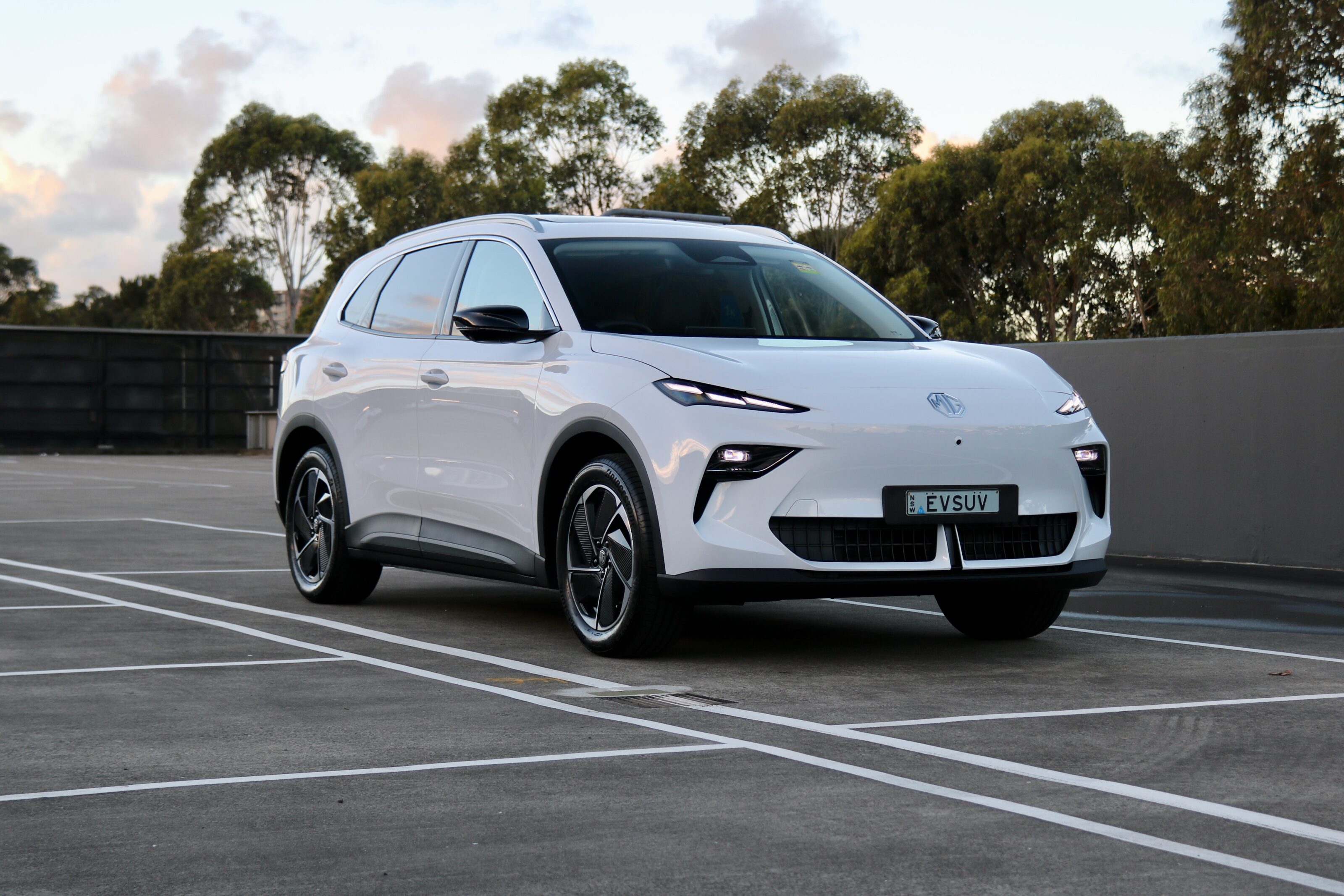
Price: From $40,990 driveaway
Drivetrain: Single-motor electric, RWD, 49kWh or 62kWh batteries
Outputs: 125kW/250Nm
Range (WLTP): 340km – 425km
Warranty: Seven-year/unlimited km (service-activated up to 10 years/250,000km)
Five-year service cost: $1967 ($393 per year)
| Driving | |
| Interior | |
| Practicality | |
| Overall value | |
Based on the same excellent platform as the MG4 hatchback – not the new MG4 Urban – the MGS5 EV was launched in Australia in 2025. Building on the strengths of the MG4, including its great chassis, keen pricing and good practicality with a more practical body and a new dashboard layout with higher quality materials, the MGS5 EV is a compelling option for an electric small SUV.
Pricing starts at just $40,990 driveaway for the entry-level Excite 49, which features a 49kWh LFP battery for a claimed 340km of range (WLTP) and a 125kW/250Nm rear-mounted motor. Sitting above that are a larger 62kWh battery and the higher-spec Essence model (which also offers both battery sizes), with the top-spec Essence 62 priced from $45,990 driveway – or, the same price point that the entry-level Hyundai Kona Electric is currently being offered at on special.
As we’ve come to expect from the MG brand, the MGS5 EV is great value for money and even for a base model, the Excite is well equipped. Standard features include 17-inch alloy wheels, automatic LED exterior lighting, cloth seat upholstery, single-zone automatic climate control with rear air vents, a large 12.8-inch touchscreen with live services and wireless phone mirroring, as well as the MG Pilot suite of active safety features.
The upper-spec Essence then adds larger 18-inch wheels, automatic wipers, synthetic leather upholstery, heated front seats, an electric tailgate, a panoramic sunroof, online services and a heated steering wheel. Charging speeds are healthy, with the smaller battery capable of 120kW and the larger 139kW for a 10-80 per cent charge time of as little as 19 minutes for the smaller unit. On the road, the S5 EV impresses with a keen chassis and excellent ride quality.
The S5 EV’s cabin is good quality and spacious, and the 12.8-inch touchscreen is easy to use and – unlike many new cars – features buttons located below to help with usability. Two six-footers will be more than comfortable in the rear seat, and the 453-litre boot is a reasonable size, opening up to 1441 litres with the rear seats folded.
The MGS5 EV is a pretty good option if you’re after a value-packed electric small SUV. Prices start at just $40,990 driveaway for the entry-level Excite 49, which provides a reasonable range of up to 325km (WLTP), but if you’re wanting more, the larger battery can give up to 430km of range. We wish that the more powerful motors offered overseas were sold in Australia, but 125kW is enough to motivate the S5’s keen chassis.
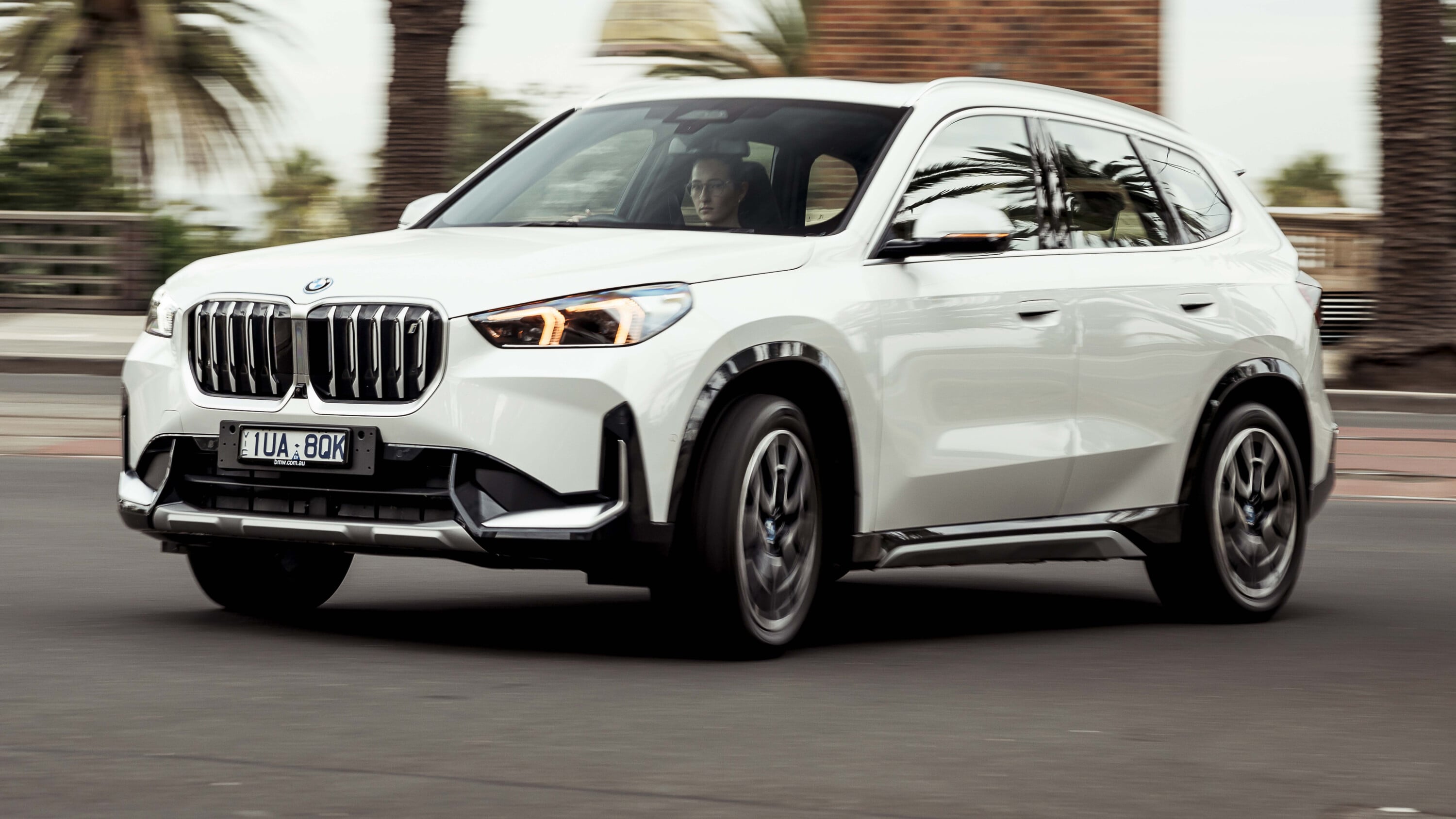
Price: From $77,500 plus on-road costs
Drivetrain: Dual-motor electric, AWD, 66.5kWh battery
Outputs: 230kW/494Nm
Range (WLTP): 400km
Warranty: Five-year/unlimited km
Six-year service cost: $2250 ($375 per year)
| Driving | |
| Interior | |
| Practicality | |
| Overall value | |
BMW’s smallest SUV is now in its third generation, and this one is the first to offer a fully electric powertrain. In addition to that, the X1/iX1 impresses with its high quality cabin, long list of equipment and excellent practicality. While the petrol X1 range starts at $66,700 plus on-road costs for 2026, the electric iX1 is priced from $77,900 +ORC, or comfortably underneath the fringe benefits tax (FBT) exemption.
Now offered in just xDrive30 spec with keen 230kW/494Nm outputs – a less powerful 150kW eDrive20 variant also used to be sold locally – the iX1 features a 66.5kWh battery for a claimed 400km of range (WLTP). Its DC charging capability is reasonable as it’s capable of charging at up to 130kW for a claimed 10-80 per cent charge in under 30 minutes. That’s not as fast as some rivals like the Volvo EX30, but it does best the Mercedes-Benz EQB.
As the xDrive part of its name suggests, the iX1 is all-wheel drive and it’s quite brisk, hitting 100km/h in just 5.6 seconds. On the road, the X1 presents a well-tuned ride quality and feels solid at speed.
Inside, the iX1 features excellent quality materials and plenty of technology, including the latest version of BMW’s iDrive operating system. Unlike larger BMW models, the centre display is only a touchscreen, which can be a bit frustrating at speed as the screen’s menu structure can be a bit confusing and the icons are small. But the system is fully featured and quick, plus the screen quality is excellent.
The X1 is larger and more practical than you’d expect for a product that fits into the small SUV segment. The front cabin features big door bins, a funky centre console bridge and a huge back seat that two tall adults would be quite comfortable sitting in. The boot measures a large-for-the-segment 490 litres – that’s 50L less than the X1 but still a good size, and a large 1495 litres of space is unlocked by folding the rear seats.
Overall, the BMW iX1 is a strong contender for the best electric small SUV. It’s not cheap to buy, but it’s a well-rounded product thanks to its great practicality, good range and performance stats, long list of standard equipment and well-tuned safety features. That BMW Australia just made it cheaper is the strawberry on top.
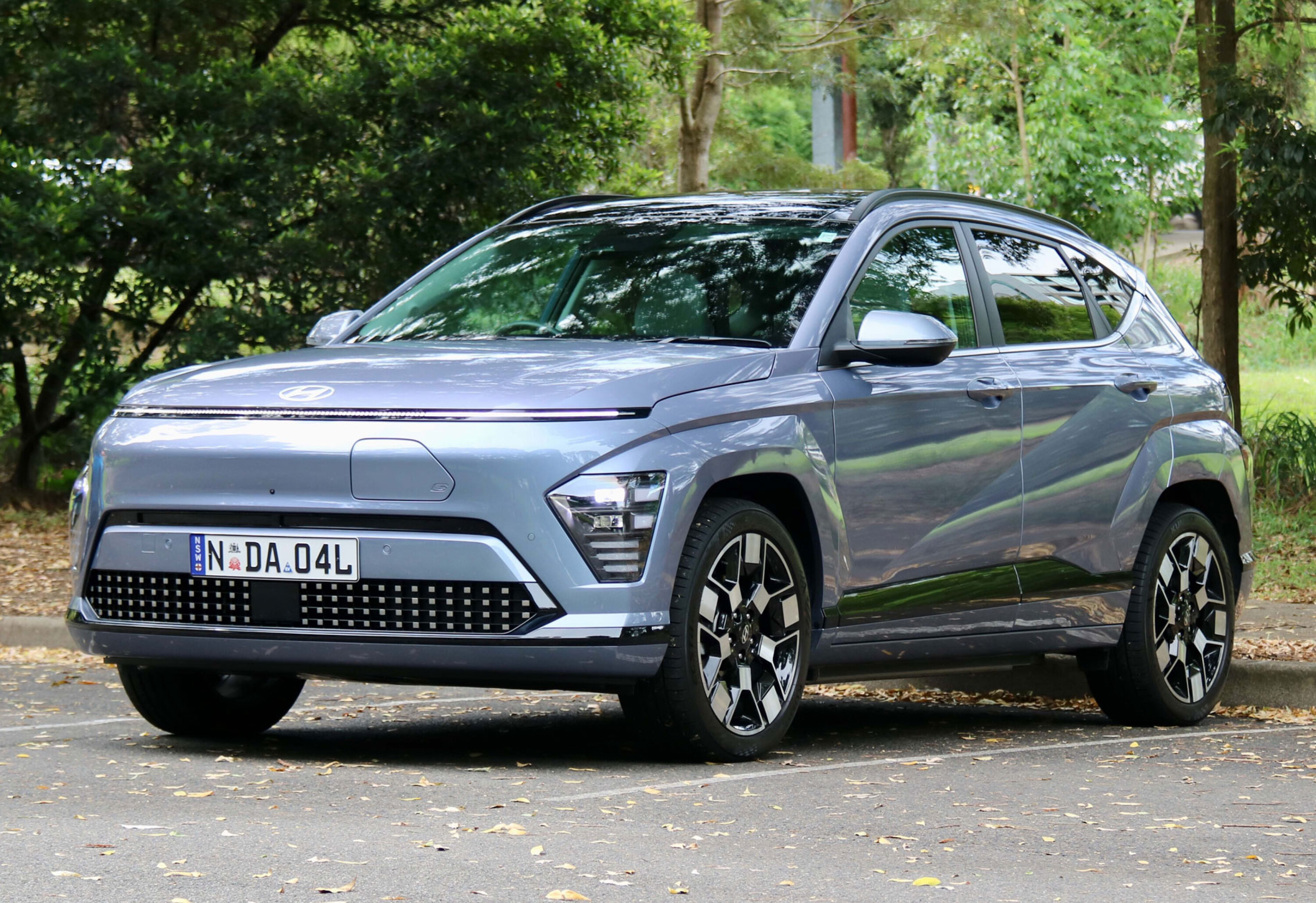
Price: From $54,000 plus on-road costs
Drivetrain: Single-motor electric, FWD, 48.6kWh or 64.8kWh batteries
Outputs: 99kW/255Nm or 150kW/395Nm
Range (WLTP): 370km-505km
Warranty: Five-year/unlimited km
Five-year service cost: $1488 ($297 per year)
| Driving | |
| Interior | |
| Practicality | |
| Overall value | |
The second-best selling small SUV in Australia so far in 2026 is the Hyundai Kona, which is one of the better all-rounders in the segment. One of its best attributes is that it offers a wide range of powertrains, with petrol, hybrid and electric variants on offer. While the previous generation model was small inside, the new model is larger and more practical, far better equipped across the range and thanks to this growth in size, better value for money.
Pricing for the Kona Electric range kicks off from $54,000 plus on-road costs, which isn’t cheap, though Hyundai has the base model on special for just $45,990 driveaway, $50,990 driveaway for the mid-spec Extended Range and $60,990 driveaway for the top-spec Premium. At those prices, the Kona Electric is much better value for money. Regardless of model, the Kona drives well with a great ride quality and improved refinement, especially with road noise.
Where the Kona has seen the biggest improvement is in its interior design as it’s now more up-to-date than the previous generation, which felt dated in comparison to newer Hyundai models. The Kona’s cabin could be better quality, but there’s no denying the awesome practicality and pleasing ergonomics throughout. It’s far more modern than before, and the 12.3-inch touchscreen that’s standard across the range is easy to use, well featured and its screen quality is sharp .
The rear seat of the new Kona is larger than the old one and two adults will fit perfectly fine this time around, while amenities include air vents and charging ports across the range. The boot is also larger now at 407 litres seats up and 1,241L with them folded, while there are some clever tricks like a dual-level boot floor to help practicality further. Very impressively, all models feature a spare wheel – it should be a given, but thanks to their batteries, spare wheels rarely fit in EVs.
The new Hyundai Kona Electric is a worthy competitor in the electric small SUV segment thanks to its all-round ability: it’s much more practical this time around, good to drive, more practical and is capable of travelling a reasonable distance on a full charge, especially the models with the larger battery. Counting against it are expensive pricing without specials, cabin quality that could be better and that its more expensive siblings can charge faster. But overall, the Kona Electric is a worthy option for a small electric SUV.
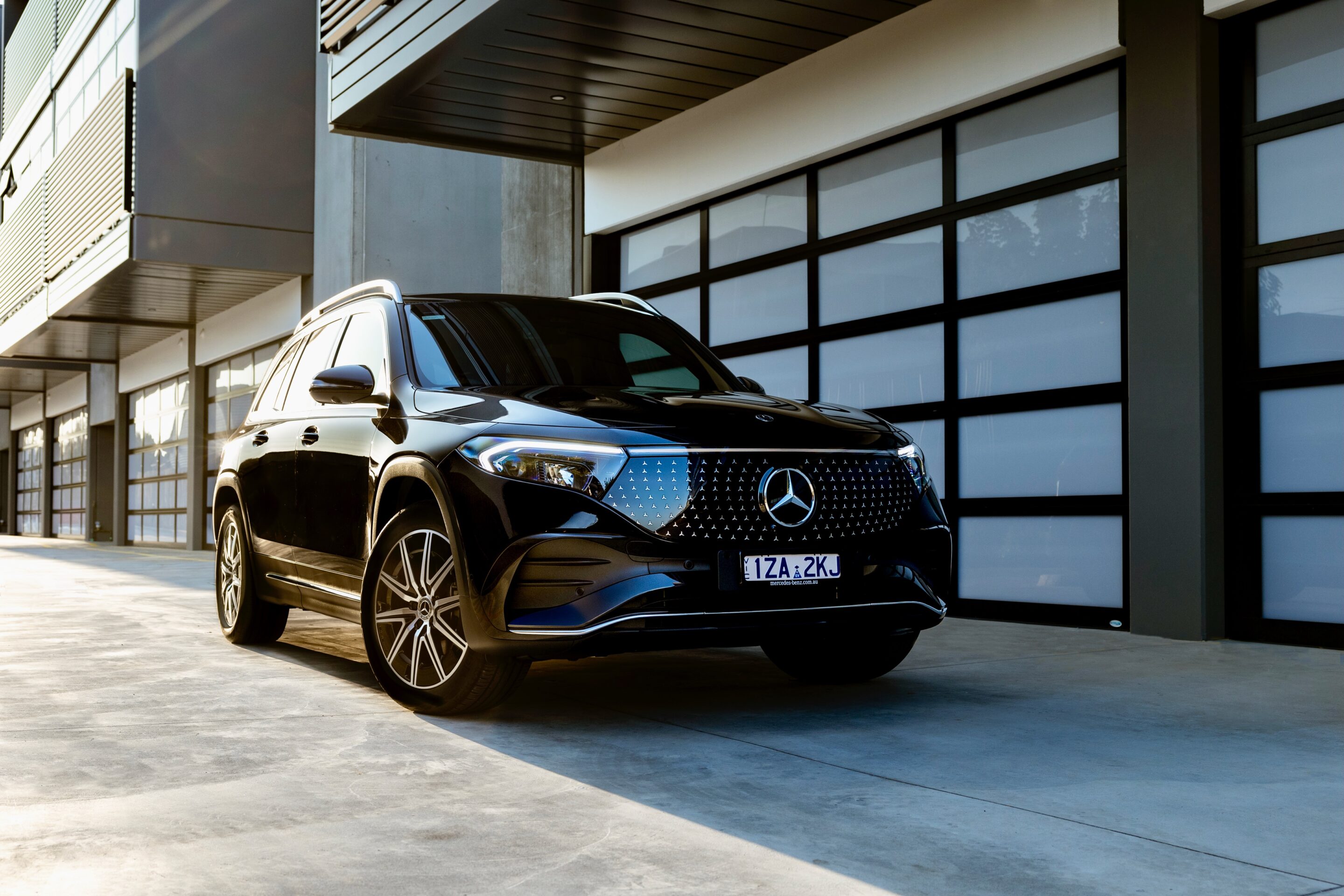
Price: From $90,000 plus on-road costs
Drivetrain: Single-motor electric, FWD, 70kWh battery
Outputs: 140kW/385Nm
Range (WLTP): 463km
Warranty: Five-year/unlimited km
Five-year service cost: $2650 ($530 per year)
| Driving | |
| Interior | |
| Practicality | |
| Overall value | |
The next-generation model was recently revealed, but there’s still plenty of appeal to the current shape Mercedes-Benz EQB. Available in only 250+ specification, the EQB is priced from $90,000 plus on-road costs in Australia and comes very well equipped, with equipment including 20-inch alloy wheels, two 10.25-inch displays with the brand’s ‘MBUX’ infotainment system, augmented reality satellite navigation, dual-zone automatic climate control with rear air vents, synthetic leather upholstery and a long list of active safety features.
The 250+ badge in the EQB’s name refers to a front-driven single motor making reasonable 140kW/385Nm outputs tied to a 70kWh battery for a claimed 463km of range (WLTP). Peak DC charging speed is 102kW, which lags behind the best competitors, but the claimed 10-80 per cent charge is a reasonable 35 minutes.
On the road, the EQB impresses with a refined and enjoyable driving experience, just as you’d expect from the Mercedes-Benz brand. It’s not the last word in sportiness, but it is very comfortable and refined, with very little road noise despite the large 20-inch wheels. The 140kW motor gives the EQB reasonable performance, with the 0-100km/h sprint completed in under 9.0 seconds, while the 385Nm of torque makes it feel quite torquey.
Inside the EQB is a modern cabin with funky ambient lighting, bright screens and high quality materials throughout. Uniquely in the segment too, the EQB features seven seats – though the third row is definitely best described as ‘kids-only’, as legroom in particular is tight. However, fold the third row of seating down and you get a healthy 495-litre boot, which is much larger than the 340L boot in the smaller Mercedes-Benz EQA.
While there’s a new model on the horizon, the current generation Mercedes-Benz EQB still presents solid buying in the electric small SUV segment, if you can afford it. It uniquely offers seven seats despite an exterior that still fits in the small part of the segment, its interior is befitting of the Mercedes-Benz badge with high quality materials and luxurious features, it drives well with a refined and comfortable feeling from behind the wheel and although some rivals charge faster, its 463km WLTP range is certainly more than enough for many.
Looking to get into a brand-new small SUV? Our stories below will guide you to the model that best suits your needs:
Particularly in current times with the cost of living crisis at the forefront of many of our minds, value for money is a strong consideration point for those looking at a new car. However, value can mean more than just a low price of entry and for many, value can be applied to more standard features or a better warranty coverage. With that in mind, these are the best value small SUVs for 2026.
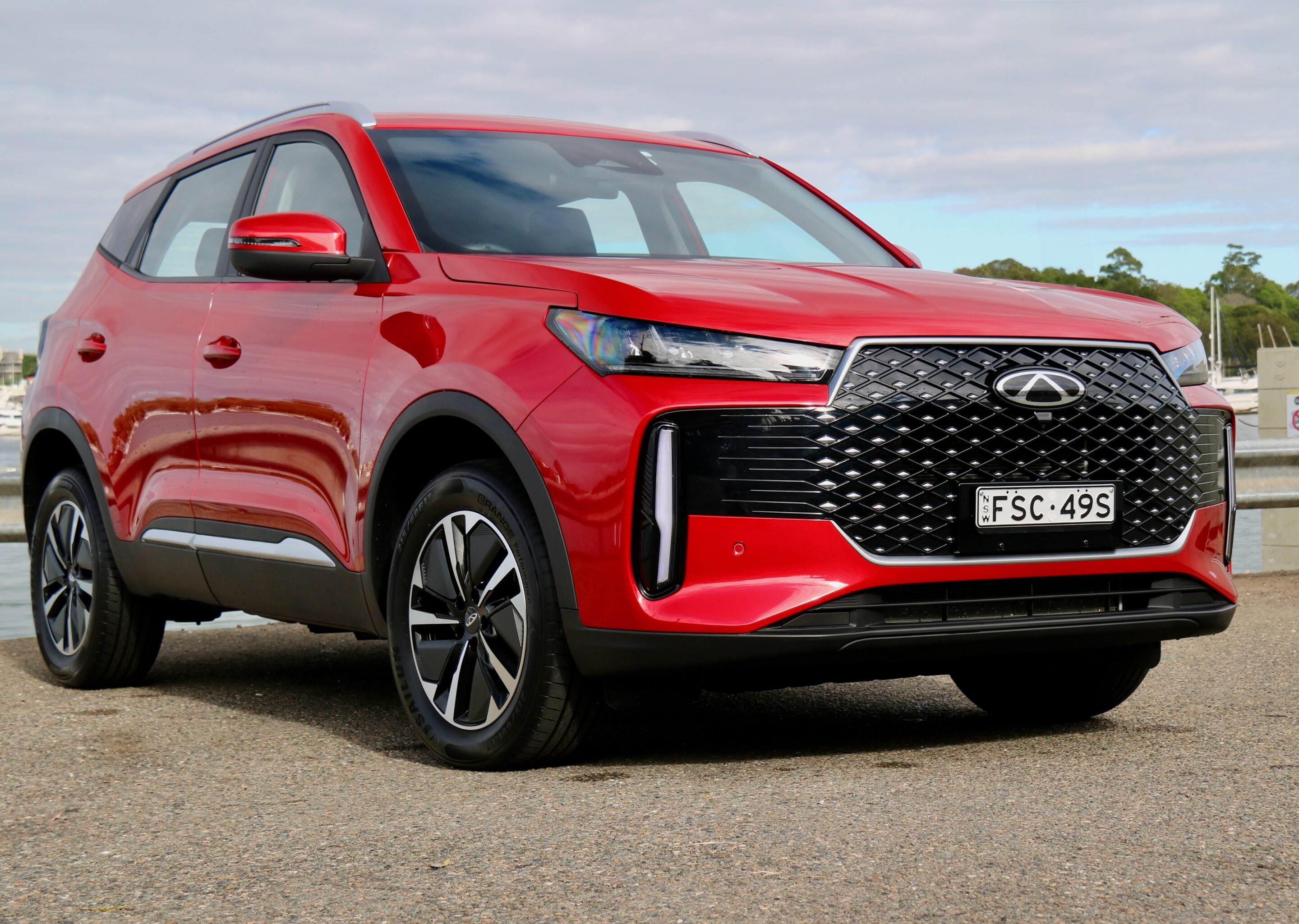
Price: From $23,990 drive away (Urban petrol), from $29,990 drive away (Urban hybrid)
Drivetrain: 1.5-litre four-cylinder turbo-petrol or 1.5-litre four-cylinder hybrid, CVT auto
Outputs: 108kW/210Nm (1.5T), 150kW/310Nm (hybrid)
Combined fuel economy: 7.4L/100km (1.5T), 5.4L/100km (hybrid)
Warranty: Seven-year/unlimited km
Five-year service cost: $1445 ($289 per year)
| Driving | |
| Interior | |
| Practicality | |
| Overall value | |
The Chery Tiggo 4 has been named Wheels Best Small SUV: Value for a second consecutive year, a recognition of its popularity with Australians who value the fact it’s well-equipped, practical, affordable to service and covered by a long and easy warranty program. Now, the availability of a hybrid model makes it even more attractive for those wanting better fuel economy but not ready to make the step to electric.
At the time of last year’s award, it had only been on the market for a few months and sales had been modest because it was new. However, since then, its popularity has exploded and it’s got 6,807 sales under its belt to the end of March 2026 (or up 103.9 per cent on 2025).
If it’s a low price of entry you’re after, the Tiggo 4 is difficult to go past in the small SUV segment. Prices start at just $23,990 driveaway for the entry-level Urban and it’s very well equipped for the price, including a full active safety suite, dual-zone climate control air-conditioning with rear air vents, and dual 10.25-inch screens for the driver and infotainment system. Chery’s aftersales program is excellent value as well, covering the Tiggo 4 for seven years. Capped price servicing is also reasonable: just $1445 for five years/75,000km of motoring, which equates to just $289 per year.
What the Tiggo 4 in 2026 offers in addition to the early 2025 version is a 1.5-litre hybrid drivetrain that reduces its fuel consumption and gives those looking to save on fuel another option in the market. However, the gap in price to the hybrid is a significant $6000, so do your sums to figure out which drivetrain is best for you.
Regardless of the drivetrain, the Tiggo 4 offers a punchy drivetrain for the segment and its driving experience is comfortable, though its ride quality is a bit too soft so that even smaller bumps are noticeable. Still, its cabin is good quality and the interior is sensibly practical, too. The tall body gives excellent headroom, and its 380-litre boot opens up to 1225 litres with the rear seats folded.
Overall, the Chery Tiggo 4 is not quite a perfect car, but it is ideal value for money. There are other small SUVs priced around the same level as the Tiggo 4 like the MG ZS Vibe and Mahindra XUV 3XO AX5L but the Tiggo 4 Urban is better equipped than both of those cars, as well as better finished on the inside. No wonder it’s selling so strongly in Australia.
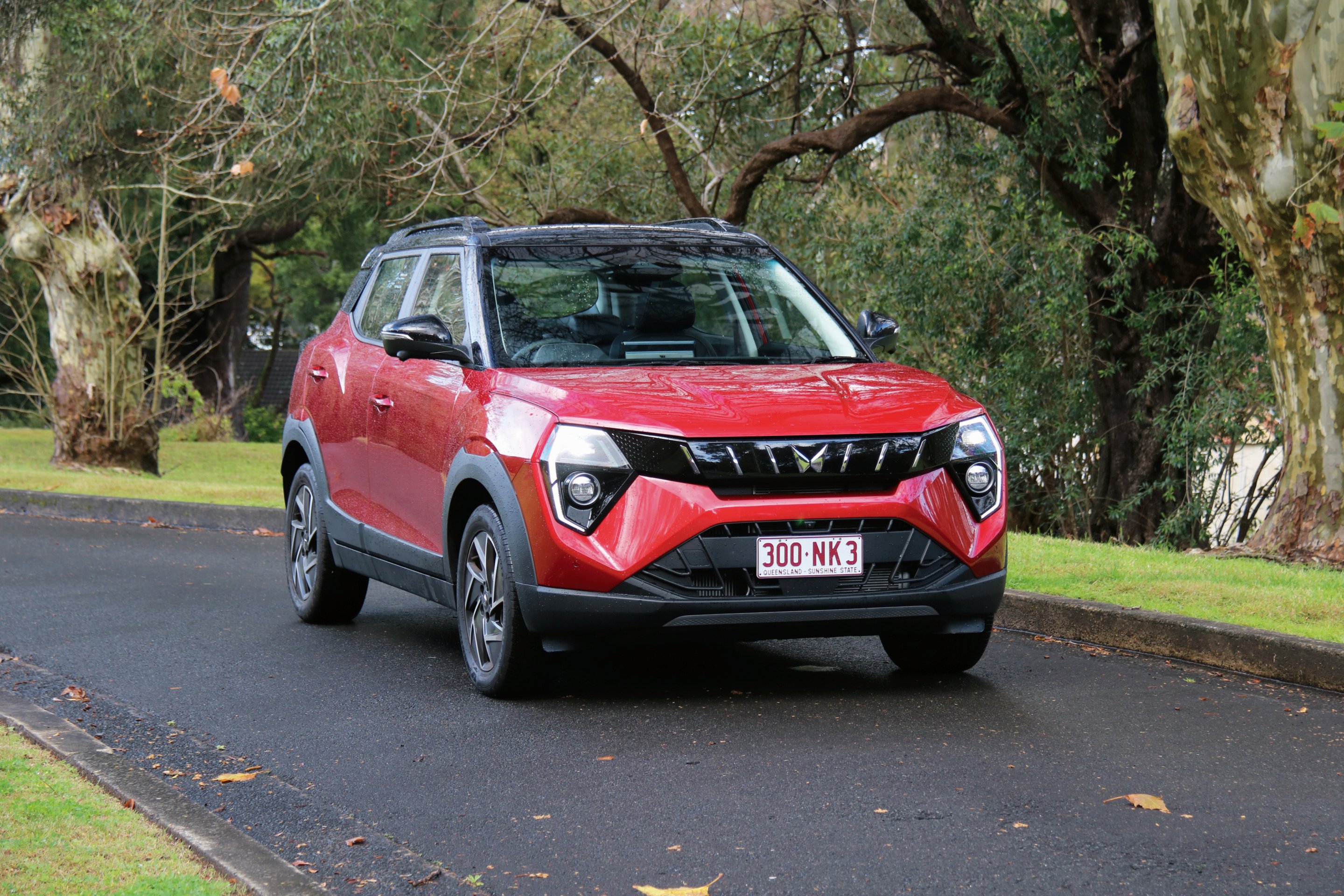
Price: From $23,990 driveaway
Drivetrain: 1.2-litre turbocharged three-cylinder petrol, six-speed auto
Outputs: 82kW/200Nm
Combined fuel economy: 6.5L/100km
Warranty: Seven-year/unlimited km
Five-year service cost: $1595 ($319 per year)
| Driving | |
| Interior | |
| Practicality | |
| Overall value | |
Mahindra launched the XUV 3XO in Australia in 2025 and above all else, it delivered a really affordable option that we think will continue to win it a lot of fans locally. Pricing kicks off from $23,990 driveaway –the same pricepoint as the entry-level Tiggo 4 – and standard equipment on the entry-level AX5L is impressive.
Equipment highlights include 16-inch alloy wheels, keyless entry with push button start, dual-zone automatic climate control with rear air vents, a leather-wrapped steering wheel and gear knob,
automatic LED headlights, rain-sensing wipers, dual 10.25-inch displays, wireless Apple CarPlay and Android Auto, and safety equipment like autonomous emergency braking, lane keeping assistance, adaptive cruise control and traffic sign recognition. Even a sunroof is standard.
Jump up to the upper-spec AX7L and features like a 360-degree camera, a blind-spot camera, leatherette upholstery, a panoramic sunroof and a thumping (seriously, it’s excellent) Harman Kardon sound system. Yet, it’s only $26,990 driveaway. Adding further to the XUV 3XO’s impressive value is the brand’s seven-year/150,000km warranty and five years of servicing only costs $1595, or just $319 per year.
The XUV 3XO uses a turbocharged 1.2-litre three-cylinder engine, which makes 82kW/200Nm outputs and is mated to a six-speed automatic transmission as standard. It’s a grunty and characterful engine, with impressive refinement as well. The XUV 3XO drives well, too, its tight, nimble chassis delivering excellent ride quality that soaks up bad road surfaces.
Inside, the XUV 3XO isn’t the most modern or up to date, but it’s good quality, practical for its small size and well featured. The 10.25-inch touchscreen could be faster, but its graphics are sharp and it’s easy to use. The rear seat is impressively spacious for its size too, though its boot is quite small. In the XUV 3XO Mahindra delivers a good car that is practical, good to drive, well equipped and covered by a long warranty. For a lot of buyers, that will make it a winner.
Price: From $46,990 driveaway
Drivetrain: Single-motor electric, 58.3kWh or 81.4kWh batteries
Outputs: 150kW/283Nm
Range (WLTP): 436km (Standard Range) – 604km (Long Range)
Warranty: Seven-year/unlimited km
Five-year service cost: $1308 ($261 per year)
| Driving | |
| Interior | |
| Practicality | |
| Overall value | |
Launched locally in 2025, the EV3 is the smallest and cheapest electric vehicle that Kia currently sells in Australia. It’s also a really good small SUV, with ample practicality, a good driving experience and a reasonable list of standard features. Pricing starts at $46,990 driveaway, which is more expensive than something like the BYD Atto 2, but it does offer more range than the BYD – from 436km versus 345km on the WLTP cycle – thanks to its 58.3kWh battery. If you want more range, a larger battery is also available for more money.
Standard equipment on the entry-level Air includes 16-inch alloy wheels, dual-zone automatic climate control with rear vents, dual 12.3-inch screens, wireless Apple CarPlay and Android Auto, a wireless phone charger, keyless entry with push button start, a synthetic leather steering wheel, cloth upholstery and a long list of safety features like a central airbag, autonomous emergency braking, adaptive cruise control, adaptive lane guidance and blind-spot monitoring with rear cross-traffic alert.
Unfortunately, buyers wanting more features must spend a lot more money – the mid-spec Earth asks more than $60,000 including on-road costs, but it’s the cheapest way to get features like an electric driver seat adjustment, heated and ventilated front seats and synthetic leather trim. The $70k GT-Line further adds a sunroof, larger wheels, Harman Kardon audio, electric front passenger seat adjustment and a head-up display. Disappointingly, no EV3 offers a 360-degree camera in Australia.
All EV3 models use a front-mounted 150kW/283Nm electric motor, which provides more than ample performance. Charging speeds are also reasonable, at up to 100kW in the Standard Range and 130kW in the Long Range models, with a 10-80 per cent charge taking around half an hour at that speed. The EV3’s driving experience impresses too, with a solid and planted feeling, excellent suspension tuning for great ride comfort, steering that is far superior to Chinese rivals thanks to actual weighting, and a tidy and reasonably fun chassis.
Overall, the Kia EV3 is a great electric small SUV that deserves attention. Sure, it’s more expensive to buy and less well equipped than some Chinese rivals, but it wins back value points with its excellent driving dynamics, spacious cabin, large boot, healthy charging speeds for the segment. It’s efficient and offers solid range as well. Those attributes make it a great option in the small SUV segment.

Price: From $31,990 plus on-road costs
Drivetrain: Single-motor electric, 51.1kWh battery
Outputs: 130kW/290Nm
Range (WLTP): 345km
Warranty: Six-year/150,000km
Five-year service cost: Unknown
| Driving | |
| Interior | |
| Practicality | |
| Overall value | |
BYD surprised in late 2025 by offering not only Australia’s cheapest EV – the $23,990 +ORC Atto 1 – but also Australia’s cheapest electric SUV: The $31,990 +ORC Atto 2. That low starting price won’t only get you a lot of car, but it’s also quite well equipped in entry-level Dynamic form, with features including 16-inch alloy wheels, automatic exterior lighting and wipers, synthetic leather upholstery, automatic climate control with rear air vents, a 10.1-inch touchscreen with wireless smartphone connectivity and over-the-air updates, a heat pump and a long list of safety kit.
Above the Dynamic sits the $35,990 +ORC Premium, and that adds a lot more features: larger 17-inch wheels, roof rails, a panoramic sunroof, auto-folding mirrors, electric front seat adjustment with heating and ventilation, a larger 12.8-inch touchscreen and a wireless phone charger. At around $40,000 including on-road costs, the Atto 2 Premium is very well equipped, and both models are excellent value.
The cabin of the Atto 2 is its strongest attribute as not only is it spacious, but it’s also good quality, comfortable and relatively easy to use. The entry-level Dynamic features a 10.1-inch touchscreen, which is well featured and accessible, though its small icons make interacting with it more difficult than necessary. Storage is impressive up front, as is seat comfort, and both the rear seat and boot are larger than you’d expect.
On the road, the Atto 2 isn’t as impressive as a Kia EV3, but it is still more than comfortable enough for city use. A 130kW/290Nm front electric motor provides propulsion, which is more than enough grunt for even highway use, and the 51.3kWh battery gives a WLTP-rated range of 345km, which is more than enough for those doing primarily city driving. A peak charge speed of 82kW allows for a claimed 10-80 per cent charge time of 39 minutes, which could be quicker.
The BYD Atto 2 shines as Australia’s cheapest electric small SUV thanks to its low opening price, long list of standard features, comfortable and practical cabin, and reasonably long six-year/150,000km warranty. It could be better to drive and its charge speed is slow compared to some rivals, but if you’re wanting a cheap, practical small SUV that happens to be electric, it provides excellent value for money.
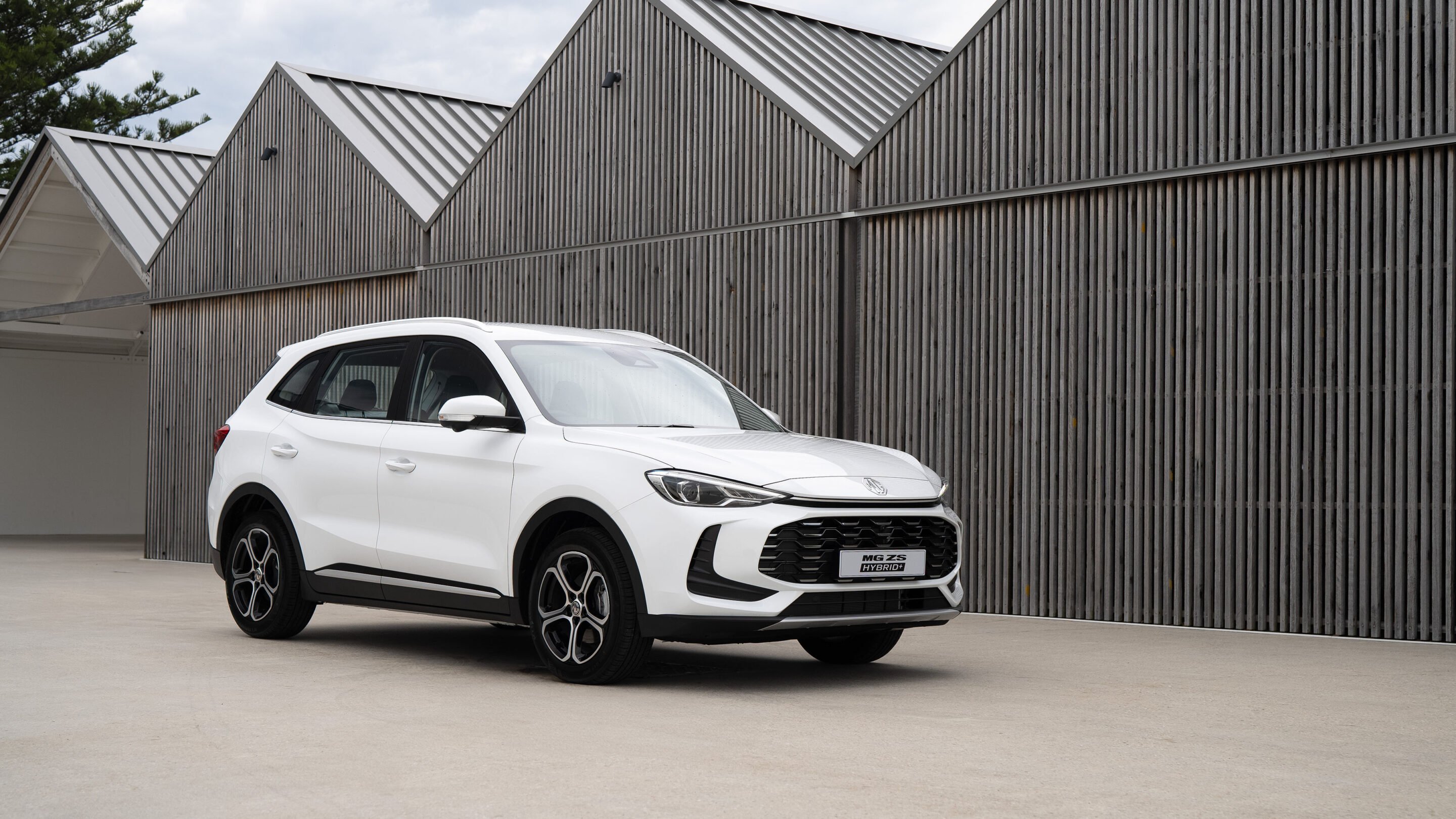
Price: From $22,990 driveaway
Drivetrains: 1.5-litre four-cylinder naturally aspirated, turbocharged or hybrid, CVT
Outputs: 81kW/140Nm (1.5L), 125kW/275Nm (1.5T), 158kW/465Nm (Hybrid+)
Combined fuel economy: 6.7L/100km (1.5L), 6.9L/100km (1.5T), 4.7L/100km (Hybrid+)
Warranty: Seven-year/unlimited km (extendable to 10 years/250,000km with dealer servicing)
Five-year service cost: $1860 (hybrid), $2029 (turbo), $2039 (naturally aspirated)
| Driving | |
| Interior | |
| Practicality | |
| Overall value | |
The overall winner of Wheels Best Small SUV 2025 was the MG ZS Hybrid+, in 2026 MG has widened the ZS range and lowered the price of entry to just $22,990 driveaway for the entry-level Vibe. That makes it the cheapest SUV on sale in Australia currently, and is available for only $1000 more than the MG 3 Vibe hatchback.
We’d step up to the Vibe Turbo, however, as it’s the sweet spot in the petrol ZS priced at $24,990 driveaway but offering a 125kW turbocharged engine that’s far gutsier than the naturally aspirated engine in the Vibe, but only a little bit thirstier at 6.9L/100km versus 6.7L/100km. The Vibe Turbo also adds more features, like larger 17-inch wheels and automatic air-conditioning.
But regardless of model, the MG ZS is a compelling option in the small SUV segment. It’s great value for money but it’s also a good car, with a high quality, spacious cabin and impressive list of standard equipment across the range. Even the Vibe comes with 16-inch alloy wheels, push button start, a 10.25-inch touchscreen with access to the MG ‘iSmart’ phone app and the ‘MG Pilot’ suite of active safety features. MG’s typically excellent value equation continues with the ZS.
What’s even better is MG’s warranty, which is seven-year/unlimited km coverage but if you service through an MG service centre during that period, you earn extra warranty up to 10 years/250,000km in total, which is one of Australia’s longest warranty terms.
The MG ZS remains a great value choice in the small SUV segment thanks to its low pricing, long standard equipment list, roomy cabin, pleasant driving experience and wide range of drivetrain offerings. Plus, if you can afford to spend only $2000 more to get from the Vibe to the Vibe Turbo, it’s far punchier to drive, and doing so gets you one of the best small SUV options.
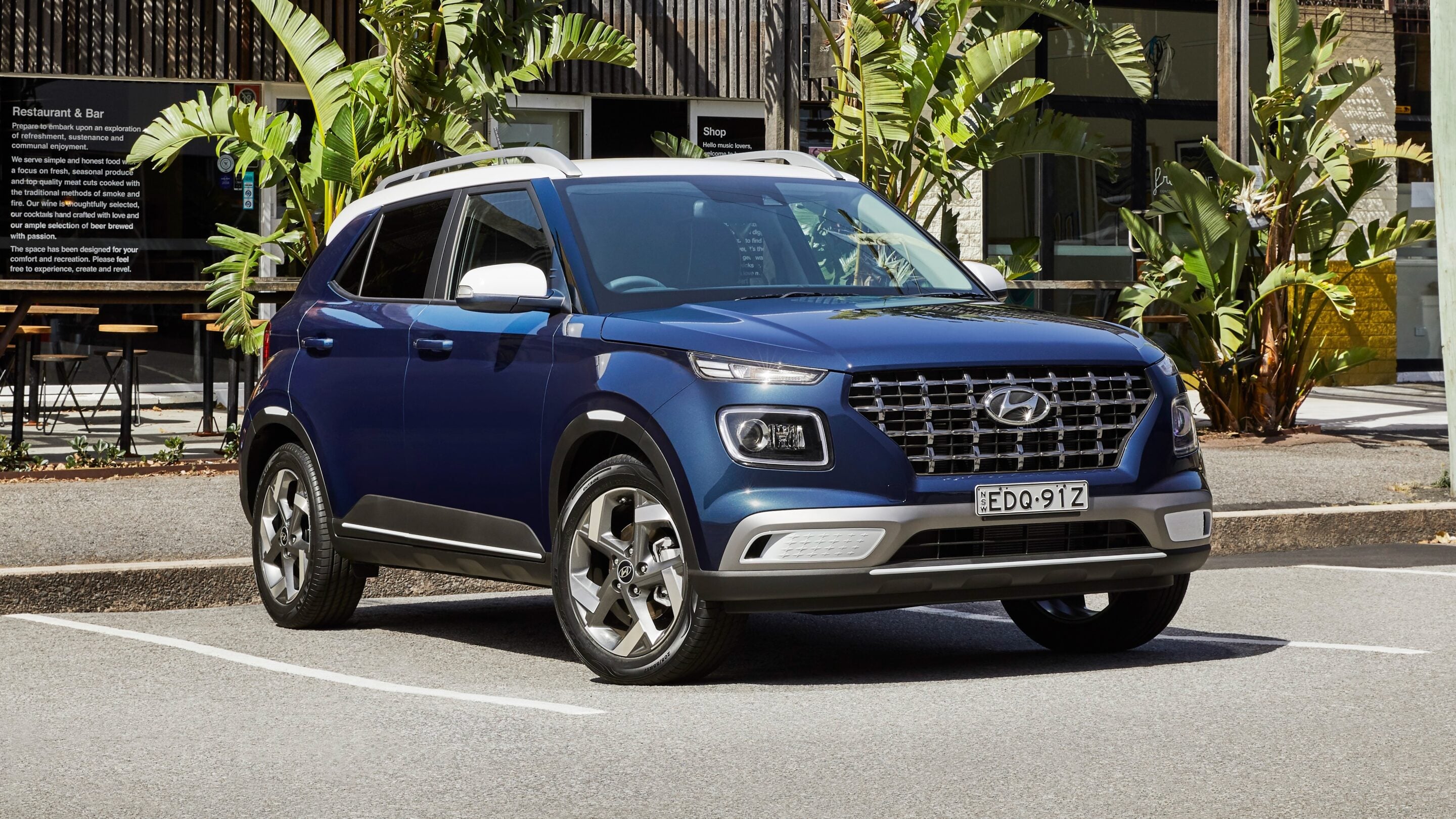
Price: From $23,750 plus on-road costs
Drivetrain: 1.6-litre four-cylinder naturally aspirated petrol engine, six-speed manual or automatic
Outputs: 90kW/151Nm
Combined fuel economy: 7L/100km (manual), 7.2L/100km (automatic)
Warranty: Five-year/unlimited km (extendable to seven years with dealer servicing)
Five-year service cost: $1976 ($395 per year)
| Driving | |
| Interior | |
| Practicality | |
| Overall value | |
While many of Hyundai’s earlier sales used to come from cars like the Accent and i30 hatchbacks, they’re sadly no longer offered in Australia, leaving the Venue small SUV as the brand’s entry product locally. Pricing starts at $23,750 plus on-road costs for the base model, but that’s for the six-speed manual that most people won’t buy – the six-speed automatic asks $2000 more at $25,750 +ORC, so around $29,000 once on-road costs are included.
Small SUVs for under $30,000 including on-road costs aren’t plentiful these days, and even though the Venue is much more expensive than it used to be, it’s still one of the cheapest new cars you can buy. Standard features include 15-inch alloy wheels, manual air-conditioning, roof rails, an 8.0-inch touchscreen, wireless Apple CarPlay and Android Auto, cruise control, autonomous emergency braking, lane keeping assistance and auto high beam. It’s disappointing, however, to see features like blind-spot monitoring, climate control, larger wheels and even auto-folding mirrors limited to upper-spec models.
So it could be better equipped but at least it’s under $30,000. In addition to the value equation, the Venue’s strong practicality earns it brownie points. Its 355-litre boot is bigger than you’d expect considering how small its exterior is and it features some clever touches like a dual-level boot floor and the parcel shelf that stores behind the rear seat to carry taller cargo. The rear seat, although largely featureless, is roomy for the size and even taller adults will be fine thanks to excellent headroom within its boxy dimensions.
On the road, the Venue’s locally tuned ride quality is excellent – soft but taut so that bumps don’t unsettle it, and it’s actually reasonably fun to drive as well. The 1.6-litre petrol engine is a reasonable performer, but it can be quite loud and it’s also thirsty, rated from 7.0L/100km. Overseas, the same turbocharged three-cylinder engine in the Kia Stonic features in the Venue and we think it would be a far better option.
The Venue presents solid value for money in the small SUV segment. While its drivetrain could be more refined and gutsier, it otherwise drives nicely, it’s quite practical for its size and its service pricing is quite reasonable as well. There are cheaper options available than the Hyundai Venue, but if it’s overall value you’re after, it scores reasonably well.
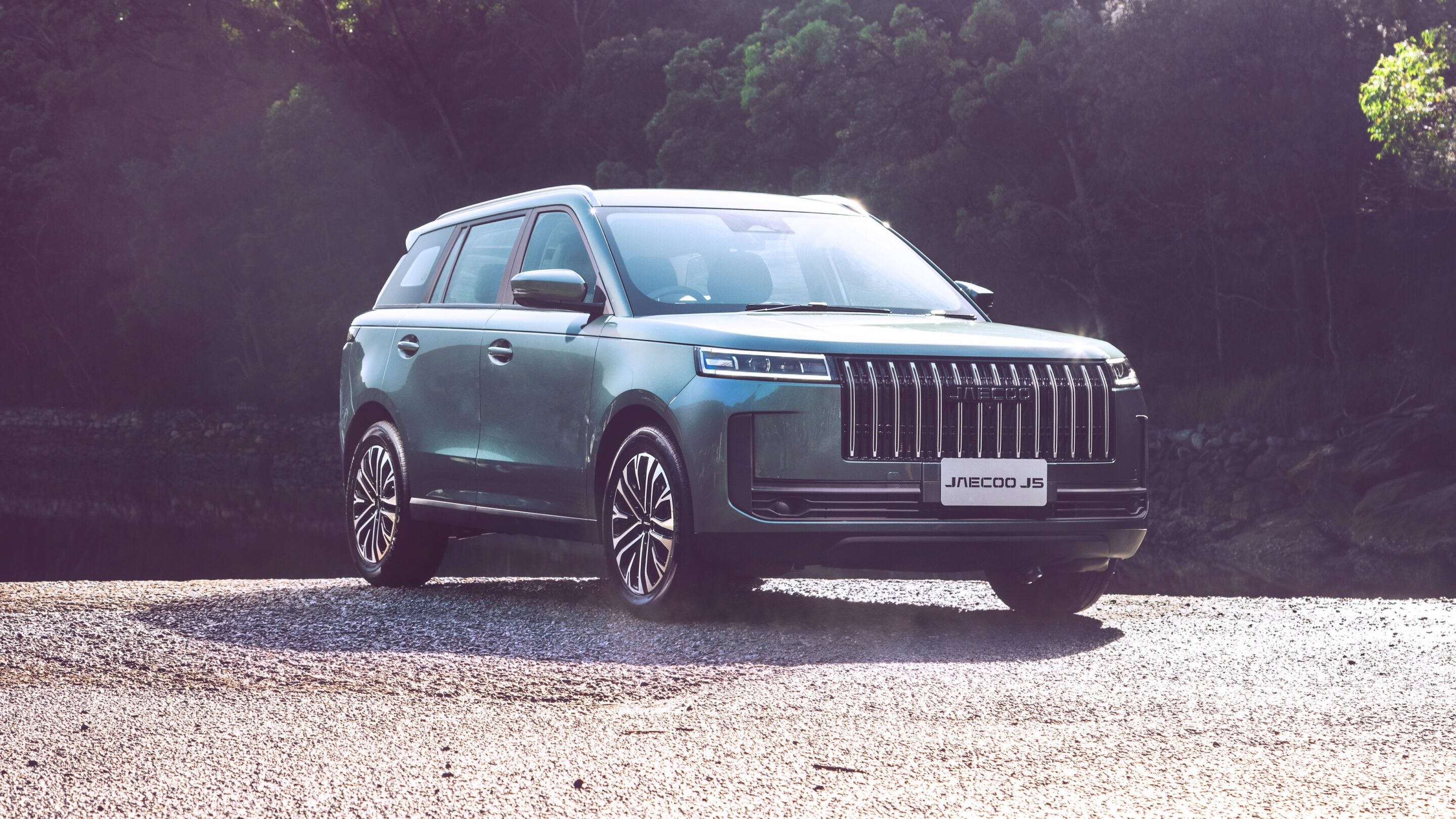
Price: From $25,990 driveaway (petrol), $36,990 driveaway (EV)
Drivetrains: 1.5-litre four-cylinder turbo-petrol with CVT automatic or single-motor electric, 58.9kWh
battery
Outputs: 105kW/210Nm (petrol), 155kW/288Nm (electric)
Electric range (WLTP): 402km
Combined fuel economy (petrol): 7.5L/100km
Warranty: Eight-year/unlimited km
Five-year service cost: $915 (EV – $183 per year), $1316 (petrol – $263 per year)
| Driving | |
| Interior | |
| Practicality | |
| Overall value | |
Jaecoo’s smallest offering, the J5 small SUV, launched locally in electric form in late 2025 to much fanfare. It’s well priced at $36,990 driveway, surprisingly practical inside, very well equipped and uses a 58.9kWh battery for a healthy 402km of claimed WLTP range.
A petrol option has recently been added as well, lowering the price of entry to just $25,990 driveaway and adding a new entry-level model for those not needing luxury features. Standard features on the base model Track include 18-inch alloy wheels, automatic LED exterior lighting, keyless entry with push button start, height-adjustable front seats, a large 13.2-inch portrait touchscreen with wireless smartphone mirroring and a lot of safety features, including a front centre airbag and a 360-degree camera.
Move up to the Summit models ($29,990 driveaway for the petrol car or $36,990 driveaway for the EV) and features like a panoramic glass roof, electric tailgate, dual-zone automatic climate control, synthetic leather upholstery, electric front seats with heating and ventilation and a rear central armrest with cupholders are added. A loaded small SUV for under $30k on the road? Not bad at all, especially considering that it’s covered by one of the longest warranties on the new car market.
It must be said that the J5’s driving experience could be improved. We’ve not driven the yet-to-be-launched petrol option, but the EV’s soft suspension and light steering make the driver feel disconnected from the car. However, it’s still comfortable enough for everyday life and while the active safety systems could use a bit more refinement, they have come a long way since Chery – Jaecoo’s parent brand – re-launched locally. The EV provides ample grunt at 155kW, while our experience in the Chery Tiggo 4 – the J5’s sister car – suggests that the petrol engine is also fine, albeit quite thirsty for its size.
The cabin of the J5 is good quality for the money, quite practical and comfortable too. We wish that the huge 13.2-inch touchscreen featured more shortcut buttons to aid usage, but the system is quick to use and screen quality is impressive. The rear seat can handle two taller adults easily, while the 384-litre boot is large for its size as well. Overall, while the Jaecoo J5 isn’t a well known product yet, we think it has potential to sell well as it’s great value for money, spacious, well equipped and covered by a long warranty.
Looking to get into a brand-new small SUV? Our stories below will guide you to the model that best suits your needs:
Hybrid small SUVs are becoming the default choice for buyers wanting lower fuel use without changing the way they drive or travel. In 2026, the segment spans everything from affordable urban crossovers to premium plug-in hybrids, all blending efficiency with everyday practicality. The competition has never been broader, with refinement, technology and real-world economy now just as important as value and versatility.
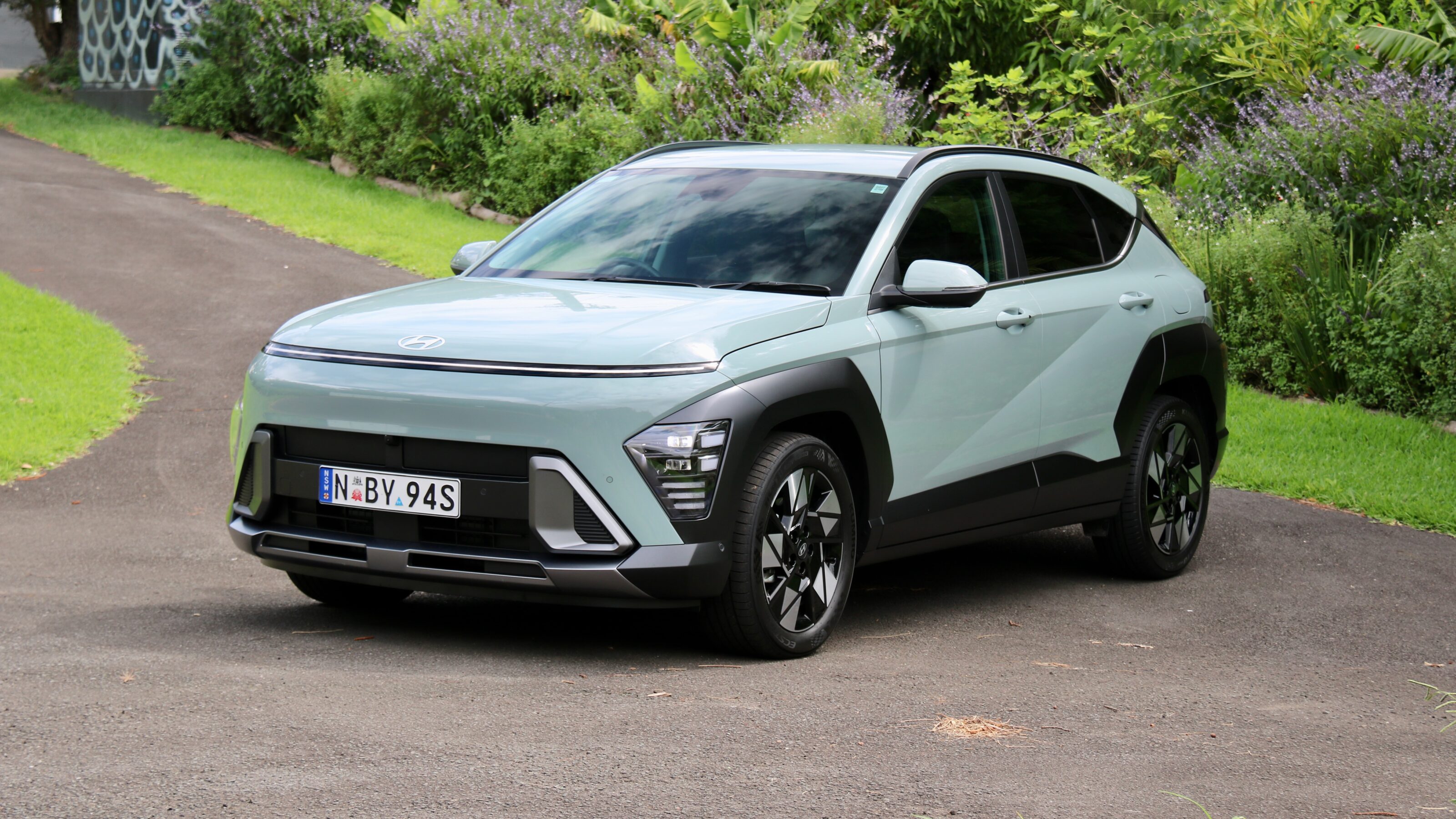
Price: From $36,950 plus on-road costs
Drivetrain: 1.6-litre four-cylinder hybrid, 6-speed dual-clutch auto, FWD
Outputs: 104kW/265Nm
Combined fuel economy: 3.9L/100km
Warranty: Five-year/unlimited km (extendable to seven years with dealer servicing)
Five-year service cost: $3007 ($601 per year)
| Driving | |
| Interior | |
| Practicality | |
| Overall value | |
The second-best selling small SUV in Australia so far in 2026 is the Hyundai Kona, which is one of the better all-rounders in the segment. While the previous generation model was small inside, the new model is larger and more practical, far better equipped across the range and thanks to its 1.6-litre hybrid system, a lot more fuel efficient as well.
Pricing for the 2026 Kona range kicks off from $33,700 plus on-road costs, while the cheapest hybrid is $36,950 +ORC – in our opinion if you can afford it, the hybrid is a necessary outlay because its hybrid system is not only punchier, but it’s also significantly more fuel efficient than the 2.0-litre petrol engine. Surprisingly, the hybrid is the one with the geared transmission and the petrol features a CVT, which is the opposite to usual in the industry. Regardless of model, the Kona drives well with a great ride quality and improved refinement as well, especially with road noise.
Three models are available: base, mid-spec Elite and top-spec Premium, with the new Elite a recent addition to the range. Standard features across the range are impressive, including a 12.3-inch touchscreen with live services, keyless entry and start, automatic LED lighting and a full suite of active safety features. The Elite ($39,950 +ORC) adds larger wheels, heated front seats, leather trim and automatic wipers, while the Premium ($42,700 +ORC) further adds Bose audio, a 12.3-inch digital driver’s display, power tailgate, sunroof and inbuilt sat-nav. Those wanting sportier styling can add the N Line package on the Elite and Premium.
Where the Kona has seen the biggest improvement is in its interior design as it’s now more up-to-date than the previous generation, which felt dated in comparison to newer Hyundai models. The Kona’s cabin could be better quality, but there’s no denying the awesome practicality and pleasing ergonomics throughout. It’s far more modern than before, and the 12.3-inch touchscreen that’s standard across the range is easy to use, well featured and its screen quality is sharp too.
The rear seat of the new Kona is larger than the old one and two adults will fit perfectly fine this time around, while amenities include air vents and charging ports across the range. The boot is also now larger at 407 litres seats up and 1241L with them folded, while there are some clever tricks like a dual-level boot floor to add to its all-round practicality. Impressively, all models feature a spare wheel – it should be a given, but you’d be surprised just how many new models don’t feature a spare at all.
The new Hyundai Kona is a worthy competitor in the small SUV segment thanks to its all-round ability: it’s much more practical this time around, good to drive, more practical and it finally offers a hybrid drivetrain choice to reduce costs. Counting against it are surprisingly expensive service costs for the hybrid, cabin quality that could be better and that expense rises at the top of the range. Overall, the Kona is a great option and no wonder it’s the second best-selling small SUV to date in 2026.
Price: From $29,990 drive away (Urban hybrid)
Drivetrain: 1.5-litre four-cylinder hybrid, CVT auto, FWD
Outputs: 150kW/310Nm
Combined fuel economy: 5.4L/100km
Warranty: Seven-year/unlimited km
Five-year service cost: $1495 ($299 per year)
| Driving | |
| Interior | |
| Practicality | |
| Overall value | |
Wheels Best Small SUV: Value for a second consecutive year, the Chery Tiggo 4 is a serious entrant in this segment because it’s well-equipped, practical, affordable to service and covered by a long and easy warranty program. Now, the availability of a hybrid model makes it even more attractive for those wanting better fuel economy but not ready to make the step to electric.
At the time of last year’s awards it had only been on the market for a few months and sales had been modest because it was new. However, since then, its popularity has exploded and it’s got 6,807 sales under its belt to the end of March 2026 (or up 103.9 per cent on 2025).
If it’s a low price of entry you’re after, the Tiggo 4 is difficult to go past in the small SUV segment. Prices start at just $23,990 driveaway for the entry-level Urban and it’s very well equipped for the price, including a full active safety suite, dual-zone climate control air-conditioning with rear air vents, and dual 10.25-inch screens for the driver and infotainment system. Chery’s aftersales program is excellent value as well, covering the Tiggo 4 for seven years. Capped price servicing is also reasonable: just $1445 for five years/75,000km of motoring, which equates to just $289 per year.
What the Tiggo 4 in 2026 offers in addition to the early 2025 version is a 1.5-litre hybrid drivetrain that reduces its fuel consumption and gives those looking to save on fuel another option in the market. However, the gap in price to the hybrid is a significant $6000, so do your sums to figure out which drivetrain is best for you.
Regardless of the drivetrain, the Tiggo 4 offers a punchy drivetrain for the segment and its driving experience is comfortable, though its ride quality is a bit too soft so that even smaller bumps are noticeable. Still, its cabin is good quality and the interior is sensibly practical, too. The tall body gives excellent headroom, and its 380-litre boot opens up to 1225 litres with the rear seats folded.
Overall, the Chery Tiggo 4 is not quite a perfect car, but it is ideal value for money. There are other small SUVs priced around the same level as the Tiggo 4 like the MG ZS Vibe and Mahindra XUV 3XO AX5L but the Tiggo 4 Urban is better equipped than both of those cars, as well as better finished on the inside. No wonder it’s selling so strongly in Australia.
Price: From $39,900 drive away (e:HEV X)
Drivetrain: 1.5-litre four-cylinder hybrid, e-CVT auto, FWD
Outputs: 96kW/253Nm
Combined fuel economy: 4.3L/100km
Warranty: Five-year/unlimited km
Five-year service cost: $995 ($1999 per year)
| Driving | |
| Interior | |
| Practicality | |
| Overall value | |
The Honda HR-V is one of the most dependable options in the small SUV segment, with a wide range of talents. Pricing starts at $32,900 driveaway, though the entry-level hybrid is $39,900 driveaway. It’s only available as a four-seater in Australia, which may be unsuitable depending on your situation. Features like rear air vents – which we think all cars should feature as standard – are also only available on the top-spec e:HEV L. If those issues don’t bother you, the HR-V is a great choice, especially if you’re an urban dweller.
There are two drivetrains available in Australia for the HR-V – a 1.5-litre petrol or a 1.5-litre hybrid – and if you’re wondering, the hybrid is the clear choice as it’s not only more powerful than the petrol but more refined and a lot more fuel efficient as well. The HR-V is a good thing to drive too, with a nimble chassis, planted ride quality and hybrid system that doesn’t just give you a wall of noise when you plant the throttle. Around town, the HR-V is easy to drive and its active safety features feel as though they’re assisting – not constantly correcting – you.
The interior of the HR-V is typically Honda-high quality, with cool touches like the climate control knobs lighting up blue or red when adjusting the temperature and side air vents that can be set to direct airflow towards the roof. Storage is plentiful and front seat comfort is good too, though electric adjustment would be a nice feature to have. The 9.0-inch central touchscreen could be sharper but it’s a breeze to use and features sat-nav, DAB+ digital radio and wireless smartphone mirroring.
Turning to the back seat reveals the HR-V’s party piece in the small SUV segment: its excellent packaging. The rear seat is one of the roomiest in the segment with excellent legroom and headroom for two adults. Amenities include a centre armrest, map pockets and door pockets, with the upper-spec e:HEV L further adding the aforementioned air vents and USB charging ports as well.
Slightly making up for the lack of a fifth seat is Honda’s ‘Magic Seats’ system, which allows for a completely flat floor with the rear seats folded, but their coolest trick is that the seat base folds up to rest against the backrest, and combined with the flat floor, taller items like plants or furniture can be carried in the rear cabin. The boot is not massive at 304 litres, though that extends to a large 1274L with the rear seats folded. Annoyingly, there’s no spare wheel.
All in all, if you can get past the lack of a fifth seat and the fact the starting price might be higher than you’d expect, plus that some features we expect in all models are limited to the top-spec car, the Honda HR-V is a sure choice for an urban small SUV. It’s quite fuel efficient as a hybrid, enjoyable to drive around town, good quality inside, quite practical and very cheap to service as well.
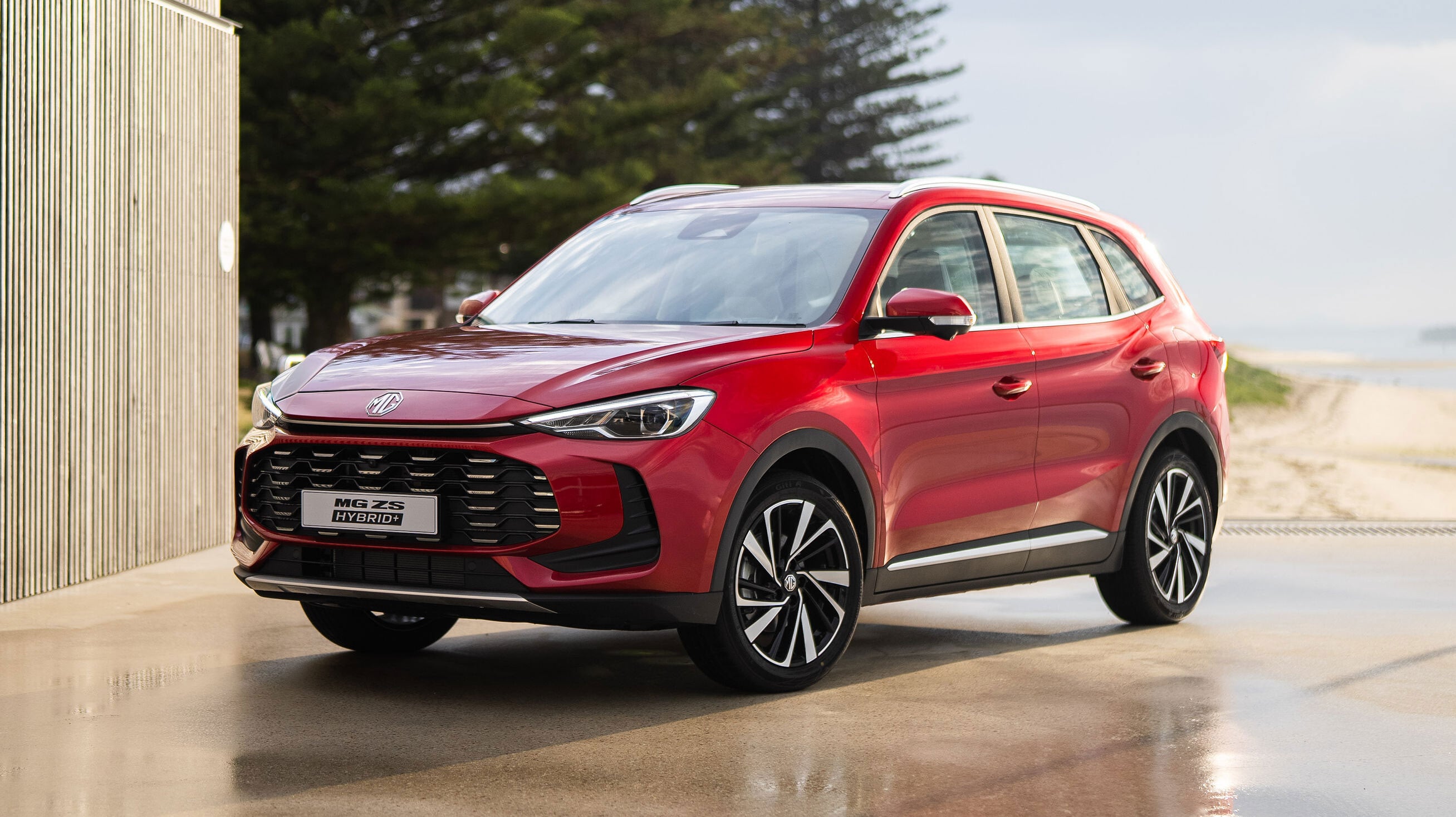
Price: From $29,990 drive away (Excite Hybrid+)
Drivetrain: 1.5-litre four-cylinder hybrid, CVT auto, FWD
Outputs: 150kW/310Nm
Combined fuel economy: 4.7L/100km
Warranty: Seven-year/unlimited km (extendable to 10 years/250,000km with dealer servicing)
Five-year service cost: $1980 ($396 per year)
| Driving | |
| Interior | |
| Practicality | |
| Overall value | |
The overall winner of Wheels Best Small SUV 2025 now includes a wider ZS range which has enhanced its value proposition. The petrol model makes it the cheapest SUV on sale in Australia currently, while the Hybrid+ starts from $30,990 driveaway for the Excite model ($33,990 for the upper-spec Essence).
The ZS range is slightly confusing as the Excite trim doesn’t exist in the petrol models, just the base Vibe and top-spec Essence, but the Essence Hybrid+ is a reasonable $3000 more than the Vibe Turbo that it’s positioned similarly to in the line-up. In addition to the hybrid drivetrain, it has more features like roof rails, LED headlights, larger 12.3-inch displays, a 360-degree camera and three driving modes to better tailor the driving experience to a driver’s tastes. That’s in addition to automatic climate control, 17-inch alloy wheels and the MG Pilot suite of active safety features.
MG’s seven-year/unlimited km coverage is long, but if you service through an MG service centre during that period and beyond, you earn extra warranty up to 10 years/250,000km in total, which is one of Australia’s longest warranty terms. In an extra bit of value for owners, the ZS Hybrid+ costs just $1232 to service over five years, making it quite cheap to run.
The ZS’ cabin is good quality and spacious for its size. The dashboard layout is modern and dominated by the large 12.3-inch touchscreen, which is a bit slow but well featured. The large part-digital driver’s display is basic though, and we wish it was a fully-digital screen like in the larger HS and QS models. Rear seat space is good for the segment, while the boot measures a healthy 443 litres with the seats up and 1457 litres with them folded.
The ZS Hybrid+ is satisfying to drive, with a nimble chassis and reasonable steering. It’s reasonably refined at speed, while its 158kW hybrid system is punchy too. Fuel consumption is rated at 4.7L/100km, which is impressively low, though not quite as good as a Nissan Qashqai e-Power or Toyota Corolla Cross. Still, the ZS is a lot more affordable than those models, and presents the best fuel economy for those wanting to spend a maximum of $30,000 on an SUV.
Even though it’s more expensive than the petrol models, the MG ZS Hybrid+ is a great value choice in the small SUV segment thanks to its low pricing, long standard equipment list, roomy cabin, pleasant driving experience and fuel efficient hybrid drivetrain. We think that the Hybrid+ drivetrain is definitely the one to get.
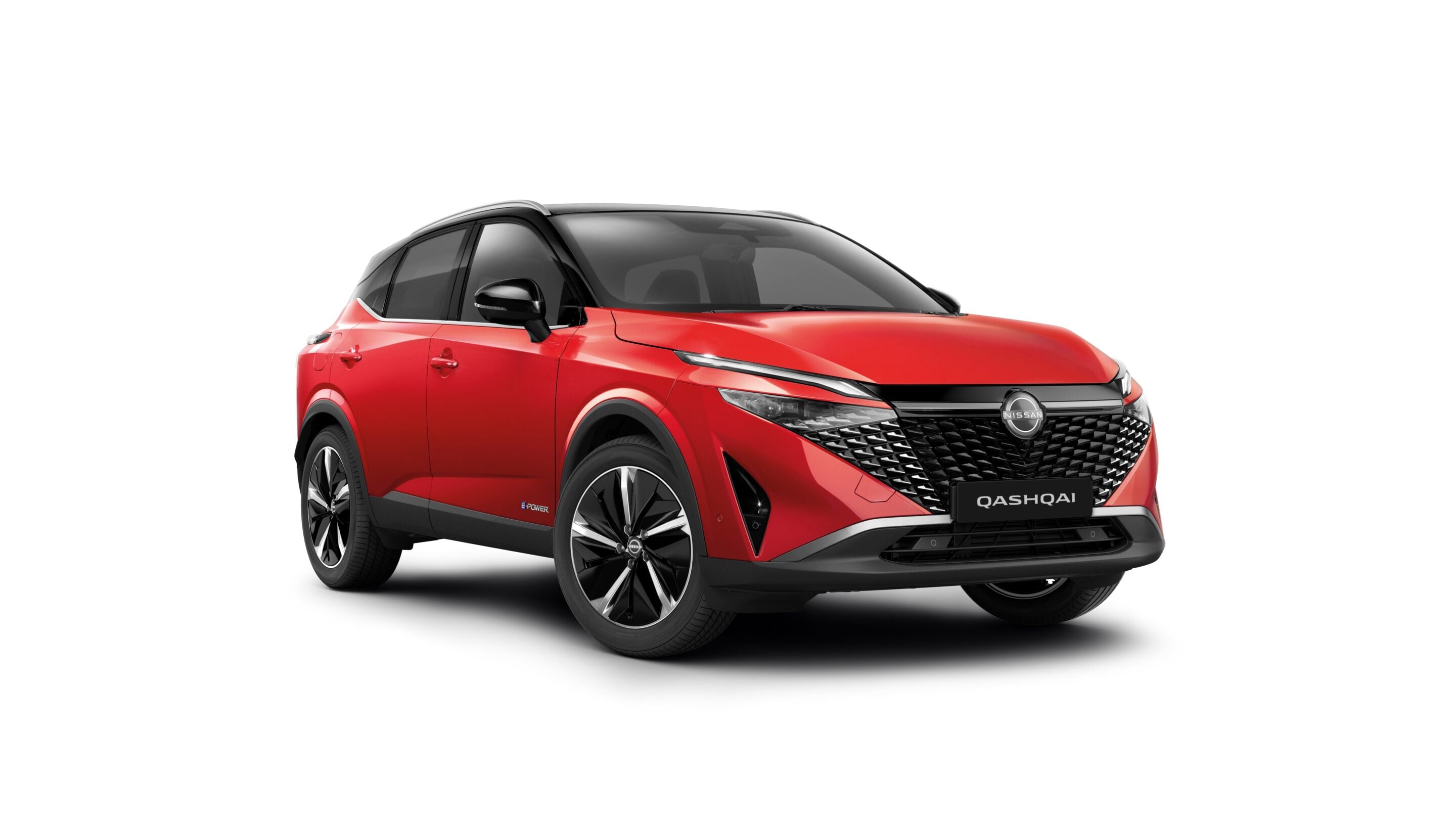
Price: From $45,640 plus on-road costs
Drivetrain: 1.5-litre turbocharged three-cylinder hybrid, CVT auto, FWD
Outputs: 140kW/311Nm
Combined fuel economy: 4.1L/100km
Warranty: Five-year/unlimited km (extendable up to 10 years/300,000km with dealer servicing)
Five-year service cost: $1995 ($399 per year)
| Driving | |
| Interior | |
| Practicality | |
| Overall value | |
The Nissan Qashqai – often nicknamed the cash cow – has been one of Nissan’s most successful products ever, and many rivals owe their existence to it. While smaller SUVs were not a new concept, the Qashqai was unique in that it replaced a regular hatchback, thus likely starting their slow death… Thanks Nissan. But regardless, the Qashqai is a very successful product with over five million sales since 2007 and the latest version is a very good product -– if you can get past the high starting price.
The latest Qashqai has just been gifted Nissan’s latest-generation ‘e-Power’ hybrid system, which is now the only available drivetrain in Australia. It combines a 1.5-litre turbo-petrol engine with an electric motor and small battery, but unlike rivals Toyota and Honda’s hybrid systems, e-Power’s engine never directly powers the wheels, instead, it acts as a generator for the electric motor. Total system outputs are 140kW/311Nm, though it makes an extra 10kW in sport mode.
Part of the latest-generation system is a lower combined fuel consumption figure of just 4.1L/100km, which is an improvement over the previous system’s 5.2L/100km rating and even better than the Toyota Corolla Cross’ 4.2L/100km rating. Because only the electric motor powers the wheels, the Qashqai is smoother than its main rival and feels quite peppy as acceleration from the electric motor is instant. It drives well overall; it’s comfortable and refined, and handles well too.
Elsewhere, the Qashqai presents a high quality and practical cabin for the segment. A new 12.3-inch touchscreen is standard across the range and it’s easy to use though a bit slow, while there is plenty of storage in the front cabin, including a large tray underneath the centre console.
Pleasingly, Nissan does physical buttons really well and no features are hidden in the screen, unlike some rivals. The rear seat is spacious and the boot reasonably healthy at 404 litres with the rear seats up and 1328 litres with them folded.
The biggest potential problem for the Qashqai is its pricing. Because it’s built only in the UK, it costs more to import than, say, a Japanese-built Corolla Cross. Pricing starts at $45,640 plus on-road costs or around $50,000 driveaway for the entry-level ST-L, which is almost $10,000 more than the Corolla Cross. The Qashqai is definitely a better car, but considering the price gap, will buyers agree? We’re not sure. Regardless, the Qashqai is very worth consideration as a hybrid small SUV.
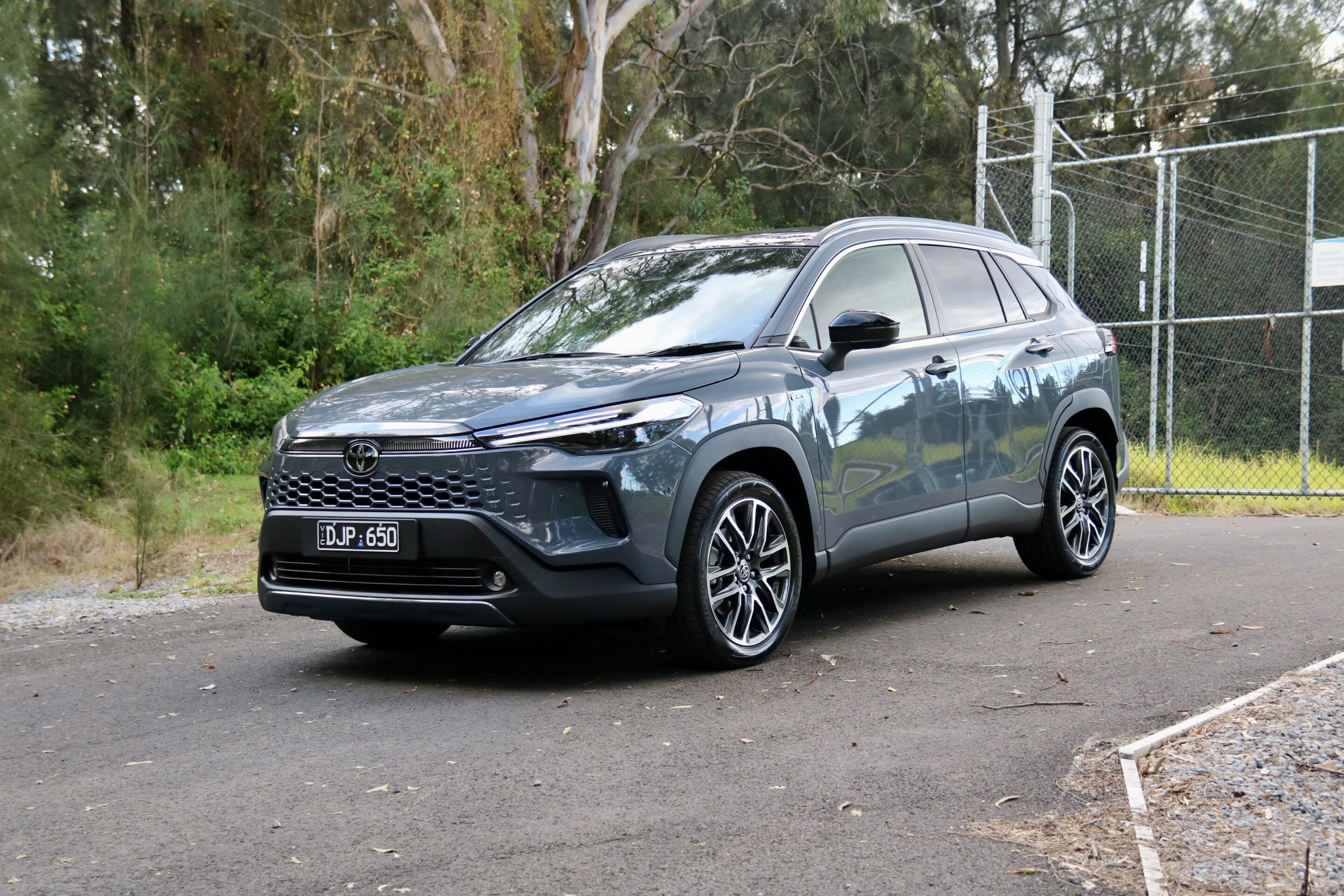
Price: From $37,440 plus on-road costs
Drivetrain: 2.0-litre four-cylinder hybrid, e-CVT auto, FWD or e-AWD
Outputs: 146kW (no peak torque figure provided)
Combined fuel economy: 4.2L/100km
Warranty: Five-year/unlimited km
Five-year service cost: $1275 ($255 per year)
| Driving | |
| Interior | |
| Practicality | |
| Overall value | |
The Corolla Cross is Toyota’s ‘Goldilocks’ offering in the small SUV segment, sitting above the Yaris Cross and below the C-HR in pricing, though it’s actually more practical than both of its siblings. Updated not long ago, the Corolla Cross is now more expensive starting at $37,440 plus on-road costs, but it’s been given more standard equipment across the range, particularly the mid-spec GXL, and somehow it’s now even more fuel efficient rated from just 4.2L/100km.
Four models are on offer in Australia: Entry-level GX, mid-spec GXL, luxurious Atmos and sporty GR Sport, the latter of which is new and features revised suspension and steering for a sportier driving experience. We think that the GXL is the value pick of the range as it picks up a lot of important standard features like roof rails, leather-accented seat trim, heated front seats, rear USB ports, automatic wipers and a larger 10.5-inch touchscreen over the lesser GX.
All Corolla Cross models in Australia use a 2.0-litre hybrid drivetrain making 146kW of power, with power sent to the front wheels in most models, or all-wheel drive with an electric rear axle optionally on the GXL and Atmos, and as standard in the top-spec GR Sport. Regardless of model, the Corolla Cross drives well for the segment with a great chassis, communicative steering and a planted feeling on the road – the latter especially with all-wheel drive models thanks to their independent rear suspension set up, though they annoyingly don’t feature a spare wheel.
The cabin of the Corolla Cross is quite similar in look to the regular Corolla with an almost identical dashboard layout, though the lower centre console was given a new layout in the facelift and is now more practical than before. There’s plenty of cabin space in the Corolla Cross too, particularly in the rear with its tall roofline, while the boot measures from a small 380 litres in the top-spec Atmos AWD to a healthier 425L in the GX and GXL 2WD models.
As you’d expect for a Toyota, the servicing is cheap at just $1,275 for the first five years and servicing at a Toyota dealership extends the mechanical warranty to seven years in total, and the battery warranty to 10 years in total if annual battery checks are performed. It’s clear that while the Corolla Cross is not cheap to buy, its running costs are very low. Plus, it’s practical, great to drive in the segment, surprisingly punchy, well equipped across the range and overall, a great all-rounder.
Price: From $47,200 plus on-road costs
Drivetrain: 1.5-litre three-cylinder hybrid, CVT auto, FWD or e-AWD
Outputs: 100kW (no peak torque figure available)
Combined fuel economy: 3.8L/100km
Warranty: Five-year/unlimited km
Five-year service cost: $3225 ($645 per year)
| Driving | |
| Interior | |
| Practicality | |
| Overall value | |
The Lexus LBX is the brand’s smallest ever product and was the winner of the over $50,000 section of Wheels Best Small SUVs in 2025. Sitting underneath the UX, the LBX is heavily based on the Toyota Yaris Cross, though has completely different styling and a new interior befitting the Lexus badge. The LBX’s cabin quality is generally quite good with ample soft touch materials, and generally high quality materials used throughout.
The rear cabin, however, is small and while the front-drive model’s 402-litre boot is larger than you’d expect (the all-wheel drive car reduces that to just 315L), rear seat space is tight and it’s light on amenities with no air vents, for example (though there are two USB-C charging ports). The LBX’s front cabin is reasonably practical, featuring plenty of storage space, including an under-dashboard tray and door bins that can hold medium-sized bottles.
There are two trim levels of the hybrid LBX offered in Australia: entry-level Luxury and upper-spec Sports Luxury. Both models are well equipped, including 18-inch alloy wheels, LED lighting, synthetic leather upholstery, dual-zone automatic climate control, an electric driver’s seat, a 12.3-inch digital driver’s display, a 9.8-inch touchscreen with live services and a full suite of safety features – the more expensive Sports Luxury then adds leather and suede upholstery, a heated steering wheel, a head-up display and punchy 13-speaker Mark Levinson audio.
As we’ve seen from most other new Lexus products over the past decade, the LBX’s driving experience is quite positive. It’s fun to drive and encourages you to drive it harder, while it’s also very easy to manoeuvre in city driving thanks to its direct steering and good visibility. The ride quality is a bit unsettled at lower speeds thanks to the standard 18-inch wheels, but as you’d expect for a Lexus, it’s still quite comfortable.
If its size suits you, the Lexus LBX is a good option to consider in the small SUV segment. Based on the already well-rounded Yaris Cross, the LBX adds more refinement, a more luxurious feeling inside, more standard features and is even better to drive. It’s not super practical so some may find it to be too small, and it’s not cheap to buy or service, but its hybrid drivetrain is quite fuel efficient.
Price: From $101,900 plus on-road costs
Drivetrain: 1.5-litre turbo four-cylinder plug-in hybrid, eight-speed auto, AWD
Outputs: 227kW/540Nm
Electric range: 66km
Combined fuel economy: 2.1L/100km
Warranty: Five-year/unlimited km
Five-year service cost: $2300 ($460 per year)
| Driving | |
| Interior | |
| Practicality | |
| Overall value | |
One of the smartest moves that Land Rover ever made was taking the luxurious Range Rover package and distilling it into a smaller, more fashionable model. That model was the Evoque, and to date, it’s sold over one million units. Today’s Evoque is the second-generation model and it’s even more luxurious, better equipped, better to drive and much more expensive than generation one.
Pricing starts at $85,400 plus on-road costs for the entry level P250 Hoxton Edition, and the plug-in hybrid P300e Autobiography sits above it priced from $101,900 +ORC. Those are the only two models on offers and familiar with previous Evoque models will be quite surprised given that there used to be some 25+ individual models available. In a move for those previously confused with the line-up, the options list has also been significantly reduced as well.
The P300e plug-in hybrid drivetrain combines a turbocharged 1.5-litre three-cylinder petrol engine with an 85kW electric motor that draws power from a 15kWh battery, giving a WLTP-rated electric range of 62km. Combined with the petrol engine, the Evoque P300e makes 227kW/540Nm, comfortably more than the 184kW/365Nm 2.0-litre turbo-petrol engine. The Evoque’s driving experience is very comfortable, as you’d expect for a luxurious product, and it handles pretty well too. Plus, unlike any of its hybrid rivals, it will also go reasonably far off road if you need it to.
Inside the Evoque is a high quality cabin with lots of exotic materials and big screens that are quite easy to use. The front seats are very comfortable, and the back seat is also reasonably spacious too given the Evoque’s smaller dimensions – two six-footers will be fine, with three fitting at a pinch. The Evoque’s 472-litre boot is good for its size, though it only opens up to 1156L with the rear seats folded.
The Evoque still provides a very comfortable and luxurious experience in the Range Rover line-up. It uses a powerful and efficient plug-in hybrid that offers a good all-electric range, it drives well and its cabin quality is excellent. The boot could be larger, however, and it’s also more expensive than it used to be, with pricing starting at over $100k not including on-road costs or optional extras. However, luxury isn’t cheap and if you get past those issues, there’s a lot to like about the Range Rover Evoque P300e.
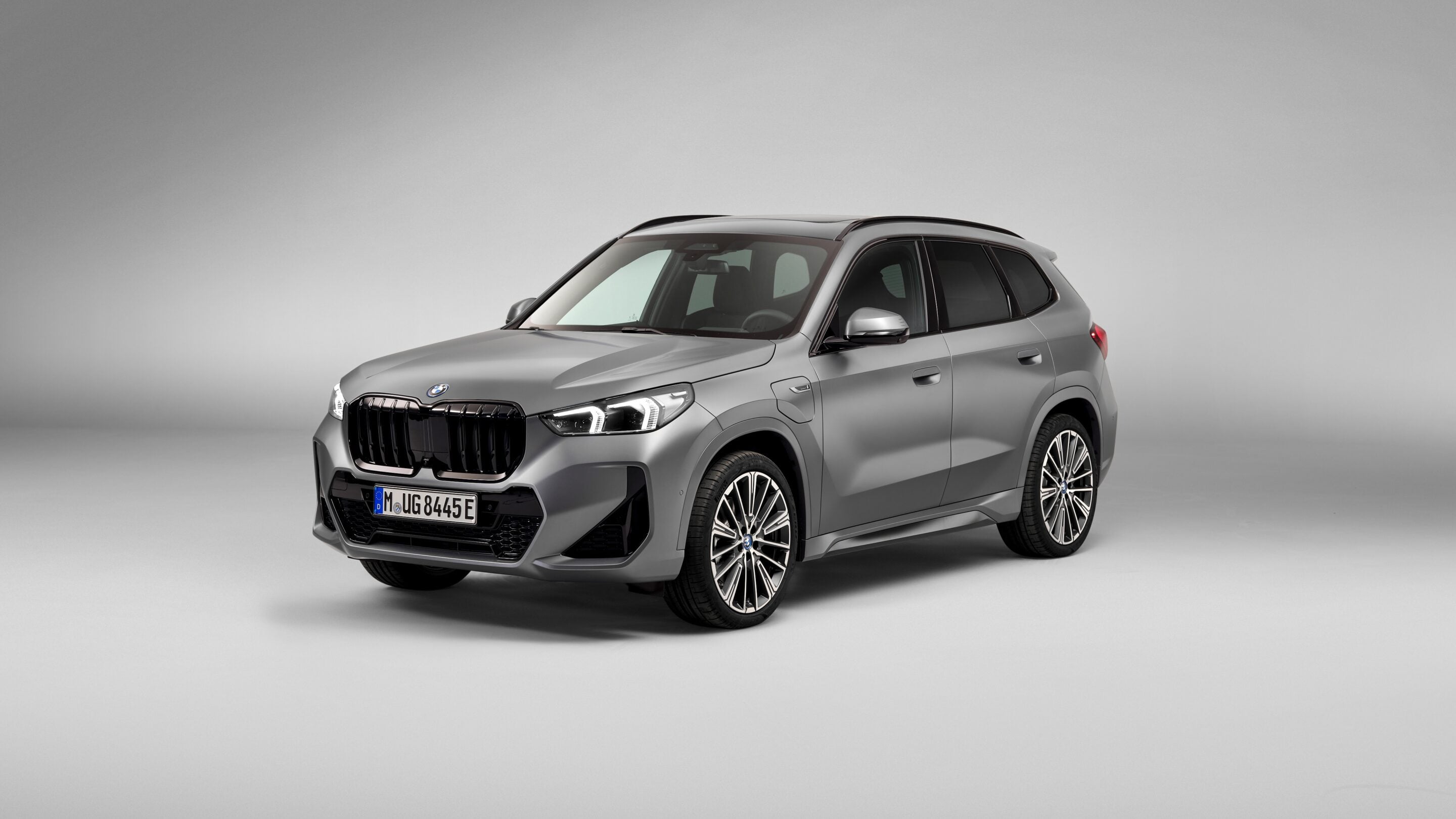
Price: From $79,500 plus on-road costs
Drivetrain: 1.5-litre turbo three-cylinder plug-in hybrid, seven-speed dual-clutch auto, AWD
Outputs: 180kW/477Nm
Range: 78km
Combined fuel economy: 2.1L/100km
Warranty: Five-year/unlimited km
Five-year service cost: $2495 ($499 per year)
| Driving | |
| Interior | |
| Practicality | |
| Overall value | |
BMW’s smallest SUV is now in its third generation, and this one might be its best yet. For starters, it’s offered with a wide range of powertrains: petrol, mild-hybrid, plug-in hybrid and electric, and each model offers competitive performance and efficiency. It’s also high quality inside, quite well equipped across the range and more practical than previous models too. While the X1 range starts at $66,700 plus on-road costs for 2026, the plug-in hybrid variant asks $79,500 +ORC, which is curiously $2000 more than the all-electric iX1.
The plug-in hybrid is the newest drivetrain offered in the X1 range, and launched as part of a recent 2026 model year update. It combines a 1.5-litre turbo-petrol engine with an 80kW electric motor and 16.3kWh battery for a WLTP claimed 78km of electric driving range. The system makes keen 180kW/477Nm peak outputs, making the X1 xDrive25e feel quite pokey from behind the wheel.
As the xDrive part of its name suggests, the X1 PHEV is all-wheel drive, and traction is excellent, as is its handling. On the road, the X1 presents a well-tuned ride quality and feels solid at speed. The plug-in hybrid’s range is good, though its peak charging speed could be improved – it only offers slower AC charging, so full charges will take longer than if it were able to be DC fast charged. BMW claims combined fuel consumption of just 2.1L/100km if charged, though even if you don’t charge it, you’ll likely still see under 6L/100km.
Inside, the X1 features excellent quality materials and plenty of technology, including the latest version of BMW’s iDrive operating system. Unlike larger BMW models, the centre display is only a touchscreen, which can be a bit frustrating at speed as the screen’s menu structure can be a bit confusing and the icons are small. But the system is fully featured and quick, plus the screen quality is excellent.
The X1’s is larger and more practical practical than you’d expect for a product that fits into the small SUV segment. The front cabin features big door bins, a funky centre console bridge and a huge back seat that two tall adults would be quite comfortable sitting in. The boot measures a large for the segment 490 litres – that’s 50L less than the X1 but still a good size, and a large 1495 litres of space is unlocked by folding the rear seats.
Overall, the BMW X1 is a strong contender for the best hybrid small SUV. It’s not cheap to buy, but is a well-rounded product that deserves strong consideration thanks to its practicality, good range and performance, long list of standard equipment and well-tuned safety features.
Looking to get into a brand-new small SUV? Our stories below will guide you to the model that best suits your needs:
