Feast your eyes on the AM-RB 001 road car; the ride that Aston Martin and Red Bull hope will put an LMP1 to shame.
RED Bull’s F1 star, Aussie hero, and all-round great guy Daniel Ricciardo will have a mental new company car pretty soon. Aston Martin has taken the wraps off its secret AM-RB 001 road car, built in conjunction with five-time Formula 1 World Constructor’s Championship winners, Red Bull Racing.
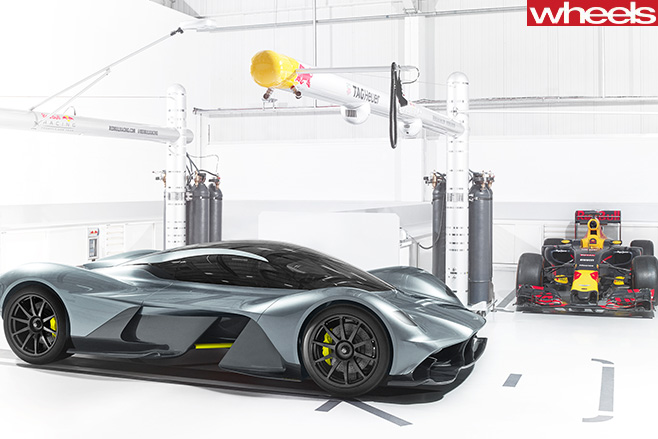
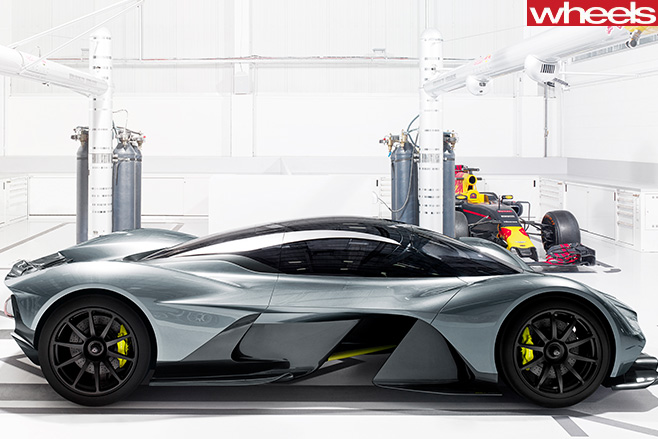
Although we’ll have to wait for the final specs, we know that the AM-RB 001 will use a mid-mounted, naturally aspirated V12 engine which will drive the rear wheels – possibly in conjunction with a KERS-style hybrid assistance system: “The honest truth is that we are still evaluating a whole load of potential solutions,” Newey said, “what I can say is that central to the concept is that the car should be small, light and efficient.”

The stripped-out version will, Newey promises, offer equivalent performance to an LMP1 race car around a lap of Silverstone, but he’s keen to say that the road-going version will be almost as fast: “Many parts will be common, but obviously it will have an interior in it and won’t have quite the big wings of the track car.” To put those numbers into perspective, that means it will have to be around 20 seconds a lap quicker that a Porsche 918 or a McLaren P1.

VOLVO has embarked on a model-renewal overhaul as part of a multi-billion dollar investment splurge by owner Geely, that will make the latest Volvo XC90 large luxury SUV released only last year, its oldest model inside four years.
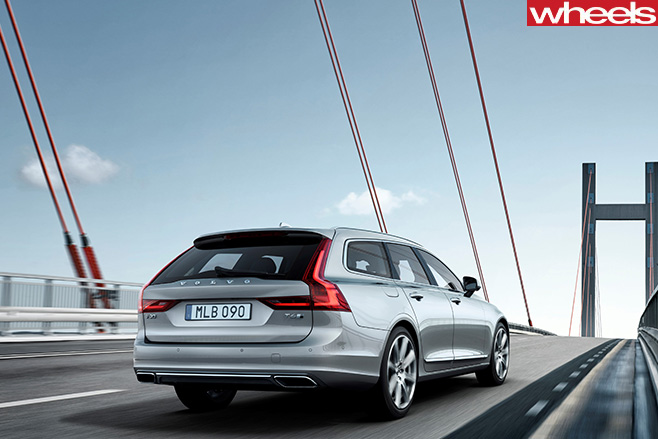
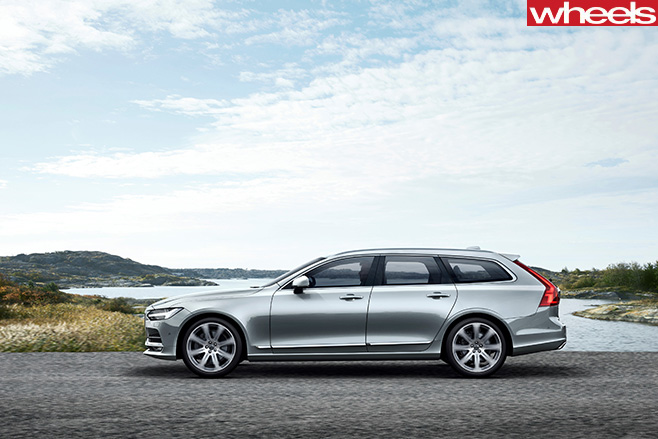
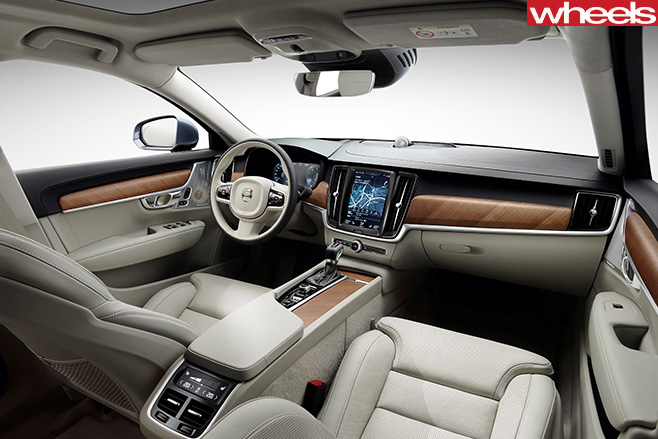
Hot on the heels of the V541-series S90 sedan’s October launch will be the V542 V90 wagon by mid 2017. Replacing the S80 and V70 respectively, both will also be joined around the same time by the racier R-Design sports kit variants, as well as the T8 ‘Twin Engine’ petrol-electric eco/performance hybrids.
Additionally, later next year should see the jacked-up V543 V90 Cross Country, Sweden’s answer to the Audi A6 Allroad, to further boost Volvo’s large-car assault on the German luxury establishment. This time it will serve as the replacement for the XC70, which is no longer in production.
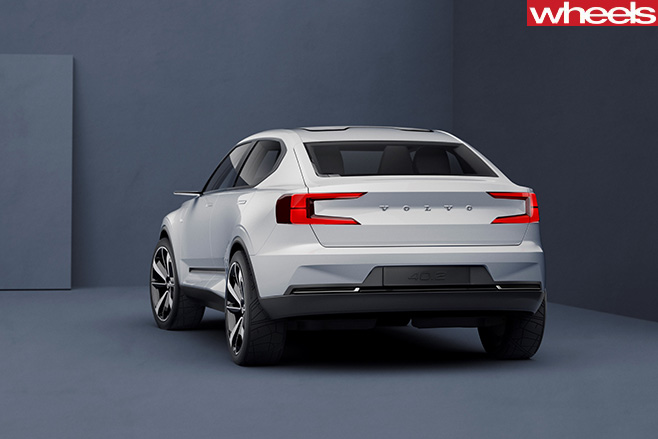
That will be followed not long afterwards by the S40 sedan and V40 hatch offshoots, targeting a host of competitors including the Mercedes-Benz CLA and A-Class; BMW 1 Series; Lexus CT and the Audi A3 Sportback. All three of these 40 Series models will usher in Volvo’s GEP3 three-cylinder petrol powertrains, starting with a 1.5-litre unit, and most likely downsizing to 1.2 and/or 1.0-litre alternatives later on.
Note that full BEV battery electric as well as plug-in hybrid spin-offs of these are also in the pipeline, and slated to surface sometime in 2019.
Like their larger SPA-based siblings, the Cluster 60 cars will also be larger, lighter, and stronger than before, with a significant rise in passive (such as boron steel in the superstructure), as well as active, safety. These will also use the VEA Drive-e family of modular 1.5 and 2.0-litre turbo petrol and 2.0-litre turbo-diesel powertrains, as well as the now-inevitable T8 petrol-electric hybrid options.
Finally, a word on Polestar: We hear that the VEA 2.0-litre petrol engine is capable of pumping out in excess of 300kW of power; with one insider suggesting that nearly 400kW is possible. Volvo is keeping mum on whether it will challenge the BMW M, Mercedes-AMG, and Audi RS hotshots, but if performance figures like that are possible, the Swedes would be silly not to try.
Volvo New Model Timetable S90 – October 2016 V90 – Q2 2017 V90 Cross Country – end of 2017 XC40 – end of 2017/early 2018 S40/V40 – 2018 XC60 – 2018 S60/V60 – late 2018/2019
THE company behind Tesla’s autopilot function, Mobileye, has admitted its technology wasn’t designed for the type of incident which resulted in a driver dying in the USA recently.
The tech company released the statement to website Tech Crunch following the death of Ohio resident and former US Navy engineer, Joshua Brown, who was using Tesla’s autopilot feature at the time of the collision.
Mobileye revealed the platform is only designed to pick up cars travelling in the same direction as the vehicle, and not obstructions which cross its path suddenly – as was the case in the devastating fatality, when a semi-trailer pulled across the Tesla Model S’s path on a central Florida highway.
The incident has sparked an investigation into Tesla’s Autopilot program by the National Highway Traffic Safety Administration in the US.
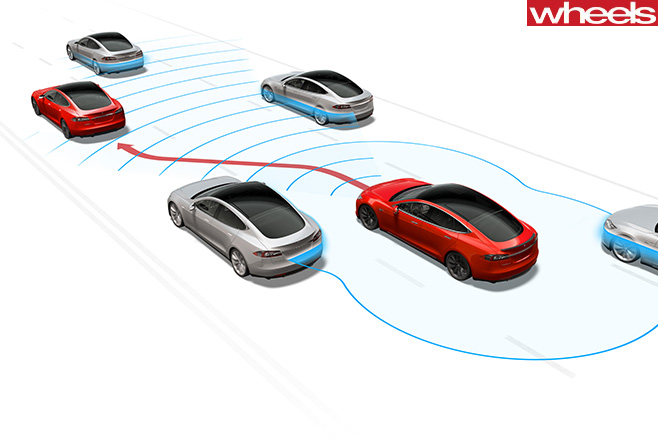
Meanwhile, claims circulate that the driver of the car was not watching the road while using Autopilot, which Tesla explicitly advises against.
However, now Mobileye has said its technology was not designed to deal with the kind of situation that resulted in the crash.
“We have read the account of what happened in this case,” the statement said.
“Today’s collision avoidance technology, or Automatic Emergency Braking (AEB) is defined as rear-end collision avoidance, and is designed specifically for that.”
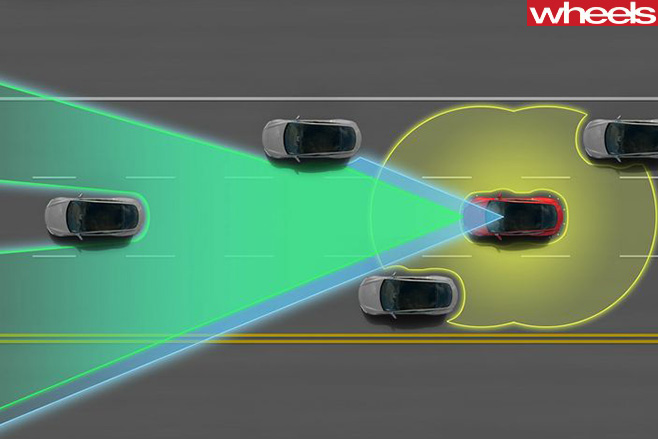
“Mobileye systems will include Lateral Turn Across Path (LTAP) detection capabilities beginning in 2018, and the Euro NCAP safety ratings will include this beginning in 2020.”
Tesla has stressed multiple times its Autopilot feature, despite its name, is not fully autonomous.
“Autopilot is getting better all the time, but it is not perfect and still requires the driver to remain alert,” it said in a statement.
Mobileye also announced on Monday the company will also work with Intel and BMW to develop fully autonomous vehicles by 2021.
What HSV is to Holden, Alpina is to BMW – and the fastest, tuned versions of the 3 Series and 4 Series have officially launched Down Under.
Alpina will initially become available through Melbourne dealerships Doncaster BMW and Bundoora BMW as the outlets’ owners The In Motion Group have been named official distributor of the range.
First to arrive in November and with indicative $160,000 pricing will be the BMW Alpina B4 bi-turbo coupe, which is essentially a $99,500 435i coupe with its 3.0-litre turbocharged six-cylinder tuned to produce 301kW and 600Nm.
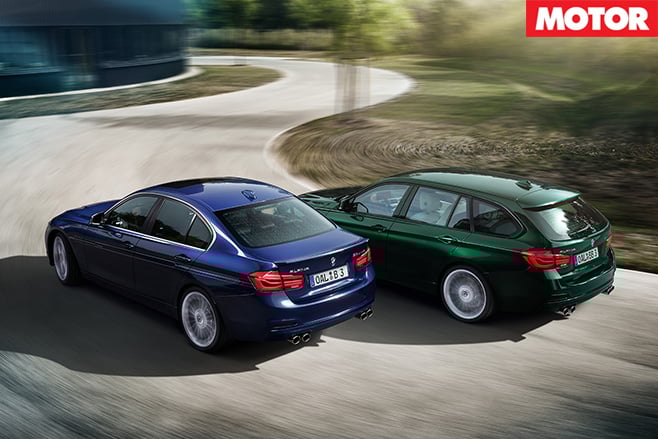
The three-tenths-slower BMW Alpina B4 bi-turbo convertible will follow shortly after the coupe, but the most exciting arrivals will be the BMW Alpina B3 bi-turbo sedan and particularly the Touring that complete the range in Oz for now.
Given that Australia does not get the 335i Touring available overseas, the B3 bi-turbo will provide Audi RS4-beating performance in a wagon bodystyle with virtually no rivals in this country.
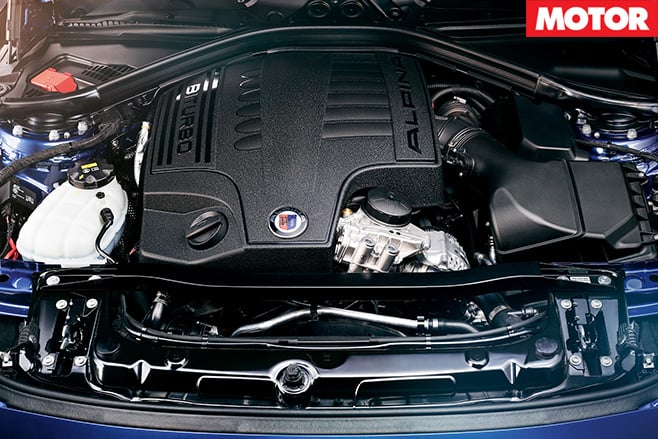
All will utilise an eight-speed ZF automatic.
Pricing for the rest of the range will fit between $155,000 and $175,000 and each Alpina package will include the full Alpina badging, front and rear lip spoiler and alloy wheel package available overseas. There are also “significant modifications” to the chassis, suspension, exhaust and interior components according to Alpina.
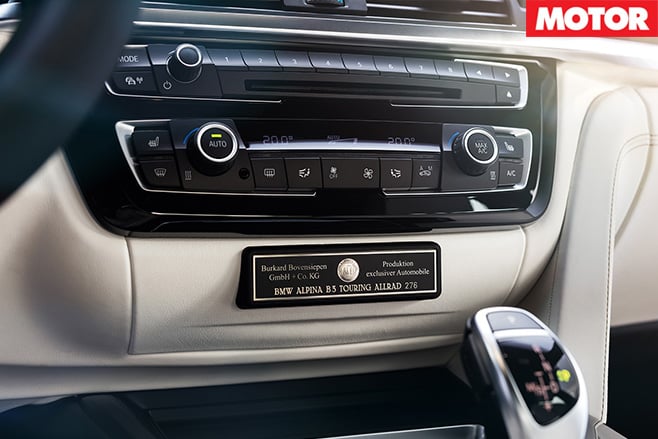
BMW Australia has welcomed Alpina to Australia, commenting that the models “combine bespoke tailored luxury and performance features for a grand touring drive” but it has said it will not cover warranty of the models. Instead Alpina buyers will be covered by a two-year international BMW warranty.
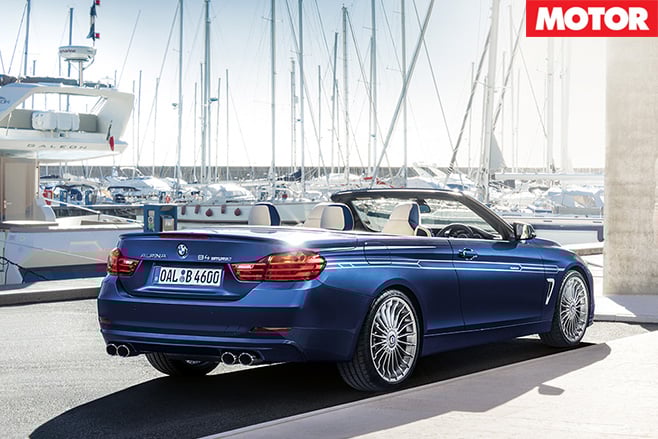
Eight demonstrator models will land in the two dealerships in November following ADR compliance approval.
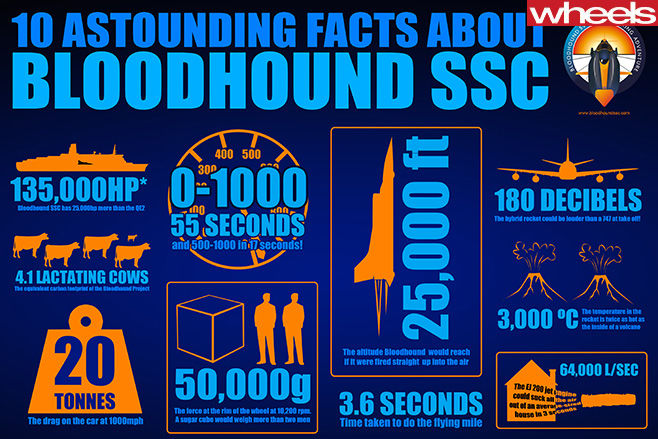
Any vehicle designed with the sole purpose of breaking the World Land Speed record has to be a fairly special piece of kit. Here are 17 fast facts you can recite to your mates at the next BBQ.
The Bloodhound SSC team recently announced that they are looking to eclipse the 1287 km/h (800 mph) record in October next year and go on to break the 1609.3 km/h (1000 mph) barrier by 2018.
That’s no easy feat, and you can rest assured that any vehicle capable of those speeds doesn’t have your Skoda’s cupholders or run on everyday Dunlops. In fact, the SSC will hit 1600 km/h rolling on solid aluminium discs – technically wheels, not tyres – each weighing 95kgs. The Bloodhound’s engineers anticipate that the wheels will spin at more than 10,200 rpm at full chat (that’s four times faster than an F1 car) and be subject to over 50,000G. Struth!
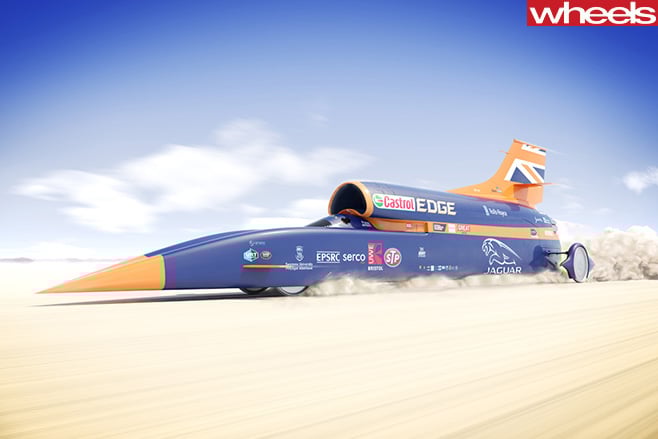
- The Rolls-Royce EJ200 jet turbine produces as much thrust (90kN) as Eurofighter Typhoon while the rocket produces 120kN – more than eight times the power of an entire Formula One grid.
- Andy Green, the RAF Wing Commander who drove the current record-holding Thrust SSC and will pilot the latest vehicle will have to freewheel down to 1300 km/h before the air brakes can deploy, slowing the Bloodhound using its 20 tonnes of air resistance. Only at around 1000 km/h can the parachutes be deployed, any earlier and they’ll be ripped away by the force. The friction brakes are only applied around 320 km/h; while fast, it must seem like an eternity.

- Bloodhound has the equivalent of 100,670kW (equal to 170 F1 cars) and employs a 560kW, 4.2-litre V12 race engine just to drive the engine’s oxidizer pump.
- The steering wheel is made of titanium and has been custom-shaped using 3D printing techniques to fit Andy Green’s hands.
- The car will accelerate from 0-1000mph (1609.3km/h) in just 55 seconds, at which time it will be covering a mile every 3.6 seconds and outrunning its own sound waves.
- Each run, the Bloodhound will swallow 390 litres of fuel and consume 64,000 litres of air each second at full throttle (enough to suck out all the air of an average house in less than three seconds.).
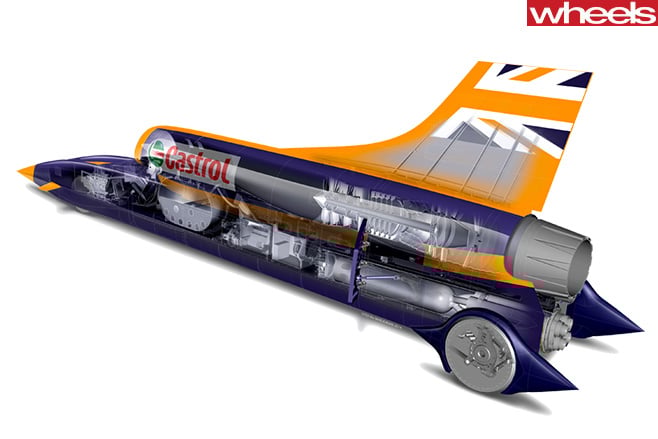
- To reach V-Max, Andy will activate the Bloodhound’s rocket motor from a single cockpit switch, burning through almost a tonne of hydrogen peroxide oxidant and a tonne of highly combustible rubber
- The windscreen is designed to withstand an 800g bird strike at speeds of 1609,3 km/h (1000 mph).
- The parachute provides 9 tonnes of drag (more than a double-decker bus,) which means Green will be decelerating at 106 km/h (66mph) per second – which would feel like a crash in most people’s books.
- If the fit literally does hit the shan, Green has enough oxygen supply for three five-minute runs, with an extra half-hour in reserve.
- At speed, the temperature inside the rocket (3000C) will be twice as hot as the inside of a volcano.

- The heat in the interior cockpit will reach as much as 150C, due to the combined temperature from the desert sun, the Cosworth engine, the EJ200 rocket and the jet engine.
- The floorpan of the car is made from solid steel, as the sandblasting from the desert floor would destroy any other material and not survive each of the 12-mile runs.
- With more than 135,000 horsepower at his disposal, Green’s Bloodhound SSC boasts 25,000hp more than the QE2 Ocean liner.
- At 180 decibels the hybrid rocket could be louder than a 747 at take-off.
- Last but by no means least, the Bloodhound Project will produce the same carbon footprint as 4.1 lactating cows. Full gas!
Mission Control: Hakskeen Pan
After the shakedown tests are successfully completed, the Bloodhound SSC will then be transported first by air, then by road, to the team’s desert base at Hakskeen Pan, South Africa, via 16 container-loads of equipment setting up a self-contained village – complete with workshop and TV studios.
The point at which SUVs become more popular in Australia than passenger cars is edging ever closer with the latest VFACTS data released by the Federal Chamber of Automotive Industries revealing the gap is fast reducing.
While passenger cars still outsold SUVs during the month of June, with 53,832 new passenger cars compared to 46,011 new SUVS sold, it’s when you compare the figures to the same period last year that the cracks in the passenger car market start to appear.
Compared to the four-week period of June last year, the passenger car market experienced a decrease of 2554 units (4.5 percent) while the SUV segment was up by 3755 units (8.9 percent) in the same period.
And while each segment is made up four sectors; private sales, business sales, government fleet vehicles as well as rentals, digging down into the private sector of each segment highlights the change in Australian consumer behaviour.
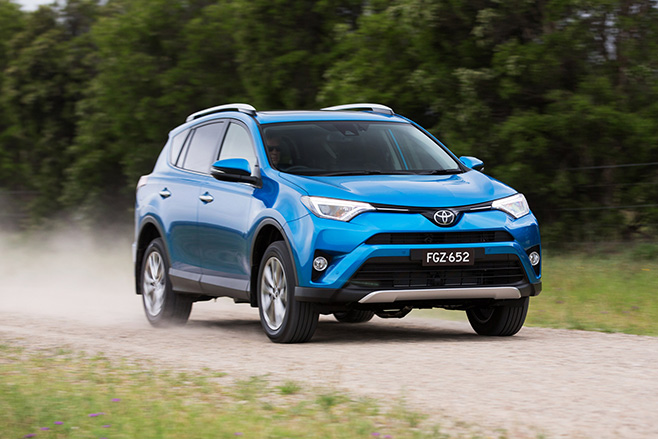
The private passenger car segment recorded a decline of 1797 units (5.2 percent) over the same period in 2015, while at the same time the number of SUVs sold to Australia’s private sector grew by 1019 units, which represents at 3.7 percent increase over the same 2015 period.
And as for which vehicles Australian consumers are purchasing, for the month of June, Mazda’s CX-5 outsold any other SUV with 2643 new units changing hands in the four-week period, a result which is reflected in the year-to-date figures also, with 12,593 new CX-5-badged SUVs sold in the first six months of 2016.
Next in line for June was Mitsubishi’s ASX (2182 units) followed by Toyota’s RAV4 with 2088 new units sold. RAV4 trails Mazda’s CX-5 in the year-to-date figures with 9728 units sold in the first six months of this year, followed by the Hyundai Tucson with 9609 units with Nissan’s X-Trail hot on its heels at 9426 units.
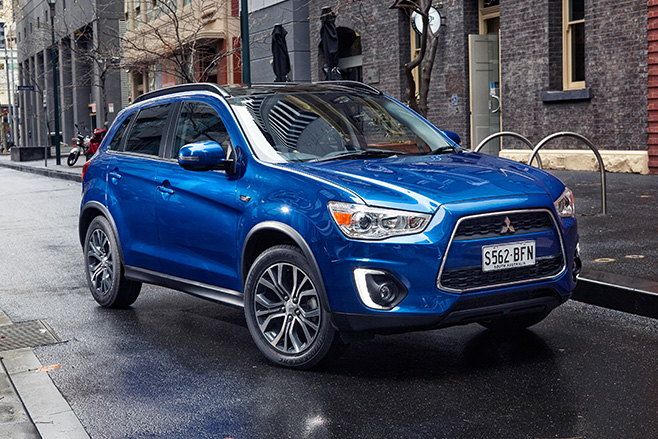
With more and more manufacturers jumping on the SUV bandwagon, the country’s most popular brands don’t necessarily reflect the individual vehicles purchased. For the month of June, Australia’s most popular SUV brand was actually Toyota with 13.4 percent of June’s market share (6186 of the total 46,011 units). Second in line was Mitsubishi (10 percent of the share with 4584 units) followed by Mazda in third place with its 4571 SUVs sold making up 9.9 percent of the month’s market. Nissan came a close fourth with 4280 new SUV units moved in June for a 9.3 percent share of sales.
Interestingly, it’s a different story again for brand market share when you consider the year-to-date figures. Toyota remains top-dog for the first six months of 2016, with 14.3 percent of the half-yearly market share. Mazda, with a 10.2 percent share is in second place, with Nissan in third on 9.3 percent.
TOP 10 SUVS FOR JUNE 2016
| Rank | Model | Sales |
| 1. | Mazda CX-5 | 2643 |
| 2. | Mitsubishi ASX | 2182 |
| 3. | Toyota RAV4 | 2088 |
| 4. | Nissan X-Trail | 1908 |
| 5. | Mazda CX-3 | 1790 |
| 6. | Holden Captiva | 1741 |
| 7. | Honda HR-V | 1696 |
| 8. | Hyundai Tucsonu00a0(2015) | 1481 |
| 9. | Mitsubishi Outlander | 1413 |
| 10. | Toyota Prado | 1357 |
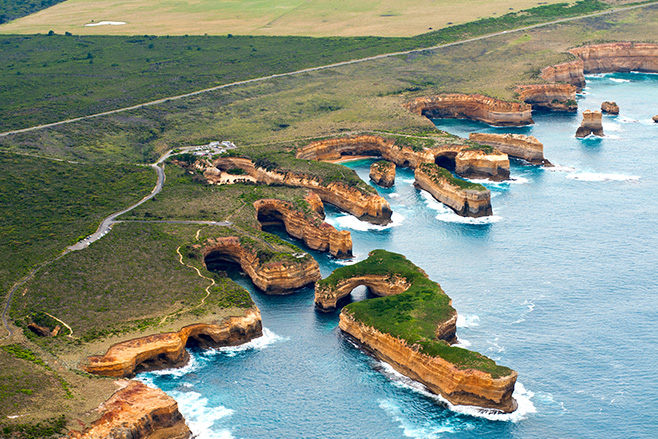
1. THE GREAT OCEAN ROAD, AUSTRALIA
One of Australia’s most famous tourist roads, the Great Ocean Road is on the National Heritage List. The 243km stretch of coastal road connects Torquay and Allansford in Victoria. From war memorials to landmarks such as the Twelve Apostles, this road is a popular destination and can be traffic-mayhem on weekends.
2. HIGHWAY 1, BIG SUR, CALIFORNIA
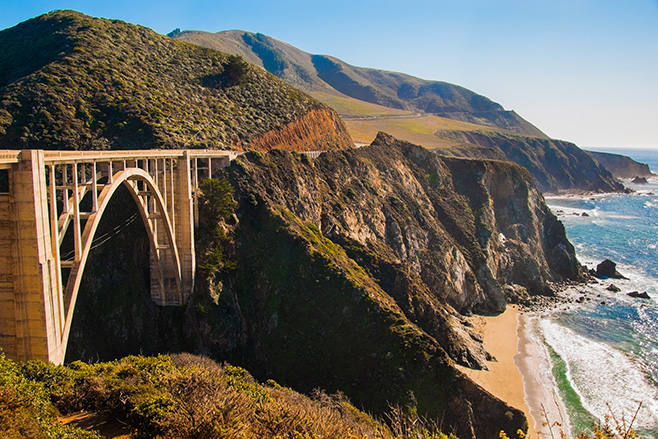
The 140km-odd road is one of America’s most coveted highlights, right up there with Time Square and Yellowstone National Park. Surrounded by the rugged and beautiful scenery of the Californian coastline, Big Sur takes about two hours to complete and is dotted with plenty of hidden and spectacular sights. For those who like adventure, explore some of the side-tracks. If you choose to stick to Highway 1, be prepared for tourist traffic and use the opportunity to soak up the scenery.
3. ATLANTIC ROAD, NORWAY
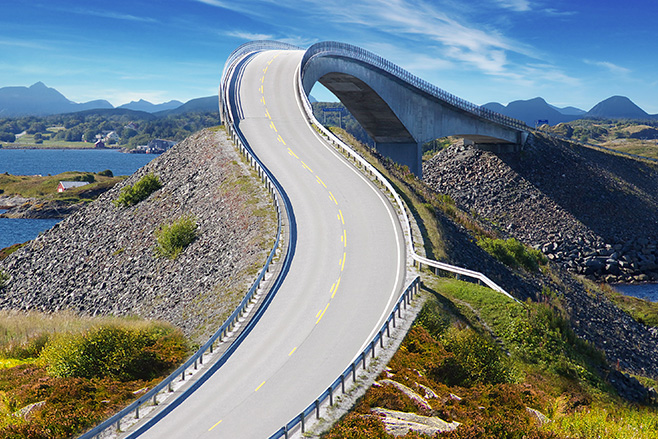
Travelling more than eight kilometres through an archipelago in Norway, there’s no question the Atlantic Road is one of the most scenic drives on earth. Travelling over the Norwegian Sea, where waves crash over the road during storms, the road links the towns of Kristiansund and Molde in a curvy, wave-like structure which consists of eight bridges.
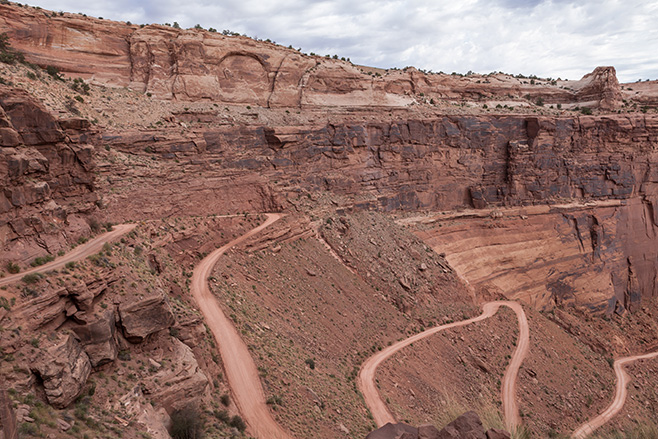
4.WHITE RIM ROAD, CANYONLANDS NATIONAL PARK, UTAH
If four-wheel-drive adventures are your thing, then this road is for you. Travelling 115km in the Canyonlands National Park in southern Utah, USA, the loose dirt-soaked, sandstone formations and steep climbs make this a trip for high-clearance four-wheel-drives or mountain bikes. It takes three days by capable vehicle or four days by mountain bike, and is impassable in parts during wet weather where flooding is caused.
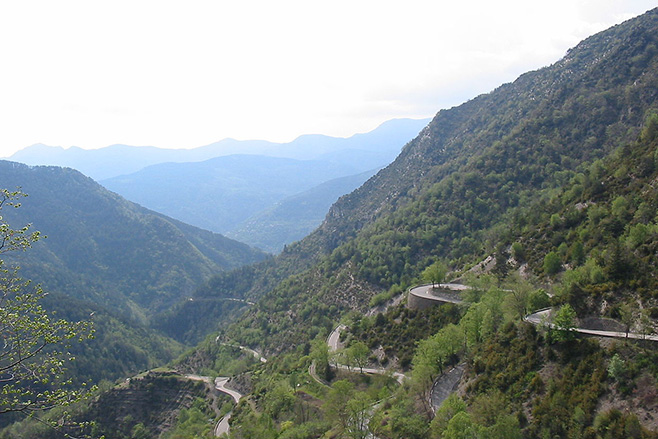
5. COL DE TURINI, FRANCE
Dubbed as one of the most scenic drives in the world, Col De Turini is a mountain pass through the French Alps. Full of hairpin turns and winding up mountains, it’s far from the safest road, but certainly one for the avid driver. The road is open for most of the year, except in the depths of winter when snow can deem roads unpassable.
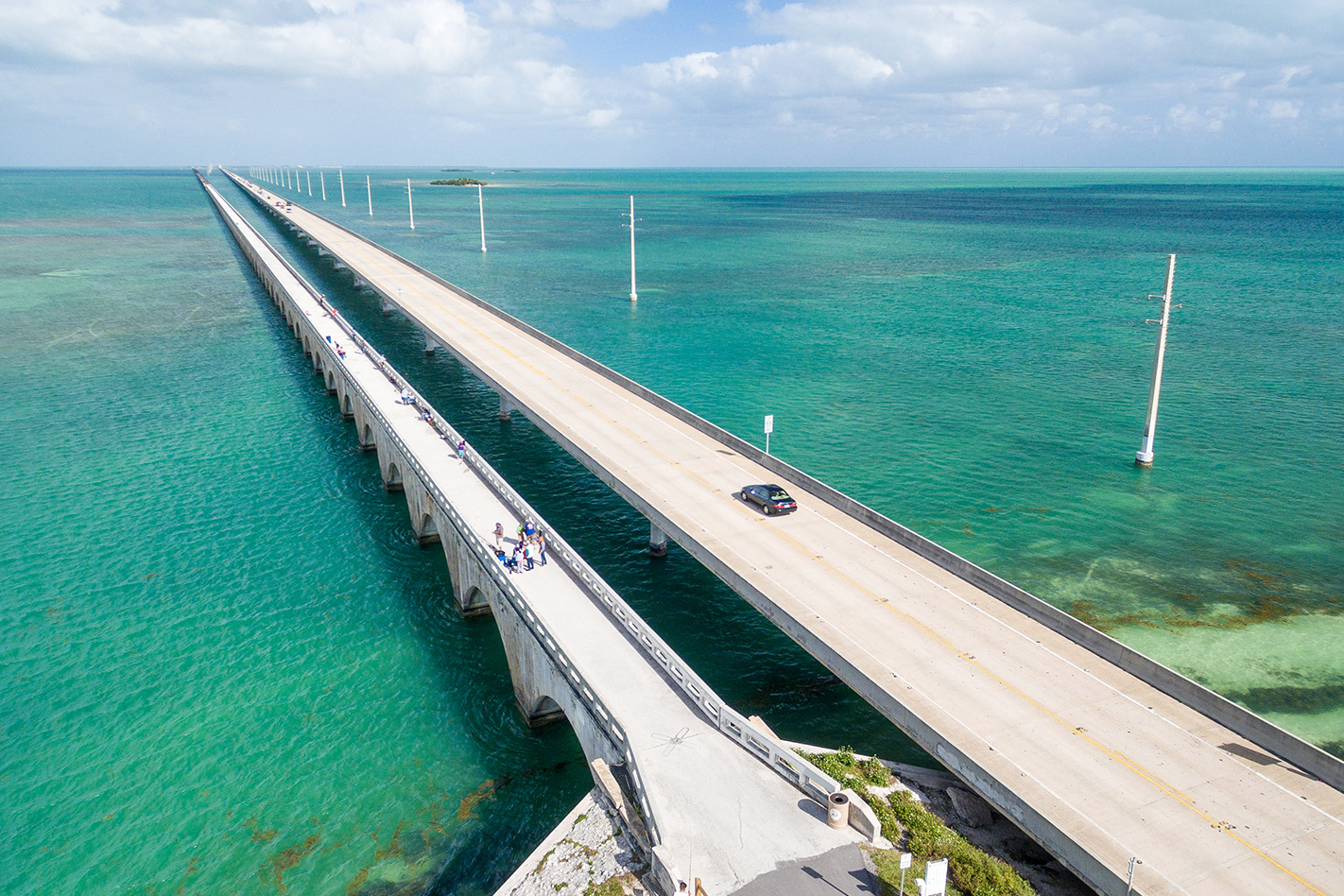
6. SEVEN MILE BRIDGE, FLORIDA KEYS
Because who doesn’t want the chance to drive 10 kilometres across one of the world’s longest bridges? There are two bridges size by side in Monroe Country, Florida, connecting Knight’s Key to Little Duck Key, one a pedestrian bridge and the other forming part of the spectacular US Route 1 Highway, which stretches from Key West, Florida to New England.
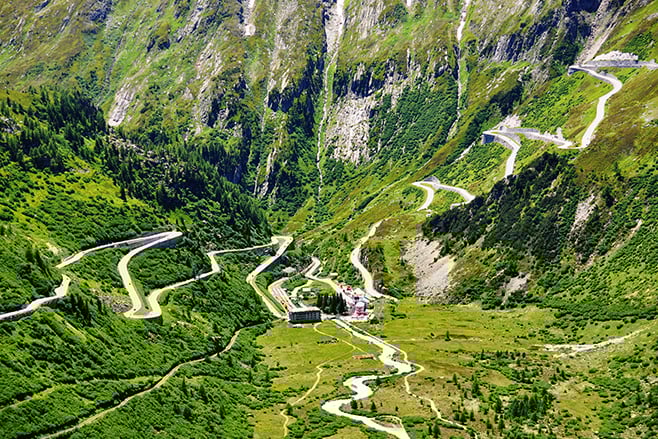
7. FURKA PASS, SWITZERLAND
Located in one of Switzerland’s coldest, snowiest regions, the Furka Pass travels up a mountain in the Swiss Alps and is dubbed one of the world’s most exhilarating drives as one of the highest mountain passes in the Alps. Linking the Urseren Valley with Goms, the road is made up of hairpin bends, elevations and steep climbs, and offers plenty of photo opportunities along the way. It was made even more famous thanks to Aston Martin DB5 vs. Ford Mustang car chase sequence in the classic James Bond film: Goldfinger (1964).
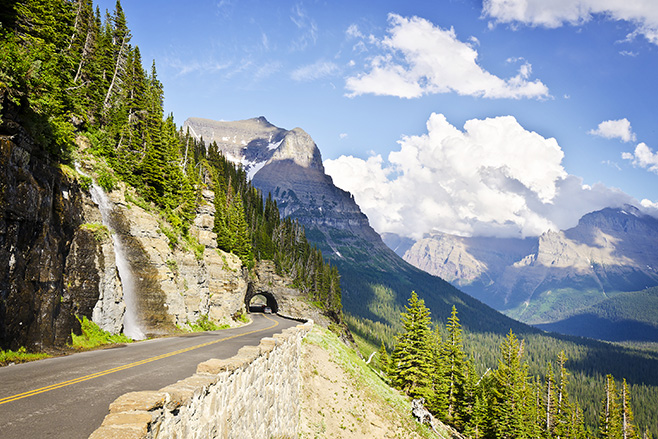
8. GOING-TO-THE-SUN-ROAD, GLACIER NATIONAL PARK, MONTANA
Located in the Rocky Mountains, the Going-to-the-Sun Road is an 80km road that travels from east to west of the Glacier National Park. While open from June to October, during the colder seasons, the road can also suffer from severe snow fall and become difficult to snowplough. From glacial lakes, cedar forests and alpine viewpoints, there’s plenty of scenery to see.
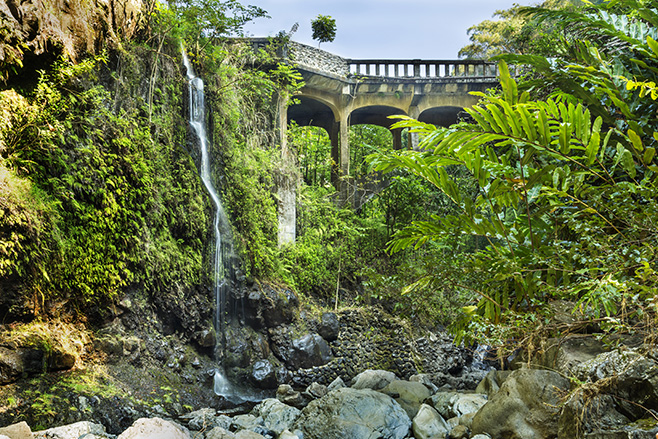
9. HANA HIGHWAY, MAUI, HAWAII
The narrow and winding road, which is also made up of more than 50 bridges, passes through some of the lush tropical rainforest of the Hawaiian island of Maui. The popular attraction passes several waterfalls and attractions. But be aware of the many ‘Keep Out’ signs, warning tourists off of private property.
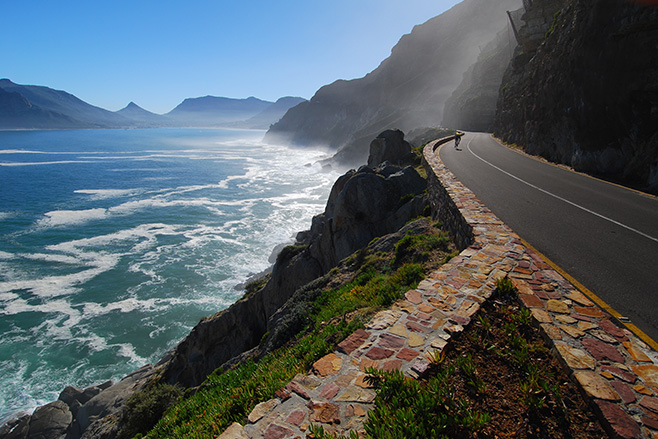
10. CHAPMAN’S PEAK DRIVE, CAPE TOWN, SOUTH AFRICA
Winding between Noordhoek and Hout Bay, along South Africa’s Atlantic Coast, Chapman’s Peak Drive is a spectacular marine drive. Chappies – as it’s affectionately known – travels along a vertical cliff face of Chapman’s Peak Mountain, and isn’t a trip for the faint hearted. Now open as a toll road, the path has been closed several times due to falling mountain debris making the road too dangerous to travel.
And another 10 – just for fun…
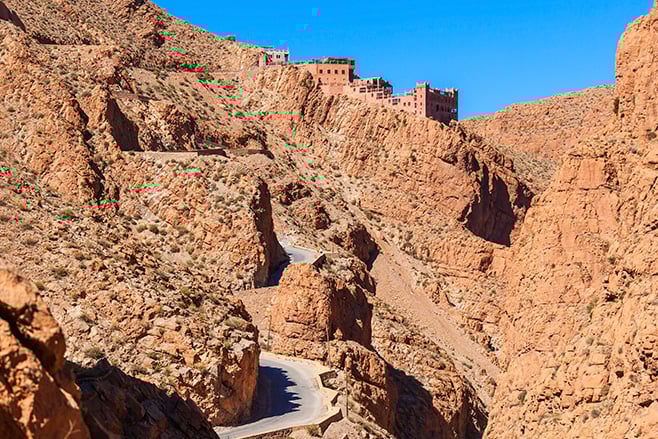
11. Transfagarasan Highway, Romania 12. Sani Pass, KwaZulu-Natal, South Africa 13. Touge Roads, Mount Fuji, Japan 14. Iroha-zaka, Japan 15. Trollstigen, Norway 16. Highway 99 – Sea to Sky Highway, British Columbia, Canada 17. Karakoram Highway, China and Pakistan 18. Tianmen Mountain, China 19. Dades Gorges, High Atlas, Morocco
THE WINNERS
Winner: Hyundai
An eye-widening 6432 sales of the Hyundai i30 hatchback catapulted the Korean brand to its best month ever – 12,300. The smaller Accent contributed notably with 1772 sales (up 53% on last year), with the Tucson (1481) and Hyundai Santa Fe (1303) SUVs chipping in with healthy results. Hyundai is comfortably ahead of Holden in third place after the first half of 2016.
Winner: Kia
Hyundai’s sister brand is also enjoying a growth spurt – with last month’s sales up 41 percent on June 2015. Multiple key performers for June were the Sorento (+125% to 519 units), Sportage (+55% to 1203), Optima (+79%), Rio (+24%) and Cerato (+23%). Its market share has jumped from 2.9 to 3.6 percent compared to this time last year.
Winner: Posh SUVs
High-end SUVs continue to ride high in more ways than one. Bentley’s new Bentayga arrived in time to find seven buyers and increase the British brand’s sales by 50 percent for June. Audi’s Q7 jumped 99 percent for the month, while Land Rover sales increased 30 percent for June on the back of the Discovery Sport (+117%), Discovery (+43%), Evoque (+26%) and Range Rover (+21%). BMW’s smallest SUV, the X1, more than doubled last year’s June tally, with a 227% increase, and the coupe-style spin-off of the X3, the X4, was also a highlight with a 58 percent year on year increase.
Winners: Mazda and Subaru
Japanese brands both posted all-time record monthly results in June. Mazda already has three 10K-plus sales results under its belt in 2016, but June’s 12,455 was a new record month. Handily timed, too, to hold off a mammoth challenge for second spot by Hyundai (see above). The CX-3, CX-5 (with its own best result yet), and the 4×4 version of the BT-50 ute were instrumental in the result. Subaru’s performance was aided by a 52 per cent year-on-year increase for the XV SUV and the addition of the new Levorg wagon to the line-up.
Winner: Sports cars
Passenger car sales may be dropping (see Loser section) but Australians are still partial to a sporty model – especially if it costs less than $80,000. While the $80K+ and $200K+ mini segments were up in June, the Under-$80K mini segment – featuring models such as the Ford Mustang, BMW 2 Series, Hyundai Veloster and Mini Cabriolet – jumped 37 percent to make sports cars the most popular passenger car, SUV or ute segment at +23%.
THE LOSERS
Loser: FiatChrysler
2016 continues to be a tough year for the Italian-US alliance. Each of its passenger car and SUV brands – Alfa, Chrysler, Dodge, Fiat and Jeep – registered negative June results of between 49 and 80 percent. Only the Fiat Professional commercial division could post growth, though even that was a fairly flat 2 percent.
Loser: Volvo
A winner only two months ago in April, though a 35 percent year-on-year slip demotes the Swedish brand for June. The S60 sedan (-91%), V40 small car (-43%) and XC60 SUV (-48%) all struggled. Volvo’s saving grace was its flagship SUV, the Volvo XC90, which posted 175 sales.
Loser: Passenger cars
It’s SUVs and commercial vehicles propelling the Australian market towards yet another record sales year. Passenger cars are down 4.5 percent – or by 2554 vehicles. Micro/light cars were the biggest-falling segment in June – down 28 percent
Loser: Lexus
While the German and British luxury brands revelled in strong June sales, Toyota’s posh brand recorded a 15 percent slump. It wasn’t helped by its NX and RX SUVs defying the generally upward trend for luxury-SUV sales by both recording negative figures (-12% and -20%, respectively). At least the bigger LX was up (+12.5%) and Lexus sales overall are positive (+8%).
Losers: Ssangyong and Proton
The Korean and Malaysian brands sold just 45 vehicles between them in June. Ssangyong had 28 of those but had the biggest percentage drop for the month (-78%).
Against the backdrop of one of the longest Federal Election campaigns in the country’s history, Australians have flocked to showrooms to set a range of records for new-car sales in June.
In a month which saw a new record set for the total number of cars sold -128,569 – the Hyundai i30 put itself on course to be elected the country’s most popular vehicle of 2016, registering a stunning 6432 sales in June.
This is the fourth consecutive month the Korean brand’s hatchback has topped official industry figures, though its June figure is relatively remarkable – even surpassing the model’s impressive June 2015 figure of 5521.
It means the i30 has turned a 133-unit deficit to the Toyota HiLux into a 1686-unit lead. The popular utility was the hatch’s closest challenger, though with 4613 sales recorded for June, there’s daylight separating the pair at the winning post.
Rival small cars the Toyota Corolla and Mazda 3 both exceeded 4000 units, with 4427 and 4112, respectively.
Ford’s Ranger ute completed a top five of 4K vehicles with a figure of 4078.
The locally built Holden Commodore and Toyota Camry both impressed with 3000-plus figures, with the large car fractionally edging the medium-size car by 3054 to 3049.
Holden’s Colorado ute also snuck into the top 10, with Mitsubishi’s Triton a more familiar sight here (in eighth).
The Mazda CX-5 was the sole representative at the pointy end of the sales charts, placing ninth with its best-ever sales month result of 2643.
The i30’s remarkable result contributed to a record month for the Hyundai brand, while the overall market benefited from the traditional end of financial year sales bonanza that proved immune to any general election jitters.
128,569 vehicles were sold in June – up 2.2 per cent on this period last year. Year to date sales sit at 598,140 – up 3.4 per cent on 2015 that was a record year for the industry.
Top 10 Most Popular Vehicles – June 2016
| Rank | Model | Sales |
| 1. | Hyundai i30 | 6432 |
| 2. | Toyota HiLux | 4613 |
| 3. | Toyota Corolla | 4427 |
| 4. | Mazda 3 | 4112 |
| 5. | Ford Ranger | 4078 |
| 6. | Holden Commodore | 3054 |
| 7. | Toyota Camry | 3049 |
| 8. | Mitsubishi Triton | 2858 |
| 9. | Mazda CX-5 | 2643 |
| 10. | Holden Colorado | 2397 |
Race for 2016’s No.1 Sales Spot (at end of June 2016)
| Rank | Brand | Sales |
| 1. | Hyundai i30 | 22,857 |
| 2. | Toyota HiLux | 21,171 |
| 3. | Toyota Corolla | 20,544 |
| 4. | Mazda 3 | 20,088 |
| 5. | Ford Ranger | 18,199 |
20 years after the Thrust SSC set the World Land Speed Record, the Bloodhound Project has announced the date for its first crack at the initial 1287 km/h (800mph) target.
The tranquility of the dusty, desert plains of the Hakskeen Pan in the remote Northern Cape of South Africa will be shattered in October next year, with the formal announcement by the team behind the Bloodhound Supersonic Car, of their preparations for its first World Land Speed Record campaign.
The announcement comes twenty years after Andy Green went supersonic in the Thrust SSC (on the 15October 1997) to set a new World Land Speed Record of 1277.98 km/h (763.035 mph).
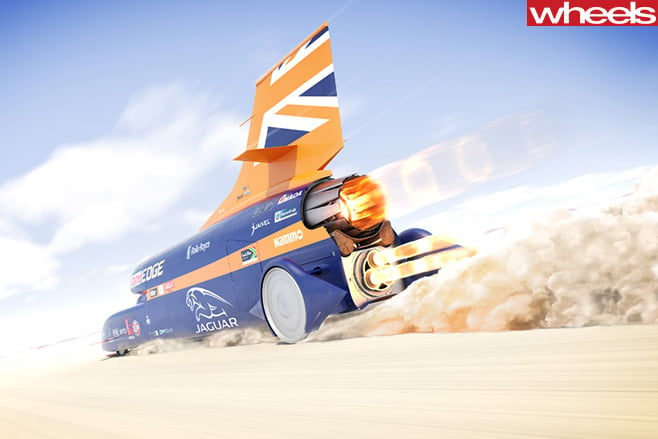
Project Director Richard Noble said, “Before we could only see financially a few months ahead, but now we can go for it. We have come through this difficult stage wiser, so while the pace and the pressure will ramp up, so too will the sense of satisfaction as we head towards our car breaking the sound barrier for the first time.”
The first SSC displayed in September 2015 was a ‘trial-build’ without fluids according to Bloodhound engineers, done in part to check the fit of over 3500 bespoke components. While conventional motor manufacturers typically build hundreds of pre-production prototypes to finalise details, there is only one Bloodhound SSC; so the project used this opportunity as a ‘trail build’ to ensure key components were accessible for servicing and that all one-off parts were manufactured to the correct tolerances.
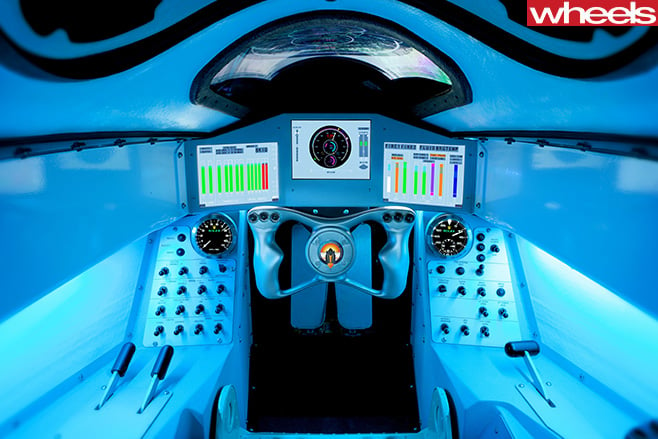
Where necessary, modifications will be made and new parts created before the car is reassembled and transported to Newquay Aerohub in England for tie-down tests with its Rolls-Royce EJ200 jet engine and Nammo rocket system in place. While the jet is already used by Rolls-Royce to develop the production engines for the Eurofighter Typhoon, the rocket is a new design and further work will be required before engineers sign it off for use in the car.