
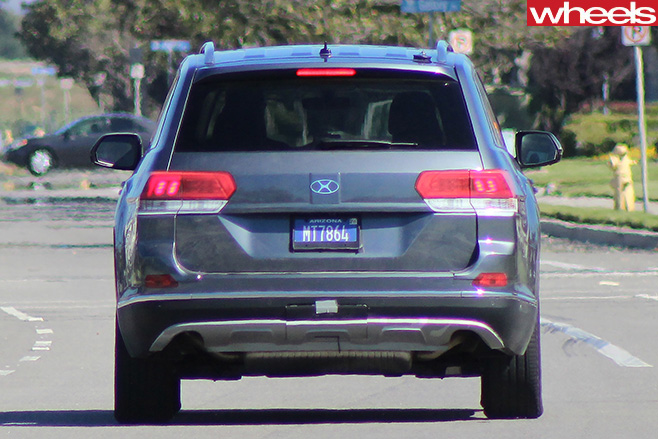
THE next big thing from Volkswagen is quite literally that, as these spy pictures of a sizeable seven-seater SUV snapped in California reveal.
Expected to be the largest and longest passenger vehicle the German company has offered, when it surfaces this year or early in 2017, this is the productionised version of the Volkswagen CrossBlue Concept first shown at the North American International Auto Show in Detroit way back in 2013.
Taking on the popular Toyota Kluger, Ford Territory, Hyundai Santa Fe, Kia Sorento, Mazda CX-9, and Nissan Pathfinder, it will be built at Chattanooga, Tennessee, in the United States, on a stretched version of the Volkswagen Group’s flexible MQB Modular transverse architecture that underpins the latest Volkswagen Golf and Volkswagen Passat.
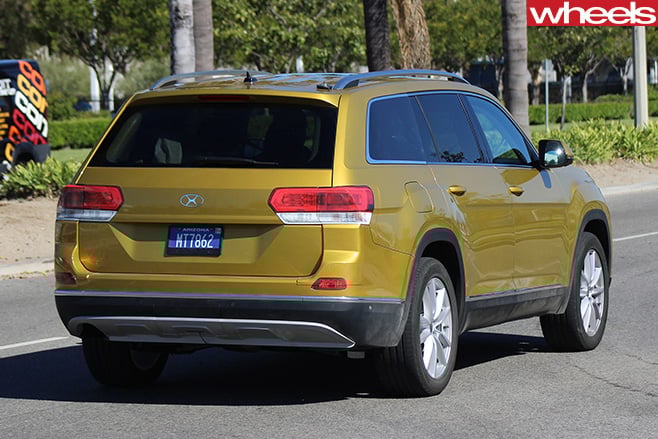
However, rumours suggest that the 2013 CrossBlue Concept still provides the strongest clues yet as to what the finished (and as yet unnamed) product will really look like.
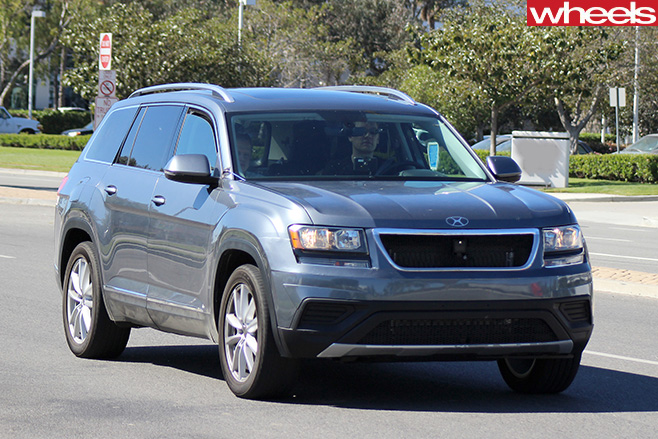
Pundits are also predicting an all-petrol set of engine choices for the production Volkswagen CrossBlue, at least initially, following the company’s on-going diesel emissions cheating scandal, with a 3.6-litre V6 favoured for this vehicle’s predominantly American demographic. There might be a hybrid option, to keep that all-important average fuel consumption figure down to reasonable levels.
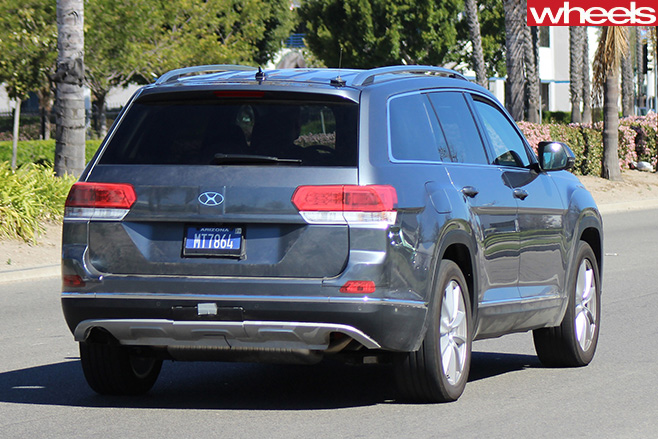
Volkswagen isn’t shying away from competitive pricing nowadays, so don’t bet against a sub-$45,000 starting point (in today’s dollars) for the cheapest front-wheel drive variant when sales commence later next year or in early 2018, stretching well into the $70,000 realm for the fully loaded all-wheel drive flagship version.
Have spy pics of your own? We’d love to see them. Just email them to [email protected]
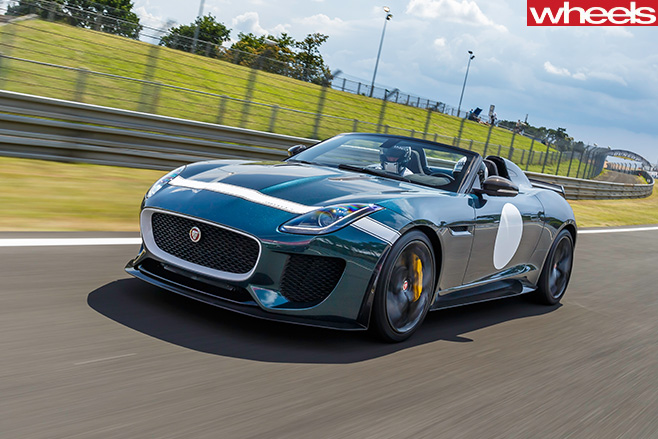
IT’S the fastest, most powerful and most track-focused production Jaguar ever, but the 10 F-Type Project 7s that have just landed in Australia are unlikely to ever undergo punishment on a race track.
According to Jaguar Australia, some of the Project 7s will spend most of their time in a garage, with owners keen to keep them straight and original – possibly even appreciating in value.
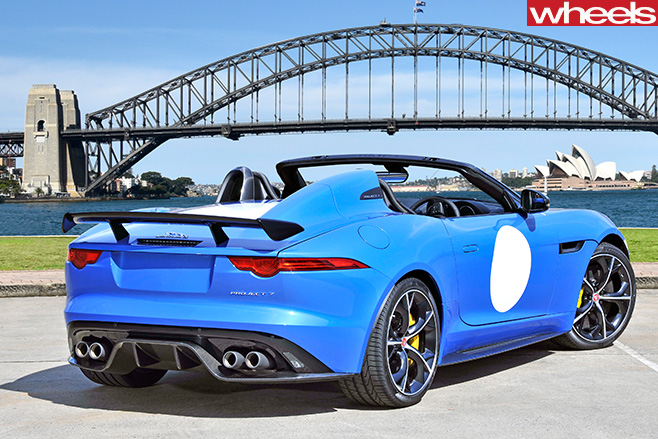
Just 250 of the show car-like Project 7s have been produced globally, with 10 air freighted to Australia so owners could enjoy an exclusive Justin Hemmes-hosted launch dinner at his house in Vaucluse this week.
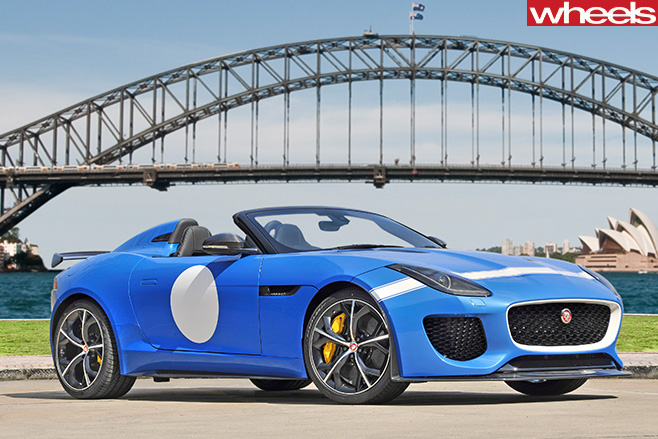
The Project 7 is based on a Jaguar F-Type Convertible R, complete with a worked version of the 5.0-litre supercharged V8.
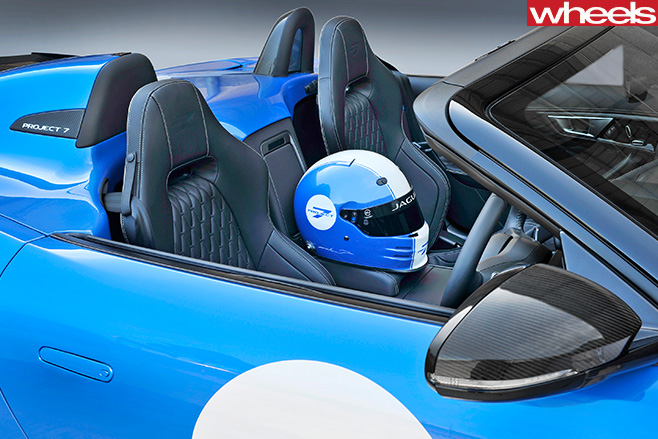
All are mated to an eight-speed auto driving the rear wheels.
Acceleration to 100km/h is a claimed 3.9 seconds, the fastest of any Jaguar road car; that figure is 0.3 seconds quicker than the Convertible R and 0.2 seconds quicker than the all-wheel-drive version of the same car.
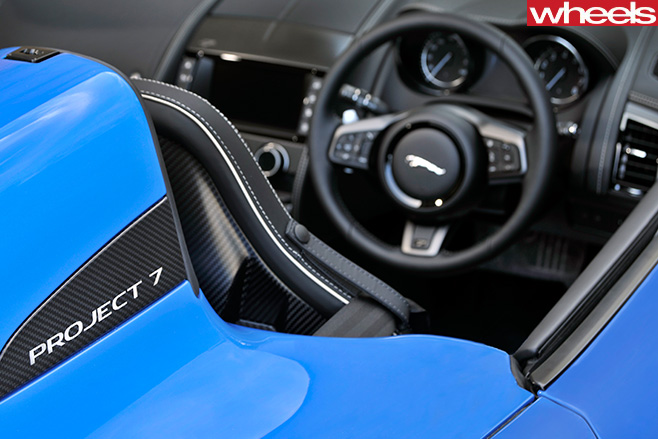
The cut-down windscreen is part of a detailed aerodynamics package that includes a carbon fibre splitter, diffuser and sideskirts. The Project 7 is claimed to have 177 percent more downforce at its electronically limited 300km/h top speed.
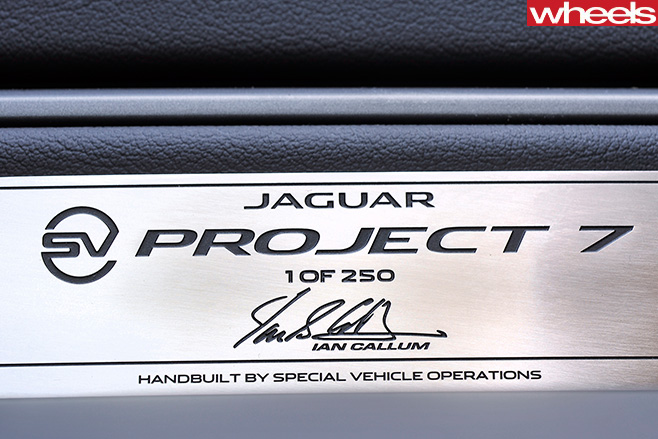
Each car also comes with a plaque bearing the name of design boss Ian Callum.
While the Project 7 is tiny volumes – its limited production run makes it one of the most exclusive cars on the road – it’s more about positioning the brand as aspirational and cementing its design and engineering cred.
“It’s not just those [Jaguar enthusiasts] that have been welded on forever. If this brand’s going to do what we want to do we can’t survive on that, we’ve got to bring a lot of new and interesting people into the brand.”
With the upcoming expansion of the AMG-fighting SVR sub-brand, Wiesner says the Project 7 was an important learning experience and one that proved there was demand for such cars.
“At that end of the market and higher … there is plenty of desire … there’s plenty of opportunity in that $350k and higher where we see opportunities for both Range Rover and Jaguar products.”
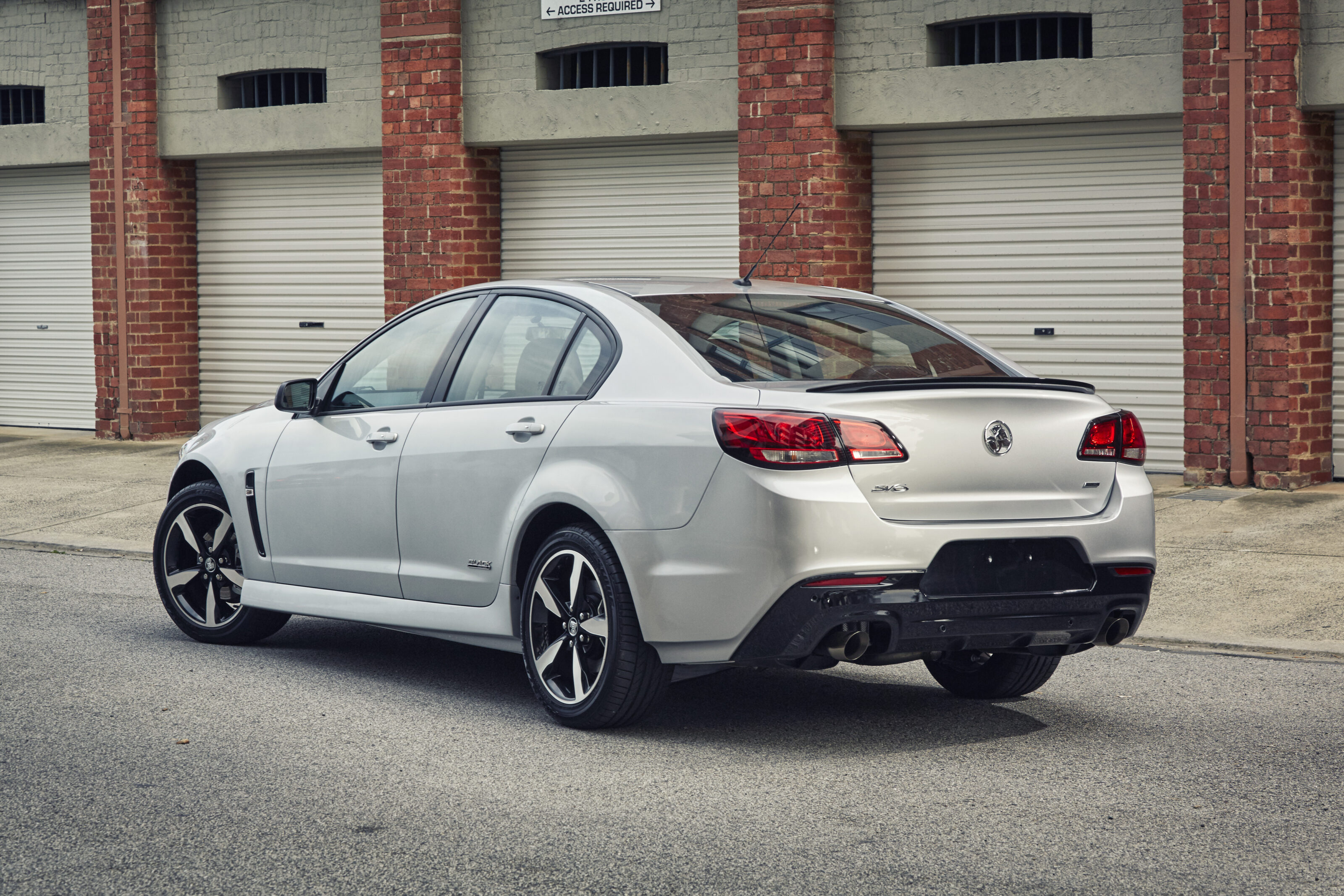
The Holden Commodore Black will soon join the carmaker’s showrooms, taking the fight up to the recently released Ford Falcon XR Sprint series.
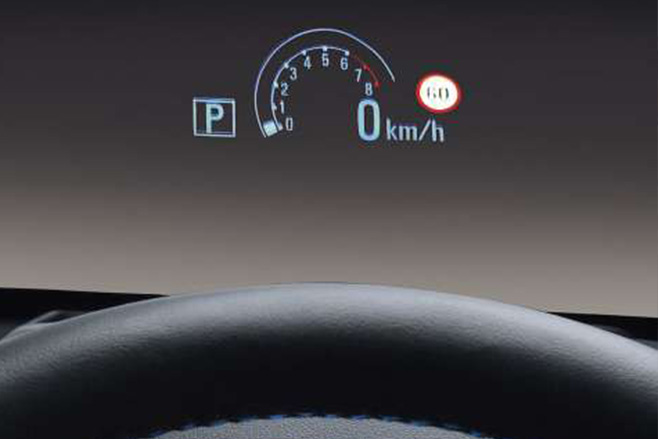
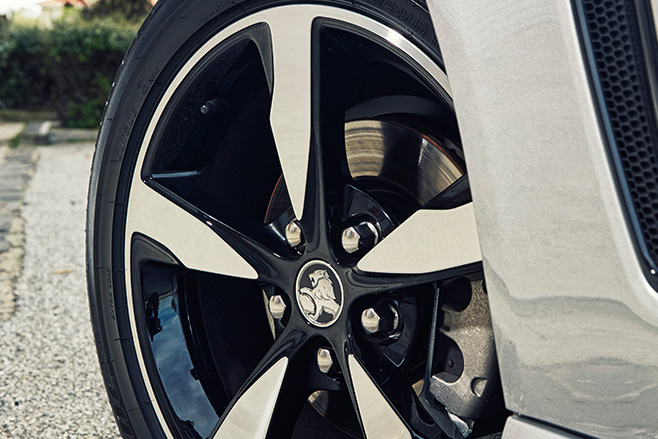
Based on the SV6 and SS, the limited-run Black edition cars add features such as unique 18-inch alloys, contrast red stitching on the cloth seats, satellite navigation and a colour head-up display that was previously standard on the SS-V Redline models.
As the name suggests, they also include blacked-out exterior features including the grille, daytime running light surrounds and mirror surrounds, and on sedan versions, a boot lip spoiler.
Buyers also gain black floor mats for the front seats, tagged with the same “Black Edition” logo that will sit on the car’s flanks.
However, you will pay more for it, with prices stepping up by $1000 over the sedan, sportwagon and ute on which they’re based, lifting prices before on-roads to $38,290 for the 3.6-litre sedan and $45,990 for the 6.2-litre V8 engined four-door.
Holden is using a series of special editions to keep buyer interest in the Commodore bubbling along until the brand exits its Australian manufacturing business in late 2017 – the same time that carmaking rival Toyota also plans to call it quits here and end local manufacturing of the Aurion large car and Camry mid-sizer.
Holden plans to fully import a replacement for the Commodore, based on the European-designed Insignia mid-size car, while Toyota will shelve the Aurion name and fully import the Camry.
Ford will wind up its local manufacturing later this year, ending almost 60 years of production. It is believed the Ford Mondeo will replace the Ford Falcon as the brand’s family fare, while the carmaker has hinted the Territory name may live on as badge stuck on a fully imported SUV.
Other Holden Commodore special editions have included Storm, Lightning, and one wearing the name of V8 Supercars driver Craig Lowndes.
Click here to read the full review on the Holden Commodore range.
It is called the Jaguar F-Type Project 7 to mark the British brand’s number of Le Mans victories, but only 10 stripped-back roadsters will arrive locally.
Jaguar’s flagship F-Type will be its most expensive offering, priced locally from $339,610 plus on-road costs, although it doesn’t really matter because all examples are already sold out.
Until the F-Type SVR coupe and convertible arrive, the F-Type Project 7 becomes the fastest model in the range, claiming 0-100km/h in 3.9 seconds.

The traction disadvantage of the Project 7 is reflected in a four-tenths-slower 0-100km/h despite being 135kg lighter – 1585kg versus the SVR’s 1720kg.
In reality, then, the Project 7 should be demonstrably faster than the SVR through the mid-range. Not that any blown V8-engined F-Type is lacking in this department. Nor does it require assistance with its vocal range, although an adaptive sports exhaust system with quad pipes is standard.
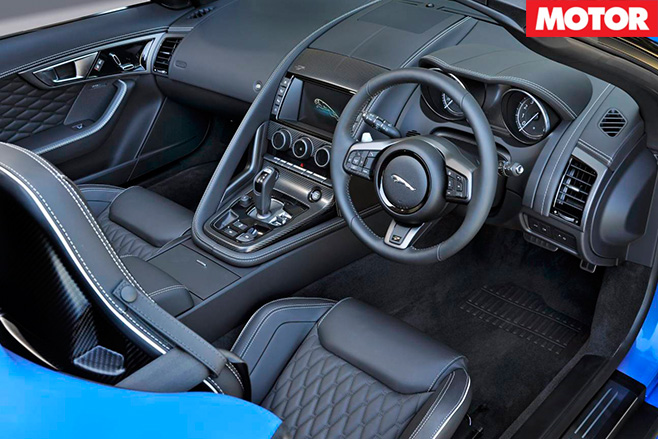
The upside of this design is a sexy “D-Type-inspired fairing” behind the driver’s seat, the bulkhead of which looks especially muscular when viewed from behind over the fixed carbonfibre rear spoiler. Windscreen height has also been reduced by 30mm compared with a regular F-Type convertible.
Other weight-saving carbonfibre elements include lower splitter, side skirts, rear diffuser, mirror caps and bonnet and side vents, while carbon-ceramic brakes (with 398mm front/380mm rear discs) sit behind forged-alloy 20-inch wheels.
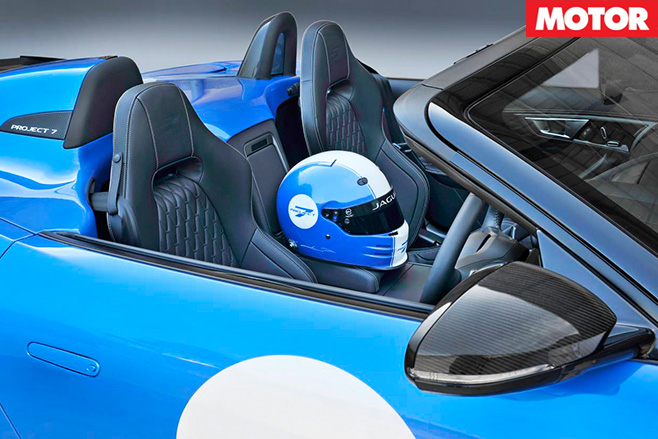
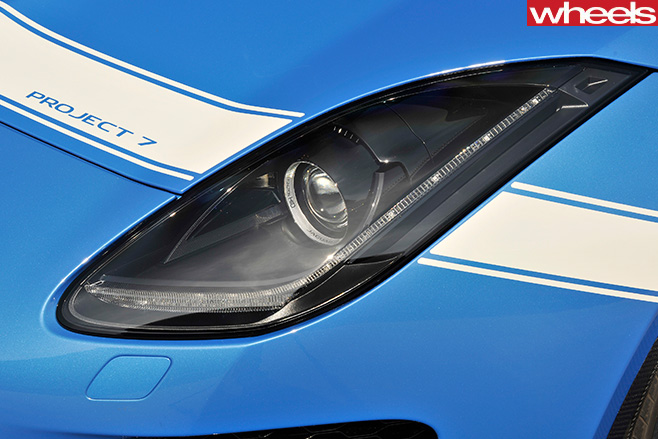
Five metallic colours have been offered – Ultra Blue, Caldera Red, Ultimate Black, Glacier White and of course British Racing Green, and the latter two only with white/grey decal options – and only 250 units built worldwide.
ON SALE NOW! The May 2016 edition of Wheels is out today.
Our cover image this month tells the story of the supercharged Ford Mustang landing in Australia, packing 499kW under its bonnet. Damion Smy reports that it’s expected to land here priced from about $75K, where it will start hunting the $90K HSV GTS flagship.
In other news, Tesla has revealed its Model 3, a bread-and-butter sedan that it hopes will bolster the Californian electric vehicle specialist’s coiffers, which it seems to have already done without even showing a production version of the car. Also, Aston Martin has flagged it wants to build a road car incorporating Red Bull’s Formula One expertise that it claims will be faster than an F1 car. Fantasy?
There’s more on the electric future for supercars, Hyundai’s future Genesis-badged 3 Series fighter, Merc’s four-door Porsche Panamera fighter, BMW’s 100th anniversary present to itself, and the Mazda MX-5 FR roadster – the real-world embodiment of a Wheels scoop from last year.
This edition of Wheels includes a pivotal finale: an extended first drive of the last Aussie-made Ford Falcon XR6 Sprint, the wild and fitting send-off marking 56 years of local manufacturing. Sadly, it’s already sold out, so unless you can find someone willing to sign theirs over to you, this is as close as you’ll get to owning it. We also have our first look at Holden’s locally tuned Spark city runabout, the Holden Commodore-fighting Skoda Superb, and Volkswagen’s jacked-up Passat Alltrack SUV-wannabe, among others.
Sparking controversy this month is the first comparison in which the unthinkable happens – a Porsche loses. Happily, it falls to another Porsche. We’re not going to give the game away, but any day where editor Butler and wingman Corby go back-to-back from a 911 GT3 RS to a Cayman GT4 on some of Australia’s best driving roads is always going to be a good one. Unless something unexpected happens …
Stahly, meanwhile, travels to Japan with talented shooter Wielecki in the search for automotive Nirvana. Once found, he attempts to find it again in miniature. Once you’ve finished drinking in the words, start over with the images.
We take an in-depth look at the next Mercedes-Benz to reset the brand’s technology benchmark – the W213 E-Class. Alex Inwood’s introduction to the car was not what he expected, and required him to draw on his best, or worst depending on how you imagine it, acting talent. The question now is how the flagship Mercedes-Benz S-Class is going to top this one.
We also have a touching profile on one of the Australian car industry’s stalwarts, Neville Crichton. Corby does his best to draw the story out the businessman who redefined his life after facing a simple choice: bacon or sausages? Crichton, despite the odd setback, hasn’t looked back since.
It wouldn’t be Wheels without a comparo, and this month we have 20 pages dedicated to just one. Why? Well, we’ve put eight of the biggest-selling dual-cab trade utes up against each other for an all-out slugfest to be the king of the heap. If you’re going to buy one of these high-riding load luggers, you may as well take heed of our advice.
Missed out on this month’s great content? Our next edition will go on sale on May 19.
Join us for the ride in this May edition of Wheels in print, iPad or Android editions, on sale now.
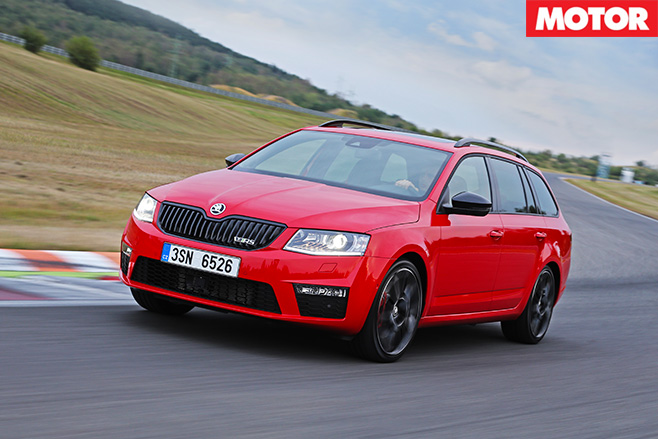
Skoda’s already excellent Octavia wagon is made even better with the addition of an RS moniker, and it’s showing on the sales floor, with a long waiting list for the spec and colour of your choice.
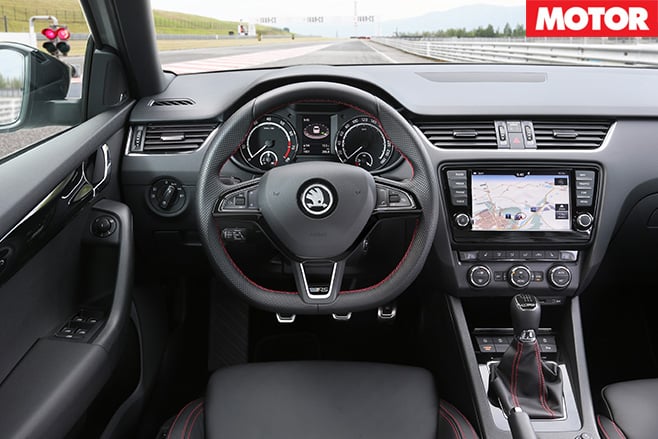
The RS package, in essence, mimics that of Volkswagen’s Golf GTI, with the potent EA888 2.0-litre four-pot turbo under the bonnet, a multi-driving mode switch in the cabin and the MQB chassis bolted underneath. In load-lugger guise, it adds a breadth of flexibility to an entertaining package.
The RS230, launched at the Frankfurt Motor Show this year, takes that package and adds more noise, a little more power and, crucially, an updated front limited-slip diff. Aussie-spec cars currently use the brakes to mimic the effect of a proper mechanical LSD, but this unit – as fitted to the VW Golf GTI Performance – is an electro-magnetic locker that can instantly send 100 per cent of its torque to the wheel with the most grip.
An ECU remap nets the RS seven more kilowatts to take it to 169kW, but there’s no more torque. It nips a tenth of a second off the car’s 0-100km/h time to 6.7sec when it’s matched with the RS230’s manual gearbox.
Yes, a manual ’box. We drove the RS230 in Germany with a six-speed DSG, but the word from Skoda Australia is the RS230 will arrive in Oz in 2016 in limited numbers as a manual only. The rationale is that Skoda’s performance-preferring punters are prone to opt for a DIY shifter.
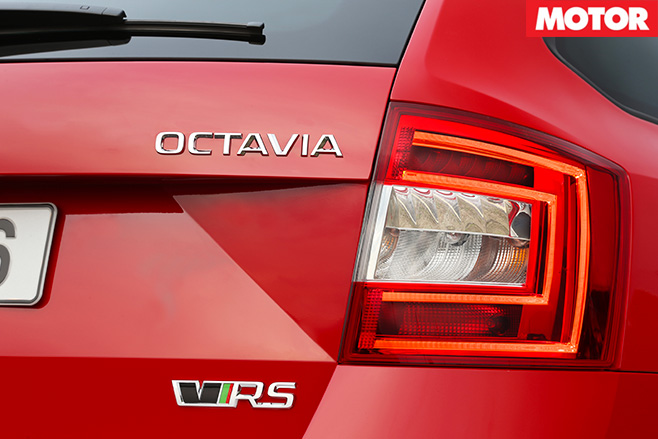
Having to swap cogs by yourself isn’t a deal breaker for us, though. The RS is unique, comfortable, practical and rapid, and adding a little more chilli to the pot only enhances it. The RS230 feels substantial and resolute, with excellent balance front to rear, great suspension control and confident steering.
The power being propelled through the front tyres is harnessed much more effectively with the trickier new diff, though the engineers have still allowed the fronts to scrabble and chirp for traction if the loud pedal is thumped hard enough.
The large 19.0-inch rims and low-profile tyres can nibble at the steering wheel on rougher tarmac, while the Skoda’s lane-keeping control can also add a strange feeling at the helm. Switch the nanny off, however, and the electric steering weights up well and provides good feedback.
No word, either, as to how much the mechanical additions will add to the RS’s bottom line, which starts at an incredibly reasonable $37,590 plus on-roads in manual sedan form, or $39,090 in wagon guise.
Its manual-only status will naturally limit its appeal, but the additional specification of the RS230 underlines the Octavia RS’s underdog status as one of the smartest everyday performance-car buys of the decade.
4 OUT OF 5 STARS
SPECS Engine: 1984cc inline-4, DOHC, 16v, turbo Power: 169kW @ 4700-6200rpm Torque: 350Nm @ 1500-4600rpm Weight: 1467kg 0-100km/h: 6.7sec (claimed) Price: $45,000 (est.)
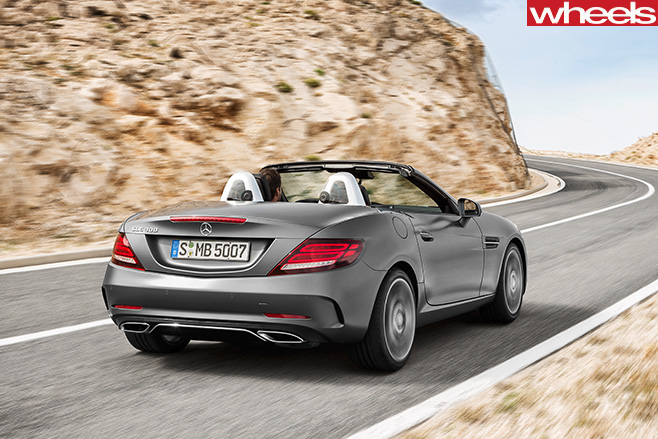
A MORE affordable Mercedes-Benz SLK, now rechristened SLC, brings four new turbo engines – but sadly no V8 – and retains the metal folding roof that distinguishes the model from rivals including the Audi TT and Porsche 718 Boxster.
WHAT IS IT? After 20 years and 670,000 SLKs, Mercedes has performed a facelift on its third-generation ‘compact’ sports car and renamed it in line with the recent, somewhat confusing, change in naming policy. Now it’s C rather than K, apparently to emphasis the roadster’s ties to the Mercedes-Benz C-Class, though the now five-year-old architecture and electronics trail the more advanced C-Class.
MAIN RIVALS Audi TT, Porsche Boxster, Nissan 370Z, BMW Z4, Mazda MX-5 RF
THE WHEELS VERDICT The reality is the new SLC is so similar to the SLK that you can see it appealing to the same people as the old car: buyers who want the style and character of a Mercedes-Benz roadster but not a hard-focused sports car.
PLUS: Versatility, lower prices, excellent auto transmission management, performance MINUS: Boring exhaust note unless in Sport + mode, aging interior, torque often overwhelms traction
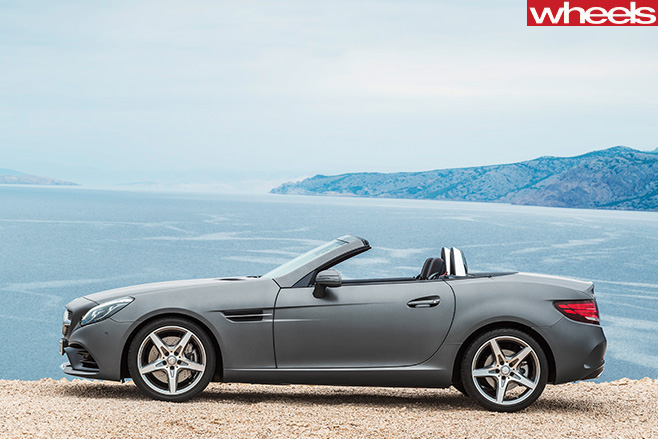
Predictably, the V6 delivers more poke more of the time. So much so that on the greasy roads we experienced it’s all too easy to light up the traction control warning light and leave a rubbery trail as evidence of the SLC’s struggle to maintain grip and forward motion, despite featuring a limited slip differential. This is no Boxster. Nor does the V6 sound sporty. There’s no drama at start-up and at idle it is just plain boring. Sport + produces a barking exhaust note, but we’d like a more compelling induction roar and to get rid of the exhaust drone at 1800-1900rpm in the default Comfort and Sport modes.

AMG replaced the other SLC model’s carry-over front suspension with a three-link design that’s basically from the C-Class, and fitted a linear ratio rack and pinion steering that’s somehow both more remote and heavier than the variable rack of the lesser models. In Sport+ the ride is stiff and the chassis feels out of sorts, as if the 43 is trying to be something that was never intended by its original creators. The SLK wasn’t a pure handling sports car – it wasn’t supposed to be – and neither is the SLC.
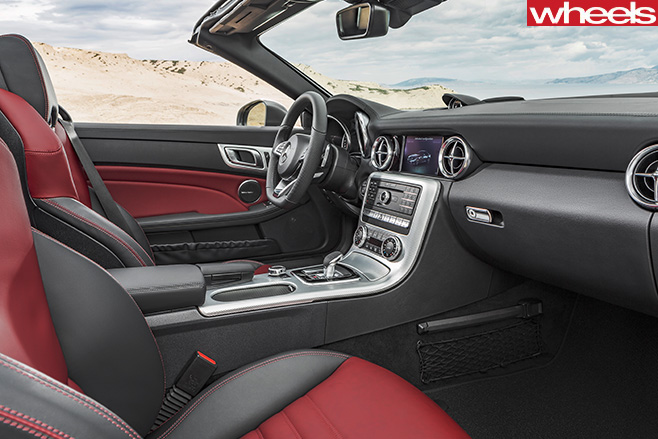
Inside, the SLC’s dash has a new 7.0-inch media display and Nappa covered multifunction thick rimmed steering wheel. It’s all beautifully finished and assembled, but thanks to the ranks of console buttons, now looks dated beside newer designs. Air conditioning, digital radio, sports seats (leather on AMG Line) and a wind deflector are standard on Sport edition upwards. There’s extra connectivity for the in-car “Comand” infotainment and you can operate the SLC’s trademark metal roof on the move at speeds of up to 40km/h… provided you start the opening or closing procedure with the car stationary. Despite the hype, in terms of differing identities, this SLC remains SLK.
SPECS Model: Mercedes-AMG SLC43 Engine: 2996cc, 6cyl, 24v, dohc Max power: 270kW @ 5500-6000rpm Max torque: 520Nm @ 2000-4200rpm Transmission: 9-speed automatic Weight: 1520kg 0-100km/h: 4.7sec Fuel economy: 7.8L/100km (est) Price: $135,000 (est) On sale: September
Rear-drive performance cars under $50K with a standard limited-slip diff?
There’s a few of ’em. Toyota 86 GTS, Mazda MX-5, XR6 Turbo, SS Commodore. Can name a few front-drivers as well. So it does strike one as unusual the $63K BMW M135i doesn’t come with a standard limited slip differential. In Australia, a high-power rear-driver with an open diff is just not cricket.
But the M135i gets away with it surprisingly well. Driven in an aggressive manner yet displaying some semblance of restraint, traction is strong. Punch it and it’ll light up an inside wheel before the electronics clamp down, but you rarely find yourself cursing that there isn’t a bundle of happy cogs at the end of the tailshaft. There’s still fun to be had.
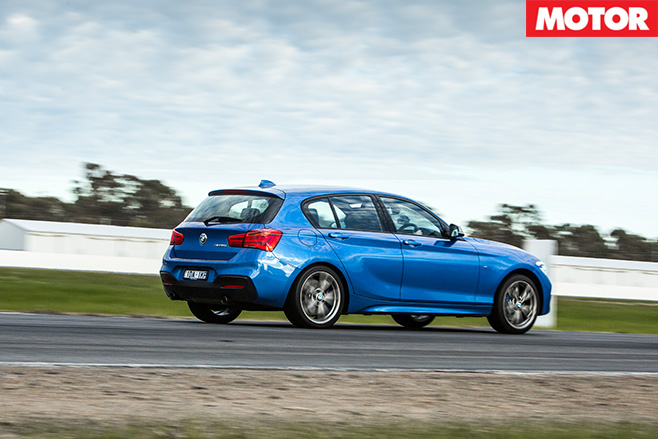
Those, though, are possible on the track. BMW engineers have tried their best to simulate an LSD, using the chassis electronics, with the DCT switched all the way off. It works surprisingly well. Yet it’s no match for the reliable locking feel of a proper LSD, such that on the road, its slight lack of consistency might be a tad more frightening than fun.
It’s not difficult to understand why BMW hasn’t offered the LSD as standard; as a figure, $62,900 is mighty nice-sounding. Surely only a small percentage of customers would care, and even fewer notice, that a proper differential is not included.
To some extent, for drivers the kind who’d never visit a track, it doesn’t need an LSD. Straight-line punch is strong from the rear 245s and there is still some playfulness available. It’s hardly single-spinner city.
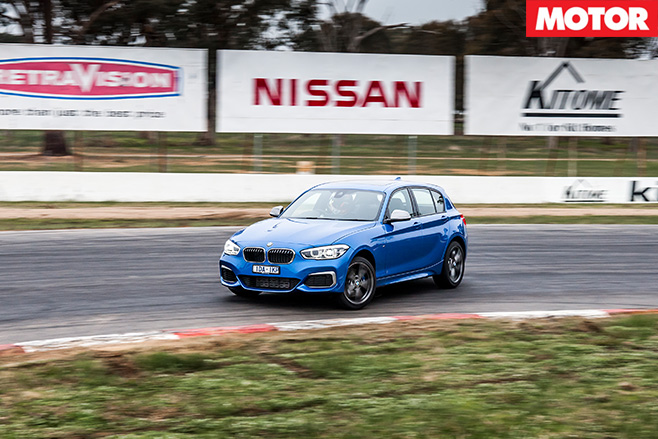
Having now driven it on the freeway at length, on track, around town and in anger up some decent roads, I can say honestly I’d own an M135i. Its faults are few and easy to overlook. And when you do that, there’s a mega car to be found.
But first, those faults. I don’t know about you but the looks I’m on the fence about. The new one is probably an improvement on the old ‘rodent’ face, but perhaps it’s now swung too hard in a conservative direction. I’d have to crack the knuckles and do some aftermarket-assisted restyling myself, I think.
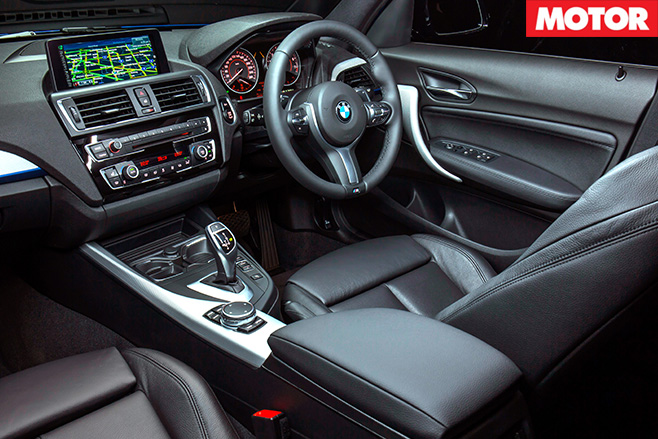
But, truly, these are minor complaints. And I certainly wouldn’t not buy the car because of it. The steering and brakes, in a performance context, are mega. So is the rest of the car, in fact. The M135i surely has one of the best interiors in a car less than $65K. It rides uncommonly well for a performance car. The 240kW, 450Nm single-turbo 3.0-litre N55 straight-six has a very satisfying amount of grunt (to the tune of 0-100km/h in 4.84sec).
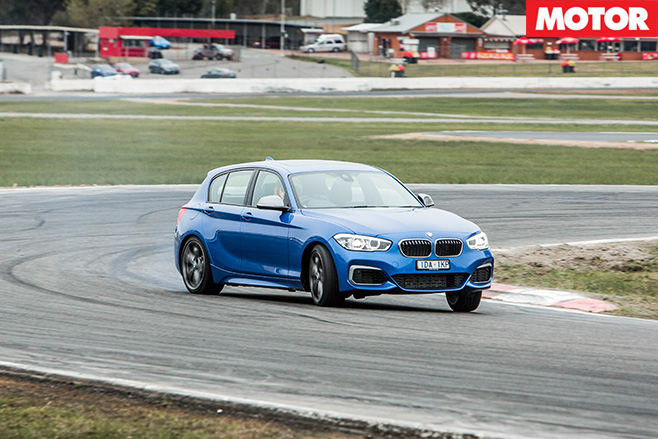
It’s so fun and friendly, and so sorted in its drivetrain, steering and chassis, I can truly think of little that might offer major improvement. Well, there is one thing.
Month: Three Liked: It’s so easy and friendly to drive fast. Big on confidence, this little blue thing. Loving it Disliked: Jury still out on styling for me Favourite moment: Hearing exhaust from the outside at start-up. Surprisingly burbly.
Fuel this month: 8.6L/100km Average: 10.4L/100km Distance this month: 1831km Total: 8851km
Want to see more of our BMW-M135i-long-termer? Check out the below:
Pricing for the 2016 Honda Civic sedan will start at $22,390 when it goes on sale next month, making it cheaper than the Toyota Corolla and Mazda 3 – two of Australia’s most popular cars.
The entry-level Honda Civic VTi sedan will start at $22,390 and comes standard will a CVT automatic transmission. That’s less than the starting price for the Toyota Corolla Ascent sedan automatic, at $22,990, and means it easily undercuts the hugely popular Mazda 3 Maxx sedan, which starts at $24,390 with an automatic transmission.
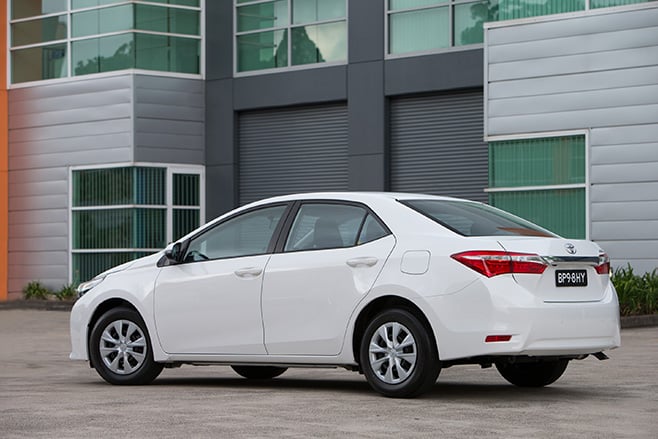
The 2016 Honda Civic sedan will be offered with a choice of two engines and five equipment levels, all coming with an automatic. A 1.8-litre four-cylinder powers the sharply priced $22,390 VTi and the $24,490 VTi-S models.
A new 1.5-litre turbocharged four-cylinder is standard in the VTi-L ($27,790) and flagship $33,590 VTi-LX. The 1.5-litre, which with 127kW is one of the most powerful engines in its class, also powers a new ‘RS’ model, which replaces the current Civic Sport and costs $31,790 including a sunroof.
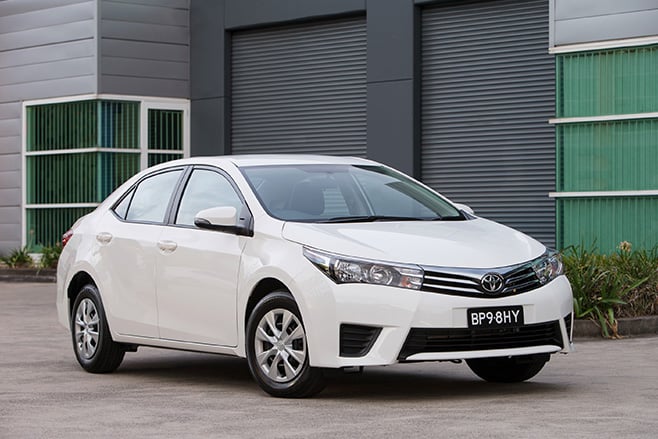
The pricing means that the strikingly styled sedan costs only $400 more than the equivalent version of the current car. That’s despite the new Civic being larger than the car it replaces, enabling more passenger space as well as a class-leading 519-litre boot. Honda has also confirmed that it will offer Bluetooth music streaming, as well as Apple CarPlay and Android Auto smartphone connectivity.
The new Honda Civic sedan goes on sale next month, with a new Honda Civic hatch arriving in Australia in early 2017.
Click here to read the full review on the Honda Civic range.
Technology has come a long way, but there’s still one thing cars can’t do. Float.
Less than a week after Aston Martin released its AM37 powerboat, Mercedes-Benz has thrown the champagne against its own seafaring vehicle – the Arrow460-Granturismo yacht.
With the performance of a sports car and a design you’d expect of the luxury carmaker, the creatively named Mercedes made its first voyage near Nice, France this week.
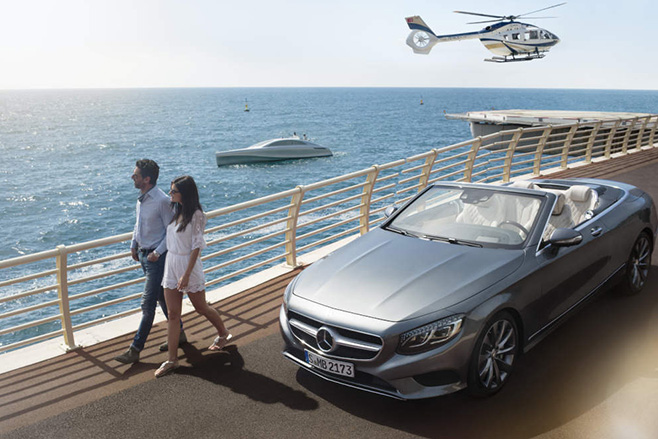
“In developing the new motor yacht, we have transferred our expertise to the marine industry, creating something never seen before in the process,” said Gorden Wagener, Vice President Design Daimler AG.
The yacht, which was designed by Mercedes-Benz and built by Silver Arrow Marine, is 14 metres long and four metres wide, with two Yanmar diesel engines pushing it to a speed of 74km/h.
Accommodating up to 10 people, the versatile design makes it usable for day trips or overnight stays, with retractable side windows, a windscreen that can open, and in-cabin luxuries.
“The ‘Silver Arrow of the Seas’ stands for modern luxury, avant-garde style and comfortable elegance,” said Wagener.
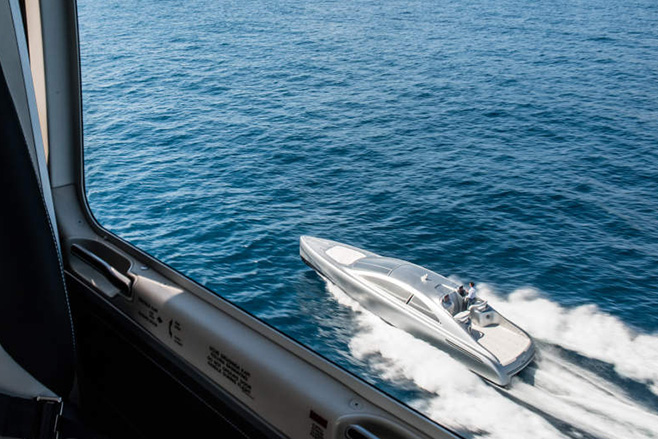
“The yacht combines the advantages of an open boat with the generous interior and privacy of a cabin cruiser. It weds charismatic design with perfect functionality, much in the same way as is familiar from our road vehicles.”
Features include a high quality audio system, wine cellar, ice-making machine, extendable tables and beds, lavish bathroom, a dressing room, air-conditioning and luxurious materials to give an air of sophistication.
The interiors are graced with wood, while the smooth, arrow-shaped exterior gives the motor yacht a uniquely modern flair.
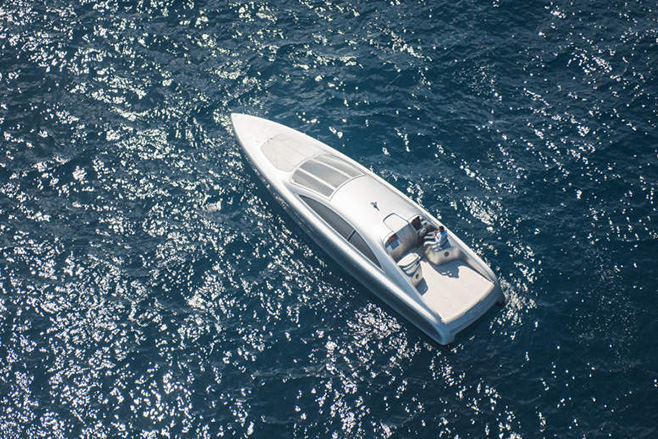
“Almost everything about Arrow460-Granturismo is unique, from its concept to the smallest bespoke detail. It is a motor yacht with a personality that truly embraces life, combining the best marine engineering with the inspired innovations and elegance that the world associate with the Mercedes-Benz name. By merging marine and automotive worlds, with their respective design language, technologies and ideas, we have created a new standard of motor yacht, unlike all others,” Silver Arrows Marine Chairman Ron Gibbs said.
But if you want to check it out for yourself, watch this video of a lucky 18 year old Owen Neistat jumping onboard Mercedes for a tour of the French city.
Can’t get enough? Read more about what carmakers make besides cars.
