
And its prices reflect that, kicking off at $74K for the base diesel ($10K-plus over its big-volume premium rivals).
The flagship is the supercharged petrol Jaguar F-Pace S ‘First Edition’ ($120K), priced just under the Porsche Macan Turbo.
STRENGTHS
- Individual styling
- Smooth driving experience
- Roomy, comfortable cabin with high-quality seat trim
- Best-in-class luggage space
- Front headrests block vision from the rear seat
- Fiddly ‘form-over-function’ gear-selector dial
- Some cabin trims not as premium as others
At the lower end, Mercedes-Benz’s GLC is the F-Pace’s most obvious competitor for its premium feel, while at the upper end of Jaguar’s pricing structure, the Porsche Macan and Audi SQ5.
But due to the F-Pace’s class-straddling size, it’s also a viable alternative to the BMW X5 and Mercedes-Benz GLE, offering a sportier look and more equipment for a similar price.
The SRT Night’s exterior colour is red rather than black despite the name, though darkness has descended on various other parts of the vehicle.
A black roof is joined by the blackest of interpretations of the company’s signature seven-slot grille, black side-window surrounds, satin-black badging, and perhaps most strikingly exclusive five-spoke, 20-inch black alloy wheels.
Inside, occupants sit on black Laguna leather seats, while bezels are finished in black chrome and anodised silver.
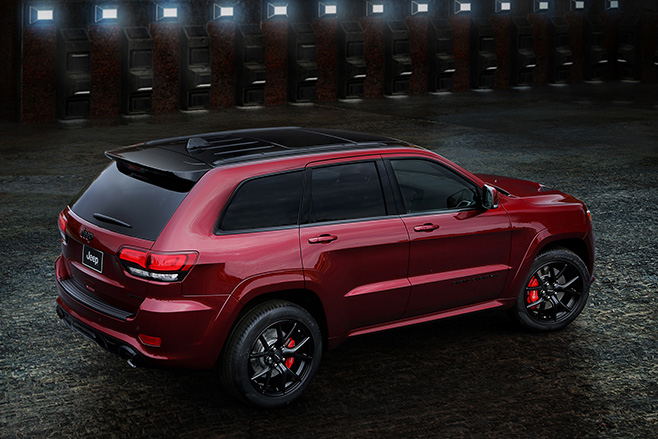
There are no mechanical changes for the SRT Night, which was first shown at the 2015 Los Angeles motor show last November. So a less-than-stealthy 344kW and 624Nm are produced by the big Jeep’s 6.4-litre ‘Hemi’ V8 – still powering the SRT from 0-100km/h in 4.8 seconds.
Jeep Australia says 120 units of the Grand Cherokee SRT Night will be available, with pricing to be announced closer to launch.
The regular SRT costs $90,000.
Click here to read the full review on the Jeep Grand Cherokee range.
MORGAN 3-WHEELER Power: 60kW
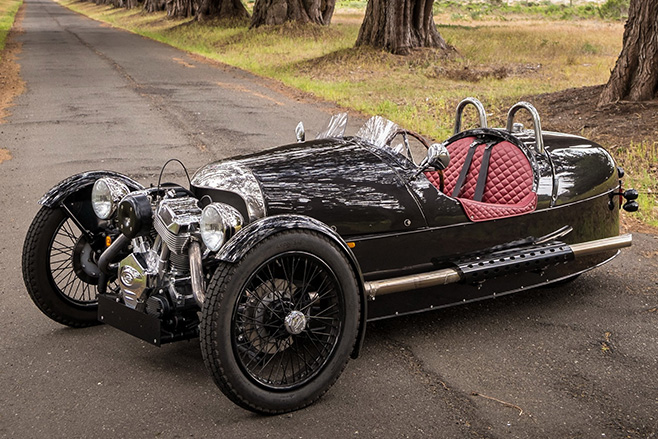
OK, so there’s not a whole lot of punch in the world’s weirdest looking ‘car’, but with all 60kW fed through a single wheel, the little 175/65 15-inch tyre has a fair bit to deal with.
MAZDA MX-5 1.5L Power: 96kW
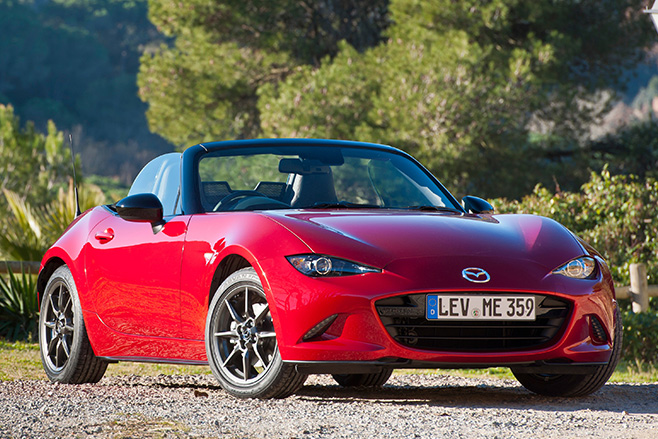
Fresh from a Wheels Car of the Year victory, the entry-level version of the loveable Mazda MX-5 is proof you don’t need bags of horsepower to have bags of fun.
BMW 318i Power: 100kW
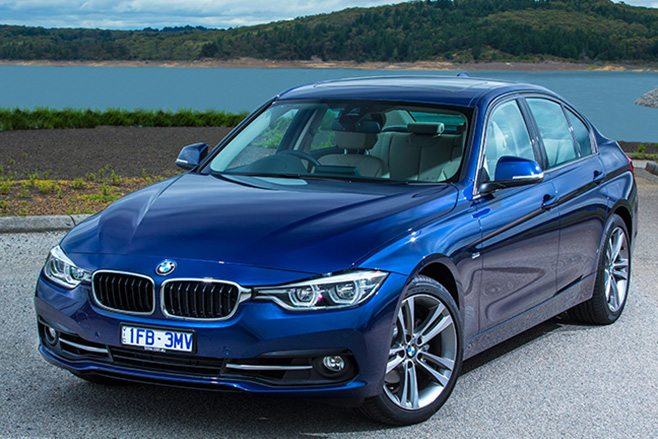
Three-pot 1.5-litre turbo shared with various Minis manages just 100kW from the engine that replaces the identically powered four-cylinder still used in the BMW 1-series entry model.
MERCEDES-BENZ C200D Power: 100kW
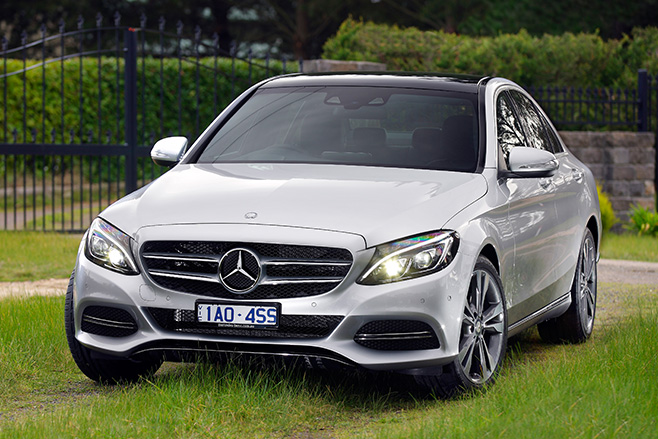
Compact 1.6-litre turbo-diesel makes it all up in torque, with a hearty 300Nm to complement the modest 100kW.
LOTUS ELISE SPORT Power: 100kW
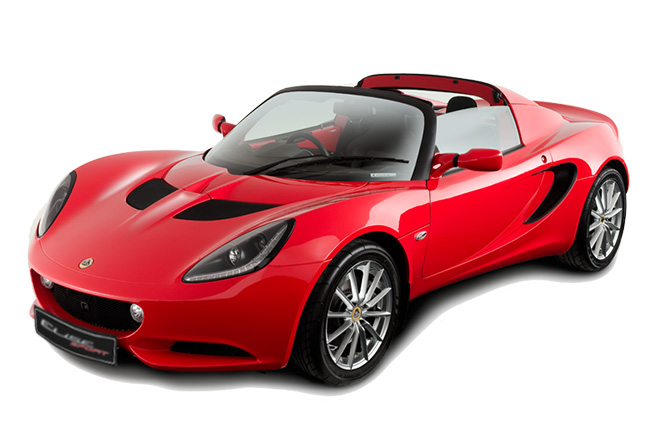
It’s all about the weight – or lack of it – in Lotus’s ageing sports car, which is as light as 852kg, enough for a perky 0-100km/h time of 6.5sec.
This article was originally published in Wheels magazine April 2016.
An ambitious expansion brand for the PSA group is set to boost the number of Peugeots and Citroens on sale in Australia, including some surprising new models.
The brands under parent PSA Group, have announced a bullish global growth strategy that will see a new model per brand launched each year in each region around the world between now and 2021.
For Australian new-car buyers, this means greater diversity and competition in the market, including in previously unfilled niches, such the utility segment.
The Peugeot/Citroen-badged ute is perhaps the most interesting new model, as part of a plan coined ‘Push to Pass’ by PSA’s chairman of the managing board Carlos Tavares.
The ute won’t be the group’s own development, but a model sourced from another maker. It’s not yet confirmed where the brands will look, however existing tie-ins with Toyota for PSA’s light commercial vehicles could provide the clue.
A Gallic version of the iconic Toyota HiLux would make for an unlikely new player in the booming ute segment, but could bring some benefits. The HiLux, as the best-selling ute in Australia would be a fine choice as a donor, and French engineering input into the ride versus load-carrying compromise may make for a more comfortable family car, which is how many dual-cab utes are used.
A Citroen or Peugeot pick-up isn’t a first – the brand once offered a utility version of its 504 model – and European brands already looking to Japan for a shared ute platform include Fiat (Mitsubishi Triton), Mercedes-Benz and Renault (Nissan Navara).
Even if Citroen’s ute were identical to a HiLux beyond its chevron badge, it would have double the warranty (at six years) of its Toyota counterpart, which is a big plus for buyers.
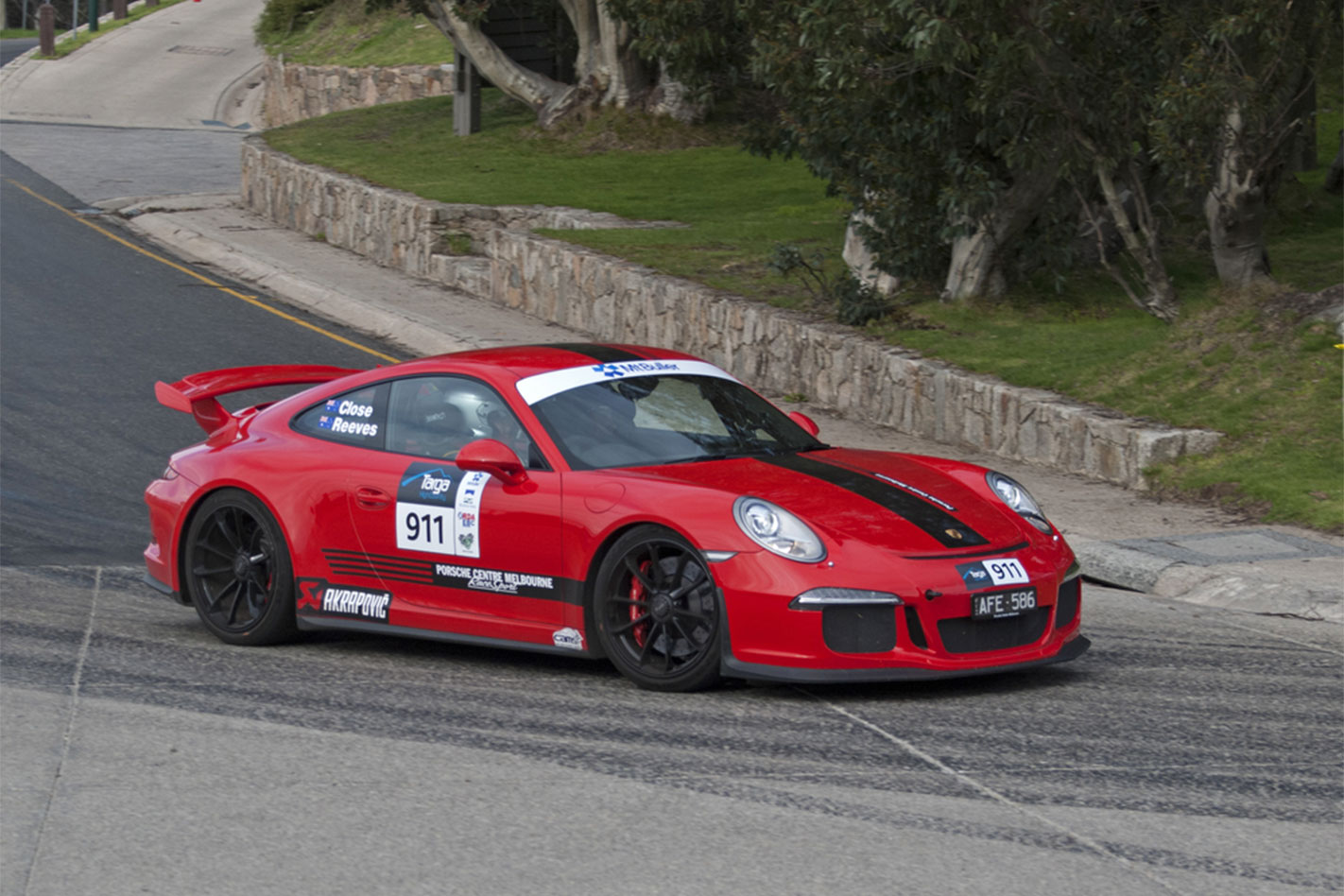
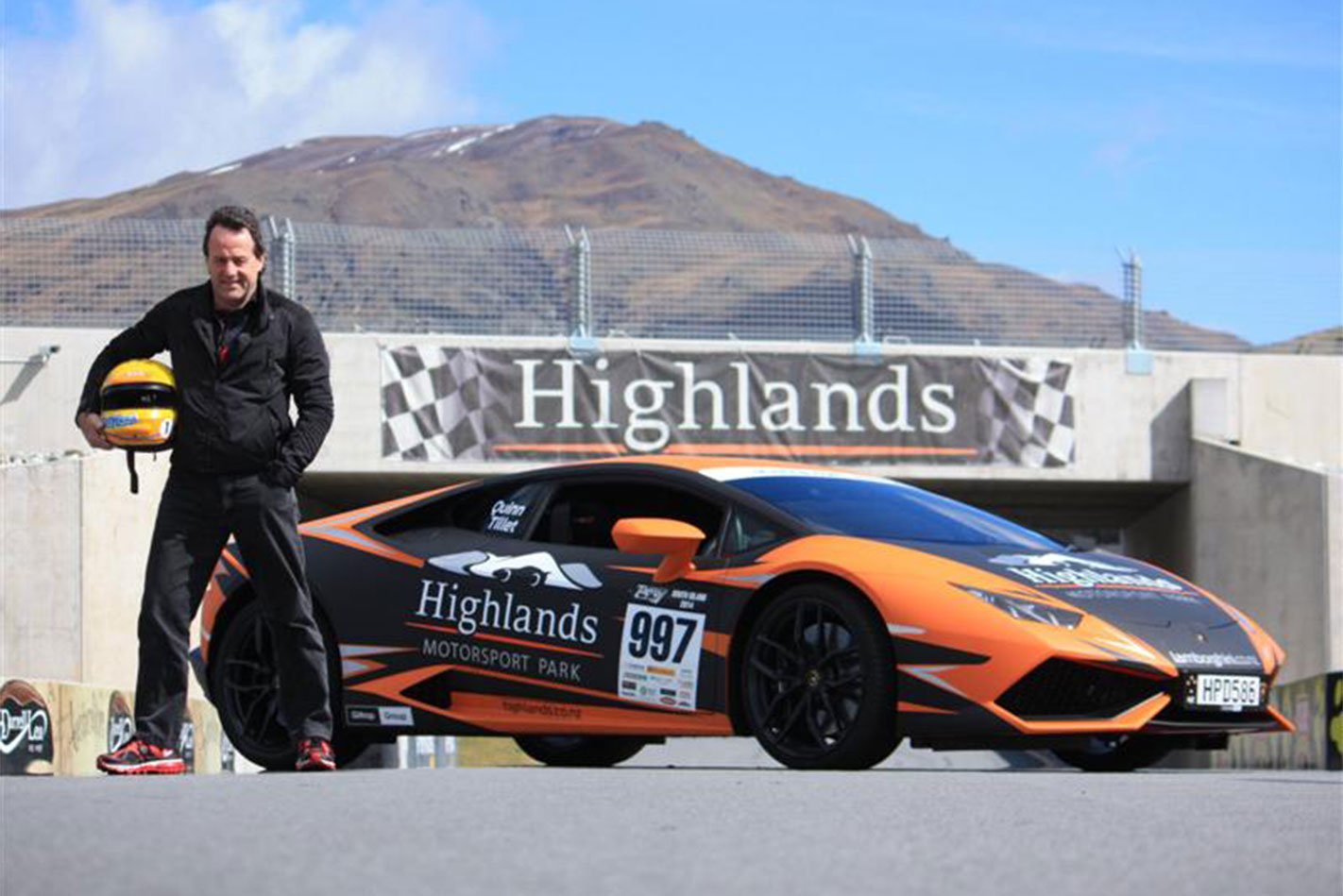
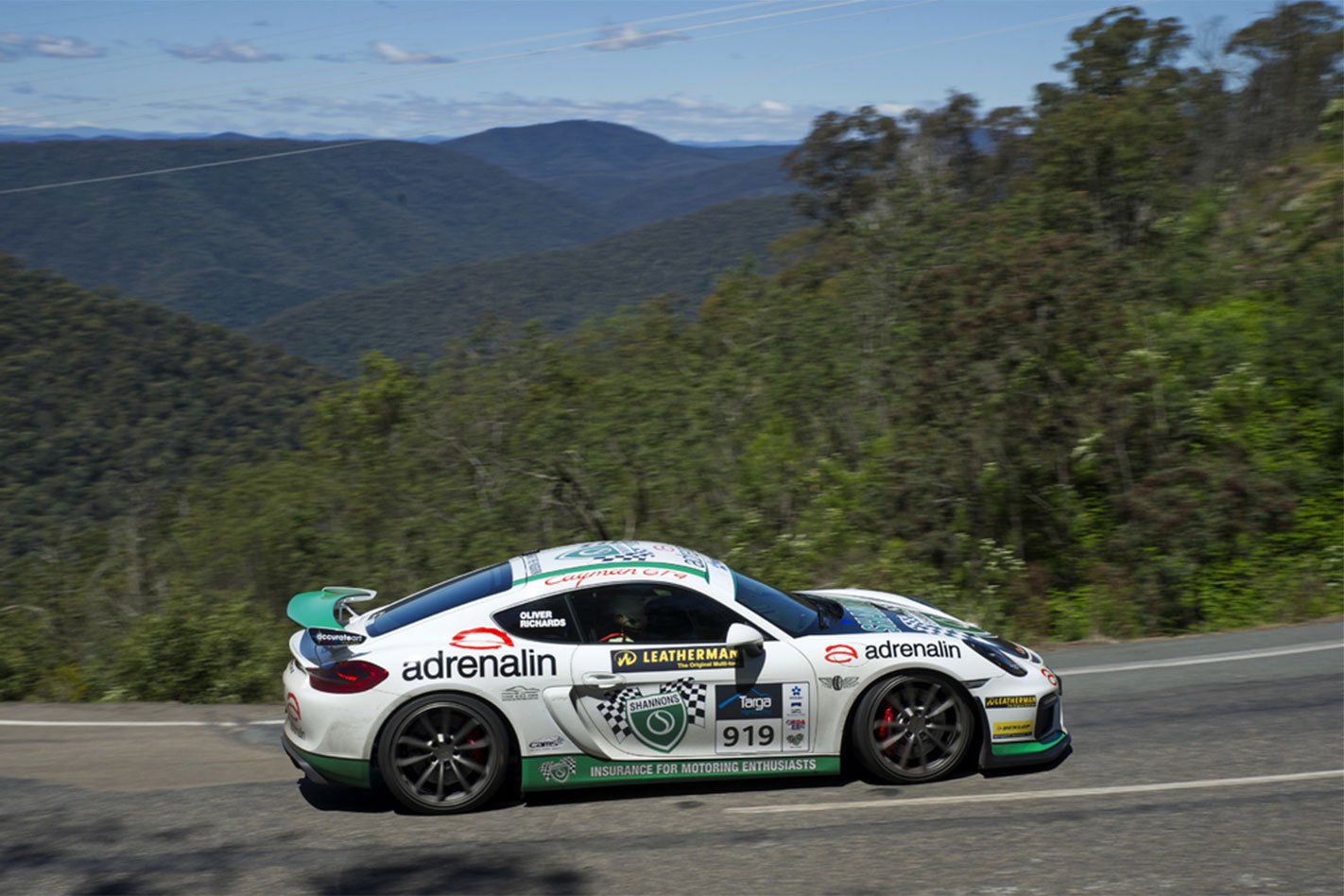
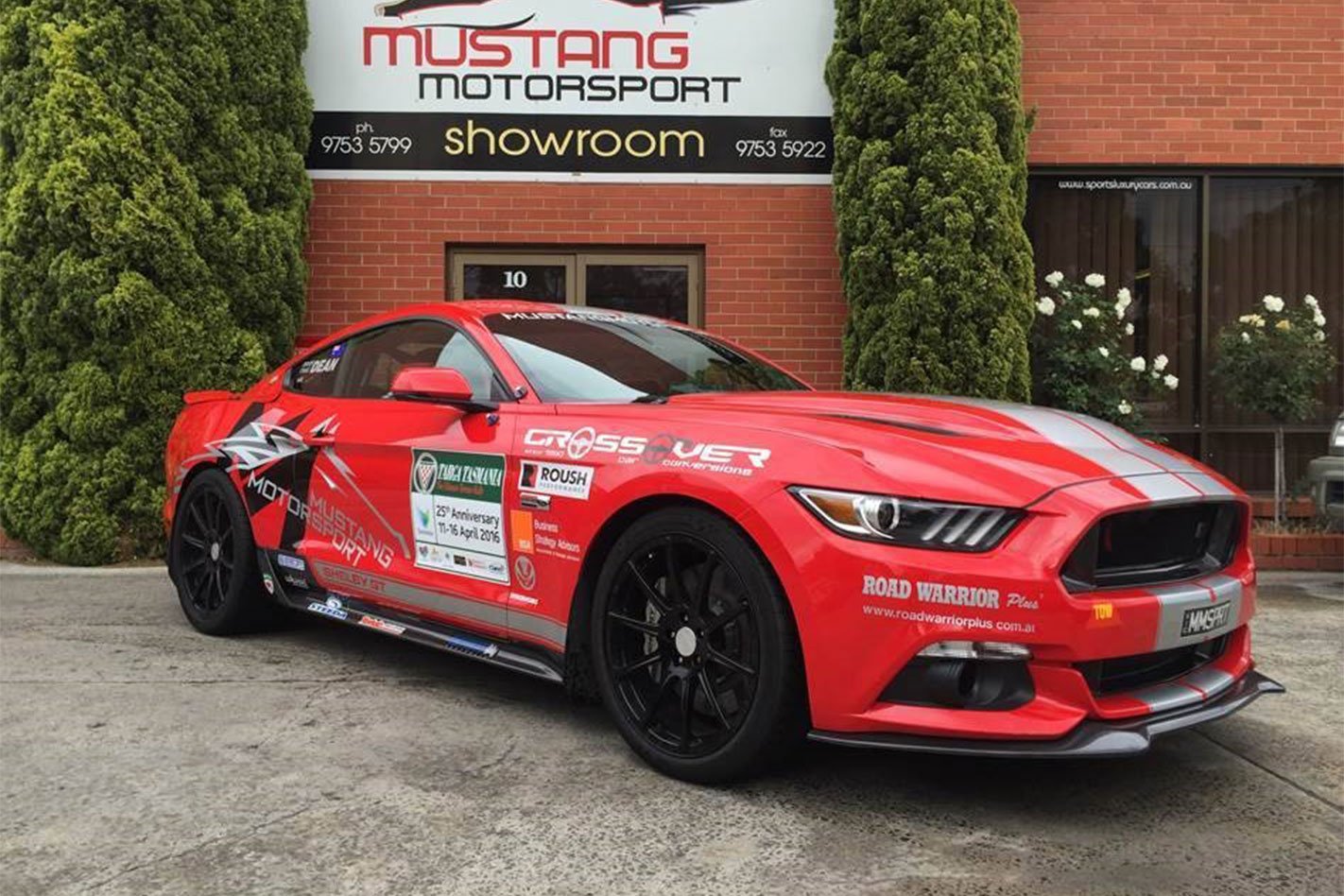
Targa Tasmania 2016 kicks off today, and the 25th running of this iconic event features both the longest route and the biggest field in the event’s history.
Rule changes for this year means only standard specification cars (bar the required safety equipment, of course) are eligible for the outright win, split into GT2 (two-wheel drive) and GT4 (four-wheel drive) categories.
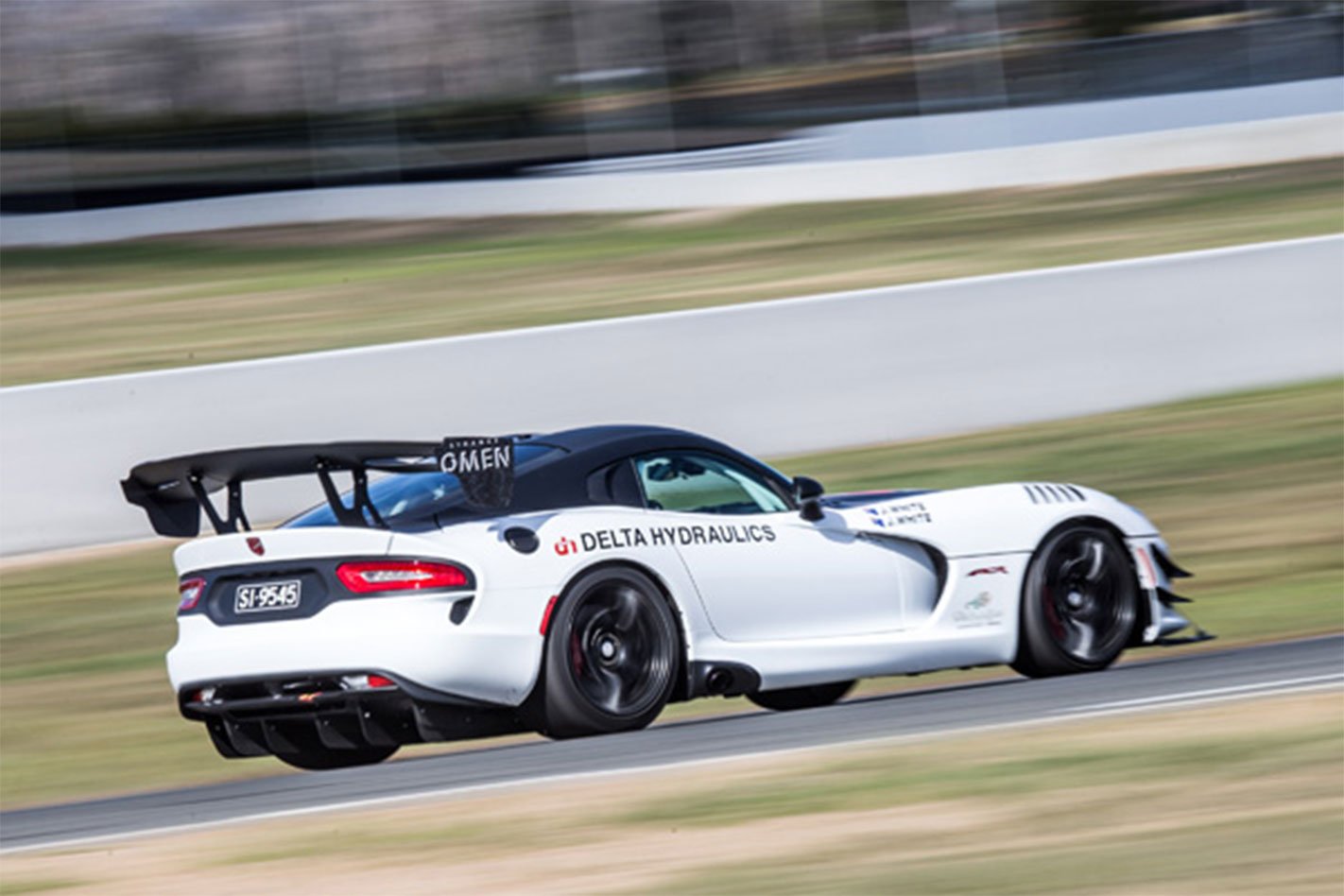
Arguably the fastest modern driver in the Targa field is five-time winner Jason White, but question marks hang over the competitiveness of his new steed, the wild Dodge Viper ACR. Regardless, his experience and ability will no doubt put it near the pointy end.
V8 Supercars: Dakar winner Toby Price looks to future
NOT CONTENT with winning the world’s toughest race, Australian Dakar winner Toby Price is eyeing a potential V8 Supercar drive.
Price has jumped into a Stadium Super Truck since winning the motorcycle class of the 2016 Dakar Rally in January, and has thoughts of racing in the V8 Supercars category locally in the future.
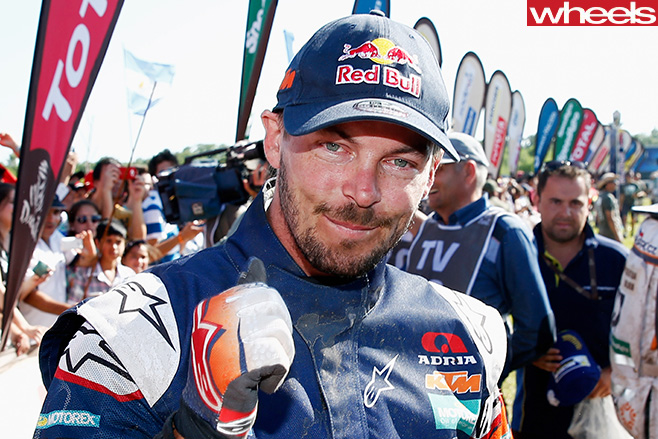
In fact Price has already had a taste of V8s action, having lapped as a passenger at the Clipsal 500 weekend with Triple Eight star Shane van Gisbergen.
“When I went with Giz, he was letting me rip the gears down the main straight. It was really cool to see what these cars can do and I would love to try one for myself,” he said.
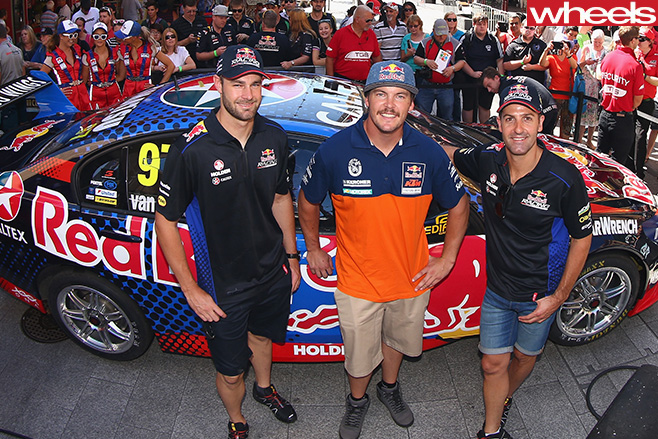
They might have plenty of time. Price also told Auto Action he was hoping to switch to Dakar cars after another few years on bikes.
NASCAR: Rowdy makes it two in a row in Texas
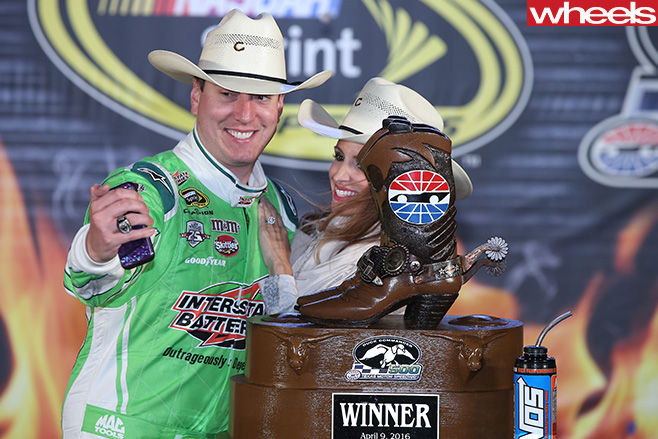
For the second week in a row ‘Rowdy’ clean-swept the weekend’s racing in NASCAR, this time taking the honours at Texas Motors Speedway.
A critical pit stop call by crew chief Adam Stevens was vital for Busch to secure his 36th career Sprint Cup victory, on a night when he had neither the fastest car nor the most laps led.
Fan-favourite Dale Earnhardt Jr followed Busch across the line with a nearly four second deficit to the victor to claim second.
The start of the event was delayed by rain, meaning the final laps of racing happened well after midnight local time.
With just 40-laps remaining, 13 cars were forced to retire when a multi-car wreck was started by Austin Dillon.
The carnage was unusual for Texas Motor Speedway’s 1.5-mile layout.
The Good ‘Ol Boys are back at it again next weekend at Bristol.
MotoGP: Marquez extends Austin record as Rossi falls
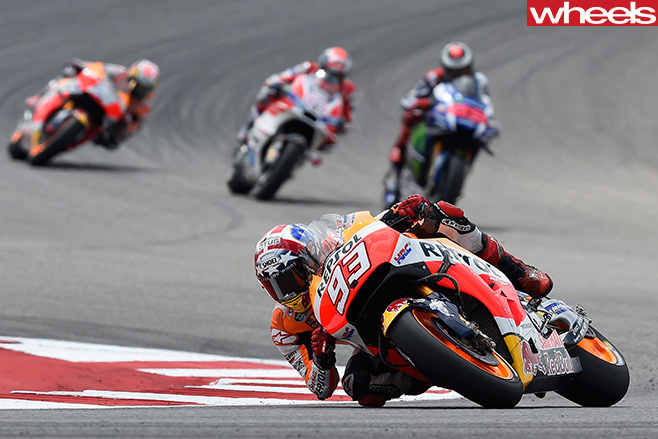
The diminutive Spaniard dominated the weekend’s running, topping practice and qualifying, before controlling what was a rather bland race (spare some crashes) from the front of the field.
The dominant victory continues the 23-year-old’s feat of being undefeated on American soil while astride MotoGP machinery.
Best of the rest was Jorge Lorenzo, who could barely manage to keep his countryman in sight during the race.
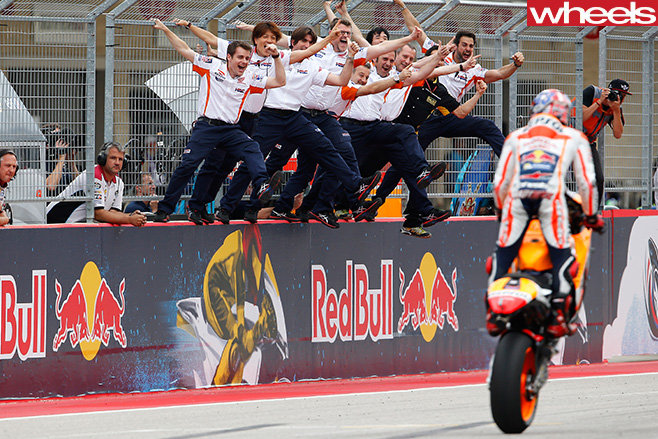
At that stage it was Andrea Dovizioso and Dani Pedrosa who shadowed the leading pair of Marquez and Lorenzo. With the two title protagonists skipping away, Pedrosa attempted to make sure it was an all-Spanish podium.
With a significant straight-line disadvantage to the romping Ducati, Pedrosa’s only hope was a late braking move. And late Pedrosa did brake, but his Honda bucked wildly, and he was sent careening into Dovizioso, who was taken out of his second grand prix in a row from no fault of his own.
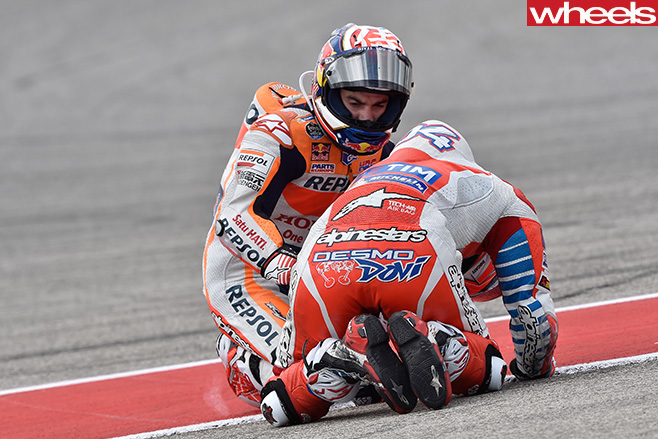
This left Andrea Iannone to inherit the final podium position, which he claimed unchallenged.
The Suzuki pair of Maverick Vinales and Aleix Espargaro finished fourth and fifth, after one of the few proper stoushes of the race. It is the first time two Suzukis have finished in the top five of a MotoGP race since 2007.
Australian Jack Miller was absent from the race after injuring his foot in a spectacular practice crash. Miller was saved from further injuring himself in the rapid high-side thanks to the deployment of airbags in his leathers.
The two-wheeled circus heads to Jerez, Spain to race in front of one of the craziest crowds of the year on April 22-24.
Blancpain GT: Audi claims Misano sprint
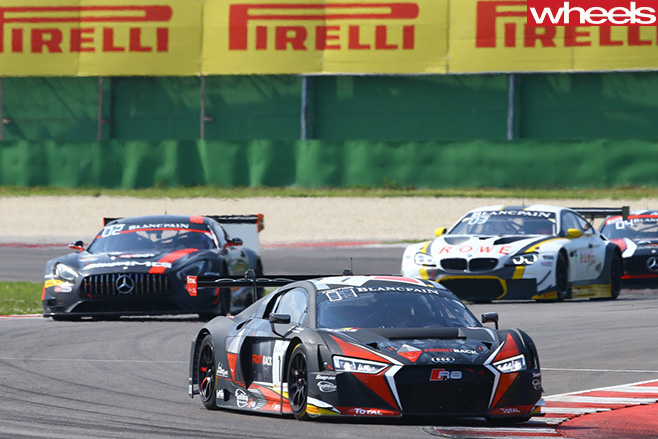
Racing alongside Frederic Vervisch, the pair drove faultlessly to give the new Audi R8 LMS its first ever Blancpain Sprint Series victory.
The duo was made to work for the win, with rain showers hitting the Misano track on Saturday and hampering their qualifying efforts, forcing them to race to the front.
The Belgian Audi Club Team WRT drivers held an advantage of just over a second by race end, with the HTP Motorsport Mercedes AMG GT3 of Maxi Buhk and Dominik Baumann second.
The brand-new BMW M6 GT3 earned its first podium, with Rowe Racing’s Philipp Eng and Alexander Sims rounding out the rostrum.
SuperGT: Nissan starts defence on front foot
REIGNING SuperGT champions Tsugio Matsuda and Ronnie Quintarelli started their title defence in the best way possible, winning the opening round of the year.
The pair piloted their Nissan GT-R GT500 car in such a dominant fashion; they were able to turn a nine-second lead by the end of the pitstop cycle to more than 15 seconds by race end at the . Okayama International Circuit southwest of Tokyo.
Ryo Hirakawa in a Lexus RC F held off a hard charging GT500 rookie Katsumasa Chiyo in the final 10 laps to claim second.
Aussie fans will know Chiyo as the little bloke who puts V8 Supercars drivers to shame at Mount Panorama in the Bathurst 12 Hour.
Even on racetracks 300km/h-plus is a massive speed for a car to travel.
However, that’s the velocity Masato Kawabata has thrown a R35 GT-R sideways to nail the world’s ‘fastest ever’ drift.
Taking to Fujairah International Airport’s 3km airstrip in United Arab Emirates, Kawabata put himself and Nissan in the Guinness World Record books with a 304.96km/h drift at 30 degrees – plenty more than Jakub Przygoński’s previous record of 217.983km/h.
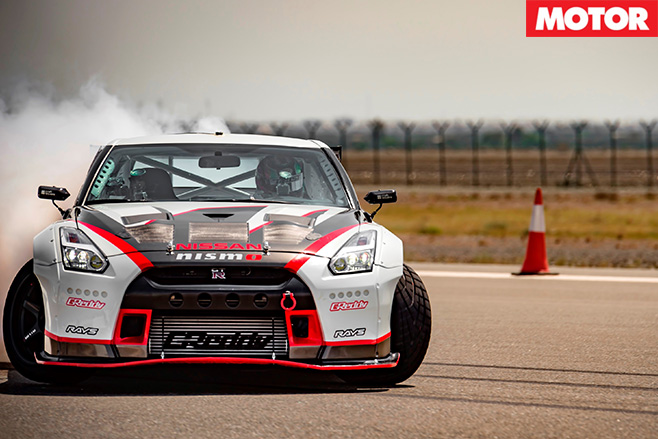
His chariot was a R35 GT-R specially prepared by Greddy Trust Japan, equipped with a more-than-healthy 1030kW and adapted to rear-wheel drive.
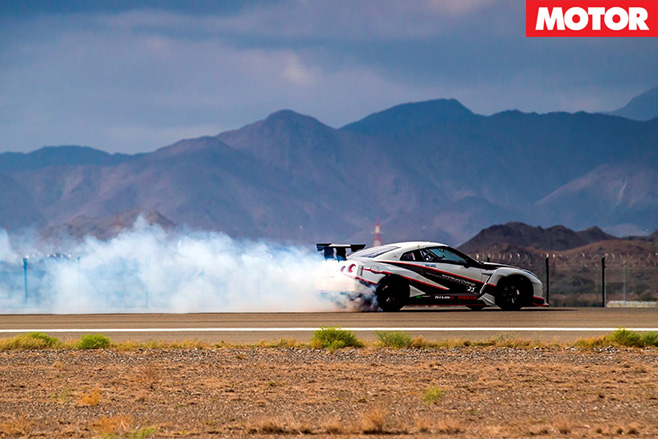
Nissan’s released a video celebrating the attempt, but it’s more an advertisement than it is riveting footage. Have a watch above and let us know what you think.
When all Porsche 911s are turbo, what’s the point of the 911 Turbo?
That’s the question MOTOR put to Porsche’s boxer engine boss, Thomas Wasserbach, at the recent launch of the new – and turbocharged – 718 Boxster.
Wasserbach explained that it basically boils down to where the power is developed: “It’s a different characteristic of the curve of the power. The 911 Carrera we want a feeling which is near to a naturally-aspirated engine, and the 911 Turbo we need the maximum torque at lower speeds.”
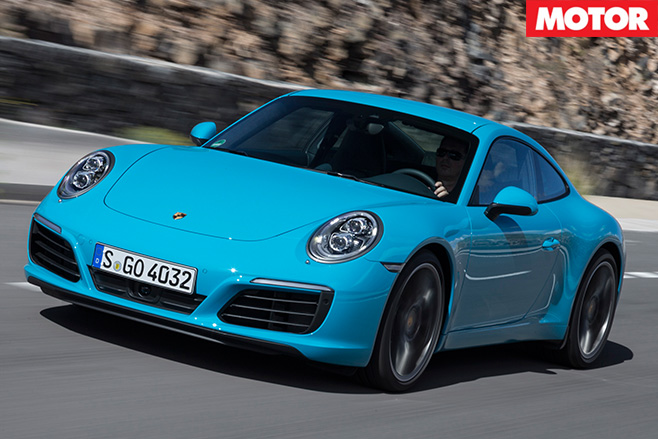
The 718 Boxster S uses the same variable-geometry turbocharger technology as the 911 Turbo, however the addition of a wastegate to this turbo allows for even finer control of the power curve.
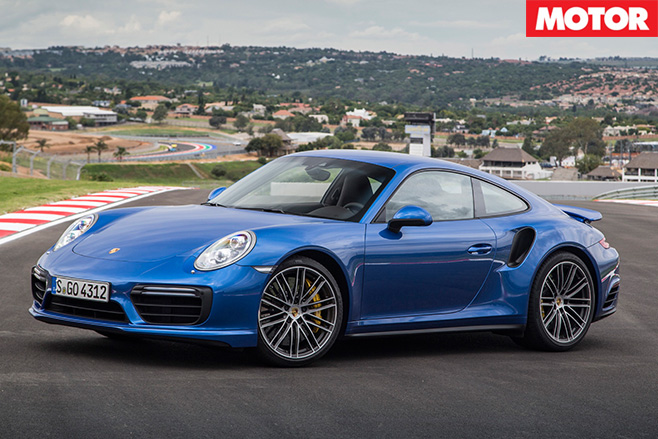
Wasserbach confirmed these new turbos will make their way onto the next 911 Turbo so “we can make more torque at lower speeds.” Don’t expect it to get much faster, though, as he admitted that the current Turbo’s 2.9sec official claim – though engineers have seen 2.6sec in testing – is close to the limit of what’s possible.
Rather than placing an electric compressor in the airflow stream like the new Audi SQ7, the first car to use such technology, Wasserbach would use an electric motor rather than airflow to spin the compressor wheel to the desired rpm almost instantly, eradicating turbo lag.
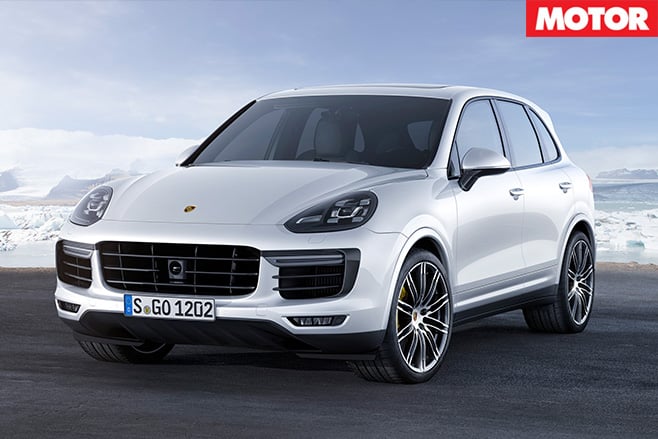
With the next-generation Cayenne Turbo S to use the same platform as the 48v-equipped Bentley Bentayga and Audi SQ7, could it be the first electric-turbo equipped Porsche?
If you said the USA doesn’t build some of the fastest cars around, a few years ago at least, you’d be right. Today, though, you might be wrong.
Earlier this year, Chevrolet pressed the reset button with the introduction of the new Corvette Z06. It’s loaded with power, handling, brakes, and the necessary aerodynamics to back up its supercar benchmarks. Then there’s the all-new Camaro that promises to be light years ahead of the old one.
Cadillac, on the other hand, is keeping its end up, starting with the wicked-fun ATS-V and now the all-new, third-generation CTS-V sedan.
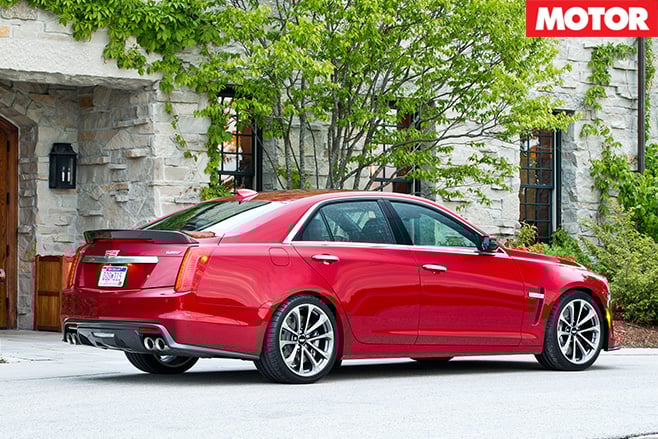
At the same time, performance cars were engaged in a horsepower war, but the new CTS has gotten even bigger. To speed-crazy Cadillac engineers, that meant their new grand sedan would need a serious boost in performance handling if it was to be worthy of the CTS-V badge.
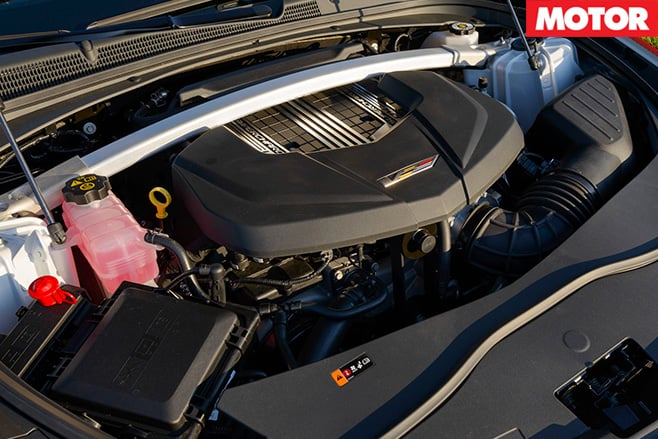
And boost it they did, literally, using a similar supercharged 6.2-litre V8 to what’s found in the Corvette Z06 (there’s a theme here, we reckon) that makes a staggering 477kW and 855Nm.
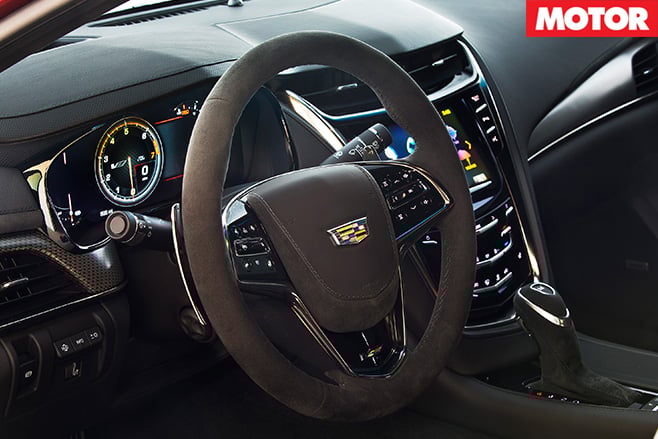
The cabin reflects modern Cadillac design, with clean lines and straightforward controls. Drivers enjoy a near perfect seating position with excellent forward visibility. When parking, we appreciated the back-up cameras and sensors. The optional Recaro buckets are worth the additional spend for an ideal combination of long distance comfort and on-track support.
There is only one transmission option for punters, and it’s a good one. GM’s developed an entirely new eight-speed automatic ’box that’s said to shift faster than Porsche’s renowned PDK on upshifts and nearly as rapidly on downshifts.
What’s more, while driving on the high speed Road America circuit, manual shifting wasn’t necessary, due to the ‘box’s excellent calibration and inherent ability to recognise that we were asking the car to hustle. Even in those conditions, the transmission chose gears with impeccable precision. The Corvette Z06’s automatic option? Same transmission.
Power gets to the ground through an electronically-controlled limited-slip diff, just like Corvette Z06 (there’s that theme again), which performed flawlessly for us. It always delivered the right amount of lock shooting out of Road America’s high speed corners and under braking it transitions to open for superb stability, which gives the driver even more confidence.
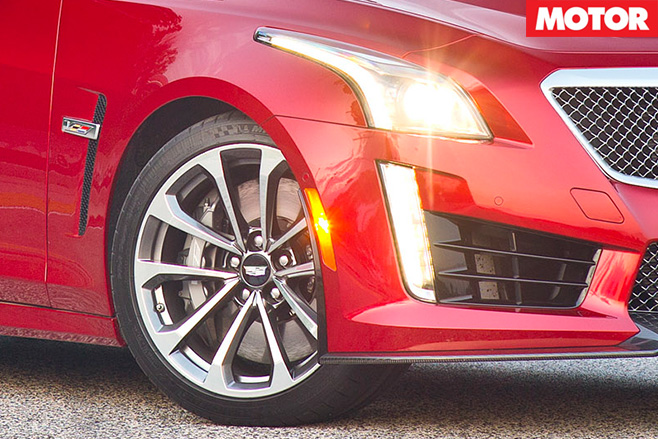
Handling is outstanding, which lends real confidence to the driver given the CTS-V’s monstrous grip and ample chassis, particularly for a four-door sedan that crosses the scales at nearly 1900kg. Rear drive and nearly two tonnes aside, this Cadillac certainly delivers. Nought to 100km/h happens in under four seconds.
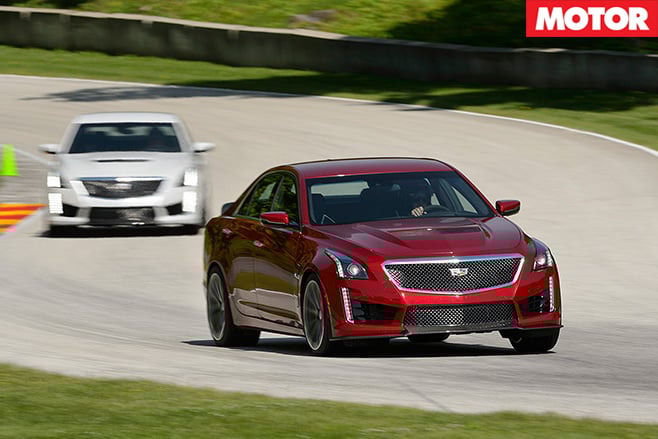
Perhaps the key to the CTS-V’s handling prowess is the Performance Traction Management system, with drive modes ranging from snow to track. Integrating multiple systems – ABS, traction, stability, dampers, and the e-diff – PTM optimises all of those variables for near-legendary sedan performance.
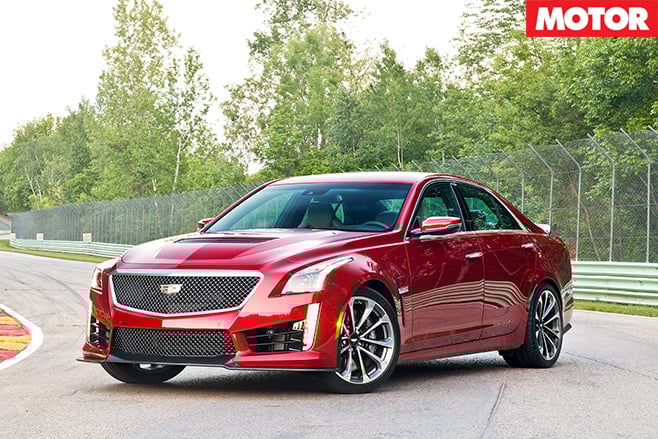
Despite the similarities in theme, this isn’t a four-door Corvette. Nor does it have the little bit of crazy found in the likes of a HSV GTS. No, it’s much greater than that. It’s a proper, sophisticated super sedan – with the performance cred to stand up to anything from Germany – but with a distinctly American flavour.
4.5 out of 5 stars
Specs Engine: 6.2-litre V8, OHV, 16v, supercharger Power: 477kW @ 6500rpm Torque: 854Nm @ 3600rpm Weight: 1884kg 0-96km/h: 3.7sec (claimed) Price: AUD$119,308 Like: Stunning engine; handling ability; mega brakes Dislike: No manual; weight; not available in Oz
We are big fans of Audi’s mighty little S1.
Its barrel-chested personality, wrapped in the A1’s capsule-sized body, is a concept that breaks the mould for its class and stands out as a unique performance vehicle. But we do find ourselves hung up on one thing. And that’s Audi’s tight leash on the S1’s potential.
Its engineers would have spent many late nights figuring out how to bolt an all-wheel drive system under an A1, and they dropped a 2.0-litre turbo four in its nose to complement the transplant.
Then, after all that, Audi de-tuned its big engine. Why in the world would it do that? We can only guess to keep it off the S3’s heels.But what if it was to also leave room for a truly unhinged ‘RS’? It would be easy to reap the extra performance an ‘RS’ badge demands from an Audi.
Since the go-fast bits already exist, you’d simply have to turn up the S1’s wick and add an upgraded cooling package. And, to top off this new turn of speed, we think it should score a styling package to celebrate the S1’s Group B ancestry.
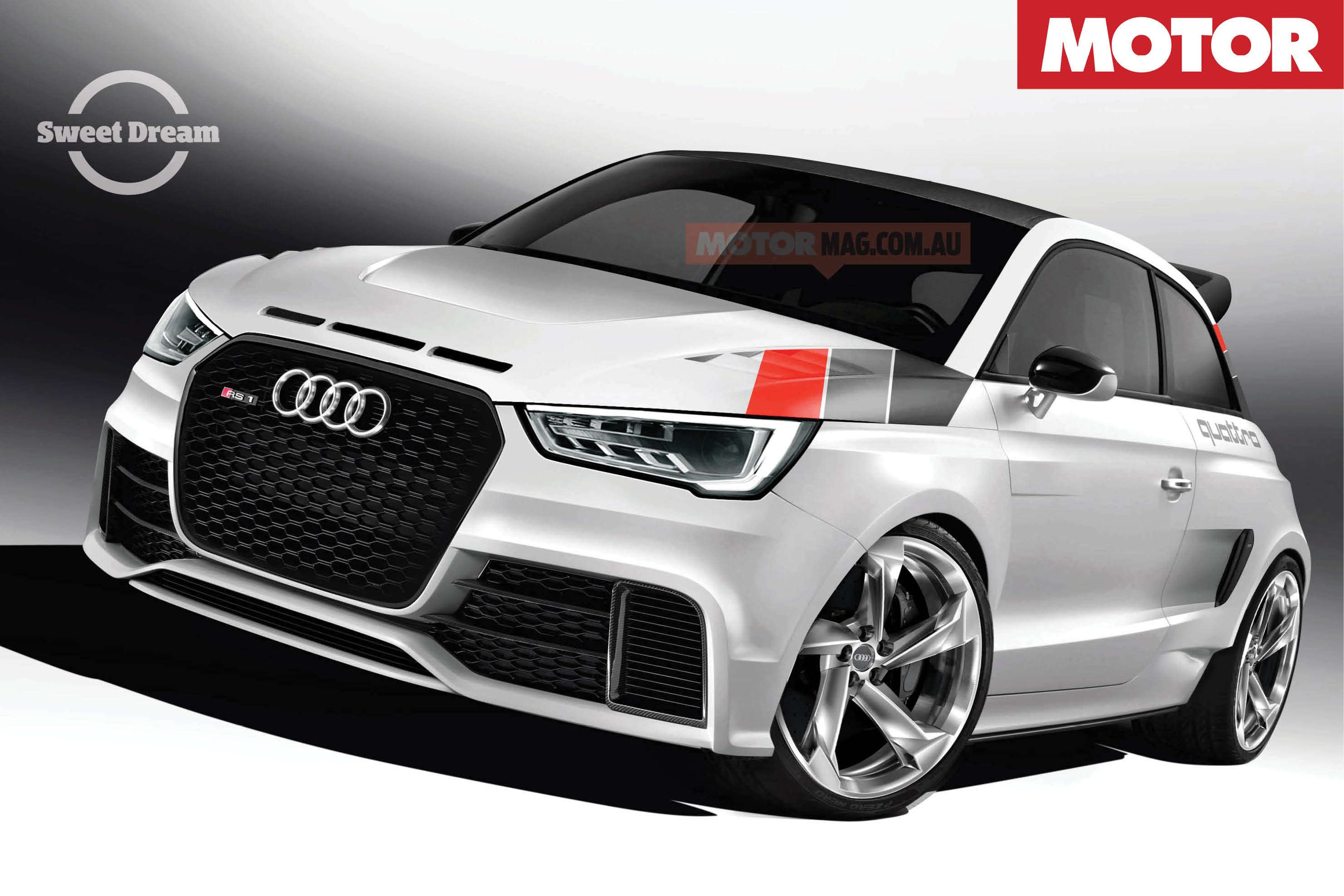
WICKED UP Thanks to VW’s efforts with the Golf R400 concept, we know the EA888 within the S1 has the potential to produce as much as 294kW and 450Nm. Borrowing the larger turbocharger from the Golf R, the RS1 will align its figures closer to the S3, instead, producing 221kW and 420Nm – a lot more than the S1’s 170kW/380Nm.
STRIP DOWN With the help of wider guards, and thus wider tyres, the RS1 should be able to breach 100km/h from rest in less than five seconds and the quarter mile in 13-flat. That’s using the same six-speed manual as before, which now uses upgraded bushes for better shift feel.
SUSPENDED BELIEF Considering the S1’s composure on road and track, its two-mode adaptive dampers will remain, however its lower control arms are now rose-jointed for better feel. Front brakes are now eight-piston jobs from the RSQ3 (why not).
WIDE LOAD Injecting the necessary venom for an RS variant is a new gaping front grille. It’s plugged with larger radiators as well. The guards are wider, to fit 245mm-wide tyres all ’round, and a bigger rear wing does its bit for downforce. The visual package also pays homage to the S1 Group B monster.
BOTTOM DOLLAR At base price, with the only interior modification being Recaro Pole Position seats, the RS1 asks for $65,990. However, that can quickly grow with options like the Group B sticker pack (as seen here), rally wheels, competition fog lights and a rear seat delete with C-Pillar brace for attaching harnesses.
