
April 2024: More new Cupra showrooms announced
The Volkswagen-owned Cupra brand has announced a number of new locations, growing its Australian presence as it moves closer to adding key new models to its range.
Earlier this month, a third Queensland location opened at Cupra Brisbane, joining existing Indooroopilly and Gold Coast spaces. The Brisbane and Gold Coast locations include both sales and service centres.
A new Victorian ‘pop-up’ location also opens this month at Tullamarine, and late April will bring the opening of the Cupra Macarthur service centre, to be joined by a pop-up sales location later in the year. A permanent Cupra Garage will open there in 2025.
“We’ve seen some of the biggest names in Australian automotive like Alto Group, Eagers Automotive and Zagame Automotive Group really get behind the CUPRA brand with multiple locations,” said CUPRA Australia Director, Ben Wilks.
“We’re looking forward to working with some of the best in the business to drive the CUPRA brand forward in Australia.”
July 26: Cupra announces Hobart showroom
Cupra, Volkswagen’s Spain-born performance marque, will open a new ‘Garage’ in Hobart in the coming weeks.
The new showroom, the brand’s 10th in Australia since launching 12 months ago, will be located on Warwick Street in Hobart. The site was previously operated as a used-car dealership by Jackson Motor Company (JMC), which will manage the new Cupra location.
JMC currently sells new and used cars out of six locations in Tasmania, specialising in models from Volkswagen, Audi, Kia, Isuzu Ute, Suzuki, Mitsubishi, Ford and Subaru.
In announcing the new location, Cupra Australia described JMC as “by far the most significant automotive retail operation in the island state”.
Cupra Australia boss Ben Wilks said: “JMC’s commitment to CUPRA literally gets us on the map in that market, providing coverage that a brand with our ambitions needs.”
March 26: Adelaide Garage opens
Cupra has once again expanded its Australian presence with the opening of a new ‘Garage’ showroom in Adelaide.
Located at 11 Waymouth Street, the Barcelona brand’s new home in the South Australian capital is operated by Solitaire Automotive, a group which has represented European and prestige automotive brands since 1971.
Having operated to this point from temporary premises, CUPRA’s new SA home coincides with the release of the brand’s Born fully-electric hatchback.
“The commitment of Solitaire, a group of such longevity and distinction, and the impressive facility in a busy CBD area combining business interests and high quality dining, is a glowing endorsement of Australia’s newest and most dynamic brand,” said Cupra Australia Director Ben Wilks.The Adelaide site joins the three Garages owned by AP Eagers (Indooroopilly, Gold Coast, Perth), Zagame’s Melbourne pair (Chadstone and Richmond), Sydney’s Alto Prestige (CBD and Artarmon) and Canberra’s Lennock Motors.
Wilks said further Cupra Garage announcements will be made shortly.
Our original story continues below unchanged.
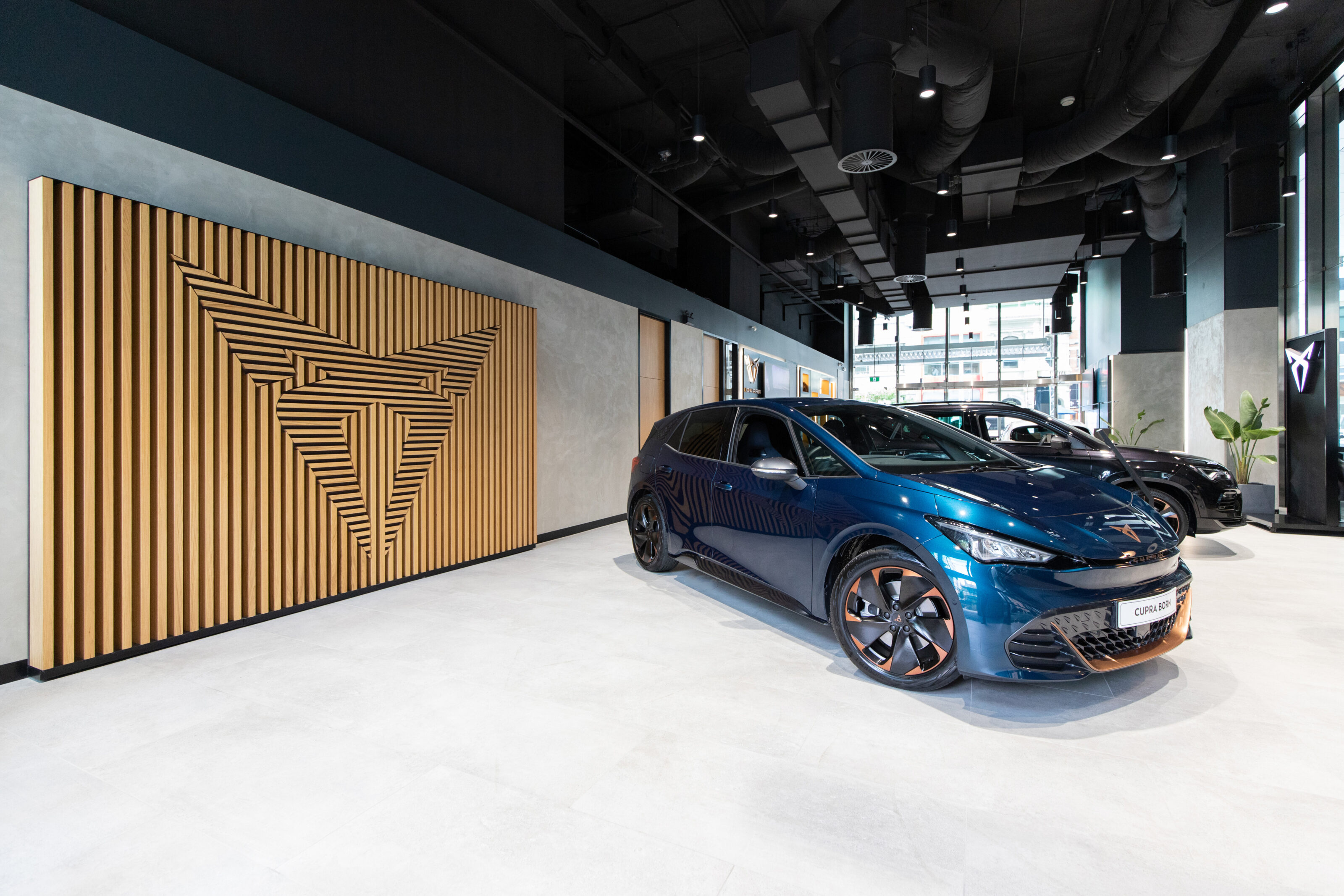
December 2022: Cupra’s entry into Australia is strengthening with two large automotive retail groups expanding their dealership network into Brisbane and Melbourne.
Snapshot
- AP Eagers and Zagata Group open Cupra Garages in Brisbane and Melbourne
- Each showroom able to physically show all of Cupra’s offerings to customers
- After sales support offered through nearby service centres
AP Eagers currently operates ‘Cupra Garages’ in Perth and on the Gold Coast, and the giant has now opened its newest venue on the Automall in the Indooroopilly Shopping Centre.
The space boasts 220 square metres, which allows for all four of Cupra’s models to be available for customers to experience – with the all-electric Born EV anticipated to arrive shortly. Servicing is also available at the shopping centre.
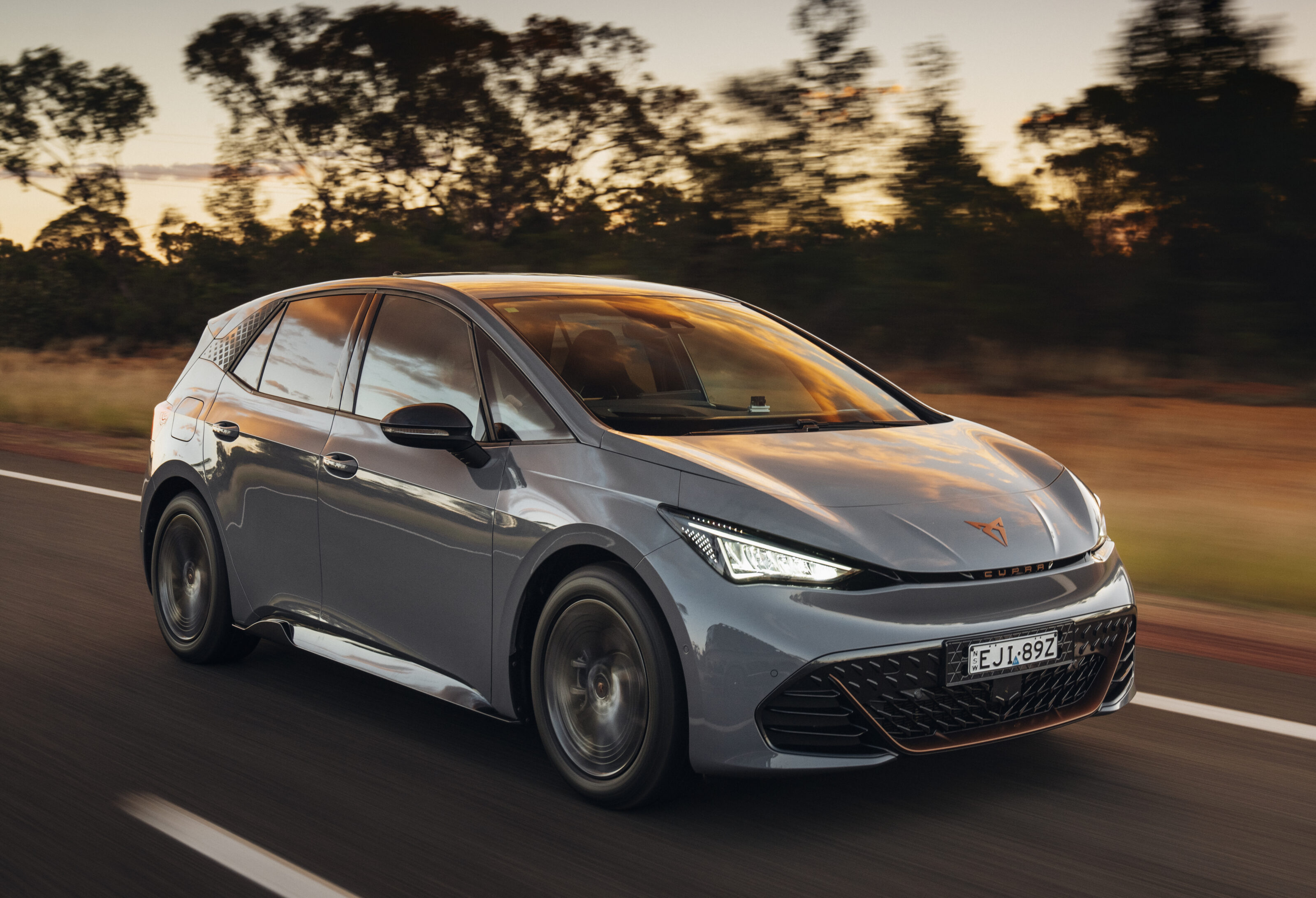
Over on the southern side of the continent, Zagame Group will be adding to its existing Chadstone showroom by opening a 576-square-metre garage on Swan Road in Richmond.
This space allows for six vehicles in the showroom for potential customers to inspect. A service centre is located at nearby King Street in West Melbourne.
“These Garages are all about modernising customer interaction, about taking Cupra to where they live,” said Ben Wilks, Director of Cupra Australia,
“Cupra’s Indooroopilly Garage fits neatly into a hugely busy retail destination. Our Richmond Garage sits on one of Melbourne’s iconic old high streets with its array of popular shops and restaurants.”
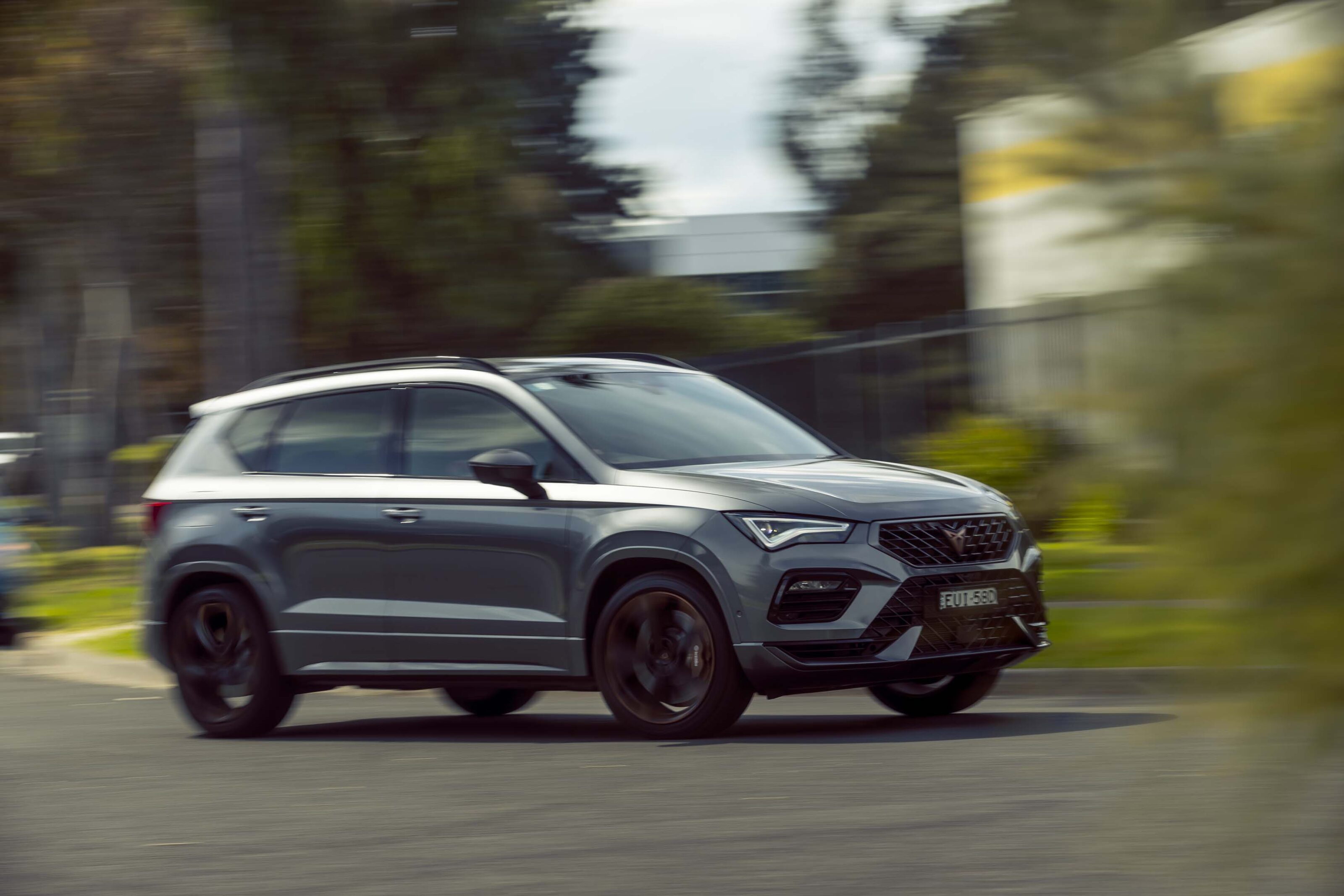
While confidence was expressed in the online purchasing process, Wilks did indicate that the showrooms added another layer that would help customers better understand their potential purchase.
“While you can conduct your Cupra purchase online – with the surety of drive-away pricing – we want to give you the opportunity to see, touch and feel our cars in great places run by knowledgeable and friendly Cupra Masters.”
The growing presence of Cupra punctuates the debut year for the brand, with the launches of the Formentor seeing 554 sales to date, with 209 sales for the Ateca, and 151 Cupra Leons finding their way to Australian homes according to the latest report from VFACTs.
Frequently Asked Questions
The ability to drive an electric car from Melbourne to Sydney on a single charge could soon be a reality if details about BYD’s second-generation ‘Blade battery’ prove to be true.
News out of China is that BYD’s battery subsidiary, FinDreams, is poised to launch the second-generation of its innovative Blade battery which promises a big boost in energy density and the possibility of more than 1000km of range.
Revealed by BYD’s chairman Wang Chuanfu during a recent finance meeting, the new Blade battery pack is said to increase energy density by 25 per cent compared with the first-gen version, meaning BYD could use fewer cells to achieve the same range and deliver battery packs that are smaller and lighter.
Conversely, more range could be achieved from a similarly size battery leading to speculation that the second-gen Blade battery will deliver a range of around 1000km on the Chinese testing cycle (CLTC).
If these numbers are accurate, it means the second-gen Blade battery have similar range to highly anticipated ‘solid state’ batteries currently in development. But while solid state technology is still years away, BYD’s new battery tech will enter production later this year.
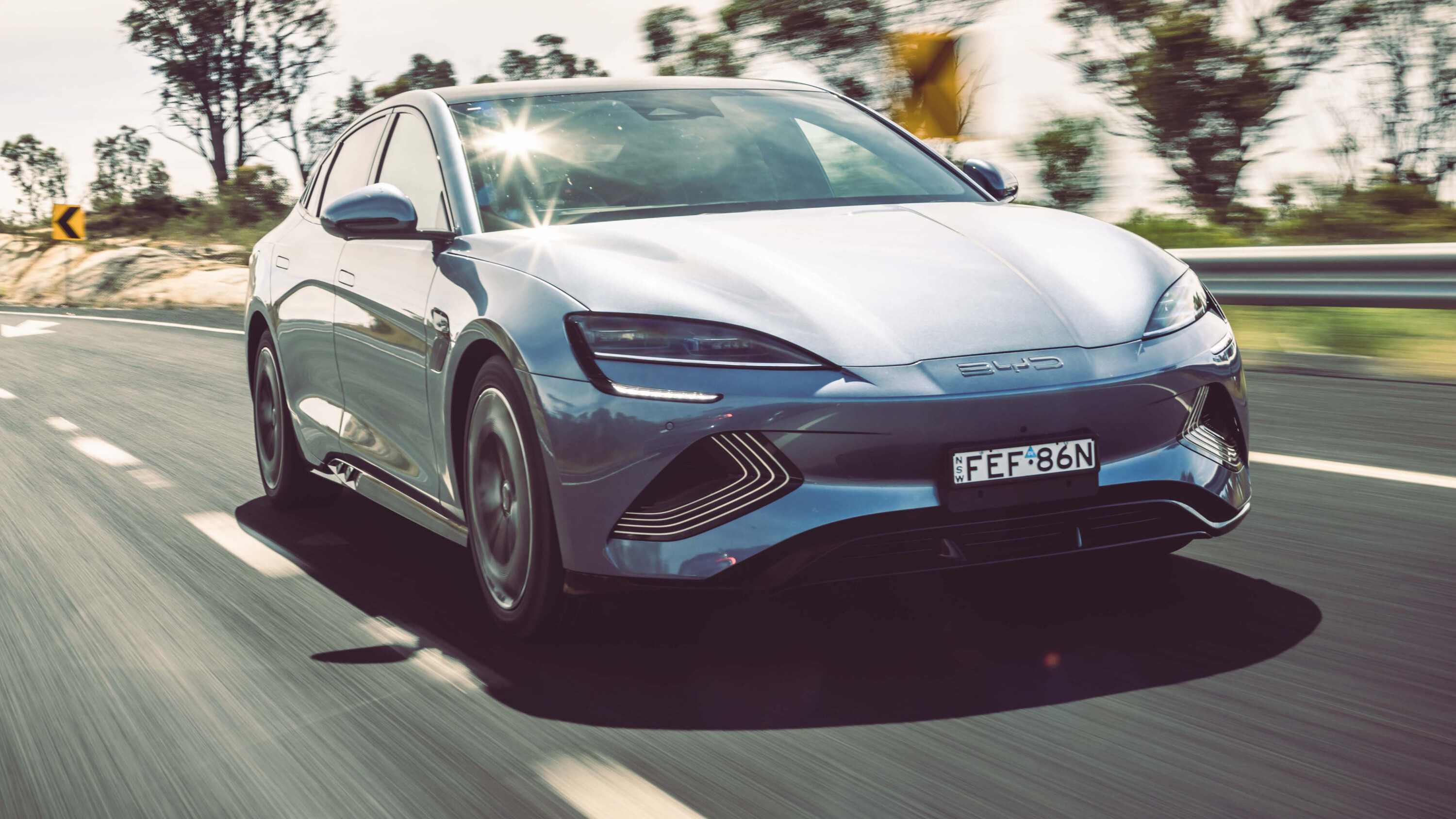
It’s worth noting, however, that China’s CLTC test cycle delivers more generous range claims than vehicles that use WLTP testing figures. The BYD Seal, for example, has a claimed CLTC range of 700km but that figure drops to 570km on the stricter WLTP cycle.
The original Blade battery, which currently powers every model in BYD’s Australian line-up, differs from traditional lithium-ion batteries in both its chemistry make-up and construction to deliver greater safety, higher energy density and longer lifespans.
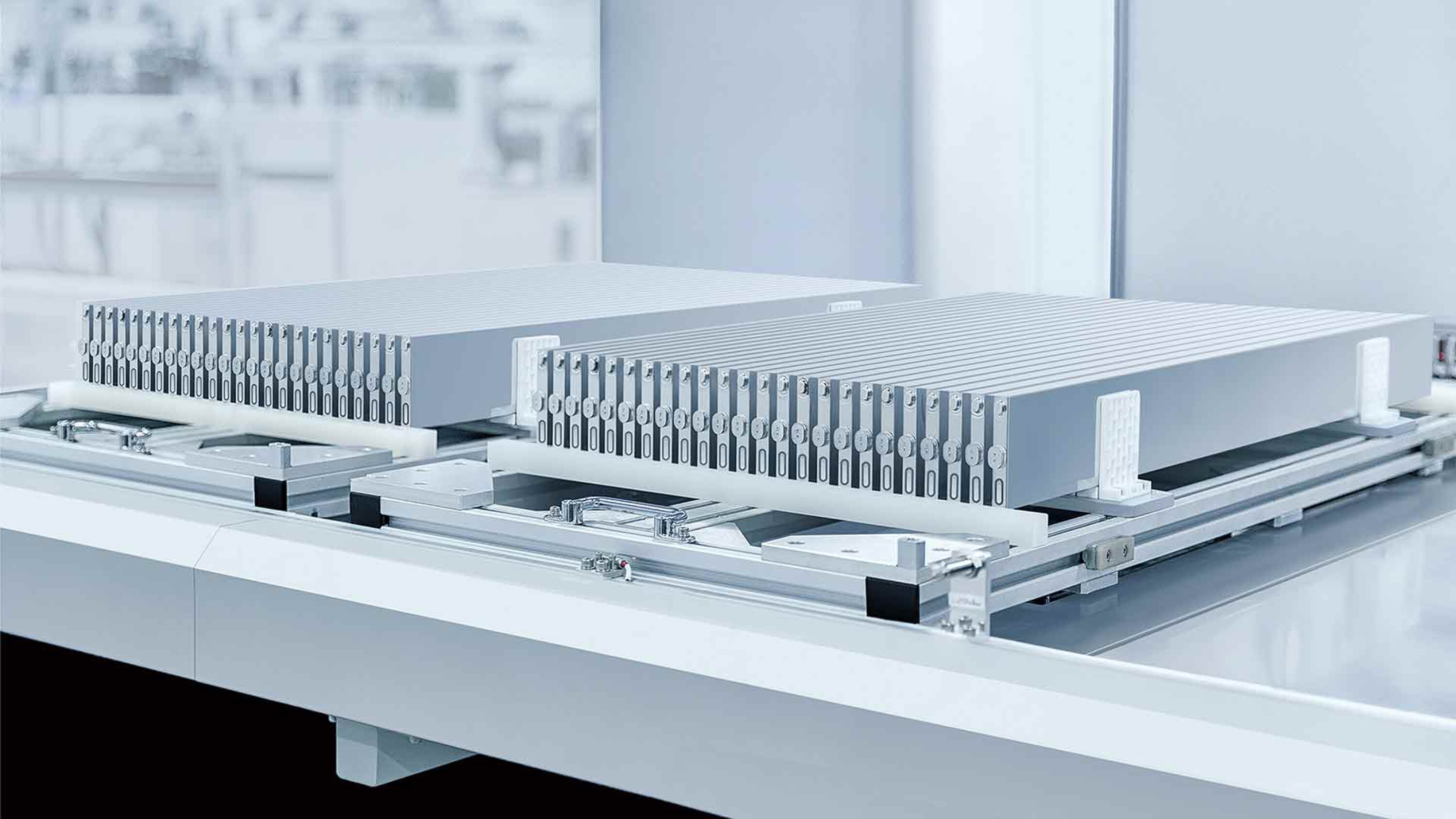
Instead of using conventional battery cells, the blade battery is made up of in thin metal sections, or blades, that are stacked together like the pages of a book. The design is more space efficient and also means the battery can be integrated into the vehicle structure.
First generation Blade batteries have an energy density of 150 Wh/kg, however the new version is said to increase this to 190 Wh/kg.
BYD currently sells three cars in Australia, with the Seal sedan boasting the biggest WLTP range at 570km from a 82.6kWh battery. The Atto 3 small SUV and Dolphin hatch have claimed WLTP ranges of 420km and 427km respectively.
For comparison, the Tesla Model Y, which is Australia’s best-selling EV, currently has 629km of WLTP range.
Aussie buyers will soon have the choice of more EVs with ever bigger driving ranges, including the 2025 Porsche Taycan which arrives in July and can travel 678km between charges.
The recently confirmed Zeekr 009 is capable of travelling even further, however. The Chinese-made people mover, which is a stalemate to Volvo and Polestar, offers a range of 822km on the CLTC cycle.
Snapshot
- Updated Mach E includes a new rear motor that boosts range and improves torque
- Australia set to receive the updated Mach E in 2025
- The off-road focused Rally variant is now on sale in the US for $61,890
- Recharging times have been slashed by 20 percent, while range is up by 32km
The Ford Mustang Mach E has been treated to a host of upgrades in the US where it will soon gain a new electric motor, more range and faster recharging times.
The update, which will arrive Down Under in 2025, also sees Ford rejig its American model range by dropping the flagship GT Performance variant, which will instead form part of a Performance Upgrade package.
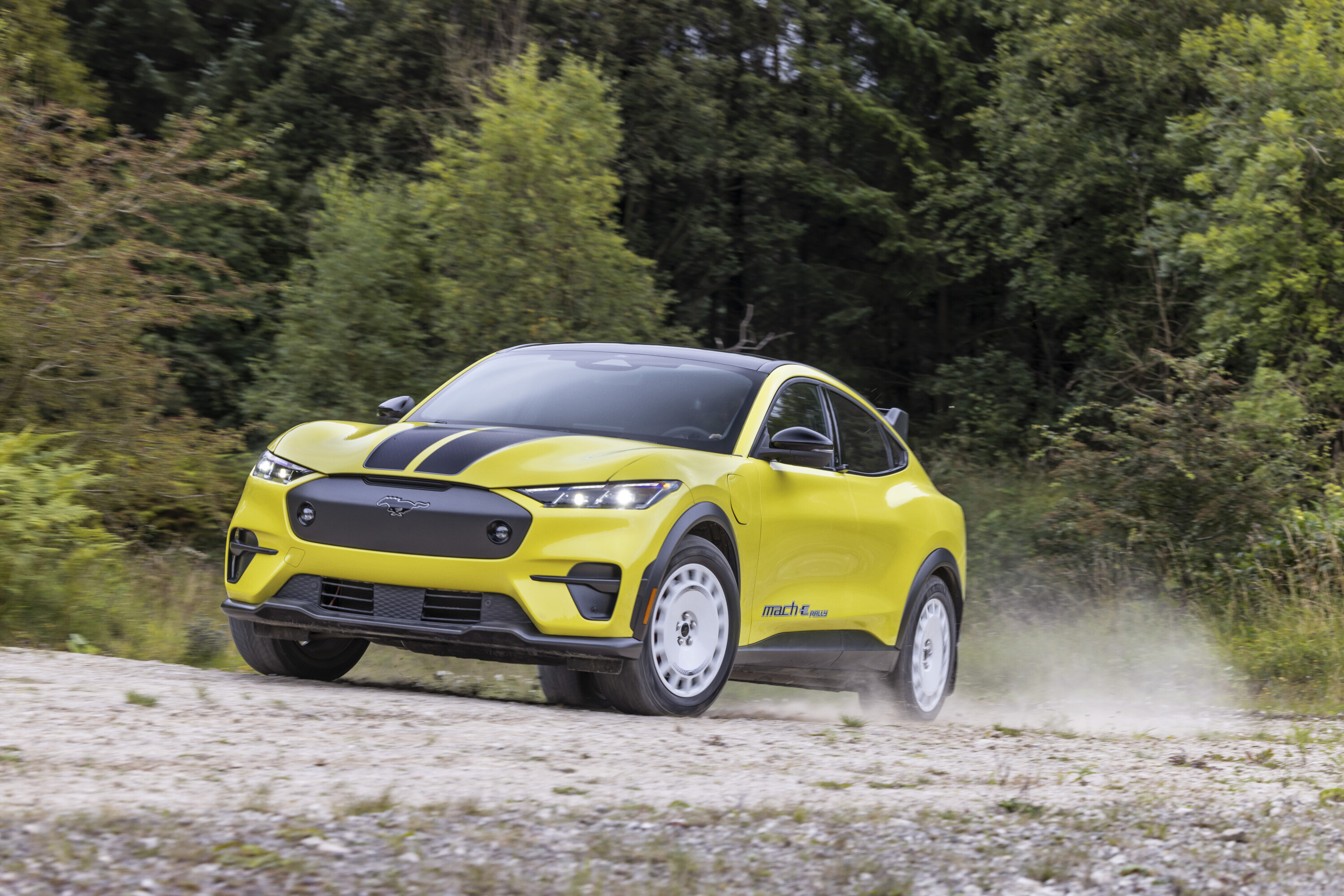
The off-road focused Mach E Rally, which sports a large rear wing, a raised ride height and aero wheels, has also officially joined the US range after it was unveiled late last year. US pricing for the Mach E Rally has been confirmed at US $61,890.
It’s sad news for Aussie buyers on that front, though, as it seems unlikely the Rally will be offered here.
“Updates for the Ford Mustang Mach E are expected to arrive in Australia in 2025,” said a Ford spokesperson. “We have no news to share about any plans to introduce the Ford Mach E Rally to Australia.”
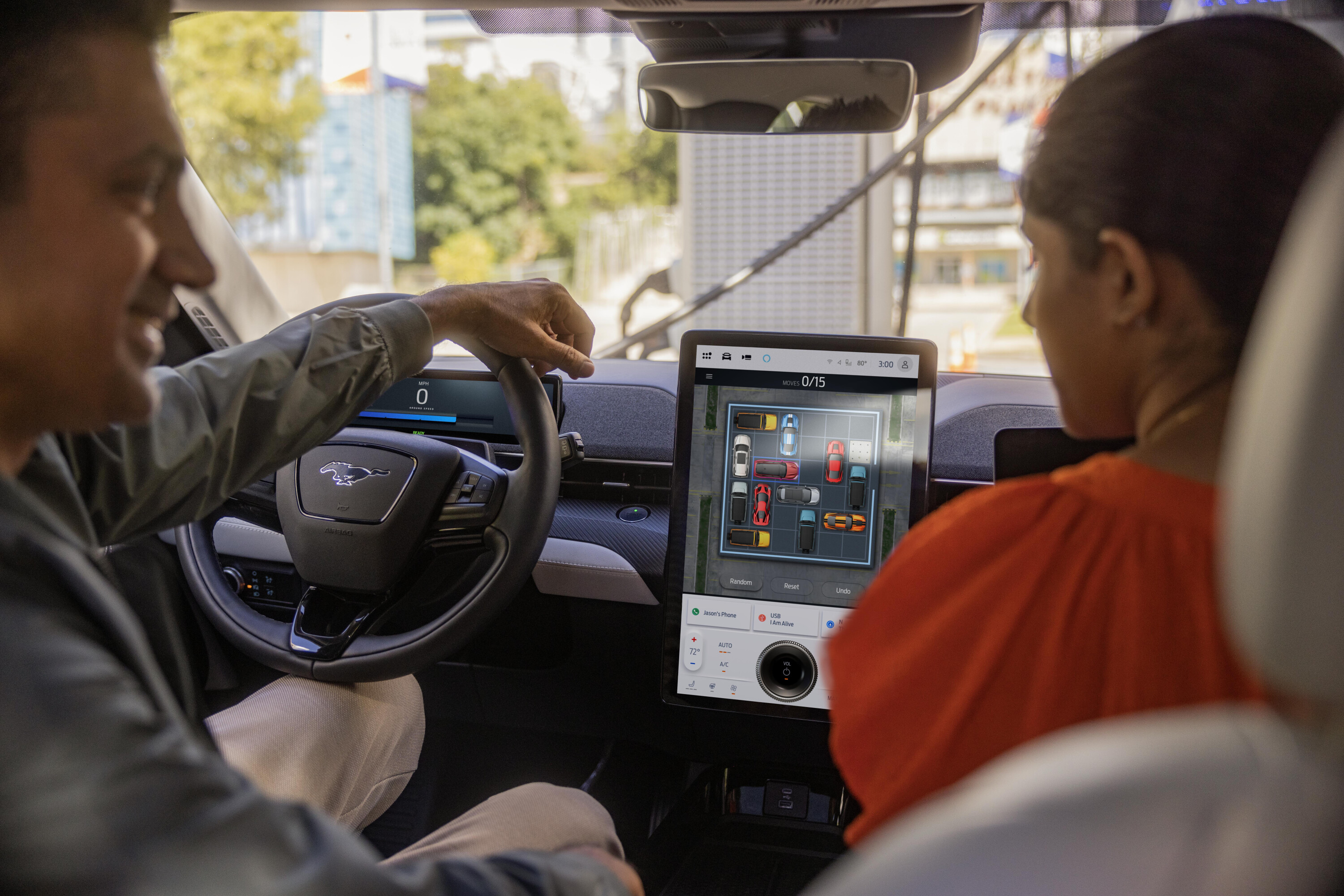
Further upgrades for the MY24 Mach E include subtle improvements to the menu structure and ergonomics of the large 15.5-inch centre touchscreen as well as additional equipment for certain trim levels. Read on for all the details.
New e-motor, faster charging
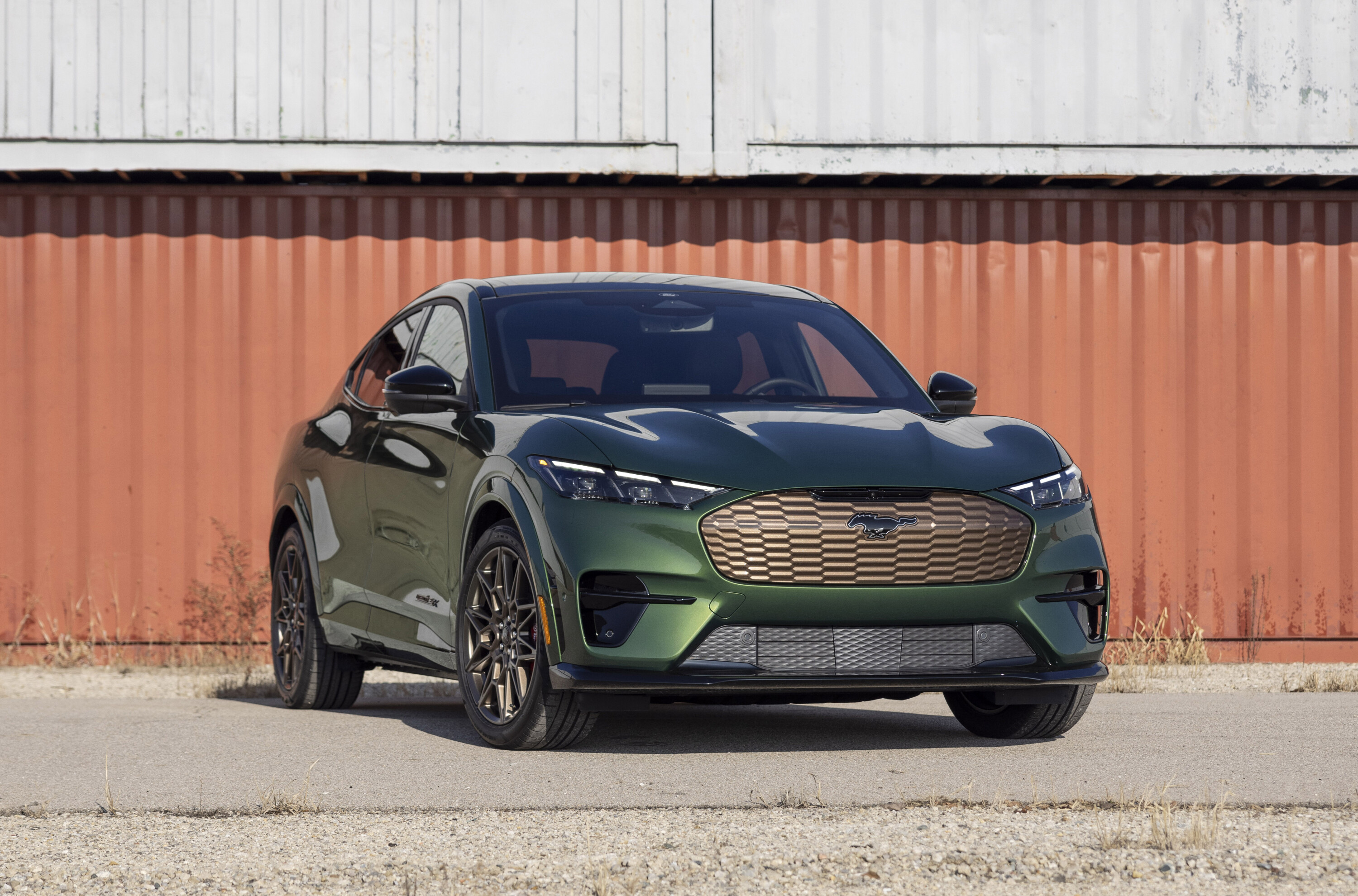
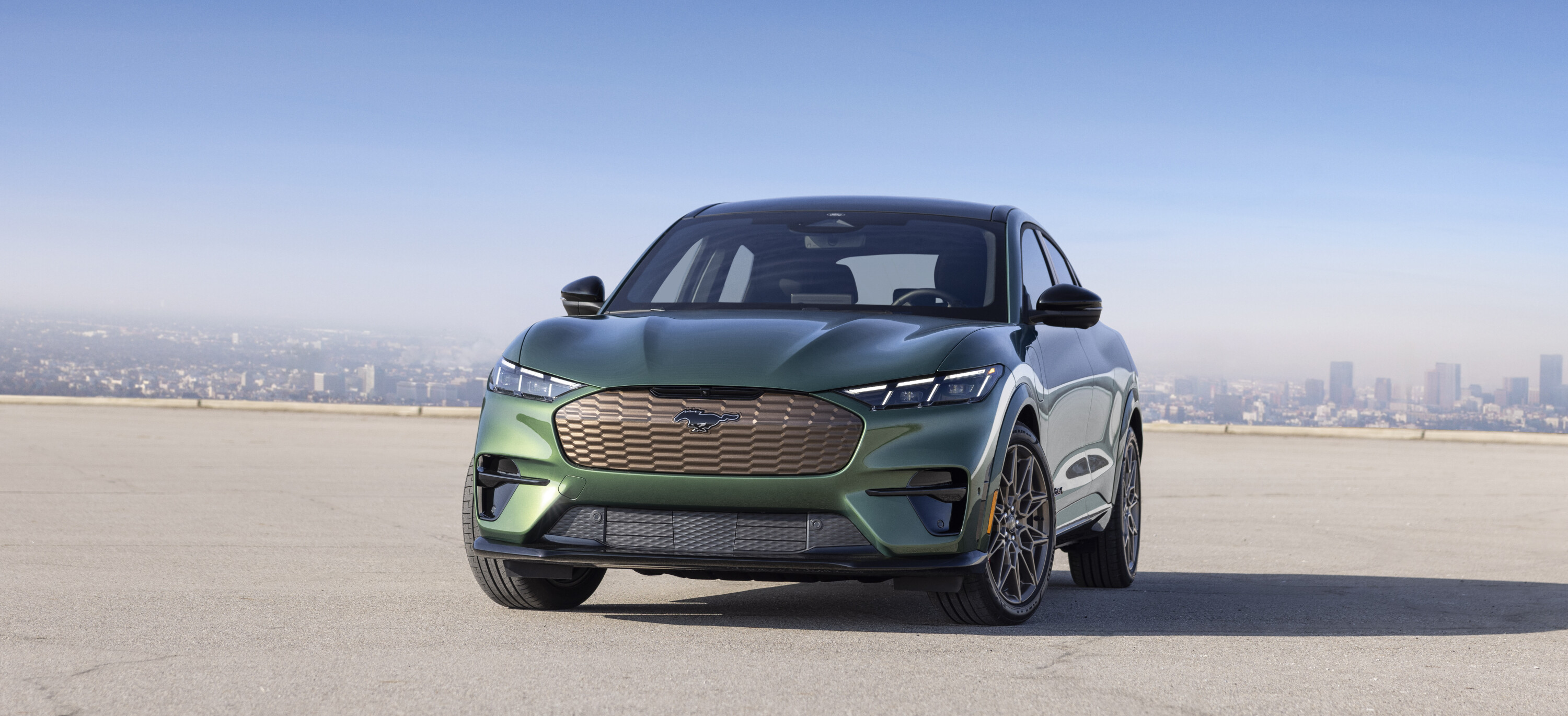
The biggest upgrade for the 2024 Mustang Mach E is a new rear electric motor which Ford says was “developed in-house by Ford engineers”. Available across the range, the new e-motor is lighter than the unit it replaces and delivers “improved torque”, according to Ford.
The new motor also brings an uptick in range, with the cheapest rear-drive Select model now capable of 250 miles (402km) of range on the EPA cycle. The mid-spec Premium trim level, which uses the larger extended-range battery, also gains a boost in range to 320 miles (515km).
If those range estimates look lower than the ones quoted in Australia it’s because they’re based on the US-focused EPA cycle. Aussie ranges typically use euro WLTP figures, which are around 22 per cent higher.
The key takeaway? Ford says the updated Mach E Select and Premium can now travel 20 miles (32km) further than before.
The flagship GT trim also boasts more range, although it only gains a 10 mile (16km) boost.
Faster charging
Improved DC charging times are also part of the 2024 upgrade, with Ford claiming wait times have been slashed by up to 20 per cent. Models with the bigger extended range battery can now achieve a 10-80 percent charge in 36.2 minutes, which is almost a nine minute improvement. Cars with the standard battery will complete a 10-80 percent charge in just over 32 minutes, a saving of close to six minutes.
As previously announced, Mach E owners can now make use of the extensive Tesla Supercharger network to recharge their cars. Ford has also added new features via Android Auto and Apple CarPlay to help drivers find more efficient routes and locate public chargers.
New models and visual upgrades
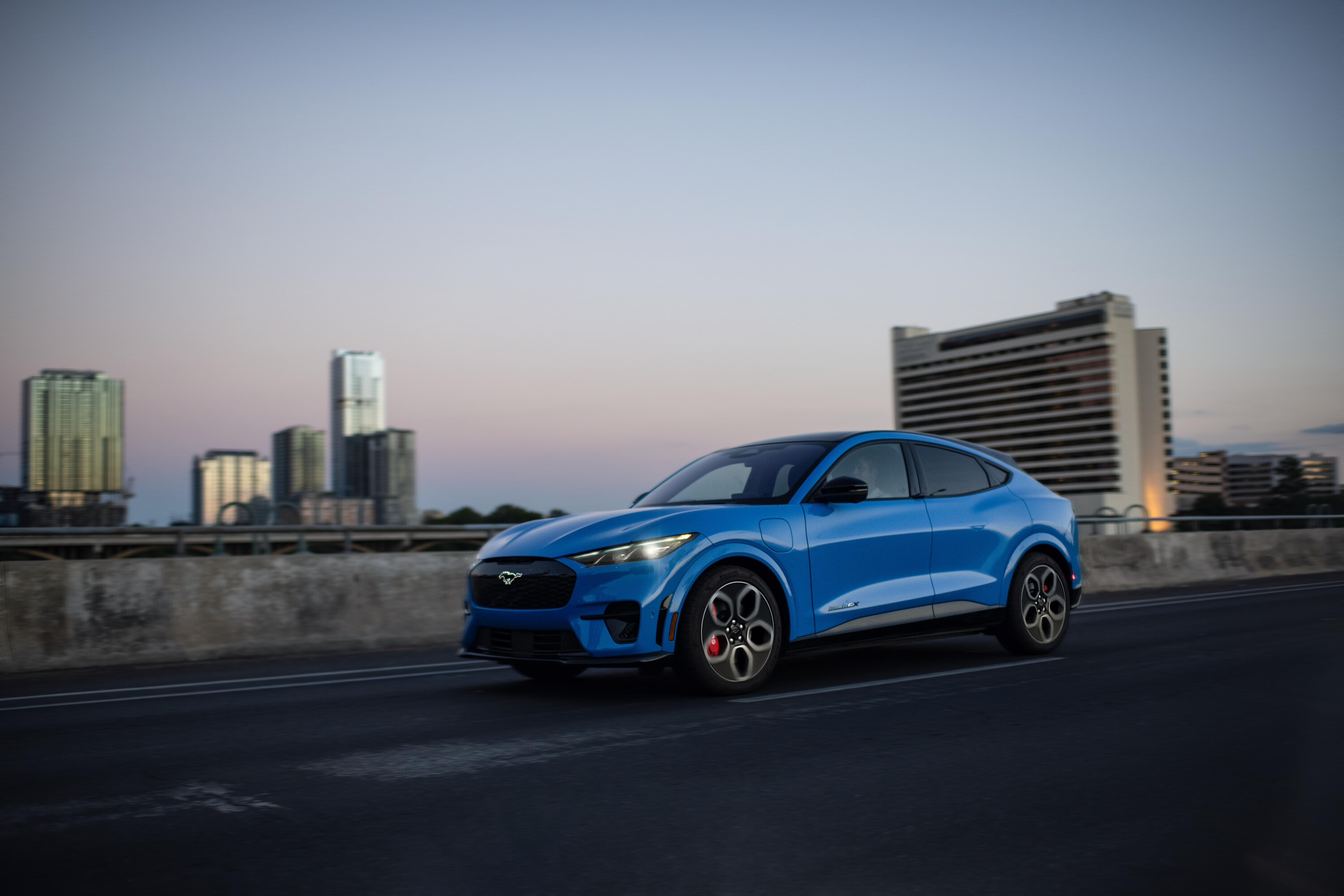
Unlike Australia, Ford has previously offered a flagship Mach E GT Performance in the US. That performance hero, however, has been dropped for 2024 and will instead be offered as part of an upgrade pack for the Mach E GT.
The Performance Upgrade pack brings a sizeable 135Nm boost to the GT’s total output and also helps to keep the car running at maximum power for longer than to “innovative powertrain thermal modelling and control algorithms”.
With the Performance Upgrade fitted, Ford claims the 2024 Mach E can hit 0-100km/h in 3.3 seconds, which is quicker than both the Telsa Model Y Performance and Porsche Macan 4 Electric, and cover the quarter mile in 11.8sec at 183km/h.
Interestingly, owners can choose to option the Performance Upgrade at the time of purchase or to have it added at a later date.
Ford has also improved the standard spec of the GT model in the US which will now include performance front seats, Mangeride adaptive dampers and Brembo branded front brake callipers.
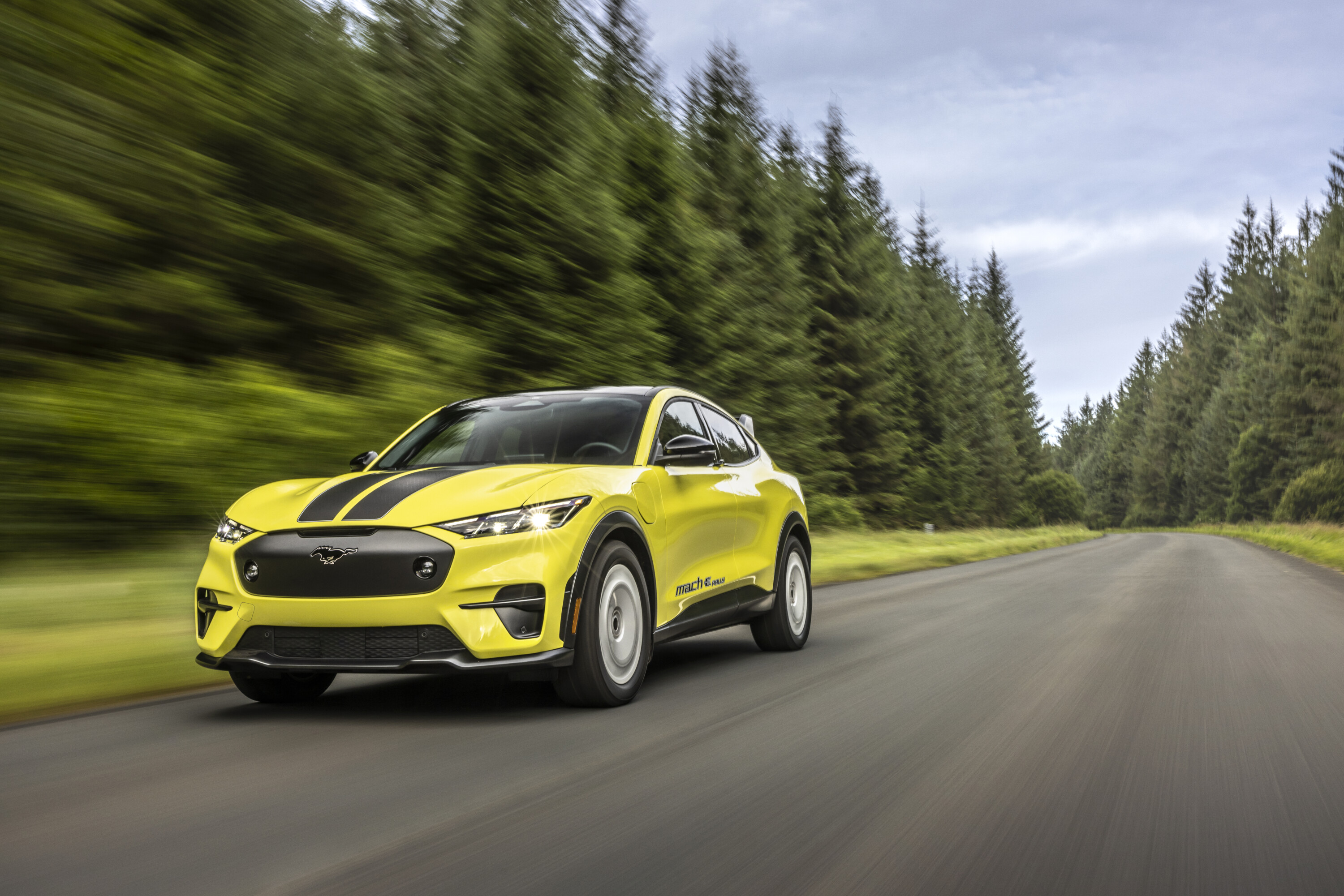
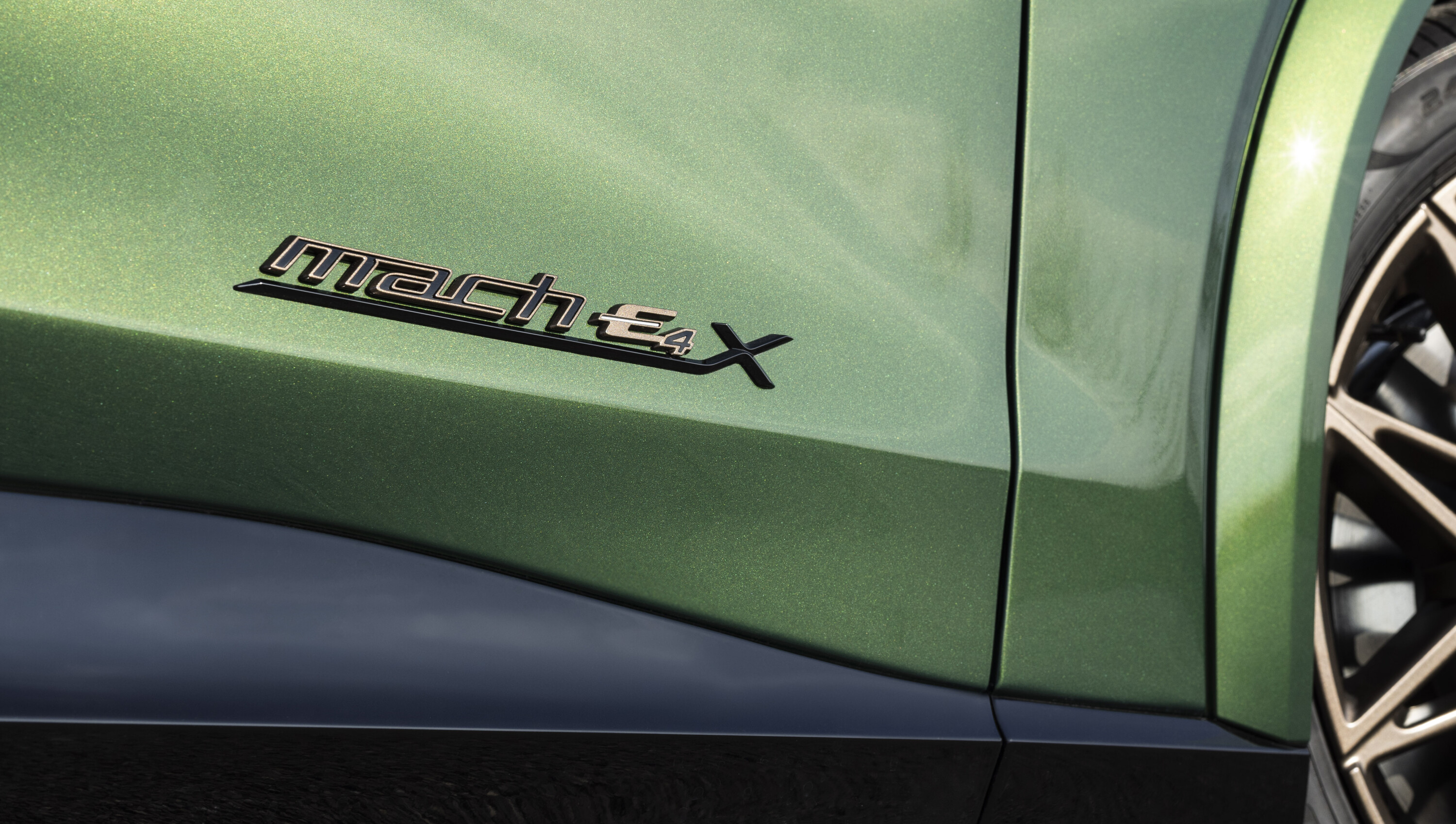
Another key inclusion for 2024 is the Mach E Rally, which is now officially on sale in America for US $61,890 (AUD $93,422). The Rally features the Performance Upgrade pack as standard and includes a ride height raised by 25mm, rally-inspired alloys and tyres and a host of exterior styling tweaks.
Speaking of, a Bronze Appearance Package, which adds 20-inch Sinister Bronze painted aluminium wheels and other bronze exterior detailing, is also available in the States.
Cabin upgrade
The large 15.5-inch centre touchscreen has also been improved for 2024, with Ford tweaking the menu structure and adding new button icons to make the system easier to navigate. Wireless Apple CarPlay and Android Auto continue to be offered as standard across the range.
When will the updated Mustang Mach E come to Australia?
The updated Ford Mustang Mach E will arrive in Australia next year. It’s not yet clear if the Mach E Rally will make its way Down Under, however.
“Updates for the Ford Mustang Mach E are expected to arrive in Australia in 2025,” said a Ford spokesperson. “We have no news to share about any plans to introduce the Ford Mach E Rally to Australia.”
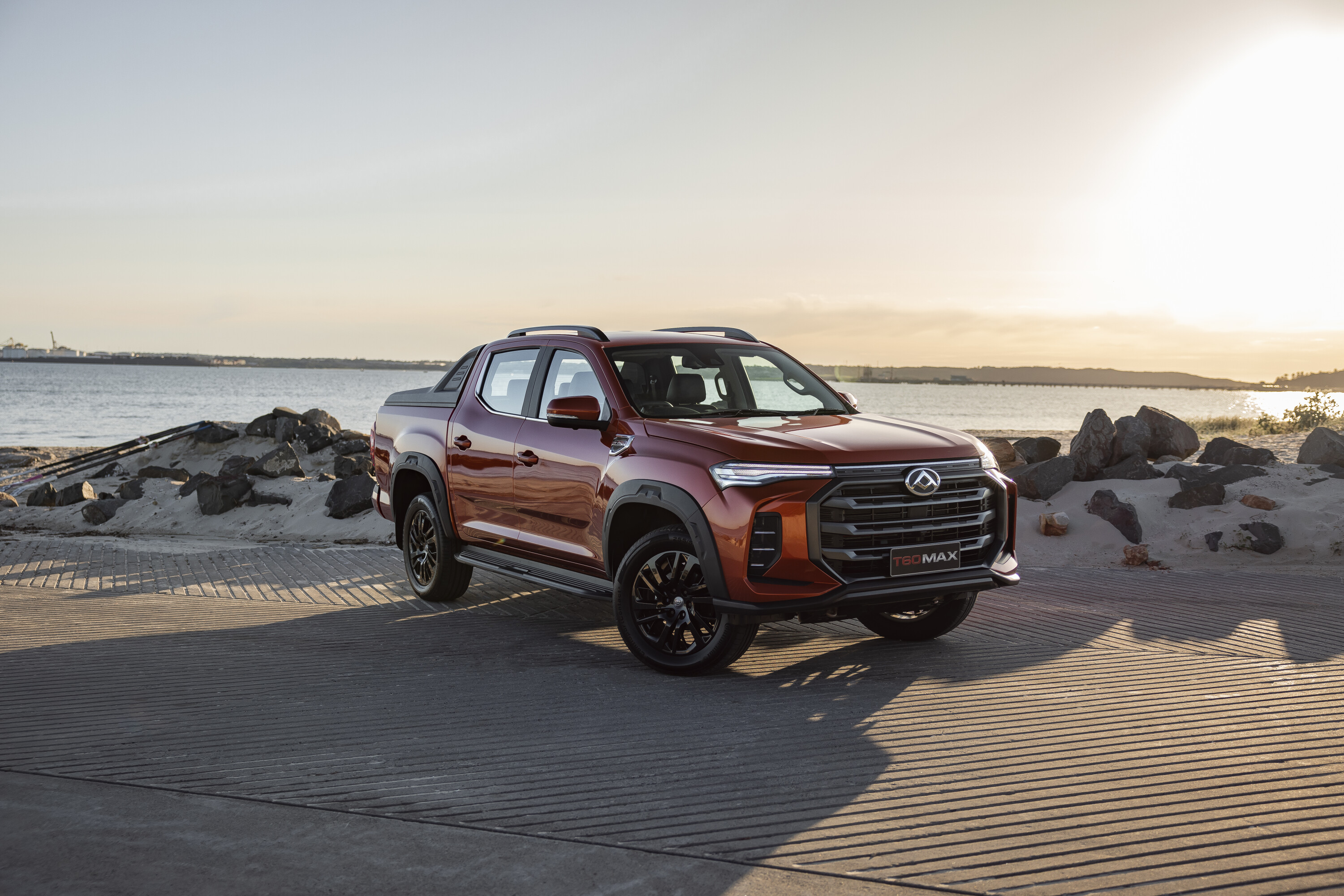
The T60 Max Luxe is a dual cab ute from the British founded, Chinese owned automaker LDV, known for their utility vehicles.
The dual cab is a versatile utility vehicle designed to cater to both professional and recreational needs. With its attractive pricing, the T60 stands as a strong contender against leading brands in the category.
Available in three variants and with manual and automatic transmissions across most of the range, the T60 is sure to have something for everyone.
Pricing and features
The highest-specced Luxe is available for $45,779 drive-away for the six-speed manual, and $47,779 for the eight-speed automatic transmission.
All T60 Max models are equipped with the same 2.0-litre bi-turbo diesel engine, delivering 160kW of power and 500Nm of torque and boast a 3000kg braked towing capacity.
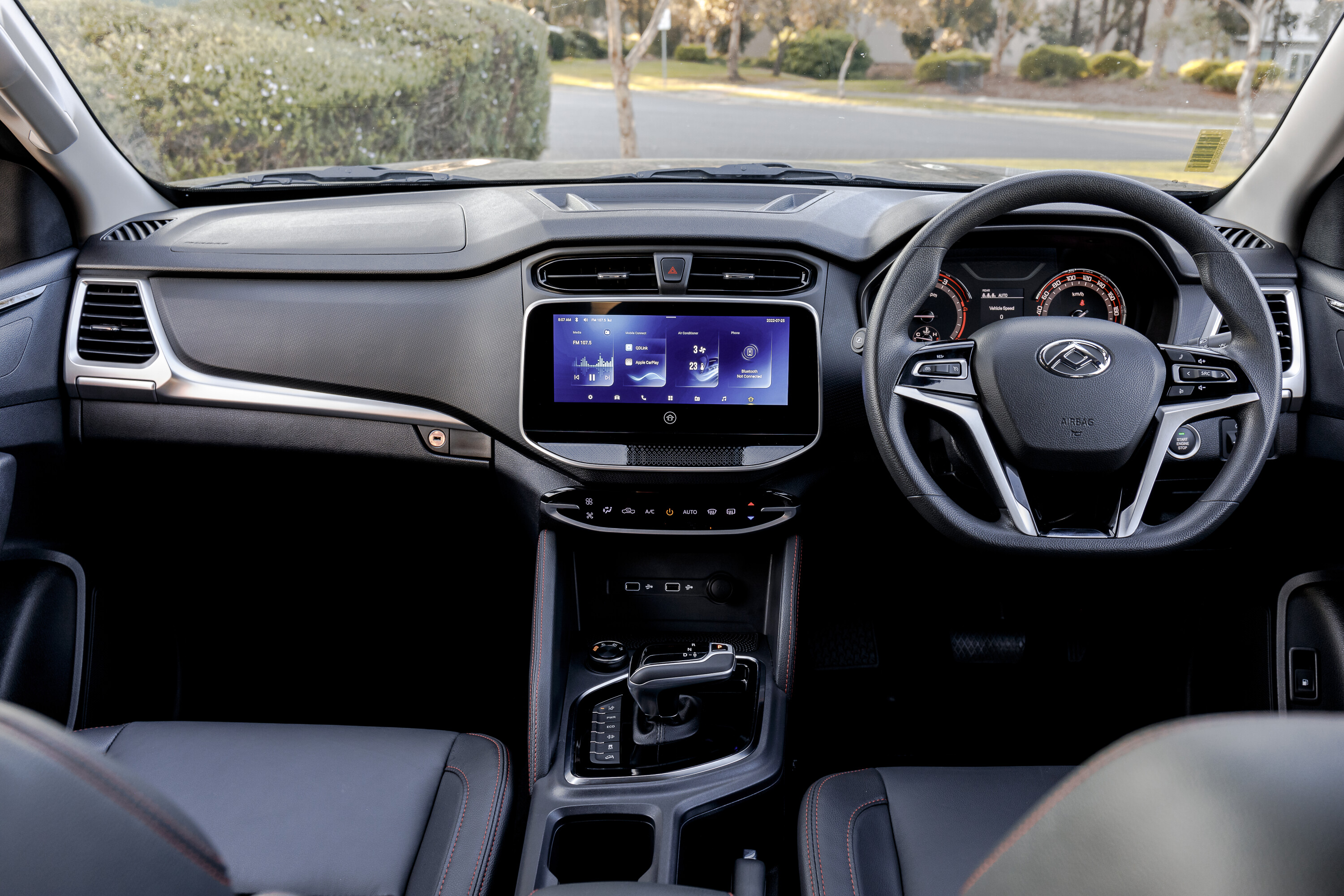
The Max Luxe receives an impressive amount of specs on top of the standard features such as a 10.25″ infotainment screen, reversing camera, tyre pressure monitoring system, LED DRLs, rain sensing wipers and Apple Carplay.
Stepping up to the Luxe adds keyless entry and start, 19″ black alloy wheels, black roof tails and side steps, a rear differential lock and leather seats.
The dual cab is available in five colours.
Safety
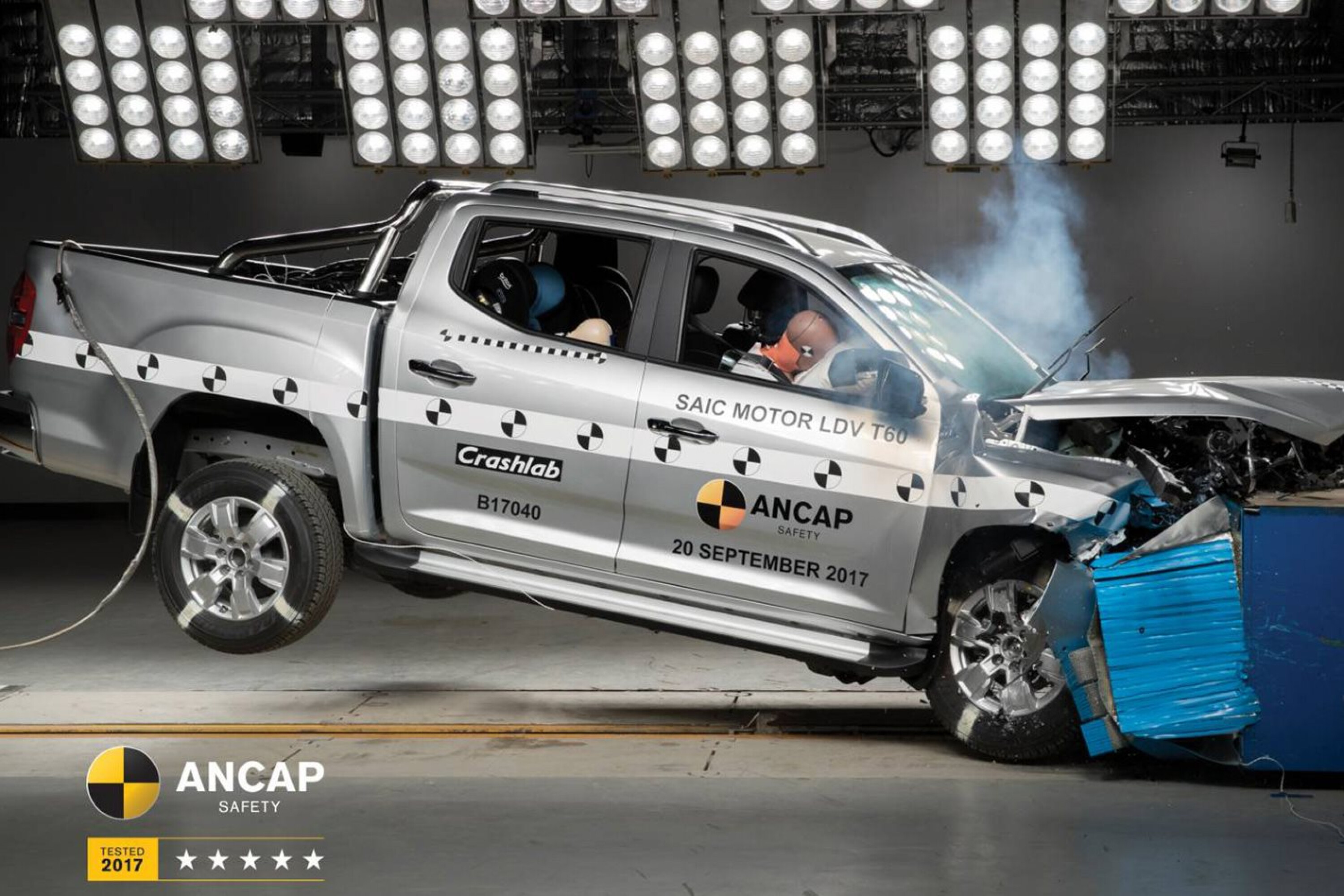
The entire T60 range holds a five star ANCAP safety rating from 2017.
It is equipped with six airbags, anti-lock braking system, emergency brake assist, rear parking sensors and reversing camera.
Additional features such as lane departure warning and a 360-degree camera are available from the Luxe variant and above.
Key Rivals
The LDV T60 Max Luxe encounters stiff competition in a segment that’s already highly recognised, featuring popular choices like the:
These competitors all boast their own unique selling points and distinct features and strengths, creating a varied landscape for those looking to purchase.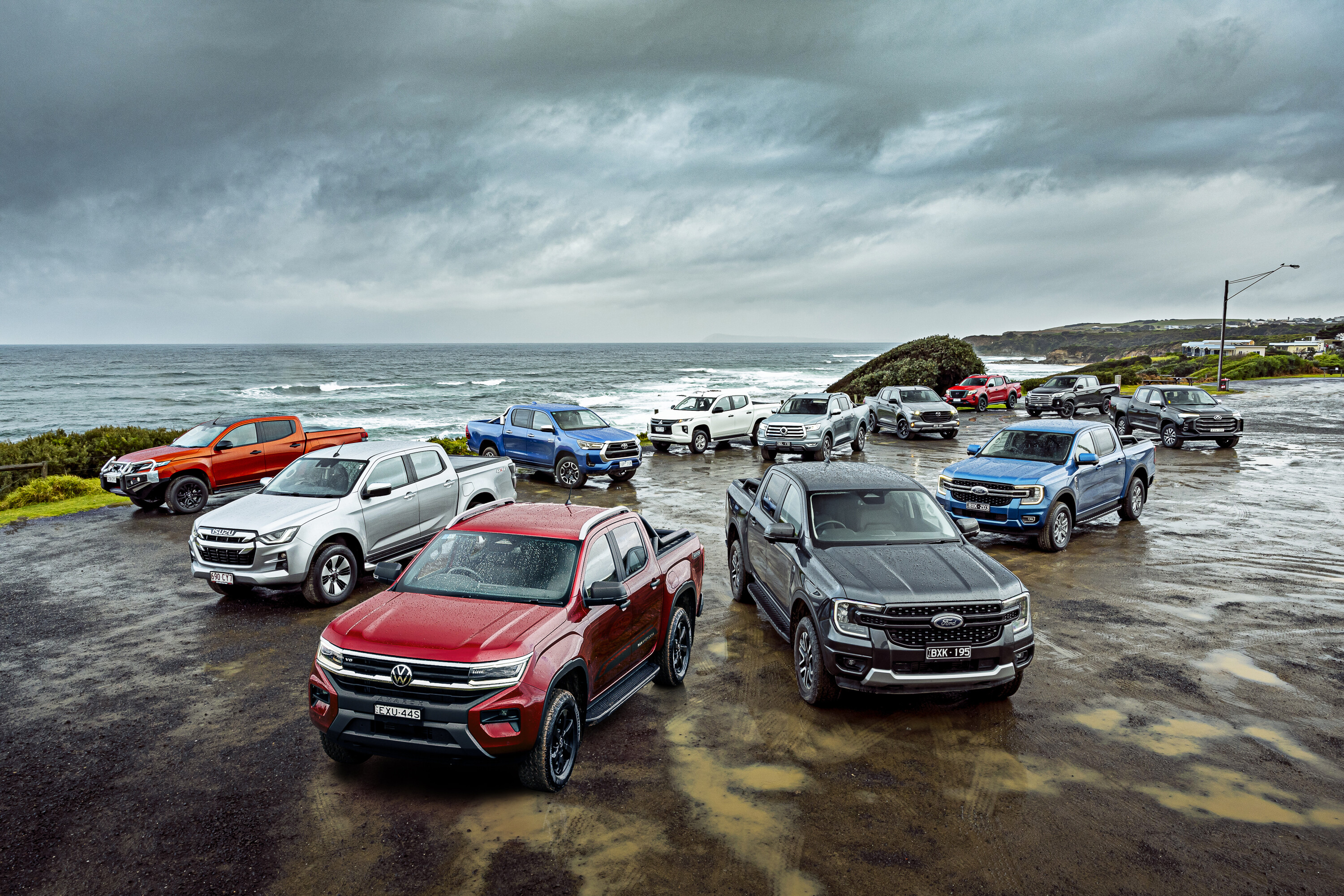
Should I put it on my shortlist?
The LDV T60 Max Luxe, with its powerful engine, five star ANCAP and competitive pricing, makes a compelling case for inclusion in the shortlist of anyone looking for a reliable and versatile pickup truck.
While individual preferences and requirements will play a role, this model is undoubtedly worth considering at its price point.
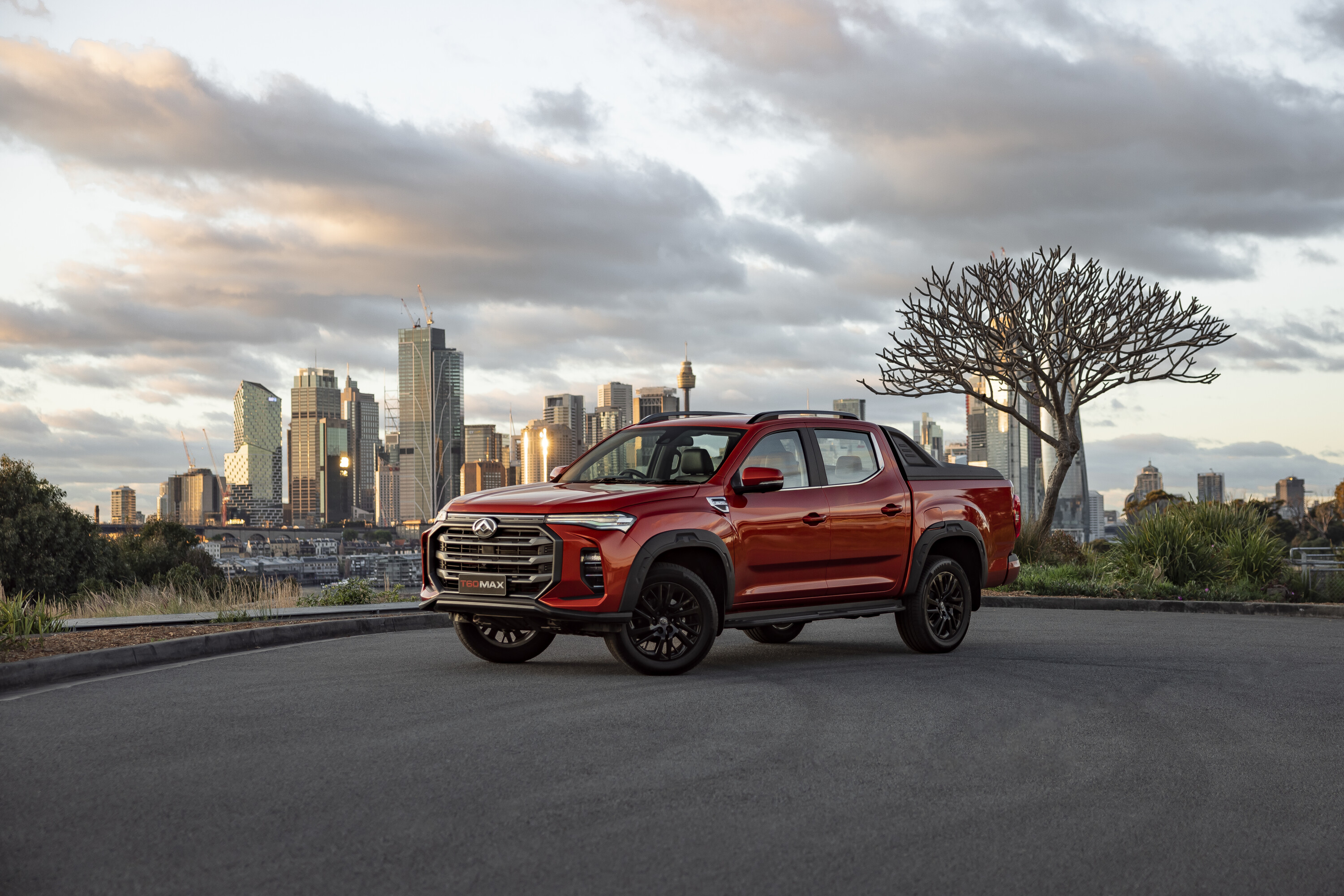
The T60 Max is a dual cab ute from the British-founded, Chinese owned automaker LDV, known for their utility vehicles.
The twin-cab is a flexible utility vehicle tailored for both business and leisure purposes. Given its competitive pricing, the T60 presents a notable challenge to dominant figures in the market.
Available in three variants and with manual and automatic transmissions across most of the range, the T60 is sure to have something for everyone.
Pricing and features
The range-topping Megatub – based on the Luxe – is currently available for $49,463 offered with an eight-speed automatic transmission only.
If you’re after more storage, that’s where the Megatub comes in. The rear tray has been extended to a length of 1800mm making it capable of carrying a 6ft ladder in the back, or even an upright standing bike.
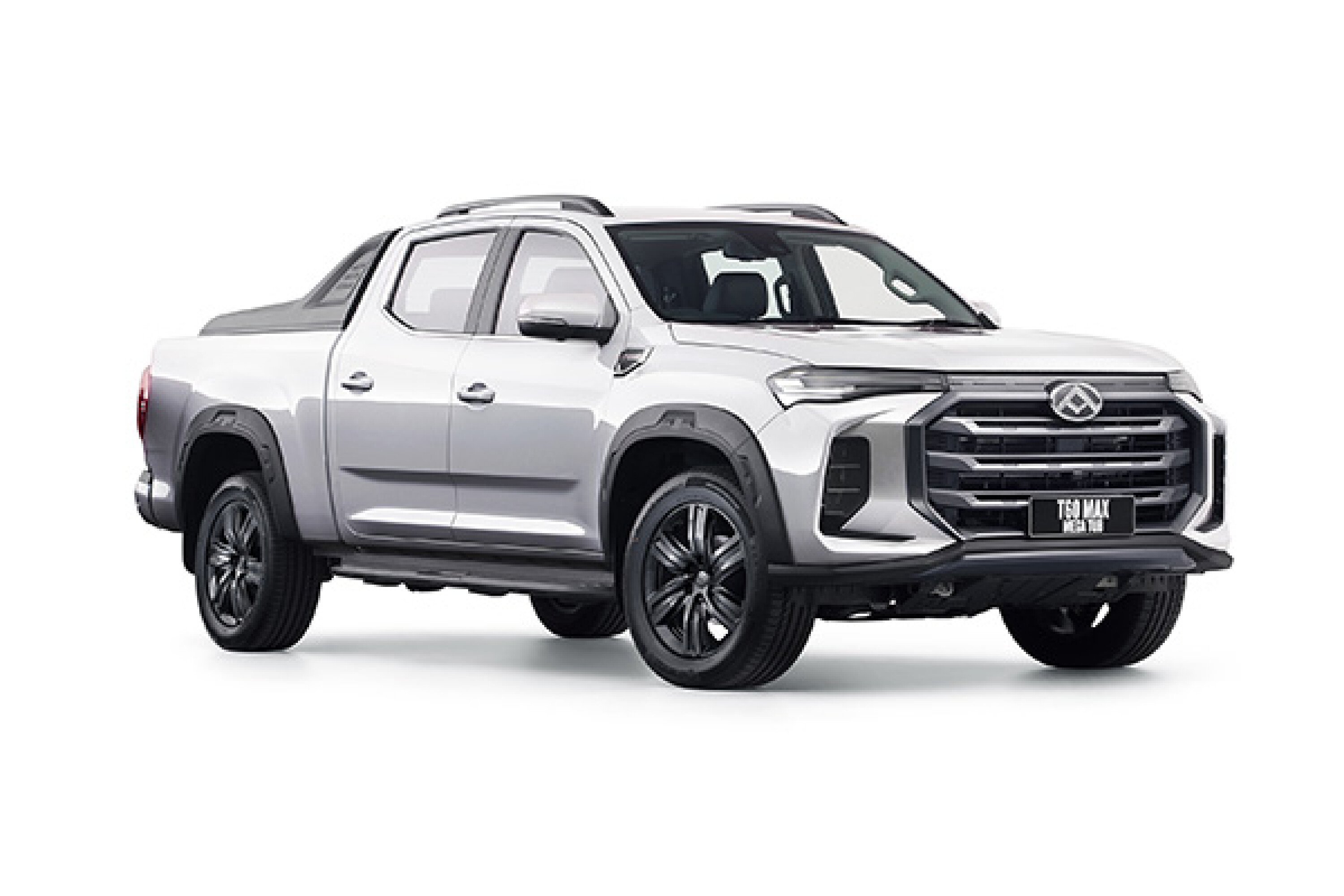
Standard length of other T60 models is 1525mm (-275mm).
All T60 Max models are equipped with the same 2.0-litre bi-turbo diesel engine, delivering 160kW of power and 500Nm of torque and boast a 3000kg braked towing capacity.
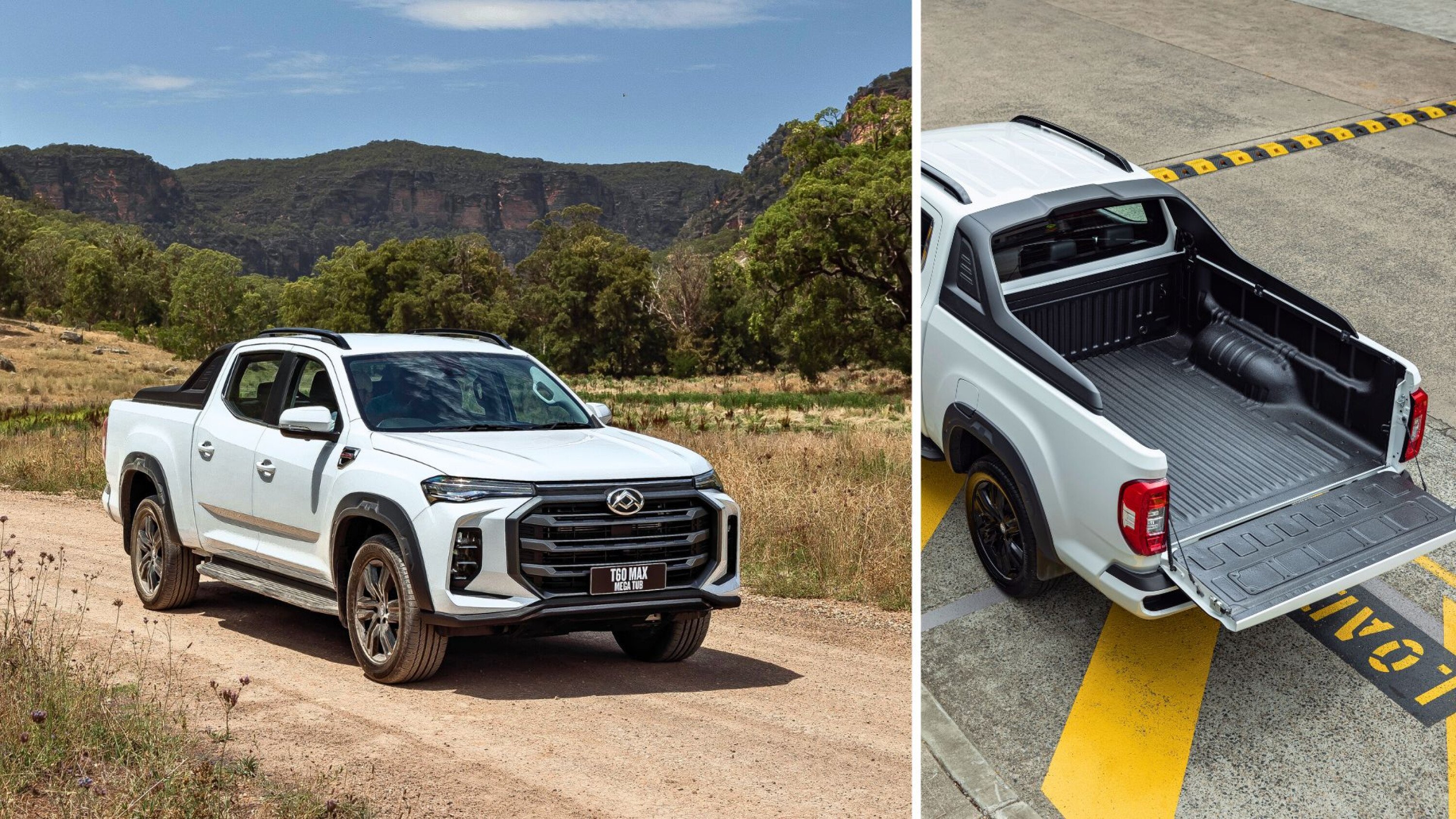
The Megatub hosts all the standard T60 features such as a 10.25″ infotainment screen, reversing camera, tyre pressure monitoring system, LED DRLs, rain sensing wipers and Apple Carplay.
Stepping up to the Luxe and Megatub adds keyless entry and start, 19″ black alloy wheels, gloss black roof rails and side steps, a rear differential lock and leather seats.
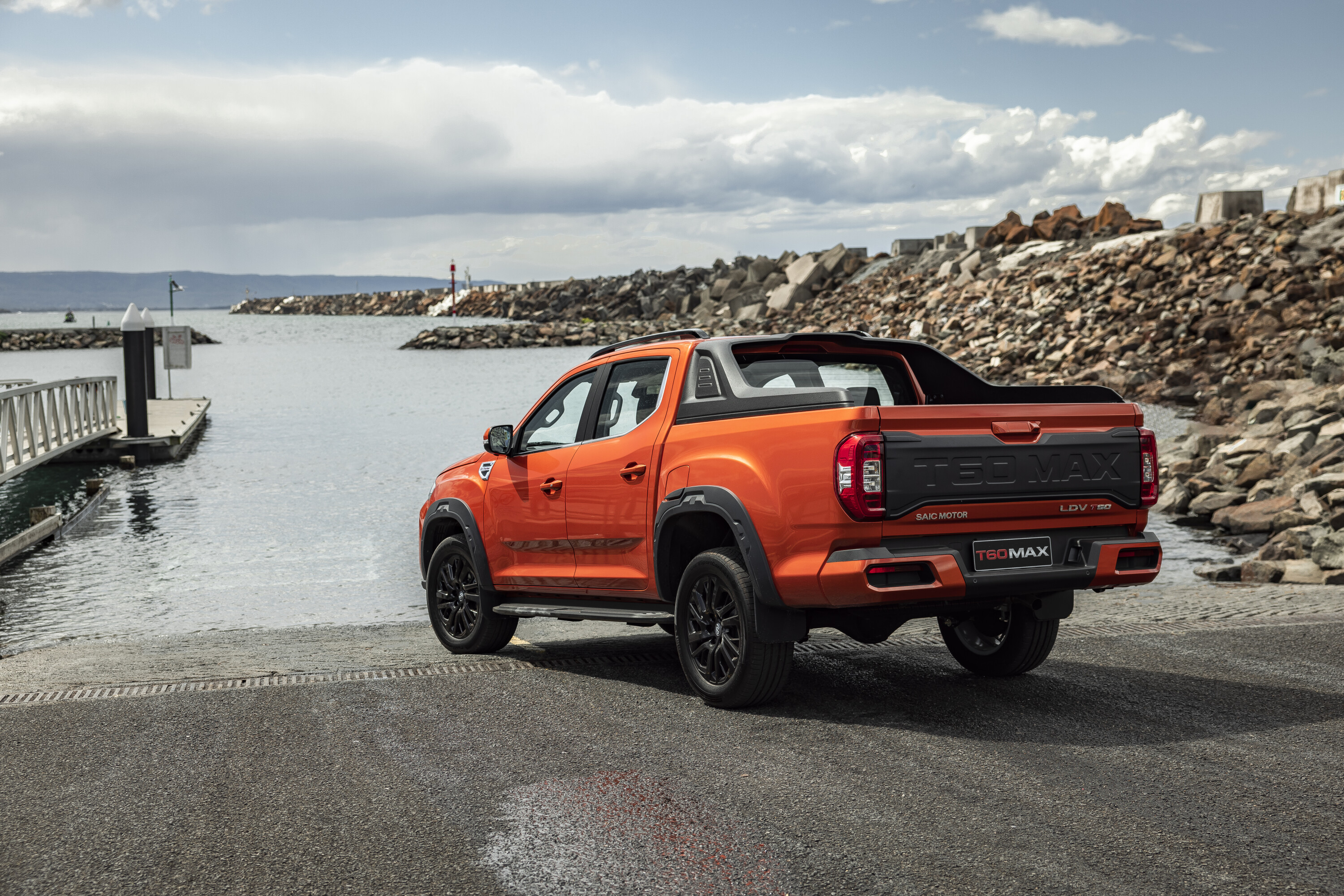
The dual cab is available in five colours including a striking orange shade.
Safety
The LDV T60 scored a five star ANCAP safety rating in 2017.
All models are equipped with six airbags, anti-lock braking system, emergency brake assist, rear parking sensors and reversing camera.
The Megatub and Luxe variants receive additional features such as lane departure warning and a 360-degree camera.
Key Rivals
The LDV T60 Max Luxe encounters stiff competition in a segment that’s already highly recognised, featuring popular choices like the:
Should I put it on my shortlist?
The LDV T60 Max Megatub, with its powerful engine, additional tub length, five star ANCAP and competitive pricing, makes a compelling case for inclusion in the shortlist of anyone looking for a reliable and versatile pickup truck.
Ultimately it’s up to the buyer to decide what they value, but at this price point you should definitely consider taking a look at the T60 Max.
The T60 Max Pro is the most affordable dual cab ute from the British founded, Chinese owned automaker LDV, with a global reputation for their utility and commercial vehicles.
The dual cab is a versatile utility vehicle engineered to meet the requirements of both work and leisure. With its competitive price positioning, the T60 provides a compelling offering against established key players in the segment.
Available in three variants and with manual and automatic transmissions across most of the range, the T60 is sure to have something for everyone.
Pricing and features
The entry-level Max Pro is available as both a six-speed manual or eight-speed auto transmission, priced at $41,042 drive-away for manual variants, while ABN holders can nab a discount on 2023 nameplates, dropping the price to a very competitive $36,990 drive away while stocks last. Automatic versions tack on an additional $2000 cost.
All T60 models are equipped with the same 2.0-litre bi-turbo diesel engine, delivering 160kW of power and a punchy 500Nm of torque.
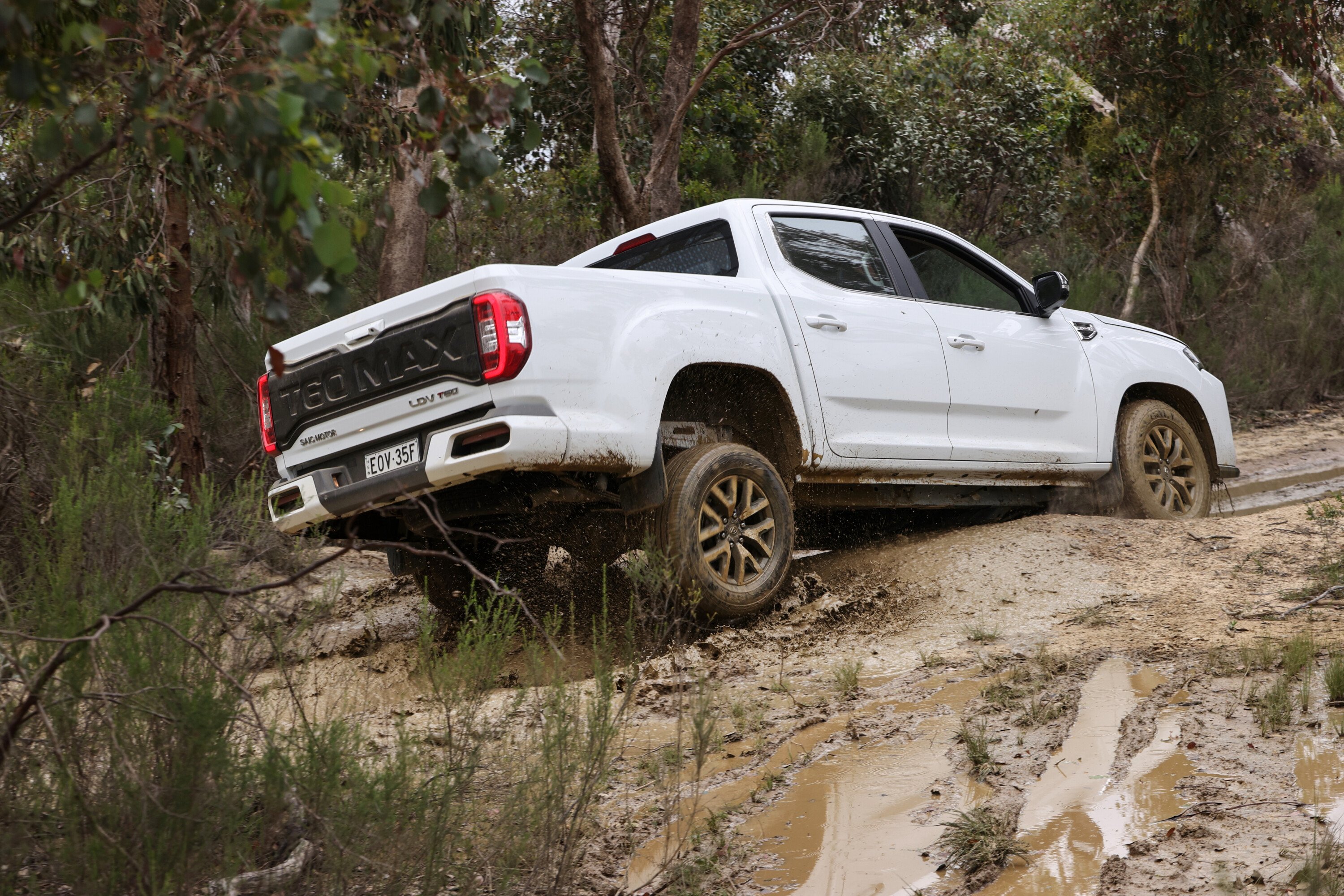
The Max Pro receives an impressive amount of specs for an entry-level model including a 10.25″ infotainment screen, reversing camera, tyre pressure monitoring system, LED DRLs, cloth seats, cruise control, rain sensing wipers and Apple Carplay.
The Pro does however miss out on 2 smart entry keys, instead receiving only one and an additional standard key as the secondary.
Safety
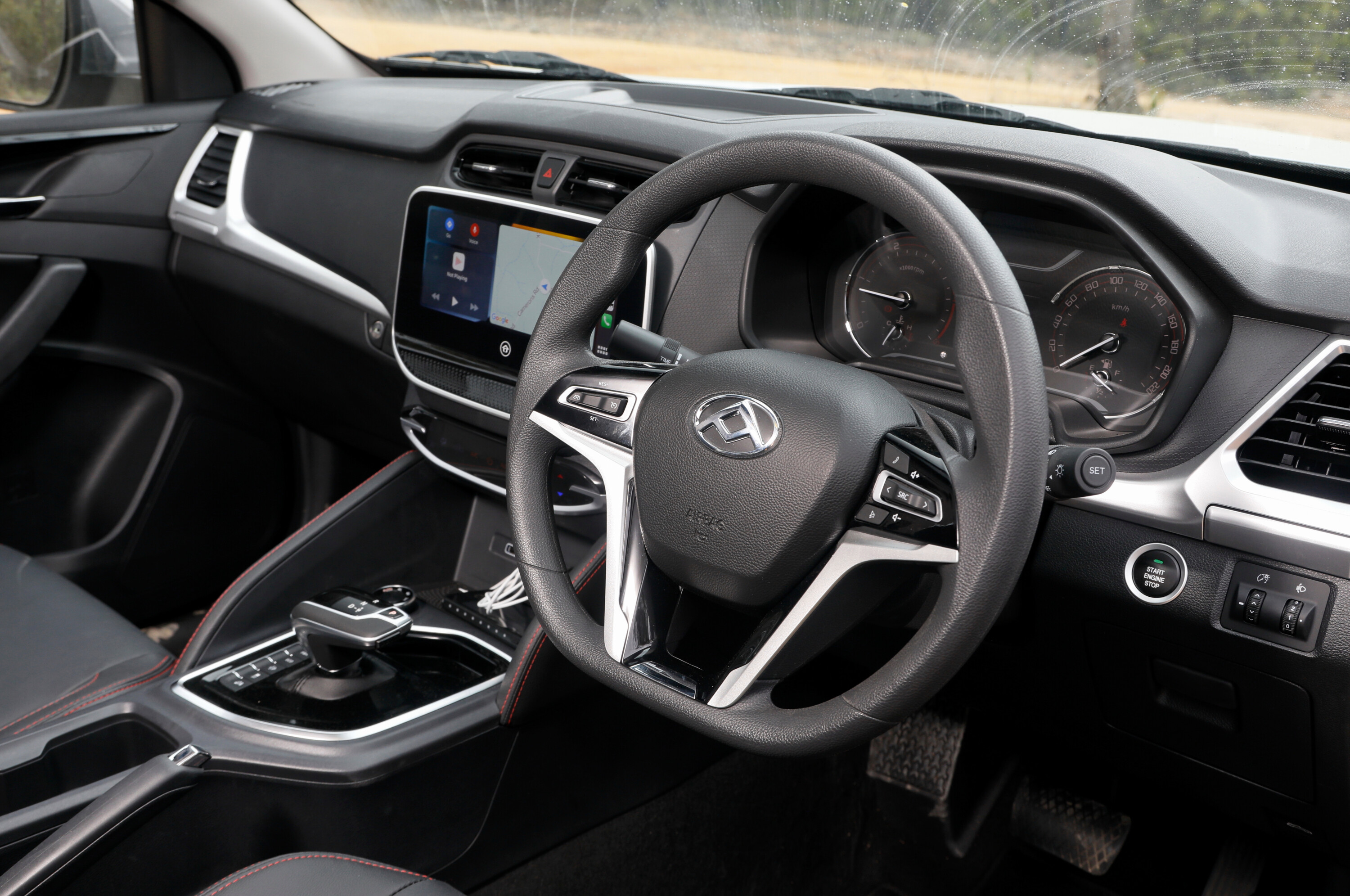
All LDV T60s hold a five star ANCAP safety rating from testing conducted in 2017.
The Max Pro is equipped with six airbags, anti-lock braking system, emergency brake assist, rear parking sensors and a reversing camera.
Additional features such as lane departure warning and a 360-degree camera are reserved for more premium grades.
Key Rivals
The LDV T60 Max Pro faces heavy competition in an already well spoken for segment, including crowd favourites such as the:
Each of these rivals offers a unique set of features and capabilities, making the market diverse for potential buyers.
Should I put it on my shortlist?
The LDV T60 Max Pro, boasting a robust engine, a five-star ANCAP rating, and attractive pricing, strongly positions itself as a top contender for those in search of a dependable and adaptable pickup truck.
Though personal needs and tastes will influence the decision, this model undeniably offers significant value for its cost.
In recent years, average speed cameras have become a familiar sight on roads and highways across Australia.
These sophisticated traffic enforcement tools are designed not just to monitor speed at a single point but to calculate a vehicle’s average speed over a defined distance.
This technology represents a significant leap forward in efforts to enhance road safety, reduce accidents and encourage more responsible driving behaviours. A Monash University Accident Research Centre (MUARC) study found that Victoria’s fixed and mobile point-to-point systems effectively enhance road safety.
How do average speed cameras operate?
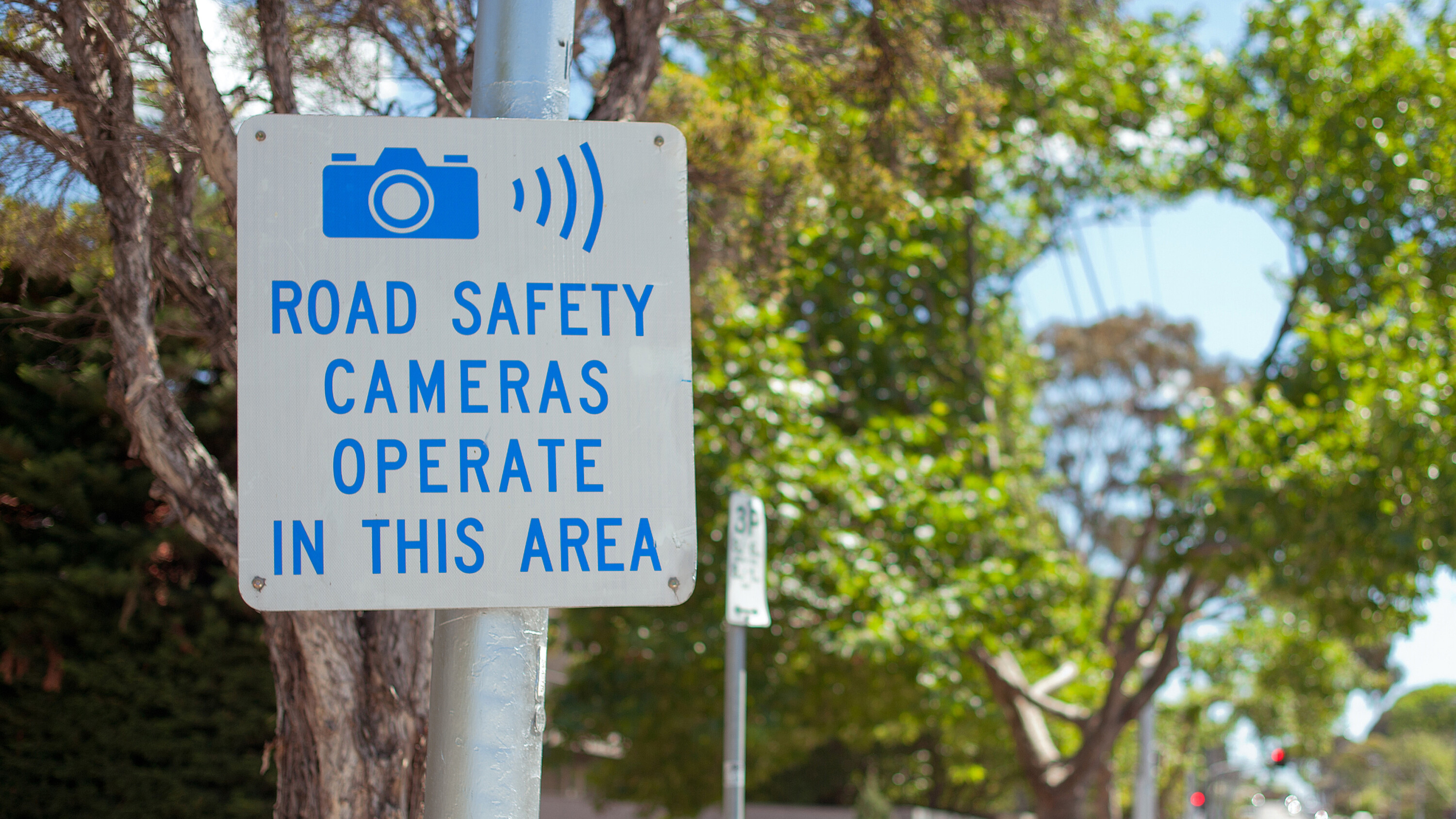
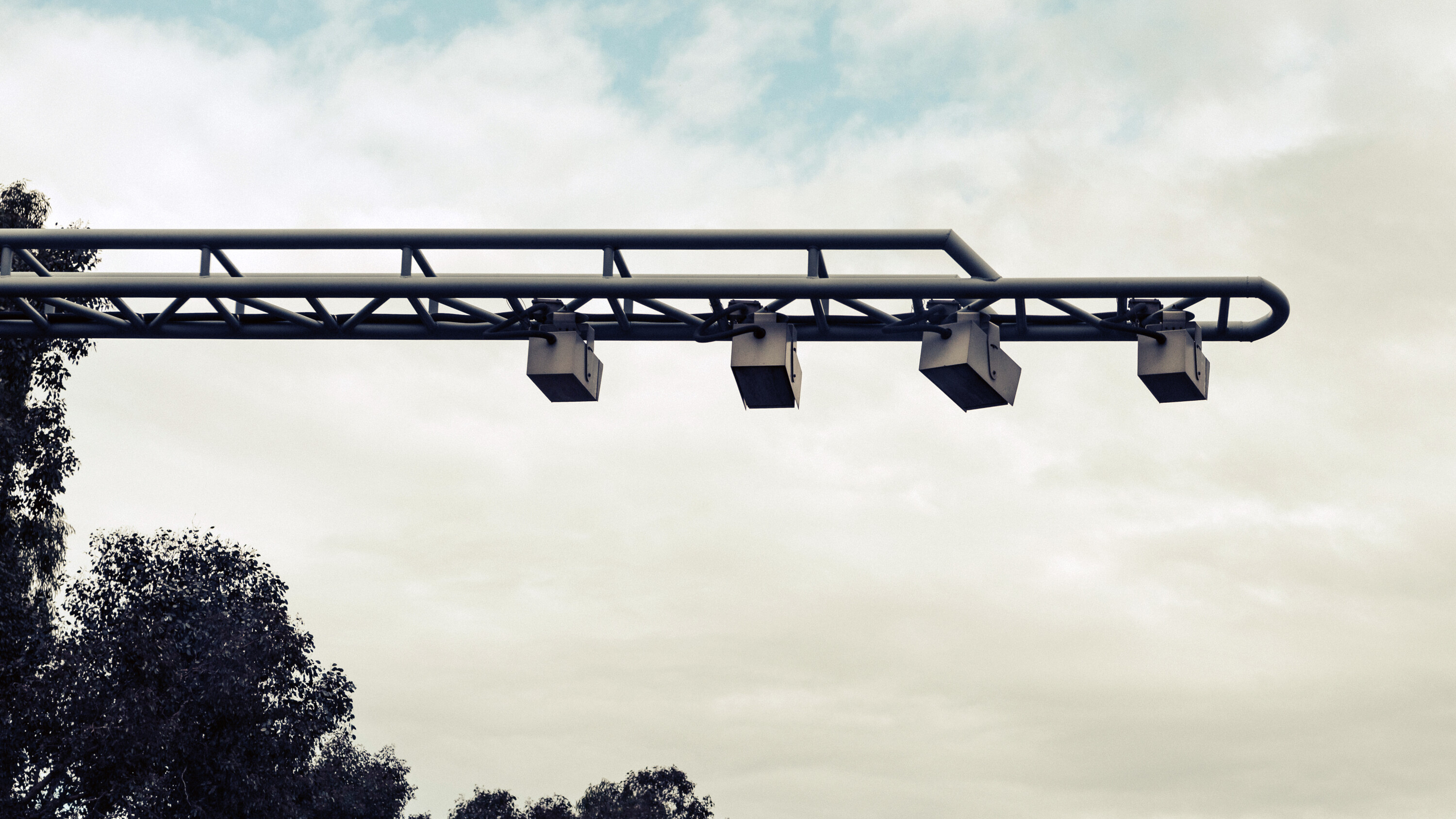
Average speed cameras, also known as point-to-point camera systems work by using several cameras placed at different spots along a road to monitor how fast cars are traveling over a certain distance.
When a car passes by the first camera, the system records the time and snaps a photo of the car’s license plate. As the car continues and passes more cameras, the system keeps track of the time and captures more photos.
Using technology to read the license plates from these photos, the system can track the car’s journey.
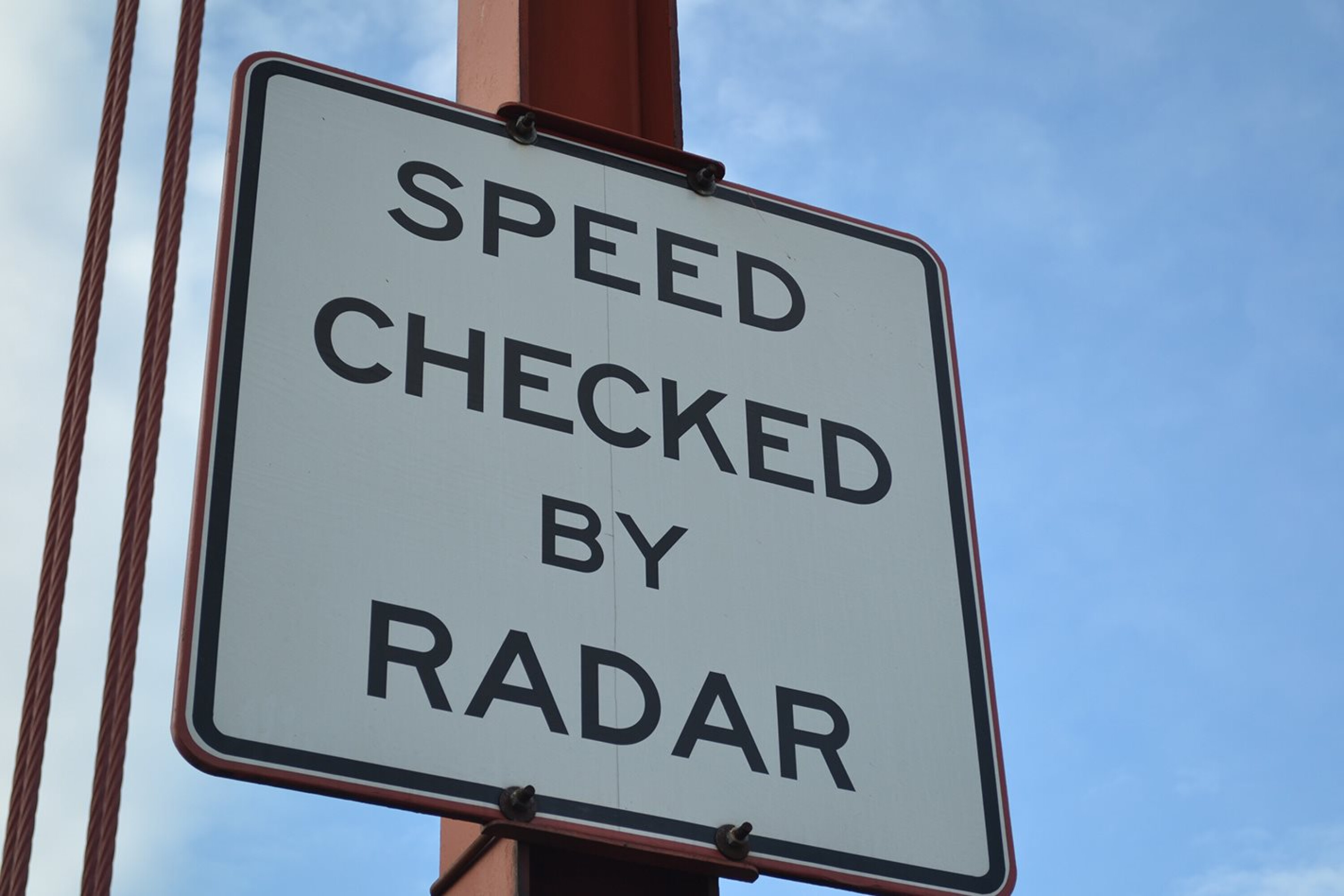
The goal is to calculate the car’s average speed between the cameras.
If the car travels the distance faster than what’s allowed– indicating it was speeding– the system flags this for further review and verification.
Essentially, these cameras work together to ensure cars maintain a legal speed over longer stretches of road by checking the time it takes to travel between points.
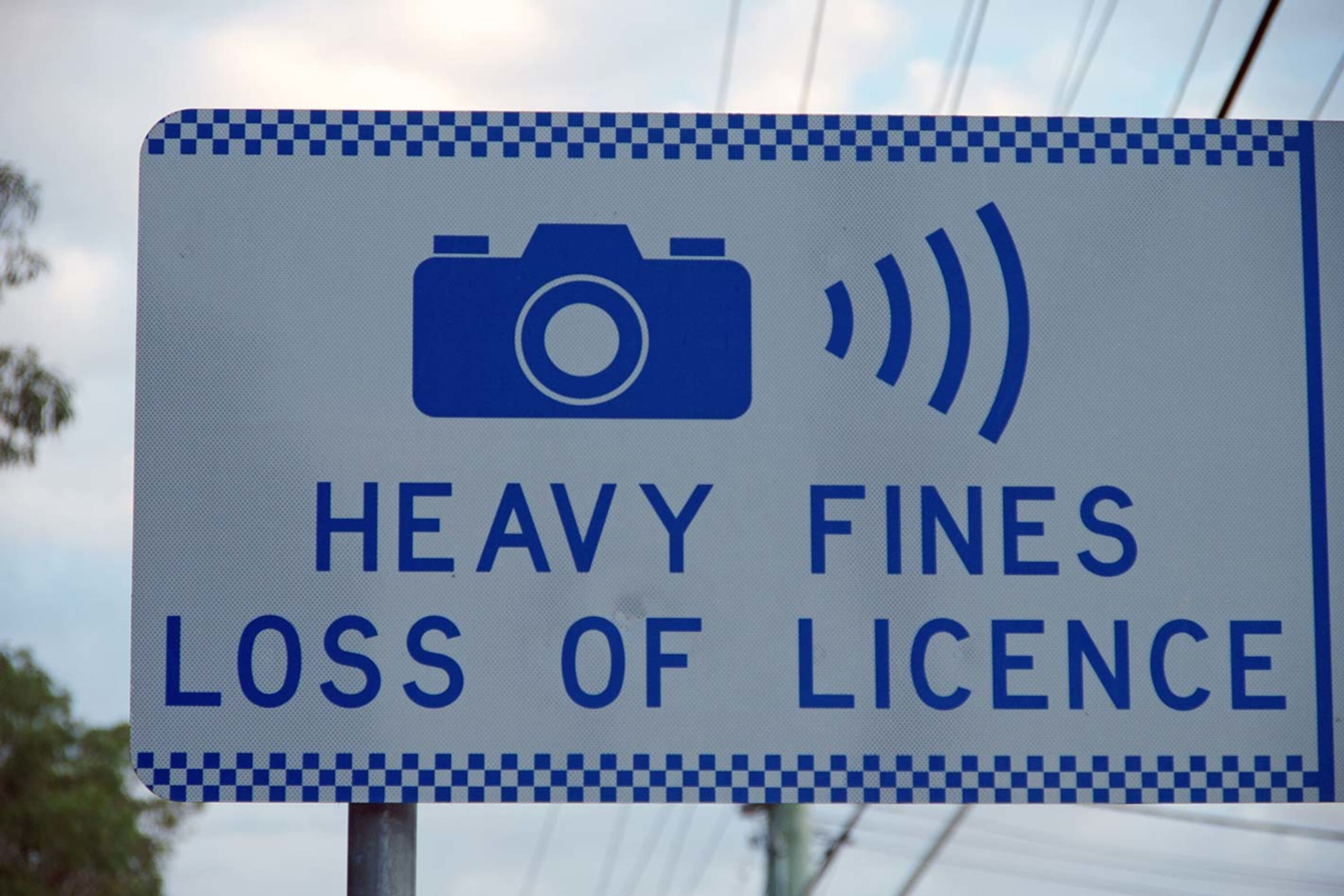
Which states and territories have these cameras?
Every Australian state and territory, apart from Tasmania and the Northern Territory, employs fixed point-to-point speed cameras. Tasmania’s Department of State Growth however, is looking to trial the systems in the near future [↗].
New South Wales stands out as the only region that utilises average-speed cameras exclusively for monitoring heavy vehicles, defined as those “with a Gross Vehicle Mass greater than 4.5 tonnes”. The state has over 30 speed camera sites, all which focus on heavy vehicle monitoring.
In Victoria, there are numerous stretches of road equipped with cameras across the Hume Highway and Peninsula Link.

South Australia has 36 cameras across several roads [↗], including the Port Wakefield Highway and Dukes Highway, among others.
Following a successful six-month trial [↗], Western Australia has deployed six mobile point to point cameras across the state.
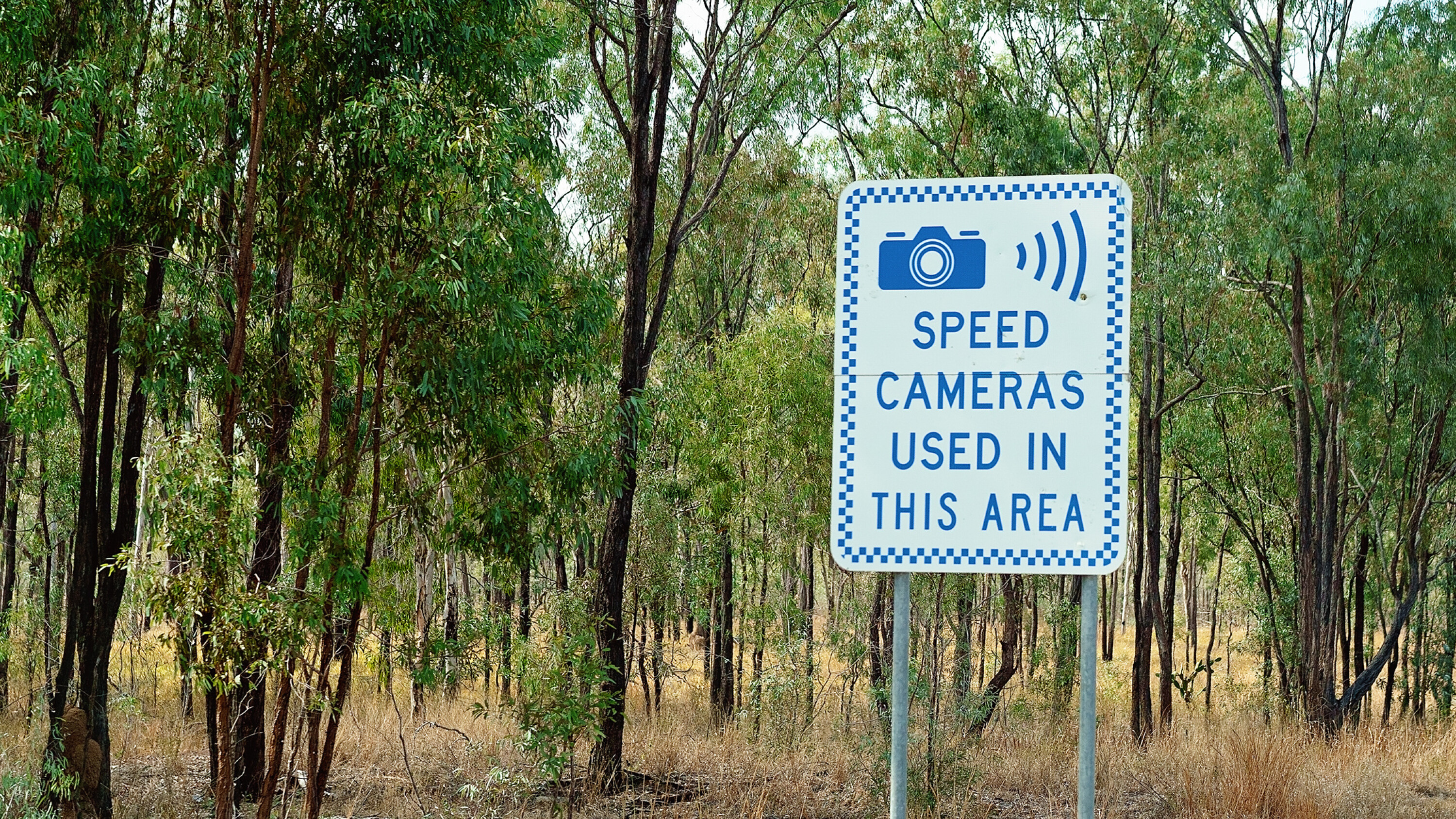
The Australian Capital Territory maintains a single average speed camera setup on Hindmarsh Drive, with a sign 100 metres before each camera.
Will you get a fine from an average speed camera?
The short answer is yes, but it depends on your vehicle and state. When images from the point-to-point camera system are marked for review, they are examined by state police authorities.
If the examination determines that the images indeed capture a violation, an infringement will then be issued.
Much like standard speeding cameras, this could mean a fine, demerit points or even licence suspension.
However in states like NSW, only heavy vehicles are assessed by average speed cameras meaning you won’t be.
Can average speed cameras catch you on your phone?
While the primary function of average speed cameras is to measure the speed of a vehicle over a distance, some are also capable of detecting drivers using their mobile phones.
However, with advancements in camera technology and the integration of more sophisticated monitoring systems, some regions are experimenting with cameras that can detect illegal phone use among drivers.
These systems are distinct from average speed cameras but represent an evolving approach to road safety, targeting not just speeding but other dangerous behaviours behind the wheel.

Could an average speed camera check my vehicle registration?
Some average speed cameras are equipped with ANPR (automatic number-plate recognition) technology, which enable them not only to measure a vehicle’s speed over a given distance but also to check the registration status of a vehicle.
By capturing the license plate, these cameras can cross-reference the number with vehicle registration databases, identifying vehicles that are unregistered.
This dual functionality enhances the utility of average speed cameras beyond speed enforcement, contributing to broader efforts to ensure that all vehicles on the road are properly registered and compliant with legal requirements.
Snapshot
- 2024 Peugeot 2008 facelift arrives in Australia
- GT Sport flagship dropped, circa-$1000 price rise for Allure and GT
- Facelifted E-2008 electric variant due in Australia at a later date
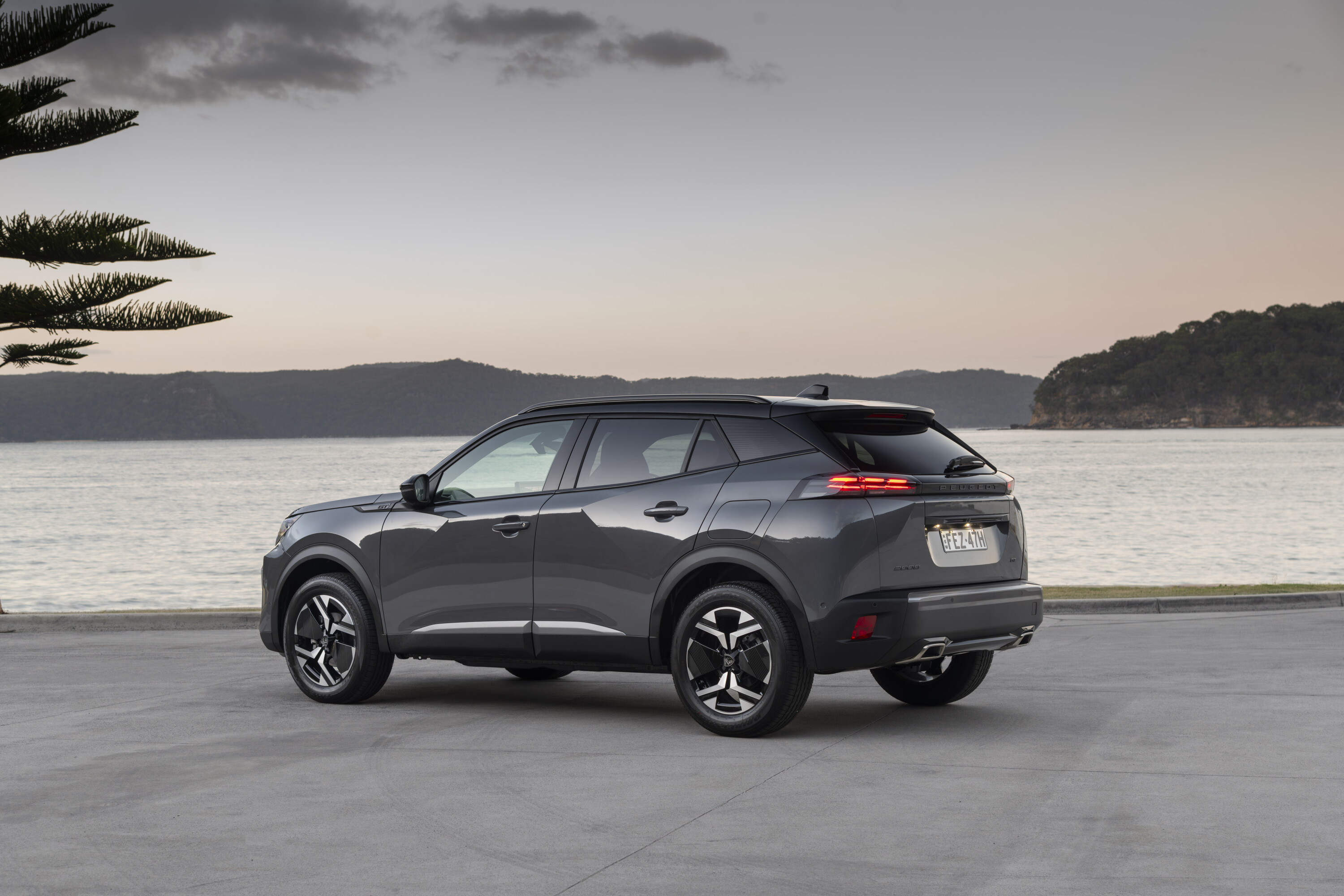
The facelifted 2024 Peugeot 2008 small SUV has arrived in Australia.
Peugeot Australia has announced details for internal-combustion versions of the updated 2008, with the facelifted 2024 Peugeot E-2008 electric SUV due to arrive in Australia at a later date.
Petrol versions of the 2008 are available in Allure and GT variants. The previous GT Sport flagship was dropped from the line-up in mid-2023.
Most features from the GT Sport have now been added to the GT, including adaptive cruise control, heated front seats, lane-positioning assist, and a power-adjustable driver’s seat with massage function.
The GT is not fitted with the GT Sport’s Nappa leather-accented upholstery, while its black 18-inch alloy wheels are available as a $2500 Style Pack that also adds a sunroof.
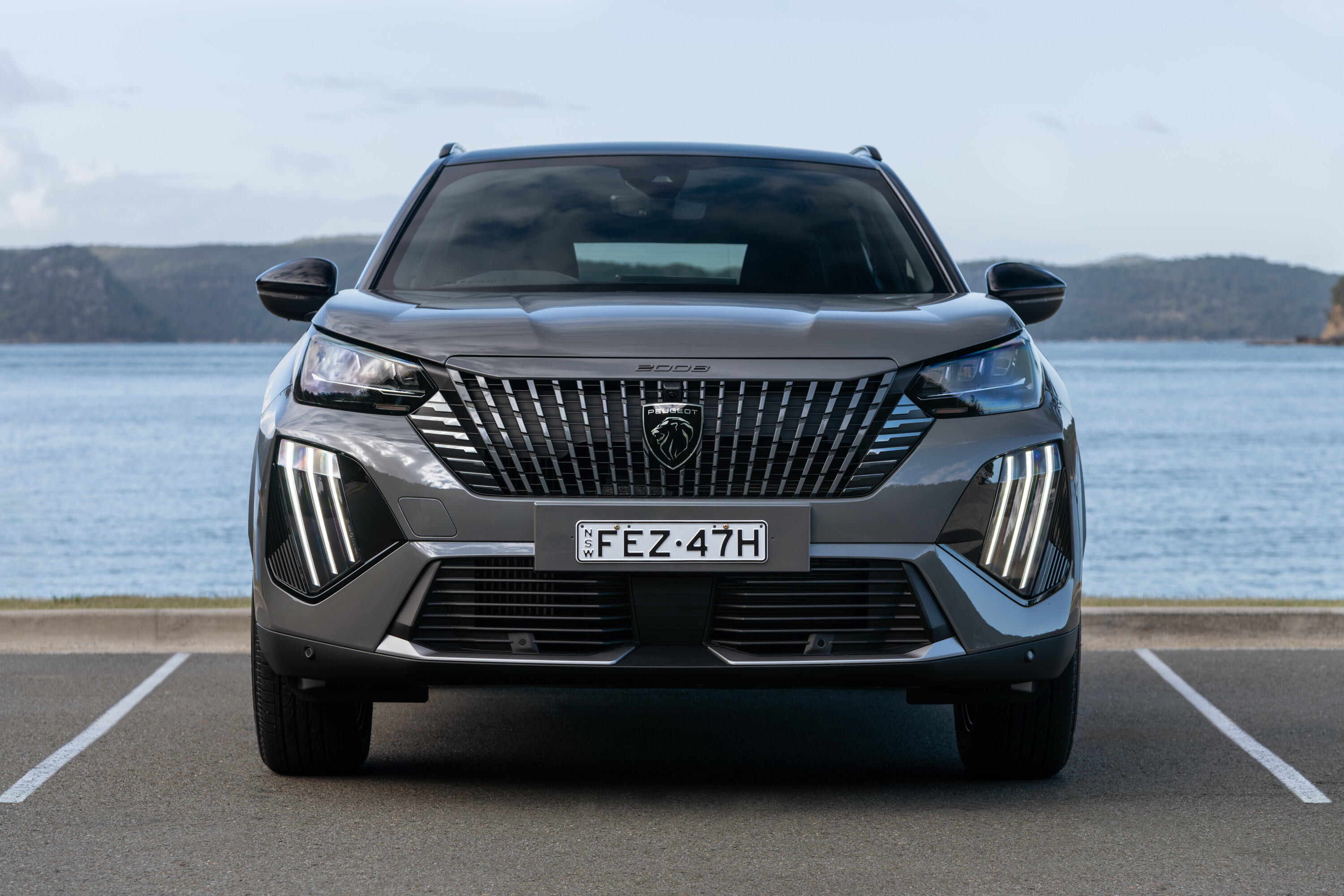
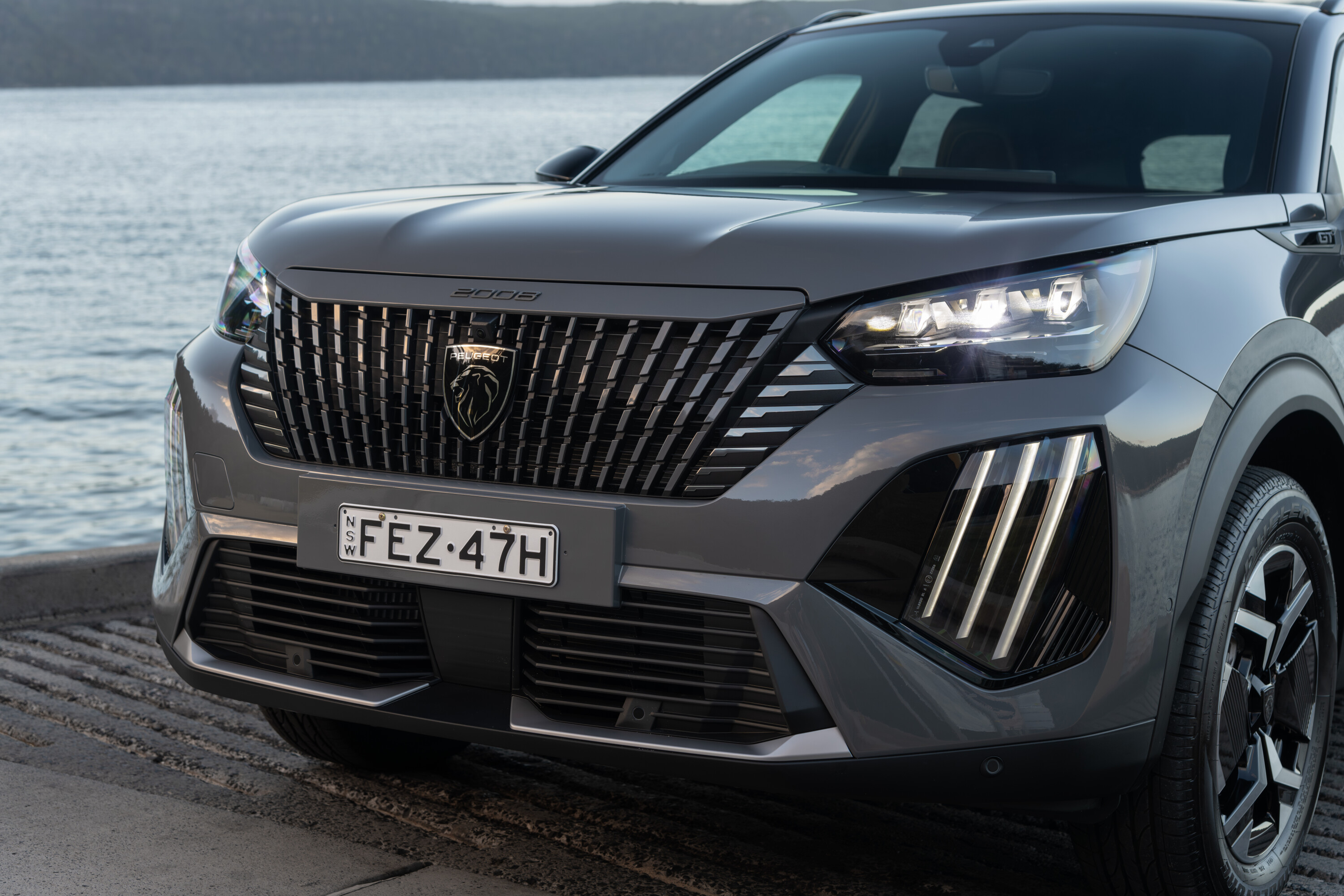
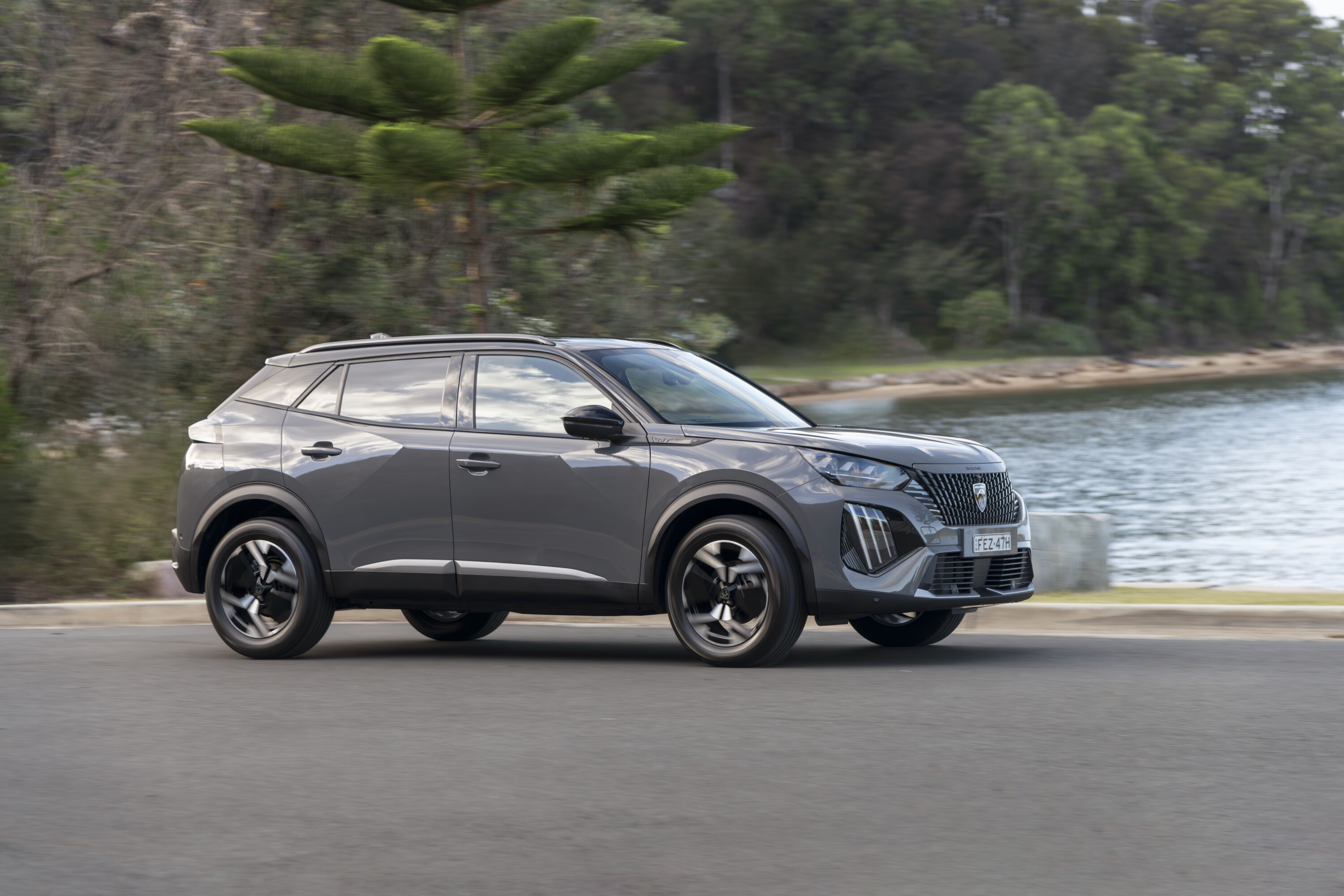
First detailed almost 12 months ago, the latest 2008 has a refreshed exterior design with Peugeot’s new lion badging, updated three-claw daytime running lights, a revised grille with body-coloured slats, 3D-effect tail-lights, chrome exhaust pipes, and black side mirrors.
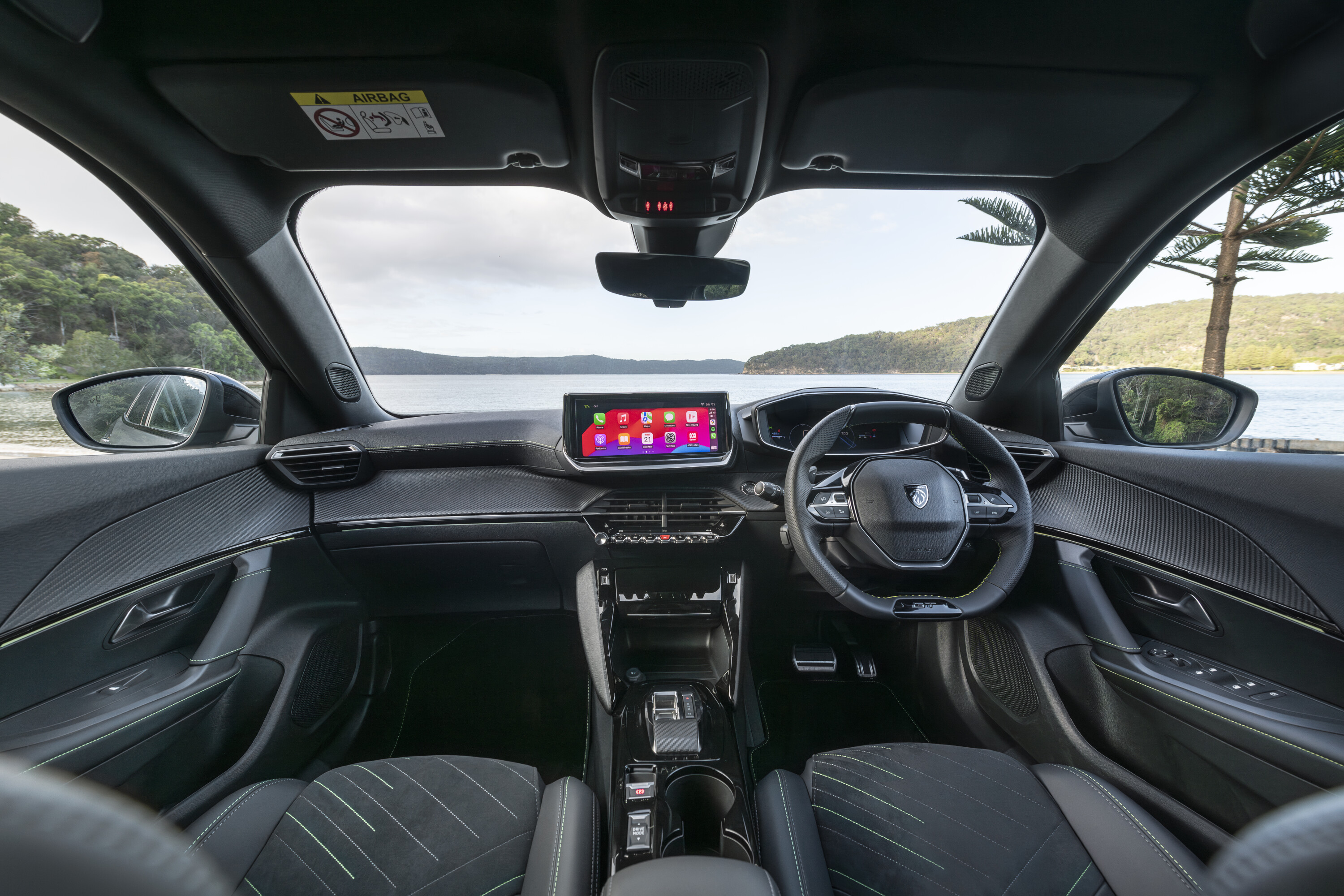
Inside, all variants receive updated trims and four USB-C charge ports to replace USB-A sockets, while the GT adds an ambient light strip on the dashboard linked to the selected drive mode and a 3D-effect function for its digital instrument cluster.
The 10-inch touchscreen now runs Peugeot’s latest infotainment system with wireless Apple CarPlay and Android Auto support, as well as built-in games including Tic-tac-toe, Hangman and 2048.
Other additions include front parking sensors, close obstacle detection when reversing, improved rear-view camera visibility, and proximity unlocking and locking as the driver walks towards or away from the vehicle.
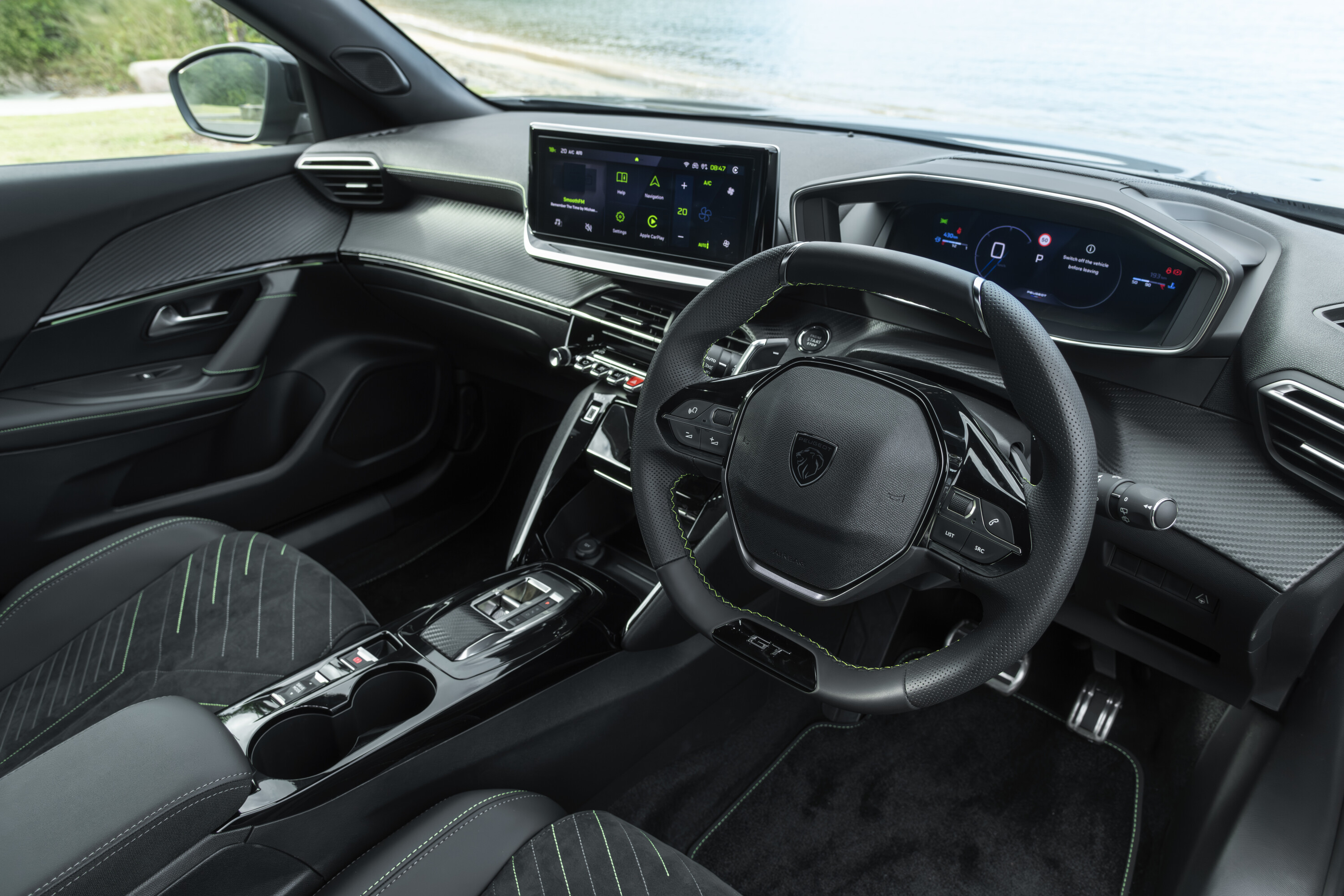
Peugeot Connected Services is standard on the facelifted 2008, which allows for access to connected satellite navigation and over-the-air software updates.
The service requires a subscription, which can be purchased on Peugeot’s website or on the ‘MyPeugeot’ application – though a complimentary three-year trial period is included from the warranty start date.
Prices for the facelifted 2024 Peugeot 2008 have increased by around $1000 for the Allure and GT.
2024 Peugeot 2008 pricing
| Variant | Pricing | Change |
|---|---|---|
| Allure | $39,990 | up |
| GT | $44,490 | up |
| Prices exclude on-road costs.u00a0 | ||
2024 Peugeot 2008 features
| 2024 Peugeot 2008 Allure features | |
|---|---|
| 17-inch alloy wheels | Manual cruise control |
| 10-inch infotainment system | Rear-view camera |
| Wireless Apple CarPlay and Android Auto | Front and rear parking sensors |
| DAB+ digital radio | Tyre under-inflation detection |
| Six-speaker audio system | Single-zone climate control |
| USB-C charge ports (2x front, 2x rear) | Autonomous emergency braking |
| 10-inch 2D digital instrument cluster | Forward collision warning |
| Full-LED headlights | Multi-collision braking |
| Keyless entry and push-button start | Lane-keep assist |
| Fabric upholstery | Lane departure warning |
| Auto-dimming rear-view mirror | Driver attention alert |
2024 Peugeot 2008 GT features
| In addition to Allure | |
|---|---|
| 10-inch 3D digital instrument cluster | Full-grain leather-wrapped steering wheel with green stitching and GT badgingu00a0 |
| Wireless phone charger | Front and rear carpet floor mats |
| Built-in satellite navigation | Black-painted roof and spoiler |
| Voice control | Frameless auto-dimming rear-view mirror |
| Eight-colour ambient lighting | Illuminated vanity mirrors |
| Full-LED adaptive headlights | Puddle lamps |
| DRL integrated fog light function | Front door scuff plates |
| Bolstered-profile front seats | Alloy pedals |
| Alcantara and leather-accented upholstery with green stitching | 360-degree camera view |
| Power-adjustable driveru2019s seat with electric lumbar adjustment | Lane following assist |
| Heated front seats | Blind-spot monitoring |
| Massaging driveru2019s seat | Adaptive cruise control |
2024 Peugeot 2008 options
| GT Style Pack u2013 $2500 | |
|---|---|
| 18-inch black alloy wheels | Sunroof |
| 2024 Peugeot 2008 available colours | |
|---|---|
| Sellenium grey (new) | Okenite white (new)* |
| Nera black* | Artense grey* |
| Elixir red# | Veritgo blue# |
| * Metallic paint, $690 | # Premium paint, $1050 |
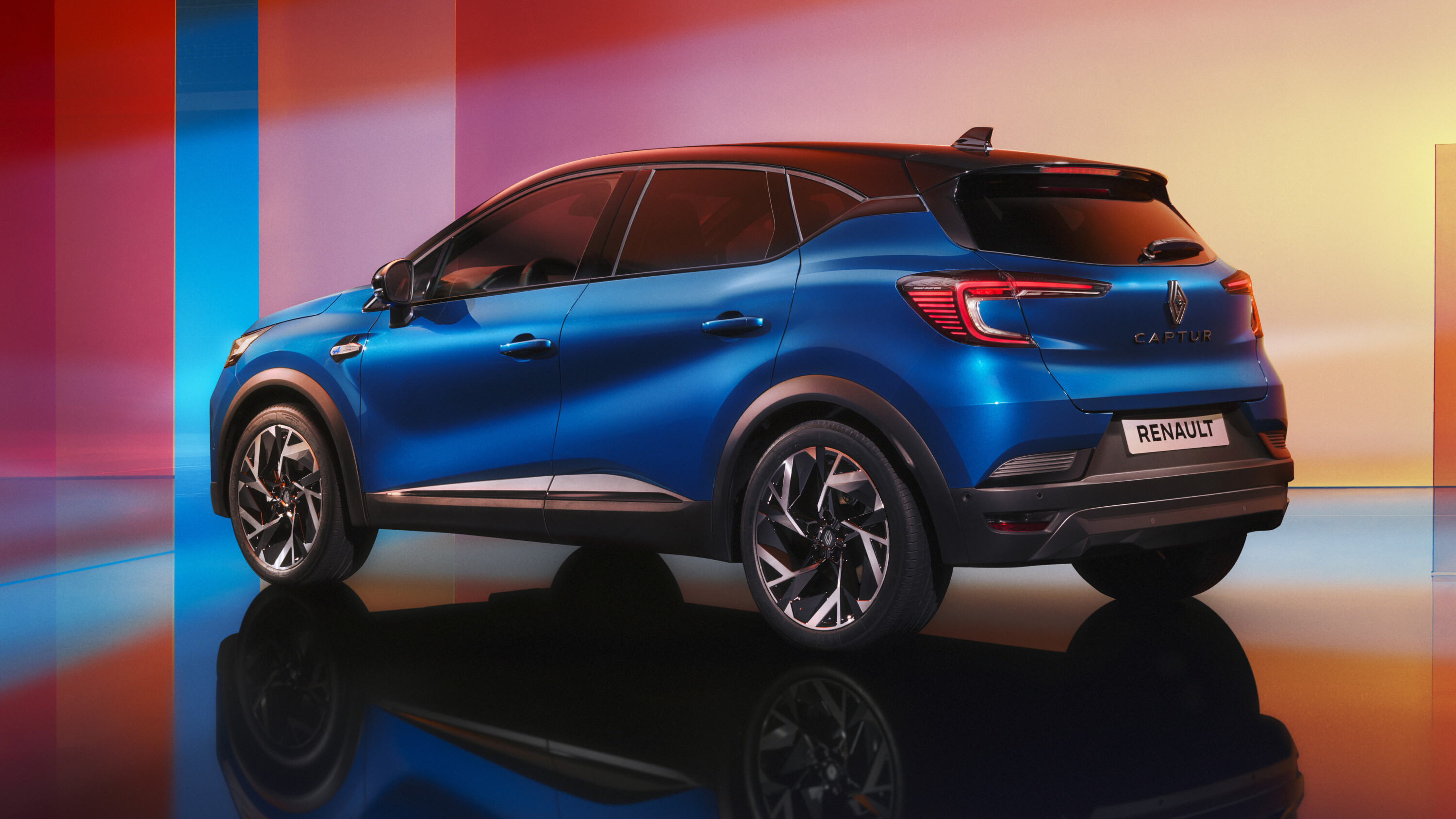
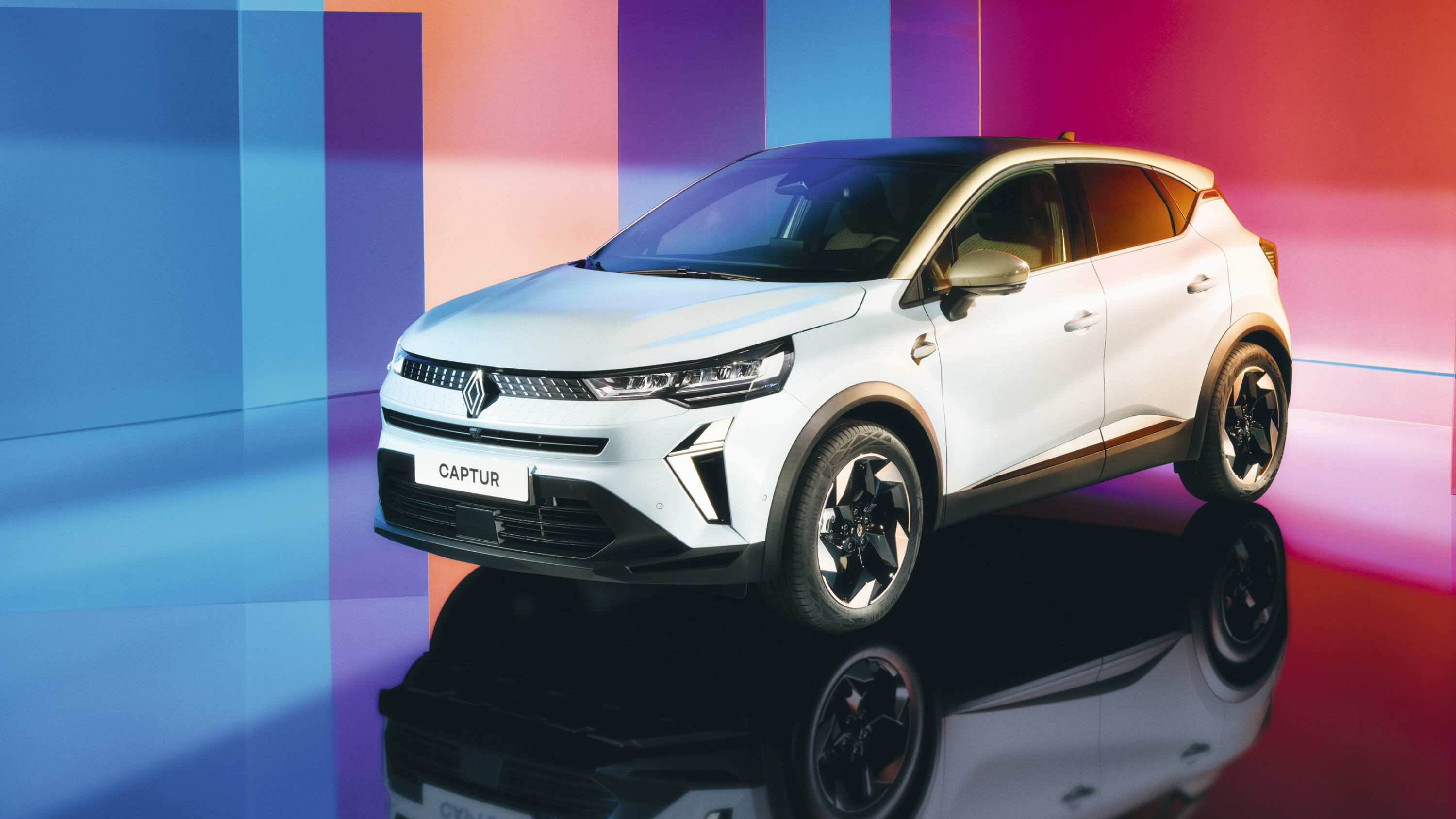
The updated 2025 Renault Captur has been revealed in the UK showing off new front-end styling, updated tech and new hybrid powertrain ahead of its expected Australian arrival in early 2025.
While Australian pricing, specifications and exact timing is yet to be confirmed, the new Captur has been unveiled in the UK with a three-tier model line-up offering two powertrains.
Like the Clio hatchback it shares its CMF-B platform with, the older Renault corporate front-end look has been ditched for the first major restyle of the second-gen Captur since 2021.
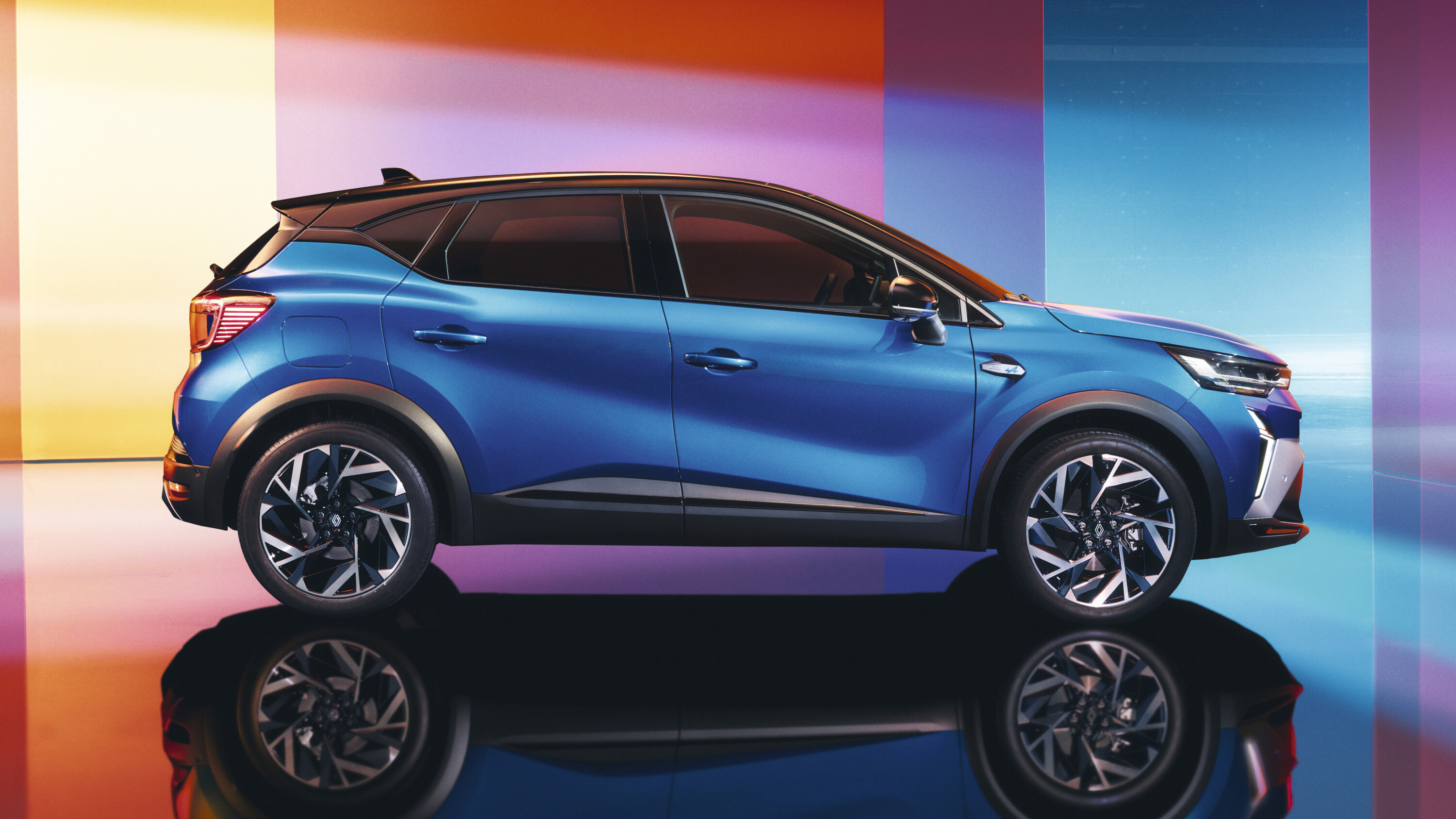
The major changes bring a sharper nose including new full LED headlights – standard on all UK models – as well as a new bonnet, grille and lower front bumper.
The doors and roofline are unchanged – carrying over details including the front mudguard grille – with minor tail-light revisions in a barely changed rear end.
New colours and wheel patterns will further distinguish the 2025 Captur from its predecessor, led by the new Ceramic Grey and continuing to offer Diamond Black roof colour options.
In Australia, the current Captur is offered in three trim levels, starting with the Life, Zen and flagship Intens versions.
Entry-level versions in the UK use 17-inch alloys with 18-inch wheels on higher-spec models, and 19-inch Michelin-shod versions on the flagship – called ‘Alpine’ in the UK.
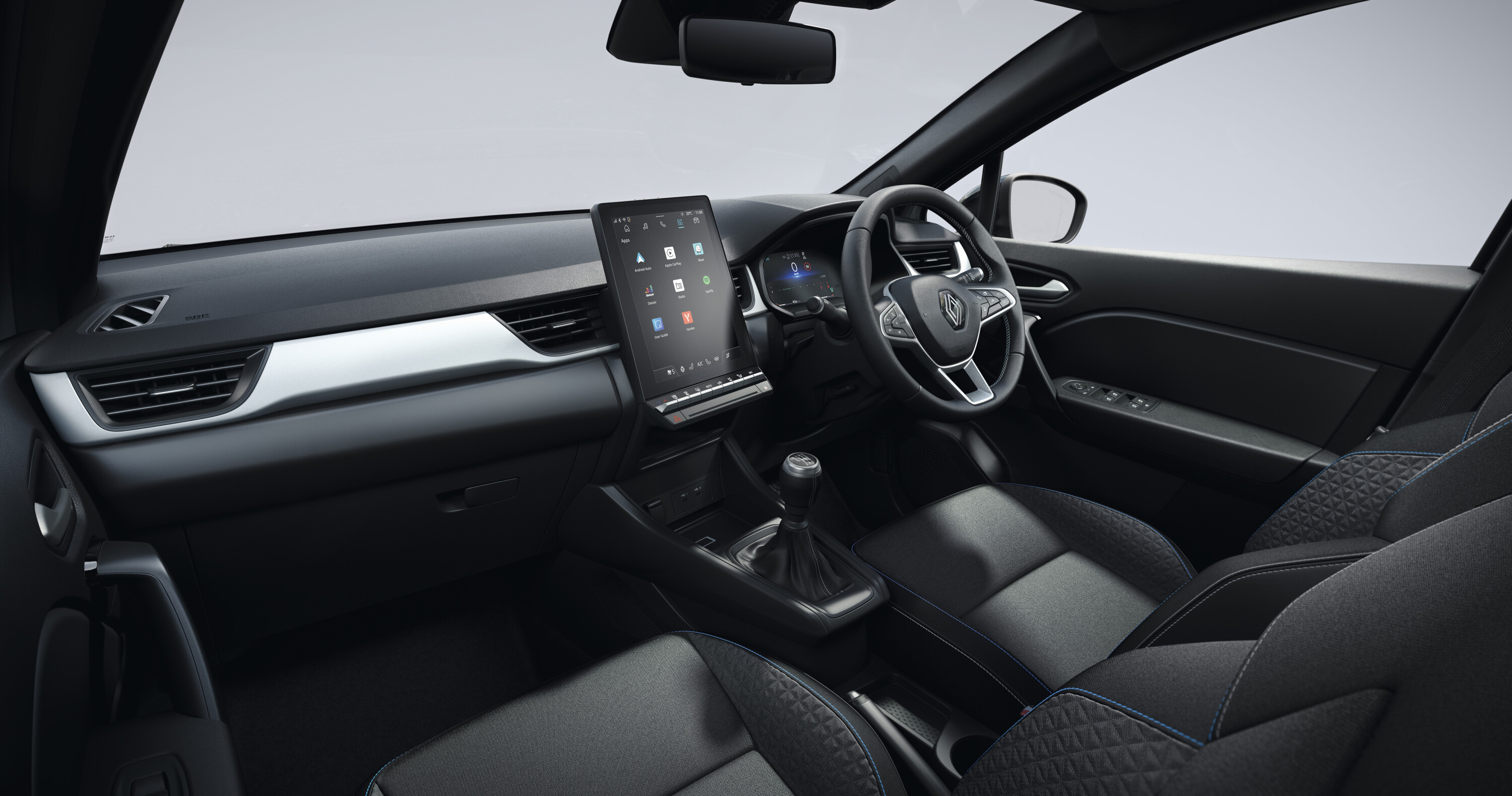
Cabin changes include a 10.25-inch instrument cluster and larger 10.4-inch infotainment screen – the largest screen in the current Captur being 9.3-inches – bringing wireless Apple CarPlay and Android Auto as well as USB-C ports for faster charging.
The inclusion of Android 12 software is a world-first for a B-segment vehicle, according to Renault, with Captur’s RLink system also offering Google services.
There are also new cabin materials designed to offer a more premium feel, but a concerted effort by Renault to offer no leather or chrome as part of the car maker’s push towards greater sustainability.
Instead, there’s grey fabric in low-spec Captur evolving to add yellow stitching and a diamond-pattern trim in the mid-spec, while the top level Captur – called ‘Alpine’ in Europe – presents a blue and grey cabin treatment extending to a dash covering.
The entry-level UK spec Captur runs a carryover 67kW/160Nm 1.0L three-cylinder turbocharged petrol engine and six-speed manual, but Australian models are expected to take only the new hybrid drivetrain.
The hybrid combines a 69kW four-cylinder petrol engine and semi-automatic transmission with two electric motors; a 36kW e-motor and an 18kW high-voltage starter generator for a combined 108kW and 205Nm.
Teamed with a 1.2kWh battery pack, the hybrid has a fuel figure of 4.7L/100km which compares favourably against the current car’s best claim of 5.4L/100km (highway).
In Australia, the hybrid is set to replace the 133kW/270Nm 1.3-litre turbocharged four-cylinder petrol engine and seven-speed dual-clutch automatic offered in the current Captur.
Curiously, the Captur hybrid features an exterior warning sound for pedestrians, composed by French artist Jean-Michel Jarre and functioning at up to 30km/h.
As well as the new powertrain, suspension upgrades and new shock absorbers promise a more dynamic driving experience.
What will the 2025 Renault Captur cost in Australia?
The 2025 Renault Captur is expected to cost slightly more than its current $39,500 (before on-road costs) starting price when it arrives in Australia in the first quarter of 2025.
Sales of hybrid and plug-in hybrid vehicles grew by 20 per cent in 2023 – accounting for one in 10 new-car sales.
More options are on the way in 2024, for buyers who maybe aren’t quite ready to commit to a fully electric car or are simply looking for a vehicle that delivers better fuel economy than a regular petrol or diesel model.
Toyota and Lexus, as the pioneers of hybrid technology, are in the mix, of course, though there are also significant combustion-electric models from the likes of Hyundai and Kia.
There’s even a first plug-in hybrid from Volkswagen, while we also cover new models featuring ‘mild hybrid’ 48-volt technology.
JUMP AHEAD
Small SUVs
Medium SUVs
- BYD Seal U
- Citroen C5 X Plug-in Hybrid
- Hyundai Tucson Hybrid
- Jeep Compass 4xe
- Kia Sportage Hybrid
- MG HS
- Mercedes-AMG GLC63 S E
Large SUVs
Passenger cars
Utes
Sports cars
- Chevrolet Corvette E-Ray
- McLaren Artua convertible
Crossovers
Small SUVs
Cupra Formentor VZe
The Spanish brand is moving to give its models a more instantly recognisable face with triangular lighting, and the Formentor will see such adjustments in the coming weeks, alongside the updated Leon hatchback and Born electric car.
The 2024 Formentor was snapped previously at a Cupra preview event and featured on sites such as Cochespias. The VZe plug-in hybrid uses a 1.4-litre petrol engine teamed with a battery pack and electric motor to drive the front wheels via a six-speed DSG automatic.
Lexus LBX
The new most affordable Lexus model, the LBX arrived in the first half of 2024 as the posh spin-off of the Toyota Yaris Cross baby SUV.
The LBX does share a platform and similar 4.2-metre length with the Toyota, but it features different styling treatments for its exterior and interior.
And while it utilises the same three-cylinder petrol engine under the bonnet, the Lexus adopts a bigger NiMh battery to drive its more powerful (100kW) hybrid set-up.
A three-model range comprises a front-wheel-drive Luxury or Sports Luxury and an all-wheel-drive Sports Luxury. In addition to an extra (rear) electric motor, the AWD features a more sophisticated multilink rear suspension and higher equipment level Sport Luxury includes a 13-speaker Mark Levinson audio system.
With its entry-price kicking off at $47,550 before on-road costs, Lexus’s new most affordable variant is on sale now.
Nissan Qashqai e-Power
A year after the launch of the latest-generation Qashqai, Nissan’s small SUV gains a new, more economical variant.
The Nissan Qashqai e-Power arrives as a rival to hybrid versions of the Toyota Corolla Cross, Honda HR-V, and Haval Jolion.
Unlike current Qashqai models powered by 1.3L four-cylinder engine, the e-Power follows the same tech route as the X-Trail e-Power – combining an electric drive motor with a petrol engine used as a generator.
As with Nissan’s midsized SUV, the e-Power variant sits at the top of the Qashqai range – priced from $51,590 before on-road costs.
That means it commands a $4200 premium over the petrol-engined Ti.
Toyota C-HR
Toyota’s style-driven compact SUV arrived in early 2024 in second-gen form – this time with hybrid-only drivetrain options.
The front-wheel-drive GXL and Koba models pair an Atkinson cycle 1.8-litre four-cylinder petrol with a 70kW/142Nm electric motor (17kW more than before thanks to twice as many motor magnets) for a total 103kW output.
The base car’s economy is 0.3L/100km better than before at 4.0L/100km.
At the top of the range, a new GR Sport variant grabs the 2.0L petrol and electric motor combination from Toyota’s other small SUV, the Corolla Cross, to offer all-wheel drive and total power of 146kW.
Pricing has jumped dramatically, with the 2WD C-HRs increasing by more than $11,000, or 35 per cent.
Medium SUVs
BYD Seal U
The Seal U plug-in hybrid SUV looks set to arrive in 2024 as a rival to the Mitsubishi Outlander PHEV.
Although not yet officially announced for Australia, government documents show the Seal U has been approved for sale here, with two ‘DM-i’ plug-in hybrid models – both listing all-electric driving range.
Pricing has likewise not been confirmed, but a starting point in the neighbourhood of $52,000 – where it would take on the ageing MG HS ‘Plus EV’ plug-in hybrid – could be on the cards.
Citroen C5 X PHEV
After a mighty long delay, Citroen’s plug-in hybrid high-riding C5 X is nearly here. It was expected in 2023, but will now arrive sometime in the first half of 2024.
The plug-in hybrid pairs a 133kW/250Nm 1.6-litre turbo petrol engine with an 80kW electric motor and 11.9kWh battery for around 50 kilometres of claimed electric driving range.
The C5 X is Citroen’s first plug-in hybrid to be offered in Australia.
Hyundai Tucson Hybrid
Tucson became Hyundai’s best-selling model in 2023, overtaking the brand’s perennial local No.1, the i30 small car.
The Tucson will receive a further boost mid year, when not only does a facelifted model arrive but it will include the nameplate’s first hybrid drivetrain.
Crucially, it gives Hyundai a direct rival to the popular Toyota RAV4 Hybrid.
The Tucson Hybrid, which uses a version of the petrol-electric system in the larger Santa Fe SUV, won’t be quite as economical, though – at least according to official figures.
WLTP-rated combined-cycle economy is 5.9L/100km for the front-wheel-drive Tucson Hybrid, compared with 4.8L/100km for the 2WD RAV4 Hybrid.
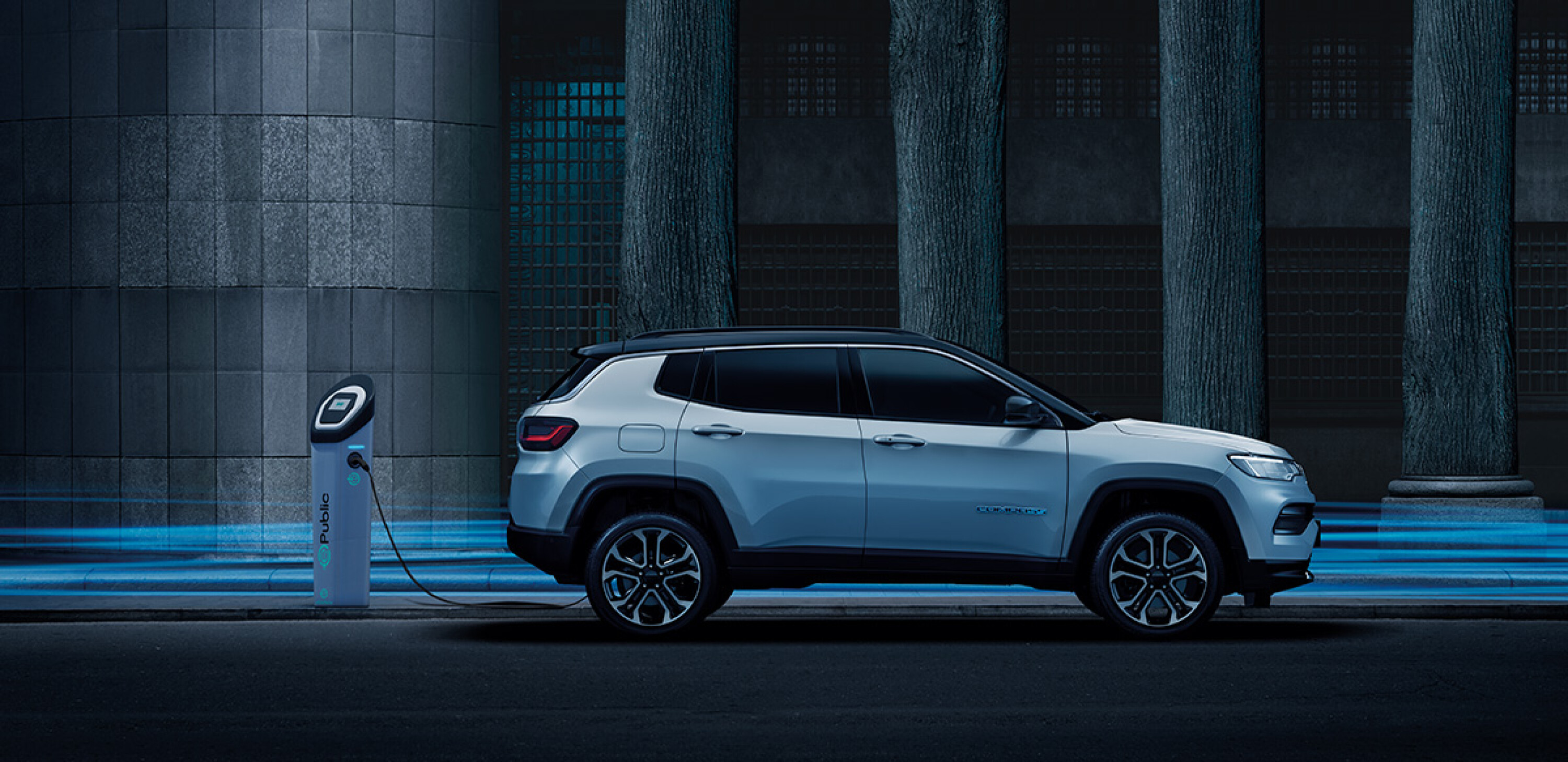
Jeep Compass 4xe
Jeep’s entry-level model is ditching regular combustion engines in 2024.
In place of the 2.4L ‘Tigershark’ petrol and 2.0L turbo-diesel four-cylinder engines will come an e-Hybrid model featuring a 48V-boosted turbo petrol and a plug-in hybrid 4xe (four-by-ee) variant.
The mild-hybrid Compass compact SUV is front-wheel drive and claimed to offer limited electric-only driving for start-up, low-speed driving, and parking.
More power and all-wheel drive are provided with the 177kW Compass 4xe, using a similar set-up to the Grand Cherokee plug-in hybrid.
Both variants are due in the first half of 2024.
Kia Sportage Hybrid
Kia’s petrol-electric Sportage mid-size SUV arrived in March to take on the Toyota RAV4 hybrid.
There are two specs with the SX fitted with 17-inch alloy wheels, cloth upholstery and a 12.3-inch screen costing $45,950 and the leather-upholstered GT-Line flagship (now with heated steering wheel) $55,420, both before on-road costs.
The top-spec GT-Line steps down to 18-inch alloys (normally 19s) for aerodynamic purposes. Braked towing capacity for the hybrid matches petrol auto Sportage variants at 1650kg.
Kia’s front-wheel drive hybrid powertrain sends its 169kW/350Nm outputs through a six-speed torque converter automatic. Its ADR 81/02 combined consumption rating is 4.9L/100km, just 0.1L/100km shy of a RAV4 hybrid.
The hybrid powertrain is expensive, though, marking an $8400 premium over the 2.0-litre petrol SX and $5700 compared to the GT-Line AWD petrol.
An entry-level Sportage Hybrid S or mid-spec Sportage Hybrid SX+ will not be offered at launch due to limited supply.
MG HS Plus EV
It’s not officially revealed, but we know a new generation of MG’s midsized SUV will debut in 2024.
Patent images point to a rebadged Roewe RX5 already on sale in China.
Details are extremely limited for now, though a plug-in hybrid variant – currently badged Plus EV in Australia – is again anticipated.
The HS is a crucial model for MG as it competes in Australia’s most popular vehicle segment.
Mercedes-AMG GLC63 S E
Like the wagon versions, the GLC 43 gets a mild-hybrid four-cylinder producing 310kW/545Nm while the 63 S E Performance uses the same setup as the C 63 sedan – that means 500kW and 1020Nm for the medium SUV.
Pricing and features are yet to be confirmed but don’t expect much change from $160K for the GLC 43, while the 63 will likely push $200,000 before on-road costs.
Large SUVs
Think of the Tank 500 as China’s answer to the Toyota Prado replete with a hybrid powertrain.
While it is closer in size to the Toyota LandCruiser 300 Series, the GWM Tank 500 starts at just $66,490 drive-away for the Lux Hybrid variant.
It features a 358kW/615Nm petrol-electric hybrid powertrain with a nine-speed automatic, low-range transfer case and locking front differential.
The range-topping Tank 500 Ultra Hybrid is priced at $73,990 drive-away and adds partial Nappa leather upholstery, a 12-speaker sound system and a locking front differential.
Braked towing capacity for the GWM Tank 500 is rated at 3000 kilograms, equivalent to the current Toyota Prado but down on the Ford Everest’s 3.5-tonne capacity.
Hyundai Santa Fe Hybrid
A petrol-electric variant will once again play flagship as a dramatically styled fifth-generation Santa Fe lands in the second quarter of 2024.
It will also be the sole drivetrain at launch, though turbo-petrol power is expected to arrive later to offer more affordable alternatives, with the outgoing large SUV’s diesel four-cylinder and V6 petrol engines heading for the exit.
Santa Fe’s hybrid drivetrain will again combine a 1.6-litre turbo petrol engine with an electric motor, with part-time all-wheel drive. Total outputs are 169kW and 350Nm.
The current Santa Fe Hybrid starts from $63,000, but expect a price increase for the replacement.
Mazda CX-90 PHEV
Mazda’s posher seven-seater SUV debuted in 2023 with six-cylinder turbo petrol and turbo diesel engines. While these inline motors feature (very) mild-hybrid tech with the ability to coast with the engine off, they don’t have the potential to save as much fuel as a hybrid.
Thankfully, that changes in 2024 with the addition of a PHEV (plug-in hybrid vehicle) variant. Although official fuel consumption has yet to be confirmed, the PHEV’s combination of 2.5-litre four-cylinder petrol engine and electric motor is guaranteed to bring better figures than either the petrol or diesel 3.3L six-cylinders – 8.2L/100km and 5.4L/100km, respectively.
As a PHEV, the plug-in CX-90 offers some limited electric-only driving – up to 42km, officially.
The downside is that, based on the Mazda CX-60 range that also offers a variety of drivetrains, the PHEV can be expected to ask a significant price premium over the six-cylinder models.
Mazda will also release its first ever CX-80 large SUV in 2024, which may also be offered with a plug-in hybrid powertrain.
Toyota Prado ‘i-Force Max’
The all-new Toyota Prado goes on sale mid-year with 48-volt technology, though a full hybrid hasn’t been ruled out for Australia.
In North America (and China), where the model will be known as the LandCruiser 250, the Prado is available with an ‘i-Force Max’ drivetrain combining a 2.4-litre turbo petrol engine and electric motor integrated into the eight-speed auto gearbox.
It produces combined outputs of 243kW and 630Nm to offer more grunt than the 150kW/500Nm 2.8-litre turbo diesel and 48V battery combo in the only drivetrain confirmed for our market so far.
As the full hybrid, unlike the 48V system, can also power wheels with the electric motor, it should also be more economical, though Toyota has yet to provide any fuel consumption estimates.
Volkswagen Touareg R
Volkswagen’s first plug-in hybrid for Australia will, perhaps surprisingly, be a model wearing the German brand’s performance ‘R’ badge.
The VW Touareg R, which has been delayed a couple of times, will finally arrive in March – as part of a facelift for the wider line-up of the large, five-seater SUV.
Where other Touareg models employ diesel power, the R features a 250kW 3.0-litre turbo-petrol V6 borrowed from the related Audi Q7 55 TFSI, matched to a 100kW electric motor.
In total, the Touareg R produces 340kW and 700Nm to become the most powerful series-production VW yet.
Although its 5.1sec 0-100km/h claim is slower than the 4.9 seconds of the now-discontinued 310TDI V8, a 14.3kWh lithium-ion battery pack provides a 51km electric-only driving range to help achieve low official fuel consumption of 3.3L/100km.
Passenger cars
MG3
The new MG3 was revealed in February, with the brand’s Australian arm confirming it will offer a hybrid option when it lands in late 2024.
The hybrid system combines a 75kW/128Nm 1.5-litre four-cylinder petrol with a 100kW/250Nm electric motor for a 143kW total system output.
It has a 1.83kWh battery and offers four drive modes: Electric-only, series-hybrid, ‘series and charge’, ‘drive and charge’, and parallel-hybrid.
A WLTP-rated combined fuel consumption of 4.4L/100km is claimed, compared to 6.7L/100km for the outgoing model under the less stringent ADR testing cycle.
Pricing is still to be confirmed, although MG Australia has confirmed that “due to advancements in technology, safety and specification”, the new MG3 will not be priced from under $20,000 when it arrives in local showrooms.
Honda Accord
After being told we’re not getting the new hybrid-only Accord several times, Honda’s finally flipped – the midsize sedan is coming to Australia after all.
Pricing is yet to be set for the hybrid-only Accord that’s set to arrive in the second quarter of 2024(April-June inclusive) in a single e:HEV RS trim.
The Accord e:HEV RS uses Honda’s fourth-gen hybrid system, the same found in the current CR-V. It employs a 2.0-litre Atkinson cycle petrol engine and twin electric motors for total outputs of 152kW and 335Nm.
We expect the Hyundai Sonata and Toyota Camry rival to carry a premium over the smaller Civic hybrid ($55,000 drive-away) and arrive in dealers priced around $60-65K drive-away.
Honda Australia has yet to confirm where it will source Accord production (it’s built in the United States, China, and now Thailand) however, Thailand is most likely.
Toyota Camry
The ninth-generation Camry will go fully hybrid when the range launches in the second half of 2024.
Despite Toyota claiming the midsize sedan is a new generation, it’s really a deep facelift with new bumpers, freshened sheet metal, and jazzed-up cabin. The key hard points are unchanged from the eighth-gen sedan.
Toyota claims “lighter and more compact electric motors” produce more power – likely employing the new NiMh battery chemistry found in the Japanese Aqua hatch and global Lexus LBX.
North American markets get the option of AWD for the first time but Aussie cars will keep front drive.
Inside, there’s design influence from almost every new Toyota: C-HR, bZ4X, Crown and more.
The new 8- or 12.3-inch multimedia touchscreen has fresh software for wireless Apple CarPlay and Android Auto, and the available ‘Hey, Toyota’ intelligent assistant.
Pricing is yet to be announced but expect it to move North from the current $35,051 (before on-road costs) Ascent petrol variant.
Utes
BYD ute
The highly ambitious Chinese brand BYD (Build Your Dreams) will continue its Australia product assault in 2024 with at least two new vehicles – one of which, crucially for this market, is a dual-cab ute.
Already spotted testing on local roads, the as-yet-named rival for the likes of the Ford Ranger, Toyota HiLux and Mitsubishi Triton will initially be offered with a plug-in hybrid drivetrain.
BYD is said to be targeting a 1000-kilometre-plus driving range for the petrol-electric Ute.
An all-electric version of the BYD Ute will follow around 12 to 24 months later in 2025 or 2026.
GWM Cannon Alpha
The GWM Cannon Ute’s bigger brother is on its way to Australia, bringing more carrying space and greener motoring from mid 2024.
When it arrives, the Cannon Alpha will be the first hybrid ute in Australia, beating the new Ford Ranger PHEV to market by a few months at least, along with others like the hybrid HiLux and the recently teased BYD plug-in hybrid ute.
As a big brother to the Cannon already sold in Australia, the Cannon Alpha measures 5440mm long (+30mm over the Cannon), 1991mm wide (+57mm) and 1924mm tall (+38mm), rolling on a 3350mm wheelbase (+120mm).
In Australia, the Cannon Alpha will be sold with a 2.0-litre turbo petrol hybrid powertrain, its combustion and electric motors combining to deliver 255kW and a huge 648Nm. On their own, the motors produce 180kW/380Nm and 78kW/269Nm respectively.
Isuzu D-Max mild-hybrid ute
Stepping into carbon neutrality, Isuzu reveals hybrid and EV concepts, with some headed for Australia.
The 2025 Isuzu D-Max High-Lander MHEV is powered by a 1.9 litre “DDi Blue Power” turbo-diesel engine, combined with a 48V mild hybrid drivetrain.
Isuzu Thailand states that this setup is designed “to reduce the engine workload during startup, reducing vibration and helping to reduce CO2,” with no power, range or technical figures speculated yet.
Toyota HiLux 48V
Don’t call it a hybrid, says Toyota of its ‘V-Active’ 48-volt electrical system now available on 2024 HiLux SR, SR5, and Rogue trims.
Toyota’s 48-volt strengthened 2.8-litre diesel engine generates the same 150kW at 3400rpm and 500Nm between 1600-2800rpm as regular HiLuxes, though is said to improve fuel efficiency by up to five per cent compared to the conventional diesel powertrain.
Toyota has yet to quantify efficiency improvements.
When charged through regenerative braking, Toyota says the 48V battery sends up to 12kW and 65Nm of additional power and torque, respectively, through the motor generator to the engine “to enhance acceleration, power and efficiency”.
Prices are available, though, with V-Active equipped SR models between $1025-1605 dearer, and the technology fitted standard to SR5 and Rogue dual-cab trims.
Initial examples will begin arriving in March/April.
Toyota Tundra
It’s all but official that Toyota will take on the Ford F-150, Ram 1500 and Chevrolet Silverado with its own US-sourced full-size pick-up.
A few hundred ‘prototype’ examples of right-hand-drive-converted Tundras will be the hands of cherry-picked Australian customers by April, as part of an intensive local development program.
While Toyota Australia makes us wait longer for official confirmation, the local Tundras – converted by local company Walkinshaw Automotive Group – feature an ‘i-Force Max’ petrol-electric drivetrain with 326kW and 790Nm.
Sports cars
Chevrolet Corvette E-Ray
Chevrolet’s latest-generation sports car icon has hitherto been offered in Australia with a normally aspirated V8 engine, but this year gains electrified power for the first time.
Confirmed a year ago for this market, the Corvette E-Ray hybrid links the 6.2L ‘LT2’ V8 found in the regular coupe and convertible with a 119kW/170Nm electric motor.
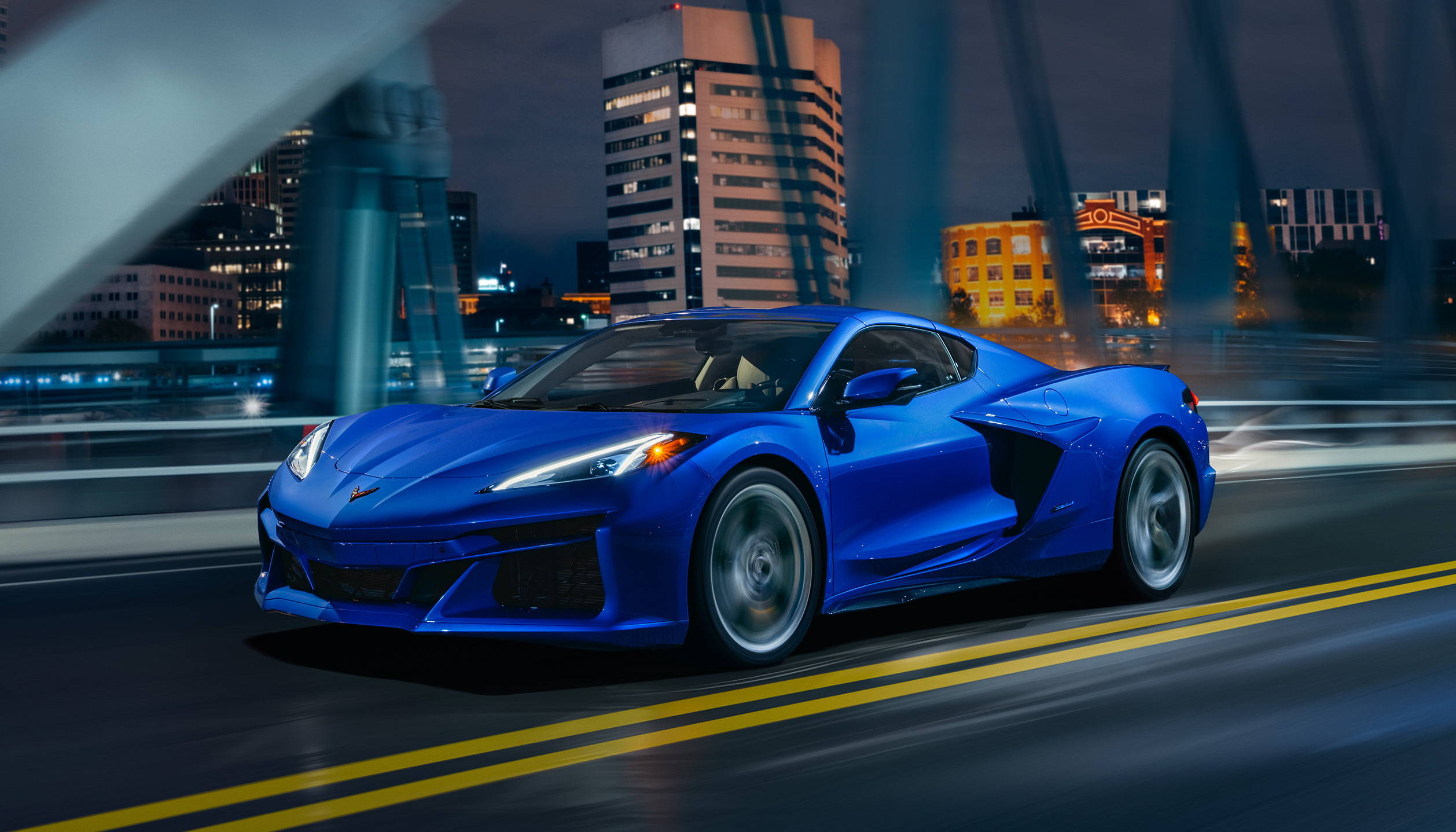
With a total power output of 448kW not far behind the 475kW of the track-and-road-focused Z06 also coming this year, the E-Ray is actually the fastest-accelerating Corvette with a claimed 0-60mph (0-97km/h) time of 2.5 seconds and a quarter-mile (0.4km) time of 10.5 seconds (a tenth quicker than the Z06).
Pricing for the Corvette E-Ray has yet to be confirmed, but expect a number north of $250,000.
Crossovers
Peugeot 408
Part sedan, part SUV, Peugeot’s 408 will arrive in the third quarter in just one model grade with a sole powertrain option.
Which is no shame, really, as sampling petrol and hybrid 408s in Europe reveals the 165kW petrol-electric option in question to be the prime choice. It combines a 1.6-litre turbo-petrol with an 81kW electric motor and 12.4kWh battery pack for 0-100km/h in 7.8 seconds and 64km of electric-only range.
A price tag is yet to be confirmed, but it’s safe to expect a bit of a premium for going so bold. An estimate based on its 308 sibling suggests it’ll start north of $70,000, although Peugeot goes hard on standard equipment these days and the 408’s interior will drop your jaw with its design while feeling immaculately put together.
This is a premium player and a far cry from outdated French car cliches.
