
A number of iconic hot hatches have been retired in recent years, but those still available are reaping the benefits of a hungry market.
Snapshot
- VW rapt with GTI & R sales performance across hatch & SUV
- Hyundai N models going strong, Toyota hitting limiter
- And they’re all supply-constrained, surprise!
There’s arguably never been a better time – or perhaps a more desperate desire – to get into a new hot hatch, with today’s models proving immensely capable, wildly entertaining and safer than ever before.
With the all-electric all-the-time era approaching seemingly faster than any hot hatch’s best lap time, and with the growing cost-of-living crisis apparently no barrier, buyers are snapping up hot – well, everything small and quick: hatches, sedans and SUVs alike.
1
Not many brands are cheering about it, though, which might seem ominous – and Hyundai has, after all, killed the Kona N and confirmed there won’t be another i30 N hatch after this generation.
The sedan will live on, at least, along with the i20 N – and there’s the big new Ioniq 5 N for those with money to burn in place of petrol.
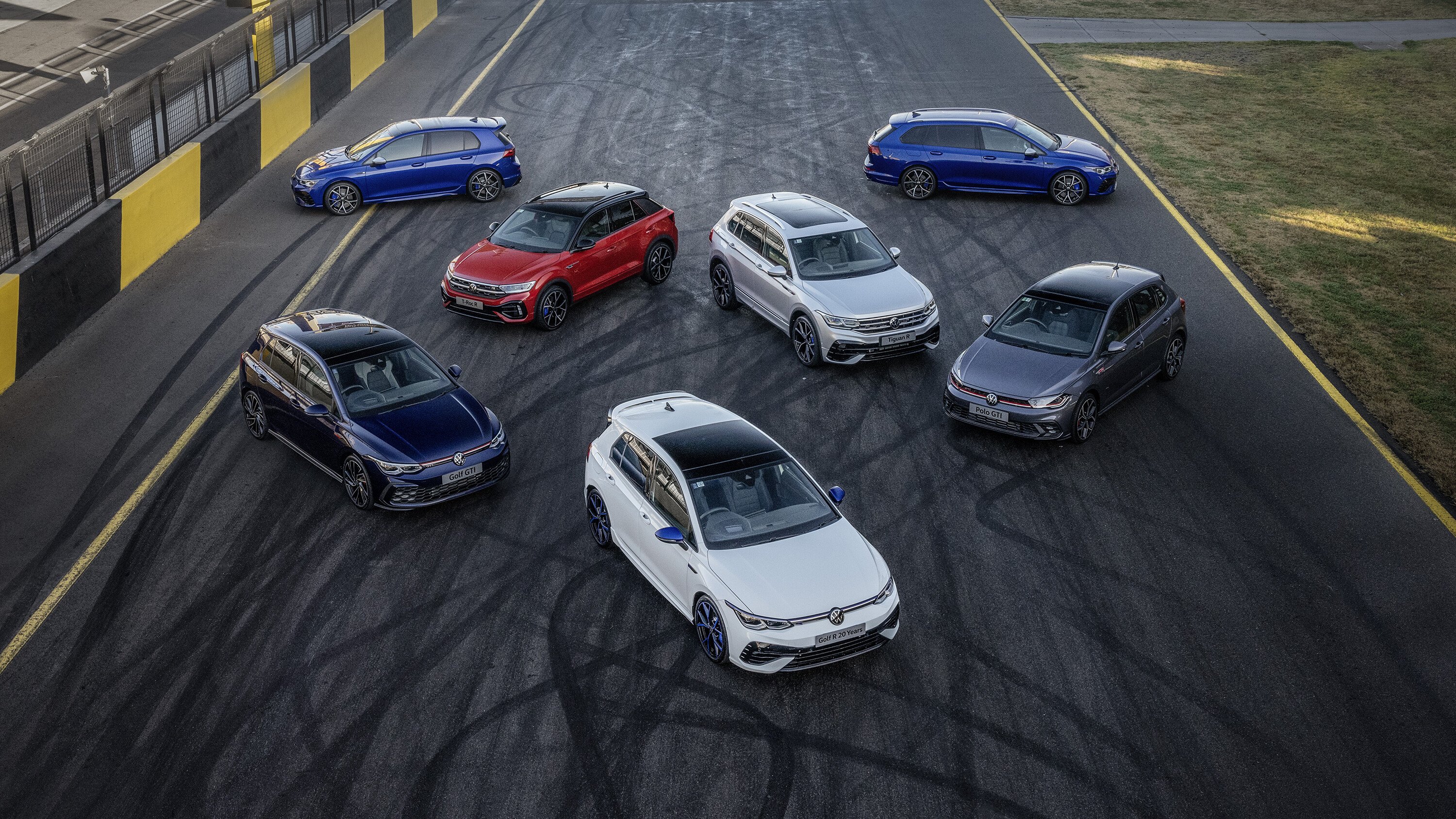
Volkswagen is the exception, proudly trumpeting the success of its GTI and R models in 2023 – while also firing a shot at Hyundai, declaring itself “the only brand in Australia committed to both light and small segment hot hatchbacks”. A niche title to claim, but a hot shot nonetheless.
For its part, Hyundai is understood to be working on a smaller Ioniq model, and an N variant would seem a sure thing. The Golf 9 GTI is also rumoured to be electric, so the ‘committed to small hot hatchbacks’ conversation will probably rear its head again soon.
(The chats I’ve had about that line were, of course, not on the record…)
Alright chatterbox, give us the numbers
Volkswagen
For 2023, Volkswagen says it sold 387 Polo GTI hatches, more than doubling the results of a supply-troubled 2022. The bigger Golf GTI, more expensive than ever before and without a manual for the diehards, also had a fairly strong year with 693 sales. The flagship Golf R turned in 346 for the year, with 309 deliveries made in the second half. Supply was still an issue for both, however, and VW believes their potential to be much higher.
We can add Cupra to the list, with 442 Leon hatches sold in 2023, along with a whopping 887 of its new Born EVs. Born slippy.
Of course, as much as Australia loves hot hatches, it loves SUVs even more – so the combination of hot-hatch power and SUV is an obvious formula for product planners. It’s worked out for VW, with the Tiguan R racking up a huge 2227 sales in 2023. It’ll be retired in June, so if you want one…
Lastly, the smaller T-Roc R and R Grid models did well too, with 566 sales.
Hyundai
By comparison, Hyundai had moved 624 of its little i20 N manual-only pocket rockets by the end of November, along with 1626 i30 N hatches and 1573 i30 N sedans (styled ‘i30 Sedan N’) for the full year.
The i30 N models can both be had in either manual or auto form, of course. And while it had no press release for these figures, Hyundai would likely note that it, too, suffered delays for its N hatches.
Hyundai N’s late addition of a DCT automatic transmission to the i30 N hatch has paid dividends, with 1280 sales going to the auto and 346 to the manual. The i30 Sedan N favoured the auto even more, with 1440 sales going that way and 133 going the other.
A mean 680 Kona N SUVs were sold to the end of November, too. RIP, Kona N…
Toyota
Toyota, an only recently returned player in the hot-hatch market, sold 624 GR Corolla hatches and 163 GR Yaris hatches – and yes, you guessed it, supply has been a constant bugbear for these models. “We keep trying to get more,” a spokesperson told me today.
It had 700 GR Corollas available, according to news in early 2023, but perhaps something has been lost in communication there. (It’s possible some of those sales were counted in late 2022, when the initial number was first announced.)
And, for the record, Toyota sold 276 GR Supras in 2023.
Honda
As for the Civic Type R, Honda confirms it has sold “just over” 750 since launch in December 2022.
And guess what! Supply constrained, with back-of-the-line customers in May 2023 told to expect a February 2024 delivery.
Subaru
Look, it’s no longer a hatch, criminal as that is, but the WRX is a traditional player in this space – and fans will be pleased to know Subaru sold 2743 of them in 2023.
Subaru tells me it was an 80/20 split in favour of the sedan which, as a wagon man, is disappointing to me – but considering the sedan’s sales were split 54% to 46% in favour of the auto transmission, one feels like a manual wagon oughta be on Subaru Australia’s wish list… (And a return of the STI, please.)
Hell, let’s add this little detail: Subaru recorded 1573 sales of the BRZ last year, pushing it past the Mustang’s 1475 registrations.
Farewell… Renault & Ford
The last time we’ll see Renault in a list like this, at least for the foreseeable future. It sold 69 (nice) Megane RS hatches last year. Ford moved 140 Fiesta ST hatches from last stocks and orders, and just eight Focus ST hatches.
Sales figures, in table form!
| Model | 2023 sales |
|---|---|
| Cupra Born | 887 |
| Cupra Leon | 442 |
| Cupra Formentor | 2108 |
| Cupra Ateca | 328 |
| Ford Fiesta ST | 140 |
| Ford Focus ST | 8 |
| Hyundai i20 N | 624* |
| Hyundai i30 N | 1626 |
| Hyundai i30 Sedan N | 1573 |
| Hyundai Kona N | 680* |
| Hyundai IONIQ 5 N | 2* |
| Renault Megane RS | 59 |
| Subaru WRX | 2743 (80% sedan) |
| Toyota GR Corolla | 624 |
| Toyota GR Yaris | 163 |
| Volkswagen Golf R | 346 |
| Volkswagen Golf GTI | 693 |
| Volkswagen Polo GTI | 387 |
1
And the rest: Lux brands
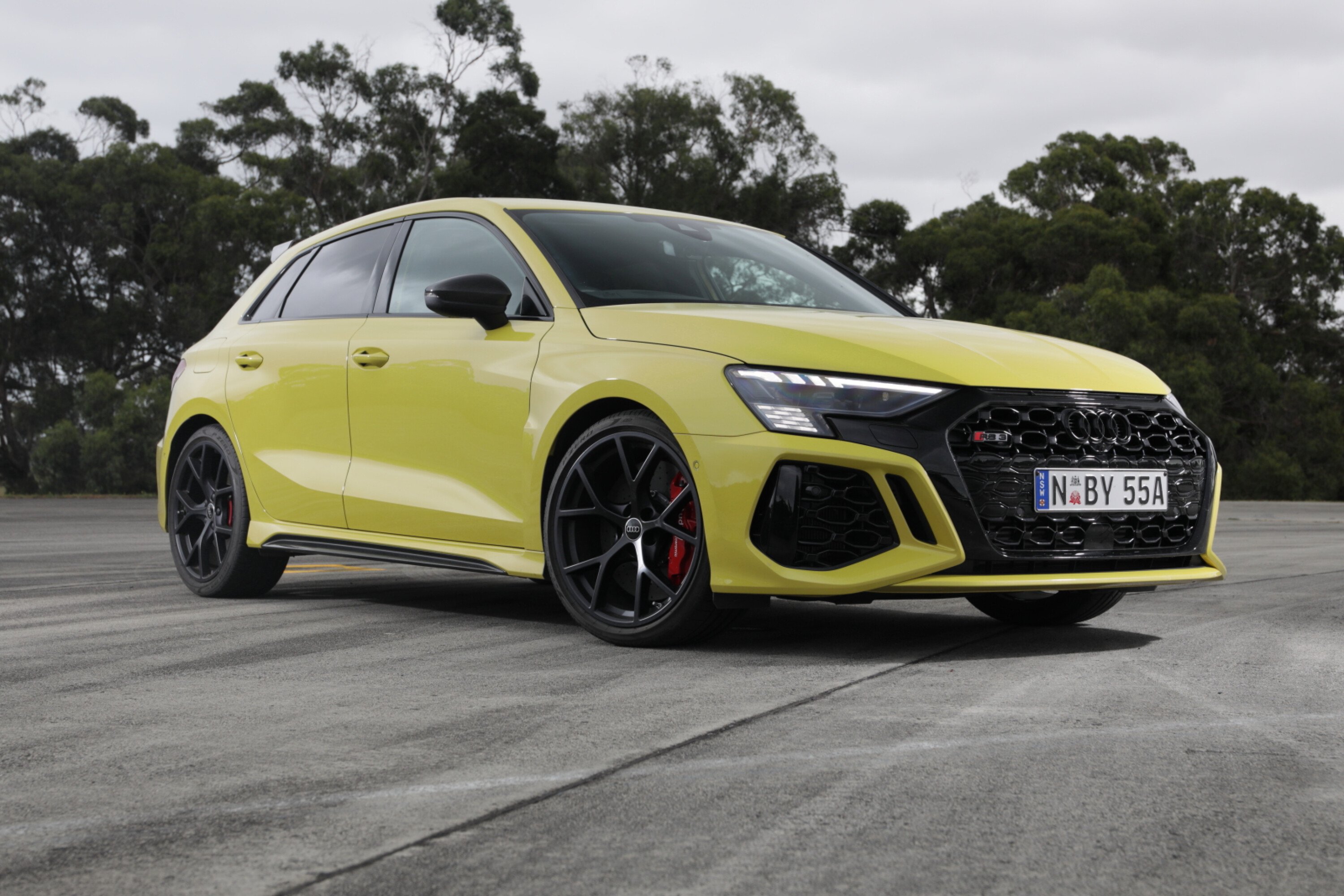
Audi pulled in 149 RS3 and 397 S3 hatch sales last year, from a total of 3319 sales for the wider A3 range – including hatch and sedan (sedan models showed 328 RS3 and 449 S3 sales). The little SQ2 deserves a holler too, with 380 sales in 2023. Across the entire S and RS line-up, Audi notched up 4073 sales.
BMW is finalising figures for its entire M and M Performance range, but we can see it sold 1755 1 Series hatches and 1164 2 Series coupes and convertibles. Waiting on M135i and M2 numbers…
Mercedes-Benz doesn’t share specific AMG model numbers, but VFACTS data shows it sold 2392 A-Class models in 2023, across hatch and sedan, and you can bet a lot of those were A35 and A45 trims.
Snapshot
- Updated version of VWu2019s iconic hot hatch previewed at CES
- New Golf is u201cweeks awayu201d from being shown in production guise
- ChatGPT integration, updated engines, bigger screens and new headlights/taillights all feature
- Likely to be the last petrol-powered Golf ahead of an EV-only MK9
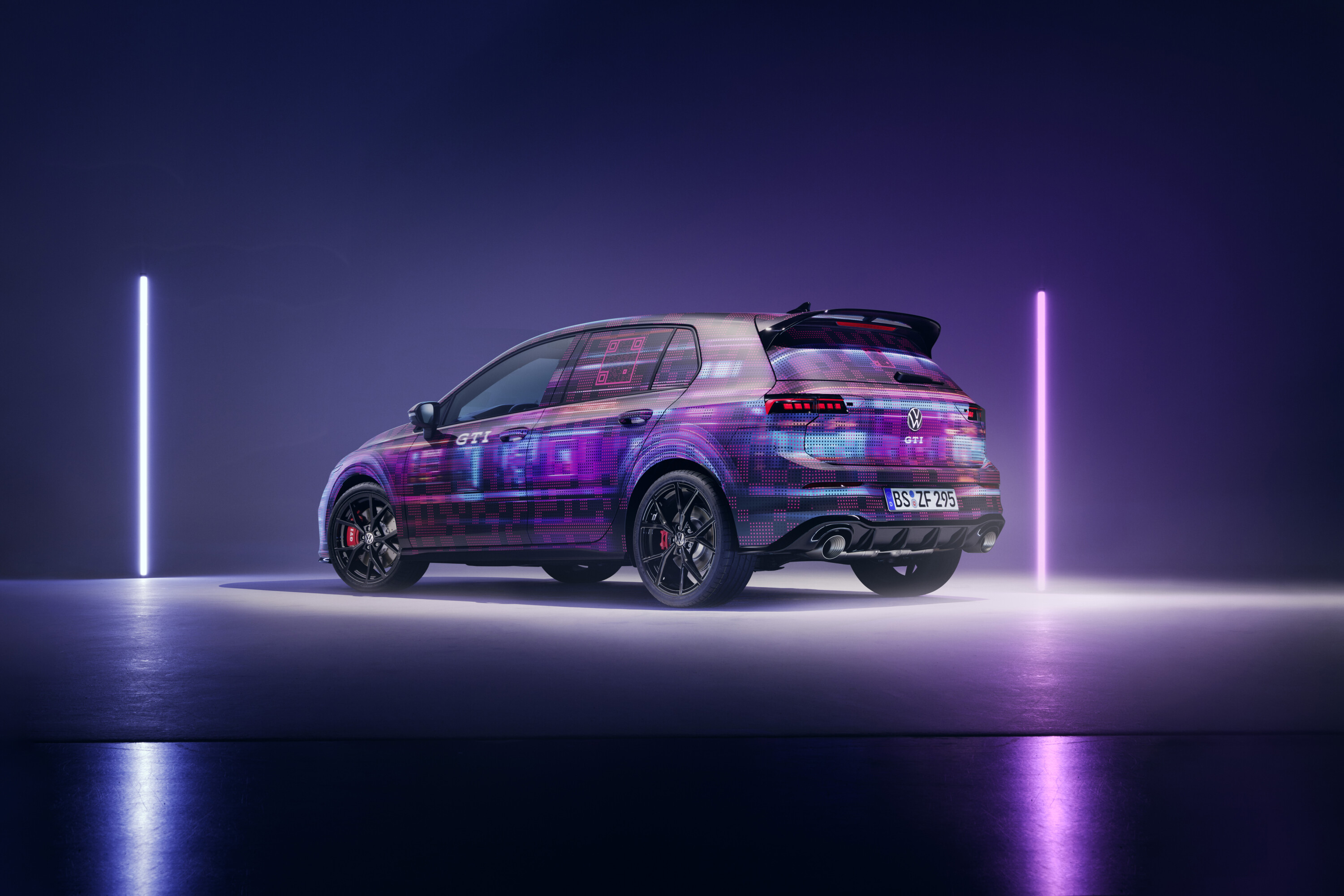
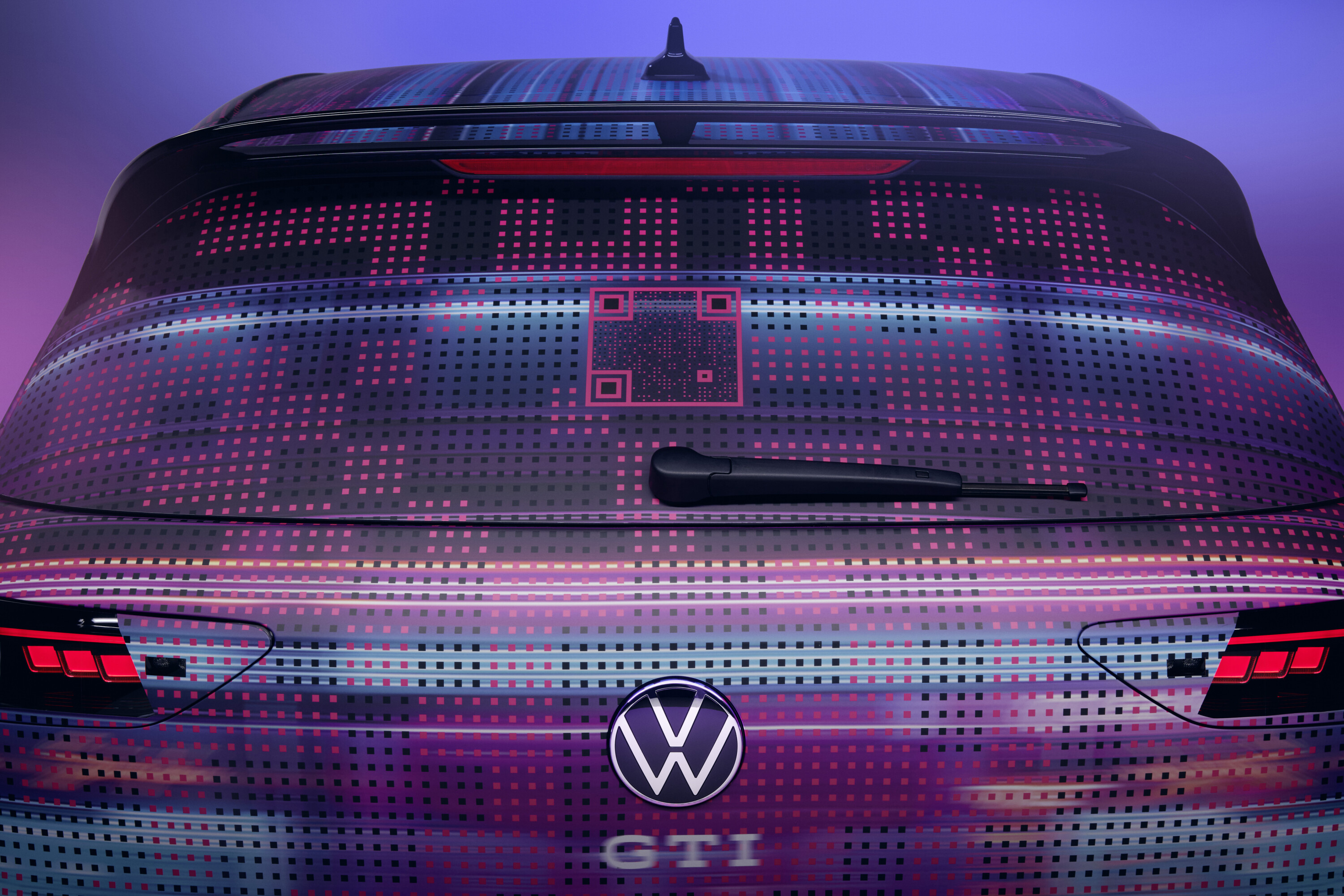
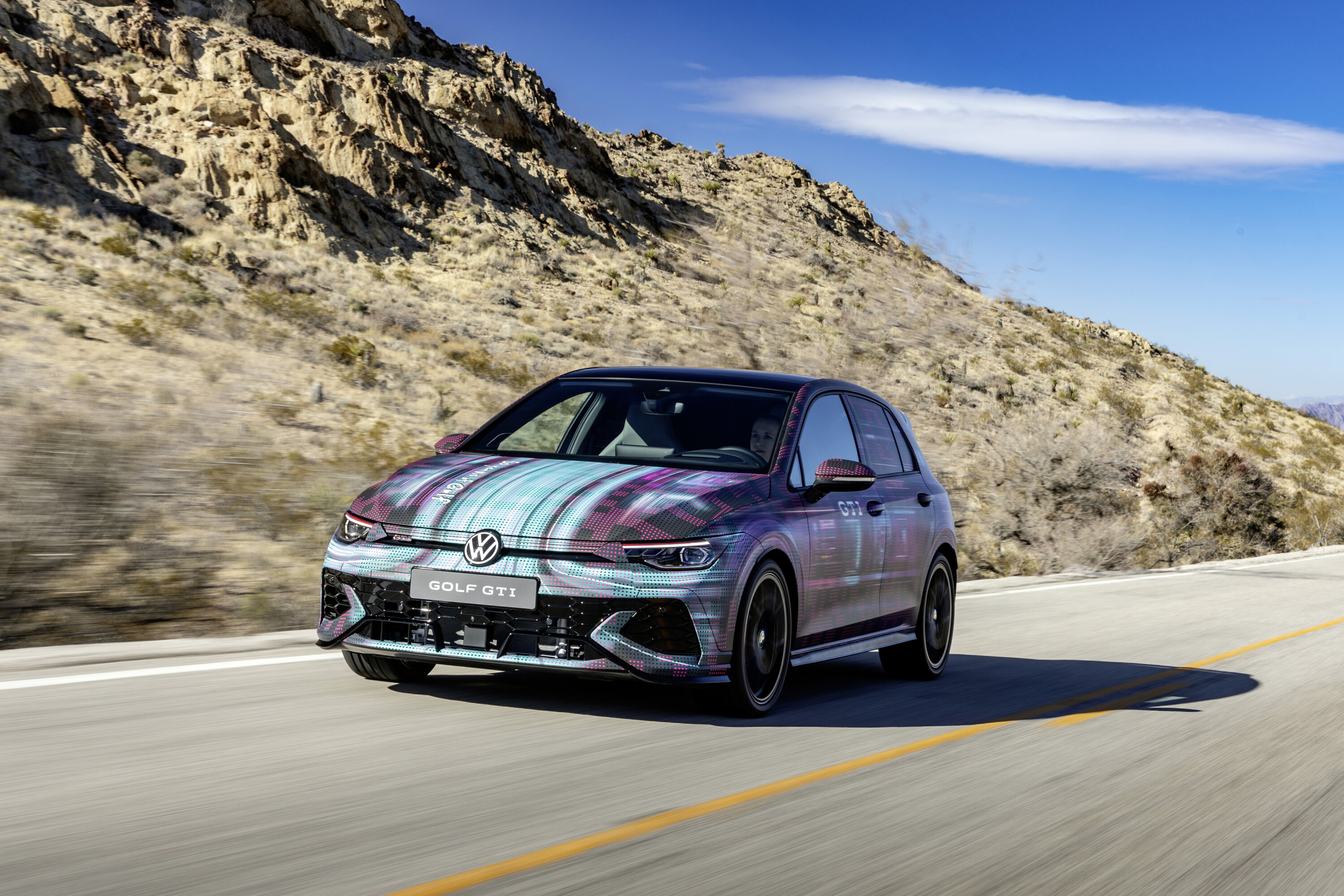
An updated version of the iconic Volkswagen Golf GTI has been shown at the Consumer Electronics Show in Las Vegas, giving us our first look at a host of improvements to the cabin, infotainment and exterior design.
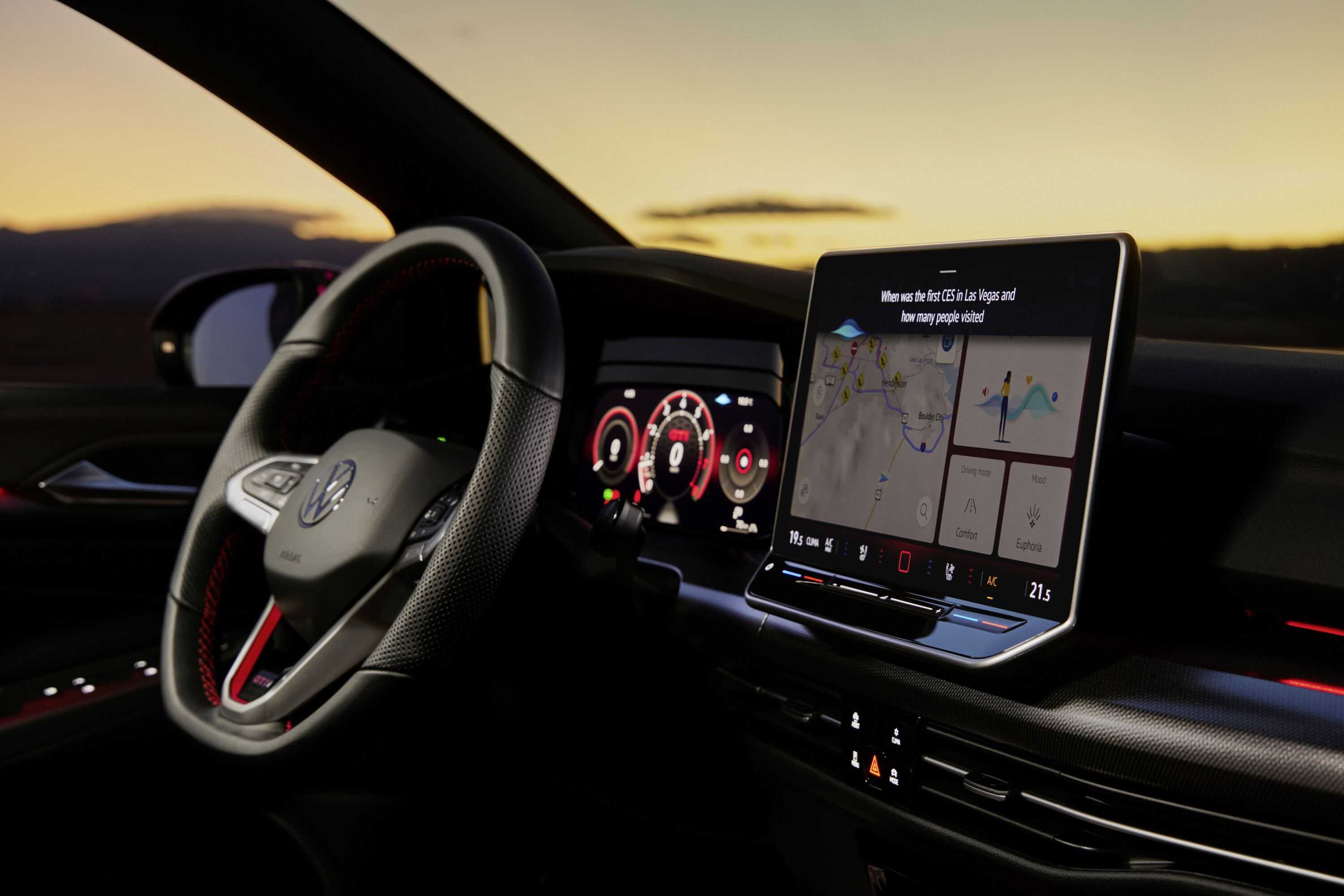
Set to be revealed in full “in the coming weeks” the camouflaged prototype Mk 8.5 Golf GTI was used at CES to showcase the latest version of VW’s IDA voice assistant which includes AI integration via ChatGPT.
The AI tech allows passengers to communicate with their car in a “more natural and conversational way”, says VW, and will eventually be rolled out to all future models from Volkswagen, Cupra and Skoda.
1
The overall design of the new VW GTI isn’t radically different — evolution rather than revolution has long been the Golf’s mantra — yet exterior tweaks appear to include new designs for the headlights and taillights.
It’s the changes to the cabin that are of more significance, however.
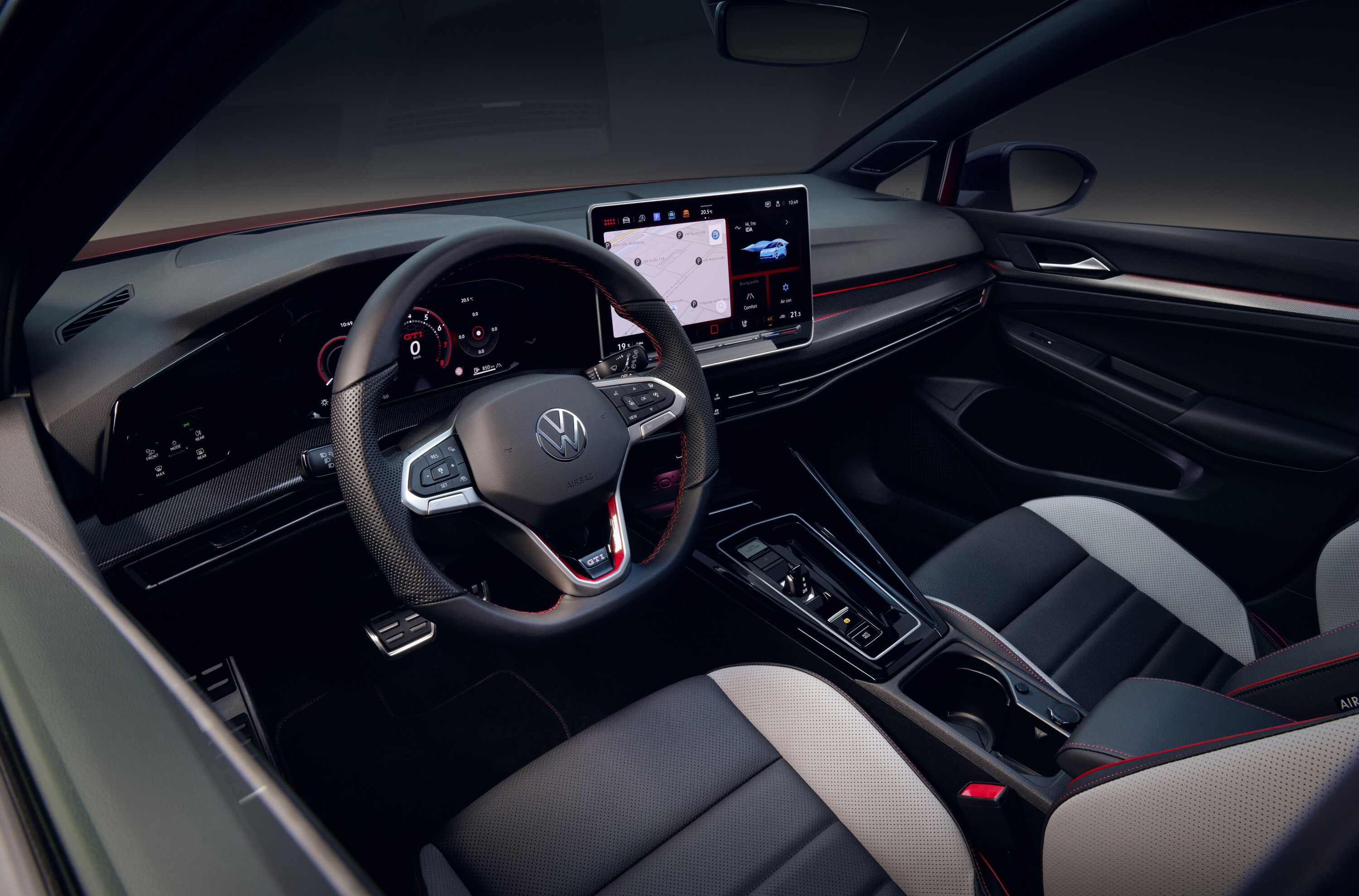
Volkswagen’s move away from its highly criticised touch controls is now in full swing and the new Golf doesn’t only usher in more physical buttons (hooray!) but an entirely new dash design.
1
A larger and higher resolution centre screen also features as does the latest generation of VW’s MIB infotainment software which offers faster processing speeds and improved menu structures.
VW has also added backlighting to its touch-sensitive sliders for the climate control functions which will improve their usability at night.
1
VW’s hard-won reputation for cabin quality has also taken a slight hit lately but the new Golf seeks to re-establish its superiority through a richer mix of higher-quality materials, including a new Alcantara-like fabric known as Atrilur.
A host of engine improvements will be offered throughout the broader Mk 8.5 Golf range, including a new plug-in hybrid powertrain that’s more powerful and offers longer range, though VW is yet to confirm what will power the new GTI and R models.
Evolutions of the current 2.0-litre four-cylinder turbo engines is a strong possibility, although some form of hybrid assistance could also feature.
1
One thing we know for certain is there won’t be a manual gearbox.
VW has confirmed it hasn’t developed a manual for the facelifted Golf, although that means little for Aussie buyers — the GTI and R have both been automatic-only Down Under since 2018.
The updated Mk8.5 Golf range is due in Australia next year, while an all-electric Mk 9 replacement should arrive towards the end of the decade.
1
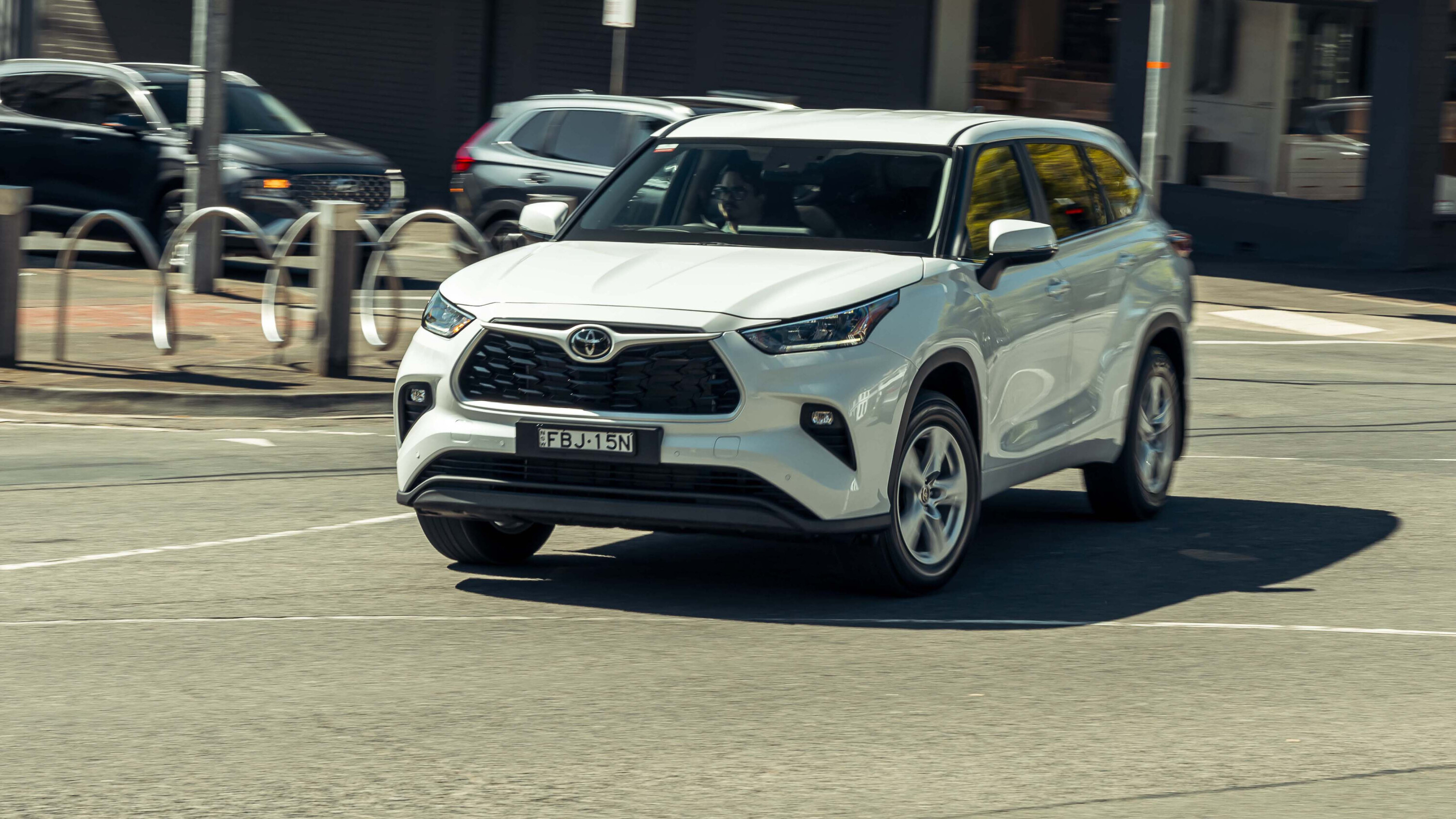
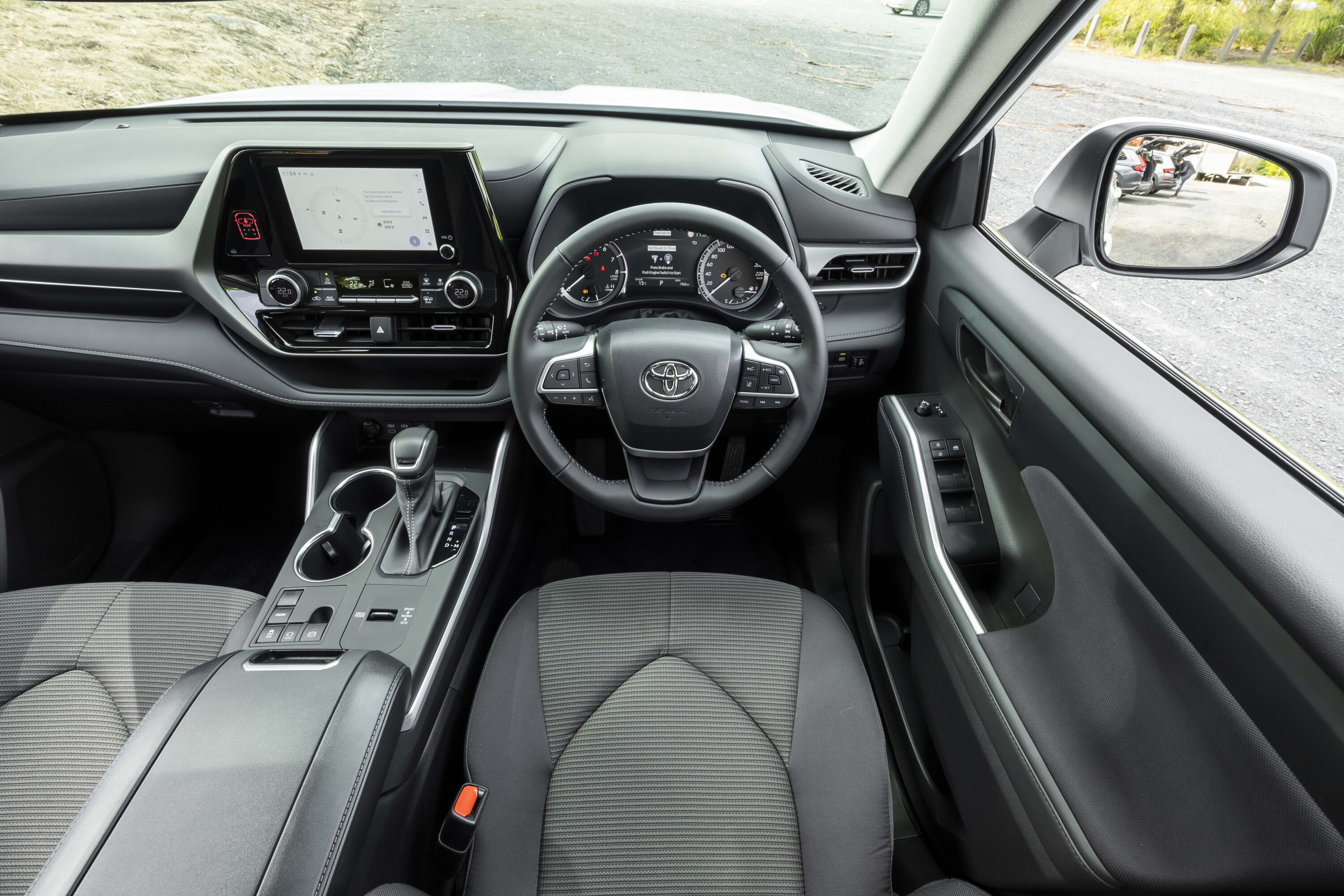
The Toyota Kluger GX, a cornerstone in the family SUV market, enters 2024 with the same vehicle that holds solid its reputation for practicality and reliability.
The seven-seater vehicle has been an Aussie staple since it landed on our shores in the early 2000s.
But amidst a fiercely competitive segment, does the 2024 Kluger GX continue to distinguish itself as a go-to family SUV?
1
Pricing and features
Positioned as the introductory trim level in the Toyota Kluger lineup, the GX offers an appealing balance of affordability and features. With prices starting from $51,790 before on-road costs, the Kluger GX is an attractive option for budget-conscious buyers needing to lug around a number of passengers.
Powering the Kluger GX is an efficient 2.4-litre turbo petrol engine, which is mated to a smooth 8-speed automatic transmission. This engine delivers a robust 198kW and 420Nm of torque, ensuring ample power for your daily driving needs.
The priciest GX available from $58,290 comes equipped with a 2.5-litre hybrid engine creating 142kW and 242Nm, boasting low fuel-economy at just 5.6L/100km.
1
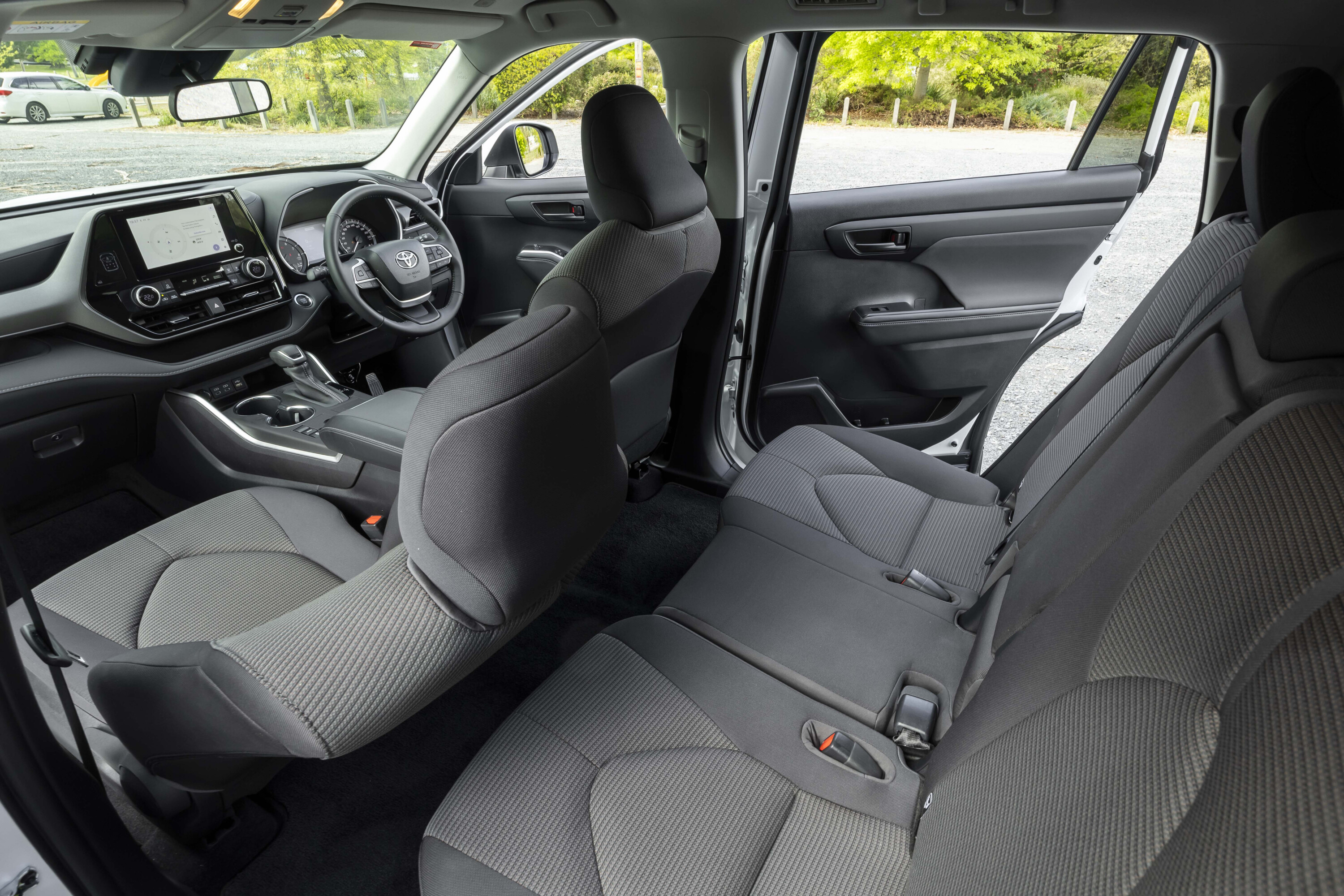
Two more premium trim levels are available for the Kluger: the GXL and range-topping Crusade which are also available in the petrol or hybrid options.
| Toyota Kluger GX features | |
|---|---|
| 18-inch alloy wheels | Leather accented steering wheel |
| 8.0-inch touchscreen | LED headlamps, DRLs and rear lights |
| Adaptive cruise control | Rain-sensing windscreen wipers |
| Autonomous emergency braking | Rear cross traffic alert |
| Blind spot monitor | Rear parking sensors |
| Blutooth connectivity | Reversing camera |
| Digital Radio (DAB+) | Road sign assist |
| Electronic parking brake | Shark fin antenna |
| Fog lamps | six-speaker sound system |
| Heated powered side mirrors | Smart keyless entry/start |
| Hill-start assist | Sound system |
| Lane departure alert | Three-zone climate control |
| Lane keeping assist | USB ports – 3x front, 2x rear |
| Lane trace assist | Wireless Apple CarPlay |
1
Safety
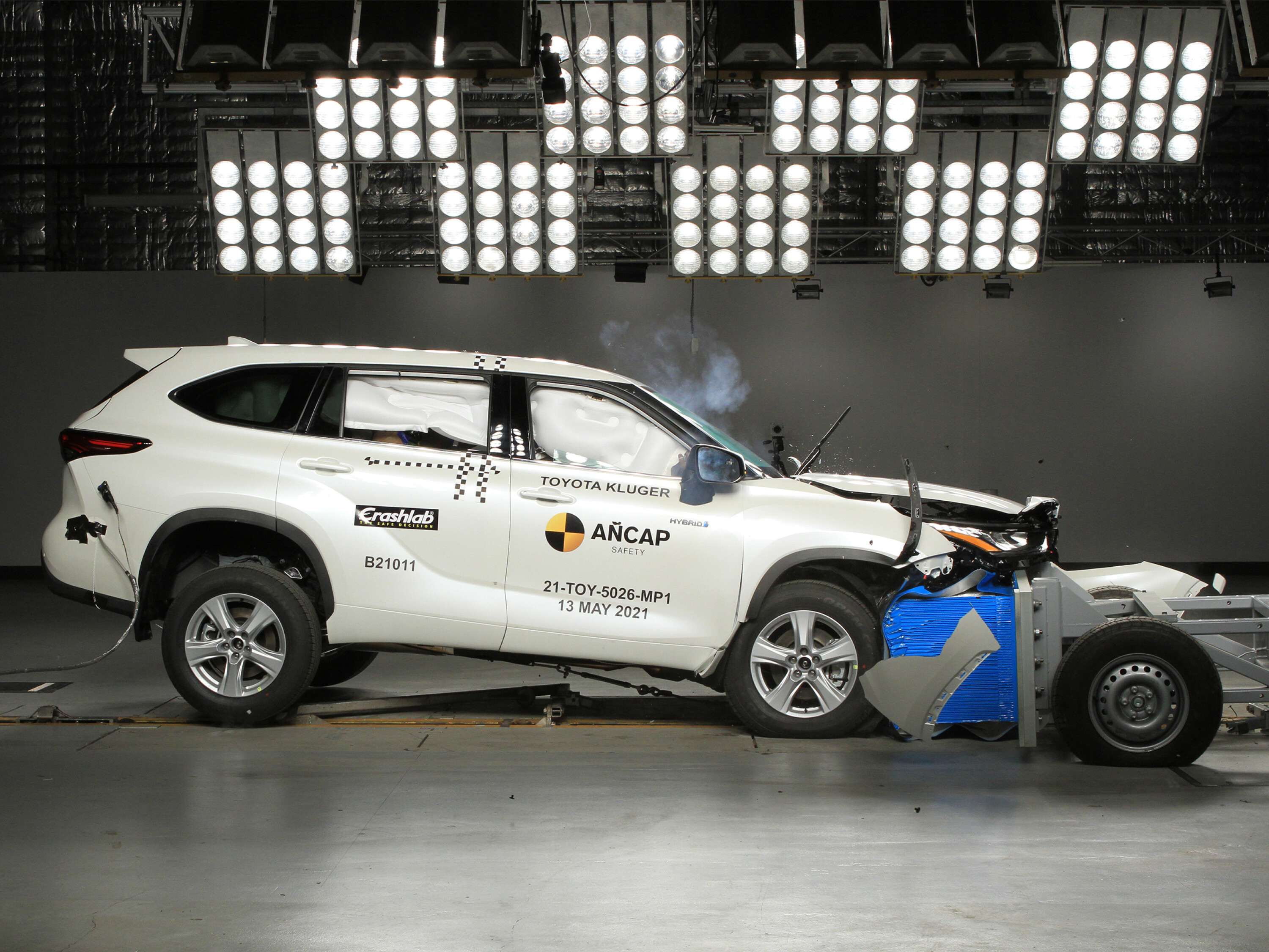
The Kluger received the maximum five-star safety rating from ANCAP, achieved in 2021.
In terms of crash safety, the family SUV has shown strong performance, achieving scores of 90 percent for adult occupant protection and 88 percent for child occupant protection.
Across the entire range, there are seven airbags, including dual front airbags, side airbags, curtain airbags, and a driver’s knee airbag. The curtain airbag extends to provide protection for passengers in the third row as well.
1
| 2024 Toyota Kluger safety features | |
|---|---|
| Autonomous emergency braking with pedestrial and daytime cyclist protection | Active cruise control with curve speed reduction |
| Lane departure warning | Lane keeping assist |
| Automatic highbeam | Intersection turn assist |
| Lane trace assist | Road Sign Assist |
| Blind-spot monitor | Rear cross traffic alert |
| Rear parking sensors | Front parking sensors |
| Reversing camera with guide lines | Panoramic view parking monitor (Grande only) |
Key rivals
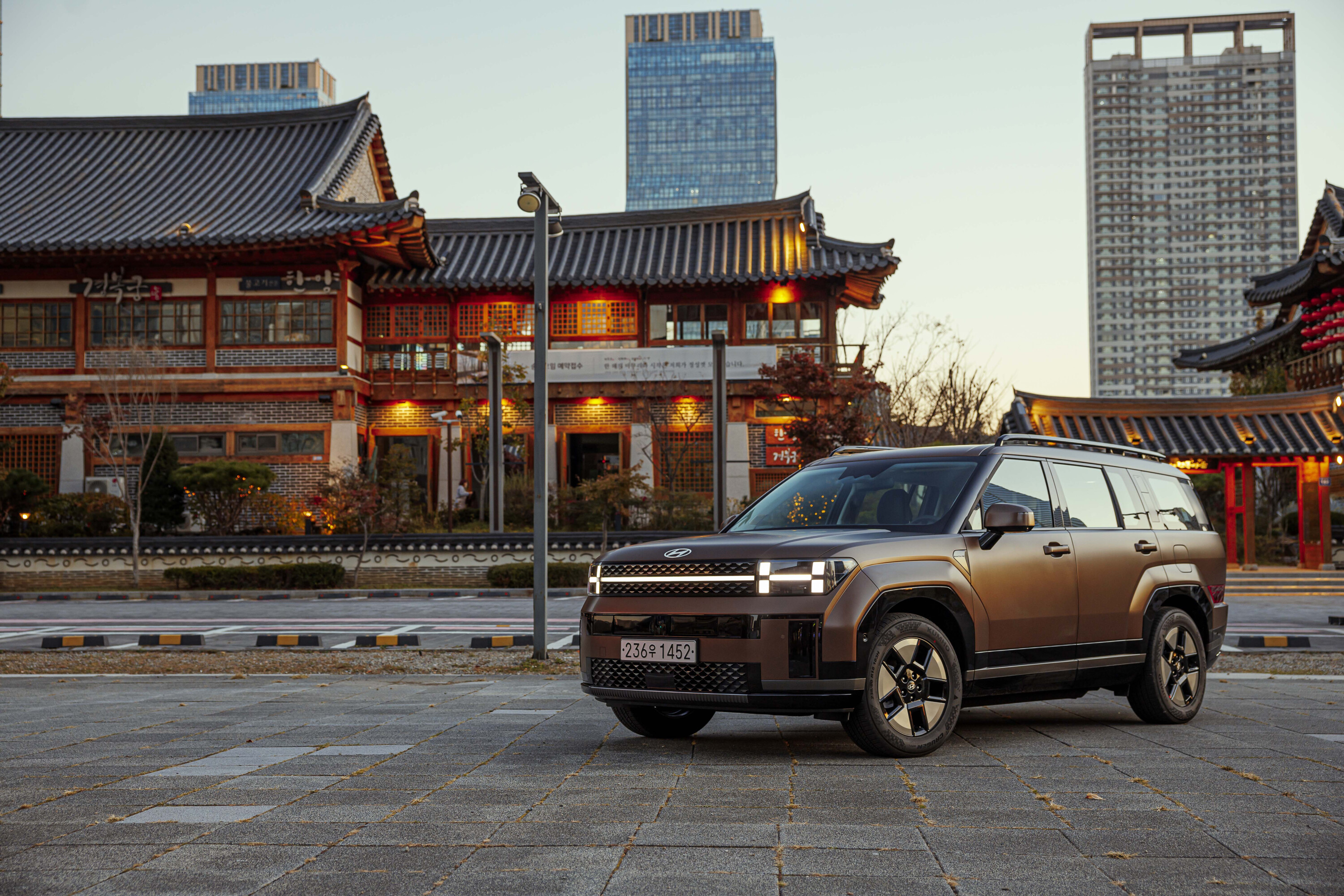
The Kluger faces stiff competition from other family SUVs, including:
1
Should I put it on my shortlist?
The 2024 Toyota Kluger continues its streak as a popular 7-seater family car, since it’s facelift in 2021.
Although very well equipped as a base vehicle, we think the step up to the GXL, positioned in the middle of the range, stands out as the clear choice when considering equipment levels and pricing. It offers a range of appealing creature comforts that surpass those of the GX model.
Regarding the powertrain, the hybrid option boasts exceptional fuel economy that is too advantageous to overlook. Combined with its cost-effective servicing, it’s likely the most economical three-row SUV to own and operate.
MORE
Everything Toyota
In the realm of family SUVs, the Toyota Kluger has long been a pillar and in 2024, it maintains its unyielding reputation for being a practical and dependable choice.
Since its arrival on Australian soil in the early 2000s, this seven-seater vehicle has become a staple for Australian families.
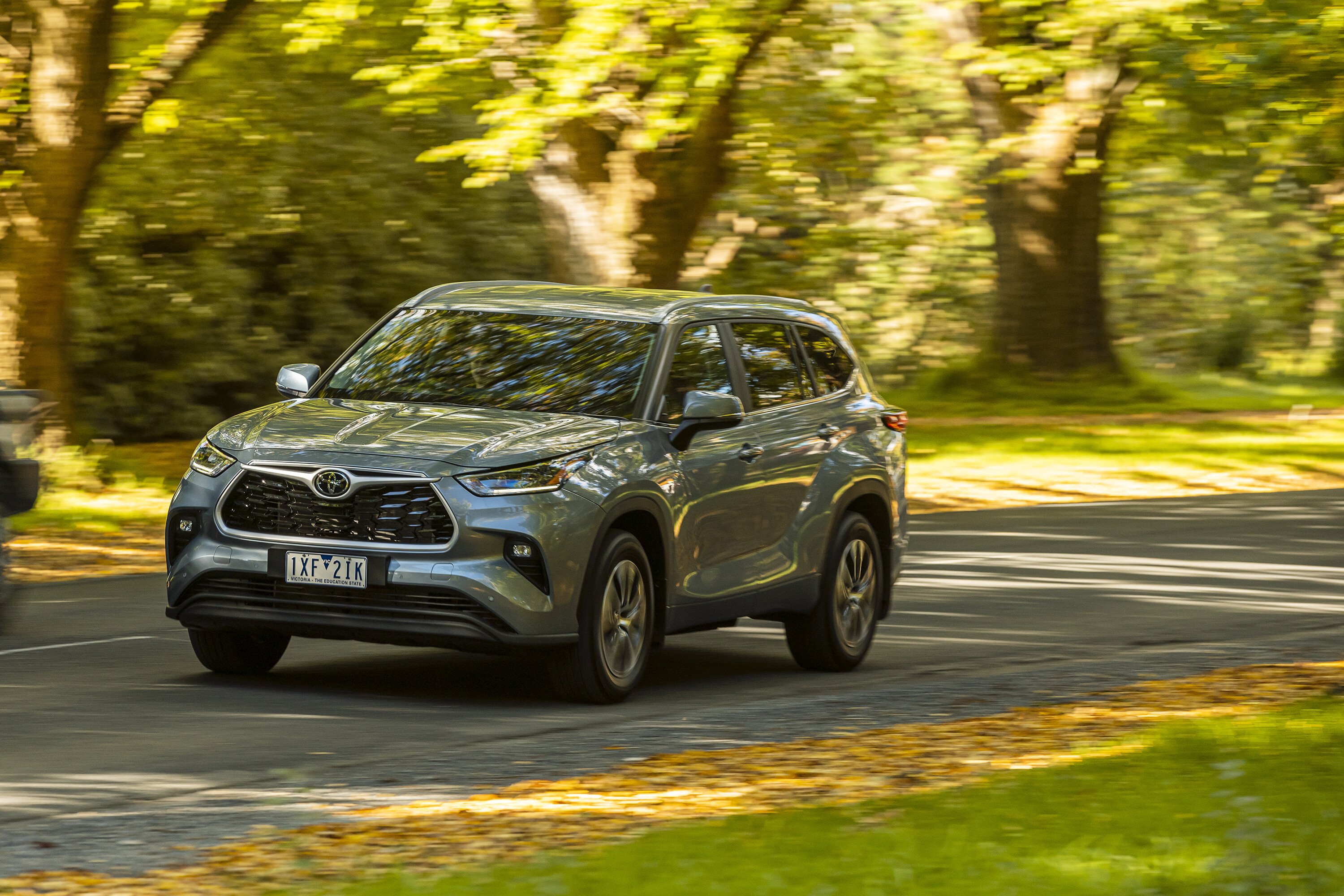
However, within the highly competitive SUV market, the question arises: Does the 2024 Kluger GXL still stand out as the preferred choice for families seeking a reliable SUV?
1
Pricing and features
Situated as the middle trim level in the Toyota Kluger lineup, the GXL offers an appealing balance of affordability and features. With prices starting from $61,310 before on-road costs, the Kluger GXL sits about 10k above the entry level GX.
Under the bonnet of the Kluger GXL lies an efficient 2.4-litre turbo petrol engine, coupled with a smooth 8-speed automatic transmission. This engine delivers a robust 198kW of power and 420Nm of torque, providing ample performance for your everyday driving requirements.
The most expensive GXL variant, starting at $67,810, features a 2.5-litre hybrid engine that generates 142kW and 242Nm, showcasing impressive fuel efficiency with a rating of just 5.6L/100km.
1
The entry level GX offers plenty of standard spec, such as:
| Toyota Kluger GX features | |
|---|---|
| 18-inch alloy wheels | Leather accented steering wheel |
| 8.0-inch touchscreen | LED headlamps, DRLs and rear lights |
| Adaptive cruise control | Rain-sensing windscreen wipers |
| Autonomous emergency braking | Rear cross traffic alert |
| Blind spot monitor | Rear parking sensors |
| Blutooth connectivity | Reversing camera |
| Digital Radio (DAB+) | Road sign assist |
| Electronic parking brake | Shark fin antenna |
| Fog lamps | six-speaker sound system |
| Heated powered side mirrors | Smart keyless entry/start |
| Hill-start assist | Sound system |
| Lane departure alert | Three-zone climate control |
| Lane keeping assist | USB ports – 3x front, 2x rear |
| Lane trace assist | Wireless Apple CarPlay |
However taking the step up to the mid-spec GXL adds:
| Kluger GXL additional features | |
|---|---|
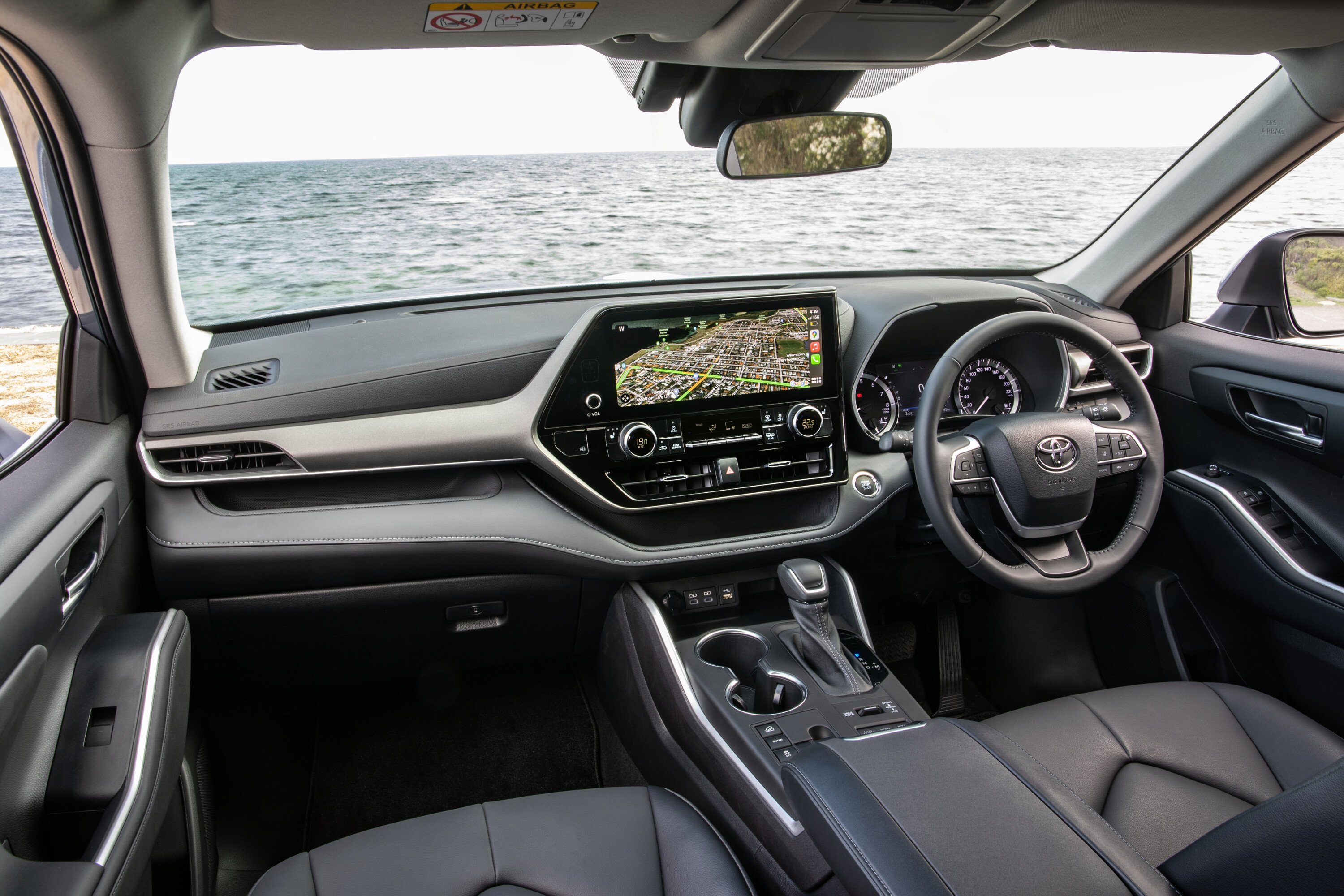
| 12.3-inch colour touchscreen | In-built satellite navigation |
| 8-way power adjusted front seats | Powered driver’s seat lumbar adjustment |
| Synthetic leather interior | Heated front seats |
| Powered tailgate | Roof rails |
1
Safety
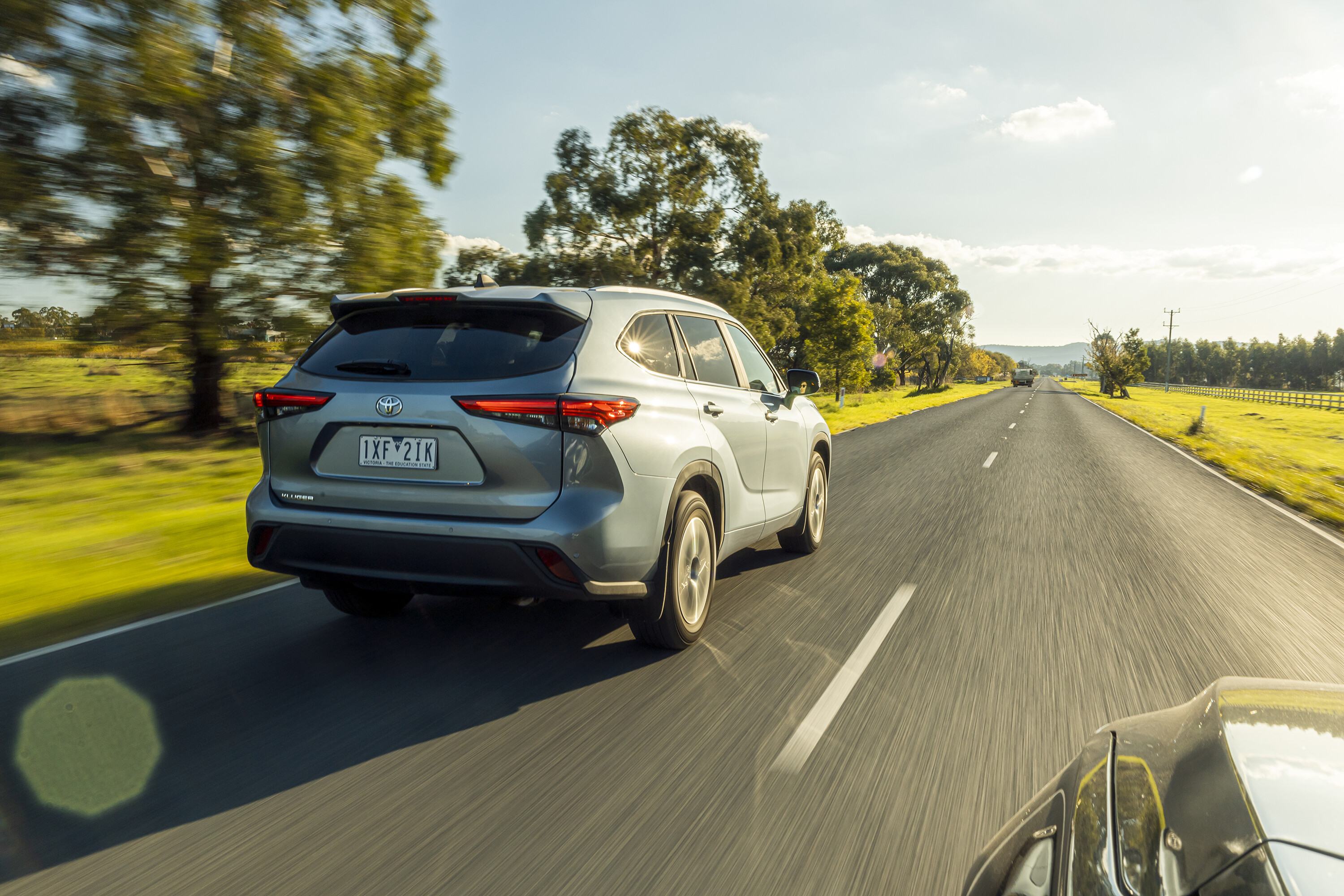
The Kluger attained the highest safety rating of five stars from ANCAP, an obtained at launch time testing in 2021.
Regarding crash safety, this family SUV has demonstrated impressive performance, securing a 90 percent rating for adult occupant protection and an 88 percent rating for child occupant protection.
The entire lineup comes equipped with seven airbags, encompassing dual front airbags, side airbags, curtain airbags, and a driver’s knee airbag.
Notably, the curtain airbag extends its protection to passengers seated in the third row.
1
| 2024 Toyota Kluger safety features | |
|---|---|
| Autonomous emergency braking with pedestrial and daytime cyclist protection | Active cruise control with curve speed reduction |
| Lane departure warning | Lane keeping assist |
| Automatic highbeam | Intersection turn assist |
| Lane trace assist | Road Sign Assist |
| Blind-spot monitor | Rear cross traffic alert |
| Rear parking sensors | Front parking sensors |
| Reversing camera with guide lines | Panoramic view parking monitor (Grande only) |
Key rivals
The Kluger faces stiff competition from other family SUVs, including:
1
Should I put it on my shortlist?
The 2024 Toyota Kluger maintains its reputation as a popular 7-seater family vehicle, following its refresh in 2021.
While it comes well-equipped as a base model, we believe that moving up to the GXL, positioned in the middle of the lineup, emerges as the obvious choice when evaluating equipment levels and pricing. The GXL offers an array of enticing creature comforts that outshine those found in the GX variant.
In terms of its powertrain, the hybrid option boasts outstanding fuel efficiency that should not be underestimated. Coupled with its cost-effective maintenance, it is likely the most economical three-row SUV in terms of both ownership and operation.
MORE
Everything Toyota
Key Points
- Road users in NSW are now eligible for a refund if they spend more than $60 a week on toll roads
- Drivers could save up to $7280 per year
- Refunds can be claimed quarterly via Service NSW
- Sydney drivers spend $2 billion a year on toll charges
Just like taxes and going to the dentist, toll roads are a necessary evil – but what if there was a way to save thousands of dollars each year on usage charges?
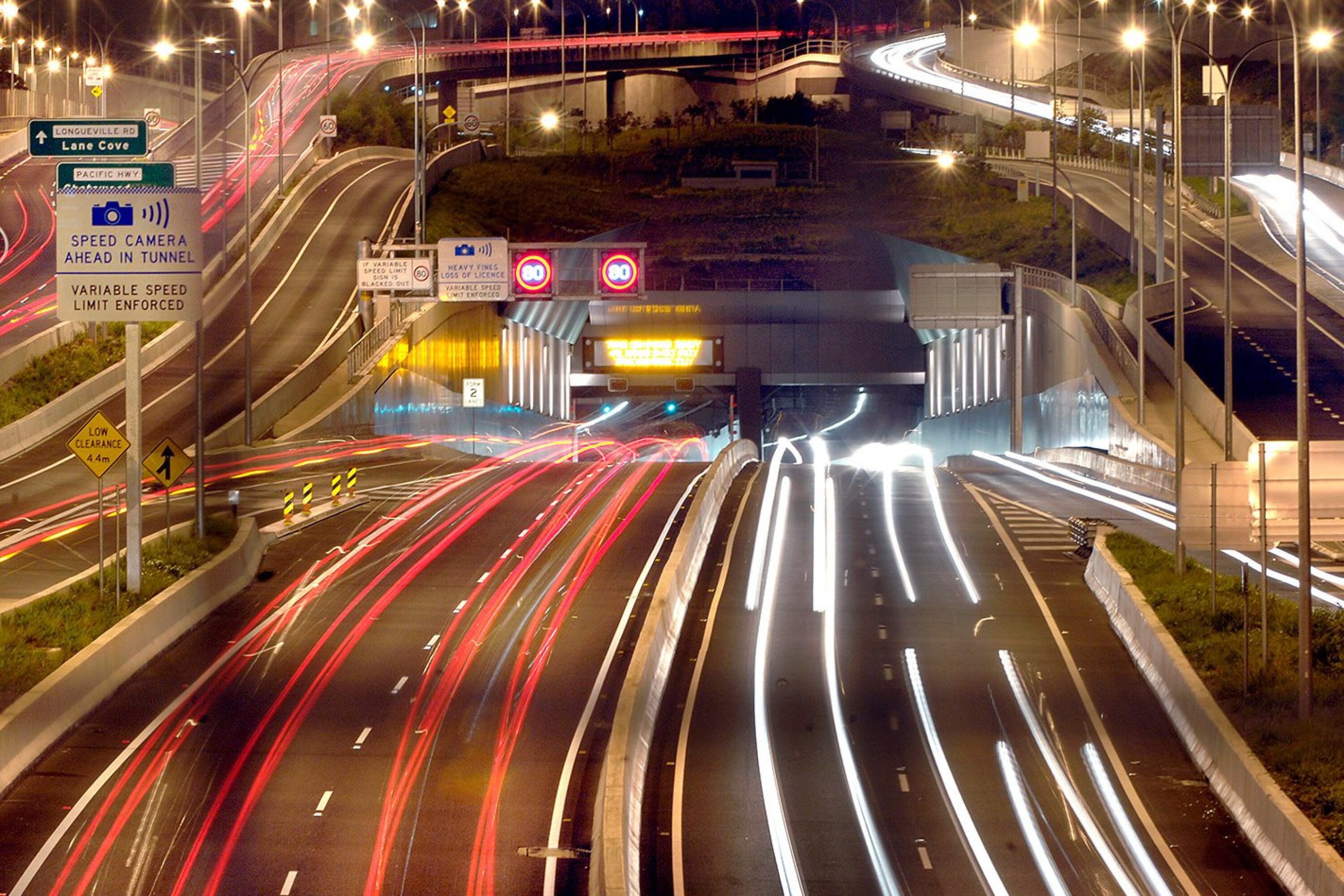
Well if you live in New South Wales, there is. As of January 1 2024, Australia’s most populous state has introduced a new toll road rebate that could see motorists recoup up to $7280 per year in toll charges.
The new scheme introduces a $60 weekly toll cap for motorists, meaning hundreds of thousands of residents are eligible for a refund on any money they spend over that amount on tolls.
1
Service NSW estimates 720,000 motorists will benefit from the new rebate being trialled over the next two years, fulfilling an election promise by the New South Wales Labor government.
Sydney has one of the most-tolled road systems in the world, and it’s estimated drivers spend $2 billion each year on tolls. It’s hoped the NSW rebate scheme — which is still little-known by a lot of drivers — will help relieve the pressures felt by the rising cost of living.
The new scheme replaces an existing toll road rebate introduced by the previous Liberal government that allowed drivers to claim back $750 per year and save 50 per cent on vehicle registration, providing they spent more than $375 annually on tolls.
How does it work?
To be eligible for the rebate, drivers must:
- Be a NSW resident
- Hold a personal toll account with a NSW toll service provider
- Spend more than $60 per week on toll charges.
To check if you are eligible for the rebate, click here: Service NSW
Which toll roads are included?
Every toll road in New South Wales is included in the scheme, with some minor exclusions.
Motorists who are already registered for the M5 South-West Cashback scheme, for example, won’t be able to claim both rebates on that road.
Rideshare vehicles, taxis and cars registered for business use are also excluded, as are heavy vehicles with a tare weight of 2794kg or higher.
Trips taken on toll roads in other states are also ineligible.

1
How much can I claim?
The NSW government has set aside $561 million over two years for the rebate trial, however there is a cap on how much individuals can claim each week. A fair-use provision caps the maximum weekly refund at $340.
Residents in Sydney’s north-west and west are forecast to benefit most from the rebate, according to Service NSW, who said drivers that spend “an average of $200 a week using their individual tag or licence plates on tolls can expect around $7280 in rebates a year”.
Is the rebate offered in other states?
No, sadly. No other state currently offers a rebate scheme similar to what’s available in New South Wales.
QLD does have the catchily named ‘Go Between Bridge Toll Credit Scheme’ that allows eligible Brisbane residents to claim a $100 toll credit, however it expires in mid-2024.
A small solace for drivers in states other than New South Wales is they already spend substantially less on tolls. According to the Australian Automobile Association (AAA), motorists in Sydney have an average weekly spend of $81 on tolls which is the highest in the nation.
Drivers in Melbourne and Brisbane average between $57-58 per week, which is still a considerable cost. Over a year it adds up to about $3000, which is more than what drivers will spend on fuel and insurance premiums combined.
Another silver lining? Toll roads only operate in Australia’s eastern states. They simply don’t exist in South Australia, Western Australia, the Australian Capital Territory or the Northern Territory.
With falling sales numbers from buyers trending toward SUVs, medium-sized sedans are quickly fading into obscurity. Yet here we are in a 2024 Hyundai Sonata N Line that’s been comprehensively overhauled just two years after its local launch.
In that time, the single-variant Sonata has notched up 1324 sales. Decent, but to paint a bleak picture you only need to look at the Tucson’s 1678 sales in September 2023 to see that the four-door is flagging.
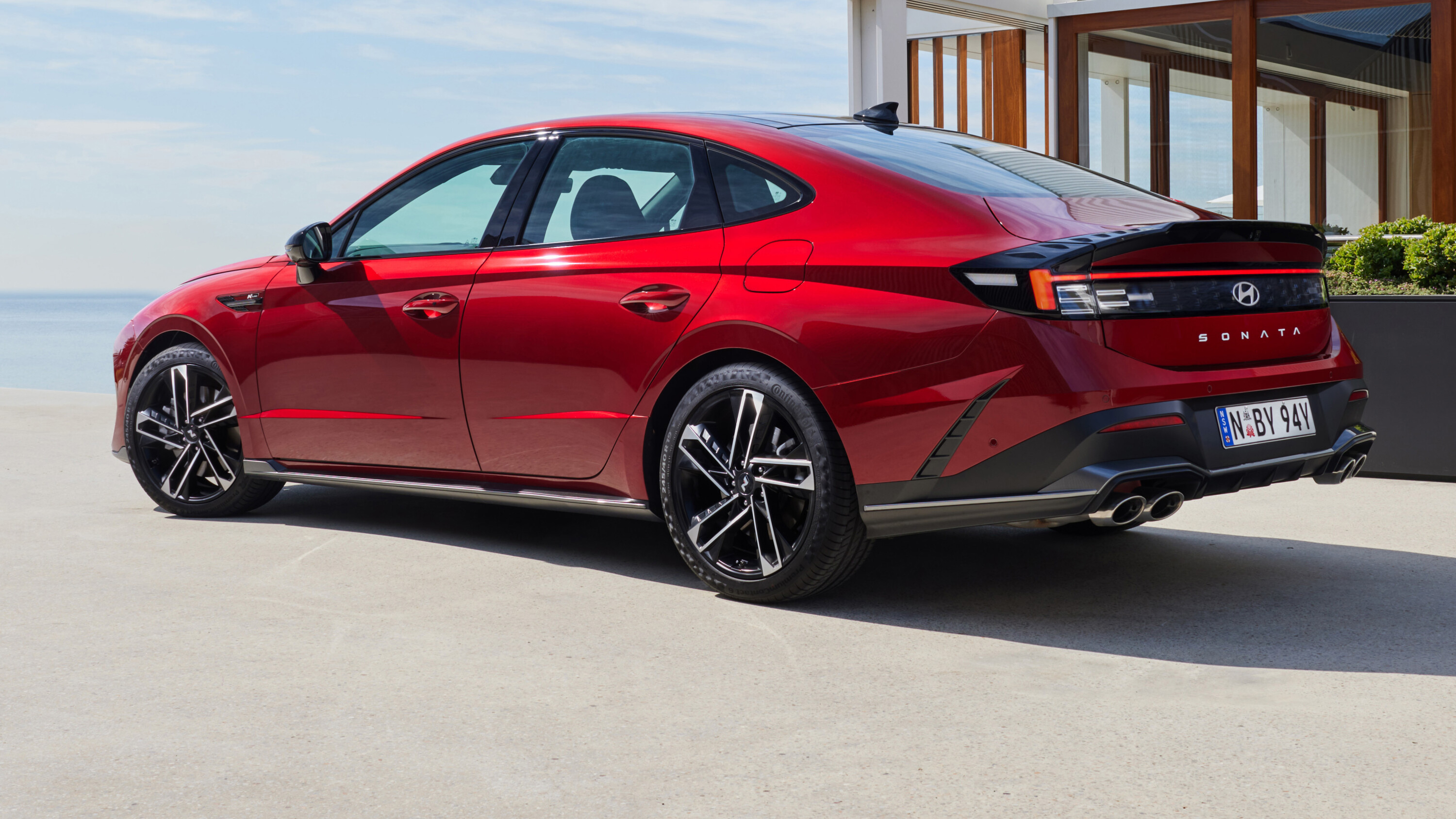
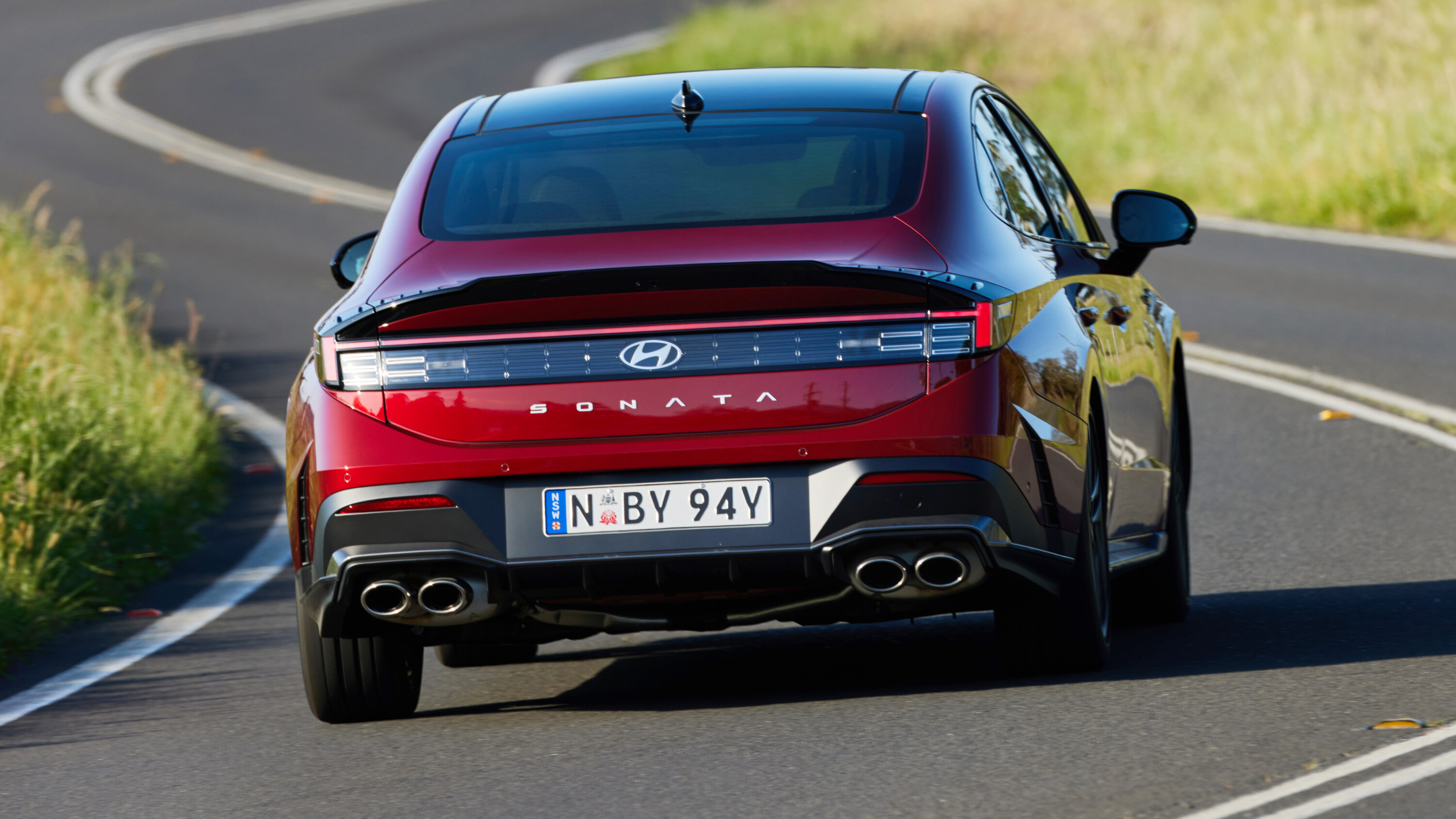
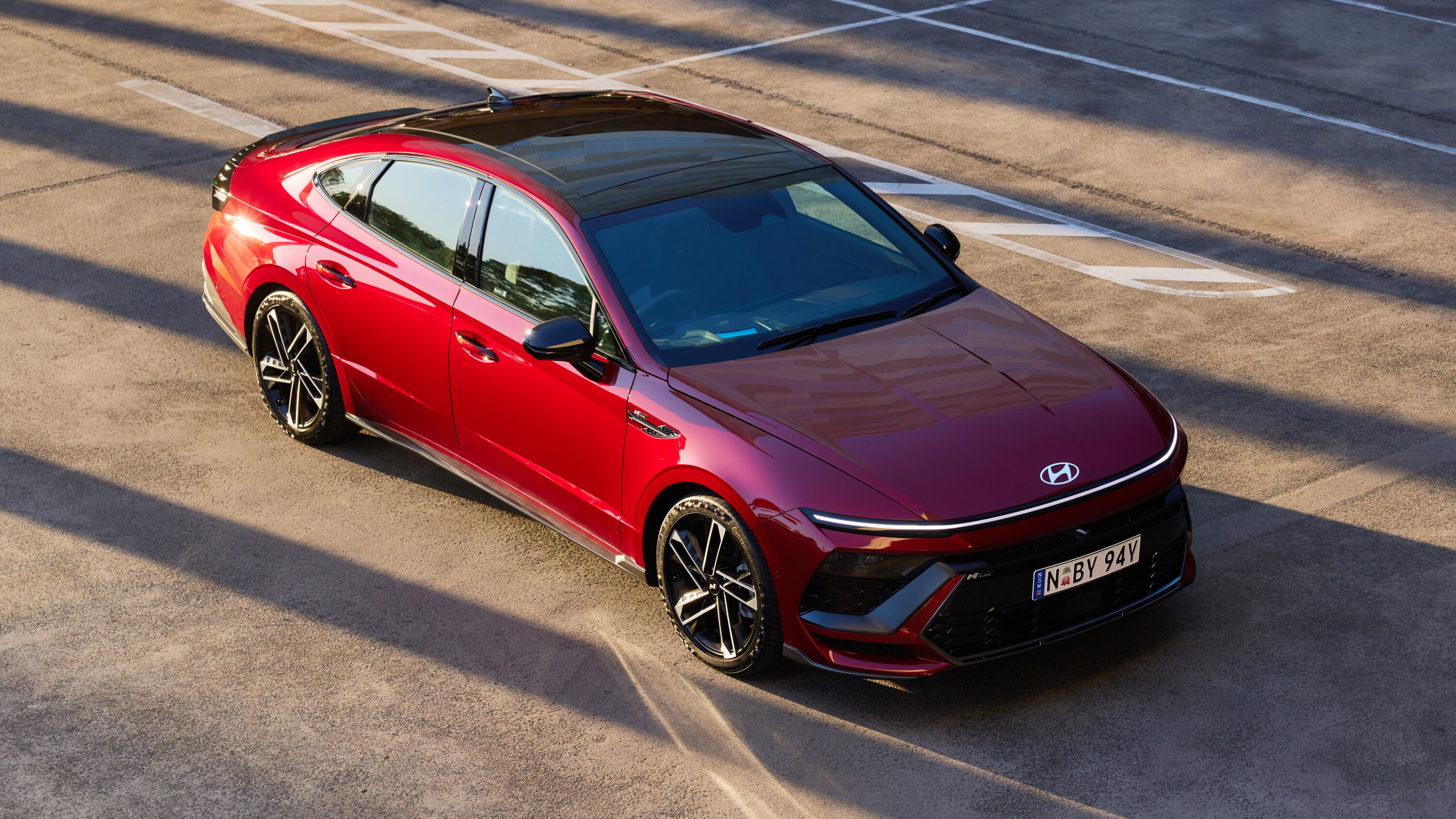
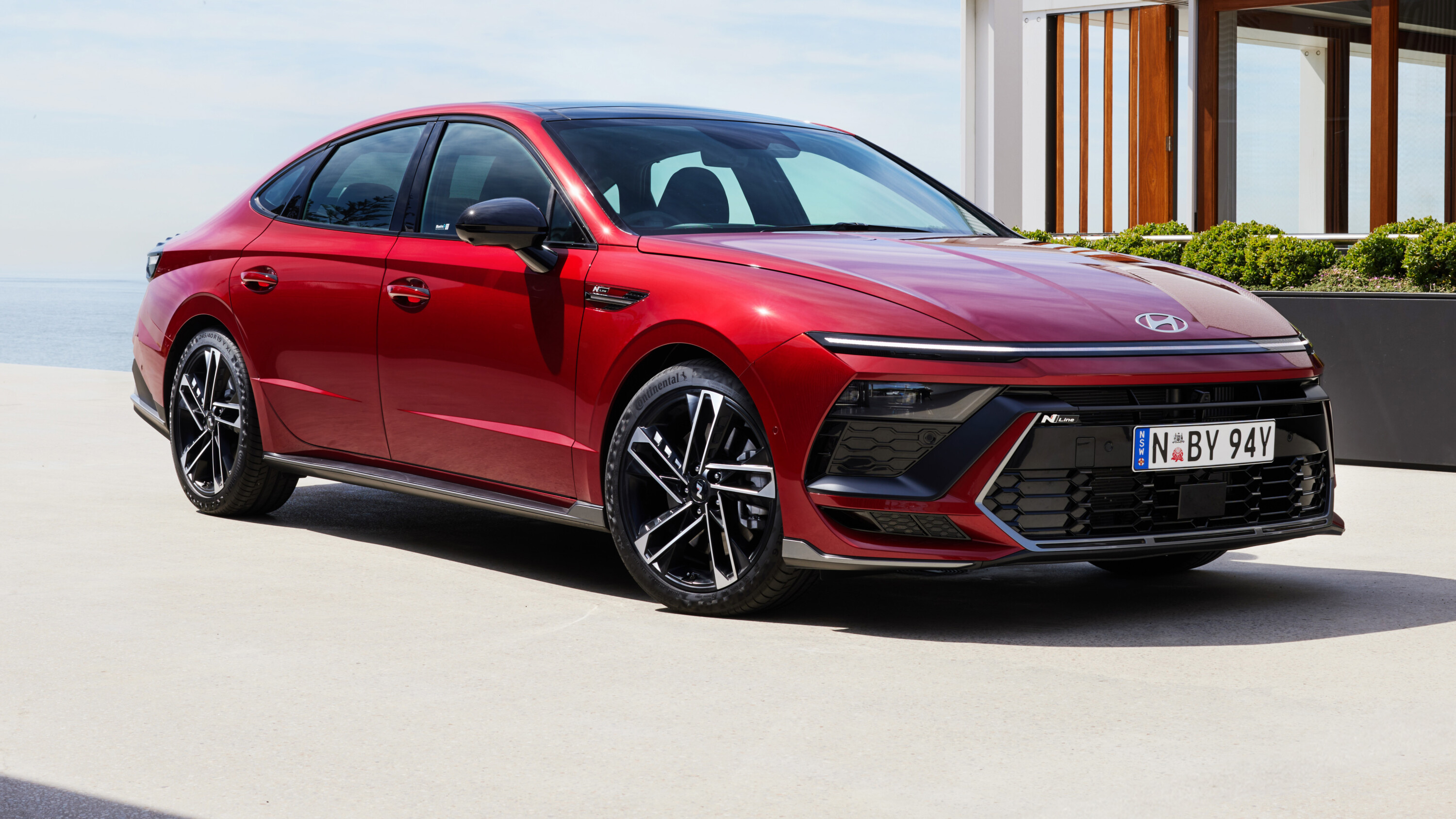
Which begs the question: why did Hyundai feel the need to ‘revolutionise’ the Sonata image in a midlife facelift? It was always a striking vehicle, yet it now wears full-width Robocop-esque LED lighting and heavily reworked front and rear clips.
1
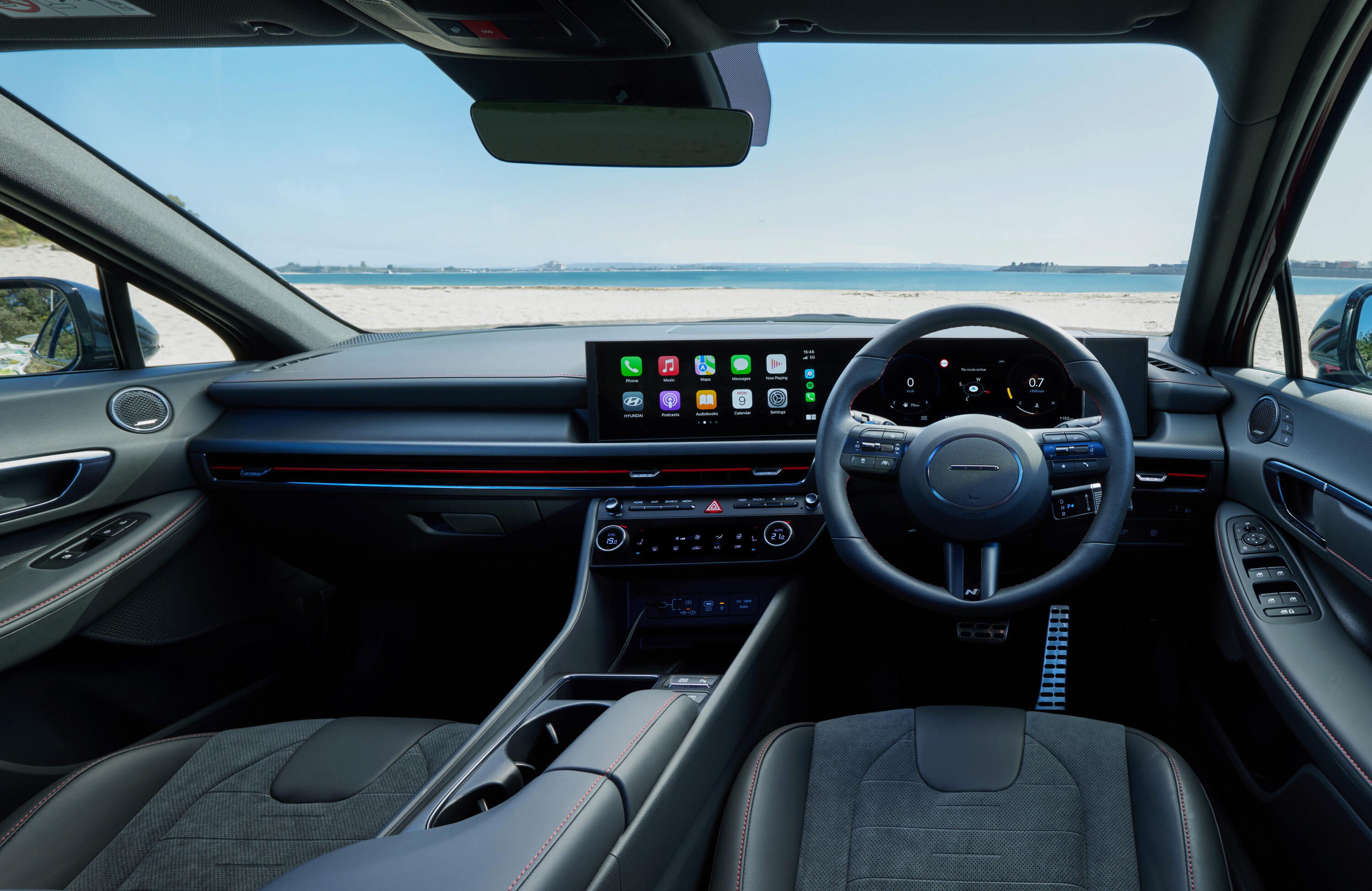
The facelift runs deeper than new light bulbs, alloys, and fascia; the Sonata adopts a wholly different dashboard design with twin 12.3-inch curved screens (how very BMW) and significant changes to the chassis.
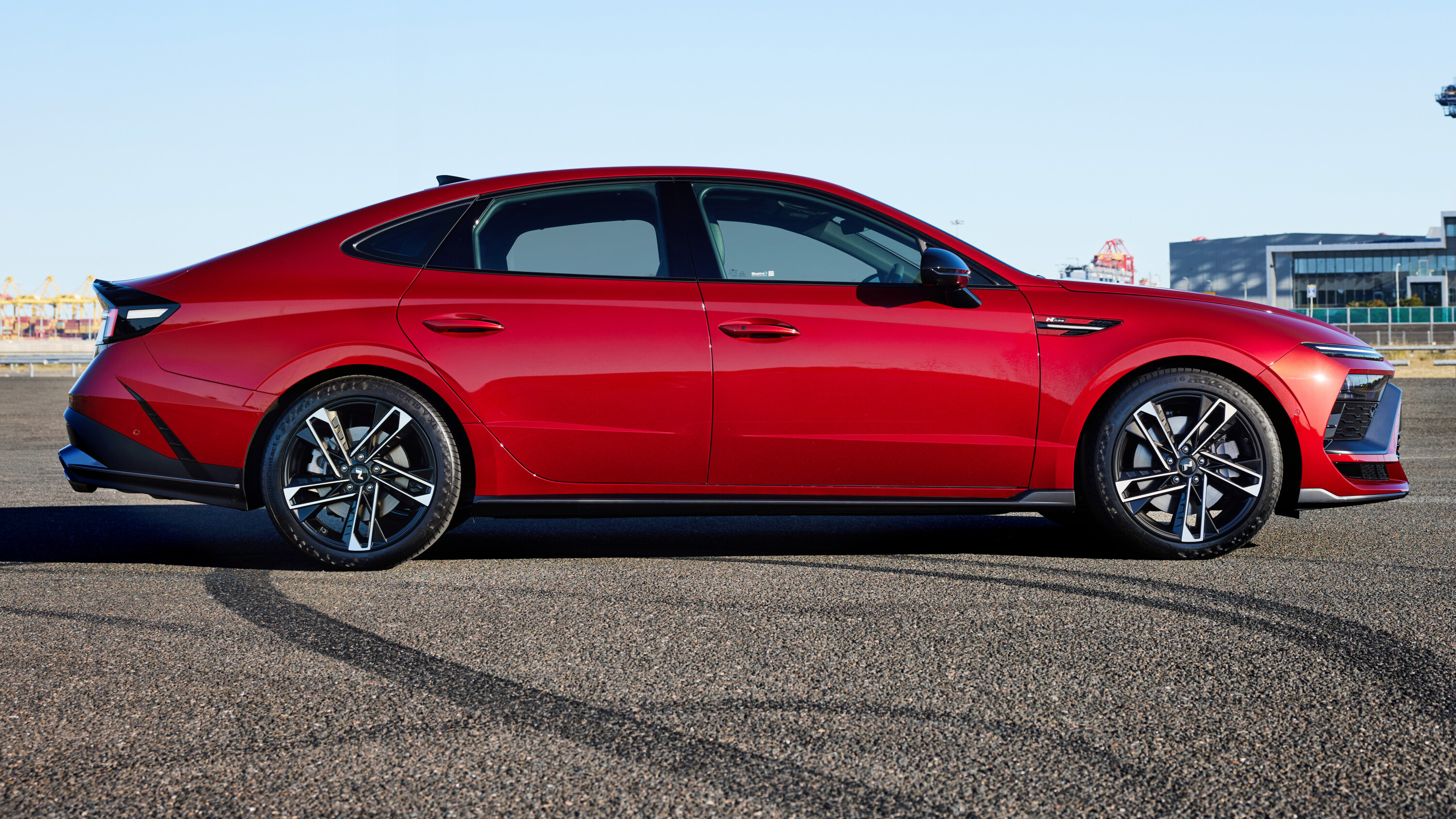
The 2024 Sonata is a good-looking car, no doubt – its extended bonnet and proportions almost promise a rear-drive sedan, but this sporty N Line model is still a front-driver with no locking diff. Is it worth considering a sedan over an SUV?
1
JUMP AHEAD
- How much is it, and what do you get?
- How do rivals compare on value?
- Interior comfort, space and storage
- What is it like to drive?
- How much fuel does it use?
- How safe is it?
- Warranty and running costs
- VERDICT
- Specifications
How much is it, and what do you get?
The Sonata N Line now starts at $55,500 before on-road costs (a $3435 lift from before) and for that, you get everything but the kitchen sink.
Notably, the proximity key means you can approach the rear of the car and the power tailgate will open automatically – no need to press buttons or kick the air. And, gimmicky as it may be, when unlocked the Sonata N Line’s light show is mighty impressive.
1
Below is a list of changes or additions compared to the pre-update sedan.
| 2024 Hyundai Sonata N-Line additions | |
|---|---|
| Column-mounted shifter | Dual 12.3-inch curved panoramic displays |
| Intelligent Speed Limit Assist | Tyre Pressure Monitoring System (TPMS) |
| 6.6-inch touch climate control interface | Acoustic laminated front glass |
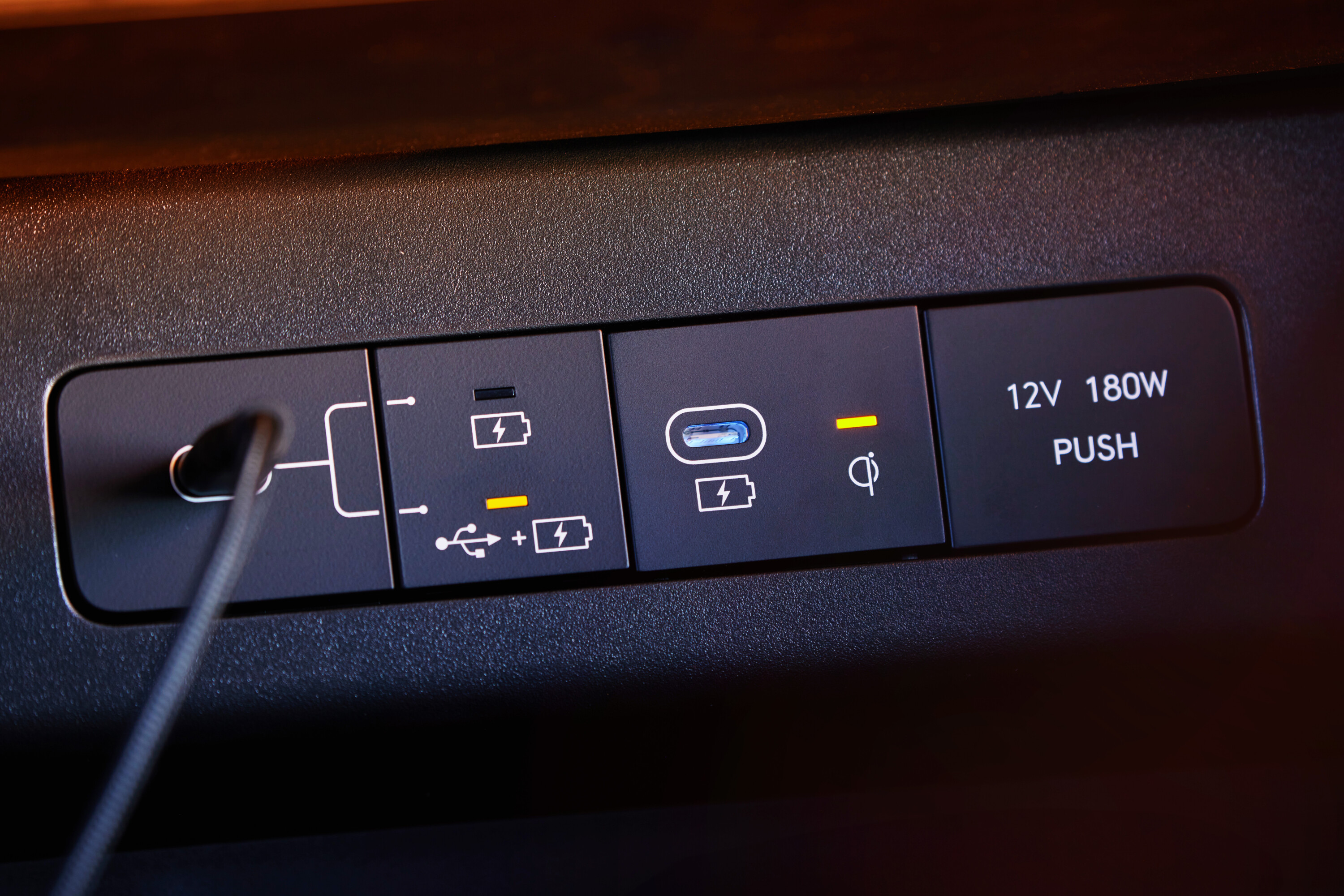
| 64-colour LED ambient mood lighting | Front & rear USB-C outlets |
| LED u2018Seamless Horizonu2019 positioning lamp | Dynamic welcome lighting |
| Hands-free Smart Power Boot-lid | LED rear combination light with u201cHu201d style lightbar |
| BluelinkTM & Over The Air (OTA) updates) | Low-speed reverse autonomous emergency braking (new) |
It’s a whole lot more contemporary, then, and is even available with a trendy matte Aero Silver paint job ($1000). You can also get Serenity White, Biophilic Ink, Abyss Black, Nocturne Grey, and Ultimate Red.
1
| 2024 Hyundai Sonata N Line features | |
|---|---|
| 19-inch N Line alloy wheels (new design) | 360-degree camera system |
| Connected satellite navigation | Wired Apple CarPlay and Android Auto |
| Head-up display | 12-speaker Bose audio system |
| Dark grey suede and Nappa leather-appointed upholstery | Wireless phone charger |
| Heated steering wheel | Auto-dimming rear-view mirror |
| Heated rear seats | Heated and ventilated front seats |
| Four-way power-adjustable passenger seat | 12-way power-adjustable driveru2019s seat |
1
How do rivals compare on value?
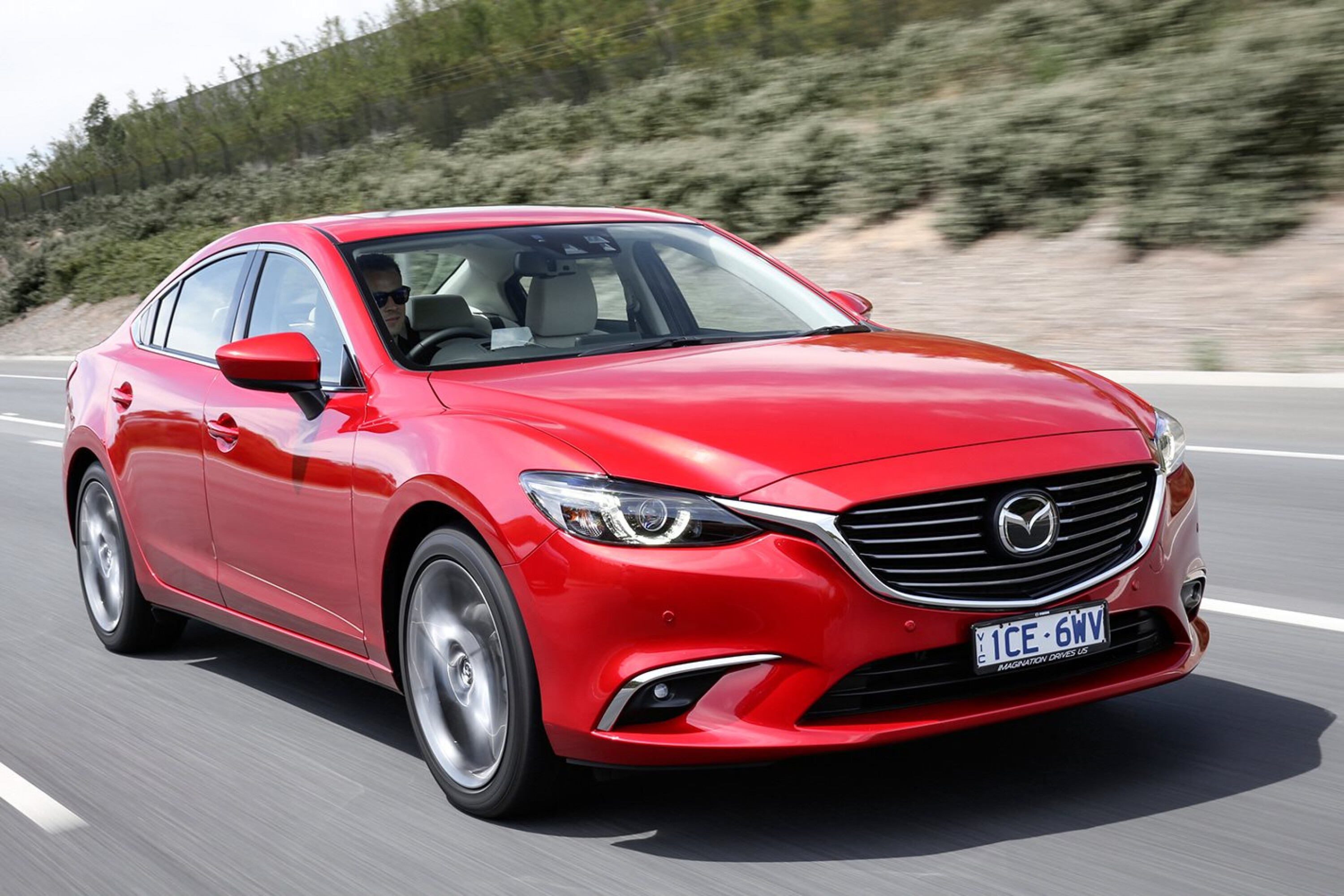
A decade ago the Sonata N Line might have lined up against a sporty Mazda 6, Toyota TRD Aurion, and even a Holden Commodore SV6.
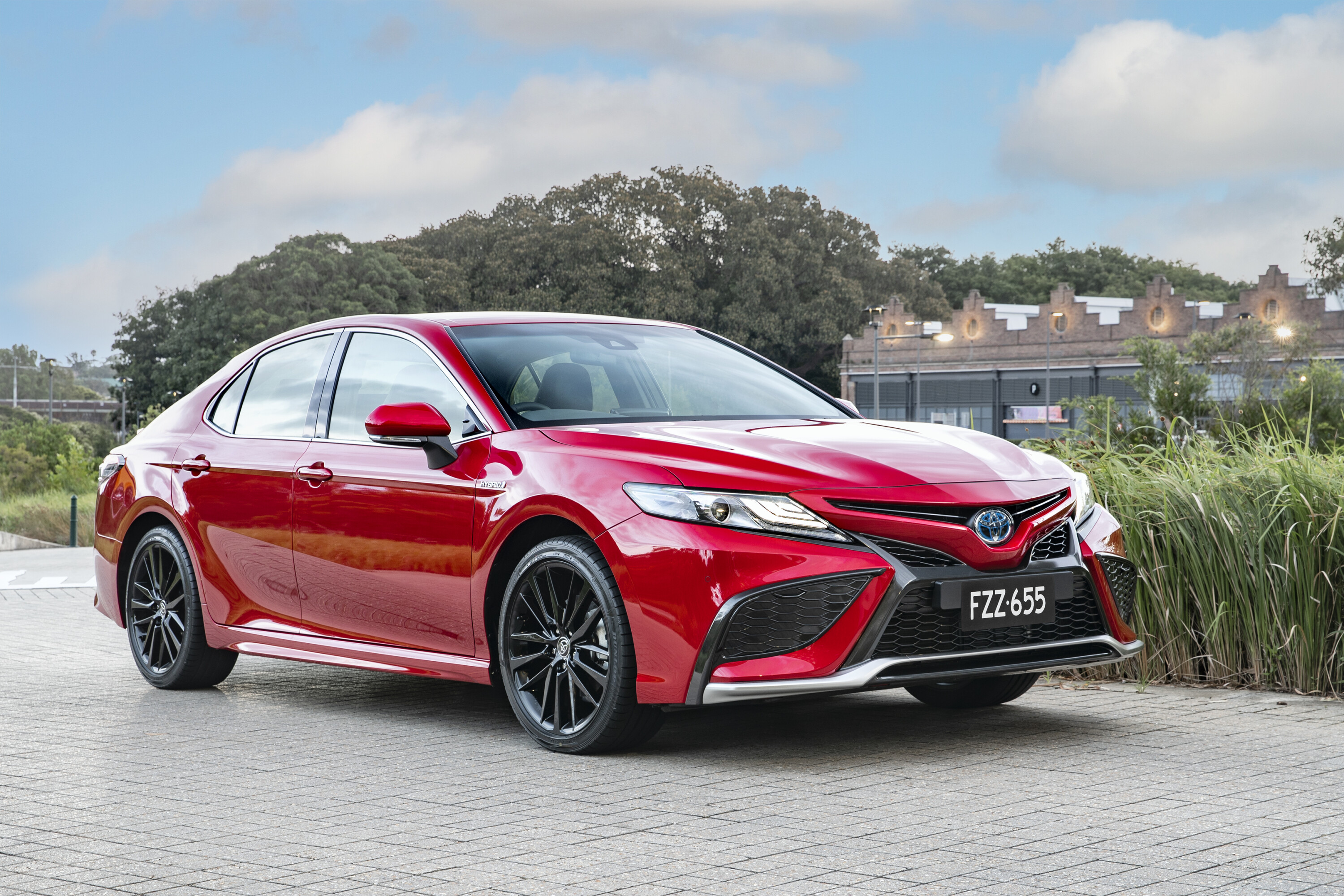
Today, things are a little different. There’s still the athletically-tuned Camry SX hybrid ($43,020, but orders are currently paused) though the Sonata N Line comes loaded with much more technology and power than the Toyota.
1
You might also find yourself looking at a Tucson Highlander turbo-petrol ($51,150 before on-road costs) or another similar medium SUV that offers a more configurable boot and greater headroom.
Those after a sportier drive could trade some of the Sonata’s comfort and new-age tech and build quality for a hard-edged, snorting i30 Sedan N Premium.
1
Interior comfort, space and storage
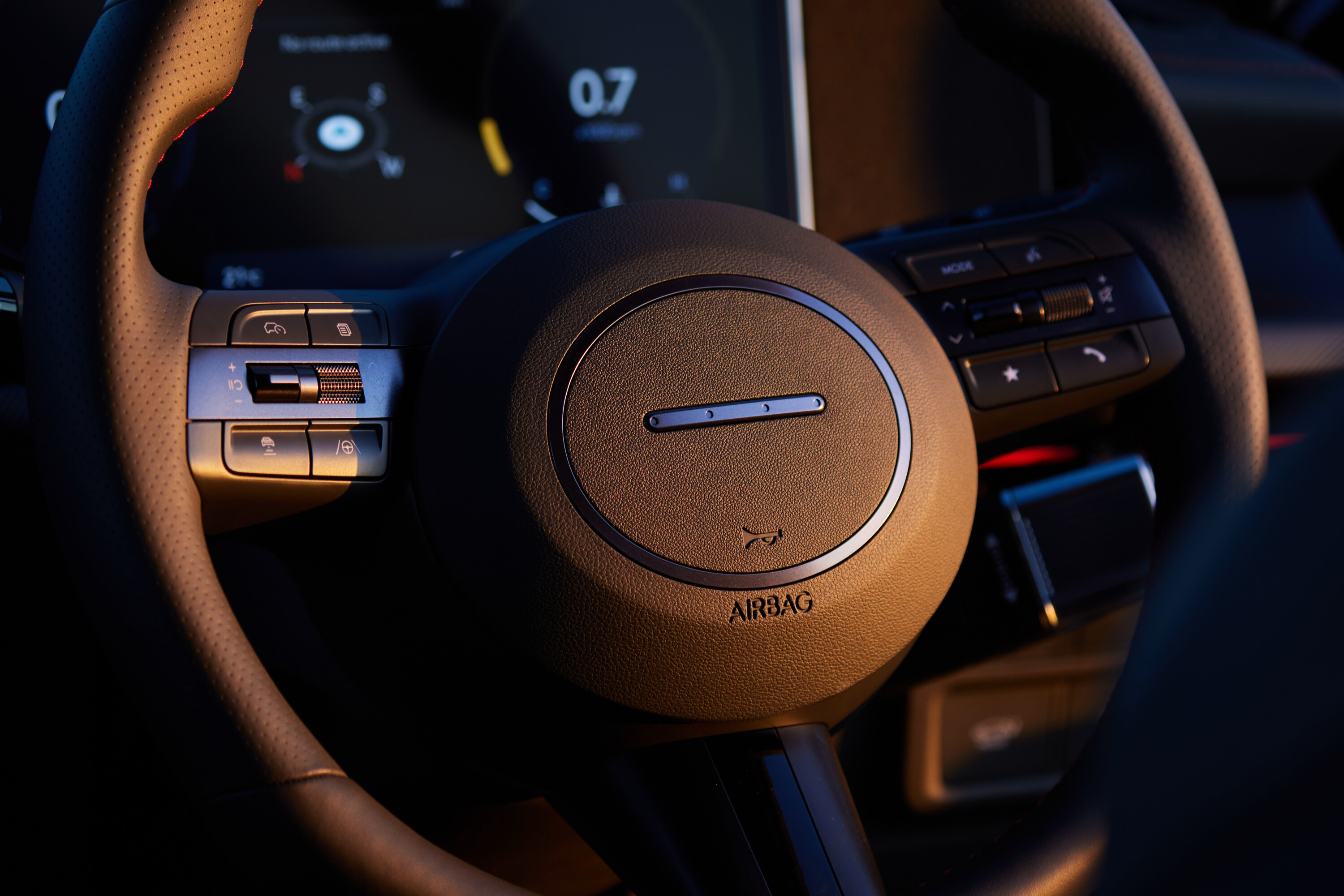
The Sonata’s interior overhaul is just as significant as its sheet metal. That’s not to say the pre-facelift was dated but with twin high-definition 12.3-inch screens, over-the-air software updates and BlueLink telematics, this typically conservative sedan is right up there with the latest BMWs and Mercedes-Benzes for interior tech.
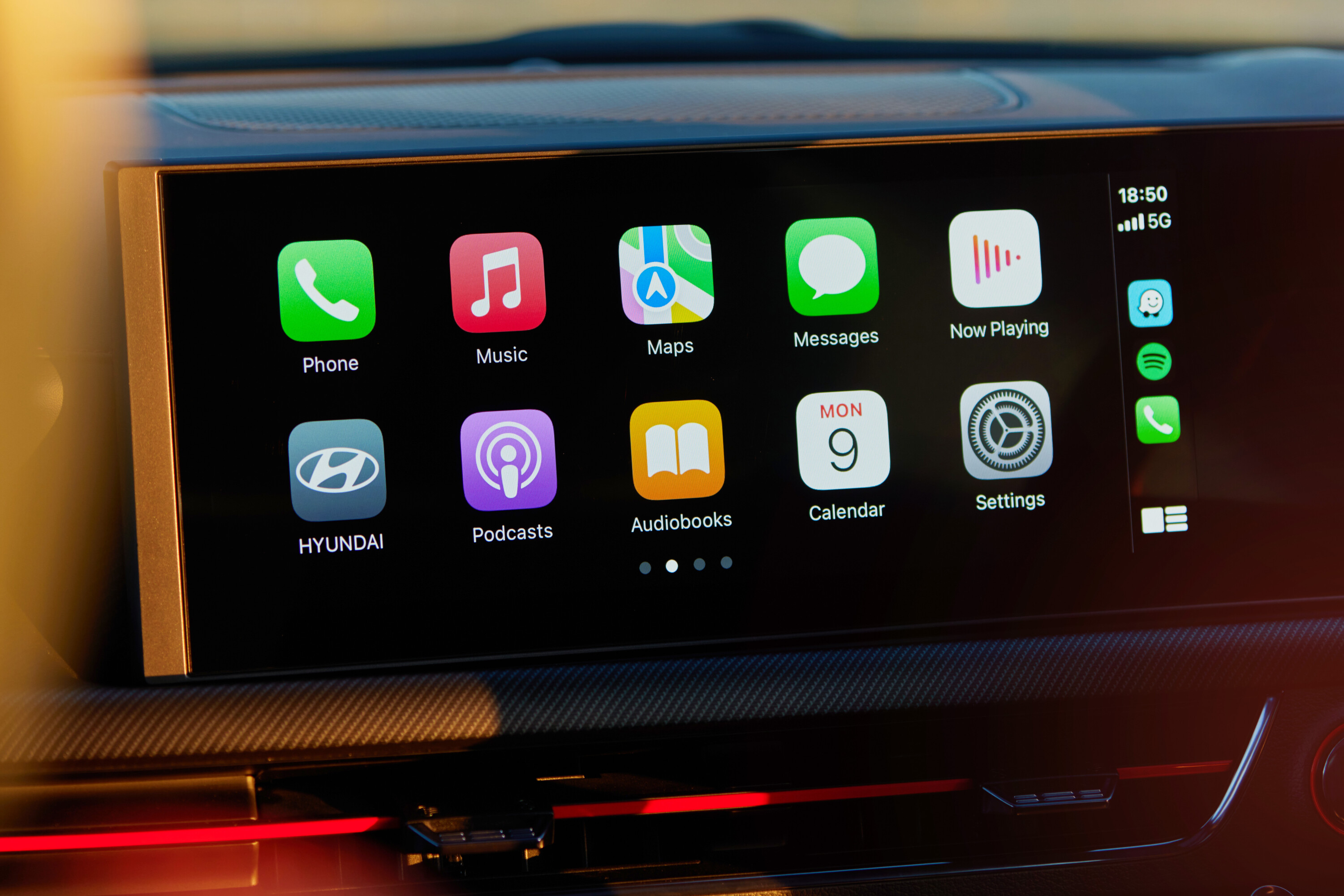
Even the navigation has live traffic, and its routing is up there with Waze and Google Maps that can be linked up via a USB-C cable when running AppleCarPlay and Android Auto mirroring.
The graphics of the digital driver’s display are crisp and legible. Oddly, we couldn’t bring a speed readout between the dials, though there is an excellent head-up display that can still be seen through dark sunglasses.
1
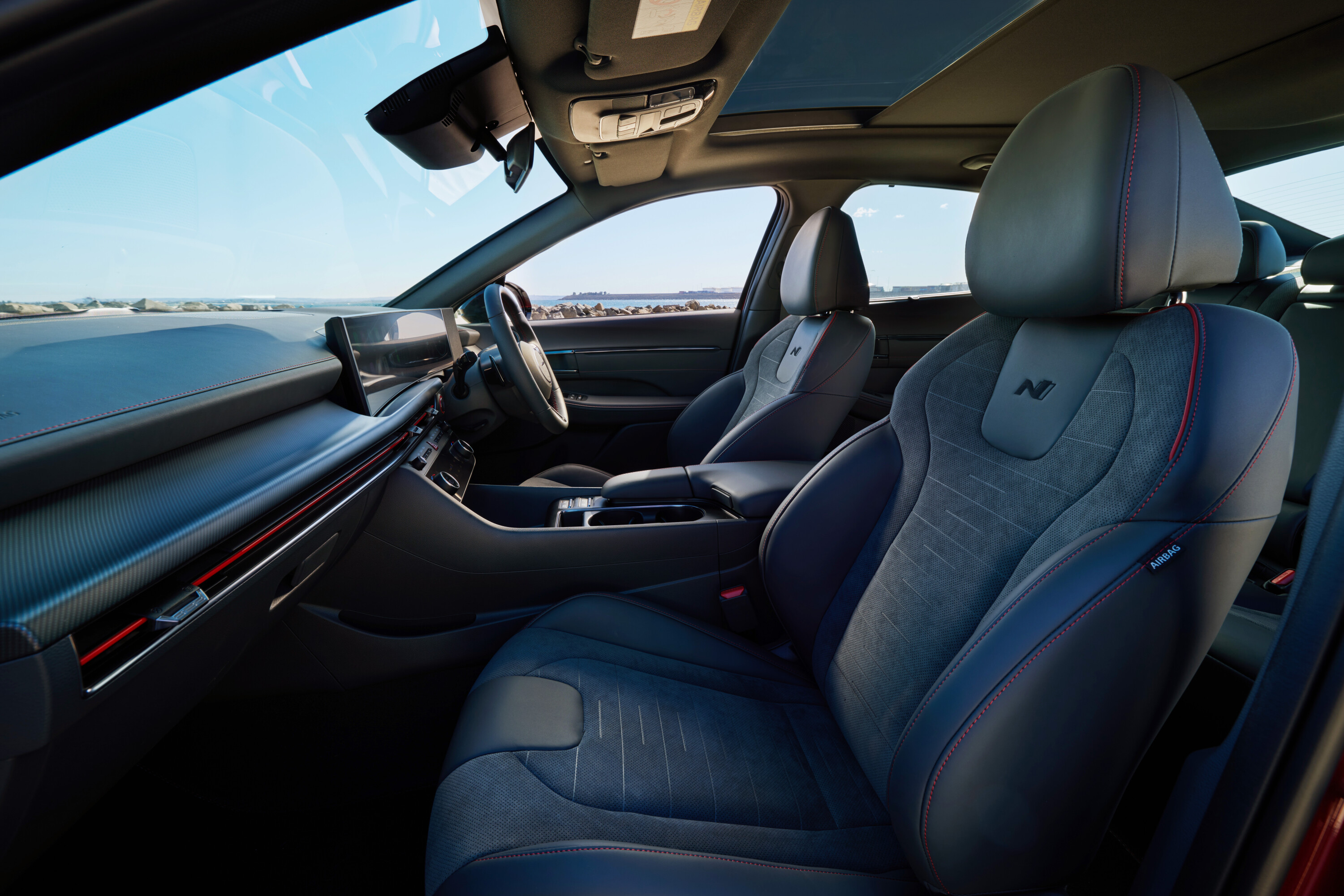
Premium technology doesn’t seem to come at the cost of decent cabin materials, at least.
A run of red stitching and suede-cloth upholstery give the cabin a visual lift. It’s also nice that the awkward old button gear-shift is gone, replaced by a selector stalk behind the shapely new steering wheel.
The seats have three-stage ventilation and heating and those controls are grouped with HVAC settings in a 6.6-inch touch-sensitive panel. It’s very effective in practice.
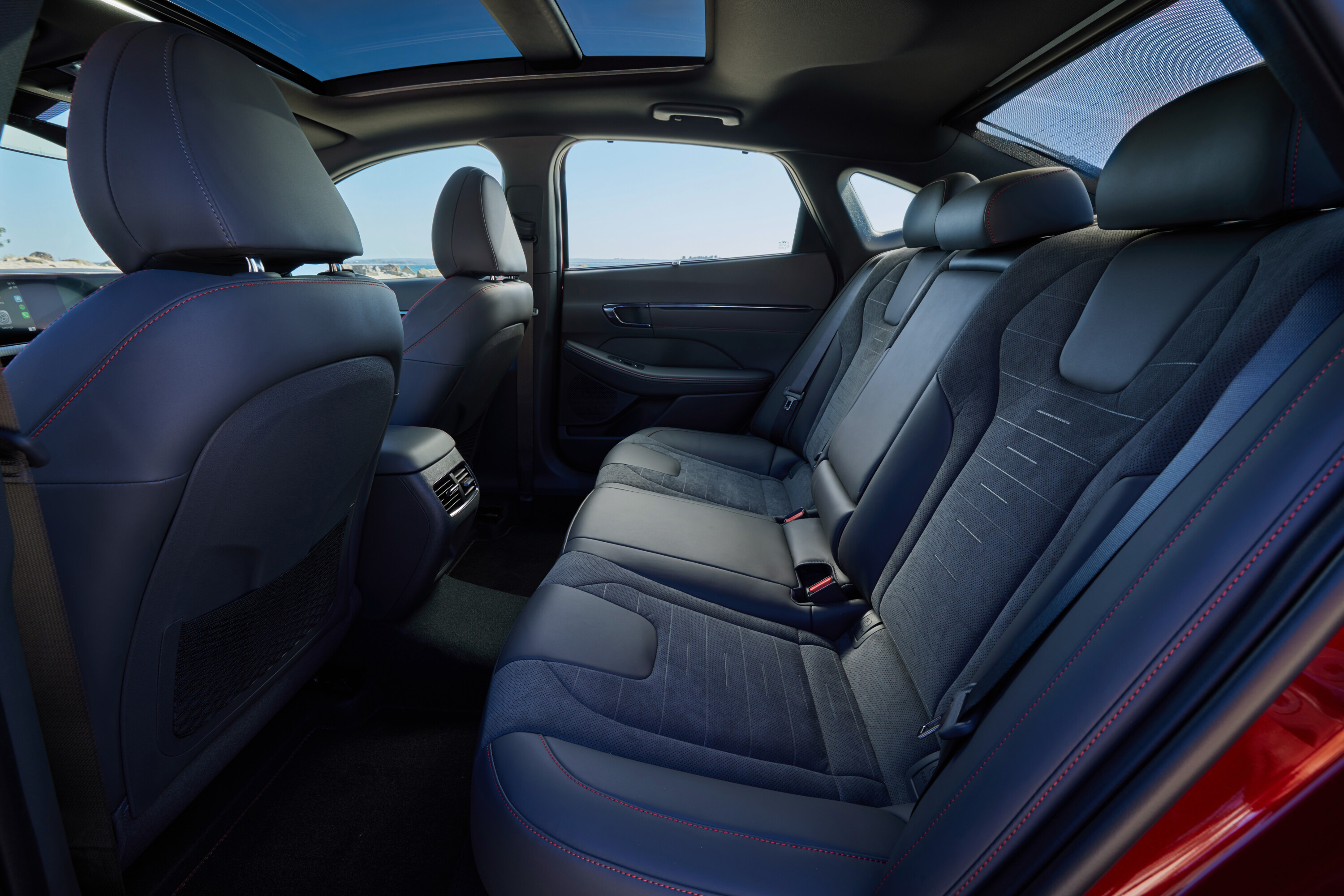
Our only peeve with the front cabin is how high the driver sits. Even with the comfortable 12-way adjustable driver’s seat as low as it will allow, my head (at 188cm) is nearly brushing the black headlining and standard-fit sunroof.
1
Back seat space is decent, though the middle seat hump makes it best limited to four passengers. Rear air vents and amrrest carry over and the USB-A charge point becomes a faster USB-C item.
Pull-up side window blinds and a power rear sunblind add a touch of class to the rear quarters.
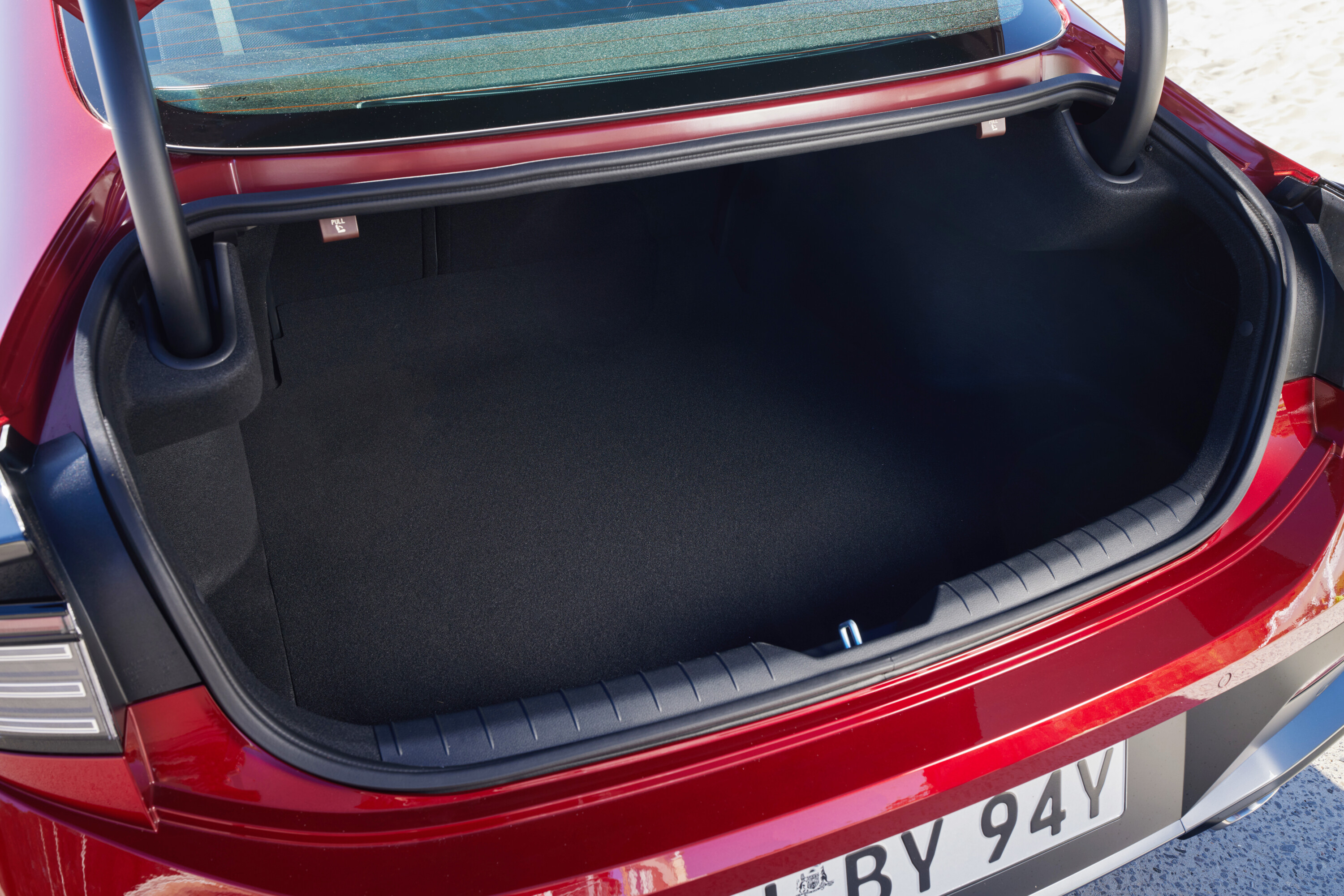
Practicality is obliged by a 40:60 split-fold seatback with pull tabs near the surprisingly tight power-operated boot aperture, in front of which is a deep and wide 510-litre boot space. There are no shopping bag hooks and under the floor is only a space-saver spare.
1
What is it like to drive?
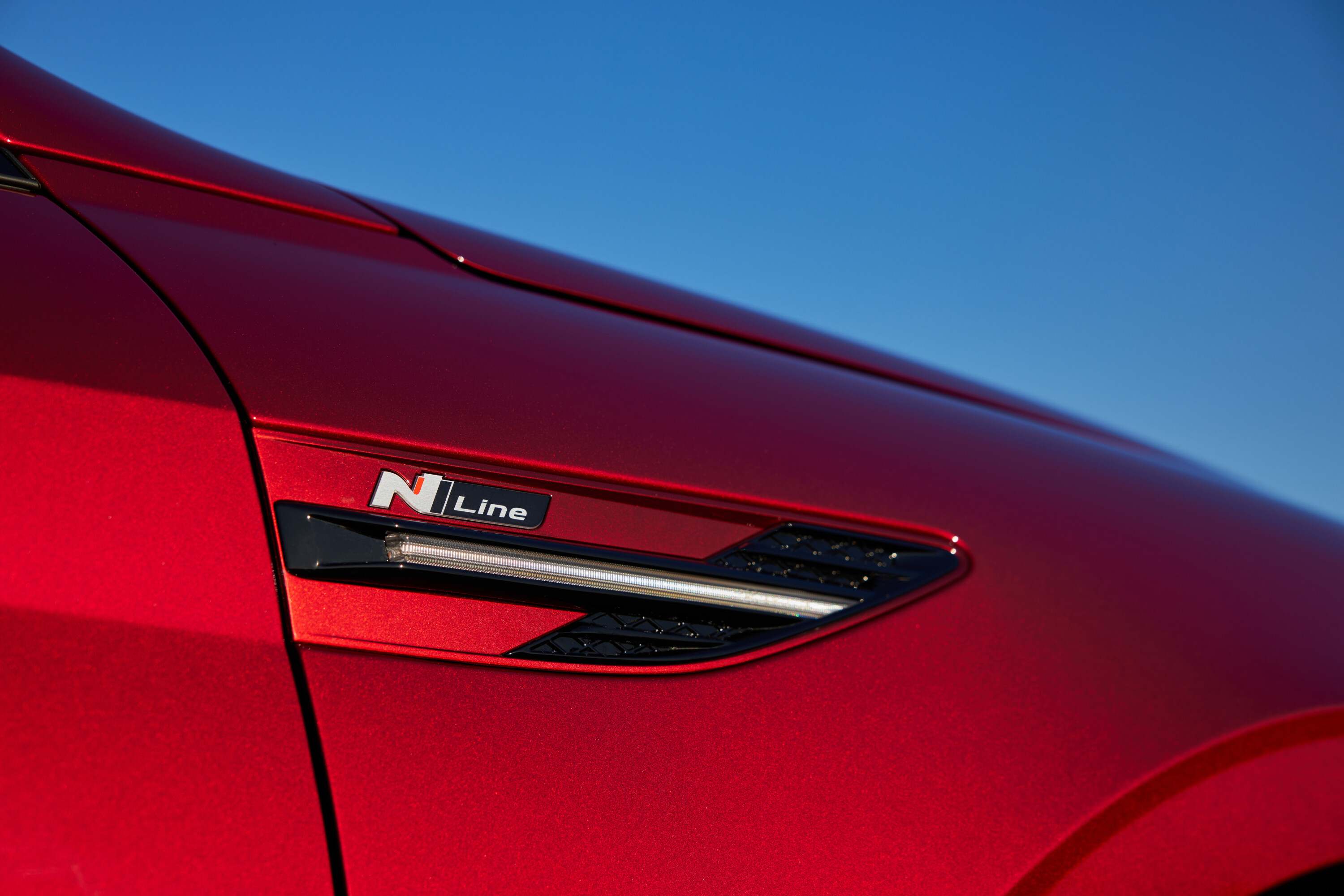
Hyundai’s N Line is to N what BMW’s M Sport is to M so expect thrill levels that are toned down to a manageable yet still enjoyable level.
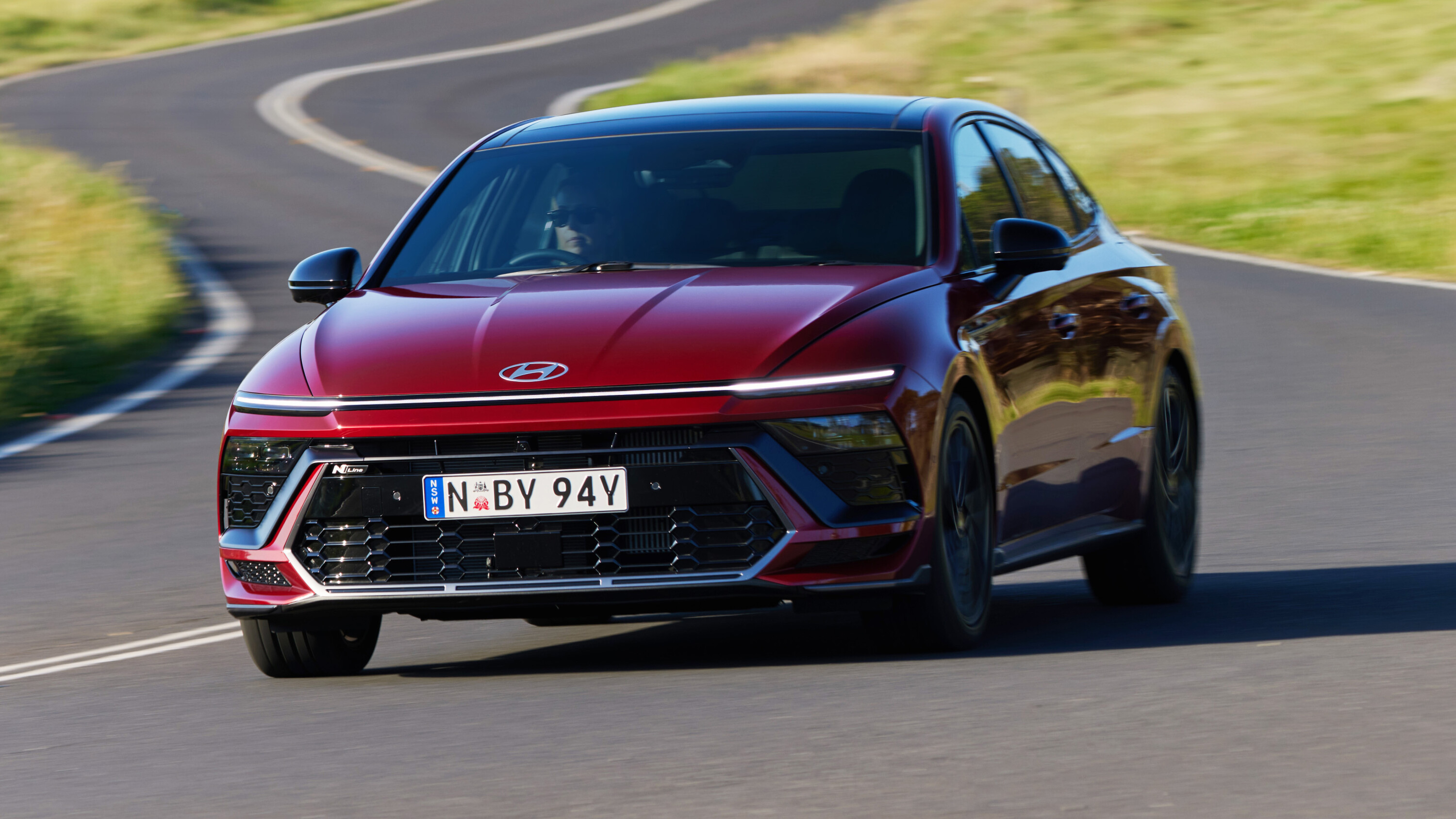
Before the update, the Sonata was generally accomplished, if nothing particularly special. It favoured steadfast cornering over driver involvement. Hyundai has stiffened the Sonata’s sills, B-pillars, front subframe and suspension mounts, added a front strut brace, and implemented redesigned rear control arms and firmer subframe bushings. Weight has risen by 37kg to 1675kg (kerb).
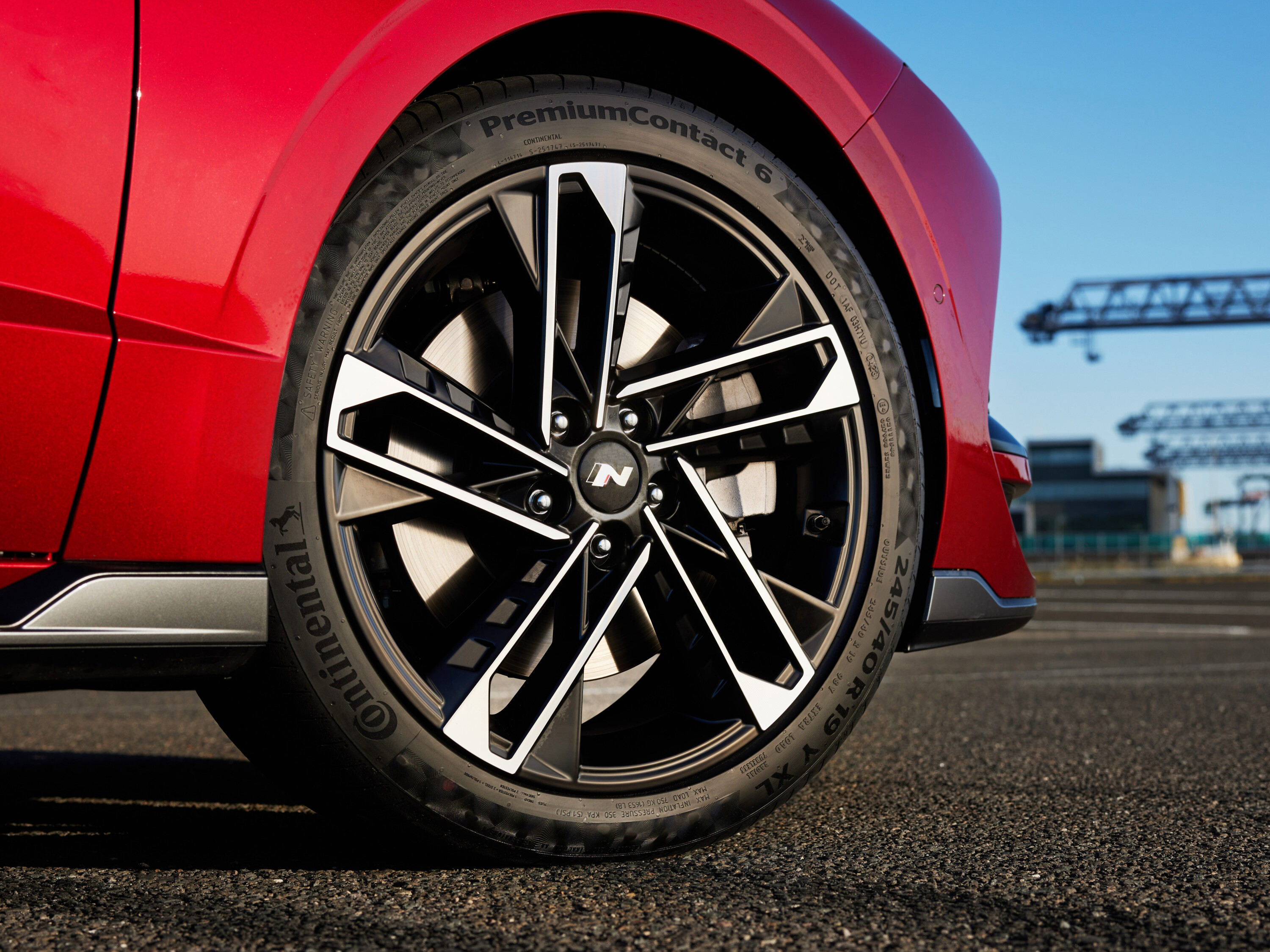
The result is a familiar – if slightly firmer than we remember – driving experience with taut rebound control. Roll is well suppressed and the tacky 245/40 R19 Continental Premium Contact6 tyres endow this sedan with remarkably high grip levels.
1
Sport handily sharpens throttle response but makes the steering too heavy.
Pushing hard on rough give-and-take roads the Sonata N Line is talented and surefooted partially thanks to front struts and a multi-link rear end, but it doesn’t get up on its toes and dance like a lither Peugeot 508. The ride is stiff around town, too, so a Camry or Mazda 6 are better choices for those after comfort.
There are four drive modes (Eco, Normal, Sport, My) and Normal is the best balance though without adaptive dampers the ride is always firm. Sport handily sharpens throttle response but makes the steering too heavy. For athletic driving, My mode is best configured with Sport or Sport+ engine and Normal steering.
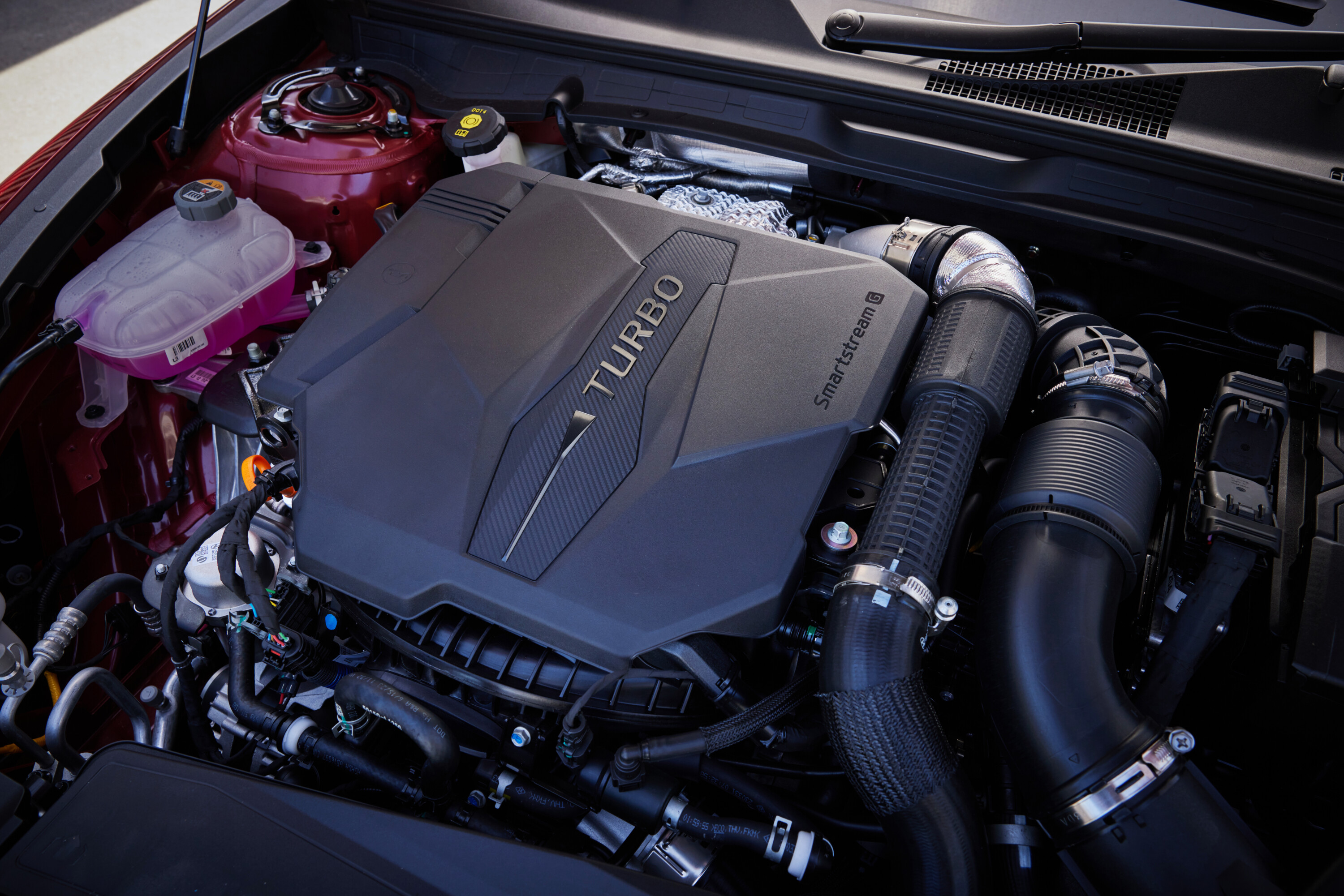
With the same 2.5-litre turbo-petrol four-cylinder developing 213kW (at 5800 rpm, though it revs to 6500 rpm) and 422Nm (between 1650-4000 rpm) matched with an open front differential, the Sonata is brisk.
1
Adding extra theatre is Hyundai’s Active Sound Design which augments the restrained four-pot soundtrack with synthesised grumbles.
Some may enjoy Normal but we found Enhanced over-the-top and decided to leave the synthesiser switched off altogether. In quiet mode, the Sonata’s laminated glass may well improve NVH suppression, but it’s hard to tell. This is still a sporty vehicle with low-profile tyres, so it’s not as serene as the last-of-the-line Mazda 6 Atenza.
The claimed 0-100km/h sprint is 6.2 seconds though acceleration rarely feels rabid thanks to a proactive traction control system.
The Sonata N Line excels at higher-speed overtaking where the slick eight-speed dual-clutch (shared with the i30 N) kicks down readily to best use all the grunt without the danger of wheelspin.
1
- What is a Powertrain or Drivetrain?
- Power vs torque
- Car suspension explained
- Automatic transmissions (‘gearboxes’) explained
- Chassis control systems explained
- Car vs Ute vs SUV: How the vehicle you buy should guide the way you drive
- What is the WLTP emissions and range test?
The Sonata drinks 8.1L/100km of 91 RON unleaded in official ADR 81/02 testing.
We found the sedan would use 7L/100km or less on the motorway, and over a week of driving mixing urban, suburban and some hard acceleration it was sitting at 9.8L/100km.
1
How safe is it?
The Sonata N Line does not carry an ANCAP rating, though don’t let that put you off as a private buyer.
The Sonata carries an American IIHS Top Safety Pick accolade (one down from Top Safety Pick Plus) and is equipped with plenty of driver aids (listed below). Hyundai’s adaptive cruise control and lane-trace assist are about average against rivals.
| 2024 Hyundai Sonata N-Line safety features | |
|---|---|
| Autonomous emergency braking (vehicle, pedestrian, cyclist, motorcyclist, junction) | Rear cross-traffic alert |
| Lane-keep assist | Adaptive cruise control |
| Lane departure warning | Driver attention warning |
| Blind spot alert | High beam assist |
| Blind spot view monitor | Safe exit assist |
| Reverse AEB | |
1
We’ve said it before (here, here, and here) and we’ll say it again. The implementation of Hyundai and Kia’s Intelligent Speed Limit Assist needs to be improved for it to be useful in Australia.
We’re a unique country with sparse speed signs, so sometimes even when you aren’t speeding the system beeps at you. It needs to be disabled every time you turn the car on, and doing so currently takes eight clicks (in this case from the CarPlay screen and back).
1
Warranty and running costs
The Hyundai Sonata N Line is covered by a five-year/unlimited-kilometre warranty.
Servicing is due every 12 months or 10,000kms. Hyundai sells pre-paid servicing plans costing $1125 for three years or $1955 for five. You’ll pay $391 annually for servicing.
1
VERDICT
If you’re keen on a sleek Sedan for under $60K and can’t stomach the boy-racer i30 Sedan N (and can’t bare to go electric just yet), then the Sonata may be just the car for you.
While the ride quality errs on the firmer side of acceptable and it’s not as practical as a Skoda Octavia wagon or similarly-priced medium SUV (or as electric as a BYD Seal or Tesla Model 3) the Sonata N Line is a solid package.
Considering how significant the Sonata’s 2024 update is, with bang-up-to-date technology and sharp styling, it retains an amazingly strong value proposition which means – for the right buyer – the Hyundai Sonata N Line is worth considering. Perhaps the sedan is due for a comeback after all.
1
MORE
Everything Hyundai
MORE
Sedan Buyers Guide
| 2024 Hyundai Sonata N Line specifications | |
|---|---|
| Price | $55,500 |
| Body | 4-door, 5-seat sedan |
| Drive | front-wheel |
| Engine | 2497cc in-line four, DOHC, 16v, single turbocharged |
| Bore/stroke | 88.5 x 101.5mm |
| Compression | 10.5:1 |
| Transmission | u2018wetu2019 eight-speed dual-clutch automatic |
| Power | 213kW @ 5800rpm |
| Torque | 422Nm @ 1680-4000rpm |
| 0-100km/h | 6.2sec (claimed) |
| Fuel consumption (ADR 81/02) | 8.1L/100km |
| Weight (kerb) | 1675kg |
| Suspension (f/r) | struts, anti-roll bar/multi-links, anti-roll bar |
| L/W/H | 4910/1860/1445mm |
| Wheelbase | 2840mm |
| Tracks (f/r) | 1610/1617mm |
| Steering | electrically assisted rack-and-pinion |
| Brakes (f/r) | 345mm ventilated discs, single-piston calipers / 325mm solid discs, single-piston calipers |
| Wheels | 19 x 8.0-inch |
| Tyres | 245/40 R19 Continental PremiumContact 6 |
He’ll tell you he loves the chat, and he truly does love a laugh – but you can see that Sean Hanley, Toyota Australia’s long-serving sales boss and voice of the business, is growing tired of the unrelenting questions around the company’s future as it applies to electrification.
After all, as the major pioneer of petrol-electric hybrid technology and unquestionably the world’s leader in that category, you might think the company would be blazing the trail for what comes after hybrids.
It’s not that easy, Hanley insists, and really he’s right – for a few reasons. The one he’s constantly beating the drum for, perhaps terminally, is Toyota’s commitment to leaving no buyers behind.
That’s a major profit imperative, obviously, but no executive would ever be quite that transparent outside of a shareholders call. And, really, the two ideas are entwined: giving customers what they need and want and know is the key to consistent profit. (Economics 101, done.)
There’s another concept here, though: the innovator’s dilemma [↗].
Defined in 1997 by Harvard professor and businessman Clayton Christensen, this dilemma describes successful companies focusing resources on activities that address customer needs while reaping the highest profits – which usually means continuing with a proven and long paid-for model, evolving slowly rather than suddenly sinking billions into an interesting but uncertain new technology. Shareholders just hate that.
That’s where disruptors like Tesla get their foot in the door, and while other traditional leaders in the automotive market have pivoted as quickly as feasible to catch up, Toyota spent years insisting that EVs wouldn’t suit the market for a long time to come – until it very recently conceded that, actually, it would now pour its considerable resources into catching up with critical improvements to its EV technology suite. It probably will get there, too, but in the meantime it all looks a bit embarrassing.
For now, the company has just one EV confirmed for Australia, the nearly three-year-old BZ4x (recently updated), and it’s already overdue – by its own schedule and absolutely in comparison to a number of other volume brands here.
Indeed, with Nissan, Mitsubishi, Mazda and Subaru also lagging, it’s more of a Japanese issue than a Toyota problem alone – but Hanley is usually the only local leader open to (or allowed to engage in) a relatively frank conversation on the topic.
Hanley’s right to insist, though, that a great many aussies aren’t ready for EVs. And while those who are can choose from a fairly broad range of options (so long as what you want is a small EV from around $40k or anything bigger from around $65k), Toyota will continue to serve those who either need or can only afford a petrol, diesel, or petrol-electric vehicle.
That’s a lot of Toyota’s buyers. Whether it’s off-roading or load-hauling, Toyota’s offerings in those segments can’t simply be swapped out for EVs overnight. The people who want and need them, need them to come with as few compromises and routine-upending changes as possible.
“And that’s why just simply saying moving to BEV as a single solution to everything can’t work in Australia. It’s not right,” Hanley told Wheels this week on a year-end VFACTS sales call.
“Have a look at the top selling three Australian vehicles in the market in 2023. Well hello, [BEV] is not one of them. They’re all utes… they’re all diesels. Well, not all diesels, but mostly diesels.
“It’s very clear Australians need to have vehicles to do the things they want them to do.”
You can get an electric ute in Australia, but the only OEM-made option – the LDV eT60 – is expensive and nobody’s idea of a good thing.
Toyota has its HiLux Revo here now, but it’s not available to you and me. There’s also a handful of conversion businesses, but they’re largely for fleets who’ve committed to a certain level of greenification regardless of the cost.
And you certainly won’t find an electric off-roading SUV in any Australian showrooms. Even America doesn’t have many, apart from the massive (and massively expensive) Hummer EV, the hard-to-get Rivian R1S and the Cyberstuck – sorry, the Cybertruck. The F-150 Lightning is hugely popular, but Ford has also never marketed it as an off-roader. Many owners have also discovered it’s not ideal for towing [↗].
So it’s no surprise that Toyota Australia doesn’t see itself easing up on petrol, diesel and hybrid offerings anytime soon, regardless of how far behind it may or may not be (it is very far behind) in the EV space.
“One of the things we are committed to trying to do is developing models that are capable of doing the things that the market we sell into expect,” Hanley said.
“So when you look at a LandCruiser, people expect that to be able to go off road. People expect to be able to get long range. People expect to be able to tow tonnes of weight and caravans. That’s what Australian consumers want.”
“It’s incumbent on us as a manufacturer Toyota to bring those vehicles to market that can do those things, but reduce our carbon footprint dramatically between now and 2030,” Hanley added. “Therefore, we need to look at a suite of technologies to do that to allow Australians to still have cars they richly desire.”
“When you look at hybrid, we’ve been doing hybrid since October 2001. It’s taken every bit up to December 31, 2023, to sell over 380,000 vehicles. There’s an education piece and an adjustment piece required for the market.”
Critically, Hanley’s argument overlooks the fact that for most of its run as Australia’s pre-eminent peddler of hybrids, its options were limited to the not always appealing Prius hatch. The very successful hybrid Camry series (over 80,000 sales so far, dominating in fleets) launched around six years after the first Prius (20,778 sales), followed much later by the Prius V people-mover in 2012 (4599) and the Prius C hatch (9420).
The Corolla Hybrid launched in 2016 and the brand’s petrol-electric offerings have only grown since then. Indeed, the Camry will be exclusively hybrid in its newly updated form.
That’s it, really. Even if Toyota had a range of EVs available today, it probably wouldn’t sell a great many fewer combustion models, because so many of its buyers are the risk-averse type.
That’s why they go for Toyota, right? Reliable, proven, predictable. EVs? Too many question marks for the average Toyota buyer. (I’m generalising, I know, but satirically. Mostly.)
Still, I can’t help but wonder at the difference it would make to buyer confidence, market competition and infrastructure commitment if Toyota was already campaigning with a strong range of advanced, segment-leading EVs.
On the other hand, Kia and Hyundai are probably glad and emboldened to know they’ve already stolen a march on their number-one rival – in the sense that Korea has more than a few historical bones to pick with Japan – and they clearly have at least a few more years on Toyota. Then there’s the buying and subsidising power of the Chinese. Youch.
Why not both?
Why Toyota didn’t commit sooner to hybrid and EV side-by-side, for both buyer types – back when this was all more of a market curiosity than an increasingly set landscape – is an accounting and manufacturing quandary beyond my ken. Perhaps there’s a similar question there for Nokia, Kodak and Blockbuster, or maybe just IBM – still in business and doing fine, but no longer dominating the IT industry. Innovator’s dilemma, indeed.
Hanley would happily take every EV headquarters can offer – and damn that electric LandCruiser SE concept looks good – but for now, he’s got a line to stick to. Luckily for him, he’s pretty good at reminding us that people interested in or curious about EVs aren’t the only people that need a car – and Toyota’s still the biggest-selling brand in Australia. That’s not nothing.
Petrol and diesel costs are an infuriating mystery to many of us. Why are pump prices so hard to pin down, and to what degree are we all being gouged by profiteering service station owners?
It turns out costs are determined, for the most part, by forces such as international commodity prices and Australian taxes. A mere sliver of the price you pay is a product of retailer markups.
The key point is this: most of Australia’s automotive fuels are imported from Singapore, South Korea, Malaysia, India, Brunei and China – all displacing local facilities from the supply chain.
Just two Australian refineries are in operation today, down from four sites just a few years go, and they receive taxpayer assistance to stay in business. These are run by Ampol in Brisbane and Viva Energy in Geelong, supplying about 20 percent of Australia’s petroleum.

1
Most automotive fuels we use are therefore shipped across the sea from these Asian mega-refineries, stored in coastal import terminals, piped to storage sites, and sent to service stations by truck.
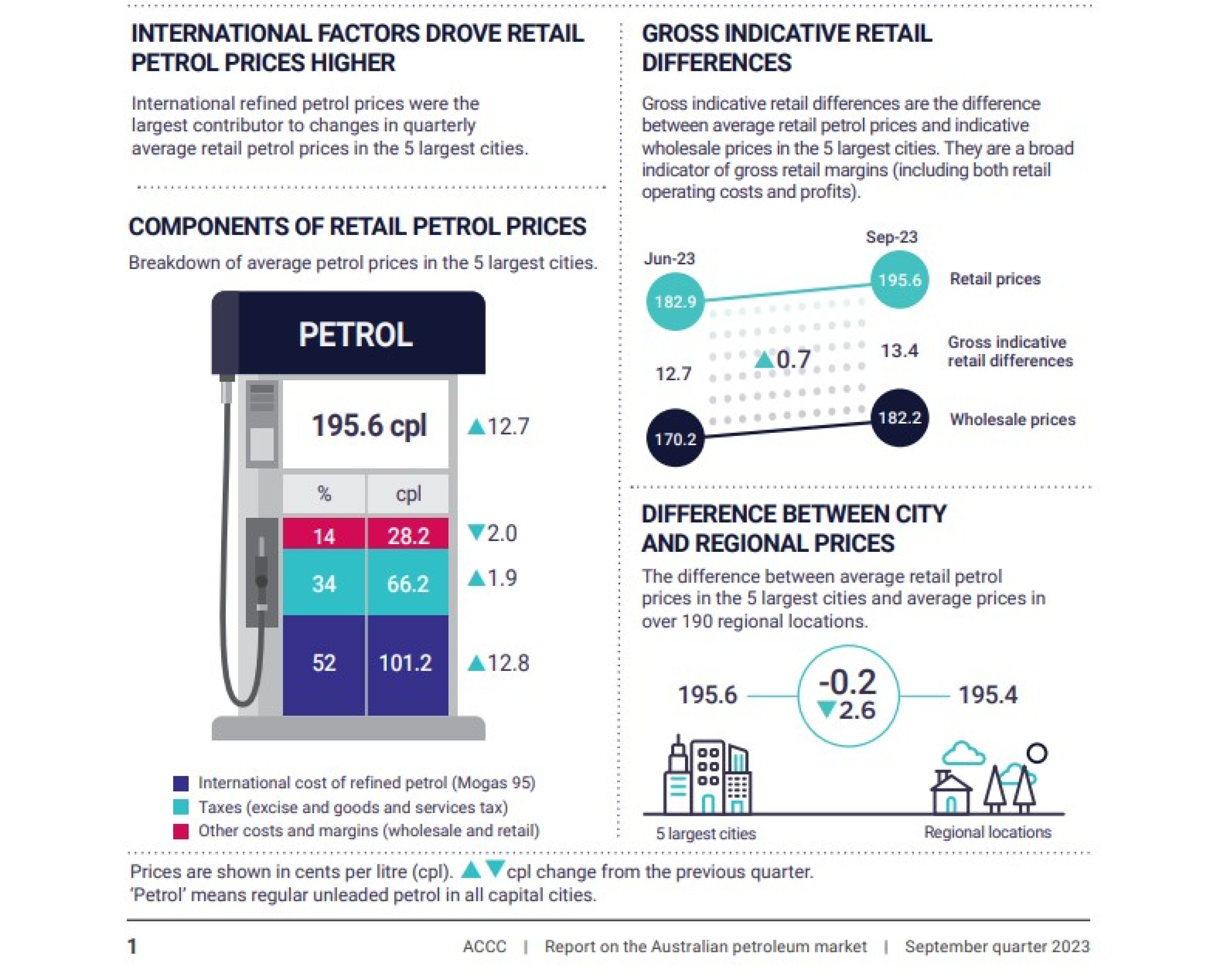
Singapore prices of petrol (Mogas 95) and diesel (Gasoil 10ppm) are the benchmark for fuels sold here, both imported and domestic. They are the largest component of pump prices, around 50 to 60 percent.
Fluctuations in Mogas 95 and Gasoil are mainly determined by crude oil prices, which are linked to OPEC geopolitics and exchange rates, since the commodity is purchased in US dollars. It’s quite complex.
The Australian Government requires that major fuel importers and refiners keep 27 days of petrol and 32 days of diesel in hand, known as minimum stockholding obligation.
2
According to the Australian Competition and Consumer Commission (ACCC), any changes in these commodity prices take two weeks or more to work their way through the supply chain in Australian cities, and longer in rural areas where sales are often slower.
The other major component of fuel prices are Australian taxes, namely the fuel excise and GST, which total around a third of the bowser cost according to the Australian Institute of Petroleum (AIP) lobby.
This leaves less than 10 percent of fuel costs to be pinned on things like storage and land transport, and of course retailer operating profits. And it’s true that they’ll inflate prices given less competition.
Diesel is less prone to aggressive price discounting than petroleum, says the AIP, because most of it is not used for private customers but rather in heavy industry.

2
Price & profit
“Profit margins are slim with service stations normally earning only a few cents per litre of petrol sold,” added the Motor Trades Association of Australia (MTAA).
That’s why they sell so many overpriced pies and drinks.
Average retail petrol prices in Australia’s five main cities across the third quarter of 2023 were 195.6 cents per litre (cpl), an increase of 12.7 cpl from the second quarter. Over the same timeframe in the same cities, the average diesel price was 201.7 cpl, an increase of 15.1 cpl from the second quarter.
According to the ACCC, they’re therefore a significant factor in the high rate of inflation in the quarter, with a weighting of 3.3 percent in the Consumer Price Index basket of goods.

1
What comes next?
As we’ve learned, Australian fuel prices are inexorably linked to global commodity prices and exchange rates, and inflated by taxes.
With local refineries less competitive than decades gone by, the reliance on imported fuels seems unlikely to diminish – at least until EVs take a bigger share of the market.
There is, however, an expectation that the two remaining refineries will remain in operation for at least this decade, given the Morrison government put forward a $250 million grant program to help them reduce the sulfur content in their refined petroleum to 10 parts per million, down from up to 150ppm.
That means while the proportion of locally refined petroleum may not change much, it will become less polluting and more suitable to the latest vehicle engines.
The 2012 Renault Clio RS might not have been too popular with those beguiled by the generations of free-revving, manual masterpieces that came before it, but it was ahead of its time in one curious way.
To discover why, required a dig through the centre infotainment screen.
Here you’d find a menu called “R-Sound Effect” where you could select between seven artificial engine noises boomed through the interior speakers, perfectly in-tune with the revs.
While giving your Clio RS the aural aura of a mid-engined 2003 Clio V6, or a Clio Cup racer was intriguing, selecting the 1969 Renault 8 Gordini was somewhat more quirky; same with the original Alpine A110.
That Renault included a synthetic soundtrack from an R35 Nissan GT-R, a 1971 MotoGP bike and a “2038 Renault Reinastella” – something from the Jetsons, basically – either proved the French do have a sense of humour, or the plumbing is all lead at Renault HQ.
While it wasn’t very good – a feature that you tried once, then never again – it previewed a possible salvation for drivers nervous about the en-masse switch to otherwise-silent electric performance cars. I’m talking, of course, about plain, old faking it.
The next frontier in automotive sound, if you ask me, is how good an electric car convinces you that, under the bonnet, is the best-sounding four, six, V8, V10 or V12 you’ve ever heard.
1
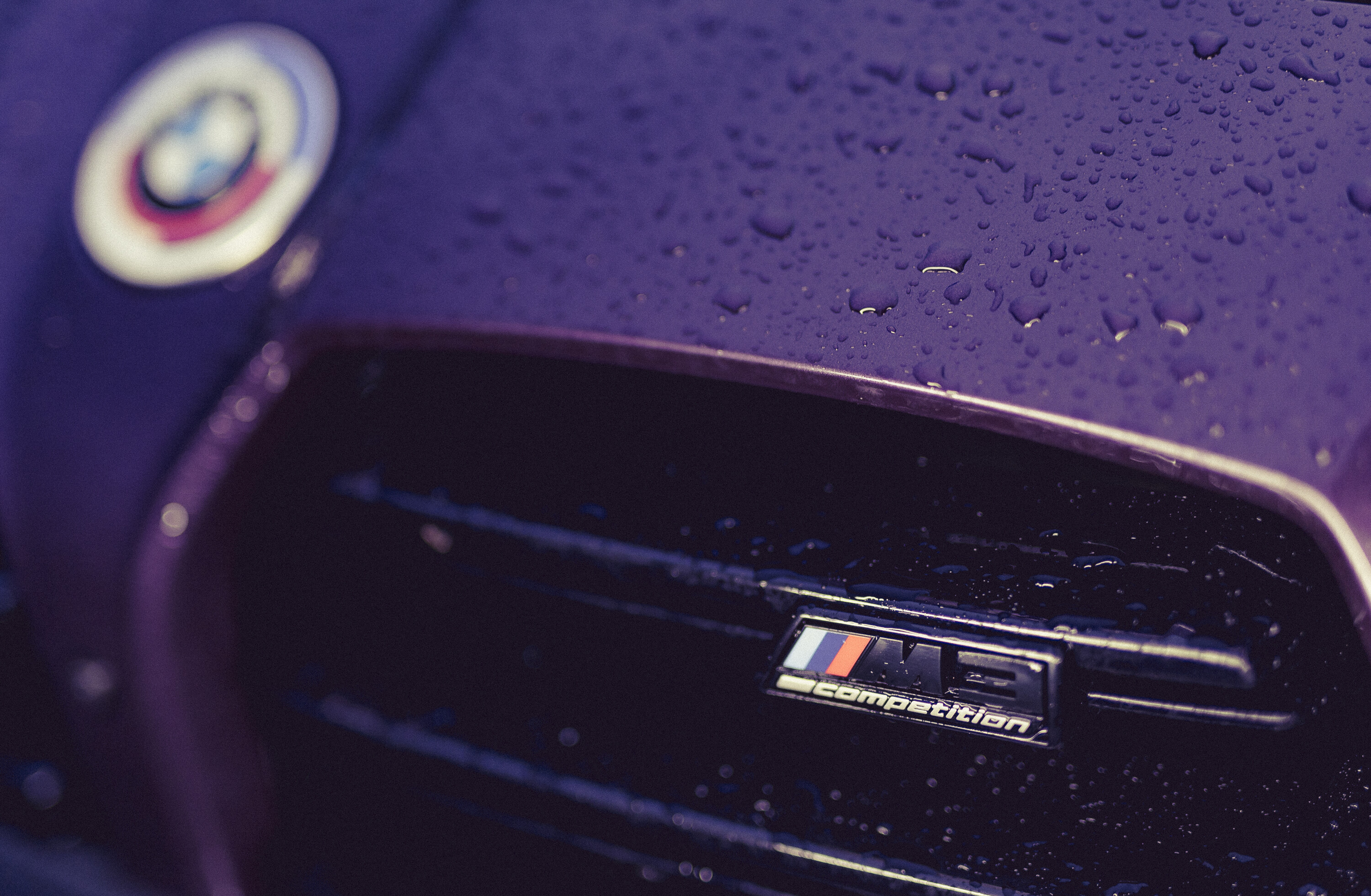
Imagine getting into your all-electric BMW M3 and pressing a button that gives it a pure V8 noise you can’t get enough of; or the fire-breathing hiss of a twin-turbo straight-six.
Using high-quality external speakers under boot and bonnet, different starter motor sounds could be simulated, different idle rumbles and, once moving, different engine sounds altogether – including a turbo under load, anti-lag, or even blow-off-valves, for those of us still yet to reach puberty.
Different power and torque curves could be delivered using software with the electric motors. There could be tachometers with varying redlines, steering-wheel paddles with gear ratios, and a gadget that adds vibration to the chassis – exactly like an engine.
? Jez writes:
“Working together to mimic the feel and sound of the 2.0-litre turbo petrol engine and eight-speed dual-clutch auto found in the i30 N, they’re far less gimmicky and far more entertaining than we were expecting.
“The rorty engine note provided by ‘Ignition’ mode isn’t that surprising in this era of speaker-enhanced combustion motors; the clever part is how the car’s e-Shift software introduces slight jolts to what, for an EV, would normally be totally seamless acceleration as you flick the paddle levers for ‘upshifts’.”
Virtureal…
As Jez notes in his Ioniq 5 N review above, if it was convincing enough it could be unreal, a sort of giving-back from the gaming world to the real one.
Let’s not pretend great engine sound hasn’t been going the way of the thylacine for years now already, either. And those hydrocarbon-powered auditory delights that do remain have been further neutered by the European noise regulators, clamping down on harmless things like overrun pops and bangs.
These are the same people I can too easily imagine blowing out the candles on a kid’s birthday cake, because it’s too dangerous.
I know what you’re thinking, too. “Hyundai is doing exactly this already,” and you’re right. The electric Ioniq 5 N comes with fake gears and steering wheel paddles, fake engine noise, a fake powerband and even fake engine braking.
Earlier this year I also drove an electric MG sedan in China that had an imitation V8 engine note. You could ‘rev’ it when stationary, and it even ‘kicked down’ when overtaking. It was surprisingly convincing.
The next real challenge is exactly that: making it more believable. Car companies have had more than a decade to perfect the fake noise often added to so many performance models, and I’m yet to sample one that doesn’t have me searching for the off button.
If car companies need to redeploy entire engine departments full of clever engineers, they could do worse than focusing them on making an EV feel exactly like the best internal combustion-engined car you’ve ever driven.
The most hotly contested segment in the country has a familiar winner but with reduced margins as new players enter the fray.
The Medium SUV segment saw an increase of 24.3 per cent in 2023 to outperform the overall Australian new-car market’s 12.5 per cent gain, with 268,480 Medium SUVs sold last year.
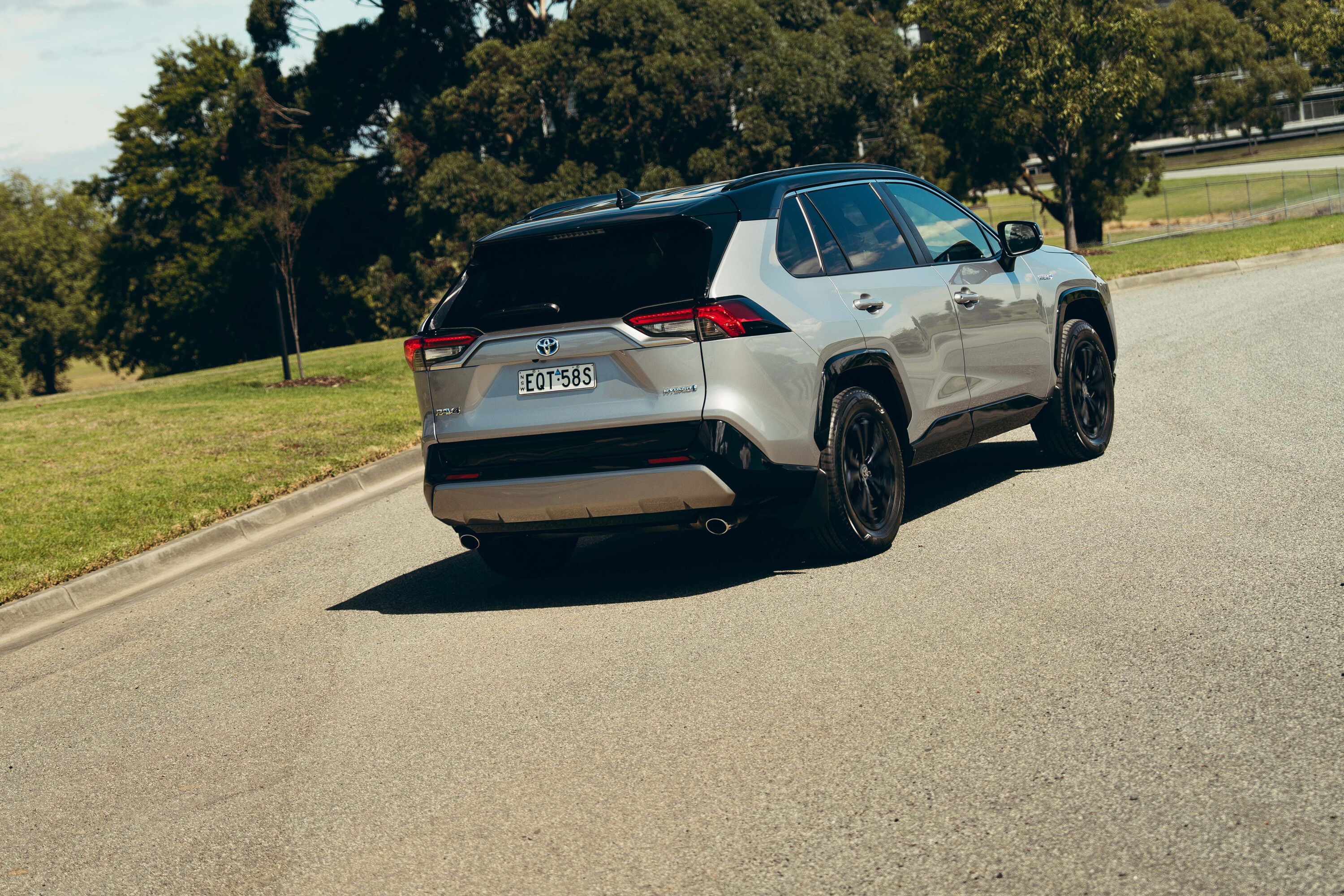
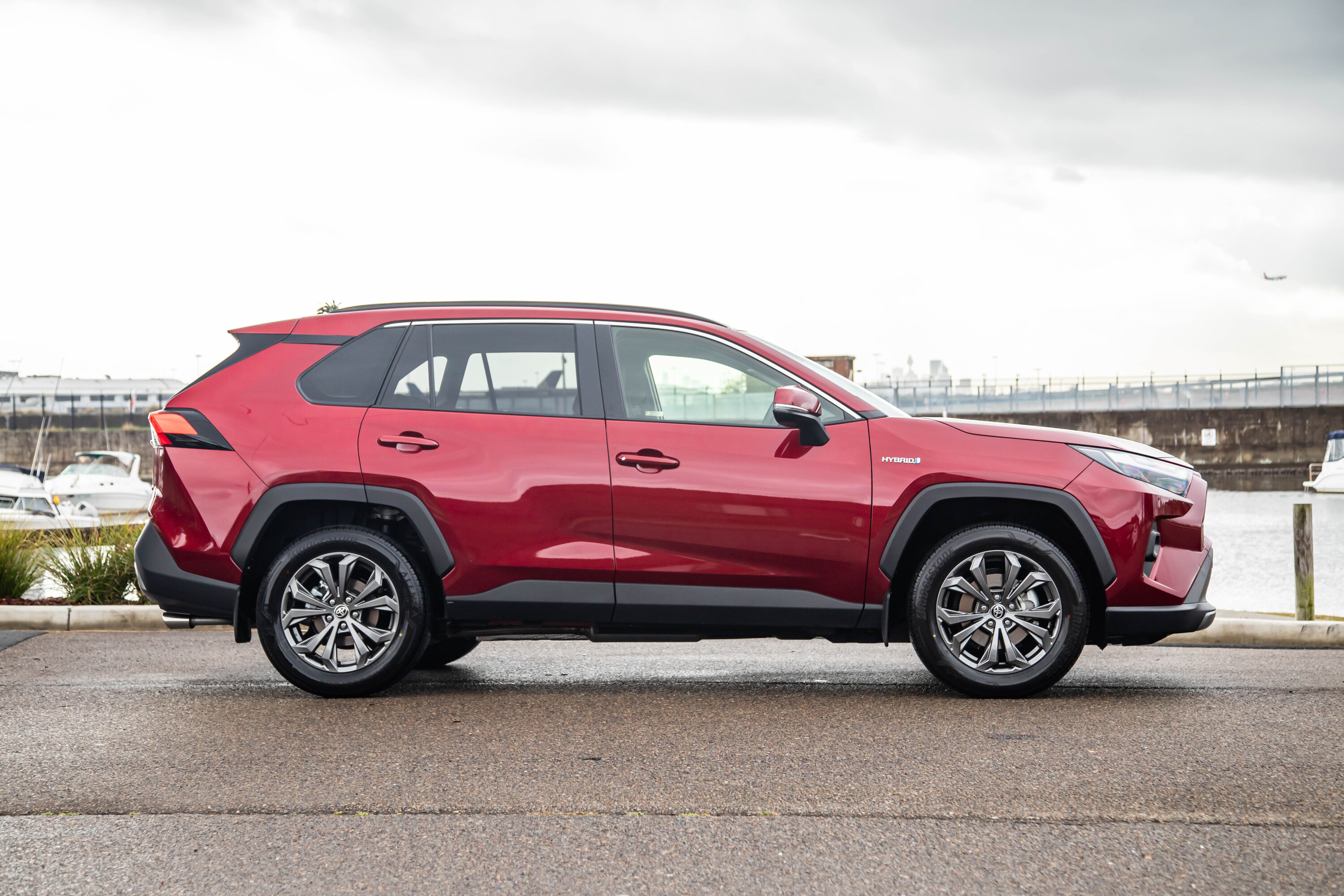
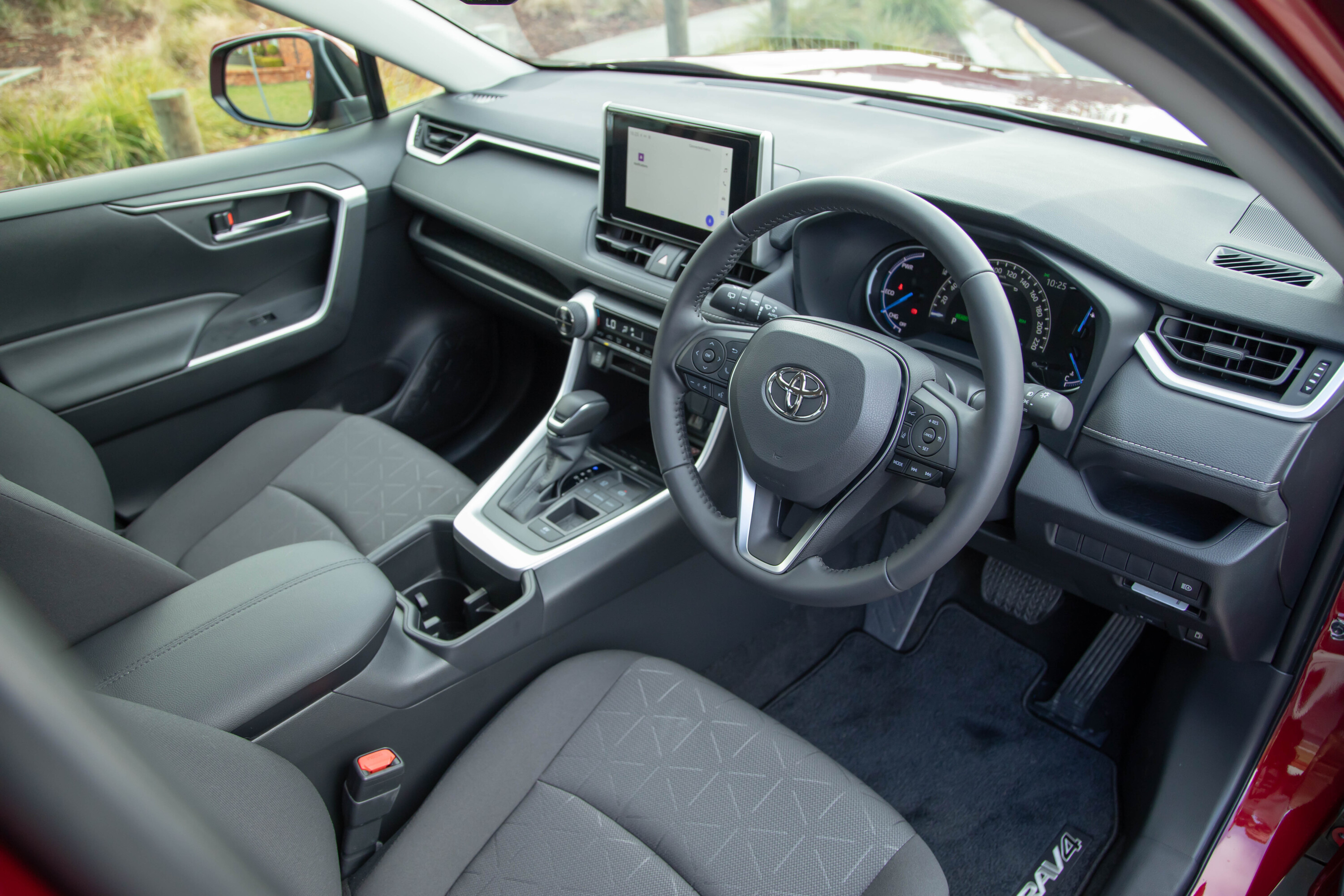
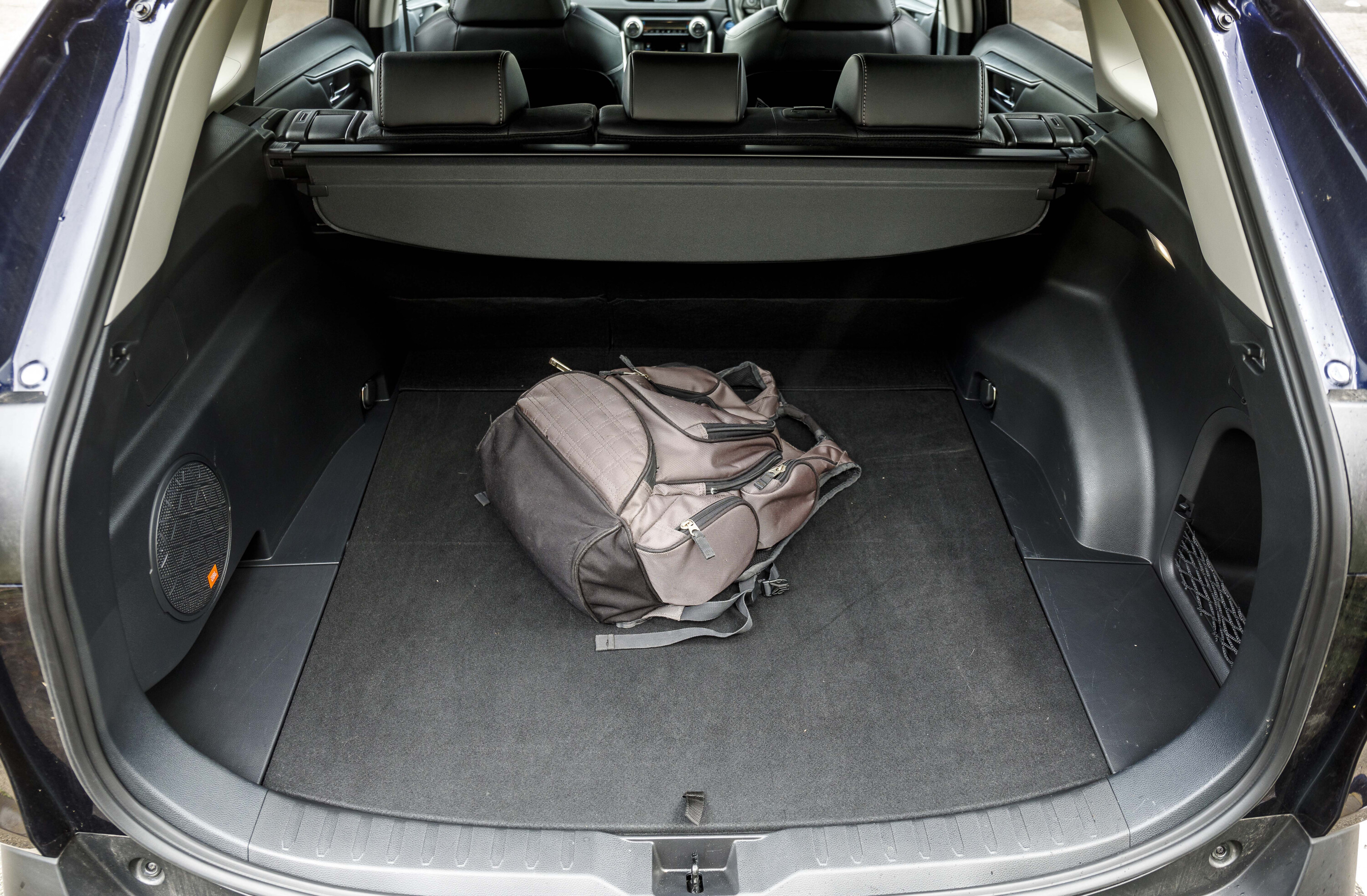
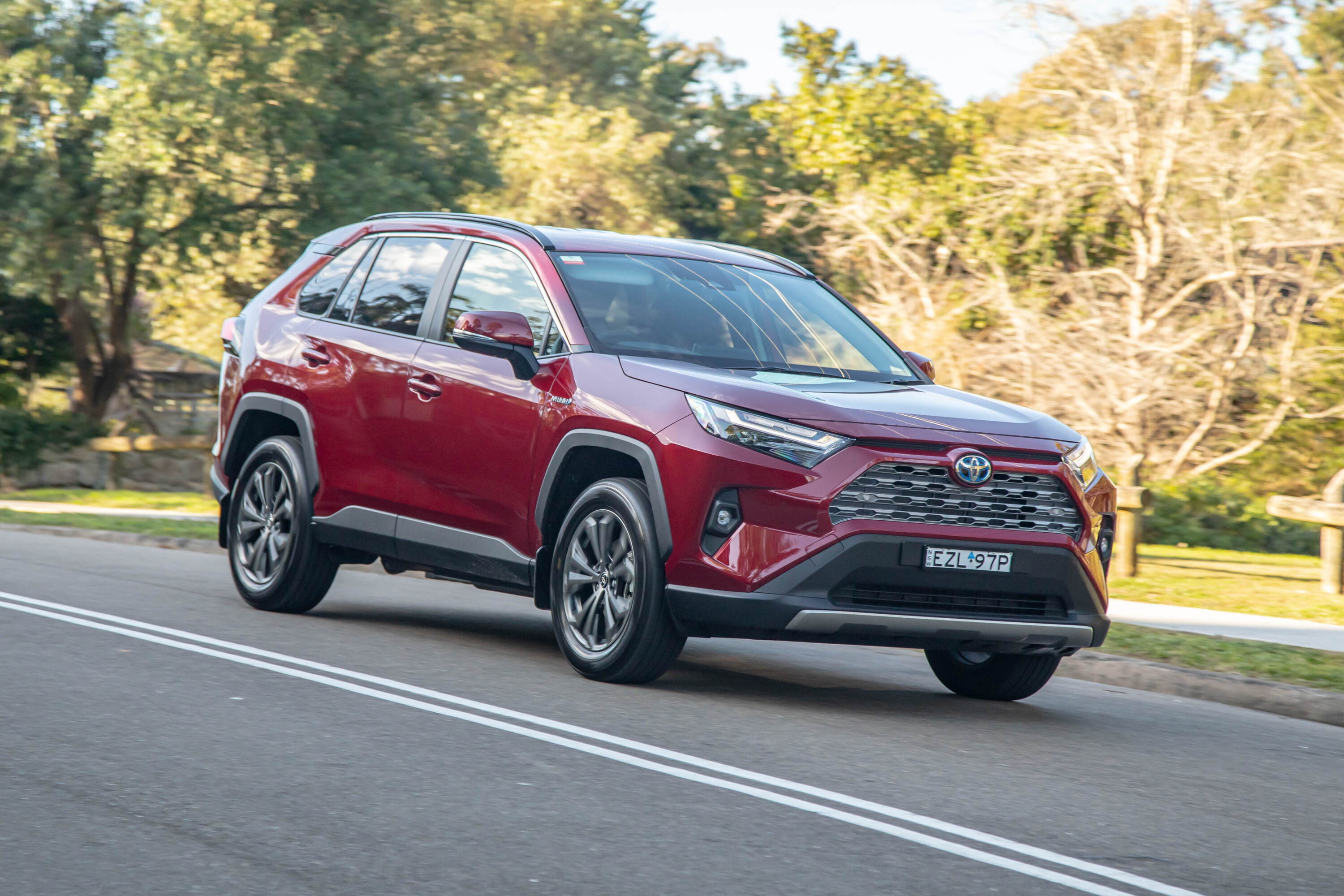
The Toyota RAV4 was the best-selling Medium SUV for the fourth straight year, ahead of the Mitsubishi Outlander and Mazda CX-5 – but all only the Outlander managed to improve its volume over the previous year.
1
SUV sales were up across all segments in record-setting 2023, but the RAV4’s 29,627 sales were well short of its 34,845 figure from 2022.
While a lower sales number, it was still easily more than Outlander’s 24,263 despite the Mitsubishi being the newest model of the top trio, introduced in 2021, and the only one of the three to increase its sale number.
The RAV4 wasn’t the sales leader all year, either, with the CX-5 leading the segment in January, the Outlander slipping into second by March, both ahead of the Toyota.
The RAV4 jumped in front of both rivals to lead the CX-5 by only 100 units at the end of April, the Toyota the only model in the segment to crack 10,000 year-to-date in May.
1
It remained at the top of the tree for the rest of 2023.
It’s another impressive feat for Toyota – which continues to be the best-selling car brand in Australia by a substantial margin – given the supply issues that created long waiting lists for RAV4 and undoubtedly sent buyers unwilling to wait to rival manufacturer’s showrooms.
Toyota has also loaded significant price rises onto the RAV4 as a result of stock shortages, but the SUVs popularity remains solid with its ongoing success boding well for 2024 with a new RAV4 due in Australian showrooms.
The Mitsubishi Outlander’s sales grew substantially, outselling its 19,546 2022 result by 24.1 per cent while RAV4 and CX-5’s sales declined 14.7 and 15.0 per cent respectively.
1
The Outlander’s 2023 effort saw a close battle with the Mazda CX-5, which it overtook in July and slowly crept ahead of to stretch to finish 1180 units ahead of the Mazda by the end of the year.
The Mazda CX-5 was a former best seller, having been the sales leader in 2019, yet its sales performance remains strong after annual updates to the current generation that has been on sale since 2017, the same year the RAV4 debuted.
The CX-5 started the year ahead of RAV4 – topping the segment in January 2023 – but minor updates couldn’t keep it ahead of the Toyota and Mitsubishi as RAV4 stock arrived here.
Missing the podium by a slim margin was the Hyundai Tucson with 21,224 sold, its freshly updated range to be bolstered in mid-2024 with the arrival of a hybrid model to help it tackle the dominant RAV4 which has seen hybrid models the strongest sellers.
1
The Subaru Forester was fifth (16,381) ahead of the Kia Sportage (15,747), but the biggest mover in the field was the BYD Atto 3 with 11,042 sold – the seventh best and final Medium SUV to sell more than 10,000 units in 2023.
The Atto 3 started the year with only 267 sales in January – versus RAV4’s 1958 that month – but took a 5.4 per cent share of the segment for the year as the best-performing Chinese brand in the segment, ahead of MG.
That also makes the Atto 3 the best-selling electric Medium SUV in 2023.
1
The Atto 3’s formidable performance helped reduce RAV4’s 2022 leadership share from 19.6 per cent to 14.6 per cent.
That continues was downward trend for the segment leader as competition increases, with RAV4’s 2021 share 23.6 percent, having been 25.1 per cent in 2020.
The largest declines in the segment were recorded by the Citroen C5 Aircross, which saw sales fall from 64 to 41 for a 35.9 per cent decline, while the MG HS declined 25.8 per cent.
MORE
Everything Toyota
MORE
Midsize SUVs
