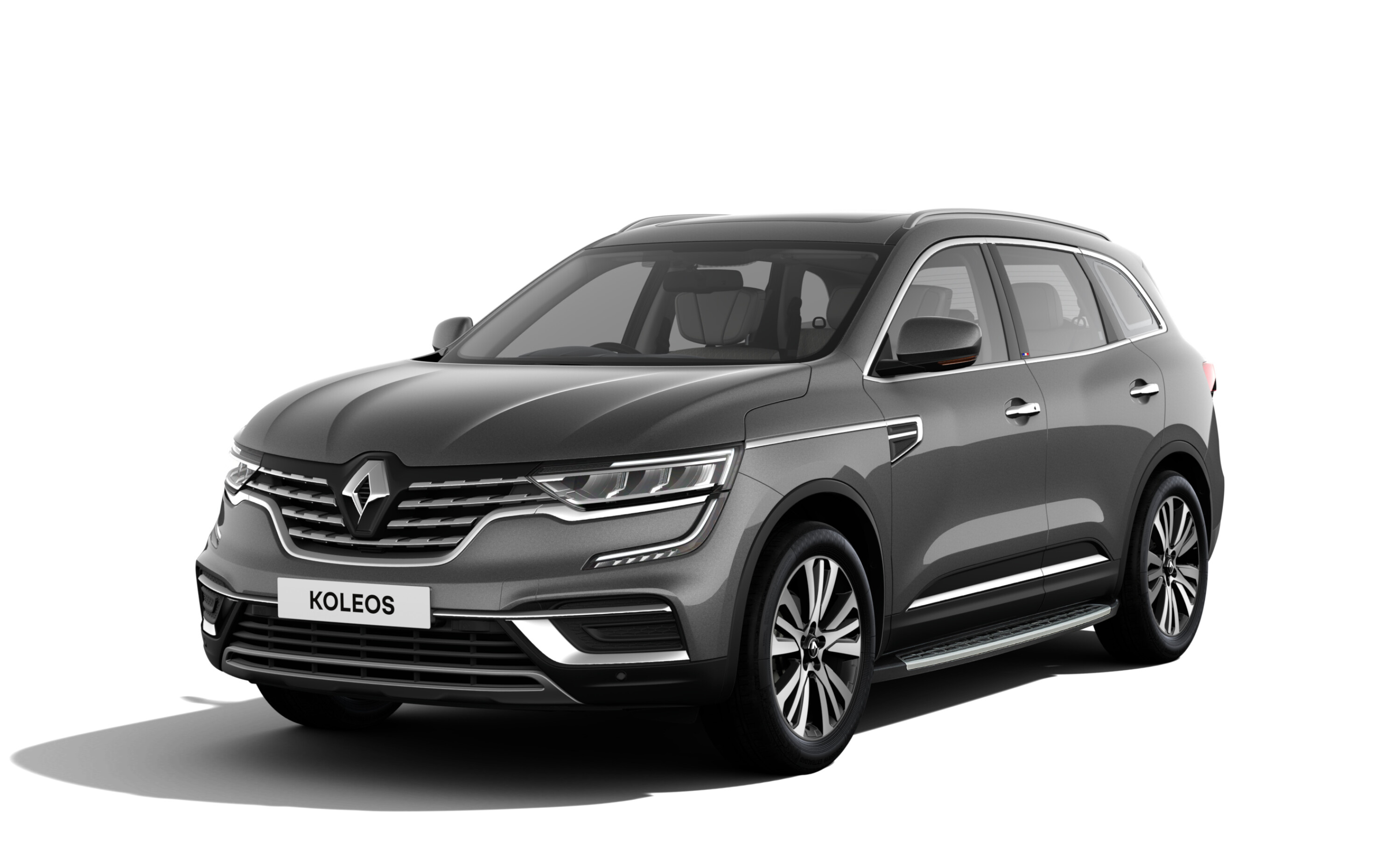
The limited-run 2023 Renault Koleos Iconic Edition has landed in Australia.
Snapshot
2023 Renault Koleos Iconic Edition pricing and features
Flagship variant adds more features, but with a reduced drive-away price
Limited-run midsize SUV restricted to 400 units
The Iconic Edition is positioned above the flagship Koleos Intens, offering additional equipment and national drive-away pricing – but it is limited to 400 units.
It is priced from $48,990 drive-away for the Iconic Edition FWD, while the AWD is listed at $51,490 drive-away – equating to a saving of around $2000 compared to an equivalent Intens when on-road costs are included.
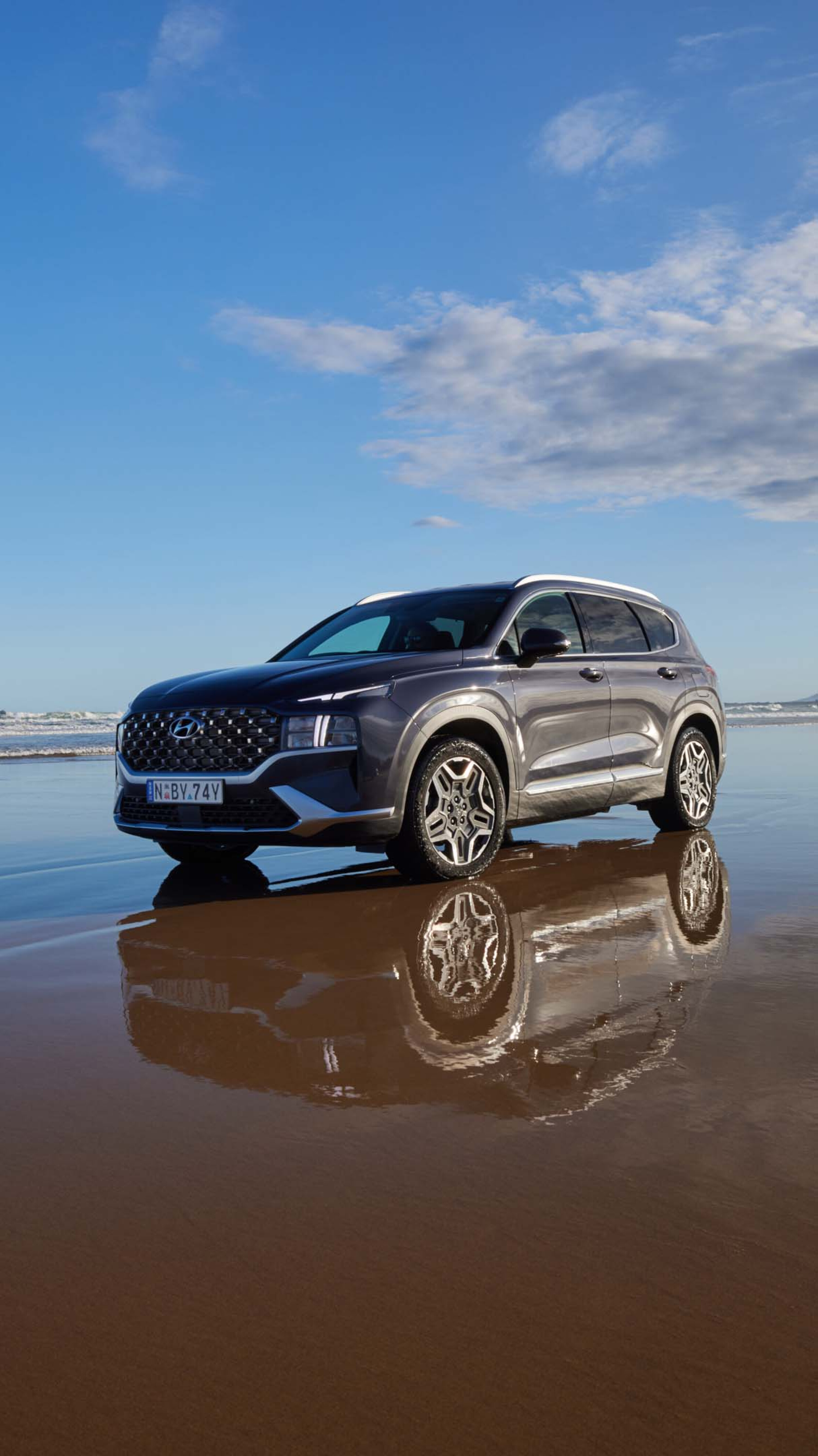
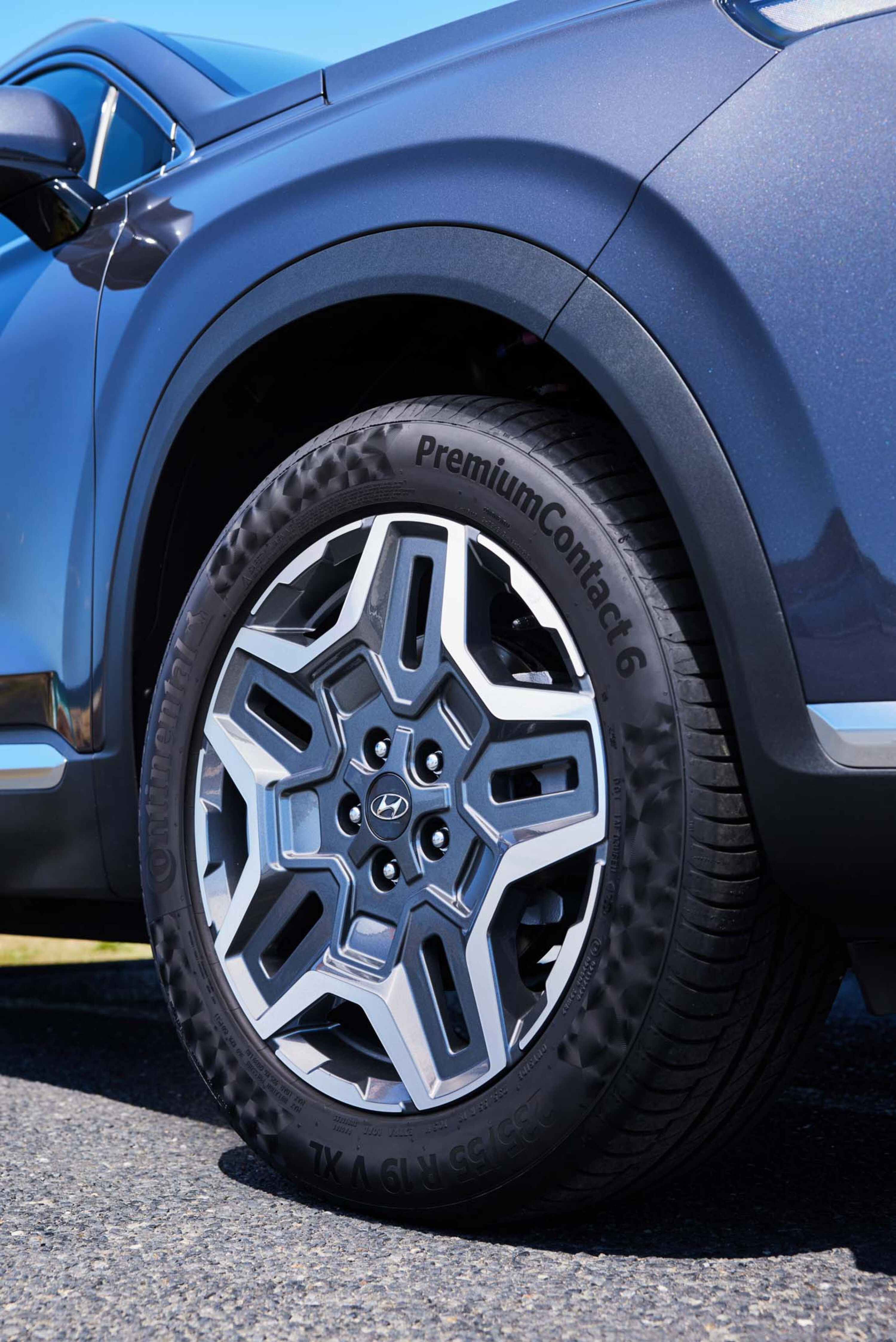
The Koleos Iconic Edition adds new-design 19-inch alloy wheels and side steps, while the South Korean-built midsize SUV – based on the previous Nissan X-Trail’s platform – adorns French flags on the B-pillars.
1
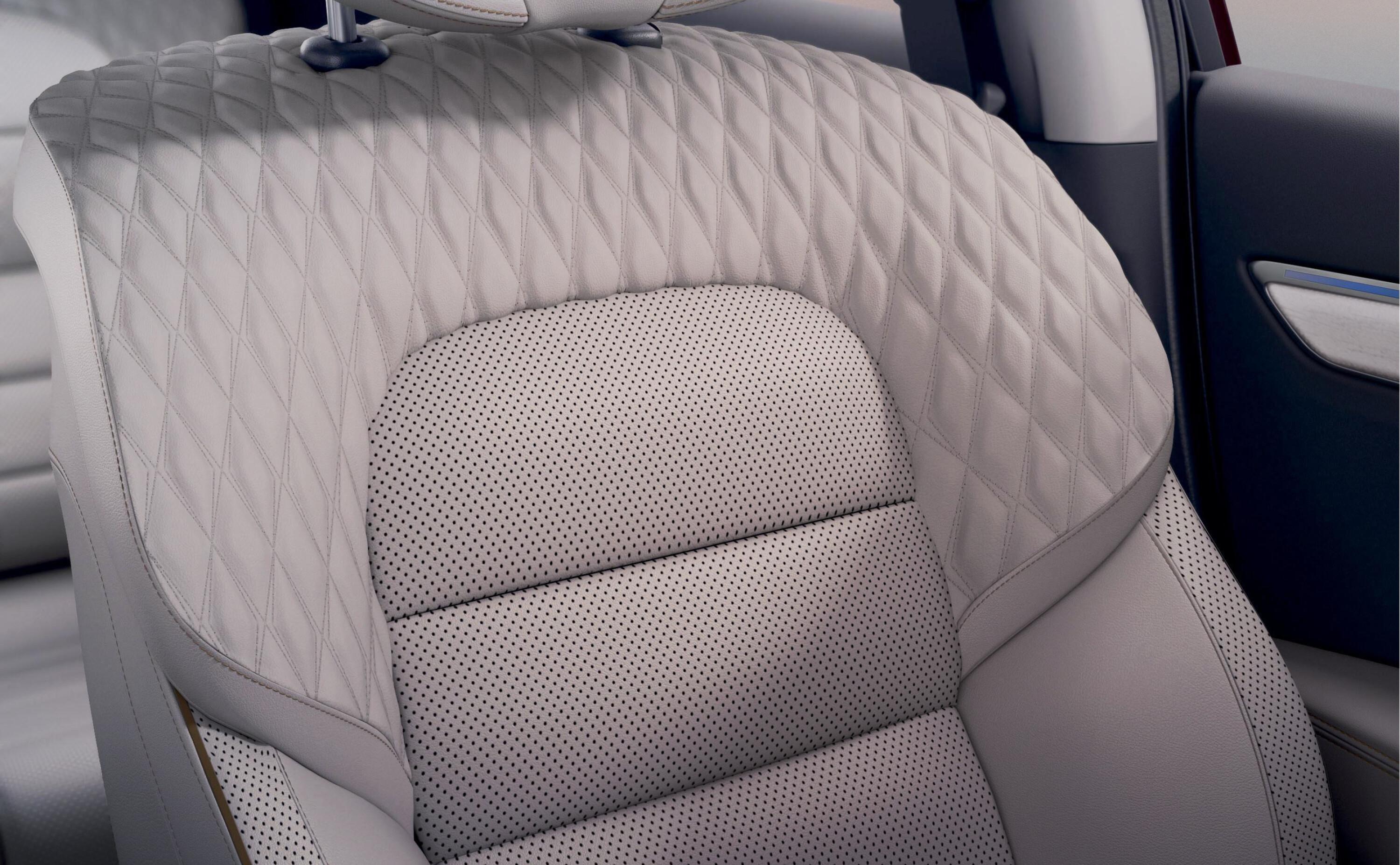
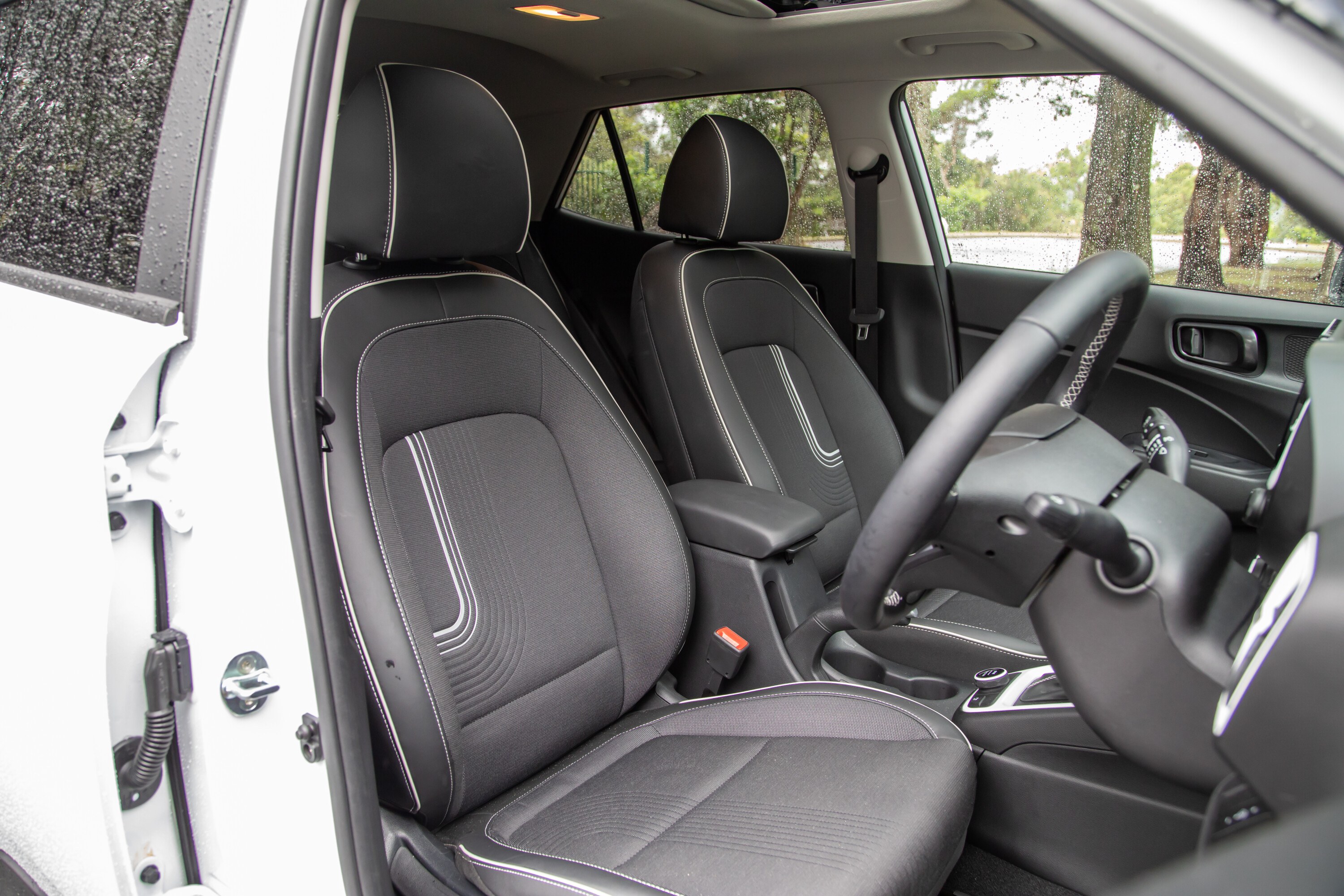
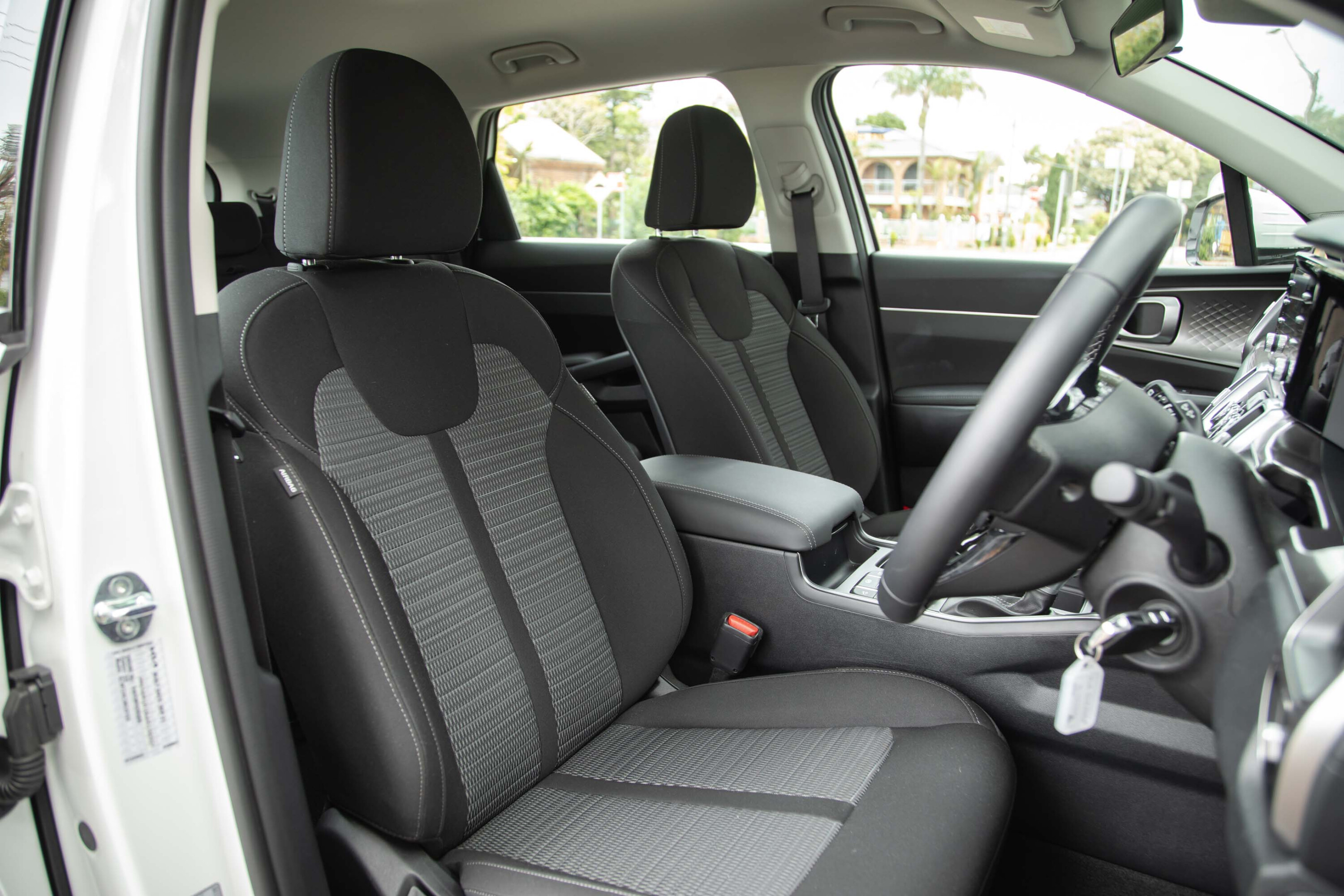
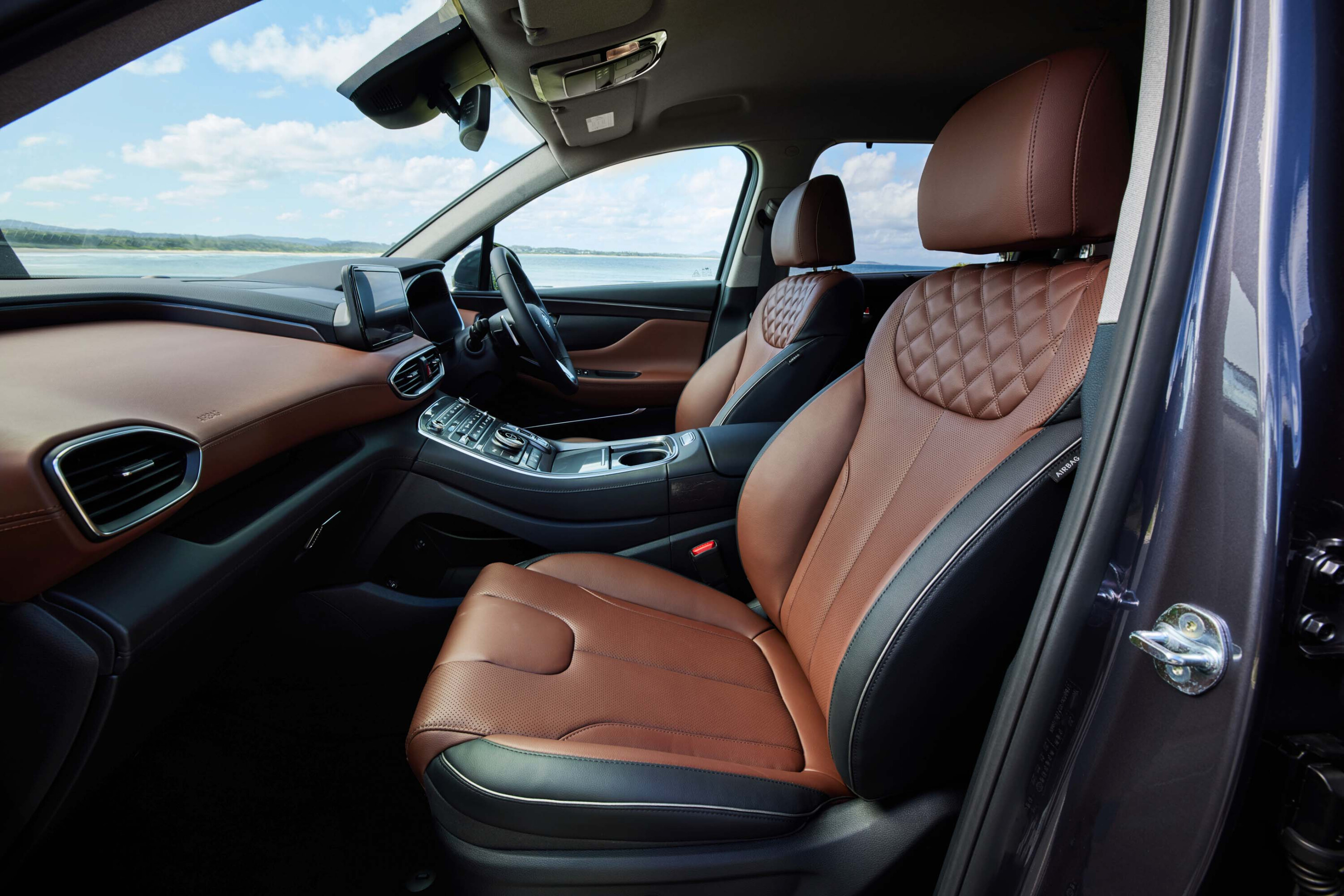
It also sports carpet floor mats, standard metallic paint – with a new optional amethyst black finish – and sand grey Nappa leather upholstery, or black Nappa leather shared with the Intens.
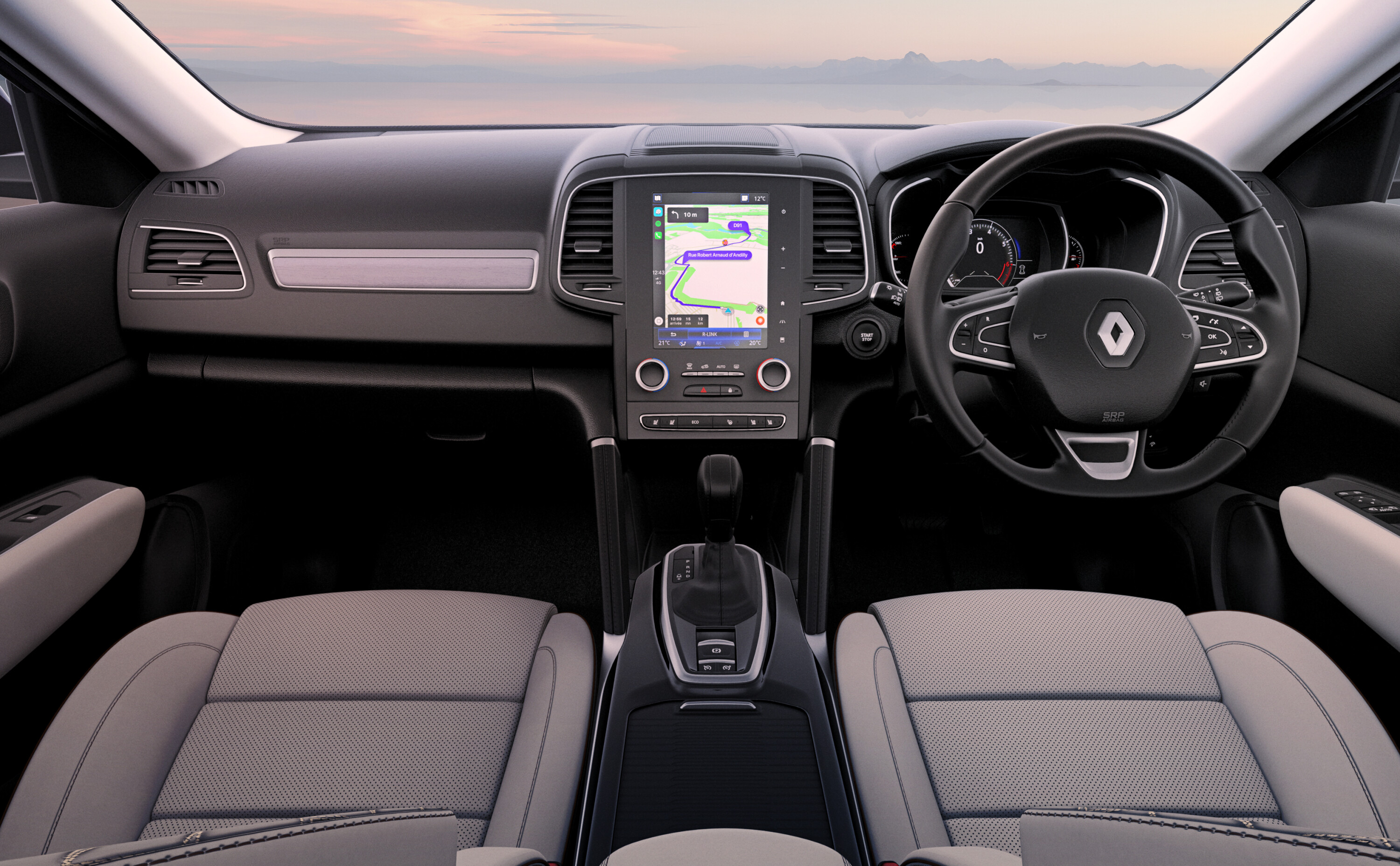
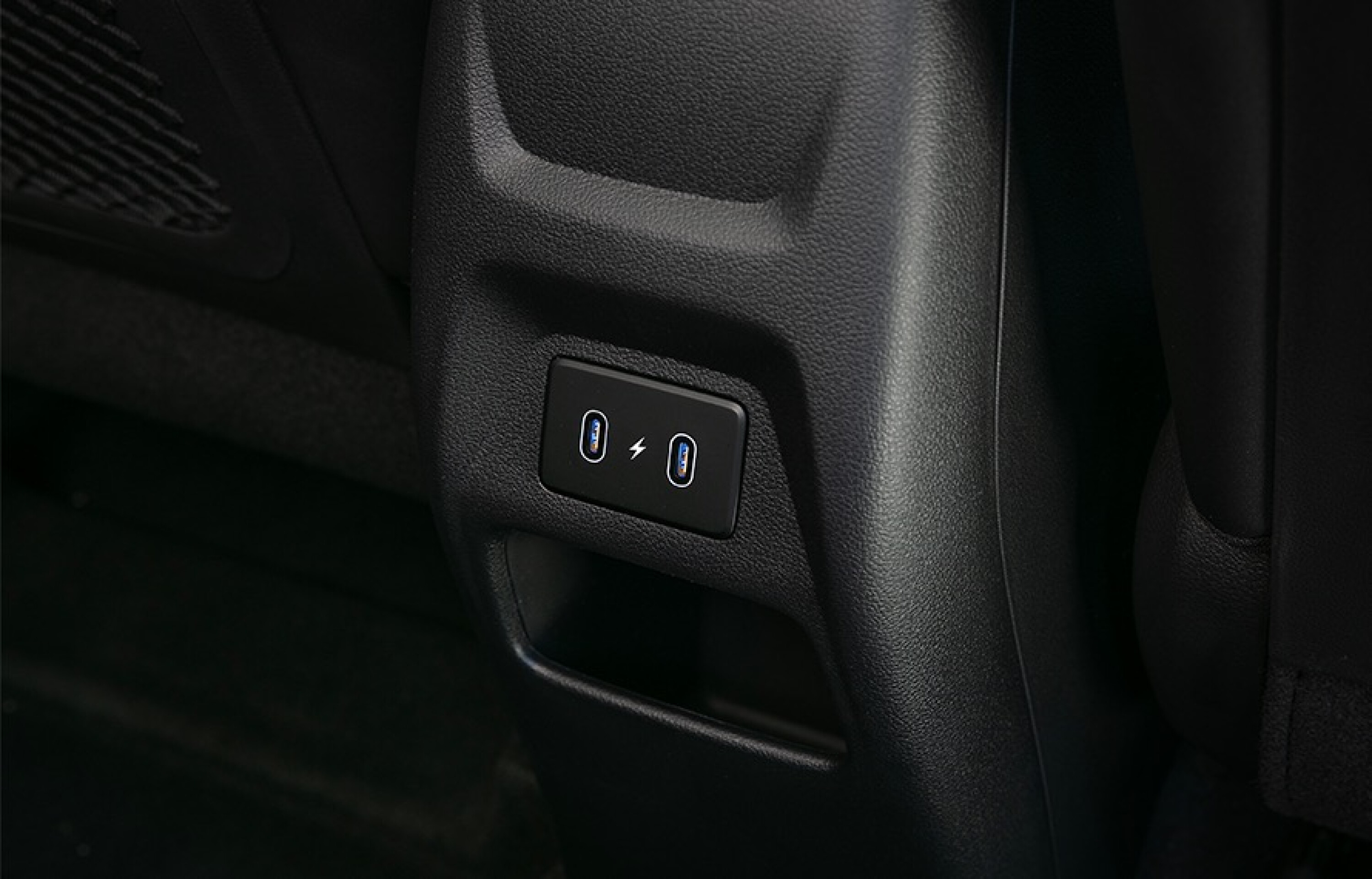
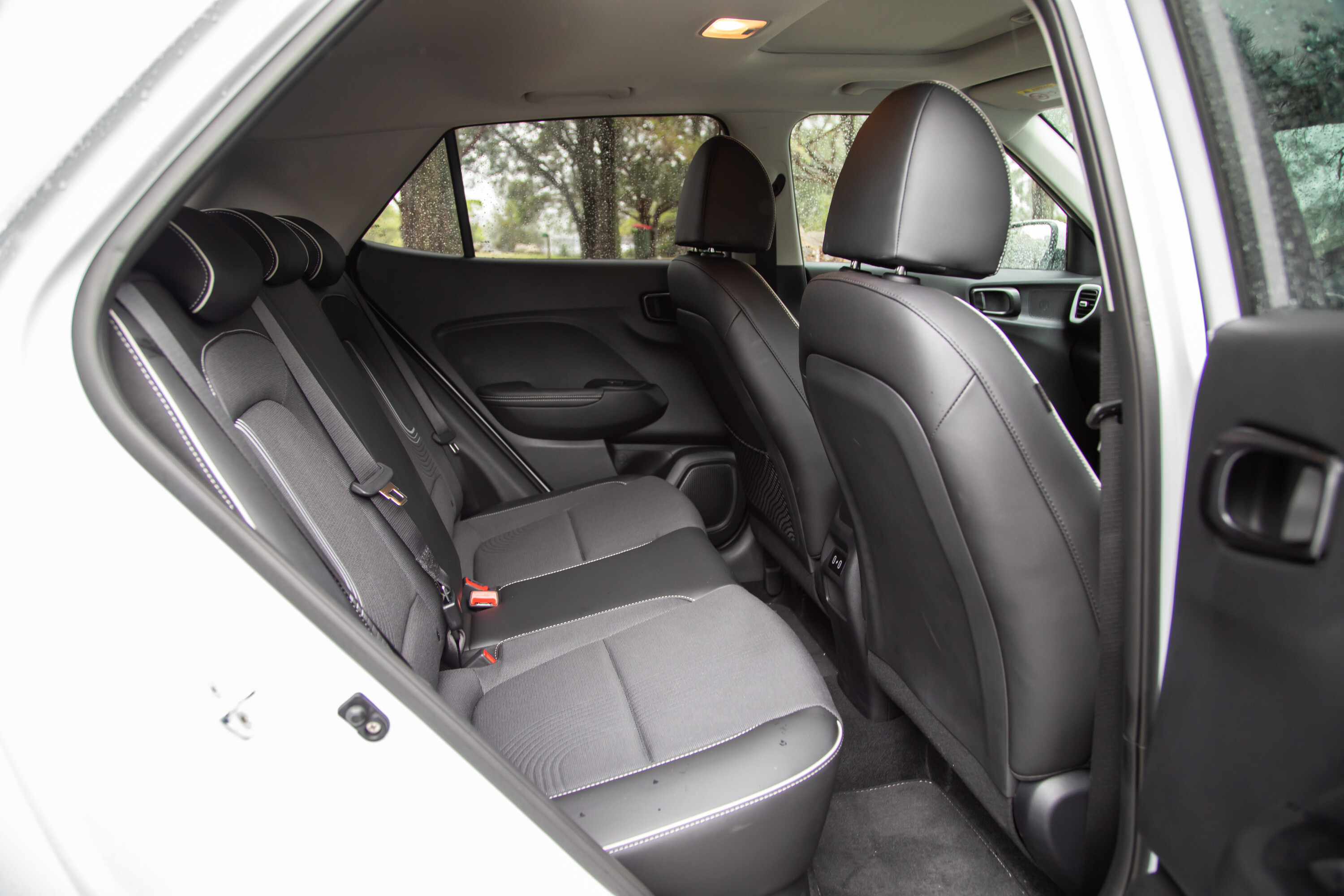
Other standard equipment is shared with the standard Koleos Intens, with highlights including an 8.7-inch portrait-orientated infotainment system, wired Apple CarPlay and Android Auto, built-in satellite navigation, a 7-inch semi-digital instrument cluster, and USB-A charge ports (2x front, 2x rear).
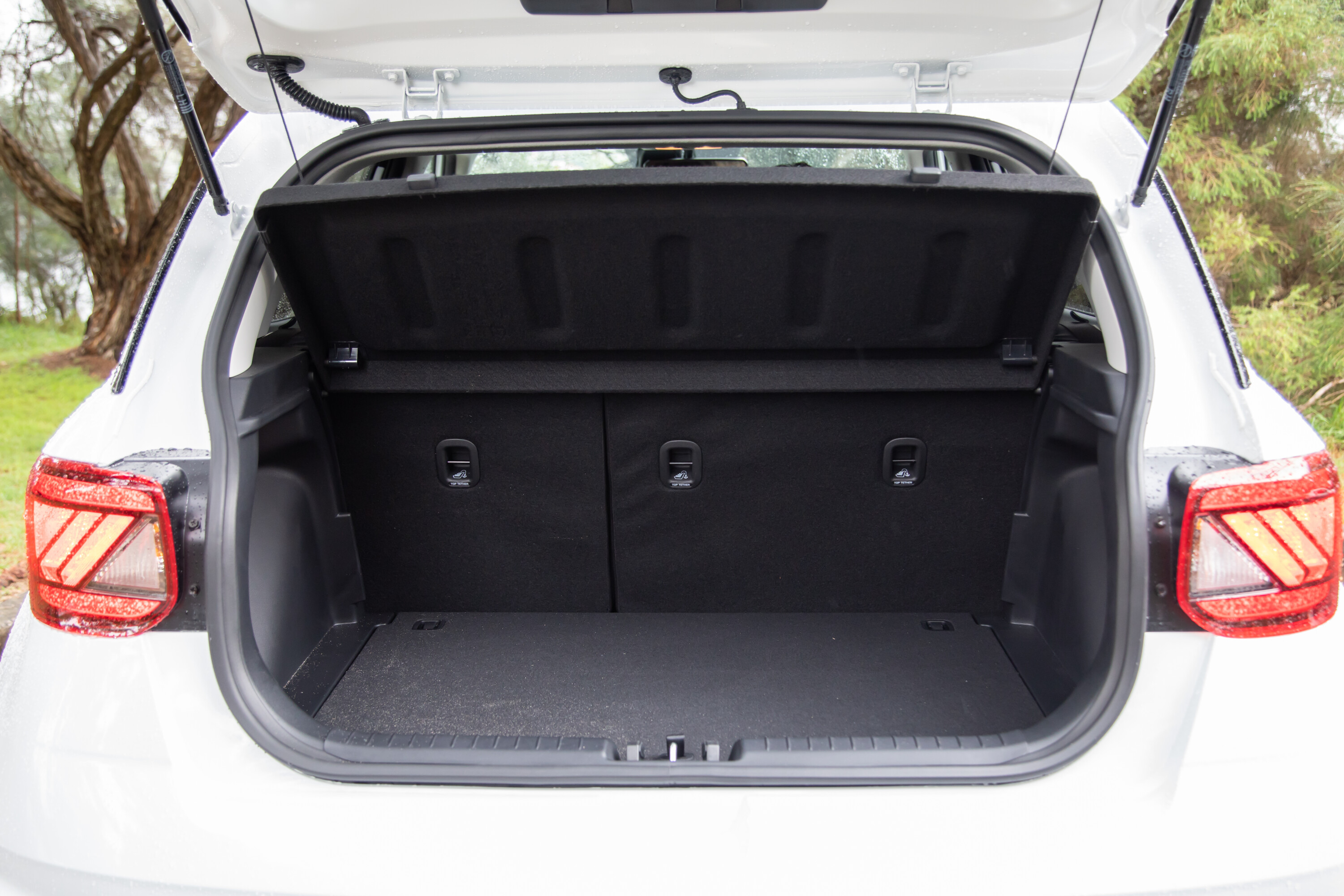
It also features power-adjustable front seats with driver’s seat memory and massage functions, an automatic parking system, a panoramic sunroof, and a hands-free electric tailgate.
Under the bonnet, the Iconic Edition retains the Koleos’s naturally-aspirated 126kW and 226Nm 2.5-litre four-cylinder petrol engine, paired to a CVT automatic transmission.
1
Despite being replaced by the latest Espace seven-seat SUV in Europe – but not in the UK – the Koleos will continue in its current form in Australia until 2025, with no direct successor currently announced.
“[Koleos] continues as is for the moment. We know production will run through this year, through next year. And after that, we don’t know”, said Renault Australia general manager, Glen Sealey, earlier this year.
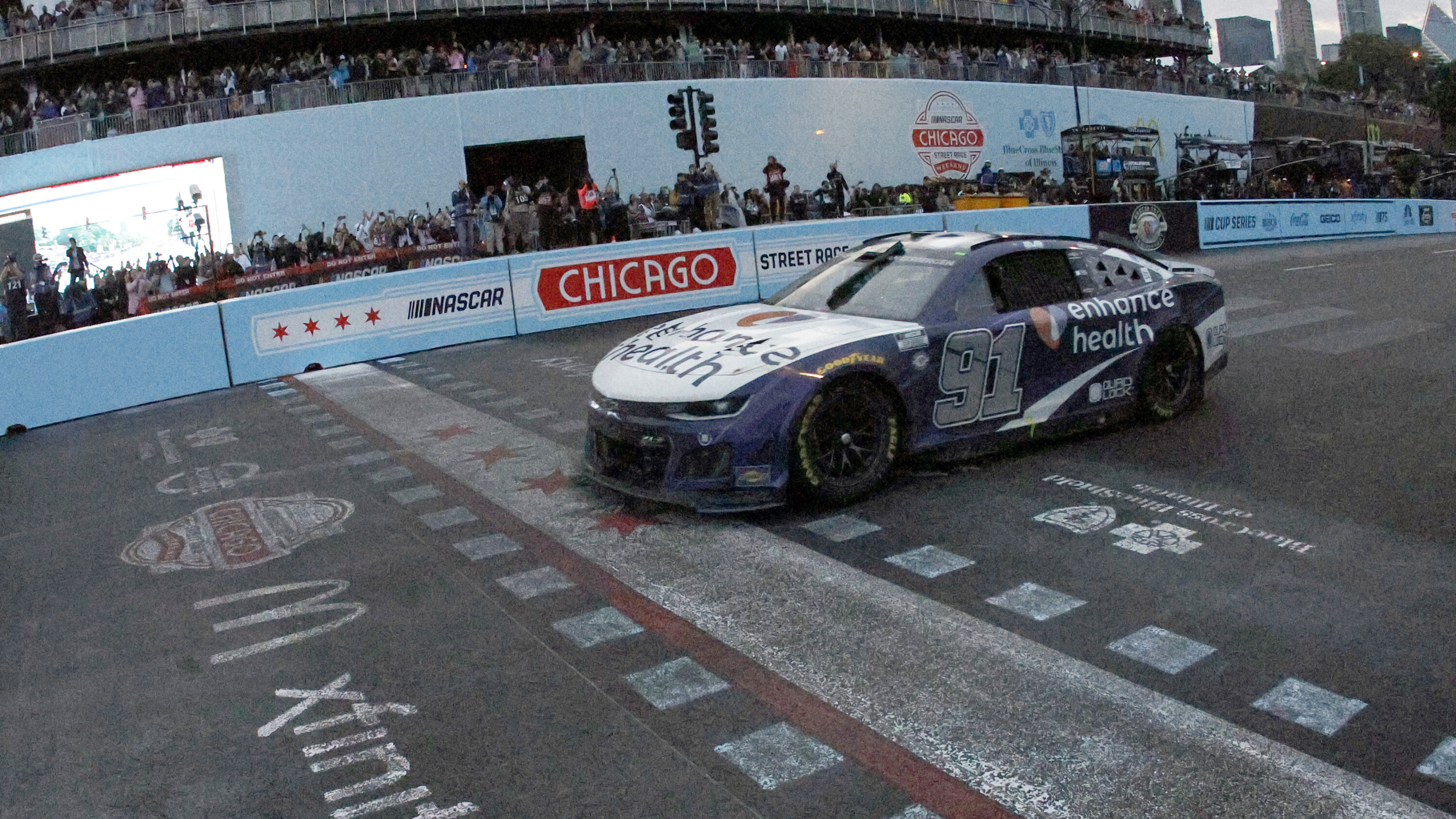
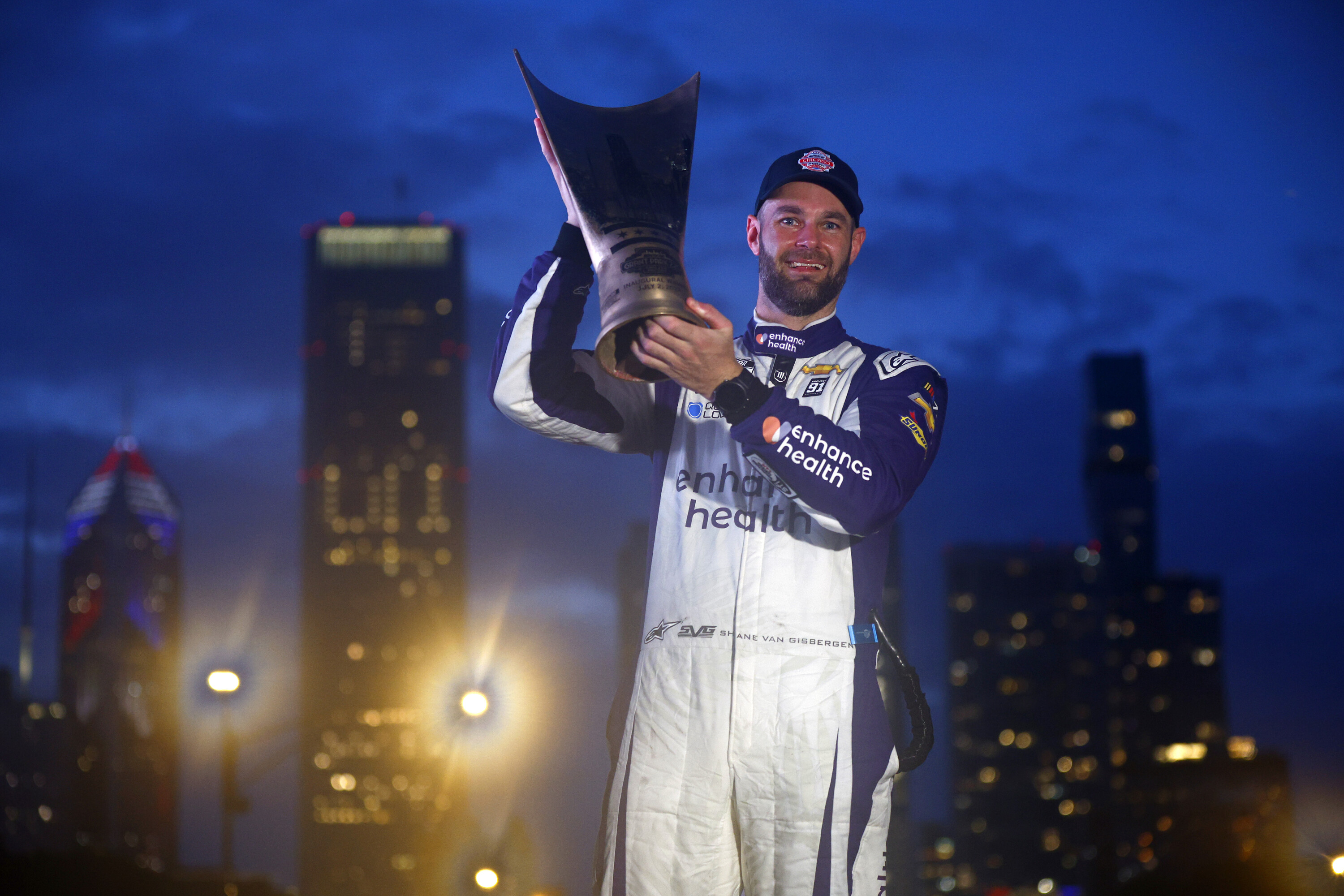
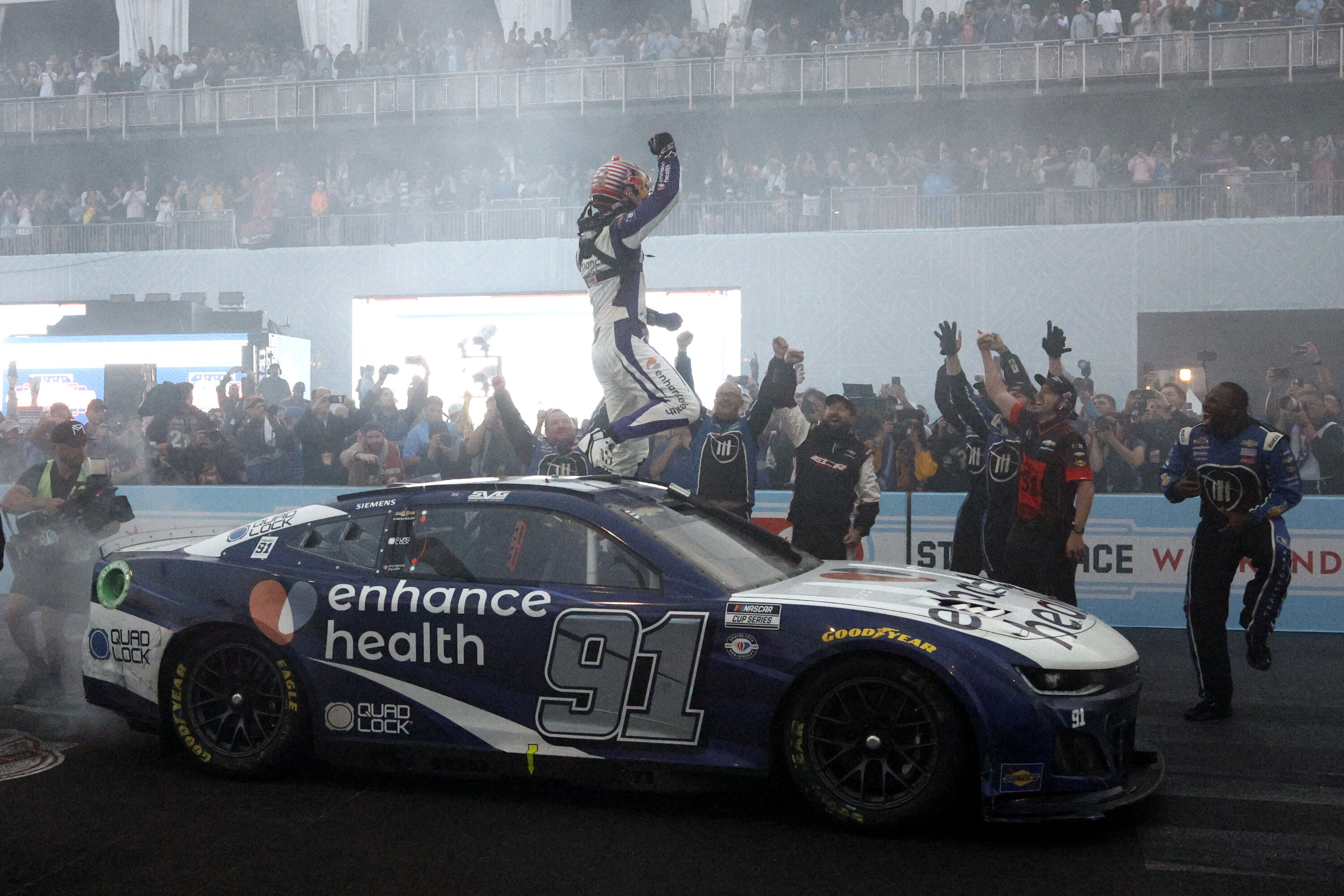
Three-time Supercars champion Shane van Gisbergen has pulled off a measured yet miraculous win on debut in NASCAR’s top tier Cup series, claiming a brilliantly controlled win on the streets of downtown Chicago.
With just limited simulator time and a single day of testing under his belt, the 34-year-old Kiwi qualified his Team 91 Chevrolet Camaro in third, before negotiating the treacherous concrete canyon in wet/dry conditions with cool, calm and disciplined precision to claim the victory after just 75 of the scheduled 100 laps.
Team 91 is a racing program that offers champions from other motorsport disciplines the chance to slot straight into the top tier of America’s most popular categories, and the previous driver roster includes such storied names as Kimi Raikkonen and Jenson Button.
1
“Of course not, but you always dream of it,” said an elated van Gisbergen in victory lane, when asked if he though a win was possible on debut. “What an experience! This crowd out here… this is so cool.
“Hopefully I can come and do more.”
The race was delayed by torrential rain for almost an hour, before the 40-strong field took the green flag. Unlike previous generations of NASCAR racers, the newest iteration of the 75-year-old stock car formula now offers a wet tyre option, which van Gisbergen used to his advantage.
His race craft was measured, mature and mistake-free for the duration of the event, and he ran in the top five of the field for the majority of the first half. His Camaro was fault-free, too, aside from a faulty radio that didn’t hinder his progress.
1
As the laps wound down and the track dried up, van Gisbergen calmly and cleanly drove his way from double digits up into contention
A yellow-flag pitstop cycle during green-flag running on lap 47 – foisted upon the field in part by the decision by NASCAR to shorten the race – dumped the two-time Bathurst champion down as low as 18th, and he also barely escaped a late-race melee that almost blocked the entire track.
As the laps wound down and the track dried up, van Gisbergen calmly and cleanly drove his way from double digits up into contention for a fairy-tale win with ten laps to go, challenging and then passing Chase Elliot for second, before hunting down Justin Haley – who had himself leapt up 36 places to be in contention for the win – for the lead of the race.
He slid the #91 up to first spot on lap 73 for just a moment as a caution flag flew, before relinquishing the place back to Haley under the safety car.
1
With just two laps left to run, van Gisbergen calmly lined up Haley on the restart, passing him twice in two corners before simply marching away from the US’s best stock car racers to claim an emphatic victory.
He is only the seventh driver in the 75-year history of the sport to win on debut, and the first to do so in 60 years.
While van Gisbergen is a NASCAR rookie, he has raced in the United States on multiple occasions, most notably at the Daytona 24-Hour. His comprehensive racing resume includes GT racing in Europe, rallying in Australia and New Zealand, speedway, a New Zealand Grand Prix win and more.
The reaction of NASCAR teams, drivers and fans to van Gisbergen’s maiden appearance has been nothing but positive, and this emphatic win will surely set his mobile ablaze with offers to join what is one of the most lucrative championships on the planet.
2
“I’m doing one more year in Oz, and then I’d love to come over here,” said van Gisbergen, affirming previous comments that he would serve out this year and next in the Supercars series with current team Red Bull Ampol Racing and the Triple Eight Engineering stable.
However, the affable Kiwi has expressed his frustrations with Supercars in interviews this week, suggesting that he is currently “not enjoying it that much”. He has raced in the series since 2007.
The three-time champion was sensationally scrubbed from the results of the Supercars’ opening round of 2023 in Newcastle after a technical infringement, and subsequently snubbed media commitments in response to a perceived muzzling order from Supercars officials.
Van Gisbergen currently sits fourth in the series, which resumes its 2023 season this weekend in Townsville.
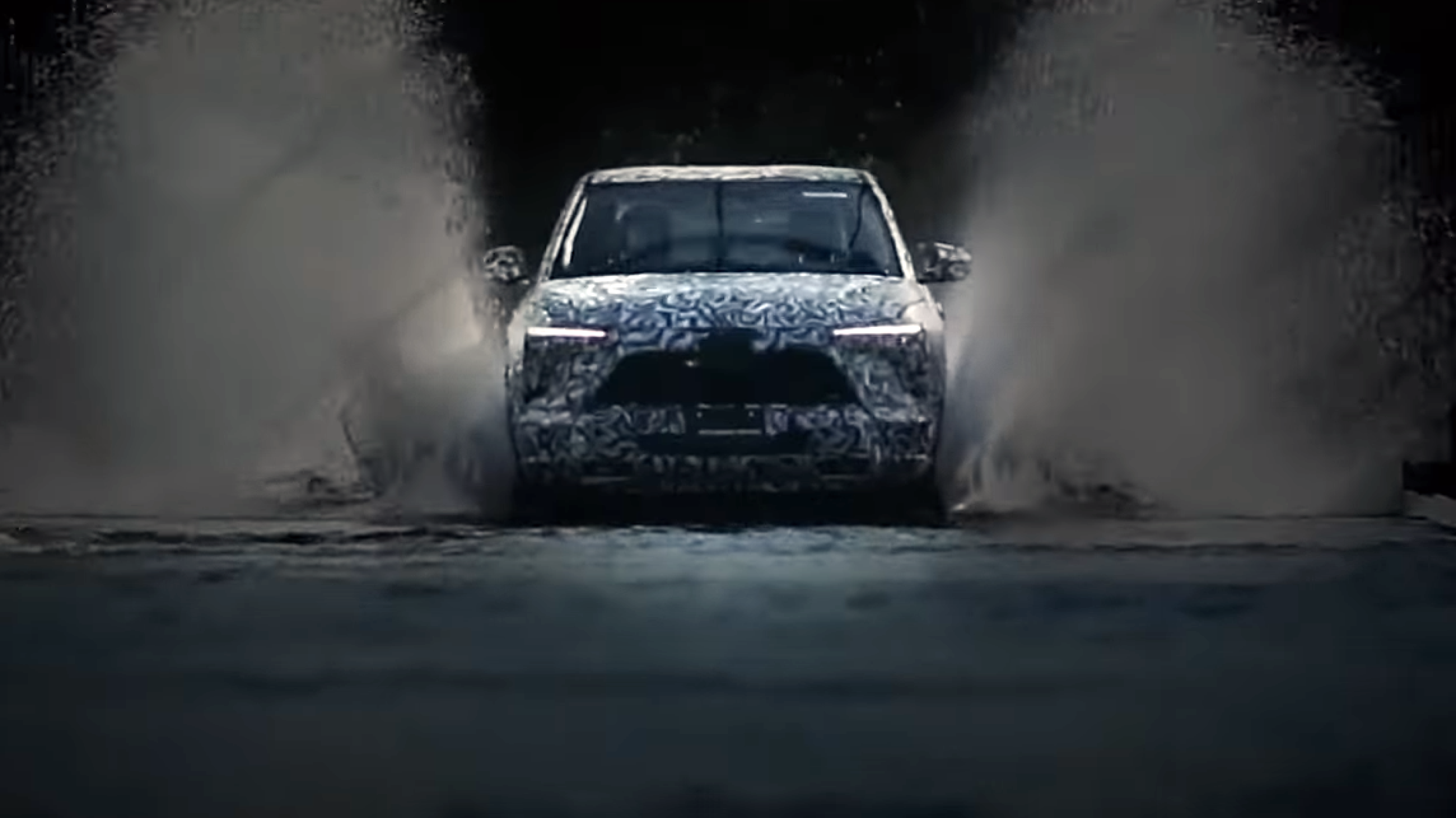
Mitsubishi has announced the production version of its XFC concept will debut in Indonesia next month.
Snapshot
Mitsubishi teases new small SUV ahead of August debut
New, unnamed model primarily developed for South-East Asia
Business as usual for the ASX and Eclipse Cross in Australia, for now
The all-new small SUV is intended for sale in developing markets, with Mitsubishi Australia confirming it will announce its plans for the small SUV segment “in due course”.
It currently sells two vehicles in the popular segment – the 13-year-old ASX and the six-year-old Eclipse Cross– with no successor plans announced globally or for Australia.
“[Mitsubishi Australia] is working closely with [head office] on the future model portfolio and this includes the small SUV segment where ASX has been a stalwart,” said the brand’s local arm.
Earlier this year, Mitsubishi Australia CEO Shaun Westcott said the company has no plans to replace the ASX at present because the current model continues to sell so well in Australia.
“I can’t reveal details [for ASX] other than to say that it’s still smashing records. It’s still sitting extremely well. It’s a really popular car in Australia and a very important car for us,” he said.
1
“We continue to explore multiple and various options around what is the right [replacement] car to bring to Australia.”
In addition, Mitsubishi’s general manager of its product strategy division Koichi Namiki, told Wheels a successor to the ASX is “not likely”.
“We could come up with a totally new car, but it’s not likely”
Namiki-san was honest that, as futuristic as it may look, the production version of XFC will need safety and performance upgrades to satisfy markets like Australia, New Zealand and Japan.
Mitsubishi has announced the unnamed small SUV is “first planned for launch” in its core South-East Asian region – including Thailand, Indonesia, and the Philippines – which has less stringent safety standards.
It will feature four drive modes – normal, gravel, mud and a Mitsubishi-first wet mode – with active yaw control.
1
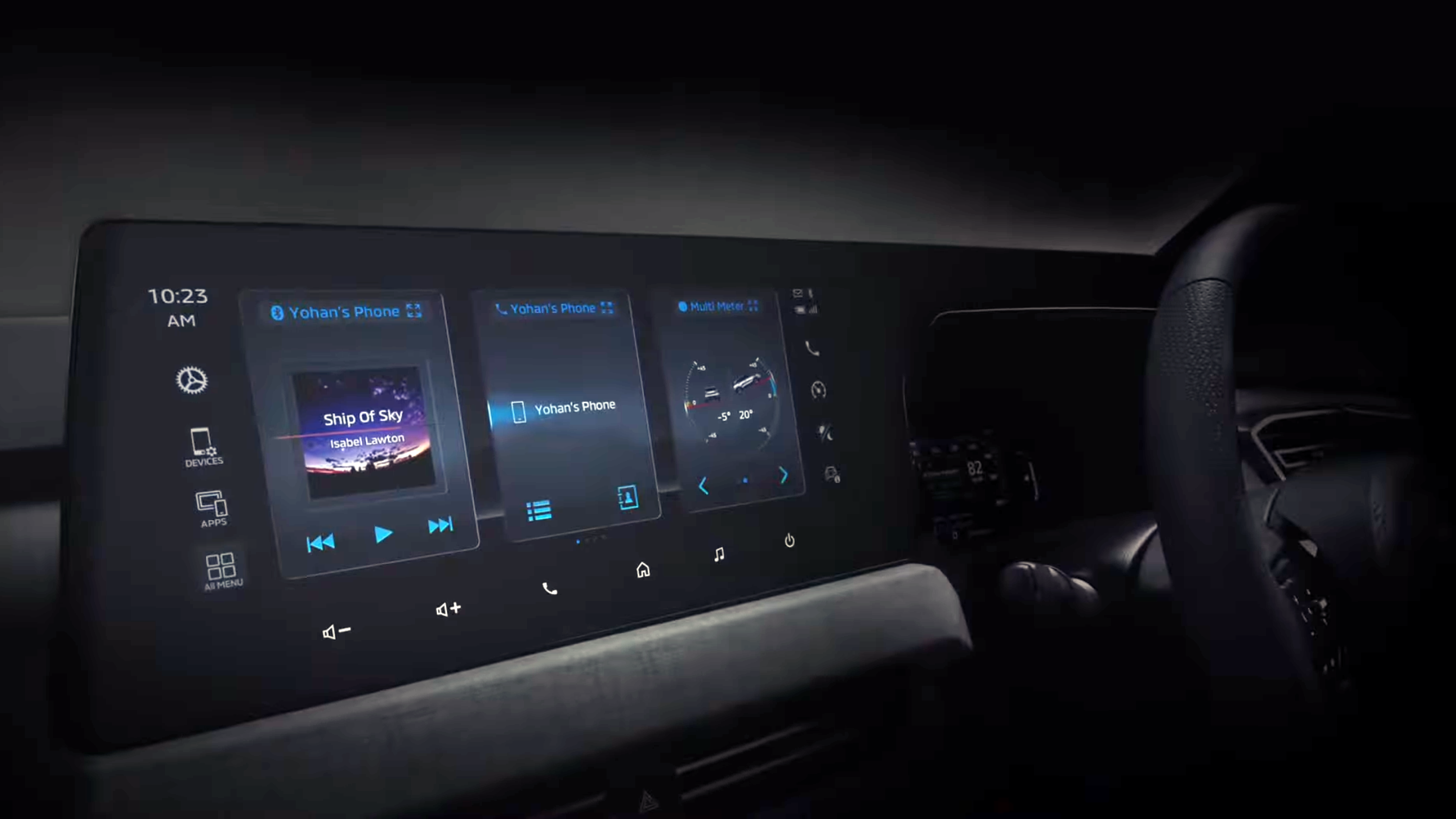
Other confirmed features include LED exterior lighting, a new infotainment system, a large instrument cluster display, a Yamaha audio system and “versatile storage spaces”, while ground clearance is said to be a class-leading 222 millimetres.
“In developing the all-new compact SUV, we enhanced road performance through repeated testing in Japan on a course that mirrored the road conditions of the ASEAN region, as well as thorough, extensive road testing in the region itself,” said chief product specialist, Masahiro Ito.
The new Mitsubishi small SUV will be unveiled at the Indonesia auto show on August 10.
The Australian importer of BYD electric cars, EVDirect, has opened its first ‘Megastore’ in Sydney as it prepares to launch four new models by the end of 2024.
Snapshot
First BYD Megastore opens in Sydney
Delivery and fulfilment centre to come later
Dolphin deliveries imminent, Seal, electric ute and larger SUV coming
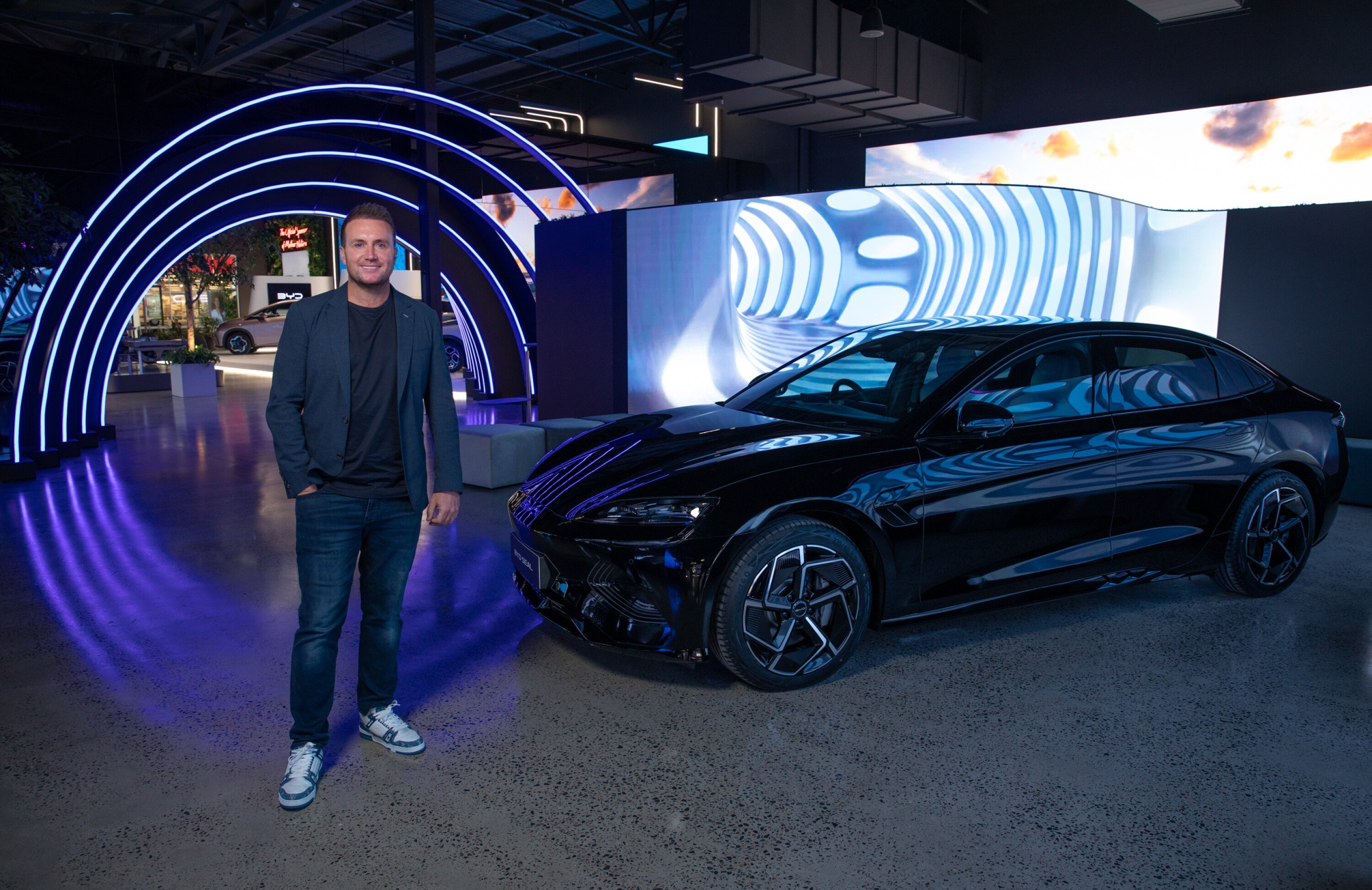
EVDirect chief executive Luke Todd claims the Megastore retail concept is a “world first” by bringing the experience of traditional motor shows to the public.
“It’s taken all of the barriers away from that confronting episode of walking into a dealership and either getting good or bad service,” Todd told WhichCar.
“It’s supersized and automated the process of how you buy a car. And that is a world first. There is nothing like that.”
1
The store in the suburb of Alexandria is located near Sydney Airport.
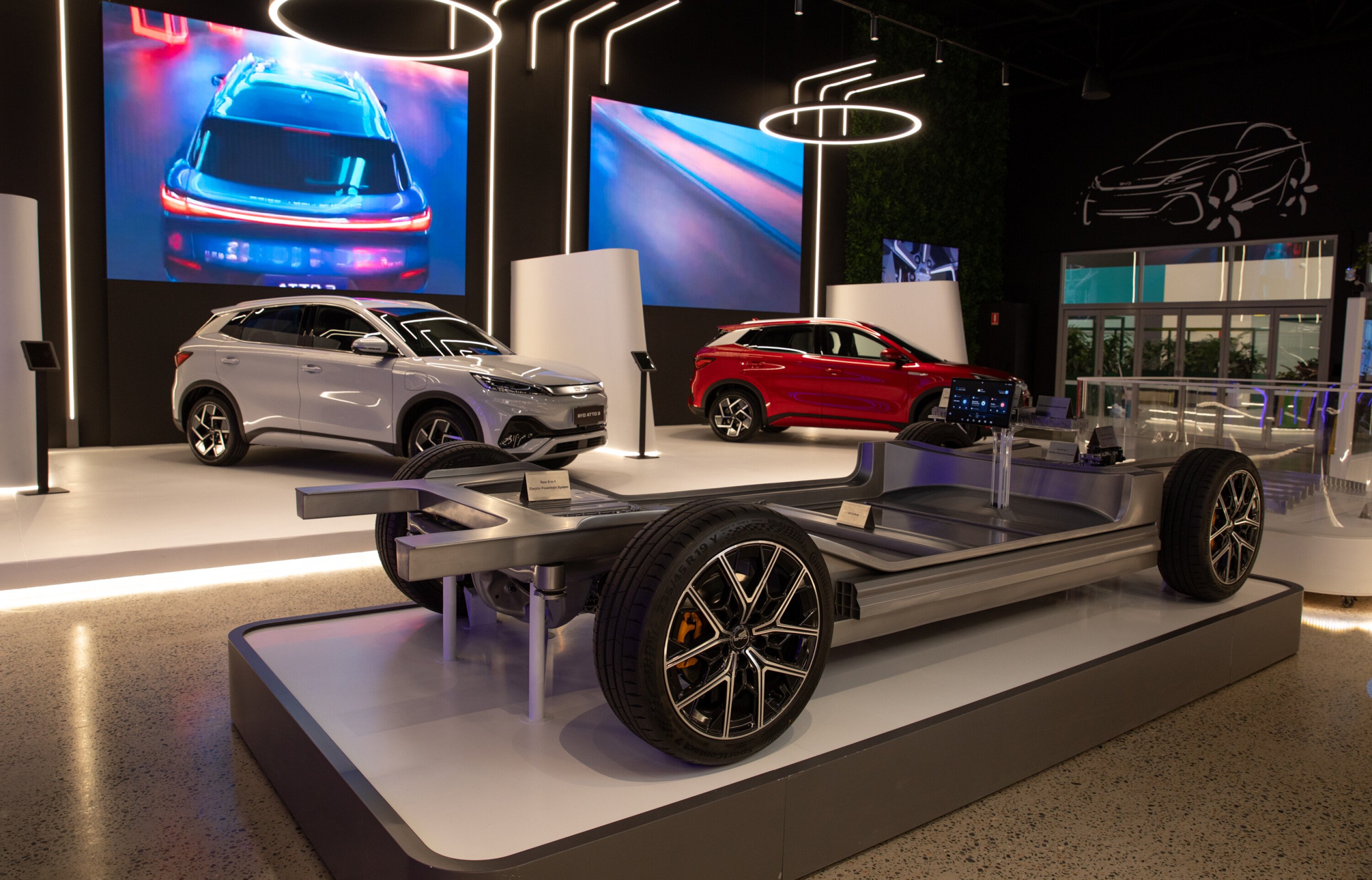
The immersive concept features cars on stands and a section with charging partner Ampol showcasing its home energy and AmpCharge products, plus installations demonstrating its ‘Blade Battery’ cells and third-generation EV platform.
Todd told WhichCar that it will soon open a separate centre nearby to facilitate deliveries and servicing through the Megastore.
It is the first flagship store planned as part of an expanded partnership with car dealership franchisee Eagers Automotive Limited. The company will continue with its fixed-price online purchasing model.
Dolphin deliveries imminent, 2024 BYD Australian expansion plans revealed
EVDirect’s CEO also confirmed to WhichCar that the budget-friendly BYD Dolphin electric hatch will start deliveries ‘imminently’ after reservations opened in June.
According to the BYD Auto Australia website, new orders of the small EV – which is priced from $38,890 before on-road costs and incentives – are still on track for deliveries this month or October.
Additionally, Australian pricing, details and orders for the BYD Seal electric sedan are expected to arrive roughly next month.
July 3, 2023: BYD ‘Megastores’, servicing & delivery centres to launch in Australia
The Australian distributor of Build Your Dreams (BYD) electric cars has announced plans to significantly expand its retail, delivery, and servicing presence in Australia.
Snapshot
EVDirect to launch u2018BYD Megastoresu2019 in coming months
Mass delivery and servicing centres to launch
Mystery fourth BYD EV hinted
Importer EVDirect plans to open ‘BYD Megastores’ in Brisbane and Sydney in early spring (September to November inclusive), intended to provide customers with an “immersive and educational experience”.
The flagship retail sites will add to its existing network of Eagers Automotive run showrooms and its own BYD Experience Centre in Sydney.
It’s part of an expanded partnership with car dealership franchisee, Eagers Automotive Limited, under the subsidiary appropriately called the ‘EV Dealer Group’.
It is responsible for handling retail and aftersales provisions for BYD Automotive Australia.
Mass BYD delivery and servicing centres
Additionally, EVDirect will launch dedicated BYD Service and Fulfilment Centres in a similar approach to Tesla, which uses warehouses at select locations to facilitate deliveries en masse.
It aims to alleviate the pressure on BYD showrooms, Eagers’ preparation centres and its select MyCar Tyre and Auto servicing locations, as the company prepares to meet demand from the forthcoming budget-friendly BYD Dolphin electric hatch and Seal sedan, in addition to the current top-selling Atto 3 SUV.
The first BYD servicing and delivery site will open in August at Mascot, located next to Sydney Airport.
The company claims the location can prepare and handover 100 cars daily to new customers.
1
Mystery BYD EV coming in 2024?
“… four more BYD models slated for release and delivery in Australia by the end of 2024…”
EVDirect chief executive Luke Todd said the company is quickly expanding to meet the projected growth in demand for BYD cars in Australia.
“The first year of deliveries of BYD products has been highly successful and unprecedented by volume and nationwide expansion,” Todd said.
“With four more BYD models slated for release and delivery in Australia by the end of 2024, the BYD brand will continue its exponential growth.
“Our company will continue investing in streamlined supply chain processes and product development of BYD vehicle models for the Australian market.”
What’s the fourth BYD EV coming to Australia?
With the BYD Dolphin and Seal to join the Atto 3 this year, the EVDirect CEO suggests there’ll be at least one more yet-to-be confirmed model coming in 2024.
Previous rumours have pointed to a medium- or large-sized BYD electric SUV, a BYD ute has been previously earmarked for Australia, and overseas markets already sell the flagship Han sedan and Tang SUV.
However, it could simply be the hotted-up BYD Dolphin Sport, which will be limited to 1000 units when it lands next year.
The partnership expands on EVDirect’s joint venture with Eagers Automotive last year.
Previously, the distributor promised to exclusively sell vehicles online and use MyCar’s network to handle deliveries and servicing.
The Federal Government’s luxury car tax (LCT) applies to ‘fuel-efficient vehicles’ (any model with less than 7.0L/100km combined fuel consumption, including EVs) priced beyond $89,332 – a $4416, or 4.9 per cent increase, compared to the last financial year.
The entry-level Model 3 Rear-Wheel Drive is now listed at $57,400 before on-road costs – beating its previous $59,990 low between July 2021 and March 2022.
Meanwhile, the mid-spec Model 3 Long Range AWD is down $3900 to $70,400 plus on-roads, and the Performance AWD range-topper has reduced by $5155 to $83,400 – falling below the LCT threshold.
Both theModel Y Rear-Wheel Drive and Long Range AWD have decreased by $3900, while the flagship Performance AWD is down $6395 to $92,560, including the luxury car tax.
The latest pricing adjustment follows up and down changes for the Model 3 and Model Y in May, with updated pricing listed on Tesla’s consumer website.
VFACTS new-car sales data reveals the Model 3 is Australia’s best-selling electric car and the highest-selling passenger vehicle.
As for the Model Y, it is Australia’s best-selling electric SUV, with 8442 registrations year-to-date. It is also the top-selling vehicle in its medium SUV over $60,000 segment.
Tesla Model 3 pricing – July 2023
Prices exclude on-road costs, delivery fees and order fees.
Model
Pricing
Change (vs. May 2023)
Rear-Wheel Drive
$57,400
down $3900
Long Range AWD
$70,400
down $3900
Performance AWD
$83,400
down $5155
Tesla Model 3 Australian pricing history
Tesla Model Y pricing – July 2023
Prices exclude on-road costs, delivery fees and order fees. Luxury car tax is included where applicable for consistency with other vehicles.
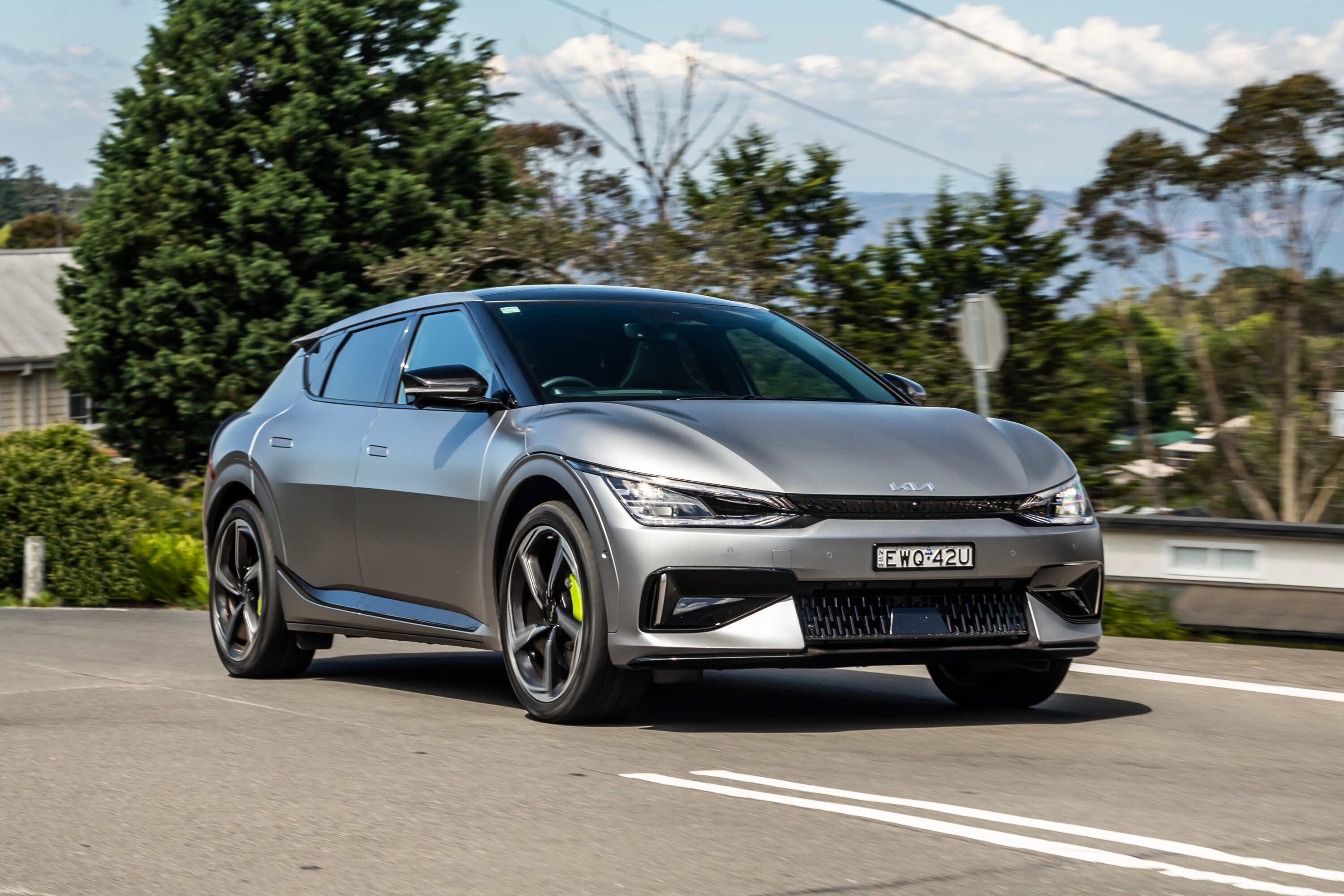
Alex Affat was suitably impressed at the Kia EV6 GT’s Australian media launch. The program took in some of Victoria’s most testing roads and a stint at Haunted Hills raceway – a tight and technical hillclimb course around which Affat relished throwing the two-tonne Kia.
“Kia’s EV6 GT is a supremely talented thing, and if dynamic driving forms part of your remit, this car will do things even its talented siblings can’t, and that’s a lot,” Affat remarked.
A track day is a pretty good way to make a performance-focused $100K Kia shine, but what’s this car like to live with in more regular driving? And is that firm adaptive suspension too stiff for Sydney’s particularly vicious roads?
Spoilers here, but the EV6 GT is a superb machine. And, providing you’re aware of what you’ve gotten yourself into, you’ll find the suspension is immaculately judged. We even sat down with chassis dynamicist Graeme Gambold to really understand the magic in the EV6 GT’s ride/handling balance.
Perhaps most importantly, this road drive is about understanding how much damage upping the GT’s power and grip levels has had on the real-world driving range.
The GT is Kia’s flagship EV6, but as in certain other performance brands (Hyundai N, BMW M, Porsche RS), you often pay more for less.
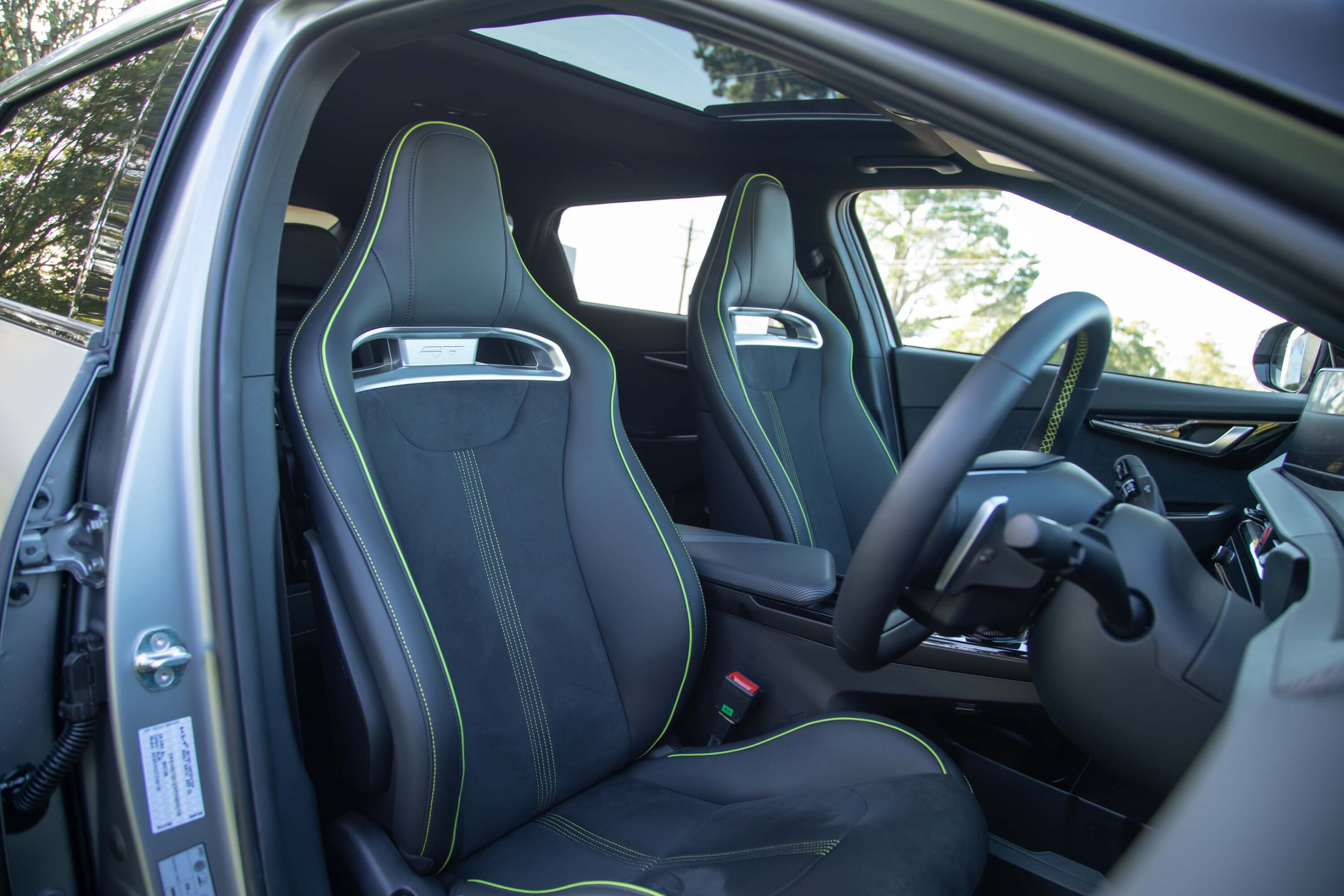
In this instance, the best example is that, for $12,000 more, you swap the GT-Line’s plush, leather-appointed, heated, cooled, and electrically-adjustable seats for a pair of lightweight manual-adjust buckets. For some, this will be a problem, and if it is I’d heartily recommend sticking to the GT-Line.
For me? I love the bucket seats, they’re figure-hugging and feature fine manual adjustment that allows an excellent driving position.
If you’re chasing an electric car that gets to 100km/h in a similar amount of time, you’re well served… providing the bank will loan you upwards of $200,000 for a Porsche Taycan Turbo.
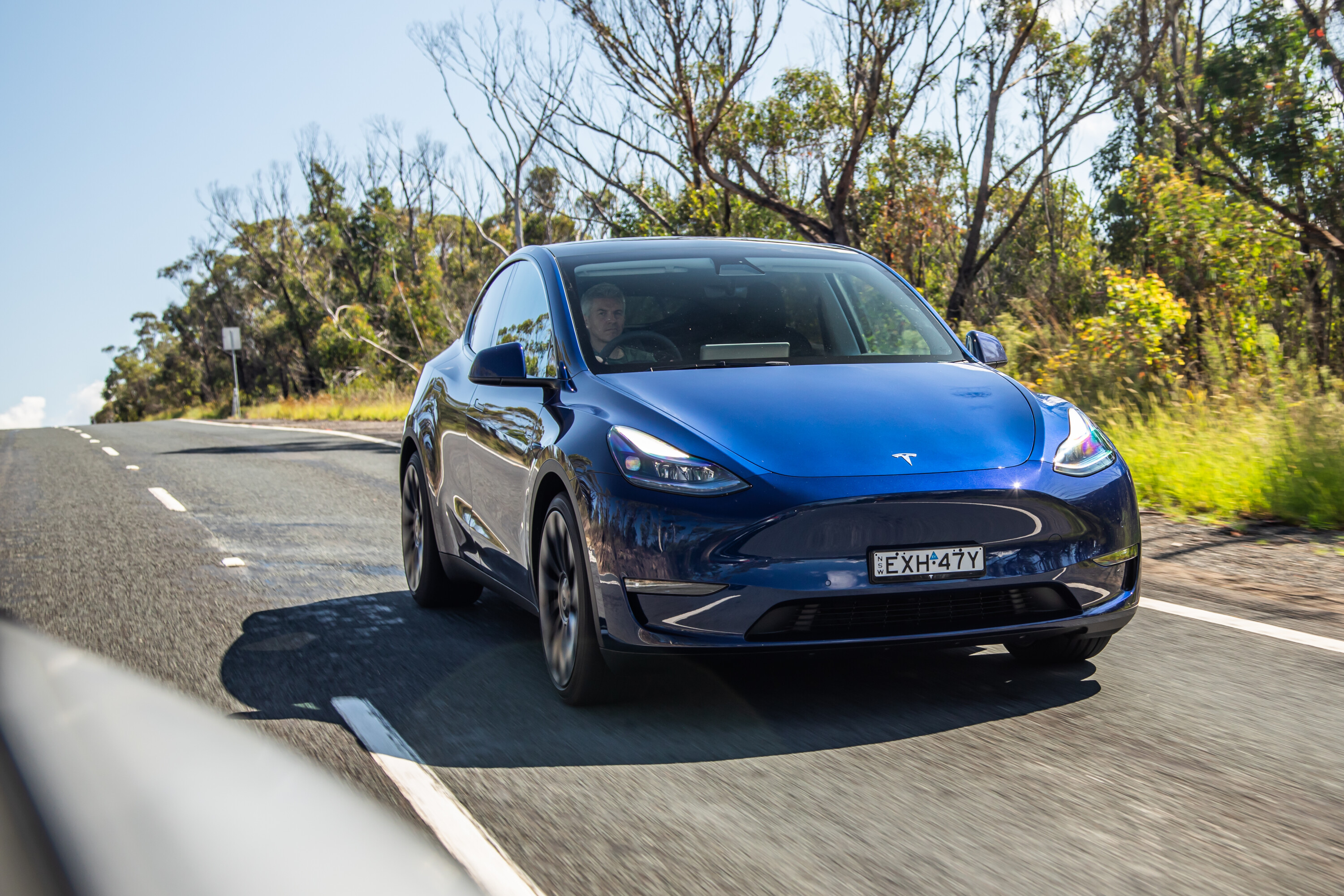
As for options closer to $100K, well, it’s pretty much just Tesla’s Model 3 and Model Y Performance, and the Kia has already dispatched the Y in a previous twin test.
Much of the discourse around electric cars returns to driving range, though, and that’s something at which the EV6 GT doesn’t excel. The Model Y Long Range AWD has 533km WLTP driving range, and the regular EV6 GT-Line AWD is rated at 484km (WLTP).
There’s a lot of chatter that electric vehicles are all the same; well I’m here to tell you that from the driver’s seat, they aren’t.
A Tesla Model Y is minimal (to a fault), the Ioniq 5 is airy and Jetsons-esque, and the Polestar 2’s cabin feels like a Swedish audiophile’s listening room.
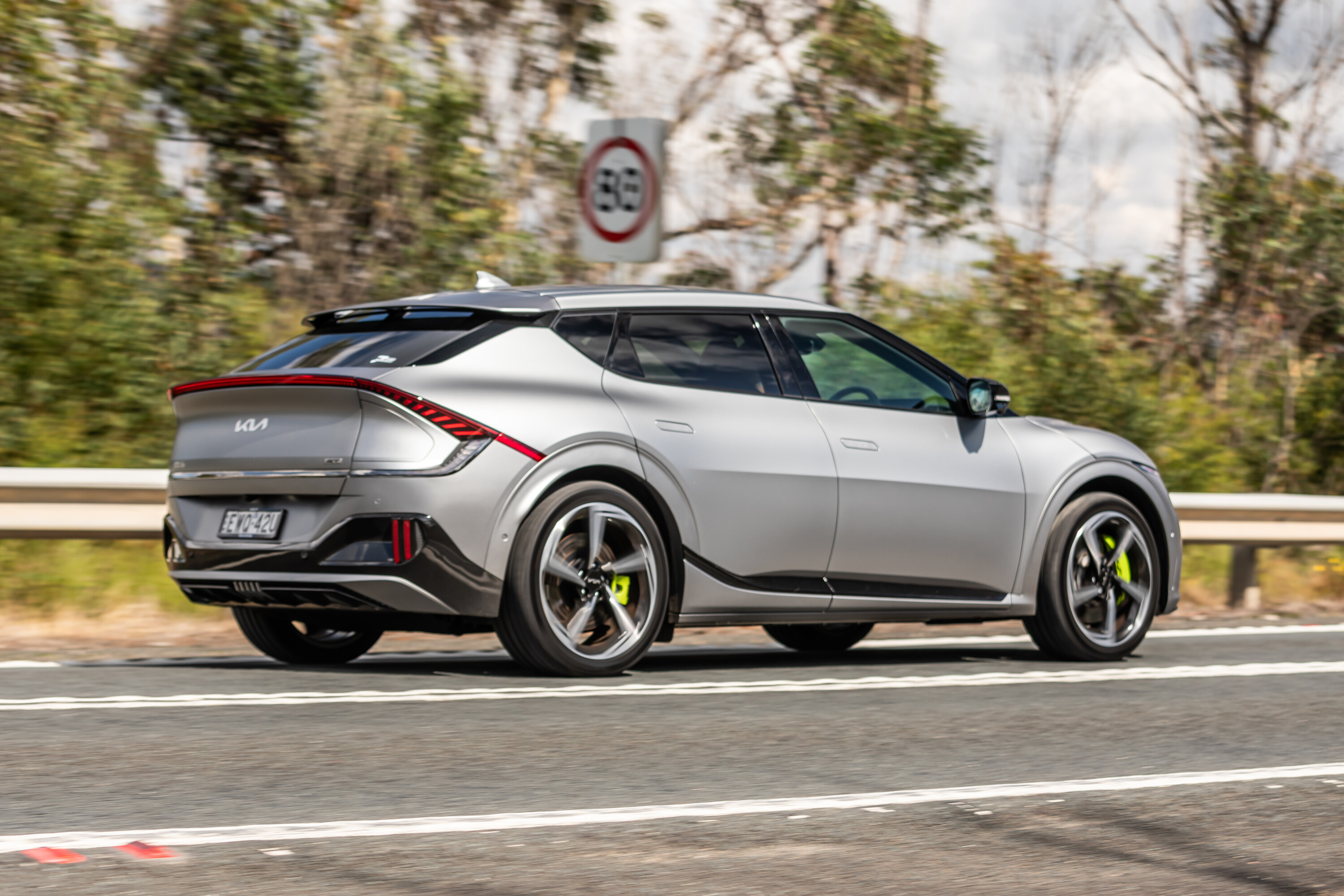
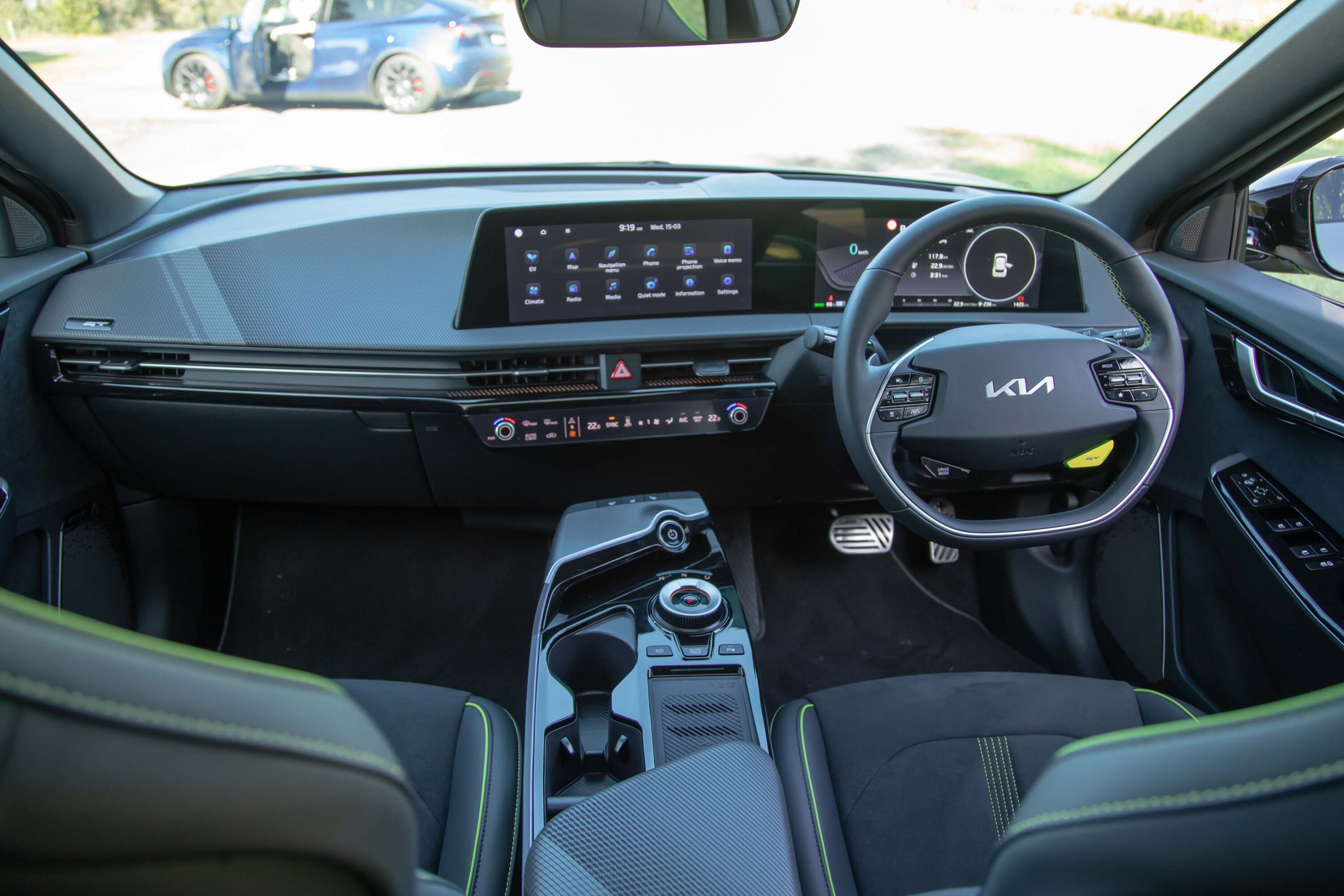
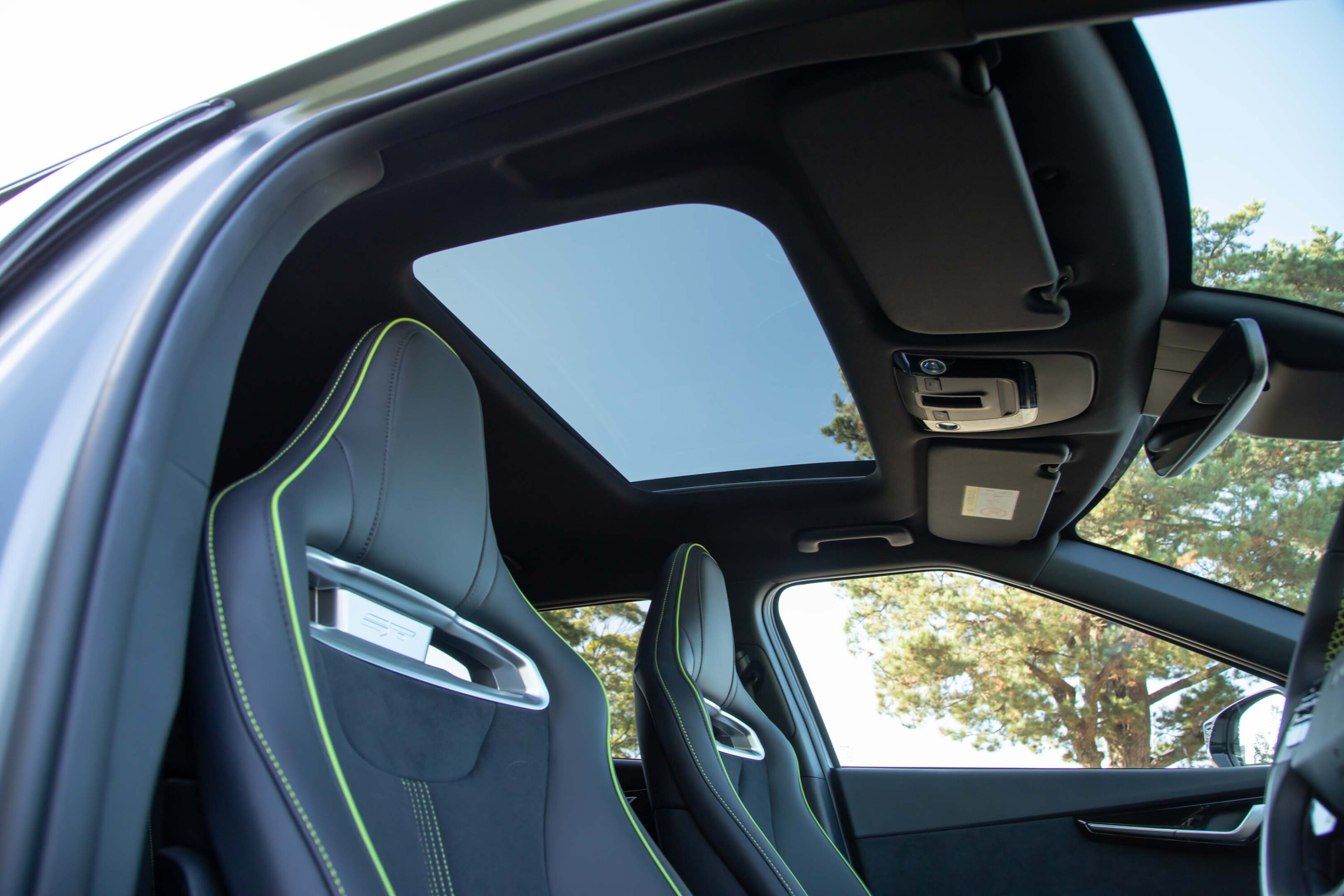
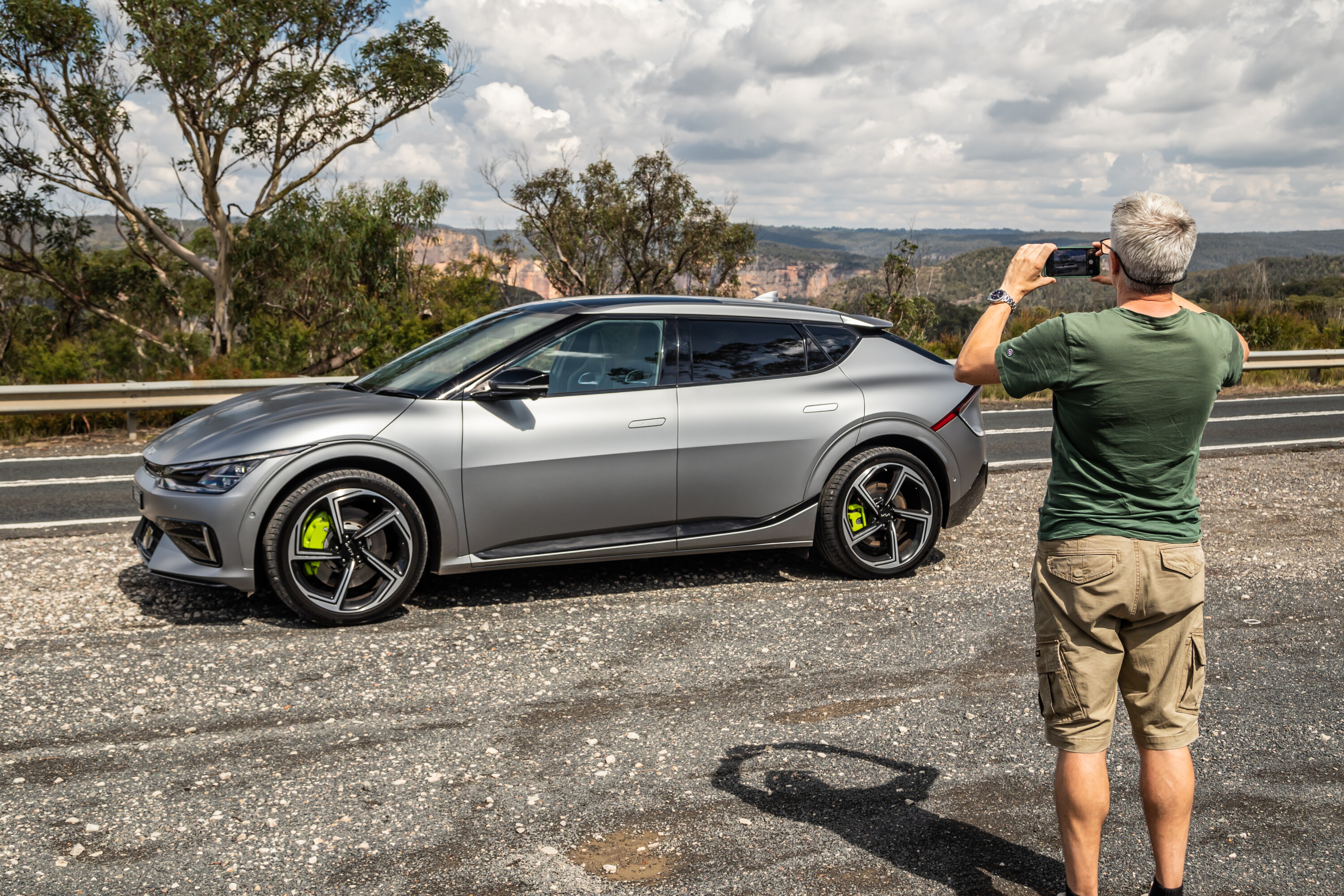
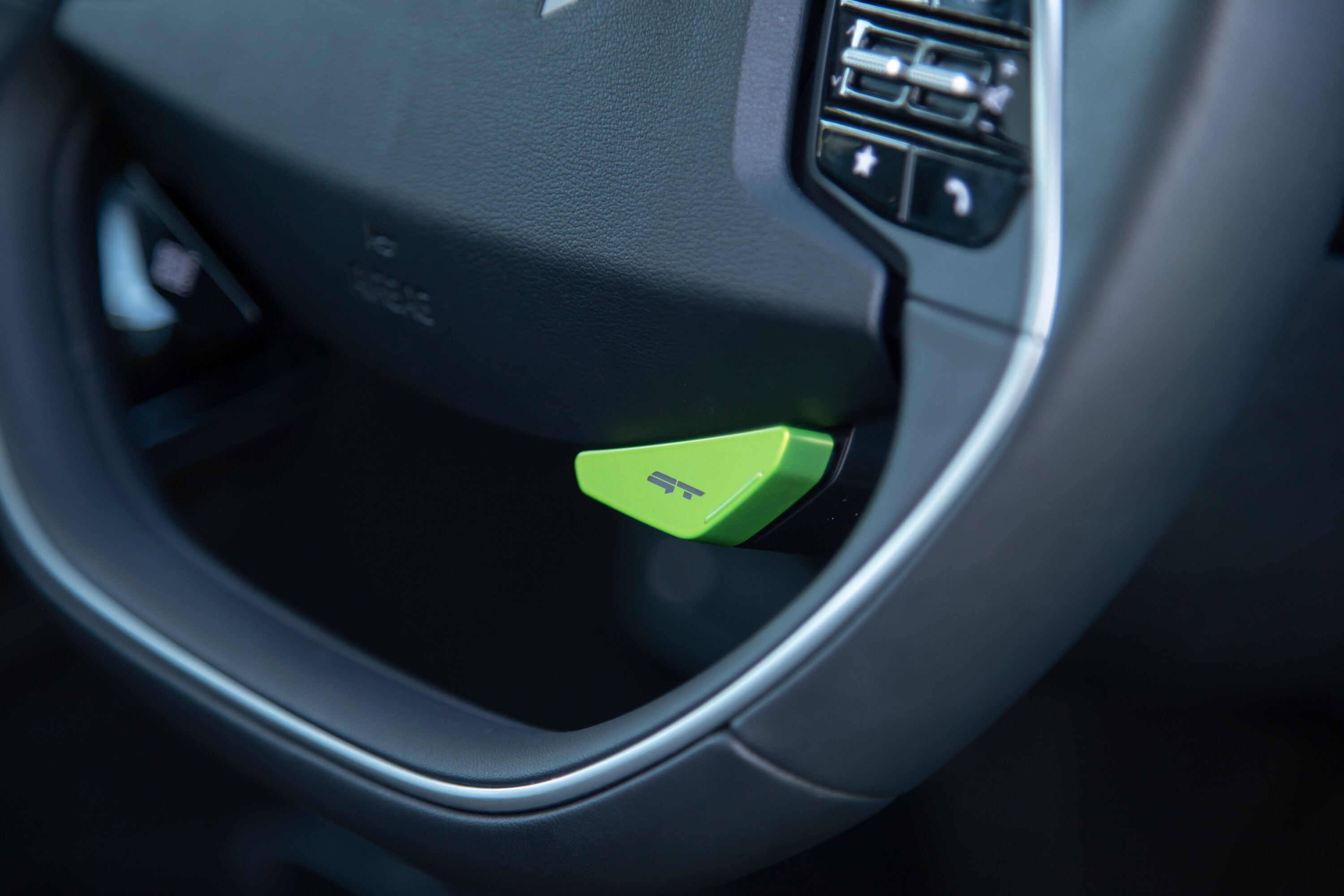
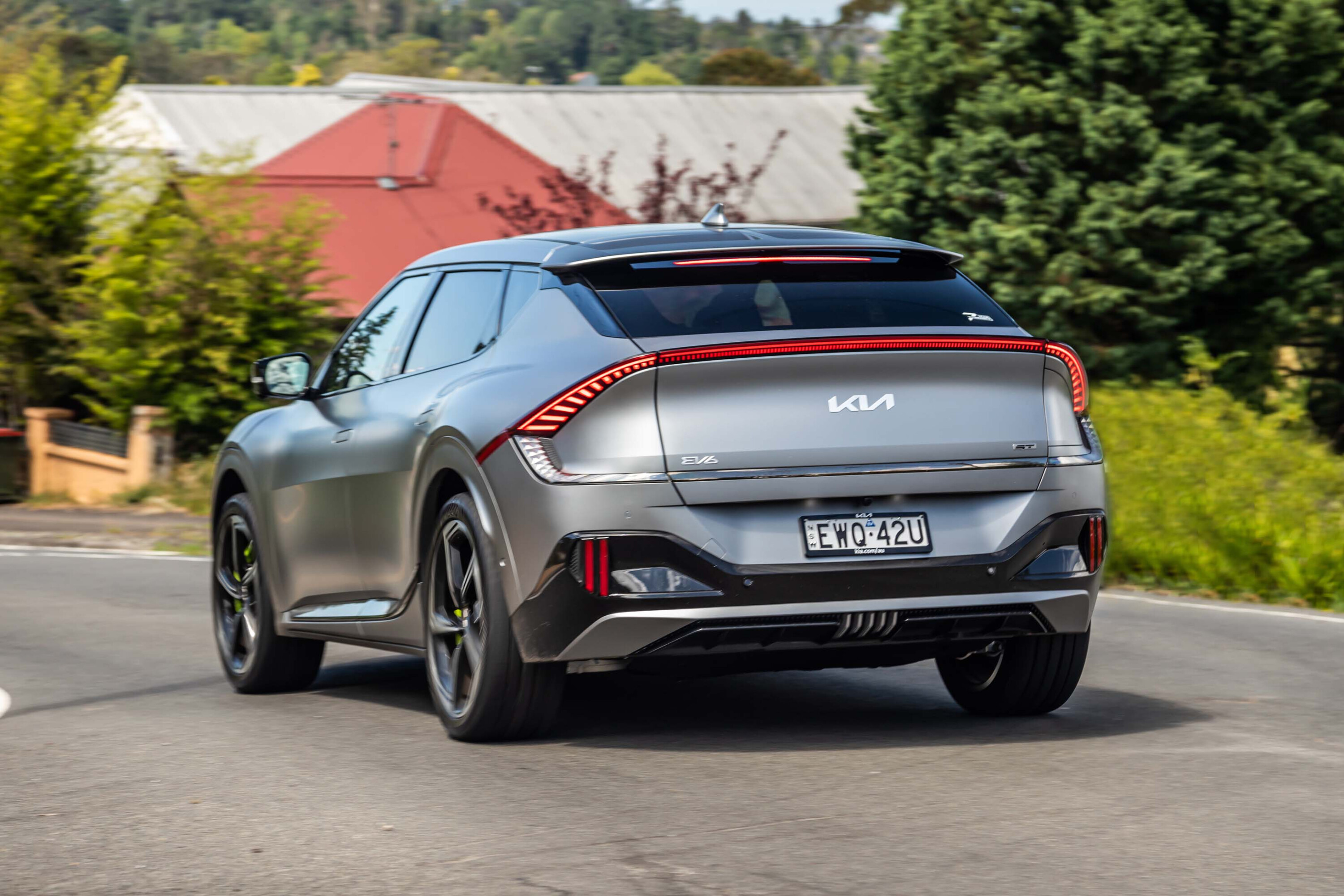
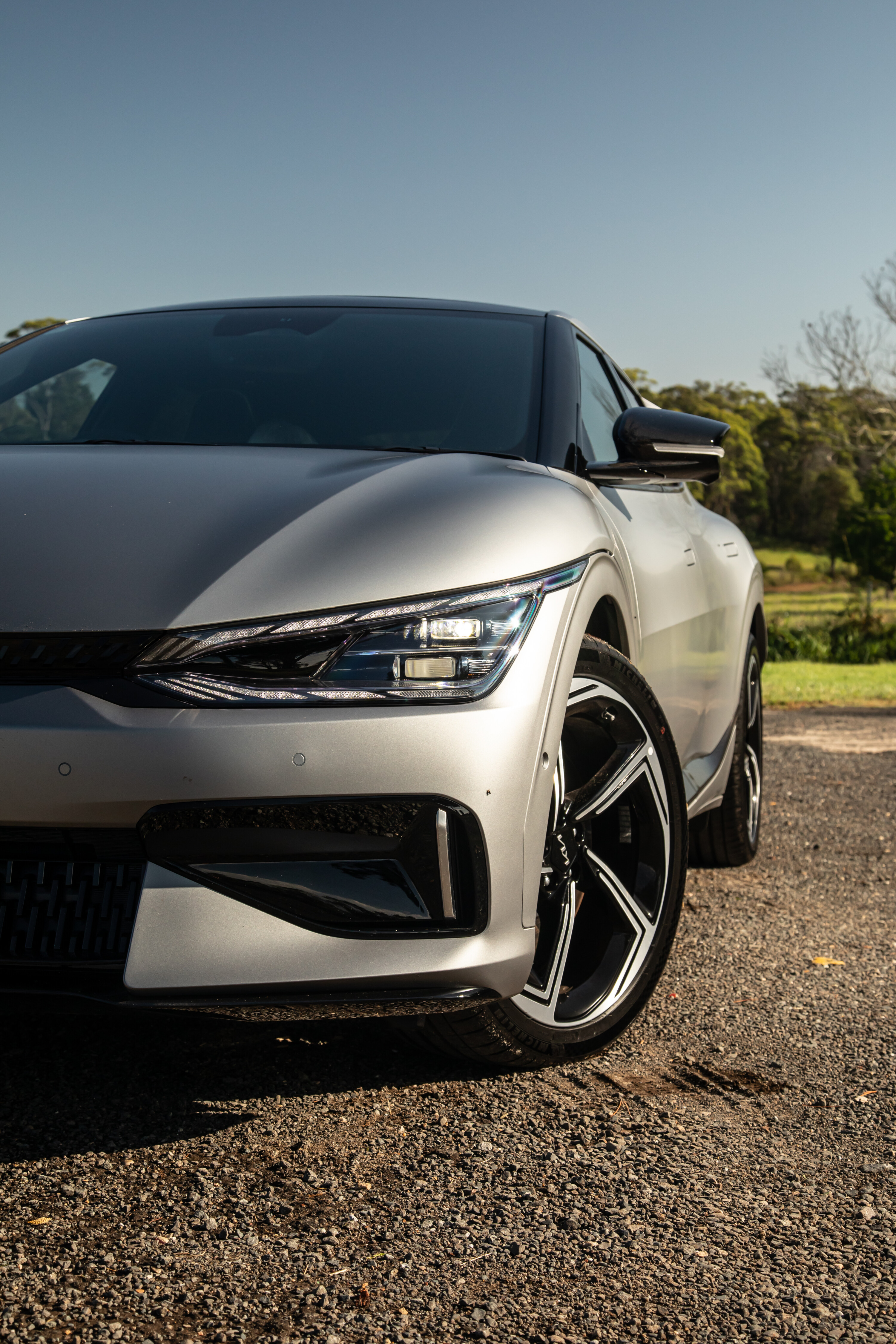
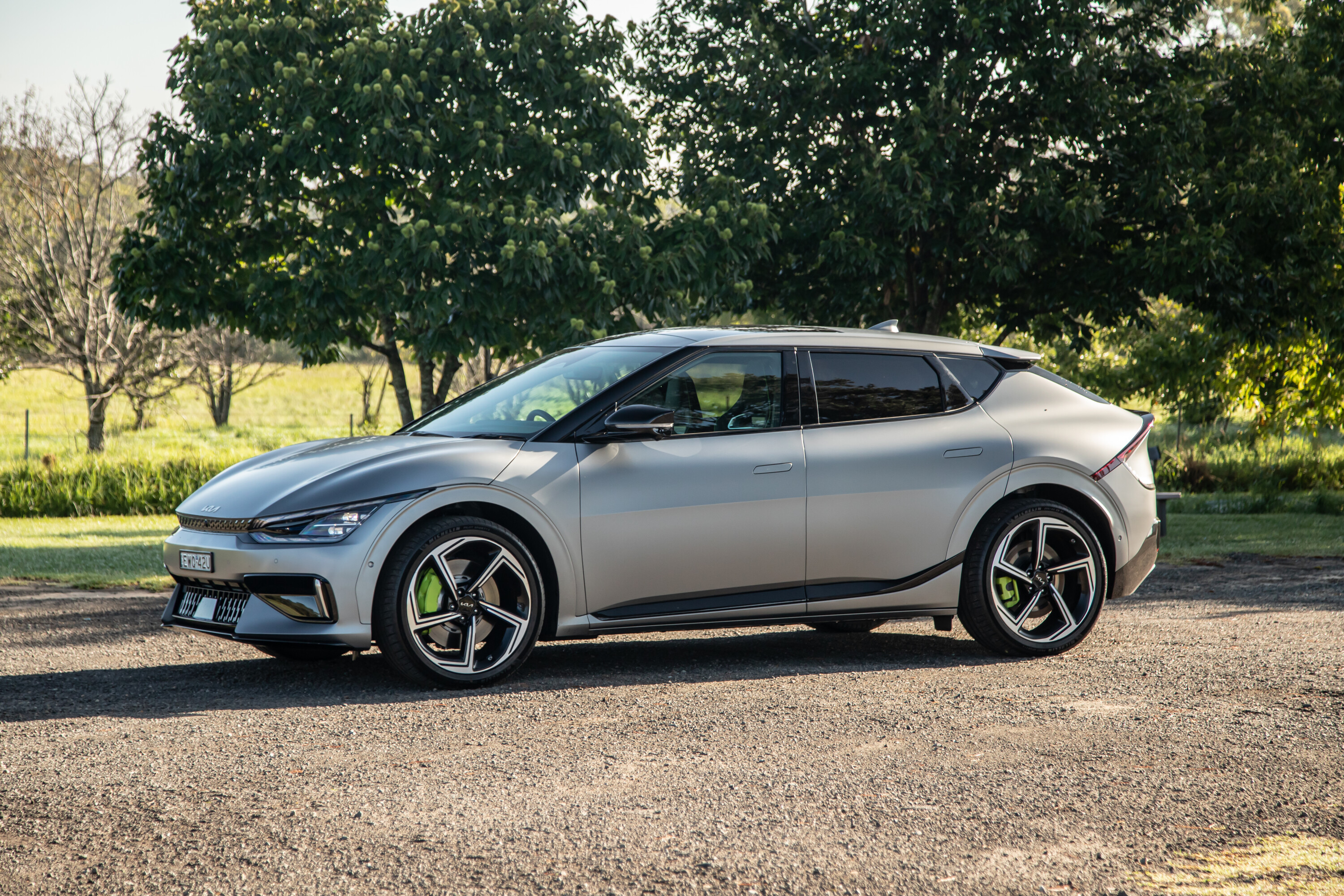
The EV6 GT, though, is like stepping into an 80s arcade. In a good way. Long, sharp lines and vivid ambient lighting lift what is a cocooning cabin. It’s divided opinion among our testers, but some will love the consistent fluorescent chartreuse accents that carry from the brake calipers to the stitching, optional ambient lighting colour, and wheel-mounted GT button.
On the subject of the two-spoke steering wheel, it’s unorthodox, but not in a bad way. Any early worries of forgetting which way up it is don’t materialise in practice. Along with the GT Mode button, there’s a drive mode selector and controls to interact with the 12.3-inch digital driver’s display.
1
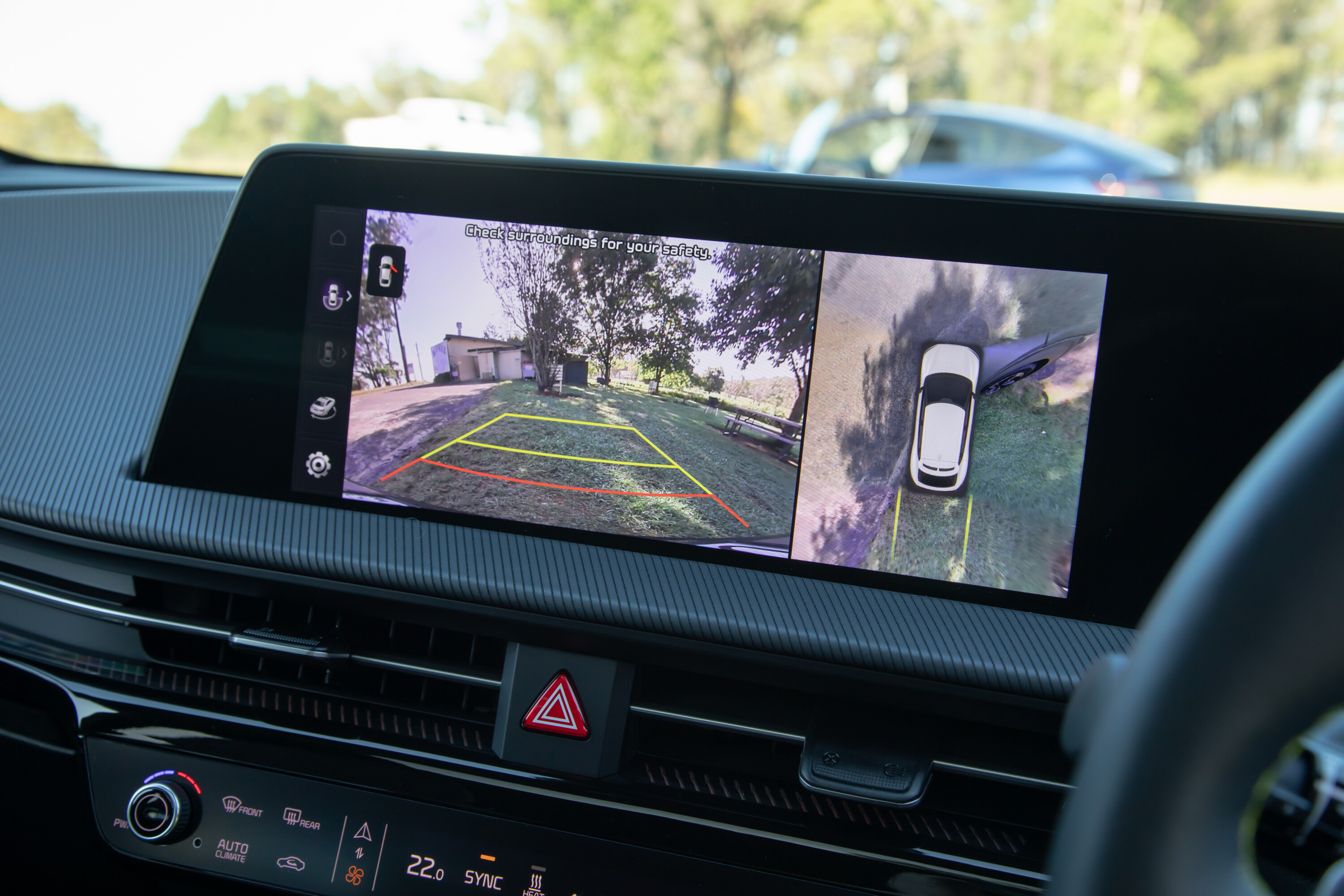
A 12.3-inch touchscreen is angled towards the driver, though the top left corner is quite a reach. The software is attractive and easy to use but doesn’t offer the outright power of Tesla or Polestar’s software. Navigation with live traffic is included, and the Apple CarPlay/Android Auto connection is wired.
Material quality is generally high, the GT-Line and GT are big steps over the plasticky EV6 Air, and both are worth the premium. Though at $100K, the EV6 GT’s hard plastic rear door cards aren’t good enough. Build quality seemed solid out on the road with no creaks or rattles noted.
For storing odds and ends, the EV6 GT is great (aside from the tight door cards), with a huge space below the floating centre console perfect for small bags, tissue boxes, or sick bags (you might need them with this much grunt). There are two cup holders and a covered centre cubby with a wireless charging pad that securely holds phones.
1
Then there are the seats that, yes, are suedecloth clad and manually adjustable, but for more slender drivers they’re ace with great support and, although they initially lack padding, I never once got a sore back driving the EV6 GT.
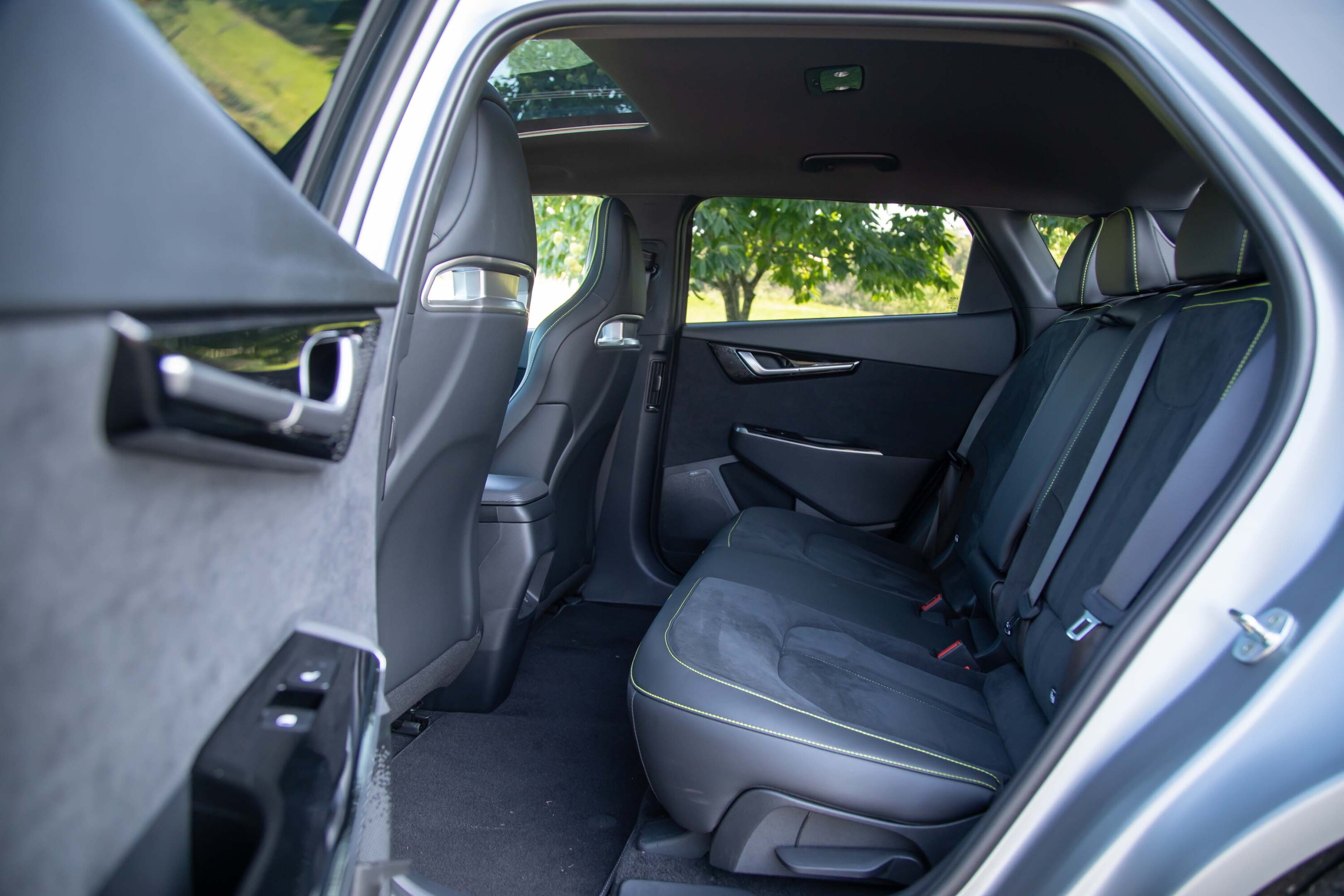
Being slimmer and set lower than the standard EV6 chairs, the GT buckets also improve the EV6’s rear quarters as they are easier for passengers to see past and over. They’ve also got slimmer backrests to liberate more legroom, not that the spacious EV6 really needed it.
Roomy as the EV6’s rear seat is, the black headliner, tinted privacy glass and small sunroof make it quite dark. The sporty seating arrangement sees the outer two spots scalloped to hold in passengers, but it leaves a hump in the centre position, so three across is only comfortable on short journeys.
1
A Model Y’s rear quarters are more spacious but no more comfortable.
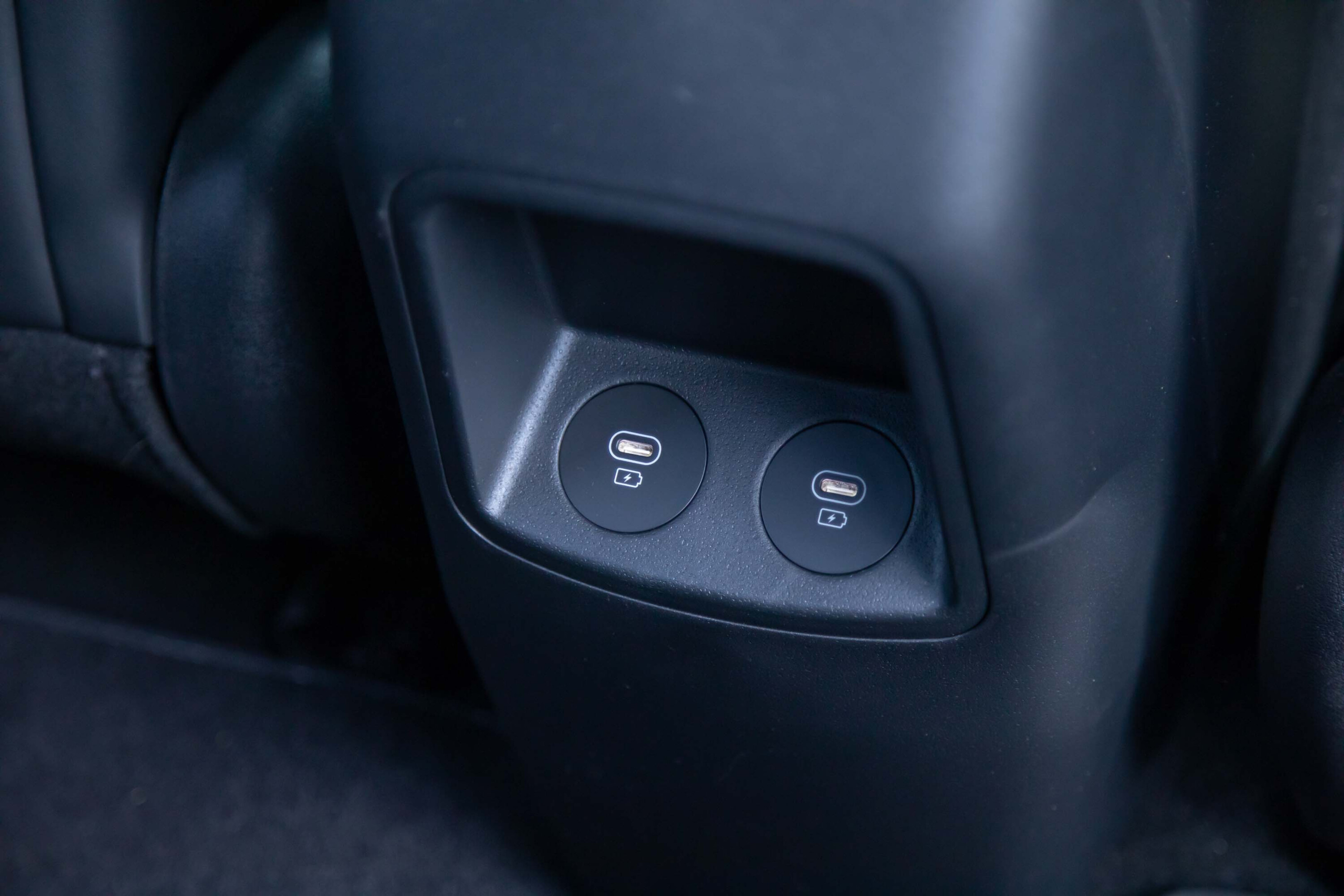
The EV6 GT maintains rear air vents in the B-pillars, a fold-down armrest, a reclining backrest, and two USB-C ports. There’s also a three-pin socket inside for vehicle-to-load functionality – charging laptops, for example – and an optional adapter that connects to the Type 2 charge port to power camp stoves, fridges, and other larger appliances.
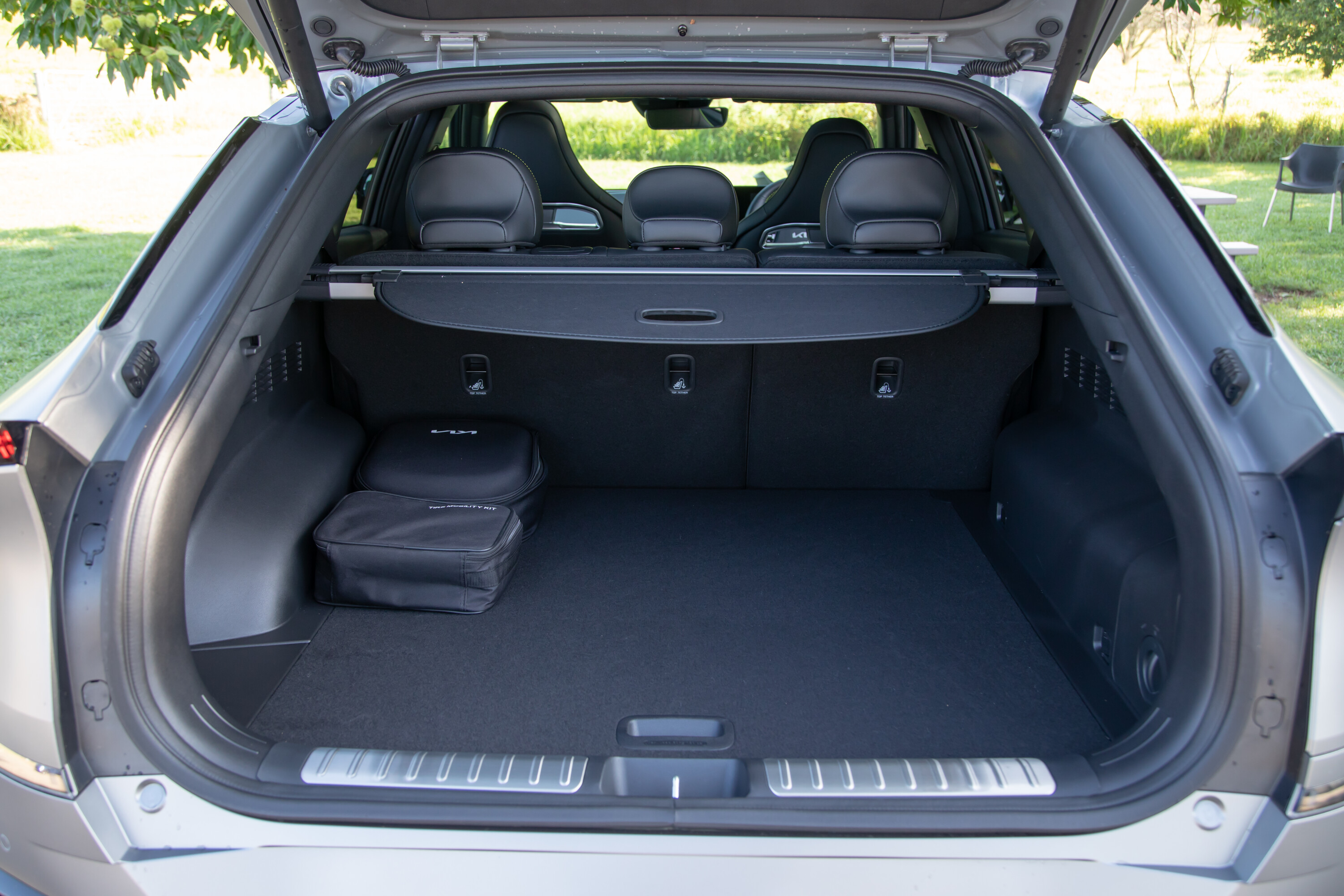
Under a standard power tailgate, the EV6 hides a 480L cargo space. It’s reasonable, but not huge given the size of the vehicle, and there’s only a can of goo to fix a flat tyre. It’s got a small ‘frunk’ (20L) that’s OK for charging cables and other bits but isn’t big enough for luggage. Folding the seats flat using the pull tabs opens up 1260L cargo space.
The E-GMP bones of the COTY-winning EV6 are stellar, but until this GT, the platform’s potential hadn’t been fully unlocked.
It’s likely that the Ioniq 5 N will come and move the outright grip and focus game on further, but as a grand tourer (range anxiety notwithstanding) the EV6 GT strikes a fantastic balance.
The EV6 GT is tremendously fast. Administering full throttle doesn’t result in instant whiplash like a Tesla Model 3 Performance or Porsche Taycan Turbo. Instead, the EV6 GT’s acceleration builds more gradually before all four tyres chirp and fire the SUV toward the horizon.
Kia claims a 0-100km/h sprint of 3.5 seconds and that’s easily believable. The pair of electric motors have their wicks turned up compared to the Genesis GV60 Performance, with the EV6 GT developing 430kW/740Nm from 160kW front and 270kW rear power units.
1
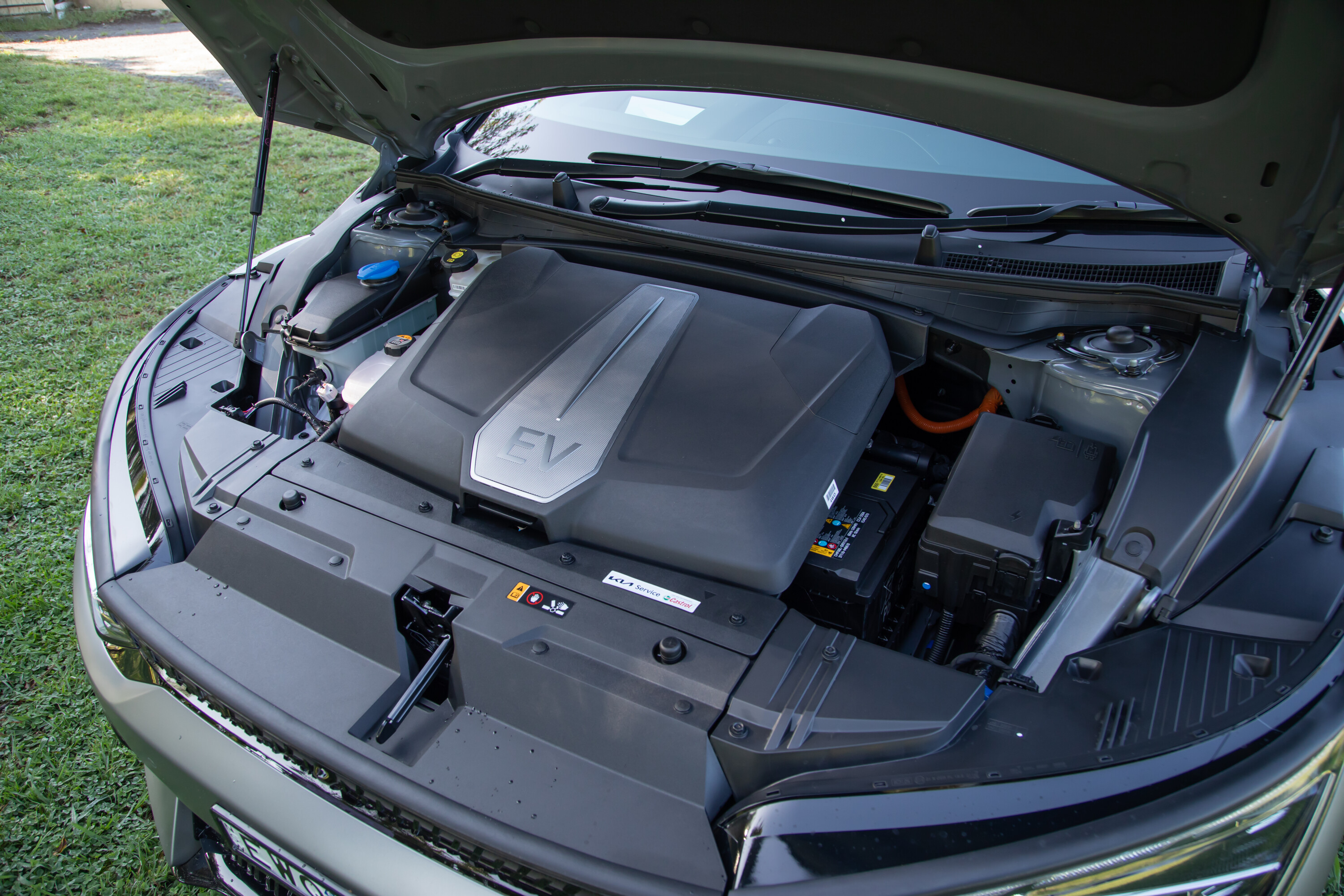
Without a combustion engine to package, Kia was able to upsize the front brake rotors (to 380mm, clamped by four-piston calipers) and in doing so a ‘double ball joint’ suspension design was needed to clear the front struts. It’s mainly to aid packaging, but Kia was also able to optimise anti-dive and castor characteristics for improved steering feel in the GT.
The results speak for themselves, with a quick and precise rack that weights up naturally under hard cornering. There are myriad settings to tweak how the EV6 responds, but we found the steering is best left in Normal as Sport and GT are too firm.
Kia equips the EV6 GT with adaptive dampers that have three settings: Normal, Sport and GT. There are preset modes, and you can set up an individual preference accessible via the GT button. A combination of Sport powertrain, Sport suspension, Normal steering, and GT for the electronically-controlled limited-slip diff suited our test roads best.
1
With ‘My’ mode so configured and engaged, the EV6 GT is transformed. This thing is a weapon in the straights, naturally, yet rolls just enough to communicate grip levels on turn-in, remains balanced mid-corner and is never upset by sharp bumps. It’s quite incredible that a 1.9-metre wide, 4.87-metre long, 2185kg EV can feel truly wieldy.
There are limits, of course, and in tighter downhill complexes the EV6 GT feels its weight and size. The braking is also a little unnatural in i-Pedal Mode (maximum regen) – the pedal feels vague and inconsistent. Best to leave the GT in its second lowest regen setting and use the brake pedal when driving briskly.
With ‘Track’ ESC mode engaged, the rear-biased AWD lets you get on the power and over-rotate the rear tyres thanks to the e-LSD. It’s no delicate Mazda MX-5 or manic hot hatch, but a match for an Audi RS6? You bet.
1
When dialled back to Normal in town, the EV6 GT is firm, but you can feel the quality suspension working away underneath you, and it manages never to crash through bumps even on its large EV-specific 255/40R21 Michelin Pilot Sport 4 S tyres.
There’s no engine noise to speak of (naturally), though at freeway speeds the sticky tyres do generate roar. Kia’s built several Active Sound Design scapes into the EV6 GT, including futuristic whooshes and one that sounds like a strangled Ranger Raptor V6.
1
What’s the secret behind that suspension?
You’ve heard the saying: good, fast, cheap. Pick two.
It’s something that Graeme Gambold, chassis dynamicist for Kia’s ride and handling localisation program, is all too familiar with. Graeme’s worked on the Sportage, Stinger, Seltos, and others… And his daily driver is an F80 BMW M3 Competition.
A comfortable ride alone is a simple equation, but balancing that with a dynamic drive is trickier – especially with EVs. “You put in a spring rate to manage a two-tonne car and you’re going to have a ride comfort problem from day one,” says Gambold.
“With EVs, you have to put in a lot more hydraulic compression to stop the mass getting pushed down, and if you don’t stop that, then you end up with a lot of stored energy in the springs that wants to throw the car back up, so you then put in lots of rebound, and that makes for a jiggly ride,” he added.
1
A balance of soft spring and firm compression is what the EV6 GT has, with its adaptive ECS dampers (about €150/AU$250 each) giving more tuning breadth than a basic ZF unit (€50) or cheap Monroe (as low as €5).
“Every car is a compromise because ride and handling are two different disciplines. But there’s no excuse for a car to have a very poor ride, or have very uncontrolled body motion these days… there’s a lot of things that you do chasing ride quality that’ll enhance handling.”
Roll is his chosen example – because contrary to the belief of armchair engineers, you actually need pitch for grip. “You’ve got to give a car roll because roll weights the outside tires, and that gives you cornering power. Without roll, you just end up making a hard car that just slides across the road”, said Gambold.
“If a car is too flat, it’s not communicating. If it’s too soft, it’s not communicating. There’s a sweet spot there where it’s just got the right amount of roll.”
Efficiency is viewed in a different light when in the pursuit of performance – that’s the tricky part about road cars, and it’s amplified by EVs. Fitting wider, stickier tyres, powerful motors, and more aggressive body kits will eat into rolling resistance and slipperiness.
You can see the results in the EV6 GT, its rated efficiency is 20.6kWh/100km in the combined WLTP cycle, for a rated driving range of 424km from its 77.4kWh battery – 60km less than the GT-Line AWD.
Testing on a mix of country roads and freeways with some enthusiastic driving, we achieved 21.1kWh/100km, giving the EV6 GT a real-world driving range of 367km.
1
That’s not stellar, but thanks to E-GMP’s 800V electrical architecture, you won’t spend long at the charger (provided you can find an operational 350kW station). The EV6 GT climbs from 10-80 per cent charge in just 18 minutes.
We timed 20-80 per cent at an ultra-rapid Evie 350kW station, and that 47.5kWh charge took the EV6 GT 15 minutes. We observed the EV6 GT’s charging speed peak at 230kW. Hooked up to an 11kW wallbox, the EV6 GT will take seven hours and 20 minutes to go from flat to full.
The Kia EV6 GT-Line and Air scored five stars in 2022 ANCAP safety testing but because the EV6 GT features different seats, it is not covered by that rating.
However, its sibling’s results should make the GT should be a pretty compelling safety package as they scored 90 per cent in adult occupant protection and 87 per cent in child occupant protection ratings.
The driver assistance features also function well, with adaptive cruise control and lane-keep assist easing long highway slogs.
The Kia EV6 GT is covered by a seven-year/unlimited-kilometre warranty in Australia. Kia’s dealer network is expansive in Australia, too.
Servicing is close to a conventional combustion car, requiring maintenance every 12 months or 15,000km at a cost of $1371 over five years/75,000km. Polestar, BYD, and Tesla all offer more hands-off conditions-based servicing models.
The EV6 GT is, well, a bit of an anomaly. It’ll only take you about 380km between fill-ups and misses some of the luxuries the lower trims get.
Wheels readers have also expressed frustration that manufacturers are focusing on expensive, hi-po variants before family transport. Thing is, that’s how technology typically evolves. Boundaries are pushed, and doing so evolves the more affordable products.
And even if the EV6 GT isn’t a rational car, at $100K, it’s a mega-fast pseudo-SUV that’ll give the Porsche Taycan a run for its money – and not just in a straight line. So in a way, it strikes good value.
1
The EV6 GT represents experimentation, a desire to push technology. It’s still an early player in the EV performance car game, but one that’s in the realm of the comfortably off, not just the ultra-rich. Most importantly, it shows the future may still be bright for driving enthusiasts.
If you’re looking to buy an electric vehicle for everyday duties right now, it’s hard to recommend you spend $20K more on this GT than the more-than-adequate GT-Line RWD.
As an exercise in what Kia can achieve, though, the EV6 GT is deserving of praise.
Since that issue of Wheels went to press, Tesla has announced that production of right-hand-drive versions of the Model S have ended.
The Model S was the car that made Tesla’s reputation. Forget about the somewhat crude and troublesome Roadster that preceded it. The Model S showed that electric cars could be aspirational. First imports arrived here in Australia in 2014 and those who drove it had earmarked it as an outside bet for Wheels’ Car of the Year award.
1
Here was a vehicle that could achieve 500km of range if you were careful at a time when a Nissan Leaf typically returned 120km.
Byron Mathioudakis noted that “the Tesla doesn’t so much hit the range ball out of the EV park as completely rewrite the rules.”
Ultimately, packaging, comfort and specification issues preventing the Model S from ascending to the very top step of the podium, that year’s winner being the first EV to claim the COTY crown in the shape of BMW’s also now departed i3. As good as the i3 was, it’s clear which of these two is the more historically significant car, something which is pointedly not one of COTY’s judging criteria, it ought to be noted.
1
It’s not the first time Tesla has pulled the plug on Model S orders here. Prices and delivery times for the Model S were quietly deleted from Tesla Australia’s website back in 2021.
Customers who have placed a pre-order on a facelifted Model S, which went on sale in the US in 2021, have been offered a refund of their deposit and a credit towards a Model 3 sedan or Model Y SUV should they want to switch.
“Due to recent changes to the vehicle program, Model S will not be available in Right Hand Drive. Unfortunately this means your order is unable to be fulfilled and will be cancelled,” Tesla’s website states. “You will receive a full refund for any payments made,” it continues.
1
1
Buyers in the UK and Japan will still be able to import left-hook versions of the facelifted Model S but that’s clearly not an option for Aussie customers.
If you want a Model S – or, indeed, its Model X SUV sibling – it’s the end of the road. It also raises significant questions as to if and when right-hand-drive versions of the long-awaited Cybertruck will arrive Down Under.
Meanwhile, we doff our hats to the magnificent Model S. Genuine game-changers don’t come by very often. Here’s one that will be remembered as one of the 21st Century’s most significant cars.
1
Fast, faster, fastest?
It now seems somewhat quaint that we were all rather blown away in 2015 at the 4.4 second 0-100km/h performance of the Model S P85+.
That was followed by the P90D (2.6sec), the P100D (2.4sec) and, ultimately, the Plaid, which can rocket to 100km/h in a vanishing 2.3sec but which will no longer be officially imported to Australia. Shame.
How many?
Telsa has been famously reticent about releasing sales figures, with the company reporting initially not to VFACTS but with an aggregated figure sent to the EV Council of Australia.
This finally changed in March 2022, by which time Model S supply had been strangled. In 2017, Tesla sold 1410 Model S and Model X cars, so the pre-COVID parc of Model S is likely to be around 3000 Aussie units.
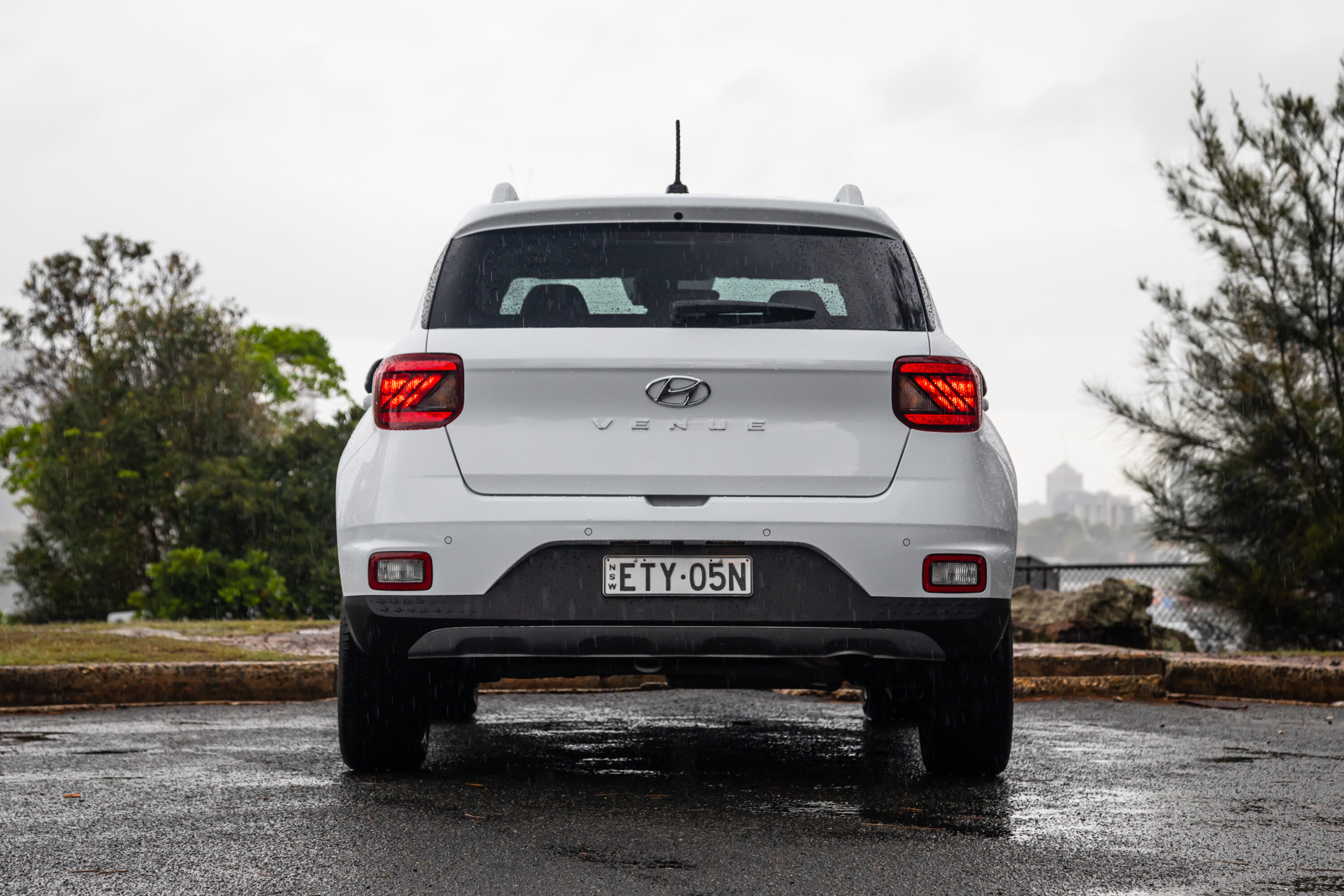
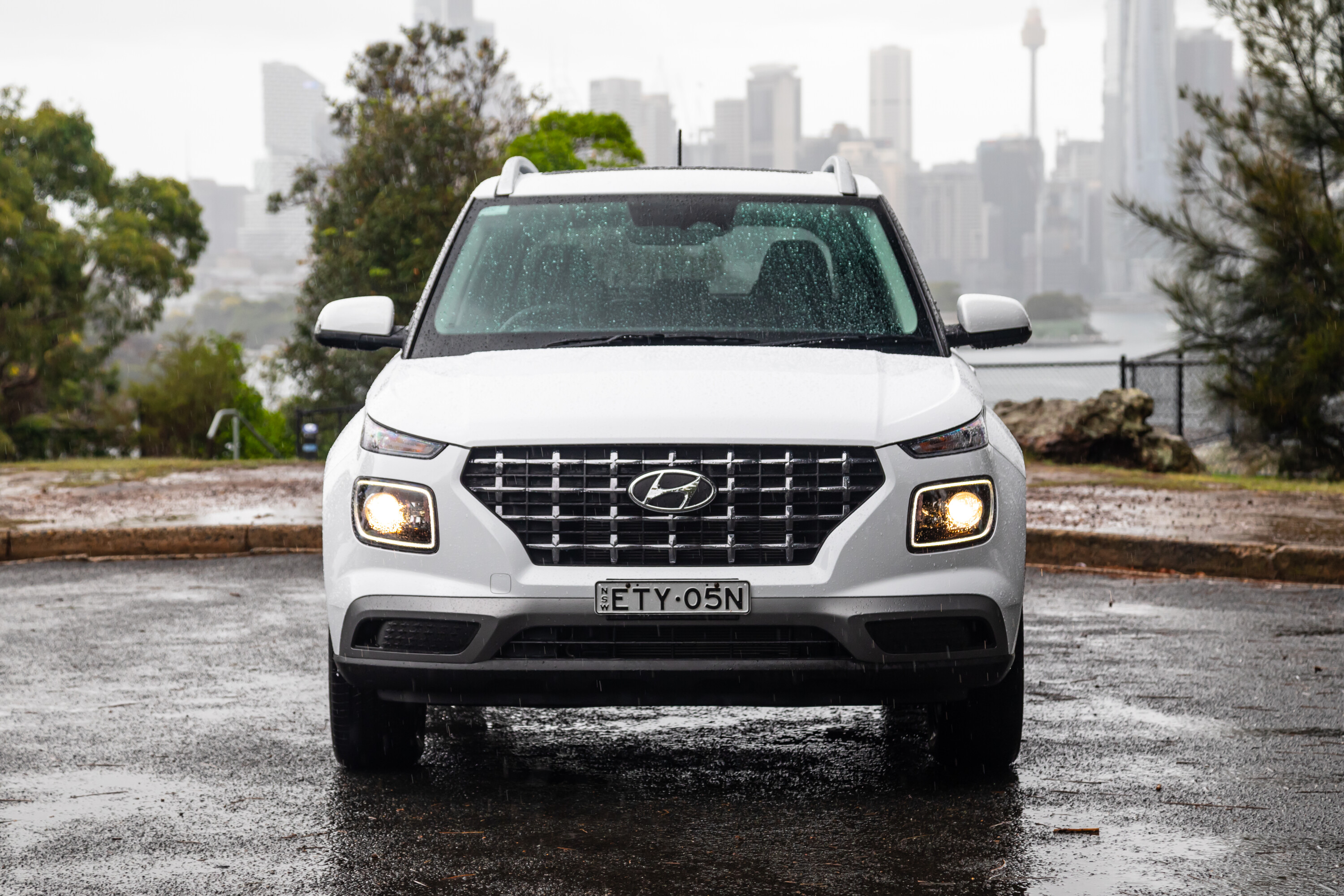
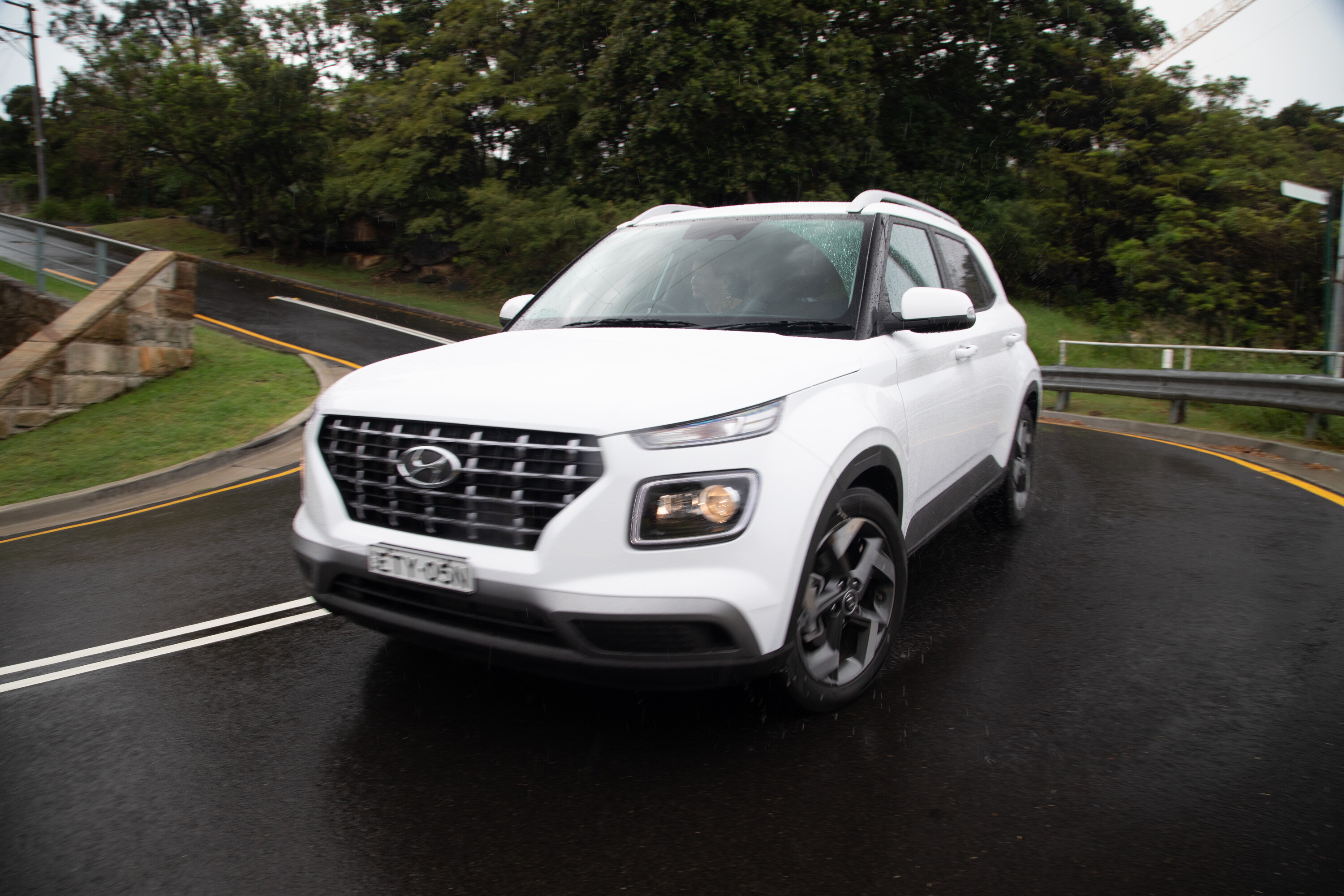
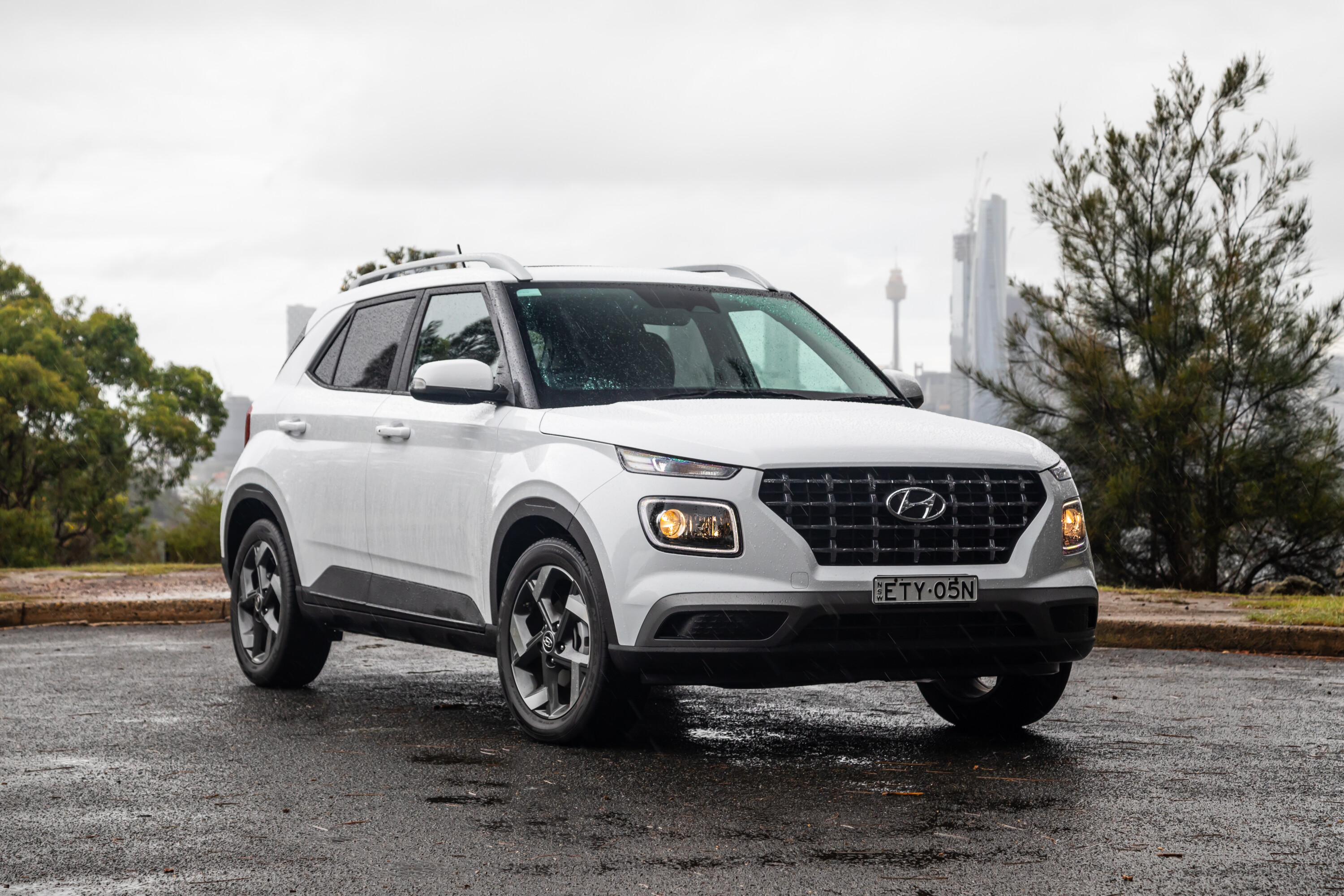
The Hyundai Venue is a small city SUV, and Hyundai’s cheapest, at that. It’s a quirky, stylish crossover that is pitched towards affordable, capable, inner-city living.
While the Indian market vehicle received a visual facelift at the beginning of 2023, Australian vehicles have carried over the same familiar face, with added tech updates across the range.
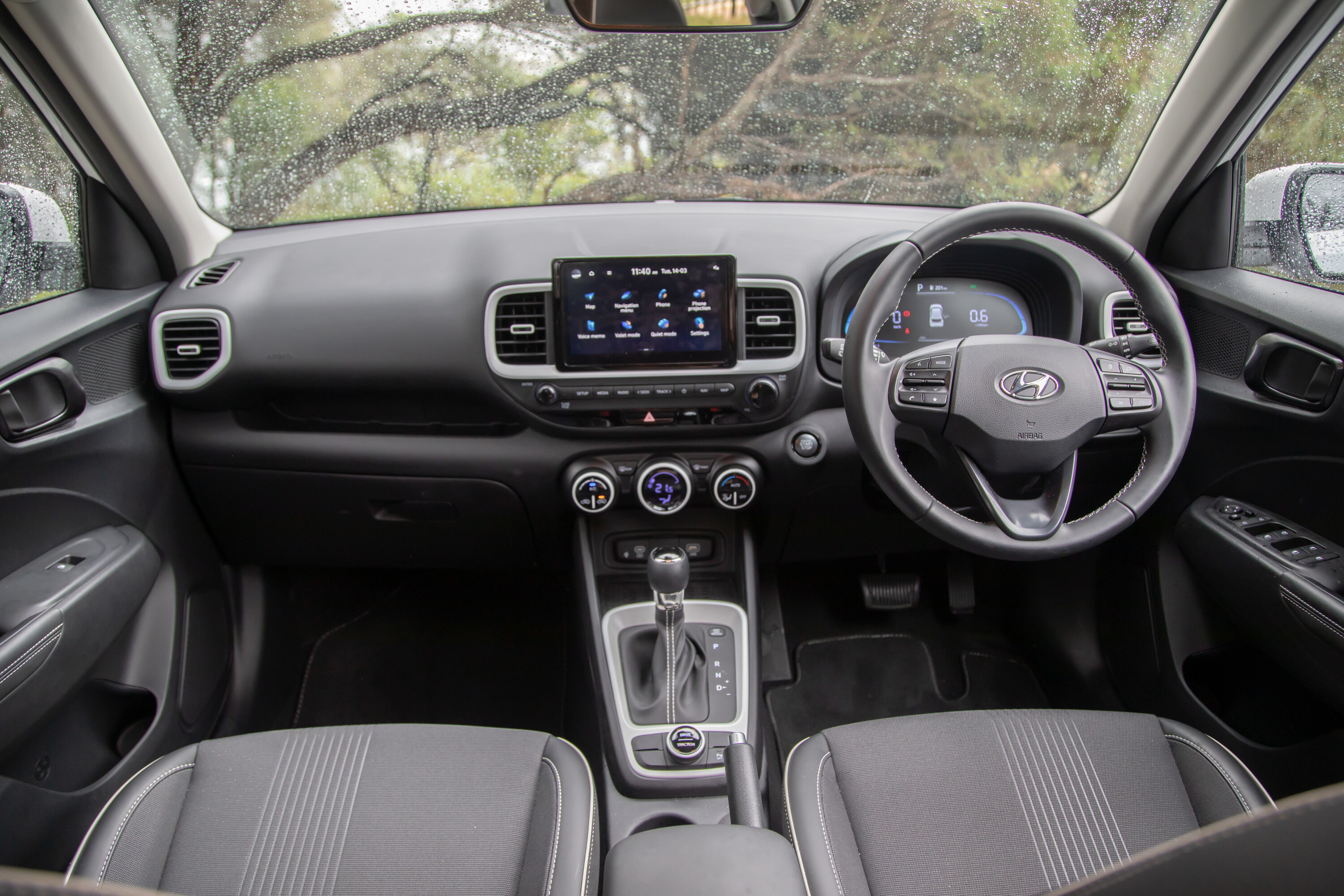
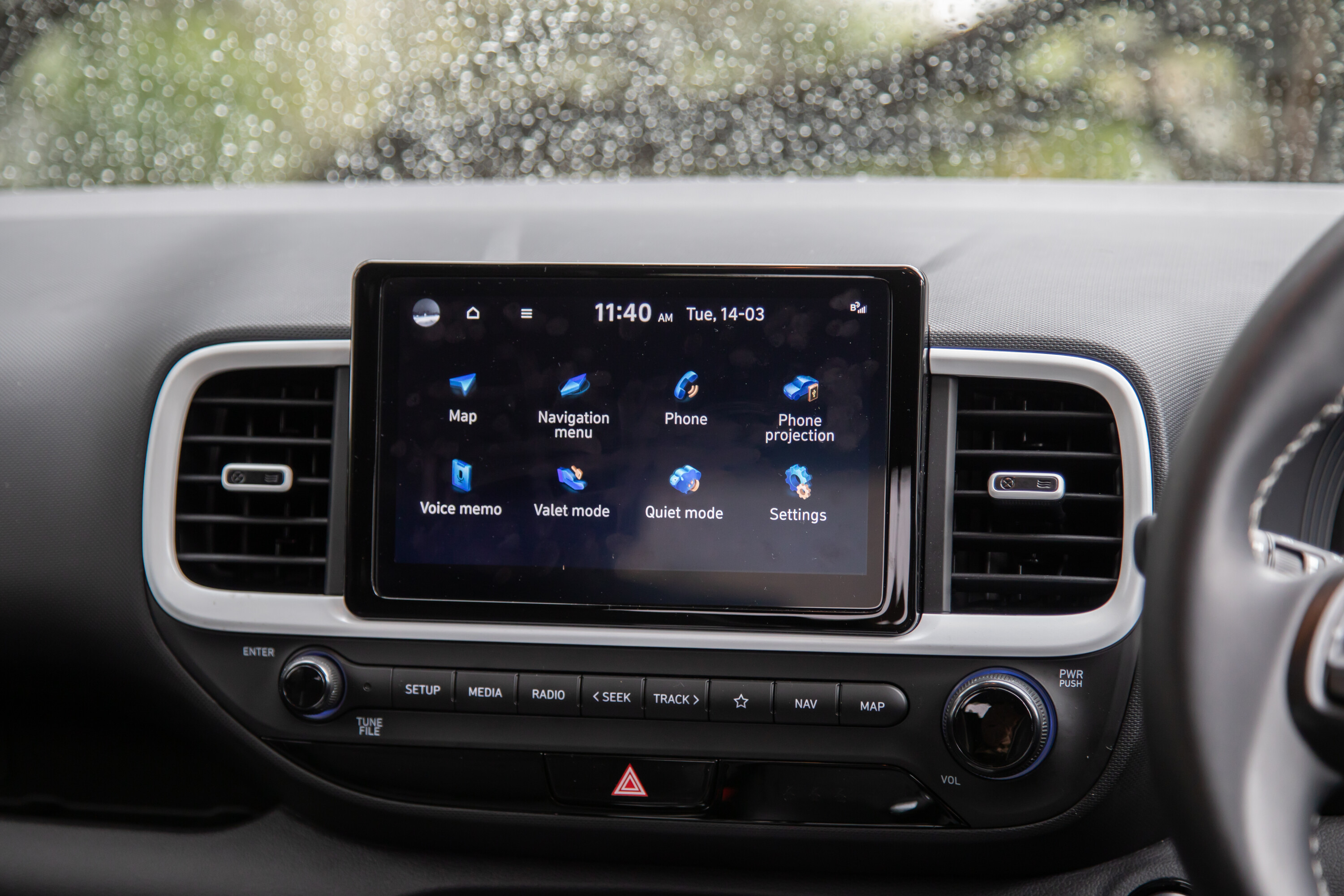
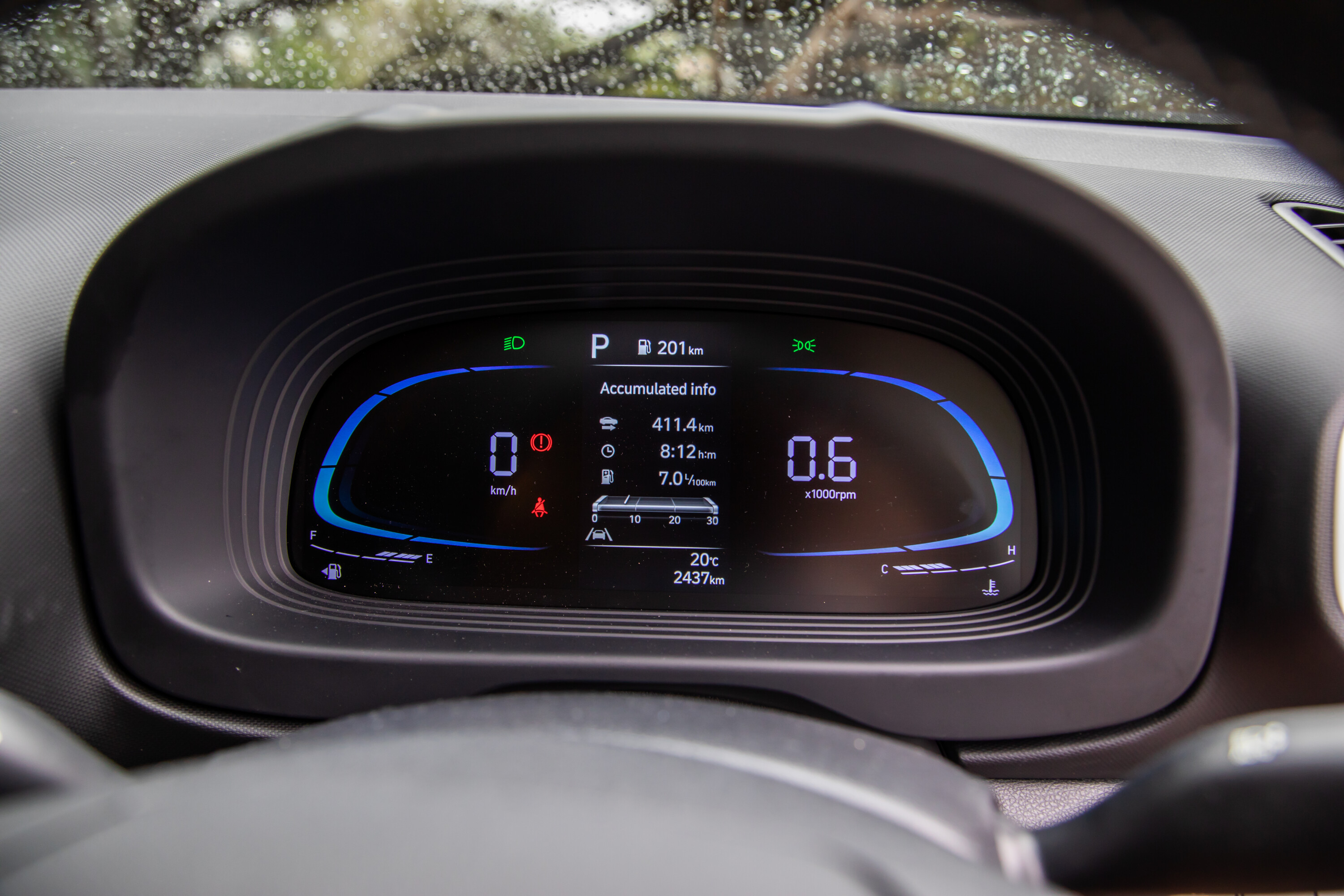
Every Hyundai Venue now has wireless phone charging, rear occupant alert and a 4.2-inch colour instrument display.
The only visual distinction is a down-spec radio aerial antenna, fitted in place of the pre-update Venue’s sleeker shark fin.
1
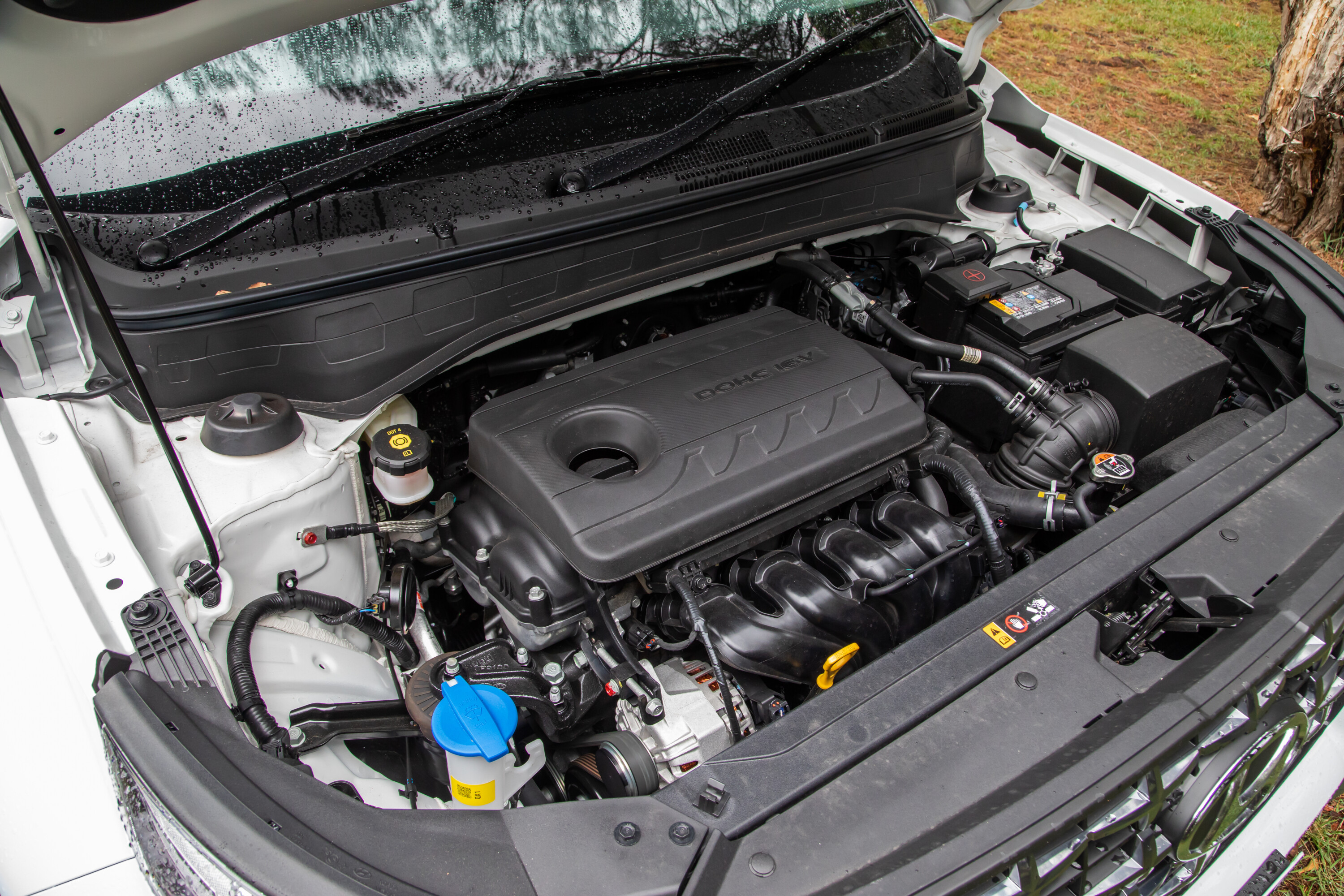
Each Venue variant is all front-wheel drive and powered by a naturally aspirated 1.6-litre four-cylinder petrol engine making 90kW/151Nm.
Automatic and manual transmissions are available on the entry-level Venue, while the whole range delivers frugal fuel economy, and welcome levels of technology including Apple CarPlay and Android Auto, and Hyundai’s new BlueLink connected services.
The Hyundai Venue is covered by a five-year/unlimited-kilometre warranty.
What body styles are available for the Hyundai Venue?
It is a five-door SUV only. The Venue drives its front wheels exclusively, regardless of variant. It is classed as a light SUV and is Hyundai’s most affordable offering.
1
What features are standard in every Hyundai Venue?
The features listed below are standard in the entry-level model and will appear in higher-grade models, unless replaced by more premium equivalent features.
2023 Hyundai Venue standard features
4.2-inch colour instrument display
Remote central locking
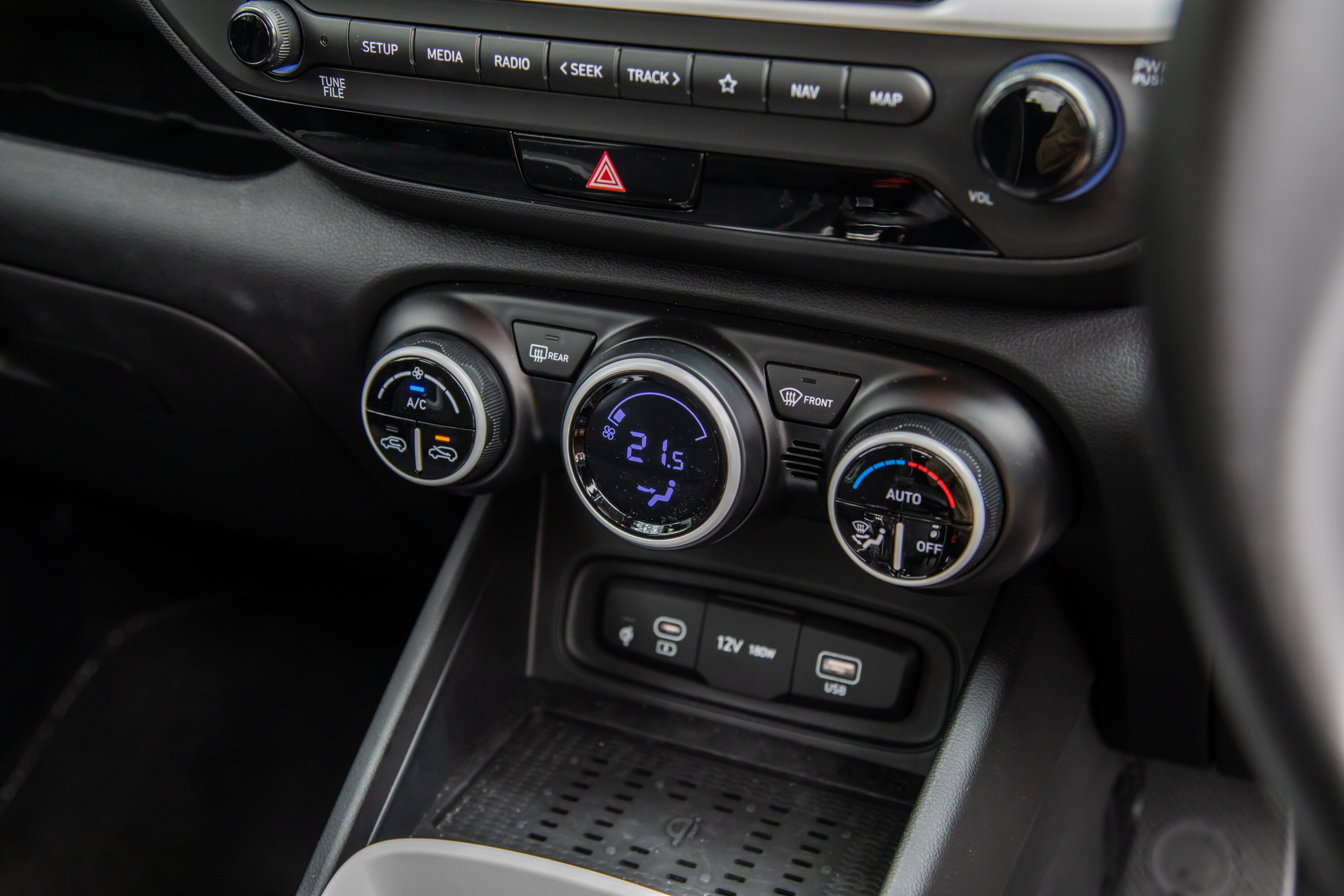
Qi wireless phone charger
60:40 split/fold rear seat
8.0-inch touchscreen infotainment system
Cloth upholstery
wireless Apple CarPlay and Android Auto
Power windows
1x 12v outlet, 1x USB-A port and 1x USB-C port (front)
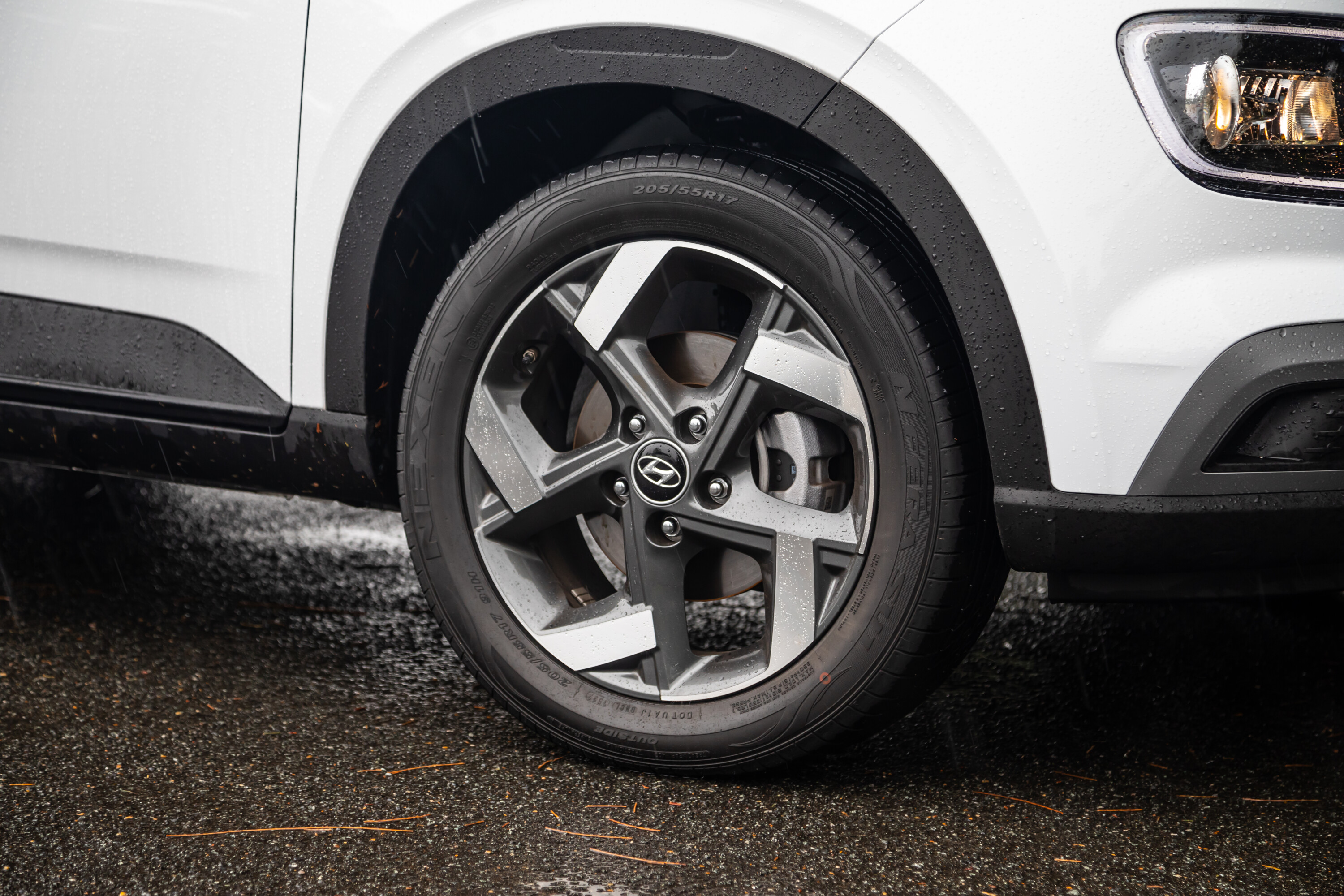
The base Venue variant has cloth seats, an 8.0-inch touchscreen and 15-inch alloy wheels.
It comes standard with the range-wide 1.6-litre petrol engine with a six-speed manual gearbox and front-wheel drive as standard. At this trim level, you can opt for an automatic transmission for an extra $2000.
For extra features, you could spend more for a Venue Active or Elite, both of which are exclusively fitted with an automatic transmission.
1
The Active adds a six-speaker stereo, leather-wrapped steering wheel and gear selector, larger 17-inch alloys, LED lighting and more.
A quirk of the Venue is that the entry-level vehicle and mid-range Active both have wireless Apple CarPlay and Android Auto, while the flagship Venue Elite, and its upgraded infotainment unit with added DAB+ digital radio and satellite navigation integration, requires a wired connection for phone screen mirroring.
The Venue Active also brings
2023 Hyundai Venue Active features
Six-speaker sound system
17-inch alloy wheels
u2018Premiumu2019 seat bolsters
LED daytime running lights
Leather-wrapped steering wheel and shifter
LED position lights
Power folding exterior mirrors
Static bending lights
1
Paying more again for a flagship Venue Elite gets you those features plus:
2023 Hyundai Venue Elite features
Hyundai Bluelink, with complimentary five-year subscription
Assessed by The Australasian New Car Assessment Program (ANCAP) in 2019, the Hyundai Venue wears a rating of four out of five stars.
Headline features include a camera-based autonomous emergency braking (AEB) system with city/urban and interurban operation and pedestrian detection, lane-keep assist, rear occupant alert, driver attention warning, leading vehicle departure alert and a reversing camera.
Six airbags are fitted: Two front, two front-side and curtains on each side protecting the heads of front and rear occupants.
There’s also a seatbelt warning for every seat – a simple but valuable feature for those with children old enough to unfasten their belts but young enough not to know better. Automatic high beam assist and mandatory stability control complete the standard safety suite.
1
The Venue Active adds rear parking sensors to the mix, while the flagship Elite further introduces blind-spot monitoring and rear cross-traffic alert.
A range-wide four-star ANCAP rating was handed down due to the AEB system failing to adequately prevent a rear-end collision during testing.
How comfortable and practical is the Hyundai Venue?
Despite its small stature, the Venue delivers a deceptive level of cabin space thanks to its disproportionately long wheelbase.
The steering wheel is adjustable via tilt and reach, and while the Venue won’t knock you out with its interior’s visual impact, the cloth upholstery feels durable and comfy.
Visibility through the upright glasshouse affords a great view of the road and all instruments and controls are laid out neatly.
1
The interior may not carry the visual detail of the exterior, but it all feels solidly built for the price.
Rear seating in the Venue is one of its strongest traits, with most testers having knee room and legroom to spare when seated behind their own driving position.
Seating three adults abreast may be a tall order as it’s not the widest cabin, and the middle seat may feel snug thanks to an elevated transmission tunnel but overall, it’s an agreeably pleasant place to be for short to medium trips.
The chairs are supportive and comfy, but, elsewhere, it’s all a bit barren back here. There is no central fold-down armrest, no cup holders, no rear-facing charging ports, just a bottle pocket in each door and a map pocket behind the front passenger seat.
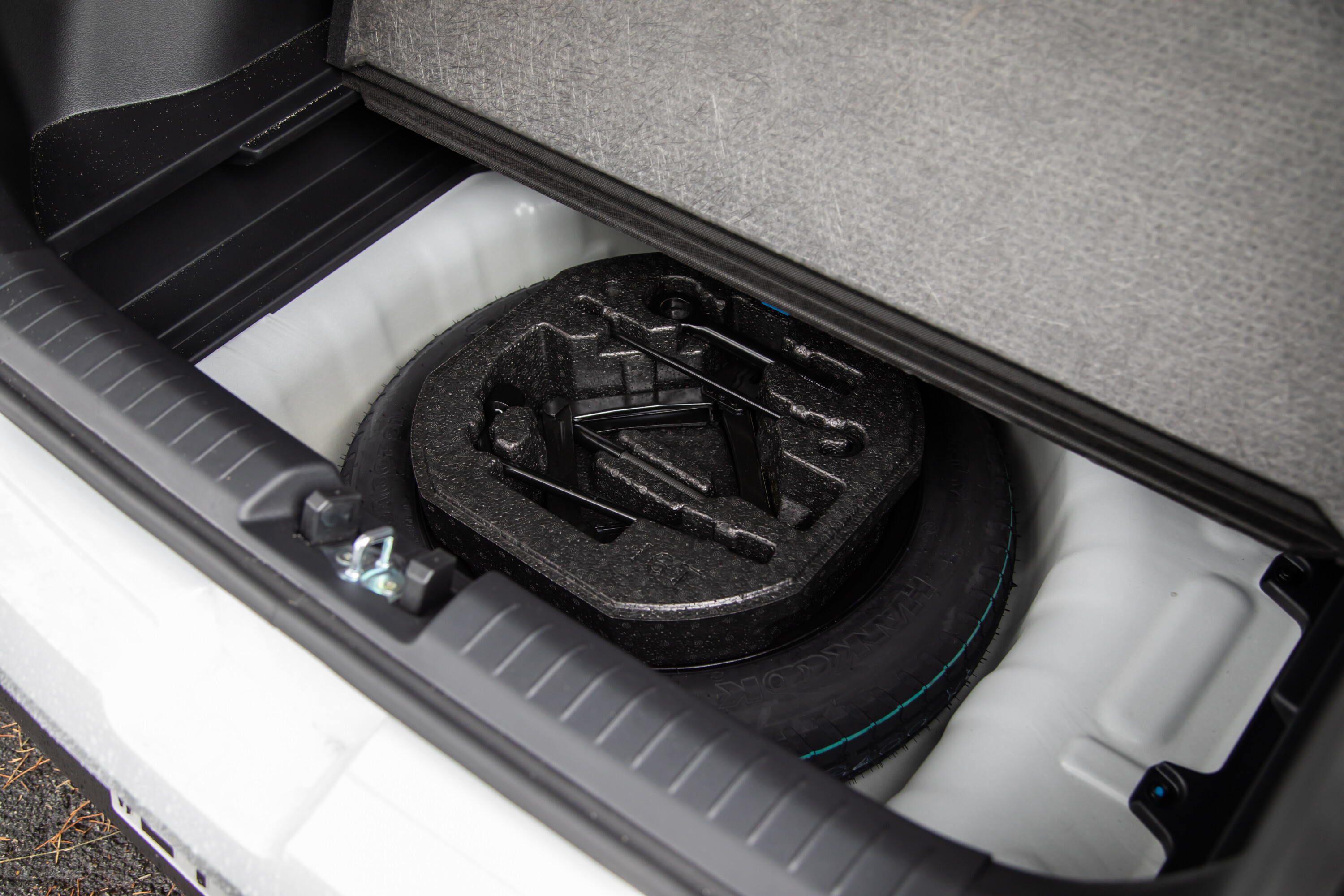
The Hyundai Venue delivers a competitive (for its class) boot capacity claim of 355 litres, with a moveable false floor that can free up extra depth should you need added stowage space.
You can fold the 60:40 split second-row seatbacks to liberate more space, but Hyundai doesn’t say how much. The space itself offers a wide aperture which, combined with the second row folding almost flat, offers a handy flat floor for ease of loading.
2
I like driving, will I enjoy this car?
Yes. The Hyundai Venue is a confident inner-city specialist that feels zippy and agile while also being incredibly easy to use.
With modest 90kW/151Nm outputs, well-matched gear spacing from the conventional six-speed automatic gives the Venue deceptive levels of pep in its step. It won’t leave much for dead at the traffic lights, but you won’t be lagging behind traffic, either.
It builds pace linearly, with a tangible swell of mid-range torque as the Venue surfs up to speed.
1
The engine feels amicably refined overall, though it can become a bit gruff under hard load. It does the job, however, and feels well-suited to the Venue’s price point and remit.
Its modest outputs are only really exposed when attempting a highway overtake, where it simply doesn’t have the muscle to deliver rapid in-gear acceleration at these speeds.
Around town, however, the linear, quick steering and agreeable roadholding from its 215/55 tyres make the Venue an entertaining thing to guide through corners. It doesn’t like being ‘pushed’ outright, however, but it channels its dynamics and weight transfer with predictability and good fundamental behaviour.
All Hyundai Venues employ the same engine, which accepts 91 RON regular petrol. Manual variants have an official combined-cycle consumption figure of 7.0 litres per 100km, while the automatics consume slightly more at 7.2L/100km.
Previous testing has seen real-world figures of 7.9L/100km.
The Hyundai Venue has a maximum braked towing capacity of 1100kg, with a tow ball rating of 50kg.
1
How long is the warranty and what are the Hyundai Venue’s servicing costs?
The Hyundai Venue is covered by Hyundai’s five-year/unlimited-kilometre warranty and servicing intervals run annually, or every 15,000km, whichever comes first.
Service pricing is capped for the first five visits, with costs quoted at $259, $259, $339, $459 and $259 respectively, with total expected servicing costs over the first five years adding up to $1575.
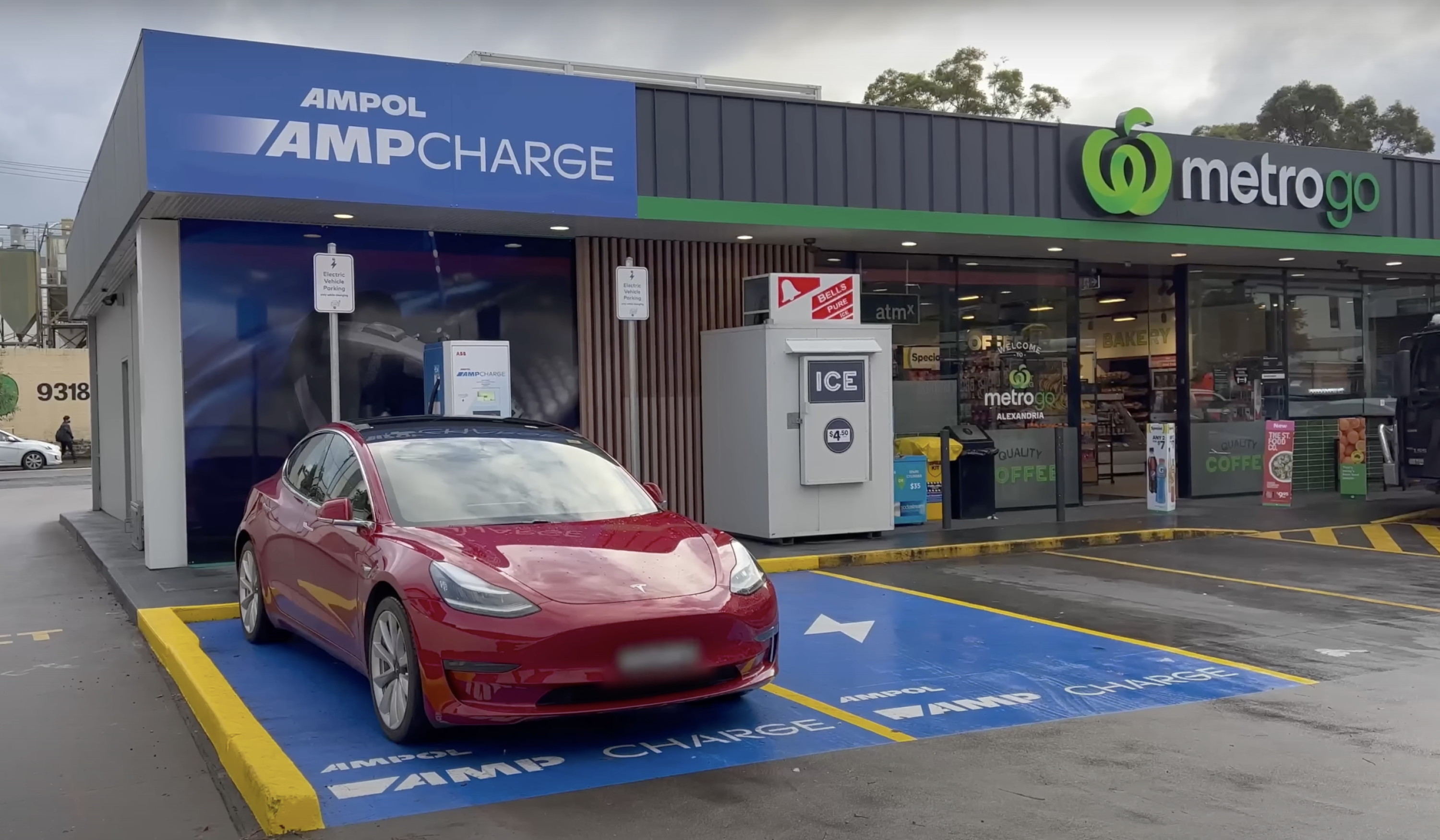
Fuel giant Ampol will expand its electric vehicle AmpCharge charging stations into shopping centre car parks.
Snapshot
AmpCharge fast charging stations to expand into Mirvac shopping centres
Rolling out from late 2023 to 10 locations
Adds to growing Australian public EV charging infrastructure
The partnership with property group Mirvac will install 75kW to 150kW DC fast charging stations at 10 of its 12 retail sites across Queensland, New South Wales, and Victoria.
The rollout will start late this year at shopping centres, including Orion Springfield Central, Zetland’s East Village and Broadway Sydney, and will double Mirvac’s current number of EV charging bays.
1
It is part of Ampol’s target to deliver more than 300 AmpCharge EV charging bays (i.e. designated spaces, not stations) at more than 100 sites across Australia, with all electricity consumed offset by Large Scale Generation Certificates.
AmpCharge pricing
While the exact number of stations and charging costs have yet to be detailed, the current AmpCharge network costs $0.69 per kilowatt-hour, increased from $0.60 per kWh in February.
It is one of the country’s pricier EV charging provider options, though some Chargefox and Tesla Superchargers can be more expensive at peak times.
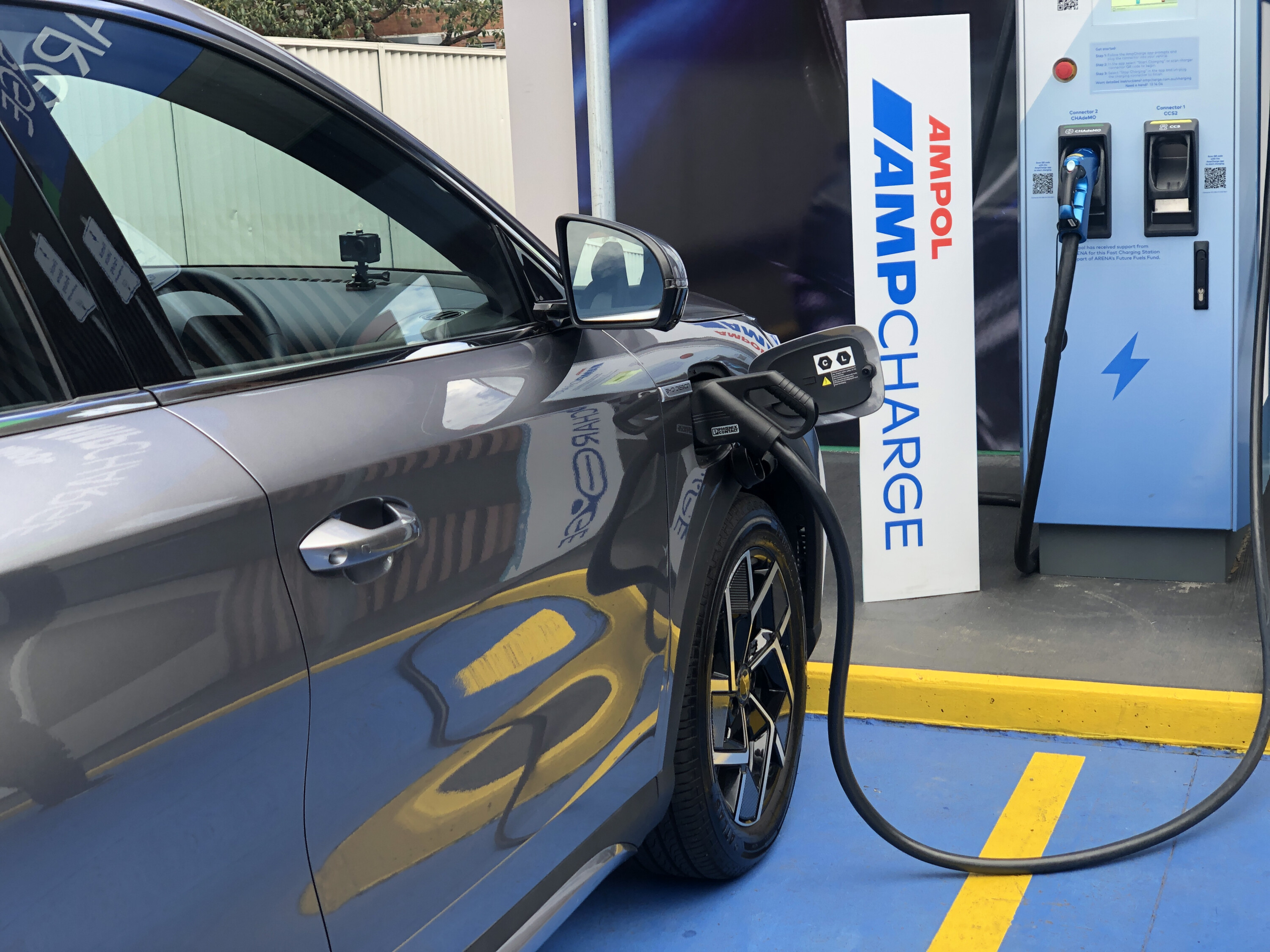
Currently, most AmpCharge sites offer one charging station capable of charging one CCS2 and one CHAdeMO plug type EV simultaneously.
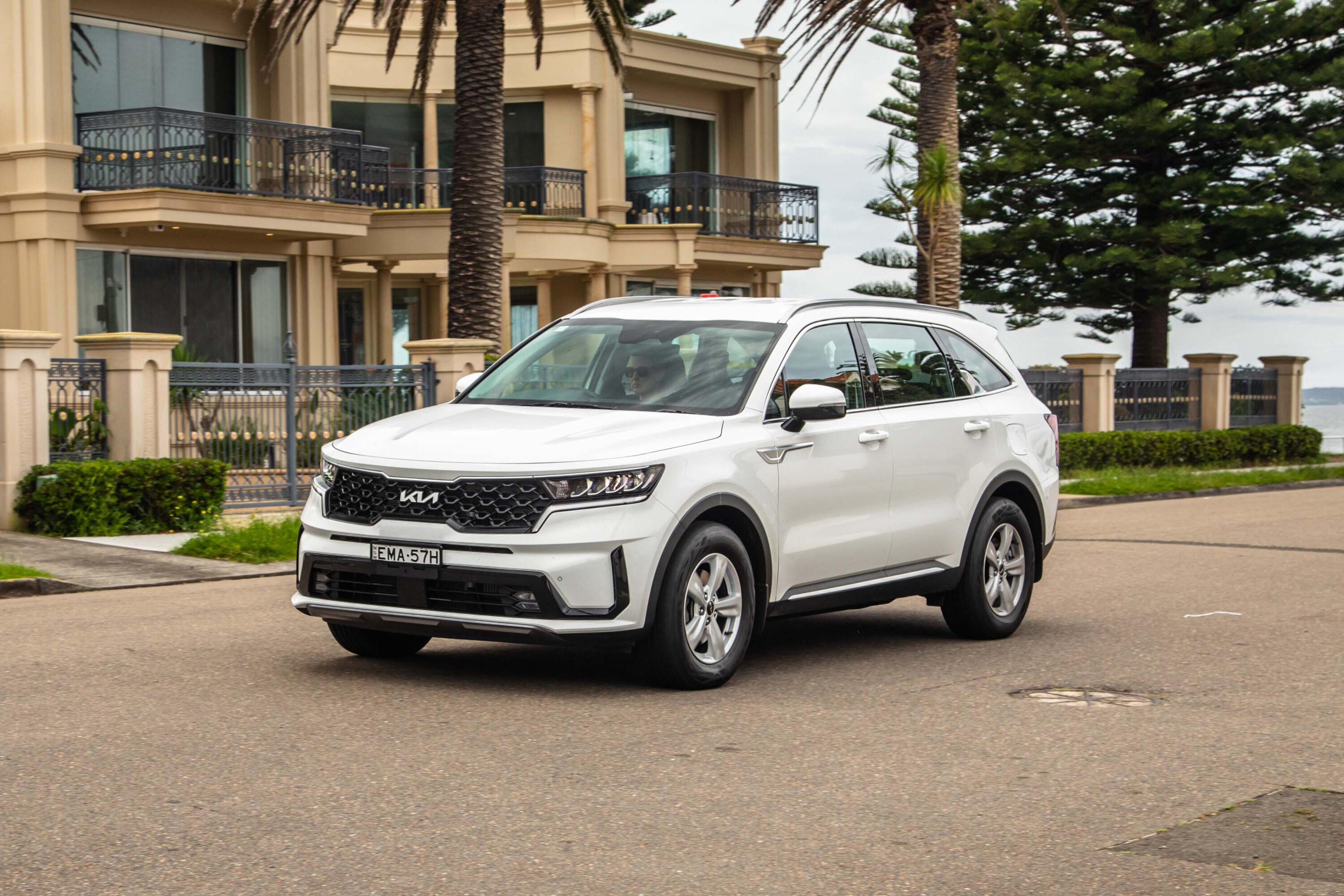
Read below for a quick side-by-side comparison of two of Australia’s most popular three-row SUVs, the Kia Sorento and Hyundai Santa Fe.
In base trim, you can get your hands on seating for seven and a solid drive in either camp for under $50K, with premium models able to justify their circa-$70K price tags.
Both offer excellent driving experiences, with the Sorento erring on the sporty side for handling and the Sante Fe majoring on maximum long-range comfort.
While the Sorento is seven-seat only, the Santa Fe Highlander is available in six-seat guise with no price premium. It is also a five-door, three-row SUV with hybrid a powertrain available.
1
Comfort & Practicality
Kia Sorento
The Kia Sorento is a spacious family SUV with a high-set commanding driving position. Back seat space is excellent in the second row and, while the third row isn’t great for six-foot-plus adults, they will fit.
Among the Sorento’s many thoughtful cabin touches are a total of 12 beverage holders, generous door pockets, a total of eight USB ports to keep devices charged and the rare inclusion of ISOFIX child seat anchors in both the second and third rows.
There’s a hint of modern chic with knurled art deco-inspired HVAC controls and an airy vertical cabin design layout.
Higher-spec models are fitted with seat heating, seat ventilation, leather upholstery, integrated sun blinds, and generous 10.25-inch infotainment touchscreens.
A little shorter than the Sorento, Hyundai’s Santa Fe has a more conservative interior design aligned with more typical luxury leanings.
You’re sunk a little lower in the front seats and while the second row still has plenty of space, the Santa Fe’s third row is a little tighter and doesn’t feature ISOFIX or top tether child seat attachment points.
With only five USB ports and eight beverage holders, the Santa Fe isn’t as practical on the surface, but front seat incidental storage is marginally better thanks to the flying bridge centre console obliged by the button-type gear shift.
Our experiences with the Santa Fe suggest sturdier build quality than the Kia Sorento, too – you can read more about the Hyundai Santa Fe in our range review.
1
Boot space
Kia Sorento
With 616 litres of boot space with two seating rows up, the Sorento is generous in cargo capacity terms. Even with all three in play, there’s still space for school bags and the like (187L). A 60:40 split-fold second-row backrest allows bulky items to fit with ease.
Practicalities abound with a 12-volt outlet, wet storage bin, buttons to fold the second row, a speedy power tailgate, and full-size spare hung under the vehicle.
3
Hyundai Santa Fe
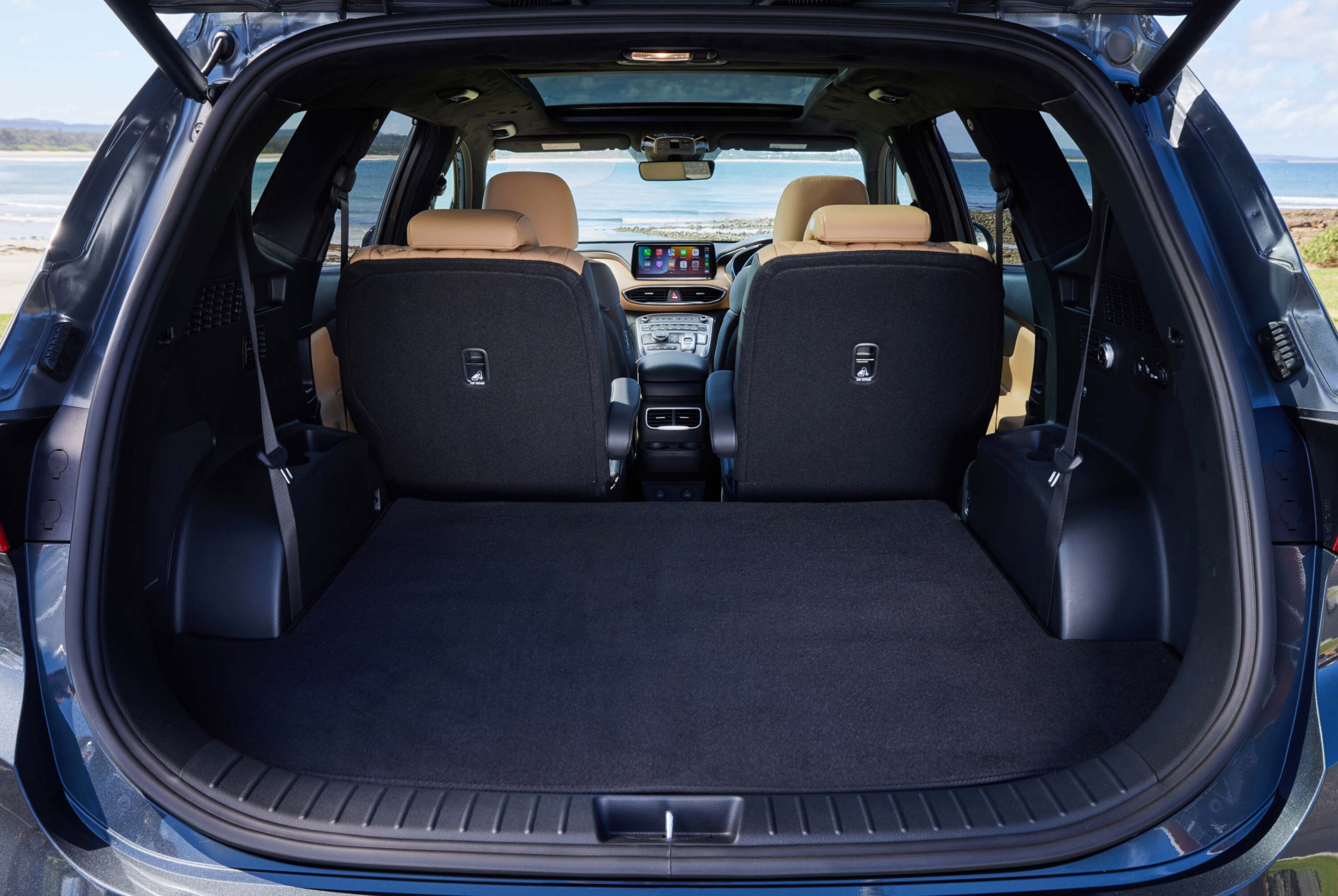
With three rows in play, the Santa Fe’s 130L cargo space is paltry, but fold the rearmost two and capacity swells to between 571L-782L depending on the position of the sliding second-row. The Hyundai shares its helpful amenities (wet storage, 60:40 split-fold second-row seats and full-size spare) with the Sorento.
3
Safety
Kia Sorento
The Kia Sorento received a five-star ANCAP rating in July 2020. The rating applies to all variants, including both types of hybrid.
Standard safety features include eight airbags, auto emergency braking (AEB), adaptive cruise control, driver attention monitoring and more.
1
Hyundai Santa Fe
The Santa Fe achieved five ANCAP stars in July 2018, though a mid-life update brought its standard safety spec up to Kia Sorento levels thanks to the addition of a centre airbag and improved AEB.
Unlike the Sorento, hybrid variants of the Santa Fe are considered unrated by ANCAP.
Warranty & Servicing
Kia Sorento
Kia’s seven-year/unlimited-kilometre warranty may no longer be industry-leading on paper, but with few exclusions and a generous dealer network, there’s precious little to fret about.
Servicing is due annually for all powertrains, with petrol and diesels able to travel 15,000km between seeing spanners and the hybrid variants a shorter 10,000km.
1
Hyundai Santa Fe
Hyundai’s warranty lags slightly behind at five years/unlimited kilometres, but Hyundai’s engines and infotainment have proven relatively reliable over the Santa Fe’s five-year life.
Like the Sorento, Santa Fe servicing is due annually or at 15,000km intervals for petrol and diesel, or 10,000km for the hybrid.