15-inch touchscreen for higher-spec models but return to some analogue controls
PHEV option to offer up to 100km of electric range
The third-generation Volkswagen Tiguan will reach Australian in late 2024 with a high-tech cabin, more boot space, and new optional suspension and headlight technology.
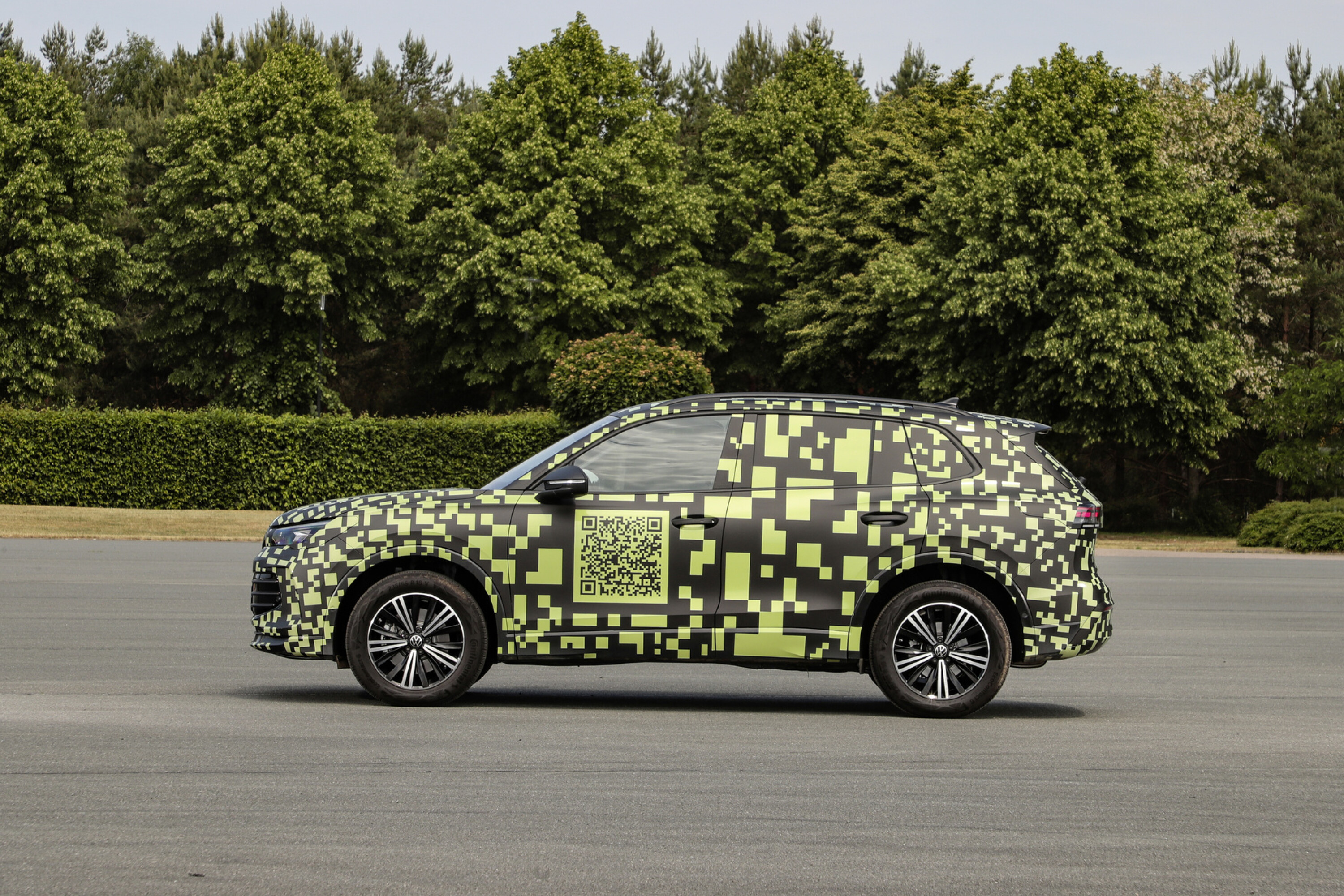
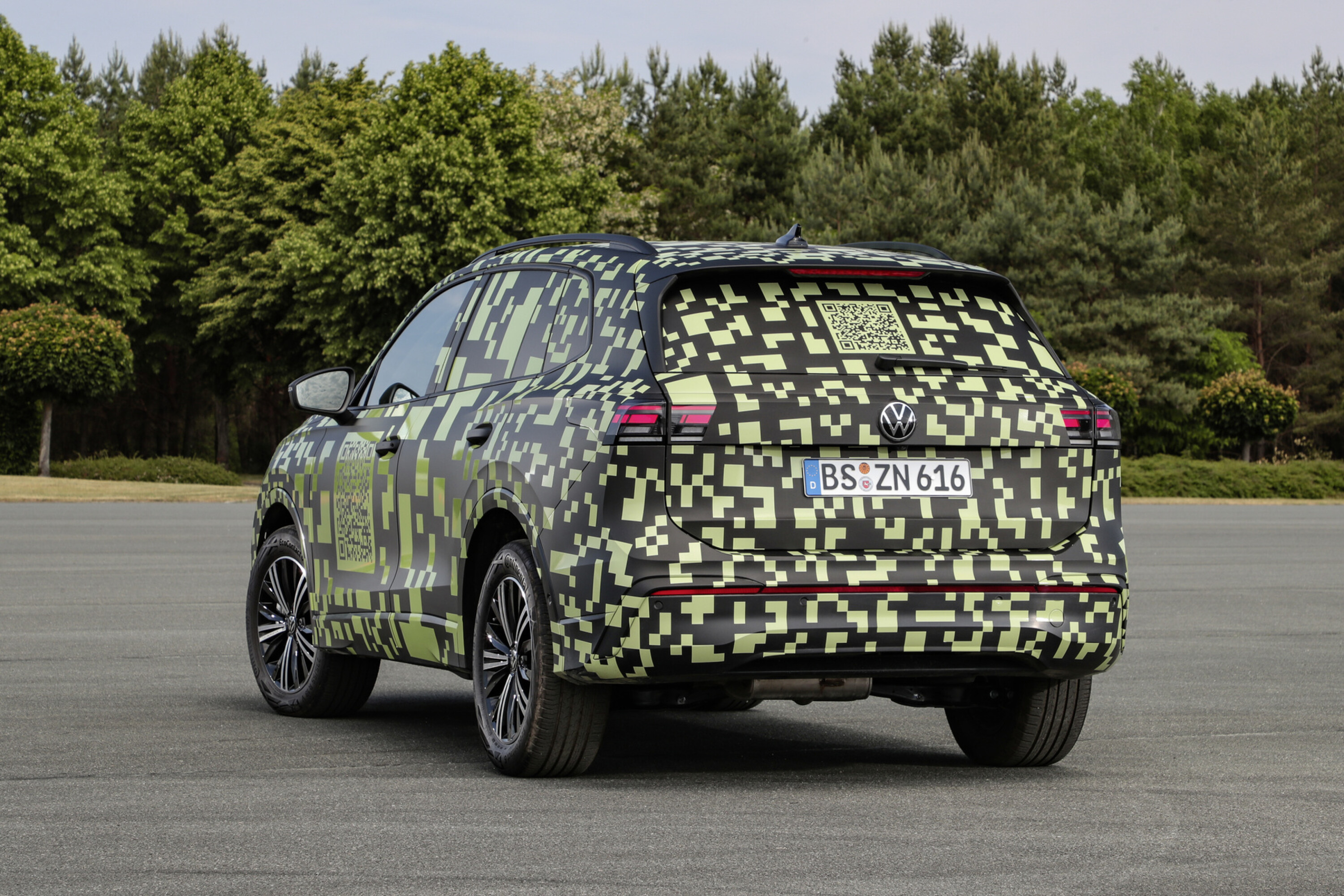
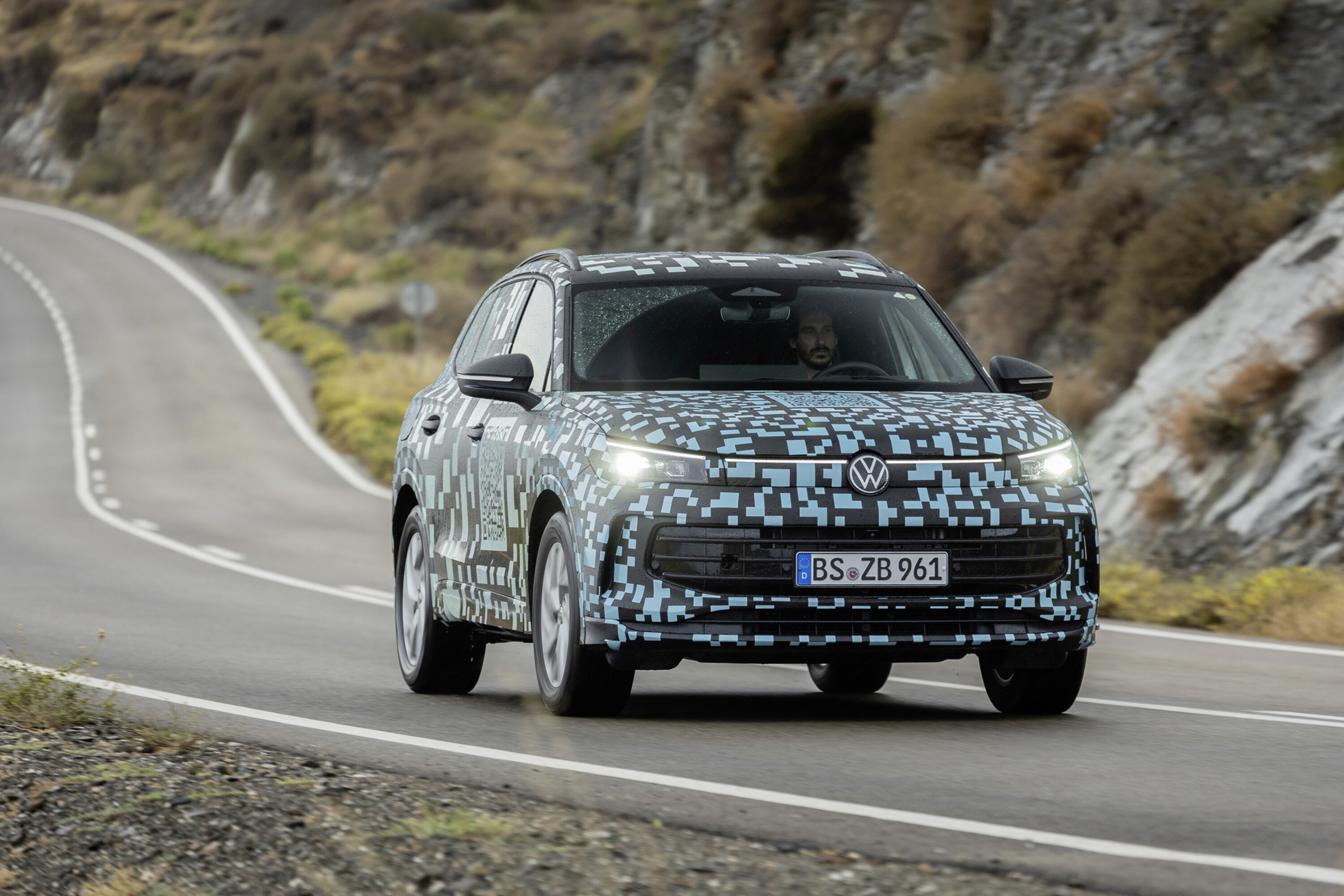
VW has released its first official images of the new medium-size SUV, albeit in camouflage, along with initial details ahead of a European-autumn reveal.
Germany’s rival to the likes of the Mazda CX-5 and Toyota RAV4 – and VW’s biggest-selling vehicle globally – will increase in length by about three centimetres to about 4.54 metres, with virtually unchanged width, height and wheelbase to the outgoing Tiguan.
1
Boot space increases by 33 litres to 648L, while there are significant changes to the main cabin.
A large, tablet-style infotainment touchscreen up to 15 inches in diameter (as pictured in the official spy images) dominates the dash. Lower-spec models will feature a 12-inch display.
Pictures show the climate-control bar running across the bottom of the display – a move that addresses criticisms of some current VW models that require a dash button to be pressed before any adjustments can be made. The bar is also reported backlit at night for another welcome improvement.
Similarly, VW has dispensed with its annoying haptic steering wheel touch buttons, replacing them with more conventionally tactile switches.
A (10.25-inch) digital driver display is nothing new for the Tiguan, but the current model’s traditional gearlever makes way for a transmission stalk in the 2024 replacement. Borrowed from VW’s ID electric cars, the stalk is pushed forward to engage Drive (and a second time for Sport model) and pulled backwards to engage Reverse. Paddleshift levers are also included.
1
The cleaner centre console brings increased storage space, and a rotary controller with its own integrated mini screen. The controller can change drive modes, audio volume, and ambient lighting.
“Optional” ErgoActive front seats will offer four-way lumbar support, heating, ventilation, and 10-chambre pressure point massage function.
Two new technologies are also referenced as optional features are HD matrix headlights and new active suspension control.
The matrix headlights, which debuted on the updated Touareg large SUV, feature more than 38,000 micro-LEDs.
DCC (Dynamic Chassis Control) Pro features twin-valve dampers that VW claims benefits both ride comfort and handling. The suspension ties in with a Vehicle Dynamics Manager that comes across from the Golf GTI hot-hatch and said to deliver neutral dynamics through automatic brake interventions and damper control inputs to specific wheels.
1
Petrol and diesel four-cylinder engines continue as drivetrain options, along with mild-hybrid turbo petrol and petrol plug-in hybrid (PHEV) options that haven’t previously been offered in Australia.
VW says its improved PHEV drivetrains now boast a pure electric driving range of up to 100km.
While VW Australia has confirmed a late-2024 arrival for the next Tiguan, details of powertrains and other specifications are unlikely to be confirmed until sometime next year.
The seven-seater Tiguan Allspace is set to be replaced by a model called the Tayron.
The future of the sporty Tiguan R looks uncertain with VW making no references to a replacement at this stage.
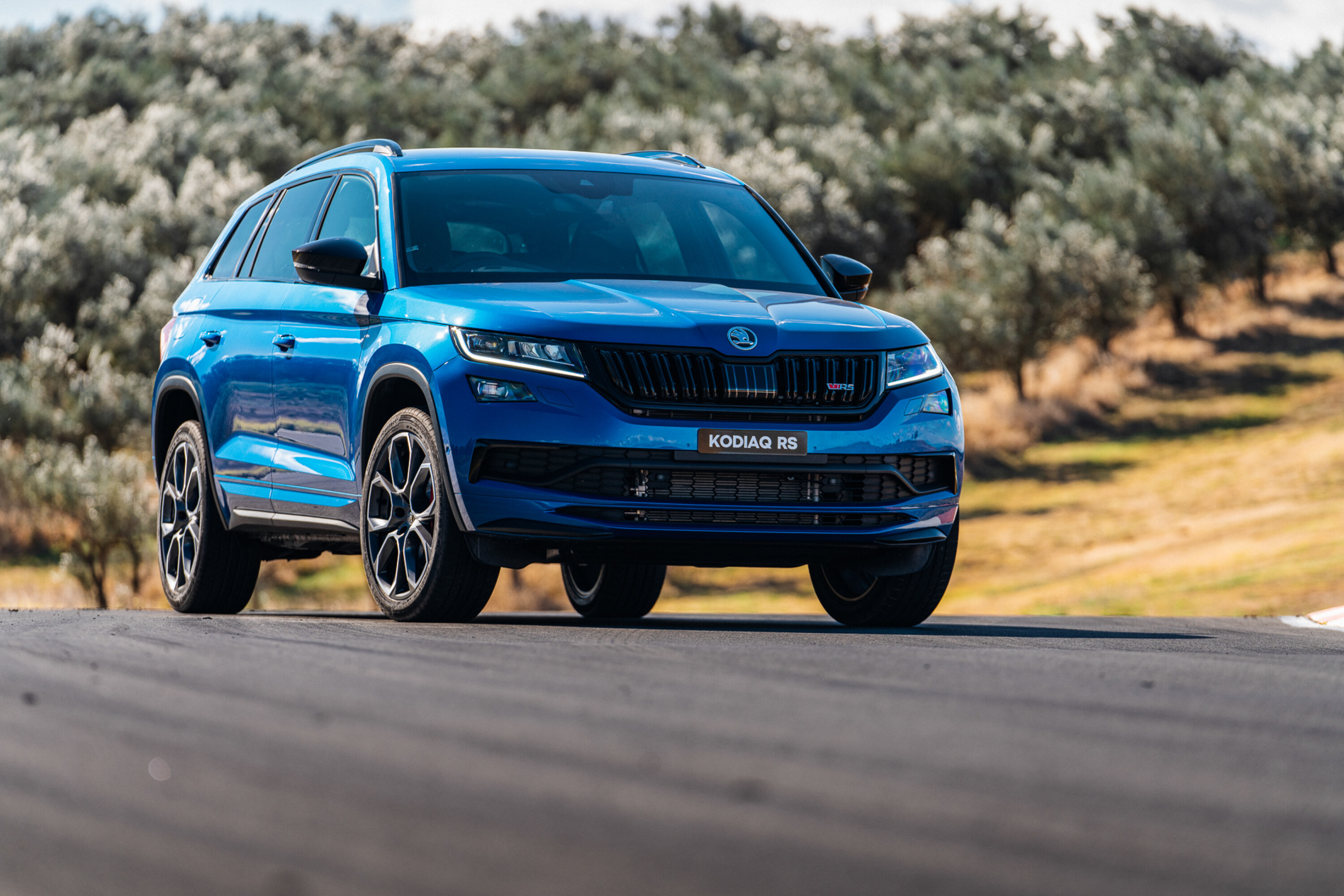
Skoda Australia is set for a busy 2024, starting with the introduction of an all-new Kodiaq seven-seat SUV early in the year, and a new Superb towards the end of the year – bookending the brand’s first-ever electric vehicle, the Enyaq SUV.
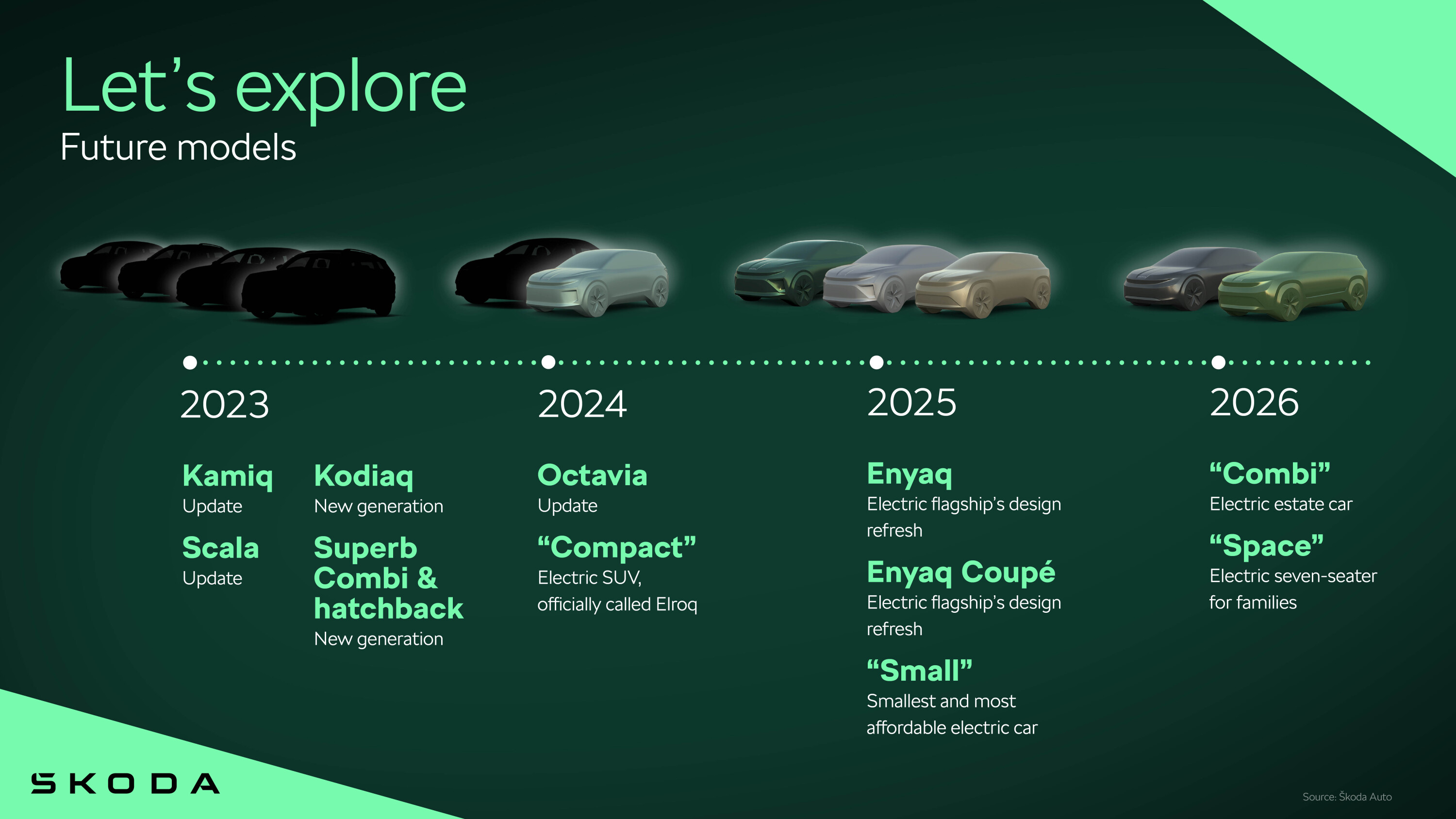
This follows the brand’s announcement that it intends to introduce four completely new electric vehicles by 2026, as well as mid-life ‘refresh’ treatment to several existing models throughout 2024.
Despite this comprehensive focus on introducing an all-new electric-vehicle range, Skoda says it will continue to advance its combustion-engined models “well in the 2030s” according to Skoda Australia brand director Michael Irmer, seeing that not all markets need to comply to the same emissions legislation.
First up will be the second-generation Kodiaq, which will be unveiled later this year before arriving in Australia during the second quarter of 2024.
Like the existing model, it will continue to straddle the medium and large SUV categories in size since buyers greatly appreciate its combination of seven-seat space inside a relatively compact body – meaning almost identical dimensions to the first-gen Kodiaq that launched here in 2016.
Currently, the RS model accounts for between 40 and 50 percent of Australian Kodiaq sales – despite being supply constrained – so expect a strong high-end model mix and premium technology and features in the all-new 2024 version.
1
The same applies to the Superb large car, where the 206kW AWD flagship accounts for up to 75 percent of Australian volume.
This despite the fact that the car itself is approaching eight years old – a situation that may see the existing range trimmed to just the 206TSI models before being replaced by an all-new model next year.
While the fourth-generation Superb will launch in Europe during the second quarter of 2024, Australia will have to wait until the end of the year because our preferred engine won’t initially be available.
Cementing its position at the top of Skoda’s passenger-car line-up, Mr Irmer confirmed that our new Superb will be marketed as a premium car with the top-spec engine – “this is a flagship, so no base models” he said.
1
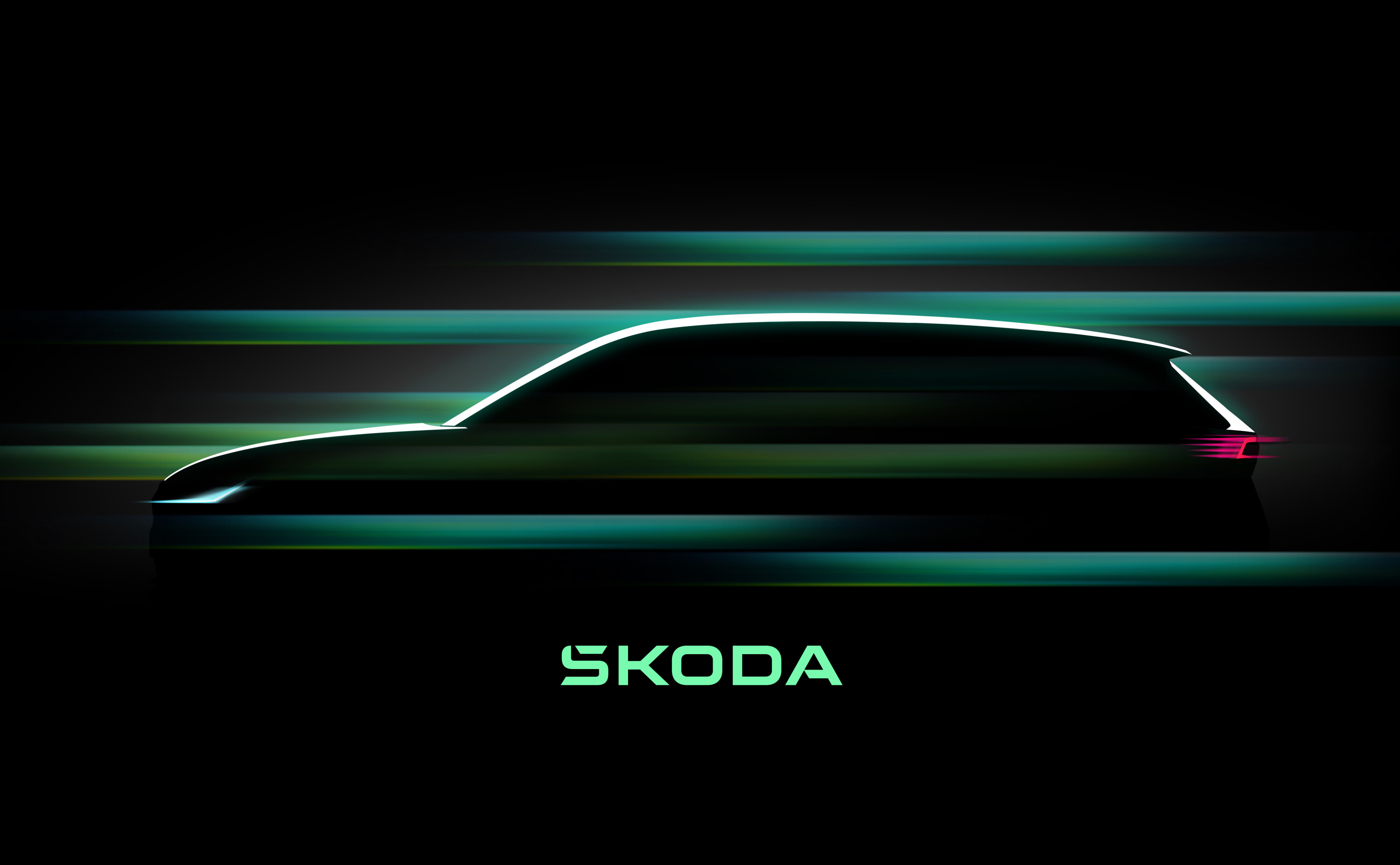
In a similar fashion to the Kodiaq, the new-gen Superb will maintain its existing sizing and will continue to be offered in ‘liftback’ sedan and wagon styles.
Also on the horizon for Skoda Australia in 2024 will be a mid-life refresh of the Karoq SUV, followed by similar makeovers for the Kamiq small SUV and Scala small hatch.
As for the potential of introducing range-topping Laurin & Klement versions of other Skoda models, Mr Irmer said that Skoda Australia will test the waters with the Enyaq L&K first before making a decision.
“I think [the Laurin & Klement trim level] will really resonate with Australian buyers and help the Skoda brand’s further evolution – positioning itself higher with the new design language too”, he said.
Following the recent unveiling of six full-size clay models of Skoda’s forthcoming electric line-up in Europe, Skoda Australia has revealed it plans to follow suit with several new EVs after the introduction of the Enyaq in mid-2024.
Showcasing the brand’s new ‘Modern Solid’ design language that will permeate the entire range “within three to four years” according to Skoda Australia brand director Michael Irmer, the six-strong EV line-up will constitute extensively restyled versions of the Enyaq wagon and coupe, as well ‘small’, ‘combi’, ‘compact’ and ‘space’ electric vehicles.
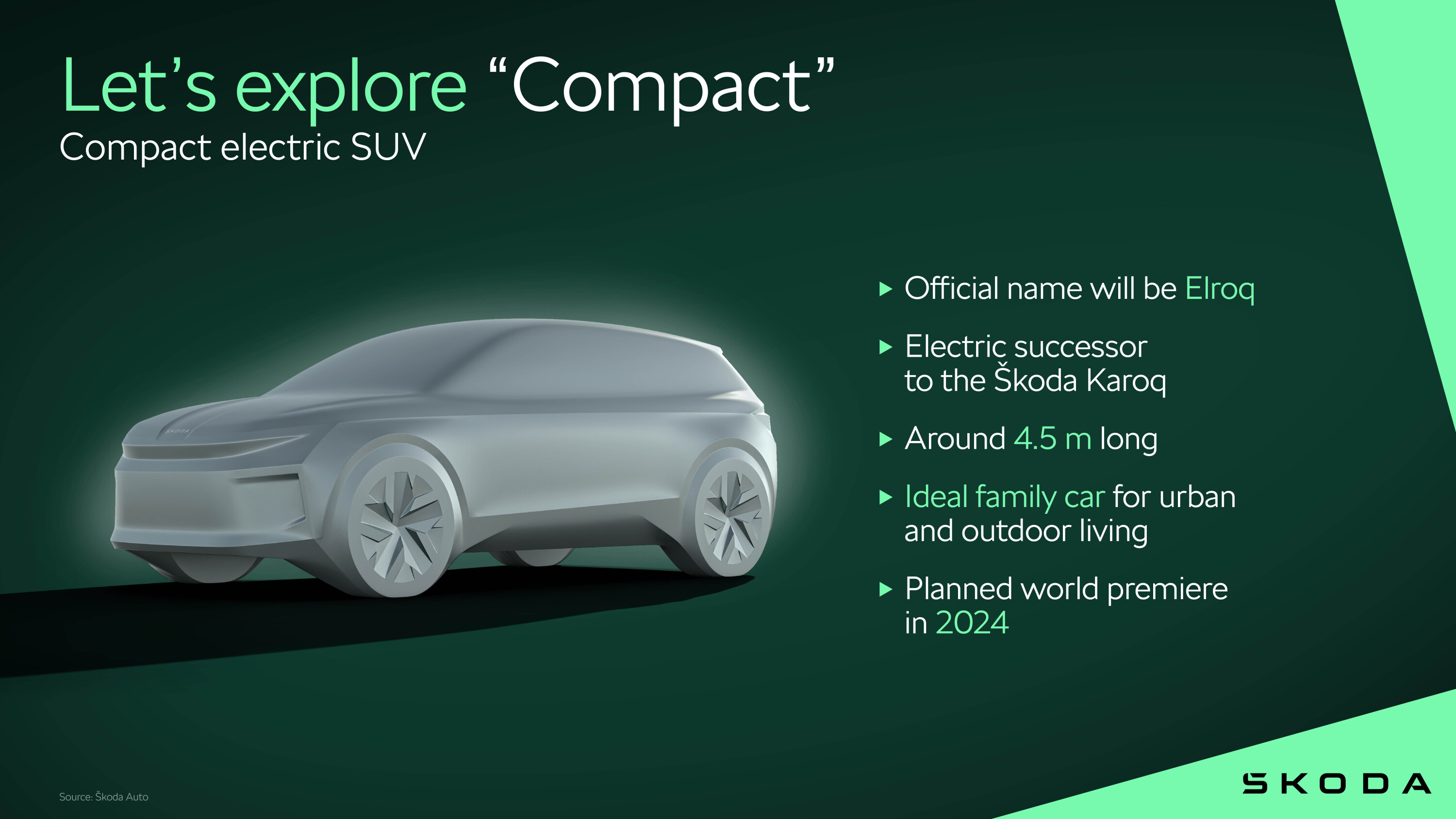
Starting in 2024, the first to launch in Europe will be the Karoq-sized ‘compact’ (whose current working-title nameplate is ‘Elroq’), followed by a three-row ‘space’ SUV that takes its inspiration from Skoda’s Vision 7S design concept and is intended to complement the new-gen Kodiaq as a slightly larger electric SUV alternative.
1
… as Mr Irmer pointed out, the importance of the ‘compact’ centres around not only being a passenger-car alternative to an electric SUV…
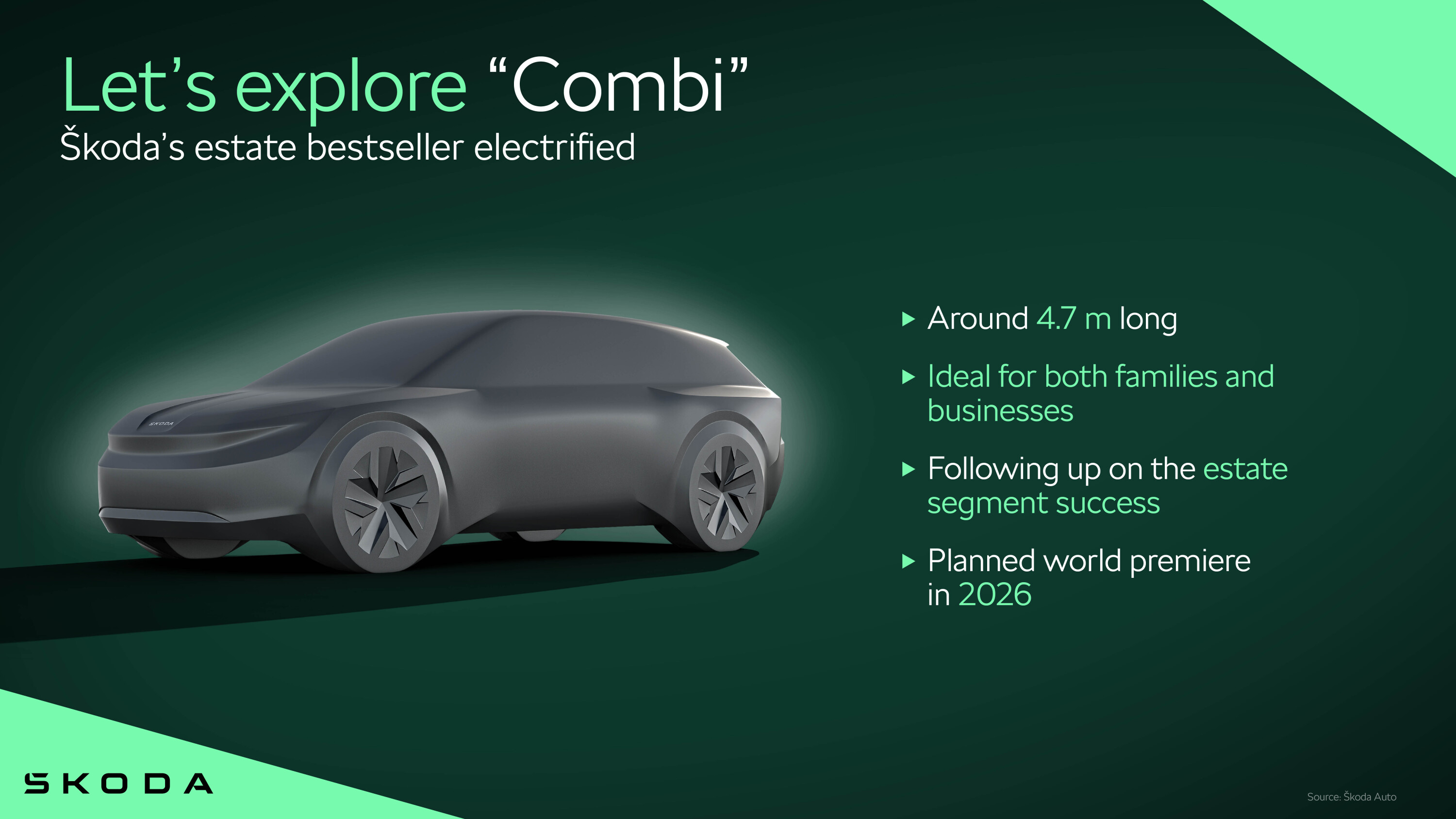
Furthest away is the ‘combi’ – an Octavia-wagon-sized EV – which has had its European on-sale date confirmed for 2026, though as Mr Irmer pointed out, the importance of the ‘compact’ centres around not only being a passenger-car alternative to an electric SUV, but the fact that the aerodynamic advantages of this lower, sleeker vehicle beyond 80km/h allow it to expand its overall range, which will have the biggest impact in crucial markets such as Germany.
1
Despite Australia’s obsession with SUVs, which make up the vast majority of our passenger-car volume, medium-sized wagons remain hugely important in Europe – hence the complementary positioning of Skoda’s ‘combi’ EV alongside the existing combustion-engined Octavia wagon, which will continue indefinitely in many markets.
Mr Irmer confirmed the first EV to debut Skoda’s full ‘Modern Solid’ look will be in the three-row space, though elements of this new design language will be progressively rolled out as each new-generation Skoda models is introduced.
1
Regarding 2024’s Elroq ‘compact’ EV, Mr Irmer said “the design progress and product development has already advanced so much that the full application of this [new] design language is not yet possible.”
As for Australian on-sale for the ‘Elroq’ compact electric SUV, expect to see it by early 2025.
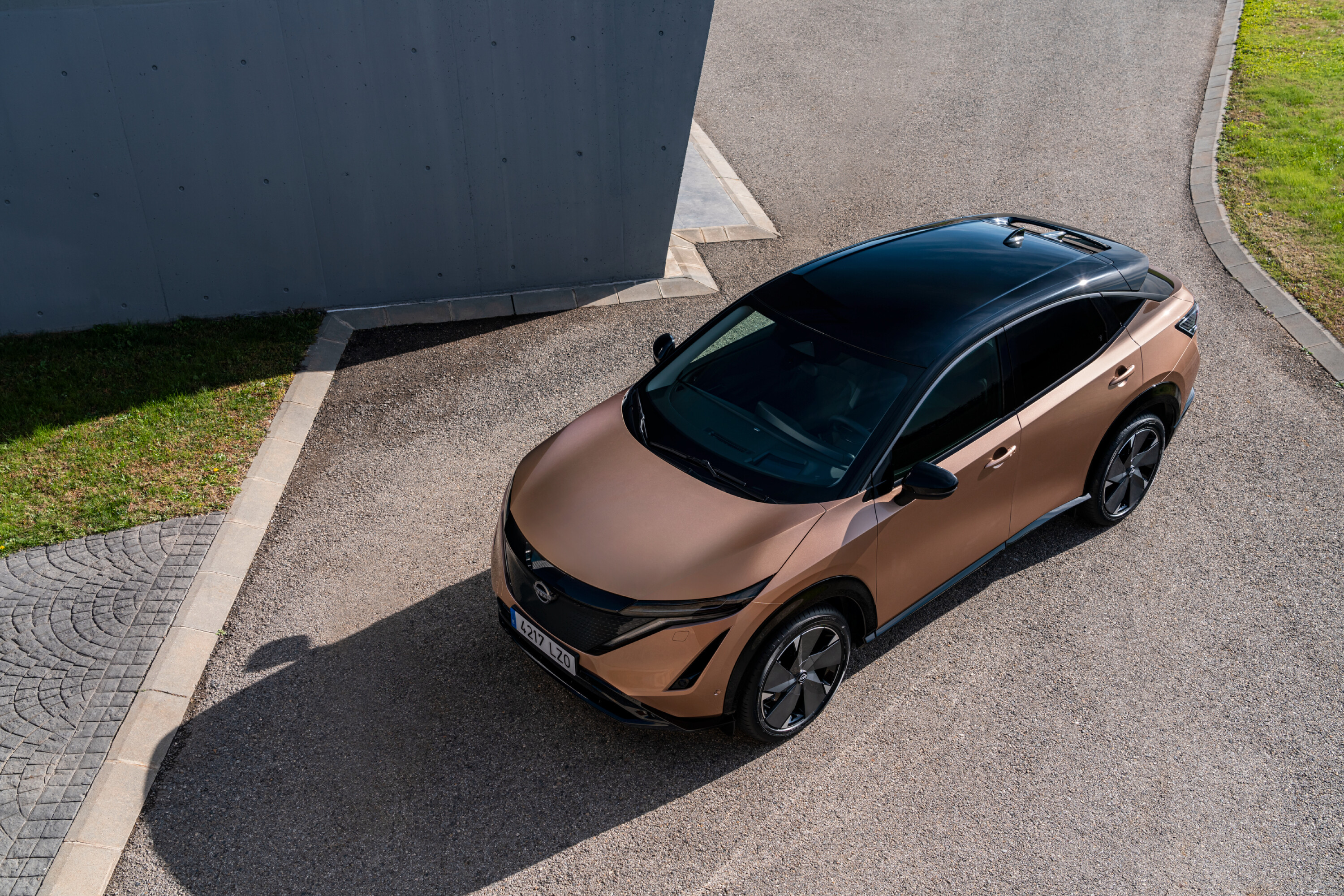
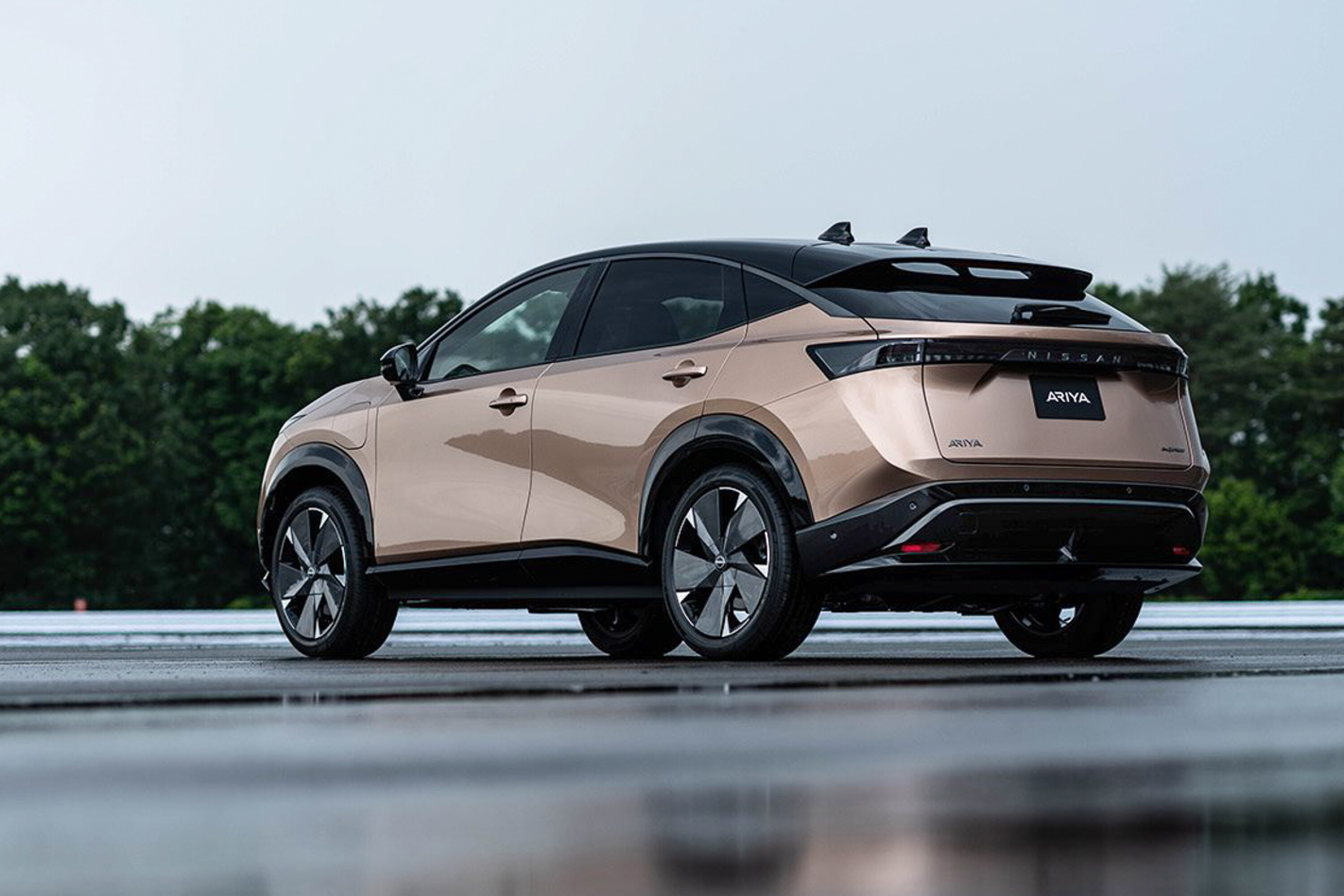
Nissan Australia’s vital all-electric SUV is no closer to Australia, with the Tesla Model Y rival ruled out for a 2023 launch.
The Nissan Ariya midsize electric SUV was confirmed for our market back in 2021, but last year, the brand said its launch is held up by demand and Australia’s relaxed fuel efficiency regulations.
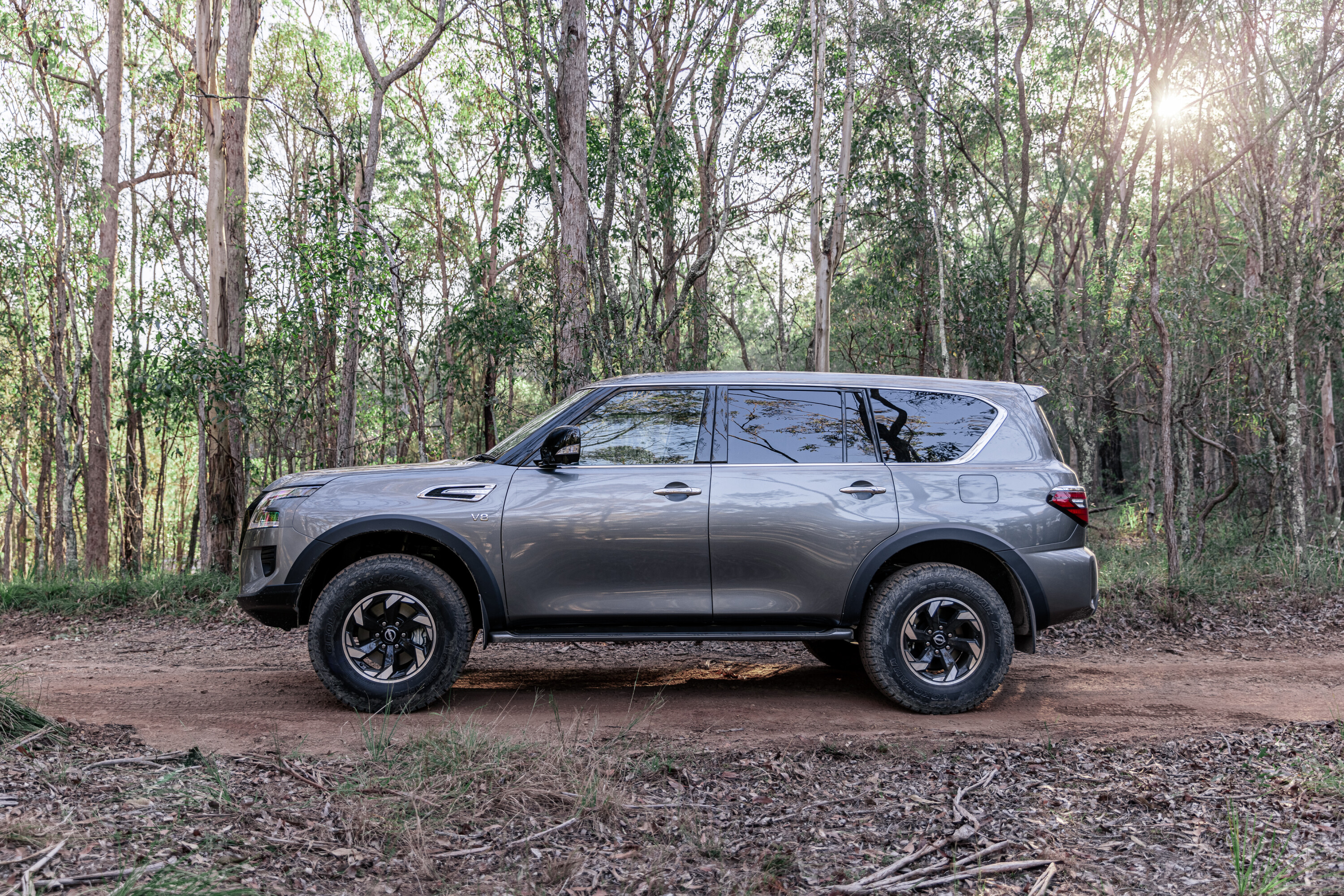
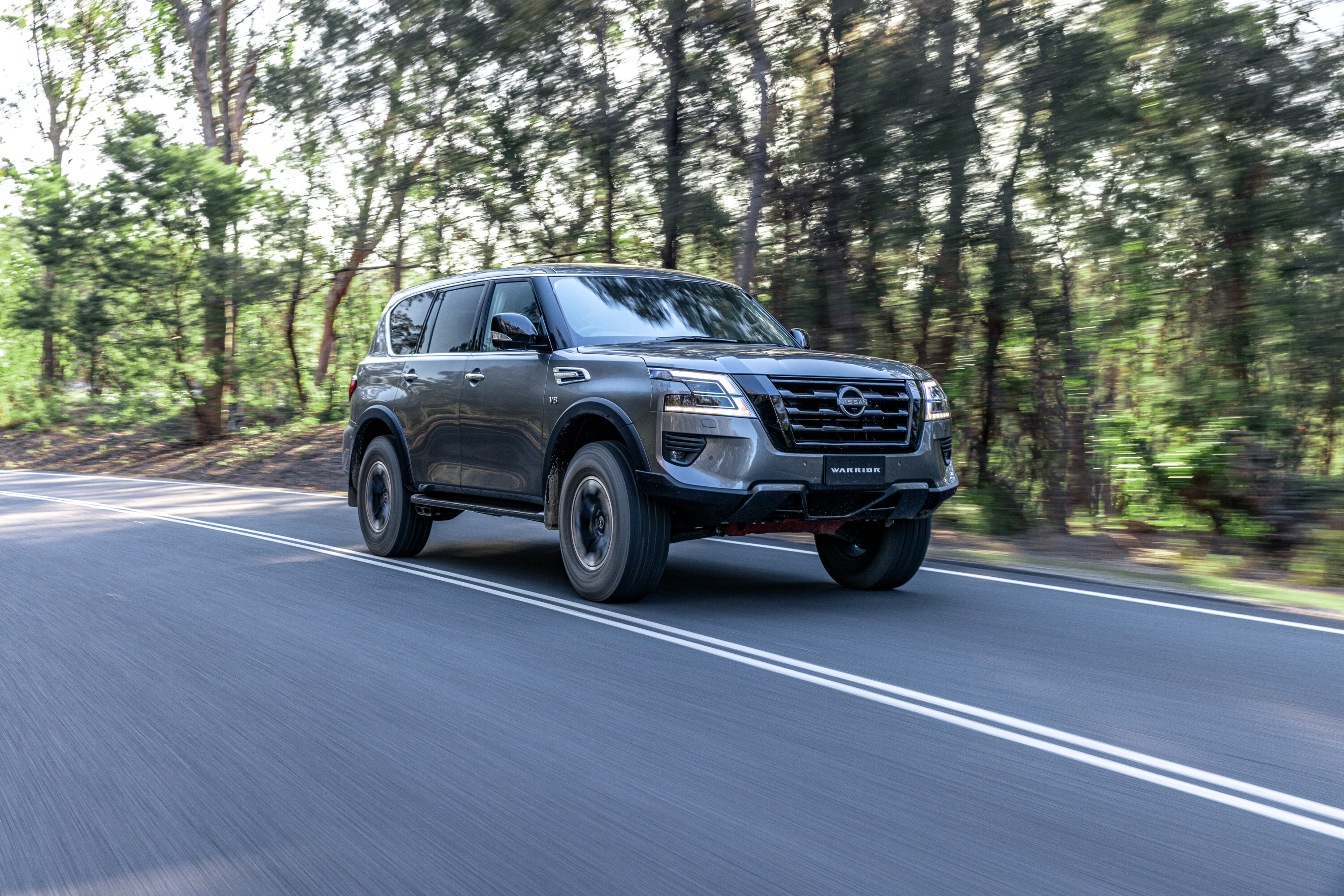
This remains the case 12 months later, with no arrival timing announced, though Wheels was invited behind the wheel of an Ariya in Brisbane this month, alongside the soon-to-arrive Patrol Warrior.
1
“Not this year,” confirmed Nissan’s senior vice president for the AMIEO (Africa, Middle East, India, Europe and Oceania) region, Guillaume Cartier.
“The [Ariya] is doing quite well in other [AMIEO] markets,” said Nissan Australia managing director, Adam Paterson.
“It really is the next step as far as our electrification is concerned in Australia. While we can’t confirm the time… we know the vehicle will be successful here when it does arrive and we’re still working on exactly what that timing is.”
When asked if the strong demand for the likes of the Tesla Model Y in Australia meant Nissan should focus less on waiting for government regulation, Cartier said the Ariya would likely appeal to “rational” car buyers.
1
“… what are the incentives and what is the ecosystem that will be in each and every country?”
“You have what we call the early adopter, where the first criteria is to go with the new technology. They are okay to pay a bit more. But today, when you want to buy new or you want to buy an E-Power, it’s more expensive,” he said.
“And then you have the second category… that’s the rational people who look at the total cost of ownership of the car. If the two lines are crossing, you’re fine because you bring back the irrational people with you.
“That will be linked to two things. On my side, I’m able to say to build the car, which will be cost competitive. On the other side, what are the incentives and what is the ecosystem that will be in each and every country?”
Watch for our Quick Drive review of the Ariya to come next week, or read our prototype review below.
Nissan Australia has admitted it needs to “be even better”, as it slips out of the top 10 in the sales race.
The Japanese brand says its sales slump is due to the prolonged changeover for new products and other industry-wide issues, such as the semiconductor chip shortage, logistical delays, and rising rates affecting many Australians’ living costs.
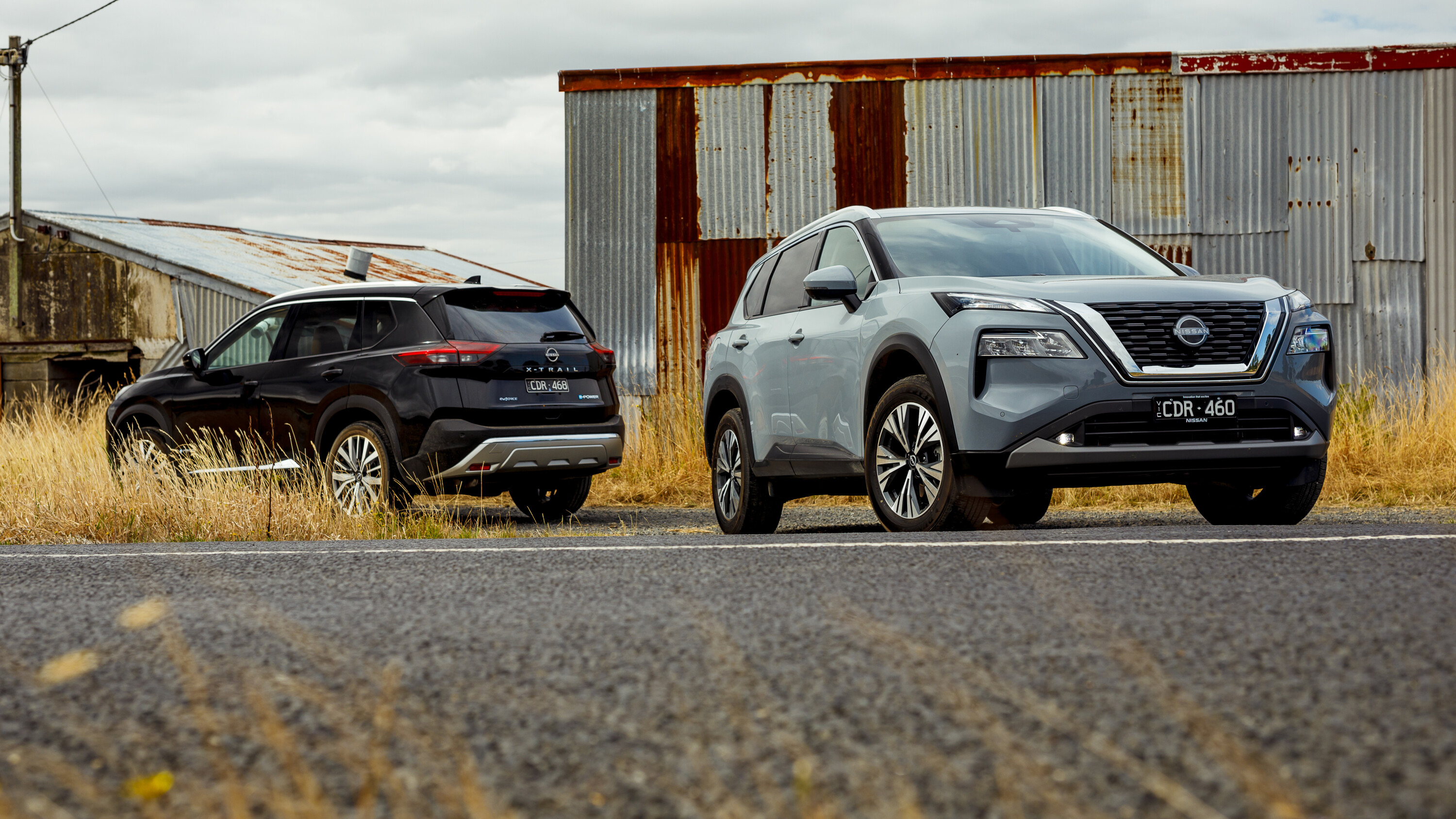
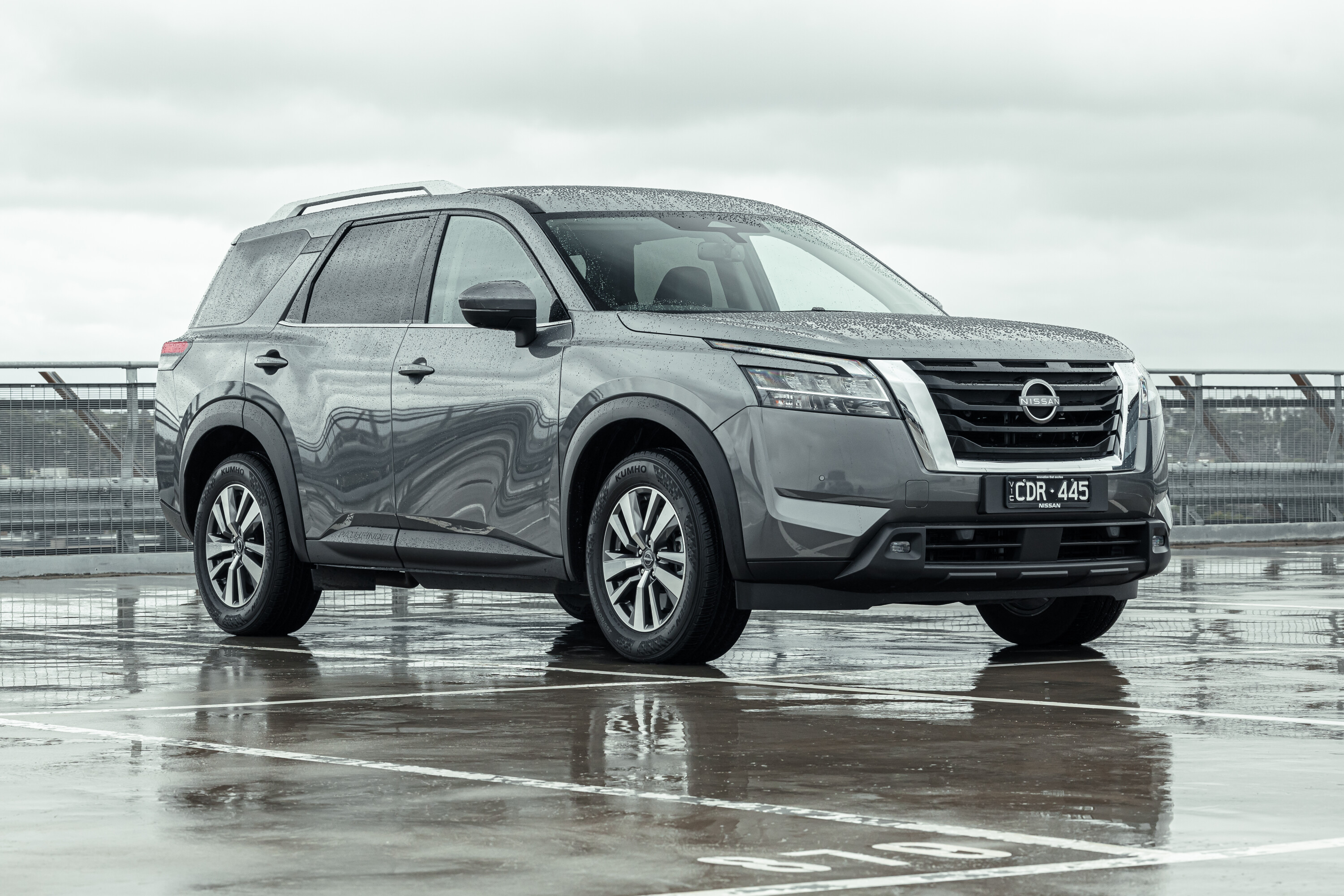
Following delays, Nissan Australia launched four new-generation vehicles in the final six months of 2022, with the new Qashqai, X-Trail and Pathfinder SUVs covering some of Australia’s highest-selling vehicle segments.
1
“The demand is affected by inflation and interest rates, which are rising again.”
“The nightmare is what has happened in the recent past,” said senior vice president for the AMIEO region (Africa, Middle East, India, Europe and Oceania), Guillaume Cartier.
“The demand is affected by inflation and interest rates, which are rising again. That’s what we need to watch.
“The other one is the knock-on effect of COVID… you have some part of the full ecosystem which is impacted, of which is the shipments. The number of ships is less than it was, whereas the market is back. This is [an issue] we need to sort.”
1
In 2022, Nissan recorded 26,491 sales in Australia – its lowest yearly sales result in more than two decades, down from a record high of 80,481 sales a decade prior in 2012.
However, Nissan executives claim the brand is on the road to recovery in 2023. It is on track to sell around 35,000 vehicles this year, with 14,519 registrations to the end of May.
“We have a big presence [in Australia] and our ambition is to be even better than we are today,” said Nissan Australia managing director, Adam Paterson.
“We will sell more cars this year than last year, definitely,” said Cartier.
1
Emerging brands such as MG, GWM and Tesla are also pushing legacy brands out of long-held positions in the top 10.
MG and Tesla, which only sell vehicles manufactured in China, are ahead of Nissan year-to-date, while GWM sits behind – though it overtook Nissan in May.
“I’m looking at segment-by-segment more than the brand. We need to be even bigger in Patrol, in X-Trail, in the top four. A good mission to have is more than six per cent [in market share],” said Cartier.
A six per cent market share would place Nissan in a similar position to Hyundai, Kia and Ford, meaning it would need to sell around 60,000 vehicles per year – a feat it last achieved in 2016 with a 5.7 per cent market share.
1
“The Patrol product has been doing quite well for us…”
The final vehicle could be the rumoured hardcore Nissan Z Nismo variant, or another addition or update to the ageing Navara lineup. The next-generation Navara – based heavily on the forthcoming Mitsubishi Triton – should arrive here in 2025.
“We’ve also had some fantastic success with Patrol… and you can see the growth in Y62 from fiscal year 2018 to last fiscal year. The Patrol product has been doing quite well for us and we’re very excited about the success it has had. There are plans to work on further growth there,” said Paterson.
1
One product struggling to find momentum is the Navara ute, which battles in Australia’s top-selling ute segment.
While more than 20,000 Toyota HiLuxes and Ford Rangers each have found homes so far this year, just 3168 Navaras have been sold, with more LDV T60 Maxes and GWM Utes registered in Australia year-to-date.
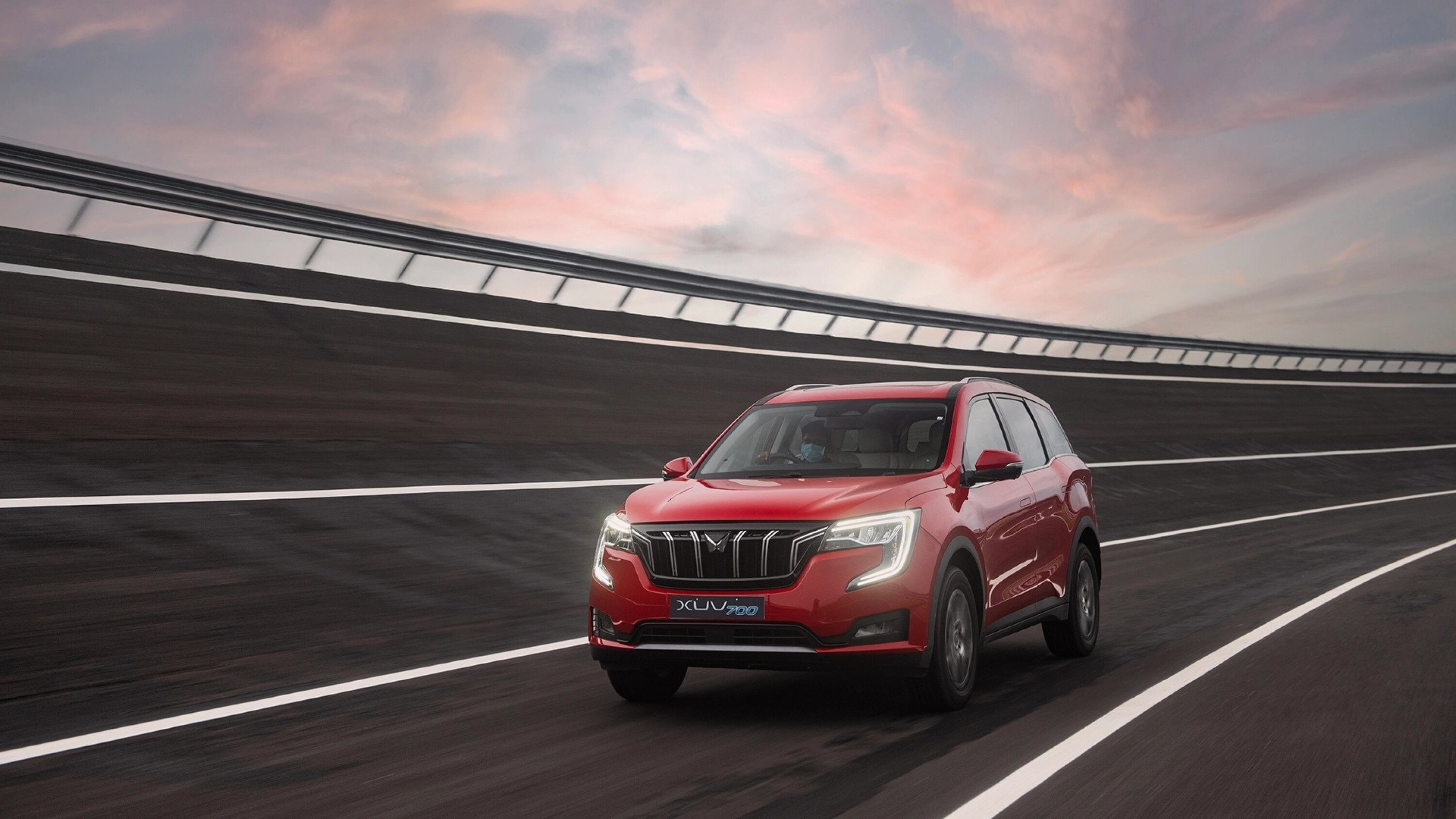
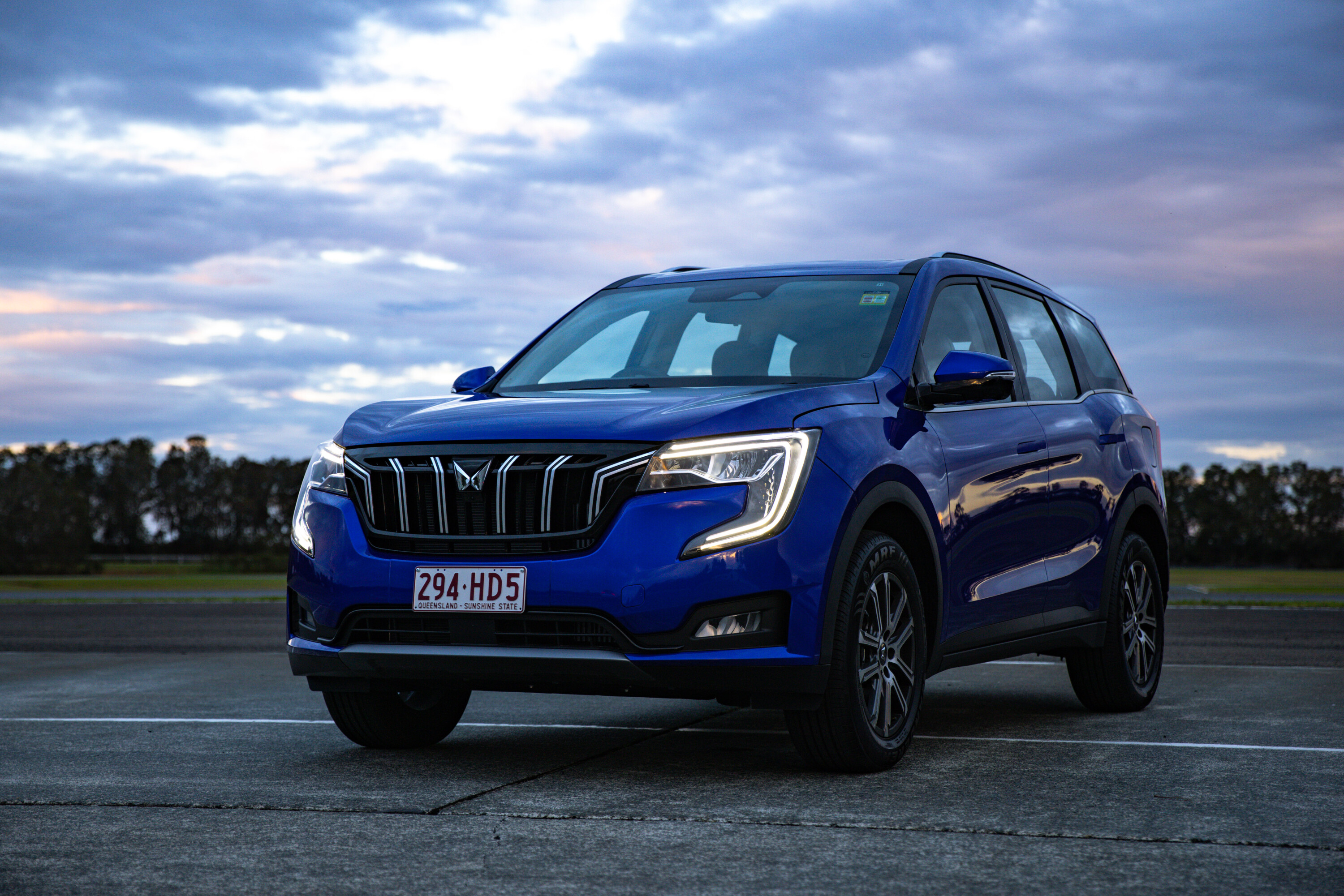
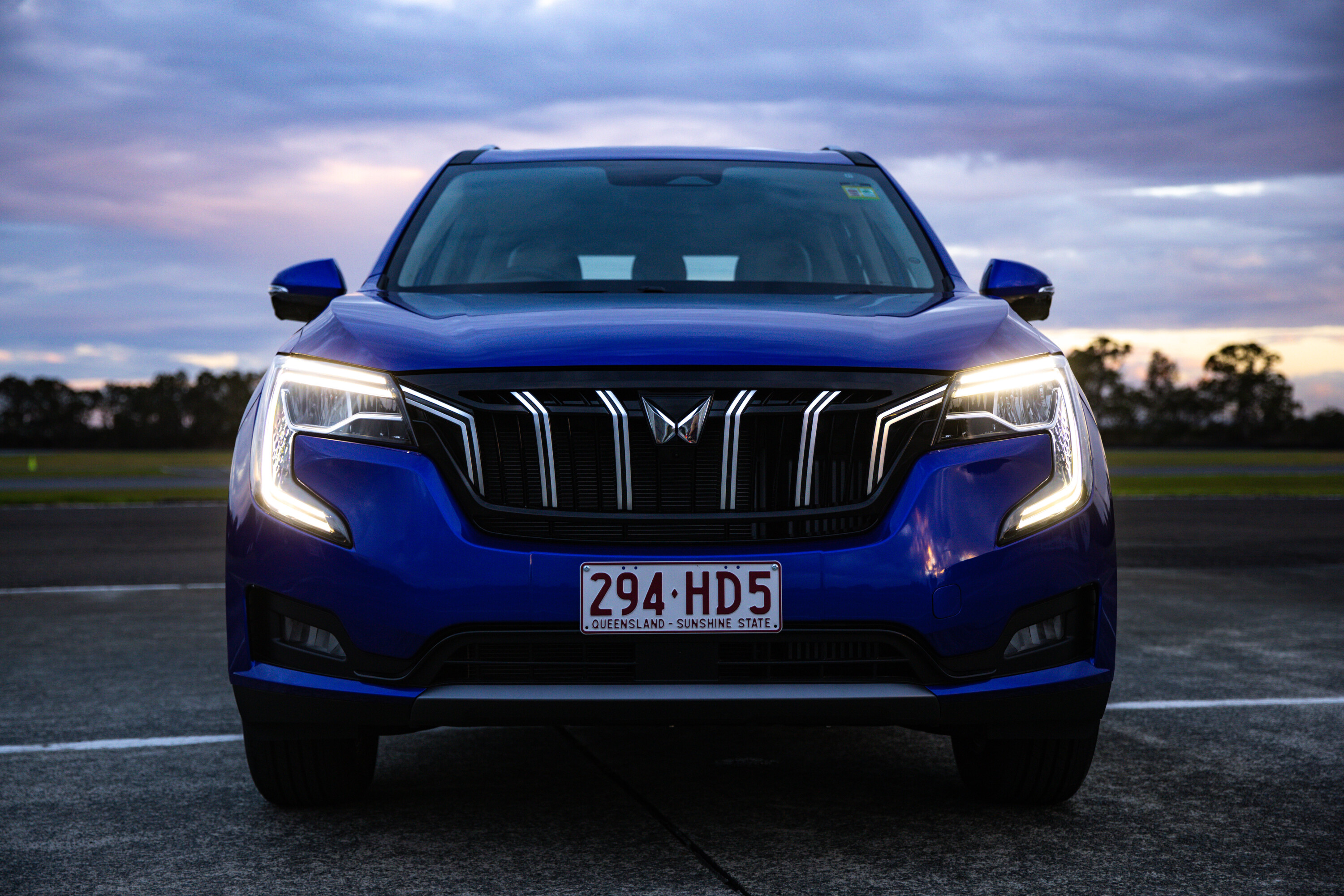
The 2023 Mahindra XUV700 has launched as Australia’s most affordable seven-seater SUV.
Mahindra’s new midsize SUV has arrived two years after its global debut in 2021 and the unibody SUV supersedes the discontinued XUV500 with a bigger footprint and new tech.
Mahindra is offering keen national drive-away pricing, with the entry-level AX7 priced at $36,990.
While overseas markets are offered the option of front- and all-wheel drive, or five- or seven-seats, Australian XUV700s are exclusively offered in petrol front-wheel drive, seven-seat configuration.
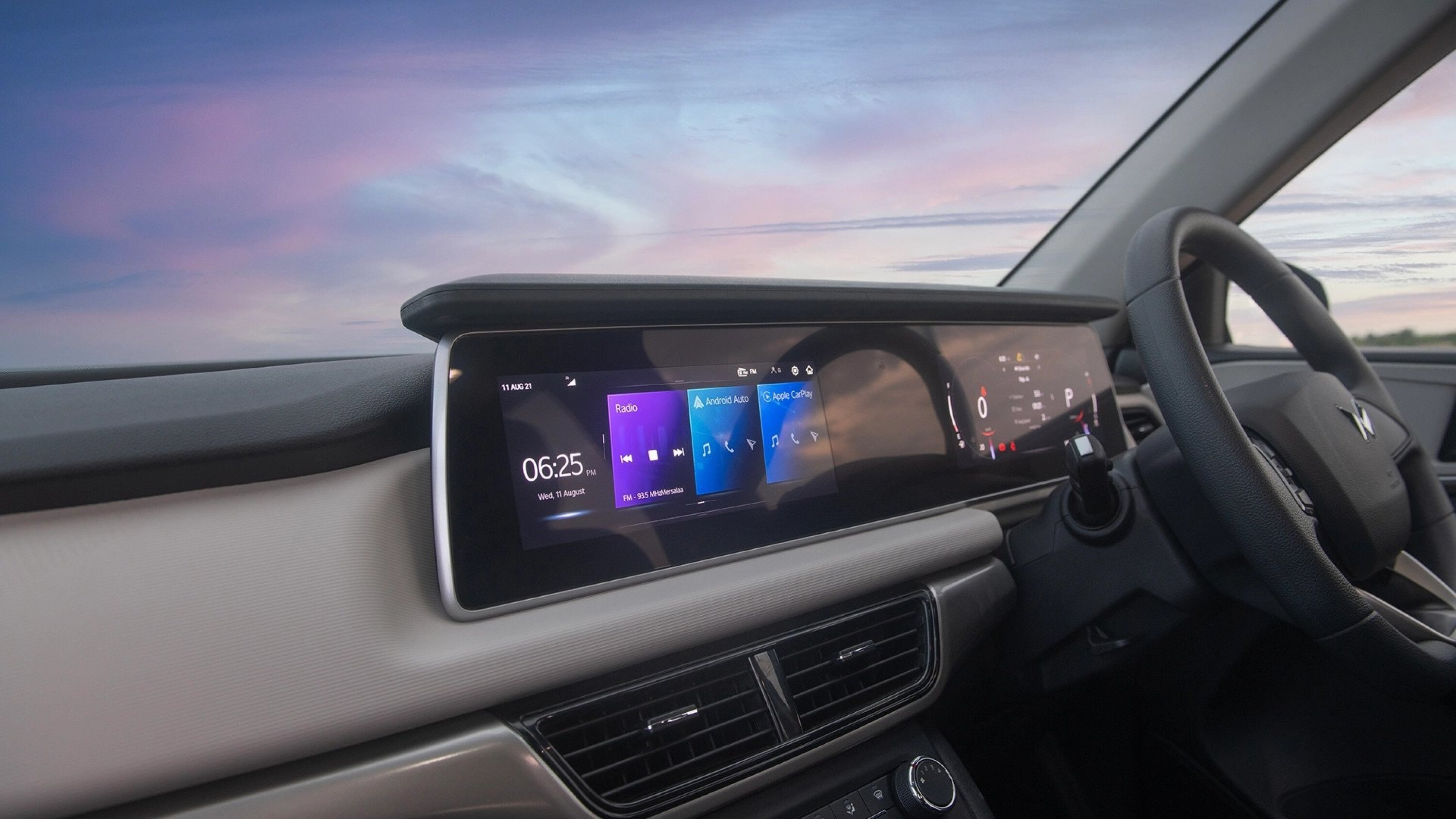
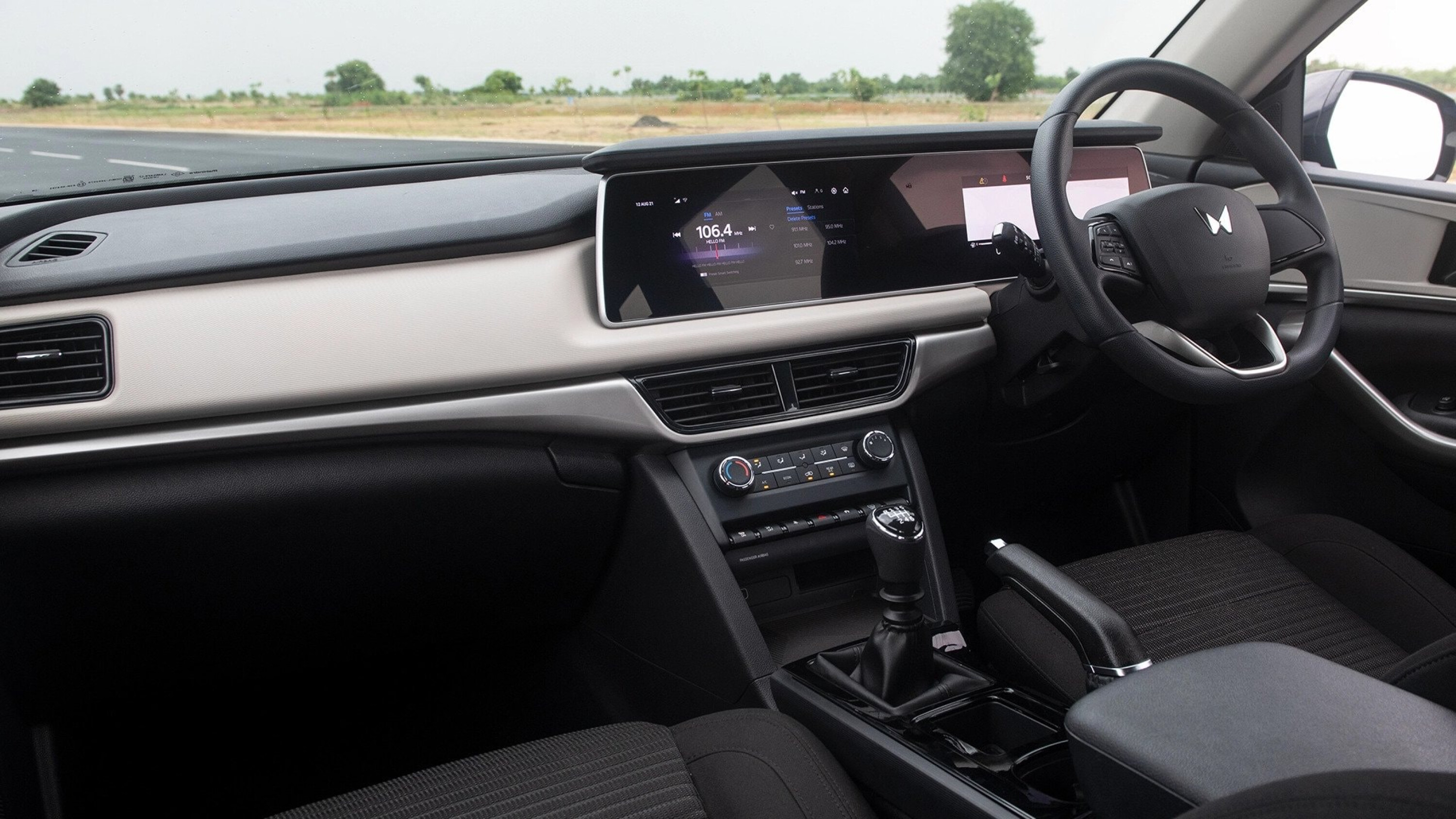
The Mahindra XUV700 adopts a two-pronged range. Both employ the same mechanical package, with the flagship AX7L adding extra luxury and convenience features such as wireless phone charging, 12-speaker Sony stereo, 360-degree camera and more for an extra $3000.
XUV700
Price
AX7
$36,990
AX7L
$39,990
The above prices are national drive-away prices offered by Mahindra until August 31, 2023.
1
Drivetrains
The Australian-spec 2023 Mahindra XUV700 is powered by a 2.0-litre turbocharged four-cylinder petrol engine producing 149kW at 5000rpm and 380Nm from 1750-3000rpm.
Engine power is transmitted to the front-driven wheels by way of a six-speed automatic gearbox.
Features
The Mahindra XUV700 AX7 features, as standard:
18-inch alloy wheels
Dusk-sensing LED headlights w/ auto high beam
LED daytime running lights
Fog lamps
Push-button start
Rain-sensing wipers
Panoramic Sunroof
Synthetic leather-look seat trim in white
Six-way power-adjustable driver’s seat with memory function
10.25-inch digital instrument display
10.25-inch touchscreen infotainment
Apple CarPlay & Android Auto
Six-speaker stereo
Dual-zone climate
Leather-wrapped steering wheel and shifter
Rearview camera
Autonomous emergency braking
Lane departure warning
Lane keep assist
Adaptive cruise control
Tyre pressure monitoring
Forward collision warning
Six airbags
1
Stepping up to the Mahindra XUV700 AX7L adds:
Wireless smartphone charging
12-speaker Sony sound system
Adaptive cruise control w/ stop-and-go
360-degree camera
Blindsport view camera
Knee airbag (total seven airbags)
Electric smart door handles
Electronic park brake
Illuminated vanity mirror
Efficiency
The Mahindra XUV700’s official combined fuel consumption is 8.3L/100km and the vehicle features a 60-litre fuel tank.
Safety
The Mahindra XUV700 has yet to be assessed by ANCAP, and is currently unrated.
Standard safety features include six airbags, comprising dual front, front-side and curtain cushions; AEB, adaptive cruise control, lane-keep assist, traffic sign recognition, a reversing camera, and post-collision braking.
1
Stepping up to the top-spec XUV700 AX7L adds extra safety items, including: a blind-spot view monitor, a 360-degree camera, a seventh knee airbag cushion, and adaptive cruise control with added stop-and-go capability.
Warranty and ownership
Mahindra XUV700s are covered by a seven-year/150,000km (whichever occurs first) warranty, with seven years of roadside assistance.
Servicing intervals run annually or every 10,000kms, whichever occurs first.
The quirky Fiat 600e electric crossover has been officially revealed, offering a more practical alternative to the 500e hatch.
June: Fiat 600e sneakily revealed
The Fiat 500X is being reborn. The Italian carmaker has subtly teased the 600e, its first electric SUV, in an official video.
Snapshot
Fiat 600e revealed in official video
Borrows traits from 500e, other Stellantis models
Next-gen city SUV to replace 500X overseas
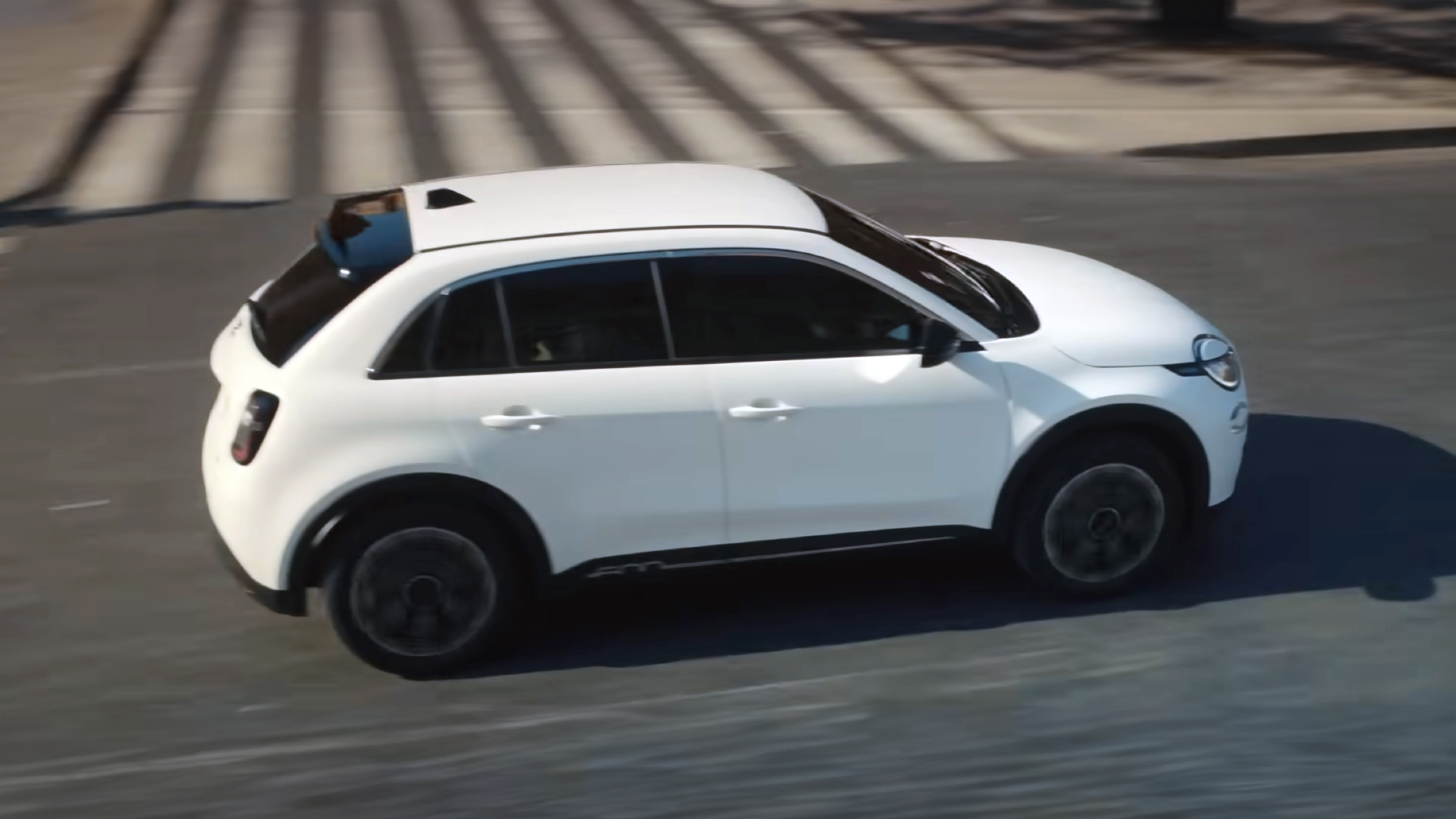
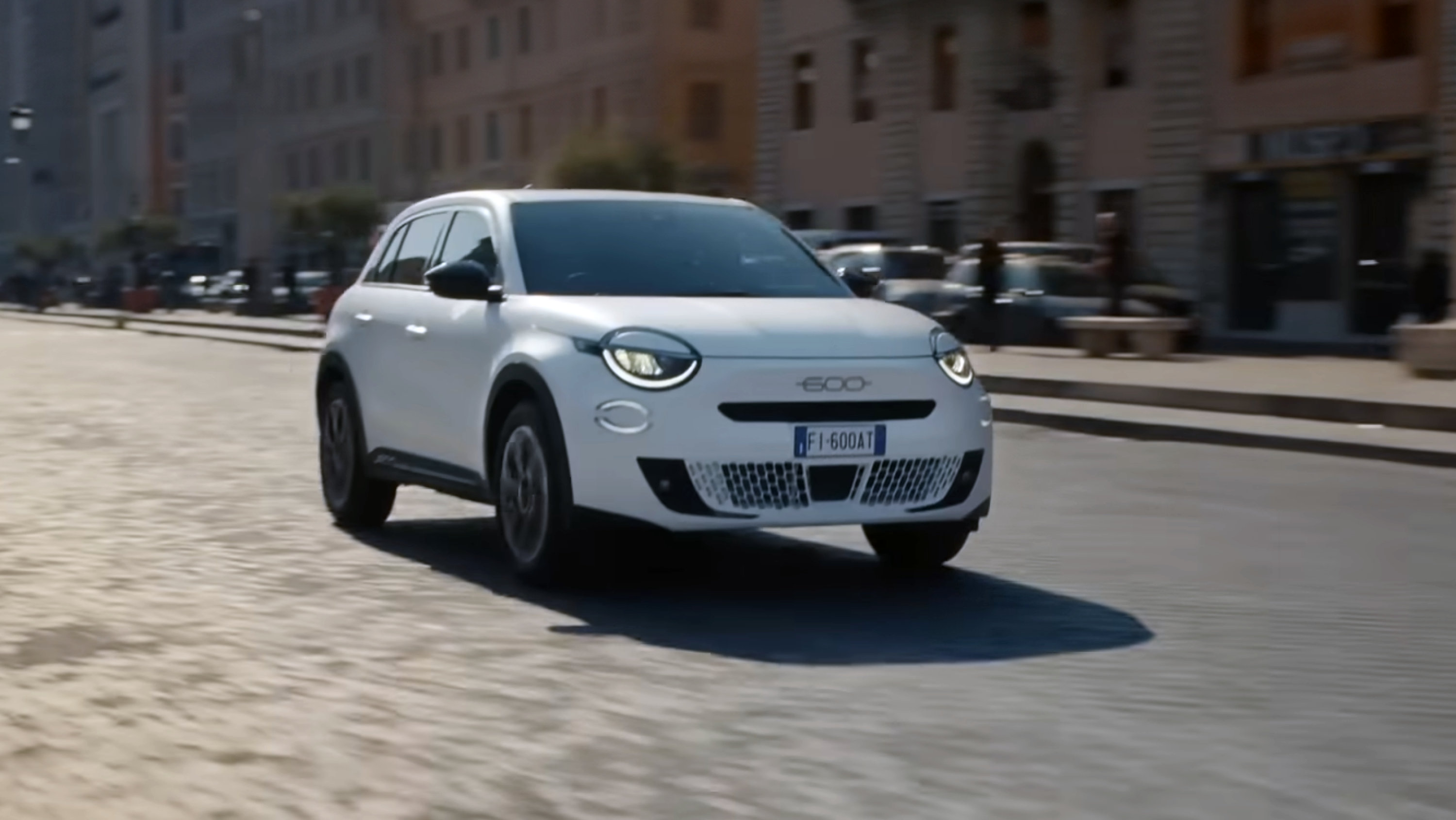
The Fiat 600e, depicted in a video designed to promote a Vatican Foundation event, reveals an evolutionary design compared to the old 500X light SUV. It adapts design elements from the forthcoming 500e city hatch to the raised body form.
There are familiar rounded LED lights, a honeycomb pattern front bumper, fog lights in a black claw shape, ‘600’ badging across the front and side skirts, and aerodynamic wheels.
1
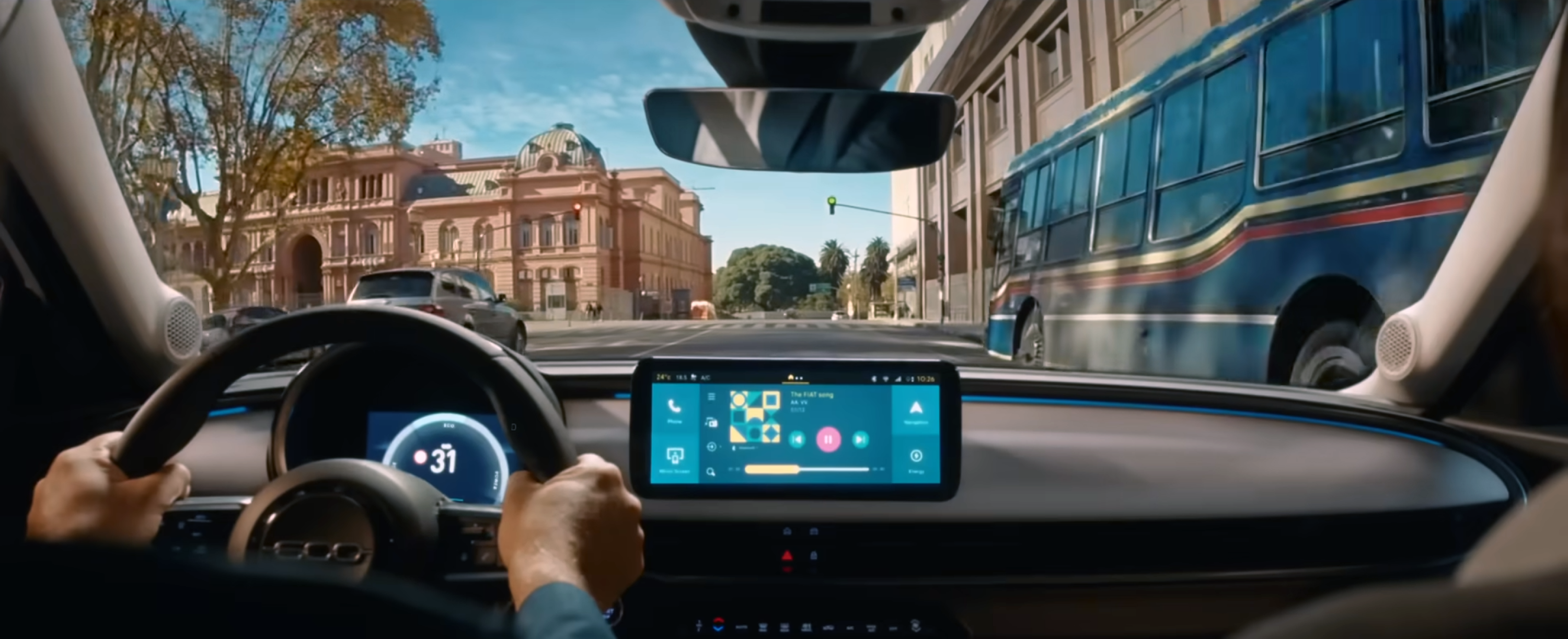
An interior shot also showcases a similar dashboard design to the 500e, featuring a 10.25-inch touchscreen and 7-inch driver instrument display.
However, the electric SUV seems to run an upgraded version of the UConnect operating system – likely a revamped version of what’s used in the latest Peugeot vehicles – with an ambient lighting strip running behind across the dashboard.
The 600e is expected to adopt Stellantis’s latest electric Common Modular Platform 2 (e-CMP2) and a 50.8kWh usable nickel-manganese-cobalt (NMC) battery pack that’s used in the Jeep Avenger overseas.
1
For context, that model delivers up to 399 kilometres of claimed driving range, with up to 11kW AC and 100kW DC charging capability.
The 600e might also feature a similar electric drive unit to the related upcoming Peugeot E-2008 electric SUV, which boasts a front-mounted motor producing 100kW of power and 260Nm of torque.
Unlike the smaller, electric-only 500e, the 600 may be offered with a petrol engine version for select countries.
The Fiat 500X was introduced in Australia in 2015 as the higher-riding SUV version of the charming 500 city car. However, it was discontinued locally in 2021.
In celebration of Wheels magazine’s 70th birthday, we’re running through the 70 greatest cars of all time – defined not by sales or talent alone, but simply as our writers past and present see it.
After rounding up the greatest sports cars, it’s time to consider the workhorses of the roads – both urban and country – the 4×4.
1
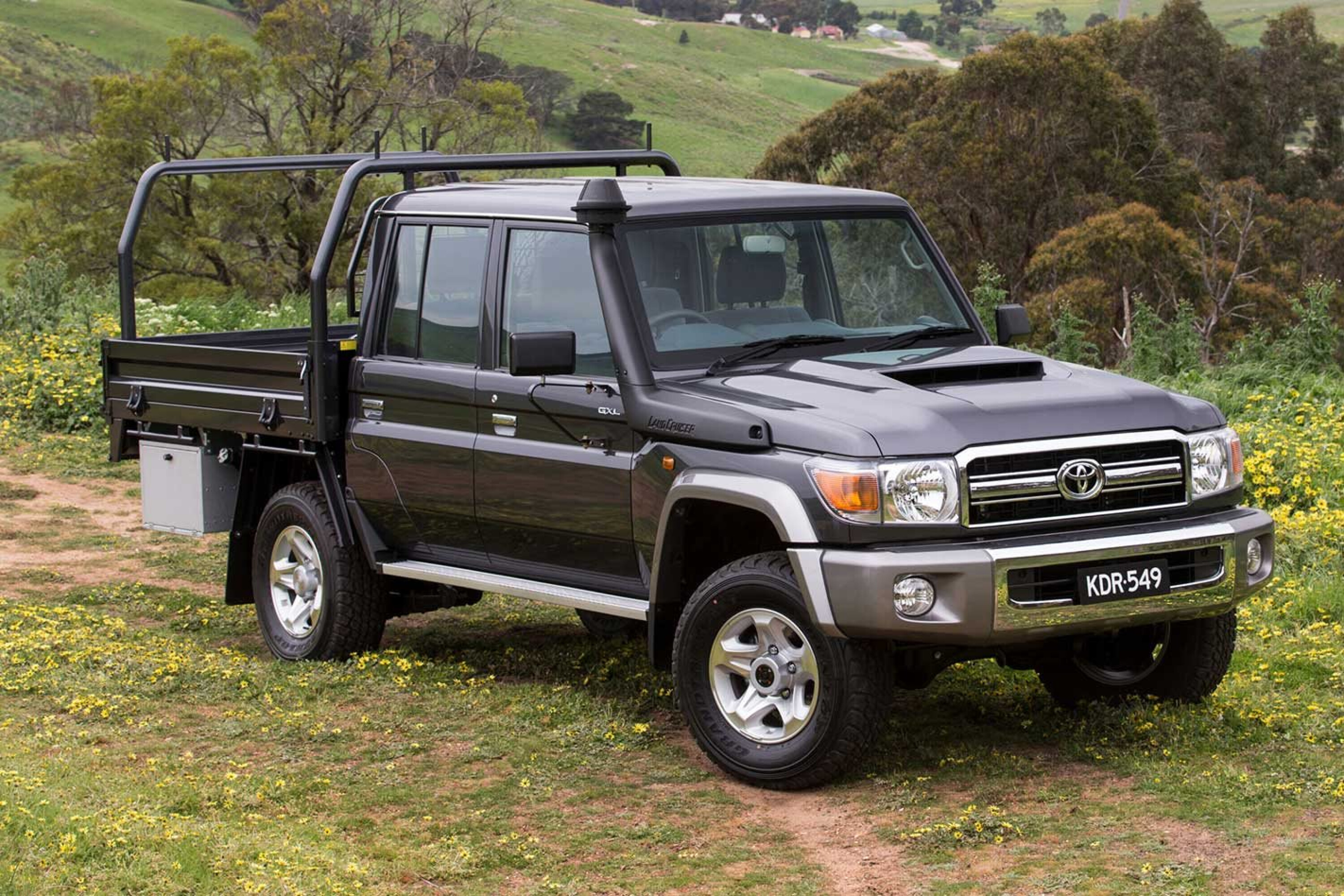
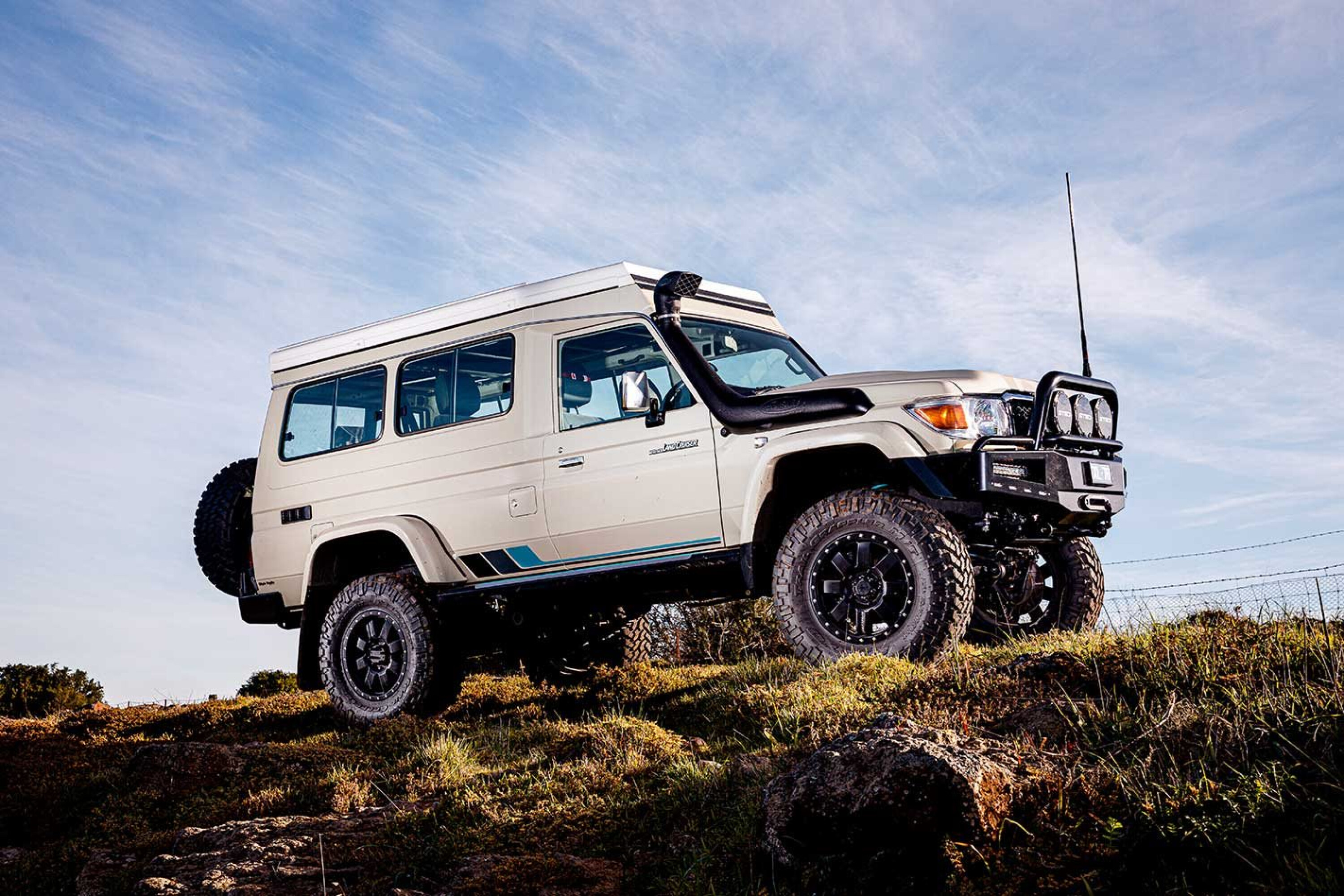
? Toyota LandCruiser
WE LOVE
As close to indestructible as passenger vehicles get
NOT SO MUCH
Toyota has realised quite how much customers will pay for the privilege
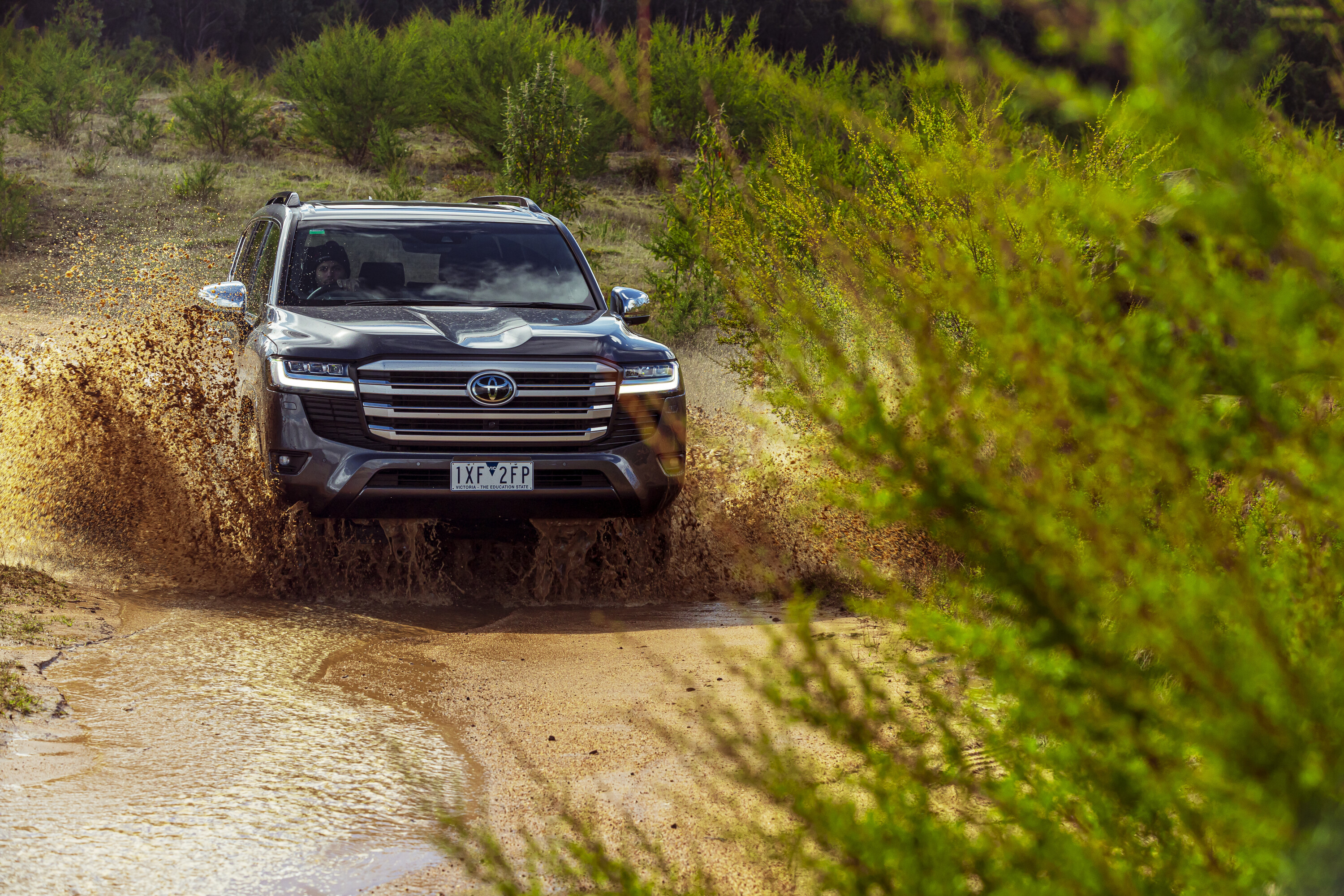
If you’re tackling the toughest country in the world, buy a LandCruiser. Generations of Aussies aren’t wrong.
Whether you’re passing through Cameron Corner or the Empty Quarter, vehicle choice becomes elevated above the superficial and becomes predicated almost purely on substance.
Since 1951, that vehicle has increasingly been the Toyota LandCruiser. It wasn’t always that way though. The original BJ was born from US Korean War contracts, but its successor, the FJ25 was the first to be sold in Australia.
It wasn’t a great vehicle, plagued by front axe and gearbox issues, as reported by the Thiess contractors who drove them on the Snowy Hydro project. What made the LandCruiser great was Toyota’s response.
1
By 1981, the 100,000th LandCruiser had been sold in Australia.
Genchi genbutsu roughly translates as ‘go to the source’ and Toyota’s philosophy was to dispatch engineers to Australia to discover for themselves exactly what was going wrong, flying parts back to Japan for analysis and rapid redesign.
By 1981, the 100,000th LandCruiser had been sold in Australia. Toyota still goes to the source, realising that the model’s success in Australia offered an unprecedented data feedback opportunity to make the vehicles even better.
So much so, in fact, that by 2005, its local market research demonstrated that “52 percent of Sahara turbo-diesel buyers considered no other vehicle when making their purchase, while 40 percent of Sahara petrol V8 buyers considered only that model before buying”. Nowhere else in the market do you find that loyalty. It’s been very hard earned.
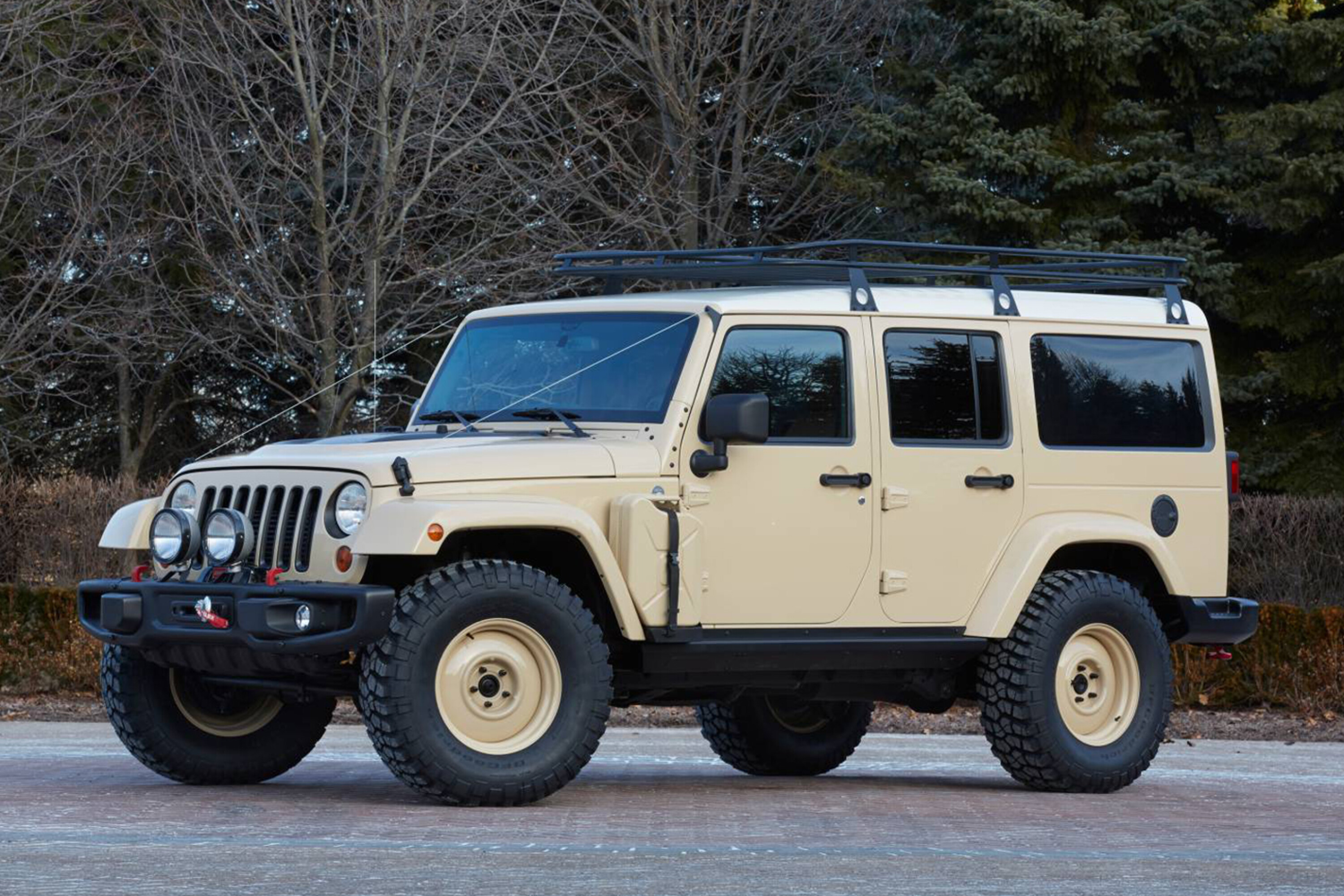
Australia never got the 392 Rubicon with its 6.4-litre Hemi
We don’t need to retell the story of the Wrangler here.
As pivotal to Jeep’s brand identity as the 911 is to Porsche, the Wrangler will likely be the first production car to trace a clear and unambiguous bloodline for a century come 2041 from the wartime Willys MB through to the first Wrangler-badged model. Strangely, AMC tried to play down that link when the Wrangler launched in 1986.
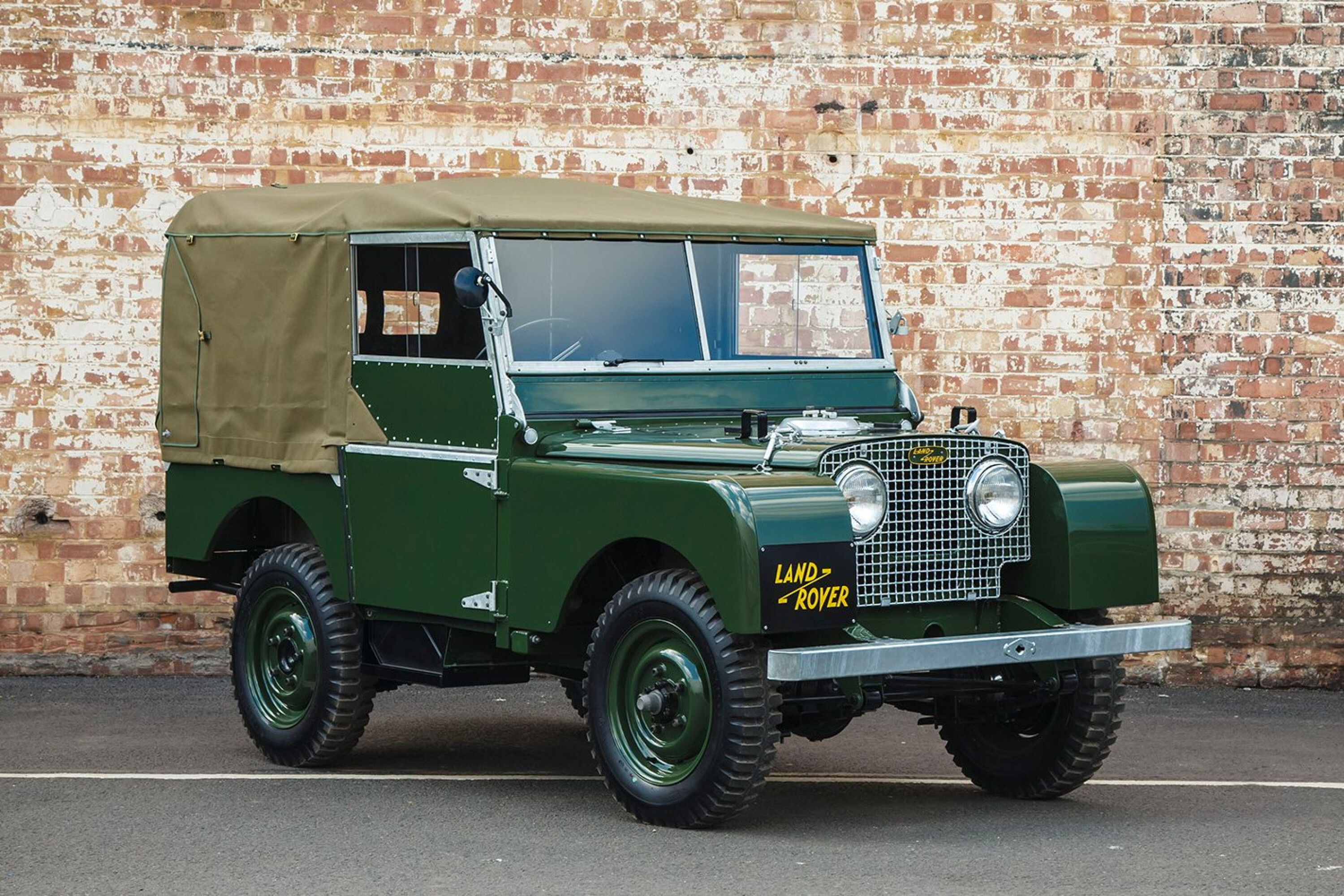
The greatest use of surplus wartime aluminium ever devised?
It has to be between the Land Rover and Sputnik, although given that the latter only lasted 22 days and the former some 68 years, we’ll side with Solihull over Korolev. They’ve survived the Korean War, the Suez Crisis and the Gulf War. Survived British Leyland too, which deserves some sort of medal.
BMW was so confident of its dynamics that the X5’s launch was at Road Atlanta raceway
NOT SO MUCH
How many millions of tonnes of extra CO2 have resulted from the SUV craze?
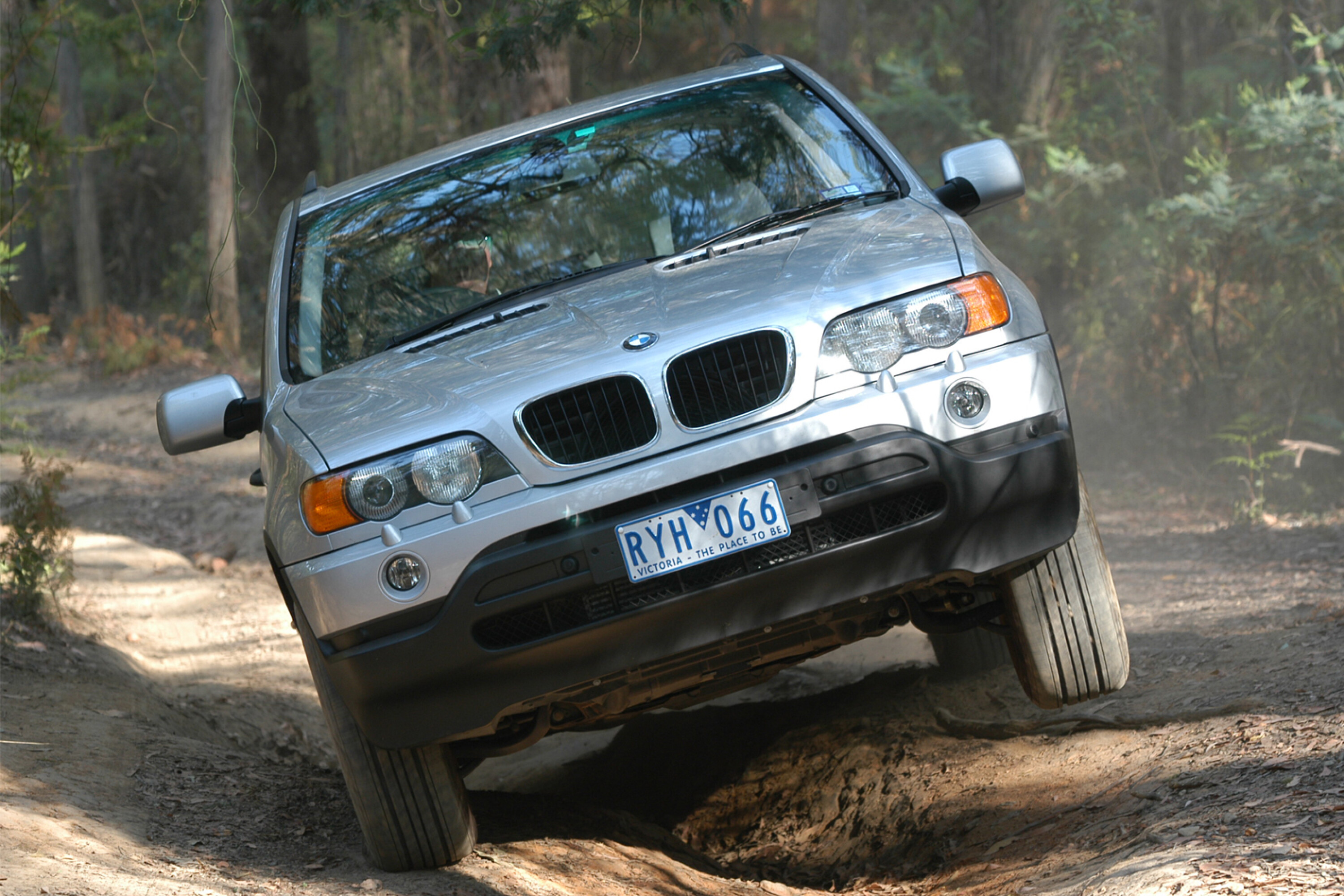
It’s true, the BMW X5 wasn’t the first premium SUV.
Launched in 1999, it was beaten to the punch by the Mercedes ML (1997), the Lexus RX (1998) and, if you really want to tease out that thread of logic, Grand Cherokees and Range Rovers. The X5 was different though. It handled. Objections to owning a high-riding vehicle vanished and, for better or worse, the SUV boom started right here.
3dr Range Rover occupies a far smaller road footprint than a current Nissan Qashqai
NOT SO MUCH
Designer Spen King hated the fact that it became a status symbol
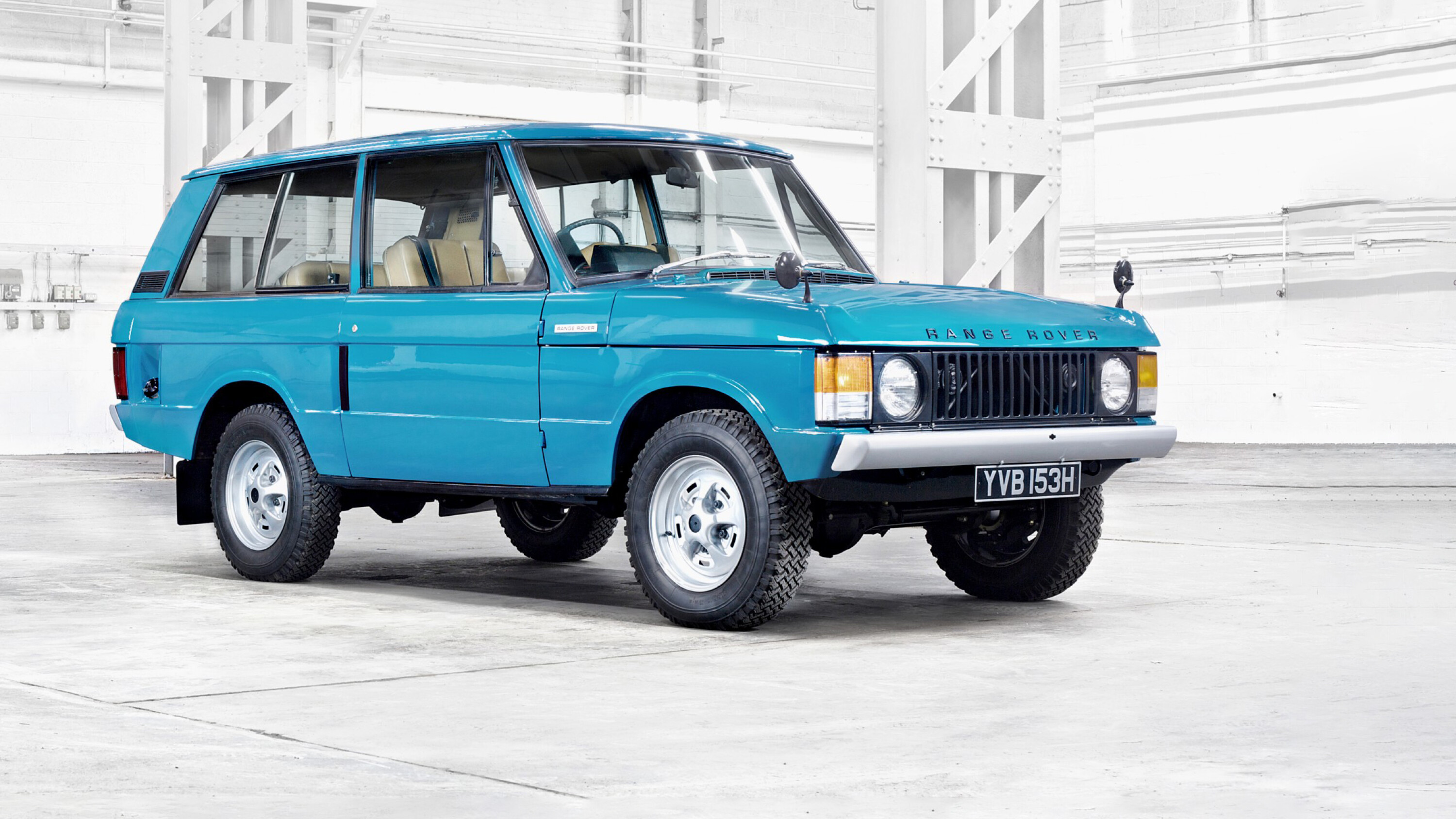
In 1971 a pair of Range Rovers drove from the tip of Alaska to the tip of Argentina.
Doing so required the first vehicular crossing of the Darien Gap, an inhospitable knot of swamp, jungle and mountains on the border of Colombia and Panama. It took 96 days at an average of a mile a day.
How many cars can do that and be displayed at the Louvre as an “exemplary work of industrial design”?
28cm of air-sprung ground clearance and a Nordschleife lap time to shame a 964
NOT SO MUCH
The styling was challenging and has only become more so with age
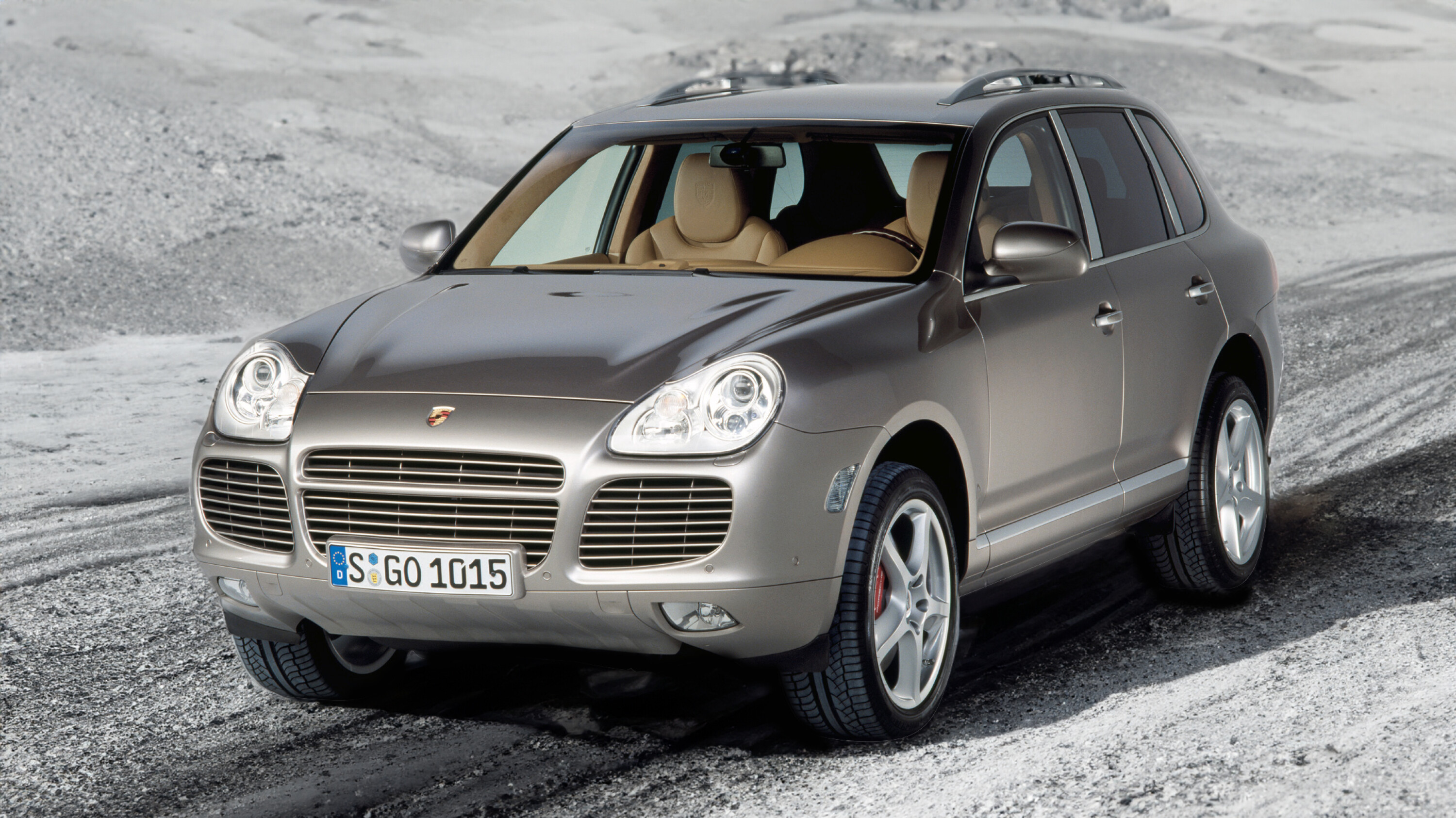
If the BMW X5 warmed us up to the idea of a sporty SUV, Porsche’s 331kW Cayenne Turbo hammered home the notion.
The original 2002 Cayenne Turbo was nobody’s idea of a good looking car, but 0-100km/h in 5.3 seconds combined with genuine off-road ability to produce a runaway sales success. Every Porsche sports car built today owes its existence to the Cayenne project.
Interior stylist Marcus Hotblack has possibly the coolest name in vehicle design
NOT SO MUCH
The Barra Turbo engine was binned for the 2009 SY II
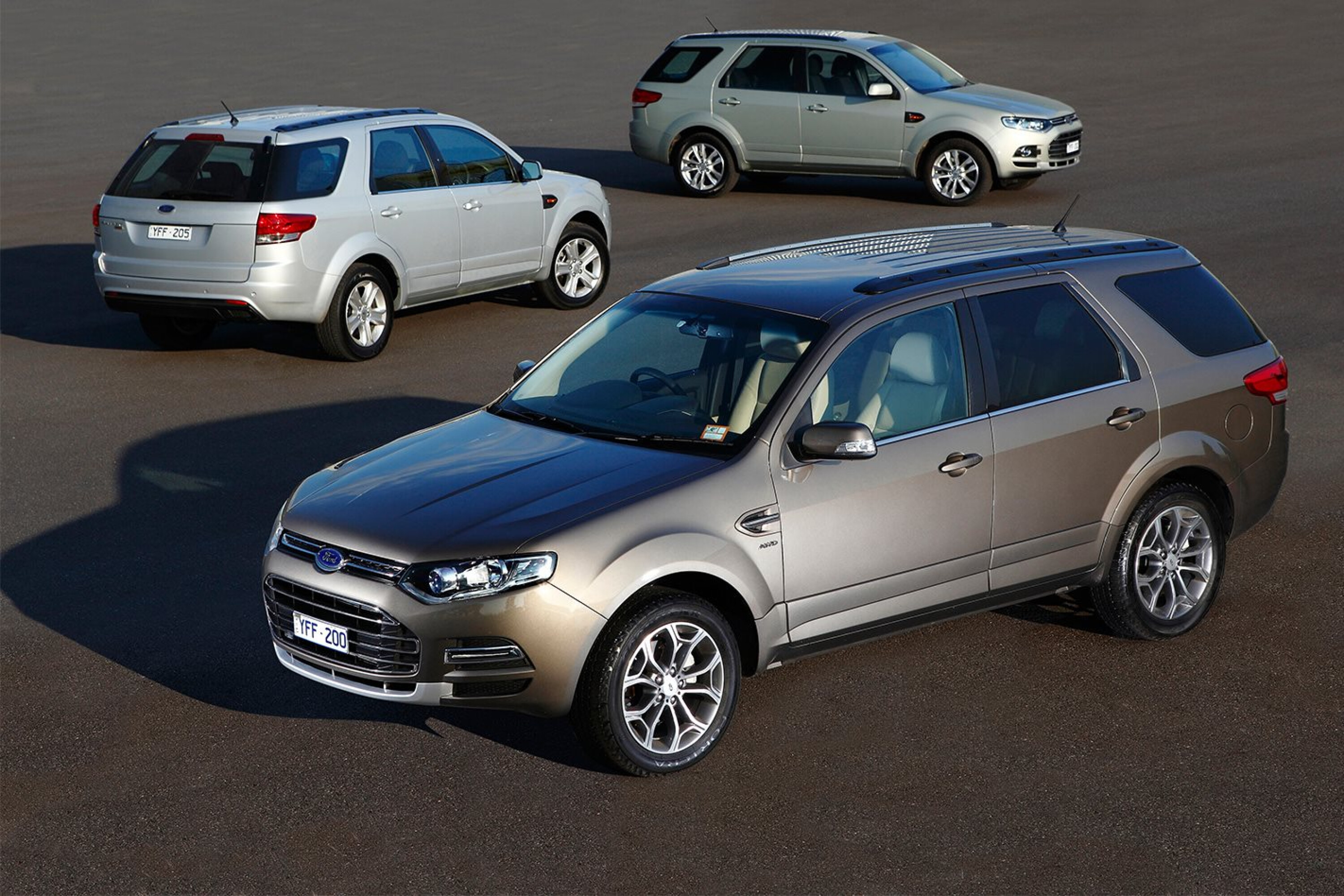
“Australia only built one world-class vehicle and that was the Territory,” a Ford engineer noted, anonymously, at the launch of the current Ranger.
The first SUV to win Wheels COTY was developed for A$500m; good value given that Alfa spent 16 times that much on the ill-fated Giorgio platform. Unfortunately the shoestring budget didn’t come close to covering export homologation.
Longer, wider, lower and more dynamic than its predecessor
NOT SO MUCH
The ride’s a bit nibbly without air springs
If you’re buying a large SUV for your family, what’s the key priority?
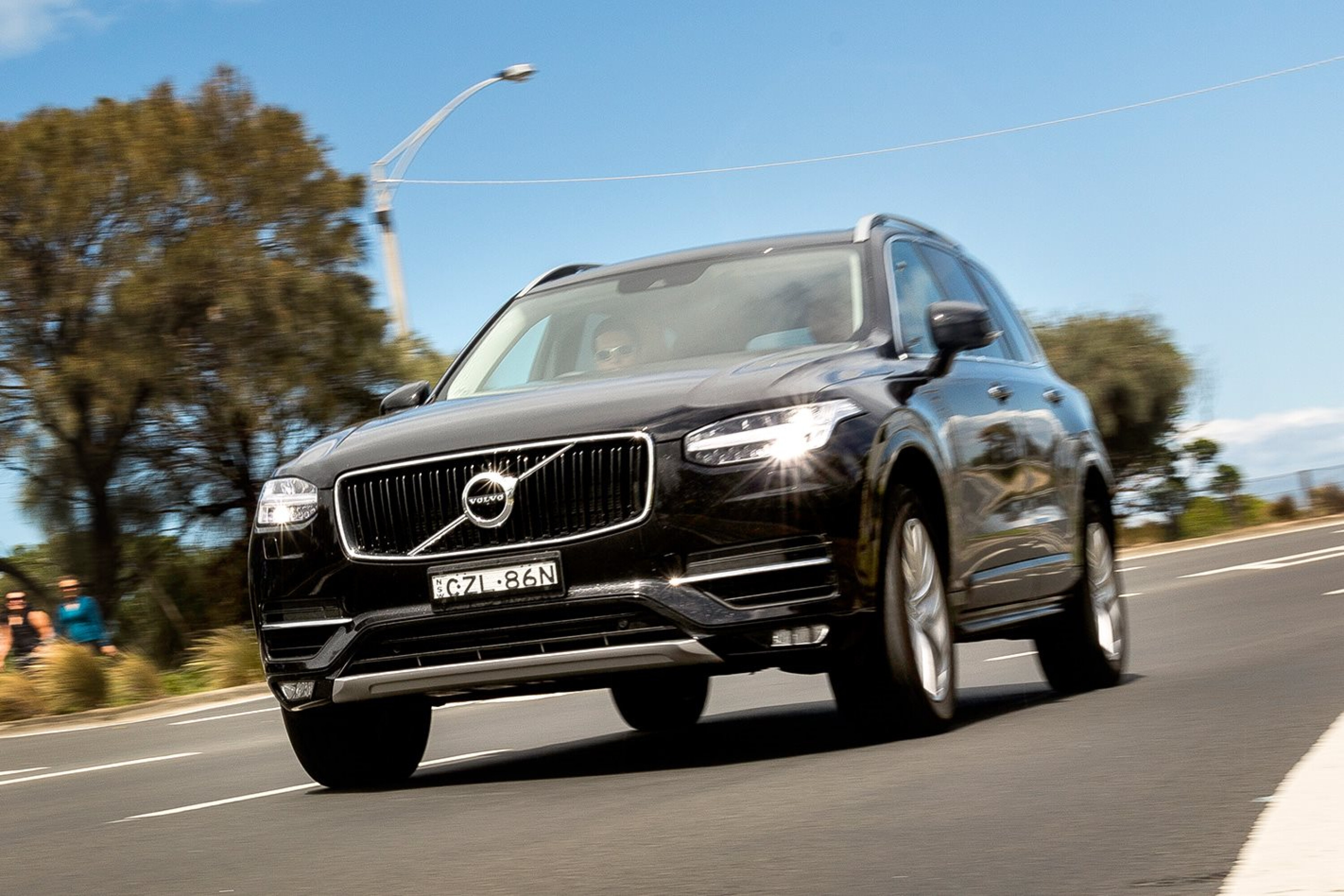
Come on, this is not a hard question. Yep, safety. And if you wanted safety, the Volvo XC90 earned some formidable spurs, scoring one hundred percent in Euro NCAP’s Safety Assist category and was the first vehicle to net a maximum score in two AEB tests. Who said sensible couldn’t be stylish?
Designer Brooks Stevens was also responsible for the Oscar Mayer Wienermobile
NOT SO MUCH
You could still buy them in 1991
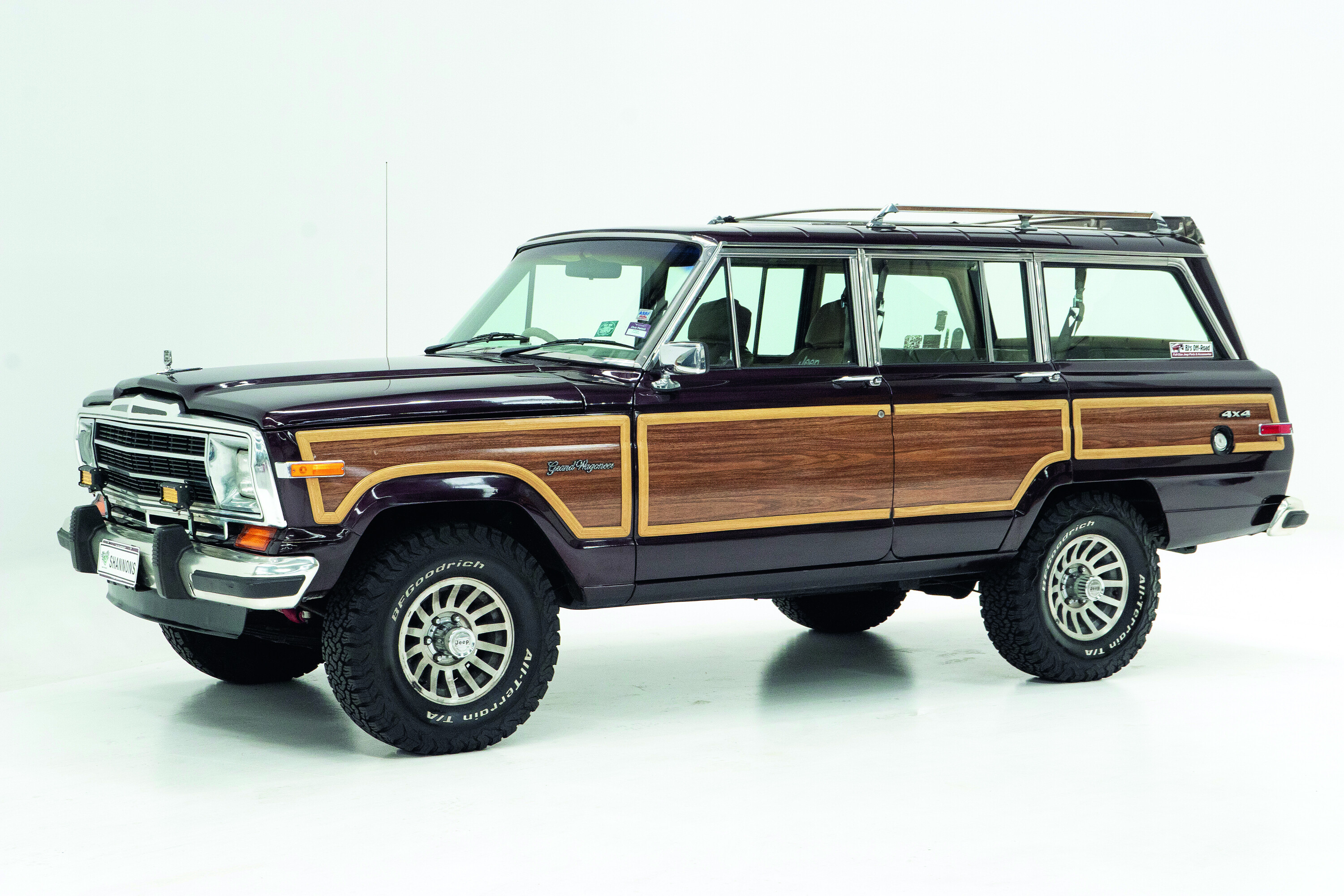
The first deliberate lifestyle SUV? You’re looking at it right here.
First launched in 1963, the Wagoneer preceded the Range Rover by seven years, and built upon the germ of an idea created by the Willys Jeep Station Wagon. Jeep tried to replace the Grand Wagoneer with a smaller and cheaper XJ Wagoneer in 1983, but the US market enacted a New Coke-style hard reject.
Nissan Qashqai (J10)
WE LOVE
The 1.5-litre diesel model could travel 1350km on a tank of fuel
NOT SO MUCH
Nissan’s Sunderland plant had to kill the Primera to free up line space for Qashqai
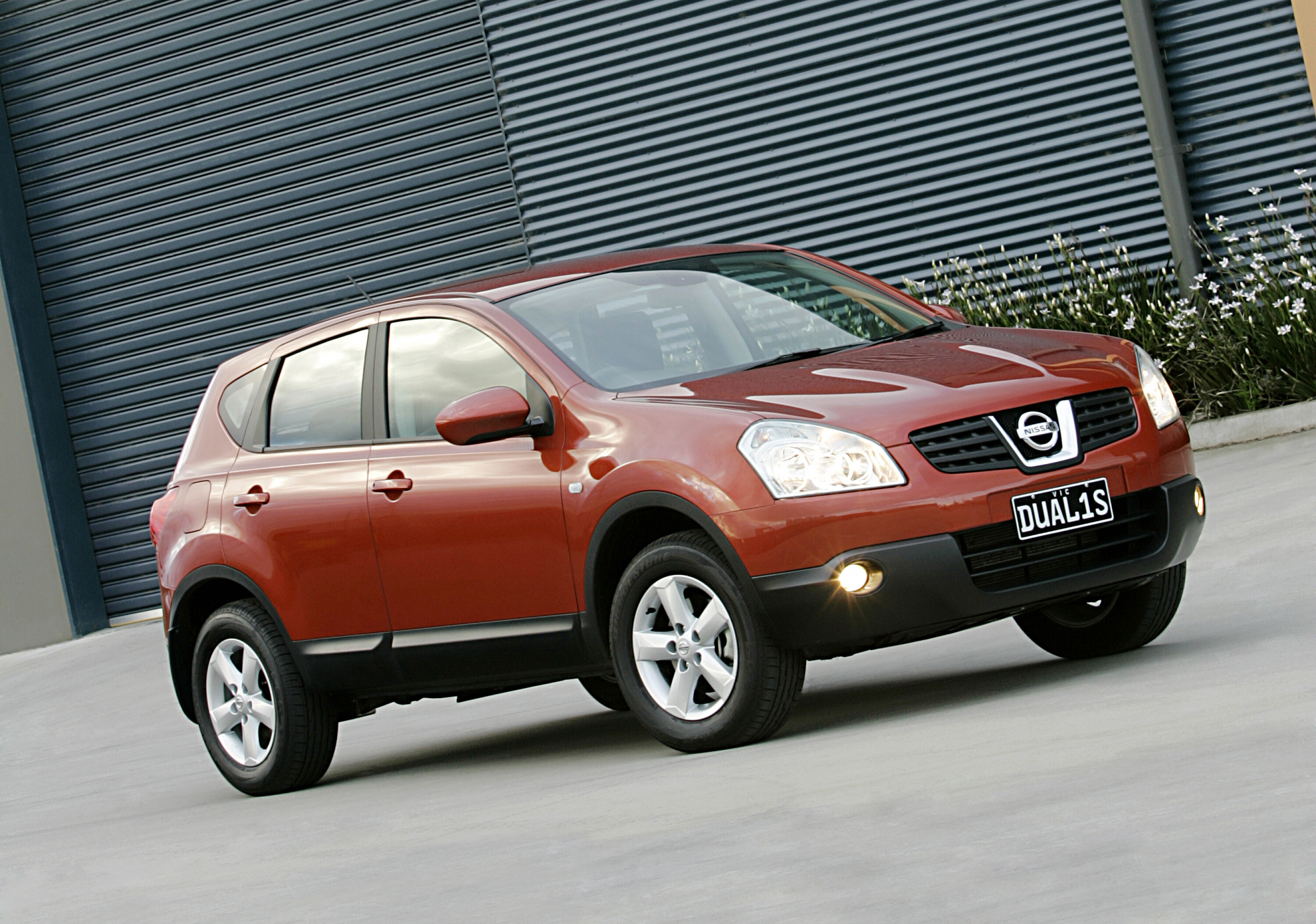
If you’re sensing a theme here, well spotted. The Nissan Qashqai didn’t invent the compact crossover genre.
The Honda HR-V had already done much of the heavy(ish) lifting there. But the British crossover, dubbed Dualis when it first made landfall here, absolutely nailed the brief. A huge success, Nissan hoped for 100,000 global sales a year. It more than doubled that in Europe alone.
To follow the series, hit our Greatest Cars Ever at the link below.
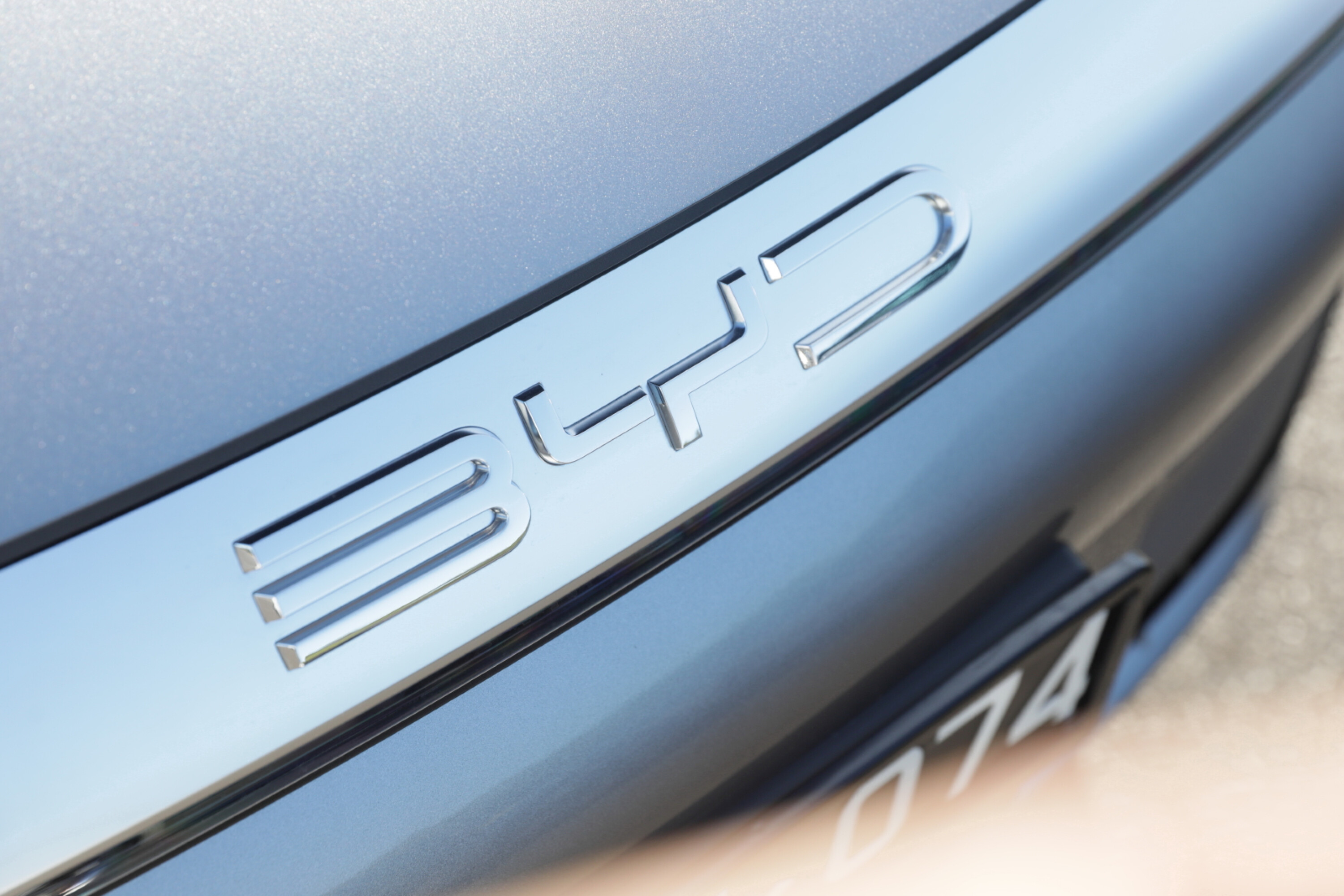
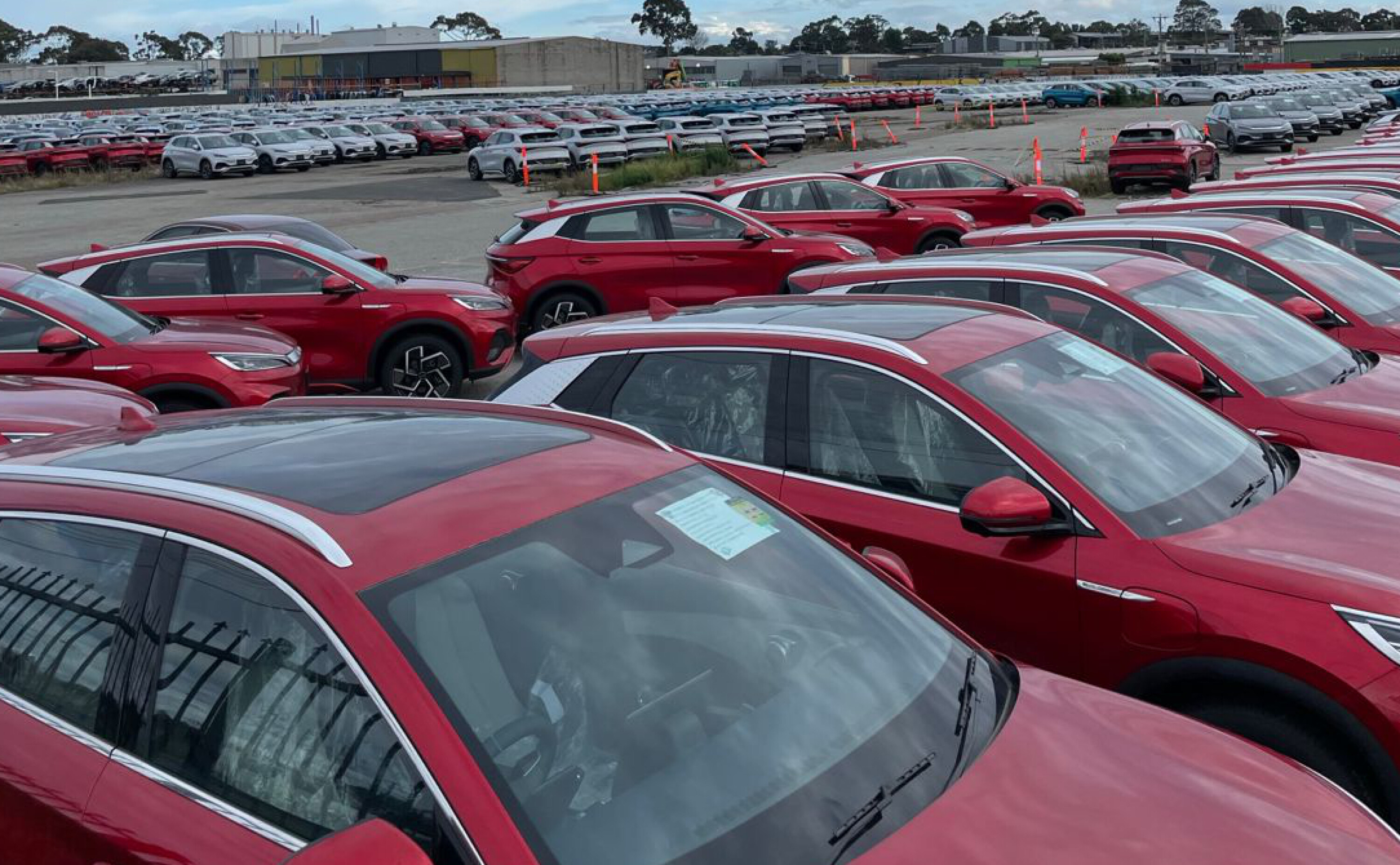
Distributor EVDirect has earmarked 2700 BYD Atto 3 electric SUVs for Victorians to avail of the $3000 rebate before it expires on June 30, as other automakers also seize on the sales opportunity.
Snapshot
Automakers respond to Victoriau2019s impending end of $3000 EV rebate
EVDirect claims 2700 eligible Atto 3’s allocated for Victoria
Polestar adds more stock, Cupra eager to capitalise on sales opportunity
EVDirect said it has secured an additional 750 Atto 3 EVs for immediate delivery this month in Victoria.
A further 1950 vehicles have been allocated and can be eligible for the rebate, provided the delivery window is within six months.
Victorians must order and sign the contract for a new Atto 3 before 6pm AEST on June 30 in order to qualify for the rebate.
After the incentive is deducted, it means the small electric SUV would cost from $47,839.35 drive-away for the Standard Range or $50,965.35 for the Extended Range battery.
EVDirect chief Luke Todd stated on LinkedIn [↗]: “This is the first time EVDirect will be able to publicly flex its agile and impressive supply chain capabilities and I am delighted we can support Victorians so they do not miss out.”
3
Are you eligible?
It’s worth noting that the Victorian Government hasn’t detailed how many $3000 rebate handouts are left, so there’s no guarantee of a successful application.
An EV must have a recommended retail price under $68,740 – including the dealer delivery charge and optional extras – and the participating dealer must apply to Solar Victoria [↗] before 6pm on June 30. Vehicles can be delivered within six months.
All EVs registered in Victoria are still subject to the road user tax, which is expected to spike on July 1.
1
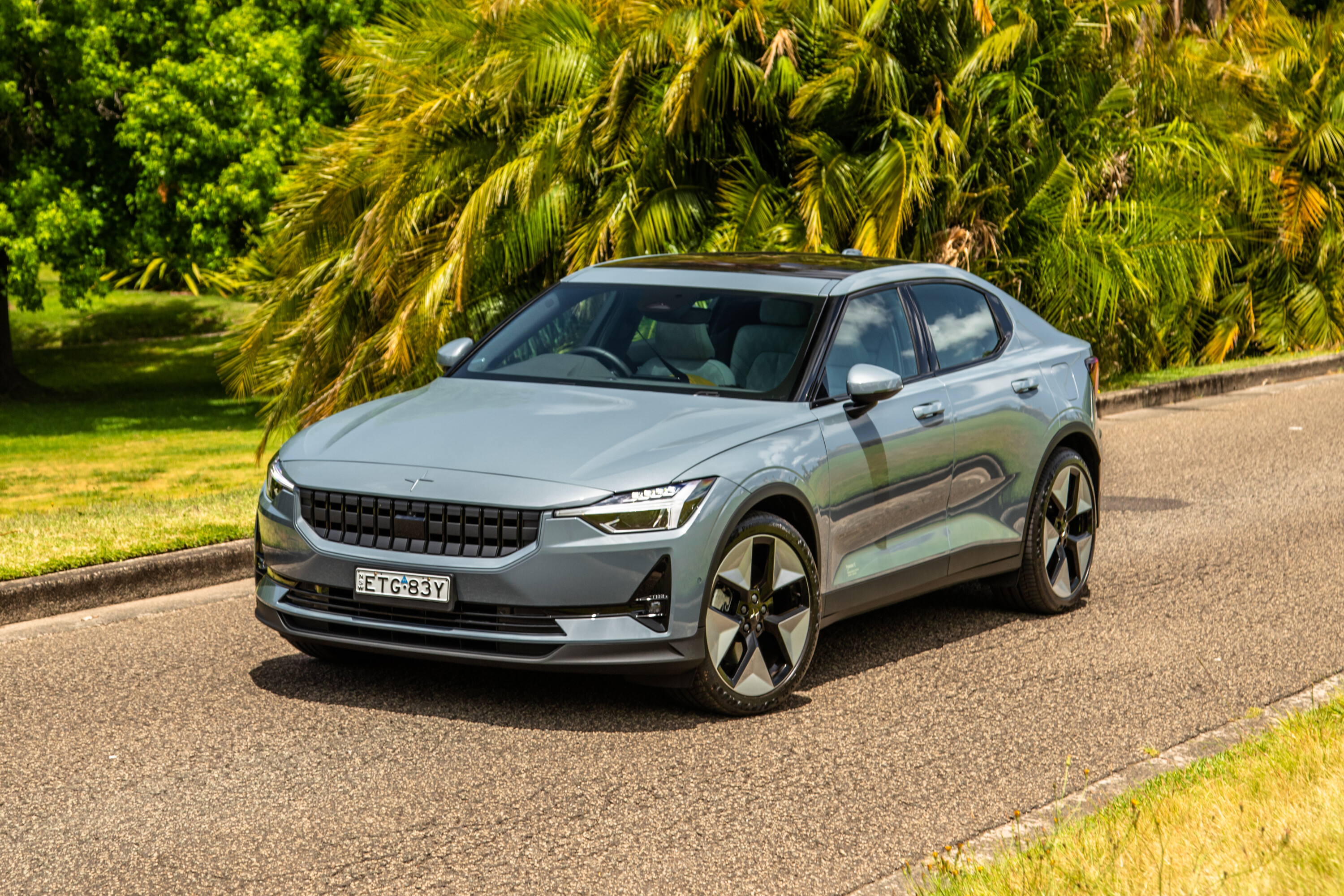
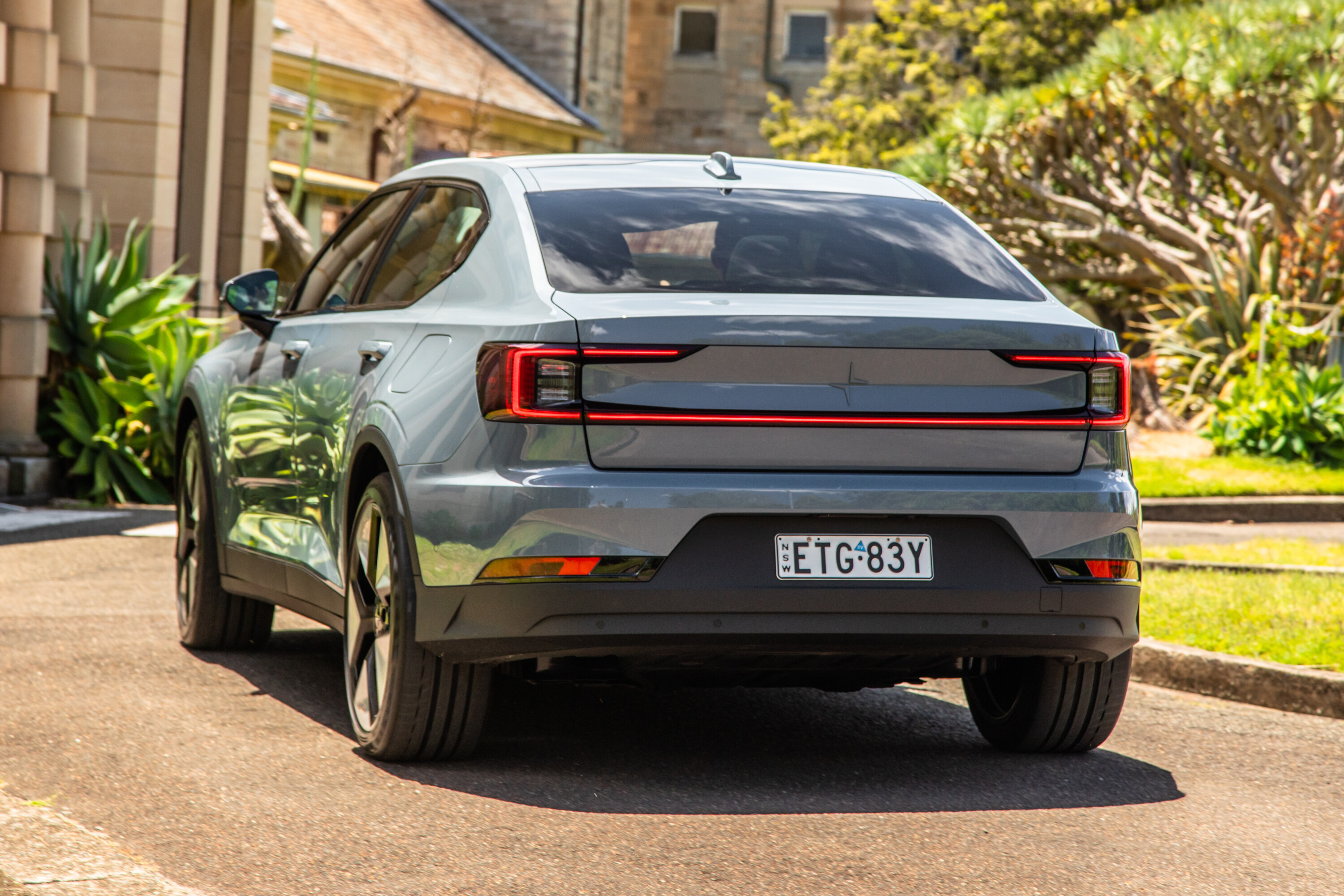
More Polestar 2 stock
A Polestar Australia spokesperson told WhichCar that it has recently secured additional stock of the outgoing 2023 Polestar 2 liftback, “which has coincided with the Victorian Government announcement”.
“There are currently 250 Polestar 2 variants on our website available for delivery in the next four to six weeks. More configurations are being added weekly.”
However, there wasn’t any mention of how many Standard Range and Long Range Single Motor models are included in the stock pool – the only variants that fall under Victoria’s rebate eligibility threshold, before options and the dealer delivery charge.
1
The Polestar 2 is currently priced from $63,900 before on-road costs and only pre-configured in-stock models are available from its website, ahead of the 2024 facelift coming soon.
Buyers can benefit from a Type 2 to Type 2 portable charging cable, plus the choice of a 7kW single-phase AC charger (including standard installation) or $2000 Evie Networks public charging credit for orders before June 30.
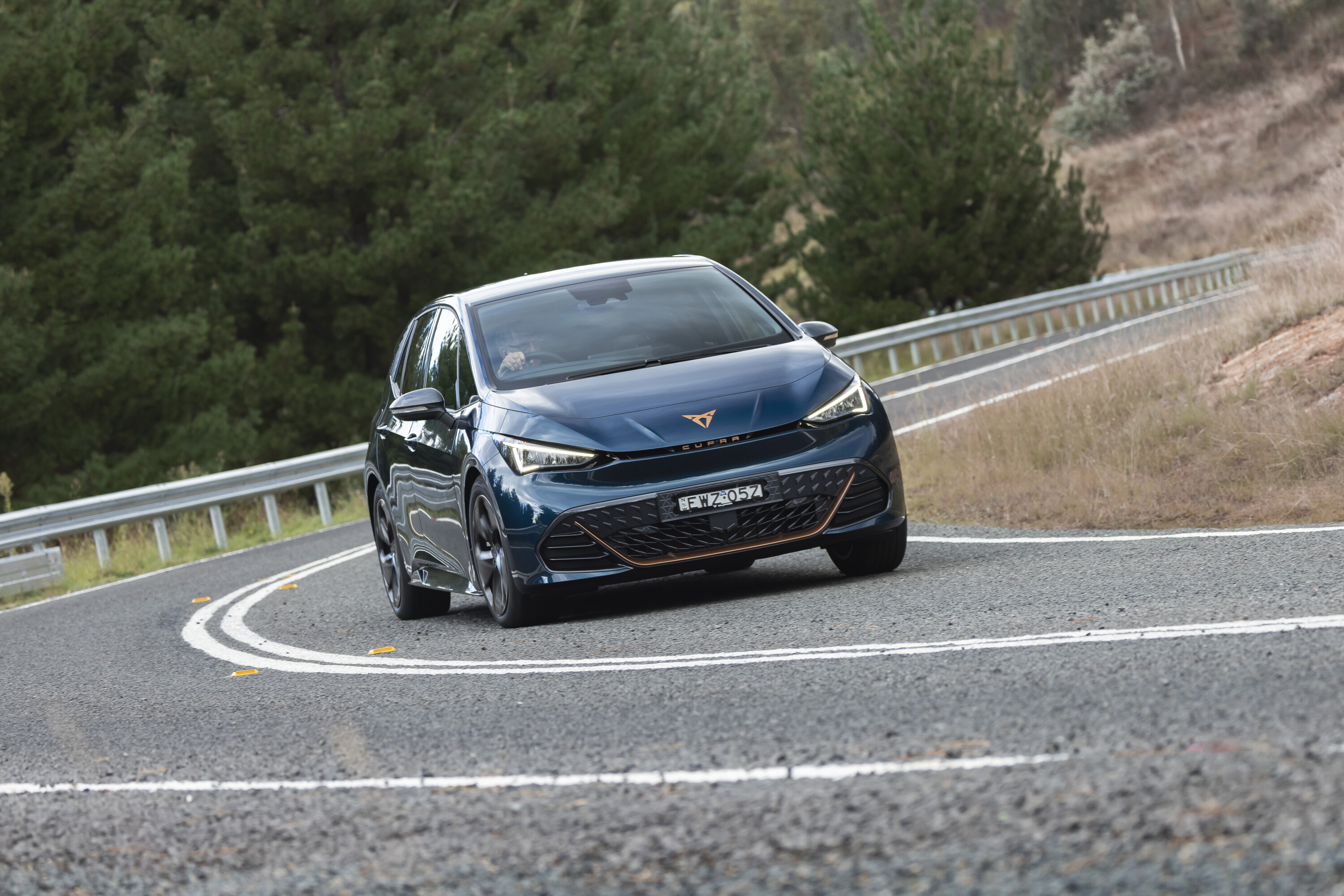
Cupra ‘confident in supply’
A Cupra Australia spokesperson told WhichCar that “we are confident in supply” of the recently launched Born electric hatch and “will look to take as many Victorian orders this month as possible.”
1
The spokesperson also suggested buyers talk to Cupra showroom staff for the latest information on ordering and applying before the deadline.
The Cupra Born is priced from $59,990 before on-roads, which still falls under the Victorian EV rebate threshold even with all options fitted.
WhichCar has contacted MG, Hyundai and Nissan for comment. This article will be updated if further information becomes available.
AMAROK: Ride can be too firm off-road, intrusive AEB, no 12V in tub, A/C controls on screen
Twins under the skin, but some key differences make it a question worth asking…
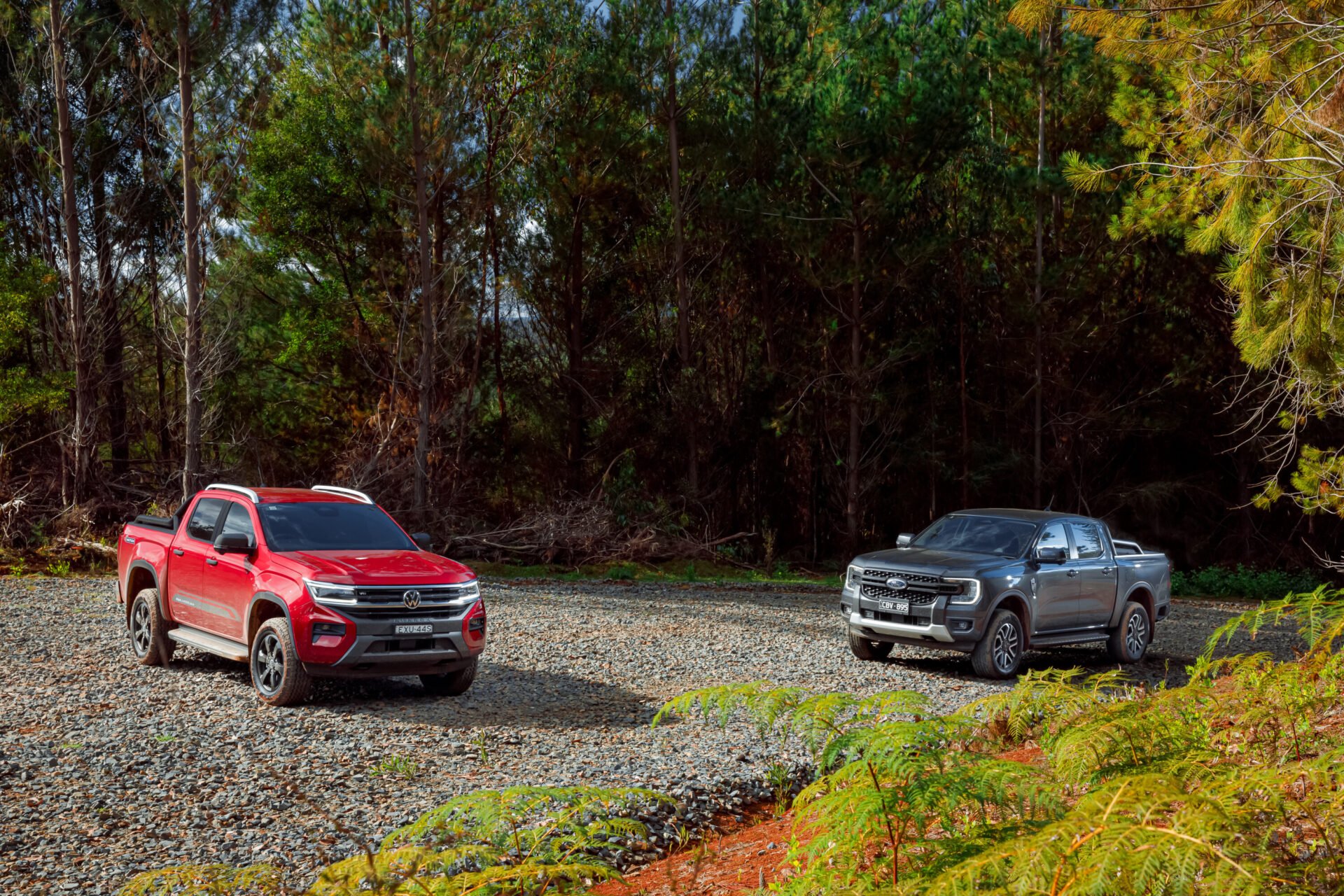
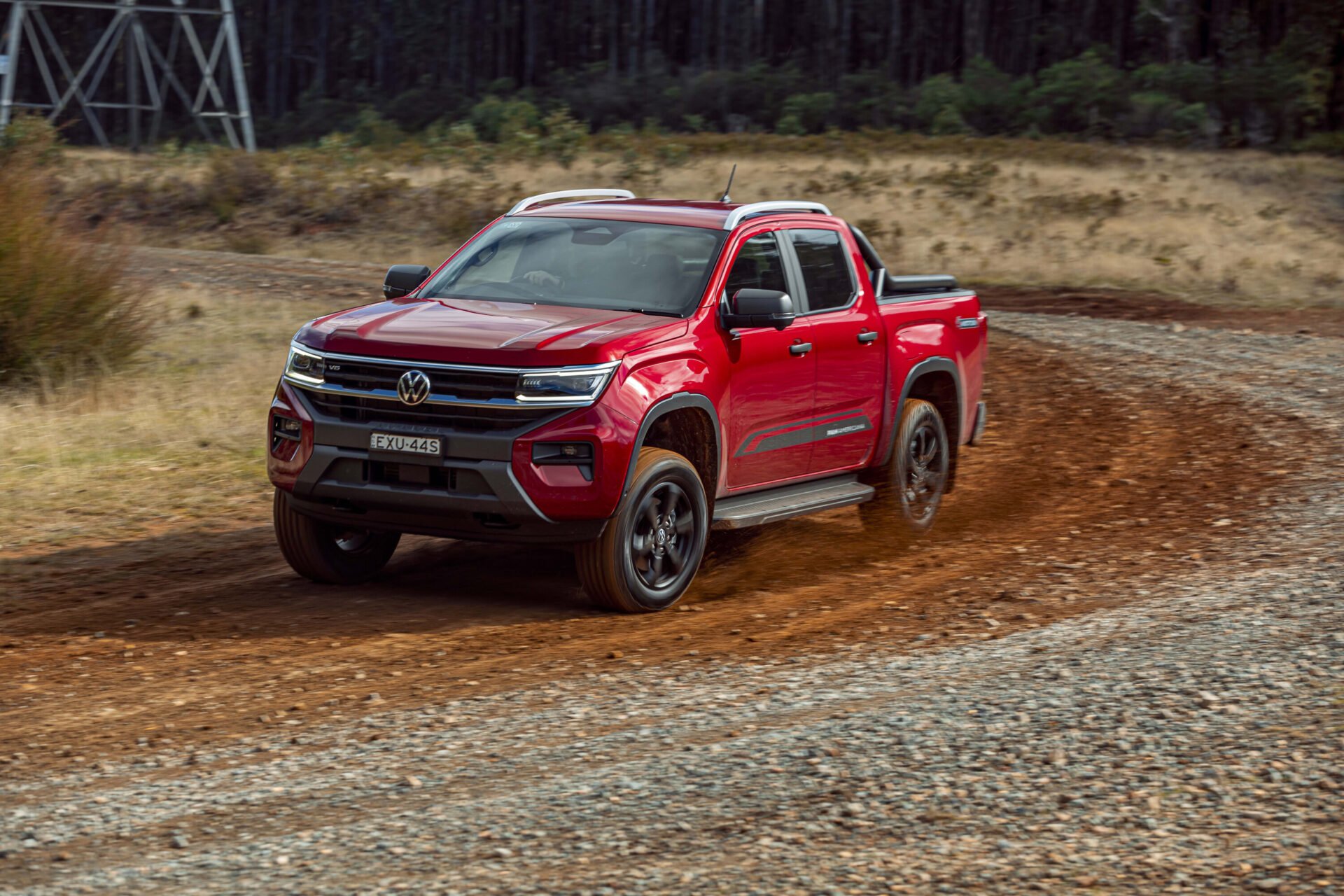
Ranger or Amarok, which is the one to have? To decide, we’ve got the Ranger Sport V6 and the Amarok Panamericana (with the same V6).
1
Unless you’ve been living under a rock for the last year or so, you’ll know that the new generation of Volkswagen Amarok has sprouted from the bones of the class-leading Ford Ranger that was launched last year.
The guts of the Amarok range uses the same 2.0-litre Biturbo and 3.0-litre V6 diesel engines as the Ranger but, to add a bit of spice, Volkswagen also offers the 2.3-litre Ecoboost petrol engine that we’ve seen beneath the bonnet of the Mustang as a range-topper.
We’ve driven the Amarok overseas and on its local launch event, but were intrigued as to how it’d shape up against the Ranger.
To that end, we’ve chosen the penultimate Amarok model, the Panamericana.
1
This is supplied solely with the 184kW/600Nm 3.0-litre V6 and majors, according to Volkswagen’s marketing blurb, on off-road and design, “built to traverse every inch of the country with ease”. Given that you’d need to get through 11,924,954,915,322 square inches of this country to verify that claim, maybe we’ll take them at their word.
Priced at $75,990 (all figures here are before on-road costs), the Amarok is a few grand more than its natural rival, the $70,990 Ranger Wildtrak V6. Unfortunately, Ford was fresh out of Wildtrak demonstrators and so we had to settle for the next version down the ladder, the $66,690 Sport V6.
So you may need to squint and pretend that our Sport has Wildtrak-specific features like roof rails, a sports hoop, a power roller shutter and a 12-inch central touchscreen.
‘You may need to squint and pretend that our Sport has Wildtrak-specific features like roof rails, a sports hoop, a power roller shutter and a 12-inch central touchscreen.’
That’s not to say the Ranger Sport is in any way a bit light on the gear.
Your $66,990 gets you the best engine in the line-up, the fiendishly clever automatic four-wheel-drive system mated to a 10-speed auto transmission, 18-inch alloy wheels, LED lights all round, and the useful rear bumper side steps, allowing easy access to the sizeable drop-in bedliner.
It also scores gear you’ll search for in vain on the Volkswagen, although for features such as a soft-open tailgate and overhead auxiliary switches, you’d need to put your hand in your pocket for the $76,990 Ranger Platinum range-topper.
On the inside, there’s leather trim for the steering wheel and seat bolsters, a 10.1-inch centre screen and wireless charging for your phone and wireless connection to both Android Auto and Apple CarPlay. Active Park Assist and a 360-degree camera are the only safety elements that the Sport misses out on compared to the Wildtrak, which offers a huge safety suite.
1
Jump into the Amarok and it feels a little discombobulating. At first, I struggled to figure out why, then I remembered the first time I travelled to the United States.
Because Americans spoke English, my feeble brain reasoned, they were much like us. We understood their culture. Wrong.
The superficial similarities had me bamboozled and I realised that Americans were, to this Englishman anyway, a far more foreign bunch than, say, Belgians or Swedes.
As you gaze around the cabin of the Amarok, your eye lands on the Ford-spec gear selector and the upright centre touchscreen. You’ll spot FoMoCo logos on the glass and the squeeze-to-operate door pulls, and you’ll start to think it’s just a Ranger in dress-up. Then you begin to appreciate that things are more different than you first realised. A lot different.
1
The Amarok’s Digital Cockpit Pro screen in the dash binnacle is also a heck of a lot slicker than the Ranger’s slightly clunky graphical treatment.
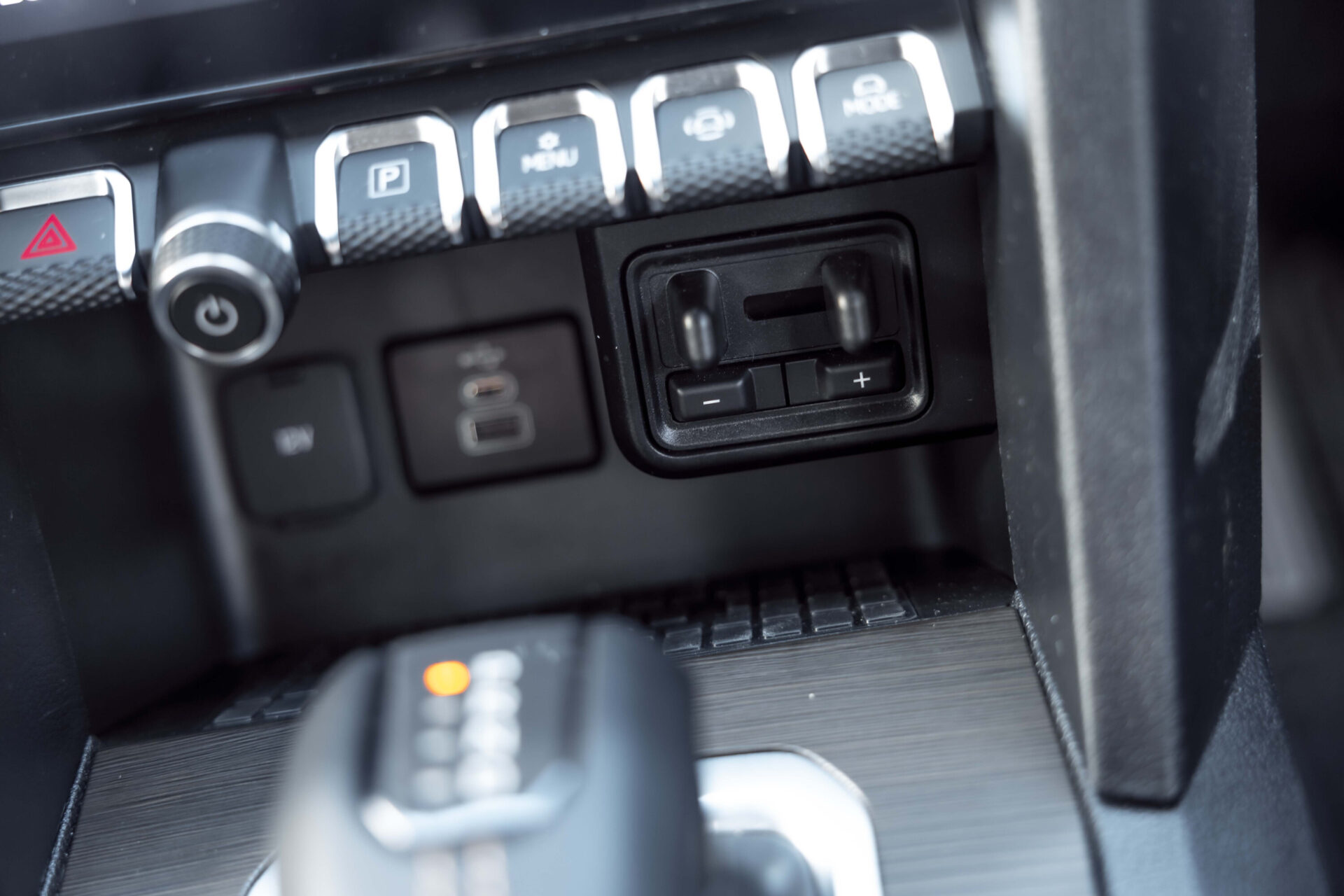
The entire centre console stack is broader and more substantial, the indicators are on the other side, the drive mode selector is now in the touchscreen rather than a physical dial, and so are the heating and air-con controls.
Volkswagen has also revamped the entire touchscreen system, and the 1920×720 pixel landscape-oriented Digital Cockpit Pro screen in the dash binnacle is also a heck of a lot slicker than the Ranger’s slightly clunky graphical treatment.
There’s standard tyre pressuring monitoring, a 640W eight-speaker Harman Kardon stereo system and the array of knurled tabs that sit beneath the centre touchscreen feel lovely to the touch.
1
Its brightwork design mirrors a C-shaped motif used throughout the vehicle, such as on the air vents and headlights, while the knurled edges share the same pattern as seen on the side steps.
If you ever come away from a vehicle with an impression of inherent quality and cohesion, it’s often down to sophisticated design sleight-of-hand like this.
The brown ‘cricket leather’ interior with its intricate double-stitching is the brainchild of Albert-Johann Kirzinger, who also worked on the team that developed the striking baseball glove leather upholstery for the first-gen Audi TT.
1
Step out of the Amarok, park it next to the Ranger and although the basic proportioning is naturally similar, the details are also quite divergent.
With its bluff front end and round wheel arches, the Ranger looks resolutely F-150-lite American, even if it has been designed in Australia for Australians and built in Thailand.
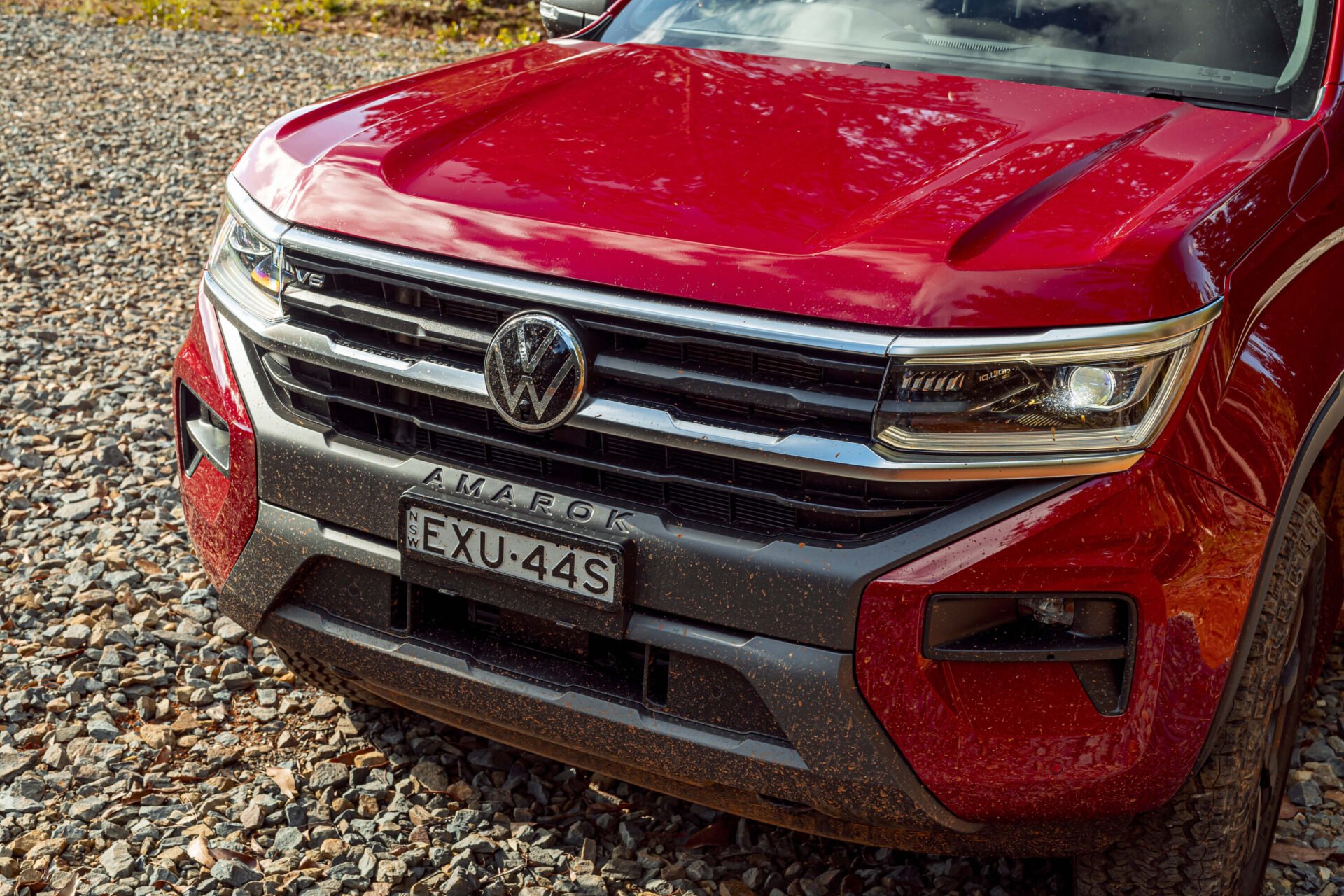
The Amarok, with its beakier front end and huge, squared-off wheel arches is arguably a more interesting vehicle to behold. The surfacing is more aggressive, although the mirror finish 4Motion decals applied to this red and black vehicle can probably get in the bin.
A big sports bar and contrasting roof rails contribute to the Amarok’s glitzy aesthetic. Park this pair of utes side by side and most would probably think the Amarok was a lot more than $9K more expensive.
1
Comfort and space
If there is one downside of the Volkswagen’s industrial-strength centre console, it’s that the driver’s footwell feels a little more cramped.
I know ‘manspreading’ isn’t the most delicate of concepts, but on a hot day, you’ll appreciate having a little more room to sprawl in the Ford. The width across from centre console to door is 60cm in the Ranger and 53cm in the Amarok.
Getting into both vehicles requires quite a hike up onto the side steps. We’re not sure if Volkswagen is trying to troll Ford, but it claims a millimetre more ground clearance for the Amarok versus the Ranger (235mm vs 234mm).
The Ford’s then easier to flop into; the big bolsters of the Volkswagen’s seat cushions are a little more obstructive. They’re so soft in any case that they don’t offer a great deal of lateral support. Both vehicles offer excellent visibility, with big mirrors and a commanding ride height.
1
Ford should be commended for resisting the urge to migrate the HVAC controls into the touchscreen functions, as the chunky knobs for its dual zones are excellent. It’s not all gravy though.
The Ranger’s heated seat controls are still operated by haptic on-screen sliders, which are the devil’s own work. By contrast, the Amarok has an icon that you can prang either once, twice or three times to set the strength of the seat heaters from tepid to surface of Venus.
Likewise, it seems a bit of a miss on Volkswagen’s part to bring the drive modes into the touchscreen. In practice, it’s anything but. Hit the physical drive mode button and then select the on-screen mode and you’re in, quickly and easily.
1
By contrast, the Ford forces you to use a rotary controller and then switch into each mode in turn to eventually get where you need to be. Given there are six of ’em, that can take some time.
Each ute runs a version of Ford’s Sync 4 system, Volkswagen’s iteration heavily reskinned. It’s a very good system but can be prone to dropping the wireless phone mirroring connection on occasion and then being unable to reacquire it without a hard reboot.
Moving backwards, rear legroom in the Amarok is marginally more generous than that of the Ford. We measured maximum and minimums (not seat pitch per se, but the distance from the front of the rear seat cushion to the seat ahead) at 140mm and 380mm for the Volkswagen, with the Ford measuring between 120mm and 350mm.
1
Access to the rear seats in both is reasonably good, although the Amarok’s wider side steps (150mm versus 138mm) means that if you’re leaning into the vehicle, it’s possible to shin yourself pretty painfully on the steps.
That’ll likely only happen once before you wise up. Both vehicles have rear vents but there’s no USB connection in the back of the Amarok.
There are bottle holders in the door pockets, two cup holders in the centre armrest and ISOFIX child seat fixings in the two outer positions though.
1
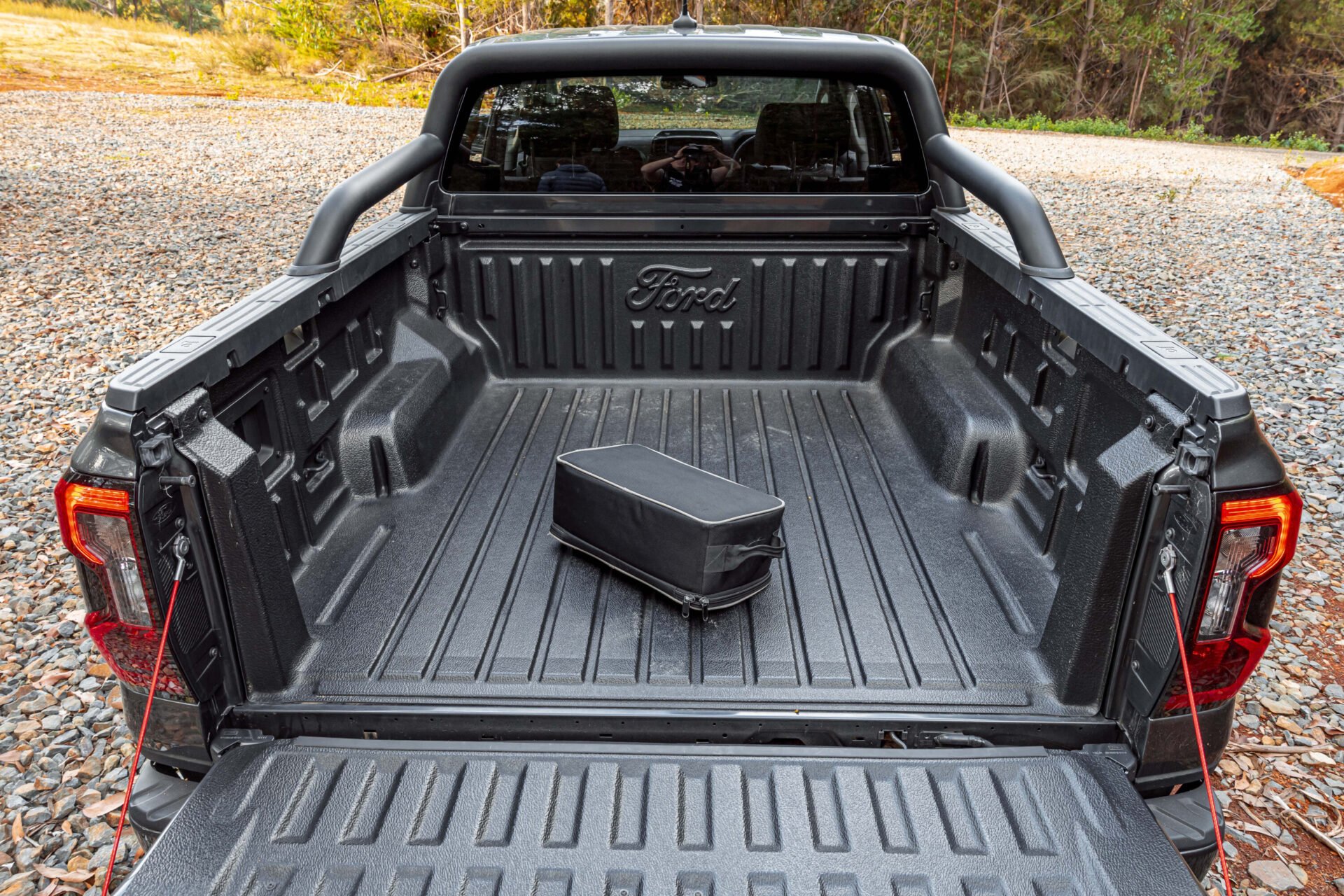
Both vehicles’ trays feature lined load bays and are scaled to fit a Euro pallet, with a 1217mm width between the wheelhouses on the Ranger and 1224mm on the Amarok.
The Amarok features a ruler on its tailgate as well as six tie-downs and LED lighting but, curiously, no 12-volt connection. That seems a strange oversight. There’s also a 3.5-tonne rated tow bar on the Panamericana as well as a 12-pin trailer plug.
The Ranger’s steps, notched into the side of the wraparound rear bumpers, are a piece of intellectual property that Dearborn was clearly not willing to cede to Wolfsburg, and they make jumping into the back of the tray very easy.
Although the Ranger lacks the flashy sports bar of the Amarok Panamericana, as indeed does the more expensive Wildtrak, the latter counters with zone lighting and the clever overhead auxiliary switch bank. Ford’s ingenious automated trailer light sequence check is another neat piece of thinking.
1
On the road
Given that both the Amarok and Ranger share engine, chassis, transmission and even the same tyres, you might think that there’s very little to choose between them in the way they drive.
And, by and large, you’d be right. However, there are some key differences that, while not immediately obvious, come to define how the two utes drive.
Most obvious is ride and handling. The Amarok Panamericana is fitted with the more expensive monotube dampers as standard – the Dynamic Suspension set-up – from Volkswagen. Amaroks from Style downwards get standard twin-tube dampers.
There’s little doubt that on-road, the Amarok feels a more planted thing through corners than the softer Ranger. On really bad bitumen, it can feel a bit crashy at times, but it’s a fun vehicle to hustle.
1
There’s little doubt that on-road, the Amarok feels a more planted thing through corners than the softer Ranger. On really bad bitumen, it can feel a bit crashy at times, but it’s a fun vehicle to hustle.
A flipside of this is that the Panamericana is the model designed for off-road adventures and here it can feel a little too firm for its own good. On the sharp, rocky descents of our test route, the Ranger felt as if it was gliding over the worst of the imperfections, while the Volkswagen transmitted every shock into the cabin.
When cornering on the loose, the Ford felt as though it had a huge envelope of malleability to lean into, whereas the Amarok felt as if it was up on its toes, requiring far more accuracy, skill and attention from its driver.
How much of an issue this proves clearly depends on how much of your use is away from metalled roads. On-road, we preferred the Amarok’s directness. Off-road, the Ford’s more benign feel was universally favoured. You pays your money…
1
Both are quick for a big pick-up.
The 3.0-litre engine’s prodigious torque (600Nm between 1750 and 2250rpm in both models) combined with a 10-speed automatic transmission with a new torque converter design and shift software means that finding yourself with a shortfall of Newton-metres is never a problem.
It also solves the gear-hunting issue the old ten-speed Rangers experienced and, if Ford is to be believed, the reliability issues that niggled at the 10R80 transmission.
The go part is really not an issue. Stopping neither. The Amarok is equipped with 340x235mm ventilated discs up front and dual-piston calipers, backed by 330x25mm ventilated discs aft with a single-pot sliding caliper. The Ford’s brakes are of a similar spec, with marginally larger diameter discs (341mm up front, 332mm at the back).
1
Both vehicles feature 80-litre fuel tanks, so offer meaningful range, resulting in a typical distance of 1000km between fills.
Braked towing is rated at 3500kg for both, and payload is more or less lineball too, 1030kg for the Ford, 1031kg for the Volkswagen. The Amarok features a 350kg static roof load and 350kg down ball weight for towing, which is up 50kg on the old model.
Selecting drive modes is quicker and easier in the Amarok than the Ranger. The Volkswagen features Normal, Eco, Slippery, Mud, Sand/Snow and Towing/Heavy Load modes, broadly mirroring those of the Ford. Both utes feature standard tyre pressure monitoring, which is a feature that those who air up and down while off-roading will find useful.
The Amarok’s forward collision alert system seems somewhat neurotic, sounding a loud and urgent beep when it thinks you’re about to rear-end something. It does this a little too frequently, such as filtering into a slip road off behind stationary traffic.
By contrast, Ford’s system seems a good deal more laidback. Otherwise, the safety systems work well, with both vehicles netting excellent surround-view cameras, well-calibrated adaptive cruise control systems and a five-star ANCAP rating.
1
VERDICT
This was always going to be one of those comparisons that lent itself to a horses-for-courses verdict.
If you want something that’s arguably more practical and rugged, go for the Ford. Want something more stylish but which can still roll its sleeves up when asked, pay the premium for the Volkswagen.
It’s instructive to consider quite what that premium is though. On paper, the Amarok Panamericana is around $5800 pricier than a Ranger Wildtrak, its obvious competitor. Both offer certain specification items that aren’t available on the other, but were you to add the desirable matrix LED headlights and premium audio system to the Ford to bring it closer to the Volkswagen’s specification, the difference looks more like $800.
Many would consider that a fair ask for a cabin that looks and feels a good deal more special than with the Ford, and gets you a bigger screen in the centre console plus a more extrovert exterior finish.
We’re no fence-sitters here at Wheels, but we’d offer the following conditional advice.
If you were planning on driving largely on-road and want something composed and civilised, spend the extra and buy the Volkswagen Amarok Panamericana.
If a decent percentage of your driving is on the loose, pocket the difference and choose the Ford Ranger.
Money no object? We’d go the Volkswagen – and take the edge off its ride by knocking a couple of pounds of pressure out of its tyres.
SCORING
Ford Ranger Sport V6: 8.5/10
Things we like
Feels authentic
Great value
Relaxed ride quality
Physical HVAC controls
Not so much
Drive mode controller a bit finicky
Infotainment can drop wireless Android Auto connection