
Snapshot
- NHTSA investigates 2023 Model Y steering wheels falling off
- Two cases reported in the US, both didnu2019t have a retaining bolt on delivery
- Nissan Aryia recalled in the US for an eerily similar case
The US National Highway Traffic Safety Administration (NHTSA) is investigating two reports of 2023 Tesla Model Y steering wheels detaching from the steering column.
According to documents from NHTSA’s Office of Defects Investigation (ODI), both reported vehicles were delivered to owners without a retaining bolt that attaches the wheel to the steering column.
“Both vehicles received an end of line repair requiring removal and re-installation of the steering wheel,” the ODI filing states.
“A fiction fit maintained the connection between the steering wheel and the column splines during operation until separation.
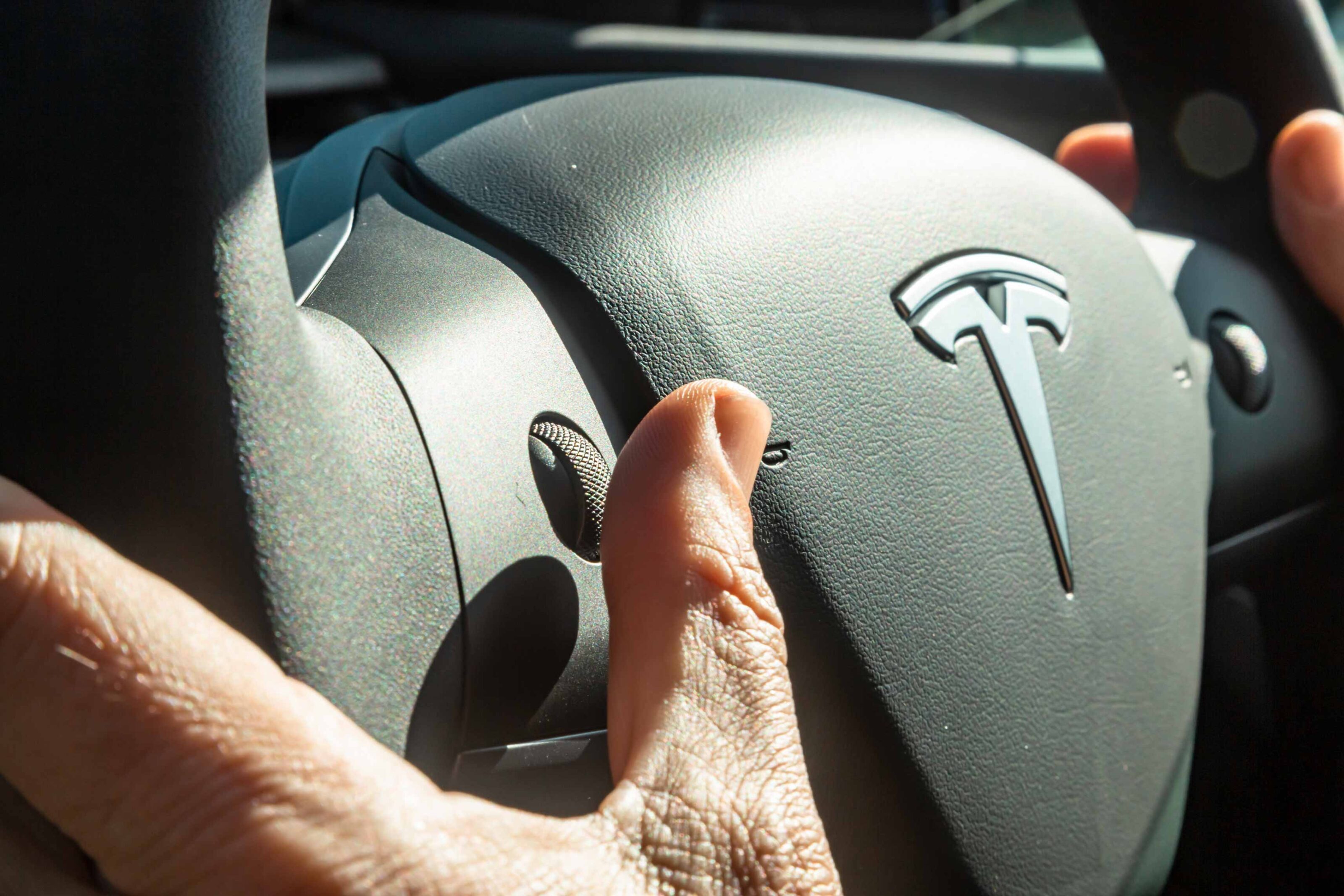
“Sudden separation occurred when the force exerted on the steering wheel overcame the resistance of the friction fit while the vehicles were in motion. Both known incidents occurred at low vehicle mileage.”
The preliminary investigation covers around 120,000 2023 Model Ys in the US.
The Associated Press reports Prerak Patel was one complainant, who tweeted his ordeal five days after taking delivery of the Model Y electric SUV.
On January 29, the steering wheel came off while he was driving on the outer lane of a highway, but was able to stop near the divider without causing an accident.
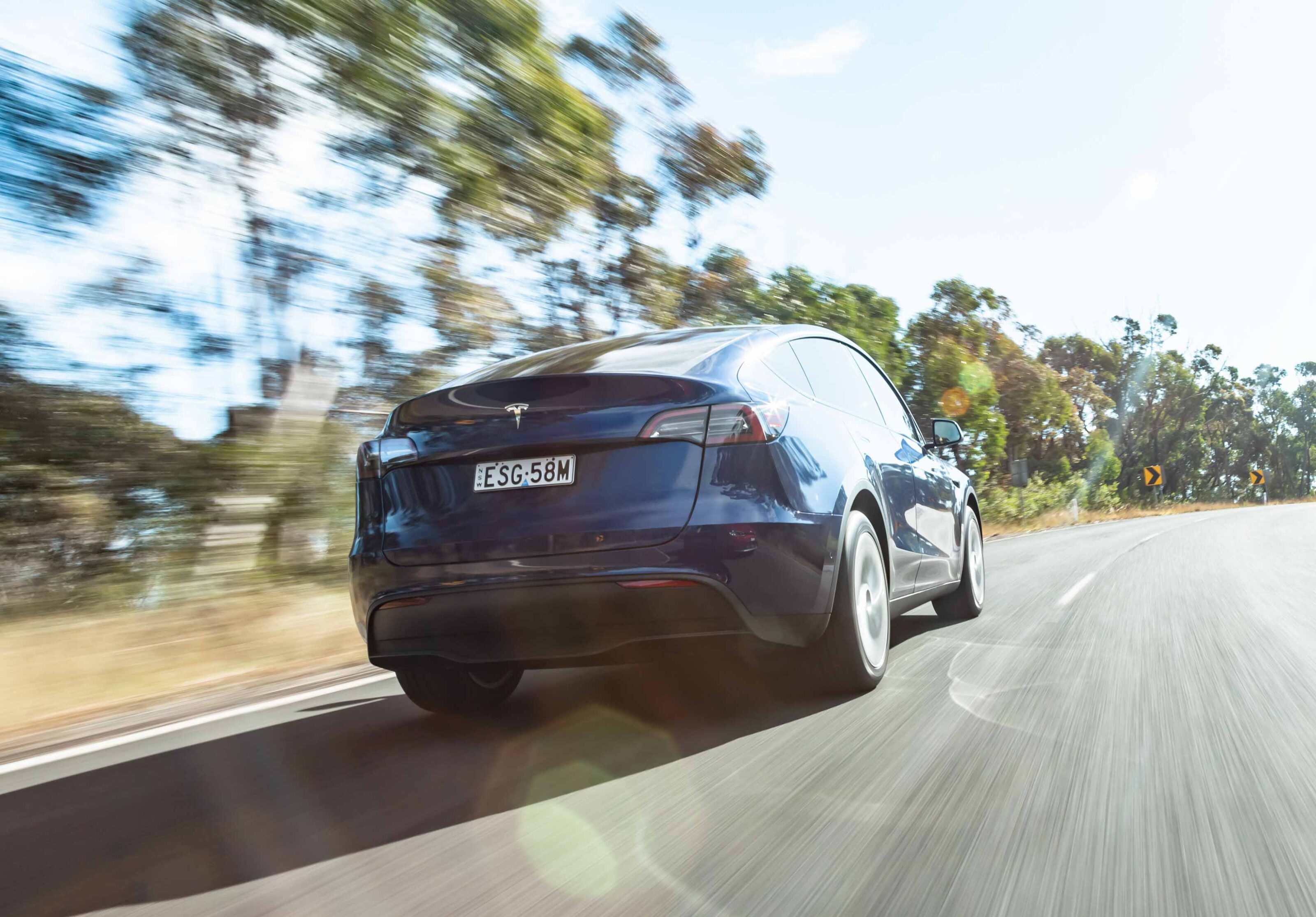
Tesla initially estimated a $310 (US$103.96) repair bill, but Patel – who is also an investor in the company – was eventually able to get a free replacement Model Y a month later.
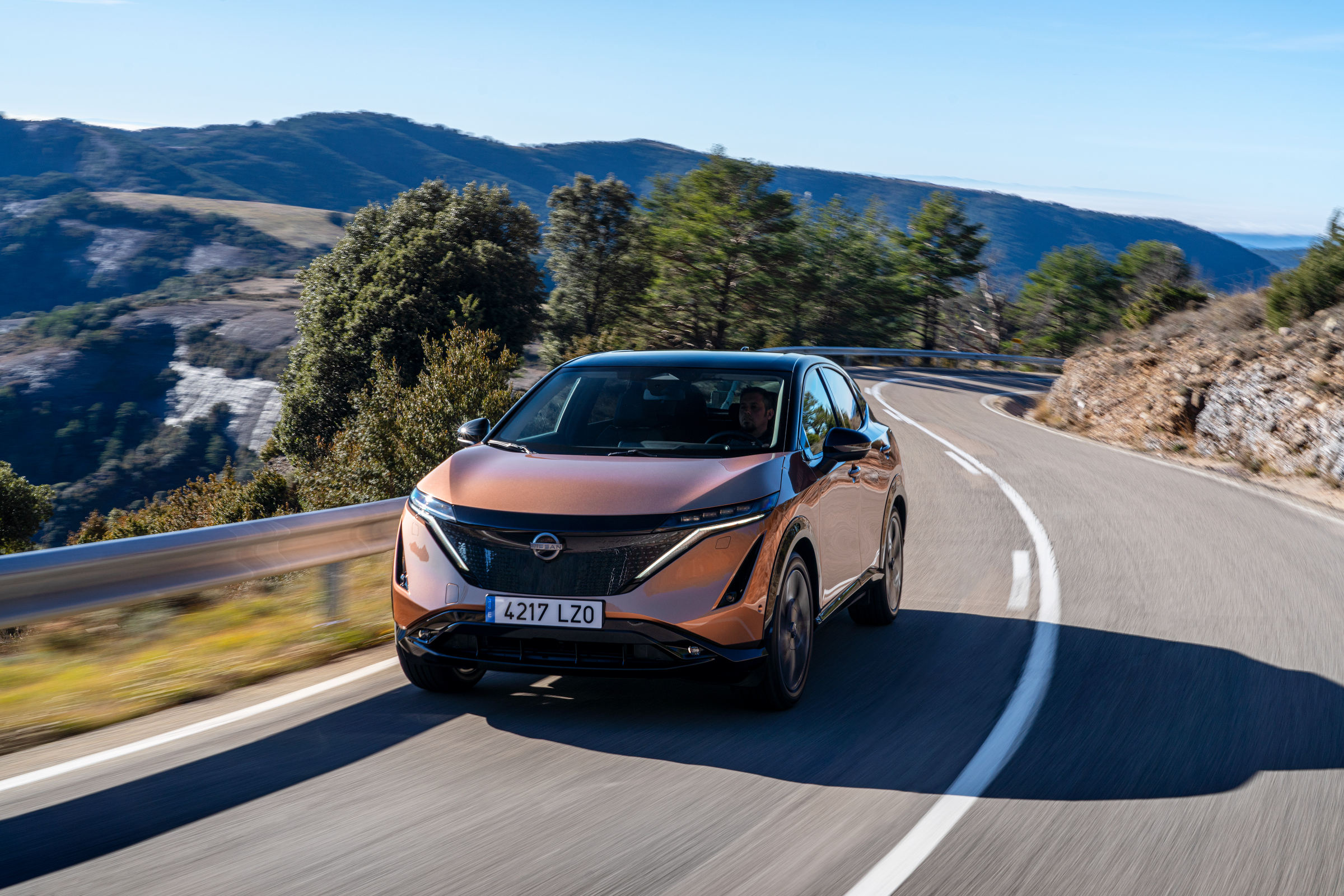
In an eerily similar case, Nissan recalled 1063 examples of its all-new Ariya electric SUV this week in the US, as steering wheel bolts were loose or missing.
Last year, Toyota and Subaru were forced to stop selling and recall their BZ4x and Solterra electric SUV twins respectively as the hub bolts on the four wheels could loosen and cause them to detach completely while driving.
Australia’s best electric cars for 2023
We’ve tested nearly every EV below six figures in Australia to rank the best on sale today
The issue was addressed after a four-month sales hiatus overseas – which have also pushed their launch dates in Australia to later this year.
However, 1182 Subaru Solterras were subject to another recall in the US last month, because the third-party company enlisted didn’t properly conduct the recall procedure.
The US safety regulator has put Tesla under the spotlight multiple times in the past, including investigations on its camera-only safety assistance system ‘phantom braking’ suddenly, suspension issues and, recently, forced the American company to recall its ‘Full Self-Driving’ beta program in the US as it “may act unsafe”.
Electrified versions of the Nissan Patrol and Navara are looking likely as the brand’s E-Power hybrid technology grows.
While Nissan vice president and Renault-Nissan-Mitsubishi Alliance global director for powertrain and EV technology development, Shunichi Inamijima, declined to speak about future product, he told global media its E-Power hybrid technology could be used in larger vehicles.
“[E-Power] technology itself is applicable for larger SUVs and commercial applications, and technical development is going on,” he said.
“[It is] applicable for big SUVs like Patrol or something, but also, for commercial application, like [vans or trucks], it really depends on the customer needs or market request.
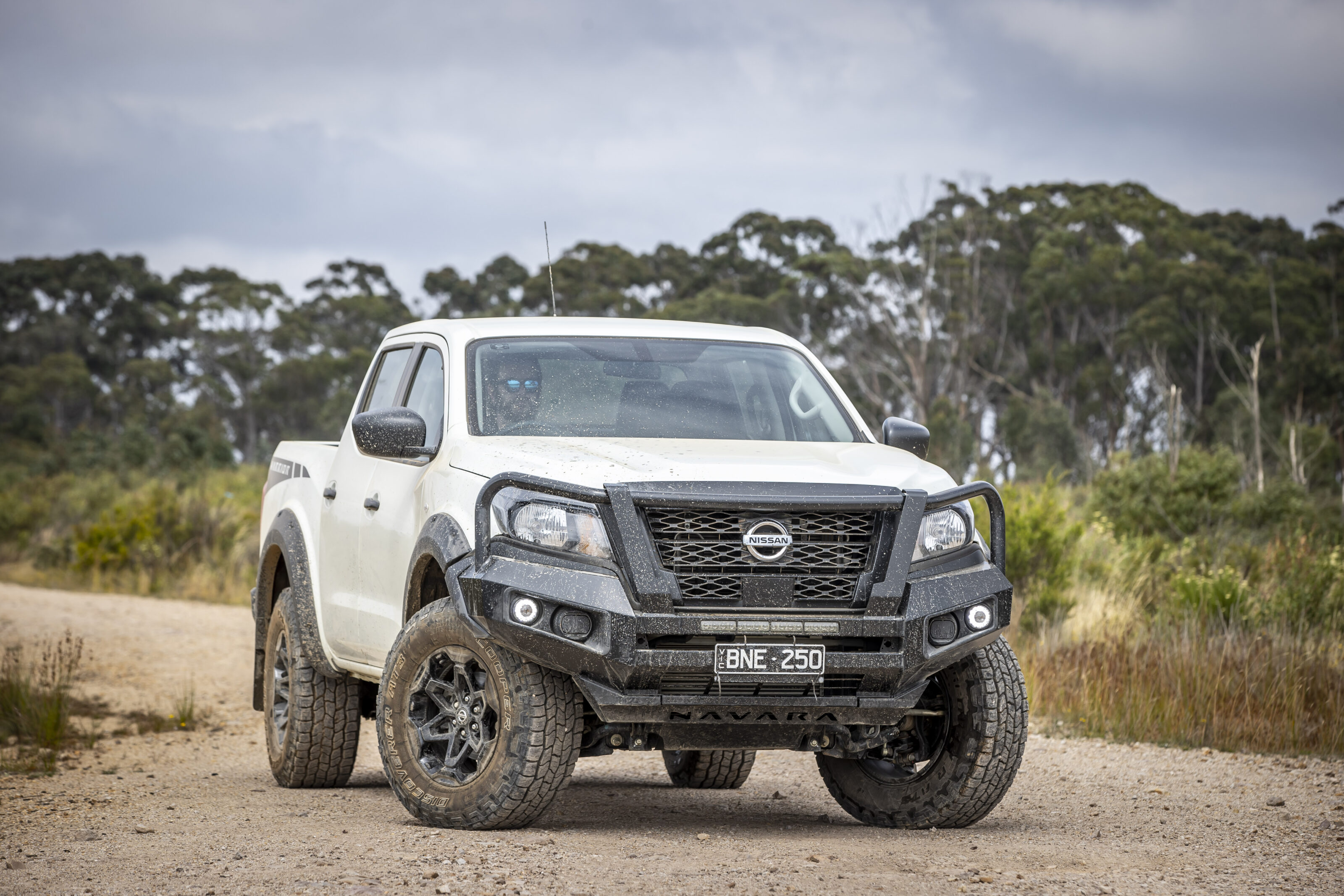
“We’re looking at the regional request, for instance, infrastructure or fuel pricing, etc. We will consider technical application to the product for either E-Power or [fully-electric].”
It follows previous comments by Nissan executives in 2022 confirming its E-Power hybrid system could be scaled up for the likes of the Patrol and Navara.
“For Qashqai and X-Trail… [E-Power] has been developed for the CMF-C platform … in Japan, [E-Power is used] on a different platform [the Note hatch] and in different components,” said Adam Robertson, a lead engineer for the E-Power program, last year.
“Ultimately the technology is scalable. E-Power as a concept is scalable.”
In the recently-launched X-Trail E-Power, it is matched to an electronic E-4force all-wheel-drive system, with instant power from the electric motors, potentially allowing for the off-roading prowess typically associated with a Navara or Patrol.
Nissan claims it can move torque around at 1/10,000th of a second, making it 10,000 times faster than a mechanical differential in conventional four-wheel-drive vehicles.
A new Nissan Navara ute developed alongside the forthcoming Mitsubishi Triton is expected in 2025, while rumours have pointed to a redesigned Patrol gaining a twin-turbo petrol V6, replacing the current 5.7-litre naturally-aspirated petrol V8.
Hybrid versions of the Toyota LandCruiser 300 Series and its Lexus LX twin are expected in the coming years, with Toyota Australia promising its entire lineup – excluding GR performance vehicles – will be electrified by 2030.
The next-generation Mitsubishi Triton is also tipped to adopt a plug-in hybrid system, but this is unlikely for an electrified Nissan Navara – in line with the connection between the Outlander PHEV and X-Trail E-Power.
Nissan has confirmed E-Power would eventually replace diesel engines, at least in Europe, with strict Euro 7 emissions standards due to be enforced from July 1, 2025.
“At the moment we are going out of the diesel offer, generally speaking,” said Ilya Deminov, a regional product planner at Nissan Europe.
“We do not plan to come back, so we are constantly now removing our diesel offerings from the portfolio.”
However, the next-generation Nissan Navara and Patrol could retain internal-combustion-only powertrains in other markets, including Australia – potentially at price parity with a hybrid version.
That’s because Nissan confirmed this week it aims for price parity between internal-combustion variants and its E-Power system “by around 2026.”
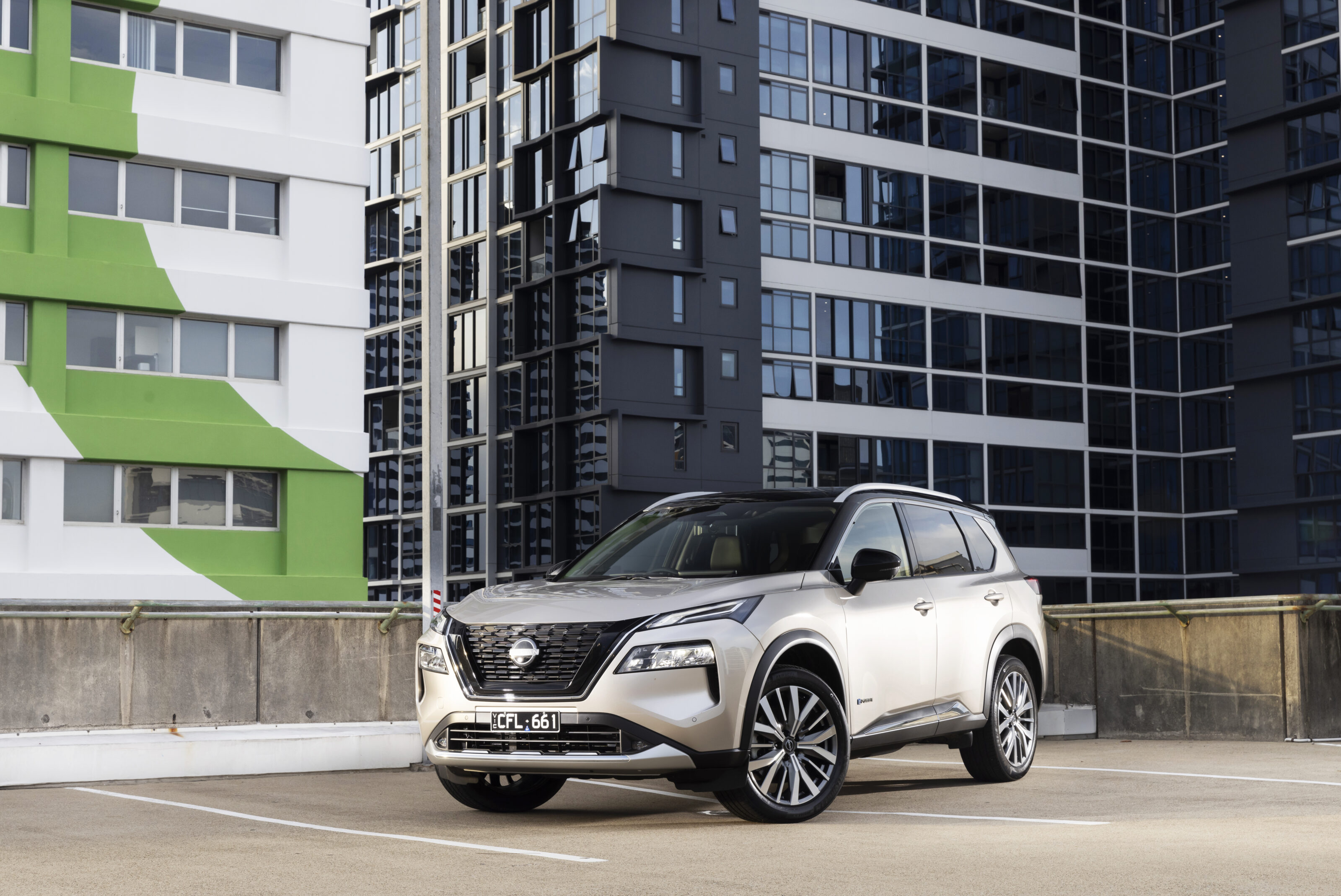
Currently, a Nissan X-Trail E-Power costs $4200 more than an equivalent petrol AWD variant, while its Toyota RAV4 Hybrid rival costs around $2100 extra.
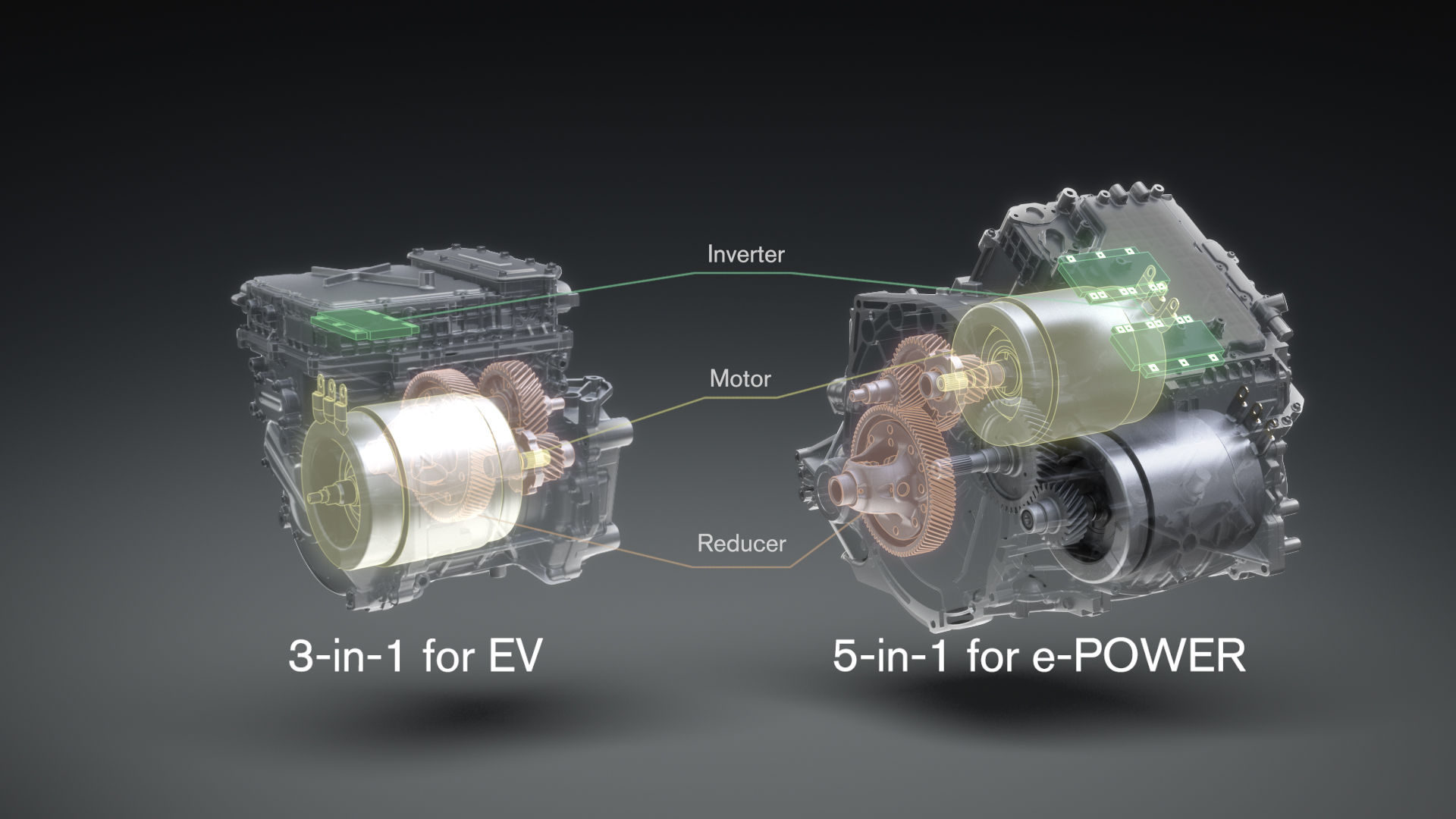
This will be achieved through a revised ‘X-in-1’ approach, which modularises the electric motor used in its electric and hybrid vehicles to reduce costs by approximately 30 per cent compared to 2019 pricing.
Nissan’s newly-designed electric motors include a ‘3-in-1’ design for electric vehicles that modularises the motor, inverter and reducer into one package.
A ‘5-in-1’ electric motor for hybrid vehicles combines the generator and increaser to reduce size and weight, allowing for performance improvements, and reduced noise and vibration levels.
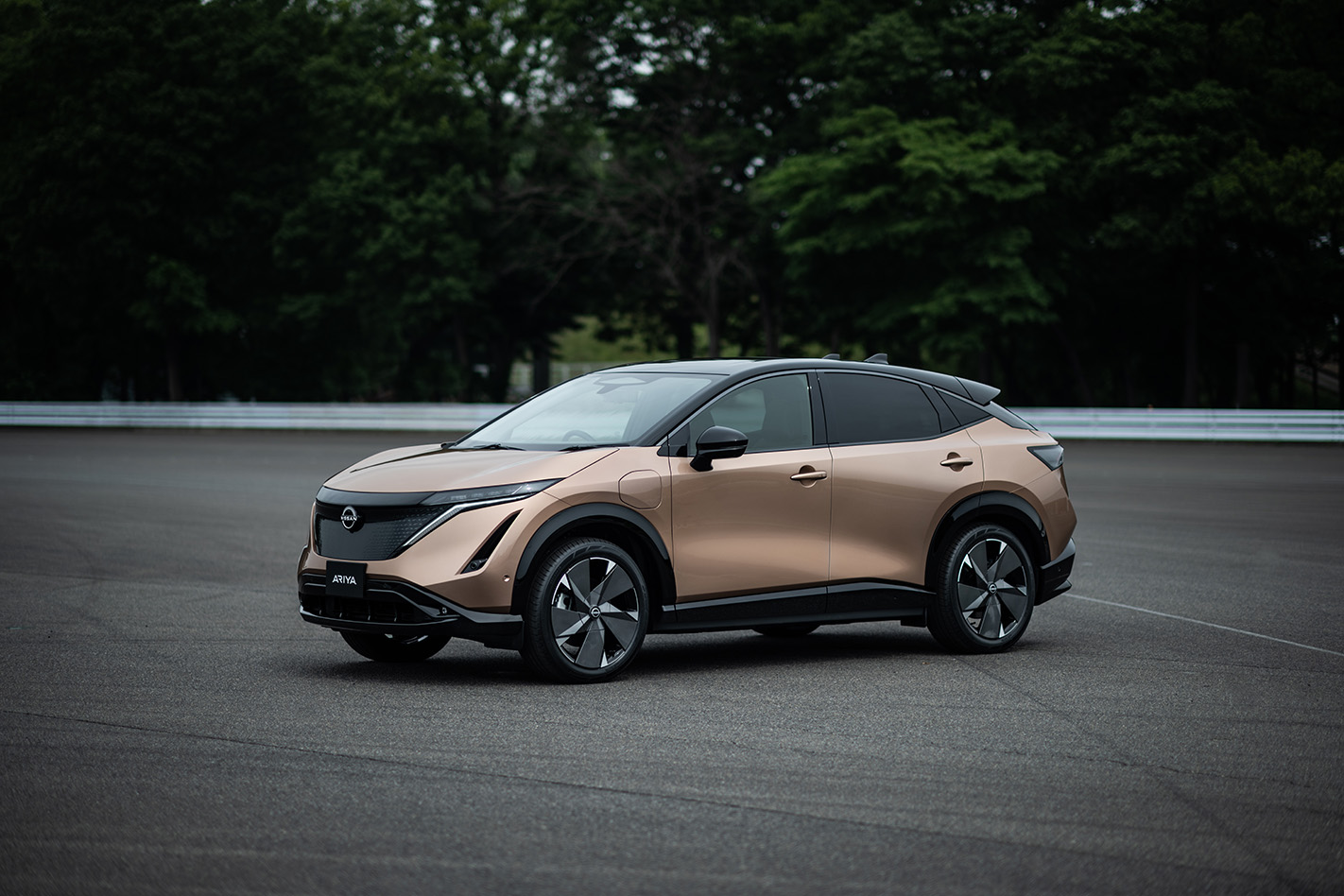
Last week, Nissan announced it would accelerate its electric vehicle plans in response to increased customer demand, with four more EVs due by 2030.
With more than half of its sales expected to be electrified vehicles by the end of the decade, Nissan claims it will retail 27 – split between 19 all-electric models and eight hybrids – up from the previous goal of 23, including 15 battery-powered EVs.
The boost in its forecasts is largely focused on Europe, with 98 per cent of its sales to be electrified vehicles by 2026 – up from a previous 75 per cent target.
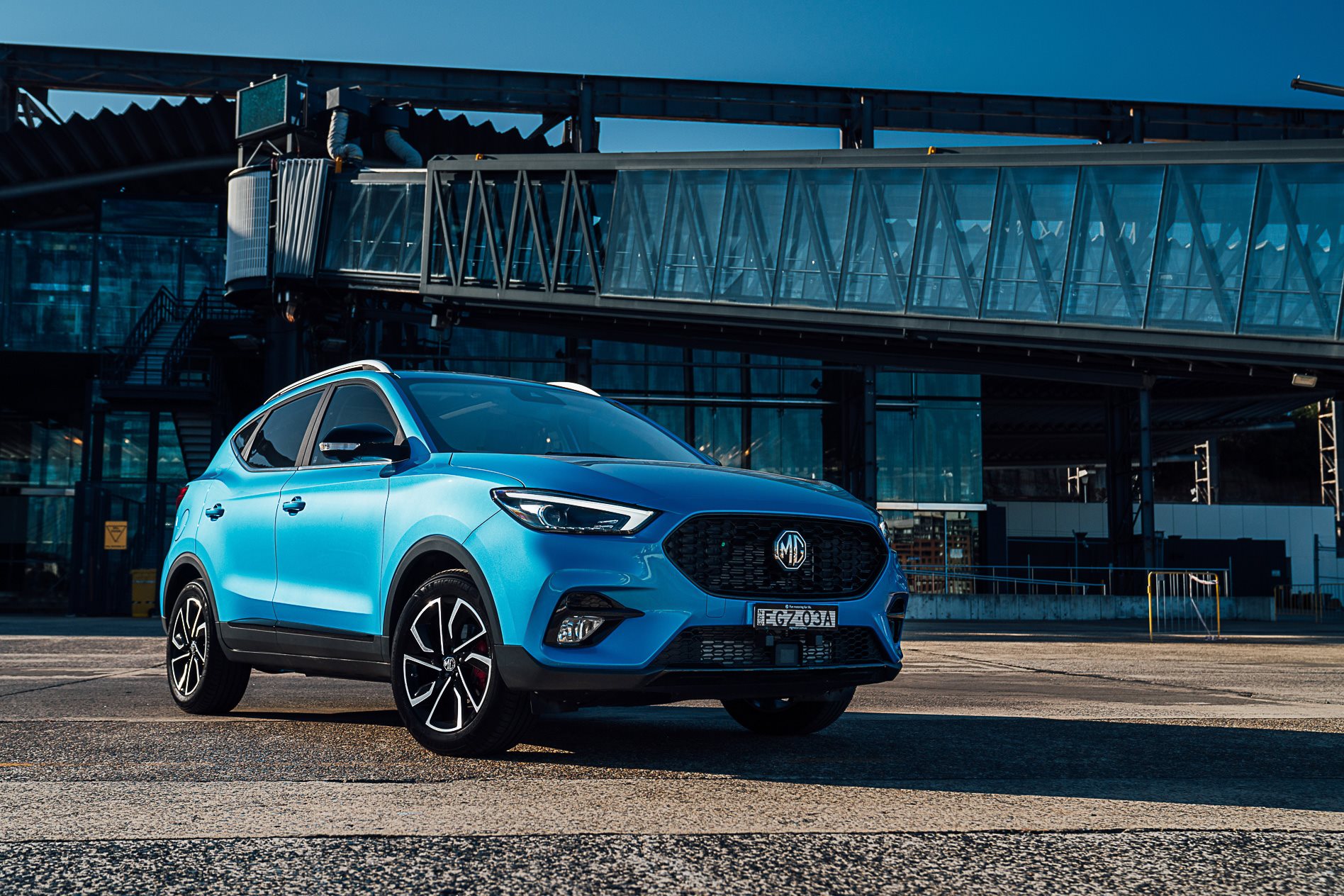
MG has subjected nearly all models to a price increase for the 2023 model year, ranging from small $500 increments to larger $4000 hikes for the ZS EV.
Snapshot
- ZS EV up $4140 in WA
- Smaller price bumps across model range
- No equipment tweaks for MY23
- Customers remain price protected
The MG3 has increased uniformly by $500 across the board, bringing price of entry up to $19,490 drive-away, while the MG ZS EV Excite has taken the biggest hit – partially owing to a change in tack for BEV drive-away prices.
MG’s HS medium SUV has been affected, but in a less straightforward way. Some trims are up $1000, but broadly speaking pricing remains consistent. Meanwhile, the popular ZS and ZST petrol variants are up between $1000-2000.
“The price increases have been brought about by the rising costs of production and supply chain challenges that are affecting us and other brands,” an MG spokesperson told Wheels.
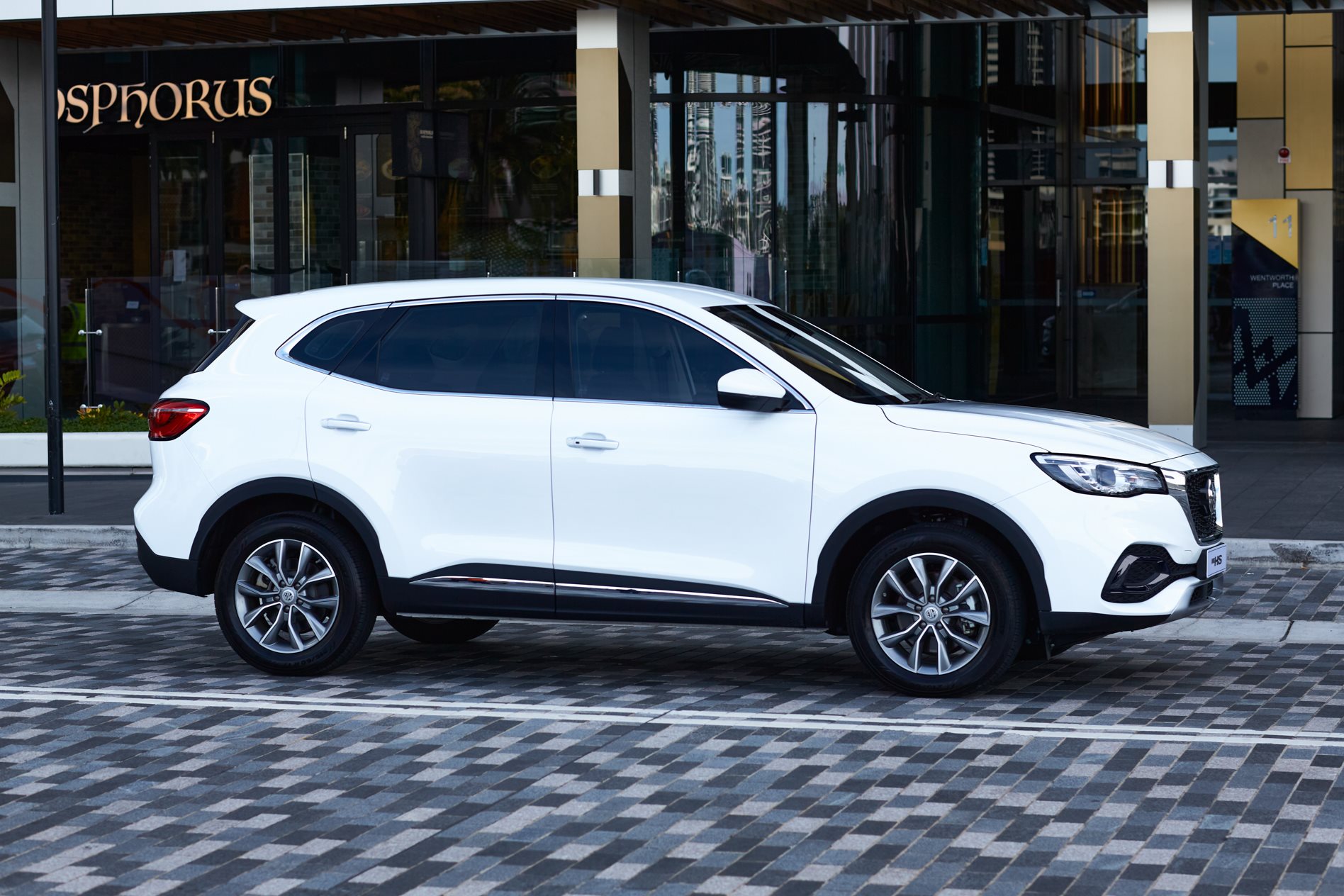
“The price increases are in relation to the build year: if it is a MY22 build, the price remains unchanged, if it is a MY23 model then it is reflected in new pricing,” the spokesperson added.
Specification levels remain unchanged for the MG range, and MG Australia assured Wheels that existing customers will be price protected.
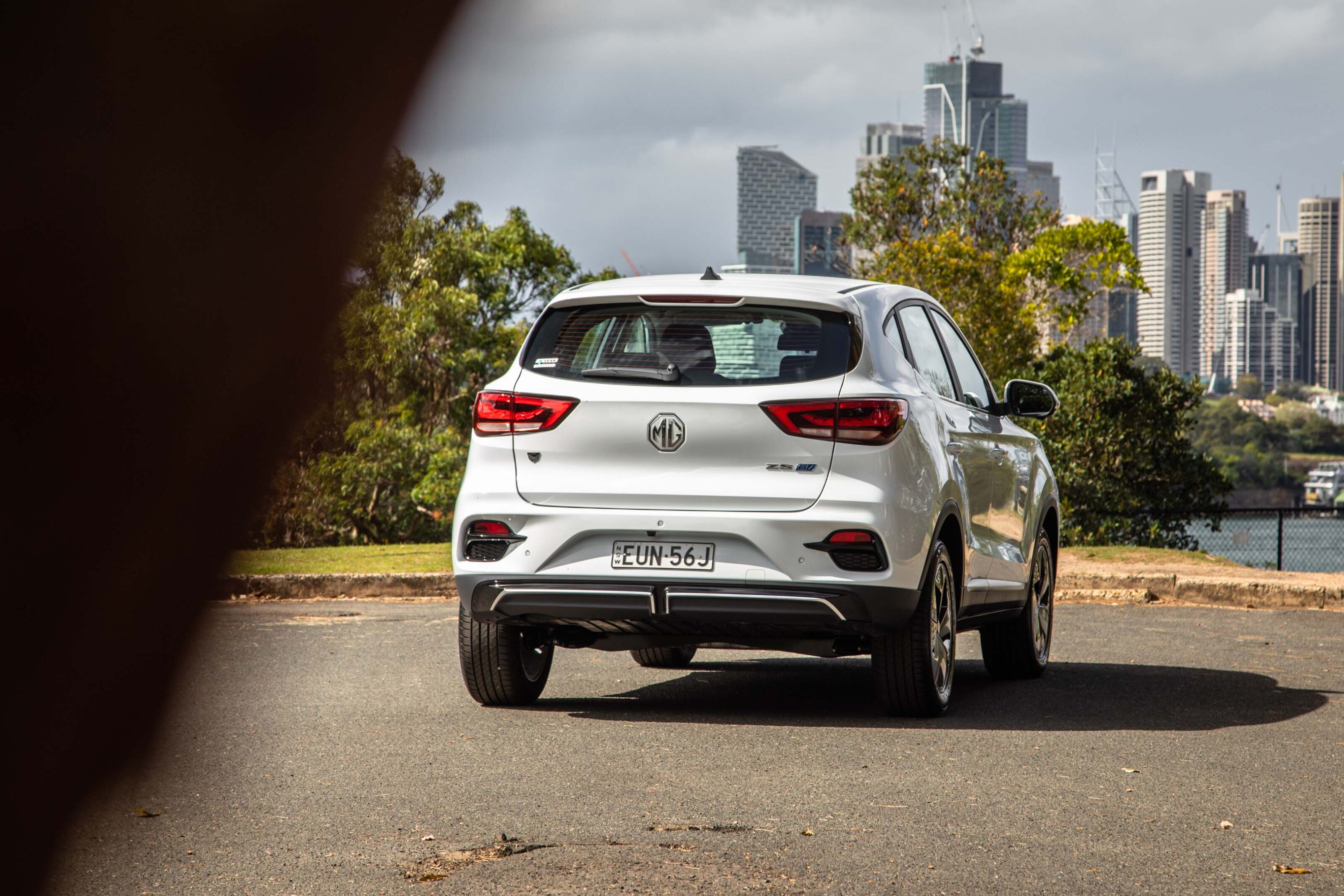
2023 MG ZS EV pricing
With incentives, charges and taxes more complicated than ever for EVs, MG has backed down from offering a national drive-away price for its ZS EV. As such, prices are effectively up as much as $4140.
| State/territory | MG ZS EV Excite MY23 priceu00a0 | Change |
|---|---|---|
| NT | $46,195 | +$1205 |
| TAS | $46,284 | +$1294 |
| ACT | $46,521 | +$1531 |
| NSW | $46,709 | +$1719 |
| QLD | $47,319 | +$2329 |
| SA | $47,940 | +$2950 |
| VIC | $48,416 | +$3426 |
| WA | $49,130 | +$4140 |
| State/territory | MG ZS EV Essence MY23 priceu00a0 | Change |
|---|---|---|
| NT | $49,195 | +$205 |
| TAS | $49,284 | +$294 |
| ACT | $49,521 | +$531 |
| NSW | $49,709 | +$719 |
| QLD | $50,379 | +$1389 |
| SA | $51,060 | +$2070 |
| VIC | $51,412 | +$2422 |
| WA | $52,518 | +$3528 |
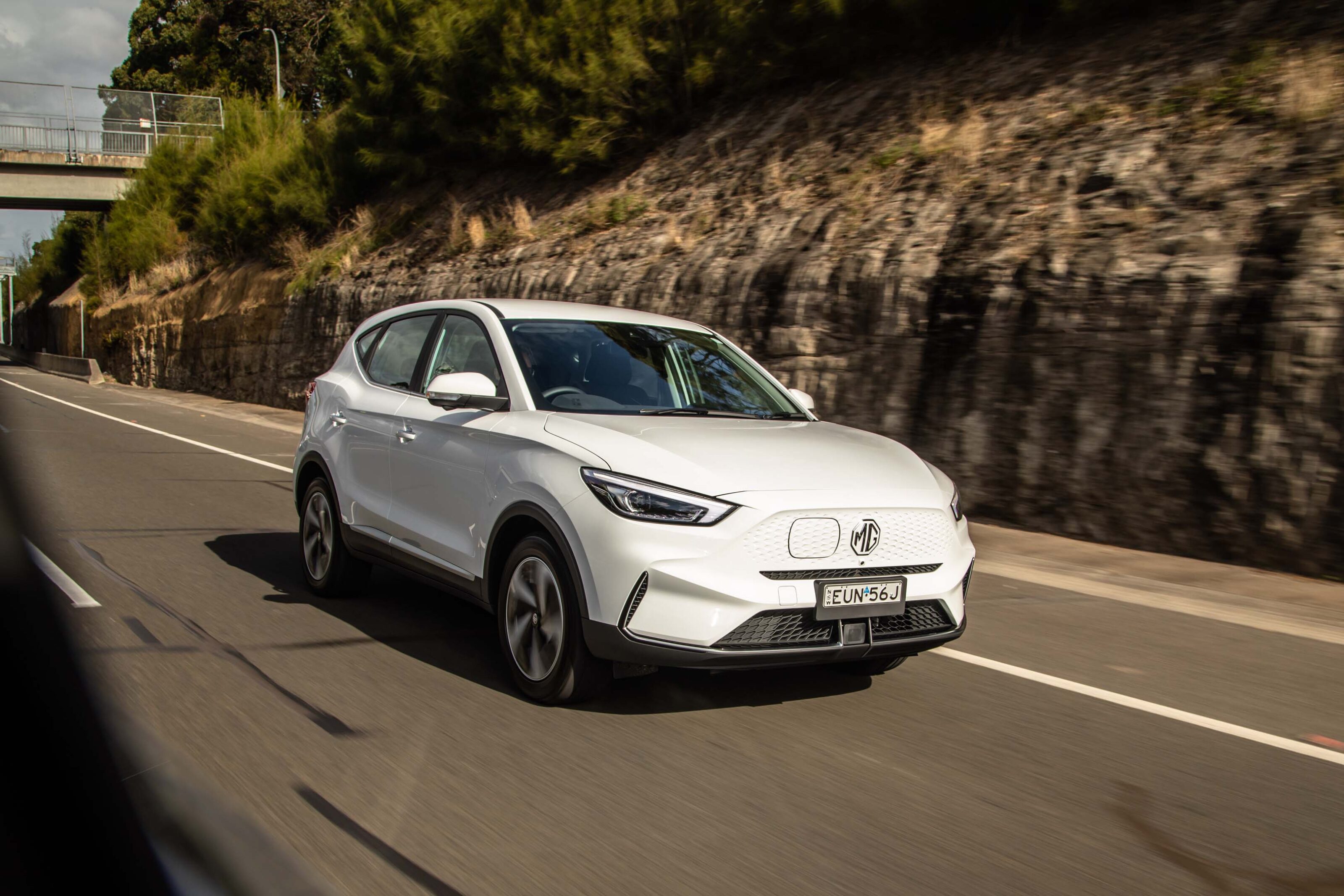
2023 MG ZS/ZST pricing
National drive-away prices are listed
| Model | MY23 price | Change |
|---|---|---|
| MG ZS FWD | $23,990 | +$1000 |
| Model | MY23 price | Change |
|---|---|---|
| MG ZST Core | $26,990 | +$1000 |
| MG ZST Vibe | $28,990 | +$1000 |
| MG ZST Excite | $32,990 | +$2000 |
| MG ZST Essence | $34,990 | +$1000 |
2023 MG HS pricing
National drive-away prices are listed
| Model | MY23 price | Change |
|---|---|---|
| MG HS Vibe FWD | $32,990 | +$1000 |
| MG HS Excite FWD | $35,990 | No change |
| MG HS Excite X AWD | $38,990 | No change |
| MG HS Essence FWD | $39,990 | No change |
| MG HS Essence Anfield | $41,690 | No change |
| MG HS Essence X AWD | $43,990 | +$1000 |
| MG HS Excite PHEV | $49,690 | No change |
| MG HS Essence PHEV | $53,690 | +$1000 |
2023 MG3 pricing
National drive-away prices are listed
| Model | MY23 price | Change |
|---|---|---|
| MG 3 Core | $19,490 | +$500 |
| MG 3 Core w/Nav | $19,990 | +$500 |
| MG 3 Excite | $20,990 | +$500 |
“What a terrible day to have eyes,” chuntered editor Enright as he returned to the Car of the Year judges’ shark tank.
Key Points
- Tesla Model Yu2019s excellent value, roomy cabin and long range saw it make the final four at COTY
- Excelled in our acceleration and dry braking tests
- Eager handling and high grip levels also impressed the judges
- Ultimately let down by a ride thatu2019s too firm and a chassis tune that lacks finesse
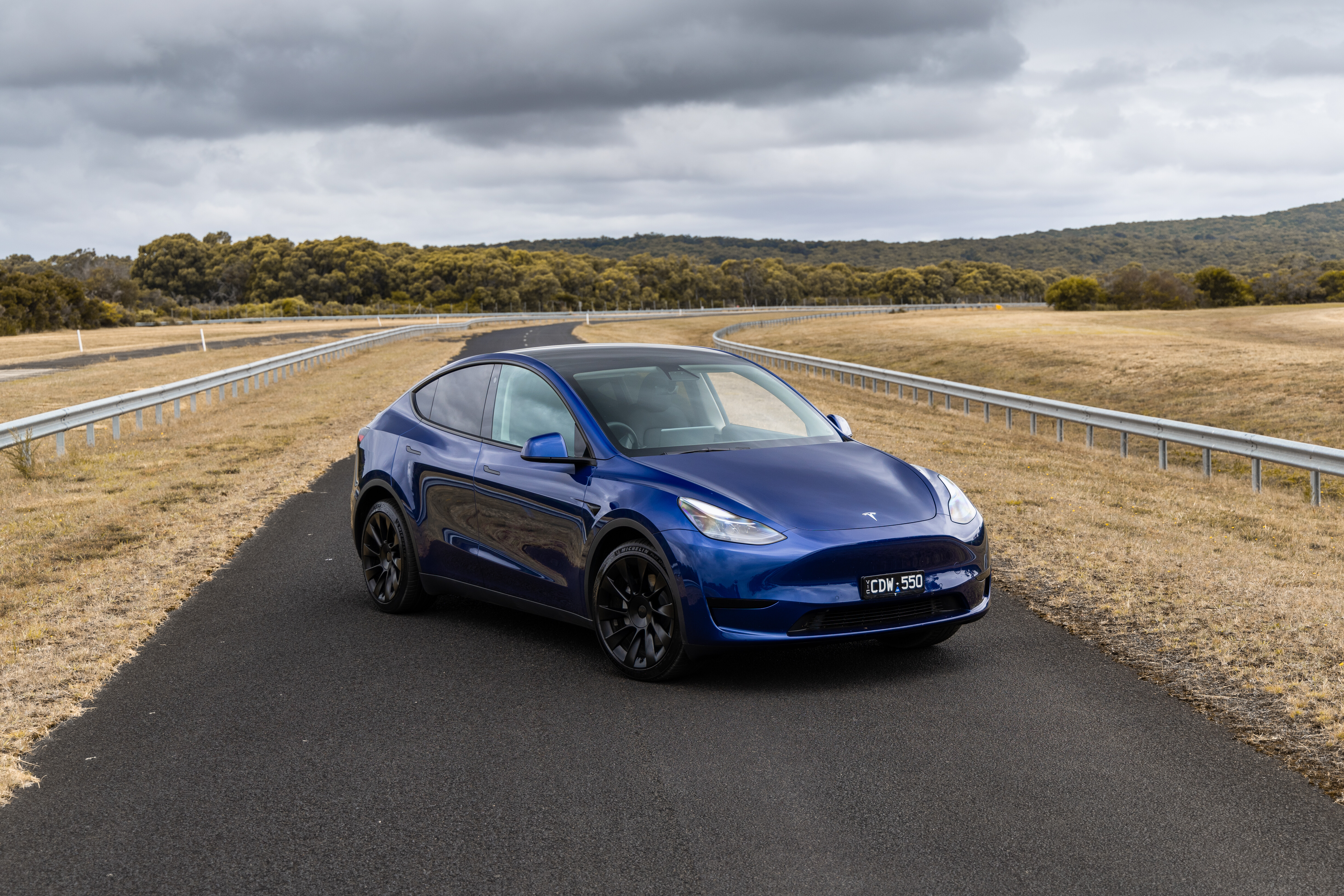
He was referring to the beluga-like, navy blue Tesla Model Y sitting all alone on the fringe of the Lang Lang skidpan, looking like a giant egg laid by some enormous prehistoric bird.
Luckily for the Model Y – currently Australia’s favourite electric vehicle – Car of the Year isn’t a motoring Miss, or Mister, Universe contest. Styling is for the market to judge, and it clearly doesn’t mind the looks of this one.
Instead, the much-hyped Model Y was an instant invite having come effectively runner-up in our recent EV mega-test (pipped only by the Kia EV6, our reigning COTY champ). Sharing about 75 per cent of its parts with the Model 3 sedan, the Model Y is six centimetres longer, seven wider and 18cm higher.
WHEELS CAR OF THE YEAR 2023
Intended to fill a smaller and more affordable niche below the larger (and older) Model X, the Model Y is built in Germany and the USA. Except for Australian ones – they’re made in China.
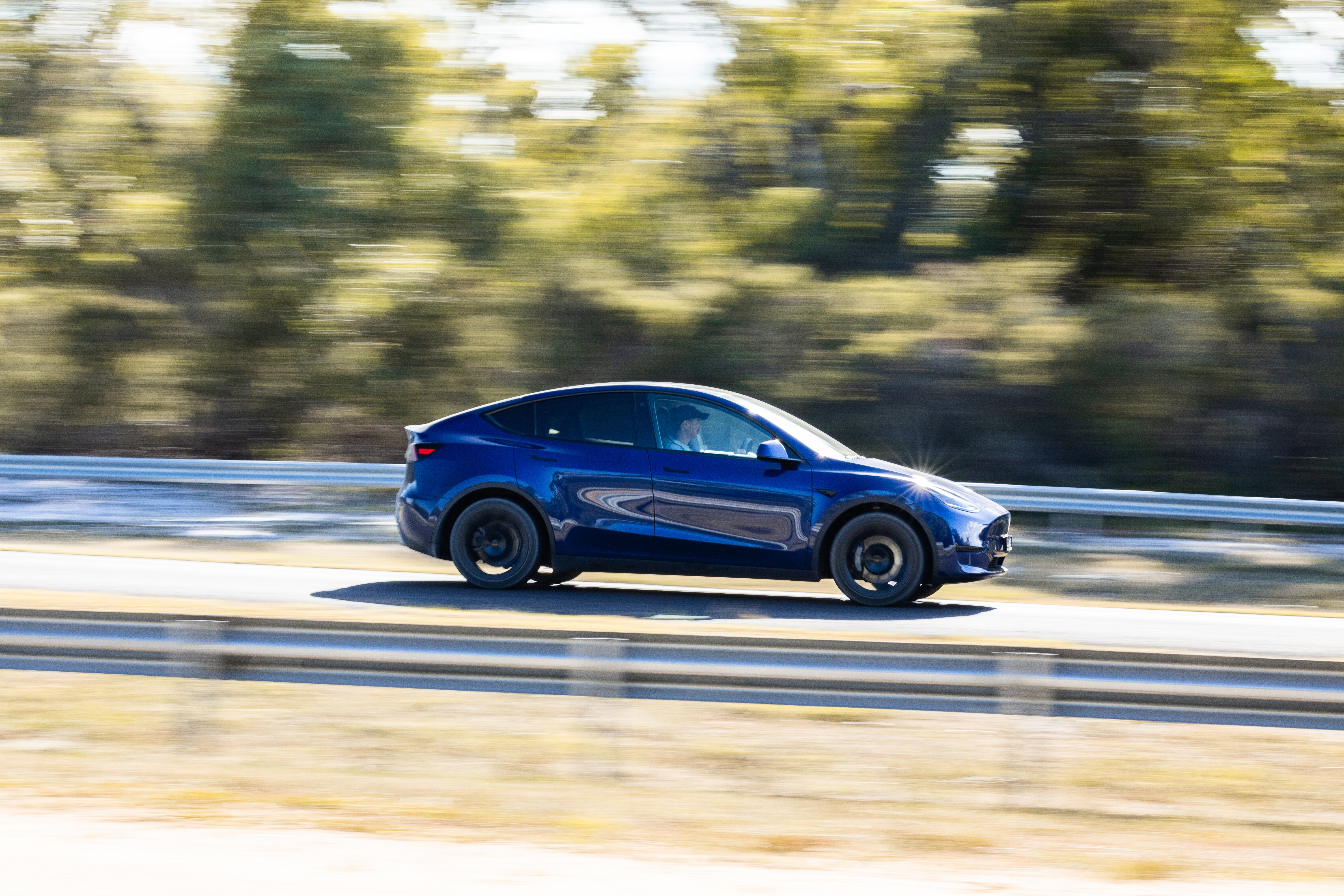
Two variants are currently offered – a $69,300 Rear-Wheel Drive and a $98,955 (both before on-road costs), traffic-light-stalking dual-motor Performance. Fronting up COTY was a sole Rear-Wheel Drive in the $1500 optional Deep Blue Metallic, with also-optional $2400, 20-inch wheels in a light-sucking satin black.
The Rear-Wheel Drive claims 455km of WLTP range and 0-100km/h potential in 6.9 seconds (verified by us). There’s a Long Range version offered overseas, but it’s not destined for Australia yet.
“Why did Tesla remove the adjustable regen? It can feel overly strong at times” – Jez Spinks
Whatever the variant, a Tesla is unlike any conventional new car. It feels futuristic and inside, you’re greeted by a basic interior some would call minimalist, others featureless. There’s a plain steering wheel, a giant 15-inch central touchscreen, and that’s about it. If not for the lovely, warming blade of bamboo-like wood trim spanning the dash, it’d almost feel unfinished.
The Model Y feels like a car designed by people who have never designed a car. It bristles with out-of-the-box thinking – some of it clever, some a tad prescriptive. The electric motor re-gen, for example, can’t be adjusted. At all.
After two days at the proving ground, however, the judges were almost in silent unanimity. “The Tesla might be our Car of the Year”. It was the shortest stopping in emergency braking and one of the fastest, tidiest and most accomplished through the lane-change, flexing some of the best active chassis safety systems of any car.
Australia’s best electric cars for 2023
We’ve tested nearly every EV below six figures in Australia to rank the best on sale today
It also handles in a way it simply shouldn’t – eager, fluid and natural-feeling, almost fun.
The surprisingly fast-off-centre steering takes some adjustment, but after that, it’s like Tesla outsourced the Model Y’s dynamics to Lotus. It’s still big, soft, tall and heavy, and don’t expect too much rear-drive character – there’s not enough power to bother the rear tyres, and the ESC can’t be adjusted – but dynamically, it’s very impressive.
Tesla deserves credit for keeping its weight to just 1909kg, welterweight by BEV standards. Some internal combustion vehicles are struggling to match that as they become burdened, ironically, with emissions-reducing gear.
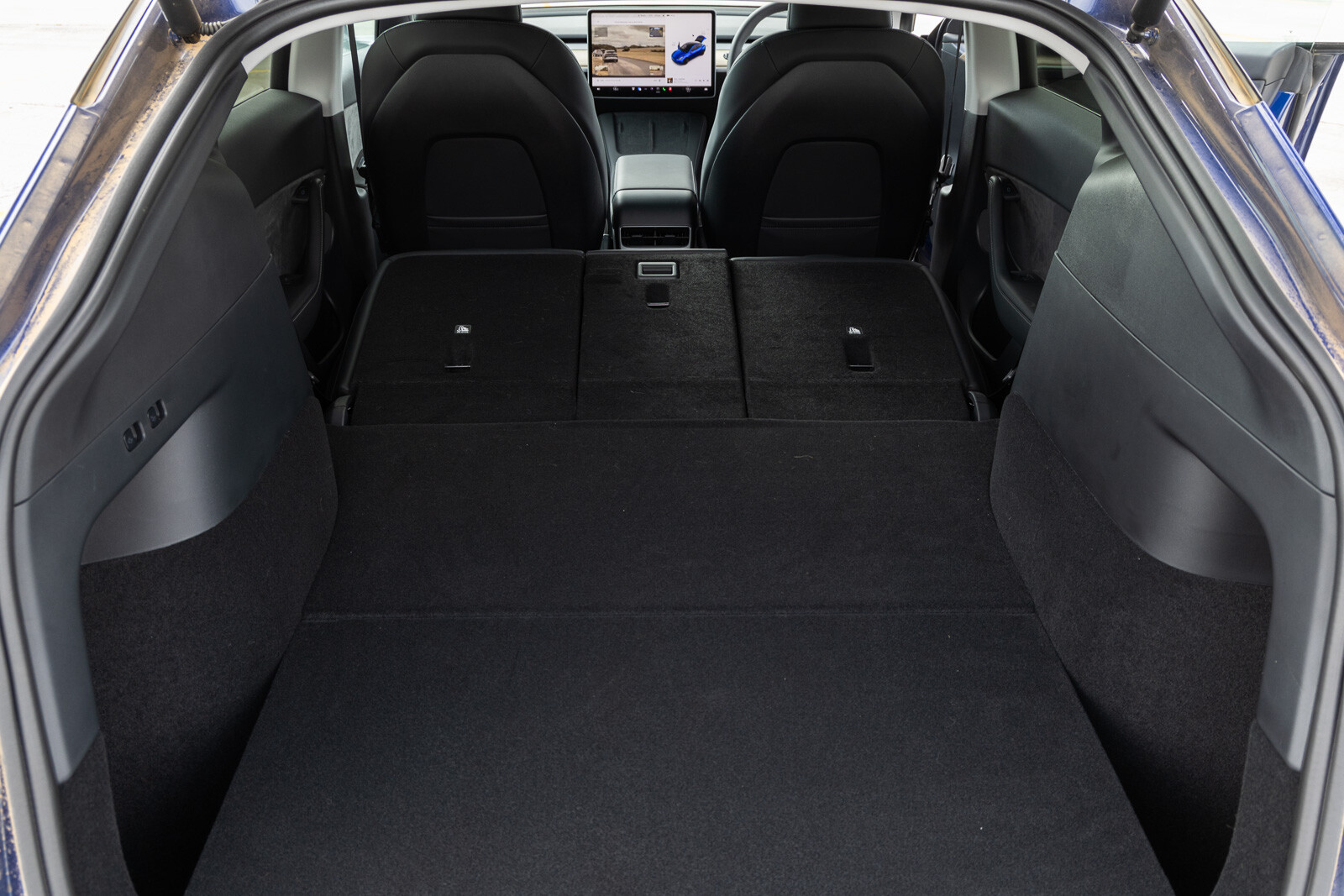
The Model Y’s COTY case only grew stronger upon surveying the generous interior space – including a cavernous 854 litres of storage – and its recent five-star ANCAP crash result. It was not taken for granted, either, how the Tesla fits into the bigger picture.
Once the grid, wherever you live, is buzzing with renewable energy, you’re going the extra mile to help address man-made climate change. If you live in Tasmania, which has achieved 100 per cent renewable energy, that’s already now.
The Model Y breezed through to the finals, but on Day Four, as we departed the proving ground for the roads around Loch in Victoria’s Gippsland region, it started to fall behind the other finalists.
For starters, not all the judges could drive it – recharging infrastructure, including Tesla’s own network, was yet to reach this part of Victoria. We had to ration kilowatt hours. Use the performance and the Model Y burns electrons like the best twin-turbo sports cars gurgle hydrocarbons.
Rear occupant ride comfort and bump control weren’t great, either. Its prospects faded further on Day Five in the urban loops, plunged into Melbourne traffic. While forward visibility is excellent – it feels like you’re driving in widescreen – the ride quality and road noise were disappointing.
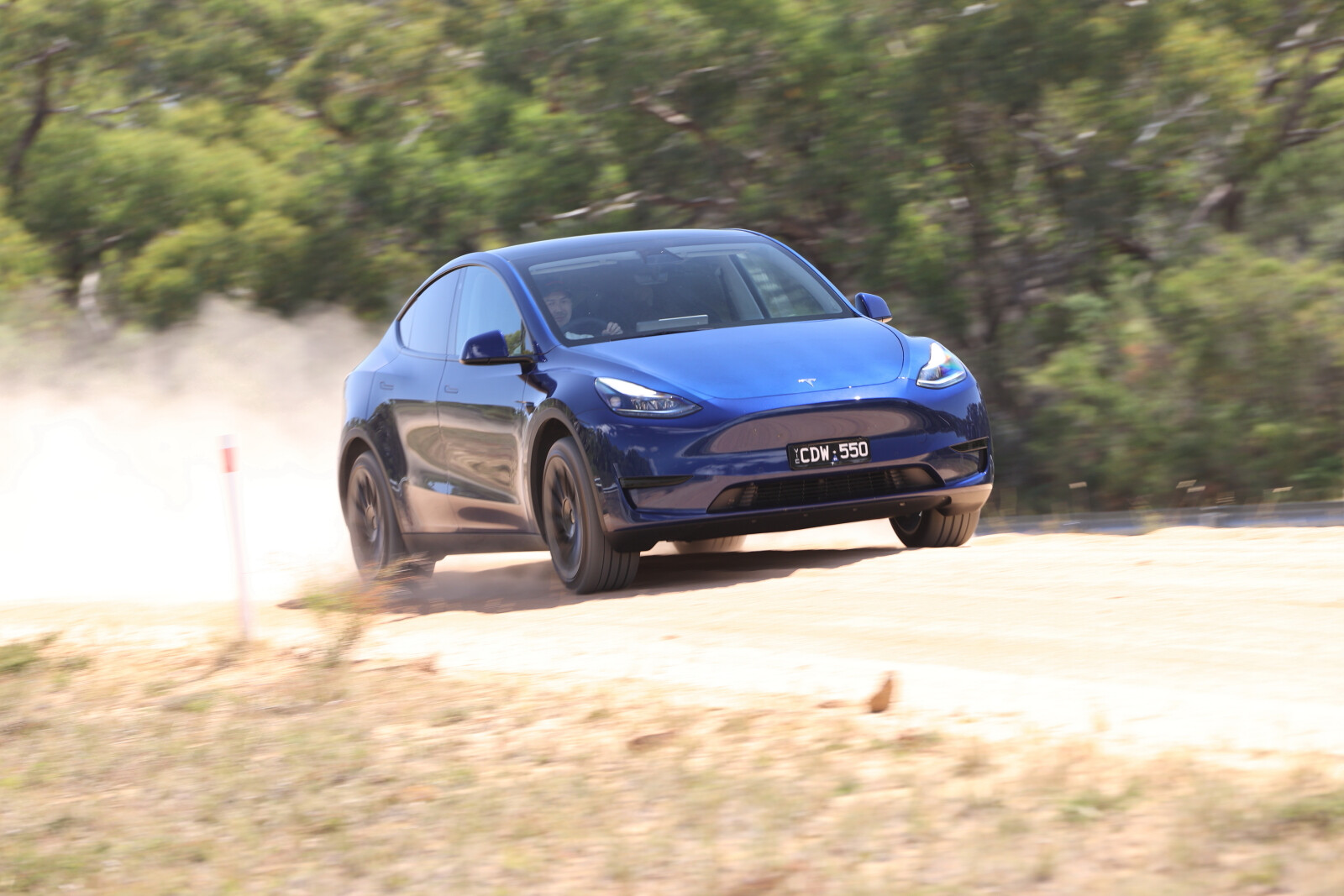
Driving a Formentor before the Model Y, and then immediately after, was damning for the Tesla which felt almost comparatively skateboard-like on its optional 20-inch wheels and 40-profile tyres.
“It finds bumps and niggles where the other cars smoothed them out,” said judge Inwood.
(What didn’t help was pumping the tyres to 42psi as per the placard, presumably to aid range. When we picked the car up they were 34psi. Either way, avoid the optional 20s.)
Other judges took umbrage with how many critical controls are contained in the central touchscreen. You’re not allowed to use your phone while driving, but the Tesla’s touchscreen is almost as complicated. For some tasks – such as activating the wipers or headlights – the Model Y requires you to remove your eyes from the road for an alarming amount of time.
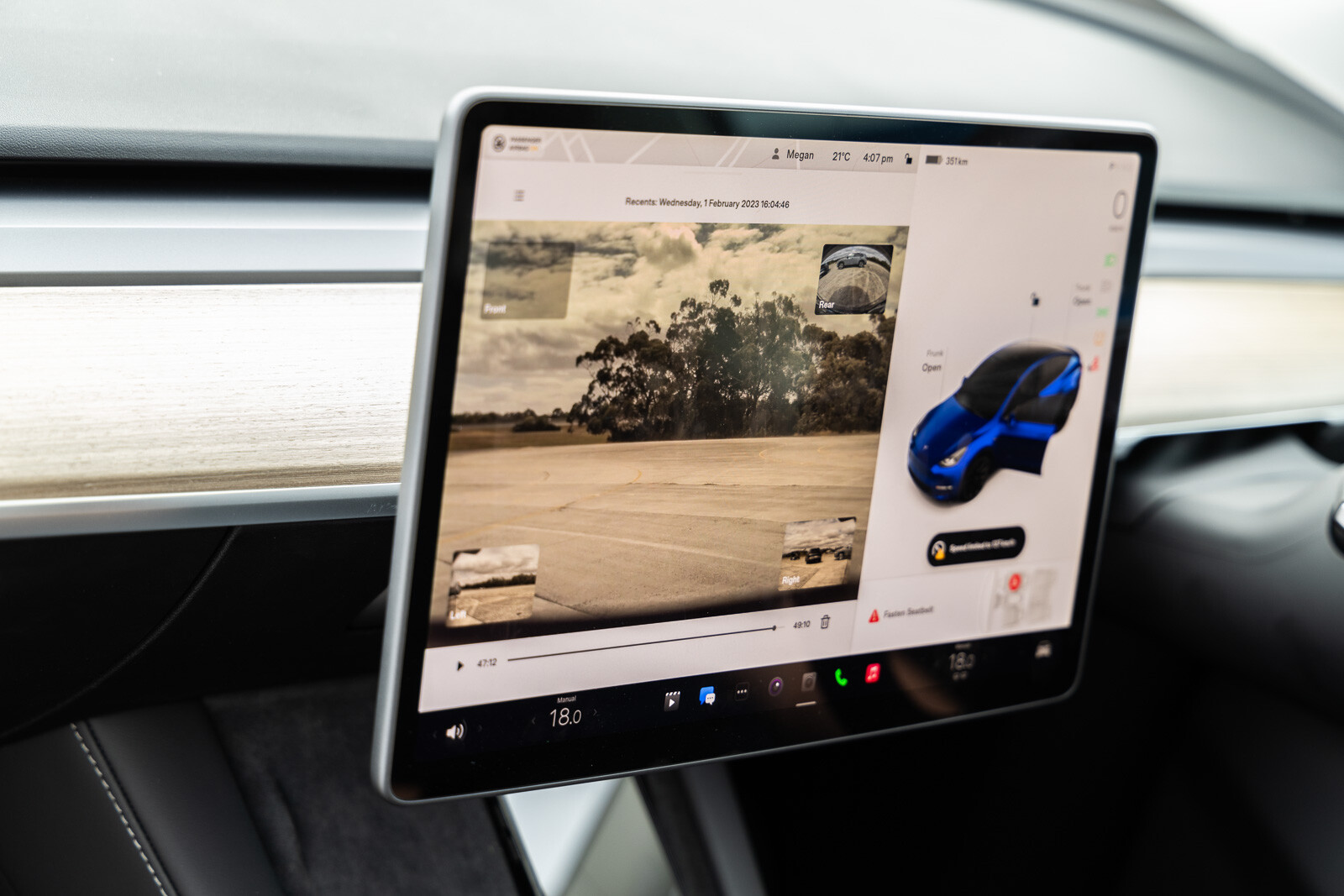
Other finalists, like the Formentor, are also touchscreen-function offenders, but the Model Y took it to another level. Also, having the speed displayed in the top right of the screen – not quite in your line of sight – instead of in a head-up display, or in a smaller binnacle, felt cheap.
As did having no ceiling grab handles for any passengers, nor giving rear occupants simple buttons to adjust their seat heaters. It must be done in the dashboard central screen. In the front.
To be fair, many Tesla owners love the minimalist approach. We don’t doubt that Tesla loves it too – it certainly would help keep manufacturing costs low. Which Tesla, to its credit, passes on to consumers. “Its on-paper credentials are virtually unbeatable for its price point and class,” remarked Affat.
But then there were the recharging woes we encountered – not the Tesla’s fault, but plainly, nearly 10 years after the BMW i3 became the first electric vehicle to win Car of the Year, the infrastructure is still lacking. Taking an EV on a long trip in Australia, in 2023, still requires careful planning.
In the final reckoning, the judges wrestled with a vehicle that glimpses excellence – but instead feels in need of a good model update. “Having now spent a lot more time with it, I’m disappointed that as an entire package it isn’t as well put together as I’d hoped,” said judge Fisk.
“I can see why the Tesla Model Y is selling so well,” added Law. “But we wish Tesla had gone the extra mile with chassis tuning and a head-up display. It would help bestow greatness on this SUV.”
The Model Y is very good. But, at Car of the Year, very good isn’t good enough.
MORE READING
Now that you’re done reading about this COTY 2023 contender, you should go back to catch up on anything you might’ve missed. Check out the links below, or find it all at our COTY page.
A new generation of the Hyundai i30 hatch is desired but not confirmed, according to the Korean carmaker’s European division boss Michael Cole – although he has smartly left the exit door open on his comments.
Speaking with the UK’s Autocar at last week’s Hyundai Kona event in Berlin (which this writer attended but could not twist any executive into commenting on the i30), Cole said: For now, i10, i20, i30 are all still in our plan, even for the next generation. We’re looking at what we have. Exactly what we will have across those three lines, I can’t say today.”
It’s significant that Hyundai is prepared to say even this much, because brands with long histories in traditional small cars have been swinging the axe with apparent abandon over the past year, including the Ford Focus and Fiesta, and the Kia Rio – and even more in Australia, where the SUVocene is well-and-truly in effect.
In the Autocar interview, Cole said that while he believes a market still exists below the Kona – which, like all SUVs, costs more than an equivalent conventional car – he was at pains to be clear this concept is merely “in our thinking, rather than necessarily in our long-term plan now”.
It’s particularly important when considering the many buyers concerned about what options will exist when Europe enacts its ICE (internal combustion engine) ban in 2035. A number of brands in Europe sell compact EVs, with models like the Fiat 500e available from AU$32,000, although it’ll cost from $52,000 in Australia. Many compact EVs in Europe are dearer than the 500e, too, like the Opel Corsa-E from around AU$57,000 in the UK. That’s a smidge over the starting price of a Kona Electric in Australia.
Australia’s best electric cars for 2023
We’ve tested nearly every EV below six figures in Australia to rank the best on sale today
“We don’t want to lose any customers, I don’t want to walk away from any customer group. So we have to think about those i10, i20, i30 customers,” Cole said.
“What could the future with electrification look like for them? It doesn’t necessarily mean it’s going to be [the] Hyundai Kona or Hyundai Ioniq 5. We have to think about what could come sub-Kona.”
One solution, Cole said – again being sure to specify a personal view only – could be the market evolving towards subscriptions.
“I do believe monthly payments and even moving towards subscription-type scenarios will help. I can see – and this is a personal view, not a corporate decision – a situation where we have a smaller EV that would just go onto subscription, and we keep the vehicle in a programme for five, six, seven years,” he said.
Cole’s thinking appears founded for the Australian market: according to 2019 data submitted to the Australian Treasury by the National Automotive Leasing and Salary Packaging Association, there are over 180,000 active novated leases in Australia. (Other, unconfirmed sources claim a number closer to 400,000). Plenty of opportunity for EVs to find popularity.
Likewise, a Novated Lease Australia survey of 1000 Australians – considered a statistically significant sample – matching “the age and geographical spread of the Australian population”, found that 46 per cent of respondents would switch to an otherwise prohibitively expensive EV if it were through a novated lease.
As for whether a next-generation i30 hatch would come to Australia, Hyundai’s local arm isn’t offering any definitive comments – but as most of our Hyundai and Kia cars come from Korea, and the i30 has never held much market sway there, it could prove a tricky business case.
Snapshot
- Xiaomi Automotive set to launch first EV in 2024
- Large electric sedan to rival Model S
- Chinese tech company known for e-scooters, smartphones, smart home devices
Chinese technology company Xiaomi looks set to enter the electric vehicle market in 2024 with a sleek Tesla Model S-rivalling sedan.
According to CnEVPost, the company’s CEO, Lei Jun, said during the Chinese Government’s annual ‘two sessions’ advisory and legislative body meeting that its car project is “progressing beyond expectations” and expects mass production to start in the first half of next year.
Xiaomi is best known for its e-scooters locally, but sells an entire lineup of smartphones, wearables, televisions, smart home devices, fashion apparel, and other electronic gadgets overseas – most popular in China and India.
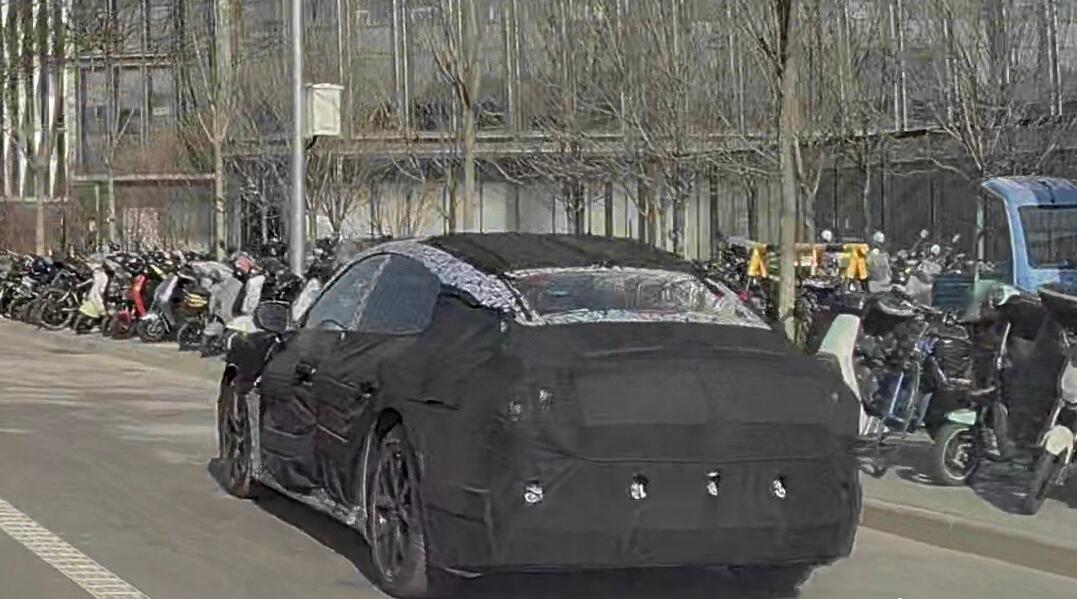
Jun said Xiaomi Automotive, which was officially registered in 2021, has more than 2300 research and development team employees, and recently completed winter testing of its first EV model.
The LatePost (translated by CnEVPost) previously reported that it’ll target the popular Tesla Model 3 small electric sedan with a price of around AU$65,000 (RMB ¥300,000), but has the performance and size of the larger Model S liftback, Nio ET7, and Xpeng P7 sedan.
An entry-level model could feature a 400-volt class charging architecture using Build Your Dreams’ (BYDs) lithium-iron-phosphate (LFP) Blade Battery, while higher-end variants may gain an 800-volt class platform with LiDAR sensors and Nvidia’s Orion computing chip to prepare for a self-driving future – similar to the Polestar 3 and Volvo EX90 luxury SUVs.
All models of the Xiaomi EV sedan are rumoured to adopt the Qualcomm Snapdragon Automotive processors and feature a large central touchscreen, typical of new Chinese-born EVs.
Electrek reports the tech giant had been talking with Chinese automakers such as BYD, Great Wall Motor (GWM) and Saic Motor (which owns MG and LDV) for potential partnerships, but it’s unclear whether they’ll eventuate.
More technology companies are entering the automotive industry as EVs become ‘computers on wheels’ and traditional car companies aim to transform into being ‘software-driven’.
Sony and Honda have partnered to launch a new Afeela EV brand in 2025, Huawei has launched plug-in hybrid and all-electric cars in collaboration with Chinese automaker Seres, and the rumour mill has been swirling for years about an Apple car potentially in development.
The latest instalment in BMW’s long-running iDrive infotainment software will begin rolling out in July this year as running updates across the range.
Linux-based Generation OS8.5 will come first as a successive update for BMW’s larger vehicles, with the X1 and 2 Series Active Tourer to gain even more impressive, Android open source-based OS9 from November.
BMW says the new system’s flat menus and minimal interfaces take cues from ‘consumer electronics devices’ – smartphones to you and I.
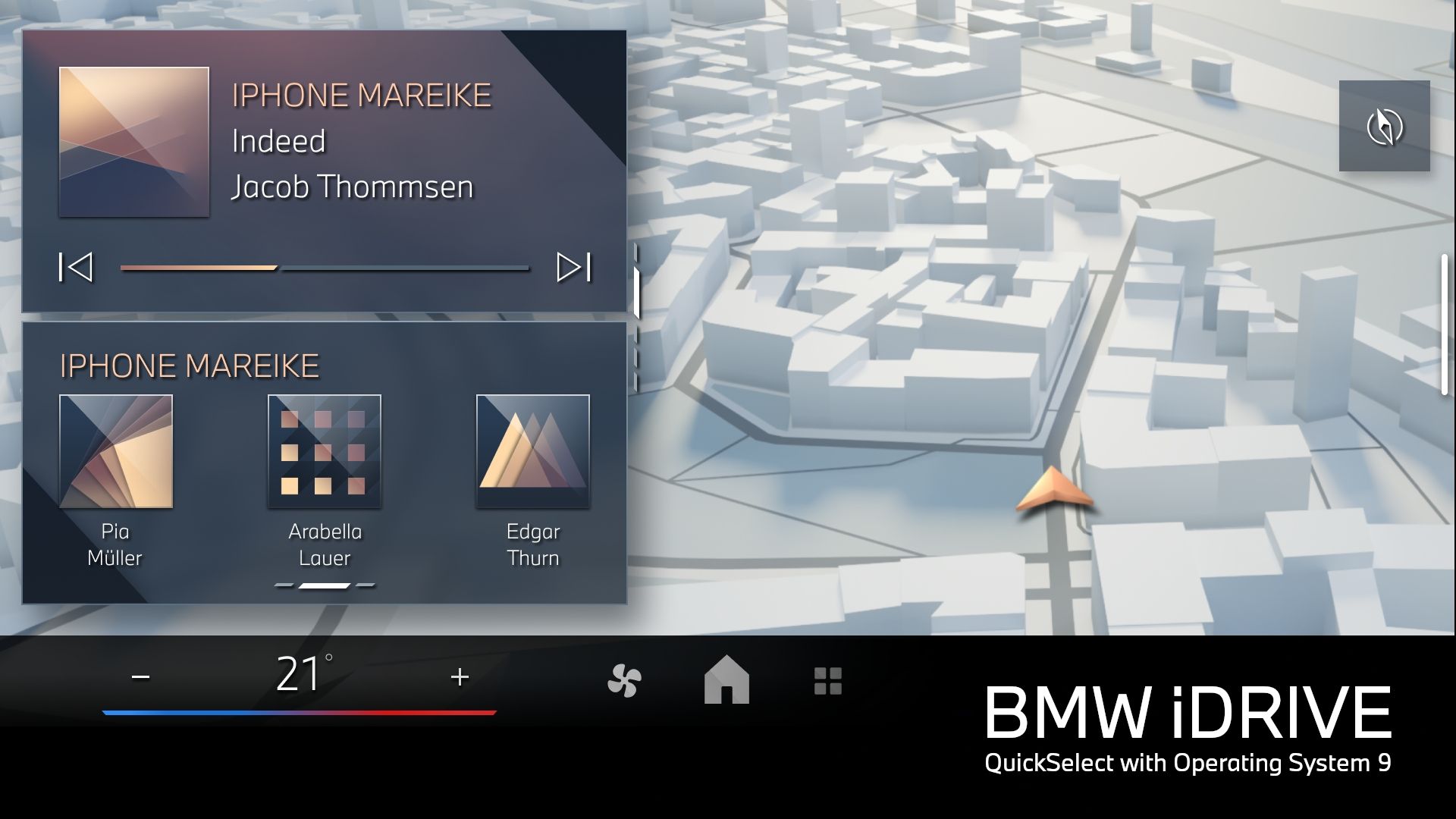
This is the next step as BMW pushes to become a tech provider as well as a carmaker on the way to its vision of responsive voice commands and whopping great augmented reality displays previewed in the i Vision Dee concept.
“Today, BMW iDrive is more than just a control and operating system – it’s a digital world of experience allowing human and car to interact with one another and exchange information,” said Stephan Durach, Senior Vice President of the BMW Group’s Connected Company Development.
What makes the latest iDrive different?
Borrowing from smartphone interfaces, the latest iDrive intends to minimise sub-menus with persistent shortcut buttons lining the bottom of the display, and customisable widgets gathered on the driver’s side of the curved screen.
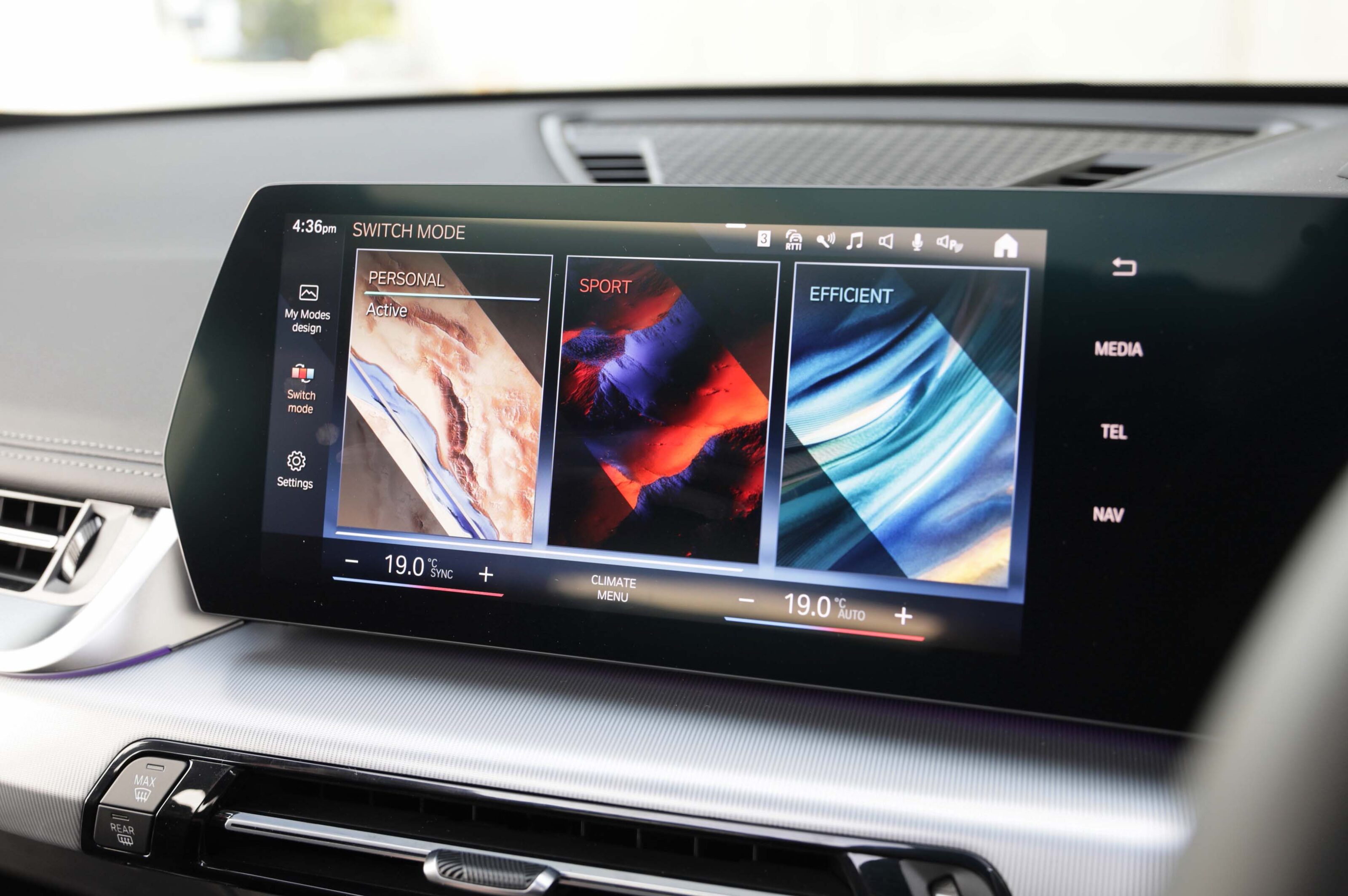
BMW refers to this as a ‘flat menu structure’, it’s said to offer simpler and snappier interaction with the most heavily-trafficked functions.
The iDrive operating system will continue to be updated and improved more regularly than ever to provide better information on charging points, and online services.
While the OS9 coming to BMW’s smaller X1 and 2 Series Active Tourer will run on a different operating system (Android, not Linux), BMW says it has gone to great lengths to retain a signature appearance across all vehicles.
BMW did not confirm as much, but it’s almost certain the new operating systems will continue to support wireless Apple CarPlay and Android Auto mirroring. Enhanced voice control will also feature

When will the latest OS be available in the BMW I’m considering?
BMW will begin rolling out OS8.5 on new-build luxury models fitted with the latest curved screen, including 7 Series, iX, i4, X5, X6, X7, and XM, from July 2023.
Following that roll-out, the X1 small SUV and 2 Series Active Tourer, which both feature different interior concepts to the above larger vehicles, will begin receiving OS9 in November this year.
After a new Mitsubishi, but not sure how long you’ll have to wait?
Issues such as semiconductor chip shortages, shipping problems and sickness and isolation have affected the ability of manufacturers like Mitsubishi to keep their production lines going over the last three years.
As such, all of the brand’s models are currently experiencing some delays.
However, some models are in greater supply than others, with flexibility around powertrains, specification and vehicle colour likely to see a vehicle in your driveway sooner.
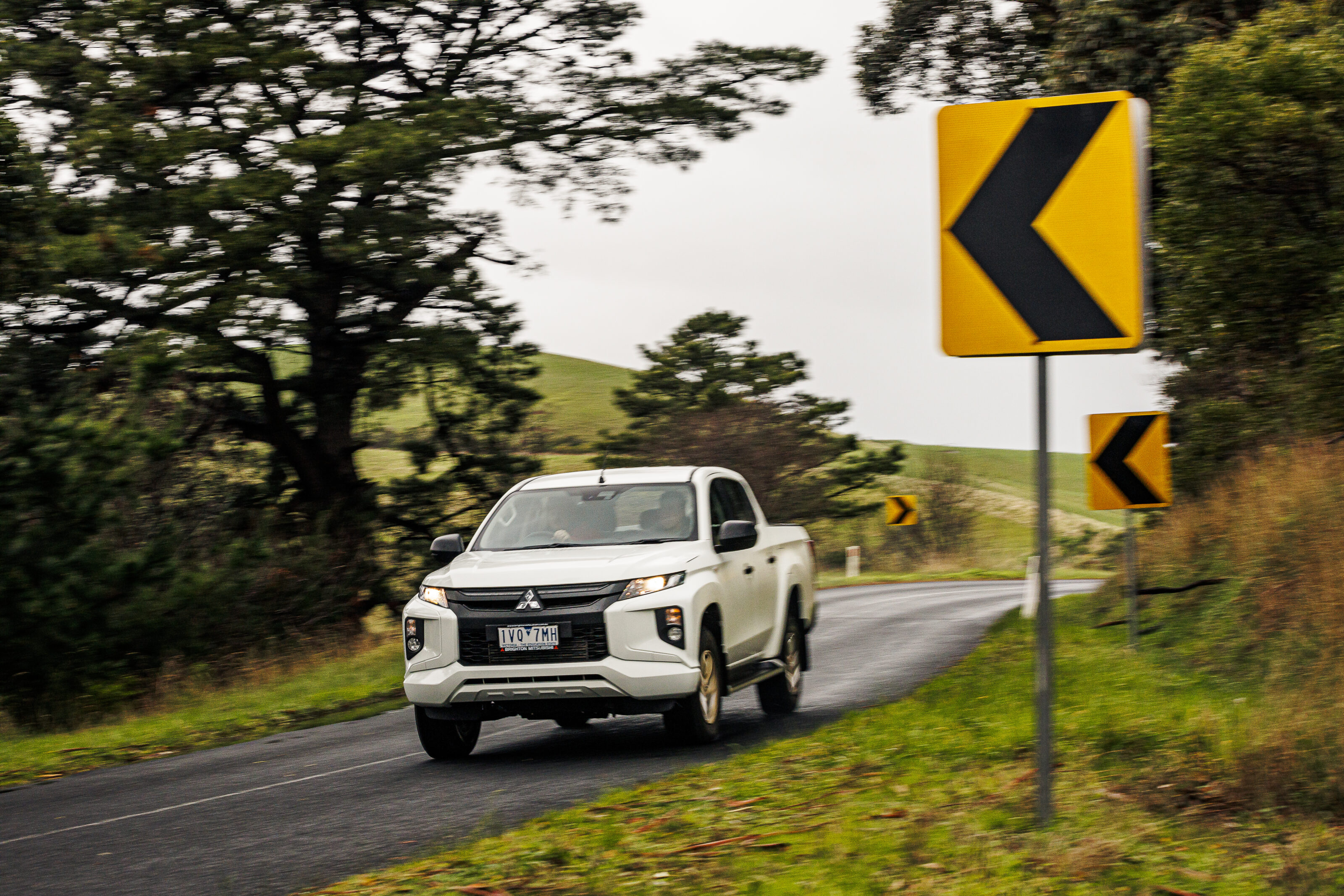
Overall, according to Price My Car, the average wait time for a Mitsubishi is now 127 days – compared to 95 days in January 2022.
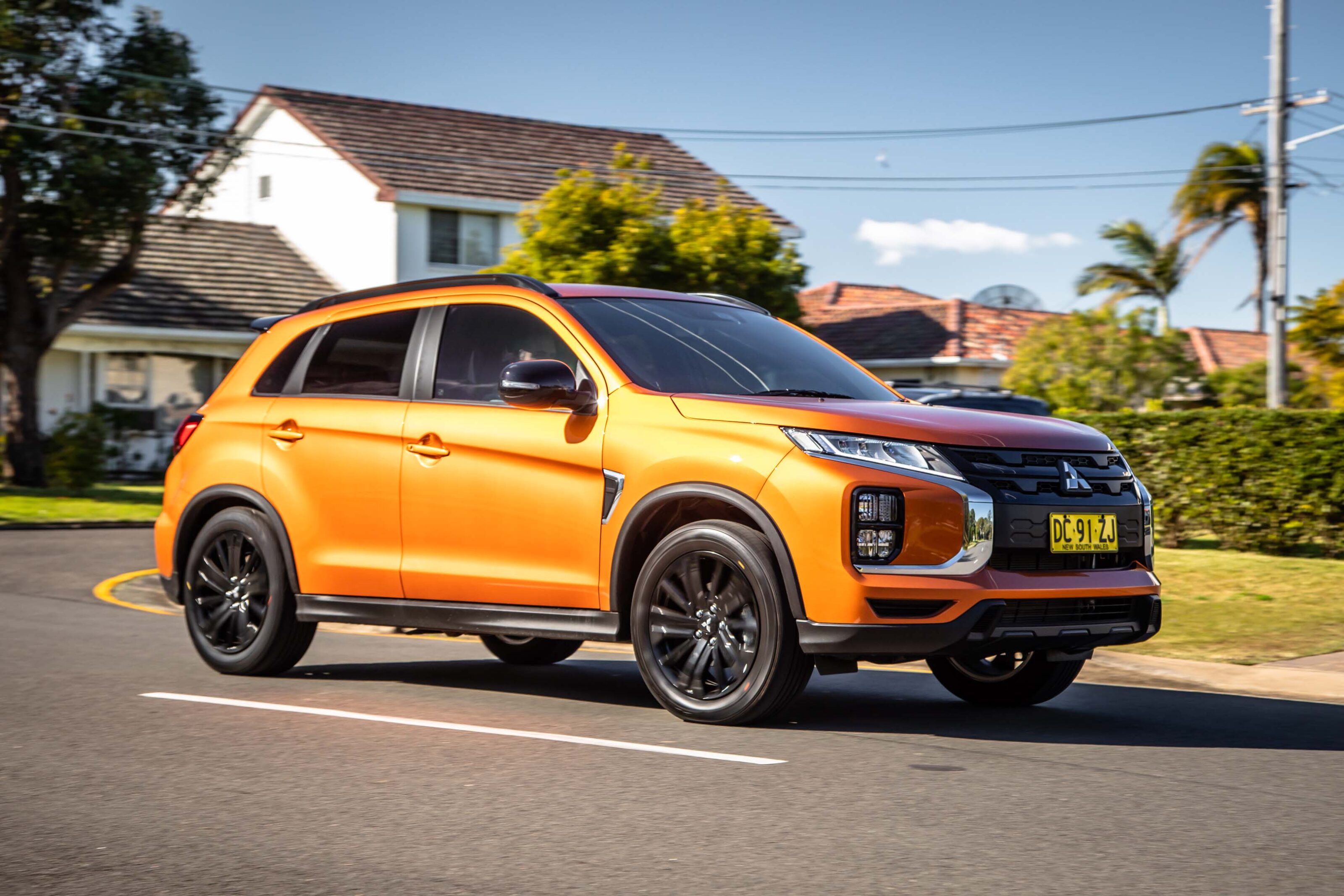
The quickest arrival is the Pajero Sport large SUV, with an average wait of 30 days, followed by the Eclipse Cross small SUV at 55 days.
Meanwhile, the worst-affected models in Mitsubishi’s lineup are the ASX small SUV, Outlander medium SUV and Triton ute, with a wait time of 139 days, 128 days and 139 days, respectively.
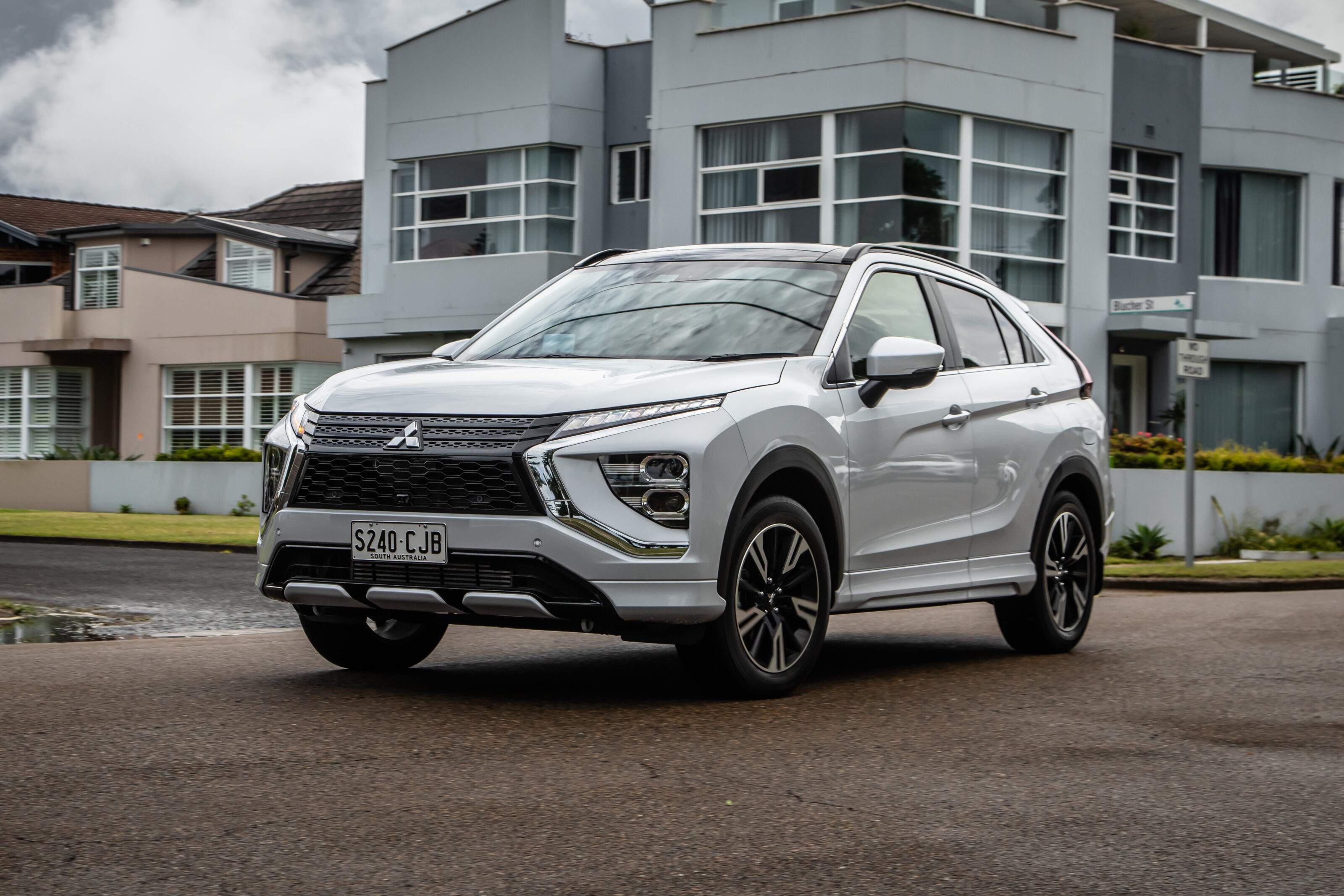
Mitsubishi average model wait times 2023
NOTE: This information is current as of March 10, 2023. This article will be reviewed and amended as new details come to light.
“The stock situation is constantly evolving and that information we provide is general in nature and not specific to individual orders, who may have a longer or shorter wait time depending on their chosen colour or accessory choices, for example,” a spokesperson for Mitsubishi Motors Australia told Wheels.
“We’d encourage individuals to communicate with their Mitsubishi dealer for their specific needs.”
The carmaker has three players making regular appearances in the top 20: the Triton, Outlander and ASX.
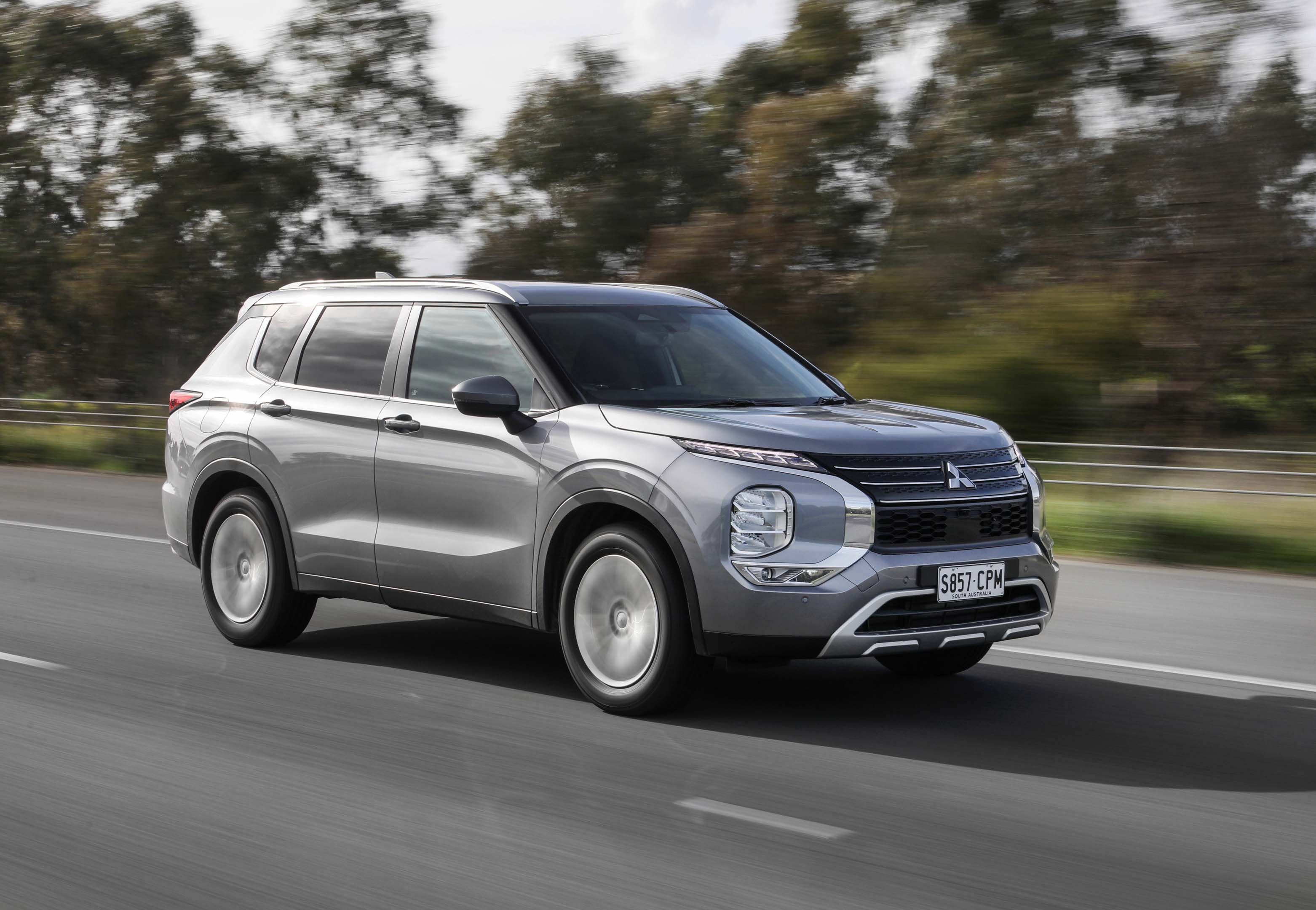
According to the company’s local arm, supply has improved for the Outlander medium SUV, with unsold vehicles now available in dealerships. An updated MY23 version with improved specifications, but price rises of up to $1000, has arrived in Australia.
As for the ASX, Eclipse Cross, Pajero Sport and Triton, supply has been tight, but unallocated stock is expected in the first quarter of the year.
With all of the above in mind, it is important to consider this article a guide only.
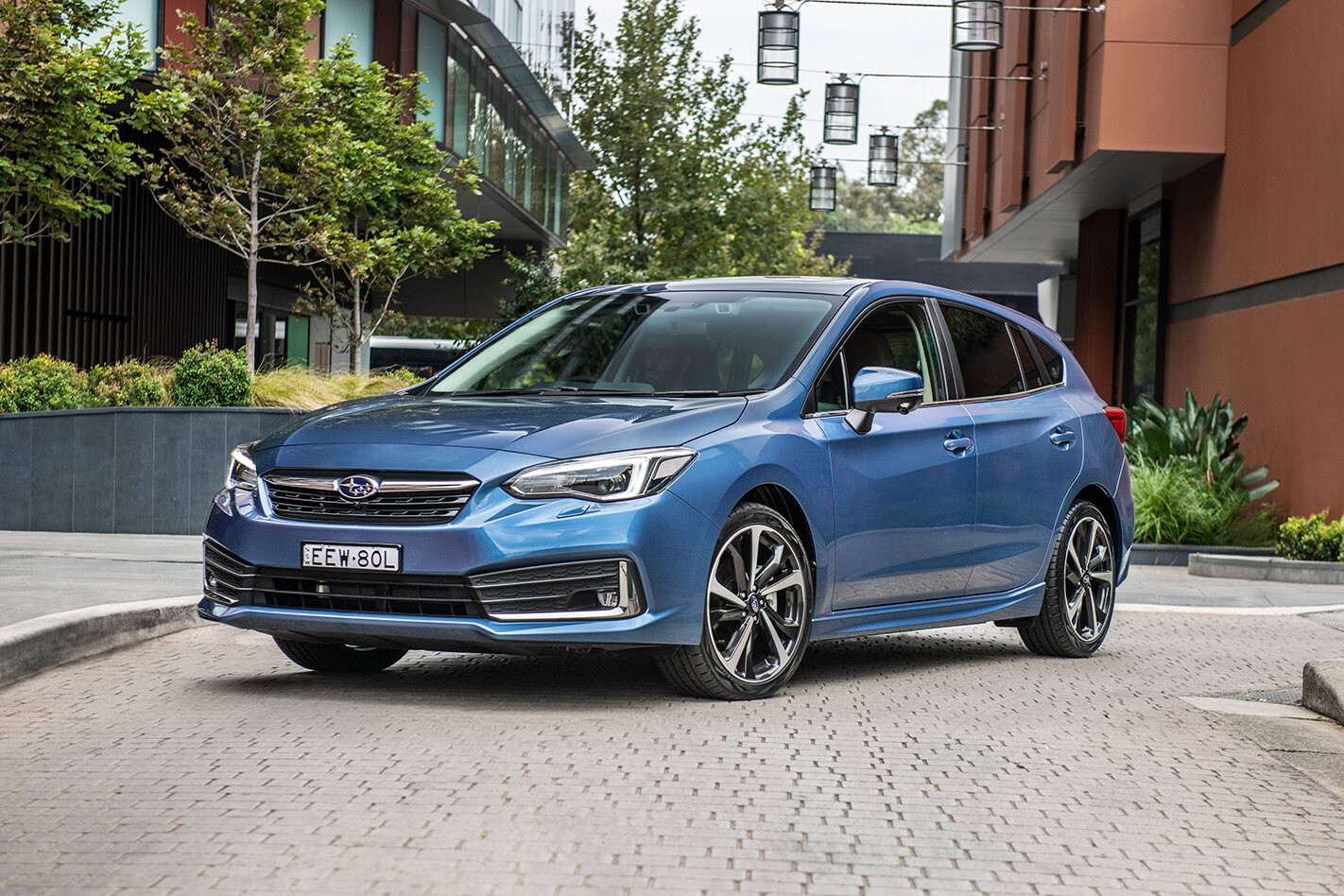
Subaru has released a new special edition Impreza, equipped with exclusive STI and Genuine Subaru Accessories, to celebrate the 30th anniversary of the model.
Snapshot
- Special edition to cost $36,290
- Spec to match 2.0i-S hatch
- 170,000 Imprezas sold in Oz since 1993
Priced at $36,290 before on-road costs, the Subaru Impreza AWD S-Edition will feature a range of styling upgrades – but will only be available in limited numbers.
Based on the top-spec Impreza Hatch 2.0i-S (which currently costs $32,790 + ORC), the limited AWD S-Edition will feature a range of STI and Genuine Subaru Accessories on the exterior, including, STI 18-inch alloy wheels, STI front under spoiler, STI side under spoiler, sports grille, and an exclusive ‘S-Edition’ badge.
The existing range-topping S variant comes as standard with features such as; 18-inch alloy wheels, an eight-way power driver’s seat with two-position memory, heated front seats, LED automatic headlights, leather-accented seat trim, side-view monitor, automatic high beam and rain-sensing wipers.
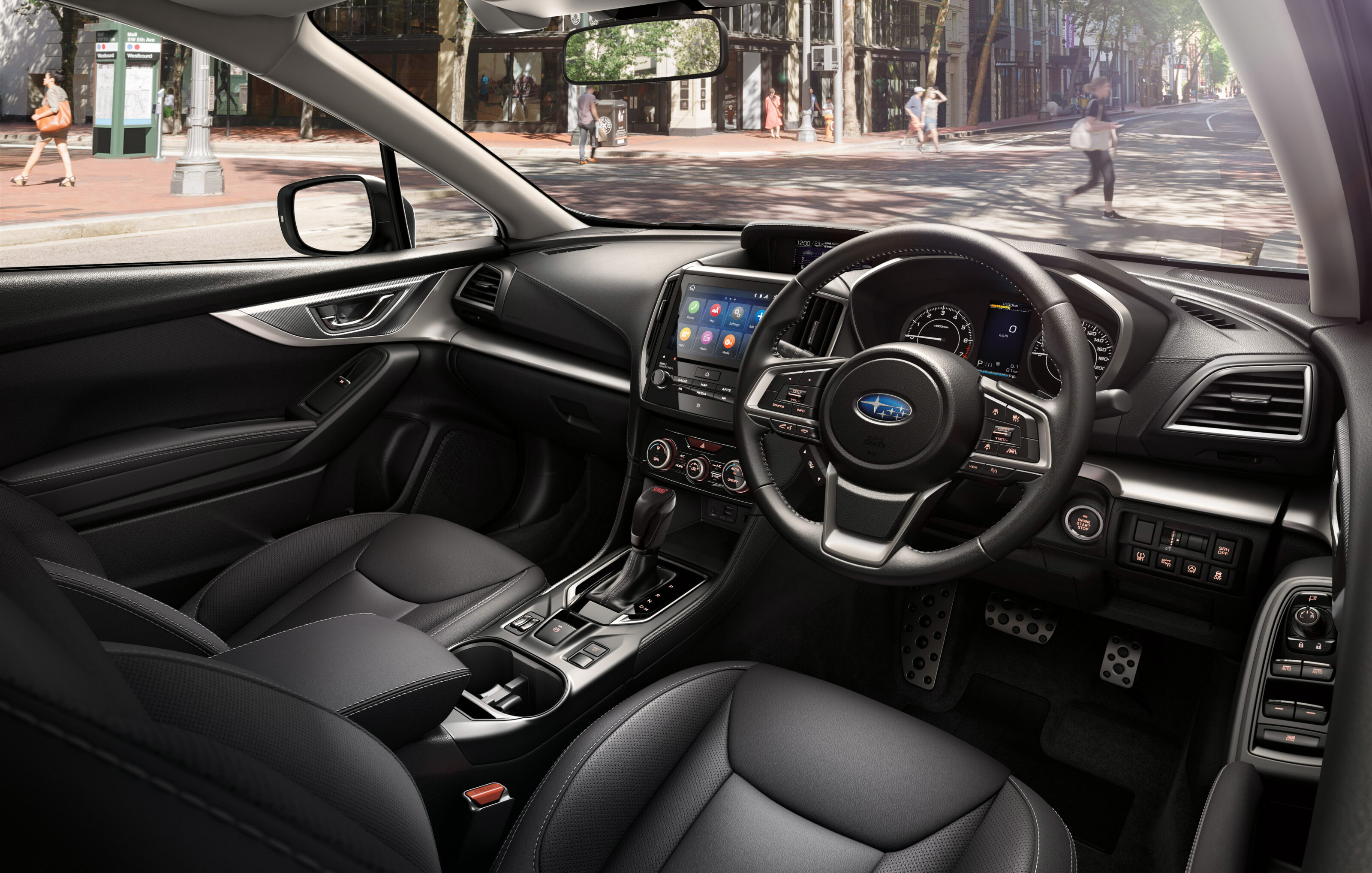
The S-Edition will be clothed in a black interior trim and come in four exterior paint colours – pure red, crystal white, crystal black silica and magnetite grey – and will also feature a STI shift knob.
The current-gen Impreza uses Subaru’s 2.0-litre naturally-aspirated four-cylinder boxer engine, producing 115kW and 196Nm, mated to a continuously variable transmission (CVT). The S grade hatch claims a combined fuel economy rating of 7.2L/100km.
It has a five-star ANCAP safety rating going back to 2016.

“The Impreza has been an important part of the Subaru family for 30 years now, and this new special edition is our way of celebrating that legacy,” said Subaru Australia’s Managing Director, Blair Read.
“The added styling enhancements provide enhanced sports styling to match the Impreza’s Symmetrical All Wheel Drive capability.”
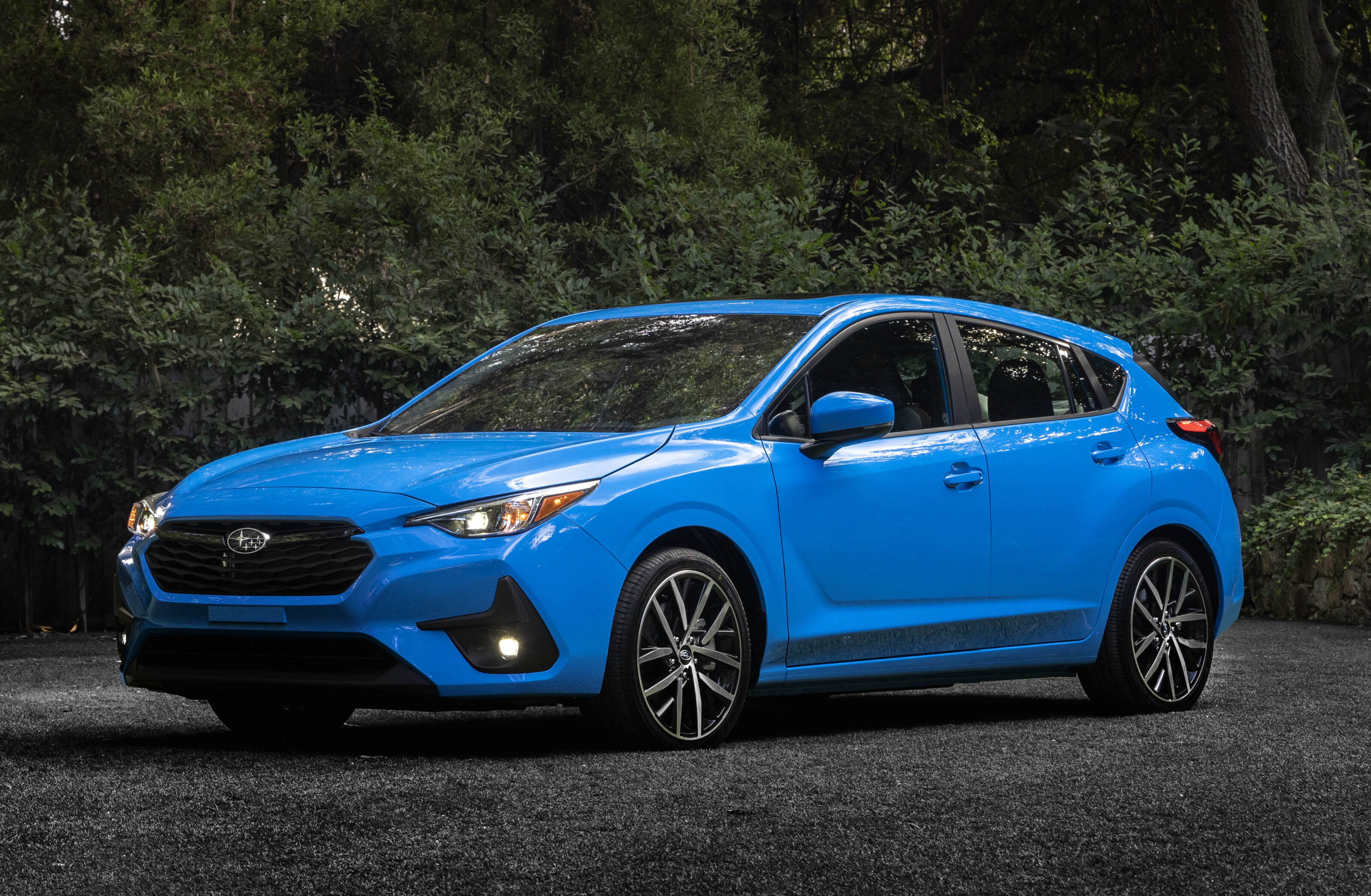
In November 2022, Subaru debuted the sixth-generation 2023 Subaru Impreza at the Los Angeles Auto Show ahead of its Australian launch in the coming months.
As expected, it is a lowered version of the Crosstrek – the global name for the next-generation XV – without the plastic wheel cladding, and a different grille and bumpers.
The styling of the Impreza is evolutionary over the outgoing model. It features redesigned headlights and tail-lights, new alloy wheels, and the return of the sportier RS grade.
Inside, a larger 11.6-inch portrait-orientated infotainment system (replacing the previous 8-inch unit) – as found in borrowed from the Outback, WRX and Crosstrek – includes wireless Apple CarPlay and Android Auto, over-the-air software updates, satellite navigation, and climate controls that are now operated via the touchscreen.
The entry-level mill is a 2.0-litre boxer four-cylinder producing 113kW and 197Nm, while flagship grades step up to a 2.5-litre engine – as found in the Forester and Outback – with 136kW and 245Nm.
A hybrid version, likely powered by the 2.0-litre system from the Crosstrek, is expected for Japan and Europe, and potentially for Australia.
While Subaru Australia has yet to confirm local details, a spokesperson said more information will be announced “in due course” – with an Australian arrival likely a few months behind the Crosstrek in the first half of 2023.
The new-generation 2024 Hyundai Kona made its online debut in December, but now we’ve had the opportunity to see it in person – and speak to company leadership about future plans for its popular small SUV.
Of course, our top priority was one that speaks to Australia’s reputation for often being a high-volume taker of performance models from a number of brands.
One of those, a very recent phenomenon, is Hyundai’s N brand. Turns out, while fans of long-time Japanese performance icons Toyota and Nissan were waiting for compelling new models to launch, Hyundai was swooping in with the i30 N – a traditional hot hatch that ticked a lot of boxes for fed-up enthusiasts ready for something new. And everybody loves an underdog.
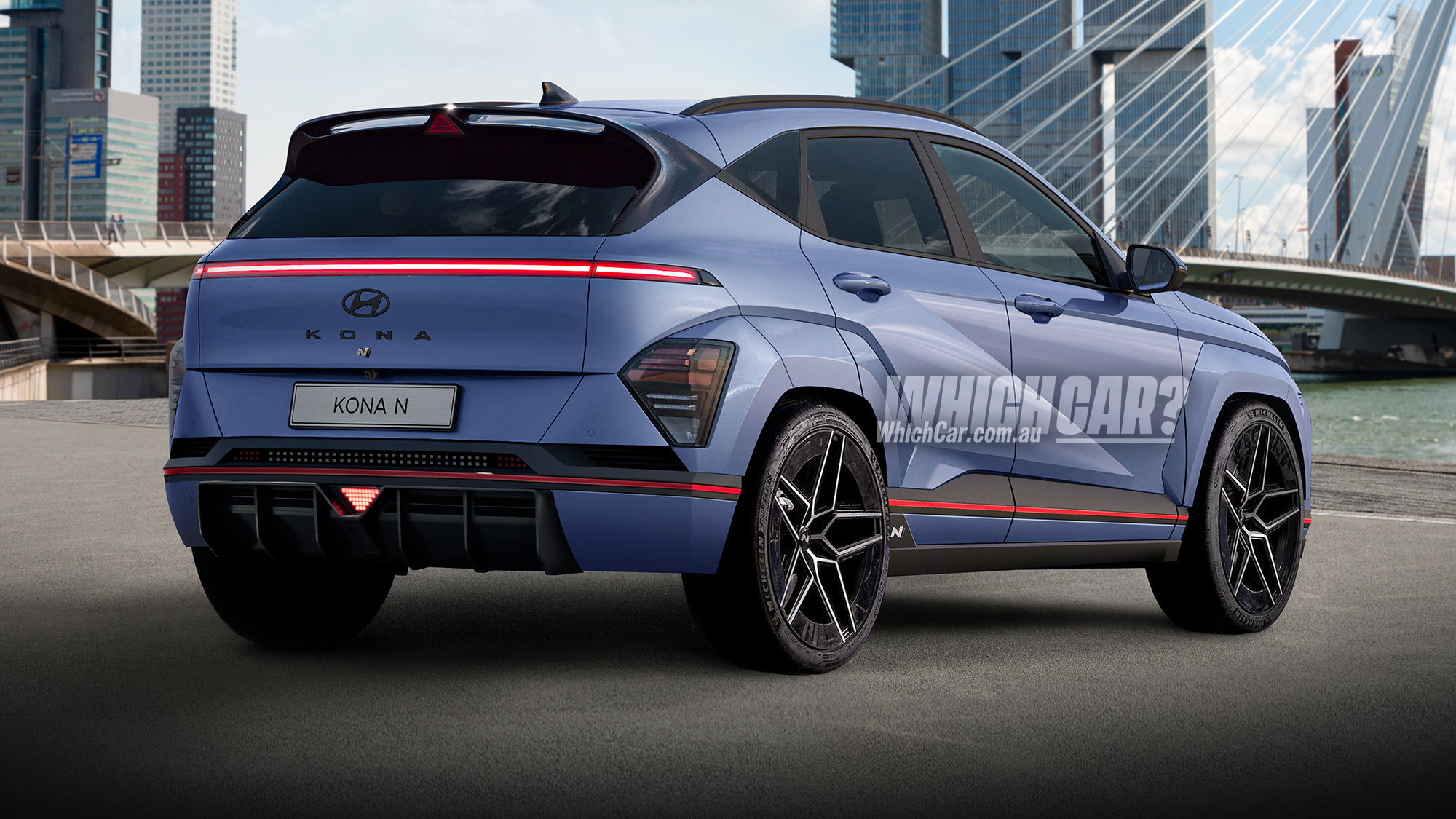
With the current Kona line-up, Hyundai used its mid-life facelift to launch a pair of hotly anticipated variants – the sporting 1.6-litre turbo N Line and the brash, madcap Kona N (below).
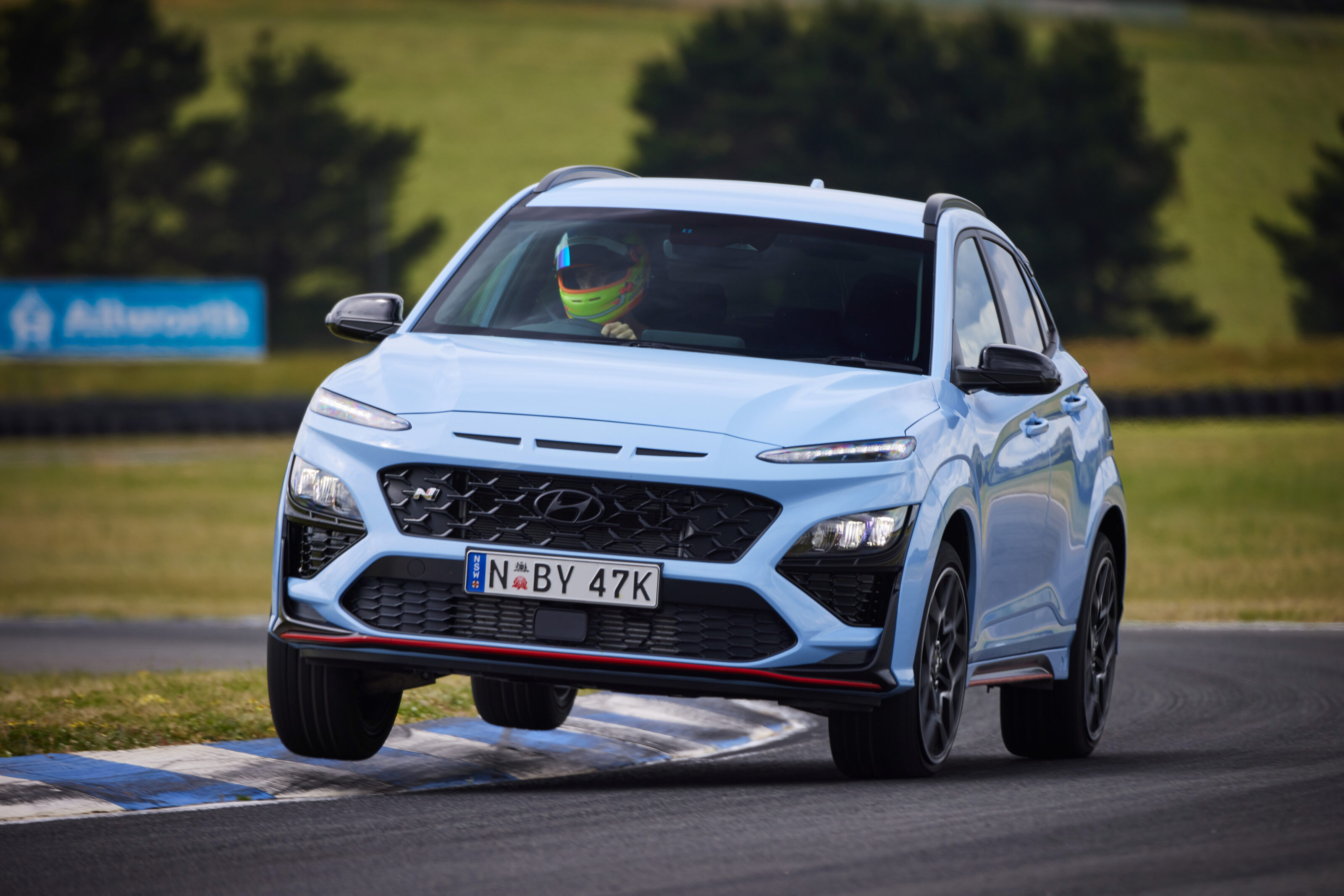
Sadly, the incoming new-gen Kona is set to lose that hero model.
Buyers will still have the option of an N-Line variant in the petrol configuration, but no full-bottle N model has been announced. Indeed, former N boss and now semi-retired consultant Albert Biermann has confirmed that all future N models will be electric only, but it’s a treatment that will be exclusive to vehicles built on the company’s dedicated E-GMP 800V EV platform.
The new Kona shares its ‘K3’ platform with the new Kia Niro and the i30 Sedan, and while the company has done much more with the Kona EV than simply dropping an electric motor into an otherwise petrol-focused platform, it remains a ‘slower’ 400V electrical design, which Hyundai has decided to exclude from its electric N project. (The first electric N car will be the upcoming Ioniq 5 N, and an Ioniq 6 N is likely.)
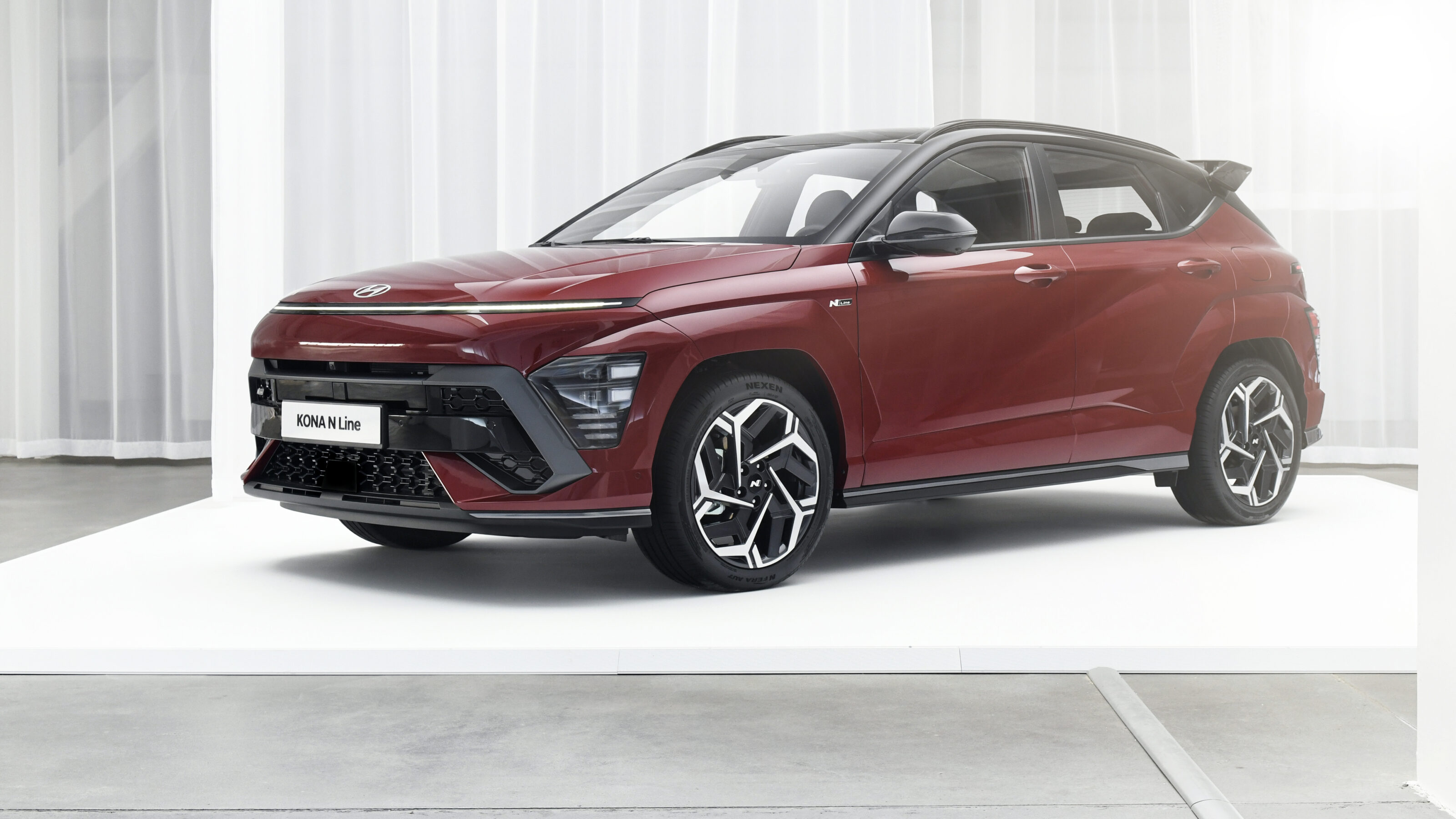
So what’s this hot Kona EV solution?
Firstly, some context: Right now, Hyundai feels it has extracted as much performance from the exclusively front-wheel-drive Kona EV as it can do, while keeping it a safe and efficient vehicle.
Depressingly, the company also says that its global research does not indicate significant enough interest in a faster and more dynamic Kona EV – which only suggests Australia isn’t a significant enough opportunity, despite the current N-Line and N models making up nearly 40 per cent of the Kona’s 11,538 Australian sales in 2022.
You can be sure the local arm is seething at having to say goodbye to those N-badged cars.
Get to it…
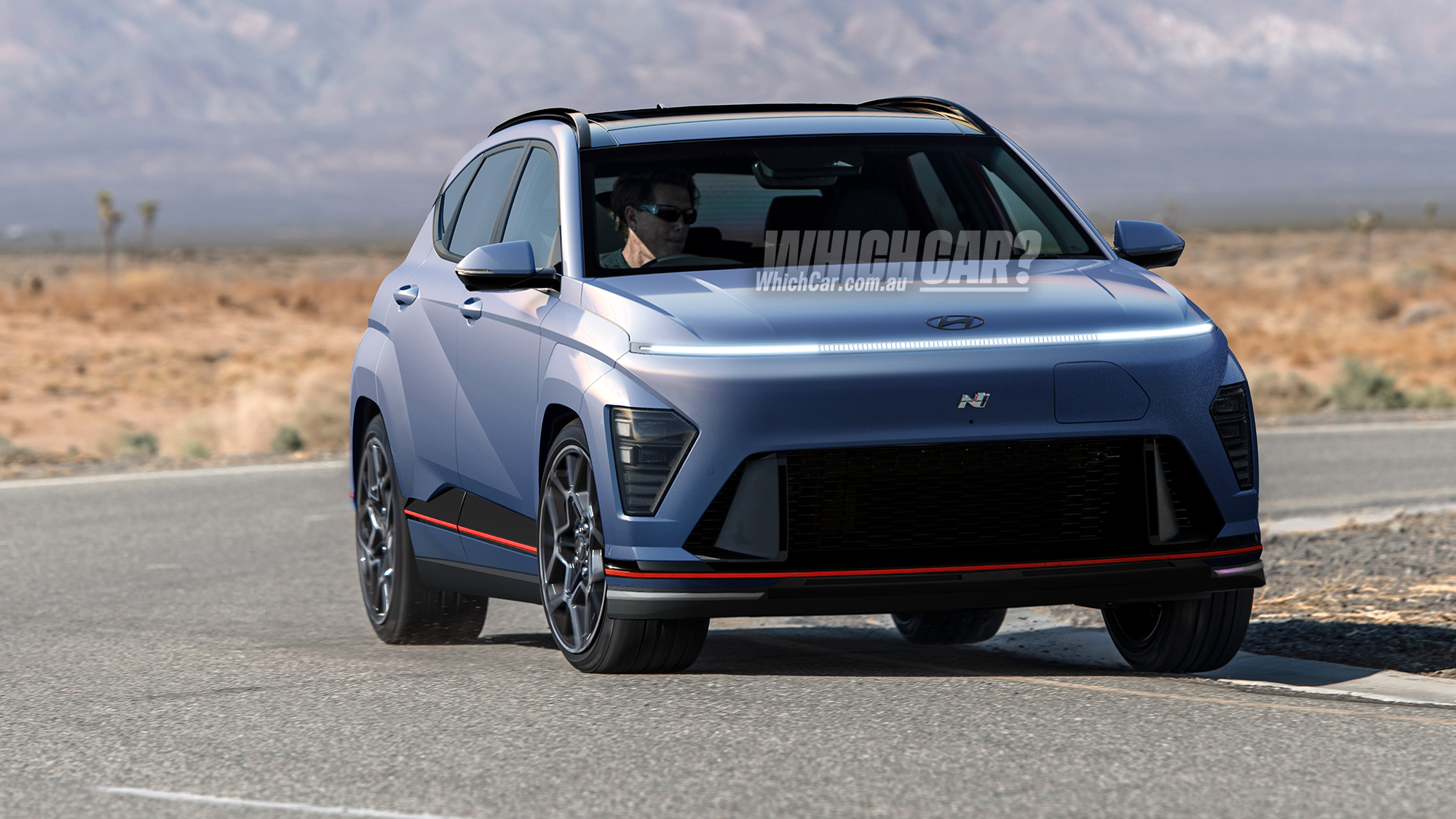
At last week’s 2024 Kona event in Berlin, Sang Hyeon Park, Hyundai’s EV strategy boss, told Wheels Media that if evidence of buyer interest grows to a compelling volume, his team has a “solution” – a design exists for adding a second, rear-mounted motor, if market demand calls for it.
This is, of course, the standard tactic for all flagship performance-oriented EVs, but for now it’s missing in the primarily budget-focused Kona EV range.
The price for such a model may be off-putting, though. While we don’t have any confirmed numbers yet, we expect the regular Kona EV to kick off from around $60,000 for the short ‘standard-range’ variant, while the long-range battery will likely add around $5000 to that. Adding a second motor would only happen with the long-range battery, so an electric N-Line would conceivably begin from around $70,000. Even now, the top-spec Kona EV is priced at $64,000.
When you consider that a Polestar 2 dual-motor long-range model starts from $74,000 and adds a plethora of luxury-focused appointments, a ~$70,000 N-Line could prove a tough sell. And, despite being rear-wheel-drive only, the base-level Tesla Model Y at $68,900 – $3400 less than it cost in 2022 – could likewise sway buyers.
Will it happen then?
What Hyundai has revealed here is that while there is an engineering solution for buyers seeking a faster Kona Electric, it could well be the accountants that rule it out.
Australia’s best electric cars for 2023
We’ve tested nearly every EV below six figures in Australia to rank the best on sale today
