
Well, here it is: Australia’s first-ever electric ute. Kind of a big deal this. Not least because it foreshadows the start of an EV revolution in Australia’s largest segment but also because, infamously, it’s the ute they said would never work.
“It’s not going to tow your trailer! It’s not going to tow your boat!” cried our previous Prime Minister not so long ago, before adding, with a flourish, that electric vehicles will “end the weekend”.
Then there’s the fact that it comes from Chinese brand LDV. A betting man would have probably backed Ford, Rivian or even Tesla to be the first to offer an electric ute Down Under, but budget-focused brand LDV has got the jump on the established players.
And not just in the world of dual-cabs, either. LDV is on the march when it comes to electrifying light commercial vehicles in Australia and is simultaneously launching an eDeliver 9 electric van and an EV people mover in the Mifa 9.
So in many ways, the eT60 is something of a breakthrough vehicle. Question is, does it offer a compelling enough reason to tempt buyers away from the hordes of existing diesel-powered dual-cabs? And crucially, can it still tow? And how much does it cost? Prepare for a shock on that last point…
JUMP AHEAD
- How much is it and what do you get?
- How do rivals compare on value?
- Interior comfort & space
- What’s it like to drive?
- Warranty & running costs
- VERDICT
- Specifications
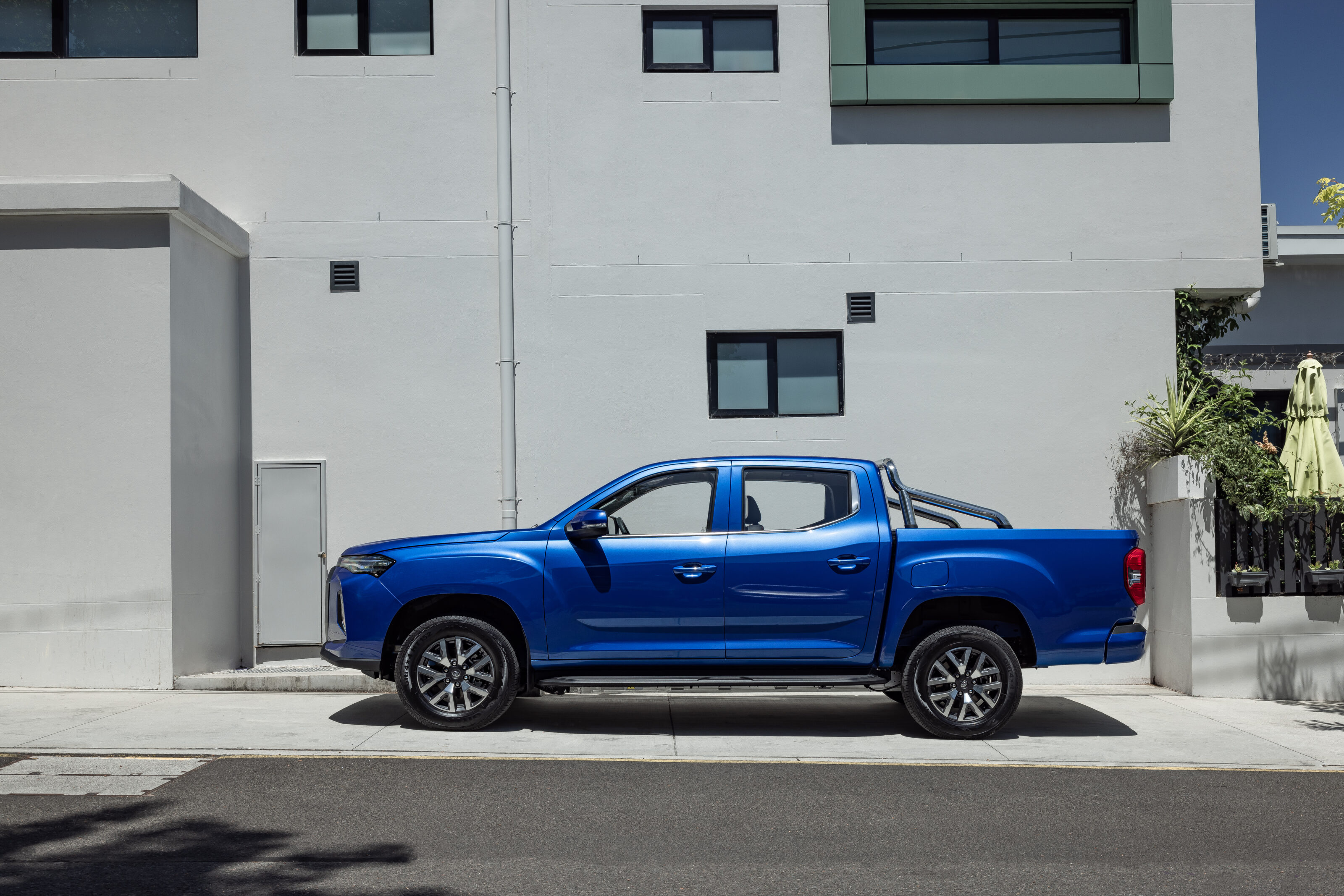
How much is it and what do you get?
The basics
| 2023 LDV eT60 | |
|---|---|
| Drive | Rear-wheel drive |
| Battery size & charging speed | 88.5kWh / 80kW DC, 20-80% 45min |
| Power & torque / range | 130kW & 310Nm / 330km claimed |
| Weight | 2300kg |
| Towing & payload | 1000kg braked / 1000kg |
There’s no sugar coating this: the eT60 is priced at $92,990.
That makes it more than twice as expensive as a diesel T60 Max – and also means it’s well above the threshold to be eligible for state government incentives available around Australia. Surprised? Us too.
In New Zealand, the eT60 costs $79K drive-away and it’s also eligible for around $8500 worth of subsidies, so some rough maths had suggested Aussie pricing would be somewhere in the $70K bracket. Turns out we were well off.
The eT60 is based on a regular T60 Max Pro, which costs $43,148 for private buyers when paired with an 8-speed automatic gearbox. The ‘Pro’ trim level is the entry-point to the T60 model range and, unlike more expensive ‘Luxe’ versions, it has more of a workhorse focus and features heavier-duty and noticeably firmer suspension.

Being based on the Pro means the eT60 mostly mirrors the lower-spec T60 for standard equipment, but going electric has brought some key differences.
Unlike other 4X4 T60s, this electric version is rear-wheel-drive only. A single electric motor is mounted onto the rear axle which means this isn’t the T60 to buy if you plan on doing some serious off-roading.
The electric motor and control unit also look pretty vulnerable to damage if you were to take the eT60 off-road, given they hang quite low below the rear subframe. Officially, LDV says the approach and departure angles are the same as a regular T60, at 27 and 24 degrees respectively – but ground clearance has dropped from 215mm to 187mm.
The ramp over angle has also dropped, from 21.3 degrees for a T60 Max Pro to 17 degrees for the eT60.
As for performance and range, the eT60 packs a large 88.5kWh battery back between its axles.
The single e-motor produces 130kW/310Nm which is 30kW and 190Nm down on the 160kW/500Nm twin-turbo diesel used throughout the rest of the T60 line-up.

Range is rated at 330km on the strict WLTP cycle but you can expect that number to shrink rapidly when you have a load in the tray or you hitch up the eT60 for towing. Speaking of towing, the eT60 has a braked towing capacity of 1000kg which, again, is well down on the 3000kg rating of a diesel-powered T60 Max.
One area the eT60 trumps its ICE-powered siblings, though, is payload. LDV says you can put 1000kg into the tray of the eT60 where a regular T60 Max Pro’s payload is rated at 935kg.
Recharging times are average for an EV with a battery of this size. The eT60 can accept up to 80kW DC fast charging and LDV claims it can go from 20-80 percent in 45 minutes. It’s likely most buyers will charge their eT60 at home or at a depot, however, and hooking it up to an 11kW wallbox will net a full battery in around 9 hours.
A final point on value? While LDV concedes the eT60’s price breaks new ground for a budget-focused brand, it also says private buyers aren’t its target market.
“The LDV eT60 is aimed at large corporate entities, all three levels of Government and fleet business who’ve committed to emission reductions targets,” says Dinesh Chinnappa, GM of LDV in Australia.
Chinappa also told us LDV has been approached by a number of third-party companies looking to offer leasing deals and other unique arrangements where, for example, the purchaser buys the ute but leases the battery.
So it’s unlikely many buyers will be handing over the full $93K up front.
How do rivals compare on value?
Being first to market with a fully-electric ute means the eT60 currently has no direct rivals.
There are a host of other electric utes available globally, and some have been earmarked for an Aussie arrival like the Rivian R1T and Ford F150 Lightning, but it’s understood those utes are still years away from hitting our roads.
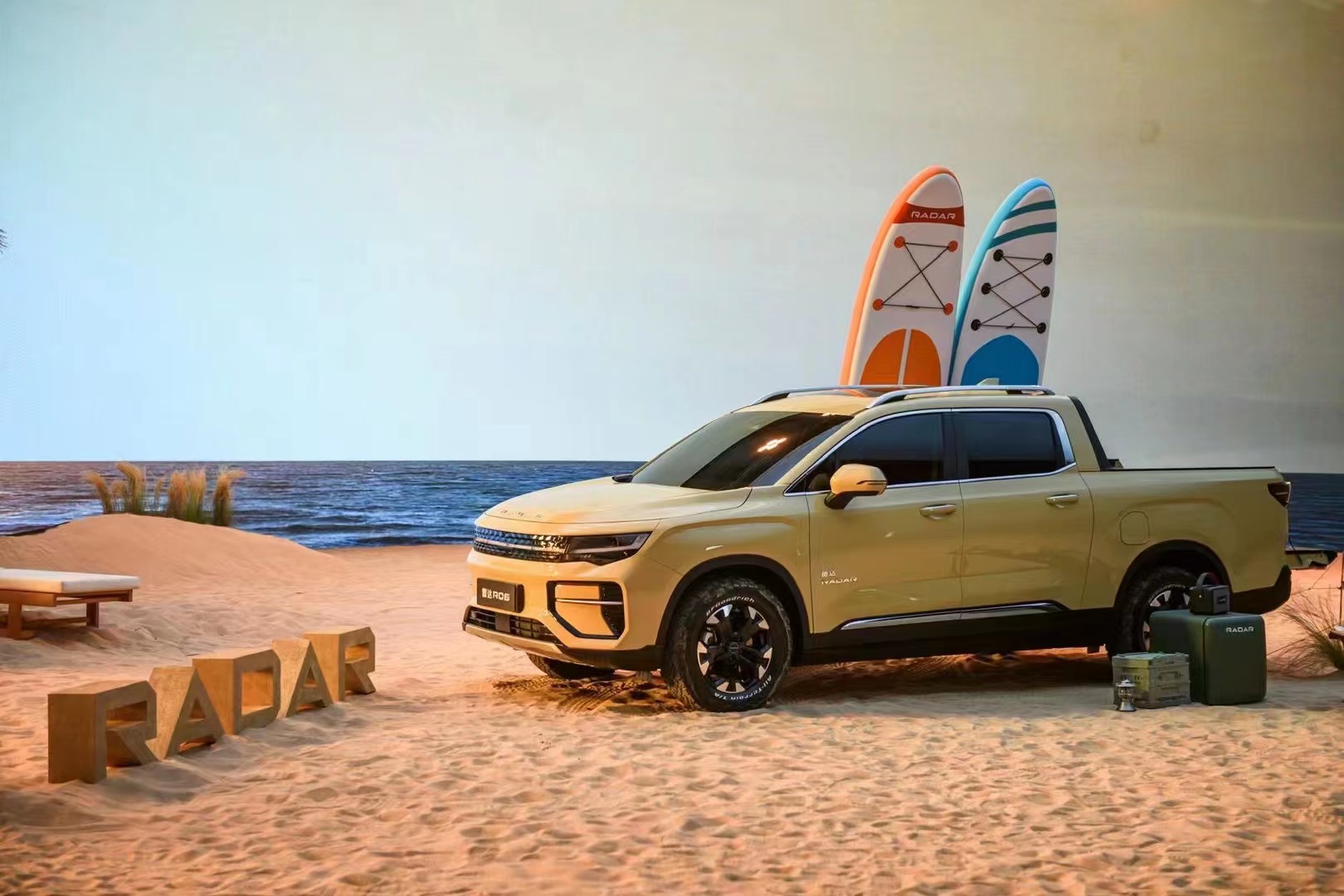
Another potential rival for LDV is the recently revealed Radar RD6. Radar is a new EV brand from Geely and it’s understood both Volvo and independent vehicle importer Ateco (who also imports the eT60) are both exploring ways to bring it to Australia. For now, though, it seems the eT60 will have the EV dual-cab market all to itself for a while.
It’s the same story when it comes to hybrid alternatives. Australia’s dual-cab market is still dominated by diesel engines to such a degree that even hybrid tech is yet to reach the segment.
Ford has confirmed a plug-in hybrid version of the hugely popular Ranger is in the works and Mitsubishi is also understood to be developing a hybrid version of the next Triton but again both models are years away.
As for an alternative that lines up on price? It might sit at the exact opposite end of the spectrum to an eT60 for green credentials and the ability to reduce your company’s carbon footprint but you could slip into a Ford Ranger Raptor for similar money to the LDV. The Raptor retails for $84,590 and comes with a 292kW/583Nm 3.0-litre V6 twin-turbo petrol.
Interior comfort & space
LDV has just treated the T60 Max range to a useful MY23 update that adds a host of exterior upgrades like standard sidesteps, a chrome sportscar, roof rails and a new steering wheel design with shift paddles.
For now, though, it seems like the eT60 misses out on a chunk of that new equipment.
While our test ute did have sidesteps and a sportsbar, there were no roof rails and our tester’s steering wheel was plastic rather than the new leather-trimmed design. Our ute was also rolling on 245/65 R17 Giti tyres, whereas the rest of the T60 range has now moved to higher-quality Continental rubber as standard.
Elsewhere, the cabin design mirrors a regular T60 Max Pro which is to say it feels clean, uncluttered and is mostly ergonomically sound.
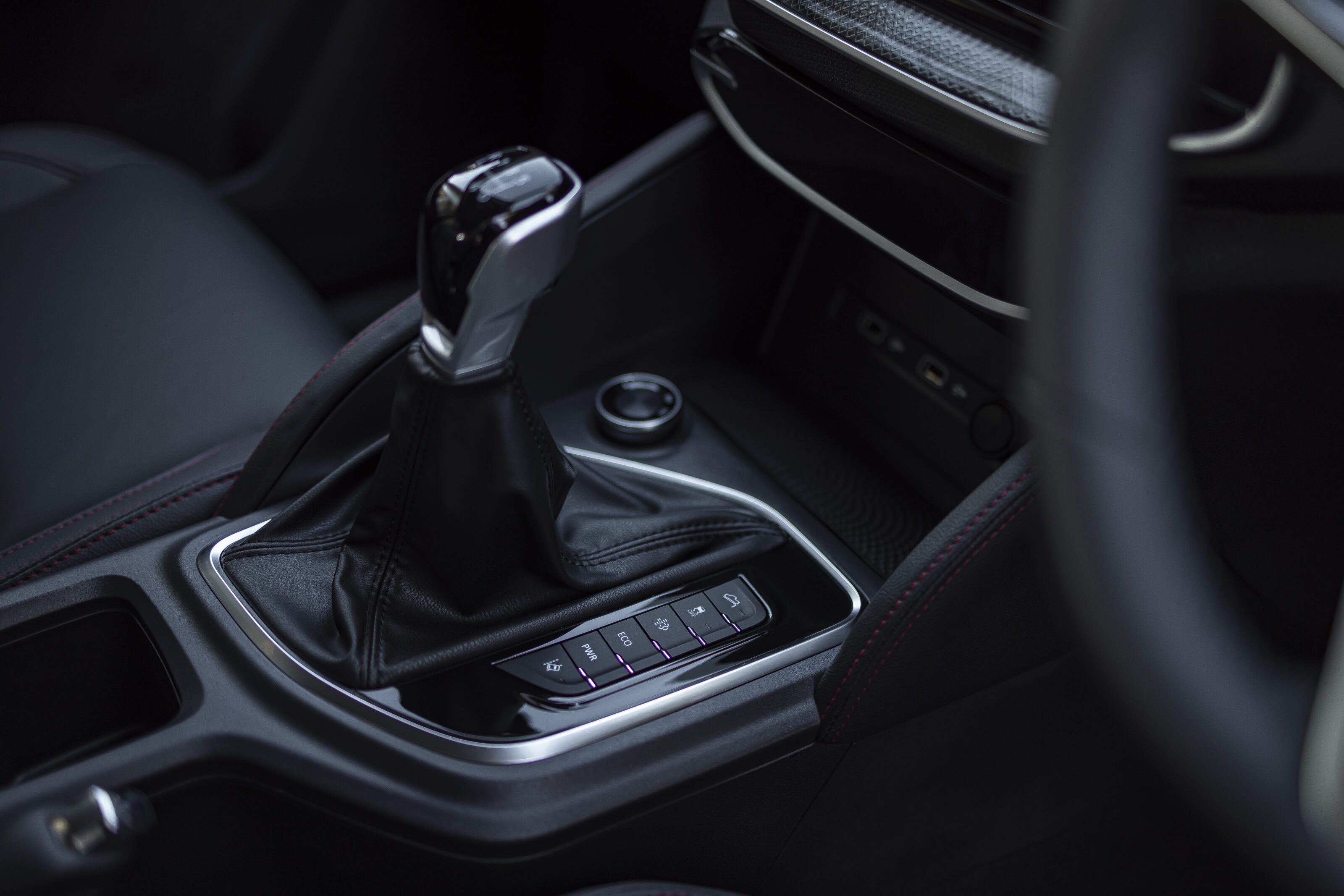
All of the key controls fall easily to hand, the analogue instruments are clear and easy to read and there are two USB-A ports ahead of the gear selector, which switches from a conventional lever design to a hockey-puck style rotary dial for the eT60. One ergonomic foible?
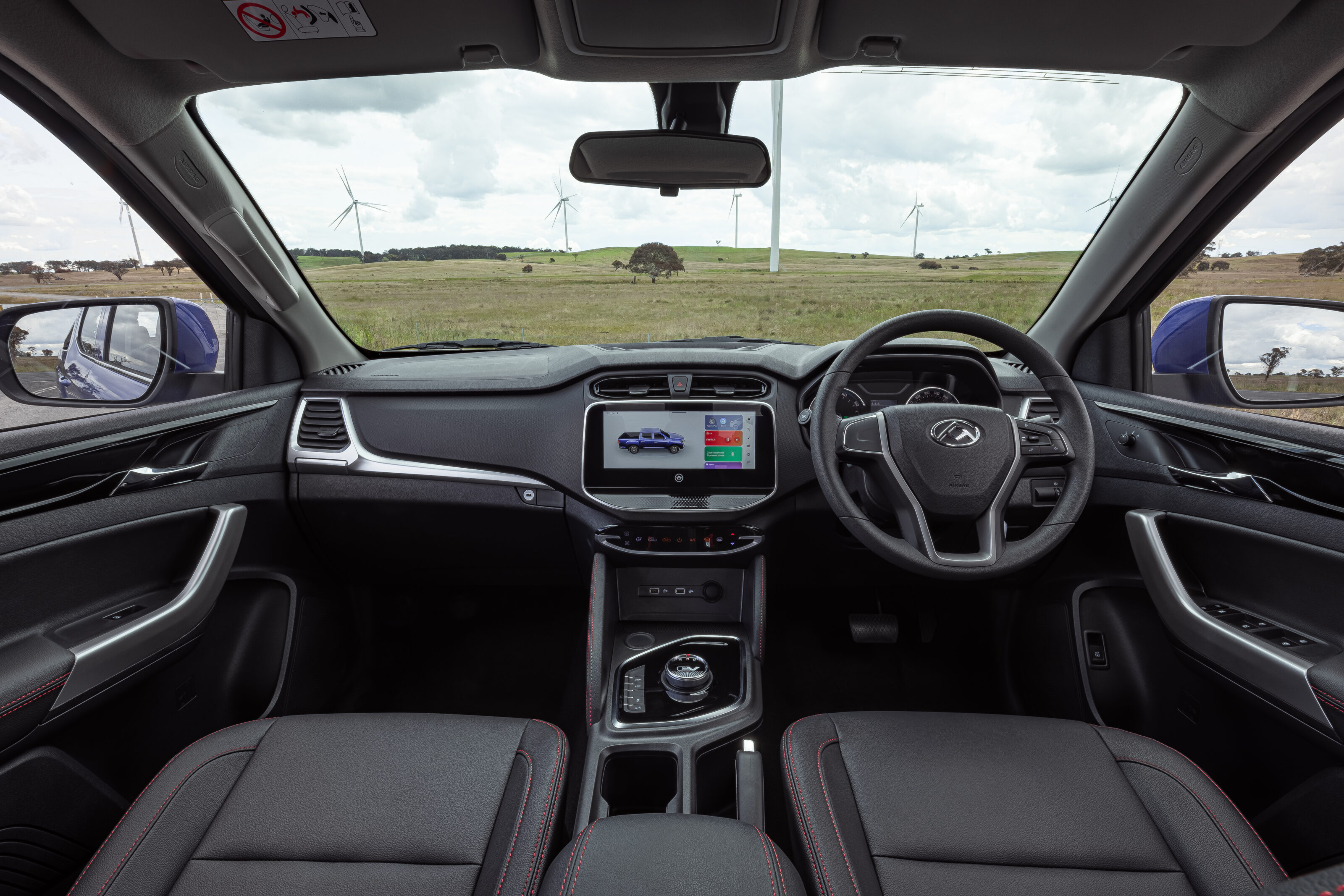
There’s no reach adjustment for the steering wheel, so the driving position always felt a touch off, no matter how we adjusted the electric driver’s seat.
Storage is decent thanks to large door pockets and twin central cupholders, plus the backseat is one of the roomiest of any dual-cab, but again there are a few missed opportunities.
There’s no ‘frunk’ for example. Pop the bonnet of the eT60 and you’ll discover there’s room for an extra storage cubby on top of the mechanical hardware nestled in the engine bay – but LDV hasn’t made use of the space which, to our minds at least, would seem an ideal spot for storing charging cables and other small items. Instead the charging cables will need to be stored somewhere in the cabin.
There’s also no vehicle-to-load capacity, says LDV. There is a 220V three-prong socket at the rear of the centre console, but it’s unclear how much power it produces, meaning we’d only rely on it for smaller items like laptops.
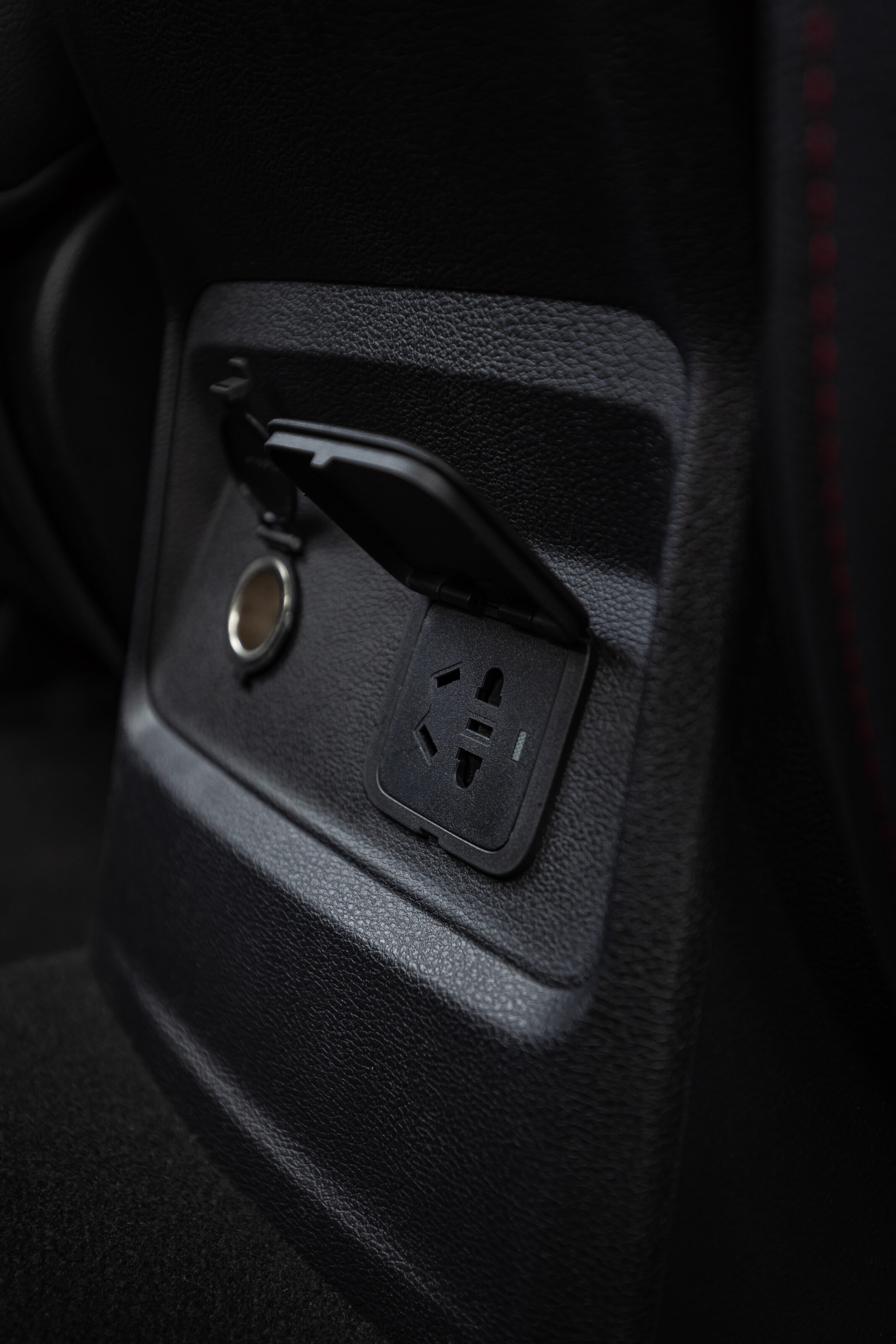
Being able to use your vehicle to charge appliances is a key drawcard for electric vehicles and especially so for an electric ute where tradies can use the function to charge and even run tools like a drop saw without the need for a portable generator. There is no 12V socket or additional three prong outlet in the eT60’s tray, either.
Equipment-wise, the eT60 scores six-way electric front seats trimmed in fake leather, a large 10.25-inch central touchscreen with wired Apple CarPlay, rain-sensing wipers, a four-speaker sound system and the before-mentioned plastic multi-function steering.
There are also plenty of things you don’t get.
There’s no cruise control, no native Android Auto and no keyless entry or push-button start. And while the seats and some sections of trim are finished in soft-touch leatherette with red stitching, it’s also easy to encounter hard and scratchy cabin plastics which erodes the general sense of quality.
It certainly doesn’t feel like the cabin of a $93,000 ute, let’s put it that way. In fact, the general ambience is superior in a regular T60 Pro, which has just been updated and costs half as much.
Safety
There are six airbags, rear parking sensors and a reversing camera, but like the rest of the T60 range key active safety systems are missing. Disappointingly, there’s no autonomous emergency braking, rear-cross traffic alert, lane-keep tech or adaptive cruise.
It’s unclear if the eT60 will be covered by the same 5-star ANCAP rating as the regular range which it achieved back in 2017. If the eT60 requires fresh ANCAP testing, it’s unlikely it will achieve a five star rating given its lack of active safety systems.
It may also prove a tough sell for the “large corporate entities” Chinnappa spoke of, with most now requiring that their fleet vehicles carry a 5-star ANCAP rating and the missing safety features described above.
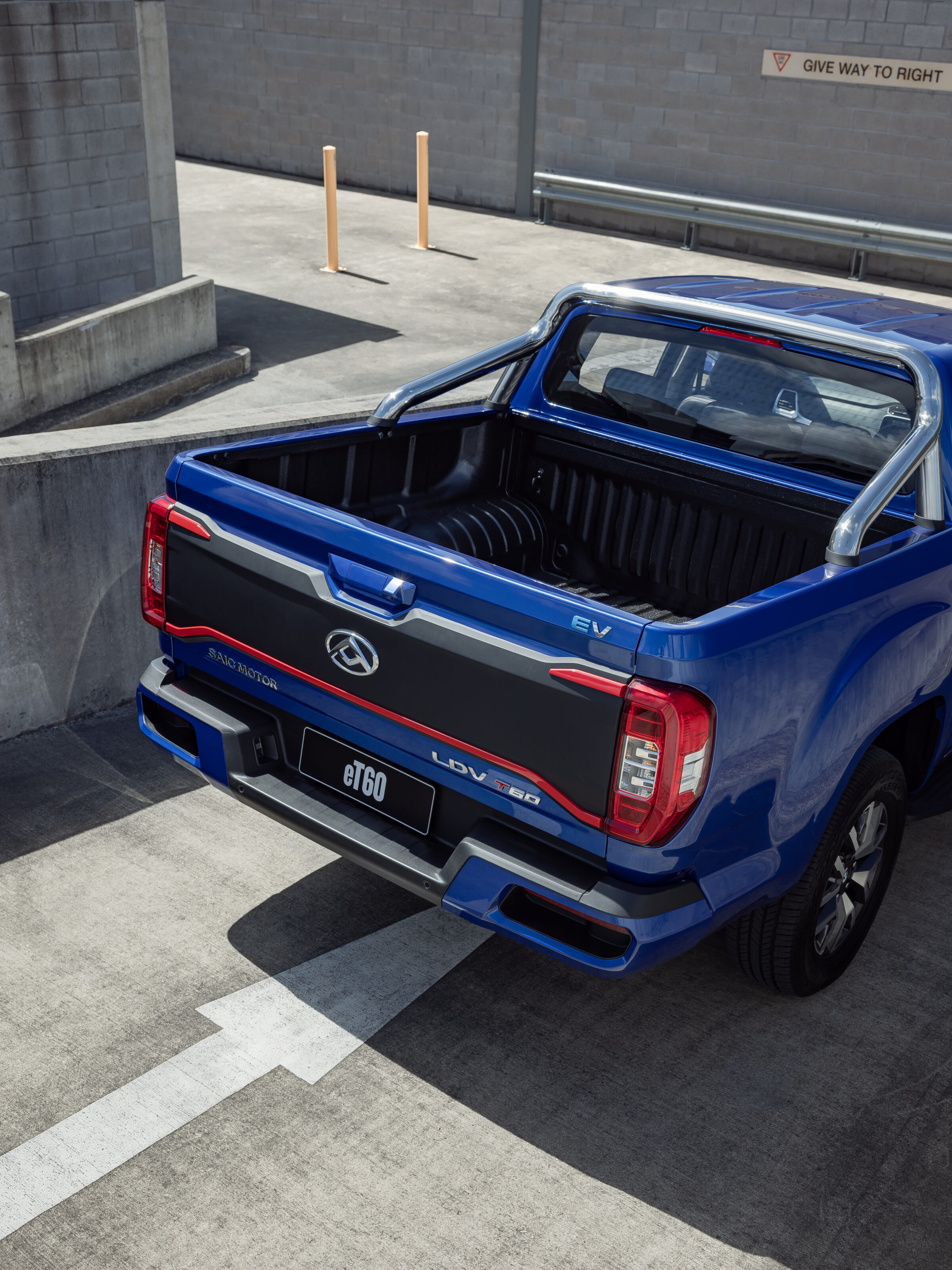
As for lugging things about, the eT60’s tray is nigh-on identical to a regular T60. It measures 1510mm (W) x 1485mm (L) x 530mm (H) with a 1129mm gap between the wheel arches.
What’s it like to drive?
Let’s start with the positives.
Fire the eT60 into life, which you do by inserting a key rather than by pushing a button on the dash, and there’s no noisy diesel clatter to contend with. Just eery silence.
The serenity continues at low speed. On the move, the eT60 is noticeably different to its diesel-powered siblings. LDV is quite proud of how much performance its 2.0-litre twin-turbo diesel produces and with 160kW/500Nm on tap – it rightly claims it’s one of the most powerful four-cylinder diesels you can buy in any dual-cab.
The problem is that the diesel’s grunt is made high in the rev range and, in traffic or when pulling away from intersections, it actually feels quite sluggish and laggy at low-speed.
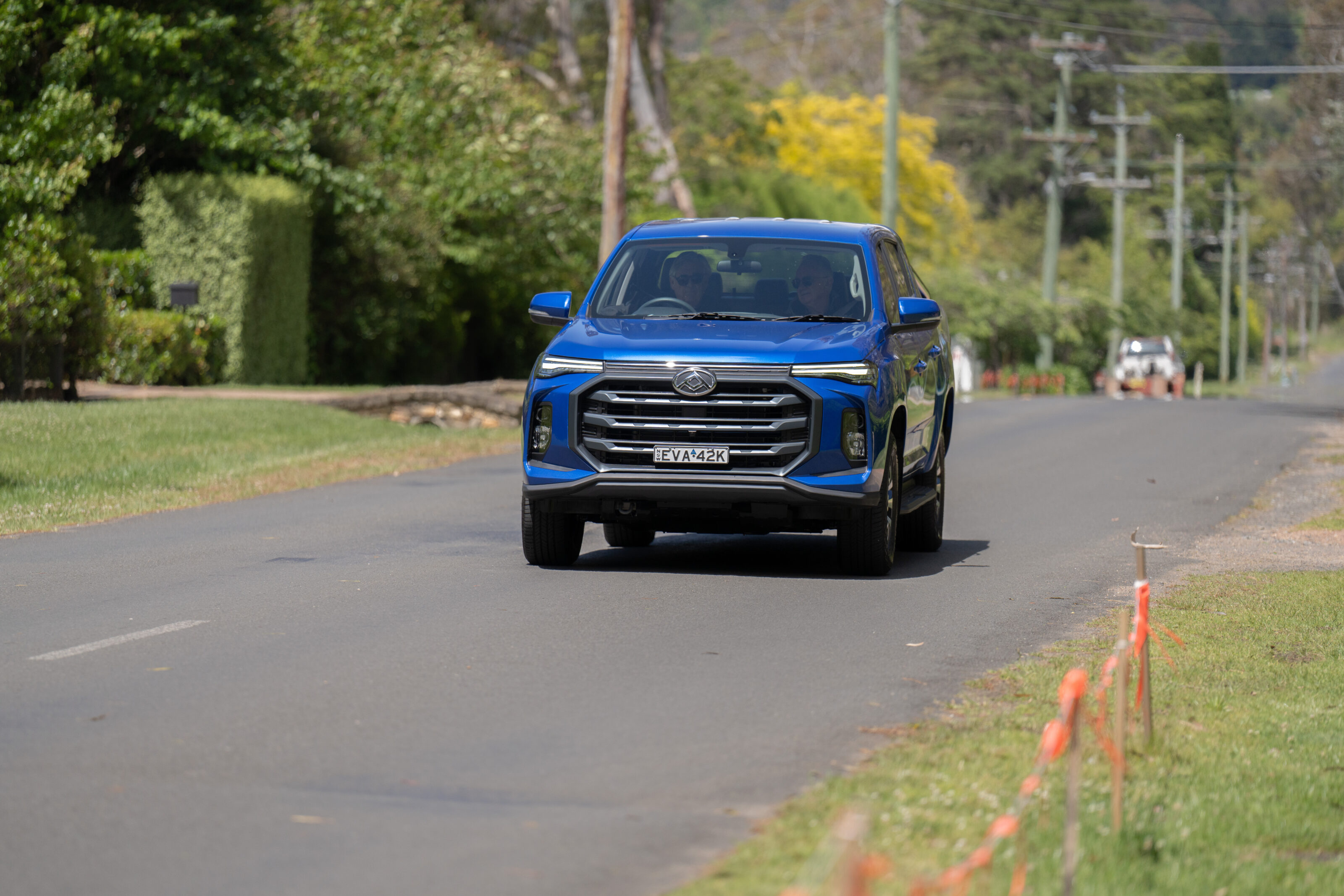
Things couldn’t be more different in the eT60. Throttle response is sharper and the initial surge from the electric powertrain is far more alert and eager.
It’s not what we’d call quick, however. Flatten the throttle and the eT60 delivers leisurely acceleration that tapers off as your speed grows.
So while it does feel quite sprightly initially, above 40km/h or so, the eT60 actually verges on slow. We used a stopwatch from the passenger seat to time an unladen eT60 at 16.2 seconds from 0-100km/h and while that’s not the most scientific way to record a ute’s acceleration, it does provide an indication of the level of performance on offer.
By comparison, we’ve clocked a 2.0-litre four-cylinder diesel Ford Ranger at 9.2sec, while a V6 Ranger hits the same marker in 8.2sec – so around half the time of the eT60.
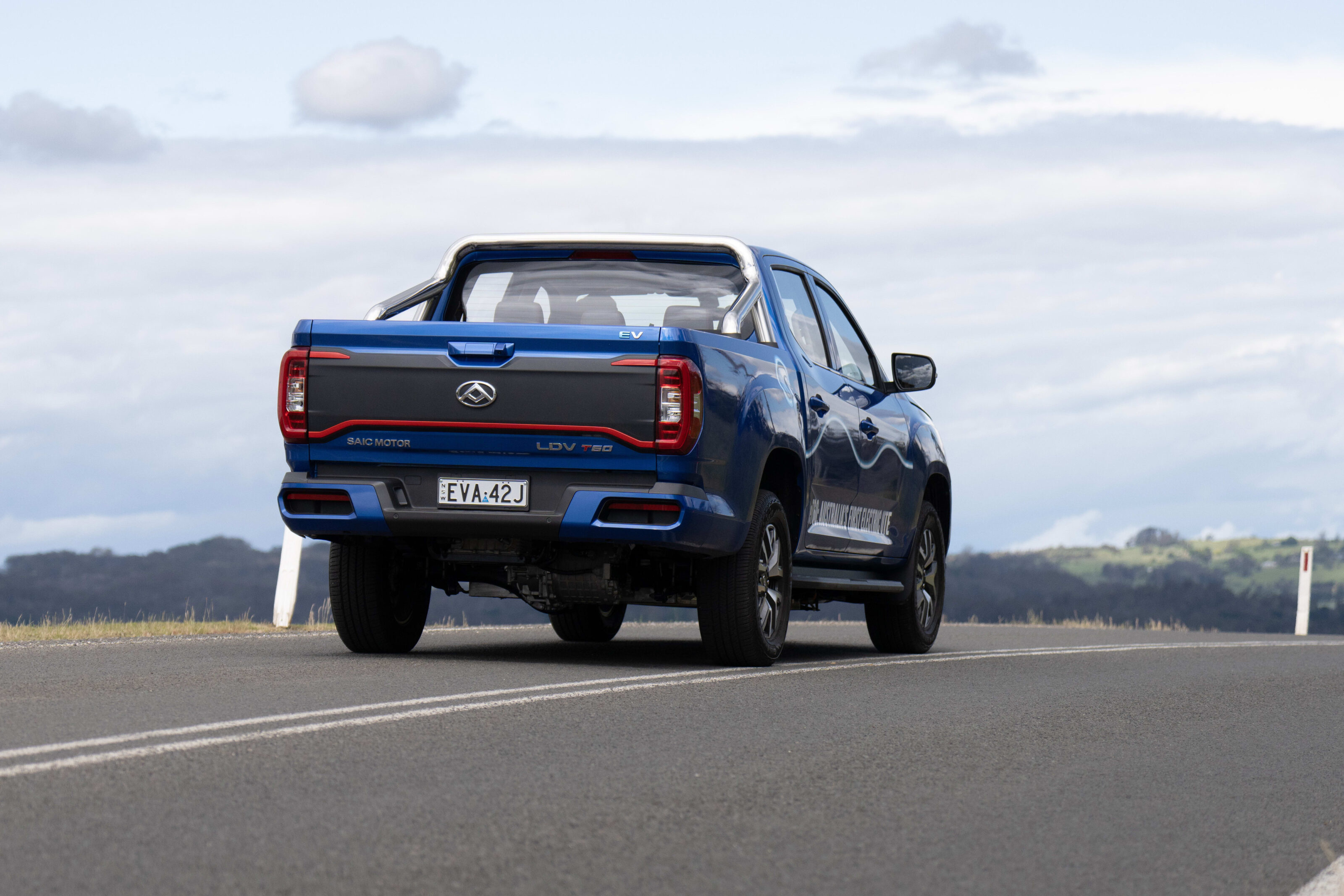
The rest of the dynamic package is equally underwhelming.
The eT60 rides on 17-inch alloys and choosing to base its suspension on the firmer ‘Pro’ set-up has resulted in a ride that’s overly firm and jarring. Minor bumps are felt clearly in the cabin and over bigger dips and compressions the eT60 is stiff-legged, unsettled and can even skip off line.
We’re yet to see if adding a load to the tray helps settle things down, but our brief stint behind the wheel showed the eT60 has some flaws when it comes to ride and handling.
It’s important to note here, the utes we drove were pre-production models. An LDV tech also suggested it’s possible the eT60 may move to the more comfort focused ‘Luxe’ suspension tune that’s available elsewhere in the T60 range. We’ll have to wait and see if that transpires.

Here’s hoping LDV also adds stronger regenerative braking. LDV’s other electric models – the eDeliver 9 van and Mifa people mover – both offer three stages of regen, which gets close to one-pedal driving in their strongest setting.
The eT60 has no adjustable regen modes, and any off-throttle retardation is on the subtle side.
One dynamic highlight is the steering, which seems to mostly sidestep the inconsistent weighting and large dead spot off centre that plagues the regular T60 range.
As for the rest of the dynamics? Mark them down as having plenty of room for improvement.
Warranty & running costs
The eT60 is covered by a five-year / 130,000 km warranty. That’s two years less than a diesel-powered T60 Max, which has recently moved to a seven-year / 200,000km warranty period.
LDV does include five years of roadside assistance, however, and servicing intervals are every 24 months or 30,000km which is twice as long as a regular T60.
Servicing costs are also reasonable and range between $223 for a minor service and $461 for a major service.
LDV says 10 years of servicing will cost you $1458, although that pricing is indicative only at this stage. Official costs are yet to be locked in.
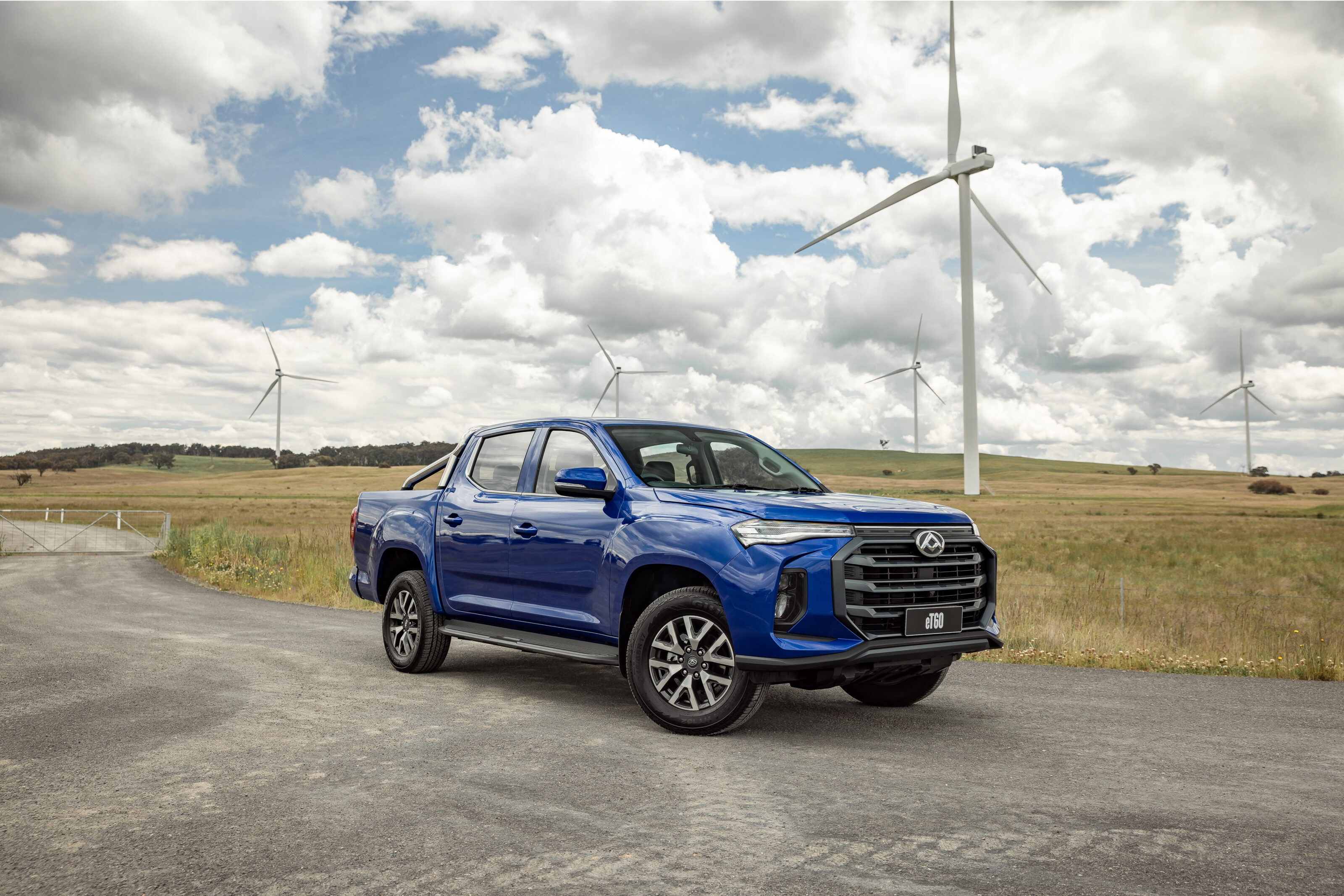
VERDICT
So, the eT60 is far from perfect. LDV should be commended for being the first to offer a fully electric dual-cab in Australia, especially considering hybrid tech is yet to reach the segment. LDV really has jumped into the deep end on that front and beaten its competitors to market.
And as a solution for blue chip companies and governments/councils looking to hit strict emissions targets, we can certainly see the appeal – although they’ll do it at the expense of some key safety features now considered must-haves in most fleets.
For private buyers, the high price, reduced towing capacity, low levels of standard equipment, missing active safety systems and the mediocre performance and ride and handling mean that for now, Australia’s first EV ute is going to be a tough sell.
2023 LDV eT60 specifications
| Body | Four-door dual-cab ute |
|---|---|
| Drive | Rear-wheel drive |
| Battery size | 88.5kWh |
| Power | 130kW |
| Torque | 310Nm |
| 0-100km/h | 16.2sec (tested) |
| Transmission | Single-speed reduction gear |
| Weight | 2300kg |
| Front suspension | Struts, double A-arms, coils springs, anti-roll bar |
| Rear suspension | Leaf springs, anti-roll bar |
| L/W/H | 5365/1900/1809mm |
| Wheelbase | 3155mm |
| Brakes | discs (f/r) |
| Tyres | 245/65 R17 Giti |
| Wheels | 17-inch alloy |
| Price | $92,990 |
Snapshot
- High pricing for Australiau2019s first electric ute
- eT60 twice as expensive as diesel equivalent; misses out on govt incentives
- LDV also bringing eDeliver 9 large electric van
- Completing trio will be Mifa 9 electric people-mover
Australia’s first electric dual-cab, the 2023 LDV eT60, will cost $92,990 when it arrives in local showrooms later this week.
That prices the eT60 substantially higher than most initial estimates, which had the electric ute pegged to land somewhere in the $70K bracket. Those estimates were based on how much the eT60 costs in New Zealand where it carries a price tag of NZD $79,990 drive-away.
The eT60’s Aussie pricing makes it more than twice as expensive as a diesel-powered T60 Max and also places it well above the threshold to be eligible for state government incentives available around Australia.
And unlike the rest of the T60 Max range, LDV isn’t offering any discounts for ABN holders wanting to buy the eT60. Instead, the Chinese company says its primary target for the eT60 will be blue chip companies and all three layers of government looking to hit strict emissions targets.
“It’s clear from the outset that these EVs aren’t going to be sold at traditional LDV price points” said brand spokesperson Oliver Peagam. “And their sales volumes won’t be at the same level as their ICE counterparts either.”
The eT60 is based on a regular T60 Max Pro, which costs $43,148 for private buyers when paired with an 8-speed automatic gearbox. The ‘Pro’ trim level is the entry-point to the T60 model range and unlike more expensive ‘Luxe’ versions, it has more of a workhorse focus and features heavier-duty suspension.
The LDV eT60 4×2 dual-cab features an 88.5kWh lithium-ion battery, giving the electric ute a WLTP-rated driving range of 330 kilometres.
However, information provided by LDV New Zealand suggests driving range will be reduced by 50 per cent when “towing maximum weight”.
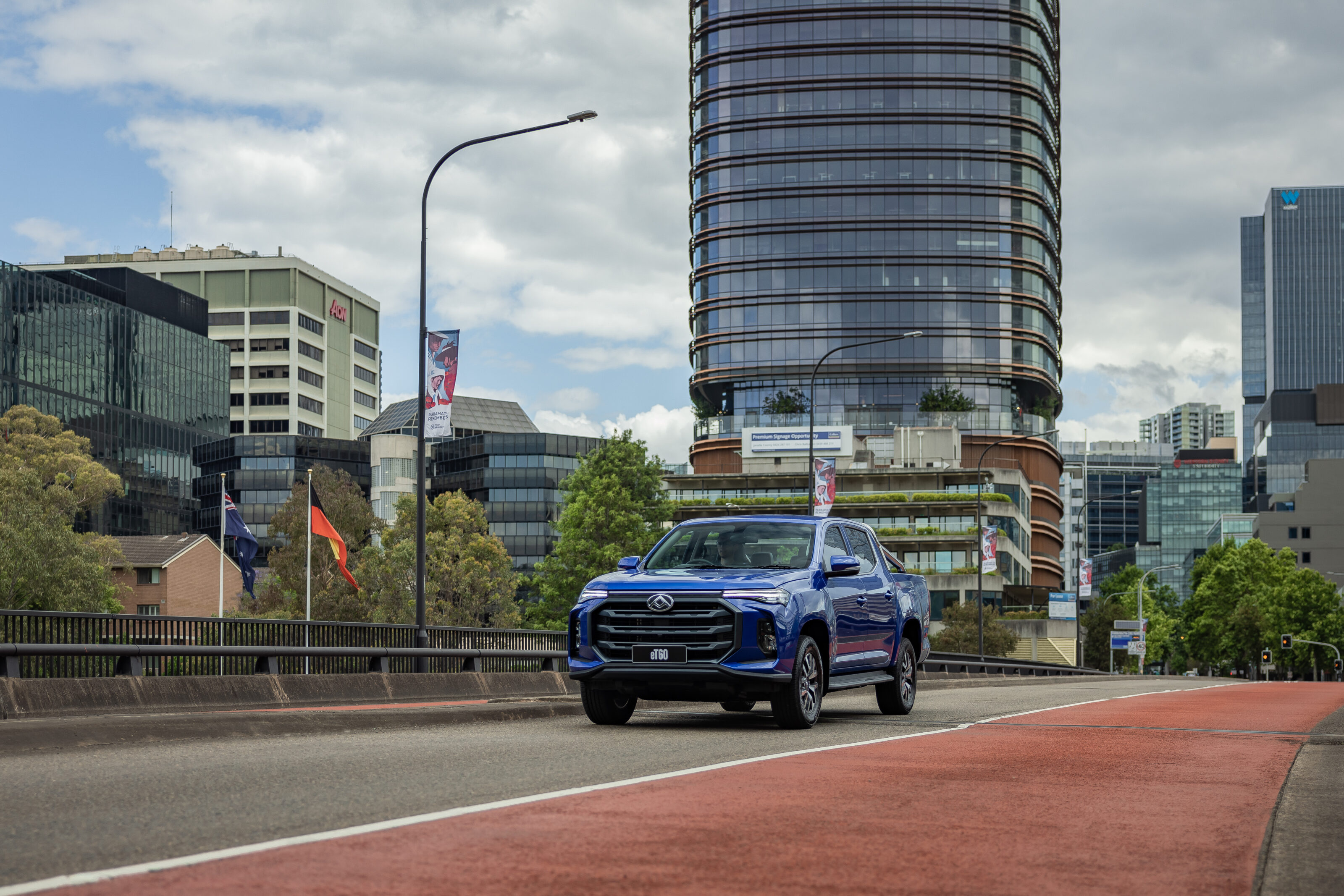
It is powered by a single electric motor mounted to the rear axle, producing 130kW and 310Nm – down 30kW and 190Nm compared to the 160kW/500Nm twin-turbo diesel T60.
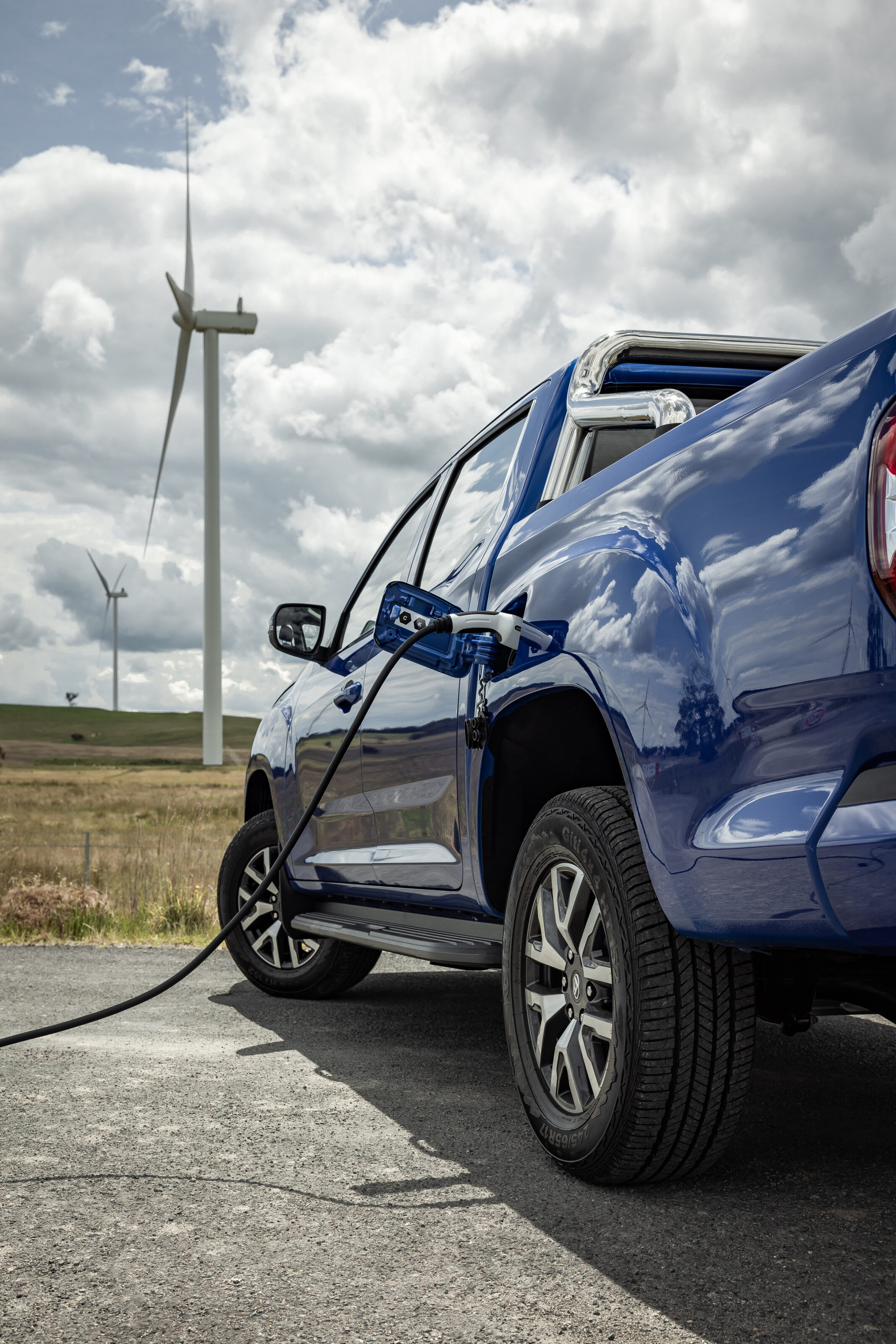
LDV says the eT60’s battery can be charged from 20 to 80 per cent in 45 minutes using a 80kW DC fast-charger, or charged from 5-100 per cent in about nine hours using an 11kW wallbox charger.
The LDV eT60 has a 1000 kilogram braked towing capacity – a third of the diesel T60’s. Its 1000kg payload, however is actually higher than the regular range – which is rated at 750kg for the flagship Luxe and 935kg for the entry-level Pro.
Equipment wise, the the eT60 scores six-way electric front seats trimmed in leatherette, a large 10.25-inch central touchscreen with wired Apple CarPlay, rain sensing wipers, a 4-speaker sound system and a plastic multi-function steering wheel.
There are also plenty of things you don’t get, however. There’s no cruise control, no native Android Auto and no keyless entry or push button start.
It’s also missing some key active safety systems. Like the rest of the T60 Max range, the eT60 is not fitted with autonomous emergency braking, rear-cross traffic alert, lane-keep tech or adaptive cruise.
It’s unclear if the eT60 will be covered by the same five-star ANCAP safety rating as the regular T60 Max, which was achieved back in 2017.
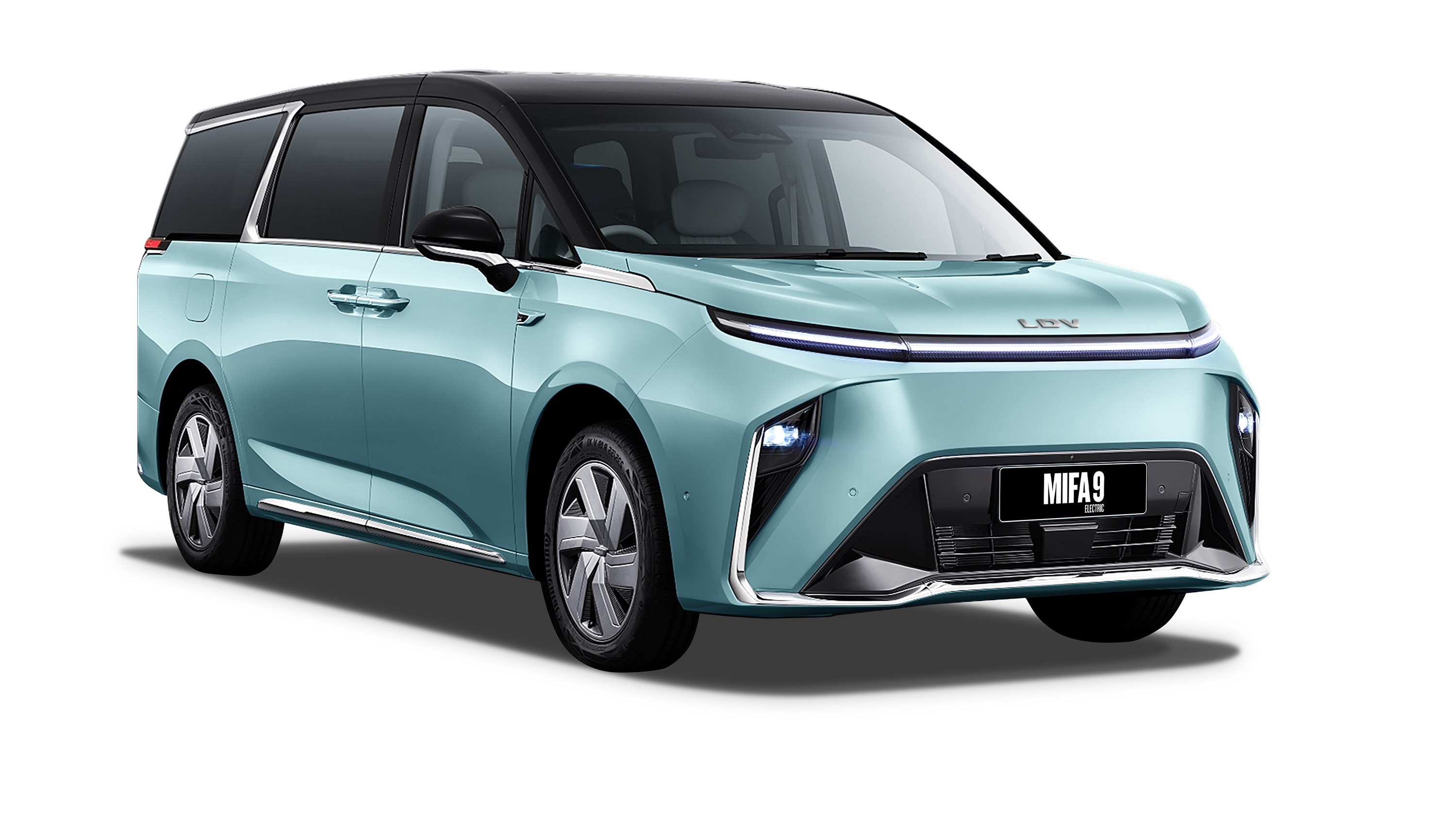
LDV has launched two additional electric vehicles for Australia alongside the eT60 – the Mifa 9 people-mover and eDeliver 9 large van. Each carries similarly high pricing that starts at $106,000 for the Mifa 9 and $116,537 for the eDeliver 9.
LDV Australia’s general manager, Dinesh Chinnappa, says it wants to be part of the global car market’s “most significant revolution in decades”.
“Every major OEM is committed to developing electric vehicles, but what is less spoken about is the growing influence of China’s EV market on the rest of the world,” said Dinesh.
“And we in Australia are now benefiting from that influence with the arrival of eT60, eDeliver 9 and Mifa 9.
“In the first half of 2022, 2.4 million EVs were delivered to customers in China, more than double the total annual new car market in Australia. EVs now account for 26 per cent of all car sales in China, and 57 per cent of global EV sales. China is moving ahead in electrifying its transport industry and it’s bringing the rest of the world – including Australia – with it.
“So LDV is well-placed to take advantage of this new model EV roll-out, and we’re delighted to share some top-line, pre-launch, information with you.”
A Tesla board member has testified in court that Tesla CEO Elon Musk has picked his replacement as CEO of the world’s leading electric carmaker.
James Murdoch, son of media mogul Rupert Murdoch, made the comments during a trial regarding a Tesla’s 2018 pay package.
While any potential successor was not specifically named, the comments come amid concerns from shareholders that Musk is potentially distracted by his many projects, such as Starlink, the Boring Company, SpaceX, and now Twitter – the most recent acquisition sinking in after a long and dramatic takeover bid.
Also troubling investors was Musk’s reallocation of engineers from Tesla to Twitter, something which the board was said to be monitoring.

According to Reuters, following a question from the plaintiff’s lawyer on whether Musk had identified any potential successor as CEO, Murdoch replied: “Actually he has,” adding that the discussion had happened in “the last few months.”
Further testimony from Ira Ehrenpreis, a long time friend of Musk and venture capitalist who chaired Tesla’s compensation committee, said that Musk’s generous remuneration was to serve as an incentive for the “serial entrepreneur” to stay with Tesla.
“We wanted Elon to be at the head of Tesla for a very long time,” Ehrenpreis said, speaking of Musk’s US$55 billion pay package.
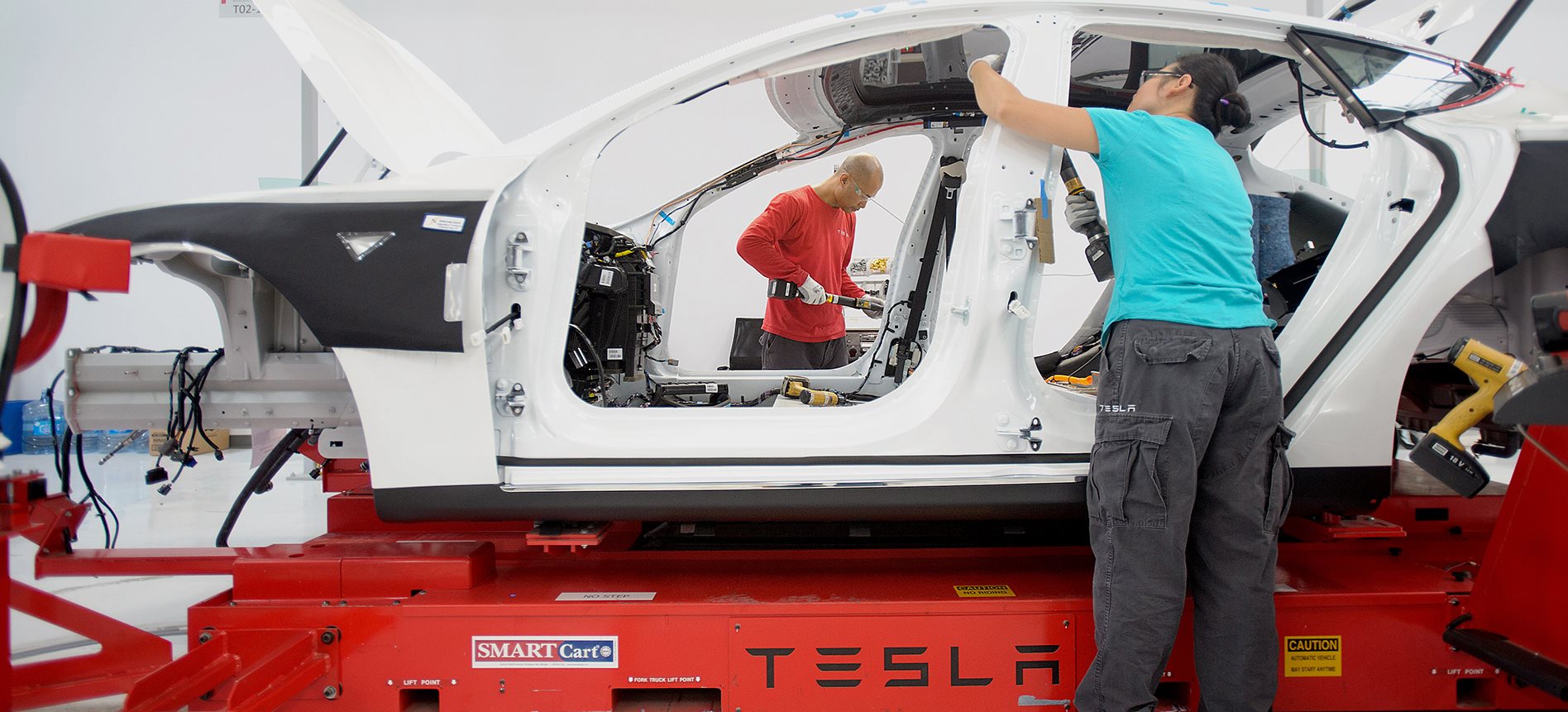
Following the purchase of Twitter, Musk has shared that he will reduce his time at the social media giant, likely appointing someone new to the CEO role. The same Reuters report details that there have been conversations at Tesla about finding an “administrative CEO” to take on the challenges of finance and human resources, allowing for Musk to focus on his role as chief product officer.
Musk has not hinted at any timeline for leaving Tesla, having recently told shareholders he planned to stay with the carmaker for “as long as I can be useful.”
Despite this assurance, there has been speculation on who could eventually take on the role, with the more prominent names being Drew Baglino, current Senior Vice President of Tesla’s Powertrain and Energy Engineering department, or its Autopilot team director, Ashok Elluswamy.
UPDATE: 2023 BYD Atto 3 receives five-star ANCAP rating in Australia
The 2023 BYD Atto 3 electric car now carries a five-star ANCAP rating in both Australia and New Zealand following the resolution of child restraint issues, as detailed below.
ANCAP’s rating will apply to BYD Atto 3 models built after November 21, 2022, with the required changes made to suit our safety standards.
Owners of cars built before this date are encouraged to visit their dealer to have the modifications carried out by EVDirect, the Australian third-party importer of BYD models.
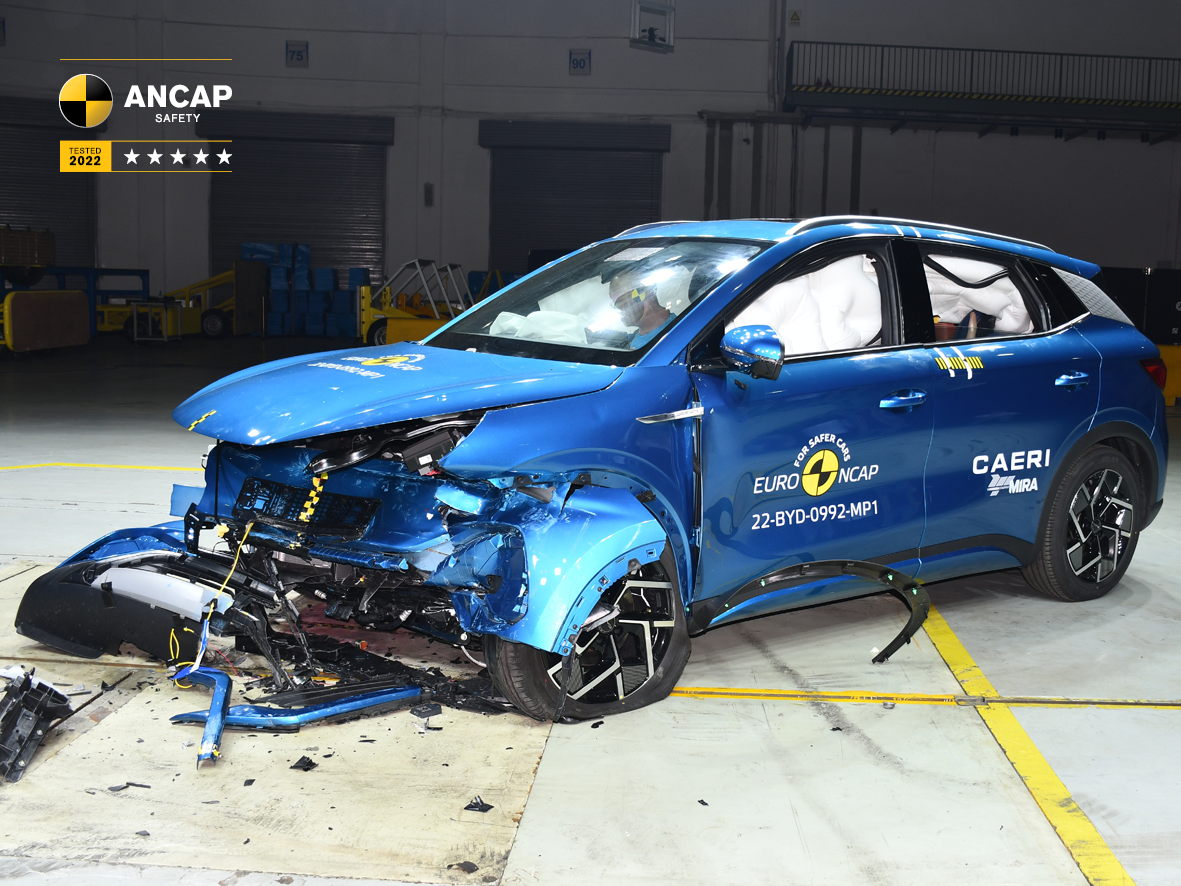
The required modifications concern the rear centre seat’s lack of an accessible top tether point and the front passenger seat’s child seat mounts, which are contrary to the Australian Design Rules. Once the work is carried, out these cars will be rated five stars, but until then remain unrated.
“This rating provides positive guidance to potential fleet buyers looking to increase the range of five-star electric vehicles on their purchasing lists,” said ANCAP CEO, Carla Hoorweg.
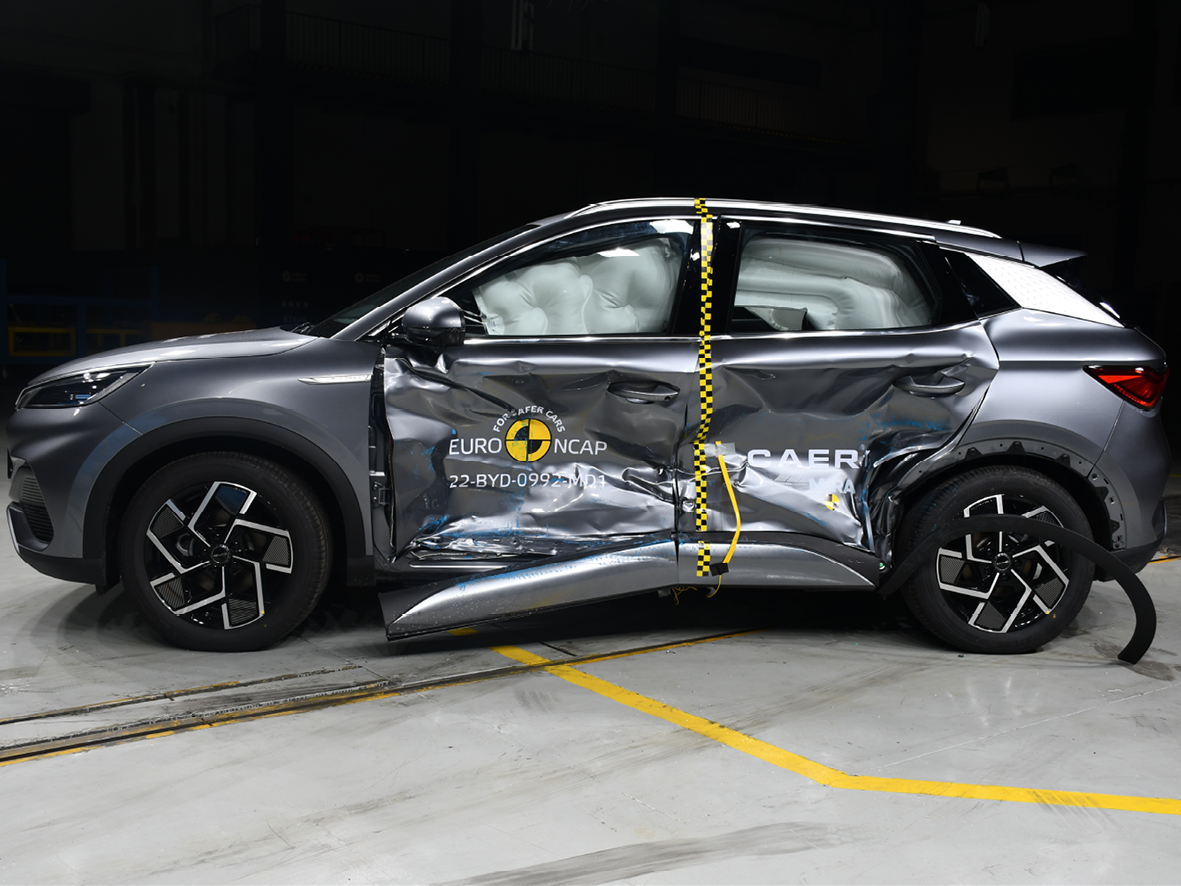
See the image below for a detailed breakdown. ANCAP awarded high praise for the BYD Atto 3’s adult and child occupant protection, but deducted points for vulnerable road user protection.

The original story, below, continues unchanged.
The story to here
October 17: BYD Australia issues safety bulletin for Atto 3 child restraints
EVDirect, the Australian distributor for the BYD Atto 3, has advised owners not to install a child restraint in the middle seat.
It follows its five-star ANCAP safety rating, which has sparked legal concerns for Australia after it was revealed the score applies to New Zealand variants only.
The safety bulletin – sent by email over the weekend – asks owners to “not use the rear centre seat to attach any child seat”, with the electric small SUV lacking a top tether for the middle seat.
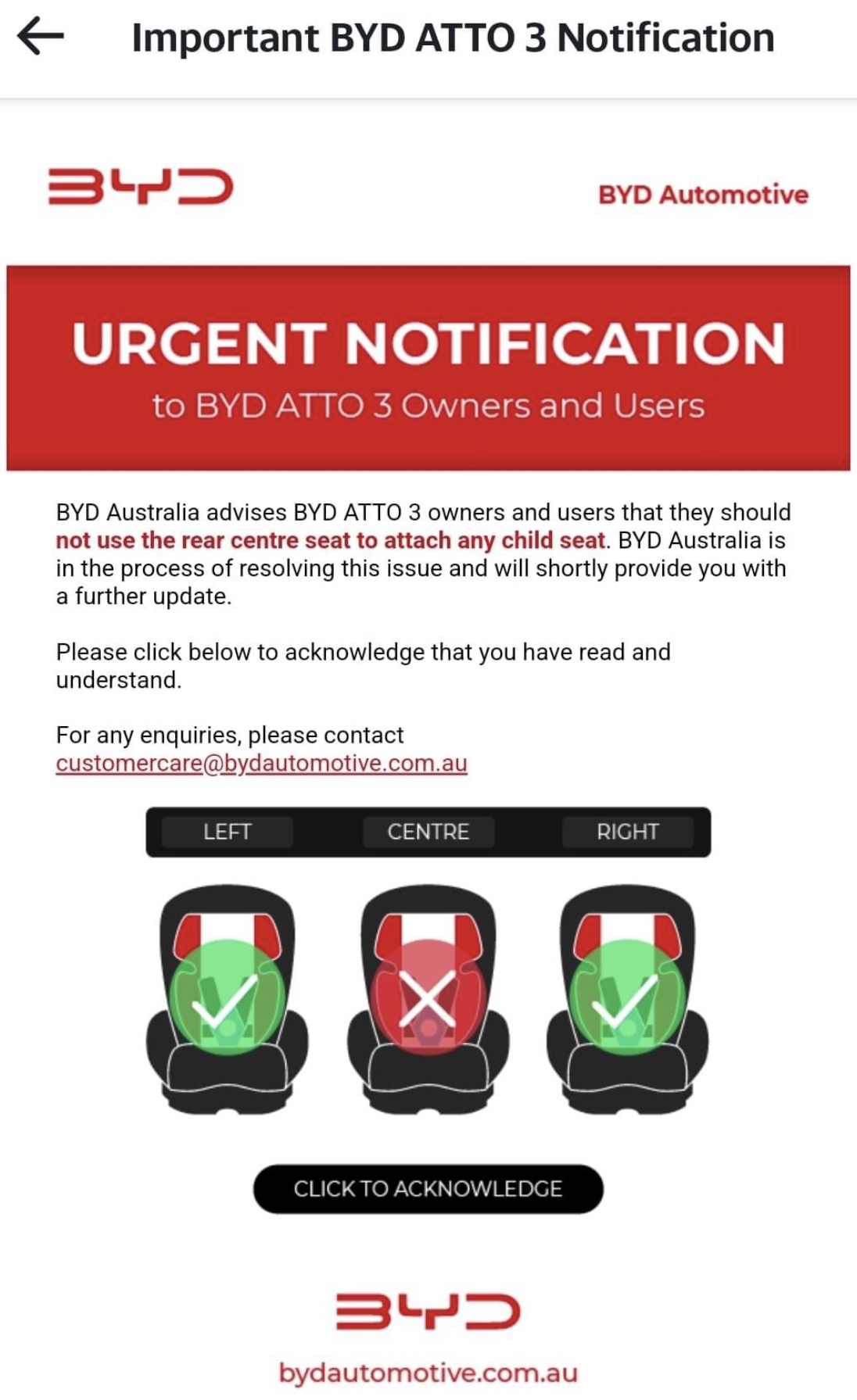
A top tether for the centre seat has been a long-standing requirement for a five-seat passenger vehicle in Australia.
“BYD Australia is in the process of resolving this issue and will shortly provide you with a further update,” added EVDirect.
It then asks owners to click a button “to acknowledge that you have read and understand [sic]”.
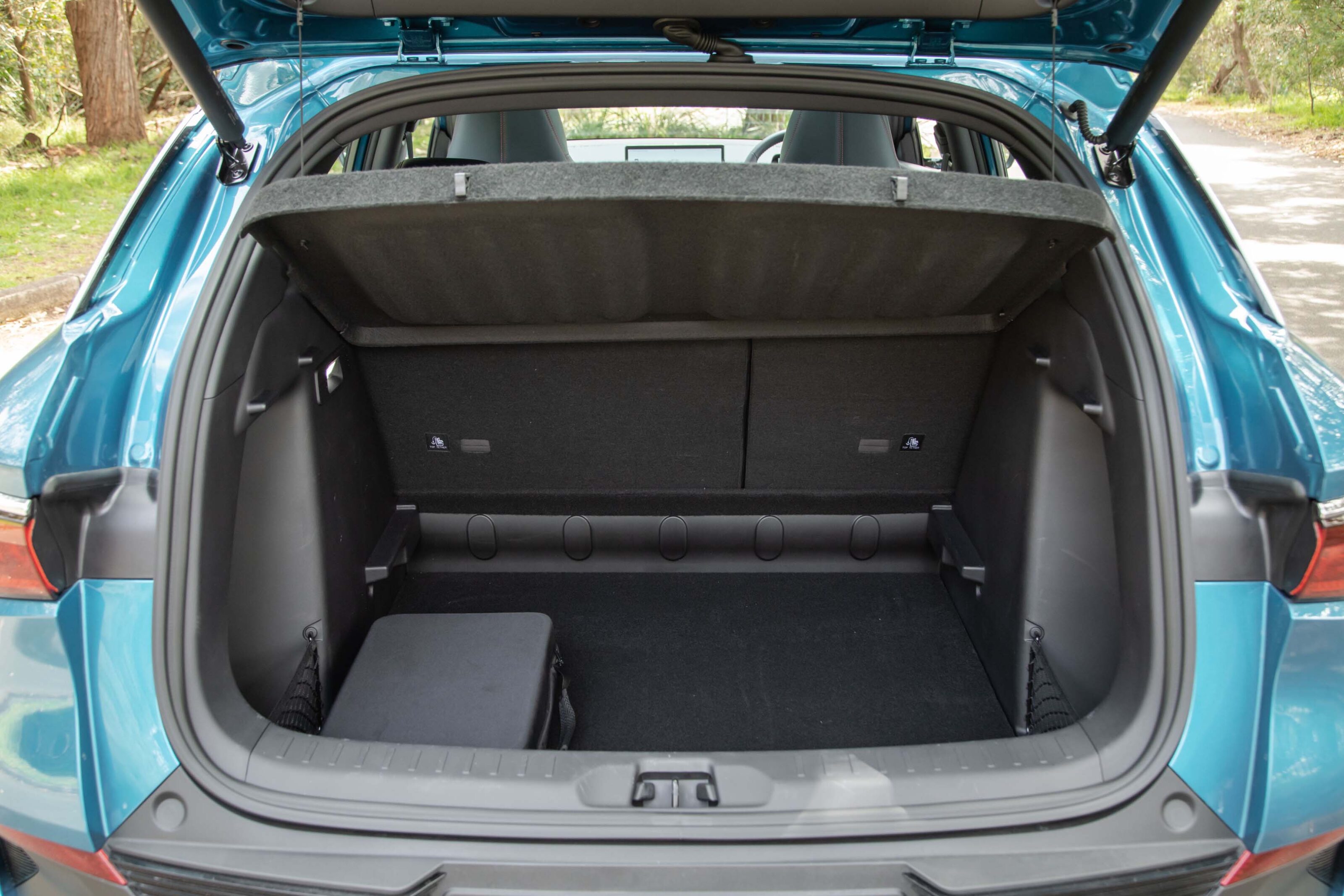
Images taken by local owners reveal there could be provision for an ADR-approved top tether, however, it is positioned behind the seat fabric, which potentially breaches compliance laws.
The Australian Design Rule 34/03 states: “Clearance shall be provided around each ‘Upper Anchor Fitting’ to allow latching and unlatching, without the use of tools, of the ‘Attaching Clip’ to the ‘Upper Anchor Fitting’ when it is installed in the vehicle.”
For more information on the BYD Atto 3 safety rating, read below.
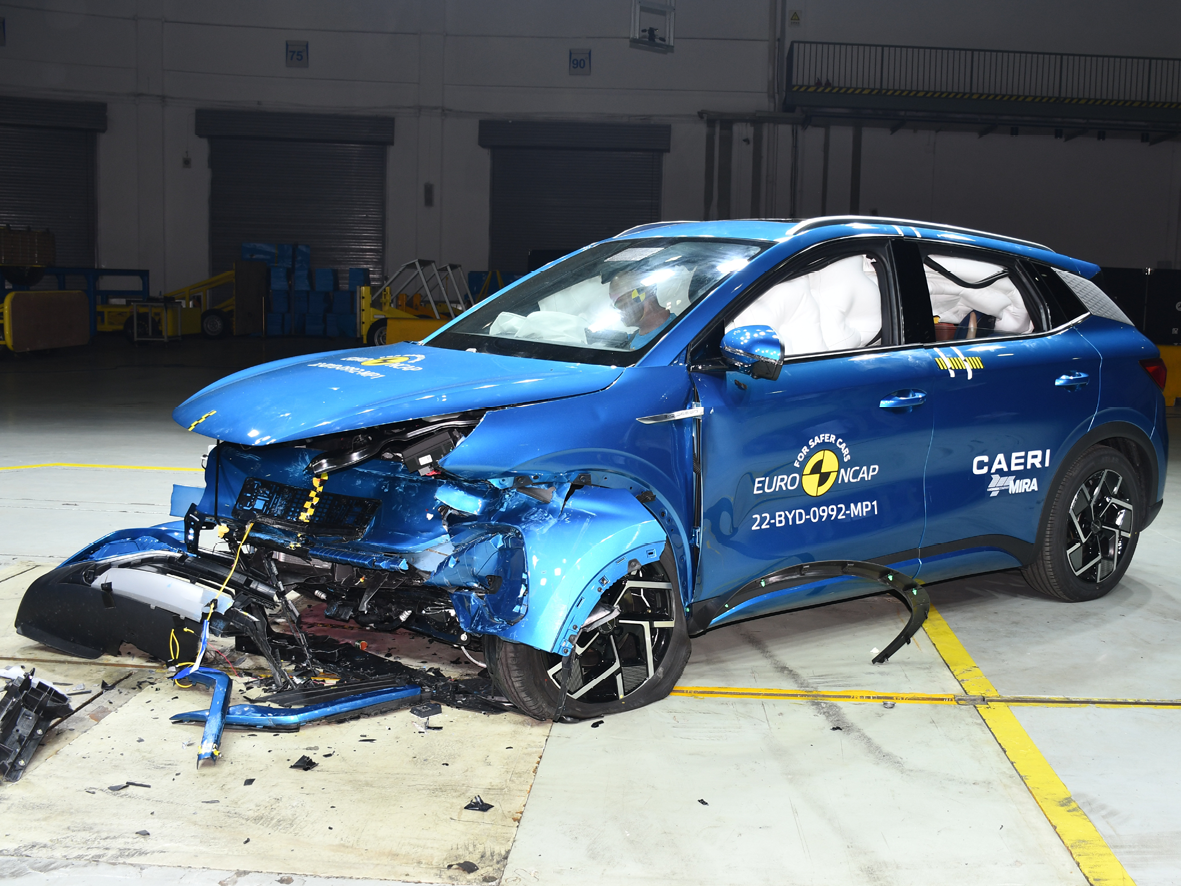
October 13: 2023 BYD Atto 3 EV scores five-star ANCAP rating – but only in New Zealand
Independent crash test authority ANCAP has awarded the Chinese BYD Atto 3 five stars – but not for Australian market cars.
The battery-electric Atto 3 small SUV scored well in each of the four key areas of assessment, said ANCAP, with New Zealand variants achieving a five-star safety rating in both Standard Range and Extended Range guise.
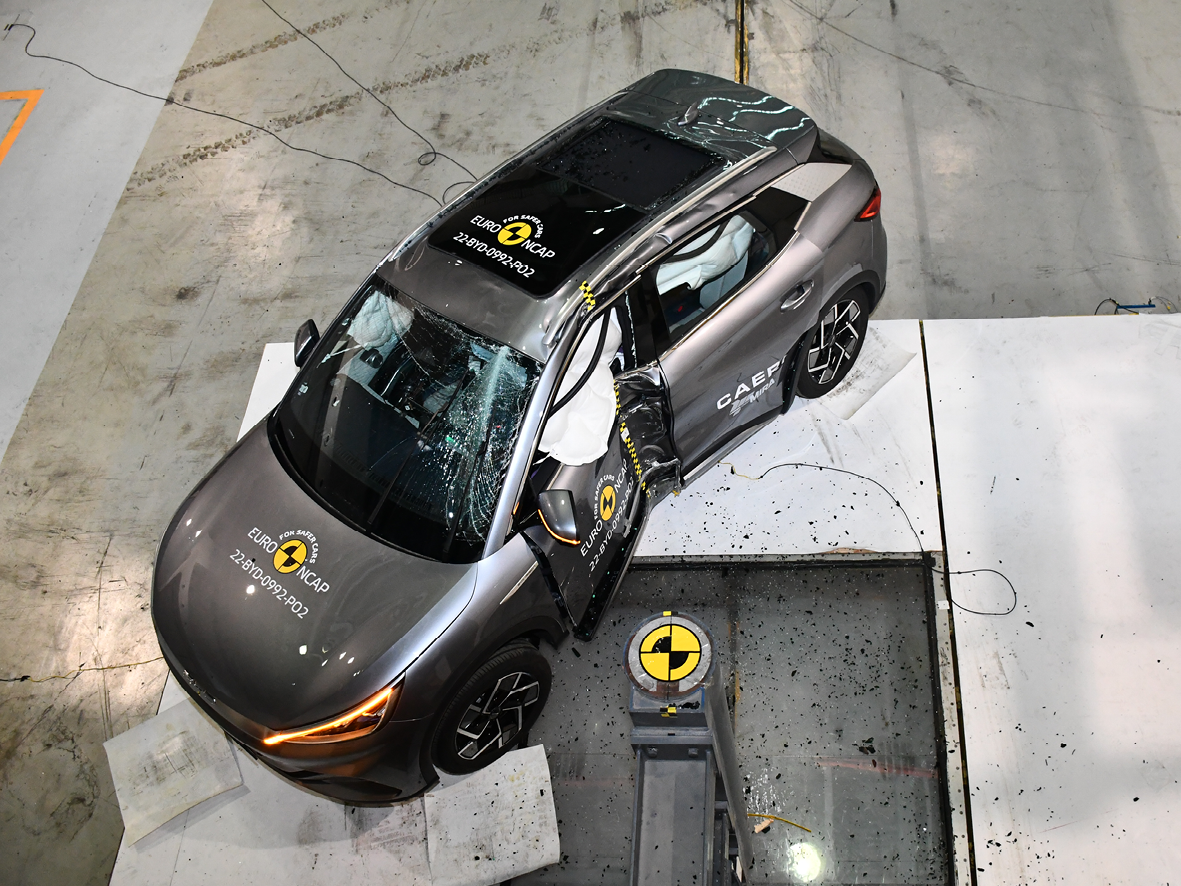
Top marks were given for protection provided to the driver in the side impact and far-side impact test, while front and rear seat occupant measures also scored well, and maximum points were achieved for child occupants in the side impact and frontal offset crash assessments.
The active safety capability of the Atto 3 was also shown to be top notch, with the standard-fit pedestrian and cyclist-detecting autonomous emergency braking system offering good levels of performance in forward, reverse, daytime and night-time test scenarios.
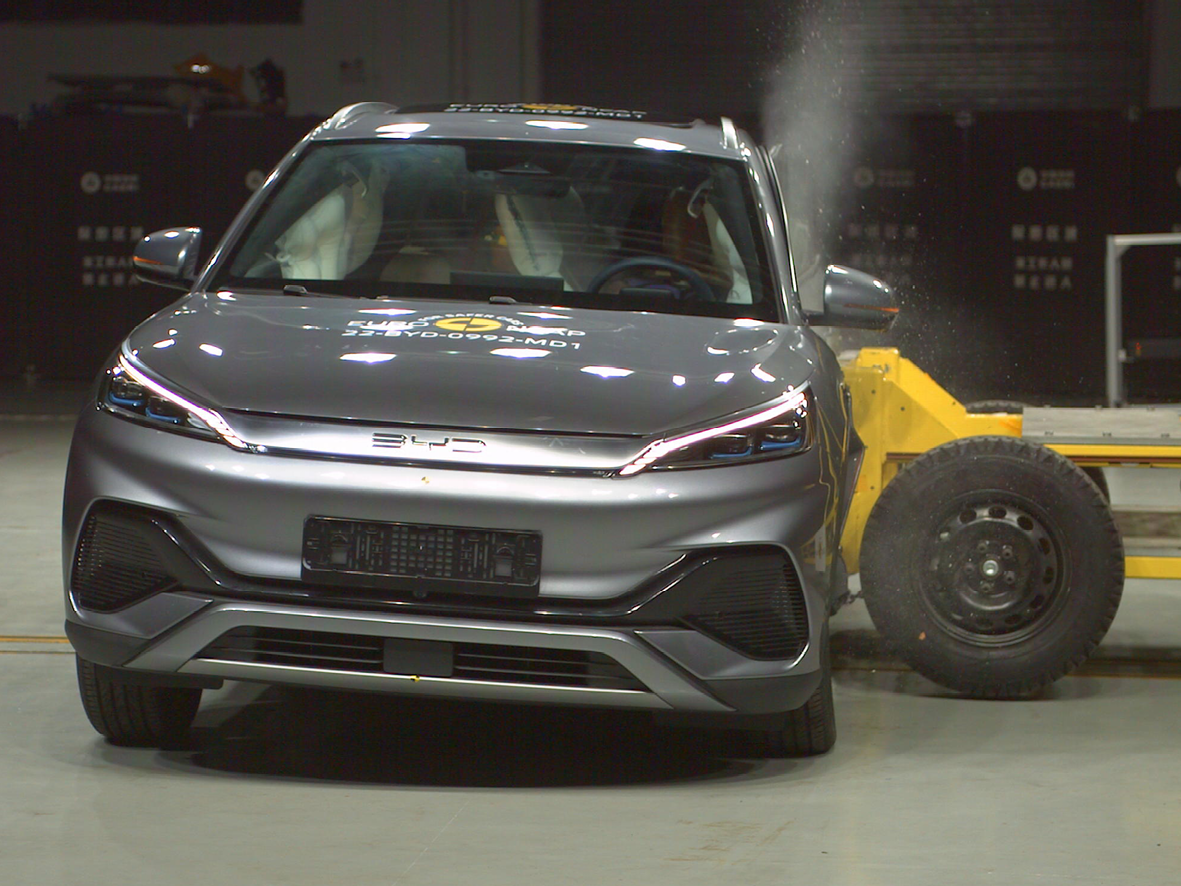
“This five-star ANCAP safety rating for the BYD Atto 3 will no doubt come as welcome news to New Zealand buyers looking for a safe and green choice within its price-point,” said ANCAP Chief Executive Officer, Carla Hoorweg.
However, ANCAP said it is now working with BYD to get Australian-supplied Atto 3 vehicles rated for locally-specified models too.
In Australia, the BYD Atto 3 comes in two forms: a Standard Range using a 49.9kWh battery and a single motor capable of producing 150kW/310Nm and a claimed driving range of 345 kilometres, or an Extended Range offering 420km and the same power and torque going to the front wheels but utilising a 60.4kWh battery.
The Standard Range Atto 3 is $44,381 before on-road costs, while the Extended Range is $47,381 + ORC.
In New Zealand, the same variants are on sale but for NZ$55,490 (AU$49,618) and NZ$59,990 (AU$53,642) respectively.
Well, you certainly can’t accuse LDV of resting on its laurels.
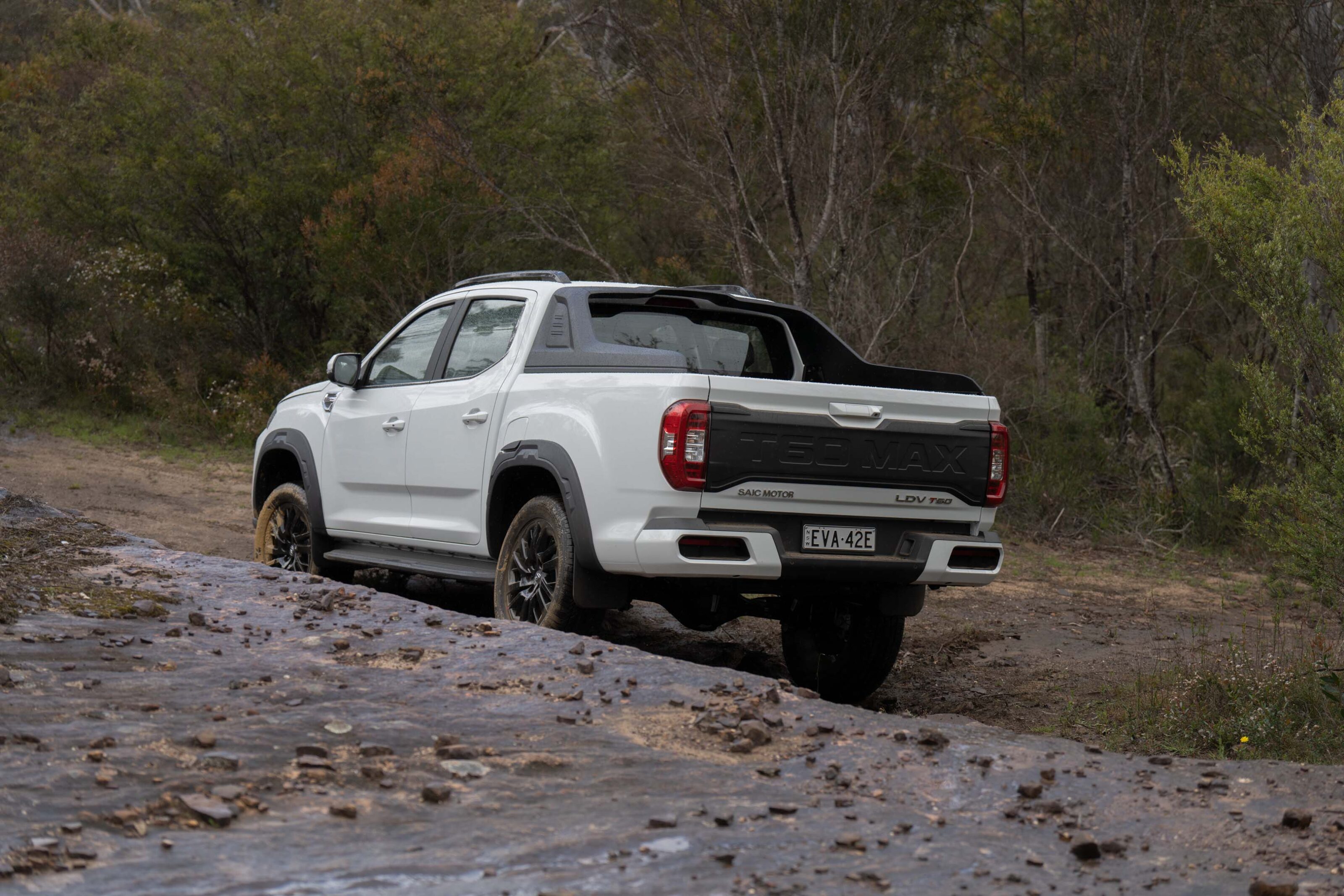
Less than a year after it gave its T60 dual-cab ute a major overhaul that added a vastly more powerful diesel engine, a revised cabin and tougher exterior styling – as well as a name change to T60 Max – the Chinese brand has once again treated its ute to some improvements.
For the MY23 model year, LDV has added a host of visual and equipment upgrades to its increasingly popular dual-cab (almost 24,000 T60s have been sold here since 2017) and it has also brought back the larger and more practical ‘Megatub’ body style, which has been absent from the range.
The warranty has also been improved, jumping from five years or 130,000km to seven years or 200,000km.
But there’s a sting in the tail. The update also brings another price rise.
When LDV last updated the T60 back in November 2021, it raised prices by around $5000 and this time they’ve lifted them again to the tune of another $4000.
Add those together and the price of one of Australia’s most affordable utes has spiked by almost $10,000 in under a year.
So should you still consider one? And does it still represent good bang for your buck? We jumped aboard a T60 Max Luxe to find out.
JUMP AHEAD
- How much is it and what do you get?
- How do rivals compare on value?
- Interior comfort & space
- What’s it like to drive?
- Warranty & running costs
- VERDICT
- Specifications
How much is it and what do you get?
Outright value has long been core to the T60’s appeal and, despite the recent price increases, that continues with this updated model.
As before, there are two versions of the T60 Max to choose from and each has a slightly different focus.
The entry-level Pro is more of a workhouse and is fitted with heavier-duty suspension that lifts its payload to 935kg. Drive-away prices start at $41,042 for the six-speed manual or $43,148 in eight-speed automatic guise (prices for ABN holders are $38,990 and $40,990 respectively).
We’re testing the T60 Max Luxe which has a softer suspension tune, a payload of 750kg and a stronger focus on everyday comfort and luxury. Luxe pricing kicks off at $45,770 drive-away for the manual but our test ute is the eight-speed auto, which retails for $47,884 drive-away. ABN holders can snap up a Luxe for $43,490 (manual) and $45,490 (automatic).
Those prices represent a $4210 increase across the board for private buyers or $4000 more for ABN holders, so what do you get for your extra cash?
Well if you were hoping for more grunt or an efficiency boost, prepare to be disappointed. Mechanically, the MY23 T60 Max is identical to the outgoing ute but given it already boasts one of the most powerful four-cylinder diesels of any dual-cab, that’s no bad thing.
The 2.0-litre twin-turbo diesel produces 160kW and 500Nm, meaning it trumps both the Ford Ranger bi-turbo (157kW/500Nm) and Toyota HiLux 2.8-litre turbo-diesel (150kW/500Nm) for on-paper performance.
Class-leading grunt for significantly less cash than a Ranger and HiLux? Not bad.
Where this MY23 update doubles down on adding additional value is through extra equipment. Pro versions gain side steps, chrome roof rails and a stainless steel sports bar as standard.
The Luxe also gets sidesteps but adds black roof rails, a black sailplane, black wheelarches, body colour wing mirrors, a soft-release tailgate and larger black 19-inch alloys shod in higher quality Continental tyres that replace the previous 17-inch wheels and Giti rubber.
LDV claims Pro models have $2600 worth of additional value while the Luxe gains $5000 of inclusions as standard.
It has some notable omissions, however.
Autonomous emergency braking (AEB) is still not included on any T60 Max model. And other key active safety equipment, such as blind-spot monitoring, rear-cross traffic alert, adaptive cruise control and forward collision warning is also absent.
The T60 Max does carry a five-star ANCAP rating, however, it was achieved back in 2017. Under today’s stricter testing protocols, it’s unlikely the T60 would be a five-star vehicle.
Equipment-wise, there are some key differences between the Pro and Luxe model grades. Both feature a part-time 4×4 system but the Luxe benefits from an on-demand rear diff lock. Other equipment highlights for the Luxe include:
| Keyless entry and start | 10.25-inch central screen |
| 360-degree cameras | Apple CarPlay |
| Lane departure warning | Tyre pressure monitor |
| Rain sensing wipers | Rear on-demand diff lock |
| Auto LED headlights | Rear parking sensors |
| Black wheelarches | Reversing camera |
| Leather-trimmed seats | 19-inch alloys |
How do rivals compare on value?
There are several contenders in the sub-$50K dual-cab market worth considering.
Perhaps the most obvious rival to the LDV is the GWM Cannon which starts at just $38,990 drive-away. To get an equivalent level of spec and equipment to a T60 Max Luxe, however, you’ll need to look at a flagship GWM Cannon-X that starts at $45,490 drive-away.
That makes it about $2500 less expensive than at the LDV and the Cannon-X includes a host of standard equipment like genuine leather seats, LED headlights, 360-degree surround-view cameras and a comprehensive suite of active safety systems.
It can’t match the T60 Max for grunt, though. Its single-turbo 2.0-litre diesel produces 120kW/400Nm, which is well down on the segment average let alone LDV’s 160kW/500Nm.
The Mitsubishi Triton GLX+ is another strong contender at this end of the market. Pitched at $43,940 before on-road costs, it is powered by a dependable 2.4-litre turbo-diesel and offers superior on-road dynamics. It’s a solid all-rounder and while it lacks the headline-grabbing power figure of the LDV and outright value of the GWM, we’d argue it’s a smarter buy if you’re looking for a dependable and proven sub-$50K dual-cab.
A final value-focused rival worth mentioning? The SsangYong Musso. For $43,590 drive-away you can score a flagship Ultimate XLV that offers a more convincing and comfortable cabin (with soft Nappa leather seats and dual-zone climate if you opt for the Luxury Pack), a quiet and gutsy 2.2-litre turbo-diesel and a huge tray that’s extended by 300mm and offers a payload of 880kg.
In a battle between the LDV, GWM and SsangYong, we’d recommend the SsangYong by some margin.
Interior comfort & space
It might be a budget-focused ute but, initially at least, the T60 Max certainly doesn’t feel cheap when you jump inside the cabin.
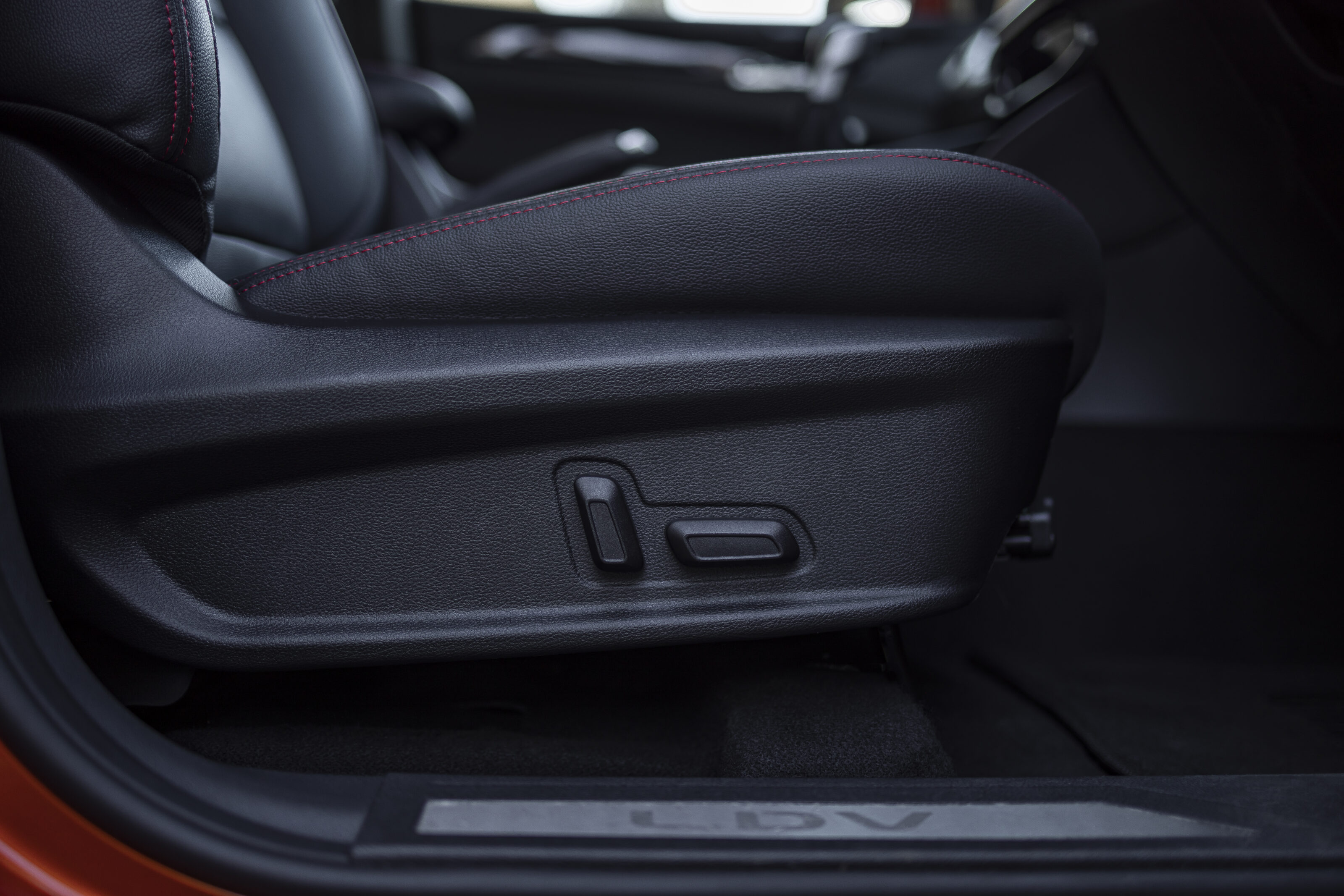
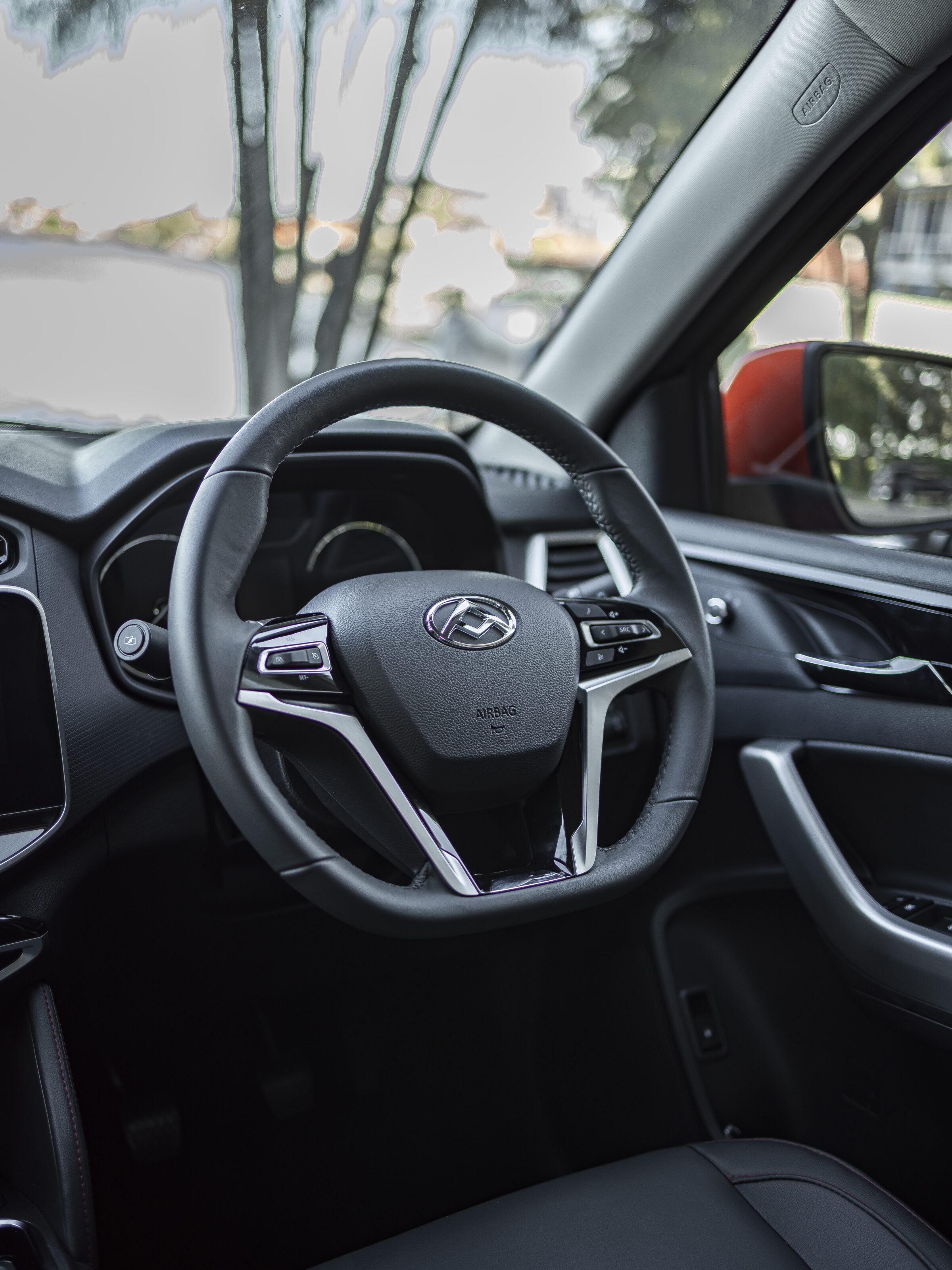
Both front seats are leather-trimmed and electrically adjustable, you score a 360-degree surround-view monitor, there’s a large 10.25-inch central touchscreen and the steering wheel now features an updated design that includes shift paddles for auto versions. The general ambience and design is also pleasing and ergonomically all of the major controls fall easily to hand.
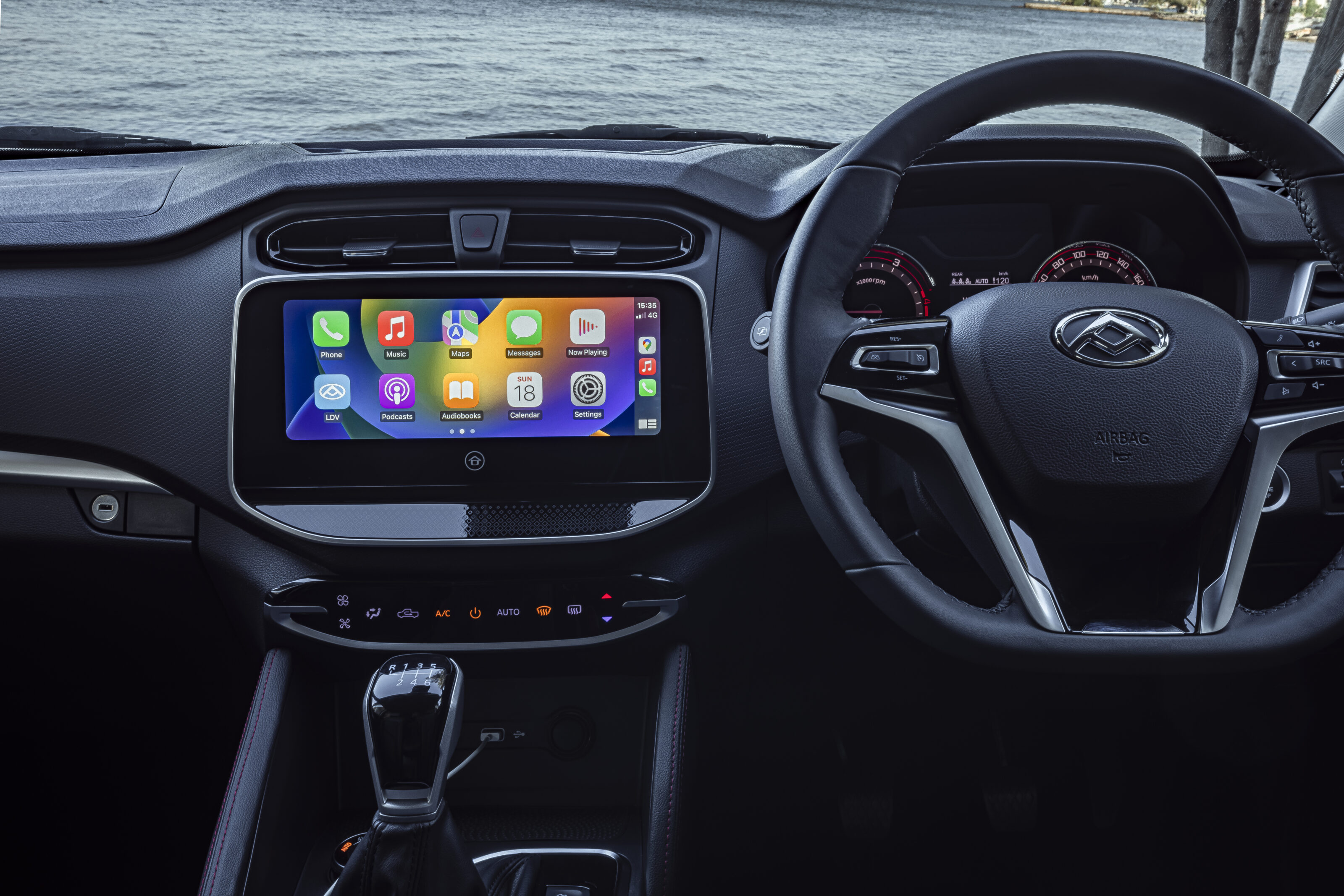
Clear instruments and ample interior storage, courtesy of large door bins and two central cup holders, are other strengths. Connectivity is decent, too, thanks to twin USB-A ports and standard (wired) Apple CarPlay. Android Auto isn’t featured natively, but the local distributor tells us: “it can be accessed via the Q-link system in the car central screen”.
The large central screen is also quick to respond and features clear graphics, although the resolution of the reversing camera isn’t as high as some rivals.
There are other missteps, too. There’s no reach adjustment for the steering wheel so the driving position always feels a touch off, no matter how you adjust the six-way electric seat and the seat itself lacks under-thigh support, which could be an issue on long trips.
While the general sense of quality is acceptable, it’s easy to encounter hard and scratchy interior plastics.
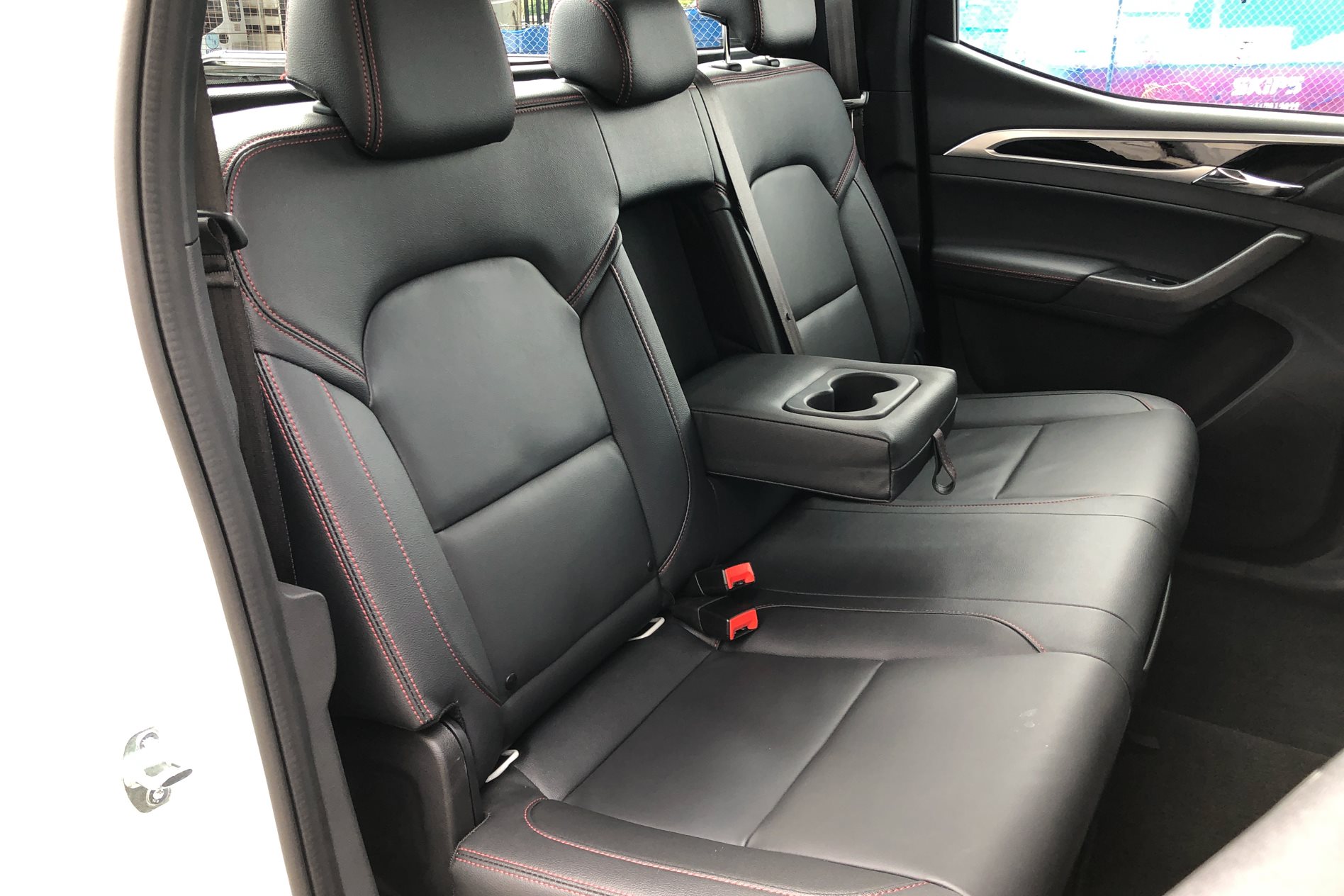
The back seat is impressively roomy, though. Some dual-cab utes have squishy second rows but the T60 Max can easily ferry about four six-foot adults in relative comfort.
Cargo hauling
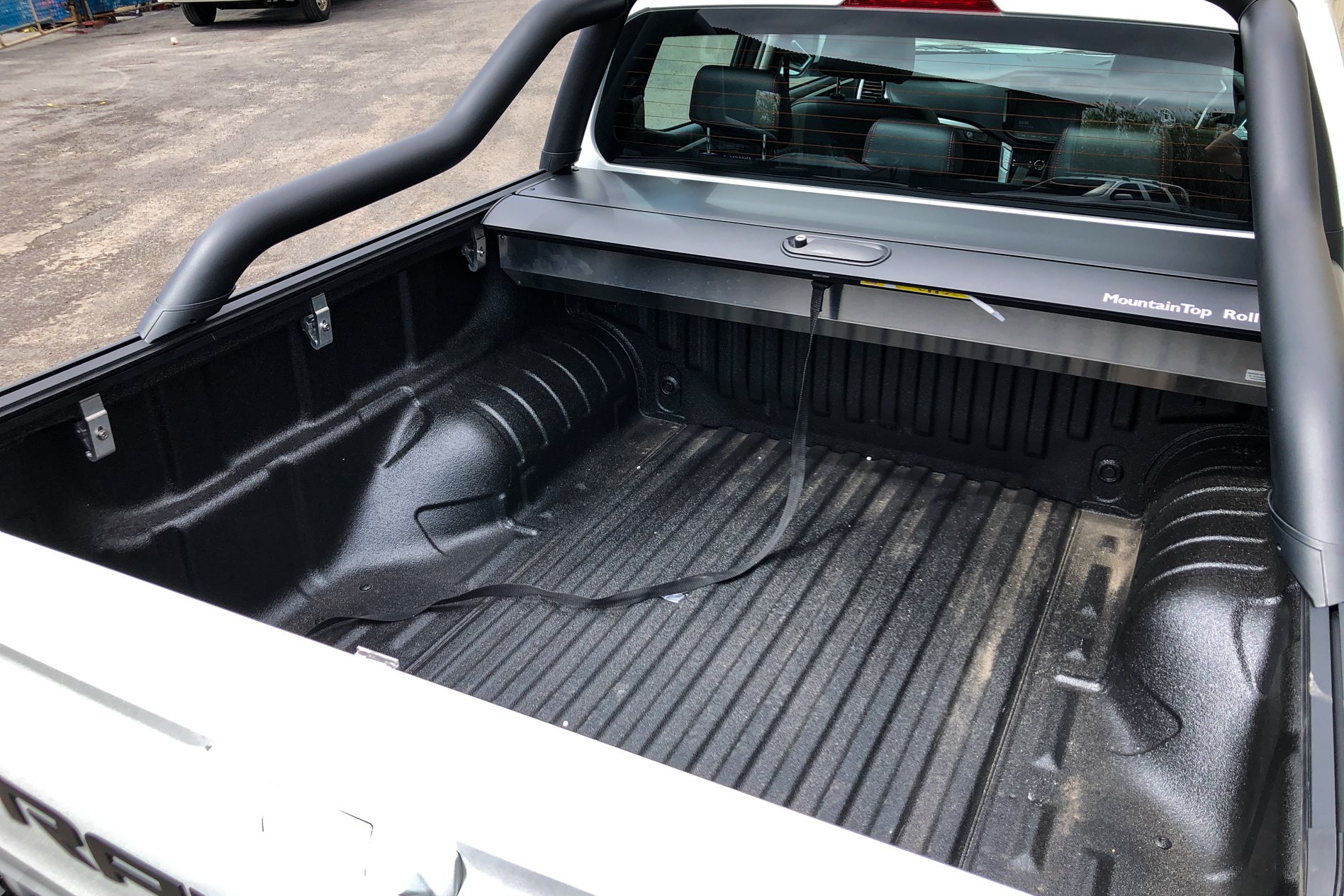
As for its ability to lug a load, the T60’s tray is well-sized and measures 1525mm (L) x 1519mm (W) x 530mm (H), with 1131mm between the wheelarches. A spray-in tub liner is also included, as are four tie-down points.
There’s a large step below the tailgate, too, which is useful for reaching things in the back without dropping the soft-release tailgate.
One key thing to remember is the Luxe has a payload of 750kg, making the Pro’s 935kg payload the variant to pick if you intend to load up the tray with heavy items for work or long camping trips.
What’s it like to drive?
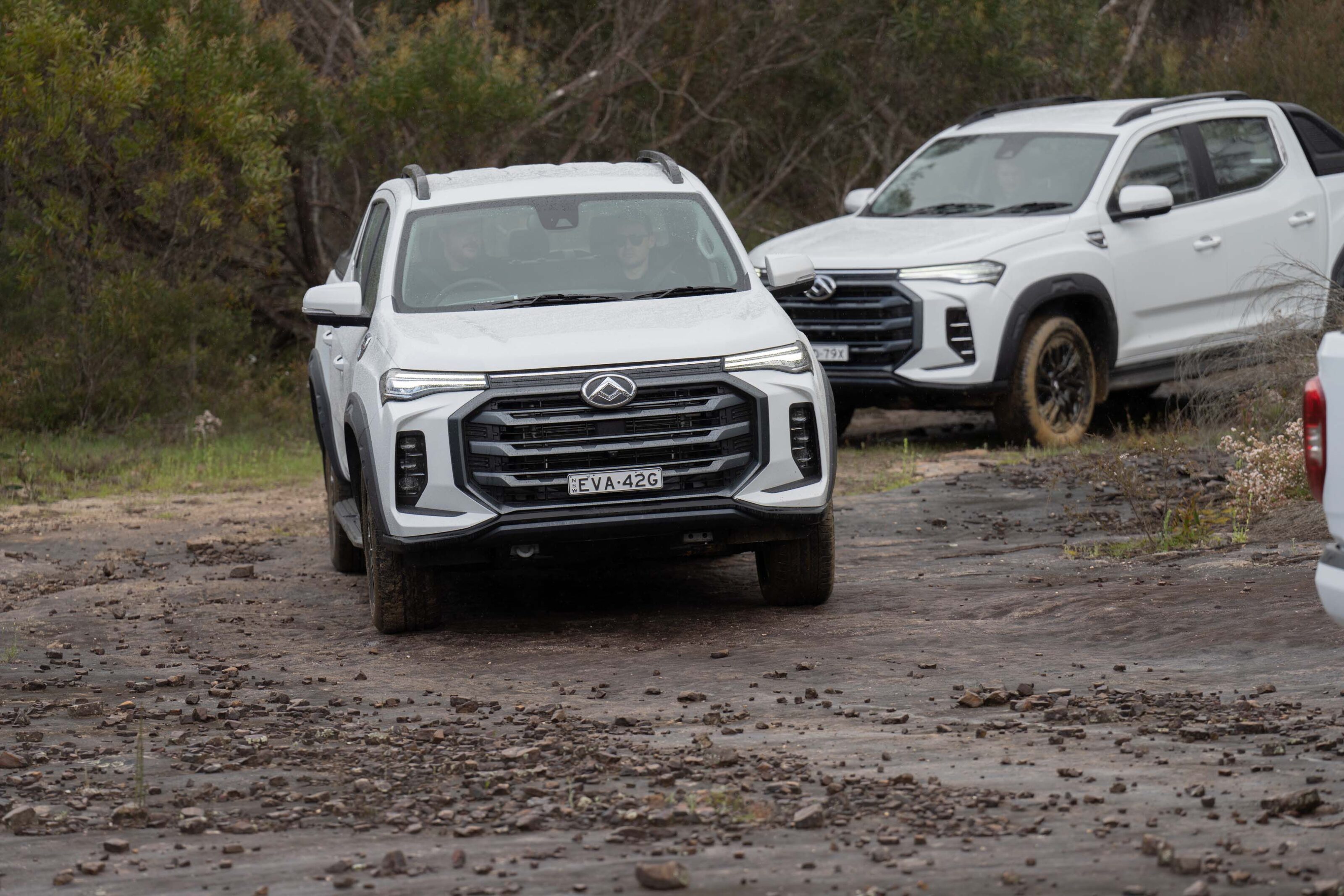
This is where the T60’s appeal starts to dip a touch. Our stint behind the wheel took in some low-speed urban sections and quicker country roads, where we discovered that there’s certainly room for improvement when it comes to dynamics.
As well as the lack of reach adjustment for the steering wheel making the driving position less than ideal, the steering itself also lacks feel and has a large dead spot off centre.
It’s not void of feedback – there’s actually quite a lot of vibration and kickback that comes back through the wheel – it’s just lacking the kind of feel and connection you want as a driver.
The unladen ride is also skittish and stiff-legged on larger 19-inch wheels, despite the Luxe’s more comfort-oriented suspension set-up. We’re yet to test the T60 Max with a load in the back to see if that improves things.
Happily, road noise is pretty well contained and there’s also a subtle improvement in engine-noise intrusion when the 2.0-litre turbo-diesel is at idle.
An LDV spokesperson confirmed this update has brought some additional sound deadening to the engine bay.
But for all its on-paper performance, it’s actually quite tricky to tap into the engine’s full potential. Max power is made high in the rev range and the powertrain can feel sluggish below 2500rpm. It also suffers from noticeable lag, especially when accelerating away from a standstill.
On the move, it’s easier to tap into the muscular top-end thanks to the quick-shifting ZF eight-speed automatic (overtaking performance is reassuringly strong) but the diesel unit can get quite vocal under heavy load.
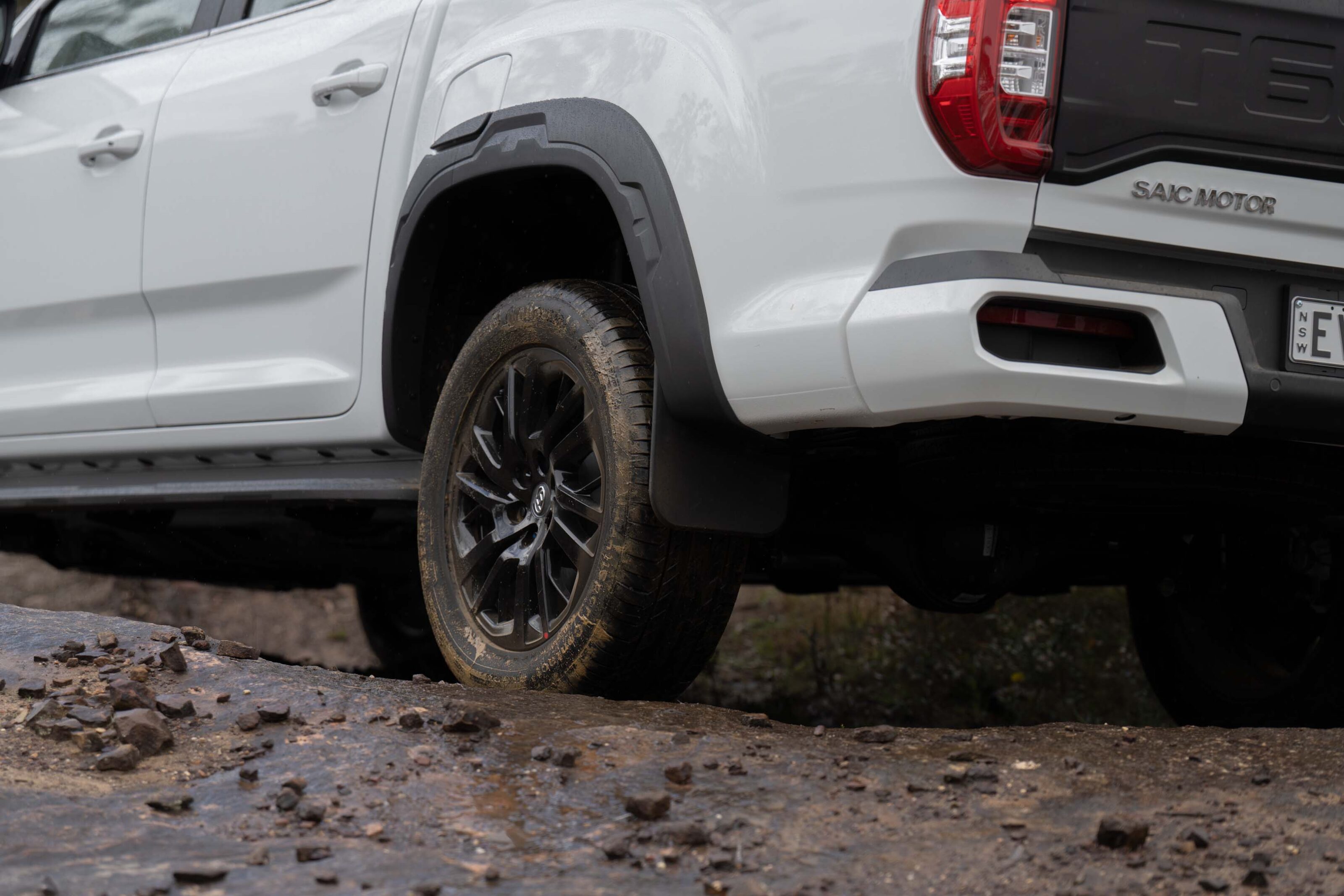
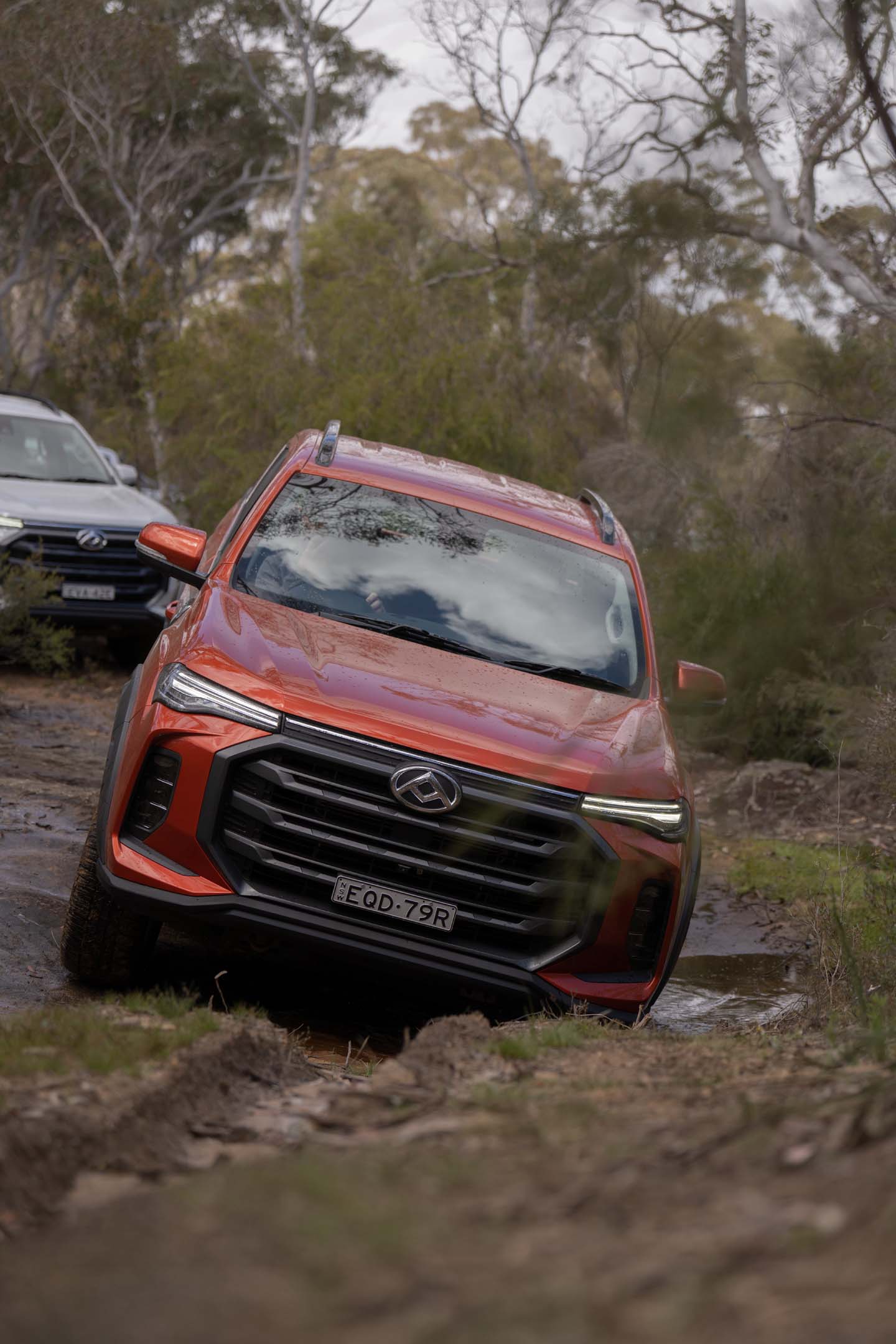
The powertrain’s peaky nature is also a weakness off-road. During steep low-speed inclines or when tackling trickier obstacles, it can be difficult to maintain a constant throttle as the engine comes on and off boost. We only encountered this issue when the 4X4 system was left in 4Auto, however. Switching over to 4Low did improve things.
Some improvements to its traction control systems would also benefit the T60, especially in off-road scenarios where they can feel heavy-handed. They’re also surprisingly noisy and lack the sophistication of something like a Ford Ranger.
In fact, in just about every dynamic discipline the T60 is towards the bottom of the current dual-cab pack. The good news is that LDV’s track record shows it’s willing to quickly update and improve its products. Here’s hoping the next iteration benefits from some additional dynamic polish and refinement.
Warranty & running costs
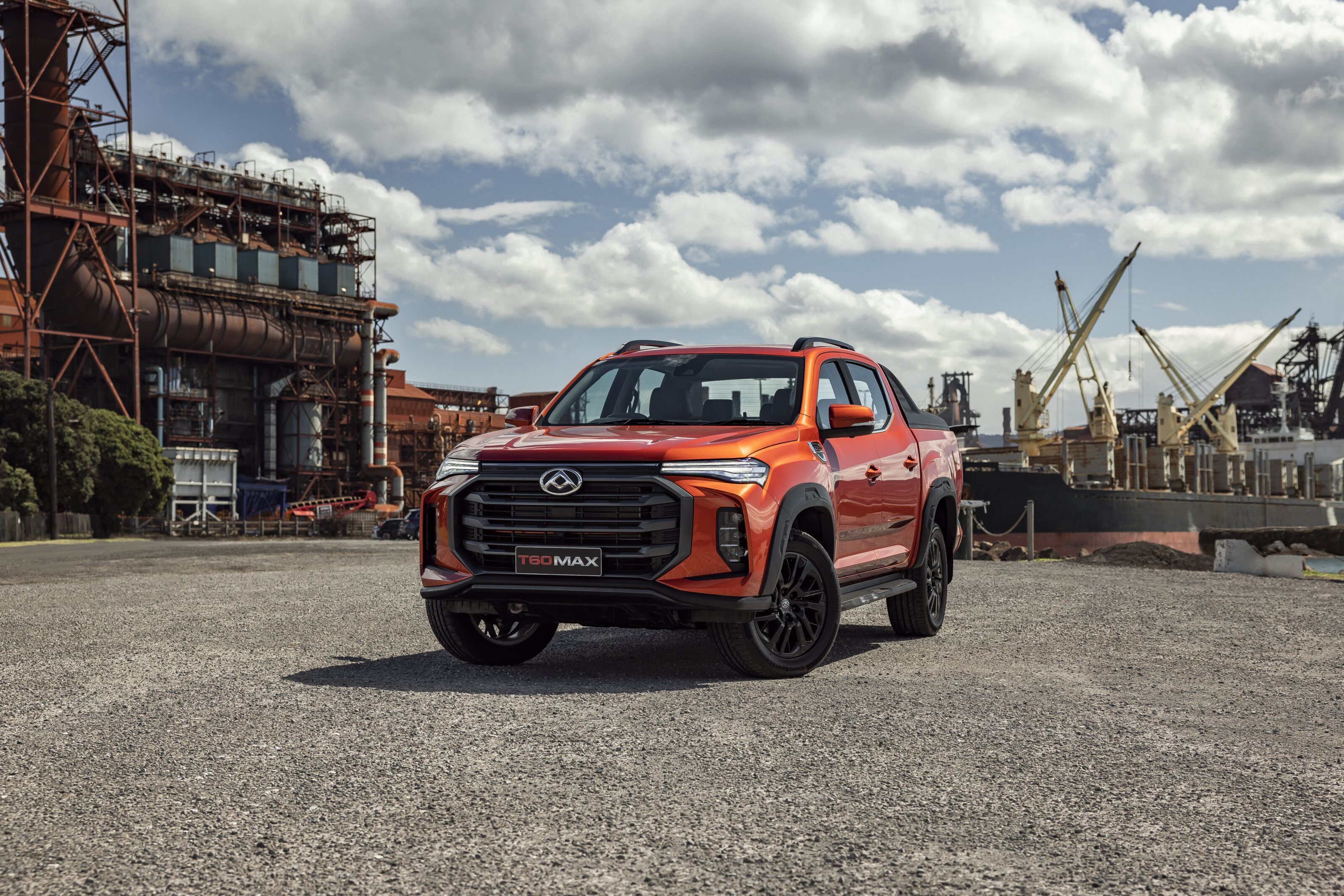
The LDV T60 has one of the longest warranty periods of any new dual-cab. Previously LDV’s warranty stood at the industry-standard five years but for the 2023 model year, the T60 Max now comes with a warranty that lasts seven years or 200,000km.
Service intervals are every 12 months or 15,000km, whichever occurs first. LDV currently doesn’t offer any capped-price servicing plans.
As for fuel use, the official combined consumption figure is 9.3L/100km for automatic versions and 9.2L for models fitted with the six-speed manual. Every T60 Max has a 73-litre fuel tank.
VERDICT
LDV is quickly gaining sales momentum with the T60 Max and it’s easy to see why.
It looks tough, it’s well equipped and there’s ample performance on tap thanks to its headline-grabbing outputs of 160kW/500Nm.
Throw in a nicely calibrated eight-speed auto, a roomy back seat and an aggressively low price tag and the T60 mounts a convincing case for buyers looking to maximise bang for their buck.
But the recent price rises, laggy engine performance, sub-par safety credentials and below-average on-road ride and handling undermine what could be a seriously compelling package.
2023 LDV T60 Max specifications
| Body | 4-door, 5-seat dual-cab ute |
|---|---|
| Drive | part-time four-wheel |
| Engine | 1996cc inline 4cyl twin-turbo diesel |
| Compression | 15.9:1 |
| Bore/stroke | 83 x 92mm |
| Power | 160kW @ 4000rpm |
| Torque | 500Nm @ 1500-2400rpm |
| Transmission | 8-speed automatic |
| Weight | 2150kg |
| Fuel consumption | 9.3L/100km |
| Front suspension | struts, double A-arms, coils springs, anti-roll bar |
| Rear suspension | Leaf springs, anti-roll bar |
| L/W/H | 5365/1900/1809mm |
| Wheelbase | 3155mm |
| Payload | 750kg |
| GVM | 2900kg |
| Towing capacity | 3000kg braked |
| Tyres | Continental 255/55 R19 |
| Wheels | 19-inch alloy |
| Price | $47,884 drive-away |
The high-pitched whine of the GT4 ePerformance penetrates helmet and skull like a diamond-tipped drill.
By the end of the short straight of the Porsche Experience Center Franciacorta circuit near Brescia in northern Italy, the intensity of the noise is approaching painful. A full grid of race cars like this one-off would make a fierce racket.
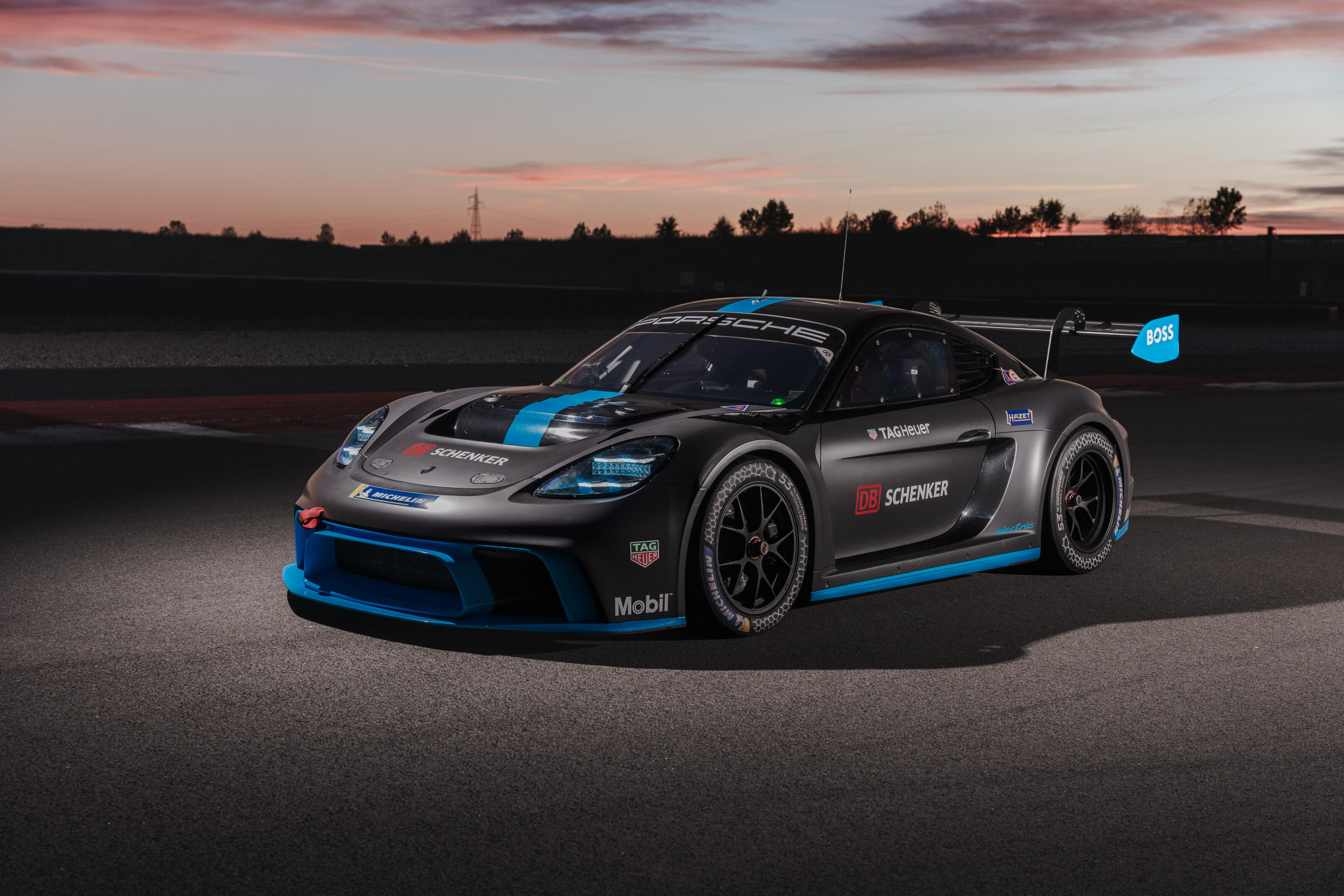
Built to prove that electric power for a customer motorsport series can work, the GT4 ePerformance is the proof-of-concept successor to the beautiful Mission R show racer Porsche revealed in September 2021 at the IAA Munich mobility expo.
Around the 2.5 kilometre track the GT4 ePerformance is brutally impressive, especially its acceleration. Then the driver switches from 450kW race to 800kW qualifying mode…
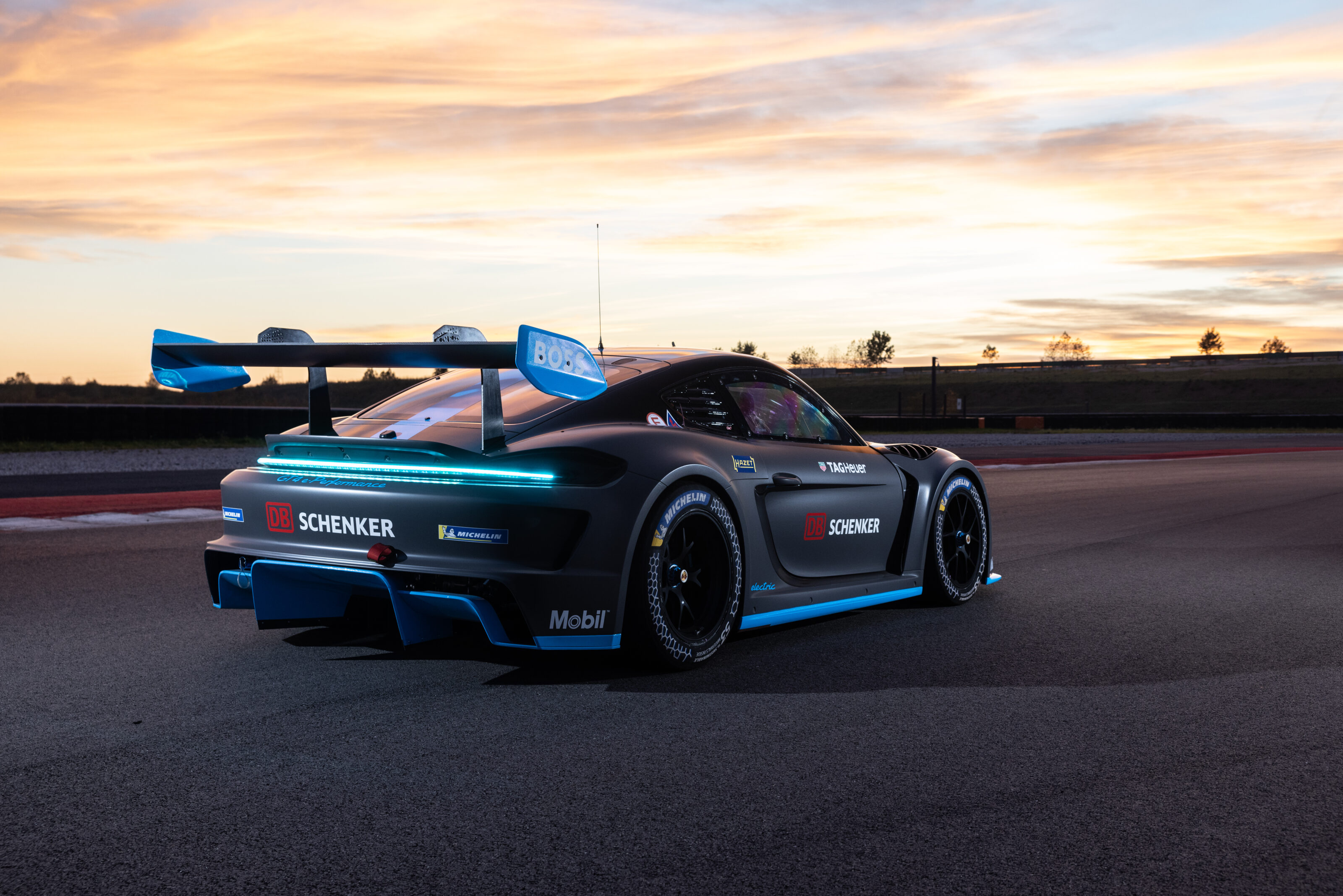
Porsche engineers working on the project proudly point out that in race mode the car can match the lap times of a current 911 GT3 Cup for the 30 minutes of a Carrera Cup race.
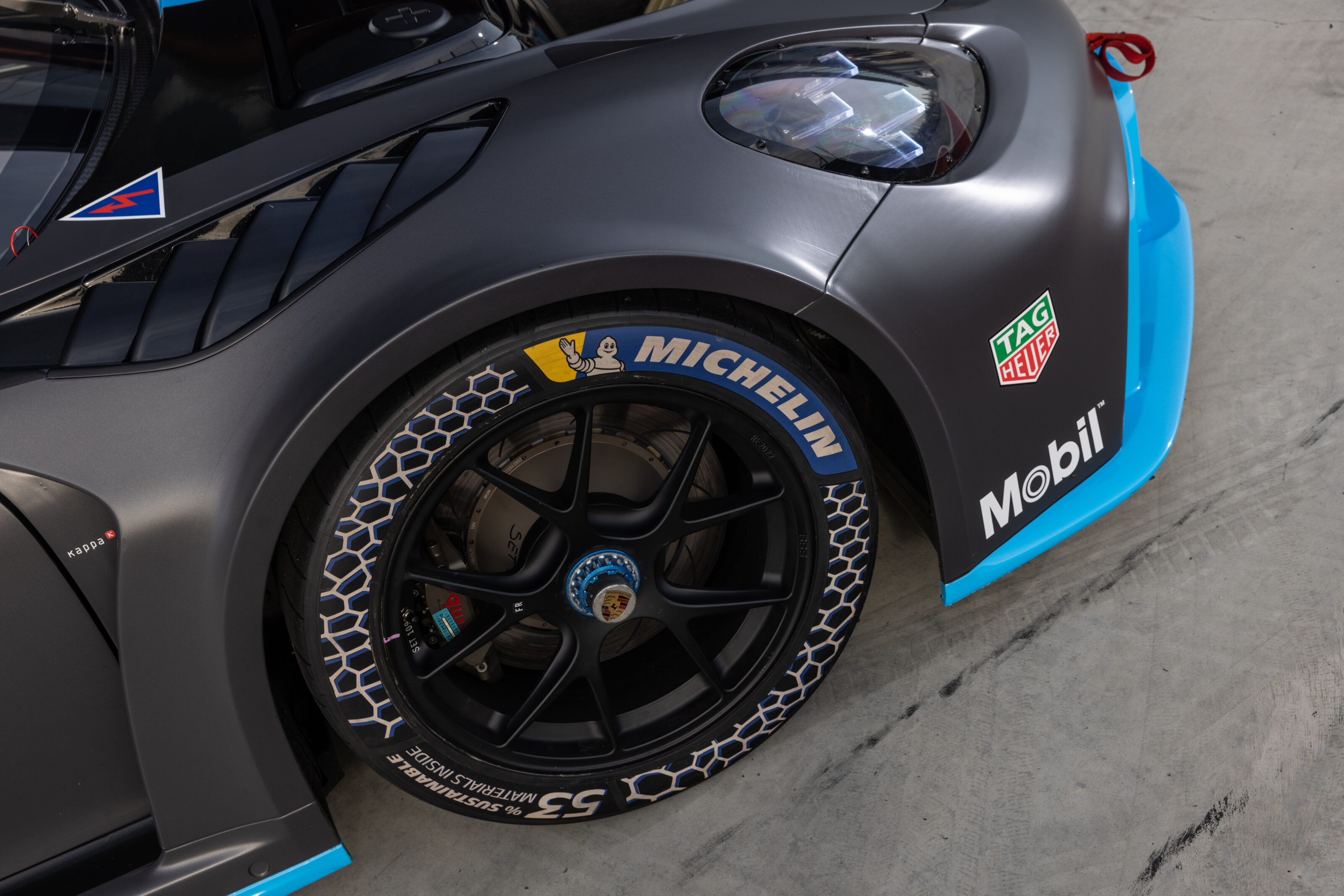
Based on a 718 Cayman GT4, Porsche engineers say 6000 parts were redesigned to create the ePerformance. The car is 140mm wider and wears broader wings and rubber.
It has two synchronous motors, one for each axle, and a three-part 900-volt oil-cooled battery pack. One segment is between the front suspension towers, another in the passenger footwell, and the third in what was the engine compartment behind the cabin. Overheating of the 900-volt batteries is never a problem, insist Porsche’s engineers.
Though the GT4 ePerformance is a powerfully persuasive project, Porsche’s Formula E team will lead the company’s quest to advance roadgoing EVs. This strategy makes a lot of sense, and is a perfect fit with the company’s credo.
“We have a high-level motorsport project where we explore technology, and then we transfer it,” explains Porsche Formula E tech director Martin Füchtner.
The first step is to a racing category with more cars. “Like a small racing series, or whatever,” Füchtner says, “but with technology that is transferable to road cars and that is producible on mass-production numbers.”
“We do it in motorsport, because building a prototype like the GT4 (ePerformance) is nice, but you don’t have the pressure on to be maximum efficient and to be quick in your development phase.”
Füchtner believes Porsche’s Formula E team hothouse will speed roadgoing EV development in at least two areas; braking system management and motor power control electronics.
“Mastering these topics, especially the braking problem, is the key element also for our road cars of the future,” he says.
“If you think electric GT, and if you want to have a small battery in a light car, you want to do maximum recuperation and with high recuperation levels.”
This extra efficiency is exactly what’s also needed for an e-racer to be competitive. Stronger recuperation means more total energy to use over the course of a race, and the extra power means quicker lap times.
The company already builds one of the world’s best-driving EVs, the Taycan, and it’s clearly determined to use its motorsport division to help maintain its edge with future cars.
And there are a lot of Porsche EVs on the way. First to arrive will be the Macan EV in 2024. The replacement for the larger Cayenne SUV will be built on the same PPE platform, though a new, and likely larger, luxury SUV EV is also under development using the more advanced SSP platform. It’ll launch sometime before 2030.
But it’s the planned EV replacements for the Boxster and Cayman that will gain most from the Porsche’s Formula E team’s expertise. Due around 2025, these will use an all-new EV sports car platform.
UPDATE, March 29 2023: Australian timing confirmed for ID models
Volkswagen Australia has today confirmed local launch timing for its ID.3, ID.4, ID.5 and ID.Buzz models – get all the details at the links below.
November 2022: ID.4 driven in Australia!
We’ve now had a chance to drive an overseas ID.4 car in Australia. Get our full story at the link below.
Story continues…
Dec 15: ID Buzz comes to Australia
Volkswagen’s ID Buzz has been whisked into Australia for a quick tour, ahead of its local launch in the coming year. Join John Law for a look at its features and space.
UPDATE: Volkswagen ID.Buzz electric van remains on local wish list; early 2024 launch targeted
The all-electric Volkswagen ID.Buzz remains under consideration for Australia, but local executives are hopeful it will arrive in early 2024.
Speaking with media this week, Volkswagen Australia’s director of commercial Vehicles, Ryan Davies, said it is “firmly on the wish list”.
“The interest on that car has been phenomenal… the one question we get asked everywhere we go is, when are we getting ID.Buzz?”
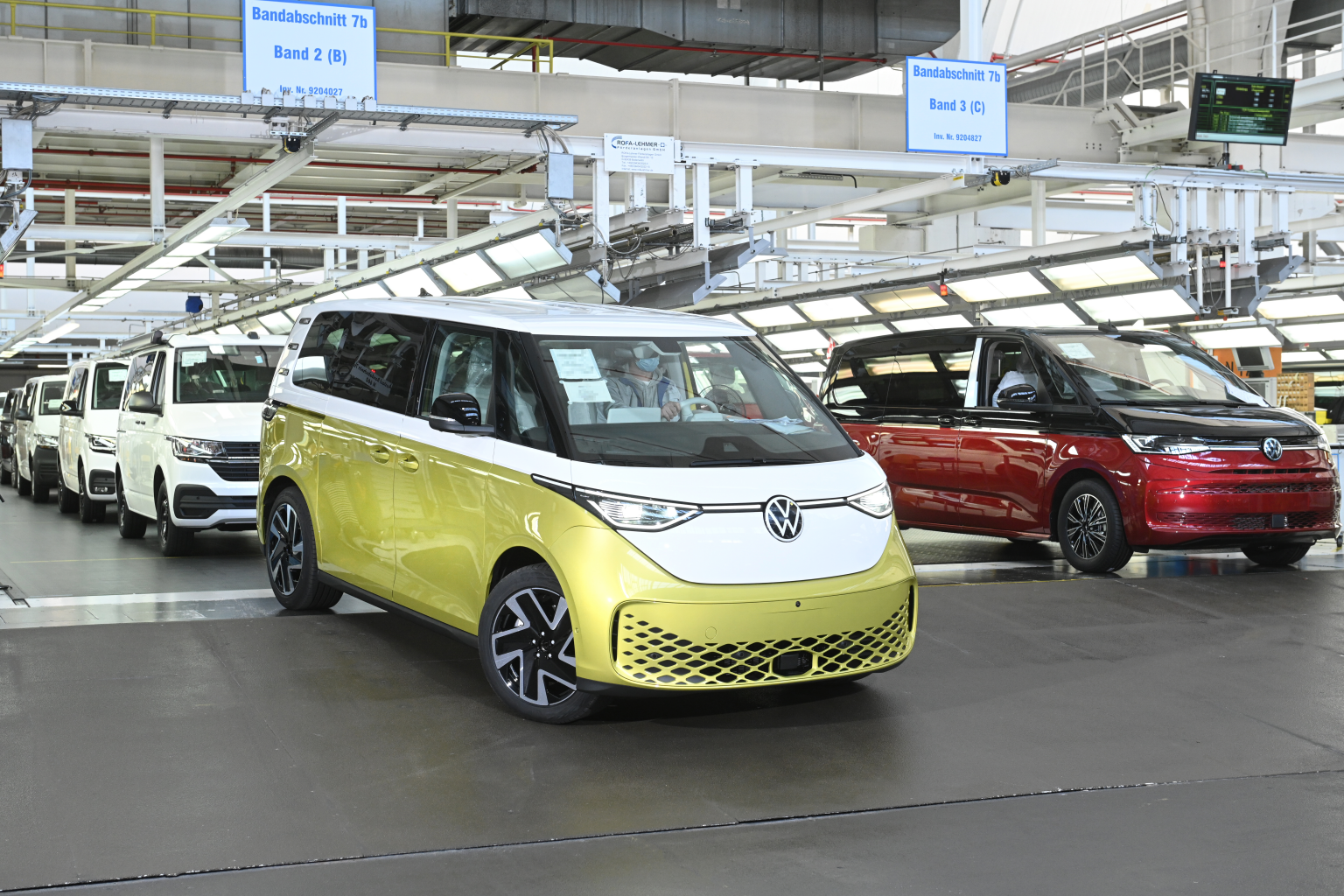
“The global demand for that car is extraordinary. There’s not going to be any shortage of demand for it in the next few years, but we’ve put our hand up for a significant amount of volume in Australia.
“We think it suits our market perfectly; Australians have fallen in love with that car already, and we know that especially with [ID.Buzz] and the Cargo, that we can sell a really decent amount of volume that will be attractive to the factory.”
Our original story, below, continues unchanged.
May 21: Obi-Wan Kenobi rolls off in ID.Buzz
Following its big reveal in March, the new 2022 Volkswagen ID.Buzz has starred in a clever ad for the upcoming Star Wars series, Obi-Wan Kenobi.
In the video, fan-faves C-3PO and R2D2 (and a new flying disc-shaped droid that reminds me of the 1987 film Batteries Not Included) are seen admiring the new electric people mover, before old mate ‘Ben’ Kenobi climbs in and rolls quietly away.
It’s a fitting bit of product placement, really, because Kenobi actor Ewan McGregor famously owns a 1954 VW Beetle converted to electric power by the wizards at EV West in California, where McGregor lives. He’s also a long-time Beetle van, and has featured in a documentary celebrating the iconic car.
Watch the new Star Wars clip below (this isn’t sponsored btw, I just live inside a perfect Venn diagram of cars and science fiction), and catch my existing reveal story further down.
2022 Volkswagen ID.Buzz revealed
Snapshot
- ID Buzz revealed in passenger and Cargo forms
- 77kWh battery pack should offer around 500km range
- Australian potential unclear
March 10, 2022: At long last, after years of concepts and will-they-won’t-they, one of the most iconic VW models is returned. This is the 2023 Volkswagen ID Buzz.
Okay, so ‘ID Buzz’ isn’t an iconic name, yet, but this new electric commercial van and people-mover duo represents a rebirth of the beloved Kombi and ‘Microbus’ or ‘Bulli’ vans that birthed so many myths, legends, and boomer babies.
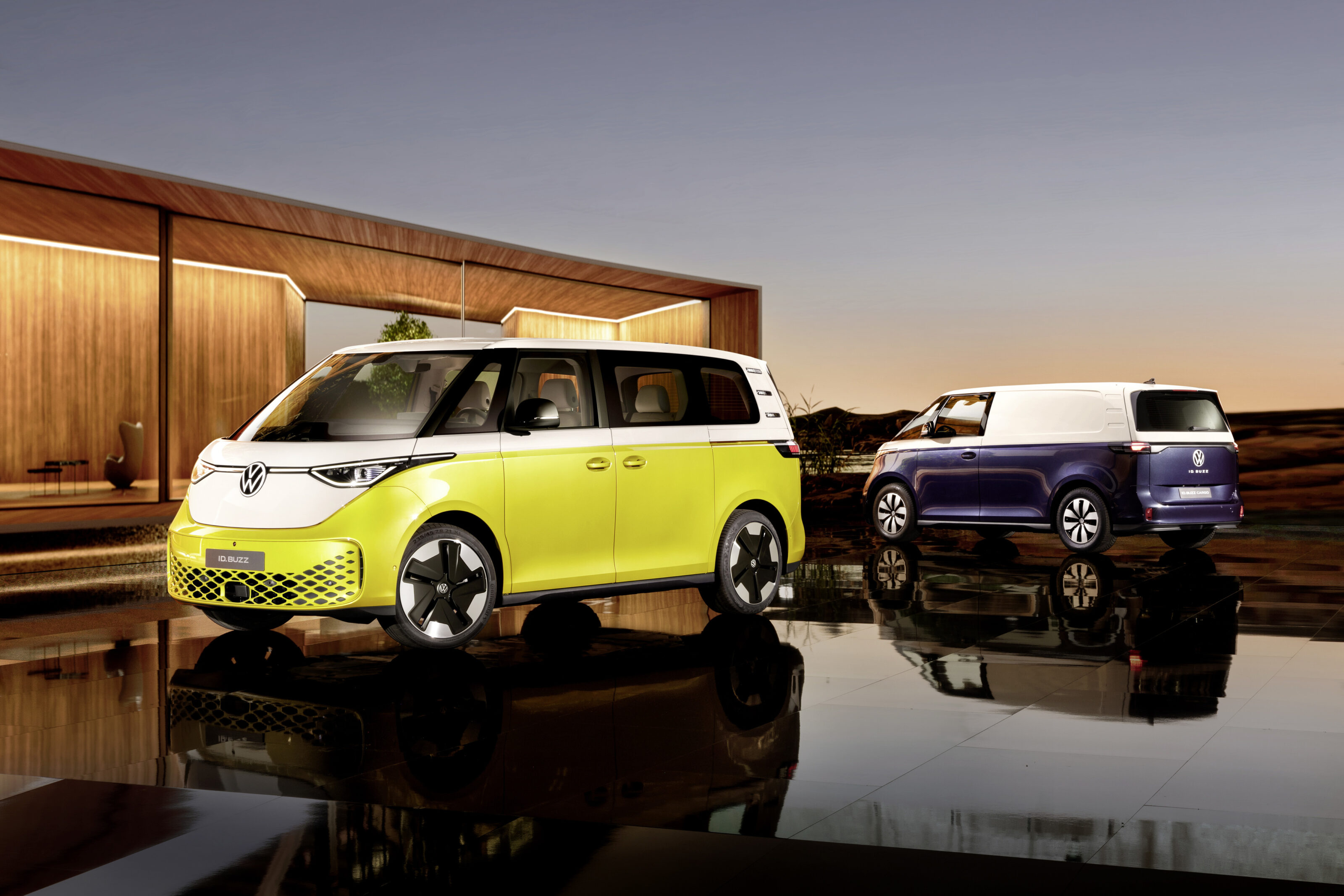
Joining Volkswagen’s growing ID range (marketed with a full stop as ‘ID.’), the ID Buzz was first previewed by the Bulli concept way back in 2011, then the Budd-E in 2015, and finally the eponymous ID Buzz concept in 2017.
It’s that last concept with which this final production car shares the most in design – and of course its name – and while the details aren’t identical, the 2023 ID Buzz represents a fairly faithful evolution of the concept’s look.
Battery and driving range
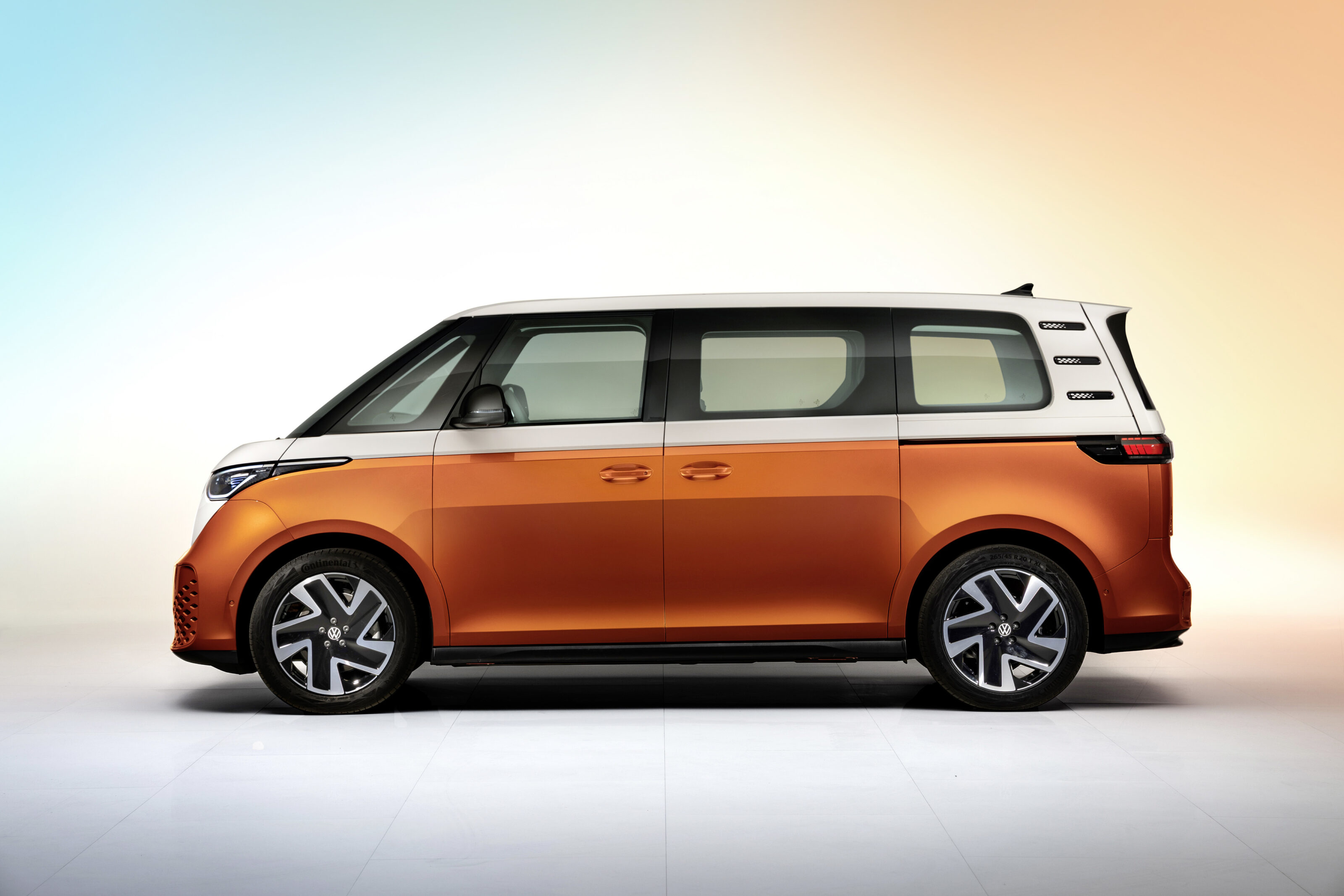
As with its legendary progenitor, the ID Buzz will be offered in people-moving and Cargo commercial styles, with the latter form offering all the fun and colourful qualities that made the original so memorable.
Built on Volkswagen’s scalable and versatile MEB platform for electric vehicles, the ID Buzz will pack an 82kWh battery pack in its initial launch guise, powered from the rear by a 150kW, 310Nm electric battery.
A driving range figure is still to come, but with that relatively big battery and a single-motor configuration, a number in the neighbourhood of 480 to 520 kilometres would be likely.
More battery and drive configurations will be offered from next year, but Volkswagen has likewise yet to offer details on what we can expect.
Click any of the images in this story to browse our full gallery
Size and space
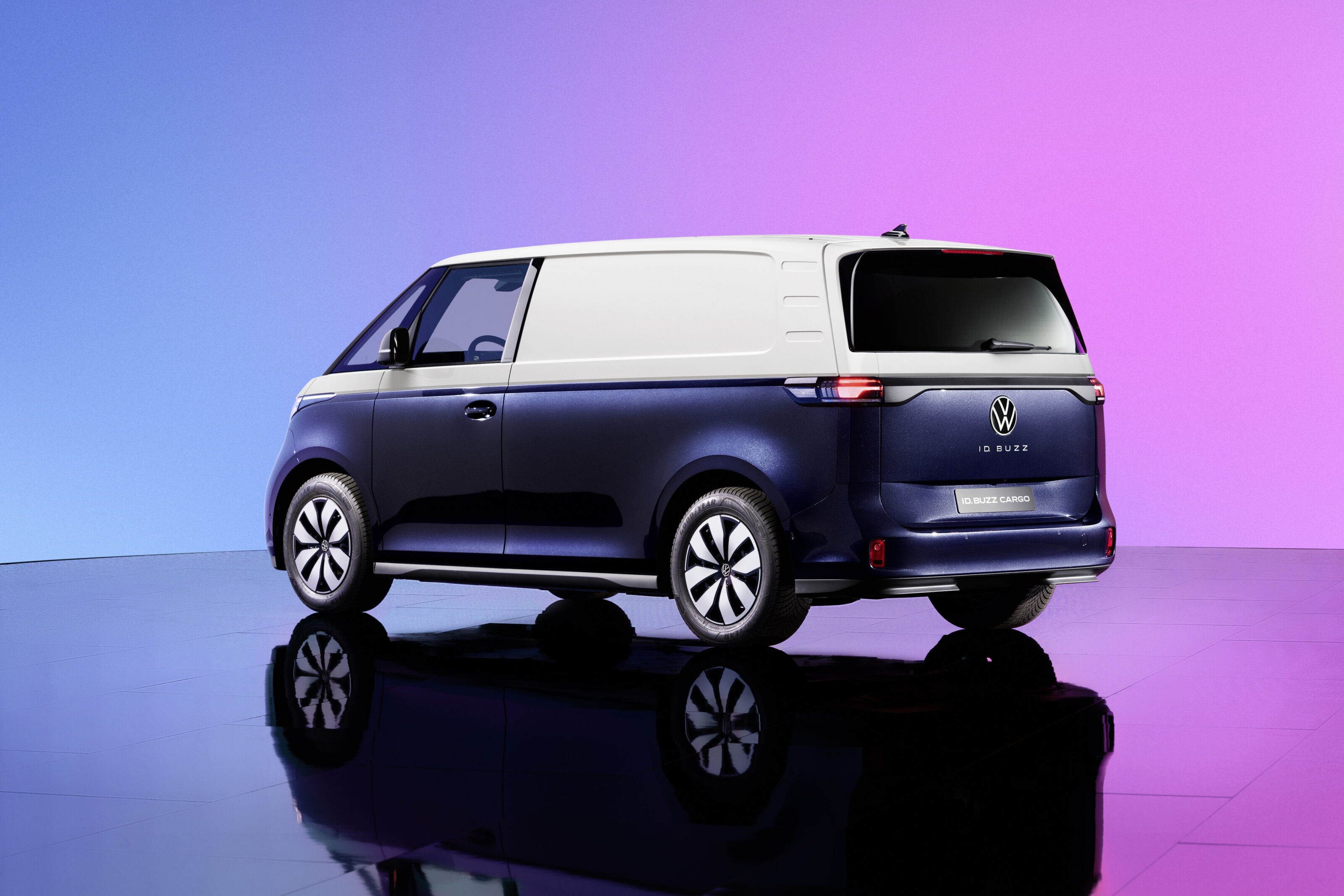
In both Cargo and passenger forms, the ID Buzz measures 4712mm long on a 2988mm wheelbase, 1985mm wide and 1937mm tall.
Those figures make the ID Buzz around 190mm shorter in length than the current T6.1 Transporter, but with an identical wheelbase. That combination gives the ID Buzz some pretty short overhangs – again trading on some iconic looks, without straight-up replicating the original.
The ID Buzz is also a notable 81mm wider than the T6.1 van.
“We very consciously ensured that we were not making another T1,” says Jozef Kabaň, Head of Volkswagen Design. “The ID. Buzz shows that it is successfully transferring the genes and stylistic elements of that iconic vehicle into the digital era.”
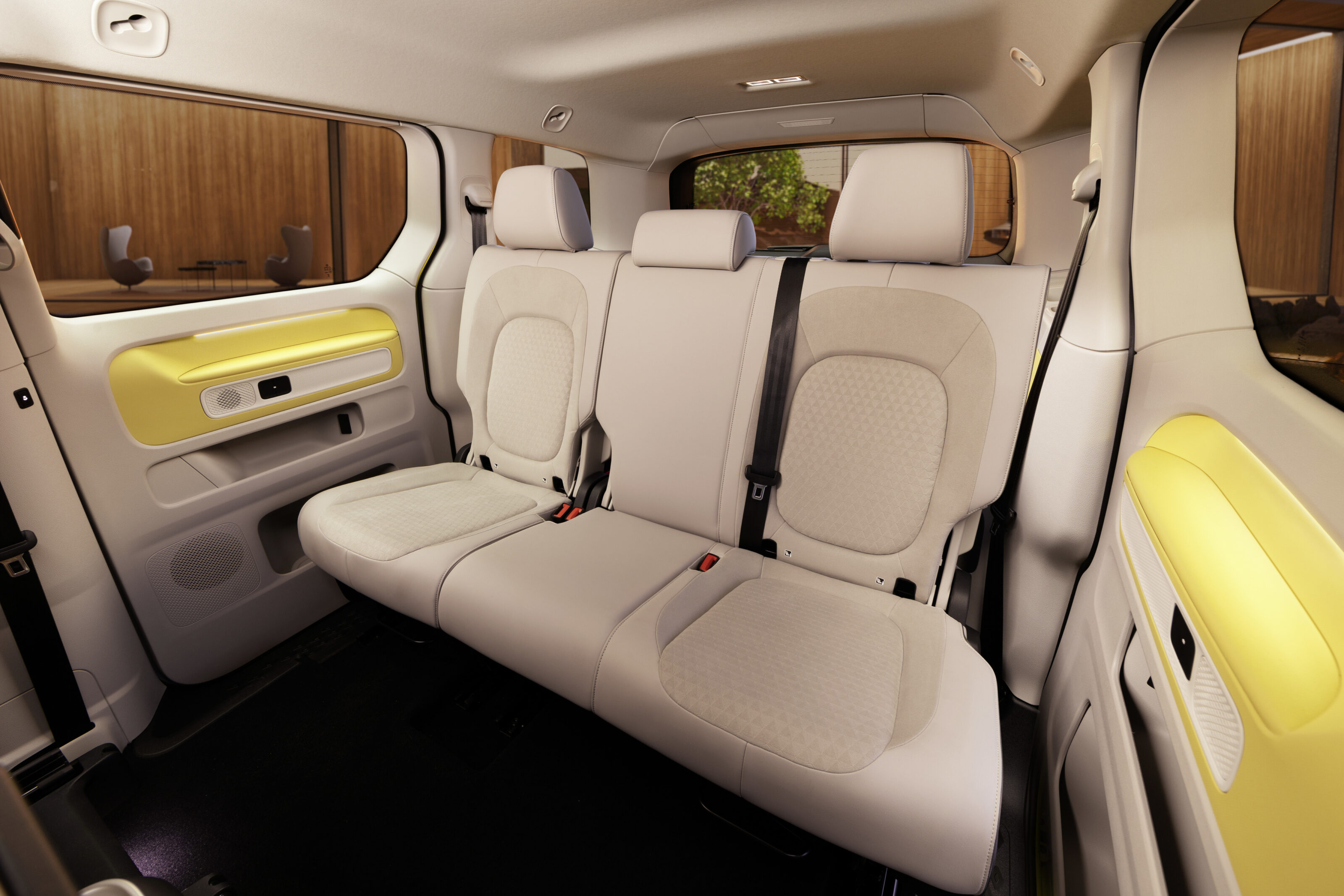
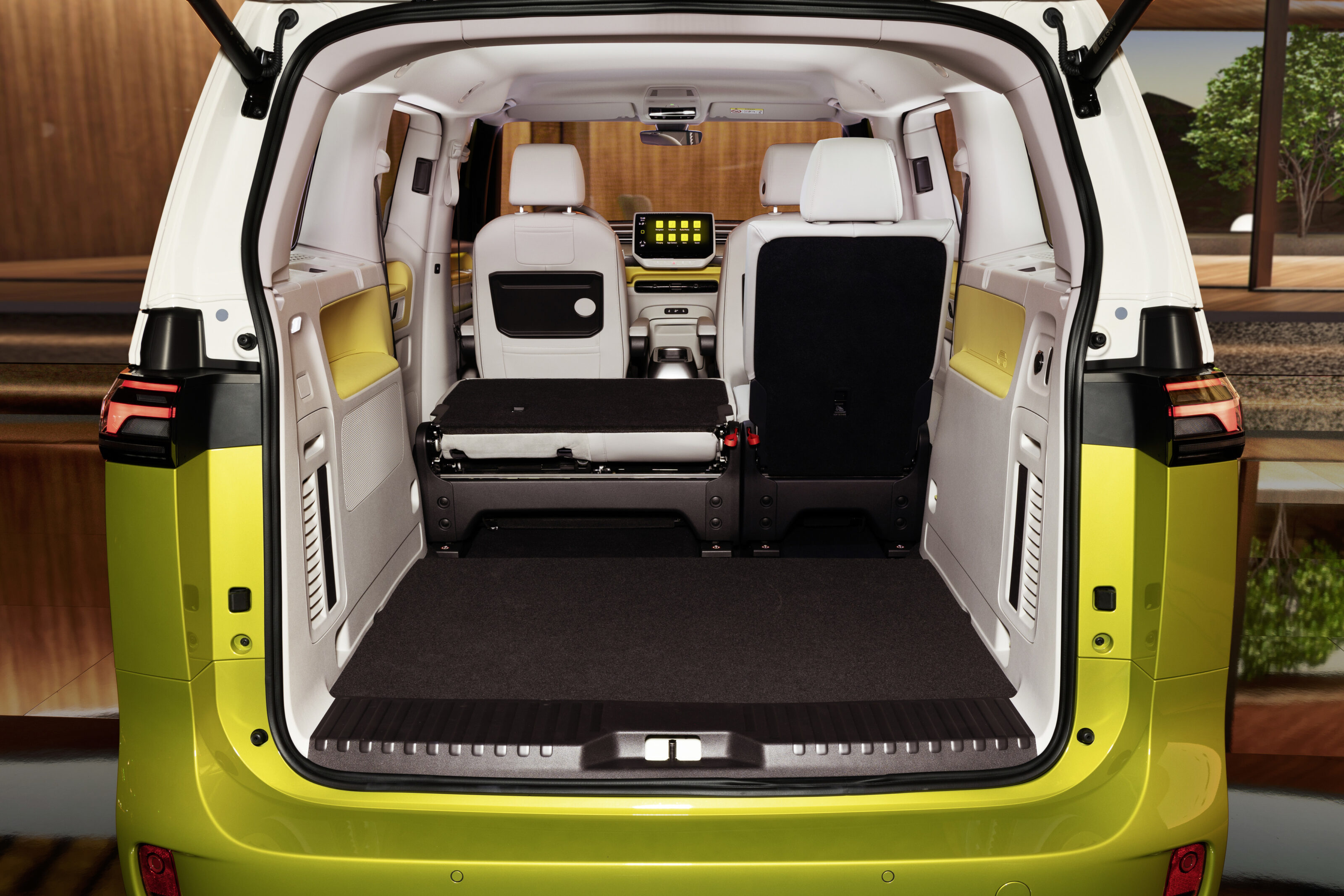
The passenger model gets sliding doors on both sides, and Volkswagen claims 1121 litres of storage space with the sliding and 60:40 split-folding second row of the exclusively five-seater configuration in its upright position, expanding to 2205 litres when laid flat.
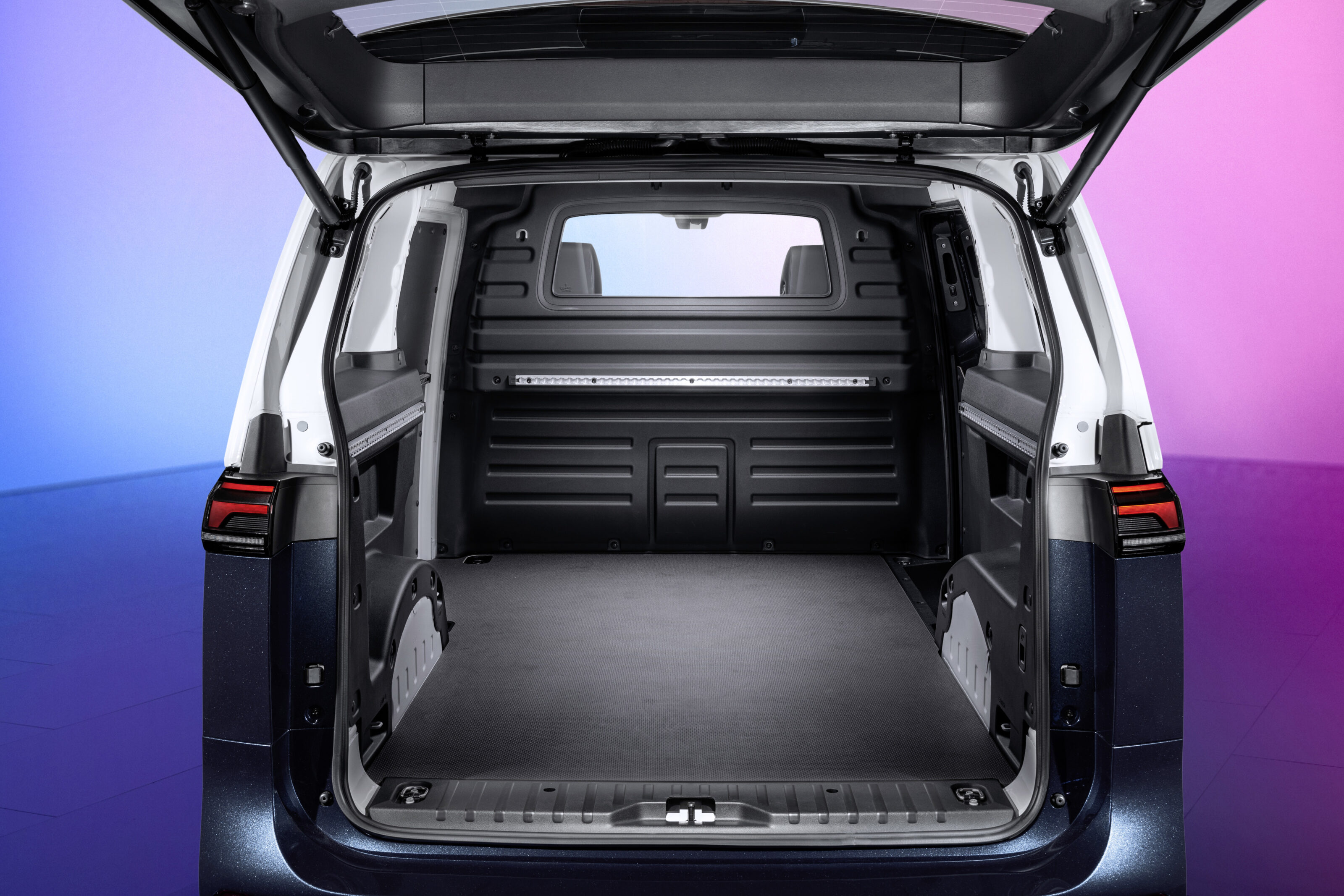
The Cargo can accommodate two Euro pallets in its rear space.
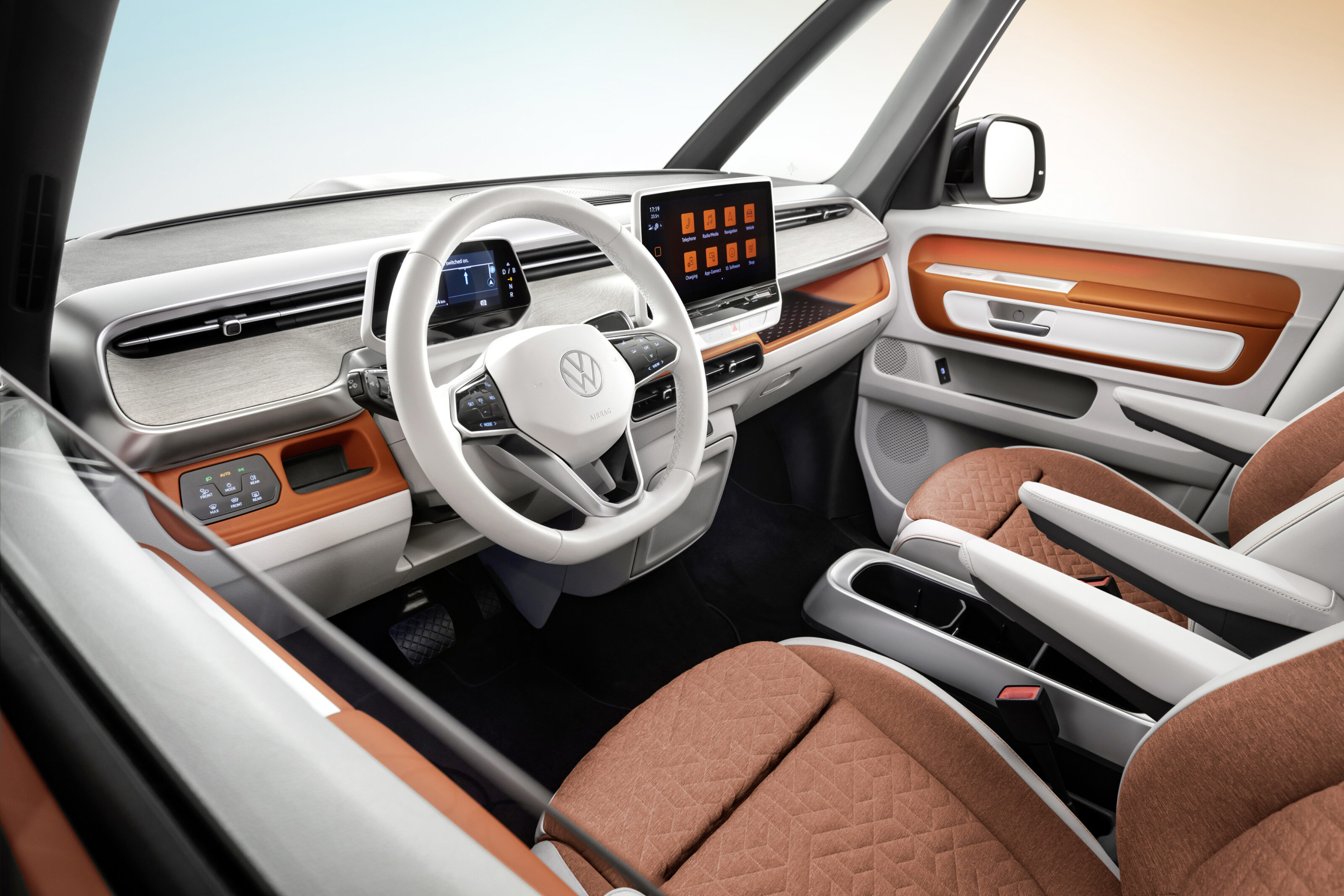
Inside, the ID Buzz features some familiar contemporary design elements like the modern Volkswagen steering wheel and digital instrument display rather than any sort of unique retro items.
There’s also the large 10- or optional 12-inch main infotainment display, which has seen Volkswagen do away with just about every physical button and switch in the cabin.
A long slotted ventilation section runs across the rear of the dash for some retro flair, while the overall look of the dash and door panels – particularly with the two-tone colouring in passenger models – works to recreate some vintage vibes.
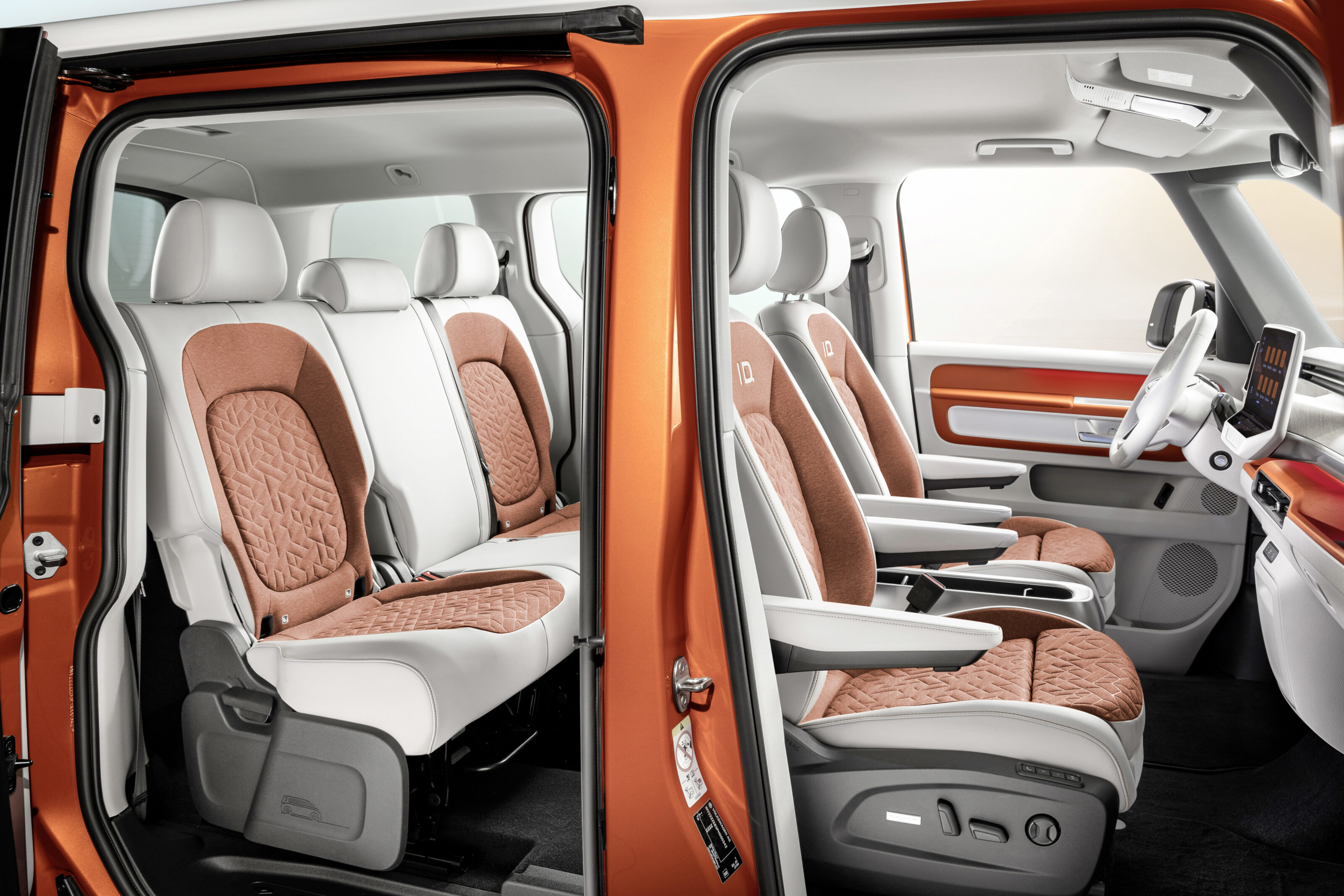
You won’t find any leather in the ID Buzz, with this new era leaning instead to synthetic options and, in some parts, recycled materials.
For the steering wheel, that’s polyurethane, and for the seats there’s a Seaqual fabric which is described as being made from collected ocean plastic (10 per cent) and recycled PET bottles (90 per cent).
The commercial variant, or at least those pictured here, take on a more hard-wearing all-business black design inside, along with more conventional air-conditioning ports.
Click any of the images in this story to browse our full gallery
Colour options include Candy White, Mono Silver, Lime Yellow, Starlight Blue, Energetic Orange, Bay Leaf Green and Deep Black.
Those are available in single-colour options or, if you prefer, a two-tone choice can see Candy White applied to the top half of Lime Yellow, Starlight Blue, Energetic Orange and Bay Leaf Green bodies. (Silver presumably doesn’t show a bold enough contrast to bother offering it.)
Wheel designs vary from 18- to 21-inch options, although lower-end passenger variants, and all Cargo variants, will get 18-inch steelies.
Will the Volkswagen ID Buzz come to Australia?
At the time of writing, there is no official confirmation of the ID Buzz coming to Australia.
As with the rest of the electric ID range, the ID Buzz remains a wish-list item for Volkswagen’s Australian arm.
The company has previously pointed to a lack of meaningful incentives and federal support for EVs – along with high demand in Europe – as the main obstacle to bringing its battery-powered offerings to Australia.
Click any of the images in this story to browse our full gallery
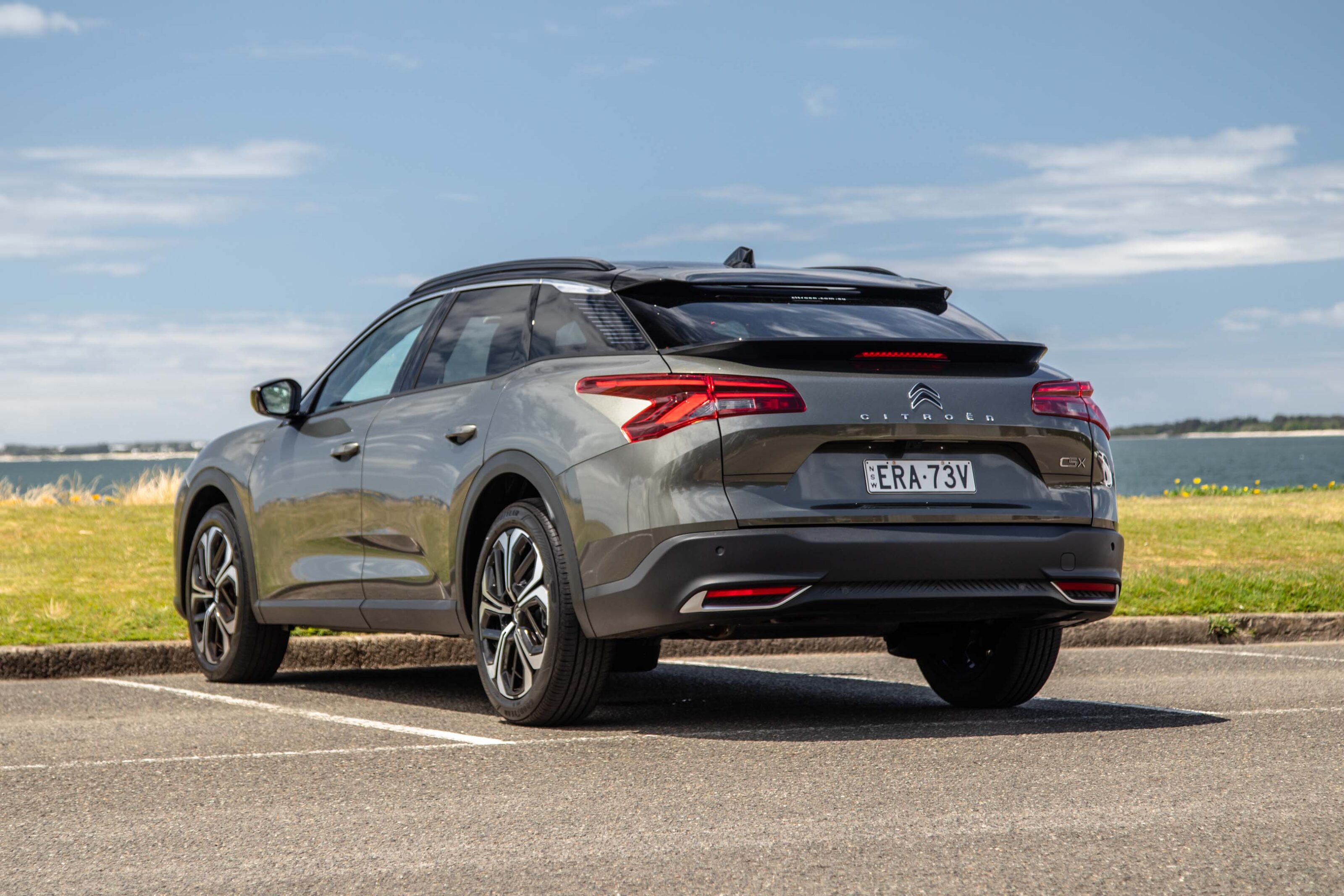
Citroen does weird, and that’s how it should be. It does weird well.
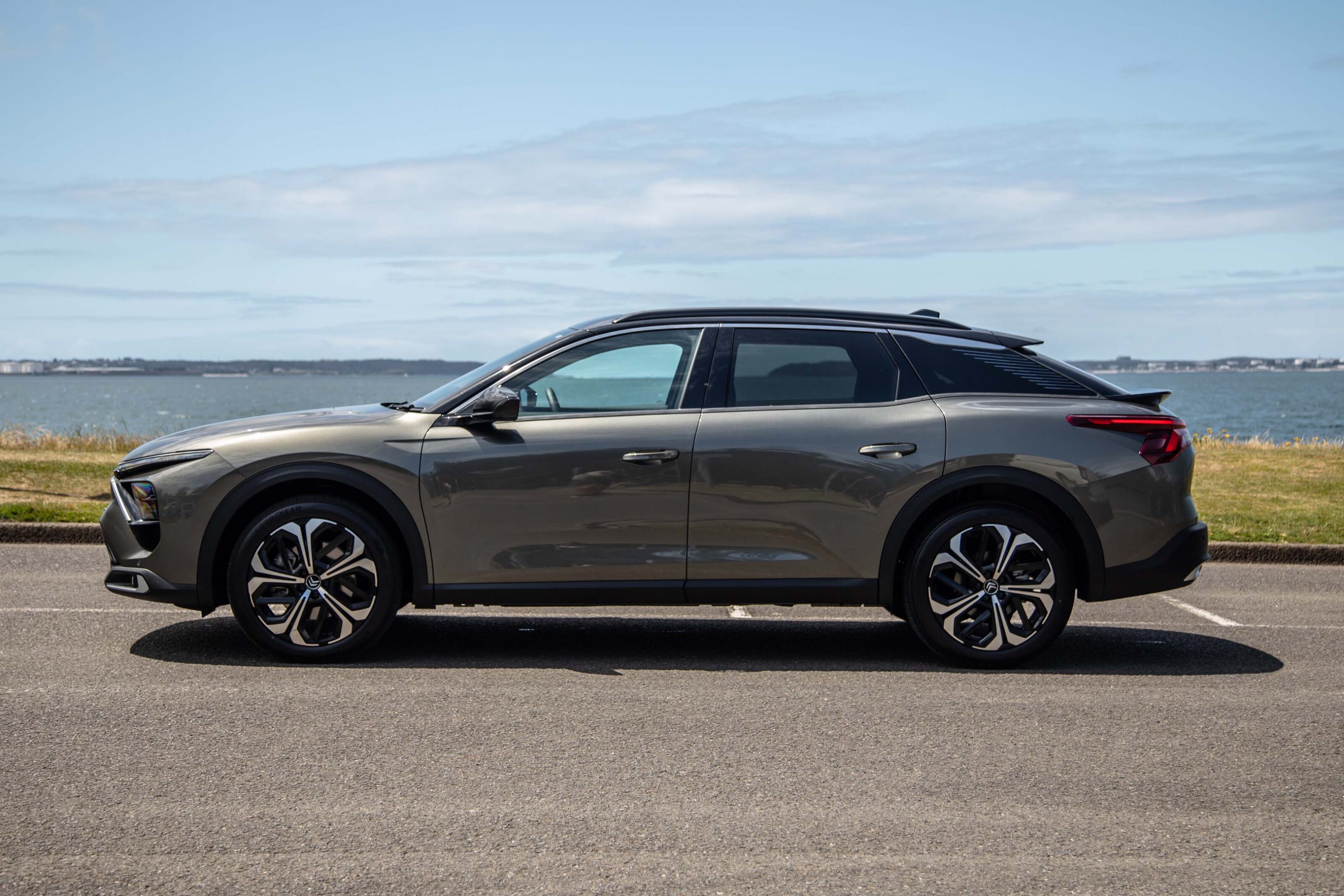
The C5 X is a properly weird car. Is it a wagon? Is it a five-door coupe? What is the point of it? Does all that matter once you step inside?
As the seemingly unquenchable thirst for SUVs continues, some car companies haven’t forgotten the sedan. And thank goodness for that, even if the C5 X isn’t strictly one of those.
In fact, with an X in the name, you rather suspect there’s a little marketing trickery going on to convince you it’s something you think you want.
JUMP AHEAD
- How much is it, and what do you get?
- How do rivals compare on value?
- Interior comfort, space and storage
- What is it like to drive?
- How is it on fuel?
- How safe is it?
- Warranty and running costs
- VERDICT
- Specifications
How much is it, and what do you get?
Not to put too fine a point on things, but $57,670 before on-road costs for a Citroen C5 X is a lot of money when the Kia Stinger exists, probably its only non-French rival.
You do get a fair bit of kit, though.
| 2023 Citroen C5 X features | |
|---|---|
| 19-inch alloy wheels | Reversing camera |
| Dual-zone climate control | DAB+ digital radio |
| 7.0-inch digital dashboard | Keyless entry and start |
| 12.0-inch media screen | Heated leather steering wheel |
| Leather interior | Adaptive cruise control |
| Sunroof | Speed sign recognition |
| Heated, power-adjustable front seats | Auto LED headlights |
| Head-up display | Auto wipers |
| Eight-speaker stereo | Power tailgate |
| Wireless phone charger | Wireless Apple CarPlay |
| Satellite navigation | Wireless Android Auto |
| Front and rear parking sensors | Space-saver spare |
| Around-view cameras | |
The new media system is way better than the old one and also has Citroen’s Connected Services package. Free for three years, it updates maps monthly and keeps you up to date with fuel prices, live traffic alerts from TomTom and will find you a car park.
Its new screen is crisp and clear and the reversing camera is now usable rather than the murky nonsense of the older one found on Citroens (and Peugeots).
Were the digital radio interface not so irritating it would be even better but wireless Apple CarPlay and Android Auto connectivity is most welcome.
How do rivals compare on value?
The most obvious rival is the car with which the C5 X shares a great deal – the frankly stunning Peugeot 508.
It does require rather a larger investment than the Citroen at $63,341 before on-road costs for the GT Fastback, but it’s pretty loaded and drives very nicely indeed.
In fact, it has the same driveline and also (if you’re really going to town) shares the same plug-in hybrid driveline with the upcoming C5 X PHEV. The wagon is another $2200-odd.

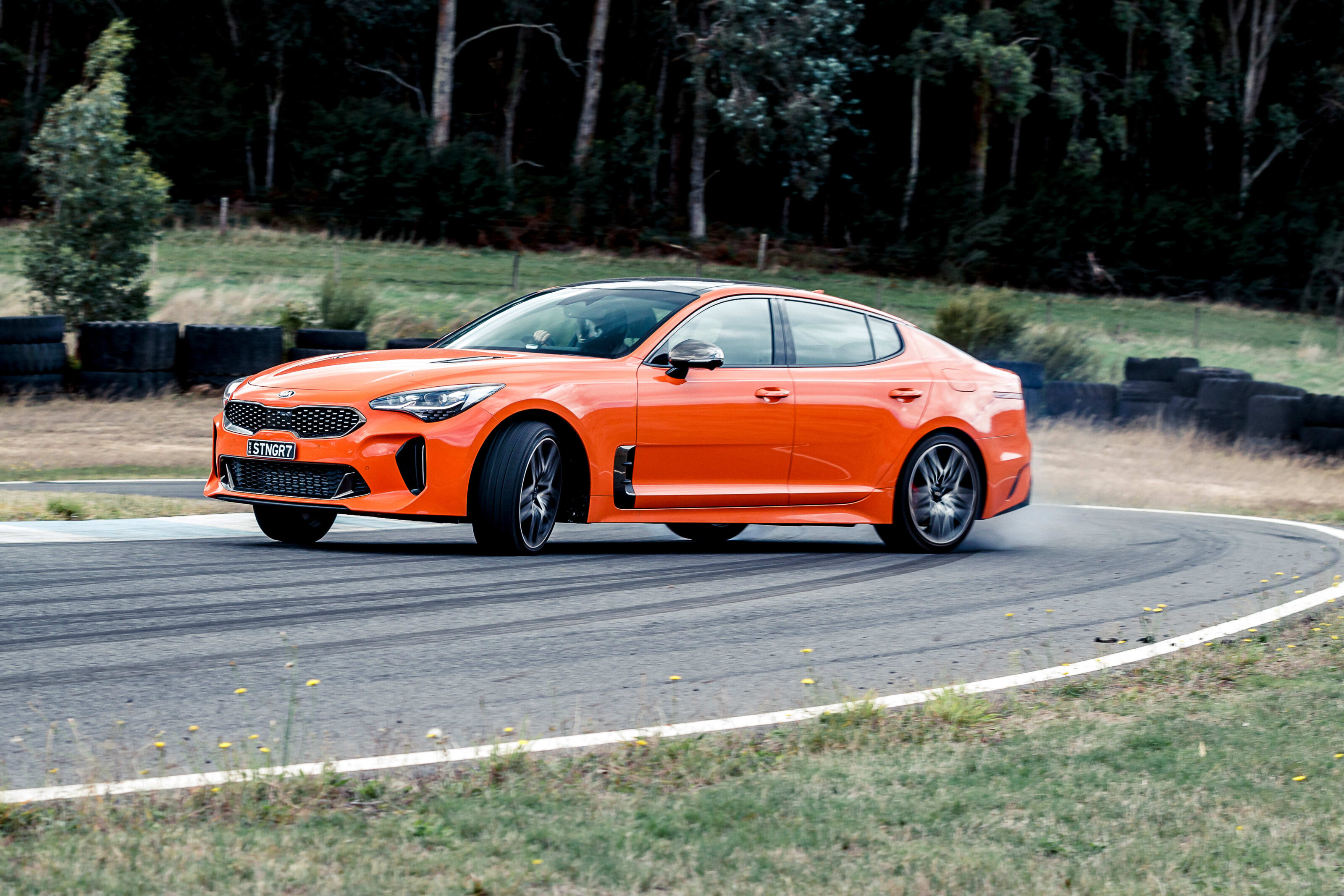
Kia’s much-loved Stinger, believe it or not, comes in versions that don’t have a twin-turbo V6 and are quite nice too. While not as quirky outside or cool inside, they do drive very well and have better steering, courtesy of rear-wheel drive.
The Stinger range starts at around $51,250 (before on-road costs) for the 200S. While the Stinger isn’t a wagon, the C5 X isn’t technically a wagon either.
Interior comfort, space and storage
Citroen does really interesting interiors. I know that’s not news to a lot of people, but then a lot of other people saw their stuff earlier this century and asked, “Do they, though?”
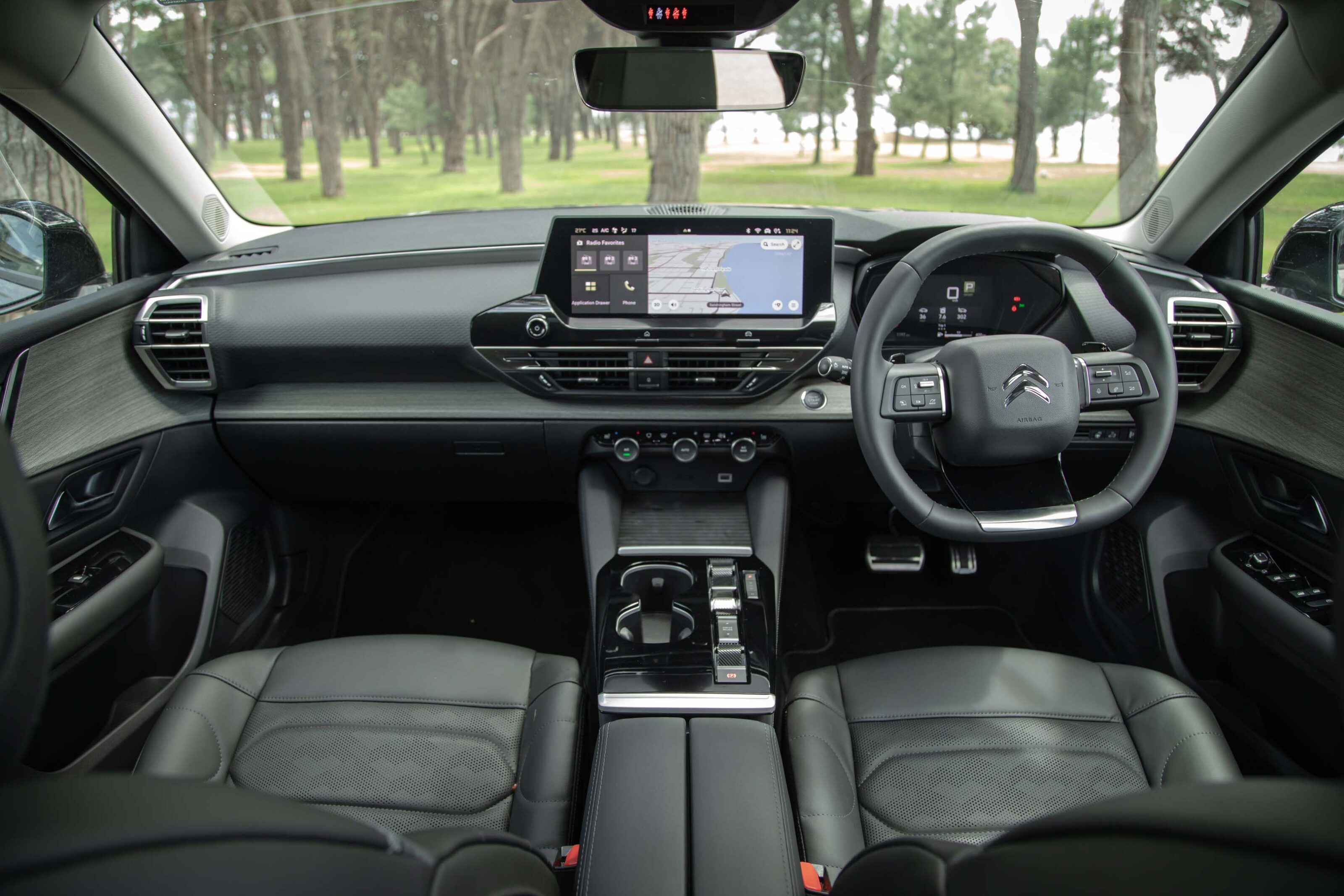
They’ve been back on form since the launch of the Cactus, without going completely insane. Like the Cactus, the C5 X has a lot of interesting design features in what would otherwise be a fairly dull interior. That’s what makes the difference.
Broad and comfortable front seats, in the current Citroen way, have perforated leather and a kind of strapping effect stitched in. Look closely and you’ll see a chevron pattern in the perforated sections.
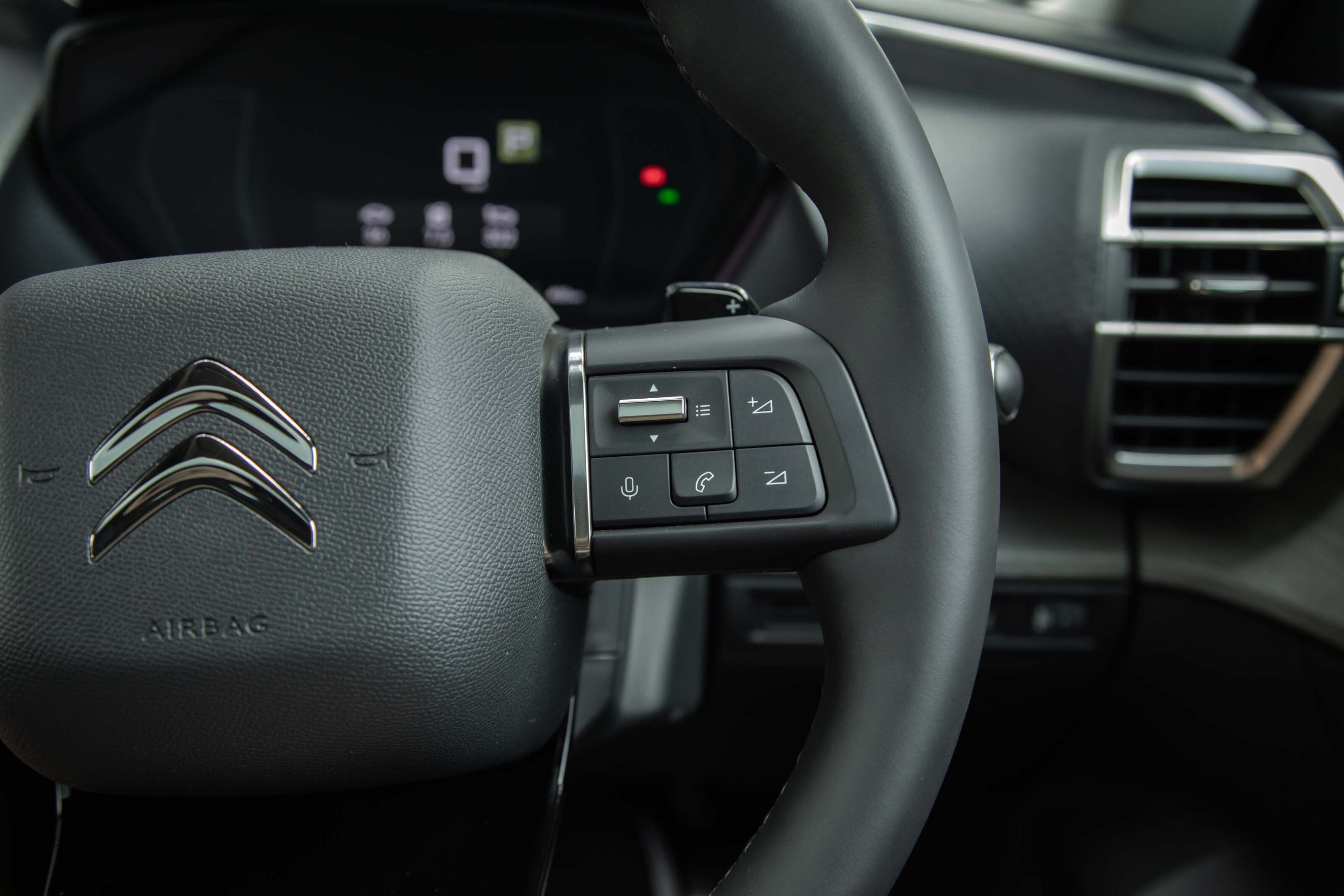
There is a lovely slab of textured plastic across the cabin which adds a nice visual feel to the dash. The texturing is, again, made with chevrons. There aren’t many buttons, which is nice, although a proper shifter would be more welcome than the tiny Golf-like rocker.
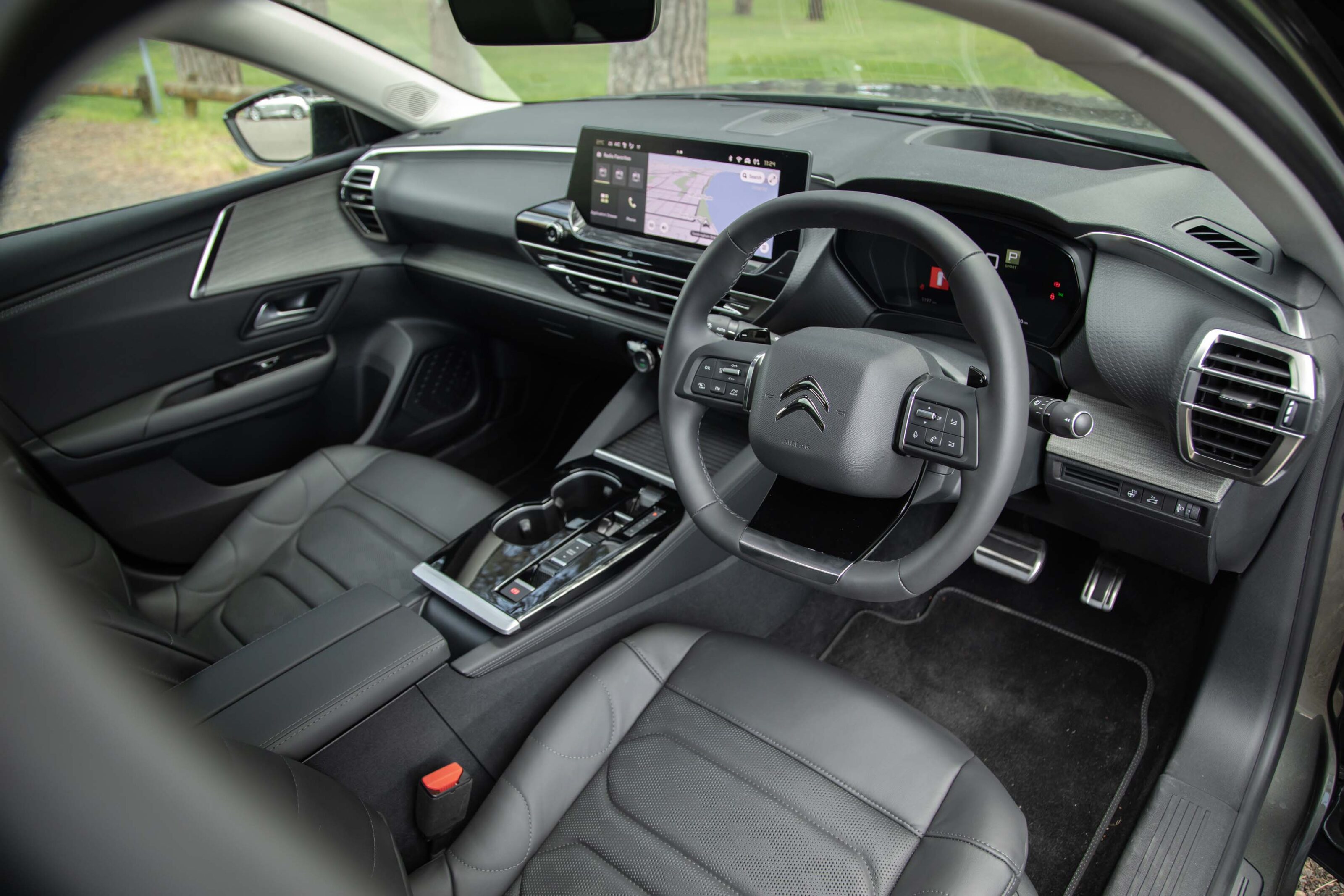
You get bottle holders in the doors, a pair of cup holders on the console and the armrest has a split opening to access the storage underneath. The armrest is a bit low and I had to crank the seat right down to make it work.
Which was fine because the now-signature squared-off steering wheel has a big range of movement. The big screen is a sight to behold in a French car but the configurable dashboard could be a lot less annoying and more like sister brand Peugeot’s.
The back seats feature a lot of leg and shoulder room, but I’d like to see the sunroof made an option because it does knock out a bit of headspace (and adds cost). You get a pair of USB-C chargers to go with the two in the front and there are air vents.
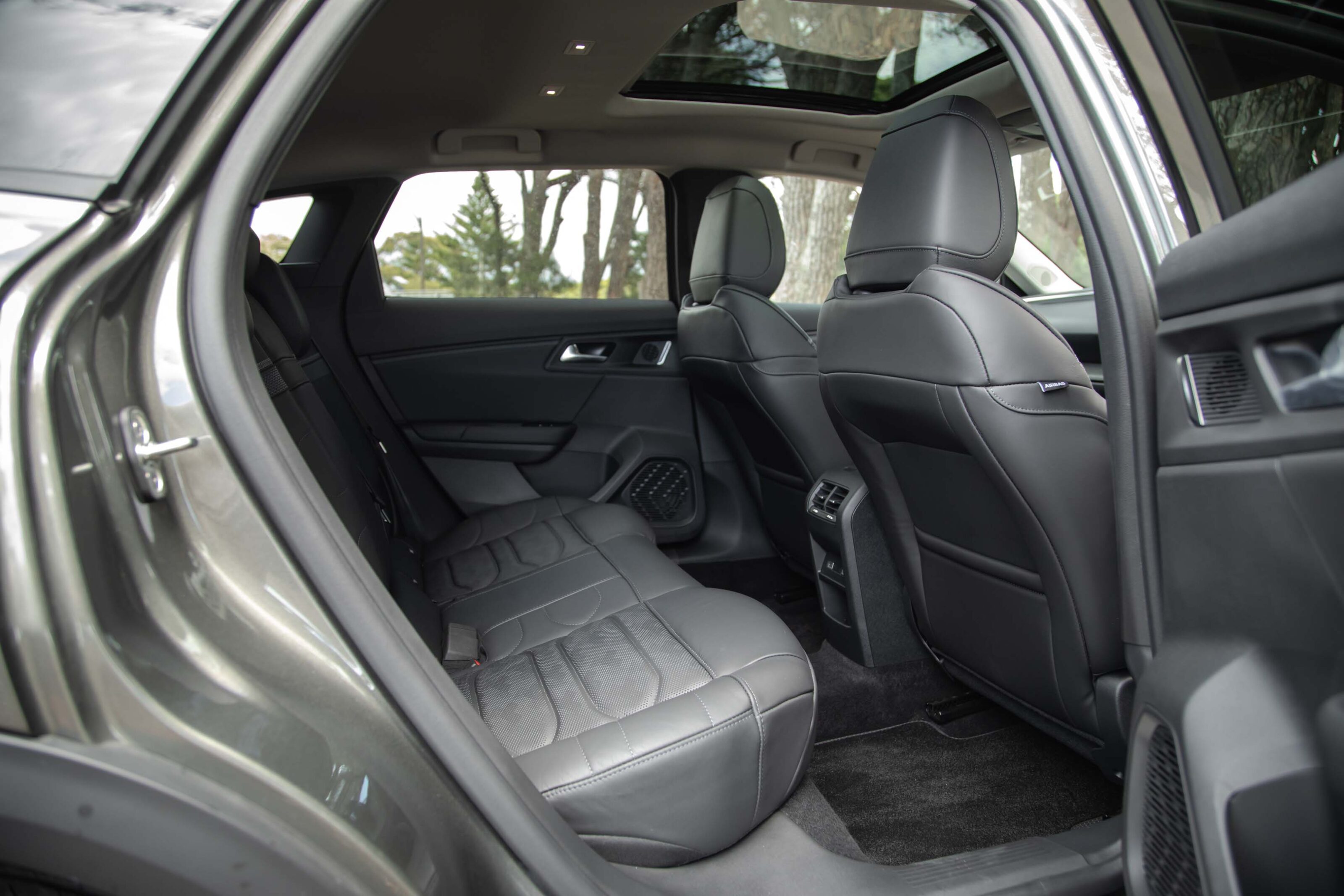
In a fairly solid self-own, this reasonably expensive car does not have a rear armrest, which I find deeply strange. So you’ll have to keep yourself upright on a long journey like it’s 1980 or something.
Citroen C5 X boot space
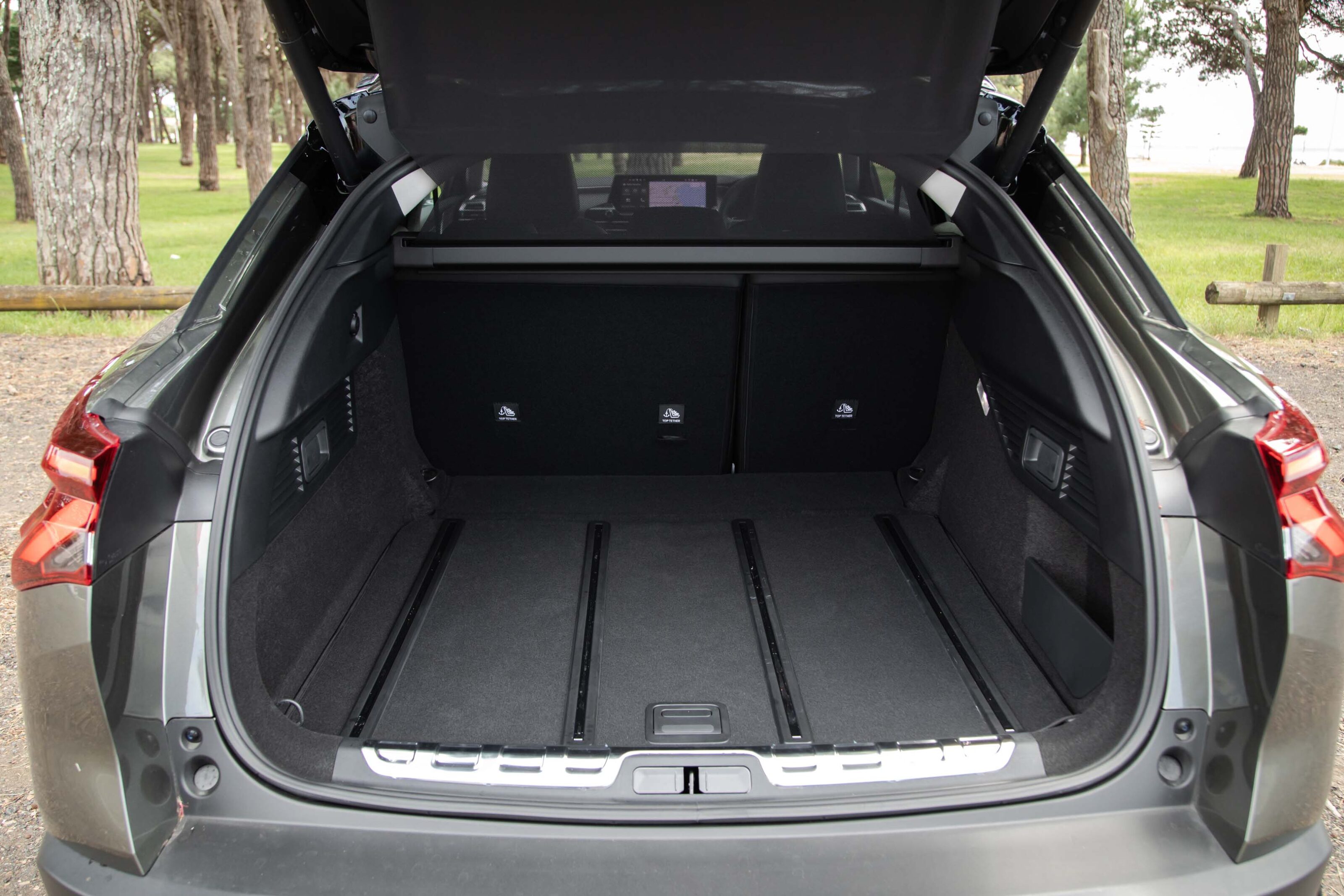
Boot capacity starts at a pretty decent 545 litres and it’s a really nicely laid-out space, that has no intrusions and a flat floor with rails built-in.
Drop the 60:40 split-fold rear seats and you have 1640 litres, which is again pretty decent. Both figures are higher than the criminally under-bought C5 wagon of old.
What is it like to drive?
| Drive: | front-wheel |
|---|---|
| Engine: | 1.6-litre 4-cylinder turbo-petrol |
| Transmission: | 8-speed automatic |
| Power: | 133kW @ 5550rpm |
| Torque: | 250Nm @ 1650rpm |
Ah, the French.
For a while there, they lost the plot. Got too boring, too GFC-ey, too busy trying to be dull and dependable but only being good at dull and no good at dependable. I’m not bitter about the mid-2000s through to about 2012. Pas du tout.
Things have clearly changed. The old C5 – while a good car – was largely ignored, as are most large French cars, sometimes even in France. That’s a real shame, too, because I think this C5 X, a car that defies a neat little box, is all that can be good about French cars.
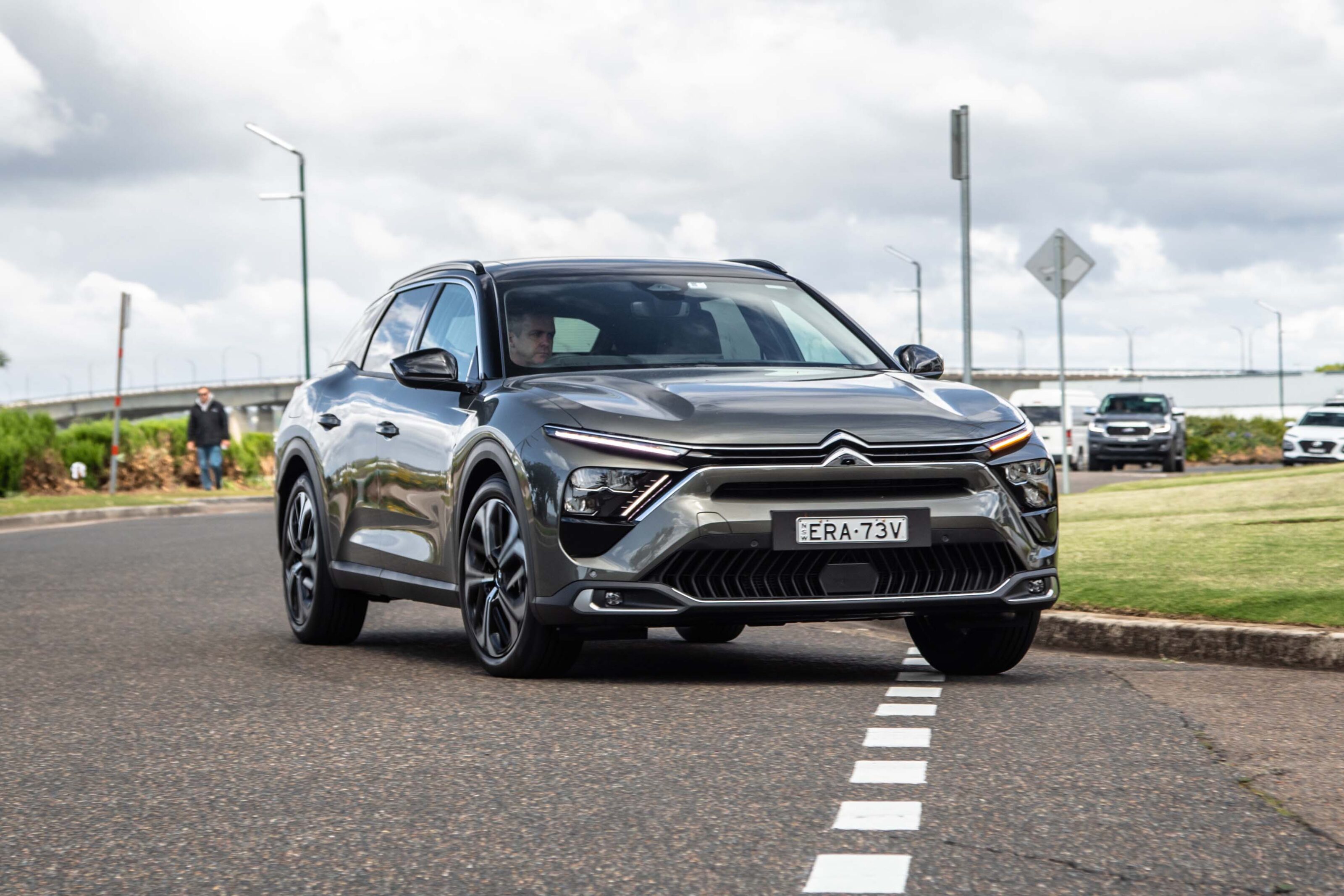
This style of car – and I don’t mean looks or form factor – is largely absent from the market. While I love a sporting drive in anything, it seems that’s where everybody has landed, chasing the BMW vibe rather than forging their own path. Not the C5 X. This car, like the C3, is all about comfort, from the front seats to the steering to the ride quality.
I love the way this car goes about its business. In yet another stressful week packed with health drama – seriously, this pandemic can just bugger off and leave us all in peace – it was an ocean of calm as I navigated my way from chemist to supermarket to home. The ride is super supple, the steering feel-free and light (on purpose) and the cabin hushed.
That said, it’s also pretty good on the B-roads, handling all of the nastiness of crumbling bitumen with ease. Even though it’s fairly soft in the suspension, it’s got a pretty good change of direction, and that came in handy on said B-roads which were littered with large tree branches shaken free during a windy week.
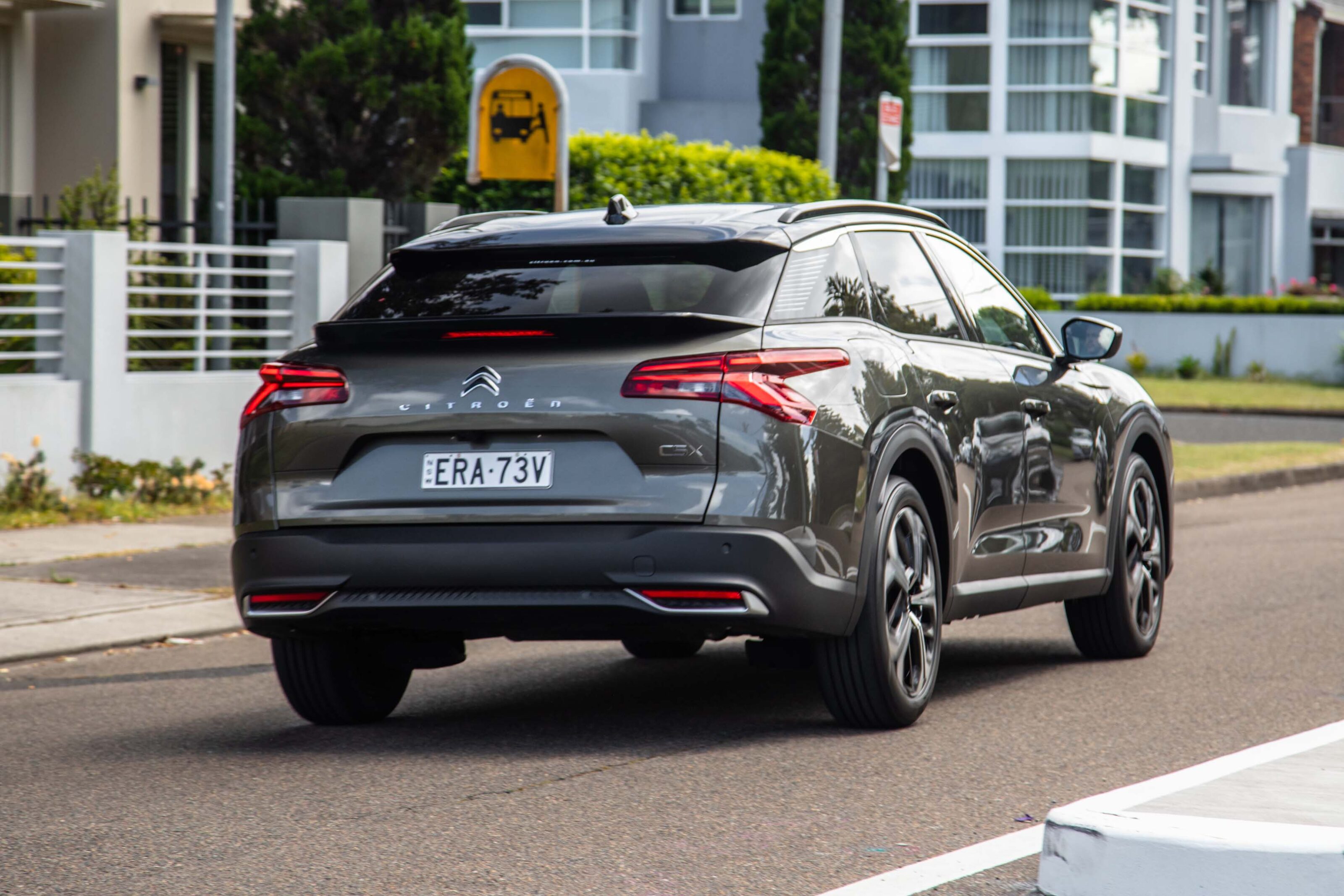
Along with the superbly comfortable seats, plenty of forward vision and all the driver aids doing their thing without trying to break your wrists (I’m looking at you Hyundai and Kia), it’s a great car to get away from the urban hustle even if you’re in the urban hustle. All it needs to be is electric and the job is done.
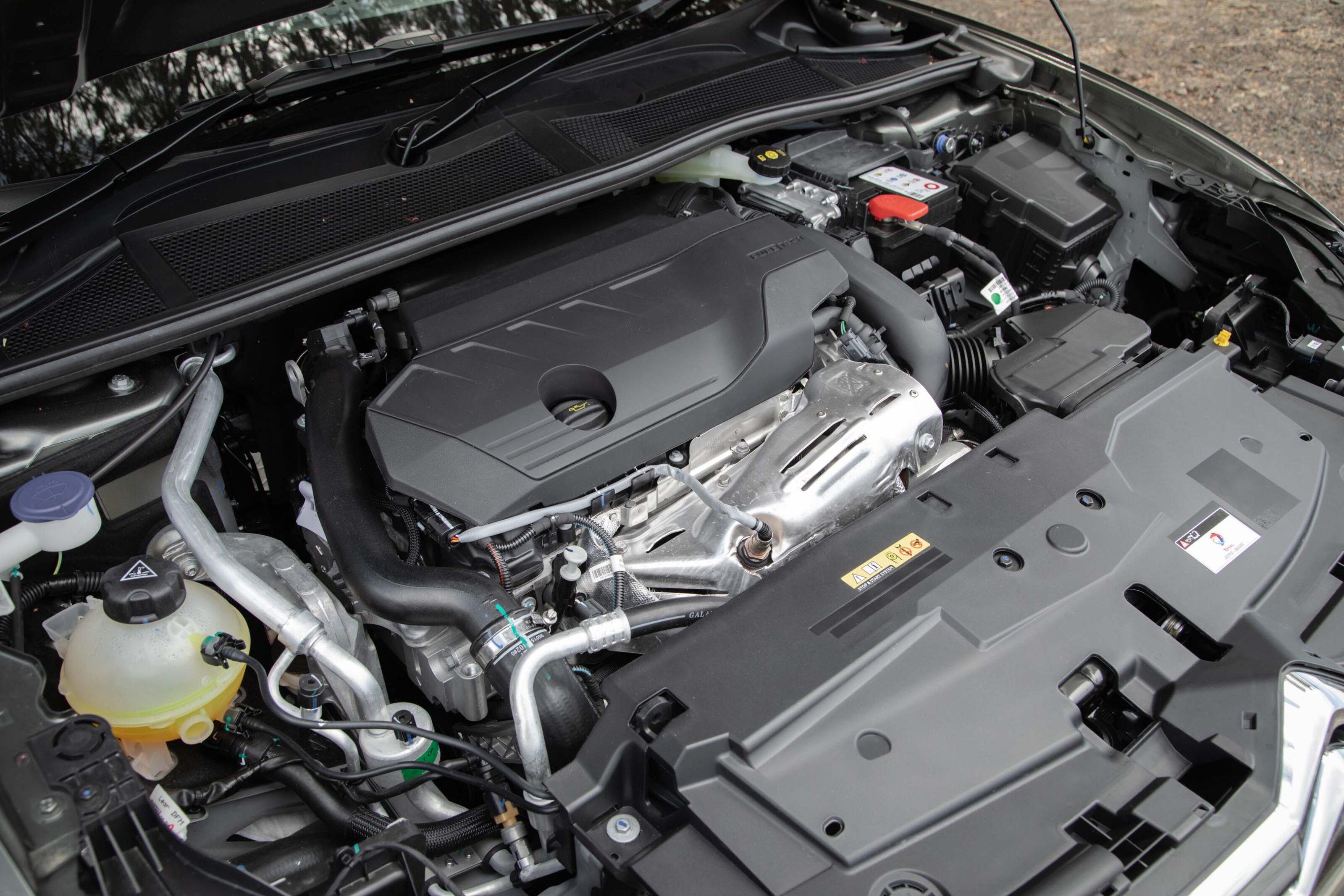
Which brings us to the only thing to crack the illusion – the dimness of the eight-speed automatic transmission. Although familiar from other cars in the wider Citroen/Peugeot family where it behaves largely impeccably, in the C5 X, it’s decidedly not bright.
You get a lot of roll-back when you’re trying to get moving and it takes forever to wake up from stop-start, which proved difficult if not impossible to switch off. This is a huge shame because the 133kW 1.6 turbo-petrol is a belter of an engine.
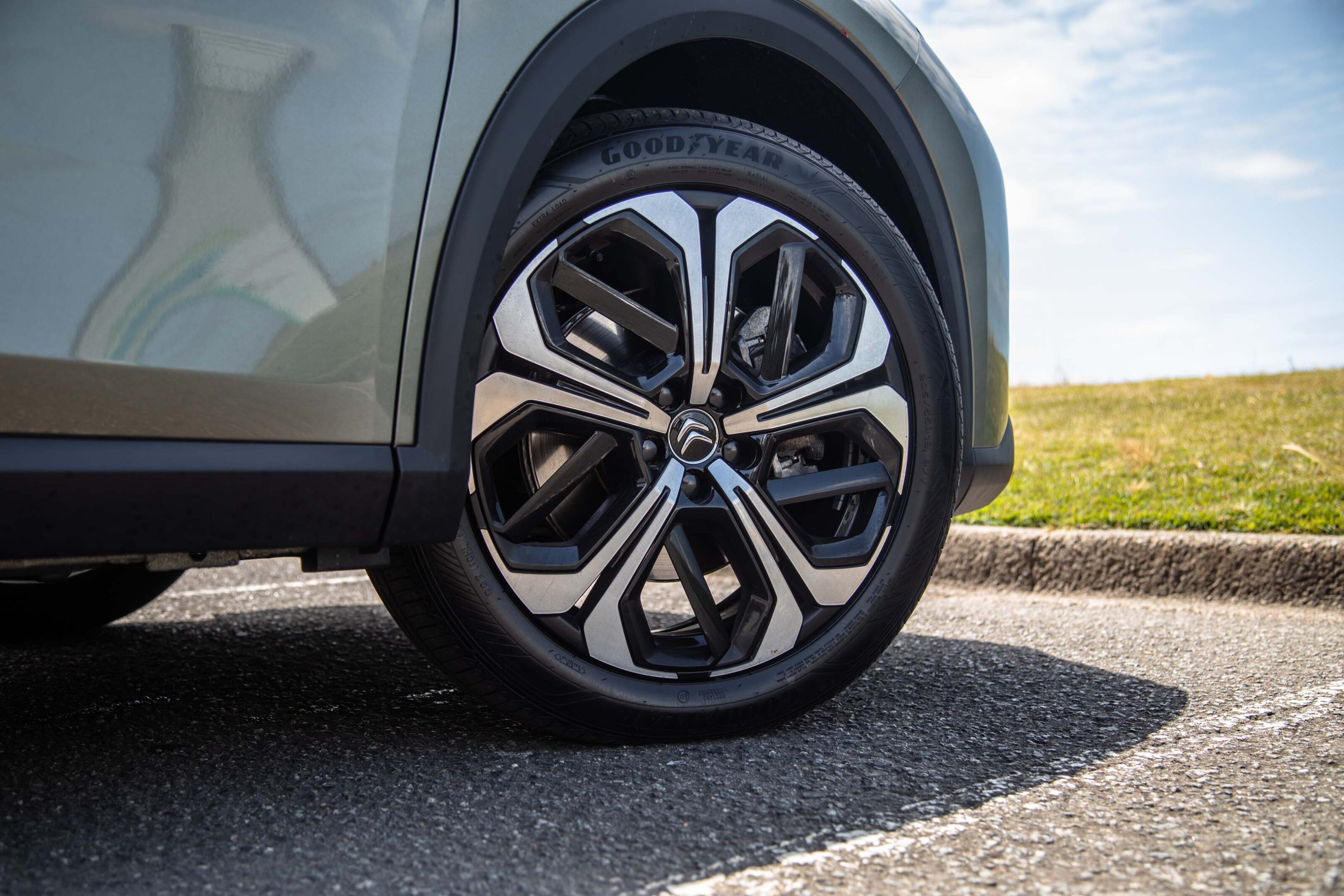
It’s so smooth, with a linear power delivery masked by the twin-clutch feel of the eight-speed and the fact all 250Nm of torque arrives at just 1650rpm.
How is it on fuel?
| ADR combined cycle | 6.0L/100km |
| As tested (trip computer) | 7.5L/100km |
| Fuel type | Petrol, 95 RON |
| Fuel tank | 52 litres |
With a fairly aggressive stop-start and an already quite efficient engine, it was very nice to see 7.5L/100km on the trip computer, given the errand-running nature of my week with the C5 X.
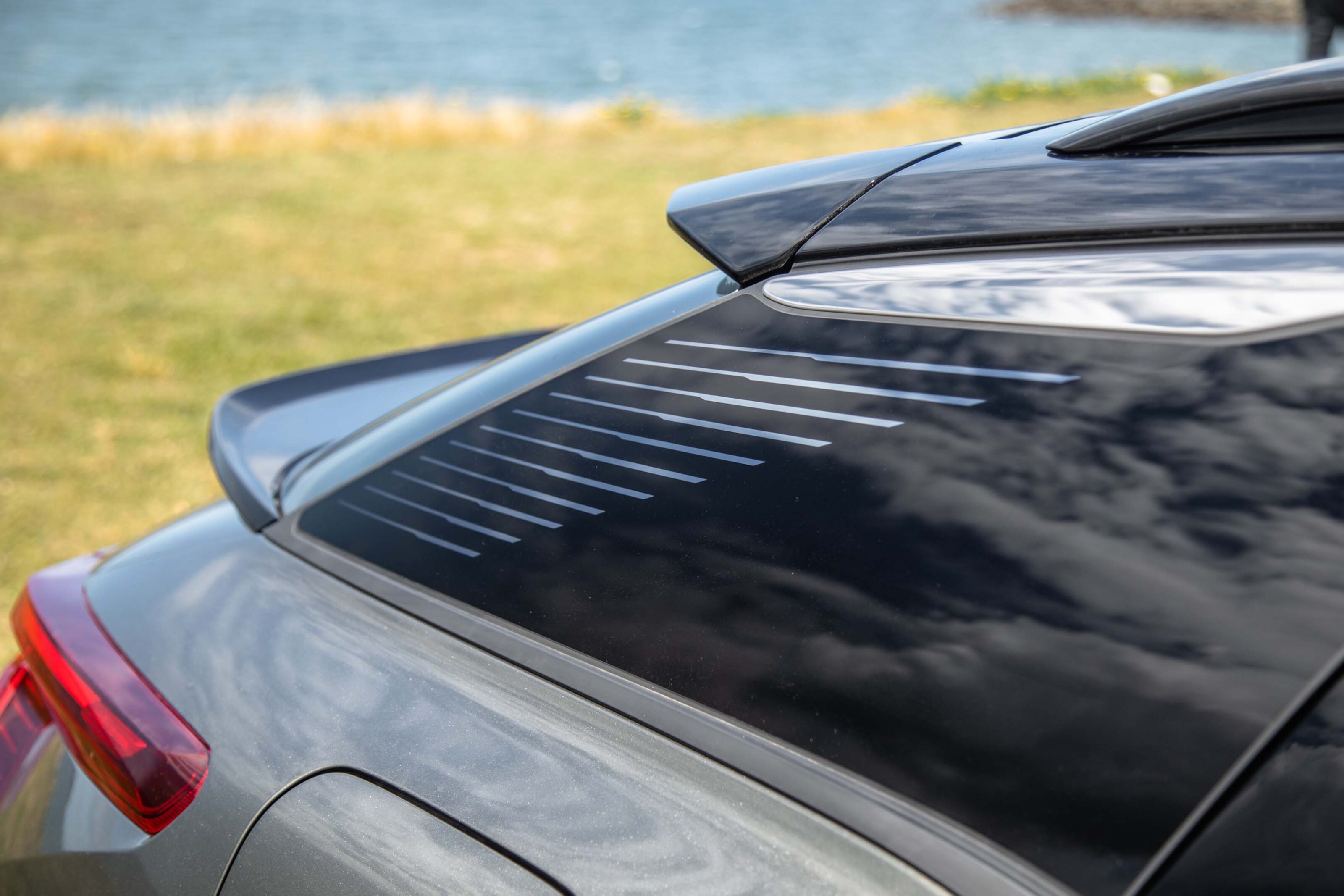
I was able to blag a couple of hours to myself, so ran it down the M1 to Stanwell Tops and then back through some twisting back roads.
How safe is it?
The C5 X is yet to receive either an ANCAP or Euro NCAP safety rating.
It comes with a reasonable level of safety tech, which is pleasantly unobtrusive on the move, though the list is far from comprehensive given the price of the car.
| 2023 Citroen C5 X safety | |
|---|---|
| Six airbags | Adaptive cruise with traffic assist |
| ABS | Multi-collision braking |
| Stability and traction control | Active bonnet |
| Reverse cross-traffic alert | Driver attention detection |
| Reversing camera | Two ISOFIX points and three top tether anchors |
| Forward AEB with low-light pedestrian and cyclist detection | Forward collision warning |
| Lane-keep assist | Blind-spot monitoring |
| Lane positioning assist | |
Warranty and running costs
Citroen offers the pretty much industry standard warranty coverage of five years and unlimited kilometres, with five years of roadside assistance.
Servicing is required every 12 months or 15,000 km and the first five services are subject to a capped-price maintenance regime. It’s not what you’d call a bargain, running at $444, $722, $444, $743 and $465 for a total of $2818 over the five. That’s an average of $563 per year. Not extravagant but not cheap.
VERDICT
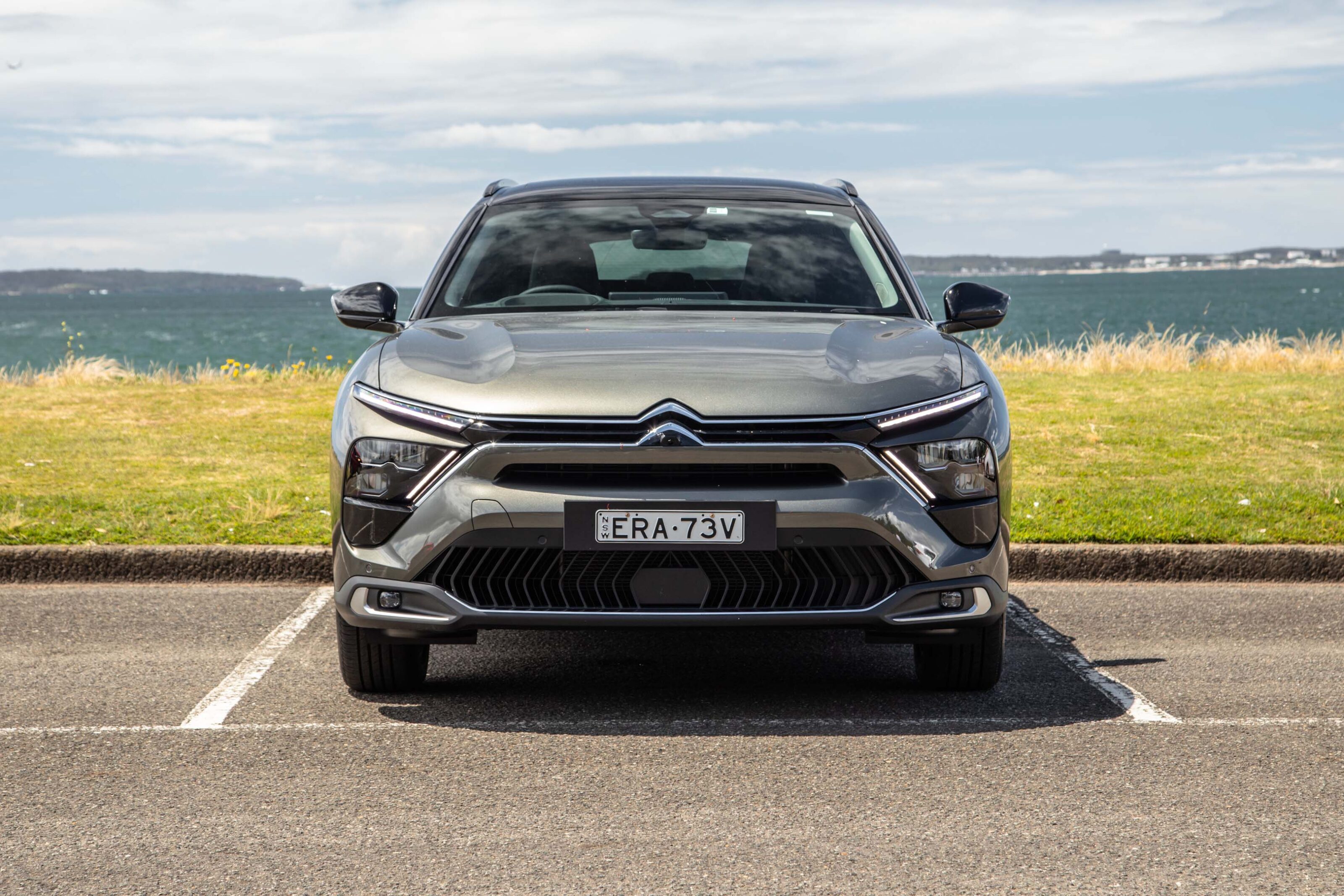
At first glance, the C5 X is another weird French car. And it is. But the French bit is key, because the execution is excellent.
It’s kind of funny that this segment used to be one of the most conservative but as time goes on and the SUV market continues to flourish like sepsis, car-makers are having a bit of fun with what has become the contrarian’s car of choice.
Citroen appears to be having a lot of fun as the yin to the Peugeot 508’s yang, while being fundamentally the same car underneath. I like that there is so much differentiation from a common platform and that two different teams have built such different cars.
But what I like is just how comfortable it is and I dreamt of pointing it at a little place we know in the Snowy Mountains, knowing we would arrive fresh as daisies.
2023 Citroen C5 X Shine specifications
| Body: | 5-door, 5-seat large wagon |
|---|---|
| Drive: | front-wheel |
| Engine: | 1.6-litre 4-cylinder turbo-petrol |
| Transmission: | 8-speed automatic |
| Power: | 133kW @ 5550rpm |
| Torque: | 250Nm @ 1650rpm |
| Bore stroke (mm): | 77 x 85.8 |
| Compression ratio: | 10.5 : 1.0 |
| 0-100km/h: | 8.1 sec (claimed) |
| Fuel consumption: | 6.0L/100km (combined) |
| Weight: | 1439kg (tare) |
| Suspension: | MacPherson strut front/multi-link rear |
| L/W/H: | 4805mm/1865mm/1490mm |
| Wheelbase: | 2785mm |
| Tyres: | 205/55 R19 |
| Wheels: | 19-inch wheels (space-saver spare) |
| Price: | $57,670 + on-road costs |
Our dearly departed sister magazine, MOTOR, ran an annual performance car championship called ‘Bang For Your Bucks’ (or BFYB for short), comprehensively testing, assessing, and crowning the best affordable performance cars on the Australian market each year.
By the virtue of time, however, some of the competition’s winners have become renowned as genuinely excellent (but not-so affordable) driver’s cars, while some that didn’t find BFYB glory have come into their own as good secondhand ownership prospects.
Of course, any list like this will have an element of subjectivity to it, so if you think there’s anything that should’ve been included, hit us up in the comments at the end of the article!
Nevertheless, according to the passionate teams of yore, near countless hot laps, shredded tyres and years of dedicated testing, these were the best affordable performance cars available during the 2010s.
Any Holden VF/VFII Commodore SS
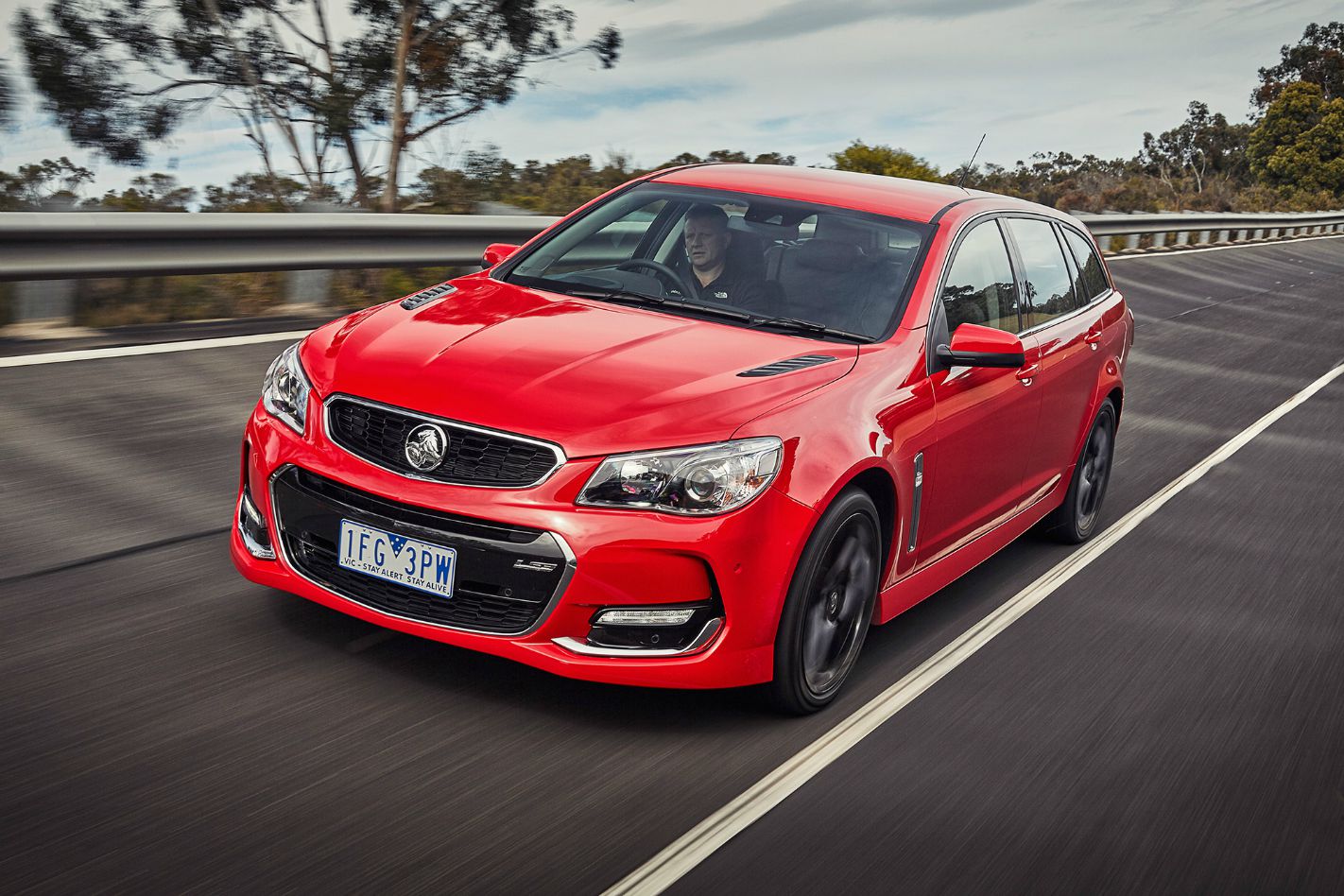
- New: $44k (manual ute) to $64k (auto Motorsport Edition)
- Now: $30k (2013 models, around 200,000kms) to $120k (Redline Editions, under>100,000kms)
BFYB results
Standard SS ute took 1st place in $0-50k and SS-V Redline ute took 2nd place $50-100k in 2017. SS-V Redline sedan 2nd outright in 2016, while SS ute took 1st for $0-50k.
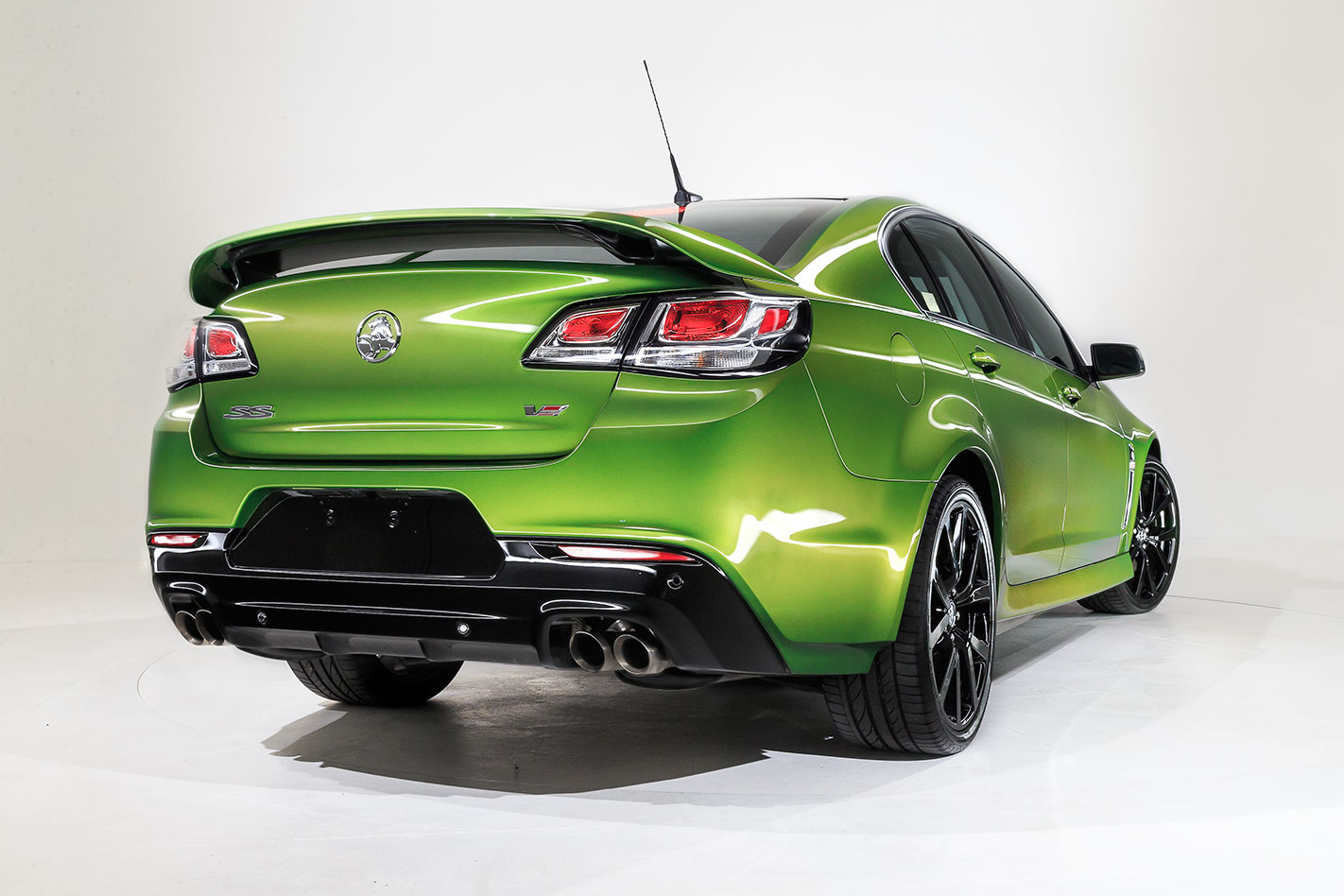
Why?
After the demise of the local car industry, and subsequent car collecting craze that peaked during Covid lockdowns, the once-humble SS has transcended far beyond a cheap and cheerful used performance buy.
Tired old cars that used to cost $15k now begin at $30k, but access to that V8 (the 6.0-litre in the VF is great, but the VFII’s 6.2-litre LS3 is a beautiful thing) is an experience you can buy fewer and fewer of these days.
At the pointy end of the market, there are a lot of dreamers who clearly bought last-run cars, have kept them wrapped in cotton and are waiting to cash in. With all this talk of rising interest rates and recession, buy the best one you can – but be wary over overcapitalising.
Ford Fiesta ST (2013–2018)
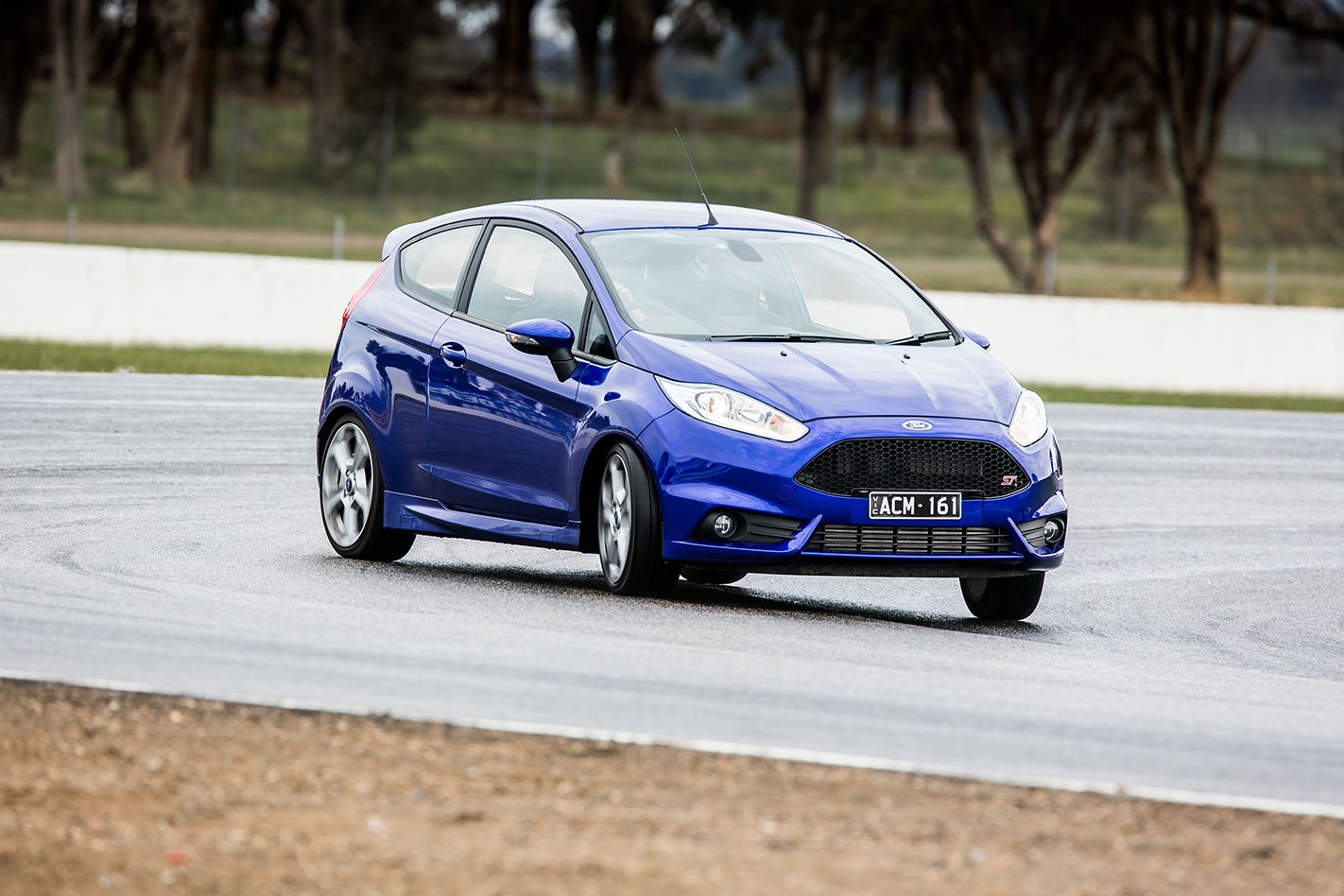
- New: $27,500 (in 2017)
- Now: $12k to $30k
BFYB results
Outright winner in both 2014 and 2015. Returned in 2016 to take 5th in the $0-50K category.

Why?
Ford’s pint-sized Fiesta ST has always remained one of MOTOR’s perennially favourite cars, especially the old WZ-generation which bundled a punchy 1.6-litre turbocharged four-cylinder with cool three-door styling, and a tremendously playful – if spiky, at times – chassis that delivered big bags of fun at virtually any speed.
It’s sub-$30k asking price (when new) saw the featherweight punching well above its weight.
Toyota 86 or Subaru BRZ
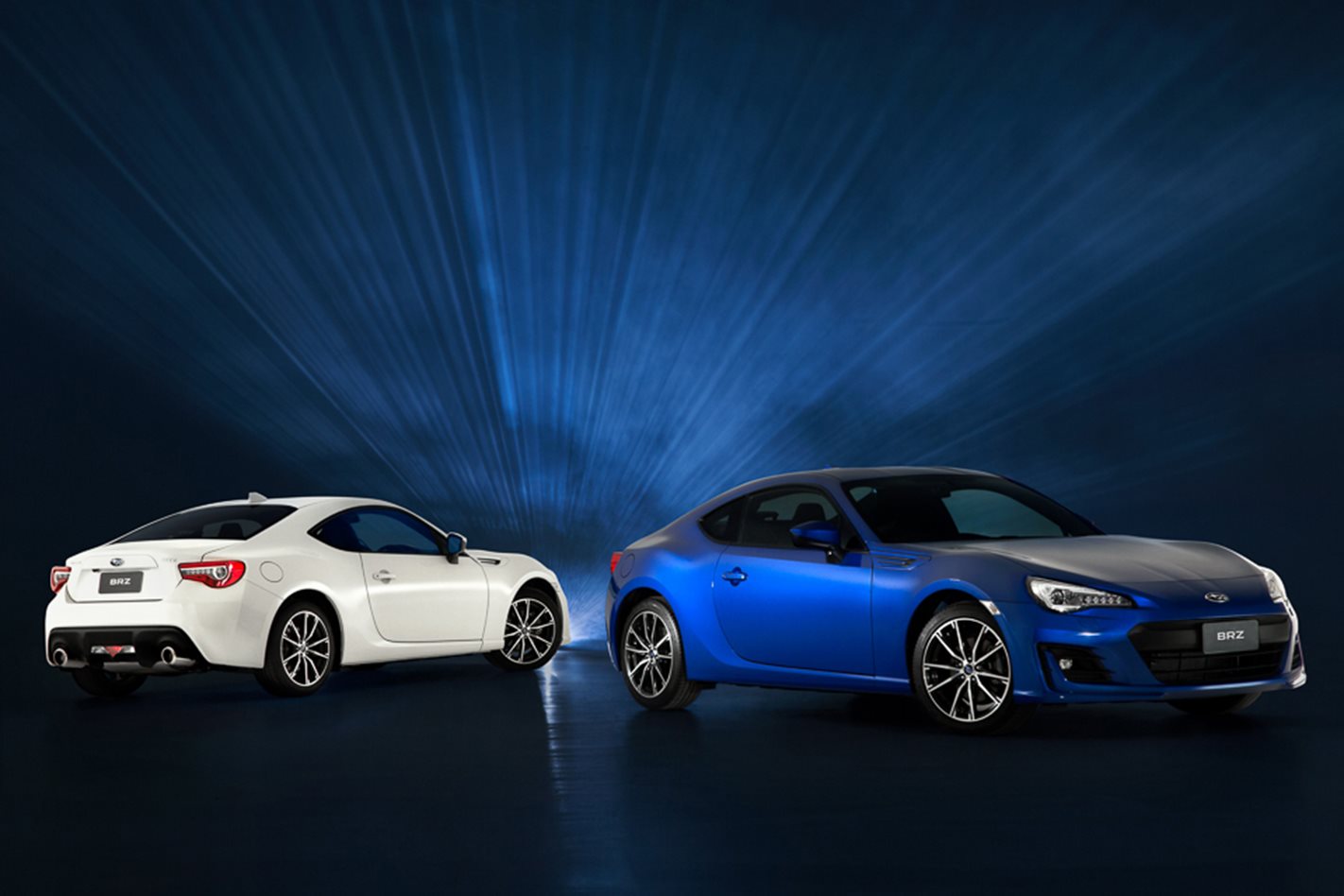
- New: $31.5k (manual GT) to $39k (auto GTS)
- Now: $18K (early manual with high KMs) to 50K (near-new auto GTS)
BFYB results
Took 5th in 2017; 14th in 2018 as a $39,400 GTS Performance Pack. Judges always rated it highly.
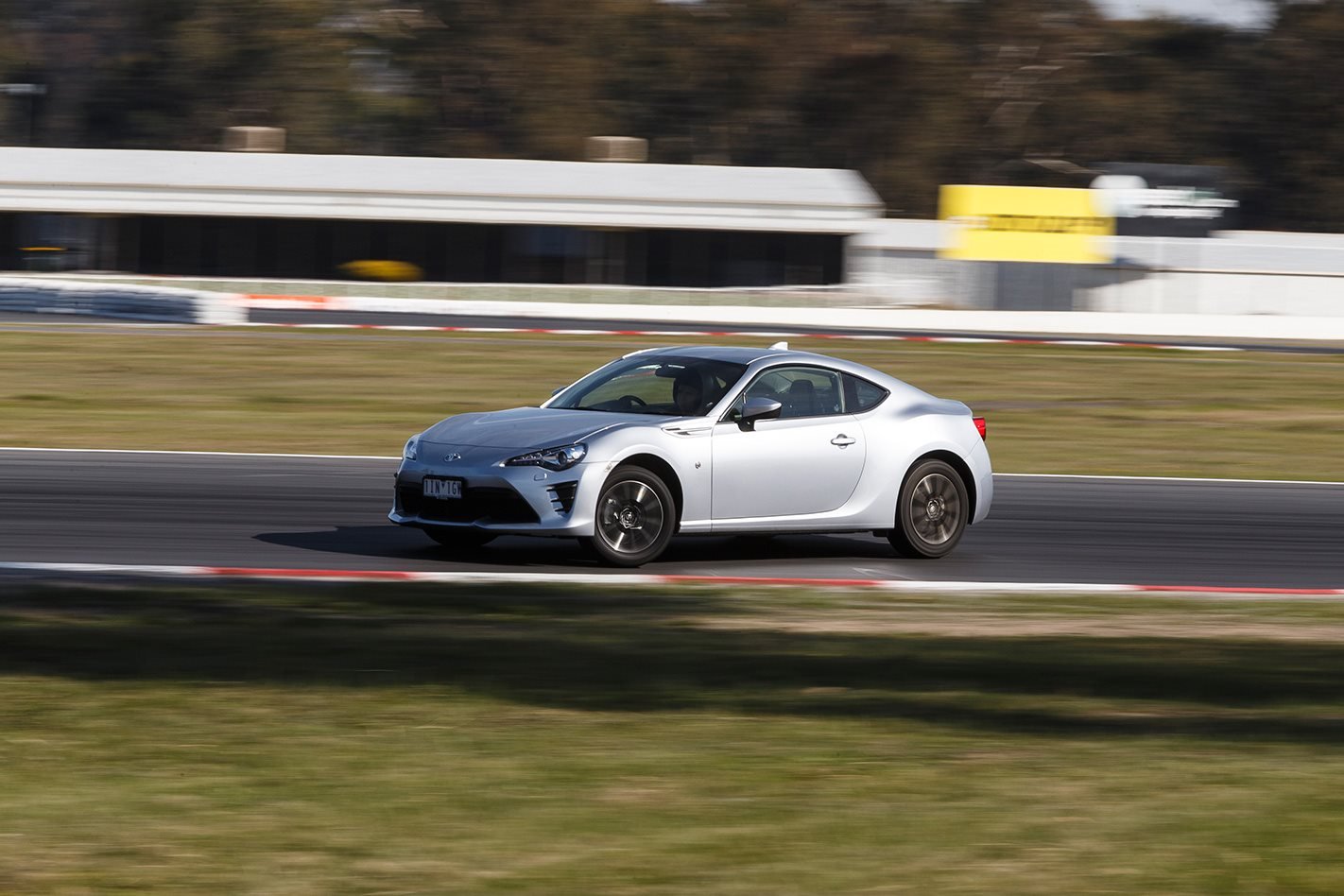
Why?
Okay, so the BFYB numbers aren’t really in the 86’s favour, but that mostly comes down to the fact it’s just not a very fast car. What it is, however, is incredibly fun. So much that one judge gave it a podium vote both years it competed, and the others had it 4th or 5th.
It’s a car that had earned a significant place in every conversation about ‘fun’ cars in the old MOTOR office, and for good reason. Get yourself the basest, cheapest one you can (in good condition) and give it a decent set of rubber, and maybe some more aggressive brake pads, and you’ve got one of the best entry-level track cars for the money.
Renault Clio IV RS

- New: $29,290 (RS200, 2015); $39,990 (Trophy, 2016); $30,990 $32,490 (Cup, 2019)
- Now: $14K (Sport) to $24K (Trophy)
BFYB results
1st place in $0-50K and 2nd overall in 2015 as RS200. 5th place in $0-50K as more expensive Trophy in 2016.

Why?
The Renault Clio RS wasn’t a particularly expensive car but it was relatively quick and huge fun on a twisty road or on a race track. Brutal BFYB algorithms liked the Clio RS. We like the Clio RS.
Okay, when it was new, some did think it to be a tad pricey for the car you get (a small hatch with very basic features) but, as a used buy, there’s simply not much you can get for under $20k any more that delivers a driving experience with this much polish and poise.
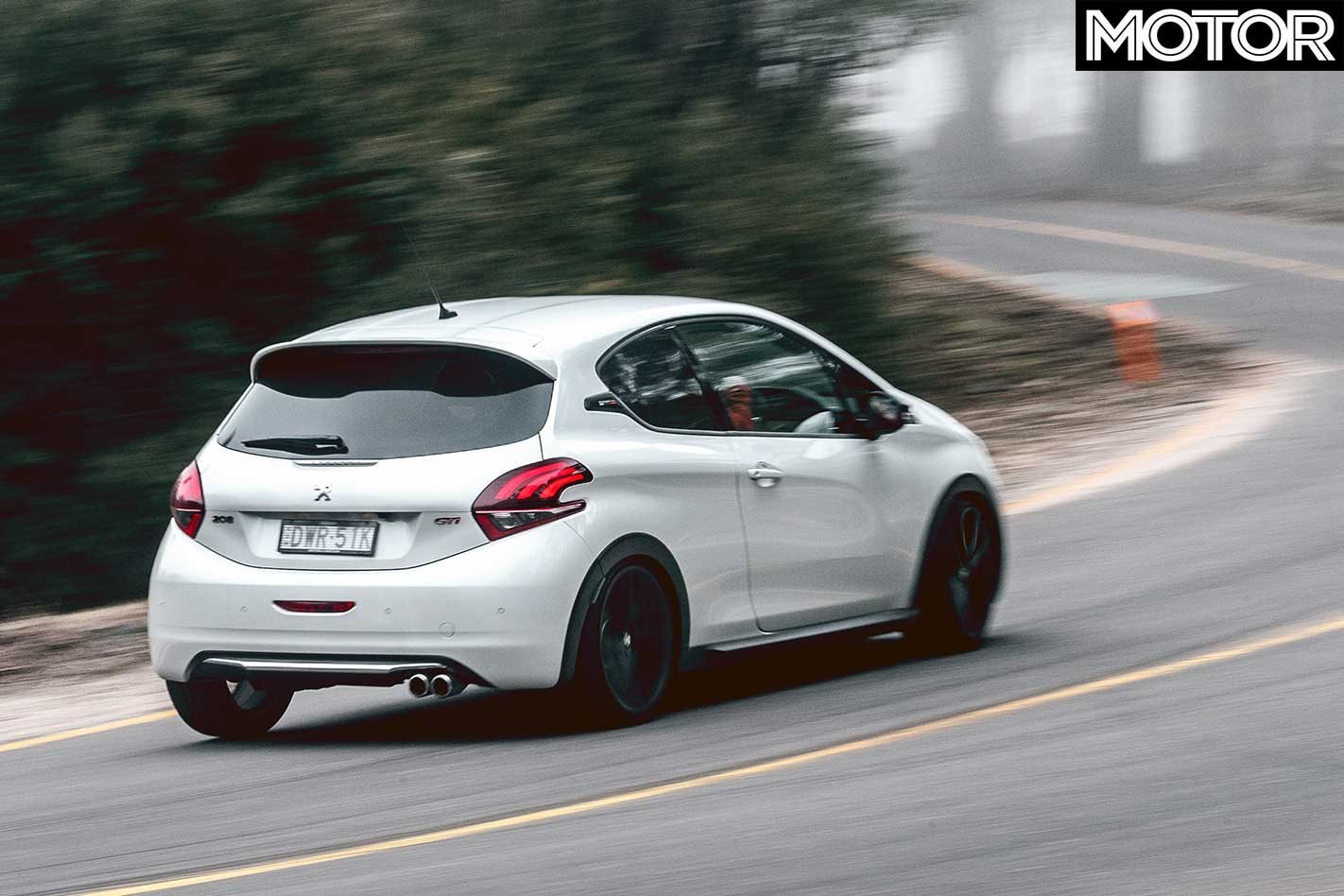
Peugeot 208 GTi (2012-2018)
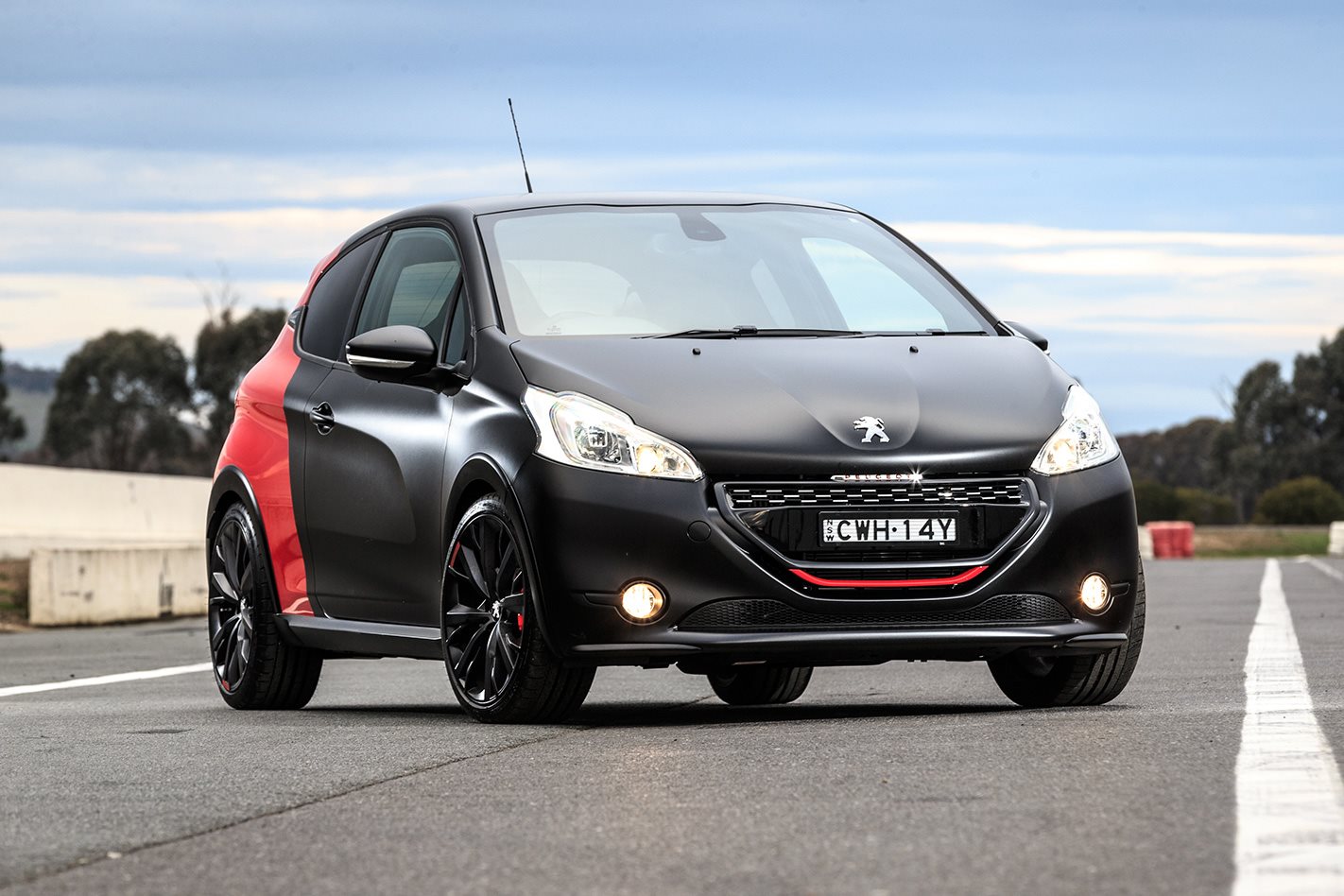
- New: $29,990 (2015) or $35,990 (30th Anniversary, 2016)
- Now: $12-18K (standard) or $40,000 (30th Anniversary, one example found)
BFYB results
5th in $0-50K category, 2015. 2nd place in $0-50K category in 2016 as 30th Anniversary Edition.
Why?
Much like the Clio, the low-cost, high-fun 208 GTi provided a convenient but stylish little package to both live with and thrash on the weekend.
There are a handful of candidates on the used market, with a very affordable buy-in at the lower end – but you’ll have to stretch to a 30th Anniversary Edition to get the neat two-tone paint. The more recent ‘Edition Definitive’ (above) also supplies the same upgrades but will set you back more for being newer.
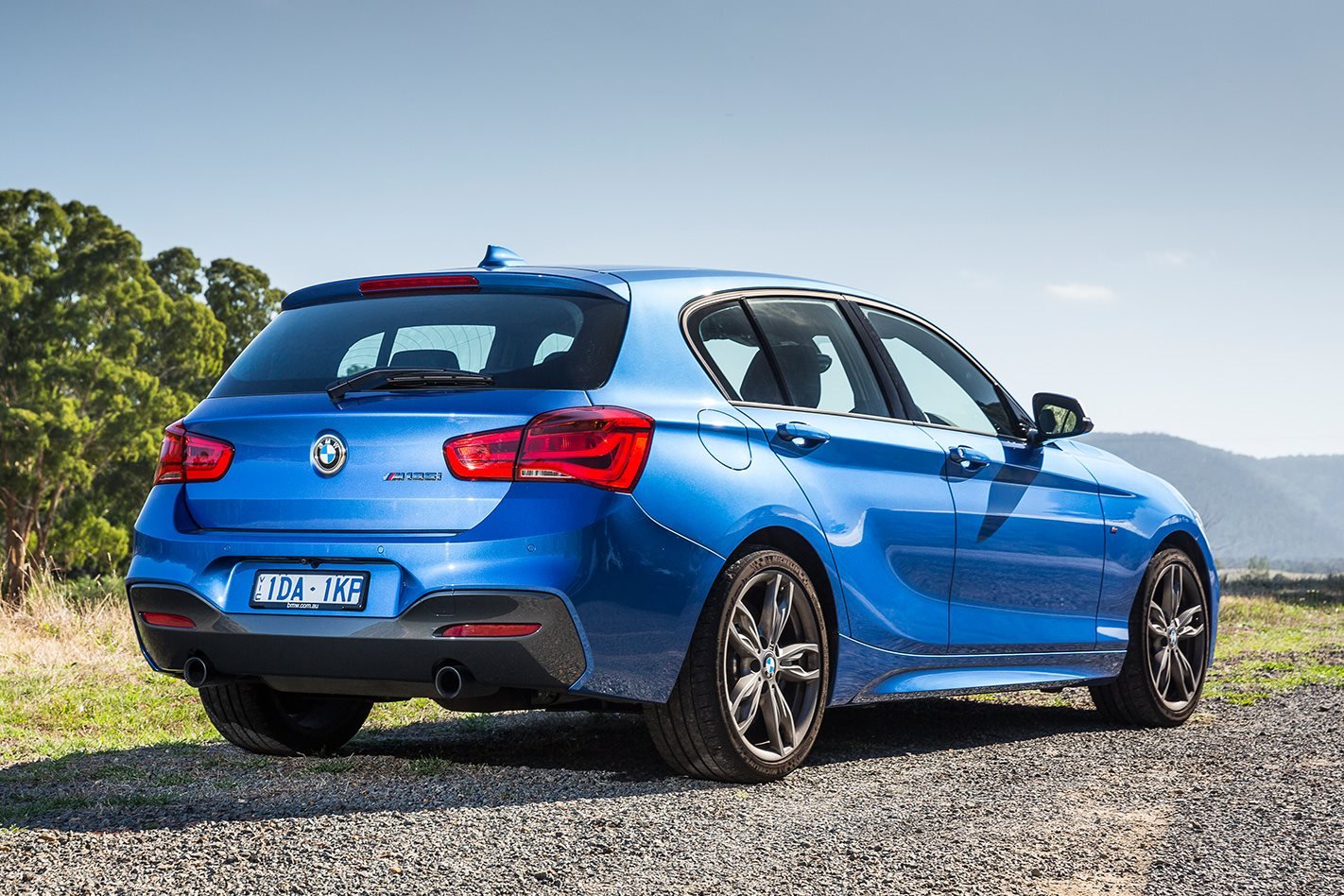
BMW M135i

- New: $62,900 (2016)
- Now: $23K to $55K
BFYB results?
First place in $0-50K in 2015, 9th in that category in 2016.
Why?
Get yourself a hot hatch you can drift! Yep, while the AWD heroes like the Mercedes-AMG A45 and Focus RS look to drift modes to help slide, BMW’s almost-M hot hatches let you do it with your steering wheel and your right foot regardless.
Secondhand values for the M135i, and later M140i, have been creeping upwards over the recently buoyant used car market, but they remain an attractive used buy regardless.
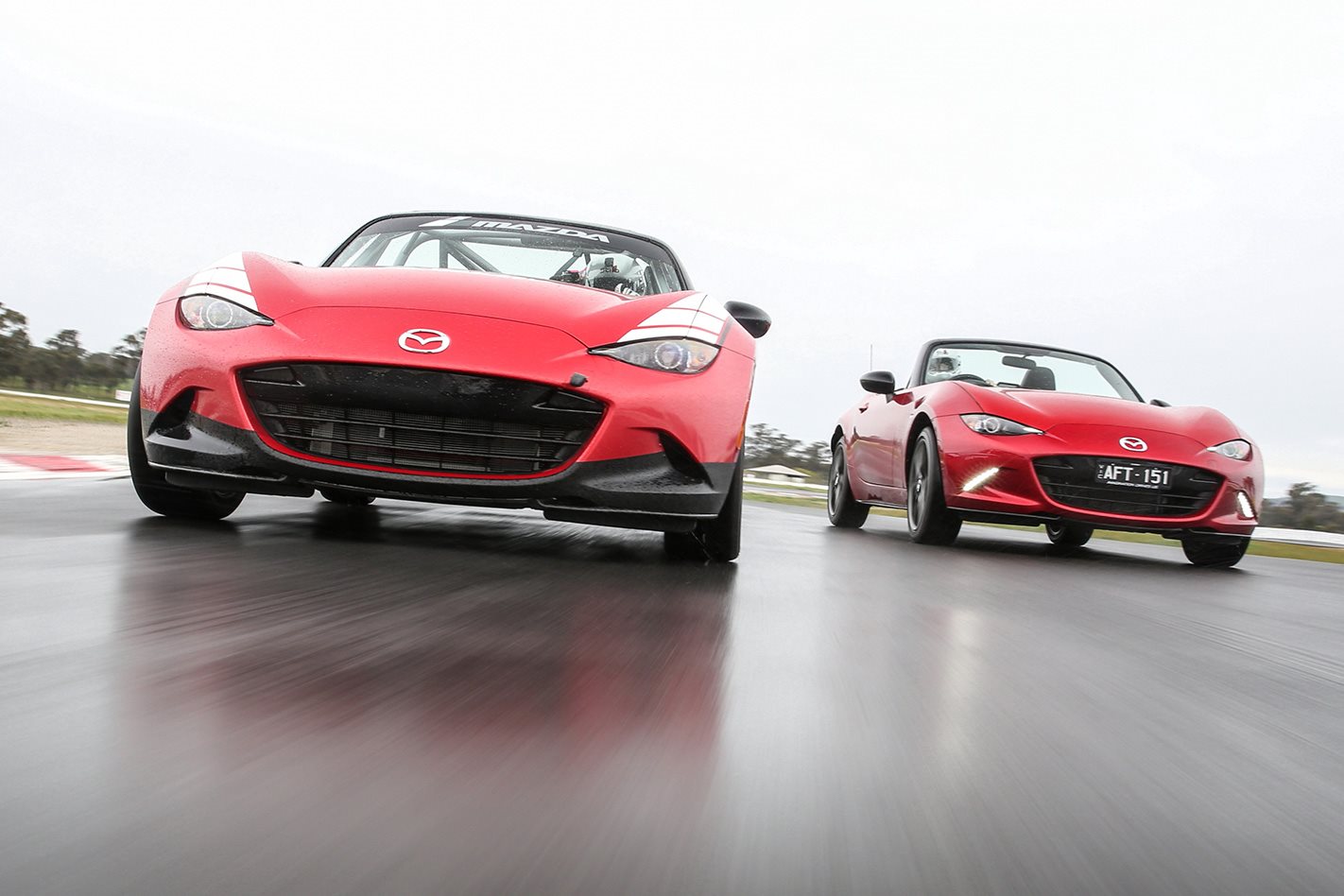
Mazda ND MX-5
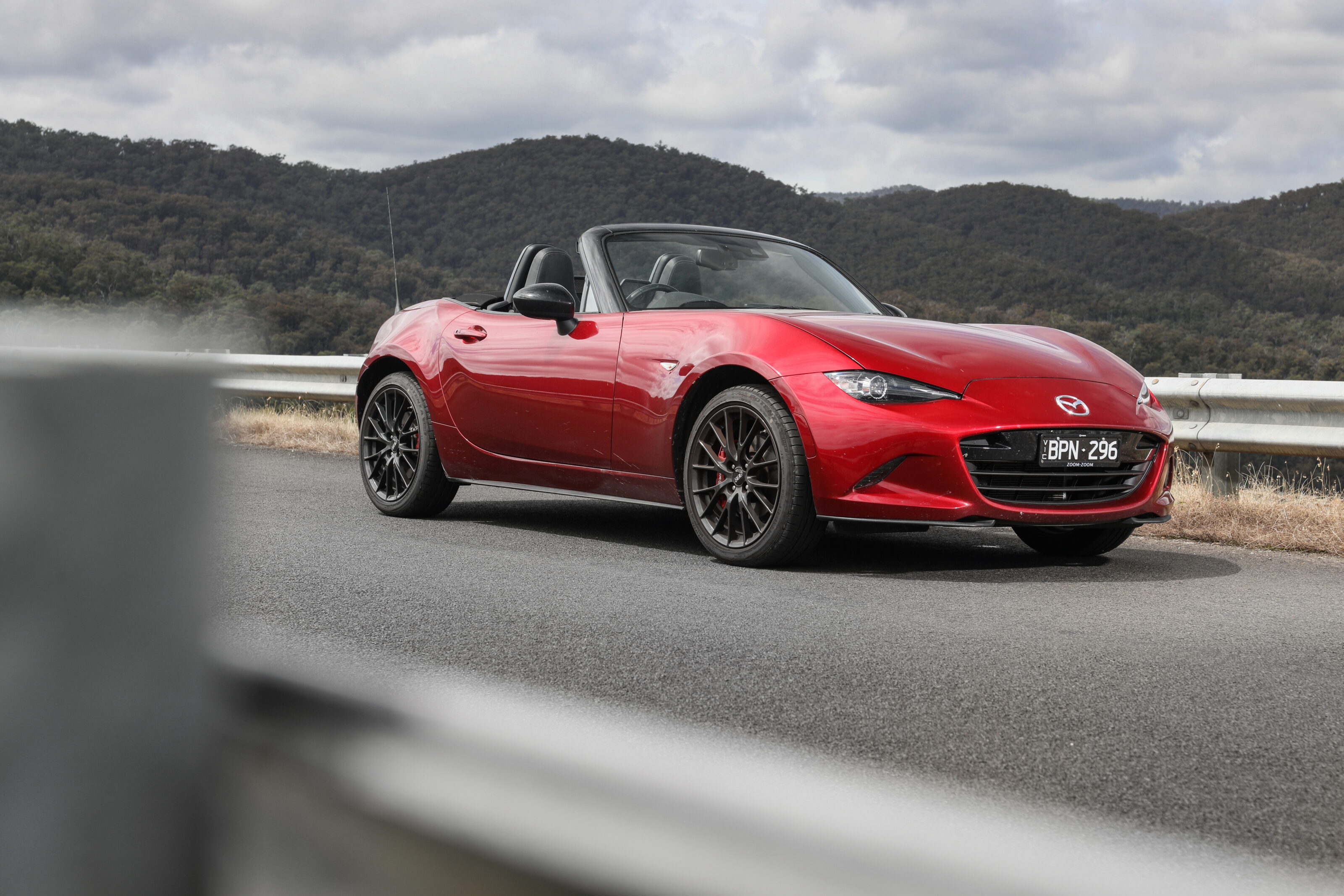
- New: $36,090 (manual 1.5-litre) to $51,120 (auto RF GT Black Roof)
- Now: $22K (generally over 100,000km) to $55K (new brand new 2022 RF GT )
BFYB results
7th in $0-50K 2017, but 5th overall in 2019.
Why?
The MX-5 has endured as one of the all-time great sports cars for the last 30 years, and the ND generation is true to the NA’s simplicity while managing to remain relevant in a modern market.
If you want unfiltered fun, this is up there with the Toyota 86. Though it’s not as sharp a handler (primarily due to softer suspension), it’s really no less involving, has got a more linear engine and comes with the added option of dropping the top.
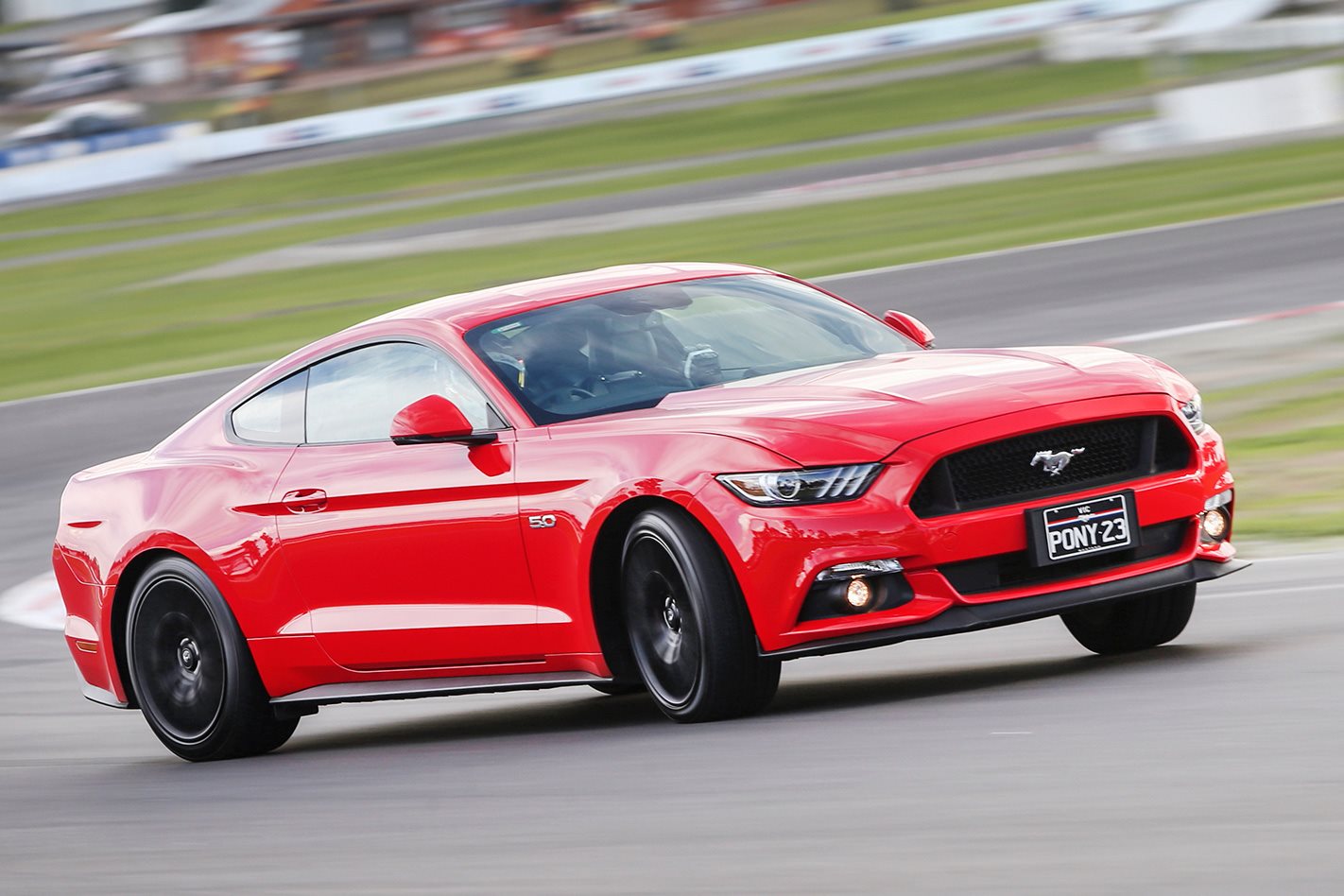
2016-18 Ford Mustang GT
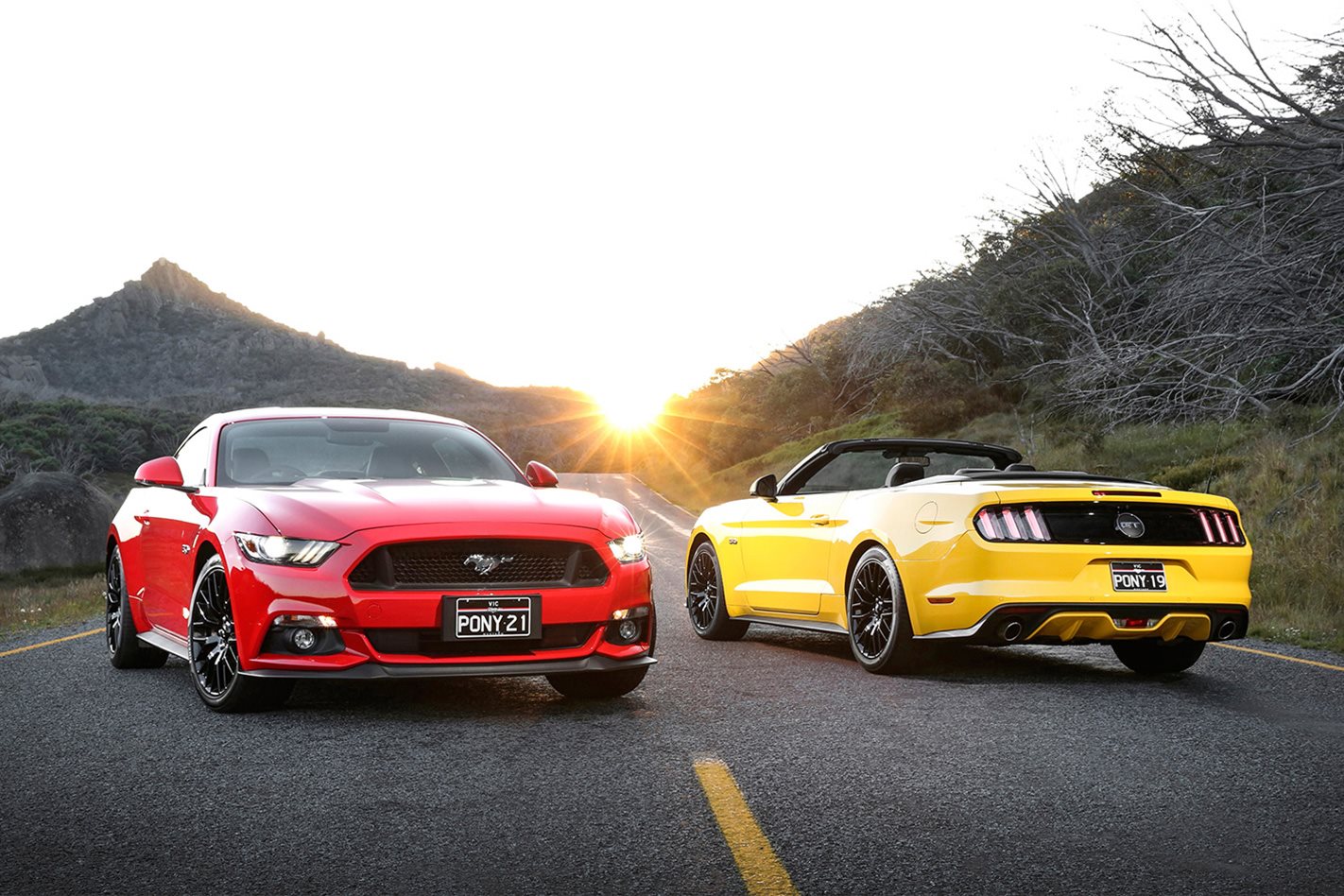
- New: $57,490 (2016 manual) to $59,990 (2016 auto)
- Now: $39K to $100k+ (many have been upgraded and modified)
BFYB results
8th in 2016, sub-$50K category.
Why?
Tonnes of people bought new Mustangs in the first years of its on-sale time in Australia, which means that tonnes of them have since been released onto the used market, as vehicle leases ran out, or initial buyers have simply since upgraded.
Early 2.3-litre turbocharged EcoBoost cars open the market at around $40k, with the most affordable 5.0-litre V8s appearing around the $45k mark.
At the pointy end of the market, there are many pre-update (a significant update occurred for 2018) vehicles asking well over six-figures, mainly due to significant aftermarket work.
Volkswagen Polo GTI (Mk5)
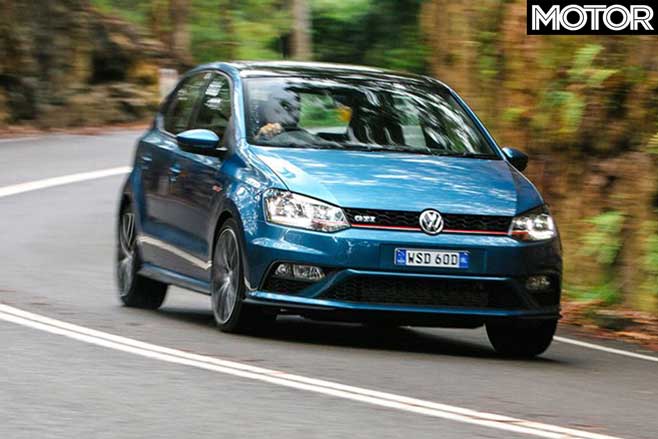
- New: $27,490 (manual, 2017) to $29,990 (DSG, 2017)
- Now: $10K (early models, 150,000km+) to $32K (~2016, sub-100,000km)
BFYB results
3rd $0-50K in 2015, outright winner in 2016, 2nd place $0-50K in 2017, 4th overall in 2019.
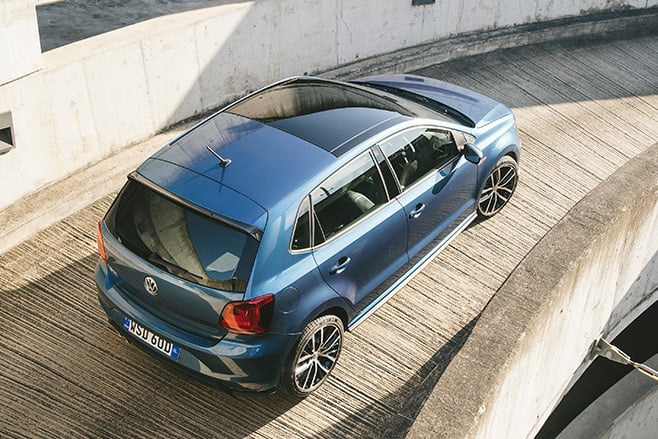
Why?
The Polo has consistently proven it’s ability to balance the line between pragmatic commuting and driving dynamics for half a decade of BFYB attendance, bar one year.
It’s almost always been on the podium, and now that you can pick up a well-loved car for just north of the $10K mark, it’s a relatively small price to pay for a recent class standout.
What do you think were the best affordable performance buys of the 2010s? Shout out in the comments below!
Snapshot
- BP Pulse has debuted in Australia with three sites in Melbourne and Caboolture now online
- Goal of around 600-strong charging network, but no timeline given
- Initially capable of 75kW DC speeds costing $0.55 per kWh
British oil and gas giant BP has officially launched its fast electric car charging network in Australia, giving another option for EV drivers to top-up on the go.
BP Pulse is now live with three sites – each with one charger – at Diamond Creek, Brighton East Bayside Gateway in Melbourne, and Caboolture North sitting between Brisbane and the Sunshine Coast.
It aims to roll out around 600 “fast, reliable chargers” in Australia placed prominently beside its fuel service stations with nearby food amenities, yet stopped short in stating a definitive timeline.
Initially, the EV charging infrastructure will be installed at key metropolitan and regional BP locations along the east coast.
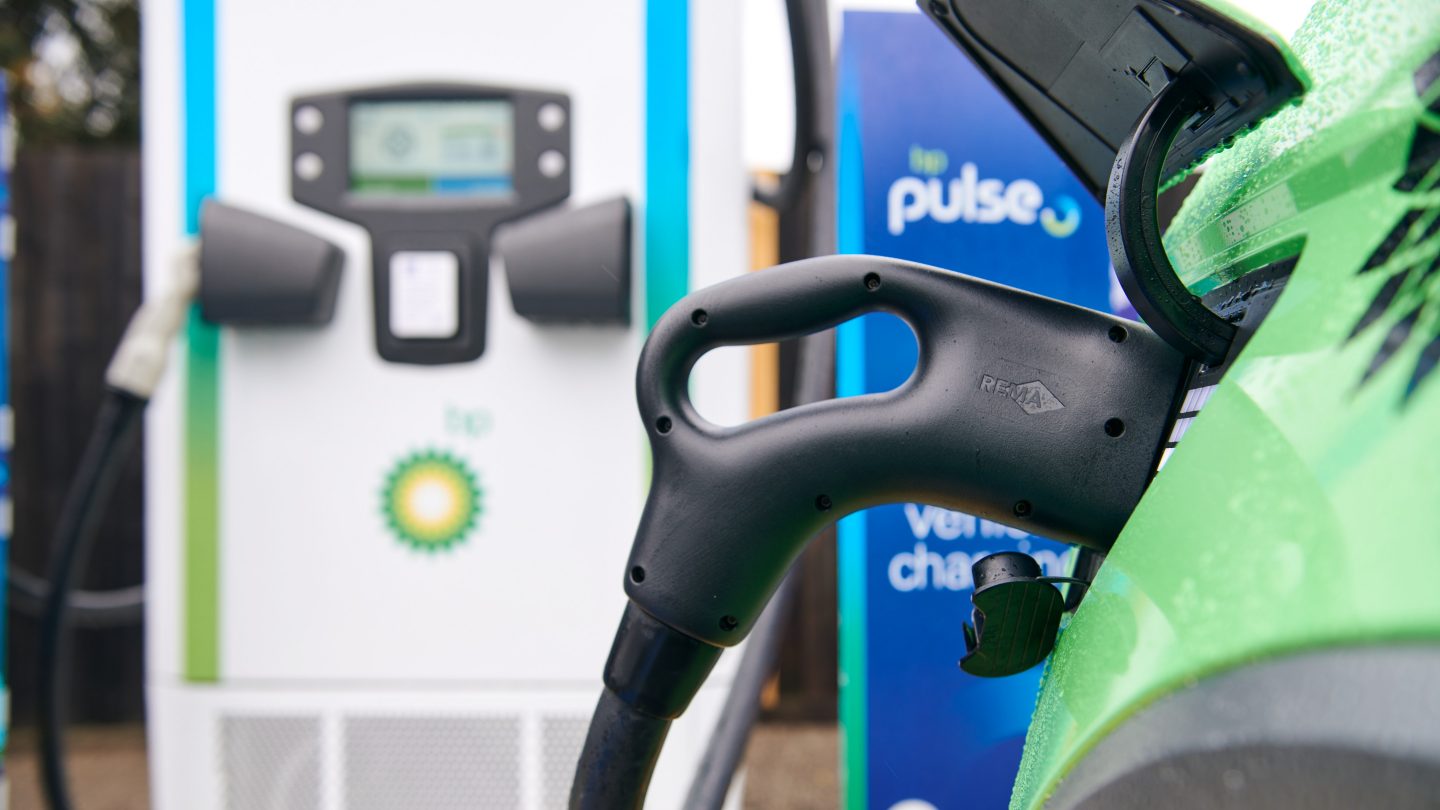
The company uses the latest modular Tritium PKM fast charging units. It currently outputs 75kW DC speeds, but promises existing and new chargers will be upgraded to 150kW DC in 2023 when it’ll be connected to a higher power grid.
Additionally, BP intends to upgrade to 350kW DC speeds in the next two years, which’ll better take advantage of ultra rapid charging capable EV models like the Kia EV6, Tesla Model Y and Porsche Taycan.
The Brisbane-made stations offer CCS2 and CHAdeMO plugs able to charge both vehicles at the same time. Though, it’s worth noting that maximum charging speeds will be limited to each module when power sharing – 50kW for CCS2 and 25kW for CHAdeMO on the current 75kW DC setup.
BP Pulse stations cost $0.55 per kWh, but are initially free at launch. According to a user on Plugshare, the Diamond Creek location is already incurring fees. EV owners need to download the BP Pulse mobile app to activate the charging session.
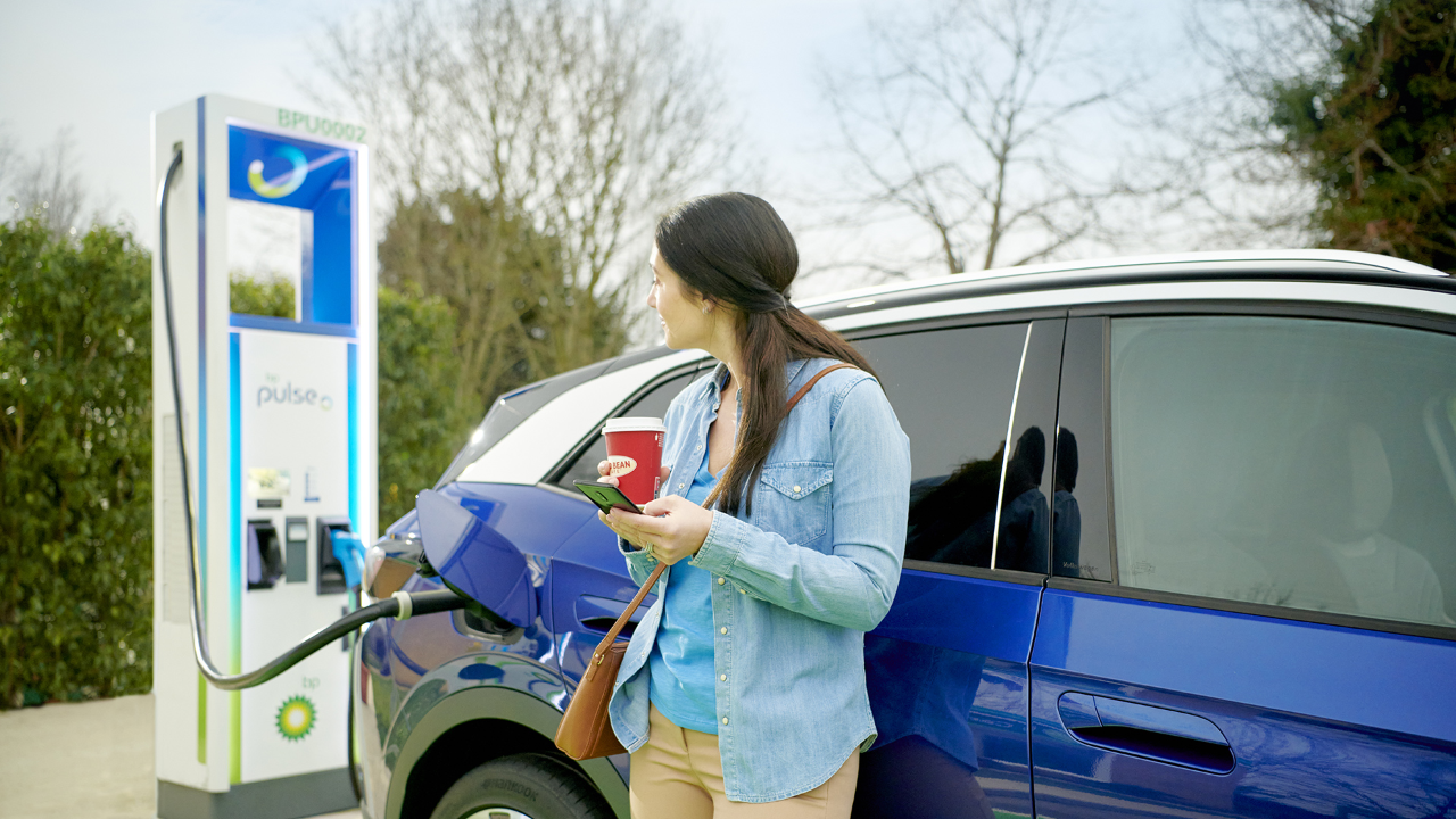
For context, Chargefox and Evie Networks’ 50kW DC fast chargers are mostly set at $0.40 per kWh or 350kW DC ultra rapid chargers cost $0.60 per kWh.
BP is the second fuel giant to enter into the EV charging infrastructure game, after Ampol launched its AmpCharge network in August. AmpCharge uses 150kW DC stations priced at $0.60 per kWh.
Meanwhile, Tesla’s exclusive 150kW or 250kW Supercharging network costs $0.68 or $0.69 per kWh depending on the location with overstaying idling fees.
Initially, BP Pulse will use electricity from the grid, though it’ll offset carbon emissions for every kWh outputted by purchasing certificates that invest into renewable energy projects.
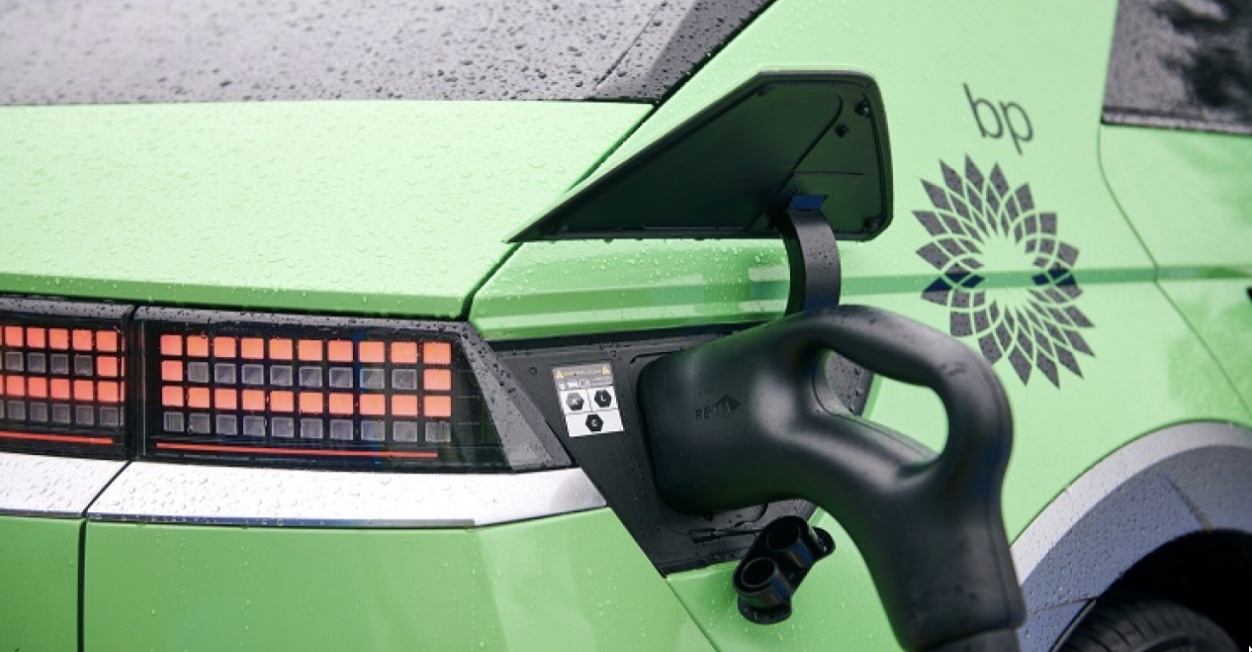
“We will be on the journey with them [customers] through this decade and beyond with growing numbers of fast, reliable chargers at convenient locations with great retail options, whether they want to eat, drink or shop,” BP Australia president Frédéric Baudry said.
The fuel giant has also partnered with BOC Gas to build a public hydrogen refuelling site for fuel-cell electric vehicles (FCEVs) at a BP truck stop in the Port of Brisbane.
BP aims to achieve net-zero emissions by 2050. It’ll reduce its oil and gas production by 40 per cent by 2030.
Founded in 2008 and formerly called BP Chargemaster and Polar, BP Pulse already provides more than 9000 charging points with home AC wall boxes and DC public chargers in Britain.
