
Porsche is considering merging the Taycan and Panamera into single, unified model line, with petrol, plug-in hybrid and fully electric variants.
With a global downturn in sales and the enormous costs associated with the scale back in Porsche’s electrification plans, further model rationalisation might be on the way, a report in Autocar claims. Former CEO Oliver Blume made the call to scale back electrification last year, and new CEO Michael Leiters has signalled model unification as another way to reign in development spending.
“The automotive industry, and especially Volkswagen, have never faced so many headwinds at the same time,” former CEO Blume said last year at the 2025 IAA Munich, Europe’s largest auto show.
At the time of his appointment, Leiters was touted as being chosen to make a deliberate shift in the direction the German manufacturer was taking, with the focus being on the balancing of both combustion and hybrid technologies rather than all-out focus on electrification. “That is why we have structurally realigned the company this year, and comprehensively expanded our product strategy,” Blume said at the time.
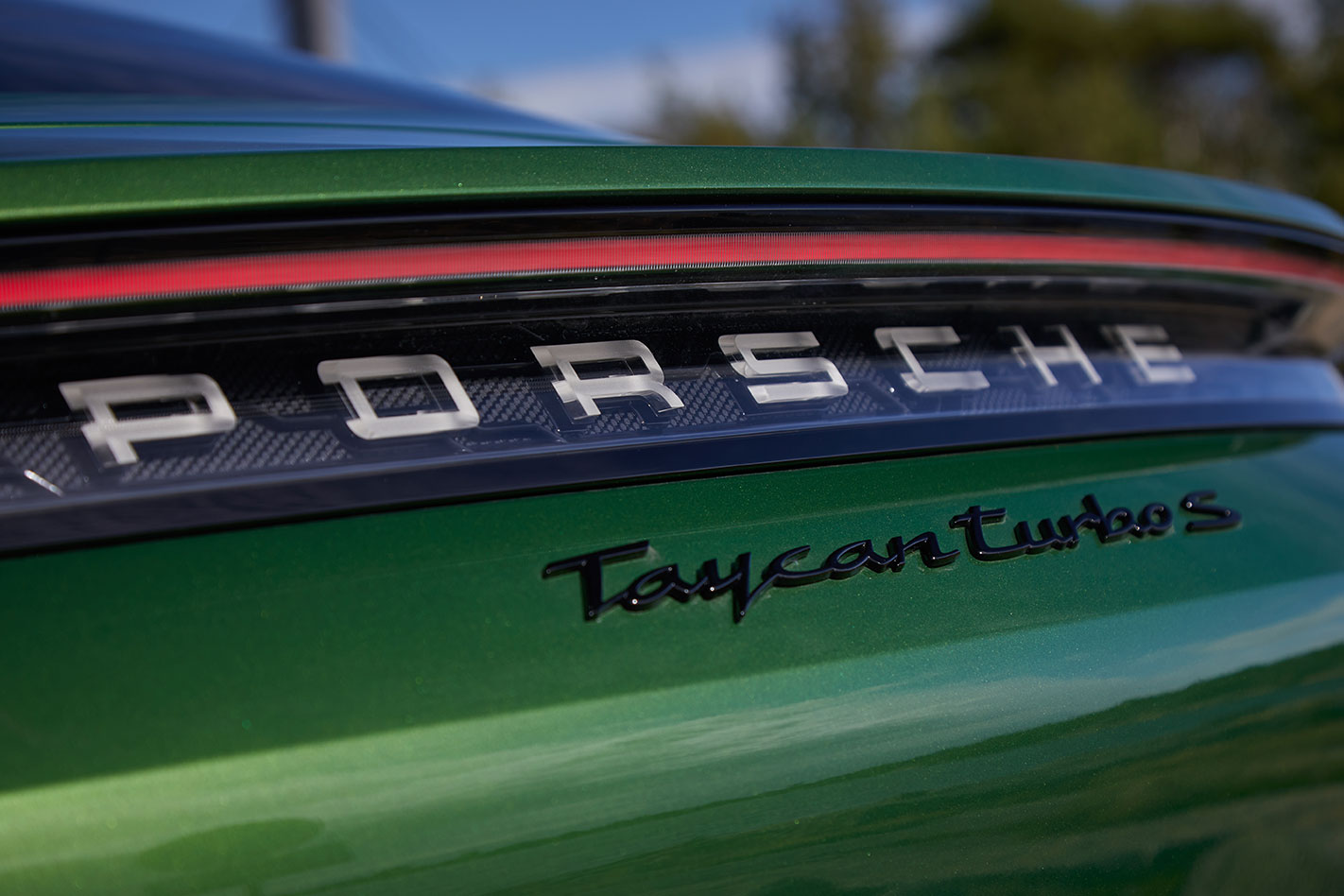
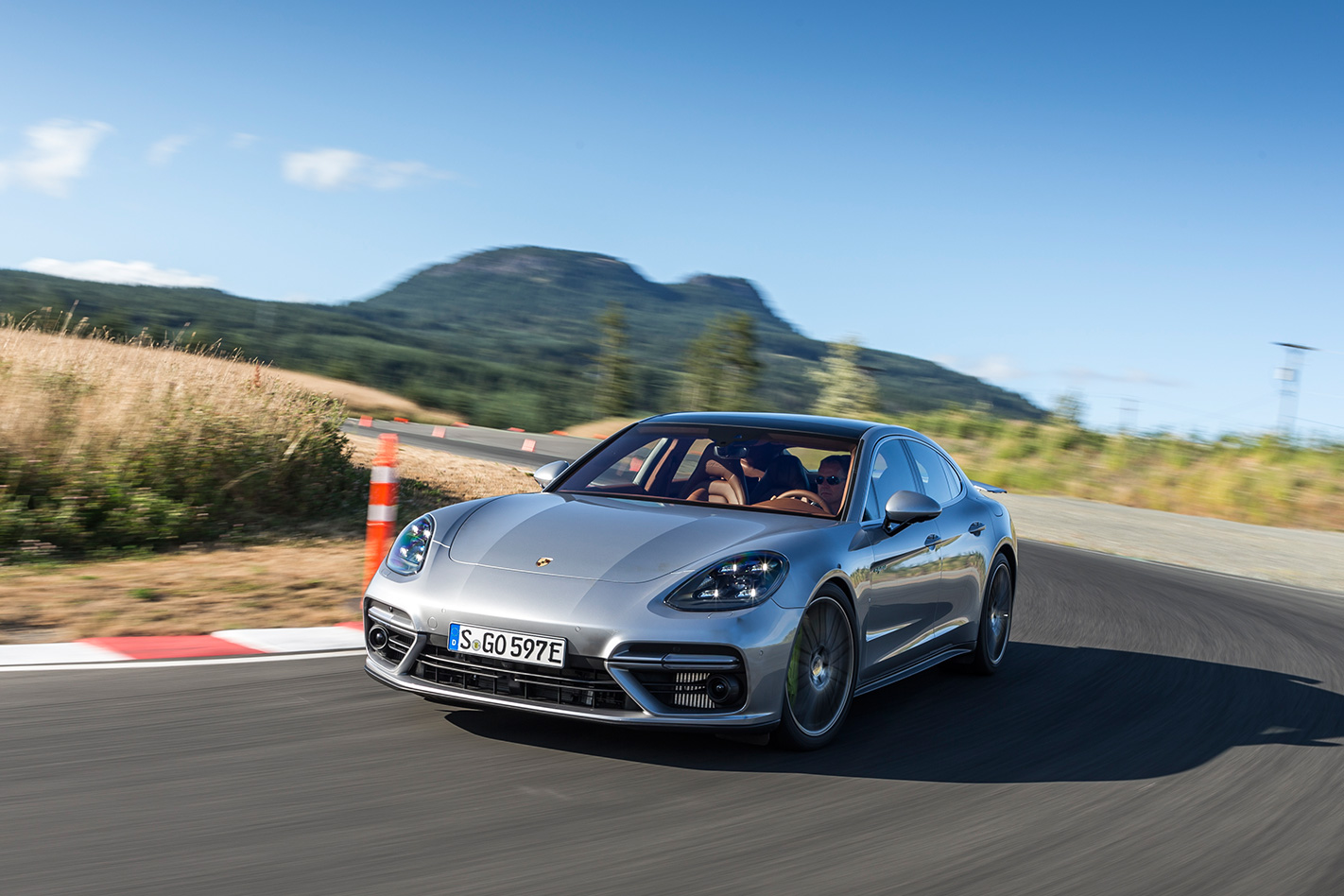
Underpinned by different platforms – although both performance saloons – Taycan and Panamera have significant different body styles, and therefore separate, expensive development programs.
Panamera sits on Porsche’s MSB platform, a platform also used for the Bentley Continental GT. As reported previously, that architecture is soon to be replaced by the newer PPC platform when the third-gun Panamera arrives closer to 2030.
Autocar reports that Taycan meanwhile, rides on the J1 platform, shared with the Audi E-tron GT and previous reports suggested that its successor was expected to use the now-delayed SSP Sport platform.
Porsche is no different to any other manufacturer at the moment, wrestling with the soaring costs of EV development eating into profitability, and is therefore assessing the long-term viability of plans previously put in place. They include running the Taycan and Panamera as completely separate R&D and engineering programs.
The Macan program is the one to study, according to Autocar, with that model already operating parallel architecture across internal-combustion and electric models in several markets, despite the two different platforms underneath. It’s unclear as yet whether the rationalisation would see the use of the Taycan or Panamera name.
The numbers in play – and the cost to the manufacturers – are huge. Porsche has already written down 1.8 billion Euros related to delayed platform development and has warned of continued reductions to profitability.
You’re no doubt wondering why this month’s Modern Classic features a Ferrari F1 car.
But with Australia fresh from another visit of the Formula One show, and with the new 2026 regulations throwing up one of the biggest changes the sport has seen over its 76-year history, the prospect of a change to the pecking order looms large.
Certainly Ferrari, a team that needs little introduction, will be hoping so. Too many years in the doldrums – Ferrari’s last GP victory came back in 2024 at the hands of Carlos Sainz, while the Scuderia last tasted championship success in 2007 when Kimi Raikkonen secured an unlikely triumph – have tested the patience of the Tifosi who enter every new season with devout hope that this year will be their year.
It’s not new ground for Ferrari and its devoted fans. Wind the clock back to 1992 and the story sounds all too familiar. In 1990, Ferrari had come within a whisker of winning the world championship. Its star drivers, Alain Prost and Nigel Mansell, secured six grand prix wins between them to end the year second in both the drivers’ (Prost) and constructors’ championships.
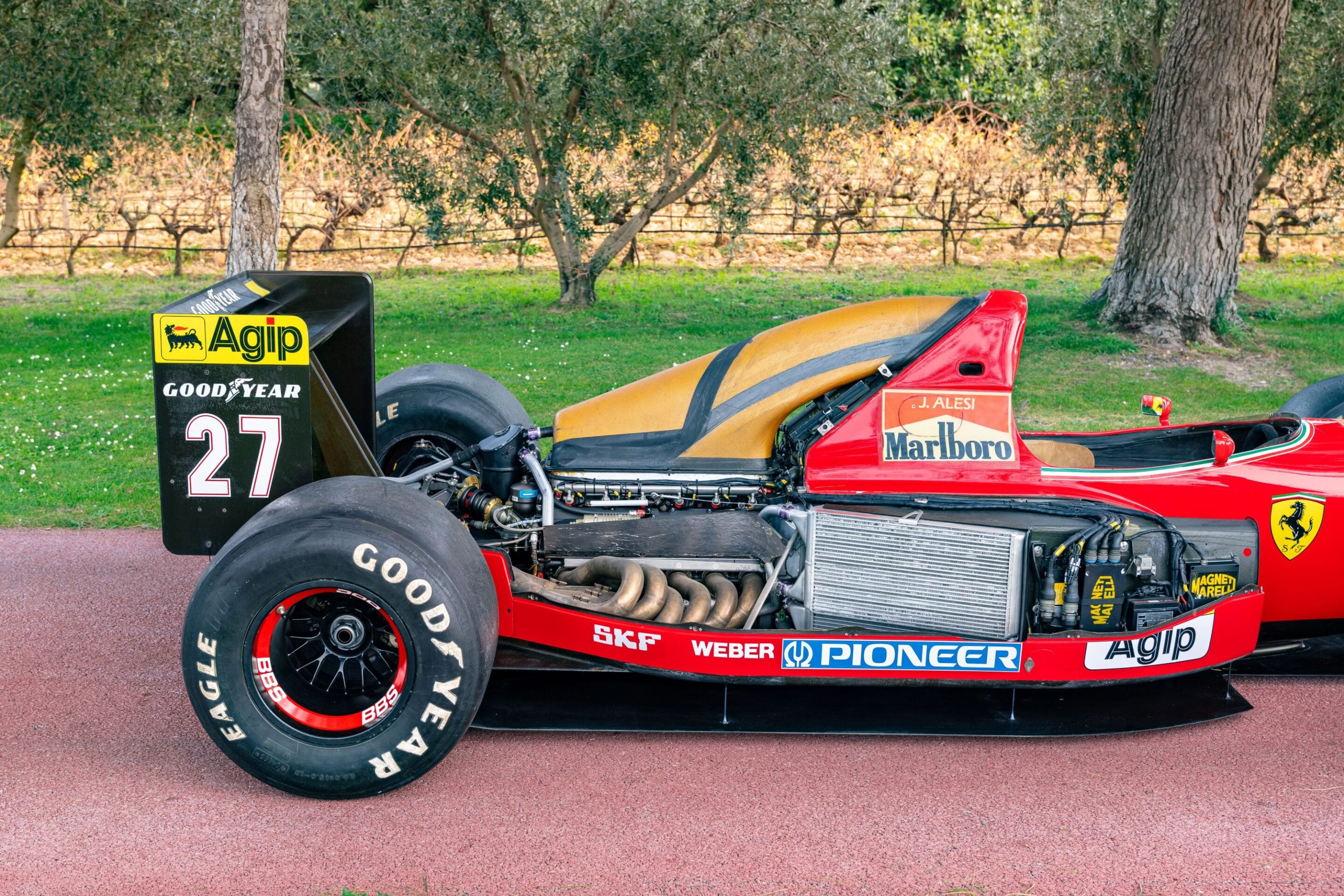
Hopes then, were understandably high for the 1991 season. Prost remained on board while Mansell had departed for Williams, his replacement a young Jean Alesi. The Ferrari 642, an evolution of the 641 which had enjoyed so much success the previous year, was also draped in feverish optimism. But hope is fickle and the 642 was no match for its rivals from McLaren and Williams. Too old, too slow, too fragile, the 642 was banished to history before the halfway point of the season, replaced by the hastily updated 643.
Despite showing early promise (Prost finished second on the 643’s debut in France), the story remained the same, with lacklustre performance and a spate of mechanical retirements prompting a rare outburst from Prost who famously said “a truck would be easier to drive than this car”. Unimpressed, Ferrari sacked the Frenchman before season’s end, a season where the Scuderia went winless for the first time since 1986.
And that’s where the story of the car seen here begins…
Maranello needed a fresh start after the disaster that was 1991. Sweeping changes were needed. With Prost out of the picture, Alesi, with just three seasons of F1 under his belt, inherited the role of team leader, while another young Italian hot shoe, Ivan Capelli, was drafted in as his sidekick.
Behind Maranello’s unassuming gate, the broom of failure swept through the management team. Out went Piero Fusaro who had taken over the reins of Ferrari following Enzo’s death in 1988. His tenure as President of the company ended in 1991 when, looking – in part at least – to rekindle its glory days on the race track, Fiat’s Gianni Agnelli brought back the charismatic Luca di Montezemolo.
Di Montezemolo was well-loved within Ferrari, his two years as sporting director netting the Scuderia the 1975 Drivers’ World championship for Niki Lauda, and the Constructors’ trophy. If ever there was someone who could rekindle the flames of that success, it was the aristocratic di Montezemolo.
Meanwhile the team’s technical director, Steve Nichols, who had been lured to Ferrari in 1989, left at the end of 1991. Nichols’ departure was a bitter blow for the Scuderia, the Brit having overseen McLaren’s late-80s F1 dominance, a culture of success that Ferrari had hoped he would bring to Maranello. It wasn’t to be. In his place, di Montezemolo brought in another Brit, Harvey Posthlewaite.
And renowned Ferrari engine builder, Claudio Lombardi, who had stepped in as interim team principal following the departure of the legendary Cesare Fiori, went back to the engine workshop at the end of the season. Fiori’s departure halfway through the ’91 season was emblematic of the strife Ferrari was in, sensationally quitting the team after the Monaco Grand Prix in – according to Ferrari – a pique of “anger” at the escalating tensions within the team.
Taking on what is the poison chalice of Ferrari team principal for 1992, and at the personal request of newly installed il presidente di Montezemolo, was Sante Ghedini.
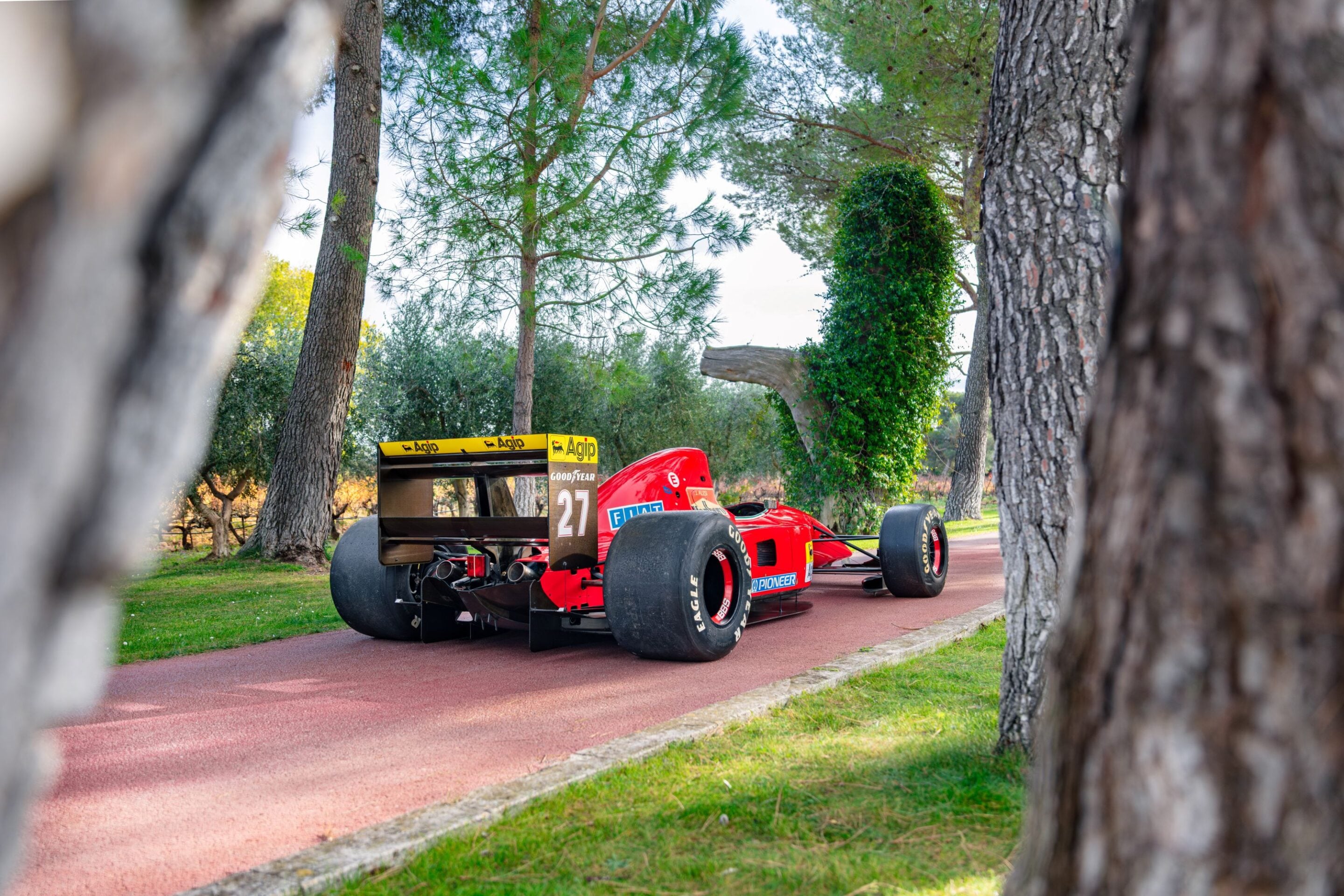
The new car was already well underway by the time Ghedini took the reins. As Ferrari’s annus horibilis of 1991 unfolded, the decision was taken to begin work on the 1992 car. Nichols and chief designer Jean-Claude Migeot, realising the futility of trying to further develop the 643, tossed the blueprints in the bin and started with a clean sheet of paper for what would become the F92A. And in the spirit of nothing ventured, nothing gained, they went radical.
Migeot had made a name for himself at Tyrrell where his radical high-nose design would go on to revolutionise Formula One. The premise was simple enough. With aero efficiency such a key part of an F1 car’s performance, Migeot had realised that an F1 car’s low, almost ground-hugging nose disrupted the flow of air to the underbody. And less air meant less downforce, and less downforce is anathema to an F1 car.
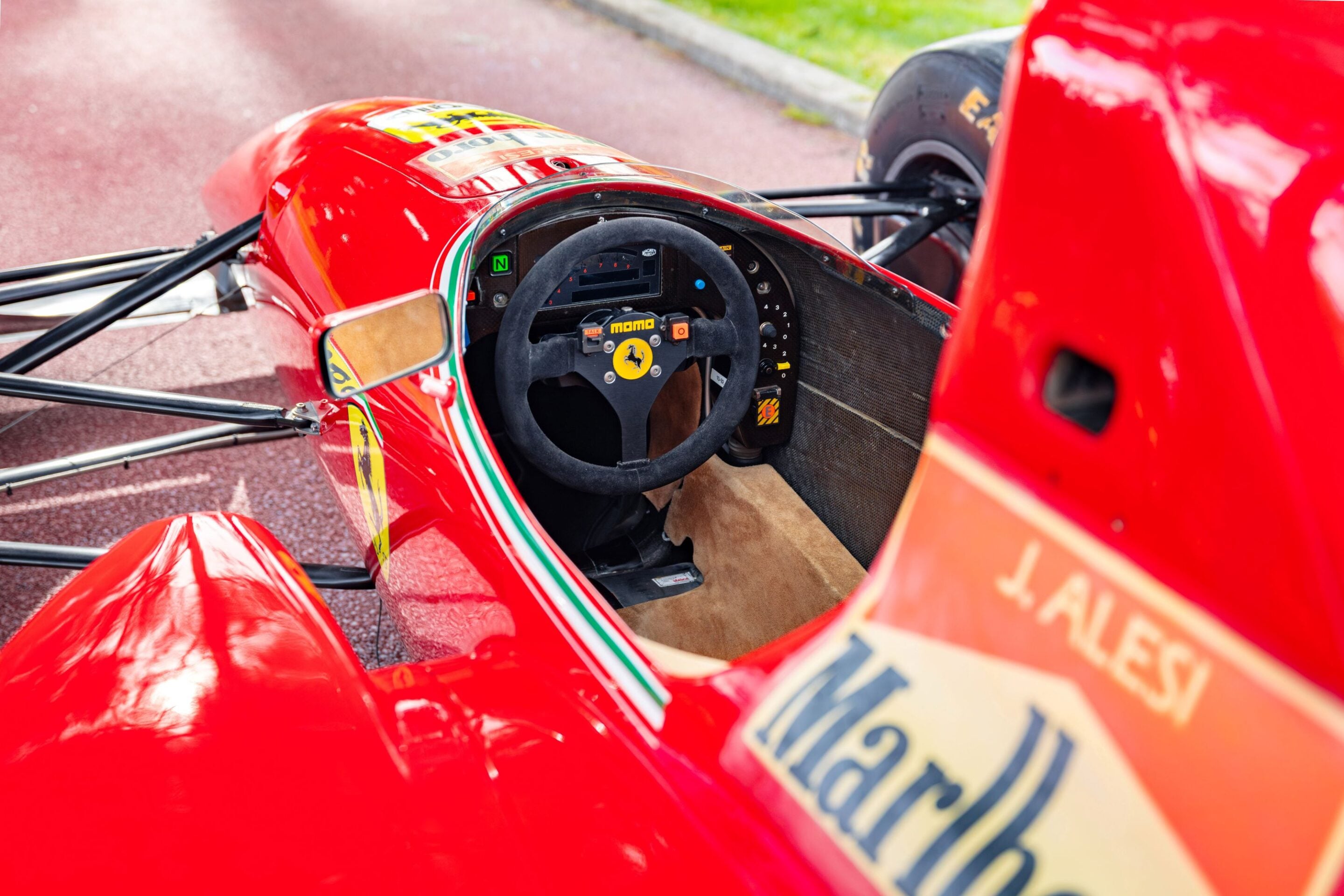
His solution to raise the nose above the flow of air to the underbody was as radical as it was genius and in the hands of Alesi – who finished second behind Ayrton Senna at Monaco, adding to his second-placed finish at Phoenix earlier in the year – the small Tyrrell outfit punched far above its weight in 1990. Little wonder then, that the under-performing Ferrari came calling and by 1991, the French aerodynamicist was hard at work on the following season’s Ferrari.
Applying the same principles as he had at Tyrrell, Migeot’s design for the F92A featured a raised nose that allowed the free flow of air under the car where a radical double-floor funnelled that air straight through to the rear of the car unimpeded.
It was a simple premise. The car was attached to a flat floor that closely followed the contours of the F92A’s shape. But, Migeot added a second floor, attached to the first via stilts, leaving a 15cm gap between the two. That created a channel allowing unimpeded airflow from the front to the rear of the car, creating a Venturi effect: ground effects in other words in an era where ground effects was banned. Certainly early wind tunnel results confirmed the efficacy of Migeot’s design, with downforce dramatically improved and only a minimal increase to drag.
But Migeot’s radical design didn’t come without compromise. To accommodate the double-floor and raised nose, Ferrari’s technical team needed to repackage the F92A’s components. The big ticket items were the transmission and suspension. Out back, a new six-speed semi-automatic transmission replaced the seven-speed of its predecessors while up front the suspension geometry was overhauled. Still featuring a conventional push-rod design, a new single-spring damper was used to minimise space under the raised nose. The rear suspension was carried over from the previous car although the 3.5-litre V12 powering the F92A was all new for 1992.
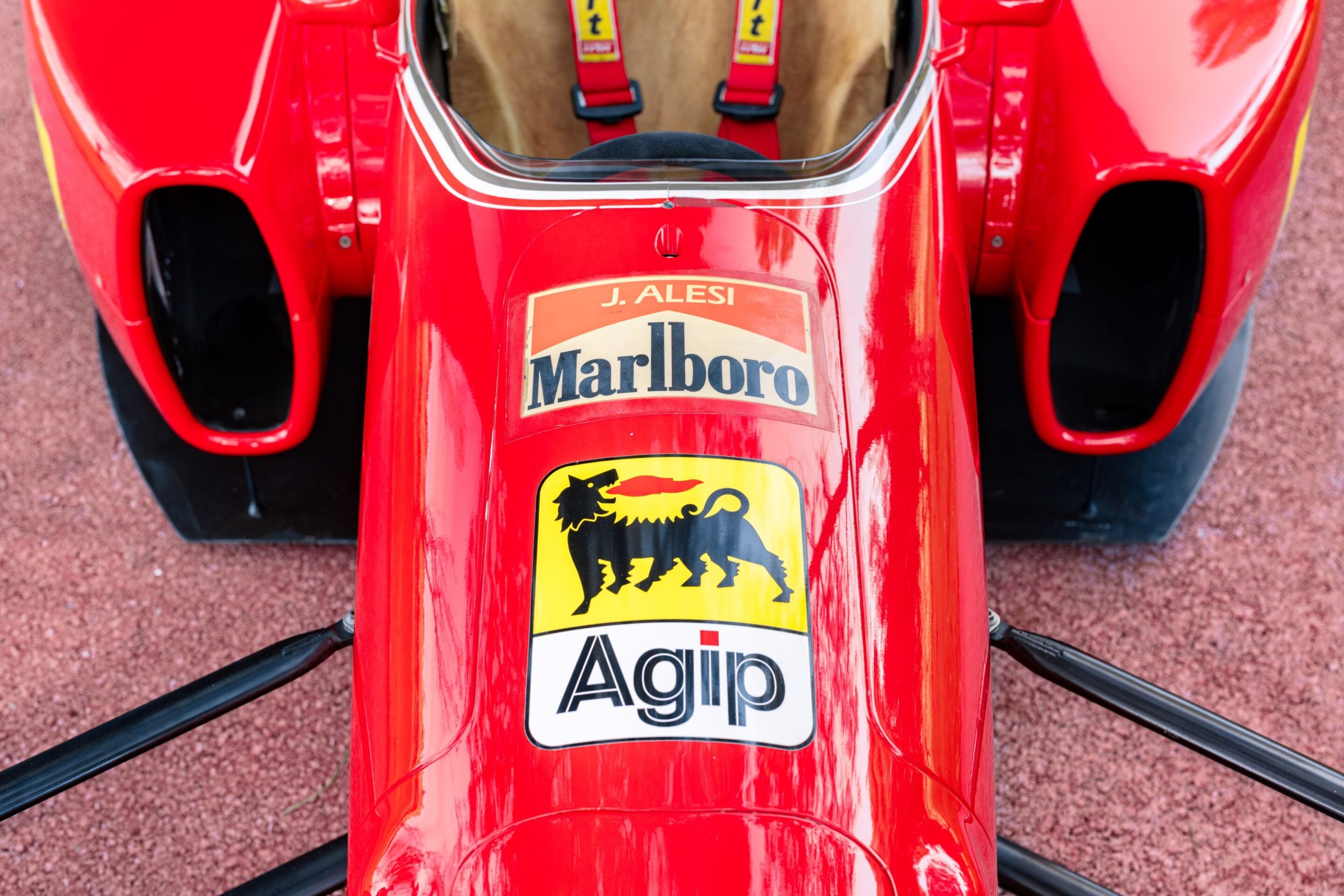
On paper, the F92A had all the ingredients of being a potential winner. After all, its outside-of-the-box thinking had potential to upset conventional F1 design and return Ferrari to championship glory.
Behind the scenes at Maranello, however, not everything was running smoothly. Development delays meant the F92A wasn’t unveiled until February 6 with the car’s shakedown getting underway, at dusk no less, the following day, just 23 days before the start of the season. That might seem the norm today, but remember in those days there were no limits to testing, and Ferrari held the extra advantage of its own test track, Fiorano, a stone’s throw from Maranello where the cars were built.
Pre-season testing proper moved to Estoril and here the first cracks began to appear. Capelli used the 1991 car to set a benchmark time, before swapping into the F92A.
As he later recalled to Britain’s Motorsport magazine: “When I did my first lap with the F92A at Estoril I realised that compared to the ’91 car, it wasn’t a very good step. It was a strange concept, which didn’t work at all. I immediately said to Migeot that I had some doubts that the car would work.”
Alesi, for his part, tried to remain upbeat, but when the start of the season rolled around in South Africa just three weeks later, it soon became apparent that Ferrari had a struggle on its hands.
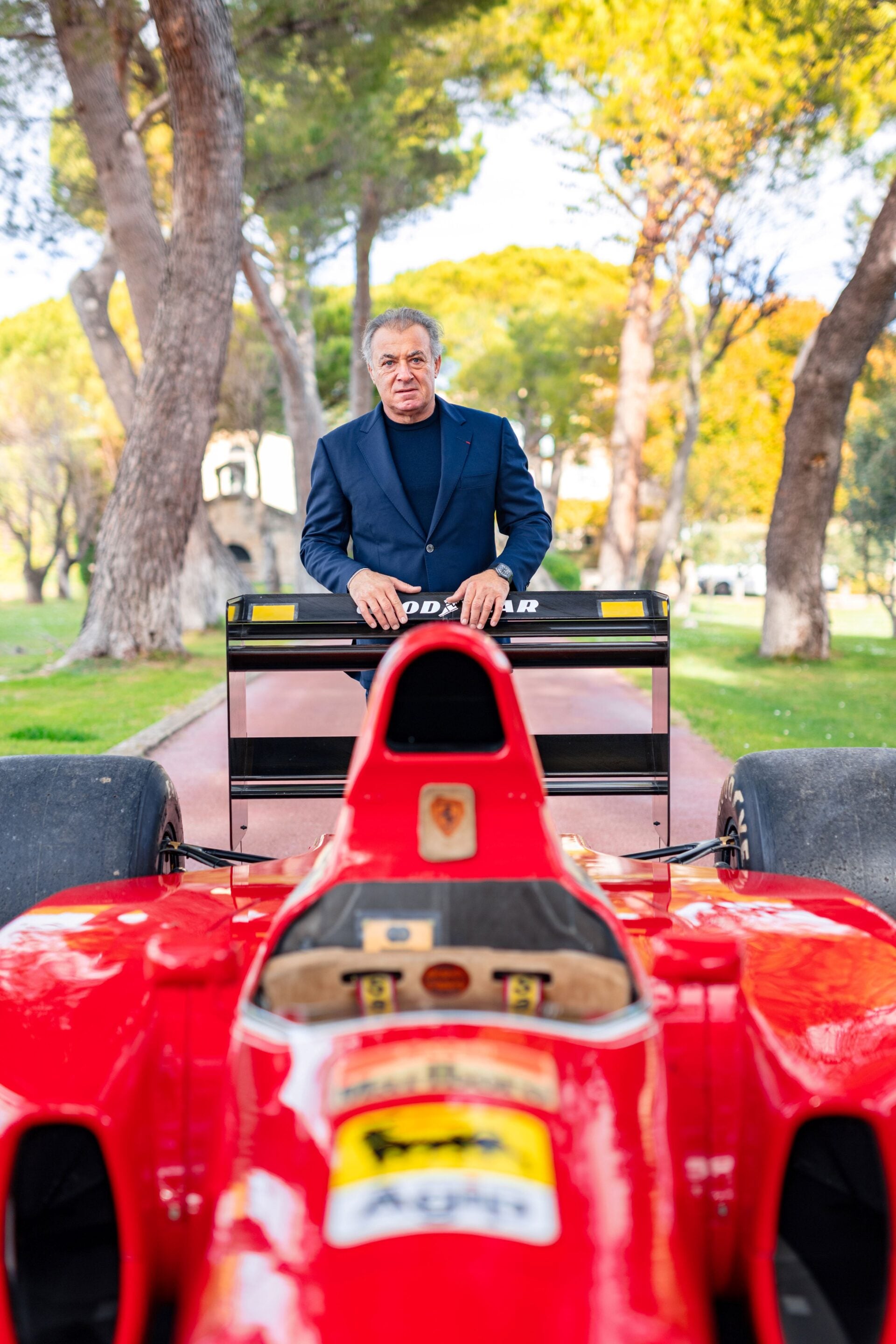
Alesi (below) qualified fifth, Capelli ninth. But the pace of the F92A left a lot to be desired, Alesi 1.7 seconds off Mansell’s pole time in the Williams, Capelli an embarrassing 2.9 seconds. It didn’t get much better in the race, both Ferrari’s retiring with engine failures.
That should have signalled a warning that perhaps not everything was right with the new Tipo 040 V12 which suffered from lubrication issues, cutting out during the faster corners and ultimately causing the V12 units to detonate.
Things only got worse at the next race in Mexico, Alesi qualifying 10th, over three seconds off Mansell’s pole time while Capelli recorded the Scuderia’s worst qualifying result in over a decade, an embarrassing 3.8 seconds off the pace in 20th place. To compound Ferrari’s embarrassment, the minnow BMS Scuderia outfit, using the previous year’s Ferrari V12, out-qualified both Alesi and Capelli.
The race didn’t fare much better, the bumpy nature of the Autódromo Hermanos Rodríguez negating any aero advantage the F92A might have enjoyed. Worse still, the lubrication issue that had supposedly been fixed reared its oil-starved head again, Alesi retiring with another engine failure.
Ferrari was deep in crisis mode. Publicly, Migeot’s revolutionary aero design was made the scapegoat, but internally it was well-known that the V12 lay at the heart of the performance problem.
As Alesi later recalled in an interview with French auction house Artcurial, the V12 was sacred and any public criticism of its performance would not be tolerated by Ferrari. But, as Alesi revealed, “we were being penalised by a phenomenon known as ‘blow-by’. This means that the pistons pump the oil that is at the bottom of the sump. This causes you to lose a little performance, but at the same time you quickly run out of oil and break the engine.”
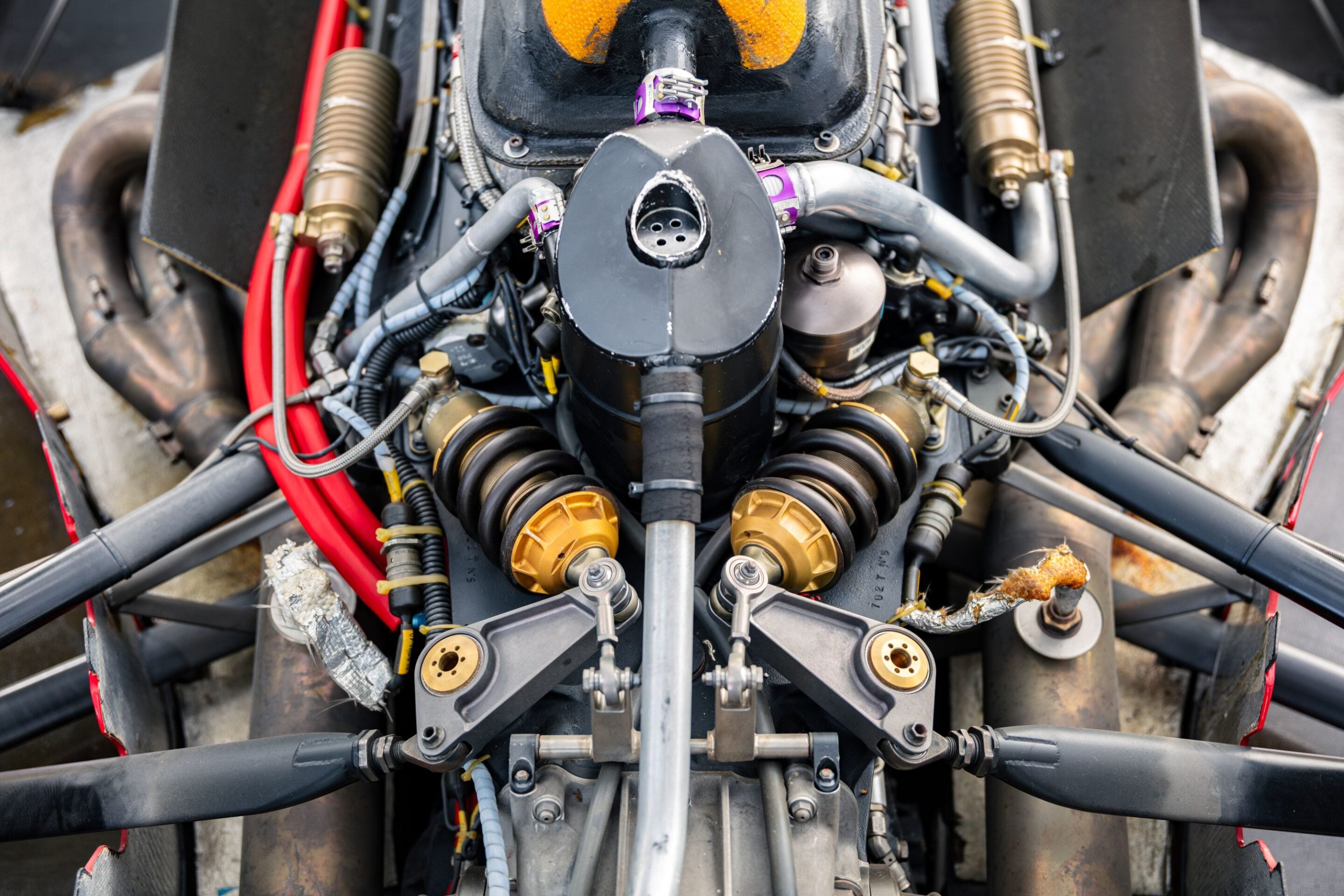
The solution was to install a second oil tank in the car which was activated by pressing a button in the cockpit labelled ‘P-ON’, which would then transfer the oil from the ‘reserve’ tank into the engine.
Additionally, to address the V12’s reliability problems, Ferrari deliberately limited engine speed, thereby reducing power. In Mexico, this resulted in Alesi’s Ferrari recording speed trap times an insurmountable 15km/h down on the front-runners.
Despite the disastrous start to the season, there were glimmers of hope. In Brazil, both Alesi and Capelli finished in the points while in Spain, with rain and a wet track negating any power advantage and with Migeot’s aero design fully on show, Alesi finished a gallant third behind Mansell’s Williams and the Benetton of Michael Schumacher.
The rest of the season quickly descended into one of Ferrari’s worst. Alesi scrambled to another third-place finish in Canada, and added a further three minor points finishes to his tally. His retirement count for the season ran to 10. It was an even bleaker picture for Capelli, who later described the F92A as “the worst car I’ve ever driven”, scoring only twice throughout the year, his F92A retiring on 11 occasions. He was sacked two races before the end of the season, replaced by Ferrari reserve driver Gianni Morbidelli.
Capelli wasn’t the only scapegoat for what had been one of Ferrari’s worst seasons ever. Migeot too was shown the Maranello door, although later he took consolation that his innovative ‘raised nose’ concept became the norm in F1 by 1996, adopted by every team in pitlane.
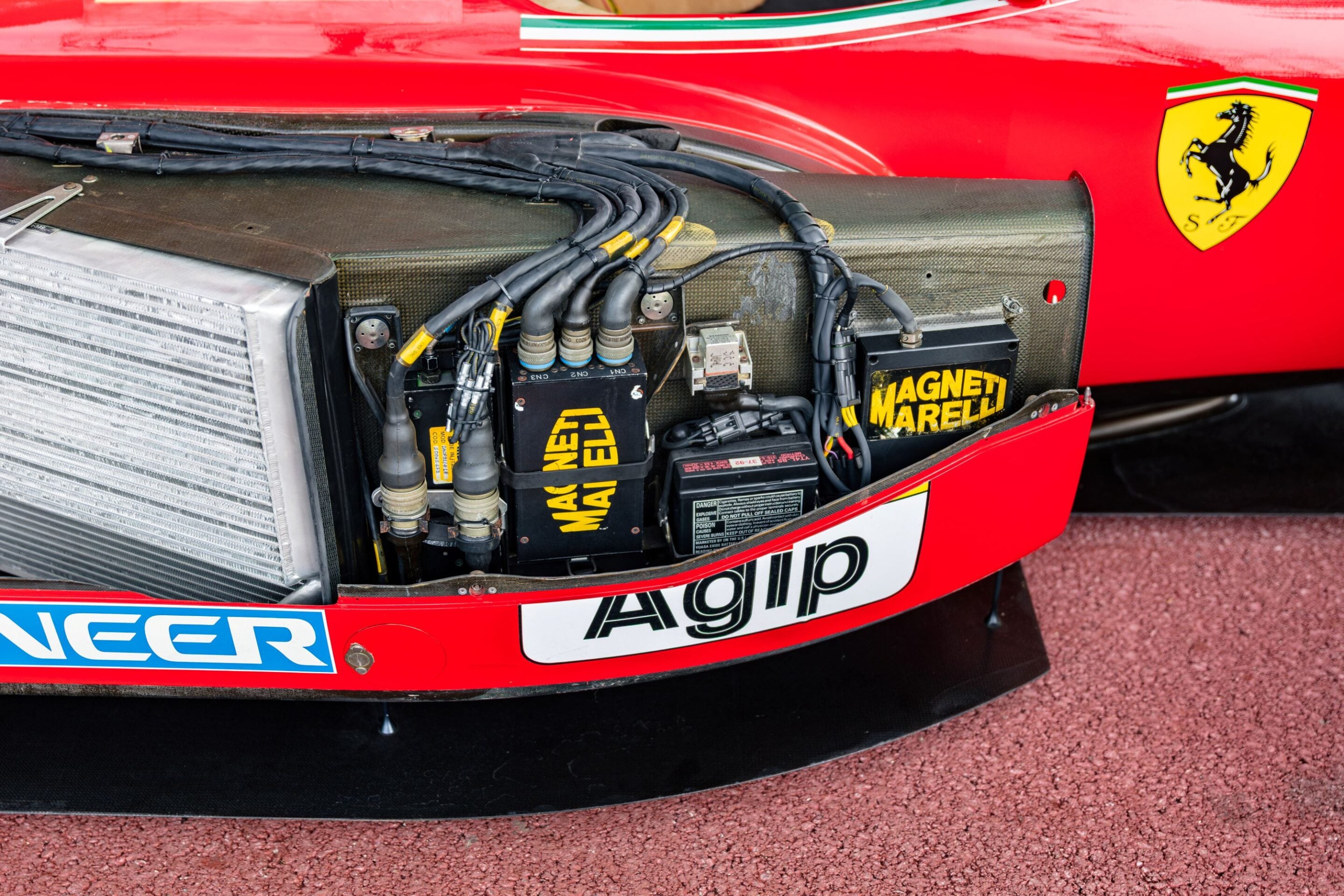
Certainly, the F92A won’t go down in history as one of Ferrari’s best, the Scuderia finishing fourth in the constructors’ championship with just 21 points.
But, as terrible as it was, the F92A did bring a lasting and enduring legacy to Ferrari. Incensed with the team’s poor showing in ’92, and determined to put the team back on the right path, di Montezemolo lured Jean Todt from Peugeot to the Scuderia in 1993 to begin the process of rebuilding.
It took several years for Todt to assemble his ‘dream team’ of Schumacher, Ross Brawn and Rory Byrne, and then several more before the Scuderia returned to the summit of F1. But once Ferrari did, there was no stopping it, winning five consecutive drivers’ titles from 2000-2004 and six straight constructors’ championship from 1999-2004.As for Alesi?
He remained with Ferrari until the end of 1995, scoring what would be his lone GP victory in Canada that same year, scant reward for a driver who had seen the Scuderia through its darkest days only to be pushed aside once Schumacher became available. We’ll never know what Alesi could have achieved had been at the right team at the right time.
This story first appeared in the March 2026 issue of Wheels magazine, now on sale. Subscribe here and gain access to 12 issues for $109 plus online access to every Wheels issue since 1953.
Audi CEO Gernot Dollner says that faltering EV sales and strong consumer interest in petrol engines will ensure ICE vehicles will endure for another decade yet.
As a result the German manufacturer will approach its powertrain solutions with more flexibility, Dollner told Car And Driver.
Australian new car sales are similar to other developed markets around the world – that is interest in electric vehicles is slowing, and in some instances flattening out completely. The revolution we were told would happen in short order, hasn’t materialised as indicated.
In markets like the United States, the move to EVs has slowed so much that many analysts are prepared to say its on life support. Manufacturers forced into EV development are now faced with a showroom line-up that doesn’t reflect the interest of the buyer, and Audi is adamant that it can deliver what its customers still want.
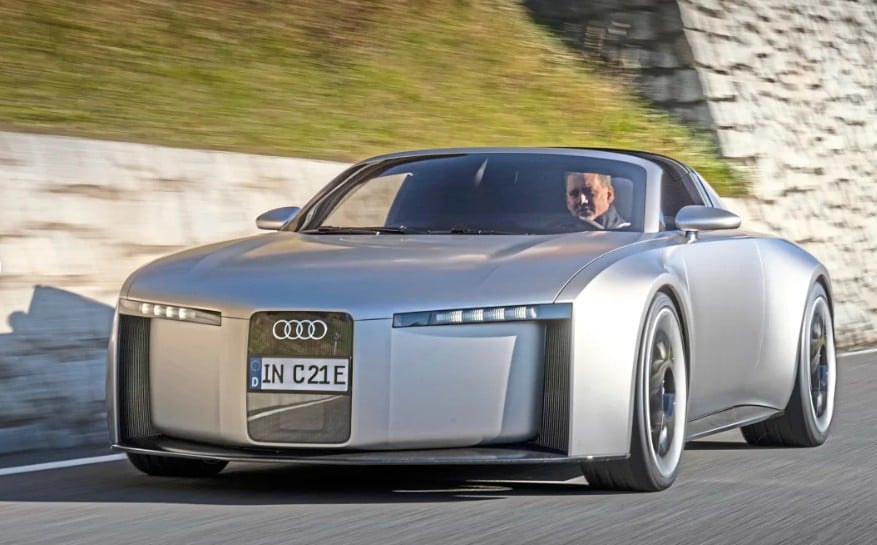
Dollner told Car and Driver that Audi will take a measured approach over the next 10 years, with development cash a critical focus on both how and where it is spent.
“The drivetrain concepts will definitely swing back to internal combustion,” Dollner told Car and Driver. “That’s what we see right now, and I don’t know if battery-electric will come back that fast.”
EV sales in the United States provide a fascinating insight for our market here, with sales growing steadily on the back of federal EV tax credits. The elimination of those credits in 2025 slowed that climb though, leading several manufacturers to pause of cancel EVs previously designed to make their way to the US. With talk about Australia ending its EV incentives, a similar thing could happen here.
The hysteria that follows that logic though, usually revolves around Australia becoming a dumping ground for old, internal combustion technology. Australia, like the US, is an SUV and dual-cab heavy market, vehicles which haven’t been well served by electrification so far. That doesn’t mean though, that we’d be likely to see less electric vehicles make their way here. Dollner said he doesn’t see it that way for the US either.
“Markets are so dynamic, and every market has its speciality,” he said. “So, the US has these rugged SUV and pickup segments, quite ICE-heavy consumer landscape. China is ahead on battery electric, but has a backswing to extend-range and even plug-in hybrid. There are a lot of dynamics, so it isn’t too easy to tell where the road is heading.”
Dollner went on to explain that while EV development will absolutely continue, Audi will continue to hone its current platforms for petrol only and hybrid powertrains.
“I don’t see necessarily new platforms,” he explained. “But I see further development of platforms to bring the next level of electronics and bring some degree of more hybridisation.”
MG Motor Australia has confirmed that the new MG4 EV Urban will launch in Australia in April, sitting underneath the MG4 already on sale but with a more affordable price tag.
At launch, the MG4 EV Urban will offer two LFP battery sizes in Australia: a smaller 43kWh standard range and a larger 54kWh extended range. Based on UK specifications, the former can travel 325km on a charge and the latter 415km. Importantly, both batteries can charge from 10 to 80 per cent in around 30 minutes at a maximum rate of 82kW for the smaller battery and 87kW for the larger one.
In the UK – Australian power figures are yet to be announced – the smaller battery is paired with a 110kW/250Nm front-mounted electric motor, with the latter using a slightly more powerful 118kW (still making 250Nm) motor instead, likely to account for the larger battery’s extra weight.
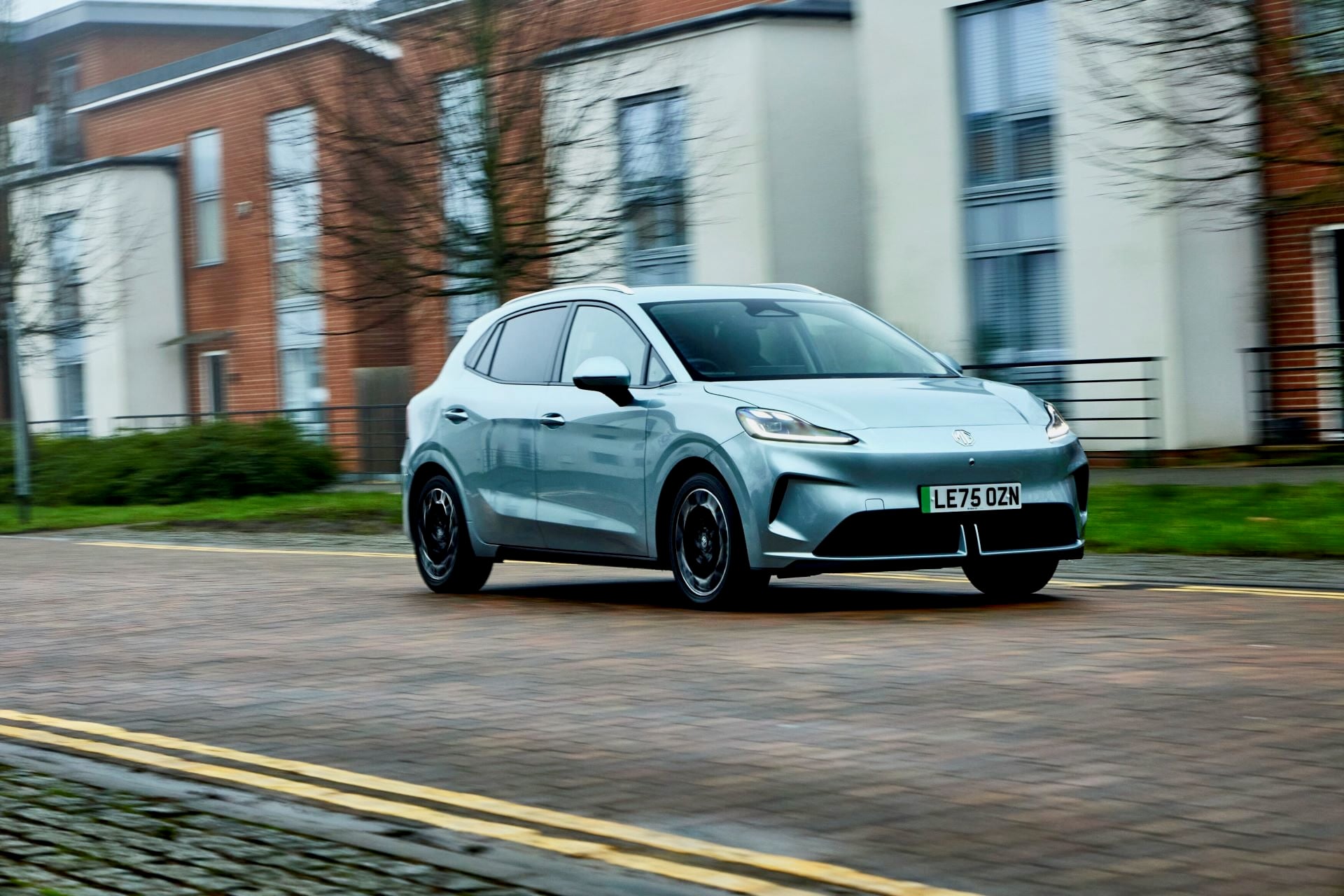
In the UK market, where it has already been updated, the regular MG4 is available with either 64kWh or 77kWh batteries, with the smaller 51kWh unit removed to make way for the MG4 EV Urban. That is a change we’re expecting for Australia as well.
Billed as a more comfort-focused and practical EV compared with the sportier MG4, the MG4 EV Urban is actually bigger and more spacious than its sibling. Measuring 4395mm long, 1842mm wide, 1549mm tall and 2750mm between the wheels, the Urban is 108mm longer, 6mm wider, 33mm taller and 45mm longer between the wheels than the MG4. Based on UK specifications, its 1364-litre boot (with the rear seats folded) is around 200L larger than the 4.
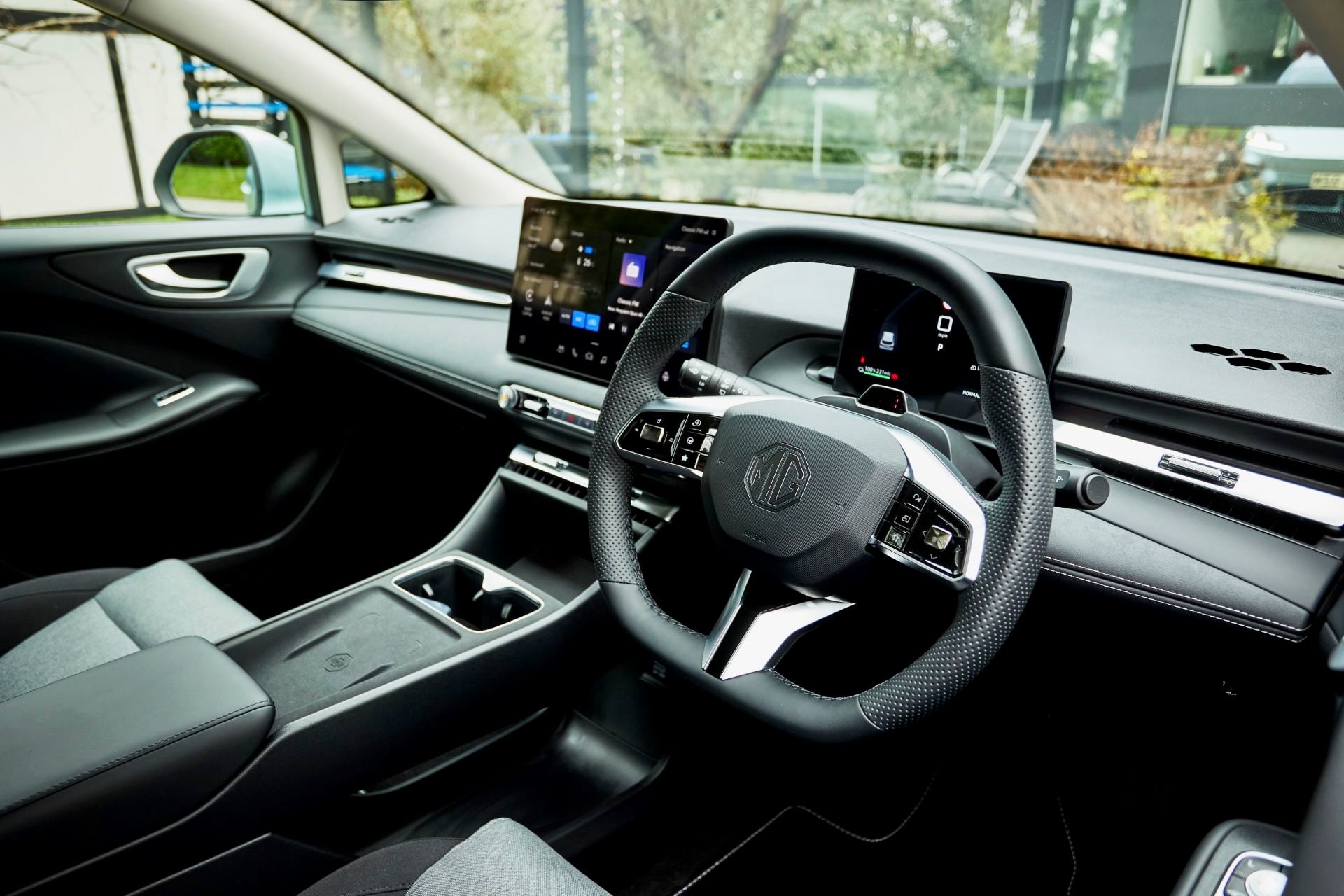
Inside the MG4 Urban is a similar cabin to the MGS5 EV electric small SUV, with a 15.6-inch touchscreen featuring wireless Apple CarPlay and Android Auto, a 7.0-inch digital driver’s display, physical air-conditioning and volume controls, and a large centre console with a wireless phone charger. The MG4 will receive a similar cabin design when it’s launched.
Australian pricing for the MG4 EV Urban is yet to be announced, but in the UK, there’s a £6500 (AS12,360) price difference between the two and we’re expecting a low-$30,000 price for the Urban once it reaches our shores. For reference, the UK-spec MG4 EV Urban starts at £23,495 (around A$44,700) and the MG4 at £29,995 (A$57,200).
The MG4 EV Urban will go on sale in Australia in April, with local pricing and specifications to be confirmed then.
At first glance, the new plug-in hybrid Audi RS 5 appears to contradict everything enthusiasts traditionally love about performance cars. It weighs close to 2.5 tonnes, carries a battery pack and relies on hybrid technology. On paper, that might sound like a recipe for disappointment.
Yet Audi Sport’s engineers have managed to turn that expectation on its head. The latest RS 5 combines electrification with serious performance hardware to produce a machine that feels far more athletic than its hefty kerb weight suggests.
Unveiled recently as the latest addition to Audi’s RS performance line-up, the new model has sparked debate among purists. For the first time, the famous RS badge has been paired with a plug-in hybrid powertrain, and that decision inevitably adds mass. Compared with the outgoing RS 4, the new car is roughly a third heavier and slightly larger overall.
But Audi’s development team insists the electrified approach brings significant benefits — and those advantages become clear as soon as you get behind the wheel.
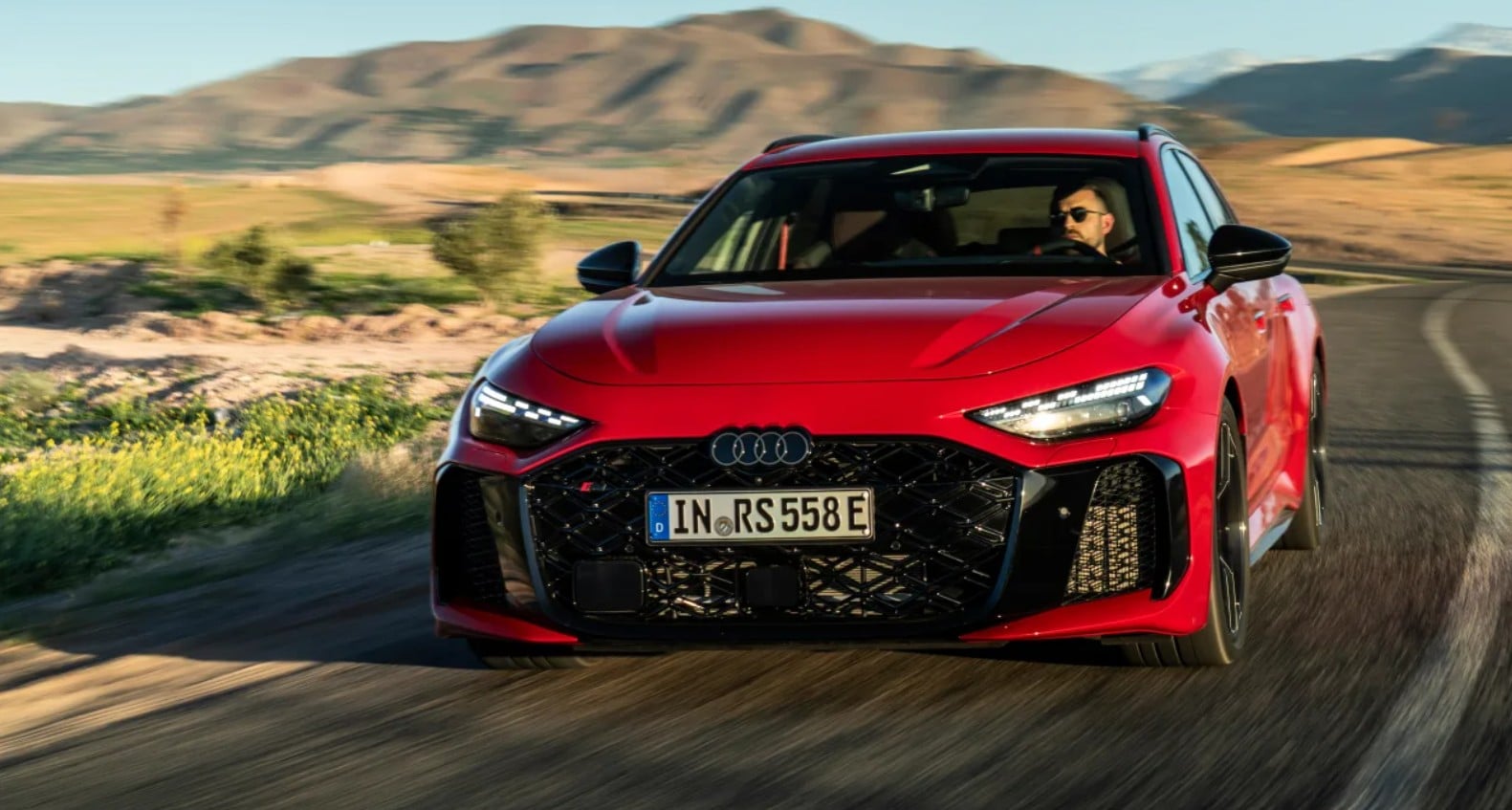
Electrified power with serious punch
The new RS 5 is powered by a 2.9-litre twin-turbocharged V6 petrol engine paired with an electric motor integrated into the transmission. The petrol engine alone produces around 375kW, while the electric motor contributes an additional 130kW.
Combined output stands at a remarkable around 470kW, representing roughly a 50 per cent increase in power compared with the previous model.
Performance figures are correspondingly impressive. Audi claims the RS 5 can accelerate from 0–100km/h in just 3.6 seconds, helped by a temporary ‘Boost’ function that unleashes the full 825Nm of torque.
On an open stretch of road, the car feels brutally quick. Acceleration builds instantly thanks to the electric motor’s immediate torque delivery, while the V6 provides the familiar surge of turbocharged power higher in the rev range.
Even without engaging launch control, the RS 5 launches forward with remarkable urgency.
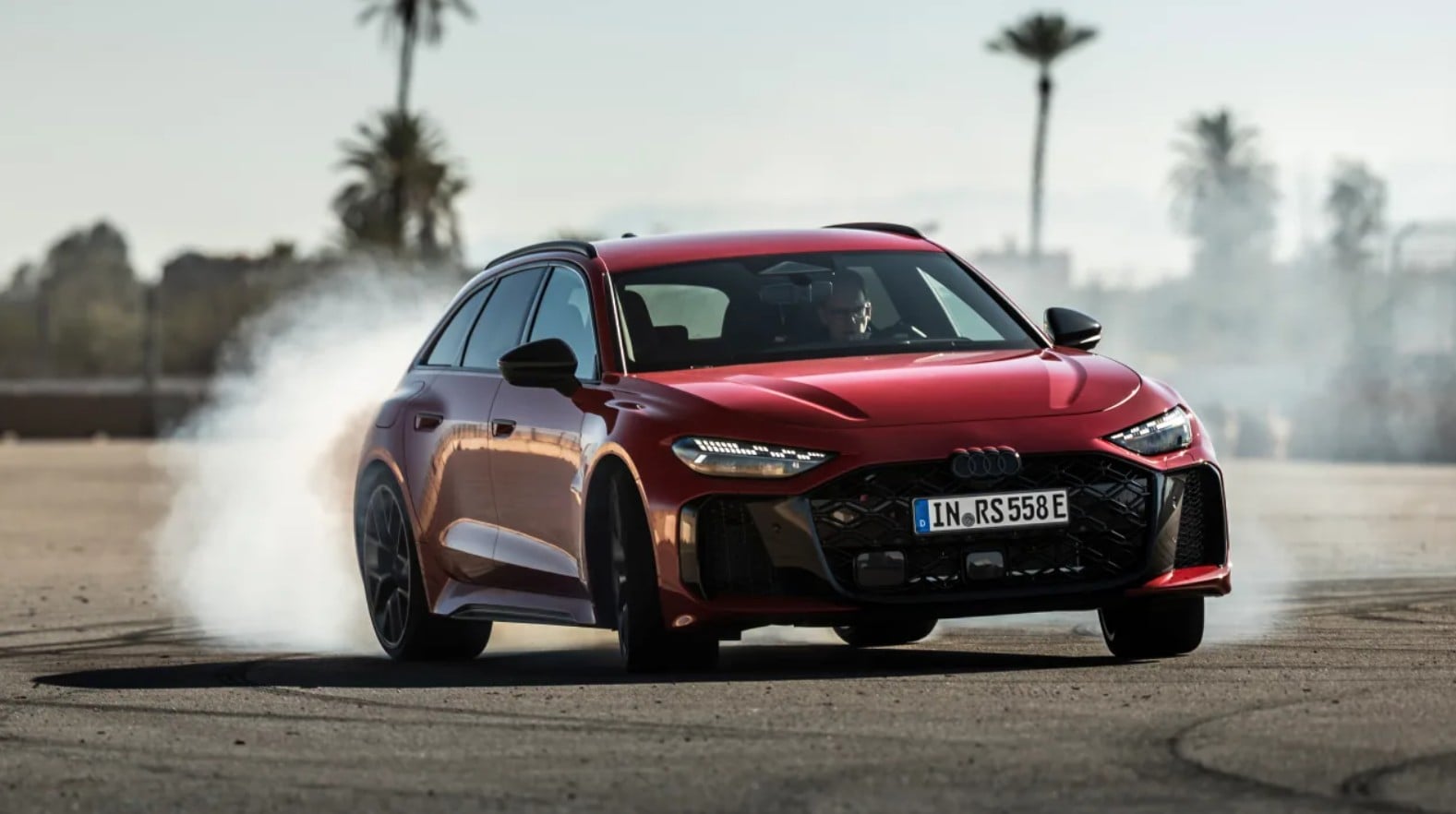
Handling that defies the weight
What’s most surprising, however, is how well the RS 5 handles its substantial mass. Audi has equipped the car with an advanced torque-distribution system that can actively send power between the rear wheels in milliseconds.
Working together with the electric motor and the rear differential, the system enhances both grip and agility.
The result is a car that feels far more nimble than its dimensions suggest. Steering is sharp and precise, and the chassis maintains impressive composure through fast corners. Wide performance tyres and a carefully tuned suspension setup help keep the car planted when pushed hard.
In standard RS driving modes, the car delivers controlled and confident performance. But switch to the more playful Torque Rear mode, and the RS 5’s personality changes dramatically.
Suddenly the rear axle becomes more lively, allowing enthusiastic drivers to provoke controlled slides. It’s a playful feature that demonstrates Audi hasn’t forgotten how to make a performance car entertaining.
Performance meets practicality
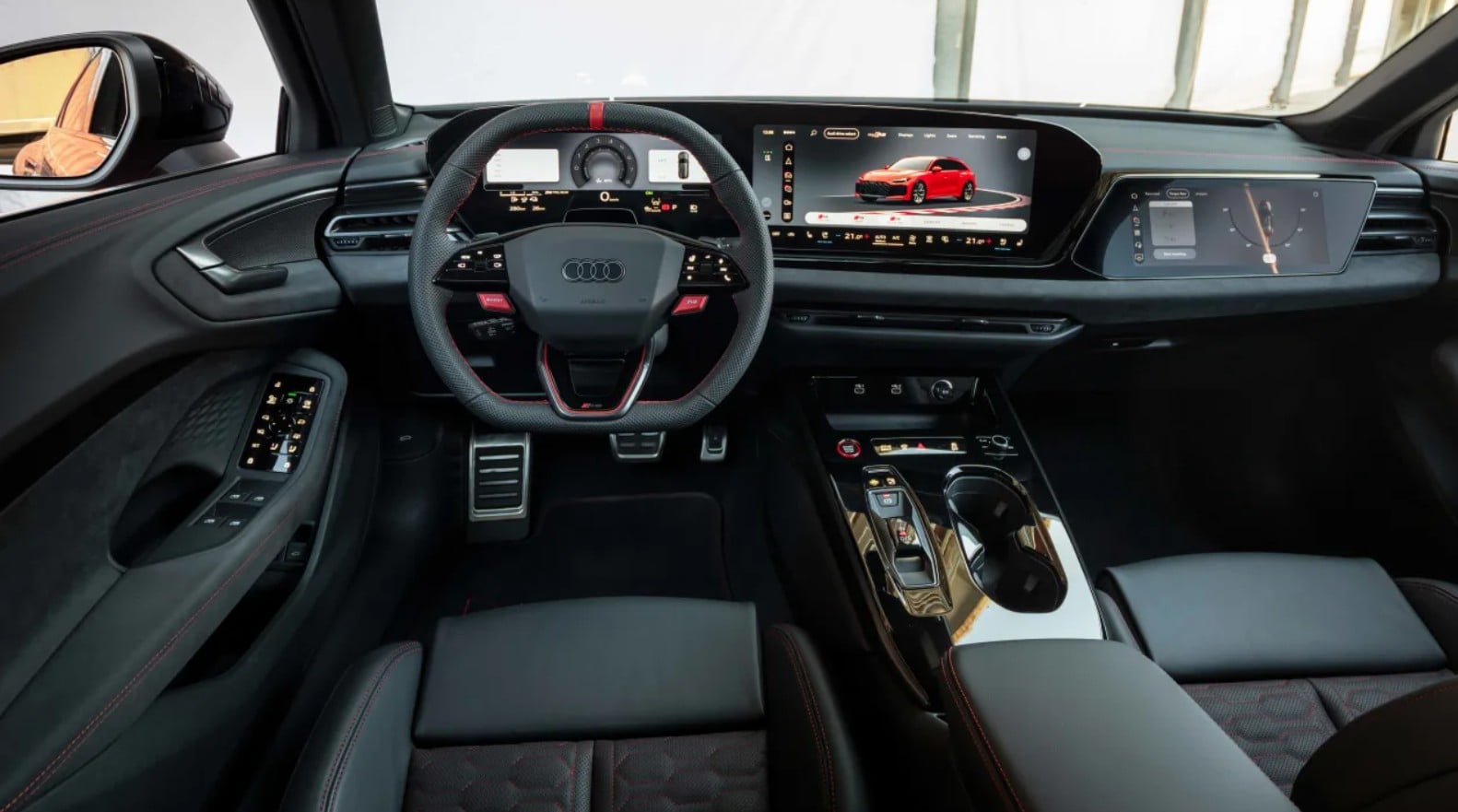
Audi has also embraced technology that appeals to a new generation of enthusiasts. The infotainment system includes software capable of recording drift angles and performance data, letting drivers analyse their driving sessions later.
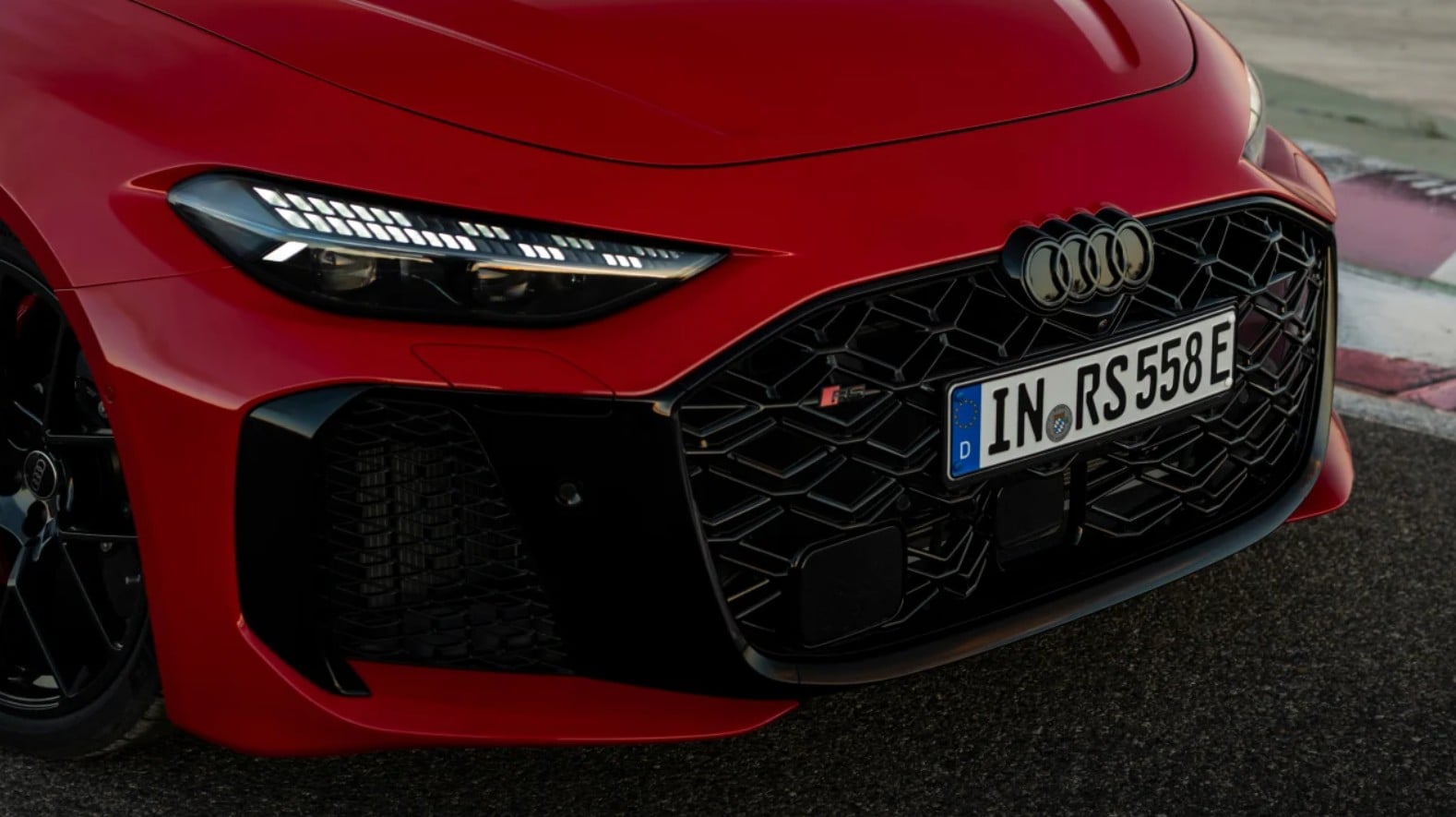
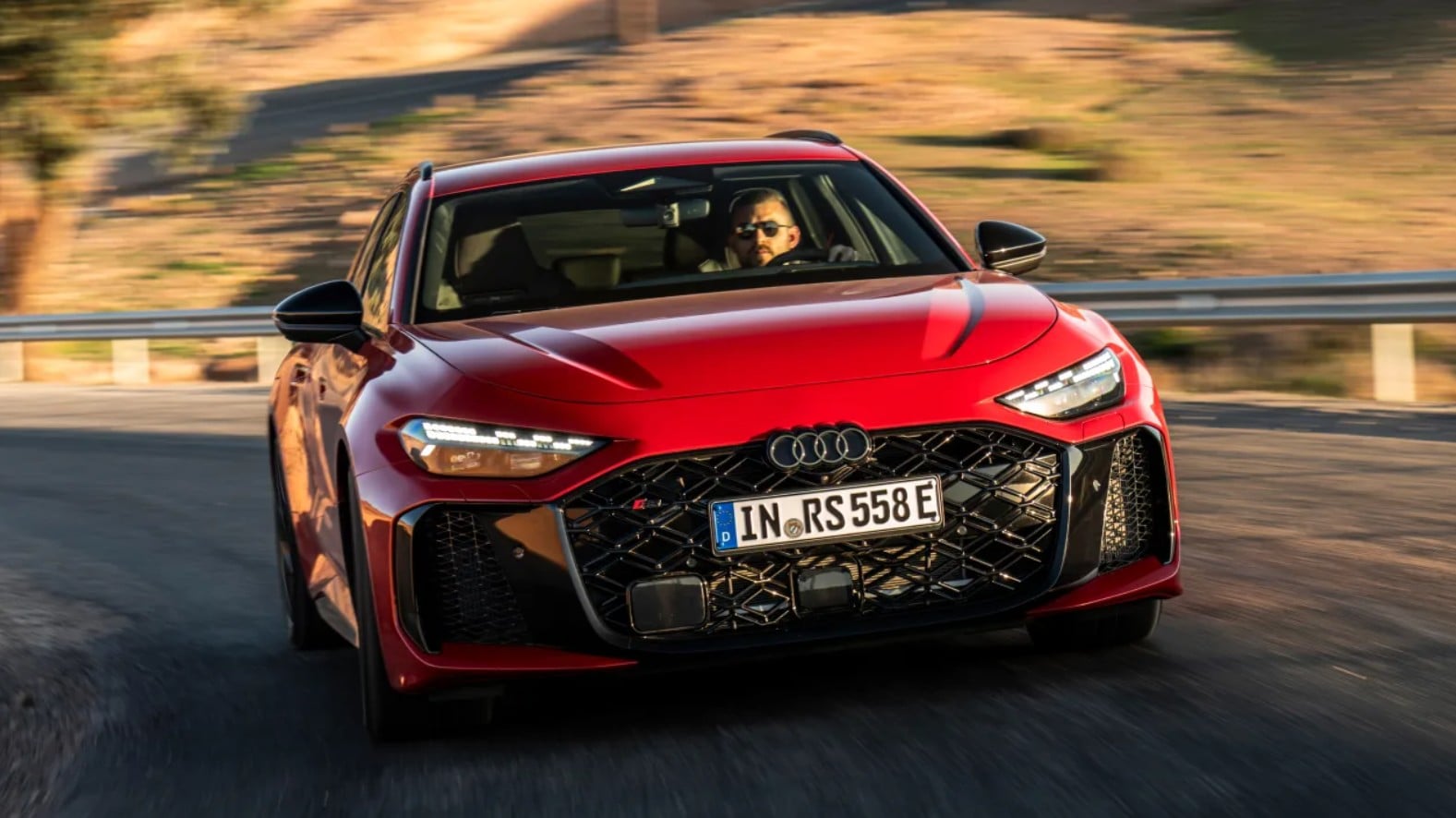
The car’s design reflects its aggressive performance intent. Flared wheel arches, prominent side skirts and large air intakes give the RS 5 a muscular stance, while twin exhaust outlets reinforce its sporting credentials.
Yet despite its dramatic appearance and impressive speed, the RS 5 remains comfortable enough for everyday use. The suspension delivers a refined ride during relaxed driving, making it well suited to commuting or long highway journeys.
Electric driving for daily use
The plug-in hybrid system also allows the RS 5 to travel around 80 kilometres on electric power alone, thanks to a 22kWh battery pack.
In EV mode the car can operate quietly and efficiently, making it ideal for urban driving or short daily trips without using petrol.
Pricing for the new RS 5 is expected to start at roughly $180,000 before on-road costs when it reaches Australian showrooms.
While it certainly isn’t cheap, the latest RS 5 demonstrates that electrification doesn’t have to dilute performance. In fact, Audi’s newest RS model shows how hybrid technology can elevate both speed and versatility — delivering the thrill of a sports car alongside the practicality of a modern performance wagon.
In 2025, 733,831 SUV models of different sizes, with different drivetrains and from different manufacturers were sold in Australia. That represents 60.7 per cent of the overall new car market, and it’s a stark contrast to even five years ago when passenger cars were more prominent.
Models such as the Toyota RAV4, Ford Everest and Mazda CX-5 tend to hog all the headlines as some of the biggest volume sellers in the market, but how about models that aren’t as high profile? Here are 10 great SUVs that you should know more about:
MGS5 EV
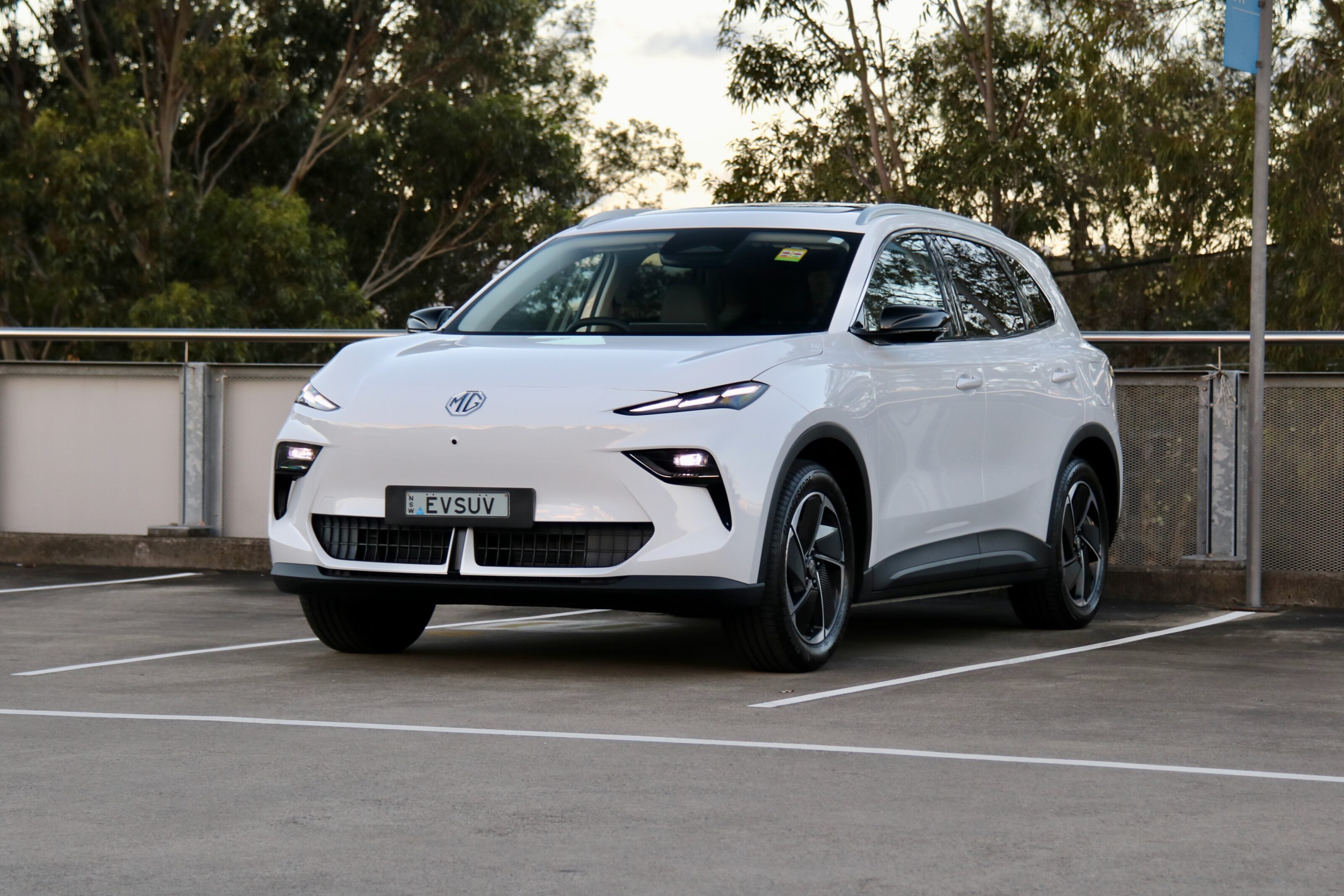
Price: From $40,490 driveaway
Drivetrains: Single-motor electric, up to 125kW of power, up to 515km of range
2025 sales: 1857
Why you should consider it: It uses the same bones as the sweet MG4 hatchback but with more practicality
We were quite impressed with the MGS5 EV when it launched last year and while sales have been reasonable, we expected it to be more popular. Attractively priced from just $40,490 driveaway, the S5 is a great small electric SUV option and a far better product than the ZS EV that it replaced. Using a 125kW rear-mounted motor, it’s solid to drive and it offers a healthy range up to 515km. The interior is also high quality, the tech is easy to use and it’s practical.
KGM Torres
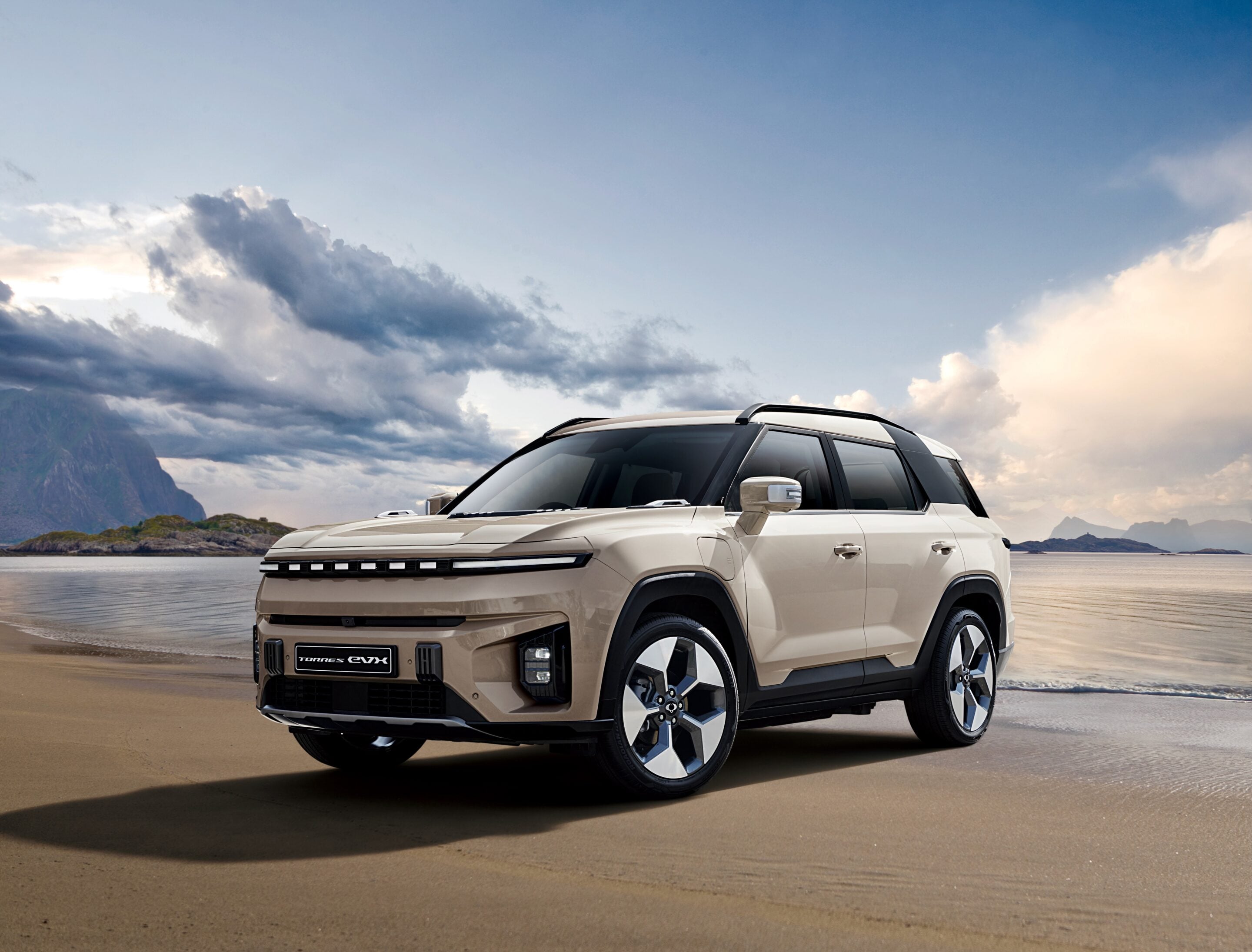
Price: From $38,000 driveaway
Drivetrains: 1.5-litre turbo-petrol, 1.5-litre turbo-hybrid or dual-motor electric, up to 152kW of power, up to 462km of range (EV)
2025 sales: 288
Why you should consider it: It offers petrol, hybrid or electric power and is a good all-rounder
It’s fair to say that KGM’s sales aren’t exactly firing up the charts at the moment, and we think that’s a shame because it offers a lot to Australians. Take, for example, the Torres mid-size SUV. It’s great value for money, is well equipped across the range, practical and offers a choice of petrol, hybrid or electric drivetrains. Pricing starts at just $38,000 driveaway, putting it in direct competition with more popular cars like the GWM Haval H6, but the Torres is also worth a look.
Skoda Elroq
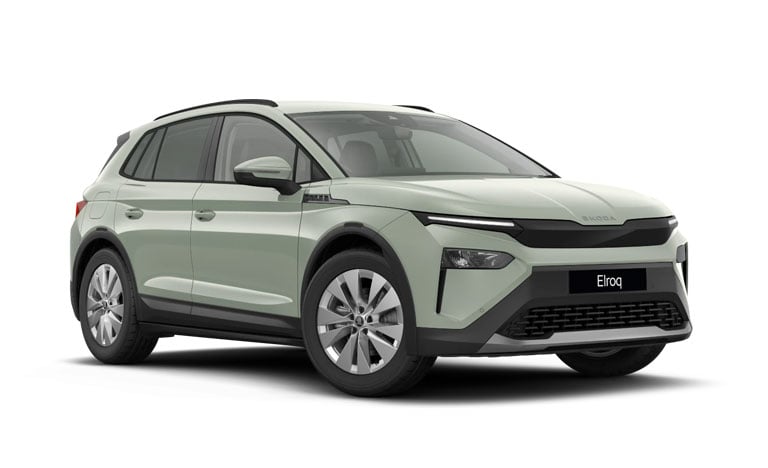
Price: From $49,990 driveaway
Drivetrains: Single-motor electric, up to 210kW of power, up to 529km of range
2025 sales: 253 (it only went on sale in September)
Why you should consider it: It’s great value for money and mechanically impressive
It’s only been on sale since September 2025, but the Skoda Elroq small electric SUV deserves more attention. Priced from $49,990 driveaway, the Elroq is solid value for money and even the entry-level 60 Select variant is well equipped, drives well and can travel up to almost 400km on a charge. Being a Skoda, it’s well packaged and features many ‘simply clever’ features – plus, it’s also covered by a seven-year/unlimited km warranty.
Hyundai Ioniq 5
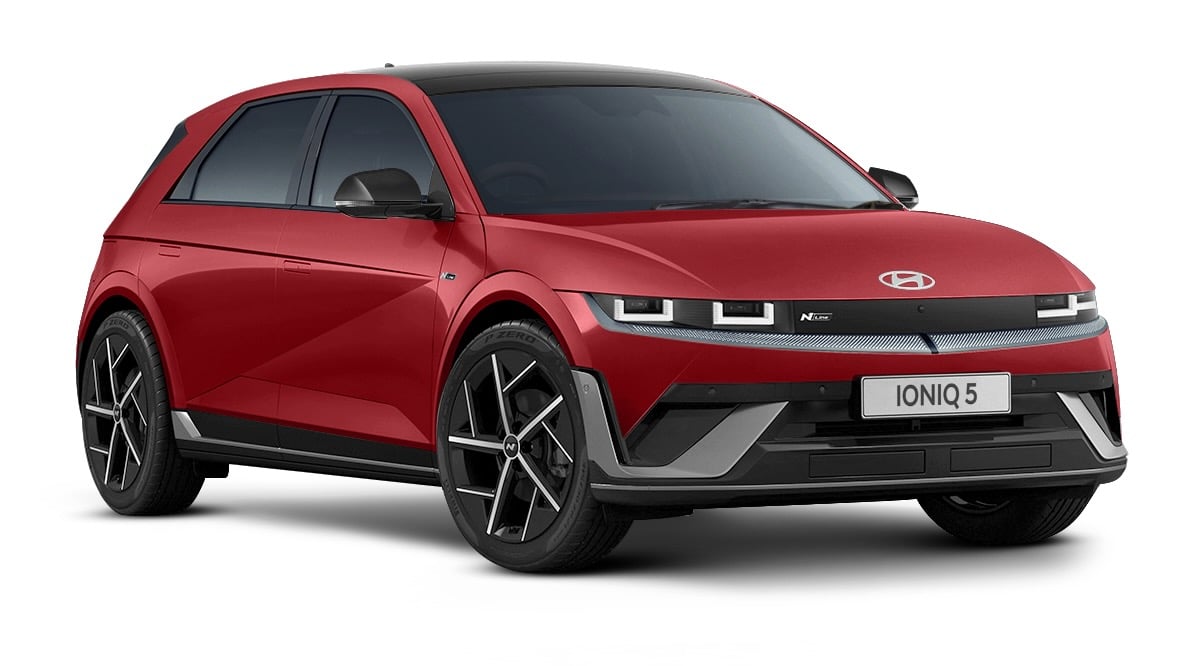
Price: From $76,200 plus on-road costs
Drivetrains: Single- and dual-motor electric, up to 448kW of power, up to 570km of range
2025 sales: 626
Why you should consider it: It’s a breakthrough EV: great to drive and great to sit in
The Hyundai Ioniq 5 was one of the first big electric vehicle launches in Australia that wasn’t a Tesla, and while sales have been modest since, there’s no denying that it’s a great car. It offers fast charging, it’s good to drive, quite practical and there are a range of different models to choose from, including the fire-breathing Wheels COTY-winning Ioniq 5 N. Pricing starts at $76,200 plus on-road costs, though Hyundai currently has the entry-level model on special for $71,990 driveaway.
Nissan Qashqai
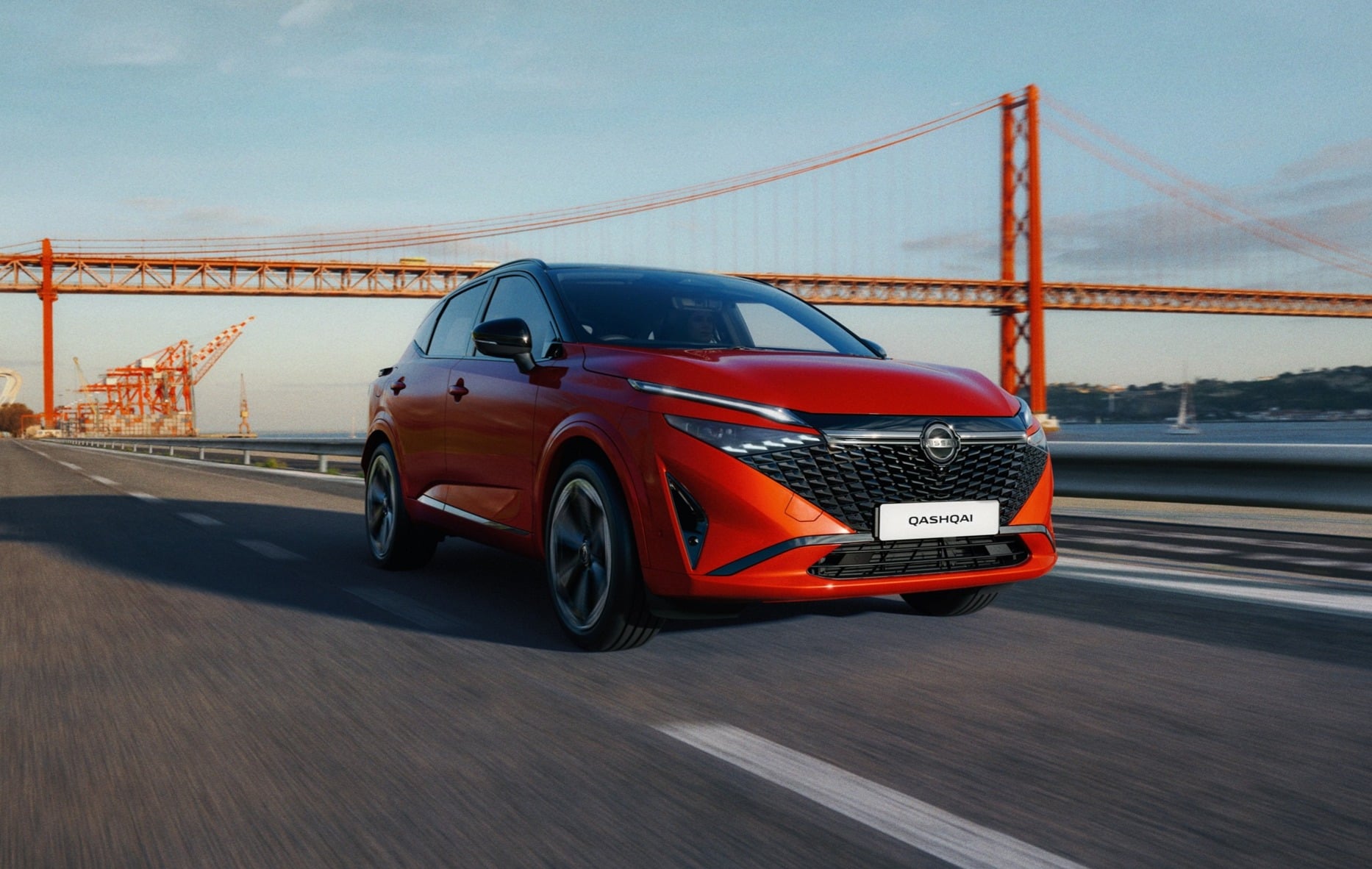
Price: From $45,640 plus on-road costs
Drivetrains: 1.5-litre turbo-hybrid, 140kW, 4.1L/100km
2025 sales: 4478
Why you should consider it: It’s got Nissan’s latest e-Power hybrid system with serious efficiency improvements
The Qashqai has been one of Nissan’s biggest global success stories since its initial debut way back in 2006, and is an influential model in creating the modern small SUV segment. Australians haven’t warmed to it like Europeans did, however, but we think it’s worthy of consideration. Nissan’s latest e-Power hybrid system has been made even more fuel efficient and is now rated at just 4.1L/100km. The best part? It’s standard across the MY26 Qashqai range.
Honda ZR-V
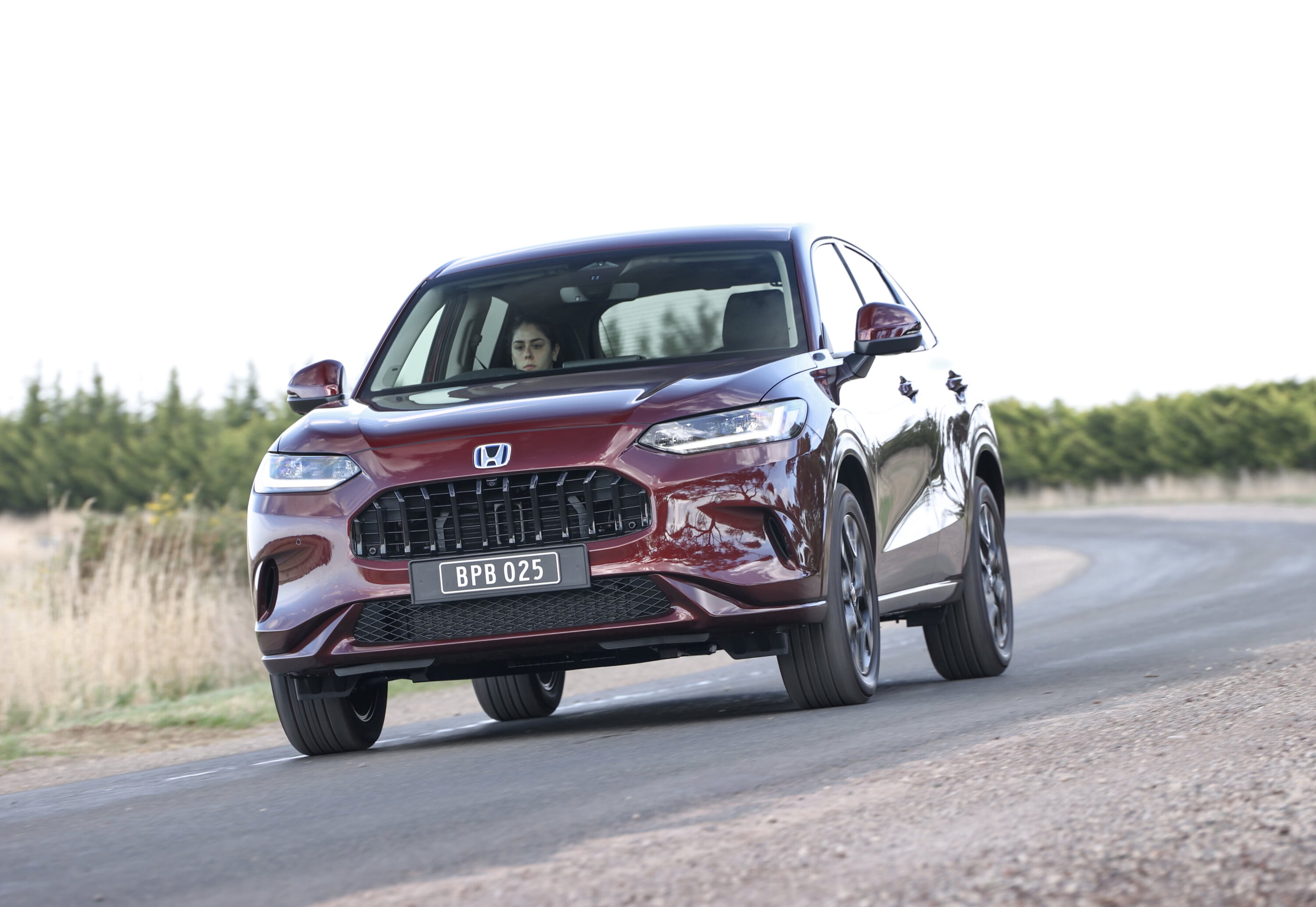
Price: From $37,900 driveaway
Drivetrains: 1.5-litre turbo-petrol or 2.0-litre hybrid, up to 135kW of power, as low as 5.0L/100km
2025 sales: 3940
Why you should consider it: It’s a great all-rounder and offers value pricing
The Honda ZR-V is a reasonable seller in Australia, though not to the level we think it deserves. Pricing starts at just $37,900 driveaway and even the entry-level VTi is well equipped, though the LX models are absolutely loaded. The ZR-V’s cabin is filled with soft-touch materials and it feels premium throughout. It’s a pleasure to drive and can be quite fuel efficient in hybrid form. If you’re searching for a small SUV under $50,000, the ZR-V needs consideration.
Ford Mustang Mach-E
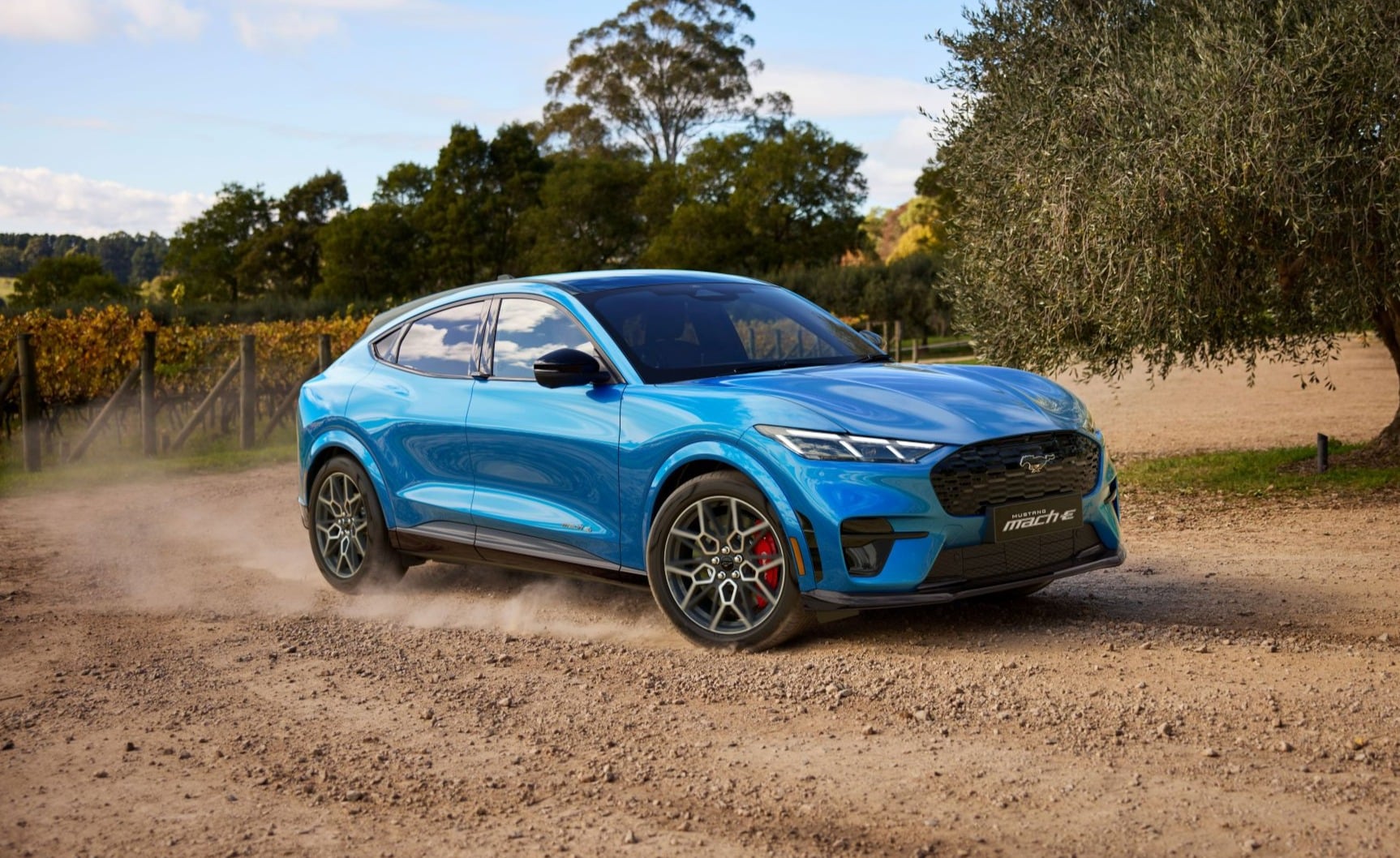
Price: from $65,990 plus on-road costs
Drivetrains: Single- or dual-motor electric, up to 434kW of power, up to 600km of range
2025 sales: 483
Why you should consider it: It’s one of the better electric SUVs to drive
Perhaps the most controversial car on this list, the Mustang Mach-E is famed for “not being a real Mustang“, according to its skeptics. That quibble aside it’s actually a pretty good car – satisfying to drive, competitive with range, practical and even in base form, well equipped. The high-performance GT is a hoot to drive as well, and very quick, hitting 100km/h in just 3.7 seconds.
Volvo EX90
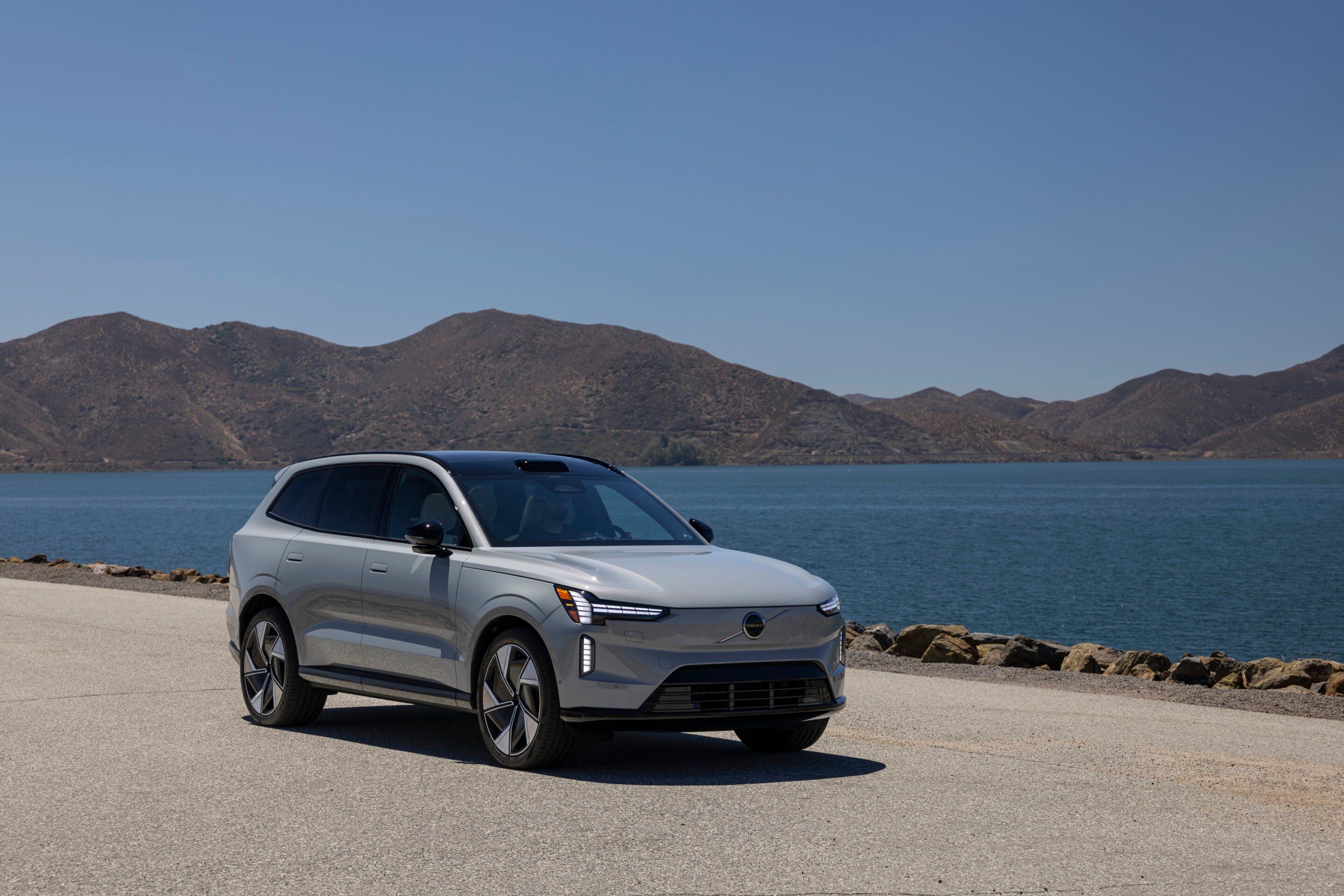
Price: From $124,990 plus on-road costs
Drivetrains: Dual-motor electric, up to 380kW, up to 570km of range
2025 sales: 209
Why you should consider it: Its cabin is spacious, luxurious and full of lovely materials
Volvo’s luxurious flagship EX90 seven-seat electric large SUV hasn’t been that big of a seller locally – the similarly-priced ICE XC90 that it was meant to replace outsold it almost four to one in 2025 – and yet it offers a lot to buyers. You won’t find a more relaxing and luxurious cabin for the money, and it’s also quite spacious. Add in faster charging with the MY26 update and it’s a strong offering at the more premium end of the market.
Kia EV9
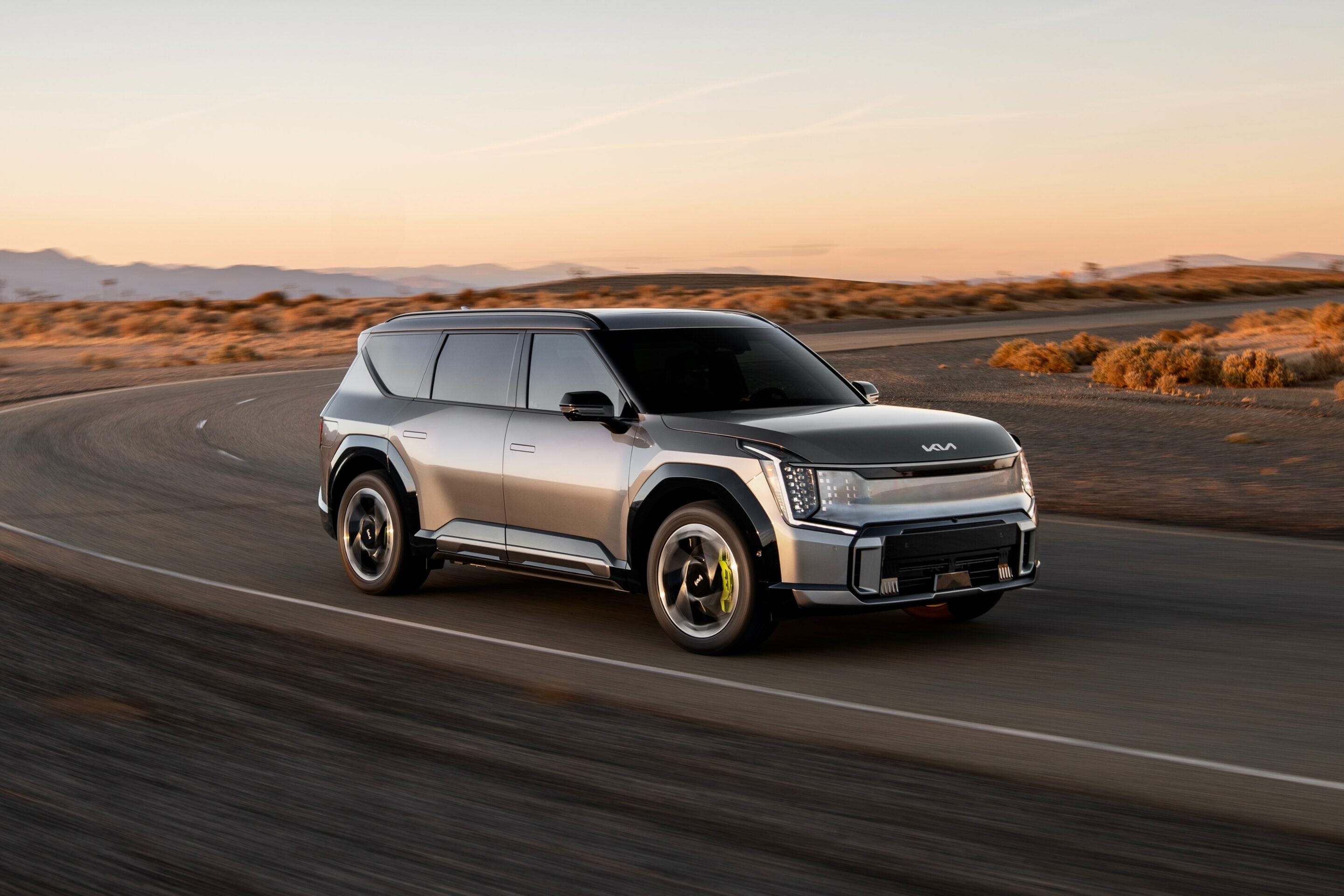
Price: From $97,000 plus on-road costs
Drivetrains: Single- or dual-motor electric, up to 374kW of power, up to 512km of range
2025 sales: 269
Why you should consider it: It’s huge inside and the new GT model is quick
Like the EX90 above, the Kia EV9 electric seven-seat large SUV hasn’t sold amazingly well in Australia and we think that’s a shame. While it’s not as luxurious inside as the EX90, it starts with a price tag $25,000 less and its interior is even larger. Seven adults will be totally comfortable in the big EV9, and its driver will be satisfied too as it’s a nice drive considering its heft and size. It bears futuristically styling and looks expensive, which counts for a lot when you’re spending this much money on a new car.
Hyundai Inster
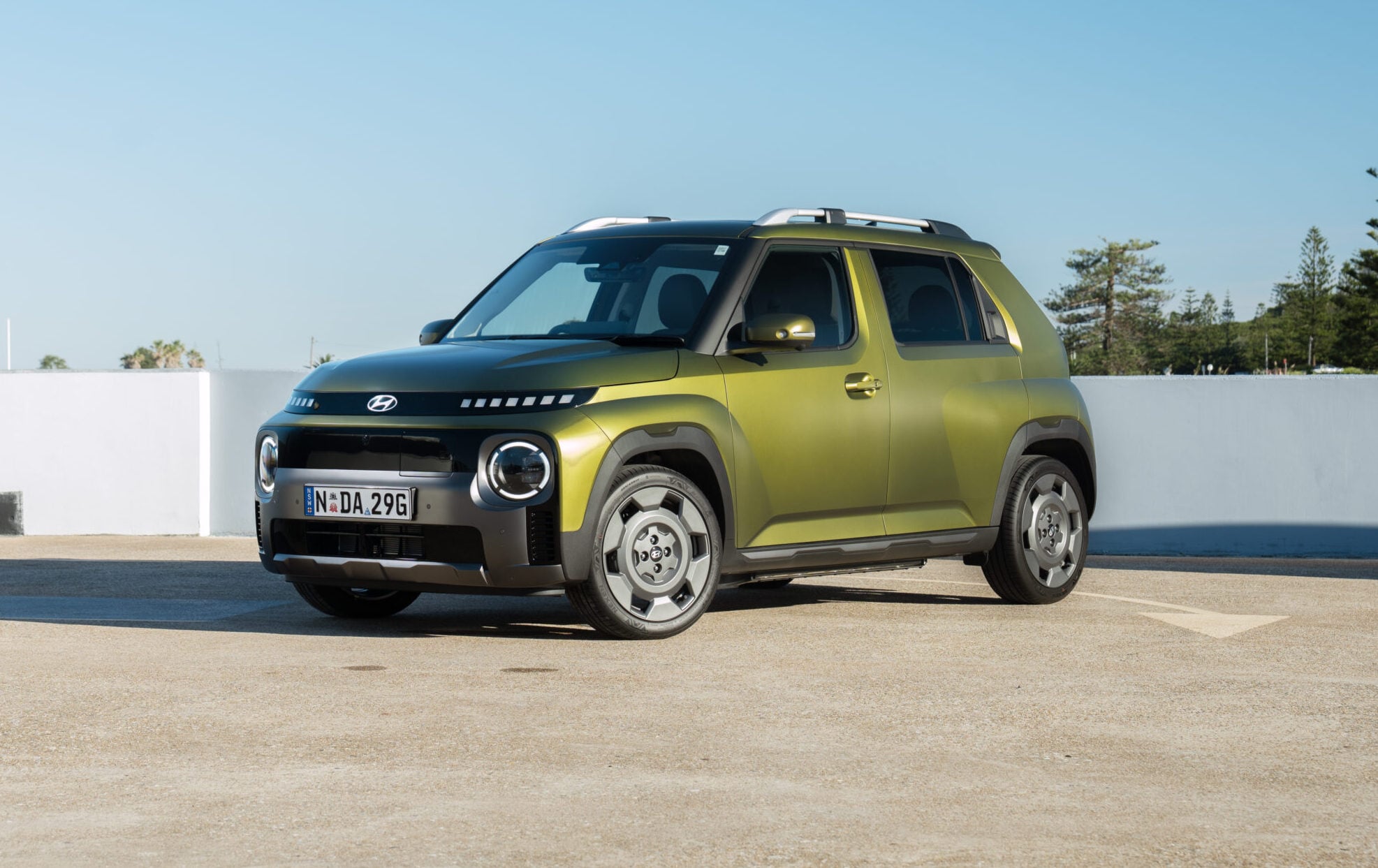
Price: From $39,000 plus on-road costs
Drivetrains: Single-motor electric, up to 85kW of power, up to 360km of range
2025 sales: 467
Why you should consider it: Just look at it. It’s so funky and cute!
The Hyundai Inster is also a car that should be selling better because it’s an ideal city-sized EV. Firstly, it’s insanely practical for a vehicle that size thanks to sliding rear seats and its boxy shape. Secondly, it drives well and even though it only produces up to 85kW of power, it’s more than peppy enough for ample propulsion around town. Sure, it’s not cheap to buy, but Hyundai’s deals help – the base model is currently on special for $35,990 driveaway, for example – and make it better value for money. Finally, it’s got so much character and in an era with a sea of the same bland SUV styling, cars with character need to be celebrated.
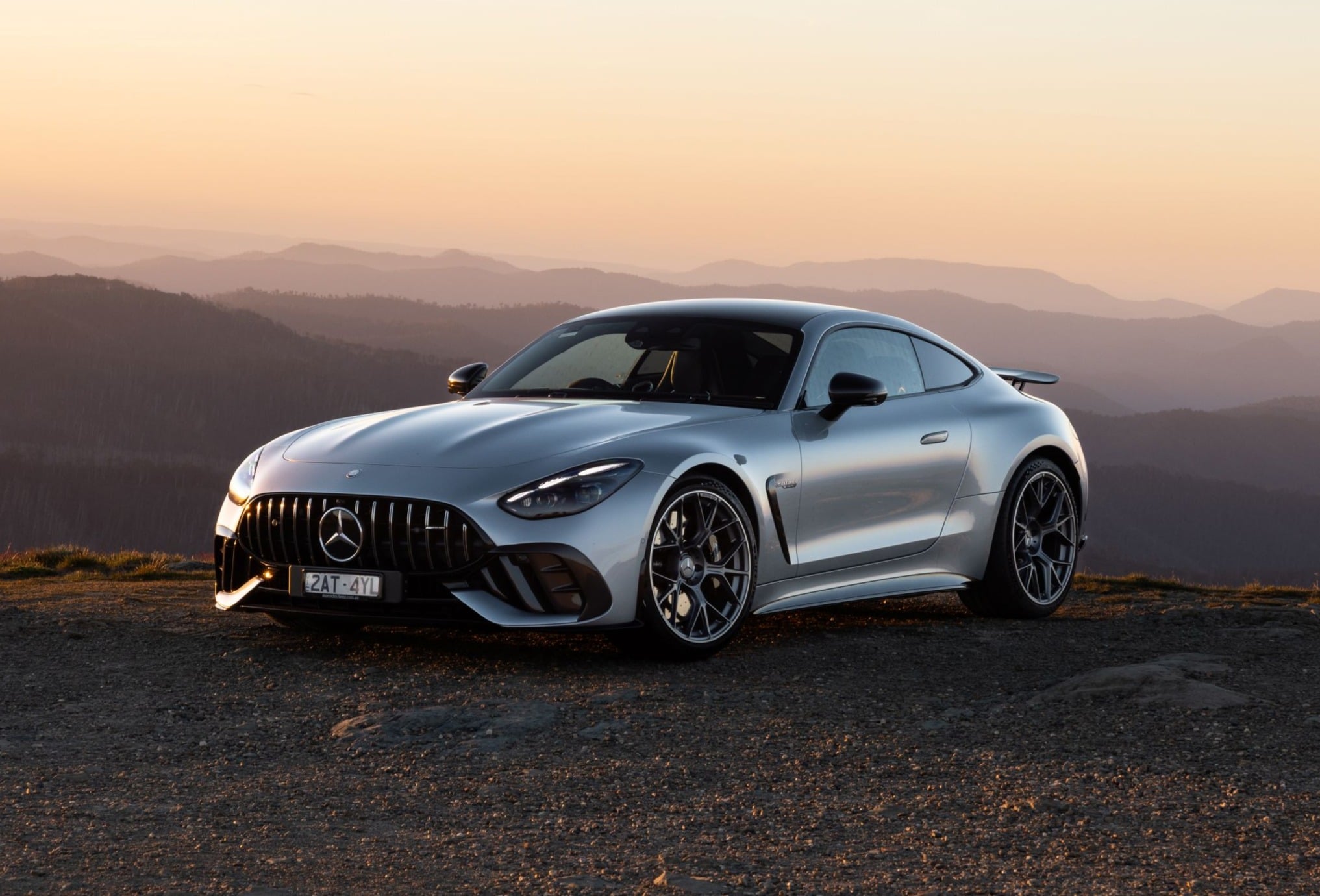
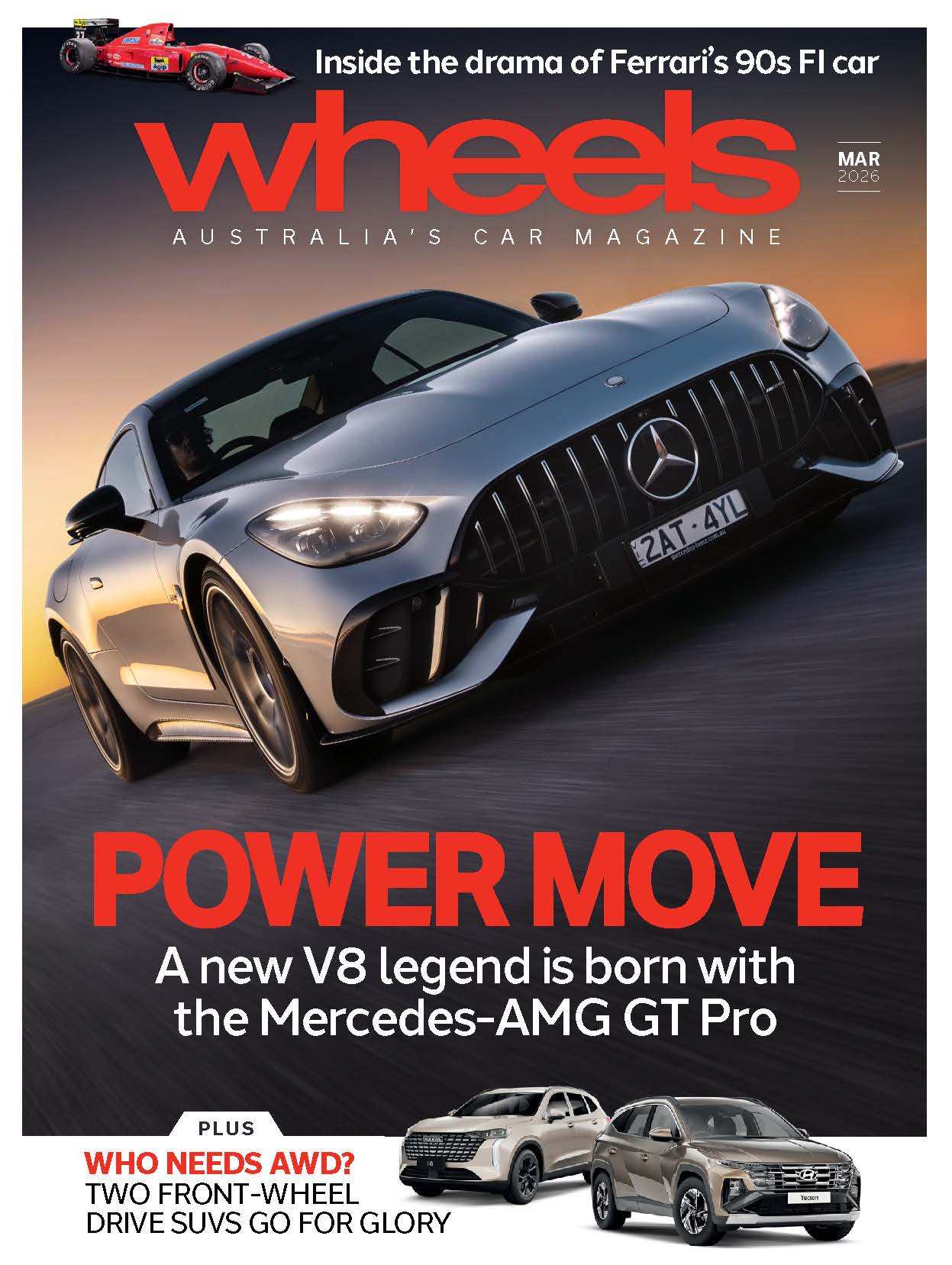
The March 2026 issue of Wheels magazine, on sale Monday March 9, featuring the awe-inspiring Mercedes-AMG GT 63 Pro on the cover.
Our feature drive of the GT 63 Pro reveals how the latest beast from Affalterbach builds on the reputation of its aggressive predecessor while adding greater usability for everyday driving – all without compromising the performance credentials that define the AMG brand.
Trent Nikolic takes a closer look at IM Motors, the premium offshoot of Chinese brand MG, and its ambitious push into the global luxury EV market via its advanced “digital chassis” technology. A timely look at the role software and electronics will play in shaping the next generation of electric vehicles.
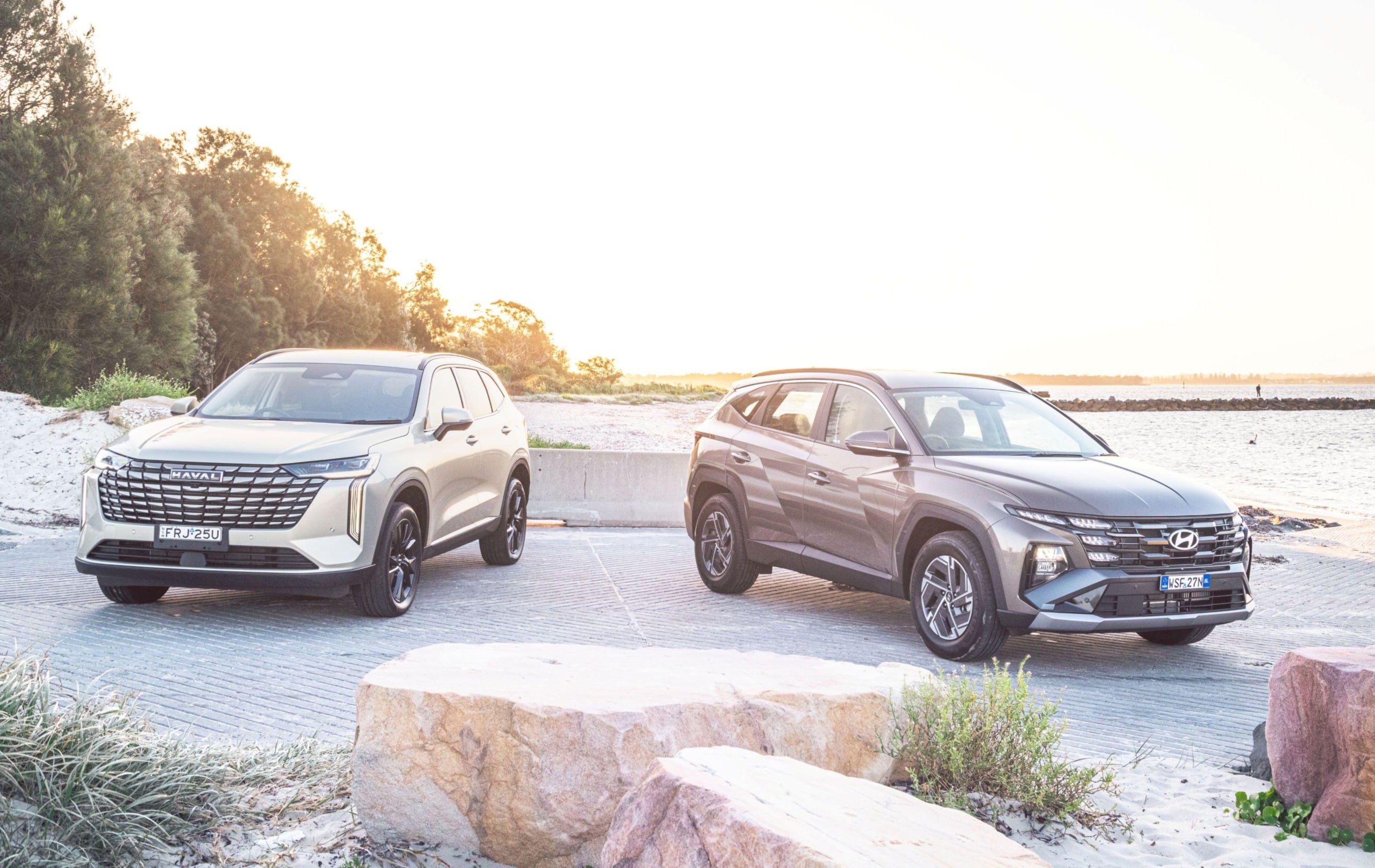
This month’s comparison pits two of Australia’s most popular hybrid medium SUVs – in the shape of the Hyundai Tucson Hybrid and the GWM Haval H6 Ultra Hybrid (below) – against each other, both in front-wheel-drive form. The test asks a simple but relevant question for many buyers: is all-wheel drive really necessary for family SUVs in everyday Australian driving conditions?
Inspired by events such as the Goodwood Revival in the UK, Wheels also visits Western Australia’s Red Dust Revival, a festival bringing together enthusiasts and historic machines in a uniquely Australian tribute to the country’s motoring heritage.
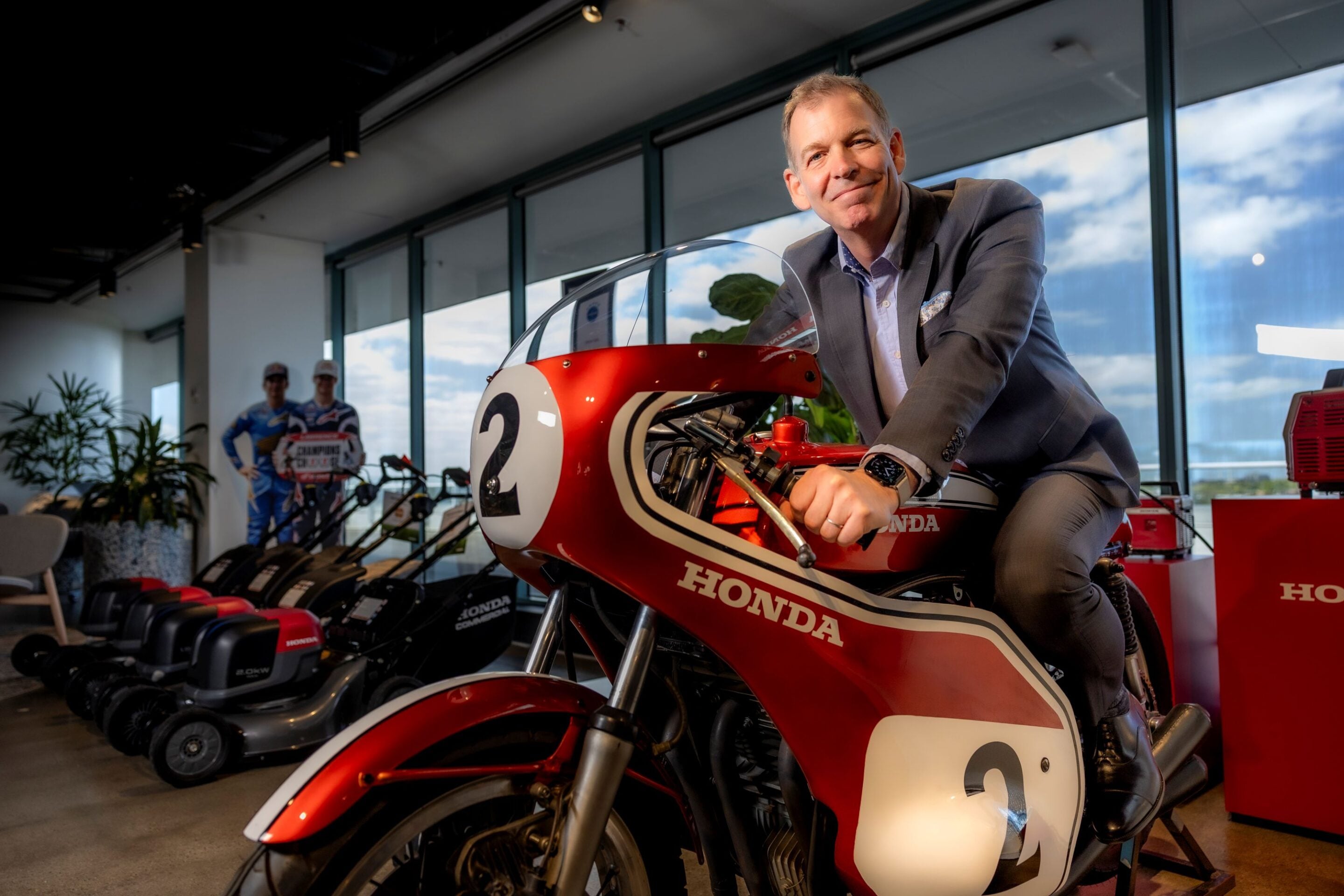
The Wheels Interview spotlights Honda Australia boss Jay Joseph (below). A 25-year Honda veteran, Joseph discusses the challenges of rebuilding the brand’s fortunes locally and outlines the strategy behind Honda’s next phase in the Australian market.
Our First Drives section this issue tests Hyundai’s upcoming Elexio electric SUV, Kia’s Tesla-chasing EV4, the new Denza B5 plug-in hybrid, BYD’s Sealion 5 PHEV and the Lexus LC500 Convertible – one of the last naturally aspirated V8 grand tourers still on sale.
Former federal industry minister Nick Minchin also contributes a guest column, reflecting on the decline of Australian manufacturing. Minchin argues that the closure of local car production marked a turning point for the country’s industrial base, blaming his own party for the loss of advanced manufacturing capability and the economic implications it had beyond the automotive sector.
Regular sections round out the issue, including Garage, Marketplace, the comprehensive 22-page Buyer’s Guide and the nostalgic Wayback Machine, which revisits Wheels coverage from March 1984 and Holden’s ambitions at the time.
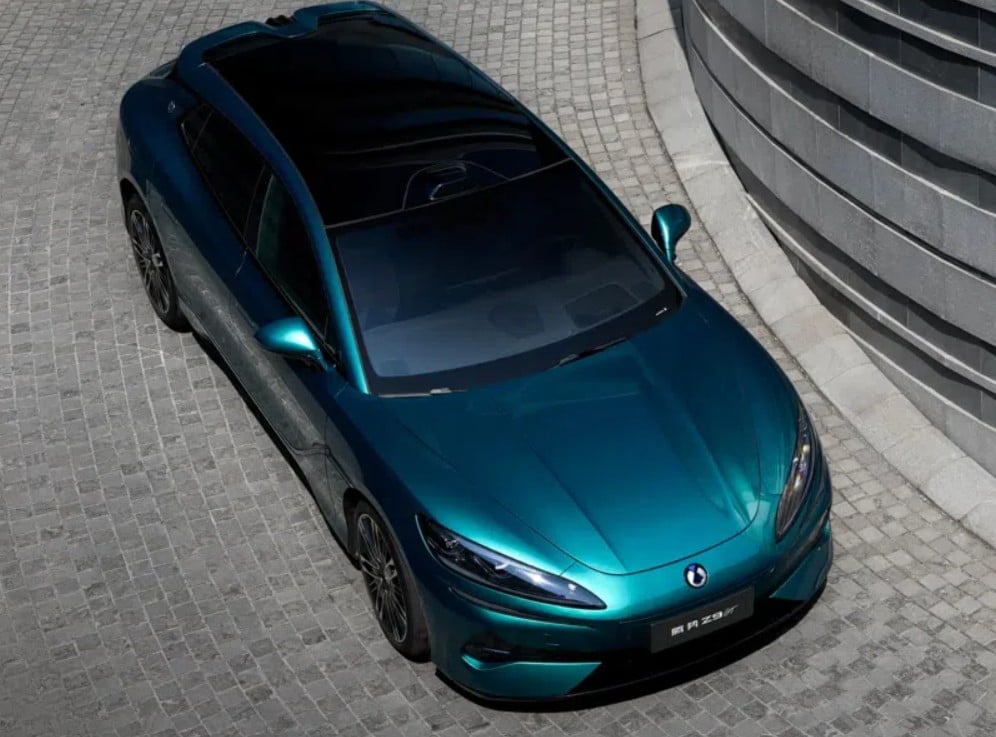
The race for electric vehicle range has taken a dramatic leap forward, with BYD’s luxury sub-brand Denza unveiling the Z9 GT – an EV that claims more than 1000km of driving range on a single charge.
According to Denza, the new Z9 GT can travel up to 1036km on a full battery under the Chinese CLTC testing cycle, positioning it among the longest-range production electric vehicles in the world.
That figure comes from the car’s largest 122kWh battery pack, although a smaller 102kWh battery will also be offered with a still-impressive 820km CLTC range.
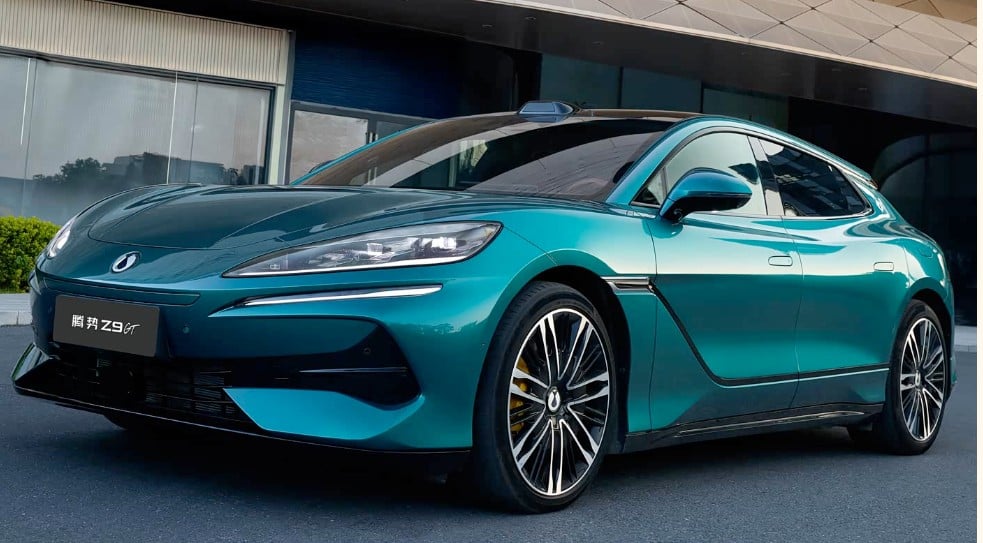
It’s worth noting the CLTC (China Light-Duty Vehicle Test Cycle) is generally considered more optimistic than other international standards such as WLTP or the US EPA test. Even so, analysts suggest real-world range could still sit somewhere around 700–800km, which would remain exceptional for a production EV.
The Z9 GT is not only about range. The luxury electric wagon – effectively a sleek shooting-brake-style grand tourer – forms part of Denza’s push into the premium EV market dominated by brands such as Porsche, Tesla and Mercedes-Benz. The model sits on BYD’s advanced electric architecture and is available with multiple powertrain configurations, including rear-wheel drive and high-performance all-wheel-drive versions.
Fast charging is another headline feature. The Z9 GT is designed to work with BYD’s next-generation 1,500kW “flash-charging” infrastructure, with the company claiming the battery can charge from roughly 10 per cent to around 97 per cent in about nine minutes under ideal conditions.
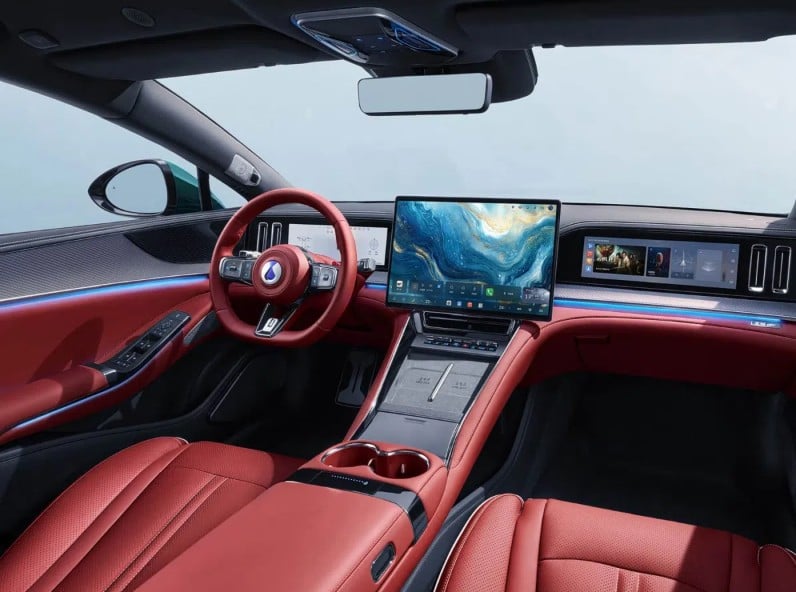
If those figures translate to real-world use, it would dramatically reduce one of the most common concerns around EV ownership: charging time on long trips.
Importantly for Australian buyers, the Z9 GT may not remain a China-only model for long. Reports indicate the luxury Denza brand – which originated as a partnership between BYD and Mercedes-Benz — is planning international expansion, with Australia among the markets being considered for future launches.
Should it arrive locally, the Z9 GT would likely target premium electric rivals such as the Porsche Taycan and Tesla Model S, while offering dramatically longer range on paper.
In a market where range anxiety still shapes consumer perception, Denza’s bold claim of more than 1000km per charge – even under the generous CLTC system – could signal the next phase in the global EV arms race.
Recently given a mid-life facelift, the 2026 Nissan X-Trail faces stiff competition in the mid-size SUV segment, where 312,000 units were sold in Australia in 2025 – a 9.2 percent increase on 2024 – led by the Toyota RAV4 with more than 51,000 sales.
The X-Trail’s update brought revised styling, new standard equipment across the range and longer service intervals, making it one of the more practical mid-size SUV choices among more than 30 options on the market. What else recommends it?
How much does the X-Trail ST-L cost to buy?
The 2026 Nissan X-Trail range kicks off at $38,140 plus on-road costs for the entry-level ST, and here we’re testing the second-from-base ST-L in its most affordable five-seat configuration. The X-Trail range, in a higher specification with a hybrid drivetrain and all-wheel drive, hits $58,215 before on-road costs, but regardless of model, it’s quite good value for money in the mid-size SUV segment.
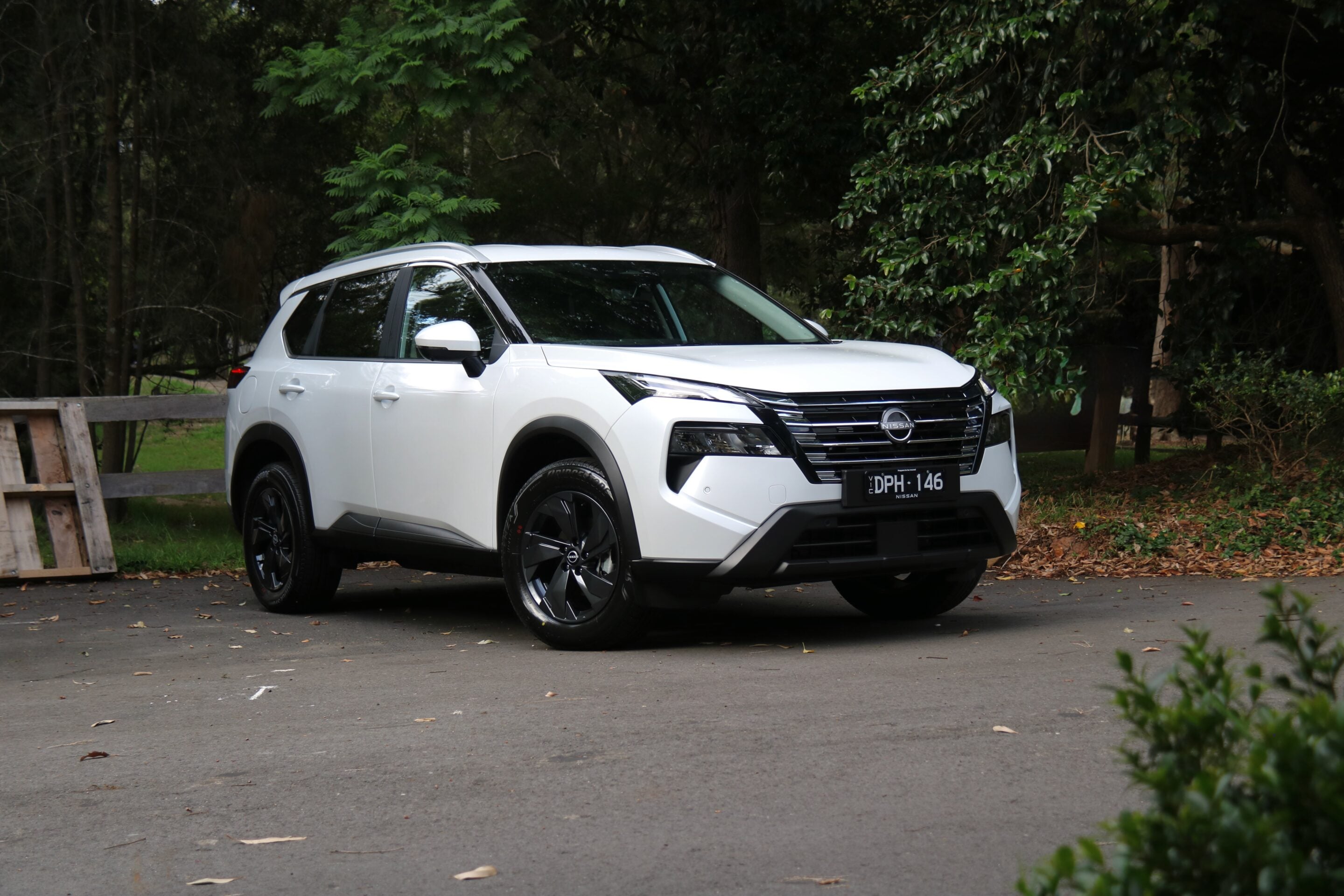
Take the five-seat two-wheel-drive ST-L we tested. It’s priced at $42,615 before on-road costs (or around $47,000 drive away, depending on which state you live in) and it’s well equipped with features like 18-inch wheels, automatic LED exterior lighting, rain-sensing wipers, ‘leather-accented’ upholstery, heated and electric front seats, a 12.3-inch touchscreen, a wireless phone charger and a full suite of active safety features. You’ll find a comprehensive equipment list at the bottom of this page.
The X-Trail ST-L 2WD’s closest rival is the $43,100 (plus on-road costs) Mazda CX-5 G25 Touring 2WD. While they share a lot of kit, against the CX-5 the sharper priced X-Trail adds features like a larger 12.3-inch touchscreen with live services, rear privacy glass, heated and electric front seats, leather upholstery and a 360-degree camera. It’s a similar story with the $45,100 (plus on-road costs) Hyundai Tucson Elite, which is also more expensive than the X-Trail ST-L but similarly equipped.
How practical is the X-Trail ST-L?
The cabin of the current shape ‘T33’ X-Trail has been one of the best all-rounders in the mid-size SUV segment since its 2021 release, thanks to the high quality, impressive practicality and easy-to-use technology. The brand didn’t update much inside the X-Trail’s cabin with the mid-life update and it’s still one of the best options for practicality in the segment.
Material quality is impressive thanks to soft stitched leather-like trims around the cabin, textured wood-like centre console trim and tight switchgear.
A 12.3-inch touchscreen is fitted to the entire X-Trail range, which is easy to use and sharp to look at. It could be a bit faster and oddly doesn’t feature inbuilt sat-nav, but the wireless Apple CarPlay and Android Auto is easy to connect. Pleasingly for usability, it still features shortcuts on the driver’s side with smartphone mirroring on the screen. The separate buttons for features like the 360-degree camera further help with practicality, as do the separate climate control below.
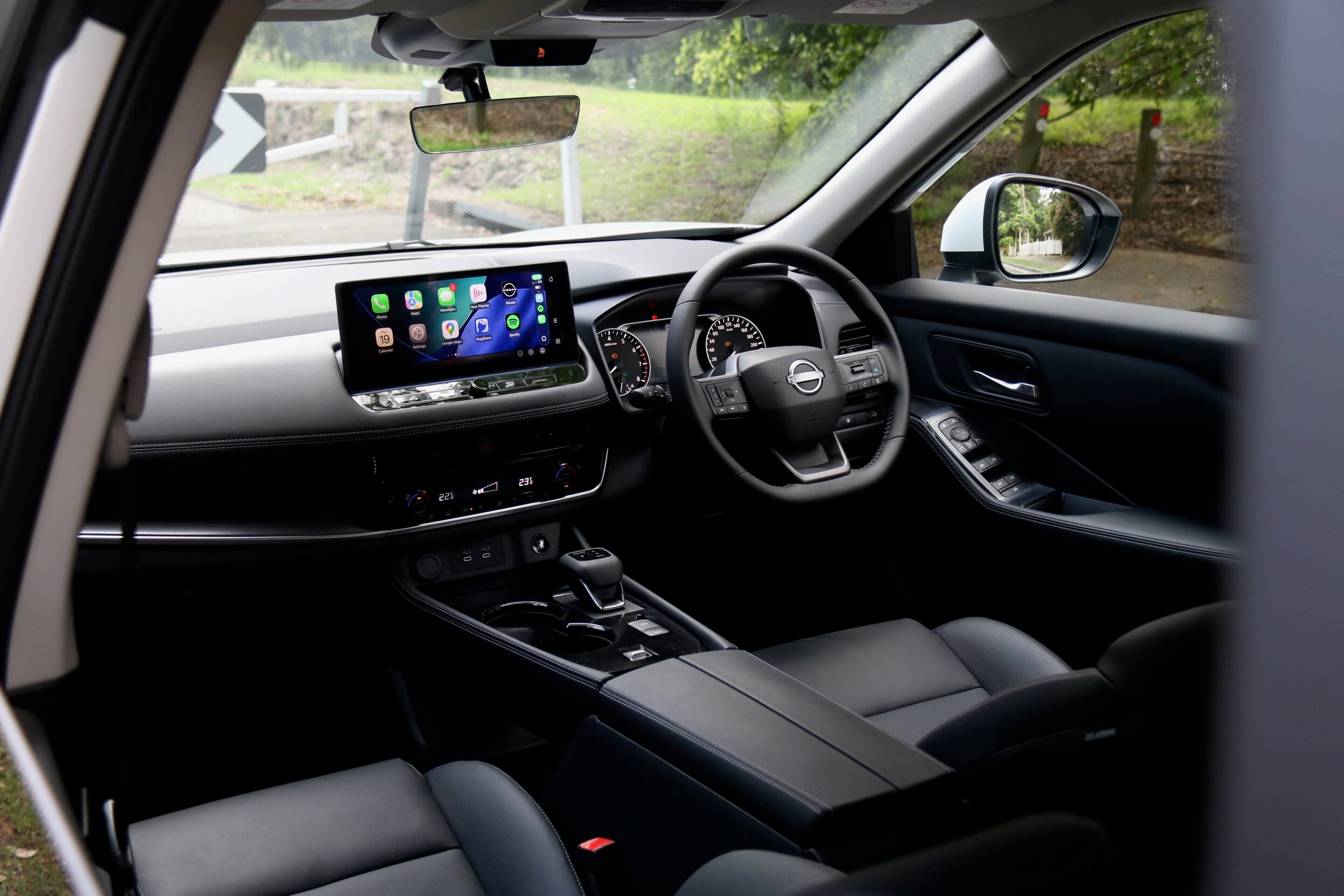
Storage space is handled by large door bins, a big central box underneath the centre armrest, a large tray underneath the centre console and an open tray with the – quite effective – wireless phone charger.
Occupants in the rear seat of the X-Trail will be quite comfortable as it’s one of the most spacious in the mid-size SUV segment. For starters, the doors open to 90 degrees, which is great for getting child seats in and out, and the door opening itself is quite wide. The seats slide and recline for more space and both legroom and headroom is impressive, and much more plentiful than the CX-5. Amenities include USB charging ports, air vents, map pockets, door pockets and a central armrest.
Behind the rear seats lies a large 575 litres of space, which is 36 litres larger than the Tucson and 137 litres larger than the CX-5. Helping practicality further is Nissan’s ‘Divide-N-Hide’ cargo management system, which allows for – as the name suggests – both dividing and hiding of items in the boot.
Fold the rear seats and space isn’t quite as impressive at 1396 litres (the Tucson holds 1860L) but it’s still a large area and the seats fold flat and in a 40:20:40 split too. Beneath the boot floor lies a space-saver spare. In terms of a well-rounded cabin, the X-Trail is an excellent mid-size SUV.
How fuel efficient is the X-Trail ST-L?
All petrol X-Trails are fitted with a naturally-aspirated 2.5-litre four-cylinder petrol engine making reasonable outputs of 135kW and 244Nm. A CVT automatic transmission is standard, while both front-wheel drive (five-seater) and all-wheel drive (seven-seater) drivetrain configurations are available. The ST-L and above can also be had with Nissan’s ‘e-Power’ hybrid system, mated as standard with all-wheel drive and only five seats in this market.
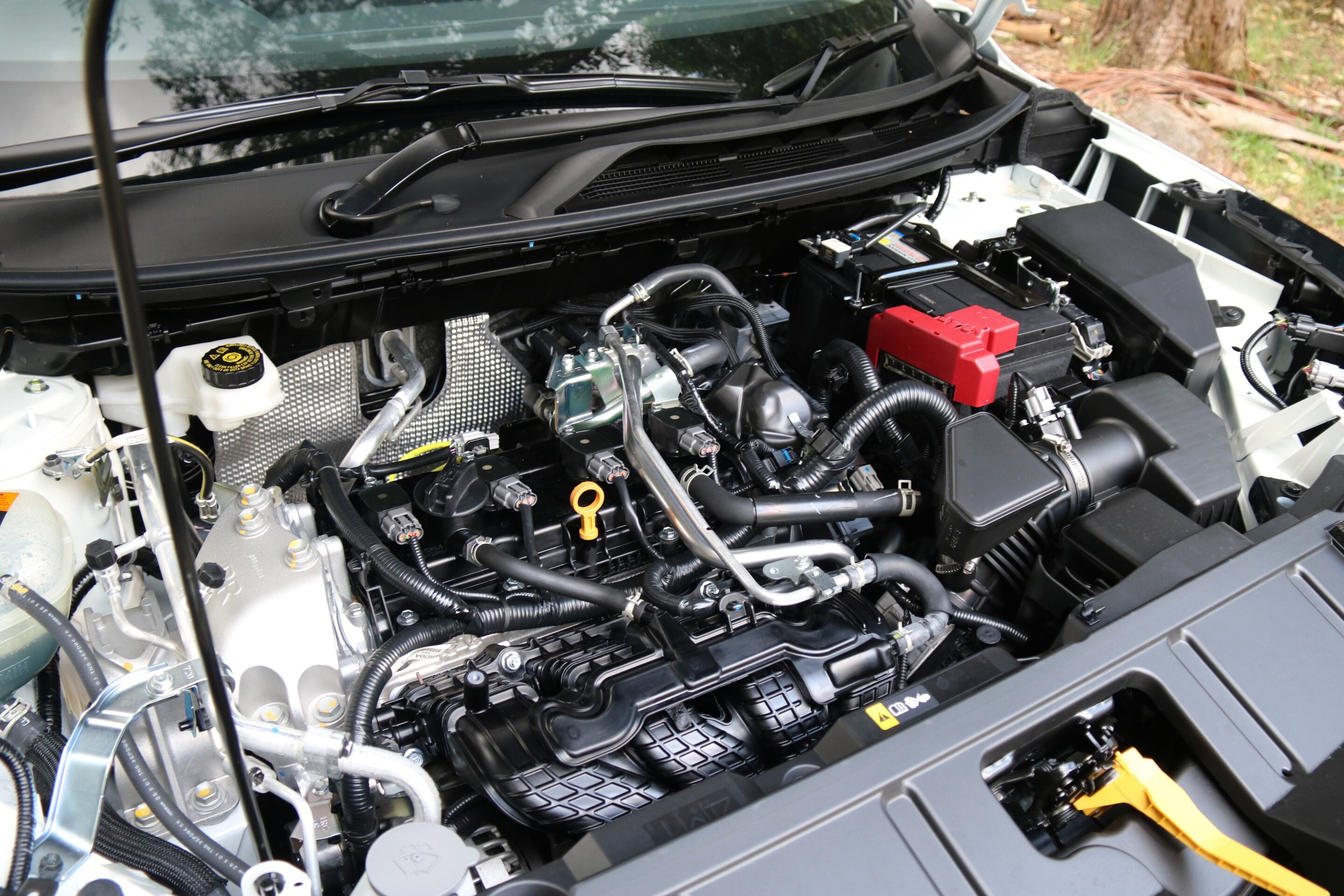
It’s true that there are more exciting drivetrains available in the mid-size SUV class with more performance or refinement, but the X-Trail’s petrol engine is par for the course for everyday use. It can be a little loud under full throttle, and nailing the throttle hardly pushes you back into your seat, but again, it’s adequate for its intended audience. Nissan doesn’t claim a 0-100km/h time for the X-Trail, but it’s sharp enough not to feel slow in the cut and thrust of daily traffic. In other words, it’s more than acceptable for most buyers and the e-Power hybrid X-Trail is a stronger performer if you so desire.
The CVT is also inoffensive during all the different driving scenarios we deal with in urban areas. We’ve seen big improvements in the type, and the X-Trail’s ‘box is a good example. Its seven stepping points – to replicate a gearbox with actual gears – performs solidly, and using the paddle shifters to control them makes a meaningful difference. Is it as responsive as the six-speed auto in the CX-5? Of course not, but it’s still a good attempt to make a CVT feel normal.
Combined claimed fuel consumption for the petrol X-Trail ST-L five-seat is 7.4L/100km and after a week of mostly urban driving, we achieved 8.7L/100km. That included a 5.3L/100km long highway run, so it can be quite efficient in the right situation. The hybrid e-Power adds both performance and refinement to the X-Trail range, but it’s also a $6200 more expensive, so do your sums to work out which drivetrain suits you best.
What is the X-Trail like to drive?
For most buyers, the X-Trail is a solid choice when it comes to the driving experience. For its likely intended daily duties, it nails the basics: the visibility is good, the steering weighting is light at urban speeds, and it’s quite easy to drive and park thanks to the clear 360-degree camera. The active safety features are also working away in the background without grating – the speed limit warning doesn’t make noise and the lane keeping assistance is subtle – as well. Unlike many rivals. Nissan’s ‘ProPilot’ adaptive lane guidance also steers quite accurately.
However, there are some areas that need improvement. The low speed ride on our test car was quite firm and smaller bumps were felt through the cabin more than expected, while the steering feedback is also too light for our liking at highway speeds. A CX-5 is more fun to drive, and a Tucson is a better all-rounder when it comes to the ride and handling balance.
What warranty covers the X-Trail ST-L?
The entire Nissan range is covered by a five-year/unlimited km warranty that can be extended up to 10 years/300,000km with annual servicing at a Nissan dealership. If owners adhere to that condition, Nissan’s warranty is one of the longest on the new car market.
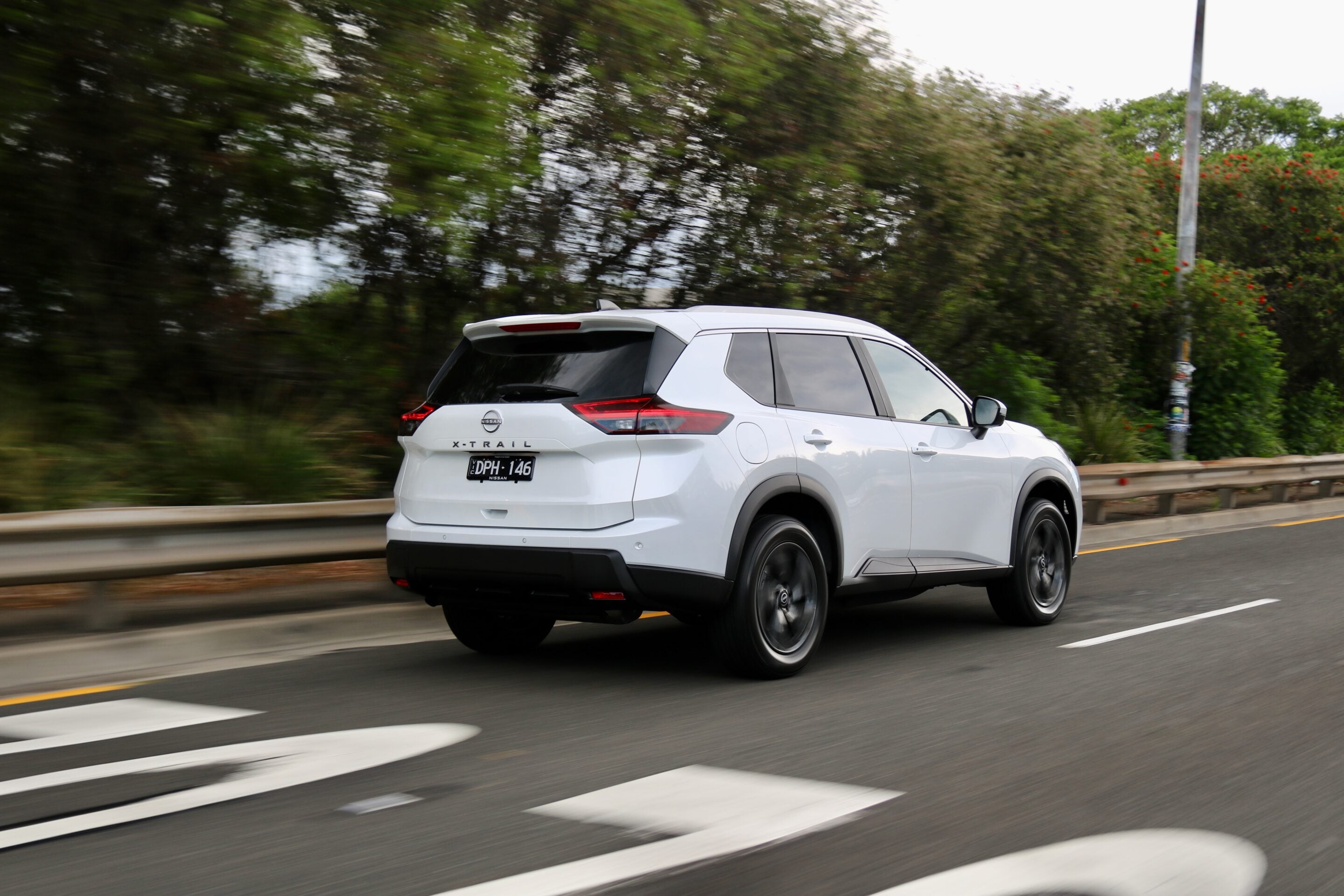
Five years/75,000km of servicing costs $1995 or $399 per service, and with the facelift, Nissan extended annual service intervals to 15,000km (up from shorter 10,000km) to match rivals. For reference, a CX-5 Touring costs $2240 to service over the same period, and its warranty finishes after five years.
Should I buy a Nissan X-Trail ST-L?
It’s frequently overlooked in discussions on the segment leaders, but we think the Nissan X-Trail ST-L is worth close consideration for those wanting a solid, family-friendly mid-size SUV. It’s good value for money in the segment, well equipped, quite practical and can benefit from coverage by one of the longest new car warranties in Australia.
Counting against it are a fine (but not overly noteworthy) drivetrain, firm low-speed ride quality and a steep hybrid premium, but all things considered, we think that the X-Trail deserves far more attention.
X-Trail ST-L specifications:
| Model | Nissan X-Trail ST-L five-seat 2WD |
|---|---|
| Price | $42,615 plus on-road costs |
| Engine | 2488cc naturally aspirated four-cylinder petrol |
| Power | 135kW (@ 6000rpm) |
| Torque | 244Nm (@ 3600rpm) |
| Transmission | CVT automatic, front-wheel drive |
| Claimed combined fuel consumption | 7.4L/100km |
| Combined CO2 emissions | 174g/km |
| Fuel type/tank size | 91RON regular unleaded, 55 litres |
| Dimensions (L/W/H/WB) | 4690/1840/1725/2705mm |
| Bootspace | 585 litres (rear seats up), 1396 litres (rear seats folded) |
| Tare mass | 1546kg |
| Braked towing capacity | 2000kg |
| Warranty | 5-year/unlimited km, extendable up to 10-year/300,000km with dealer servicing |
| 5-year/75,000km service cost | $1995 ($399 per service) |
| On sale | Now |
X-Trail ST-L standard features:
- 18-inch alloy wheels with a space-saver spare
- Dusk- and rain-activated LED exterior lighting
- Rain-sensing automatic wipers
- Keyless entry with push button start
- Roof rails
- Rear privacy glass
- Heated and auto-folding mirrors
- Leather-accented upholstery
- 10-way electric front seats with heating
- Leather-wrapped steering wheel with paddle shifters
- Dual-zone automatic climate control with rear air vents
- 7.0-inch digital driver’s display
- 12.3-inch touchscreen
- NissanConnect connected car services
- Wireless Apple CarPlay and Android Auto
- AM/FM/DAB+ digital radio
- Bluetooth phone and audio streaming
- Six-speaker sound system
- 4x USB charging ports
- Wireless phone charger
- ‘Divide-N-Hide’ cargo management system
- 40/20/40-split rear seat with sliding
- 7x airbags
- Autonomous emergency braking with junction assist and pedestrian/cyclist detection
- Adaptive cruise control with ‘ProPilot’ adaptive lane guidance
- Lane keeping assistance
- Blind-spot monitoring
- Rear cross-traffic alert
- Driver attention monitoring
- Rear door alert
- Auto high beam
- Traffic sign recognition
- Tyre pressure monitoring
- Front and rear parking sensors
- 360-degree camera
Mercedes-Benz is preparing a new generation of its A-Class hatchback, with the next version of the brand’s smallest passenger car expected to adopt electric power while remaining in the line-up into the next decade.
The current A-Class has been on sale since 2018 and is due to remain in production until around 2028, after its lifecycle was extended following a shift in manufacturing. Production will move to Mercedes-Benz’s Kecskemét plant in Hungary, freeing up the company’s Rastatt factory in Germany to build the upcoming CLA sedan.
According to comments reported by Auto Express, the move will allow Mercedes to keep the A-Class in production for several more years before launching a new generation based on the company’s latest compact vehicle platform.
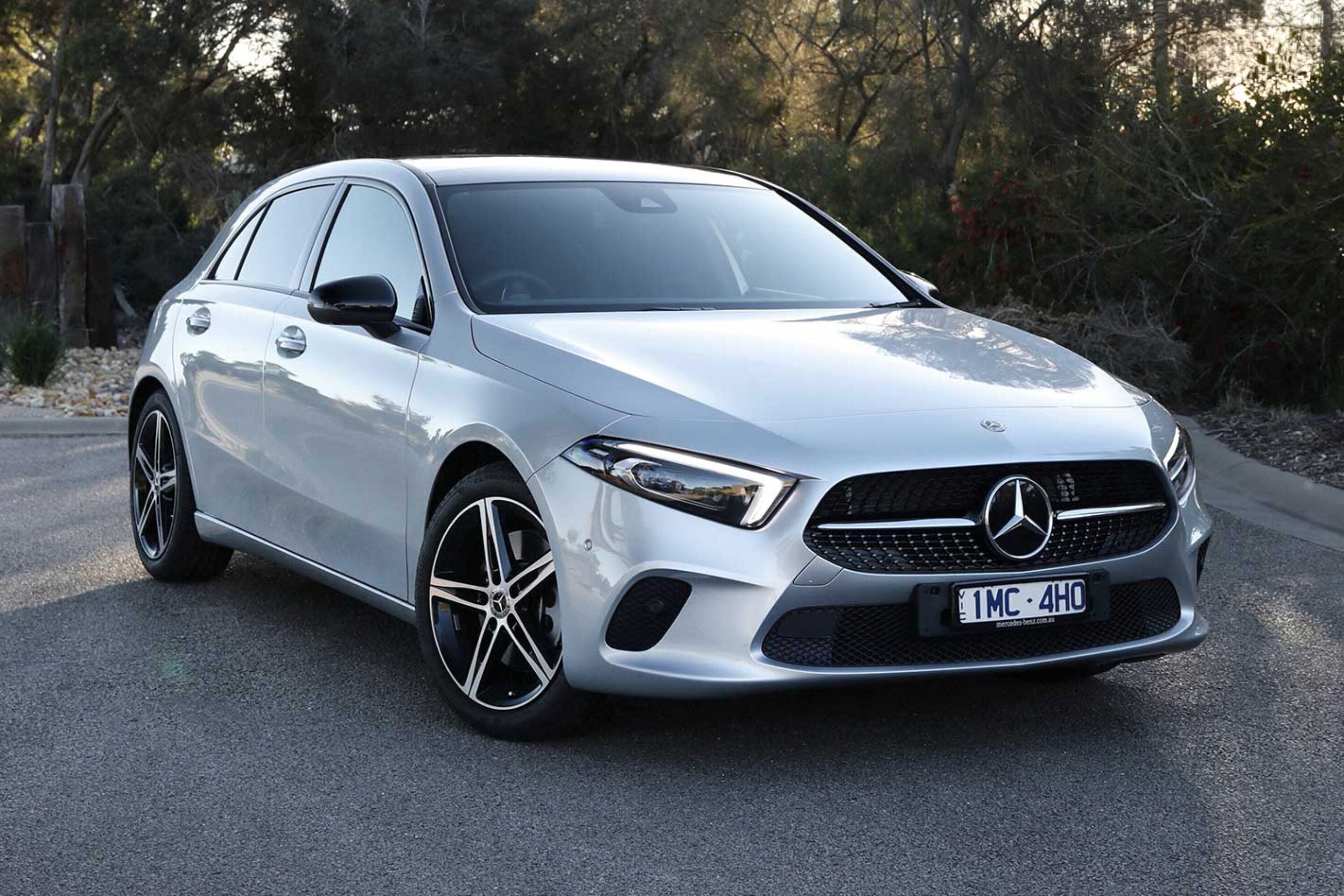
“The current A-Class is going to the Hungary plant next year. The plant can cater to the next generation of A-Class,” Mercedes exterior design director Robert Lesnik told Auto Express.
The new model is expected to be built on the brand’s forthcoming MMA (Mercedes Modular Architecture) platform, which has been designed to support both electric and hybrid drivetrains. The flexible platform will underpin several compact Mercedes vehicles, including the next CLA, CLA Shooting Brake and the GLA and GLB SUVs.
Originally planned as a four-model family, the A-Class is now tipped to become a fifth vehicle in the MMA line-up.
Using the CLA as a reference point, Lesnik suggested the adaptable nature of the architecture will allow Mercedes to adjust its powertrain strategy if needed. “With CLA we had an EV then hybrid, but A-Class is three years away. MMA platform is flexible, which is great because in the future we’ll have to change our minds faster than we do now,” he said, according to Auto Express.
If the electric version proceeds, it would position the next A-Class as a rival to upcoming compact EVs such as the Audi A3 e-tron.
In terms of styling, the next-generation hatch is expected to move away from the upright proportions of the original late-1990s A-Class. Instead, designers are aiming for a more conventional, sporty hatchback profile.
“The next A-Class should have a more stylish cab-back body rather than cab-forward,” Lesnik said in comments reported by Auto Express.
The design direction means the new model is unlikely to adopt the highly aerodynamic silhouette used by the EQE and EQS electric sedans. Instead, it will feature a longer bonnet and more traditional proportions similar to the latest CLA.
Mercedes is also expected to retain the familiar A-Class name rather than adopt the EQ branding used for earlier electric models.
