
FIA’s new LMH category seeks to recapture the magic of 90s-era GT1, and the subsequent road car icons it spawned.
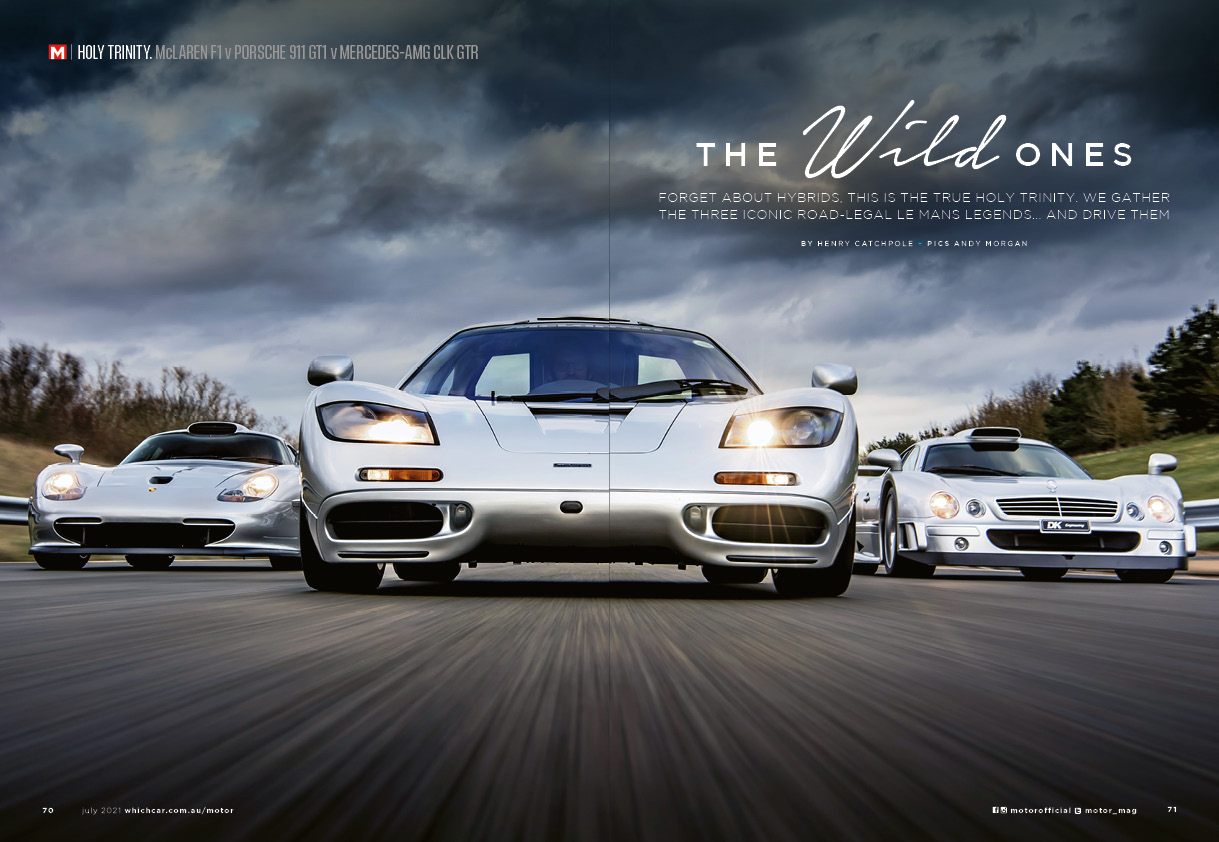
Three cars in particular make for some of the rarest and most-unhinged road cars ever produced: the McLaren F1, Porsche 911 GT1 and Mercedes-Benz CLK GTR, and for the latest edition of MOTOR, we drive all of them.
It’s the stuff dreams are made of, a three-way car comparison the likes of which may never be repeated. Keen to know the history of these Le Mans legends, and what they’re like to drive? Pick up the latest edition of MOTOR, which goes on sale today!
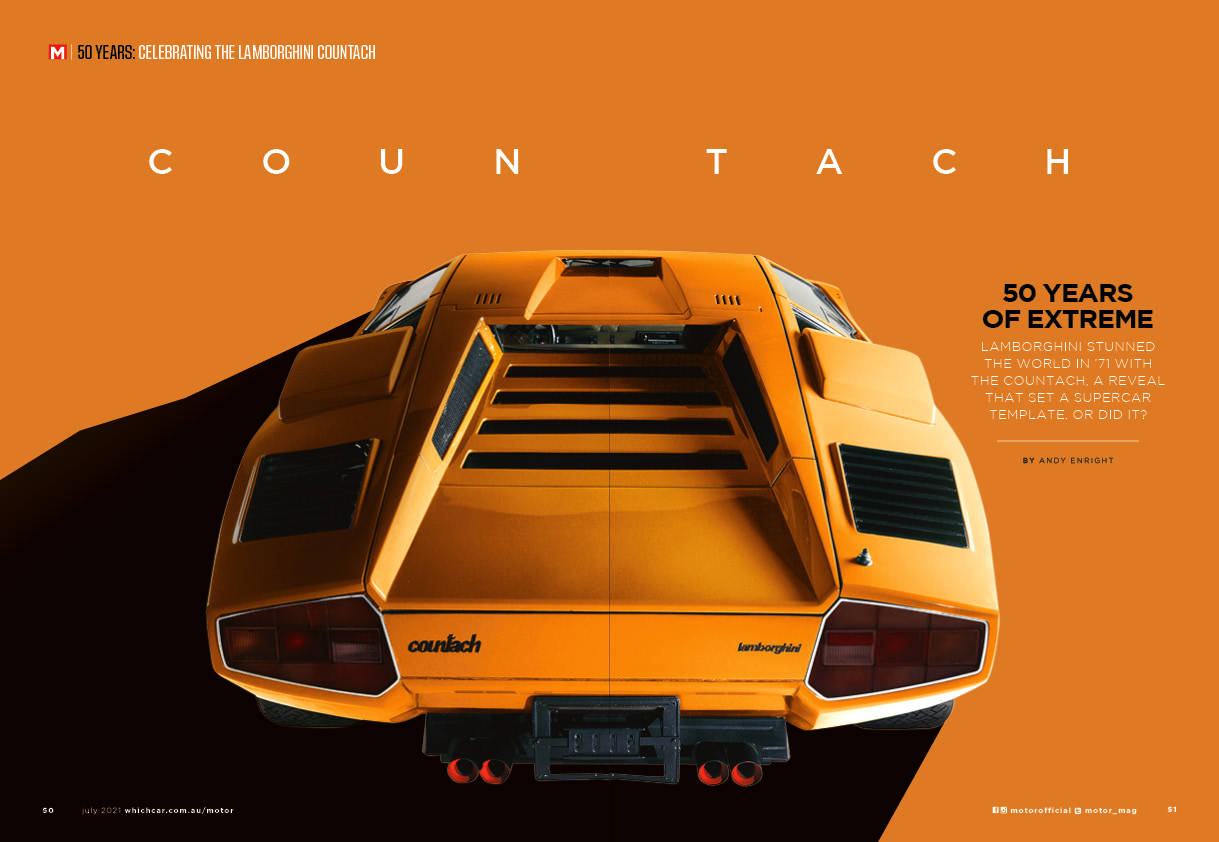
We travel further through history by celebrating 50 years of the iconic Lamborghini Countach. A car shrouded in mystique, whose history is littered with legend and myth. We separate fact from fiction, and explore the three warring designers that fueled the lasting legend.
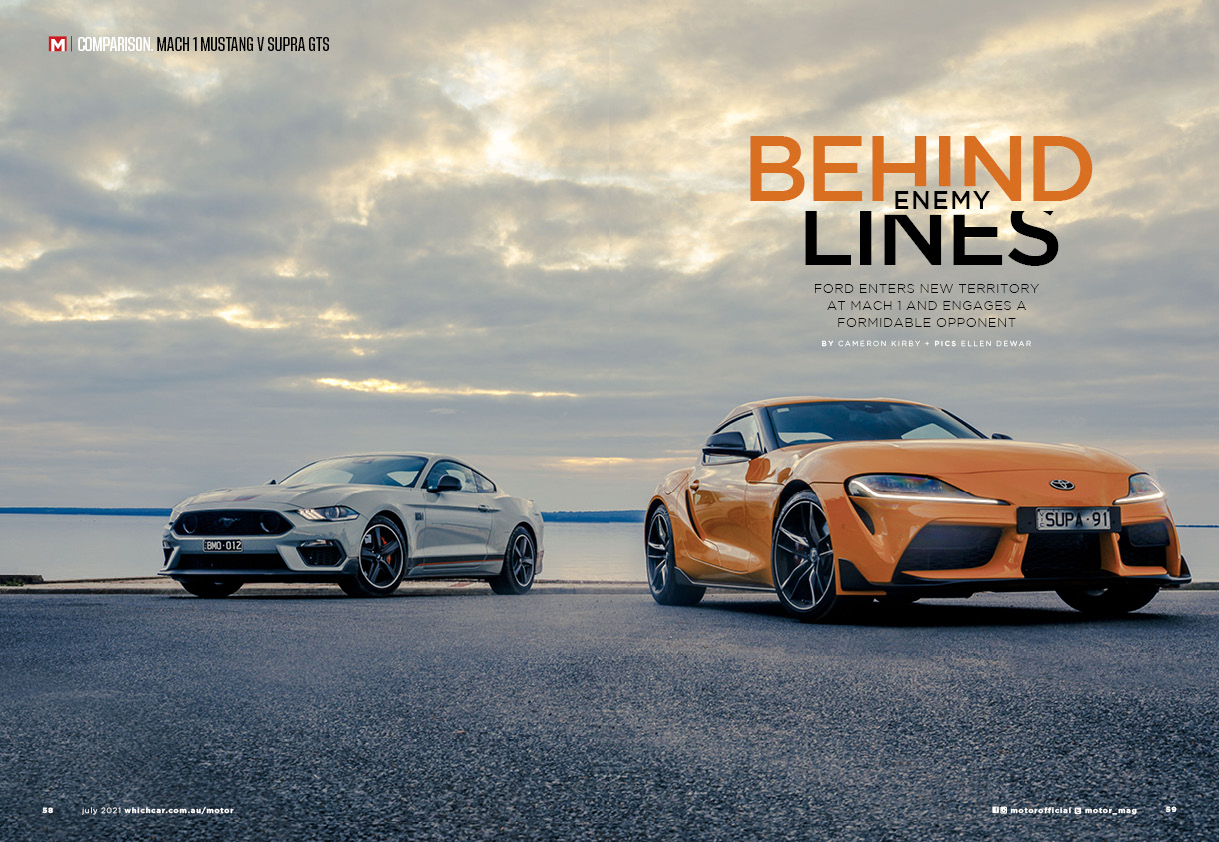
It’s not all old clunkers, however. Ford’s Mach 1 Mustang has previously answered our prayers for a properly track-capable Mustang, but now it’s time to unleash it on the road. So it’s not a one-horse race, we rung in the potent Toyota Supra – one of the quickest point-to-point cars this side of $100k. Will the lithe turbocharged Japanese-flavoured coupe out-muscle the bellowing naturally aspirated Mustang? Find out here.
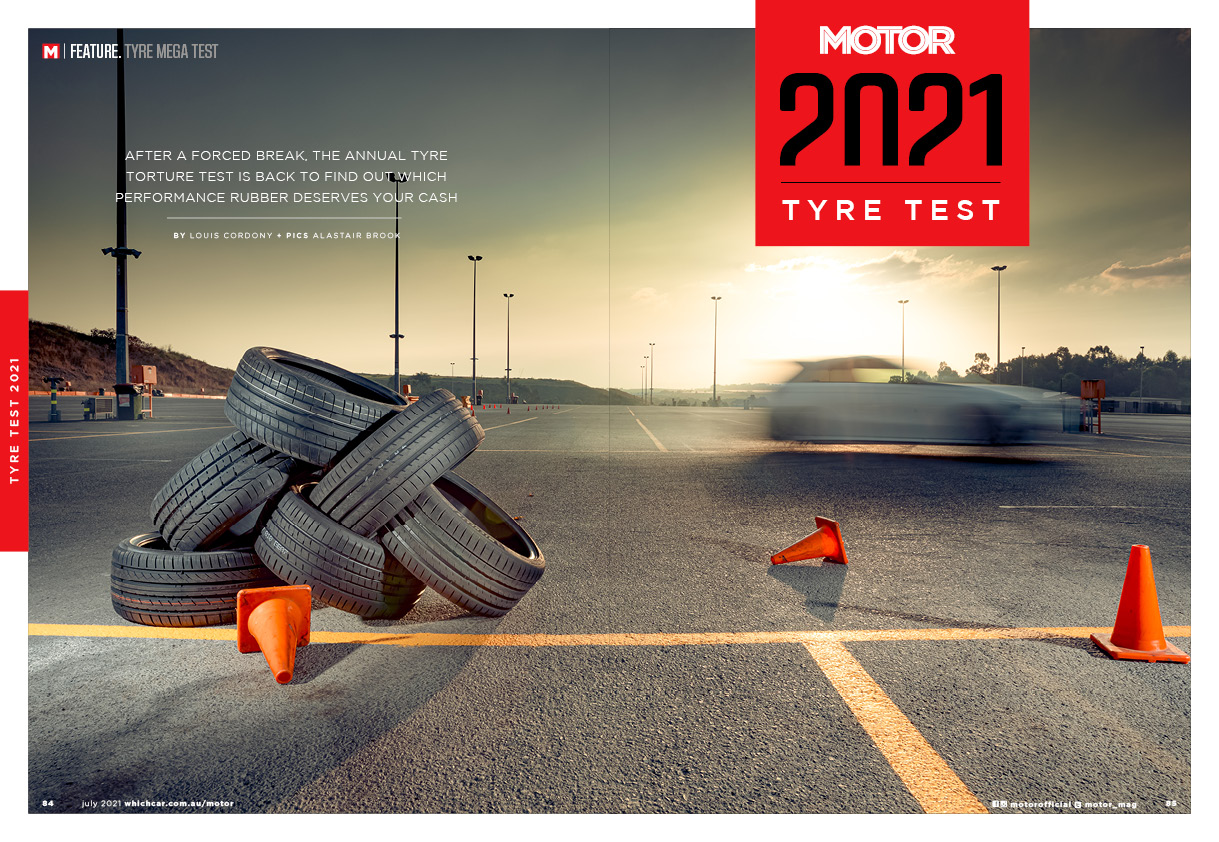
We also welcome back our rigorous annual Tyre Test, after last year’s runnings were put out to pasture by the pandemic. Which performance tyre gets crowned this year’s rubber royalty? We get down and nerdy to find out which set of boots are most deserving of your hard-earned money.
For this month’s edition of Sweet Dream, we sprinkle some of Hyundai’s N-badge magic on the Santa Cruz ute. The stylish pick-up won’t be coming to Australia, but that hasn’t stopped us from dreaming up a boosted V8 sports ute.
We also have our first steer of the mind-boggling 1408kW/2360Nm Rimac Nevera, as well as the roofless McLaren Elva, Porsche’s Panamera GTS and the automatic Mazda MX-5 RF GT.
Plus you can look forward to all of the regular musings from our columnists, extensive long-term tests, independent reviews, news and more.
Find the July edition of MOTOR Magazine in stores today, or take advantage of our subscriptions deals – you can save up to 48% at motor.subscription.com.au
One of the original crossovers, the boldly drawn Nissan Juke has been hugely successful in overseas markets, particularly in the UK where it is manufactured.
But the first generation didn’t quite reach those heights in Australia compared to relatively conservative-looking rivals such as the Mazda CX-3 and Honda HR-V. This was especially the case in recent years when it lacked the latest safety and infotainment features that light-SUV buyers desired.
Enter this second-generation Juke that’s packed with new tech but dials back the original’s sense of quirkiness, which helped set it apart from the ever-growing crossover pack that also includes the Ford Puma, Toyota Yaris Cross and Hyundai Kona.
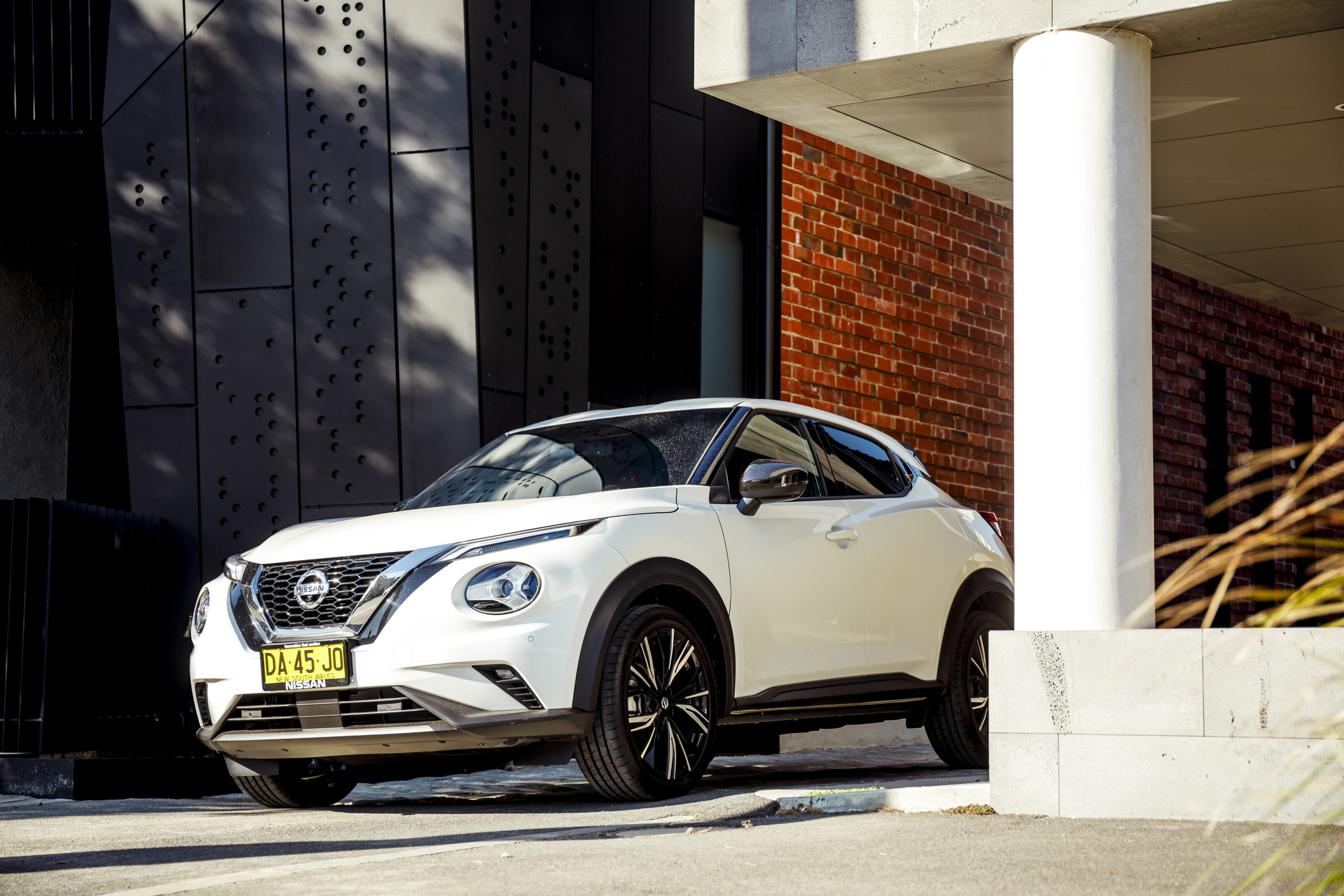
This is the Ti, which tops the Juke range that also includes the entry-level ST that retails for $27,990 before on-roads, the ST+ ($30,740), STL ($33,940) and STL+ ($35,140).
Our test vehicle is a Juke Ti ‘Energy Orange’ that has the same $36,490 sticker as a standard Ti but swaps the black Alacantara trim with orange and black contrasting leather-accented upholstery.
All Juke variants are powered by a punchy 84kW/180Nm 1.0-litre three-cylinder turbocharged petrol engine with a seven-speed dual-clutch auto driving the front wheels.
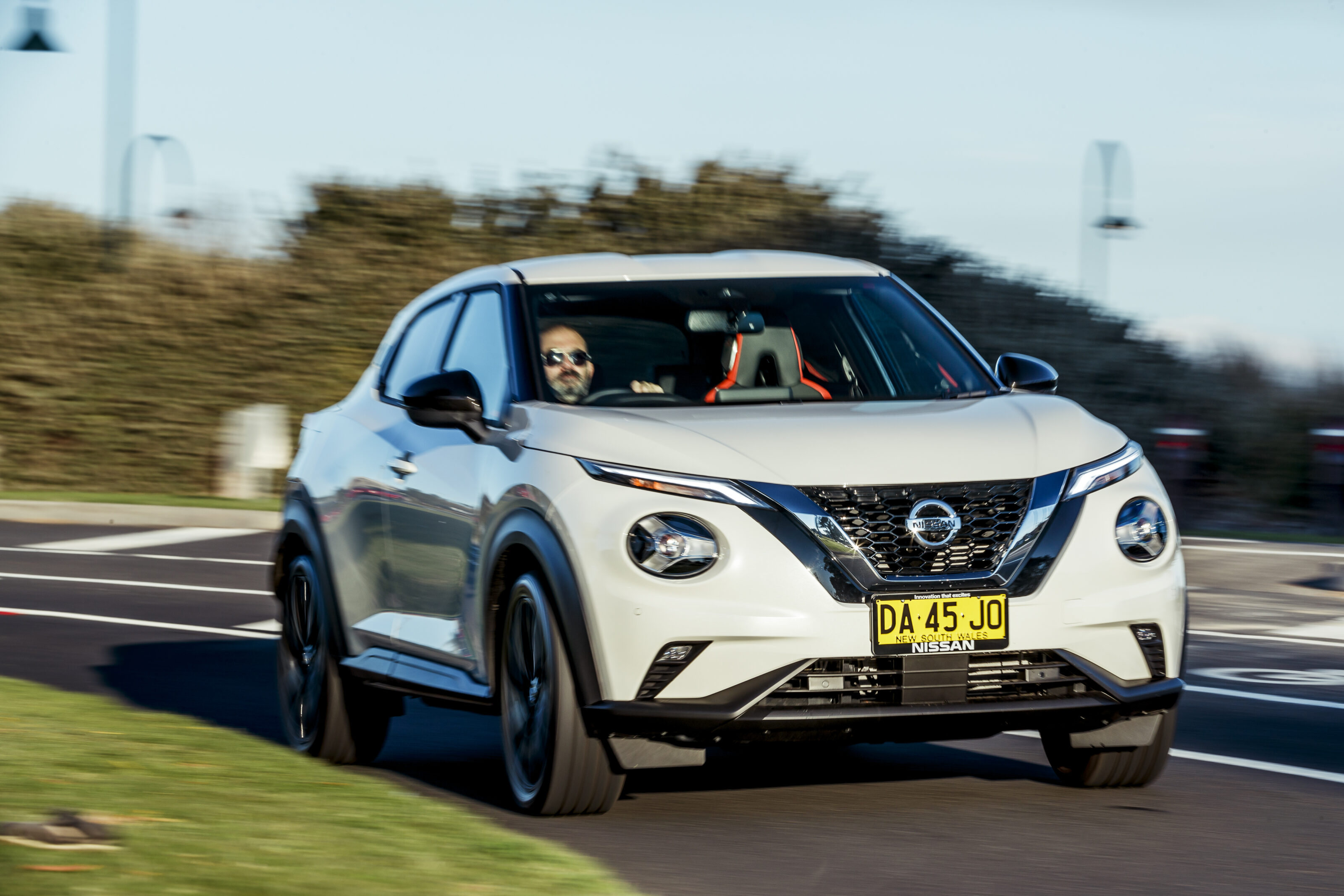
“Our test vehicle is a Juke Ti ‘Energy Orange’ with orange and black contrasting leather-accented upholstery
What is the Nissan Juke Ti like to live with?
The contrasting orange and black trim and the throaty engine note when you press the start button gives the Juke a kind of audacious character, more like you get with some feisty hatchbacks rather than small SUVs.
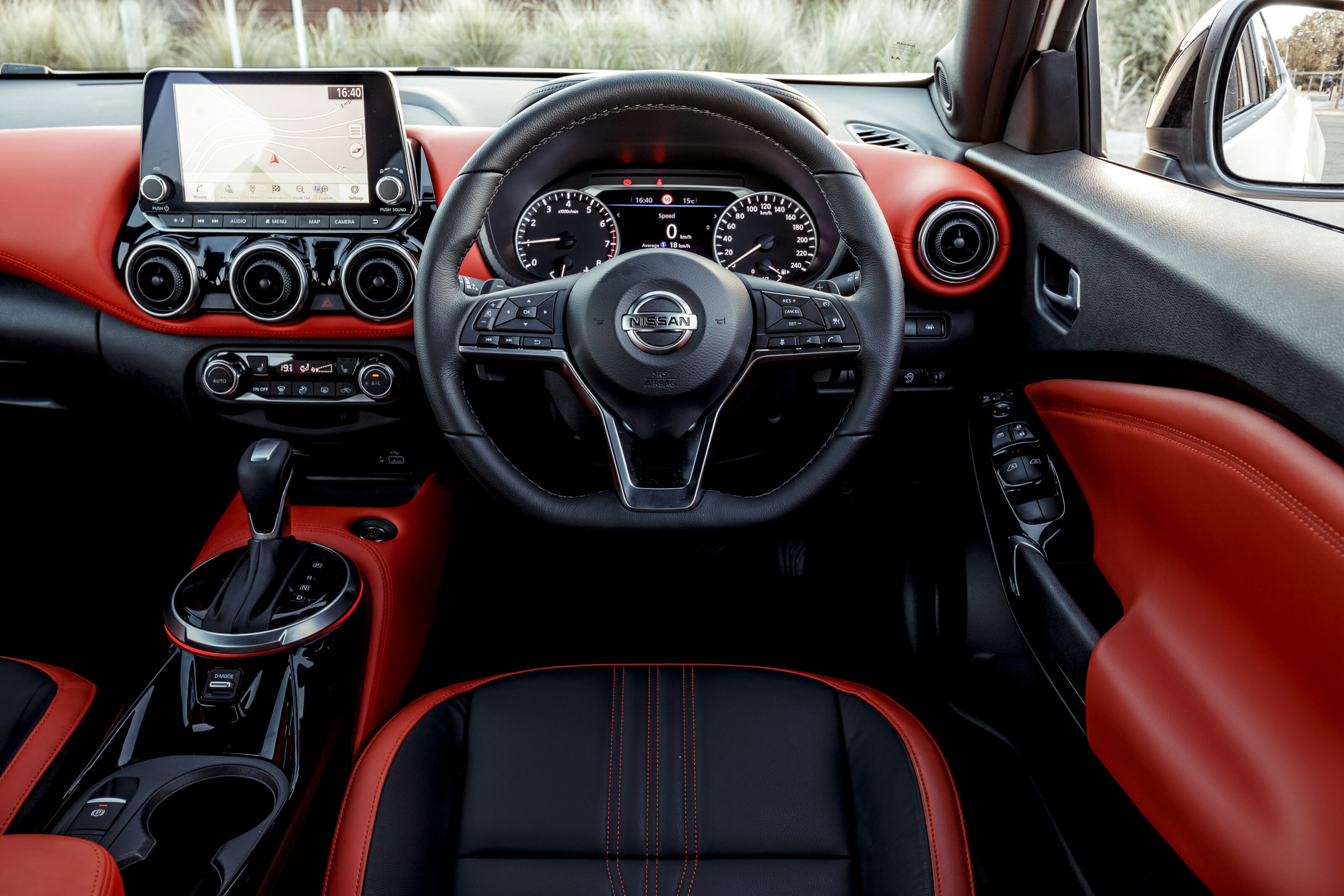
That said, the top-spec Ti is much better equipped, with its features list containing:
| An 8.0-inch touchscreen |
| Apple CarPlay/Android Auto |
| Eight-speaker BOSE premium audio |
| Digital Radio (DAB+) |
| Satellite navigation |
| Surround-view parking monitor |
| Front and rear parking sensors |
| Leather-accented steering wheel |
| Paddle shifters |
| Heated front seats |
| Climate control air-conditioning |
| Smart keyless entry/start |
| Power folding mirrors |
| Rain-sensing windscreen wipers |
| Auto-dimming rearview mirror |
| Automatic LED headlights |
| LED daytime running lights (DRLs) |
| LED fog-lights |
| 19-inch alloy wheels |
| Advanced driver assistance including autonomous emergency braking, adaptive cruise control and blind-spot monitoring with rear cross-traffic alert (see below for more safety features) |
Climb into the driver’s seat and the Juke Ti feels sporty, with well-bolstered sports seats that provide excellent back, hip and under-thigh support. There are no powered settings, but because they feel like they’ve been moulded around you, only the height and reach adjustments are required.
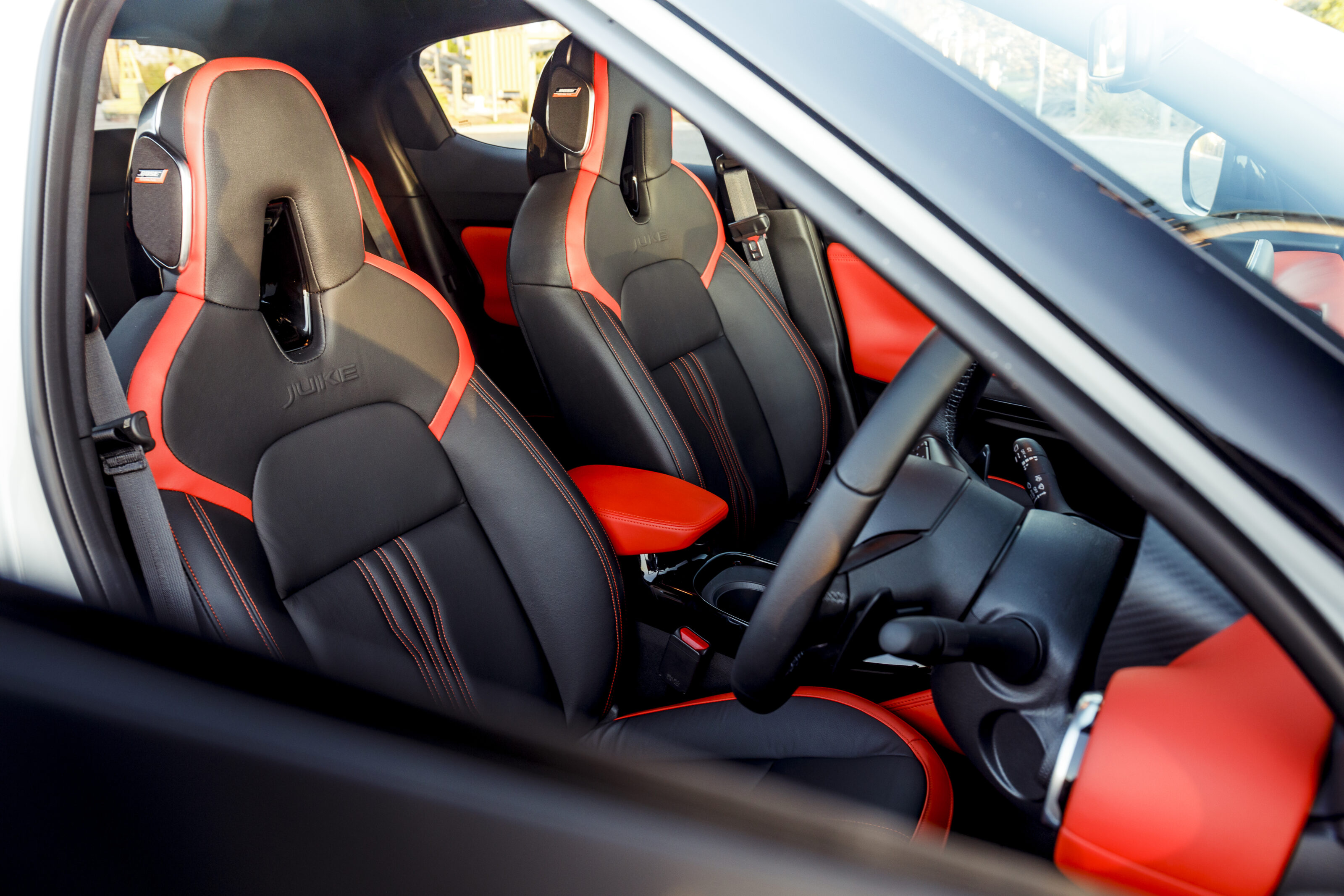
The D-shaped sports steering feels good and the switches for controlling things like the phone, audio and cruise control are well laid out.
Padded surfaces abound, including on the doors, dashboard and the centre console.
Interior storage is limited, with the centre console having a small tub and a spot to place and plug in your phone. The door bins are reasonably generous, though.
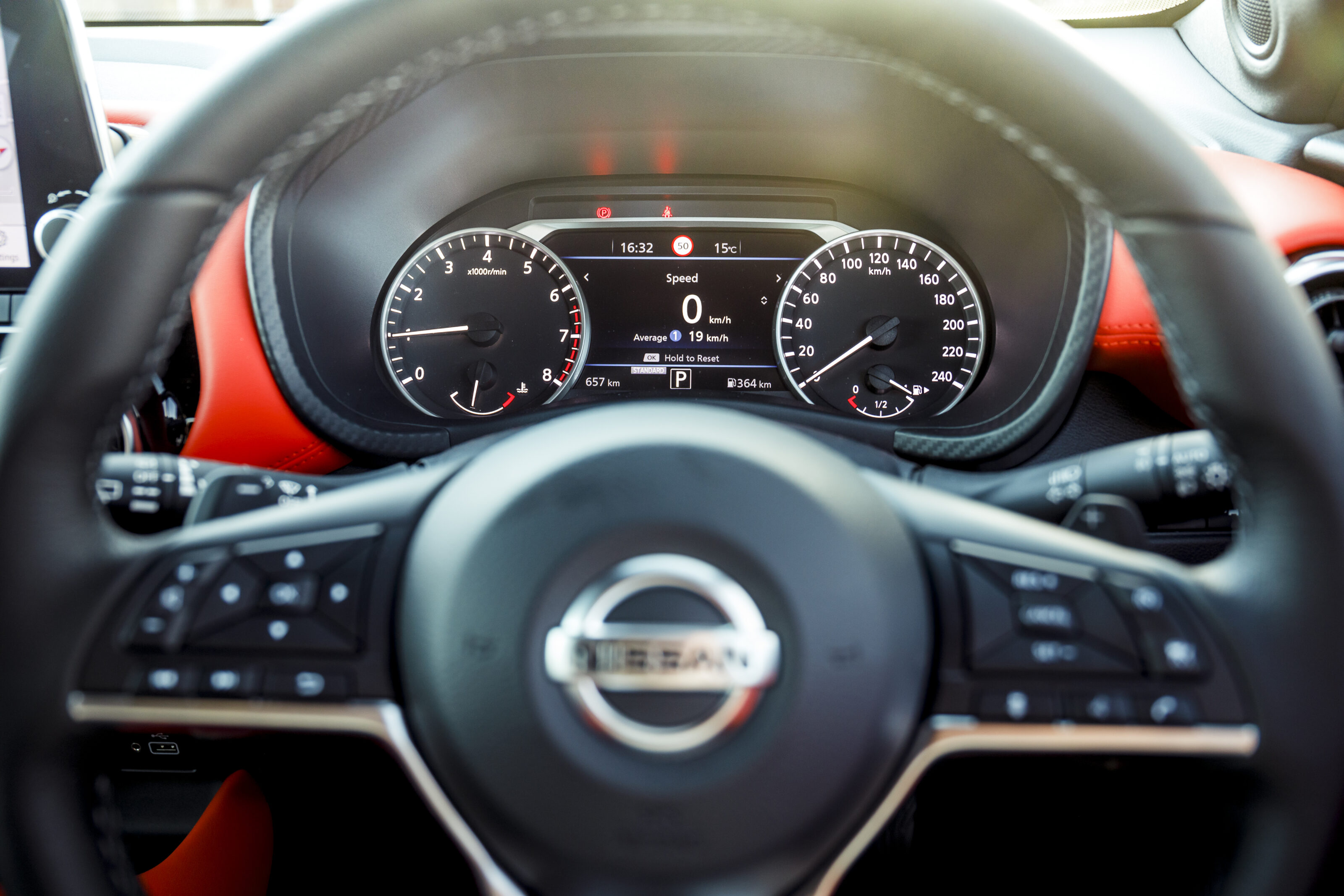
The 8.0-inch infotainment screen is big enough in this cosy cockpit and while it’s good to see Nissan has embraced Apple CarPlay and Android Auto smartphone mirroring, its own infotainment interface still seems a little dated and isn’t as intuitive as those found in rivals such as the Hyundai Kona and Mazda CX-3.
Speakers embedded in the headrest are perfectly placed for surround sound as part of the Bose premium audio system, which sounds great.
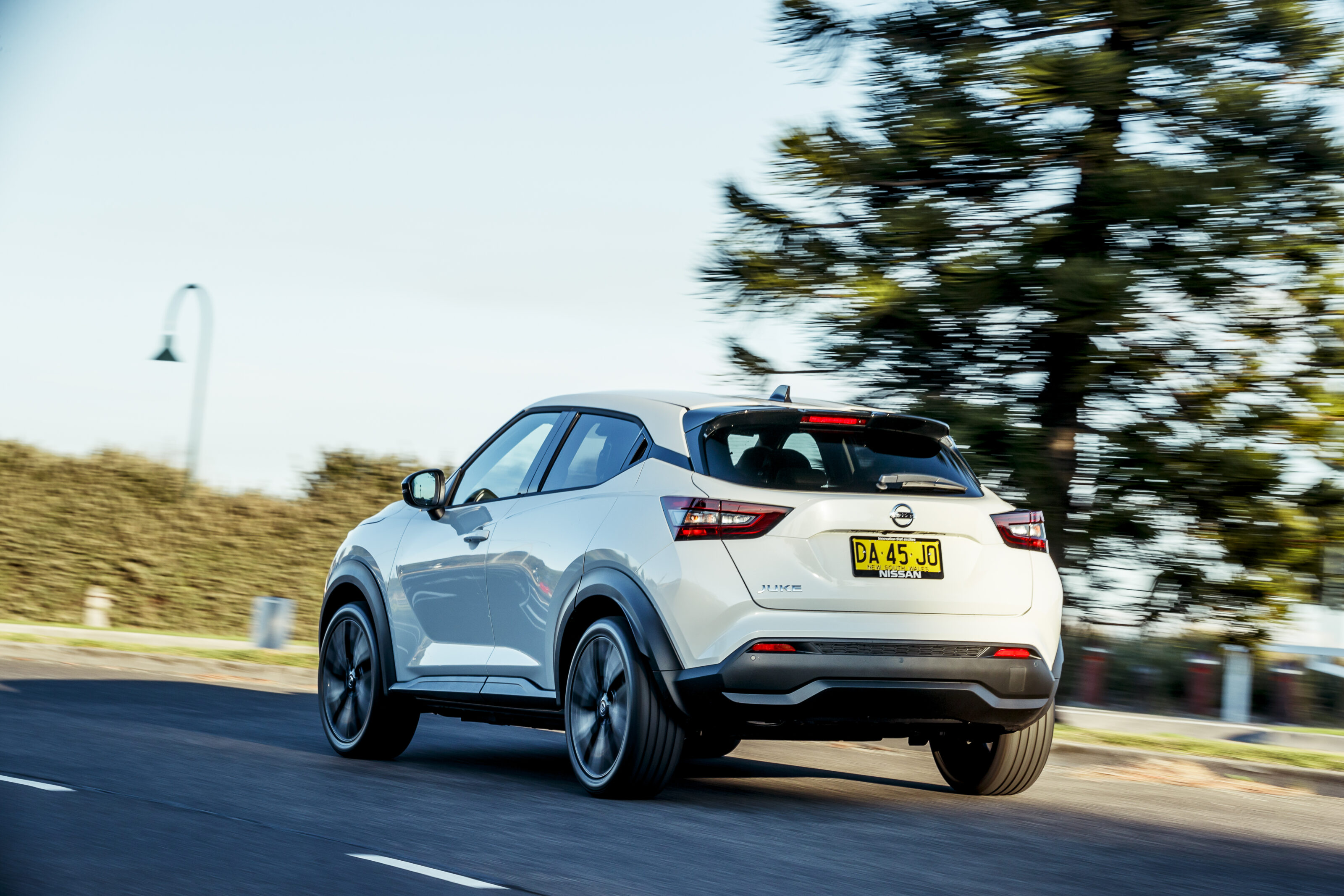
The back seats provide adequate legroom for a light SUV but the coupe-style roofline, which looks great from the outside particularly with the hidden rear door handles, does limit rear headroom. It also results in narrow rear windows that restrict side vision for passengers, who also don’t get too much of a view out front.
Although the rear-seat backrests are comfortable, the bench is quite narrow, meaning little under-thigh support for taller people. There is a seatbelt in the middle position but you’d be hard-pressed to seat three people of any size.
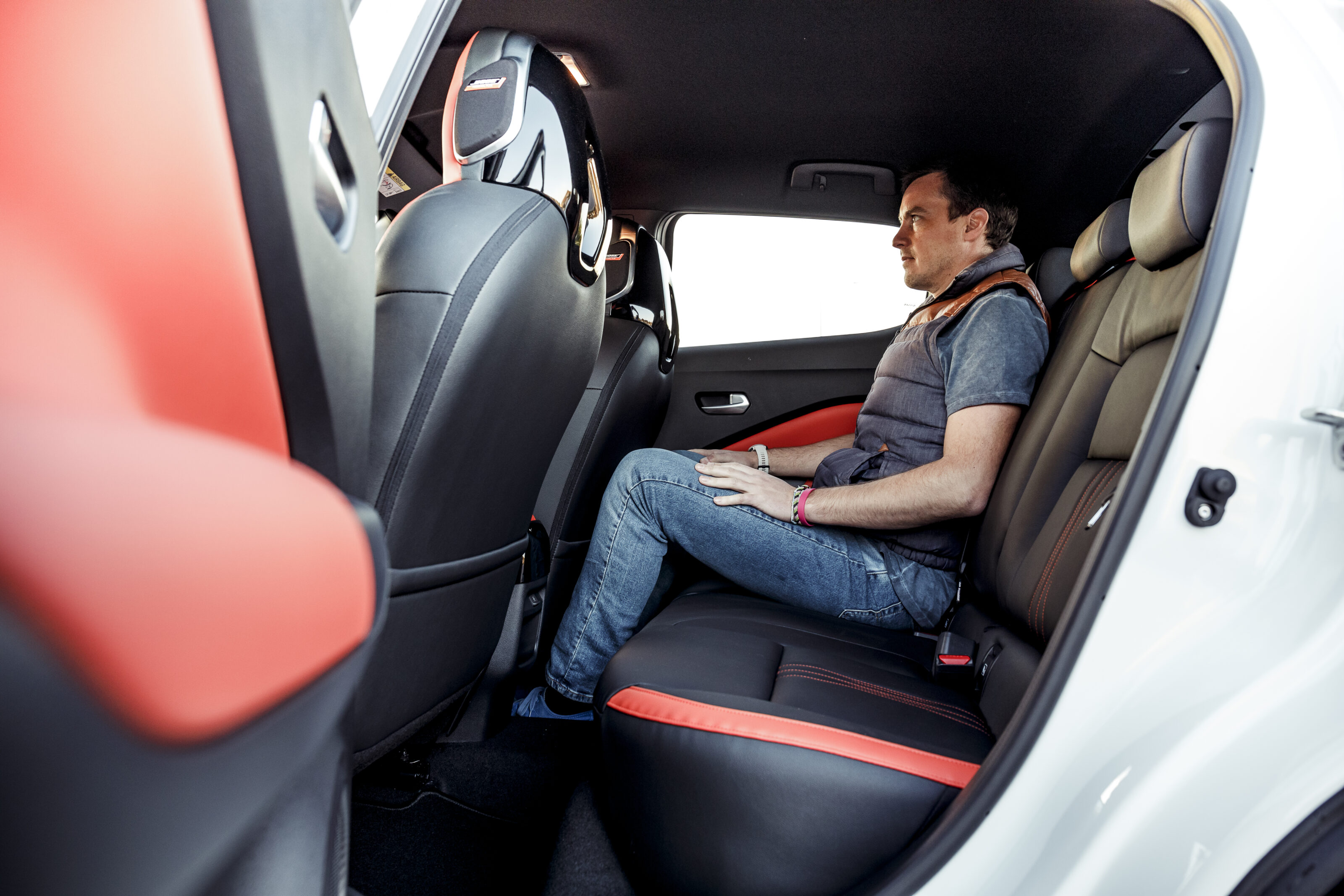
There is one USB socket for rear-seat passengers, but no separate air vents.
If you want to add child seats, there are ISOFIX anchors and tethers in the outboard seats and an additional tether in the centre.
The 60:40 split seats open to a deep boot space that holds up to 422 litres, which is 68 litres more than the previous model and 158 litres more than the CX-3. There is a space-saver spare wheel under the boot floor.
Folding the rear seats down increases capacity to 1305 litres and if you need to carry more there is a handy 1250kg braked towing capacity.
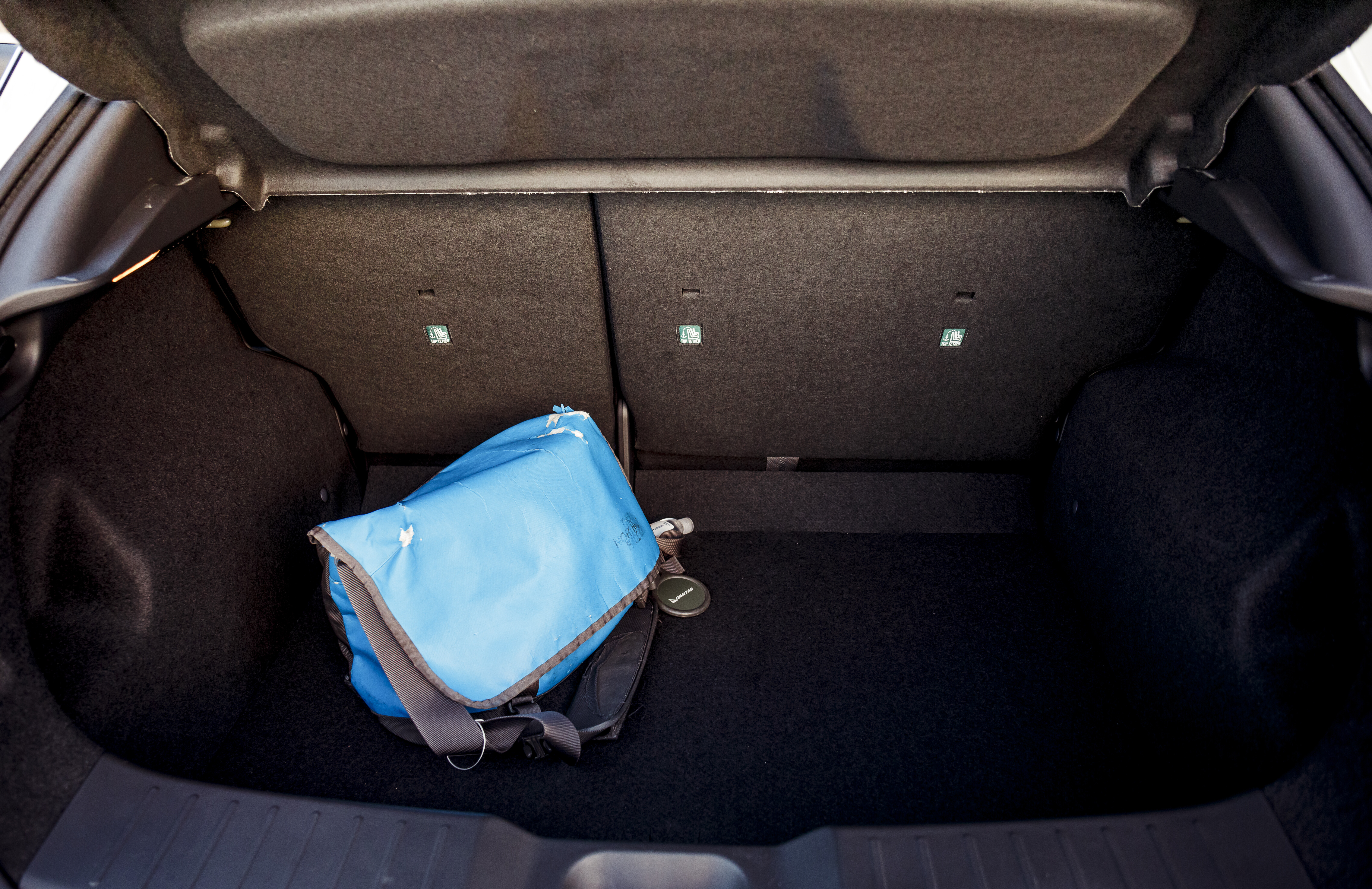
One thing worth mentioning is that the plastic parcel shelf that rises with the tailgate has a very rough edge (in our review car at least) that can give you a nasty scratch on the face if you’re not careful.
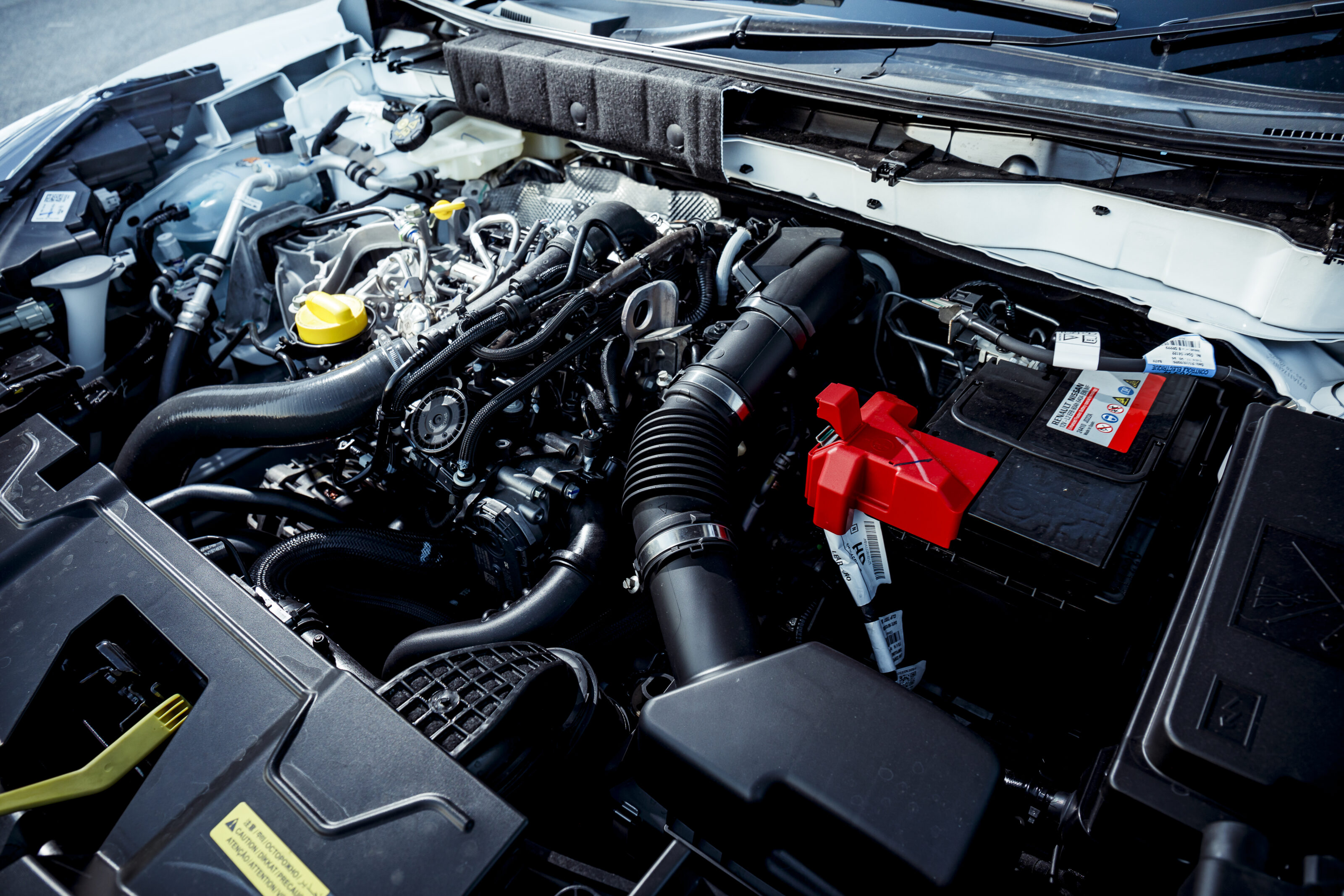
The Juke’s 1.0-litre three-cylinder turbocharged engine has an official combined fuel consumption of just 5.8L/100km and service intervals are every 12 months or 20,000km.
The Nissan Juke is covered by a five-year, unlimited-kilometre warranty.
What is the Nissan Juke Ti like to drive?
The Juke’s 84kW/180Nm 1.0-litre turbo engine provides a fair amount of push off the line. But while initial acceleration is brisk, it soon peters out and getting from rest to 100km/h takes more than 11 seconds. However, there is ample power for driving around town.
If you enjoy spirited driving, Sport mode keeps the revs up so you’re closer to the peak power range and there are paddle shifters on the steering wheel for more manual control of the dual-clutch transmission.
The chassis provides a firm but comfortable ride with great body control through bends, which makes it fun to drive.
However, the ride can feel a little jarring through the Ti’s bigger 19-inch wheels that are shod with low profile P225/45 Hankook tyres, especially over speed humps.
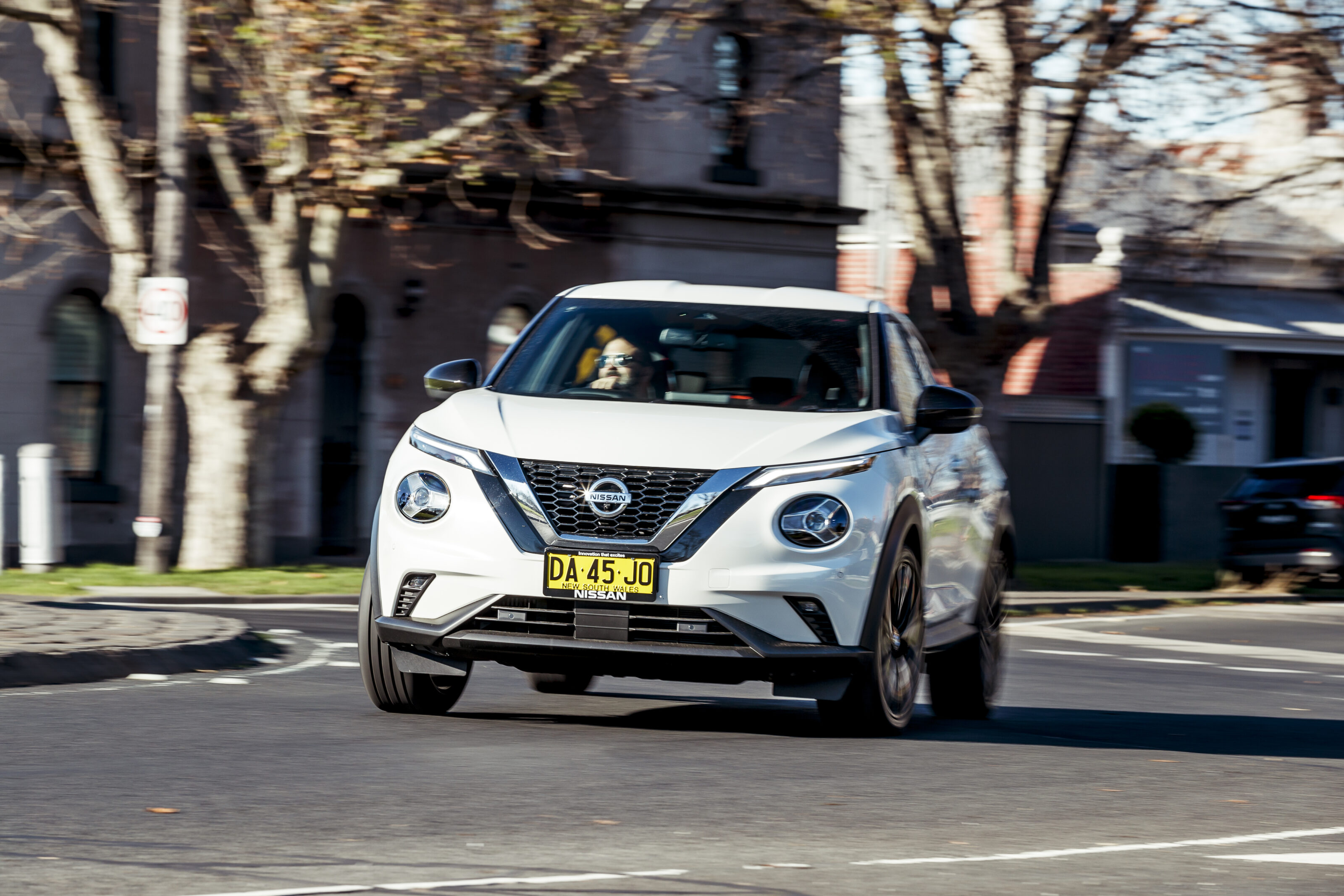
Because of its couple-like profile and chunky C-pillar, vision through the rear side windows is quite limited, which can make things a little awkward if you approach an intersection at an angle or are merging onto a freeway.
All in all, the Juke is quite fun to drive and feels more like a hatchback than an SUV.
What is safety like in the Nissan Juke Ti?
The Juke is one of the better-equipped light SUVs when it comes to safety, each variant packing a broad range of active safety and advanced driver assistance features such as autonomous emergency braking with pedestrian and cyclist detection, traffic sign recognition, rear cross-traffic alert, blind-spot warning, lane departure warning and lane-keeping assist, which Nissan calls Intelligent Lane Intervention.
The Ti also has front parking sensors, a 360-degree surround camera system, ‘Moving Object Detection’ and adaptive cruise control.
Occupant protection includes six airbags, including driver and front passenger forward and side airbags, and front and rear curtains.
The Australasian New Car Assessment Program (ANCAP) rated the Juke’s safety at a maximum five stars in June 2020.
The verdict
The second-generation Juke retains some of the original model’s quirkiness and fun-driving nature albeit in a more refined and modern package, particularly with all the Ti-spec trappings.
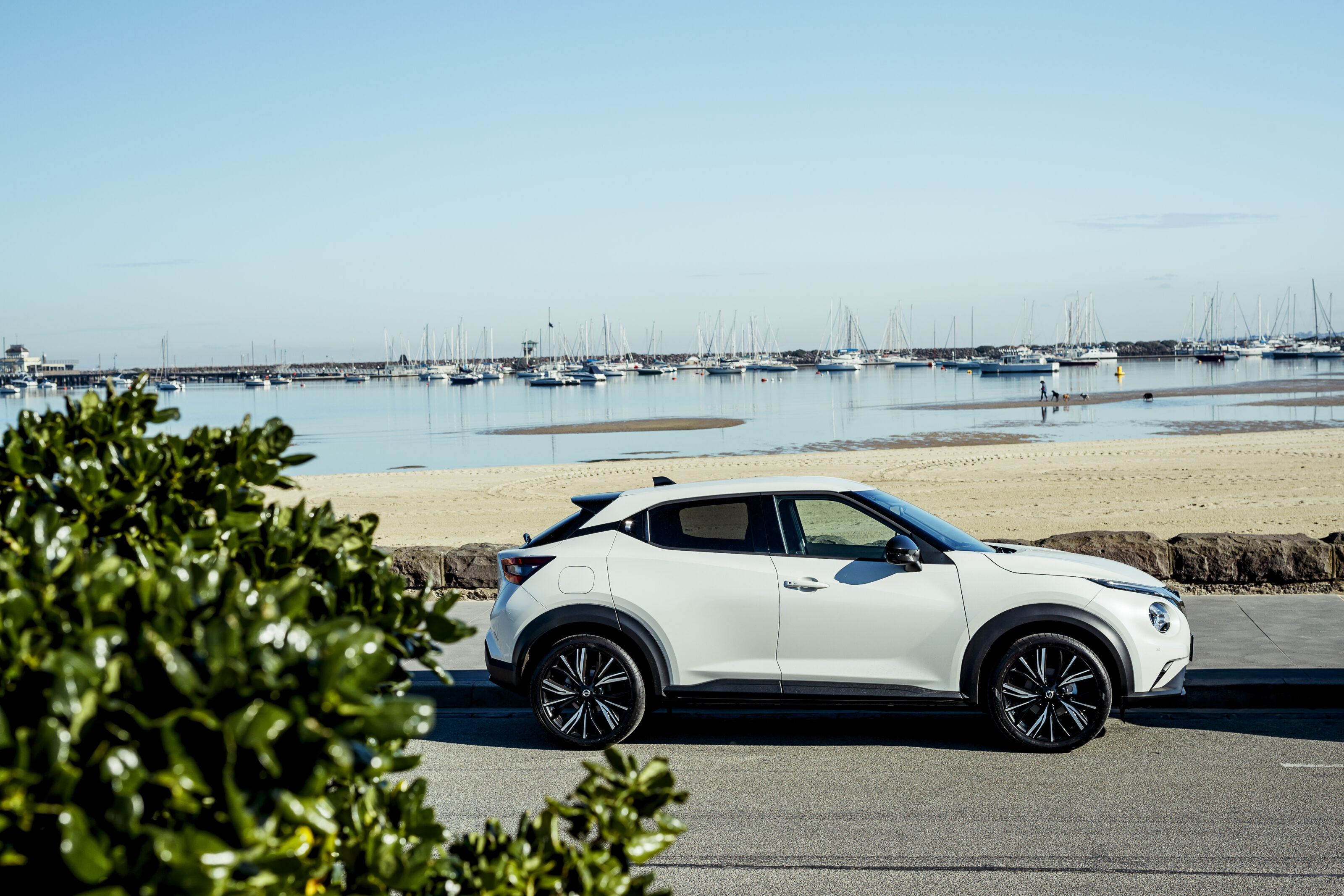
Its boot space makes it a reasonably practical too, but you may want to think twice about choosing this if you’ll be carrying people around often, particularly children, as hard riding low-profile tyres can make things a little uncomfortable.
But, if you expect the rear seats to only host the occasional bum, the Juke is a great little all-rounder that will quickly grow on you.
Nissan Juke Ti specifications
| Body | 5-door, 5-seat SUV |
| Drive | FWD |
| Engine | 999cc 3cyl, 12v, turbo petrol |
| Transmission | 7-speed DCT |
| Power | 84kW @ 5250rpm |
| Torque | 180Nm @ 2400rpm |
| Power to weight ratio | 68kW/tonne |
| 0-100km/h | 11.8sec (claimed) |
| Fuel consumption | 5.8L/100km (combined) |
| Weight | 1274kg |
| Suspension | MacPherson strut front / twin-beam rear |
| L/W/H | 4210/1800/1595mm |
| Wheelbase | 2636mm |
| Brakes | Front ventilated discs/solid rear discs |
| Tyres | P225/45 R19 Hankook Ventus S1evo3 |
| Wheels | 19 x 7.5 alloy |
| Price | $36,490 |
Snapshot
- Dozens of new cars will be headed to Goodwood’s Fetival of Speed this weekend
- Aston Martin bringing crazy Valkyrie hypercar
- Lamborghini Aventador LP 780-4 Ultimae, Lotus Emira and Toyota GR 86 will make dynamic debuts
The 2021 Goodwood Festival of Speed is finally due to kick-off tomorrow, Thursday, July 8, from 6pm local time.
It’s the first time we’ll see a plethora of cars and bikes take to the celebrated hill climb in two years, thanks to the FOS being cancelled last year due to the coronavirus pandemic.
As such, plenty of manufacturers are eager to show off new models during the four-day-long motoring festival.
So, we thought we’d compile a list of the new cars set to make a debut at this weekend’s Goodwood FOS.
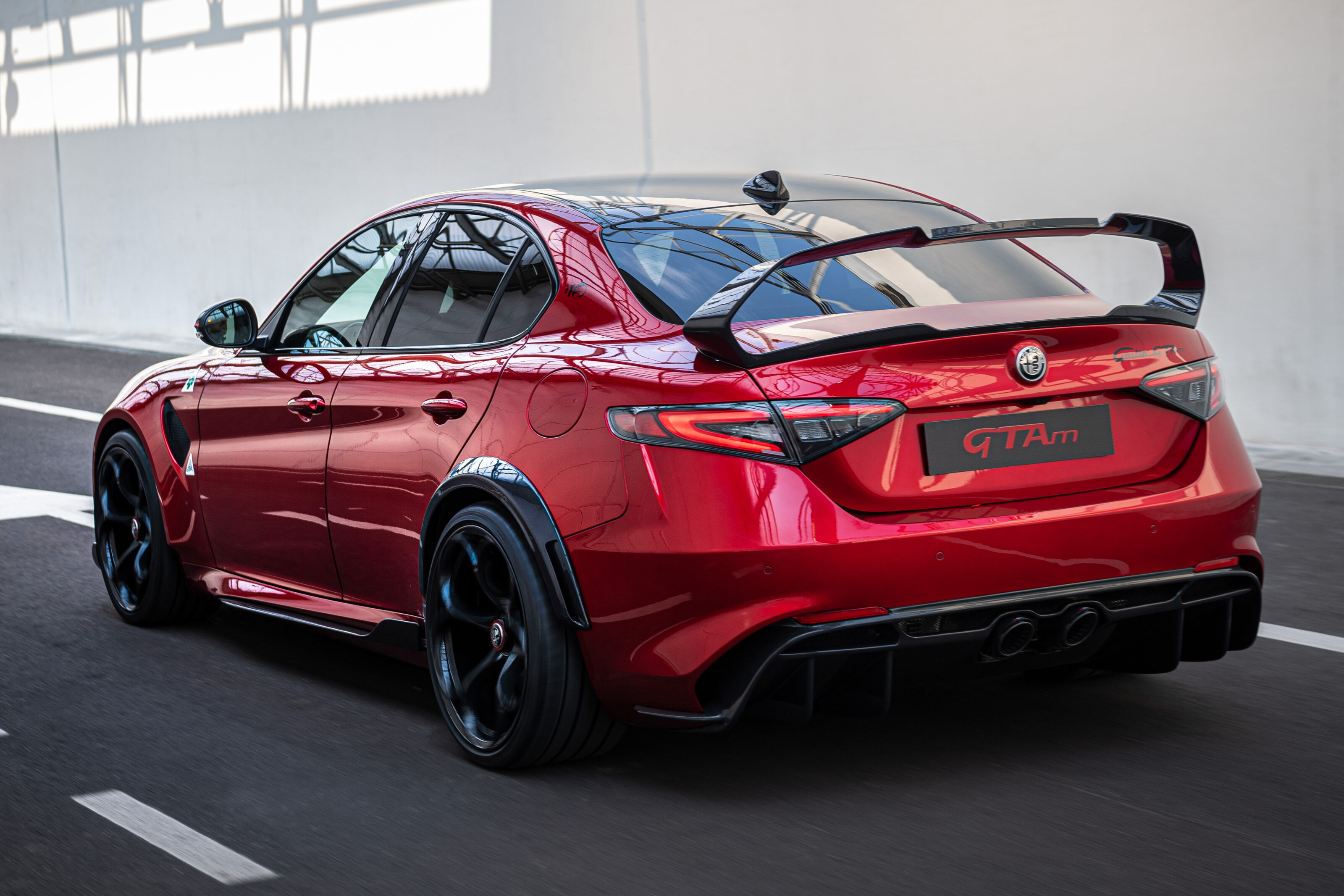
Alfa Romeo Giulia GTA and GTAm
The Turin-based automaker will be entering its most powerful sedan ever made in the FOS this weekend, displaying the super sedan GTA and GTAm. Everyone should enjoy these cars while they can because Alfa’s parent company Stellantis has decided to kill off the Giorgio platform (which the Giulia is based on), despite the trick architecture’s multi-billion-dollar cost and relative youth.
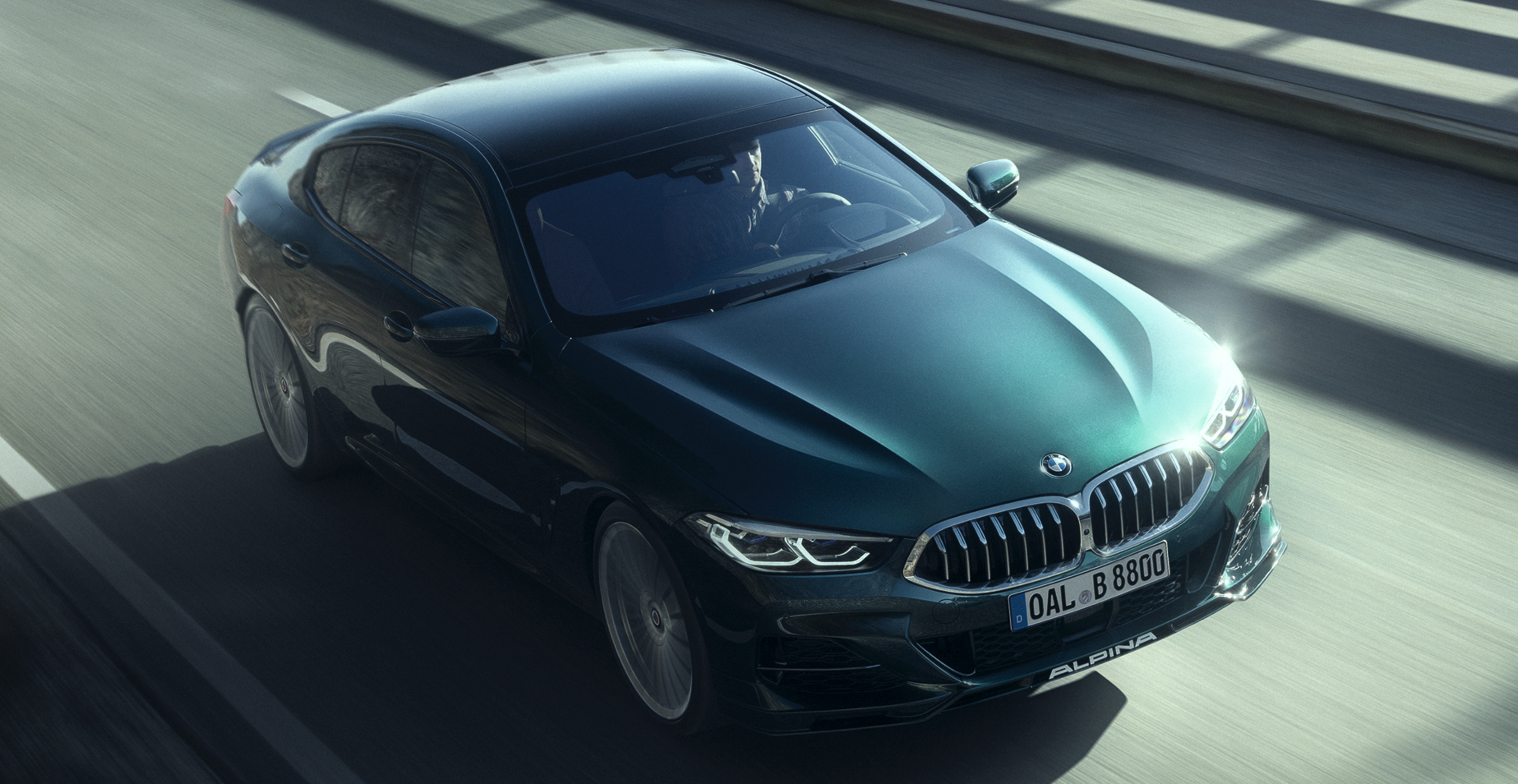
Alpina B8 Gran Coupé
Storied BMW tuner Alpina will show up at the FOS with its latest creation, the thunderous B8 Gran Coupé. The twin-turbocharged 4.4-litre V8 is sure to sound incredible, and with 457kW and 800Nm, it will probably be quite quick too.
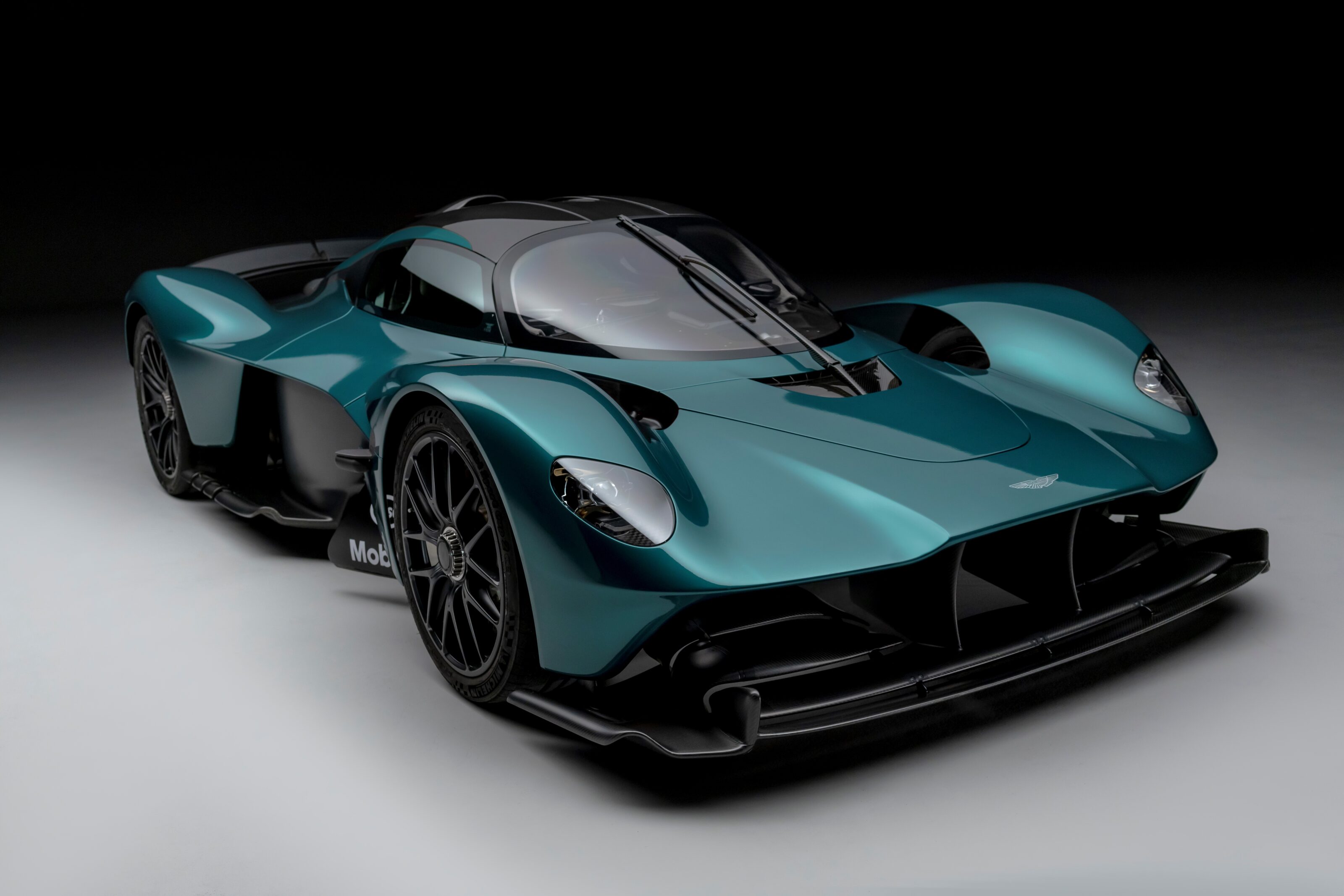
Aston Martin Valkyrie, Vantage F1, and Speedster
The Gaydon outfit is planning a full-force assault on the senses for festival-goers. Not only will there be a growling V8 from the newly released Vantage F1 Edition, but two V12-powered Aston’s will be taking to the course too. The Speedster will be excellent, and the Valkyrie may well be the best sounding car at the event.
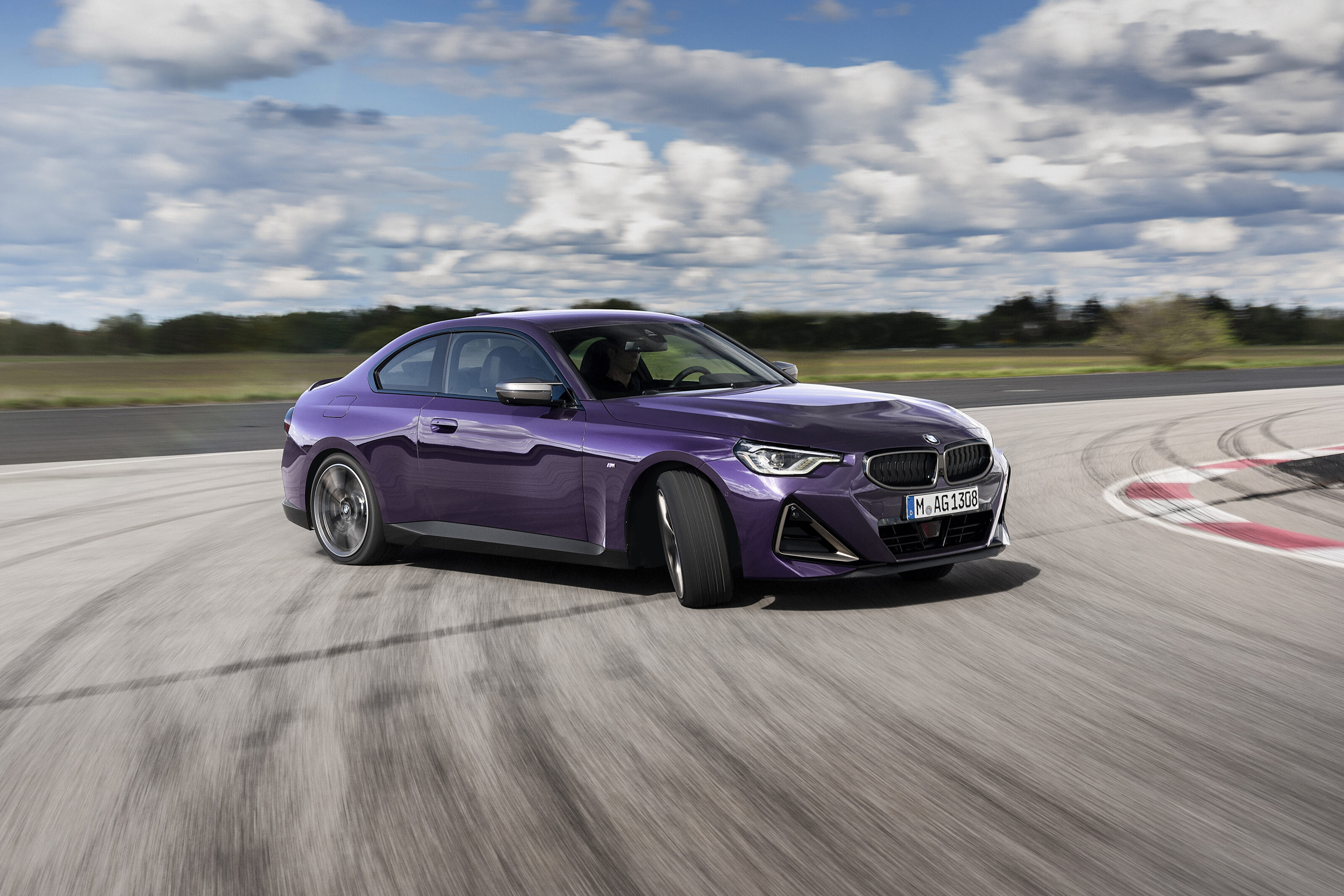
BMW i4, iX, and 2 Series
BMW’s attack on Goodwood will encompass both internal combustion and electrically powered vehicles, with the Munich firm showing off its electric i4 Gran Coupé and iX SUV, as well as its new compact sports coupe the G42 2 Series.
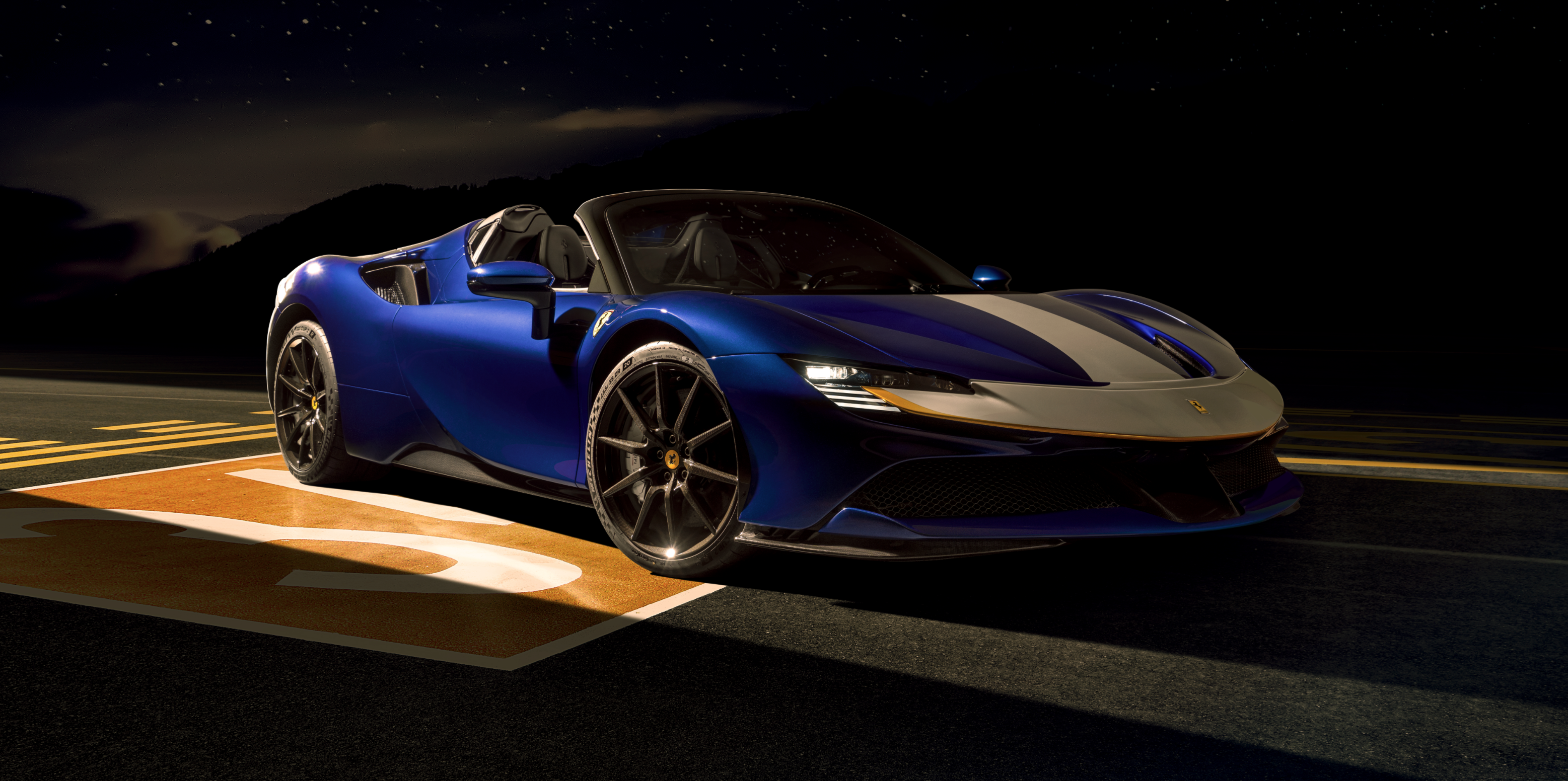
Ferrari SF90 Spider
The Prancing Horse will be presenting the drop-top variant of its powerful SF90 Stradale. The SF90 Spider has the looks, but will it have what it takes to race up the hill quicker than the rest in its supercar class? With 735kW, it’s certainly not out of the question.
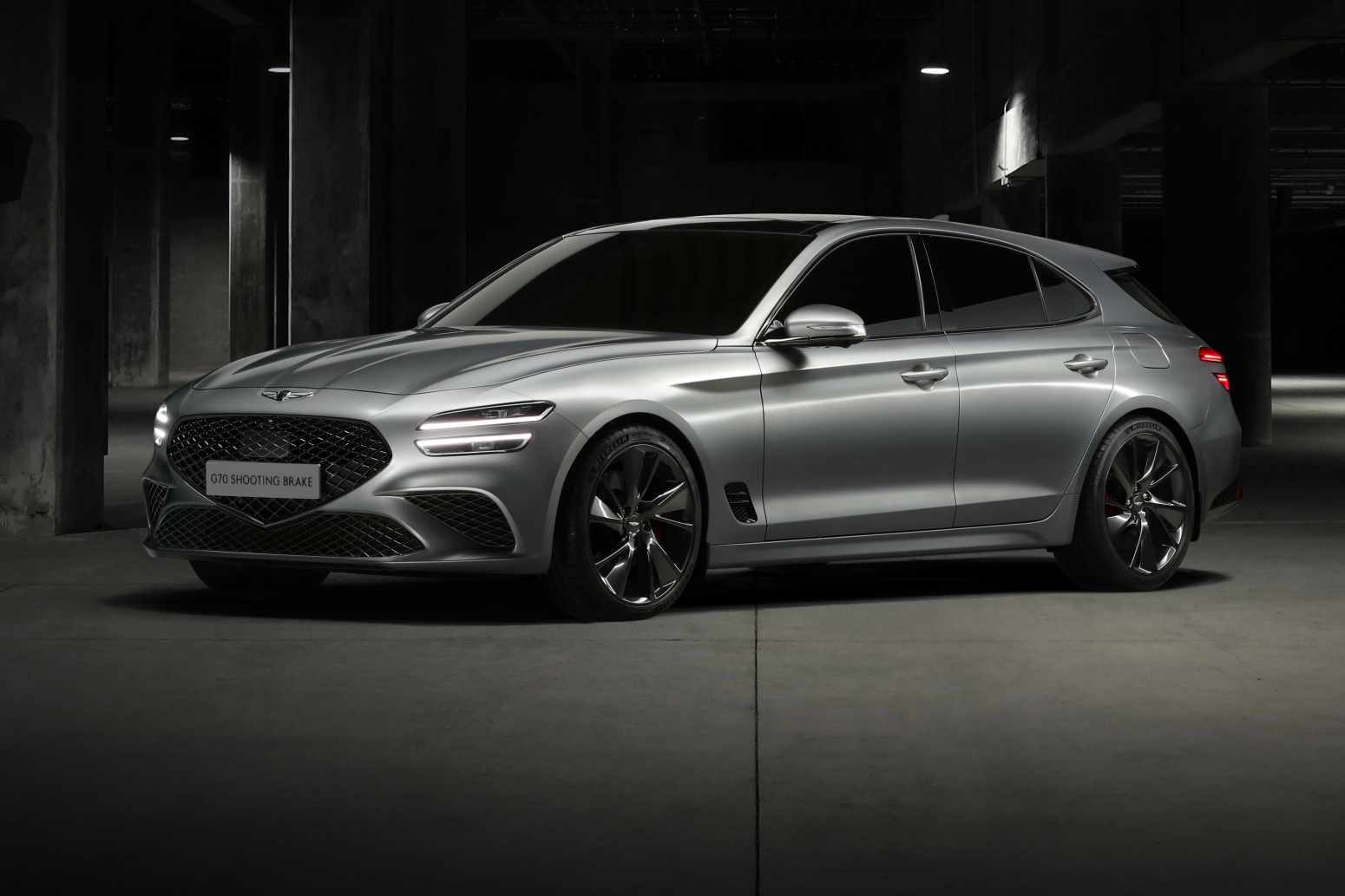
Genesis G70 Shooting Brake
Confirmed for Australia, the Genesis G70 Shooting Brake is definitely not going to be the fastest thing on four wheels at the festival, but we reckon there’s a chance we could see the good-looking wagon pull several burn-outs and skids.
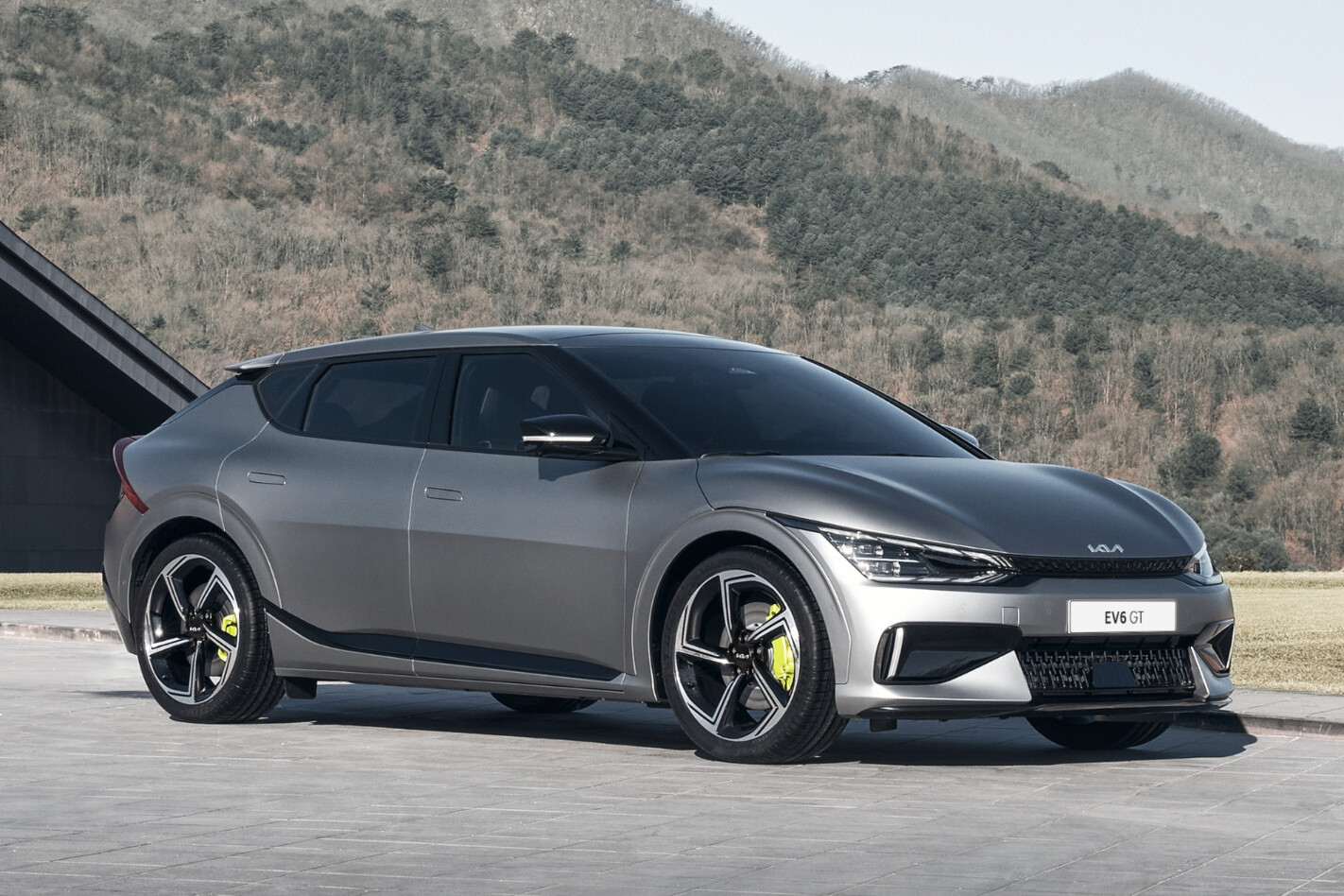
Kia EV6 GT and Stinger GT420
Kia is set to stun when it rocks up at Goodwood, bringing its brand-new EV6 electric crossover. The avant-garde EV is sure to impress the crowds with its impressive aesthetics, and considering the top-spec GT can accelerate from 0-100km/h in just 3.5 seconds, it may surprise more than a few people. Fans of ICE shouldn’t fret either, because the Korean automaker is bringing a heavily modified version of its Stinger GT, dubbed the GT420..
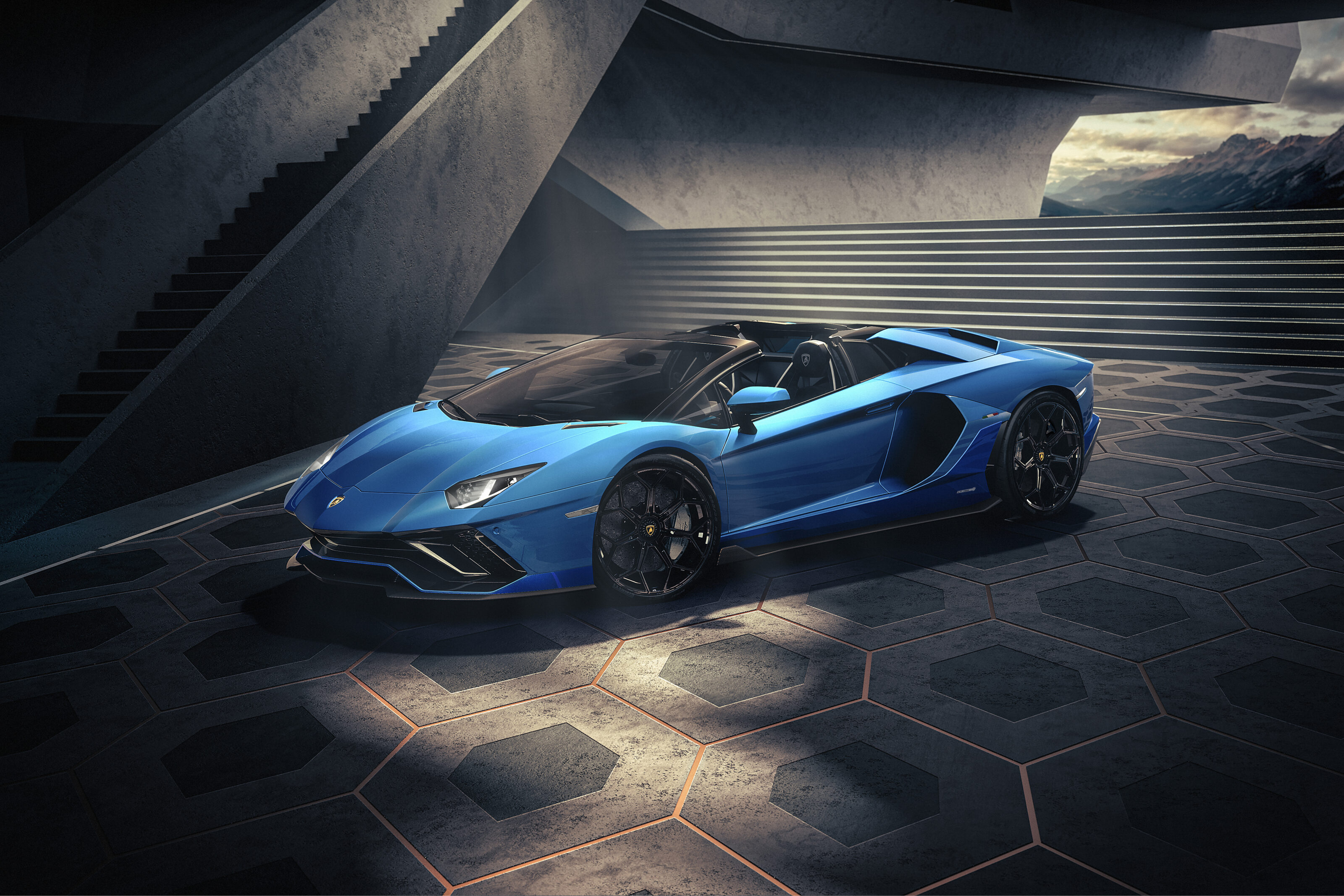
Lamborghini Aventador LP 780-4 Ultimae
The last hurrah of the Raging Bull’s V12 flagship, the Aventador, will make its dynamic debut at Goodwood House this weekend.
The Aventador LP 780-4 blends the power of the mighty SVJ with the looks and mannerisms of the more road-biased Aventador S. Expect a noise like no other.
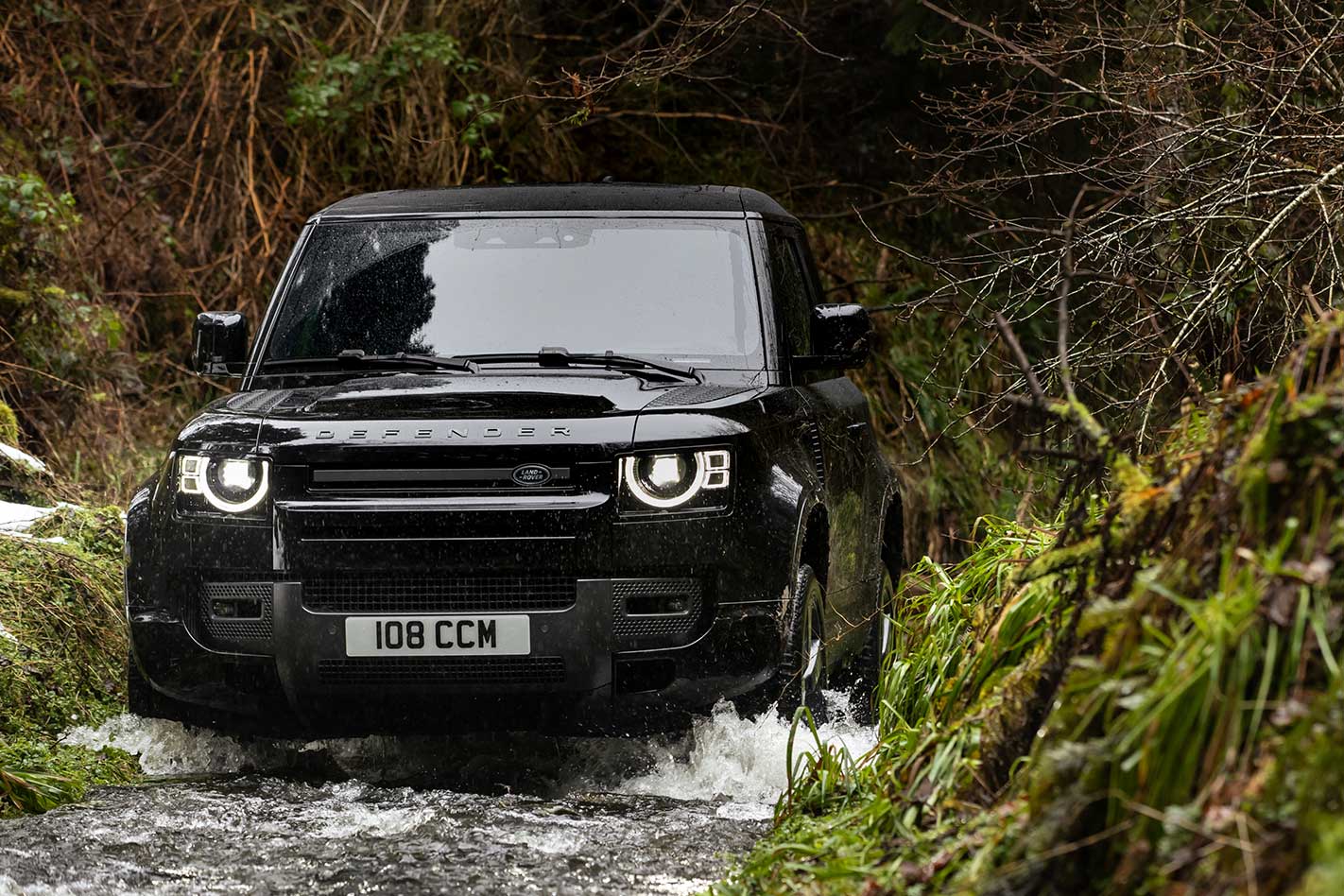
Land Rover Defender V8
With killer looks and off-road ability, the new Defender has been a massive success for Land Rover. The addition of a 5.0-litre supercharged V8 slid under the bonnet of the boxy SUV was always going to be an intoxicating proposition, so it makes perfect sense JLR would want fans to hear the new Defender V8’s rumble at Goodwood.
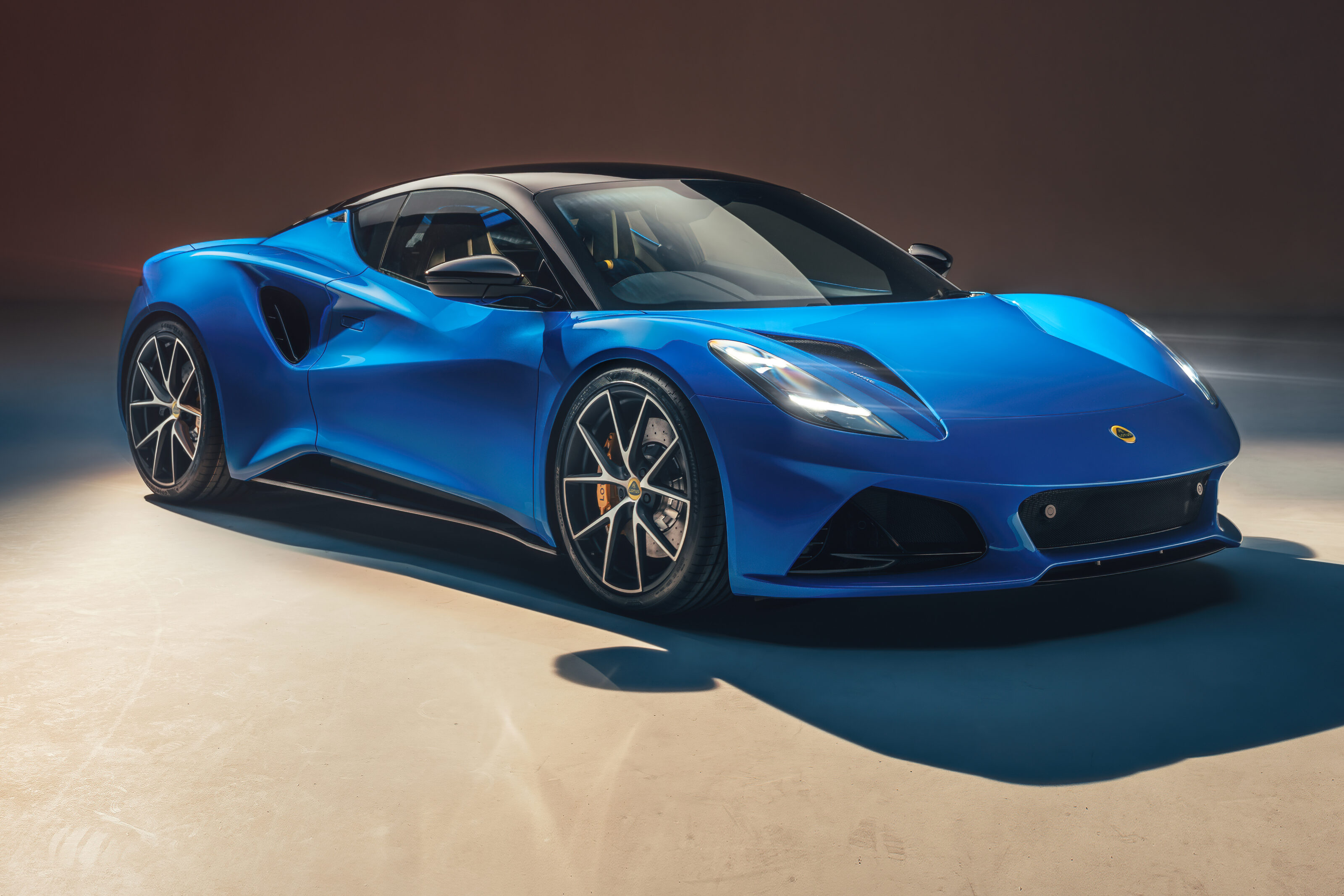
Lotus Emira
British sportscar manufacturer Lotus will be flaunting its simply gorgeous Emira at Goodwood this weekend, and we can’t wait to see it in action. The Emira promises to be a watershed product for the Hethel firm, just like the Elise was almost three decades ago.
It’s set to arrive on Aussie shores by the middle of next year.
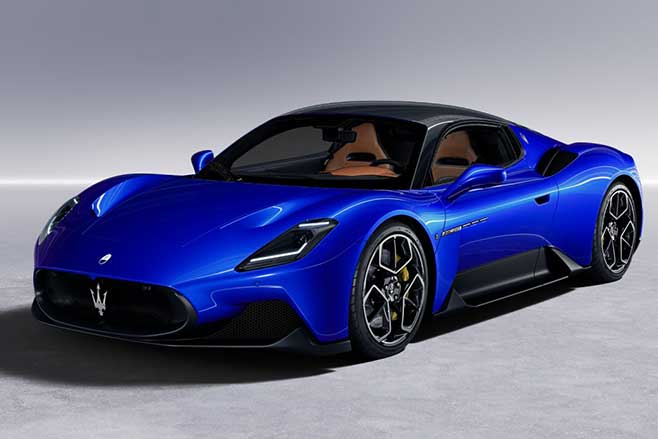
Maserati MC20
Maserati’s carbon-tubbed MC20 supercar will be aiming to prove the Trident brand has still got what it takes in the upper echelon of supercar manufacturers when it takes to the hill climb this weekend.
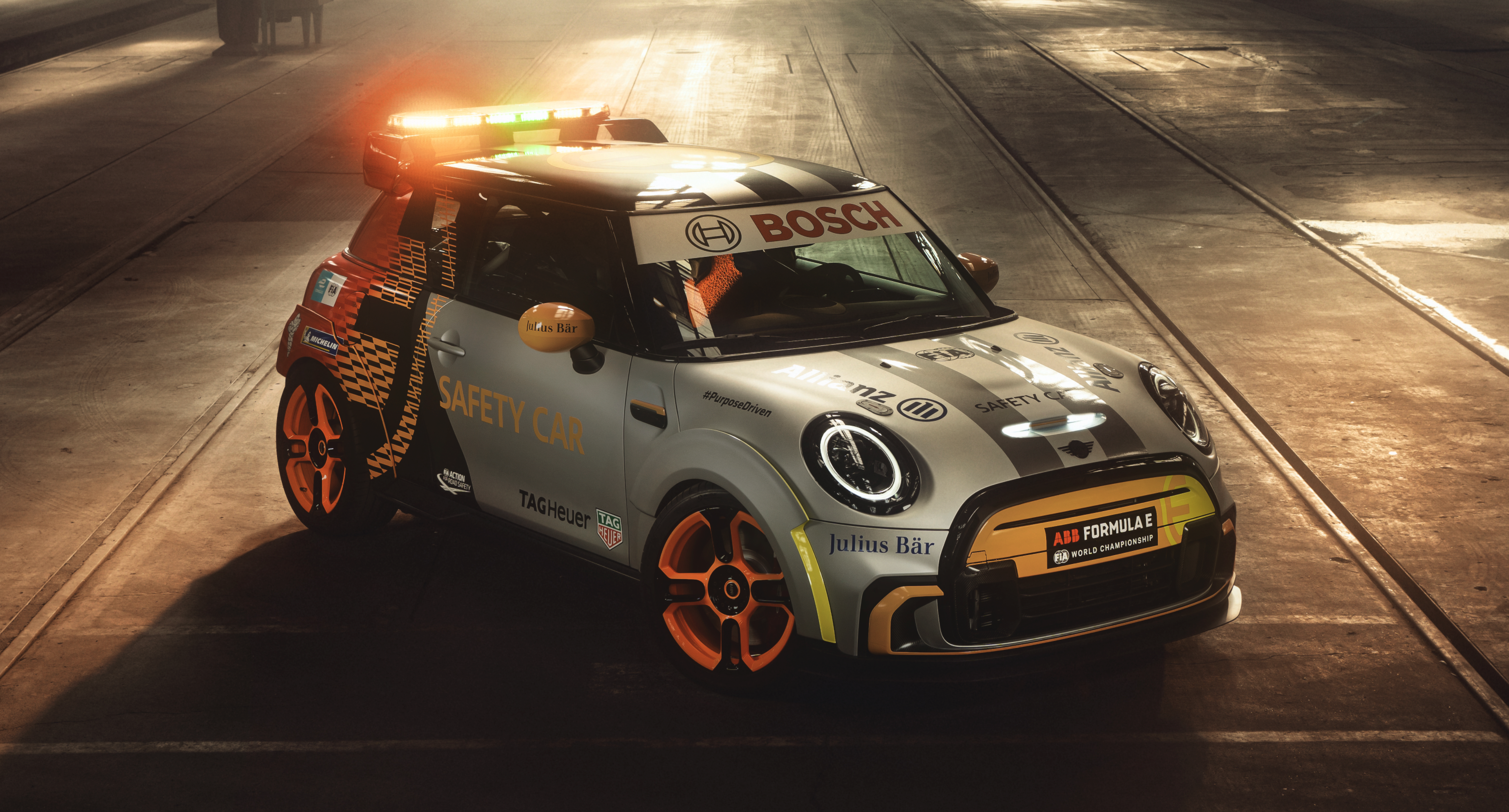
Mini Pacesetter
Mini’s take on what an all-electric John Cooper Works GP may look like, the Pacesetter will silently sprint up the 1.86 kilometre hill this weekend. The aptly named Pacesetter has been the safety car for Formula E this year, and it will be interesting to see how the Mini fares.
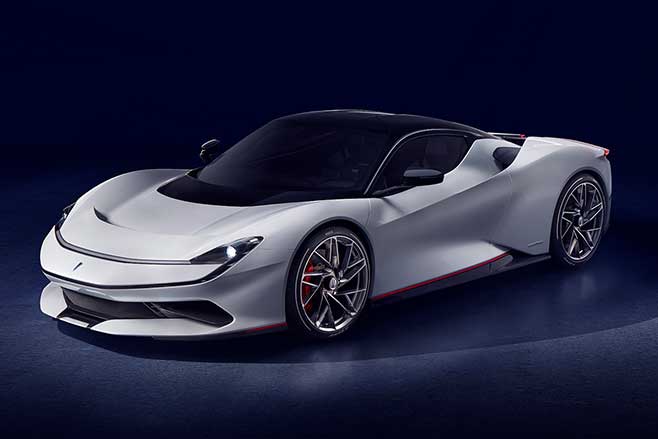
Pininfarina Battista
Italian design house and coachbuilder turned automaker Pininfarina will be displaying its beautiful Battista electric hypercar this weekend. With the running gear ripped straight from Rimac’s Nevera, the Battista will undoubtedly be one of the quickest cars taking part in the motorsport event.
Scuderia Cameron Glickenhaus SCG 004S
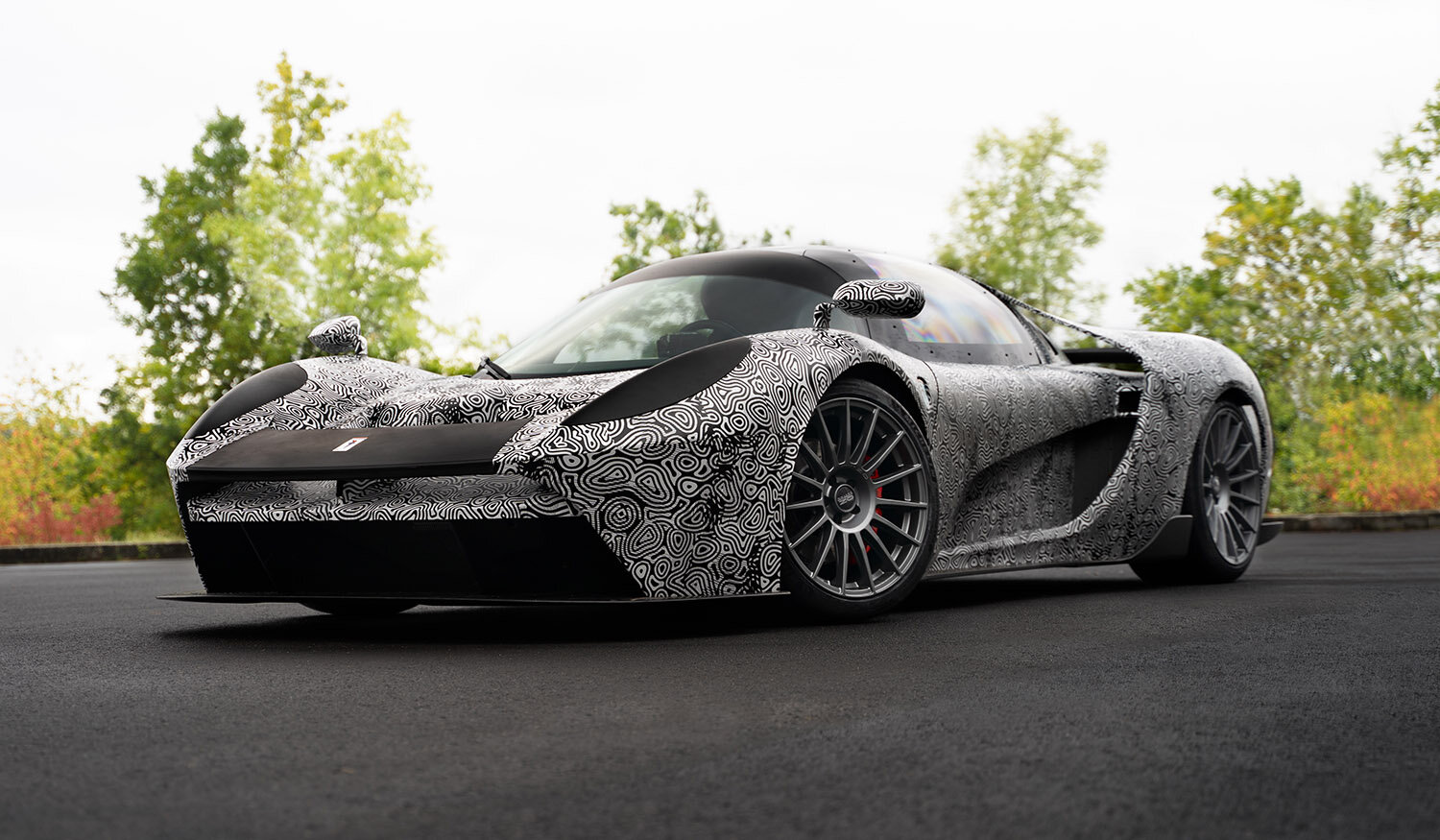
Scuderia Cameron Glickenhaus will be arriving at Goodwood to prove Americans can make a Ferrari too. The thinly veiled racecar sports a three-abreast driving position just like a McLaren F1, a thumping-great V8 making 478kW, and a six-speed manual transmission.
Toyota GR 86
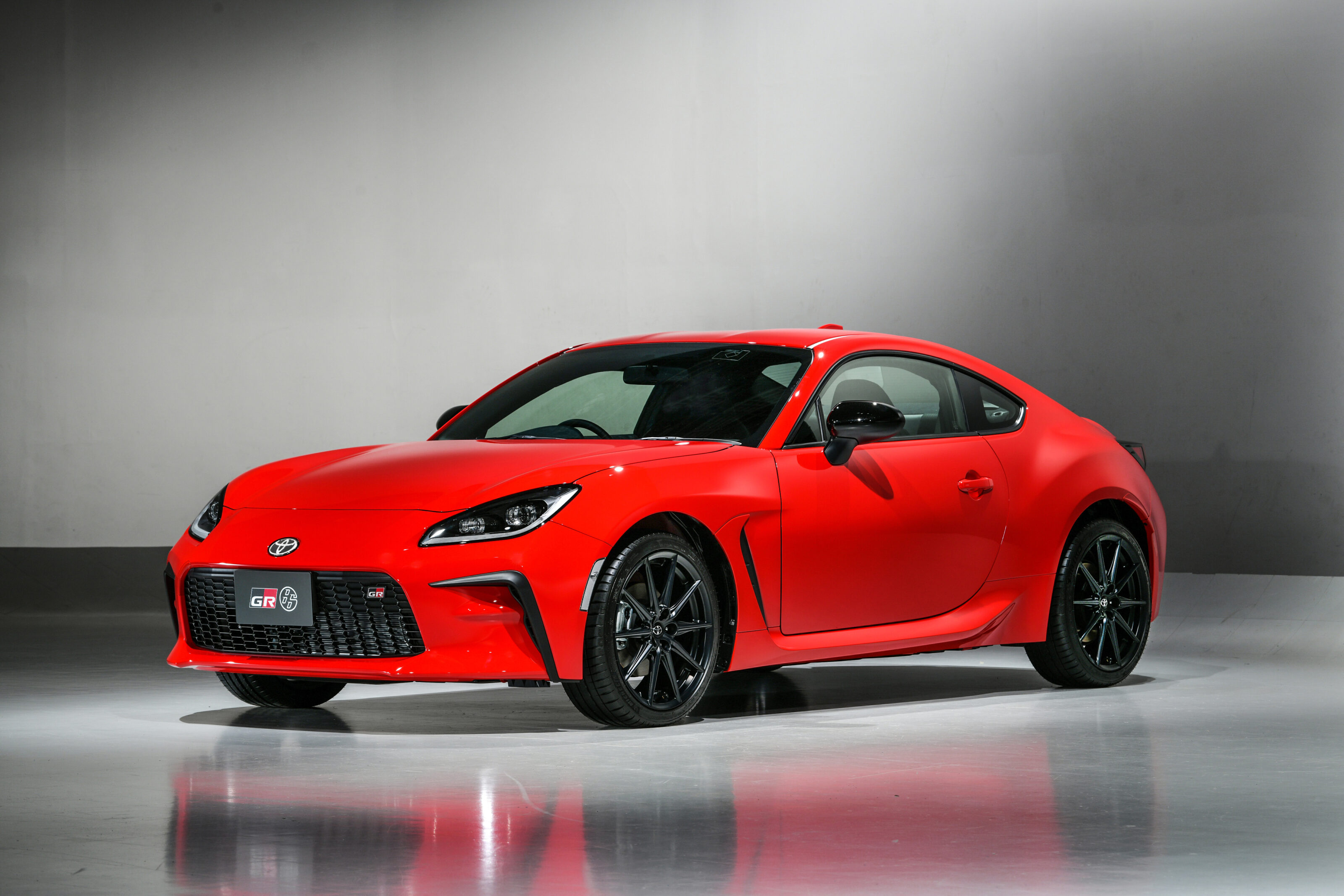
Representing Toyota and Subaru’s latest collaborative effort, the GR 86, now looked after by the Japanese marque’s Gazoo Racing outfit, is almost certainly going to spend some, if not all of its time this weekend going sideways. At least it better – that’s what a lightweight, LSD-equipped, rear-drive sportscar is built for.
Snapshot
- Limited to 600 examples worldwide
- Power rated at 574kW and 720Nm
- Coupe and roadster available from launch
The 2022 Lamborghini Aventador LP 780-4 Ultimae has been revealed as the final swan song for the Italian marque’s V12 flagship.
According to Lamborghini, the Ultimae blends the performance of the track-focused Aventador SVJ with the dynamics of the more accessible Aventador S.
A total of 600 examples of the limited-run Raging Bulls will be built – of which 350 will be coupes, with the remaining 250 being roadsters.
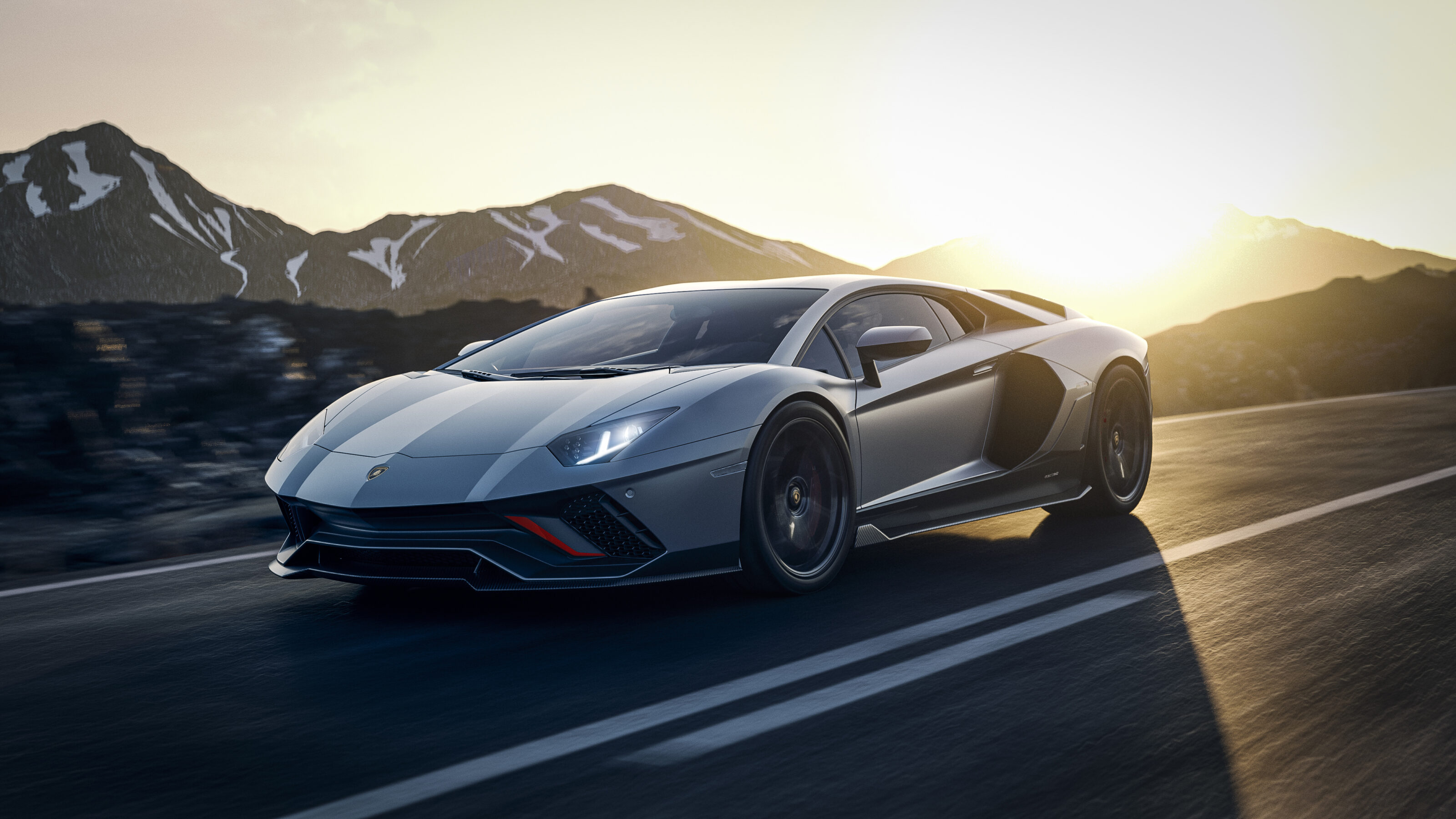
It’s the last time we’ll ever see the iconic naturally-aspirated Lamborghini V12 in a road car without hybrid assistance. The future is electric, and Lamborghini knows that.
“The Aventador LP 780-4 denotes the final, purest, timeless naturally-aspirated production V12 Lamborghini,” Stephan Winkelmann, President and CEO of Automobili Lamborghini, said.
“It delivers the essential twelve-cylinder experience in terms of inimitable design, engineering solutions and the most emotive driving experience, and is the definitive Aventador concluding an extraordinary era.”
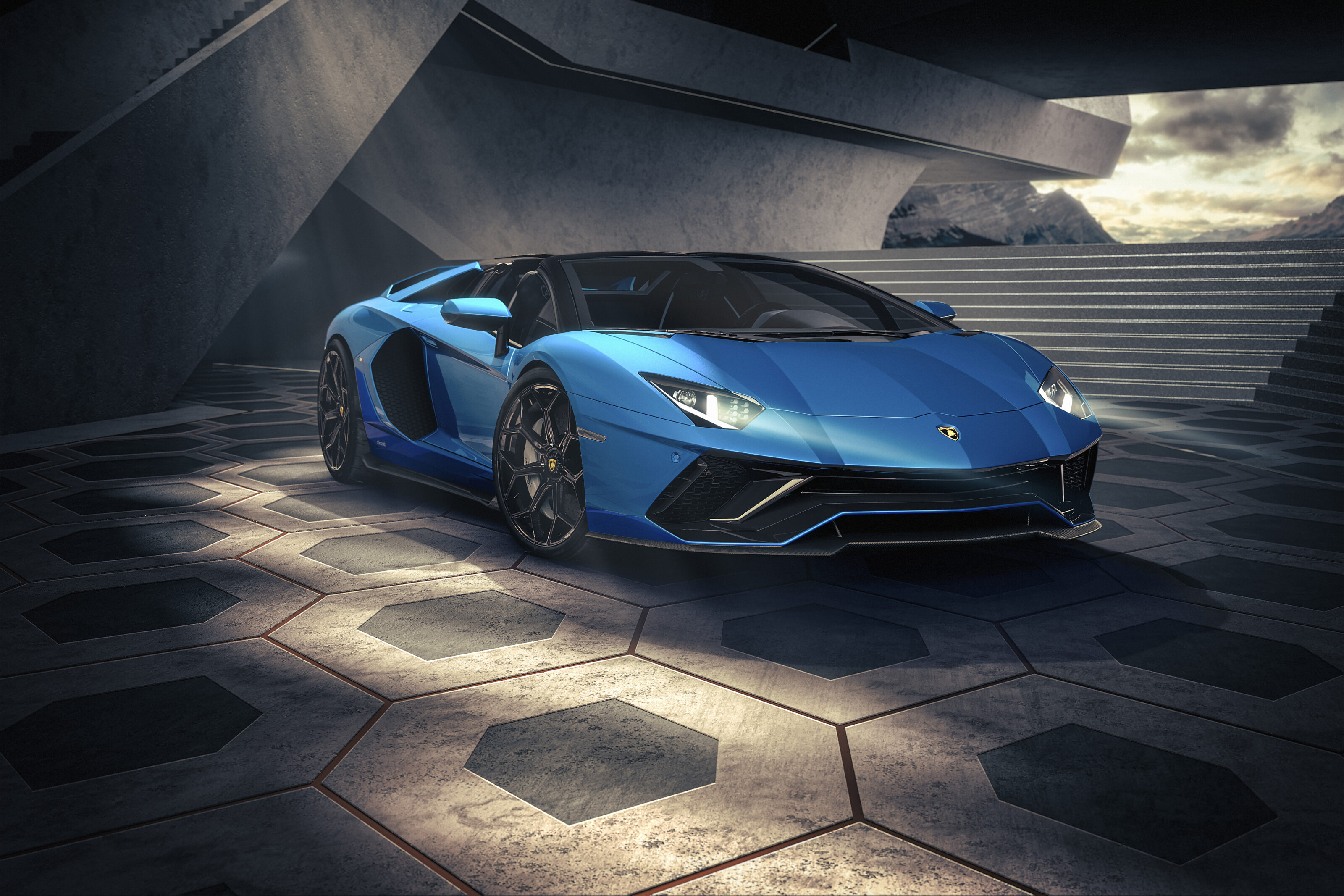
To give the Aventador the proper send-off it deserves, the Sant’Agata firm has cranked up the 6.5-litre 12-cylinder masterpiece all the way to 11.
Power is rated at 574kW and 720Nm (29kW and 30Nm more than the S and 8kW more than the SVJ), with drive still being sent to all four wheels through its seven-speed single-clutch automatic transmission.
Its 0-100km/h run happens in a blinding 2.8 seconds.
Additionally, 0-200km/h takes just 8.7 seconds, and flat out, the scissor-doored star will top 355km/h, with or without a roof.
The speed is only partly down to the venerable V12, though. Lamborghini has also put the Aventador on a lightweighting regimen which has resulted in a dry kerb weight of just 1550kg (25kg less than the Aventador S).
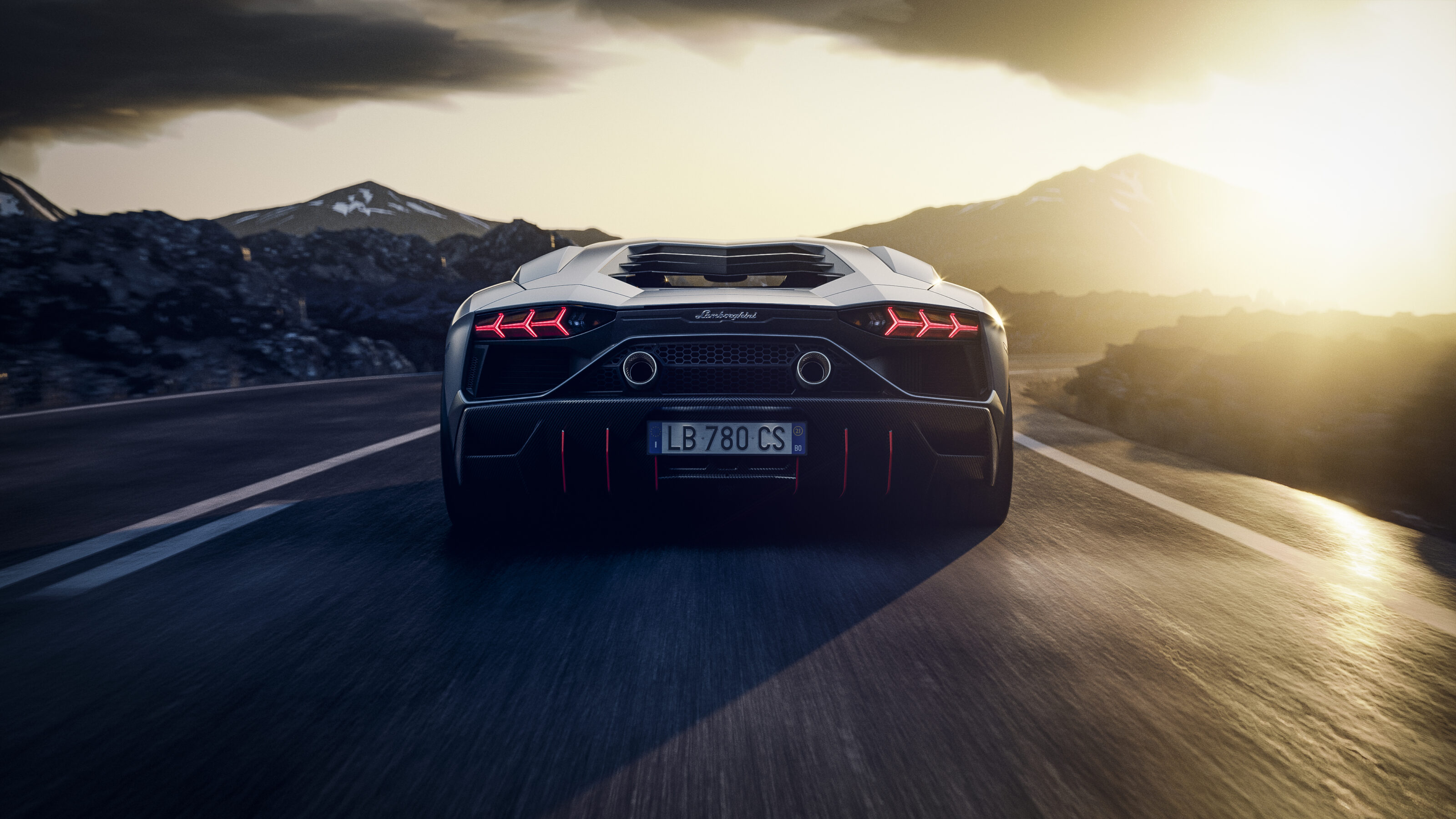
Lamborghini has also developed a bespoke aero package for the Ultimae, which features a new front splitter and bumper, lightweight rear diffuser, and rear spoiler with three-stage active aero.
Tweaks have also been made to the Ultimae’s chassis dynamics, with the V12 supercar scoring a bespoke ESC calibration, managed by the automaker’s Lamborghini Dinamica Veicolo Attiva (LDVA) system.
The Ultimae is fitted with a unique set of Silver Dianthus staggered 20 and 21-inch alloy wheels wrapped in a homologated set of Pirelli PZero Corsa tyres.
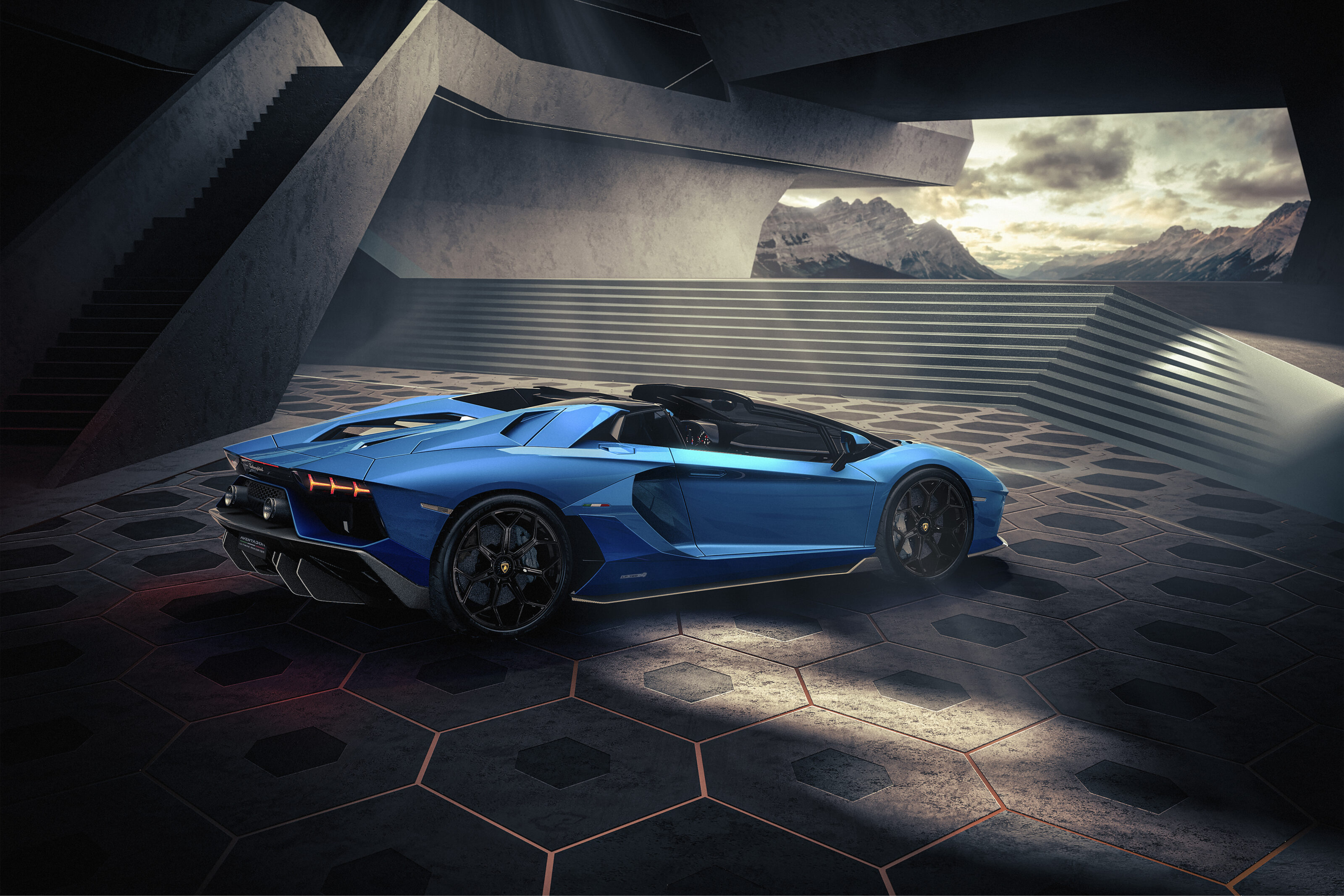
Both the exterior and interior can be optioned to a customer’s exacting specification. The Ultimae also introduces several unique colour and interior style options never before seen on the Aventador.
Inside, there’s a customisable TFT digital dashboard and colour infotainment display with Apple CarPlay.
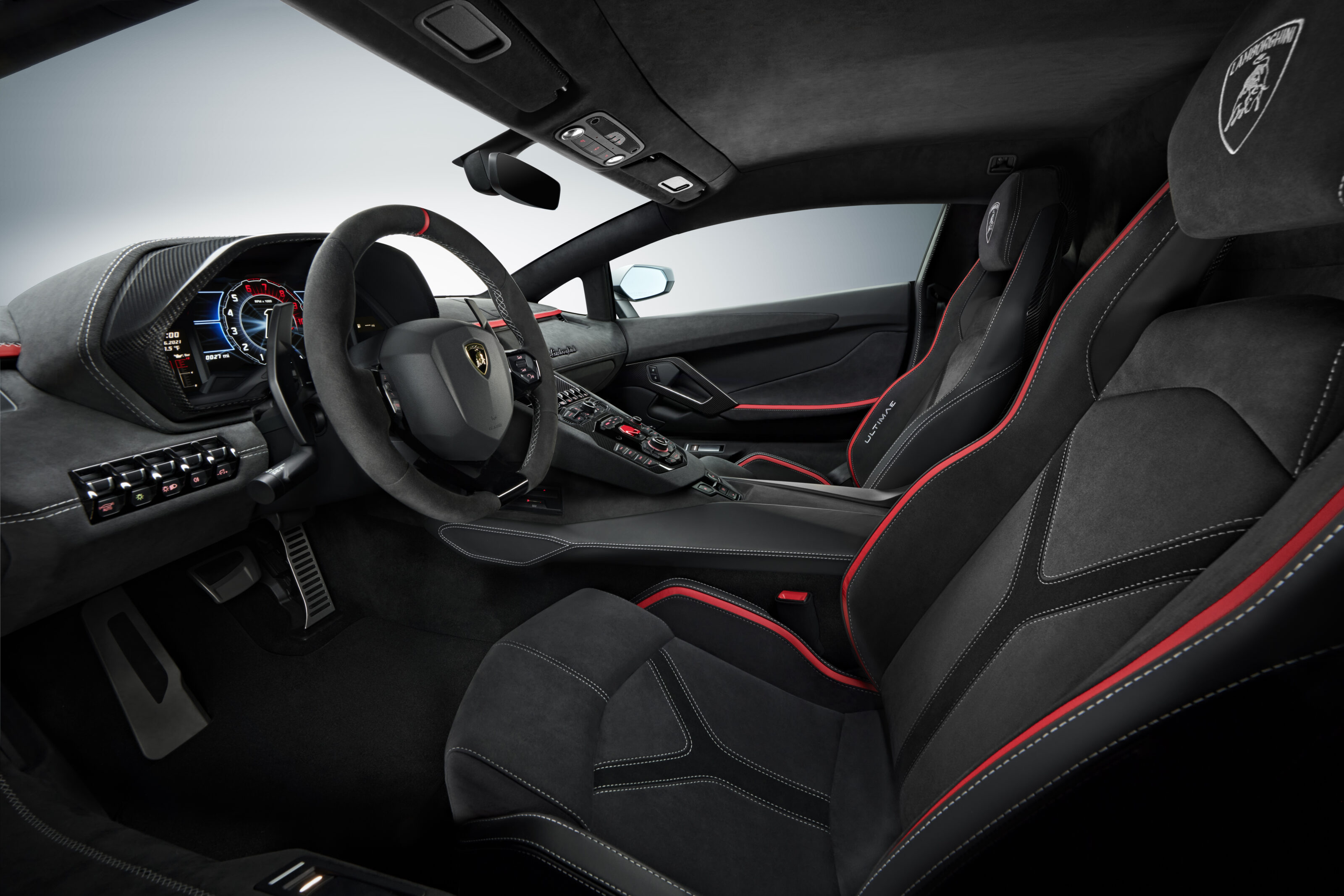
The V12 epilogue will make its dynamic debut at this weekend’s Goodwood Festival of Speed, and while it may not be the quickest thing there, it may well be the best sounding.
It’s yet to be confirmed whether any of the 600 examples of the 2022 Lamborghini Aventador LP 780-4 Ultimae will be sold Down Under.
However, considering the strong fanbase the Italian supercar brand has, we’d hazard a guess there will end up being more than a few of the Sant’Agata stunners tucked away in private collections across the country.
How much will it cost? That’s yet to be confirmed, but considering the standard Aventador S is $789,809 plus on-road costs, we reckon the Ultimae will be nudging seven figures by the time it reaches an owners’ driveway.
It didn’t take long for the internet to jump on BMW’s official release of the new 2 Series Coupe and put its own spin on it.
BMW has previously made its 2 Series as a convertible but has not yet said whether the next-generation car will go topless, only releasing its first official images of the new-look coupe this morning.
While two-door sports coupes are all well and good, Australia is the land of sunshine and we love to have the option of a drop-top, giving us the ability to access all the headroom in the world while driving about.
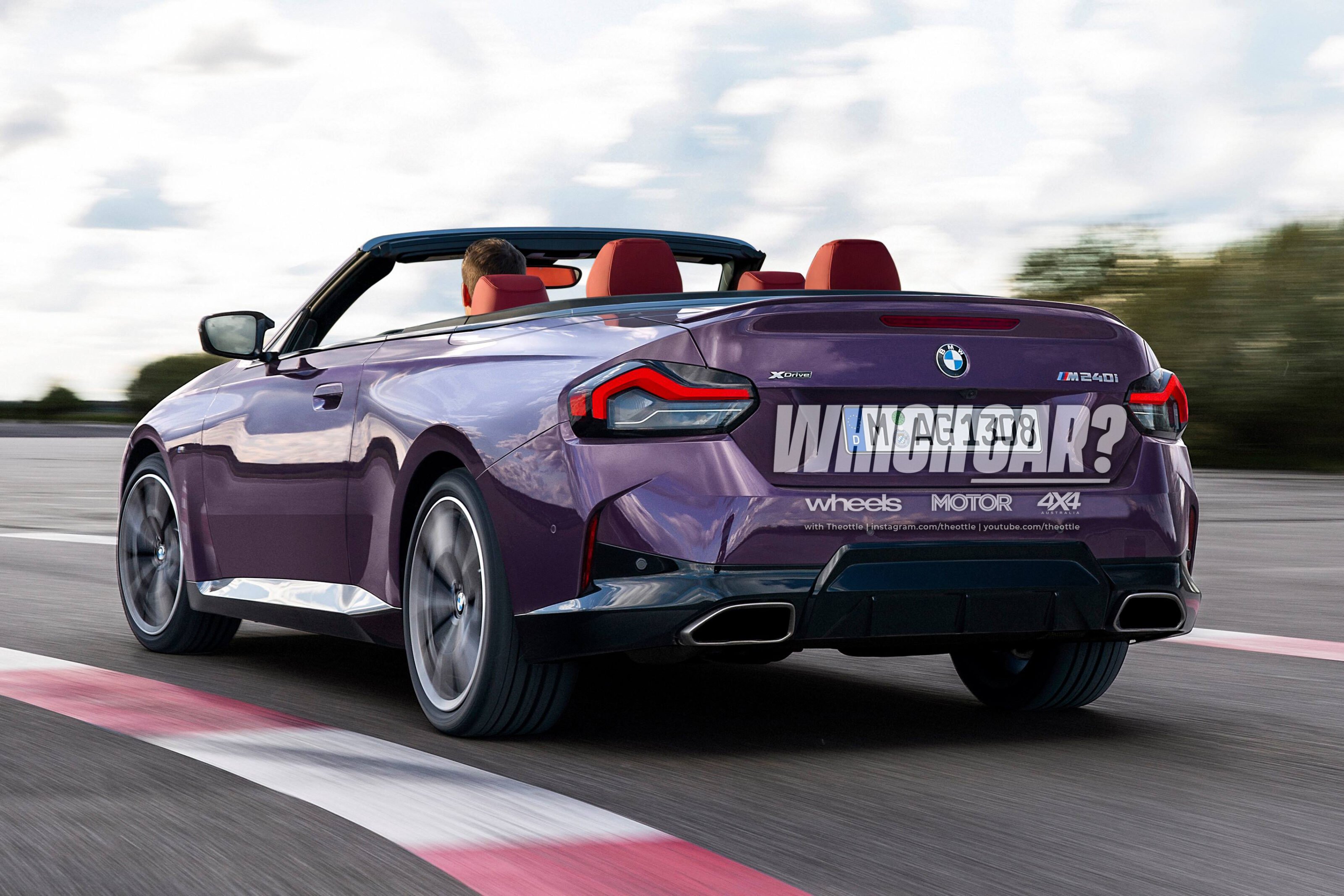
Luckily Theo Throttle has taken the liberty of showing BMW how it’s done, rendering the range-topping M240i xDrive sans roof.
Although the 285kW coupe already looks appealing, the convertible looks particularly good – especially in ‘thundernight metallic’ (or purple, as it’s otherwise known).
Imagine the uproar if BMW decides not to chop the top off the new 2 Series? Some would argue it to be akin to not offering a manual gearbox in the model’s variants.
With the M2 still yet to be revealed, 2 Series buyers have to stick with just two pedals for now – the new car only being offered with a ZF eight-speed automatic, as the hi-po variant is set to be the only version with a manual.
In the second article of our two-part 2021 half-term sales report series (you can read part one here), we continue to find out which brands are winning or losing in Australia’s new-car sales race.
We start with Japanese luxury brand Lexus…
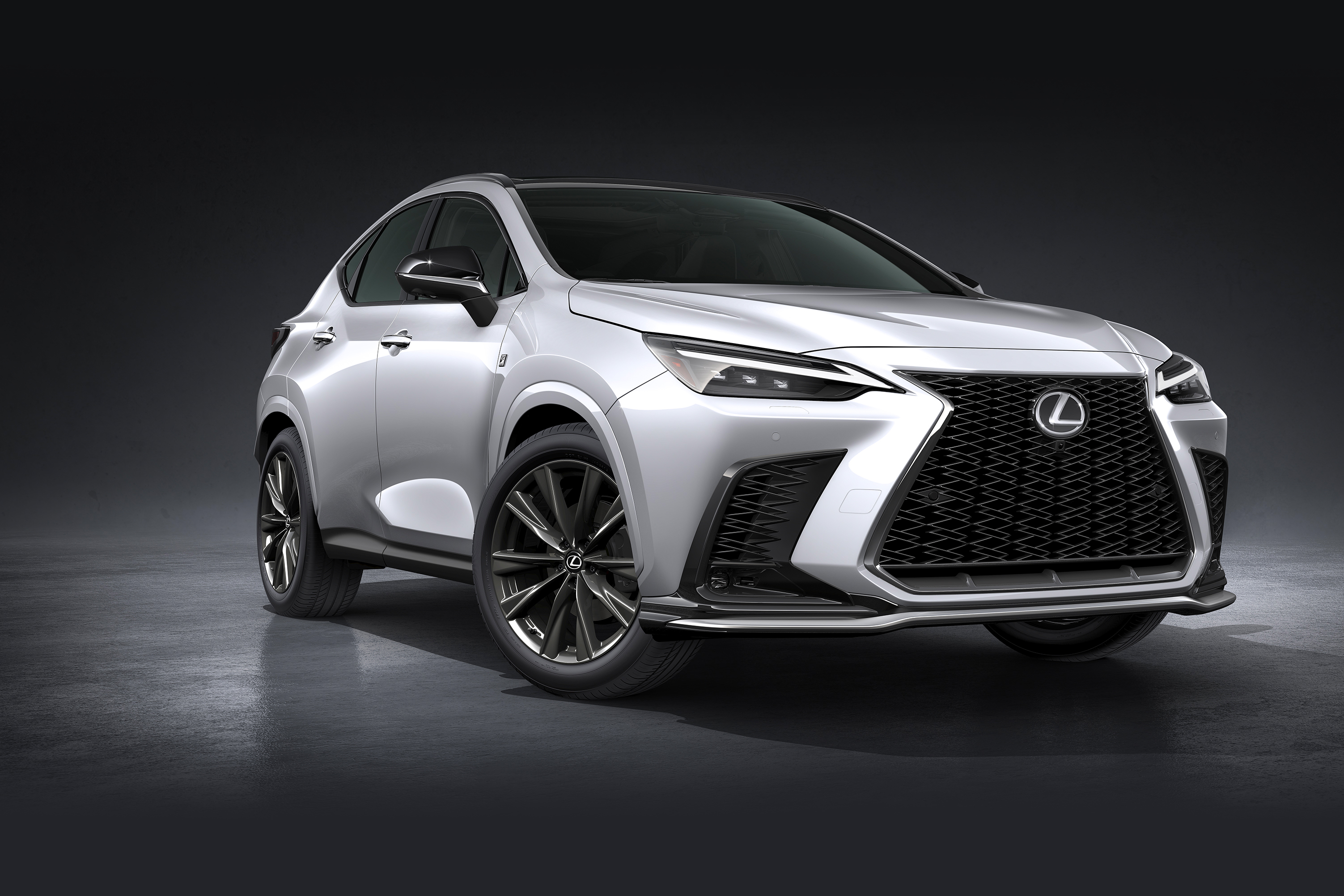
Lexus: Up 14 per cent – small winner
Best-selling model: NX mid-sized SUV (1842 sales; down five per cent)
Fastest-growing model: IS sedan (746 sales; up 144 per cent)
Toyota’s renowned challenger brand to the German luxury car makers remains well behind Audi, BMW and Mercedes in Australia, though it at least has the next-best growth after Audi. Its most popular model, the NX SUV, is down five per cent on its sales this time last year, though a second-generation model is coming later in 2021.
There are upward trajectories for the UX compact crossover (up 23 per cent) and big, LandCruiser-based LX (up 25 per cent), though the RX large SUV is static with less than one per cent growth. Lexus’s biggest-growing model ironically is the IS sedan – up 144 per cent but being axed later in 2021 despite the introduction of a ‘new generation’ model only last year.
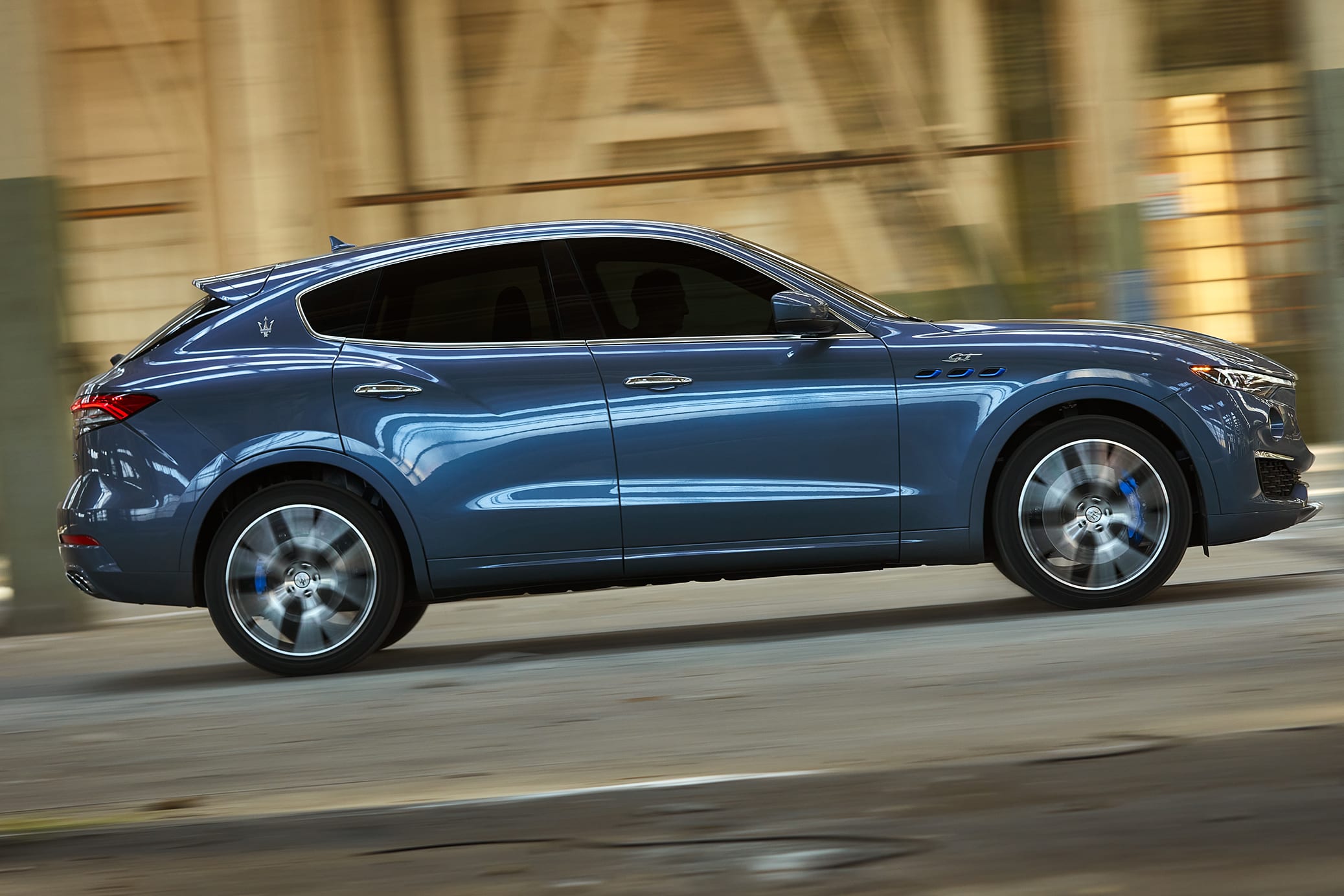
Maserati: Up 26 per cent – winner
Best-selling model: Levante SUV (210 sales; up 35 per cent)
Fastest-growing model: Ghibli sedan (72 sales; up 41 per cent)
Italian luxury brand Maserati is almost on par with the market’s 28 per cent year-to-date growth. Its only SUV for now, the Levante, remains its best-selling model.
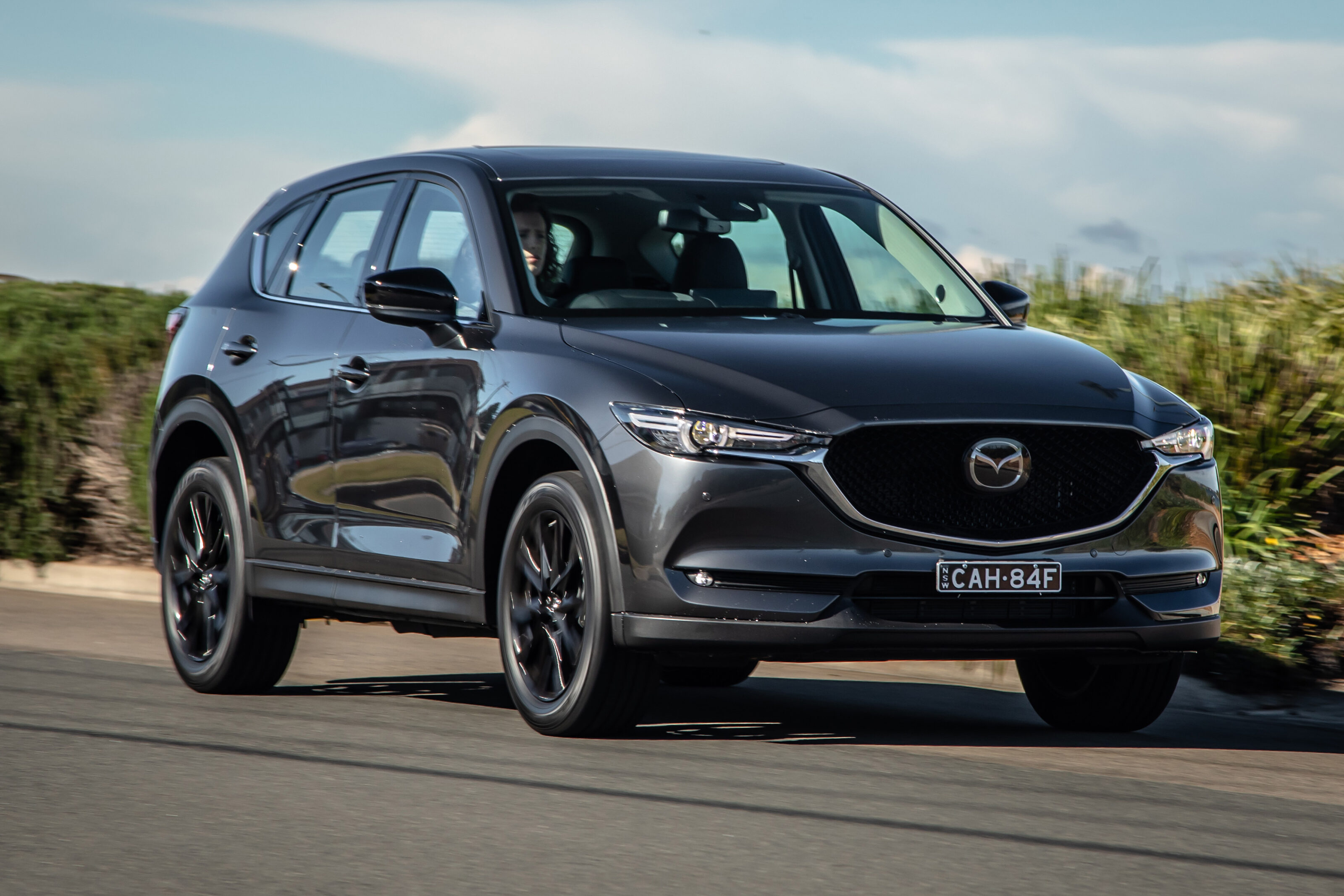
Mazda: Up 56 per cent – big winner
Best-selling model: CX-5 mid-sized SUV (15,290 sales; up 50 per cent)
Fastest-growing model: CX-8 large SUV (3524 sales; up 216 per cent)
Perhaps the most impressive aspect of Mazda’s 2021 so far is that not a single model has gone backwards in sales. While the 4×2 variant of the BT50 is down 16 per cent, huge growth for the 4×4 version (up 90 per cent) ensures the ute’s overall sales are up 60 per cent.
Mazda’s SUVs are all rushing out of showrooms in bigger numbers compared with January-June 2020, including the 2021 Wheels Car of the Year (COTY) – the Mazda CX-30 – which has doubled sales. The midsized CX-5 is up 50 per cent and currently the country’s second most popular SUV behind the Toyota RAV4. There’s even good news for the brand’s sole sports car: the MX-5 is up to 444 sales, a 140 per cent increase.
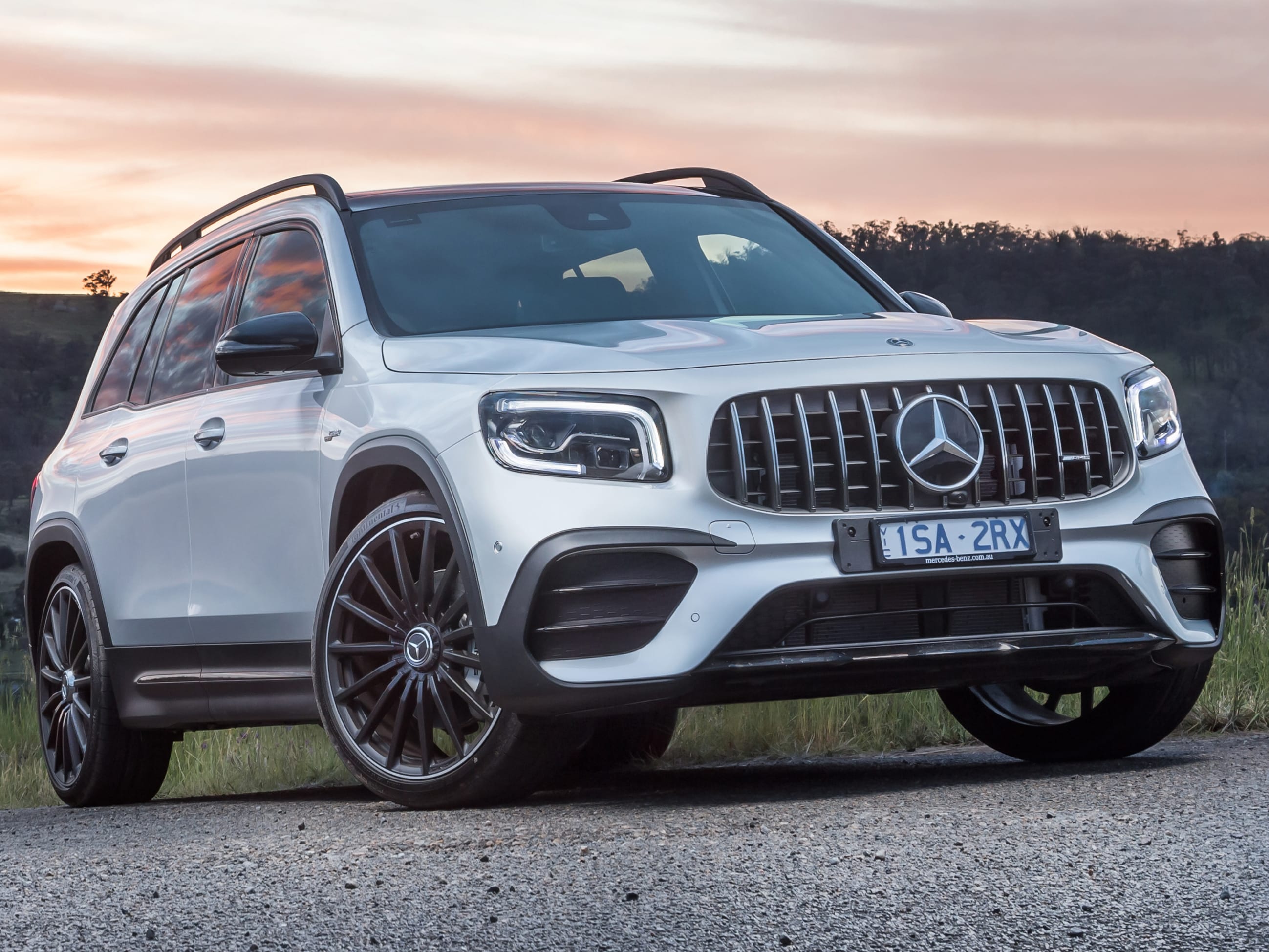
Mercedes-Benz: Up four per cent – small winner
Best-selling model: C-Class mid-sized car (2314 sales; up 58 per cent)
Fastest-growing model: GLB SUV (2006 sales; up 842 per cent)
Mercedes-Benz passenger cars and SUVs are up 12 per cent year to date, though the figure shrinks to four per cent when the German brand’s commercial vehicles are included. (They are separated in VFACTS statistics.) The 30 per cent decline for Mercedes’s Vans division can be attributed to a simple factor: the axing of the X-Class ute.
With such a vast range, it’s no surprise there’s a mixture of ups and downs when it comes to sales. The A-Class is the most notable negative, with sales down by a third – with buyers seemingly moving into the SUV that’s based on the luxury hatch: GLA sales are up by nearly a third.
The GLB seven-seater SUV that’s also related to the A-Class is the stand-out performer with a staggering 842 per cent increase, which has taken it to more than 2000 units so far for the year. The electric EQC SUV is also doing well – up 123 per cent to 127 units – while the C-Class remains the brand’s best-selling model and up 58 per cent despite the looming arrival of a next-generation model.
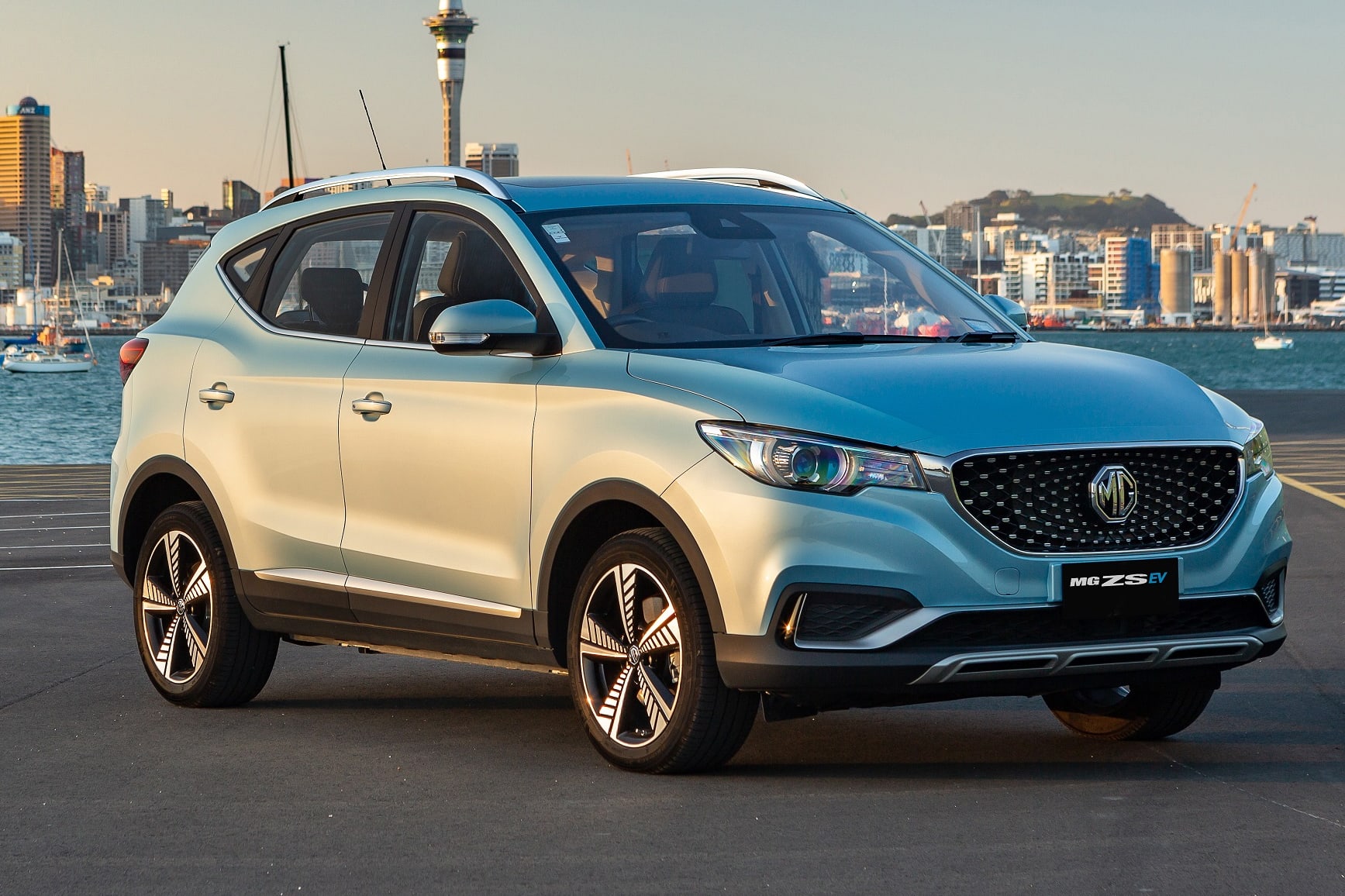
MG: Up 240 per cent – big winner
Best-selling and fastest-growing model: ZS compact SUV (9093 sales; up 434 per cent)
The relatively recent surge of Chinese-brand sales is no better represented than by MG, the former British sports car marque. With 240 per cent year-to-date growth, MG has sold nearly 20,000 vehicles so far in 2021 – with just three models. That’s a figure which puts it in close company with Subaru and Volkswagen.
The ZS compact SUV is both the best-seller and fastest-growing MG, though the HS midsized SUV is up 209 per cent and the MG3 city car is up 140 per cent. MG is now starting to appear in monthly top 10 brands charts. Continue to watch this space.
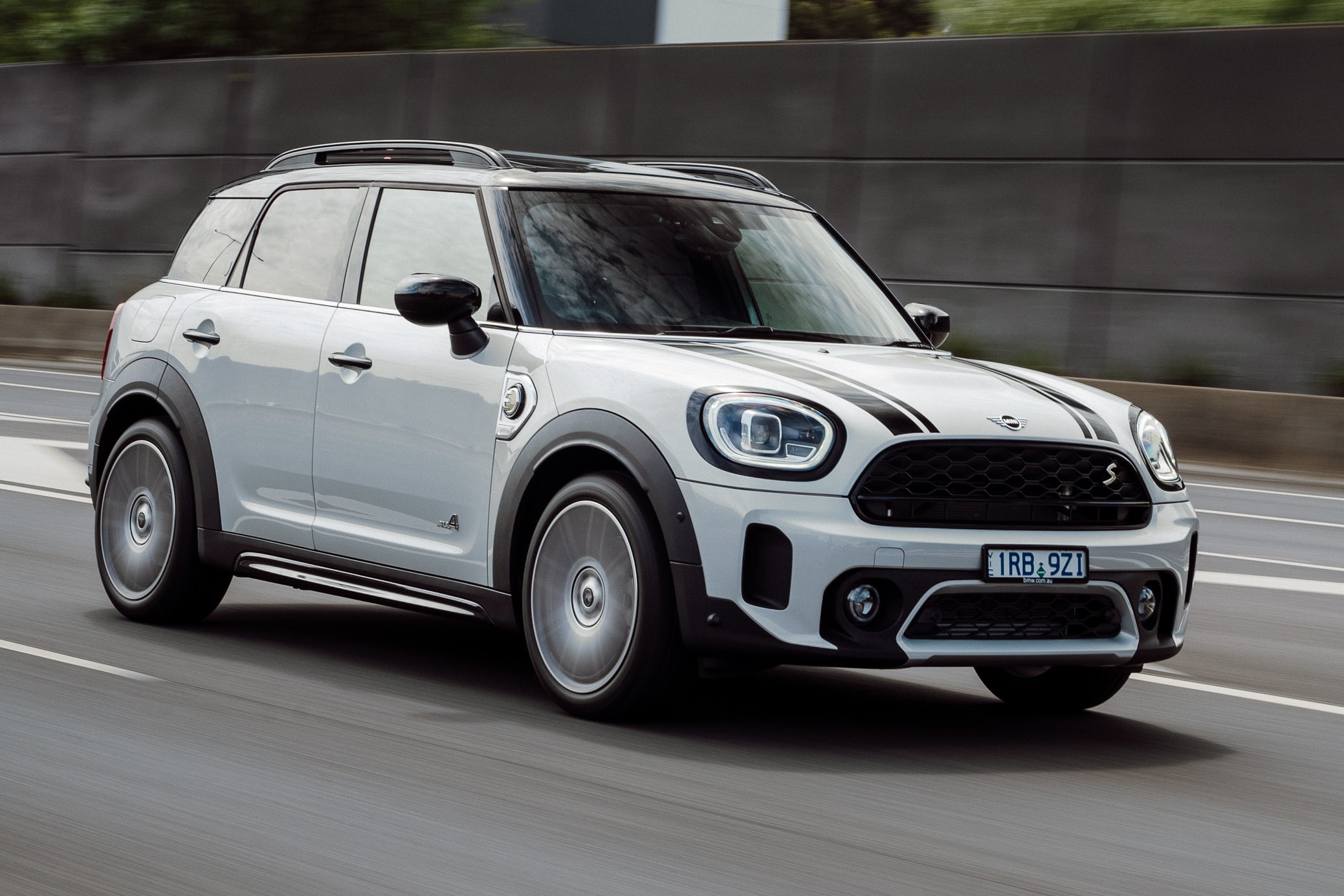
Mini: Up 35 per cent – winner
Best-selling model: Hatch (1010 sales; up 37 per cent)
Fastest-growing model: Countryman SUV (761 sales; up 50 per cent)
A solid year so far for the BMW-owned British premium small-car brand, with all four of its models posting growth – the biggest of which belonging to Mini’s only SUV.

Mitsubishi: Up 30 per cent – winner
Best-selling model: Triton ute (13,176 sales; up 37 per cent)
Fastest-growing model: Express van (549 sales; up 266 per cent)
Mitsubishi experienced a disappointing June (down 24 per cent), though the Japanese brand has otherwise been a regular fixture among the top 10 brands this year. And for the first half of the year, it’s tracking just above the growth of the overall market. The Triton ute is up 37 per cent and remains untouchable as the most popular Mitsubishi.
The ASX compact SUV continues to defy its age as the second-best-selling model, with 7275 sales (up seven per cent). The Express van is also defying its disappointing crash-safety rating to be the company’s fastest-growing model. Every model in the line-up sits in the growth column, including the Eclipse Cross compact SUV (up 68 per cent), Mirage city car (up 79 per cent), and the Pajero off-roader which has doubled sales year to date.
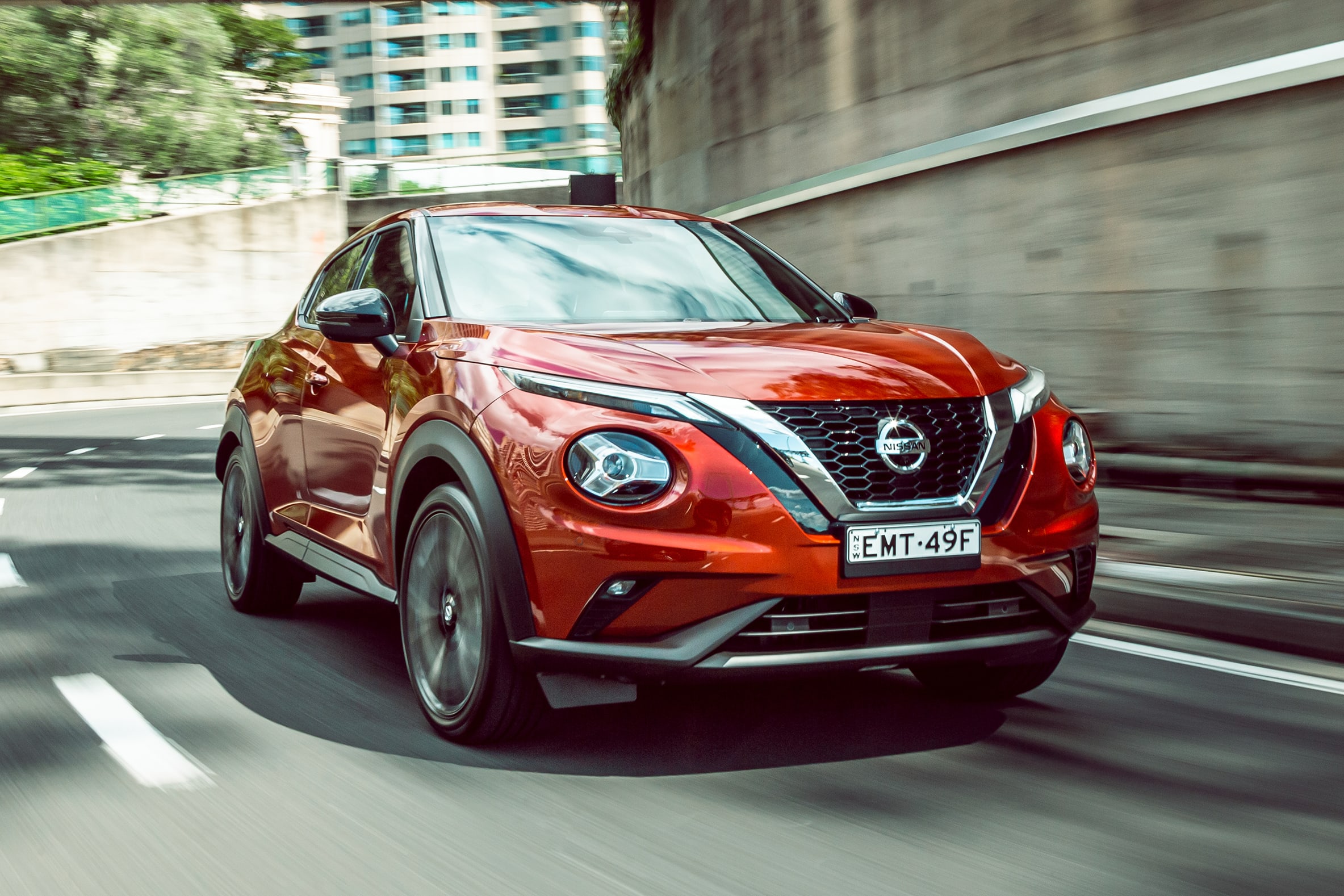
Nissan: Up 28 per cent – winner
Best-selling model: X-Trail mid-sized SUV (8742 sales; up 28 per cent)
Fastest-growing model: Juke compact SUV (1307 sales; up 429 per cent)
Nissan slipped to ninth place in the manufacturer rankings in June but otherwise 2021 is progress – matching the 28 per cent overall market growth. Even the company’s two sports cars have increased sales – 370Z up 15 per cent; GTR up 55 per cent – though numbers are insignificant of course next to Nissan’s ute and SUV range.
X-Trail sits atop the brand’s sales ladder and is increasing sales (up 28 per cent) ahead of a fourth-generation version coming in 2022. Nissan’s smallest SUV and freshest model, the Juke, is the biggest mover – up an astonishing 429 per cent.
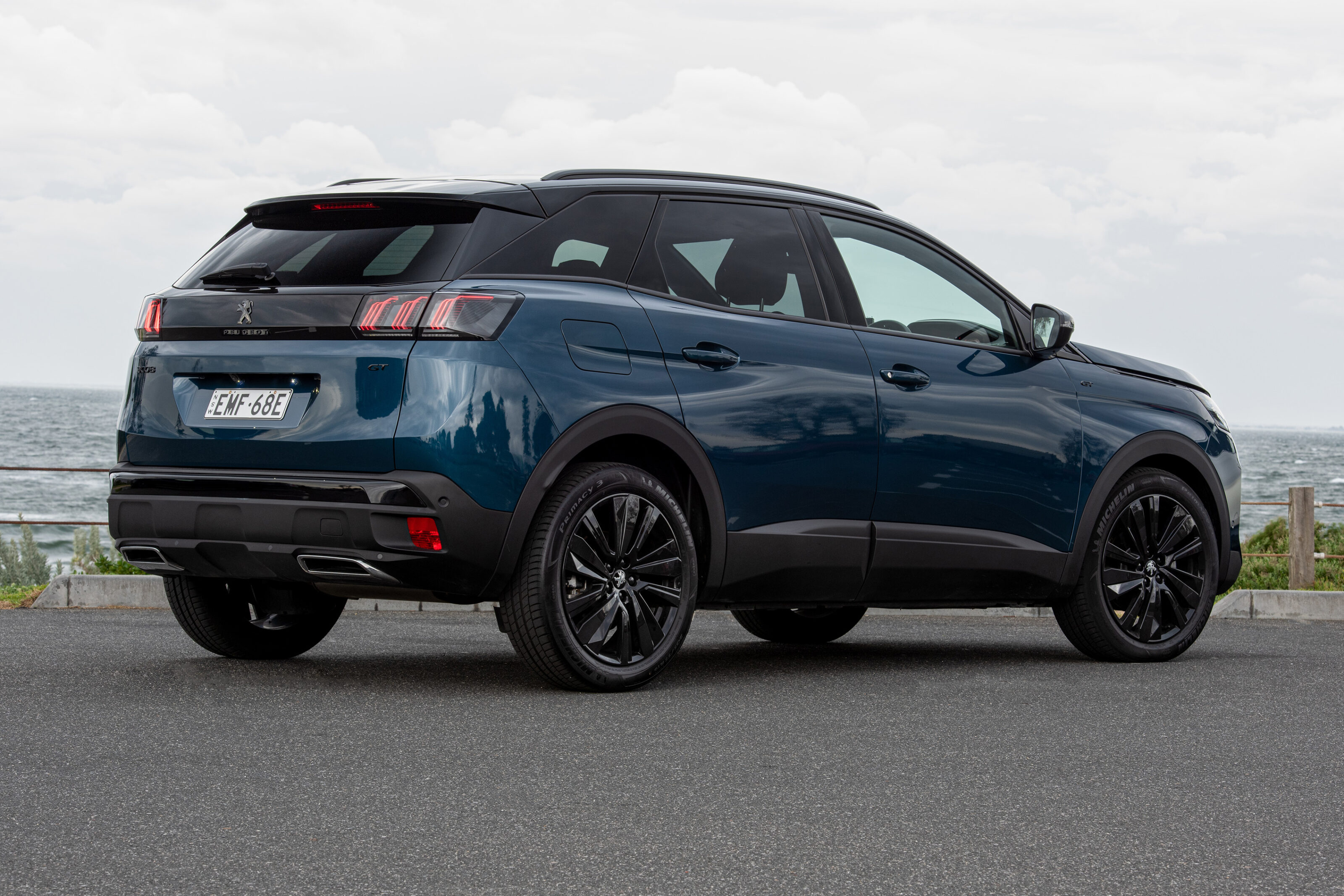
Peugeot: Up 17 per cent – small winner
Best-selling model: 3008 mid-sized SUV (355 sales; down 17 per cent)
Fastest-growing model: 2008 compact SUV (272 sales; up 319 per cent)
The second-generation 2008 compact SUV, introduced in the second half of 2020, has been the biggest contributor to Peugeot’s local sales – with a mighty 319 per cent growth mostly responsible for the overall increase of 17 per cent. Peugeot’s Expert and Partner vans have also chipped in – up 60 and 111 per cent, respectively. Despite updated versions introduced for 2021, though, the 3008 mid-sized SUV and 508 sedan have both lost sales compared with this time last year.
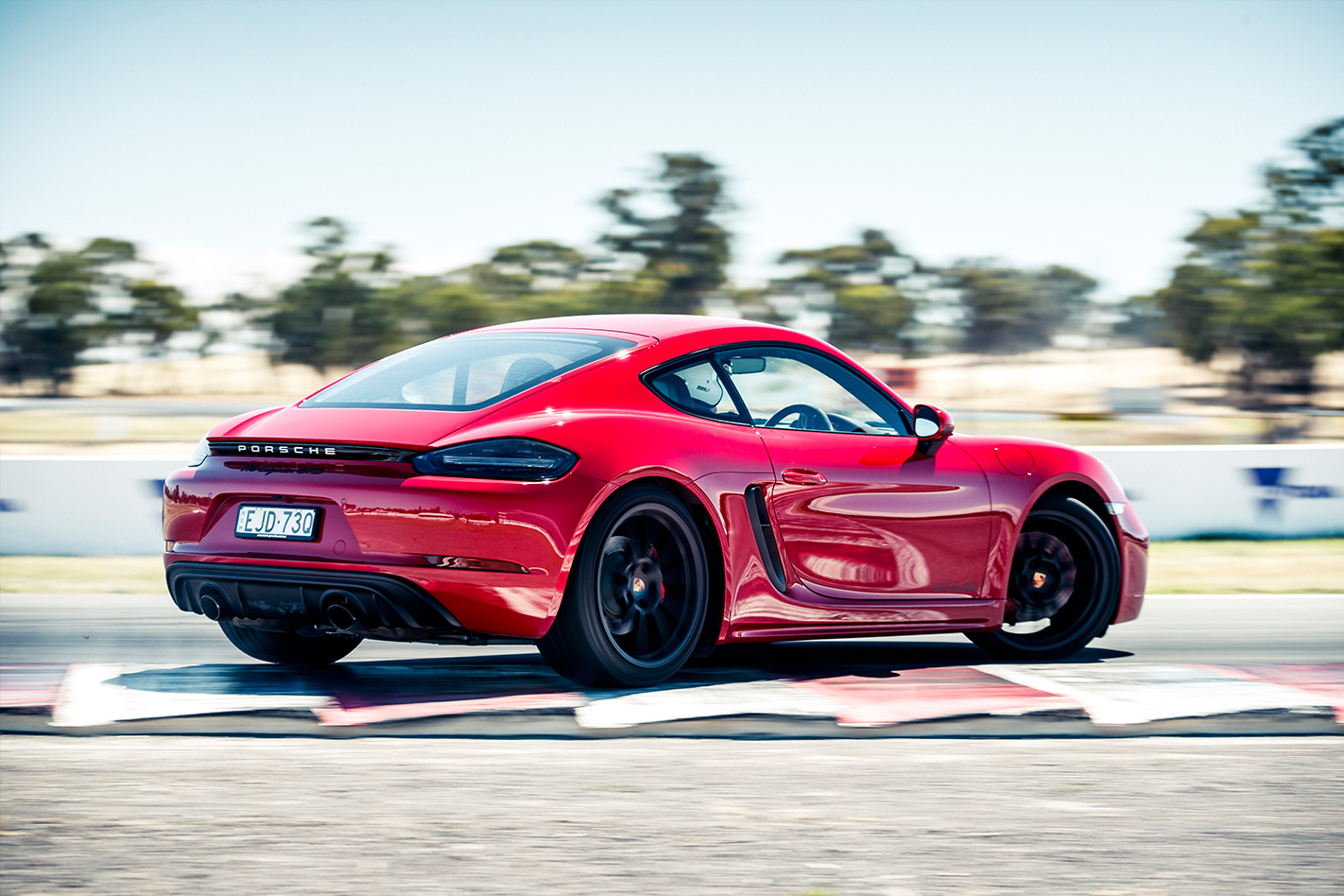
Porsche: Up 21 per cent – small winner
Best-selling model: Macan midsized SUV (1422 sales; up 19 per cent)
Fastest-growing model: Taycan electric sedan (369 sales; not sold this time last year)
Porsche’s first ever fully electric model has made a great start – establishing itself as the German brand’s second most popular model after the runaway Macan SUV. The Panamera large car has enjoyed triple-digit growth (up 109 per cent), the Boxster convertible has closed the sales gap to its coupe twin, the Cayman, with 44 per cent growth, and the iconic 911 is up slightly (by six per cent).
The Macan currently accounts for more than half of Porsche’s sales in Australia. It’s not good news for its other, larger SUV: Cayenne sales are down by more than 40 per cent.
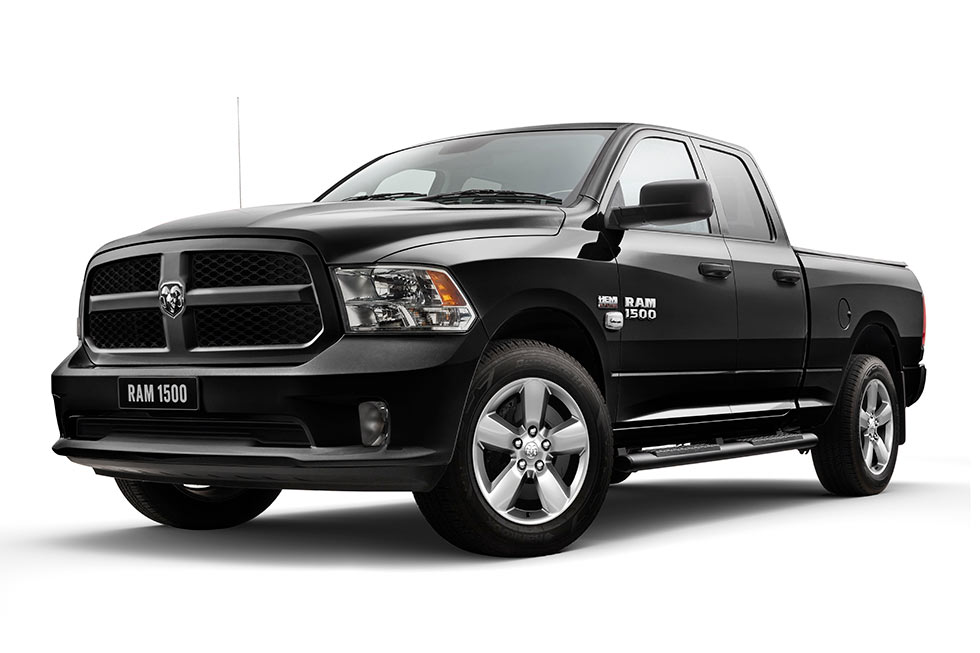
RAM Trucks: Up nine per cent – small winner
Best-selling and fastest-growing model: RAM 1500 (1885 sales; up 10 per cent)
The Ateco and Walkinshaw partnership established in 2015 to distribute (former) and build (latter) continues to be a success story in 2021, even if growth isn’t quite as dramatic as it was in 2019.
Renault: Up 33 per cent – winner
Best-selling model: Trafic van (1210 sales; up 54 per cent)
Fastest-growing model: Captur compact SUV (240 sales; not sold in 2020)
More good news for Ateco, which acquired the distribution rights for Renault earlier this year. The French brand has been struggling in recent years despite its official, factory-backed presence in Australia, but year-to-date sales are up by a third (33 per cent). While showroom traffic has been boosted by the arrival of a second-generation Captur compact SUV, Renault’s van range is doing most of the hard yards.
The Kangoo is up 62 per cent, Master is up 12 per cent, and the best-selling Renault locally, the Trafic, is up 54 per cent. One disappointment is the Megane RS, which is down nearly 60 per cent despite most of its hot-hatch rivals selling well this year.
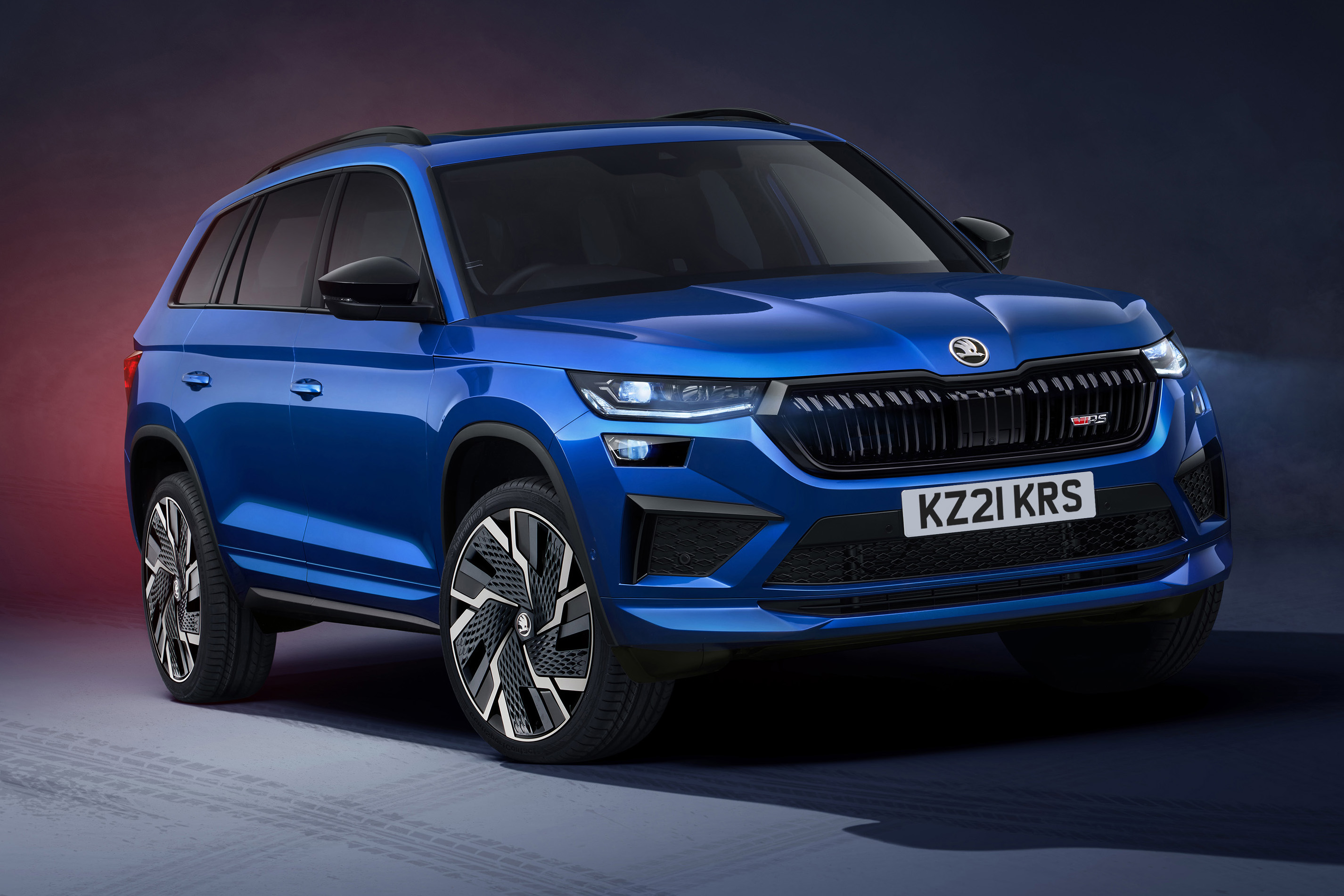
Skoda: Up 105 per cent – big winner
Best-selling model: Kodiaq large SUV (1232 sales; up 41 per cent)
Fastest-growing model: Superb large car (372 sales; up 318 per cent)
Skoda is the fastest-growing VW Group brand in Australia right now, with impressive triple-digit growth. Sales have been boosted by the arrival of two (related) all-new cars – the Scala hatchback and the Kamiq compact SUV – while a new-generation Octavia is also fresh and looking to re-establish itself as Skoda’s best-selling model.
That title currently belongs to the Kodiaq large SUV. The Superb large car, which was given an expanded range in late 2020, is enjoying sales growth of nearly 320 per cent. Even the Fabia city car – due to be replaced by a next-generation version in early 2022 – is up 33 per cent.
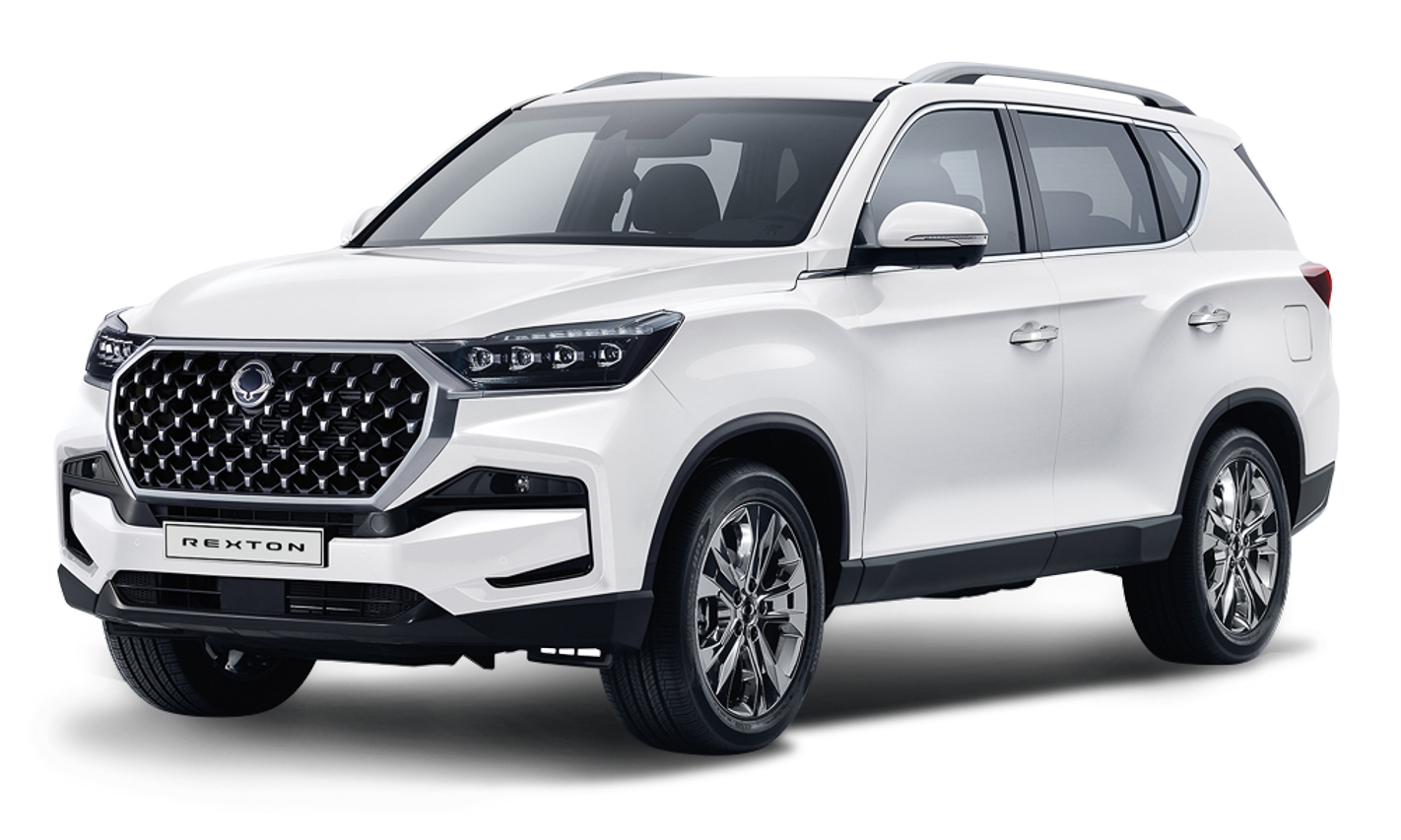
Ssangyong: Up 117 per cent – big winner
Best-selling model: Musso ute (916 sales; up 142 per cent)
Fastest-growing model: Rexton large SUV (304 sales; up 182 per cent)
SsangYong can claim to have the biggest growth of any Korean car maker in Australia at halftime in 2021. Sales are up 117 per cent to 1421 units – stemming from just three models. The Musso ute is the most popular vehicle by a huge margin, though its 142 per cent year-to-date increase is surpassed by both the Korando mid-sized SUV (up 154 per cent) and Rexton large SUV (up 182 per cent).
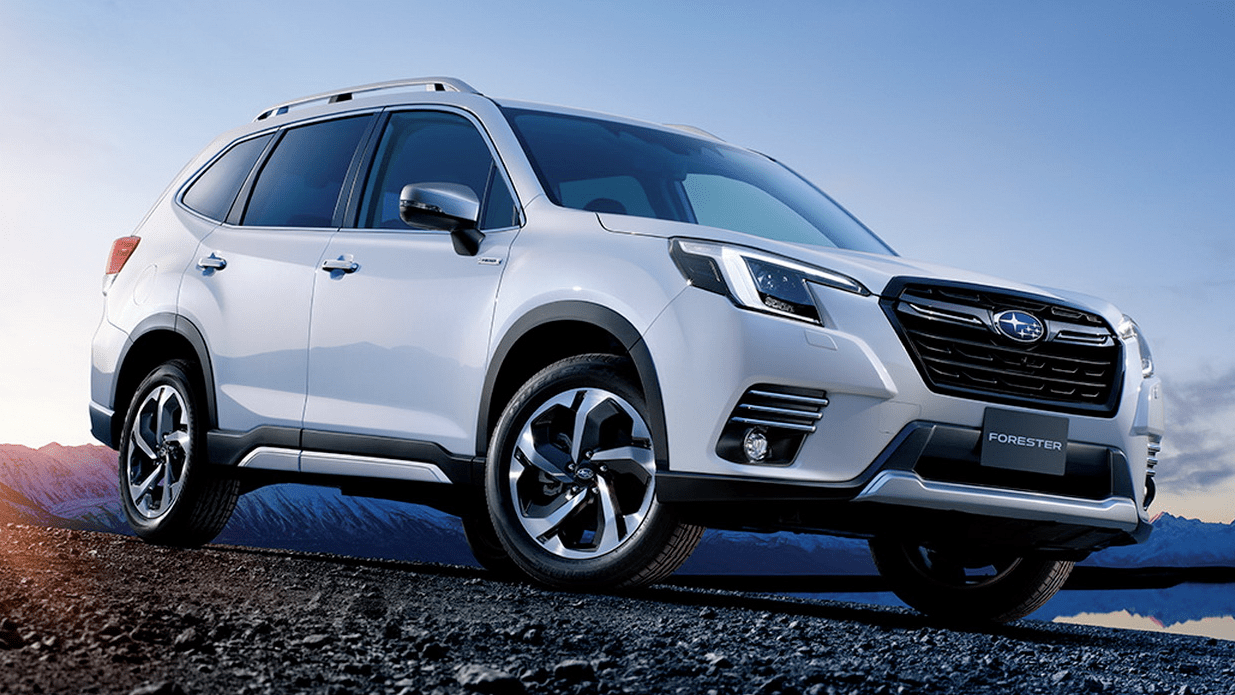
Subaru: Up 34 per cent – winner
Best-selling model: Forester mid-sized SUV (7086 sales; up 23 per cent)
Fastest-growing model: Outback wagon (4820 sales; up 110 per cent)
Subaru has been in and out of the top 10 brands list during the first six months of 2021 but there’s no doubt the Japanese marque is savouring a strong year so far, passing 20,000 units. The Forester maintains its enduring popularity in Australia, as does another model.
The sixth generation of the Outback high-riding wagon was released earlier this year and sales are up 110 per cent. Even older models are performing reasonably well, with the Impreza small car and its related XV small SUV both up – 27 and 20 per cent, respectively. Even the sportier WRX is up 61 per cent, ahead of a next-generation version being unveiled this year. The Liberty sedan is down 39 per cent, but that’s to be expected for a car which has – sadly – been discontinued.
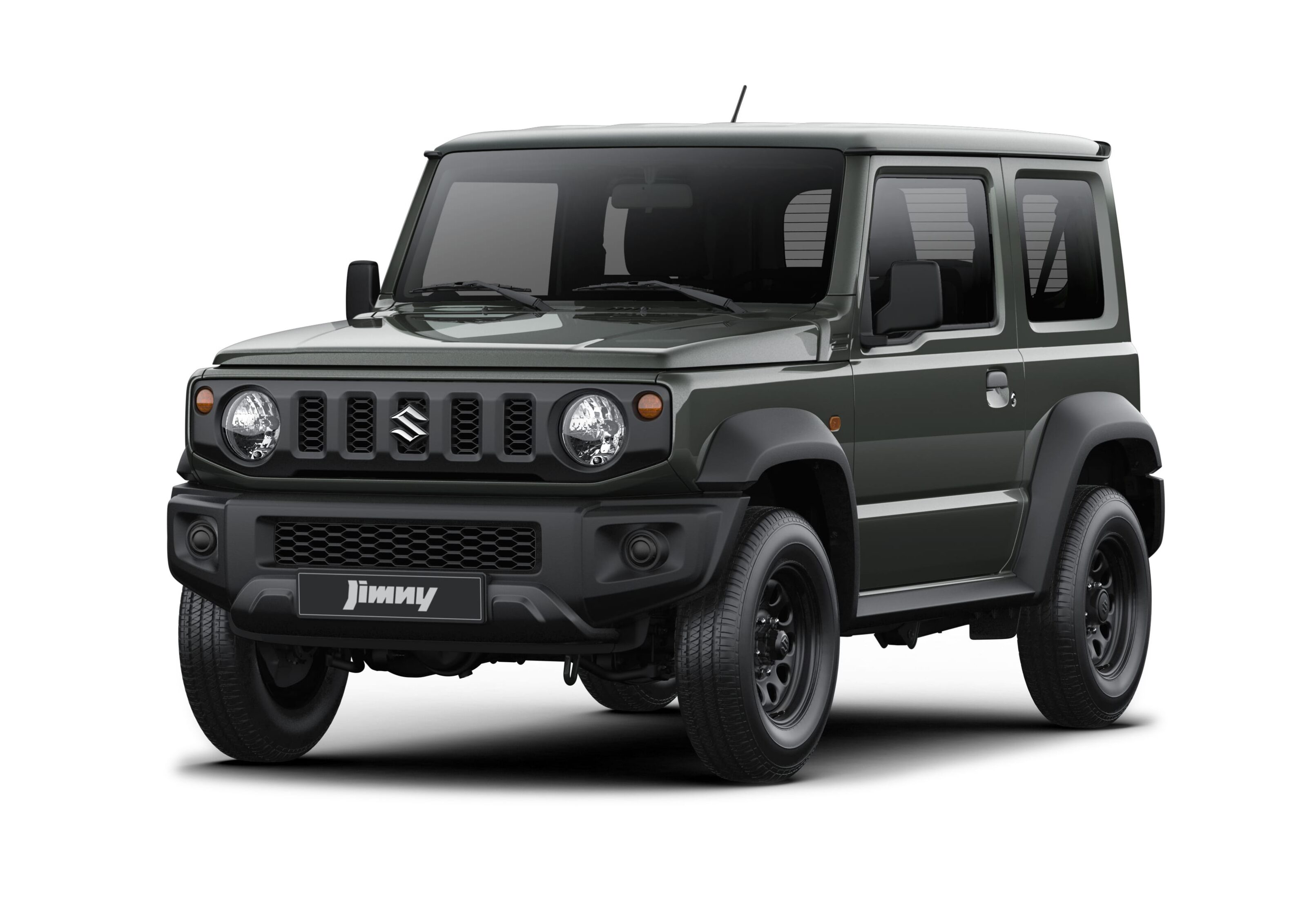
Suzuki: Up 30 per cent – winner
Best-selling model: Swift city car (2688 sales; up 16 per cent)
Fastest-growing model: Ignis (902 sales; up 421 per cent)
Good work from Japan’s famous small-vehicle specialist, which is just above the overall market’s 28 per cent year-to-date growth. The perennially popular Swift occupies its common spot at the top of the Suzuki model pile, though its 16 per cent growth pales in comparison to the Ignis baby SUV (up 421 per cent) and Jimny baby off-roader (up 126 per cent). The S-Cross and Vitara SUVs blot the copybook slightly – down 15 and five per cent, respectively.
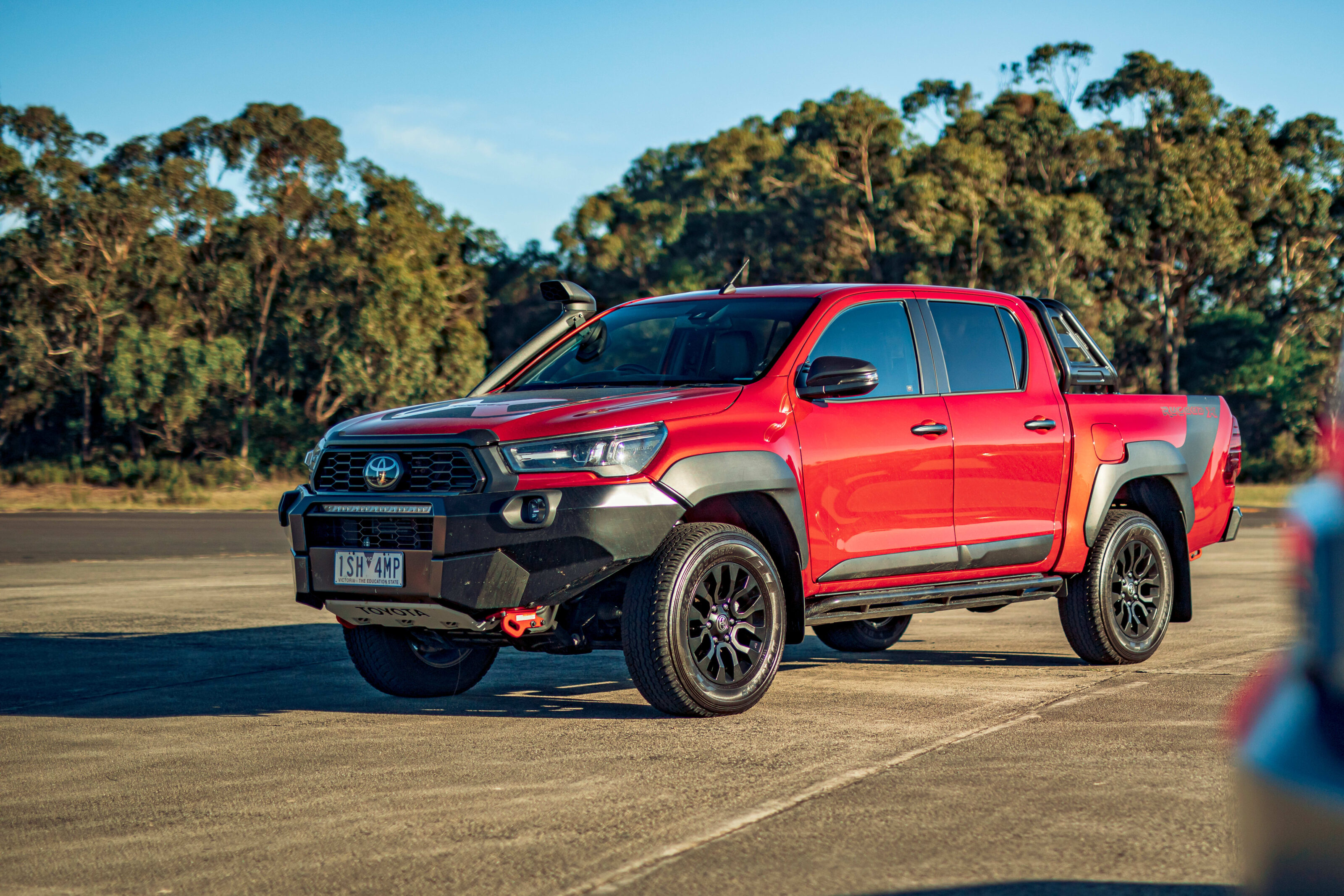
Toyota: Up 22 per cent – small winner
Best-selling model: HiLux ute (28,076 sales; up 26 per cent)
Fastest-growing model: LandCruiser 200 SUV (11,621 sales; up 69 per cent)
The Big T is once again on course to smash through the 200,000-units barrier in a calendar year, with 22 per cent year-to-date growth adding more than 20,000 vehicles to the sales achieved this time last year.
Although the HiLux remains a sales behemoth and looks set to continue as the country’s most popular vehicle, its year-to-date growth is eclipsed by several models – notably the outgoing LandCruiser 200 Series is up 69 per cent thanks to demand for the last ever V8 diesel models before the new twin-turbo V6 diesel 300 Series arrives later this year.
The HiAce van is up 52 per cent, the HiLux-based Fortuner SUV is up 44 per cent, the Supra sports car is up 40 per cent, and the RAV4 mid-sized SUV has increased sales by 31 per cent. Other models are less fortunate. Higher pricing has hurt the latest-generation Yaris city car, which is down six per cent, the Prius hybrid continues to lose buyers (down 38 per cent to just 34 units), and the Kluger seven-seater SUV has fallen by 46 per cent (though a new-generation version was only released in June and should improve sales).
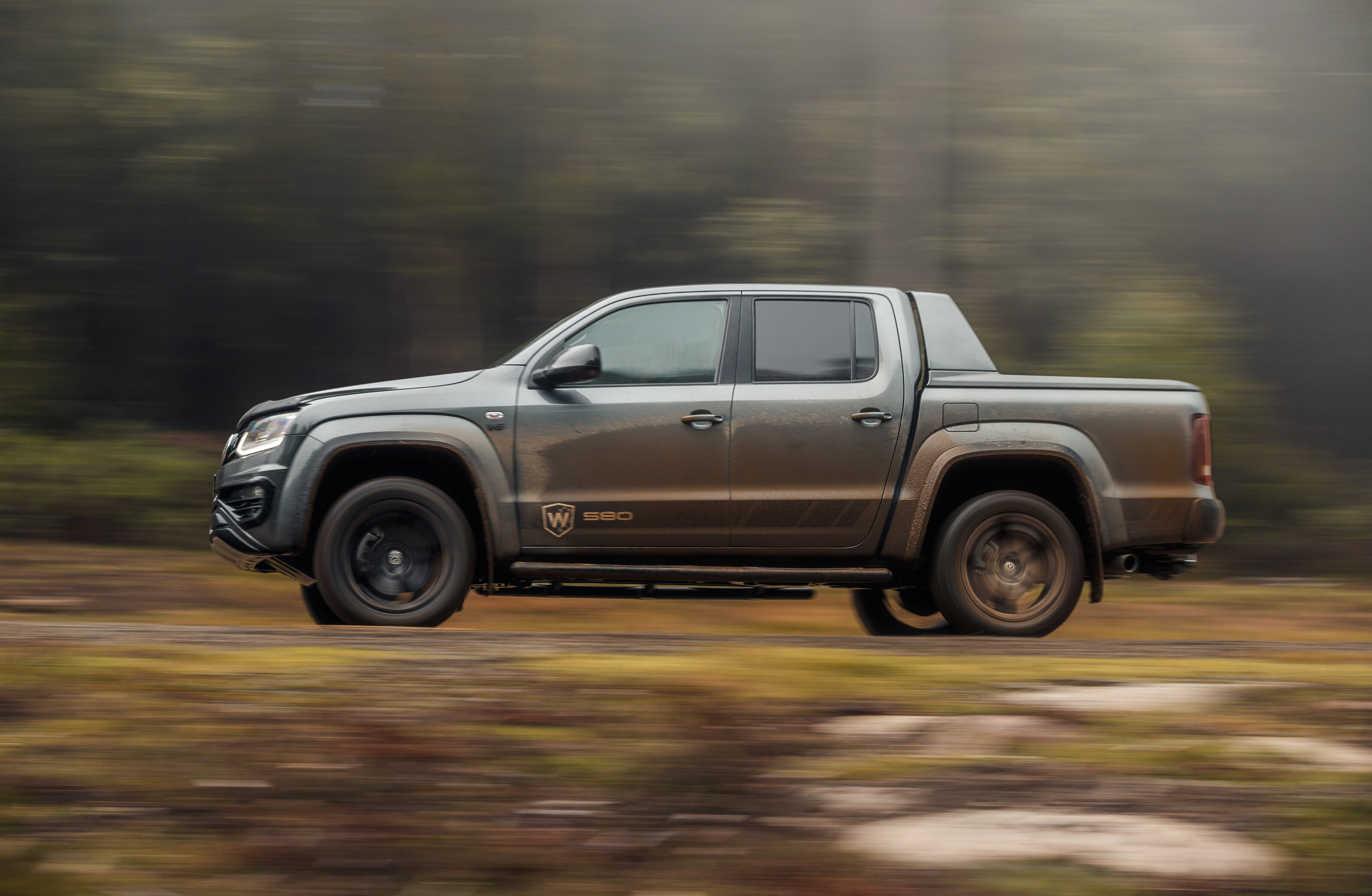
Volkswagen: Up seven per cent – small winner
Best-selling model: Amarok ute (3924 sales; up 11 per cent)
Fastest-growing (volume) model: T-Cross compact SUV (3563 sales; up 389 per cent)
VW’s year-to-date sales have been hurt by stock shortages caused by the German brand transitioning from the outgoing Mk7.5 Golf to the Covid-delayed Mk8. The 585 units shifted in the first half of 2021 is about 10 per cent of the Golfs sold in the same six-month period last year (5901 units). Take Golf (and its Alltrack variant) out of the equation for 2021 and 2020 and the picture shifts dramatically – sales would be up 51 per cent, or by 6828 units.
This is due to significant growth for VW’s SUVs and T6.1 commercial/people-mover range. The T-Cross small SUV is up a massive 389 per cent, making it the fastest-growing volume model (the Caravelle is up 783 per cent but based on just 53 units). It could replace the Amarok ute (up only 11 per cent) as VW’s best-selling model before the year is out.
The still-fresh, Golf-based T-Roc is going strongly (2342 units), and the Touareg large SUV is up 45 per cent (with V8 variants sold out and prompting a call for the hybrid R model as a new flagship). While the Tiguan Allspace is up 53 per cent, the evidence is clear that the longer, seven-seater SUV has stolen sales from the regular, five-seater Tiguan that is down 54 per cent. The Transporter van is up 129 per cent and the related Multivan multi-seater is up 202 per cent.
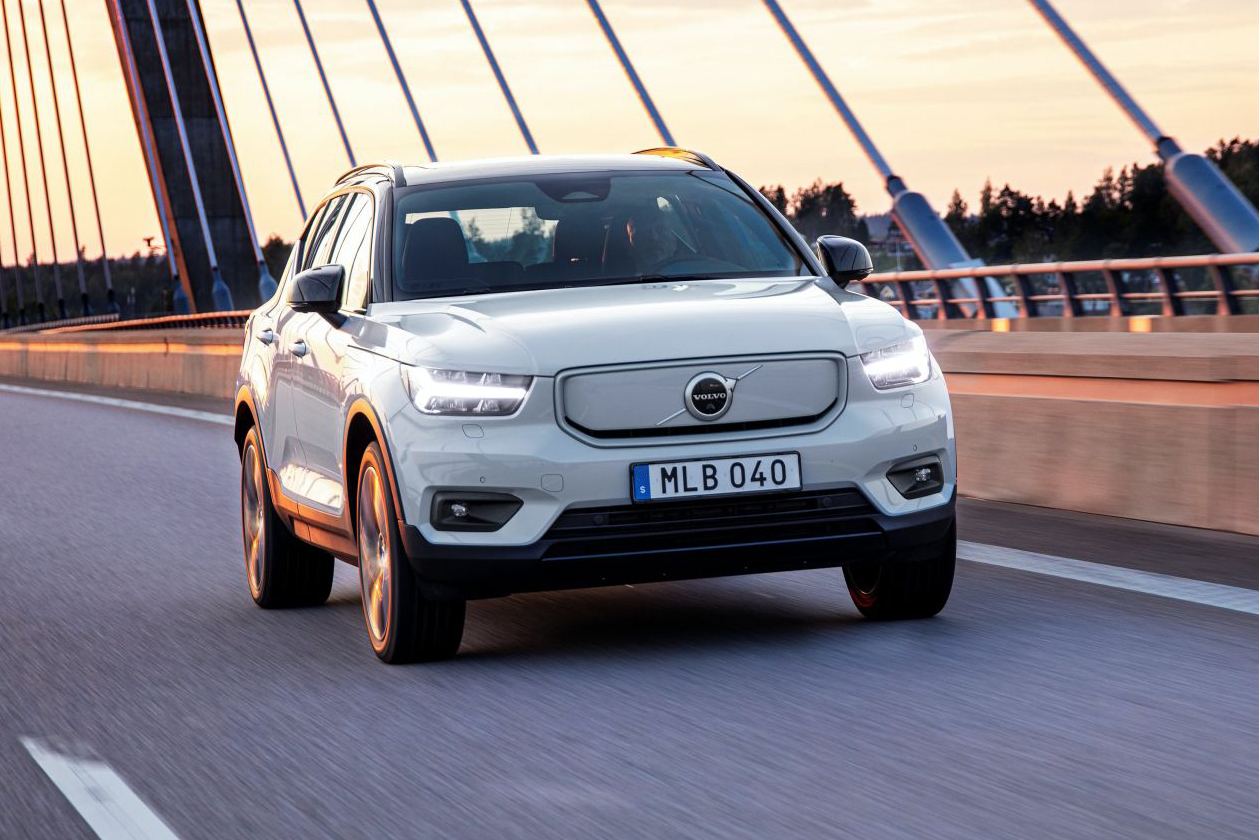
Volvo: Up 61 per cent – big winner
Best-selling model: XC40 compact SUV (2346 sales; up 63 per cent)
Fastest-growing model: XC90 large SUV (836 sales; up 92 per cent)
Swedish brand Volvo is on an impressive sales run worldwide – and locally it is set to pass 10,000 sales for the first time. With a four-figure sales result in June, Volvo is now at 5439 units for 2021 at halfway. To put this into perspective, Volvo Car Australia hasn’t previously sold more than 8000 vehicles in a year.
The XC40 compact SUV has been a huge success since its 2018 debut and is the leading Volvo with 2346 sales. There’s some extra growth for the company’s larger SUVs, with the mid-sized XC60 up 70 per cent to 2167 units and the seven-seater XC90 up 92 per cent to 836 units. Volvo passenger cars aren’t as successful. Sales of the S60 sedan have dropped 17 per cent and the related V60 wagon is down 84 per cent, though the latter is due to be replaced by the high-riding V60 Cross Country variant.
The first roll-out of over-the-air updates for Volkswagen’s ID. range of electric vehicles is set to come shortly, with the EV line-up becoming the first outside of Tesla’s own range to utilise the update technology.
Currently on sale in Europe, the ID.3, ID.4 and ID.4 GTX will all benefit from the ID.Software2.3 update – coming to the ID.3 first later this month.
Volkswagen says the updates include enhanced ID. light functionalities, optimised surroundings recognition and dynamic main beam control, improved operability and design modifications for the infotainment system, plus general performance and stability improvements.
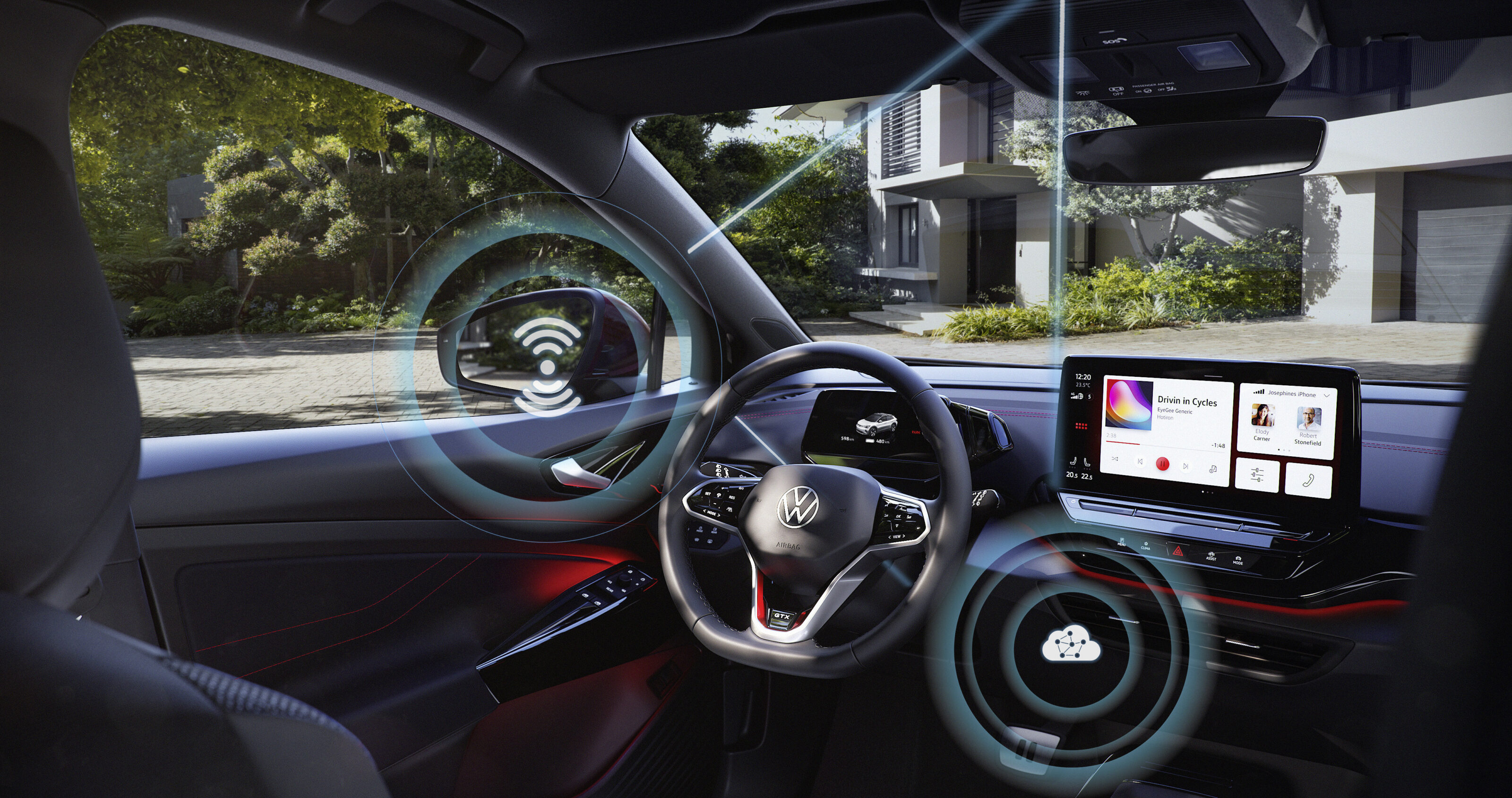
Aiming to provide updates to the ID. range every twelve weeks, VW Passenger Cars CEO Ralf Brandstätter says the roll-out is an important part of the brand’s strategy moving forward.
“Volkswagen is moving up a gear when it comes to digitalisation,” said Brandstätter.
“After the successful roll-out of our all-electric ID. family, the brand is once again leading the movement: we are creating a totally new, digital customer experience with new functions and greater comfort – every twelve weeks.
“This makes us the first high-volume manufacturer to regularly deliver extensive over-the-air updates. This is an important milestone in the implementation of our Accelerate strategy, which is preparing Volkswagen for the connected, digital mobility of the future.”
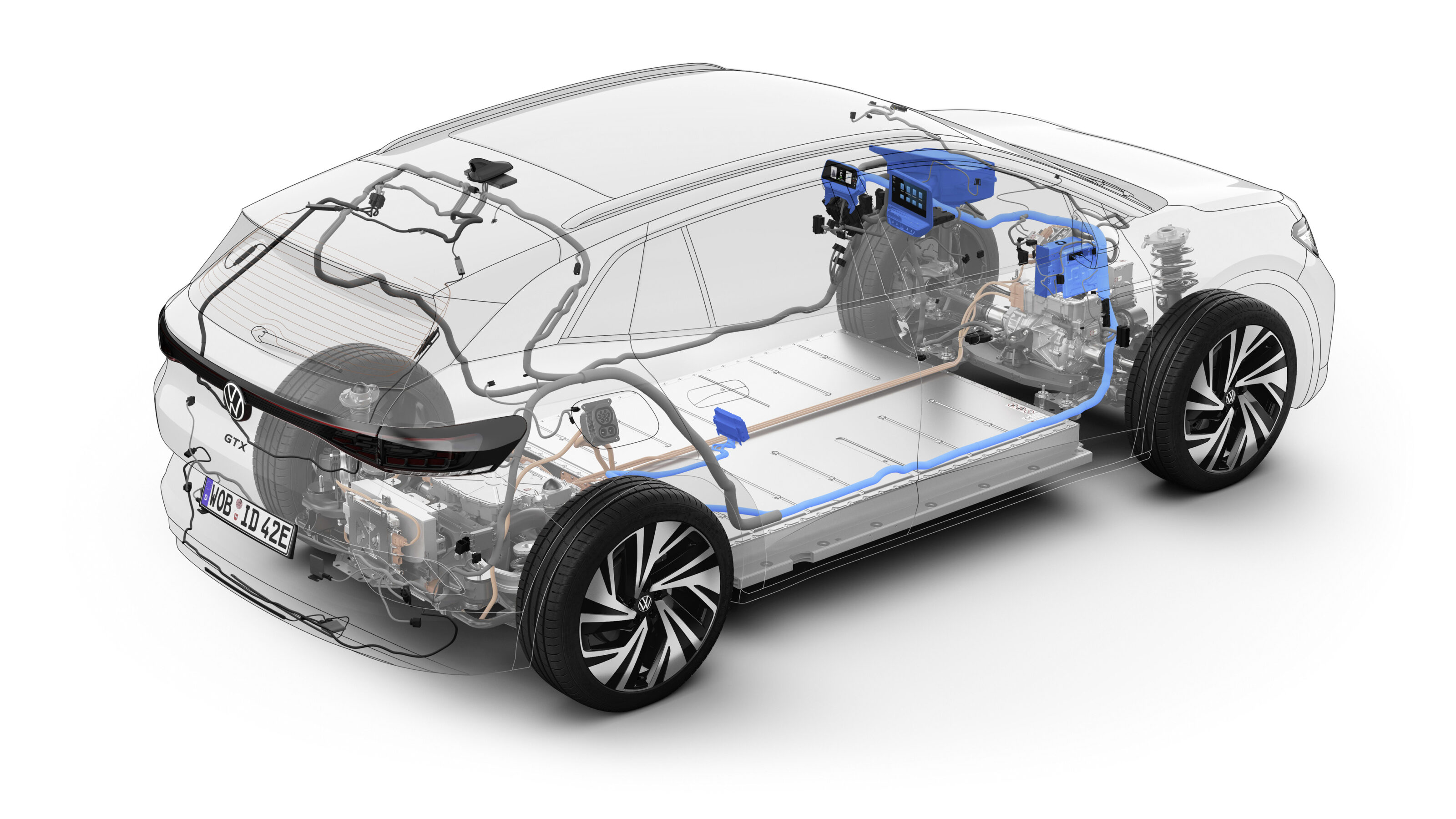
Thomas Ulbrich, a member of VW’s board of management for development, believes over-the-air updates benefit both the manufacturer in collecting data and vehicle owners, remaining up to date and holding value.
“We established the agile project unit ID. Digital specifically to enable us to continuously update software in the car,” said Ulbrich.
“As such, we are able to quickly gather customer feedback and react flexibly to customer requirements. This means the ID. models remain constantly up to date after delivery, and customer cars retain their value better.”
Volkswagen hasn’t confirmed when or even if the ID.4 will make it to Australia, with a spokesperson recently telling WhichCar its sister vehicle, the Skoda Enyaq, may not come Down Under due to local government policies surrounding EVs.
Snapshot
- Wagon set to return to Golf R line-up
- 235kW/420Nm four put turbo will carry over from hatch
- Performance Pack systems will allow drift mode
Volkswagen has again given wagon fans something to cheer about with today’s long-roof Golf R reveal, packing the same punch as the soon-to-be-released hatchback but with more space in the back.
Featuring a 2.0-litre turbocharged four-cylinder engine, the Golf R makes 235kW and 420Nm, a 22kW/40Nm increase over the outgoing Mk7.5 wagon with power being delivered through a seven-speed dual-clutch transmission and BorgWarner all-wheel-drive system.
According to Pistonheads, 0-100km/h times are up by 0.2 seconds over the hatchback thanks to the extra weight, still standing at a sub-five second sprint, getting to the 100km/h from a standing start in 4.9 seconds before carrying on to hit its 250km/h speed limiter.
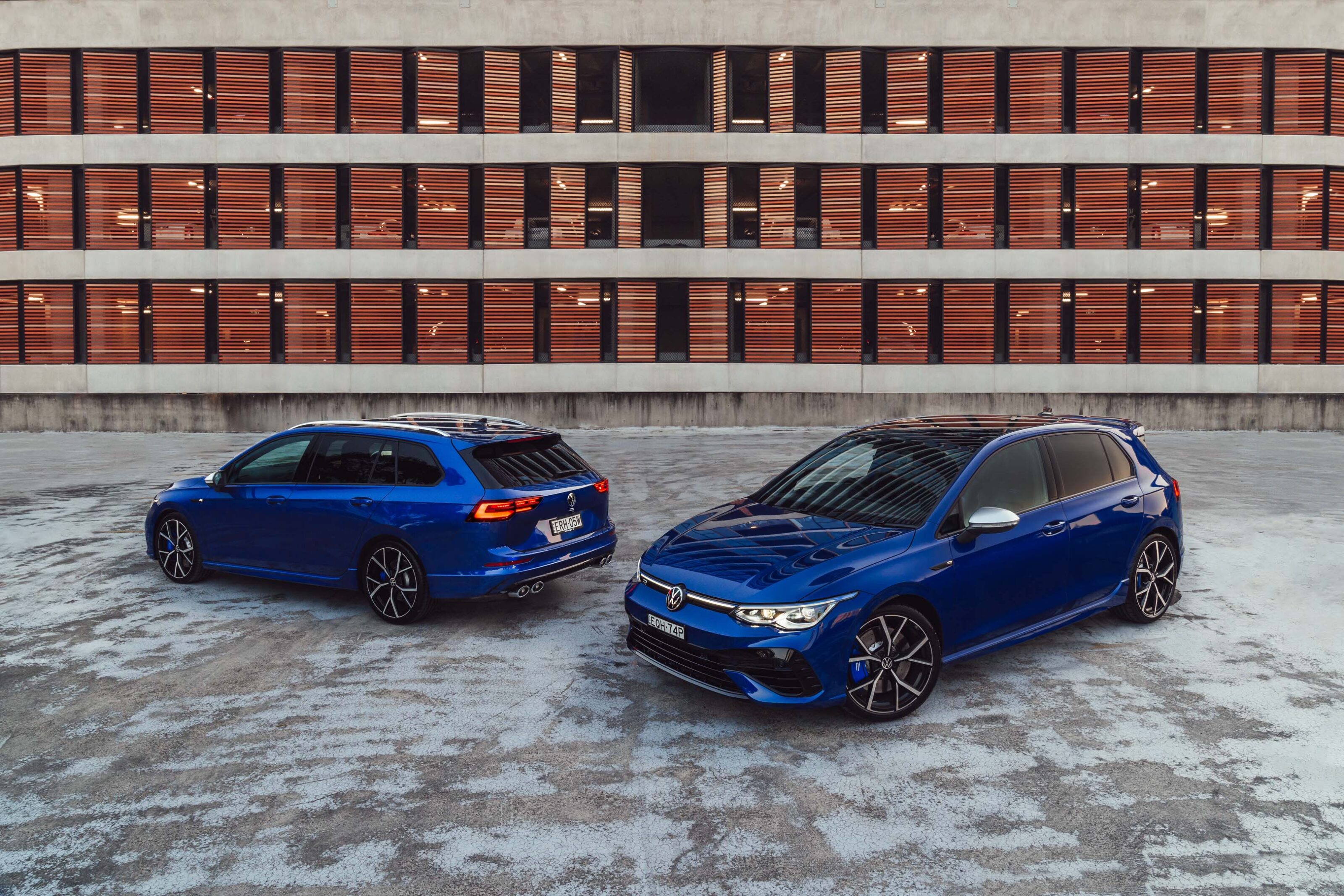
Carrying over from the hatchback, the Performance Pack option on the wagon features the trick Vehicle Dynamics System which sends more power to the rear wheels with torque vectoring on the rear axle, allowing owners to drift the car easier than before.
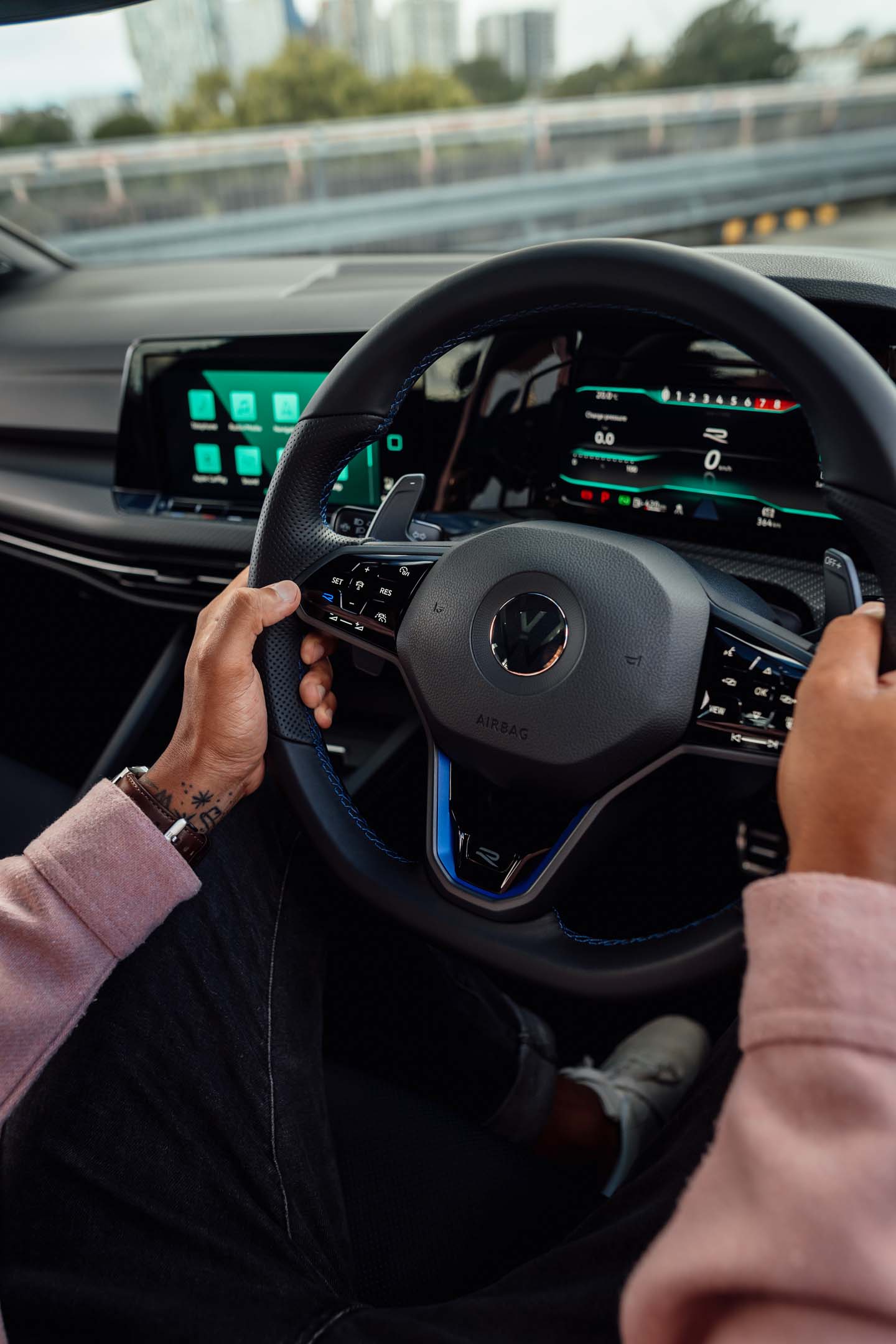
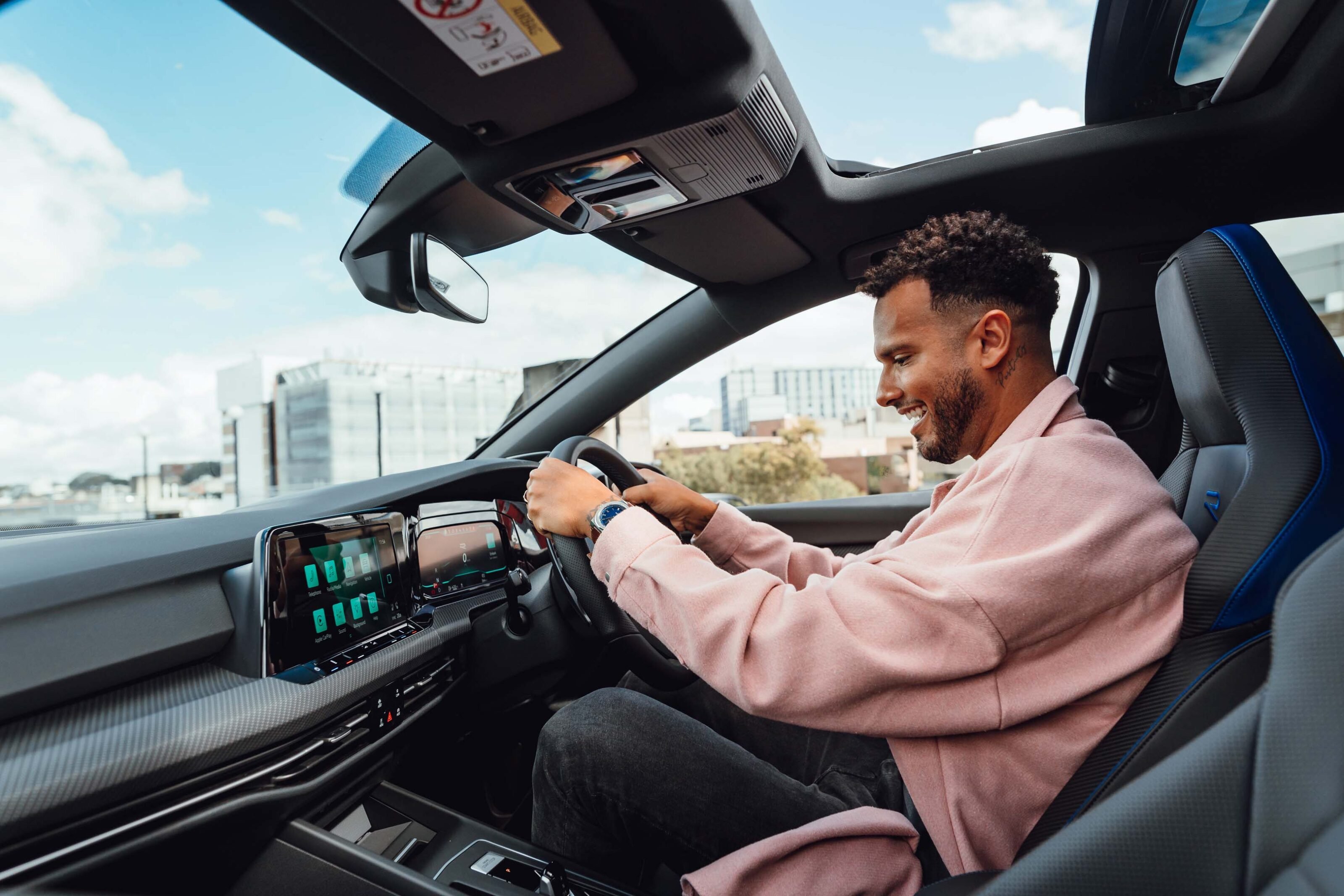
In standard form, the R wagon has 18-inch wheels, a 10-inch infotainment touchscreen, a 10.25-inch digital instrument cluster, suede and fabric R seats, a flat-bottomed steering wheel and blue ambient lighting – the Performance Pack adds 19-inch alloys, a 270km/h speed limiter and specifically tuned driving modes.
Weight is up by 79kg over the hatch to now tip the scales at 1630kg but this comes with the benefit of a significantly larger boot space, with the seats up capacity at 611 litres (up from 374) and 1642 litres when the rear seats are folded down (up from 1230).
The boot now has extra features to make life easier for its owners, adopting a 12-volt socket, luggage nets, eye clips and baggage hooks, similar to its Skoda Octavia cousin.
VW says the Golf R wagon will have a retractable tow bar with a maximum towing capacity of 1900kg braked, an increase of 400kg over the regular Golf range.
There’s been no confirmation on the arrival or pricing of either the Golf R hatch and wagon in Australia but they are expected to land towards the end of 2021 and start of 2022 respectively.
Snapshot
- July 14 unveiling confirmed
- i30 Sedan N will be the first dedicated sedan N model
- Racing version of the road car was released last year
UPDATE, JULY 7: Hyundai has again ramped up hype over its upcoming i30 Sedan N with a second teaser video released this week.
This time the Korean marque has captured the car’s exhaust crackling and burbling against the rev limiter.
A specific time has also been revealed for the unveiling of the new N Performance car, 10.30am on July 14, leaving us just a few more days to wait.
UPDATE, JULY 6: Hyundai has fuelled excitement for its new i30 Sedan N – confirming a reveal date by releasing a short video online, teasing the car’s exhaust sound (above).
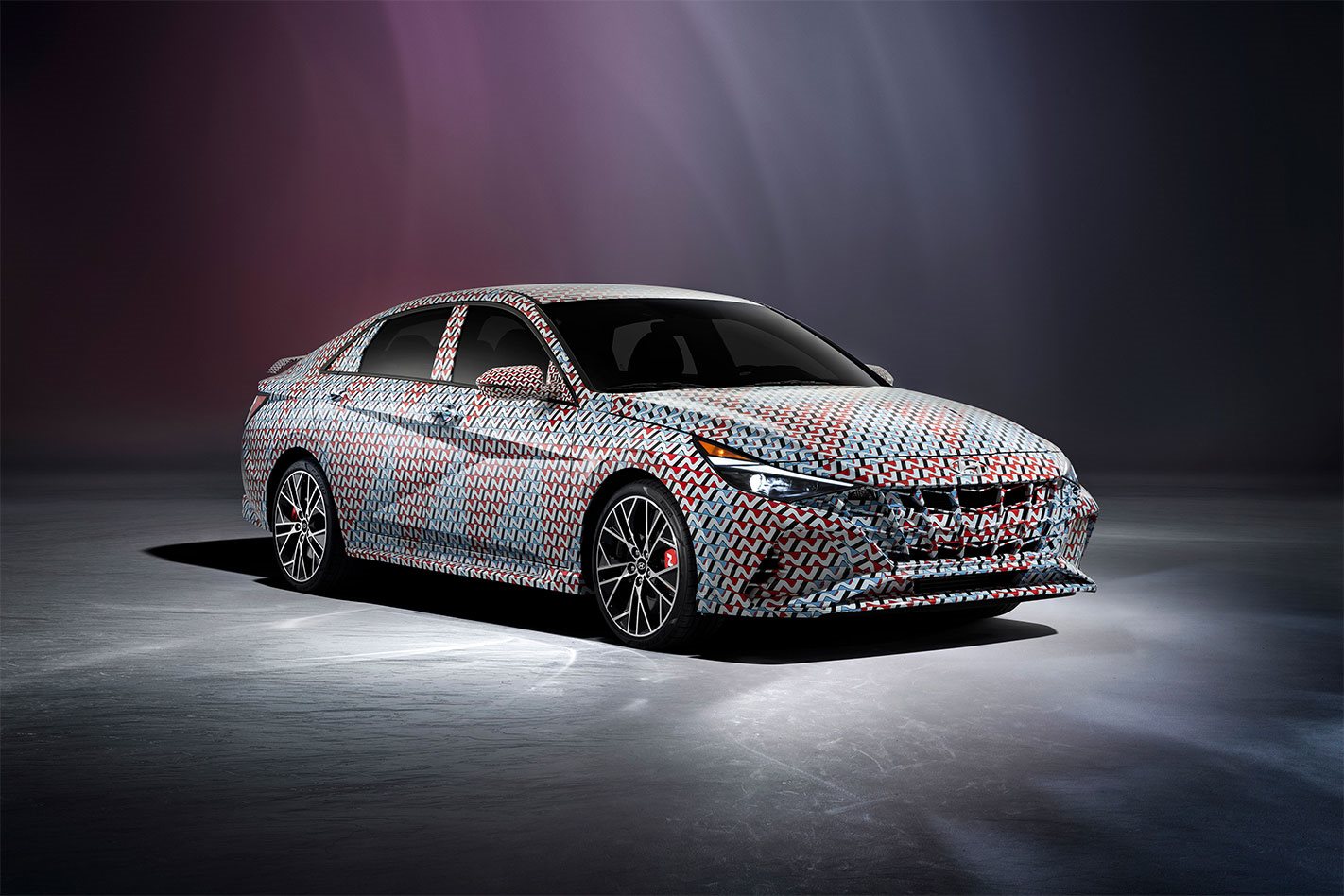
Covers are set to come off the new car on July 14, giving the i30 Sedan its own N Performance variant which is expected to utilise the same running gear as the existing i30 N hatch.
JUNE 22: Hyundai’s range of ‘N’ cars is set to grow with the brand’s global headquarters teasing an i30 Sedan-based performance model, with further details set to be released in the coming weeks.
Launched in 2020 to replace the Elantra, the i30 Sedan is the sixth car to get Hyundai’s N treatment since the i30 N was released in 2017, the most recent model coming this April with the Kona cross-over receiving a high-performance makeover.
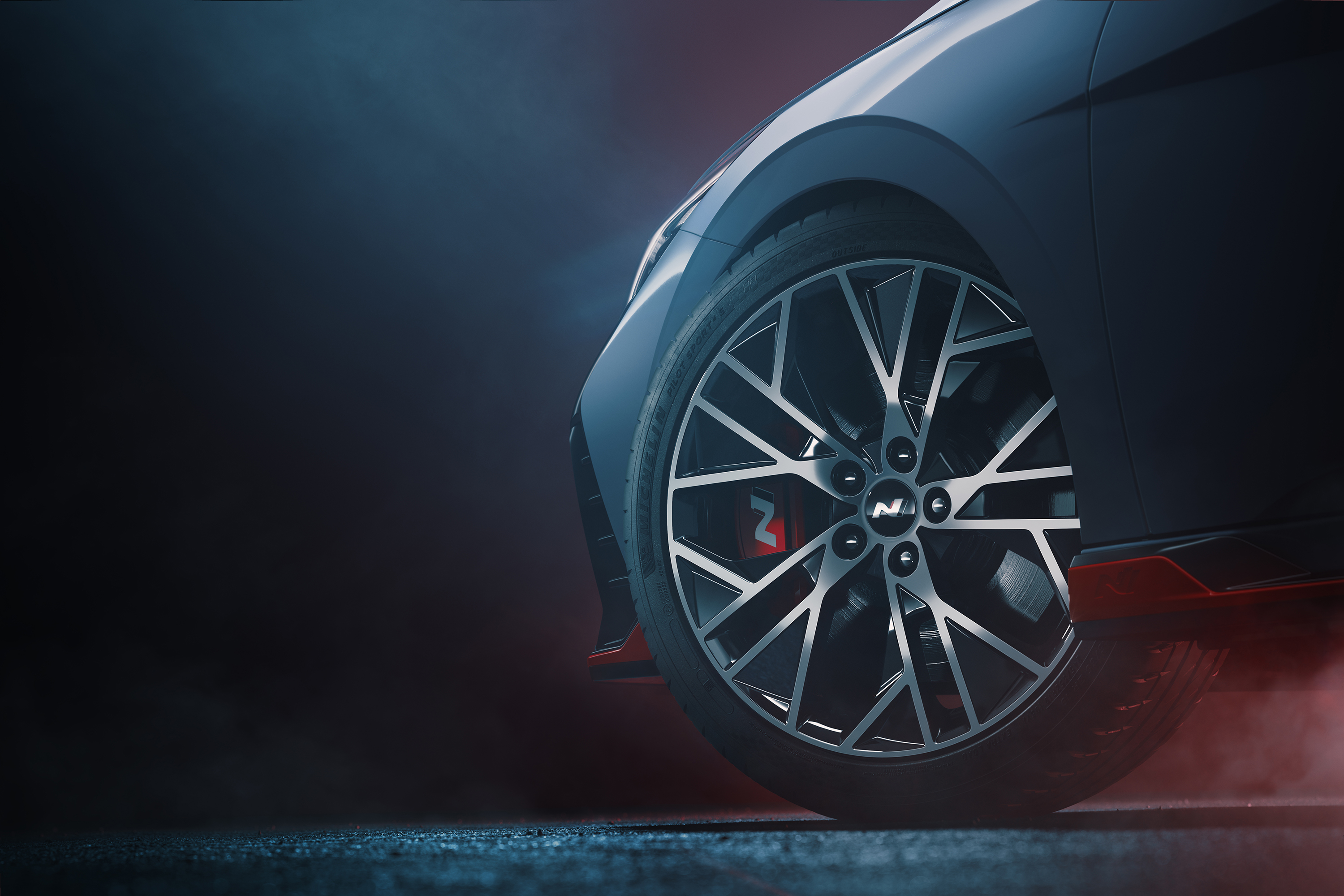
Initially announced at the end of last year, this is the first time we have seen teaser photos of the model in Hyundai’s iconic performance blue paint, showing off bigger brakes behind newly designed, 19-inch wheels, shod in 245/35 Michelin Pilot Sport 4S rubber.
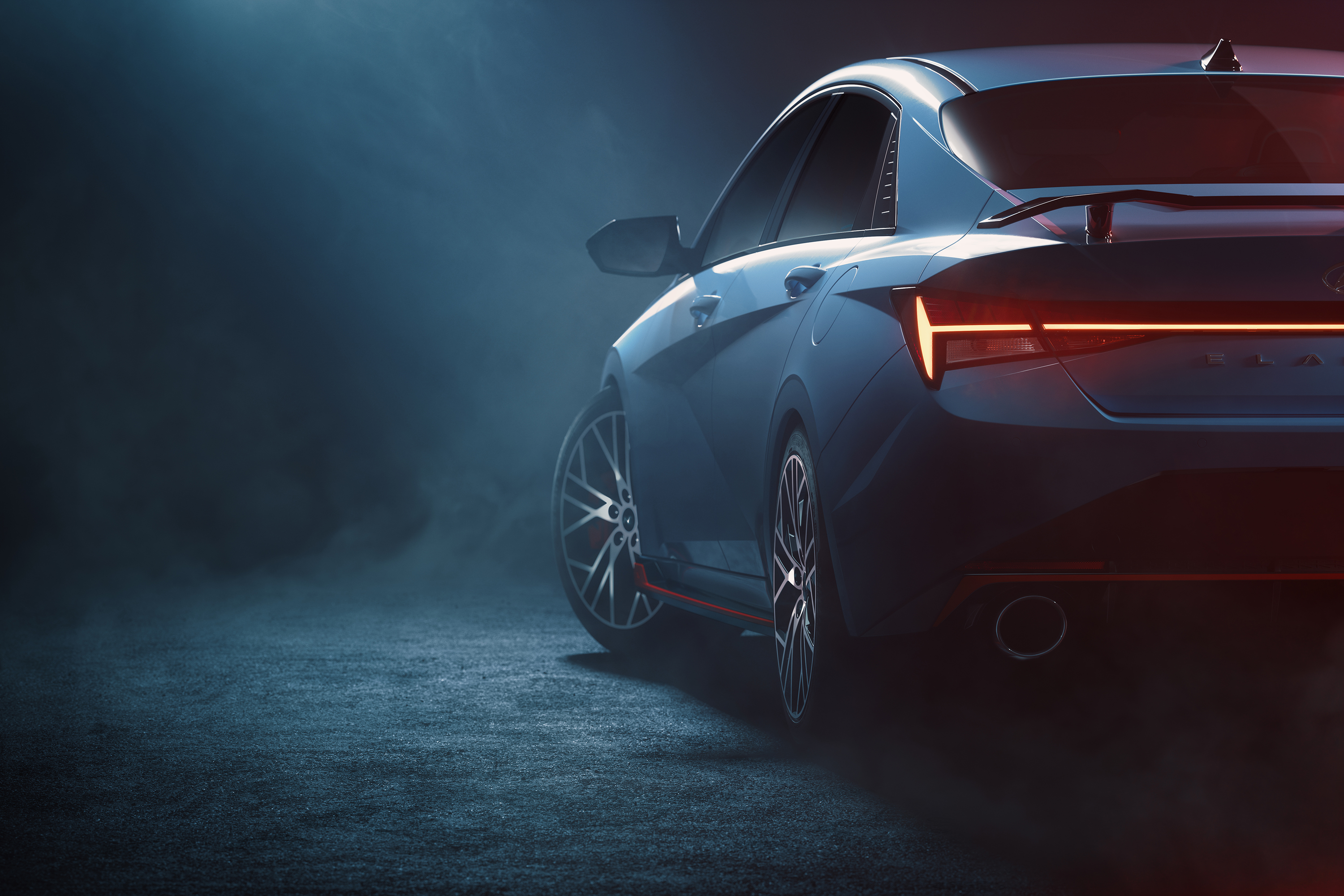
The Sedan N is set to get a range of finishing touches to set it apart from the rest of the range and in line with its high-performance siblings, such as; red side sills, a low-set rear spoiler and black trim in the rear bumper, as well as a dual exhaust set-up.
Vice President of Hyundai’s N brand and motorsport, Till Wartenberg, said the i30 N Sedan – badged overseas as an Elantra – will highlight the sports characteristics of the model and will compliment the existing range of performance Hyundais.
“Elantra (i30 Sedan) N is a high-performance sedan which reveals the sportier side of our exceptional all-new Elantra through exciting N brand enhancements,” said Mr Wartenberg.
“We designed it to be a race-proven sportscar with dynamic driving capabilities and style performance enthusiasts love. I can’t wait to unveil Elantra N, an outstanding addition to the N brand line-up which offers pulse-pounding performance.
“Stay tuned for the digital world premiere.”
Though pricing has not been confirmed, it’s expected the i30 Sedan N will cost around $1200 more than the hatch variants in line with the current pricing of the N-Line models, with the i30 N recently going through a price update to $44,500 for the manual and $47,500 for the dual-clutch auto.
In September 2020, Hyundai released an i30 N Sedan for the TCR Racing Series worldwide, offering it to customer teams with inaugural TCR Australia champions HMO Customer Racing expected to upgrade from their i30 N racers next season.
Snapshot
- Leon, Ateca and Formentor models coming to Australia
- Local arrival expected in the second quarter of 2022
Cupra’s copper-coloured badge packs subtle significance that’s worth spelling out.
While copper isn’t in the same league as other precious metals, it’s still valuable, useful stuff. It’s up there on the podium – bronze is mainly copper – but below gold and silver.
This symbolises Cupra’s position in the market, between traditional premium brands and the mass-production mainstream, explains Antonino Labate. He’s the brand’s Italian-born business strategy development chief, with previous experience at Fiat and Ducati.
The Cupra name also echoes copper’s chemical symbol, Cu, derived from its Latin name of cuprum. Cupra, pronounced coop-rah, is actually a compression of Cup Racing, the designation applied to hot road-going models from the Volkswagen Group-owned Spanish brand Seat since the 1990s.
Cupra grew out of Seat Sport, the company’s competition and performance car division, and continues to be active in racing.
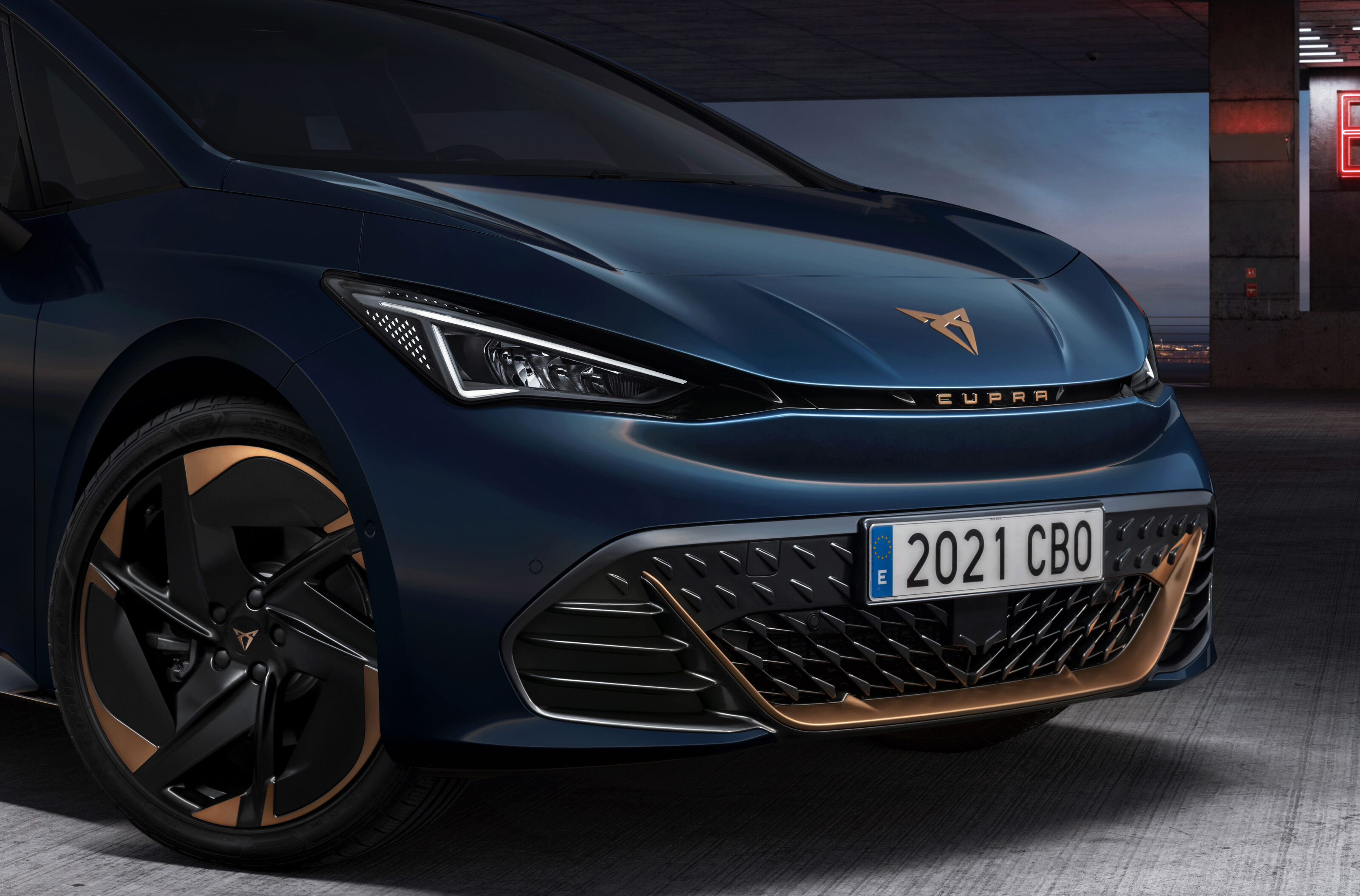
Copper is highly conductive, and electrification is a big part of Cupra’s present and future. Later this year it will launch the Born, its first pure EV, in Europe.
Basically a restyled VW ID.3, it’ll be produced in Germany. It’ll be followed in 2024 by the designed-in-Barcelona Tavascan – another EV based on VW Group’s MEB platform. In the meantime, plug-in hybrids loom large in Cupra’s model mix.
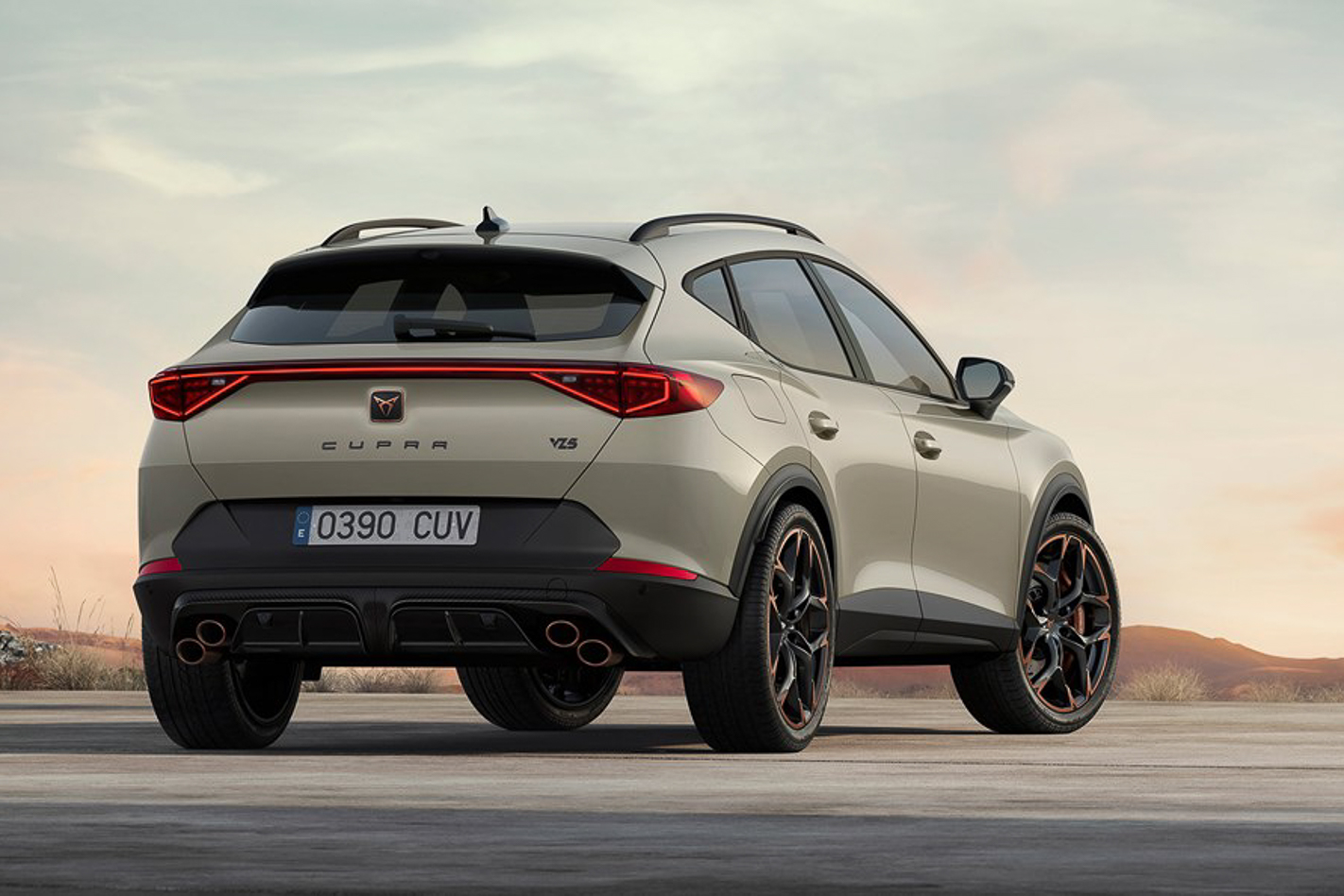
Almost everything Cupra currently has in production will head to Australia for its planned second-quarter 2022 launch; the Leon hatch, Ateca small SUV and the Formentor compact crossover. The only thing missing, compared to Europe, is the long-wheelbase wagon version of the Leon.
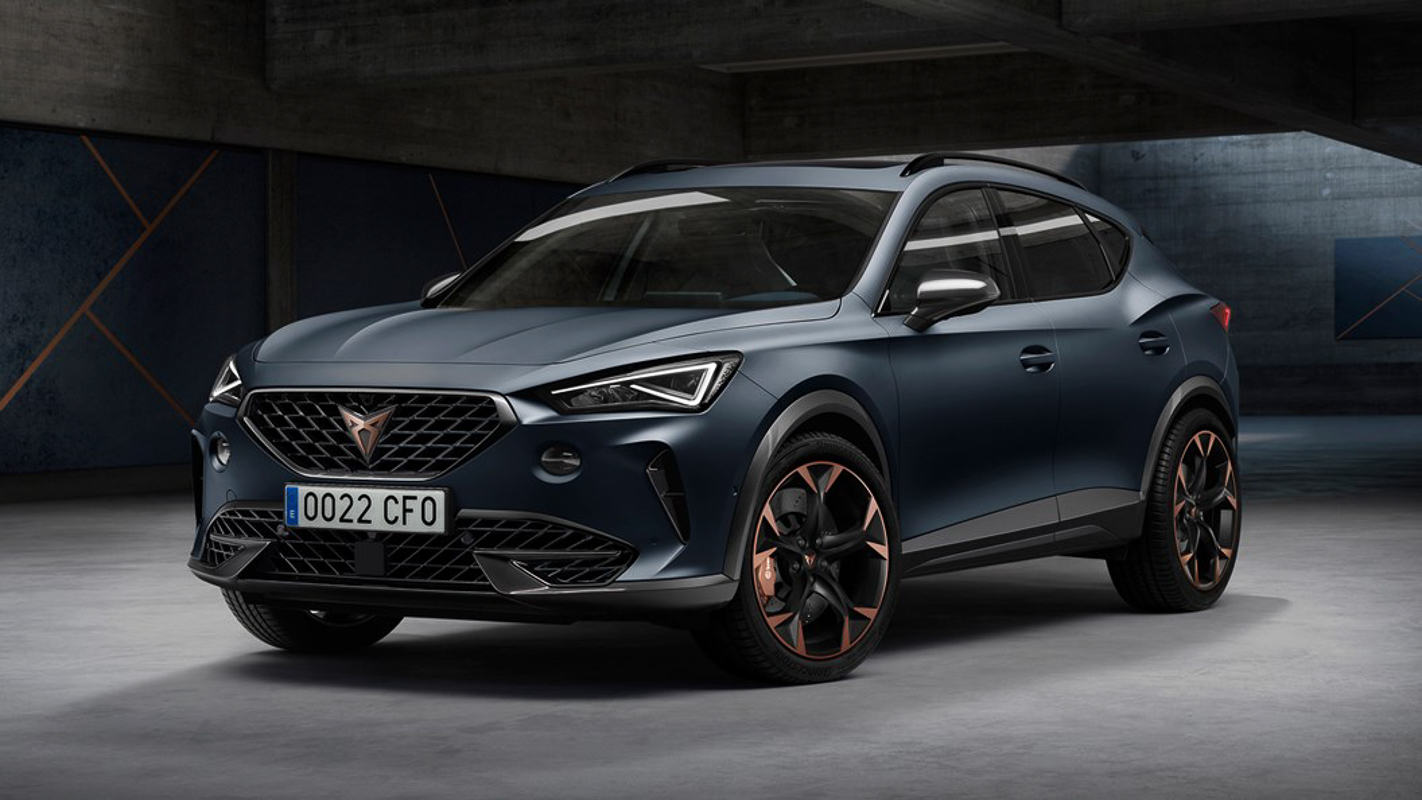
In production only since late 2020, the Formentor is the freshest Cupra model of them all. It’s also the most popular by miles, accounting for two-thirds of the brand’s rather modest current sales; only 27,400 in 2020, but growing strongly this year.
Around 40 per cent of Formentor sales in Europe are the front-drive plug-in hybrid versions. Only the more powerful 180kW PHEV will make it to Australia, along with 140kW, 180kW and 228kW purely ICE-powered variants, all with seven-speed DSG transmission and all-wheel drive.
The 228kW Formentor, likely to top the line-up in Australia at around $60,000, is a lively and engaging drive. Its engine is the VW Group’s EA888 turbo 2.0-litre four (so familiar to Golf GTI fans), with the same level of tune as in the latest Audi S3.
On challenging roads in the hills west of Barcelona, the top Formentor’s drivetrain delivered the kind of crackling performance its sharp-creased styling promises. The firm chassis set-up favours handling over comfort. Its interior is roomy, even in the rear, despite its long-nosed proportions.
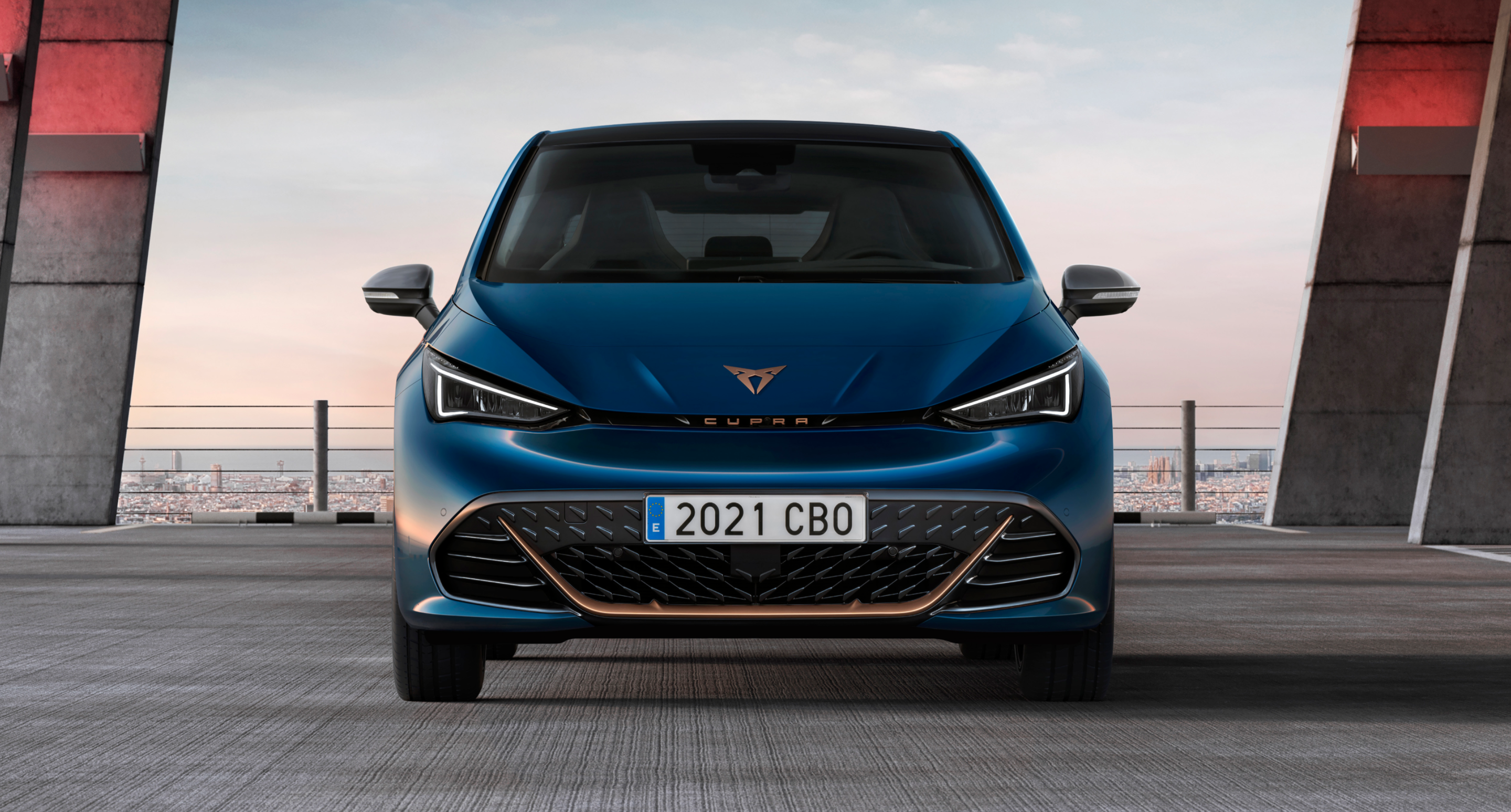
Least costly of the Cupra line-up for Australia will be the Leon hatch, launched early in 2020. It’s essentially a Mk8 Golf with flamboyant Spanish style.
There will be a plug-in hybrid, with the same 180kW maximum system output, turbo 1.4-litre four and six-speed DSG as in the Formentor, plus 140kW, 180kW and 221kW turbo 2.0-litre ICE-powered variants. Expect the least powerful of these to be priced around $40,000. All Leons will be front-drive.
While even the 180kW Leon is a properly feisty hot hatch, its very firm suspension calibration seems likely to make it a rough rider on Australian roads. Still, such shortcomings haven’t stopped other cars like this succeeding.
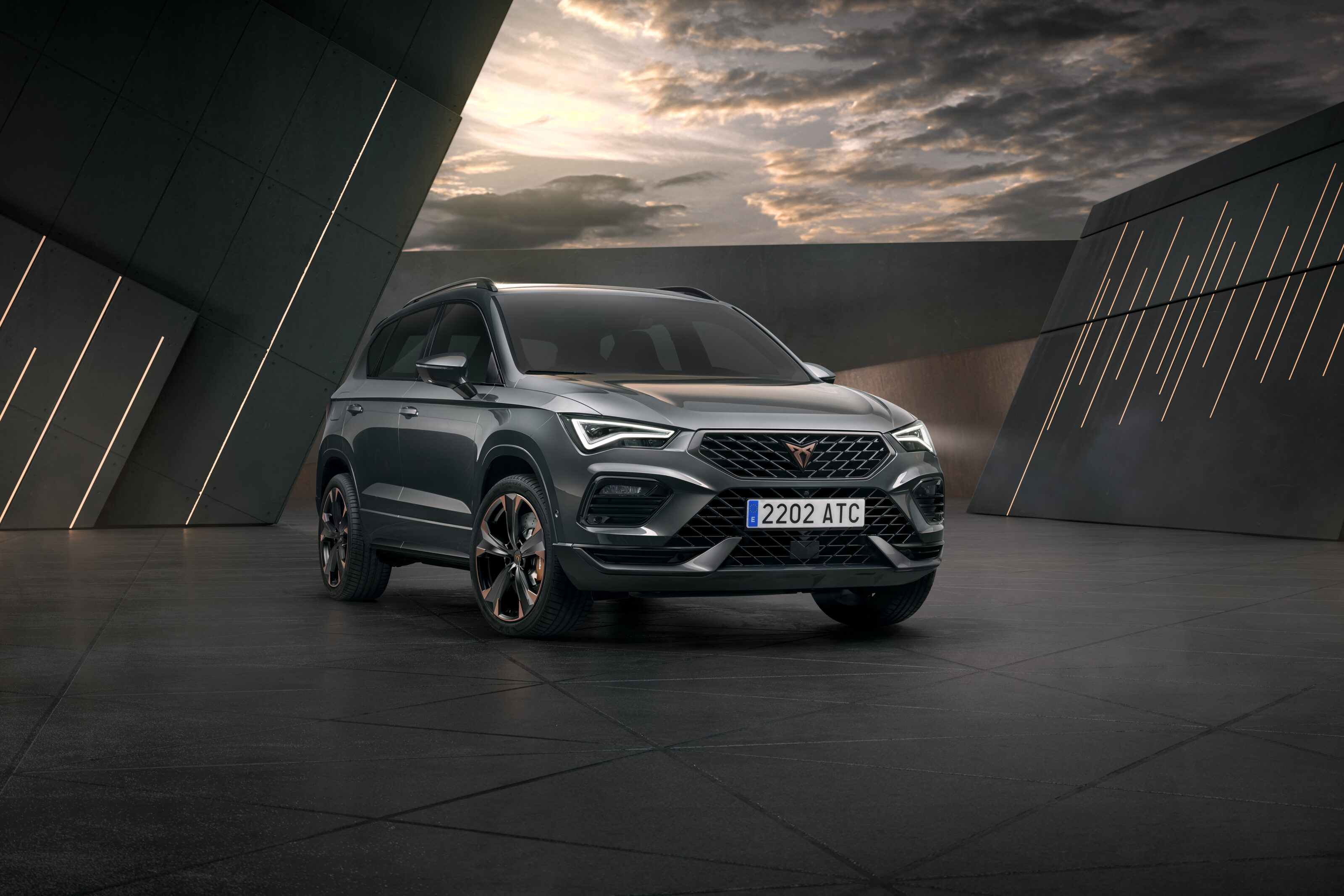
Unlike the Formentor and Leon, the Ateca isn’t produced in Seat’s big – more than 450,000 cars in 2020 – Martorell factory outside Barcelona. It’s a close relative of the Skoda Karoq and rolls off the same assembly line in the Czech Republic. The Ateca shares its roof, door and core body structure stampings with the Skoda SUV. It was launched as a Cupra in 2018.
Only the 221kW version of the Ateca will head to Australia, equipped with a seven-speed DSG and all-wheel drive. Although its interior design is a little dated compared with the other Cupras, the hot Ateca has grip, grunt and a very well-sorted chassis. It should work very well on typical Aussie roads.
Cupra’s basic brand proposition is performance – offering tech up to Audi S model levels for little more than VW money, with a dash of Mediterranean flair. The appeal is obvious, but…
Australia is a graveyard for synthetic brands like Cupra, the result of business plans and marketing strategies. Toyota’s Lexus is perhaps the only one to have succeeded. Nissan’s Infiniti failed here not once, but twice. Citroen’s DS sub-brand flopped. Mazda half-heartedly tried to make its upmarket Eunos popular as a sub-brand in the 1990s, which didn’t work either.
Parent Seat hopes Cupra will be the route for the brand to go global in a modest but profitable way. It’s already spreading beyond Europe, launching the brand in Mexico and Israel.
In Cupra’s favour is that it’s ultimately backed by the might of the VW Group, like Toyota, a deep-pocketed giant of the global car industry. But history shows establishing the copper-coloured Cupra badge in Australia will be somewhere between very difficult and impossible.
