Counting showroom segments with four or more active vehicles, the Kia Carnival enjoys a market dominance that is second only to the Toyota Camry.
The fourth-generation version of the perennially popular people-mover, introduced at the start of 2021, has only served to emphasise the model’s pseudo-monopoly.
The success of the original 1999 Carnival was based on delivering the average family a seven-seater vehicle from a ridiculously low $29,990 (or from $32,990 for auto over manual).
Today’s Carnival builds even more boldly on the styling revolution of 2015’s third-generation, which ditched the frumpiness of the previous models for a fusion of SUV and van body styles. Sports Utility Van? It also went up a notch or two in interior presentation, as well as price.
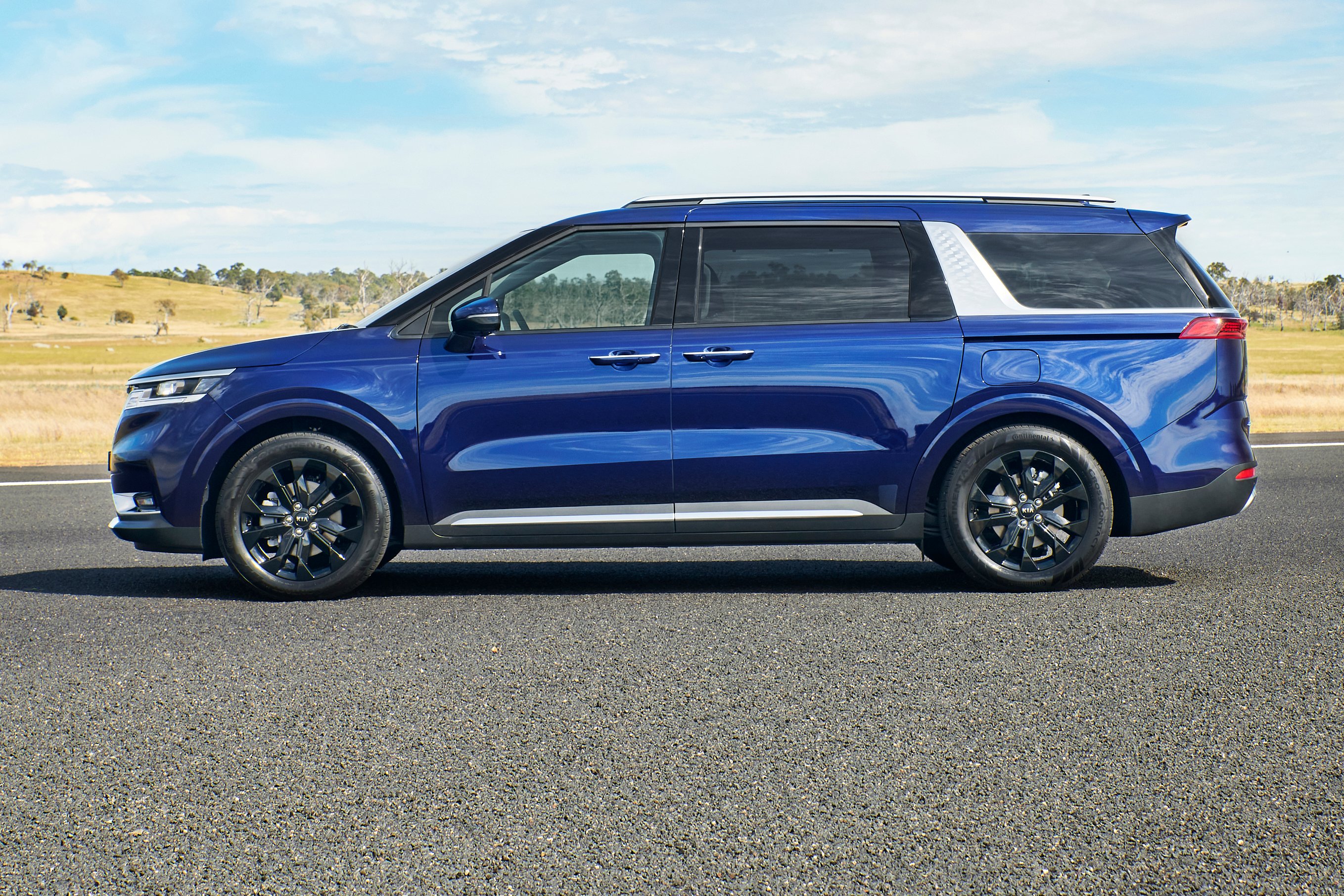
The 2021 Kia Carnival starts higher again – from $46,880 – and the range-topping Platinum costs from $64,680 before on-road costs for a petrol V6.
We’re reviewing the most expensive version here, the Platinum diesel that costs from $66,680 – or essentially $70,000 ($69,990) driveaway.
It’s a lot of money for the average (big) family, but the Carnival is also a lot of car.
This 5.1-metre-long, eight-seater Kia not only offers an extra seat over the throng of seven-seater SUVs but trumps them for space in the boot and third row.
The new Toyota Kluger, Mazda’s CX-9 and CX-8, Hyundai’s Palisade (which is available as an eight-seater) or even Kia’s own large SUV, the Sorento, are all well beaten for both luggage capacity when all seats are in use and for adult space in the third row.
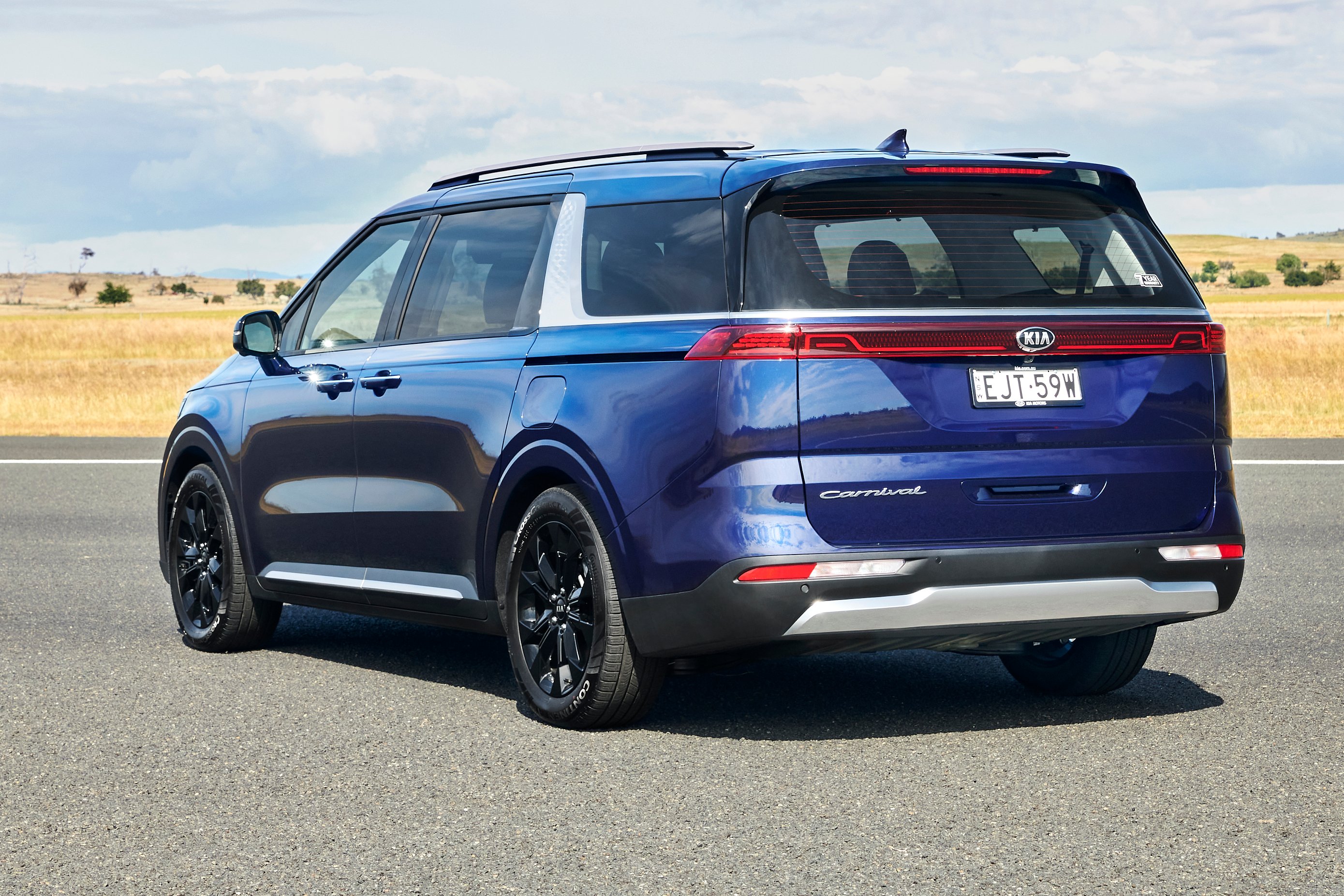
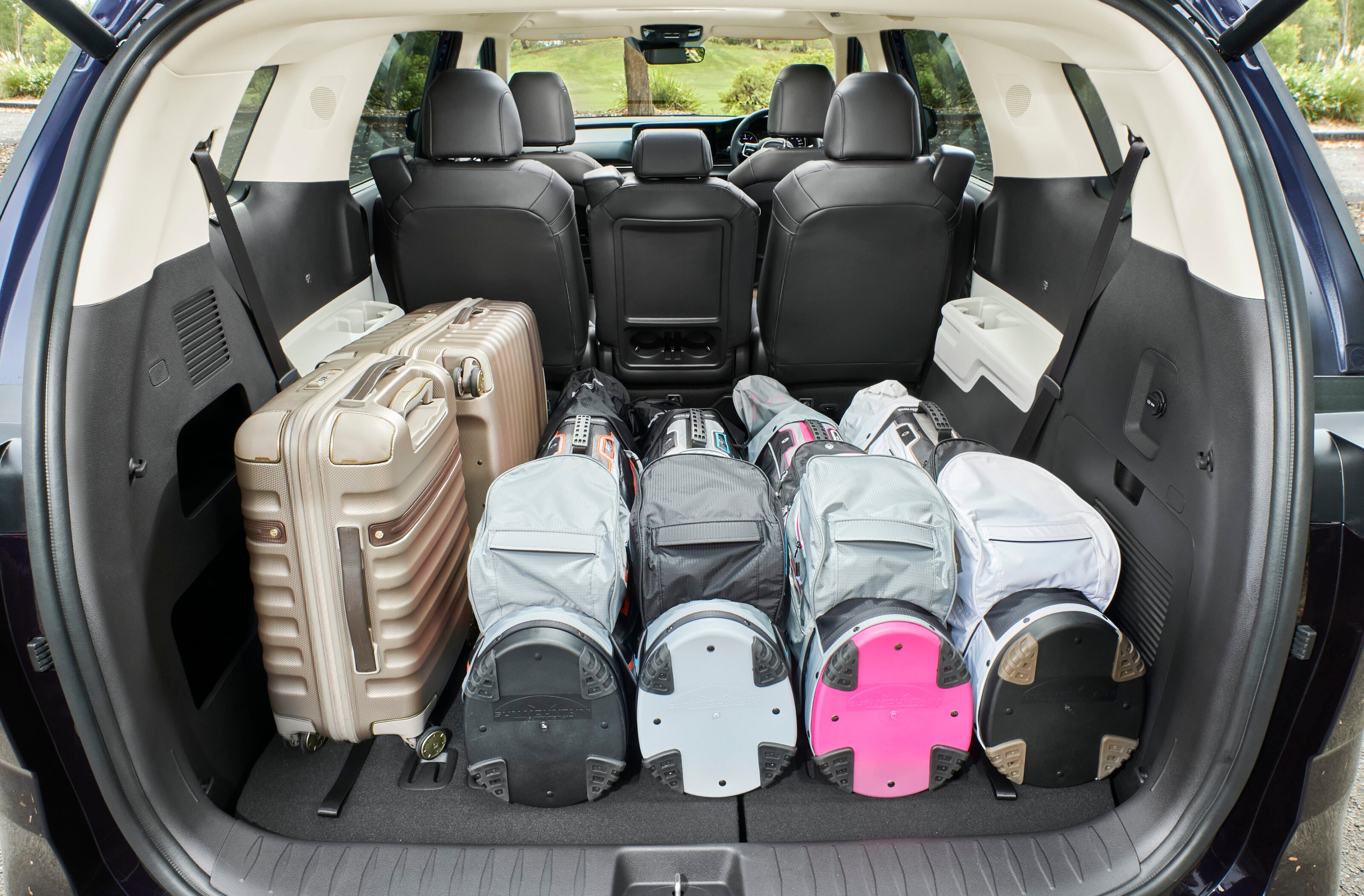
Carnival’s 627-litre boot behind the rearmost seats is super-deep and super-wide. This makes it effective as an airport shuttle but will also allow a family of seven or eight to go on a week’s driving holiday without even needing a roof pod.
The boot’s ability to comfortably take a wheelchair will also be important for families with less mobile grandparents.
Kia quotes 2785 litres for cargo volume with the rear seats flattened. Alternatively, just one side of the 60/40 rear seats can be folded into the floor.
A hands-free auto tailgate is standard on the SLi and Platinum model grades.
We’re reviewing the most expensive version here, the Platinum diesel that costs essentially $70,000 driveway. It’s a lot of money for the average family, but the Carnival is also a lot of car.
Sliding side doors are again a Carnival feature, with SLi and Platinum adding one-pull electric operation. Their convenience can never be underestimated, especially when you find yourself in the middle of the common car park sandwich.
There’s no clever one-touch button operation for the second-row tilt-slide function as in the Sorento; instead, the operation is performed manually via a seat lever. Third-row passengers can’t pull the second-row seat back into place as with some seven-seater SUVs, either – this is done by pulling another lever under the second-row seat base.
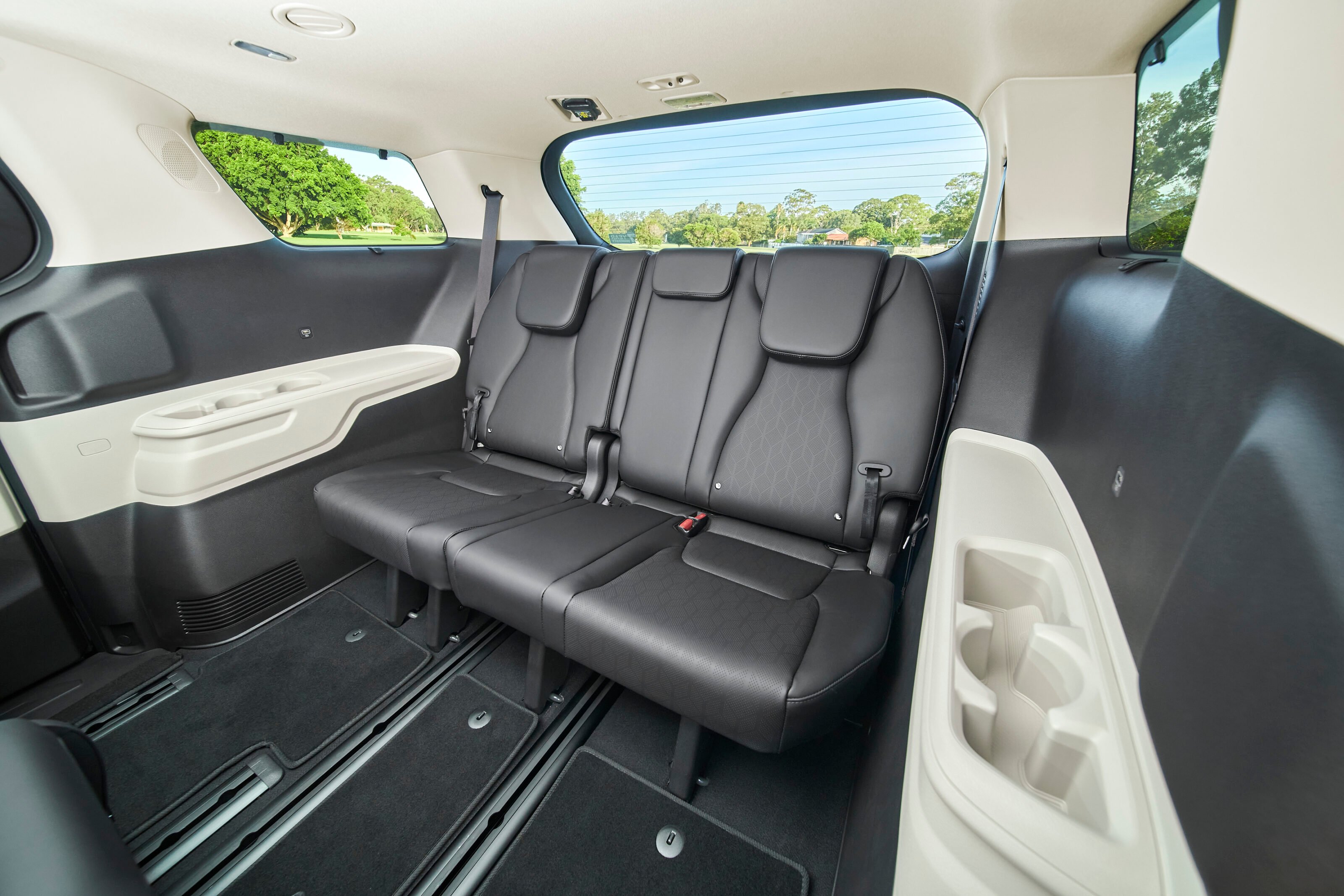
If you’re feeling cruel, you could squeeze three adults into the third row (with the middle serviced by a ceiling seatbelt). Two adults of above average height, however, have an amount of legroom and toe space more than acceptable for longer journeys.
Or parents have the option of fitting child seats. The outer seats feature both top tether and ISOFIX points – a very uncommon combination in the world of people-movers and multi-seater SUVs.
While the Sorento also features ISOFIX points for its two third-row seats, the SUV’s curtain airbags only cover up to the glass area where the Carnival’s extends to the entire row.
A USB port plus storage section with moulded bottle holder are positioned on either side, while air vents are overhead. Third-row occupants in the Carnival Platinum get extra treats: their own speakers (linked to the Platinum’s Bose audio), LED reading lights, and side shades.
The Carnival’s middle cabin is more spacious, naturally, with limousine-style legroom if the sliding (split) seats don’t need to be positioned far forward to help taller third-row occupants.
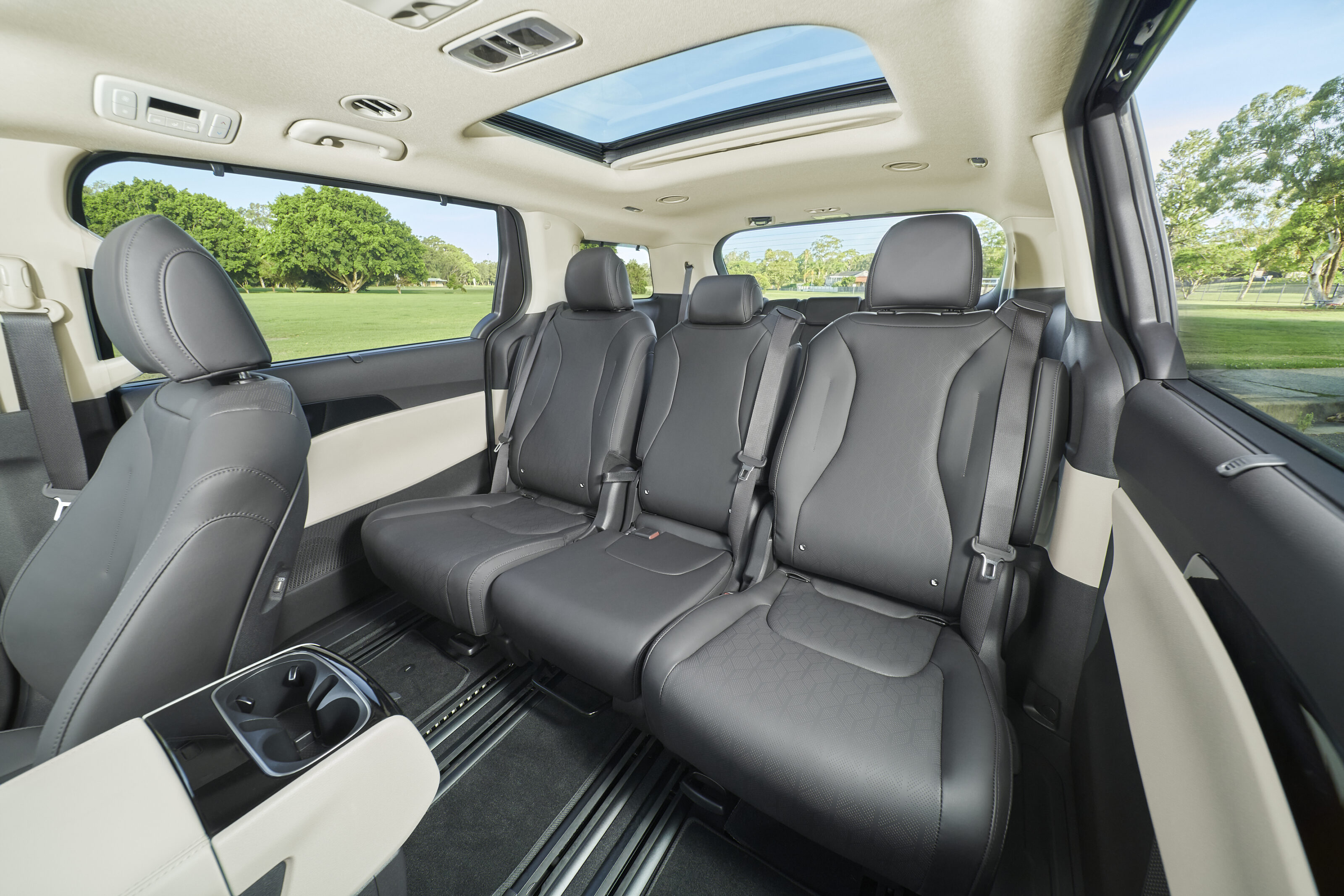
Those seats also recline. And while captain’s chairs are not available, the second row can be customised in a few ways via the middle row’s centre seat: it can be flipped 180 degrees to allow for eye-to-eye chats with the third-row passengers; it can be folded down to become a centre tray with cupholders and smartphone slots for the outboard occupants; and it can be slid forward to bring a younger child closer to the parents in the front seats.
Coat hooks and a bag hook are also included in the second row, as are vents – with full climate control for all but the entry-level Carnival. There are more USB ports here too.
Platinum also adds shades for the side windows, plus dual sunroofs – both of which open electrically: tilt/slide front and slide rear.
All grades feature a system that warns occupants before they’re about to open the door into oncoming traffic; SLi and Platinum add an extra function that disables the sliding doors in the same instance.
And Platinum will also prompt the driver to check the rear seats – in the hopefully unlikely case a parent forgets about their kids!
Speaking of which, there are top tethers for all three middle-row seats plus ISOFIX points for the outboard seats – combining with the rear anchors to give parents the ultimate child-seat versatility.
The Carnival’s generous cabin width ensures three child seats can be placed across the centre cabin, though this complicates access to the third row if it’s needed.
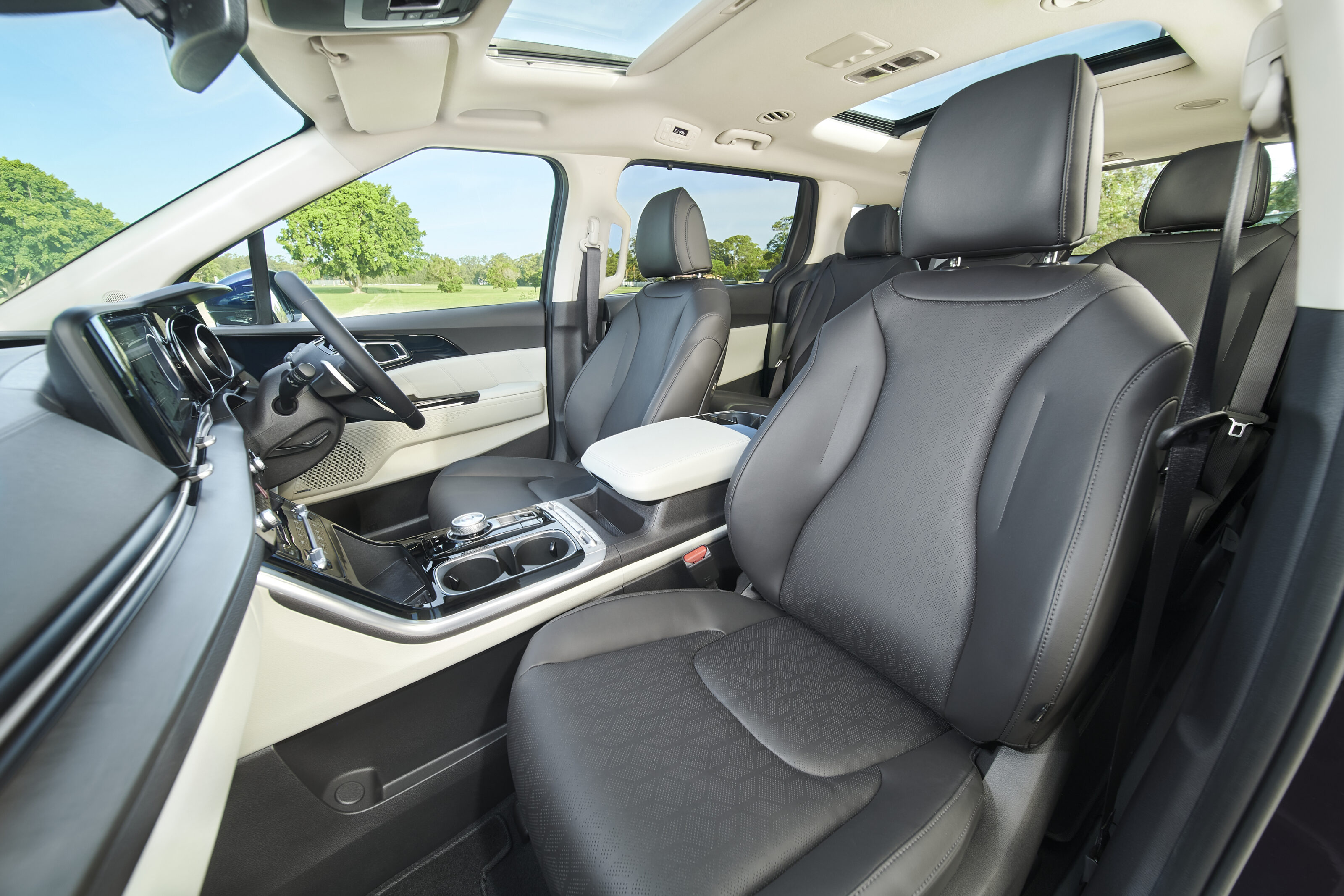
That width is emphasised up front with a huge console box, which features a one-piece lid doubling as an armrest for the driver and front passenger.
Its leatherette lid matches with the mid door trims, which with their lighter colour contribute to a multi-tone interior that helps create more of an upmarket vibe. (Kia can often be guilty of using an excessive amount of black in its cabins, which can have the opposite effect.)
SLi and Platinum models take this further with ‘Premium’ seats – artificial rather than real leather, instead of the cloth of S and Si – plus wood-effect dash inserts. Platinum also features customisable ambient lighting in front and rear door panels.
Front occupants in the Platinum are pampered with heated/ventilated seats, while the driver gets a heating function for the steering wheel.
Door pockets aren’t particularly high, though bottle holders (and a smartphone slot) feature at the rear of the centre console box and two cupholders are found on the centre console.
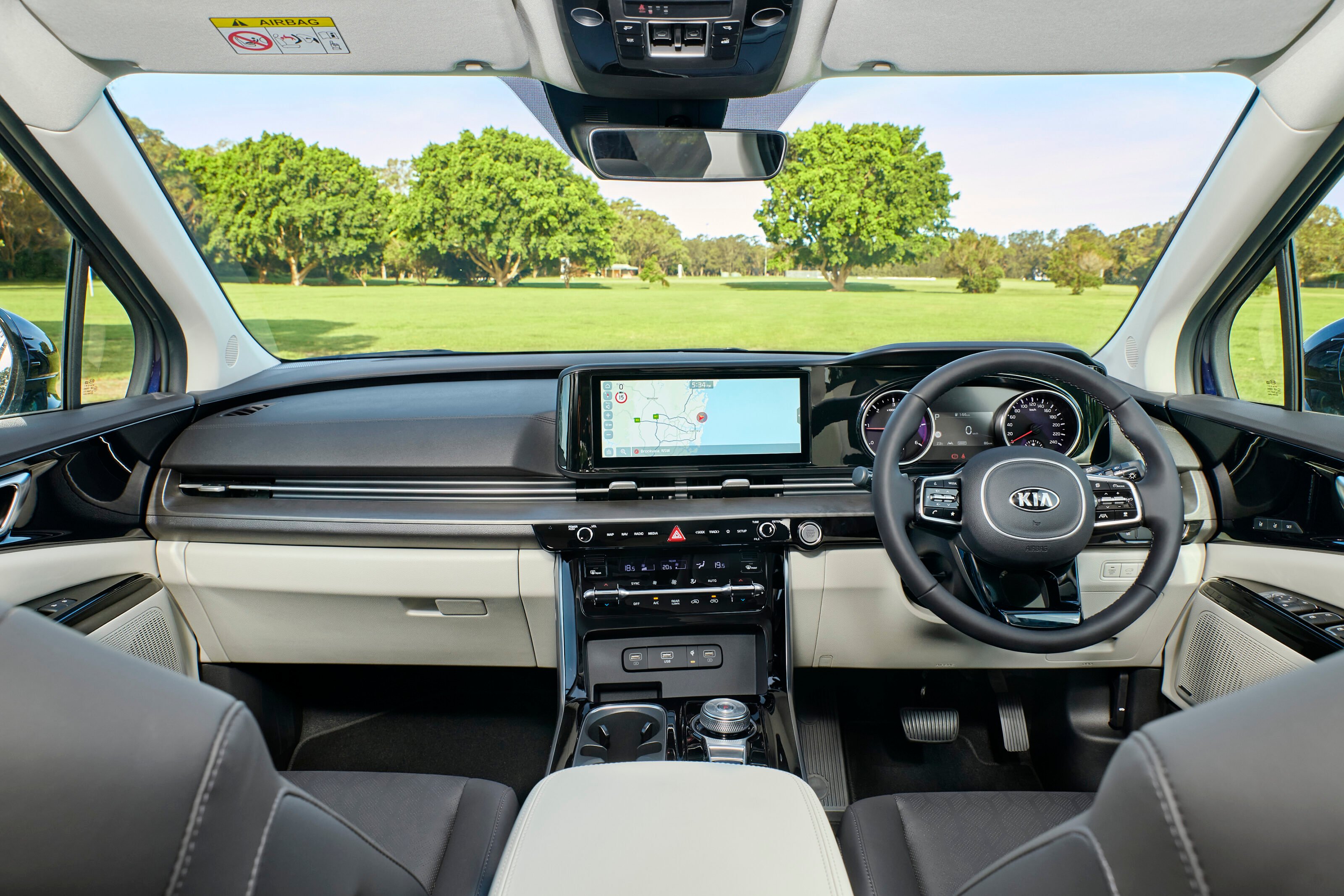
The Platinum’s centre console looks slightly different to other grades – looking even more sophisticated with its rotary gear selector that’s enabled by the model’s exclusive-to-range shift-by-wire transmission.
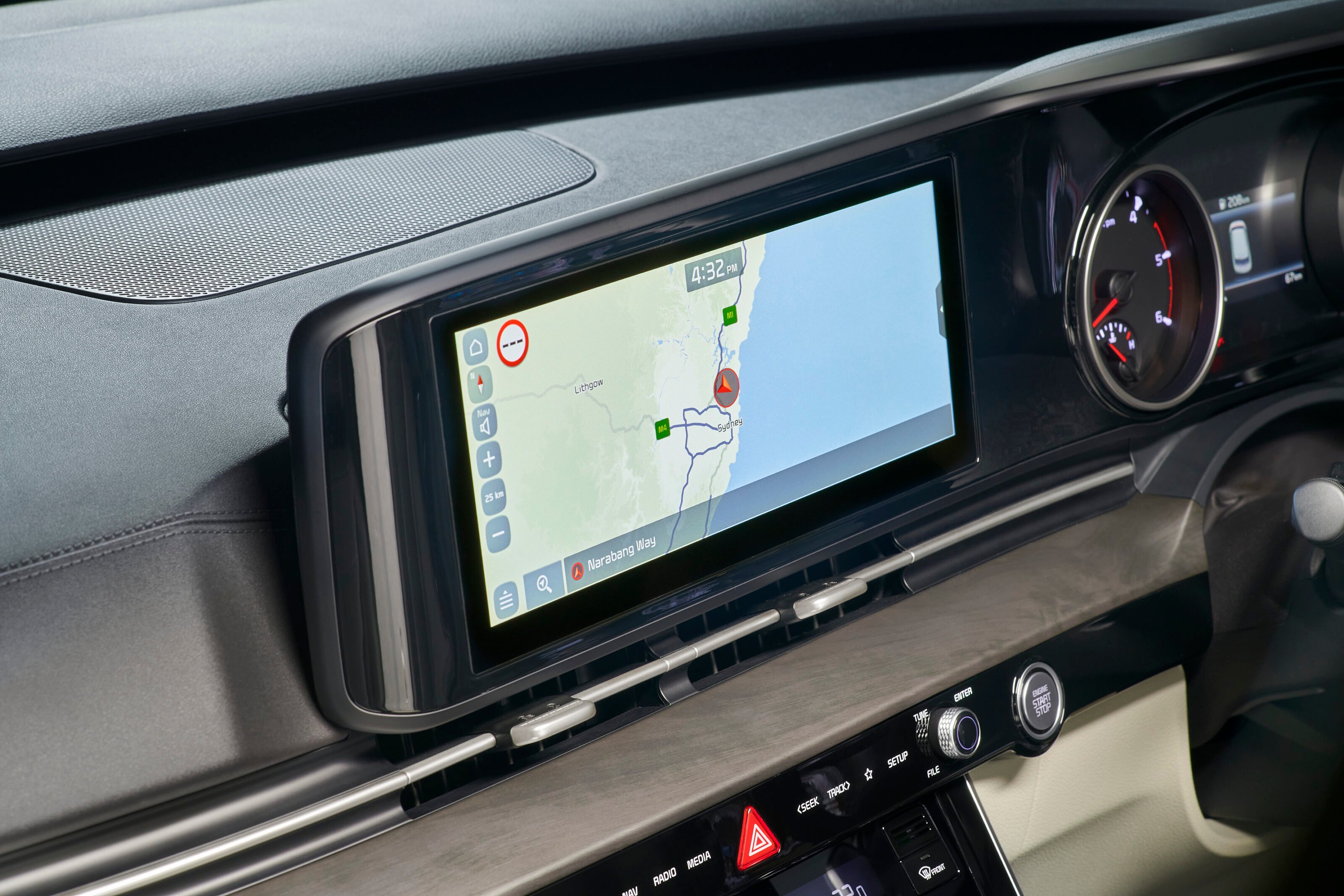
While the Carnival S makes do with an 8.0-inch touchscreen, all other models are fitted with Kia’s impressively wide and slick 12.3-inch touchscreen infotainment system.
The base grade at least compensates for its smaller screen and lack of factory navigation with wireless Apple CarPlay and Android Auto, where the more expensive models require smartphones to be plugged into USB sockets.
Wireless smartphone charging is included on the Platinum only, which will disappoint many buyers. All windows should have one-touch operation, too, but the Platinum has this on the driver’s window alone and the fully digital instrument display found in the Sorento won’t be available on the top-spec Carnival until later in 2021.
Instead, the driver gets conventional dials plus a small centre TFT display for various bits of information.
So terrific is the Carnival’s cabin versatility and functionality that, for many buyers, the way the Kia drives will be almost irrelevant.
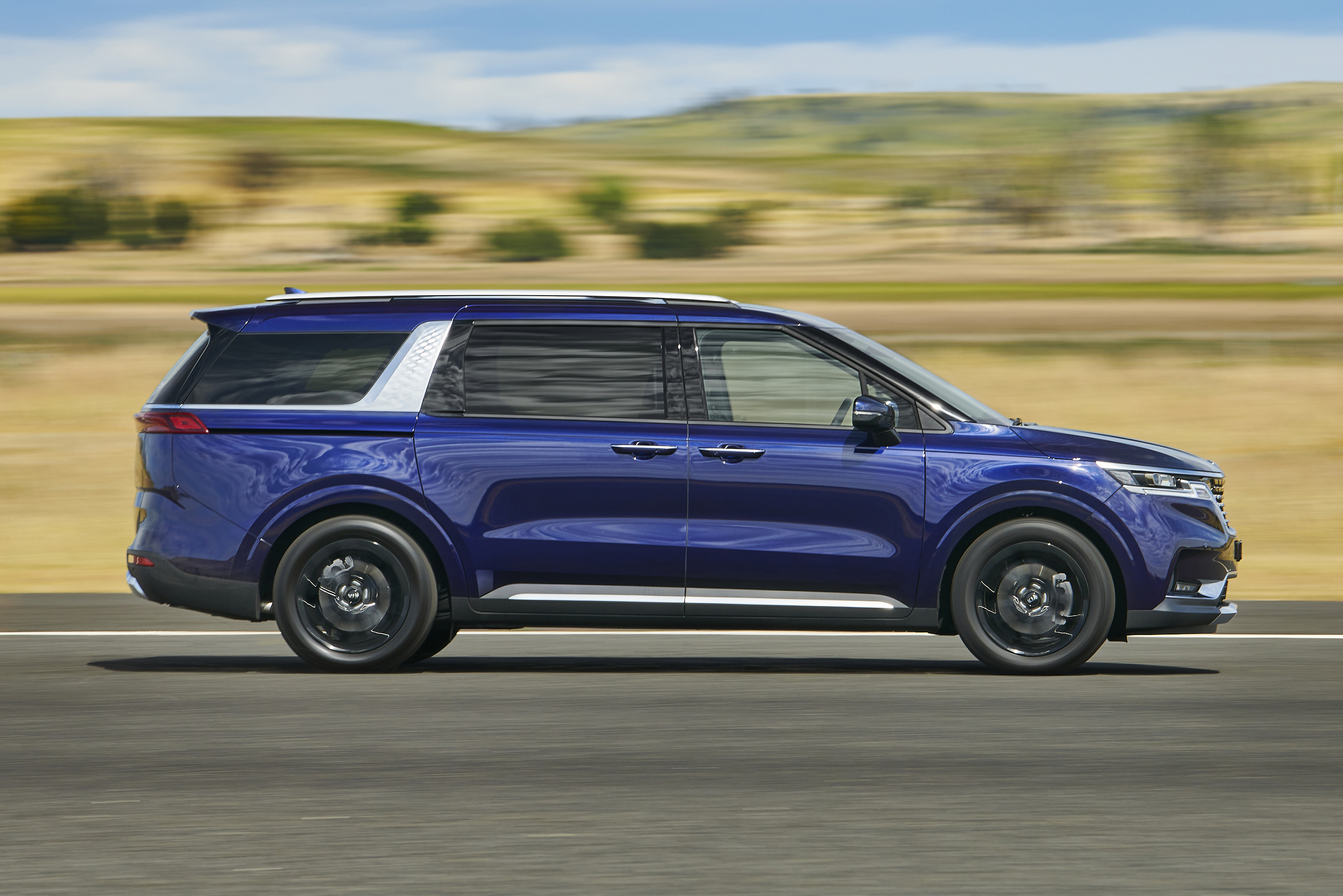
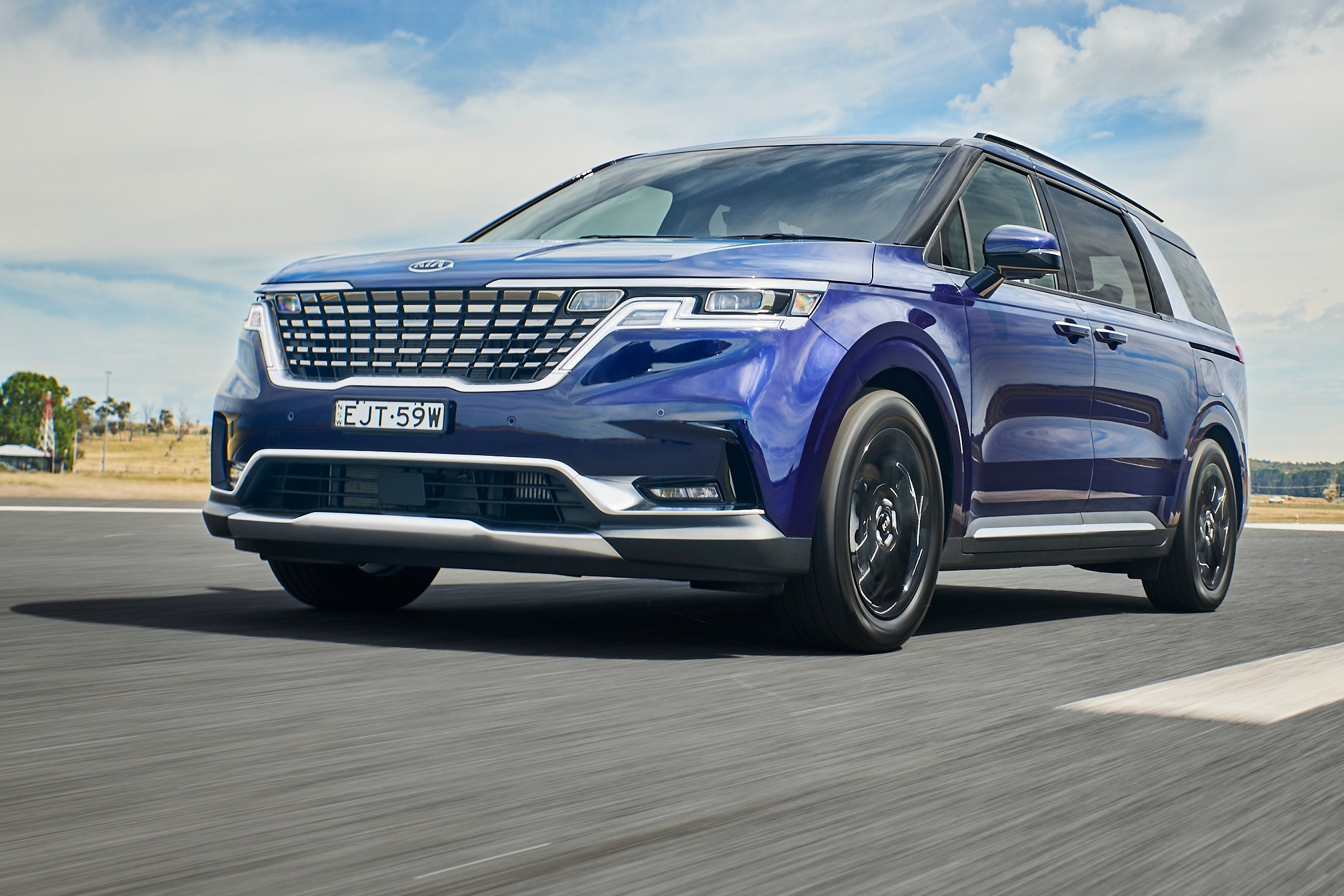
It’s a bonus, then, that the Carnival drives very nicely.
There’s a relaxed nature to the suspension that makes the Carnival a soothing conveyance without becoming excessively bouncy across uneven roads. The Platinum rolls along on its 19-inch wheels with less fussiness than the Sorento GT-Line on same-size rims.
The steering is smooth, too, though it’s also slow – making the people-mover feel less wieldy when negotiating roundabouts or country roads than its seven-seater-SUV cousin and the Carnival’s turning circle is a touch wider than the Sorento’s, but still decent for a big vehicle.
On freeways, the steering can feel particularly vague around the straight-ahead position.
The driving position is more bus-like than the Sorento’s, with the seating feeling more upright. It’s still comfortable, though some extra cushion length or cushion extenders for the front seats would be welcome.
All-round vision isn’t perfect, either, with blind spots over both shoulders but blind-spot monitoring, rear cross-traffic alert and the good-quality 360-degree camera view all help ensure the Carnival doesn’t feel intimidating to drive.
A couple of clever, speaker-based features are available via the infotainment screen: Passenger Talk amplifies the driver’s voice to rear passengers; Quiet Mode directs music to the front seats only to help avoid waking sleeping kids.
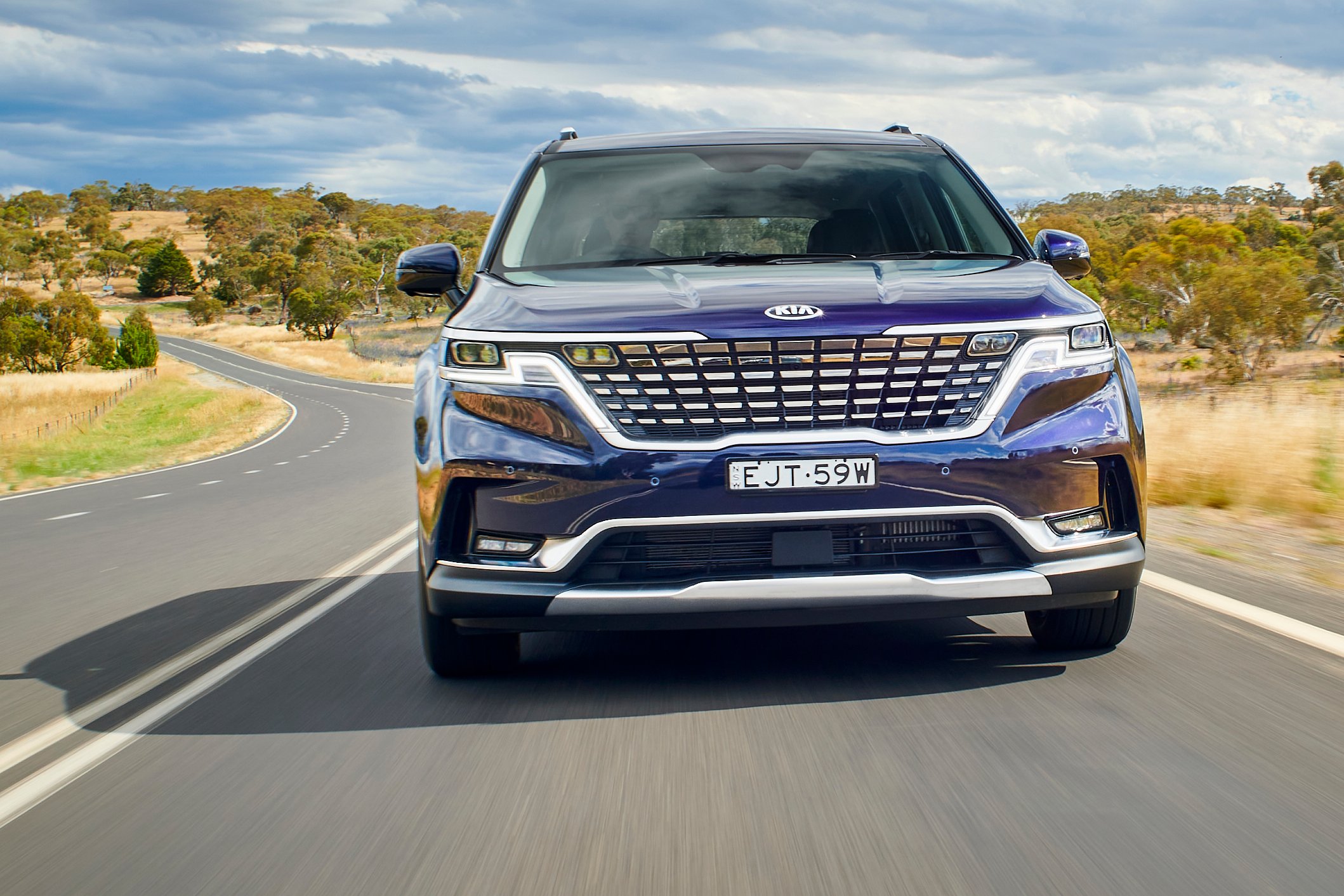
Buyers have two engine options, a petrol V6 or a turbo diesel four-cylinder driving the front wheels via an eight-speed auto.
It’s a case of what engine flavour is preferred or assessing the importance of fuel economy to the family.
The V6 is smooth, strong and sounds pleasant, but it consumes about 50 per cent more fuel every 100km with official consumption of 9.6 litres per 100km versus 6.5L/100km.
The diesel has some characteristic clatter even on a light throttle and feels a touch more sluggish from very low revs, but it then offers more pulling power in its mid-range. The more passengers you have on board, the more that extra torque – 440Nm versus the V6’s 355Nm – becomes useful.
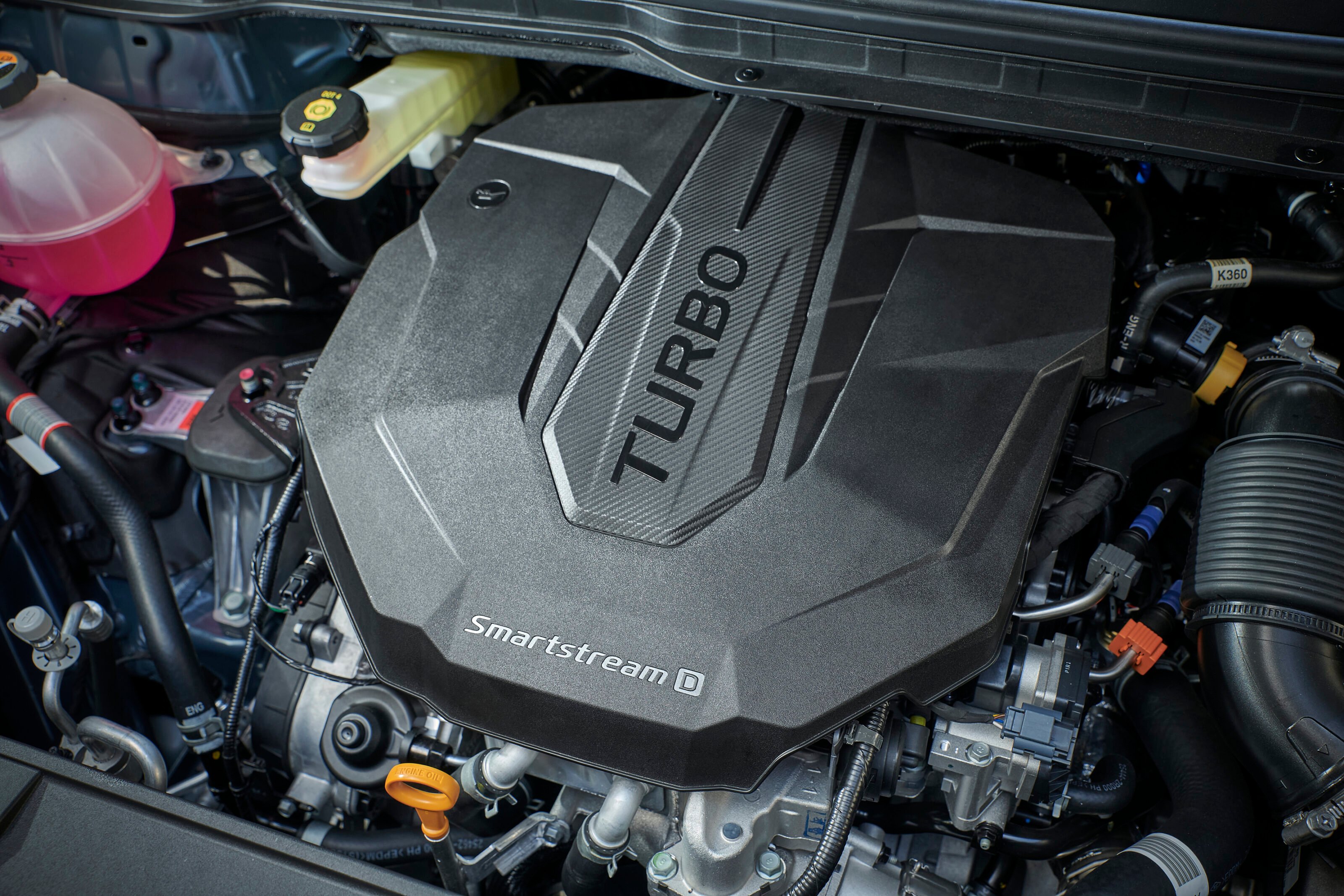
Our Platinum diesel test car returned an indicated 6.9L/100km after about 150km of driving that incorporated an even mix of suburban and freeway running.
Capped-price servicing costs are based on either 12-month or 15,000km intervals and vary from a reasonable $349 per visit to a relatively costly $798 depending on the age and mileage of the Carnival. Owners are looking at not far off $4000 over seven years.
For all that period, though, there’s the brilliant assurance of Kia’s industry-leading warranty.
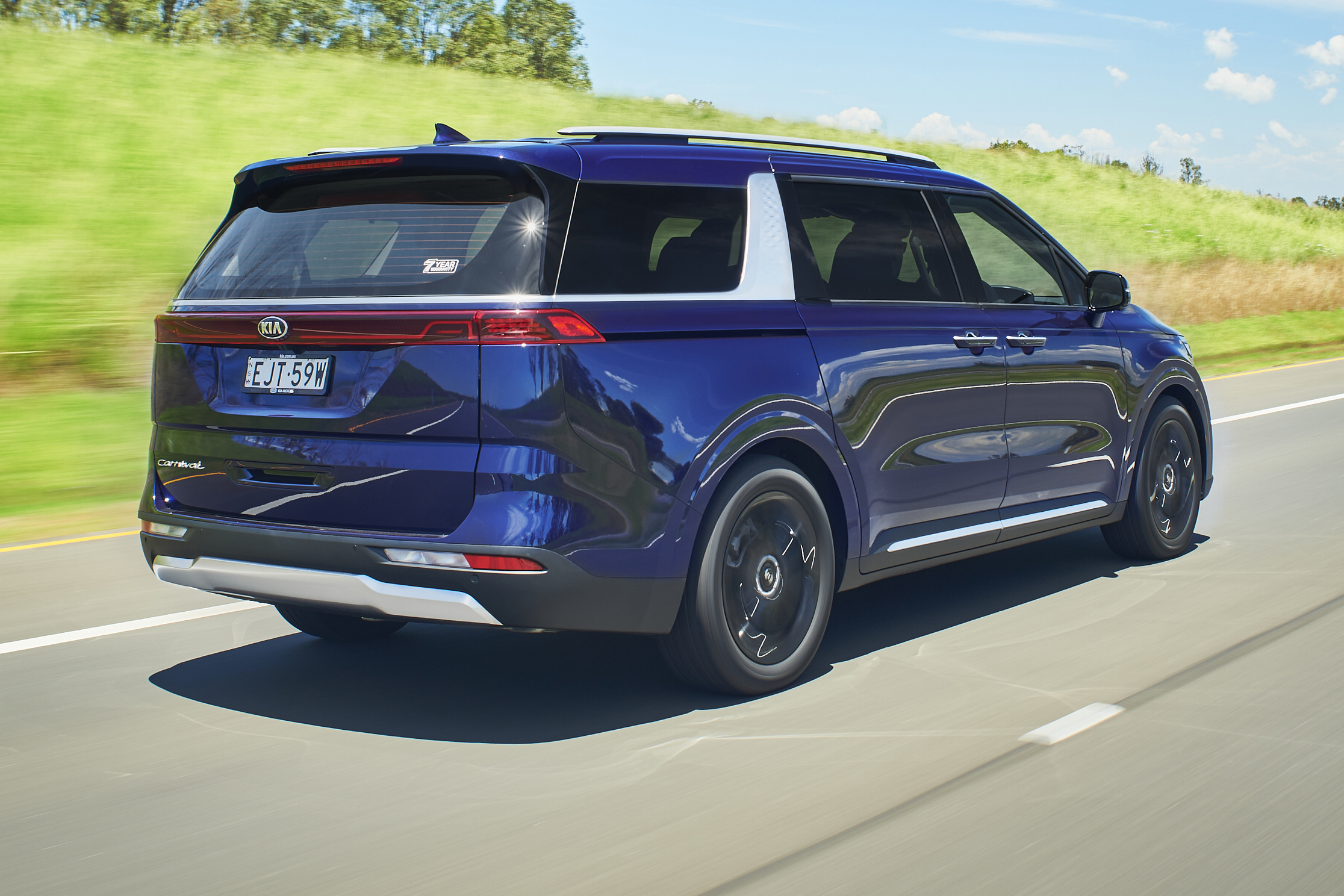
As bold as the Carnival’s styling is for a people-mover, many buyers will still prefer the design of a SUV.
But while there may be plenty of big seven-seater SUVs that may be more appealing in the way they look or steer, the Carnival is easy and comfortable to drive while offering interior and passenger room that is largely unrivalled.
And while the Platinum variant offers plenty of goodies to tempt families who can afford it, that convenience of space is standard with all Carnivals.
Editor’s note: Some images in this review gallery feature the V6 petrol model, but appearance and trim grade is otherwise identical across the petrol and diesel models.
2021 Kia Carnival Platinum diesel specifications
| Price | $66,680 before on-road costs |
| Engine | 2.2-litre four-cylinder turbo diesel |
| Transmission | 8-speed automatic |
| Fuel consumption | 6.5L/100km combined |
| Wheels | 235/55 R19 |
| Weight | 2134kg |
| Dimensions | L 5155mm x W 1995mm x H 1775mm u2013 Wheelbase 3090mm |
| ANCAP Safety | 5-star |
Lexus may be on the cusp of introducing its most affordable sports model yet, in the form of a compact coupe based on the new-generation Toyota GR 86.
According to Japanese website Spyder7, there are “rumours” that the new 86 – which already has an almost identical twin in the Subaru BRZ – will add a third variant to its production schedule in the form of a “Lexus version 86” model.
And, recently, a mysterious Lexus-looking prototype has surfaced on Instagram, described as a new ‘Lexus UC‘ model, or ‘Urban Coupe’.
It seems unlikely at this stage in its evolution that Lexus would use the joint Toyota-Subaru platform without developing a completely unique look, and utilise a powertrain more in-line with its own product offering – which would suggest a small turbo petrol engine or, as Spyder7 reports, a petrol-electric hybrid system.
There’s a pattern to that, too: the larger RC can be had with a four-cylinder turbo petrol mill, while the more luxurious LC offers a petrol-electric hybrid V6 option.
In either case, we’d hope to see more power on offer than the 173kW and 250Nm available with the new 86 and BRZ. (These numbers, of course, are a welcome improvement on the previous model’s 152kW and 212Nm.)

In terms of styling, Lexus could give its version of the 86 an ‘on-brand’ look with new front and rear styling, along with new front quarter panels and – as our artistic friend Theo Throttle suggests with the renderings in this story – new door panels with a sharp character line carved along the top edge.
The familiar ‘spindle’ grille goes a long way to Lexify the little coupe, and new headlights complete the look.
At the rear, Theo’s integrated a tail-light design borrowed from the new IS sedan while retaining the existing rear quarter panel moulds.
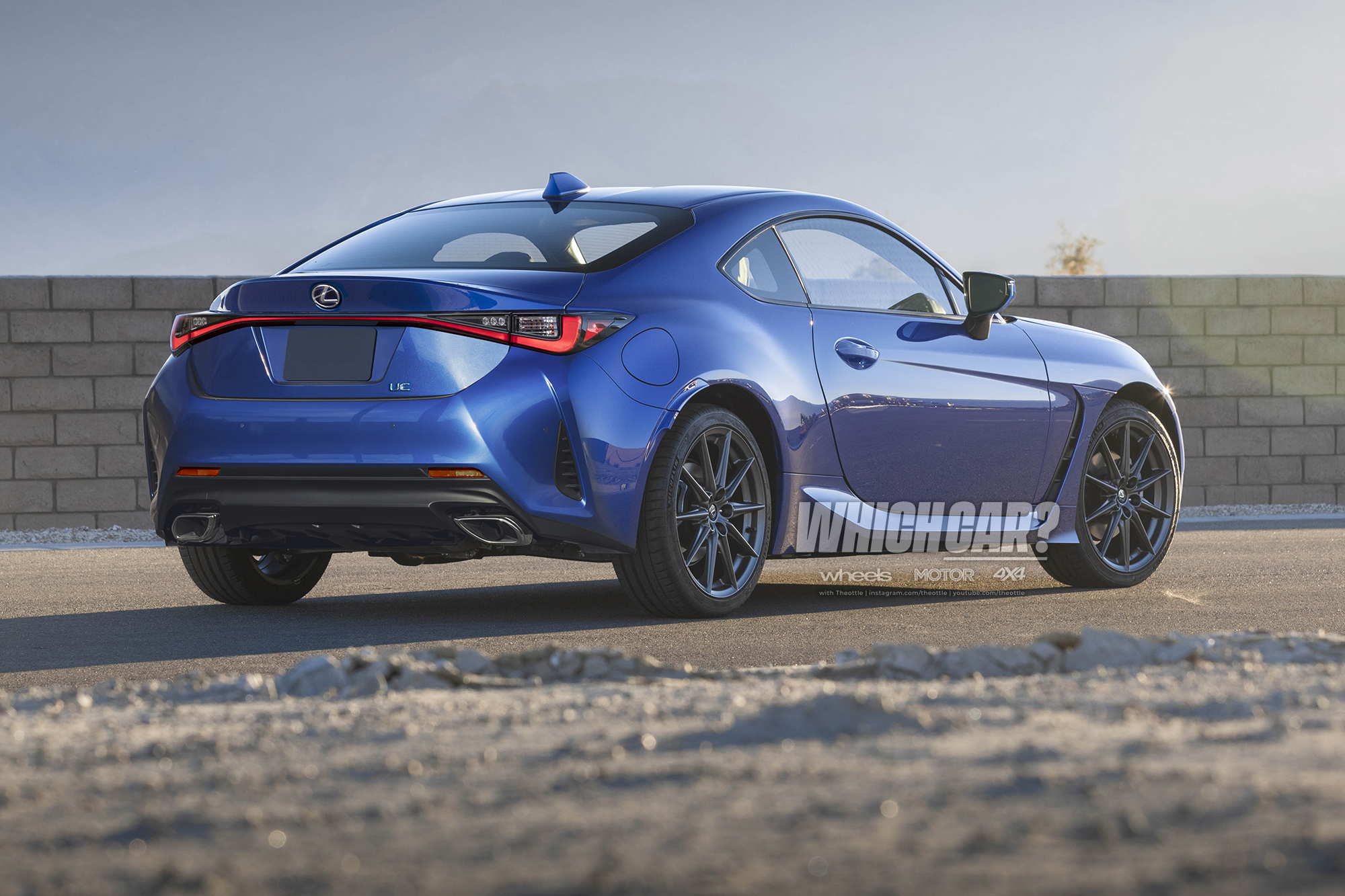
With all of that done, Lexus could retain the 86’s glasshouse and rear sheetwork, keeping costs as low as possible (Toyota’s world-dominating strong suit).
Throw in a more premium interior with upgraded materials and styling, and Lexus could welcome a new generation of buyers to the brand.
What do you think of the potential for a compact Lexus coupe?
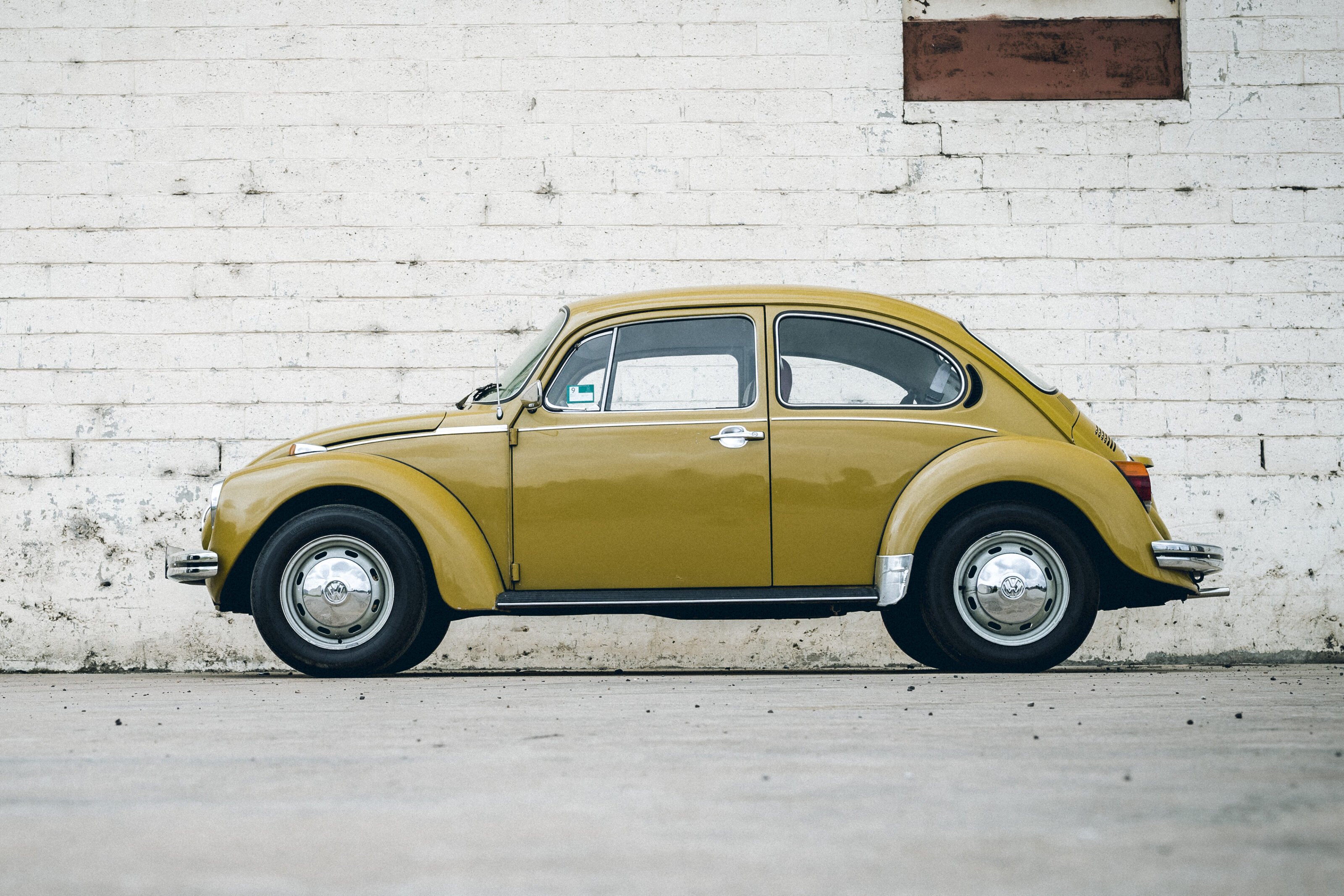
If the point of a ‘modern classic’ is to refocus attention away from traditional automotive icons to more modern machinery, then the Volkswagen 1303 Superbug L (1973-75) sneaks its way in via a loophole. If any VW Beetle was ever going to be deemed modern, or even remotely ‘plastic’, it’s this final development of Wolfsburg’s original Type 1 wunderkind.
With its body swollen and reconfigured to accommodate the engineering required to make it roomier, safer, better to drive and better to crash in, the super-sized Superbug was prepped to face the 1970s like freshly flared denim in an Amco jeans commercial. Except that the Volkswagen take on things was driven by pragmatism, not vanity, and a desire to defy age by keeping on moving. The Volkswagen Beetle of the mid-’70s may have remained faithful to the air-cooled, rear-engined concept, but it was almost a completely different car.
Despite a mass-production heritage stretching right back to December 1945, you might be surprised to learn that Volkswagen had long been a proponent of annual model updates – not superficial, American-style makeovers, but of continual improvement. Throughout the ’50s, the Beetle saw three dashboards, three dramatically different rear window designs, different lights and two engine capacities. And that trend continued in the ’60s while preserving the same huggable Beetle shape.
But what happened in the ’70s made those mostly evolutionary changes seem like a drawn-out practice run for the Gladiator-style fight to the death facing the 1303 Superbug.
Australia was bitten by the Beetle bug early. Sales began in 1953, local assembly started the following year, and by 1960 the Beetle was our number two behind the FB Holden, selling a record 24,388 cars.
America was late to the Volksy party, but once the Beetle earned the Yanks’ affection, the US proved integral in building its enormous sales momentum throughout the ’60s, boosting global Beetle production beyond one million a year in 1965 and ’66, and again in ’68, ’69, ’70, ’71, ’72 and ’73 – topping out at a record 1,291,612 units (in 1971). Kombi aside, though, Volkswagen’s other models were fading, or failing, and brand sales were shrinking (from an historic high of 1.7 million, also in 1971).
It must have been a turbulent period for those making decisions inside VW, preparing for the transition towards water-cooling and front-mounted engines while seemingly providing life support for its number-one seller. But looking back on it, Wolfsburg’s air-cooled old-stager remained strong almost to the end. Annual global production didn’t drop below a million until 1974 (the year the Golf launched), yet it would take the Golf until 2014 to crack a million in one year!
If any VW Beetle was ever going to be deemed modern, or even remotely ‘plastic’, it’s this final development of Wolfsburg’s original Type 1 wunderkind.
Prompted by increasingly strict US design regulations, the Beetle’s modern makeover began in 1971. The 1302 series (badged ‘Superbug S’ in Australia) hacked off the entire front end of the previous 1500 model from the windscreen forward, replacing it with a completely new design. Under the 1302’s bulgy new front lurked MacPherson strut suspension, a reshaped fuel tank to accommodate a new horizontally mounted spare wheel, an 85 percent-larger boot (well, there wasn’t much to start with) and a significantly smaller turning circle (by 1.4 metres).
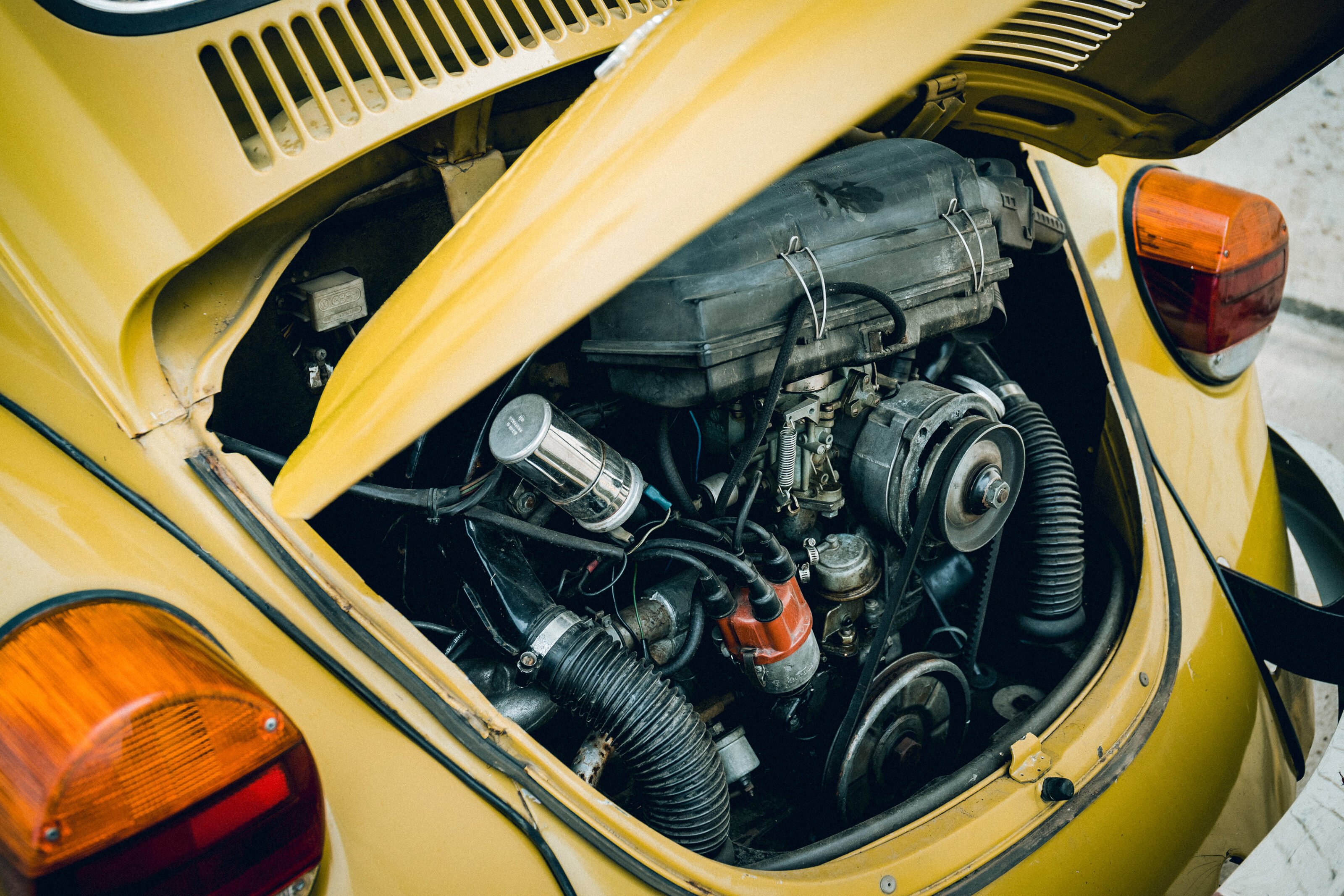
At the other end, the Superbug S (which wore 1302 S badging in Europe, differentiating it from lesser 1302 models with smaller-capacity engines) scored an enlarged 1584cc flat-four and introduced proper semi-trailing-arm independent rear suspension with double-joint axles (while retaining torsion-bar springing), as opposed to the single-joint swing axles of previous manual Beetles.
Lurking beneath the Superbug S in VW’s Aussie line-up, though, was a basic 1300 Beetle (re-introduced as a price leader in 1970), which revived drum front brakes (the 1500 Beetle had debuted dual-circuit discs in ’68), the previous torsion-bar front suspension design and rear swing axles, all of which it retained until its demise in mid-1975. So for much of the ’70s you could effectively choose from two very different Beetles – one significantly superior to the other, but each looking almost identical, badgework aside, to the untrained eye.
The Superbug S was updated in 1972 with a flat-faced four-spoke steering wheel, a column-mounted wiper stalk, an ignition lock, high-back bucket seats, extra engine-lid vents and a slightly larger rear window, but the biggest change happened in April 1973.
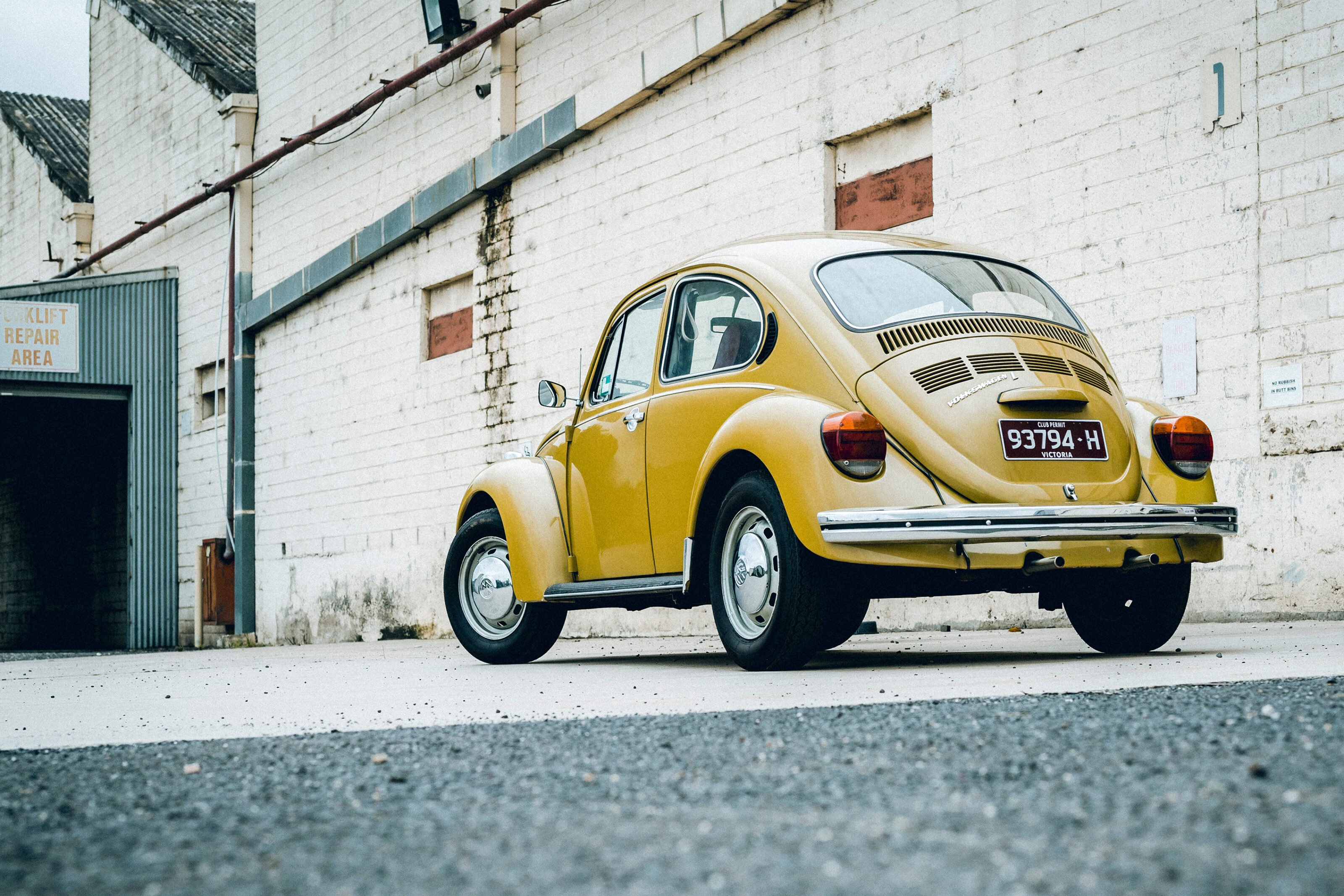
A massively curved windscreen with 42 percent more glass area replaced the marginally curved screen introduced in ’68, and it was joined by enormous ‘elephant’s foot’ tail-lights that could be seen from space. Dubbed Superbug L in Australia (and 1303 S in Europe), this 1303-series Beetle remains the pinnacle of Ferdinand Porsche’s original Volkswagen design.

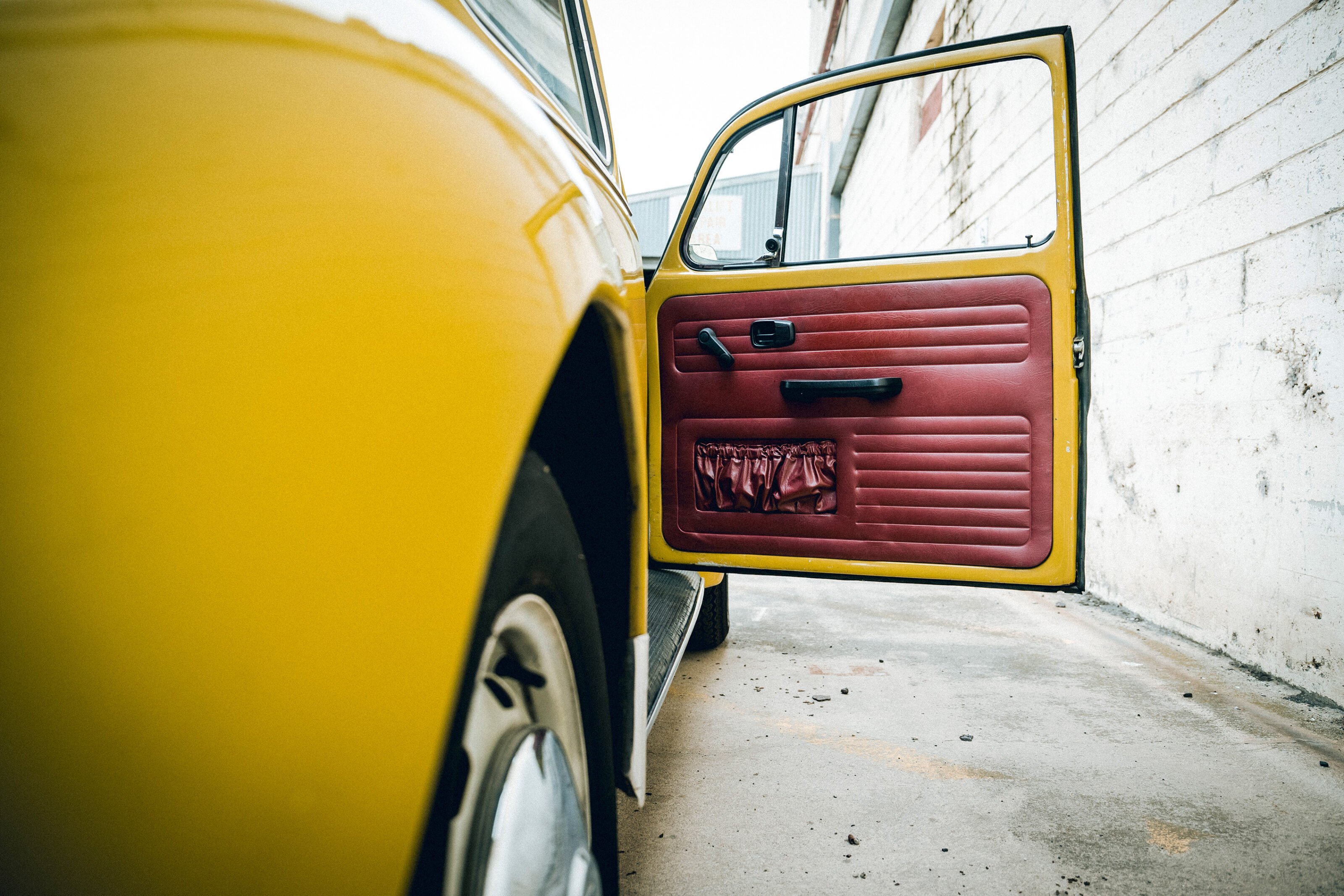
While mechanically identical to the Superbug S, from the inside the ‘L Bug’ had transitioned into modernity. Gone was the flat metal dashboard (unless you bought the povvo 1300, in which case it was the same but cladded in plastic), replaced by an almost conventional padded dash, with side window demisters and just one prominent binnacle for a speedo with integrated fuel gauge and warning lights. This was joined by new rocker switches on the dash, in conjunction with the twist-to-operate plastic knobs and other plastic fittings that had slowly infiltrated the Beetle’s cabin since the ’68 1500.
Unlike the build perfection of earlier all-metal Beetle interiors, though, the L Bug’s dash plastics don’t seem to resist age so gracefully, and even a pampered example like this Martini Olive ’74 model can appear slightly ill-fitting. But it only takes one stint behind the wheel to realise the Superbug L is much more determined to remain on this earth in other areas, while keeping you alive with it.

You sit quite high in the narrow L Bug, exacerbated by the huge screen ahead that diminishes any ‘poor person’s 911’ fantasies. But once the driver’s blood is up, the Superbug proves far removed from the quirks and dynamic foibles that blighted Beetles of old. Its steering feels slower and heavier (there’s a full extra turn lock-to-lock, courtesy of a much tighter turning circle), yet there’s a feeling of planted precision – both in the way the Superbug points and how it sits on the road – that encourages you to keep pushing harder.
Obviously, physics win out at the end of the day, and having an engine mounted behind the rear axle is only ever gonna end one way – the 1302/1303 is no 992 911! But compared to the often dramatic snap-oversteer of the past, the semi-trailing-arm Superbugs were responsive, predictable and safe.
To its credit, VW maintained the dynamic rage right to the end. In 1974 the Superbug L scored updated front suspension with ‘negative scrub radius’ geometry, as well as an alternator, a shorter fuel pump, paper air filter and Porsche-style clutch. Then, in June ’75, the final batch of German CKD kits arrived for the Superbug L with new rack-and-pinion steering and bumper-mounted front indicators. And it’s this farewell 1303 model – the final development of a 40-year-old design – that remains both the finest to drive and one of the rarest. Five months later, the Superbug was no more.
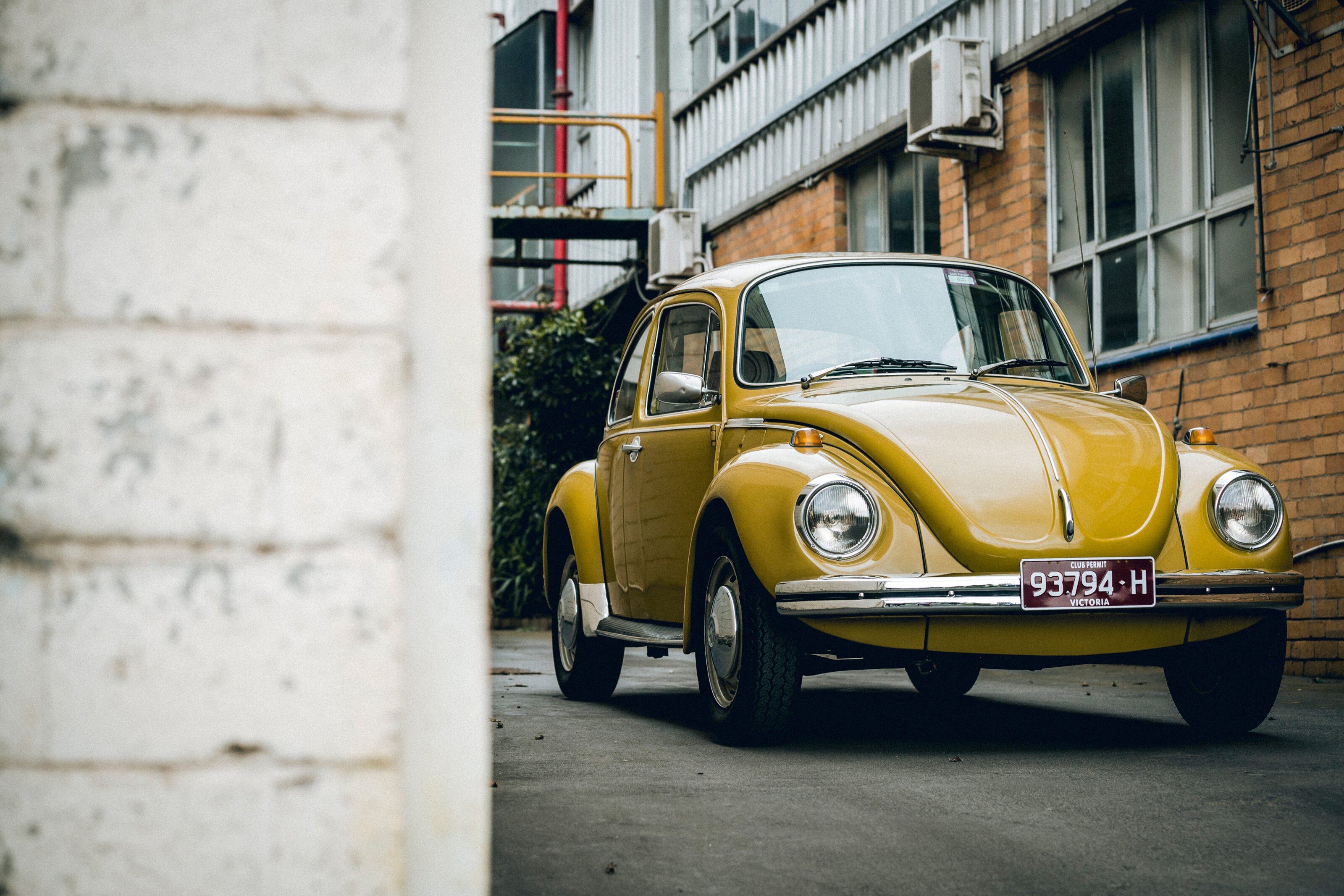
Of course, one of the great things about Volkswagen Beetle ownership is that so many have gone before, and so many know how to make them better, or faster, or simply keep them running. They’re a specialist design that requires specialist service, but if you’re mechanically literate you can easily perform basic maintenance yourself with the correct tools.
A decent set of tyres, some quality shocks (like Koni Classics) and, most importantly, some extractors to let the all-alloy air-cooled engine breathe can make any good-condition Superbug an effortless, rewarding and charismatic car to drive briskly. VW’s flat-four may not be a revver (unless heavily modified!) but its torque and astounding tractability remain a breath of fresh air, so to speak, even in 2021.
Compared to the often dramatic snap-oversteer of the past, the semi-trailing-arm Superbugs were responsive, predictable and safe.

In my humble opinion, you can look at the 1302/1303 Superbugs two ways. You can acknowledge the advancement of an antiquated design while perhaps dismissing the dilution of its design purity, or you can view it as arguably the world’s first post-modern car.
Not only did it take a charming, if ancient, car that was loved by millions and evolve it to the cusp of modernity, but it managed to do so with a radically different body shape that was somehow the same. The 1303 Superbug L became the blueprint for every iconic German car to this very moment, from progressive Porsche 911 generations to Volkswagen’s now-iconic Golf, the Audi TT, Audi Quattro and particularly the Mini. Retaining the essence of the past but making it work for the present, over and over again.
You’ll never drive a Superbug L 45 years hence and think it feels modern, but it doesn’t feel like a 1930s design either. In fact, it’s very much a car of the ’70s, albeit one finessed to within an inch of its life. And while the final Beetle may not be as pretty as an unadorned original – few classic cars are – it’s by far the finest of its breed.
1973 Volkswagen Superbug L facts
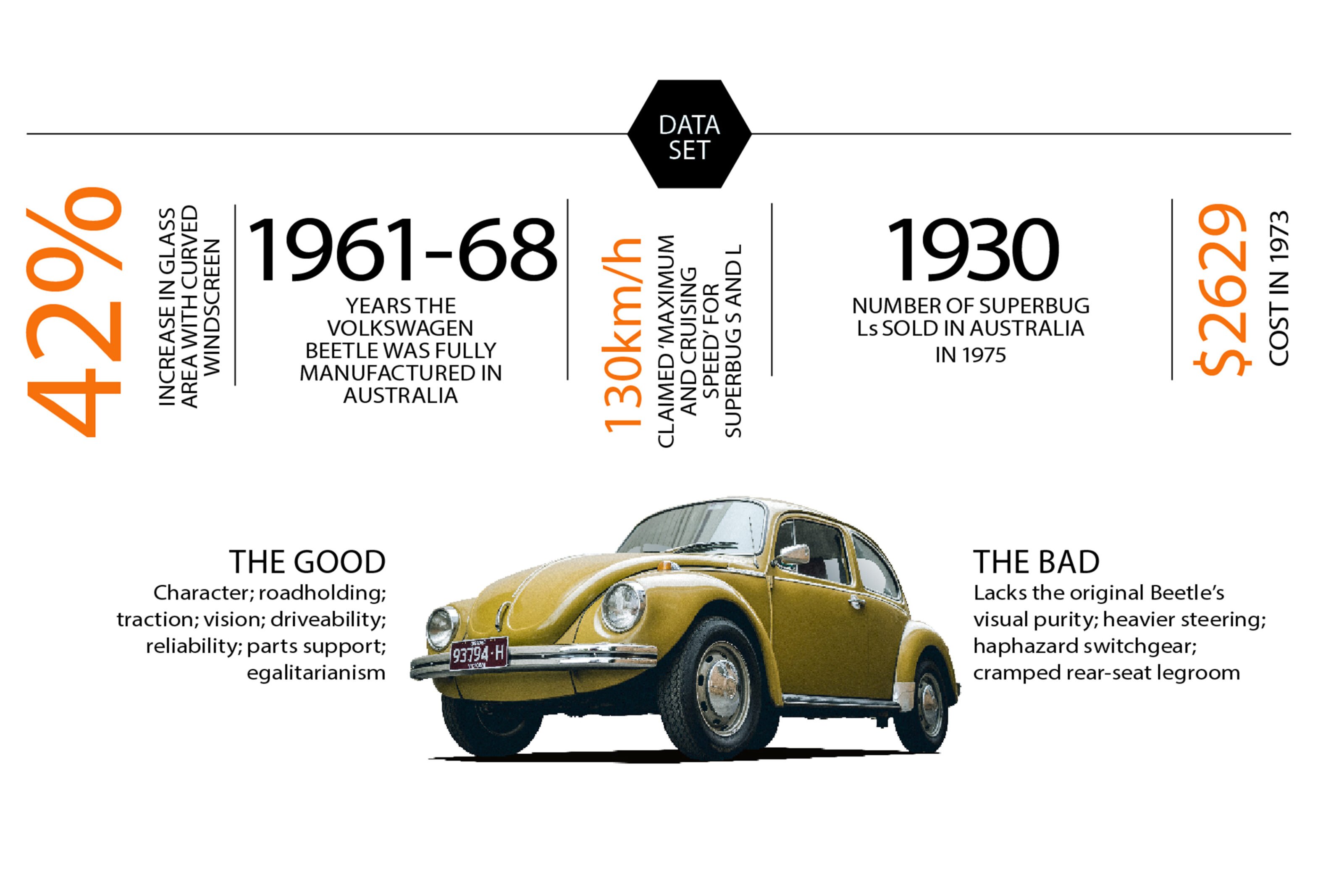
Fast Facts
DIFFERENT STROKES
Dimensional differences between the curved-screen Superbug L and the older-bodied 1300 base model were considerable. Not only did the L Bug have a much tighter turning circle (9.6m versus 11.0), it had a longer wheelbase (by 20mm), wider tracks (up 76mm front, 12mm rear), greater overall length (by 51mm) and additional weight (68kg more). It was also quicker (0-80km/h in a claimed 12.5sec versus 14.0), 6km/h faster and 1.3L/100km less economical.
NOT THE END OF THE LINE
While the Superbug L was the final development of the Beetle, it wasn’t actually the final Beetle. That distinction belongs to the 1976 ‘1600 Beetle’, still assembled from a CKD kit in Clayton, Victoria but comprised of a motley collection of parts. It mixed the 1300’s flat-screen body, flat plastic dash and torsion-bar front suspension with the Superbug’s 1584cc engine, front disc brakes and semi-trailing-arm IRS.
1973 Volkswagen Superbug L specifications
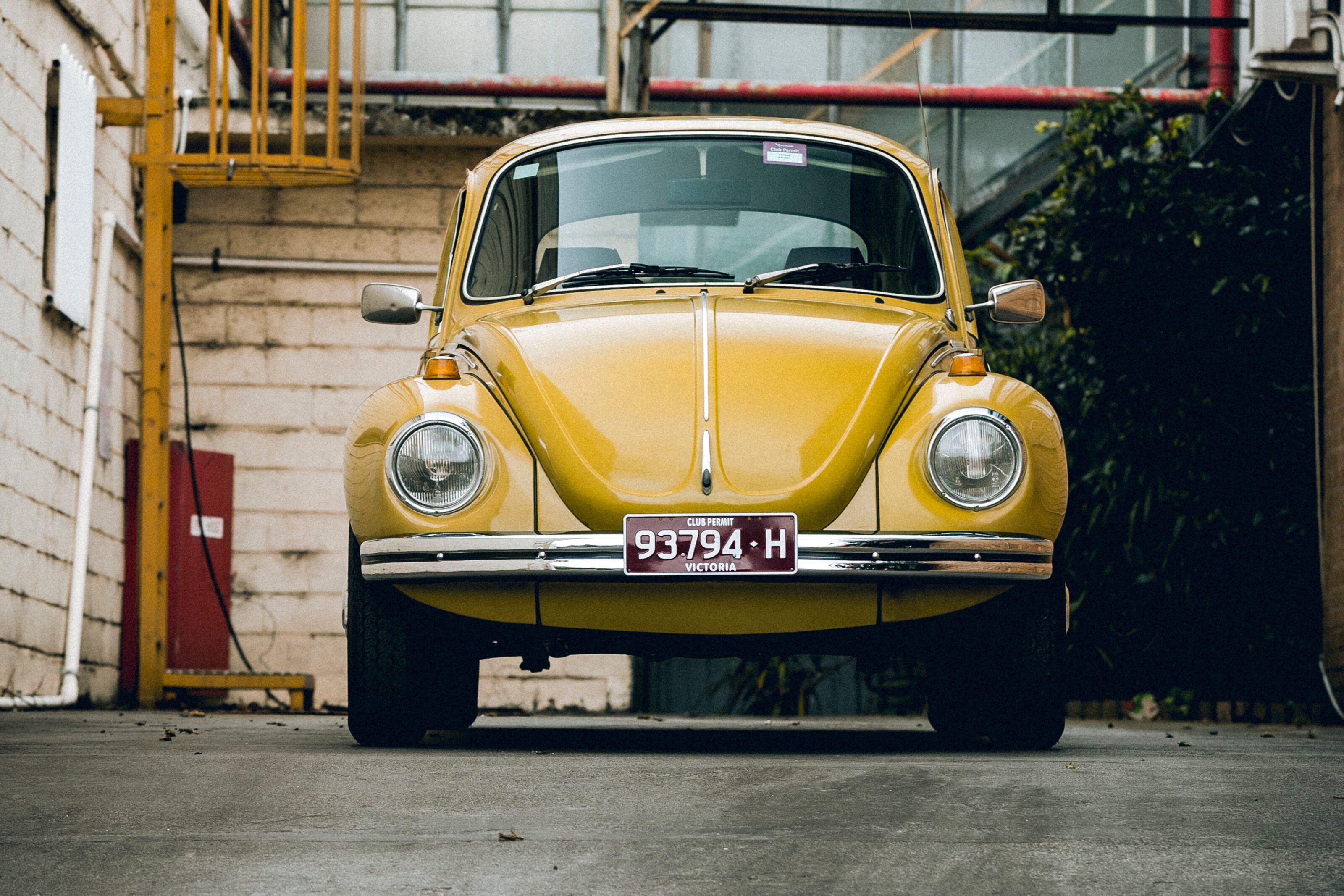
Engine 1584cc flat-4, ohv, 8v Max Power 45kW @ 4400rpm Max Torque 106Nm @ 3000rpm Transmission 4-speed manual Weight 890kg 0-100km/h 16.7sec (tested – May ’73) Economy 8.4L/100km (official claim) Price (now) $8000-$18,000
Forgive the sweeping aspersion but, if you delve beneath the black jackets, boat anchor chains and mountains of tattooed steak, you’ll probably find that most nightclub bouncers had career aspirations more fulfilling than standing in a dark alley, admitting patrons based on the length of their skirts.
After their planned path to a role as the Prime Minister’s detail was curtailed by a minor drug charge, the cascade of failures likely continued crashing down through police force selection, protective services officer academy and the 7-Eleven online security test like a marble through KerPlunk straws.
But standing outside a seedy joint scanning ID until 3.00am is not, by any means, the only role filled by people who dreamed big but fell short – including motoring journalists. While they will rarely admit it, a lot of people who write about cars as their day job secretly think they once had what it takes to be a racing driver.
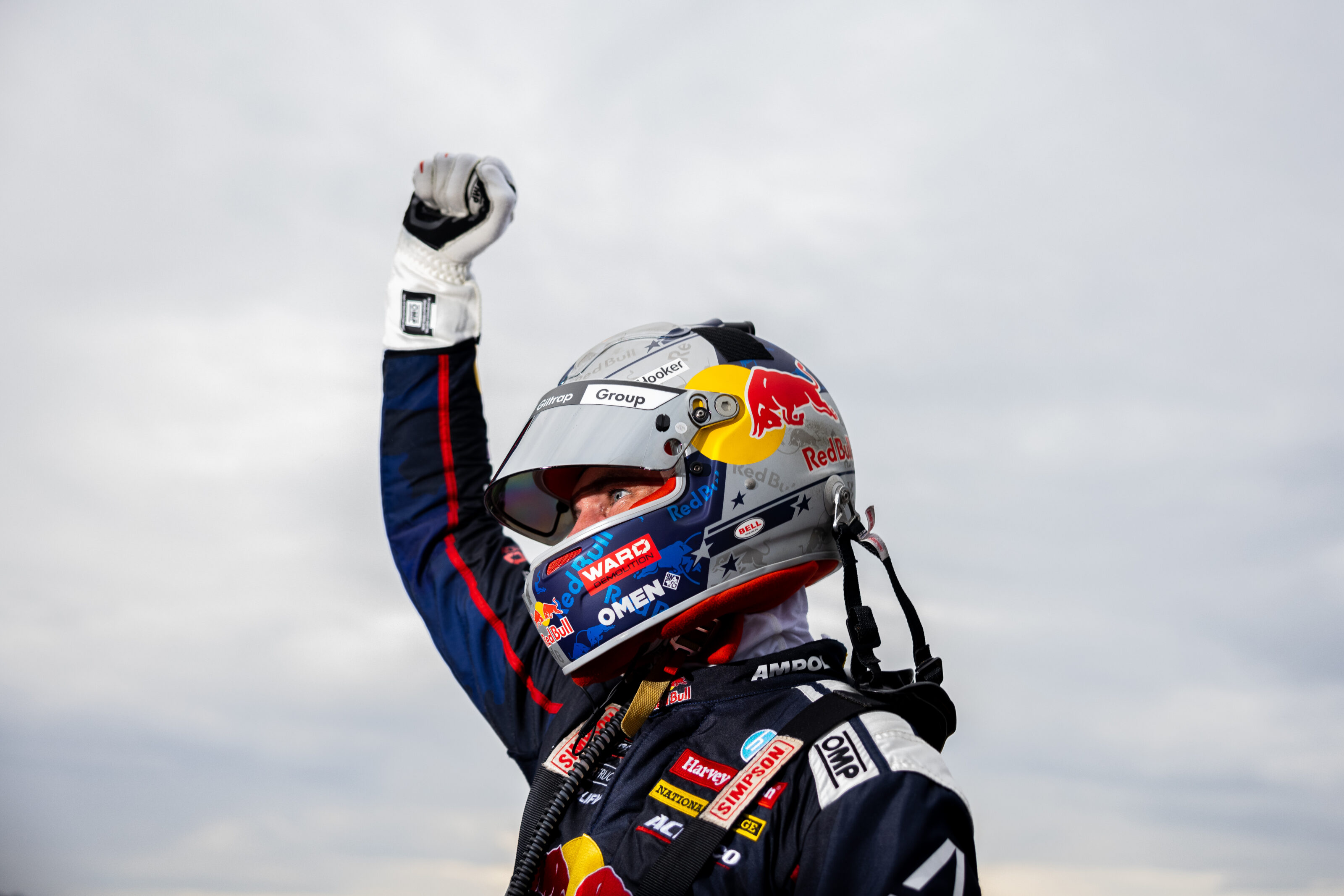
With the exception of a few who do seem to have spent years on circuits including our own Newman and editor Enright whose Nurburgring lap-count is dizzying, many found a career with a pen in their hand only because the Nomex glove didn’t fit.
Not me though. I realised early on that Nigel Mansell leaves more driving talent in his hankie every time he blows his nose than I’ll ever possess, and that Jenson Button was destined to be the racing golden boy of my home county Somerset. That’s why I moonlighted as a mechanic and engineer before this role.
So imagine my surprise and horror when I recently found myself strapped into a 600kg, 200 horsepower Polaris RZR Turbo about to start a 200km off-road endurance race in the first round of the SXS Australia Championship.
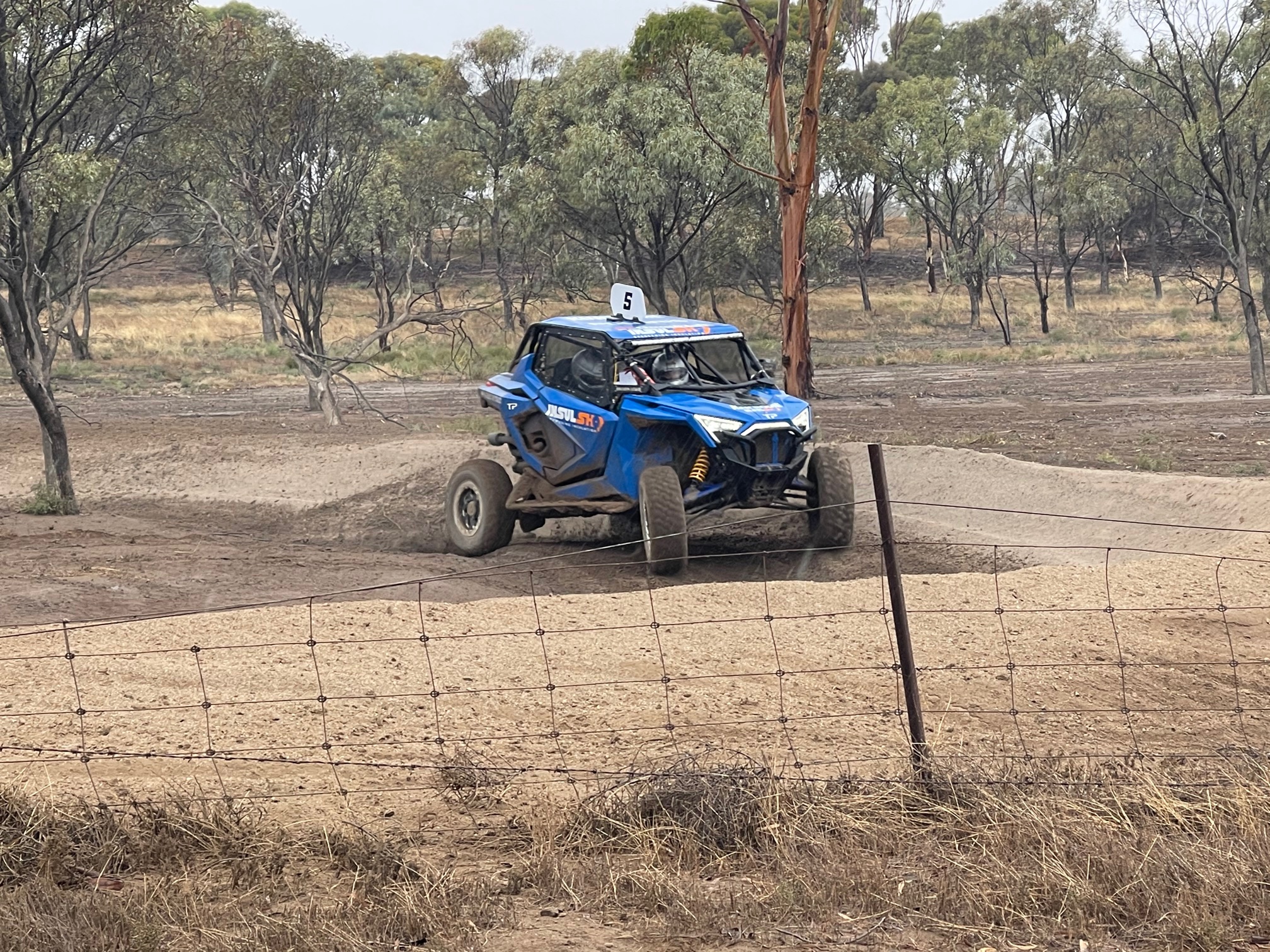
It took about 200 metres to confirm my suspicions that this would be a deeply uncomfortable experience – imagine being kicked around a desert in a large gridiron helmet while someone shovels sand into your face and you’re about half way there. And that’s when the conditions are favourable.
Throw a little rain into the equation as it did in the latter half of the race and the talc-like dust turns into dense clay that temporarily binds to the Kevlar Bridgestones before being thrown ahead of the car at high velocity, creating your own self-generated perpetual hailstorm of mud and hell.
Get behind another competitor and their flailing tyres will fire enough dirt at the radiator to cause a serious engine problem within seconds, and catch a jump or dip slightly wrong and the incredible suspension will turn on you like a rabid malamute, flipping the vehicle on its roof.
Oh, and there’s no windscreen, which means you have to wipe the helmet visor with the frequency of a windscreen wiper but with a rag that simply collects grime and makes matters worse.
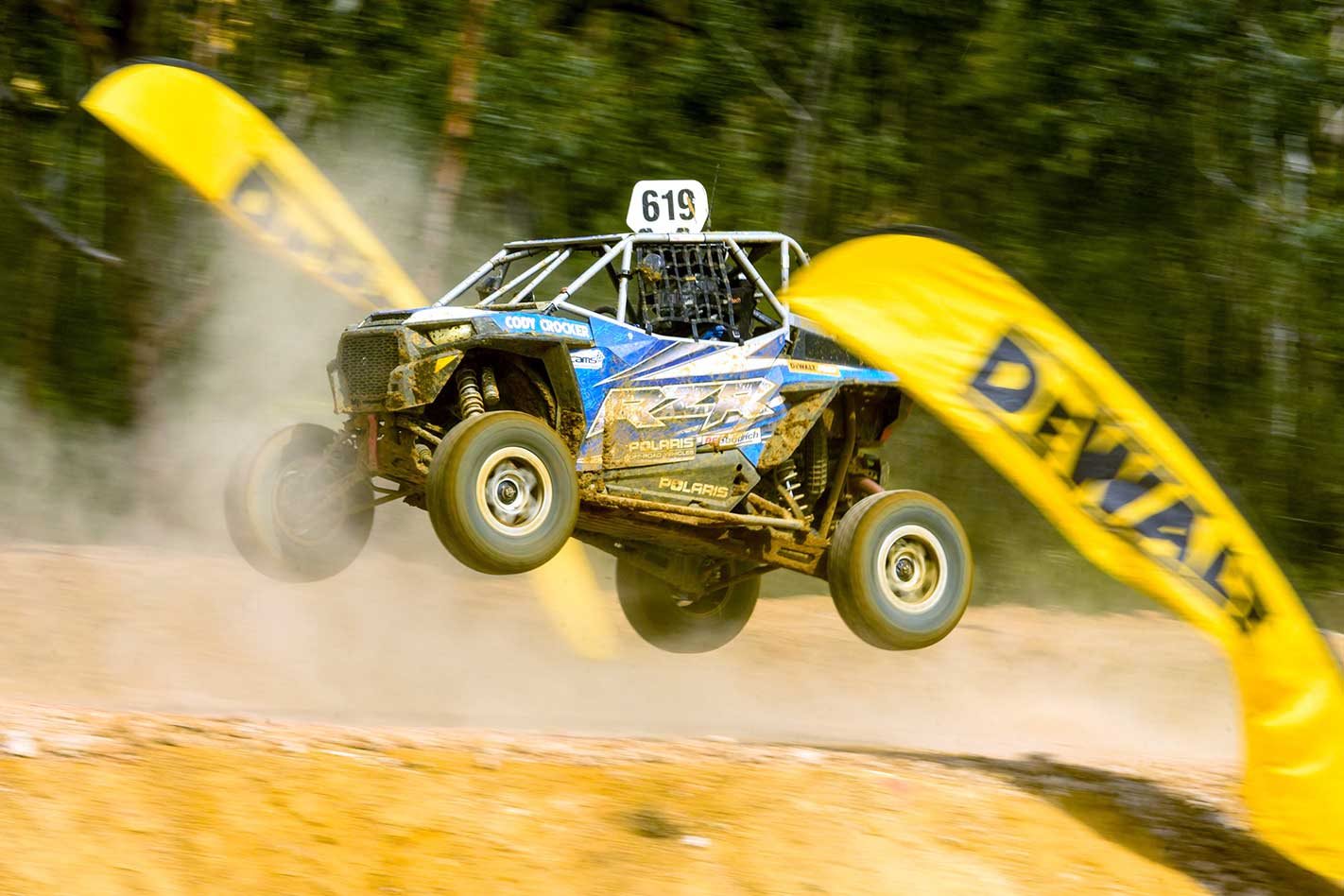
The urge to pull over and go to sleep is extraordinary except, as a final torturous twist, I didn’t have that luxury. You see, I wasn’t actually driving and, in a moment of extraordinary weakness, I had agreed to embark on this highway to Hades as a co-driver.
There have been times in my career when I have enviously watched blistering racing cars carving corners of amazing circuits and attractive young men spraying each other with champagne on podiums but, in this moment, not only was I sure I could never have been a racing driver, but I was very glad I didn’t even try.
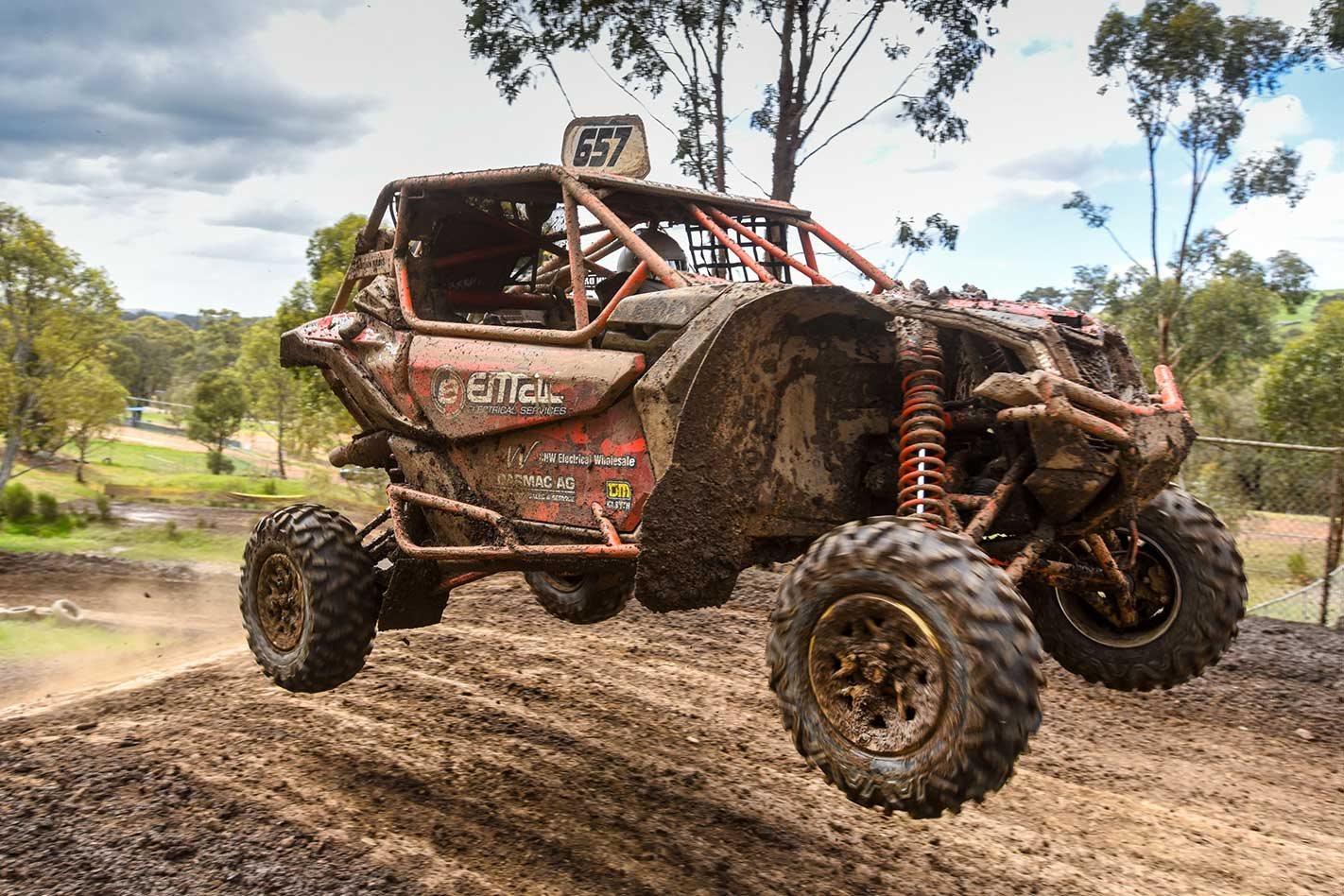
There is only one thing more frightening than being driven at 160km/h over terrain that could bog a Toyota Hilux with vision so poor I couldn’t read my pace notes 12 inches from my face, and that’s knowing the driver can’t see anything either. Actually there is now one other thing – meeting a bouncer that reads MOTOR.
Since my fleeting motorsport foray I have a renewed respect and admiration for professional racing drivers – including the one who safely drove me through the chequered flag after two hours of unforgettable discomfort, but the role has just slipped one spot down the best jobs ranking and now sits behind motoring writer and fighter pilot.
Snapshot
- Haval H6 to welcome hybrid version later in 2021
- GWM Group’s EV subsidiary Ora under consideration for 2022 arrival
- Model 3-rivalling concept sedan from GWM also on the cards
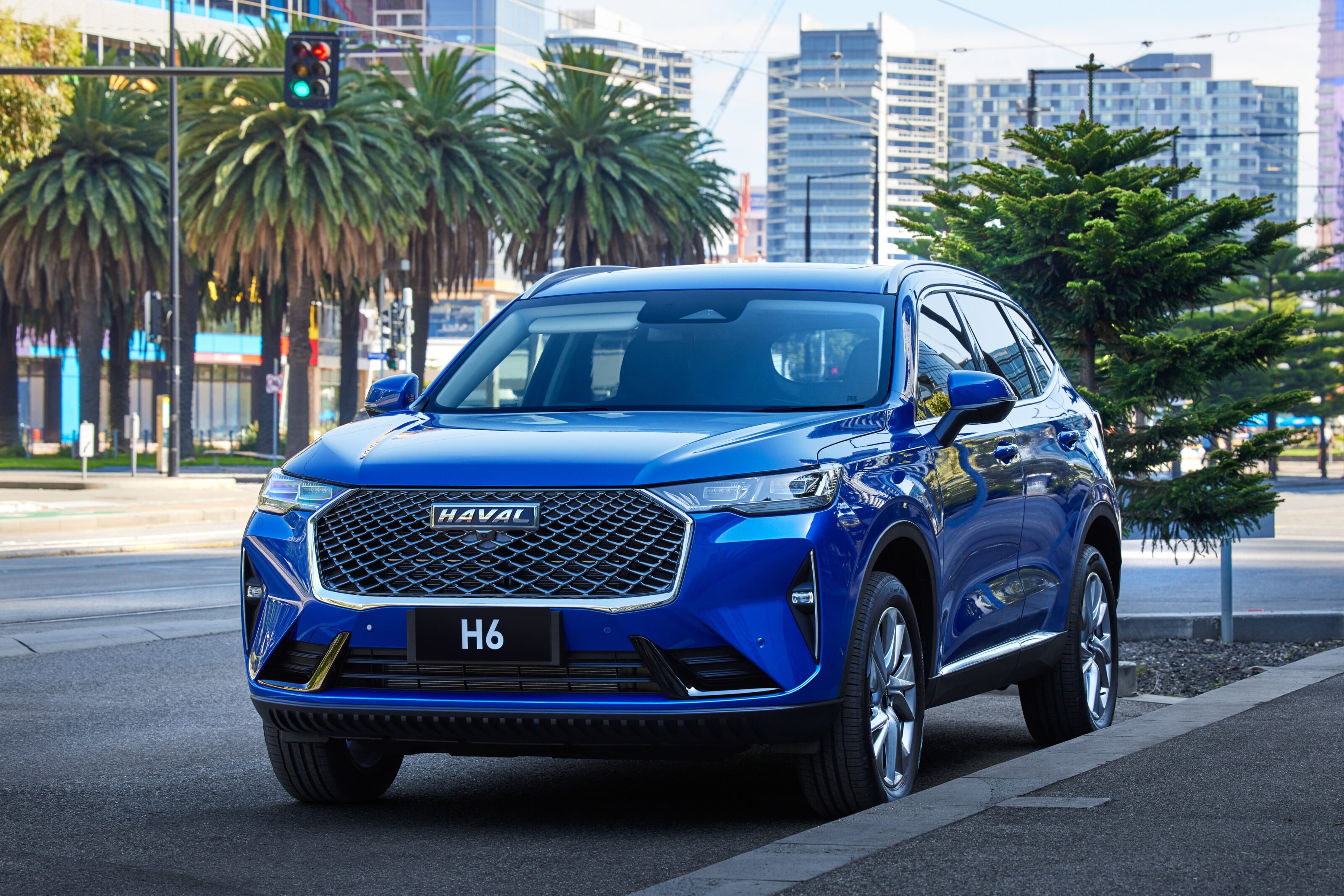
Great Wall Motors’ local electrification strategy will kick off with a hybrid Haval H6 due later this year, laying the groundwork for the Ora EV range it says could be here as soon as 2022.
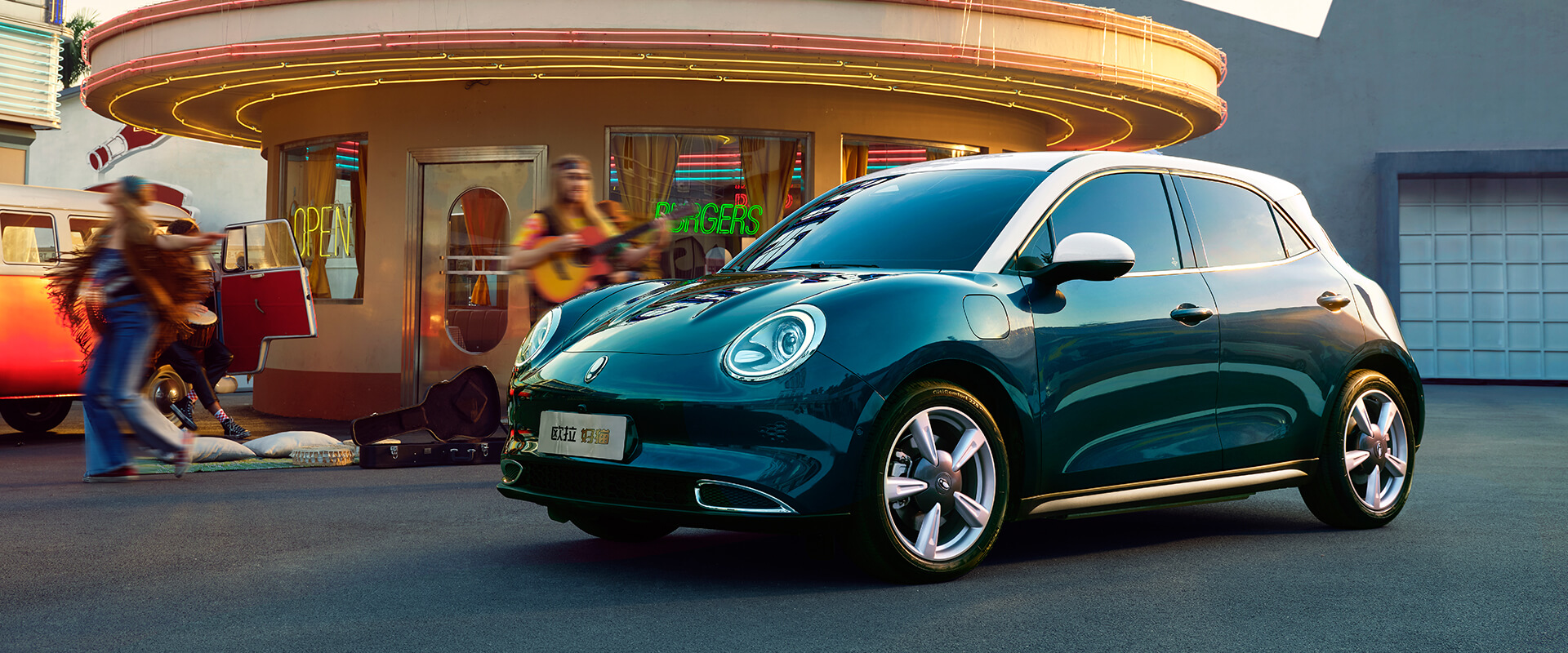
The Ora brands, which sits under the GWM Group’s umbrella alongside Haval, produces the intriguingly named Good Cat city car, Lightning Cat concept sedan and Punk Cat – which is a retro-inspired VW-Beetle lookalike.
“The Good Cat is already on sale [in China],” GWM marketing boss Steve Maciver said. “That’s a car on sale in China for less than the equivalent of AU$35,000 today.”
“So there may be a chance we can bring that car to Australia at a very attractive price, and that’s what we’re trying to do, but there’s still work.”
Maciver says the New South Wales Government’s recently announced EV incentives might help bring forward Ora’s arrival.
From September this year, EV buyers in NSW are eligible for significant incentives in the form of subsidies and waived stamp duty, while the Government has committed to invest $171m into EV infrastructure.
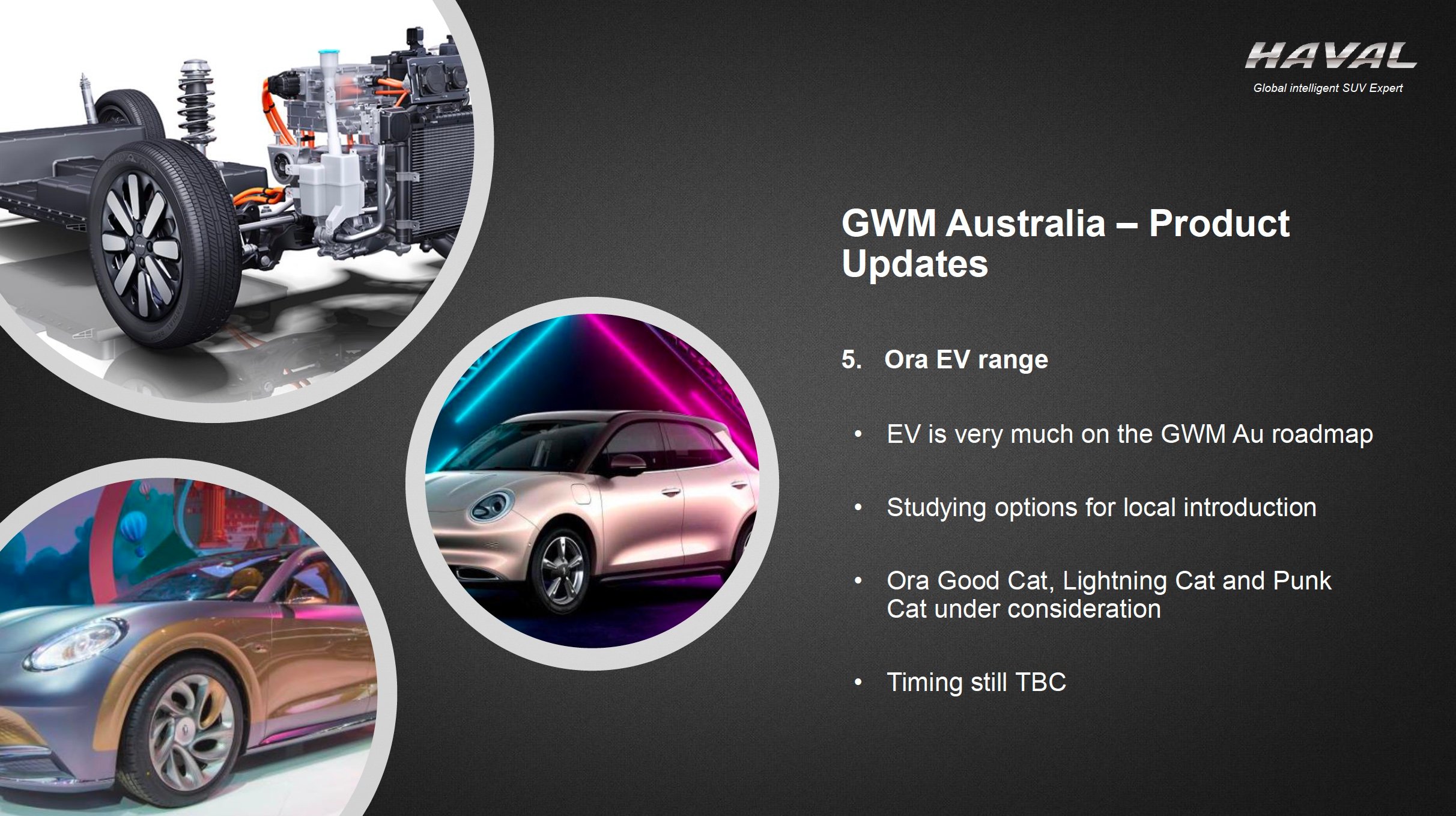
The Ora Good Cat, known as the Haomao in the Chinese domestic market, packs a single motor driving the front wheels with 107kW and 210Nm. It has two batteries offering either 401 or 501 kilometres of range.
Reports say the Good Cat includes adaptive safety technology with autonomous driving in mind. And the Good Cat isn’t the only EV under consideration, with a larger sedan called Lightning Cat also poised to take on the Model 3.
“The Lightning Cat is another one of those concepts revealed at the Shanghai Show, and it’s close to production-ready,” Maciver said. “And again we have our hands up.”
In the meantime, the Haval H6 Hybrid will be hoping to snare market share from rivals like the popular new Toyota RAV4 experiencing supply delays.
Maciver says the H6 Hybrid will be “priced competitively” and arrive at an “upper spec” level in the H6 range, which begins at $30,990 drive-away for the 2WD Premium.
Haval will build the H6 Hybrid at its Thailand plant recently bought from General Motors, which once produced the Holden Colorado pick-up ute.
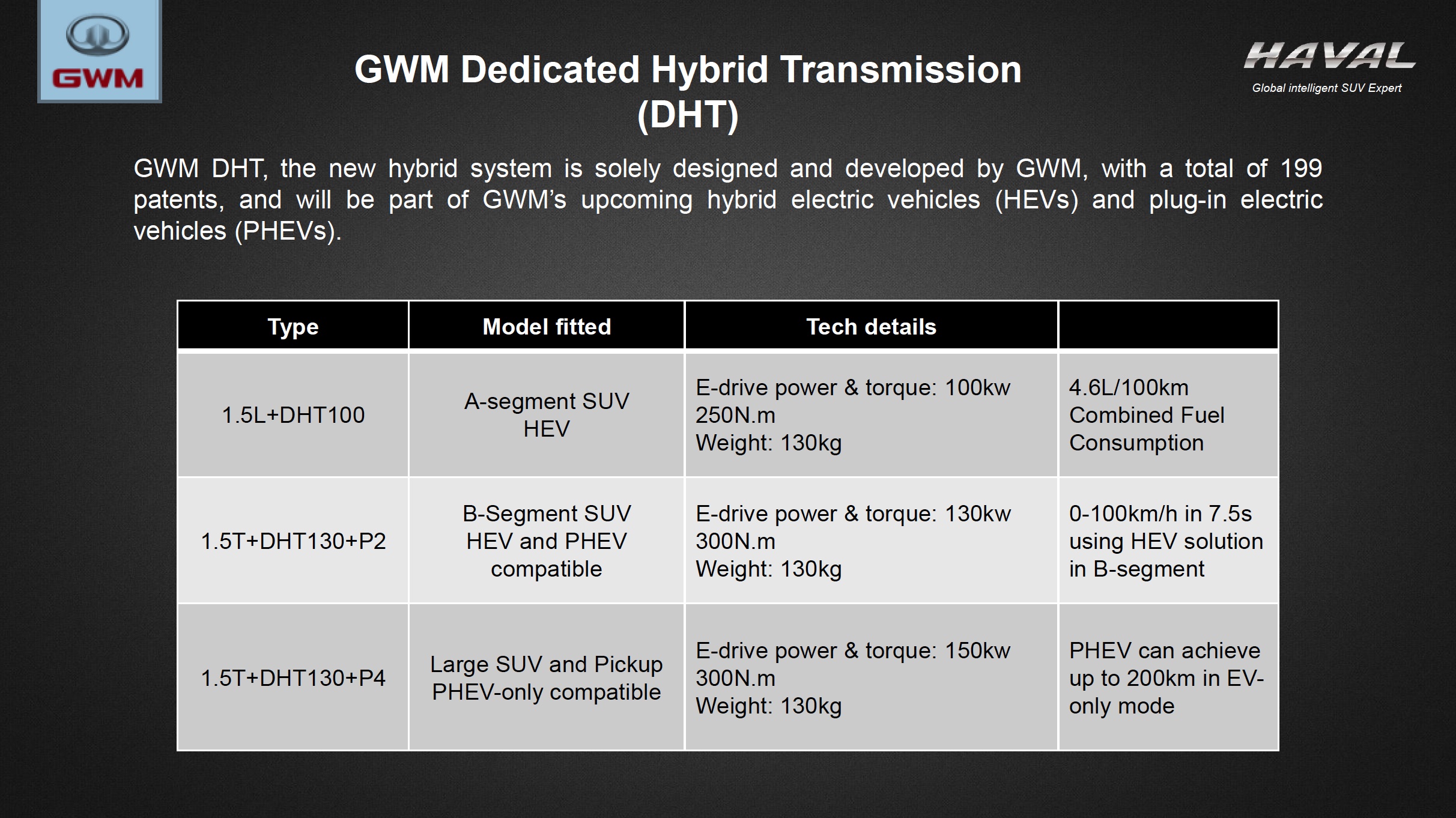
GWM Haval has filed 199 patents on the hybrid system under the H6, which is scaleable to work as either a plug-in or pure hybrid, front or all-wheel drive and across the GWM model range.
The H6 Hybrid on its way will feature a 1.5-litre turbocharged petrol engine and a Dedicated Hybrid Transmission featuring 130kW/300Nm of electric output and a two-speed motor.
This variant is claimed to hit 100km/h from rest in 7.5 seconds, achieving a combined output with a combustion engine for 180kW and 530Nm.
The H6 Hybrid can also drive on electric power alone. While the hybrid system is available for large SUVs and even pick-up utes, it is not a consideration for Australia in the meantime.
Less than a month after being officially unveiled to the world, the new Toyota LandCruiser 300 Series has found its way into Dubai’s fleet of law enforcement vehicles, well ahead of its on-road release.
The most populous city in the United Arab Emirates has scored at least two of the new LC300s, one for its police department and another for the Civil Defence Forces, both believed to be powered by the turbocharged 3.5-litre V6 petrol engine which isn’t going to be available in Australia for now.
Although unlikely to be the fastest car in a fleet which includes McLarens, Ferraris, Lamborghinis and a Bugatti Veyron, the LandCruiser should be one of the more capable vehicles off-road, having lost 200kg over its 200 Series predecessor but retained the same departure and approach angles.
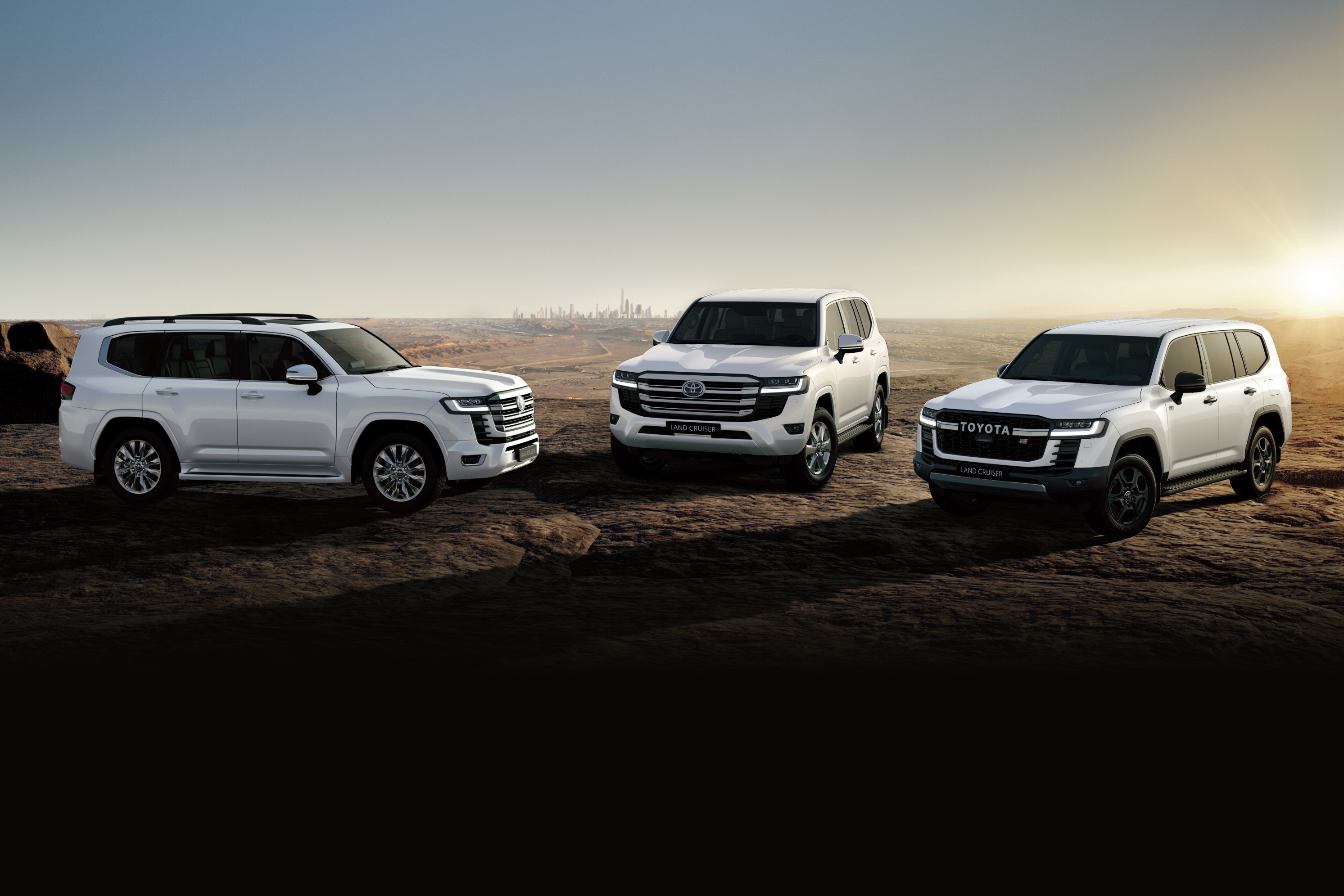
The reveal of the two law enforcement LC300s coincided with Toyota UAE’s delivery of the first 50 units to customers, being greeted with fireworks and an escort from both Dubai Police and Civil Defence.
Toyota seems to have a strong relationship with the Middle Eastern market at the moment, given it was the brand’s Bahrain arm which was the first to tease the official arrival of the LC300 in a Twitter post earlier this month.
When the LC300 arrives in Australia towards the end of the year, it will be powered by a 3.3-litre twin-turbo V6 diesel, the 227kW/700Nm donk replacing the 4.5-litre V8 engine which was available in the LC200.
Featuring a 10-speed automatic gearbox, the LC300 is full of updates over the outgoing model thanks to its new TNGA platform, including a new multi-terrain monitor and select system – allowing the driver to judge the road surface and change the vehicle’s driving modes accordingly.
Snapshot
- GR 86 will debut at Goodwood’s Festival of Speed nine years after its predecessor was fanged up the hill climb
- FOS will play host to several new cars including BMW’s next 2 Series and Genesis’s G70 Shooting Brake
The 2022 Toyota GR 86 will make its dynamic debut at the 2021 running of the Goodwood Festival of Speed (FOS).
Succeeding the celebrated GT 86, the new Japanese two-door sports coupe will be feature at Goodwood this year after the popular event was cancelled in 2020 due to the Coronavirus pandemic.
However, unlike its predecessor which launched back in 2012, the GR 86 will take to the hill climb with a fair bit more firepower than the GT 86’s middling 152kW and 212Nm.

Thanks to a higher displacement 2.4-litre boxer four-cylinder engine, the GR 86 produces 173kW and 250Nm, which is a significant bump in performance.
Couple the added oomph with a kerb weight claimed to be five kilos lighter than its forebearer (1270kg), performance-oriented 215/40 Michelin Pilot Sport 4 tyres, and a claimed 50 per cent increase in torsional rigidity, and it isn’t hard to imagine the new Japanese sportscar will be a fair bit quicker than the car it replaces.
The GR 86 is also a full 1.1 seconds quicker than the GT 86 to 100km/h, with the new car making the sprint in a respectable 6.3 seconds.
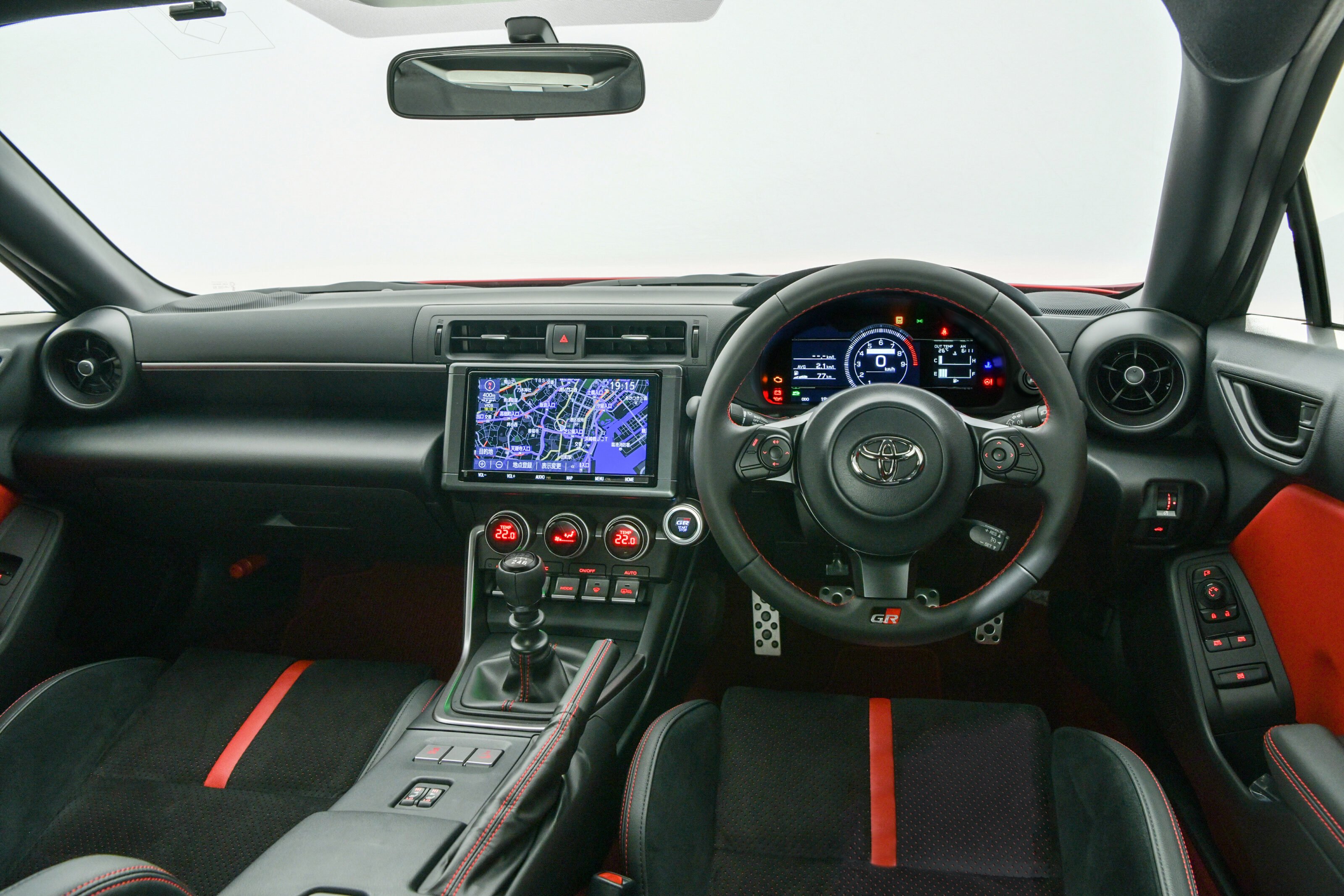
Toyota’s latest sportscar won’t be the only new product making its debut at Goodwood this year either.
BMW’s all-new 2 Series is also expected to make an official appearance, as is Genesis’s gorgeous G70 Shooting Brake and Polestar’s futuristic Precept concept.
Motor will bring you more updates about the upcoming 2021 Goodwood Festival of Speed as we get closer to the event’s launch on July 8.
Snapshot
- Adam Paterson named as new MD u2013 will start from July 1
- Comes to our shores from firm’s Canadian arm
- Replaces current MD Stephen Lester
Nissan has announced Stephen Lester is to step down as the carmaker’s Managing Director for the region, with fellow Nissan executive Adam Paterson to take the helm.
Paterson, currently director of marketing at Nissan Canada, will assume control of the Oceania region from July 1.
According to the Japanese marque, Paterson has strong leadership experience from his previous role as Managing Director of Infiniti Canada – a role that Lester had also previously occupied.
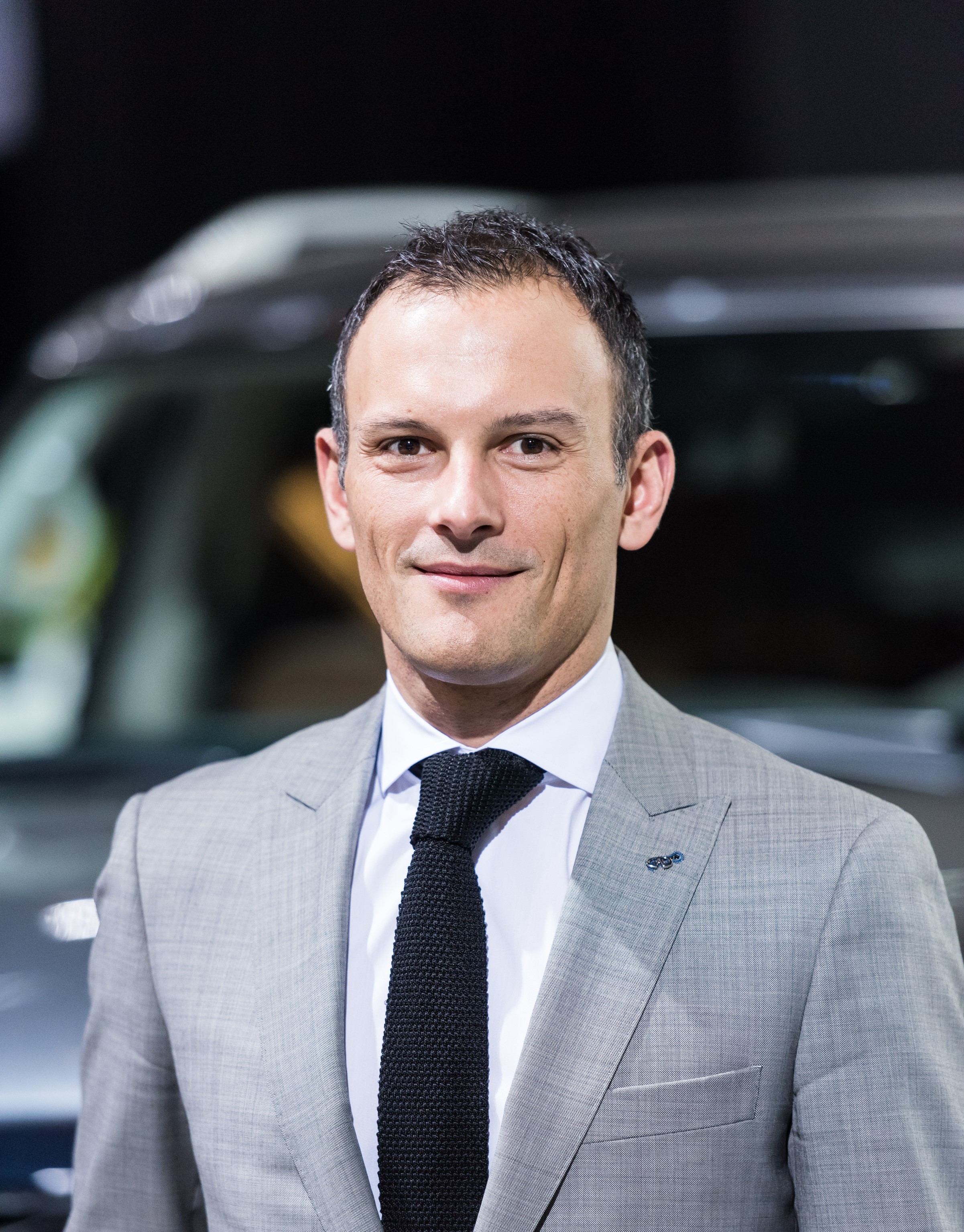
Over the past ten years, Paterson has held a number of roles throughout Nissan and Infiniti Canada including; marketing, sales operations and dealer operations.
He was also regional general manager in Western Canada for Nissan where he was responsible for regional marketing, distribution, dealer network development and financial controls.
The new MD will be based out of Nissan’s Australian headquarters in Melbourne.
Stephen Lester, Nissan’s current Managing Director for Australia and New Zealand, has been in the post since September 2017.
With no new role within Nissan announced, the company has been tight-lipped about the reasons behind Lester’s departure, except to thank him for his service.
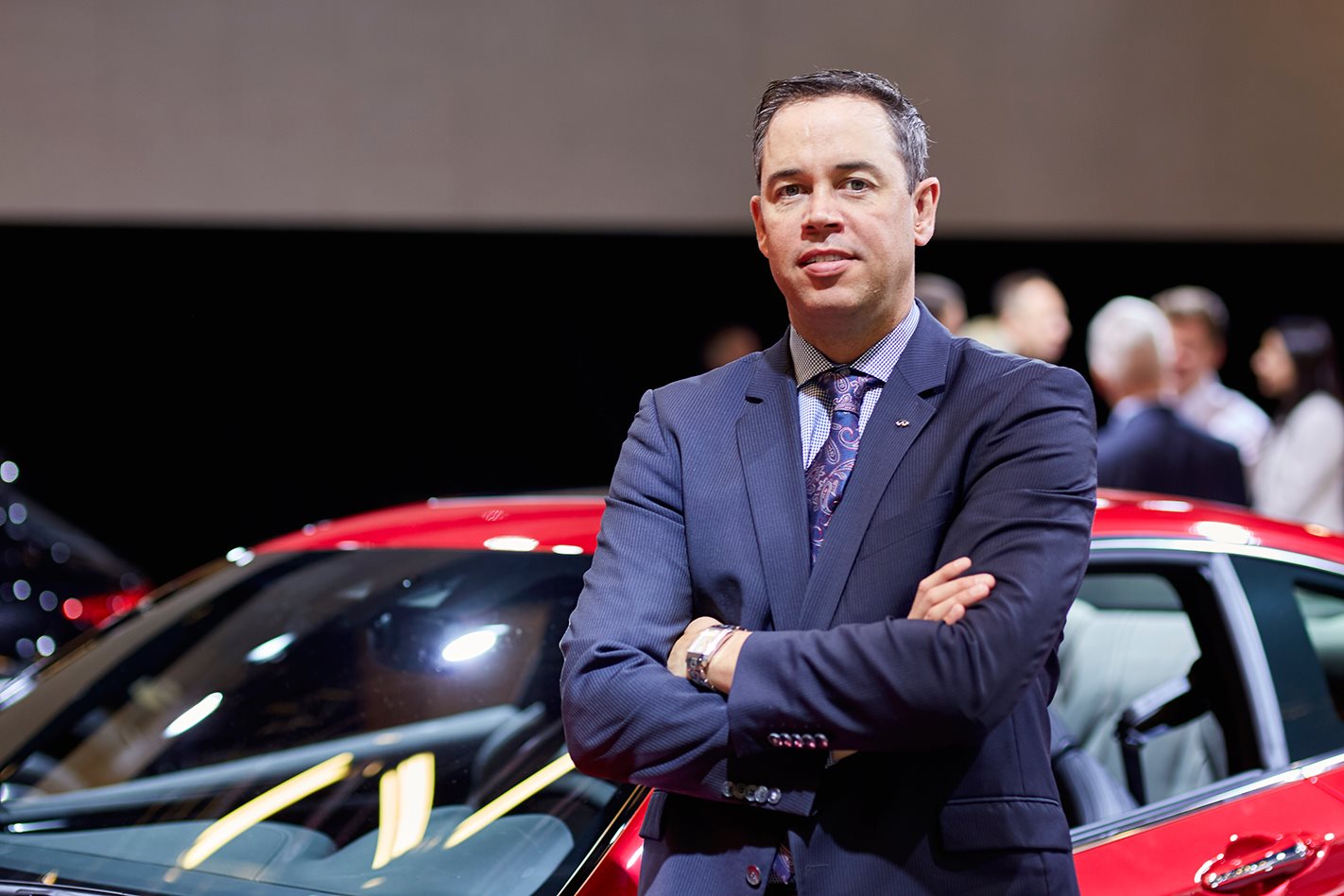
“[Lester’s] leadership has contributed to the success of Nissan Australia and New Zealand and we thank him for his contributions. Mr Lester’s future career plans will be announced in due course,” the company said in a statement today.
Lester came to the local arm in 2017 off the back of former CEO Richard Emery parting ways with Nissan at a time when the brand was struggling with slowing sales and an ageing line-up.
Lester’s previous experience included a tour as Managing Director of Infiniti Canada, along with regional management and brand marketing positions with the BMW Group, including two years’ development with BMW AG handling exhibitions, motor shows and the management of international branding initiatives.
At the time, head of Nissan Asia and Oceania, Yutaka Sanada, said: “Stephen Lester’s arrival at Nissan Australia coincides with our plans for the brand’s next direction and he brings to our Australian team strong experience, knowledge, and business-building skills.”
Less than a year after he joined the local arm of the manufacturer, Lester announced the firm would be pulling out of the Supercars series from the end of 2018 after only six seasons.
“Nissan has decided to exit the Supercars Championship in order to concentrate on the interests and needs of our current and future customers,” Stephen Lester said in a brief statement.
The move was understood to be down to Lester being less interested in committing the brand to motorsport than his predecessor.
In recent years there has been a huge shake up of Nissan’s Australian showroom, which has led to the brand dumping the Altima, Micra, Pulsar and Maxima passenger cars to concentrate its efforts on its SUV range and the Navara trade ute.
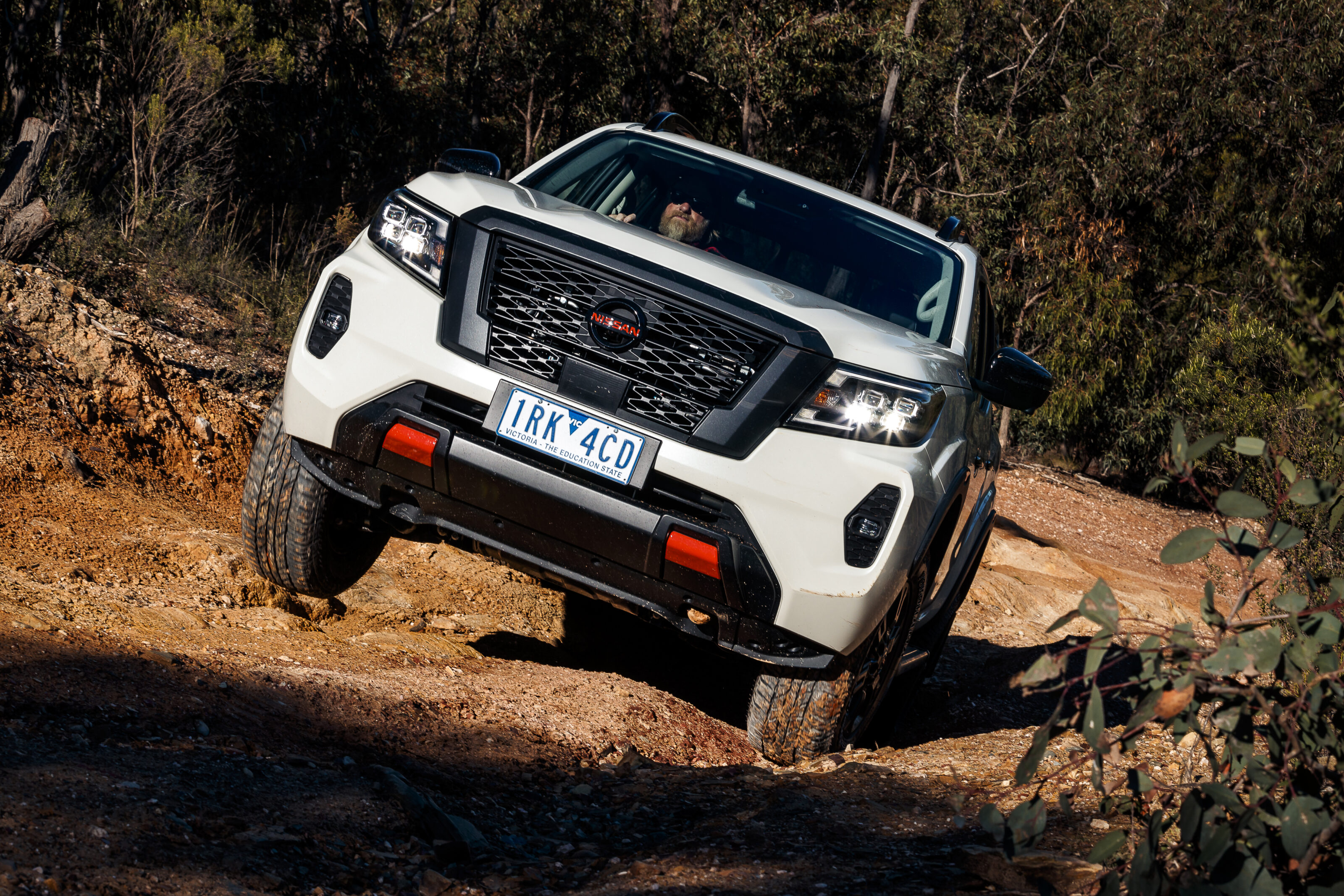
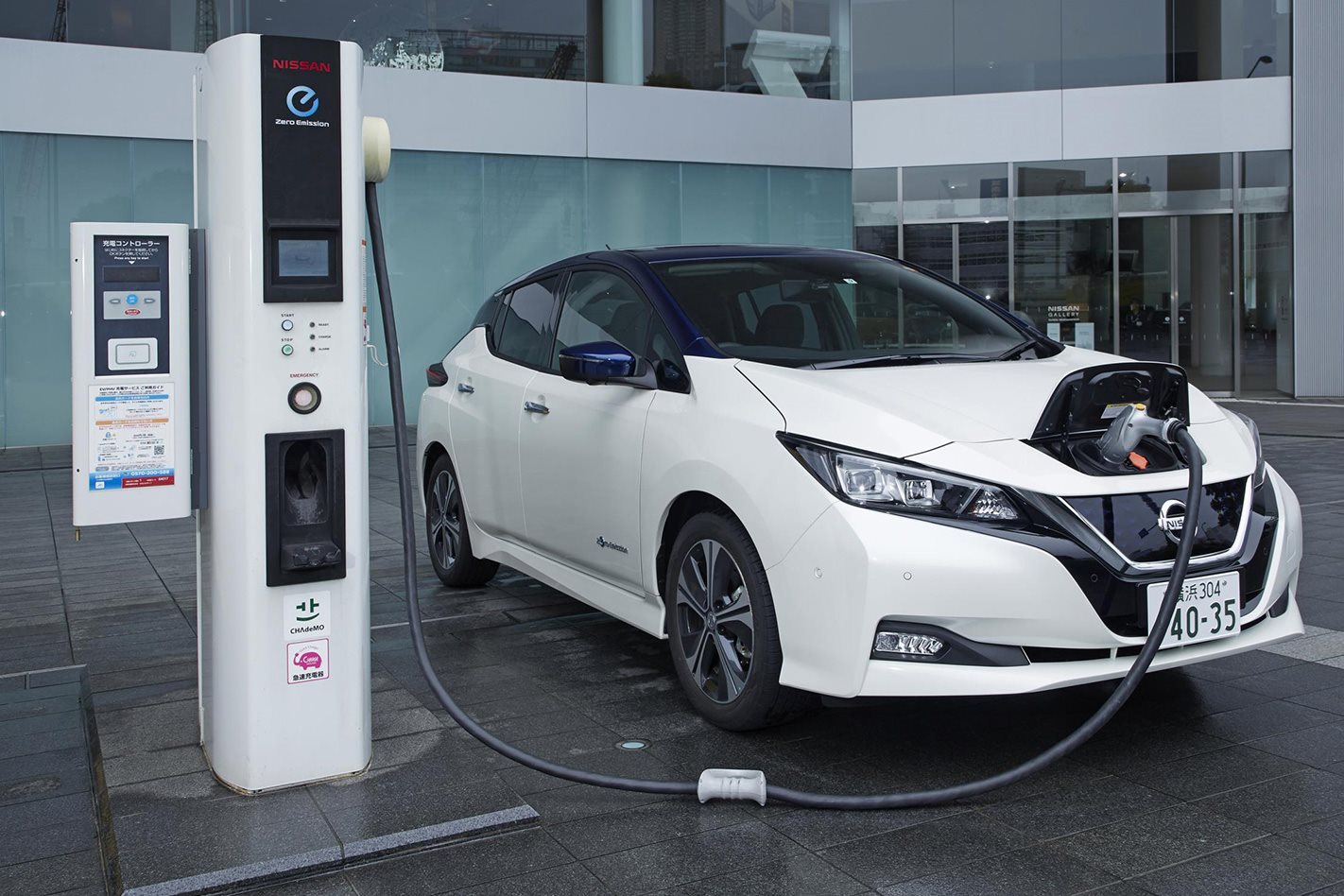
The Japanese carmaker launched its new-look Navara update in March and an enhanced Leaf e+ electric hatch in April, while the new Navara Pro-4X Warrior will debut soon.
Despite the arrival of those new offerings, the Nissan Australia of 2021 still has a number of ageing models on offer, with only the Leaf and the recently arrived second-generation Juke standing out as fresh new-generation product.
Next year will give Nissan more opportunity, however, with new generations of the popular Qashqai small SUV, X-Trail medium SUV and Pathfinder large SUV all due. A new Z sports car will also arrive in 2022.
Nissan’s 2022 Australian line-up is coming together
Snapshot
- Aston Martin claims the track-only hypercar can lap Le Mans in just three minutes and 20 seconds
- AMR PRO ditches hybrid KERS system in favour of a lower kerb weight
- Just 40 examples will be built, price is unknown
The 2022 Aston Martin Valkyrie AMR PRO, the track-only version of the Adrian Newey-designed Valkyrie road car, has officially been unveiled.
Spawned from the moniker’s former hypercar motorsport project headed up by Red Bull’s Advanced Technologies (RBAT) division and Canadian engineering firm Multimatic, the AMR PRO borrows heavily from the race car’s bespoke chassis and aerodynamic features.
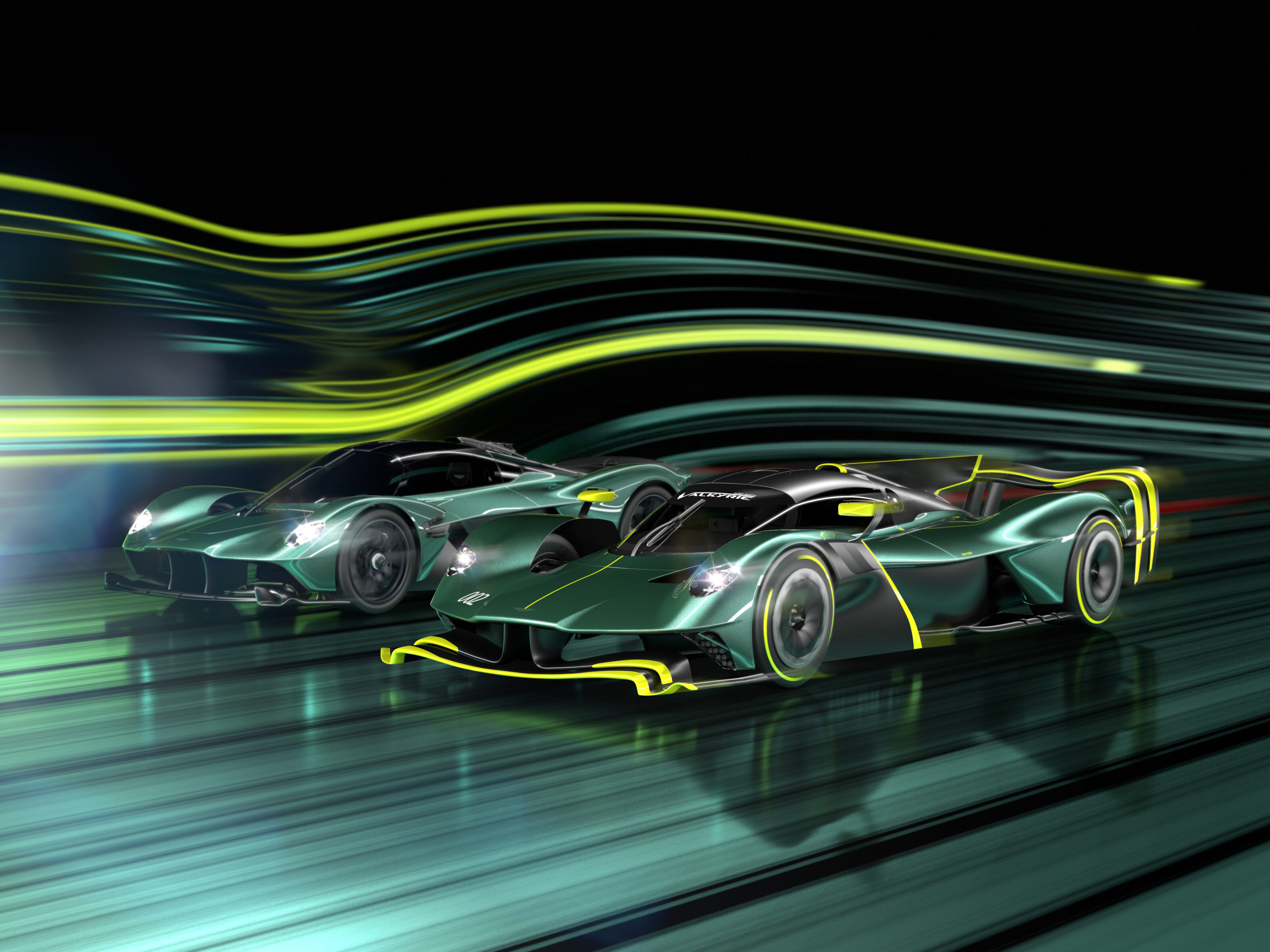
Be in no doubt – this is a very different car from the standard Valkyrie. Its wheelbase is 380mm longer, while its track widths have been increased too, with the front now sitting 96mm wider and the rear measuring a substantial 115mm wider.
Thanks to the AMR PRO’s extensive new aero package, the car’s overall length has also been increased by 266mm.
And the new aero package itself is so profound the Gaydon says its new track-only monster has ‘comfortably’ twice the amount of downforce as its road-going brethren.
More eye-opening still is that the automaker claims the AMR PRO is capable of achieving lateral acceleration of more than 3G.
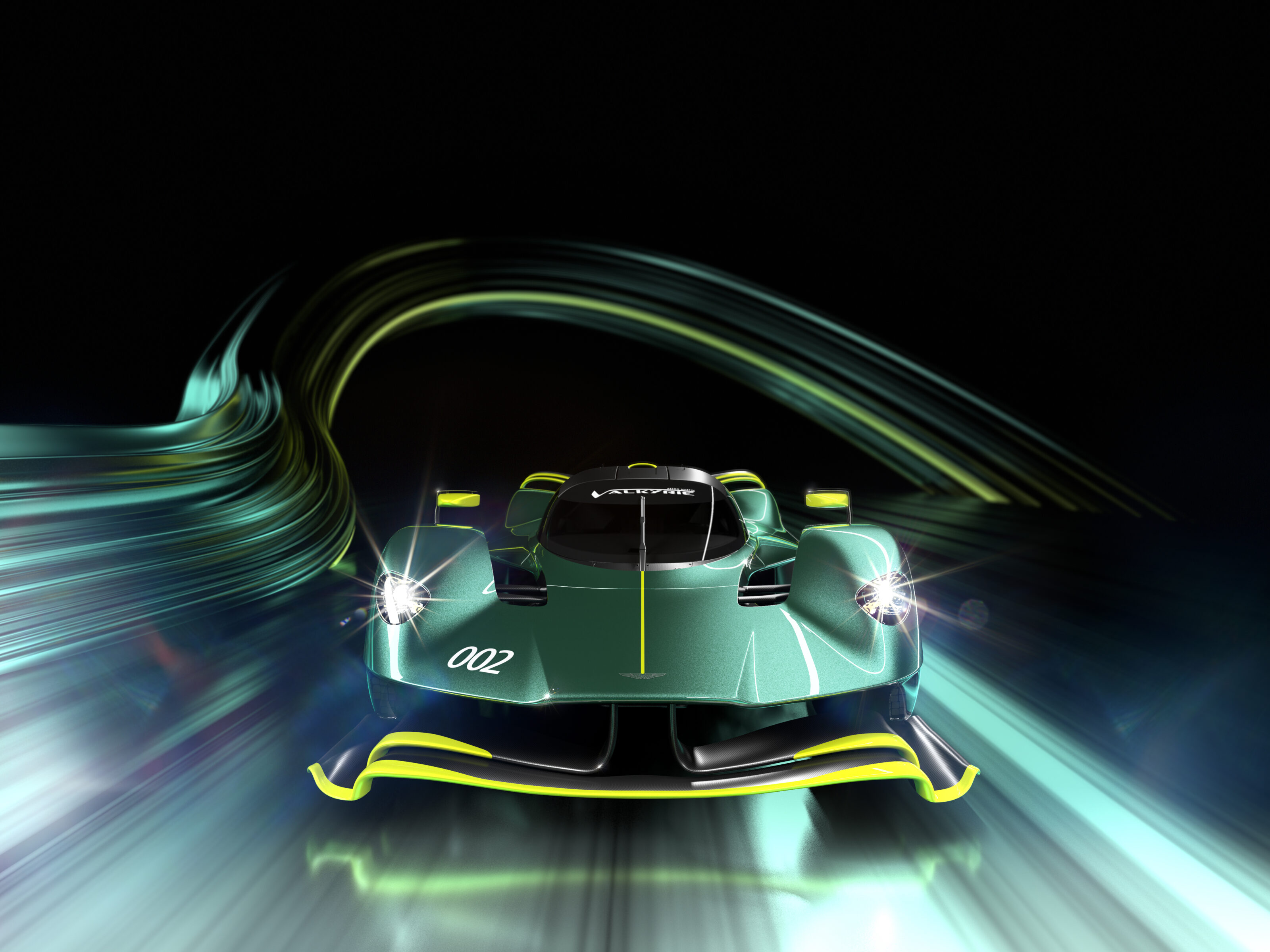
But perhaps the biggest paradigm shift from the regular Valkyrie to AMR PRO is that it has ditched the battery-electric system.
Developed by Rimac and Integral Powertrain Ltd, the KERS-style hybrid system provides the road car with 120kW and 280Nm of power.
However, in the interest of shedding weight, the track car goes without battery power, instead relying solely on a modified version of the road car’s tremendous Cosworth-built 6.5-litre naturally-aspirated V12, which punches out 746kW and 740Nm.
Other measures used to reduce its weight include; extensive use of new carbon fibre body panels, carbon wishbone suspension, and a perspex windscreen and side mirrors.
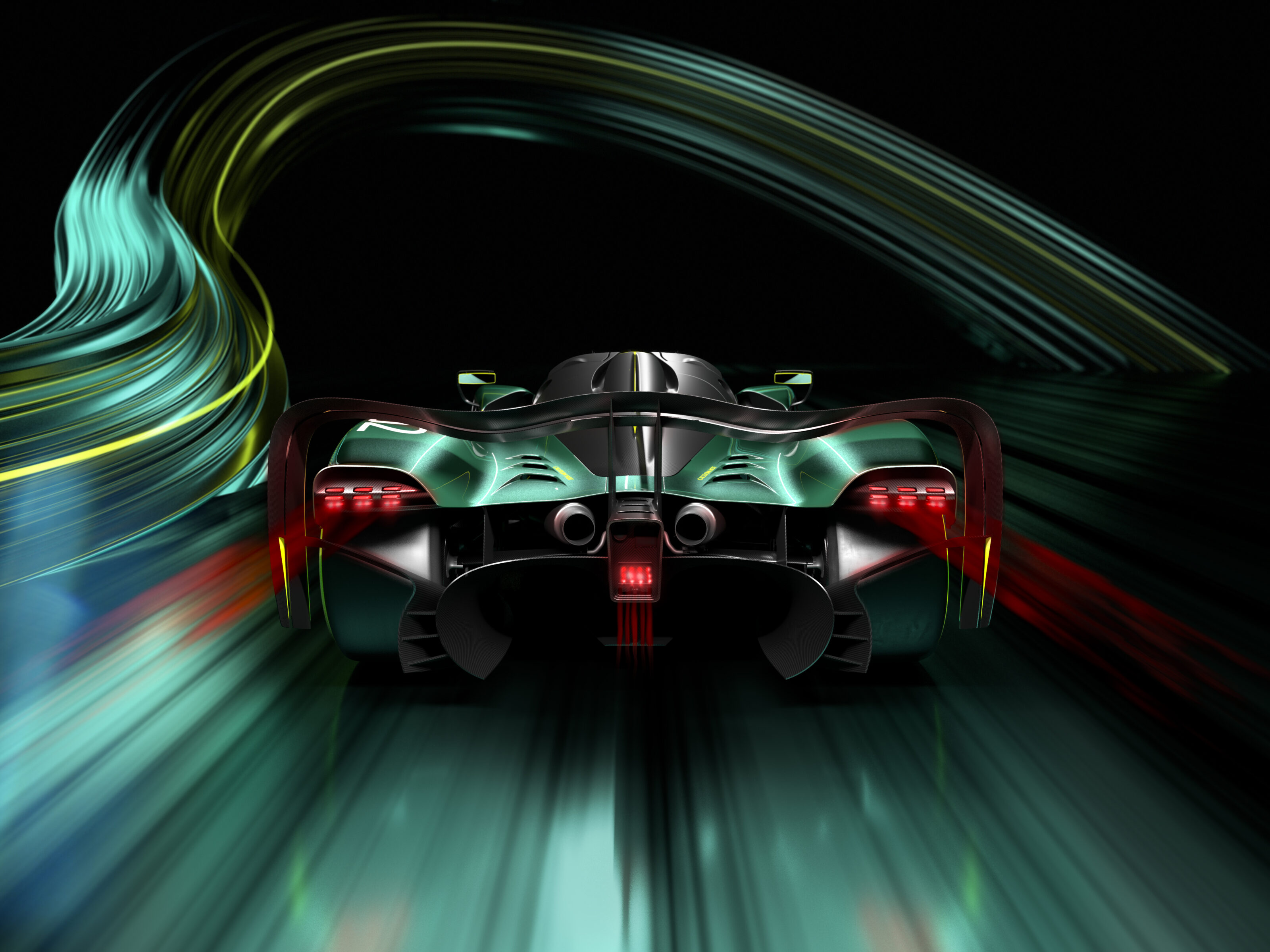
The craziness of this car doesn’t end with the technical specifications, though. Aston Martin is claiming the AMR PRO is capable of lapping Le Mans’ Circuit de la Sarthe in just three minutes and 20 seconds.
To put that lap time in perspective, the outright lap record at Le Mans is 3:14.791 – a time achieved by Kamui Kobayashi in 2017 behind the wheel of the Toyota TS050 hybrid race car.
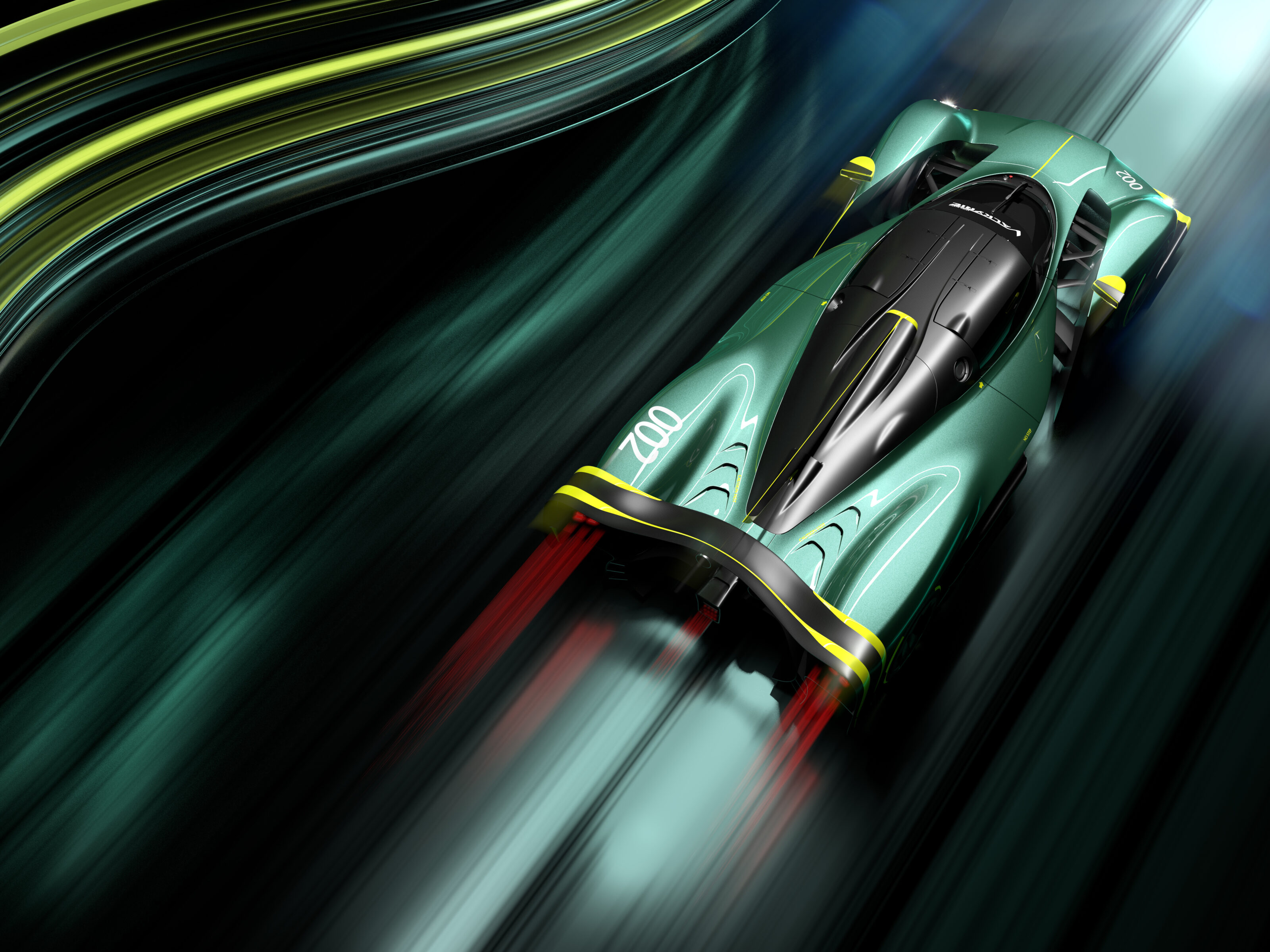
The British marque says it will commence testing the new AMR PRO in the coming weeks, with customer deliveries expected to begin in the fourth quarter of 2021.
There’s no word yet on price, but considering Aston Martin is only making 40 examples of the Valkyrie AMR PRO (and two prototypes), and the standard road car cost owners a rumoured £3 million (AU$5.5 million), expect the track-only hypercar to cost about the same as a division one Powerball win.
Snapshot
- New 2 Series to be revealed next week
- Rear and all-wheel-drive models expected to arrive in Australia
- M240i will have 275kW
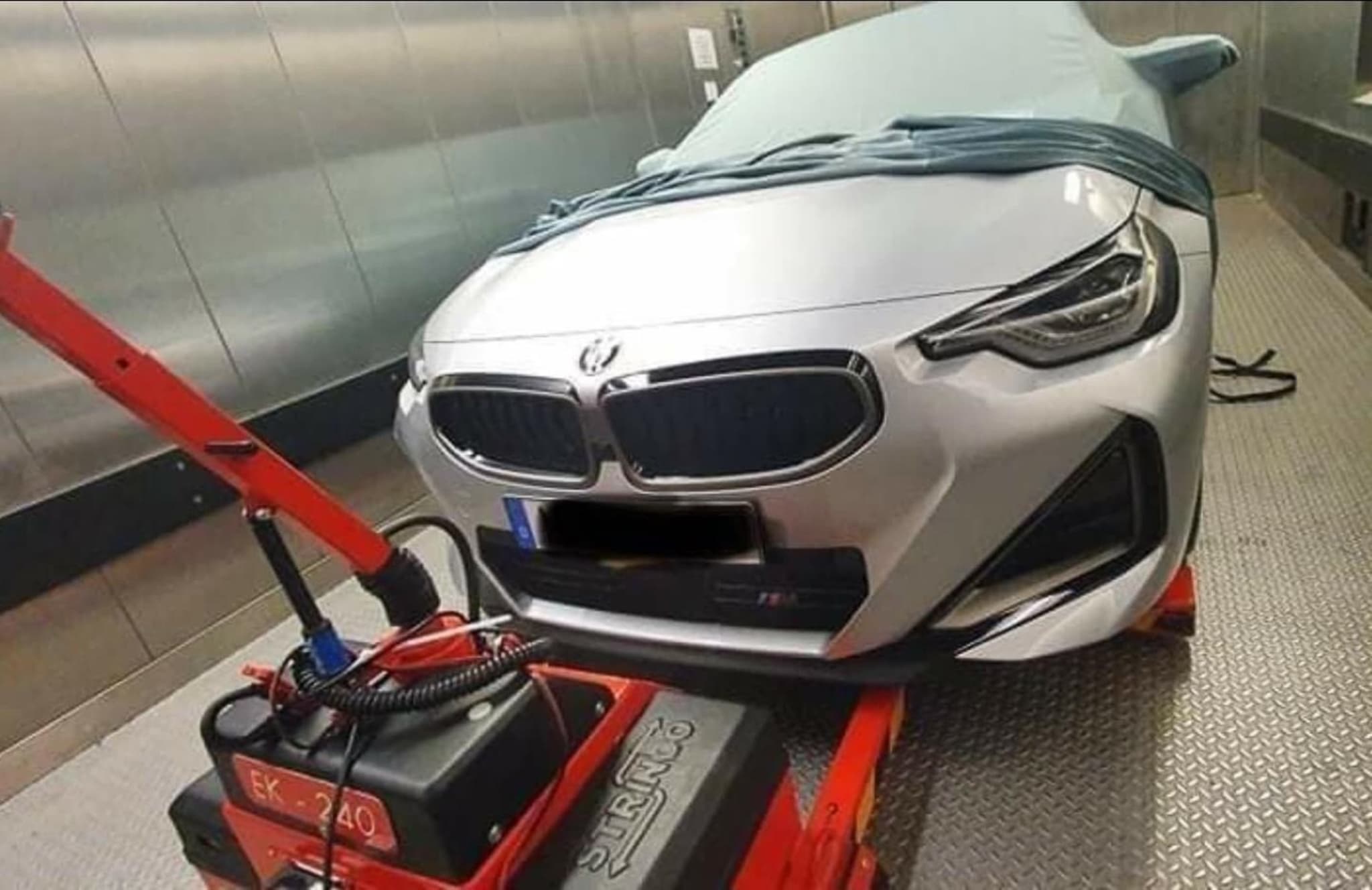
With less than a fortnight until its official reveal at the Goodwood Festival of Speed, speculative renderings of the new BMW 2 Series Coupé have emerged, giving us a better idea of how the next generation two-door might look.
The renders shown above and below were posted to BMW Blog, coming from the Instagram account of @bmw43_ who has based their impressions of the M240i on already existing spy photos of the new 2 Series – this time finishing it off in Yas Marina Blue and Frozen Deep Grey.
Set to feature all-wheel drive in Australia for the first time, BMW has already confirmed the range-topping M240i xDrive will be powered by a 275kW, 500Nm turbocharged straight-six engine, retaining the eight-speed automatic gearbox which features across the BMW range.
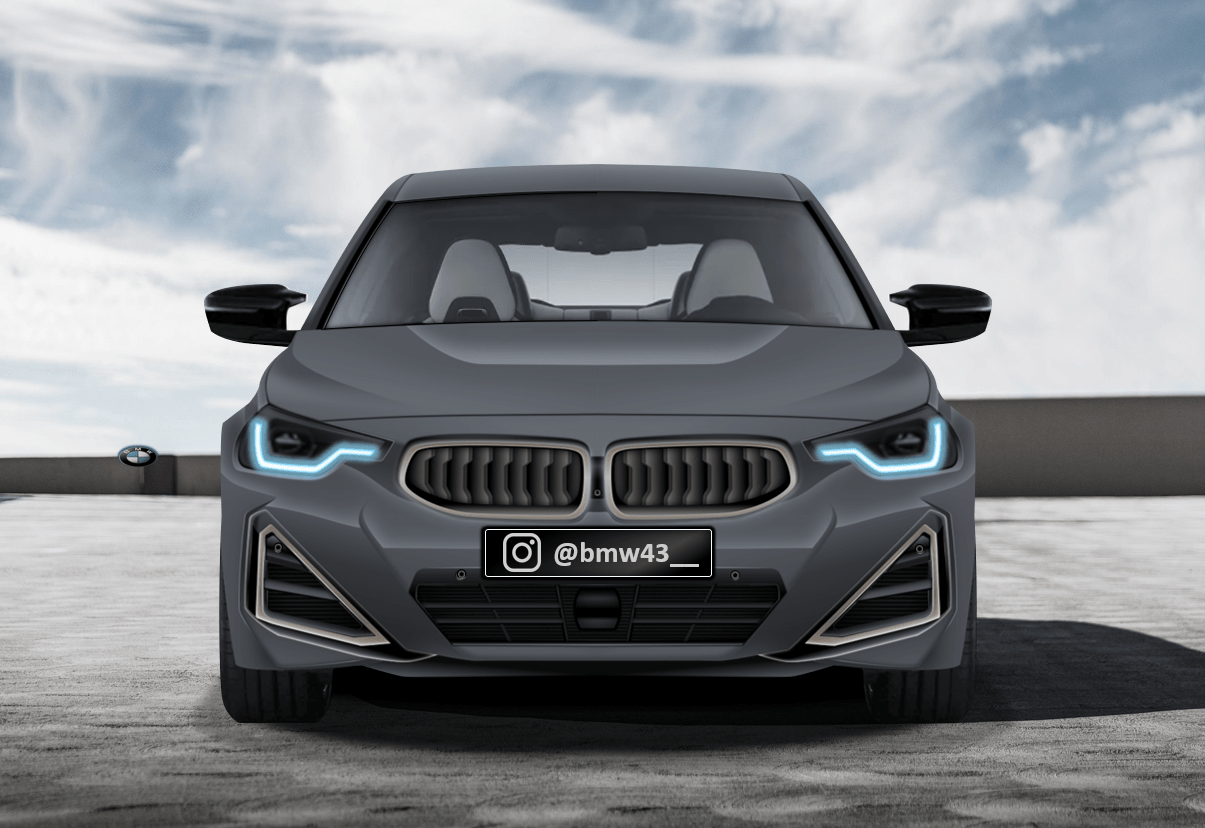
Previous camo-less pics of the 2 Series have shown it to have wide hips in M2 guise, also featuring two sets of dual exhaust tips closer to the centre of the rear bumper while the lower-trim 2 Series has its tips nearer to the edge of the bumper.
BMW’s M Division is also celebrating its 50th birthday in 2022, supposedly gifting itself an electric ‘iM2’ based on the outgoing F87 2 Series, reportedly packing 1000kW of power with the ability to complete a lap of the Nürburgring Nordschleife circuit in under seven minutes.
While it’s unlikely the iM2 will reach production in its current state, the technology used in it could be implemented into the next 2 Series, given the coupe is based on the same BMW Cluster Architecture (CLAR) platform as the 3 Series and 4 Series, the latter of which will have an i4 all-electric variant in its next iteration.
The new 2 Series will have its official launch in just under two weeks time at the Goodwood Festival of Speed before production starts late-August, with the first Australian arrivals expected later this year or in early 2022.