
Toyota’s GR Yaris must, undoubtedly, be one of the most hotly-anticipated new cars in recent memory.
The narrative is simply captivating: a genuine WRC homologation model with the most powerful three-cylinder ever put into production, a manual gearbox, trick AWD system, phenomenal brakes and well-geared steering.
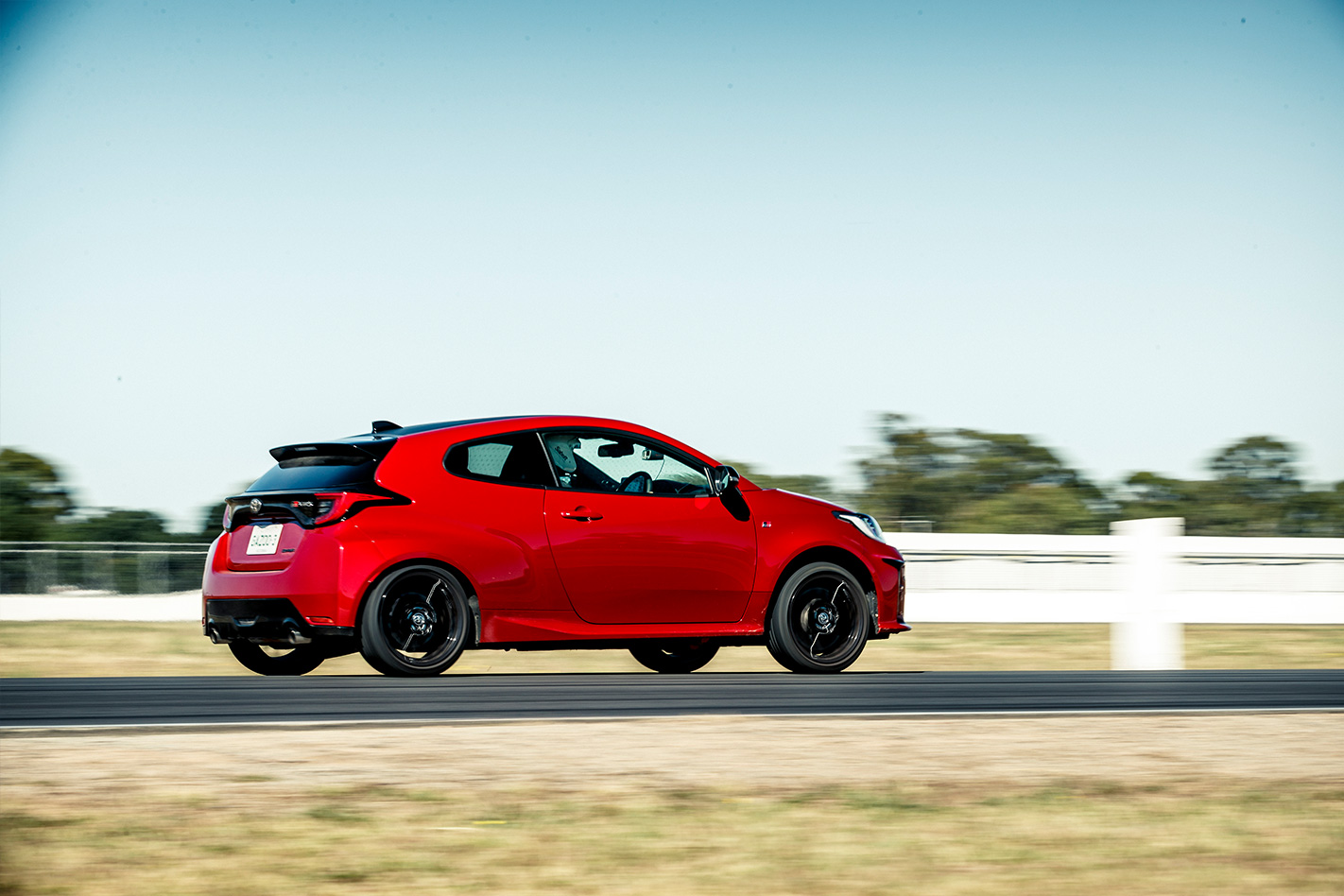
But how does it translate to the track? To find out, we strapped in ex-Supercars driver Karl Reindler and let him loose on the 2021 MOTOR Shootout at Victoria’s technical Winton Raceway.
Despite being such a fan favourite model, the affable racer had clearly been living under a rock.
“I haven’t read anything about this car, so I jumped in with no expectations,” he said following his hot laps.

“Your first thought is ergonomics – I can’t get the seat low enough.
“By the third lap I was really starting to feel confident in it.
“It probably didn’t promote as much confidence early on as some of the other cars I’ve driven, but by the end… you know, you can really throw this thing around.
“Braking ability is extraordinary. I feel like I’m working the hardest in this car of all the cars I’ve driven.
“For one, it’s a manual gearbox and having to heel and tow. The [seating] position… you kind of lack a little bit of bolstering, so you lose that connectedness to the car.
“The only real criticism, from a dynamic point of view, is it does have a lot of understeer through the mid-corner if you just bomb it in too hard.
“Off the corners… if you don’t get enough rotation mid corner, the front end washes out off the exit.
“A hell of a lot of fun though, can’t rub the smile off my face after that one.”
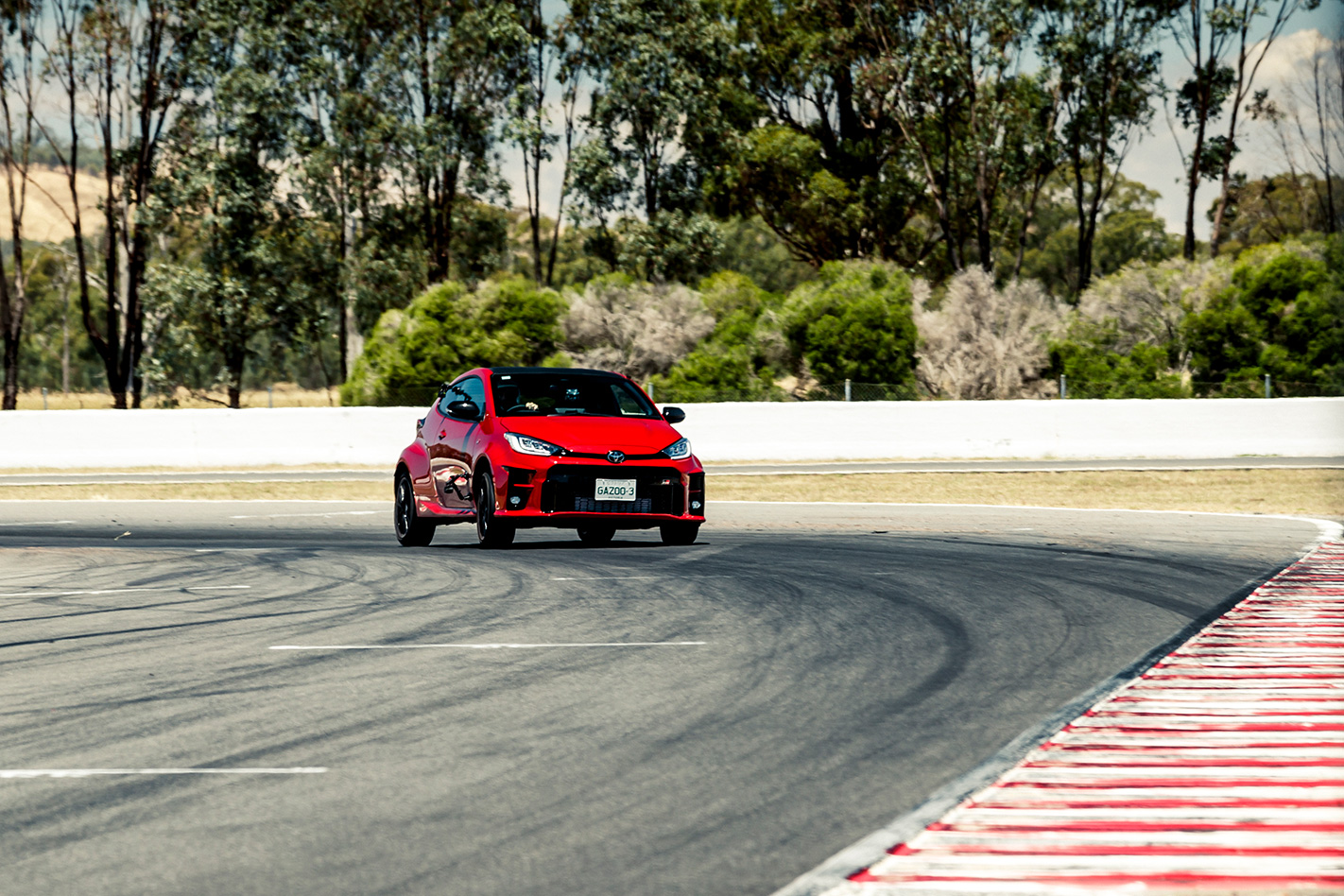
In the end, Reindler managed a best time of 1:41.3 which lands the GR Yaris ninth on our MOTOR Shootout leaderboard; 5.1 seconds shy of the Audi RS6 and 2.4 seconds ahead of the Ford Fiesta ST.
Hampered by so-so Dunlop tyres and lack of limited-slip differentials, we found the base model GR Yaris wanting for more in our rigorous PCOTY testing. We can’t wait to get our hands on the improved Rallye version to see how Toyota’s ultimate flagship WRC fighter takes on the MOTOR Shootout.
This concludes our series of MOTOR Shootout hot laps for now, but stay tuned as we’ve got some seriously heavy-hitters lined up in the pipeline.
For more great watching, subscribe to the MOTOR Youtube channel!
Hyundai’s made it very clear in recent years that it’s not afraid to get a little sporty. Most obviously, the Hyundai i30 N made waves with cracking dynamics at an affordable entry price, shaking up the established hot hatch hierarchy.
But what if you want to dip your toe in without firing off a slew of WRC-inspired exhaust crackles at your neighbours every morning? What if the N’s ride is a bit firm, or if its price is perhaps a bit much? The Hyundai i30 N Line is likely where you should start your new car shopping list.
Largely an update of what used to be called the i30 SR, the N Line is… well, effectively an N Lite. The Hyundai i30 N Line lacks a majority of the aggression of the full-blown N both on and under the surface, but the N Line does score some of its gym-junkie brother’s strengths.
Firstly, the N Line is a similarly positioned value option when compared to its rivals. Much like the N when compared to the likes of the Golf GTI and Honda Civic Type R, the Hyundai i30 N Line takes some of the performance and styling from the N department, run by former BMW M boss Albert Biermann, and brings it to a hatchback that can compete with the likes of the more comfort-oriented Mazda 3 or Toyota Corolla.
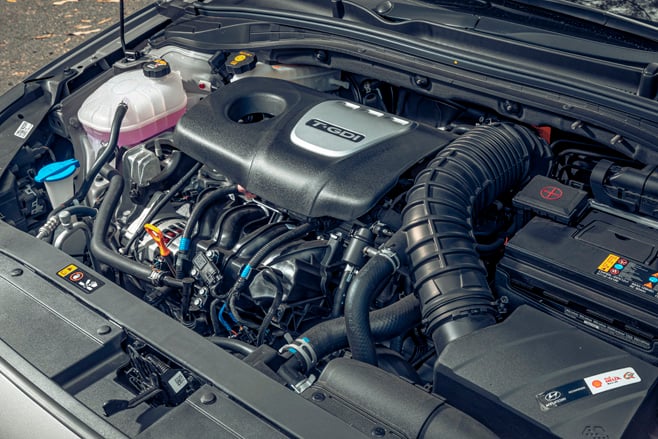
For a start, the i30 N Line’s pricing is quite attractive. At $31,420 before on-roads and options, the Hyundai undercuts the top-spec Corolla ZR by more than $1000 and comes with a more powerful turbocharged 1.6-litre engine, coupled to a seven-speed dual-clutch gearbox. A Premium variant is also available with an up-specced interior for $36,220.
Hyundai offers a free initial service after one month or 1500km and i30 N Line buyers can opt into a five-year servicing plan that covers up to 75,000km for $1385 upfront. Of course, Hyundai’s standard five-year unlimited-kilometre warranty applies.
Even with statutory charges and delivery fees that come to just under $4000 using Melbourne as an example, the driveaway price with premium paint (our test car wears fluid metal) sits at $35,854. Its 150kW/265Nm outputs have similarly priced rivals outgunned and it’s available with a cheaper 6-speed manual gearbox if the DCT isn’t your thing.
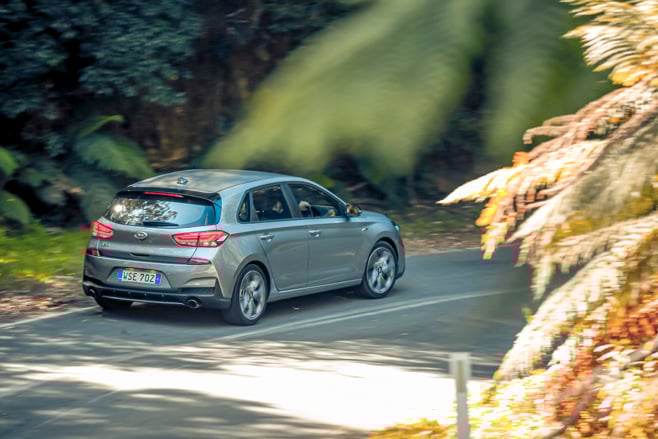
Its styling, too, has hints of N, from the black plastic trim and darker headlight surrounds, to the faux diffuser at the rear flanked by twin exhaust exits. On the road, it very much presents as a mid-point between a less performance-focused i30 and the wicked-looking N. Unfortunately, while the lower variants in the i30 range were treated to the MY21 package in Australia, supply issues mean the i30 N Line doesn’t benefit from the exterior update, instead receiving only the interior upgrades.
On that, the i30 N Line is a comfortable and well laid-out place to be inside, if a little familiar given not much has fundamentally changed since the days of the i30 SR a few years ago. N Line does mean more sporting zing inside though, with red stitching on the leather-like seats and gear lever joined by red accents around the air vents and extra lining on the front seat bolsters. Seatbelts, too, are red.
While the space around the driver isn’t exactly luxurious, it’s far from lacking in comfort or convenience. The leather-wrapped wheel is a nice touch, literally, and the leather-appointed driver’s front seats are able to be moved into an ideal driving (or passenger) position, with the seat bolstering providing a nice balance between comfort and firmness.
Some of the hard plastics around the cabin don’t feel particularly pleasant, but regular touchpoints in the car are all well-placed and comfortable.
The infotainment screen is an 8.0-inch unit, though a 10.25-inch version is found in the N Line Premium, augmented with smartphone mirroring via either Apple CarPlay or Android Auto. Apple CarPlay can be used wirelessly in the i30 N Line, though an iPhone-owning colleague pointed out that while it’s easy to set up it is prone to dropping out – though this is not a problem specific to Hyundai.
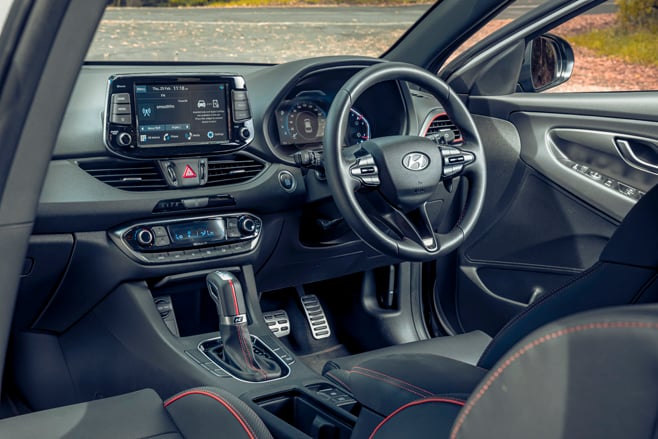
Storage for bottles and drinks is well-catered for, with the usual cupholders supplemented by spacious storage in each door ‘bin’, but the centre console’s storage is about the size of a couple of drink cans and not particularly wide. There’s a 12V plug in there, too, but the one found under the HVAC controls alongside the USB plug is more continent. The glovebox is better for space albeit harder to access for the driver.
Ultimately, most storage will likely be bags tossed into back seats, or more sizable luggage and cargo hauled in the i30’s generous 395-litre boot. Of course, rear 40/60 split seats can be lowered to get larger cargo in, as long as the seat isn’t occupied by anyone enjoying the relatively spacious yet basic rear pew.
For safety, the i30 range gets five stars from ANCAP, even upon its testing in 2017 when it was hurled at the wall sans-AEB. Passenger protection in crashes is of course completely sound, with front airbags for driver and passenger, a knee airbag for the driver, side airbags for both front occupants, and curtain airbags front and rear.
The i30 also now benefits from the Hyundai SmartSense suite of active safety tech, including the previously absent automatic emergency braking, which Hyundai confusingly calls Forward Collision-Avoidance Assist (FCA; not to be confused with Fiat Chrysler Automobiles). Also included is lane-keeping and follow assist, a driver attention monitor and warning, plus rear cross-traffic alert and blind-spot monitoring. It also has front and rear parking sensors with distance guidance to assist the rear parking camera.
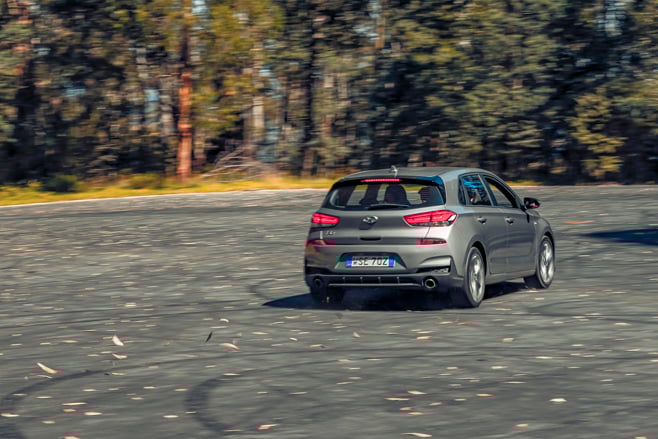
While the list of active safety features can sometimes sound like it all gets in the way of actually driving the car, that’s fortunately not the case in the i30 N Line. And driving the N Line is something you’ll actually want to focus on, not because it’s a challenge, but because it’s really quite enjoyable.
While it’s immediately noticeable upon taking off that the i30 N Line has a stiffer suspension tune than other hatchbacks in the segment, and its initial turbo lag can feel a little old-school, this hatch is a pretty capable performer. Daily driving duties in its standard driving mode won’t bring out any lairy characteristics of the i30 N Line though as it can be a very docile thing when needed.
Its suspension, while firm, is comfortable enough over bumps and keeps the driver in control if things go awry, even at higher speeds, while the steering is similar. Firm, but precise. Into Sport mode, and the fixed suspension remains the same while the steering feel gets weightier, perhaps a little much so. It’s unnecessary for regular driving but allows you to make use of the N Line’s generous 150kW, aided by a rewarding and sprightly DCT gearbox. Paddle shifters help keep things moving along, with the DCT swapping cogs rather obediently.
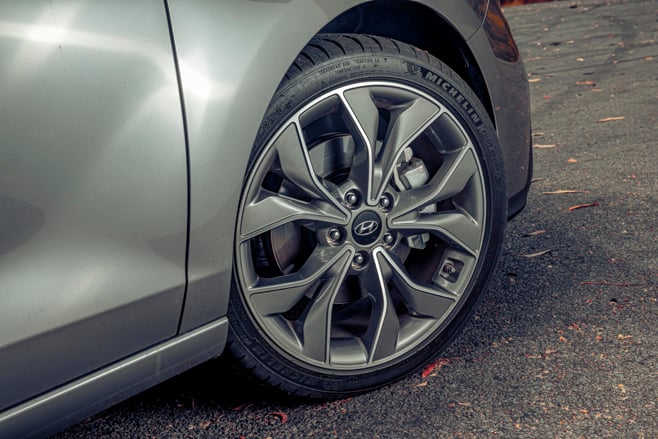
It’s a car that can surprise, given its initially somewhat tame character, with how quickly it can get along on a winding road. Michelin Pilot Sport 4 tyres help keep the N Line in check, too, but if grip begins lacking, the lightening of steering and chassis movements are quick to let the driver know well before grip disappears.
Highway driving, too, benefits from the combination of this engine and gearbox at cruising speeds, though there’s a little more road noise through the tyres and suspension than we expect most would like on a long trip. Fortunately, its tied-down nature and 305mm front brakes prove excellent at keeping stable under high-speed braking.
Ultimately, the Hyundai i30 N Line provides a fine balance between convenience and character, where the dynamics of the car don’t diminish its ability to haul luggage on a holiday or provide a comfortable space in which to commute. On top of that, the price provides plenty of bang for buck and the i30 N Line range itself even provides opportunities to save or spend more, depending on your preferences.
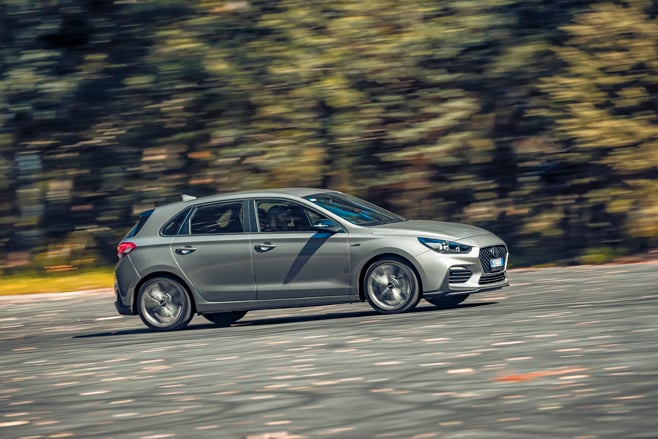
2021 Hyundai i30 N Line specifications
Body: five-door, five seat hatch Drive: front Engine: 1591cc inline-4, DOHC, 16v, turbo Bore/stroke: 75.6mm x 89.0mm Compression: 10:1 Power: 150kW @ 6000rpm Torque: 265Nm @ 1500-4500rpm Fuel consumption: 7.1L/100km Weight: 1344kg (up to 1436kg) Power/weight: 112kW/tonne Transmission: 7-speed dual-clutch Suspension: Strut, damper, spring, anti-roll bar (f); Multi-links, damper, spring, anti-roll bar (f) L/W/H: 4345mm/1795mm/1453mm Wheelbase: 2650mm Tracks: 1549mm/1563mm Steering: electric Brakes: 305mm ventilated disc, single-piston caliper (f); 284mm solid disc, single-piston floating caliper Wheels: 18 x 7.5-inch Tyres: 225/40 R18, Michelin Pilot Sport 4 tyres Price (before on-roads and options): $31,420
WATCH: Hyundai i30 N Line vs Toyota Corolla ZR
Peugeot has released its updated 3008 and 5008 SUVs for the Australian market, and the duo is now offering more tech, safety and styling than ever before.
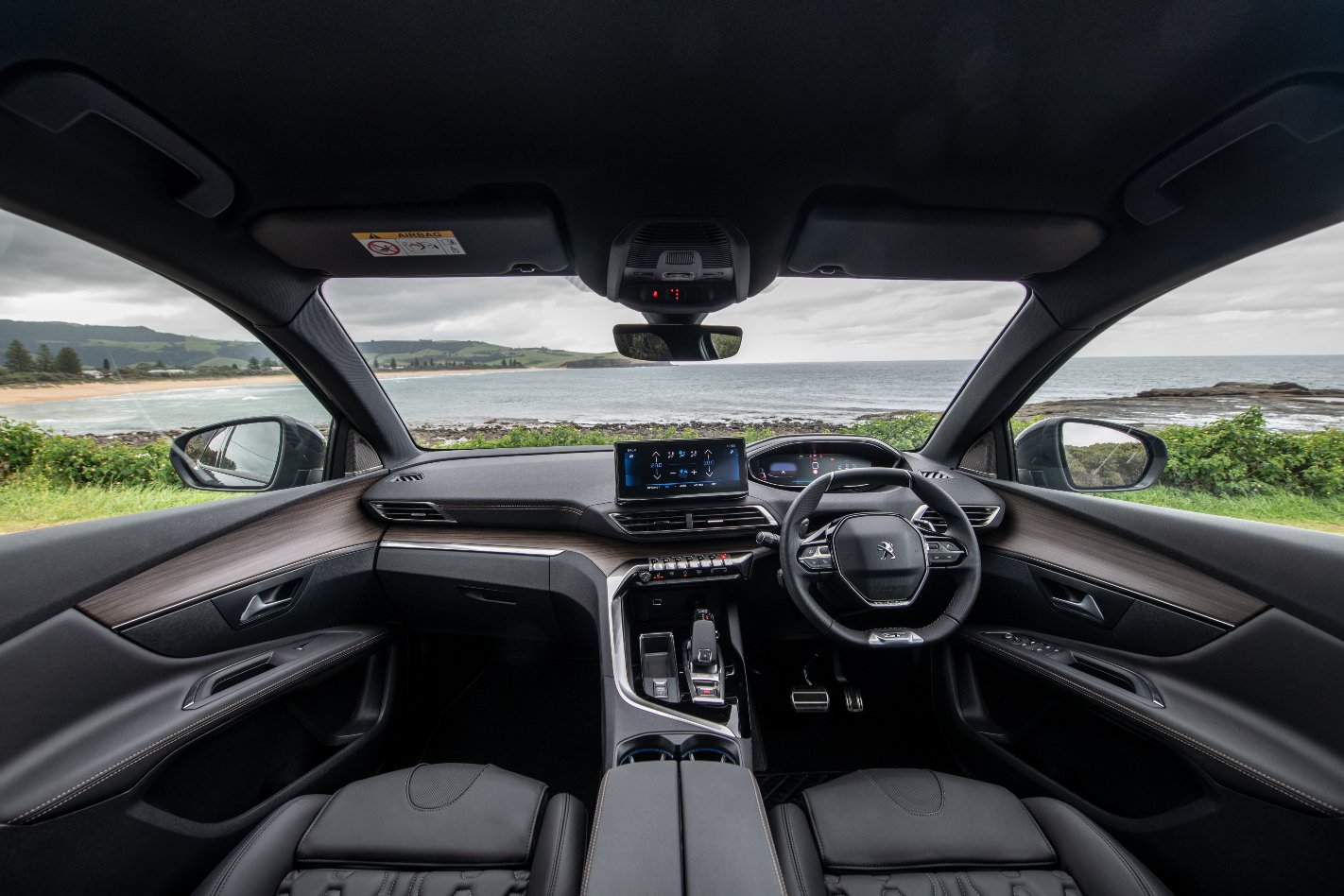
The interior of both medium-size SUVs has seen a significant bump in its operating systems and technology, with the 3008 and 5008 now featuring Peugeot’s next-generation i-Cockpit digital OS.
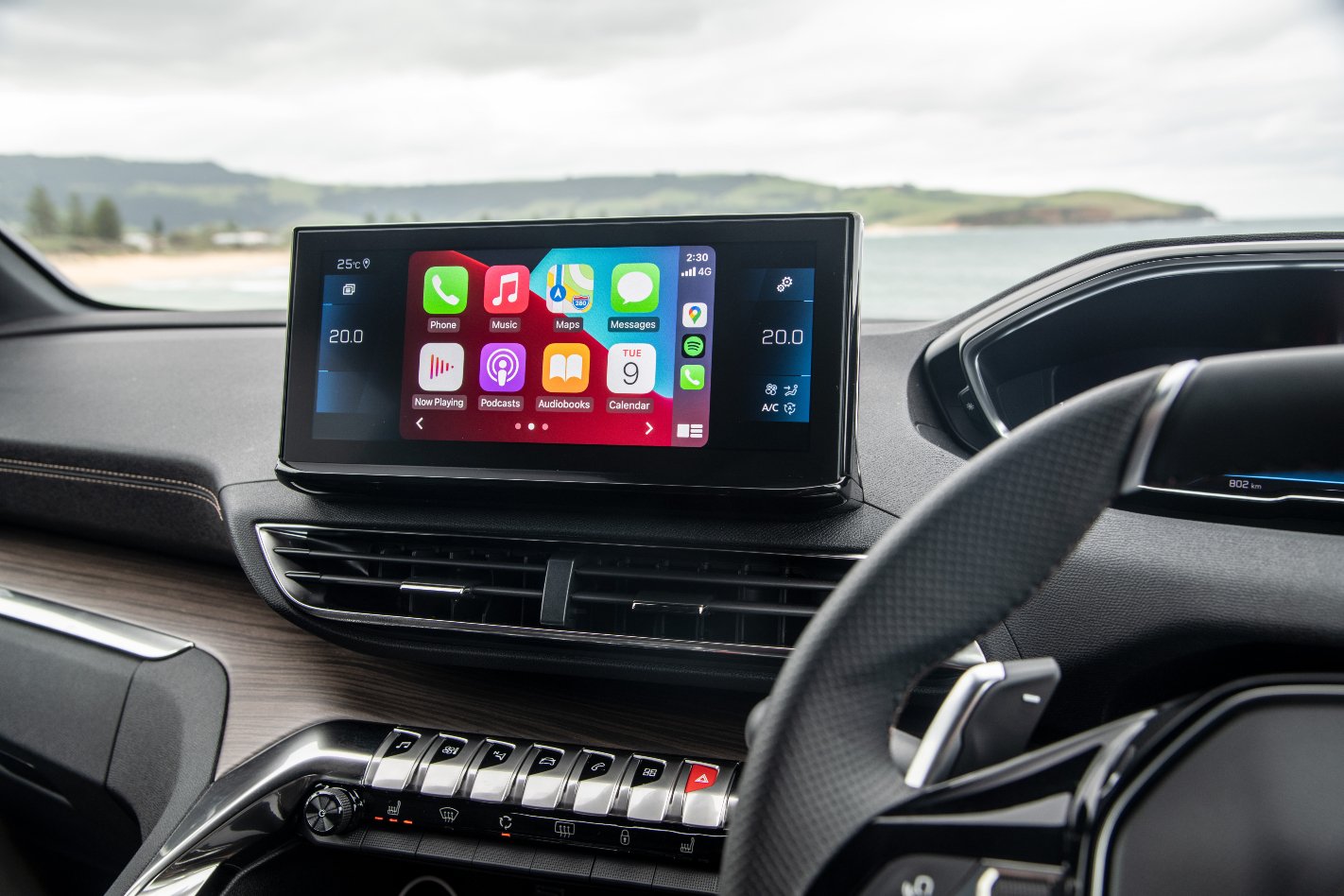
A 12.3-inch digital dash now comes as standard across both ranges, as does a smaller, sportier-looking steering wheel and a centrally-mounted HD touchscreen display.
Beneath the 10.0-inch display is seven metal toggles that allow occupants to quickly access features such as vehicle settings, climate control, navigation and the audio system.
Connectivity across both designations has also been bolstered, with the 3008 and 5008 line-ups scoring Apple CarPlay, Android Auto and MirrorScreen as standard.
All models will receive a host of safety features such as lane departure warning, autonomous emergency braking, auto high beam assist, 360-degree camera, speed sign recognition, active blind-spot monitoring and an electric park brake.
Certain models such as the 3008 and 5008 GT Diesel and the newly introduced 3008 GT Sport will also get adaptive cruise control.
Two different engines and gearboxes with varying degrees of power will be available across the 3008 and 5008 ranges, depending on the specific model.
The 3008 Allure, 3008 GT Petrol, and 5008 GT Petrol will come equipped with a 1.6-litre turbocharged four-cylinder engine that produces 121kW and 240Nm and powers the front wheels via a six-speed automatic transmission.
The 3008 GT Sport will use the same petrol four-banger, however, it will produce 131kW in its sporty new guise. Power will still be sent to the front wheels, but the hotted-up engine will be mated to Peugeot’s eight-speed EAT8 automatic gearbox, rather than the six-speed.
Meanwhile, the 3008 and 5008 GT Diesel will utilise a 2.0-litre four-cylinder turbo-diesel motor that pumps out 131kW and 400Nm, which also powers the front wheels via the EAT8 automatic gearbox.
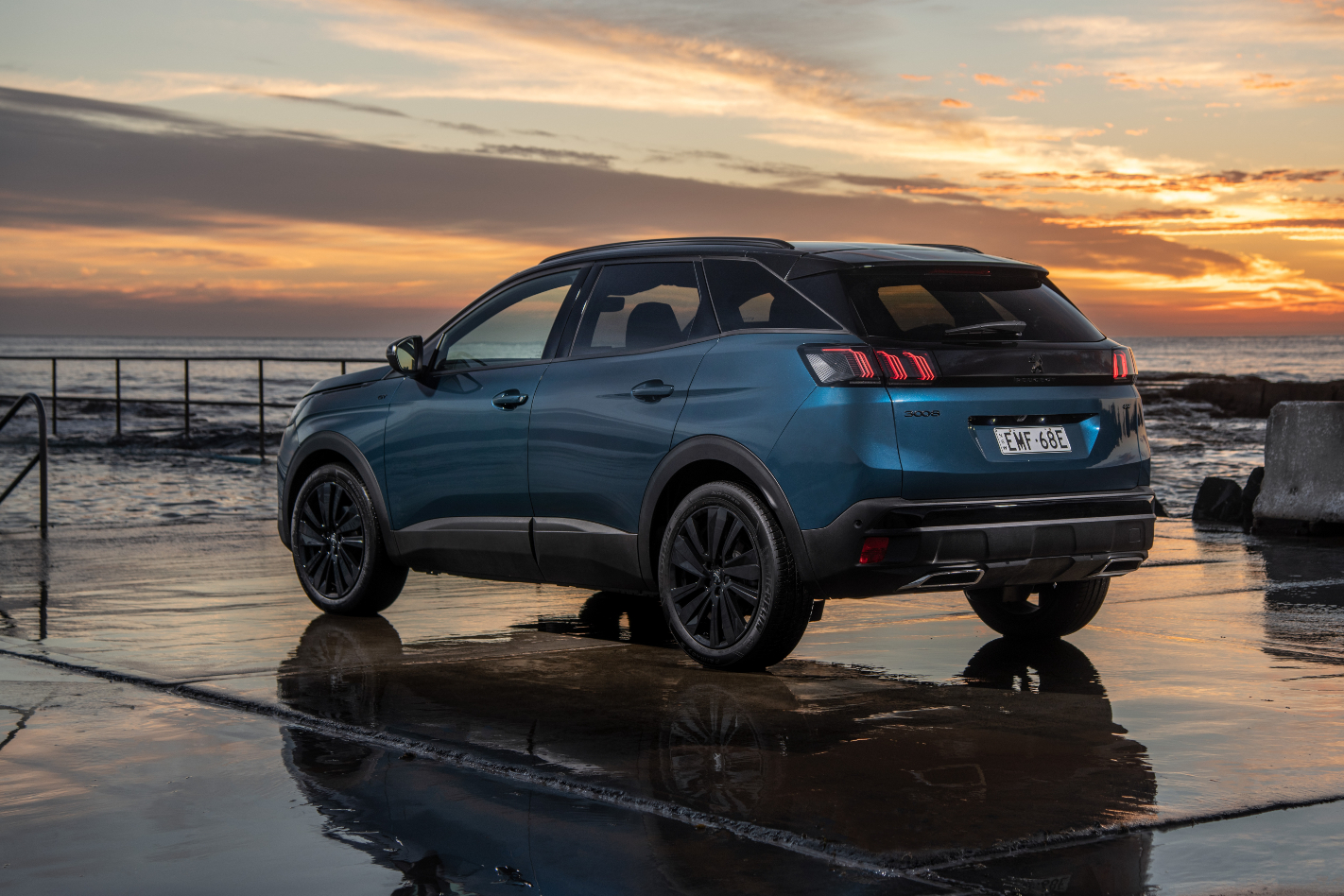
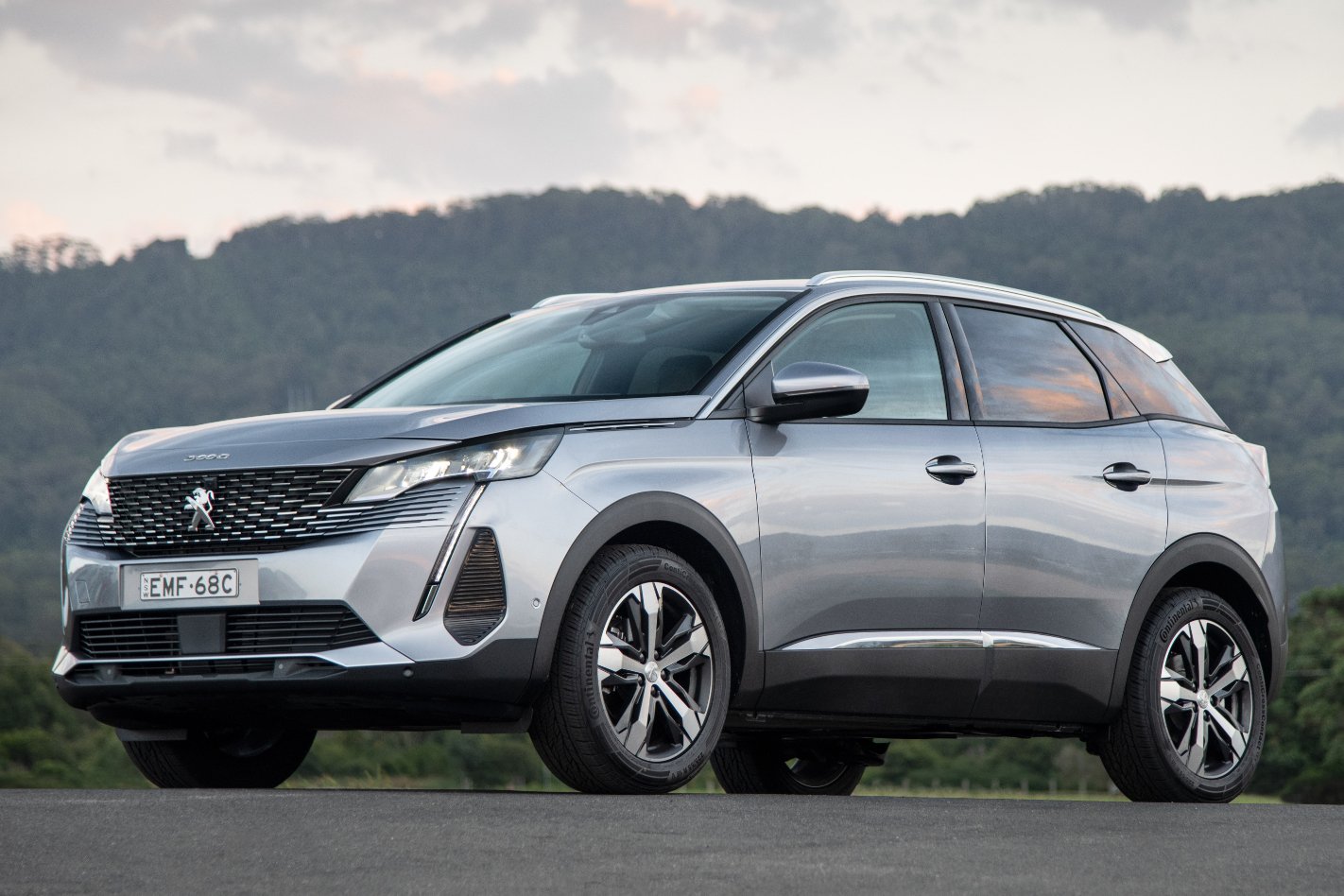
The SUVs exteriors have received some significant styling tweaks, aimed at freshening up the overall aesthetics and providing owners with a cleaner, sportier look.
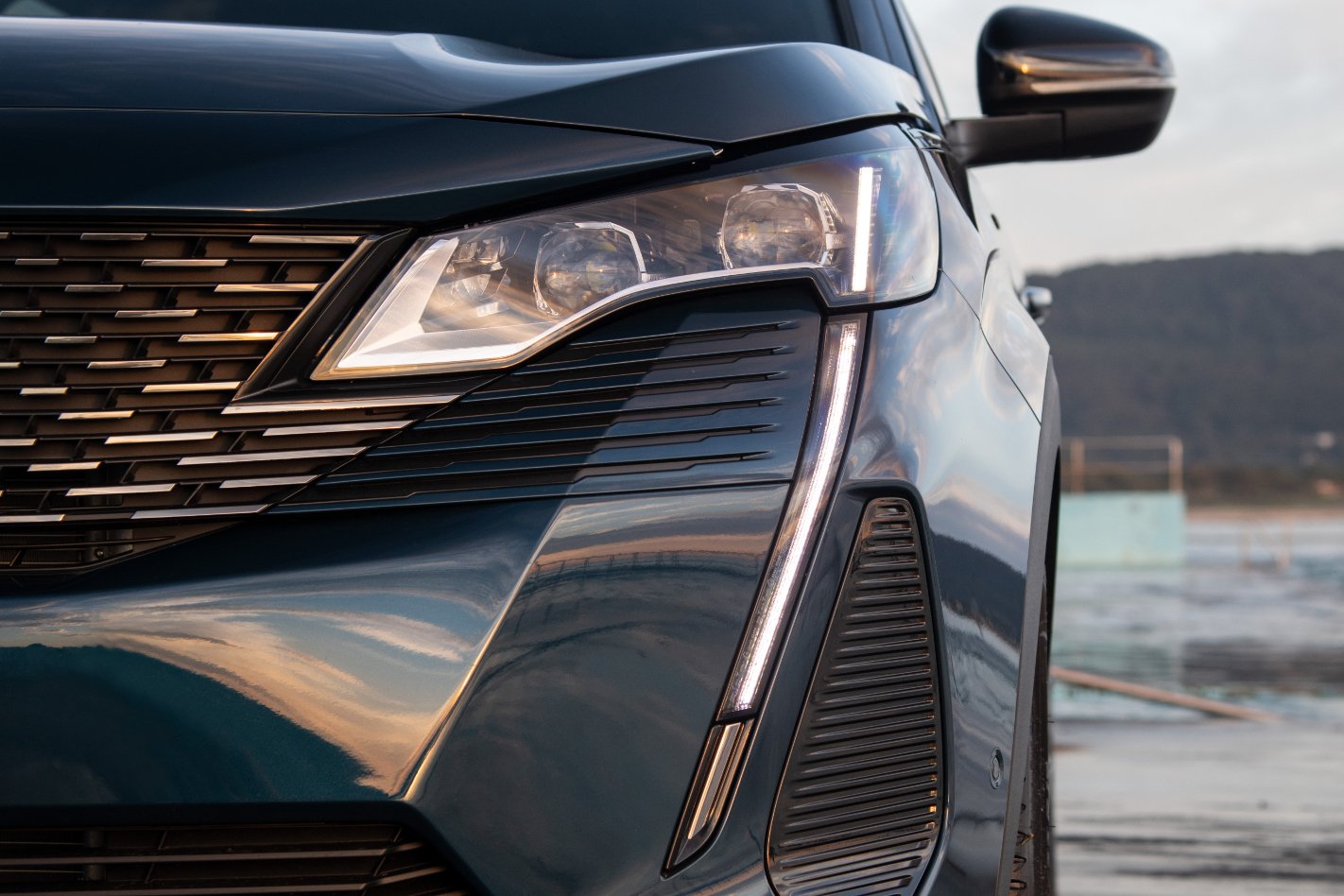
At the front, a blacked-out, borderless grille, gloss black side scoops, and a redesigned headlight arrangement with LED daytime running lights and indicators make the front fascia of the new cars look far more contemporary than the ones they replace.
The range-topping 3008 GT and GT Sport will also gain a bespoke grille and new “Fog Mode” lighting function, which eschews conventional fog lights in favour of employing the LED headlights to use a low-beam lamp at a lower intensity, whenever the rear fog lights are engaged.
Looking rearwards, the French carmaker’s signature “three claw” tail light configuration has been updated too, and now takes full advantage of the carmaker’s LED technology, which also means a new “sequential” indicator function is possible.
The taillights have also been finished with a darker, “smoked” lens, which integrates nicely with the rear’s blackened boot strip.
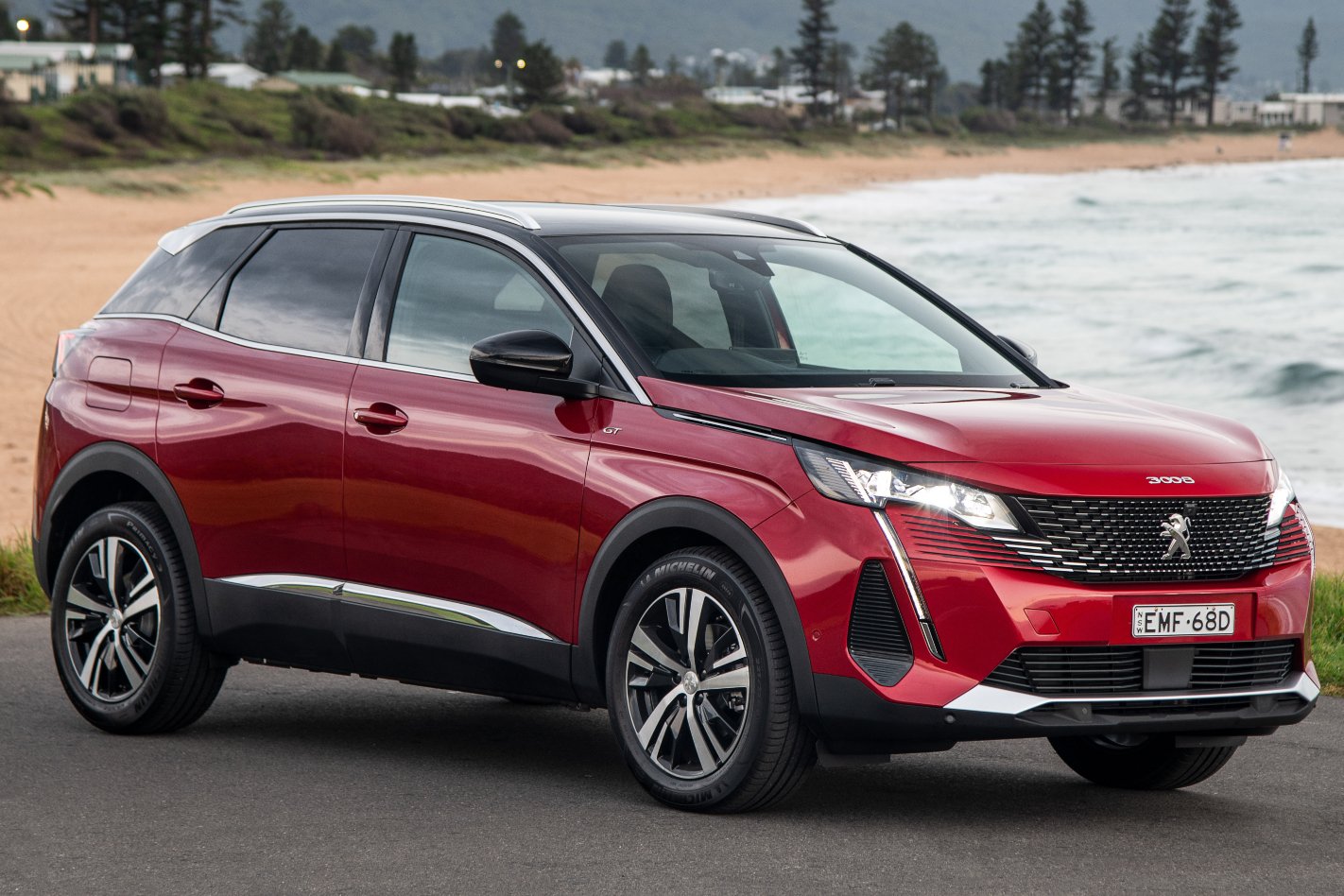
As is the case with all Peugeot passenger vehicles, the new 3008 and 5008 will come with a five-year, unlimited-kilometre warranty.
Prices for the facelifted SUVs remain largely unchanged, except for the base 3008 Allure, which is now $1000 dearer at $44,900, and the new 3008 GT Sport, which retails for $54,990.
2021 Peugeot 3008 pricing
- Allure – $44,990
- GT Petrol – $47,990
- GT Diesel – $50,990
- GT Sport – $54,990
2021 Peugeot 5008 pricing
- GT Petrol – $51,990
- GT Diesel – $59,990
In the world of monster trucks like the new 2021 Mercedes-AMG GLE 63 S, six centimetres is not much chop. Except, it is to Mercedes-AMG, because it hopes that small distance will dramatically split both the new GLE 63 S wagon and its coupe sibling on personality.
The fourth-generation GLE is the first time the brand has built the body styles on a different wheelbase that is, you guessed it, six centimetres longer for the wagon. It hopes to cater to buyers with a more specific product, further differentiating between performance and practicality.
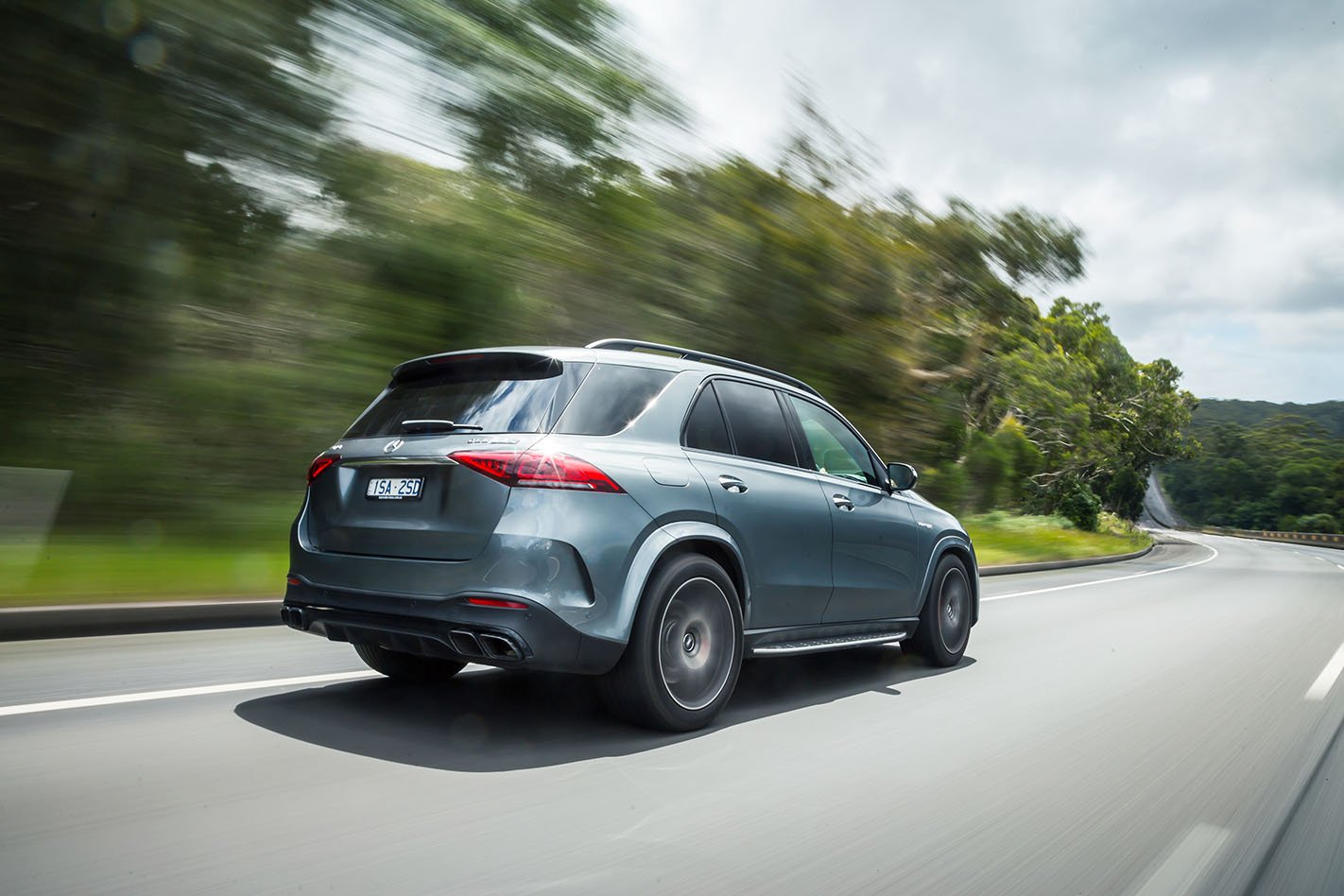
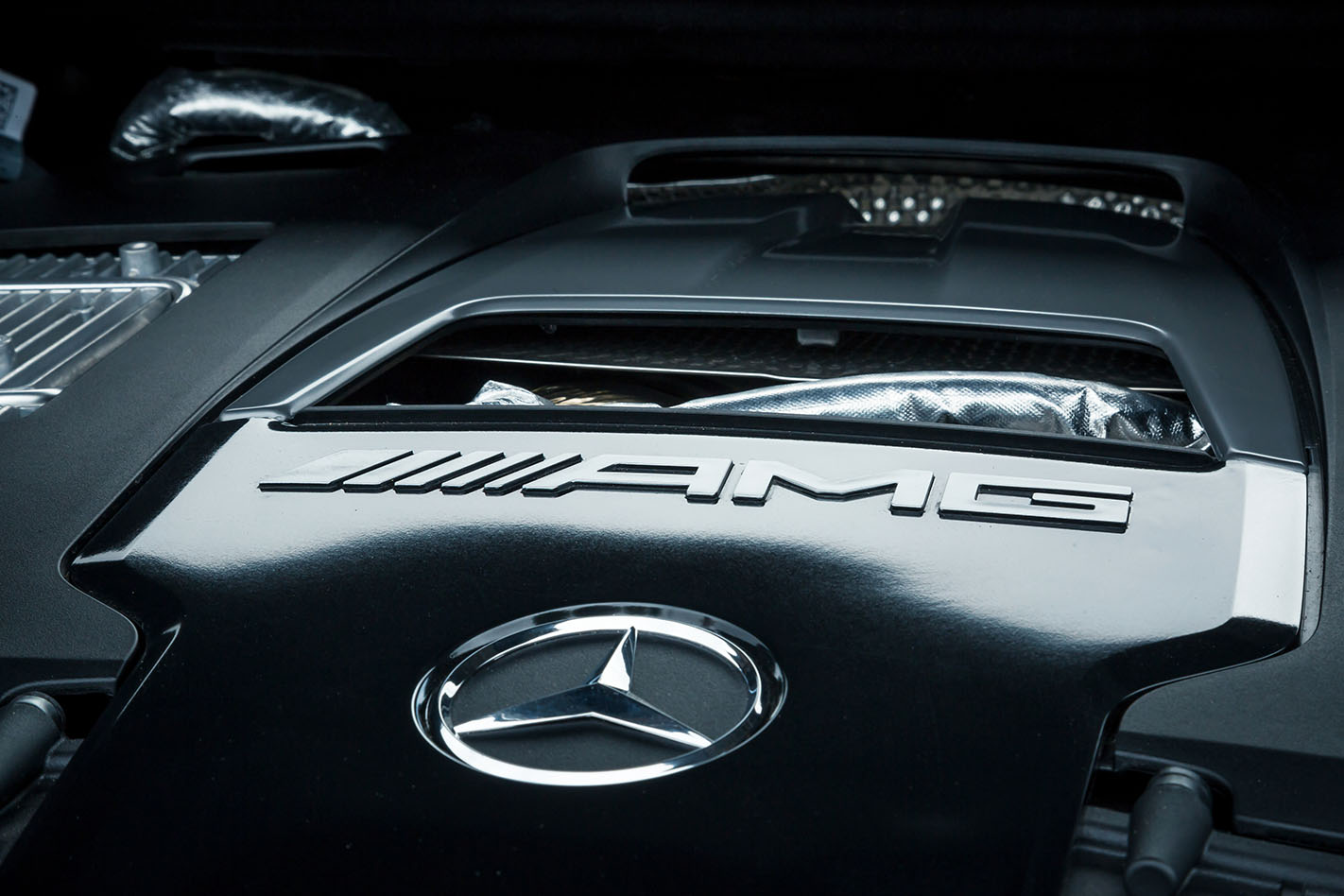
This new powertrain marks two milestones. Firstly the new GLE 63 S engine officially replaces the old loveable 5.5-litre twin-turbo V8 known as the M157, which featured in the first-generation E63 S and GLE 63 S. Secondly, the new GLE 63 S is the first go at electrifying a flagship AMG model. Let alone one with 450kW and 850Nm.
The mild-hybrid technology works similarly to the system already found in the E53 Coupe. An alternator motor wedged between the engine and transmission can deploy an extra 16kW and 250Nm when needed. It can also help kick the engine over during start-stop operation, charge batteries, aid engine-off sailing and control idle speed.
The electric assistance does not necessarily equal more power, however, according to the spec sheet. Although the new GLE 63 S produces 850Nm from 2500rpm to 4500rpm, overlapping with the electric low-down shove to theoretically combine for 1100Nm, AMG refuses to quote a combined torque figure.
That reduction is alarmingly small given the mild-hybrid system and the fact this particular V8 can shut down a bank of cylinders to curb its thirst. But all these technologies add more than convenience.
Measuring 4939mm long, 2010mm wide, and 1730mm tall, the new GLE 63 S has grown in length and width. It now weighs 2345kg, 75kg more than the old one. Part of the increase comes from new active anti-roll bars and engine mounts.
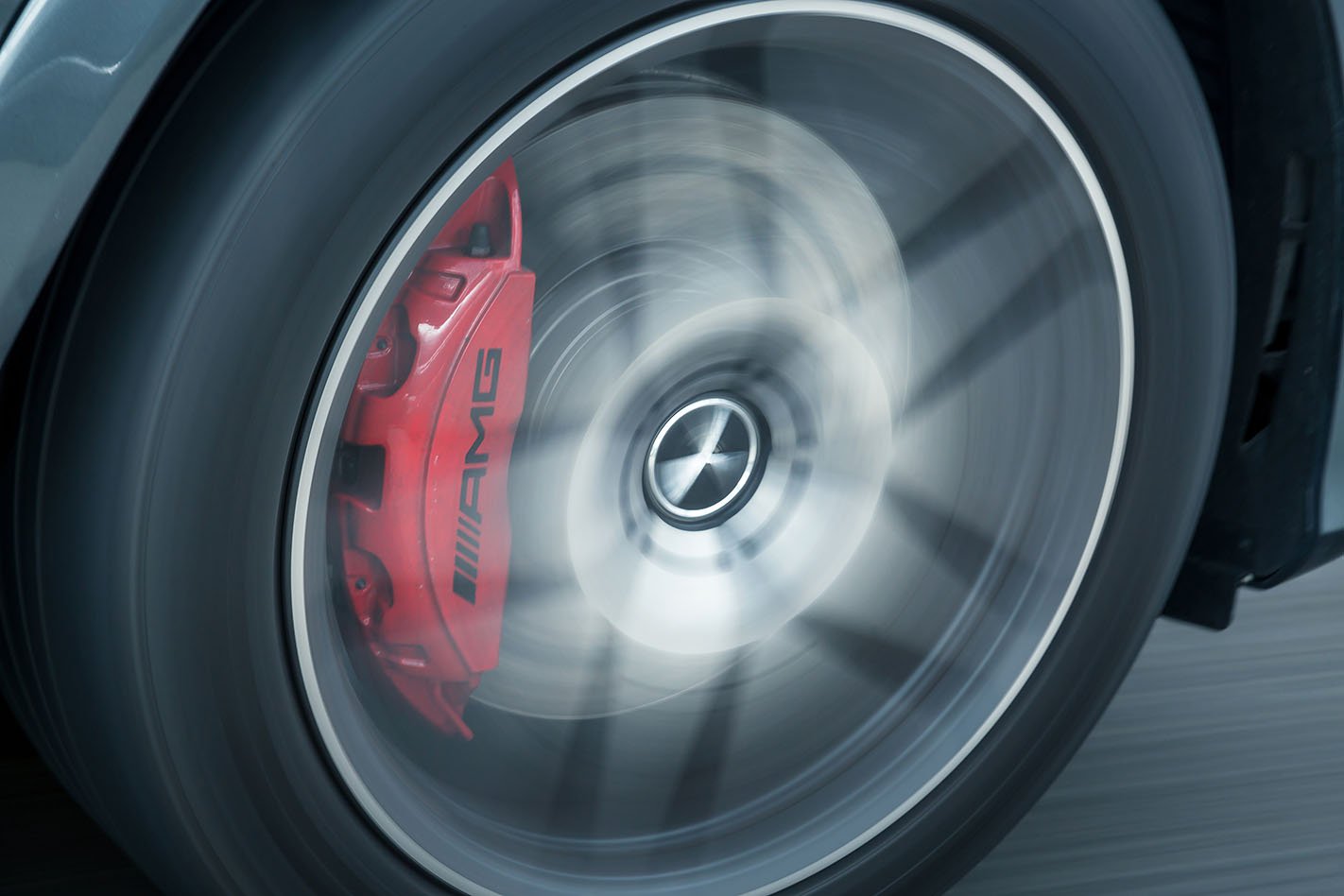
Unsurprisingly, the price for a GLE 63 S has grown as well. At $220,600 before on roads and options, the new GLE 63 S is $29,984 more expensive than the old 5.5-litre version from 2016. It also costs more than the BMW X5 M Competition ($212,900) or the Audi RS Q8 ($208,500).
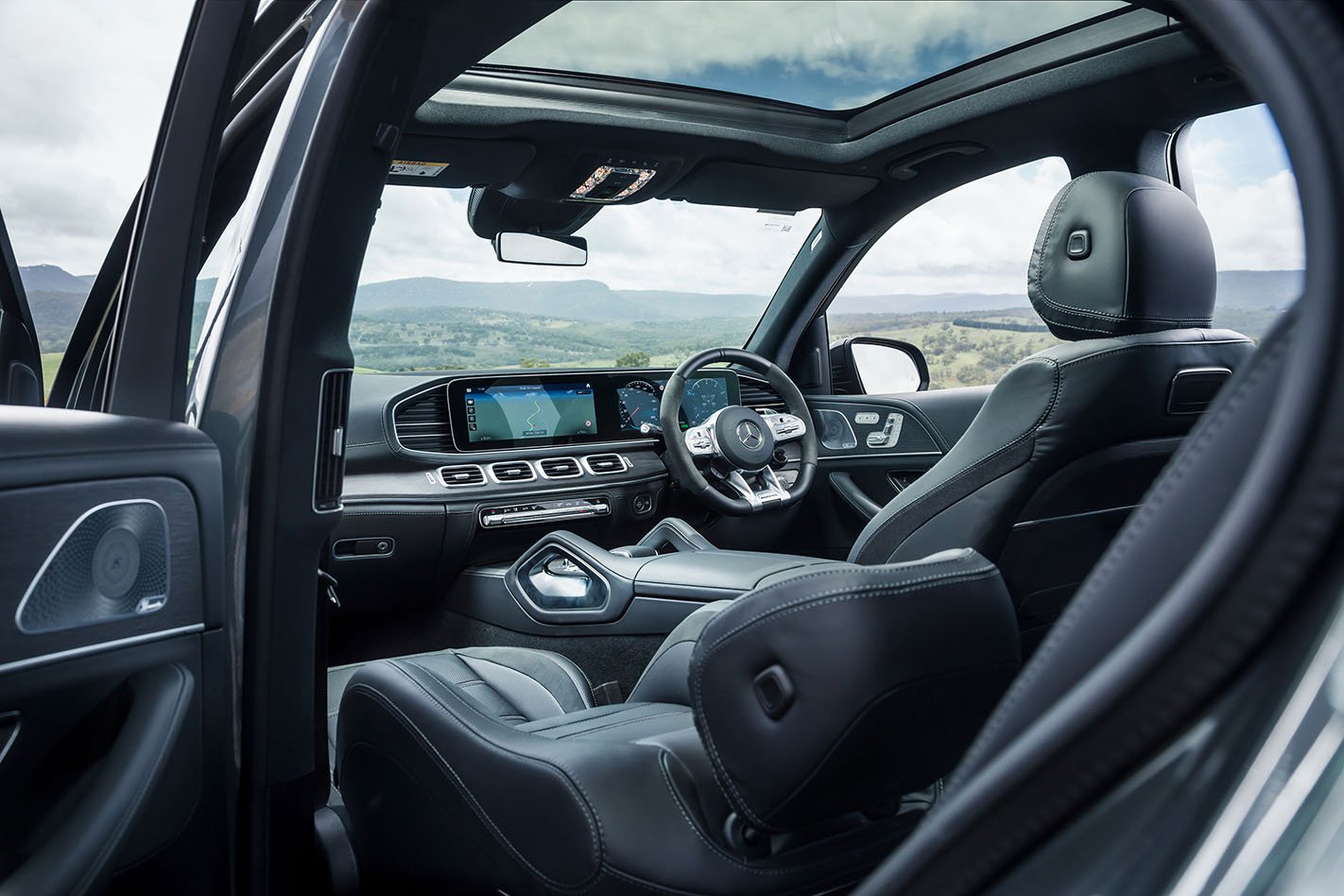
Exclusive additions include AMG Nappa leather in Magma Grey/black and 21-inch AMG wheels. It also scores AMG Active Ride Control, temperature-controlled cup holders, four-zone climate control, power closing doors and seven metallic paint options above a GLE 53.
Other standard equipment includes the Exclusive Package, which adds extra trim elements on the back of front seats while adding heating and ventilation to them as well. It also adds wireless charging, a panoramic sunroof and Burmester sound.
NEXT Mercedes-AMG GLE reviews, news and more…
Inside it scores an AMG-optimised MBUX infotainment system on dual widescreen displays, loaded with smartphone mirroring. They sit behind an AMG Performance steering wheel finished in GLE 63 S-specific microfibre. It also includes a lockable compartment and multi-contour front seats with massage functions.
The GLE 63 S also benefits from a full suite of active safety features, like lane-keep assist, lane departure assist, active cruise control, AEB, active blind spot assist, an exit warning function and active Stop and Go assist. ANCAP has rated it five stars.
These include an interior carbonfibre package ($3900) that adds carbon trim to the front workstation and steering wheel or an Energizing Package Plus that includes cabin air purification with fragrance and armrest heating for $3200.
Bored kids? An Entertainment package with MBUX rear seat TVs and wireless headsets costs $6300. An Innovation package with Augmented Reality navigation – which overlays the front-facing camera view with graphics showing your direction – also includes Interior Assist for $800.
All these options represent almost $30,000 and take a fully loaded GLE 63 S above $275,000 driveaway. Expensive? That depends on how your trust fund performed last year.
Either way, the GLE 63 S comes with a five-year unlimited-kilometre warranty, beating the BMW 80,000km five-year offer and Audi’s unlimited-kilometre three-year program. Service intervals are slightly more strict for 63 models, set at every 12 months or 20,000km compared to 25,000km for all other Benz models. Capped-price servicing lasts for three years.
Unsurprisingly the GLE cabin in 63 S trim is pure luxury. From the panoramic sunroof to the form-hugging seats with adjustable bolsters, it is class. Even the rear seats offer four-zone climate control and two USB-C ports.
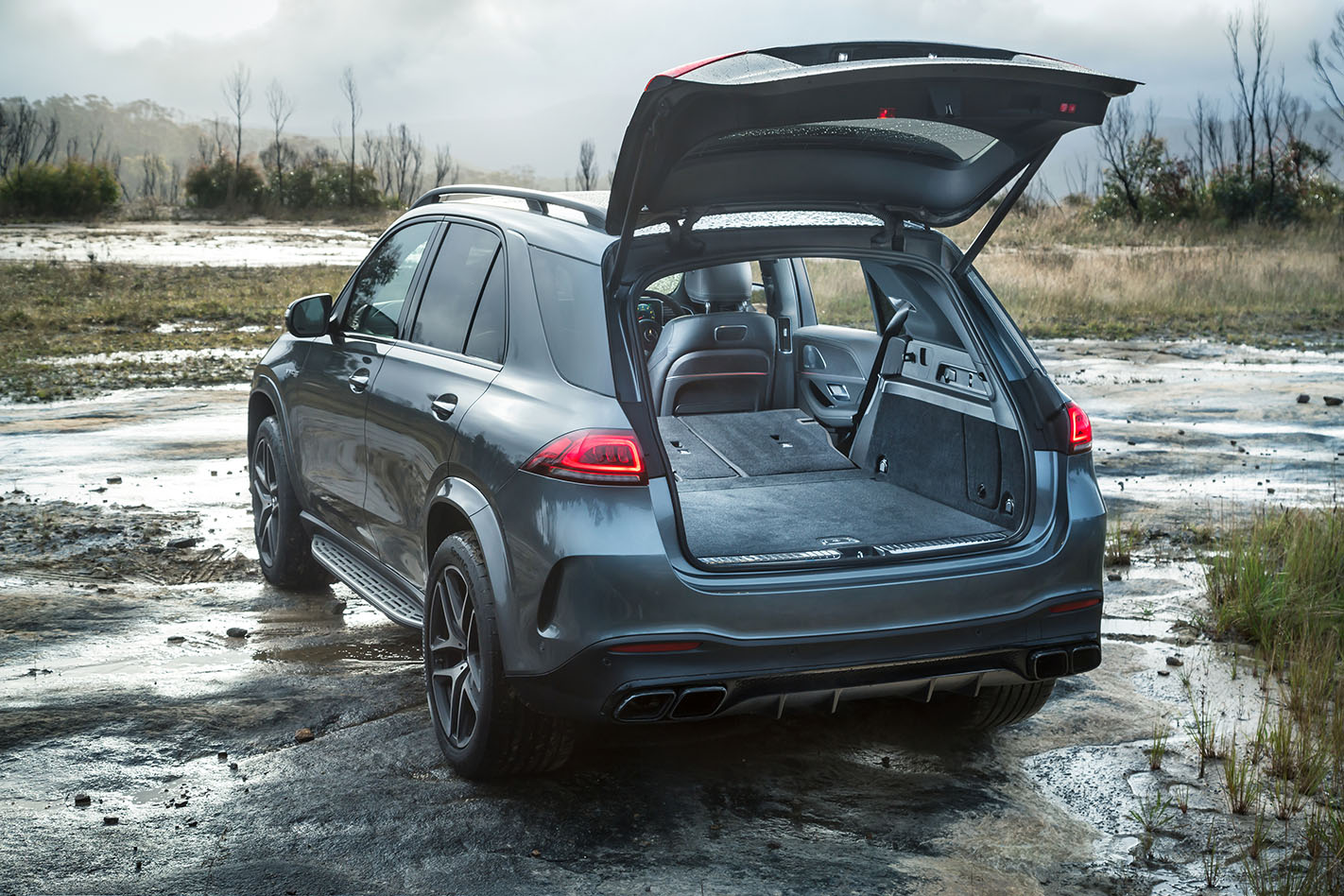
The rear boot offers 630L worth of cargo, which grows to 2055L after folding away the rear row. Under the boot floor lies a space-saver wheel and goo kit for punctures. You can also hit a one-flick switch that lowers the rear suspension when loading items into the boot.
The MBUX dual widescreen displays offer more information than you would ever need, especially now that it features an AMG Track Pace app. The head-up display is just as rich with information, offering plenty of customisation.
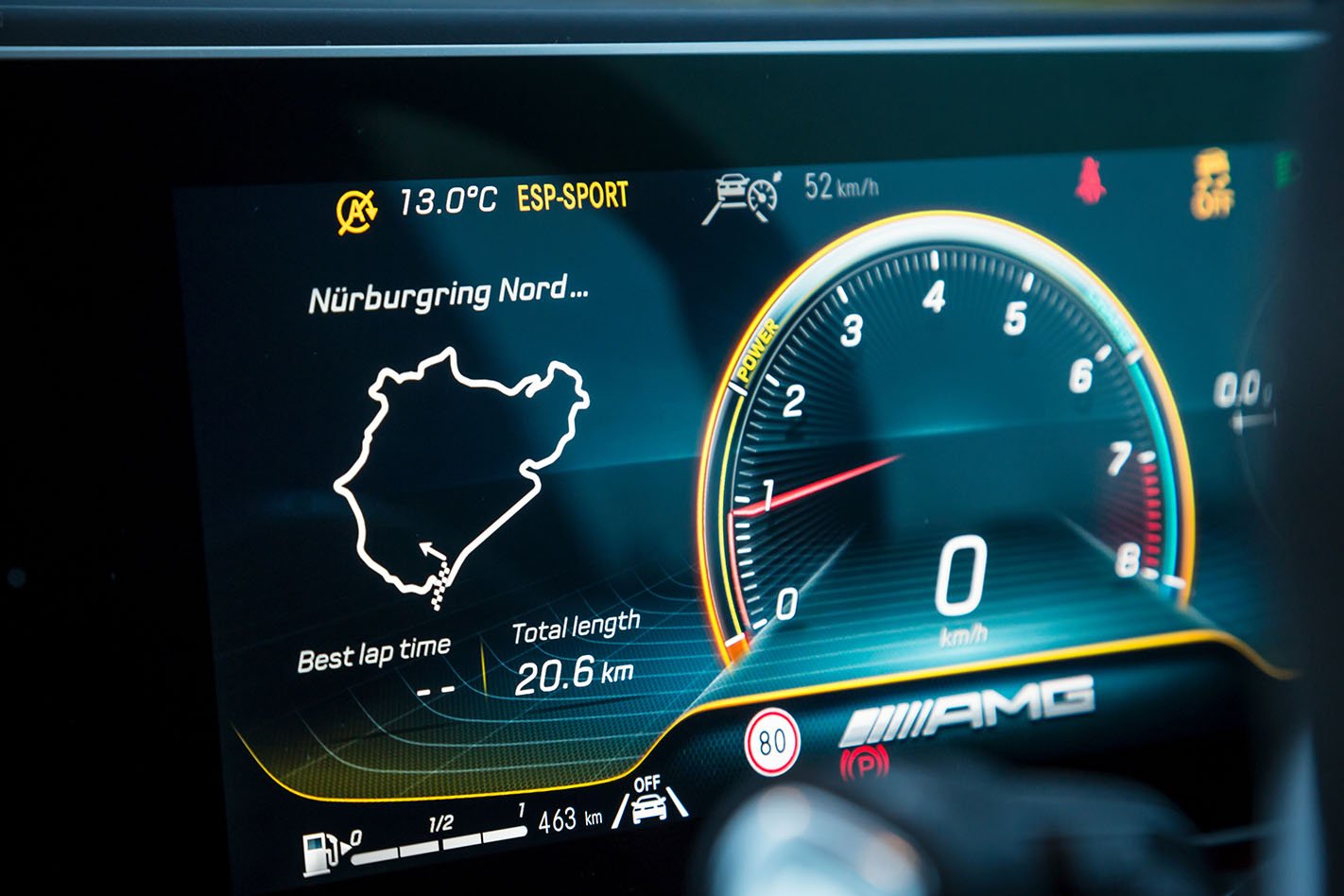
The suspension, anti-roll bars and active engine mounts link to the drive modes, of which there are seven (!) comprising Comfort, Sport, Sport Plus, Individual, Race, Trail and Sand. The latter two optimise the car’s smooth nine-speed automatic transmission and transfer-case based all-wheel-drive system to work on slippery surfaces, while the air suspension raises 55mm.
The more sporting drive modes instead lower the suspension 10mm, hunkering down on standard 21-inch wheels. Mercedes-AMG’s big-engine SUVs are known for their punch rather than their sidestep and nothing has changed for the new 63 S. Active roll bars cancel out roll to a degree and equal good directional stability through long sweepers. And the variable-ratio steering rack points true, even on decreasing radius bends.
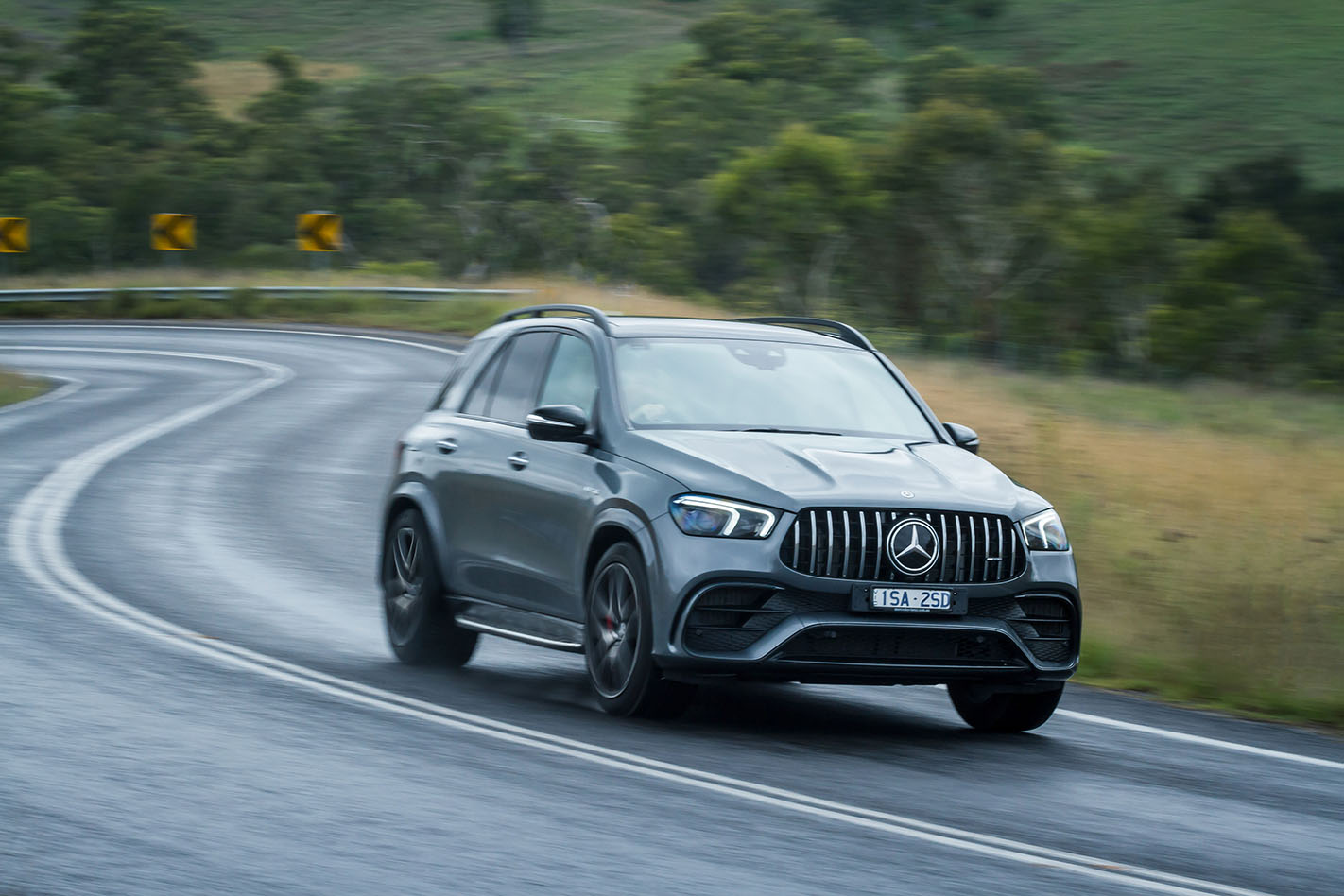
Although it booms down low with the exhaust open, the engine’s sweet-revving nature equals a robust, full-bodied roar on the way to its 7000rpm redline. The push forward is tremendous in the mid-range, especially when the electric motor is chipping in. The sprint from zero to 100km/h is claimed to fall in 3.8 seconds.
You are occasionally confronted by the tremendous weight the engine has to battle. For instance, even the unbelievably grunty twin-turbo V8 can struggle to get going in fifth gear under 3000rpm.
The upside is an all-wheel-drive system and electronically controlled rear LSD that never runs out of grip on Continental tyres that span 275mm wide up front and 310mm wide out back.
Overall, what’s most likeable about the GLE 63 S is its honesty. Although it’s nowhere near as agile as something like a Porsche Cayenne GTS or BMW X5 M, you can sense it doesn’t care. Instead, it concentrates on what a five-metre SUV with a twin-turbo V8 should.
Some of that includes hinging its personality on the idea of a twin-turbo V8 in a two-tonne SUV. Thankfully, electrification hasn’t softened the monster within the maddest GLE Mercedes sells. But its strengths also include the serious luxury, passenger comfort and long-legged cross-country ability we expect.
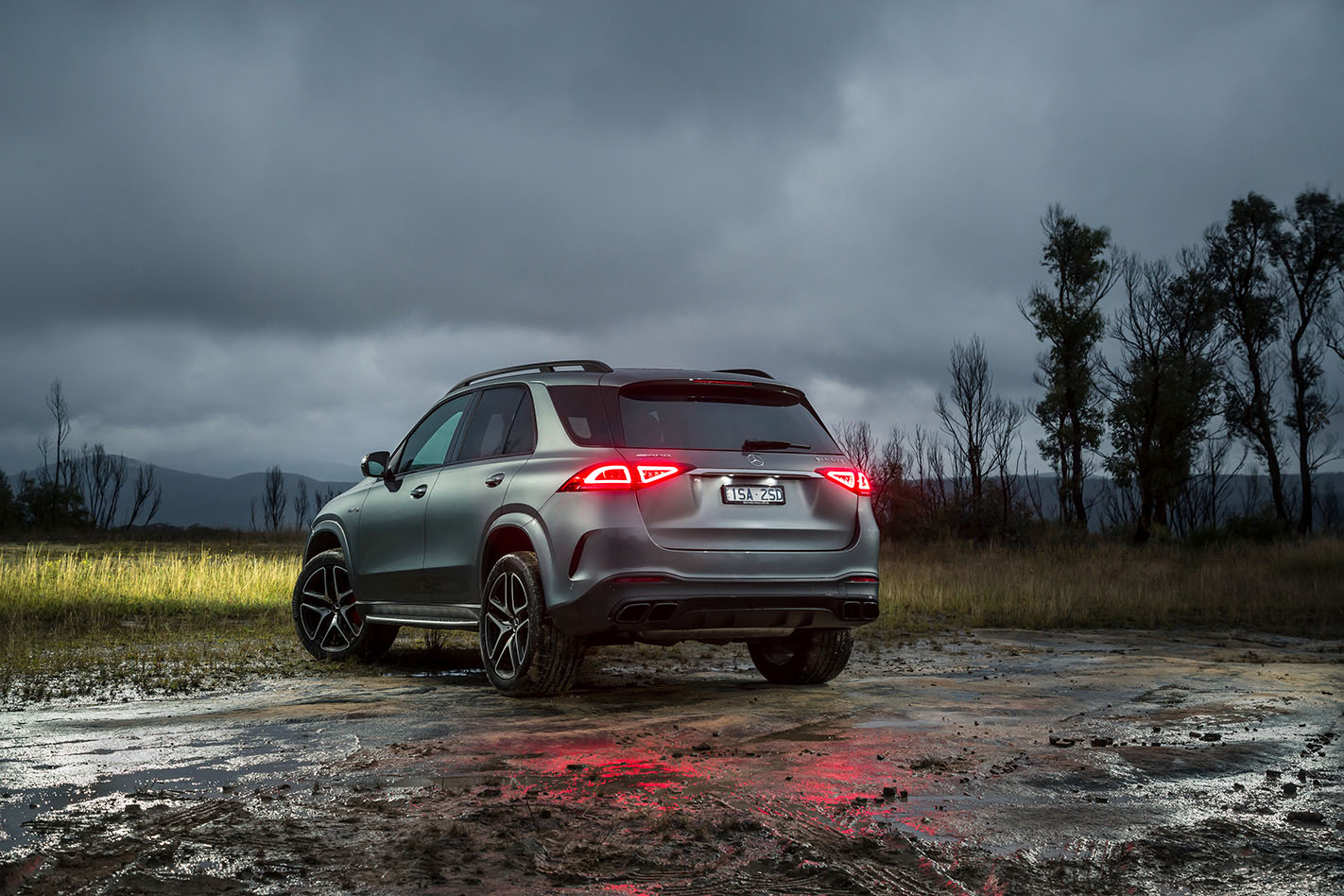
The only thing missing is simplicity. We suspect that, like the driver who is surrounded by all those buttons, the GLE 63 S itself is overwhelmed by the technology.
Then again, when it comes to twin-turbo V8 luxury monster trucks like this, pragmatism is not as important.
Verdict (7.5/10)
Likes: Prodigous mid-range grunt, directional stability, luxury vibe, room and storage, decent ride
Dislikes: Slow steering at low speeds, obvious weight, porky handling, complex front workstation
Specifications
Body: 5-door, 5-seat SUV Drive: all-wheel Engine: 3982cc V8, DOHC, 32v, twin-turbo (with e-motor) Bore/stroke: 83.0 x 92.0mm Compression: 8.6:1 Power: 450kW @ 5750-6500rpm Torque: 850Nm @ 2500-4500rpmE-motor: 16kW/250Nm Fuel consumption: 11.5L/100km (combined/claimed) Weight: 2270kg Power/weight: 198kW/tonne Transmission: nine-speed automatic Suspension: A-arms, air dampers, active anti-roll bar (f); multi-links, air dampers, active anti-roll bar (r) L/W/H: 4954/2018/1782mm Wheelbase: 2995mm Tracks: 1693/1720mm Steering: electrically assisted rack-and-pinion Brakes: 400mm ventilated drilled discs, six-piston calipers (f); 360mm drilled ventilated discs, single-piston calipers (r) Wheels: 21 x 10.0-inch (f); 21 x 11.0-inch (r) Tyres: 275/45 R21 (f); 310/40 R21 (r) Continental SportContact 6 Price: $220,600 ($246,278 driveaway)
Mercedes-Benz Australia has revealed its entry point for all-electric transport, the EQA 250 SUV, will be priced from $76,800.
According to Mercedes, the compact EV SUV will fill a gap in the Aussie EV market, while also significantly undercutting both competitors in the segment, and its own bigger brother, the EQC, by more than $60,000.
The front-wheel-drive SUV is powered by a “double-decker” 420-volt lithium-ion battery with five modules and 200 cells, which Mercedes-Benz says is an integral part of the EQA’s overall structure.
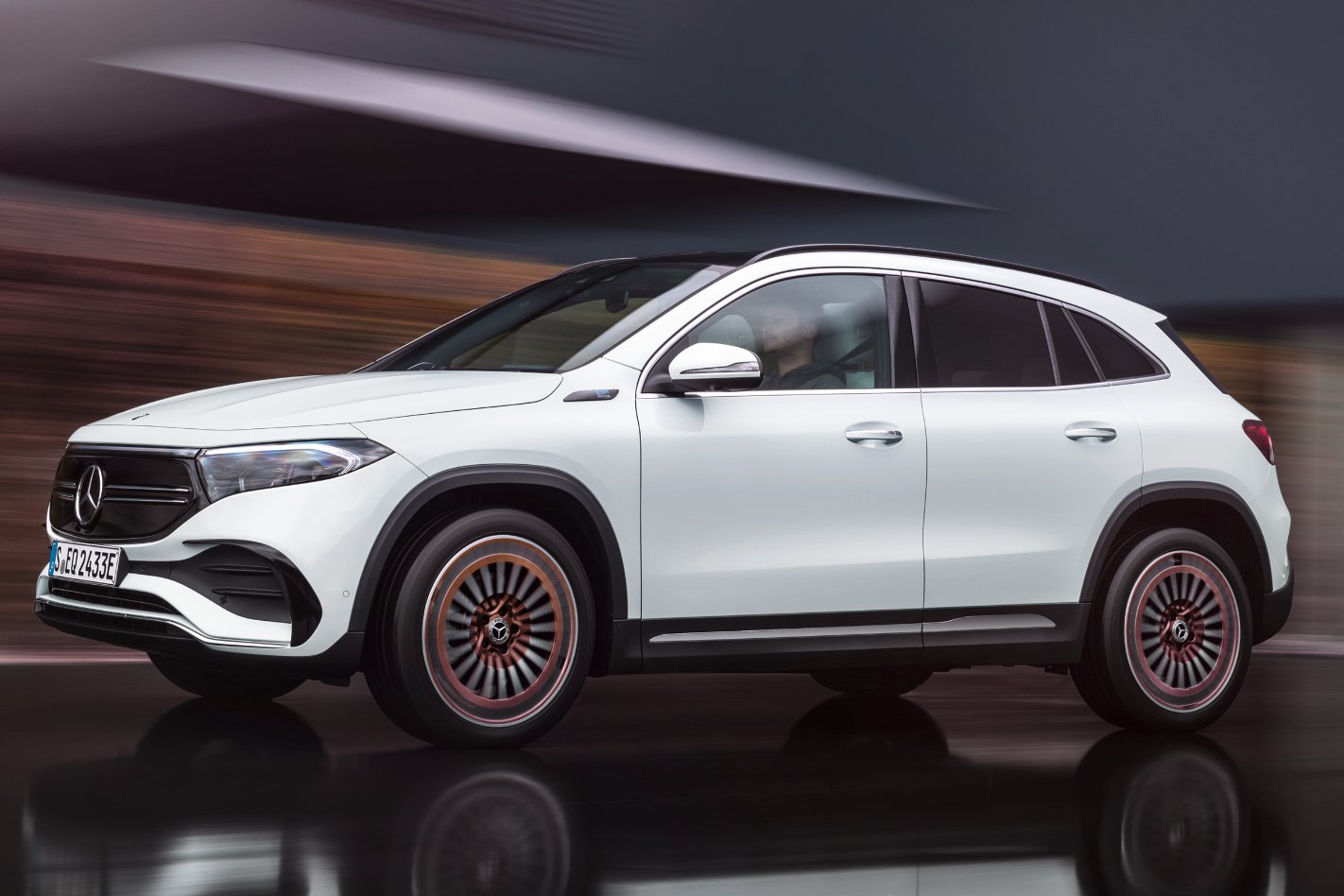
Power is quoted at 140kW and 375Nm and sent to the front axle via a single-speed transmission, which has been specifically designed for FWD applications.
Mercedes has quoted a 0-100km/h of 8.9 seconds for the electric SUV and range is rated at up to 480km (ADR).
The automaker believes these performance and economy figures will make the EQA 250 ideal for both urban and regional driving.
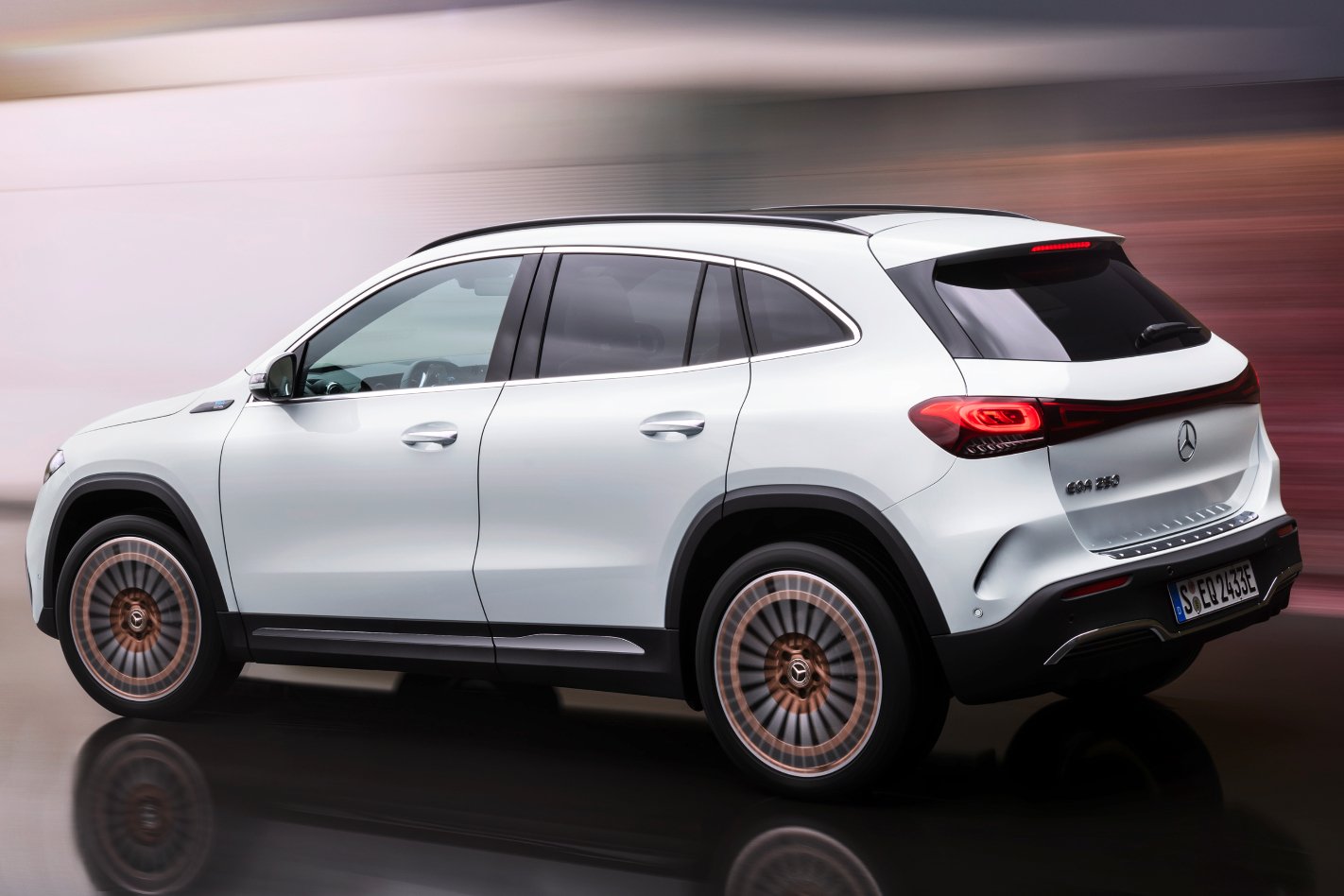
“With this car, for the first time we are offering our customers an all-electric Mercedes in the compact segment with an extensive range that ensures its viability in everyday use,” Britta Seeger, Mercedes-Benz board member, said
“As such, the new EQA is an important vehicle along our path towards the electrification of all our vehicle segments.”
The EV SUV will come equipped with an inbuilt Type 2 CCS plug, as well as two supplied charging cables.
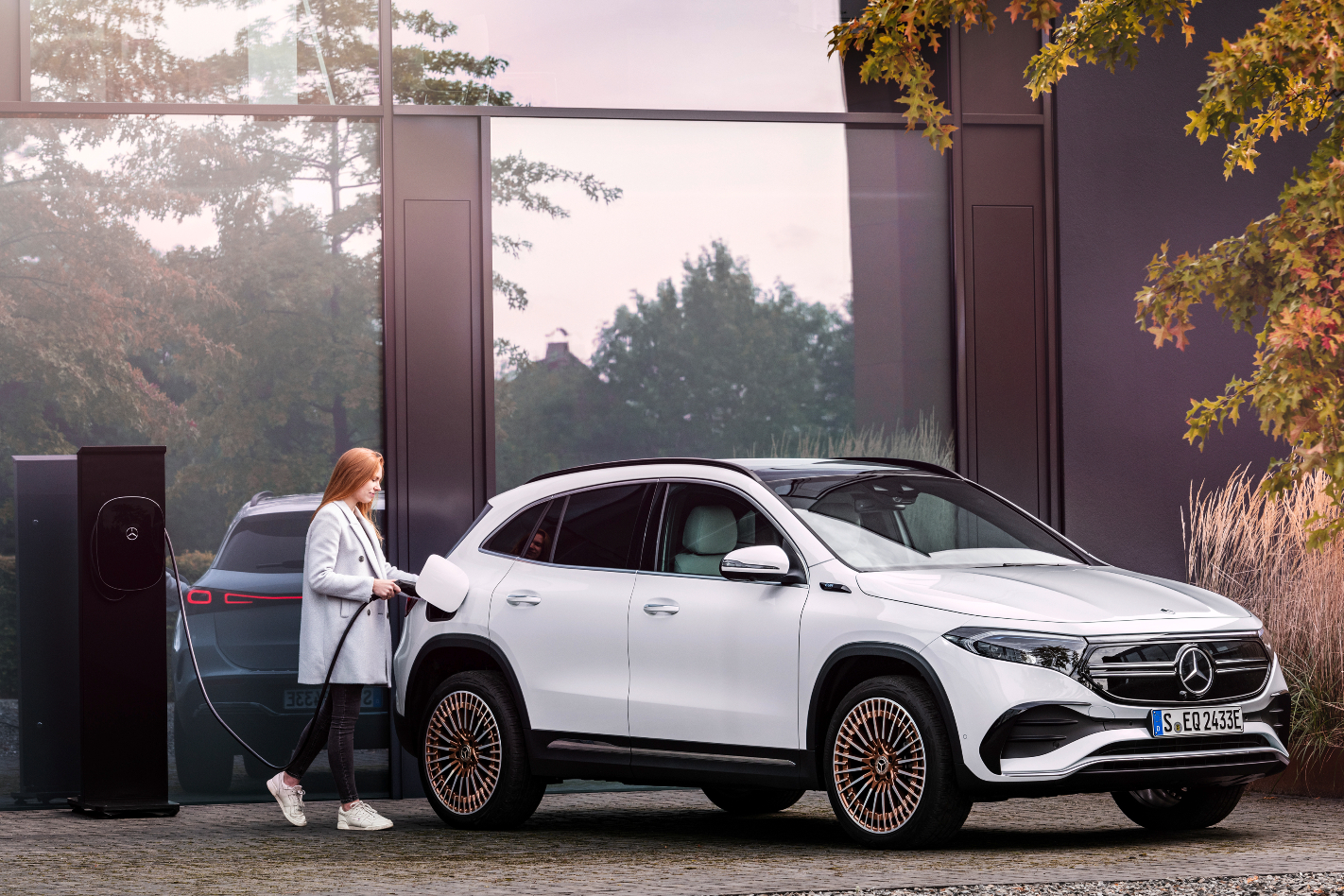
Mercedes claims the EQA 250 is capable of 10-80 per cent charge in just over four hours when using an optional Mercedes-Benz wallbox with an AC connection that has at least 11kW, and can charge from 10-80 per cent charge in just 30 minutes with a rapid charger that has a DC connection with a 100kW supply.
The SUV’s exterior will feature several styling cues exclusive to Mercedes’s electric EQ range, such as a blacked-out grille, full-LED headlights with blue-accented accents, and slim LED tail lights that integrate into a tapered LED light strip that spans the car’s tailgate.
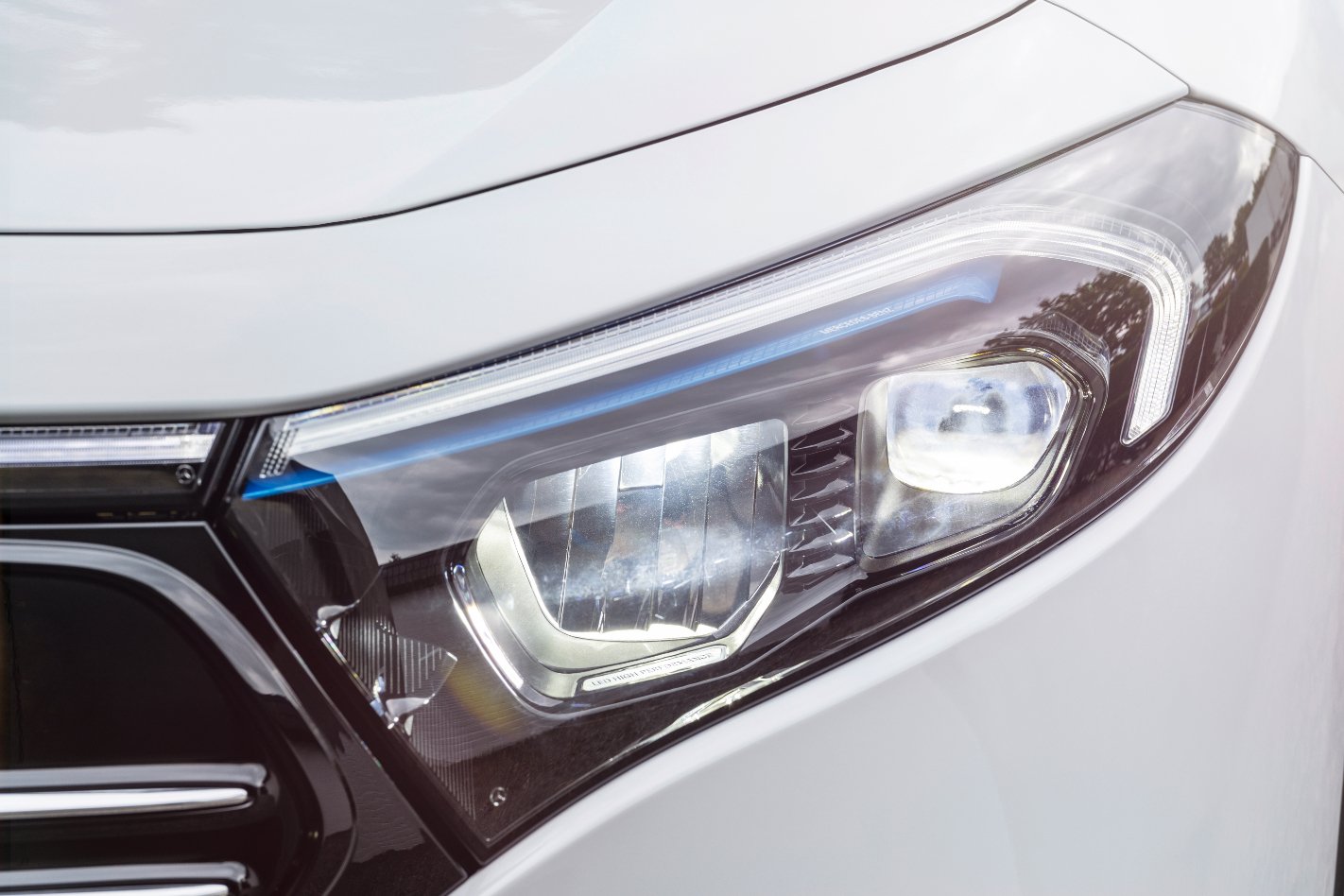
Electronically-controlled adjustable dampers will come as standard, and the EQA 250 will sit on 19-inch AMG 5-twin spoke light-alloy wheels.
A suite of tech-laden features will greet occupants of the SUV, such as Mercedes’s MBUX infotainment system with “Hey Mercedes” voice control function, a centrally-mounted 10.25-inch touch screen display and another 10.25-inch digital instrument cluster that can be tailored to provide information for each driver’s preferences.
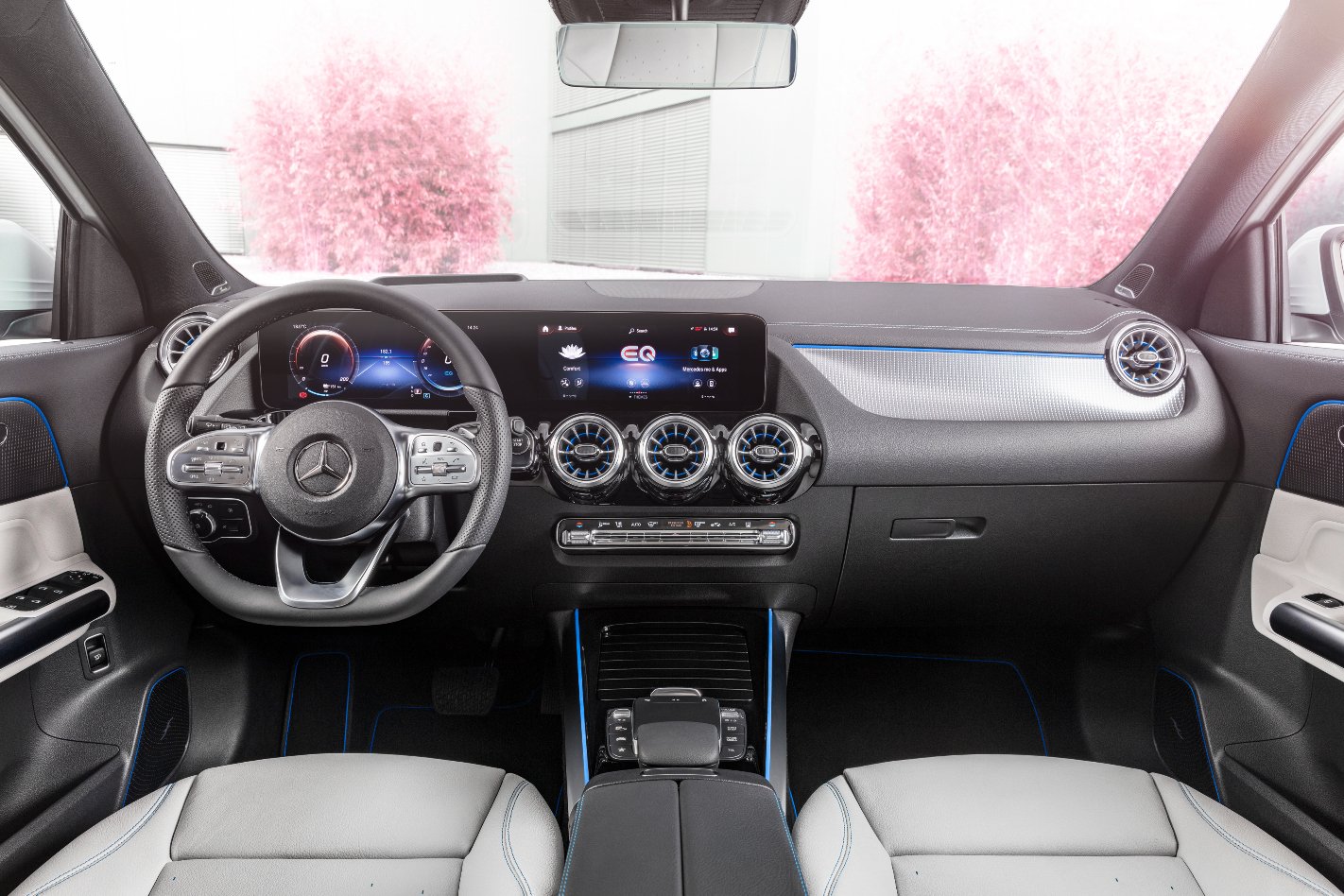
Other tech features include keyless entry and start, powered tailgate with hands-free function, smartphone integration with Apple CarPlay and Google Android Auto, wireless charging for selected mobile devices, DAB+ digital radio tuner, heated and electrically adjustable front seats with memory, automatic climate control including remote pre-entry climate control, ARTICO upholstery and a leather sports steering wheel.
Mercedes’s Driver Assistance Package will also come as standard for the SUV, including radar-guided cruise control with auto restart, active steering, braking, and lane-keeping with blind-spot monitoring, and GPS-guided speed adaptation.
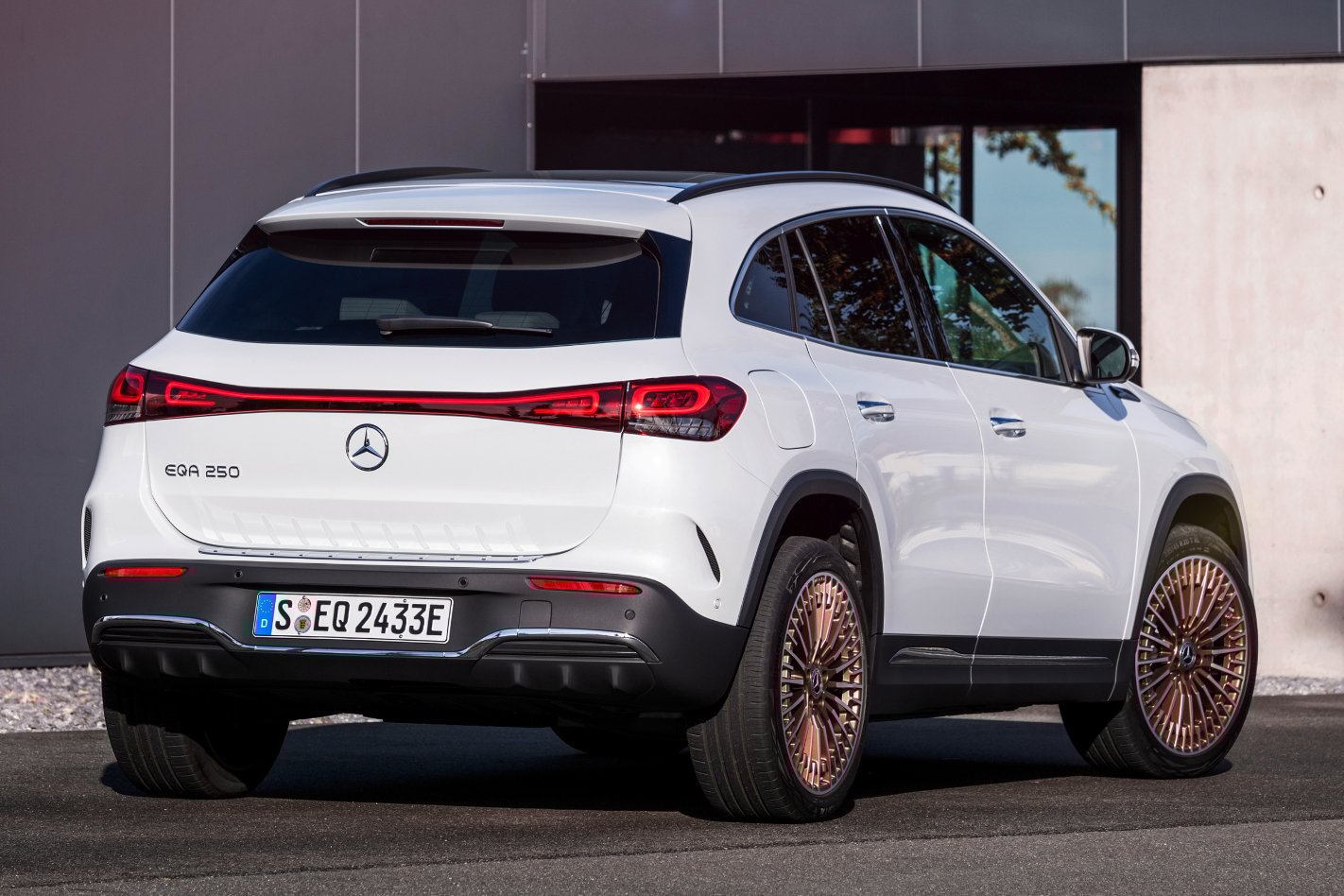
For an additional $7300, the EQA 250 can also be had in a limited “Edition 1” package, which adds 20-inch AMG multi-spoke light-alloy wheels finished in a unique matt copper colour, extended gloss-black exterior details, “Neva grey” leather other bespoke styling features.
Mercedes-Benz Australia has confirmed that orders for the compact electric SUV will begin in April, with deliveries expected to commence in June.
Ferrari’s first SUV, the Purosangue, has been stylised in a rendering that speculates what the high-riding Prancing Horse could look like.
Created by digital artist Giorgi Tedoradze, the striking images show an angular, aggressive design with sharp lines and an overall silhouette not too dissimilar from that of Aston Martin’s DBX.
The front fascia is all angles and creases, with a two-tiered theme that sees the sharp-looking bonnet protrude past the car’s massive and vogue front grille.
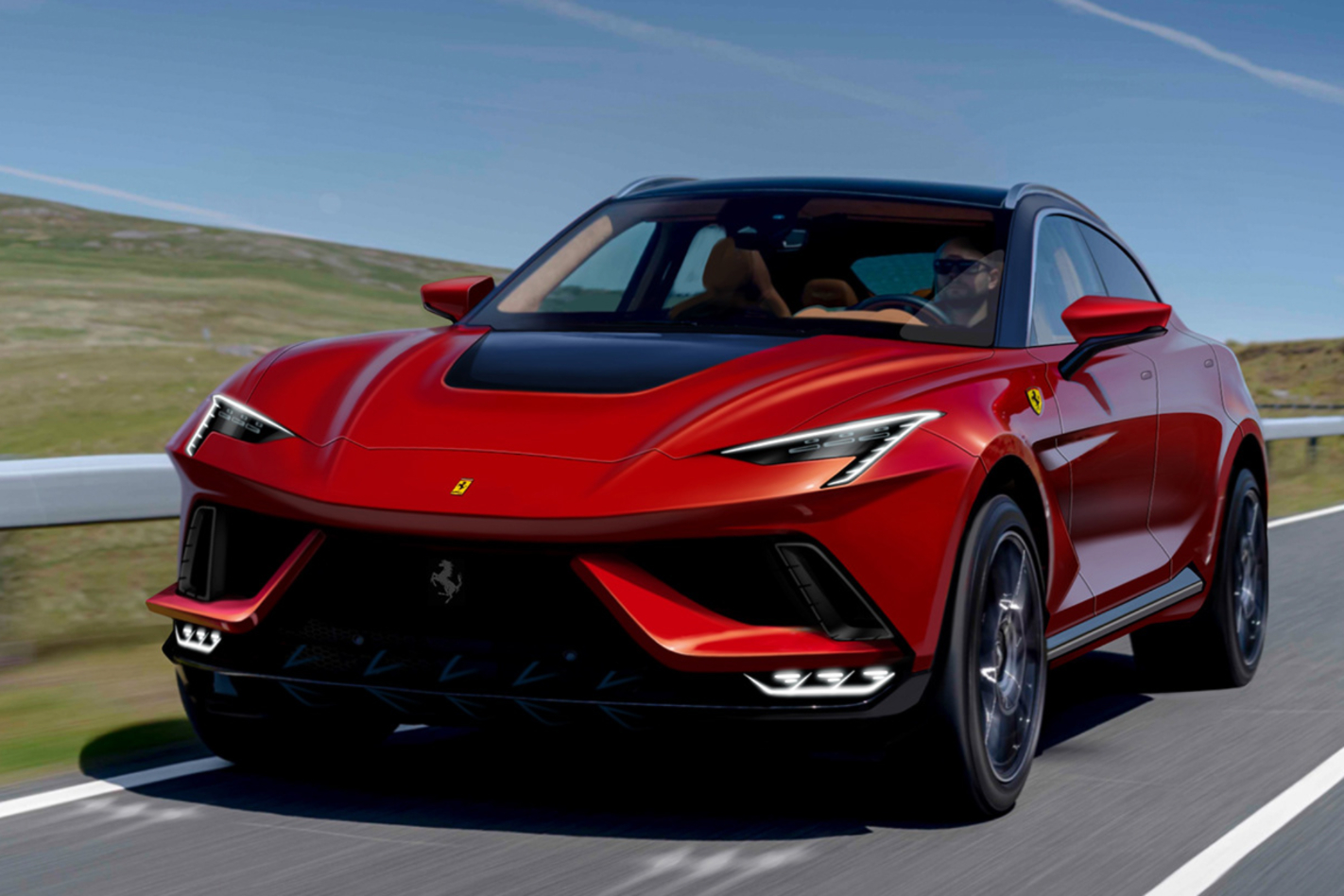
From the front there are also notable similarities between this rendering and the Maserati Levante, which is fair enough, considering spy footage of the Purosangue at Ferrari’s Maranello test track, taken by YouTube channel Varryx, shows a car shrouded by a combination of Levante and GTC4Lusso body panels.
From the rear, this rendering is similarly avant-garde in its styling, with a huge and aggressive rear diffuser topped by two centrally mounted exhaust tips, which integrate into the car’s tailgate.
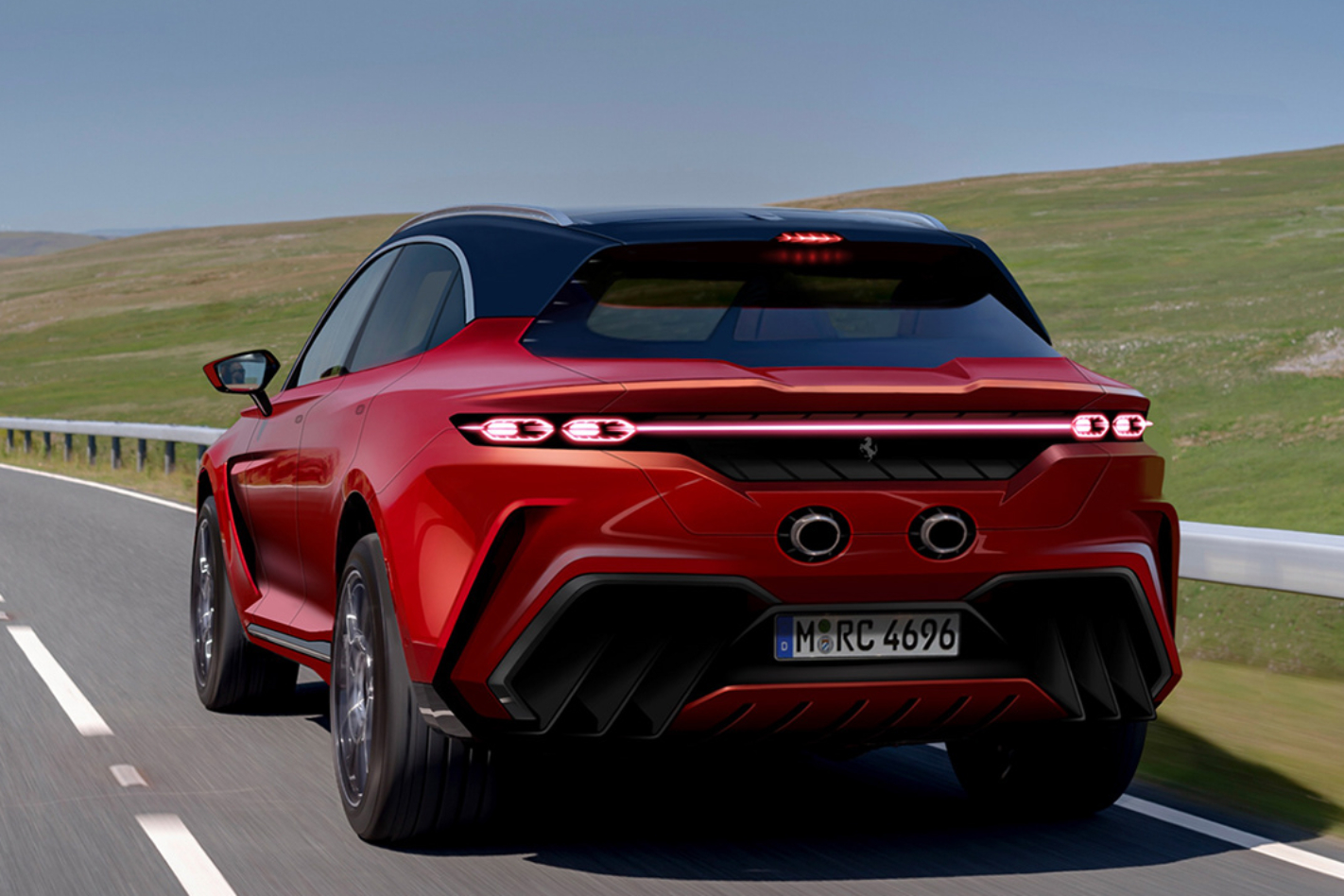
This looks exceedingly cool, however, we’re almost certain the setup would never pass ADR regulations – exhaust tips tend to get quite hot, and having something that could easily cause severe burns so close to the boot’s main access point is probably a massive no-no.
The top portion of the tailgate also juts out from the car’s roofline, which is a compelling look, although perhaps a little out of character with Ferrari’s current design language (think Roma).
This rendering also depicts a Purosangue with a decent ride height, which is in stark contrast to the spy shots of the camouflaged car testing at Fiorano, which show a prototype sitting squat and low, almost making the car look like an elongated hatchback or bulky wagon.
Little is known about Ferrari’s contentious SUV, however, we suspect it could be powered by either a version of the F140 naturally aspirated V12 currently found in the 812 Superfast and GTC4Lusso or the F154 twin-turbo V8 found in the F8 Tributo and GTC4Lusso.
There are also strong rumours the SUV will employ a mild-hybrid system as part of its powertrain from launch.
And in a report released late last year by carmagazine.co.uk, the Purosangue could also be the first fully-electric Ferrari ever made.
We’ll have to wait until later this year for more details about the prancing SUV, which is expected to be launched in 2022.
MORE: Purosangue stories MORE: All Ferrari stories
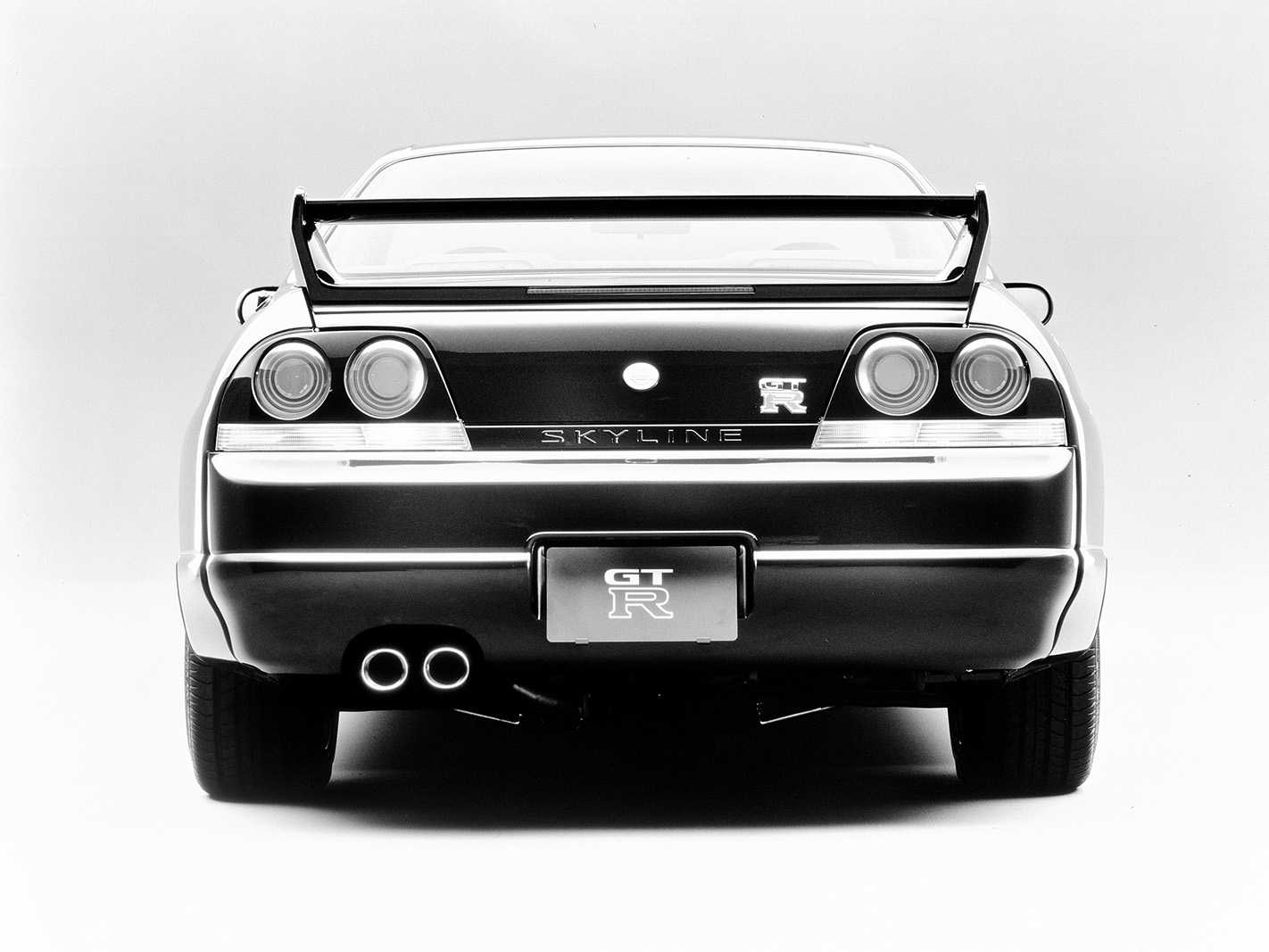
In case you hadn’t noticed, Skylines are on an absolute tear at the moment. For a while it seemed like world records were being toppled at auction week after week; and run-of-the-mill examples are now asking numbers once unimagined by those who were around in the glory days that were the mid-late 2000s. This is aircooled Porsche stuff people, and I’m sorry to tell you but no, these are most certainly not $15k cars anymore…
The R33, in particular, had traditionally been regarded as the middle child of the lineage; its bloated dimensions made it the butt of many ‘boat’ jokes and it had less significant racing history than the mighty R32 (Godzilla), and it also wasn’t as rare as the R34.
Today though, it’s the one to buy. They weren’t always ‘cool to own’ so you’ll notice that median condition is generally better than that of R32s, which were treated as bargain performance missiles for years. They’re also a far superior chassis and, in certain key regards, represent the greatest generational dynamic leap between the three RB-powered iterations.

While internet experts are quick to assert that the R33 is over 100kgs heavier than its Godzilla predecessor, the extra mass is distributed smartly. You get a more solid feel, better torsional rigidity and much greater mechanical grip than the oversteer-happy R32. Its claim to fame was a production car lap record at the Nurburgring, and the first car to break the eight-minute barrier.
It may not be as raw an experience as the R32, but if you want to get from point A to point B, or around a track, as fast as you can – the R33 might still be the better mousetrap. Value-wise, the R33 also likely has a little more immediate headroom for future growth compared to the R32 GT-R. Given it’s the previously Skyline-starved USA and their rolling 25-year importation rules that are chiefly contributing to rising global values; R33s are expected to see significant growth in the next few years, while R32 GT-Rs are far more plentiful and have likely plateaued for now.
As for why you’d pick an R33 over an R34 GT-R? Well… you simply won’t get laughed at for having anything less than $200,000 to spend.
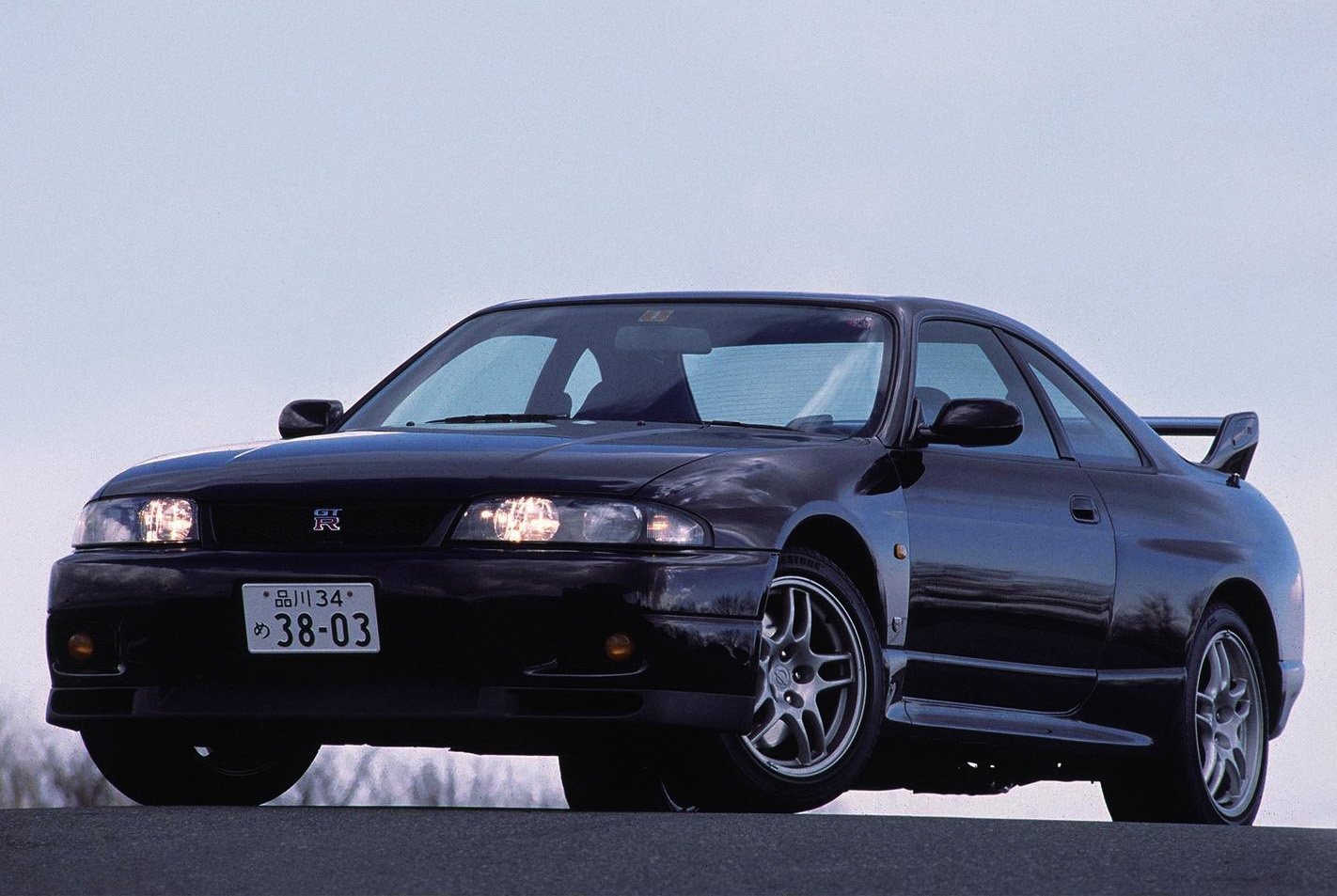
IN THE MARKET
Unlike the 100 Australian-delivered R32 GT-Rs, R33 GT-Rs were never officially sold Down Under but were brought in by the literal boatload amidst the once-flourishing import industry. Available since near-new, the first R33s were sold in import yards for quite a princely sum, however, by the mid-late noughties were readily found between $15-20k (R32s much the same, and base BNR34s were a gut-punching $35k proposition).
Today, you’re talking anywhere from $60,000-$90,000+ depending on originality, condition and level of modification.
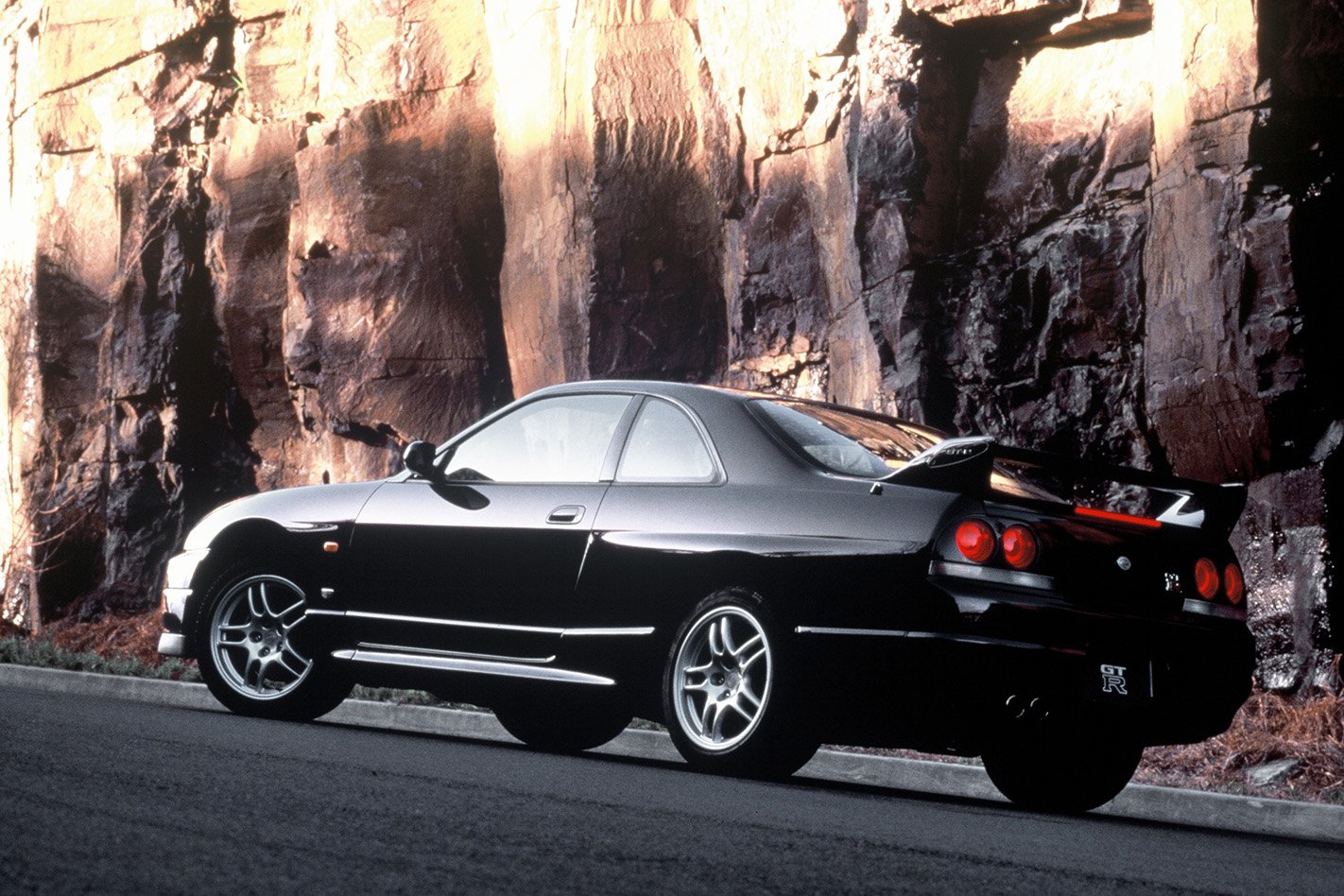
BODY & CHASSIS
Regarded as somewhat more rust-resistant than some of its contemporaries, R33s are getting to the age where every prospective purchase should be inspected for the silent killer. R33s are markedly more rare than the R32s (16,668 v 43,937 produced) so original components may be harder to source, although Nismo’s heritage line of reproduction parts continues to grow in scope.
Check for accident repairs by inspecting engine bay and boot for overspray, paint inconsistency between panels, and consistency of panel gaps.
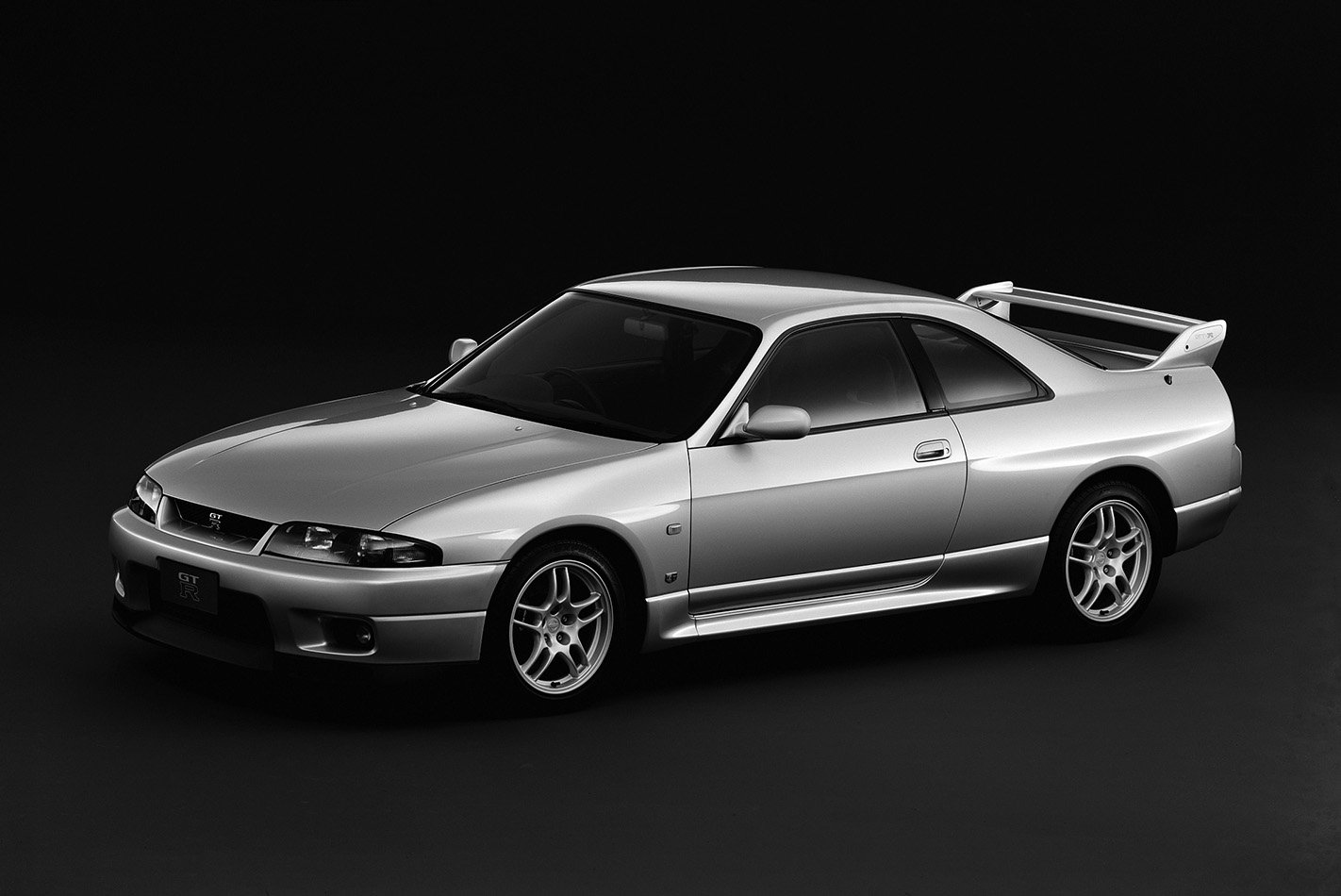
ENGINE & TRANSMISSION
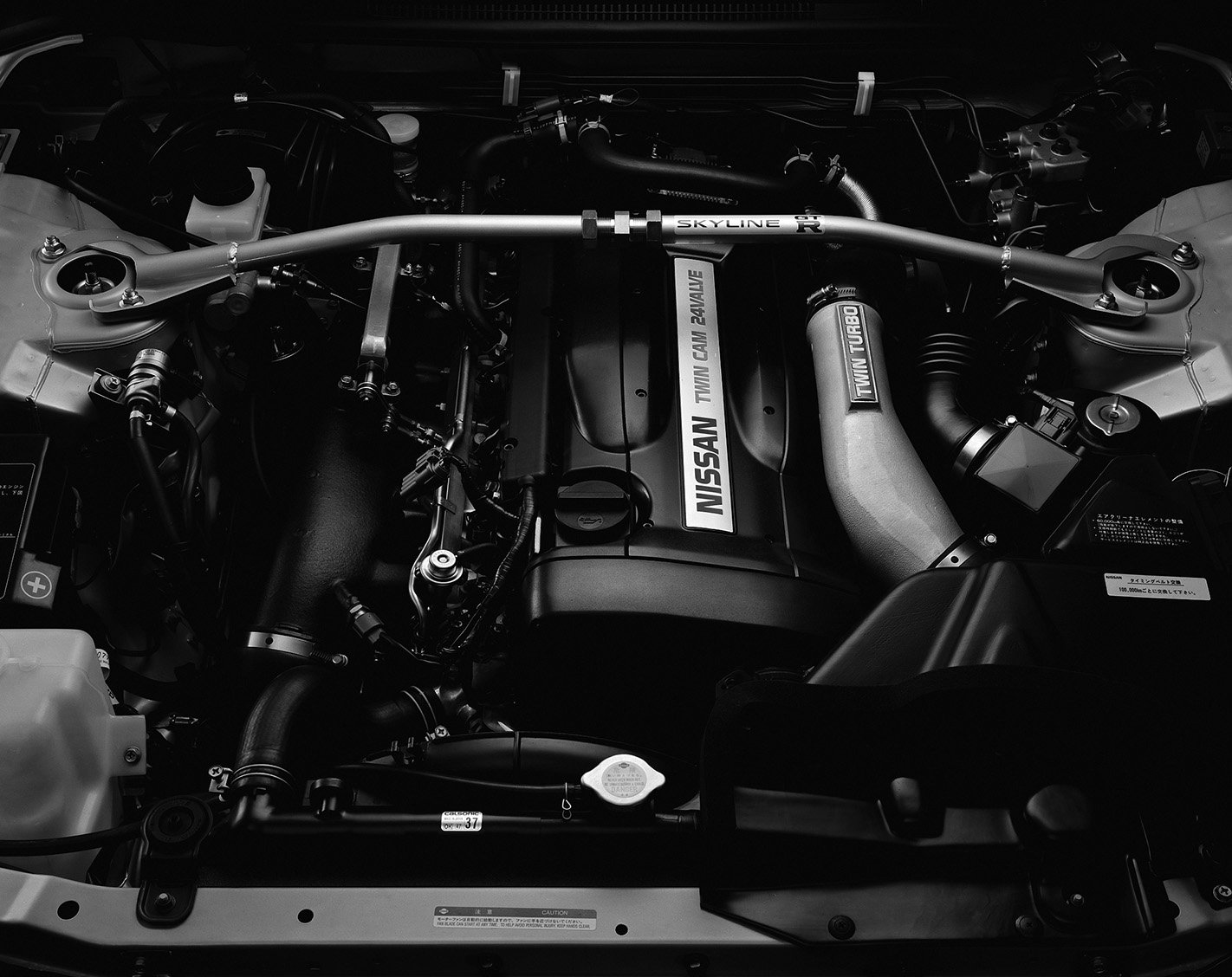
The iconic RB26 is generally durable with routine maintenance and a little sympathy. Oil and spark plugs should be replaced every 5000km at least so be sure to seek out any proof of servicing.
Given that these cars weren’t very valuable for so long, it’s fairly commonplace for cars to come with patchy physical service history. I always advise people that they are inspecting the seller, as much as the car, when it comes to GT-Rs. Ask as many questions as you can, especially if it’s a modified example.
Original head and block? Unopened? What exactly is in the engine? Standard internals? Standard bore? How much boost is it – and has it been – running?
Answers should hopefully paint a picture on the car’s health as well as how hard a life it has lived under its previous ownership.
A total engine rebuild can easily exceed $10-15k, so always strive for the best you can afford.
SUSPENSION & BRAKES
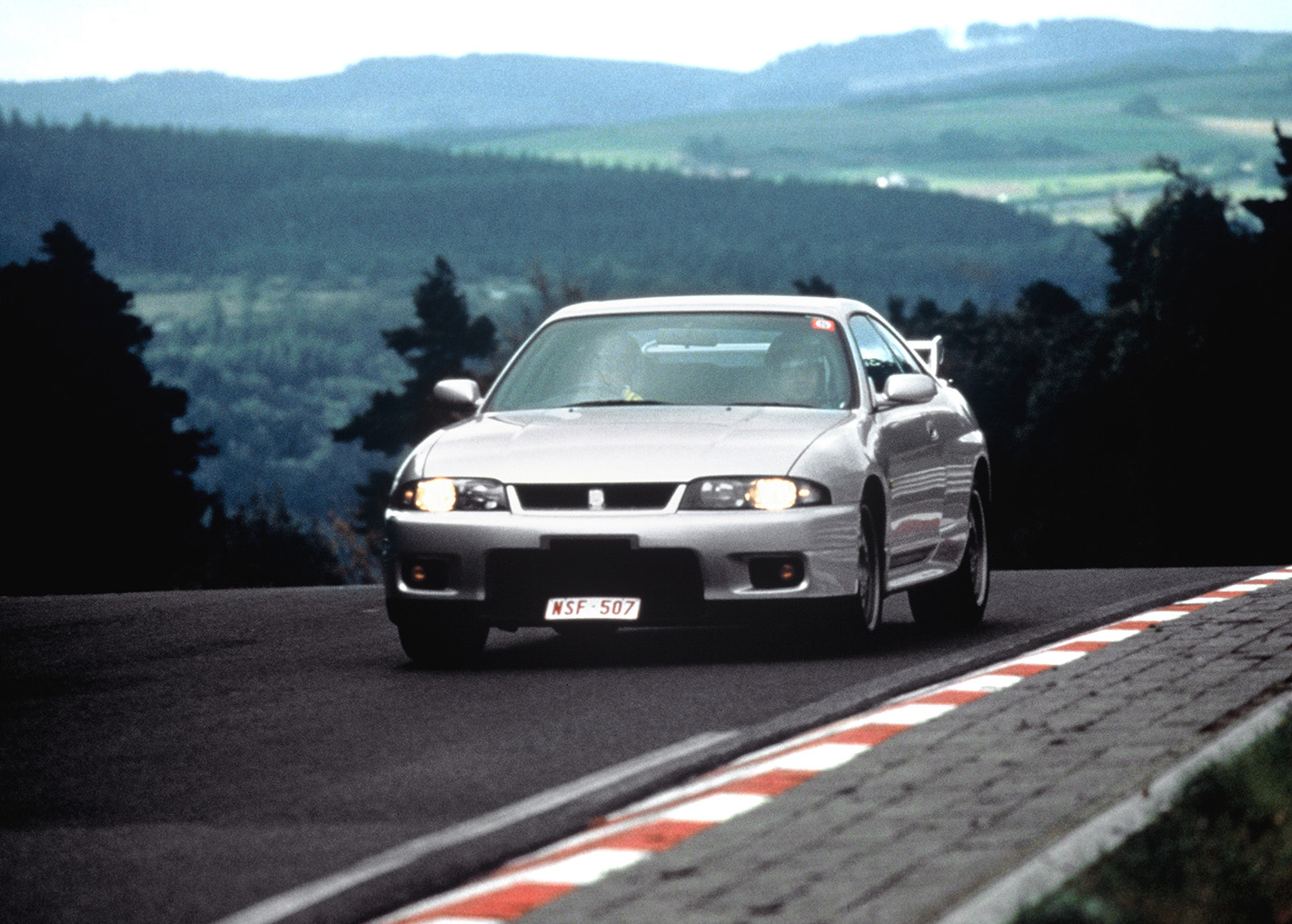
Inspect pads for life, and discs for scoring and cracking. The car under braking should be smooth and free of juddering or squirming.
It’s highly likely that a previous owner has tossed the original suspension in the bin, in favour of fancy adjustable coilovers. Even if you weren’t planning to run the original system, they are a nice-to-have and will boost your car’s future value as original components grow increasingly scarce. The same goes for original wheels.
Also check the state of bushings as they should soon be replaced from age, if they haven’t been done already.
INTERIOR & ELECTRONICS
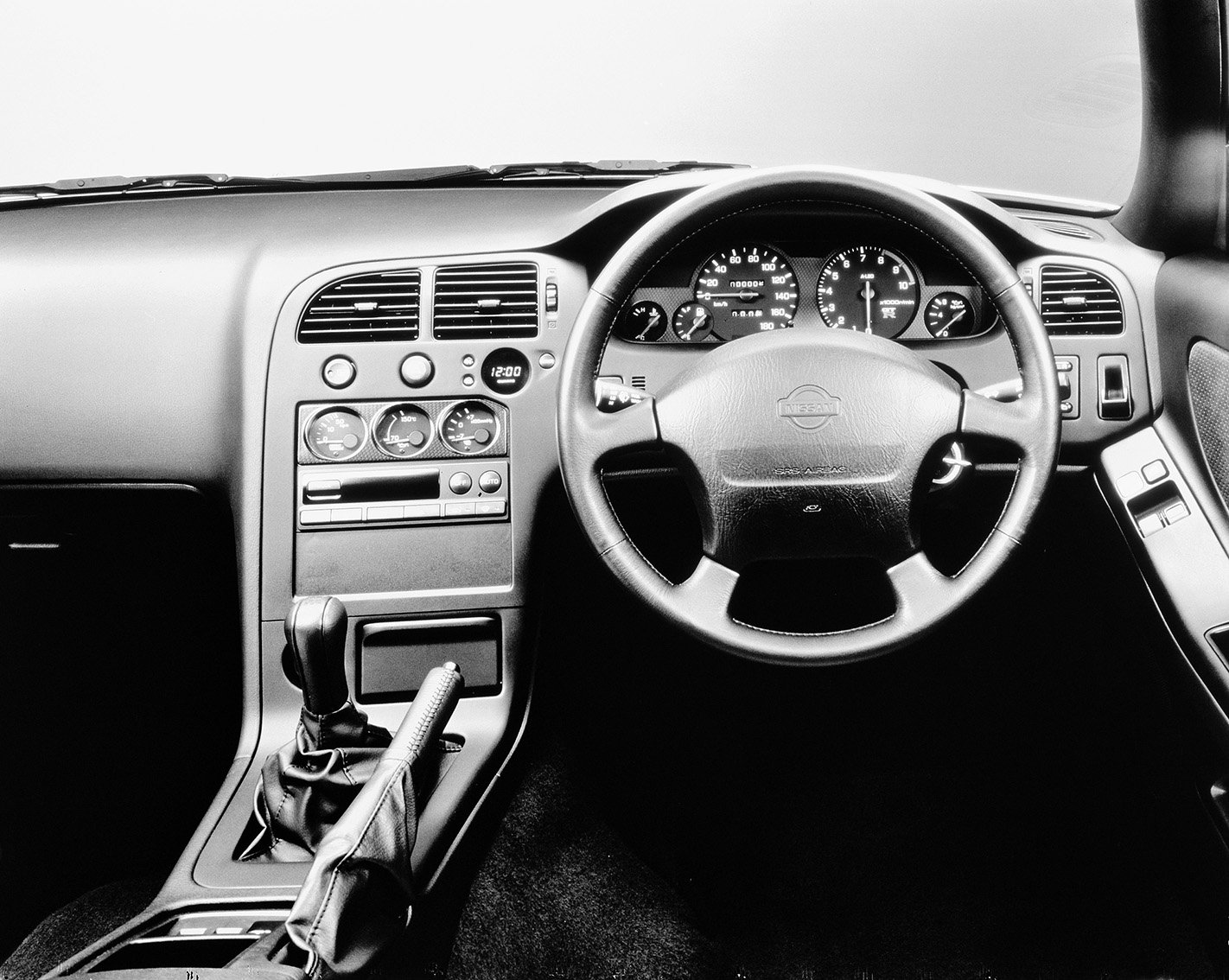
Not much to go wrong in terms of tech, however, Japanese interiors of this era were notorious for ageing badly. Check for sun fading on seats and tears or bubbles on the dash. Check clarity of buttons and gauges, and observe any wear and tear to the steering wheel, seat bolster, gear shifter and any other high frequency touchpoints. A car claiming low kilometres but showing lots of wear and tear should ring alarm bells.
THREE RIVALS TO CONSIDER
1. 997 Porsche Carrera
GT-Rs are now living in a totally new price-bracket when it comes to cross shopping, and you can afford yourself some seriously tasty metal. It’s well worth taking a close look at a manual 997 Carrera, but you could take a 996 and call it a day with $20-$30k to spare.

2. E92 BMW M3
A very collectible E30 M3 would also fall into this price bracket, but would likely be a downgrade. On the other end of the spectrum, the E92’s thumping 4.0-litre V8 offers the slick coupe experience with a powerhouse of an engine. Manuals can be had with change.

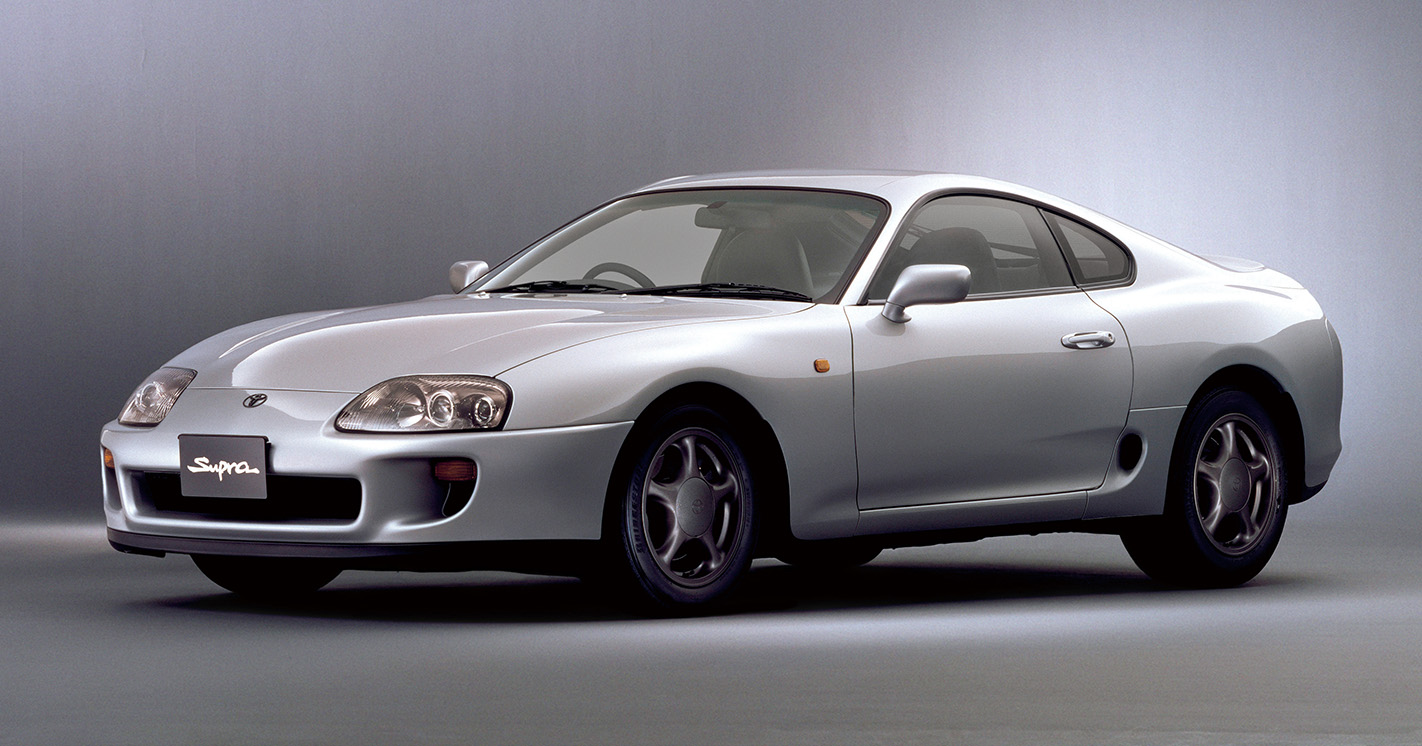
3. MkIV Toyota Supra
Perhaps the closest competitor in terms of value, age and ethos – is another Japanese household name immortalised by film and video games. The Supra offers the same cult appeal, and propensity for modification. A simpler package with a busier interior.
1995 Nissan Skyline R33 GT-R Specs
Body: 2-door, 4-seat coupe
Engine: 2568cc inline-6, DOHC, 24v, twin-turbo
Power: 206kW @ 6800rpm
Torque: 355Nm @ 4400rpm
Transmission: 5-speed manual
Weight: 1530kg
Used range: $60,000-$100,000
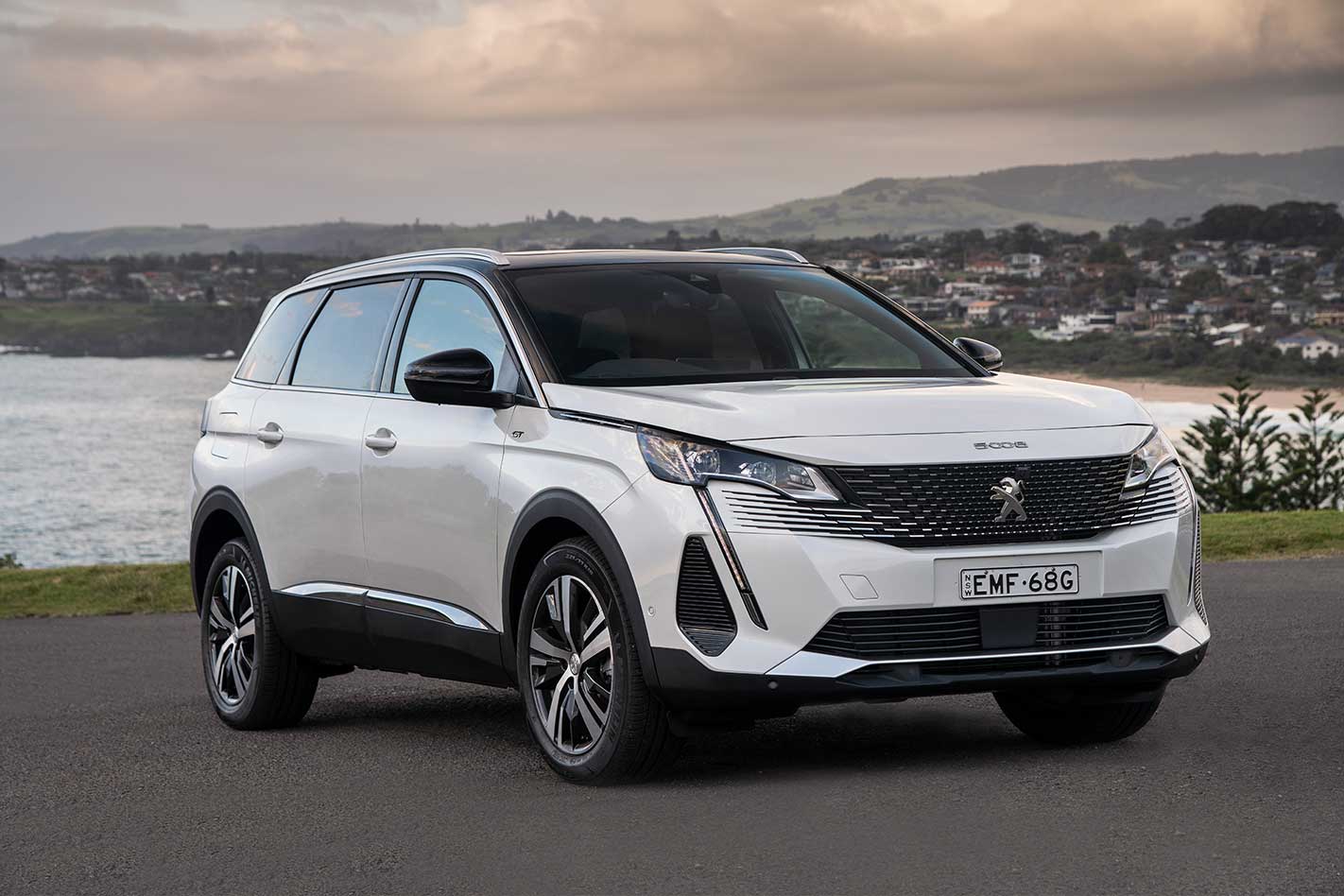
The wheels are spinning furiously at Peugeot-Citroen Australia with the concurrent launches of all-new small 2008, face-lifted mid-size 3008 and this, the mid-life update for its categorically large seven-seat 5008 SUV.
All follow in the design wheel tracks of the marque’s reimagined 508 in what is said to be a decade-long development of range unification to present a fresh identity bold and different enough to warrant a new Peugeot brand logo.
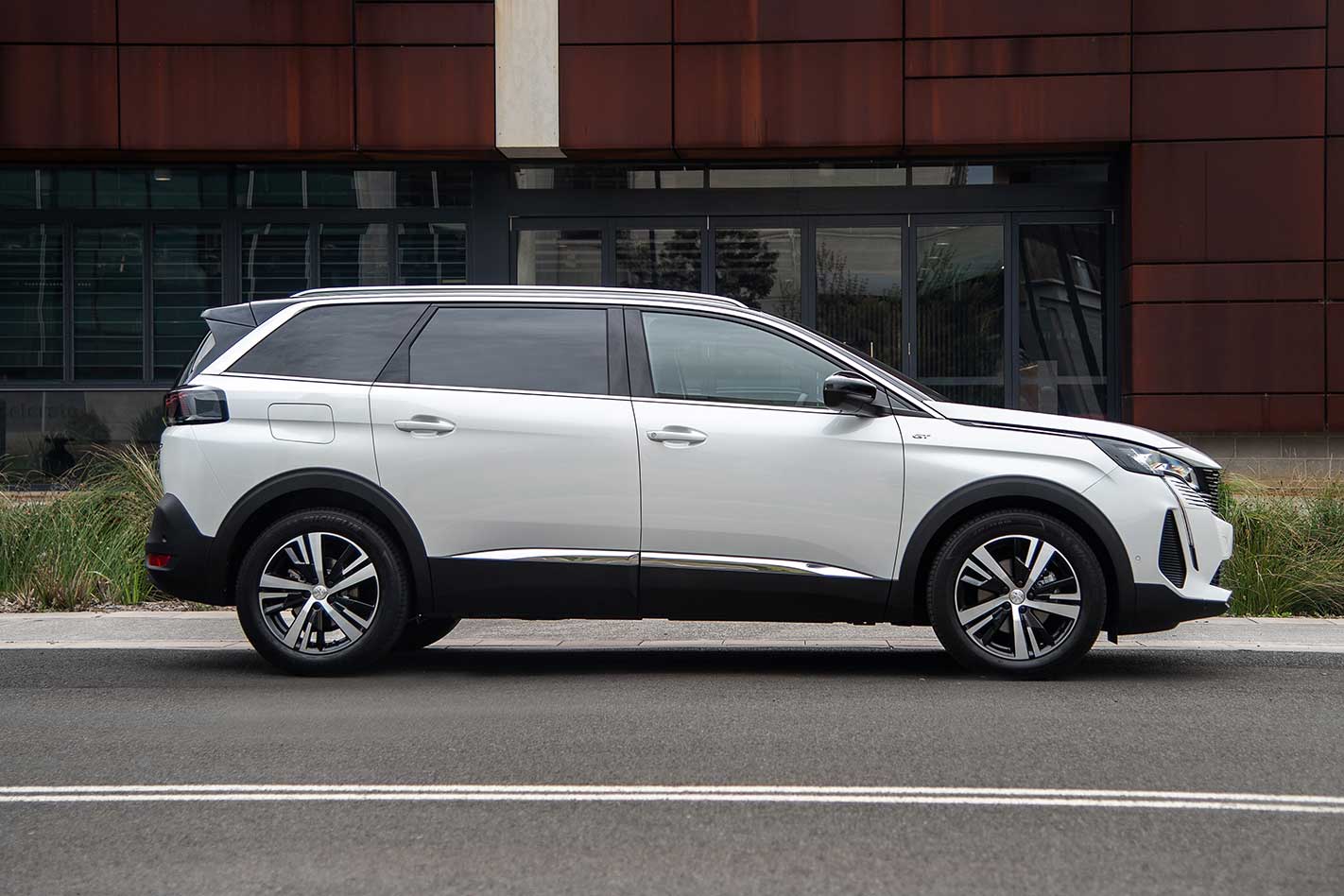
And the almost genre-blurring 5008, arguably more jacked up MPV than proper SUV in some respects and certainly petite by most seven-seat measures, has a key role to play, even if its MY21 makeover centres most conspicuously on styling changes applied to a single GT variant grade.
What’s new? Refreshed LED lighting, a revised frameless grille and new signature ‘three-claw’ taillights with sequential indicators assimilate the contemporary family look outside, together with a new wheel design.
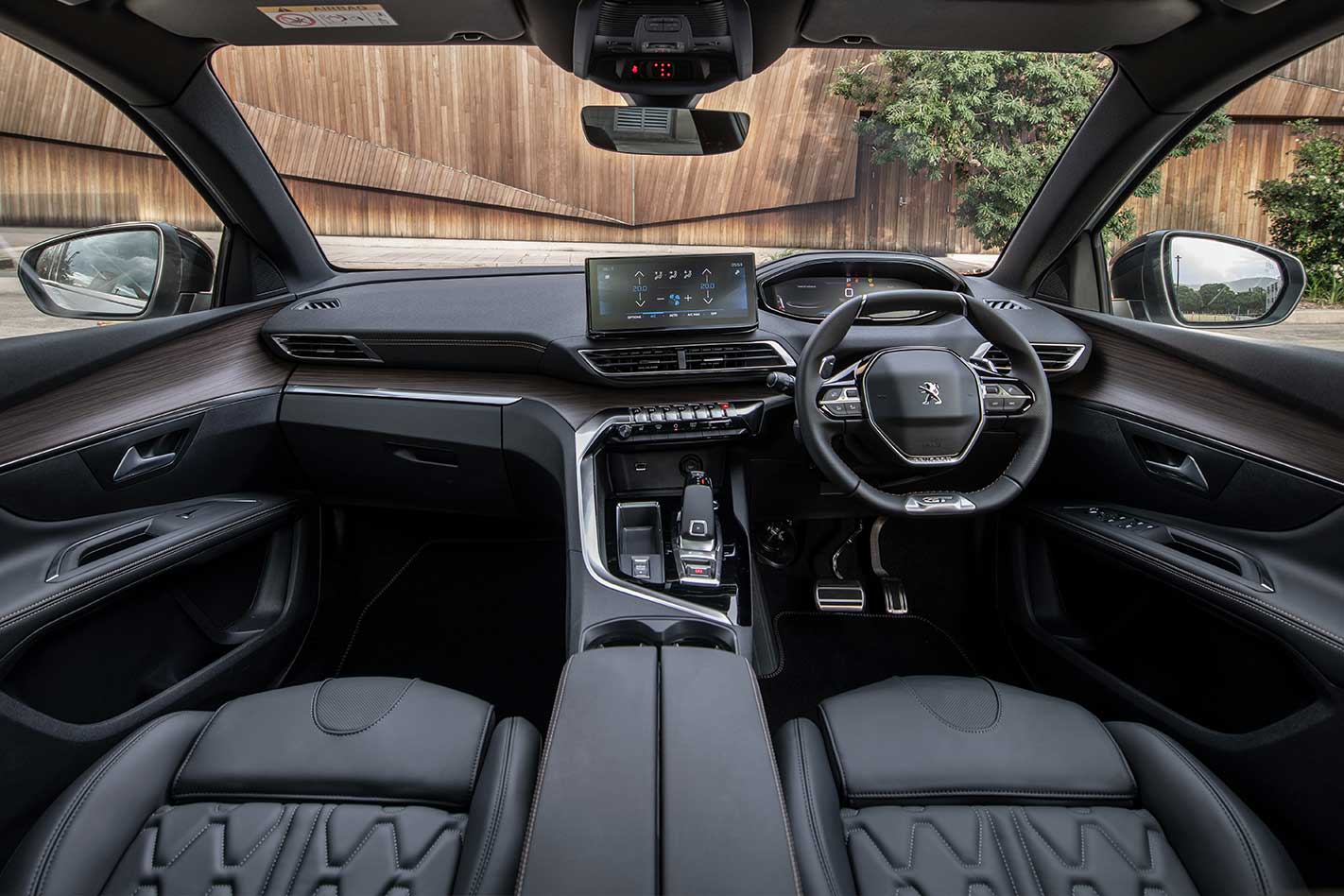
Inside, the old 8.0-inch touchscreen infotainment system has been replaced by a larger 10.0-inch format and tweaked content for the 12.3-inch digital driver’s screen for Peugeot’s oddball i-Cockpit format comprise noteworthy if not immediately apparent changes.
One grade, two engines. The petrol version fits a turbocharged 1.6-litre ‘Puretech 165’ petrol four producing 121kW at 6000rpm and 240Nm from 1400rpm, driving the front wheels via a conventional six-speed automatic transmission.
Meanwhile, the flagship choice is the lustier 2.0-litre BlueHDI 180 diesel four outputting 131kW at 3750rpm and 400Nm at 2000rpm backed by an eight-speed slushbox.
Yes, they’re the same powertrains found in the segment-smaller 3008 GT, and in 5008 form there’s a fair price discrepancy between the petrol GT on test here, at $51,990 before on-roads, the diesel version commanding an extra eight grand at $59,990 list. Big difference.
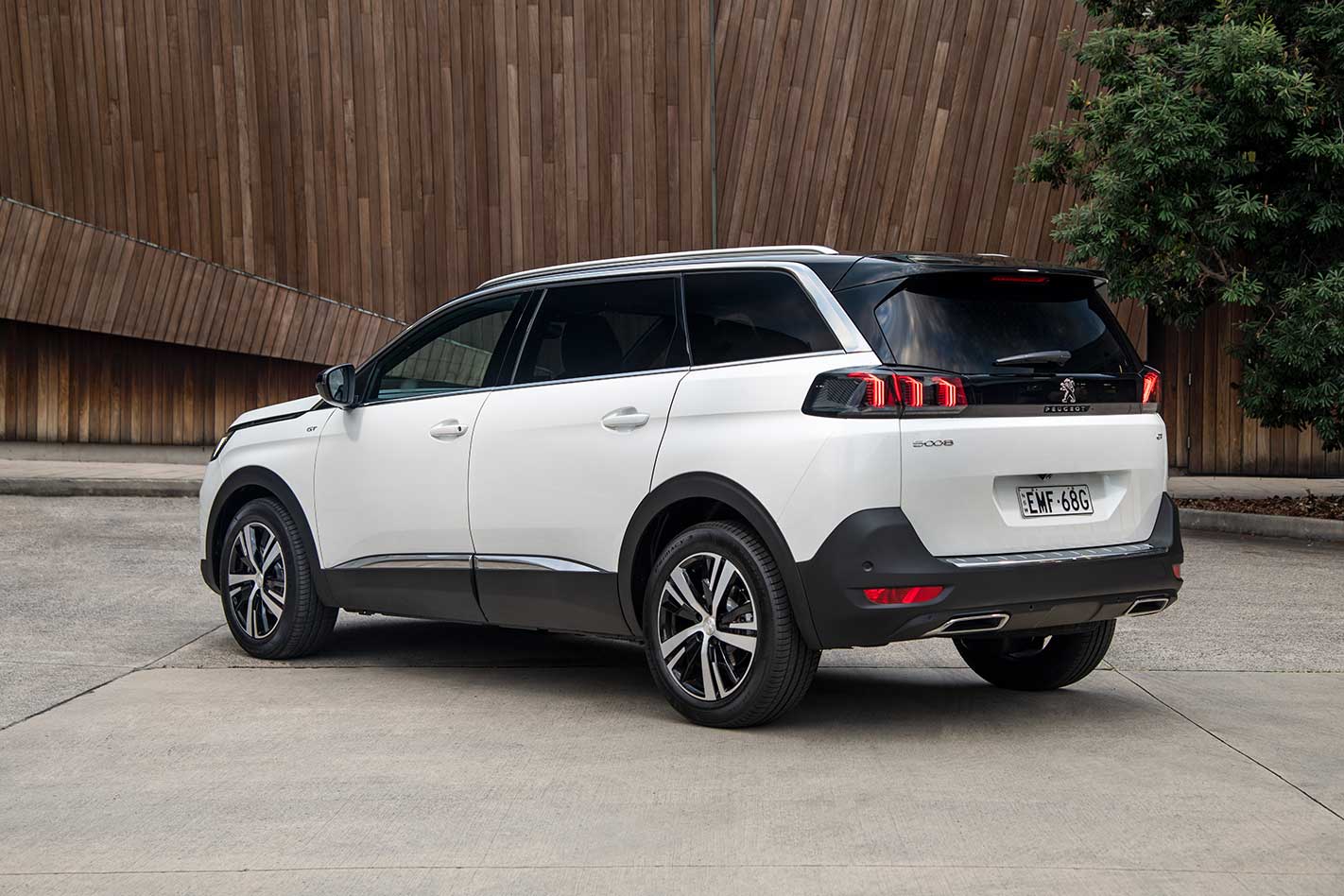
The oiler fills out the fiscal wedge to some degree by offering larger 19-inch wheels and adding Alcantara seating as well as a whizz-bang 515-Watt Focal audio system.
Given Australia’s waning interest in diesel passenger vehicles, it’s the petrol GT tasked with luring the lion’s share of buyers away from obese seven-seat barges and into a more svelte and stylised French alternative.
At just 4.64 metres overall with a mere 194mm extra in length over its five-seat stablemate, the 5008 does feel a bit more like a stretched 3008 than a certifiable step up in category, an impression exacerbated by its trim form and quasi-crossover proportions. It’s also shorter than rivals such as Volkswagen Tiguan Allspace and Skoda Kodiaq.
Given both the 5008 and smaller 3008 facelifts were both launched on the same program, it was easy to compare what are clearly many more tangible similarities than distinct differences between them, despite the pair lobbing quite different pitches.
For one thing, their cabin designs are almost uniform, flopped from quite similar moulds and differing only a little in the sense of spaciousness and in detailed execution.
And either model’s interior is certainly a most striking departure from mainstream convention that might swoon those with adventurous tastes but will be a deal-breaker for others.
It’s been around for a while now, so Peugeot’s i-Cockpit, locating a tiny wheel underneath the line of sight of the instrumentation, has enough fans to secure its longevity.
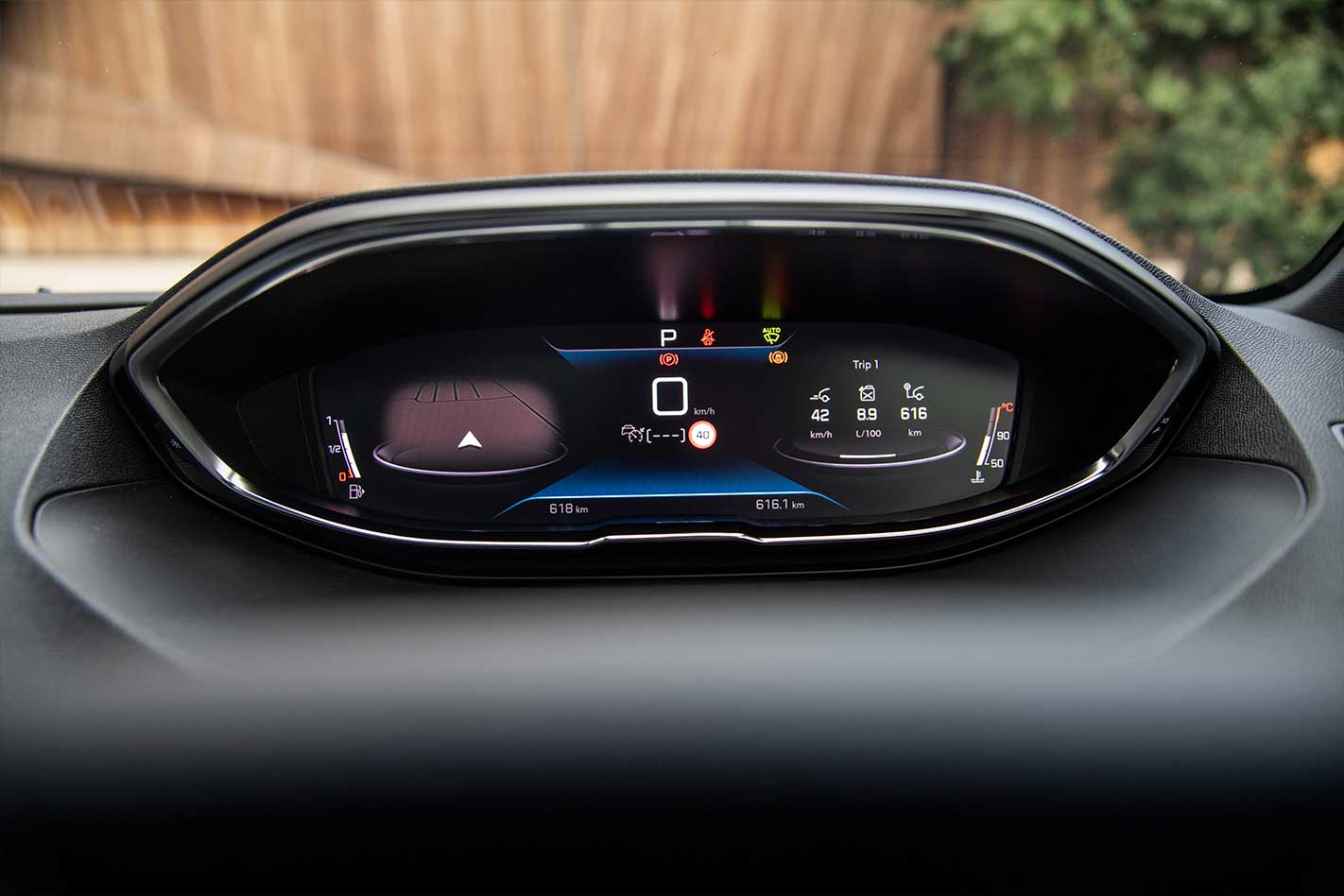
But its ergonomic cohesiveness and user-friendliness varies from slightly odd and off-putting (5008) to downright disruptive (2008, old 308), where the latter’s wheel placement completely obscures instrument vision in any usable wheel height adjustment.
The 5008 is the most palatable of the breed because its functionality doesn’t trip over itself quite so unconvincingly. Arresting and annoying in roughly equal measure, too, is the asymmetric console ‘hook’ and orientation of almost all of the cabin controls towards the driver.
It brings a sense of occasion and interest to the look for front-row occupants and perhaps works a treat in a driver-selfish cabin space such as an exotic sportscar – Audi’s R8 does it well.
But in an SUV it’s more of a middle finger to the front passenger, obscuring easy access to the phone cubby, the USB ports, driver-oriented infotainment screen and associated short-cut buttons.
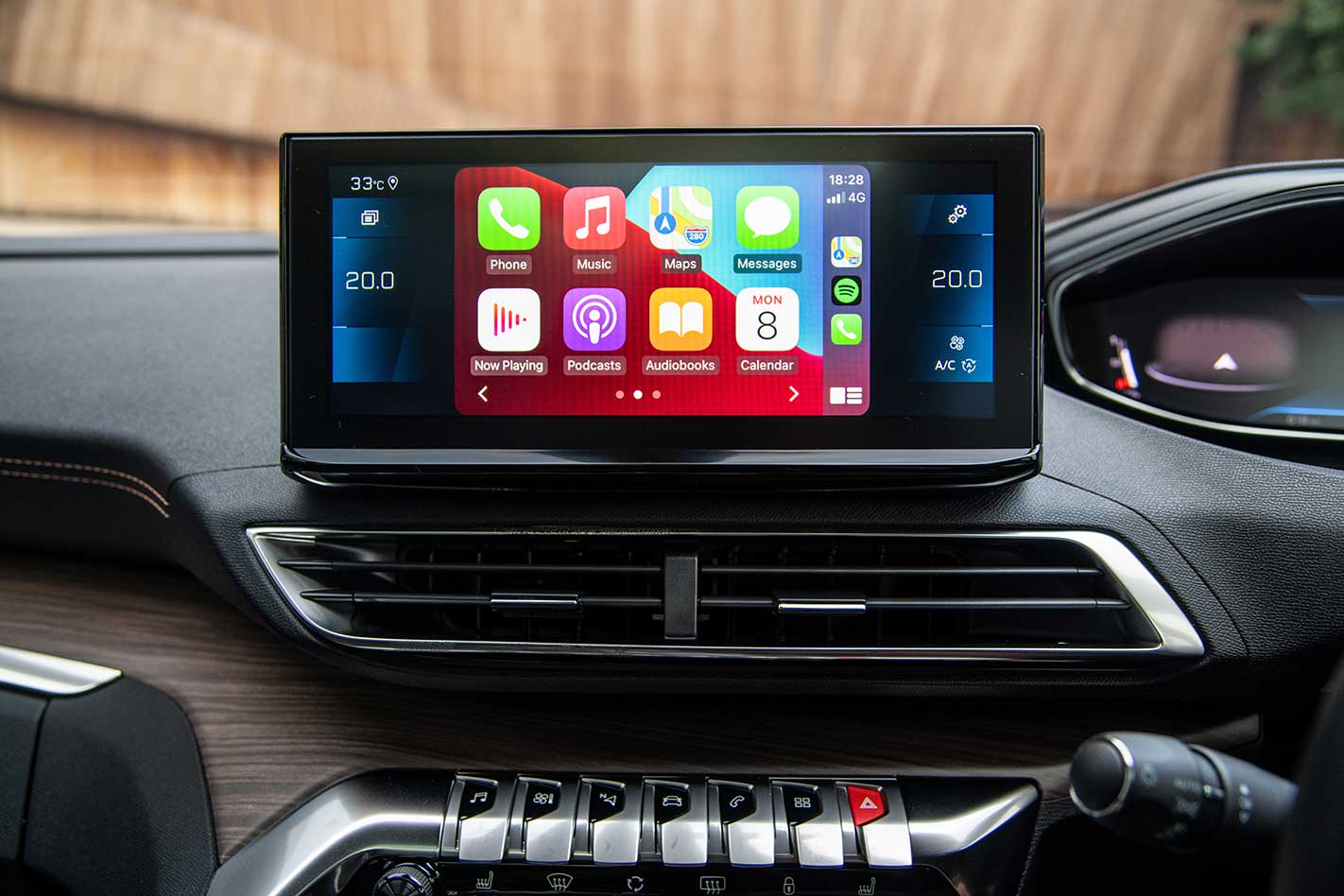
From the box seat, there’s plenty of feel-good eye-candy and splashes of upmarket goodness to help elevate the 5008 above mainstream rivals and into the more premium tier Peugeot aspires to play in.
The configurable i-Cockpit display skins can look terribly fussy and the metallic shortcut ‘flap’ switches are downright bizarre, but the distinctive ambience they bring while effectively streamlining the cabin look is quite inspired.
What really lifts the accommodation is the seating, what with its sumptuous full-grain Nappa leather, fetching grey stitched patterning and massage-functional excess, at least for the driver. Thing is, it’s a $3590 upgrade.
Add our tester’s premium paintwork and near-$57k list will sail north of $60k on the road as sampled. The regular pews are Alcantara and fake leather with mechanical adjustment and the jury is out on their comfort and support, though 5008 does offer the rather nifty flat-folding front passenger seat.
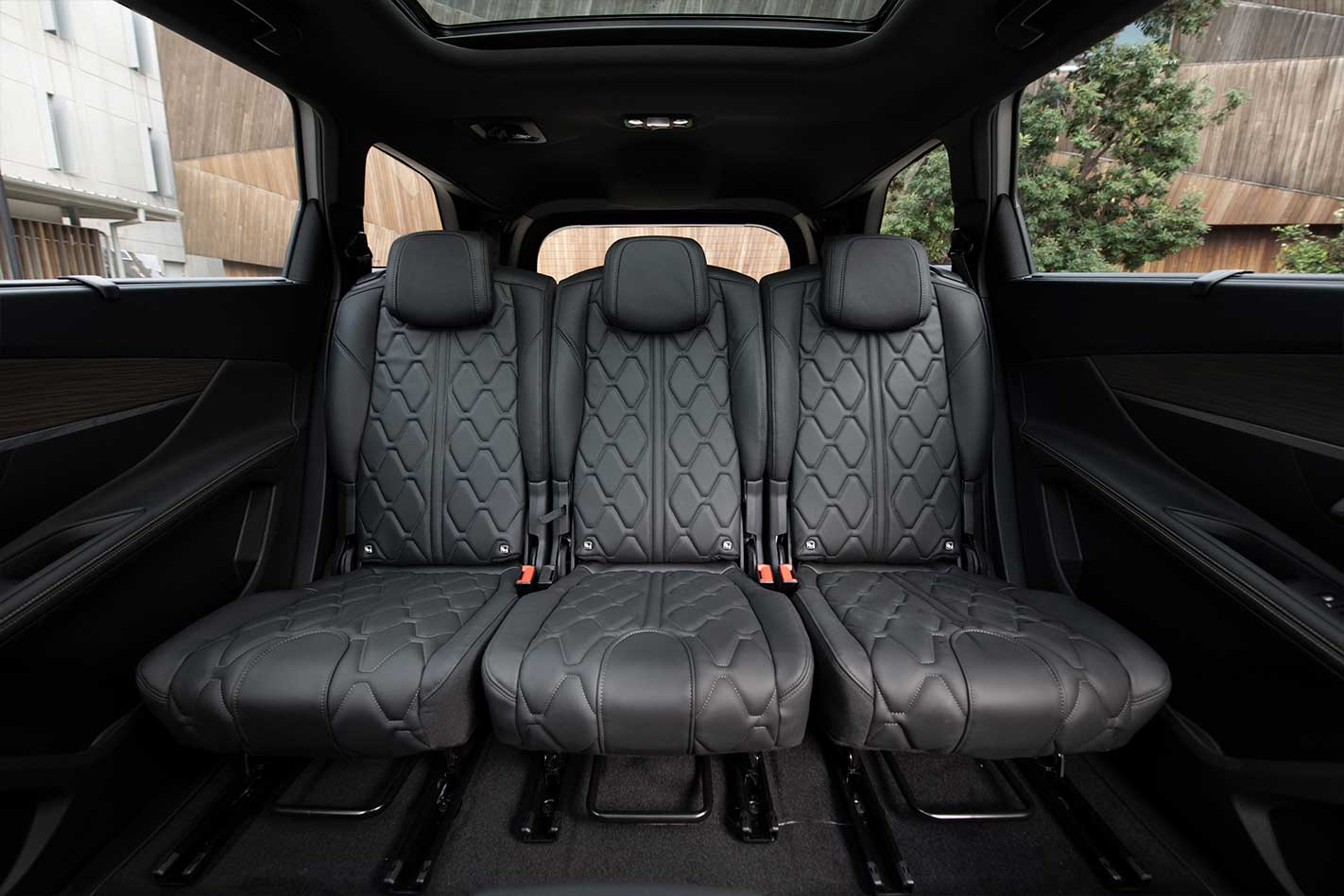
The ‘stretched 3008’ effect pays big dividends in row two, which offers excellent legroom (and a flat floor) provided the 40:20:40 split-fold and tilt-adjustable seats are jammed most rewards on their rails.
As a five-seater, it’s airy and roomy, though the narrow nature of the 5008 body style means that shoulder room is a little tight for what’s pegged as a large SUV. It’s a nice fit-out, too, including manual window blinds, dedicated fan speed controls for the rear air vents, and both 12v and USB ports.
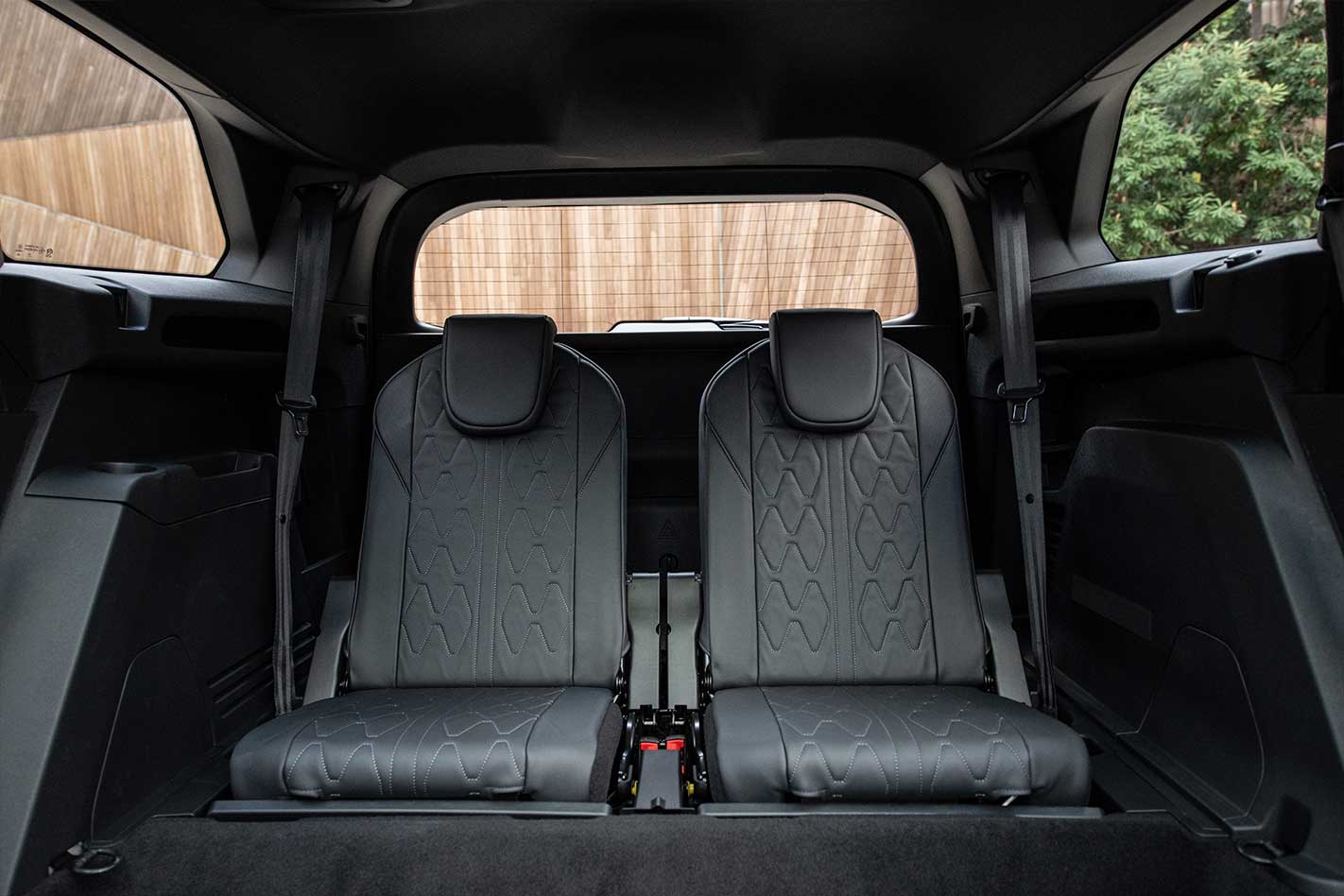
The row two seats can also fold completely flat – 5008 makes one helluva surrogate delivery van – providing reasonably effortless access to the third row for the youngsters who brave the rear seats, which also sprout cleverly from the flat cargo area floor.
Accommodation is tight, though, and adjusting any semblance of legroom demands row two seating is adjusted forward on its rails.
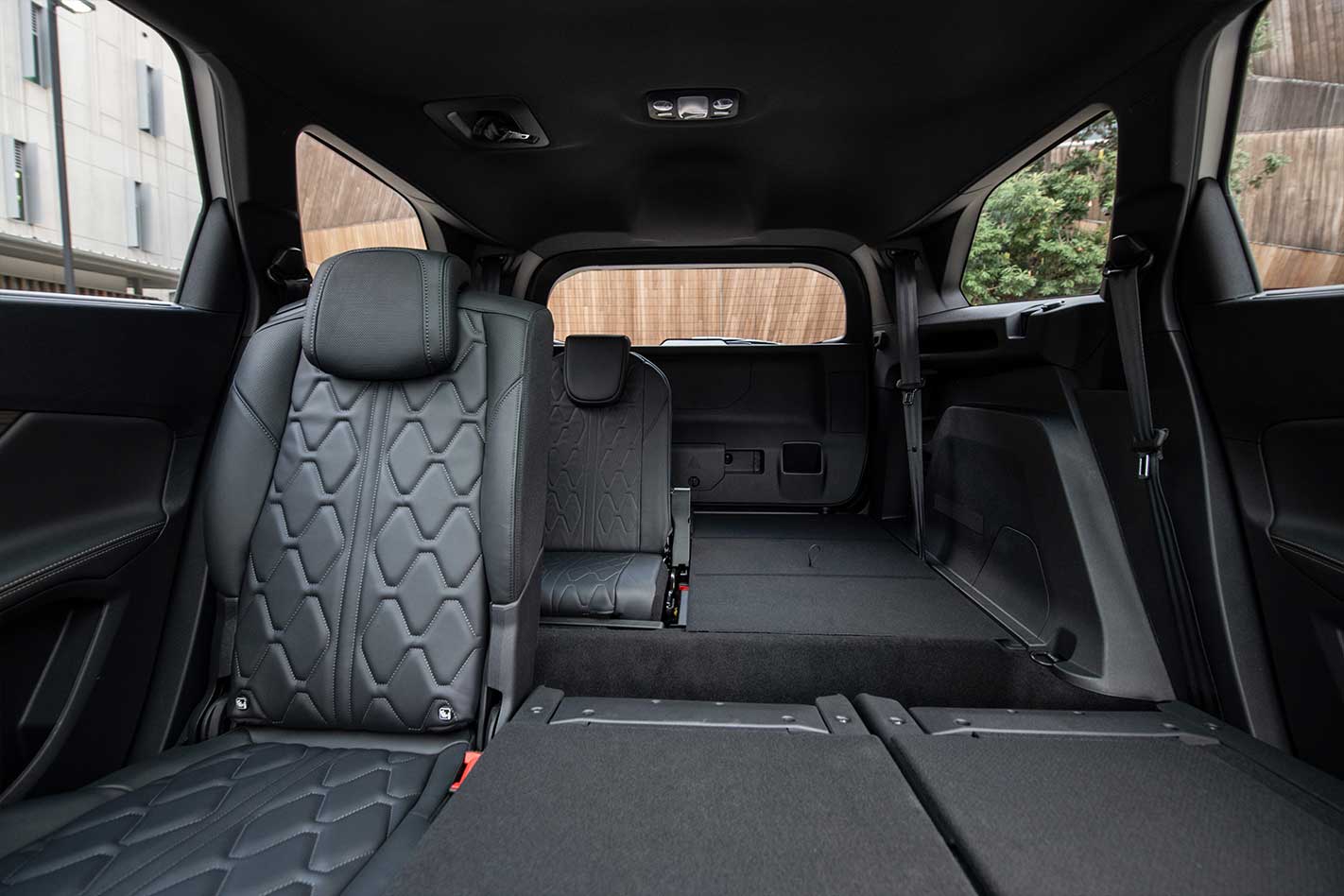
Thus, proper seven-seat occupancy is ultimately a balancing act, and it’s not the commodious option if all seats are in regular use. But as a confidently comfortable and roomy five-seater with a big boot (952 litres) and occasional ’emergency’ seating, or a dedicated five-seater with row three removed completely (1060 litres), the 5008 starts to make pragmatically practical sense.
A seven-seater with 1.6-litre motivation hardly makes for a pulse-raising recipe. If a larger-capacity heartbeat is a priority, best look in the direction of something such as the 162kW Volkswagen Tiguan Allspace.
That said, the 5008 is, at just over 1550kg kerb, impressively lightweight and not much heavier than the 3008 with which it shares its powertrain.
Acceleration is 10.5 seconds to triple figures – 0.3sec swifter in diesel form – but what it lacks in sheer thrust it partly makes up for with blossoming low-to-mid-range torque and a cooperative auto.
It’s tractable and flexible enough around town, at least unencumbered to capacity with loved ones and luggage, and is surprisingly frugal on the motorways with adaptive cruise control engaged.
Just don’t get too enthusiastic about lunging for gaps or dicey overtaking maneuvers because there’s little energy in its reserves once you punch the loud pedal.
Consumption is, at 7.0L/100km claimed, bang on the 3008 GT’s claim. On test, it tended to dwell in the five- to six-litre mark on the open road and soar into double figures around town, settling into a more genuine nine-litre thirst across real-world conditions. Not bad, but you’ll have to stump for the diesel to reduce the hit on the hip pocket much further.
It’s shame that the fitter and more frugal ‘Puretech 180’ 1.6-litre four in the smaller SUV’s GT Sport flagship isn’t offered in the 5008, as it brings 12kW more power and 10Nm torque together with sharper performance and better fuel economy, aided by an eight-speed transmission.
Despite the modest heartbeat, it’s quite a refined powertrain with a silken character that doesn’t sonically betray some of the obvious heavy lifting it’s tasked with.
It slips through ratios sedately, the auto plucking enough tractive effort without the need to touch the superfluous column-mounted shifters, and Sport mode adds a muted sense of purpose that offers a bit of handy, unflustered purpose running around urban back streets.
Most impressive the refinement. On the move, the 5008 feels gun-barrel tight and remains impressively impervious to road and wind noise, bringing with it a nice premium sheen of the likes Peugeot likes to spruik loudly and proudly.
The steering is a little inert and lacks much in the way of communication but the chassis plants itself nicely and cooperates with the driver in a manner many larger seven-seaters can’t muster.
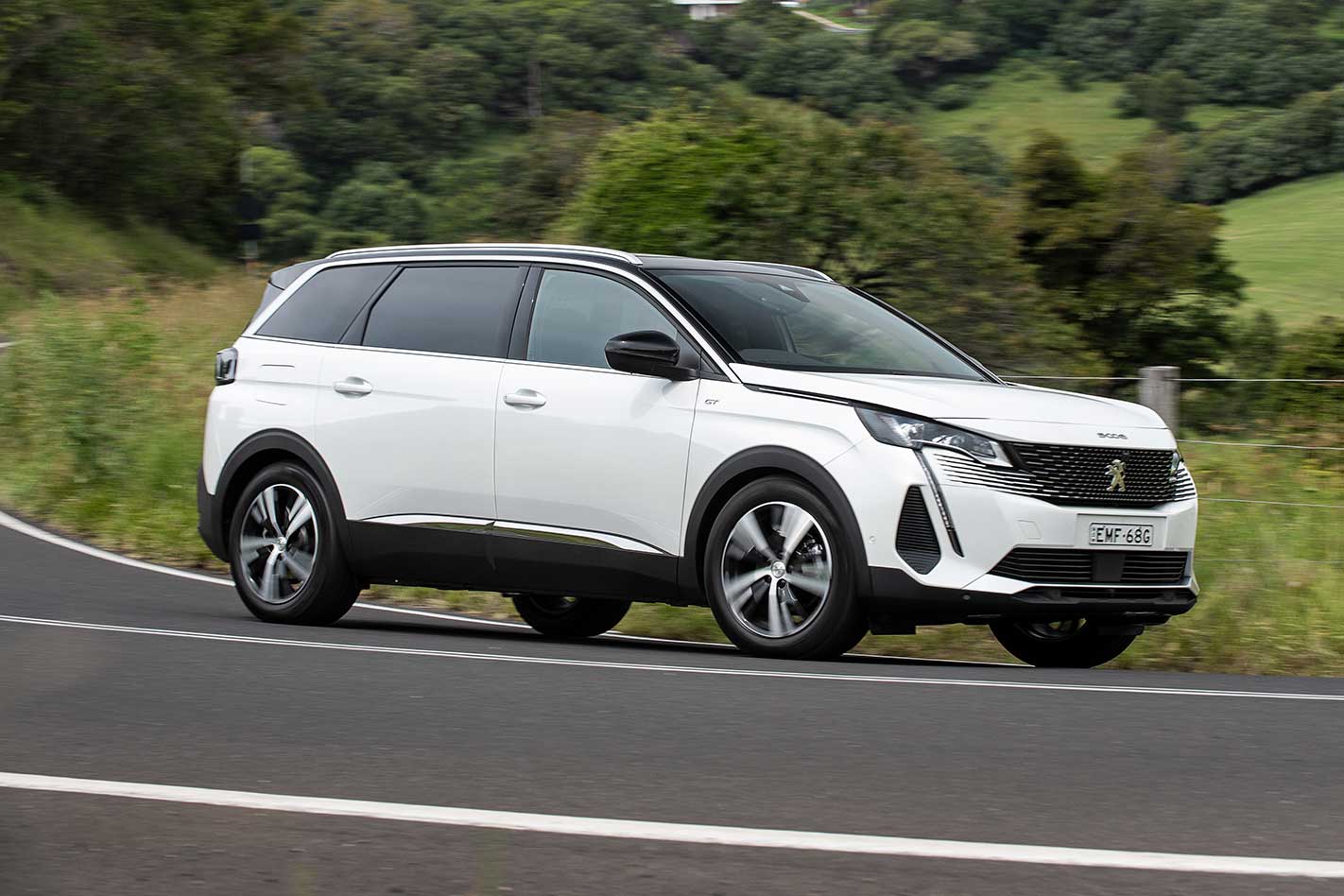
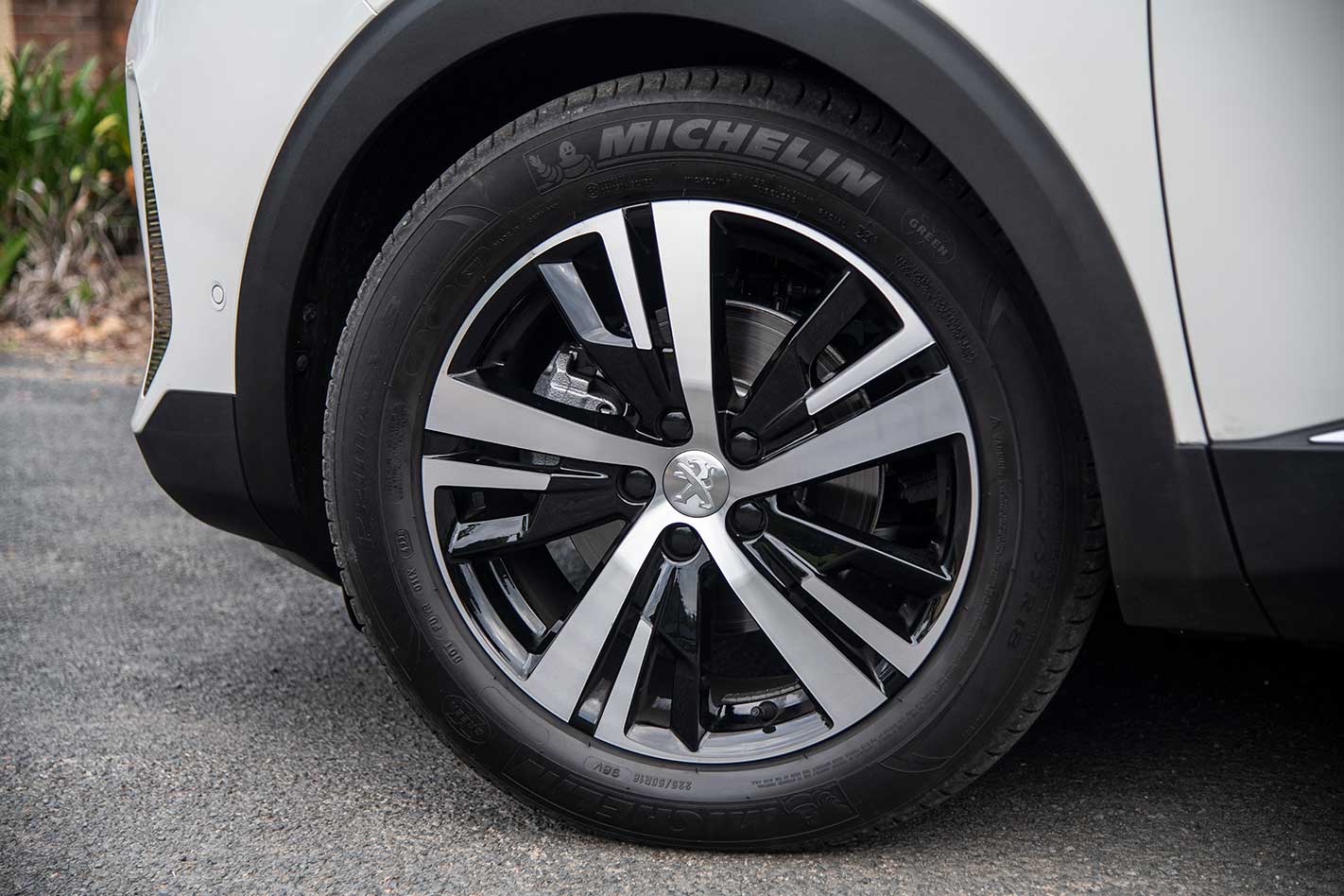
The real highlight is the ride comfort, specifically how controlled the passive damping is. East Coast Australia’s rain deluge left its roads terribly pockmarked with severe potholes, almost all of which the 5008’s 55-series 18s negotiated with a mild thump and no sharp suspension noise.
Attack speed humps and the suspension compresses beautifully then settles on rebound instantly and confidently. Usually, you’d have to dive into an adaptive system’s softest setting for such a pliant ride and even then rarely without the sort of residual body control the 5008 seemingly has in reserve. On-road, this is the real highlight.
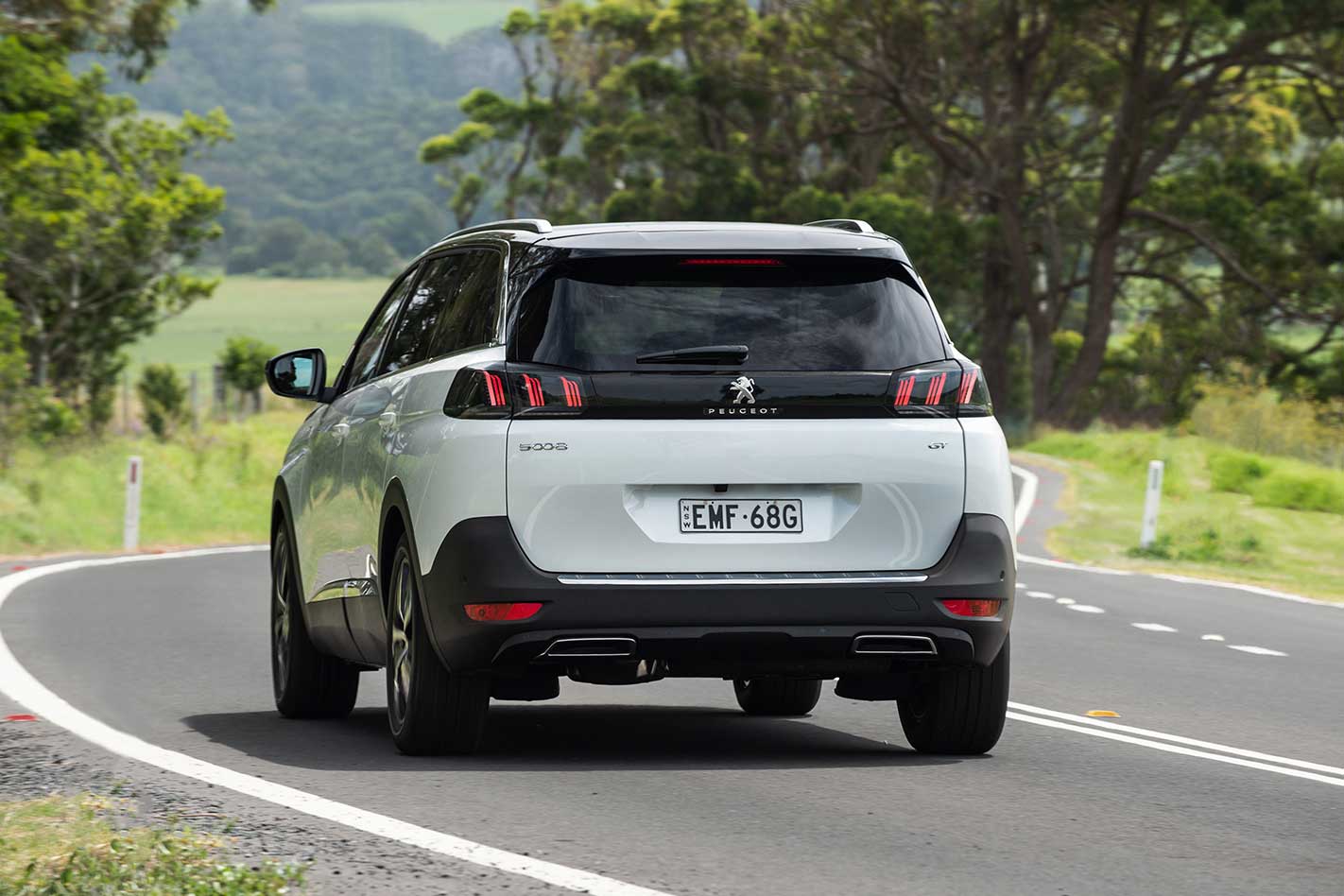
Its narrow form and relatively short length, combined with decent outward visibility, means the 5008 is easier to park in the sort of tight spots you’d otherwise have to shoehorn a properly large SUV into. The only real sore point is the woefully grainy reversing camera with pitifully small viewing perspective in the display screen.
Safety-wise, the 5008 is so closely related to 3008 in terms of structure that the latter’s crash testing results we used for the five-star ANCAP assessment of the former. However, other considerations, such as the seven-seater’s curtain airbag coverage extending through to the third row, also contributed to the 2017 report, which scored zero for AEB functionality due to its then absence.
Today’s version is updated and technically uplifted, its safety fit-out including the updated-for-MY21 all-speed autonomous emergency braking with low-light pedestrian and cyclist detection, forward collision warning, driver attention alert, speed sign recognition and indication, blind-spot monitoring, lane departure warning and active lane keeping, as well as ISOFIX mounting points in the rear outboard seating positions.
Peugeot offers five years of unlimited-kilometre warranty on its passenger vehicles for private use. The good news is that there’s a long 20,000kms of grace between (otherwise annual) servicing intervals, though the bad news is the per-visit outlay.
Pricing ranges from $397 through to a whopping $806 over the first five years, a total outlay of $2803 that averages out to just over $560 per year.
In its own stable, the four-grand step up from the smaller 3008 GT petrol might entice buyers after ’emergency’ seven-seat flexibility or those simply after more room as a spacious dedicated five-seater, where arguably the 5008 works a little more convincingly.
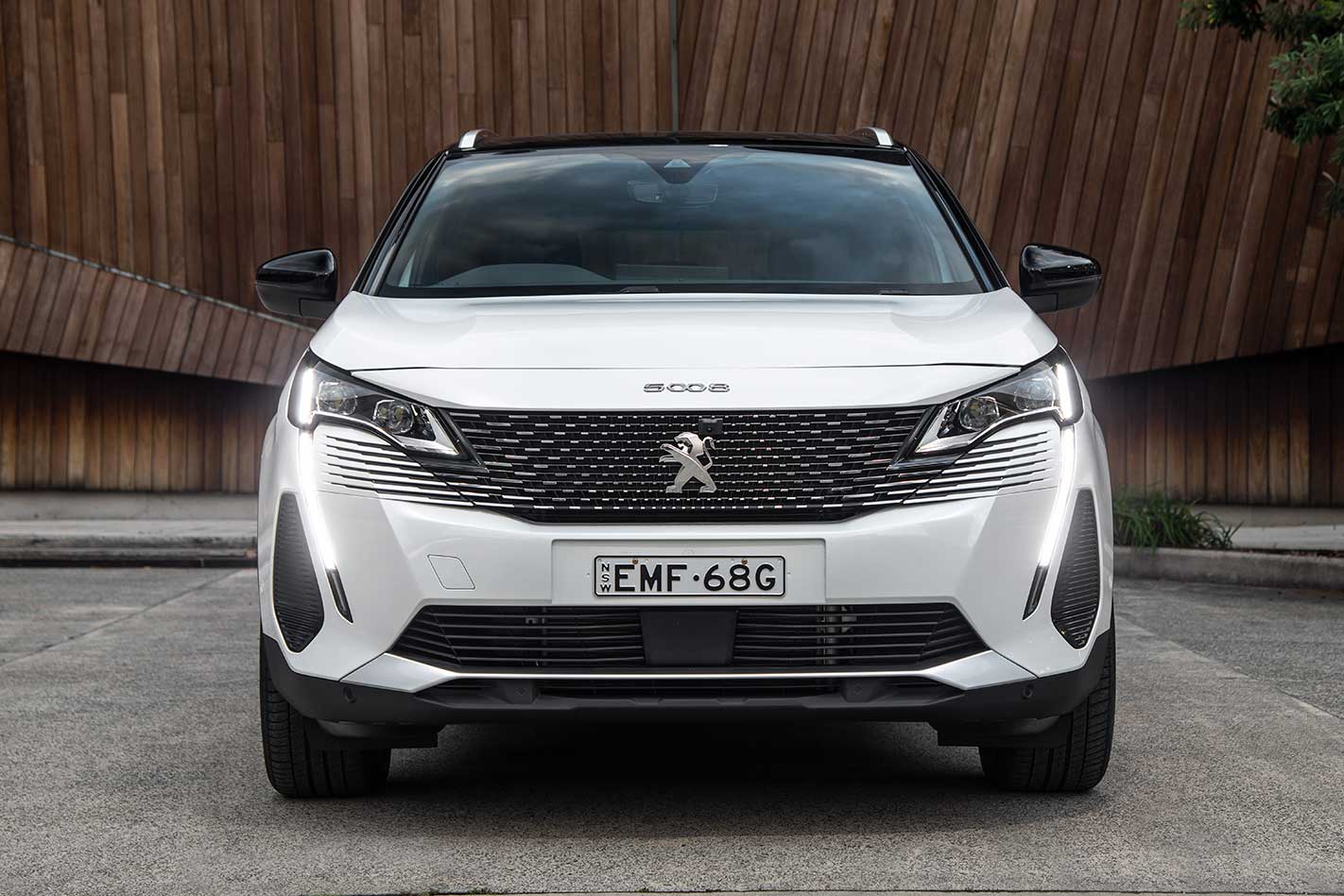
Those after maximum metal, glass, rubber, space and engine output for their hard-earned probably won’t short-list the French option that hangs style and design as its biggest dangling carrots. But that it’s not for everyone is in itself an attractive trait for some buyers.
Better still, the 5008’s comparatively trim package brings many pluses. It runs and drives lean, isn’t cumbersome to drive and is easy to live with in the confines of the urban environment.
It’s an oh-so-European formula with achingly French ostentatiousness, which is central to grabbing your attention but this seven-seater backs it up with plenty of depth in many good places.
Verdict: 8/10
Likes: Decent room and cabin flexibility; upmarket vibe to match the flashy styling; polished on-road ride comfort
Dislikes: Lack of performance; pricey (particularly when optioned); i-Cockpit design not for all tastes; not the roomiest third row
Specifications
Body: 5-door, 7-seat SUV Drive: front-wheel Engine: 1598cc inline-4cyl, DOHC, 16v, turbocharged Bore/stroke: 77.0 x 85.8mm Compression: N/A Power: 121kW @ 6000rpm Torque: 240Nm @ 1400rpm 0-100km/h: 10.5sec (claimed) Fuel consumption: 7.0L/100km (combined/claimed) Weight: 1553kg Power/weight: 78kW/tonne Transmission: 6-speed automatic Suspension: struts, coil springs, anti-roll bar (f); torsion beam, coil springs, anti-roll bar (r) L/W/H: 4641/1844/1646mm Wheelbase: 2840mm Tracks: 1601/1593mm Steering: electrically assisted rack-and-pinion Brakes: N/A (f); N/A (r) Wheels: 18 x 7.0-inch (f/r) Tyres: 225/55 R18 (f/r) Price: $51,990 plus on-road costs
“Design is the main reason to buy a Peugeot,” which is a frank admission from the horse’s mouth.
Perhaps elsewhere, in Europe, say, where its maker claims the Peugeot 3008 mid-sized SUV sits at number three on the top-seller list for a line that sells a million examples globally. A good many, no doubt, with French rego plates.
But here in Australia, Peugeot remains a challenger brand, despite a steeped providence in Oz and despite having being around as a brand for a remarkable 210 years.
Aussies don’t mind a bit of design, or in a motoring-culture respect some French funkiness and quirkiness, but a major priority in mass-popular SUV-dom? That’s a big ask.
The new 508 sedan kicked it off, firming up three SUVs in quick succession comprised of all-new 2008, revised 5008 and this newly face-lifted and crucially important 3008 mid-sized family hauler.
Front and centre in the newly facelifted range is the new GT petrol, not because it’s as sport-tinged fancy as the new flagship GT Sport, or as forward-thinking electrified as the forthcoming PHEV version later this year, or tomorrow’s EV due in 2022.
It’s because, at $47,990 before on roads, the mid-ranger straddles the line of offering flamboyant, style-driven Frenchness for a palatable upper-mainstream price with the brand’s own aspirations to be considered part of the properly premium Euro set.
This second generation lobbed in the latter half of 2017 with measurably more attractiveness than its buzz-killing MPV-based forebear.
Less cut and dry is that the face-lifted GT is essentially the old GT-Line – a nameplate Peugeot has ditched globally – with some spec fiddling, not a substitute for the old GT Blue diesel flagship, which is still offered if sat under the current, newly named petrol tree-topper, the GT Sport petrol. Confusing much…?
At $47,990 list, the GT petrol variant sits above the buck-banging entry Allure ($43,990 list) it shares its 1.6-litre, six-speed-auto, front-driven motivation with and below the $3000 pricier GT Blue diesel ($50,990 list). The flagship GT Sport, ($54,990 list), boasts a higher-output 1.6 turbo paired with an eight-speed auto.
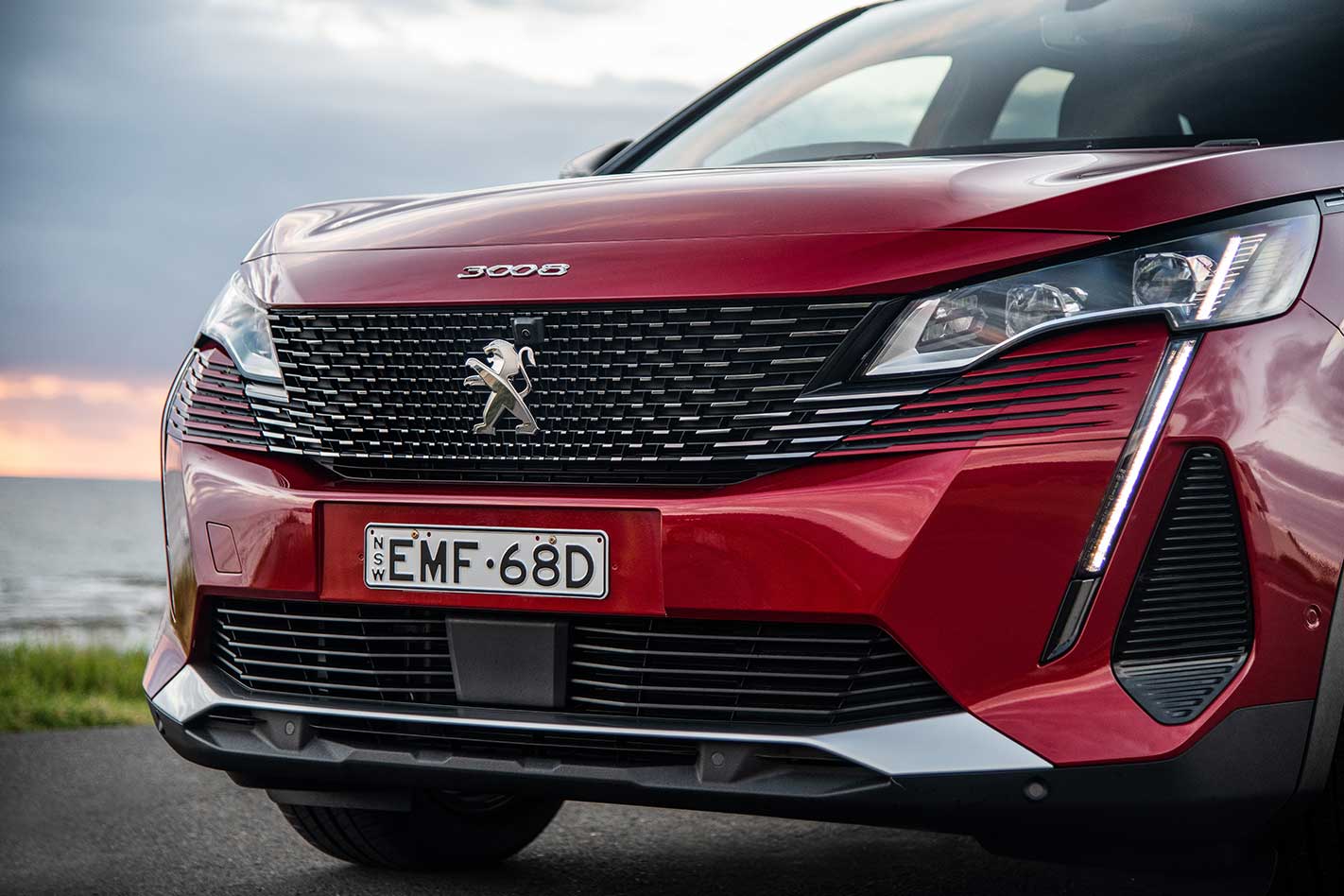
Roughly 3008 GT petrol money also buys a broad range of options in Toyota RAV4 and Mazda CX-5, a selection of high-spec all-paw Hyundai Tucsons, Honda CR-Vs, Kia Sportages and Nissan X-Trails, and also lobs you roughly mid way between the Volkswagen Tiguan Comfortline and Highline versions.
The struggle, then, for the small-capacity front-driven Peugeot 3008 GT is to lure you away from larger-capacity and hybrid alternatives offering, in many cases, all-wheel drive.
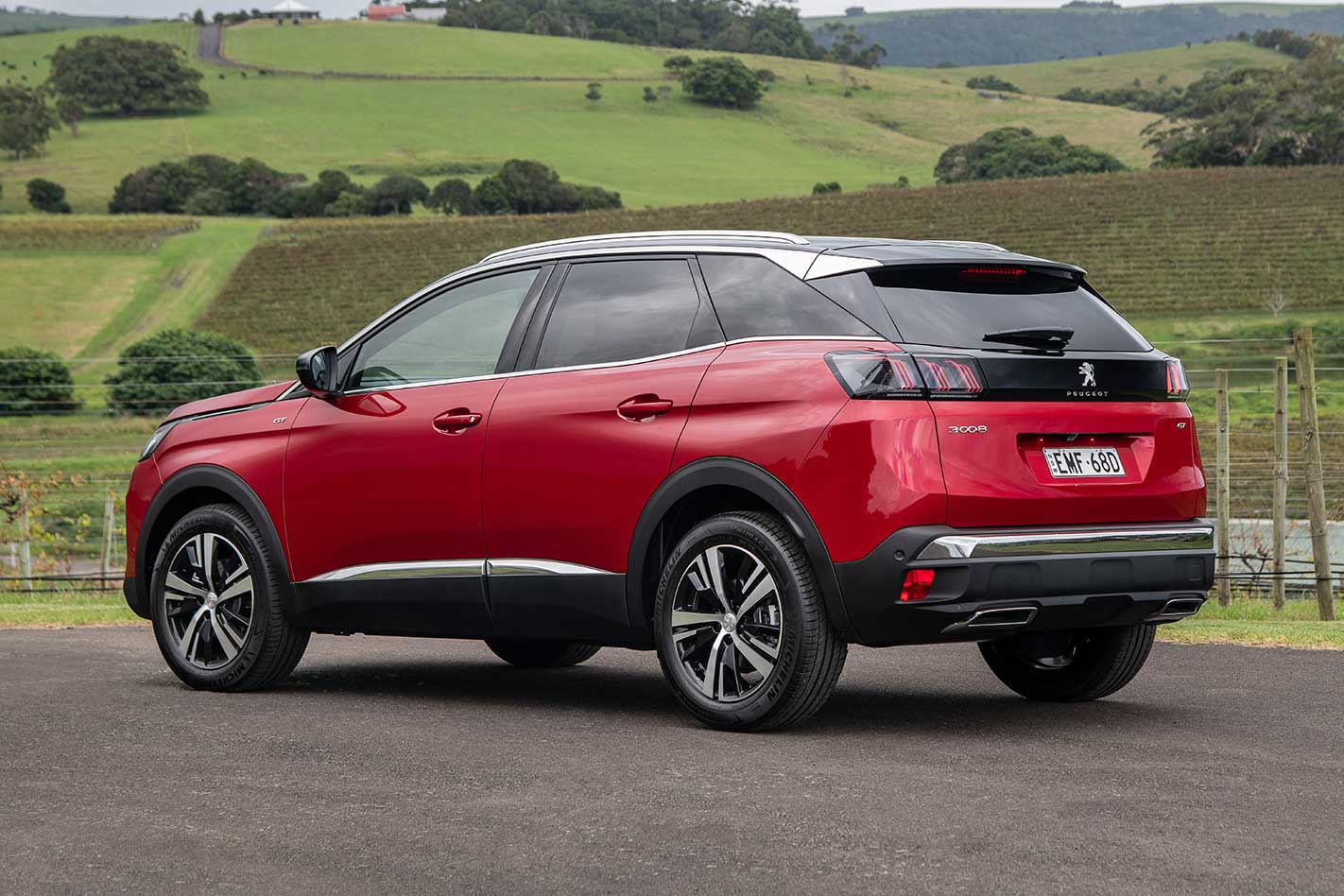
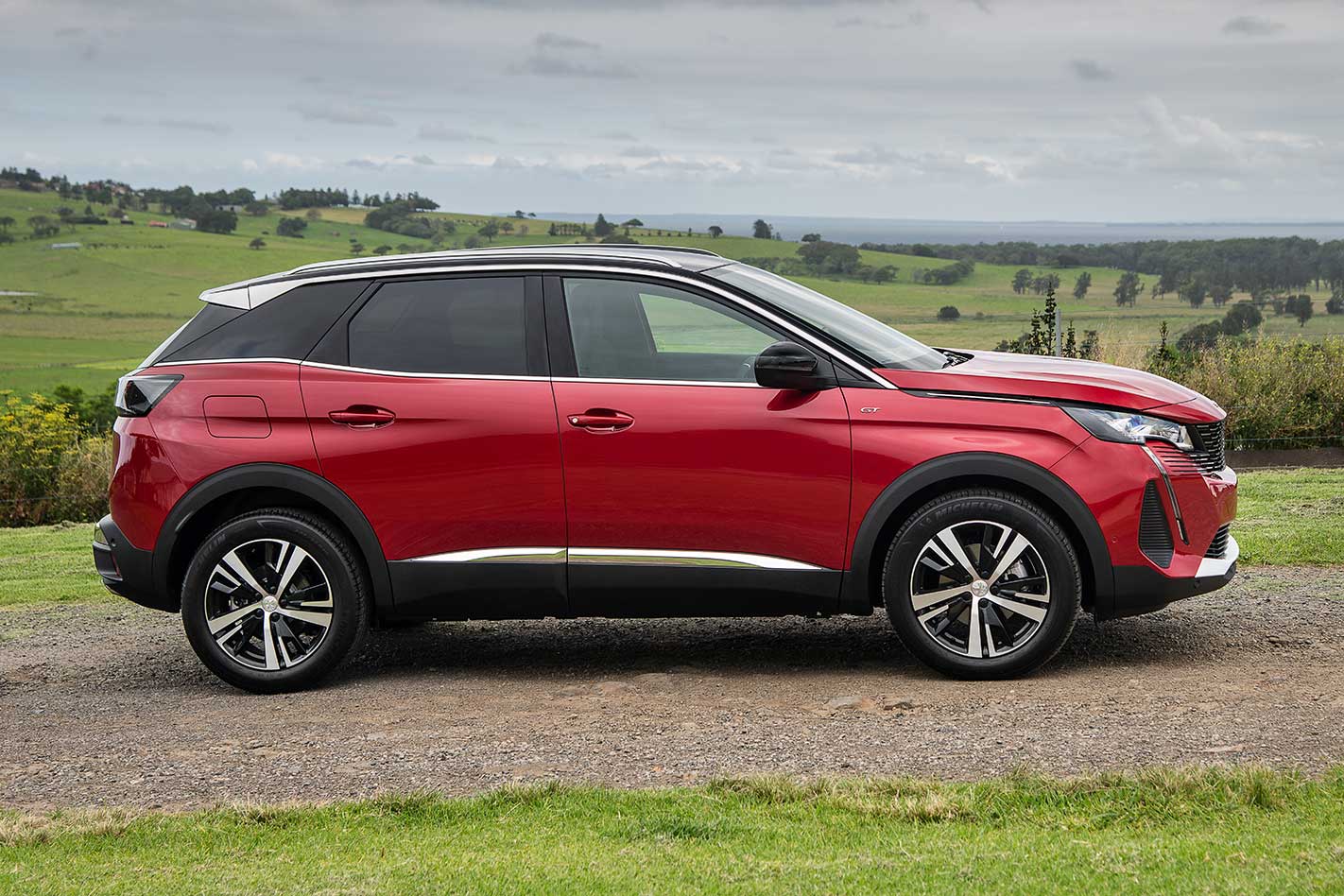
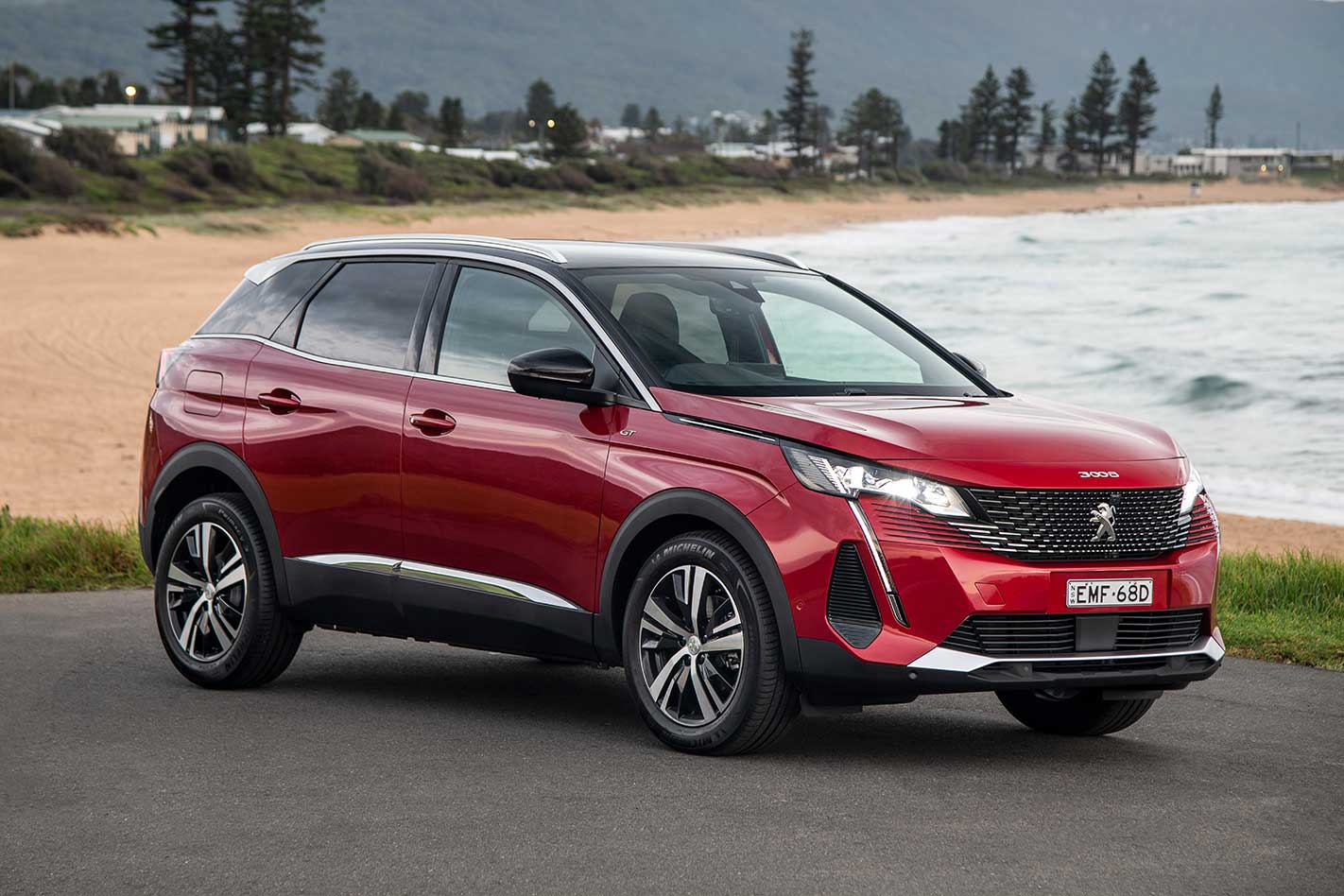
A healthy equipment list is a nice dangling carrot. Outside, the GT fits self-leveling auto LED headlights and taillights, dynamic indicators, high-beam assist, 18-inch alloy wheels, rain-sensing wipers, front and rear parking sensors, electric power-folding mirrors, privacy glass, aluminium roof rails and a powered tailgate with foot gesture control. The stainless steel scuff plates are a nice premium touch.
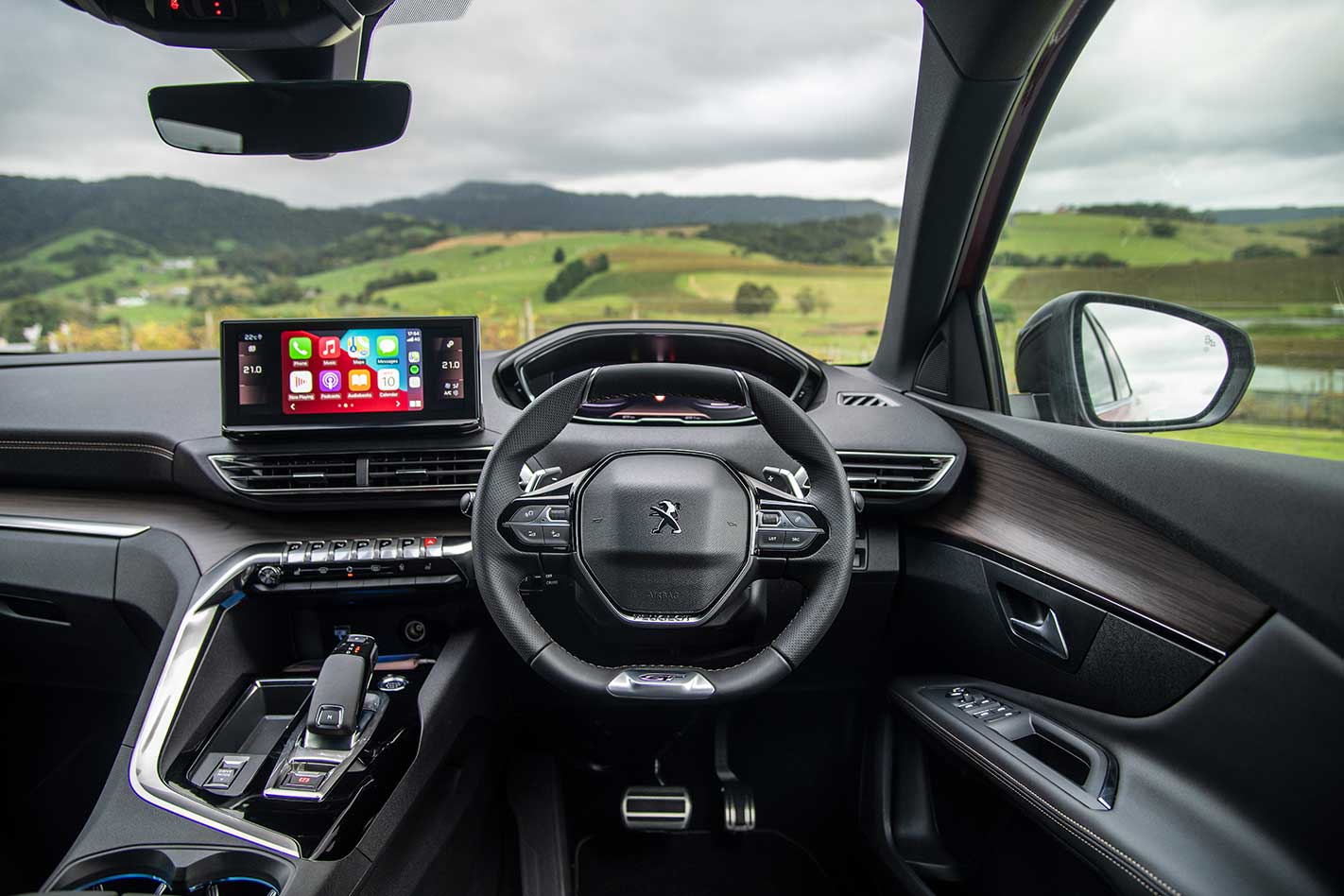
Seats are manually adjustable with Alcantara and leatherette, though our test car was fitted with sumptuous grey-stitched full-grain Nappa leather jobbies with front heating and driver massage function, adding $3590 to the bottom line. Premium paint also adds a frosty $1050.
Key to the MY21 facelift is the upgrade from the old 8.0-inch infotainment system to a new 10.0-inch screen, bringing DAB+, proprietary sat-nav, Apple CarPlay and Android Auto mirroring and 360-degree camera viewing. An inductive phone-charging tray is fitted and both adaptive cruise control and auto steering assist while parking are standard.
Other facelift upgrades include the new grille, nine-slat LED taillights, a newer third-generation all-speed autonomous emergency braking system with night time pedestrian and cyclist detection and two new three-layer-effect colours of the available seven hues.
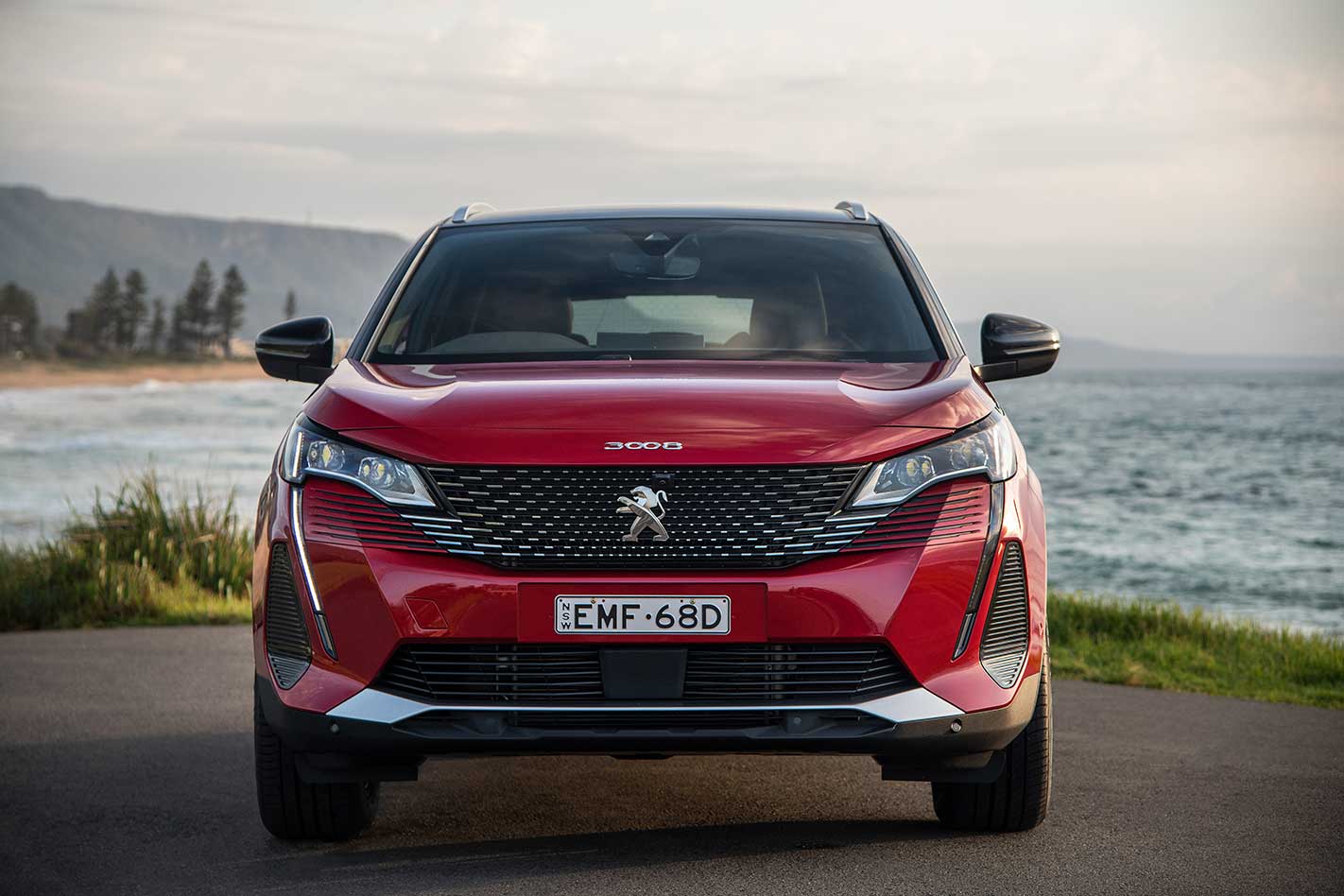
Where some Peugeots’ i-cockpits are abject failures – the wheel rim completely obscures the instrumentation – the 3008 just gets away with it, not requiring the wheel to be set to an uncomfortable height while maintaining some (if not all) instrument visibility.
And it take roughly three seconds at the helm to decide whether or not you’ll gel with its oddball design and its tiny weirdo multifunctional wheel.
The large 12.3-inch high-definition digital format offers a selection of configurable and stylized skins, redesigned with ‘more black’ for MY21, that aren’t as fancy as the 3D effect display in the 2008 but offer much more quick-glance legibility.
The front seats are excellent, the supple Nappa leather and fetching quilt stitching impressively upmarket, the shapely contour blending pliant cushioning and firm support.
Less convincing is the hook-shaped, asymmetric central stack and console design that excludes the front passenger from easy access to fairly basic cabin features and control – works a treat in a sportscar, not nearly as convincingly in a family hauler.
Most of the cabin controls, including climate control setting adjustment, are accessed via the 10.0-inch touchscreen, making for a streamlined cabin look if fiddly usability, including the trendy metal shortcut ‘flaps’.
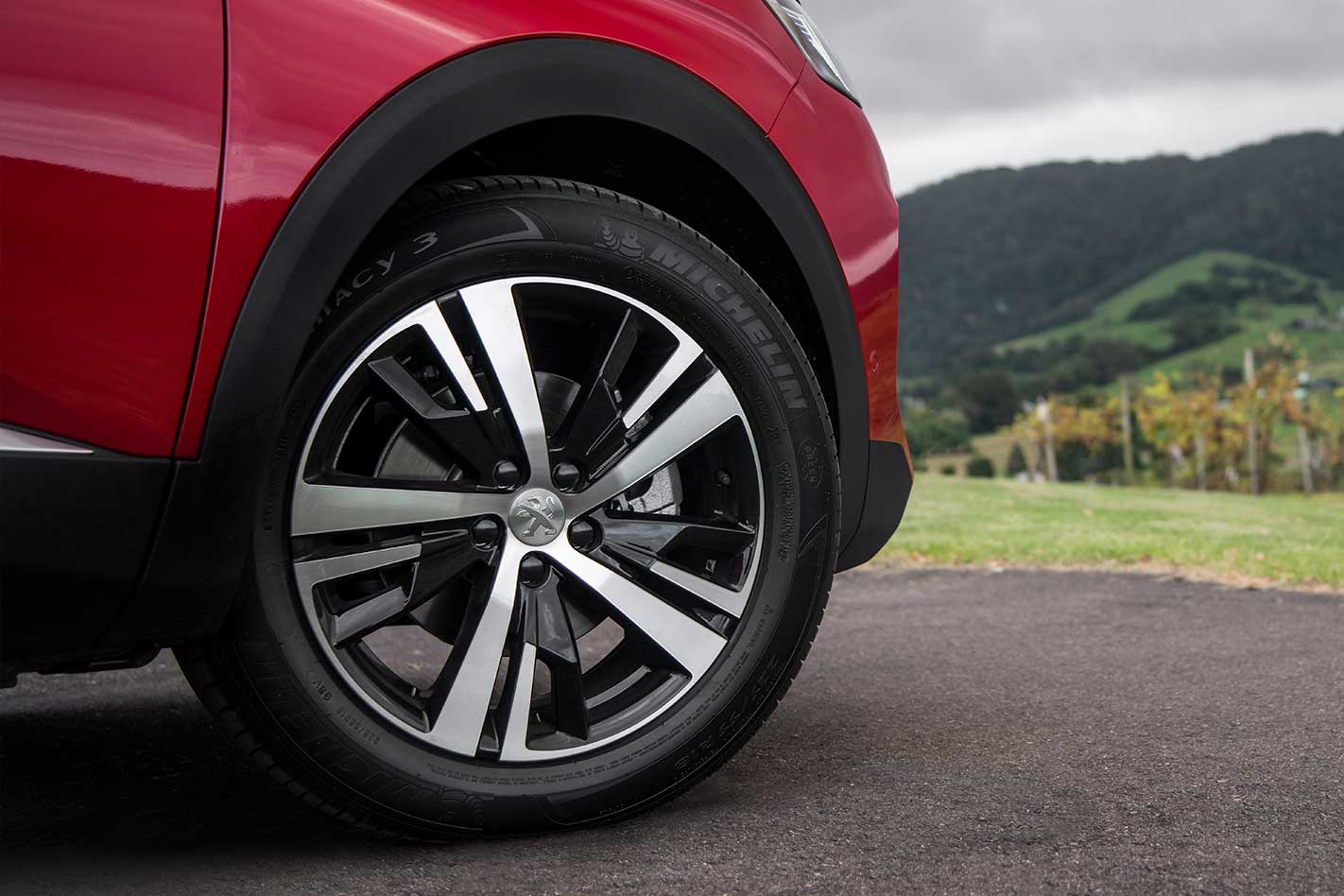
Second row roominess isn’t the 3008’s strong point, though head, knee and shoulder room are all acce-table enough to provide decent long-haul adult comfort if treated as a four-seater. There are certainly more cleverly packaged mid-sized SUV choices out there.
Its 591 litres of boot space converts to 1670 with the rear seatbacks stowed into a usably flat and squarely-proportioned load area and the floor can handily slot into one of two different heights to taste.
The ‘Puretech 165’ 1.6-turbocharged petrol four produces a reasonably healthy 121kW at 6000rpm and 240Nm from 1400rpm, with decent response and a workmanlike delivery and enough on-tap squirt for merging, overtaking and exiting side streets into fast-moving traffic.
Typical of small boosted fours, it gives in the mid-range and the lack of top-end shove does, at times, demand patience.
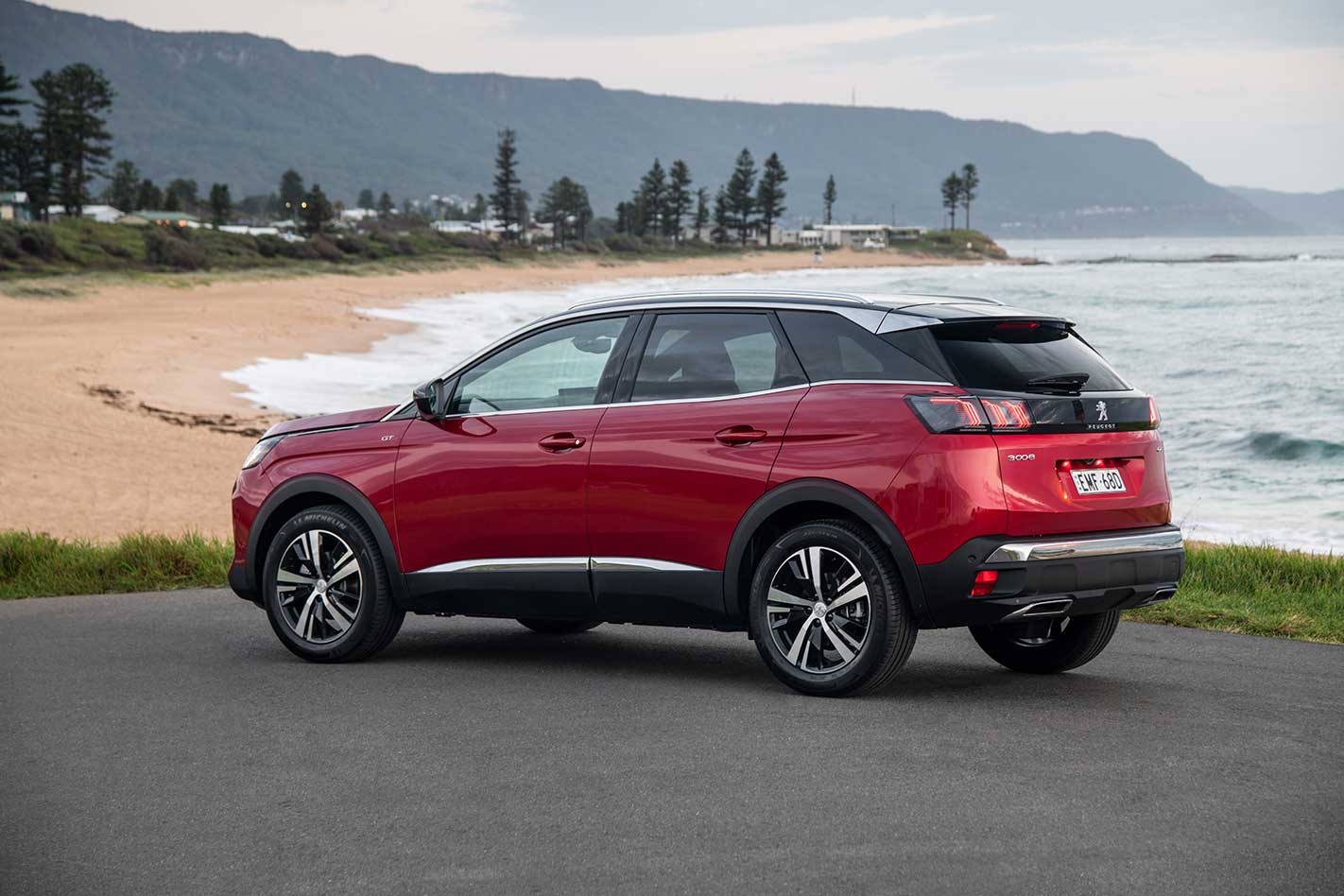
But no amount of French flair can putty over is that the ‘Puretech 180’ 1.6 in the flagship GT Sport, as a key point of difference, makes an nominally extra 12kW and 10Nm, yet marches to triple figures a significant 1.1 seconds quicker and, at a stunning 5.6L/100kms for its combined claim, appears much more frugal.
The psychological hump for Aussie buyers is that, at a little under $53k with leather and nice paint options as tested, the GT Petrol still fits the lowest-spec powertrain on the 3008 menu.
Ignore the form guide and there’s depth and quality in the real-world experience. Its ample motivation is backed by a smooth running nature and relatively quiet dignity, the powertrain neatly sidestepping the typical unruffled nature and annoyances of alternative CVT and dual-clutch systems.
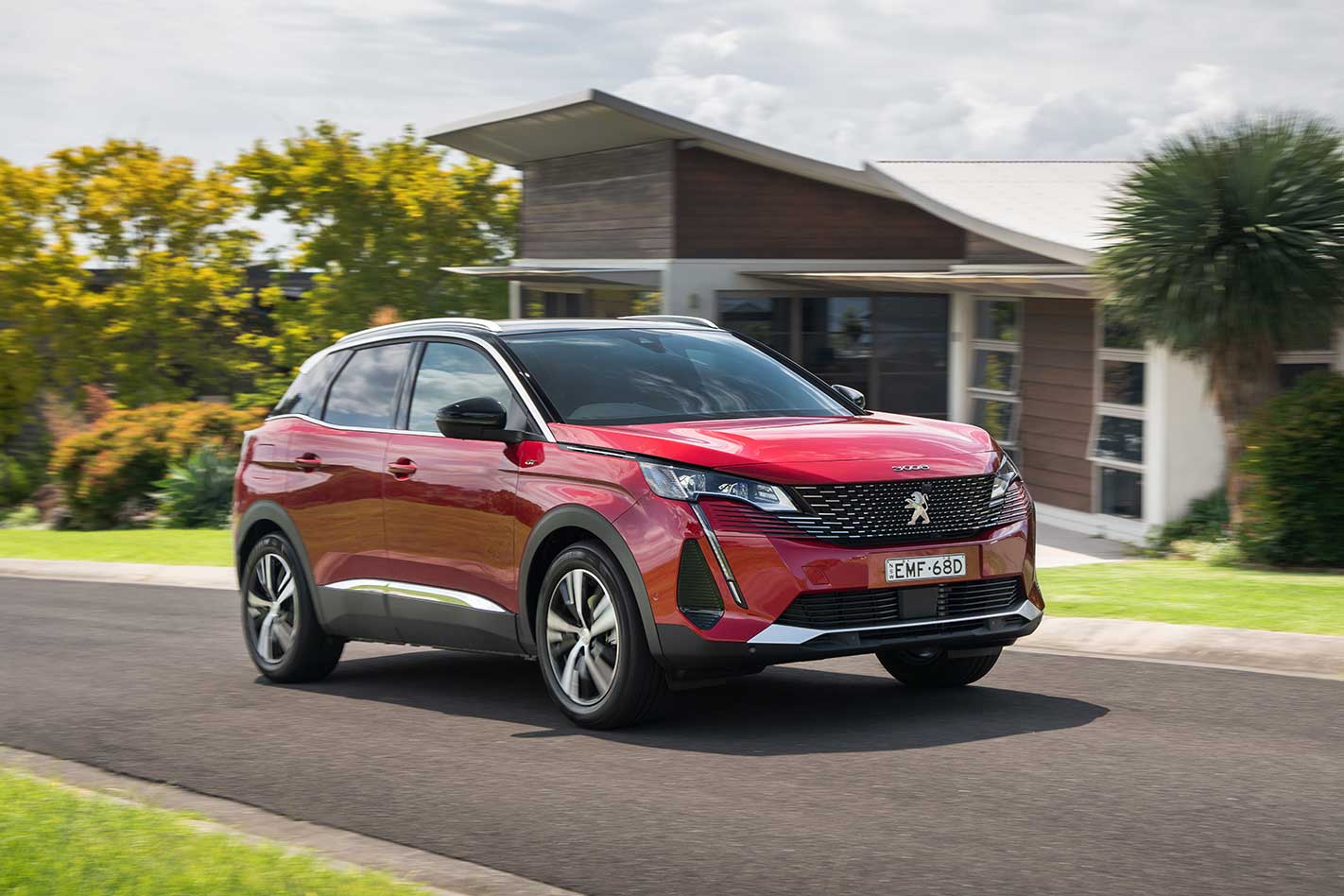
Steering is light, direct and faithful and the turning circle, at 10.7 metres, is concise, while outward visibility is good, particularly forward, and there’s decent enough clarity from the guided reversing camera to make it easy to park in tight spaces.
It fits one of those weird so-called ‘360’ camera views taking the feed off the rear only, a redundant feature from vehicle start-up as it blacks out much of the overviewed landscape.
But where the 3008 GT really hits its premium stride is in ride quality, which is nicely judged and impressively compliant across bumps with very little discomfort transmitted through the cabin.
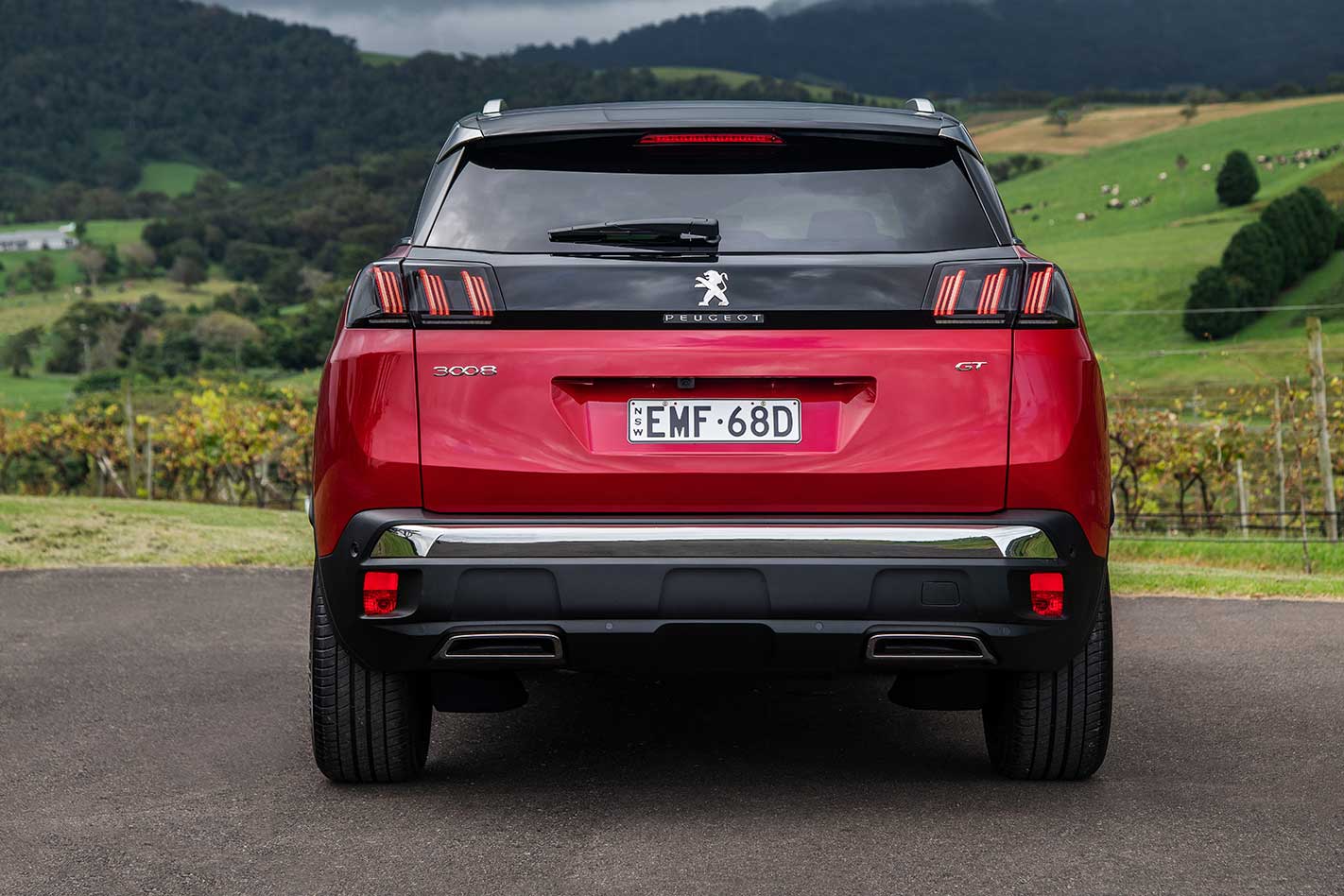
It has a substantial feel to it, though thanks to a relatively lithe 1451kg kerb weight there’s more a crossover-like eagerness to its dynamic cooperation – that it avoids that typically lumbering SUV-ness ought to win over tyre-kickers willing to give the French machine a spin.
That said, the column-mounted paddleshifters are largely superfluous window dressing and, thankfully, Peugeot has located them with enough clearance as to not constantly and annoyingly brush your knuckles.
All MY21 3008 variants come with a five-star ANCAP rating awarded in Q3 2017 around the time this second generation arrived in Oz off assessment tested conducted in 2016 by Euro NCAP. That’s despite a poor showing for AEB that the 3008’s current crop amends.
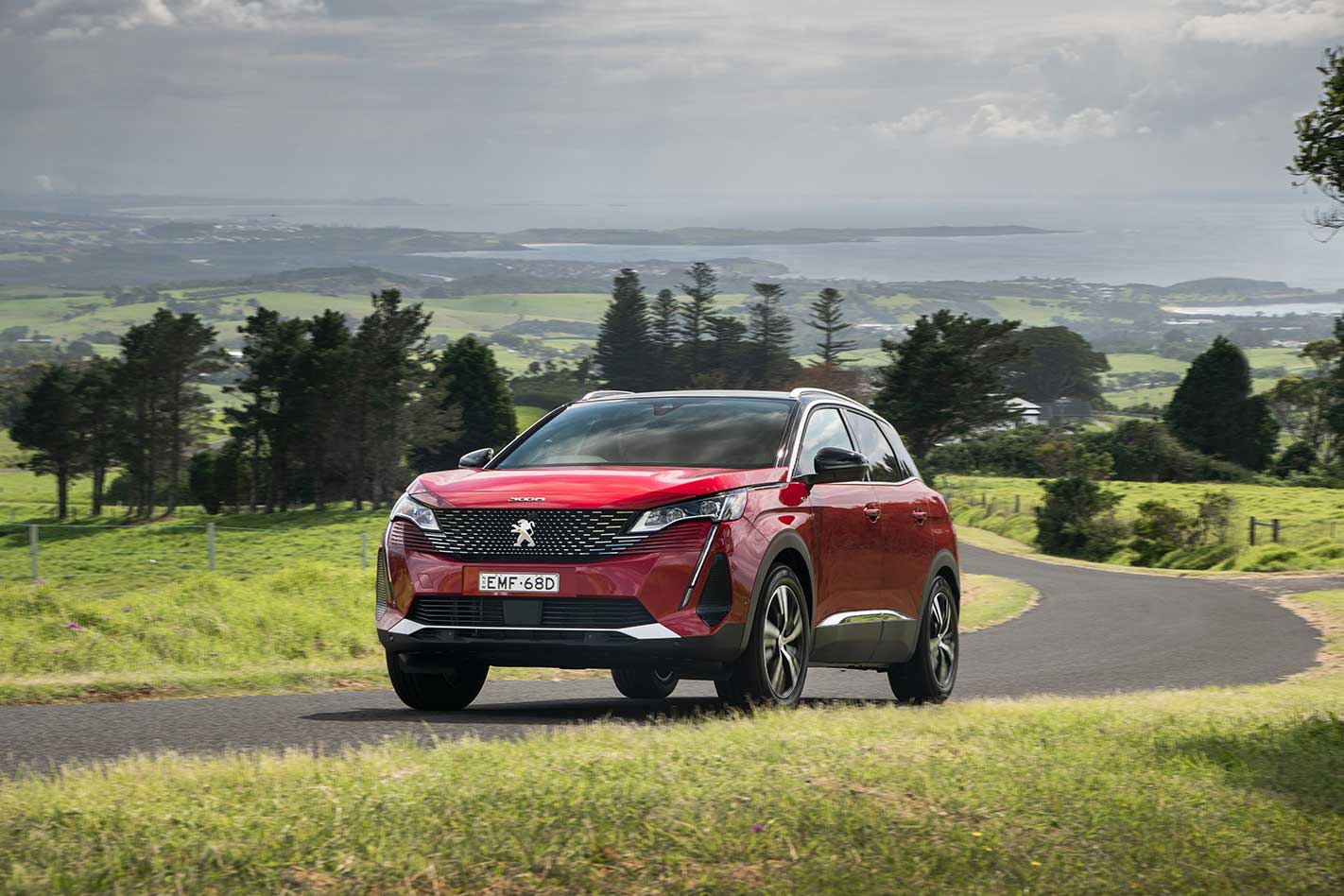
Peugeot offers five years of unlimited-kilometre warranty on its passenger vehicles for private use. Servicing is every 12 months with nice long 20,000kms intervals if you tend to clock up the annual mileage, though interval costs are on the pricey side: lows of $397 and highs of $788, a total of $2768 over the first five visits averaging out to $553.60 per year.
Sure, the 3008 GT isn’t cheap to buy or to run, but it does deliver well in equipment and, importantly, it convincingly embodies authentic premiumness in how it feels and drives. That’s less of a bonus for its compelling and alternative French design pitch and more genuine reason for serious consideration.
Verdict: 7.5/10
Likes: presentation inside and out, lots of nice gear (if optioned), upmarket crossover-like on road character
Dislikes: minor mid-life changes, pricey (particularly optioned), misses the nicer flagship 1.6T powertrain, i-Cockpit design not for all tastes
Specifications
Body: 5-door, 5-seat SUV Drive: front-wheel Engine: 1598cc inline-4cyl, DOHC, 16v, turbocharged Bore/stroke: 77.0 x 85.8mm Compression: N/A Power: 121kW @ 6000rpm Torque: 240Nm @ 1400rpm 0-100km/h: 9.9sec (claimed) Fuel consumption: 7.0L/100km (combined/claimed) Weight: 1451kg Power/weight: 84kW/tonne Transmission: 6-speed automatic Suspension: struts, coil springs, anti-roll bar (f); torsion beam, coil springs, anti-roll bar (r) L/W/H: 4447/1906/1624mm Wheelbase: 2675mm Tracks: 1579/1587mm (f/r) Steering: electrically assisted rack-and-pinion Brakes: N/A (f); N/A (r) Wheels: 18 x 7.0-inch (f/r) Tyres: 225/55 R18 (f/r) Price: $47,990
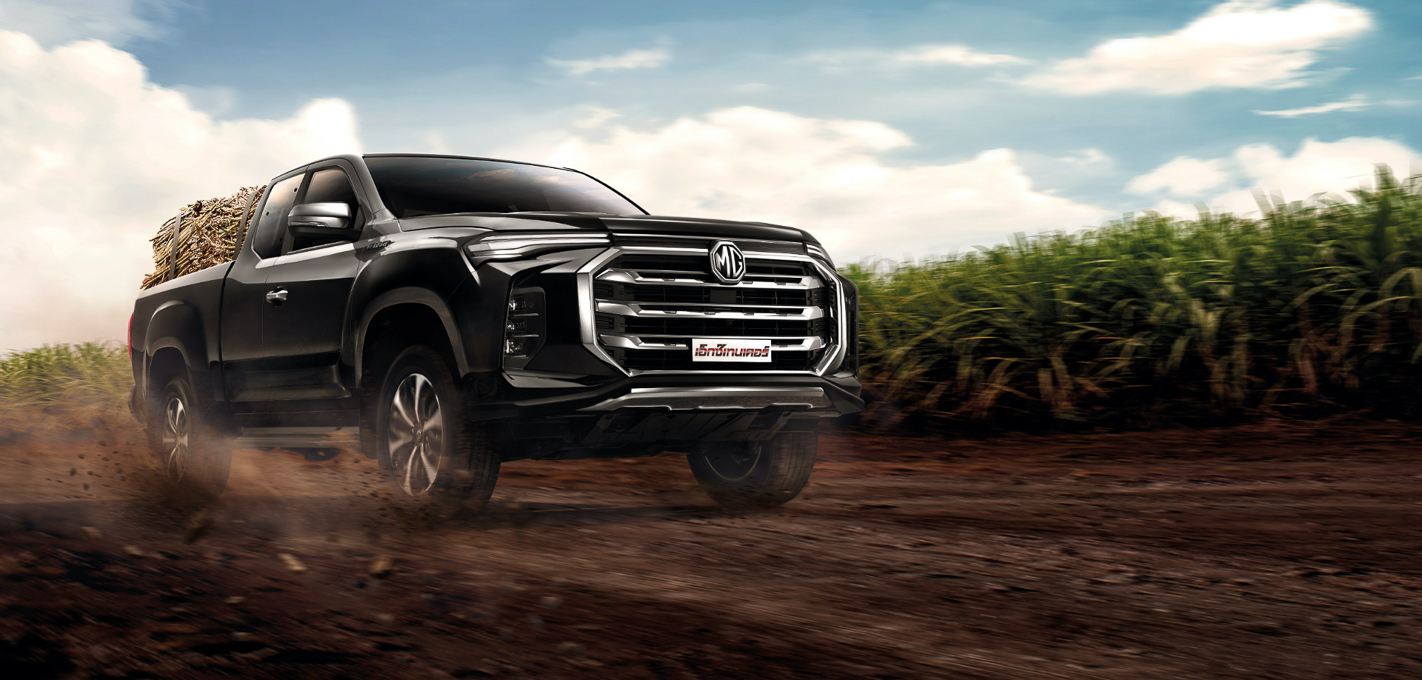
An MG-branded right-hand drive version of the recently-unveiled Chinese-market Maxus T90 dual-cab ute has been unveiled in Thailand at the Bangkok International Motor Show.
The MG Extender nameplate has never made it to Australia, but this new version is built for the right-hand-drive Thailand market. Parent company of both MG and Maxus, SAIC Motor, could feasibly offer this MG-branded ute in Australia.
It wouldn’t be such a bad move, either. Chinese built models are currently undergoing a sales frenzy in Australia, and rival dual-cab utes from GWM and SsangYong are rebounding well after a horror 2020 sales period.
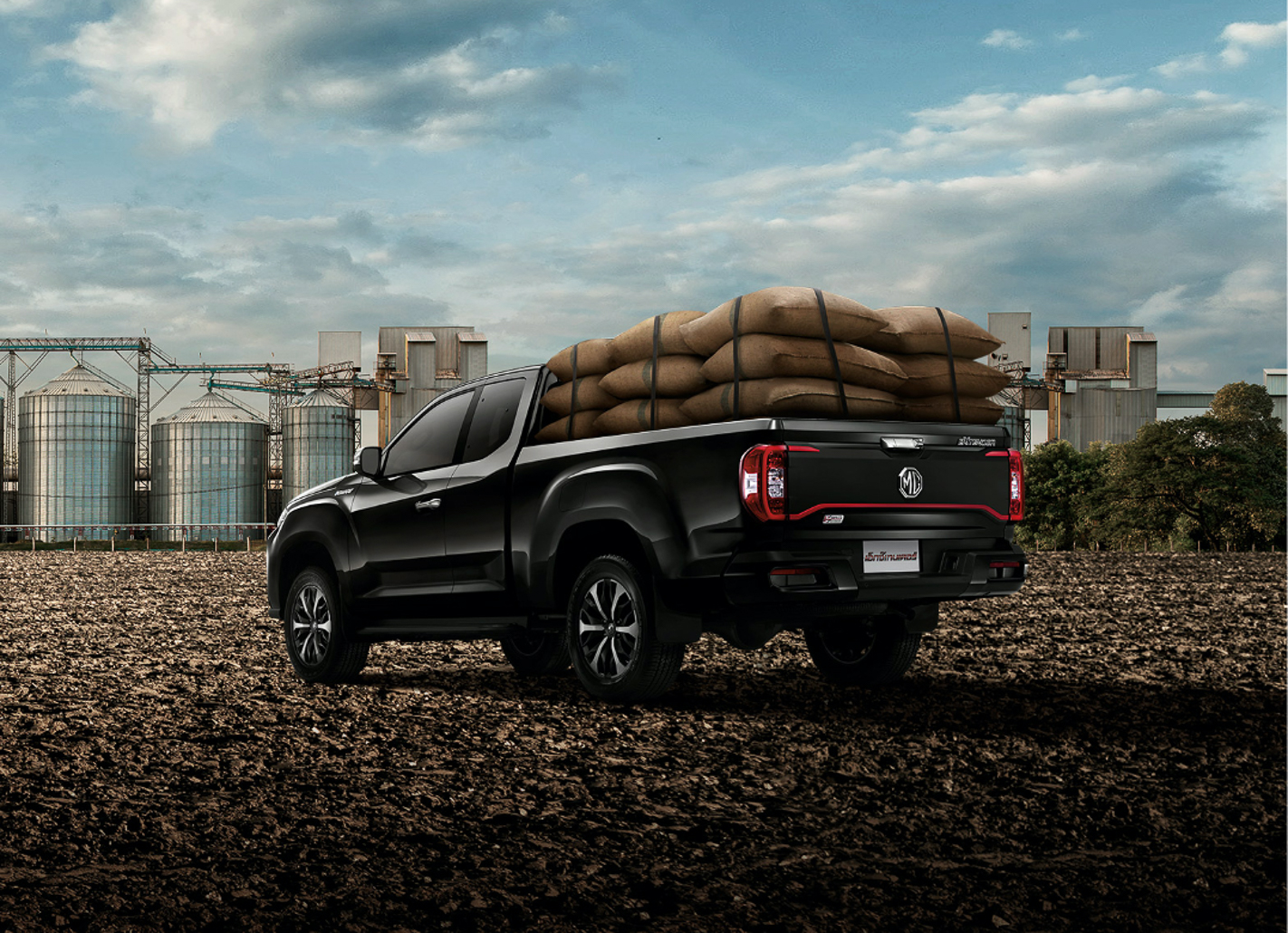
Of the MG Extender ute itself, it scores a wide new grille with slimline headlights, redesigned tail lights that integrate with the tailgate and two-tone 18-inch alloy wheels.
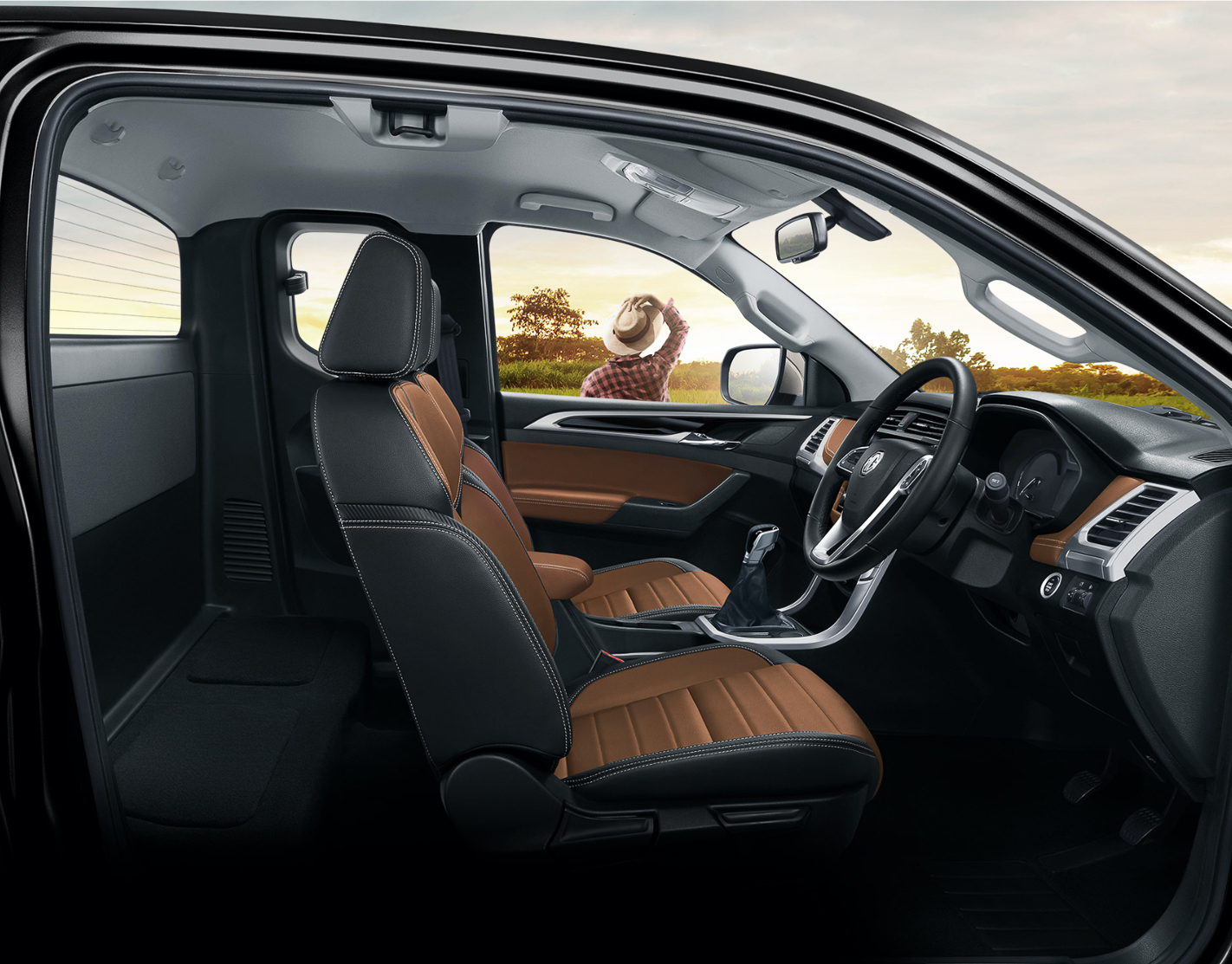
The interior is said to be upholstered in a combination of black and brown leather, while soft-touch materials cover the door panels. There’s also carbon fibre-effect trim material to provide a “sporty mood”.
Infotainment is supplied through a 10.0-inch screen with i-SMART software that incorporates Apple CarPlay connectivity.
Safety systems include anti-lock brakes, stability control, traction control, hill start and hill descent assist, lane-departure warning and tyre pressure monitoring.
The MG Extender can be had in extra and dual-cab guises, with both manual and automatic six-speed transmissions.
Power is supplied by a 120kW 2.0-litre turbo-diesel four-cylinder engine and 4×4 drivetrain with low-range.
While it would likely be branded an LDV if it ever did come to Australia, an MG spokesperson told WhichCar “at this stage, there are no plans to bring the Extender ute to Australia.”
