
“I am in the market to buy a new car. I really like the Alfa Romeo Giulia Veloce and the Lexus IS350 F Sport. I am looking for something a bit sporty to be my daily driver, cater for a couple of children and I need four doors. What do you recommend?” -Adrian D
First off, let us just say it’s great to hear you are opting for a sedan over an SUV – praise be!
Of the two cars on your shortlist, the Giulia Veloce is the sharper driver’s car. We are yet to drive a mid-size sedan that is hungrier on corner entry. The Alfa’s turbo four-pot is down on power but up on torque compared to the Lexus V6, which makes its peak torque far higher in the rev range and can be caught out at times.
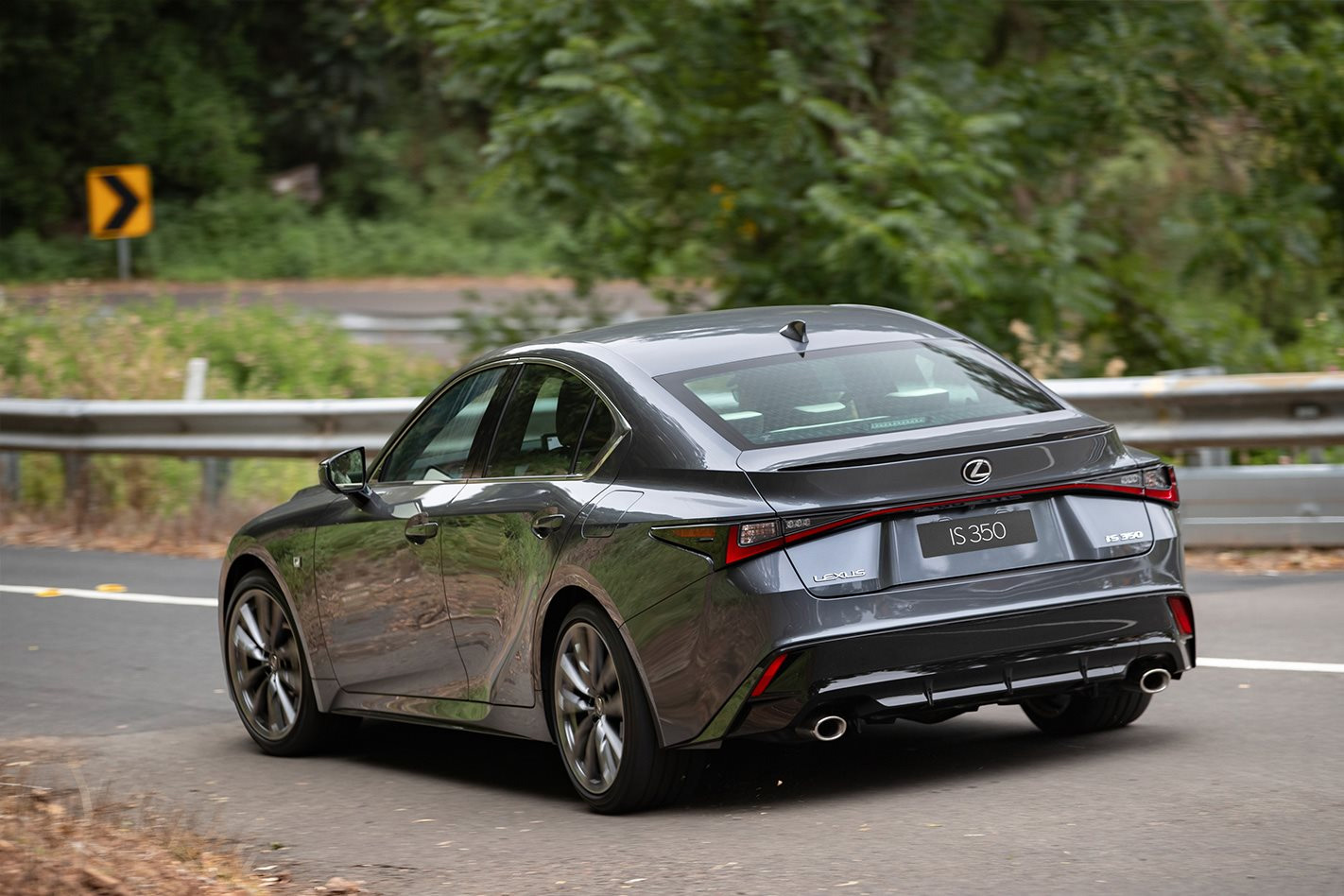
A heavily updated IS 350 F Sport has just arrived in the country, with a drastic exterior facelift which keeps the design fresh whilst also introducing a range of chassis changes which help tease out the vehicle’s hidden athleticism. It won’t be as sharp a steer as the Giulia, but it does offer entertaining dynamics in its Sport settings, whilst providing a versatile duality in its cosseting and plush Comfort mode.
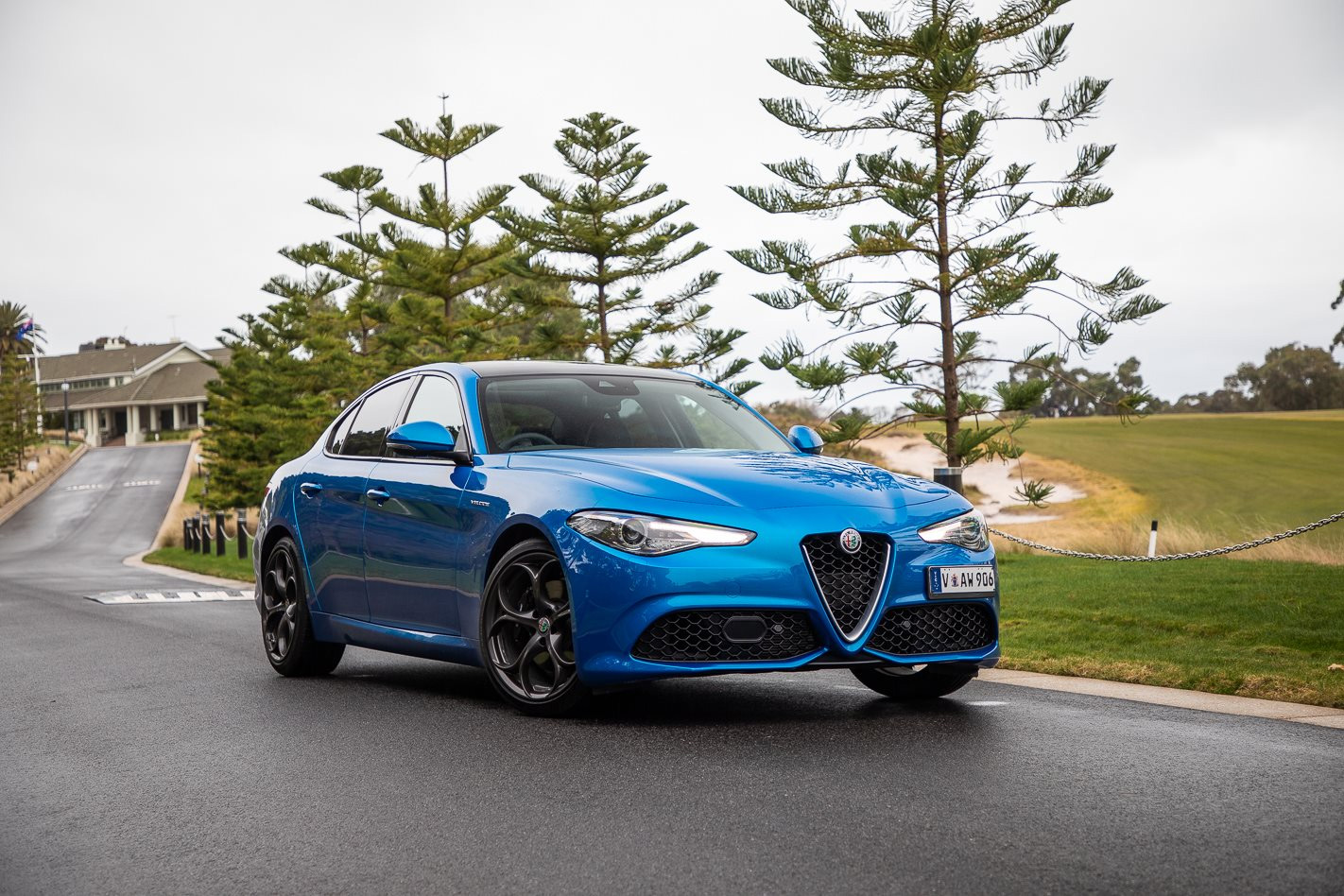
There isn’t much in it when it comes to interior space. While the Lexus has a clunkier multimedia system, the Alfa’s reputation for reliability isn’t completely unblemished.
Lexus on the other hand has been consistently rated by independent surveys as having some of the best customer service and satisfaction of any manufacturer.
Other options to test drive include the BMW 330i, and Genesis G70 3.3T Sport. The latter has a fantastic 3.3-litre twin-turbo V6 engine with 275kW/510Nm, making it the most powerful car mentioned. Meanwhile, the BMW is one of the finest-rear-drive sedans on the market today.
Drive all four and see what takes your fancy, but if we have to make the call, the Genesis could get the nod for its combination of driving dynamics, generous equipment, reassuring warranty and prodigious power. – CK
Alfa Romeo Giulia Veloce v Lexus IS350 F Sport Specs
Engine: 1995cc four-cylinder, DOHC, 16v, turbo | 3456cc V6, DOHC, 24v Power: 206kW @ 5250rpm | 232kW @ 6400rpm Torque: 400Nm @ 2250rpm | 380Nm @ 4800rpm Weight: 1490kg | 1685kg 0-100km/h: 5.7sec (est) | 6.1sec (tested) Price: $71,450 | $75,000
Have a car-nundrum of your own? Drop us a line at [email protected]
In the history of daunting tasks, reinventing the Land Rover Defender is surely only just behind repainting the Sistine Chapel’s ceiling and re-recording Abbey Road.
But the fact is, for fording rivers and climbing mountains, any number of 4x4s matched the curmudgeonly English off-roader icon decades ago. Here, the challenge was recapturing the essence of the old charmer, which ceased production in 2016 after 68 years.
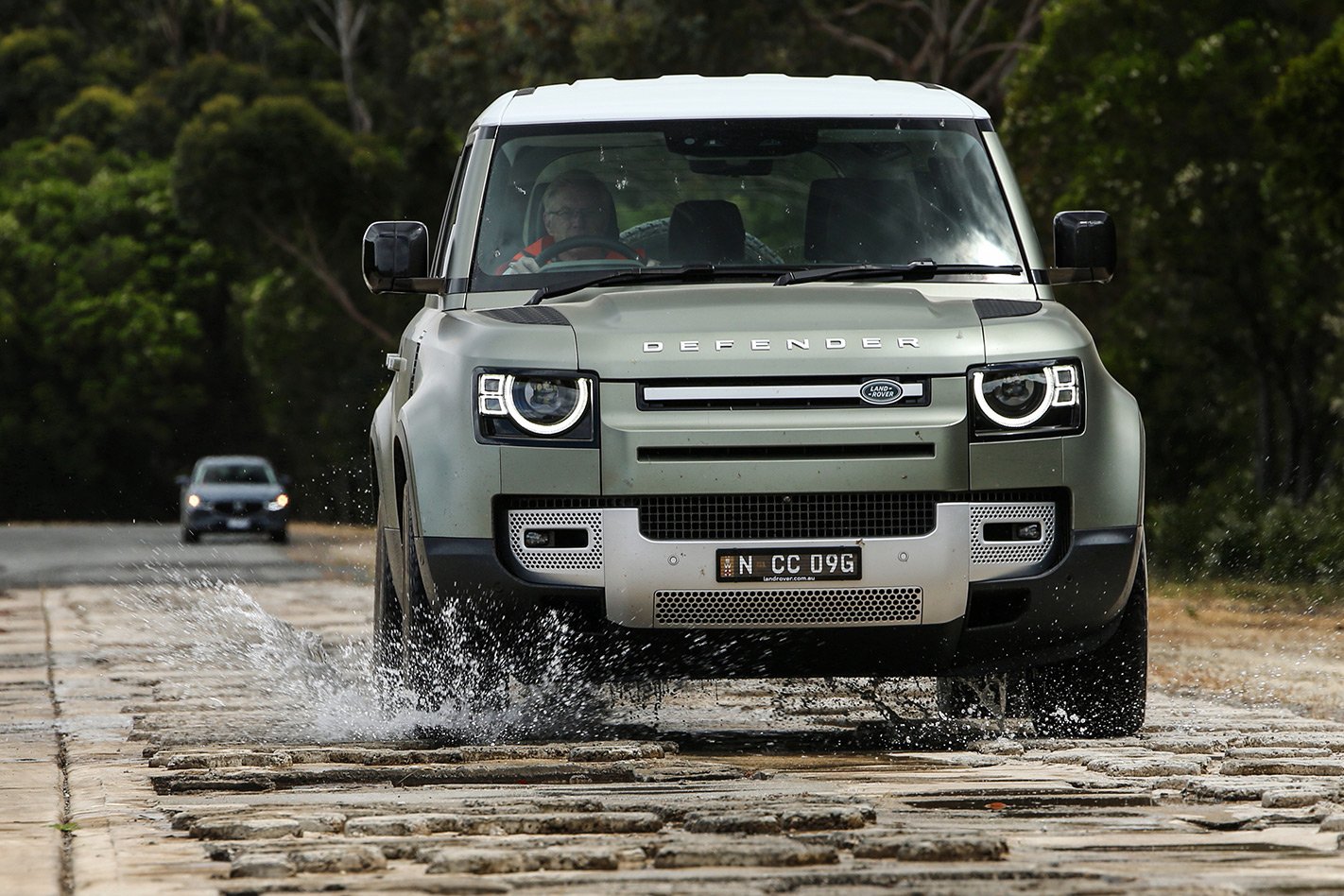
Yet looking back was not the way forward for the new Defender, and for that, fans past, present and future ought to be grateful, because the outcome is a vehicle of astounding and unexpected bandwidth.
Essentials first. Based on the D7 architecture as per the existing Discovery, Range Rover and RR Sport, though actually 95 percent new, the new Defender employs an aluminium monocoque, double wishbones up front and an integral link rear end. No separate chassis shenanigans here.
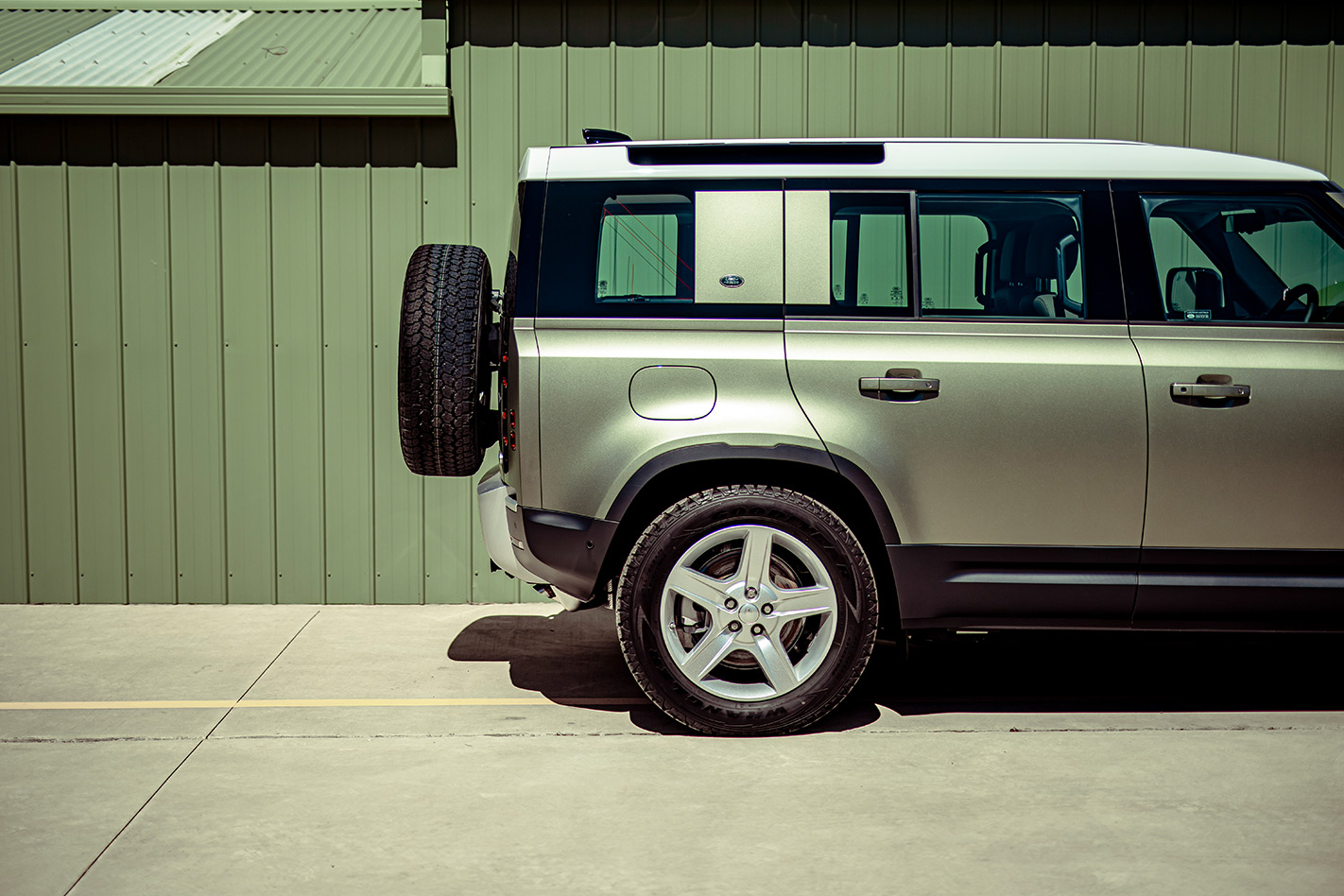
Land Rover reckons it’s never undertaken a more punishing durability testing regime. Larger than before, the short-wheelbase 90 wears coils while air suspension of brow-raising height adjustability is standard on the 110; 3500kg towing capacity is possible, the roof can support 300kg and extraordinary off-road prowess is promised thanks to permanent 4WD, dual-range transmissions, centre differential, optional locking rear diffs, extreme approach/ramp-over/departure angles and ground clearances ranging from 216mm to 291mm.
Nothing less would do. New Defender can shadow the old one, and then some, if you pick the right off-road options. Which is a great feat for something not built like a truck.
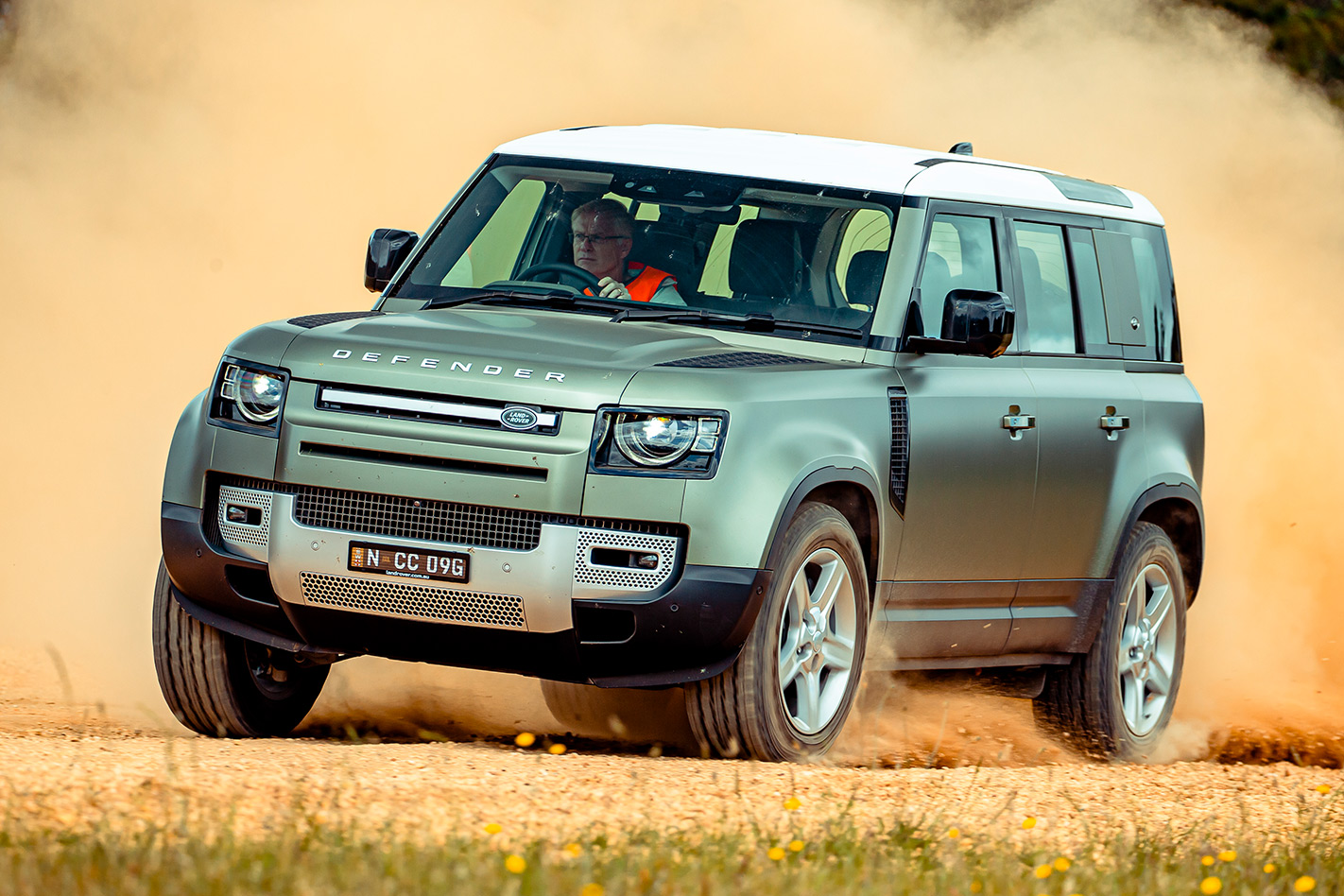
But where it also shines are in the areas the old 4×4 couldn’t hope to succeed. Like proper safety tech, decent on-road dynamics (the steering’s light but the handling, roadholding and ride comfort levels are remarkably civilised) and luxury crossover-style refinement and isolation.
Additionally, thoroughly modern engines – strident in six-cylinder petrol form yet frugal enough if you go diesel – are as efficient as the toughest legislation demands. Hybrids are also at the ready, should Australia ever wake up to itself.
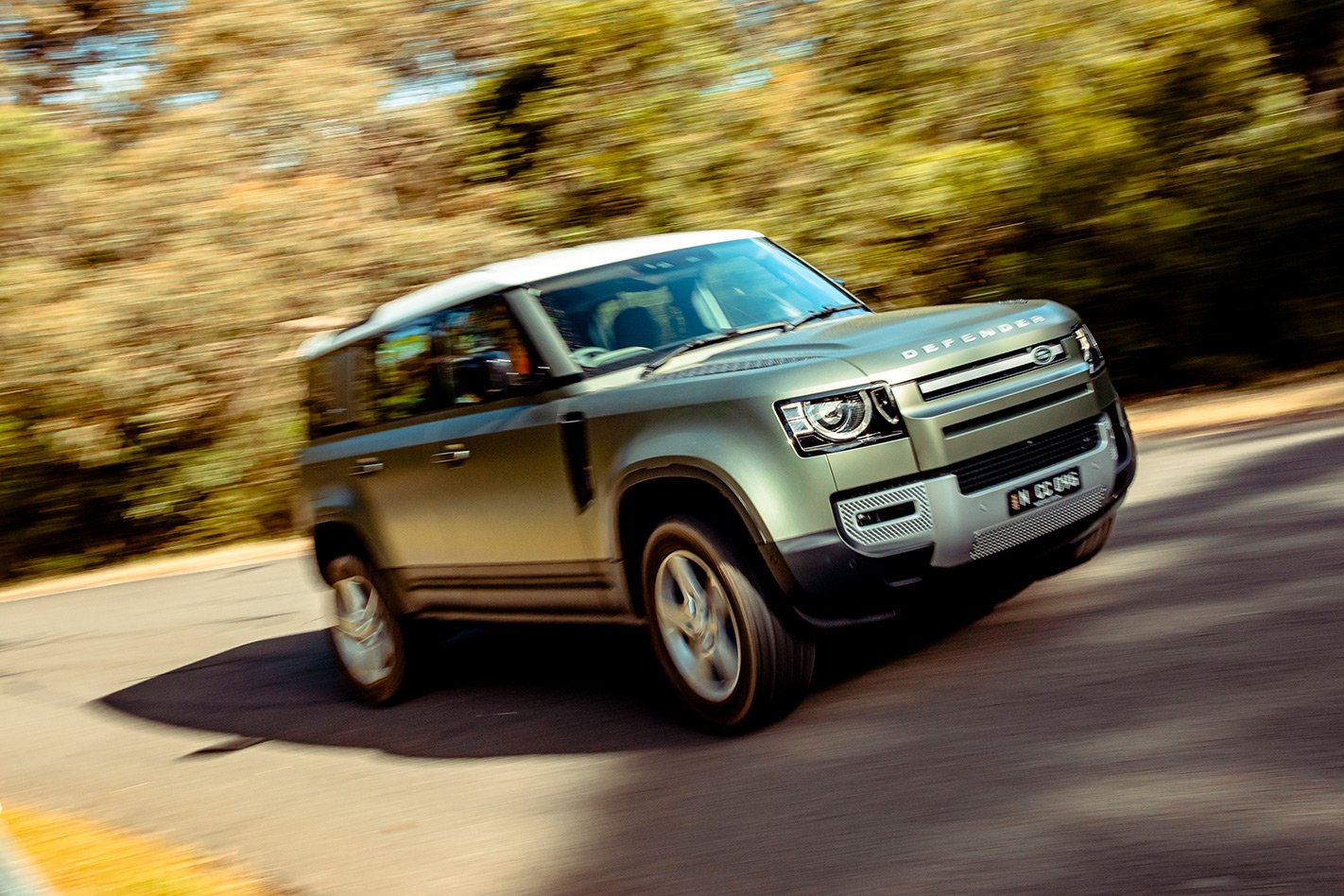
Most of all, however – and this is central to the new Defender’s success – is its innate appeal as a 21st Century SUV. Aesthetically its presence is born out of proper functionality – short overhangs, boxy proportions, clean surfacing. And the vast, airy interior architecture is just as fresh and invigorating, from the robust symmetry of the dash to the plethora of unique, purpose-built amenities – including an optional front bench and beautiful rubber flooring.
Conversely, shared with other Jaguar Land Rover models, the multimedia system is arguably one of the world’s best right now. Tech meets trad with rad results…
But it isn’t all Rule Britannia.
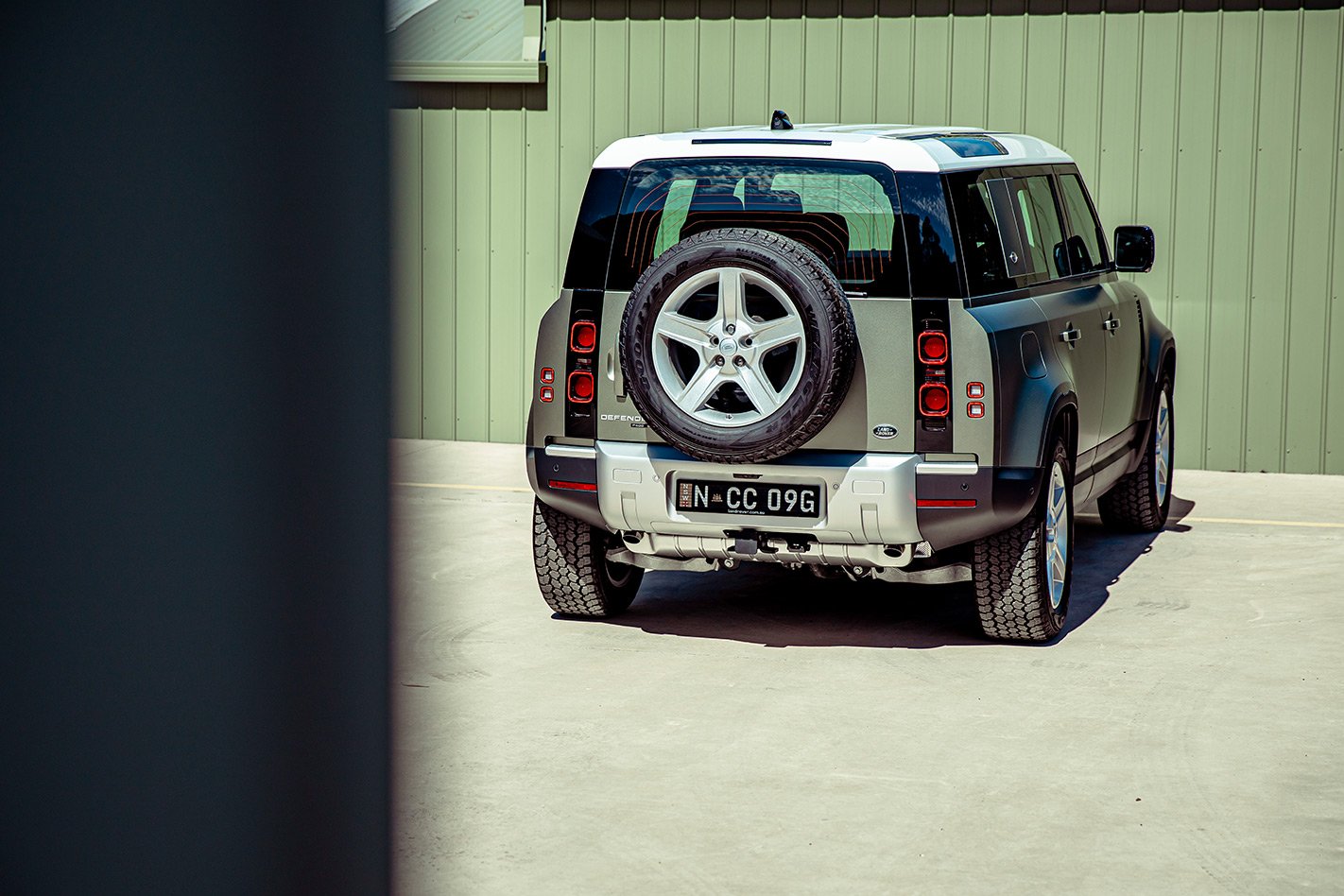
Some of the COTY judges found the stability and traction control intervention to be too abrupt. Questions are raised over early reliability and quality issues, too. And while never cheap, it now starts from nearly $80,000.
Drill through mind-scrambling configurations and options, and you’re quickly stretching well into six figures.
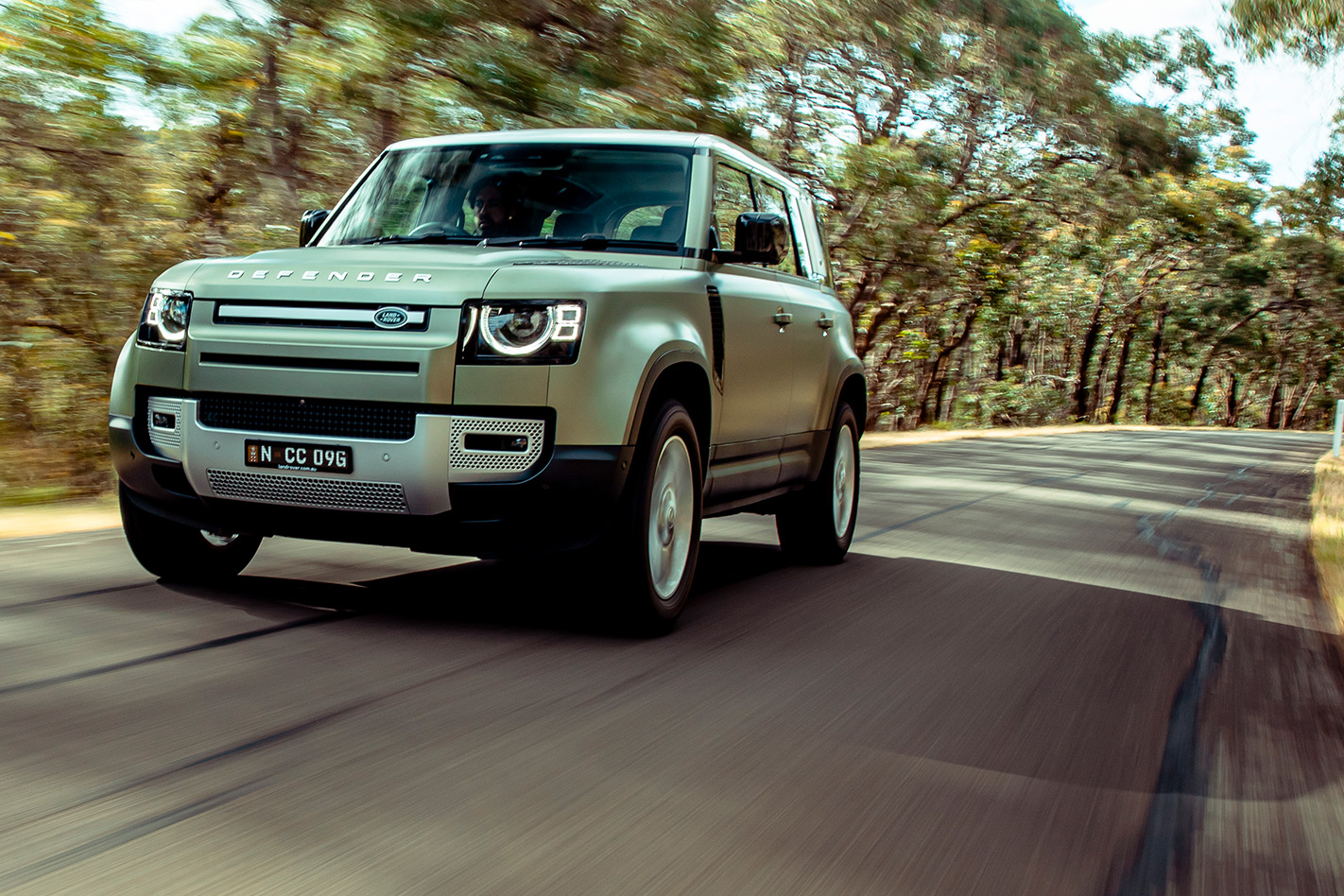
Such concerns ultimately hold the L663 back in our final assessment, even though – given its capabilities and obvious charm – the Land Rover Defender represents unique value against rivals like the Toyota LandCruiser or the familiar parade of German luxury SUVs.
Credit where credit is due. Unfettered by retro design and archaic engineering, the Defender goes from Blackadder to Bladerunner. Mission accomplished.
Richard Ferlazzo on the Land Rover Defender’s design
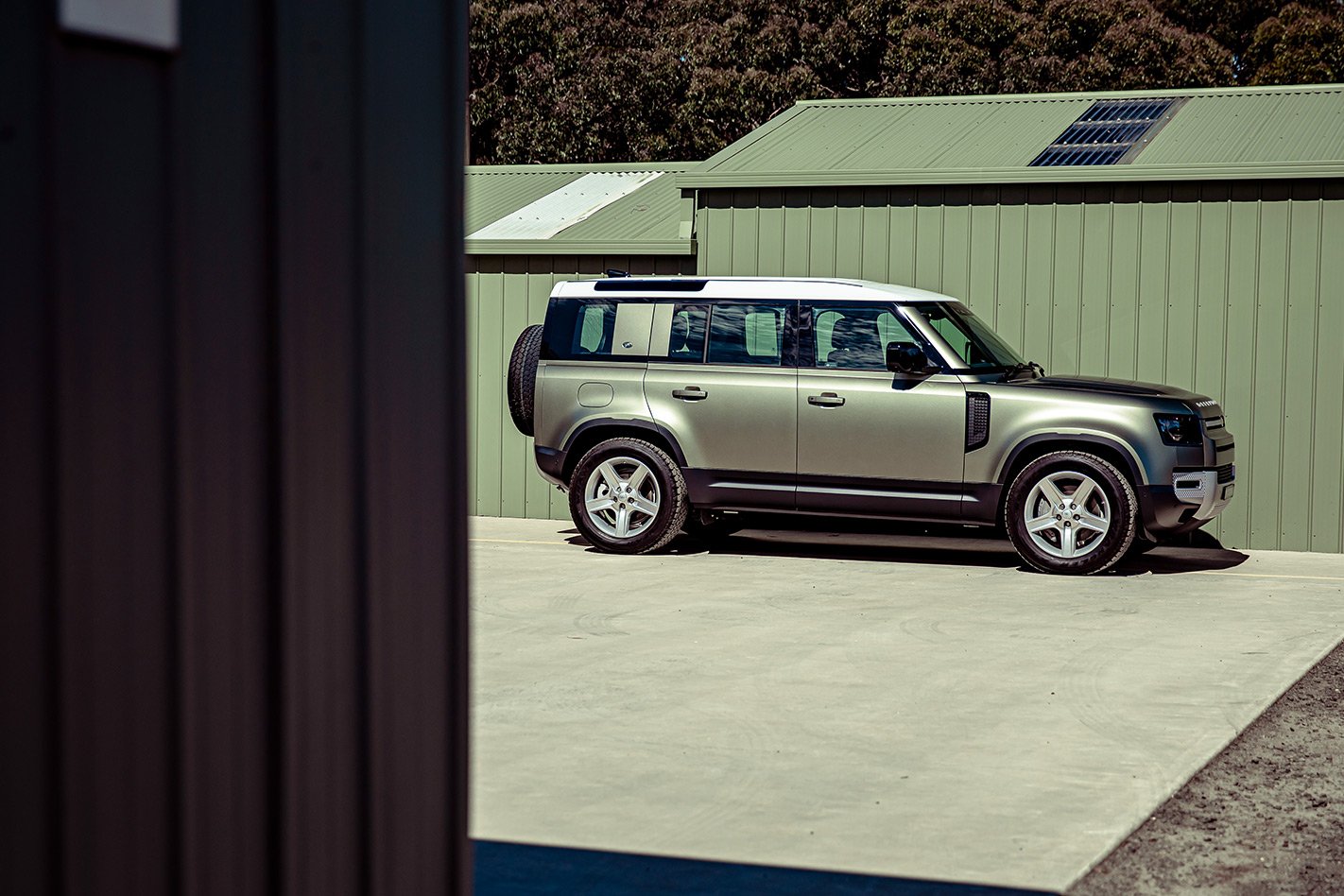
“I love the design of the Defender; it has a real ‘Product Design’ feel about it. A daunting challenge to reinvent an old icon and very courageous to change the flavour from farm-workhorse to luxury-utilitarian. The basic body form is robust and linear but never plain because of the clever detailing.
The front and rear graphics are also techno-cool with just enough secondary detail to explore. The plastic chequer-plate insert in the bonnet should have been aluminium. The interior follows the same extruded sectioning, but executed with a premium, yet technical feel.”
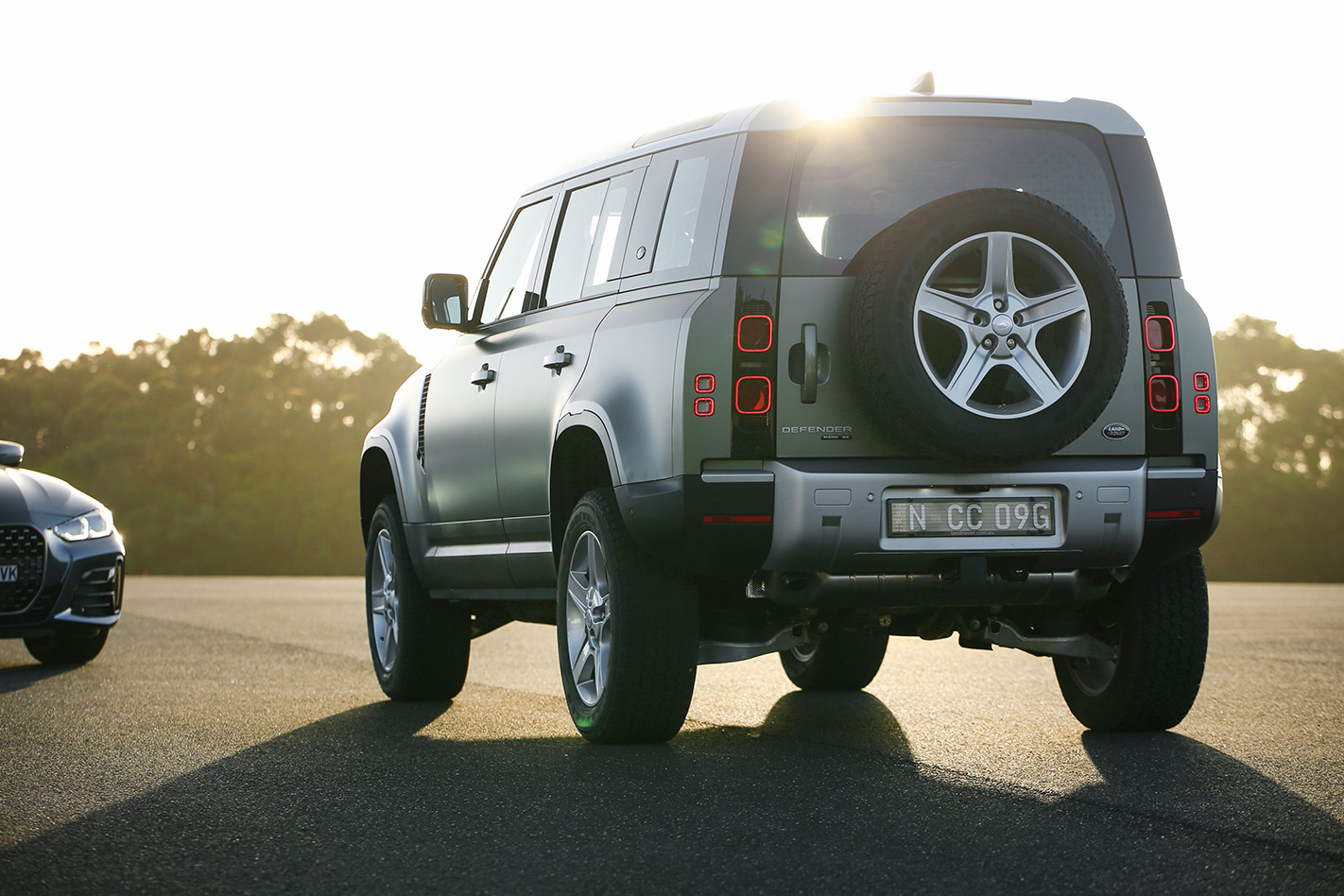
Variants Tested: – 110 P400 SE ($116,116 as-tested)
MG has expanded its local HS mid-size SUV range in Australia by introducing two new all-wheel drive specifications and a plug-in hybrid (PHEV) variant to head the range.
Available from March 2021, the HS AWD starts with drive-away pricing of $37,990 and will come in two high-spec variants, while the HS PHEV arrives at $46,990 driveaway in a single specification level.
We’ll start by explaining what the all-wheel-drive HS offers.
Both the MG HS Excite X and Essence X come with all-wheel drive, a first for the brand in Australia.
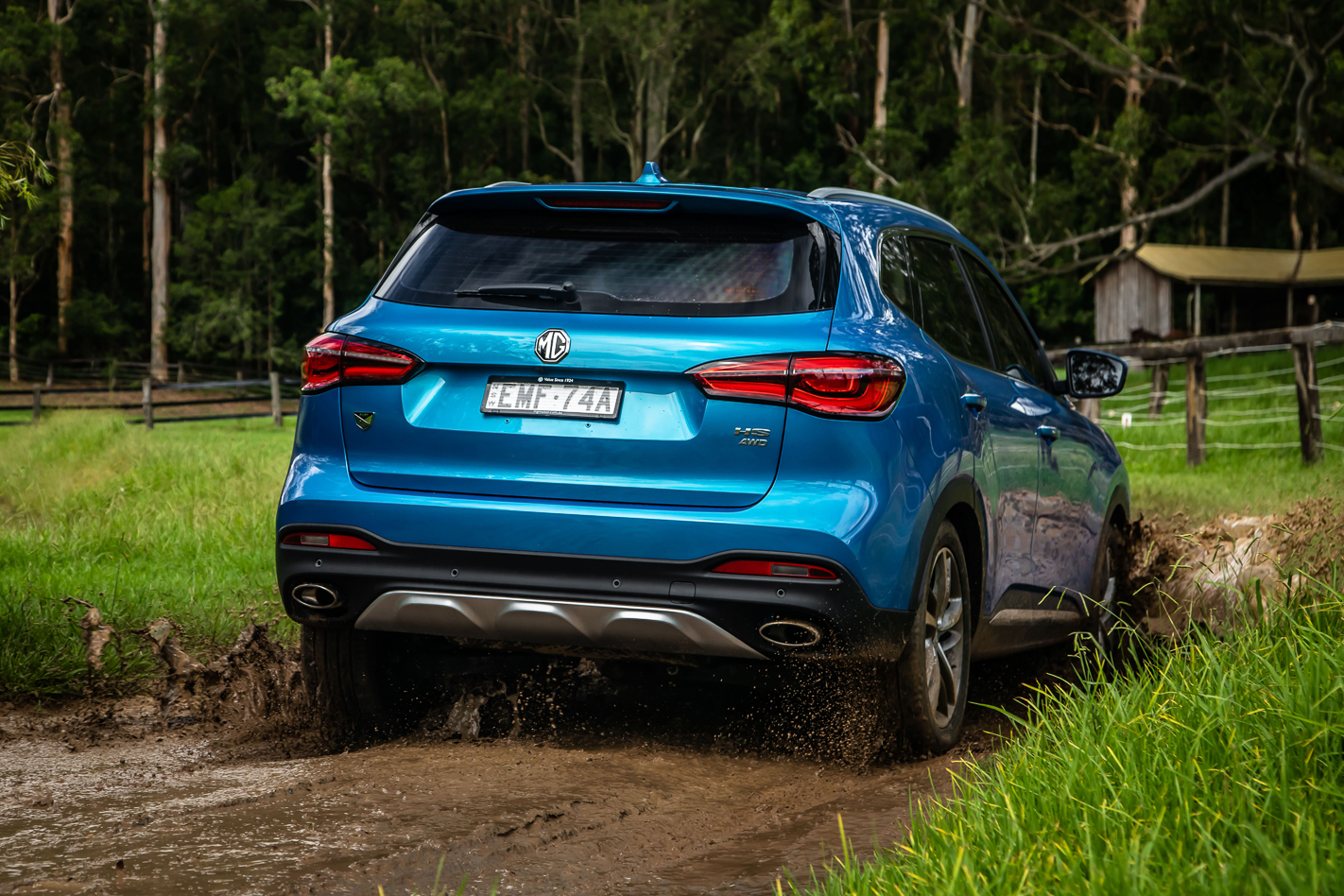
It uses a 2.0-litre turbocharged four-cylinder engine with 168kW/360Nm, which is sent to an all-wheel-drive system through a six-speed dual-clutch transmission.
The drivetrain can be set to four different modes, including a custom setting determined by the driver. It also scores paddle shifters and a ‘Super Sports’ setting that is said to extract maximum torque from the engine to enhance acceleration.
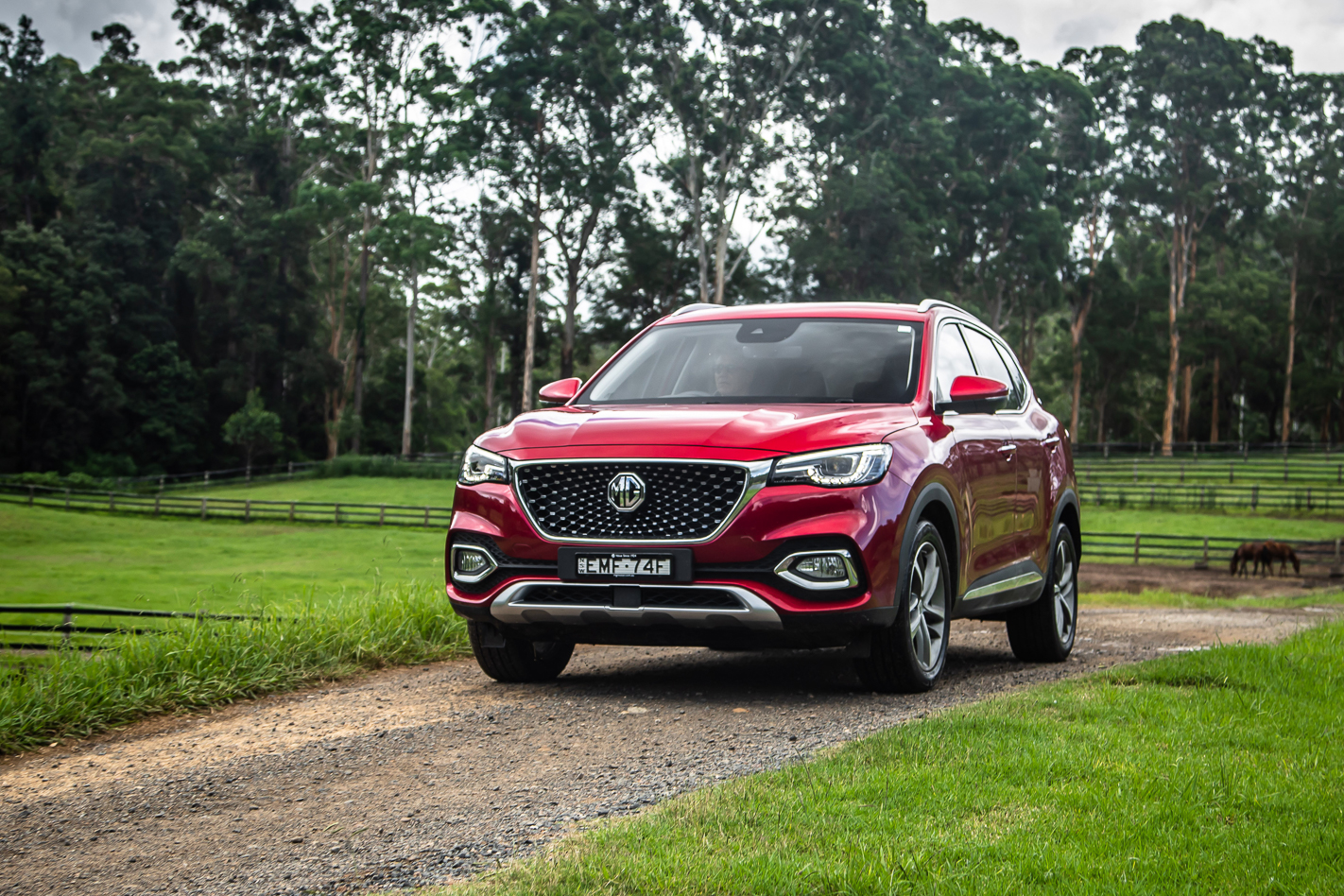
The AWD variants carry the same styling as the rest of the HS range, meaning chrome trim and diamond-cut 18-inch alloy wheels come equipped.
The chrome trim continues inside with the interior door handles, air vents and steering wheel highlights all covered in the satin effect.
An electric tailgate is included as standard on both specifications, but only the Essence X receives a panoramic sunroof, leather interior and sports front seats with heating and electric adjustment.
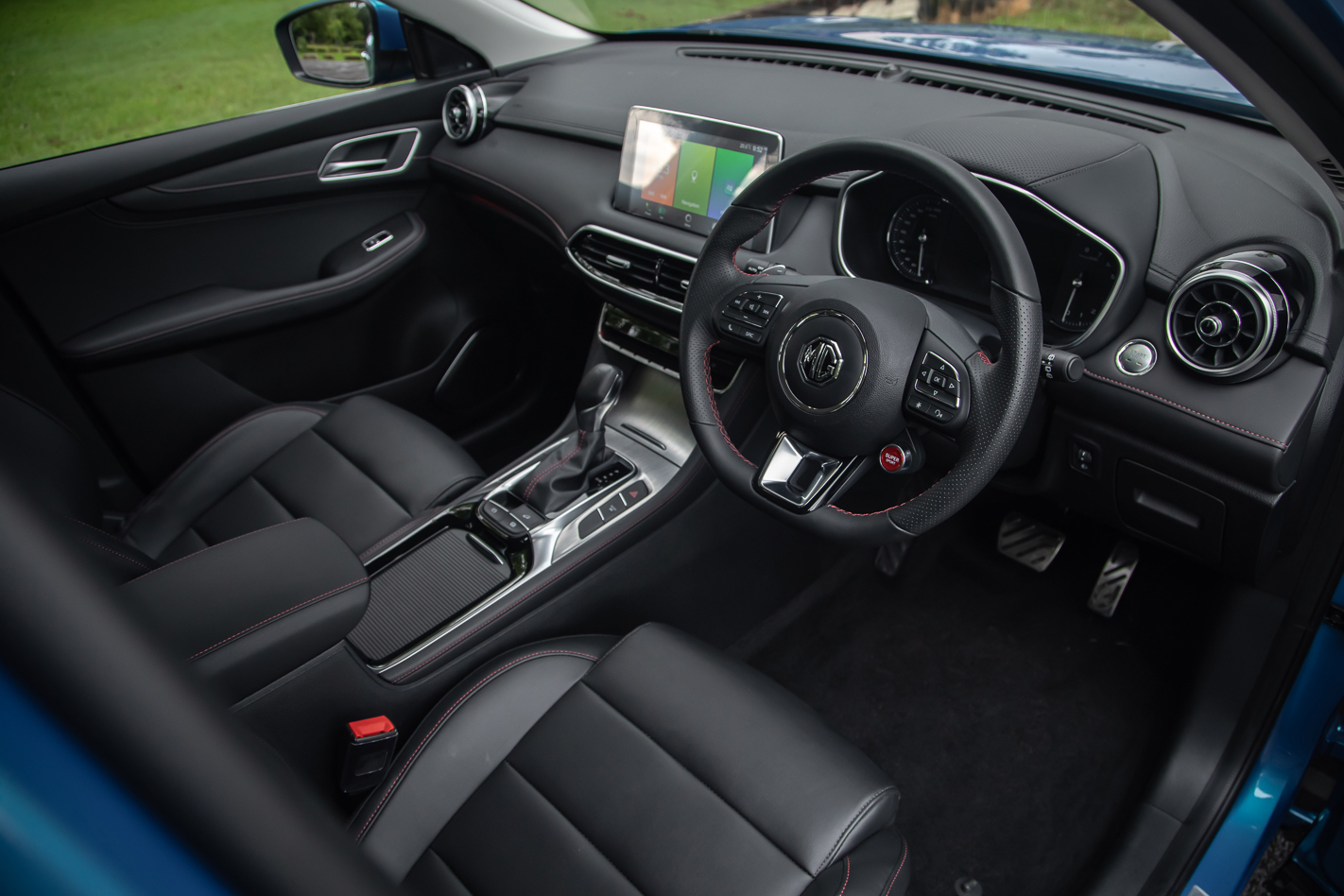
Both are covered by a five-star ANCAP safety rating and equipment including autonomous emergency braking, adaptive cruise control, lane keep assist, rear cross-traffic alert, blind spot detection, Intelligent Speed Assist, Intelligent Headlamp Control and Traffic Jam Assist. Essence X spec includes a 360-degree camera system to up the safety credentials.
Elsewhere, the MG HS AWD receives a 10.1-inch colour touchscreen with satellite navigation, Apple CarPlay and Android Auto connectivity and a six-speaker sound system. It also stocks four USB charge points, dual-zone climate control, rear air-con vents and a cooling function for water bottles.
HS AWD Excite X and Essence X are $3000 and $4000 more expensive, respectively, than their identical spec two-wheel-drive counterparts.
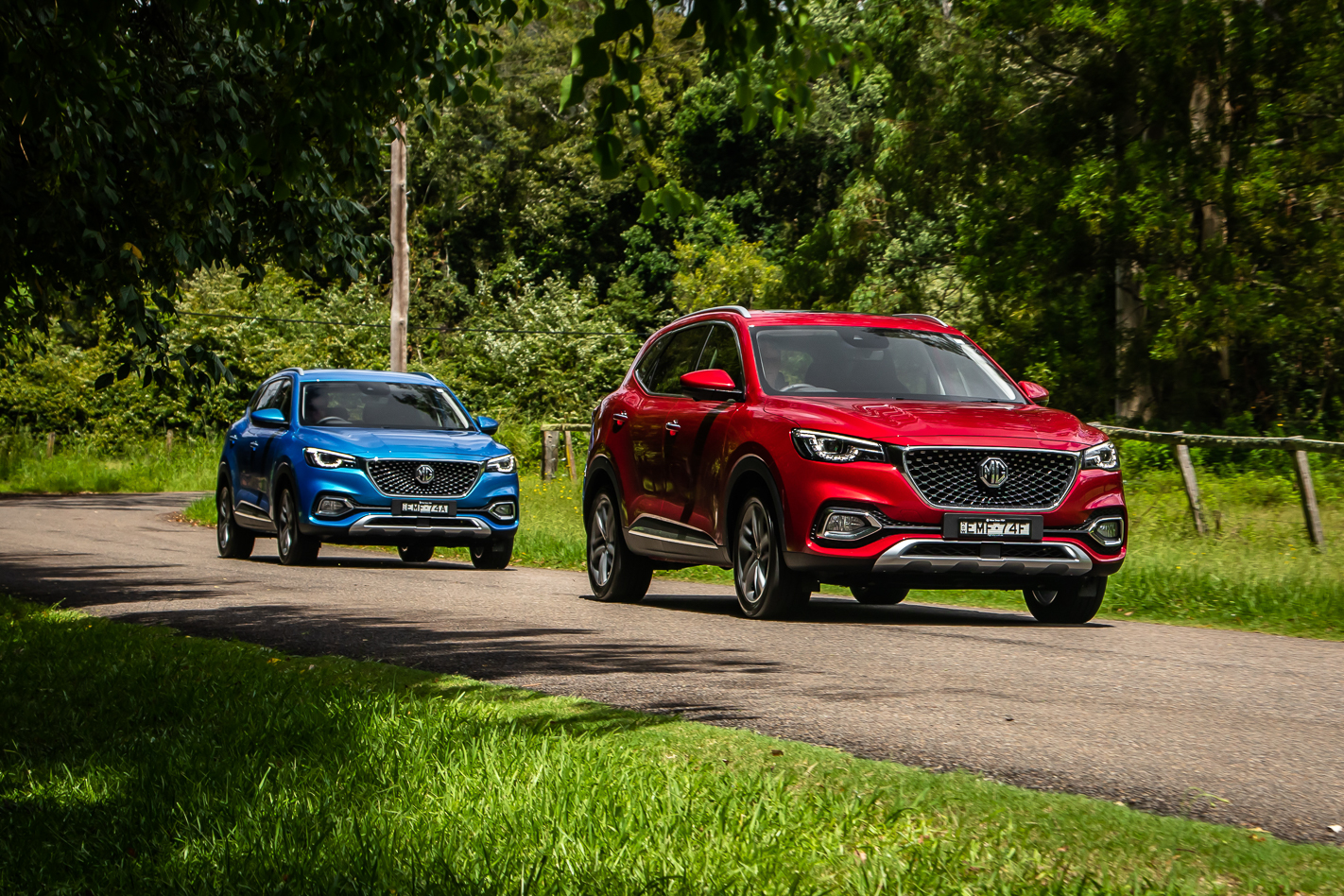
The introduction of AWD variants should make the MG HS a more compelling option among AWD rivals like the Toyota RAV4, Hyundai Tucson, Volkswagen Tiguan and Mazda CX-5.
The new plug-in hybrid variant also boosts MG’s standing within the mid-size SUV segment. It uses a 1.5-litre turbocharged engine, together with a 16.6kW liquid-cooled lithium-ion battery, to develop 189kW/370Nm. MG says those outputs are good for 190km/h top speed and a zero-to-100km/h sprint of 6.9 seconds.
MG also says that the HS PHEV can travel up to 52km on full electric power, and can deliver a fuel consumption figure of just 1.7L/100km on a combined cycle.
As a plug-in hybrid, the HS PHEV also comes with a three-pin charger located next to the fuel cap.
In addition to the fuel savings, HS PHEV owners can expect high-spec Essence kit, with 18-inch diamond-cut alloy wheels, panoramic sunroof, 12.3-inch digital instrument cluster, 10.1-inch infotainment (like the AWD variants), 360-degree camera, customisable interior lighting and heated and electrically-adjustable leather/Alcantara seats.
It also features the same MG Pilot safety equipment as above, including autonomous emergency braking, adaptive cruise control, lane keep assist, rear cross-traffic alert and blind spot detection.
The new all-wheel drive MG HS is covered by the brand’s seven-year/unlimited kilometre warranty.
The HS PHEV gets an additional year of warranty, though it’s capped at 160,000km.
All-wheel drive and PHEV variants of the MG HS have arrived in showrooms across Australia.
2021 MG HS AWD Australian pricing
- MG HS Excite X $37,990 (drive-away)
- MG HS Essence X $42,990 (drive-away)
- MG HS Essence PHEV $46,990 (drive-away)
CORRECTION: This story originally described the HS PHEV’s outputs as 209kW and 480Nm, based on initial details provided by the manufacturer. These figures were incorrect, with correct details supplied on March 4. This story has been updated with the new details.
Regular readers might recall that the previous Kia Sorento was the brand’s ‘Datsun 1600’ moment. You know, that instant when a fledgling brand finally comes of age, as Nissan did back with 1968’s iconic 510-series 1600. The opposite of jumping the shark.
Launched in 2015, the last Sorento scored Kia’s first Wheels comparison win, lured loads of new customers and elevated the brand out of the bargain-bin status.
So, how does the all-new fourth-gen version rate then?
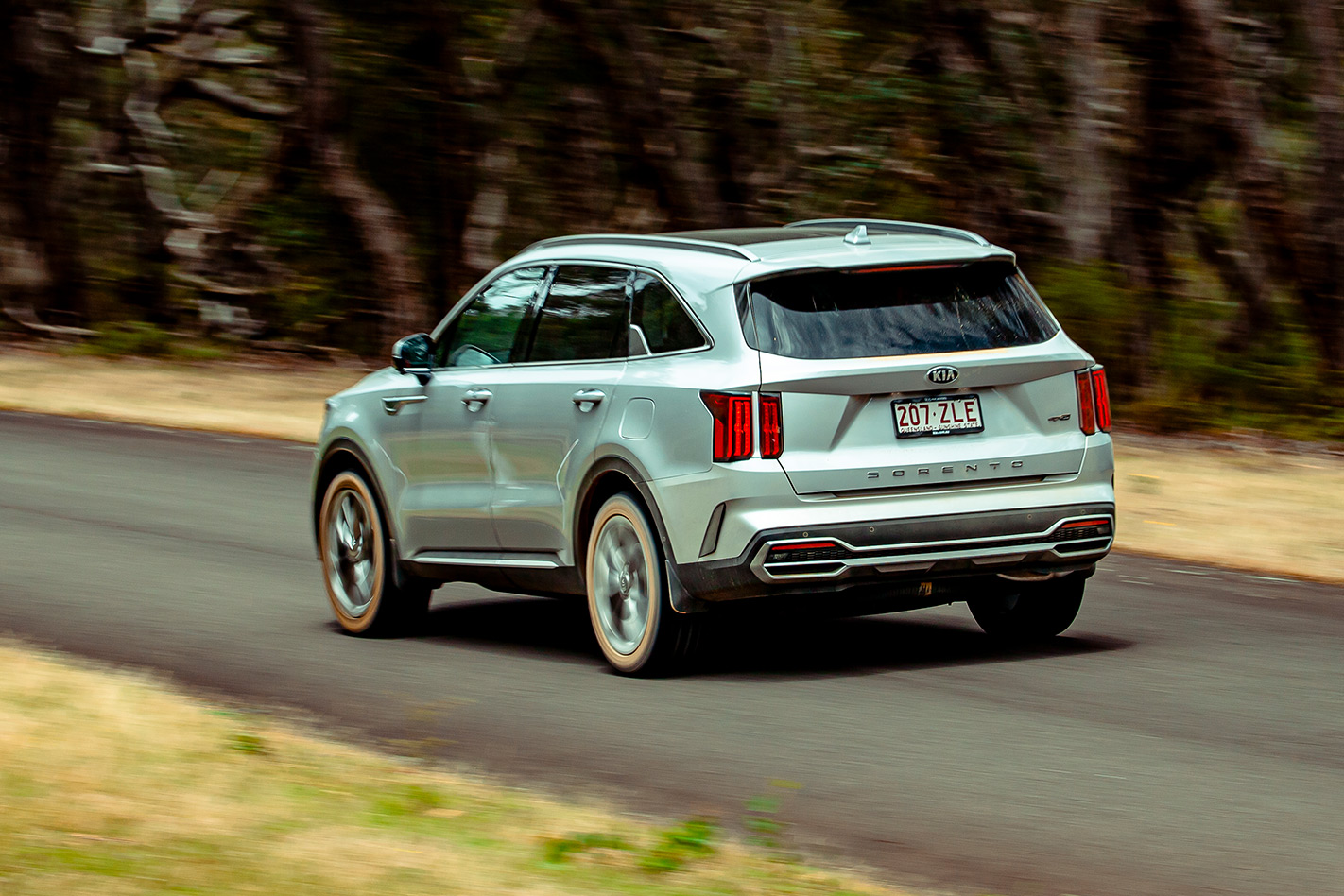
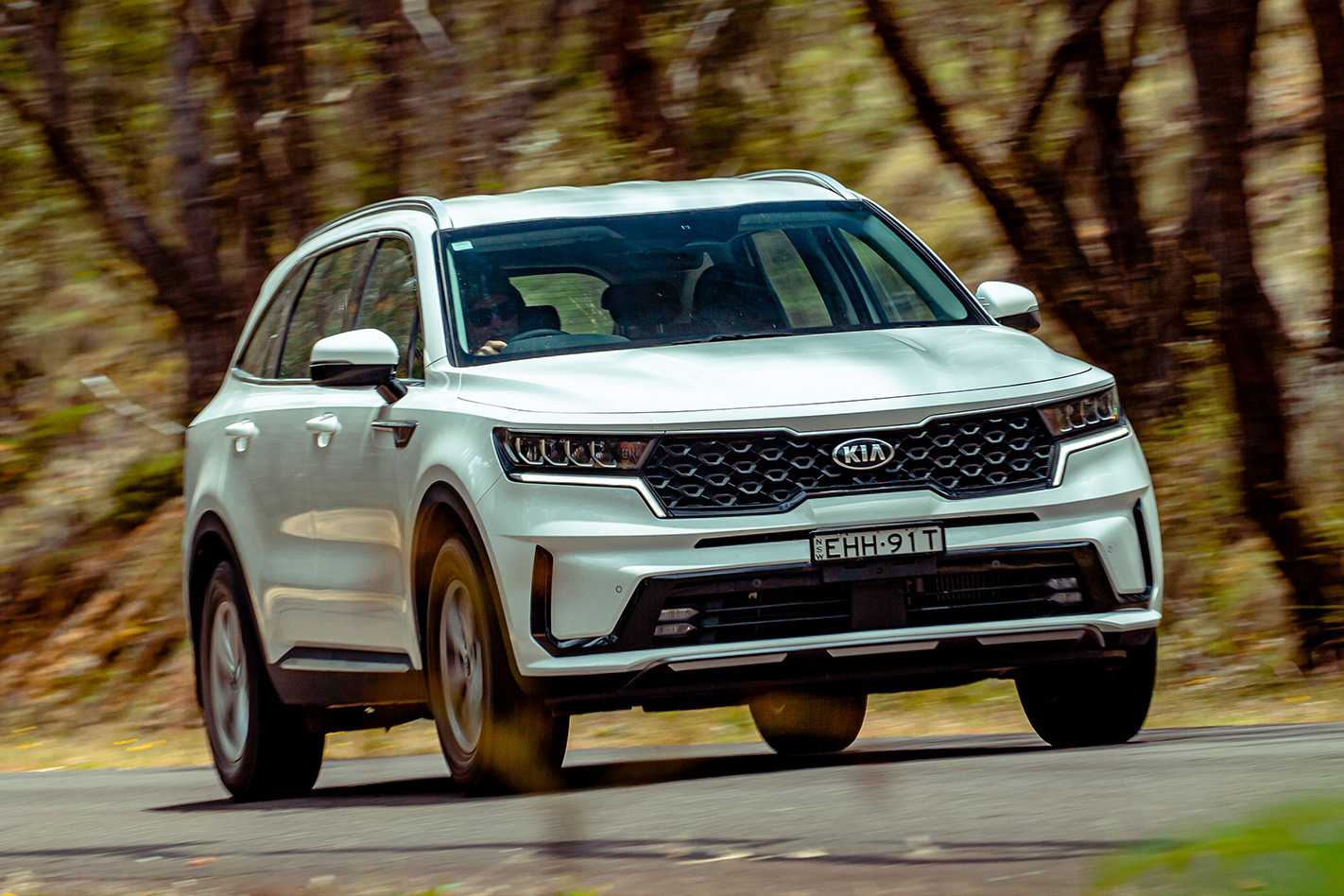
Built on a bigger platform, the seven-seater Kia grows in every direction, and also gains a wheelbase stretch for even better family-friendly packaging, as well as greater cargo-lugging capacity. All aboard!
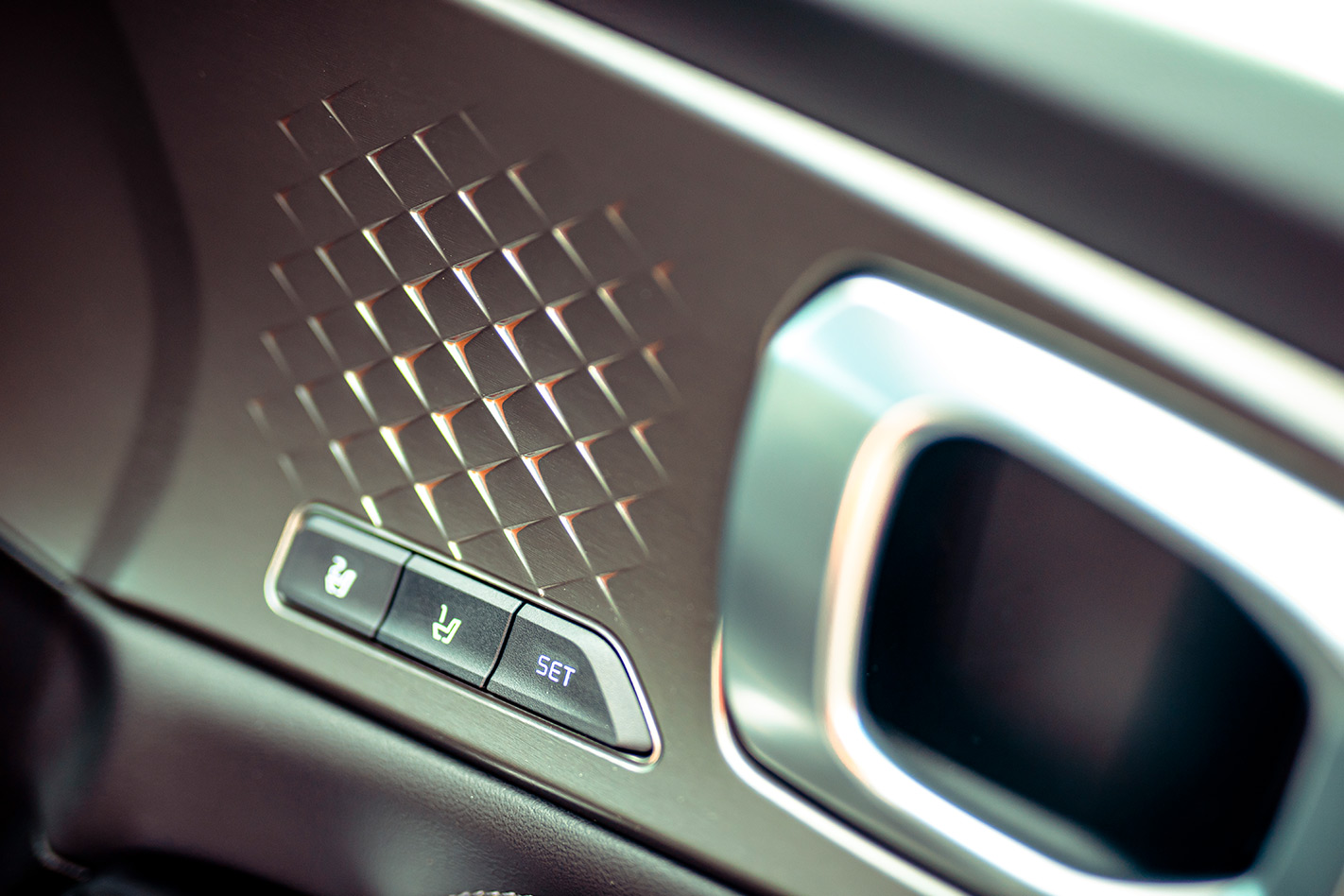
Visually, the cabin packs as big a punch as the striking exterior styling, with its very Mercedes-like touchscreen dash, boasting stylised vents and pleasing attention to detail, to lend a premium ambience from the base S up.
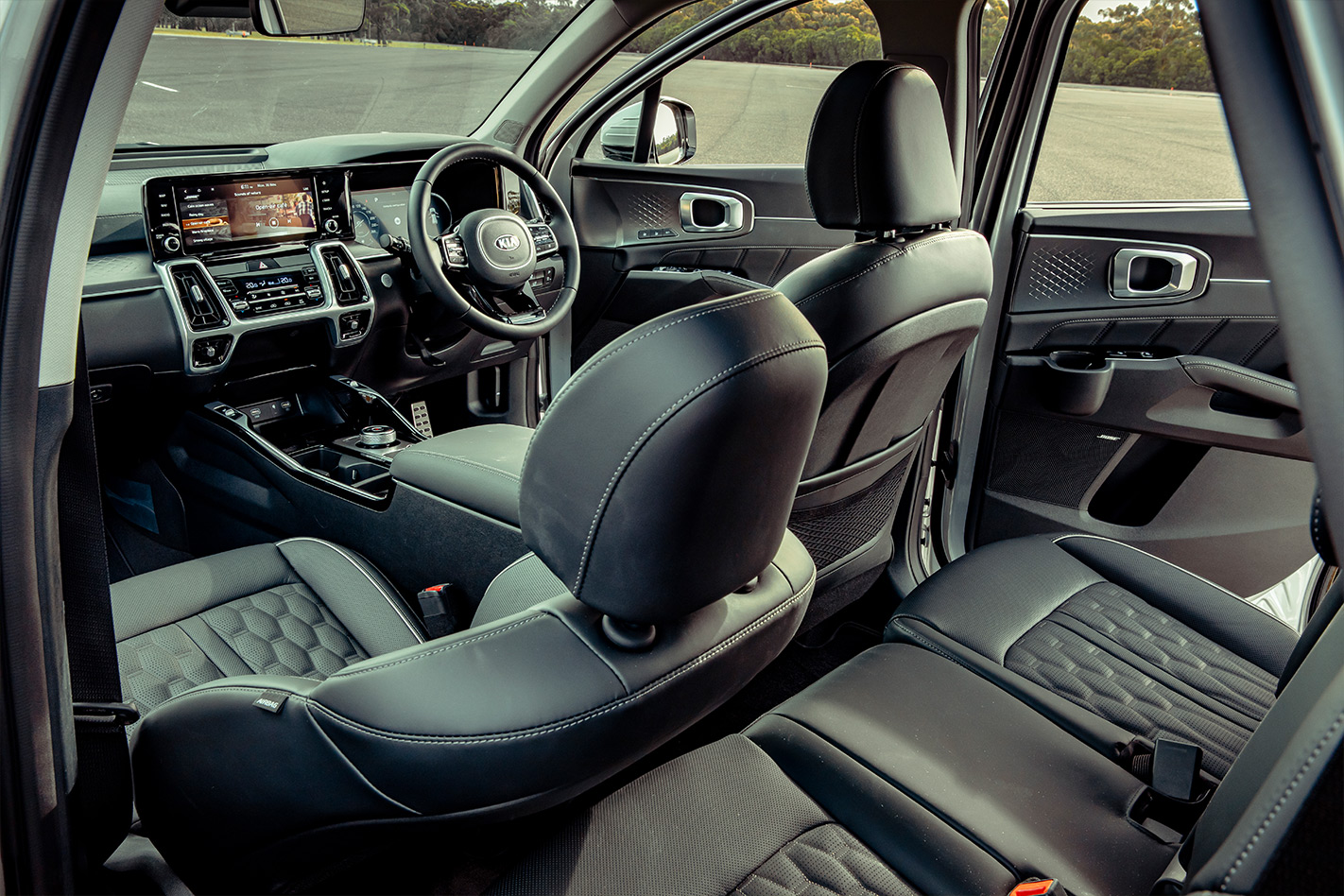
Even the cheapest variant features seven airbags (including a segment-first front-row centre airbag to stop noggins from knocking), AEB with pedestrian/cyclist detection, lane-keep assist, blind-spot monitoring, rear cross-traffic alert, adaptive cruise, front/rear parking sensors, wireless Apple CarPlay, Android Auto, dual Bluetooth connectivity, multiple USBs, a full-sized spare and – of course – a seven-year warranty.
However, while the Kia aced the latest ANCAP crash tests, the rearmost occupants miss out on airbag protection. Back (row) lives matter too, you know!
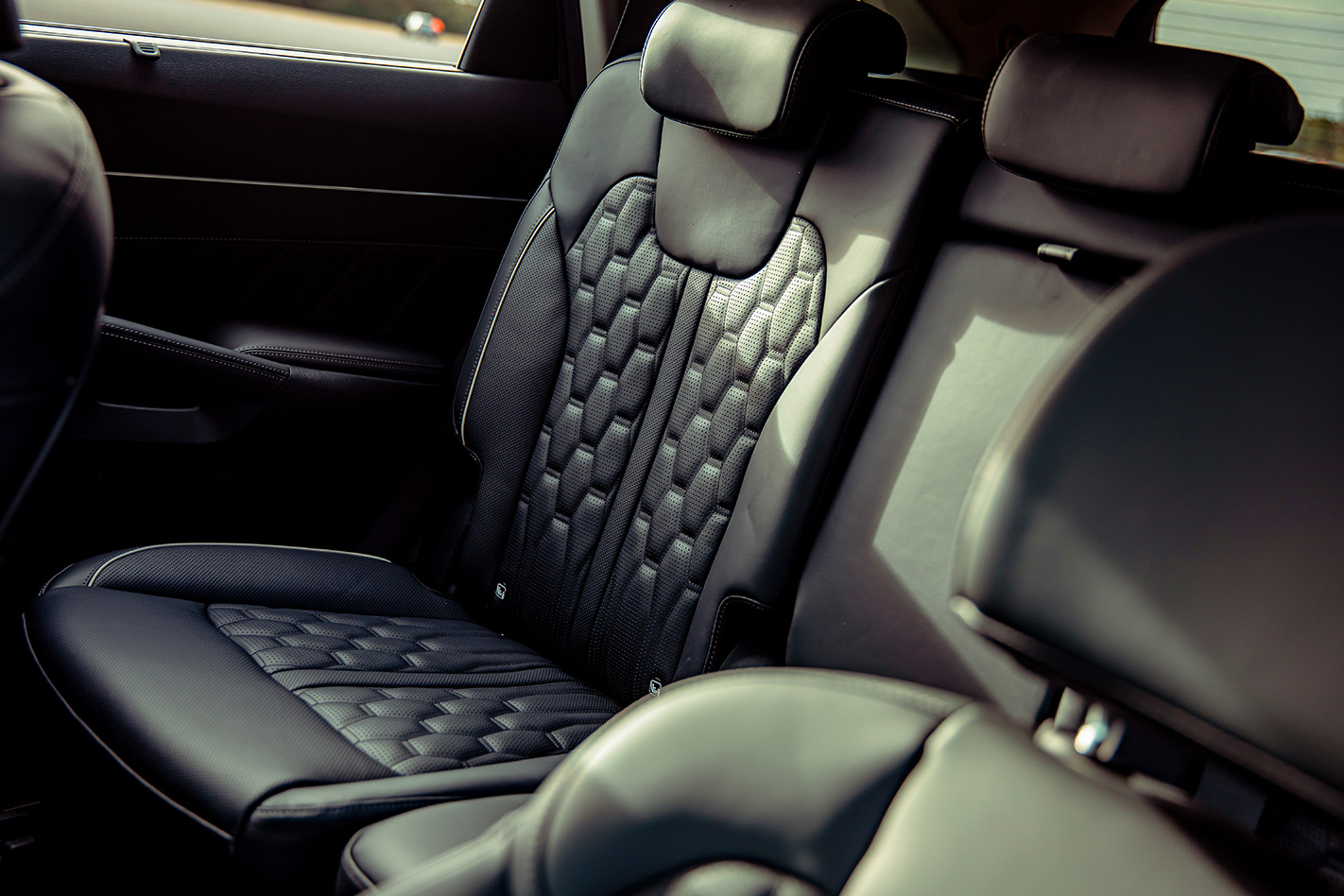
The lavishly equipped GT-Line, meanwhile, threatens luxury SUVs for opulence. Kia calls this its most “high-tech car ever”, achieving big strides in safety, communications, connectivity and multimedia. Few can come close for useability, intuitiveness and functionality. That all said, away from the showroom glamour, two quite different Sorentos emerge.
The headline act is the AWD-only 2.2-litre four-cylinder turbo-diesel (148kW/440Nm), which is now lighter, slightly gutsier but significantly more efficient than before – chiefly due to the adoption of a dual-clutch rather than torque-converter auto. The latter is carried over in the V6 petrol; both offer eight speeds.
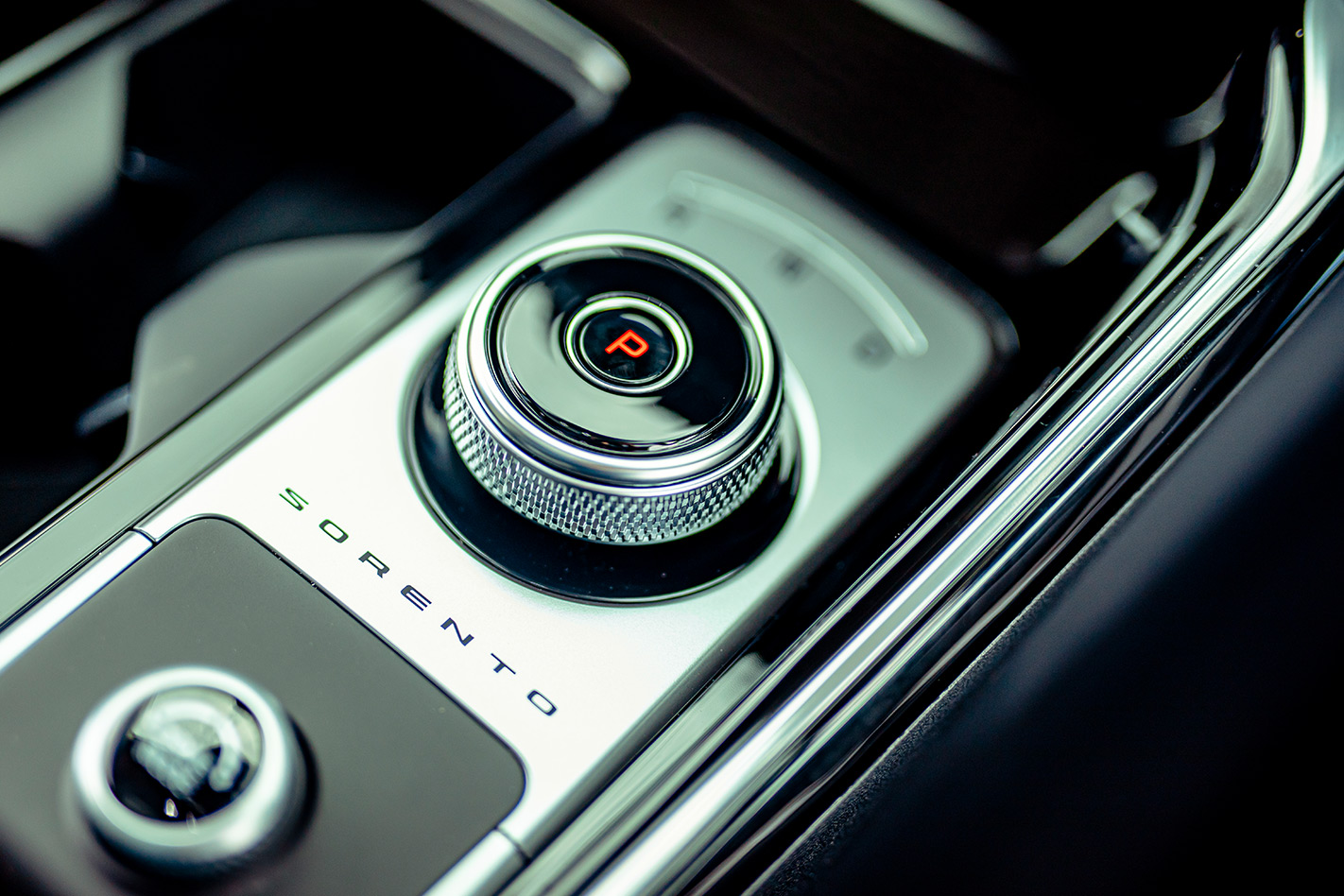
Though vibey at idle, the diesel’s refinement is impressive and its economy outstanding, yet with sufficient, flexible performance once that slight initial turbo lag is overcome.
In contrast, the front-drive-only 200kW/332Nm 3.5-litre V6 consumes 3.6L/100km more fuel (greater than Mazda’s CX-9 and Toyota Kluger), and that’s probably because it feels breathless until you mash the throttle to the firewall, after which the bigger-engined Kia really does pack a wallop. Although it’s sometimes too much so for the scrabbling front tyres.
So, why no petrol AWD? Other markets score a 2.5-litre four-pot in atmo (no, thanks) and turbo guises (yes, please!), but not Oz. However, turbo hybrids (series and plug-in) are coming.
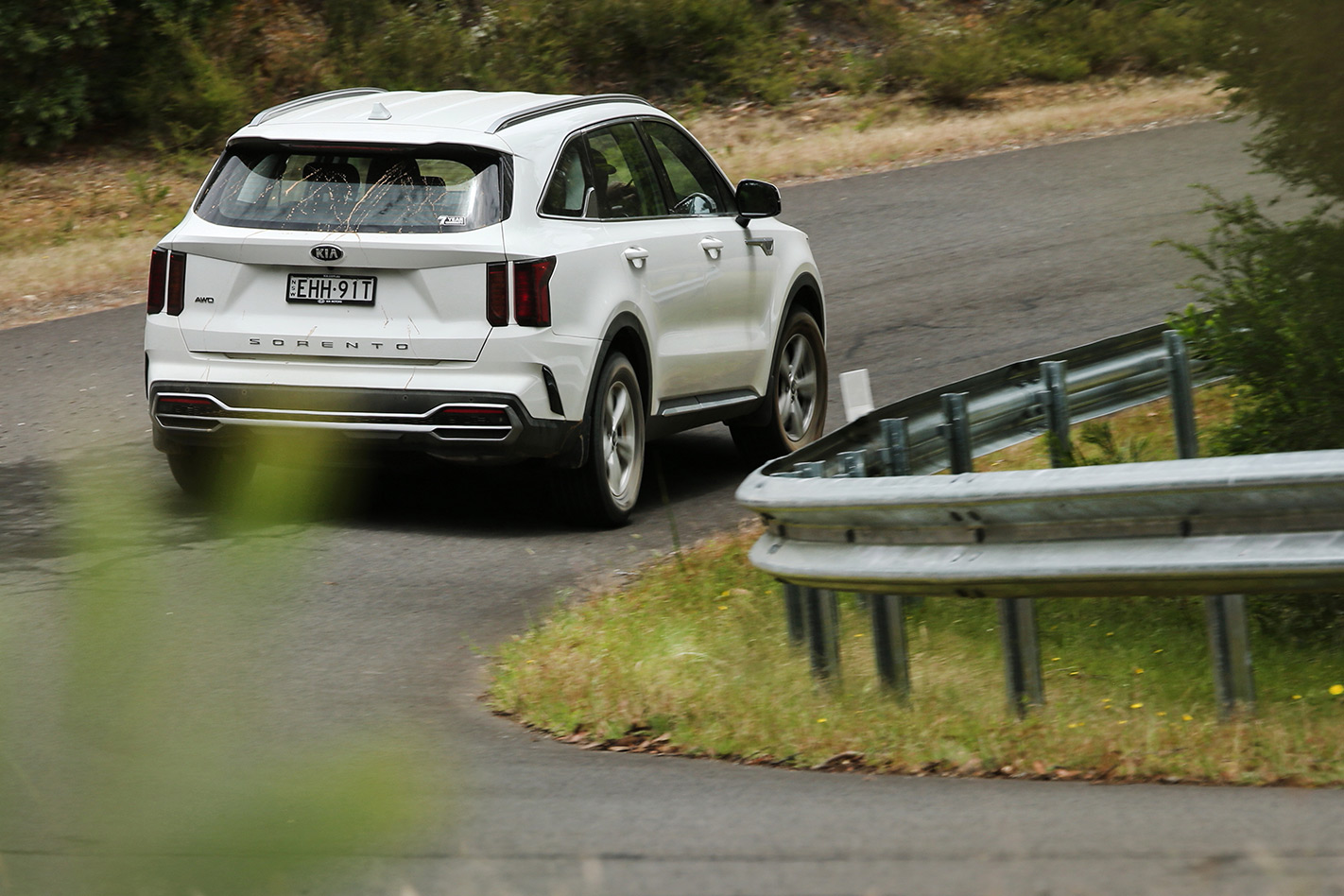
The Sorento has undergone Australian-road calibration, resulting in a specific local tuning for its strut-front and double wishbone-rear suspension. Particularly over gravel, the levels of security and control deserve credit.
But the COTY judges found that the V6 didn’t settle as easily through sudden direction changes as the diesel, with steering rack rattle further blighting the serenity.
Overall, then, the Sorento is a showy, crowd-pleasing evolution of its revolutionary predecessor, but is not as consistent throughout the range as we’d hoped, requiring some compromise. Spend enough, though, and you’ll have a very fine seven-seater AWD diesel SUV.
Richard Ferlazzo on the Kia Sorento’s design
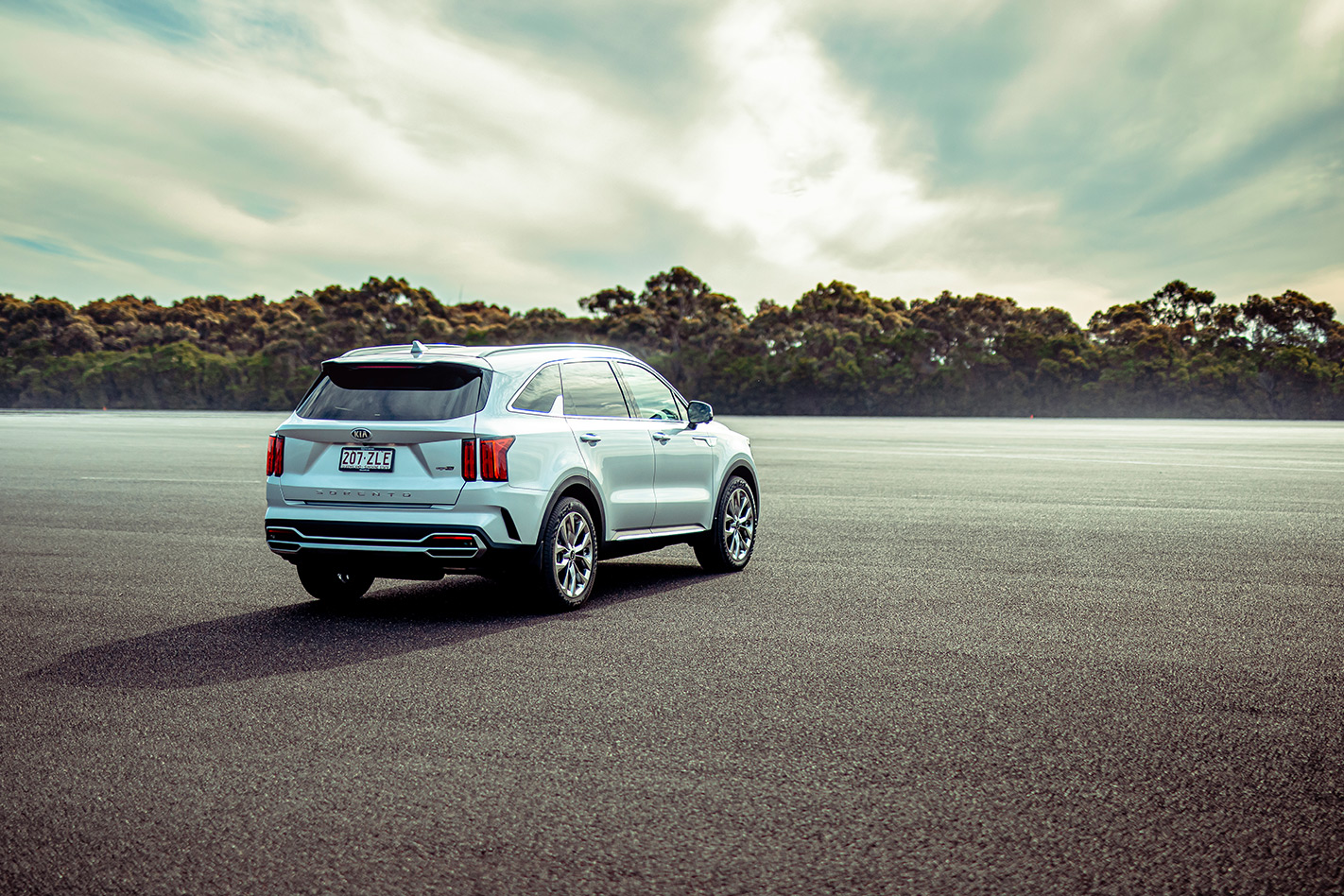
“Steps up with a very industrial design, and it’s evident in the cues that it’s focussed on the US market. The car has a solid stance and an imposing presence with the frowning headlights and that distinctive underbite in the front bumper.
The rear lamps have a bit of a Cadillac SUV feel. The interior, especially on the GT-Line, has a retro-space-age flavour about it; a bit fussy at times but it comes across as a competent, well-equipped family hauler.”
Variants Tested: – S Diesel AWD ($50,290 as-tested) – GT-Line 3.5 FWD ($62,685 as-tested)
There’s more than a whiff of new beginning to the Genesis GV80.
Years after dipping its toe into the Aussie market with slow-selling big sedans, it feels as though the cavalry is finally arriving in the form of two much-needed SUVs.
The broad-shouldered and imposing GV80 is the first to launch (a smaller and more affordable GV70 is due later this year) and it’s clear Genesis has gone all-in to lure buyers away from established rivals like the Audi Q7, BMW X5 and Mercedes-Benz GLE.
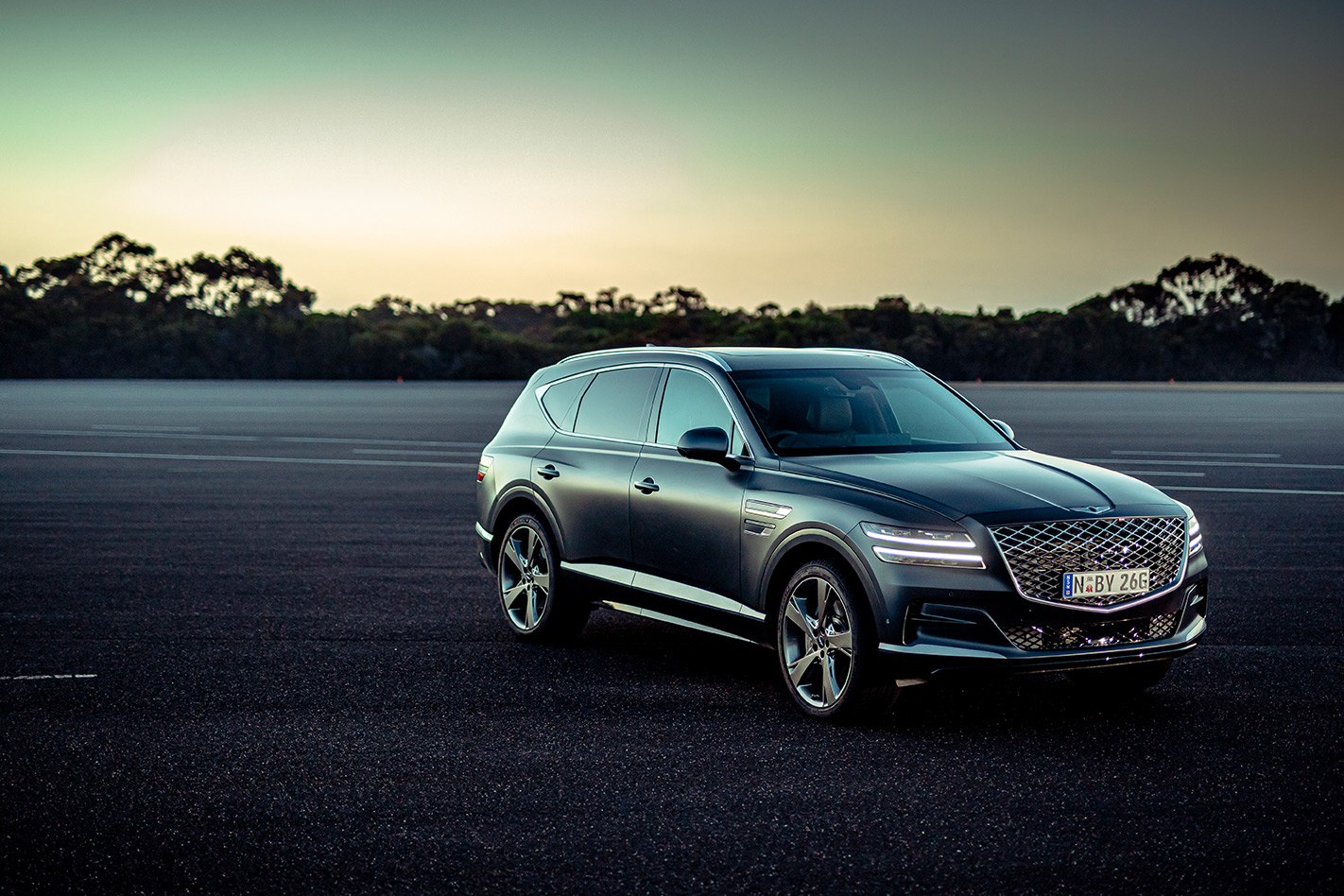
Pretty much everything is new. Riding on the fresh ‘M3’ platform which is stiffer and lighter than previous Genesis underpinnings (and using aluminium for the bonnet, tailgate and doors), the GV80 also debuts three ‘Genesis exclusive’ engines: a 224kW/422Nm 2.5-litre turbo four, a 279kW/530Nm 3.5-litre twin-turbo V6 petrol and a silky 204kW/588Nm 3.0-litre straight-six turbo-diesel.
And crucially the days of Genesis raiding the Hyundai parts-bin to equip the interiors of its cars are long gone. Unlike the Genesis G70, which underwhelmed at last year’s COTY, there isn’t a single screen, switch or button in the GV80 that looks as though it has been lifted from a Hyundai.
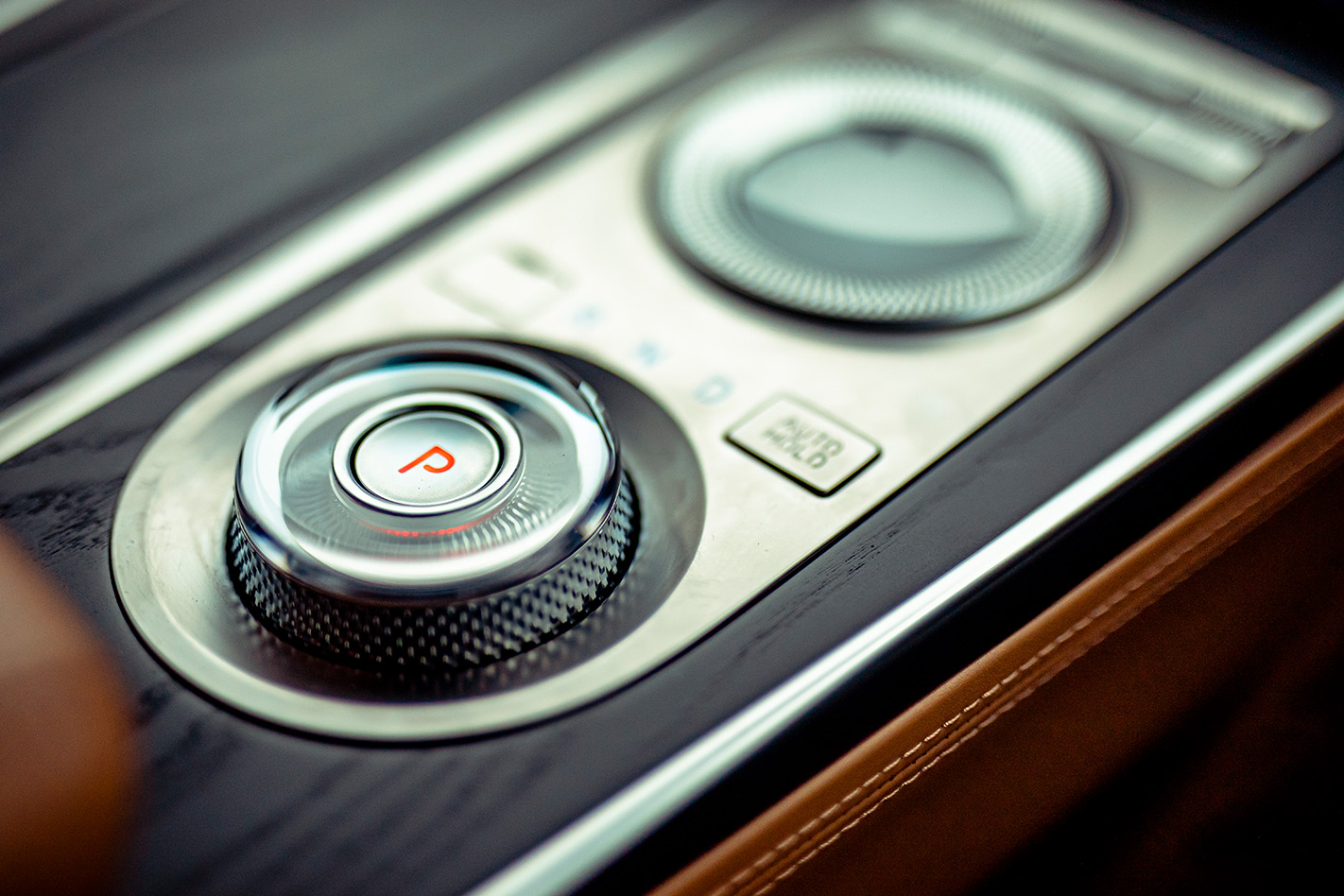
“Wow, this interior is nice!” noted editor DC. “Feels special; a big step up on the G70.” Top marks for cabin opulence, then, and also for build quality and choice of materials.
You won’t find softer leather, deeper carpets or tighter stitching in any German. Throw in a roomy cabin, comfy seats, an electrically operated and adult-friendly third row (in mid- and top-spec versions), and a huge 14.5-inch centre touchscreen, and the GV80 makes a very good first impression.
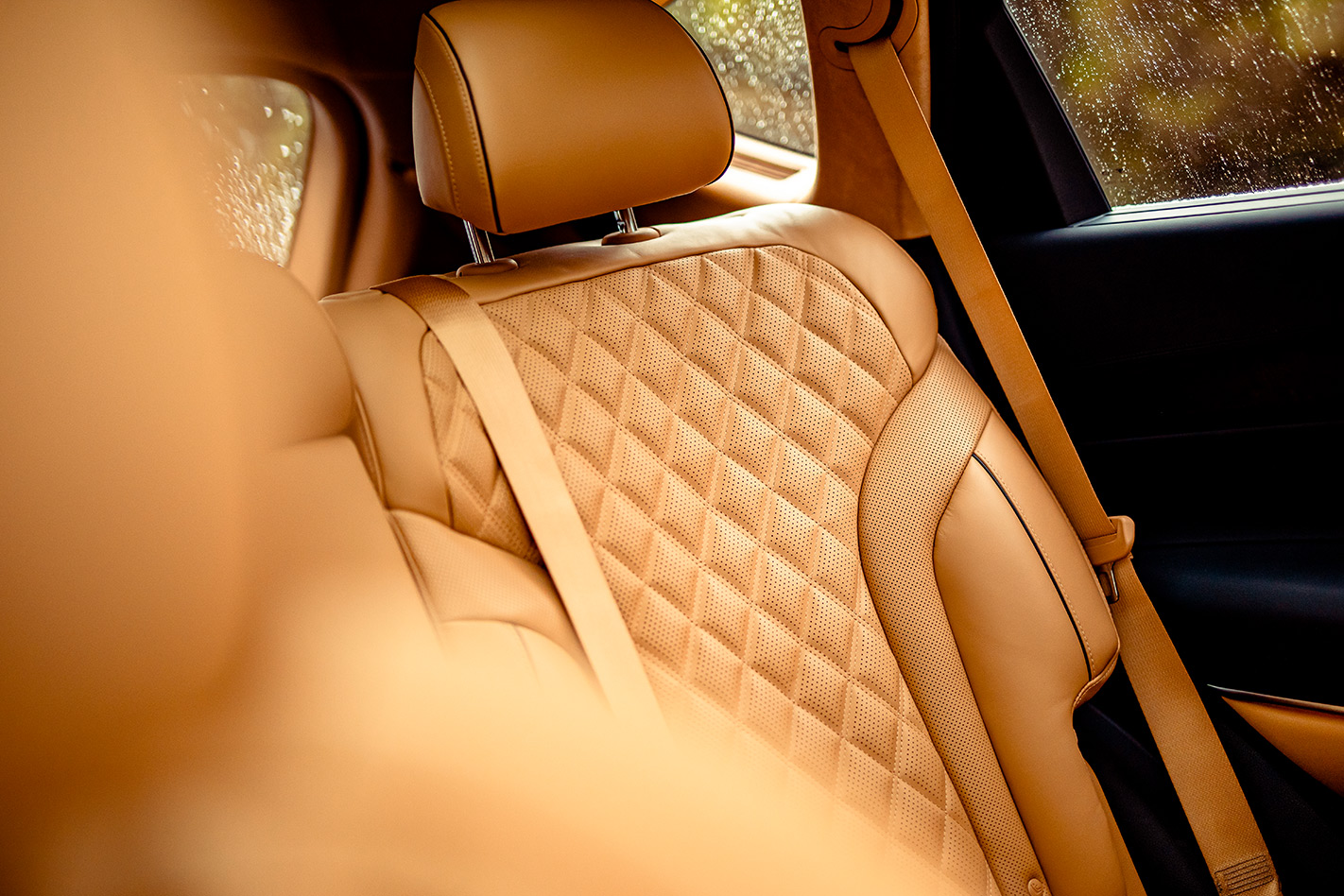
Value is another Genesis strength. No GV80 is what you’d call affordable – the four-tier range kicks off at $90,600 for the rear-drive 2.5T and tops out at $108,600 for the flagship petrol V6 – but there is value to be found when measured against competitors.
Genesis claims the GV80 undercuts its like-for-like competitors on price by 10 percent while offering 15 percent more value thanks to a standard equipment list longer than any German rivals. Buyers also score free servicing for the first five years.
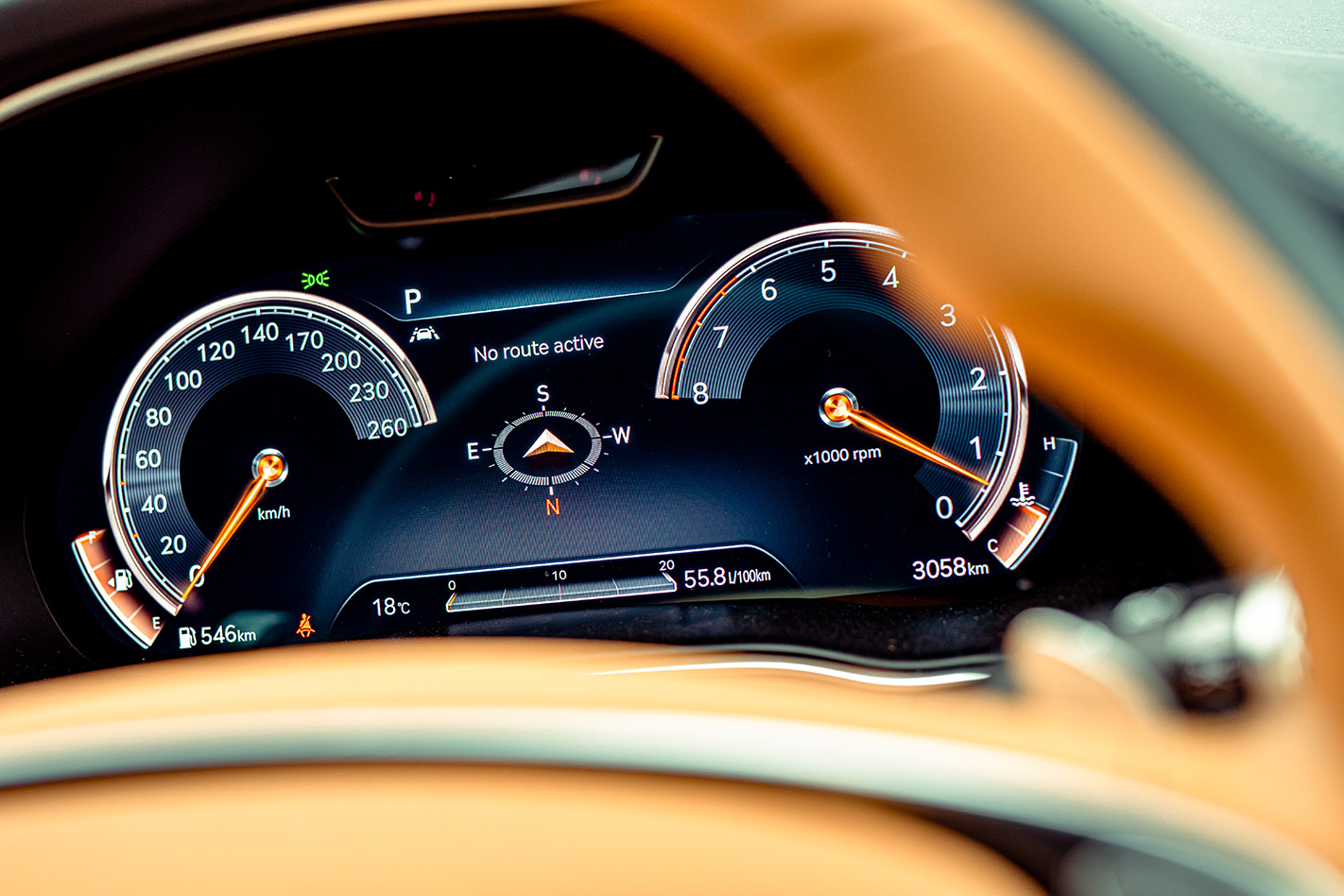
Standard safety inclusions are impressive, with 10 airbags (including one between the front seats) and all the active systems buyers expect at this price point. It’s worth noting, though, that ANCAP is yet to test the GV80.
Where cracks begin to appear is once you get the GV80 on the move. There are no complaints about the engines. All three units are eager and grunty and are paired nicely with a smooth-shifting eight-speed automatic.
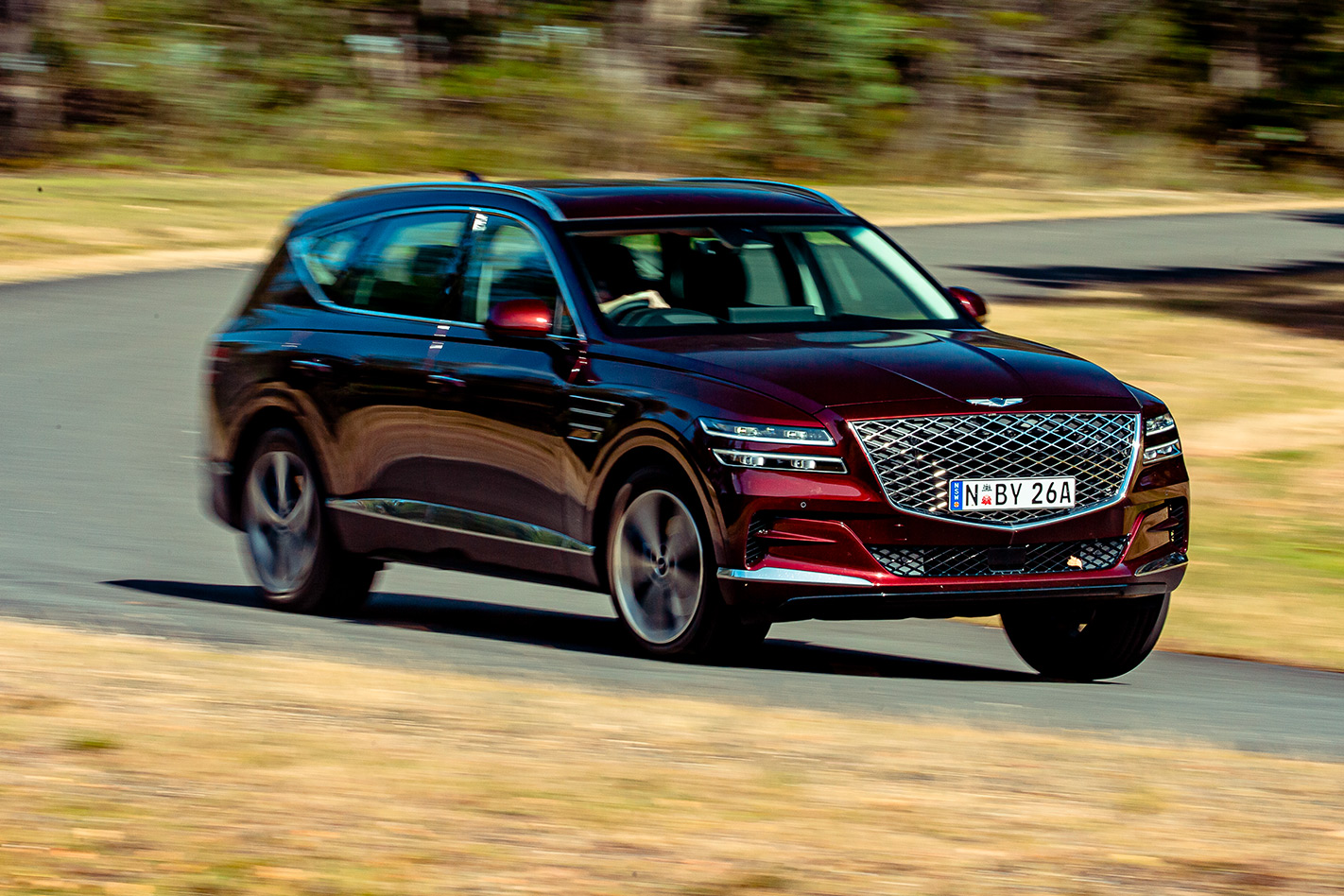
Cabin refinement and NVH suppression also earned universal praise from the judges, as did the excellent dirt-ESC calibration and phenomenal dry braking performance.
“But dynamically it’s a bit confused,” wrote Byron. “The ride is comfortable on smooth roads but in Comfort mode the control isn’t quite right.”
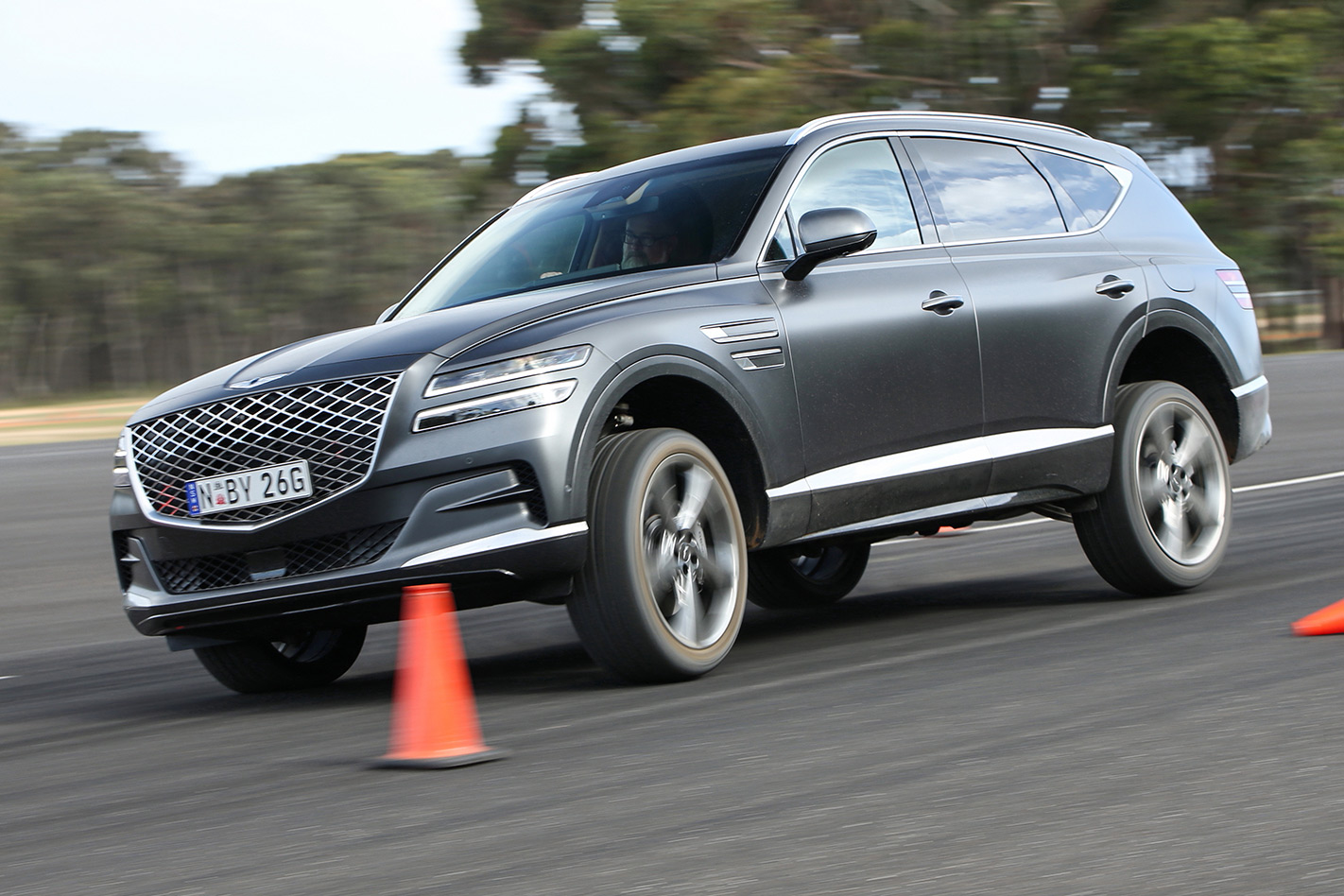
Locally honed suspension is standard and six-cylinder models also score adaptive dampers that are linked to a bump-detecting front-facing camera, but a lack of body control and pronounced pitching undermines the GV80’s dynamic polish. Not fitting petrol variants with fuel-saving ‘stop-start’ technology and the absence of a hybrid version also hurt the GV80’s case against the Efficiency criterion.
In the end, the GV80 scored enough votes to finish at the pointy end of the field, but not enough to progress into our Top 3. A COTY winner it isn’t, but a genuine and convincing alternative to the luxury SUV establishment? Absolutely.
Richard Ferlazzo on the Genesis GV80’s design
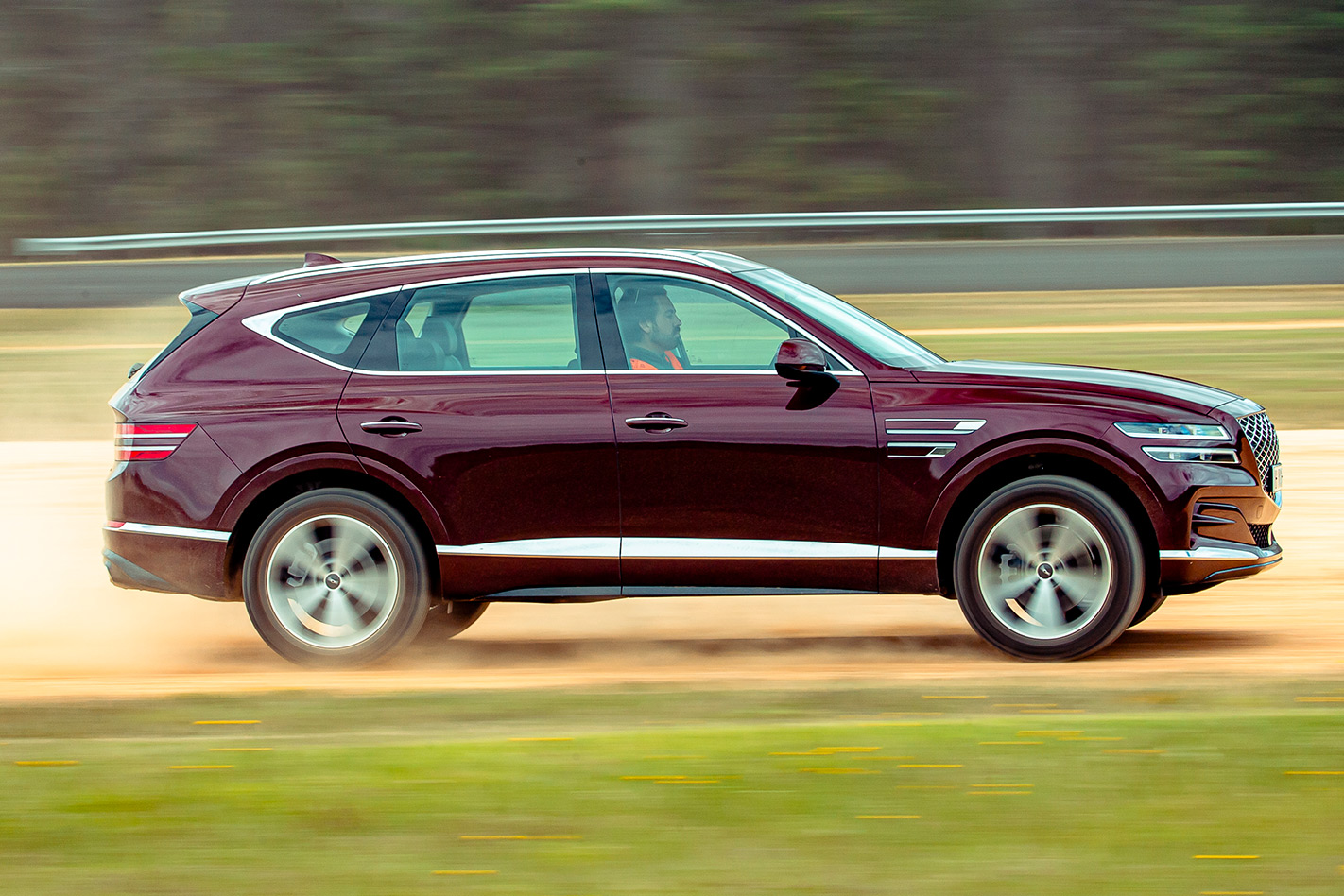
“The GV80 has all the features you would expect at this price point but execution of the exterior detailing lacks a level of refinement to disrupt the establishment.
The exterior has imposing road presence and while I don’t mind the theme of the front end, the execution feels a bit raw and contrived.
The Interior is a better story with an opulent and serene ambience. Rich materials abound in a very comfortable environment, with only a few touches of overt bling.
I rather like the blind-spot feature in the Instrument cluster screen which comes on with indicator actuation, even if this is standard on the top-spec Sorento at $62K.”
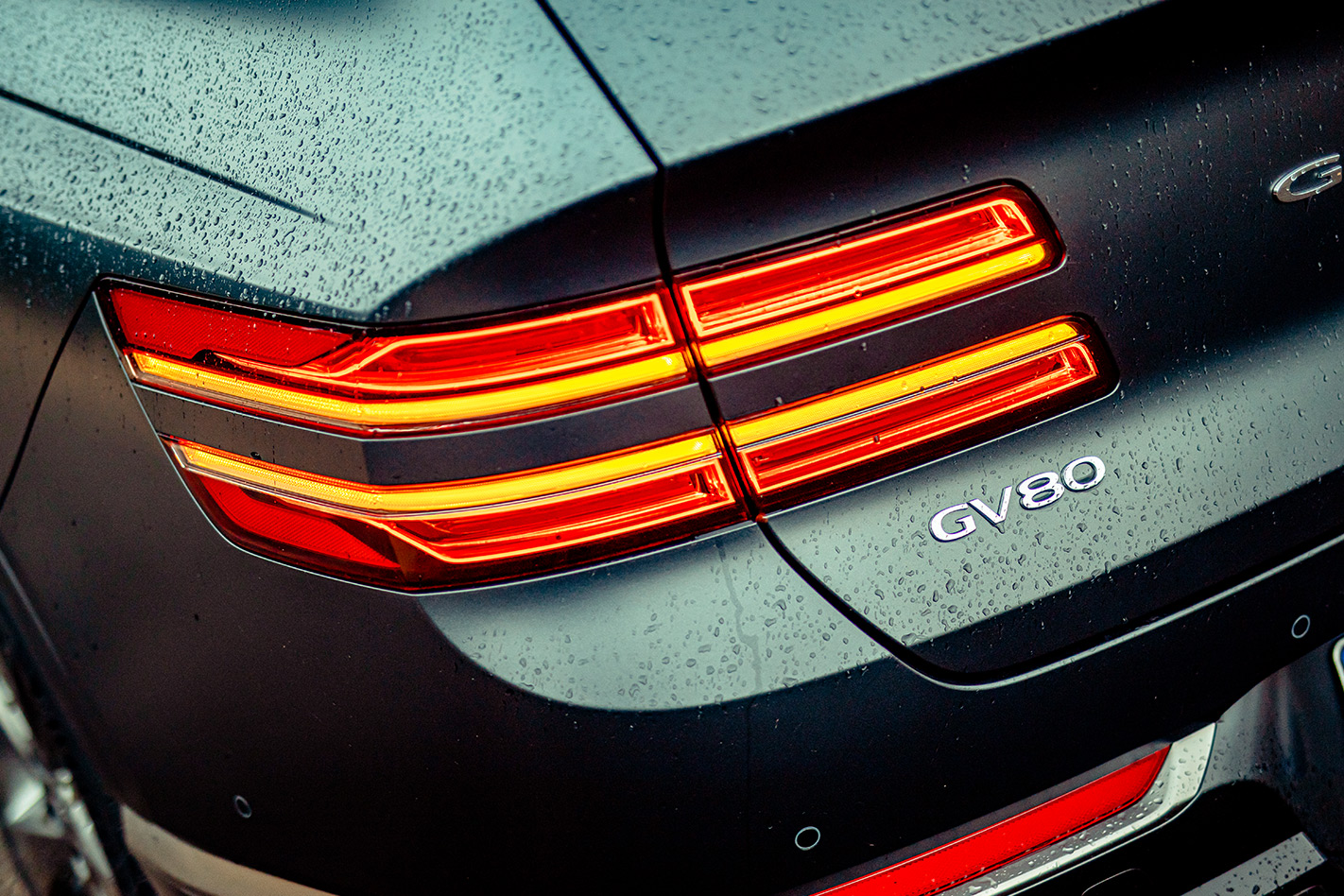
Variants Tested: – 2.5T 2WD ($90,600 as-tested) – 3.0D AWD ($103,600 as-tested) – 3.5T AWD Luxury ($120,600 as-tested)
Even after a testing week of long days and occasional short tempers, few grew weary of the Ford Puma.
Ponder that for a moment. Most small SUVs are affordable. Many are practical. Some are refined. A few are stylish. A couple are dynamic. But none are all these plus fun… bar this one.
Sceptical? Confused? A bit of context may help here.
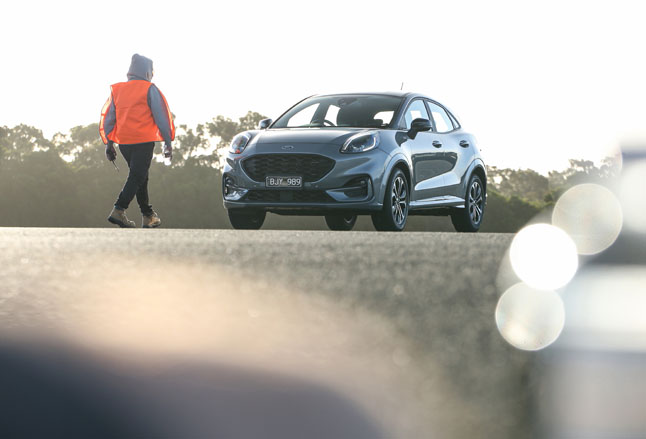
Engineered in Germany, the Romanian-made Puma resuscitates a storied name that graced a Fiesta-based coupe for Europe some 25 years ago. Affordable, sassy and spry, it proved popular. However, realising buyers were migrating en-masse to SUVs, Ford replaced the original Puma with the also-Fiesta-derived Fusion (2002) instead, then the EcoSport a decade later – and that did reach Australia. But while it handled tidily, buyers were repelled by its dreary design and cheapo cabin.
Stung by this, Ford decided to fuse some of that ’90s Puma bug-eyed charm with a soupcon of Mazda CX-3-esque style for its third petite SUV, to create the sporty coupe-like Puma crossover before us today.
And guess what? Underneath lies the stretched and widened platform from the latest Fiesta, continuing a common theme that ensures the sporty DNA so central to the Puma’s lineage living on.
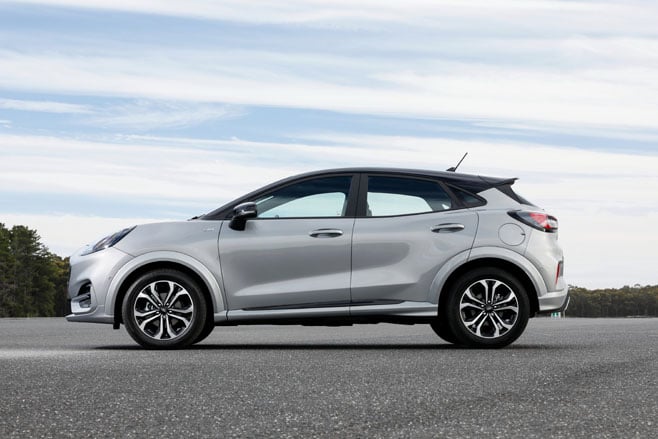
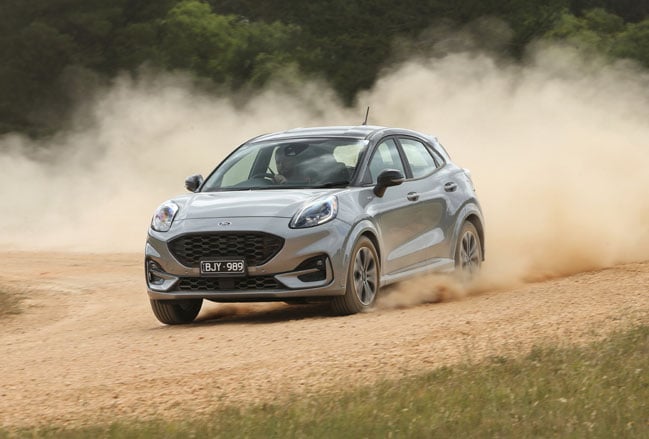
The upshot? Chatty, precise steering, flat, four-square roadholding and taut, tight body control that separates this as a driver’s SUV. And while the suspension (struts up front and a torsion beam out back) is firmly sprung, and the ride is highly surface sensitive, it’s never crashy.
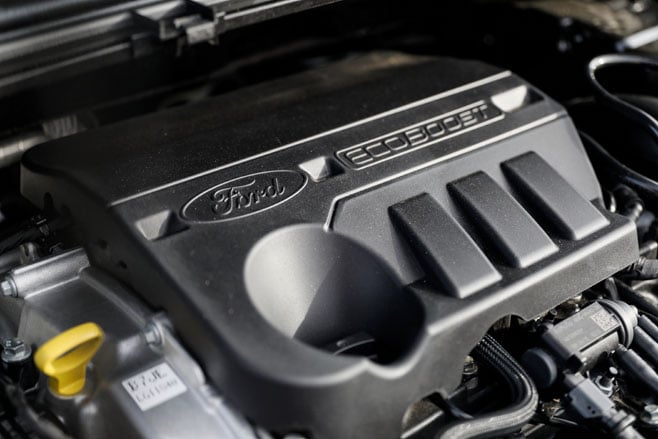
It’s no mean feat extracting so much punch (92kW/170Nm) and pace from the Puma’s diminutive 1.0-litre three-pot turbo, either. Driving the front wheels via a seven-speed dual-clutch auto, it overcomes the inevitable serve of lag (and coarse thrum), while delivering a delightfully fruity fizz to its eager power delivery as the revs rise.
That such athleticism is matched by easy sipping underlines the impressive efficiency of Ford’s award-winning, fighting-fit powertrain. It’s also a damn pity no manual is available. No city SUV deserves one more.
Although the Puma’s cabin creams the EcoSport’s, going from cube to coupe-like packaging has harmed headroom. Still, great seats, a contemporary – if unremarkable – dash layout offering Ford’s exemplary multimedia touchscreen system (branded SYNC 3), a nifty steering wheel, pleasantly clear dials, ample ventilation and storage aplenty are further plus points. It’s all a bit cosy, without being cramped.
The same doesn’t apply in the rear-seat area, with its tight legroom and lack of amenities like USBs and cupholders, while vision out is limited by that high hip-line and fat pillars. Further back, there’s a decently sized boot, with an ultra-deep floor providing extra versatility.
Competitive equipment, options (like a powered tailgate) and safety (including nicely nuanced driver-assist tech) help offset the Puma’s comparatively lofty pricing, with the walk-up to the racier ST-Line and luxury ST-Line Vignale on a par with some more uppity Euros.
There’s little to dislike – cheaper and roomier alternatives exist offering longer warranties – but what keeps Ford’s pretty crossover from the podium is that it’s a good thing that’s great to drive, but not mould-breaking.
Still, pouncing forward with precision and poise, the Puma justifies its heritage as surely as its name.
Richard Ferlazzo on the Ford Puma’s design
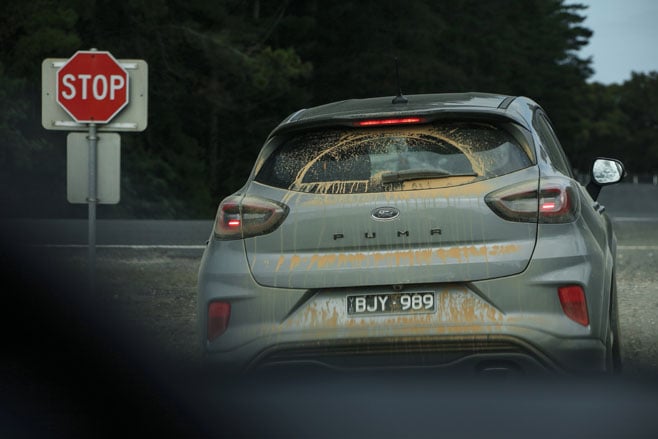
“Like its bigger brother the Escape, the new Puma is a very deliberate attempt to change the perceived image of small Ford SUVs. Small crossovers are ostensibly small hatches on steroids and car designers love to work on them.
Bigger wheels, nuggetty proportions and extra detailing make them far more interesting. I particularly like the rear and side view of the Puma, although the front face is a touch too cheerful for the rest of the car.
The interior is pleasant but could have a bit more personality. Under the boot floor is a useful wet storage space for sweaty gym gear.”
The Federal Chamber of Automotive Industries (FCAI) has questioned the Australasian New Car Assessment Program’s (ANCAP) motive for re-testing older vehicles in Australia.
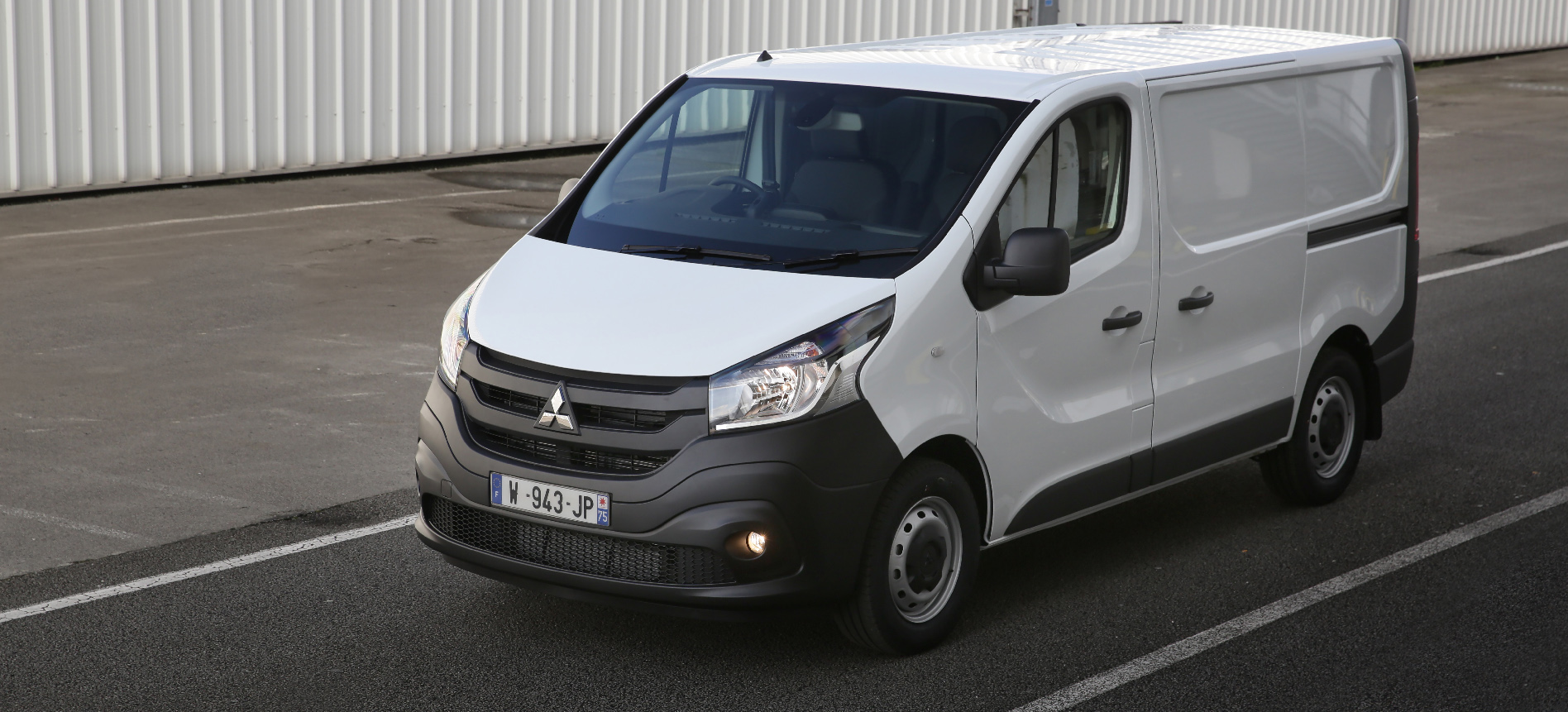
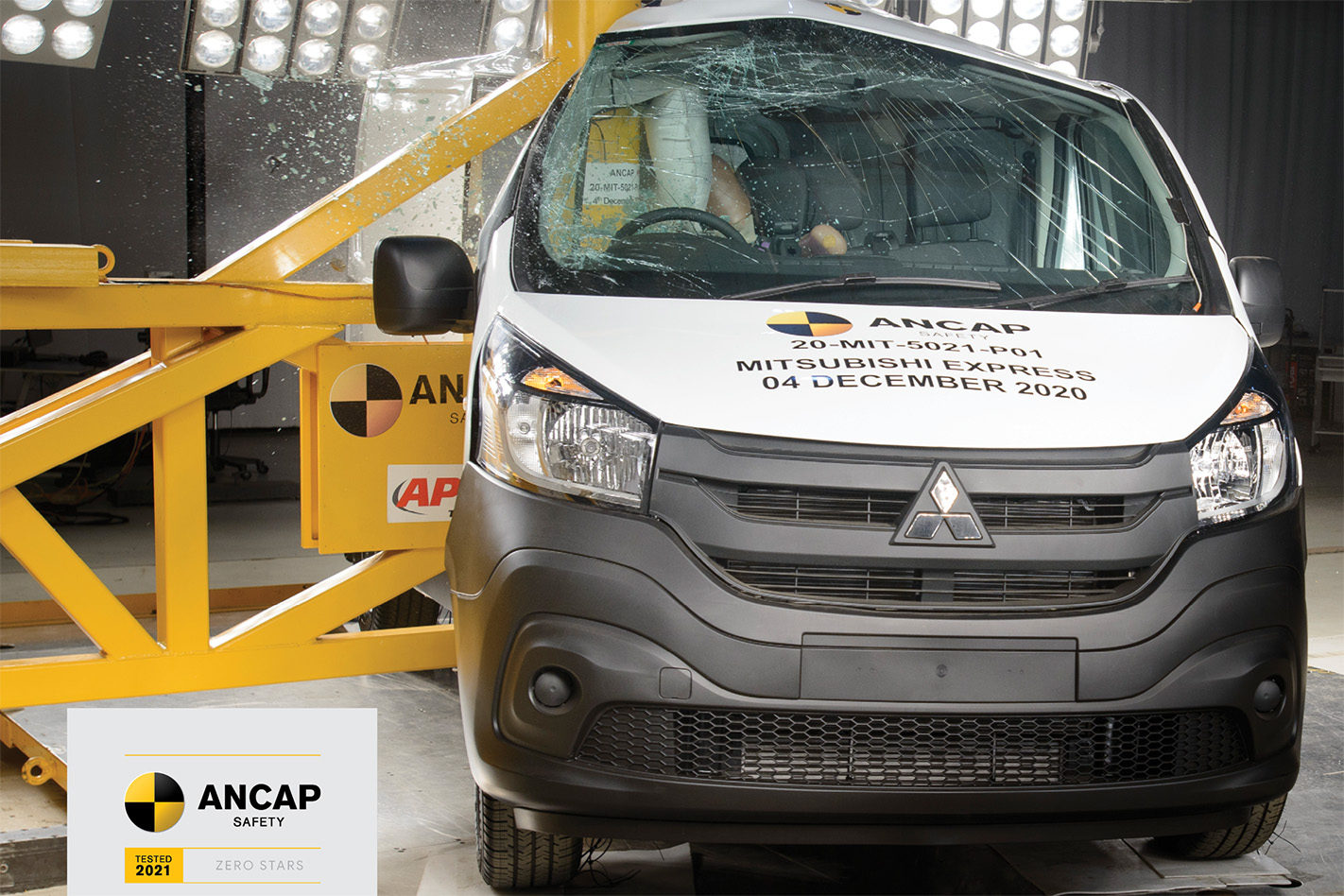
The FCAI raised concerns after ANCAP today announced it had assessed the 2021 Mitsubishi Express commercial van and given it a zero-star rating. This is despite the fact its ‘sister’ vehicle, the Renault Trafic with which it practically shares everything but a badge, went on sale in Europe in 2015 with a three-star Euro NCAP rating.
“Euro NCAP and ANCAP claim they are effectively harmonised, however, this is not reflected in ANCAP’s actions,” said FCAI chief executive Tony Weber.
“Why is ANCAP spending potentially up to $500,000, which includes taxpayer dollars, to undertake a test on a six-year-old vehicle that has already been assessed by its sister organisation Euro NCAP in 2015?”
“It makes no sense, can send a confused message to Australian car buyers and is not the best use of taxpayer funds,” Weber said.
On announcing the Express’s zero-star rating, the first zero-star result since ANCAP began independently testing cars in 1993, its chief executive Carla Hoorweg said the Express’s specifications do not align with today’s safety expectations.
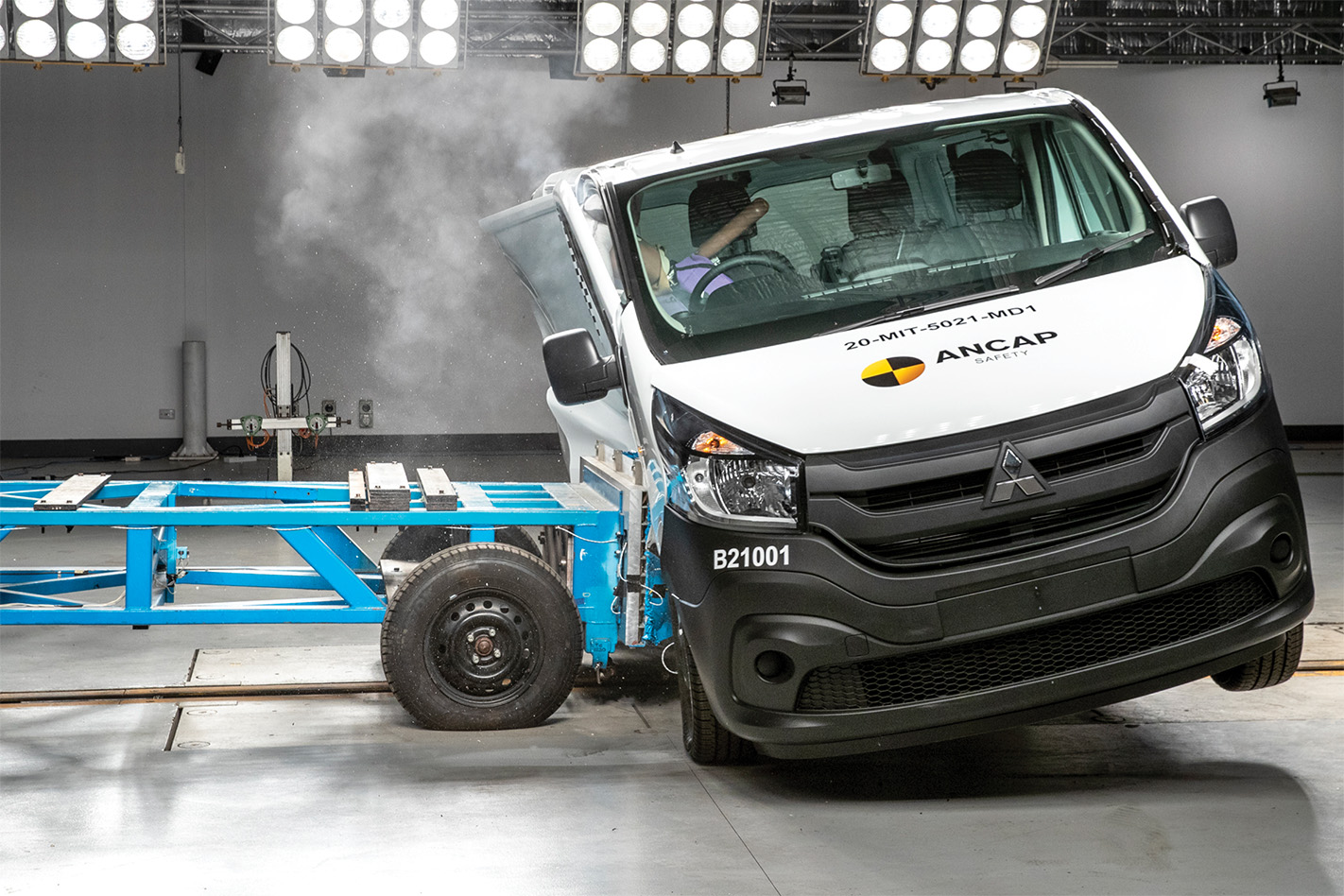
She explained that while ANCAP often awards ratings solely based on EuroNCAP scores, the Trafic commercial van remained unrated in Australia as the European three-star result applied specifically to mini-van versions only.
And even if the Renault Trafic van earned three stars here, ANCAP does not carry over vehicle ratings across brands if the new vehicle is released in a calendar year more than two years after the date stamp of the original assessment.
“The ANCAP rating system has evolved to move the industry forward, and with the Mitsubishi Express being newly released into the Australasian market just last year, it has been assessed against our current [2020-2022] criteria,” Hoorweg said.
But Weber suggested Australian vehicle buyers will be understandably confused at the two different ratings for essentially the same vehicle.
“Rather than seeking a headline, ANCAP would better serve the Australian public by seeking a harmonised adoption of the test and measurement protocols as well as consumer messaging.This ensures consistency and clarity for everyone concerned,” he said.
“Alignment with global standards is the best way of ensuring Australians can have the highest vehicle design standards at the lowest possible prices.”
UPDATE 02/03/21: While many car manufacturers are struggling through a semiconductor chip shortage forcing long production delays, Hyundai has emerged unfazed by the global issue.
Sources assert, according to Reuters, that the Hyundai Motor Group (including Kia) kept up its purchasing of semiconductor chips last year, while other manufacturers such as Volkswagen, General Motors and Ford all slowed down.
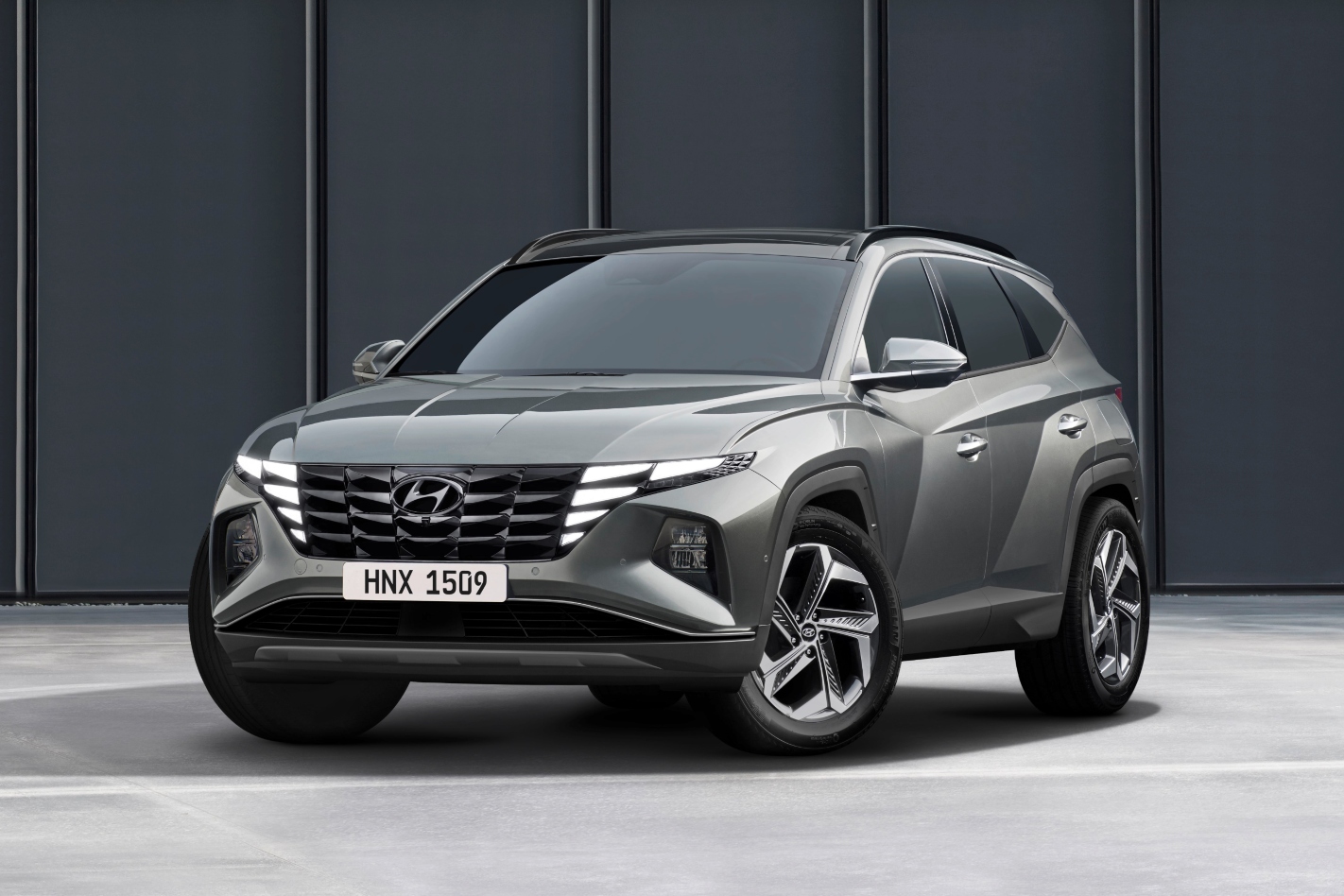
Hyundai even accelerated its purchasing towards the end of 2020, seeing the writing on the wall that chips would become scarce in 2021. This allowed the South Korean motoring giant to build a stockpile of the chips to use in its vehicle production.
“Like other automakers, Hyundai also planned to cut production at the beginning of the year because of COVID-19,” one insider with ties to Hyundai’s purchasing told Reuters.
“But procurement read the trend of the semiconductor industry cutting auto chips production and said, ‘if we don’t buy them as well, we’ll be in trouble later on.’”
Another factor behind Hyundai’s advantage was the relative early success South Korea’s handling of the coronavirus pandemic, which allowed it to get back to making cars sooner, while also procuring a semi-normal run of semiconductors from local suppliers like Korean-based Telechips.
Its stockpile won’t last forever though – a recent Kia earnings call indicated that Kia doesn’t know whether it can weather the next three to six months of diminished supply. That said, it isn’t seeing any immediate production slow-downs like those which have affected other manufacturers.
THE STORY SO FAR
A global shortage of semiconductor chips threatening the auto industry won’t be resolved any time soon, and the pain is set to worsen before it gets better.
Car manufacturers including Volkswagen, General Motors, Ford, Honda, Nissan and Fiat Chrysler have all had their vehicle production lines impacted by the parts shortage, as available chipsets are allocated to personal electronics products over the automotive industry.
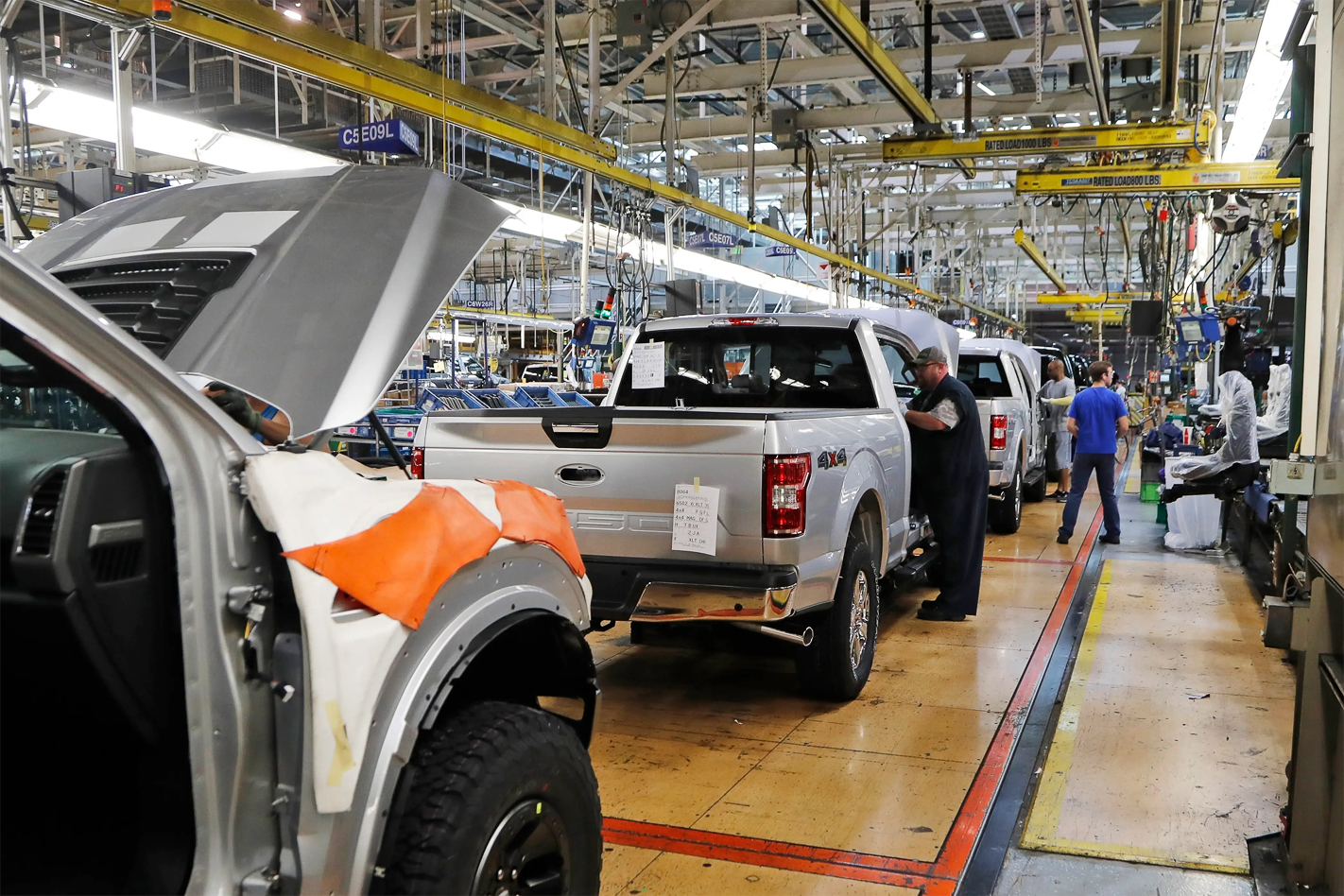
Specifically, the world’s chipset manufacturers that ordinarily provide car factories with electronic components are allocating more production to consumer electronics like the popular Playstation 5, personal computers and 5G smartphones.
Autoblog reports the chip industry now prefers the manufacturers of these products because they buy high-end, high-margin semiconductors. Conversely, chips used in cars tend to be of a more basic design.
Traditionally receiving chips on a just-in-time basis, the car industry is now being left out in the cold after shunning the chipset manufacturers last year during the coronavirus-driven car manufacturing downturn.

Rolling coverage of COVID-19’s impact on Australian motorists
Semiconductor makers now realise that there’s demand elsewhere and will no longer bend over backwards to supply demand from global car manufacturers.
As such, Automotive News Europe reports that German auto giant Volkswagen has begun investigating potential litigation and compensation against parts manufacturers Bosch and Continental in retaliation. Daimler has indicated it may follow with its own request for compensation.
Volkswagen has been forced to reduce production in Germany and the United States as a result of the semiconductor bottleneck.
In the long term, it’s expected that relationships between carmakers and chipset manufacturers will heal on the back of electric cars becoming widely adopted.

There is something of a light at the end of the tunnel for carmakers, however: electric, autonomous and high-tech vehicles use more and higher-end semiconductors than combustion-engined cars.
But, in the short term, tensions are set to continue until later this year, according to information provider IHS Markit.
Rather than products becoming more expensive, experts predict car buyers may just have to wait longer for their new car.
Audi’s quattro story was already 14 years old when I bought my first. It was a Coupe GT quattro, narrow body, with an atmo 2.2-litre lump and finished in Lago metallic.
It had been impounded by UK customs as part of a drugs confiscation and offloaded to auction. Fortunately, I knew the security guard at the block who, for the price of a deep-pan Hawaiian, agreed to swap the plug leads round so that the thing went hiccupping and farting through the sale with no bidders other than yours truly.
Sorry, your Maj, won’t happen again.
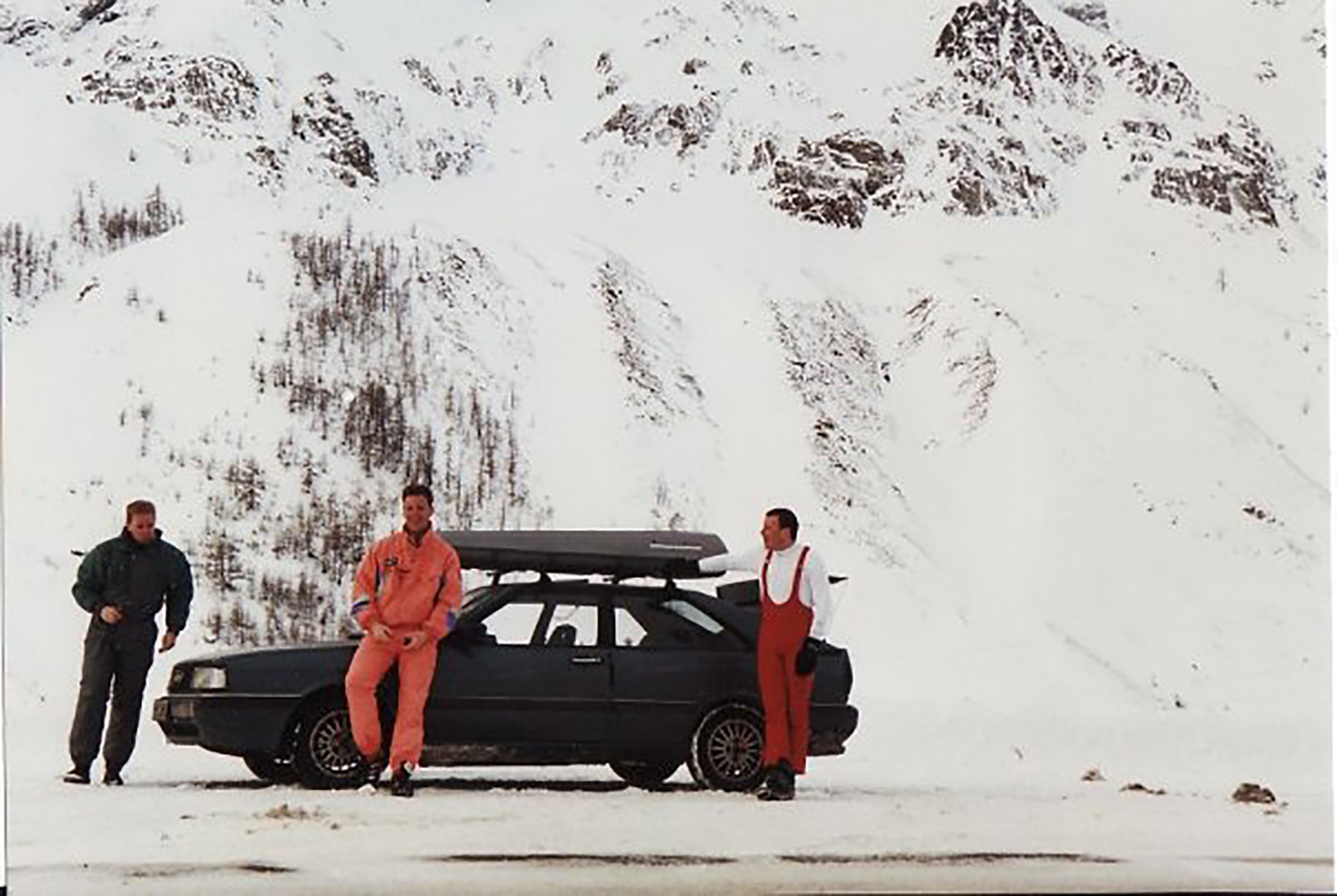
It was the first of a few quattro models I’d end up owning, and it was undoubtedly my favourite.
With just 100kW at its elbow, it was no ball of fire, with a power-to-weight ratio much the same as a modern 1.5-litre MX-5; but when you spent as much of winter as possible over a mile above sea level in the Alps, with ready access to a Trophée Andros ice-racing circuit and a snowy road with 21 hairpins leading up to it (keen cyclists will be mentally geotagging me right now), it wasn’t far short of perfect.
I still recall the five-pot’s tappety thrum, the heady smell of petrochemicals denaturing from the dash, the diff lock switch set against a Tron-like grid and the way the leather gear knob had been burnished by many thousands of kilometres of hard driving.
Most of all, I loved what this $4K beater taught me: how to shift the masses of the car about to counter its inherent understeer, what the tyre friction circle meant in practice, how to properly position the car on the road in bad weather to maximise the quattro drivetrain’s purchase at the contact patch.
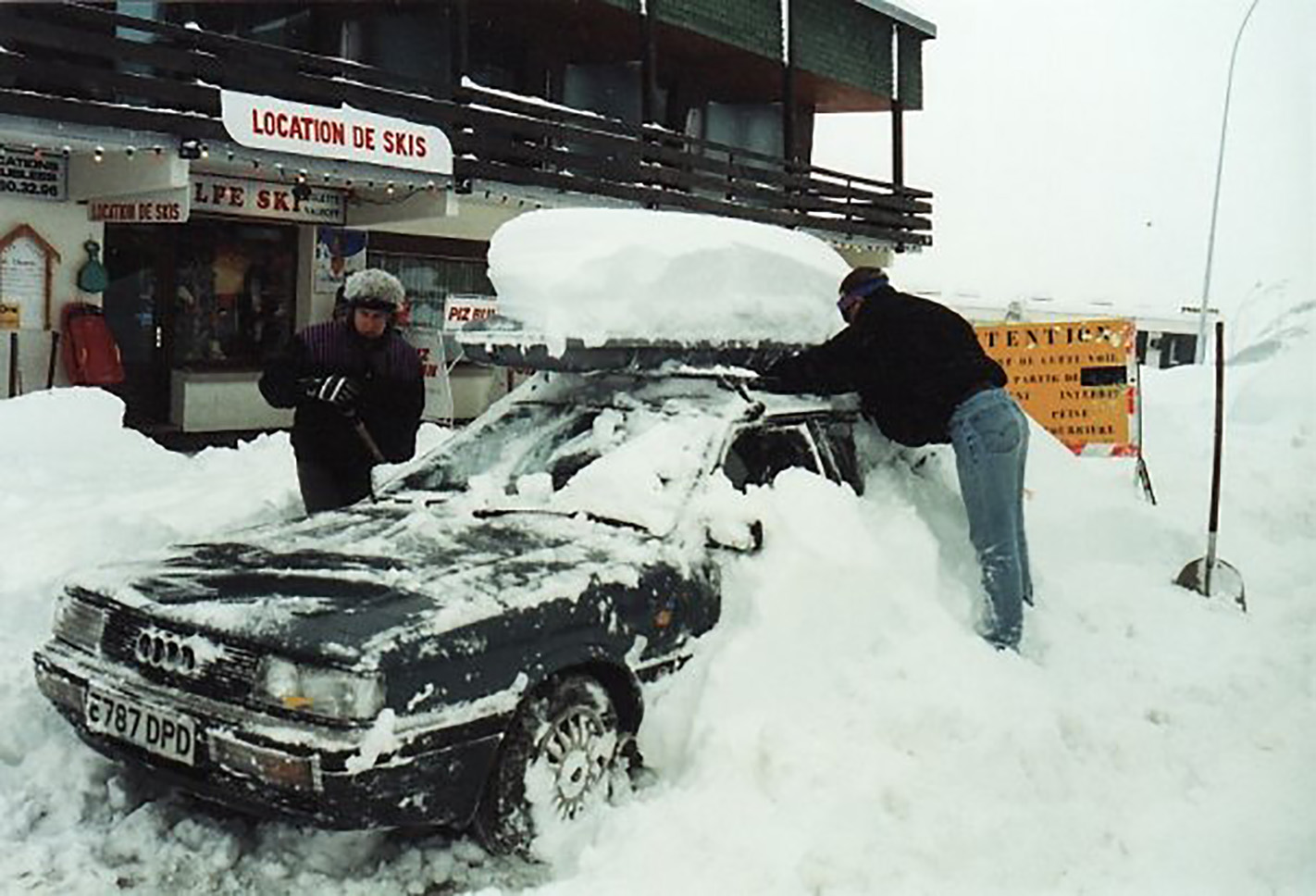
I learned more about vehicle dynamics while driving that old Audi in the snow than I ever did showing guys in supercars which way the Nürburgring went for a living.
Because I was young and had spent any available funds on skis and petrol I was largely penniless, and skimping on essential maintenance inevitably caught up with me.
One night, while engaging in a spirited cross-country drive, the Audi’s cam belt snapped and I got to learn the meaning of ‘interference engine’, so E787DPD was dragged away to the local breaker’s yard and a hard lesson was taken on board.
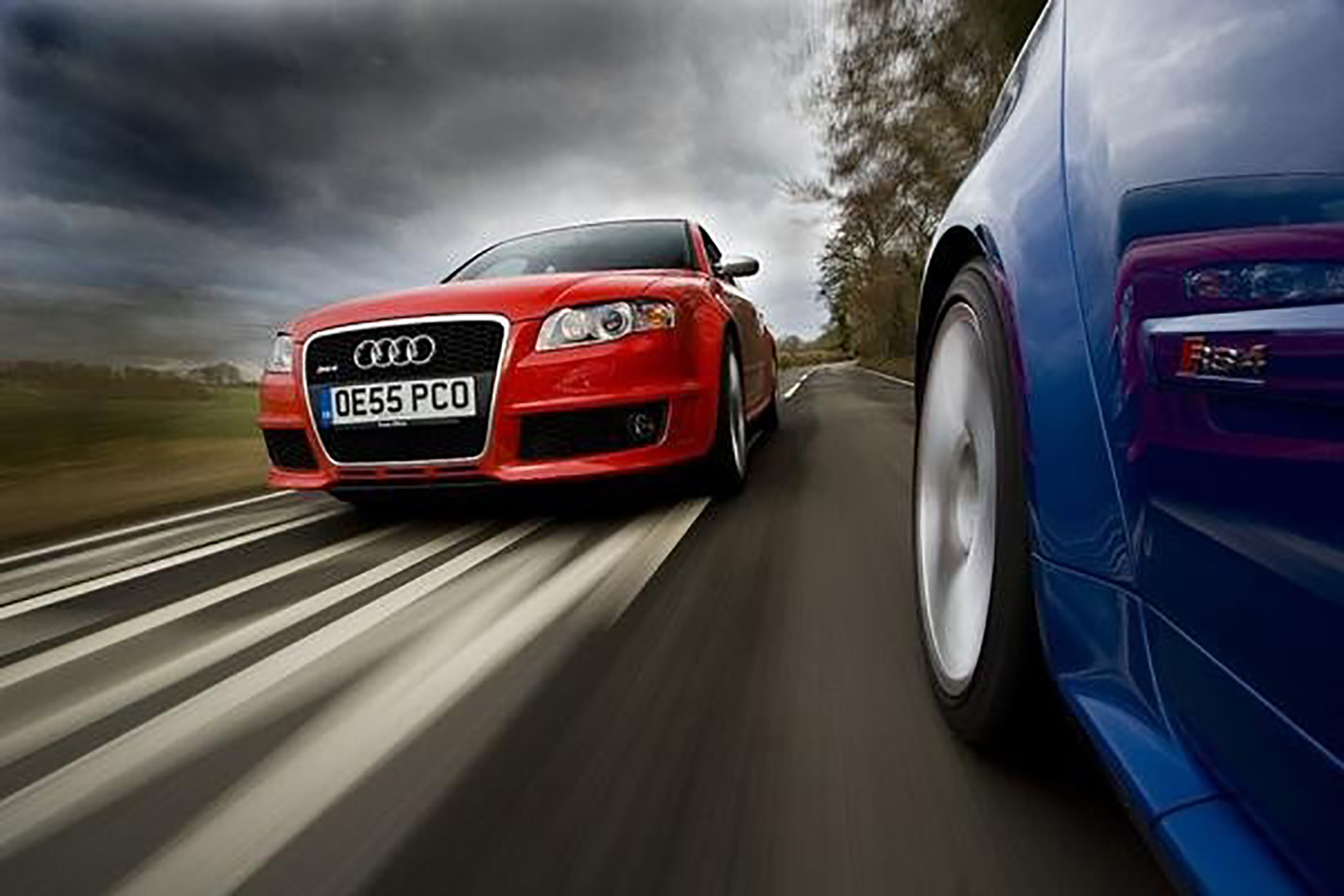
Since then, I’ve had the opportunity to own and run quicker and more venerated quattro models – a V8 RS4 was a highlight – but, as is so often the case, the amount you spend on a car can be inversely proportional to the delight you take in actually driving it.
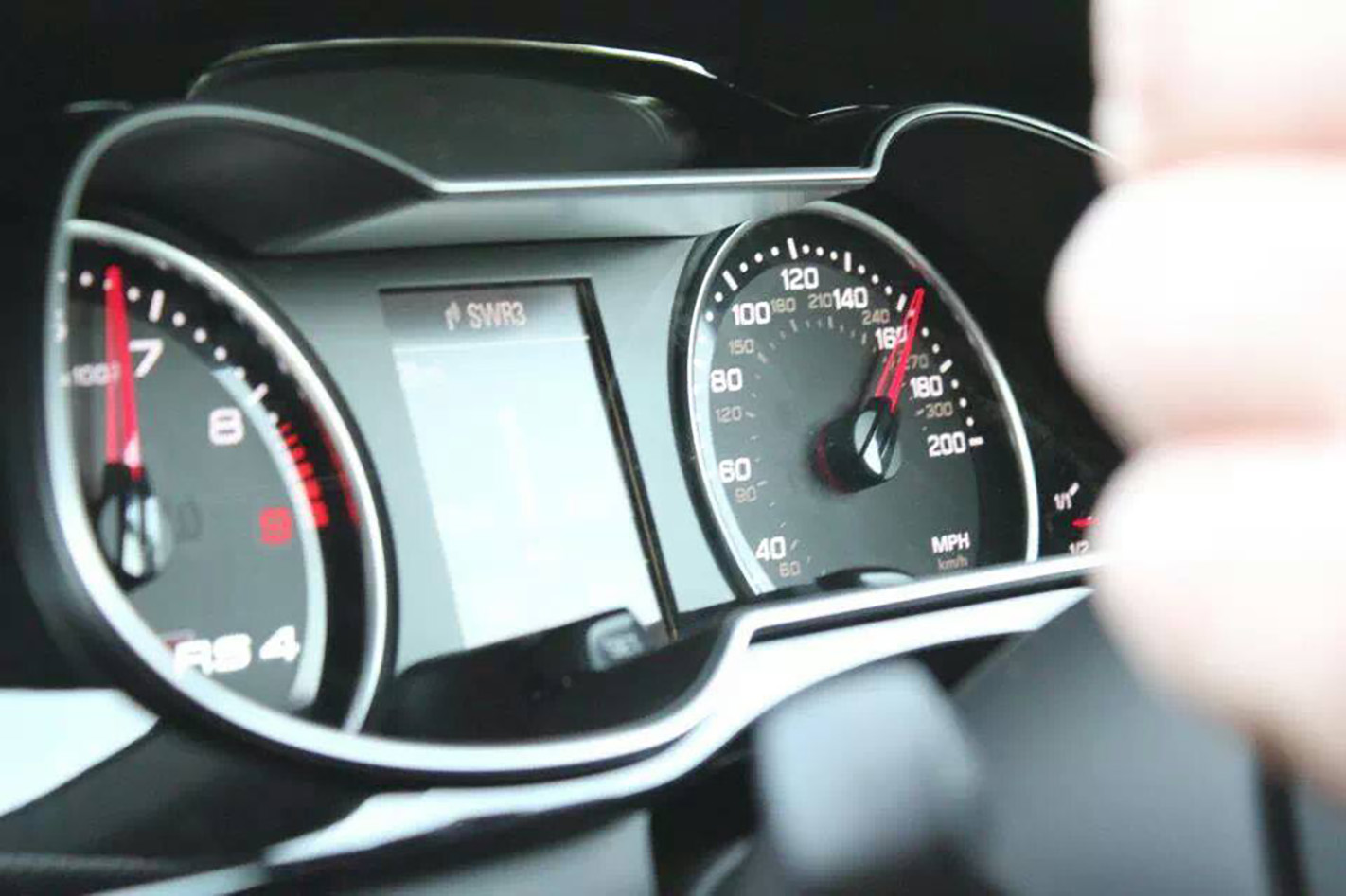
That old Coupe GT quattro was so much fun because it was such an enabling thing; a low-consequence way to learn while engendering a grin that you could post a wok into.
Let it be known that despite the prestige badging, there are plenty of ways into the quattro family. If you want to get in on the Audi action yourself, make sure to check out our comprehensive buyer’s guide here.
Expectations are high for Ford’s brave new hope in the SUV space. Really, really high, in fact. The Ford Escape is intended to add vital firepower to a local Ford line-up that places its eggs all too firmly in the Ranger/Everest basket – but boy, does it need to be on its game.
It sits in a category that Ford has managed to alternatively neglect and under perform in over a couple of decades now, but the new mid-sized Ford Escape – previously known to us here as the Kuga for a spell – is supposed to sweep all those assertions under the rug.
A three-strong line-up is intended to give all things to all people, and a concerted engineering effort has ostensibly balanced ride, handling and comfort in equal measure.
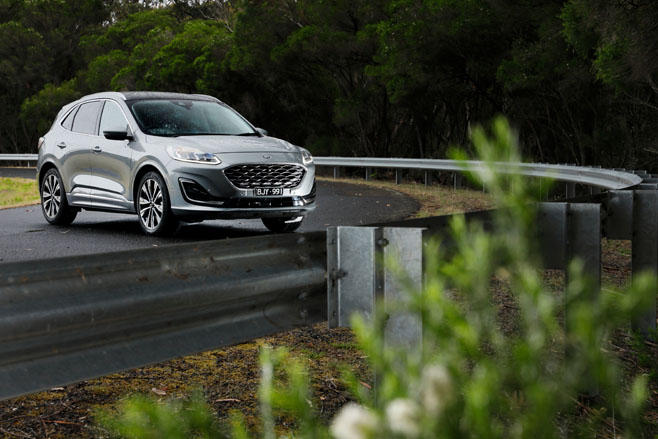
It’s this effort at rejigging the car for local tastes – and the fact that the C2 chassis is no bad thing – that ensured the Escape’s place on the COTY tour.
So the reality is that it’s not all bad news.
Based on the C2 underpinnings of the Focus and its friends, Ford has worked hard on giving the Escape a genuine shot at taking on runaway category leaders like the Toyota RAV4. There’s plenty of spec and plenty of attention lavished across the three variants, to the point where there are different grille and bar treatments for all, and a unique suspension tune for one of them.
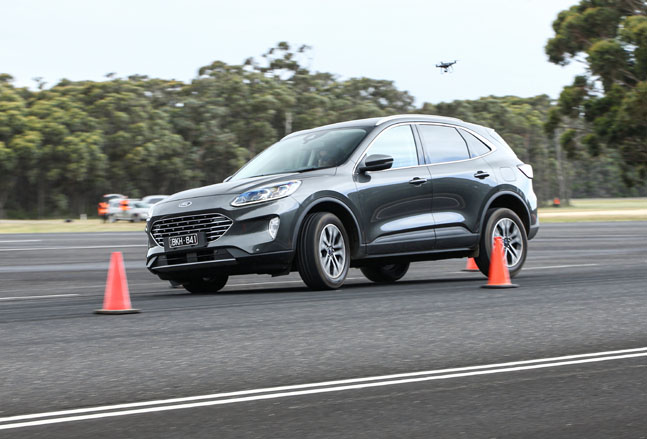
Not only that, Ford has doubled down on weight reduction (the three cars here vary from 1611-1690kg), while it chased down and targeted noise ingress like cops raiding a backpacker’s beach party.
A perky turbocharged 2.0-litre four-potter petrol feels stronger than its 183kW and 387Nm suggests, complementing the C2’s inherent chassis balance and leading to praise for its dynamics across the room.
“Lots of power, the front axle struggles a bit, but strong dynamically,” is one such comment from Campbell. “This is quite a dynamically sporty car.”
“Surprising dynamics,” writes Ferlazzo. “This is enjoyable to drive.” And there was more praise to come.
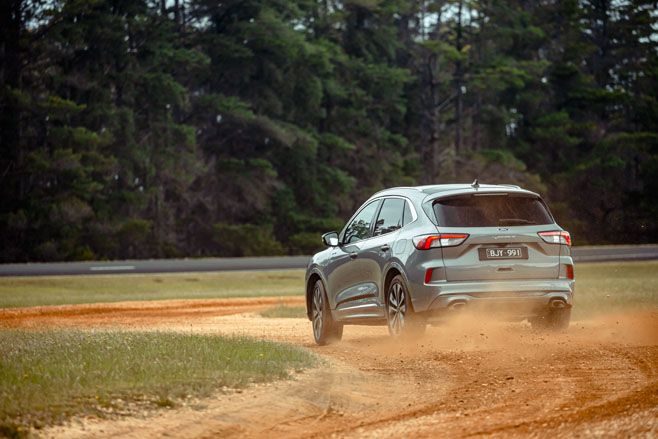
“Is this the best driving SUV in its class?” asks Inwood. “Engine is a powerhouse, steering is sharp and responsive with great turn-in. Body control is also really nicely judged.”
“Dynamically very polished,” confirms Byron.
I’m with them; that 2.0-litre engine is a ripper of a thing, in actual fact, while the ride of the base model Escape and top-spec Vignale are more in keeping with the Escape’s intended audience than the tied-down handling of the mid-spec ST-Line. It’s refined, too, with great NVH suppression in evidence and – in the Vignale at least – more than enough luxury to sway the masses.
But the Escape can’t afford to be off the pace anywhere when it’s facing both the COTY chopping block and a buying public spoiled for choice.
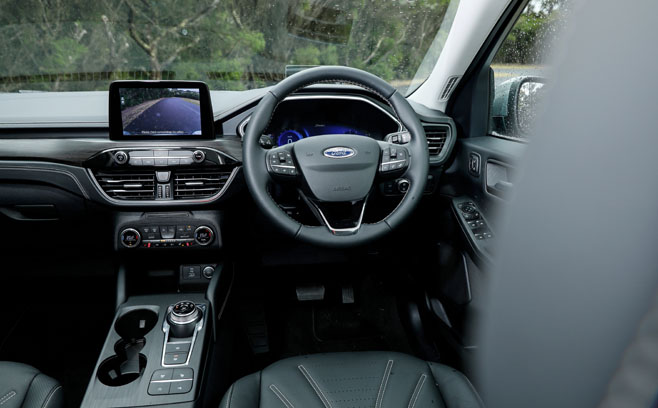
“Seems like a nicely executed thing, but does it give me a reason to not buy a Toyota?” asks Inwood rhetorically.
“It won’t take the segment by storm; it’s just not different enough,” opines Richard.
And with that, the Escape sealed its fate in COTY 2021. Sometimes, nice guys just don’t win.
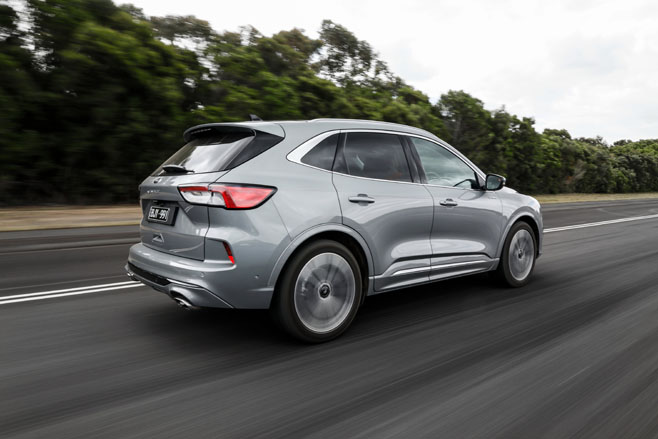
Richard Ferlazzo on the Ford Escape’s design
“Apart from the well-deserved success of the Territory, Ford has had a mixed bag of imported SUVs. The new Escape has fresh European styling and the new Ford front look, along with obvious attempts all over the exterior to give it a more youthful and sporty flavour.
“But it’s still a bit on the safe side and is up against some funky competition in this class. The interior is similarly contemporary and has a very good electronic cluster, but even the ST-Line could have had a bit more pizzazz to match that sparkling engine.
“Overall, a worthy new entry to the segment, but may struggle to get noticed.”
