
Mazda has revealed its inline-six engine is nearing production, outlining plans to introduce it within two years.
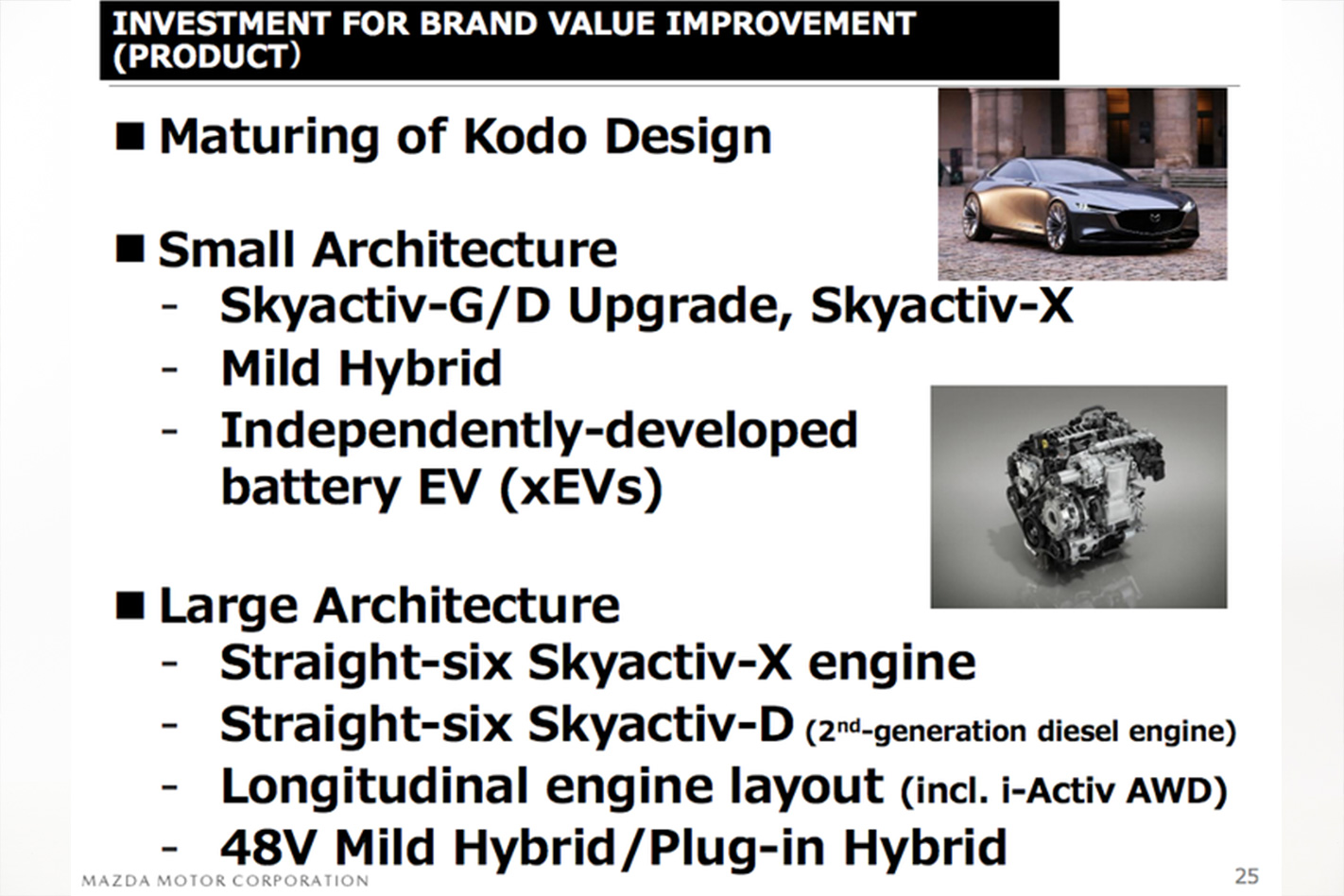
The brand buried the update within a presentation on its financials and future plans, confirming the new engine among a list of “investments” that will raise brand value in the medium- to long-term.
Those time horizons are clarified later in the document, billing the six-cylinder to launch by the year 2022.
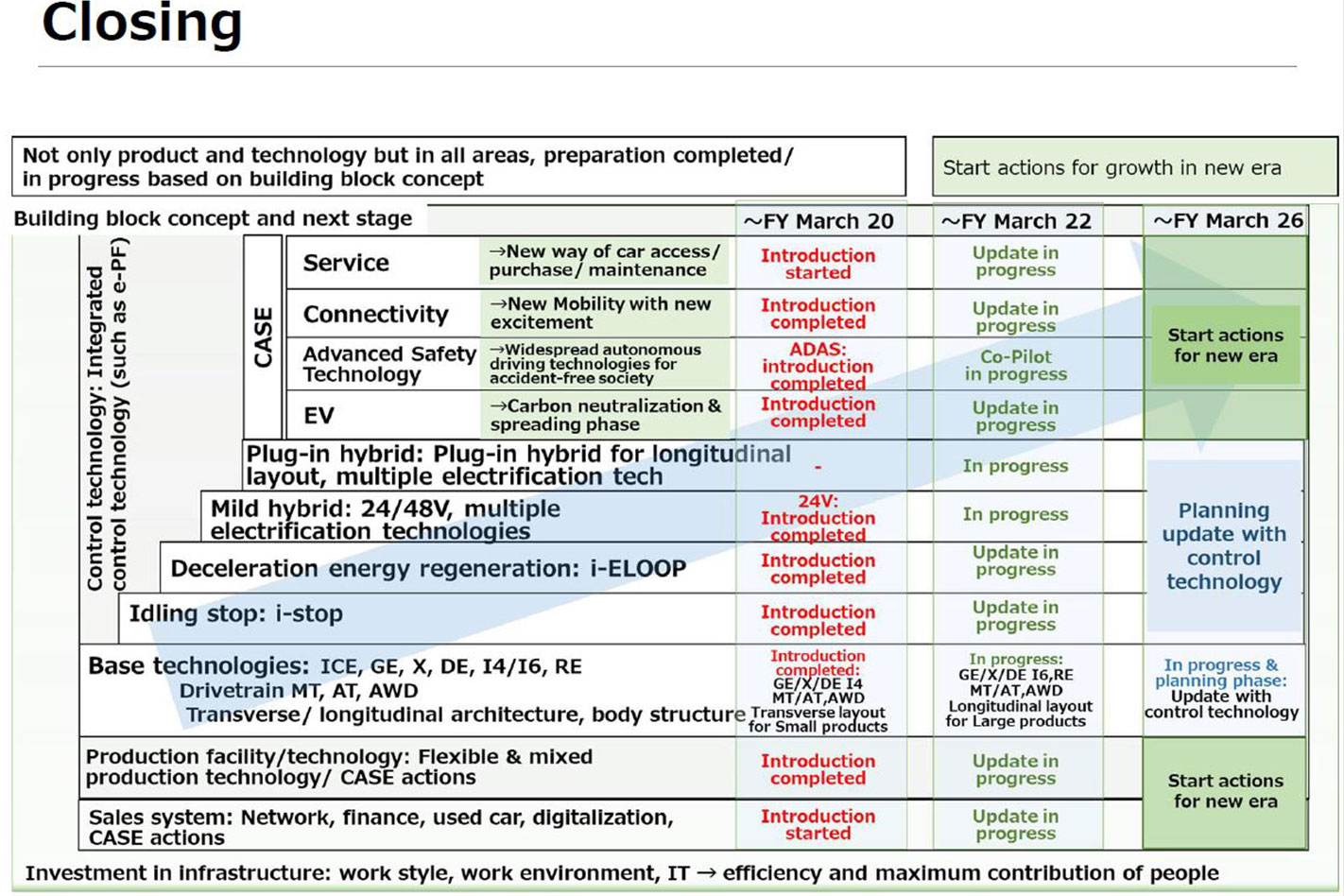
Mazda did warn these projections could change based on the global economy. But given it’s reconfirmed inline-six development even after a global pandemic underlines its commitment to the technology.
As for specifications, it says the inline-six will feature “(Gasoline/Diesel/X)” technologies, implying it will rely on the brand’s high-tech Skyactiv-X engineering that focuses on high-compression and fuel efficiency.
A grainy picture from the document reveals that both engine versions will sport turbocharging, DOHC and narrow galleries in each cylinder head – the latter adding strength to handle high compression ratios.
As for where the engine goes, Mazda mentioned the engine under “Large product/multiple electrification technologies”, heavily hinting at CX model lines given it’s also labelled with “AWD” in the presentation.
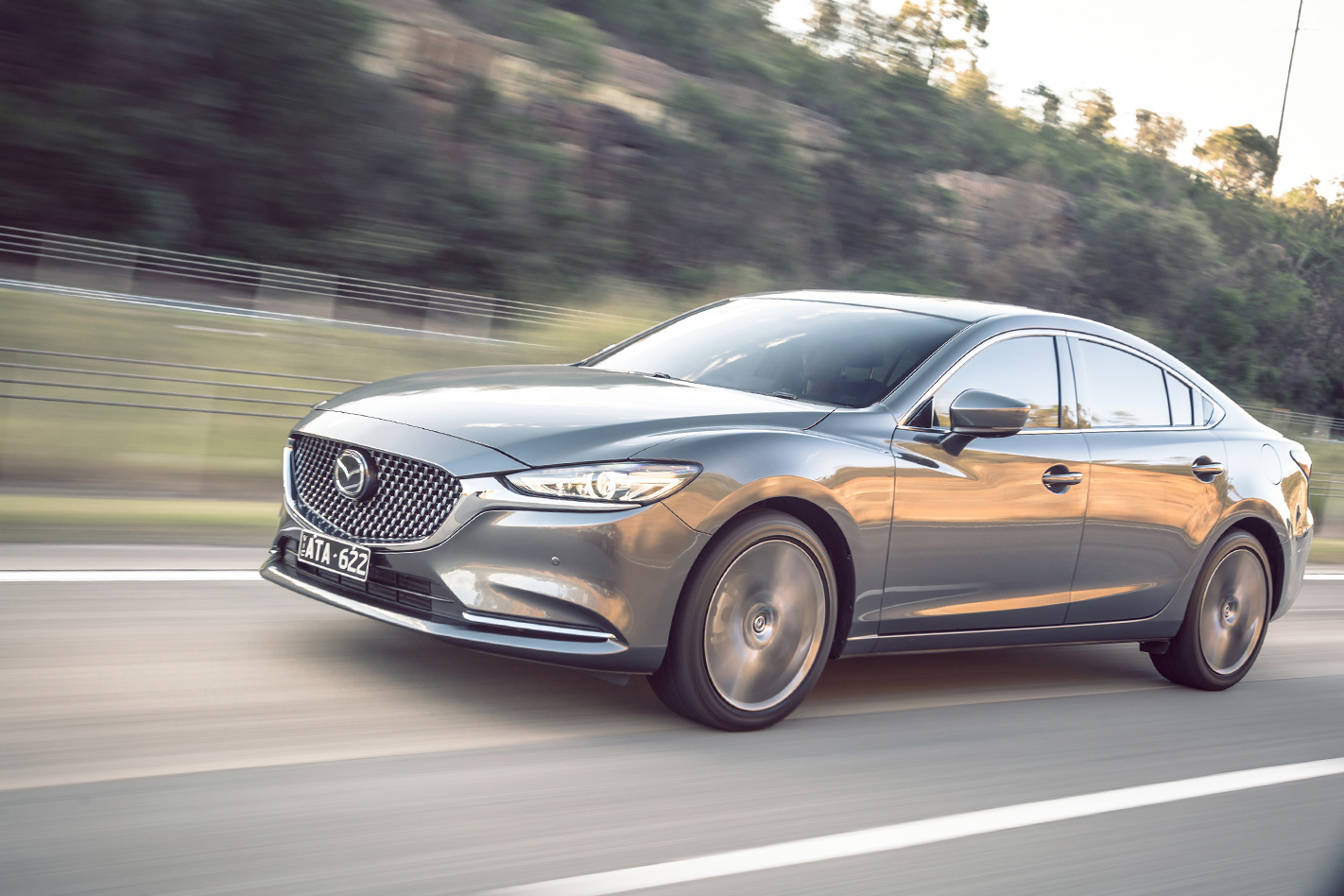
This also goes some way to aiding speculation that the Mazda 6 will switch to rear-wheel drive.
Mazda’s also included a hybrid inline-four in the photo, pictured with a longitudinally-mounted transmission to imply it’s also going to be offered alongside models that welcome the inline-six.
This adds to the firm’s plans for “multiple electrification” strategies that include rotary engine technology as a range extender for an EV.
Original story May 10, 2019:
Mazda’s March 2019 fiscal earnings report has let slip that the brand is developing an all-new straight-six Skyactiv-X engine.
Among the 25 pages that explain the manufacturer’s product plans going forward, which includes further development of Kodo design language and the creation of a mild-hybrid system, the mention of a Skyactiv-X straight-six petrol sits alongside an equal listing of a Skyactiv-D straight-six diesel.
American based publication Jalopnik was the first to discover the news, and subsequently reached out to a Mazda spokesperson who said “We’re excited to bring these powertrains to our future vehicles as we continue on our path to premium. We know our fans will be yearning for additional details, however specific models, performance figures and market rollout will be disclosed at an appropriate time.”
Not much is known apart from an initial mention, but the new engine will use Mazda’s revolutionary compression-ignition technology which is designed to give petrol engines the fuel efficiency of a diesel.
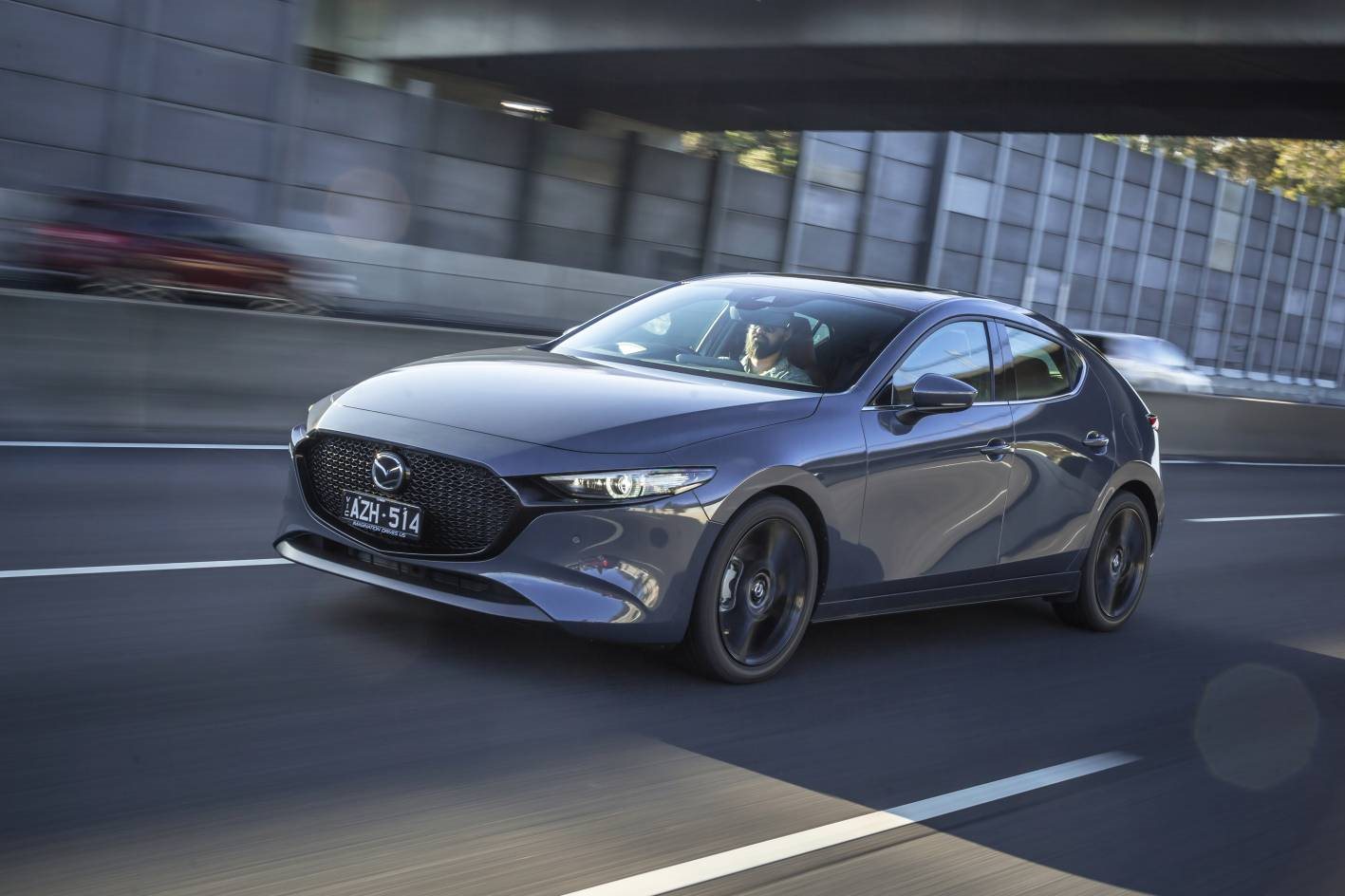
While Skyactiv-X engines are being introduced in the new Mazda 3 in Europe next month, our first taste of the new technology won’t come until Q3 of this year.
Joining brands like Mercedes-Benz, Jaguar and BMW who have re-embraced the straight-six of late, Mazda will be alone amongst its Japanese rivals, who have all moved away from the engine format. Toyota famously opted not to use the revival of the Supra as an opportunity to develop its own inline-six, instead deriving its new sports car from BMW-supplied mechanicals.
What isn’t clear just yet is which car the new engine will feature in. We can only guess that the larger sized engine will match a larger car like the next Mazda 6 or CX-9, but we’ll have to wait to find out for sure.
It’s hard to know where to start with the Toyota GR Yaris because, by rights, it really shouldn’t exist.
Built as a homologation special for Toyota’s 2021 World Rally Championship entry, it differs significantly from the Yaris road car with which it shares a name.
For starters, the GR is a three-door rather than five (a request from Toyota WRC team principal Tommi Mäkinen), while the platform it’s built on is unique – consisting of part Yaris, part C-HR/Corolla architecture that results in a roofline that’s 95mm lower than the regular hatch.
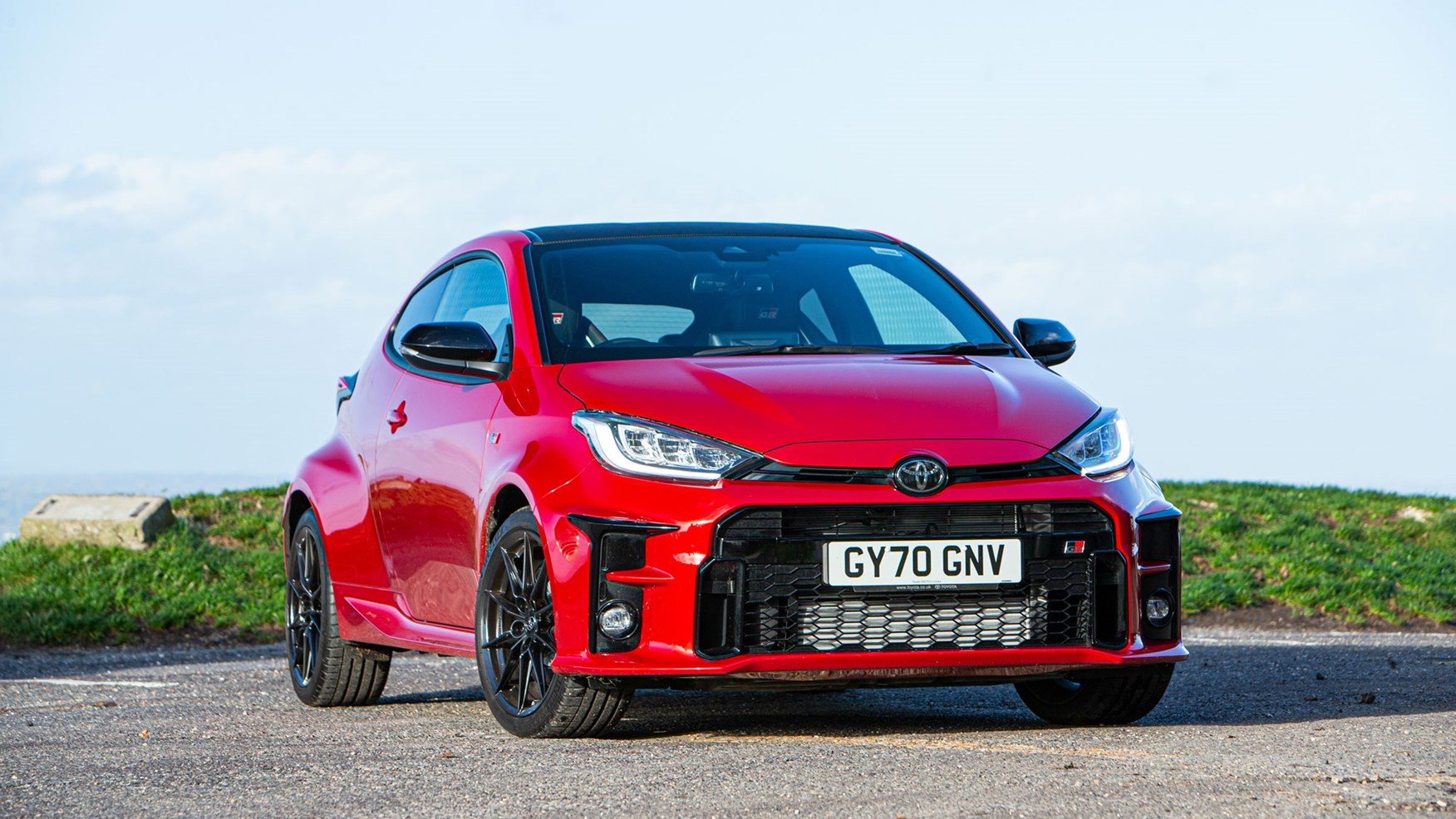
Then there’s the engine – the world’s most powerful three-cylinder unit no less, and one that Toyota had to lobby the WRC to allow.
All of this was done to satisfy a long and complex set of WRC regulations which, in basic terms, stipulate that the competition car must not deviate too significantly from its road-going equivalent.
Building a production car designed specifically for the WRC would be incredibly expensive and time-consuming, yet the pay-off would be a rally entry far superior to any of its competitors.
Or at least, it would have been, had Toyota not canned the competition car in mid-2020…
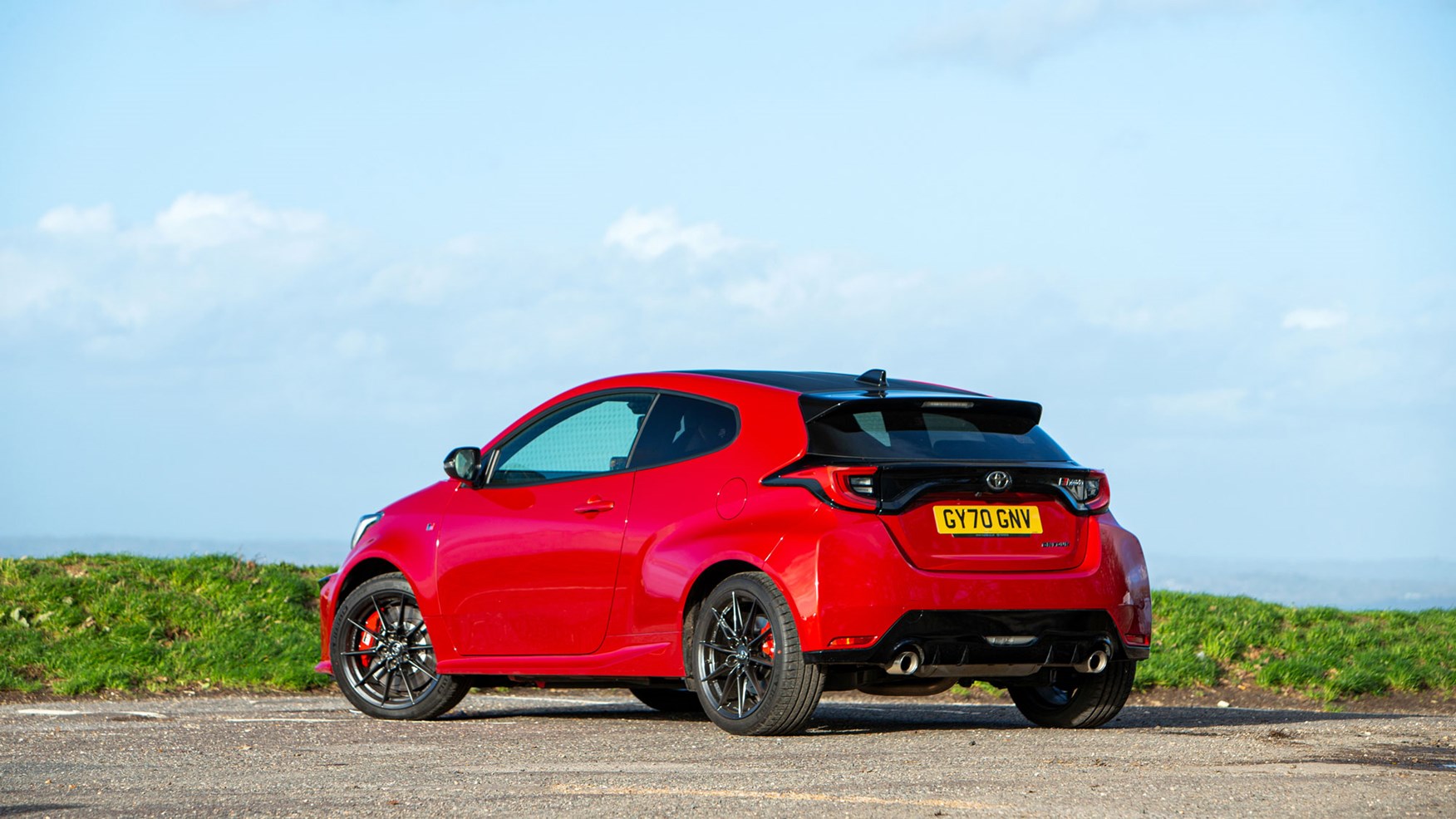
As hot-hatchbacks go, the Yaris GR has had one of the most colourful and resource-intensive conceptions in history which, on its own, makes it rather a delicious prospect for enthusiasts on the hunt for a genuinely unique performance car at the ‘cheaper’ end of the scale.
Though priced between $40,000 and $50,000, it’s hardly Ford Fiesta ST money, but a quick glance over the spec sheet alone makes you question how Toyota will ever manage to break even with it.
What are the headline figures?
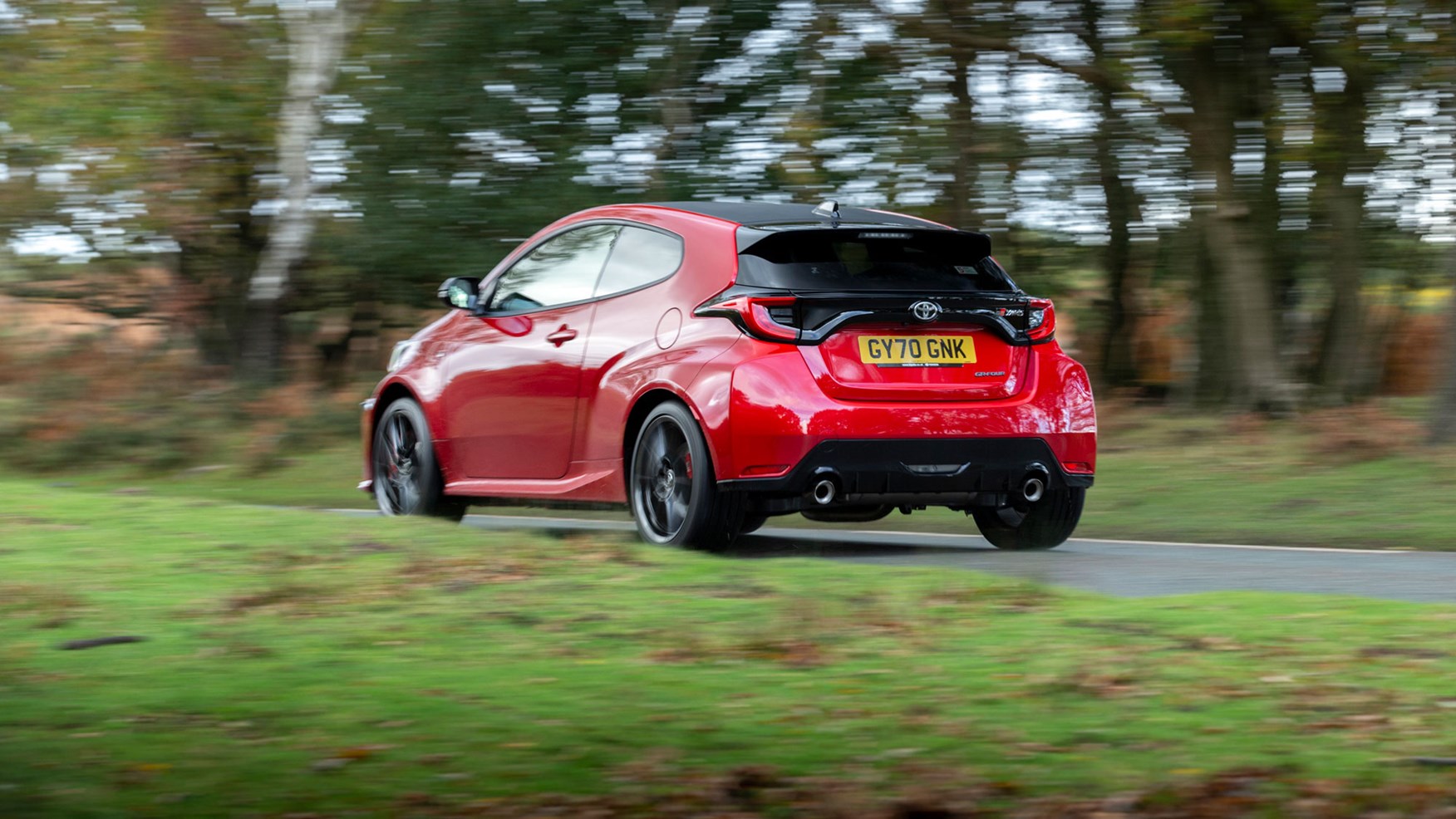
If you thought three-cylinder engines were only good for dull city cars, think again. The Yaris GR produces 200kW and 370Nm, giving a claimed 0-100km/h time of 5.2 seconds and a limited top speed of 230km/h.
Power is fed to the road via a six-speed manual transmission and GR-Four all-wheel-drive system.
Weight-saving measures – such as carbon roof (with a specially designed compound) and aluminium bonnet, doors and tailgate – mean the Yaris GR comes in at 1280kg, giving a power to weight ratio of 150kW per tonne.
For comparison, a 235kW Honda Civic Type R delivers 170kW per tonne.
What’s the engine like?
In a word – excellent. But you wouldn’t know from starting the thing up. Crank it from cold and there’s a deep clatter as the engine splutters into life with an almost diesel-like character.
So used to the appealing sounds of zesty tuned exhausts on buzzy four pots that the race-derived grumble of an off-beat three-cylinder may shock a few drivers on initial impressions.
There’s an appealing rawness to it, though, and it’s an element of the drive that stays with you as you begin to stretch it out.
Maximum torque is available from 3000 rpm, yet it pulls with enthusiasm from lower down, revealing an encouraging crispness to the throttle response.
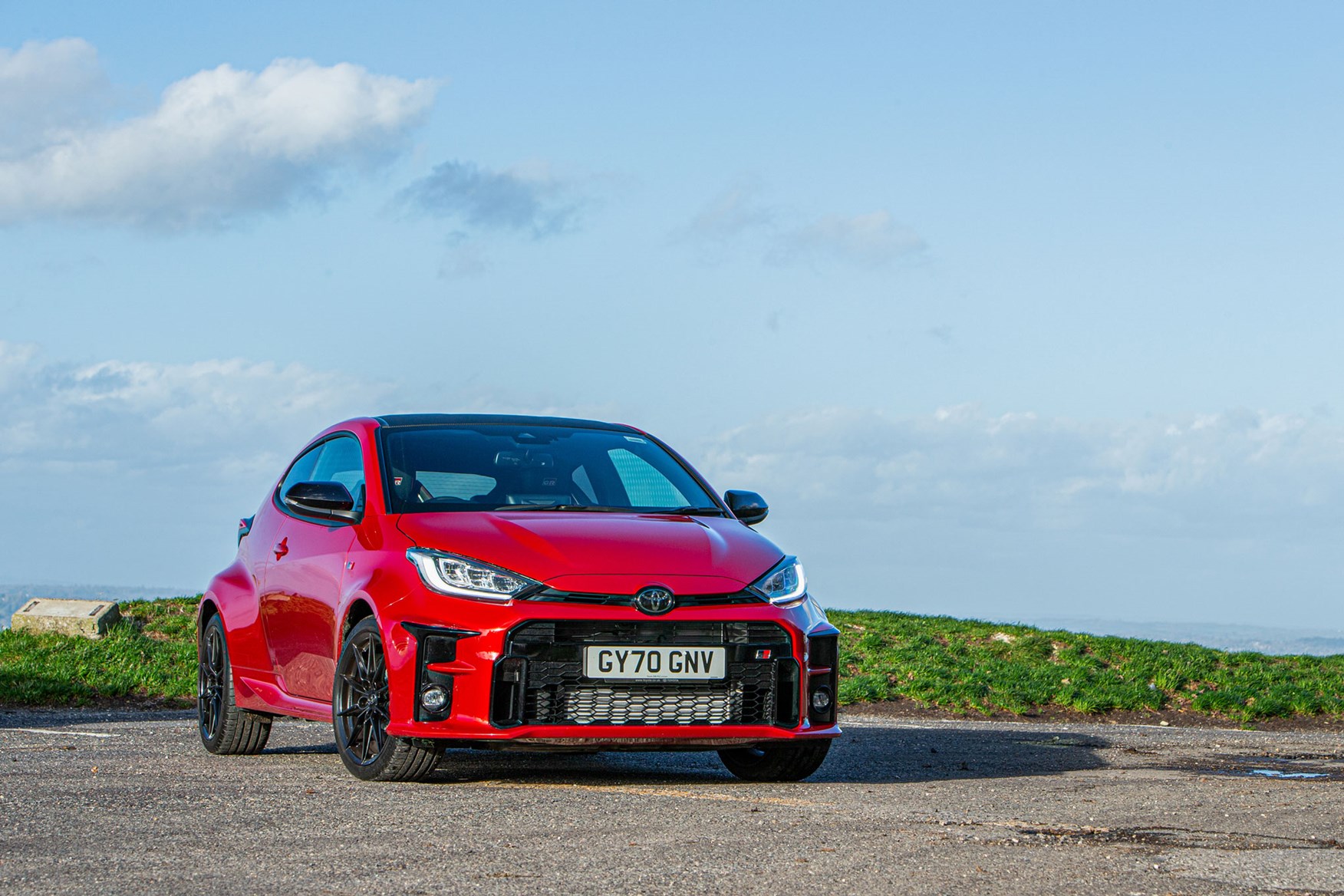
The dials in front of you are notably plain yet, like the engine note on start-up, it’s a pleasant change to the sporty fripperies of most current performance cars.
Talking of fripperies, though, the Yaris GR does have one in the shape of Active Noise Control that can’t be turned off.
Piping engine sound in through the cabin speakers, it comes across as slightly too prominent for this tester’s taste, overstepping the mark between welcome amplification and unnecessary distortion.
Maximum power occurs at 6500rpm and although the engine’s flexibility means most back road jaunts can be done at far lower revs, there is more than enough reward for stretching it towards the red line.
Granted, it’s not the buzzy crescendo of a naturally aspirated four-pot, but there’s a pleasing degree of manic excitement to be had.
Plus, the real-world pull feels scarcely less than a Civic Type R and on the money with a Hyundai i30N.
It’s an addictive power unit and one that you suspect we won’t see the last of in the Yaris GR.
As for the six-speed manual, it feels like an evolution of what came in the 86.
A similarly connected feel exudes mechanical interaction, yet there’s a more precise and refined action to the stick, even if the throw is too long.
What’s the GR-Four all-wheel drive like?
Effective. It’s Toyota’s first original all-wheel-drive system in 20 years yet you wouldn’t know it.
Although 100 per cent of engine power can theoretically be sent to either axle, the Yaris GR features three drive modes where the user can choose the primary split.
Normal sees a 60:40 ratio, Sport 30:70 and Track splitting it down the middle at 50:50. Although, the gear ratios in the all-wheel-drive system means greater torque defaults to the rear wheels even when there’s no slip at the front.
The difference between each mode is slight but noticeable – and no doubt more so on track with greater space on offer.
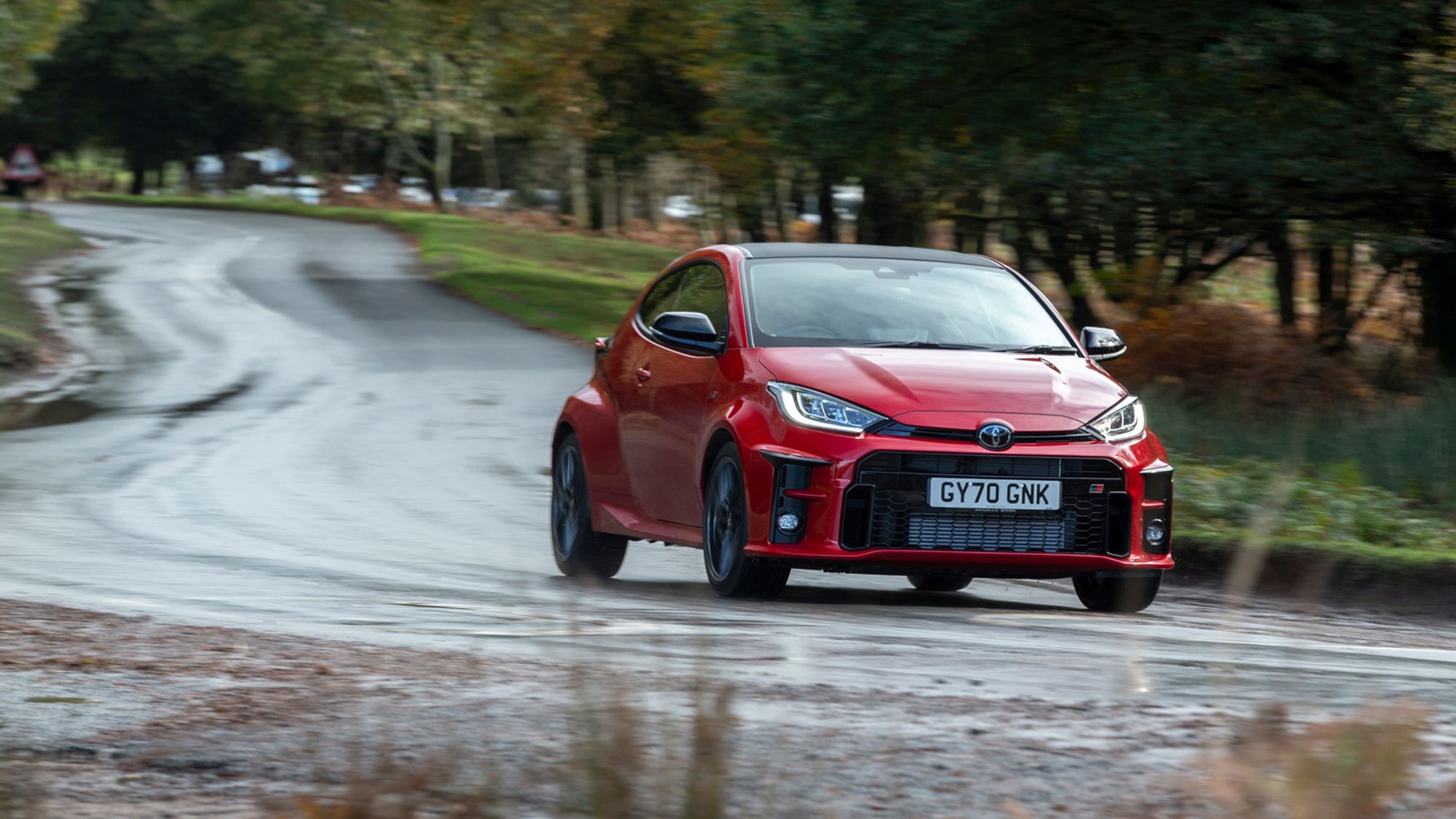
Regardless, the way it carries the GR Yaris down wet, leaf-strewn country roads is nothing short of remarkable.
Its diminutive dimensions play a role in its outright point-to-point competence, yet the dynamic limits you see in most cars don’t apply in the Yaris – a sentence that, until now, this tester never thought he’d be writing.
Steering feel from the slightly too high driving position isn’t remarkable, but by the current standards of electric power steering it does a decent job of transmitting the road through the Michelin Pilot Sport 4S tyres.
The brakes, too, are predictably giant-killing in their stopping power. Four-pot at the front and two at the back, the former’s disc size is – believe it or not – is larger than the Toyota Supra’s.
Overall chassis compliance is suited nicely to British roads, and although the short wheelbase and high body rigidity mean you’ll occasionally get prominent longitudinal movement over sustained undulations, the damping is judged excellently.
Any complaints?
Just one. Many of this car’s rivals have a voracious appetite for bringing the rear end into play under even the most subtle provocation, yet the GR Yaris is far more planted.
And while it would be foolish to declare this a bad thing, it did leave us wishing for a little more interaction on the road.
Power oversteer is available in moderation (wet roads, mid-corner the ideal scenario), yet from our initial test drives, the rear end could perhaps benefit from a touch more throttle off adjustability to really bring the GR Yaris alive on the road.
Should you manage to break traction there’s a delicious amount of control on offer, yet it feels like a car that – on the road at least – prefers to rigidly carve its path.
Verdict
A car that really shouldn’t exist – but boy, are we glad it does.
As a concept on the drawing board, most manufacturers would have laughed it out of the room, but the decision to go through with it is one that makes the hot-hatch market a far richer place.
It’s not quite perfect, yet it’s hard not to be won over by the car’s desire to punch well above its weight and deliver one of the most stimulating driver experiences around.
This article first appeared on Car UK
This article was originally published at carmagazine.co.uk
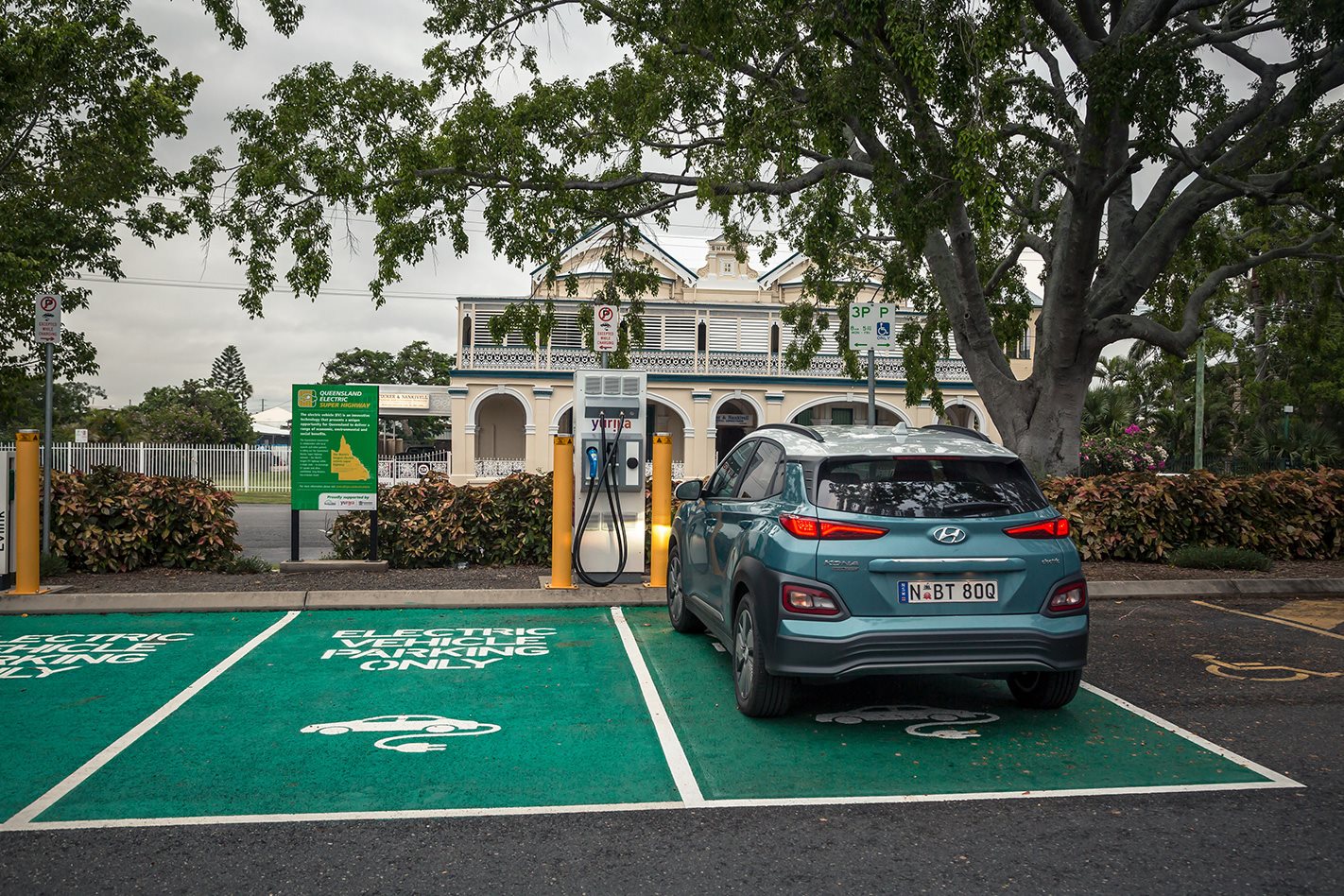
Only last week, the South Australian government was enjoying some backslapping for its commitments to EV infrastructure expansion and fleet purchase, but a week later it has revealed plans to sting electric vehicle owners with a registration-style road tax.
If approved, the new ongoing charge will offset the loss of fuel excise revenue that will not be gathered by the government from drivers of zero-emissions cars, and has the potential to dramatically increase the cost of EV use and discourage the adoption of more sustainable transport.
While the SA government’s commitment of $18.3m is mentioned high up in its state budget overview that was released on Tuesday, the consideration of a new EV charge is tucked away in small print on the final page of the report under Fees and Charges.
“The government is intending to introduce a road user charge for plug-in electric and zero emission vehicles,” it says. “The charge will include a fixed component (similar to current registration charging) and a variable charge based on distance travelled.
“Electric vehicles do not attract fuel excise and therefore make a lower contribution to the cost of maintaining our road network. The proposed road user charge will ensure road maintenance funding is sustainable into the future.”
While some are reporting the tax as a “world first”, to our eyes the proposal looks suspiciously similar to the tax suggested by the New South Wales Government in July this year. Like the SA statement, it too was buried deep beneath optimistic pledges to invest in infrastructure.
“Fuel excise revenues are in structural decline as vehicles become more fuel-efficient. As electric cars increase their share of the total vehicle fleet, the ability of Australian governments to pay for road maintenance and construction from the proceeds of fuel excise will decline.”
While finding replacement funding for ‘lost’ fuel tax makes sense to enable ongoing road maintenance and development, the SA government has not explained if the charge takes into consideration the tax already paid by EV owners to charge their vehicles with power from the grid.
It’s this effective double-dipping into zero-emissions driver’s wallets that has the EV community questioning the fairness of the proposed tax.
“It’s like responding to a drop in the tobacco tax take by slamming a new excise on nicotine gum,” said Electric Vehicle Council chief executive Behyad Jafari.
“If the revenue from fuel excise is falling because South Australians are burning less foreign oil, that should be considered a blessing. Overall it’s good for air quality, it’s good for the health budget, it’s good for carbon emissions, and it’s great for economic sovereignty. The last thing any sane government would do is try to hit the brakes on this trend.”
Furthermore, Jafari highlighted that the cash raked in from the new tax would not necessarily be ploughed directly back into transport projects, nor does road funding come exclusively from transport-related charges.
“There’s no special bucket of money for roads,” he said “Roads need to be paid for from general revenue just like everything else. There is zero need for the SA Government to slap a big new tax on an emerging technology that delivers so much for the community.”
Countries around the world that are experiencing a greater uptake of electric vehicles are also introducing ways to generate revenue from their use. The key difference between theirs and the method proposed by the SA and NSW governments comes down to two significant factors.
Firstly, the respective states waited until electric vehicle adoption and popularity had surpassed a decisive ‘tipping point’ thereby avoiding the possibility of discouraging large numbers of potential drivers from making the EV switch.
Australia is categorically nowhere near this point and, until it reaches a similar momentum, any sneaky revenue-raising schemes that punish EV owners will certainly slow the advancement locally.
And secondly, those nations sweetened the deal with purchasing incentives, subsidies and other benefits for car owners looking to embrace more environmentally sustainable transport.
While the Australian federal and state governments continue to lag the rest of the world on EV incentives, this latest proposal to introduce a tax will only stunt the nation’s alternative energy growth.
The Federal Chamber of Automotive Industries (FCAI) agrees with those sentiments and its chief executive Tony Weber has weighed in with a damning response to South Australia’s proposal.
“The announcement this morning that the South Australian government plans to introduce a road user charge for low and zero emission vehicles (LZEVs) is simply beyond belief,” he said.
“All around the world, developed countries recognise the environmental and health benefits of low and zero emission vehicles. These countries encourage the uptake of LZEVs through incentivisation and the deployment of infrastructure.
“With its proposal to tax LZEVs through a road-user charging tariff, South Australia is discouraging the uptake of environmentally friendly motoring and is turning its back on the topic of climate change.
The introduction of the EV tax is being championed by SA treasurer Rob Lucas and Jafari highlighted the unusual, perhaps unique, strategy of the state government.
“Treasurer Rob Lucas has described his move as a ‘no-brainer’ – remarkable then that no other jurisdiction on the planet has come to his conclusion,” he said.
“Unless every government in the world is missing something obvious that Mr Lucas uniquely understands, the treasurer may want to re-examine the logic that brought him to this point.
“There’s little point spending $18m on charging infrastructure if you are actively discouraging people from buying the vehicles that can use it”.
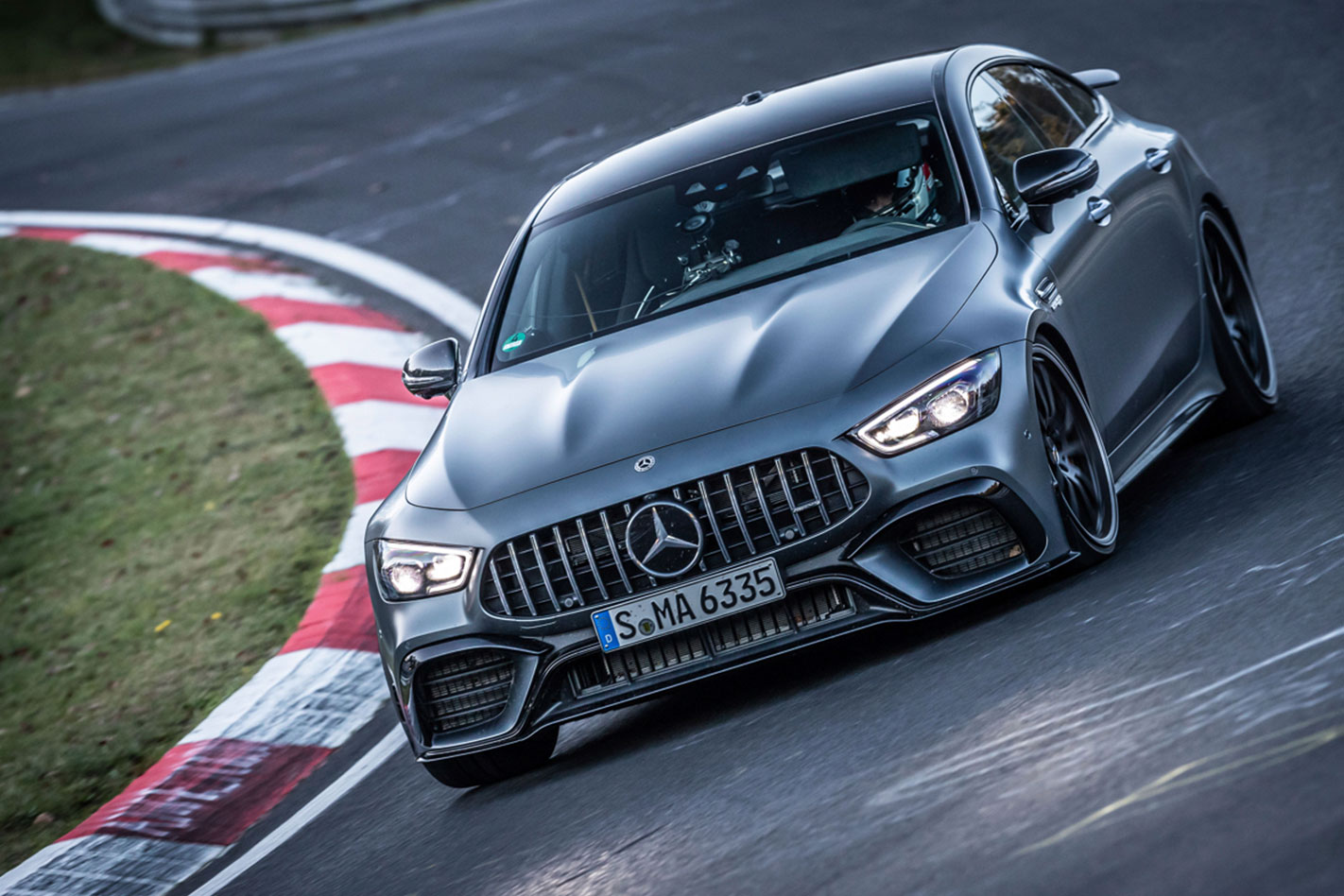
Mercedes-AMG has reclaimed the honour of building the fastest “executive” car to lap the Nurburgring Nordschleife, after unleashing its new GT63 S around the circuit in record time.
The updated GT63 S tore around the full 20.832km-long track in 7min and 27.8sec, smashing the executive category record set in the hands of Porsche with a Panamera Turbo S by 2.11sec.
According to Nurburgring GmbH “executive car” is defined by the German Federal Transport Authority (KBA) and includes examples like the Audi A8, A7 and Mercedes-Benz S-Class.
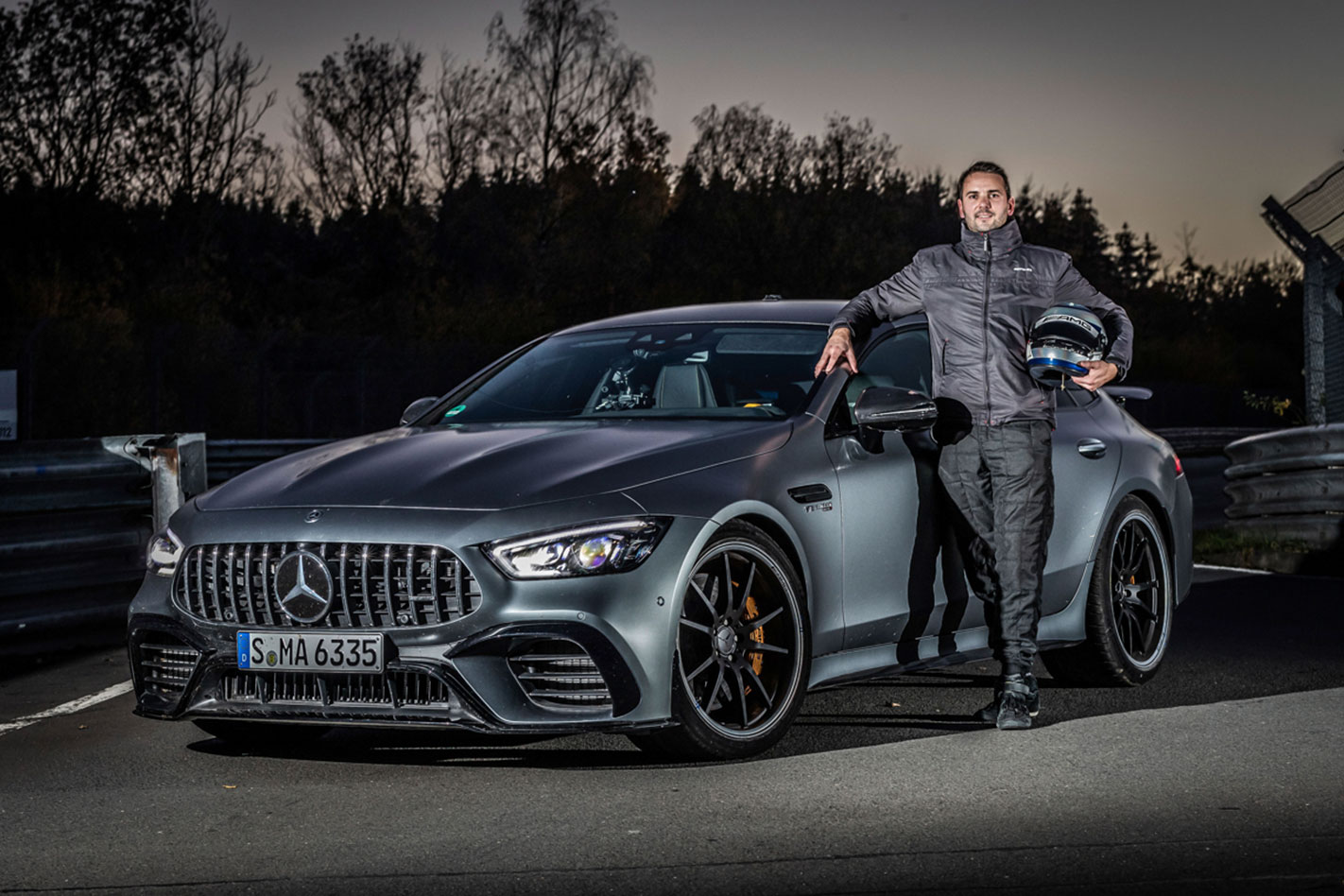
Given Porsche reset the record lap earlier this year, factory AMG driver Demian Schaffert would have found extra delight in lowering the benchmark time given he piloted the GT63 S that set the first record lap in 2018.
Underlining that there’s no love lost between the two high-performance brands, AMG in its own press release explicitly states the lap record left their grasp for only three months.
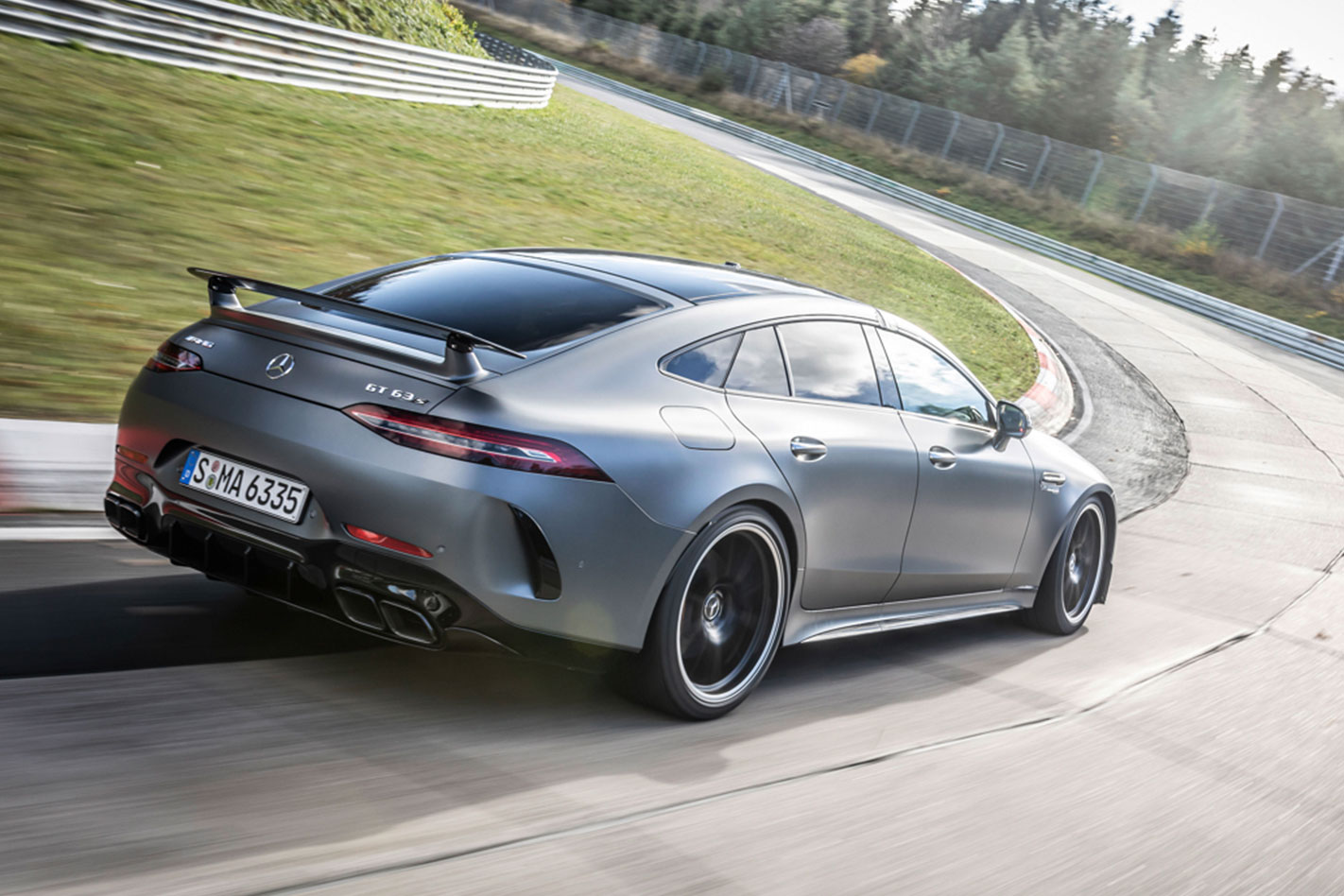
And where did the GT63 S find this new pace? Equipped with the optional-for-Europe Michelin Pilot Sport Cup 2 tyres and aero package, AMG says the record setting car was otherwise completely standard save for some suspension fine tuning for the new model year version.
But it does admit a luxury bucket seat and race harnesses were fitted for safety – two items that would not affect performance.
Updates to the GT63 S exist only within the cabin. Inside it welcomes the brand’s well-known and highly intuitive MBUX infotainment program with AMG specific displays, along with a wide-screen cockpit – a large sweeping digital dash screen – on German variants.
Granted, all this luxury weighs down the GT63 S’s mighty twin-turbo V8. But its carried-over 470kW and 900Nm still promises to accelerate the four-dour liftback to 100km/h from rest in 3.2 seconds, thanks to all-wheel drive.
Both the new GT63 S and the Porsche Panamera Turbo S it crushed have also proved quicker around the track than Porsche’s previous generation 911 GT2 – a stripped-out twin-turbo super sports car with two seats.
Back over to you, Porsche.
Is finding joy in driving something that’s rooted in the past? The reason I ask is that I’ve just had a chat with Alfonso Albaisa, Nissan’s head of design.
The Cuban’s usually cheery demeanour grew a little wistful when considering what the forthcoming Z-car means to Nissan.
While chewing the fat over the fact that the Z has a foot in the past with such obvious retro touches to its styling, the vibe from him seemed to be that retro was appropriate because enjoying driving is a retro activity in and of itself.
That philosophy earns a hard disagree from me.
I have absolutely zero doubt that we will grow to adore cars powered by something other than an internal combustion process.
It might take time but we’ll get there. It took me about as long as it takes to get a Porsche Taycan Turbo S sideways on a German test facility last year to start feeling the love, but your mileage may well vary.
For as long as we’ve had any sort of transportation, there’s been a desire to make it faster, more exciting and more desirable.
I reckon that’s what the MOTOR family lives for and it’s not about to change anytime soon.
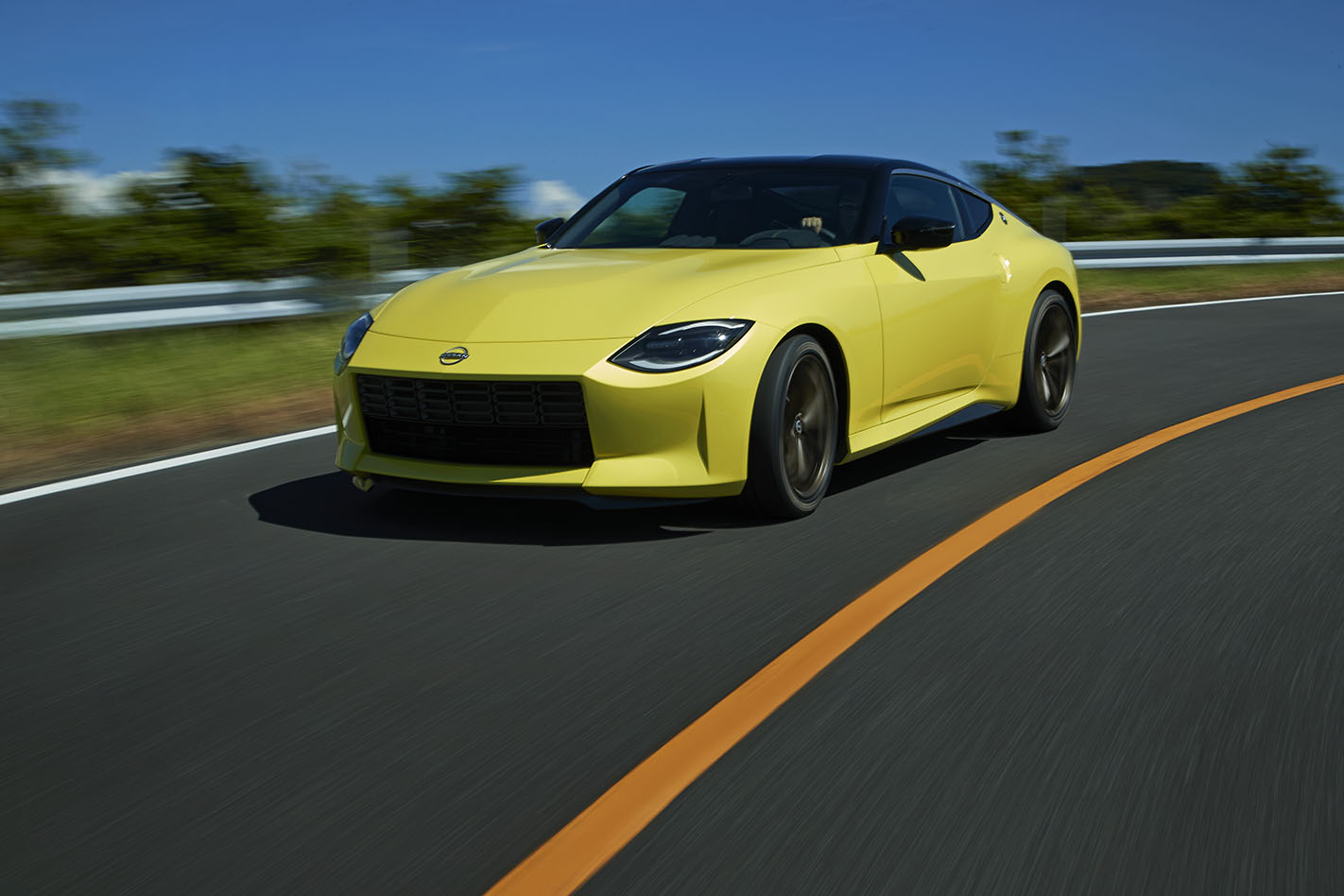
But if Nissan wants to serve us up a throwback, I’m far from opposed.
Just make it a good one. A 370Z with a little less weight, a more modern interior and a gutsier engine is a formula that still has me more than juiced.
Who wouldn’t be? If Nissan’s product life cycle for the 370Z is anything to go by, we’ll still be featuring the next Z in comparos in 2034. No wonder Albaisa feels a certain weight of responsibility to get the look and feel right.
And while it’s been something of an embarrassment to many that Australia’s lax emission laws have seen this country described as the dumping ground for the world’s least efficient engines,
I’m guessing that more than a few of you can see the minority-interest silver lining here. Nissan has already announced that the Zed’s not going on sale in Europe due to emissions laws. But it’ll come here. There are reasons why guilty pleasures feel so good.
Talking of guilty pleasures, I’ve been busy getting my feet under the MOTOR editor’s desk this month.
Many of you will know me from Wheels, where I’ve been for the past few years, but since Dylan hopped the aisle to Wheels, I’ve sidled into the big seat here.
Nobody seems to have noticed, and I figure if I shave my head and glue the clippings to my chin, I could get away with this for a while.
In the meantime, it looks like we’re finally starting to emerge from COVID lockdown, so the team will soon get back to making more Aussie-exclusive content.
There will be other changes, some of which are pretty seismic. Firstly, we’re no longer part of the Bauer business so have new owners, with a new vision.
Secondly, I’d like to thank long-time columnists Dave Morley and Tim Keen for their service to the mag for so long, as this month’s will be their final columns before some new voices enter the mag next month.Pretty solid knock by both of ’em.
Thirdly, we’re working on getting our pages back for a bigger, chunkier mag. Most importantly, thank you for your loyalty and patience throughout these trying times.
This column appeared in MOTOR magazine – grab it now by subscribing right here!
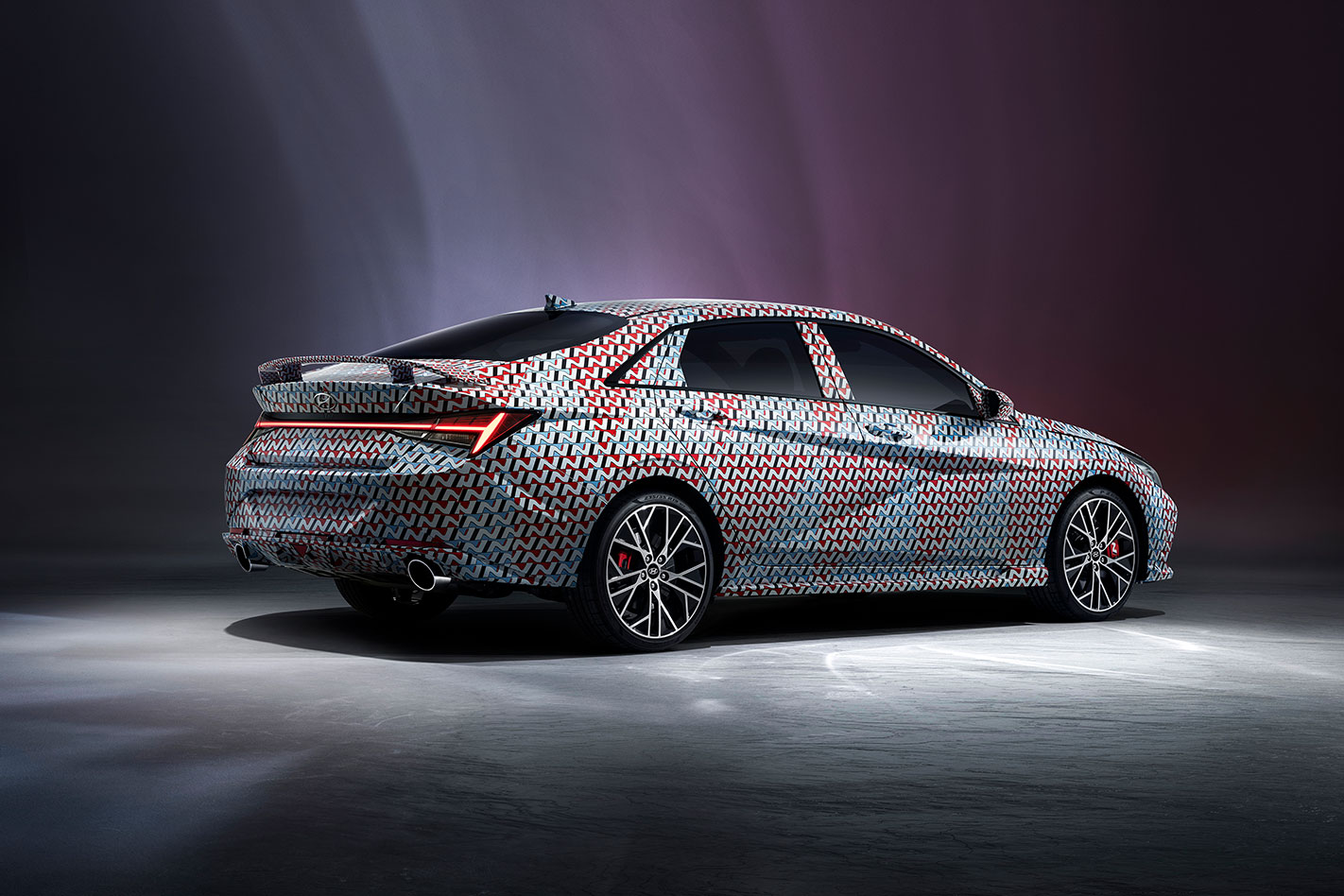
Hyundai’s fast revealing its cards on a big, bold performance model range after publishing fresh teaser images of its new i30 Sedan N.
The four-door liftback sedan has emerged on the brand’s American press site clothed in camouflage, surfacing only days after Hyundai outlined a punchy Sonata N-Line is locked on to our shores.
At the same time, all signs point to the sedan replacing Hyundai’s current i30 Fastback N, given it is a similarly styled four-door liftback.
The right-hand-drive Ela… ahem, i30 Sedan N will most likely be exported from the brand’s Korean factories, reducing import costs and giving it a leg-up over the Fastback that’s currently sourced from Turkey.
Hyundai hasn’t revealed details to complement the images, but the i30 Sedan N is expected to largely mirror the updated hot-hatch in specification.
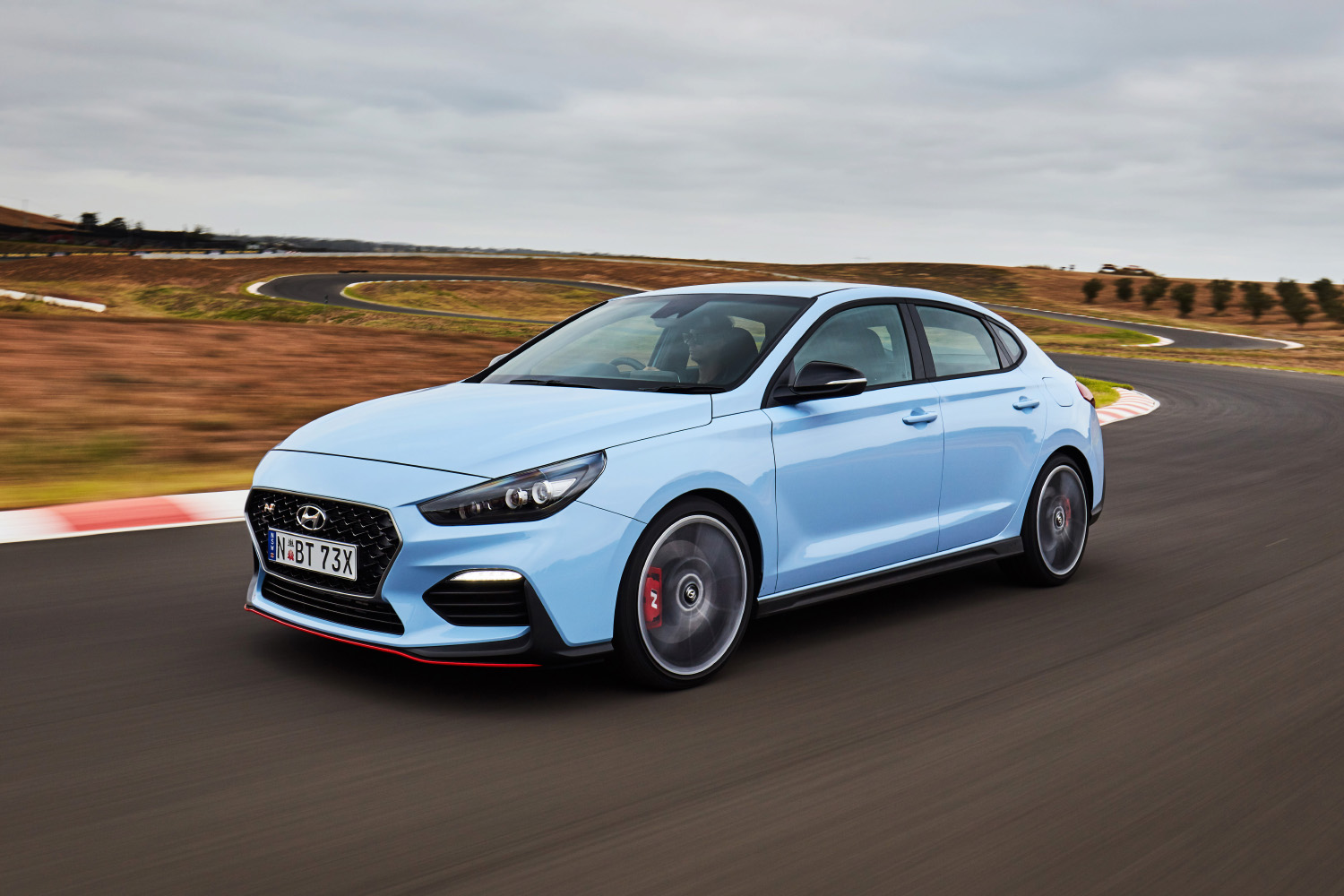
Expect front-wheel drive and the usual gamut of performance goodies – ranging from adaptive dampers to an electronic limited-slip diff, multiple drive modes, sports seats and the option of a dual-clutch eight-speed transmission.
The unknown quantity remains in how its high-grade hardware will translate on the new i30 Sedan’s K3 platform.
The K3 underpinnings are said to reduce weight, improve safety and add stiffness, as well as lowering its centre of gravity.
The photos also reveal the Sedan N will set itself apart from the standard range with a sportier body kit, angrier wing and prominent exhaust tips on each side of its rear bumper.
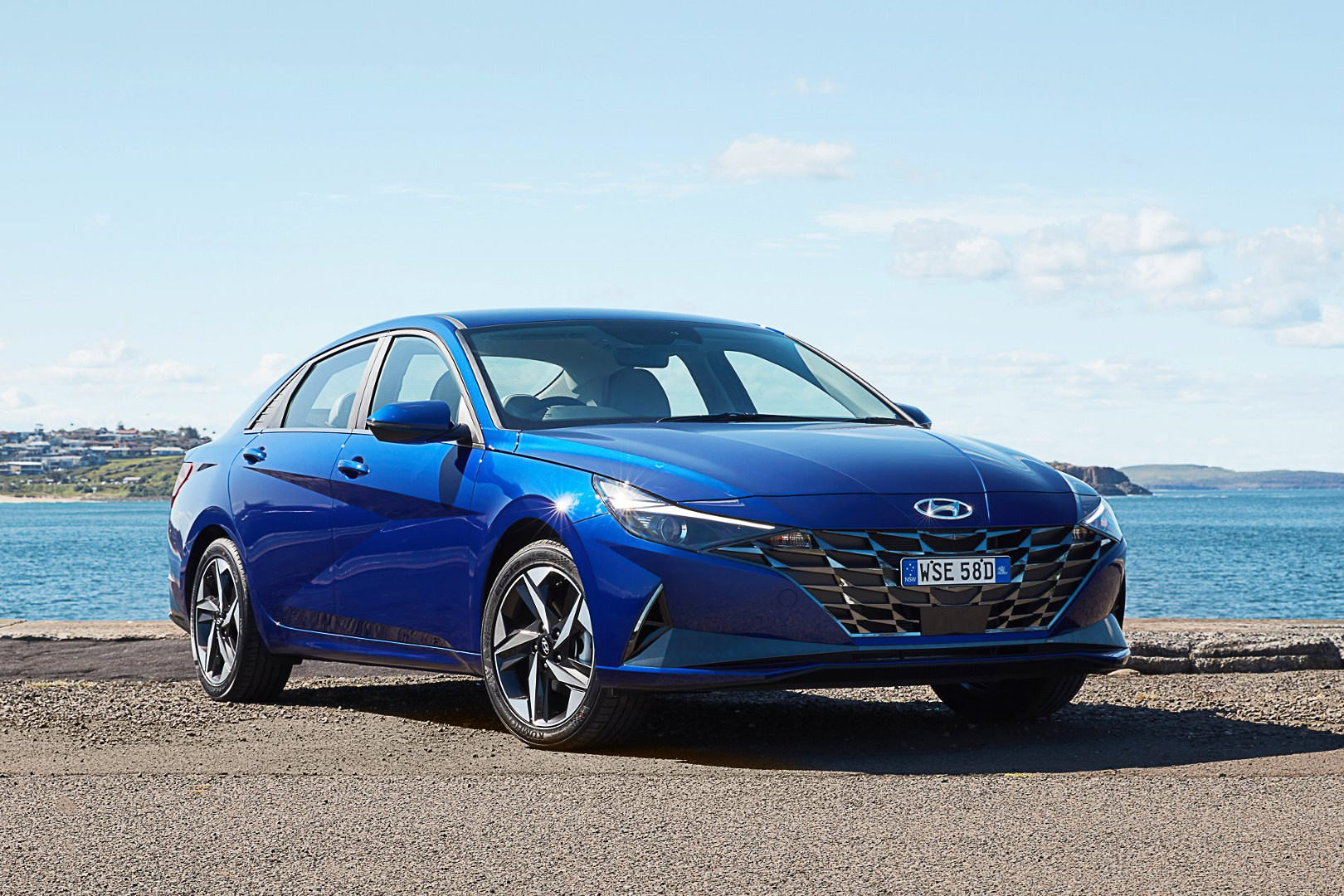
The i30 Sedan N is the latest in a range of hot Hyundais locked in for our shores before the end of next year.
The brand has confirmed it along with a more sedate i30 Sedan N-line, sporting a 1.6-litre engine, will join a Sonata, Tucson and Kona N-Line.
We only await the reveal of a final and fourth N model, which could very well be the small camouflaged Hyundai SUV spotted on the Nurburgring that’s believed to be a Kona N.
Stay tuned.
NOW WATCH Hyundai’s prototype i20 N driven!
Despite a myriad technical updates over the past five years, Nissan’s newest ute has never quite caught the attention of a booming dual-cab ute market.
To this day, the current Nissan Navara remains overshadowed by rivals like the Ford Ranger, Toyota Hilux, Mitsubishi Triton and Volkswagen Amarok.
So Nissan has now unveiled its most comprehensive D23 third-generation revamp yet, changing up the styling, beefing up some of the mechanicals and gifting it a range of new, important safety kit.
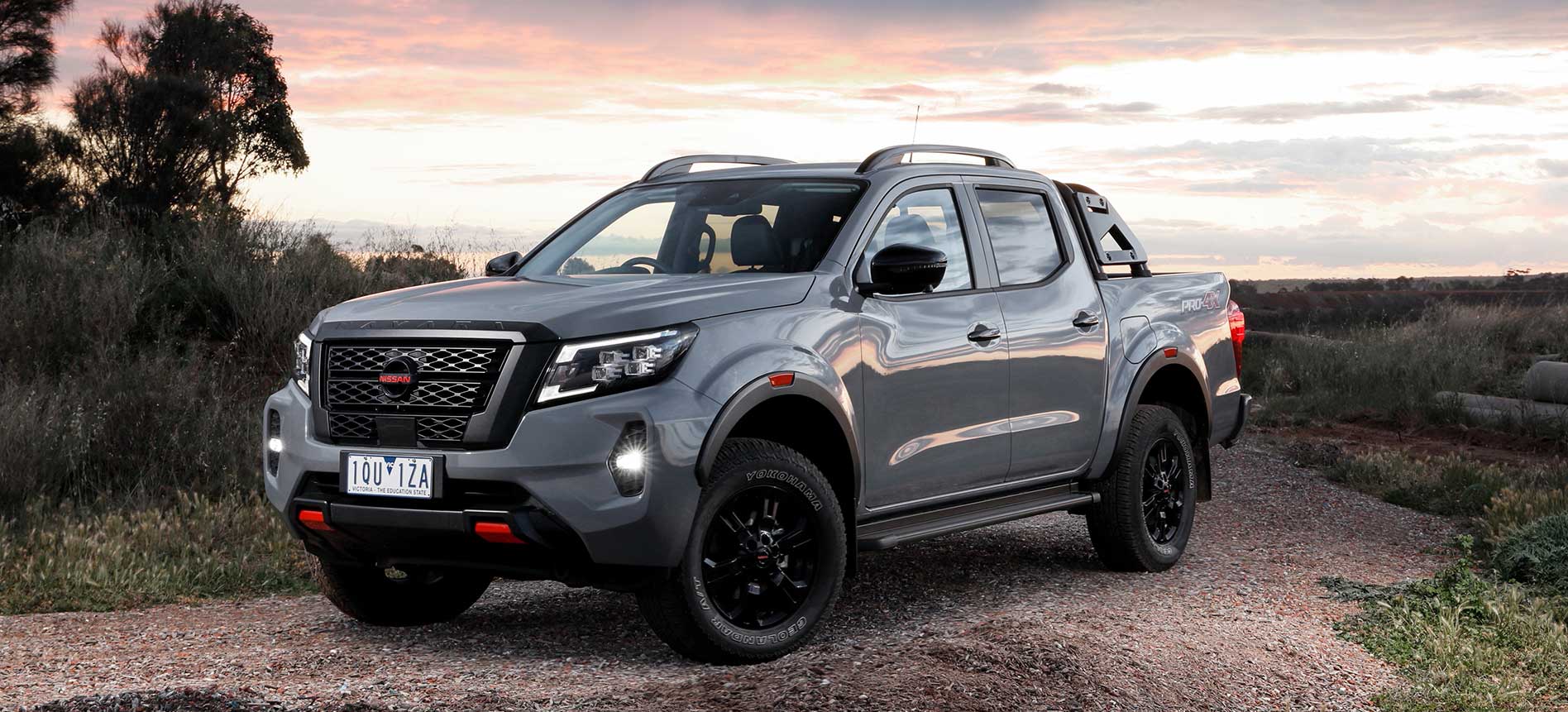
But is it going to be enough to trouble a front-runner in the national sales race like the Ford Ranger?
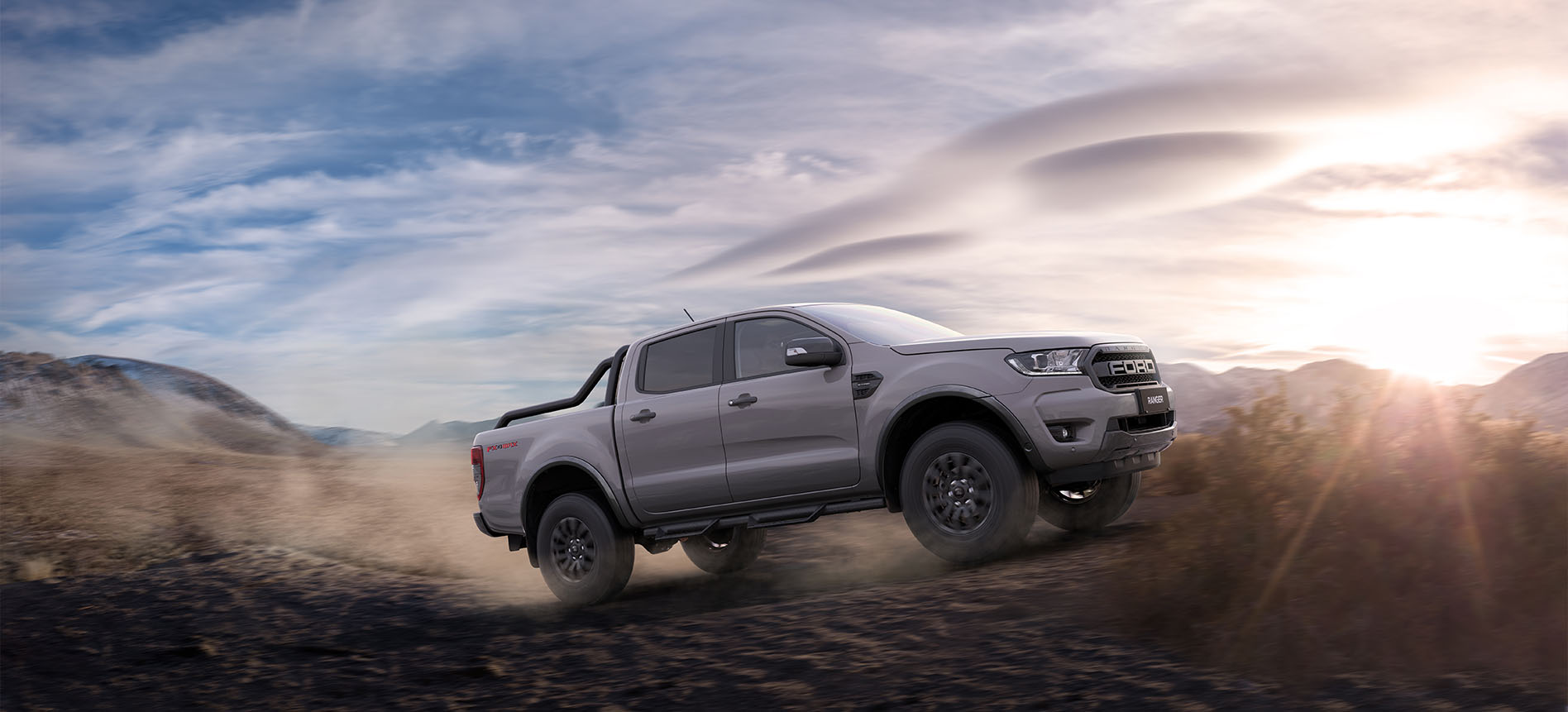
Ahead of its launch date, let’s see how the 2021 Nissan Navara stacks up against its equivalent 2020 Ford Ranger rival.
Engines/Drivetrain
It looks vastly different on the outside, but there’s little change for the drivetrain in the new 2021 Nissan Navara.
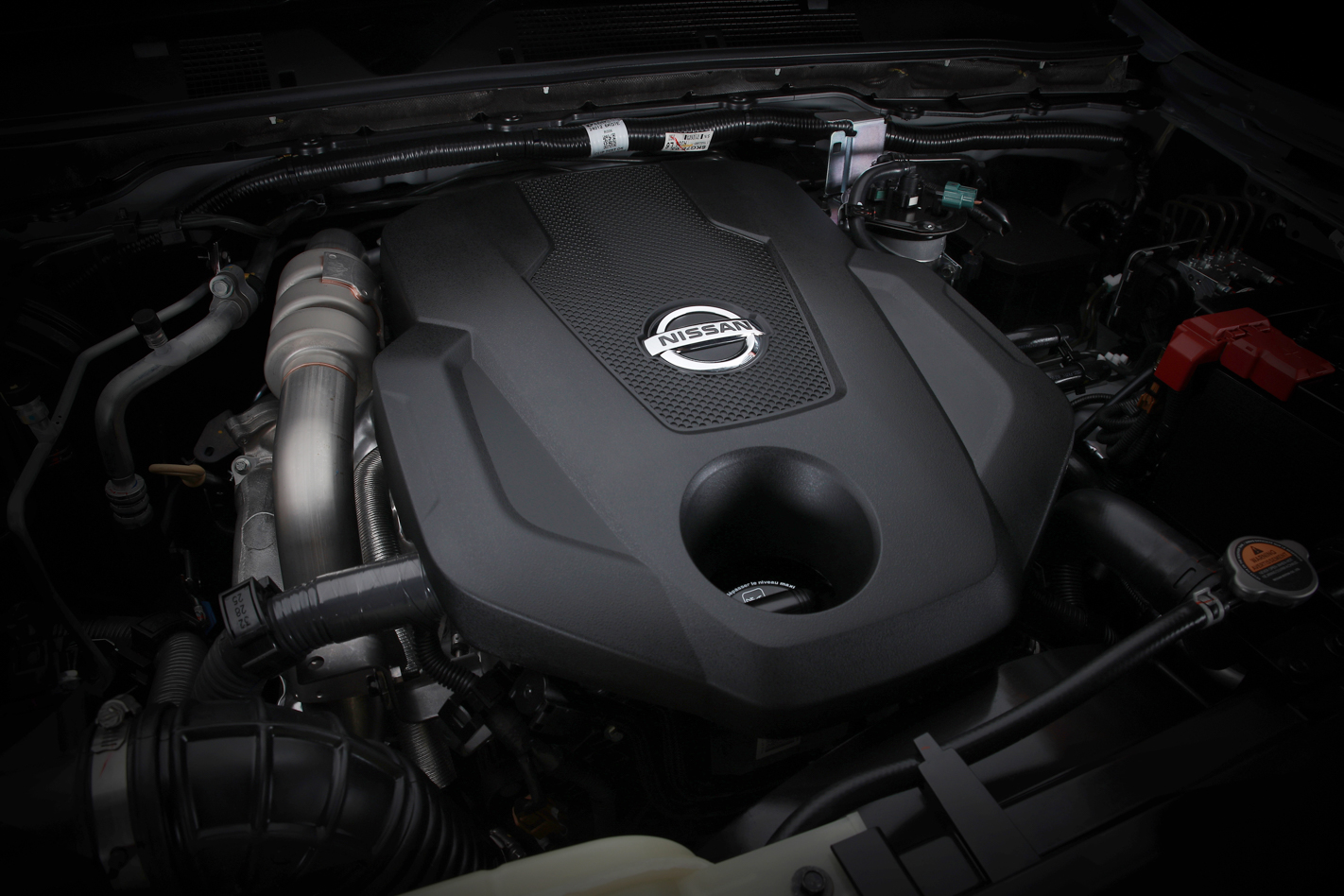
That will mean a carry-over for the 140kW/450Nm twin-turbo four-cylinder diesel engine in the higher-spec variants like the new Pro-4X, and the single-turbo 2.3-litre engine in the lower-spec utes.
Of the twin-turbo engine, Nissan is one of the few dual-cab manufacturers to use two turbochargers. The first is to enhance accelerator response at low speeds, while the other to maximise power when you hold your foot down.
Fuel consumption for dual-turbo engine is rated by Nissan at 8.1L/100km for the seven-speed automatic and 7.5L/100km for the six-speed manual.
Both gearboxes carry over unchanged.
The Ford Ranger offers a similar deal to its Ranger customers; a 157kW/500Nm 2.0-litre bi-turbo four-cylinder diesel for higher-spec variants, a 147kW/470Nm 3.2-litre single-turbo five-cylinder diesel engine option and a 2.2-litre turbo-diesel for entry-level models.
The most expensive 2.0-litre bi-turbo is only available as a cost-option on XLT, Wildtrak and Raptor variants, comes complete with a 10-speed automatic transmission, and sips 7.4L/100km of diesel fuel.
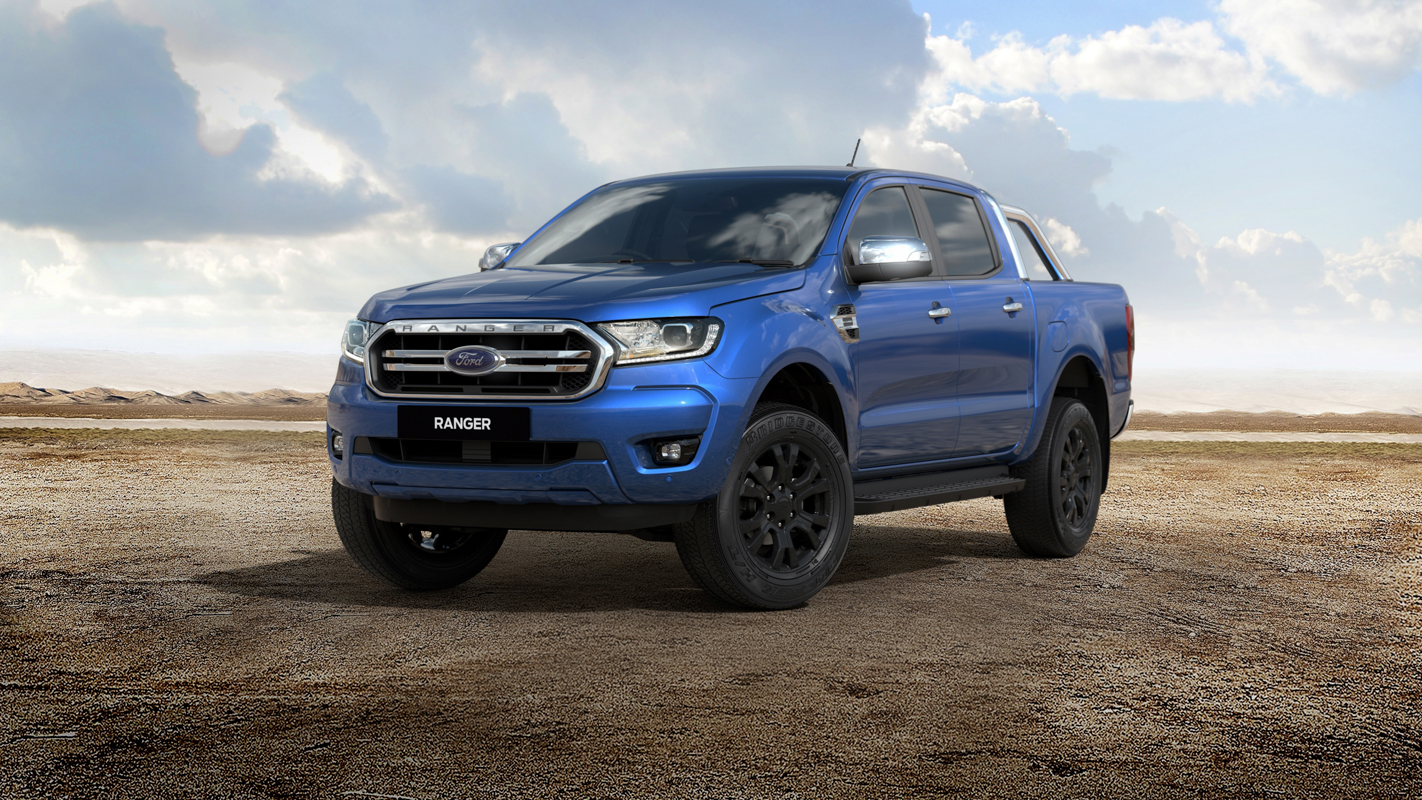
The 3.2-litre alternative uses a six-speed manual or automatic and drinks marginally more than the 2.0-litre, with Ford claiming 8.7L/100km.
Platform/Chassis
Like the powertrain, the chassis/suspension of the 2021 Navara remains primarily unchanged compared to its predecessor.
A five-link coil spring rear suspension or traditional leaf springs choice is carried over (depending on the chosen variant), and some parts have been toughened-up.
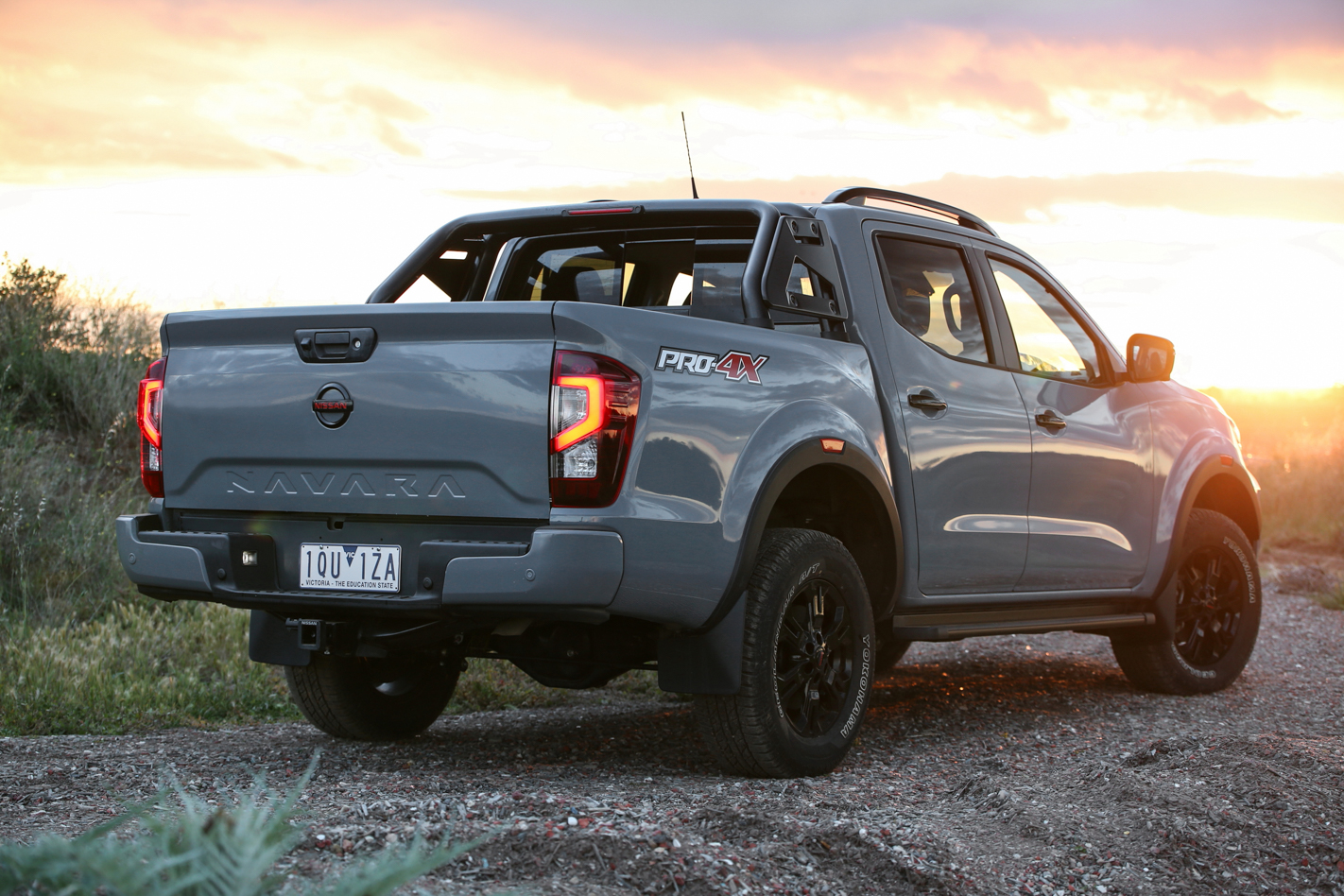
The rear axle is now stronger to better cater to heavier loads on 4×4 models, and a new steering rack has been added to improve feel.
It’s not the first change for the Navara, which favours coil springs at the rear for ride comfort over ultimate payload capacity.
However, early versions felt very soft and unwieldy, forcing Nissan to revise its set-up on two occasions prior to this.
Other items include a step-ladder for easier access into the pick-up tray and an increased number of tie-down points for securing loads.
Conversely, the Ford Ranger uses a more-conventional leaf-spring rear suspension set up that, in our experience, works well off the beaten track as well as being one of the nicer on-road systems too.
Its steering is notoriously light and easier to use around town, too.
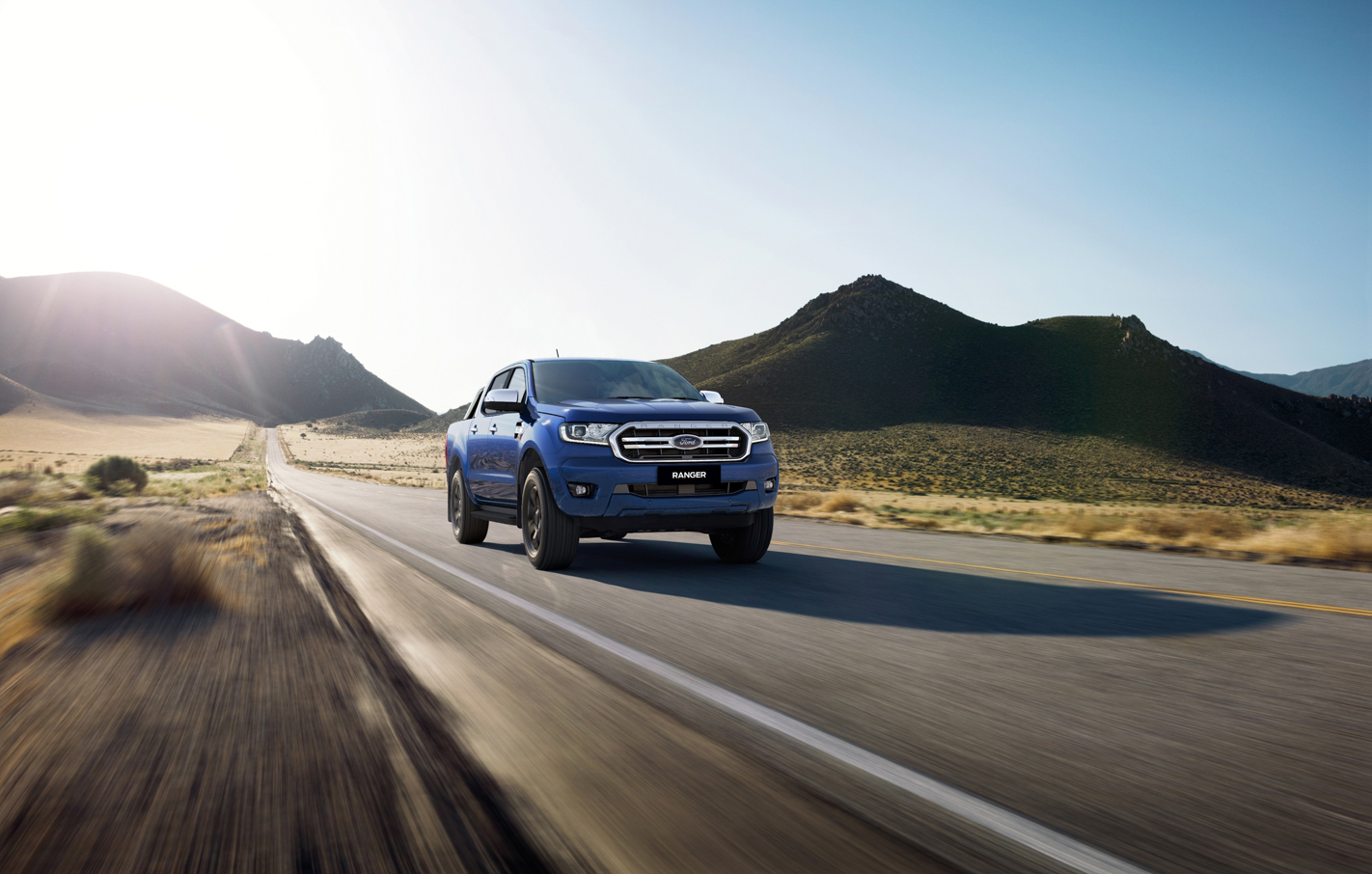
Thanks to some key mid-life updates, the Ford Ranger’s T6 platform has been in use for nearly a decade.
Both Ranger and Navara 4×4 variants come with a locking rear differential.
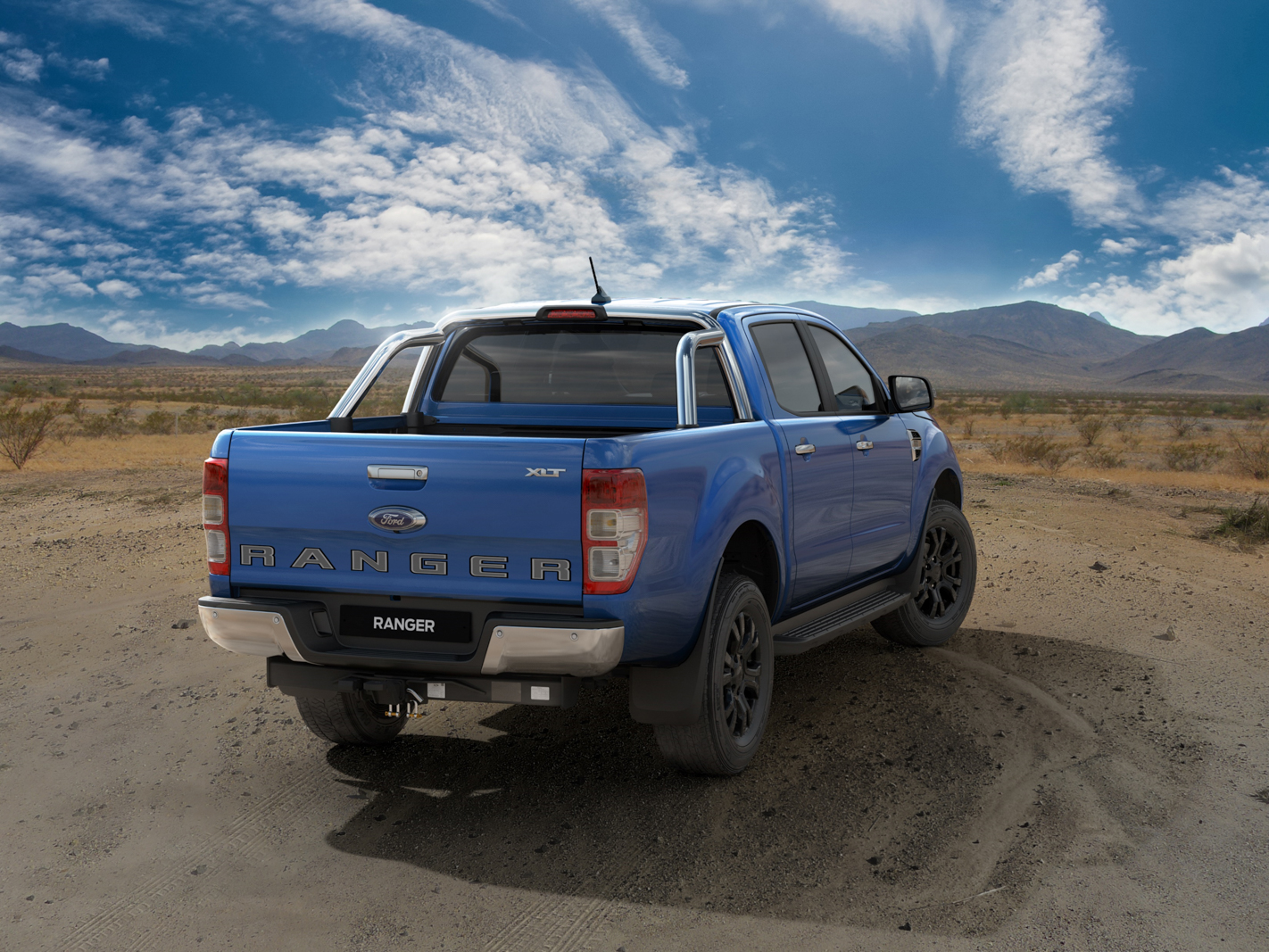
Towing/Payload
That heavier-rated rear axle has been fitted to the new Navara with a direct intention to improve the payload, which Nissan reckons can provide up to 1200kg loads on all models.
However, actual figures are yet to be finalised before the official specifications are released.
The Navara is capable of towing 3500kg (braked) and comes with a Trailer Sway Control system for improved stability when hauling a load.
As a comparison, the dual-cab Ford Ranger has a payload of up to 1003kg, depending on variant and engine.
Most Rangers can tow up to 3500kg (braked) like the Navara, with the notable exception of the coil-sprung Ranger Raptor which can only tow up to 2500kg.
Exterior/Design
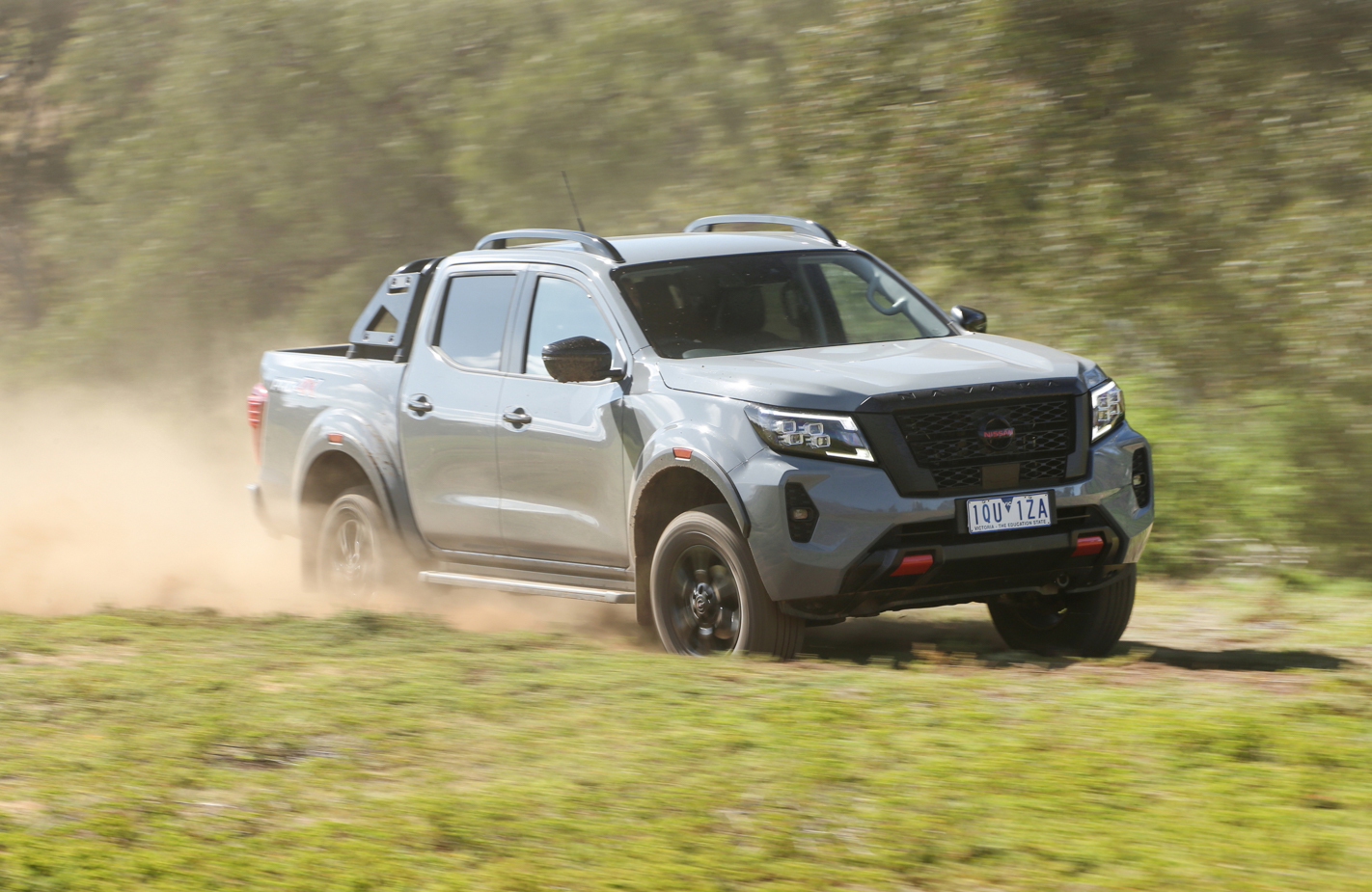
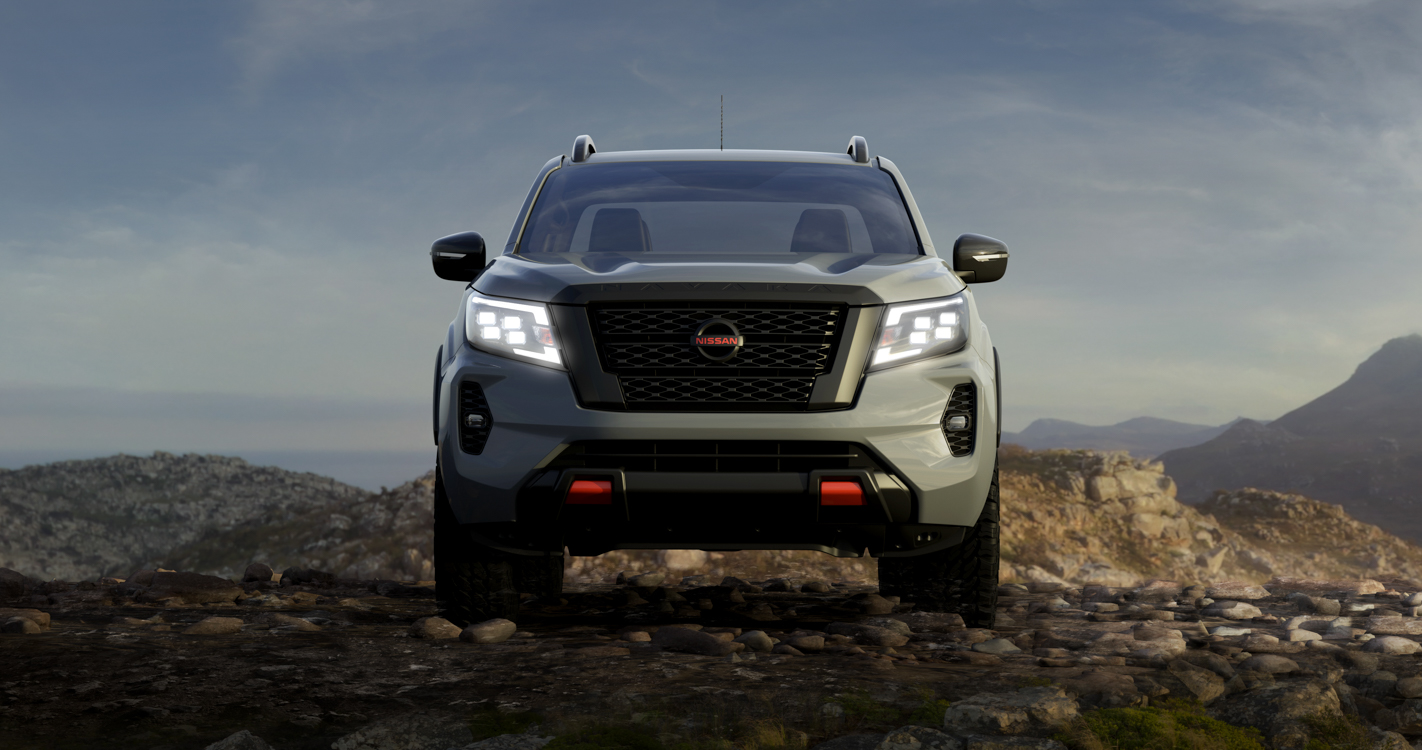
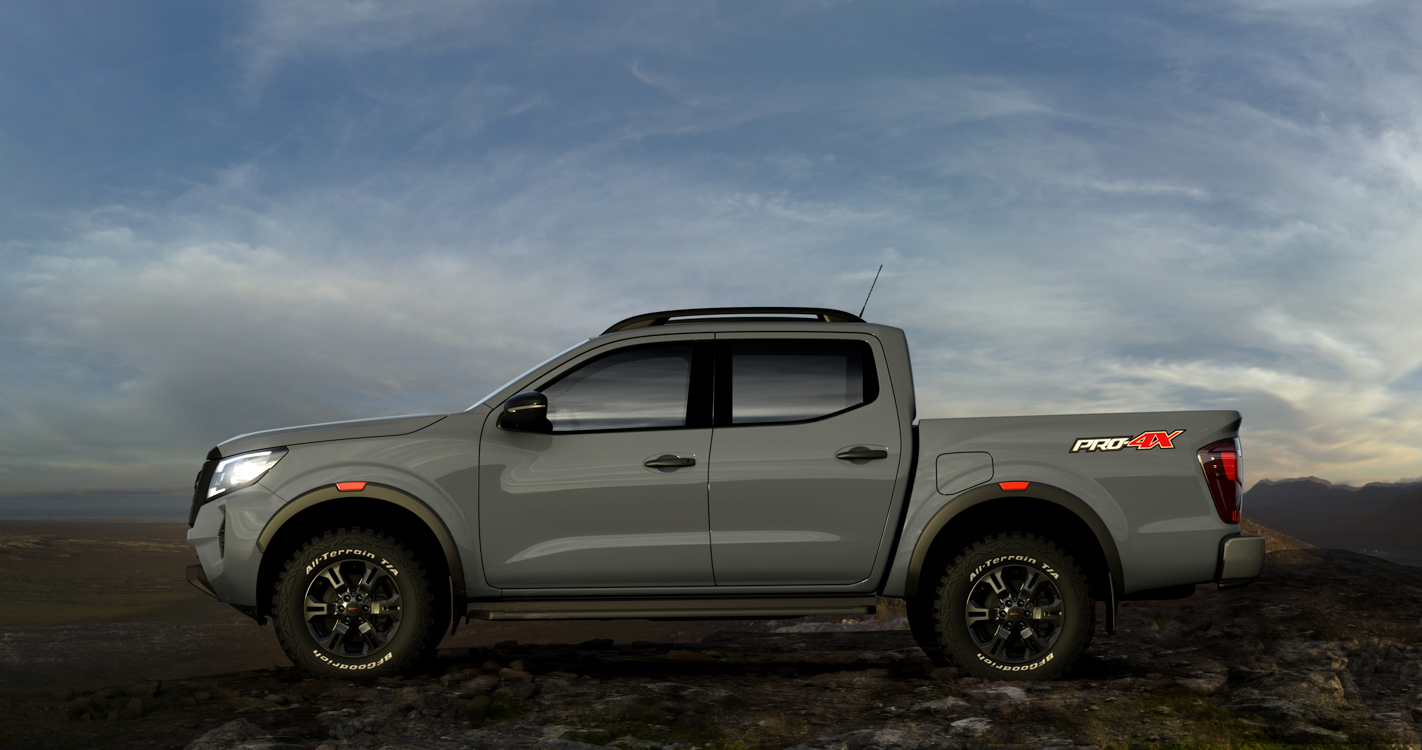
The design of the 2021 Nissan Navara is arguably where the new model has seen the most change, sporting a new face borrowed from the US market Nissan Titan pick-up.
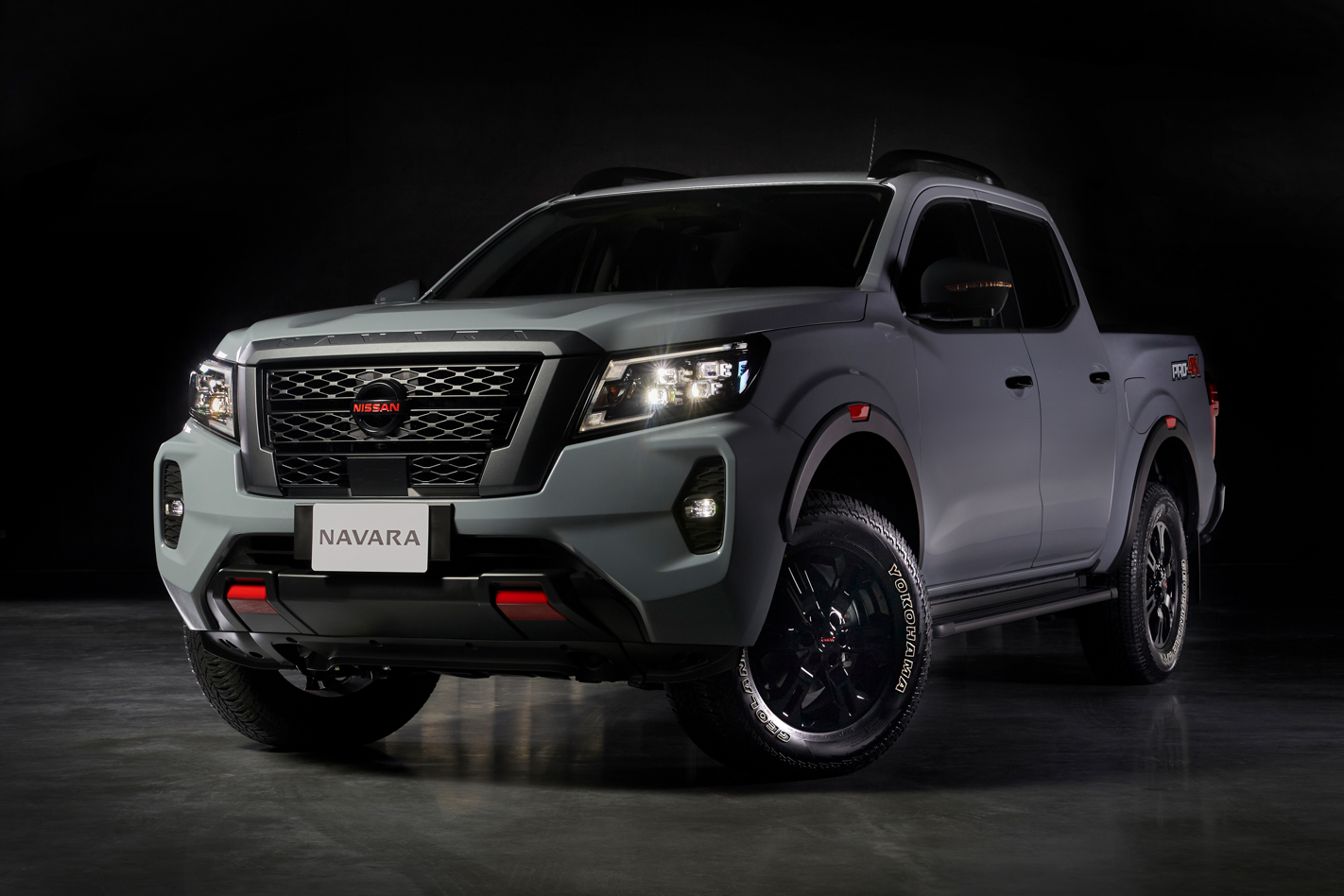
The look features a new, larger grille, a taller bonnet, C-shaped LED headlights and a restyled front bar.
There’s a new font for the ‘Navara’ script which features on the front and back of the ute, while a pair of new LED taillights feature at the rear.
Ford’s Ranger design is clean, neat and has won over a lot of fans, and as such it hasn’t changed a whole lot in the past few years.
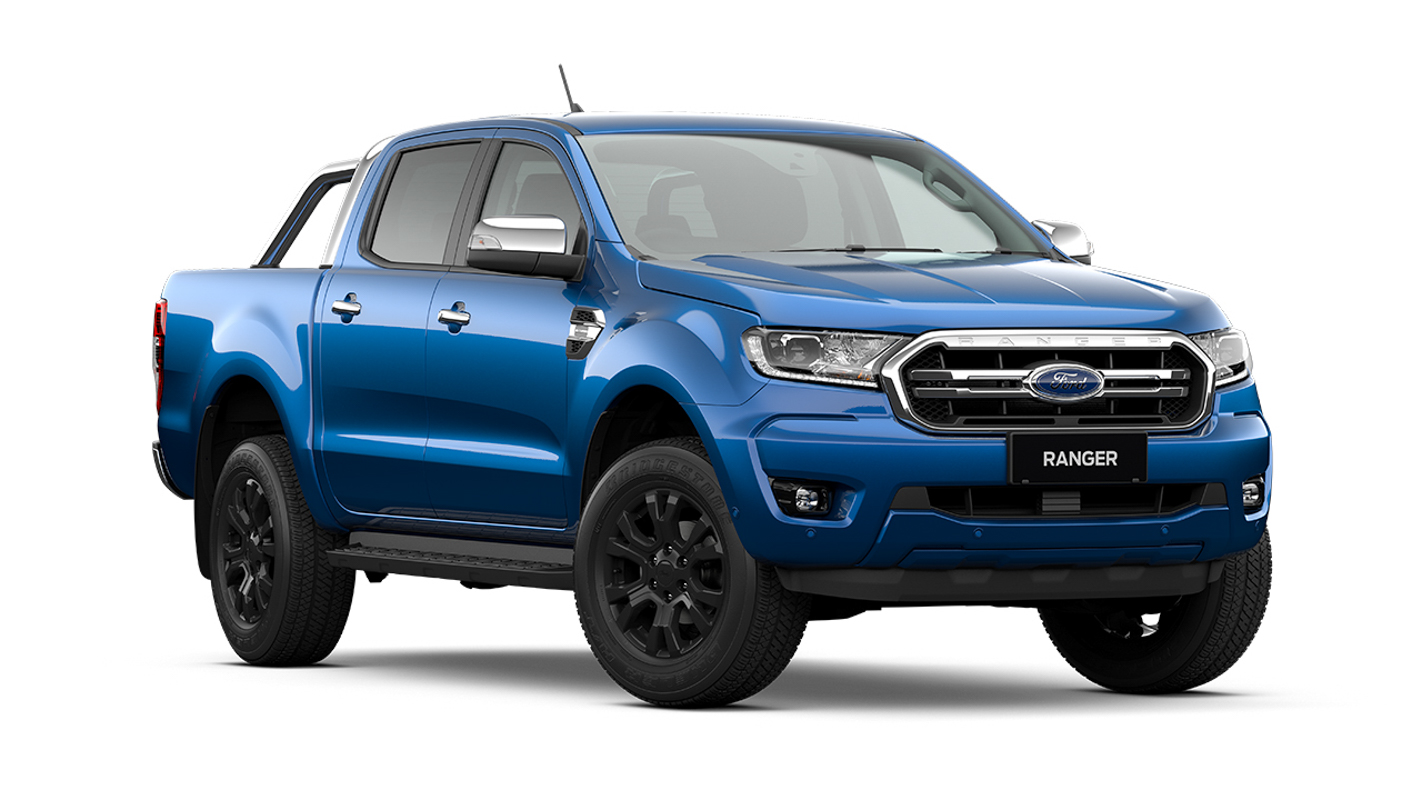
High-spec versions get bi-LED headlights and daytime running lights, 18-inch alloys and chromed trim – though there is a vast selection of standard and limited-edition models to choose from should you desire a different look.
Ford has progressively transformed the Ranger to more closely resemble its US pick-up style offerings, and we expect the next generation to fully adopt an American-faced demeanour.
Interior/Technology
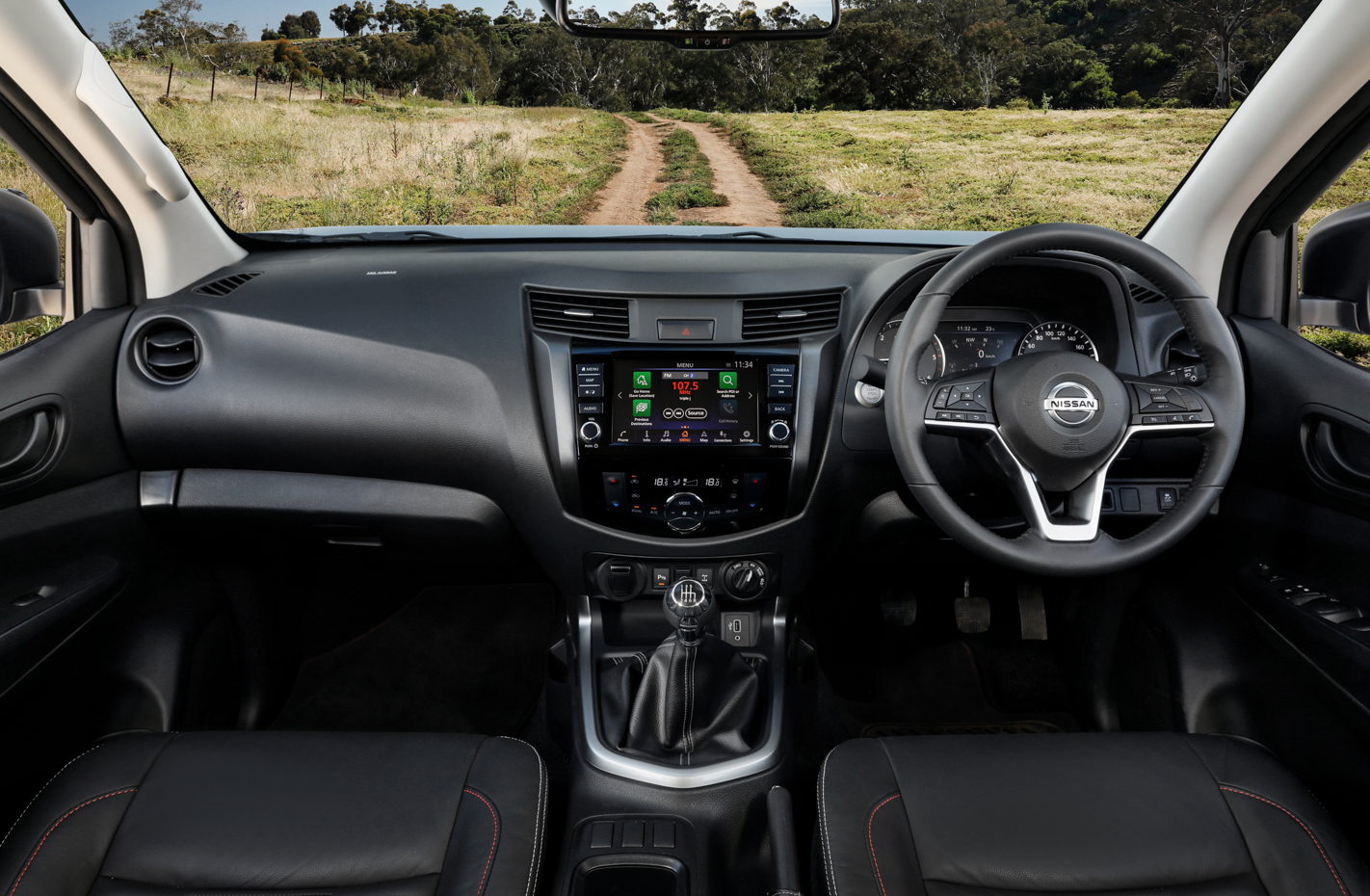
For such an overhauled exterior design, the interior of the Navara hasn’t received a restyle to the same extent.
That said, a common frustration for current Navara owners – the old steering wheel – has been replaced with a new multifunction unit.
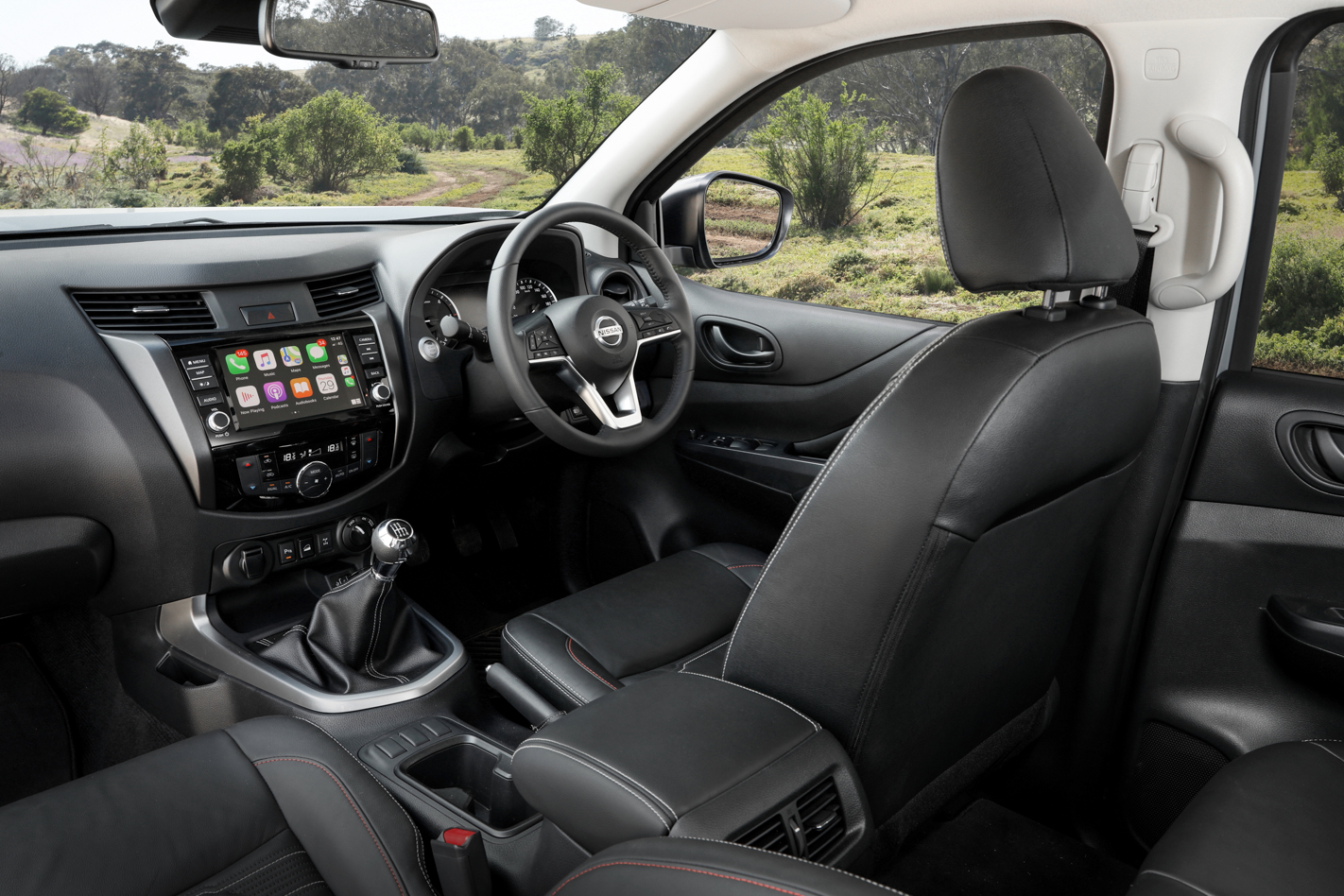
The smartphone mirroring-enabled 8.0-inch infotainment unit pairs with a 7.0-inch display within the instrument cluster, and Nissan says the addition of extra sound deadening should keep the cabin quieter than before.
Second-row passengers get a comfier seat, there are two new cupholders in the fold-down centre armrest and a USB access port in between the front seats.
Additional safety tech is also added to the 2021 Navara to meet the specs of other fresh utes on the market, equipping items like automatic emergency braking, active cruise control, trailer sway control, rear cross-traffic alert, 360-degree camera, lane departure warning, lane intervention, and blind-spot warning.
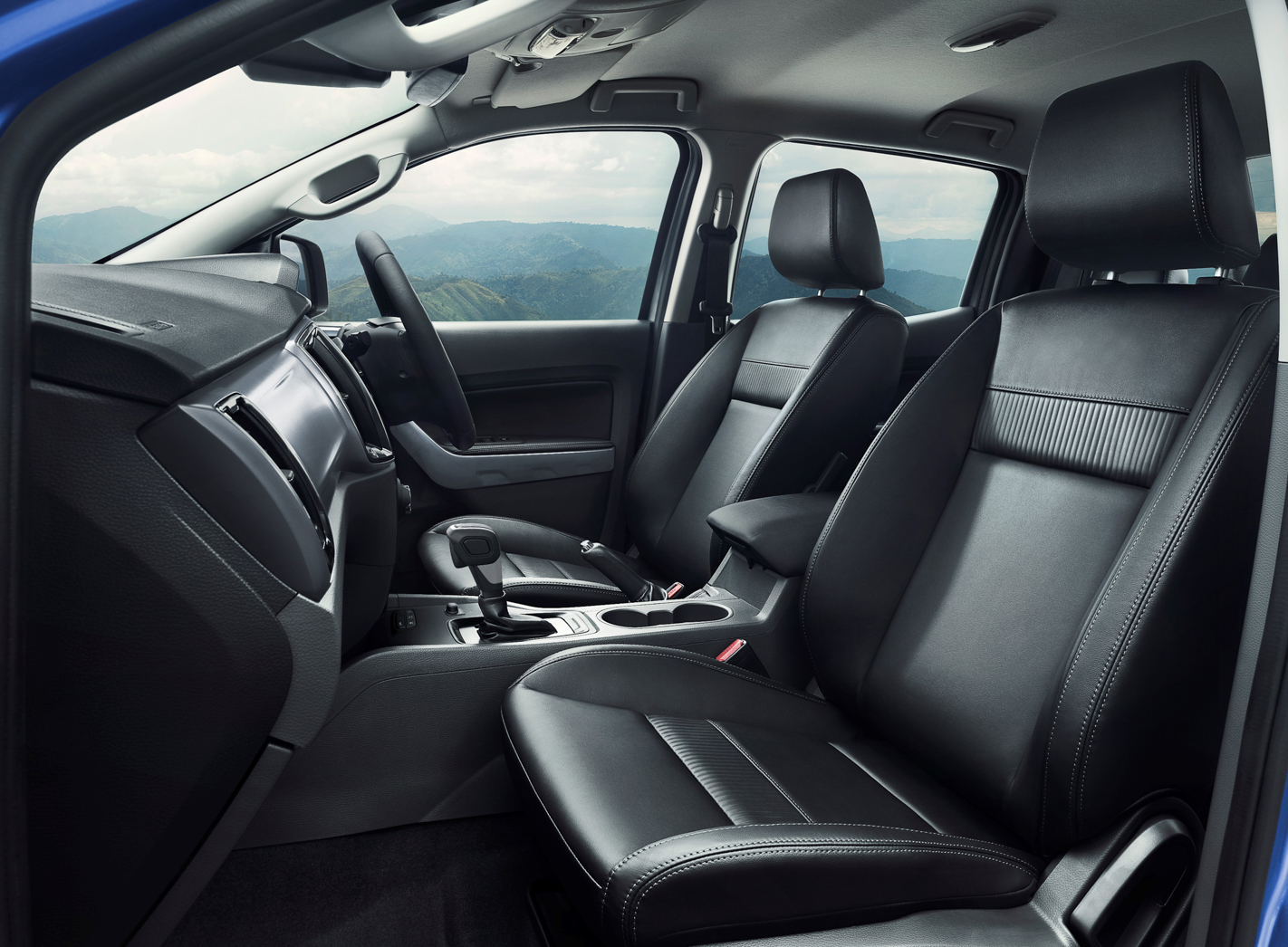
The Ford Ranger’s interior is highly functional, featuring an 8.0-inch touchscreen infotainment system with Apple CarPlay/Android Auto smartphone mirroring, two multifunction displays within the instrument cluster, a thick-rimmed multifunction steering wheel and a number of storage cubbies at the driver’s disposal.
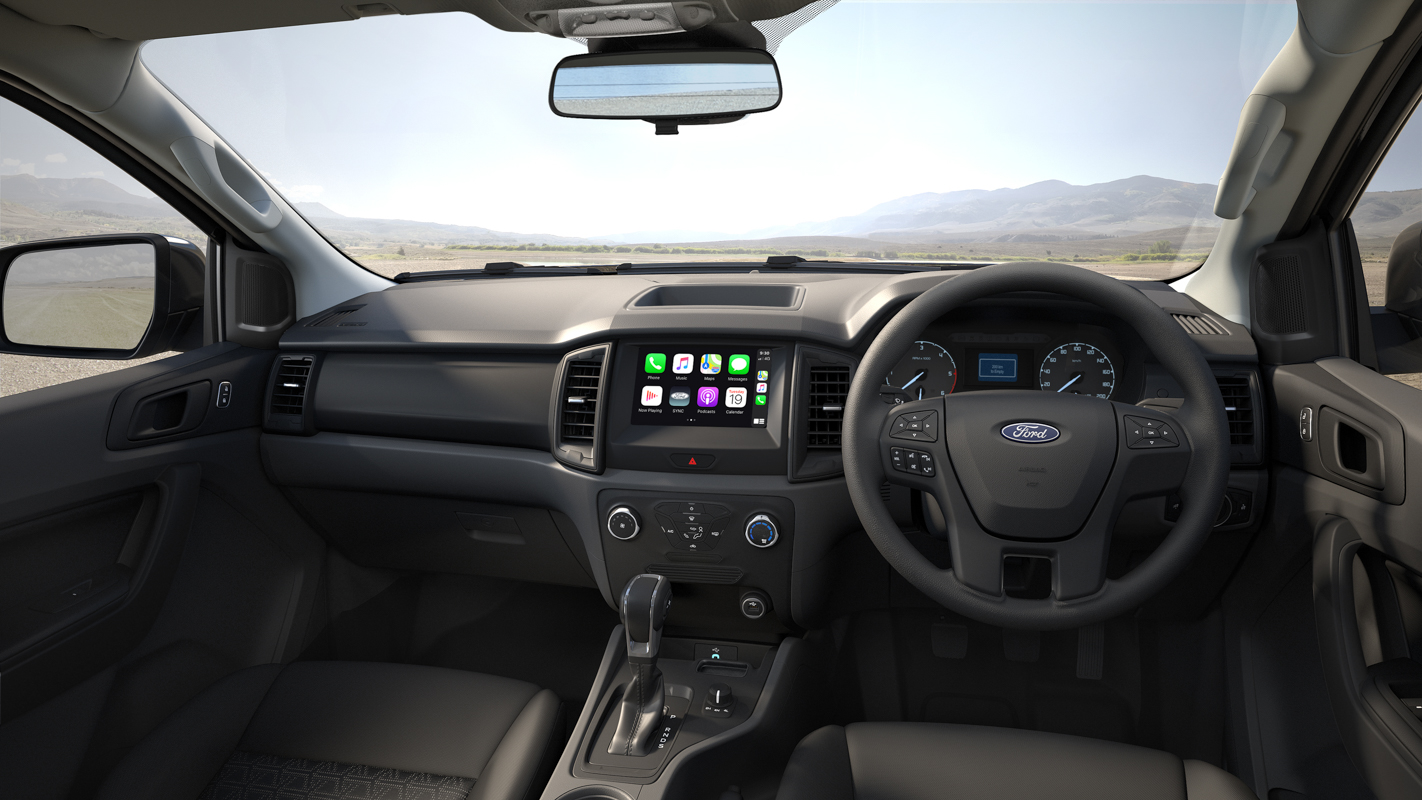
Depending on how much you spend, the Ranger can equip items like a remote-controlled tonneau cover, extra USB ports and styling enhancements – especially on various special editions (which Ford isn’t shy of churning out).
The Ford Ranger has a suite of active and passive safety systems standard across the range, including automatic emergency braking, speed sign recognition and lane-keeping aid.
Conclusion
While we await further information about the rest of the new Nissan Navara range, and detail on pricing, this substantial mid-life refresh to the Navara range should go a long way to clawing back customers from rival brands.
Whether Nissan has done enough to improve driveability will be a key interest when we put the new Navara up against its competition for real when it arrives in 2021.
General Motors Specialty Vehicles has confirmed a new local dealer network this morning, saying over 50 sites across Australia and New Zealand are now open for business. And that’s not going to be all of them.
“We have launched with over fifty GM Specialty Vehicles dealers and look forward to adding more,” GMSV director Joanne Stogiannis says in a company press release, “we can’t wait to see the first Silverados being driven out of our GMSV showrooms.”
As for where these dealers will be, GMSV has opened an interactive find-a-dealer search page on its home site, which you can find here.
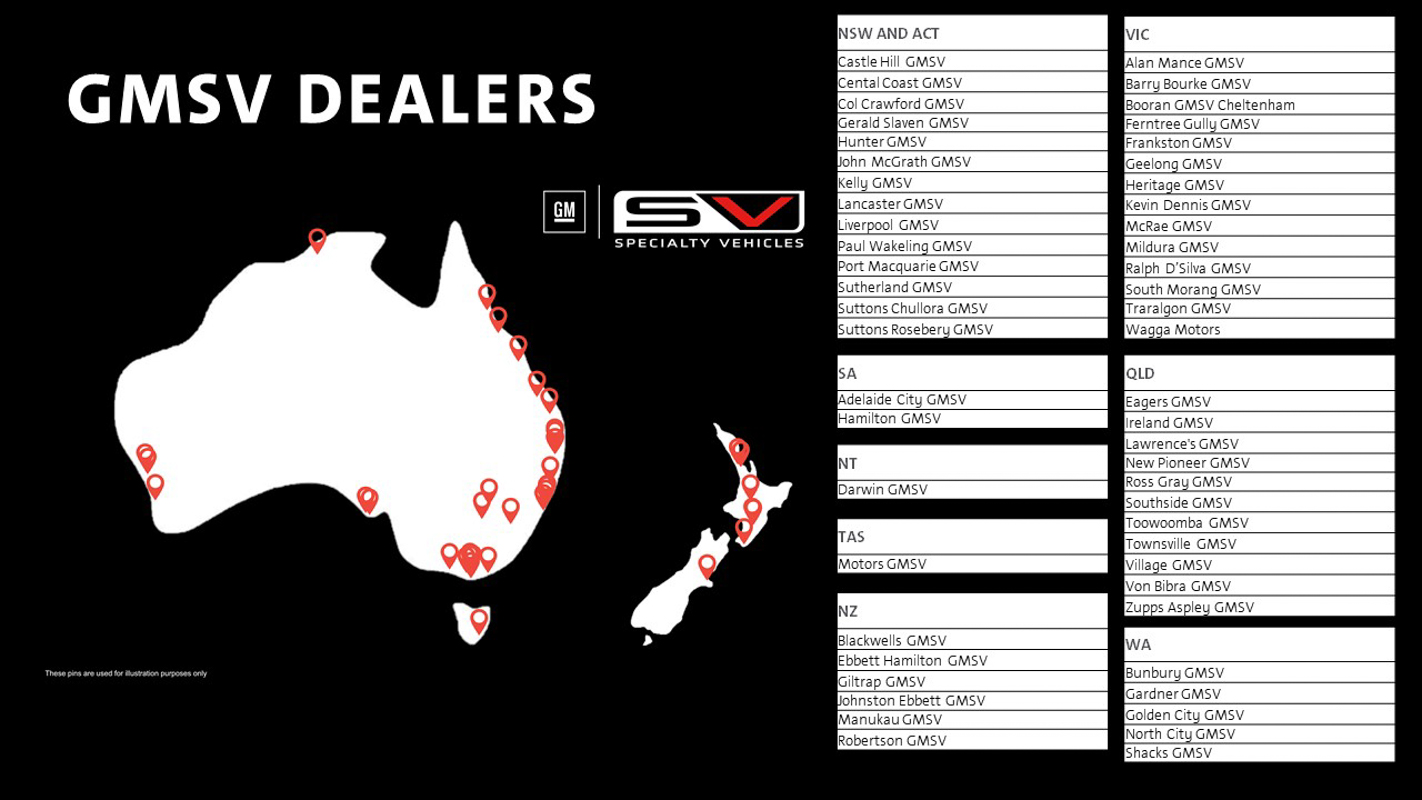
We could also locate one in Tasmania, two in Adelaide, one in Darwin and three in Perth. There are also six confirmed for New Zealand, according to the official GMSV image above.
With Holden dealer showrooms nearing 200 in number after the brand closed down earlier this year, it’s unclear whether it’s the 48 GMSV dealers in Oz that will service Holden cars still under warranty.
We contacted GMSV for further details on how dealers were selected and to find out how many come from existing relationships through the now-closed Holden brand.
It says the bulk of the sites come from existing HSV dealers and that for now the 54-strong network across both countries suits the brand’s coverage for the business’s initial phase.
MORE GMSV NEWS
- GM urges Holden dealers to refund Corvette deposits
- Holden dealers question GMSV legality
- Thirty minutes with the new Walkinshaw Automotive Group boss, Joel Stoddart
- The cars GMSV should bring to Oz
Toowoomba Holden in Queensland is another dealership launching the GMSV brand today.
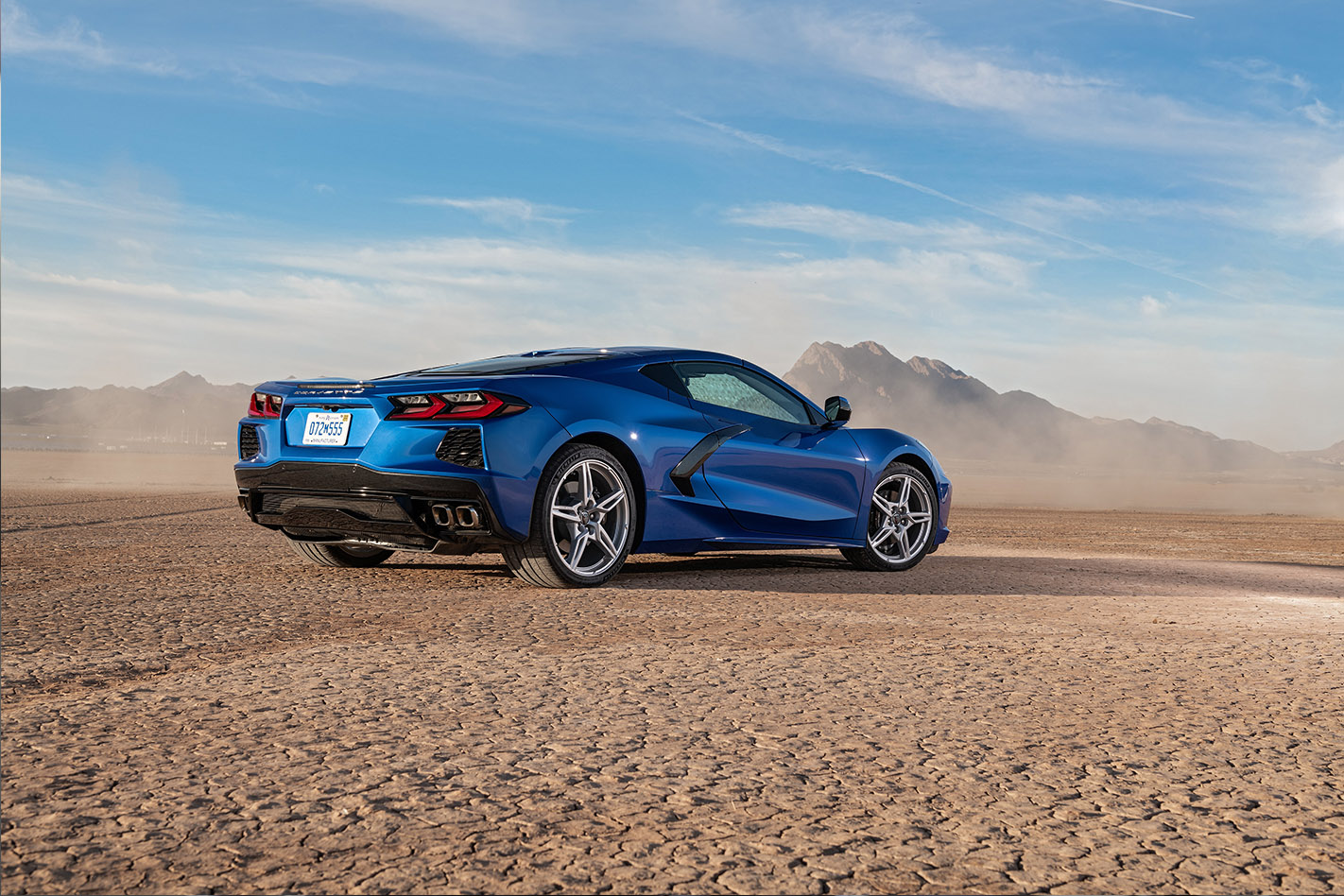
At the moment these GMSV dealers have only the Walkinshaw-manufactured Chevrolet Silverado 1500 and 2500 to offer in yards, while the C8 generation Chevrolet Corvette has been confirmed for Australia late next year.
“We will continue to identify opportunities to add to vehicles where we see the chance to compete in niche segments in Australia and New Zealand.”
As for what GM will next bring to Australia, a good speculative guess might include the Chevrolet Camaro for reasons listed below.
We’ve also pondered more options from other GM brands here.
One, the Camaro has been recently confirmed to race in Australia’s Supercars motorsport series in 2022 under the mandated Gen3 regulations, sparking a new chapter on the red versus blue story when it takes grid position alongside an all-new Supercars Ford Mustang.
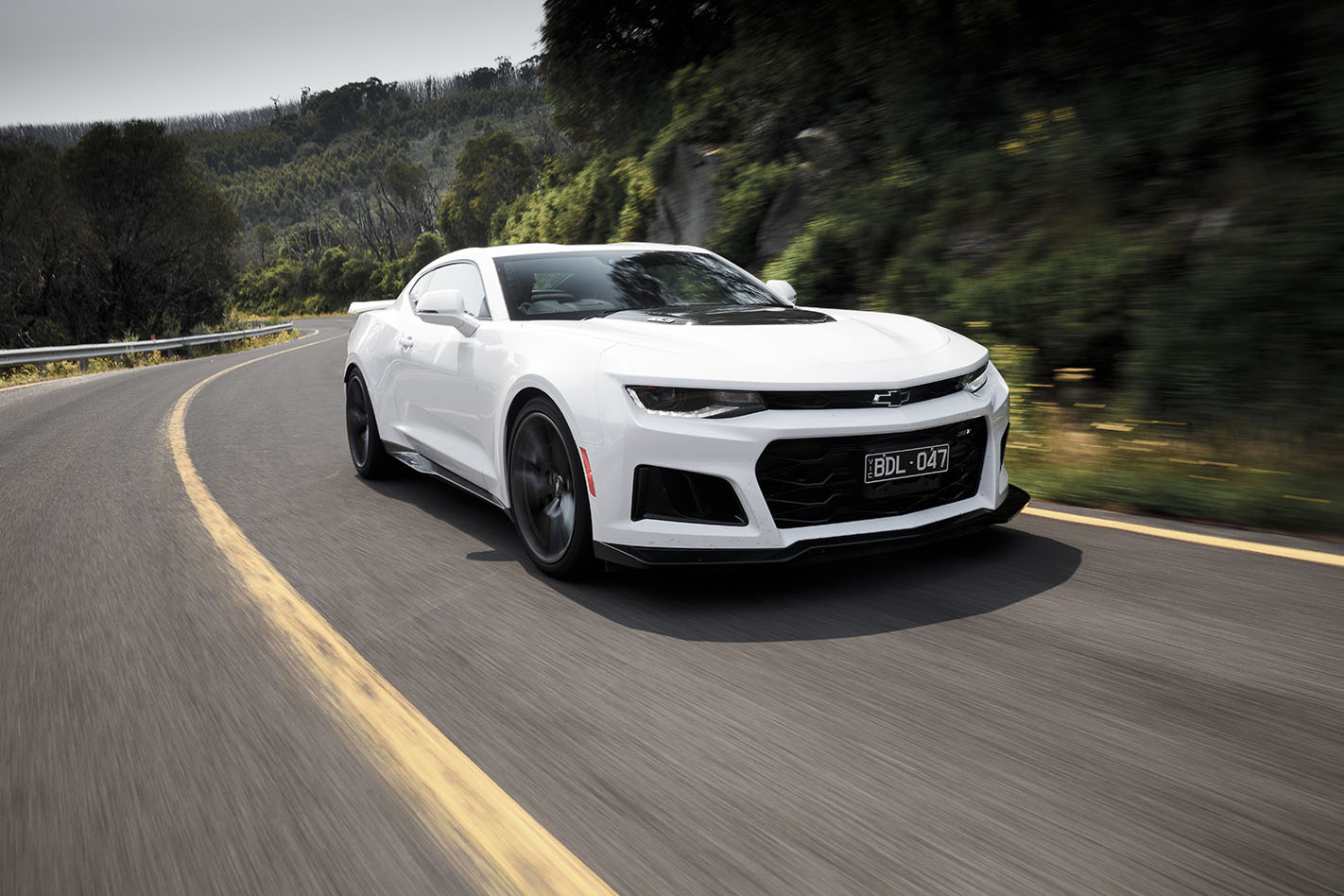
While the Walkinshaw Group ended Camaro operations earlier this year, the nameplate continues to exist in America, meaning the local brand could possibly source stock to convert quickly if it suits GMSV’s new direction.
Update on November 11, 2020:
GMSV has confirmed it is still not accepting deposits or pre-orders on the C8 Chevrolet Corvette at this time, promising more details on the buying process closer to its launch.
It could also be seen as intimating GMSV dealers will not serve as service centres for Holdens, saying, “GMSV’s dealer network was established for sales and service of GM Specialty Vehicles. Holden has an extensive network of Holden Aftersales Service outlets which will look after the requirements of Holden customers.”
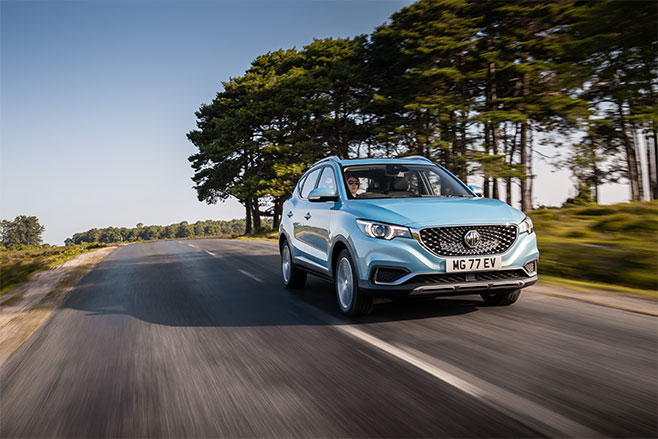
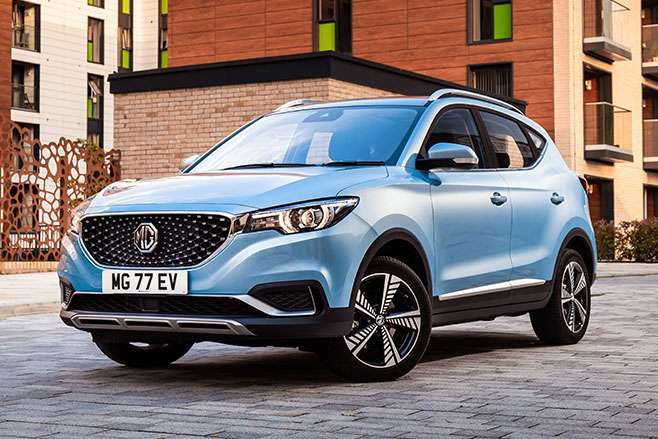
MG has unleashed the cheapest pure electric car on the Australian market, the MG ZS EV.
Priced from $40,990 plus on-road costs ($43,990 drive-away), the all-electric version of the small SUV is almost double the price of the petrol-engined version it’s based on but still thousands cheaper than other electric cars currently on sale.
The Chinese carmaker’s first EV undercuts Hyundai’s Ioniq Electric at $48,970 plus on-road costs and the Nissan Leaf’s $49,990 retail price tag.
The price also undercuts the initial $46,990 that was announced for pre-orders made earlier in 2020.
Those keen MG EV early adopters will get a refund (or pay a lower price if they are yet to pay) and get a small financial sweetener for taking the early EV leap.
“Were really focused on making electric for everyone,” said MG Australia director of marketing and product development, Danny Lenartic.
“We’re going to spark consumers into action,” he added, with a “readily and accessible for everyone.”
MG says this is the start of its electric car journey in Australia.
“Before long MG will offer an affordable electric driveline in key segments,” said Lenartic, with plans for four models by 2025.
“MG is bringing electric to everyone.”
ZS EV range and charging
By EV standards the MG ZS EV has modest electric range, capable of just 263km between charges. Its lithium-ion battery pack can store 44.5kWh.
A single electric motor produces 105kW and 353Nm and drives the front wheels.
The ZS EV is covered by a five-year, unlimited kilometre warranty and the high voltage battery pack has a separate eight-year, 160,000km warranty.
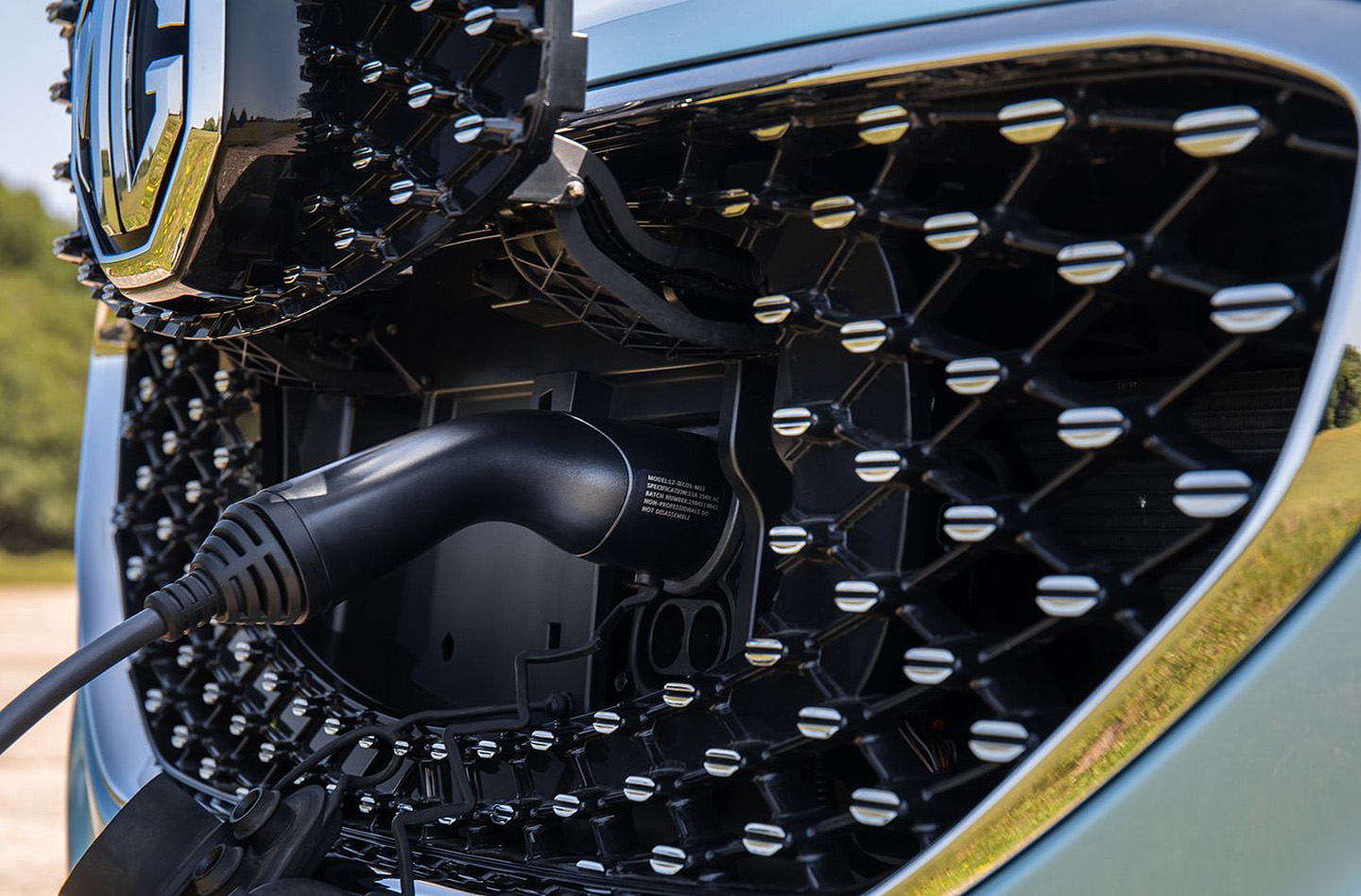
Home AC charging can be done using a wallbox for up to 7.2kW, allowing a full charge in about seven hours.
DC fast charging can provide up to 50kW for an 80-percent charge in about 40 minutes.
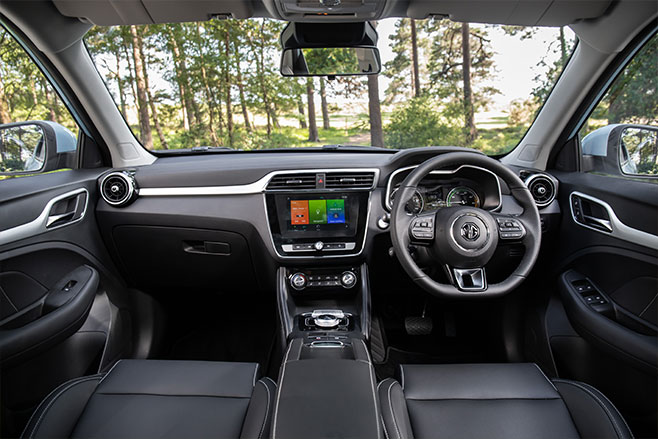
The MG ZS EV comes standard with a panoramic sunroof and fake leather seats. There’s an 8.0-inch touchscreen with satellite-navigation and Apple CarPlay and Android Auto.
It is visually distinguished by unique alloy wheels and an EV badge on the rear.
Assuming United States President-elect Joe Biden isn’t blocked from moving into the White House in January, you can expect to see some big changes to the US car industry including an unprecedented focus on electric vehicles.
The rev-head former Vice President, who still owns a 1967 Chevrolet Corvette Stingray that was a wedding present from his father, believes the best way to make US car manufacturing great again is to be the world leader in electric-vehicle (EV) production.
“I believe we can own the 21st-century market again by moving to electric vehicles,” Biden said in a video produced during the presidential campaign (above).
Biden has pledged US$400 billion (A$550 billion) to help Americans transition to electric vehicles, by supporting the development of advanced battery technology and assisting states and counties to build a network of 500,000 vehicle chargers across the country by the end of 2030.
At present, there are just under 90,000 charging stations in the US, according to its Department of Energy. More than 15 million cars in total are sold in the US each year.
Consumer EV incentives
Biden has also foreshadowed extending tax credits for EV buyers by extending the scheme that sees the Federal Government subsidise EVs via a US$7500 (A$10,300) consumer tax break for the first 200,000 vehicles a carmaker sells.
Tesla and GM have already exceeded that cap, but Biden’s plan will see that number extended for EVs built in the US.
As well as benefiting disruptor EV makers such as Tesla, Rivian and Lucid, industry analysts say such tax incentives will help legacy brands such as GM, Ford and Fiat Chrysler stimulating the production and consumption of EVs

The ‘cash for clunkers‘ rebate program the Obama administration introduced during the Global Financial Crisis will also return, but with grants given for Americans to trade older internal combustion engine (ICE) vehicles for a new EV.
It is unclear if Biden’s plan will be the same as the $450 billion (A$620 billion) scheme the Democratic Party introduced to the Senate last year would have offered buyers $3000 (A$4120) to upgrade, with the aim to replace 63 million ICE vehicles to emissions-free cars within 10 years.
Biden believes an increase in EV demand and local production would create about a million new jobs across auto manufacturing, supply and infrastructure.
Vehicle emissions reductions
Increasing America’s EV fleet would go a long way to in helping Biden reintroduce stringent fuel economy standards that were wound back by President Trump.
Introduced by the Obama Administration in 2012, carmakers had to reduce carbon dioxide emissions for passenger and light commercial vehicles by 3.5 per cent each year from 2017 to 2021 and by 5.0 per cent annually from 2022 to 2025.
Trump reduced the annual emissions’ reduction to 1.5 per cent until 2026, but Biden has indicated he will set new standards that will exceed Obama’s.
Trade
Biden is expected to tone down Trump’s bullish attitude to trade agreements particularly with Europe and will re-join the Trans-Pacific Partnership (TPP).
He’s also expected to offer China an olive branch by winding back tariffs on Chinese made vehicles, parts and raw materials including aluminium. According to the US Federal Reserve, rather than protect American jobs, the tariffs on Chinese goods and materials have led to vehicle prices increasing and a loss of US auto manufacturing jobs.
What could this mean for Australia?
American-made cars already benefit from lower import taxes than European cars, so we probably won’t see a difference in the cost of vehicles shipped here across the Pacific.
And despite our strong trade ties with the US, Aussie-built EVs won’t benefit from any trade agreements as long EV grants only apply to US-made vehicles.
However, we could see EVs become cheaper here should the US legacy carmakers bring their EV plans forward as it will mean more global competition particularly at the more affordable end of the market.
