
Well known American tuner John Hennessey has revealed a new addition to his company’s line up, a beast called the Super Venom. Based on the Ford Mustang V8, the Super Venom boasts outputs of 633kW of power and 881Nm of torque – and is covered by a factory Ford warranty as well.
Commemorating the company’s 1991 founding date, just 91 examples will be available – all of which, unfortunately, are in the USA.
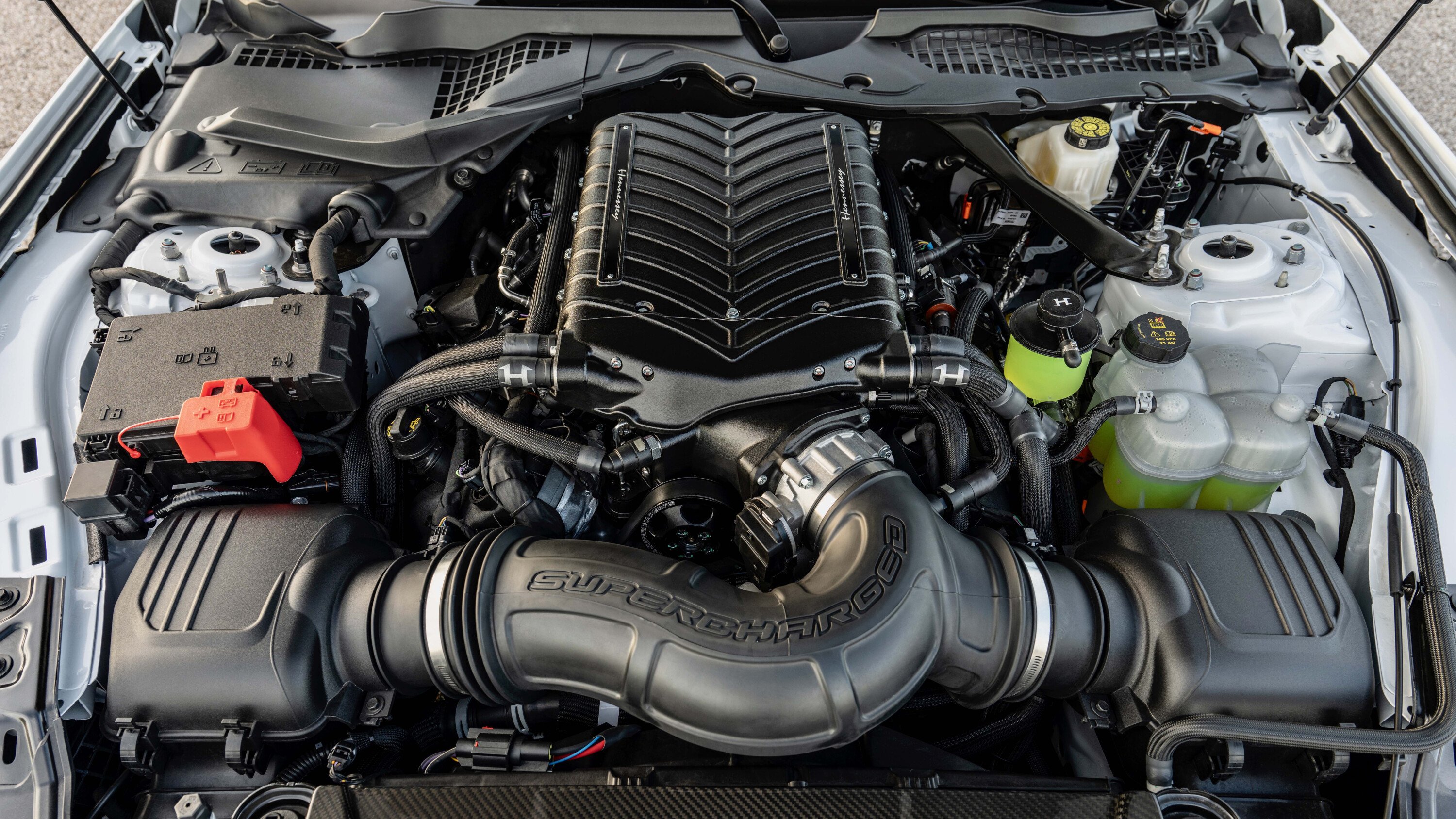
To achieve the 260kW gain over the US-spec Mustang Dark Horse, Hennessey added a high-flow air induction system, high-performance supercharger, upgraded fuel injectors and fuel pump, and a new engine management system. As with the standard Mustang, buyers can choose between a six-speed manual or 10-speed automatic transmission.
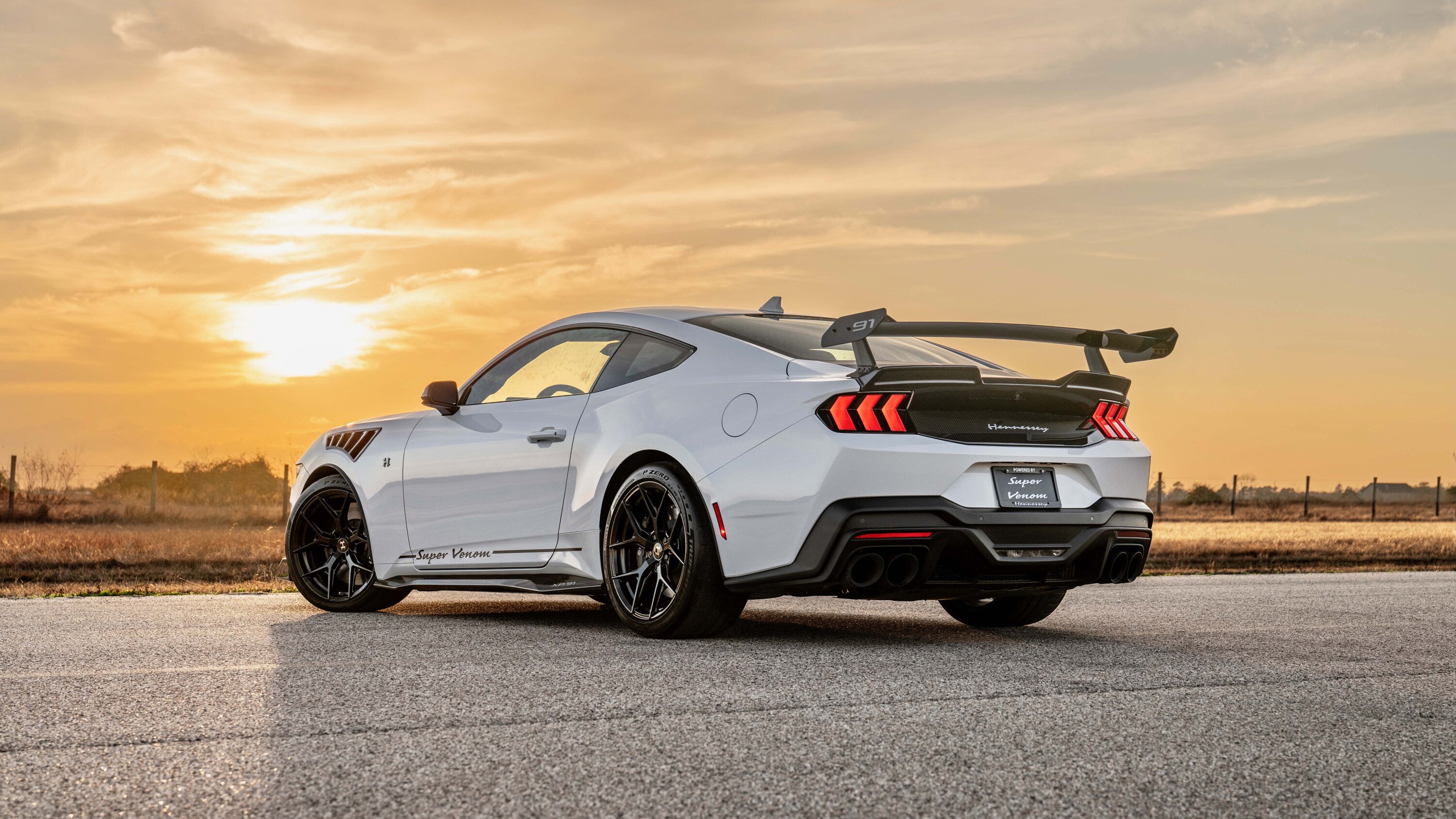
According to Hennessey, the automatic Dark Venom sprints to 97km/h (60mph) in 3.2 seconds, which is 0.5 seconds faster than the US-spec Mustang Dark Horse automatic. The Super Venom also covers the quarter mile sprint in just 10.9 seconds at 214km/h – 1.1 seconds quicker than the Dark Horse.
The company has also fitted the Super Venom with a carbon fibre ‘VenomAero’ kit with a more aggressive front splitter, a functional front hood vent, side skirts, functional front fender louvres, a rear deck lid with an integrated duck bill, and a fixed rear track wing.
Twenty-inch lightweight wheels also feature, as do more carbon fibre trim pieces under the bonnet.
Inside the Super Venom are bespoke leather and suede seats in blue or black colouring, a re-trimmed centre console and a plaque detailing each Super Venom’s individual serial number.
Customers can opt for three bespoke liveries for the Super Venom – available in black, silver and red – to pair with a factory paint colour.
Priced from US$163,950 – or around AU$260,000 – the Super Venom includes the full Ford factory warranty, plus an additional three-year/36,000-mile Hennessey warranty.
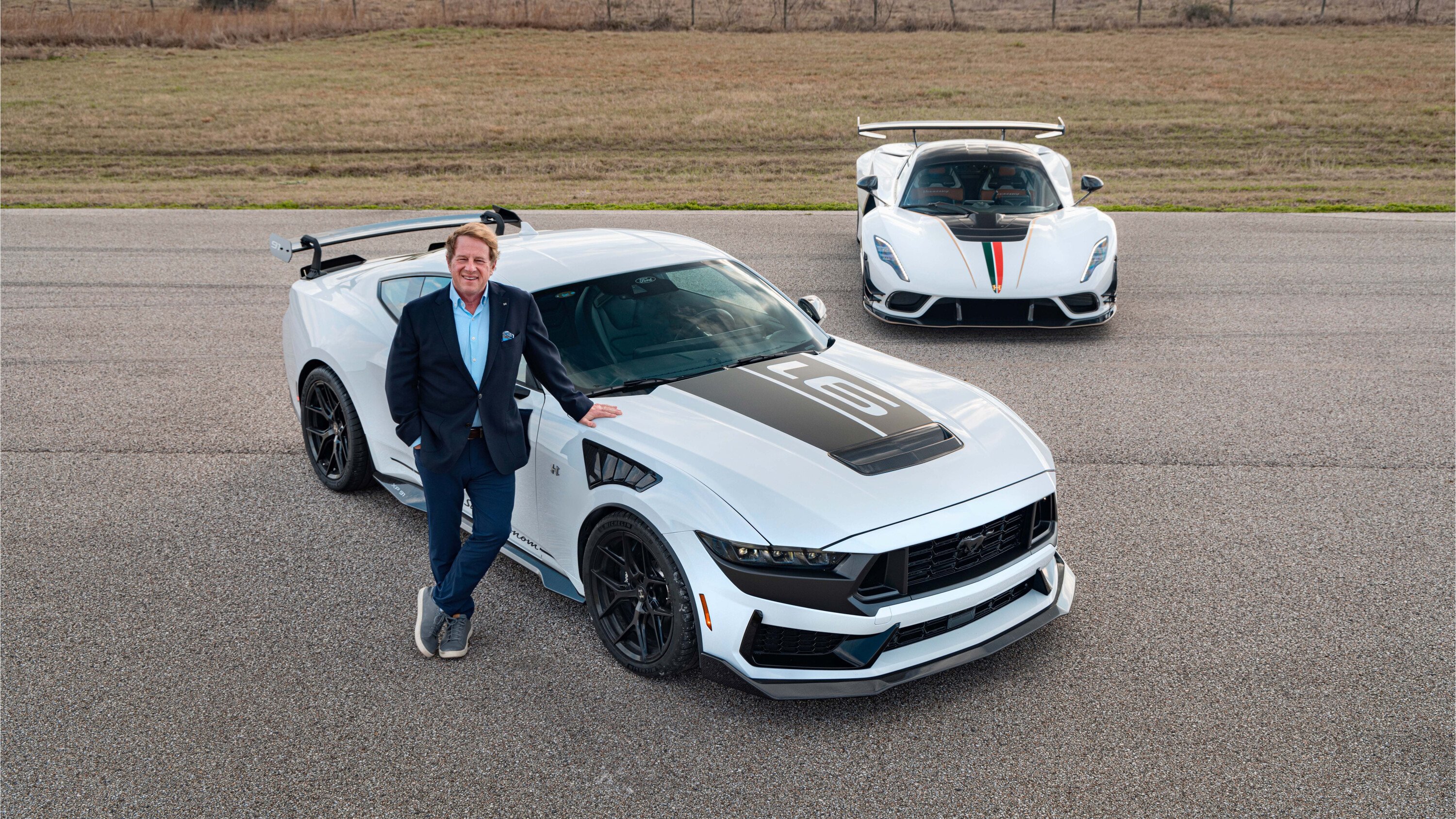
Hennessey was founded in 1991 and since then, has modified cars from various North American car brands. In 2010, it revealed the Venom GT, which was based on the Lotus Exige but fitted with a 928kW twin-turbocharged V8 engine, which hit a top speed of 435km/h. That gave it the title of the world’s fastest car at the time.
John Hennessey, company Founder, and CEO said: “Over the years we have only branded our most potent cars with our ‘Venom’ trademark: Venom Vipers, Venom GT and most recently our Venom F5. We are excited to unveil our Super Venom Mustang as it offers supercar performance and can now be ordered directly from Ford dealers with a full warranty! Further, we are excited to commemorate our company’s founding in 1991 by offering only 91 units and a unique ’91 Icon’ livery.”
The Hennessey Super Venom is available now directly through Hennessey or through authorised Hennessey Ford dealerships in the US.
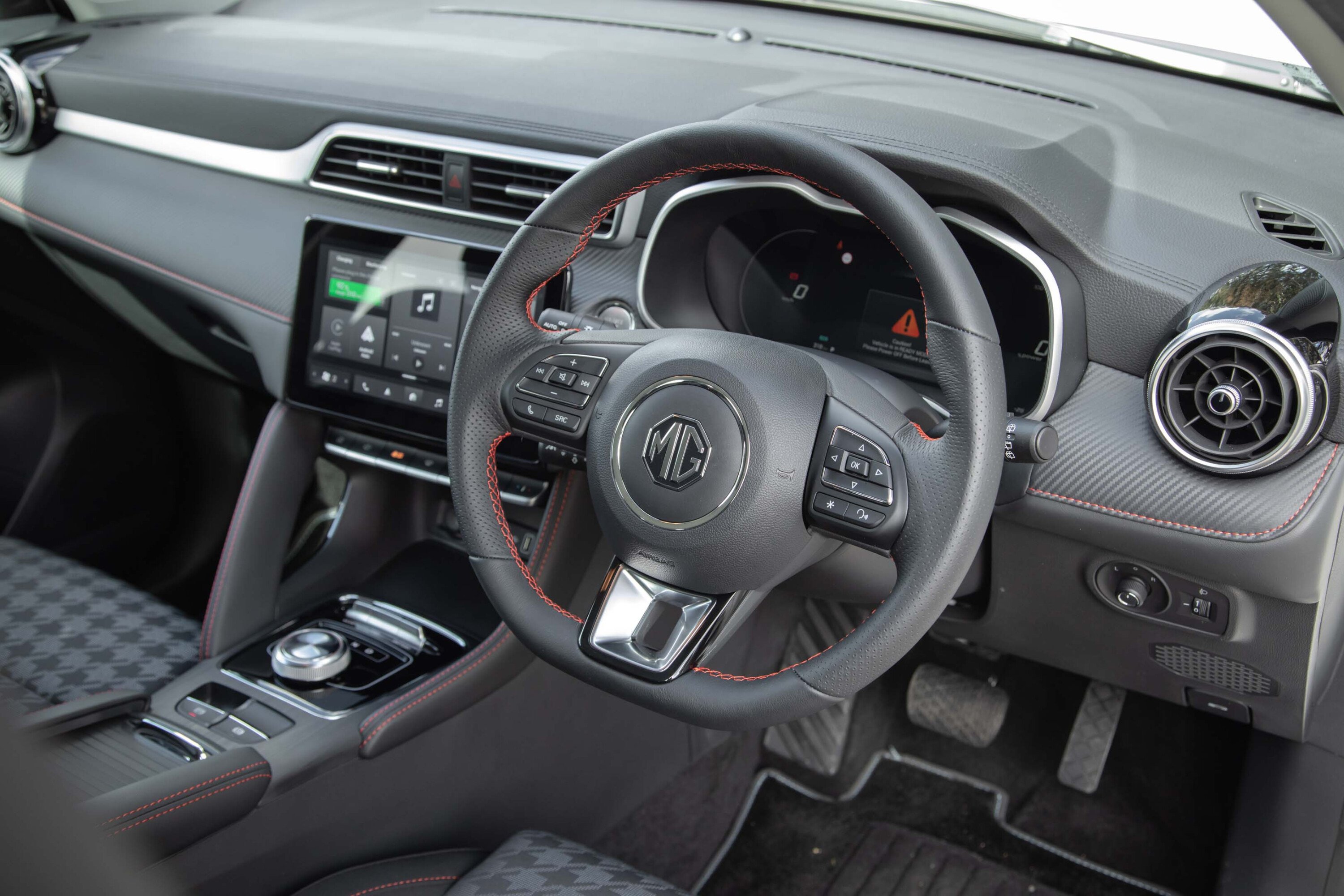
MG Motor Australia has announced that the ZS EV electric small SUV is now available from just $36,888 driveaway as part of a run-out special deal ahead of a new model.
Two variants remain available in the ZS EV line up after the entry-level Excite sold out: the Essence and Long Range. And in a win for buyers, both are priced at $36,888 driveaway despite the Long Range using a larger battery.
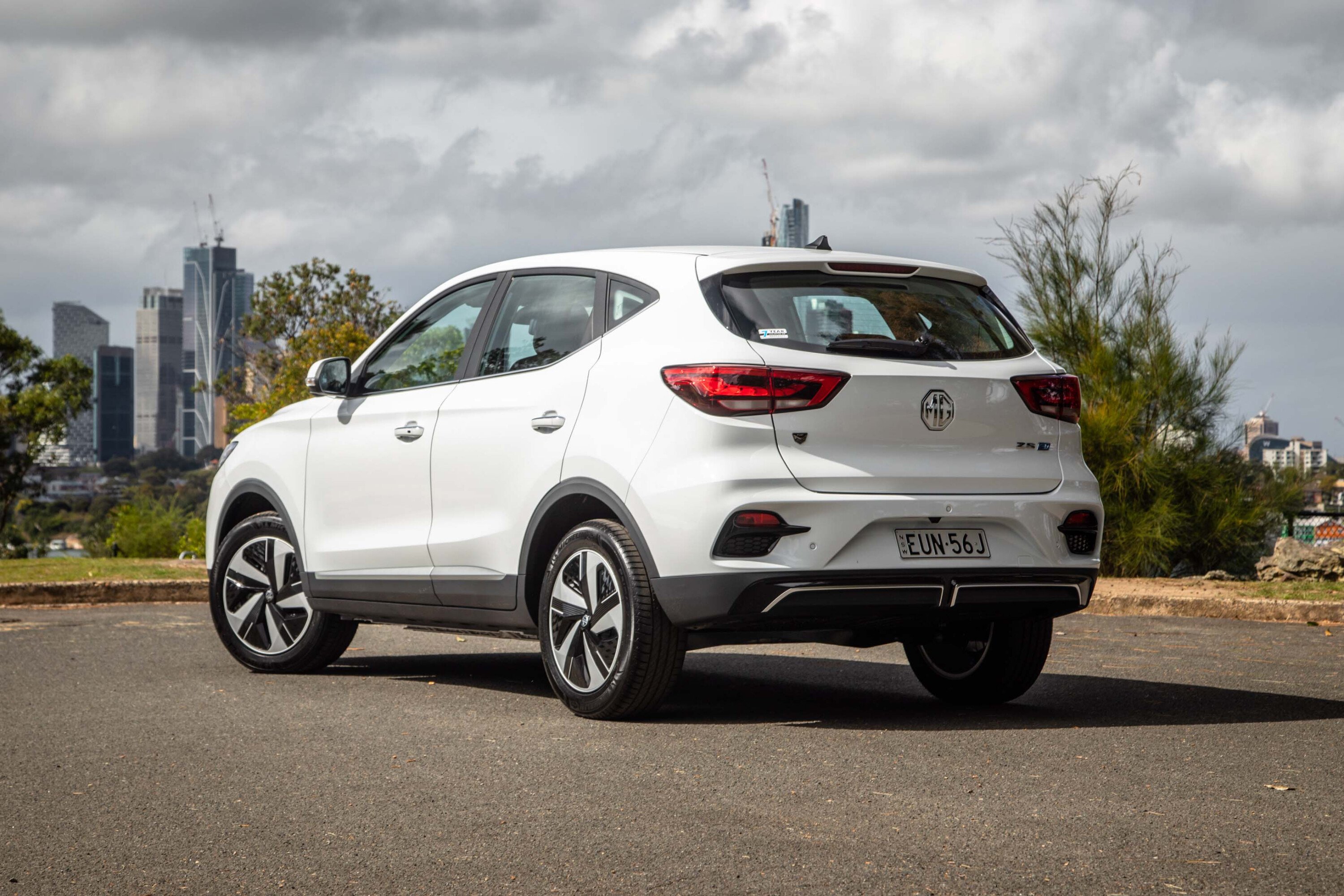
That saves buyers of the Long Range over $6,100 on its previous retail pricing.
The Essence uses a 51.1kWh battery for a claimed 320km of range (WLTP) and can be DC fast charged from 10 to 80 per cent in 54 minutes. The Long Range boosts battery capacity to 72.6kWh for a claimed 440km of range and a 63-minute 10 to 80 per cent DC fast-charge time.
Both ZS EV variants use a front-mounted electric motor, with the Essence making 130kW/280Nm and the Long Range 115kW/280Nm. The Essence hits 100km/h in 8.2 seconds – 0.3 less than the Long Range.
MG Motor Australia’s Chief Commercial Officer, Giles Belcher, commented, “Thousands of Australians already love their ZS EV, enjoying the practicality an SUV offers everyday combined with the value of EV motoring.
“Now in run out, we’re excited to introduce customer access to fleet pricing for the ZS EV. The Excite has already sold out and we’re confident buyers will need to act fast to driveaway with a great value deal while stocks last.”
MG ZS EV sale pricing (drive away):
- Essence: $36,888
- Long Range: $36,888
ZS EV Essence standard equipment:
- 17-inch alloy wheels
- Eco, sport and normal driving modes
- Three regenerative braking modes
- Dusk-sensing automatic LED headlights
- Rain-sensing automatic wipers
- Roof rails
- Panoramic sunroof
- Heated and auto-folding mirrors
- Keyless entry with push button start
- Electric control air-conditioning
- Leather-wrapped steering wheel
- Synthetic leather upholstery
- Heated front seats with driver’s six-way electric adjustment
- 10.1-inch touchscreen
- Wired Apple CarPlay and Android Auto
- Wireless phone charger
- Six-speaker sound system
- 5x USB ports
ZS EV Essence safety kit:
- Six airbags
- Autonomous emergency braking (AEB)
- Adaptive cruise control with traffic jam assist
- Lane keeping assistance with lane departure warning
- Blind-spot monitoring
- Rear cross-traffic alert
- Rear parking sensors
- 360-degree camera
- Auto high beam
- Traffic sign recognition
- Intelligent speed limit assist
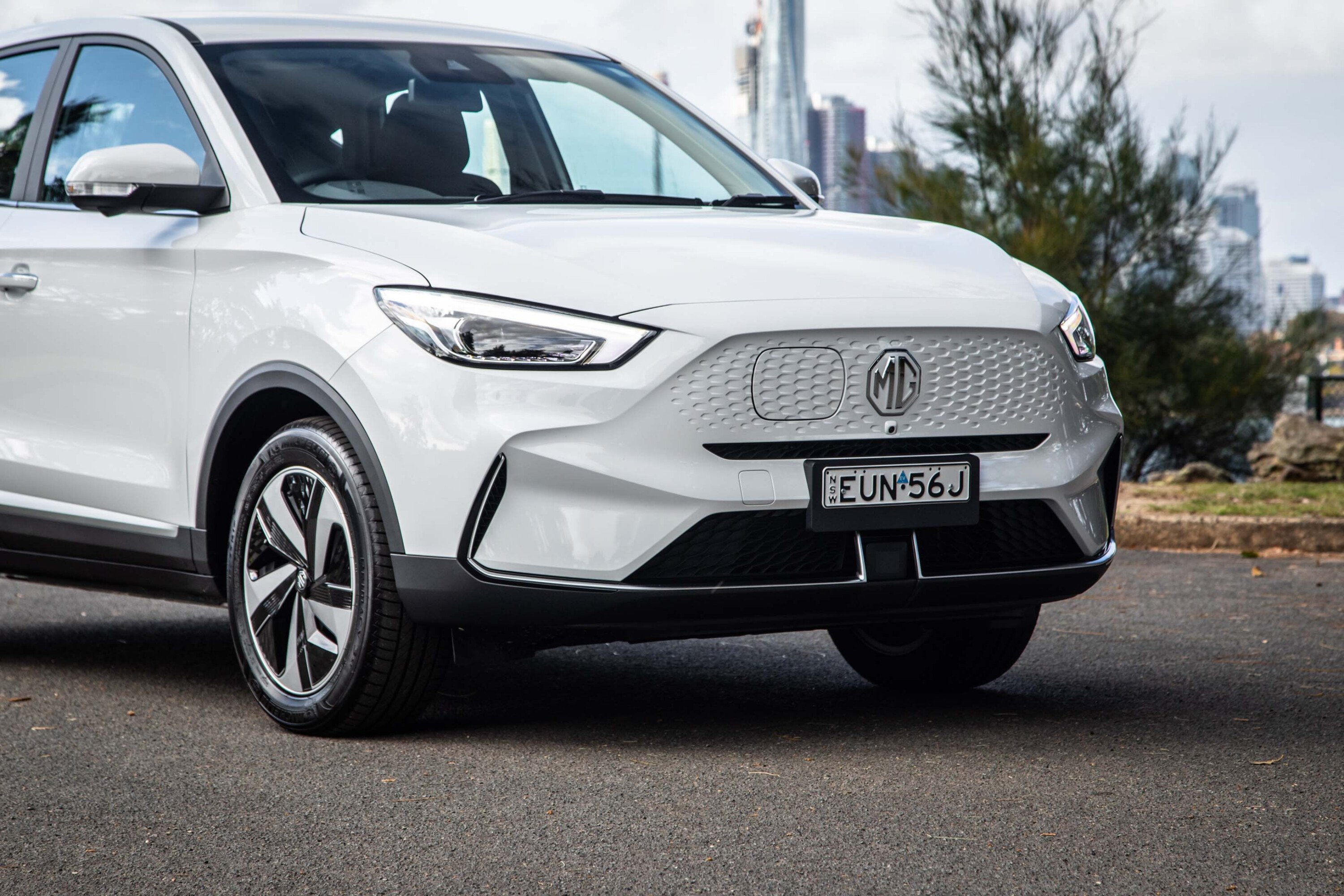
ZS Long Range model adds:
- Larger battery for 440km of range (WLTP)
- Rear privacy glass
ZS EV colour range:
- Dover White
- Pebble Black
- Sloane Silver Metallic (+$700)
- Brighton Blue Metallic (+$700)
- Diamond Red Metallic (+$700)
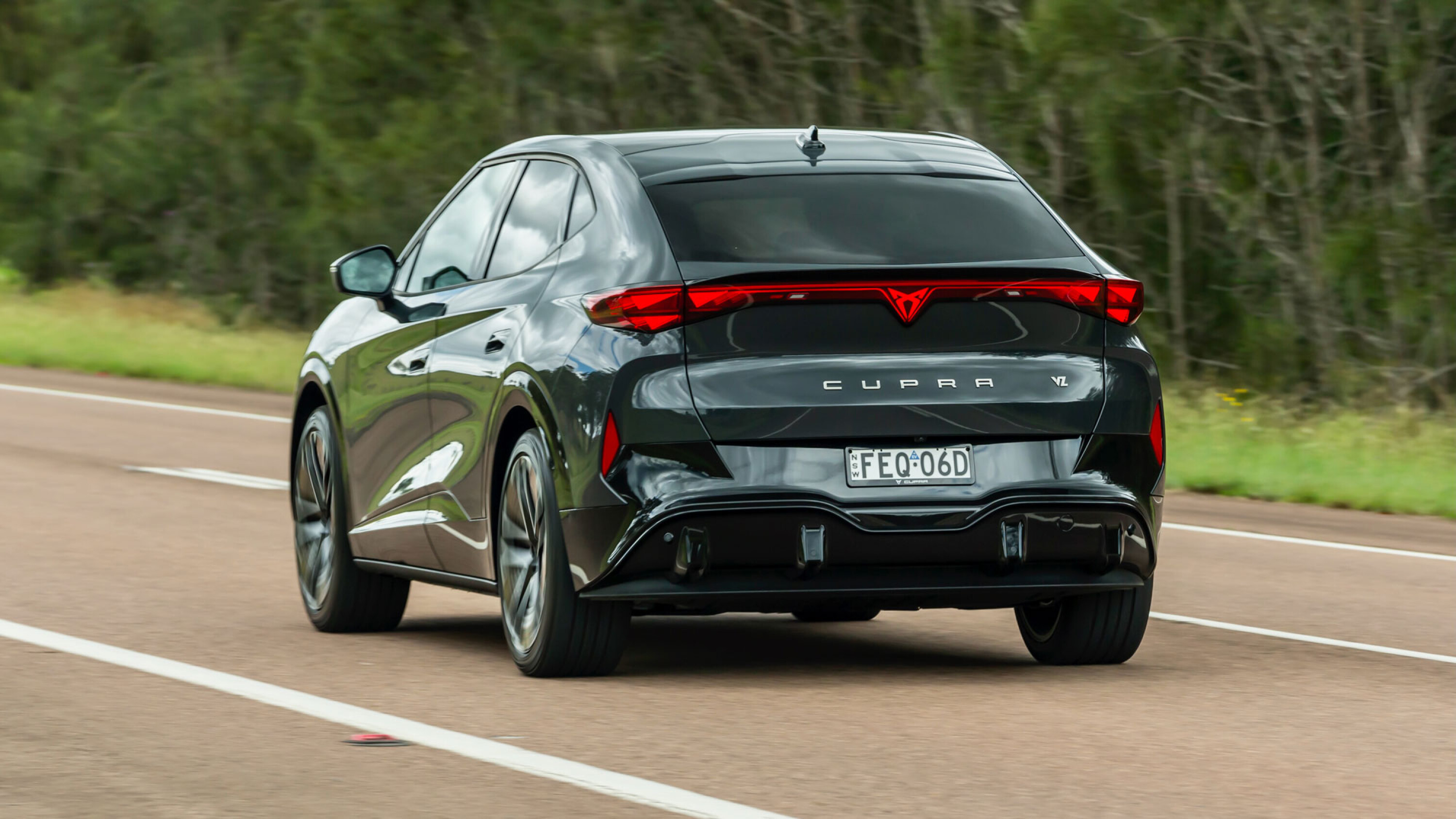
Cupra has announced Australian pricing for the new Tavascan electric mid-size SUV, which is due to arrive here in April. Priced from $60,990 plus on-road costs, it undercuts the updated Tesla Model Y.
Sitting on the same platform as cars like the Volkswagen ID.4, Skoda Enyaq and Elroq, Audi Q4 e-tron and its Born sibling, the Cupra Tavascan will be available with two models in Australia: the single motor rear-wheel drive Endurance and dual-motor all-wheel drive VZ.
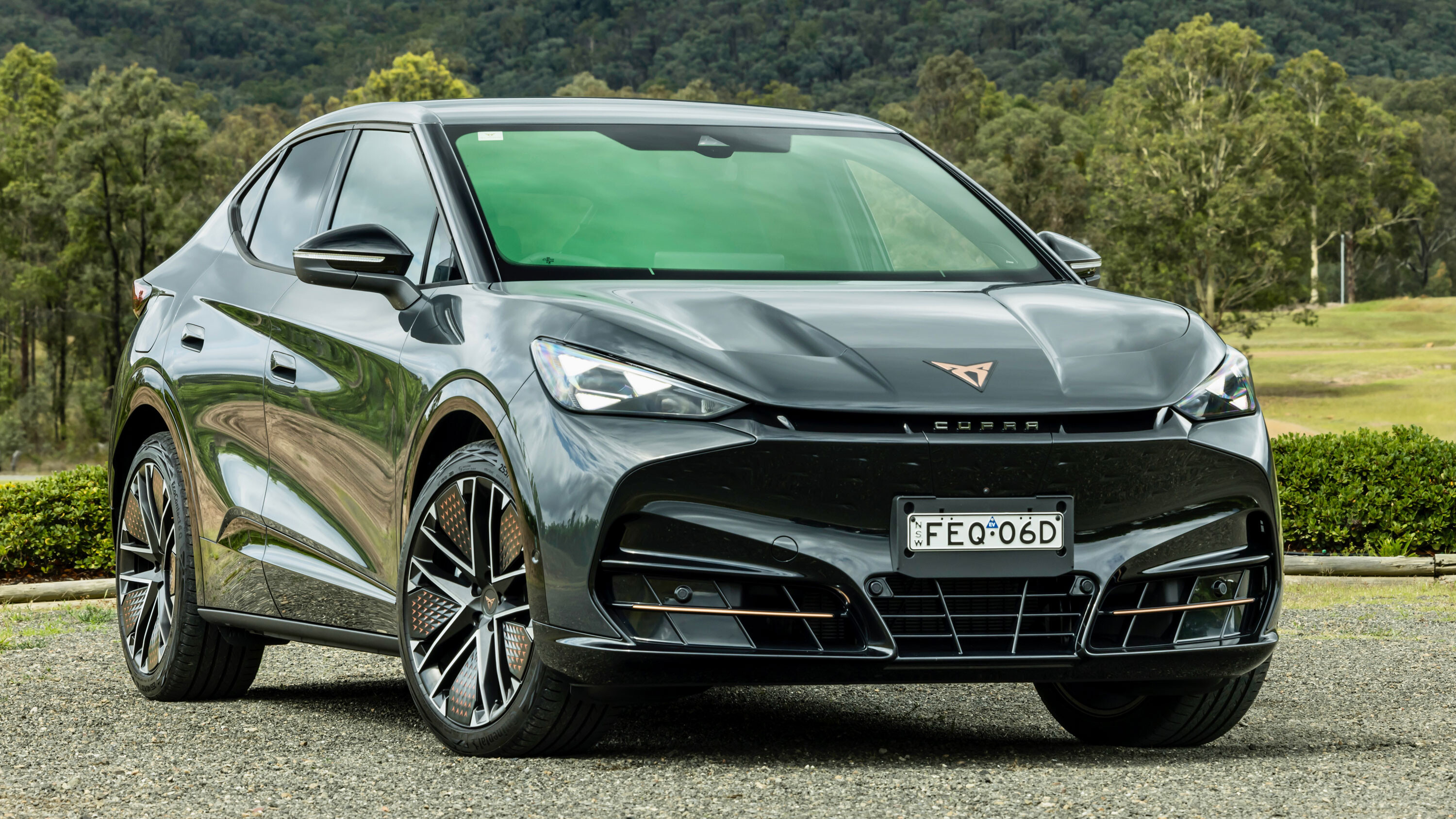
Both models use a 77kWh lithium-ion battery, with the Endurance sending power to a 210kW/545Nm rear-mounted motor. The VZ adds a front motor for a 250kW combined output, though this reduces range from the 534km rating (WLTP) of the Endurance to 499km.
Both models can be DC fast charged at up to 135kW or AC at 11kW, for a 10 to 80 per cent charge in as little as “under 30 minutes”.
The claimed 0-100km/h sprint time for the Endurance is 6.8 seconds, with the VZ lessening that to 5.5 seconds.
Interestingly, the Tavascan is the first Volkswagen Group product since the early 2000s Polo Classic sedan to be assembled in Anhui, China.
2025 Cupra Tavascan pricing (plus on-road costs):
- Endurance: $60,990
- VZ: $74,490
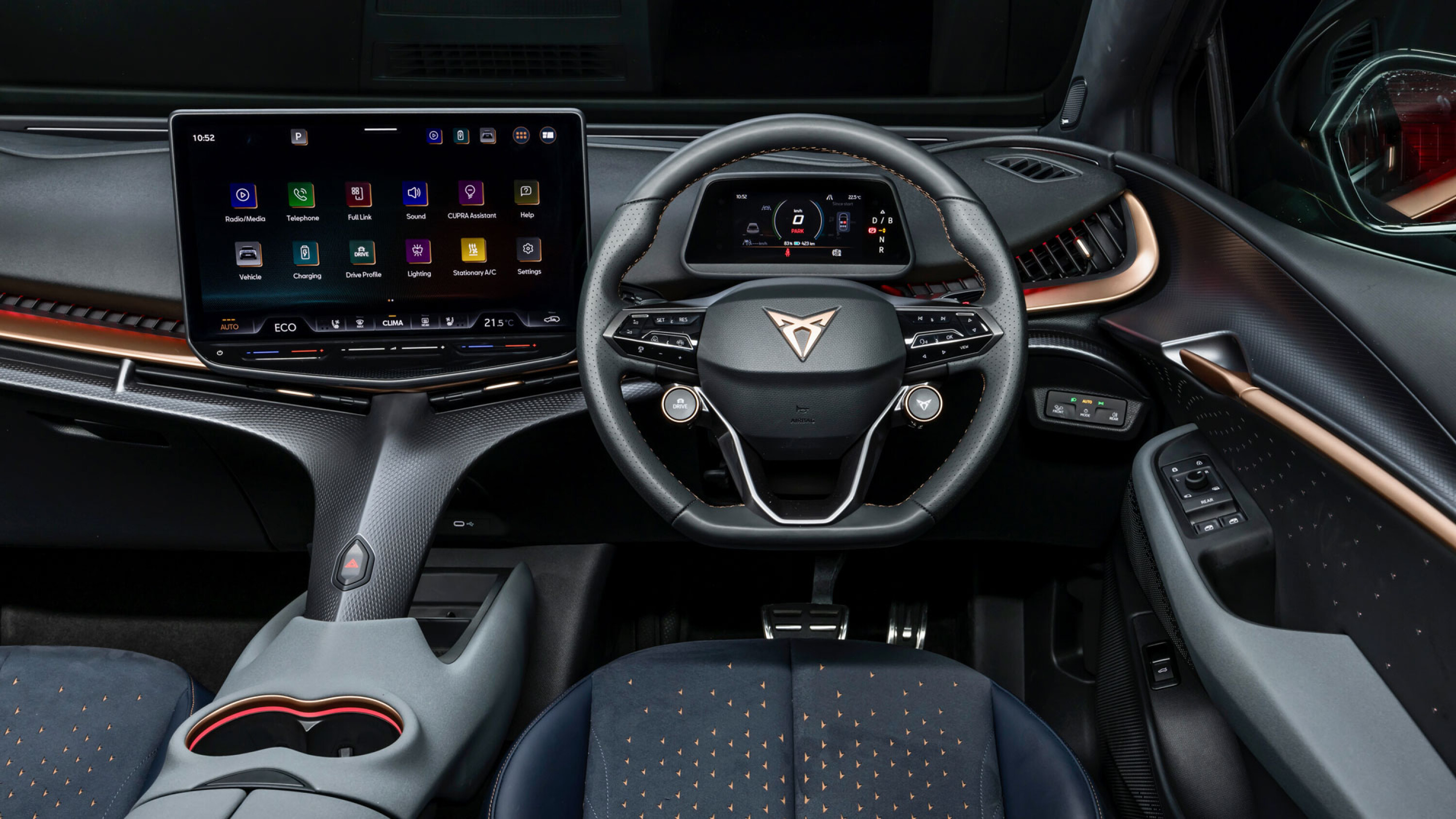
Cupra Tavascan Endurance standard equipment:
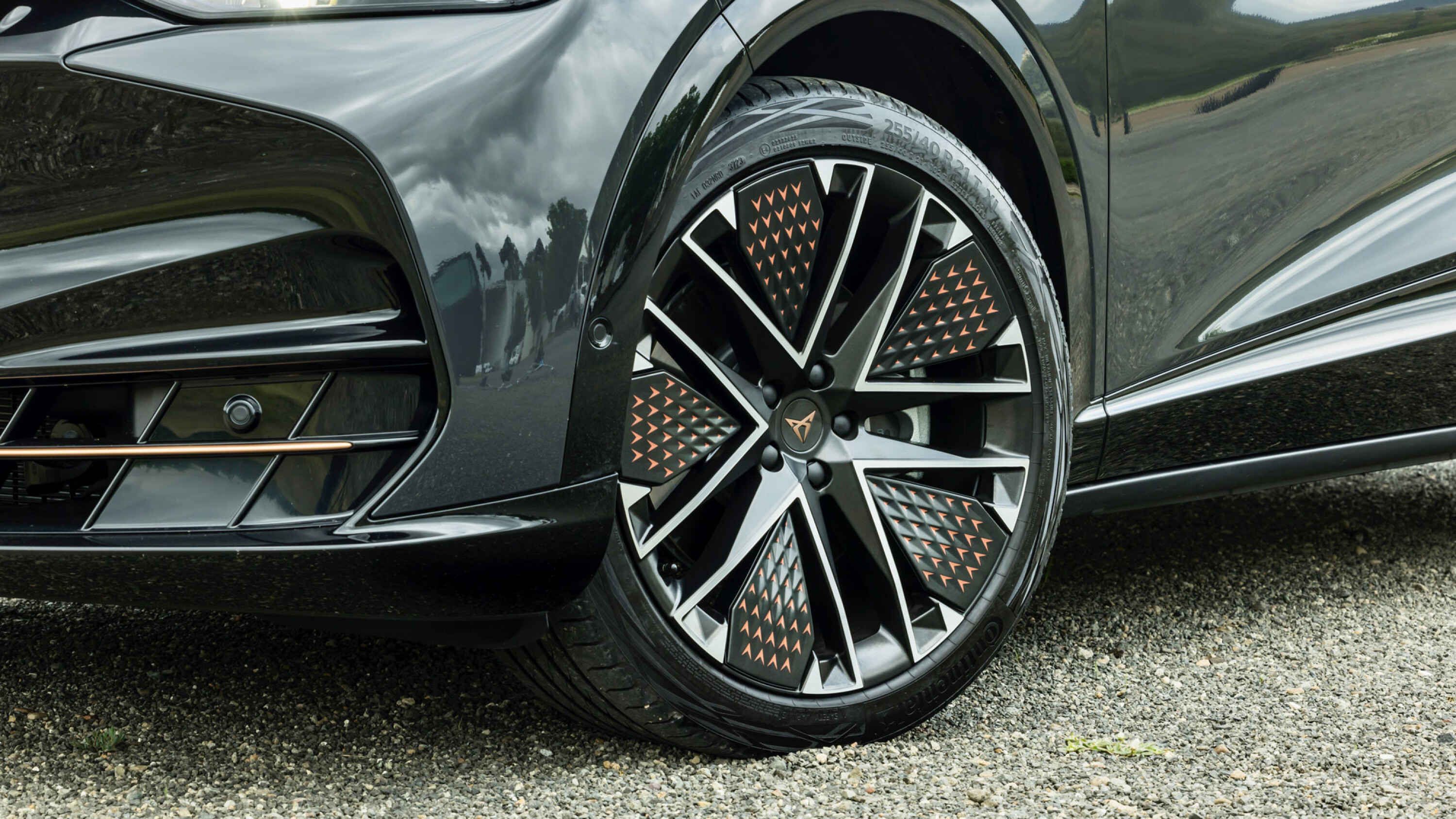
- 19-inch alloy wheels
- Dusk- and rain-sensing automatic all-LED exterior lighting
- Rain-sensing automatic wipers
- Keyless entry with ‘sit-to-start’ functionality
- Hands-free electric tailgate
- Illuminated front and rear Cupra badging
- Black fabric and leather-look upholstery
- Manual front sports seats
- Tri-zone automatic climate control
- Heated leather steering wheel with paddles for regenerative braking
- 5.3-inch digital driver’s display
- 15-inch touchscreen
- Wireless Apple CarPlay and Android Auto
- Wireless phone charger
- Selectable driving modes
- Cabin ambient lighting
Tavascan safety equipment:
- Seven airbags
- Autonomous emergency braking (AEB) with vehicle, pedestrian, cyclist and intersection assistance
- Adaptive cruise control with traffic jam assist
- Lane keeping assistance with adaptive lane guidance
- Blind-spot monitoring
- Front and rear cross-traffic alerts
- Auto high beam
- Front and rear parking sensors
- Reversing camera
Tavascan VZ model adds to Endurance:
- Dual-motor all-wheel drive drivetrain
- 21-inch alloy wheels
- Matrix adaptive high beam
- Panoramic roof with sun blind
- Dark blue suede upholstery
- Heated and electrically adjustable front seats with memory
- 12-speaker Sennheiser sound system
- Upgraded interior ambient lighting
- Illuminated scuff plates
Tavascan package options:
- Interior Package (Endurance only) with 20-inch wheels, 360-degree camera, dark blue suede upholstery, power front seats with heating, 12-speaker Sennheiser sound system: $4,500
- Extreme Package (VZ only, available from mid-2025) with forged wheels with performance tyres, ventilated front bucket seats and grey Nappa leather upholstery: $8,000 (lowers range to 463km WLTP)
- White Silver or Atacama Desert paint: no-cost
- Tavascan Blue or Basalt Grey paint: $800
- Three-year/45,000km service plan: $990
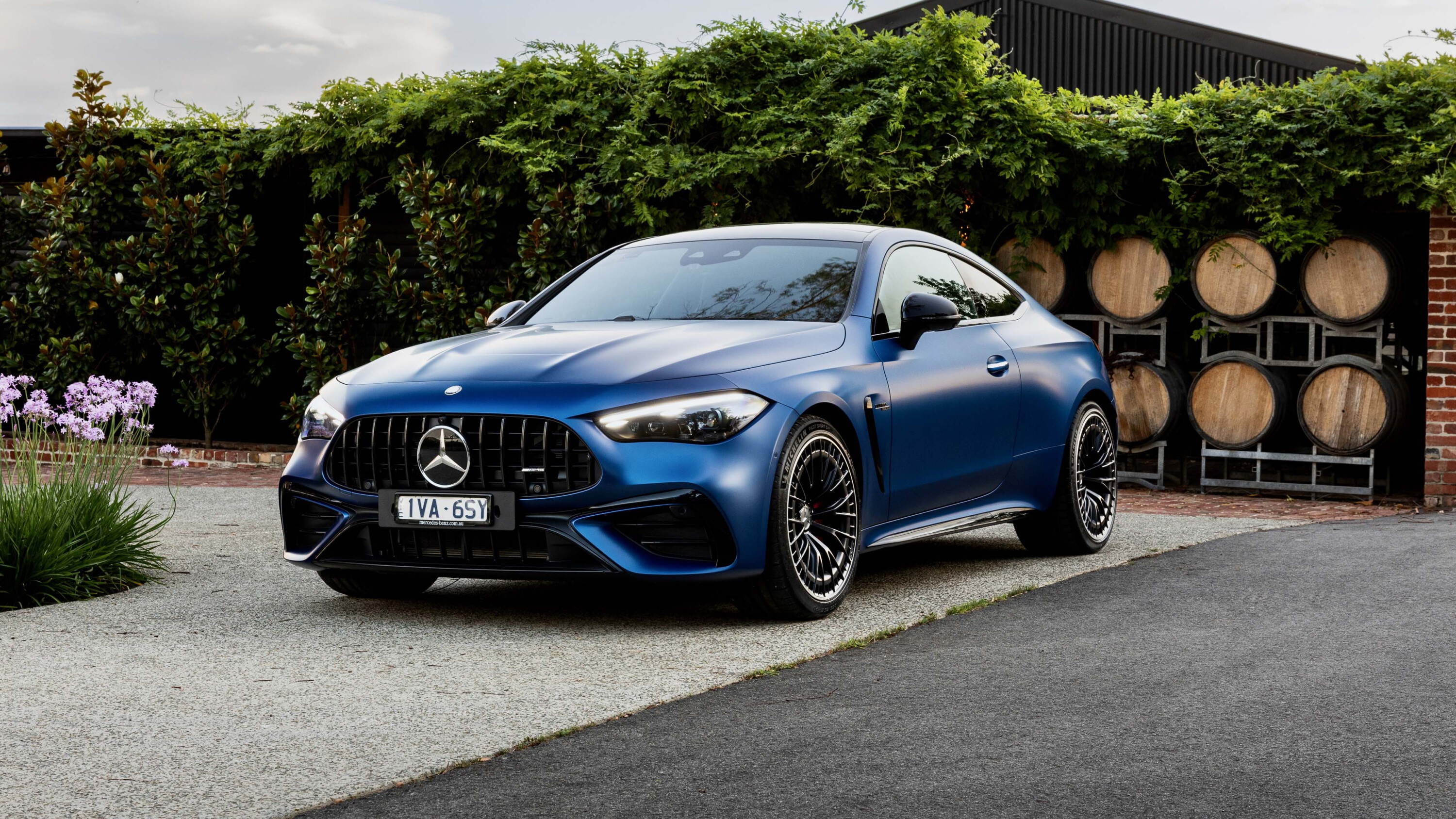
Mercedes-Benz has announced Australian pricing and specifications for its new Mercedes-AMG CLE 53 4MATIC+ Coupé, which is priced from $158,500 plus on-road costs and features a 330kW 48V hybridised inline six.
The central story of the CLE’s AMG transformation is its 3.0-litre twin-turbocharged inline six-cylinder engine, which is enhanced by an electric auxiliary compressor and a 48V mild-hybrid system to make 330kW of power and 560Nm of torque. But thanks to an overboost function, up to 600Nm of torque is available for up to 12-second bursts.
The CLE 53 uses a nine-speed automatic gearbox and sends power to all four wheels for a 0-100km/h sprint time of just 4.0 seconds, thanks to the AMG Dynamic Plus package standard on the coupé in Australia – and on to a top speed of 250km/h. Because of the mild-hybrid system, the claimed combined fuel consumption is just 9.6L/100km.
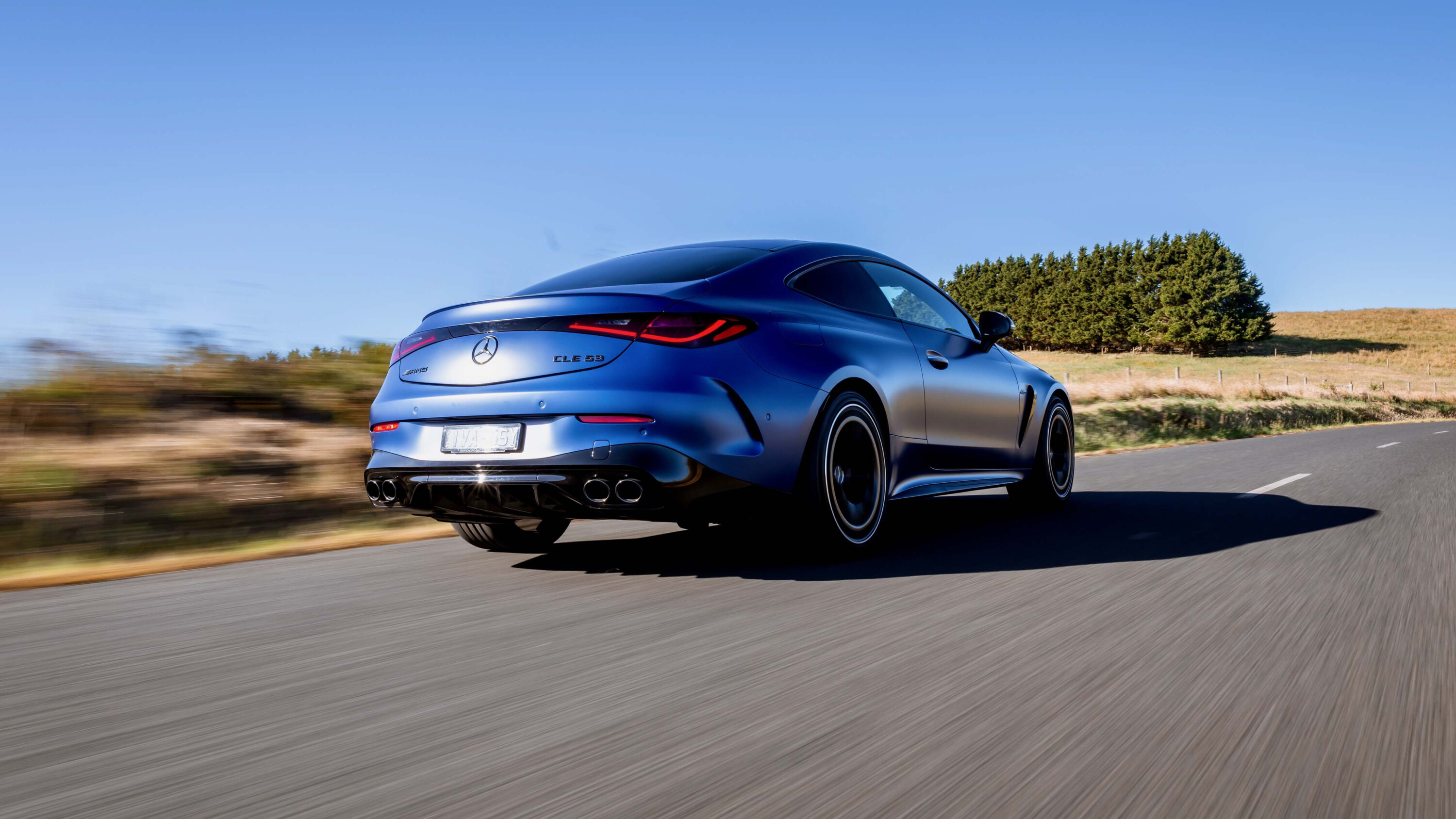
Part of the transformation to the CLE 53 includes widened front and rear tracks – by 58mm and 75mm respectively – for a more aggressive stance and more focused road holding.
The CLE 53 also includes rear-axle steering, which can turn the wheels by 2.5 degrees to enhance cornering ability, while the adaptive dampers and driving modes give owners the ability to further tailor the driving experience to their tastes. They can even adjust the torque flow for sharper cornering.
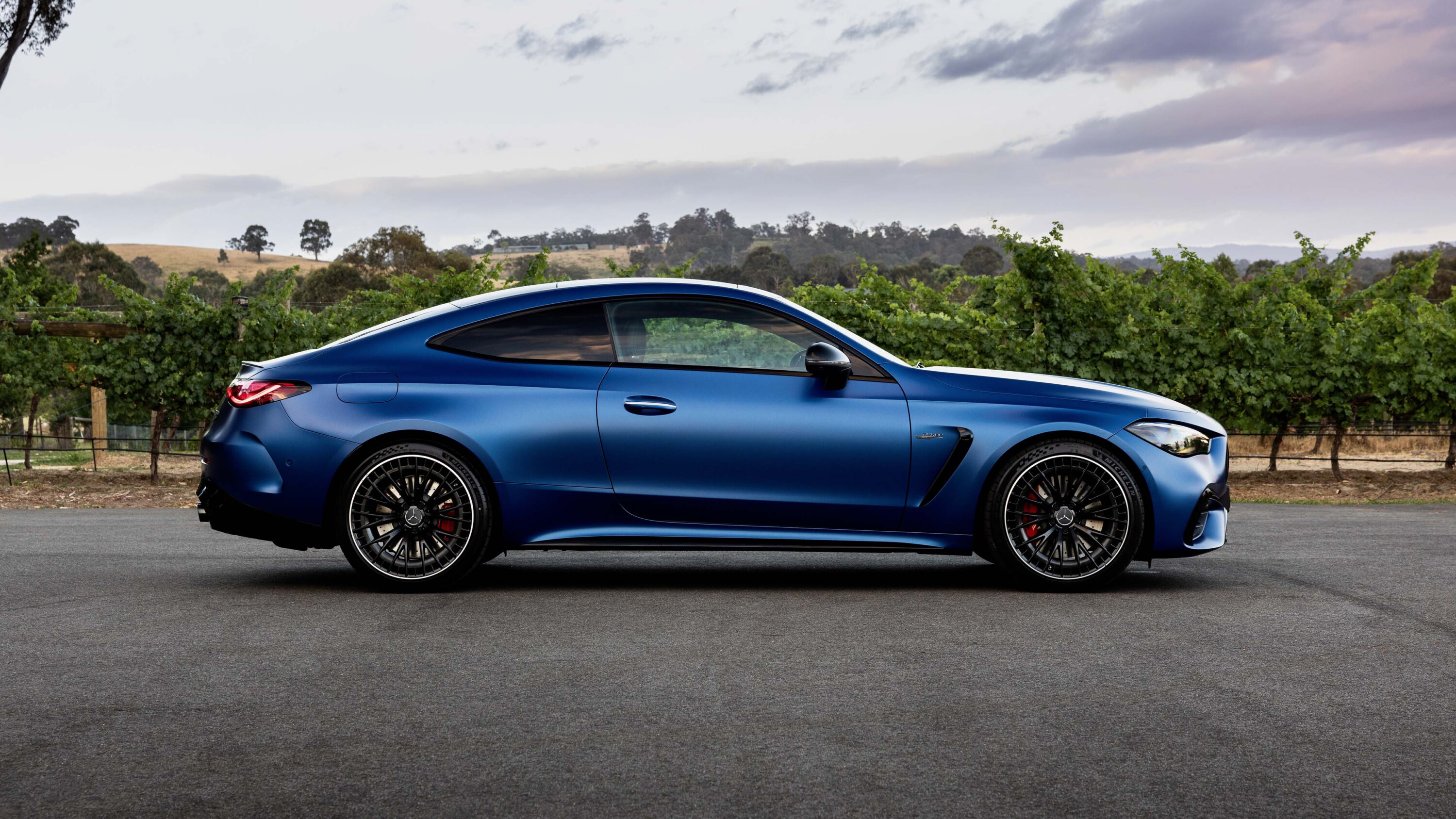
On the outside, AMG-specific details are seen in the radiator trim, front and rear bumpers, lip spoiler and the large 20-inch alloy wheels, which further enhance the CLE 53’s sporty nature.
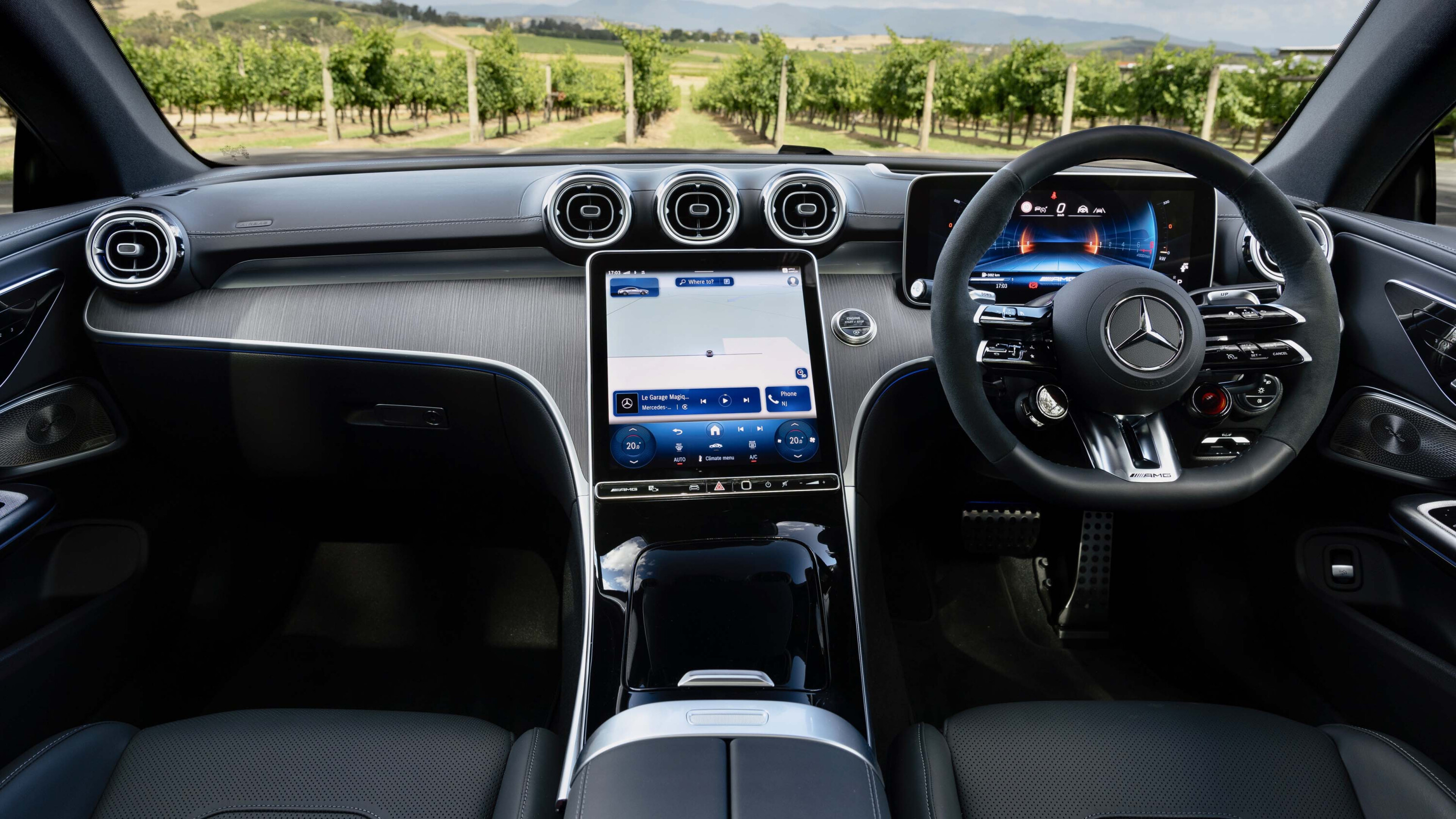
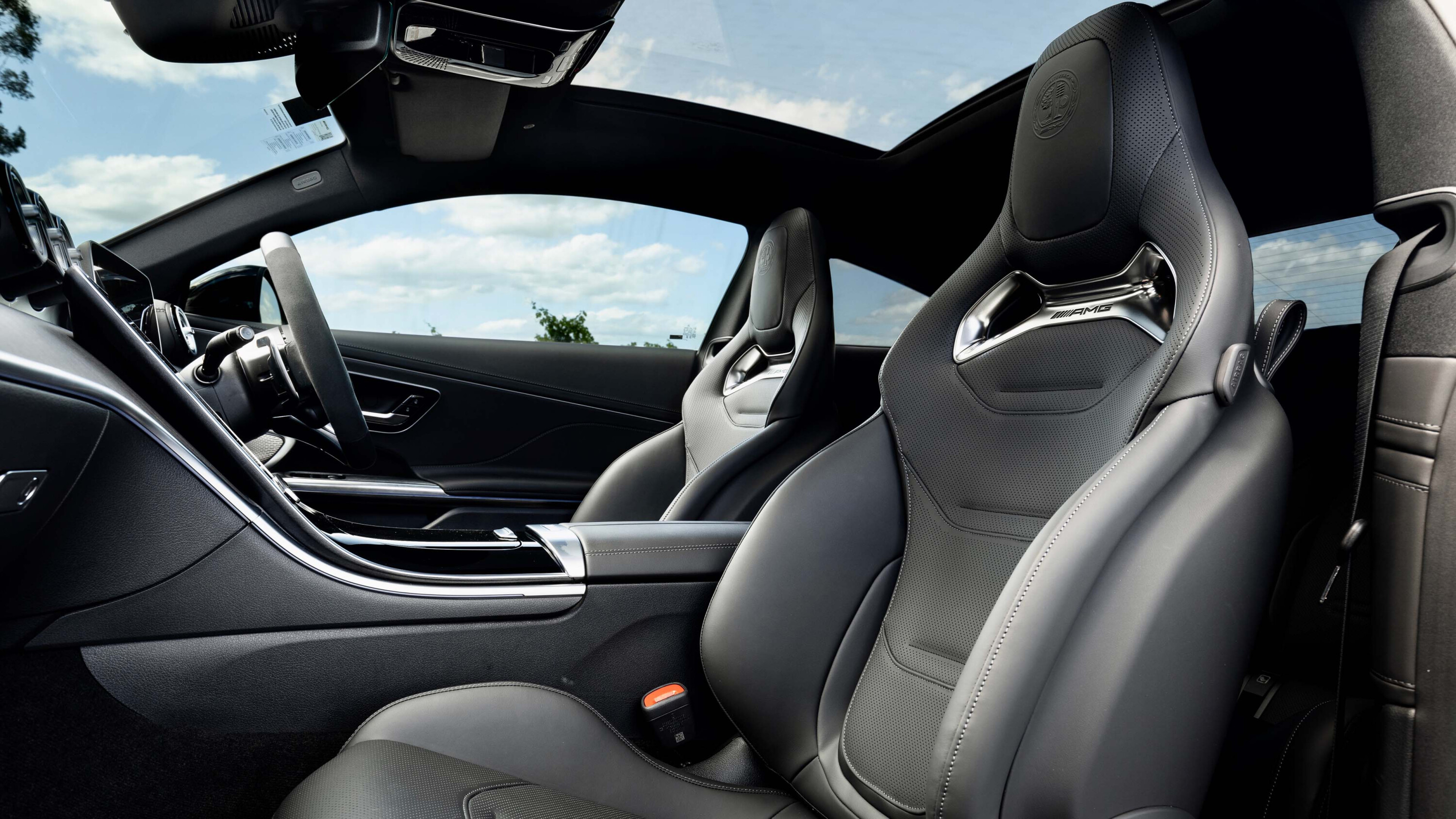
Inside the CLE 53, an AMG Performance steering wheel is trimmed in Nappa leather and suede, along with AMG Performance leather seats featuring embossed logos on the headrests.
| 2025 Mercedes-AMG CLE 53 4MATIC+ Coupu00e9 pricing (plus on-road costs): | |
|---|---|
| Mercedes-AMG CLE 53 4MATIC+ Coupu00e9 | $158,500 |
| 2025 Mercedes-AMG CLE 53 4MATIC+ Coupu00e9 standard equipment | |
|---|---|
| 20-inch alloy wheels | Leather upholstery with red stitching |
| Gloss black exterior trim elements | Heated and electrically adjustable front sports seats with memory |
| Dusk- and rain-sensing automatic LED exterior lighting with adaptive high beam | Glossy carbon trim |
| Rain-sensing automatic wipers | 12.3-inch digital driveru2019s display |
| Keyless entry with push button start | 11.9-inch touchscreen with u2018MBUXu2019 software |
| Heated, auto-folding and auto-dimming mirrors | Remote services (36-month subscription) including live navigation |
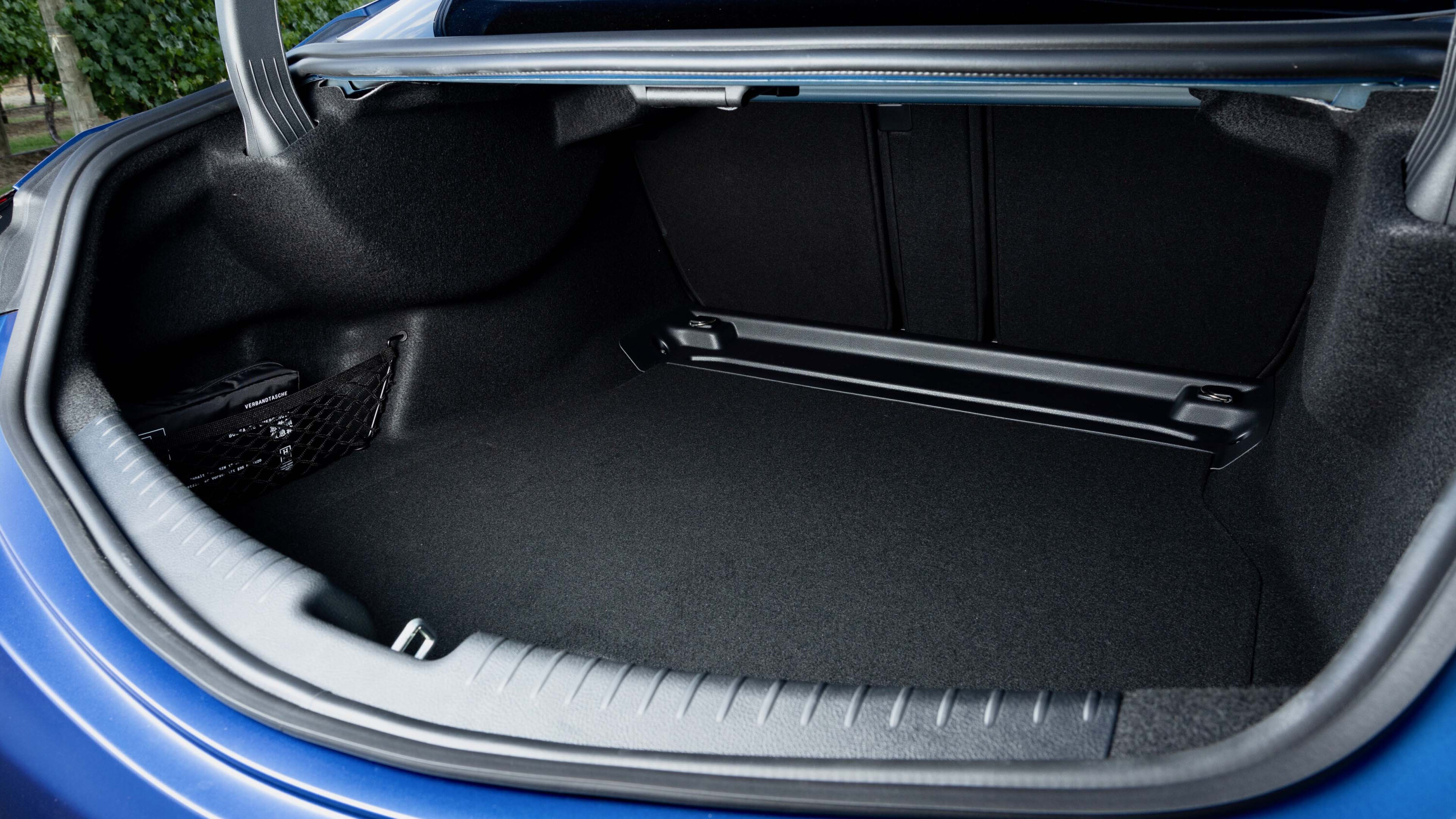
| Electric bootlid | Wired and wireless Apple CarPlay and Android Auto |
| Rear-axle steering | Augmented reality satellite navigation |
| Adaptive dampers | DAB+ digital radio |
| Driving modes including sport, sport+ and race | Burmester sound system |
| Dual-zone automatic climate control with rear air vents | Wireless phone charger |
| Panoramic sunroof | Head-up display |
| Rear privacy glass | 64-colour cabin ambient lighting |
| Nappa leather and suede AMG steering wheel with paddle shifters | |
| 2025 Mercedes-AMG CLE 53 4MATIC+ Coupu00e9 options: | |
|---|---|
| Plus Package | $2100 |
| Carbon Package | $8900 |
| AMG Performance Seat Package | $5400 |
| 2025 Mercedes-AMG CLE 53 4MATIC+ Coupu00e9 safety features: | |
|---|---|
| 10 airbags | Pre-accident prediction |
| Autonomous emergency braking with pedestrian and cyclist detection and evasive manoeuvring | Driver attention monitoring |
| Adaptive cruise control | 360-degree camera |
| Blind-spot monitoring | Semi-autonomous parking with front, side and rear sensors |
| Lane keeping assistance | Alarm |
| Traffic sign recognition | |
The Mercedes-AMG CLE 53 is now on sale in Australia, with the first deliveries due soon.
After 15 years, the Melbourne Motor Show will finally return on April 5-6 at the Melbourne Convention and Exhibition Centre with over 100 exhibitors, including 25 car brands.
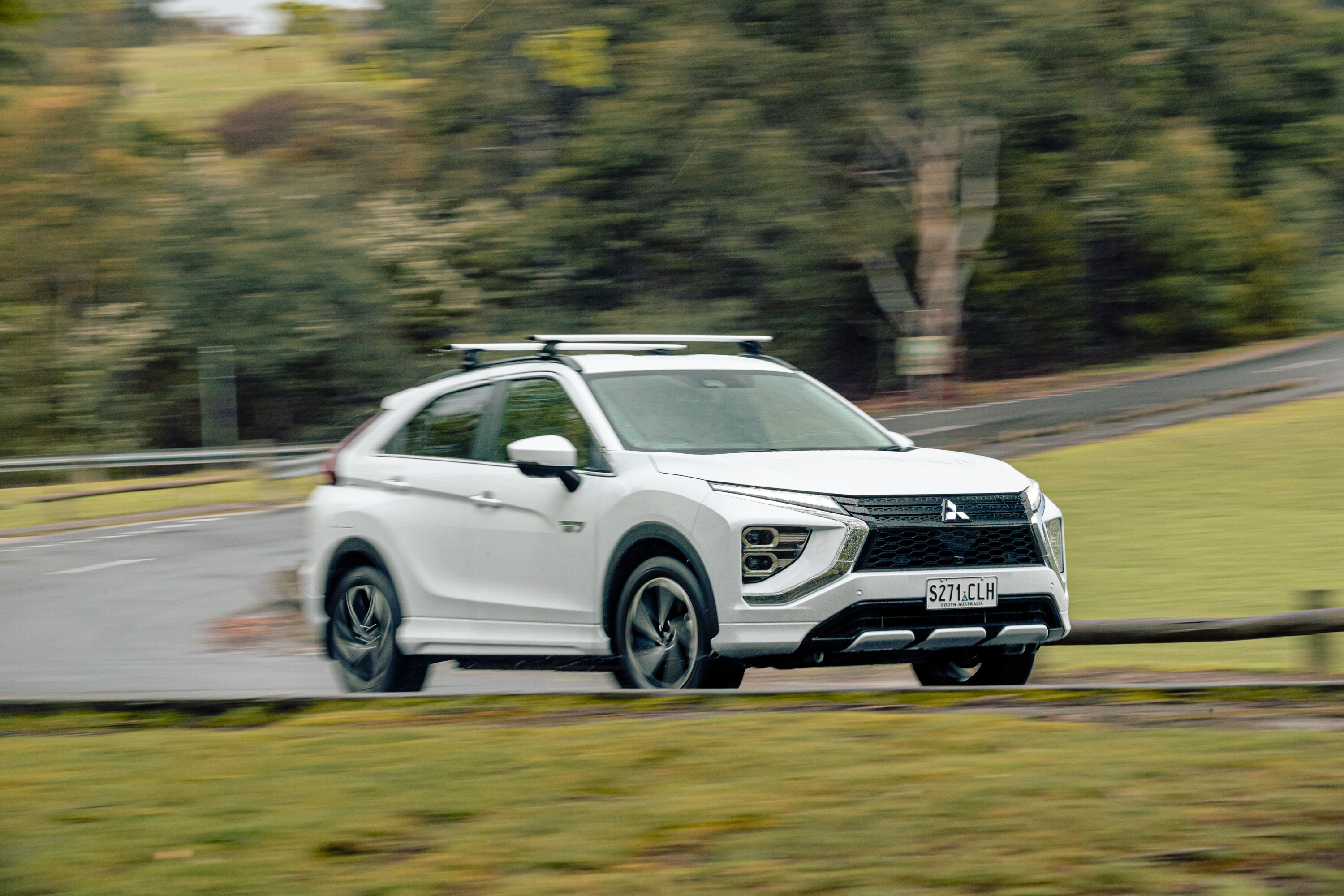
Manufacturers including Porsche, McLaren, MG, Mitsubishi, Mahindra and Kia, and brands from Inchcape like Subaru, Peugeot and JAC, will exhibit at this year’s show. According to show organisers, nine new models will make their local debut at the show.
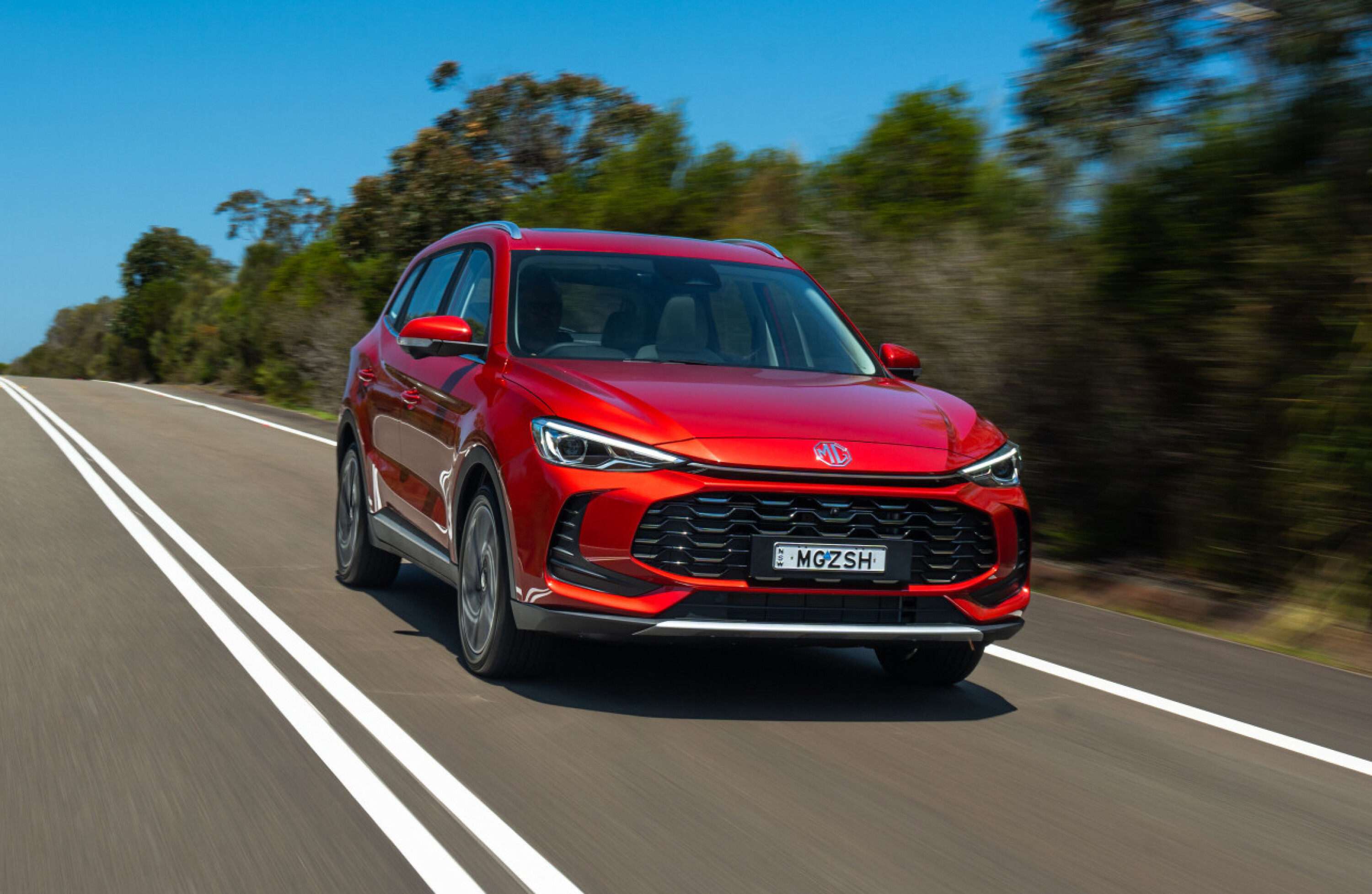
MG Motor Australia’s Chief Commercial Officer, Giles Belcher, recently told WhichCar a number of new models from the brand will make their debut at the show.
Organised by automotive collector and car storage-owner Craig Phinn, the show will also feature Hot Wheels collectibles with a mega racetrack built for kids and a Lego automotive zone showing iconic cars made with Lego bricks.
Running from 9:30am to 6pm on the Saturday and 9:30am to 4:30pm on the Sunday, other displays include the Victorian Emergency electric fire truck, ADF military vehicles, car test drives, motorsport and performance demonstrations and even a Red Bull car on display.
Exhibitors at the Melbourne Motor Show 2025:
- Porsche
- McLaren
- Mitsubishi
- Kia
- BYD
- Tesla
- Subaru
- Smart
- Isuzu Ute
- Leapmotor
- GWM
- Foton
- Zeekr
- Mahindra
- Deepal
- MG
- Peugeot
- Geely
- JAC
- Brabus
- XPeng
- Harley Davidson
- Shannons Insurance
- Garrett
- Phillips
- Koni
- Haltech
Subaru Australia has teased a new WRX variant called the tS spec.B with upgraded brakes and Recaro seats, which will sit atop the range locally.
Keen WRX fans will be already aware that the tS – or ‘tuned by STi’ – badge is already applied to the flagship WRX variant, however, that model is CVT-only. In recognising the demand for a top-spec manual, Subaru Australia has created the new tS spec.B.
The WRX tS spec.B adds some new features to the tS, including matte grey 19-inch alloy wheels, a typically-WRX big rear wing, upgraded Brembo brakes with ventilated front brakes and Recaro front seats – all features that were seen on the recent limited edition WRX Club Sport.
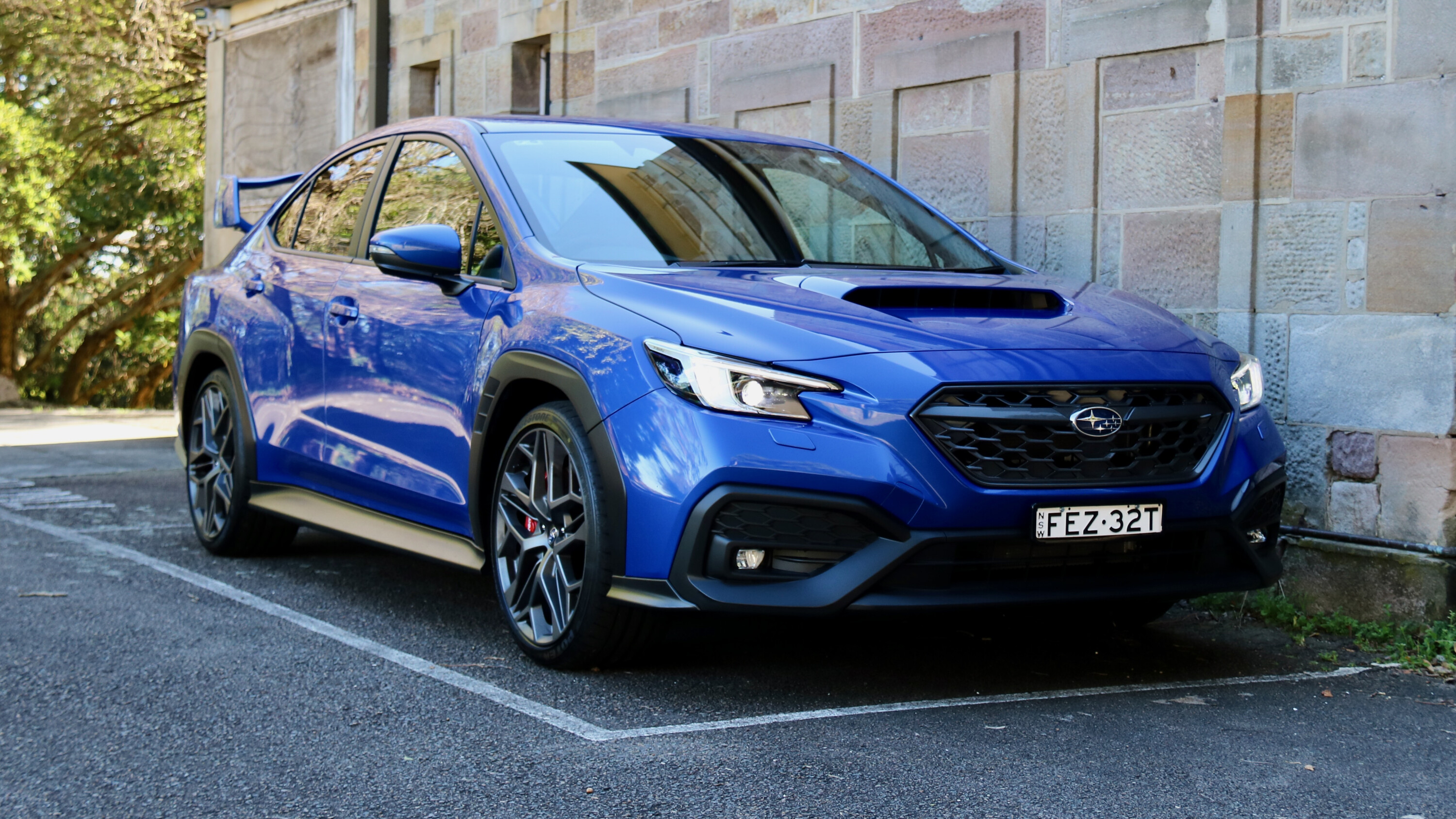
Like the Club Spec, the WRX tS spec.B will only be available with a six-speed manual transmission – in contrast with the CVT auto-only tS.
But unlike the Club Sport, the tS spec.B will likely add more features from the mid-spec RS to match the regular tS like a sunroof, Harman Kardon sound system and heated seats.
Subaru has not announced any performance upgrades, likely meaning that the 202kW/350Nm 2.4-litre turbocharged four-cylinder ‘Boxer’ petrol engine will continue.
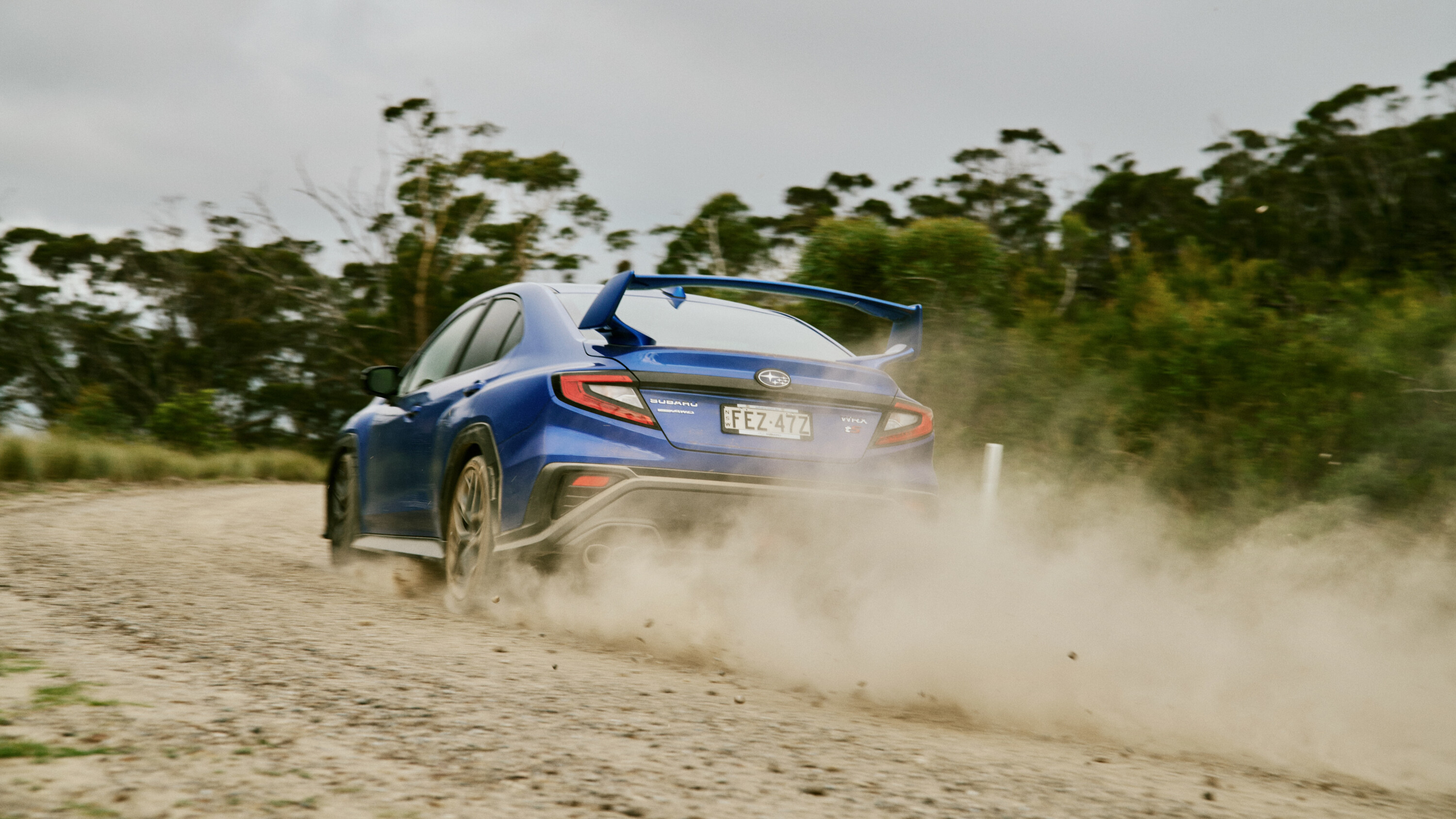
The tS spec.B isn’t the only new addition to the WRX globally – Japan’s new S210 added a whole host of STi features and more power, while the recently announced WRX tS for the US market features the same wheels and brakes as the Australian tS spec.B, as well as STi-tuned electronically adjustable dampers and a new 12.3-inch digital driver’s display.
The spec.B name hasn’t been used in the local Subaru range since the hot mid-size Liberty spec.B that ended production in 2008.
Subaru will reveal more details about the WRX tS spec.B soon, including full specifications and pricing.
Any self-respecting heritage car company needs a partnership with a similarly storied watchmaker these days, and Aston Martin is no exception.
It has collaborated with Girard-Perregaux – the fine Swiss watchmaker founded in 1791 – since 2021, producing six timepieces in the intervening period.
This new limited edition Laureato Chronograph Aston Martin Edition may be the most fully realised timepiece to emerge yet from the partnership.
A release of 188 pieces, the new watch is distinguished by its use of Aston Martin’s long association with the famous colour, British Racing Green. Aston Martins in green were used from 1922 when race drivers took to the track in national colours.
In fact, Aston Martin now has offers nine exclusive shades of green to customers within its core colour palette, plus further options through its bespoke service, Q by Aston Martin.
The colour inspiration is immediately seen on the dial, an iridescent shade of green from Aston Martin’s automotive paint palette that required 14 intricate production steps to create. The half-skeleton hands, meanwhile, take inspiration from the grille of an Aston Martin.
The 42mm case is created from grade five titanium, a material that was used in the production of the marque’s hypercar, Valkyrie, and which ensures both lightness and durability for the wearer. A slim chronograph, the case and bracelet bear both brushed and polished surfaces in the tradition of the Laureato.
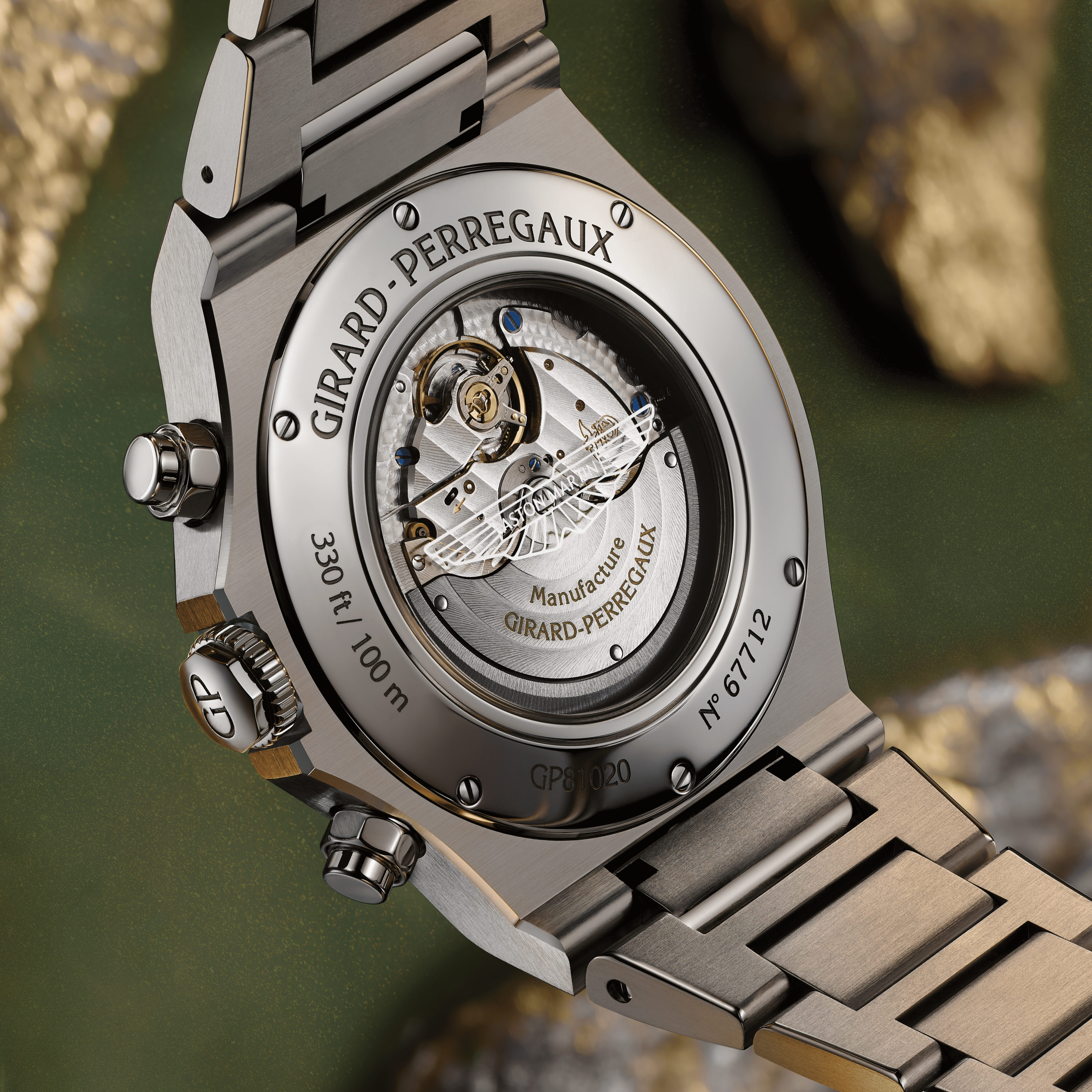
The caseback bears an etch of the Aston Martin logo, through which can be seen GP’s in-house automatic GP03300 calibre movement, which delivers 46 hours of power reserve. The finely wrought chrono is water resistant to 100 metres and enclosed via a titanium integrated bracelet with butterfly clasp.
A statement watch for those who prize the history and artistry of two masters in their respective fields.
Mount Panorama became more like Munich on the first weekend of February, as BMW went all-in on the first major Australian motorsport event of the year.
It created a Forrest Gump event with an automotive ‘box of chocolates’ where you never knew what was coming next.
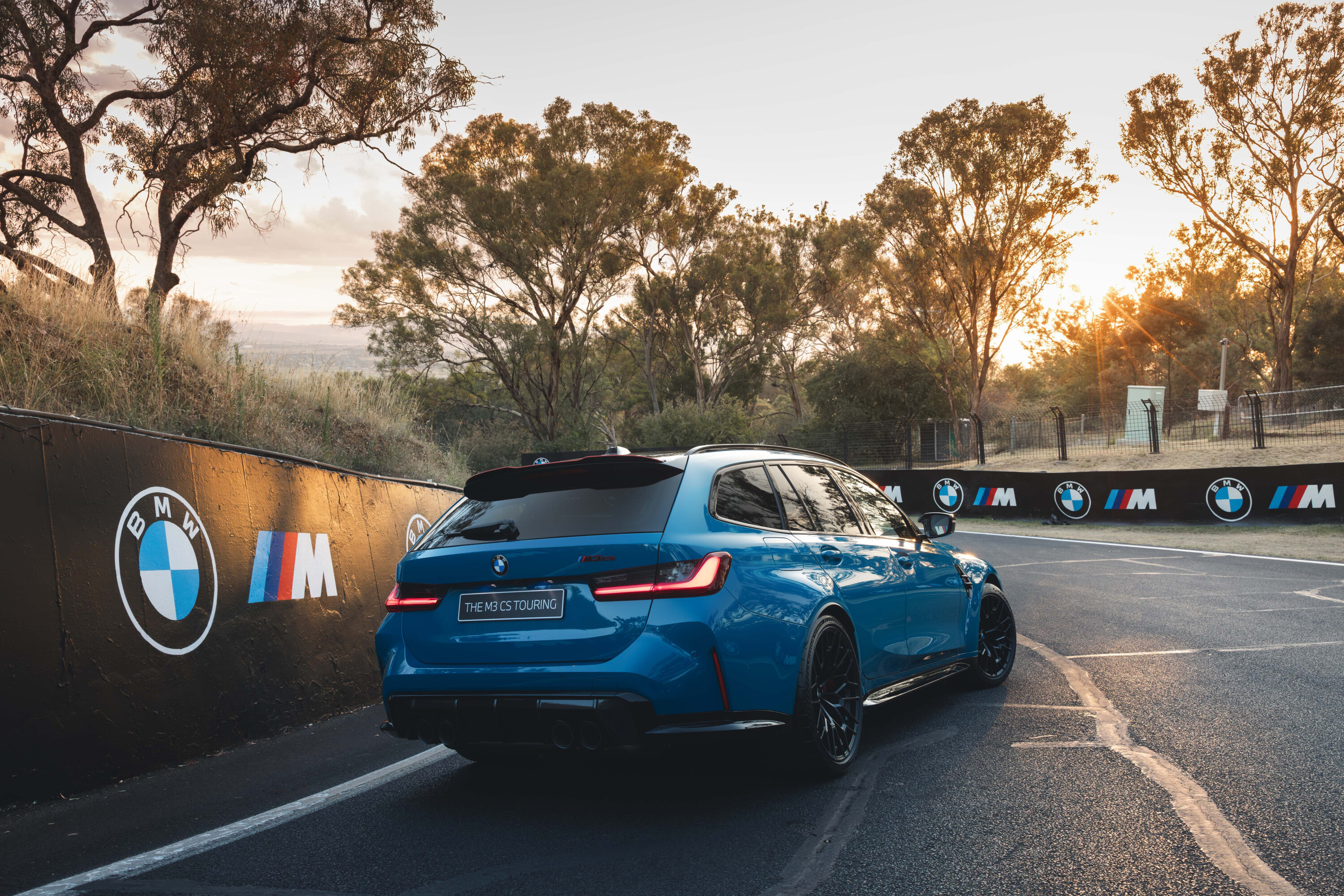
It began with the global unveiling of the latest M3 CS Touring, wrapped around a two-car entry with the M4 GT3 EVO in the 12-Hour contest, and finished with a preview drive of the all-new M5 V8 hybrid.
The Bavarian blast at Bathurst was one of the most impressive automotive executions in recent years, even without a landmark one-two sweep at the end of the 12-Hour.
Gambling on success in motorsport is never a smart move for a carmaker, as there can only ever be one winner – with lots and lots of losers.
That’s why most brands have given up on the old-fashioned ‘Win on Sunday, sell on Monday’ mantra to justify their involvement in motorsport. It’s now about polishing the badge, technology transfer, and creating special experiences for owners and hopefuls.
Yet the ‘other’ Bathurst race – created for exotic sports cars and not the old-school Ford Mustangs and Chevrolet Camaros that wrestle like dinosaurs each October – has a growing relevance and increasing impact.
It’s not just in Australia, either, as competition for showroom-based GT3 racers is booming around the world and Bathurst is one of the signature events. It’s not Le Mans but drivers rate it among their very favourite circuits.
BMW has been fast in the past as a 12-Hour contender, famously having the turbo boost turned down on its M6 racer in 2019 when it was too fast for the opposition – but this time, it was back to write a record.
It arrived with a pair of M3s in very different competition colours, one with a black backdrop and the other on white, fielded by the Belgian-based MRT team which had won the 12-Hour with Audi in the past.
Five of its drivers were GT specialists and the other was ‘The Doctor’, legendary MotoGP racer Valentino Rossi. He is less known as a four-wheeled racer, but once tested for a place with Ferrari in Formula 1 and has become a regular and respected GT3 driver with BMW.
His star power was reflected in the giant queues of fans who rivalled the glory days of Peter Brock, with hour-long waits for an autograph and a near-constant honour guard for Rossi on his walk between the BMW compound and the pit garage.
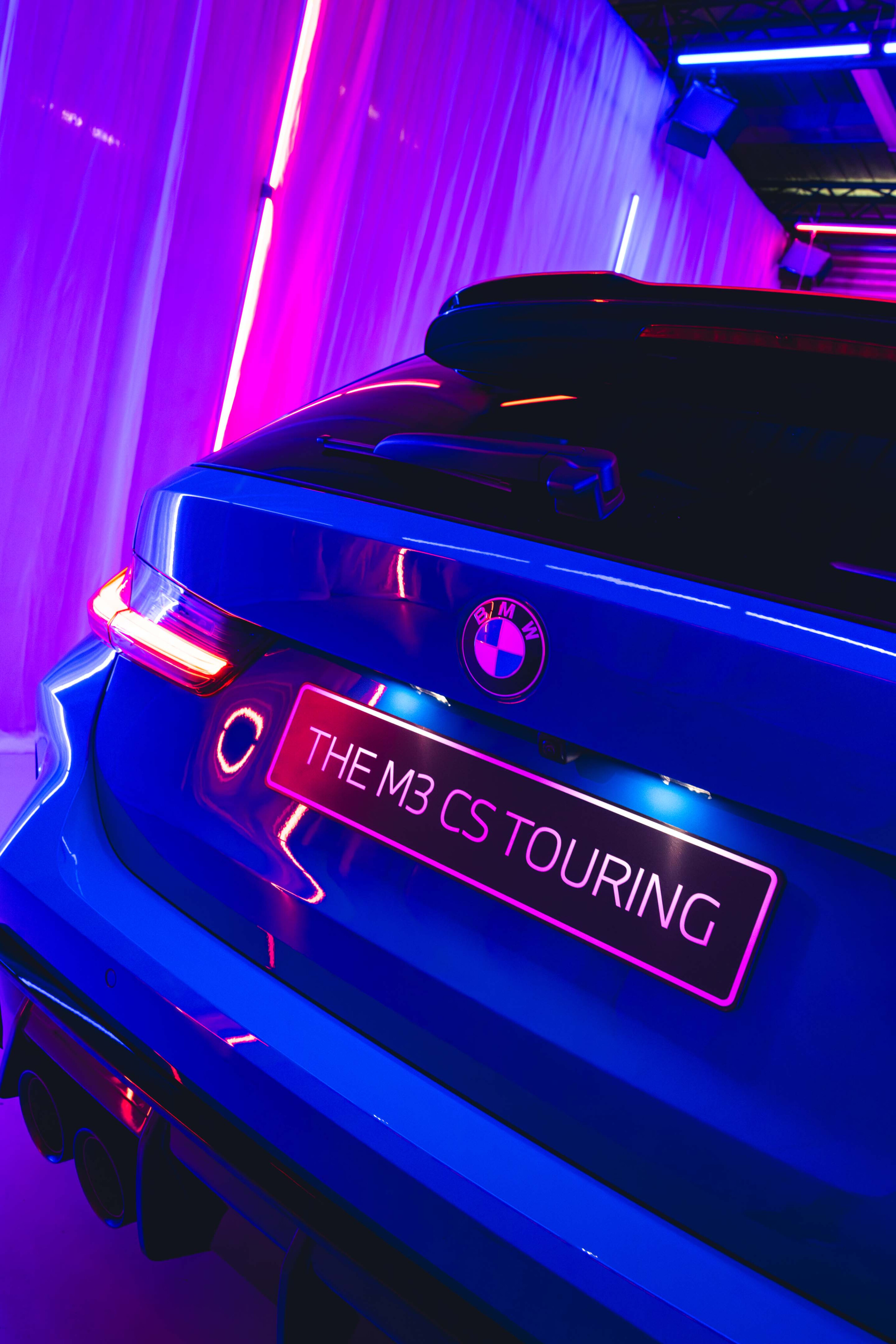
While Rossi was creating memories through practice and qualifying, BMW Australia had already scored its first hit with the global unveiling of the M3 CS Touring.
It was the first time any worldwide reveal had been staged in Australia, with the circuit itself serving as the backdrop. Touring wagons are on the slide globally, and Aussies have migrated to SUVs for family work over more than 20 years, but the M3 CS is still special.
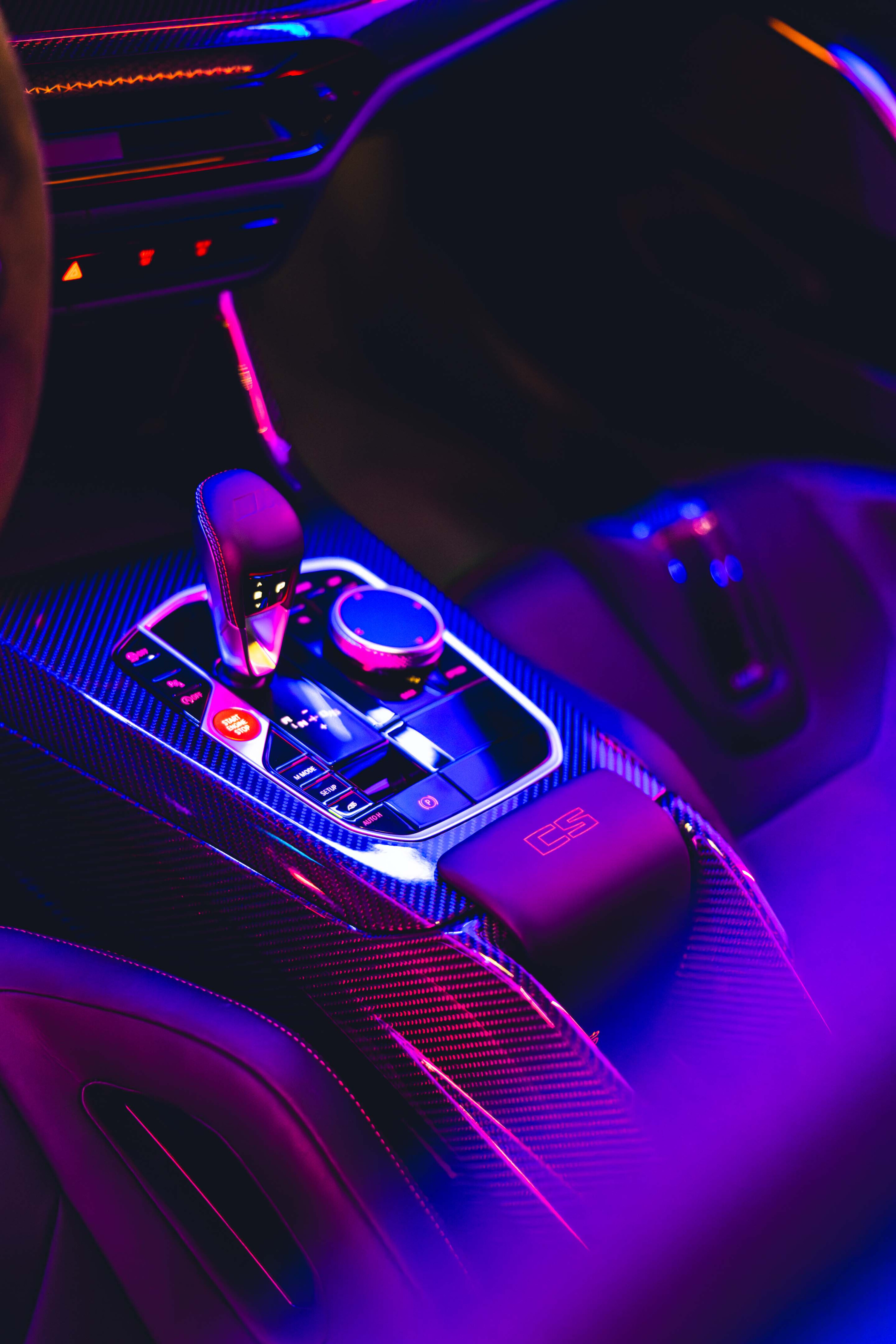
It packs 405 kiloWatts and 650 Newton-metres for a 0-100km/h sprint in 3.5 seconds and a top speed of 300km/h. Apart from the wagon tail to set it apart from the M3 sedan and M4 coupe, the list of equipment runs to splashes of carbon fibre, forged alloy wheels, a strut brace and M Carbon brakes.
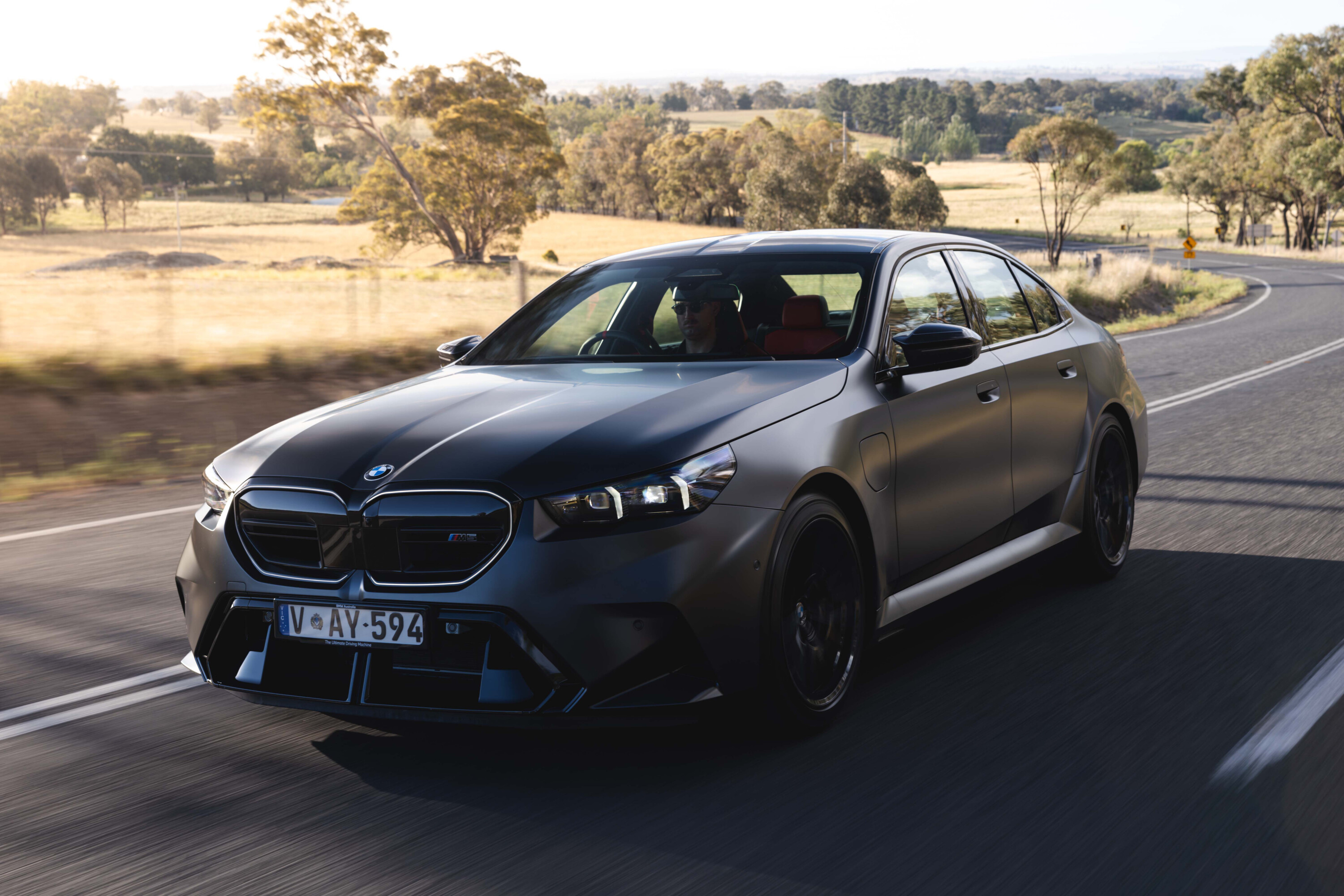
Only 55 are set for Australia, priced from $253,900.
With the first course out of the way, attention turned to the main course and the pre-dawn start with the BMWs sitting fourth and 12th on the starting grid.
There was torrid action from the get-go, with contact and crashes – including a very rare mistake by Craig Lowndes, who took his Mercedes-AMG out of action when he hit a concrete wall.
It was shaping as a hare-and-tortoise battle, with a Ferrari 296 setting the pace – with Supercars drivers Chaz Mostert and Will Brown driving – and the BMWs advancing steadily with stealthy tactics. The M4 drivers were easing into the braking areas, not going full throttle, to save fuel as they set themselves for the run to the finish.
The smart tactics at BMW became the winning move when Mostert peeled into the pits for a late top-up of fuel and the M4s ran home for a landmark one-two finish.
Kelvin van der Linde completed the final 34-lap run to the flag, but it was close, even for the BMWs.
“I had a fuel surge on the way to the podium ceremony, so it was very, very tight,” said van der Linde, who shared the winning car with his brother Sheldon and Augusto Farfus.
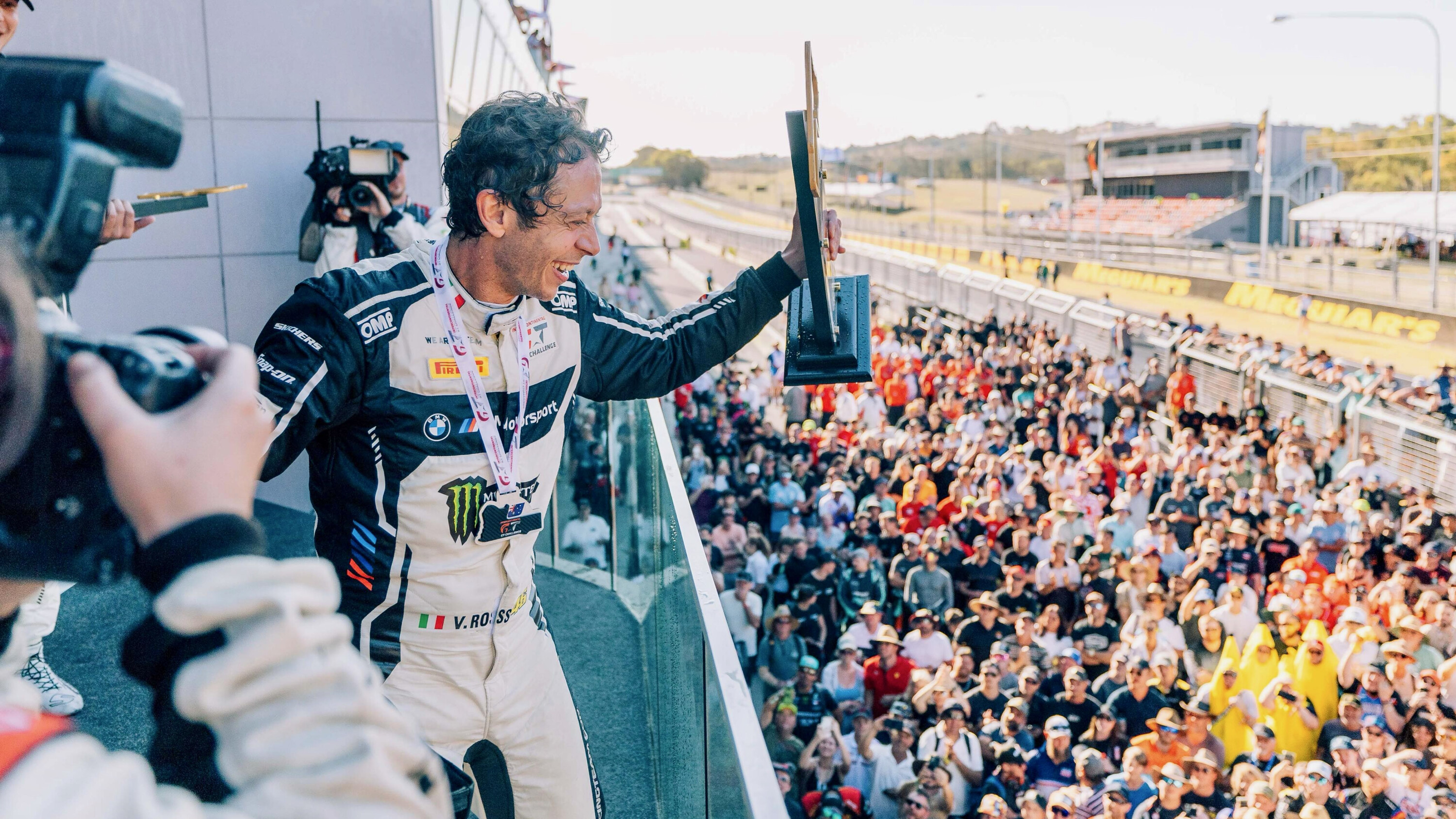
Rossi was one of the second-placed pilots, sharing with Charles Weerts and Raffaele Marciello, in a car wearing his signature #46. He was ecstatic.
Hometown hero Kenny Habul – who owns a house on Conrod Straight after building a billion-dollar solar panel business in the USA – anchored his Mercedes-AMG GT3 EVO for third place and an exuberant podium celebration including another ‘shoey’ for the former race winner. Ferrari was fourth and Porsche only sixth.
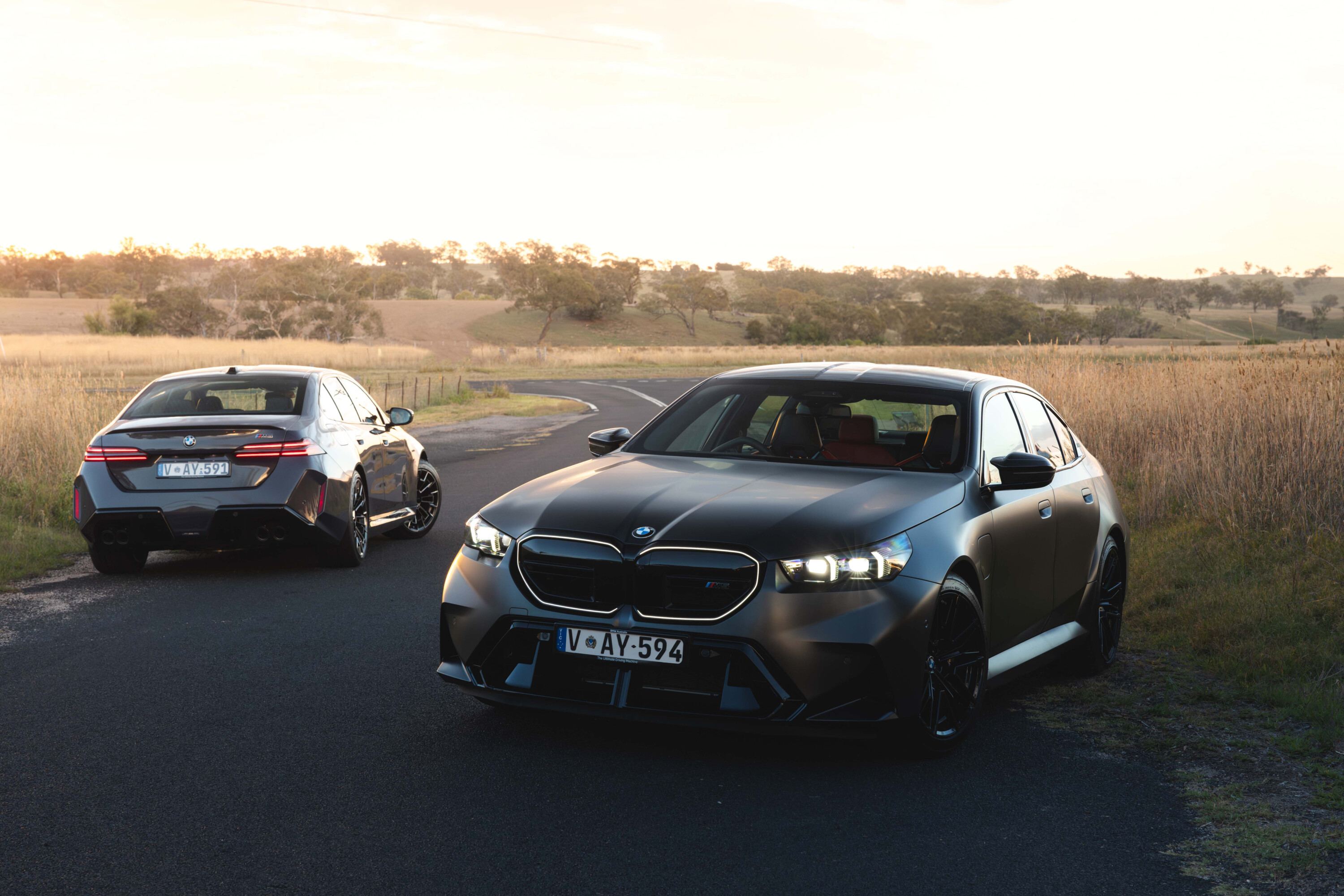
With the 12-Hour done, Mount Panorama was deserted but still challenging on Monday for brief track laps in the new M5. It’s a landmark car, still a V8 but also a plug-in hybrid, and there are plenty of questions about its weight of 2436 kilograms and a $259,900 price tag.
On the track, the car’s 535kW and 1000Nm rapidly overpower the heft and it is a surprisingly sharp tool. It can hustle while it hurtles over the top of the mountain, before winding out down Conrod at speeds which are 10km/h faster than the GT3 racers.
With the weekend done the focus is already shifting to 2026.
“I want to come back. I think I will come back – yes,” said Rossi, reflecting the thinking of everyone on team BMW.
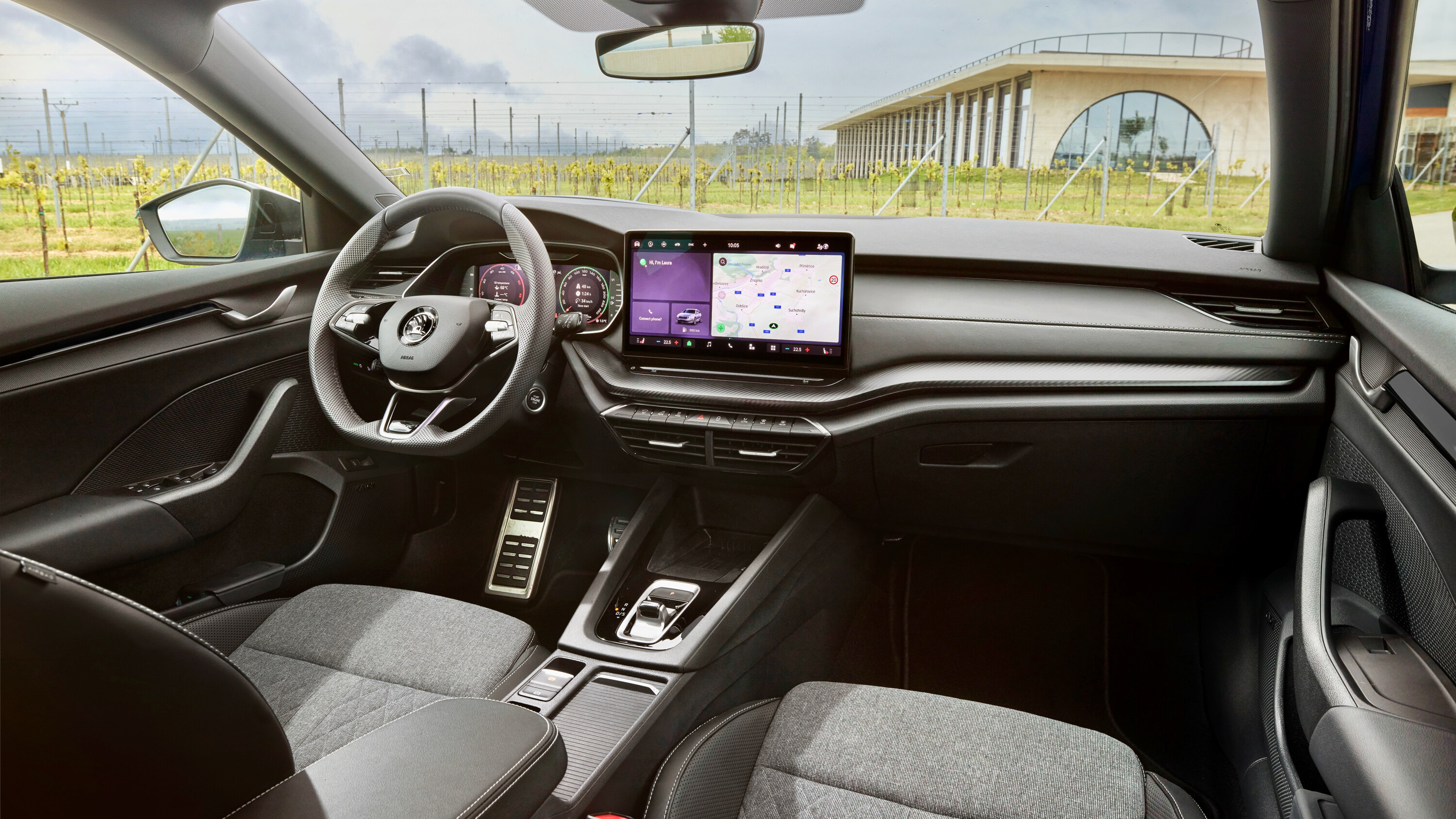
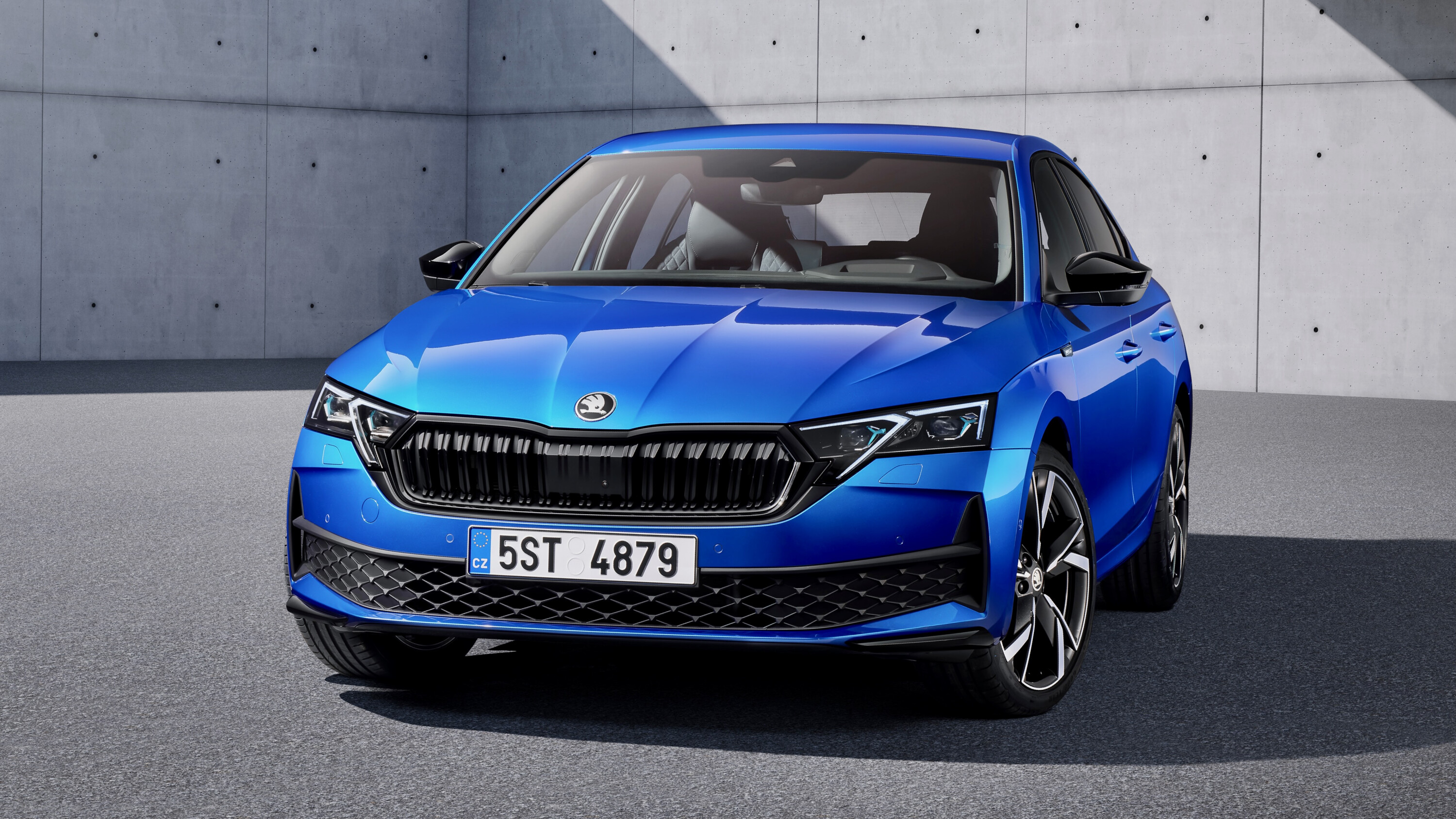
Skoda Australia has announced that a new mid-grade Octavia Sportline will be added to its local lineup priced from $44,490 plus on-road costs. Using the same drivetrain as the entry-level Octavia Select, the Sportline adds new features such as larger wheels, Matrix headlights and sportier styling.
Additional new features on the Sportline’s exterior are gloss black trim pieces on the grille, mirrors and window surrounds, a hands-free electric tailgate, Sportline badging and a rear lip spoiler.
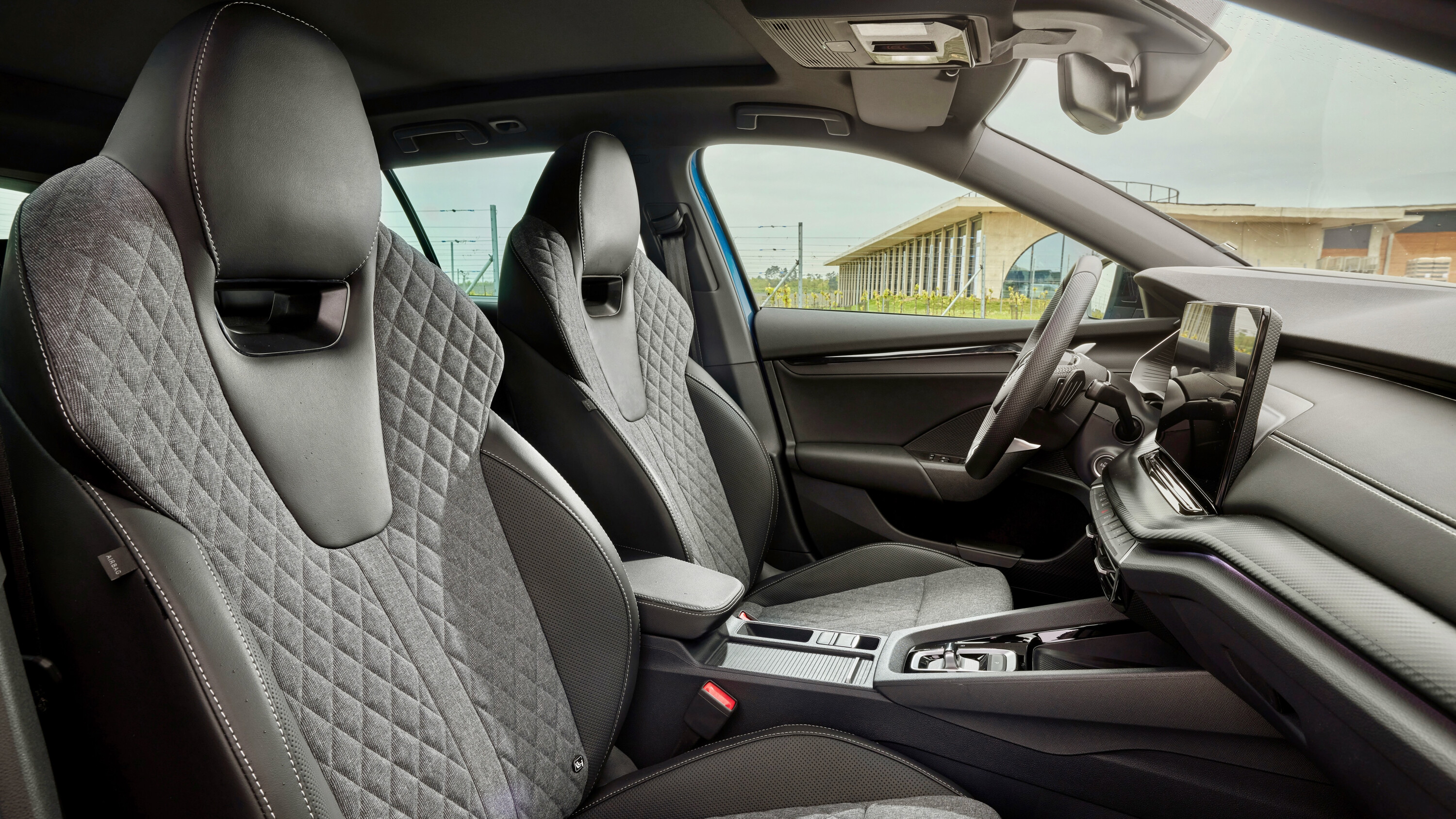
On the inside of the Octavia Sportline are new sports seats with heating and fabric and leatherette upholstery, a black headliner, a leatherette dashboard trim with grey stitching, carbon effect trim, stainless steel pedal covers and unique Sportline graphics for the digital driver’s display.
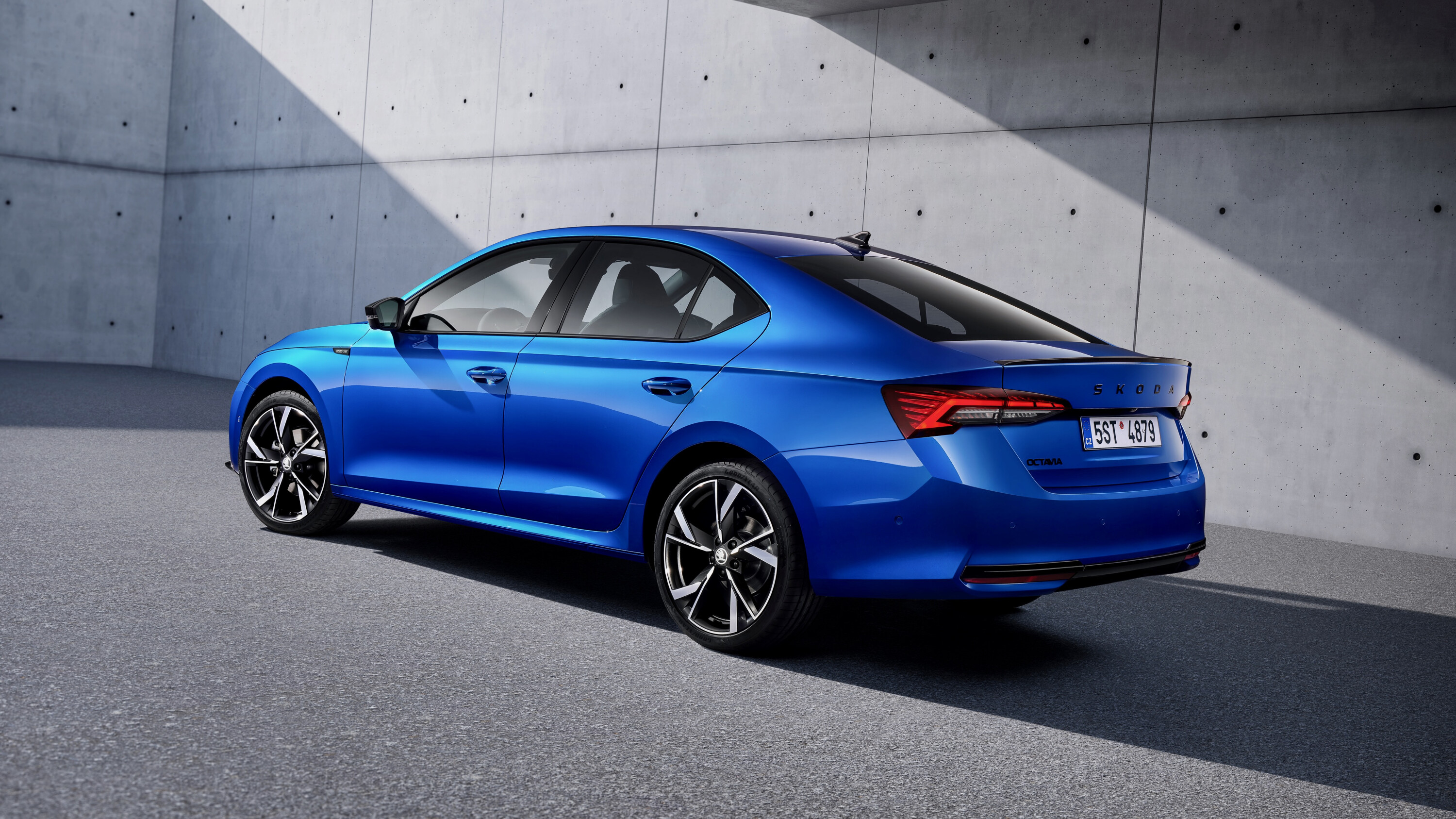
The Octavia Sportline uses the same 1.4-litre turbocharged petrol engine as the Octavia Select that it sits above, which produces 110kW of power (from 5,000rpm to 6,000rpm) and 250Nm (between 1,500rpm and 3,500rpm). That’s mated to an eight-speed torque converter automatic transmission and sends power to the front wheels.
The Octavia Sportline hits 100km/h in 8.7 seconds, while its fuel consumption is rated at between 6.1L/100km (liftback) and 6.2L/100km (wagon) on the combined cycle. It runs on 95RON premium unleaded and features a 45-litre fuel tank.
Measuring 4,705mm long, 2,003mm wide, 1,470mm tall and riding on a 2,686mm long wheelbase, the Octavia’s boot measures between 600-litres (liftback) and 640L (wagon) with the seats up and 1,555L (liftback) and 1,700L (wagon) with them folded.
| 2025 Skoda Octavia pricing (drive away): | |
|---|---|
| Select liftback | $41,490 |
| Select wagon | $43,990 |
| Sportline liftback | $46,490 |
| Sportline wagon | $47,990 |
| RS liftback | $62,990 |
| RS wagon | $64,490 |
| Octavia Sportline standard equipment: | |
|---|---|
| 19-inch alloy wheels | Rear privacy glass |
| Sports steering rack | Suede and leatherette seat upholstery |
| Dusk- and rain-sensing automatic all-LED exterior lighting | Heated sports front seats with height and lumbar adjustment |
| Matrix adaptive high beam | Dual-zone automatic climate control with rear air vents |
| Rain-sensing automatic wipers | 10.25-inch digital driveru2019s display |
| Keyless entry with push button start | 13.0-inch touchscreen with satellite navigation |
| Hands-free power tailgate | Wireless and wired Apple CarPlay and Android Auto |
| Heated and auto-folding mirrors | Eight-speaker sound system |
| Gloss black exterior trim | 5x USB-C ports (2x front, 2x rear, 1x in the rear mirror housing) |
| Rear spoiler | Wireless phone charger |
| Black roof rails (wagon only) | Umbrella and waste bin in driveru2019s door |
| Leather-wrapped steering wheel with paddle shifters | |
| Octavia Sportline safety features: | |
|---|---|
| Eight airbags (including a front centre unit) | Exit warning |
| Autonomous emergency braking (AEB) with pedestrian and cyclist detection | Driver fatigue monitoring |
| Adaptive cruise control | Emergency assist |
| Traffic jam assist | Front and rear parking sensors |
| Travel assist | Reversing camera |
| Lane keeping assistance with adaptive lane guidance | Tyre pressure monitoring |
| Blind-spot monitoring with rear cross-traffic alert | Alarm |
| Low-speed rear automatic braking | Electronic child safety lock on rear doors |
The Skoda Octavia Sportline will hit local Skoda dealerships soon.
I had a school friend who went to university and became a vet because his parents insisted. But instead of a long and fulfilling career, what ensued was an expensive five years of study followed by a few months of miserable employment before Tom decided tree surgery was actually his calling.
It’s not that veterinary practice is a bad job, but it is fair to say that committing to something as important as an education and career should probably come down to the individual’s preferences, with only a minimal reliance on the opinions of others. It’s the same for most big decisions.
All the real estate agents in Australia might claim that Berias Road, Werribee is the next Bitcoin of property, but you’d probably think twice about putting in a bid for your first bricks and mortar when you found out it’s downwind of Australia’s largest sewage treatment plant.
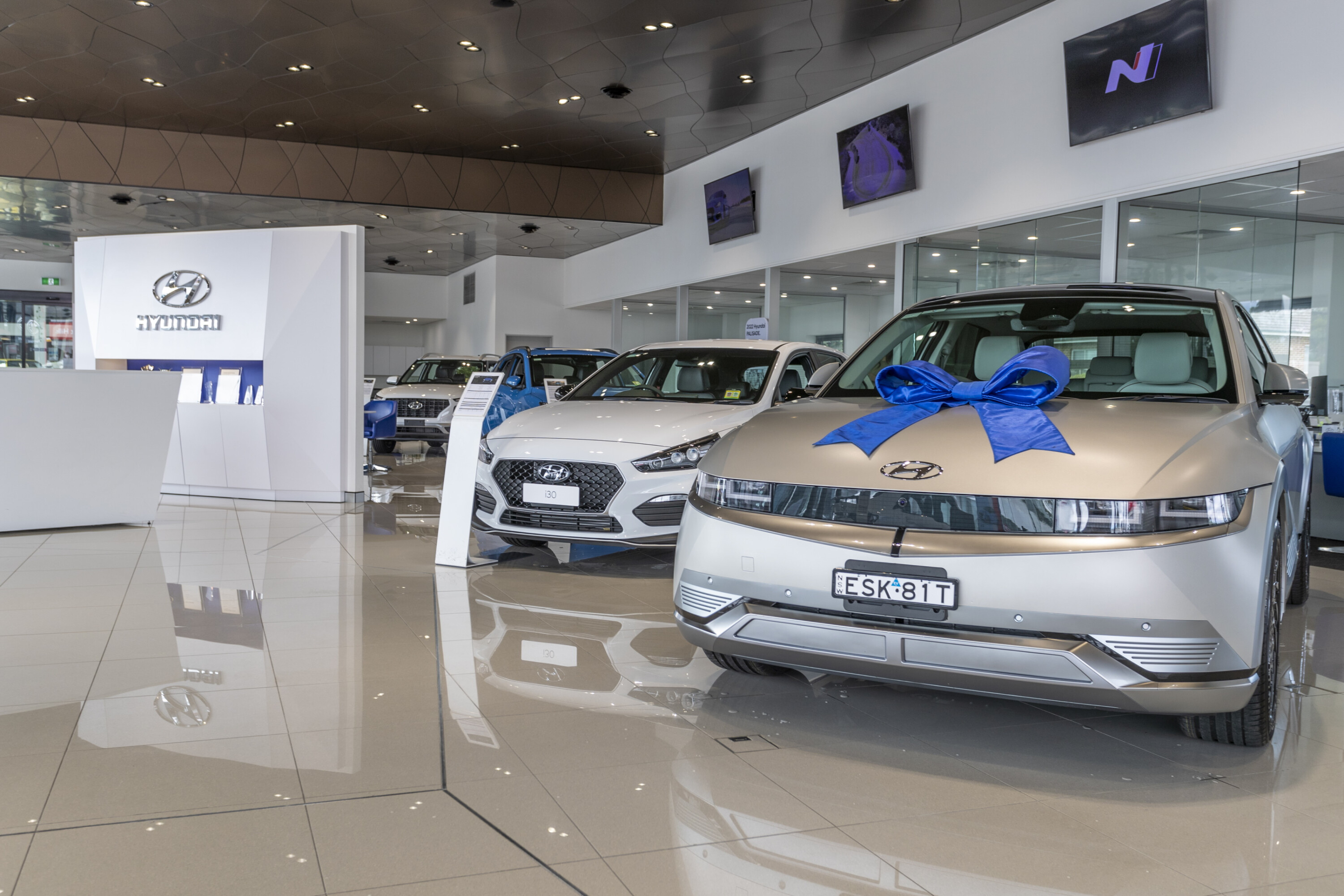
It seems fairly obvious that big decisions should be yours, and yet it’s astonishing how many people buy cars according to what other people think and want. I don’t want to put too fine a point on it, but buying a car based on how easy it will be to sell down the line is stupid.
I’ve lost count of how many times I’ve recommended a Skoda, Genesis, Cupra or Volvo, to name a few, and, despite the vehicle ticking virtually all the prospective buyer’s boxes, they mutter something about resale and immediately buy a Toyota. Buying a car based on what other people want is rather like asking your friends and family to chose who you marry with a vote, rather than shacking up with the person that makes your heart feel as though it’s been aced over the net by Kyrgios.
Also, consider this: Australians keep their cars for an average of more than 11 years, so if you’re buying a car based on who will want it, you’ll need to be an auto market Nostradamus to make an educated guess.

Eleven years ago, the best-selling car was a small hatchback and today it’s a one-tonne dual-cab ute. So, I’m sorry, I don’t believe you if you claim you know what the average Australian will be buying in 2035.
The exception to this is shopping for electric cars, in which case you’d be forgiven for worrying about the next buyer eight years down the line when the battery warranty has expired and the $30,000 lithium-ion brick holds as much charge as a four-pack of Duracell AAA. But for virtually anything else, my advice is this – buy the car you want, not the one you think a majority of people will want in a few years’ time.
You might even choose a future classic. A colour that seems a little esoteric today could be the sought-after hero tone when you come to sell it. The same applies to a level of specification or drivetrain, or even an entire model that sold poorly when new but becomes a must-have unicorn thanks to its rarity.
If, a few years back, you bought an automatic Porsche 911 because ‘it’d be easier to move on when the time came’ you’ll be kicking yourself with your withered left leg. BMW’s E46 M3 CSL was a tricky sale due to the lack of air-conditioning and its SMG gearbox, while people said the Dino wasn’t a proper Ferrari. Don’t listen to these kind of people.
When considering which car to buy next, think about who it is you’re really buying it for. If the model in question makes your tummy flutter like an old flame, it’s possible you’re gambling on a little more legwork when it’s time to sell in exchange for years of motoring joy and living with the car you love.
But if it’s a sensible-coloured, mid-range variant from a mainstream manufacturer, you’re probably buying it for the next guy.
