
Note: This review was published before Australian pricing was known, and remains unchanged.
Electric light commercial vehicle (LCV) sales in Australia have exploded since 2016, when four – yes four – Renault Kangoo Z.E. sales made up the entire annual volume for battery-powered vans.
While the electric commercial segment may eventually flourish with the introduction of all-electric dual cabs – given there’s only one on sale right now, the phenomenally expensive LDV eT60 – there are already more than half a dozen brands offering battery-electric vans in Australia.
There are also already electric van offerings in multiple sizes – from the small Renault Kangoo E-Tech and Peugeot e-Partner to the one-tonne LDV eDeliver7 and forthcoming Volkswagen ID.Buzz, before the larger Ford e-Transit, Mercedes-Benz eSprinter, and the imminent Ford e-Transit Custom
1
The 212 electric vans sold in 2023 pale in comparison to the 87,005 electric passenger vehicles and SUVs sold that same year, but it’s clearly early days for electric workhorses.
“It’s a financial equation – a pure economic decision,” says Steven Bragg, partner and motor industry service lead at Pitcher Partners in Sydney. “When you think of a dealer to private transaction, it’s emotional … but [for electric vans] it’s a business transaction … it’s either, ‘Hey, I’ve got this contract’, or ‘I’m going to do this job’ – this vehicle has a mission it has to perform.”
1
This makes the higher purchase price – combined with worse resale value than internal combustion equivalents – an even greater barrier to entry in the light-commercial space.
Yet there’s enormous growth on the way judging by Europe – where sales of electric vans surpassed petrol-powered versions in 2023, second only to diesel.
While Australia’s proposed emissions laws may also give the segment a boost, tightening regulations in the UK – and the European Union’s planned 2035 outlaw of new vehicles using internal combustion – mean more choice and better performing electric vans are already hitting showrooms in Australia.
JUMP AHEAD
Small vans
The smallest segment – accounting for only about 2000 sales across all makes, models and powertrains in 2023 – has two key sparring rivals to choose from.
Designed for the ‘last mile’, on paper they’re a prime case for electric vans and feature significant car-like tech – such as smartphone connectivity and driver assist systems (though if you’re not into French brands, you’re stuck).
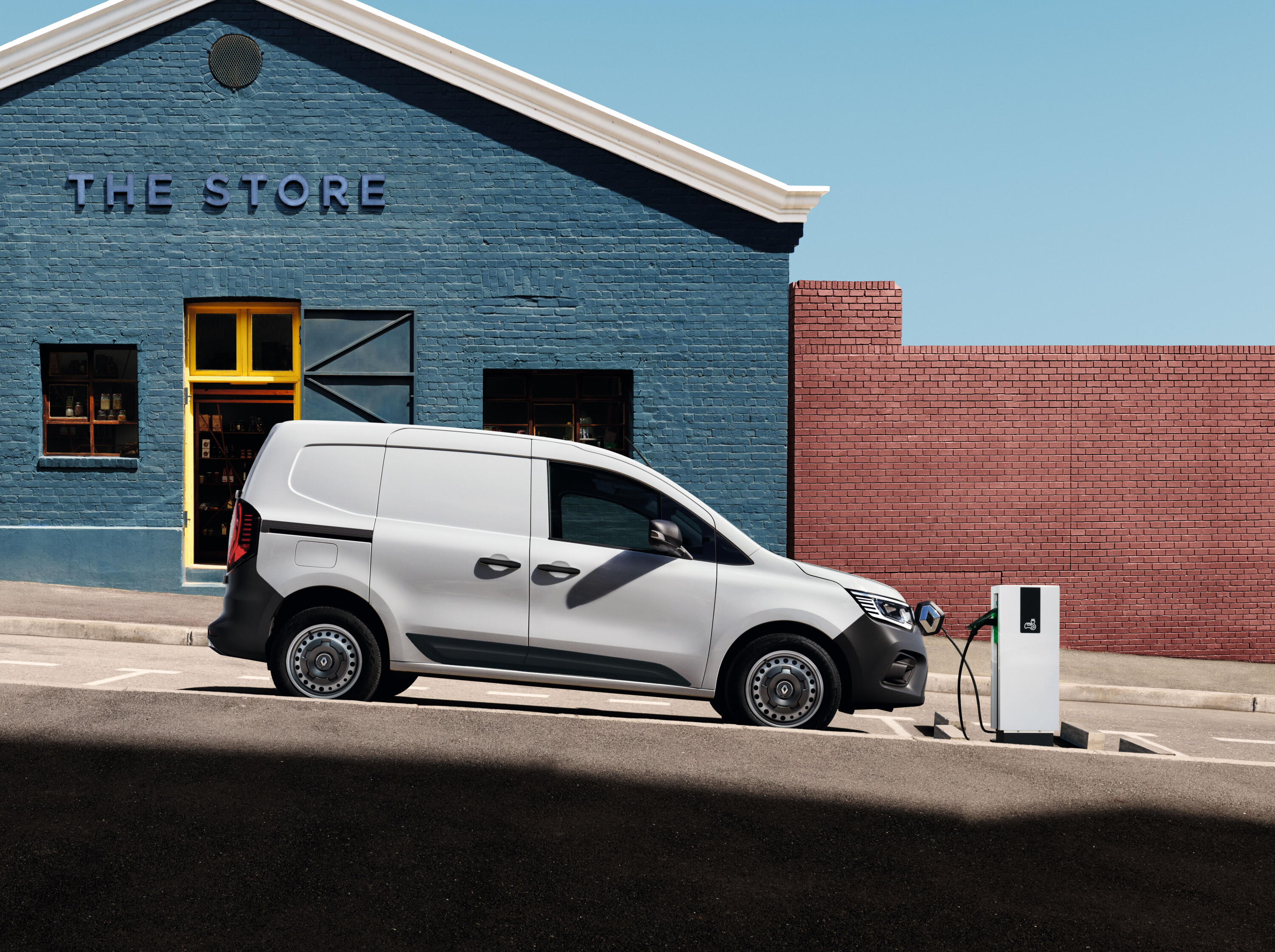
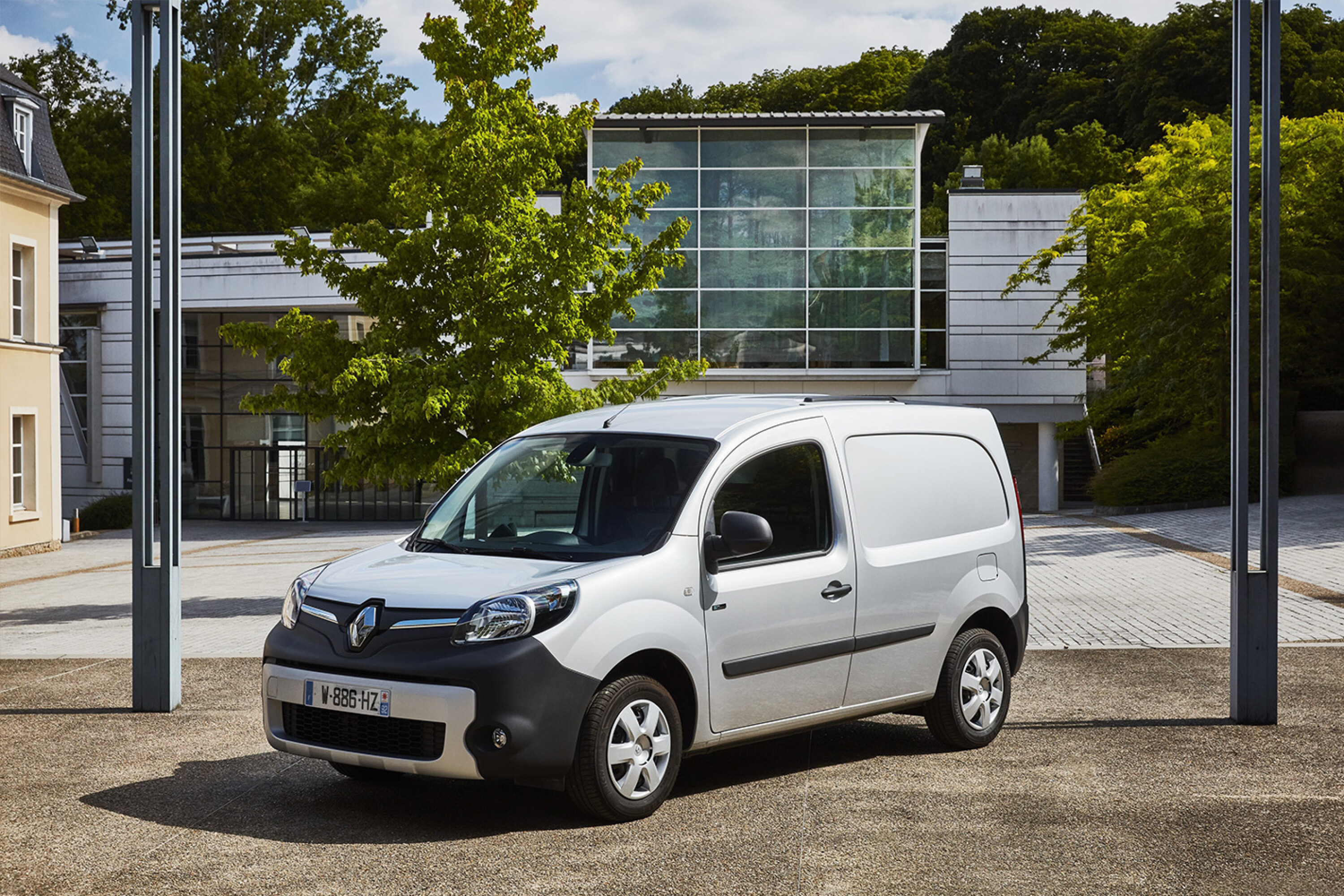
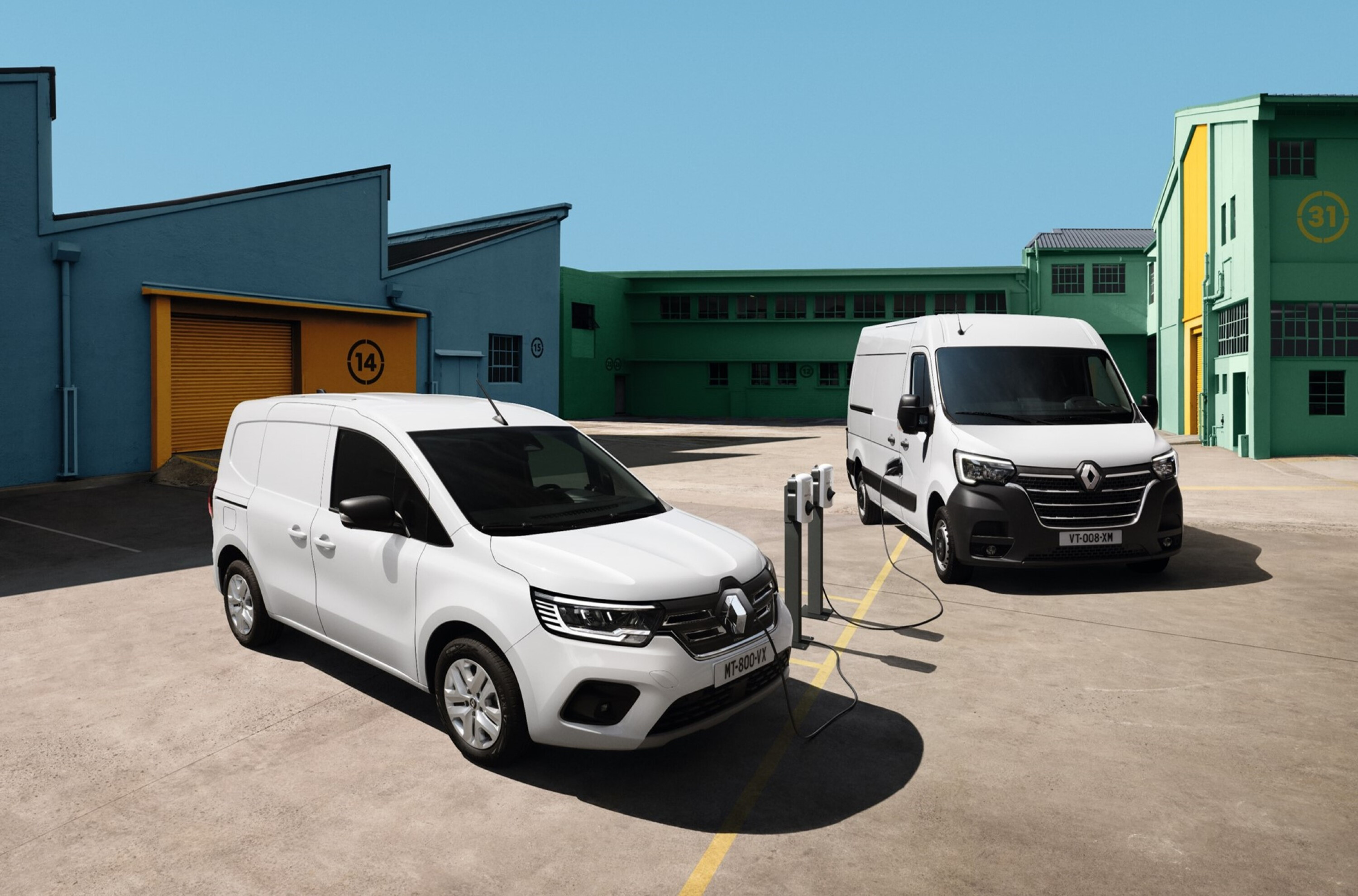
The second-generation Renault Kangoo E-Tech is the successor to the first electric van sold in Australia – the Kangoo Z.E. – and is offered in a single trim level with short-wheelbase ($61,990) and long-wheelbase ($63,990) body styles.
1
Space ranges from 3.3-cubic metres to 4.2 cubic metres, with 523kg and 668kg payloads.
The Kangoo E-Tech is powered by a 90kW/245Nm electric motor with a 45kWh battery and has an official 286km Worldwide Harmonised Light Vehicle Test Procedure (WLTP) range.
An extra-cost direct current (DC) fast charger can supply 80 percent of that range in 27 minutes, with ‘last milers’ more likely to have access to public rapid chargers given their more common metropolitan usage.
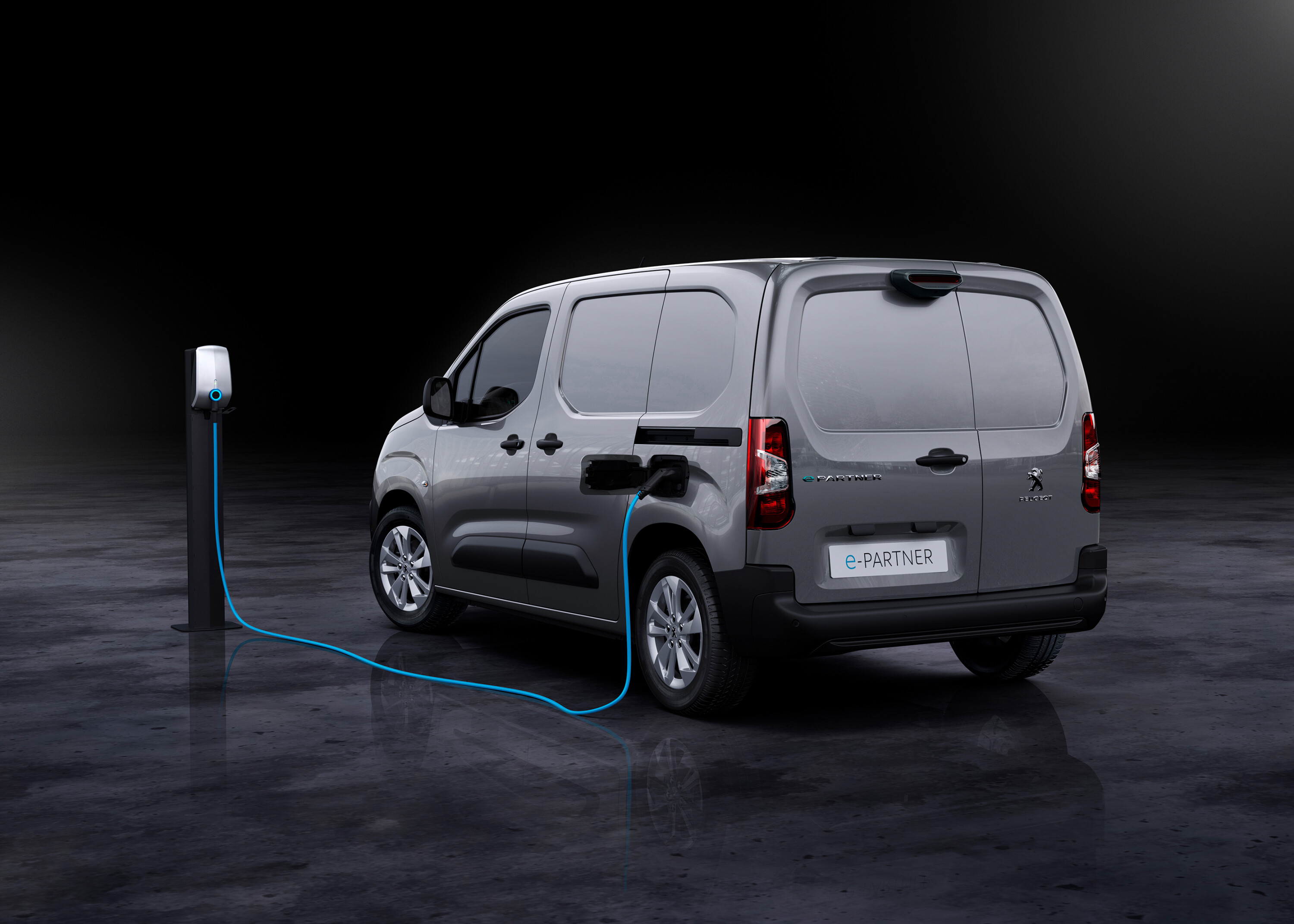
The Kangoo is marginally more expensive than its closest electric rival, the Peugeot e-Partner, which offers a single long-wheelbase version with 3.9-cubic metres of load space for $59,990.
On sale since 2018, the current e-Partner brings a 750kg payload courtesy of more powerful 100kW/260Nm motor, with a 258km WLTP range and a similar 30-minute charge time on a DC charger for 80 percent top-up.
Midsize one-tonners
There’s no prizes for guessing that the most affordable midsize van currently on offer is by a Chinese car maker: LDV.
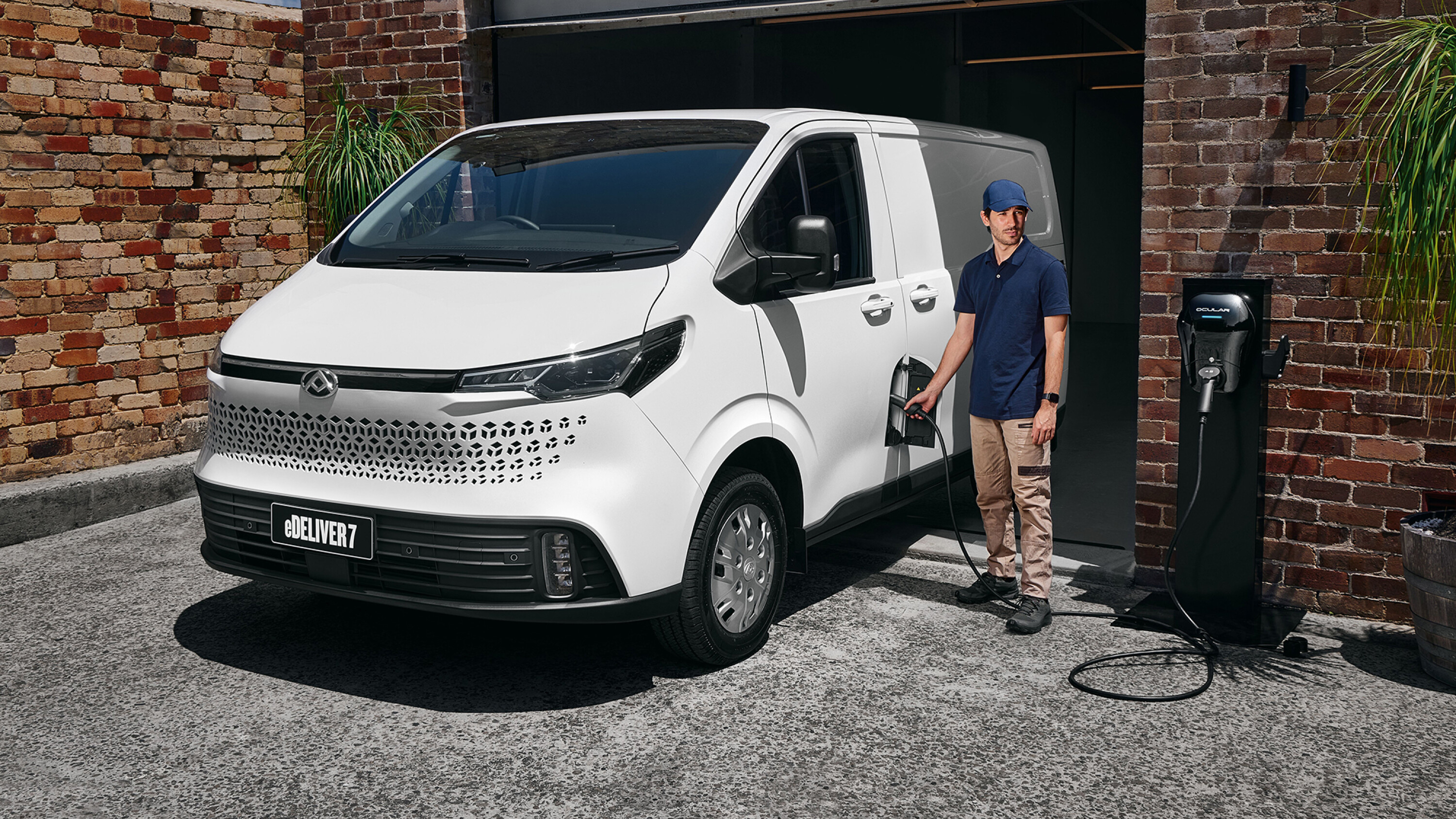
The LDV eDeliver7 was launched in 2024 and at $63,990 on-the-road (for ABN holders only) is the most affordable battery-powered van in the high-selling medium LCV segment, where the Toyota HiAce dominates.
Importantly, the eDeliver7 was developed as an electric van first, with a diesel version expected to be added later in 2024.
Across four variants the front-wheel-drive eDeliver7 offers short- and long-wheelbases with load space between 5.9 cubic metres expanding to 8.7 cubic metres with the high-roof option ticked.
A larger 88kWh battery replaces the entry level 77kWH pack, increasing claimed range from 310-362km across the line-up, with prices topping off at $73,674 including on-roads.
The LDV reflects the rapid evolution of electric vehicles – it has more power, greater range and is cheaper than the Mercedes eVito which went on sale in 2022, with an all-new eVito on a fresh platform expected in 2026.
1
The eVito will survive until then on with its 2024 update, priced from $91,051 before on-road costs, offered only with the medium wheelbase bodystyle.
It offers an 85kW/360Nm electric motor with 260km range (using the older NEDC test procedure) and 60kWh battery and a 35-minute 80-percent fast charge.
As well as the LDV, the eVito will face an armada of new rivals in the coming months, including the forthcoming Ford Transit E-Custom (due Q1 2025 with pricing TBA) and Volkswagen Buzz I.D. Cargo (arriving just before Christmas at an RRP of $79,990).
Ford’s rear-wheel drive E-Transit Custom is expected to offer a 160kW/450Nm electric motor and a 74kWh battery pack.
That brings a 380km WLTP range, with 15-80 per cent of that on hand after a 41-minute fast-charge using a 124kW DC charger.
Like the larger E-Transit, expect its packaging to offer the same space as its diesel counterpart.
With local details still yet to be confirmed, pricing will be crucial to the Ford’s success with the US car maker cutting electric vehicle production in 2023 and reducing prices of the Mustang Mach-E electric SUV before it hit showrooms here last December.
Australian specifications of the Volkswagen ID.Buzz Cargo – the commercial version of its funky retro-styled van – are yet to be confirmed.
UK versions offer a single body style with 3.9 cubic metres of load space, with a 150kW/310Nm electric motor and 77kWH battery pack for a 408km WLTP range.
Small electric van owners looking to upsize may be pleased to see the French battle carrying on in the mid-size van sector, too.
The Peugeot e-Expert has arrived in Australia, wearing a $79,990 RRP and offered in a single long-wheelbase spec with a 100kW/260Nm motor and a 75kWh battery pack delivering a maximum range of 330km.
Watching closely will be Renault, which says it plans to being the electric Trafic into the segment by the end of 2024 – although it is yet to lock this in.
This means the majority of brands competing in Australia’s largest van segment – with 20,000 units sold in 2023 across nine manufacturers – will offer electric options by the by the end of this year.
Large electric vans
The biggest electric vans on sale come from Ford and LDV, with Renault and Mercedes-Benz entering the fight in 2024.
Already in showrooms, Ford’s E-Transit has the same 12.4-cubic-metre load area as its diesel-powered version, with a 307km WLTP range – while its payloads are close to the oiler, too.
“Electrification is a focus, but it can’t come at the cost of reduced fleet efficiency or performance,” said Christine Wagner, General Manager, Fleet and Upfitting, Ford Australia.
Wagner told WhichCar both fleet and private buyers were buying its electric van – prompting the addition of the smaller E-Transit Custom – aided by improving charging infrastructure, too.
“Their key consideration is capability – will an electric van do the job they need it to do?” Wagner said.
“While the segment is still relatively small, we see it as a growing opportunity … It may seem like an obvious thing, but, anecdotally, drivers enjoy having a quiet cabin given how much time they spend in it.”
From $89,990 plus on-roads costs, the E-Transit is priced considerably higher than its diesel equivalent but is considerably cheaper than the LDV eDeliver9’s asking price of $116,537.
The eDeliver9 also offers the same load space as its diesel version, with a 280km range… but is speed limited to 90km/h.
1
Mercedes-Benz added the eSprinter in September, with the all-electric large van equipped with a 150kW/400Nm rear-mounted electric motor and the choice of two batteries – an 81kWh unit, or a long-range 113kWh battery. Range tops out at 359km, while payload is either 1523kg for the 81kWh van or 1115kg for the 113kWh eSprinter.
Less convincing on paper is the Renault Master E-Tech – confirmed for Australia in 2024 – with a less potent (57kW) electric motor than key rivals and only a 200km driving range.
It makes Renault the only brand to offer an electric van in all three main light commercial segments.
Future electric vans
1
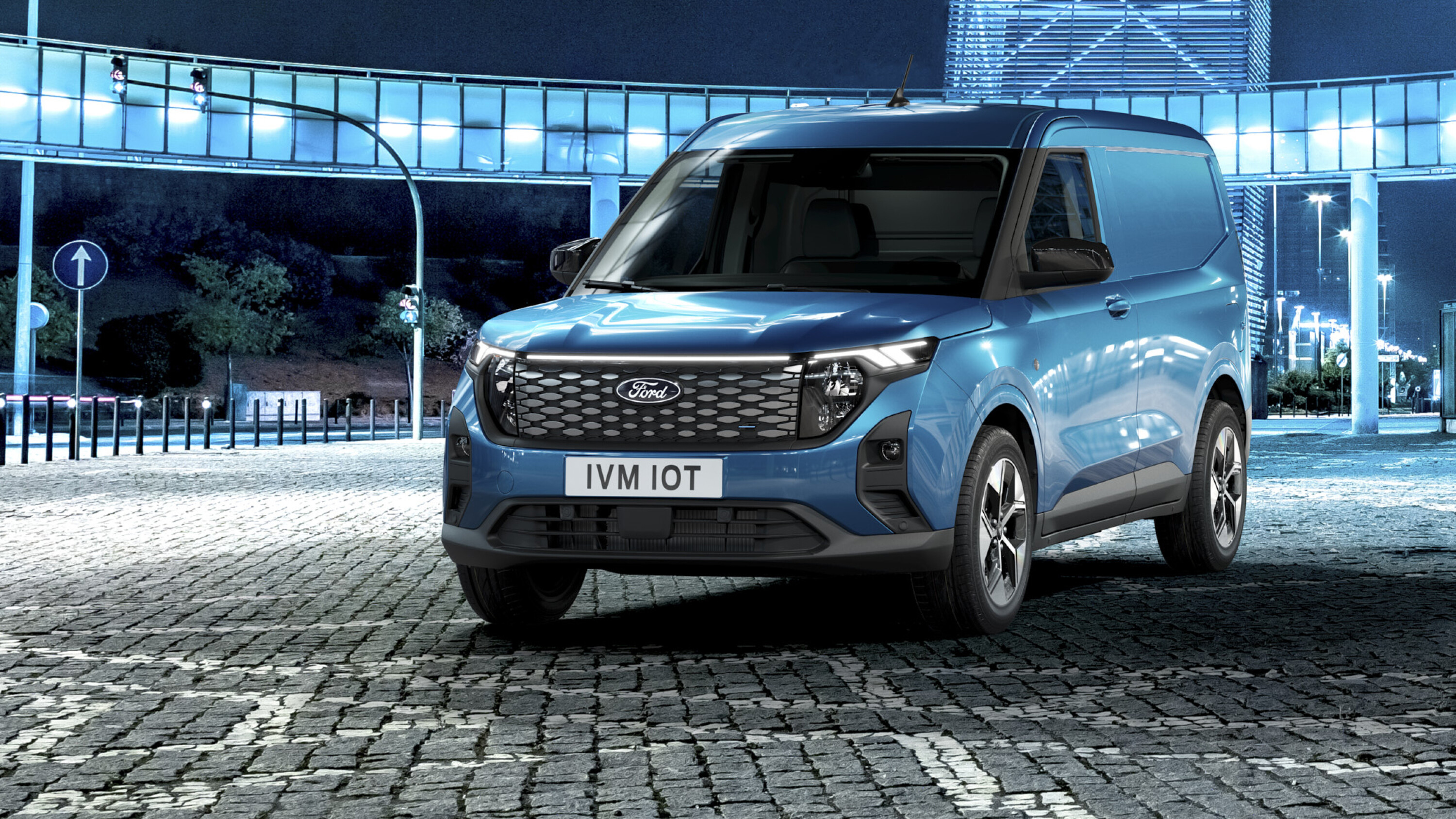
Ford also has an upcoming electric small van, if not yet confirmed for Australia. The E-Transit Courier (pictured above) shares its underpinnings with the upcoming Puma EV compact electric SUV that is heading down-under.
What about the biggest-selling van in Australia, the Toyota HiAce?
Australia’s most popular van does not yet have an electric model in local showrooms.
The Japanese car maker revealed a prototype electric version of its ‘H400’ global HiAce in late 2023, tipped for showrooms in 2025 – although it’s yet to make any official confirmation.
In Europe, Toyota sells the electric ProAce – which is made alongside its Peugeot e-Expert twin that will be offered here in 2024 – while in Australia, it tested a V6 hydrogen-fuelled HiAce in late 2023.
Hyundai, too, has also played in the fuel-cell space with its Staria Load, and while it has been a major electric car player in Australia – and even has an electric truck here – it doesn’t have an electric van in showrooms.
The Staria Load Hybrid – currently only offered in South Korea – could make its way here, while a battery-electric version is rumoured for production in 2026.
What seems certain is that the electric-van segment is one that looks set to keep filling up with options for businesses.
October: 2025 Mazda CX-80 pricing revealed
New 2025 Mazda CX-80 arrives in Australia as the brand’s first hybrid-only seven-seat SUV
September: 2025 Mazda CX-80 first drive
When Mazda announced a major venture into a rear-drive-biased large vehicle platform powered by big straight-six combustion engines it was such a tangential departure from rival development programs that many wondered what Mazda had been putting on its cornflakes.
At about the same time, competitor brands in Japan and Europe were gearing up for electrification, big batteries in pure electric cars of all sizes, and downsized engines if not completely zero emissions powertrains, but then something unexpected happened. Instead of the uptake of electric vehicles continuing along the trajectory many predicted, a kink appeared in the graph.
Suddenly Mazda’s strategy to offer relatively large engines with varying degrees of hybridisation under bonnets of midsize and large SUVs didn’t seem such a harebrained idea.
Especially in Australia where EV sales are doubtless rapidly on the rise, but an apparent lag in infrastructure, incentives and interest is propping the sales of more traditional models for now – models like a big SUV with a six-cylinder engine.
5
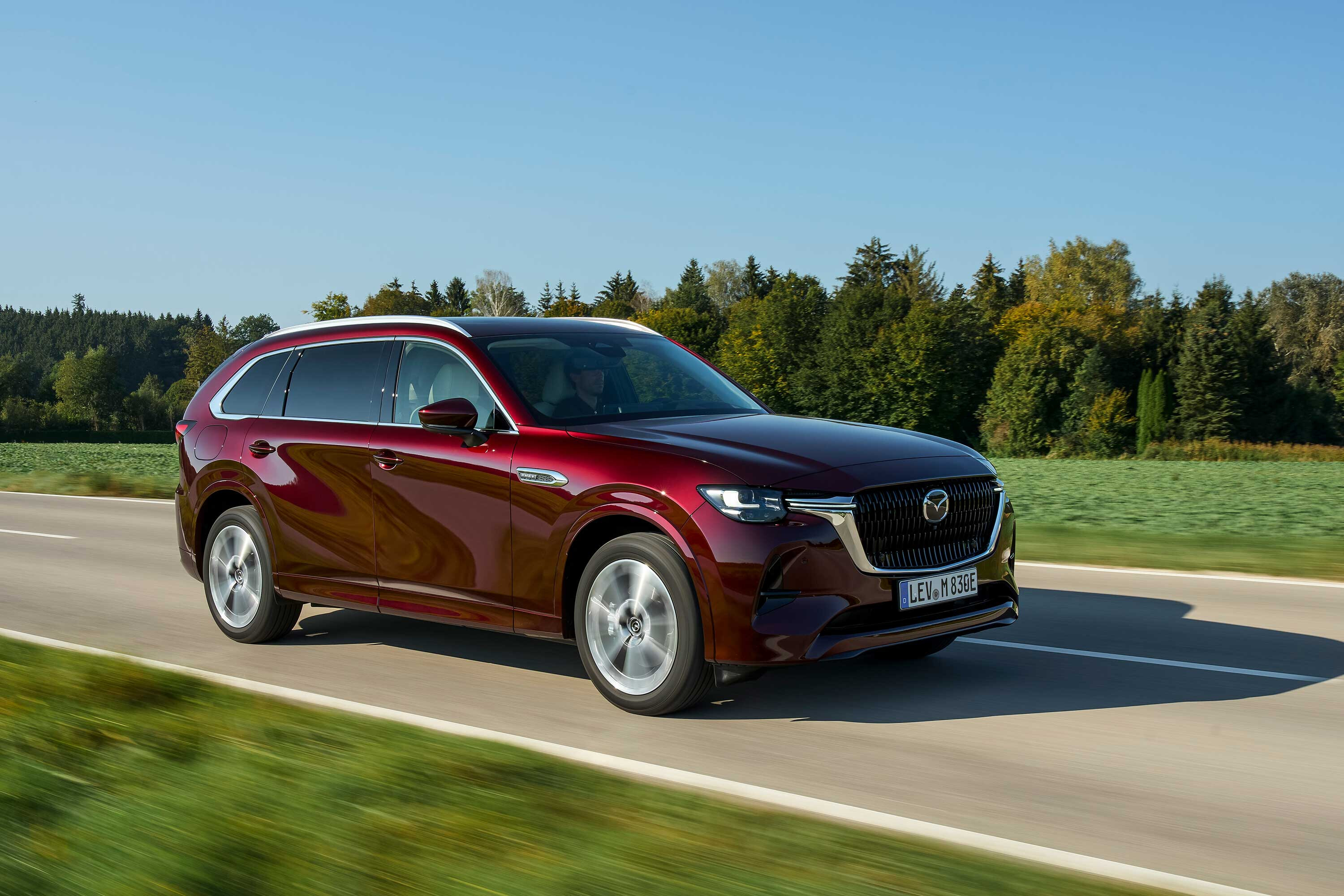
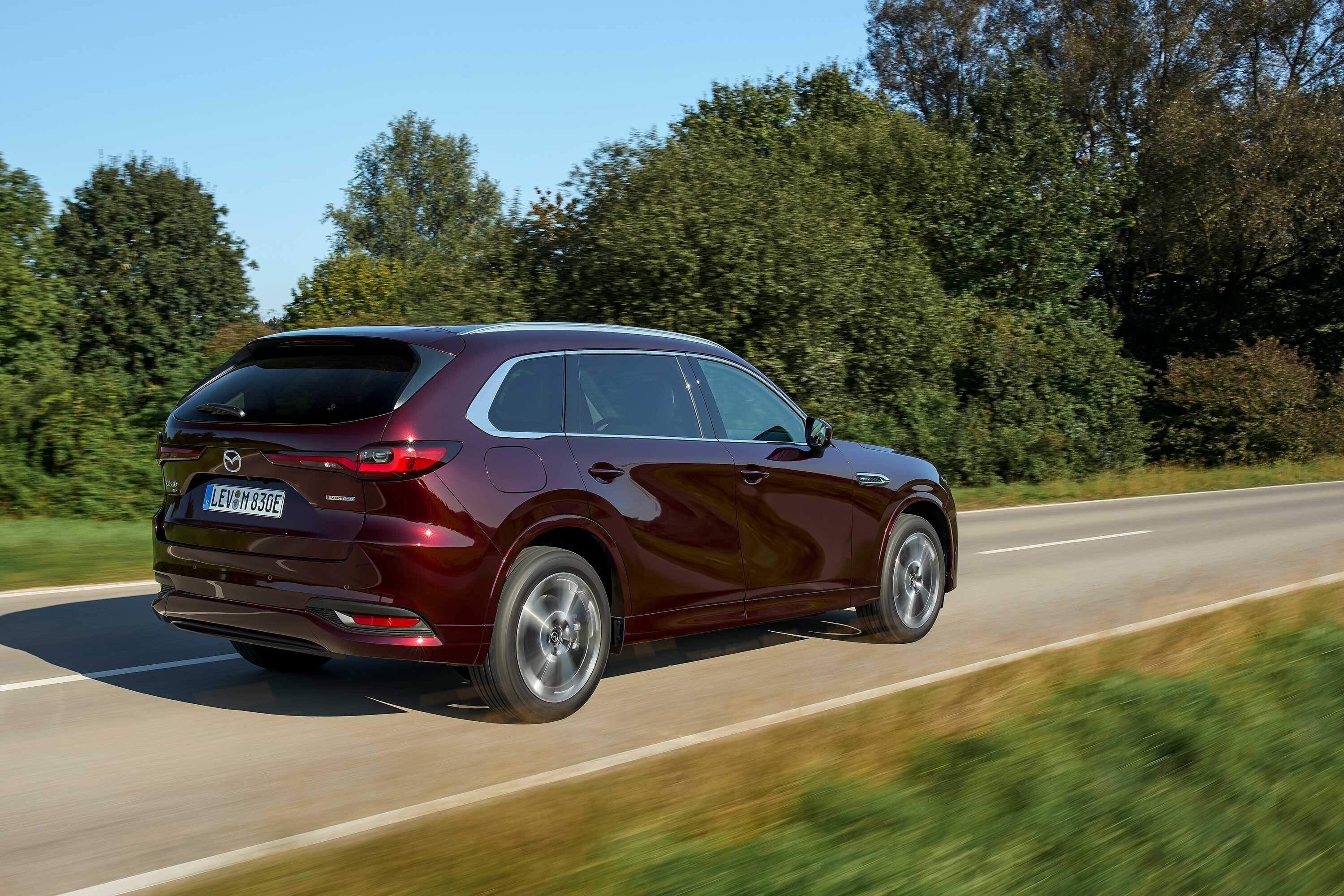
This is the CX-80 – the third model to arrive in Australia and one of four SUVs planned for launch Down Under on Mazda’s new platform. It slots in alongside the existing CX-60 and largest CX-90 and will be joined by the CX-70 before long.
But let’s start with how they all fit in – concentrate please. As the discontinued CX-8 was essentially a narrower version of the also outgoing CX-9, you might expect the CX-80 to be the CX-90’s ectomorph sibling but, with the adoption of the new platform, the family relationships have changed.
Instead, the CX-80 is more closely related to the CX-60 with a longer wheelbase (and slightly taller height) to accommodate three rows of seating, while the CX-70 and CX-90 have the same exterior dimensions with five and seven seats respectively.
Confused? It’s explained by the designated market. The larger CX-70 and CX-90 will be sold in the USA, while the CX-60 and CX-80 are predominantly destined for the Japanese and European markets where the relationship between just two models is easier to understand. Australia, on the other hand, is taking all four. Now that you’ve completed the range familiarisation course, let’s look at what the latest model in the family has to offer.
Like its CX-60 stablemate, three powertrains will be on offer when the CX-80 arrives at the end of 2024 including a 3.3-litre straight-six turbo petrol and a diesel of the same configuration.
Pricing is yet to be confirmed but the inside line is that the petrol will be the most affordable version kicking off from just under $60,000. Above that, the diesel will attract about a $2000 premium while the third option is predicted to be the most popular, despite attracting about another $10,000 on top of that.
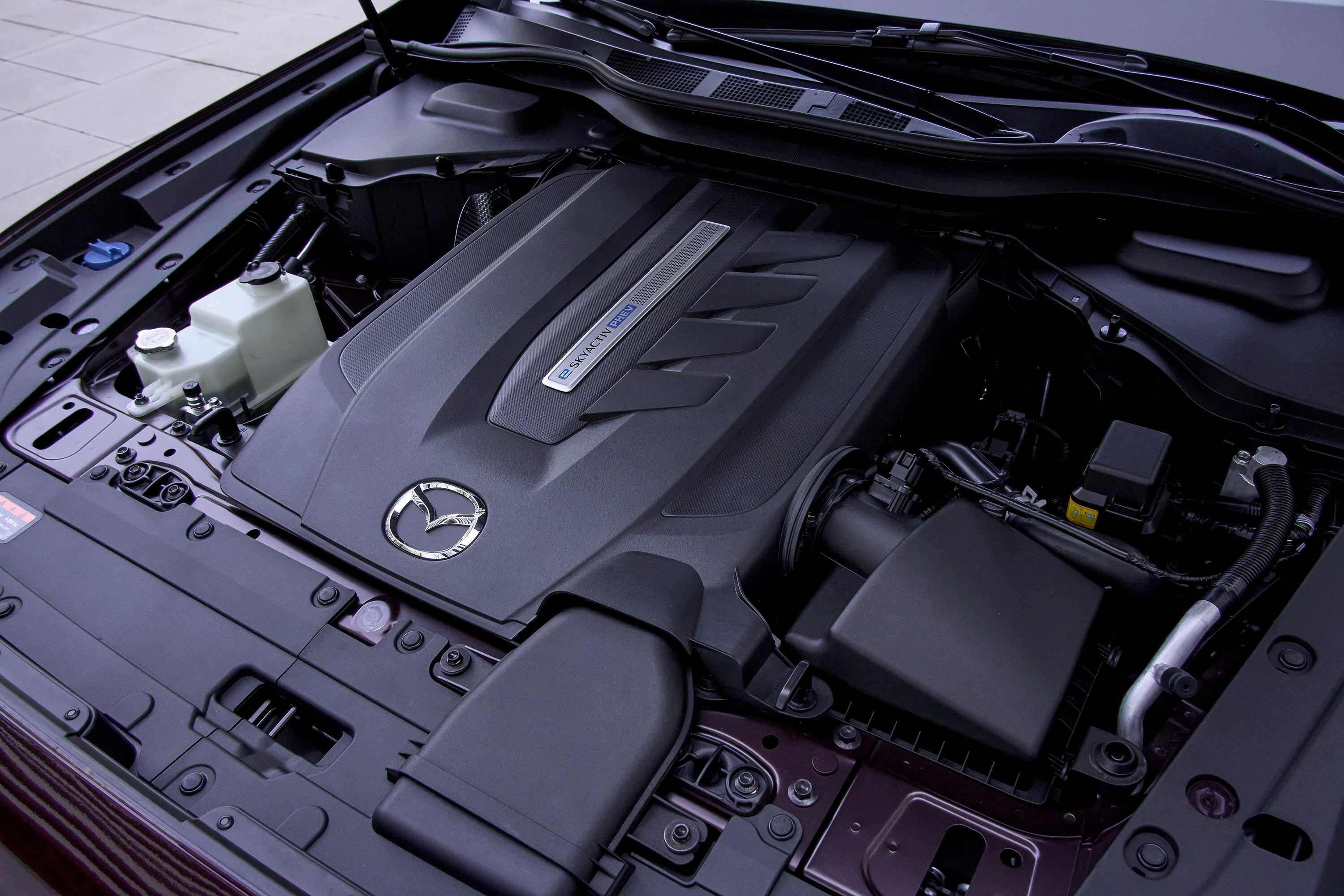
With a 17.8kWh lithium ion battery, the CX-80 2.5 e-Skyactiv PHEV weaves a 129kW/270Nm electric motor into the eight-speed automatic transmission and bolts it all to a 2.5-litre petrol four-cylinder.
The result is 241kW and 500Nm or, if you’re feeling green, the ability to go about 60km without firing up the engine at all. Perhaps unsurprisingly, the diesel is still as impressive as when we tested it under the bonnet of the CX-60.
It’s smooth, efficient, responsive thanks in part to its 48-volt hybridisation, and delivers meaningful performance with a pleasant note. The plug-in is even more impressive with strong acceleration from a standing start and in-gear alike, while even the electric-only driving mode has reasonable performance.
5
Unlike some other PHEVs, the CX-80 likes to stay in pure electric mode unless really prodded. It’s also very efficient with a claimed 1.6L/100km when setting out with a full battery but with the charge running low, its ability to behave like a mild hybrid we noted an average economy figure of about 6.7 litres per 100km – not bad for an SUV weighing nearly 2.2 tonnes.
Nor is the claimed acceleration time of zero to 100km/h in 6.8 seconds. There’s plenty of safety stuff too including adaptive cruise control with unresponsive driver assistance, emergency lane-keep assistance with head-on collision avoidance, advanced AEB with pedestrian/cyclist detection, extra protection for high-voltage system components, and 360-degree manoeuvring camera.
All good features to have just in case, but the numerous driver assistance systems were a little too chatty and eager to intervene with audible warnings.
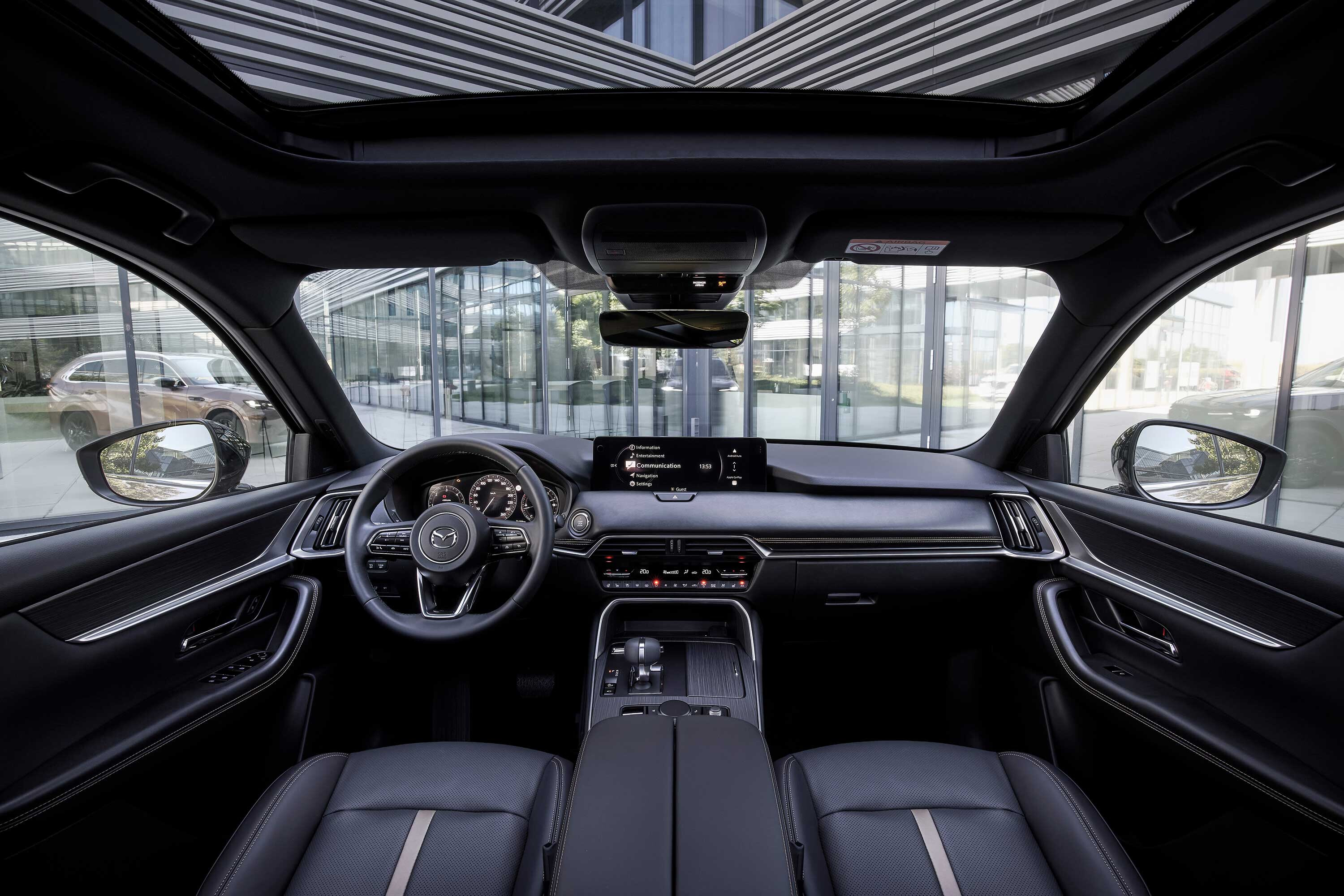
With 20-inch wheels and premium paint on the outside, and a range of pointy end optional interior trims on the inside, our test cars were as premium as the CX-80 gets including the dark-theme Homura cabin styling which brings excellent dark leather upholstery and pleasant materials covering everything.
But there are touches common to all CX-80s that will enable every variant to feel a bit special.
A digital 12.3-inch instrument cluster is sharp and graphically attractive, while the same sized central touchscreen also looks good. Its operating system has been updated and is noticeably faster but its reskin is thin enough to see an essentially aged graphical design beneath.
Also, the screen is only touch-sensitive when using Android Auto or Apple Carplay. A shame because features such as the excellent hybrid navigation is a pain to use with the central rotary dial.
11
There’s better news in the second row where a pair of optional captain’s chairs duplicate the front seat comfort with a central console with arm rests and more storage.
Both the three-seat bench and more luxurious two-seat option allow the seats to be rolled forward and back 120mm offering heaps of legroom for second row occupants or more space to be donated to those in the back. Unfortunately we wont get the version missing the console which enables occupants to ‘walk’ through to the third row.
In the very back stalls, you wont find a pair of seats quite as accommodating as the CX-90 but it’s alright for shorter trips with USB-C charging on both sides, cup holders and more nice upholstery.
And if carrying stuff is more of a regular occurrence than people, the CX-80’s extended wheelbase and resulting boosted cabin volume will appeal too.
Even with all three rows of seats in place there’s still a 258-litre boot with power-operated tailgate, 687 litres with the third row easily stowed away and if the conventional second-row bench is folded the CX-80 load area increases to 1971L – although it’s not clear if this is still possible with the chunkier captain’s chairs arrangement.
But the elephant in the room here is the chassis which, if simply a re-run of the initial CX-60 and CX-90 tuning, would miss an opportunity to be significantly better.
In the CX-90 it was a little taut at best, but downright boneshaking in the CX-60. Thankfully, Mazda is positively receptive to criticism and the CX-80 has a revised suspension setup and improved ride.
Compared with the CX-60, Mazda has removed the rear anti-roll bar, softened the springs and firmed up the dampers – and it’s had the right effect. When at the wheel of the diesel, there’s still a choppiness to the secondary ride over manhole covers and road damage, but the behaviour when encountering larger bumps is certainly more composed.
It gets even better in the plug-in, in which the heavier mass appears to work better with the new spring rates for the best ride in any of Mazda’s large platform models yet.
3
Of course, all of this suspension fettling is likely to have had an impact on the sharp, sporty handling and body control demonstrated by the CX-60 and CX-90 – which was in some way compensation for the overly stiff ride.
Unfortunately we can’t comprehensively report back as the drive routes provided by Mazda on the International launch comprised almost exclusively of arrow-straight autobahns and mildly sweeping country roads. Great for establishing the improved comfort but just as effective at concealing any reduction in dynamic ability.
In the handful of tighter turns (found only through an unplanned detour, we might add) suggest there’s now noticeably more body roll. But if that’s the price to pay for boosted cabin comfort we still think that’s a step in the right direction.
There’s also less effort required to turn the steering in loaded corners but this again, suits the nature of a tall SUV without harming its precision.
With a more manageable width than the flagship CX-90 but just as many seats and a big boot, the CX-80 is a sweet-spot kind of SUV if you can live with the less satisfying proportions. But it also has the widest range of drivetrain options, none of which feel like a dud choice, and while the PHEV is a pricey proposition, it is efficient even offering the chance to never pay for fuel again if you have your home-charging electrical infrastructure in order.
With the changes to its suspension settings, the CX-80 is the clear pick in the Mazda new-gen SUV range and a compelling rival to the Hyundai Santa Fe and Toyota Kluger for example. But has it arrived late to this party? Mazda Australia managing director Vinesh Bhindi certainly doesn’t think so.
“When you look at consumer buying preference, not much has changed apart from clear evidence that hybrid is where the comfort factor is,” he said. “Eventually they’ll hopefully move to battery but that’s yet to be seen. Although there’s a lot more pure battery electric products, the pulse is not showing on the sales numbers so far.”
That sentiment depends how you look at it. More than 50,000 EV sales in the first half of 2024 represented an 18.0-percent increase and 8.0 percent of the market, while combined sales of hybrid and plug-ins totaled 89,863 which is more… but not that much more.
There’s a chance Mazda has committed a significant investment to swansong technology and is in danger of being overtaken by those brands that pumped cash into full electric long ago, but humans are inherently resistant to change.
Gradual shifts in the status quo are generally more tenable. If that also applies to the transition to electric vehicles then Mazda has its strategy sorted with a whole family of genuinely posh SUVs with the option of both mild hybrid and a more serious PHEV. The answer ultimately comes down to timing, and time will tell.
MORE
Everything Mazda
| Mazda CX-80 2.5 e-Skyactiv PHEV specifications | |
| Engine | 2488cc 4-cyl plug-in hybrid |
| Max power | 241 kW @ 6000rpm |
| Max torque | 500Nm @ 4000rpm |
| Transmission | 8-speed automatic |
| Weight | 2173kg |
| Economy | 1.6L/100km (8.1 L/100km with empty battery) |
| 0-100km/h | 6.7s |
| Price | $59,000 (estimated) |
| On sale | Q4 2024 |
The product renewals continue for Nissan, which is on track to introduce more new-generation models over the next two years to further revitalise its showroom.
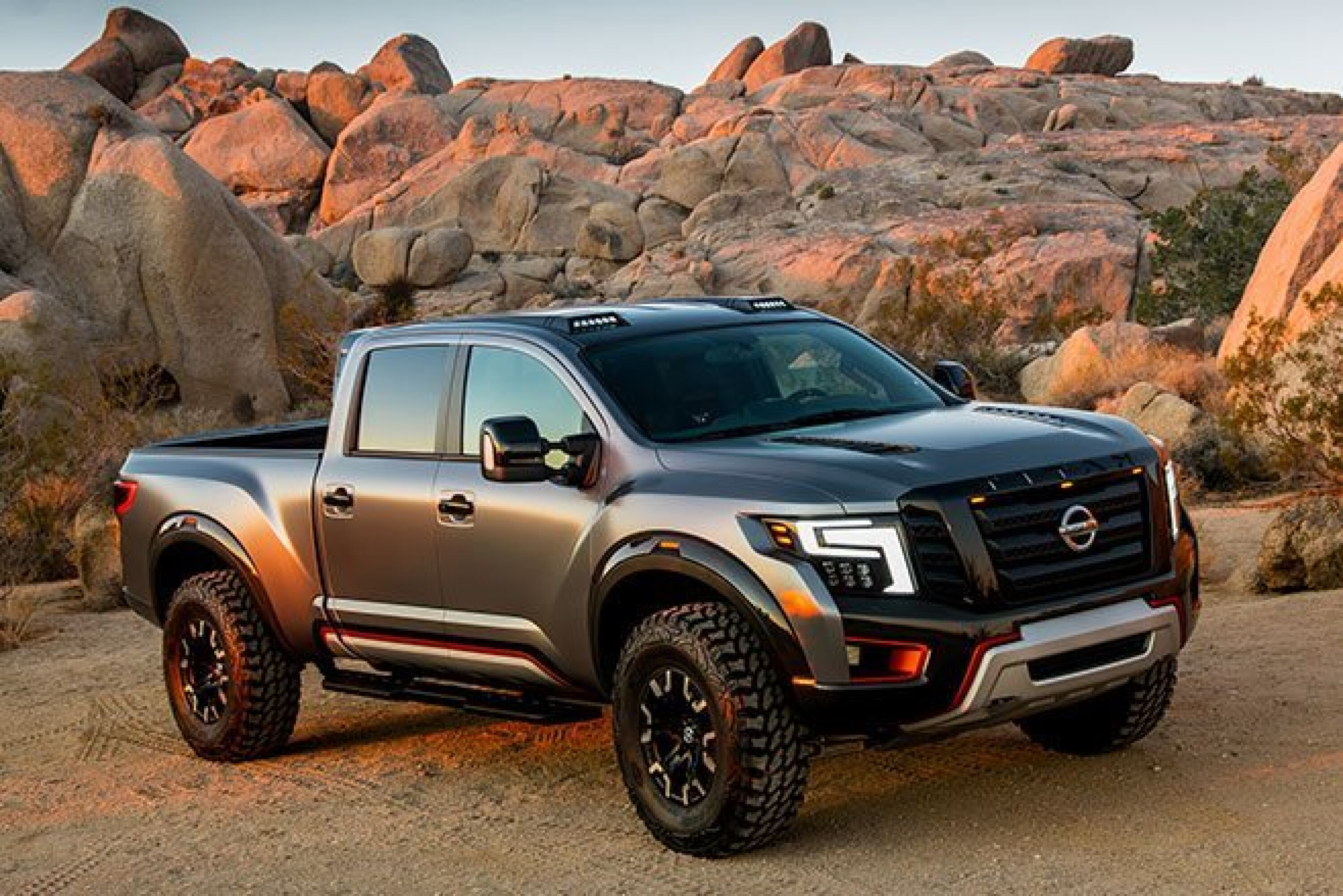
2023 was a busy year for the brand, with the mid-size X-Trail getting a boost with new hybrid offerings and the Qashqai receiving a full model changeover, while the heavy-hitting Patrol Warrior and Z Nismo added some extra performance cred to the Nissan lineup.
This year, it’s largely been a story of consolidation. New models have helped broaden the offering via lower-cost and value-added SUV variants, but both 2025 and 2026 look like they’ll have a more transformative effect on the Nissan Australia portfolio. Here’s what’s new for Nissan.
1
JUMP AHEAD
- Nissan Qashqai e-Power
- Nissan Pathfinder ST-L
- Nissan X-Trail N-Trek
- Nissan Juke update
- Nissan Ariya EV
- Next-gen Nissan Patrol
Future models
Nissan Qashqai e-Power
Originally expected to arrive towards the end of 2023, the hybrid version of the new-generation Qashqai launched in the first quarter of 2024.
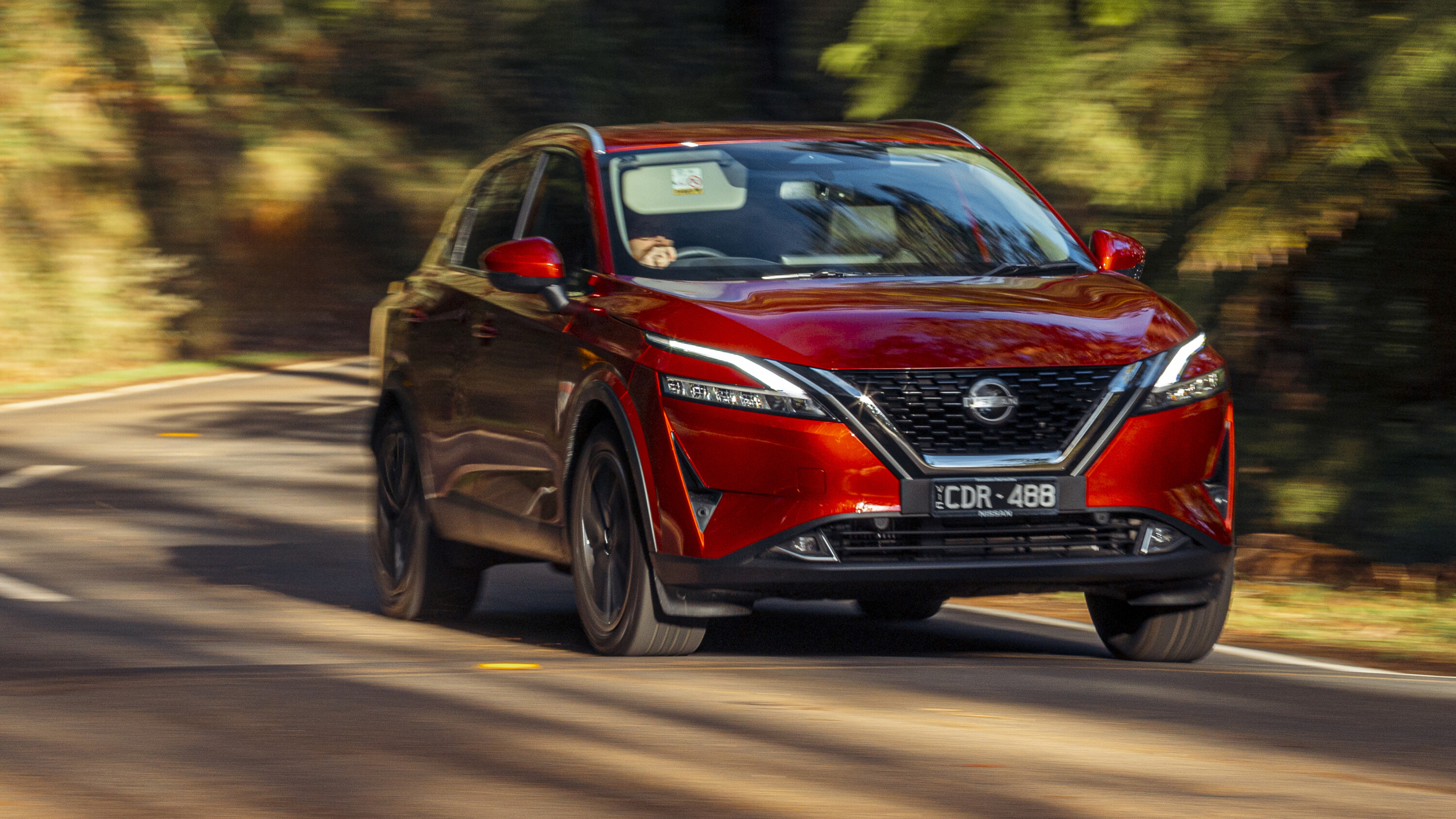
Bringing a fuel-efficient petrol-electric powertrain – which only drives the wheels with electric motors, rather than a direct mechanical connection to the engine – the Qashqai e-Power is pitched as an ultra-frugal small SUV, with a claimed combined consumption of 5.2L/100km
However there’s just one problem: right now, the e-Power hardware is reserved exclusively for the top-grade Ti variant, meaning interested parties will need $52K in their pocket to put one in their driveway.
1
E-Power versions of the Qashqai use the same hybrid set-up as the larger X-Trail e-Power, which swaps combustion-engined propulsion for electric motor drive with a petrol engine as a generator.
It means that unlike a Toyota C-HR, which uses an older and more conventional hybrid system, the Qashqai e-Power always favours electricity to turn the axles.
Compared to other versions of the Qashqai, the e-Power develops an extra 30kW and 80Nm and has a lower combined fuel consumption figure of 5.3L/100km.
The e-Power also scores a unique front grille, e-Power badging and active noise-cancelling technology inside the cabin.
4
Nissan Pathfinder ST-L
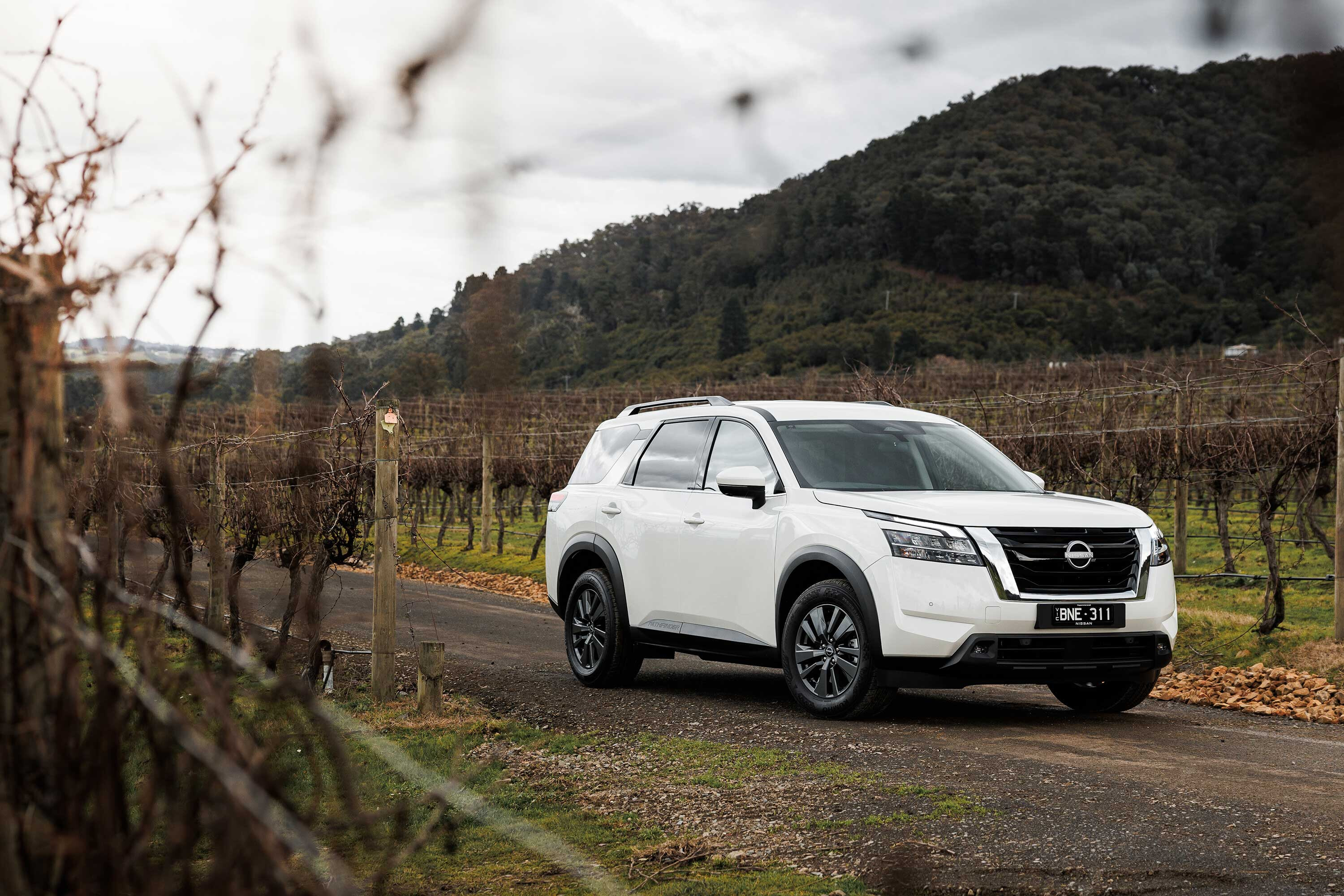
After initially launching with a full brace of variants in 2022, from base ST through to flagship Ti-L, Nissan’s new-generation Pathfinder quickly lost its most affordable ST and ST-L grades as supply constraints forced it to trim the range offering.
The ST has still yet to make a comeback, but in August of this year the ST-L rejoined the range in both 2WD and AWD form, priced at $59,670 and $64,170 respectively. It might not be quite as affordable as that short-lived $54K Pathfinder ST 2WD was, but the Nissan’s move to extend the Pathfinder range down the price scale is definitely a win for the consumer.
Another variant that was put on hiatus was also re-introduced: the 2WD version of the high-spec Pathfinder Ti. Priced at $67,990 before on-roads, it helps bridge the sizable price gap between the $64K ST-L AWD and the $72.5K Ti AWD.
5
Nissan X-Trail N-Trek
In mid-2024 the X-Trail family welcomed a new variant, the N-Trek.
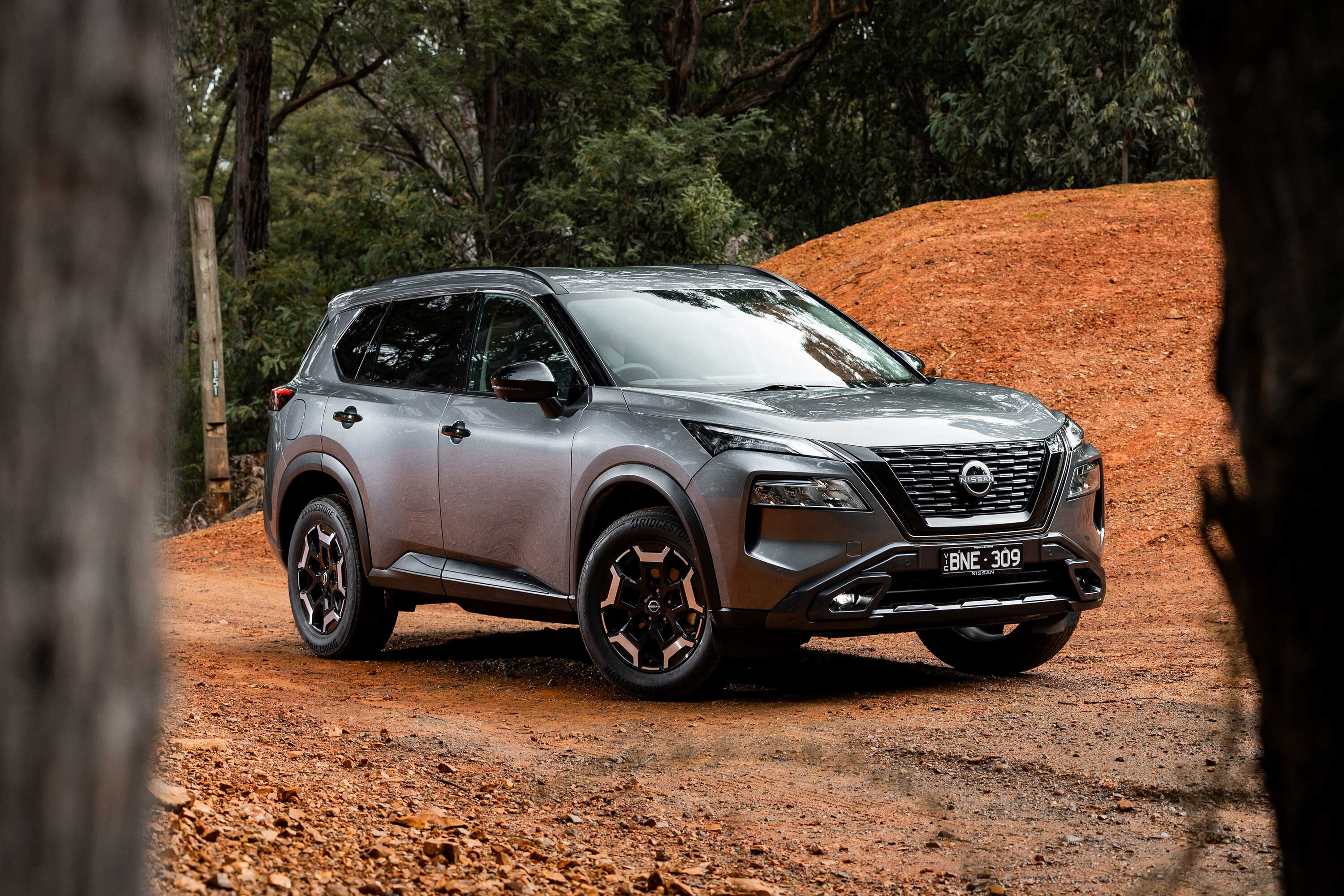
But don’t let the outdoorsy bodykit fool you: the N-Trek is no Bear Grylls, it’s just another white-collar worker in North Face gear. Even so, don’t overlook it – it’s actually a fairly affordable way of getting some of the pricey X-Trail Ti’s useful features – like retractable rear sunshades, head-up display and digi-dash – for slightly less coin and with a versatile 7-seat layout (the Ti is exclusively a 5-seater).
The N-Trek also comes shod with 18-inch alloys, meaning fatter sidewalls than the Ti and Ti-L, which have either 19 or 20-inch alloys depending on powertrain. Similar gear, less money, better ride comfort? The N-Trek might actually be the X-Trail’s Goldilocks zone.
In 2024, all other Nissan X-Trail variants also received a mild update to their standard equipment fit-out, with items like wireless Android Auto now being standard (wireless Apple Carplay was previously standard on Ti and Ti-L, but not the Android equivalent). Other quality-of-life features like a powered tailgate also trickled down, now being standard on the Ti, while the mid-grade ST-L benefited the most with the addition of a wireless phone charger, wireless smartphone mirroring, a 12.3-inch infotainment screen (previously just 8 inches), and built-in sat-nav being made standard.
12
Nissan Juke update
Towards the end of 2024, Nissan will give its Juke compact SUV its first major update.
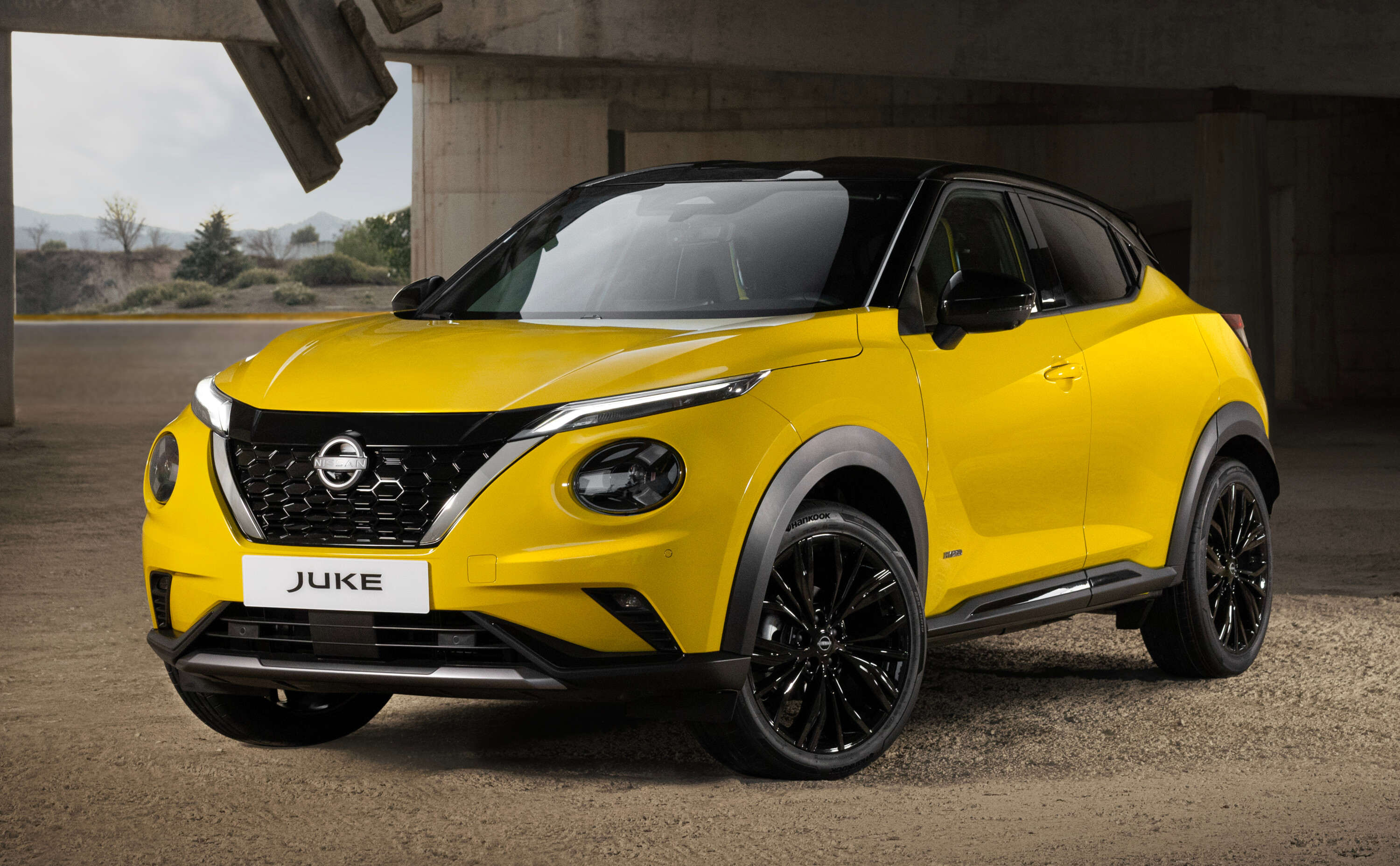
Already revealed at the start of the year in overseas markets, the only major external tell-tale of this facelift is a rejig of the grille design and some new-look alloy wheels.
The more profound changes are reserved for the inside, where the Juke receives some new dashboard furniture that nixes the trio of round centre vents and the anemic infotainment touchscreen in favour of a bigger screen and more conventional air outlets.
The instrument panel is also switched out for a fully-digital display in some models, the infotainment software gets a much-needed update, and wireless support for Android Auto and Apple Carplay becomes standard.
Expect more info to be released as its local arrival draws closer.
Nissan Ariya EV: late to the EV party
It feels like years ago that Nissan first revealed the Ariya all-electric SUV — because it was.
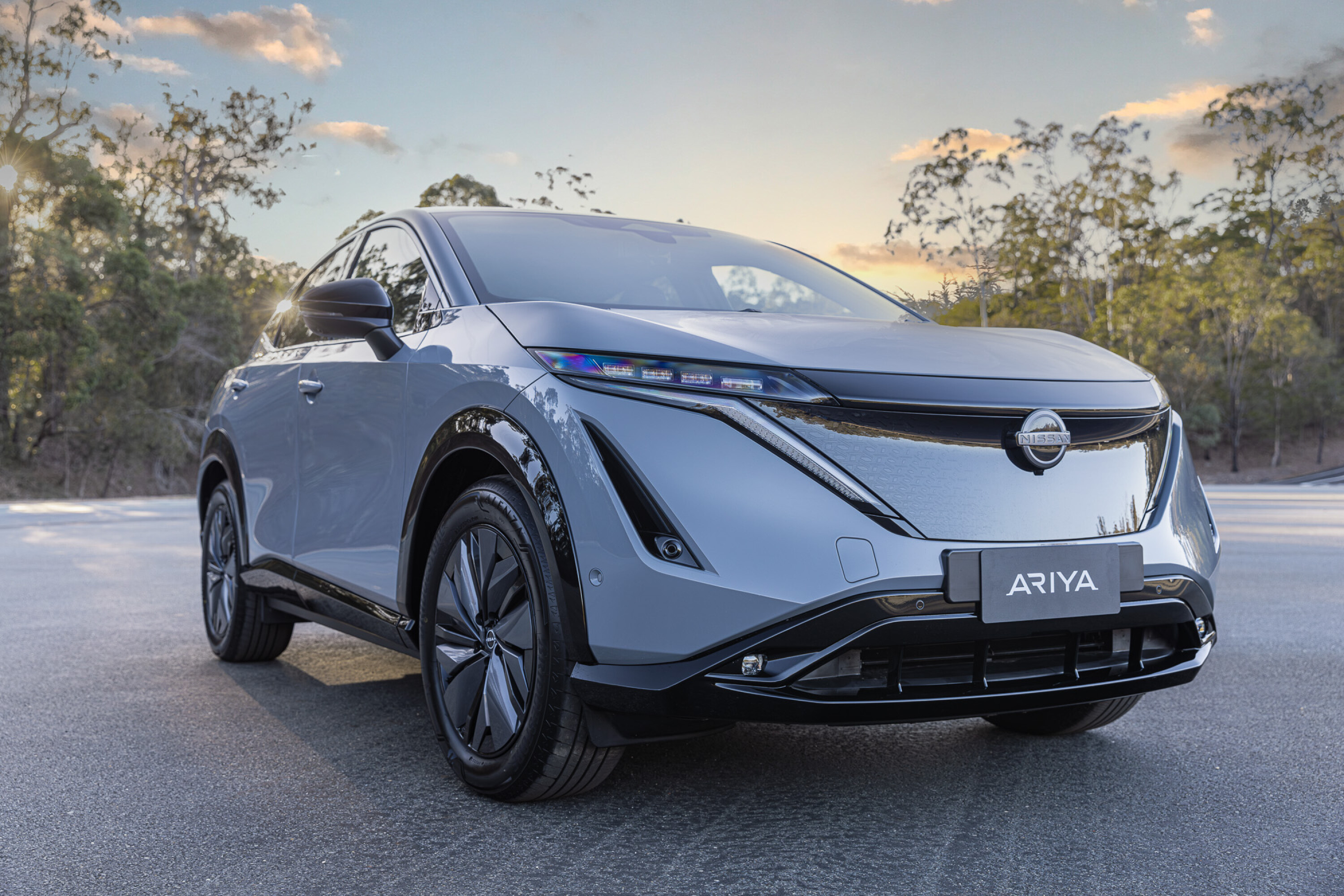
First shown in concept form at the 2019 Tokyo show, the Ariya went on sale in the US way back in 2022. Since then, the Ariya has been in limbo for Australia, with local execs showing keen interest but unable to lock in an allocation.
That’s now changed. Nissan’s local boss has confirmed that the Ariya will arrive sometime in the second half of 2025, with more than one battery size (it’s offered with the choice of a 63kWh or 87kWh battery overseas, with the latter returning a max range of 500km in single-motor form) and more than one specification level.
10
It’s unclear whether the 320kW Ariya Nismo will be part of the Aussie lineup, but regular versions are available with either a single-motor front-wheel drive configuration, or as a dual-motor AWD. With the 63kWh battery, outputs are a fairly mild 160kW/300Nm for the front-driver, with the AWD model generating 205kW and 560Nm. With the bigger battery, power rises to 178kW for the FWD Ariya (torque stays the same at 300Nm), while AWD models produce up to 290kW and 600Nm.
13
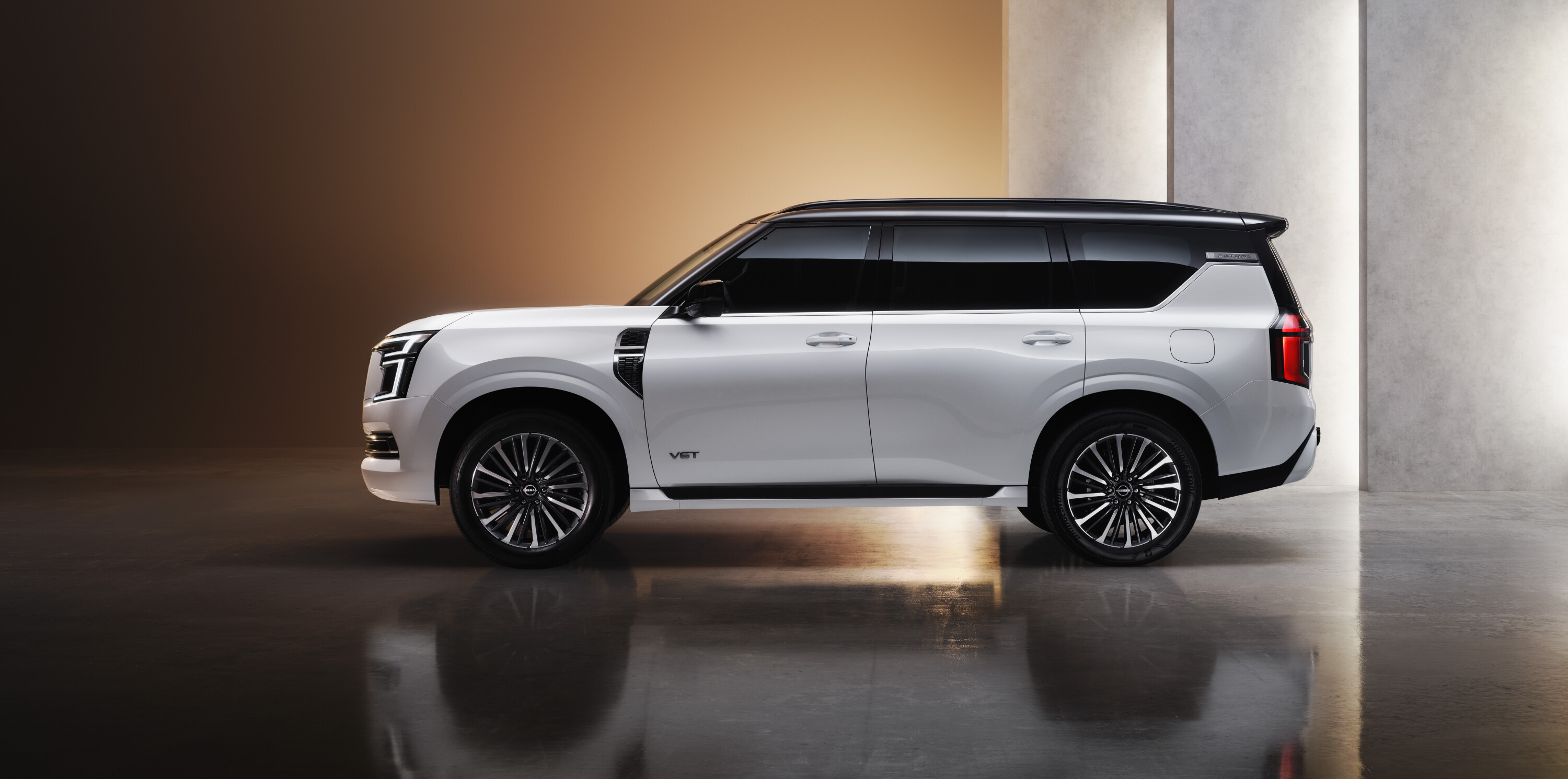
Next-gen Nissan Patrol: new-gen model with turbo V6 power
Of all the new models Nissan has in the pipeline, the all-new Y63 Patrol is easily one of the most anticipated.
It’s now officially been revealed, and Nissan has also confirmed that the new Patrol will ditch the 5.6L V8 petrol engine used in the current model in favour of a more advanced and efficient twin-turbo V6 petrol borrowed from the Nissan Z.
Fuel economy should benefit (to the tune of 24 percent, according to Nissan), and with 317kW and 700Nm throbbing out that V6 the new Patrol easily outguns the vehicle it replaces for both power and torque.
Air suspension with adaptive dampers will be standard, with a bevy of drive modes to customise the ride/handling balance of the big offroader. With the Gulf states still being the core market for the Patrol, prowess on dirt, rocks and sand remained a key priority for the engineering team.
But design team also got a big say in the direction of the new Patrol, too. Outside, the exterior styling is upright, broad-shouldered, and fairly handsome – there should be no mistaking it with its nemesis, the 300-Series Landcruiser. Inside, the interior design is almost Range Rover-esque in its presentation, with modern infotainment, a broad centre console housing plenty of switch blocks, and opulent surfacing and upholstery throughout.
When is it coming here? Production for Arabia, which has been Patrol heartland for yonks now, is Nissan’s first priority. Australia-bound cars won’t be ready until 2026.
FUTURE MODELS
Next-gen Navara
If a new Patrol is significant, then a new-generation Navara is absolutely critical for Nissan in Australia.
The first ‘all new’ Navara in over a decade has been jointly developed with the new Mitsubishi Triton, but while the new-gen Triton is already with us, word on the street is that the Navara isn’t expected until sometime in 2026 at the earliest – and potentially as late as early 2027.
Set to usher in a bold new design language, the new Navara’s tougher exterior will take inspiration from the US-market Frontier ute and Pathfinder SUV.
There’s no official word yet on what engine the new Navara will use, though a diesel unit is virtually guaranteed at launch and could be the same ‘newly developed’ 2.4-litre turbo diesel that powers the new Triton. A petrol-hybrid powertrain is also expected to join the line-up later in the model’s lifecycle.
MORE
Everything Nissan
It’s easy to get a bit apologetic about the Camry. Even Toyota’s top brass at the recent local launch stood in front of the assembled press pack and gave a lengthy justification for its existence.
The reason? The Camry used to stand for all that was vanilla about cars. Many moons ago, I think I even used the word ‘Camryfication’ as a pejorative; a reduction to all that was bland and unexceptional.
Things change though. Just 12 years ago, SUVs made up 27.6 percent of all new cars sold in Australia. Now that figure has more than doubled. If you want to follow the pack, you no longer buy a Camry. You choose something like a RAV4 instead.
1
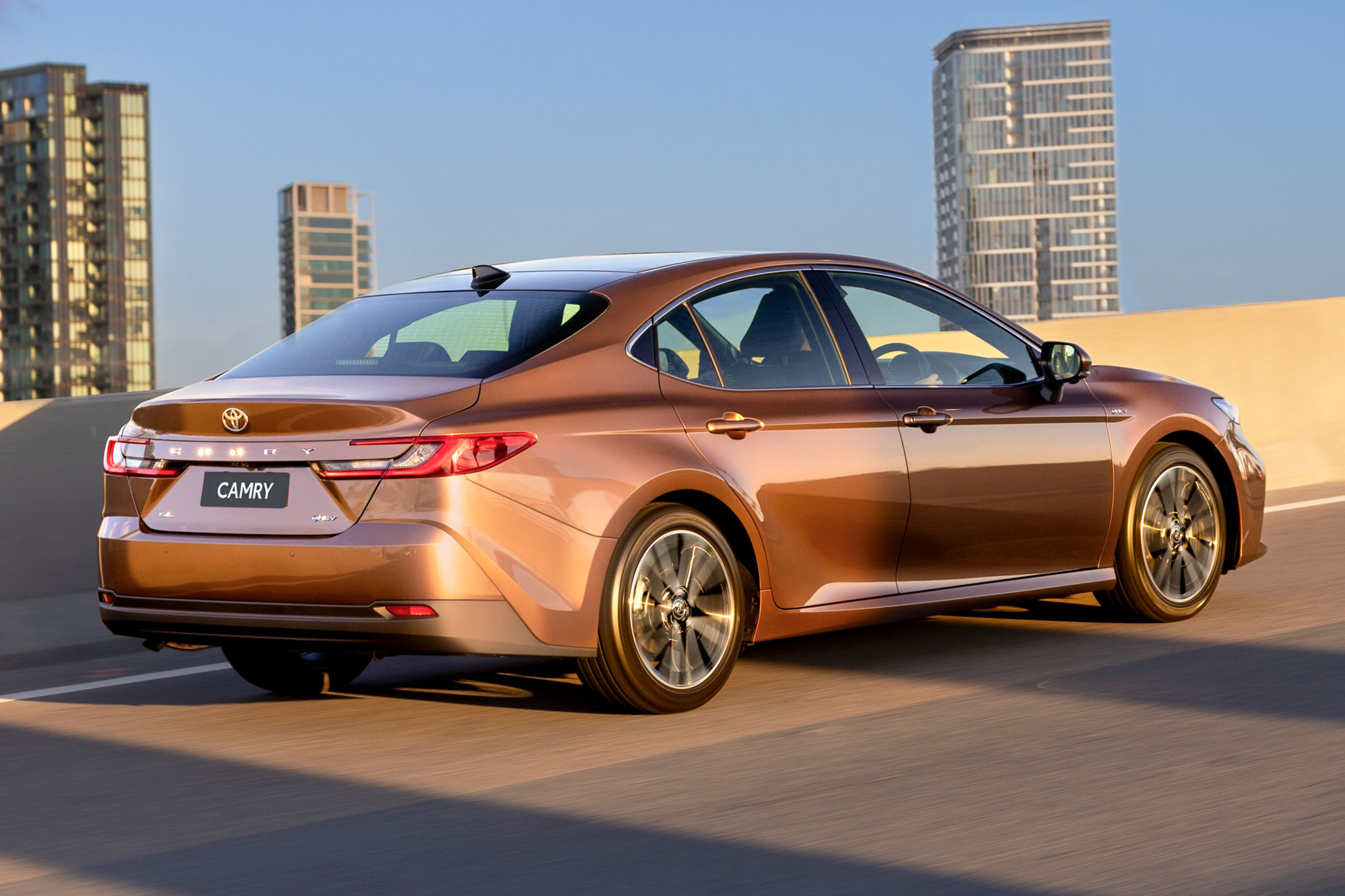
If you’re interested in this new ninth generation Camry, it’s likely you’ll be a fleet buyer or part of the ride share economy. Private buyers are expected to take a modest 30 percent slice of the pie. In a market of lookalike SUVs and crossovers, and with the demise of most of its traditional three-box rivals, the Camry has become the outlier.
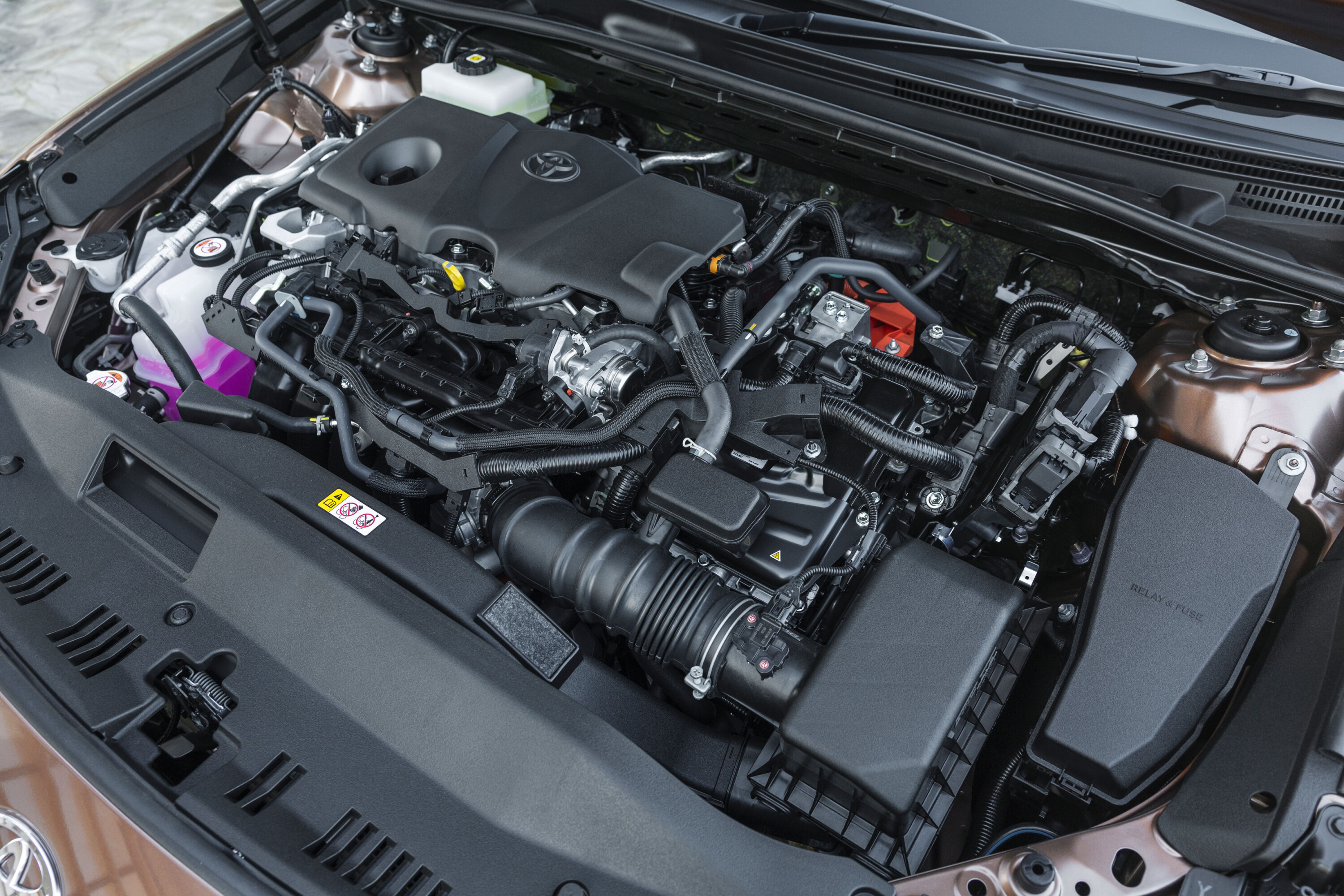
This ninth-gen model looks notably more assertive than before, but even Toyota won’t assert that it’s all-new. It rides on the same TNGA-K chassis as before, the wheelbase is the same 2825mm as before, and when you pop the bonnet you’re still greeted by the sight of Toyota’s trusty A25A-FXS 2.5-litre hybrid four. Same front doors, same roofline.
1
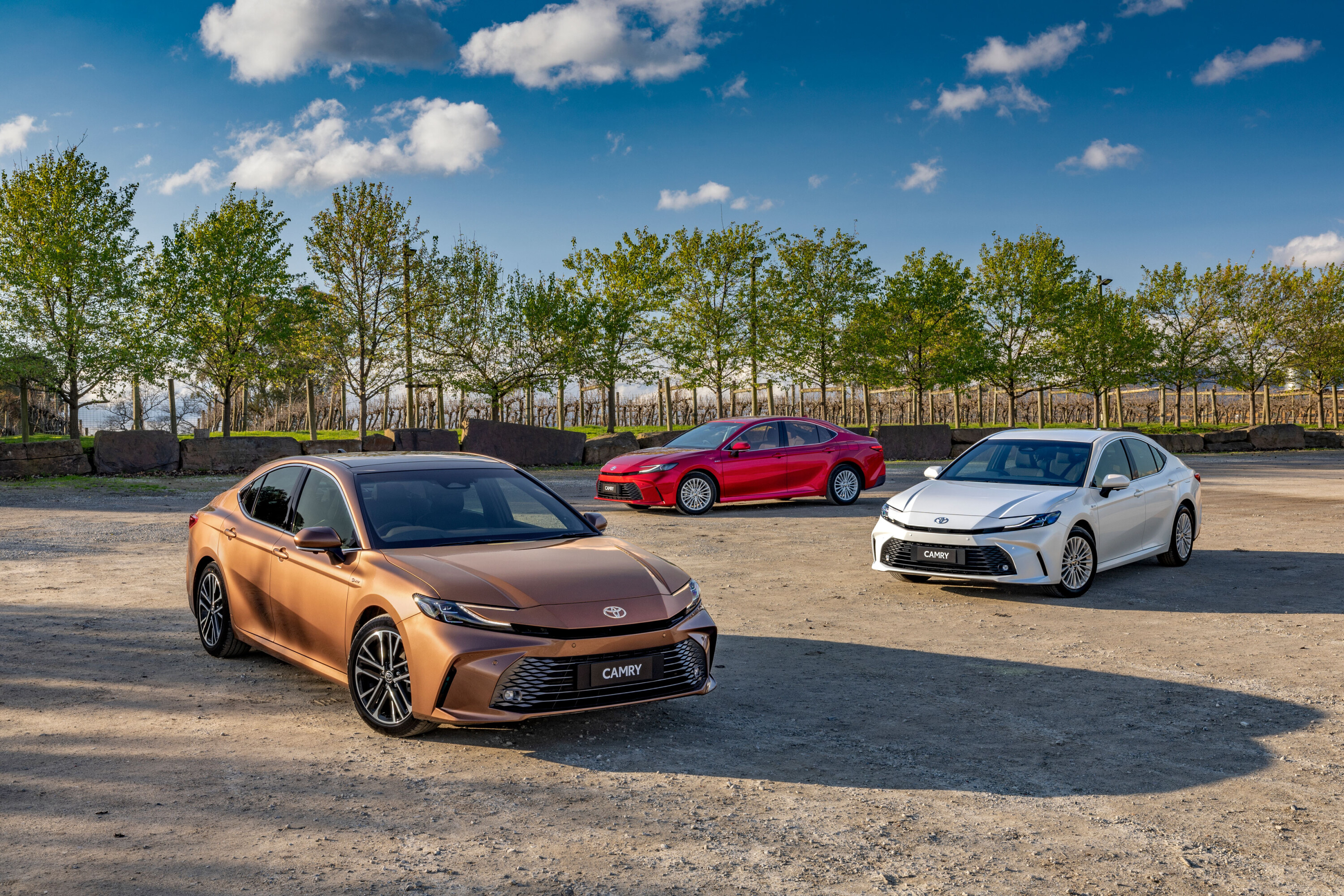
Don’t for a moment think that this is just a subtle evolution though. There have been some seismic shifts in Camry world. For the first time, you can now no longer buy a Camry in Japan and you can’t have one with a V6 in any market. What you do get in Australia are three trim grades and a car that represents such sound commonsense that it’s hard to believe that Toyota predicts annual sales in Australia of around 12,000 units, when they stood at more than 26,000 as recently as 2016.
Right now, I’m wondering if we’ve all been sleeping on the appeal of this Camry.
I’m at the wheel of a well finished and spacious car that promises peerless reliability, has the best ride quality of anything at this price point, a punchy and refined 170kW hybrid powerplant that’s returning 3.8L/100km on this journey, and it’ll set you back less than $40K. That last bit needs reiterating because we live in a world where a base Honda Civic is $47,200 and a hybrid Peugeot 508 is $81,610.
In many regards, the entry-level Ascent version of the ninth-gen (or XV80) Camry is as far as many will look. It retails at $39,990 and is mechanically identical to its pricier siblings. Because it rides on 18-inch alloys, the ride quality is marginally better than that of the range-topping SL with its 19-inch wheels. A bit of sidewall is undoubtedly a very good thing, especially with the pitiful state of Victoria’s roads after a long and wet winter.
This is a fantastically relaxing car. The ride is supple and quiet, sashaying softly over road imperfections. There’s a little wind rustle around the door mirrors, and the engine is a little vocal when you make a solid demand of it, but the Camry’s hybrid system adds a seamless 100kW slug of electrified torque which means that you rarely feel the need to clog the throttle to make respectable progress.
1
This base model even gets cloth seats which are softer than a Tony Abbott shirtfronting, and the CVT transmission is the perfect partner, never shocking the driveline or doing anything remotely uncouth or unexpected. Three drive modes are offered; Eco (which also switches the air-con into a low energy setting), Normal and a largely irrelevant Sport.
Beneath the skin of the Camry, Toyota has been hard at work in the quest to improve comfort, response, efficiency and safety. The suspension is still a pair of MacPherson-type struts up front with a multi-link rear end, but Toyota has been through it with a fine-toothed comb, tweaking the bushings, springs and dampers to quell noise, improve body control and deliver a plusher ride.
The steering has been retuned, with a more rigid steering box and column for a more faithful feel, and the software for the electric assistance has been improved. Likewise, the braking system has been developed to improve brake feel and control, finessing the handover from re-gen braking to friction braking.
1
The 4.0Ah lithium-ion battery sits beneath the rear bench and now benefits from improved cooling, while a next-gen front-axle motor-generator now features six rather than three magnets. A lighter, dry-sumped transaxle features revised gearing and lighter-grade oil for better efficiency.
The upshot of this is that the Camry develops 10kW more than its predecessor but fuel economy is improved to a claimed, and indeed achievable, 4.0L/100km.
The exterior styling now features the ‘hammerhead’ front aesthetic that we’ve seen on the latest C-HR and BZ4X models, and while it’s a good deal more extrovert than Camry models of old, it might also be a little more divisive.
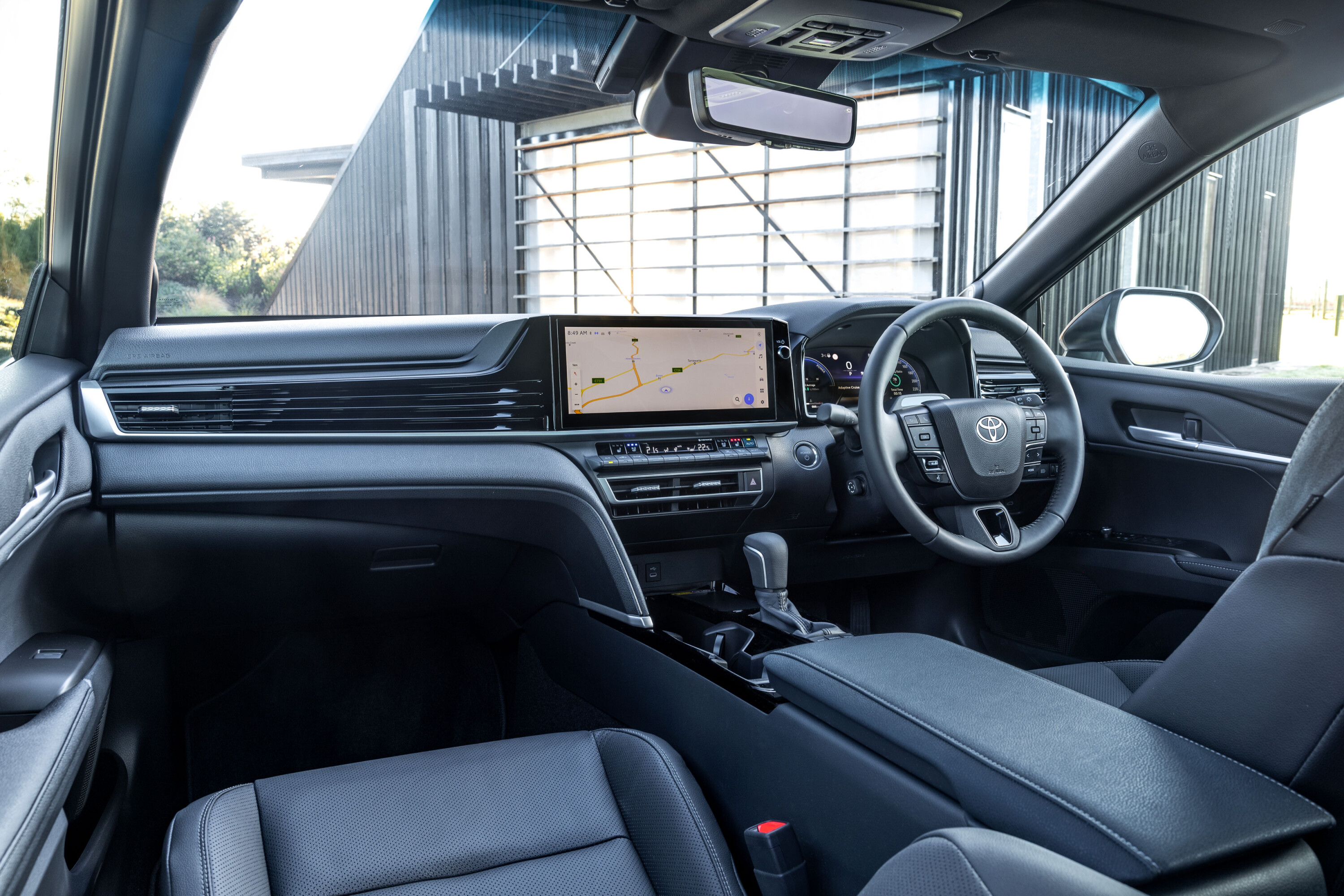
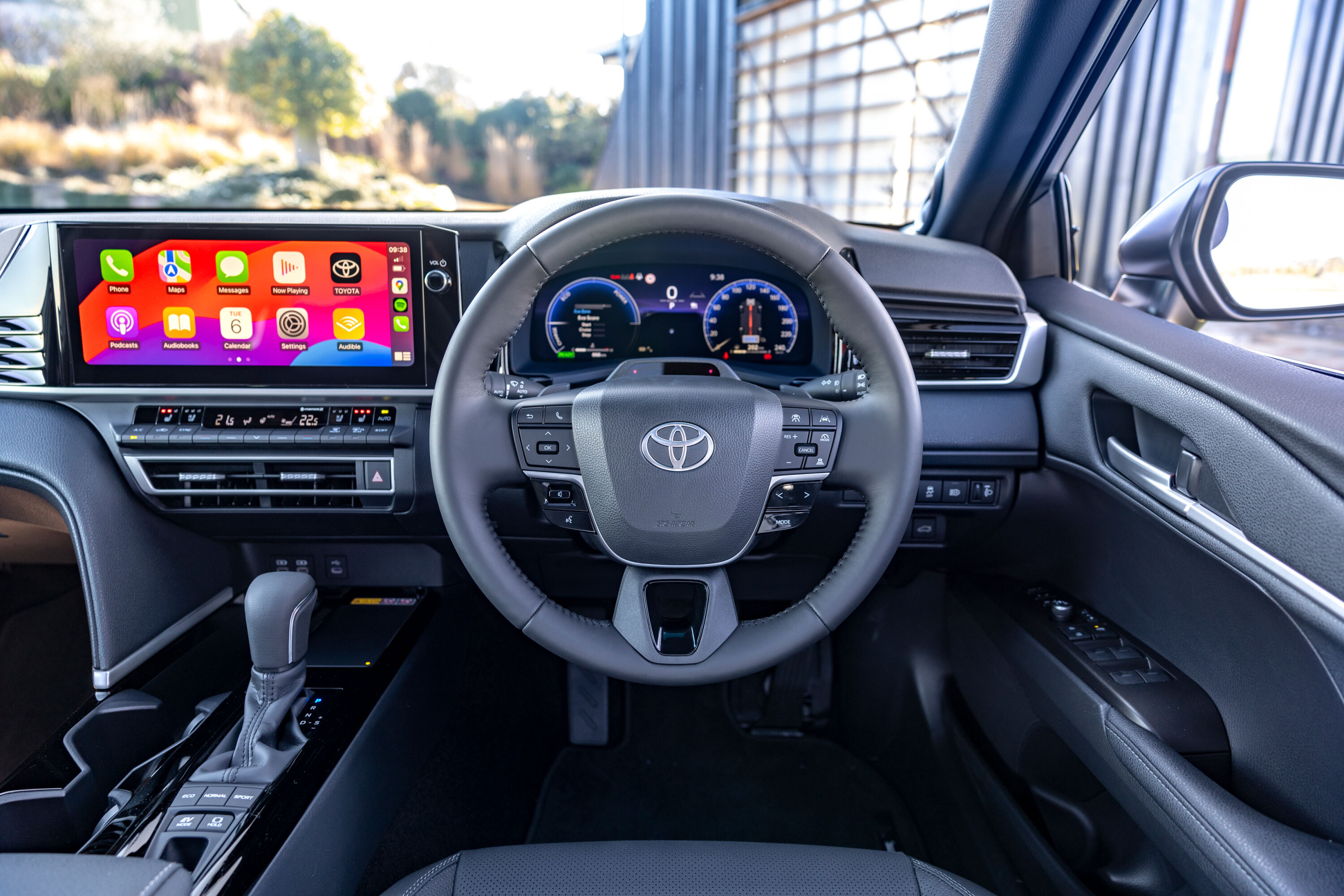
Inside, Toyota has striven to improve the impression of quality, although there’s still a muddle of fonts and hard plastics in the lower cabin that feels fairly mainstream. The fabric that runs across the step in the dash and the fluted passenger-side vents are a nice touch, and there’s a huge amount of oddments space, including a vast (non-flocked) centre bin and multiple cupholders. You’re also extremely well provisioned for USB-C slots with three up front and two in the rear. The entry-level Ascent gets a clammy urethane steering wheel that’s an icky ‘handshake’ with the vehicle when, for a tiny incremental outlay on Toyota’s part, a leather-wrapped wheel could be supplied.
1
You’ll need to fork out another $3000 for the $42,990 Ascent Sport to get that. You’ll also get an eight-way powered driver’s seat with lumbar adjustment, higher-grade LED headlights, LED foglights, a wireless phone charger, an electrochromatic rear-view mirror, a larger 12.3-inch touchscreen and native sat-nav among other refinements.
At the top of the range is the $53,990 SL pictured on these pages, which gets a stack of gear thrown at it. This includes 18-inch alloys, leather trim for the seats, a panoramic glass roof, a digital rear-view mirror, rain-sensing wipers, a heated steering wheel, a head-up display and a nine speaker JBL stereo. It even features paddle shifters on the steering wheel, which seem utterly superfluous in this car. Indeed, paying fully 35 percent more than the Ascent grade for some nice-to-haves does seem an exercise in rapidly diminishing returns.
In terms of numbers, the Tesla Model 3 is probably the Camry’s key rival, but perhaps it’s more instructive to put it up against a more internecine prospect; the hybrid RAV4. After all, it’s exactly this class of vehicle that has done more than any other to cut the Camry’s lunch.
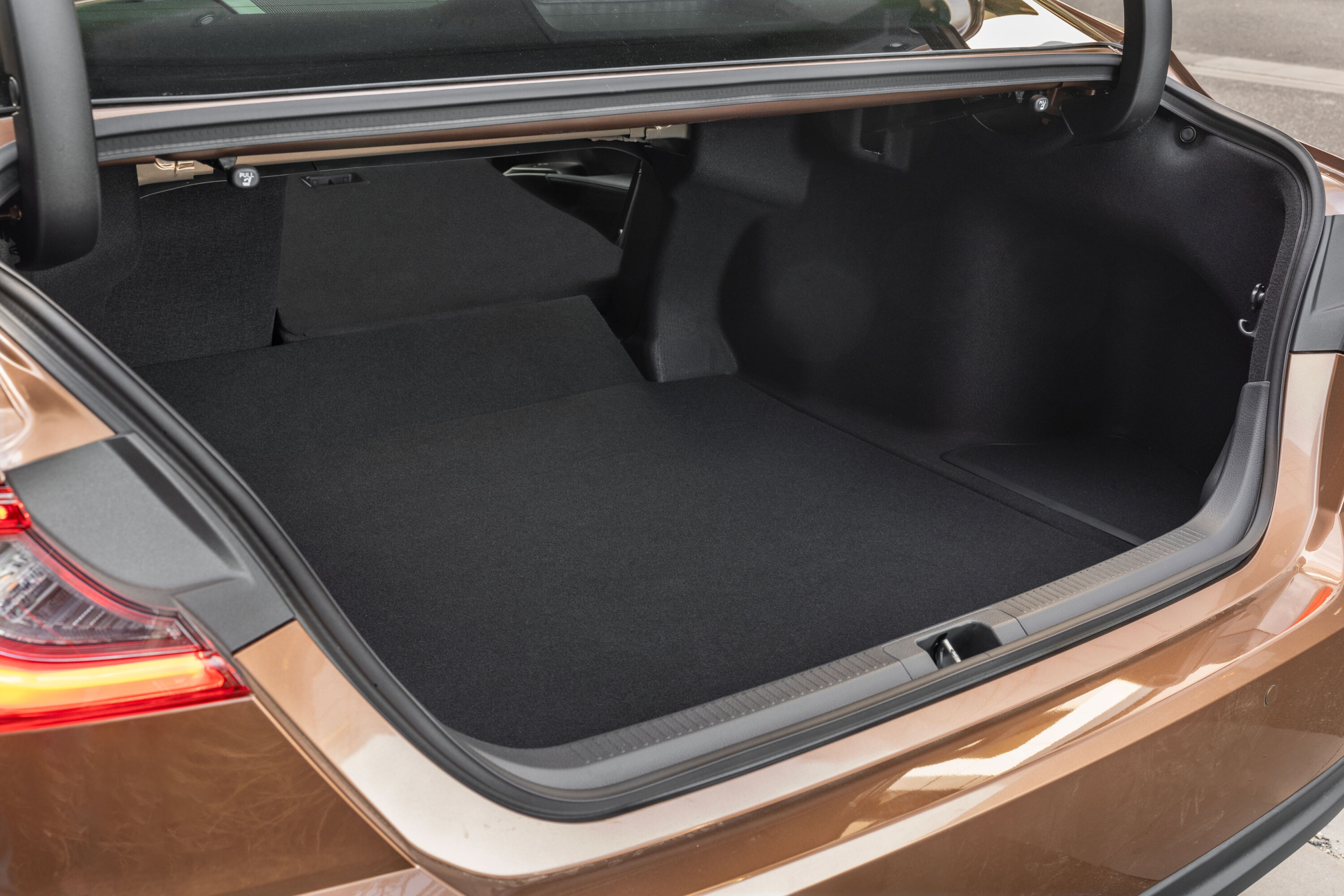
Being taller, heavier and with a greater frontal area, it’s less efficient, costing the average Aussie motorist another 105 litres of fuel per year. On the flipside, the boot is bigger in the RAV4 (542 litres versus the Camry’s 524 litres) and while both offer a 60/40 split fold rear bench, the RAV4 clearly offers greater total carrying capacity. This raises the question of sacrificing a better drive, which you’ll feel all the time in the Camry, for the occasions you’ll need to pack an SUV to the roof.
1
Of course, much of the RAV4, and indeed most SUV’s appeal, is the elevated driving position and the feeling of safety that this imbues. Balance that against the lower centre of gravity, better handling and braking, and therefore improved active safety of the Camry, and it’s an argument that can be made either way, but which the market has resolutely decided in favour of SUVs.
On the subject of safety, the ninth-gen Camry gets a massive host of upgrades, the majority packaged within the Toyota Safety Sense suite of electronics. These largely hinge around a smarter camera sensor, improved forward millimetre-wave radar sensor, and the addition of two radar sensors scanning the outer front and sides of the vehicle.
This, in turn, has sharpened the responses of the Camry’s pre-collision system, which is now able to identify and apply the brakes for errant motorcycles as well as vehicles, pedestrians and cyclists.
1
The adaptive cruise control has been improved, with four rather than three distance settings, and there’s curve speed reduction that activates earlier to prevent the vehicle diving onto the brakes when it finds itself negotiating a sharp corner with cruise enabled. There’s also the now ubiquitous driver monitoring camera in the cabin.
There’s certainly a place in the market for a car with this blend of qualities. In fact, I can’t think of anything at this price point that I’d rather undertake a long journey in. The ninth-gen Camry is assured and reassuring. There’s something hugely refreshing about driving a car that’s so lacking in pretension, that concentrates on its core competencies so effectively.
A nameplate with a 42-year-old heritage is probably entitled to a certain level of comfort within its own skin. If you’re fatigued of novelty for novelty’s sake, this Camry will feel like a breath of fresh air.
MORE
Everything Toyota
Are we there yet?
Snapshot
- Price wars see EVs get closer and closer to breaking below $30K
- Affordable EV market dominated by competitive Chinese-made EVs
- Government rebates and incentives help further lower price barrier
Electric vehicles have finally started to creep into the ‘affordable’ space that many buyers have been pleading for in Australia.
We’re even at the point where a sub-$30,000 EV is looking more and more likely, but just a few years into the onslaught of EVs in the Australian market, there are now a handful of options below $40,000, with even cheaper options now flowing into the used EV market (aided in part by poor residual values for EVs versus most combustion-powered cars).
Here are the cheapest new EVs available in Australia.
JUMP AHEAD
- Top 10 most affordable EVs in Australia
- Why are Chinese-made EVs often cheaper?
- Size v price
- Are electric cars expensive?
- Time to make the electric switch?
Top 10 most affordable EVs in Australia
The prices below are correct at the time of publishing, though note that some denote the recommended retail price (which does not include on-road costs like registration or dealer delivery), while others denote an all-inclusive on-the-road cost.
These models are also eligible for EV incentives and purchase rebates, depending on where you live. It’s worth bearing in mind that the lower end of the EV market is a highly competitive one, with substantial fluidity to pricing. We will do our best to ensure this list remains as accurate as possible.
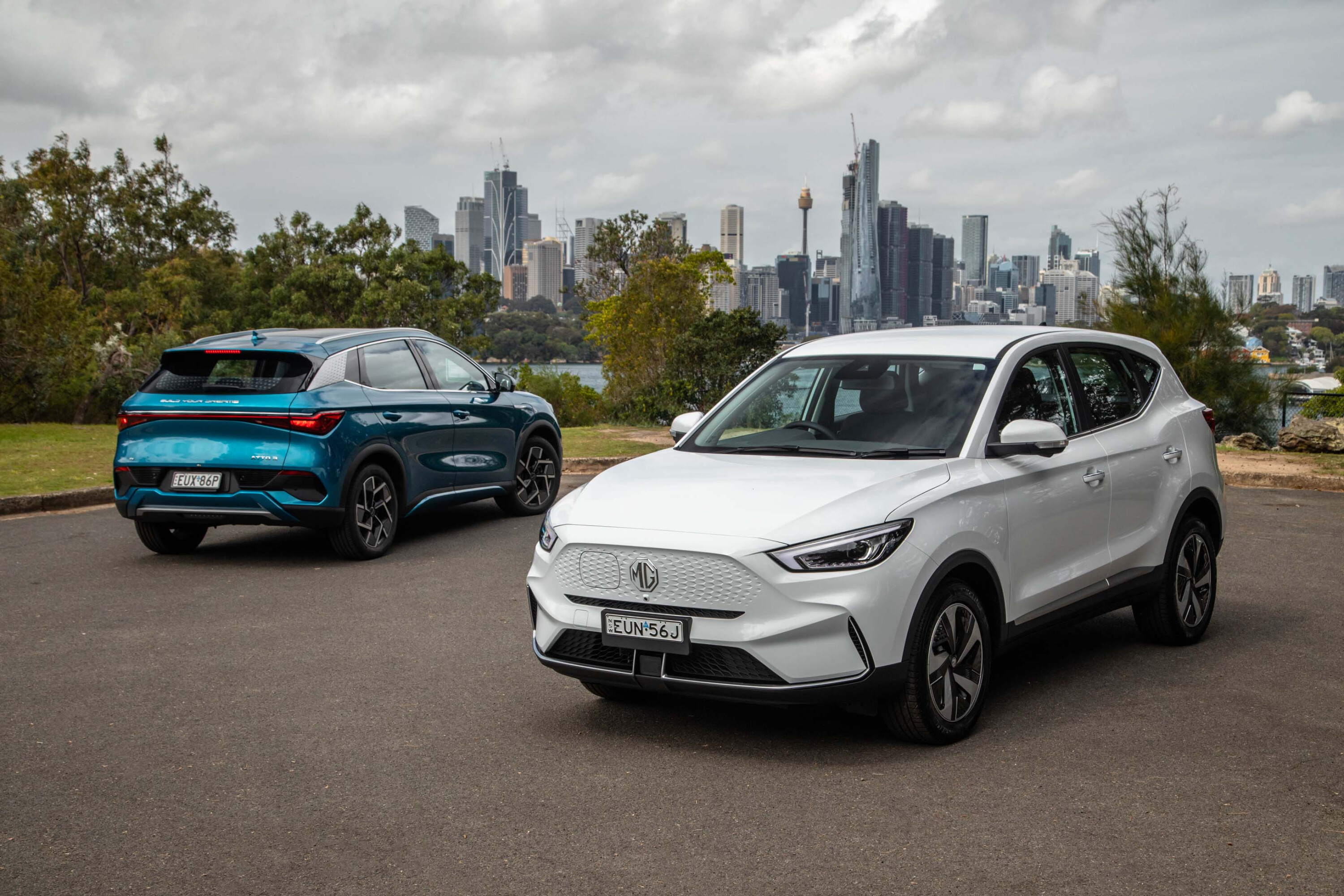
- MG4 – from $30,990 drive-away (incentive price until end of October, 2024)
- MG ZS EV – from $34,990 drive-away
- GWM Ora – from $35,990 drive-away
- BYD Dolphin – from $38,990 before on-road costs
- BYD Atto 3 – from $44,499 before on-road costs
- BYD Seal – from $49,888 before on-road costs
- Jeep Avenger – from $49,990
- Nissan Leaf – from $50,990 before on-road costs
- Fiat 500e – from $52,500 before on-road costs
- Hyundai Kona Electric – from $54,000 before on-road costs
1
Why are Chinese-made EVs often cheaper?
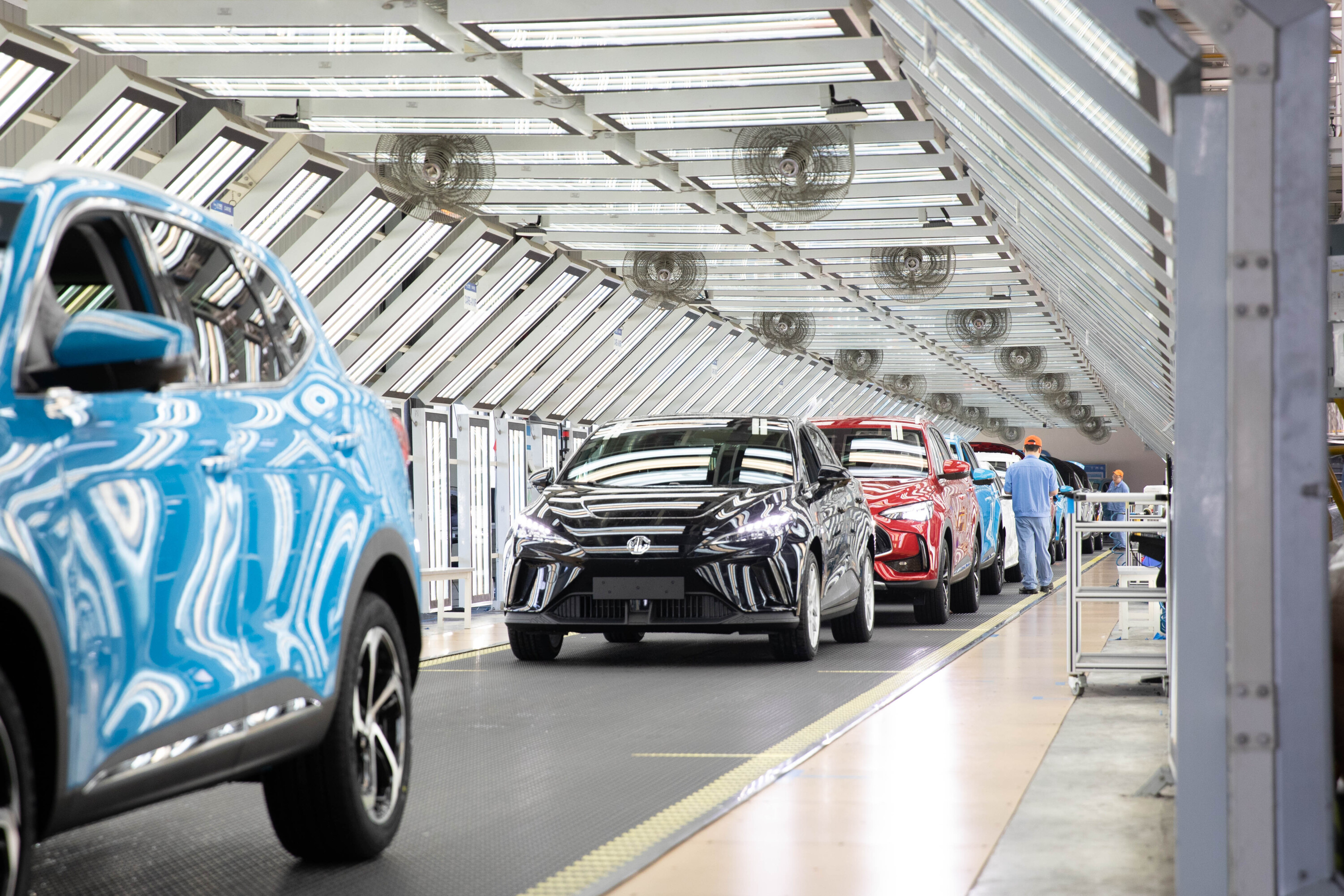
Most sub-$60K EV models are made in China to benefit from cheaper labour costs, low-cost energy, an extensive local parts supplier network, and heavily subsidised raw materials.
Importantly, Chinese production also enables local access to the world’s biggest battery pack suppliers – Contemporary Amperex Technology Co. Limited (CATL) and Build Your Dreams (BYD) – which is the key driver of higher prices compared to petrol- and diesel-powered cars.
Some traditional carmakers have been acquired by Chinese companies, while many brands have established factories and joint venture partnerships in the country to reap from the local supply chain and compete in one of the world’s largest auto markets.
For example, the upcoming Kia EV5 electric medium SUV will be made in China – instead of South Korea – for the Australian market to feature a lower-cost lithium-iron-phosphate (LFP) battery, which China is the key producer of.
However, China’s competitive advantage has been put into question due to heavy incentives from the government to push automakers to produce EVs in the country.
The Volkswagen Group will soon establish vertically-integrated EV production in Spain for its most affordable electric models to compete.
The Chinese vehicle manufacturing industry has also rapidly grown in the past few years, with buyers globally now more willing to accept Chinese-made cars thanks to budget-friendly price tags (while others go upmarket), strong value propositions, and improved perceived quality.
Tesla and BYD in particular have quickly dominated Australian EV sales.
The BYD Dolphin, MG4, MG ZS EV, and GWM Ora boast sharp sub-$40K drive-away price tags to lower the barrier of entry and offer strong value for driving range propositions.
Meanwhile, the top-selling Tesla Model 3 sedan and Model Y SUV aren’t as cheap in context with prices starting north of $50K. Yet, they’re still favoured thanks to good value, efficient and powerful motors, high-tech features, and the American brand cachet.
However, not all Chinese-made electric models are significantly cheaper than the competition – notably the Polestar 2, Volvo EX30, and LDV E-Deliver 9.
1
Size v price
Australian buyers now have more affordable EVs to choose from. But, the top 10 cheapest EVs are mostly classified as ‘small’.
As many European families do, Australians could use most of the 10 cheapest EV models for carting the kids and groceries around every day, such as the decently practical BYD Atto 3 SUV, Seal sedan and MG4 hatch.
But, they may have limited interior space depending on your needs.
Of course, while these EVs are ‘cheap’ in the context of the electric market, they’re still generally pricier than equivalent internal combustion engine (ICE) offerings, but some have already achieved price parity due to the entry price of petrol cars significantly increasing in recent years.
If it’s a proper medium or large SUV you need, be prepared to spend more than $60,000 at the low end.
Yet, as our total cost of ownership story demonstrates, the right circumstances can see most EVs deliver greater value over time than their petrol counterparts, as you own the vehicle for longer and drive further.
Are electric cars expensive?
This story has outlined that EVs aren’t too unaffordable, but how do they compare with ICE cars? Check out our guide linked below for more.
? Is it time to make the electric switch?
EVs are not for everyone (for now), but they are right for considerable chunk of the population.
Driving range, charging availability, and battery safety remain key perceived issues. For more, check out our Electric hub guides below.
So, it seems that the wave of EV uptake is tapering off somewhat as consumers adjust their expectations and manufacturers adjust their product plans to suit. Hybrids are about to experience a renaissance as a result – particularly more heavily-electrified plug-in hybrids (PHEVs) – but while the first generation of performance EVs like the Porsche Taycan, Tesla Model S Plaid and Hyundai Ioniq 5 N proved you could indeed have fun in a pure EV, what’s in the PHEV pipeline that can electrify a petrolhead’s pulse?
6
2025 Lamborghini Revuelto
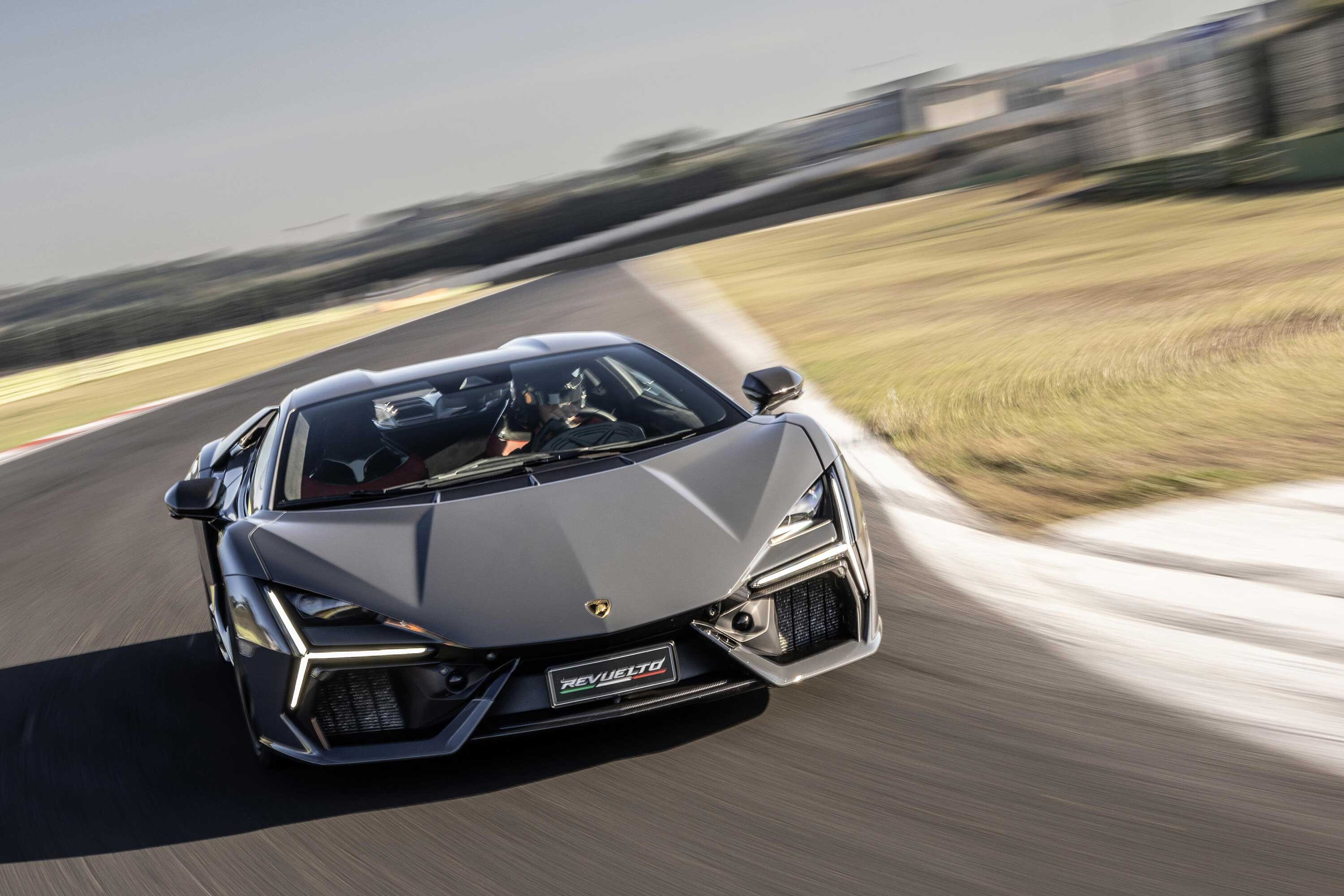
It’s rather shocking that Lamborghini has found a way to keep a naturally-aspirated V12 in production this deep into the 2020s, let alone discovered a means to ensure it stays on the right side of emissions laws for the foreseeable.
Said V12 is found nestled into the rear half of Lambo’s next hypercar flagship, the Revuelto, which takes over from the Aventador as the brand’s hi-po halo. Displacing 6.5 litres, revving to 9250rpm and producing 607kW/725Nm by itself, the Revuelto’s V12 sonics aren’t strangled by the presence of turbochargers. Performance is, however, aided by a trio of electric motors (one for each front wheel, and one driving the rear wheels via the transmission) to produce a whopping 746kW/1500Nm combined output.
The zero-to-hundred flashes by in just 2.5 seconds, but the real party trick is its handling. With the triple-motor arrangement now bringing in some clever torque-vectoring opportunities for the front axle, the Revuelto is well and truly a better performance car by virtue of its electrification. Wanna know how it drives? Read our review below.
5
2026 Lamborghini Temerario
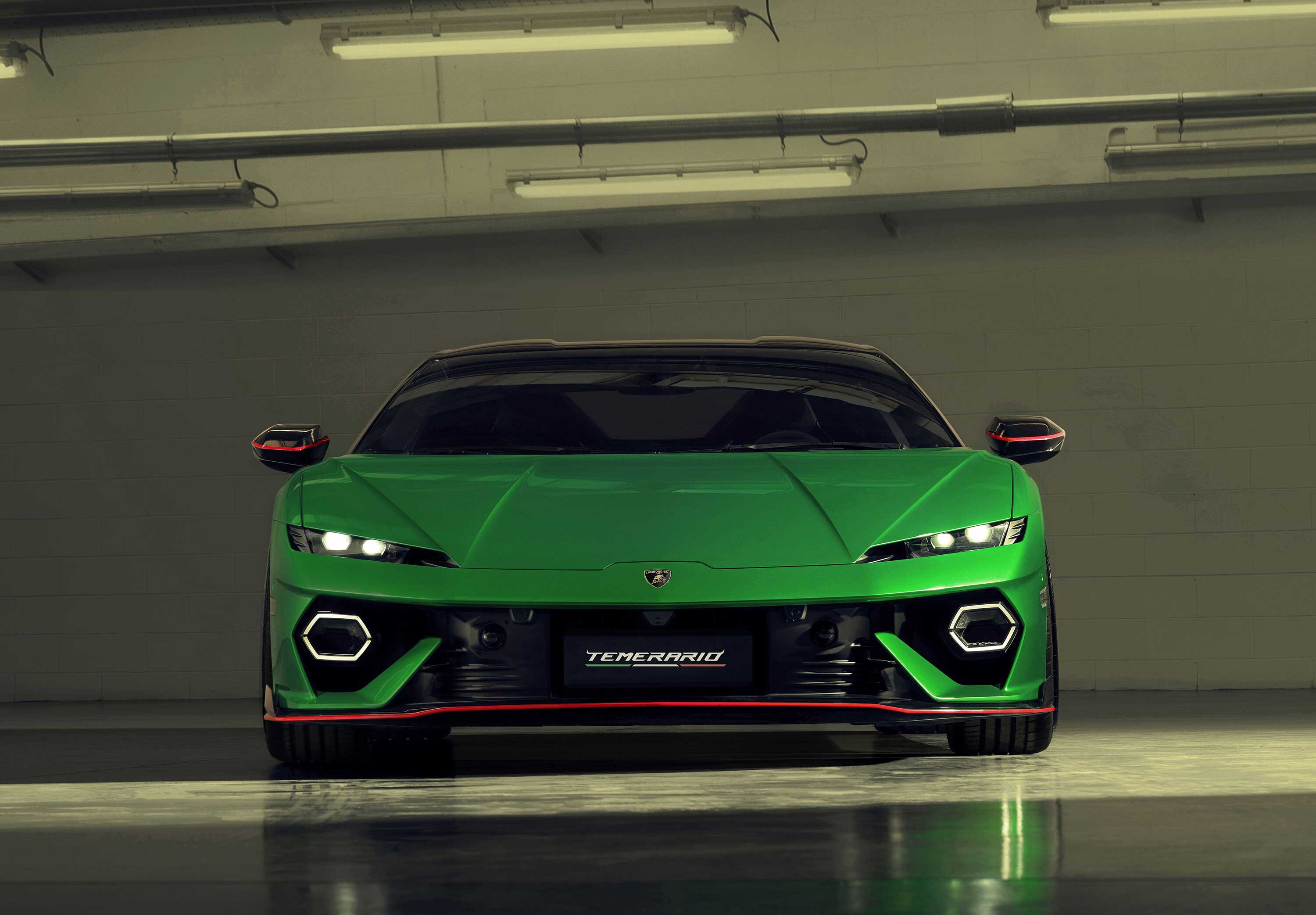
Lamborghini is embracing electrification in a big way, with the Huracan-replacing Temerario now revealed in all of its electron-enhanced glory. Lambo purists may raise an eyebrow at its unorthodox (well, unorthodox for a Lamborghini supercar anyway) turbo V8 combustion engine, but they’ll certainly clap at its banshee 10,000rpm redline and 676kW combined power output.
Also worthy of applause is a 2.7-second 0-100km/h sprint time and the physics-bending handling advantage of all-wheel torque vectoring courtesy of a triple-motor electric drivetrain, just like its bigger bro the Revuelto. It’s even relatively svelte at 1690kg, though that tiny 3.8kWh battery is a little short on treehugger credentials. We have a hunch that long-distance all-electric cruising is not a priority.
10
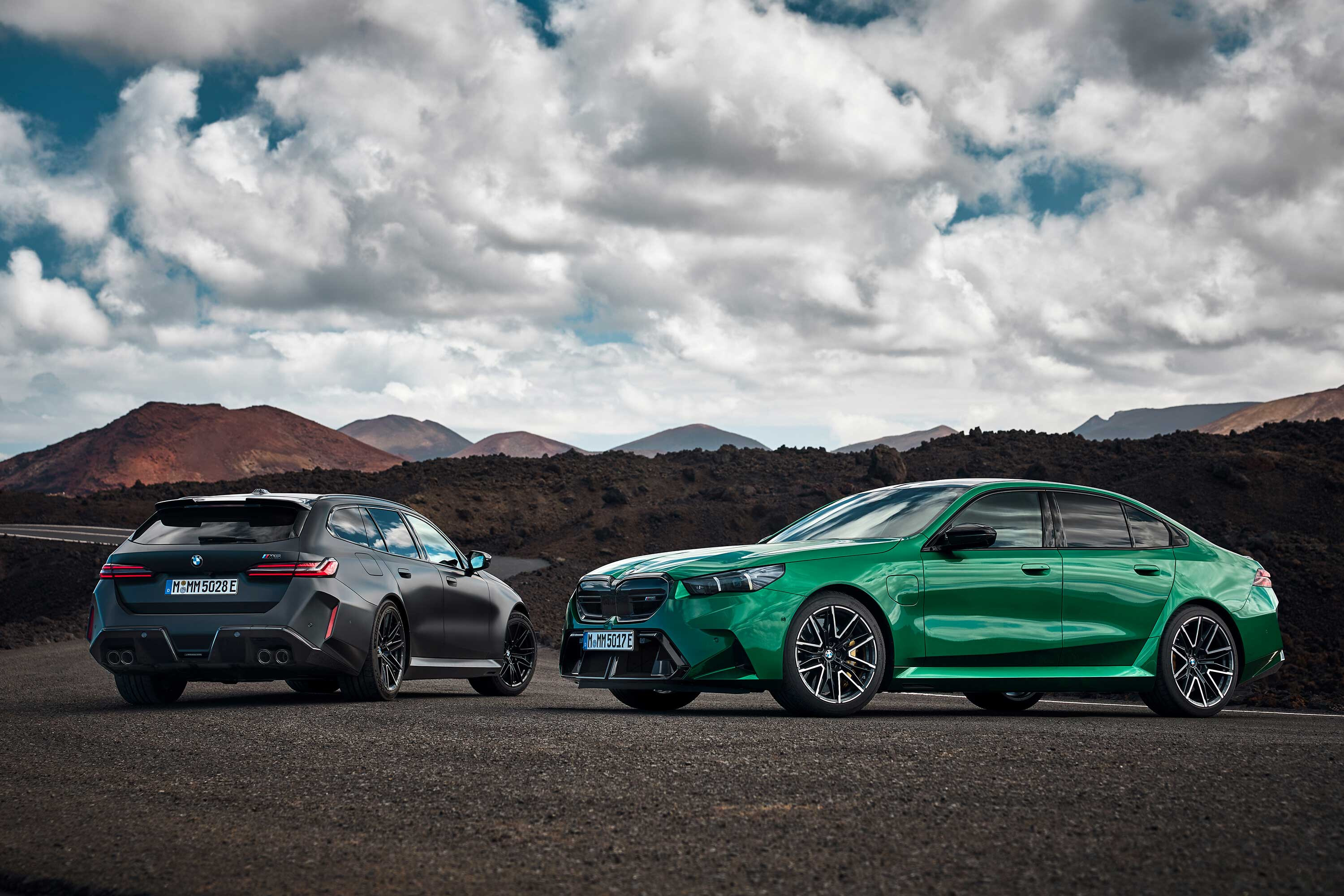
2025 BMW M5
It’ll cost more than a quarter of a million bucks when it lands in Australia toward the end of this year, but the next-generation BMW M5 will offer electrically-enhanced performance that’ll floor you just as hard as its $259,900 pricetag.
Its engine won’t be downsized either. A 430kW/750Nm twin-turbo 4.4-litre bent-eight will continue to power the M5, but for the new-gen G90 model it gets a helping hand from a 145kW/280Nm permanent-magnet electric motor and a 18.6kWh battery pack, with all of that grunt being sent to all four wheels via a ZF eight-speed auto.
Performance is suitably brisk at 3.5 seconds to 100km/h from a standstill, but curiously that’s actually 0.2 seconds slower than its predecessor. Why? Blame a kerb weight of 2.5 tonnes, which blunts the performance added by the additional electro bits.
A sideways move, performance-wise? Maybe, but this M5 will at least be able to drive for nearly 70km on electric power alone and consume just 1.7L/100km on the WLTP combined cycle, while falling well within the tough CO2 limits of Australia’s incoming NVES legislation. The best part? There’s going to be a wagon version too.
7
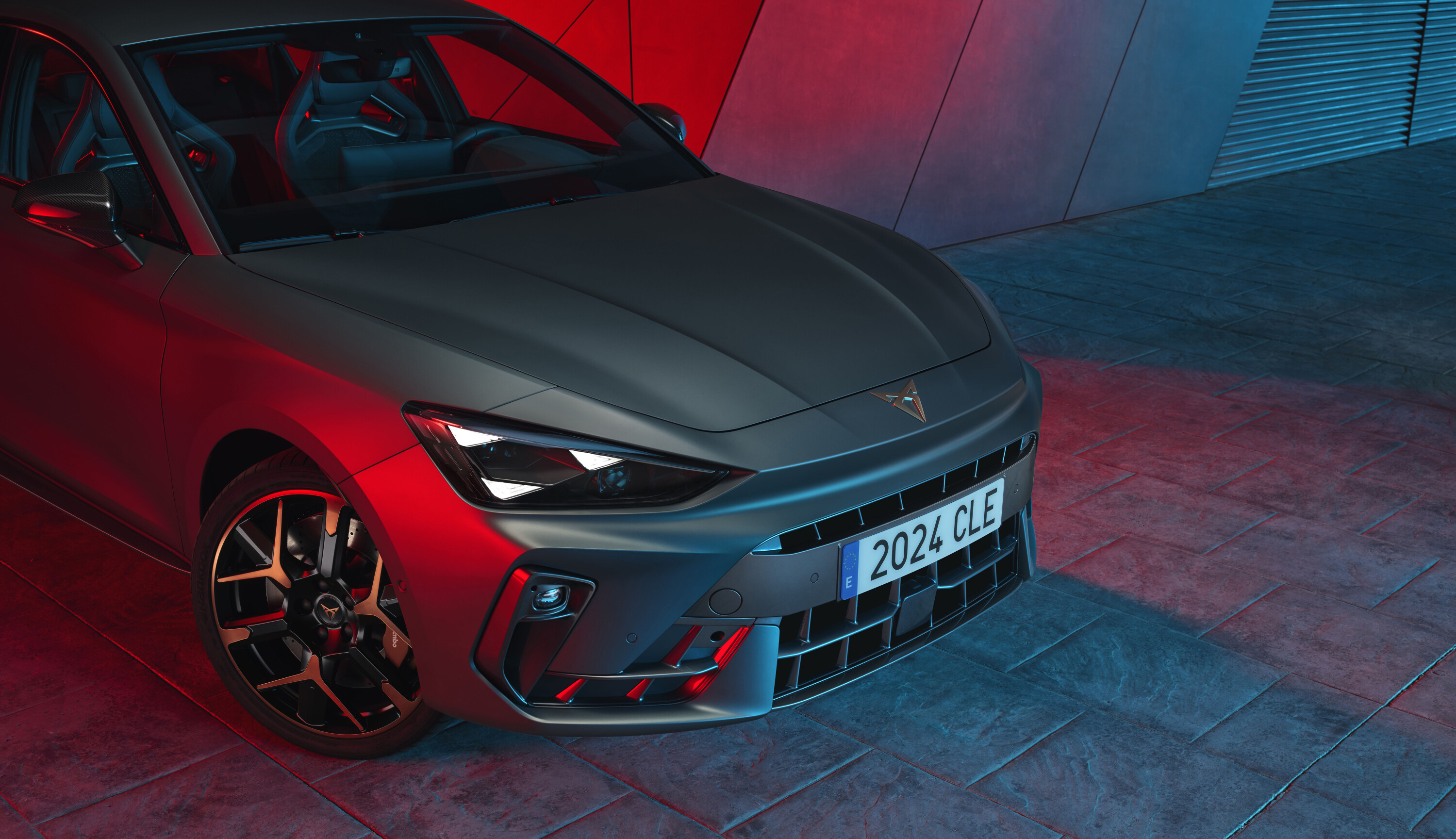
2025 Cupra Leon VZe
An oft-forgotten choice in the hot hatch realm, Cupra’s Leon range will receive a facelift – and a tasty wagon-bodied Sportstourer variant – in 2025 that will deliver a 20kW power boost for the VZe PHEV variant, taking it to a fairly spicy 200kW of combined petro-electro power. Not bad for a 1.4-litre turbo bum-dragger.
A new 19.7kWh battery will also be grafted in, lifting the Leon VZe’s all-electric range to a very useful 100km – more than enough range to save all of your precious hydrocarbons for where they truly matter: a twisty road in the middle of nowhere.
4
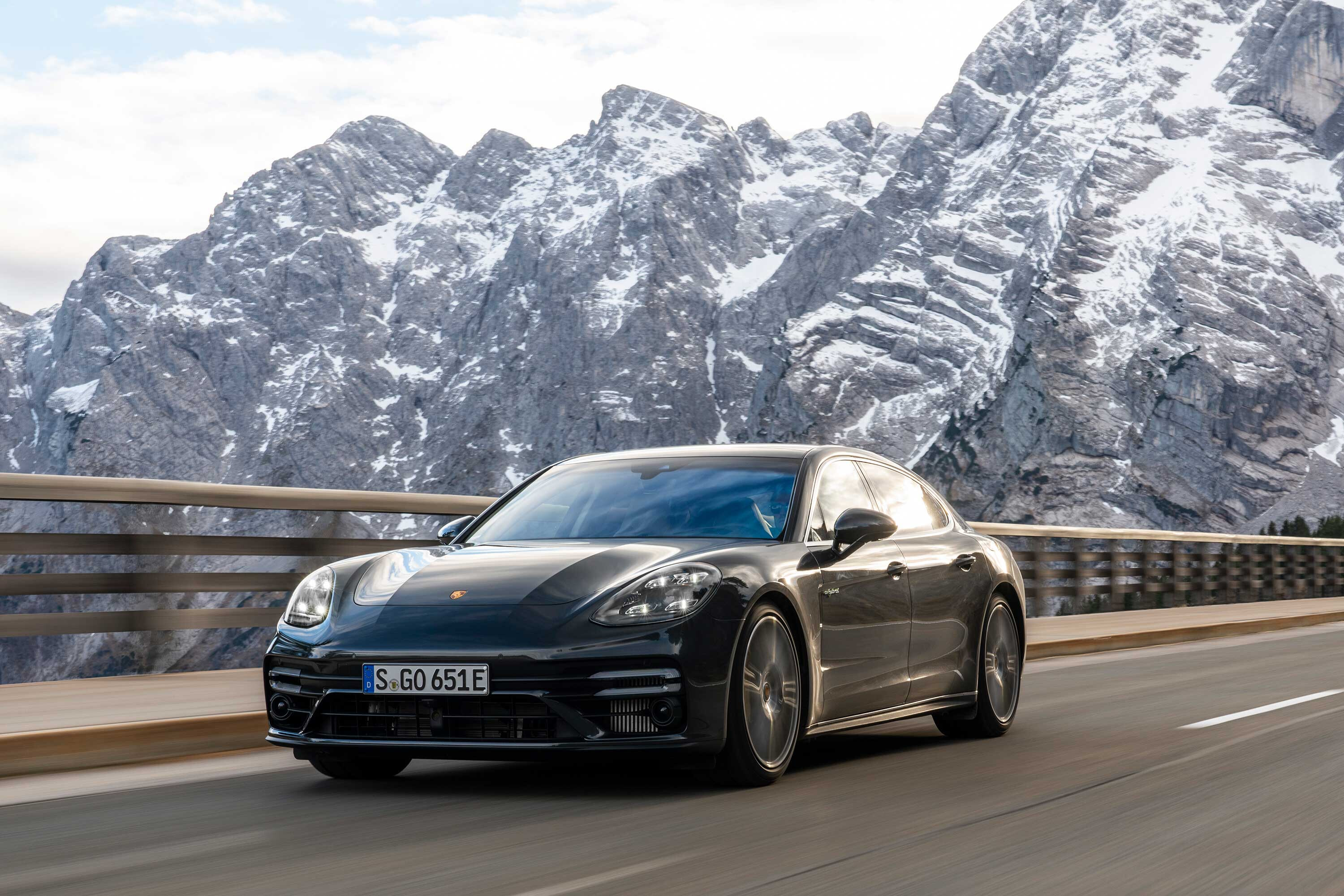
2025 Porsche Panamera Turbo S E-Hybrid
Sorry, was the 500kW/930Nm Panamera Turbo E-Hybrid not mad enough for you? Perhaps you’ll be interested in its brawnier bro, the Turbo S E-Hybrid that’s due to land before the end of 2024. With a combined output of 575kW and 1000Nm (“1.0 kilonewtons” sounds cooler) from its juiced-up 4.0-litre twin-turbo V8 and electric motor, the Turbo S E-Hybrid is the fastest executive car around the Nurburgring – and not a bad way of vaporising half a million dollars.
Will it save the planet? That entirely depends on how you much you leverage its 25.9kWh battery and 92km EV range.
6
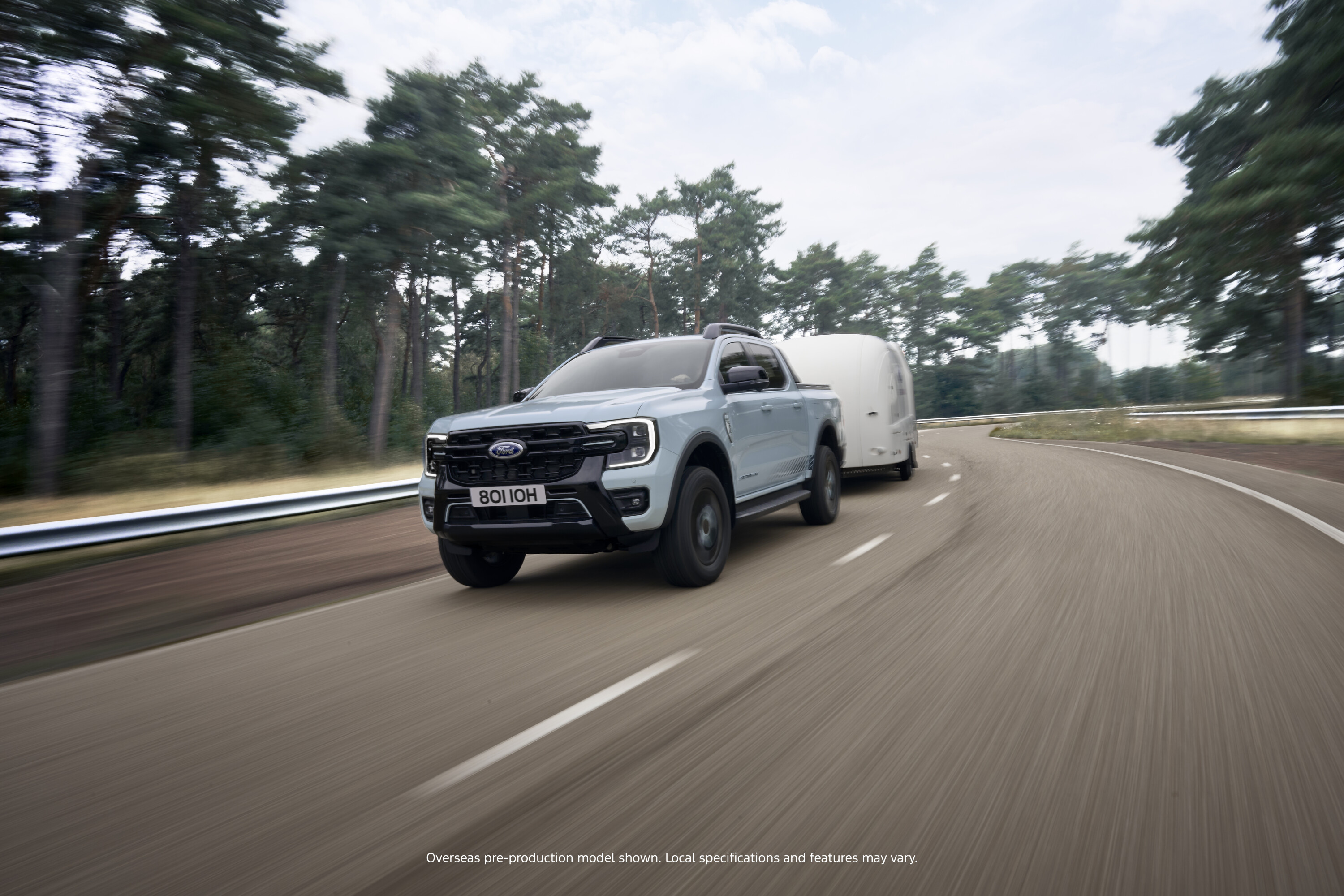
2025 Ford Ranger PHEV
Fond of exploring nature but not fond of choking it with a cloud of CO2? The first plug-in Ford Ranger promises to be as gentle on the environment as an actual park ranger, by virtue of its 11.8kWh battery, 75kW electric drive motor and 45km all-electric driving range.
Sure, it won’t give you enough battery range to travel deep into the wilds without burning any petrol at all, but it should tread lighter than your average ute. Besides, with a robust 3500kg tow rating, huge 690Nm peak torque output (that’s more than the Ranger Raptor), and 205kW power output, you can rest assured it’ll be able to do whatever ‘ute stuff’ you want it to.
2
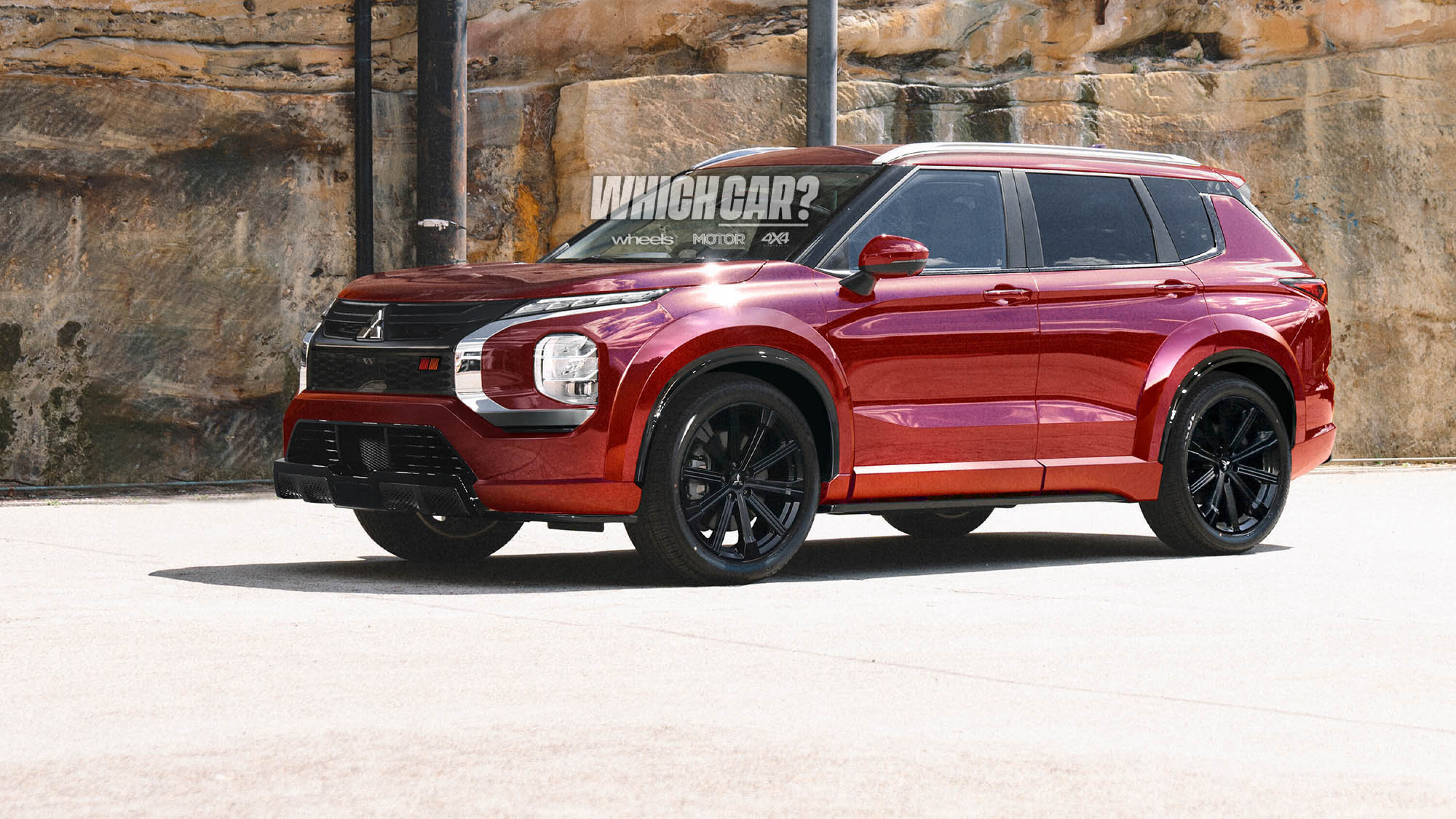
202X? Mitsubishi Outlander Evolution
Mitsubishi has been making rumblings of a return for its retired Ralliart performance arm, and it’s told us that the next model to be gifted the Ralliart treatment will be… the Outlander?
It’s a bit like your mum telling you she’s getting into bodybuilding competitions and ultramarathons, but Mitsubishi reckons it can tone its Outlander family hauler into a decent performance car – and it’ll be using the plug-in hybrid version of the Outlander as the basis for it, too.
It’s going to be nothing like the Lancer Evolutions you all no doubt picture when you visualise the Ralliart name, but the company’s performance boffins are confident they can make the big Outlander Evolution boogie – with a little help from a triple-motor configuration, air suspension and some sophisticated chassis electronics. Mitsubishi’s head of Ralliart told us that it’ll be fast – no matter what surface you choose to drive it on – and that prototypes are already Scandinavian-flicking their way around its Japanese proving grounds.
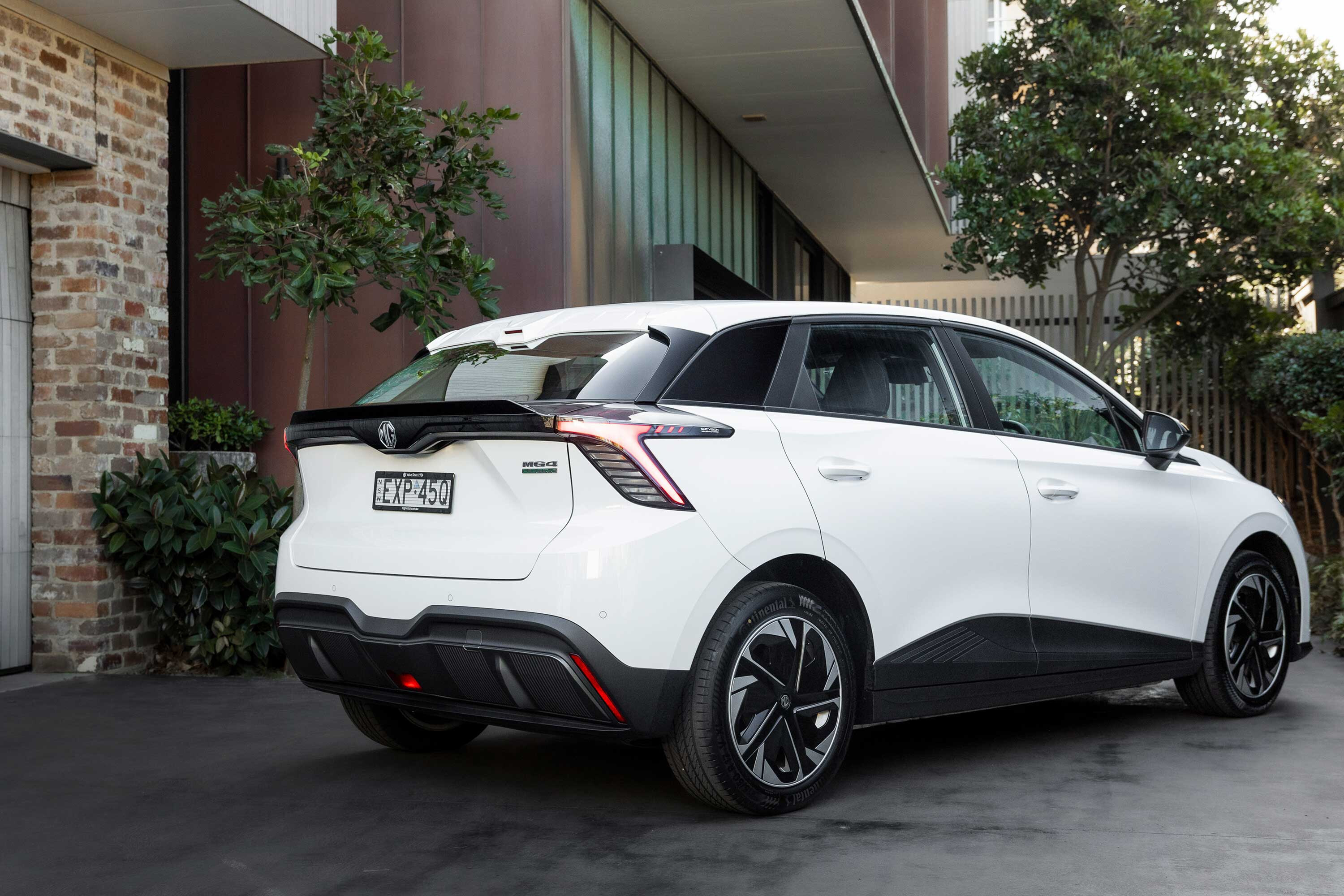
The battle for the title of “Australia’s cheapest electric car” is a tough one, but MG has made a game-winning move that its rivals, compatriots BYD and GWM, will arguably struggle to match: it’s cleaved the price of entry to its MG4 range by $9000, pricing the MG4 Excite 51 at just $30,990 including on-road costs.
That’s a 22.5 percent discount on its previous national drive-away price of $39,990, and also puts the all-electric MG4 on an even footing with entry-level versions of combustion-engined small hatchbacks like the Mazda 3 and Toyota Corolla. As a value proposition, it’s going to be a hard one to beat.
But there’s a catch. MG’s ultra-affordable electric car is only going to wear that $30,990 drive-away pricetag until October 31.
Those looking for a little more equipment, range or performance can also make use of additional factory bonuses on other variants in the MG4 range – which includes the longer-range MG4 Excite 64, the MG4 Essence 64 and MG4 Long Range 77, and the high-performance all-wheel drive MG4 XPower.
Thanks to the incentives, which also run until October 31, 2023 models that are in run-out attract an $8000 rebate while 2024-build cars receive $5000 off their national drive-away prices. The $30,990 drive-away pricing for the MG4 Excite 51 applies to both MY23 and MY24 models.
3
The MG4 Excite 51 is powered by a 51kWh battery, with a single 125kW/250Nm electric motor driving the rear wheels. On the WLTP combined test cycle, the Excite 51 has a range of 350km on a single charge.
“We know that people may have been considering an EV but potentially have held off due to the cost now with this limited time offer we’re giving everyone the opportunity to own an MG4,” said MG Motor Australia’s chief commercial officer, Giles Belcher.
“We truly believe the MG4 is the EV for everyone and now with these offers, including the MG4 Excite 51 from $30,990 plus factory bonus offers across all other trims, we have an MG4 for every buyer. The offer… ensures all buyers who had been thinking of making the switch to an EV now can thanks to the lower entry point.”
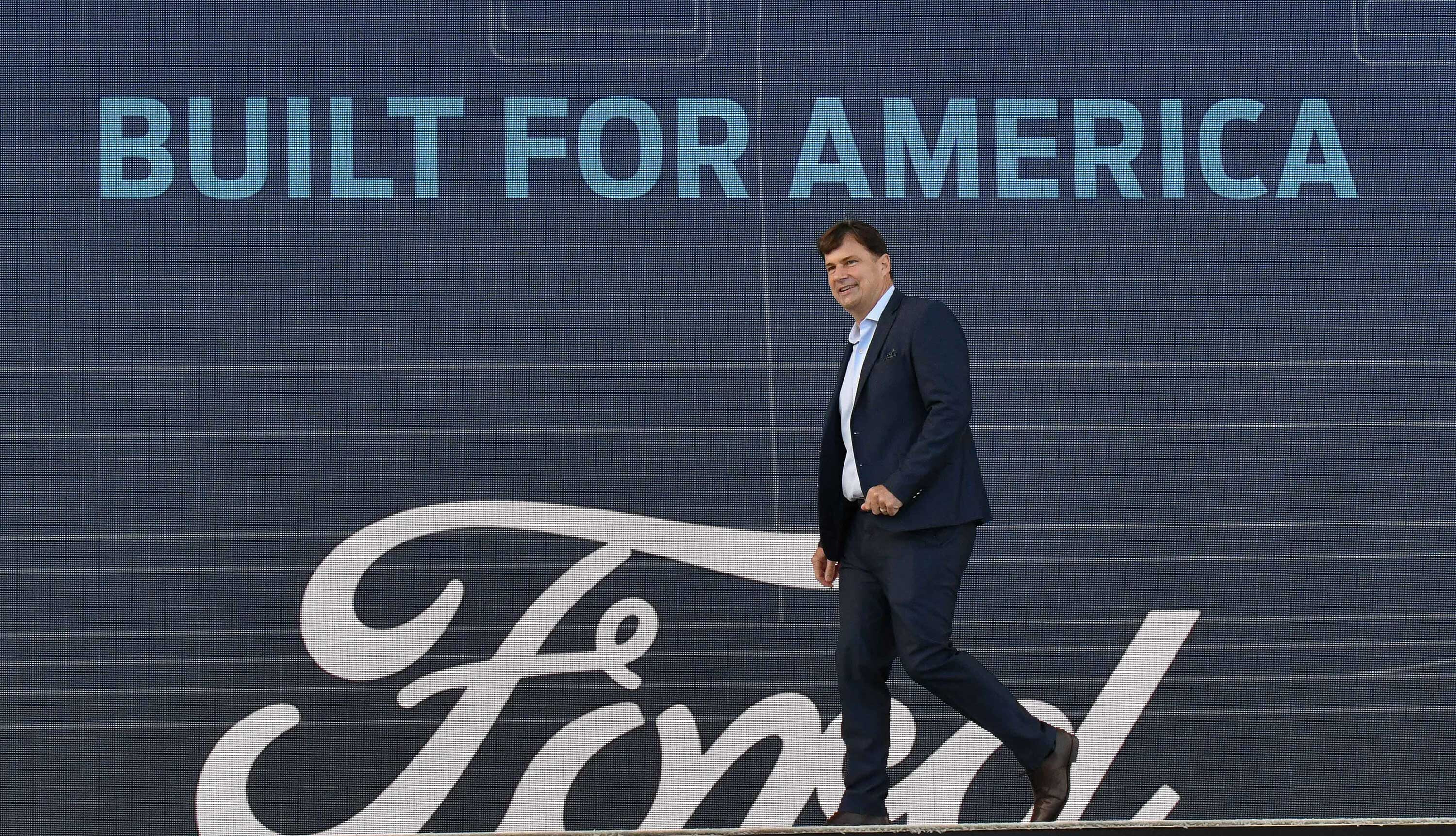
Ford CEO Jim Farley was shocked by what he discovered during his most recent study trip to China.
In a story published by The Wall Street Journal, Farley, surprised by the strength and sophistication of that country’s domestic auto industry, described the situation as “an existential threat” to a fellow Ford board member upon his return to Detroit.
With heavy state subsidisation of raw materials and the key industries that supply auto manufacturers, China’s car industry has risen to a level that, according to Farley, could alter the fortunes of America’s largest automaker and one of the oldest car brands on the planet. It’s not just heavy support from the Chinese government that Farley is worried about either: after sampling some of China’s most recent battery-electric vehicles, the Ford CEO was reportedly blown away by their engineering, ride quality and features. The products are simply good.
1
By Farley’s reckoning, technological innovation in China is outpacing what’s happening in the rest of the world, and it’s not just in the electric vehicle realm either – the use of artificial intelligence is “unlike anything available in the US” according to the 62 year-old CEO.
People like Jim Farley, a 35-year auto industry veteran, don’t end up becoming CEO of a company like Ford by accident. For him to be concerned about the competitiveness of his rivals means it’s a situation worth worrying about, but according to The Wall Street Journal, Farley’s strategy is to try to beat the Chinese at their own game.
“Executing to a Chinese standard is going to be the most important priority,” Farley said.
To help their engineers, designers and executives deliver on that promise, Ford bought a number of Chinese vehicles to be shipped to the USA to be dissected and studied in Detroit.
2
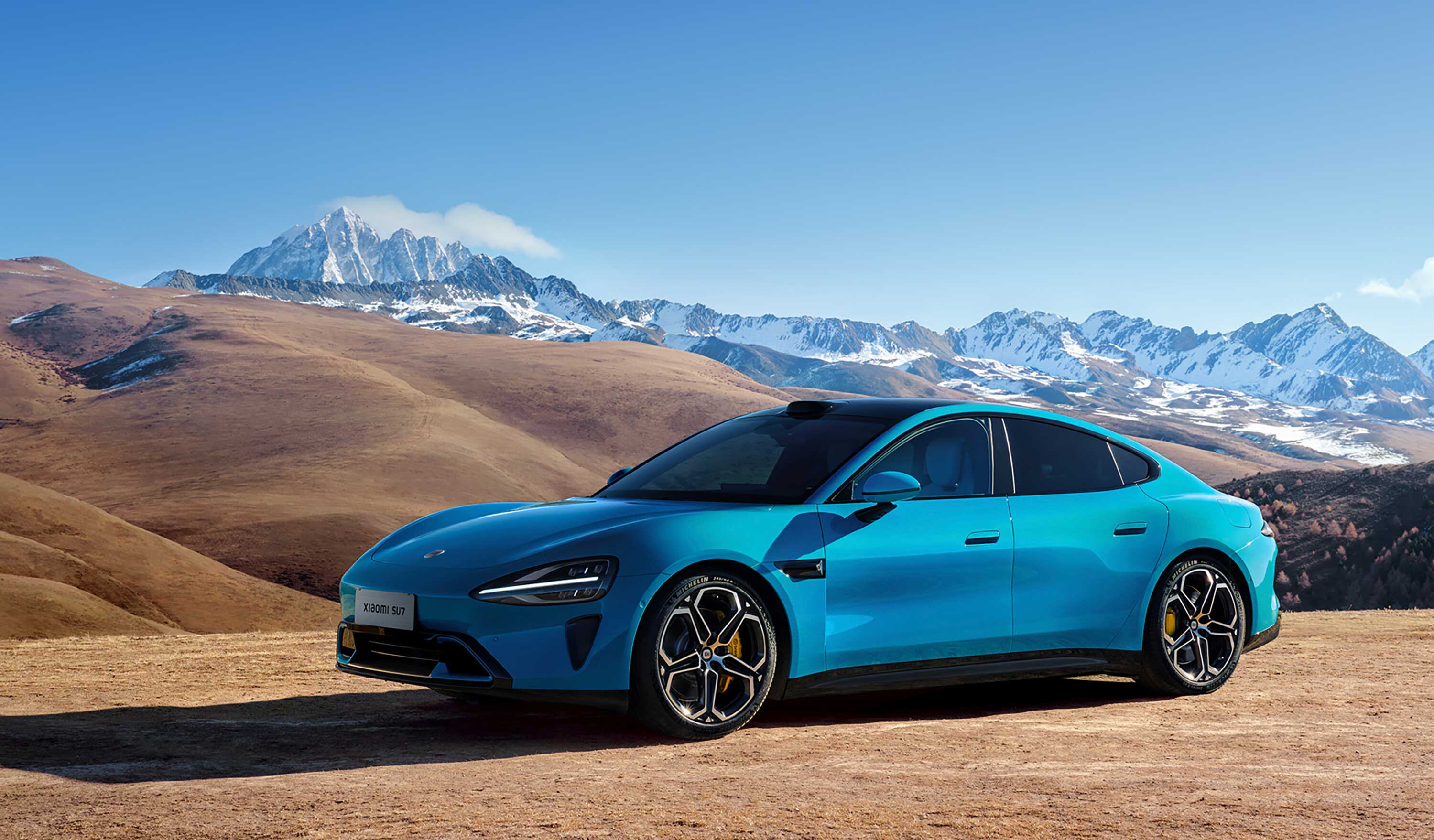
Those vehicles include the Li Auto Mega, a high-tech, high-luxury people mover, and the Xiaomi SU7, an all-electric sports sedan from one of China’s biggest smartphone brands that does a decent impersonation of a Porsche Taycan.
Both launched in China earlier this year, and both represent the cutting edge of China’s car industry.
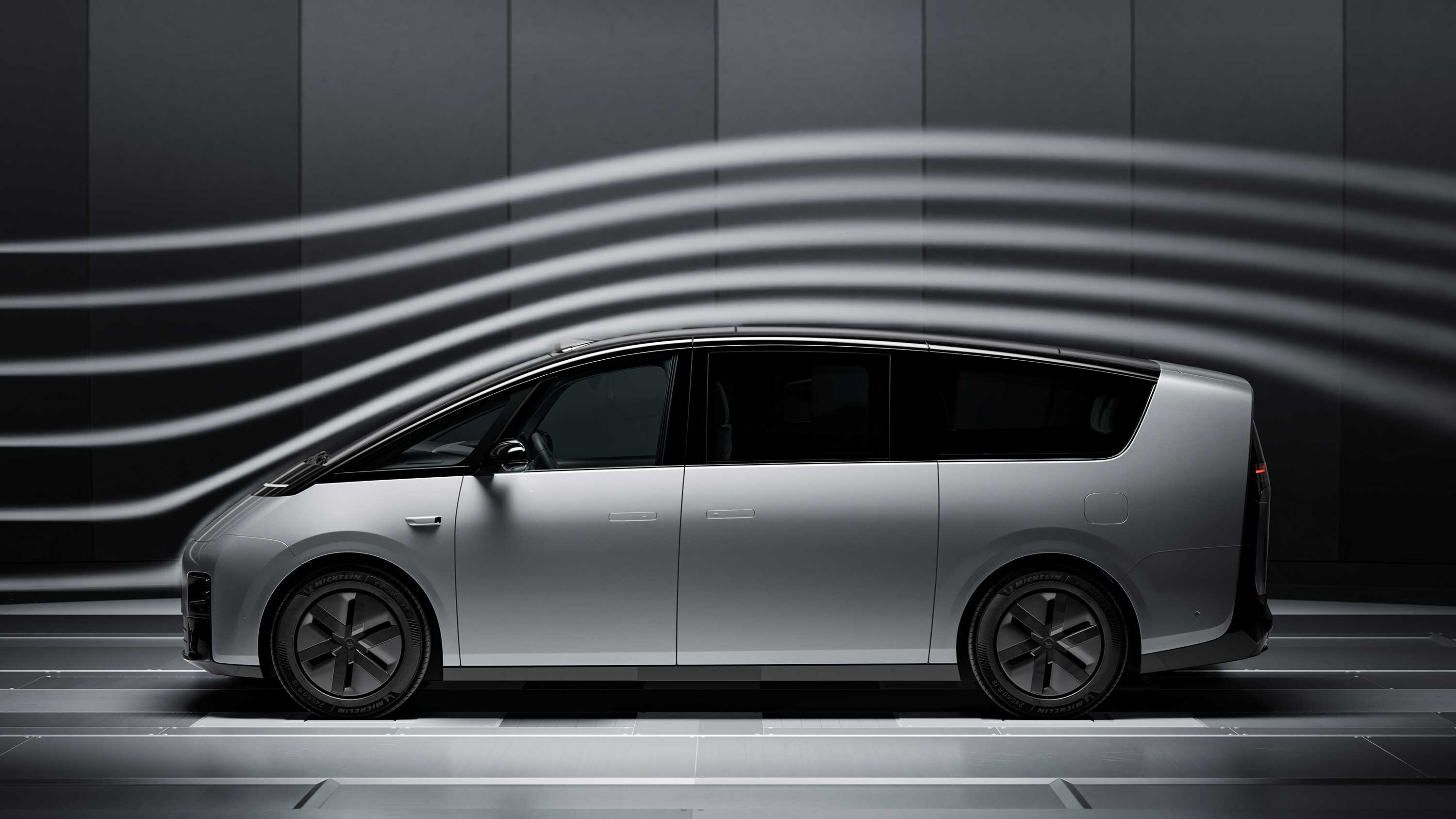
1
In China, Ford will modify its tactics by focusing on commercial vehicles, though when that switchover will occur is unclear – its Chinese consumer website still lists consumer vehicles like the Edge, Equity and Equator SUVs, as well as the Mondeo and Mustang as being available.
Is it the right strategy?
“I’ve seen this movie before,” Farley said, referencing how Japanese automakers were able to penetrate the US market and steal market share from US domestic automakers last century.
Imitating – or bettering – Chinese product is one way of preventing a similar situation developing again, but Ford is also reportedly looking for other levers to pull. A supply chain rethink is one example, with Ford now investigating ways to tap into the state-subsidised supplier base that Chinese OEMs have been able to enjoy. Another is a product and engineering effort to help trim manufacturing costs further, to erode the price advantage of Chinese cars and keep Ford’s own vehicles at a competitive price point.
Though protectionist tariffs are holding Chinese-built cars, particularly EVs, away from the US for now, Ford knows that won’t work forever – especially as companies like BYD and Chery are looking to Mexico (which enjoys a free trade agreement with the USA and Canada) as a manufacturing backdoor into North America.
For now, Farley’s strategy of acknowledging the strengths of the Chinese auto industry and trying to best them at their own game may just be the best option. However, what that might mean for Ford in Australia is unclear – when it comes to how it views its rivals from China, Ford’s local office is maintaining diplomatic silence for now.
The ninth generation of Toyota Camry is now on sale in Australia, with the local arm of the Japanese juggernaut lifting prices by up to $2573 for the three-variant range.
However, with the deletion of the previous-gen’s petrol-powered Camry Ascent base model – which was the sole non-hybrid model available at the end of that model’s run – the cost of entry has jumped by just under $5000, now sitting at $39,990 for the Camry Ascent (with the adoption of an all-hybrid strategy for the Camry, the word ‘Hybrid’ has been dropped from the nomenclature).
The mid-spec Ascent Sport is now priced at $42,990 (up $2273), while the highly-featured Camry SL is a $53,990 proposition before on-road costs (an increase of $2573).
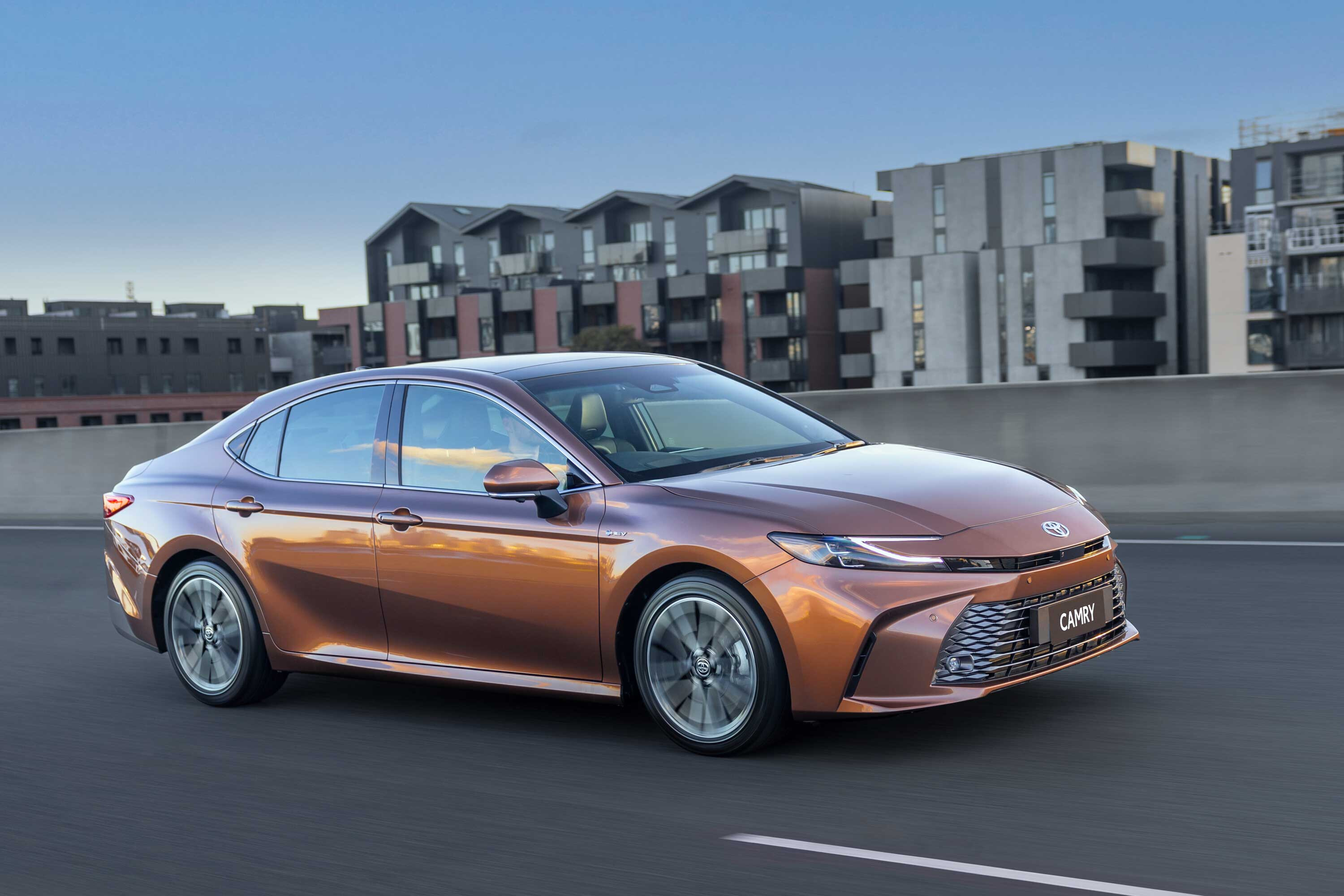
Though it’s billed as the ninth generation of Camry, the 2025 model is essentially an extensive facelift of the eighth-gen model, retaining its critical dimensions, TNGA-K architecture, windshields, door skins and other sheetmetal.
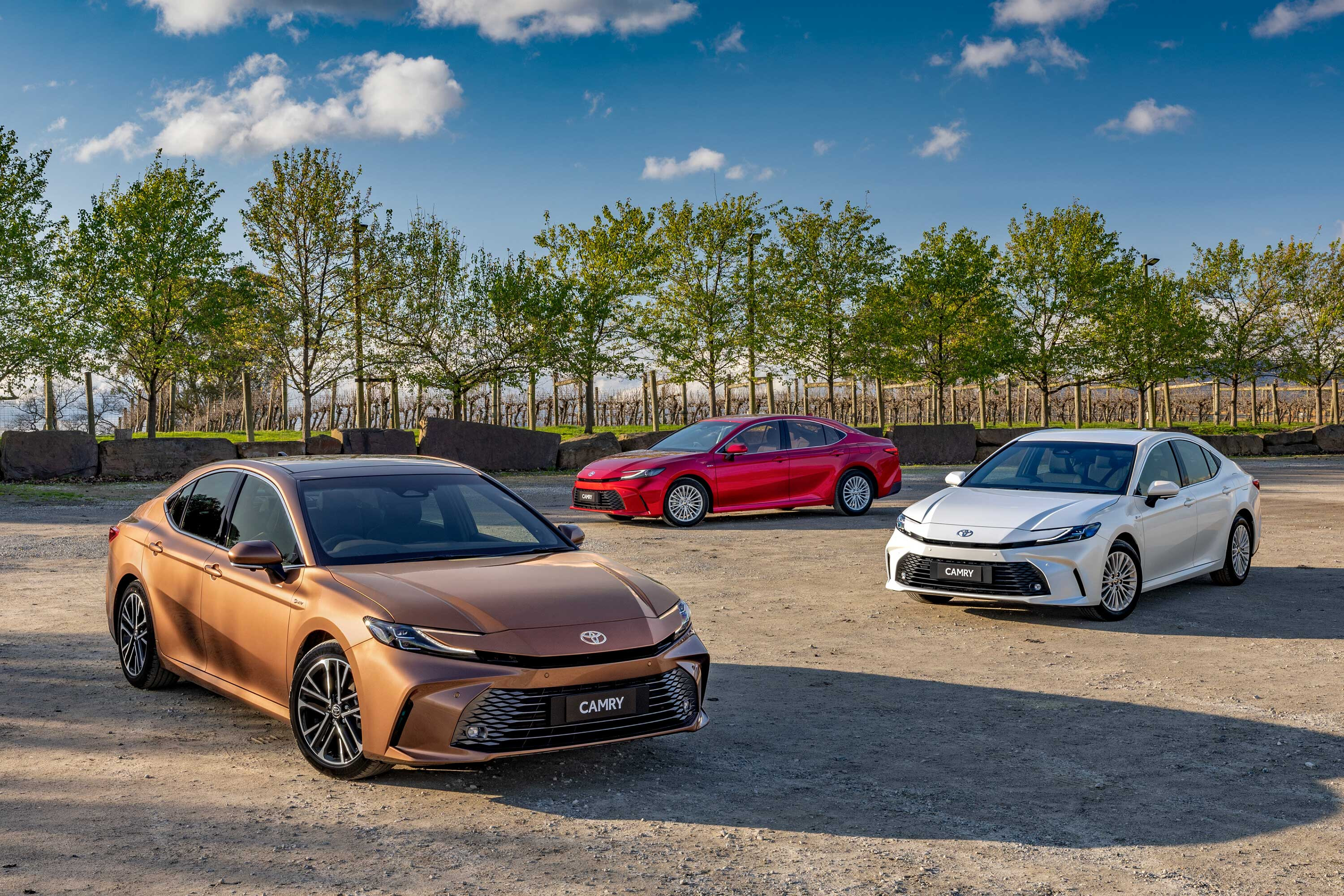
2
But it’s not just a new dress over old bones, with the Camry’s MacPherson strut front/multi-link rear suspension coming in for a new tune to improve handling, a new steering rack being fitted for more direct and responsive steering feel, and a new tune for the 2.5-litre petrol/electric hybrid powertrain which sees system power rise by 10kW to 170kW.
The transaxle assembly is also 20 percent lighter and more compact, the motor/generator now sports six rather than three magnets, the high-voltage battery is a 4.0Ah lithium-ion unit, and the electric drive motor gets a 12kW bump in its output to take it to 100kW/208Nm.
The brakes have also been fettled to improve brake feel, whilst also improving regenerative braking capacity.
2
The sum of those mechanical refinements is a slight reduction in fuel consumption, with the 2025 Camry boasting an average fuel efficiency of 4.0L/100km versus the 4.2L/100km average of the car it replaces.
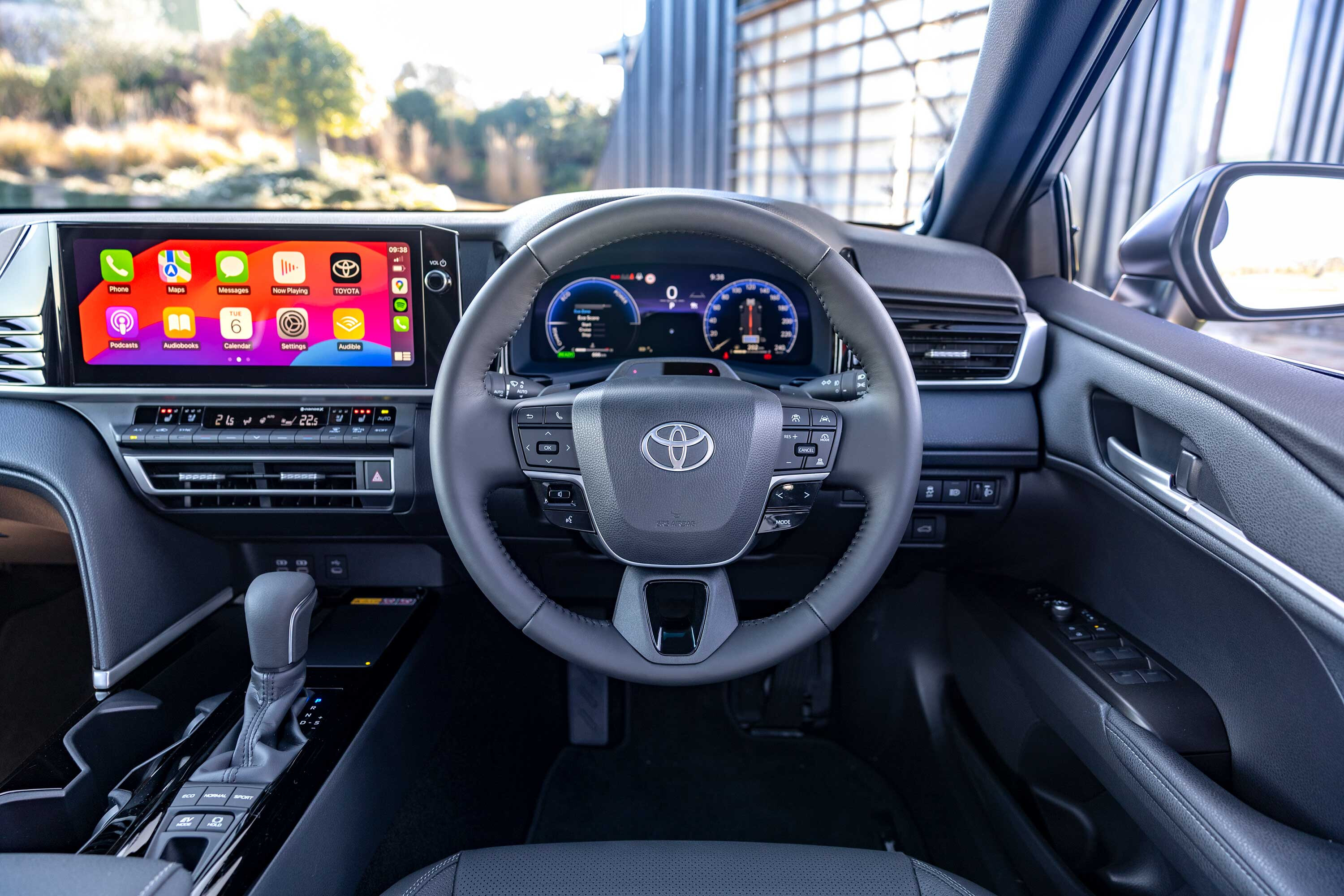
Inside, there’s plenty of new furniture for the dashboard, door cards, steering wheel and centre console, with a more modern design that ditches much of the piano black surfacing of the previous generation while also opening up the storage area at the base of the centre stack.
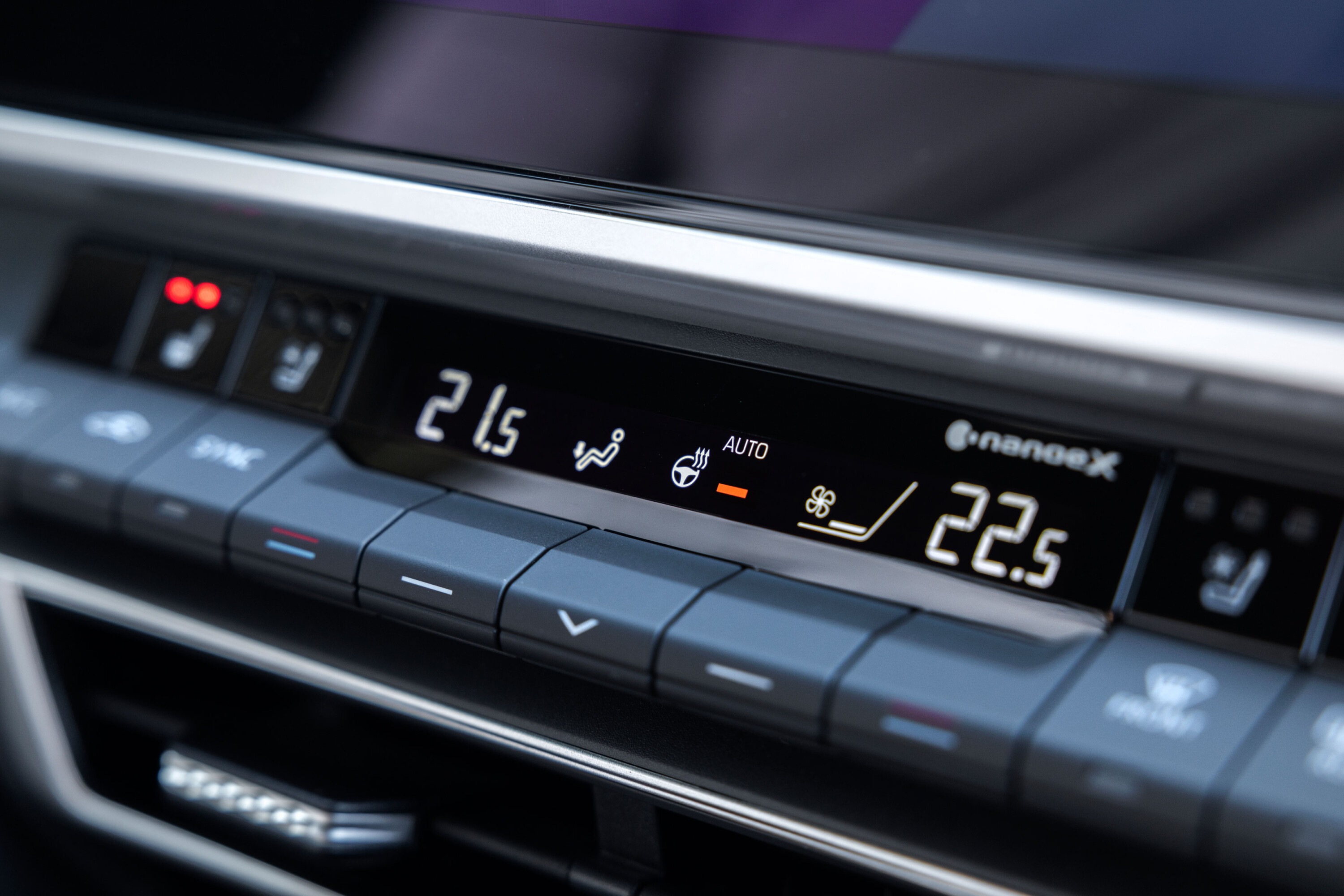
Air vents are also moved around, the infotainment screen gets pushed up closer to the driver’s eyeline, and the buttons for the ventilation system (dual-zone climate control for all variants) now live on their own separate switch block
2
Standard equipment also goes up along with the price. In the Ascent, the infotainment screen gets upgraded to an 8.0-inch touchscreen display, and the instrument panel is replaced by a 7.0-inch LCD.
The Ascent Sport also gets the same digital dashboard but upgrades its infotainment screen to a 12.3-inch display, while the range-topping Camry SL sports the most screen real estate with two 12.3-inch displays. All variants have a 524-litre boot capacity, with 60/40 split rear seats.
For a full summary of the 2025 Toyota Camry’s standard equipment, see below:
Camry Ascent:
- Urethane steering wheel
- 7-inch electronic instrument panel
- 8-inch infotainment display
- Six-speaker audio
- Dual-zone climate control
- Five USB-C charge ports (three front, two rear)
- Manually-adjusted seats
- 17-inch alloys
Camry Ascent Sport (in addition to Ascent):
- Leather-upholstered steering wheel
- 12.3-inch infotainment display
- Wireless phone charger
- LED foglamps
- Self-dimming rear view mirror
- Power adjustable driver’s seat
Camry SL (in addition to Ascent Sport)
- 12.3-inch electronic instrument panel
- Head-up display
- Nine-speaker JBL audio system
- Panoramic glass roof
- Paddle shifters
- Rain-sensing wipers
- Digital rear-view mirror
- NanoEX air purifier
- Leather upholstery
- Power-adjustable steering column
- Power-adjustable front passenger seat
- Heated/ventilated front seats
- 18-inch alloy wheels
Pricing
The 2025 Toyota Camry range is available now, and is sold with a five-year, unlimited-kilometre warranty. The first five years of servicing is covered by Toyota’s capped-price scheme, with intervals set for every 12 months/15,000km at a price of $255 per visit.
Retail pricing is as follows:
- Toyota Camry Ascent – $39,990
- Toyota Camry Ascent Sport – $42,990
- Toyota Camry SL – $53,990
Mitsubishi Australia has released the results of a survey of around 800 Outlander PHEV and Eclipse Cross PHEV owners, finding that the majority of the brand’s PHEV owners are leaning far more on their vehicle’s battery than its fuel tank.
The survey results come at an interesting time for plug-in hybrid vehicles (PHEVs), with Australian PHEV sales being up 127 percent in year-to-date sales figures versus just 11 percent growth in battery-electric vehicles for the same time period. According to the brand that’s their biggest cheerleader in this country, owners who’ve already put a PHEV in their driveway are reaping the benefits.
1
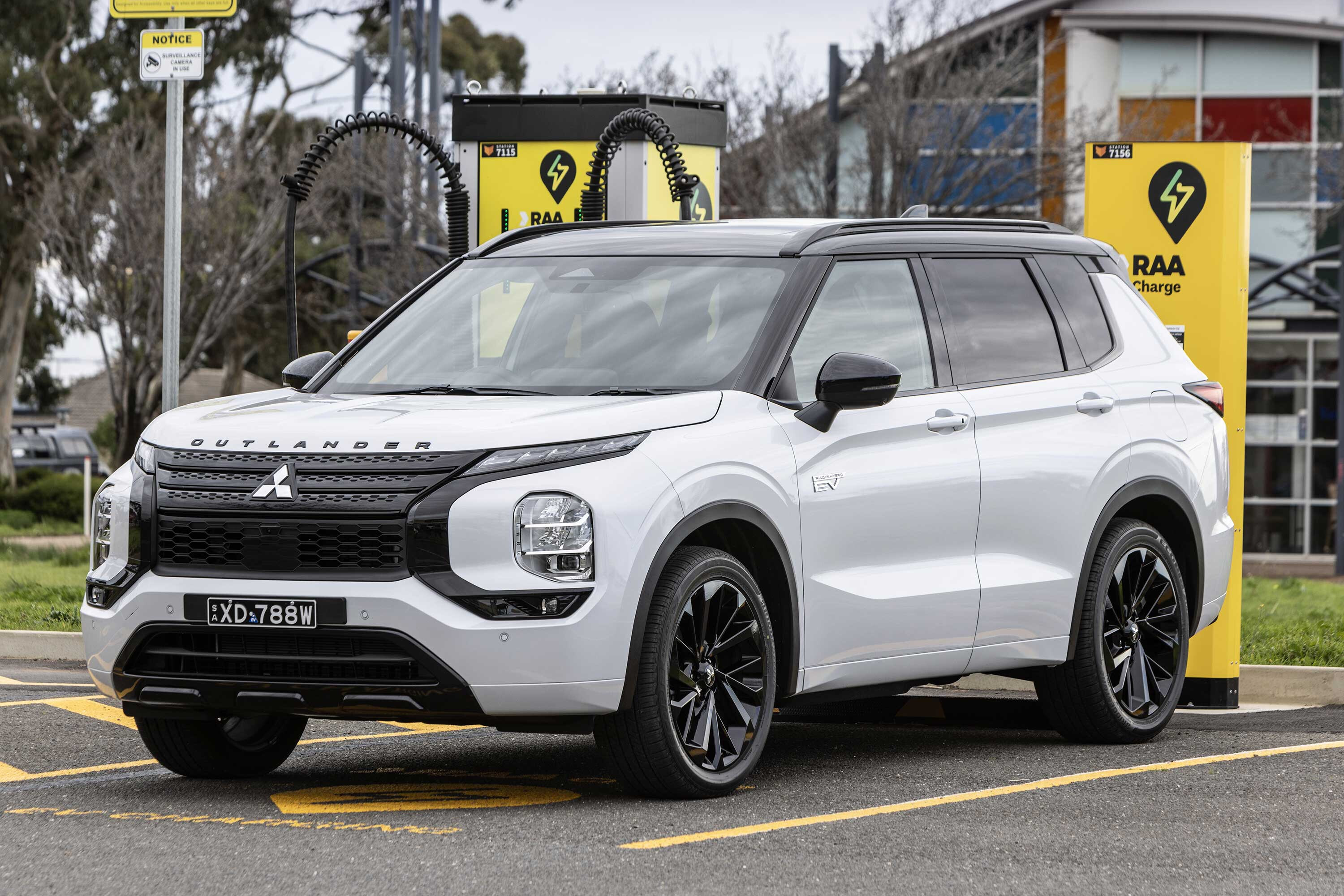
Mitsubishi Australia found that Outlander PHEV owners in Australia were driving on electric-only power 81 percent of the time, while Eclipse Cross owners were driving in EV mode for 75 percent of their trips. For reference, the Outlander PHEV can travel 84km on its 20kWh battery on the WLTP test cycle while the Eclipse Cross PHEV extracts 54km of EV-only range from its 13.8kWh lithium-ion battery.
Around half (50 percent of Outlander owners, 58 percent of Eclipse Cross owners) were charging their PHEVs on a daily basis, while almost all of them were charging from a charger installed in their home, using their domestic power supply. Most respondents cited low running costs as their primary reason for picking a PHEV, though there was no published data on whether owners found the relatively limited EV range of their plug-ins to be a negative factor.
The results of Mitsubishi’s survey provides a counterpoint to the European PHEV experience, where PHEV owners were often purchasing their vehicles to take advantage of generous government subsidies, but were charging their cars infrequently and running on combustion power most of the time. Those users effectively eliminated the environmental benefit of their cars by not only firing up the combustion engine, but by also forcing that engine to lug around the dead weight of a discharged battery pack as well.
Fuel card usage on fleet-owned PHEVs is also a known problem, where drivers – who aren’t necessarily the vehicle’s owner – find it easier to simply pay for fuel with a company-supplied fuel card instead of plugging their vehicle into a charger on a regular basis.
1
While EV owners have no choice but to plug in and conventional hybrids don’t carry a big, heavy battery, owner behavior makes a big difference to the efficiency, environmental impact and running costs of plug-in hybrids.
PHEVs back in fashion
This year, a rapid cooling of EV sales and an upswing in hybrid sales globally – including plug-in hybrids – has seen a number of carmakers walk back on electrification commitments. Volvo just recently watered down its global pledge to go all-electric by the end of the decade, instead allowing room for PHEVs to stay on sale in some markets.
Hyundai and Volkswagen also announced new investment for future hybrid products, and they’re not alone – even Chinese automaker BYD, which launched in Australia earlier this decade with an all-electric lineup, brought its first PHEV to our shores in the form of the Sealion 6 earlier this year.
From the industry perspective, the business case for hybrids of all types is typically stronger than that of EVs. Pressure to compete with Chinese automakers sees most EV product lines running on slim profit margins – even those in the $50K-plus realm – while hybrids and PHEVs, with their substantially smaller (and thus cheaper) batteries, are able to sell at a lower cost while also delivering a higher margin.
From an environmental point of view, PHEVs rely on their owners doing the right thing – which essentially boils down to charging up at every opportunity. However if Mitsubishi’s experience in Australia is anything to go by, that message is beginning to resonate.
