
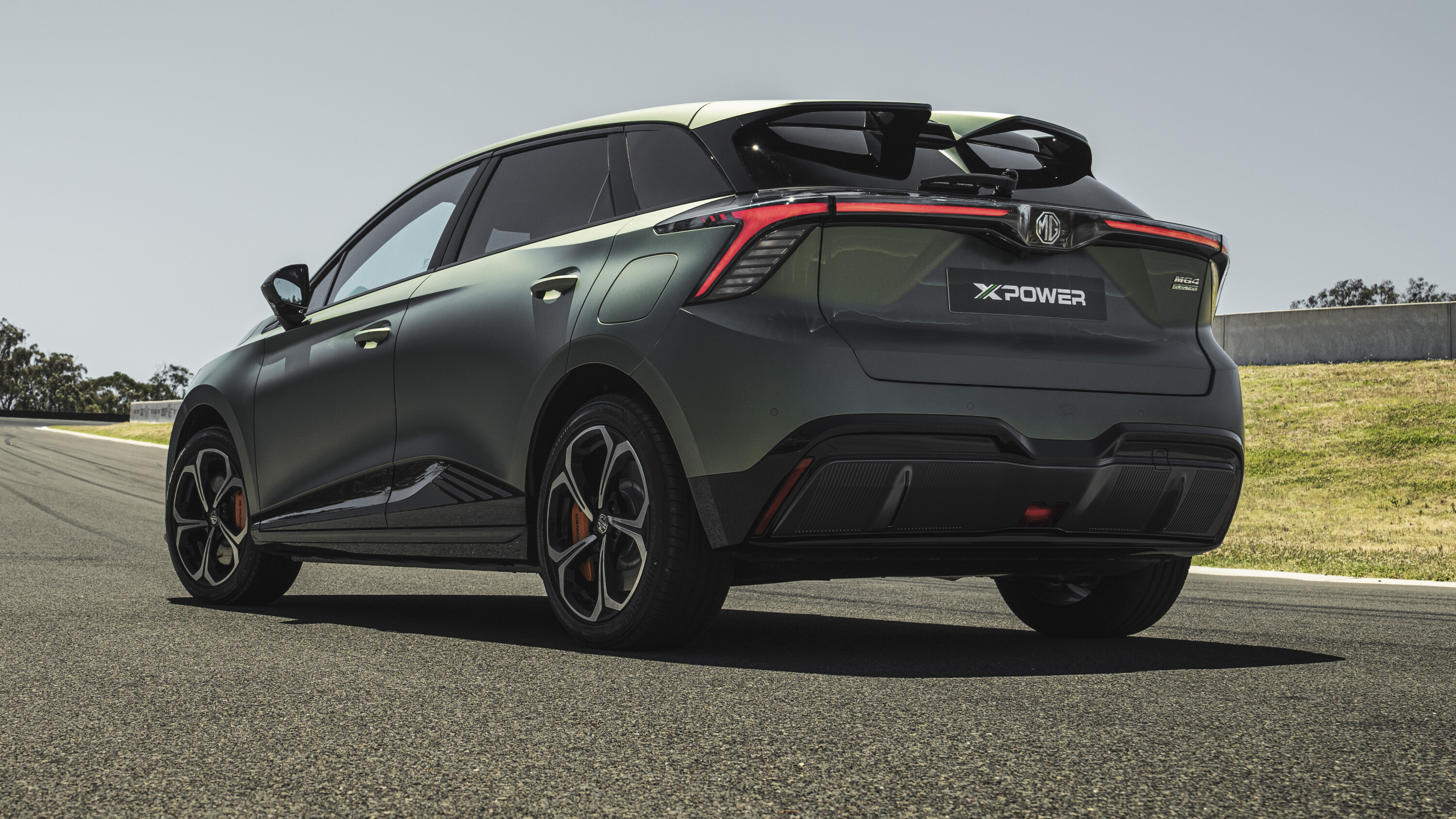
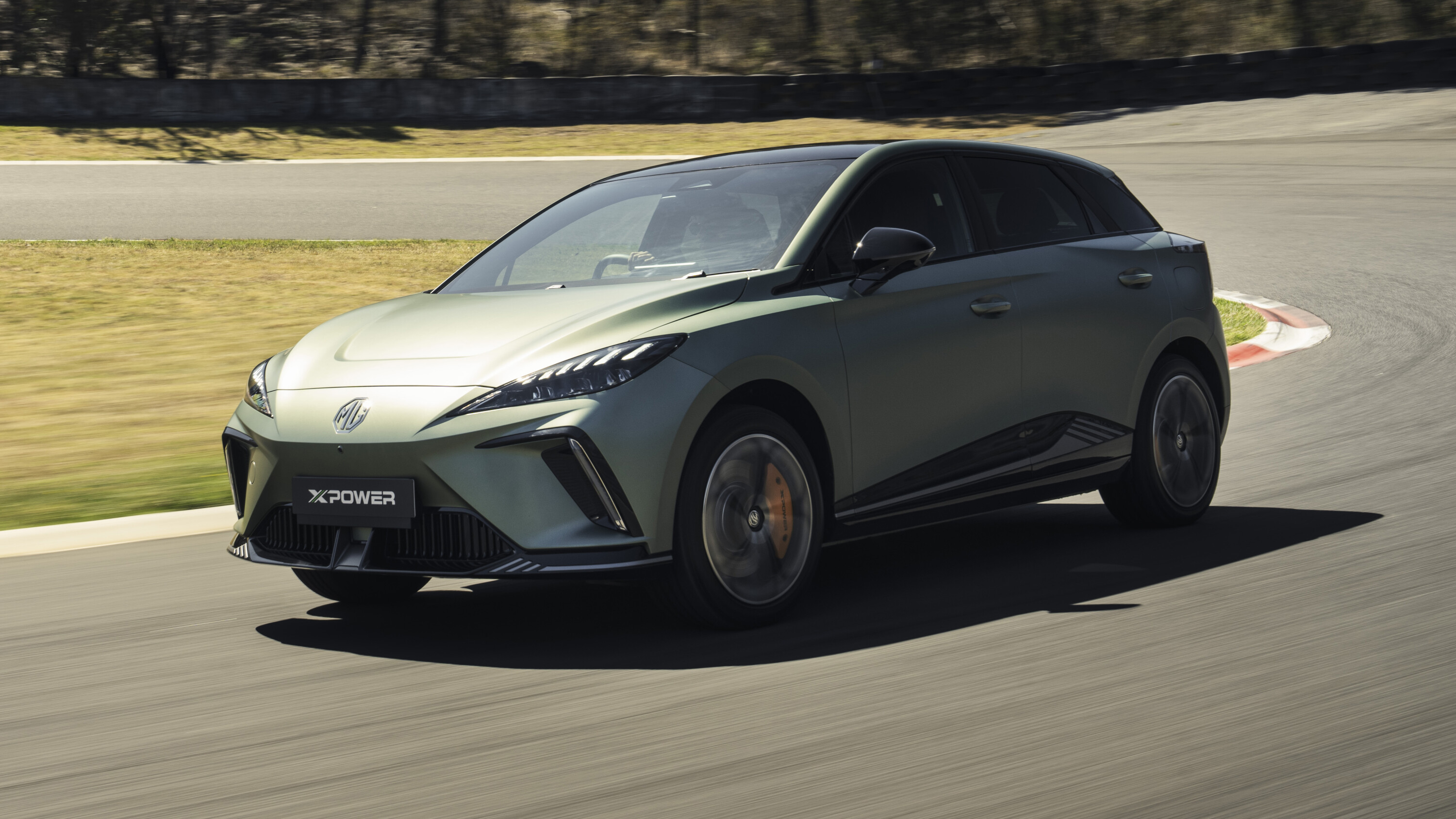
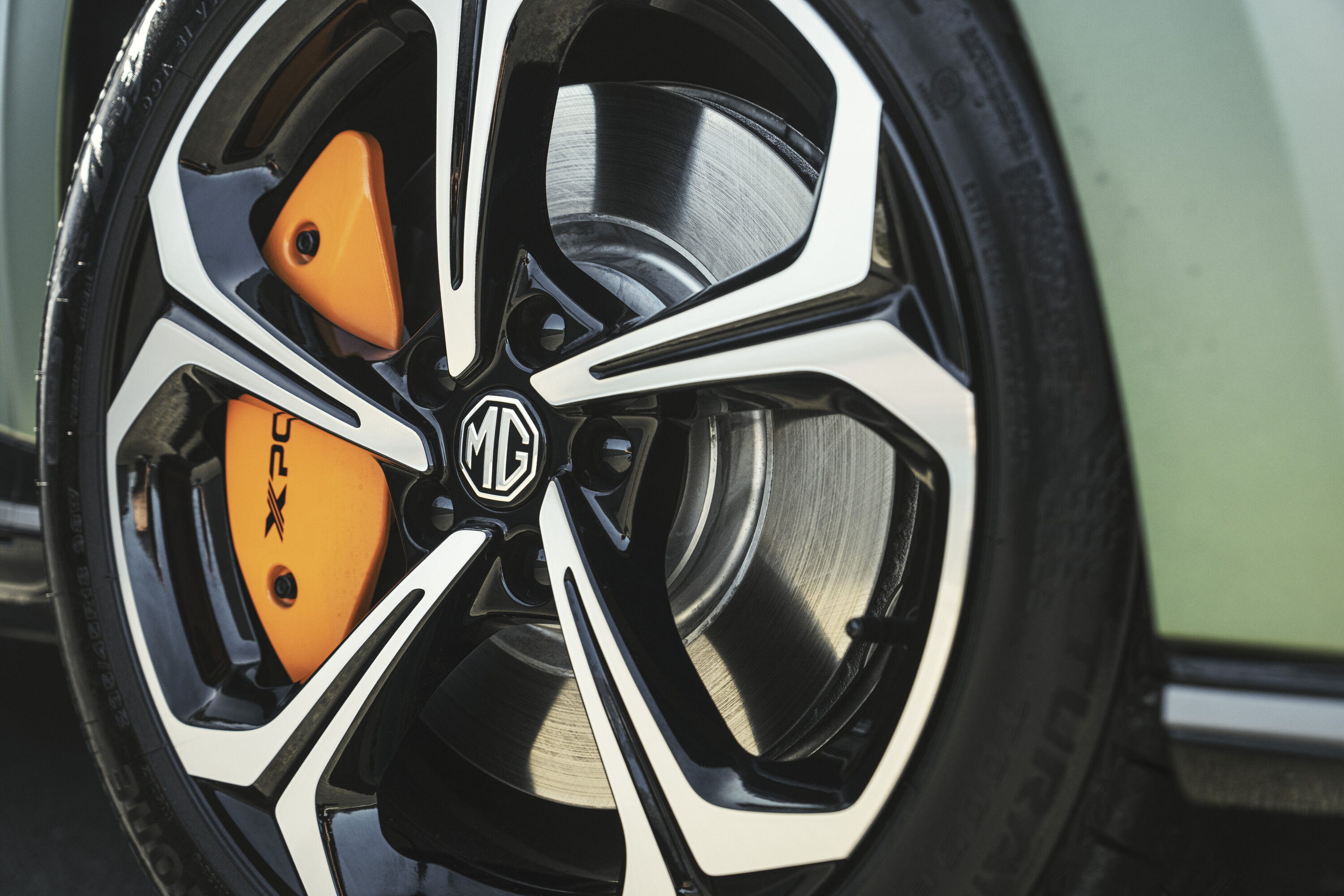
If you’ve been keeping tabs on the MG4 XPower, you might be aware of one rather controversial addition to the Chinese-made, British-badged 320kW all-paw hatchback: bright orange clip-on caliper covers straight off Wish-dot-com, described as “orange ‘XPOWER’ brake calipers”.
For the hot hatch purist this kind of peacocking is the absolute antithesis of the genre, but should a vehicle be judged entirely on one marketing choice? Absolutely not.
1
The XPower could be a diamond, especially given the praise that’s been heaped on the regular MG4.
Plus, the XPower is good value. If you’d told us 10 years ago that an electric hot hatch would be able to sprint from rest to licence-losing speeds in 3.8 seconds, all for $59,990 (before on-road costs), and without sacrificing niceties such as a 10.25-inch touchscreen with smartphone mirroring we’d have laughed you out of the room.
Something has to give. Our hunch is that, like the braking situation, MG may have glossed over engineering excellence in favour of headline figures.
1
JUMP AHEAD
- How much is it, and what do you get?
- How do rivals compare on value?
- Interior comfort, space and storage
- What is it like to drive?
- What’s the MG4’s driving range and charging speed?
- How safe is it?
- Warranty and running costs
- VERDICT
- Specifications
How much is it, and what do you get?
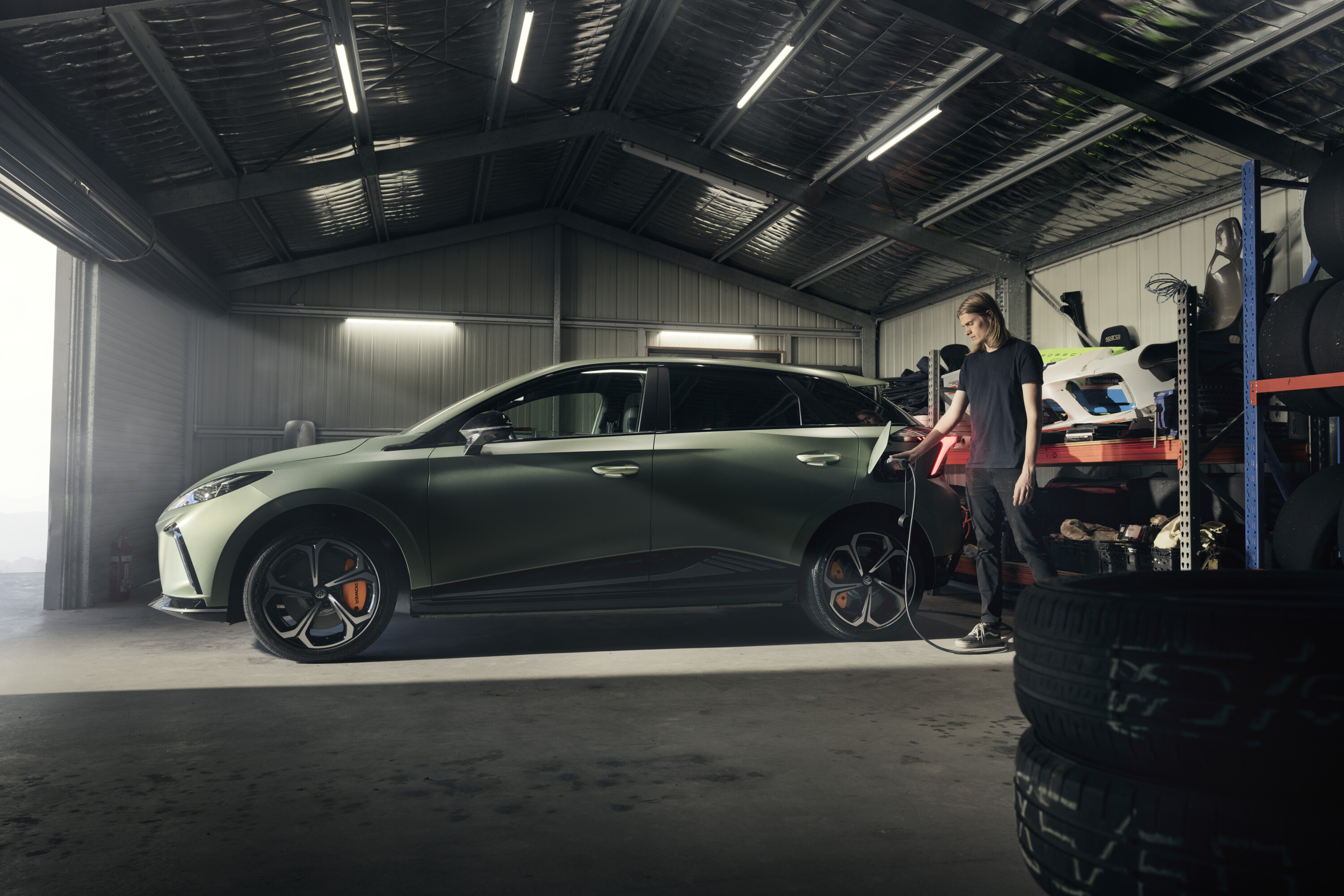
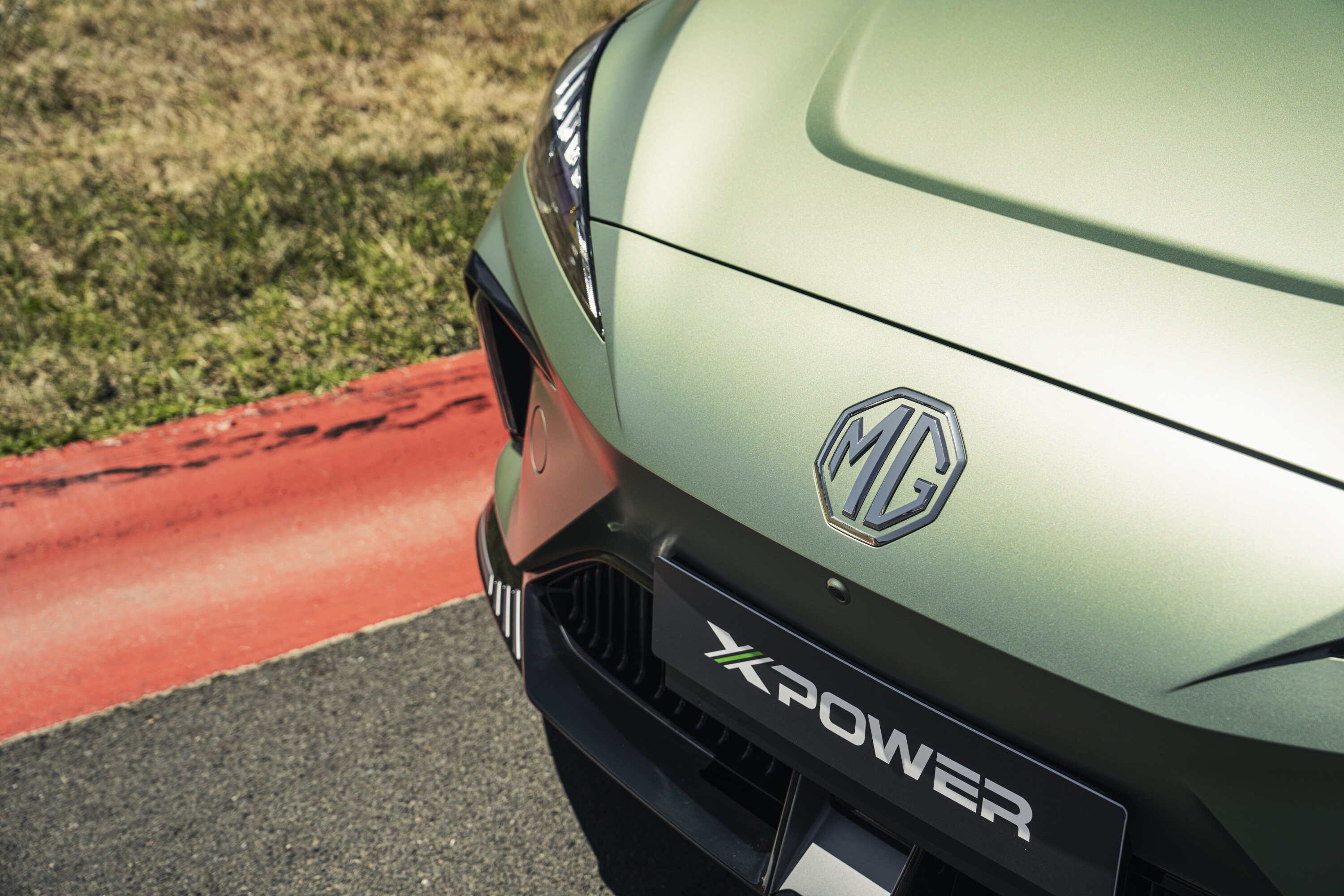
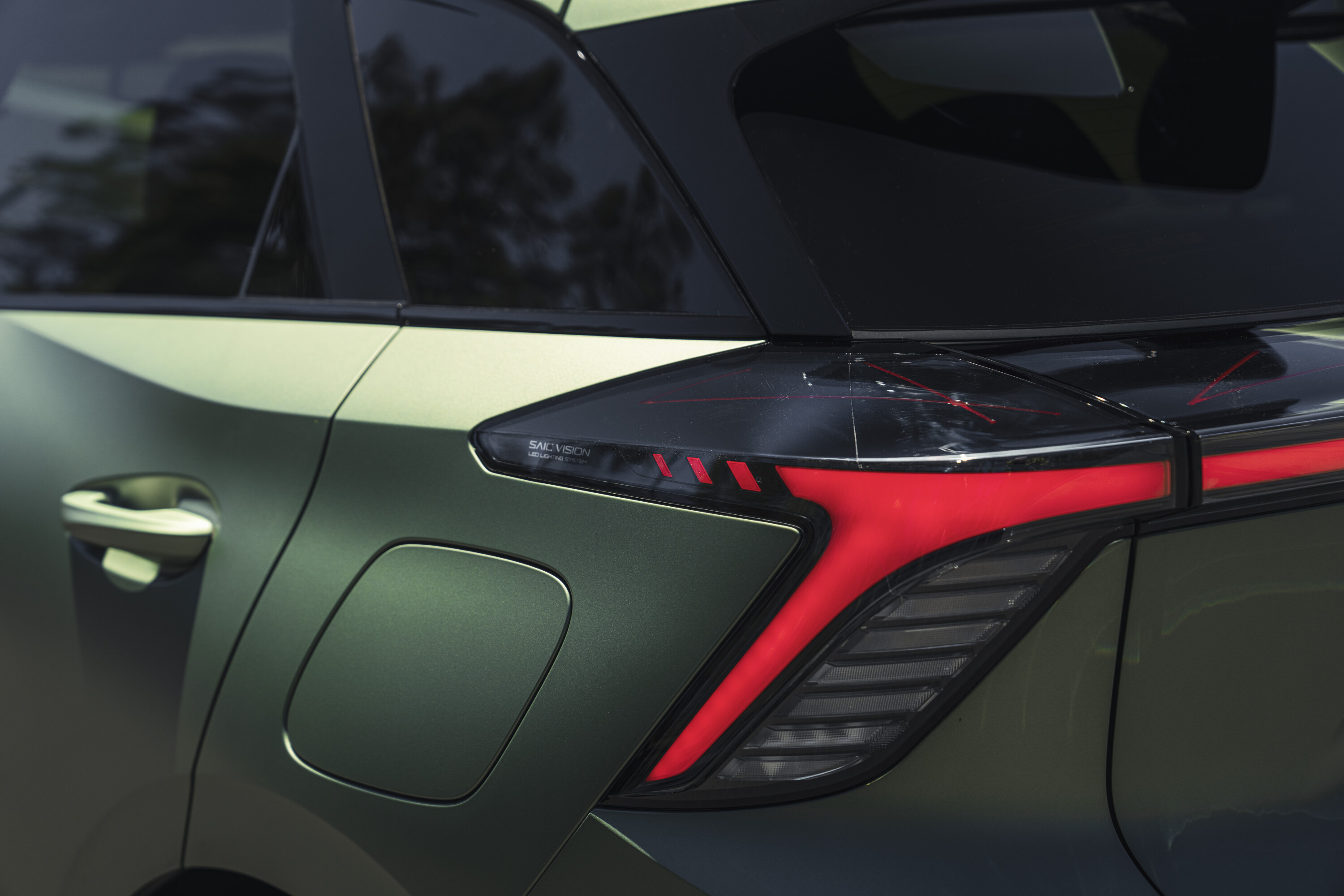
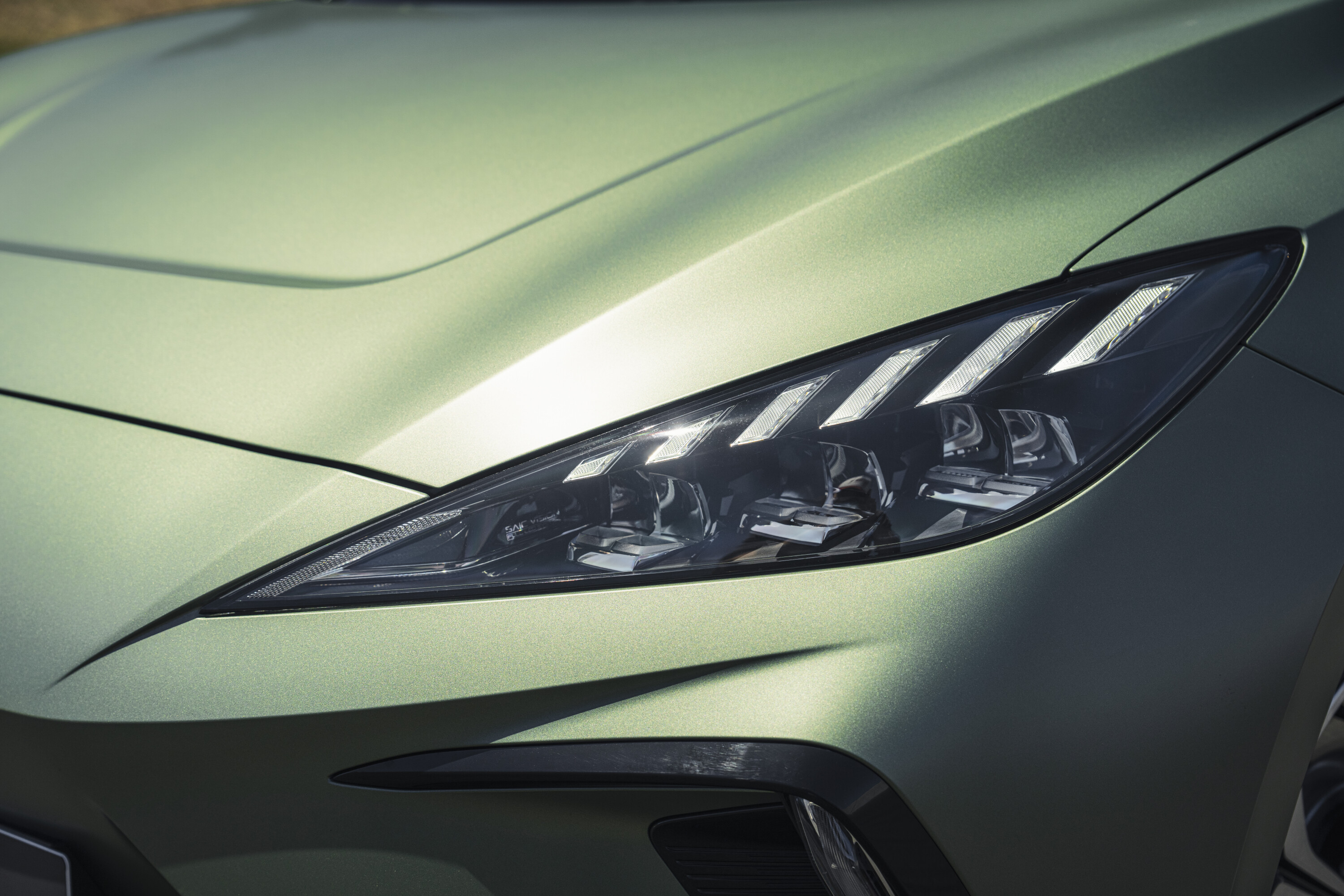
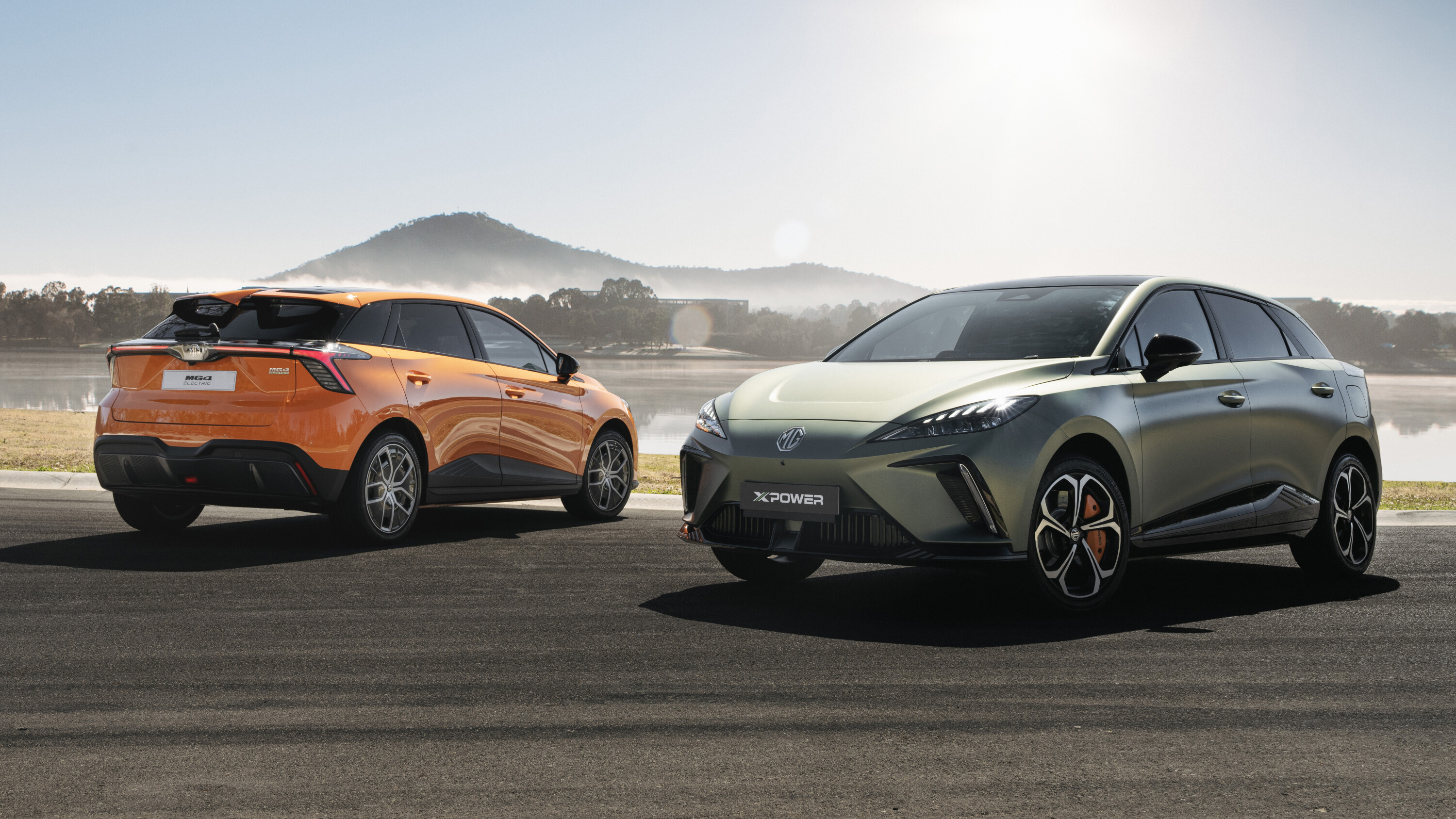
This is the MG4 flagship, the most expensive of the lot, and it’s essentially identical inside to the regular Essence trim aside from some orange stitching on the seats. There’s also an exclusive satin finish in the Hunter Green paint hue you see here.
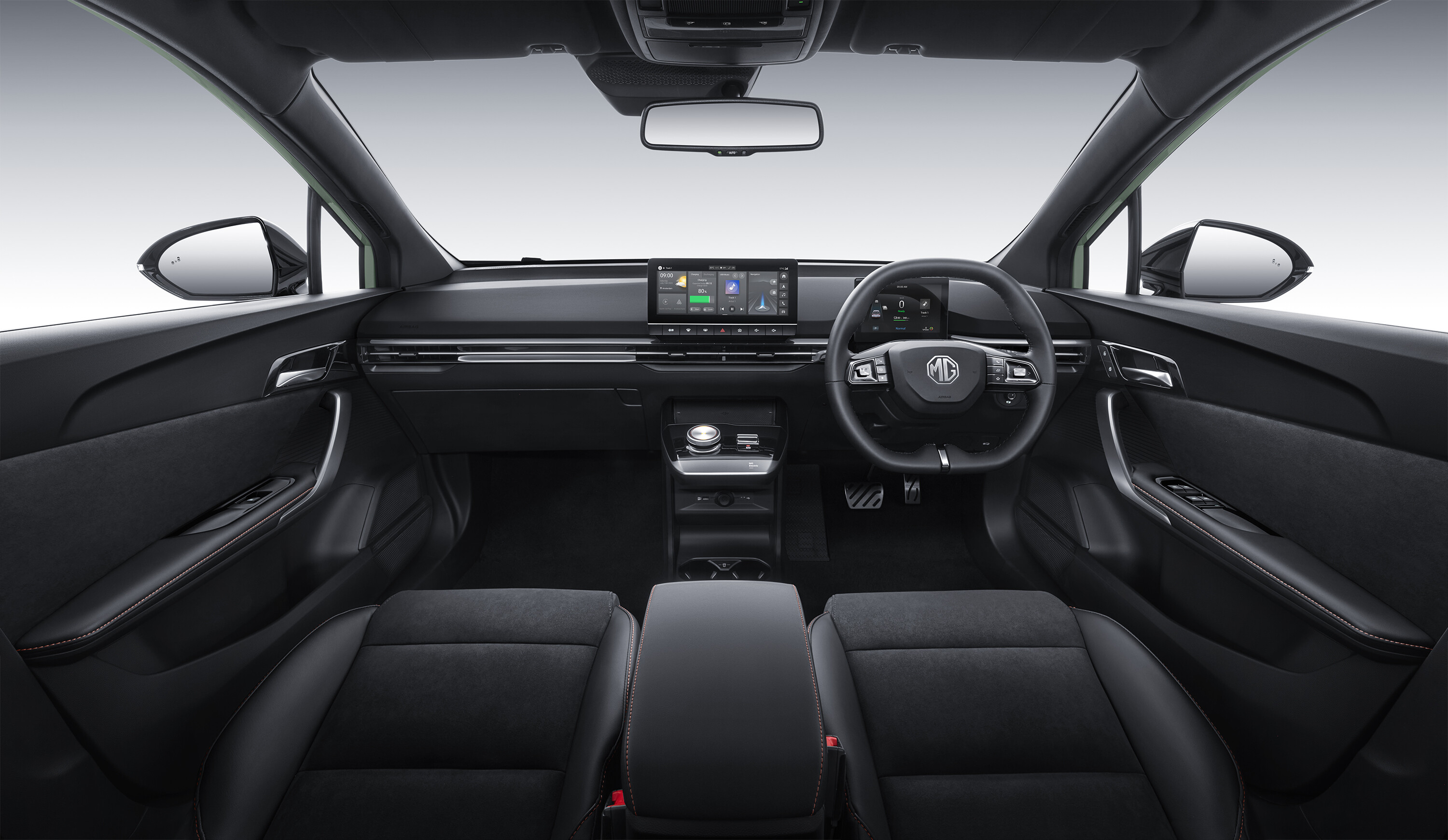
The Essence is luckily packed with standard kit such as 18-inch alloy wheels, LED headlights with auto high beam, a 10.25-inch touchscreen, a connected phone app (with charge scheduling, HVAC controls and more), voice control, wireless charging, 360-degree camera, and 7.0-inch digital instrument cluster.
1
How do rivals compare on value?
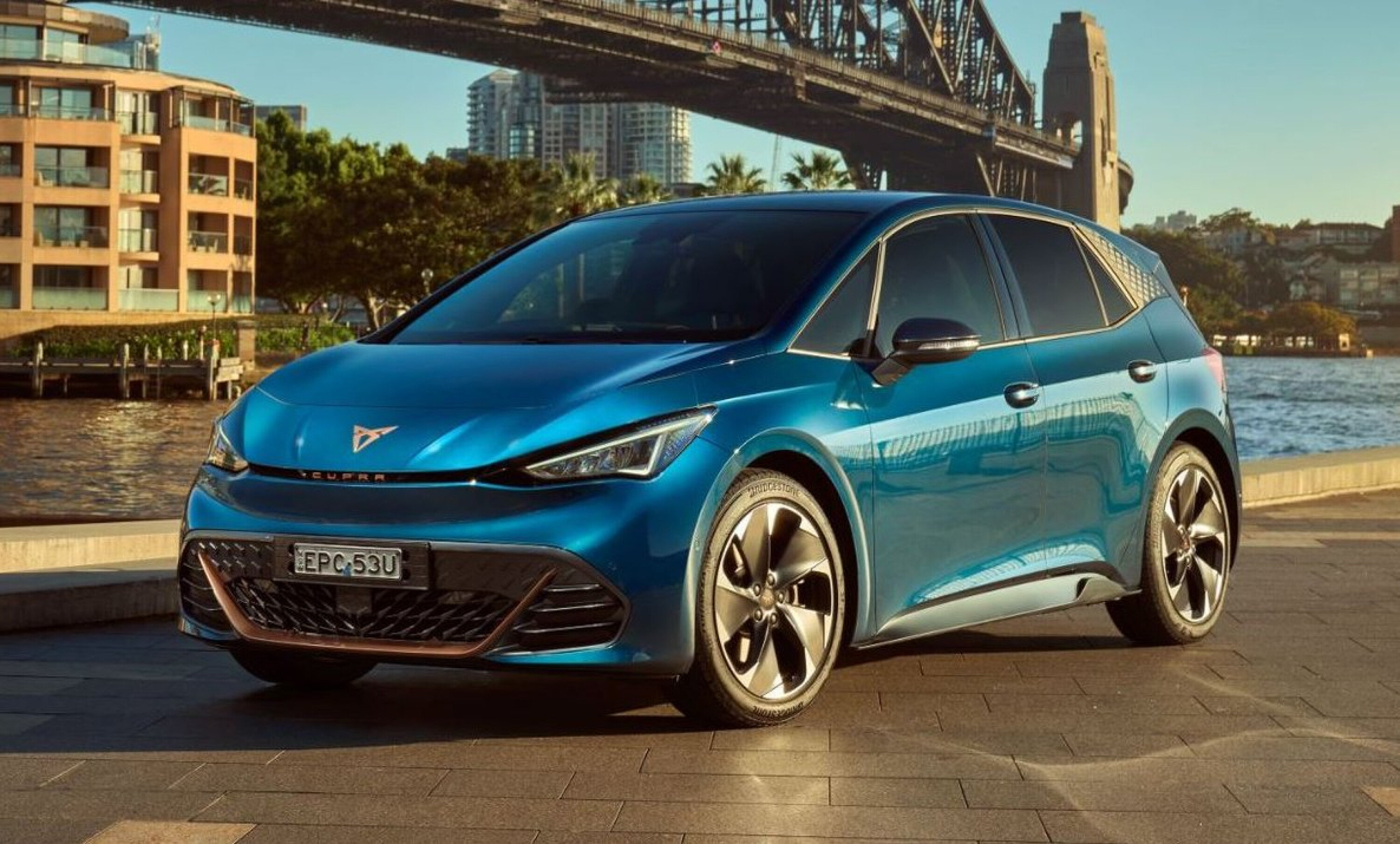
When looking at outputs alone, the $59,990 Cupra Born with ‘just’ 170kW and 310Nm looks pretty sorry for itself. Hell, even a slower Golf R is dearer than the electric MG4 ($70,590).
Dig deeper, though, and the Born’s 511km WLTP range, (optional) grippy Michelin tyres, adaptive dampers, and supportive bucket seats make it the connoisseur’s choice.
There’s also much better value in MG’s stable. The MG4 Essence 77kWh, for example, is $4000 cheaper with a 180kW rear motor (trust us, it’s plenty), and extends WLTP range to 530km from a charge.
1
Interior comfort, space and storage
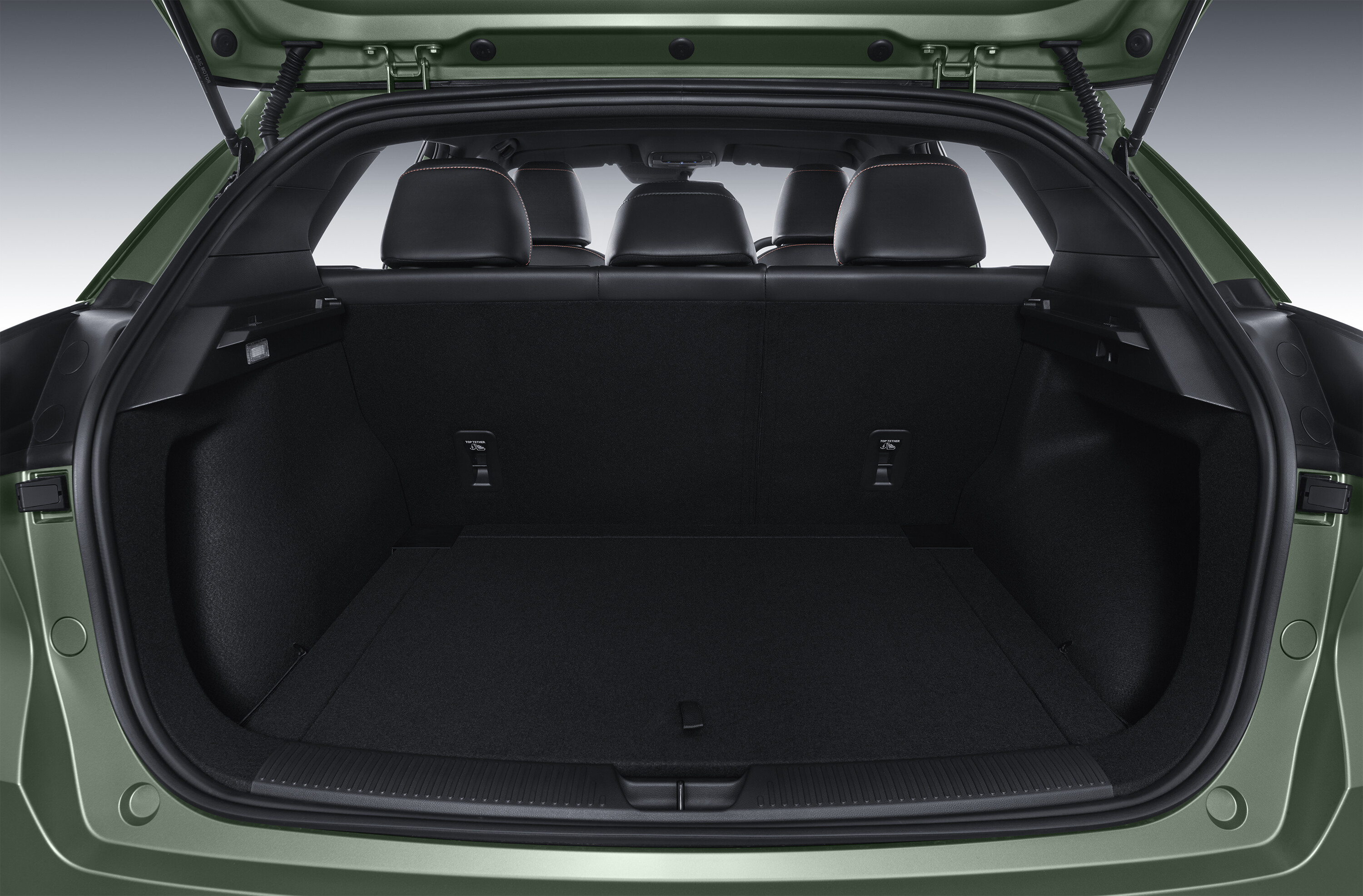
Like any hot hatch, the MG4 XPower benefits from its donor car’s great packaging. There’s plenty of room in the back for at least two six-foot adults and a well-sized 350-litre boot with a shopping bag hook and light (though no spare tyre).
In the front, there are nice packaging touches such as a deep central cubby, covered storage area, netting (that’s great for keys or garage buzzers), two cup holders, grippy door bins, and a rubberised wireless charging pad ahead of the rotary shifter complemented by USB-A, USB-C and 12-volt charging points.
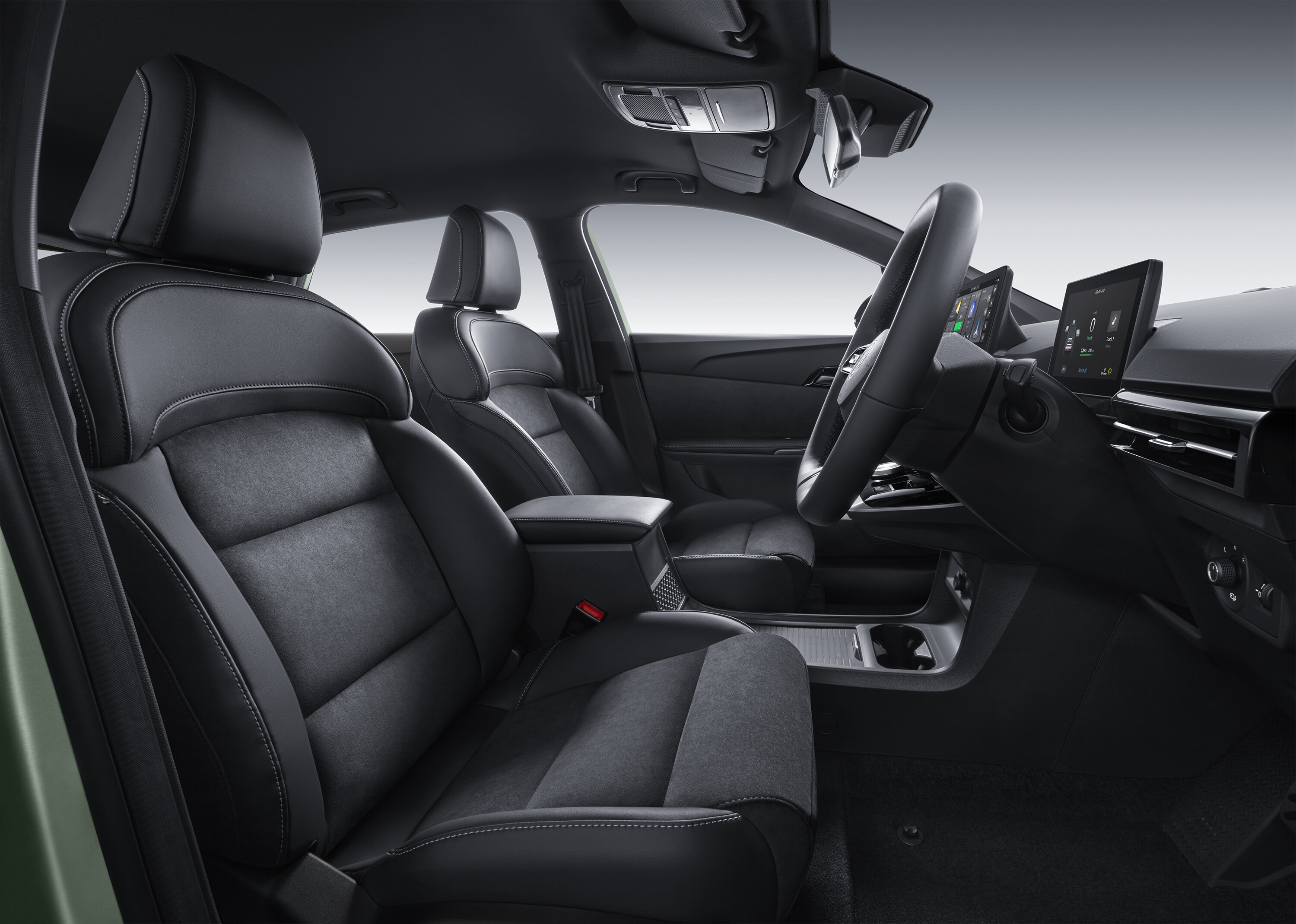
The comfortable front seats are trimmed in a mix of suede-cloth and faux-leather with manual adjust (the passenger does without height adjustment) though they aren’t supportive enough for a sporty vehicle. The Cupra Born has sexier buckets that hug and reassure the driver through corners – MG has missed a trick here.
1
Generally, the cabin vibe is subdued for such a grunty little car, with only orange stitching telling you that this is The Fast One.
The standard car’s Allegro-esque quartic steering wheel remains (it’s great in the hand), as does the slow-to-respond on buttonless start-up rotary gear selector.
MG’s tech interface is fine (and clearly inspired by Cupra’s) but we noticed the XPower’s software looked a little older than our latest experience in Excite/Essence trims. It lacked persistent climate controls on the home screen and we found voice control to be essentially unusable.
Apple CarPlay and Android Auto work through a wired connection with neat little cable tunnels running up to the rubberised pad near the shifter. The six-speaker sound system is a noticeable improvement over the base Excite’s four-speaker set-up.
1
What is it like to drive?
The MG4 XPower is largely an understated transformation into a performance car. Not a bad thing if the money’s been poured into making this hatch a serious driver’s machine, of course.
Unfortunately, that doesn’t seem to be the case. Starting with the tyres that may be wrapped around sportier-looking 18-inch alloys but in truth are identical to the Essence’s rubber: 235/45 R18 Bridgestone Turanze T005 EV touring tyres. Not the kind of high-performance rubber (such as a Michelin Pilot Sport 4S) you want for enthusiastic driving or track days.
They struggle to put all the MG’s grunt – with 150kW front and 170kW rear electric motors totalling 320kW/600Nm – to the tarmac, even with all-wheel drive grip, ‘intelligent motor control’ torque vectoring, and an electronically-controlled limited-slip differential.
1
We couldn’t match MG’s claimed 3.8-second 0-100km/h acceleration time. Our best effort had the VBOX showing 4.1 seconds with 0-60km/h (the traffic light grand prix) coming up in 2.1 seconds.
It’s hard to complain about acceleration that rapid when things feel relatively controlled, save for some front axle scrabbling and a bit of old-school steering corruption.
Speed is one thing but a true hot hatch should be dripping with handling prowess and chassis feel. A great one will instill enough confidence in the driver to be able to match the speed of much higher-performance cars on a technical backroad.
1
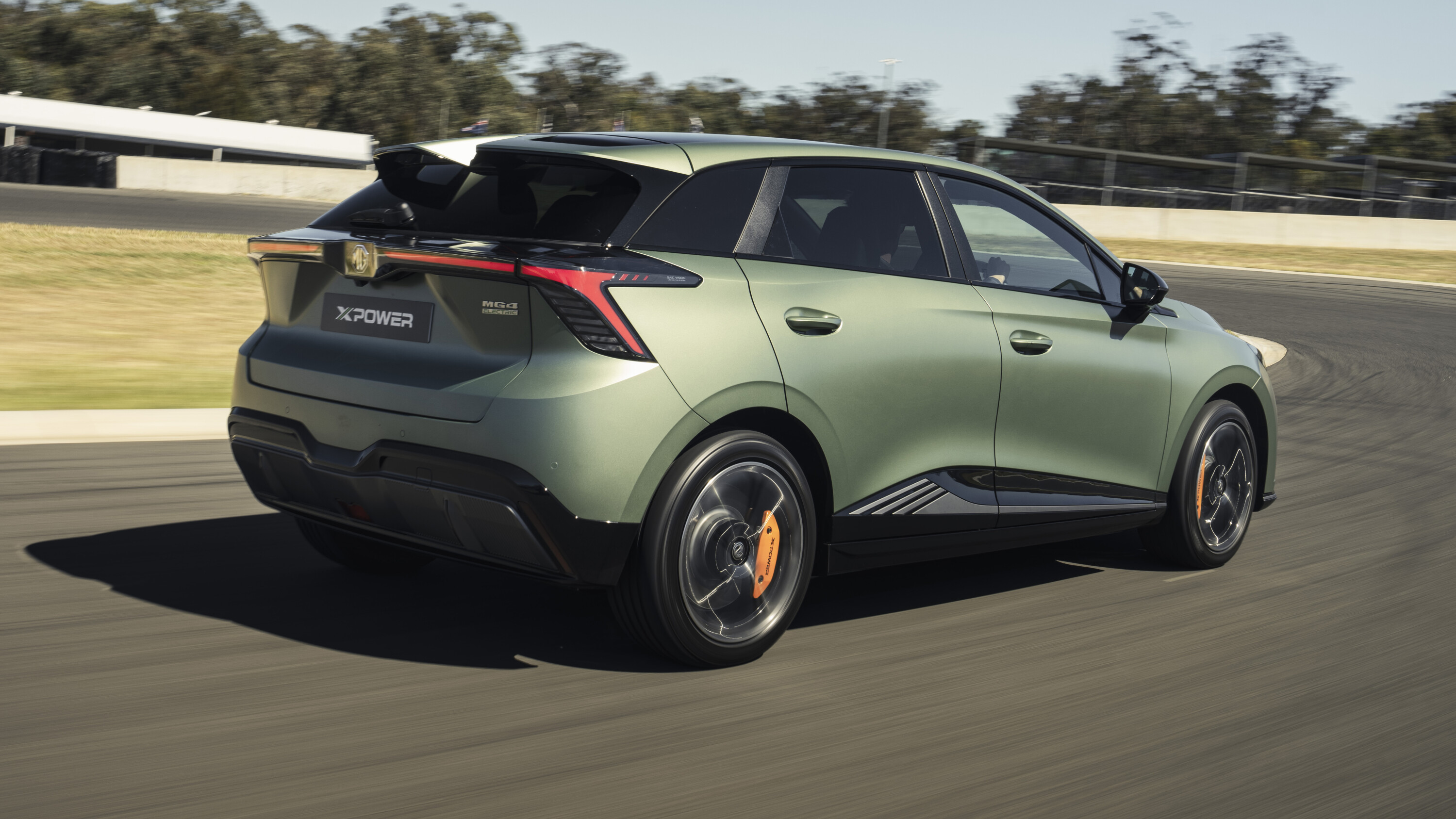
And, despite MG fitting new springs, anti-roll bars and changing damper characteristics to stiffen the suspension by 25 per cent, the XPower is very much overwhelmed by grunt.
The steering has no more feel than the standard car’s despite requiring less lock (2.6 vs 2.9 turns lock-to-lock) so it’s still hard to judge grip levels.
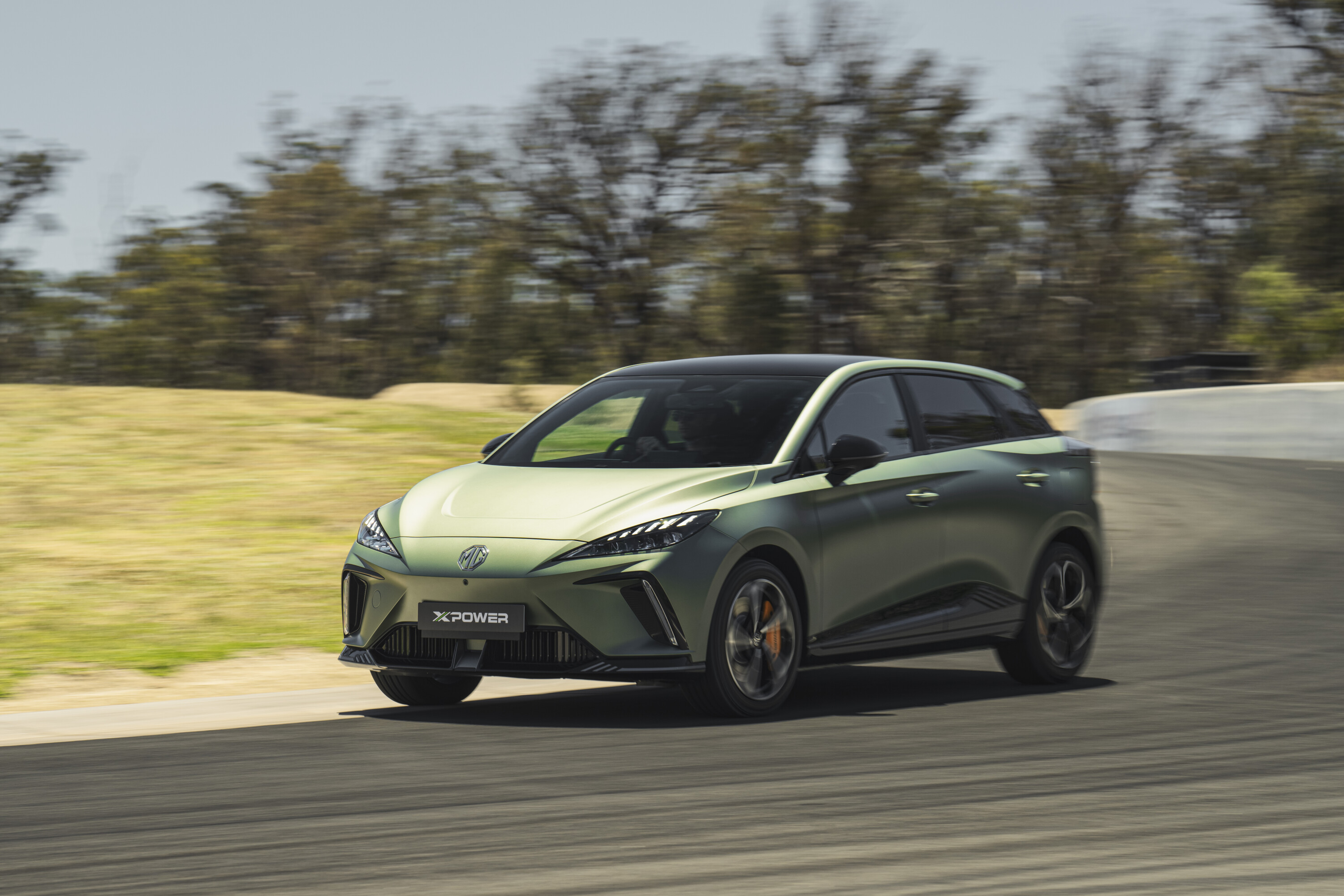
Tip the XPower into a tight off-camber bend and one of two things will happen. With the right amount of trail braking, the car will roll and settle on its outside rear. This is good, and you can then use the throttle to steer out, though there’s not enough roll support to make this feel controlled and you really feel all 1800kg working against you.
1
Barrel in a little too quickly, or pick up the throttle too soon, and the XPower’s short-travel pedal lightens the front end and knocks the car into scrappy understeer.
The sensation is only amplified in damp conditions.
The ride quality is good on bumpy roads though, so MG hasn’t ruined the hatchback’s usability by making it too stiff. There are also customisable buttons on the steering wheel that can be set to adjust drive mode and regenerative braking power on the fly, which is appreciated.
1
Brake feel isn’t noticeably improved over the regular MG4, with single-piston sliding calipers clamping 345mm ventilated front rotors.
We’d appreciate a more solid pedal feel, though the power proved adequate with our VBOX recording a 36-metre 100-0km/h stop.
The XPower isn’t a bad steer, but it could be so much better. We’d have preferred revised front-end geometry with more castor and camber to improve steering feel and grip, a better steering calibration, and higher-quality (even adaptive) dampers – perhaps provided by Sachs or Bilstein.
As it stands, the regular rear-drive MG4 offers a more delicate and rewarding driving experience than the heavier, faster XPower. There was a chance to spiritually revive BMW’s E81 130i hatch in an electric age. Instead, MG listened to the corrupting call of power when it came to developing the XPower.
1
- What is a Powertrain or Drivetrain?
- Power vs torque
- Car suspension explained
- Automatic transmissions (‘gearboxes’) explained
- Chassis control systems explained
- Car vs Ute vs SUV: How the vehicle you buy should guide the way you drive
- What is the WLTP emissions and range test?
Fitted with the mid-size 62.1kWh NCM lithium-ion battery (marketed by its gross 64kWh capacity) the twin-motor XPower is rated at 385km driving range in the WLTP cycle, against 435km for the Essence and 530km 77kWh Long Range.
Over our time with the XPower – which included regularly indulging in all the grunt on offer – we saw 17.6kWh/100km, for 351km of driving range – not too far off the WLTP rating.
It charges quickly for the class with 140kW (DC) peak speeds – verified on a local rapid charger – promising 10-80 per cent recuperation (39 to 308km of driving range) in as little as 26 minutes.
1
How safe is it?
The 2024 MG4 was awarded five stars in ANCAP testing under the 2020-2022 criteria.
The MG4 misses a centre airbag, though is equipped with many driver aids including AEB, adaptive cruise control, lane-keep assist, rear cross-traffic alert and blind-spot monitoring.
We found the systems to be tuned better than, say, Chery’s, but still overzealous and snappy in their interventions compared to the best in the business, such as Volkswagen.
1
Warranty and running costs
The MG4 is backed by a seven-year unlimited-kilometre warranty and an equal period of capped-price servicing.
Maintenance is due every 24 months/40,000km and will cost $1478 over six years.
1
VERDICT
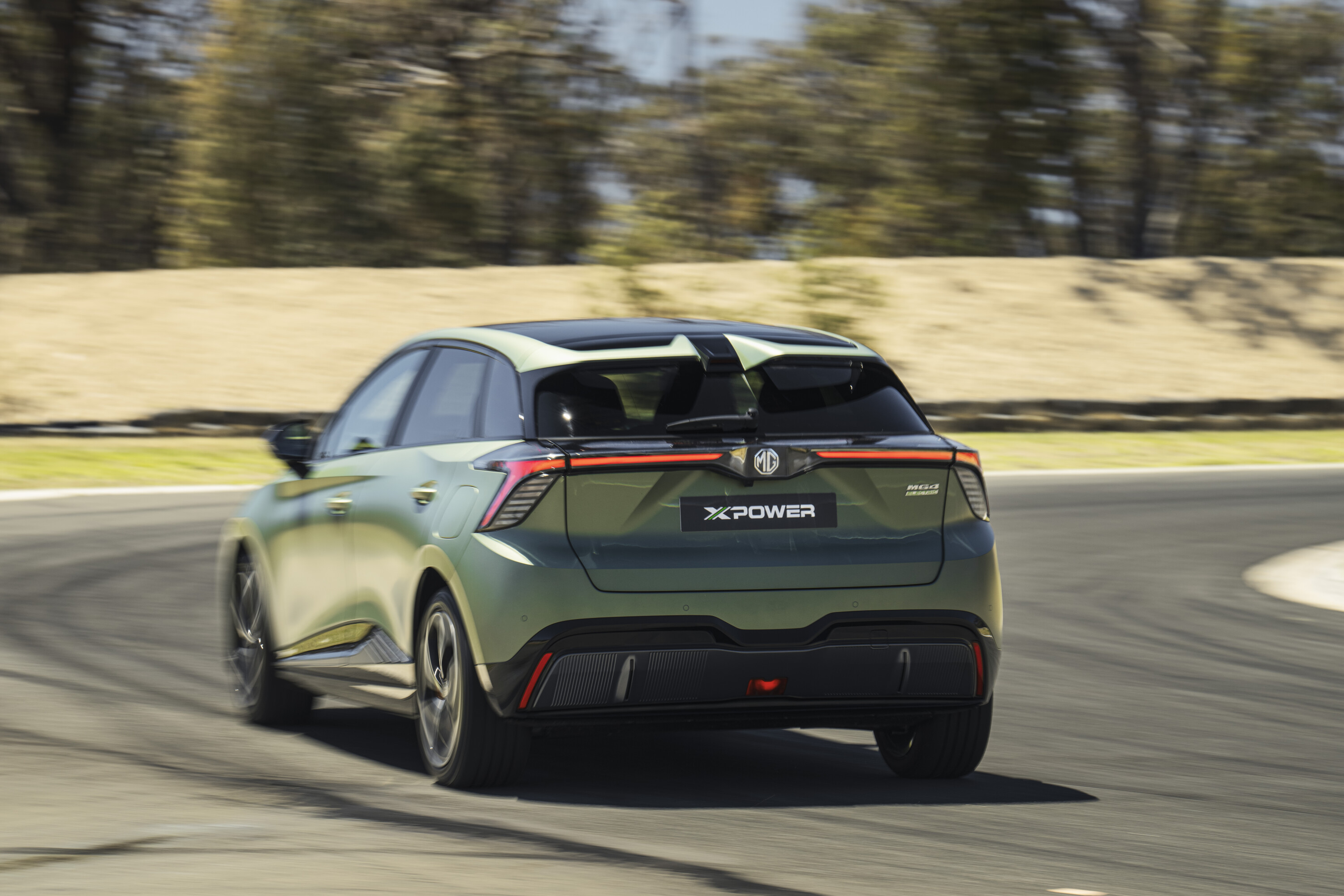
The brake caliper covers don’t make this a bad car, but they are a perfect allegory for the XPower experience.
Instead of addressing the shortcomings of the Essence for performance driving – lifeless steering, flat seats, and low tyre grip – MG has thrown in an extra motor and nearly doubled the power. It doesn’t even have stickier performance tyres.
1
Looking at it away from the hot hatch purist lens, the XPower doesn’t make much more sense, either.
It’s fast, yeah, but you rarely get to indulge in that pace. The extra power and added weight mean its driving range is compromised and there’s little sense of occasion as you step inside.
If you’re looking for a rewarding and athletic electric vehicle under $65K the Cupra Born does a better job, and if you want the optimal MG4 we’d lean towards the $4000 cheaper Essence 77kWh.
MORE
Everything MG
| 2024 MG 4 XPower 64kWh specifications | |
|---|---|
| Price | $59,990 |
| Layout | 150kW F / 170kW R motor AWD |
| System power | 320kW |
| System torque | 600Nm |
| Gearbox | single-speed reduction gear w/ e-LSD |
| Body | 5-door, 5-seat small hatch |
| L/W/H | 4287/1836/1516mm |
| WB | 2705mm |
| Weight | 1800kg |
| Boot | 350L |
| Battery usable (gross) | 62.1kWh (64kWh) |
| Driving range (WLTP) | 385km |
| Driving range (tested) | 351km |
| Charging (AC/0-100%) | 6.6kW / 9h 45m |
| Charging (DC/10-80%) | 140kW / 26m |
| Suspension | Front: Struts, coil springs / five-link independent, coil springs |
| Steering | electric rack-and-pinion |
| Tyres | Bridgestone Turanza T005 EV |
| Tyre size | 235/45R18 |
| ANCAP rating | Five-stars (2022) |
| 0-100km/h | 4.1sec (tested) |
| 100-0km/h | 36 metres (tested) |
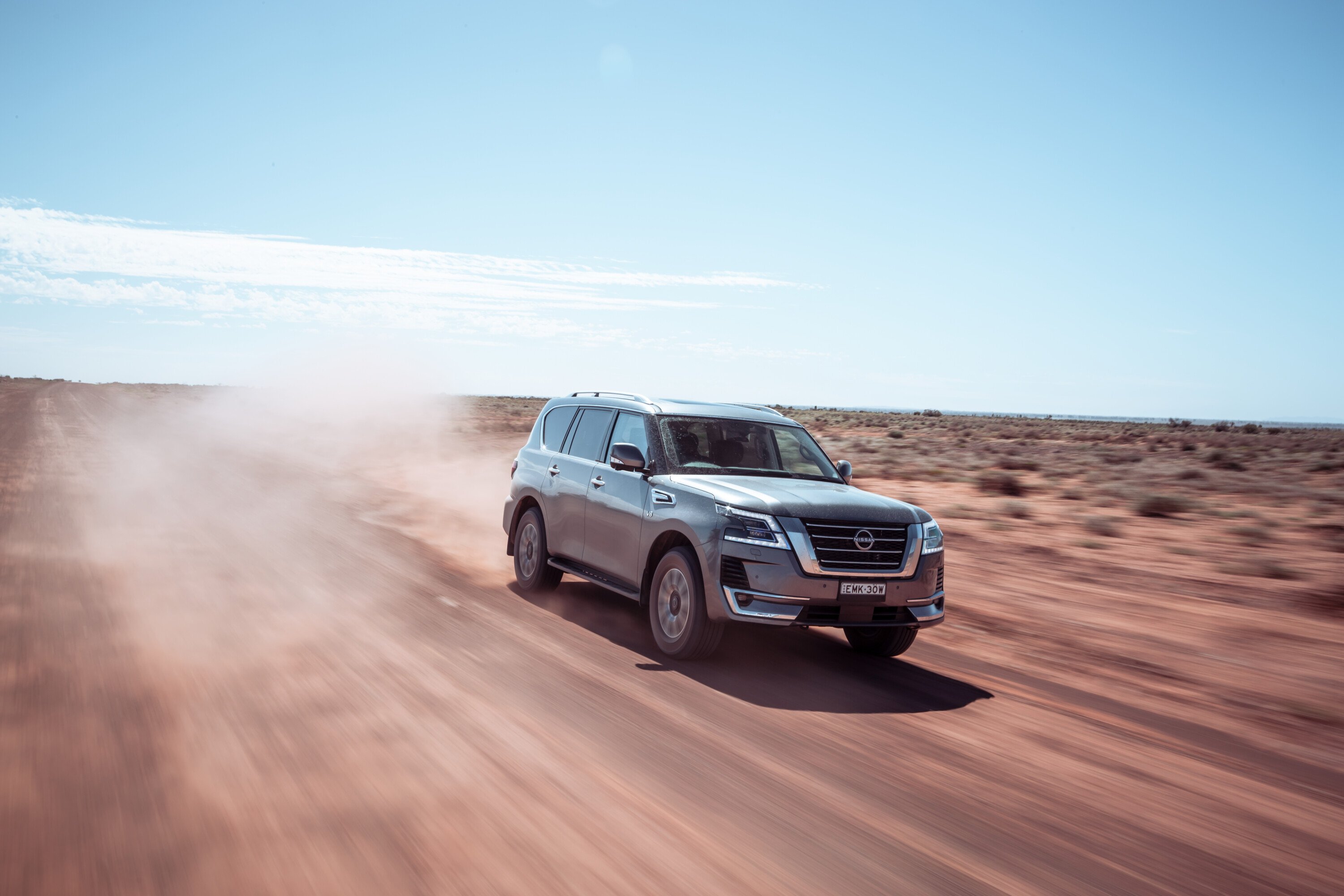
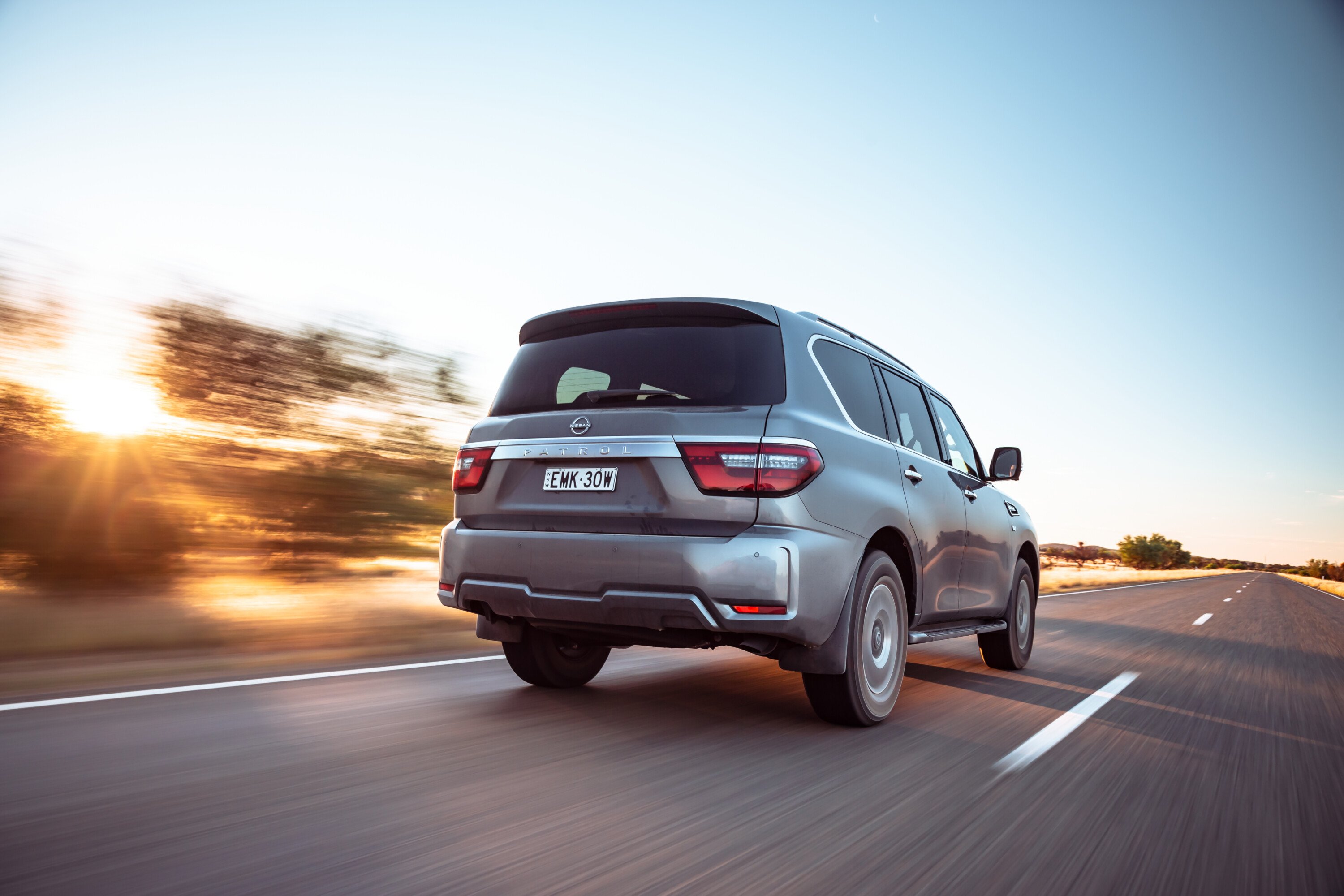
The Nissan Patrol has long been synonymous with rugged luxury and a commanding presence, offering a blend of premium features, robust performance and unparalleled road presence– come on, it screams off-roader.
It’s also one of the last standing V8 SUVs, actually not even just SUV anymore for that matter.
So in a segment where size and luxury matter, does the Patrol Ti-L maintain its iconic status?
1
Pricing and features
Pricing for the top-spec Nissan Patrol comes in a quite premium at $105,873 drive-away based on a NSW postcode. This positions it about $13,330 more expensive than the entry-level Ti variant.
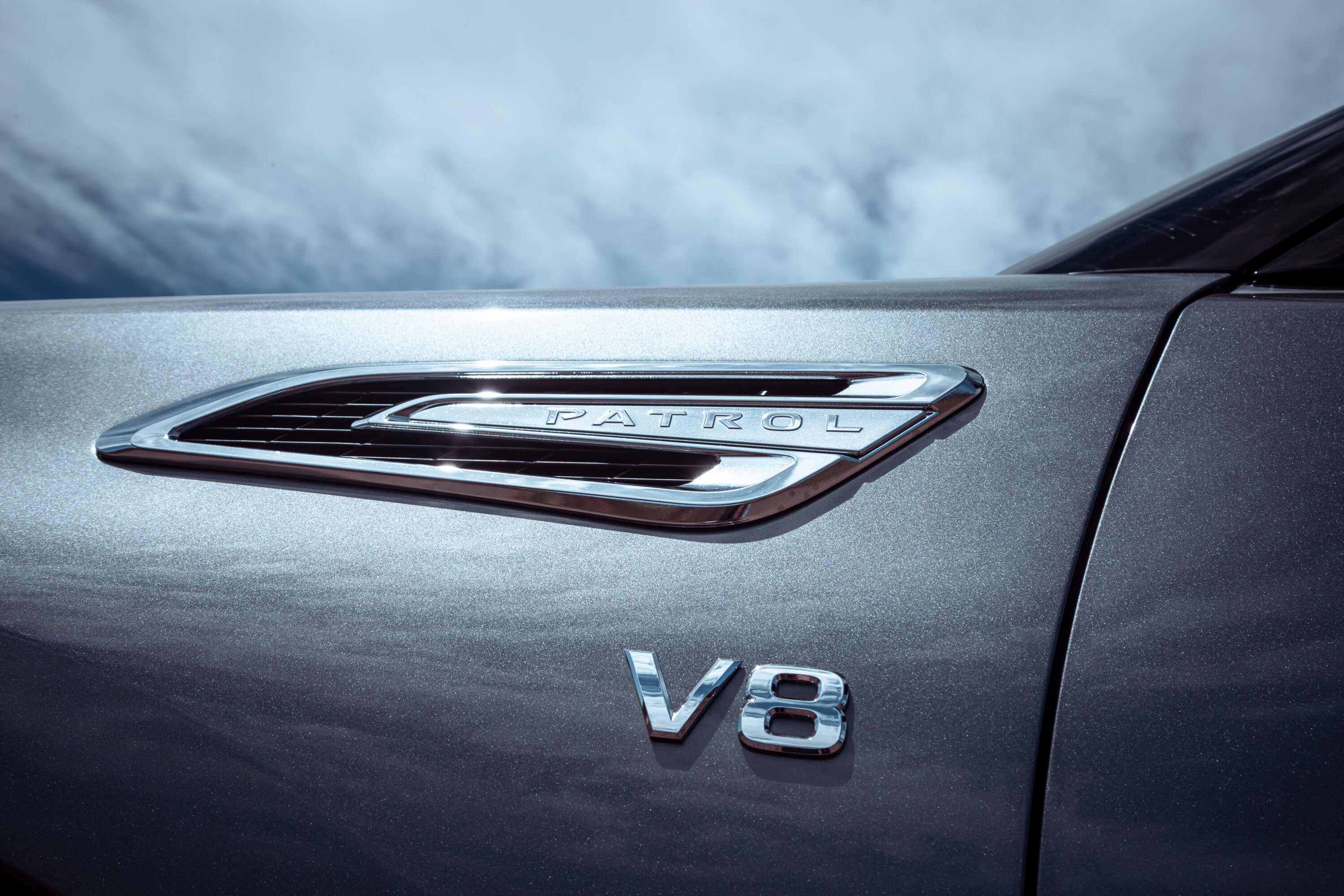
A single petrol option is on offer, a hefty 5.6L naturally aspirated V8 motor producing 298kW of power and 560Nm of torque. It has a baked towing capacity equivalent to direct rivals at 3500kg.
1
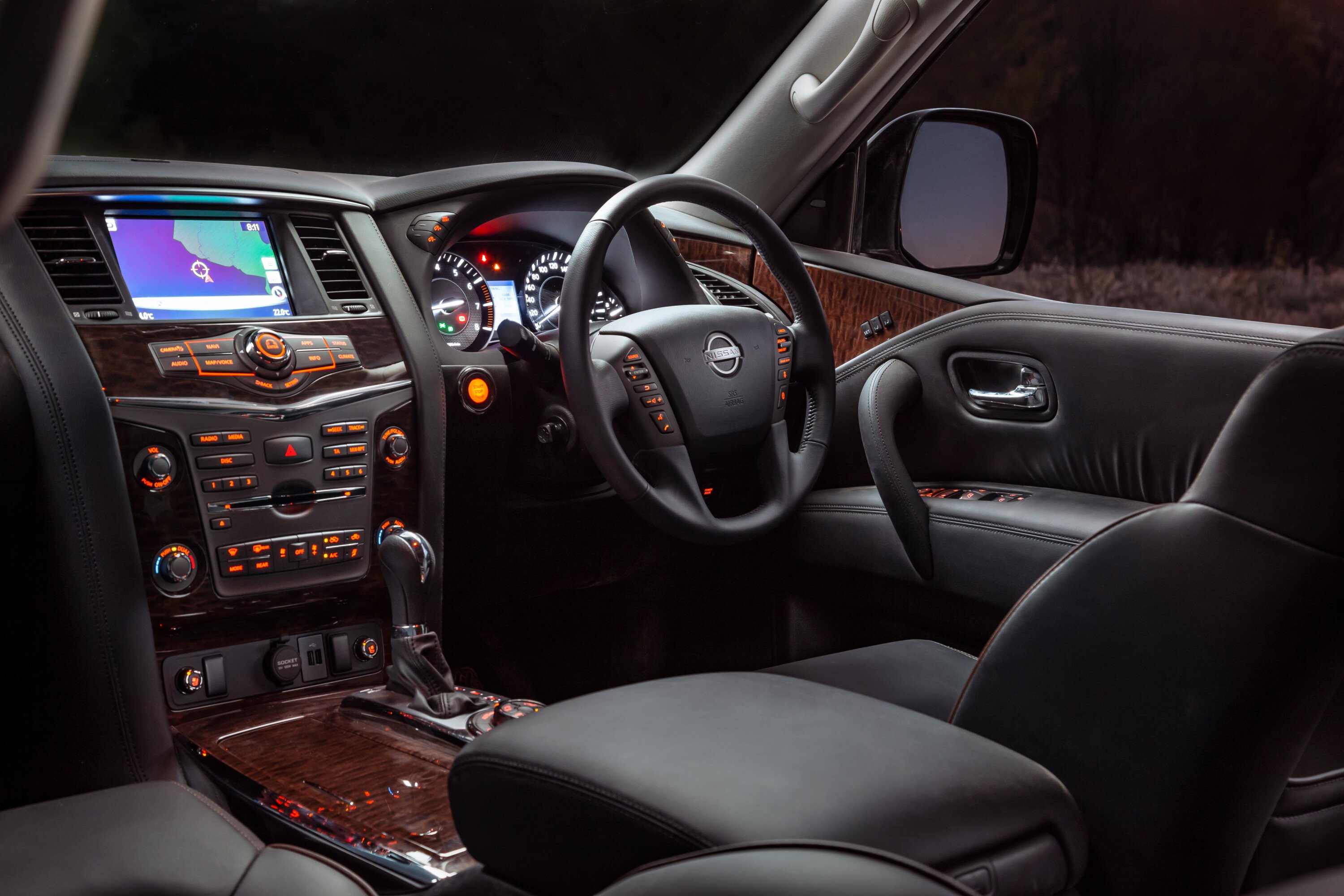
Investing the extra dosh into the Ti-L model adds extra features like an intelligent rear-view monitor, entertainment screens for the second-row seats and a driver’s seat memory function with two settings that also remember the positions of your side mirrors and steering column.
The interior of the Ti-L is further enhanced with a 13-speaker premium Bose sound system, through a CD player– haven’t seen one of those in years.
Additionally, it offers heated and cooled front seats and a sunroof. Moreover, surprisingly unlike the base spec Ti, the Ti-L comes equipped with roof rails.
| 2024 Nissan Patrol Ti features | |
|---|---|
| 18- inch alloy wheels | Intelligent 4WD shift switchwith mode select |
| 6-speaker audio system | Leather accented seat trim |
| 8-inch infotainment screen | Leather accented steering wheel and shift lever |
| 8-way power adjustable front seat | LED healights, DRLs, fog lights and rear lights |
| Adaptive cruise control | Rear Cross Traffic Alert (RCTA) |
| Automatic headlights | Rear privacy glass |
| Blind spot monitors | Smart entry and push button start |
| Eight seats | Tyre Pressure Monitoring System (TPMS) |
| Front and rear parking sensors | |
1
Moving up to the Ti-L adds plenty of additional spec such as a sunroof, premium audio system and power tailgate.
1
Safety
The Patrol has not undergone crash-testing by ANCAP, and as a result, it does not have an official ANCAP safety rating.
Nonetheless, Nissan has fitted it with a comprehensive suite of standard safety equipment, and given the age of the Patrol platform, it’s likely imperative to keep a decent level of spec.
1
Within the cabin, there are dual front and front side airbags, along with curtain airbags covering all three rows of seats.
The safety features of the Nissan Patrol Ti-L include blind-spot monitoring, front and rear parking sensors, autonomous emergency braking, rear cross-traffic alert, lane departure alert and radar cruise control.
Key rivals
Although most V8 engines have fallen off the local map, there are quite a few options for large off-roading SUVs:
1
Should I put it on my shortlist?
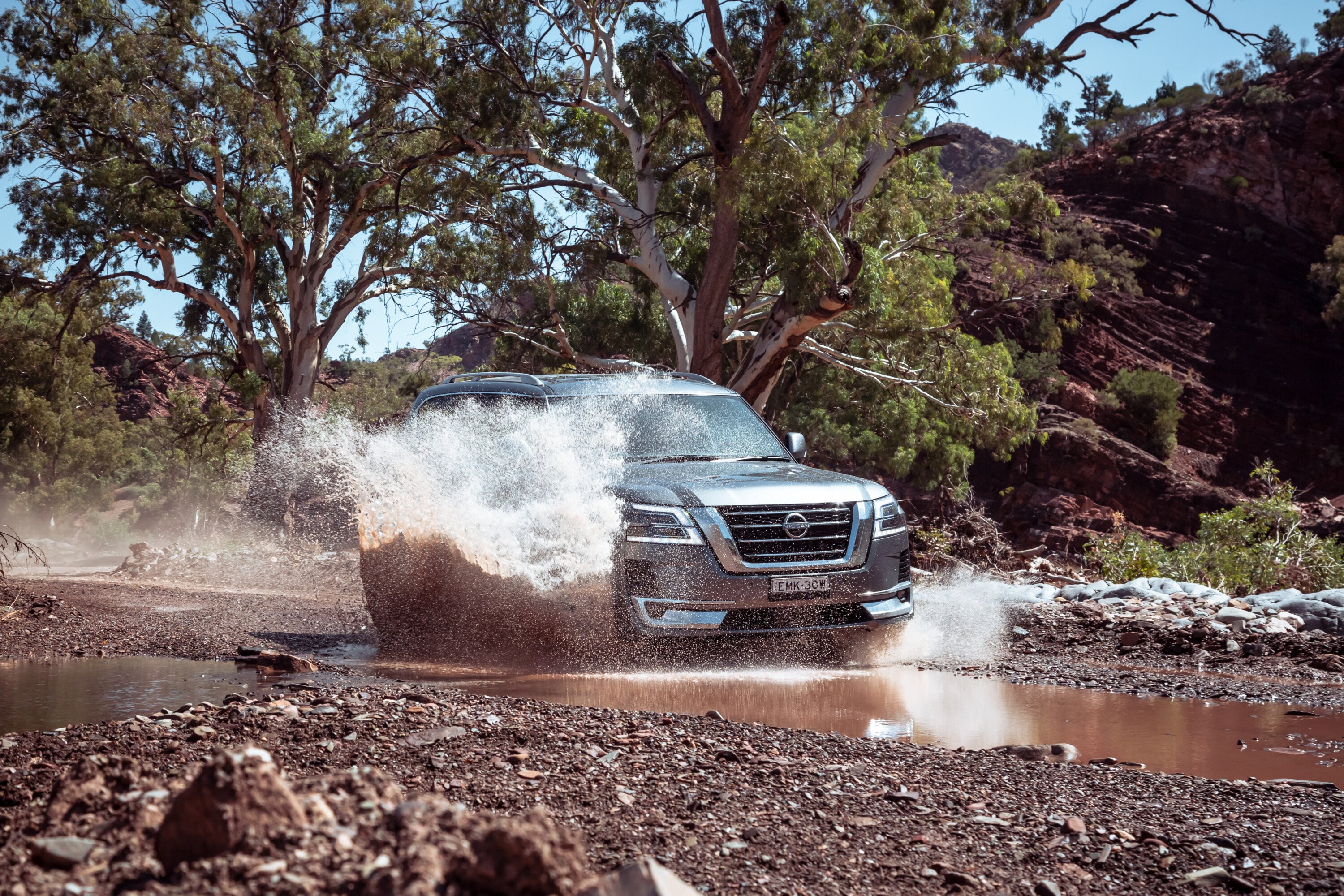
The 2024 Nissan Patrol Ti-L is a standout choice for those seeking a large SUV that combines off-road capability with luxury and comfort.
Its powerful performance, spacious interior, and advanced features make it a compelling option for families and adventurers alike, and a cheaper option than key rivals like the 300 series. However, that doesn’t make it a cheap car.
If you’re comfortable with an older-style interior and aren’t too concerned about higher fuel costs (remembering this is a V8), the Nissan Patrol stands as a robust choice for off-road enthusiasts.
MORE
Everything Nissan
MORE
Large SUVs
After myriad delays (including that issue of wheel nuts coming loose) Toyota has finally confirmed that its first electric vehicle, the BZ4x, will hit Australian shores in February 2024.
It will do so in a mildly updated guise, with ‘BEV’ badging and improved cold-weather charging prowess.
When we were invited to Japan for a preview of Toyota’s electric future – or, rather, the battery-electric vehicles it believes will form just one part of a multi-powertrain future involving plug-in and series-parallel hybrids, sustainable fuels, and hydrogen fuel-cell electric vehicles – a BZ4x was provided for us to sample around a technical off-road course.
It’s the same loop of Nagoya’s Sanage Adventure Field (bar two particularly technical sections) used for the Japanese launch of the 300 Series LandCruiser in August 2021, so it ought to tell us something about the BZ4x… even if it isn’t entirely relevant to your typical family SUV buyer.

1
JUMP AHEAD
- How much is the BZ4x going to cost, and will it offer good value?
- What’s the interior like?
- Driving range, charging and efficiency stats
- Driving the BZ4x off-road
- VERDICT
How much is the BZ4x going to cost, and will it offer good value?
Subaru has finally laid down the gauntlet for Toyota to follow. If Toyota’s BZ4x comes in above $77,990 before on-road costs, there’ll be precious few buyers opting for the dearer, near-identical sibling.
Toyota might bring a single-motor front-drive variant to Australia, unlike Subaru, as The Big T isn’t as synonymous with all-wheel drive performance locally.
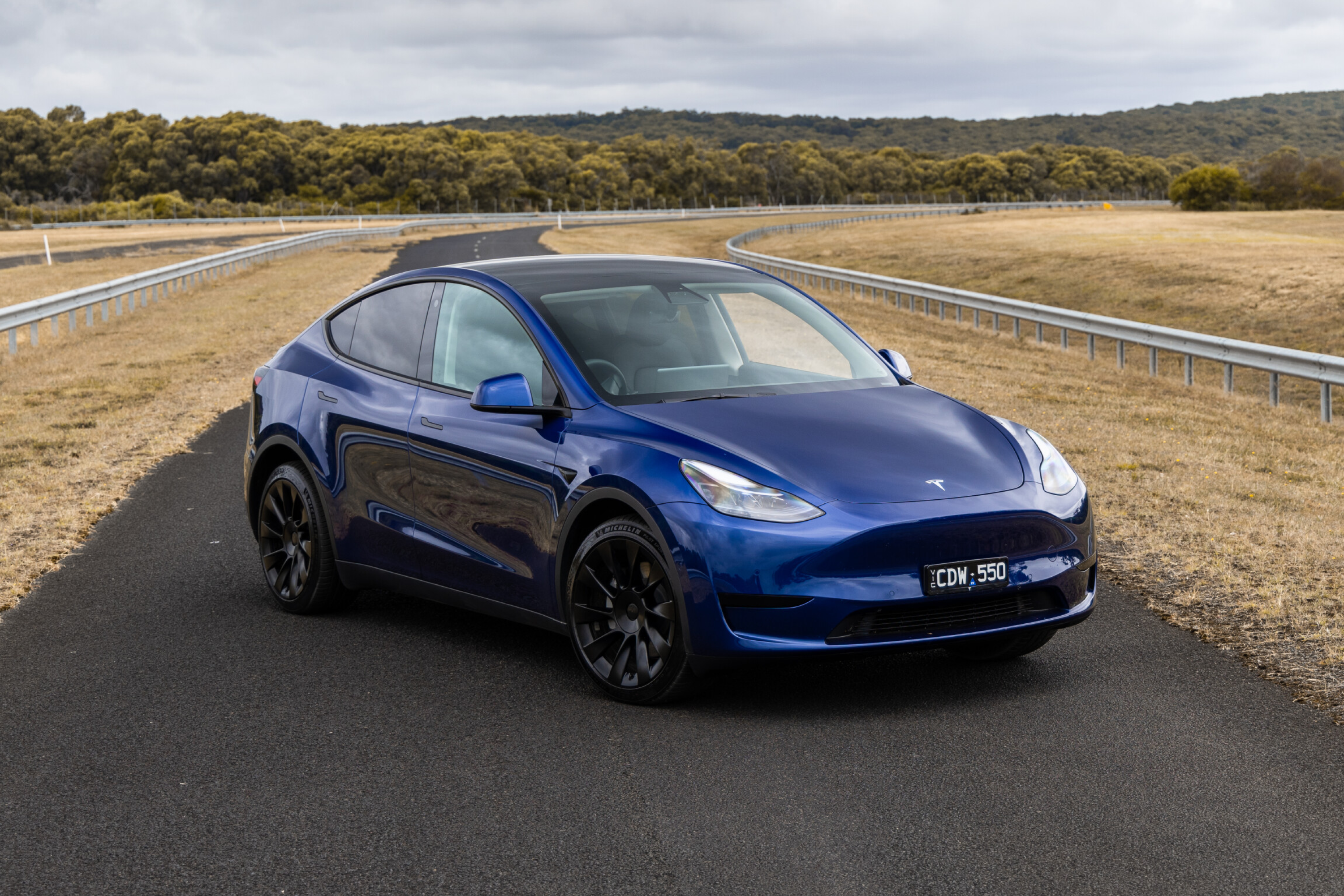
However, spec-for-spec, a front-drive BZ4x is still unlikely to start below $70K – meaning the Tesla Model Y ($65,500) will remain the value king in this segment.
1
What’s the interior like?
Before we got to sit at the BZ4x’s helm, we were chauffeured around by course marshals, which proved a good time to evaluate the rear quarters.
The bench is very broad and, thanks to a mostly flat floor, the BZ4x would comfortably fit three across. It feels meaningfully larger than a RAV4’s back seat, with excellent vision out of the large side and front windows.
Material quality is generally high and there are amenities to make family life easy. Two adjustable air vents, two USB charge points, a 12-volt socket, and a fold-down armrest are all nice – if expected – features.
1
The boot is typical Toyota fare, being generous in size if lacking in features. For example, there’s no space for a spare tyre and only one shopping-bag hook.
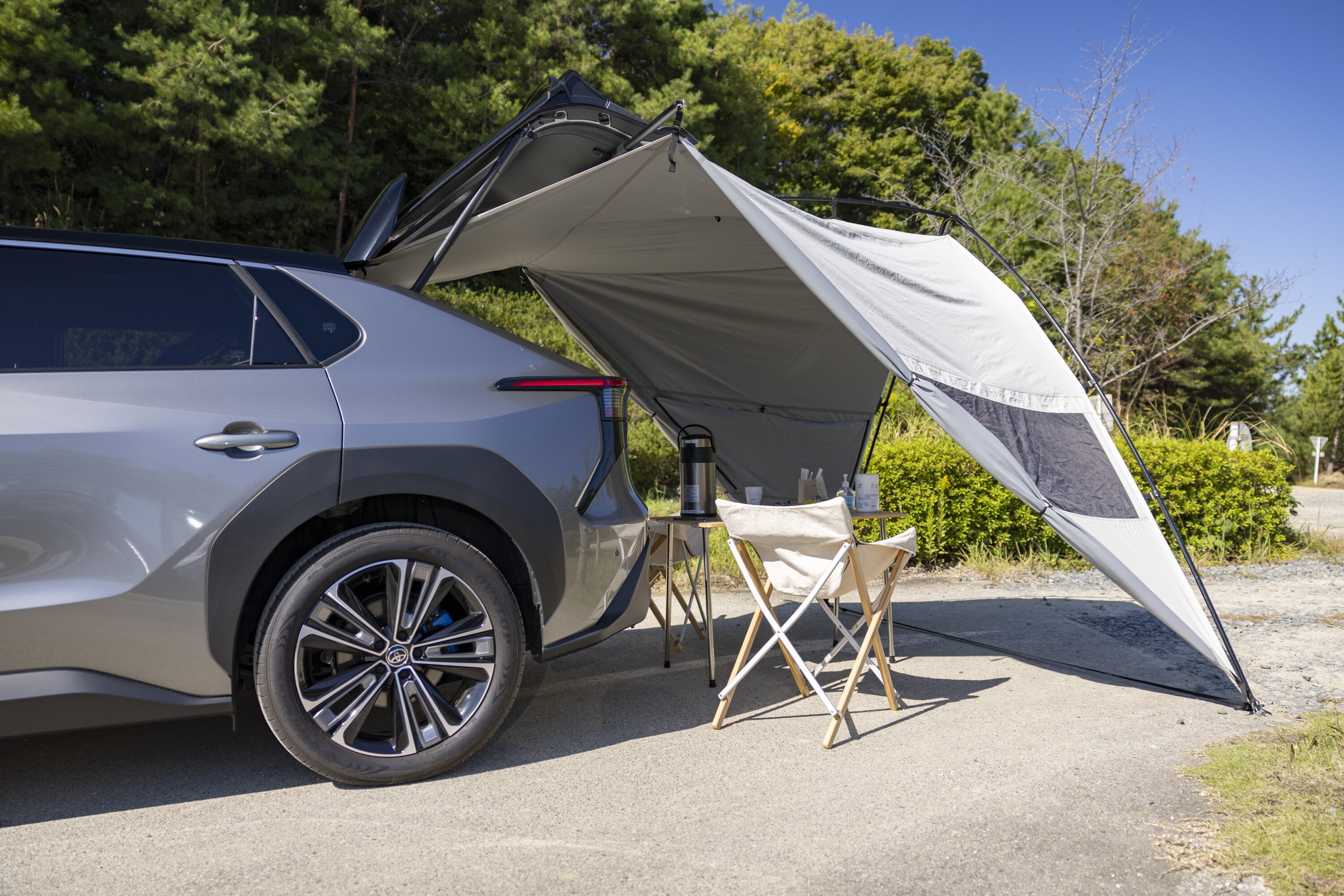
However, for those who like to take their car camping, Japanese outdoor gear specialist Snowpeak offers a host of well-integrated accessories such as a wooden table that doubles as a parcel shelf and a canopy that can easily fit in the under-floor storage compartment.
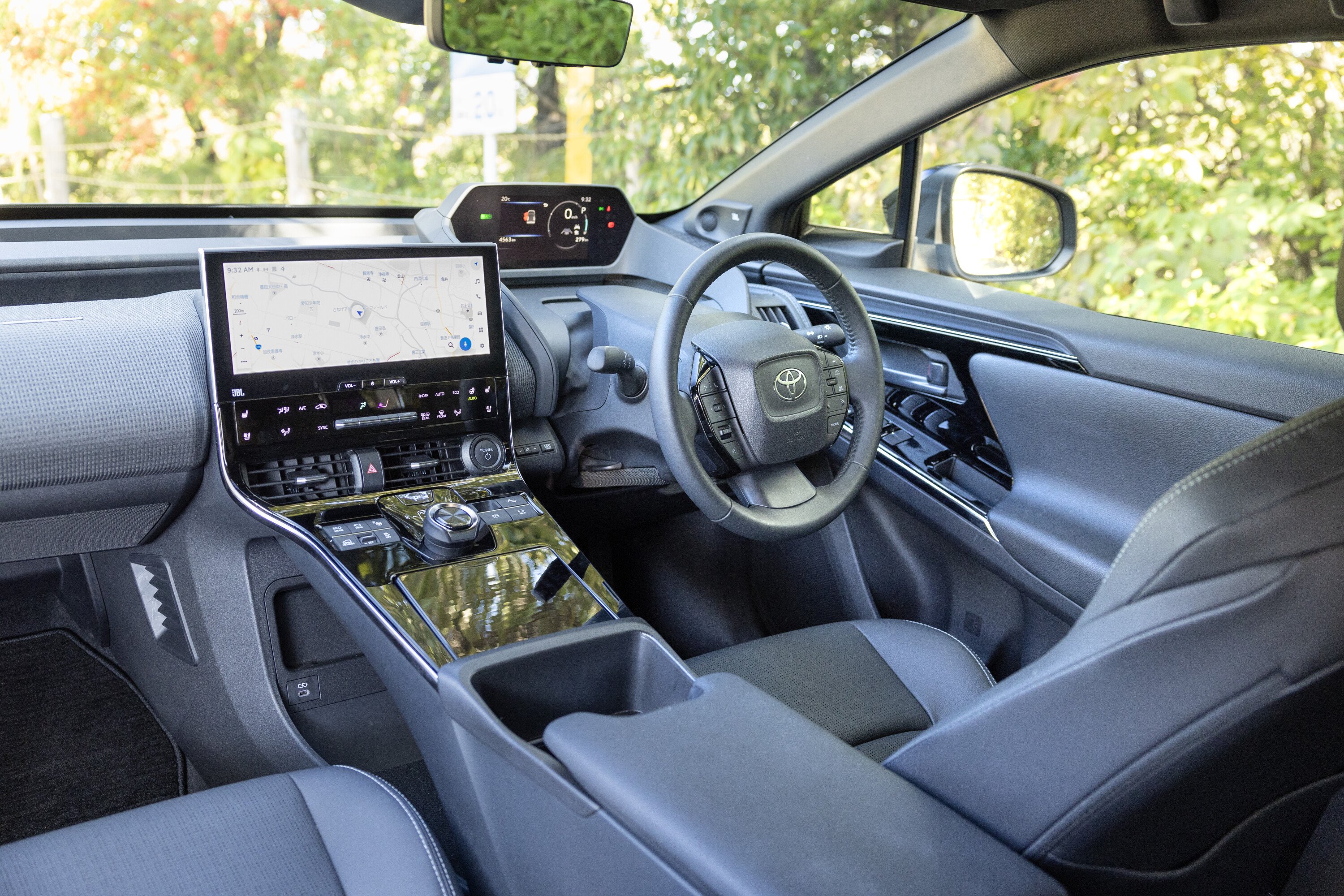
Up front, the seats are accommodating and soft. The driver gets six-way power adjustment, though the driving position – with steering wheel set below digital binnacle like in a Peugeot – does take a little getting used to.
1
The BZ4x’s 12.3-inch touchscreen has much-improved graphics compared to Toyota’s current systems.
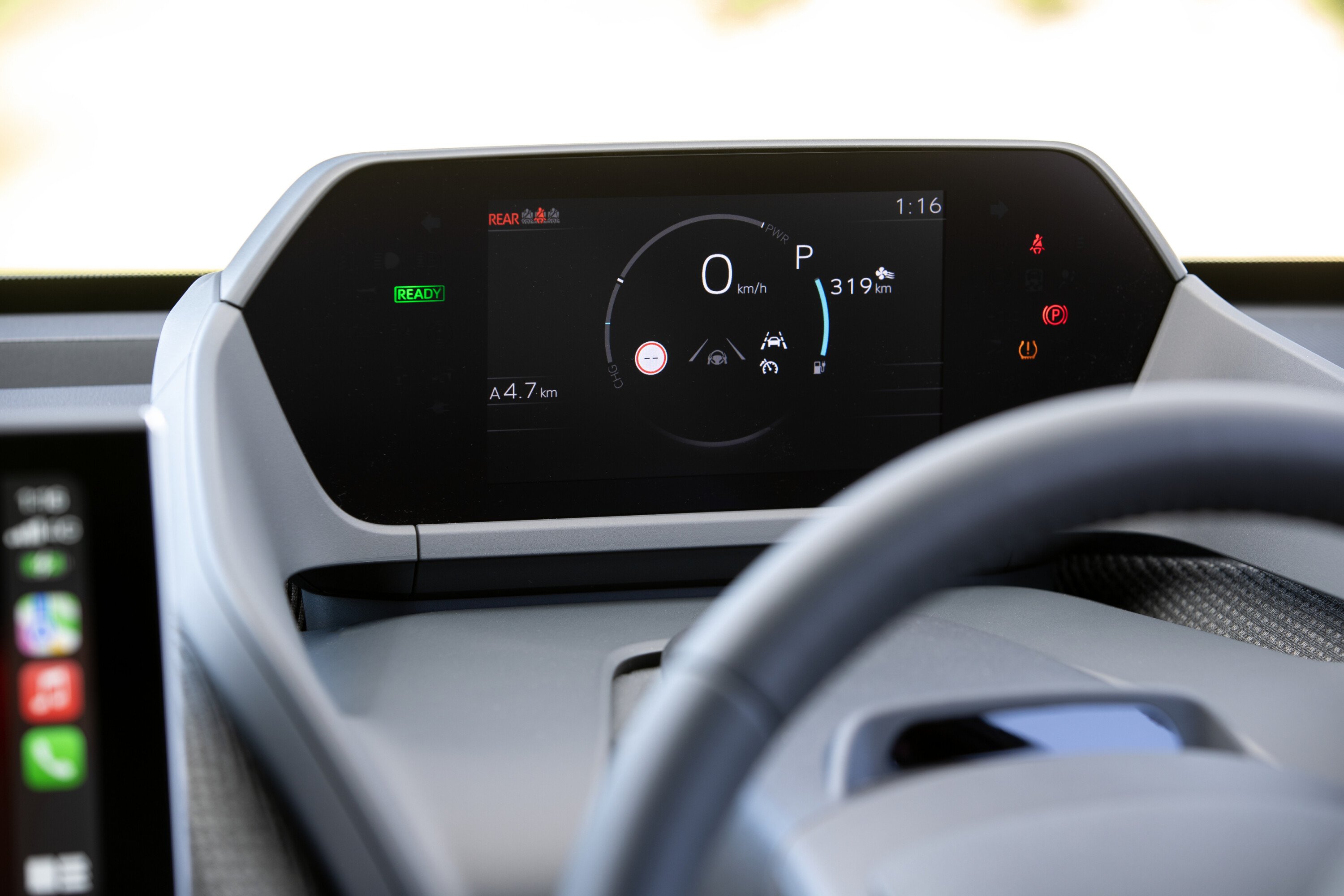
Unfortunately, because this car’s all in Japanese, I can’t evaluate how well it works. Its 7.0-inch digital driver’s display gives enough information, but isn’t anything special.
Generous interior storage can all be covered to hide valuables and the materials used – especially that yarnlike fabric on the dashboard – are interesting and warmer to the touch than we’re used to from Toyota. In fact, they feel a whole lot more Subaru. Guess that makes sense, given the BZ4x’s close relation to Subaru’s Solterra.
2
Driving range, charging and efficiency stats
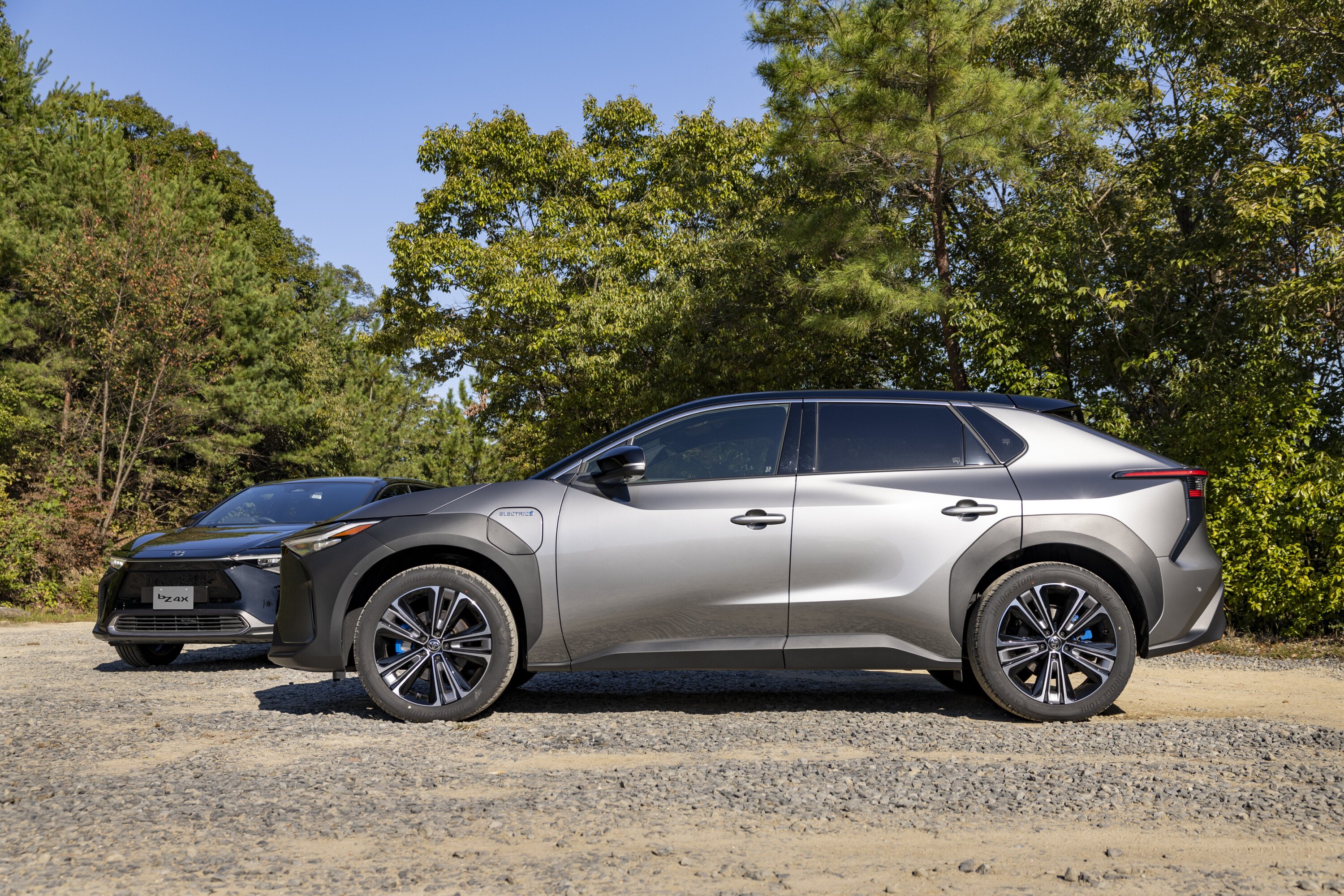
The BZ4x is equipped with a 64kWh (71.4kWh gross) lithium-ion battery pack made by a mix of Toyota’s joint venture operation with Panasonic (Prime Planet & Energy Solution) and CATL.
With two motors onboard, the BZ4x’s driving range is rated at 461km in the combined WLTP cycle. That’s about average for medium SUVs, falling ahead of the Hyundai Ioniq 5 but behind the Kia EV6 and Tesla Model Y.
Its 400-volt architecture allows it to take on DC electricity at a rate of 147kW for a 10-80 per cent (46-320km range) rapid-charge time of 28 minutes. Charging at home, the Type 2 port (located at the front left) takes AC power at 7kW for a full recharge in around 11 and a half hours.
1
Driving the BZ4x off-road
Instead of doubling the number of 150kW motors for 300kW-or-so as most rivals seem to do, Toyota decided to pack a pair of 80kW motors in the all-wheel drive BZ4x for total outputs of 160kW and 337Nm.
It may be off trend, but this solution suits your typical family SUV buyer type. After all, when does the average family SUV need to hit 100km/h in less than 7.7 seconds? That said, it would be nice if trading in some of that power had made the BZ4x a class leader in range.
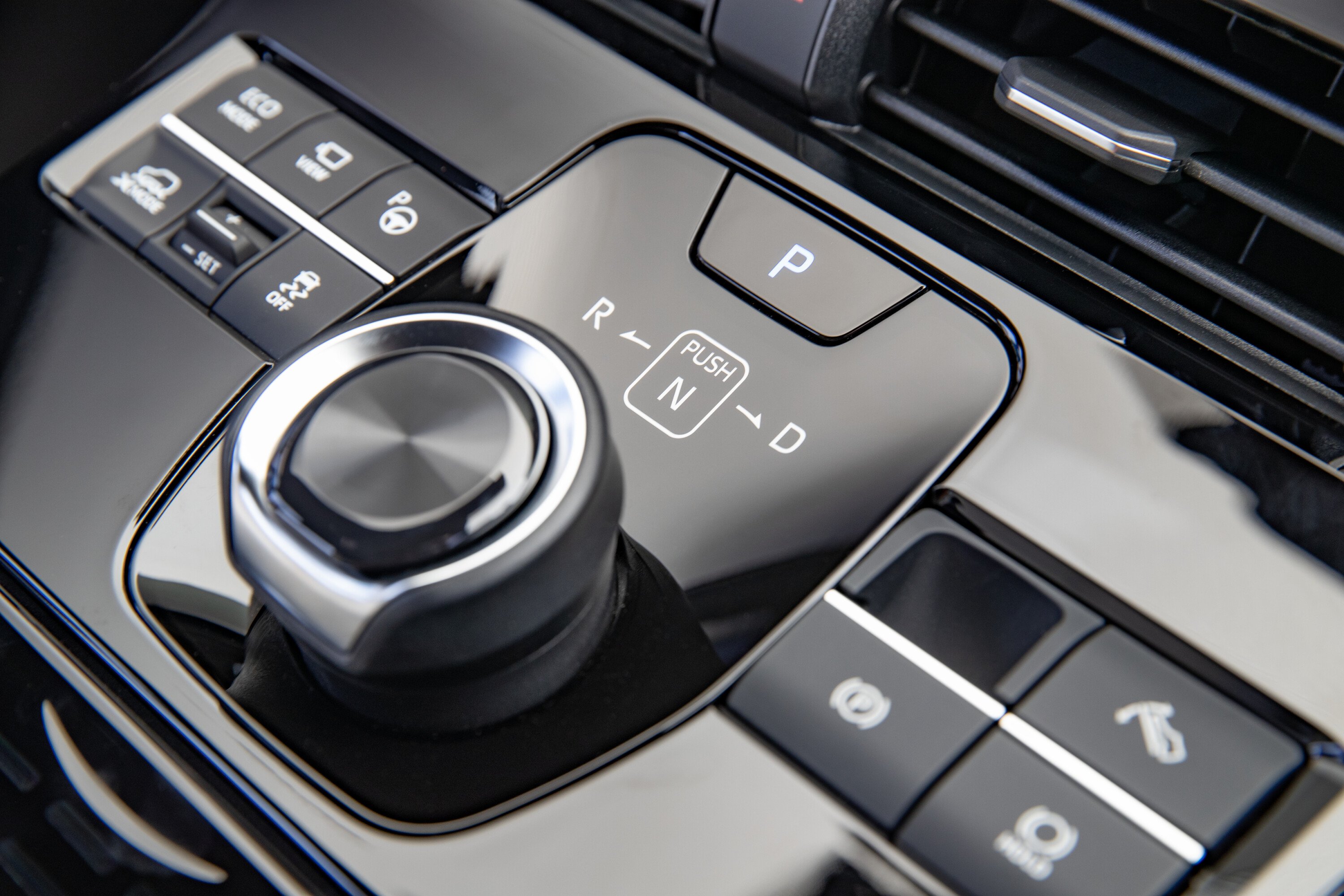
The hushed operation of an EV is always a pleasure, though as brands reinvent starting processes and gear selector configurations each car becomes a little bit of a puzzle to start. The BZ4x’s shifter, for example, requires you to push down and twist after pressing a physical start button.
1
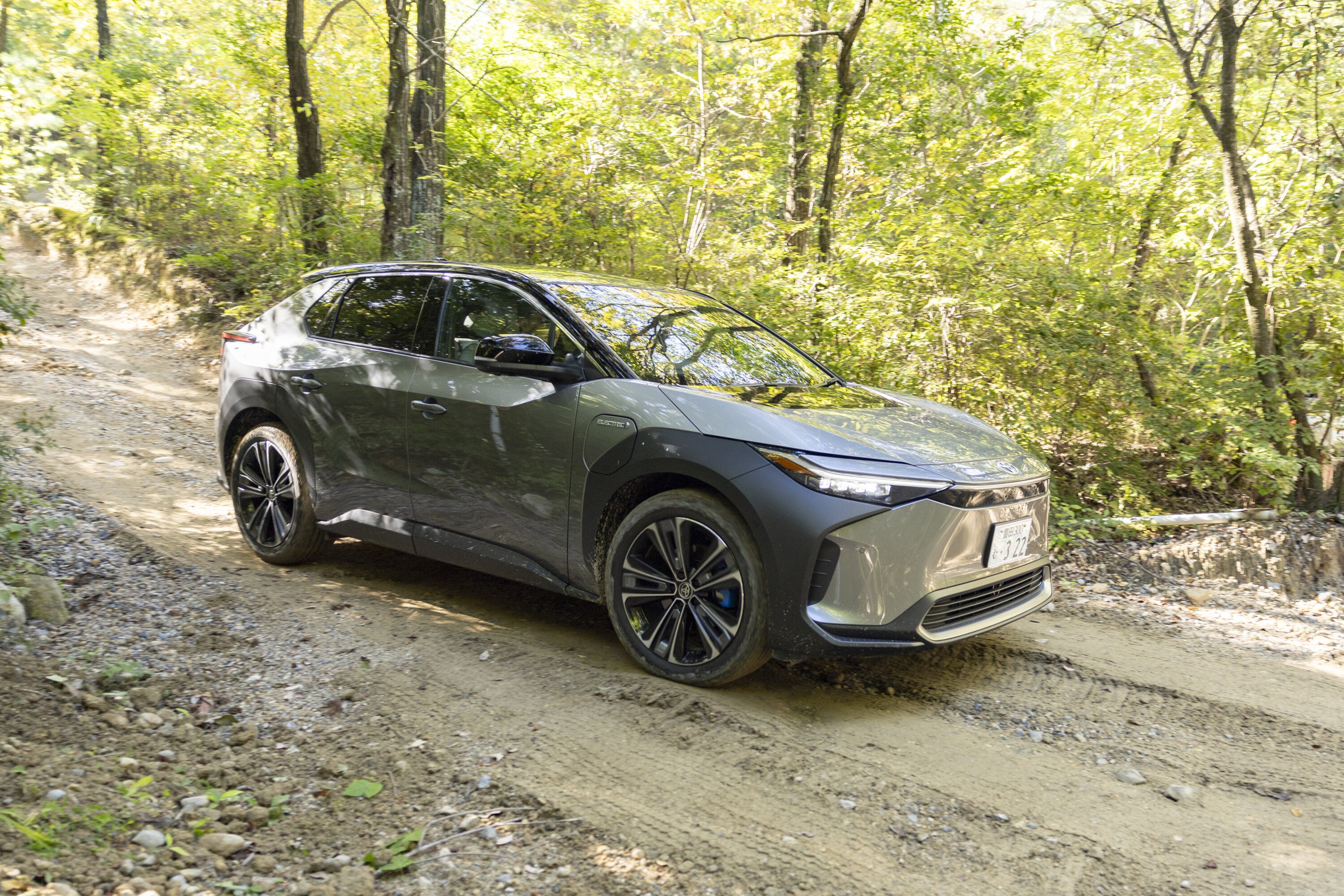
As we start trundling along the off-road course, it’s clear Toyota did not attempt a one-pedal driving mode.
Instead, the small amount of regenerative braking on throttle lift is likely to feel natural to current combustion-engined car owners, but those who are used to EVs will probably want more bite.
With plenty of input from rough-road specialists Subaru, the BZ4x has various off-road functions. X-Mode tweaks traction control and throttle response from normal to ‘snow/mud’ or ‘deep snow and mud’ and does a solid job in tricky situations.
1
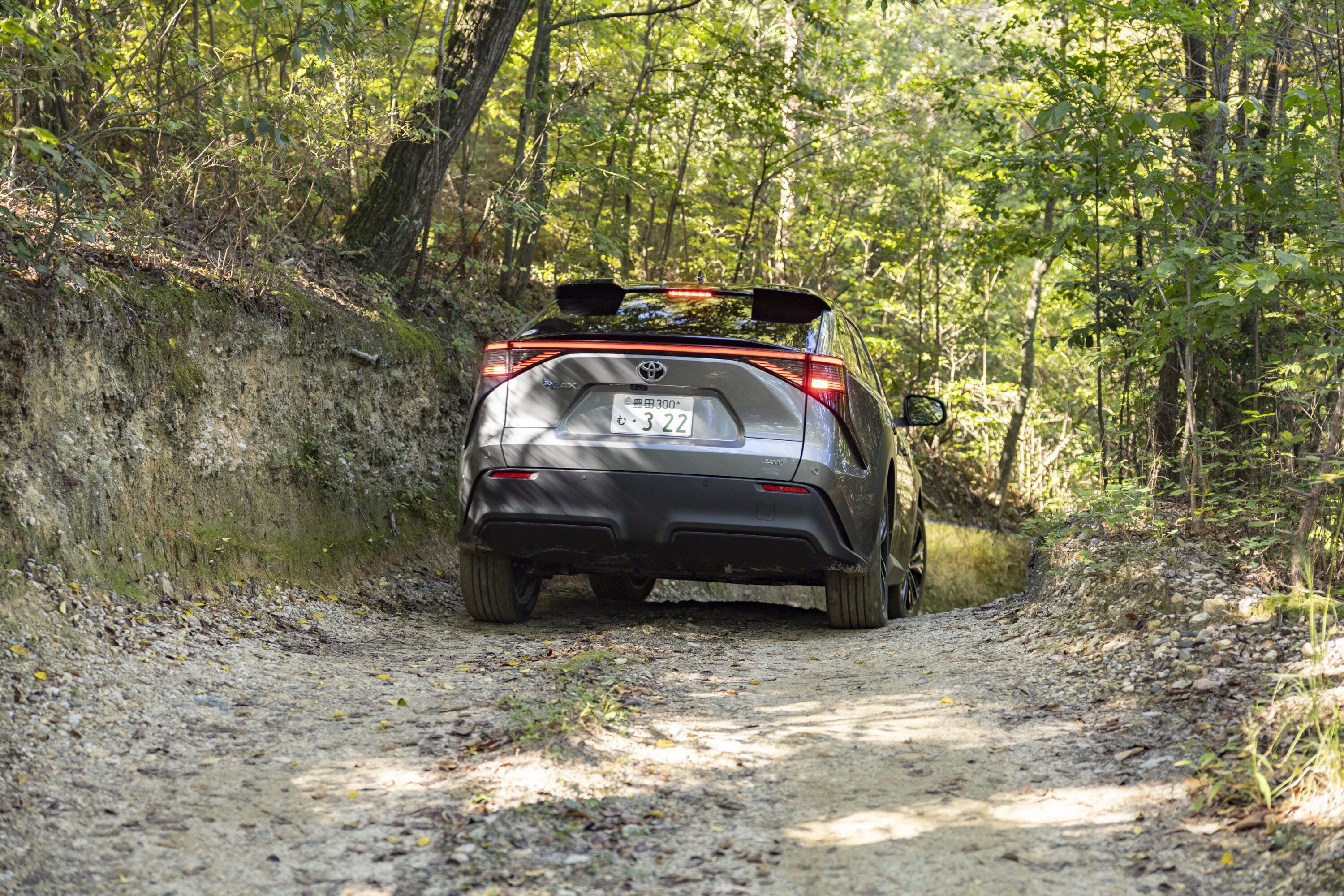
For steep descents, Grip Control functions as a mix of hill-descent control and an off-road cruise control system. It limits the car’s speed down hills and lets you coast along the flats at up to 10km/h.
Grip Control came in handy on a scree-covered decline as the vocal brake pump channeled pressure to the corners with the most grip to keep the BZ4x descending in a controlled and safe manner. It worked excellently.
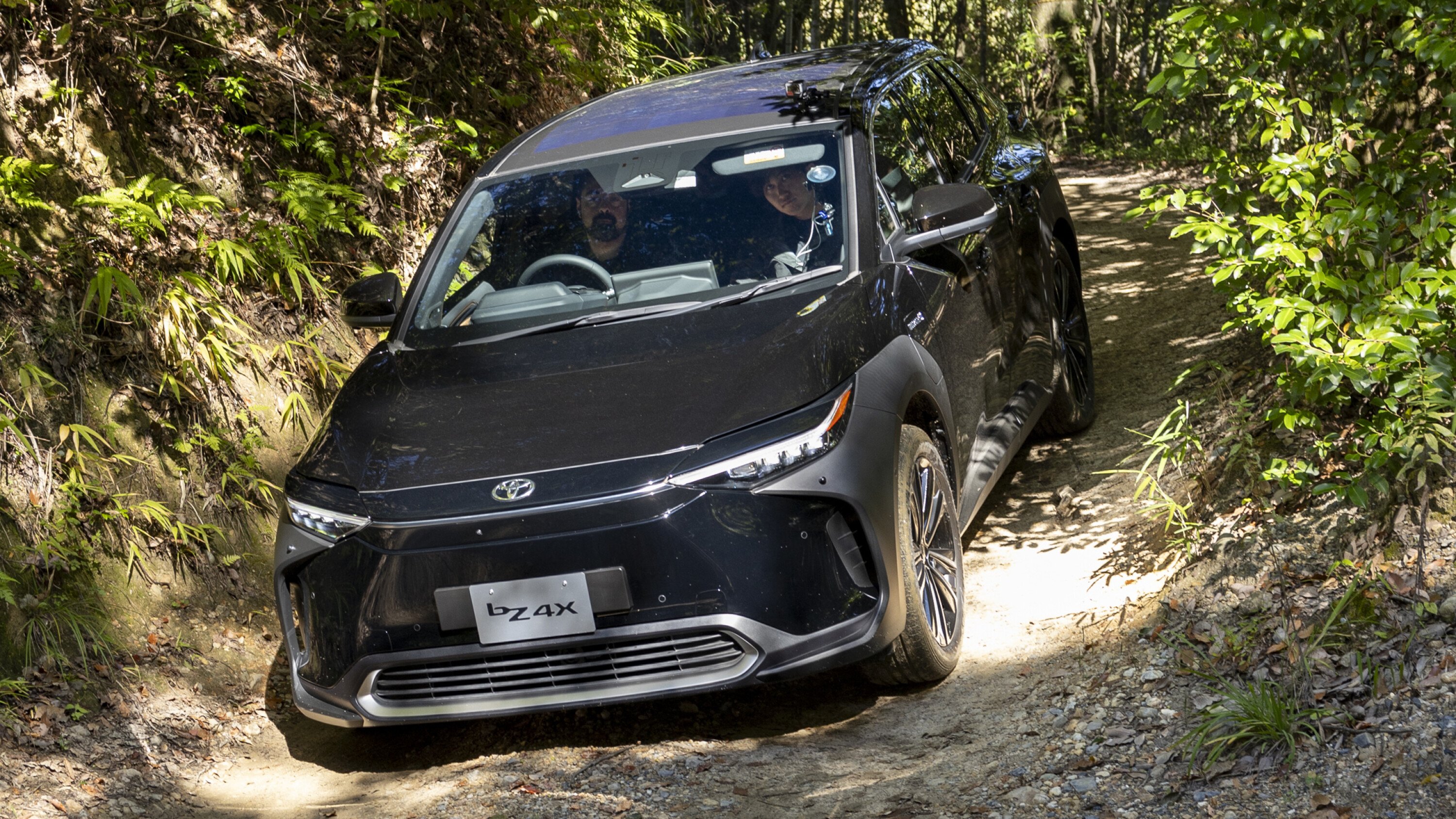
Then, we encountered a steep climb with man-mode moguls that had us lifting the front left and rear right wheels. The BZ4x doesn’t have diff locks, so had to rely on its brakes and traction control to direct torque to the right place. With some patience, the electric SUV convincingly winched itself out of a tricky spot.
1
Thanks to the instant torque delivery at any RPM, the BZ4x was much calmer than a RAV4 would have been in a similar situation.
Where the RAV would have been revving its 2.5-litre four-banger to clamber up tricky sections, the BZ4x breezed up inclines with easygoing confidence.
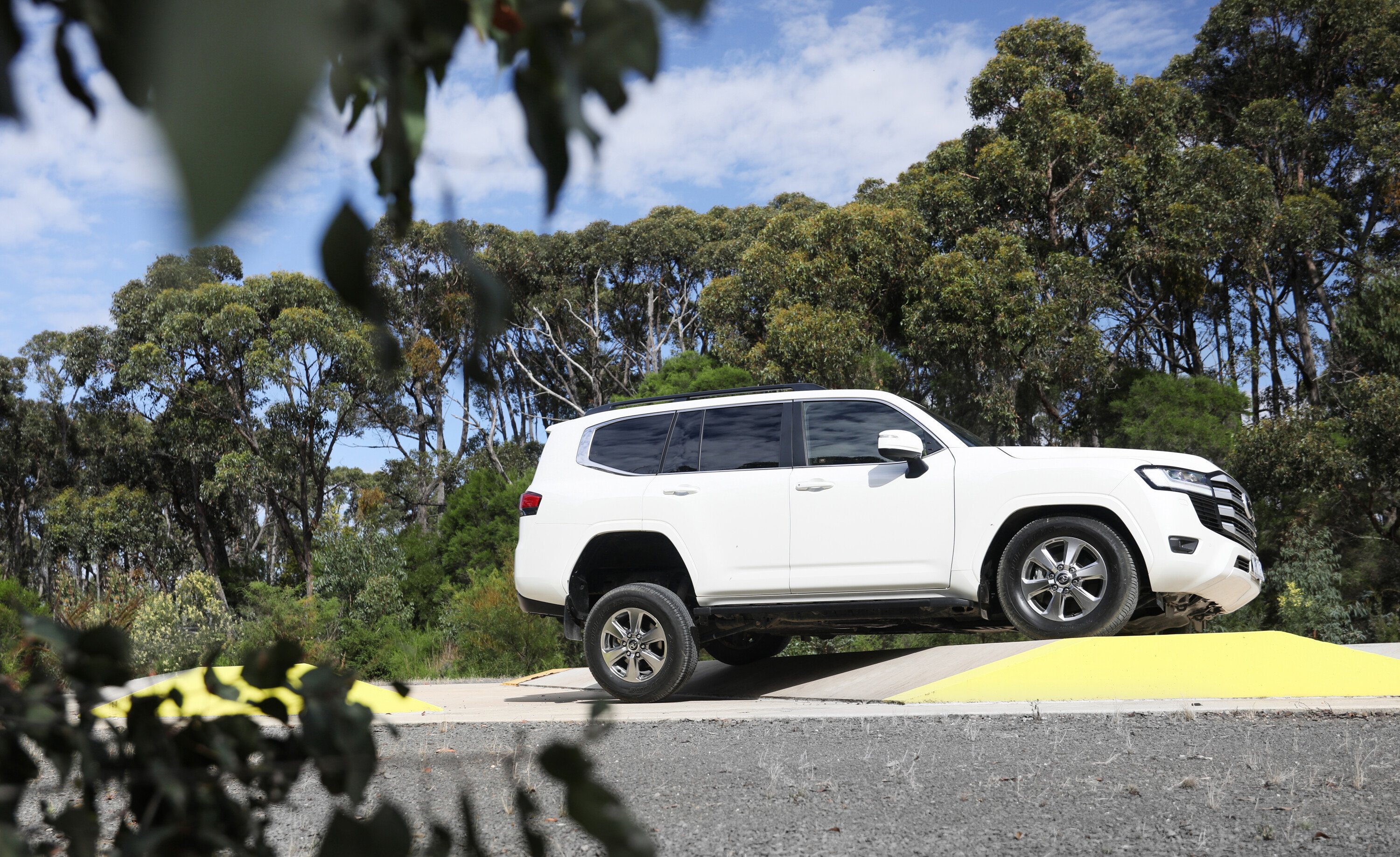
Ground clearance is an issue compared to true off-roaders, the BZ4x only has 205mm and approach/departure angles of 17.4 and 25.6 degrees… but then this is a road-focused family SUV. For reference, a Subaru Forester manages 213mm of clearance and 20º/24.6º approach/departure angles.
1
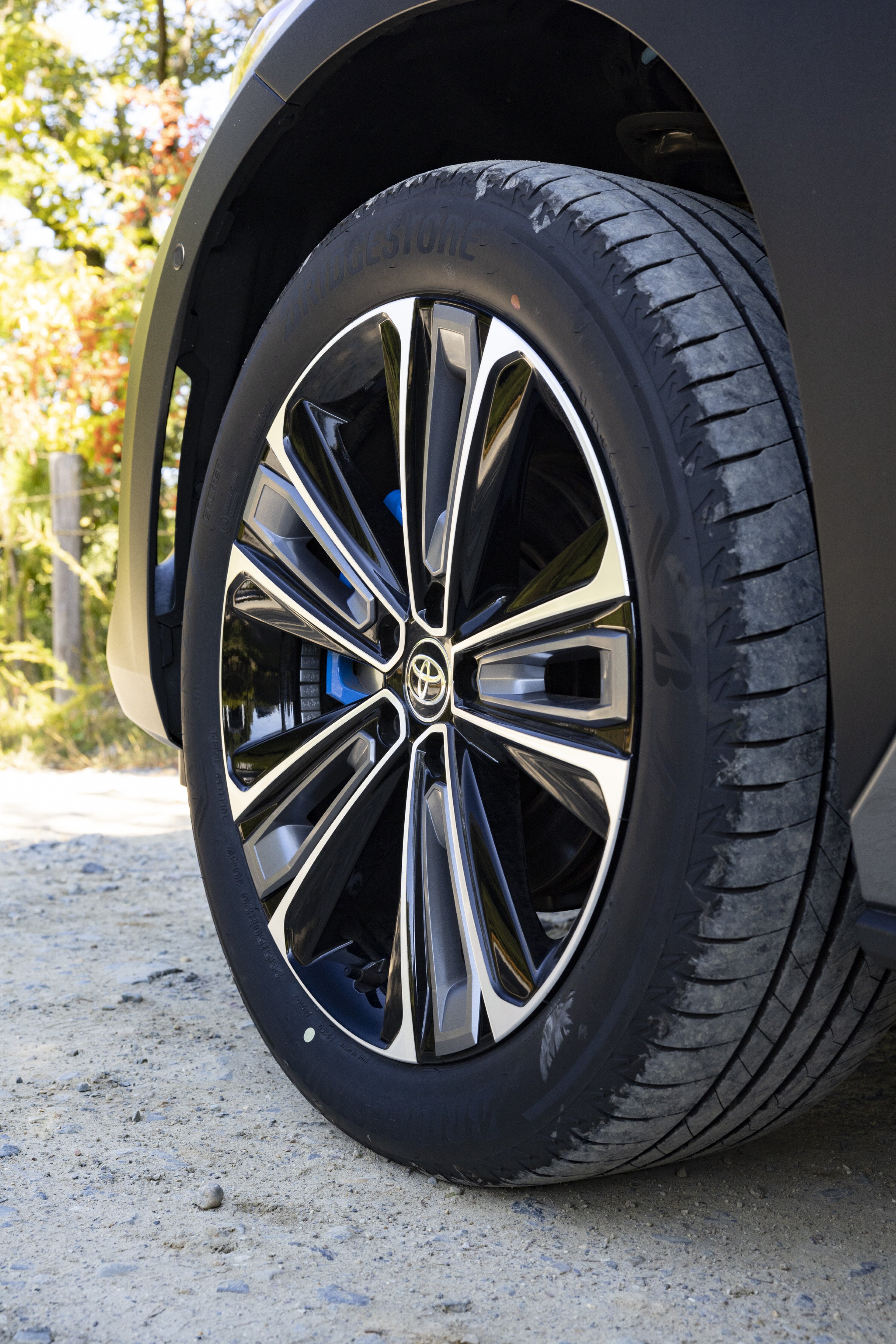
Beyond clearance issues, it was ultimately the BZ4x’s 235/50 R20 Dunlop road tyres that held it back in off-road capability.
When the suspension wasn’t bottoming out on the bump-stops, the low-speed ride is promising, the dampers rounding off sharp edges quite impressively, all boding well for the BZ4x’s local introduction.
1
VERDICT
With this dirt experience to follow up publishing director Mike Stevens’s brief on-road steer, we’re slowly getting a picture of what Toyota’s first electric car will offer.
The BZ4x is not the first, the fastest, the most full of technology, or the cheapest electric vehicle.
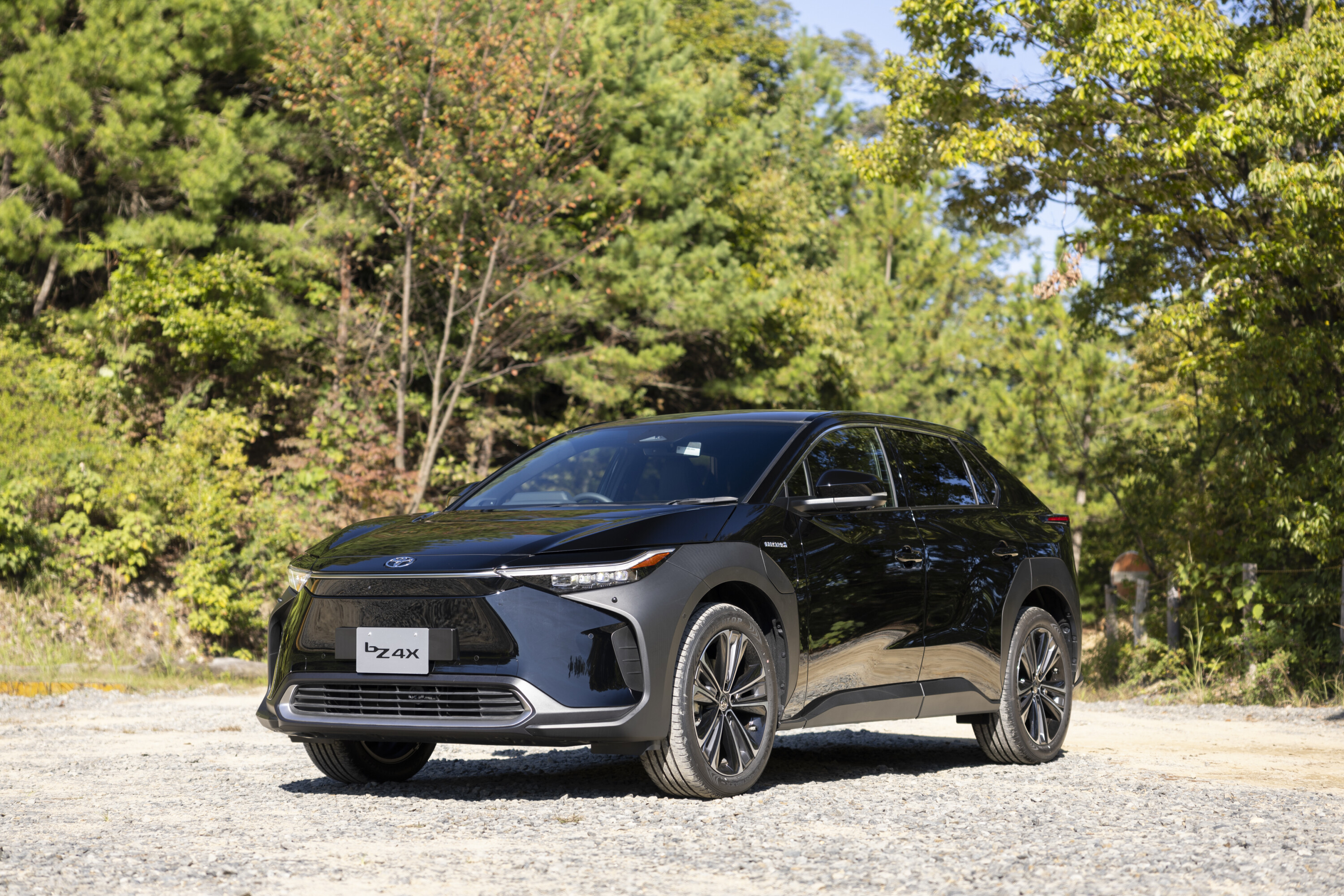
But it is a Toyota, and it proudly wears a badge that has been able to do no wrong in Australia for the last 30 years.
1
The question remains as to whether the brand will retain its crown in a decade.
Perhaps it’s telling that, at the Japan Mobility Show, Toyota was showing a concept with very similar dimensions packing new battery tech that will launch after 2026 – in other words, Toyota’s already looking to replace the BZ4x.
We’ll wait to adjudicate a verdict and star rating until we’ve sampled the BZ4x holistically on home soil, but the conventional medium SUV will be hard-pressed to outdo the Model Y at its own game.
MORE
Everything Toyota
Snapshot
- 2024 Mercedes-Benz GLE and GLS facelifts: Full Australian details
- Updated large SUVs receive mild design revisions, more tech
- Price rises of more than $25,000 for some variants
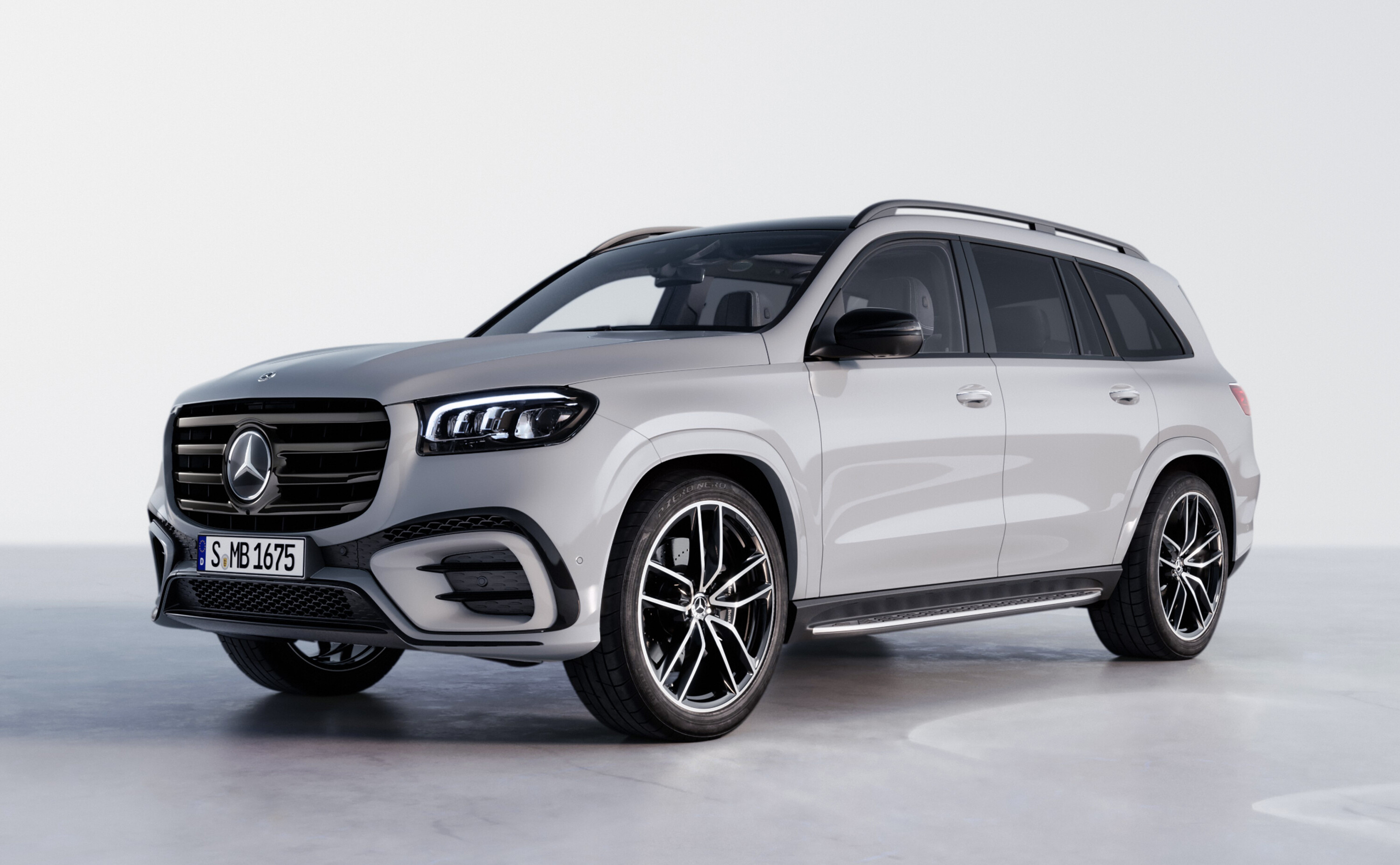
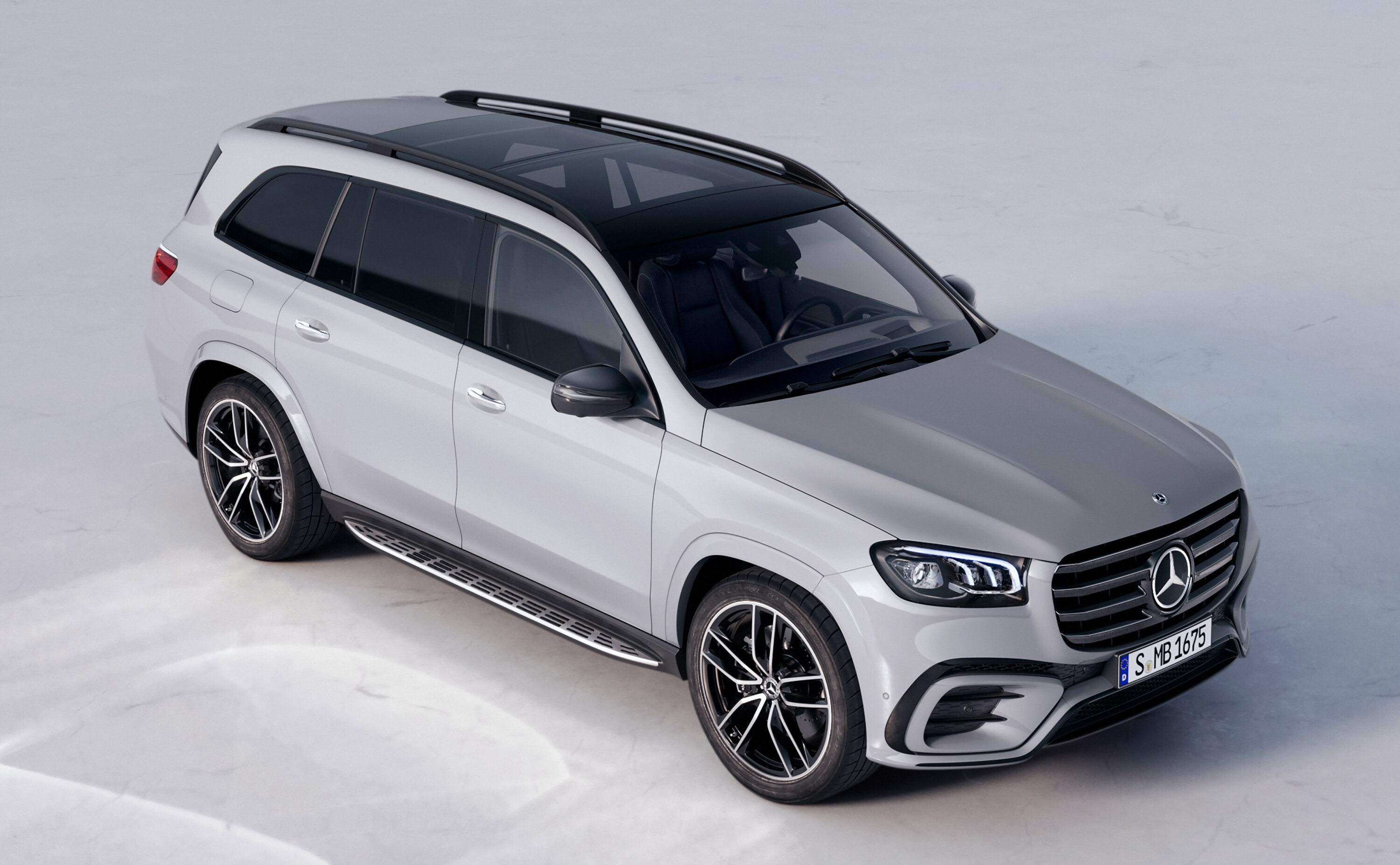
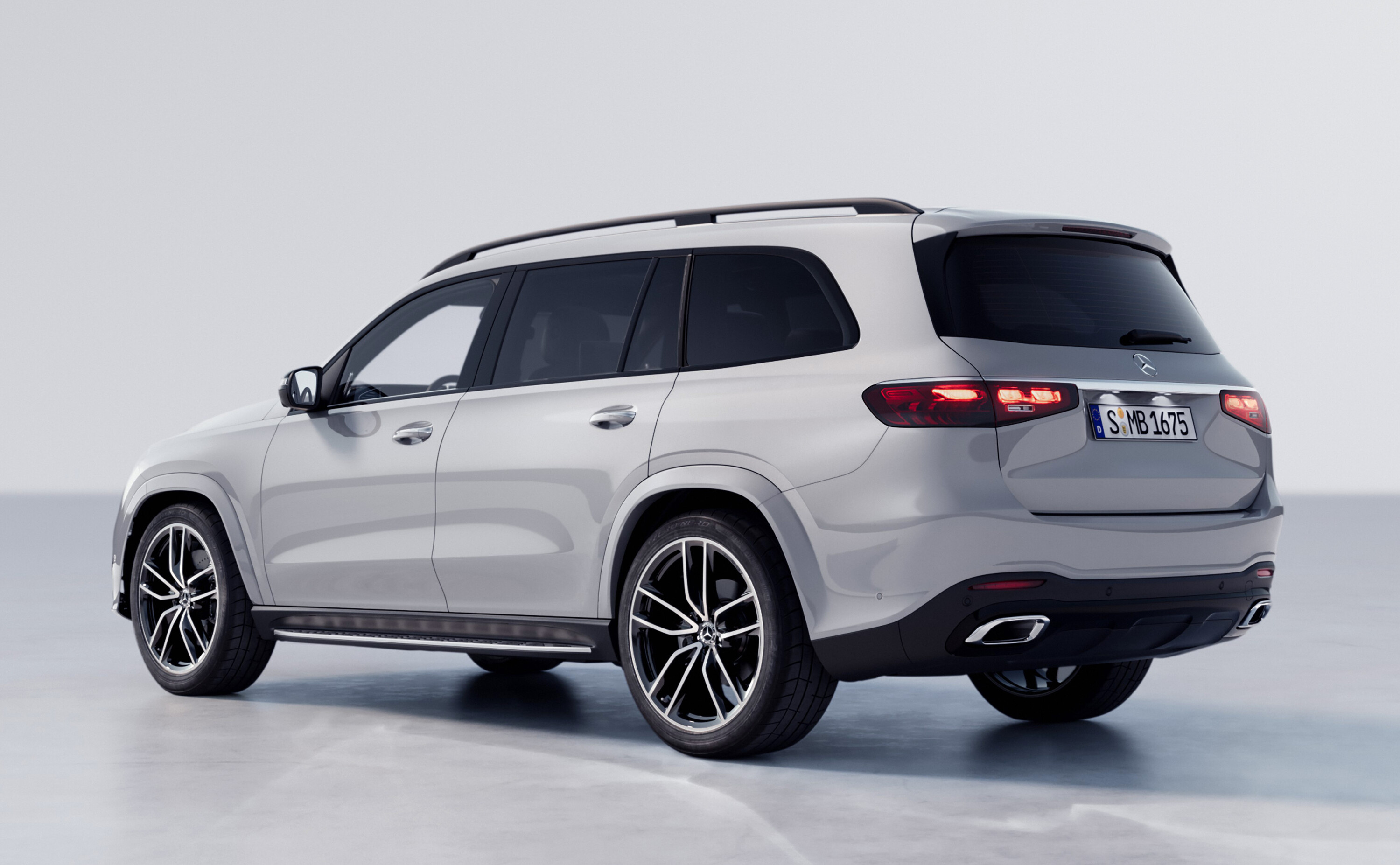
The facelifted 2024 Mercedes-Benz GLE and GLS will arrive in Australia later this month.
Initially due in local showrooms in the third quarter of 2023, the updated large SUVs feature a minor exterior refresh, additional 48-volt mild-hybrid powertrains, and new technology.
Pricing for the GLE 300d and 450d has increased by more than $25,000, with smaller increases of up to $11,631 for the other variants. Meanwhile, GLS prices have increased between $11,630 and $15,931.
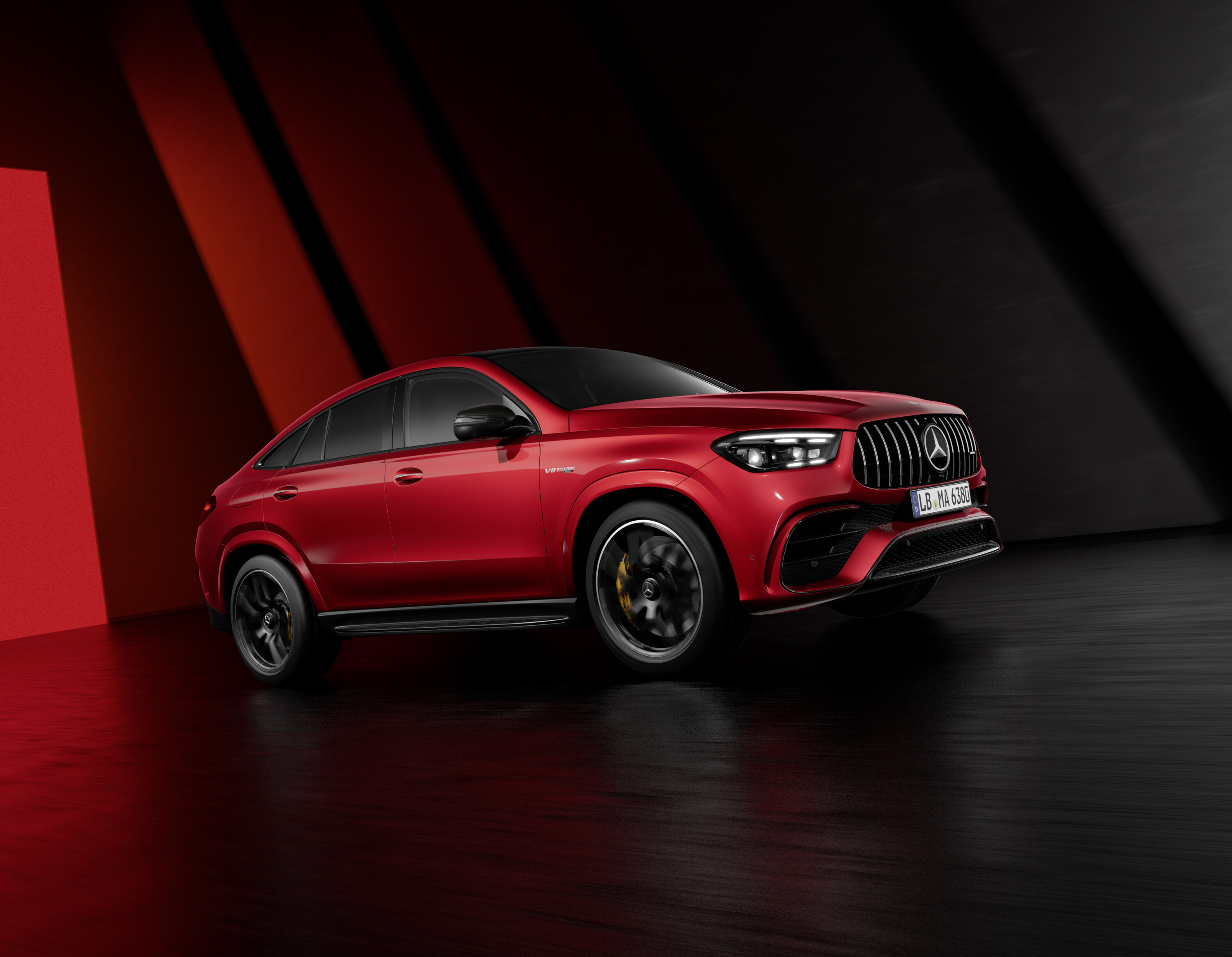
New standard equipment for the GLE includes the AMG Line styling pack, adaptive LED headlights, more advanced active safety features, memory front seats, a 360-degree camera, a Burmester audio system, augmented reality satellite navigation, a panoramic sunroof, a head-up display, and aluminium running boards.
As with other recent Mercedes-Benz vehicles, the GLE’s options list has been consolidated into a single ‘Plus’ package, with separate three-row seating and towbar configurations.
Under the bonnet, the facelifted GLE range is electrified, with 48-volt mild-hybrid technology added to the GLE 300d, GLE 450d (previously GLE 400d), and AMG GLE 63 S.
The mild-hybrid system has also been added to the GLS 450d.
With improvements to its existing mild-hybrid system, the entry-level GLE 300d now outputs 198kW and 550Nm (up 18kW and 50Nm), GLE 450 has increased outputs to 280kW and 500Nm (up 10kW), and the GLE and GLS 450d produce 270kW and 750Nm (up 27kW and 50Nm).
The plush Mercedes-Maybach GLS 600 receives an optional 23-inch forged alloy wheel with a wheel bolt cover, an ambient lighting system with a unique pattern, and diamond-pattern quilting in the centre sections of the seat sections and backrests. Its mild-hybrid system now adds 16kW of boost, with unchanged 410kW and 730Nm outputs.
1
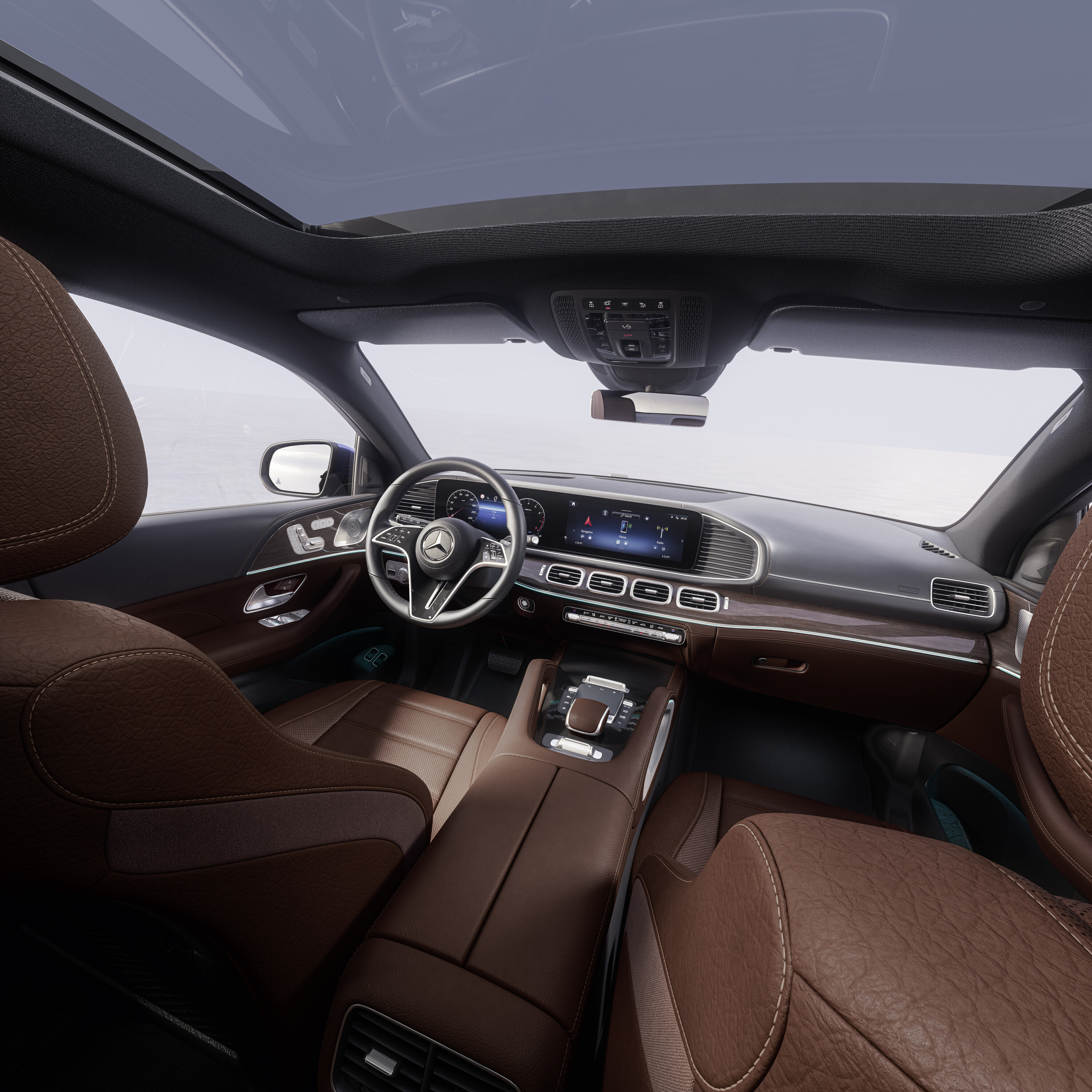
Inside, the brand’s latest steering wheel – as found in the latest GLC and S-Class – is added with touch-sensitive buttons and a unique two-spoke design for AMG models.
The air vents are now finished with real metal louvres derived from the Maybach GLS, while additional trim colours have been added.
For the upper-large GLS, the gloss black piano lacquer finish is no longer exclusive to the Maybach, joining two new leather upholstery colours: Catalana beige and Bahia brown.
1
The new second-generation MBUX infotainment system features wireless Apple CarPlay and Android Auto and the ability to speak to the ‘Hey, Mercedes’ voice assistant without saying the keyword.
However, it remains on dual 12.3-inch screens, unlike the GLC and S-Class’s larger portrait-orientated central display.
The updated 2024 Mercedes-Benz GLE and 2024 Mercedes-Benz GLS are due in Australian showrooms later this month.
2024 Mercedes-Benz GLE pricing
Prices exclude on-road costs.
| Model | Pricing | Change |
|---|---|---|
| GLE 300d | $144,900 | up $25,726 |
| GLE 450 Coupe | $159,900 | up $3430 |
| GLE 450d | $166,900 | up $25,230 |
| AMG GLE 53 | $179,900 | up $32 |
| AMG GLE 53 Coupe | $190,900 | up $131 |
| AMG GLE 63 S | $266,900 | up $11,631 |
| AMG GLE 63 S Coupe | $268,900 | up $10,931 |
1
2024 Mercedes-Benz GLE options
- Plus package (all variants except AMG GLE 63 S) – $6900
| Air suspension | Temperature-controlled cup holders |
| Power closing doors | Surround lighting with animated projection of the Mercedes-Benz pattern |
| Four-zone climate control | Pre-Safe Impulse Side (side impact detection) |
| Multi-contour front seats | Air Balance interior fragranceu00a0 |
| Heated and ventilated front seats | Remote theft protection system |
| Luxury front headrests |
- Seven-seat package (all variants except AMG GLE 63 S) – $3900
- Airmatic package (GLE 300d and 450d) – $3400
- Towbar package – $2900
1
2024 Mercedes-Benz GLS pricing
Prices exclude on-road costs.
| Model | Pricing | Change |
|---|---|---|
| GLS 450d | $184,900 | up $14,731 |
| AMG GLS 63 | $299,900 | up $11,630 |
| Maybach GLS 600 | $409,900 | up $15,931 |
1
2024 Mercedes-Benz GLS options
- First-class rear individual seat package (Maybach GLS 600) – $14,500
| Four-seat capacity | Refrigerated compartment |
| First-class rear compartment | Champagne flutes with holder |
| Rear folding tables |
- Rear comfort package (GLS 450d and AMG GLS 63) – $9900
| Rear wireless phone charger | Wireless headset |
| MBUX rear tablet | MBUX high-end rear seat entertainment system |
| Luxury head restraints |
- Towbar package – $2900
“This is a silver bullet for sustainable urban mobility”, said Renault Group CEO Luca de Meo of the Twingo Legend concept unveiled at yesterday’s Renault Capital Market Day, Ampere conference.
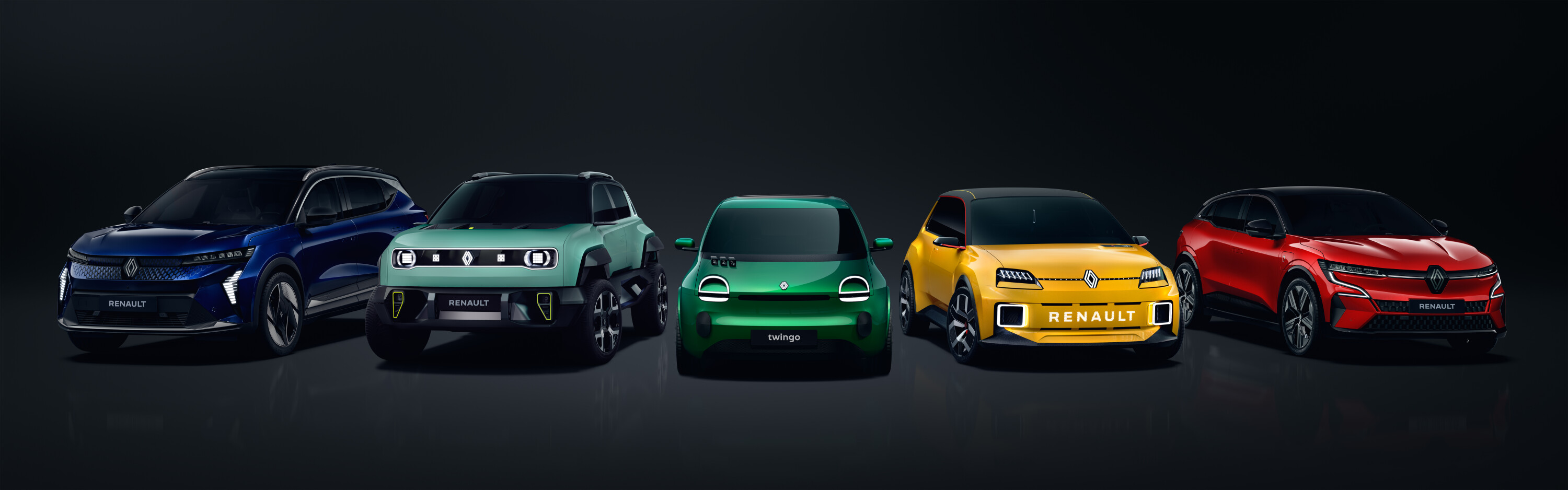
The diminutive electric city car – sat next to three other electric Renaults; the on-sale Megane E-Tech, soon-to-launch Scenic E-Tech and all-new 4 and 5 affordable EVs – is likely to be in production by 2026.
The Twingo is targeted at inner-city buyers and, with Renault’s focus on decentralised ownership, de Meo gave a target price of 100 Euros (A$166) per month to lease.
1
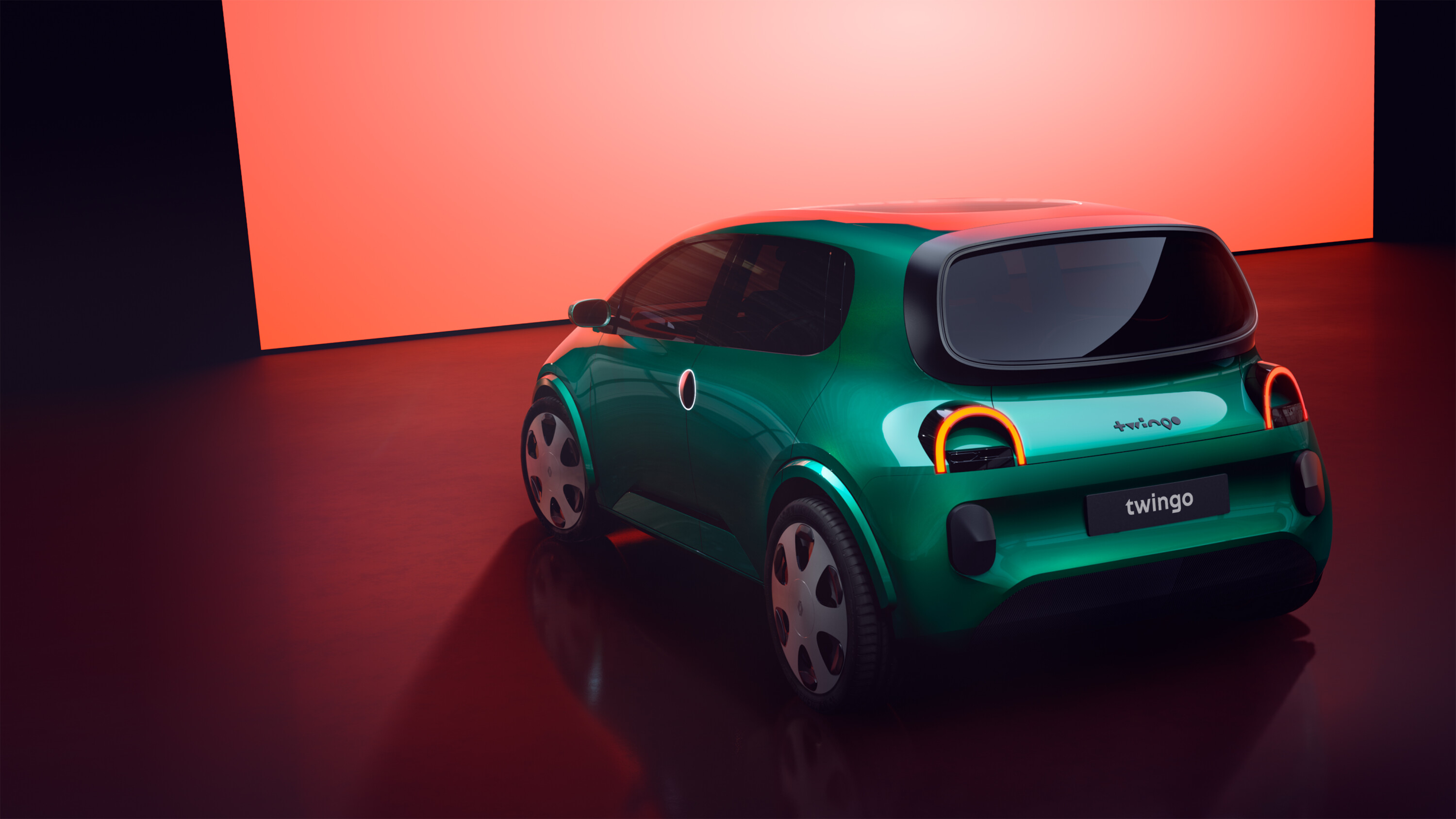
Renault’s all-new fourth-gen Twingo will benefit from the brand putting funds into CMF-B EV platform development for the 4 and 5 small EVs set to launch over the next two years.
It’s likely to sit on a modified version of the platform – we imagine using more affordable torsion beam rear suspension and other cost-cutting tactics – and de Meo said it would come to market in a “record” two years, matching the speed of Chinese carmakers.
The Twingo probably won’t come to Australia but we can learn a thing or two from de Meo’s lecture – “We have to go back to smaller cars”, he said. And with shrinking size comes improved efficiency, with a promised energy consumption of 10kWh/100km for the Twingo – an MG 4 uses 13.7kWh/100km.
3
This means the Twingo only needs small batteries for less waste, more interior volume and lower prices. A win-win all around.
De Meo acknowledged that Renault looked at rebadging the Chinese-built Dacia Spring but decided to honour the French brand’s heritage by reinvigorating the amazingly space-efficient one-box Twingo design.
The Legend concept (also celebrating 30 years of Twingo) is a modern twist on the ‘Froggy’ Twingo designed by Patrick Le Quément who managed to slip the original into production by telling then head of Renault the car had to be cute enough that owners would want to take it inside by the fire at night.
2
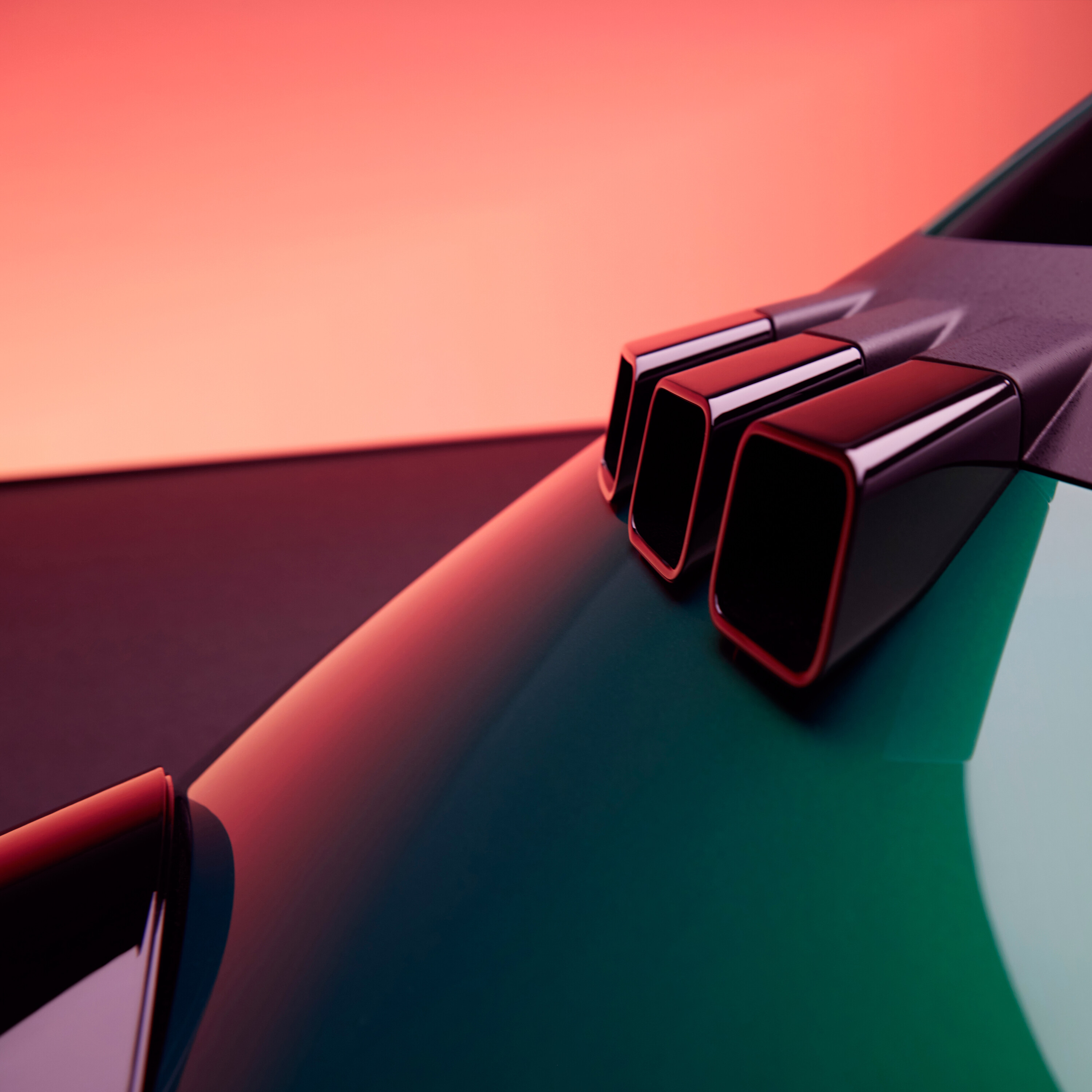
The concept references the original’s hidden door handles, three-strake bonnet vent cleverly repurposed to show battery charge level, alloy wheel design, and quirky lighting details – it’s hard not to fall in love with Twingo.
Current Renault CEO Luca de Meo has experience in launching reto city cars, being the boss of Fiat when la Nuova 500 launched in 2007.
MORE
Everything Renault
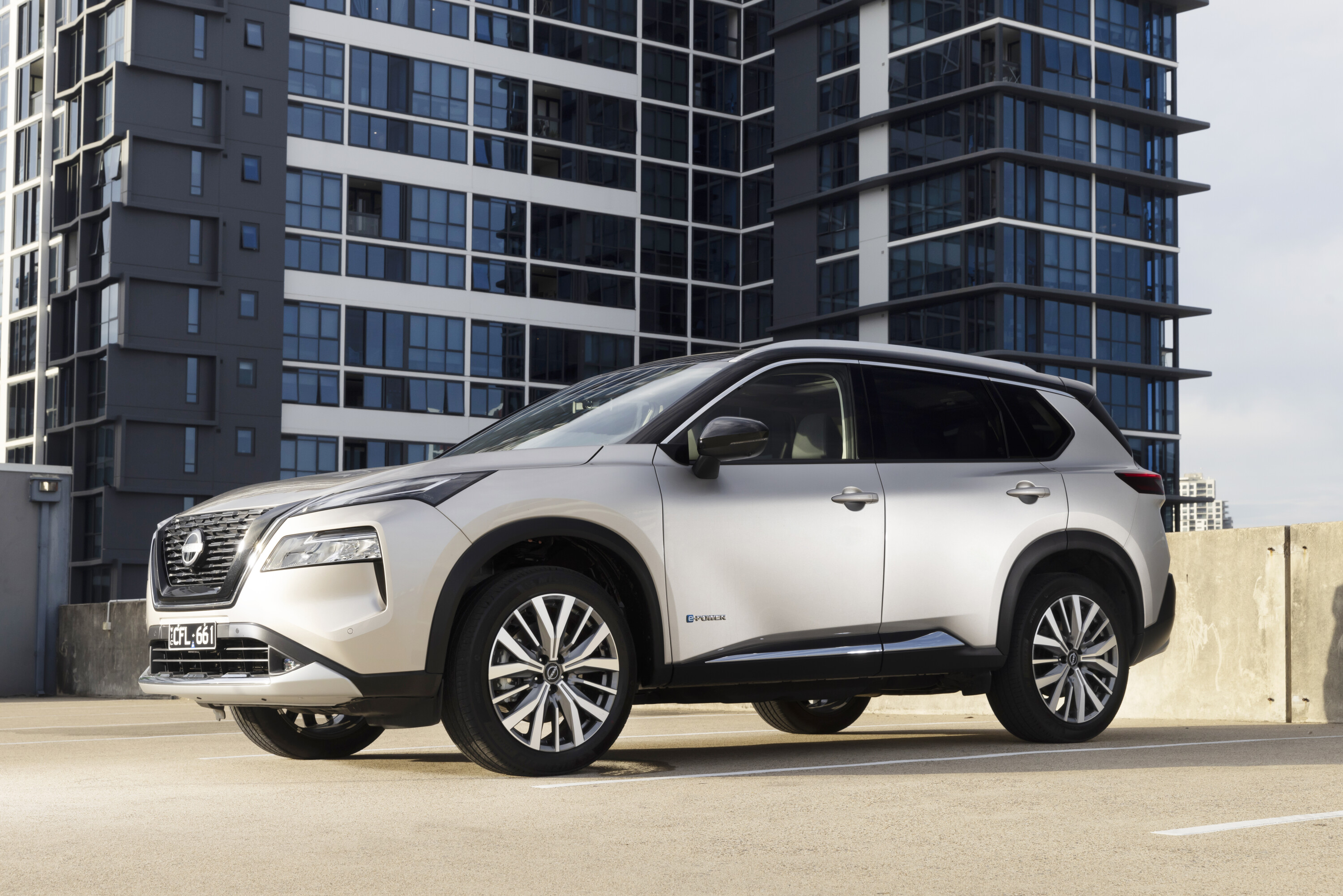
The Nissan X-Trail deservingly earned our title of Best Medium SUV in the 2023 test.
Following in the successful footsteps of its predecessor in this category, the newest X-Trail has made a remarkable entrance in 2023.
Moreover, it secured an impressive top-four placement in the Wheels Car of the Year testing distinguishing itself not only among its immediate rivals but also against new entrants across different categories.
Now, we’ll explore the specifics of the X-Trail lineup, with a special focus on the ST-L model, to uncover what it brings to the table.
1
Pricing and features
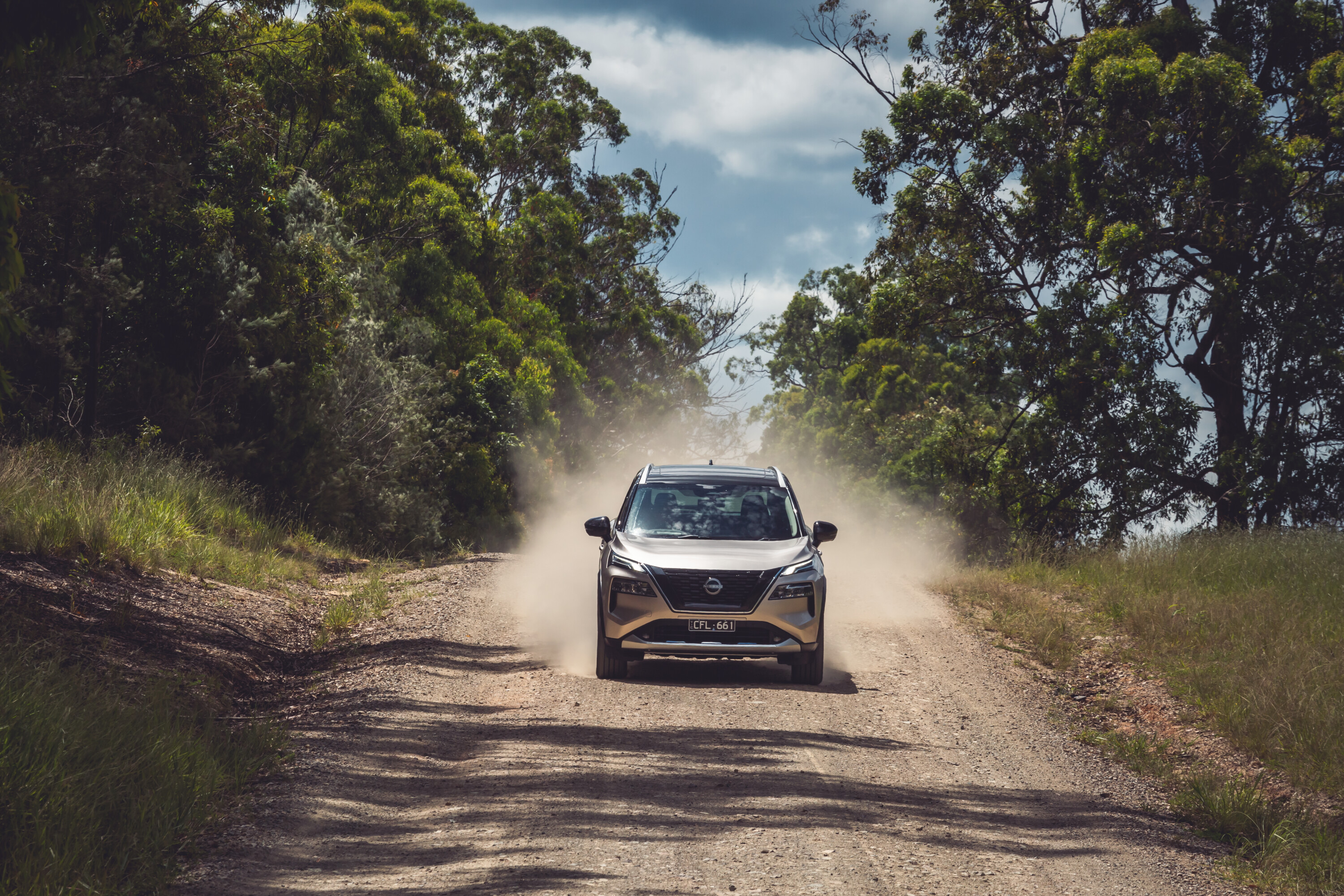
The engine options for the Ti are both paired to an all-wheel-drive (AWD) set up – available with either a a 2.5-litre petrol engine or the new E-Power 1.5-litre petrol-electric hybrid with ‘E-4orce’ AWD.
The Ti sits third in the range, exlusively as a five-seater option. Seven seats are exclusive to the ST and ST-L grades, both of which are cheaper.
Starting price for the Ti AWD model is $49,990 excluding on-road costs. Opting for the hybrid variant will set you back $54,190 before on-roads.
Petrol will churn out 135kW and 245Nm while the hybrid offers additional performance producing 157kW/330Nm.
1
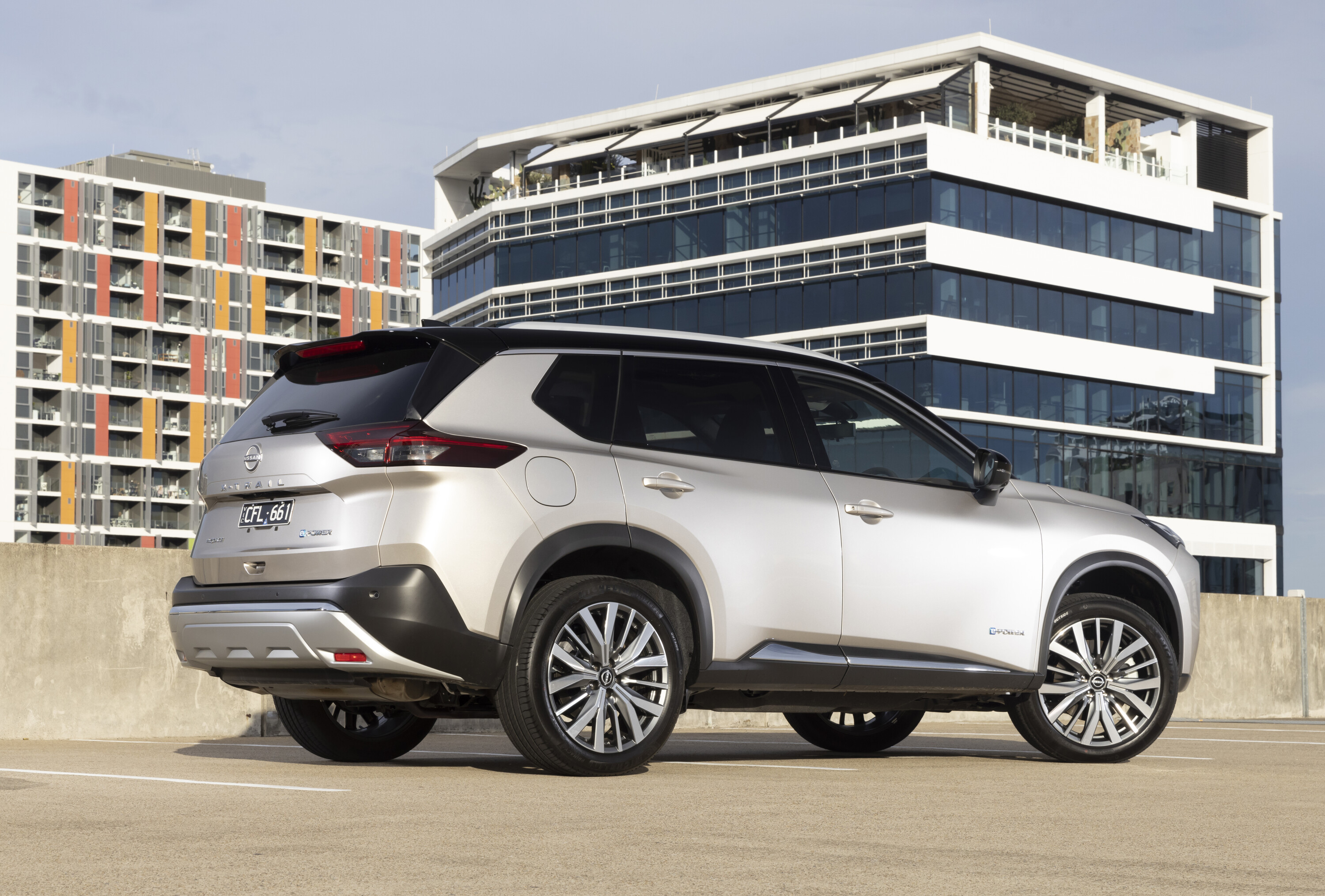
In ‘EV-mode’, relying solely on its battery power, the X-Trail is capable of accelerating and maintaining speeds beyond the lower range for a distance of up to four kilometres, courtesy of its 2.1kWh battery.
The E-Power hybrid variant of the X-Trail is the more fuel-efficient option among the two powertrains available, boasting an official combined fuel consumption rate of 6.1L/100km.
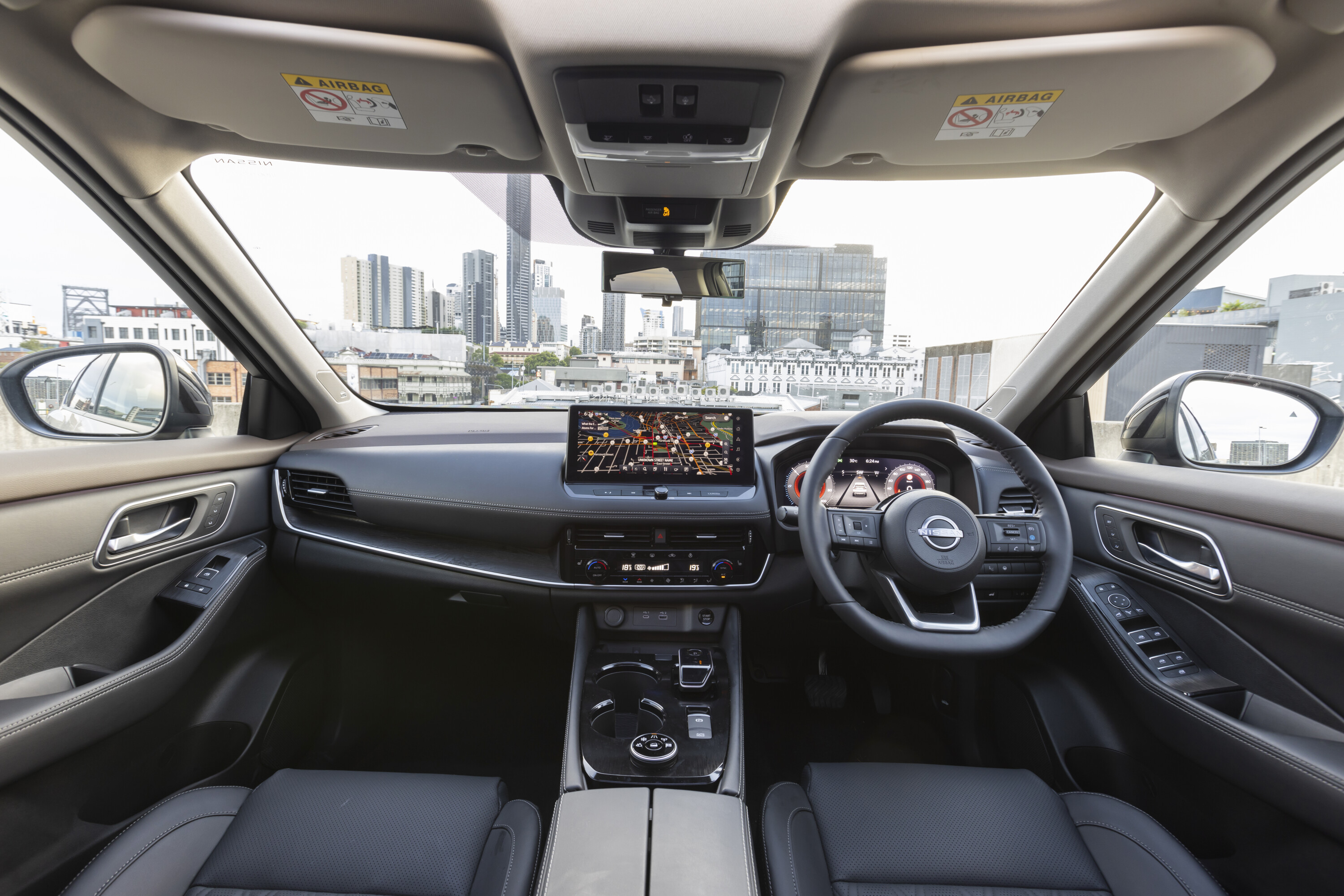
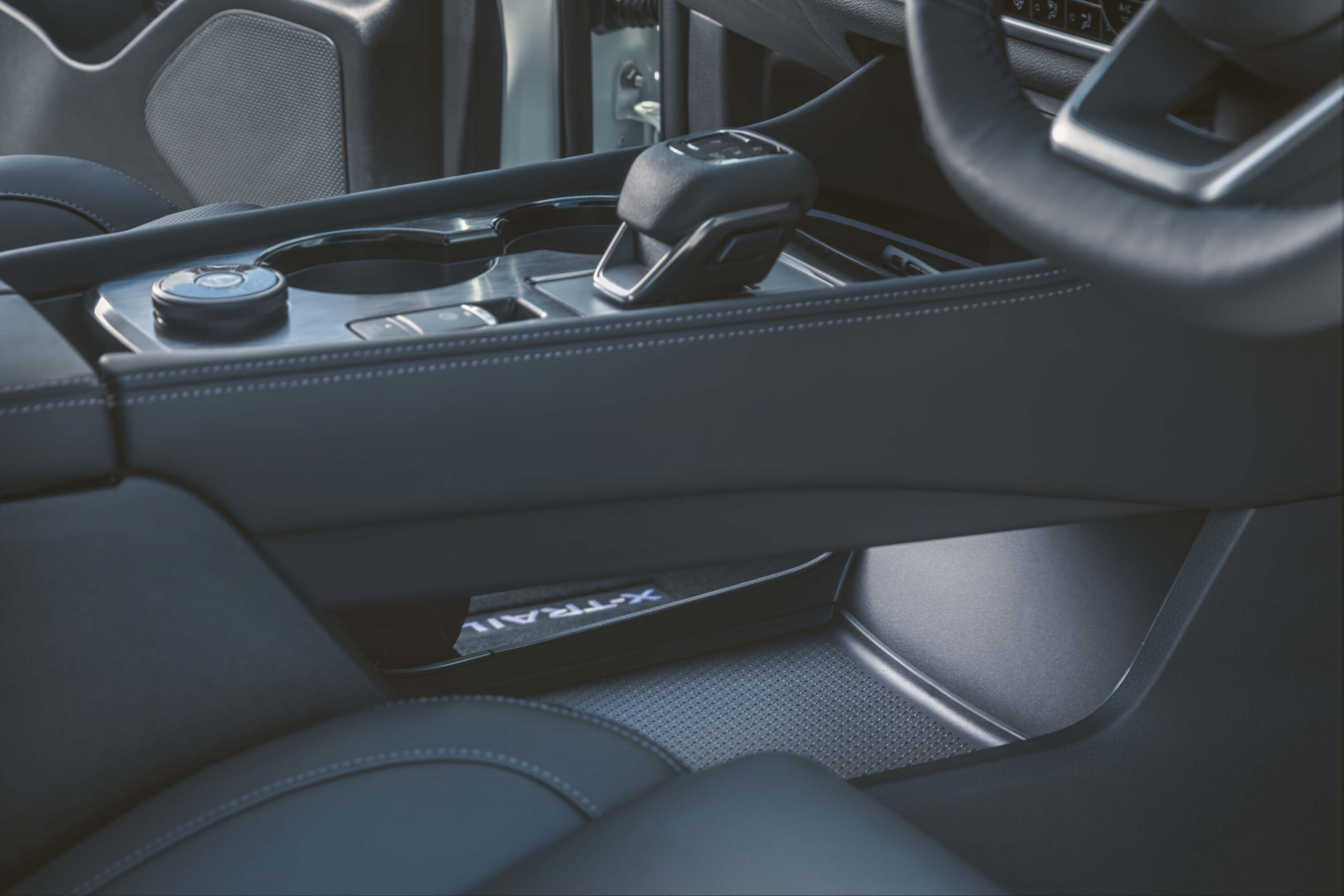
On the inside, the Ti provides a roomy and intuitive cabin. The infotainment system covers essential connectivity needs, and the intelligent arrangement of space, complemented by Nissan’s ‘Divide-N-Hide’ cargo system, enhances its practical aspects.
| 2023 Nissan X-Trail features | |
|---|---|
| 17-inch alloy wheels | LED headlights, tail-lights and daytime running lamps |
| 5 or 7 seats | Plastic steering wheel |
| 8.0-inch infotainment screen | Power folding and heated door mirrors |
| Active cruise control | Push-button start |
| Air-conditioning with second-row air vents | Rear parking sensors |
| Auto-dimming rear-view mirror (7-seater only) | Rear-cross traffic alert |
| Autonomous emergency braking | Reverse auto braking |
| Blind-spot warning | Reversing camera |
| Cloth seats | Six-speaker audio system |
| Digital instrument cluster | Six-way manually adjusted driver’s seat |
| Driver’s lumbar support | Space-saver spare wheel |
| Dusk-sensing headlights with high-beam assist | Traffic sign recognition |
| Forward collision warning | Trailer sway control |
| Keyless entry | Wired Apple CarPlay and Android Auto |
| Lane departure warning | |
1
Moving up to the Ti adds plenty of luxury such as a panoramic sunroof, heated front sears, a surround-view parking monitor and privacy glass.
| 2023 Nissan X-Trail Ti features | |
|---|---|
| 10.8-inch head-up display | Leather-accented steering wheel |
| 12.3-inch touchscreen | Panoramic sunroof |
| 19-inch wheels | Powered tailgate |
| 5 seats only | Privacy glass |
| Adaptive driving beam headlights | Rain-sensing wipers |
| Ambient interior lighting. | Satellite navigation |
| Eight-way power-adjustable front passenger seat | Seats trimmed with accented leather |
| Front parking sensors | Tri-zone climate control |
| Heated front seats | Wireless Apple CarPlay and Android Auto |
| Intelligent (video) rearview mirror | Wireless phone charger |
1
Safety
The 2023 Nissan X-Trail was awarded a five-star safety rating by ANCAP, with notable scores of 91 percent in adult occupant protection and 90 percent in child occupant protection.
| 2023 Nissan X-Trail standard safety | |
|---|---|
| 7 airbags (dual front, side, curtain, and front-centre) | Lane departure warning |
| Autonomous emergency braking (vehicle, pedestrian, cyclist, junction, reverse) | Trailer sway control |
| Adaptive cruise control | Rear cross-traffic alert |
| Lane-keep assist | Rear occupant alert. |
| Traffic sign recognition | Blind-spot alert |
1
Key rivals
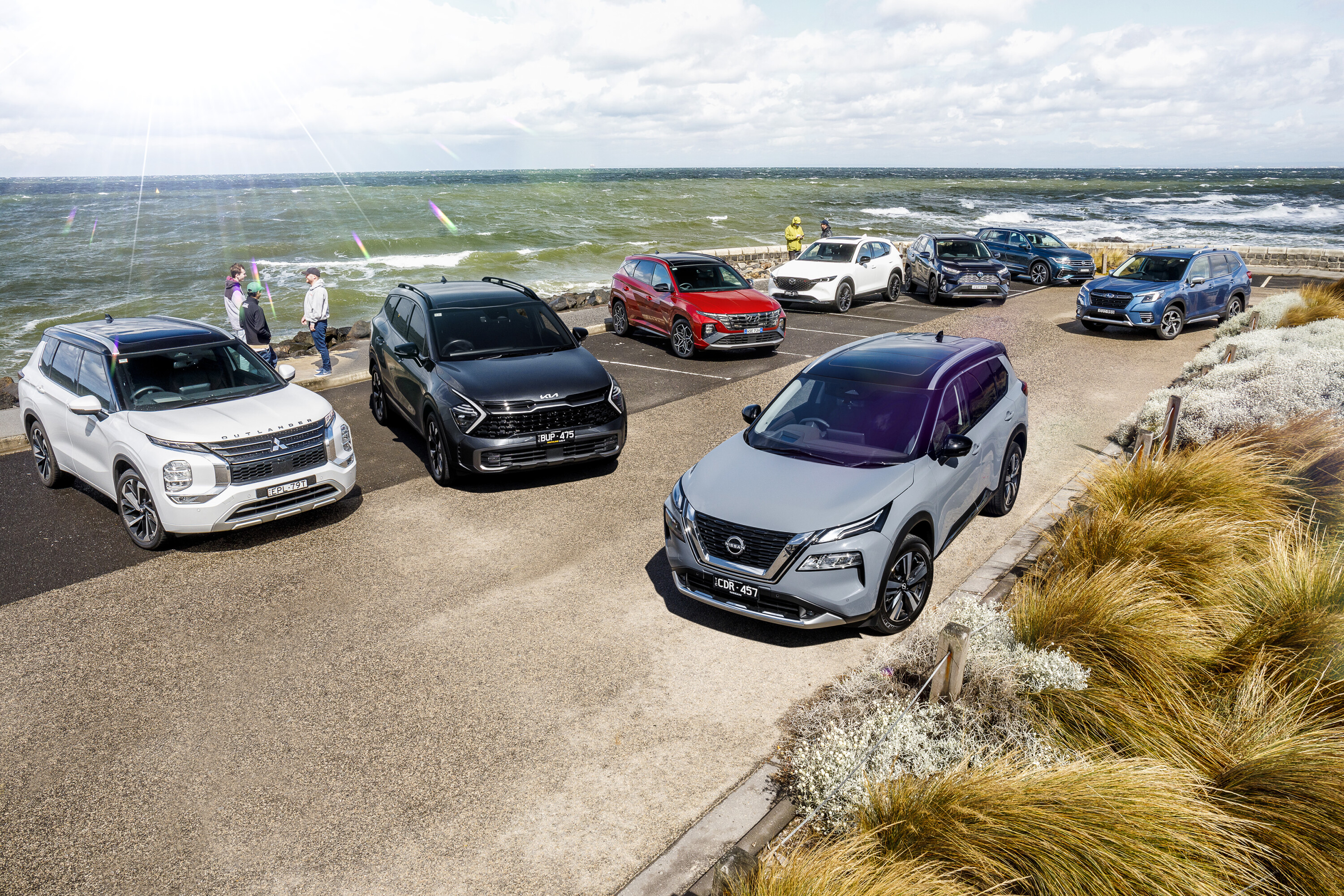
The medium SUV market is filled with popular and established models. However, in Australia, where this segment is plenty loved, there is considerable potential for recognition among:
1
Should I put it on my shortlist?
The 2023 Nissan X-Trail Ti is an excellent choice for those seeking a family SUV with a touch of luxury and advanced technology.
It offers a comfortable and safe driving experience, packed with features that make every journey enjoyable.
If you’re looking for an SUV that combines practicality with premium amenities, the X-Trail Ti is definitely worth considering.
MORE
Everything Nissan
MORE
Midsize SUVs
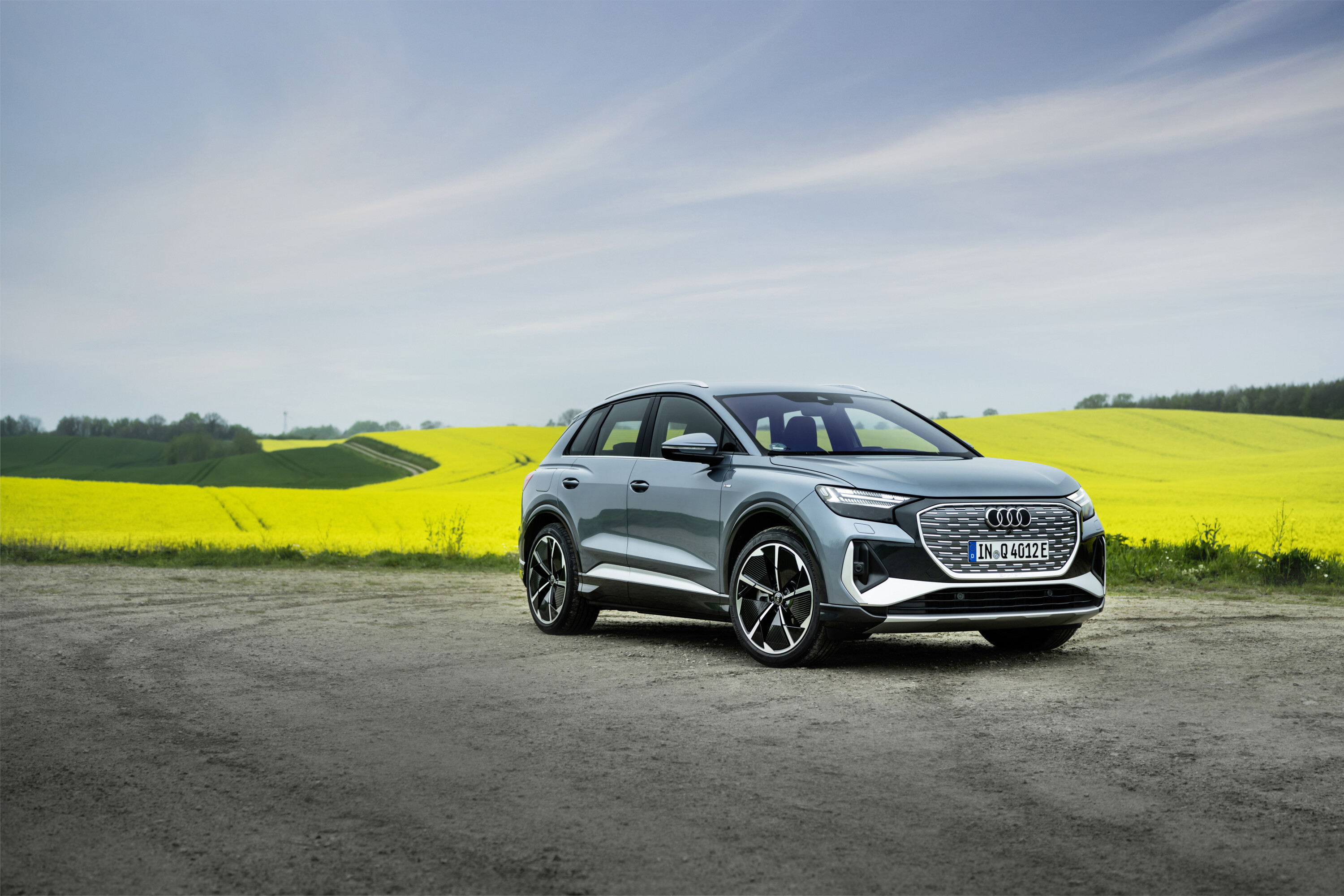
UPDATE: Audi has locked-in pricing for the medium-sized Q4 E-Tron electric SUV.
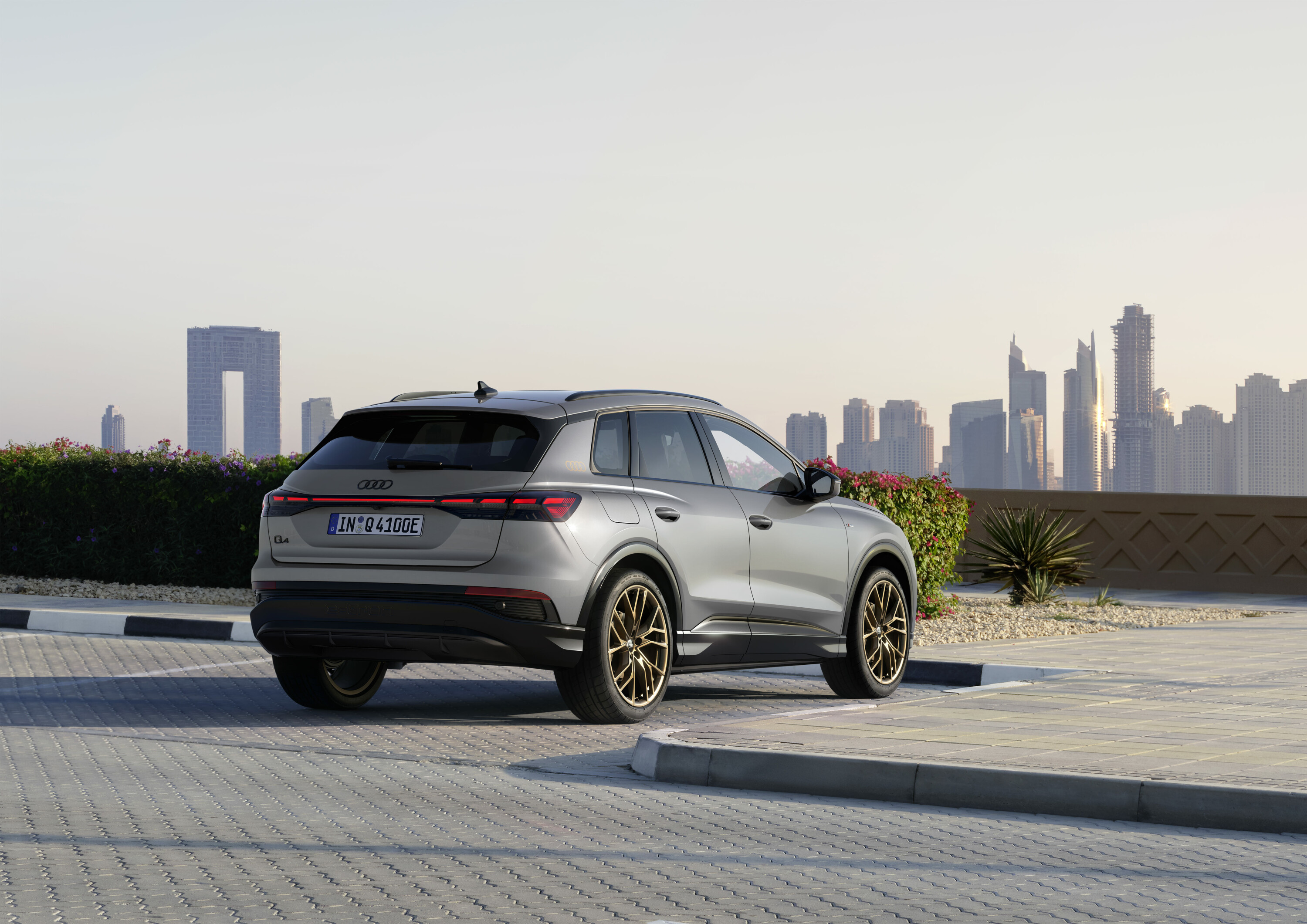
The four-strong Q4 E-Tron range starts at $88,300 for the 45 grade (in Sportback or wagon body styles) with a 77kWh battery, single 210kW electric motor, a power tailgate, and LED headlights.
Audi’s Sportback 55 E-Tron flagship costs $109,500 before on-road costs and gets twin motors with 250kW outputs, S Line exterior styling, Matrix LED headlights, and more.
1
The built-in-Brussels Q4 E-Tron is a rival for the Chinese-made BMW iX3 and German-built Mercedes-Benz EQC.
Audi is yet to lock in final Q4 E-Tron specification, so read on below for pricing, product highlights, and to see what changes Audi made during the Q4 E-Tron update.
2024 Audi Q4 E-Tron pricing
| Model | Price (before on-road costs) |
|---|---|
| Q4 45 E-Tron | $88,300 |
| Q4 Sportback 45 E-Tron | $88,300 |
| Q4 55 E-Tron | $108,500 |
| Q4 Sportback 55 E-Tron | $109,500 |
1
2024 Audi Q4 E-Tron 45 and Sportback 45 features
| 77kWh usable battery | 135kW DC fast-charging |
| 520L boot | Augmented reality head-up display |
| LED headlights | Metallic paint |
| Power tailgate | Audi virtual cockpit |
| Leather upholstery with front seat heating | Tri-zone climate control |
2024 Audi Q4 E-Tron 55 and Sportback 55 features
| Twin motor AWD with 250kW/679Nm | 0-100km/h in 5.4 seconds |
| 175kW DC fast-charging | Matrix LED headlights |
| S Line exterior styling | Progressive steering |
| Sports front seats | Colour ambient lighting |
Our original story, below, continues unchanged
September 2023: Updated Audi Q4 E-Tron confirmed for Australia
There have been rumours of the Audi Q4 E-Tron coming to Australia since the SUV’s launch in 2021, but it’s now been confirmed to coincide with a global update. First customer deliveries are expected to arrive in mid-2024.
Snapshot
- Faster charging, more powerful, longer range Audi Q4 E-Tron revealed
- Australian release now confirmed for mid-2024
- Pricing and features yet to be announced
It’s a similar strategy Volkswagen employed in holding its ID.3 back for our market to coincide with the update’s launch and, despite being late to the party, may benefit both manufacturers in the long run.
In fact, Audi’s local team admitted that the announcement timing – coinciding with the Melbourne EV show – has worked out rather nicely. It follows business cases being put forward by the Australian team after early production issues and countries with CO2 mandates were prioritised.
1
Audi hopes to secure stronger volumes of the Q4 E-Tron in both Sportback and wagon body styles than the trickle of Q8 E-Trons (neé E-Tron SUV) that have arrived in Oz.
It’s a fair assumption that the Q4 E-Tron will be more popular than Audi’s bigger EVs. It’s keenly priced in its Europe home market, with the new entry-level E-Tron 45 costing the equivalent of AU$88,000 in Germany.
It will compete with the BMW iX3 and Mercedes-Benz EQC, as well as high-end variants of the Tesla Model Y and Volkswagen ID.4/ID.5.
1
What’s new for the Q4 E-Tron?
The range has been restructured with the short-range 35 dropped. The E-Tron 40, meanwhile, is replaced by the 45 in both single and twin-motor guises, while the dual-motor E-Tron 50 becomes the 55.
All models are therefore equipped with a 77kWh usable battery (82kWh gross) that’s now able to charge from 10-80 per cent as fast at 28 minutes for Quattro models (capable of 170kW DC, while non-Quattros are limited to 135kW DC).
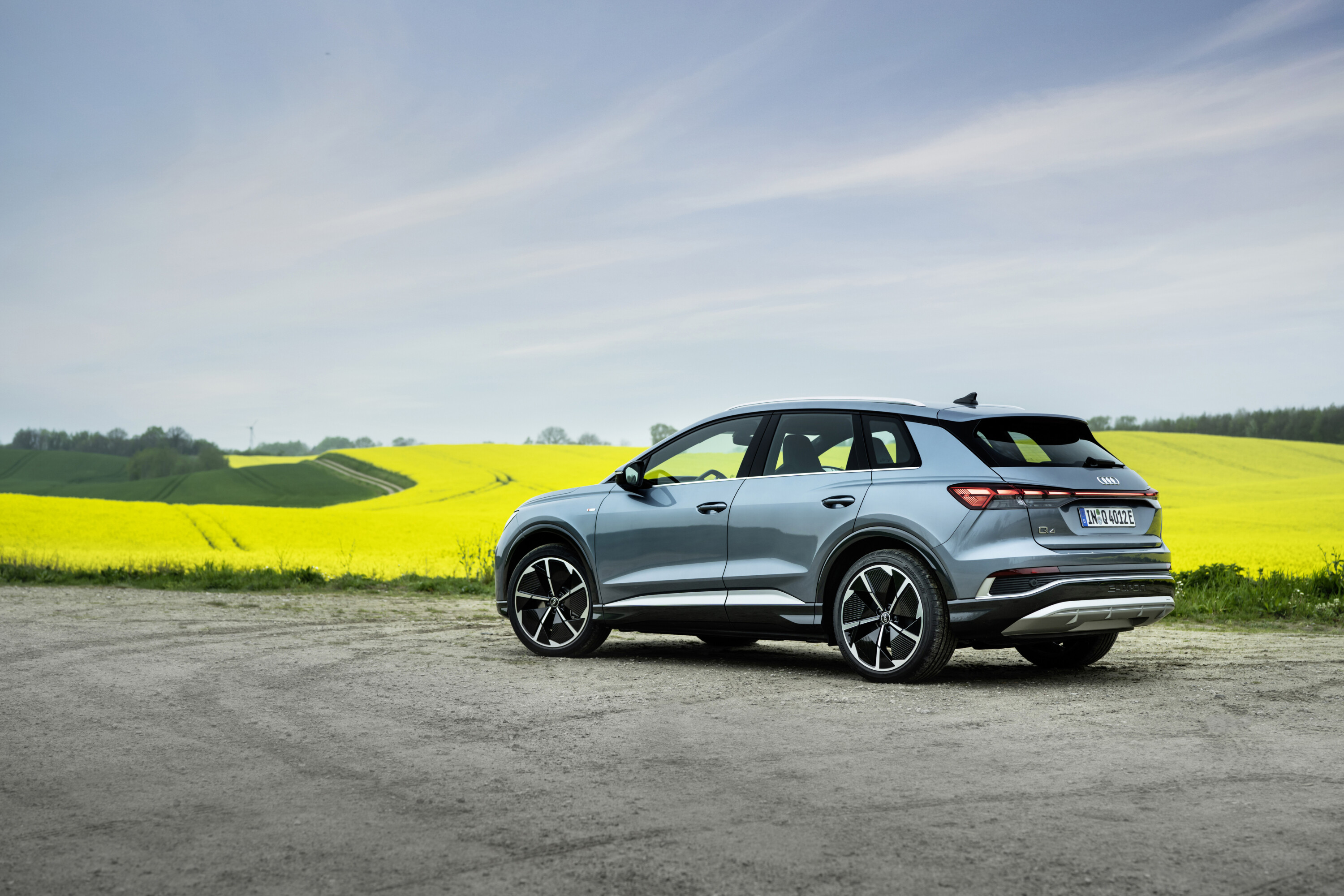
The longest driving range accolade belongs to the rear-drive E-Tron 45 Sportback at 562km in WLTP testing, up from 534km in the pre-update model. Along with a bigger battery, improvements can be attributed to enhanced battery cooling and optimised software.
1
A new permanently excited synchronous motor is mounted on the rear axle producing 210kW (up 60kW) in the E-Tron 45, good for a 6.7-seconds 0-100km/h sprint. The 45 E-Tron Quattro matches those outputs and acceleration but with two motors. The amped 55 Quattro models, meanwhile, develop 250kW and hit the tonne in 5.4 seconds.
Also new is a 15mm lower sport suspension package. Across the range, Audi has massaged the damping, spring, and steering characteristics to improve the Q4 E-Tron’s driving experience.
Audi has worked on the E-Tron’s camera and radar systems, and the adaptive cruise control/lane-trace assist systems can now work in tandem with the blind-spot monitor for automatic lane changes at speeds between 90-130km/h on the freeway.
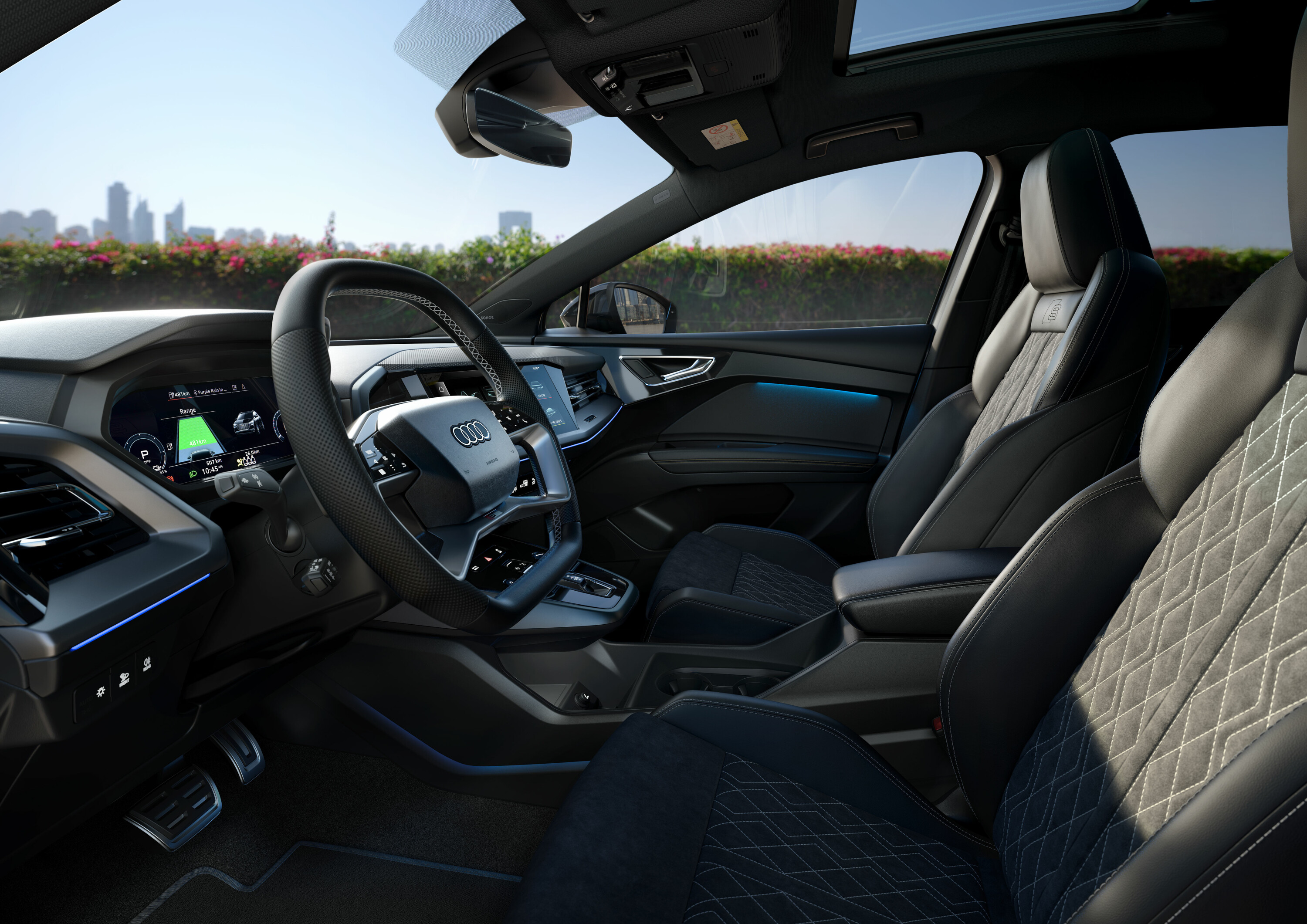
The interior has been left largely alone, though all models now get the larger touchscreen and digital driver’s display, and a battery route planner in the connected navigation. A new synthesised ‘character sound’ also gives the Q4 E-Tron a unique identity.
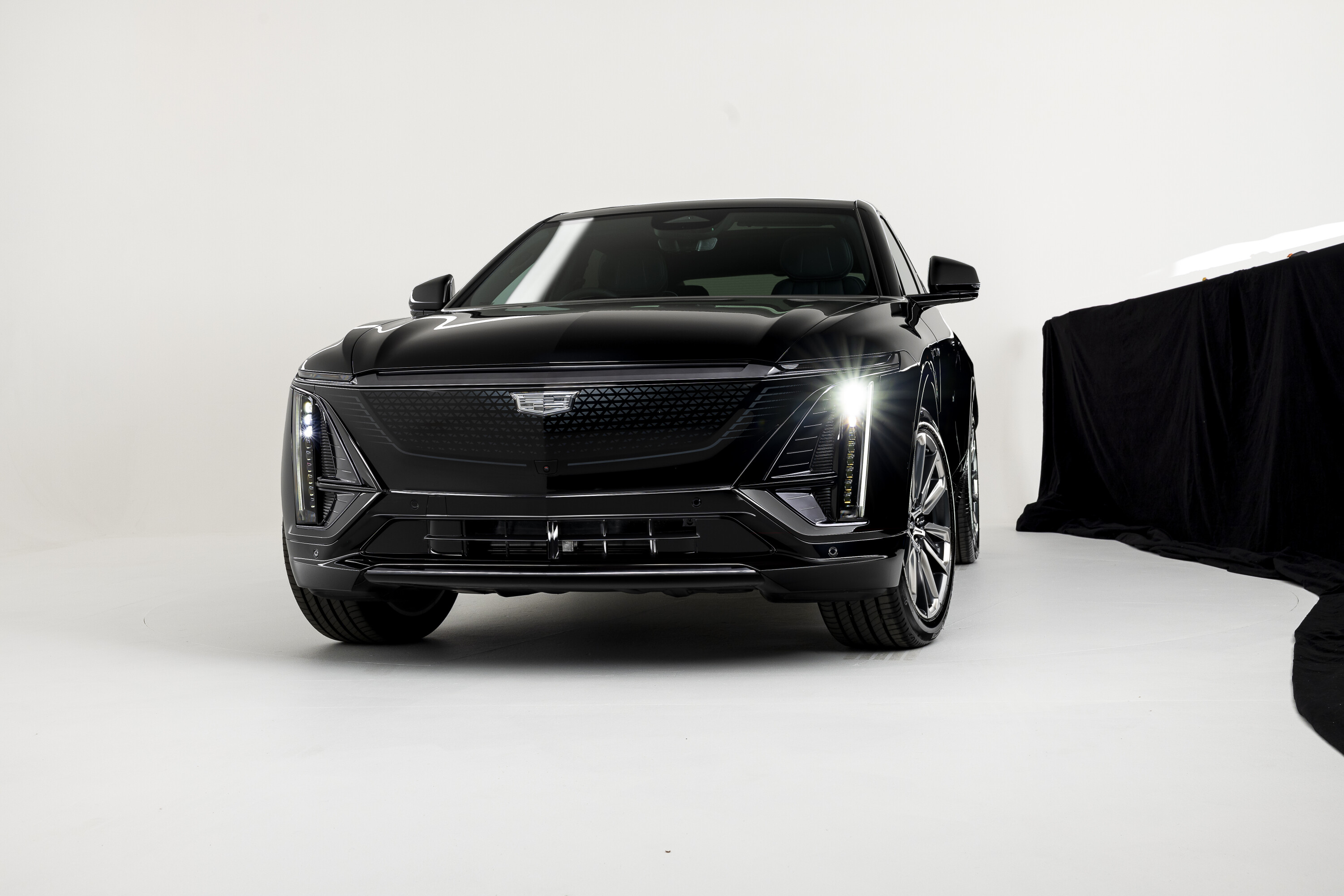
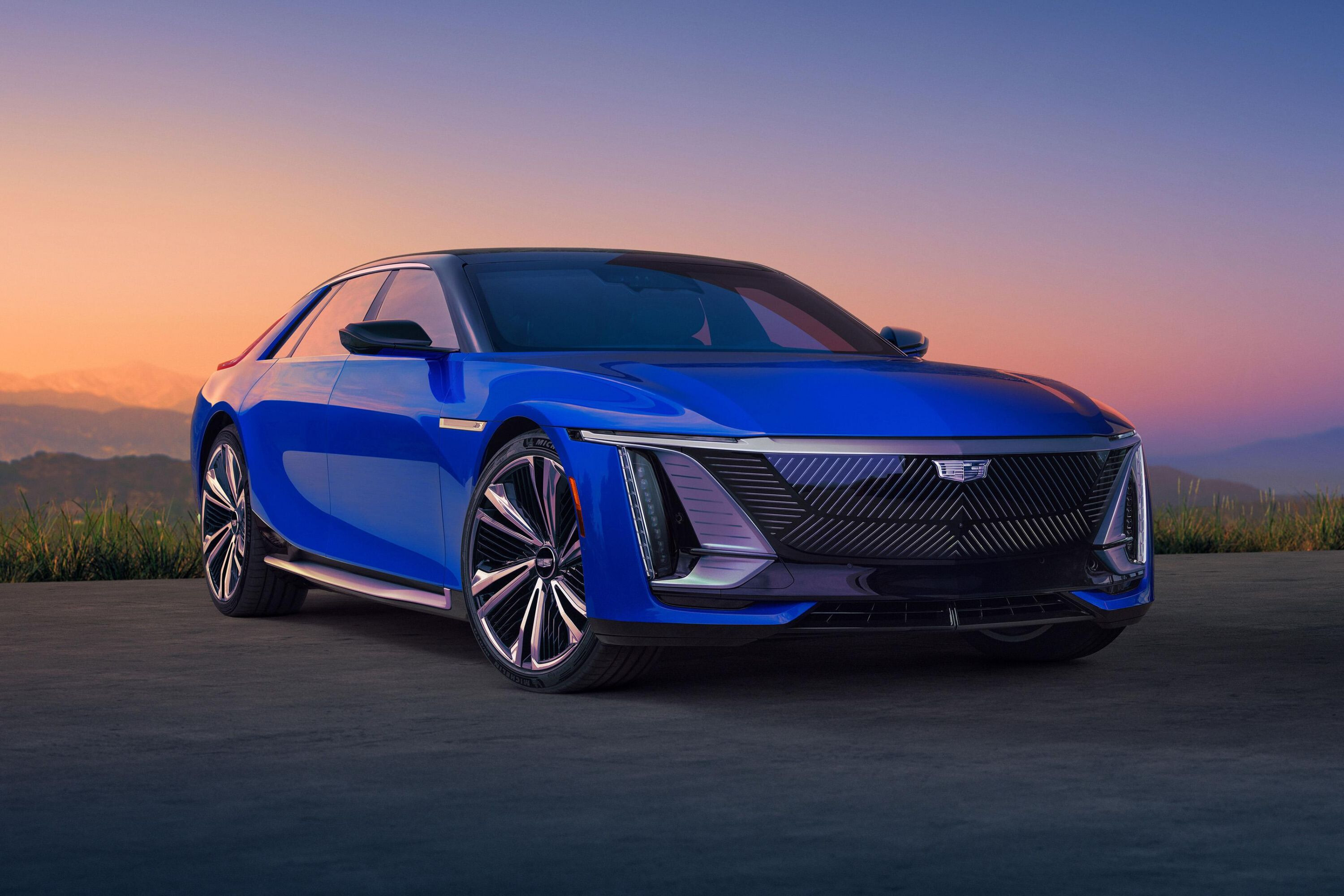
Cadillac says a keen focus on luxury and exclusivity means it’s aiming to sell cars in “exclusive volumes” in Australia when it launches here next year.
Set to launch with a single model in 2024 – the all-electric Lyriq SUV – before expanding to offer a “portfolio of vehicles”, Cadillac says it’s targeting BMW, Mercedes and Audi as its primary competitors.
1
Given the luxury positioning – the Lyriq is tipped to cost in excess of $100,000 – Cadillac’s execs admitted they aren’t chasing high volumes Down Under.
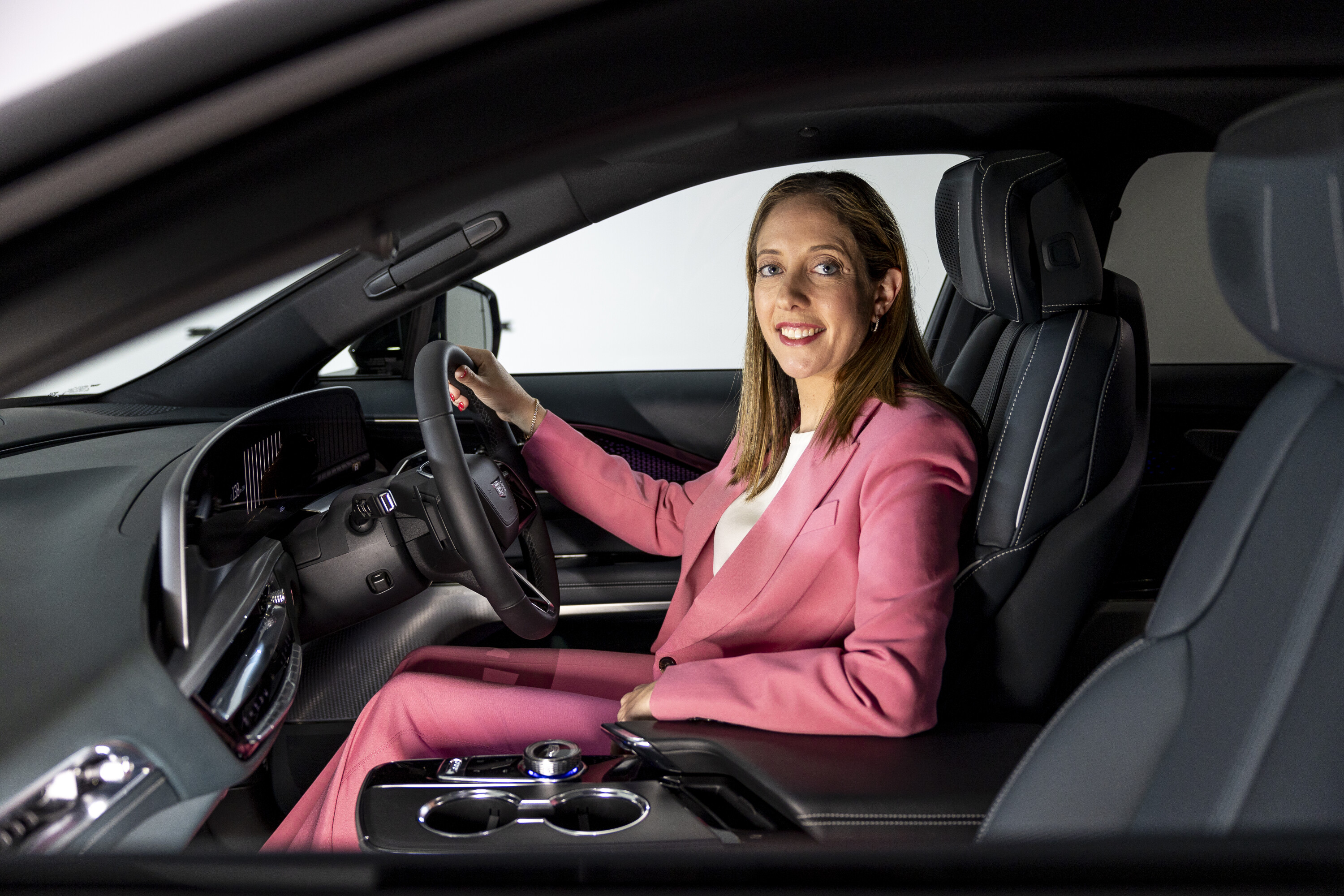
“I mean, obviously we’re not going to give numbers specifically away,” said GM’s managing director for Australia and New Zealand, Jess Bala. “When you think about luxury and exclusivity, it means you’re not going to see everyone out there driving one.
“We want it to be something that’s sought after, something that’s ambitious. So it’s not going to be mainstream volumes that a lot of people are familiar with, or you see quoted. We want to be something that’s very much sought after and truly fits into that luxury space.”
1
GM’s president and general manager of strategic markets, Ernesto Ortiz, reiterated Cadillac’s Aussie premium positioning.
“We are not going after volume,” he said. “It’s all about customer needs and delivering a great customer experience. A luxury customer experience.”
Cadillac won’t build conventional dealers in Australia but will instead interact with its customers through experience centres in Sydney, Melbourne and Auckland.
Bala says customer service is a key pillar for Cadillac and that the brand will offer a personalised “white glove” experience.
“We’re going to have a very well-trained team that is all about white glove service and that luxury experience,” she said. “Whether it’s the person that’s on the showroom floor with you, the person that might be answering a phone… it has to be consistent the whole way through and making sure those customers, they know that they’re the centre and the whole thing pivots around them.”
One way Cadillac could tailor its customer experience is to collect and return owners’ cars when it’s time for a service, similar to what Genesis offers its owners.
“We’re looking at everything,” confirmed Bala. “And every customer is unique. Some might say ‘hey my car is due for a service on Monday, can you pick it up’. Others might want that more hands-on experience, so it’s really about us delivering the most seamless experience for the customer.”
As for where Cadillac will service its vehicles – given it has no dealer network to lean on – Bala said discussions are underway with several third-party providers.
1
“We’re working through a few different options”, she said. “There will be a strategy in place. Whether it’s working with third parties or within our own internal business that we have already.
“It’s obviously going to depend on where the customer is and the location. It’s something that’s going to be adaptable and something that we will develop over time and we’ll share more details closer to starting sales.”
When asked if Cadillac could use existing GM Special Vehicles outlets to service its cars, Bala replied: “We’re going to do what’s right for the customer ultimately, and what makes the whole process easier for them. And we’ll work with the right partners that we think would deliver the best experience possible.”
MORE
Everything Cadillac
MORE
Electric Cars
New recall notices have been issued, affecting Mazda, Peugeot, Volkswagen and Ferrari vehicles.
The details of each recall, as published, are posted below.
1
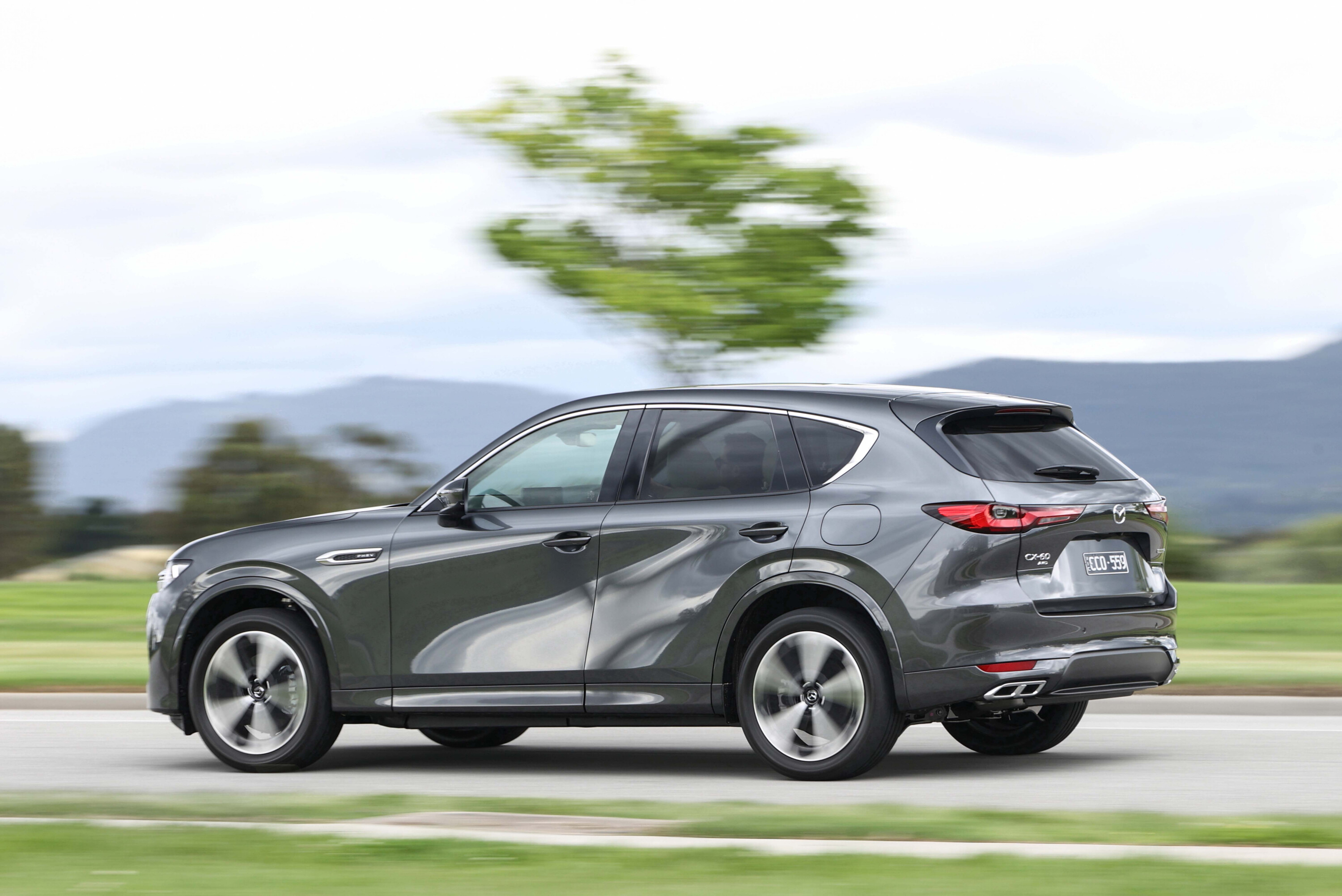
Recalls: 2023 Mazda CX-60 plug-in hybrid
- Recall number: REC-005820
- Campaign number: R202302
- Original published date: 13 November 2023
- Year range: 2023
- Variants: PHEV Variants of this model
- Affected units: 766
- List of affected VINs (.csv file) [↗]
What are the defects?
Due to a programming issue, the fail-safe driving mode which helps reduce the effects of failure in the vehicle may activate unintentionally resulting in a loss of motive power.
What are the hazards?
A loss of motive power while driving at high speed could increase the risk of a crash. This could potentially result in injury or death to vehicle occupants and other road users.
What should consumers do?
Mazda Australia will contact all affected customers to advise them to present their vehicle to their preferred Mazda Dealer to complete a software update free of charge.
Supplier details
MAZDA AUSTRALIA PTY. LIMITED
Who should owners/operators contact for more information?
Mazda Customer Support
- Contact phone: 1800 034 411
- Contact website: [email protected] [↗]
- Contact email: mazda.com.au [↗]
1
- Contact phone: 1800 034 411
- Contact website: [email protected] [↗]
- Contact email: mazda.com.au [↗]
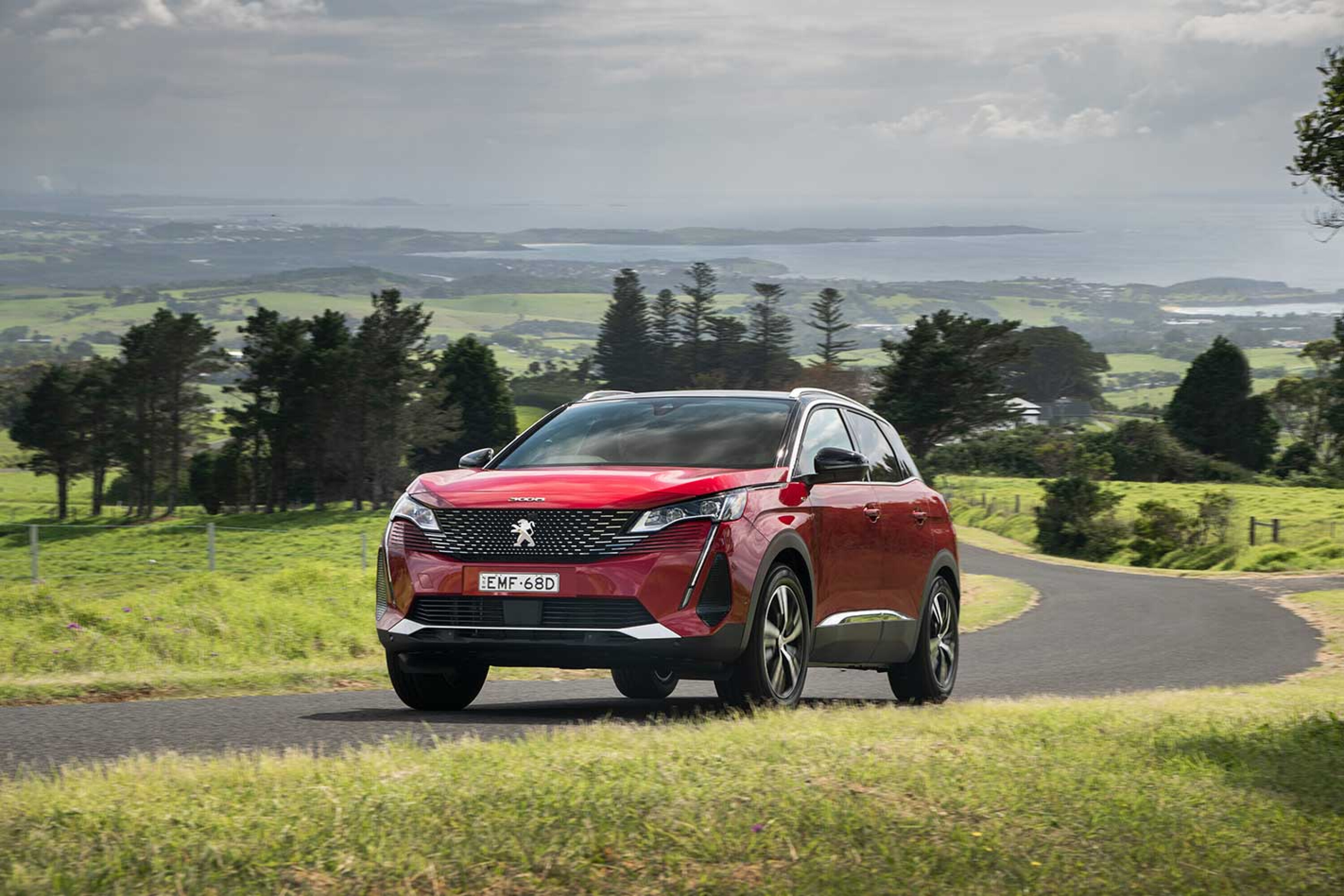
Recalls: 2018-19 Peugeot 3008 & 5008
- Recall number: REC-005815 & REC-005816
- Campaign number: KWM & KWL
- Original published date: 13 November 2023
- Year range: 2018 – 2022 & 2018 – 2019
- Variants: 3008 GT, 5008 GT
- Affected units: 332 & 194 (526 in total)
- Recall 1 (REC-005815): Affected VINs (.csv file) [↗]
- Recall 2 (REC-005816): Affected VINs (.csv file) [↗]
What are the defects?
The Diesel Particulate Filter (DPF) may crack due to overheating. If this occurs the DPF may not operate as intended resulting in an increase of tailpipe emissions.
What are the hazards?
There is no safety hazard and if this occurs, the defect will not affect the performance of the vehicle.
If the defect occurs the vehicles would not be compliant with the Australian Designer Rule ADR79 – Emission Control for Light Vehicles.
What should consumers do?
Owners of recalled vehicles can contact their preferred authorised Peugeot dealer to have the work carried out as soon as possible, free of charge.
Supplier details
INCHCAPE EUROPEAN AUTOMOTIVE PTY LIMITED
Who should owners/operators contact for more information?
Customer Relations Team
- Contact phone: 1800 307 607
- Contact website: peugeot.com.au/contact-us [↗]
1
- Contact phone: 1800 307 607
- Contact website: peugeot.com.au/contact-us [↗]
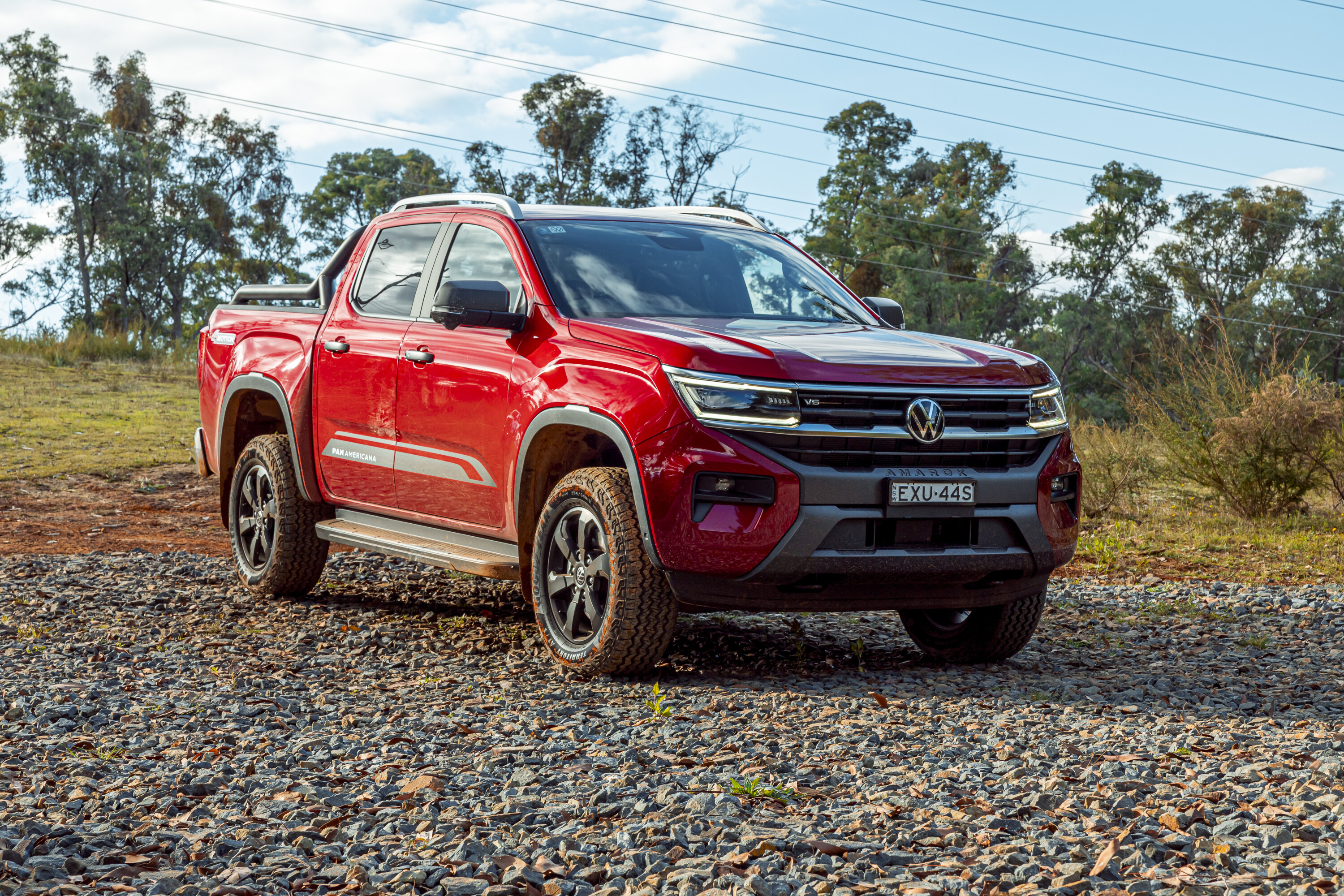
Recalls: 2023 Volkswagen Amarok
- Recall number: REC-005829
- Campaign number: 39F7
- Original published date: 13 November 2023
- Year range: 2023
- Affected units: 70
- List of affected VINs (.csv file) [↗]
What are the defects?
Due to a manufacturing defect, the front drive shaft may become damaged and break. If this occurs, it could lead to a sudden loss of motive power.
What are the hazards?
A sudden loss of motive power whilst driving could increase the risk of accident, causing injury or death to the vehicle occupants and/or other road users.
What should consumers do?
Owners of affected vehicles can contact their preferred Volkswagen dealership to schedule an appointment to have the vehicle inspected and rectified, free of charge.
Supplier details
Volkswagen Group Australia Pty Ltd
Who should owners/operators contact for more information?
Volkswagen Group Australia
- Contact phone: 1800 504 076
- Contact website: volkswagen.com.au/app/locals/find-dealer [↗]
- Contact email: [email protected] [↗]
1
- Contact phone: 1800 504 076
- Contact website: volkswagen.com.au/app/locals/find-dealer [↗]
- Contact email: [email protected] [↗]
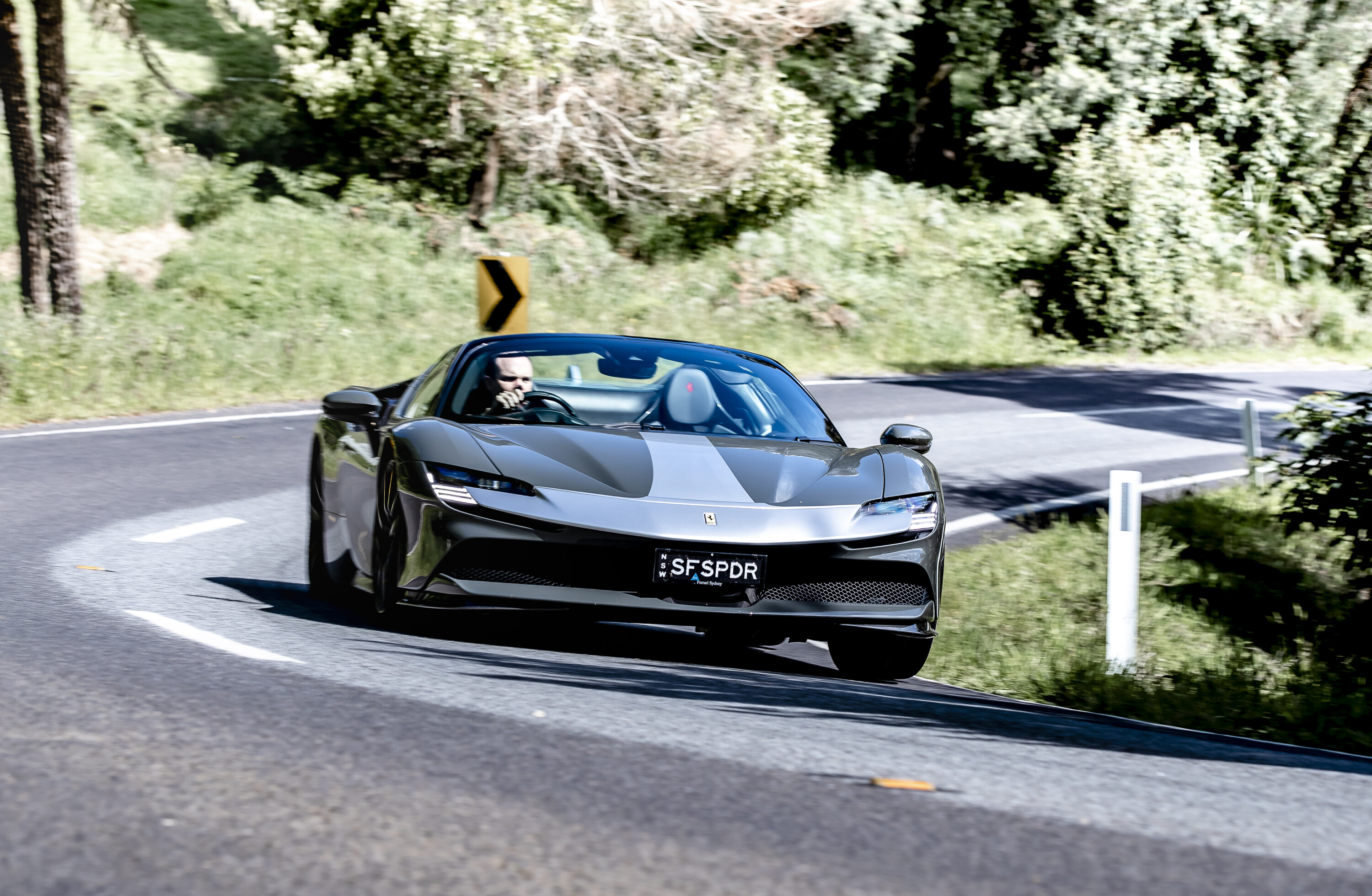
Recalls: 2023 Ferrari SF90
- Recall number: REC-005828
- Campaign number: 86
- Original published date: 13 November 2023
- Year range: 2023
- Variant applicability: All variants within this model
- Affected units: 35
- List of affected VINs (.csv file) [↗]
What are the defects?
The engine turbocharger oil delivery pipe may not meet manufacturing specifications. As a result, engine oil could leak into the engine bay and accumulate in the presence of ignition source resulting in a vehicle fire.
What are the hazards?
A vehicle fire could increase the risk of injury or death to vehicle occupants, other road users and bystanders, and/or damage to property.
What should consumers do?
Owners of affected vehicles should contact their local Ferrari dealership or Ferrari Australia to arrange an appointment to have the rectification carried out, free of charge.
Supplier details
FERRARI AUSTRALASIA PTY LIMITED
Who should owners/operators contact for more information?
Ferrari Australiasia
- Contact phone: 1800 234 392
- Contact website: ferrari.com/en-EN/auto/car-part-services [↗]
- Contact email: [email protected] [↗]
\n
1
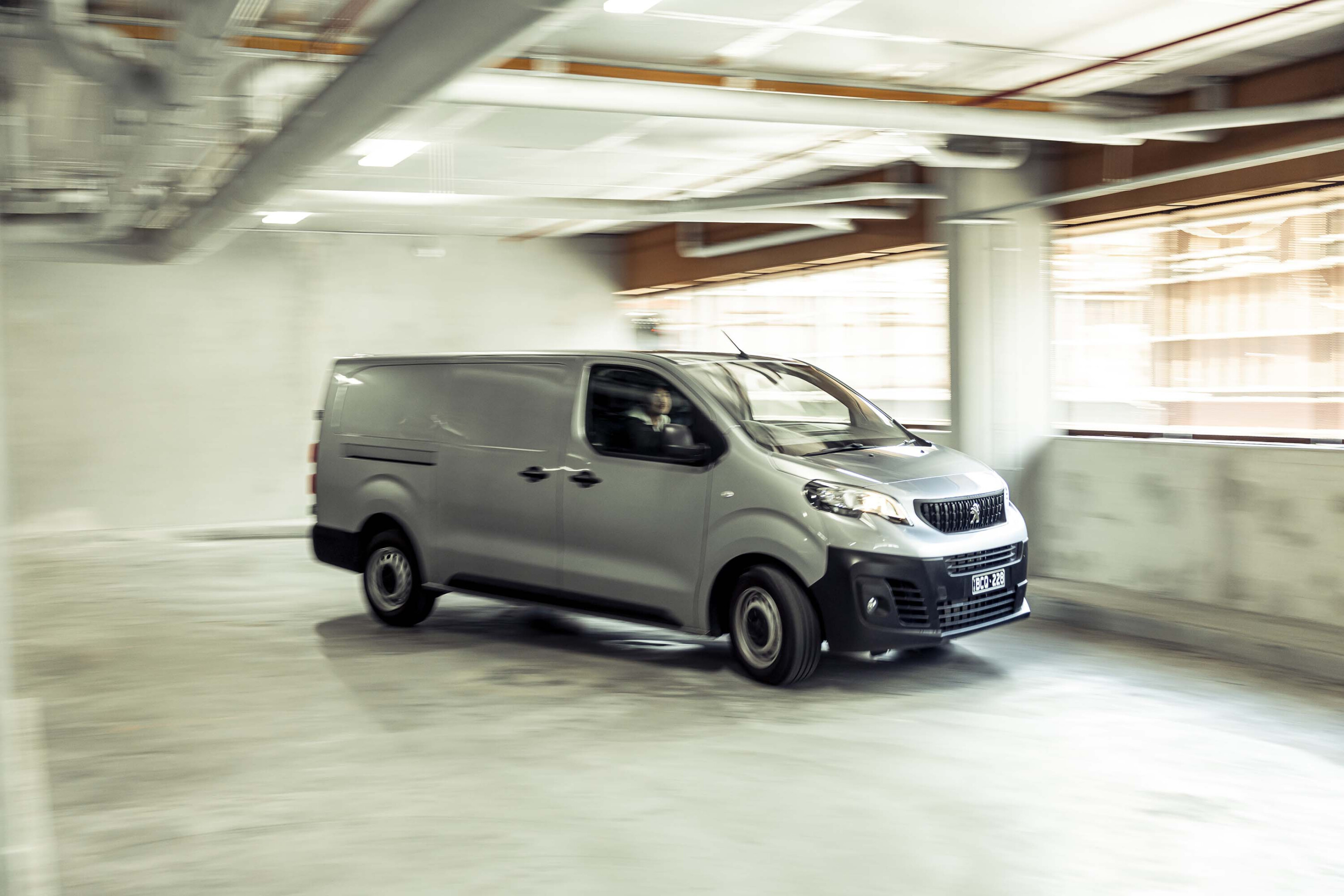
Recalls: 2021-22 Peugeot Expert
- Recall number: REC-005814
- Campaign number: MGJ
- Original published date: 13 November 2023
- Year range: 2021 – 2022
- Variants: Premium 2.0HDI AT8
- Affected units: 11
- List of affected VINs (.csv file) [↗]
What are the defects?
Due to a software issue in the Engine Control Unit (ECU), the Selective Catalytic Reduction (SCR) system may not operate as intended. If this occurs, the instrument panel warning light will not illuminate and the urea injection emission control system may not operate resulting in an increase of tailpipe emissions.
What are the hazards?
There is no safety hazard and if this occurs, the defect will not affect the performance of the vehicle.
If the defect occurs the vehicles would not be compliant with the Australian Designer Rule ADR79/04- Emission Control for Light Vehicles
What should consumers do?
Owners of the recalled vehicles can contact their preferred authorised Peugeot dealer to have the work carried out as soon as possible, free of charge.
Supplier details
INCHCAPE EUROPEAN AUTOMOTIVE PTY LIMITED
Who should owners/operators contact for more information?
Customer Relations Team
- Contact phone: 1800 307 607
- Contact website: peugeot.com.au/contact-us [↗]
\n
More links to help you with your car recall
- What is a recall?
- What to do if your car is recalled
- Why a car recall isn’t all bad news
- What is a vehicle identification number (VIN)?
- All ANCAP & vehicle safety stories
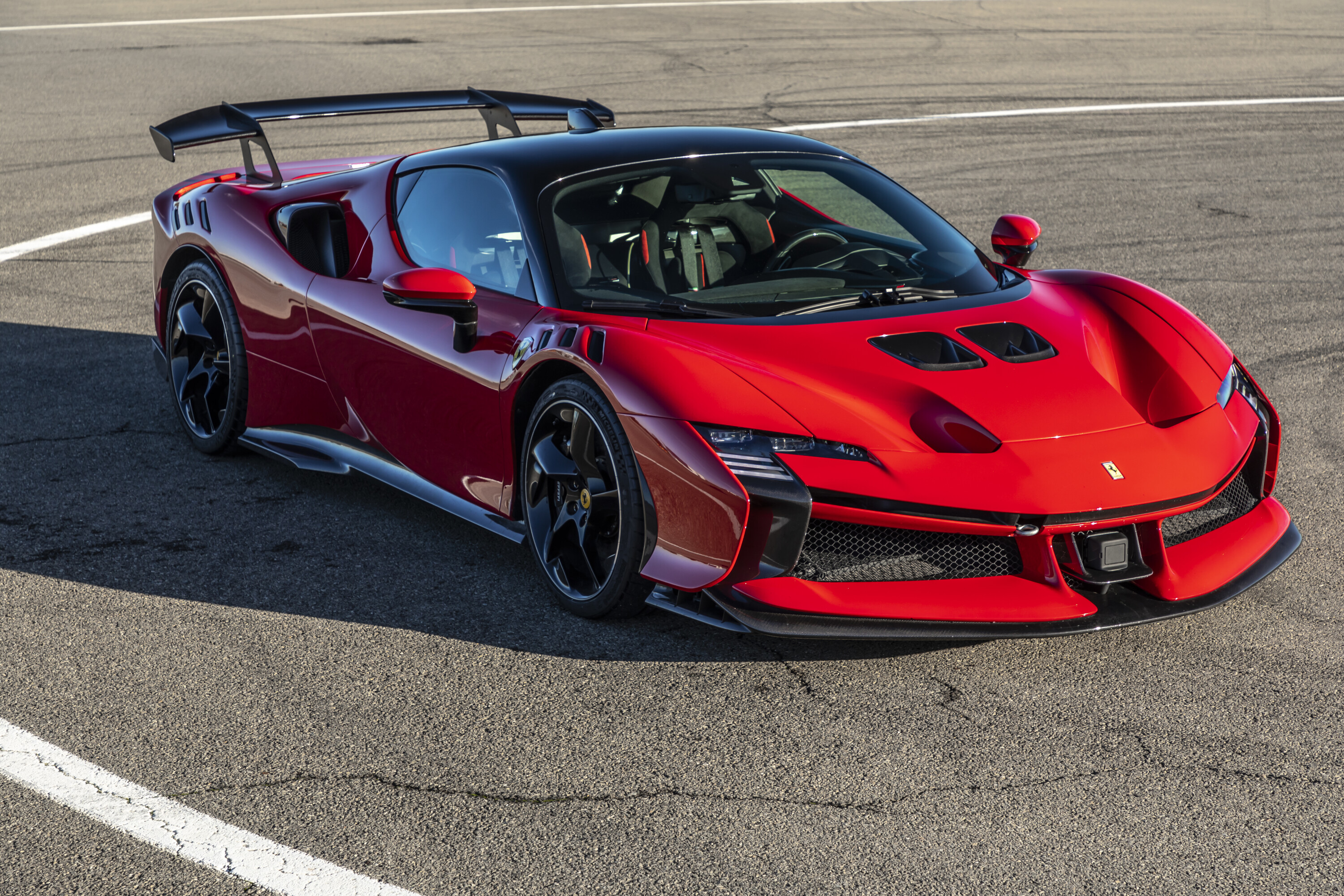
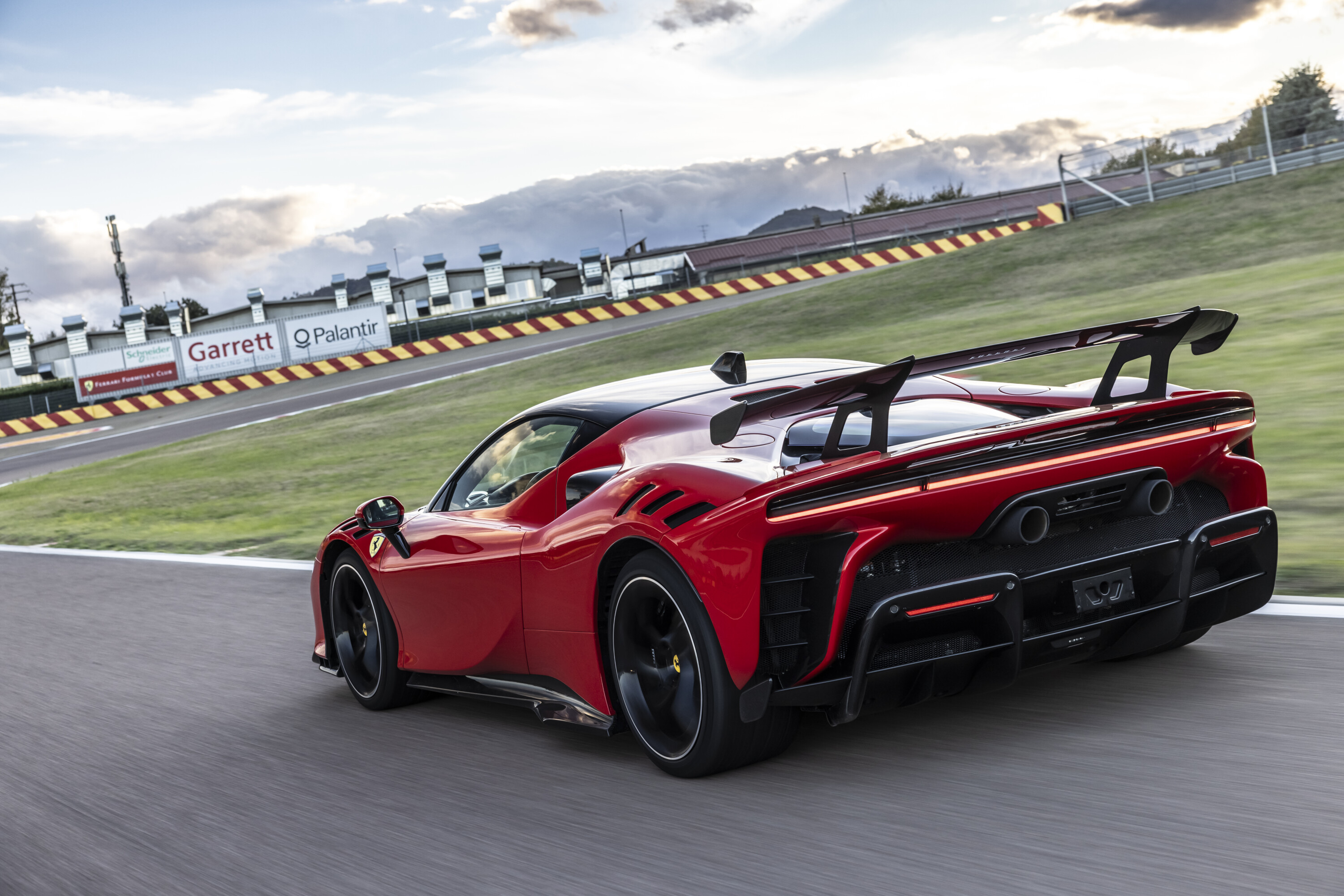
Ferrari’s first ever road-legal XX car, the SF90 XX, is officially the fastest road car to lap the brand’s famous test track, Fiorano.
In the hands of Ferrari’s chief test driver, Raffaele de Simone, the track-focused SF90 XX lapped the 3km circuit in 1m17.039s which smashes the previous benchmark by 1.4 seconds.
That previous marker was set by the ‘regular’ SF90 with Assetto Fiorano package, which highlights the huge performance gain offered by the XX’s stronger focus on aerodynamics.
1
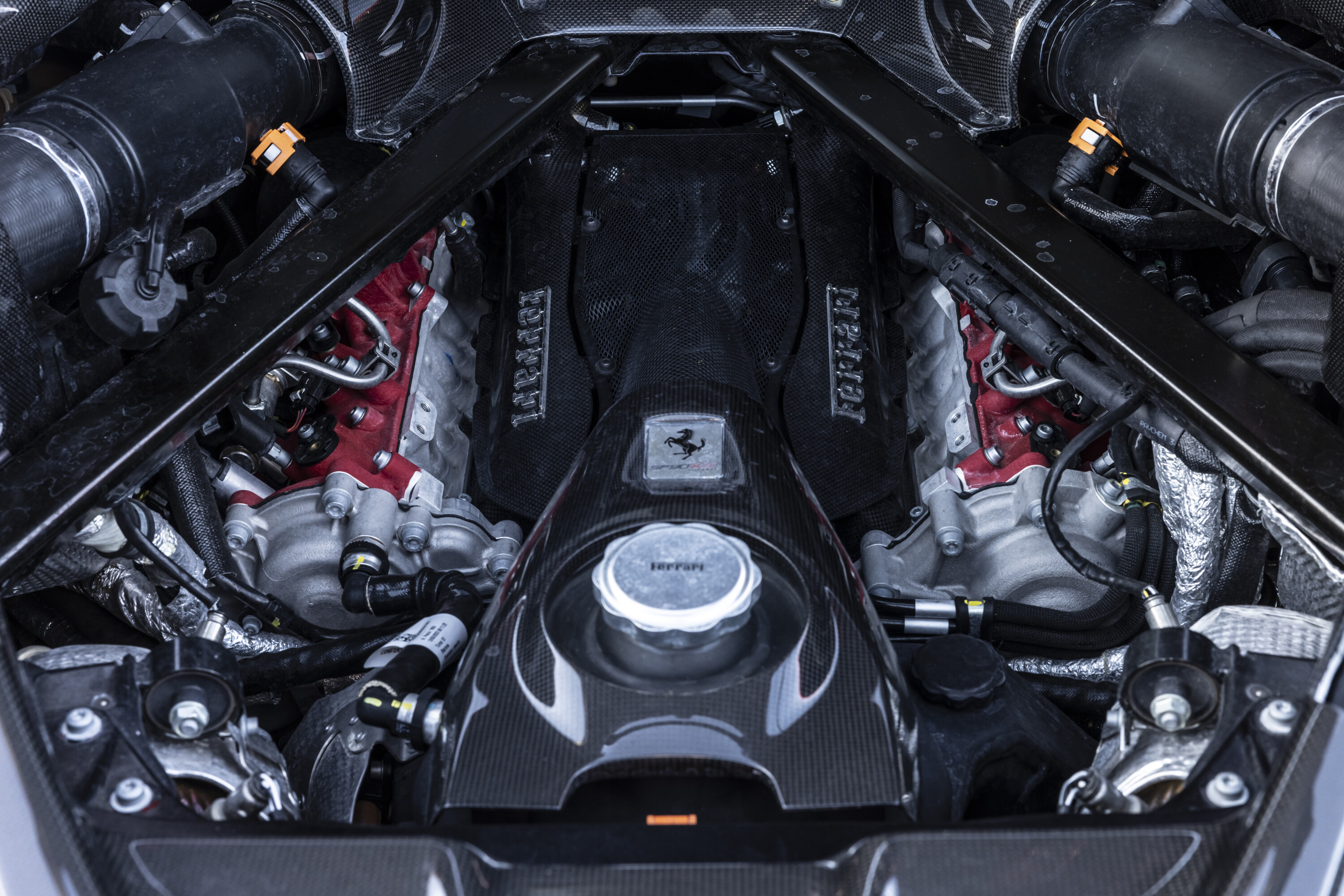
The XX version is based on the regular SF90 and shares the same plug-in hybrid powertrain which combines a 4.0-litre V8 with three electric motors and a 7.9kWh battery.
Power is up to 758kW in the XX – a rise of 22kW over the standard car – but its huge fixed rear wing, sealed underbody and redesigned nose mean it produces twice the downforce. At 250km/h the SF90 XX is generating 530kg of downforce, with the rear wing alone accounting for 315kg of that.
Ferrari bolted lightweight carbon-fibre wheels onto the XX for the record attempt – they’re actually made by Aussie company Carbon Revolution — and wrapped them in sticky Michelin Pilot Cup 2 R tyres.
1
The same tyres were used on the SF90 when it set the previous benchmark lap time.
For the first time, the XX’s record attempt was independently measured and verified by a “specialist third-party motorsports agency”.
Numbers mean nothing without context, so how does the SF90 XX’s record stack up in the pantheon of Ferrari road cars?
1
Well it’s a full 10 seconds quicker than a Ferrari F50, which is the last Ferrari to feature a fixed rear wing like the XX’s.
It’s also 2.0 seconds better than a LaFerrari, 4.0sec quicker than the blistering 296 GTB and around 5.3 seconds ahead of the Enzo.
Check out the video for the full onboard experience of de Simone setting the lap time in SF90 XX. We’d suggest turning your speakers up…
MORE
Everything Ferrari
