
Snapshot
- FT-Se sports concept doesn’t rely on heritage
- All-paw GR sports coupe promises to keep weight down
- If it comes to production expect a post-2026 release
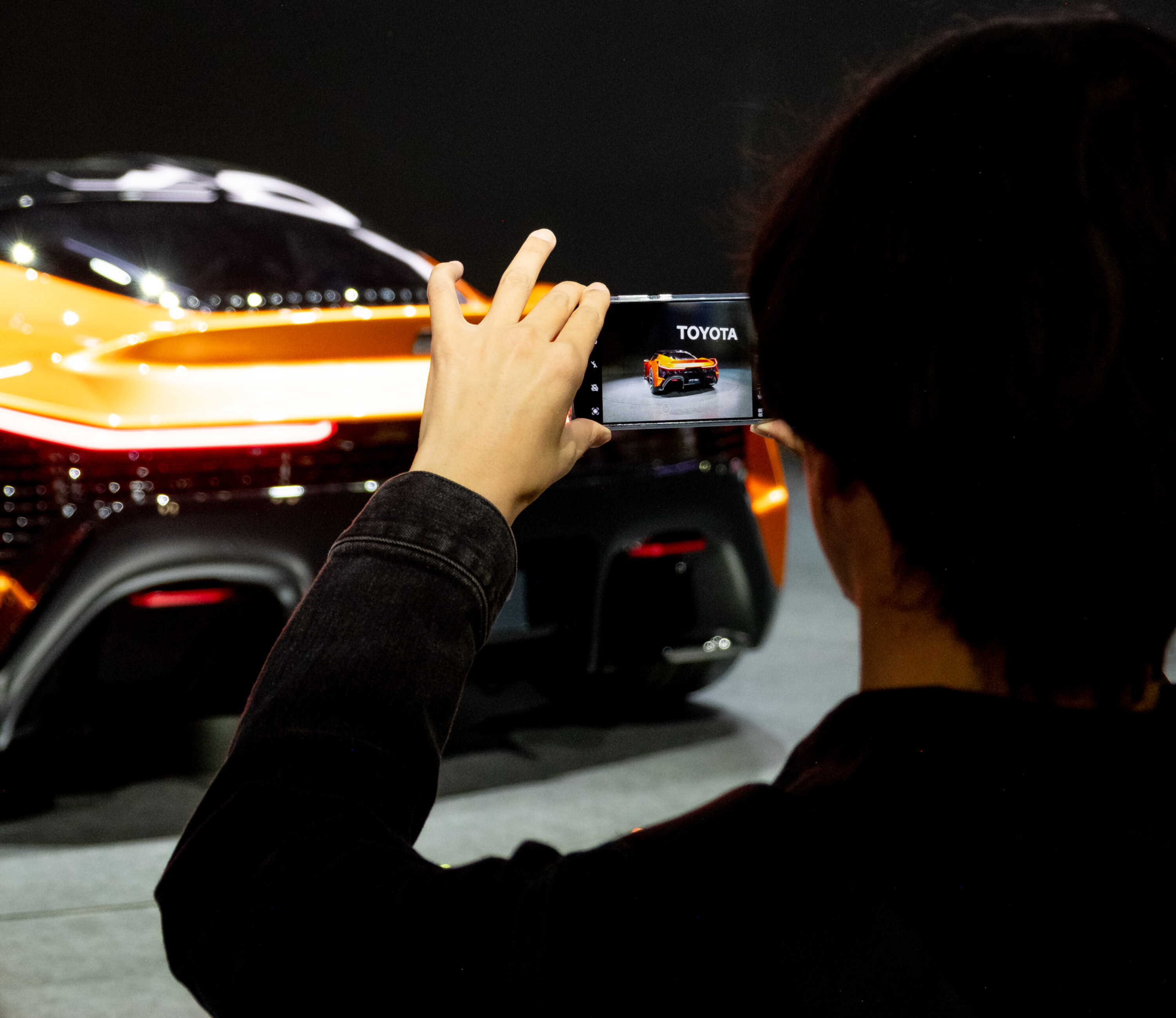
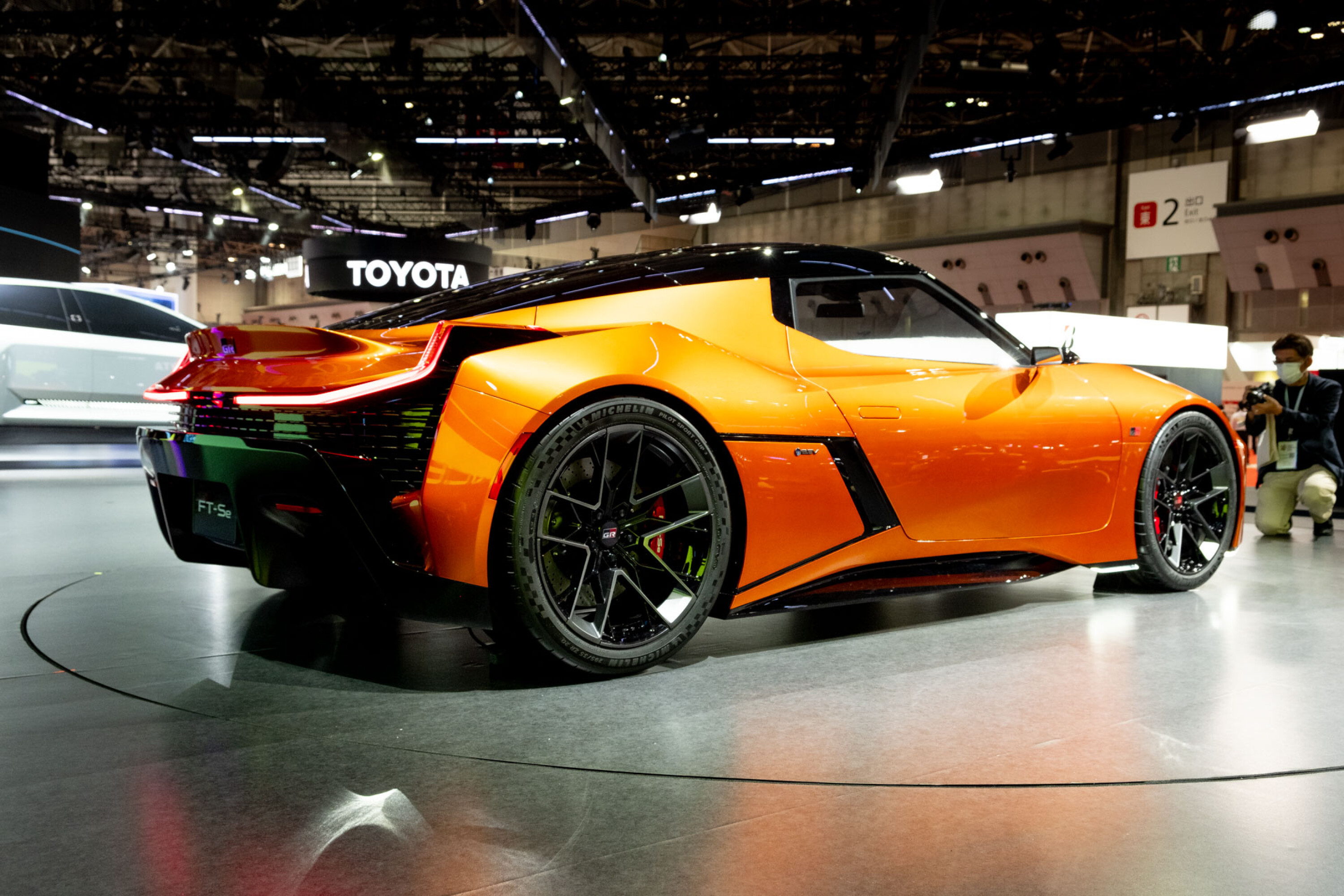
Standing in front of Toyota’s heavily electrified showcase at the 2023 Japan Mobility Show, Hideaki Iida is the crisply-dressed project manager of GR design who explains that the FT-Se concept’s design is “about 80 per cent” production-ready… hopefully.
As the design lead of the latest Prius, Hideaki-San is no stranger to releasing what looks like a near-concept production vehicle. And he confirms when asked that the FT-Se is, indeed, a forward-looking beacon for Gazoo Razing’s future.
“We don’t need to rely on heritage for this car. It’s a brand new top-end GR sports car”, he says with confidence, agreeing when I point out the similarities between it and a Lotus Evora: “I think so, too, because Lotus is focused on track racing and GR is the same. As a result, we may have a little similar point, I have to admit”, he said.
1
The production targets are still based around existing cars, though, including keeping this all-wheel drive electric sports car fun to drive. The engineers are targeting a driving range of around 400km, with similar acceleration and weight figures to the existing Supra. They also claim it won’t be supercar expensive – but don’t expect GR86 pricing for the production version.
Creating the FT-Se all hinges on a new architecture with new slimline high-power lithium-ion NCM batteries (not solid-state just yet) that will be shared with the Lexus LF-ZC, as well as Toyota’s FT-3e SUV. A production version of the FT-Se could happen post-2026 following Lexus’s models to market.
“We can minimise the [size of] the battery and we can use it for speed, or we can use it for space. As a result, we can make [FT-Se] as low as possible, with no engine we can achieve really good visibility, and for aerodynamics, we have a very smooth side profile”, says Hideaki-San.
As for the engineering side, FT-Se lead and group manager for GR vehicle development Fumihiko Hazama had plenty to say about the FT-Se’s dynamics. And, being responsible for the latest Supra chassis upgrades and the addition of a manual gearbox, he’s a good man to have on the project.
One of the challenges with an electric car is how it responds to inputs. Yes, with the battery beneath the floor (unlike Lotus’s unique ‘spine solution’) the FT-Se has a low centre of gravity. That’s good, but Hazama-San promises his team have been working hard with suspension geometry to minimise fore-aft squat and pitch for GR’s incoming sporty EVs to make them more natural (and fun) to drive.
“We have technology in the FT-Se for a simulated manual”, he says, confirming rumours and patent filings, “it makes it more fun for driving. [The FT-Se] doesn’t have a transmission, but our technology simulates this with paddles or a central shifter.” it’s not about outright pace (that’s easy in an EV), instead about making cars interactive, something simulated sounds may help with, too.
1
“We have many kinds of engines: four-cylinders, six-cylinders, three-cylinders and Lexus corporation even has a V10. There are many kinds of engines in the Toyota corporation with good sounds, so the customer might be able to select the artificial sound.”
If the above sounds like the Hyundai Ioniq 5 N, you wouldn’t be far wrong. But Toyota is even experimenting with a full-on simulated six-speed manual transmission in (strangely) a Lexus UX300e mule [↗].
As for a production date, Hazama wouldn’t be drawn on specifics, though he did say: “We need some voices from customers saying: earlier, earlier, earlier!”
With the platform launching under the LF-ZC in 2026, it’s safe to assume Toyota will be ripe to release its takes afterwards, potentially including a finished version of the FT-Se.
MORE
Everything Toyota
Snapshot
- Kia EV6 facelift spied in South Korea
- New lights to align with latest design theme
- Expect more advanced tech, Kia Connect
The facelifted 2025 Kia EV6 electric SUV has been spotted in South Korea.
Content creator Woopa TV [YouTube ↗] spied the camouflaged EV6 in its home country, with only some exposed lighting units that indicate it’ll follow Kia’s latest ‘Opposites United’ design theme.
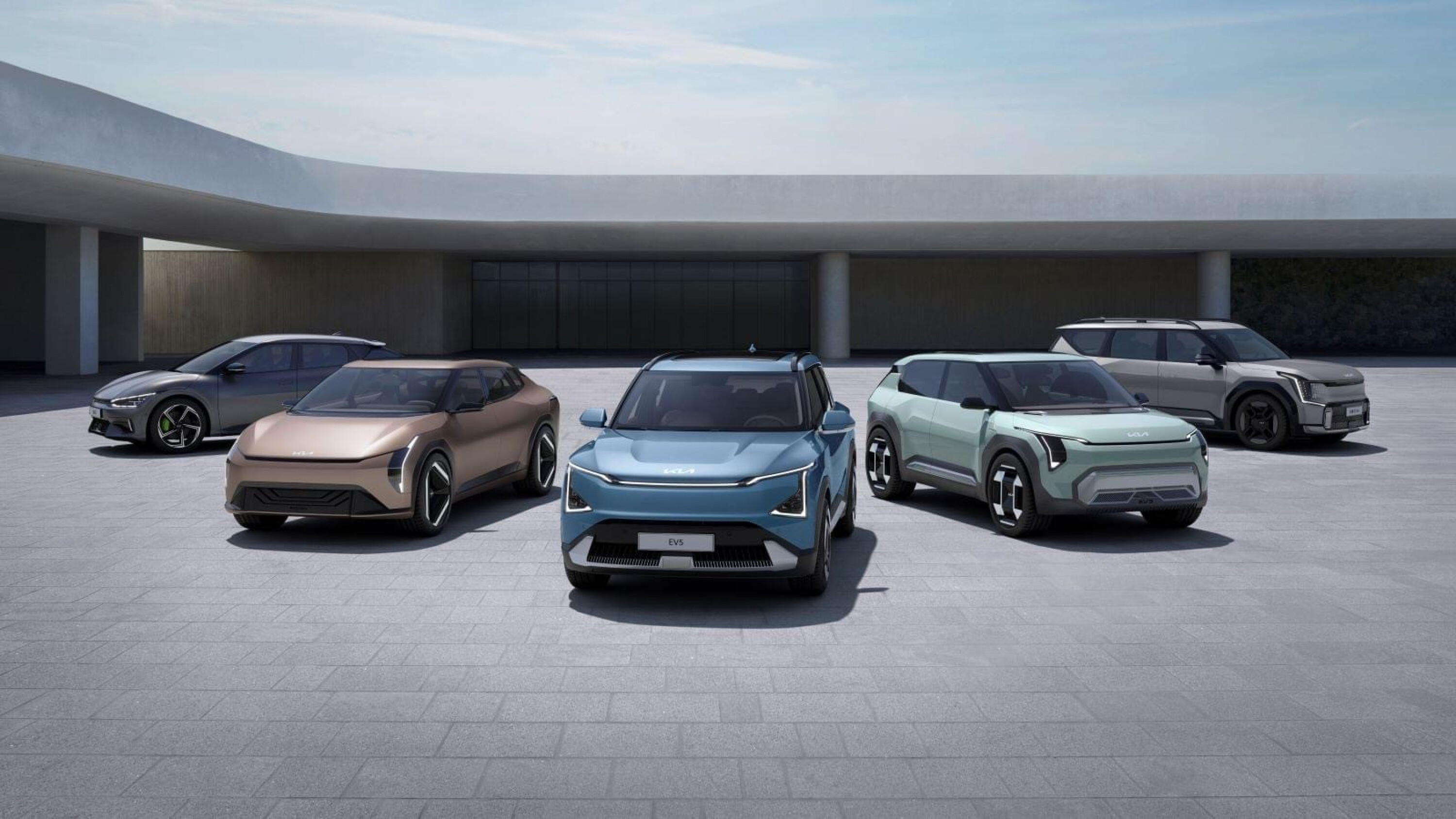
However, unlike the soon-to-launch Kia EV9 large electric SUV, upcoming EV3 small SUV, EV4 sedan, and EV5 medium SUV family, it appears to feature a diagonal split headlight and daytime running light arrangement akin to the Citroen C5 X.
It may also feature thin vertical lighting strips, as found on all newly-facelifted models such as the combustion engine-powered Picanto micro hatch, Sorento large SUV, and Carnival people mover.
The EV6’s lower front intake has also been tweaked, with new-look aerodynamic wheel designs on this development tester.
However, the rear curved full-width LED light bar seems to be unchanged, with the same three-dimensional diamond patterns on the indicator strip. Unlike the Hyundai Ioniq 5 N, this tester still doesn’t include a rear wiper.
While the interior was covered up, expect the facelifted Kia EV6 to feature the company’s latest Connected Car Operating System (ccOS) with Kia Connect built-in cellular and smartphone app connectivity in Australia.
1
The updated Kia EV6 should debut sometime next year.
The EV6 launched in Australia in 2021, as the South Korean carmaker’s first ground-up electric vehicle.
Despite initial supply struggles for the Tesla Model Y rival, the company told Wheels in August that stock is now readily available.
Below: The current 2023 Kia EV6
MORE
Everything Kia
Snapshot
- Four companies sign MOU to develop hydrogen infrastructure
- Eventual goal to become a ‘hydrogen society’ post-2030
- Expect jump in number of refuelling stations; focus on heavy commercial initially
Toyota Australia, Hyundai Australia, Ampol, and Pacific Energy have signed a memorandum of understanding (MOU) linking the companies to a common goal: investing in and growing hydrogen infrastructure in Australia on the way to becoming a ‘hydrogen society’.
The MOU is a step-up from a handshake deal though the agreement doesn’t involve any cash changing hands – just the unification to work towards a common goal. And with less than 10 refuelling stations in Australia at time of publishing, infrastructure is the first step.
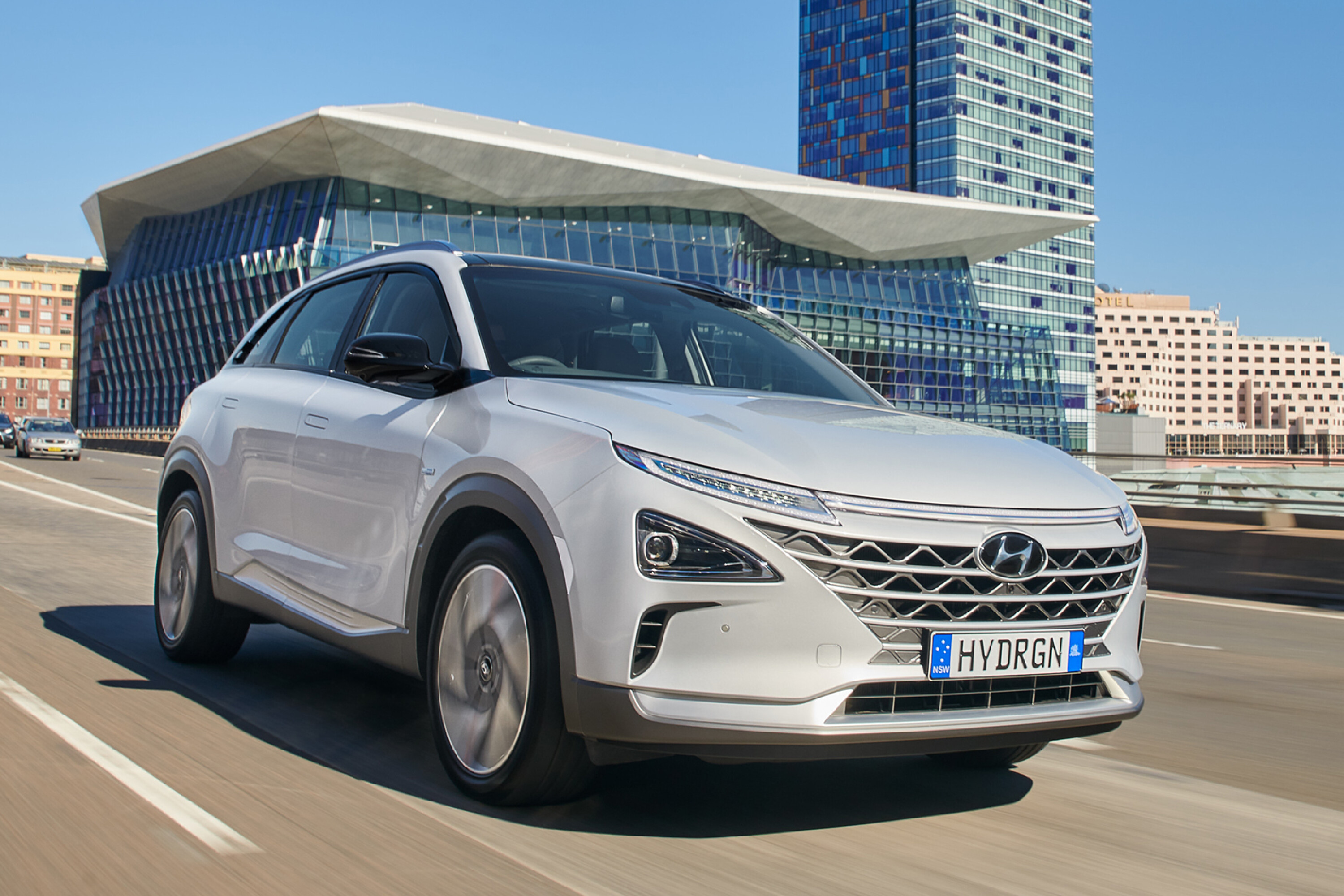
For Hyundai and Toyota, the interest is for their Nexo and Mirai FCEVs which are currently being operated by fleets on lease terms. With more refuelling stations and support, the companies will be able to open their FCEVs up to more buyers.
1
Ampol and Pacific Energy are, naturally, interested in providing refuelling solutions – especially for heavy commercial vehicles. The first step is to develop refuelling stations in Canberra, but we understand that the deal is likely to run deeper than that.
“Hydrogen can play an important role in delivering decarbonisation benefits for transport and developing the right infrastructure to support a successful rollout is key”, said Ampol managing director and CEO Matt Halliday.
Toyota has an extra interest in the plan with its EODev fuel cell power generators that will begin trials at the brand’s Altona facility. Under this MOU Toyota has the sole rights to selling and distributing the EODev generators in Australia and New Zealand.
“This month, we announced plans to locally assemble and distribute the EODev GEH2 fuel cell generator in Australia and this joint collaboration announced today provides further opportunities to explore and grow this vital technology,” said Toyota Australia president and CEO Matthew Callachor.
There’s no single clear goal for the four-strong team-up yet beyond investing in infrastructure and continuing to test, and push the boundaries of, the existing technology.
Hydrogen fuel-cell technology will play a role in heavy commercial vehicles, there’s almost no conjecture on this subject. But light commercial vehicles and SUVs are up for debate.
Although under review, the federal government’s 2019 National Hydrogen Strategy set out a goal for Australia to become a global hydrogen leader by 2030.
The MOU signed by these four companies marks a significant step, though more renewable energy sources are crucial to producing green hydrogen locally.
MORE
Everything Toyota
MORE
Everything Hyundai
Snapshot
- Mazda CX-8 to be replaced by CX-80 in 2024
- MX-30 mild-hybrid and all-electric axed from line-up
- Production ending in December, final stocks in early 2024
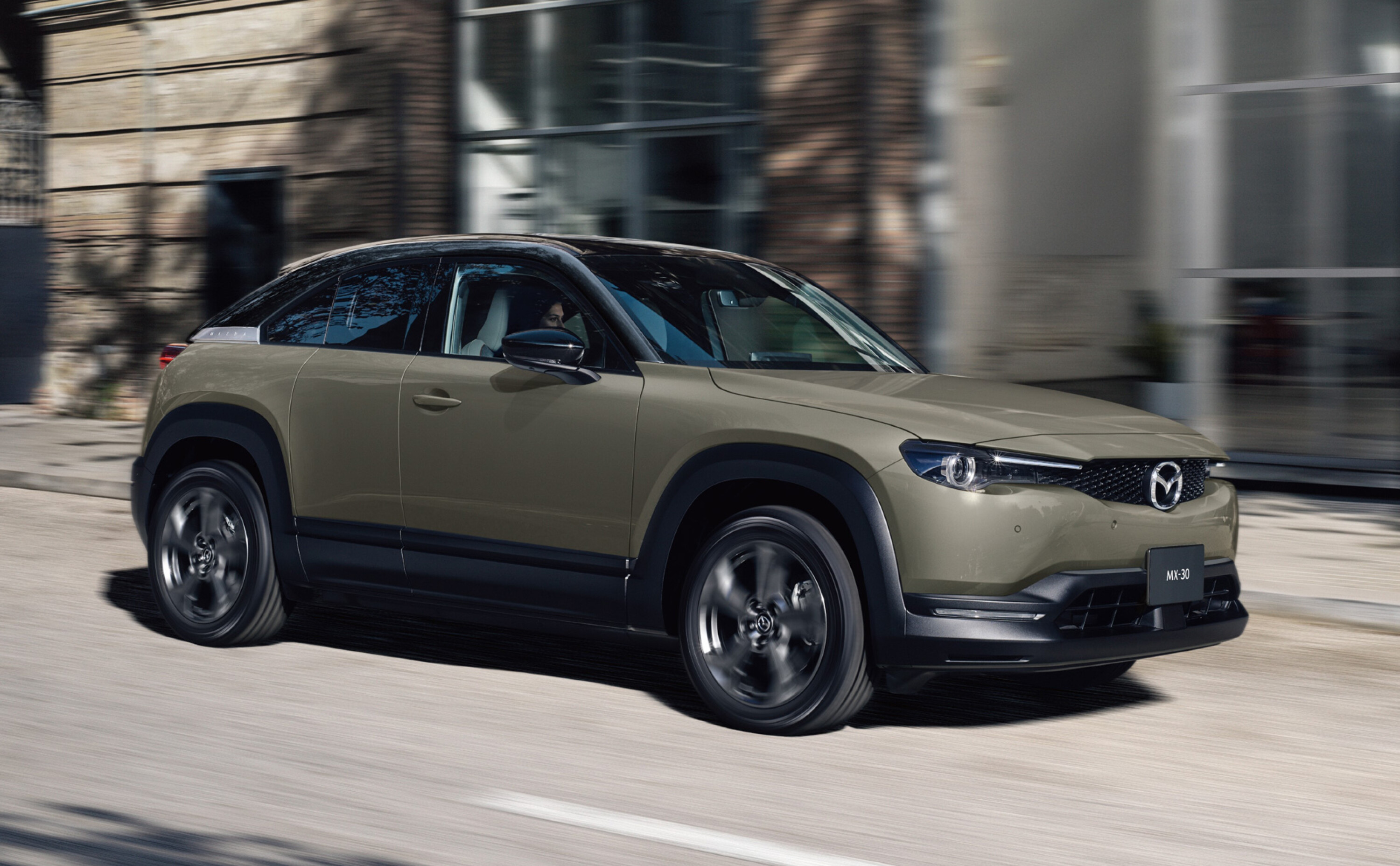
Mazda Australia has confirmed the CX-8 large SUV and MX-30 small SUV – including the all-electric model – will be discontinued.
Production of the CX-8 and MX-30 will end in December 2023, with stock to remain available “throughout Q1 of 2024″.
Mazda Australia said the decision “forms part of Mazda Corporation’s strategy to welcome a range of new electrified models between now and 2025 – including hybrid electric vehicles, PHEVs and BEVs”.
1
“By 2030, one hundred per cent of Mazda products will be electrified and pure-electric vehicles will account for at least 25 per cent of the line-up,” said the brand.
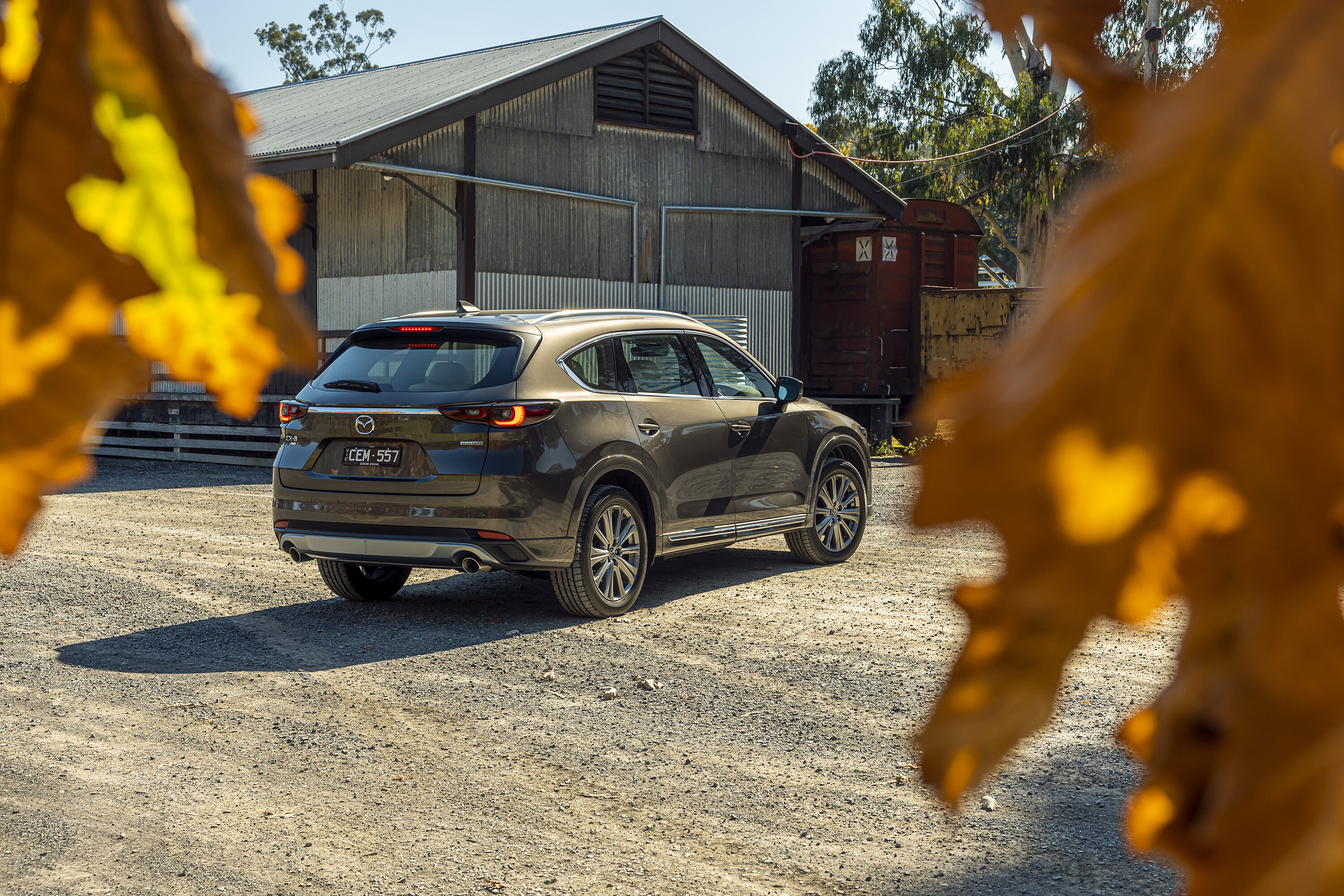
The six- or seven-seat CX-8 – launched in 2018 with more than 25,000 total sales in Australia – will be replaced by the all-new CX-80, an enlarged three-row version of the CX-60 likely to have a higher price tag.
While the current CX-8 starts from $42,660 before on-road costs, the five-seat CX-60 – with inline-six and plug-in hybrid powertrains – starts from $59,800 plus on-roads, with the CX-80 likely to launch from around $65,000 before on-road costs in Australia.
1
The CX-8 line-up tops out at $72,010 before on-road costs for the Asaki LE diesel AWD.
Mazda forecasted 40 per cent of buyers would opt for the more affordable CX-8 Touring, followed by 30 per cent for the base Sport in 2023 – leaving most buyers with no affordable Mazda seven-seater option when CX-8 stock is depleted.
The deletion of the CX-8 follows the CX-9, which ended production this year to be replaced by the larger CX-90 with a much higher entry price.
“Renowned for its practicality, refinement and driving dynamics that belie its generous proportions, the Mazda CX-8 has played a pivotal part in our market growth since its launch,” said Mazda Australia managing director Vinesh Bhindi.
“As we move into the next phase of the Mazda brand’s evolution – with electrification at the heart of our focus – we will ensure our valued customers continue to be well-furnished with a suite of exciting models to join us on this journey.
“Fortunately, for drivers who want to enjoy everything the CX-8 has to offer in the meantime, stock is plentiful and readily available across our dealer network right now.”
“As we look to the future, our model range will advance once more with a line-up of advanced powertrains and products for our market – including the First-Ever Mazda CX-80 – and we look forward to sharing more details next year,” said Mazda Australia marketing boss Alastair Doak.
Following its discontinuation in the United States in mid-2023, Mazda Australia has now confirmed the MX-30 will be axed locally – despite initially claiming it would continue to be offered here.
First launched in Australia in 2021, the Mazda MX-30 is available locally in all-electric or mild-hybrid form, with the majority of sales in favour of the latter variant, which is exclusively offered in Australia, New Zealand and Japan.
“Notable as a stylish and sustainably focused alternative in the compact SUV segment, the MX-30 also became a trailblazer as the first fully electric vehicle available from the Mazda brand,” said Bhindi.
“This was previously unchartered territory, and the MX-30 has since served a hugely valuable purpose, both as a technology demonstrator and also to thoroughly prepare our dealer network with the knowledge and skills required for the next phase of our brand’s intensive evolution.”
VFACTS new-car sales data reveals around 2200 MX-30s have been sold in Australia since launch, compared to more than 36,000 examples of the related CX-30.
MORE
Everything Mazda
Snapshot
- Toyota Australia boss defends slow EV transition
- Brand’s approach won’t leave the ‘Silent Majority’ behind
- Promises diverse range of powertrains are the answer to decarbonisation in the long term3
“The overwhelming sense, and it’s a sense of pride, that I took out of the Toyota stand was that we truly are invested in the right areas, and I think ours is the correct strategy”, Toyota Australia vice president sales, marketing and franchise operations told Wheels after a whirlwind two days at the Japan Mobility Show.
“It won’t always be the most popular direction to offer diverse powertrains because people are getting heavily involved in a quick fix to zero emissions that just won’t suit the world”, he added.
Toyota is the world’s biggest carmaker, notching up huge sales both at home in Japan (where it accounts for nearly 50 per cent of the market) and in Australia where market share regularly sits above 20 per cent.
1
While the HiLux, RAV4, and LandCruiser nameplates drive Toyota’s sales, there’s a car for every budget and most are available with a petrol-electric powertrain. Toyota’s studies have shown that the benefit of one pure EV is equivalent to 90 hybrids, so it argues the contribution made since the Prius’ October 2001 release in Australia is significant.
Hybrids are certainly a start and slip easily into everyday life while emitting about half the CO2 emissions of an equivalent petrol car. Toyota Australia has sold about 350,000 hybrids which, by its calculations, is equivalent to the CO2 reduction of selling 3889 pure EVs.
“Our strength has always been our product offering. We’re a global company. And we operate in many, many markets… and we’re also a company that recognises that each country will have different needs. I mean, Canada’s [needs are] different to Australia’s, the US has different needs to Australia. Australia and New Zealand may be close – and we’re good friends – but we’re both different in the way we use cars to what they do in the Middle East – and we’re not Europe”, says Hanley.
Hanley’s point is backed up by sales figures. The two most popular vehicles month-in, month-out are the Toyota HiLux and Ford Ranger. Predominantly diesel-engined workhorses that fulfill a role for Australian buyers – owners of these (and other light commercial vehicle) are what Hanley calls The Silent Majority for whom he believes EVs don’t currently work.
“When we talk about the silent majority, we’re talking about the people that typically buy HiLuxes or other utes, not just ours. We’re talking about people who buy Prados and other medium-sized SUVs, we’re talking about people who buy large SUVs – not just Toyotas. And when you add those people up, that’s a hell of a lot of Australian motorists”.
Sean knows the limitations of the BZ4x – Toyota’s first EV. It’s not an off-roader with big towing capacity. “Some will say they’ve got [adequate towing and range] or that it’s coming. Well, I ask you, what are you going to say to a large SUV buyer who tows 3500kg, and needs to go 600-800 kilometres a day?
“If we go just BEV tomorrow, or even by 2025 – we’re not, we’ve never said we will but hypothetically if that was what one had to do – then you have nothing for those people.”

1
“We’re not always the first to market, on most things, but when we do arrive in the market, we produce a very good product that is supported by our DNA, which is QDR: quality, durability, reliability. And if you add BEV, it’s probably QDRS: quality, durability, reliability safety”, said Hanley defending Toyota’s unhurried EV roll-out.
“I think Toyota’s real strength will arrive in the later part of this decade. And I think the reason for that is everything you’ve seen or over the last 24 hours, even at the battery factory… you’re seeing multiple investments, millions and millions of dollars. And crucially you’re seeing investments that just didn’t turn up in the last two years.
“This has been going on for a long time. And a lot of the fruits of those investments, and the foresight of great leaders of Toyota, will be recognised towards the end of this decade, meaning [Toyota] truly has transitioned, meaning they’ve left a great legacy for those that come after us”, Hanley added.
Regardless of Sean’s take on how Australian consumers will react to the three EVs due here by 2026, Toyota’s global strategy has embraced battery-powered vehicles.
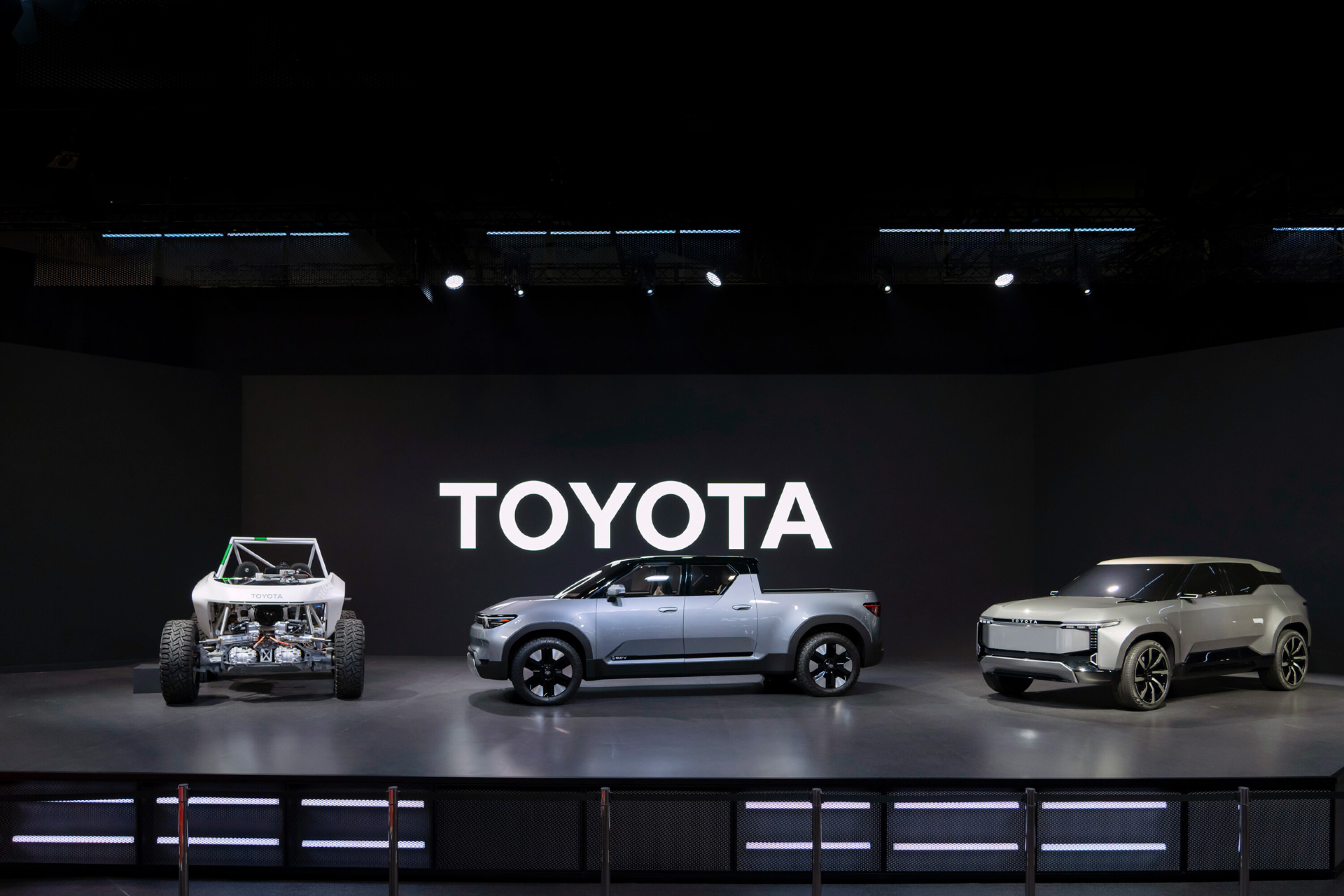
Hybridisation of light commercial vehicles seems to be the short-term solution followed by investments in hydrogen post-2030 but you only need look at the five production-intended concepts on stage to know that, under Koji Sato, catching up on the electric side is Toyota’s aim for the next five years.
When asked if Toyota’s old Sleeping Giant tagline was one he thought fitted again, Hanley said: “We’re a car company that never takes our position for granted. I think we’re quite a humble car company in many respects. I think the Sleeping Giant’s never been asleep – it just doesn’t choose to do aerobics every day.”
MORE
Everything Toyota
At Mazda’s Japan Mobility show stand, the 103-year-old company was leaning heavily into its sports car heritage via the MX-5. An original ‘NA’ MX-5, updated ‘ND’, a hand-control model and cute-as-a-button kids-sized roadster.
There’s plenty of excitement for an NE MX-5 which is likely to stick to the tried-and-true lightweight roadster formula with minimal hybrid augmentation.
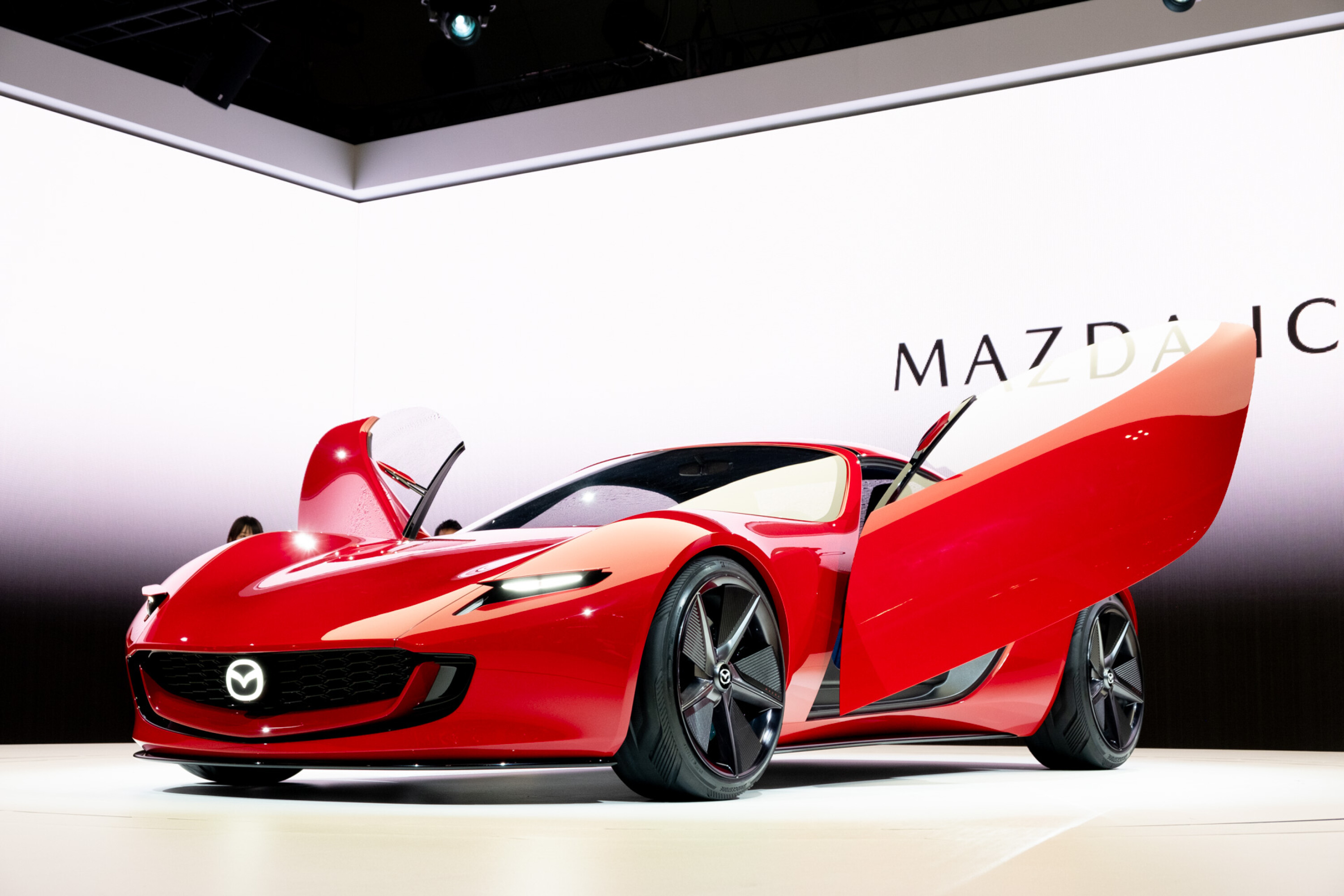
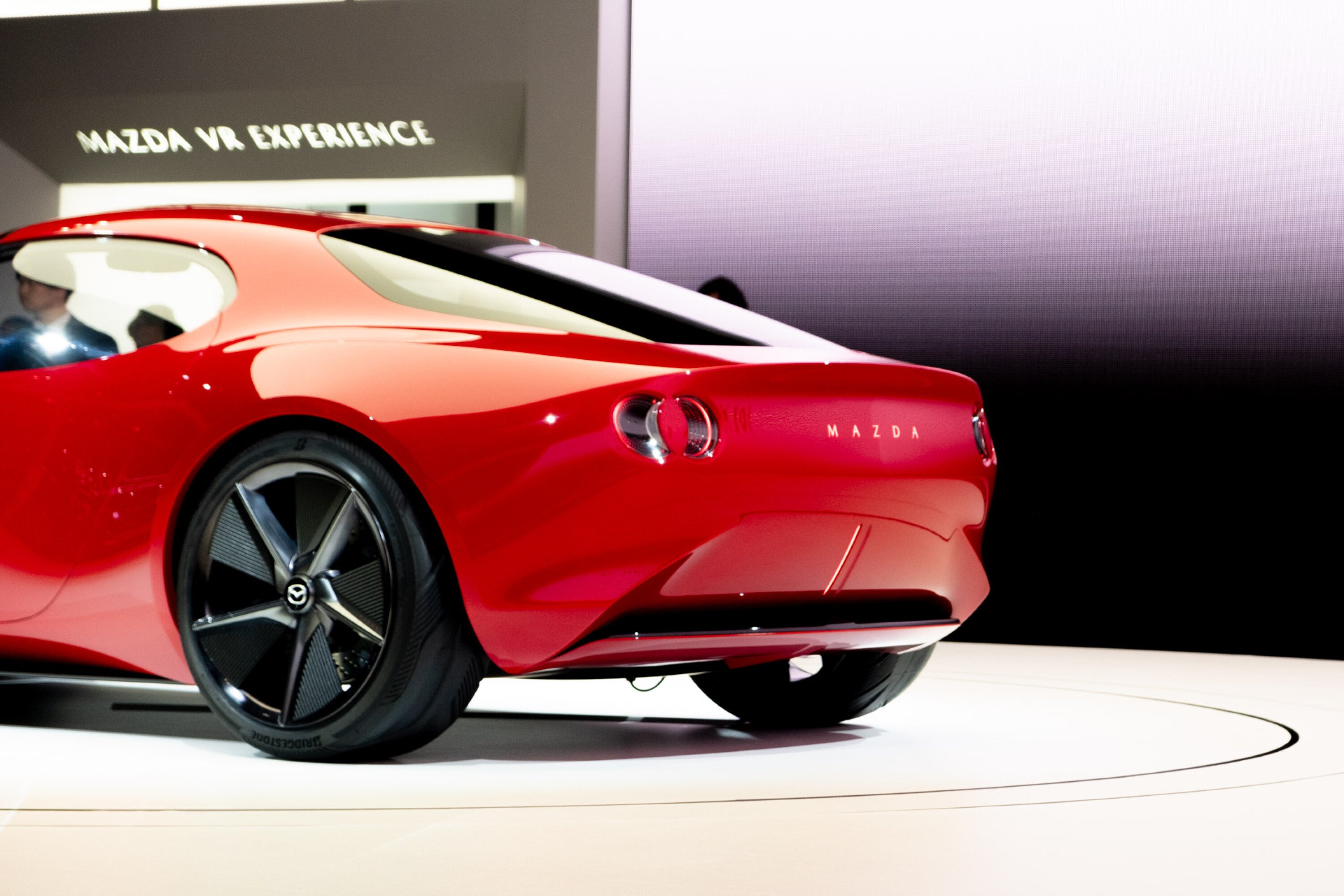
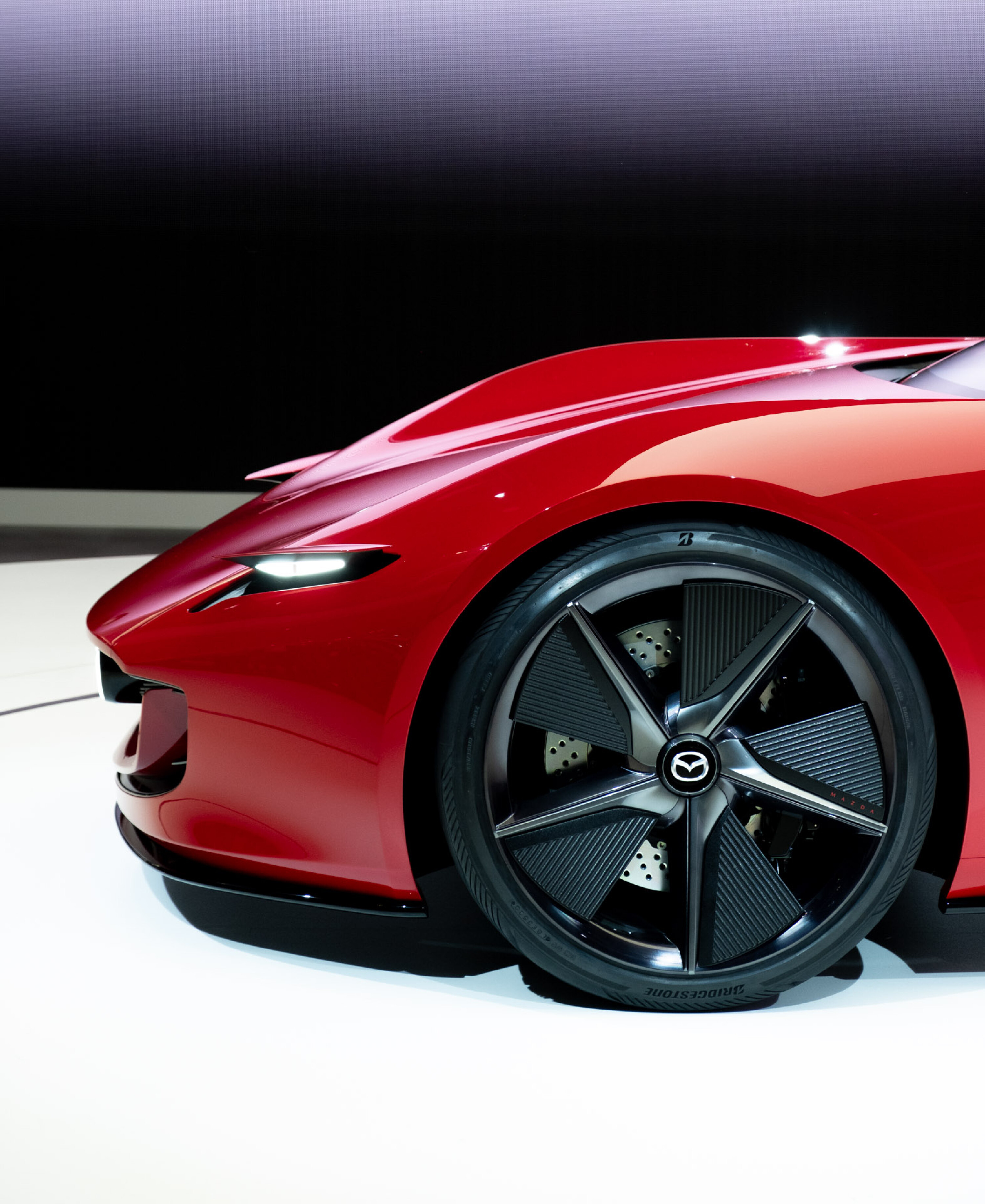
The Iconic SP concept car, though? We reckon this more serious coupe is pure RX-7.
1
For a start, its powertrain centres around a twin-rotor combustion engine running as a generator for the battery and electric motors. And what does ‘RX’ stand for? Rotary Experimental.
The 2023 Iconic SP’s powertrain runs a similar setup to that in the MX-30 R-EV though with a healthy dollop more grunt at 270kW (compared to 125kW). And it’s a technology Mazda will continue to push, as outlined to Wheels by Kotoro Minagawa, Mazda’s manager of product, planning, and corporate communications in Japan.
“We just launched the MX-30 REV and we haven’t yet got feedback from the market. [The MX-30 REV] is going to be launched in Japan and Europe, and we’d like to see the feedback from the customers and then we move further into development of the R-EV two-rotor system.
“We revived the rotary engine with the MX-30 R-EV so we’d like to maintain the rotary engine technology, and this vehicle we hope does that”, said Minagawa-san.
1
But what if the R-EV system isn’t well received? We asked if Mazda had explored other powertrains for the Iconic SP, and Minagawa-san didn’t rule out the future possibility of pure electric or hybridised internal combustion power.
“With this package, the [Iconic SP] can be an electric vehicle, or it can be an internal combustion engine with carbon-neutral fuel”, he said, noting that the MX-30 is available across the world with different powertrains.
“We’ve already introduced MX-30 as a BEV and ICE and now we have an MX-30 REV… this is a sports car project with MX-30 technology”, he said.
1
As for what model the Iconic SP is the spiritual successor to, its dimensions sit between ND MX-5 and FD RX-7 – though they’re closer to the RX-7. With double the power and a 1430kg weight target, the Iconic SP isn’t exactly an ND MX-5 follow-up.
| Dimensions | ND MX-5 | FD RX-7 | Iconic SP concept |
|---|---|---|---|
| Length | 3915mm | 4295mm | 4180mm |
| Width | 1735mm | 1750mm | 1850mm |
| Height | 1230mm | 1230mm | 1150mm |
| Wheelbase | 2310mm | 2425mm | 2590mm |
| Weight | 1058kg | 1310kg | 1430kg |
| Power | 135kW | 176kW | 270kW |
Values for the Iconic SP concept are claims for a non-production vehicle.
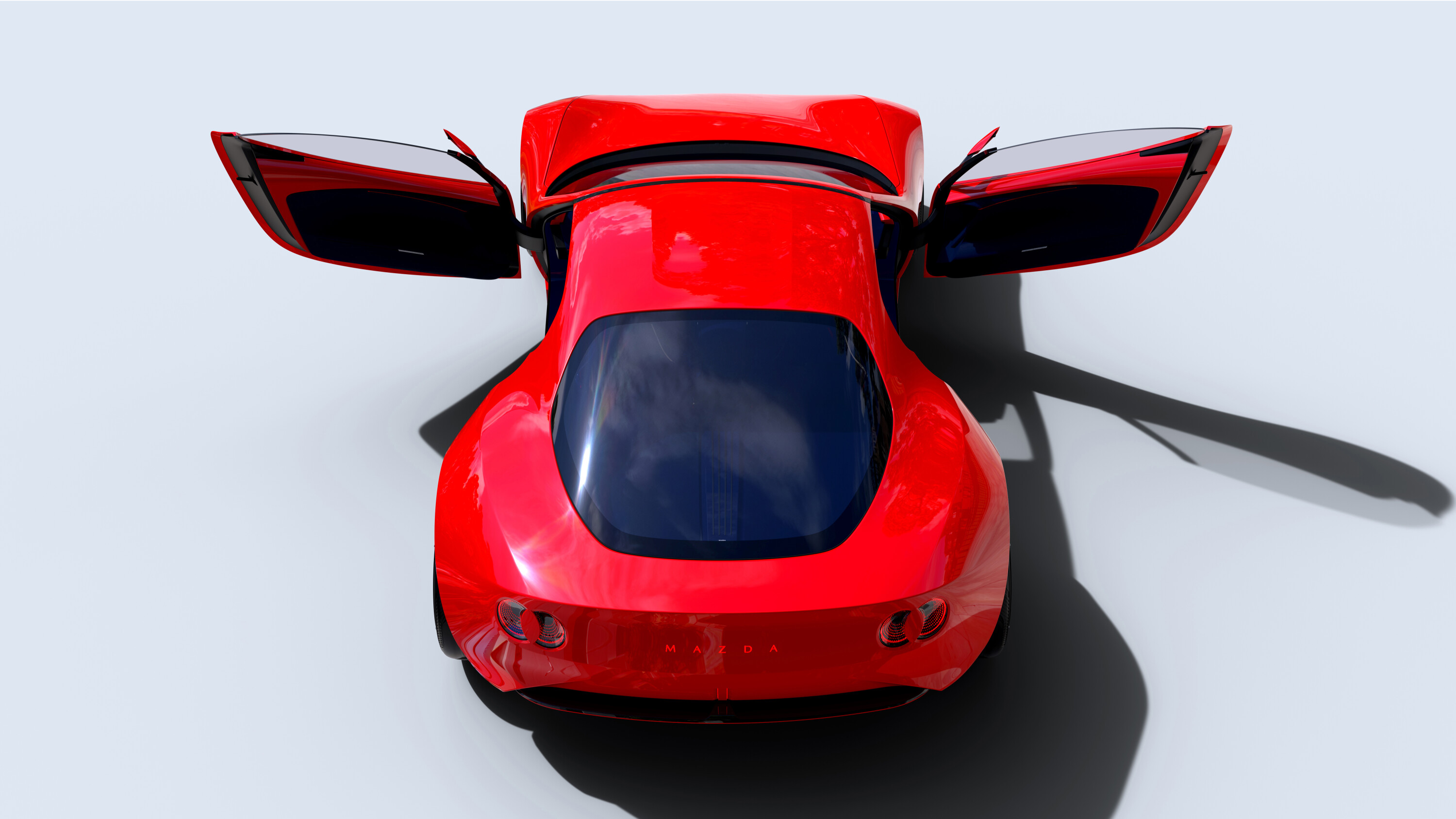
Visually, too, there are FD RX-7 elements such as the neat pop-up headlights and organic curves. Mazda’s European design director Jo Stenuit even admitted he sees plenty of RX-7 in the proportions.
1
“For me, it’s an RX. When I look at the design cues, especially in this colour, I see the RX-7… It’s wider, lower, and longer than an MX-5,” Stenuit told TopGear.com, “so it’s a different kind of animal”.
It’s said that the Iconic SP has a 50:50 weight distribution, but that’s about it. Mazda hasn’t claimed which wheels are driven (though we’d be staggered if it isn’t the rears) nor when we’ll see a production version of the Iconic SP.
MORE
Everything Mazda
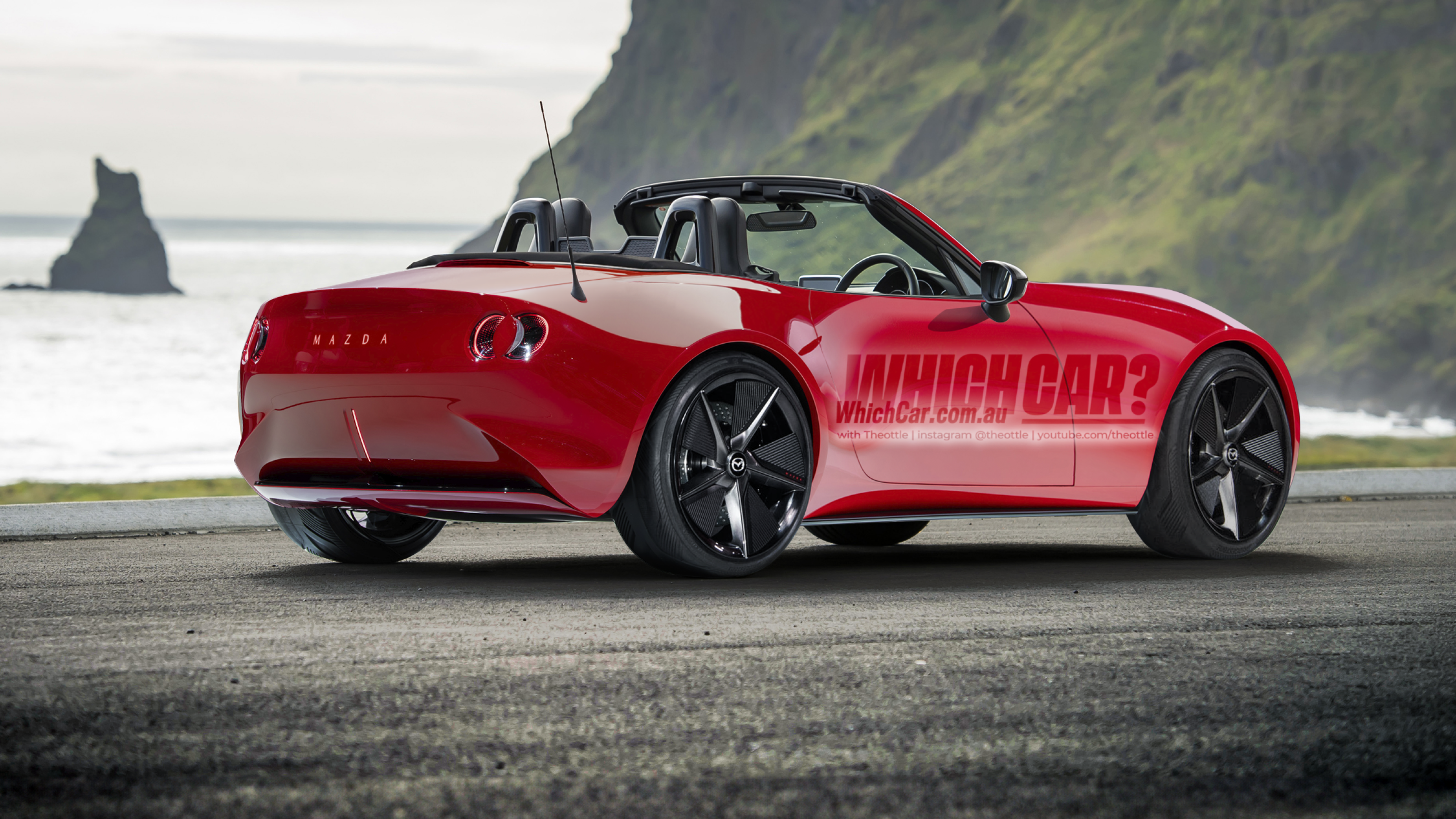
The Japan Mobility Show 2023 isn’t over yet, but imagineering wizard Theottle has already turned out fresh renders of a possible next-gen MX-5, clearly influenced by this week’s Iconic SP concept.
Mazda could do a lot worse than translating the SP’s sensuous curves and classical details into the smaller topless MX-5 package, given how well the concept has been received.
The MX-5 is a genuine automotive icon, so the fundamentals of the core vehicle will not be up for debate: Convertible, two seats, rear drive.
Of course, as we’ve seen with the folding hardtop MX-5 RF (and a handful of low-volume models in the past), Mazda is open to additional variants that stray from this formula. Some sort of electrification, possibly a range-extending rotary hybrid, will likely be offered this time.
And the Iconic SP is so well-resolved and downright good looking, could Mazda be planning another MX-5 coupe? Resources permitting, they’d be mad not to.
1
Theo’s concept looks appropriately fun-sized, and Mazda has been extremely successful keeping the roadster properly compact over successive generations. So, we’d expect the 2026 MX-5 to be smaller than the Iconic SP.
But… is Mazda hinting at something? With the Tokyo show presenting a Japanese sports coupe renaissance, it’s perhaps not completely out of the question.
21st century RX-5 coupe, anyone? Take my money…
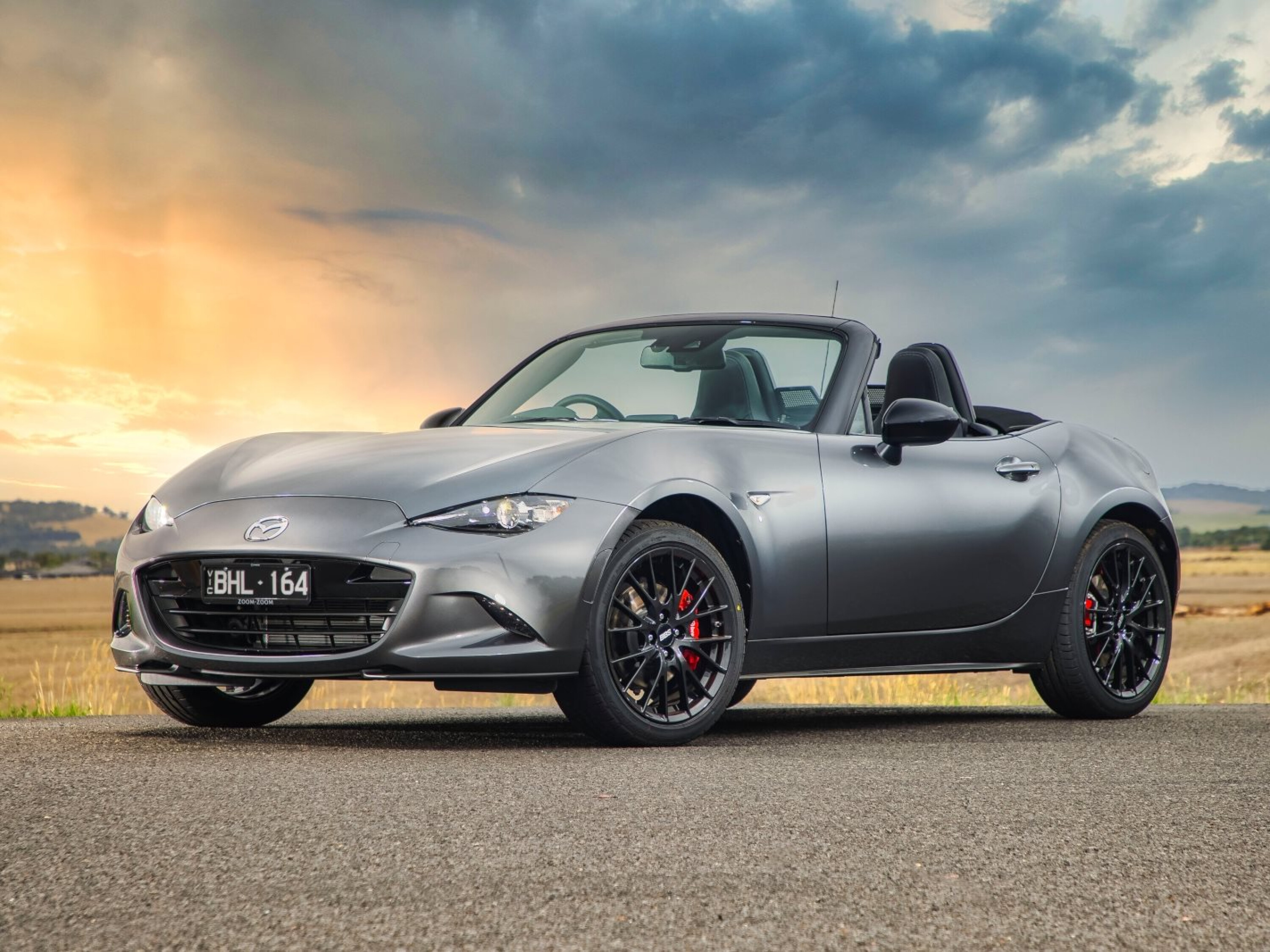
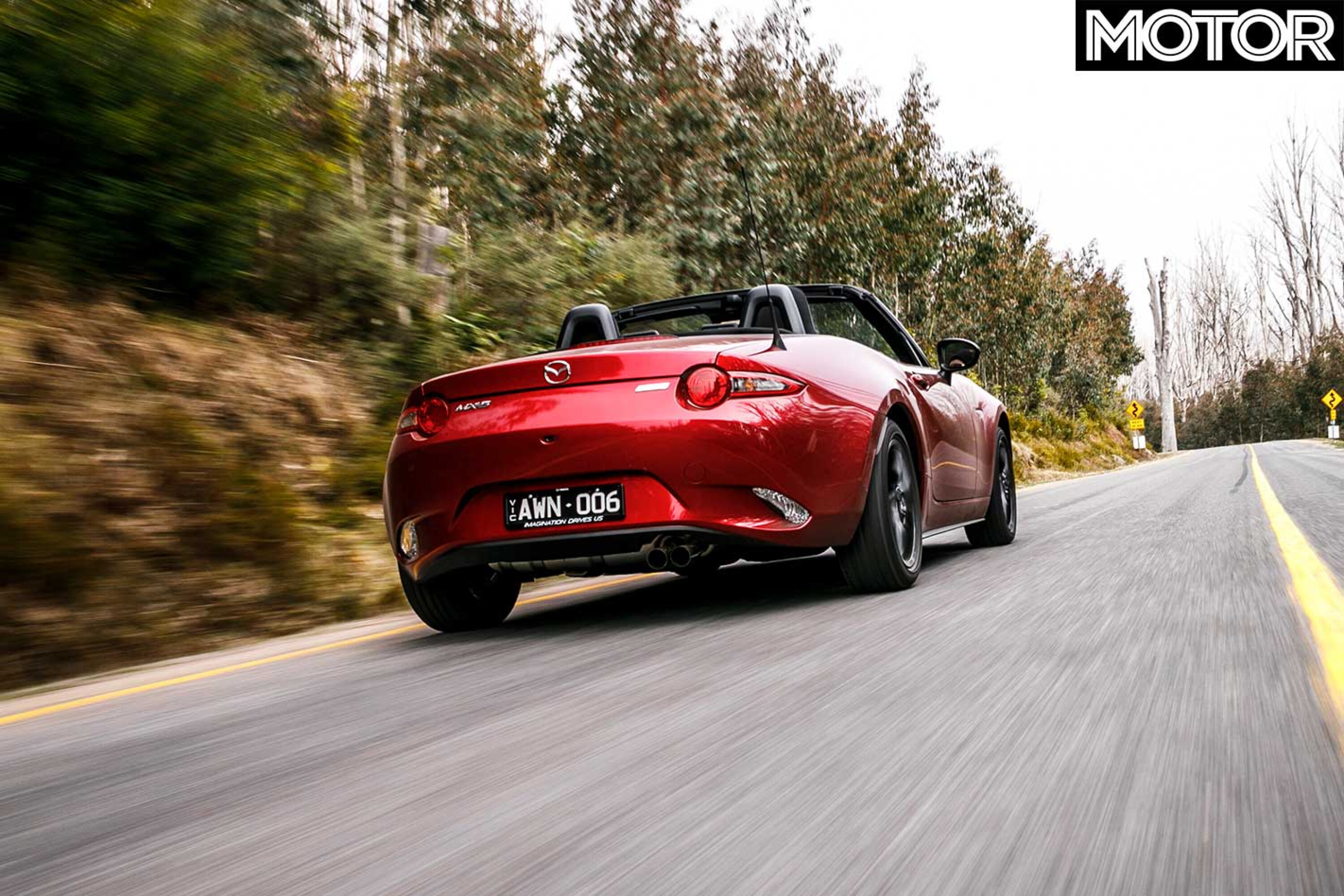
Below: The current ND MX-5
1
1
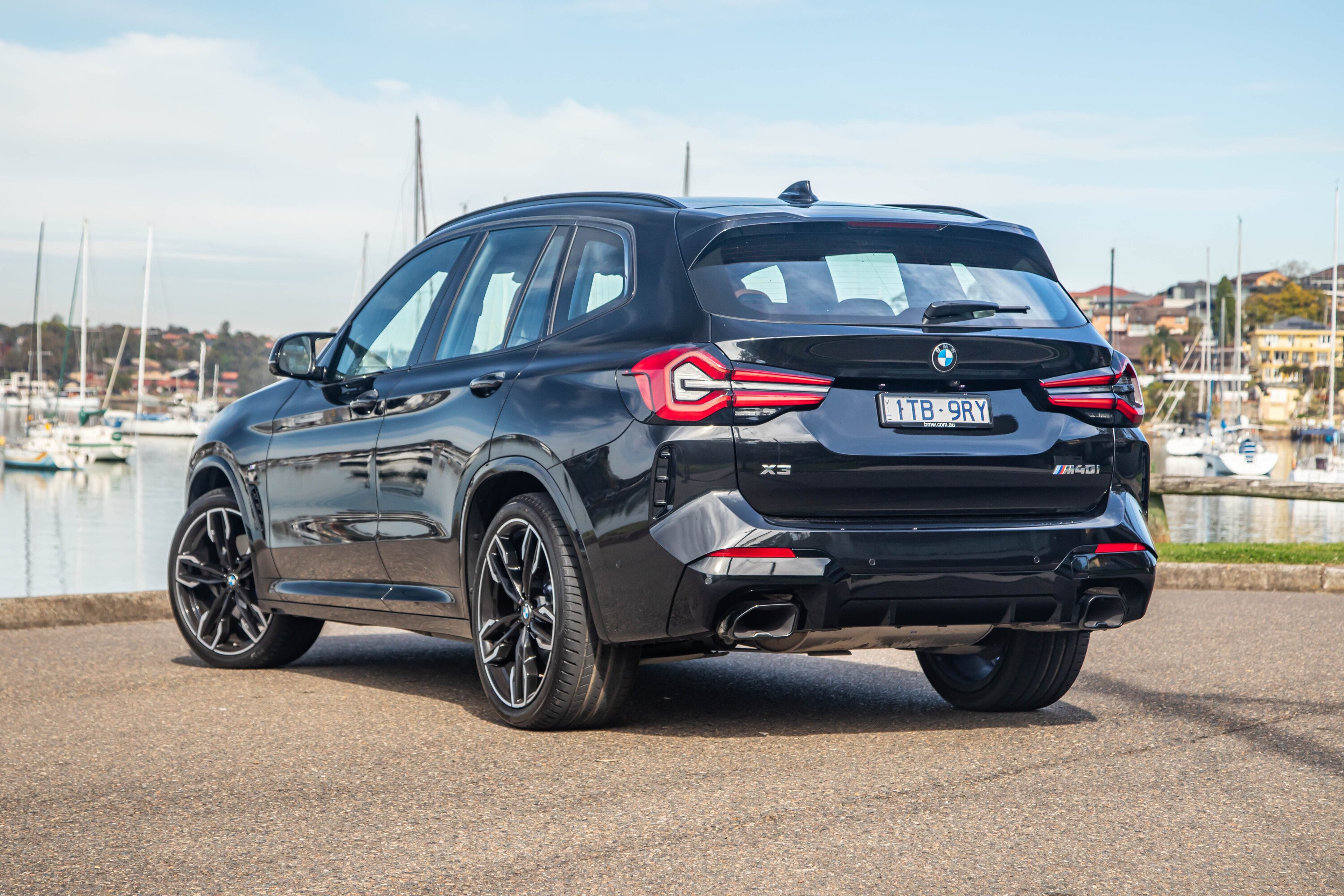
First unveiled in 2017, the ‘G01’ X3 emerged as a much larger vehicle than its predecessor.
More closely aligned with 5 than 3 Series in the current iteration, BMW’s medium SUV is big – it’s also an excellent deployment of the brand’s longitudinal-engined rear-drive cluster architecture.
A superb ride and broad choice of engines only improved with the arrival of the facelifted version in late 2021, with BMW now offering petrol, diesel, plug-in hybrid, and even fully-electric variants of the X3.
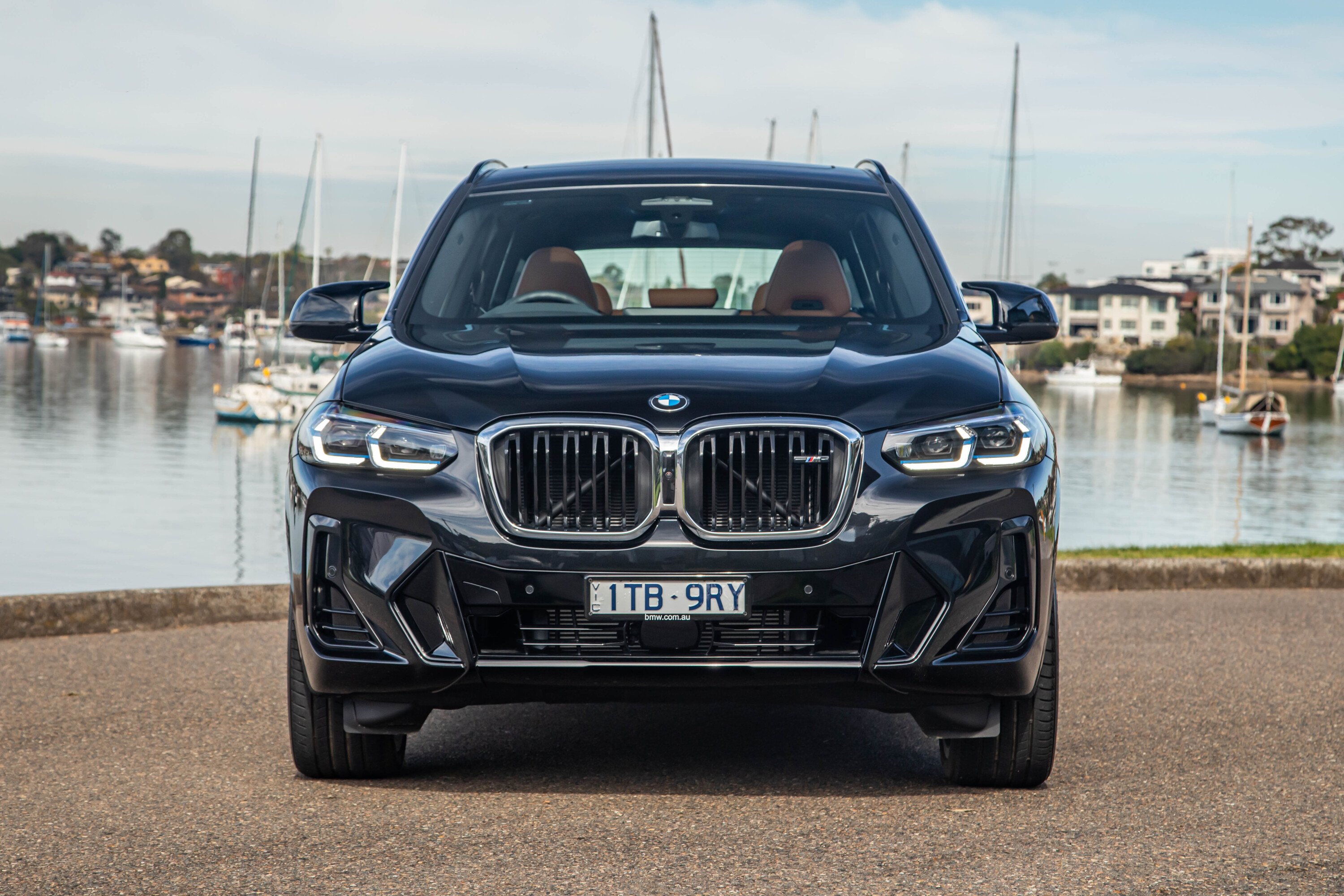
For all the choice BMW offers in Australia, though – from whisper-quiet iX3 to visceral X3 M – there’s no better rounded pick than this silky six-pot M40i.
1
JUMP AHEAD
- How much is it, and what do you get?
- How do rivals compare on value?
- Interior comfort, space, and storage
- What is it like to drive?
- How much fuel does it use?
- How safe is it?
- Warranty and running costs
- VERDICT
- Specifications
How much is it, and what do you get?
The South African-built X3 M40i begins at $126,800 before on-road costs, which is an awful lot more than the $81,700 sDrive20i entry grade.
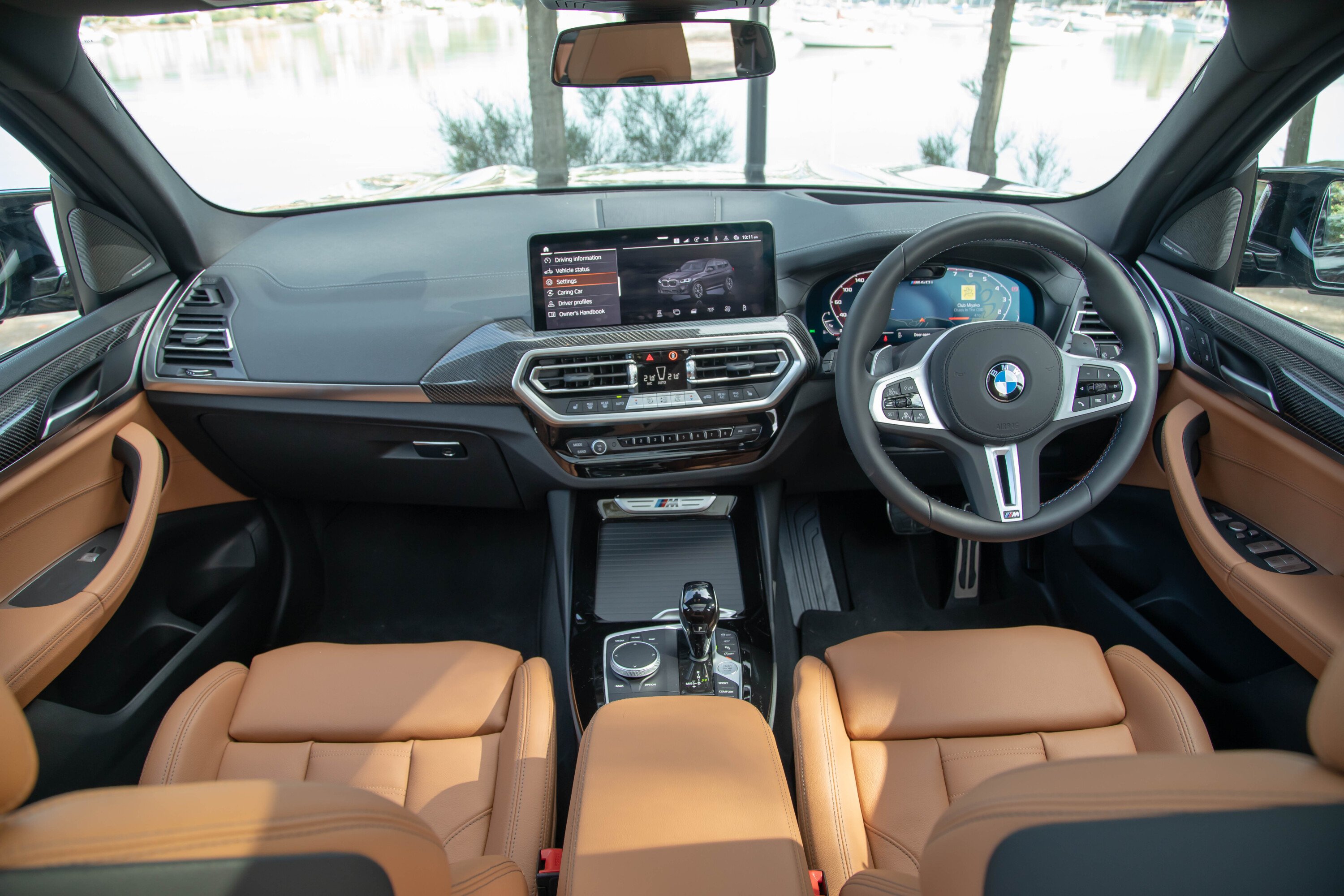
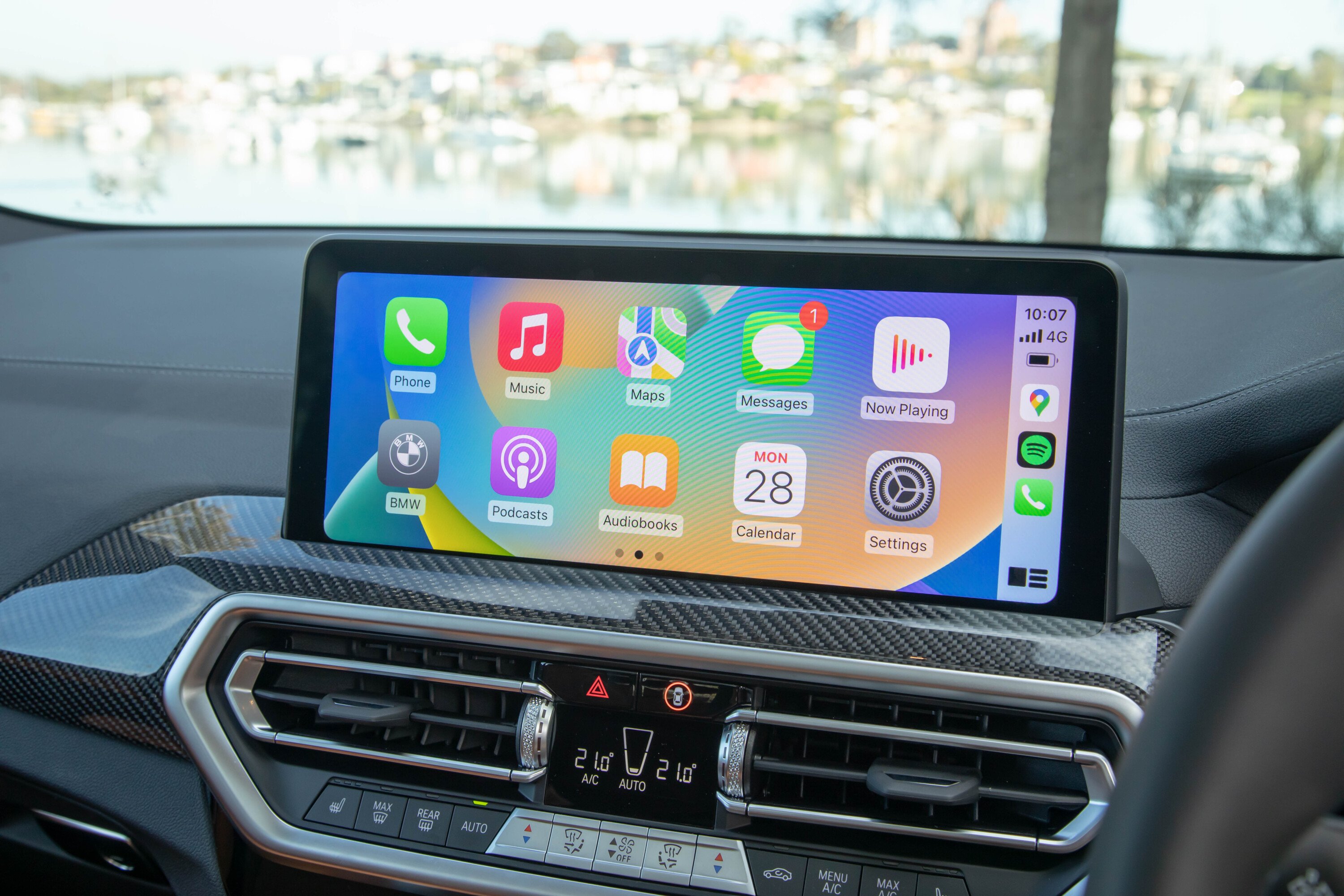
Although that may seem like poor value, it’s offset somewhat by a 12.3-inch touchscreen, matching-sized digital driver’s display and head-up display on the tech side of things, while ‘Vernasca’ leather upholstery is available in black, Oyster or Cognac at no extra cost.
Power-adjustable front seats feature three-stage heating as standard, and the X3 M40i ships with a powerful 16-speaker Harman Kardon sound system as standard.
1
Other goodies such as LED head- and tail-lights, front and rear parking sensors, tri-zone climate control, ‘style 718’ 21-inch alloy wheels and adaptive dampers also feature.
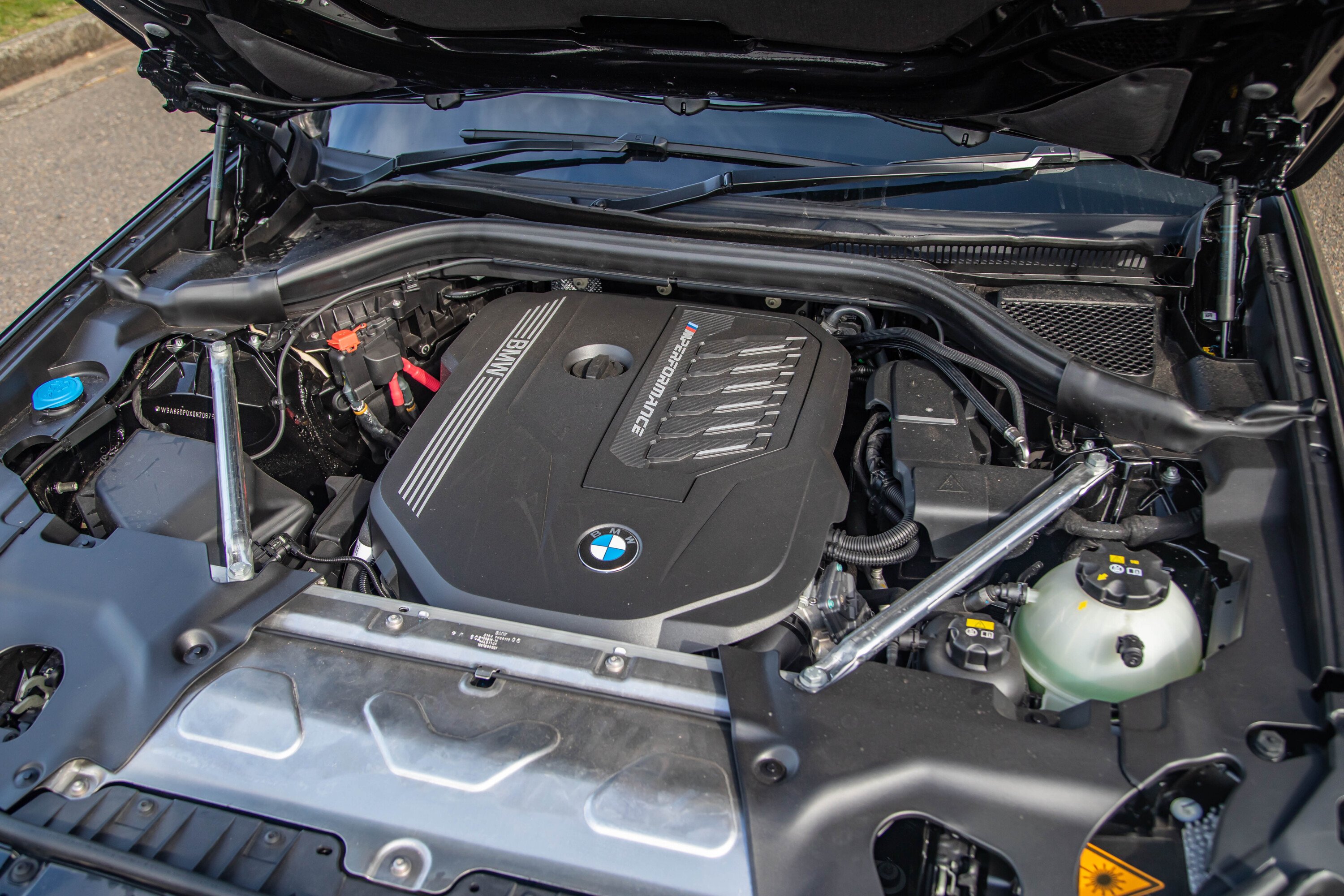
You also get – and I’m sticking my neck out here – the best mass-produced engine currently on sale right now. BMW’s 3.0-litre twin-scroll turbocharged ‘B58’ unit has everything you could want from a six-cylinder petrol.
1
Smoothness and refinement when you need it and a sultry growl as you open up the taps. There’s little out there like it.
The M Sport Plus pack ($2615) fitted to this example brings sports seats with adjustable lumbar and under-thigh supports. It’s essentially a must-have, though other options are pretty limited.
Only the Executive package ($1923) with its remote engine start and gesture control was omitted from our car and, frankly, we didn’t miss it.
1
How do rivals compare on value?
You get everything you need in the BMW X3 M40i but other brands give more for less.
Lexus, for example, has an even more impressive spec sheet for the price with its NX gaining cooled seats and finer leather upholstery.
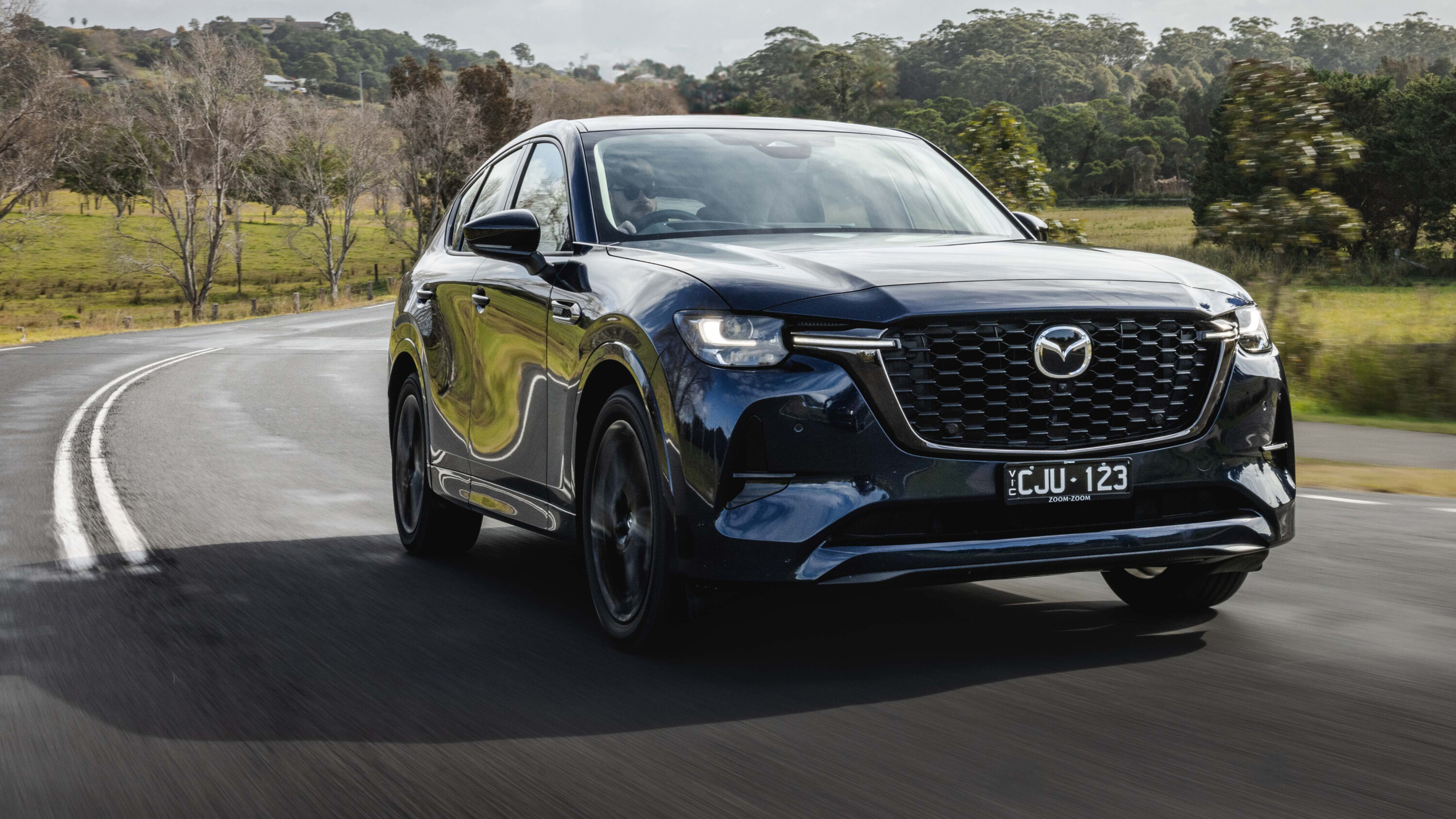
Chop nearly $40K from the X3’s price and you’ll find yourself in a new challenger, Mazda’s CX-60, with a competitive straight-six petrol engine and even more equipment. Ride quality, tech usability and cabin materials suffer in the Japanese option, though.
1
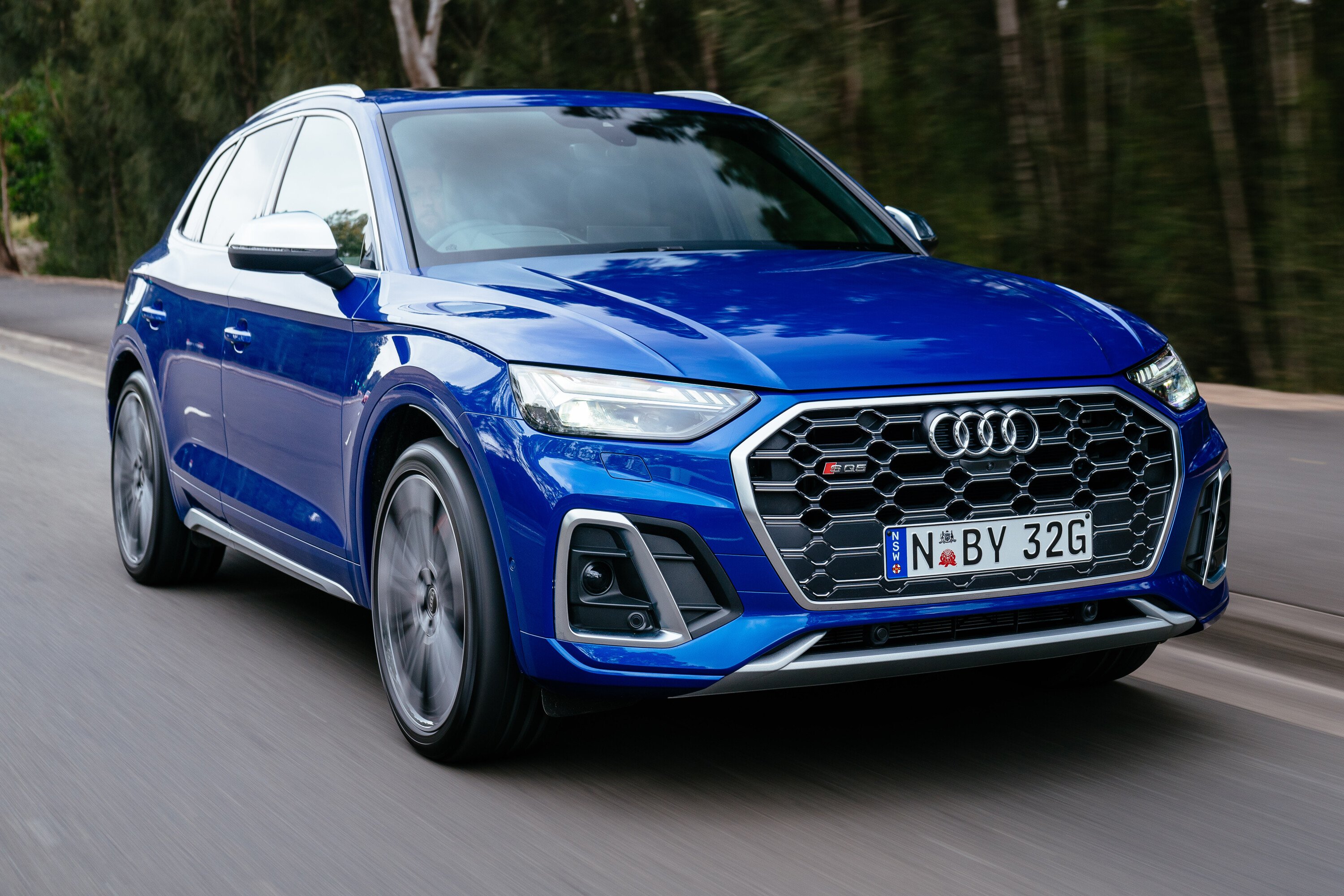
You can also get an Audi SQ5 TDI for $15K less than the equivalent BMW, though it’s powered by a diesel V6 rather than petrol.
If you boil value down to spec sheets and equipment, the X3 quickly becomes a poor buy. Luckily for BMW, appeal in the premium sphere runs deeper than options and equipment; it’s about how a car makes you feel and that blue-and-white roundel is one of the most special there is.
1
Interior comfort, space and storage
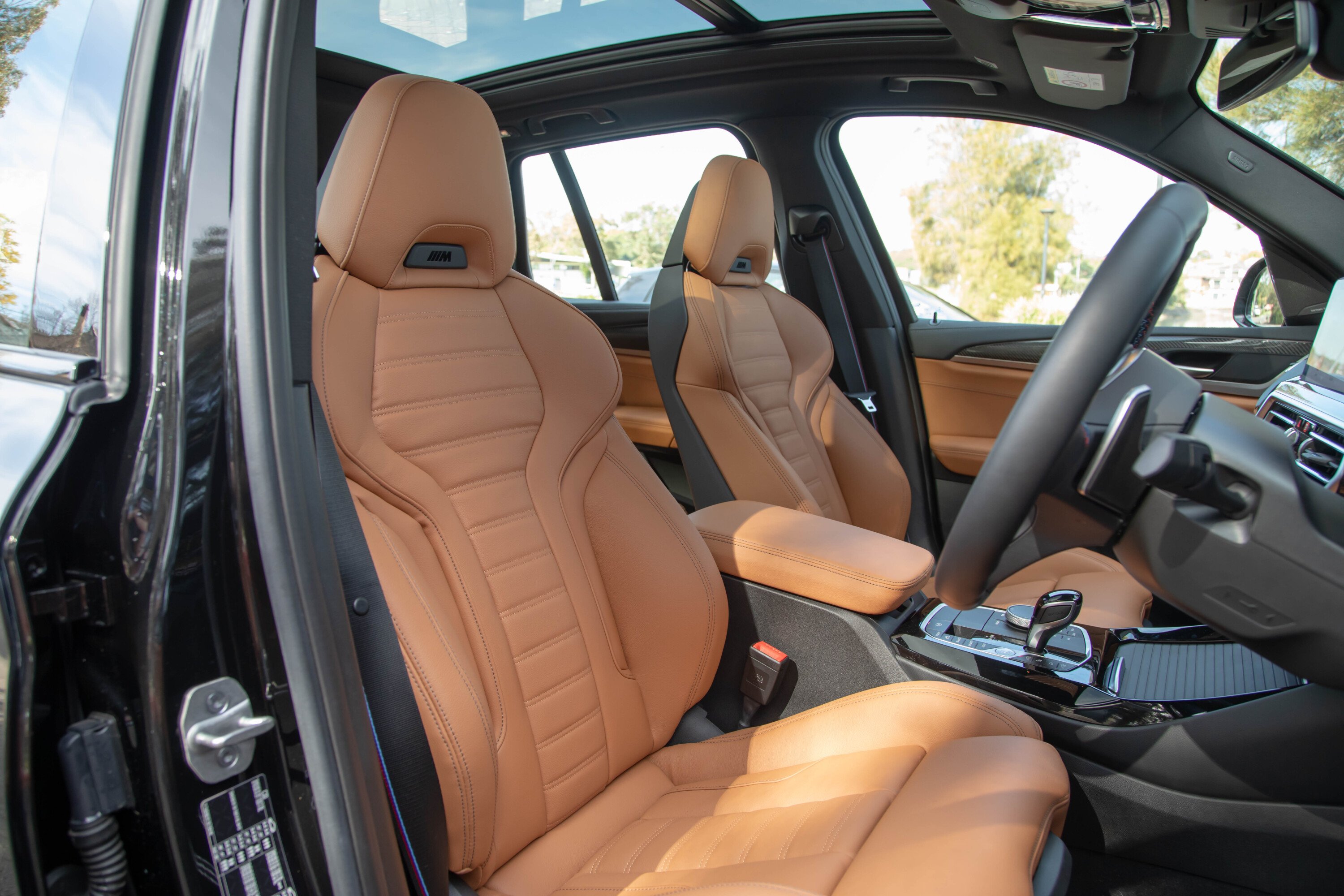
The front seats are set remarkably high considering BMW’s typically sporty intentions, but this aids vision over the X3’s long bonnet.
You feel owed a little more respect in this driver’s seat thanks to its commanding position, even though it’s unlikely fellow road users will see eye-to-eye with you…
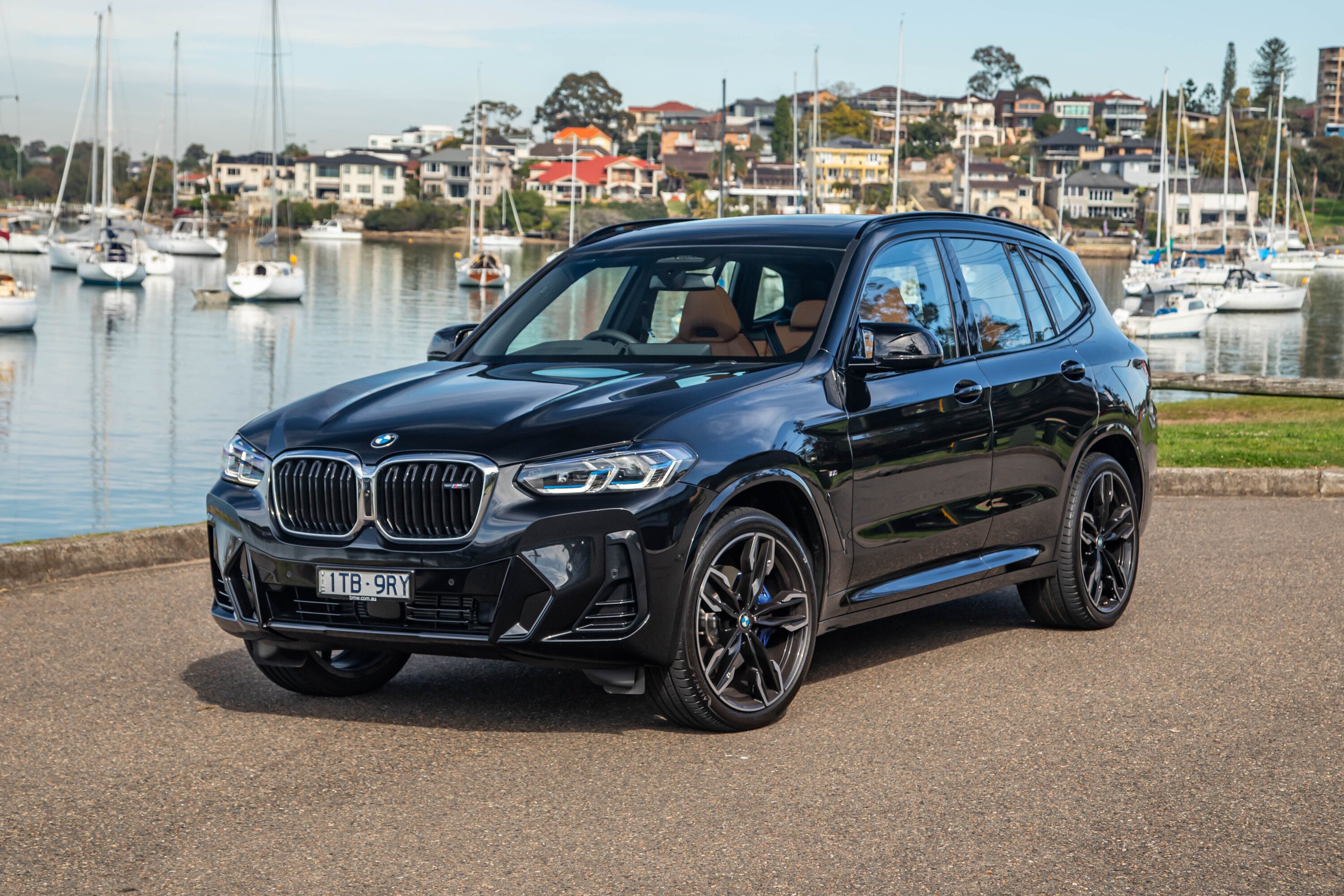
This particular combination of Sapphire black ($1593) paint and Cognac leather is classy, too, the dark tan upholstery making the cabin pop beneath the full-length panoramic sunroof. The windows are all very vertical, further enhancing the sense of space within.
1
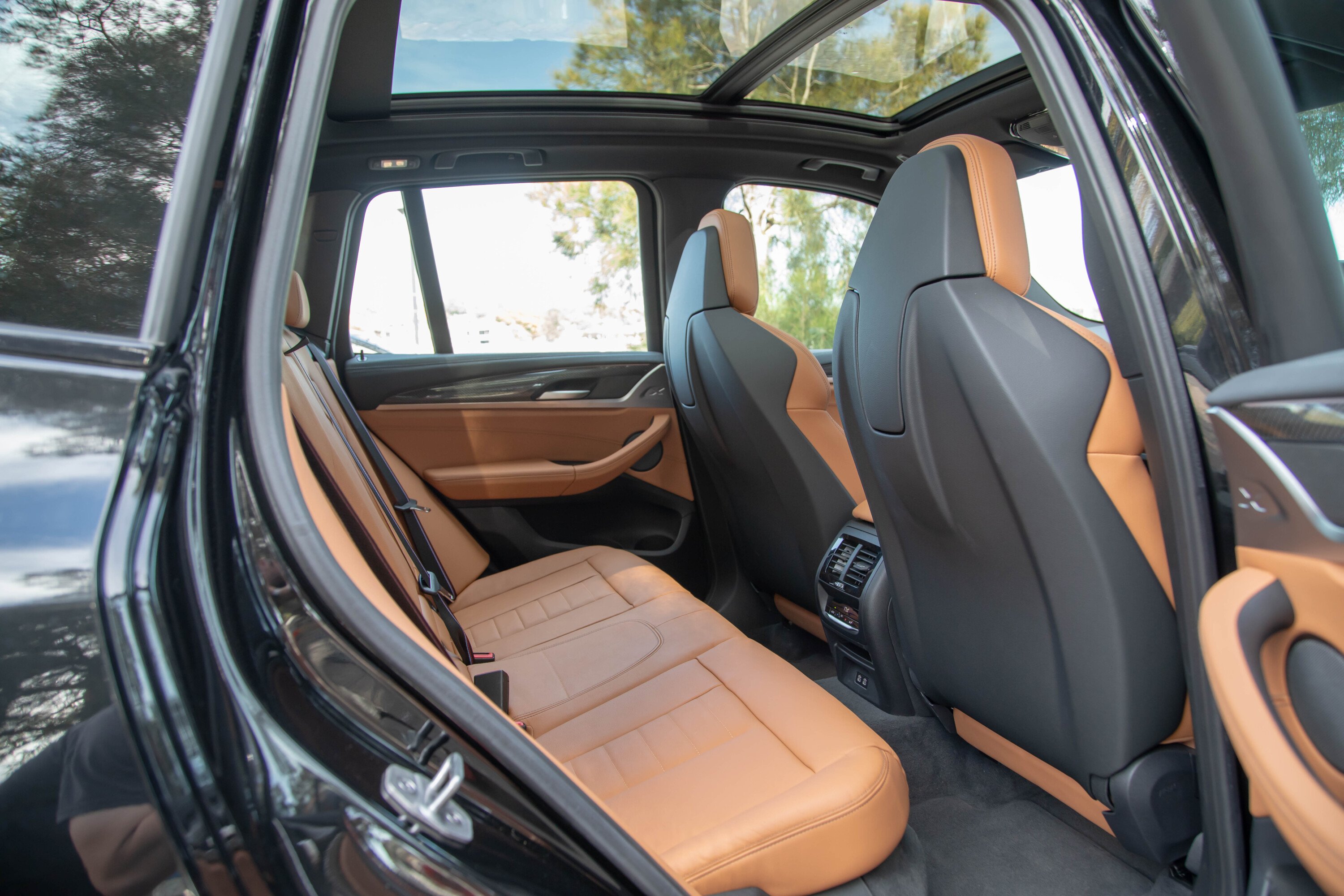
With a rear bench set even higher than the front, BMW’s medium SUV is very much a five-person proposition.
Even considering the transmission tunnel, three will easily fit across the comfortably contoured rear bench with headroom and legroom to spare. A third climate control zone and two vents means temperature control is easy back here, too.
Another neat trick – especially for those who like to ski – is the X3’s 40:20:40 split rear bench, which makes it ultra comfortable for a family snow trip, allowing two fully-fledged rear seats with boards or skis passed through.
1
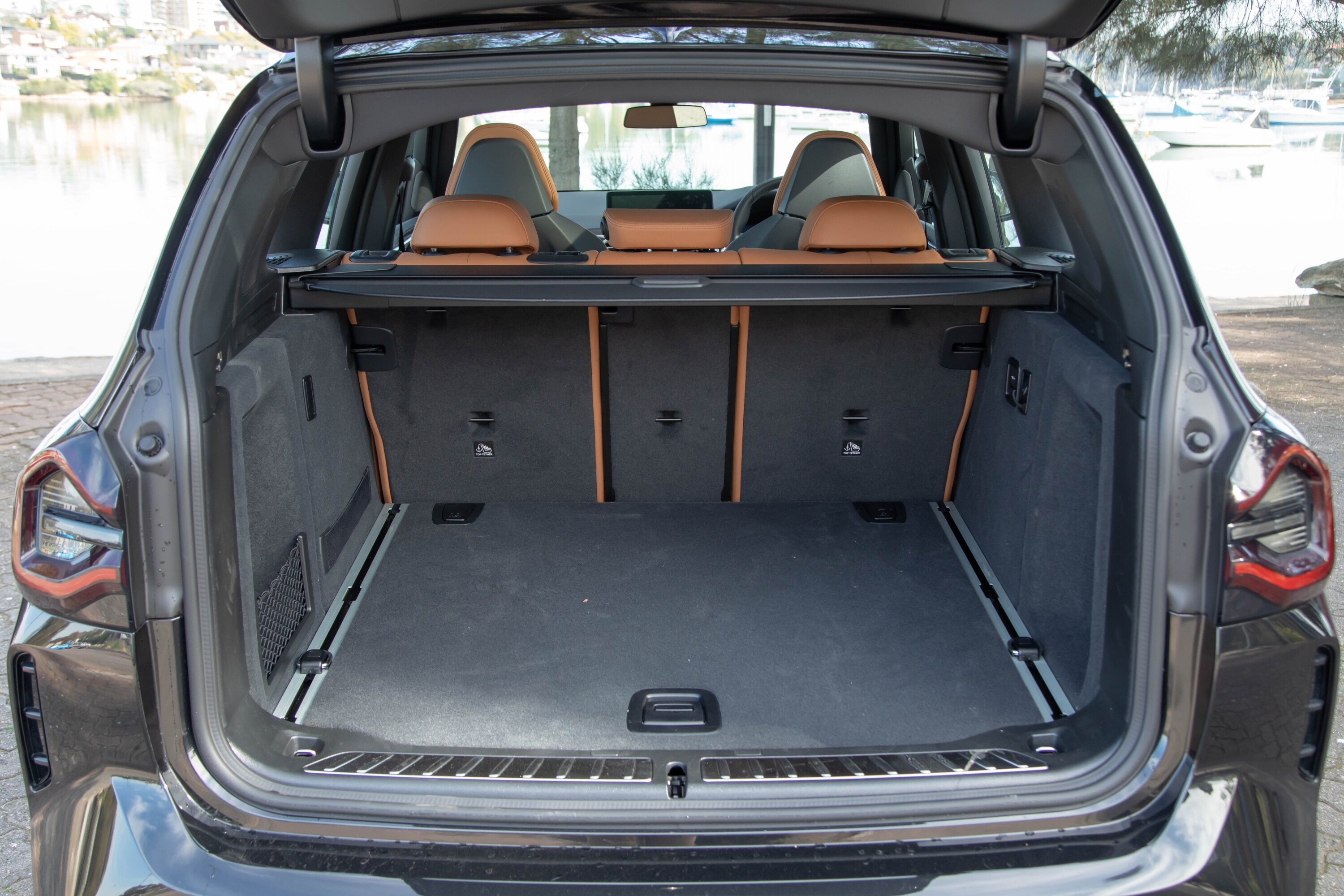
The boot itself is massive (big enough to sleep in, as I found in Germany) measuring 550L with all seats up and 1600L with them folded nearly flat, so stashing a large bicycle with both wheels on is easy.
Aside from space, the X3’s boot is full of useful features such as four tie-down points on sliding metal rails that are perfect for securing heavy or bulky cargo. Under the false floor is a little more hidden storage (though no spare tyre) and a netted area to the left is handy for stopping smaller items from sliding around.
2
Dig a little deeper and there are some shortcomings in the X3’s interior.
For example, the plastics below the beltline inside feel more $50K Volkswagen than $130K BMW and the steering wheel is too chunky. The build quality is sturdy, though.
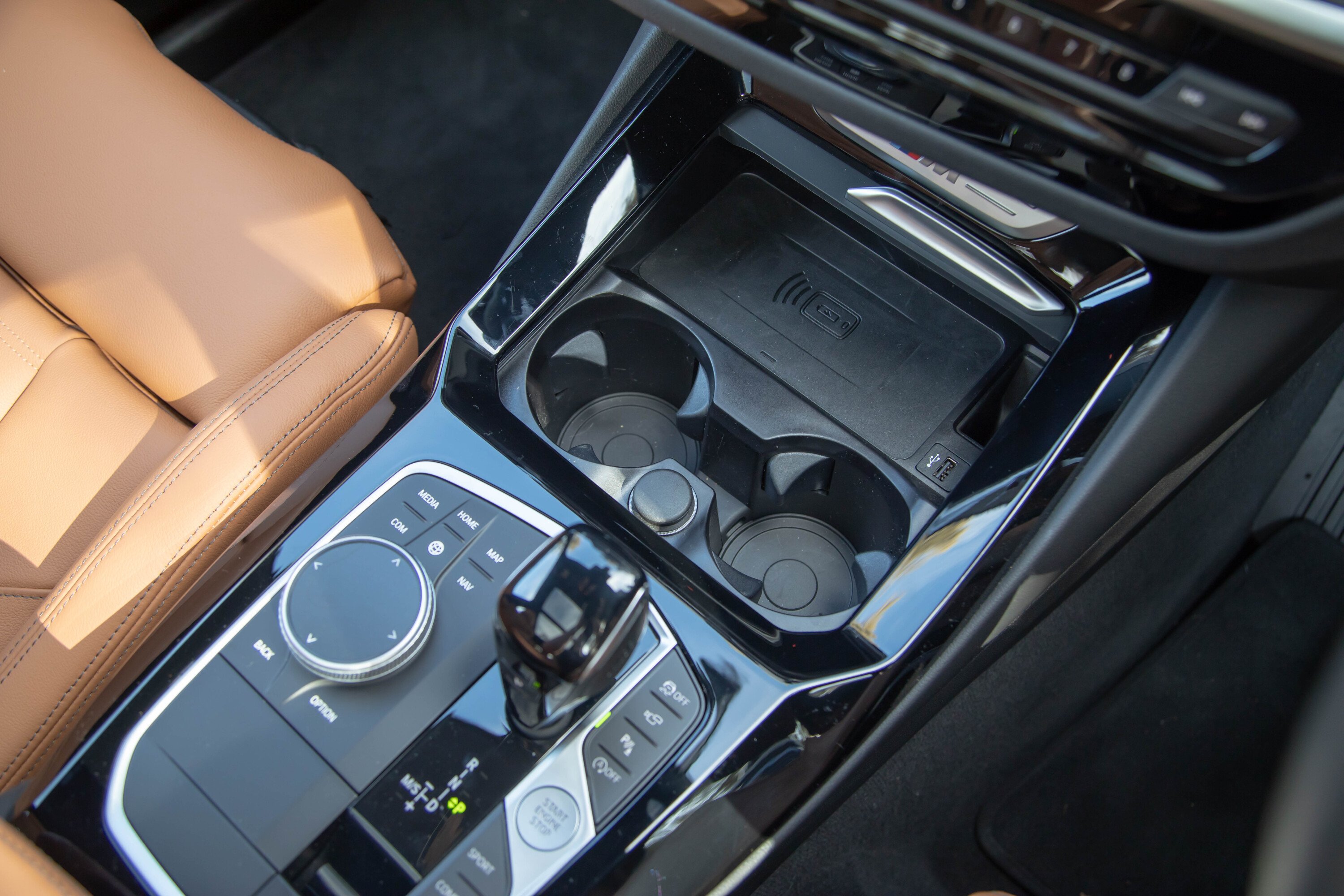
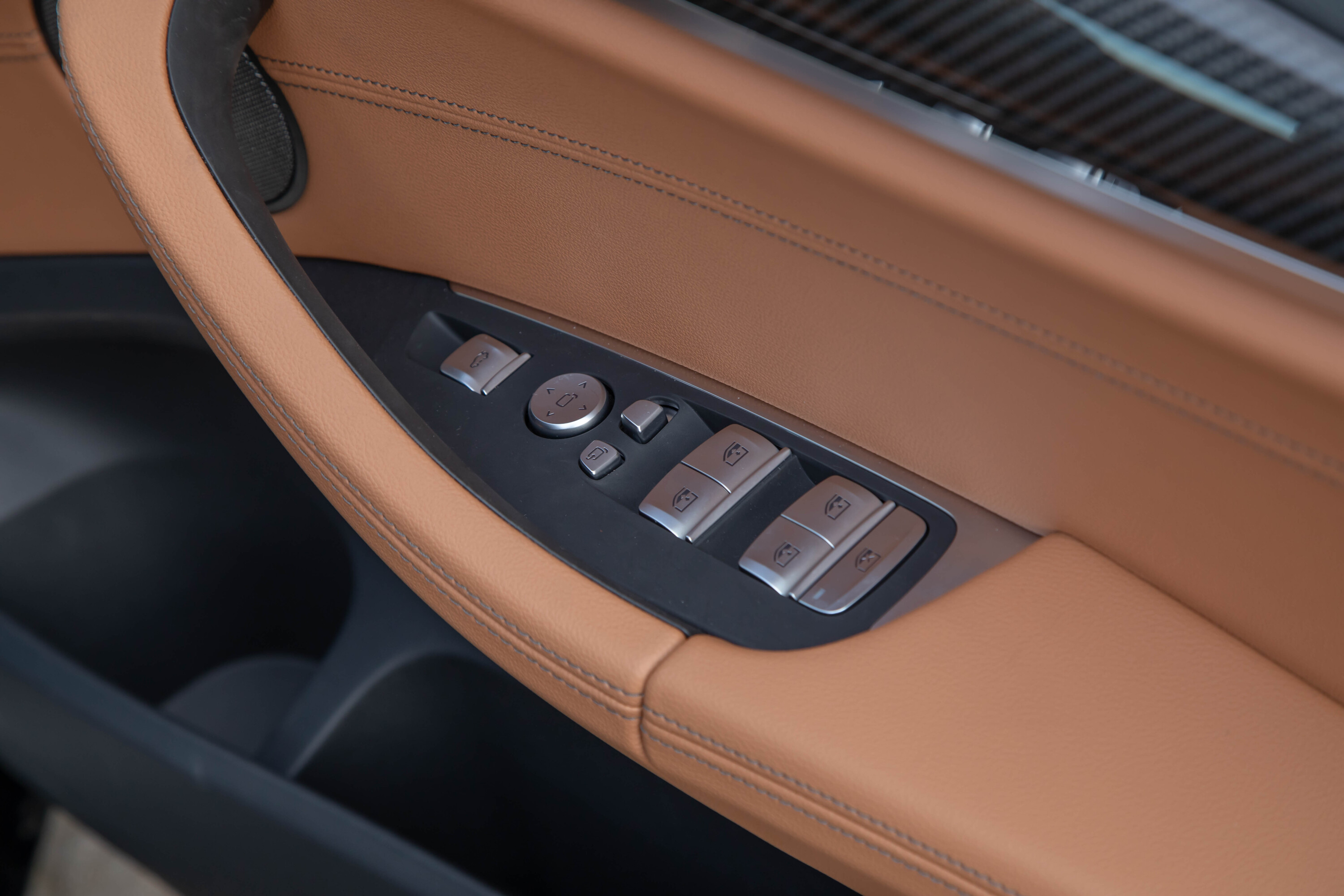
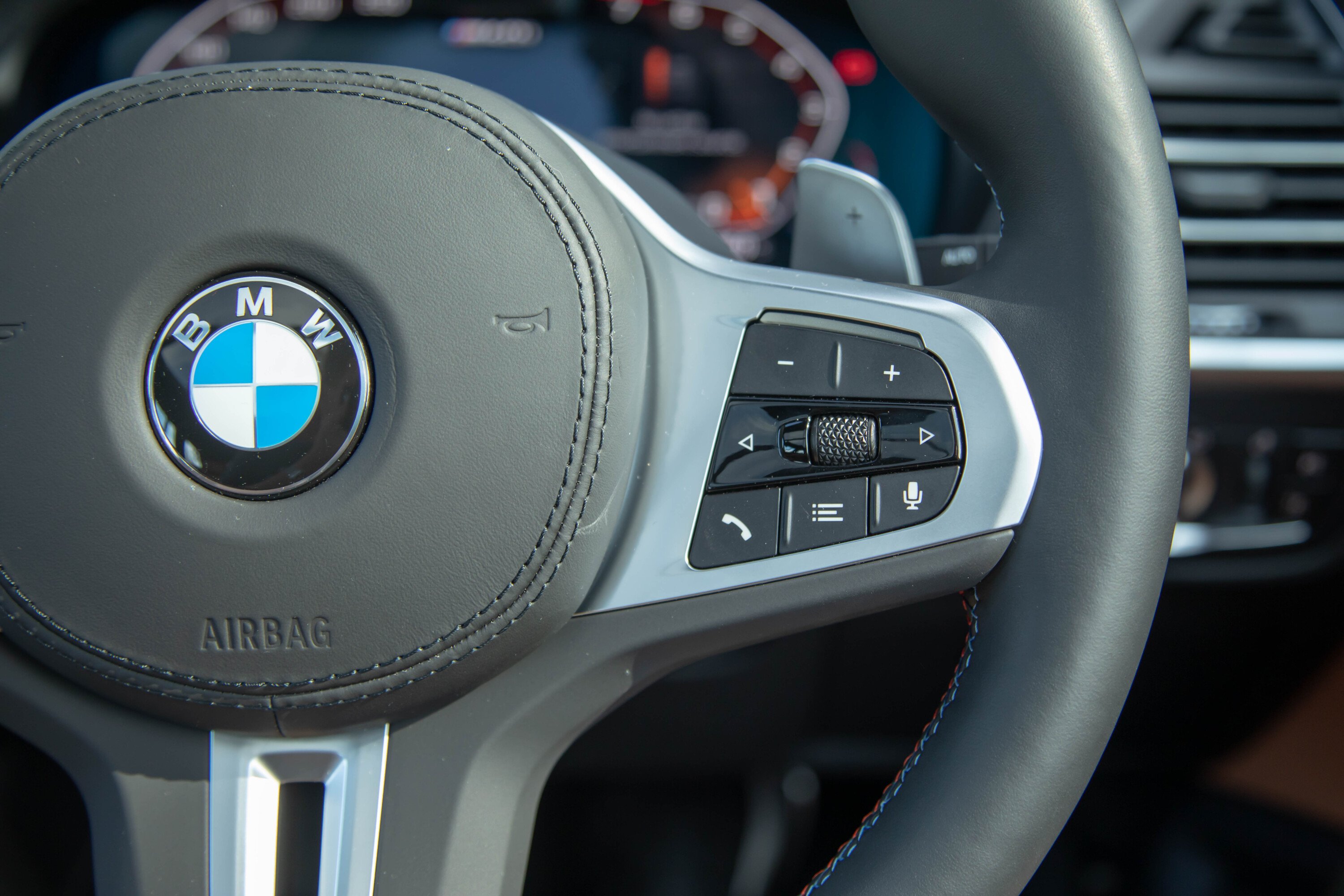
Generous cup holders, door bins, and a clever wireless phone charging pad round out the practical touches, while the combination of a rotary controller, physical buttons for important functions and a responsive central touchscreen make interfacing with both BMW’s native software and faultless wireless Apple CarPlay and Android Auto integration easy.
2
What is it like to drive?
Extremely comfortable driving position set and ready, the X3 is an absolute pleasure on the road right from the moment you experience the ergonomic excellence of the start procedure.
The round starter, drive mode selection and auto stop-start buttons are all gathered around the gear selector – it’s the little things. It feels big on the road, though; you notice every bit of the X3’s 1897mm width and 1676mm height for both better and worse. The M40i thankfully isn’t challenging to place thanks to great vision out and 360-degree cameras.
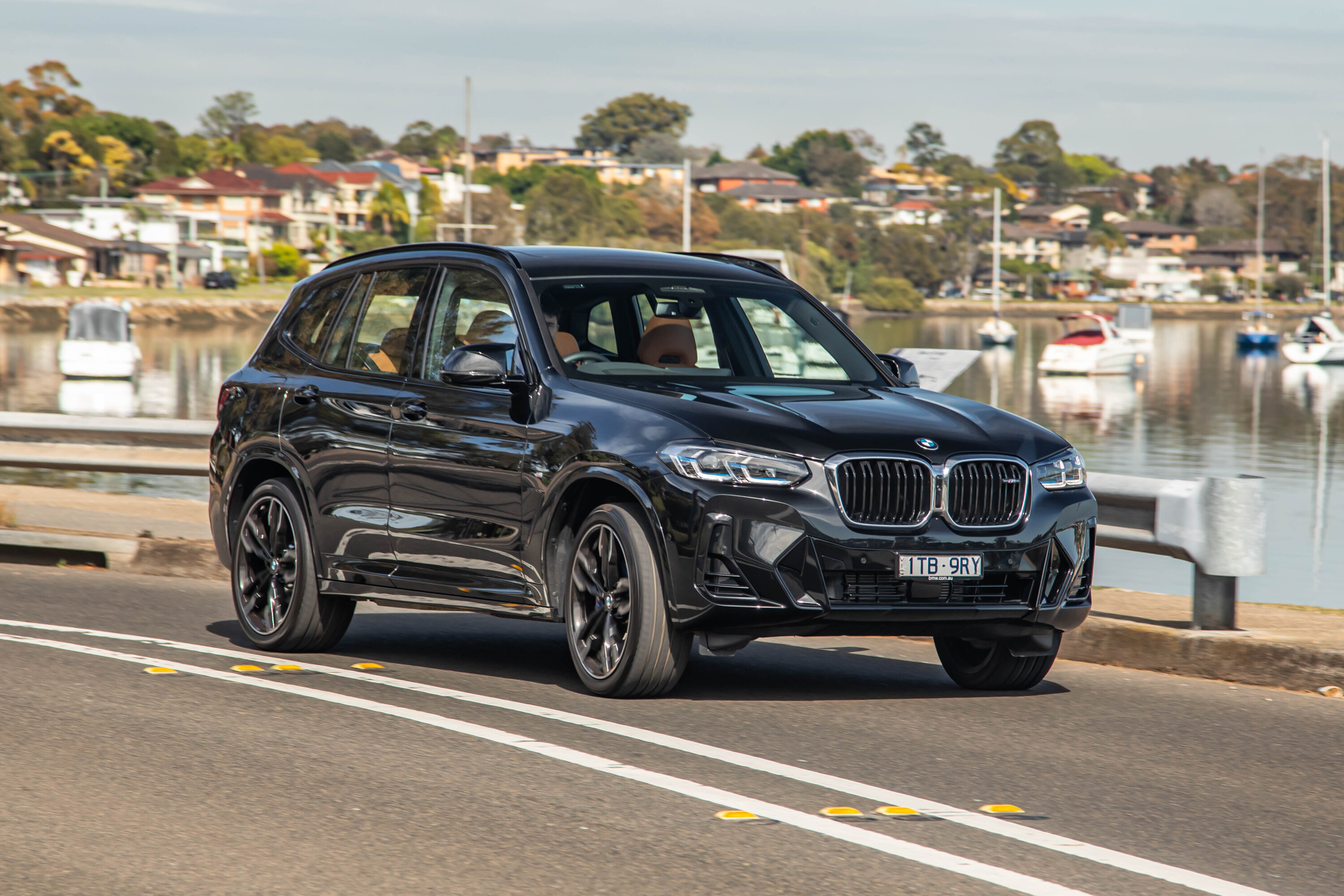
With the X3 in its default Comfort mode, it pussyfoots around urban and suburban areas. Although the sizable 21-inch alloy wheels shod in 245/40 front and 275/35 rear Bridgestone Alenzas occasionally pick up some sharp edges, the otherwise comfortable chassis deals with bumps smoothly.
1
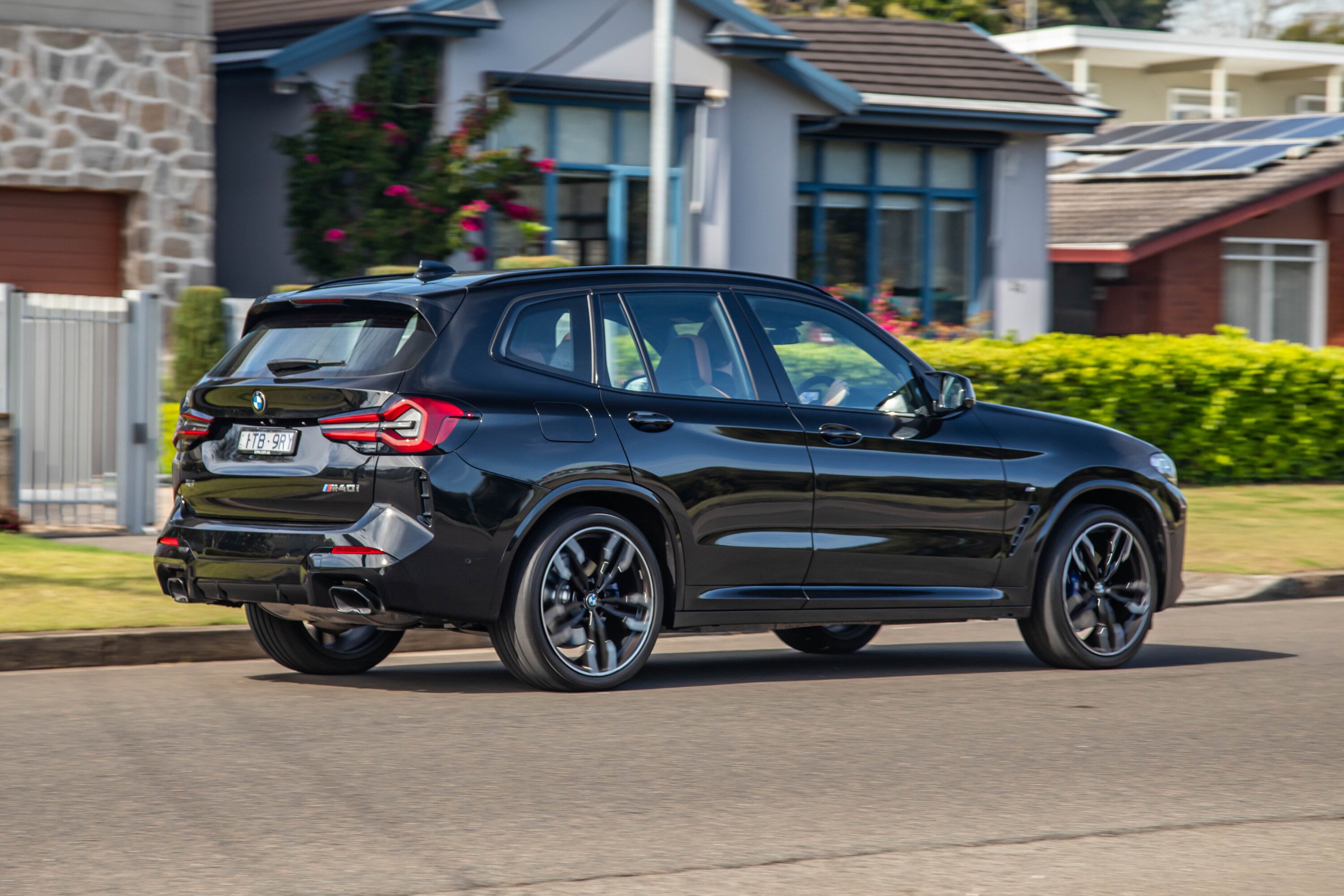
An overwhelming sense of body control is present at all speeds in Comfort and switching the dampers into Sport modes turns the X3 M40i into a wieldy backroad companion.
Sure, it rolls, but that feeling of weight settling onto the outside front tyre gives you the confidence to squeeze the throttle as the rear-biased xDrive shoots the X3 out with surprising neutrality. Keeping the SUV in check on low-grip surfaces is a well-tuned stability control system that limits unnecessary slip.
If you’ve never experienced the even more impressive ‘G20’ 3 Series wagon you won’t know what you’re missing when buying an X3 – and it isn’t much. In reality, it’s about 10-15 per cent accuracy when approaching and at the limit of adhesion plus a little less body roll.
1
Of course, there are criticisms for the X3 M40i. Its steering feel for one is rubbery and uncommunicative even if its quick ratio does feel sporty. The Sport Plus damper mode is too firm for Australian back roads, too.
Almost any shortcoming is offset by those six gorgeous cylinders out front; the B58 is truly one of the greatest mass-production engines ever. A growl on start-up gives way to a quiet pull away in Comfort mode after the revs have settled.
Combining it with an expertly tuned eight-speed ZF automatic transmission means the X3 M40i seems to have the same level of grunt no matter where or what you’re doing. It’s effortless.
No doubt the 285kW helps – that’s mostly what gets this 1910kg SUV to 100km/h in 4.8 seconds – faster than a Ferrari Testarossa – but the 500Nm torque figure that’s spread from 1800-5000rpm is what makes this X3 such a gem.
1
- What is a Powertrain or Drivetrain?
- Power vs torque
- Car suspension explained
- Automatic transmissions (‘gearboxes’) explained
- Chassis control systems explained
- Car vs Ute vs SUV: How the vehicle you buy should guide the way you drive
As you might expect, the high cylinder count and hefty kerb weight do make for a fairly thirsty experience.
We recorded 10.2L/100km over seven days and 9.2L/100km in a test that usually brings us close to the official ADR ratings. For reference, the X3 M40i is rated at 8.9L/100km on the combined fuel consumption cycle.
The M40i’s result is better than we’ve seen in a previous test when we pitted a diminutive xDrive 30i against an Audi Q5 – that car returned 12.7L/100km, showing a greater cylinder count isn’t necessarily worse for consumption.
1
How safe is it?
The BMW X3 received a five-star ANCAP rating in 2017, which will expire in December.
BMW has fitted generous levels of safety equipment to Australian X3s since launch and the current car continues this trend.
Forwards and reverse auto emergency braking (which can be a little intrusive as we found when backing into spots with low-hanging trees), adaptive cruise control with stop-and-go function, lane-trace assist, front and rear cross-traffic alert, and a 360-degree camera are fitted to this M40i.
1
Warranty and running costs
A short warranty was long a reason to overlook the X3 but since November 2022 BMW has backed all of its new car sales with a five-year/unlimited-kilometre warranty.
Servicing is due on a conditional basis – the M40i will tell you when it’s time for a check-up via the infotainment system – with pre-paid packs available.
Five years or 80,00km of basic maintenance (excludes brake pads, clutch, and wipers) costs a reasonable $2400 for all X3 variants.
1
VERDICT
In 2024, BMW is readying the release of the fourth-gen X3.
Built from the outset as the first vehicle to use the brand’s ‘Neue Klasse’ architecture with sweeping advancements in digitisation and materials, it’ll be a hugely different beast from the conventional SUV tested here.
And, for those after swift and elegant family transport without wanting to be guinea pigs on the cutting edge, the spacious, comfortable and capable G01 X3 M40i is easy to recommend.
Rivals offer more value on paper but once in sync with the straight-six engine and poised chassis, the X3 M40i feels worth every bit of its asking price.
MORE
Everything BMW
MORE
Midsize SUVs
| BMW X3 M40i | |
|---|---|
| Price (drive-away) | $126,800 ($132,200 as-tested with premium paint, M Sport Plus) |
| Drivetrain | |
| Engine | 6cyl, 3.0-litre, DOHC, turbo-petrol, direct-injected |
| Drive | All-wheel (xDrive) |
| Power | 285kW (@5800-6500 rpm) |
| Torque | 500Nm (@1800-5000 rpm) |
| Gearbox | 8spd automatic |
| Chassis | |
| L/W/H/Wu2013B | 4713/1897/1676/2864mm |
| Track (F/R) | 1604/1594mm |
| Weight (tare) | 1910kg |
| Boot | 550-1600L |
| Fuel/tank | 95 RON/65L |
| Economy (combined ADR81/02) | 8.9L/100km |
| Suspension | Front: Double-joint tension strut axle in aluminium construction adaptive damper. Rear: Five-link axle in lightweight steel construction, adaptive damper |
| Steering | Electric power-assisted steering |
| Front brakes | Four-piston, fixed-caliper disc brakes, ventilated |
| Rear brakes | Two-piston, floating-caliper disc brakes, ventilated |
| Tyres | Bridgestone Alenza |
| Tyre size (F | R) | 245/40R21 | 275/35R21 |
| Safety | |
| ANCAP rating | 5 stars (2017) |
| 0-100km/h | 4.8 seconds (claimed) |
China is now the third-largest source of new vehicles in Australia.
Historically dominated by Japanese, European, and American brands, Australia’s automotive landscape is witnessing a shift as Chinese manufacturers introduce a range of competitively priced vehicles equipped with modern features and technology.
Brands like MG, GWM and LDV have already established a foothold, with sales figures showing consistent growth year on year.
1
It’s re-opened the opportunity for brands like Chery to re-enter the market after its previous attempt ended in 2014.
One of the primary drivers behind this surge in popularity is the value proposition these brands offer.
With most mainstream brands creeping up in price with subtle – or not-so-subtle – increases each year, it’s left an opportunity for undercutting, which newcomers have cleverly nabbed, especially with small and electric cars.
With price as a key driver in new car considerations, we’ve compiled five affordable SUVs from China that you may not have heard of yet, let alone considered.
JUMP AHEAD
Chery Omoda 5
1
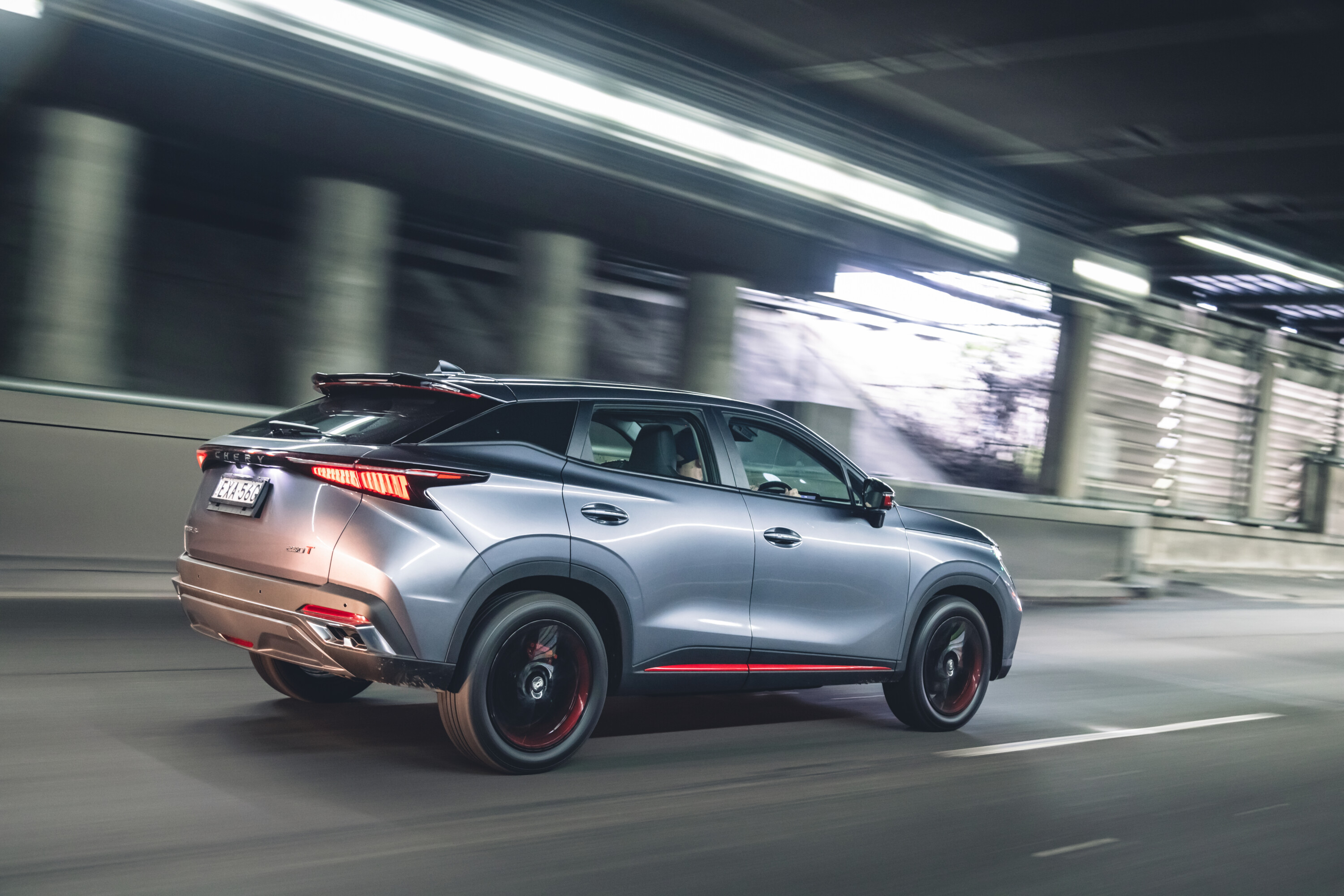
There’s quite a bit riding on the success of the Omoda 5 as a pioneer vehicle for Chery’s return to Australia. So it’s no small feat that the Omoda 5 sold 624 units in September alone, having only launched in March of this year.
Available in two grades, both powered by a 1.5-litre turbo engine, the feature-packed EX is priced at a very competitive $29,900 before on-road costs. You’ll get impressive standard inclusions such as a 10.25-inch touchscreen, 18-inch alloy wheels, a six-way power driver’s seat, and wireless Apple CarPlay.
You can move up to the BX for $3000, which adds a 360-degree camera, heated front seats and steering wheel, a sunroof, and more.
MORE
Everything Chery
GWM Haval Jolion
1
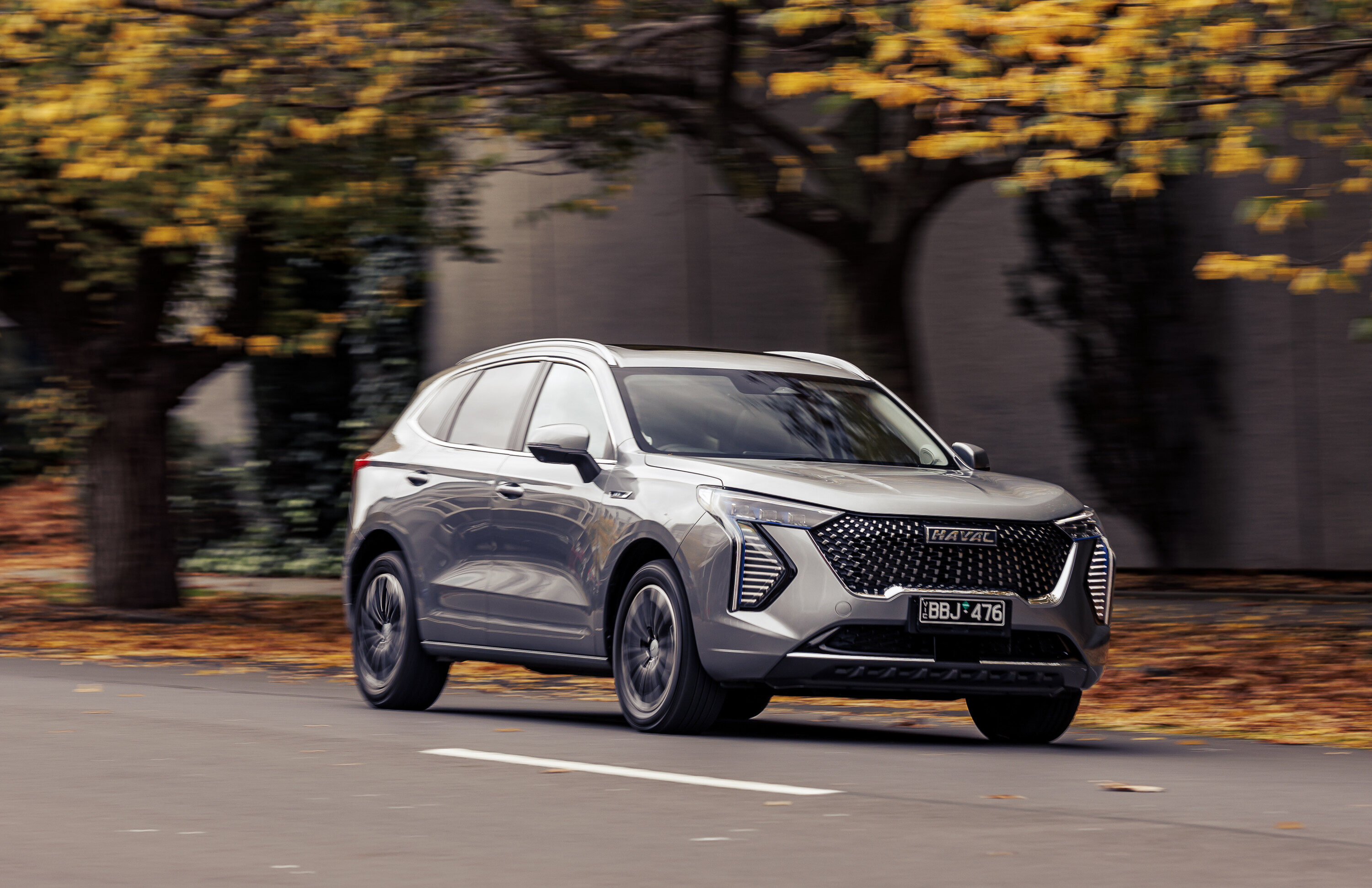
The Jolion is a slightly bigger small SUV produced by Great Wall Motors (GWM) under its Haval brand. Current pricing offers start from $26,990 drive-away, making it a very attractive small SUV option. A hybrid powertrain is offered further up the range, as well.
Standard features include a 10.25-inch infotainment screen, 17-inch alloy wheels, wired Apple CarPlay and Android Auto, lane departure warning, lane keep assist, traffic sign recognition, rear cross-traffic alert and roof rails.
The next variant in the range – Lux – adds a 360-degree camera, leather steering wheel, heated front seats, power-adjustable driver seat, LED headlamps and daytime running lights, and dual-zone climate control. That’s an impressive bundle for less than $30K.
Moving up the range offers features such as larger 18-inch wheels, a 12.3” infotainment screen, a heads-up display, a panoramic sunroof, and more.
MORE
Everything Haval
MG ZS
1
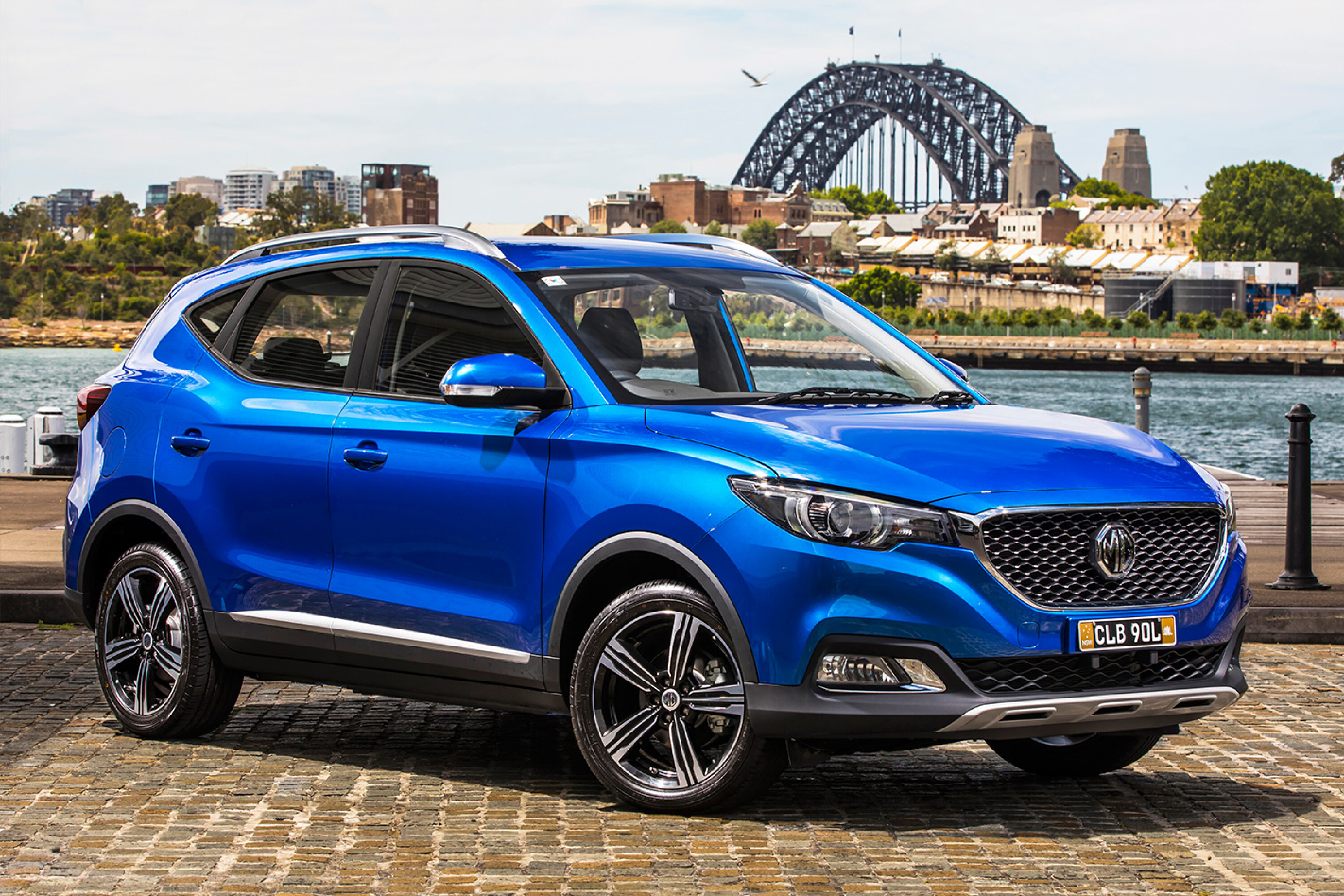
At only $23,990 drive-away, MG allows consumers to step into a small SUV (although on the slightly smaller side) at a price point previously exclusive to hatchbacks.
The SUV often appears in the top 10 best sellers list, holding a 21% market share of all mainstream small SUVs sold this year.
Available in a single variant, you’ll get 17-inch alloy wheels, a leather-appointed steering wheel, six speakers, Apple CarPlay, an 8-inch touchscreen, a reverse camera and rear parking sensors – but no AEB or lane-keep assist.
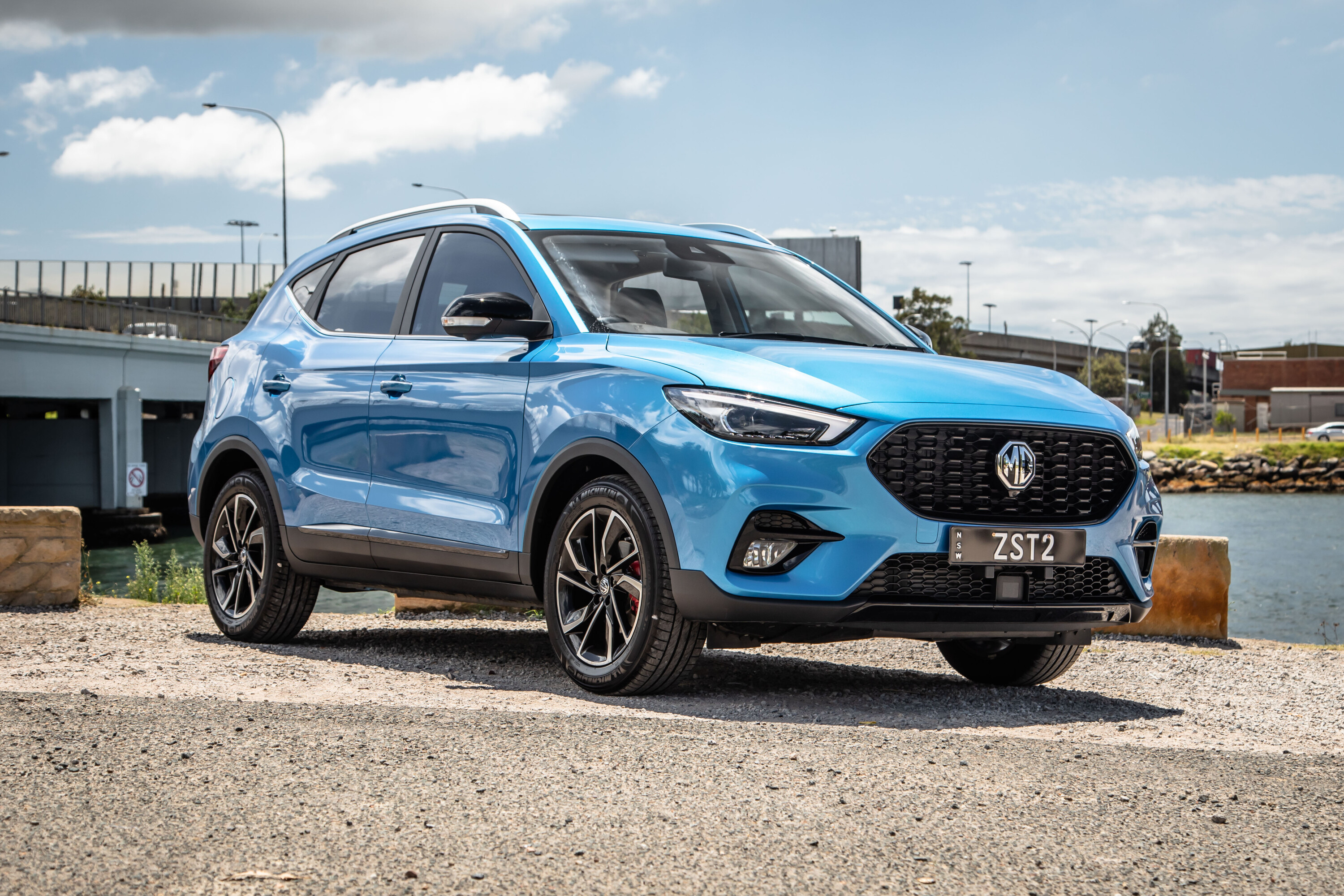
If you’re after more spec – and important active safety tech – you can look into the ZST range, which starts at $25,490 drive-away for the entry-level Core.
All MG vehicles come with a seven-year/unlimited-kilometre warranty.
MORE
Everything MG
MG HS
1
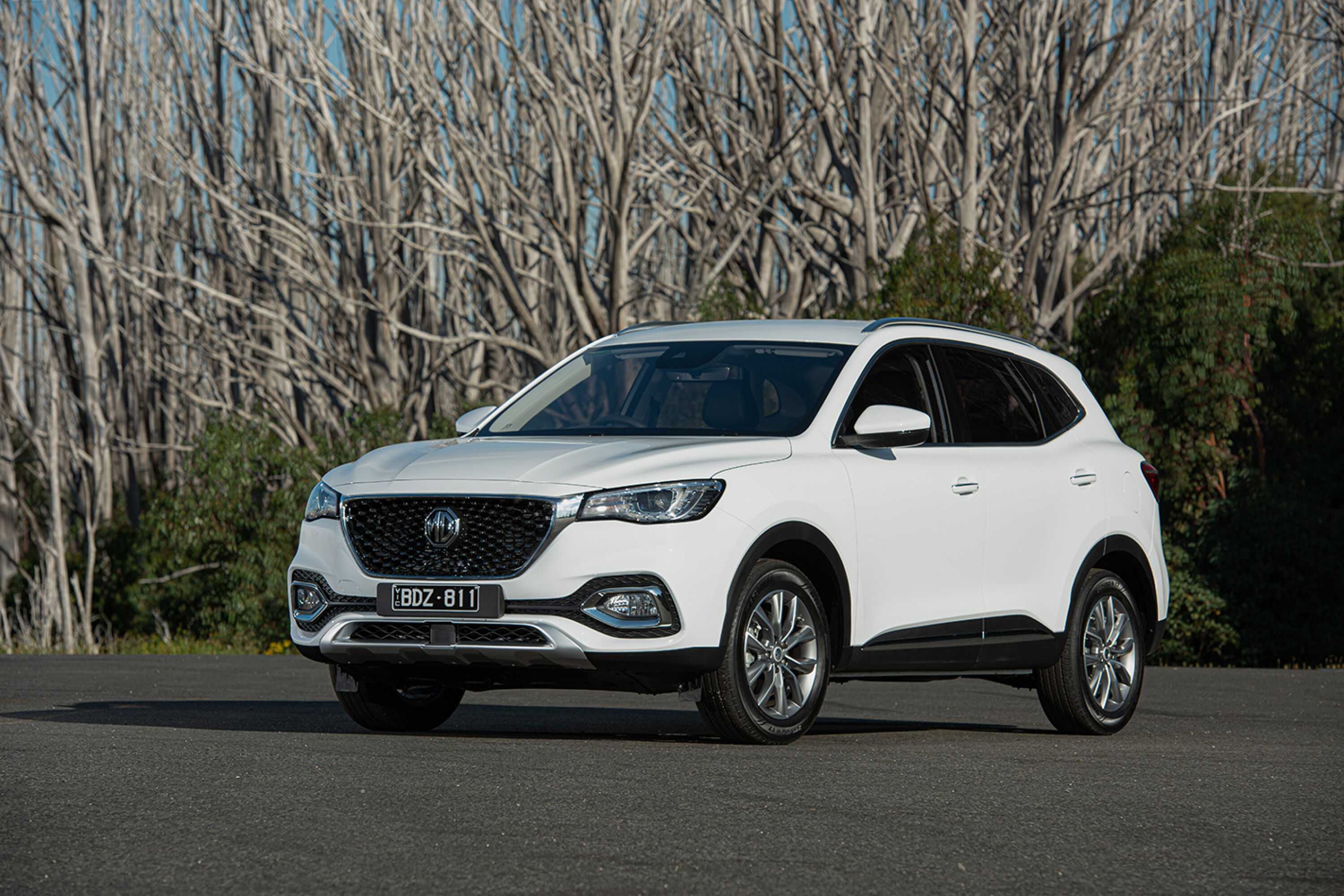
If you like what the MG ZS offers but require more space, the slightly larger HS could suit you perfectly. It’s competing against cars in Australia’s second most popular segment: Medium SUVs.
Key competitors include the best-selling Toyota RAV4 and more affordable options like the GWM Haval H6.
With competitive pricing from $32,990 drive-away, the HS has some great standard features, including a 10.1-inch touchscreen, keyless entry and start, and rear parking sensors.
MORE
Everything MG
GWM Haval H6
1
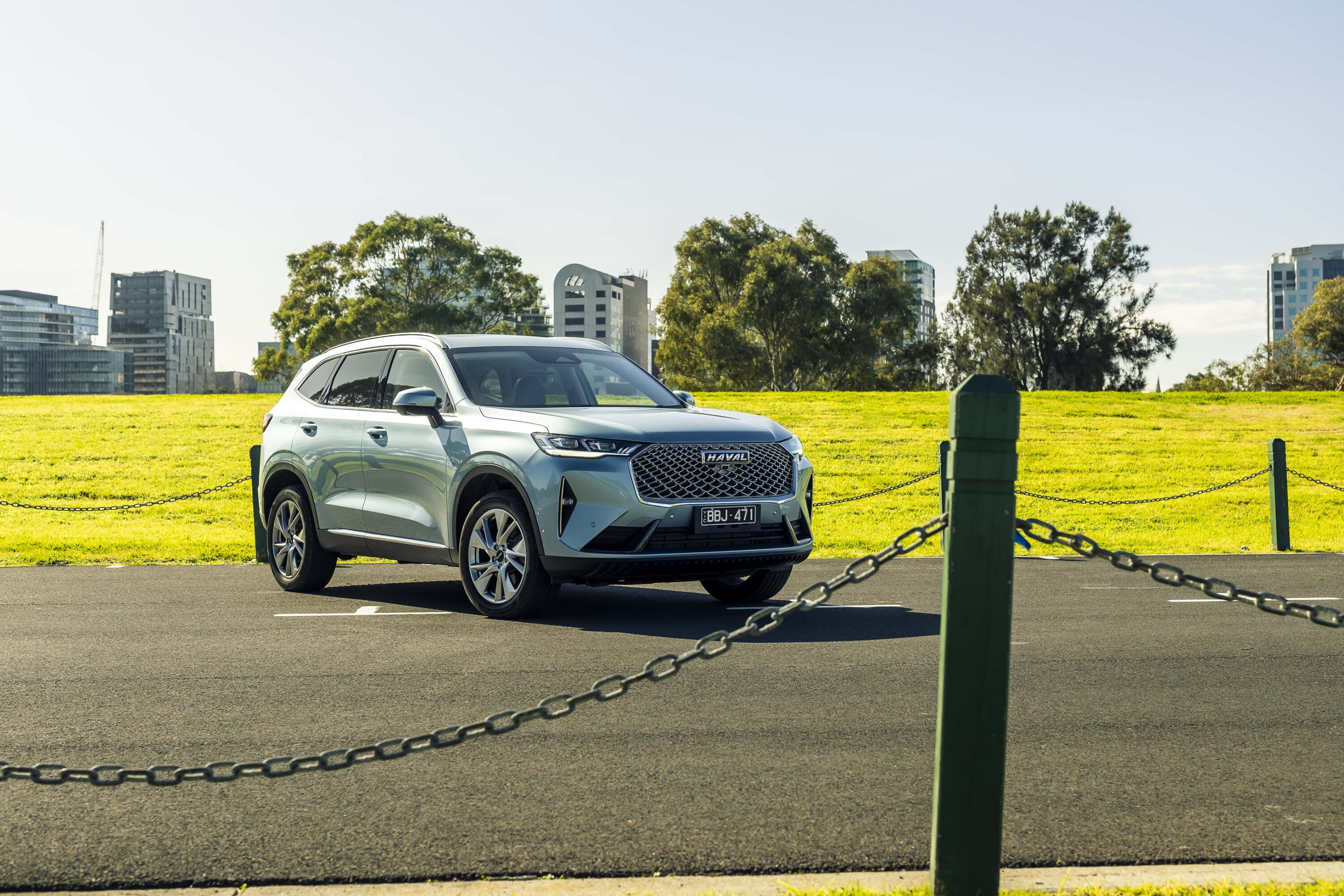
Also priced from $32,990 drive-away, the GWM Haval H6, like the MG HS, is taking on some popular nameplates in the medium SUV segment. It even shares design features with more premium SUVs, such as the rear light bar.
The H6, which held the title of China’s best-selling SUV for several years, is gaining significant traction in Australia, with 9592 units of both the H6 and coupe-styled H6 GT sold year-to-date.
Coming standard with features such as 18-inch alloy wheels, a 10.25-inch touchscreen, blind spot monitors and a reversing camera with rear sensors, the H6 is feature-packed throughout the model grades.
Buyers have the choice of three petrol variants and two additional hybrid options.
MORE
Everything Haval
MORE
SUV Buyers Guide
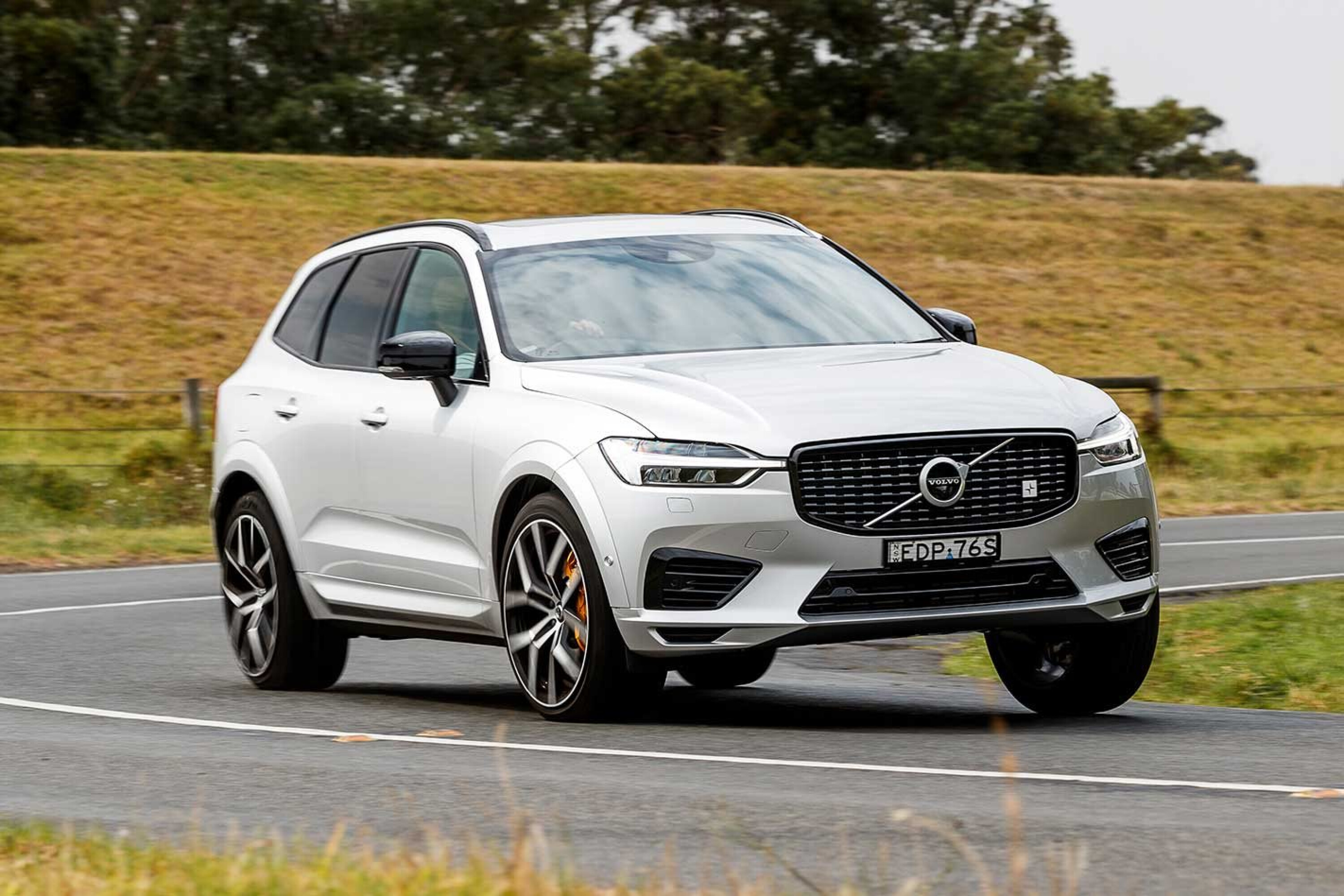
The Volvo XC60 has always been a beacon of luxury and safety in the mid-sized SUV segment, situated between the small XC40 and large family SUV the XC90.
With the 2024 XC40 Recharge, Volvo takes a bold step into the future, blending its iconic design with cutting-edge hybrid technology.
Volvo’s plan to go all-electric by 2030 is getting started with a range of electric and hybrid powertrains.
So in a world transitioning to electric, does the XC60 Recharge lead the charge?
1
Pricing and Features
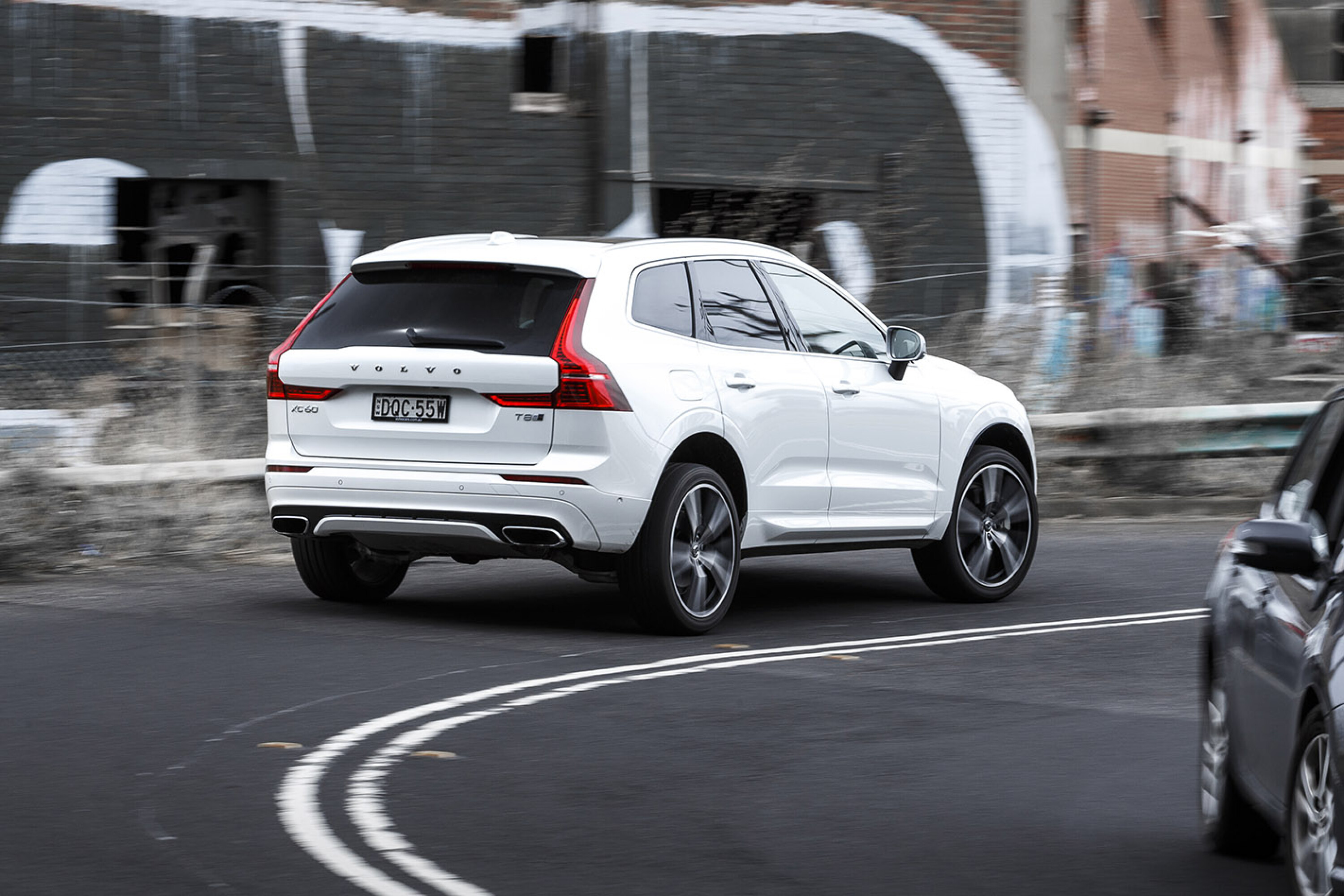
The Volvo XC60 Recharge is a plug-in hybrid available in a single grade called Ultimate, priced at $101,990 before on-road costs.
There’s an impressive 340kW and massive 709Nm to play with via both the 2.0-litre petrol four-cylinder with the 18.8kWh battery electric motor, giving it a fast 0-100 time of 4.9 seconds.
1
The electric-only range 81 kilometres, while Volvo has claimed that it can achieve a fuel consumption rate of 1.6L/100km when operating in hybrid mode.
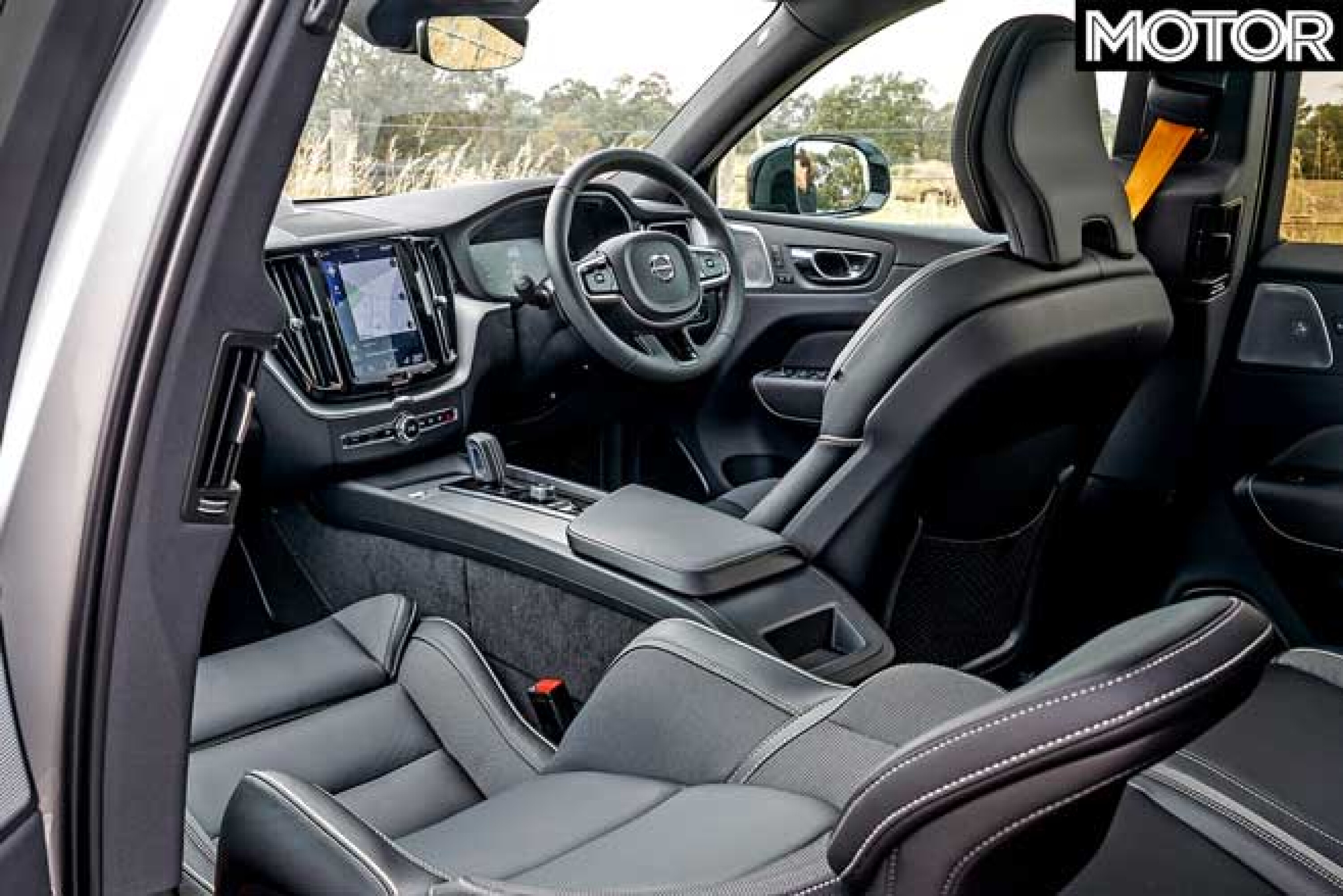
Features that are standard on the Ultimate include:
| 12-inch infotainment screen | Heated front seats |
| 15 premium speaker audio system | Leather accented seats |
| 21-inch alloy wheels | Panoramic roof |
| 360-degree camera | Power adjustable front seats |
| Ambient cabin lighting | Power hands-free tailgate |
| Apple Carplay and Android Auto | Rain sensing wipers |
| Auto dimming rear view mirrors | Rear privacy glass |
| CleanZone air purifier | Roof rails |
| Dual-zone climate control | Tyre pressure monitoring system |
| Heads up display | Wireless charger |
1
Safety
The standard XC60 is covered by a five-star ANCAP safety rating, however the PHEV does not carry a rating, due to the difference in powertrains.
It is however packed with safety features so its easy to read between the lines. Features include seven airbags, forward and reverse autonomous emergency braking, blind-spot monitors, lane-keep assist, road sign recognition, a 360-degree parking camera and adaptive cruise control.
Like other premium Volvo’s the vehicle is also able to self park.
1
Key Rivals
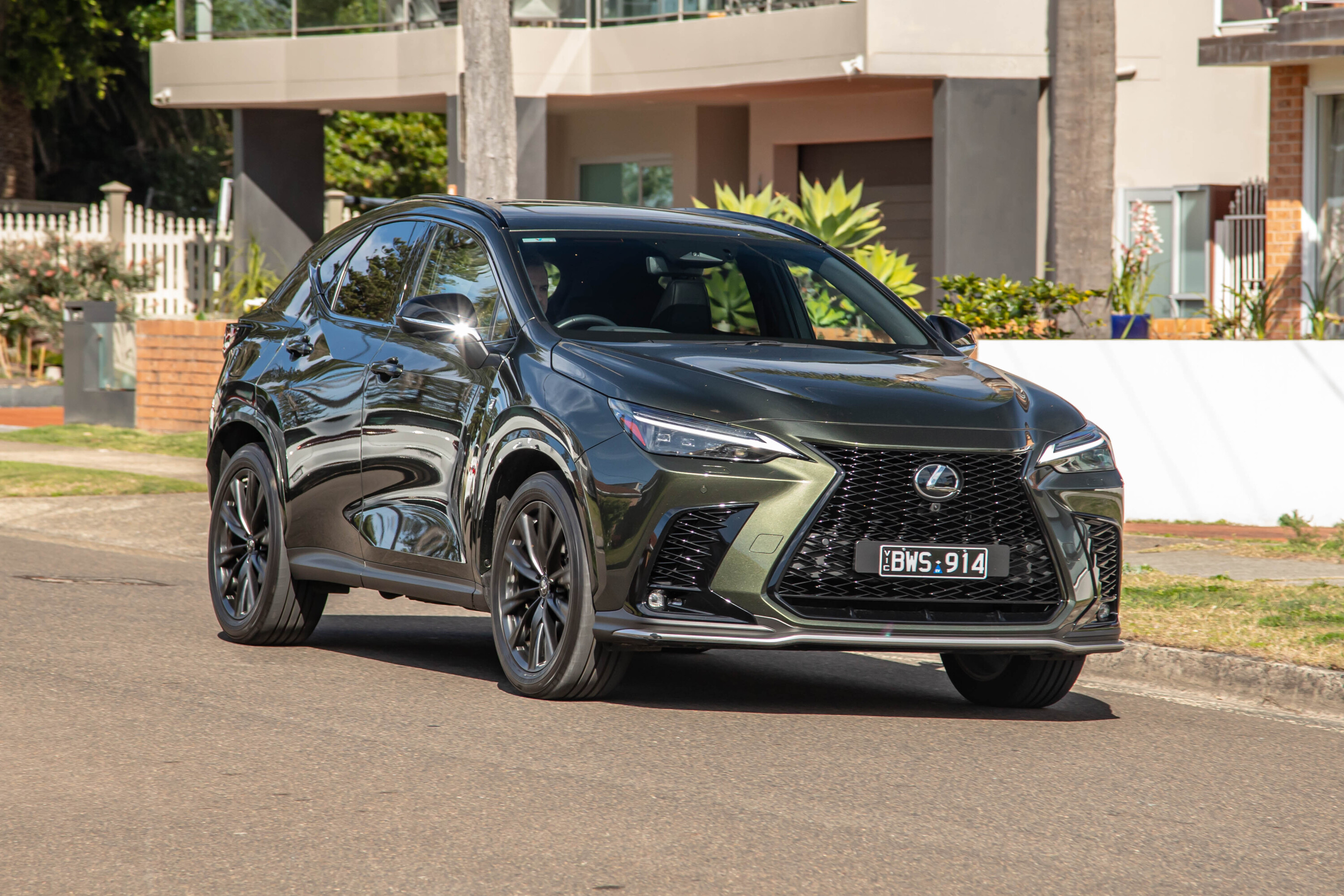
The XC60 Recharge competes against plug-in hybrid versions of the:
1
Should I Put It On My Shortlist?
The XC60 offers the best of both worlds – the efficiency of electric driving and the flexibility of a hybrid. And is ideal for someone looking to slowly adopt electric technology.
If you’re seeking a mid-sized SUV that doesn’t compromise on luxury, safety, or environmental responsibility, the XC60 Recharge is a frontrunner.
However with mild-hybrid versions of the XC60 available as well, starting form $30,000 cheaper, it might be a more tempting proposition.
MORE
Everything Volvo
MORE
Midsize SUVs
