A supercharged V8 super ute is about to be unleashed onto the world by Ram, and we are pretty bloody excited.
The Ram 1500 Rebel TRX is due to be revealed next week, with the American pick-up set to up the ante and land a blow on Ford’s ultra-popular F-150 Raptor.
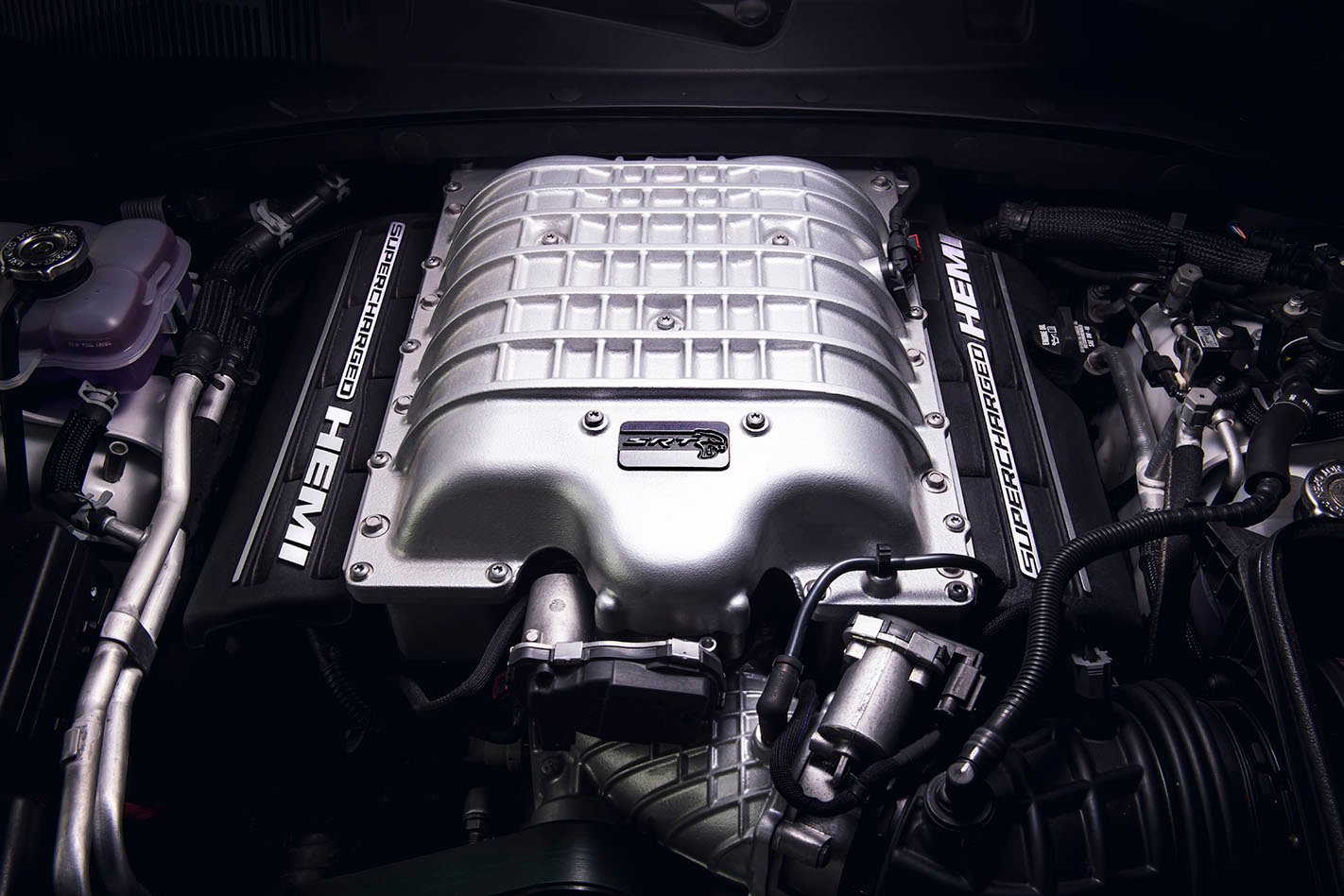
What sets the Ram TRX apart is its engine, which is said to be the Hellcat unit that has been the halo powerplant in the Dodge range and is also fitted to the crazed Jeep Grand Cherokee Trackhawk.
UPDATE, May 2023: Ram 1500 TRX v Ranger Raptor
?♂️ Australia’s most outrageous utes face off in a rock-spraying, fuel gargling celebration of excess. Strap in, it’s about to get noisy!
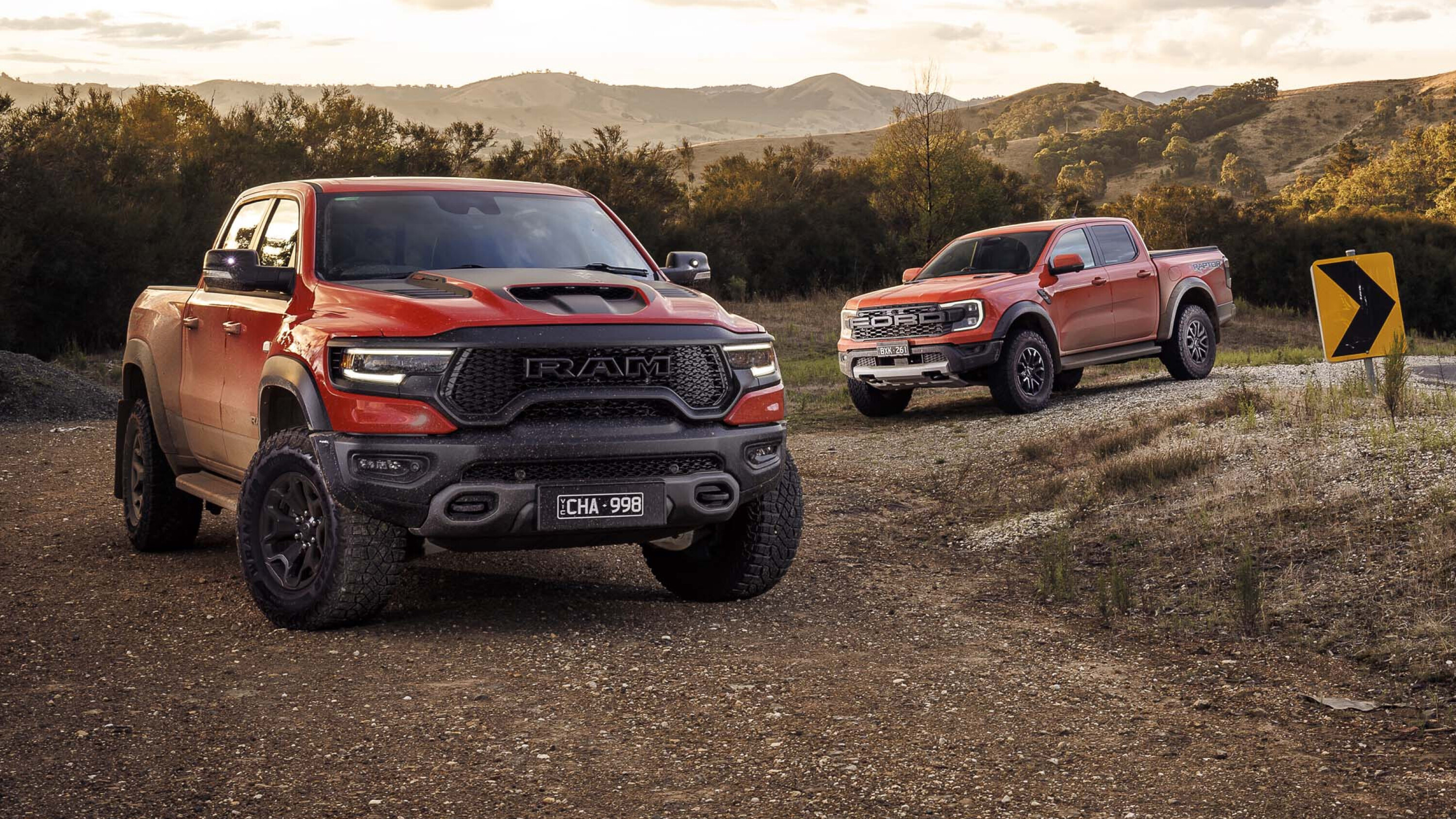
STORY CONTINUES: Everything we know about Ram’s new 1500 TRX
The 6.2-litre supercharged Hemi V8 can be delivered in Hellcat, Redeye, or Demon specification, producing 522kW, 534kW and 594kW respectively.
It’s unclear which version will be fitted to the TRX, but industry speculation suggests the base Hellcat 522kW/868Nm version is a shoo-in for the lead role.
Even in its least powerful guise (least being a loose term in this setting), the blown V8 would make the Ram TRX the most powerful dual-cab ute in the world.
Power will be sent to all four wheels via an eight-speed automatic gearbox. Spy shots of the interior have revealed that several different drive modes will be available for the driver to select.
American pick-ups aren’t big on subtlety, so expect flared arches, meaty wheels and tyres, bulging bonnets, and rock-smashing bumpers.
The suspension will receive a working over to match the new engine. Expect beefed up control arms and suspension links, wider track, long-travel shocks, and ARB air-lockers on each axle.
Timing for the TRX’s reveal has been cleverly calculated by Ram, with its biggest competitor the Ford F-150 Raptor currently at the end of its life cycle. A new generation Raptor is currently in development.
An official reveal for the TRX has been slated for August 17 in North America, while production is expected to begin later this year, with showroom deliveries likely to start early next year.
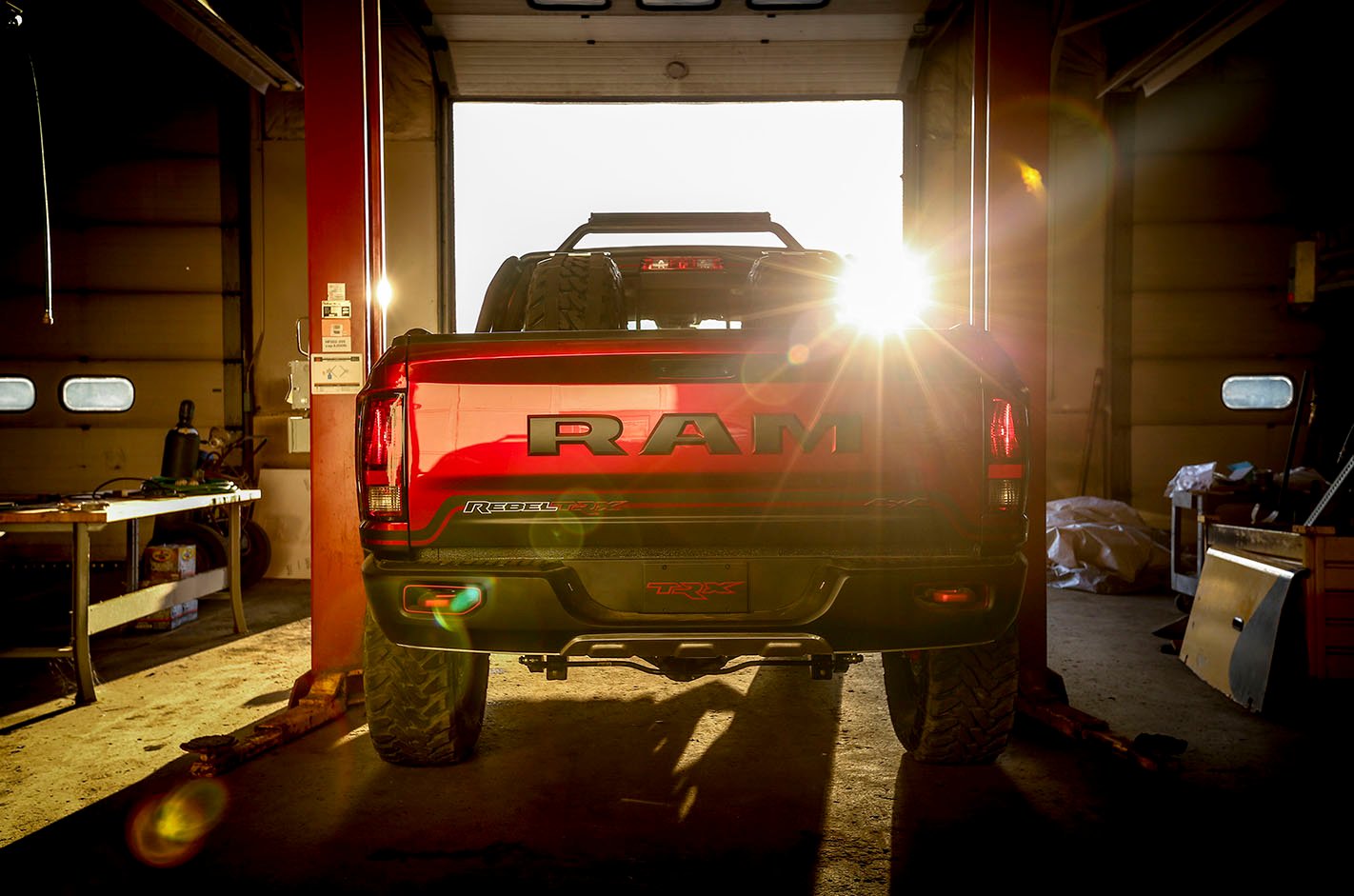
But, what about Australia?
Ram Trucks Australia is keen for the mega ute to make its way Down Under.
Distributed locally by ATECO with approval from North America, Ram Trucks are re-engineered to right-hand drive in Clayton.
The big American pick-ups are enjoying a sales boom this year, while the rest of the industry struggles.
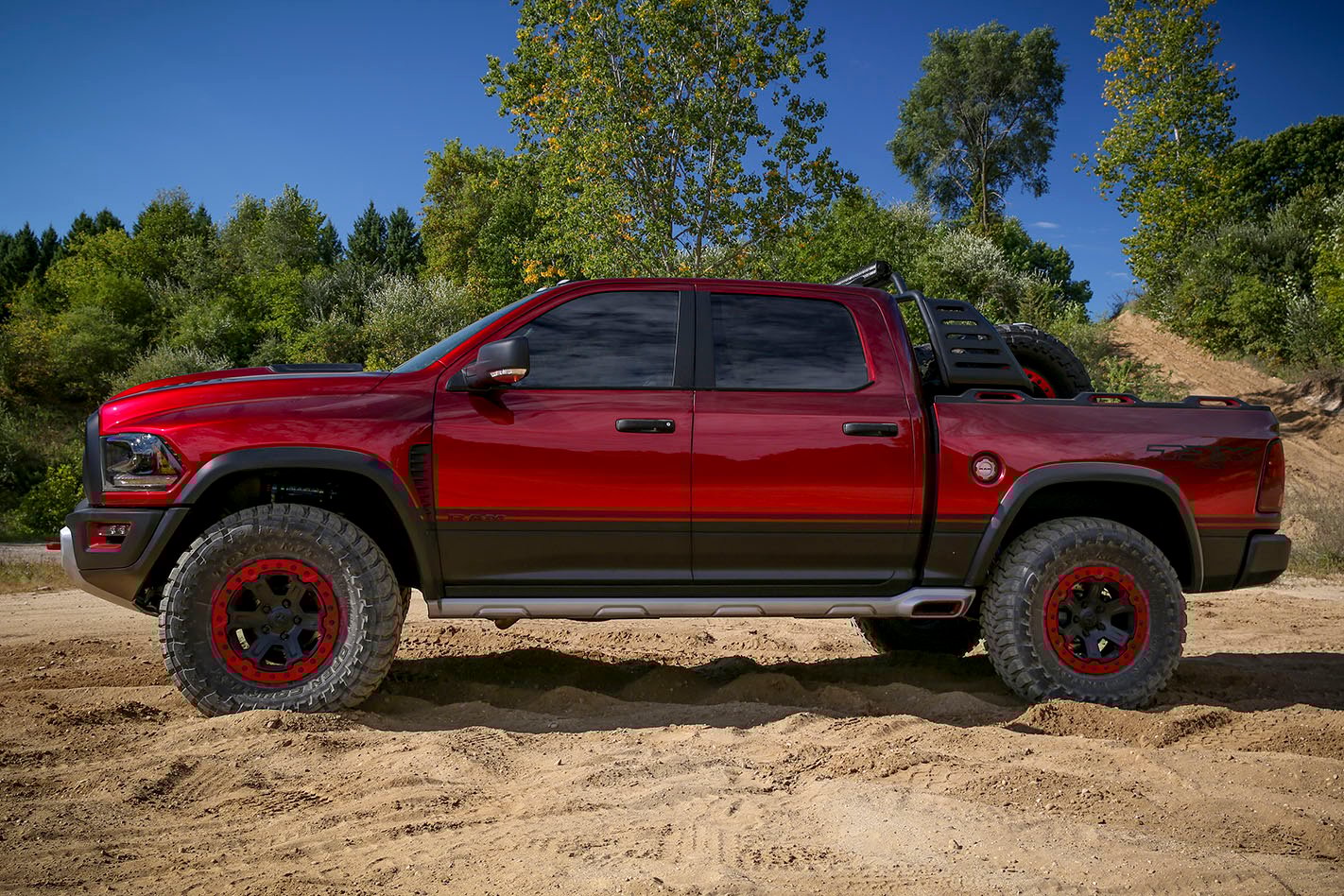
Officially, there is no word on if or when the TRX will be available in Australia.
However, it’s no secret that Australians love their fast utes, and Wheels understands the local distributor is eager to have the TRX available locally as a halo for its growing range, and are currently deep in discussions to make an Aussie arrival a reality.
The TRX would be the most expensive Ram available, sitting atop the DT (due in 2021), as well as the existing DS Laramie and Express models.
Demand in the US will largely dictate when Australia will receive the TRX, while ATECO and contractor partners like Walkinshaw will need to complete an evaluation on the re-engineering process for the high-powered pick-up.
Currently it is too early for an estimation on when the TRX will arrive in Australian showrooms, but it could be well over a year. Price? It’ll be more expensive than anything currently offered by Ram.
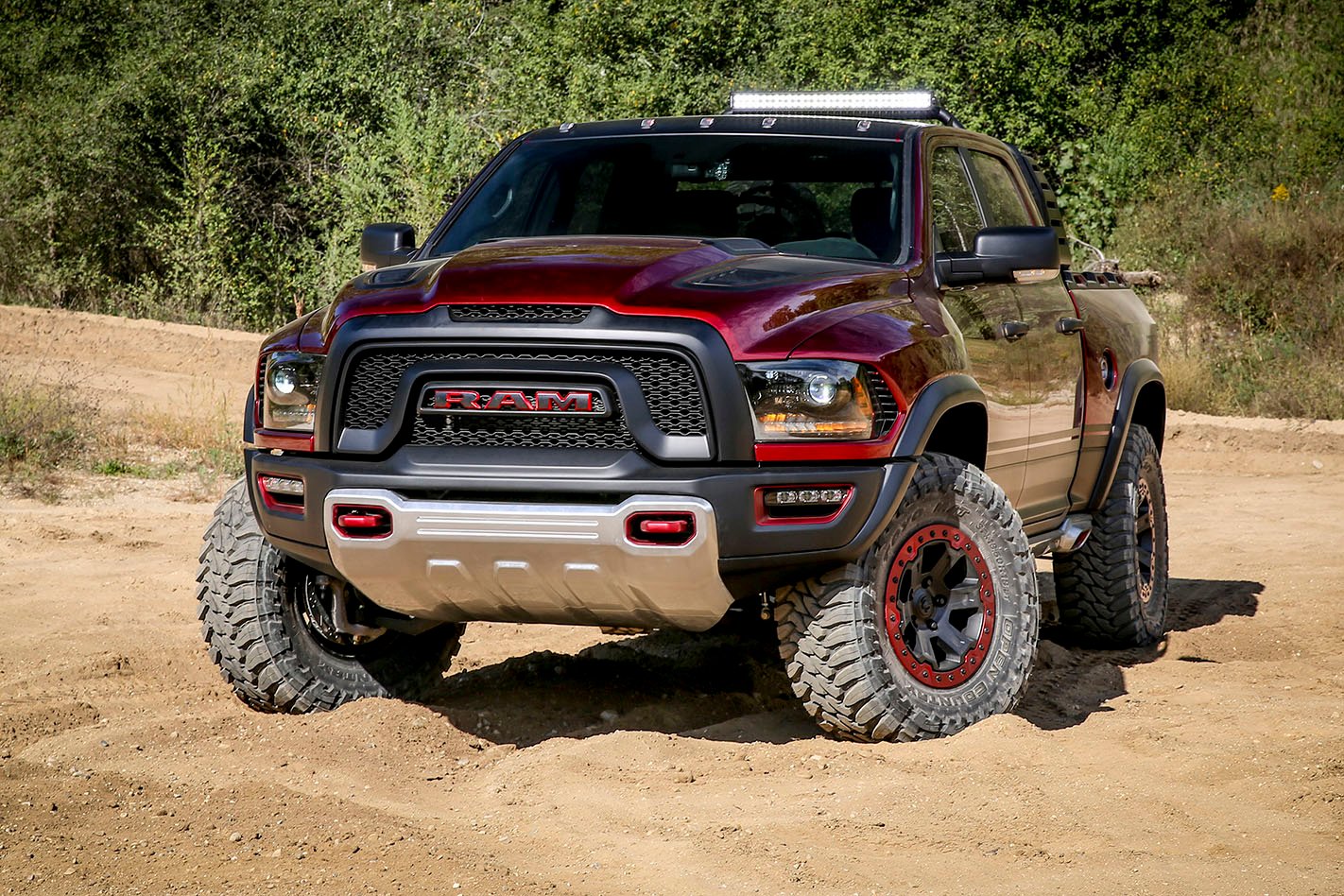
It’s evolution not revolution for the 2021 Audi S3, revealed overnight in Sportback and Sedan forms.The new S3’s mechanical specification is very similar to the outgoing model’s, consisting of a 2.0-litre turbocharged four-cylinder engine connected to a seven-speed dual-clutch gearbox and all-wheel drive.Outputs are unchanged at 228kW/400Nm, or at least that’s the case overseas. Happily, Australian cars, set to arrive in the second half of 2021, will benefit from the full whack rather than the more conservative 213kW/380Nm tune of the outgoing model.
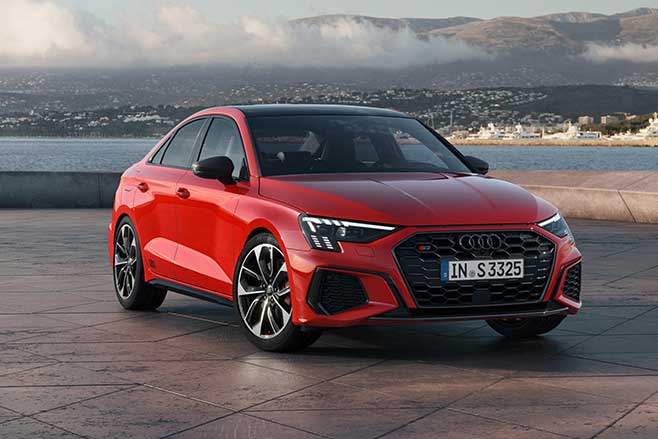
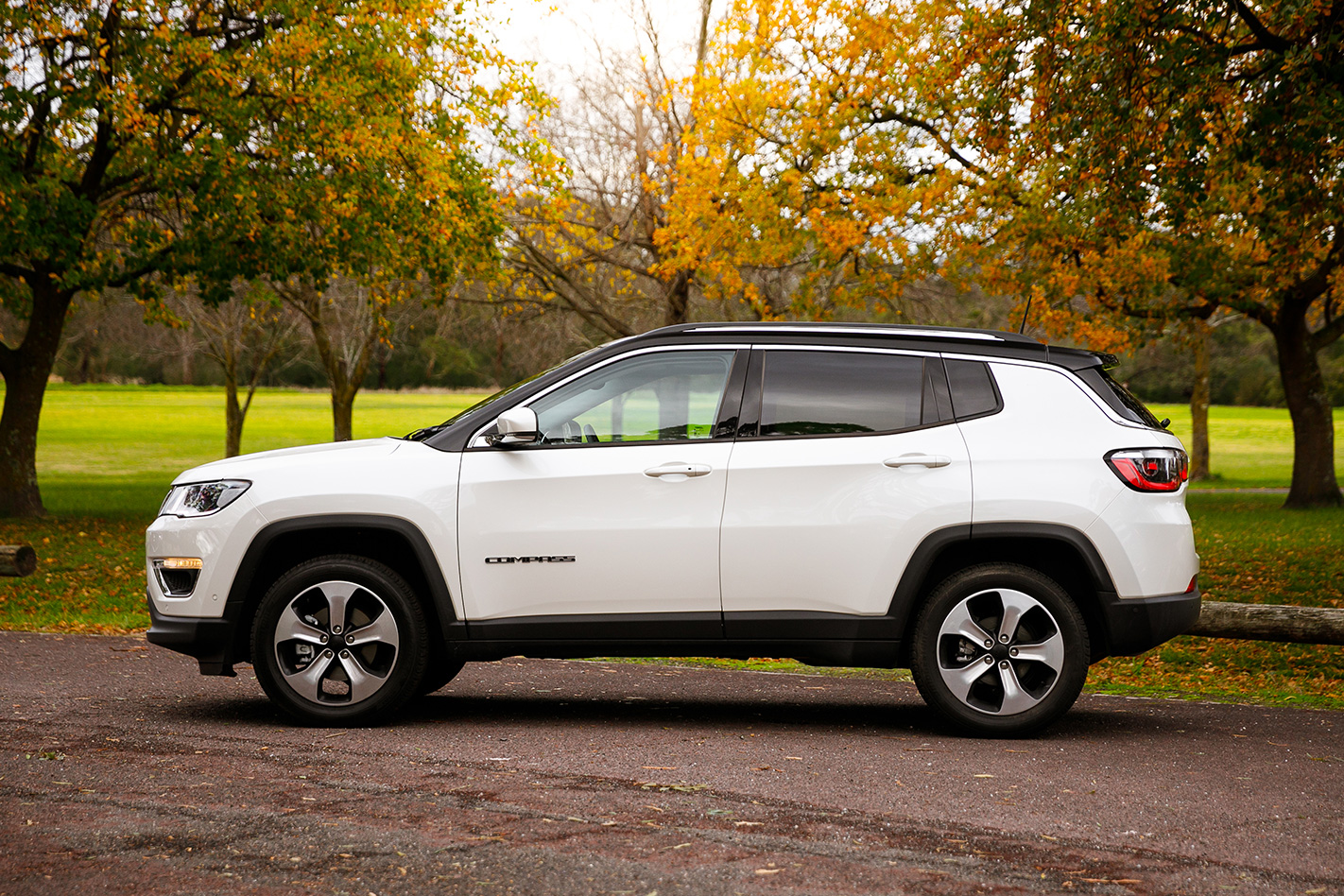
What stands out about the Jeep Compass?
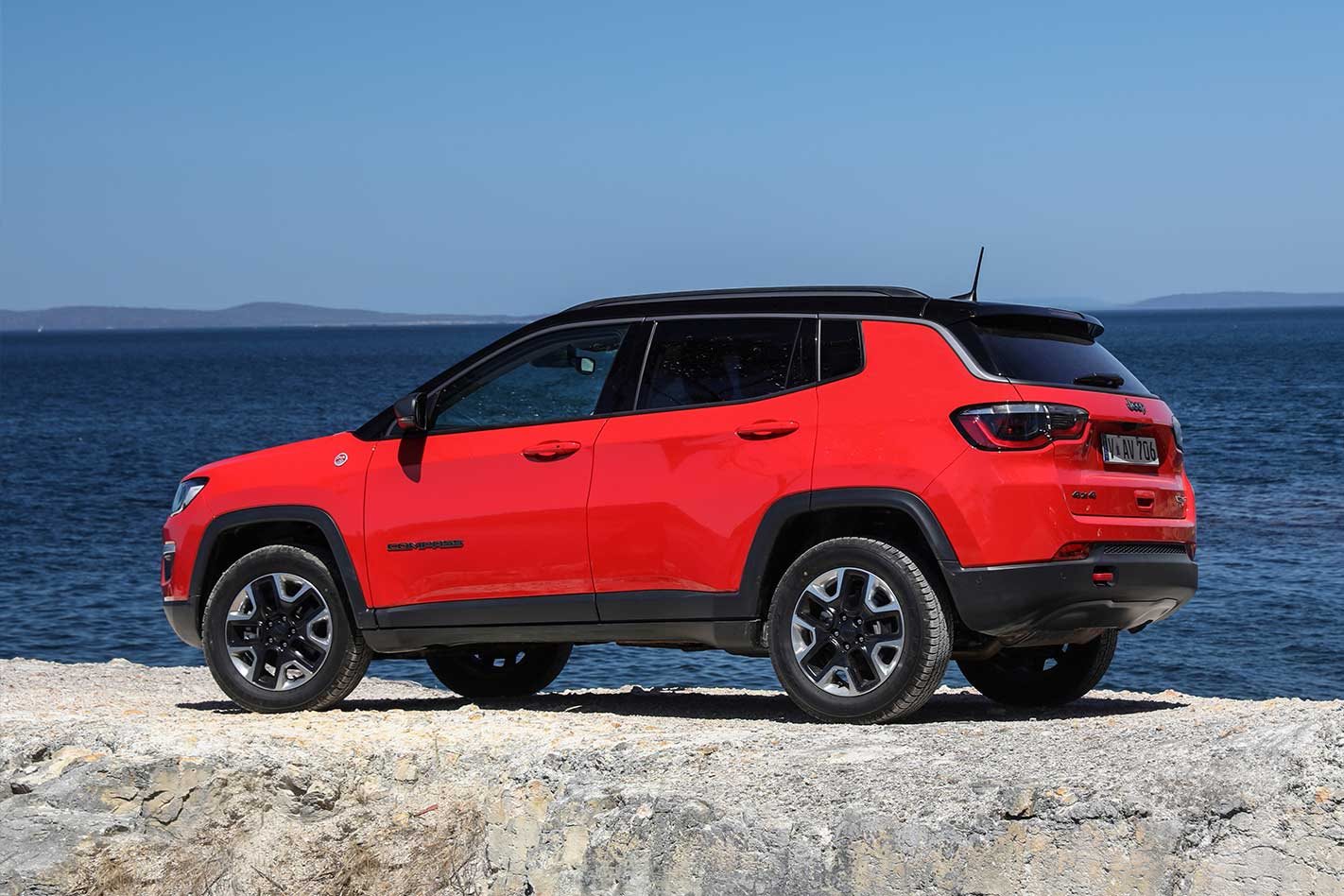
The second-generation Jeep Compass gained a more attractive, rugged look and improved build quality over its predecessor, along with a gutsy turbo-diesel engine in the 4WD Compass Trailhawk that offers genuine off-road capability. It is such an improvement over the previous model that it is outselling the popular Cherokee in Australia.
What might bug me?
Not being able to tow anything if you have a petrol, front-wheel-drive Compass.
Getting a flat tyre and having to travel under 80km/h on a space-saver spare wheel until you can repair the puncture. Only the most-expensive Compass, the Trailhawk, has a full-size spare.
What body styles are there?
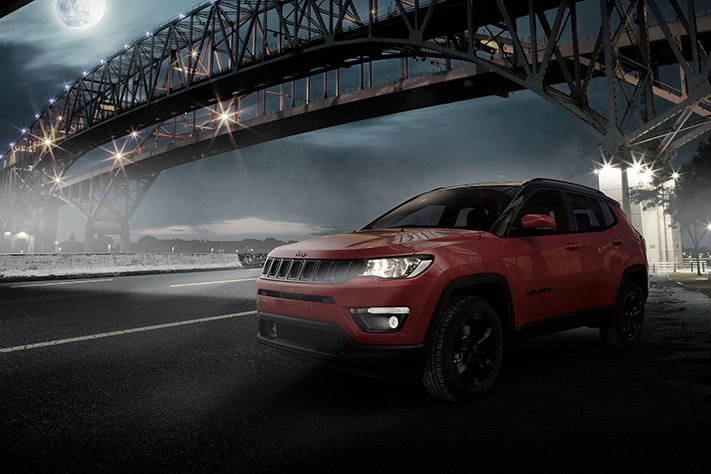
A five-door SUV is the only body style. The most affordable Compasses, the Night Eagle, drives only its front wheels, but the Limited, Limited S and Trailhawk drives all four wheels. The Jeep Compass is classified as a small SUV, lower priced.
What features do all Compass versions have?
- 8.4-inch touchscreen for rear-view camera and Jeep’s U-Connect infotainment system which includes in-built satellite navigation and Android Auto and Apple CarPlay smartphone pairing.
- AM/FM and digital (DAB+) radio, Bluetooth- or AUX and USB-connected mobile phone functions.
- Active safety including autonomous emergency braking, which Jeep calls Forward Collision Warning Plus, blind-spot monitoring, rear cross-path traffic alert, lane-departure warning and lane-keeping assist.
- Rear parking sensors.
- Voice control for the audio system, and at least six speakers.
- Power outlets (12V) on the centre console and in the boot, and additional USB port at the rear of the centre console.
- Leather-wrapped steering wheel.
- Keyless entry.
- Power folding side mirrors.
- Cruise control with speed limiter.
- Dual-zone climate control air-conditioning.
- A parking brake that is operated by an electric switch rather than a mechanical lever.
- Auto on/off and self-levelling headlights.
- Fog and cornering lamps.
- LED daytime running lights.
- LED interior ambient lighting.
- Tyre pressure warning, which warns you that your tyre is slowly losing air before it’s too late.
- Aluminium alloy wheels.
- Electronic traction control, which helps prevent wheelspin on slippery roads, and trailer sway control helps maintain stability while towing.
- Driver’s seat powered lumbar adjustment.
- Seven airbags, and electronic stability control. (For the placement of airbags, and more on the Renegade’s safety systems, please open the Safety section below.)
- The Jeep Compass has a five-year, 100,000km warranty.
Which engine uses least fuel, and why wouldn’t I choose it?
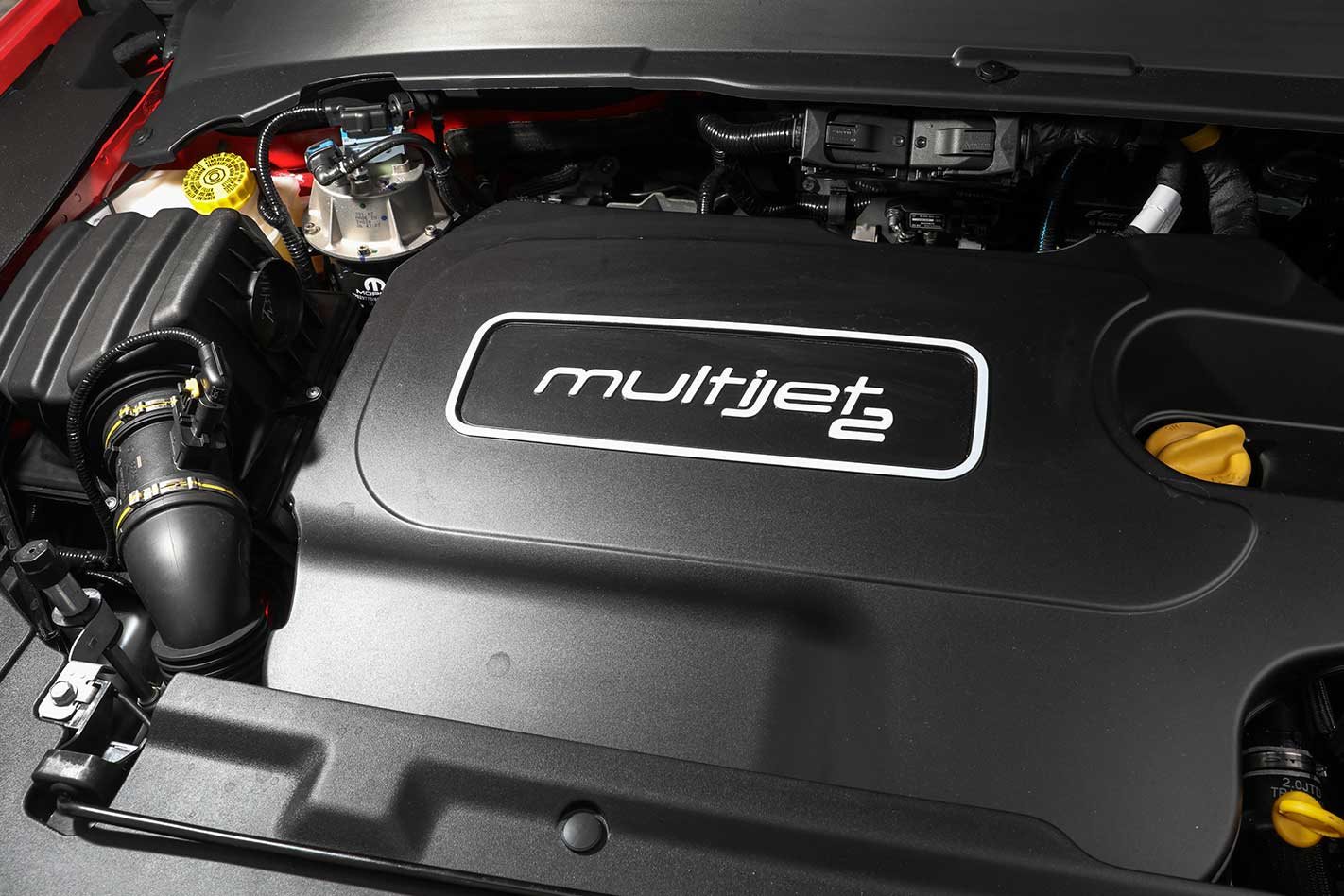
The Compass comes with a choice of two engines, including the 2.0-litre, four-cylinder ‘Multijet’ diesel that sips fuel at a rate of 5.7 litres/100km according to official testing which takes in to account urban and highway driving.
It is considerably more economical, and has more get up and go than the 2.4-litre four-cylinder ‘Tigershark’ petrol engine, which consumes 7.9 litres/100km in the front-wheel-drive Night Eagle, and a greedy 9.7litres/100km in the all-wheel-drive Limited and S-Limited.
While the 2.4-litre petrol is at best adequate and shows its shortcomings when overtaking or climbing hills, the 2.0-litre diesel, with its 350Nm of torque, is the perfect match. The main reason why you may not choose the diesel is that it is only available in the most expensive Compass, the off-road-focused Trailhawk.
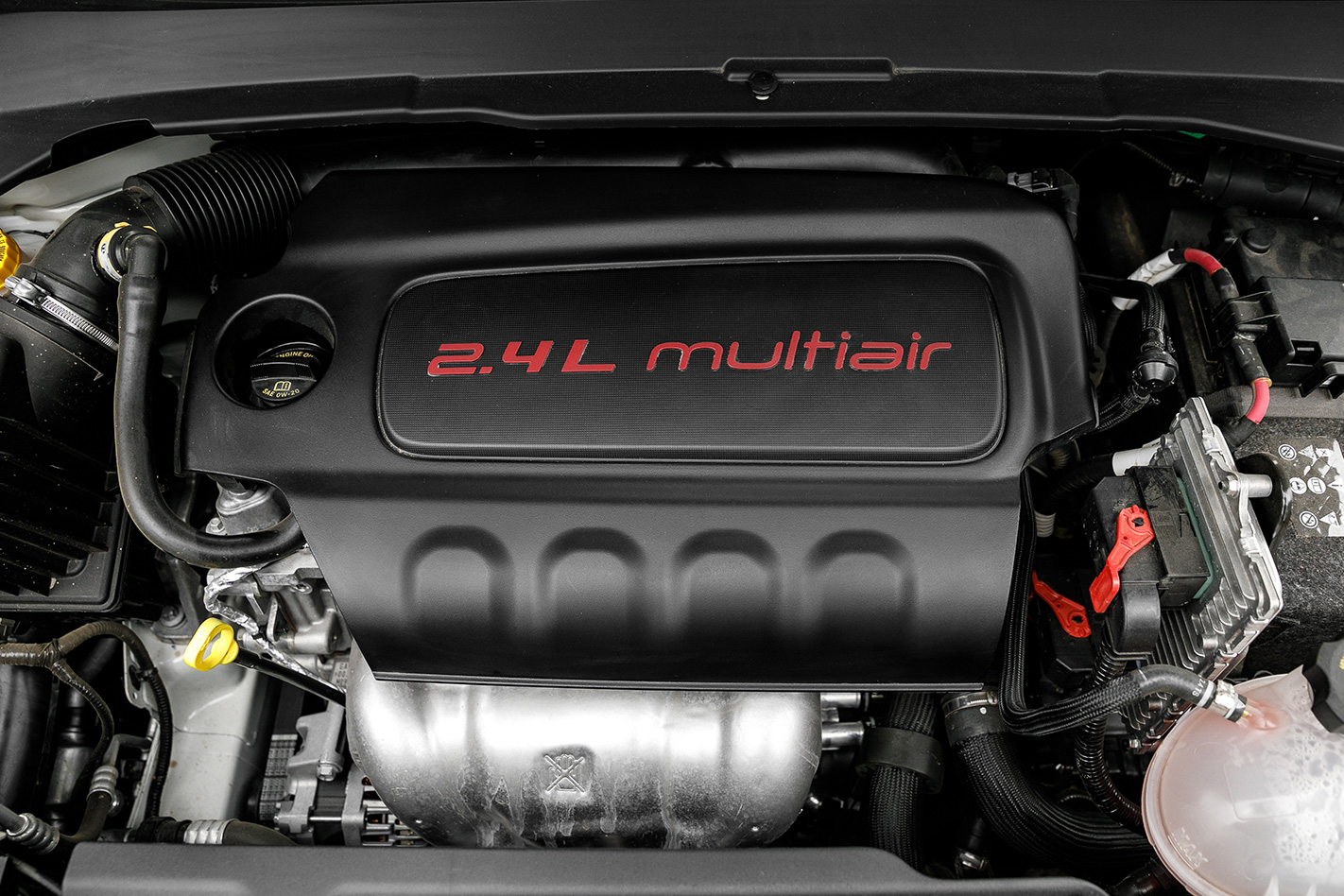
The diesel engine is coupled with a nine-speed automatic transmission, while the petrol comes with a six-speed auto in the FWD Night Eagle and the nine-speed box in the AWD Limited and S-Limited.
What key features do I get if I spend more?
Prices start with the Compass Night Hawk, which has cloth-covered seats, 18-inch aluminium alloy wheels, six-speaker sound system, and the 2.4-litre petrol engine with front-wheel-drive.
Walk past the Night Eagle to the more costly all-wheel-drive Compass Limited and you gain a host of extra features, including:
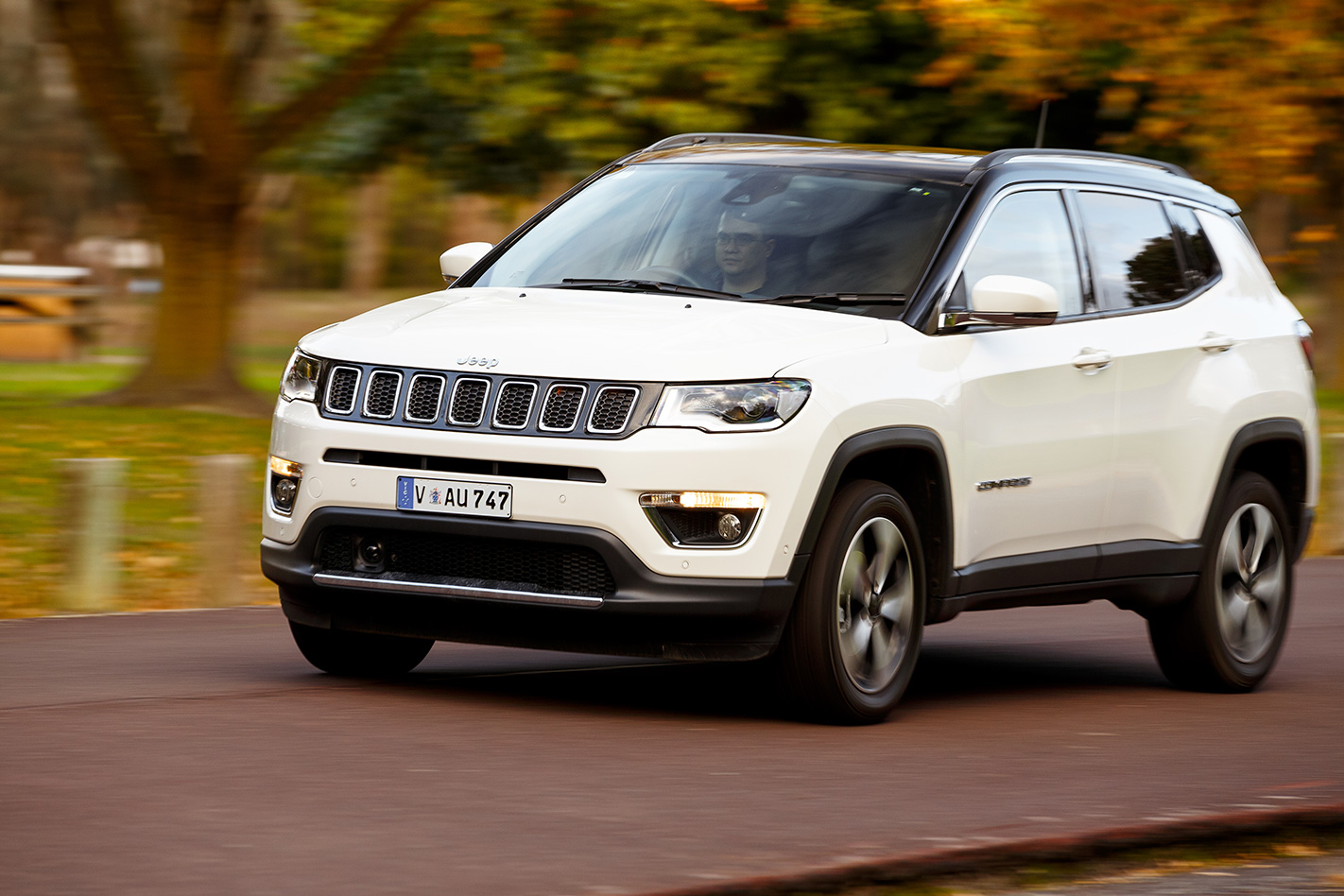
- All-wheel-drive system includes a terrain traction management system, which lets you select different driving modes for driving on sand, mud and snow.
- Adaptive cruise control with stop/go function in heavy traffic.
- Leather seats.
- Power-adjusted and heated front seats.
- Power-operated tailgate.
- 9-speaker premium audio sound system with subwoofer.
- Brighter, bi-xenon, headlight units with automatic high-beam.
- LED tail-lamps.
- Front parking sensors.
- Park Assist which reverses into a parallel or perpendicular parking space for you.
- Auto-dimming rear-view mirror.
- Push-button start, passive entry, and ‘Keyless Go’, which lets you unlock the car and drive away without taking the proximity key from your pocket or bag.
- 19-inch alloy wheels.
- Panoramic sunroof.
- Black-painted roof.
- Exterior accents.
- Black leather seats with tungsten stitching.
The Trailhawk also rides higher, so that it can clear obstacles more easily, and has different front and rear body mouldings that do not extend as far past the wheels, which helps when nudging up to and driving off obstacles. Steel plates under the body protect the engine, fuel tank and other vitals from off-road damage. Wheel size shrinks back to 17 inches, with tyres are designed for off-road use.
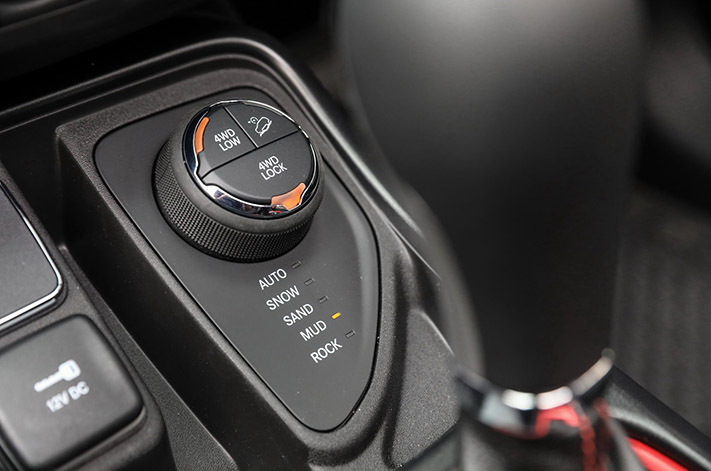
The Trailhawk also comes with hill-descent control to help with tricky off-road slopes, red recovery hooks, anti-glare hood decal, and all-weather floor mats.
Does any upgrade have a down side?
The mid-range AWD petrol Compass Limited consumed significantly more fuel than the more affordable FWD Night Hawk.
The 19-inch wheels on the S-Limited have lower-profile tyres, which makes for a firmer ride.
How comfortable is it?
The Compass feels roomy for a small SUV, and its styling looks like a smaller version of the Jeep Grand Cherokee.
The AWD versions strike a nice balance between on and off-road motoring. Ride quality is excellent and the Compass is even fun in the corners.
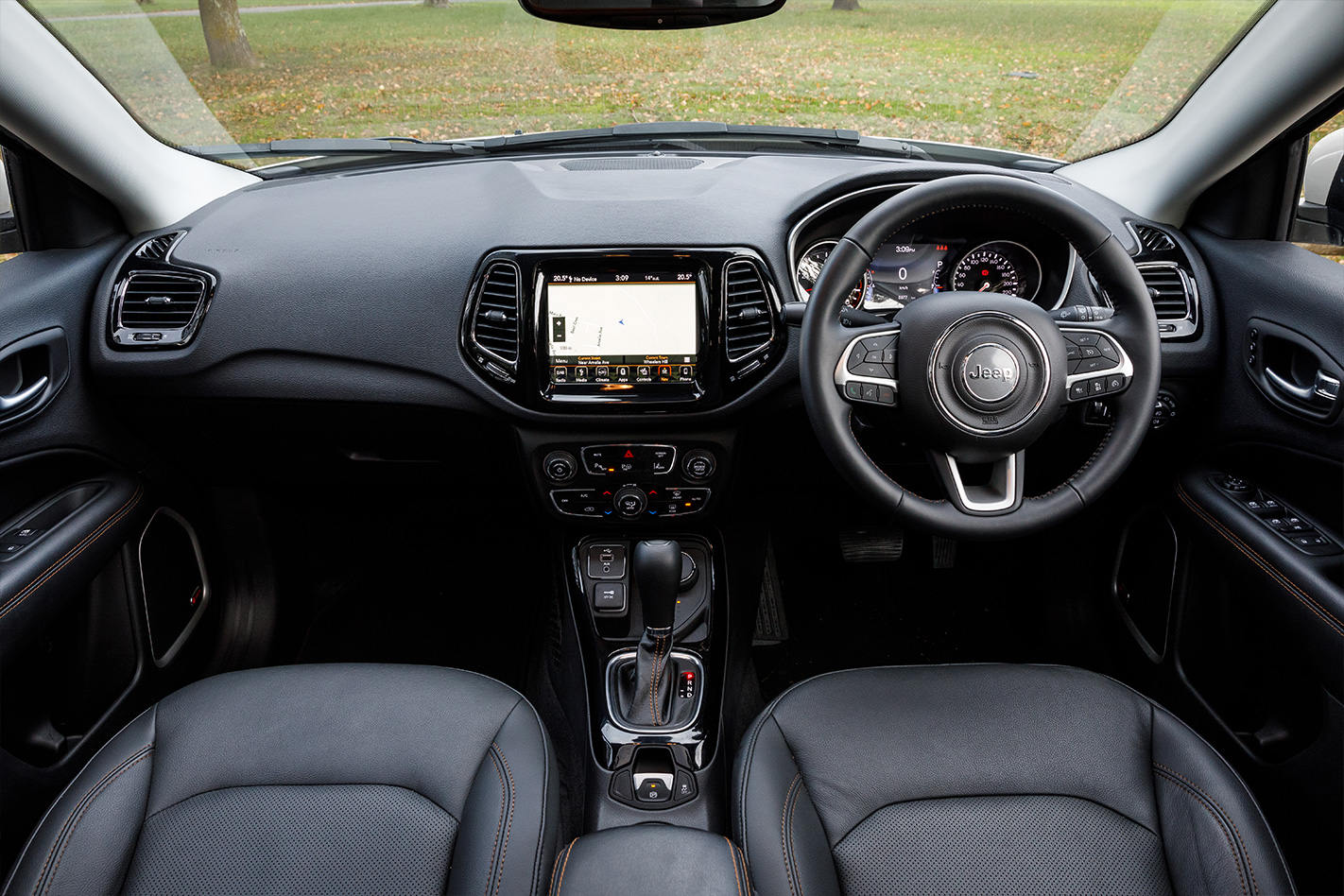
Better seat ergonomics would improve all-round comfort, particularly in the Trailhawk. Rear seat comfort is better with generous space for adults.
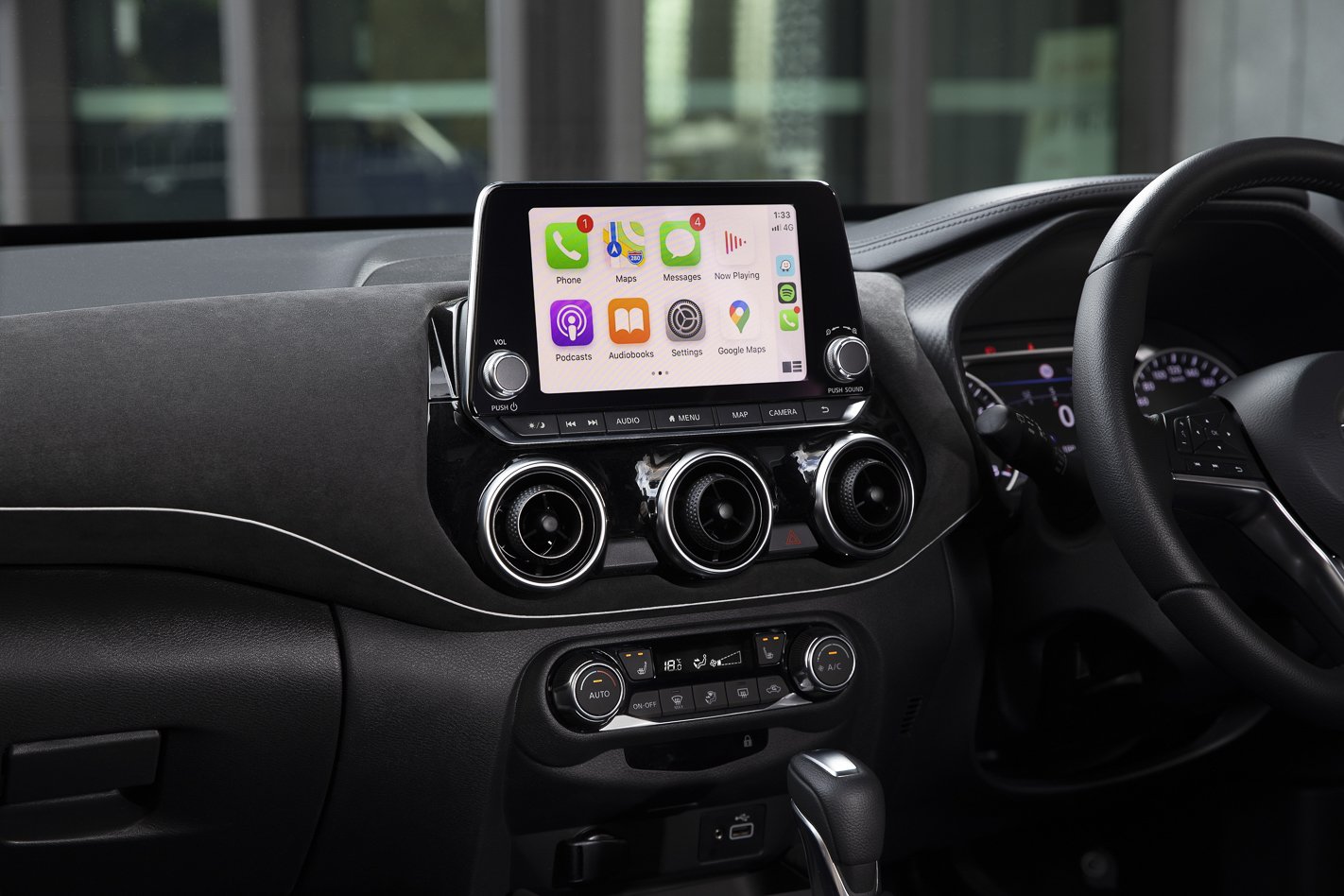
The Uconnect system featuring satellite navigation and Apple CarPlay and Android Auto is agreeably seamless.
What about safety in a Compass?
The 2020 update saw active safety equipment become standard equipment. It was previously only available with the Limited and Trailhawk versions or as an extra-cost option.
All Compass versions have autonomous emergency braking, forward collision warning, lane-departure warning, lane-keeping assist, rear-cross traffic alert and blind-spot monitoring.
The Limited and Trailhawk versions also have adaptive cruise control, which will match your speed to that of slower cars ahead on the highway, returning to your pre-set speed when the way is clear, is also included. It will also come to complete stop in heavy traffic and move again with the vehicle in front.
A reversing camera and electronic stability control are also standard. The latter can help you bring a skidding car back under control, and is mandatory on all new cars.
The Compass has seven airbags: Two directly in front of the driver and front passenger; one alongside each front occupant to protect the upper body; curtain airbags down each side of the car to protect the heads of those sitting next to a window; and an airbag to protect the driver’s knees and legs.
The Australasian New Car Assessment Program (ANCAP) has rated the 2018 Compass at five stars for safety, its maximum, in December 2017.
I like driving – will I enjoy this car?
The second-generation Compass represents a huge improvement over its predecessor.
The AWD Compass Limited in particular strikes a fine balance between on- and off-road motoring, with surprisingly good all-terrain ability. Its capability on dirt doesn’t compromise on-road ride quality and it’s even fun in the corners, as is the FWD Night Eagle. Better seat ergonomics would improve all-round comfort but that’s a small point. Rear seat comfort is better with generous space for adults.
The Compass Trailhawk is also quite refined on the open road. It offers good noise insulation, a compliant if slightly firm ride, lively handling, and predictable and well-weighted steering.
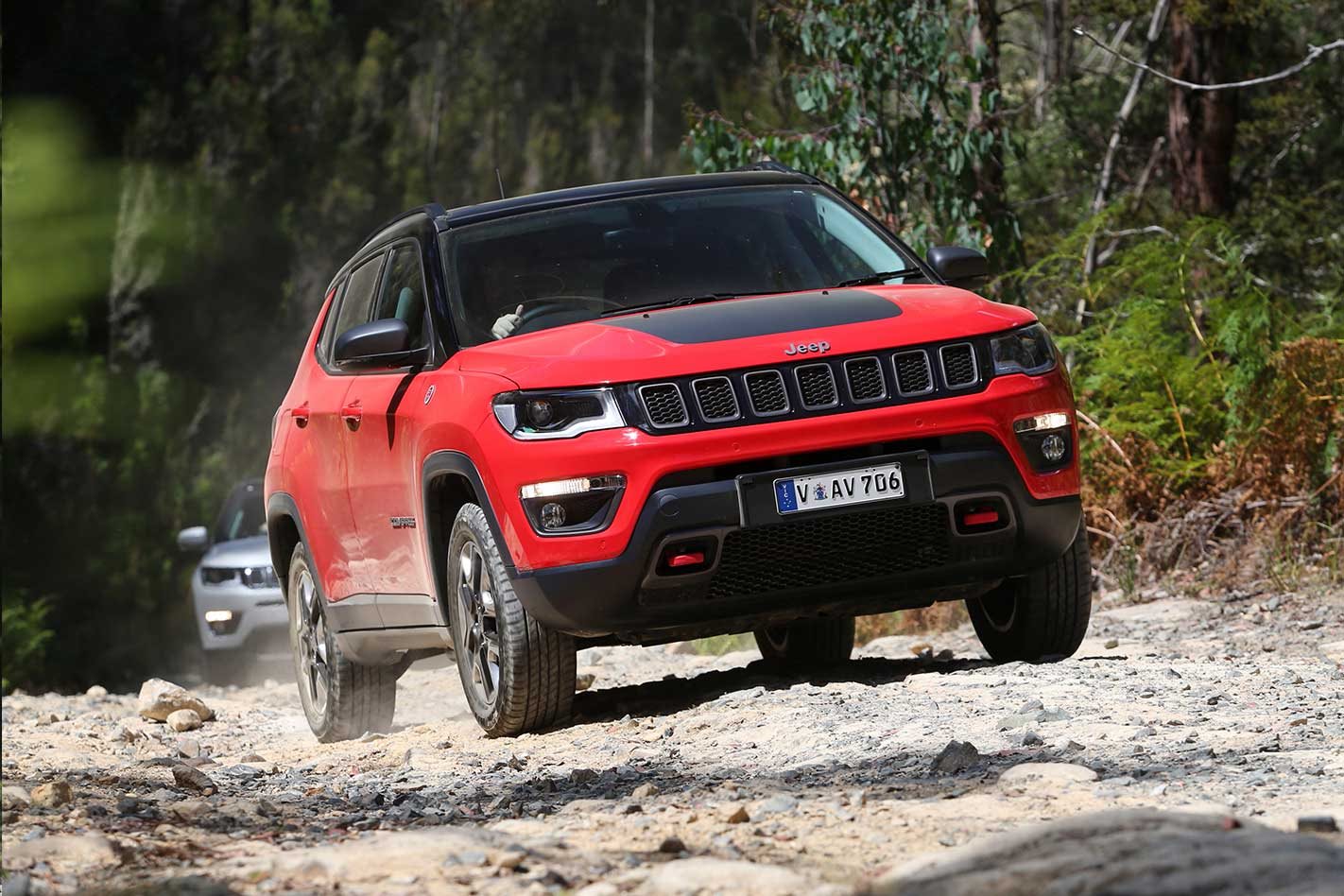
Off road, it handles rocky tracks that most of its competitors would baulk at. Engaging Rock Mode offers increased brake lock differential capacity, which minimises wheelspin and provides decent drive to the wheels with grip. While it’s certainly no rock-crawling beast, the Compass Trailhawk is more capable than you might expect.
How is life in the rear seats?
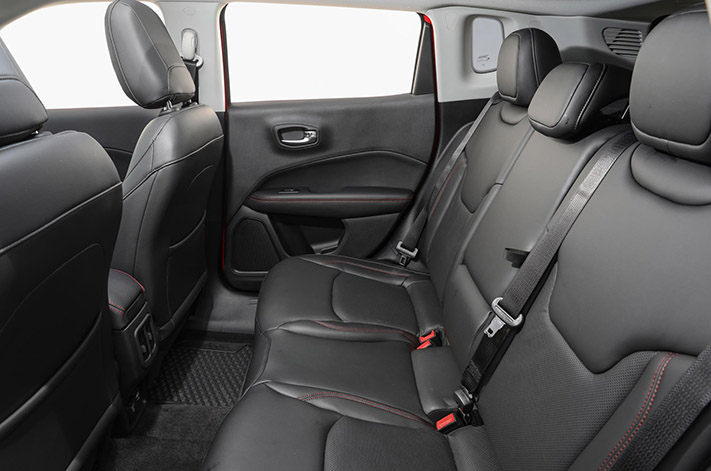
The rear seats in Jeep Compass offer lots of headroom and legroom. Rear-seat passengers get their own air/heating vents and a USB port plus the usual seatback pockets, fold-out armrest and bottle holders in the doors.
How is it for carrying stuff?
The Compass has a 438-litre boot space, which is one of the most generous in a small-SUV like this. The back seat folds 60/40 and reasonably flat, to lengthen the luggage space if need be.
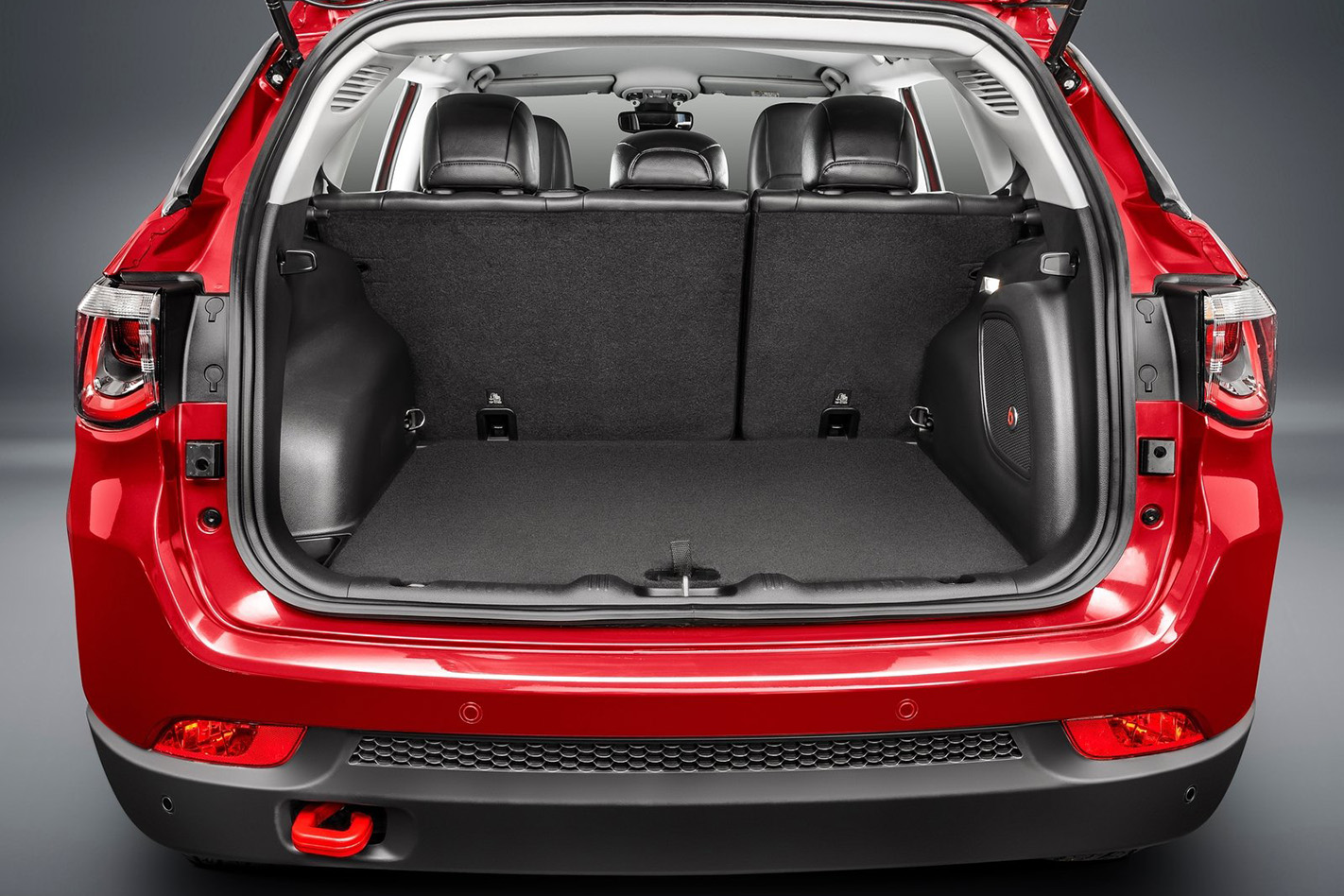
The Compass’s towing capacity is disappointing. Towing is not recommended at all for the front-wheel-drive Night Hawk variant, Limited and S-Limited AWD tows up to 1000kg and the Trailhawk 1500kg.
Where is it the Jeep Compass made?
All Australian-delivered Compasses are built in India.
Are there any rivals I should consider?
There are plenty of small-SUVs, but the Compass is one of the few with versions that have genuine off-road capability. Alternatives include the Compass’ smaller sibling the Jeep Renegade Trailhawk or the medium-sized Nissan X-Trail AWD and Subaru Forester.
If off-road capability isn’t a priority but you still want some practicality or robustness from a small-SUV, other options include the Honda HR-V, Subaru XV, Nissan Juke, Kia Seltos, Volkswagen T-Cross, and other Jeep Renegade models.
I like this car, but I can’t choose which version. Can you help?
The AWD models are superior to the front-drive petrol versions in almost every way. If you can afford it, go the whole hog with the Trailhawk which really lives up to Jeep’s go-anywhere spirit, while showing good road manners and superior fuel economy. That said the Limited is no slouch off-road either and has some nice creature comforts as standard.
Are there plans to update the Compass soon?
The current-generation Jeep Compass arrived in late 2017.
The range was revamped in mid-2020 with the entry-level Sport version being renamed the Night Hawk and gaining active safety features such as AEB as standard, a larger touchscreen a few other extras. As a result, the Longitude spec was dropped, while S-Limited introduced with some extra bling over the Limited.
Expect an update sometime in 2021.
What stands out?
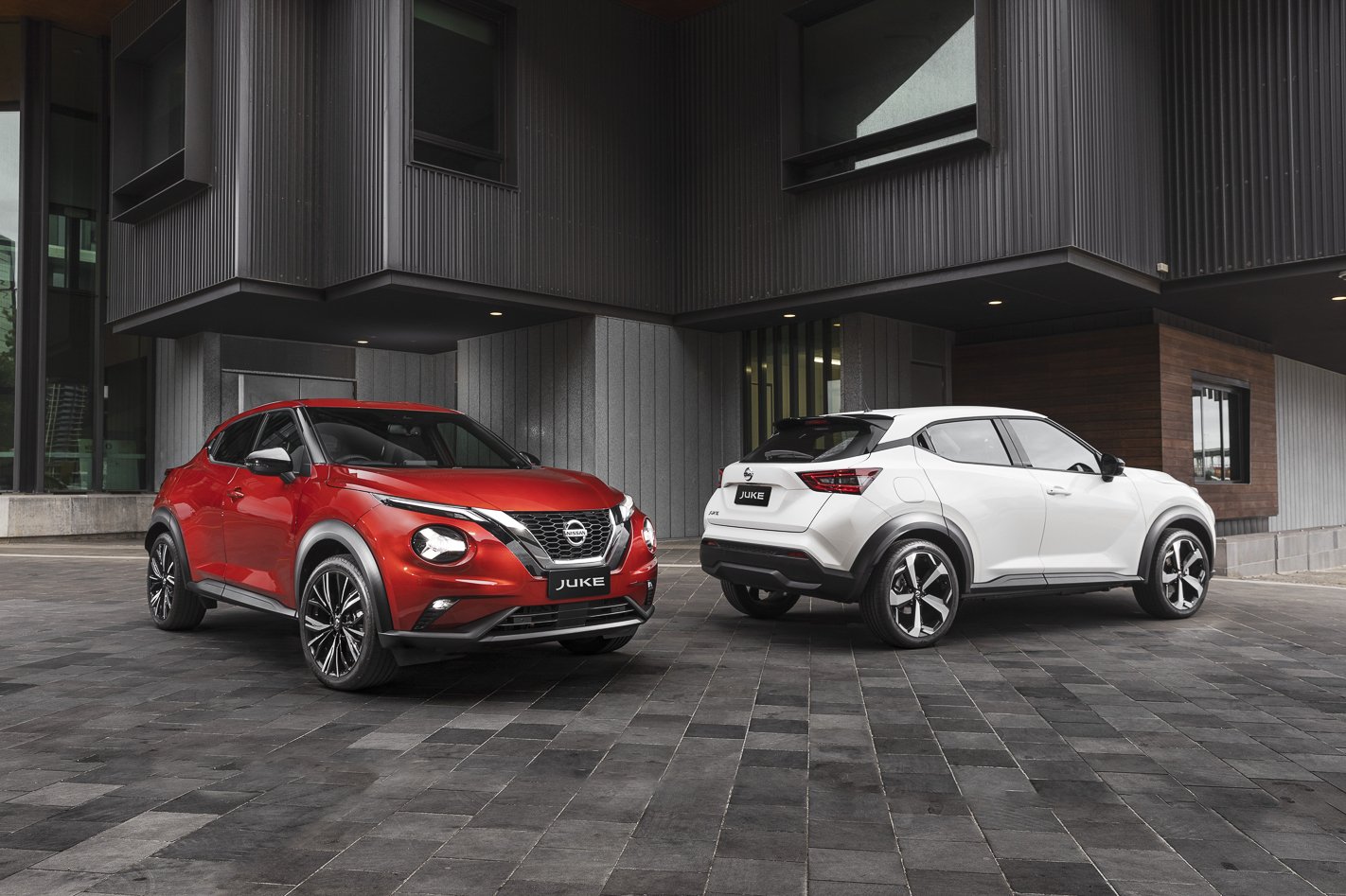
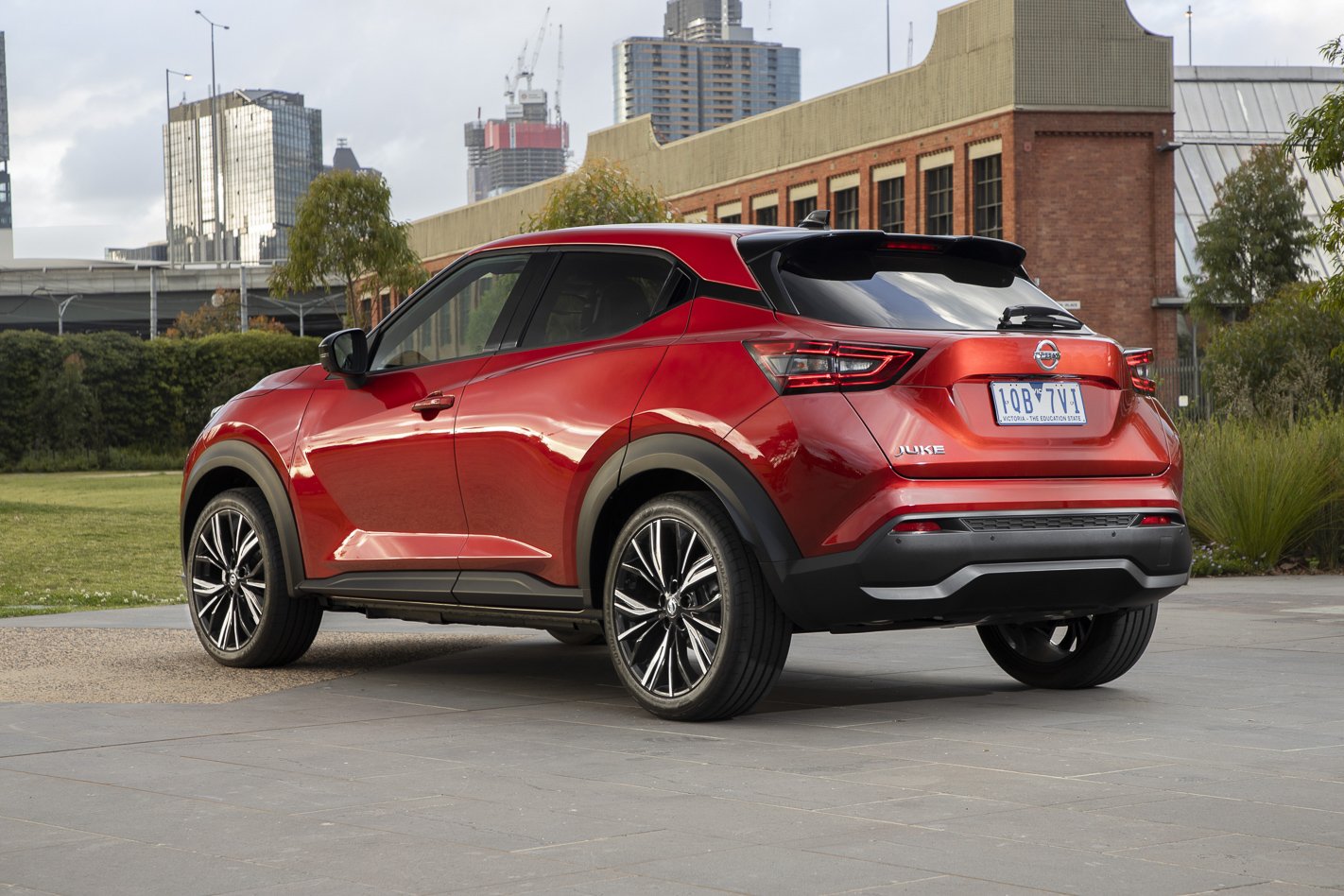
The stylish second-generation Nissan Juke compact SUV comes with a fuel-efficient 1.0-litre turbocharged engine and a broad range of active safety features as standard including autonomous emergency braking. It has a relatively spacious, well-presented interior and excellent infotainment including Android Auto/Apple CarPlay smartphone mirroring.
What might bug me?
Finding a place to secure your phone while it’s plugged into a front USB socket.
Having to spend more on petrol. The Juke’s 1.0-litre three-cylinder turbo requires 95RON or 98RON premium unleaded.
Driving under 80km/h on the space-saver spare wheel until you can fix your full-sized flat tyre.
What body styles are there?
Five-door wagon only.
All Jukes drive the front wheels only. It is classed as a small SUV, lower priced.
What features do all Juke versions have?
- 8.0-inch colour touchscreen, AM/FM/digital (DAB+) radio, Bluetooth phone connectivity, and Android Auto/Apple CarPlay that lets you display smartphone apps on the touchscreen and control them from there (or by voice).
- Reversing camera and rear parking sensors.
- Aluminium alloy wheels, which look better and are lighter than steel wheels.
- Seven-speed dual-clutch automatic transmission.
- Cruise control and speed limiter.
- Active safety including autonomous emergency braking with pedestrian and cyclist detection, forward collision warning, lane-keeping assist, lane departure warning, blind-spot warning, and rear-cross traffic alert.
- Traffic sign recognition.
- Idle stop/start, which halts the engine while you’re stopped at traffic lights to save fuel.
- LED external lighting including head-lights, daytime running lights (DRLs) and tail-lamps.
- Dusk-sensing headlights and auto high beam.
- Heated and power-folding door mirrors.
- Paddle shifters on the steering wheel.
- Air-conditioning.
- Keyless entry, push-button engine start.
- Hill-start assist.
- Lumbar support for front seats.
- Six airbags: two directly in front of the driver and front passenger; side airbags to protect the upper body of front occupants; and head-protecting curtain airbags for front and rear occupants.
Which engine uses least fuel, and why wouldn’t I choose it?
The only engine available in a Juke is an 84kW 1.0-litre, three-cylinder turbo petrol, which consumes just 5.8 litres/100km according to official testing, which takes into account urban and country driving.
While this means fewer visits to the petrol station than some of its rivals, you will have to pay more at the pump with the little turbo requiring 95RON premium unleaded.
All versions come with a seven-speed dual-clutch automatic transmission that works much like a manual gearbox with robotic control. It shifts very smoothly and quickly and saves fuel, but cannot match the fluid take-off from rest that you get with conventional or CVT autos.
All Jukes are front-wheel drive.
What key features do I get if I spend more?
The entry-level Juke ST comes with 17-inch alloy wheels, manual air-conditioning, cloth sear trim, four-speaker sound system and all the features available in every Nissan Juke.
Stepping up to the Juke ST+ brings few desirable extras, including:
- In-built satellite navigation that doesn’t require a smartphone.
- Front parking sensors.
- LED fog-lights.
- Heated front seats.
- Climate control air-conditioning.
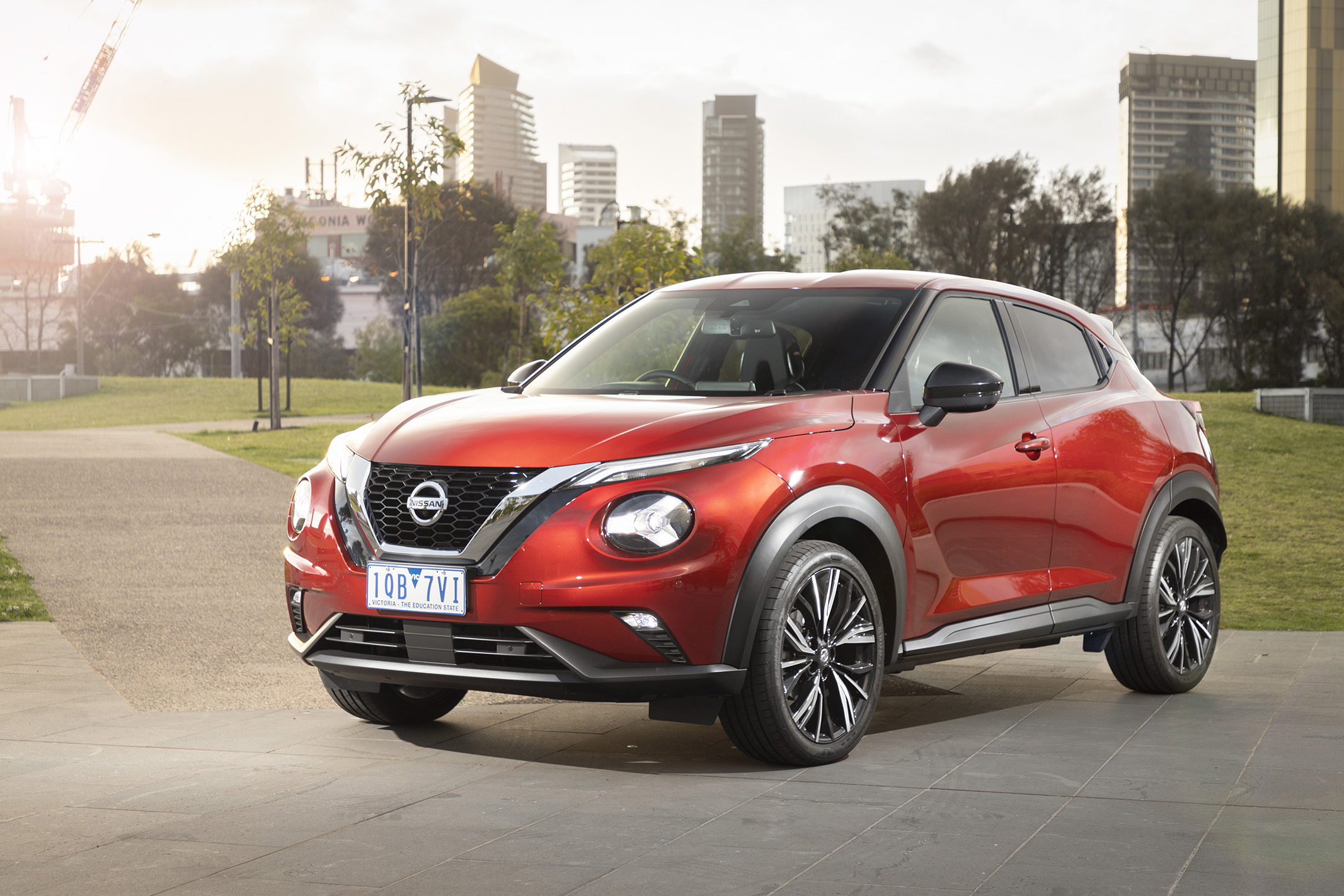
- Bigger 19-inch alloy wheels that look fancier and have lower-profile tyres for sportier handling.
- Interior ambient lighting.
- Adaptive cruise control.
- 360-degree parking monitor, with Moving Object Detection that warns if people or other vehicles around the car while parking or leaving a parking space.
- Rear USB port for charging.
- Six-speaker sound system.
- Eco/Standard/Sport drive modes.
- Electric park brake with auto-hold.
- Leather accented steering wheel and gearshift knob.
- Part cloth/leather seat trim
- Quilted accented leather and Alcantara seat trim.
- Alcantara dashboard, knee pad and door panels.
- Shark-fin antenna.
- Illuminated ‘JUKE’ entry kick plates.
- Eight-speaker Bose premium audio system.
- Tyre-pressure-monitoring system.
Does any upgrade have a down side?
The lower-profile tyres on ST-L and Ti’s 19-inch wheels ride more roughly and could cost more to replace.
How comfortable is it?
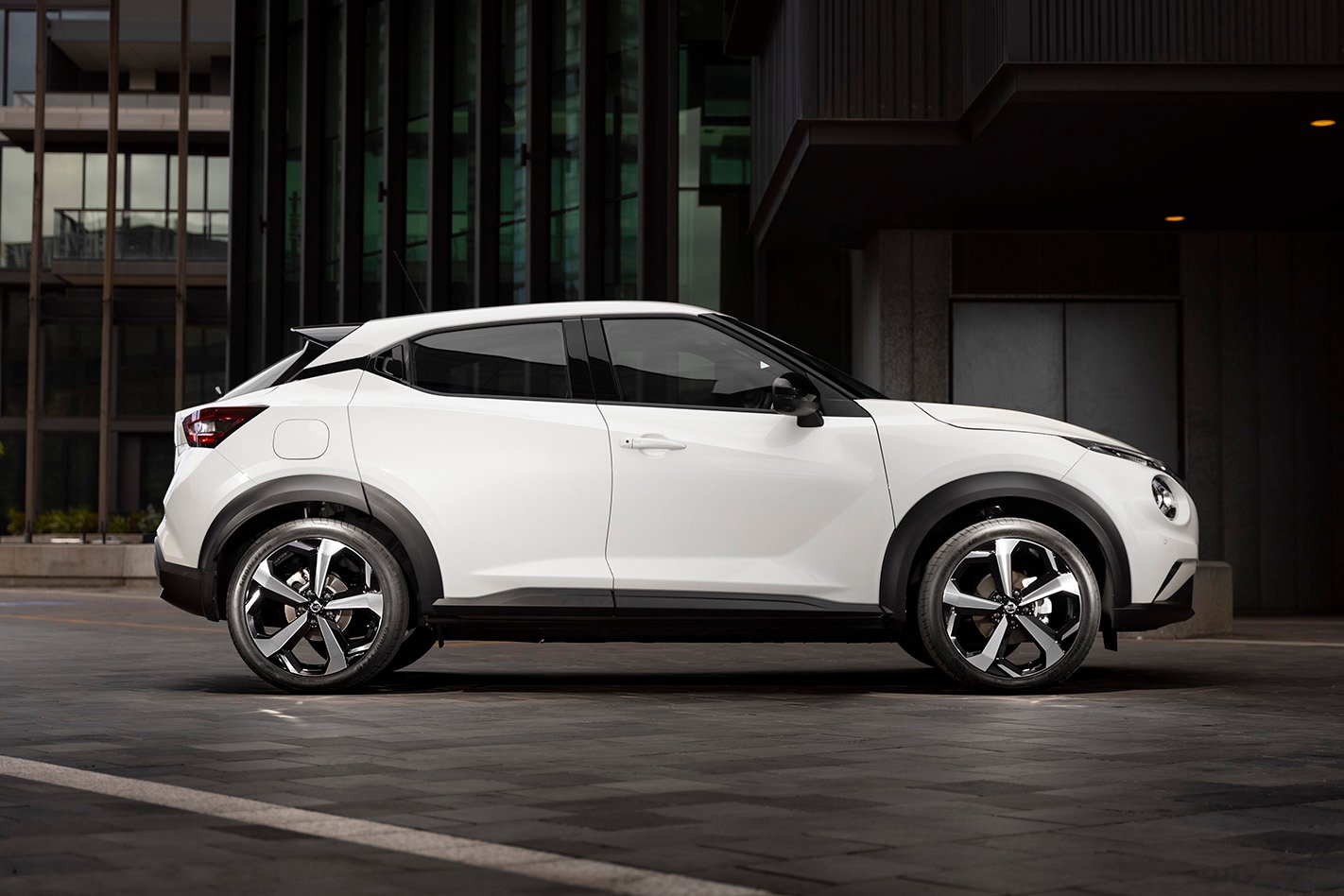
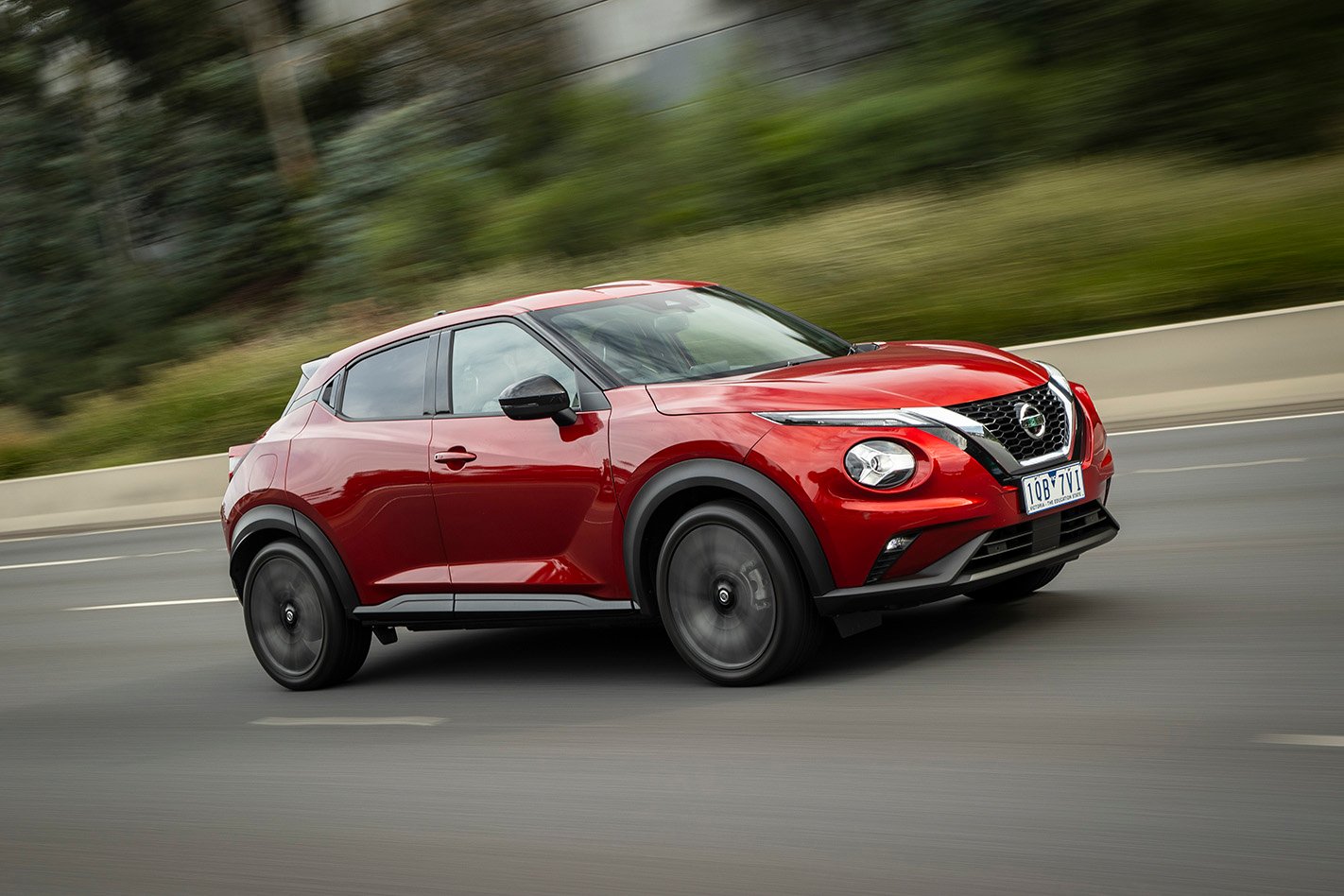
The second-generation Juke is considerably more attractive to look at than its predecessor, but still has enough quirky styling queues to set it apart from the bunch.
The interior is well put together and has a sense of quality to it. The dashboard is busy in the amount of information it attempts to convey, but it’s well presented. There’s a small but deep centre bin, big bottle holders in all four doors and a huge glovebox.
The only ergonomic fail is the lack of a wireless phone charger, and there isn’t a suitable place to put your phone while it’s plugged into a USB socket.
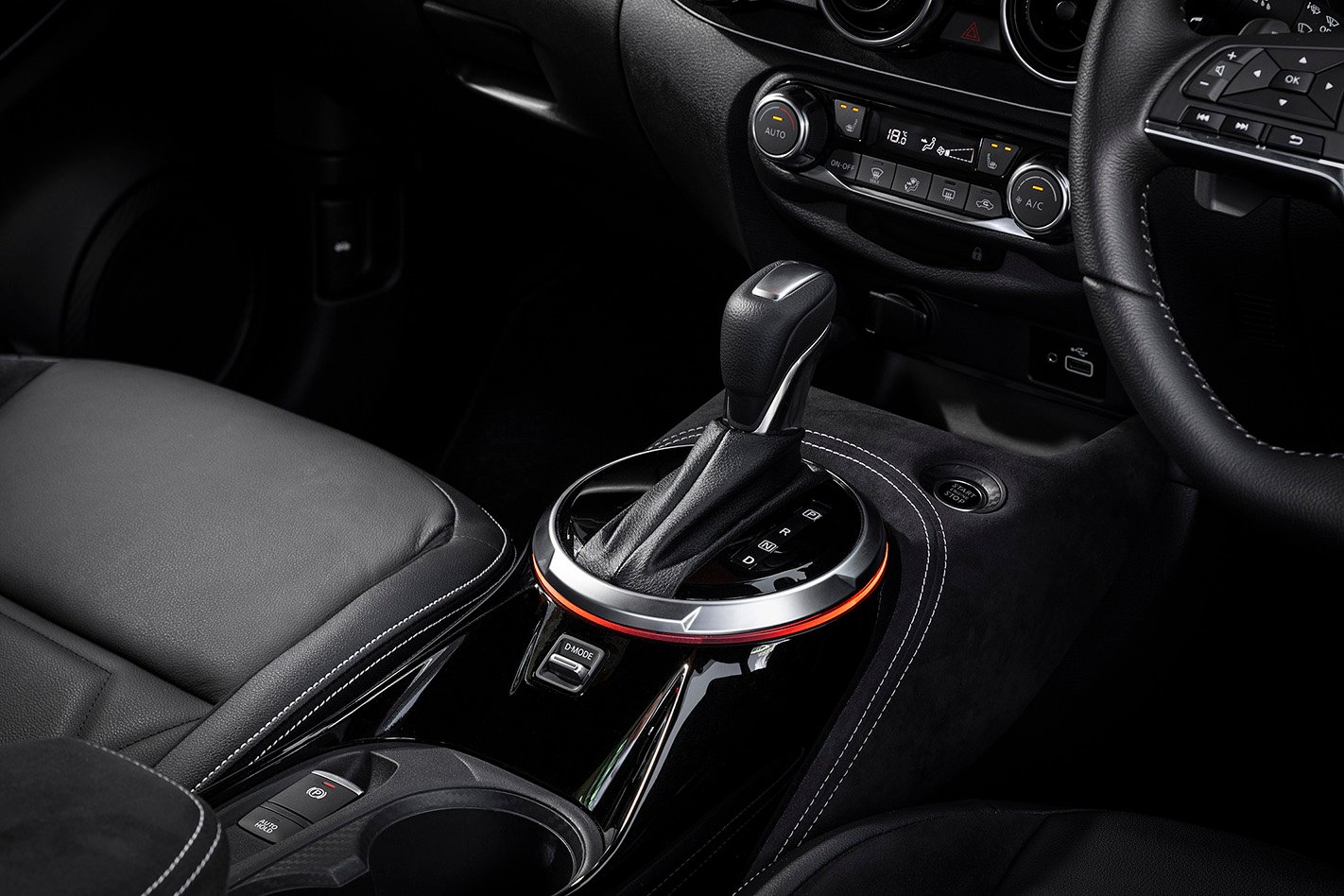
Stretching the wheelbase by more than 100mm compared to the previous model works wonders for interior packaging. This is a great choice for taller people because the manually-adjusted seats are positioned low in a cabin with an arcing roofline and no sunroof to impinge on headroom. The front seats are comfortable, particularly the chunky part-leather chairs in the upper-spec ST-L and Ti grades.
The bigger chassis is extremely well-supported, with a firmish ride and lovely body control.
It’s a reasonably quiet car. The engine makes a faint three-cylinder warble at idle, but the dominant sound at highway speeds is the wind rustle around the door mirrors.
What about safety?
Every Juke has the mandatory stability control, six airbags, seatbelt warnings for all five seats, and a rear-view camera. It is a package that prioritises your control of the car, your protection in a crash, and the safety of others when you are reversing.
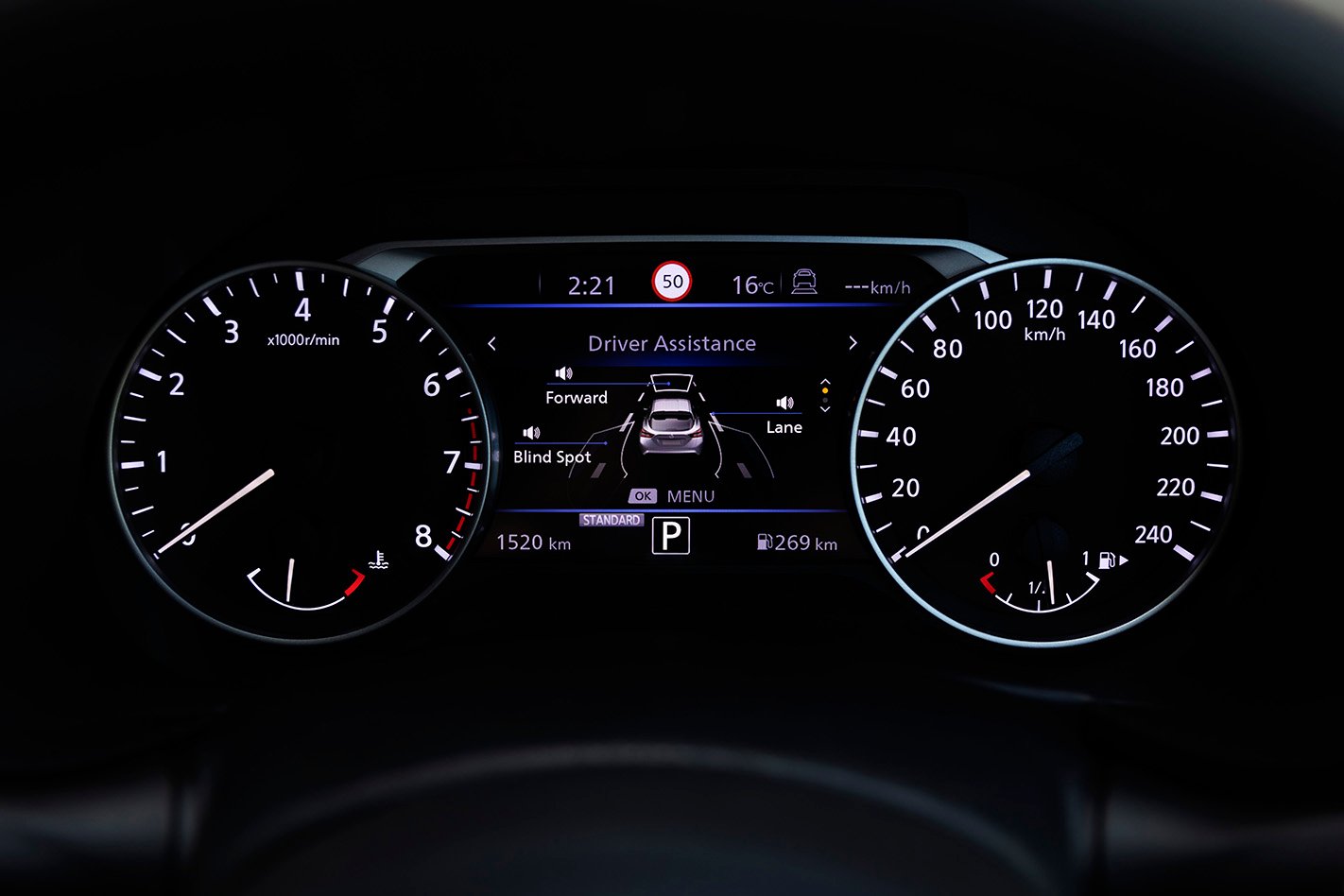
It is also one of the better equipped compact SUVs when it comes to standard active safety. Each version has autonomous emergency braking with pedestrian and cyclist detection, traffic sign recognition, rear-cross traffic alert, blind-spot warning, lane departure warning and lane-keeping assist, which Nissan calls Intelligent Lane Intervention.
Automatic LED headlights with High Beam Assist (which increases the field of visibility by 10 metres), a reversing camera, rear parking sensors are also standard.
The ST-L and Ti gain front parking sensors, 360-degree camera system, and ‘Moving Object Detection’ and adaptive cruise control.
The six airbags include driver and front passenger forward and side airbags, and front and rear curtain inflators.
The Australasian New Car Assessment Program (ANCAP) rated the Juke’s safety at five stars, its maximum, June 2020.
I like driving – will I enjoy this car?
The Juke’s 1.0-litre turbo engine produces 180Nm of torque that gives a decent amount of oomph off the line. Zero to 100km/h takes a little over 10 seconds, so it’s not particularly rapid, and that figure will be dulled still further with people on board. But the tiny turbocharger has ample power about town.
The chassis provides a firm but comfortable ride and great body control. The ride gets stiffer on the bigger 19-inch wheels under the ST-L and Ti versions, in which you’ll experience a bit of head-toss when you encounter a pothole or a bump on one side of the vehicle. The trade-off is good handling on bendy roads.
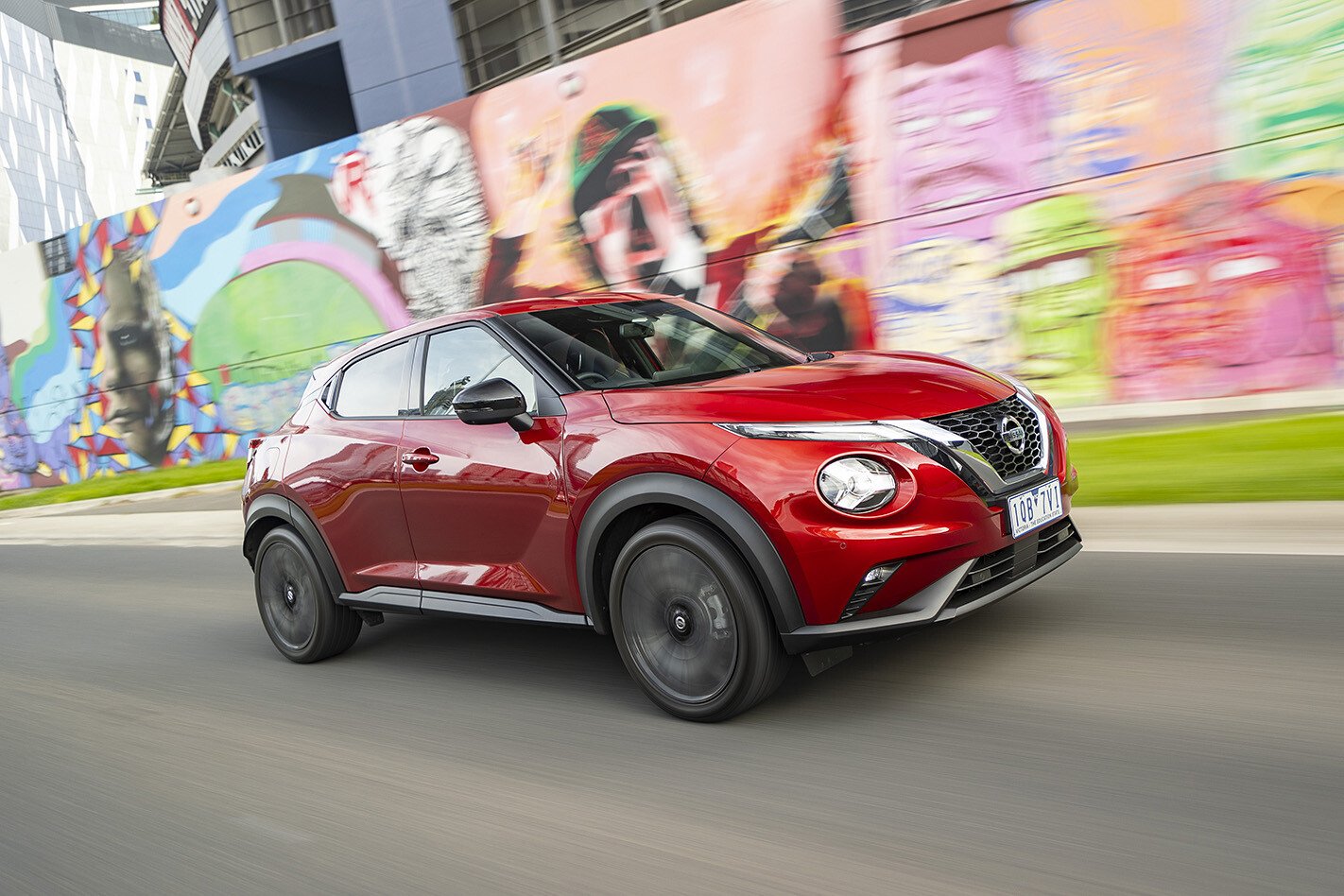
ST-L and Ti versions also have a drive-mode selector that can switch between Eco, Normal and Sport. Because all Jukes share the same passive suspension architecture, the Sport mode doesn’t affect ride quality and just gives the engine and gearbox the best opportunity to maintain revs. It also tightens the steering, which is welcome. You’ll find that you will click into Sport as a matter of course when shifting the gear lever to ‘D’.
How is life in the rear seats?
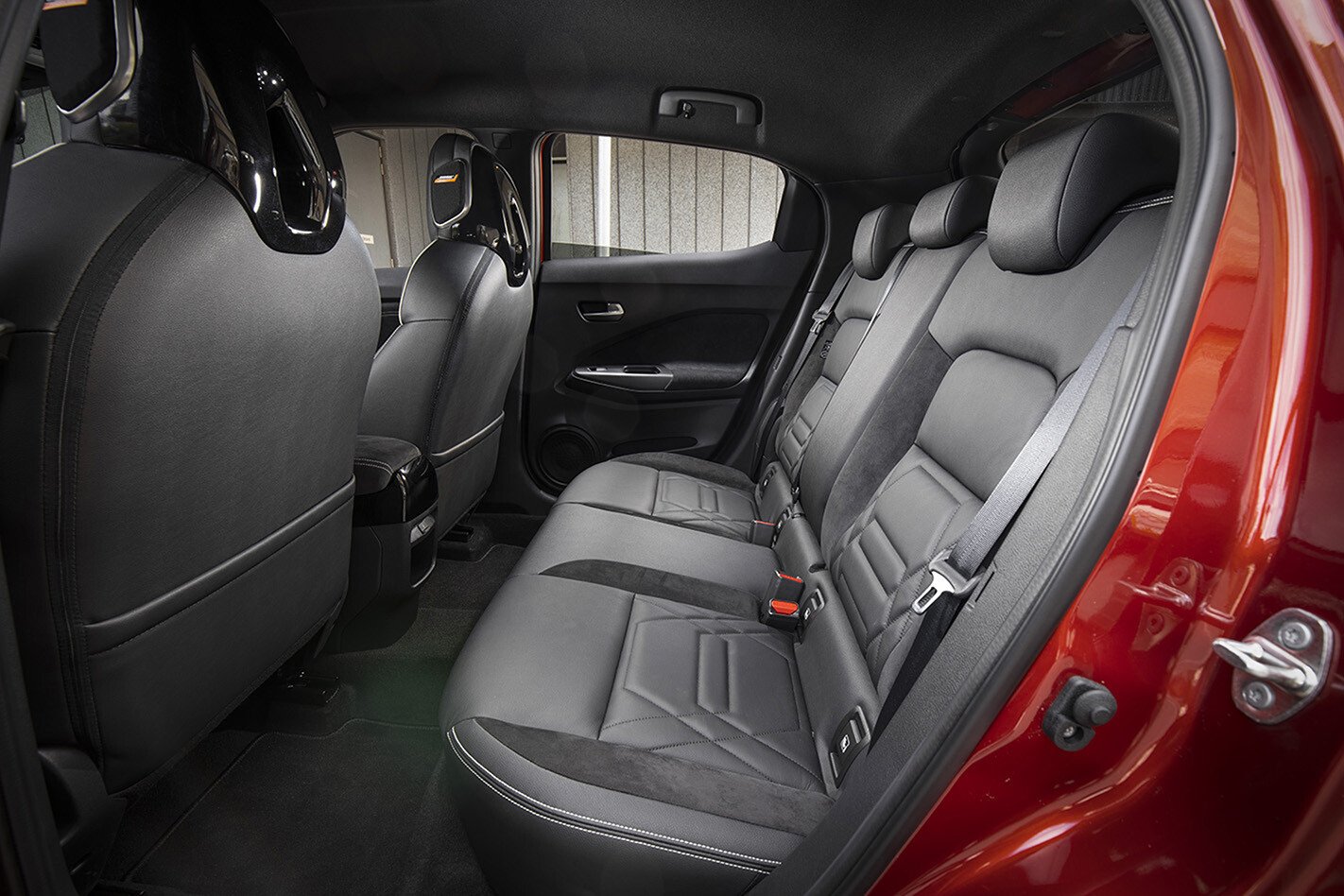
The 2020 Juke is 75mm longer, 35mm wider and 30mm taller than its predecessor which is most evident in the rear seats, which comfortably accommodate two adults. That additional knee room is compromised a little in the upper-spec ST-L and Ti versions, which have bulkier front seats.
The ST and ST+ have a 12v socket to plug in a charger, while the rear-seats in the ST-L and Ti have a dedicated USB port. Neither version has rear air vents.
The Juke has ISOFIX child seat anchors and tethers in the outboard seats and an additional tether in the centre.
How is it for carrying stuff?
The new-generation Juke’s upsized dimensions naturally make it more practical. Boot space has grown from 354 litres to 422 litres, which is considerably more than the Mazda CX-3’s 264 litres or a Toyota C-HR’s 318 litres. Folding the rear seats down increases capacity to 1305 litres.
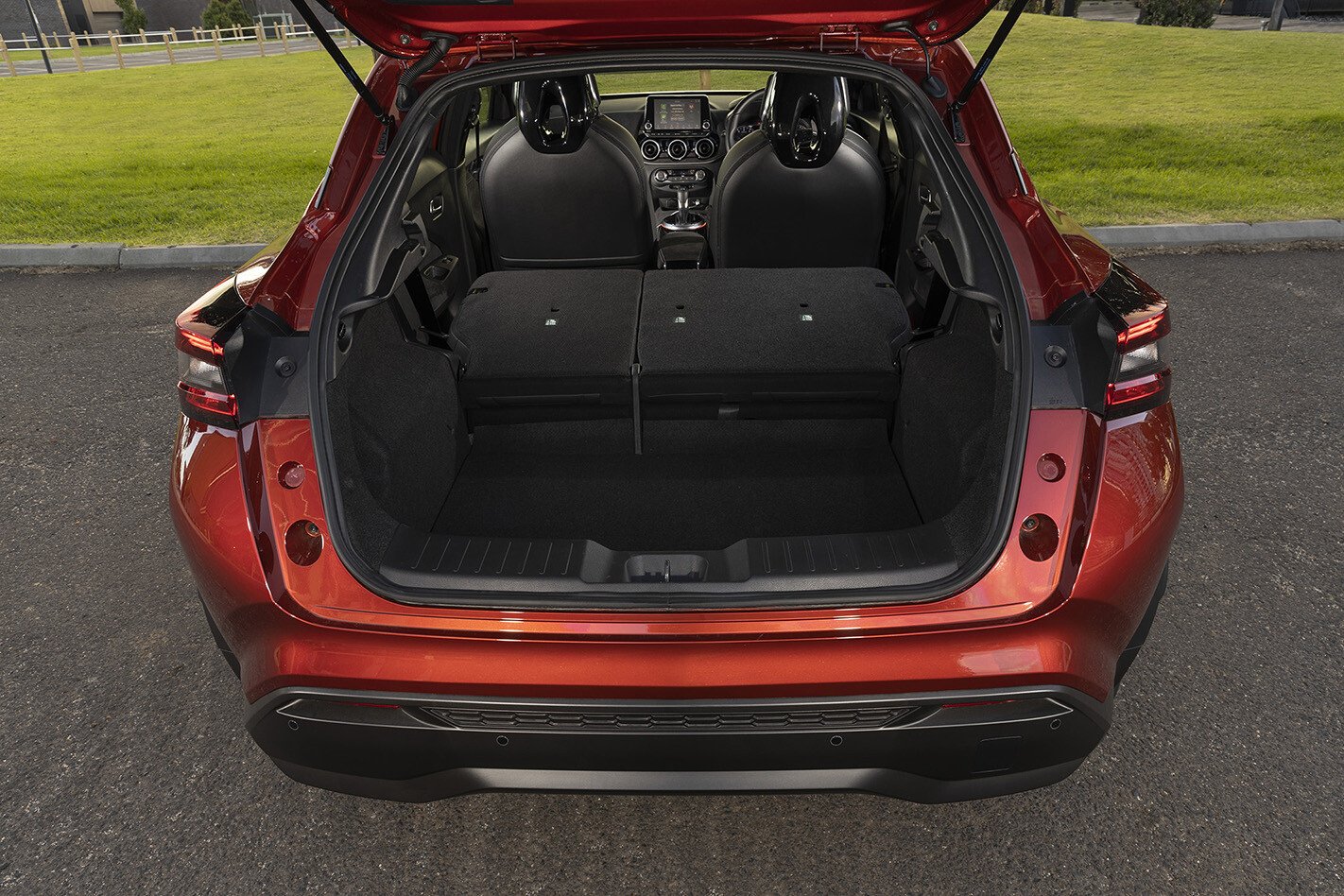
The boot aperture pretty tight, however, which can make it difficult to load bulky items.
The Nissan Juke has a handy 1250kg braked towing capacity.
Where is it made?
All Jukes are produced in the United Kingdom.
What might I miss that similar cars have?
The Juke is one of the newer and better equipped compact SUVs on the market so there isn’t too much that it misses out on compared to its rivals. A notable omission is the lack of an all-wheel-drive option, as available the Toyota C-HR, Hyundai Kona, Kia Seltos and Subaru XV.
Or you might want a bit more power as available with the above plus the Volkswagen T-Roc, Skoda Karoq, and Mazda CX-3.
I like this car, but I can’t choose which version. Can you help?
The cheapest Juke, the ST, shares the same powertrain and all the important active safety features as all the other versions making it good value for under $30,000.
That said, the ST-L brings an excellent suite of features for the price and we can see why Nissan Australia expects it to account for 50 percent of Juke sales here.
Are there plans to update this model soon?
The all-new Nissan Juke arrived in Australia in June 2020 so there are unlikely to be any updates until mid-2022.
There may be the odd special edition version before then.
A sneaky car broker from The Philippines has landed themselves in hot water after allegedly attempting to slide one past the Bureau of Customs by importing an extremely obscure and rare McLaren 620R as a Porsche Cayman in order to evade importation taxes.
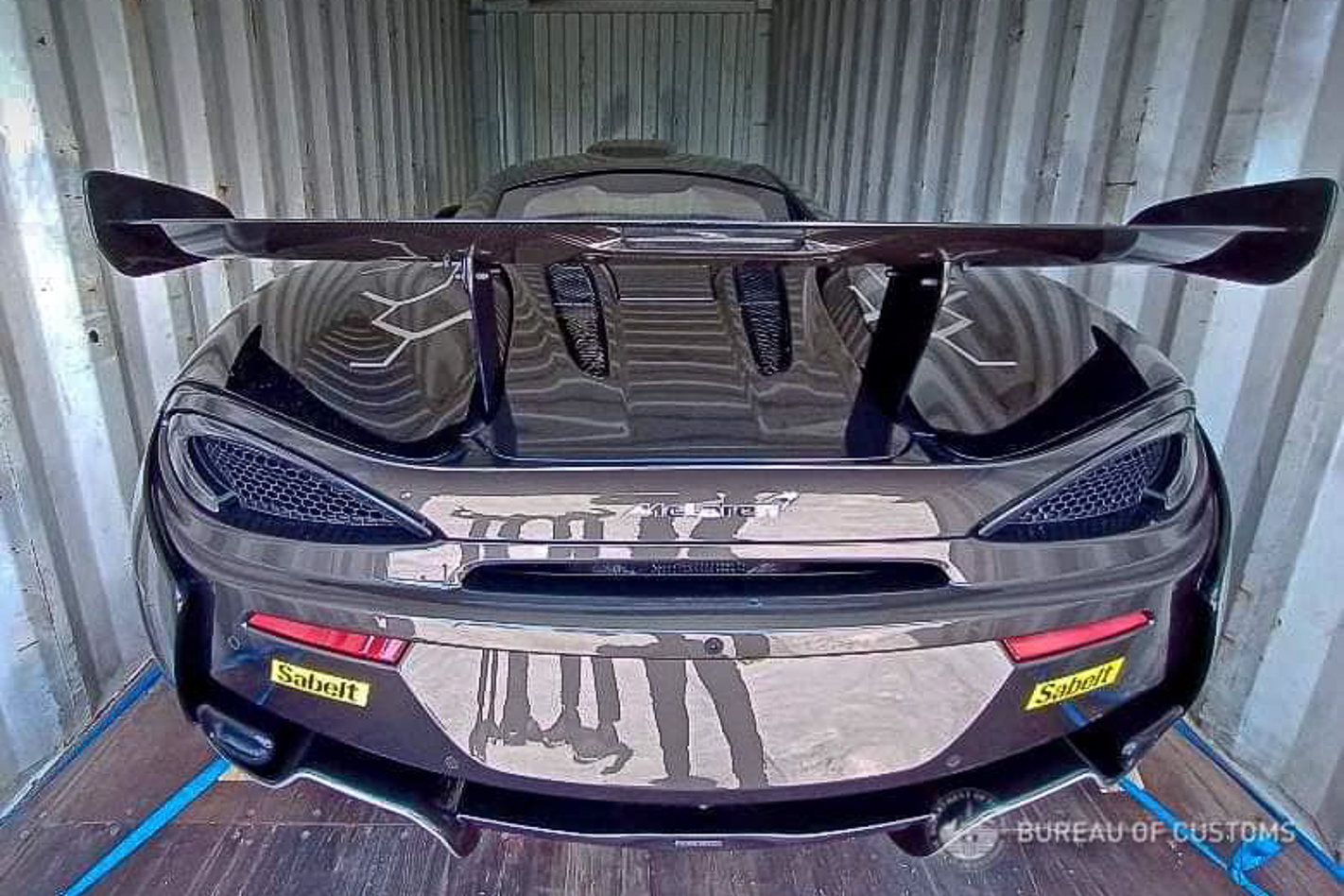
The little-known McLaren 620R is billed as the road-going version of the 570S GT4 race car, and was imported in late July and subsequently seized on August 3 by customs officials.
An attempt was made to disguise the McLaren, valued at the equivalent of AU$940,501 and carrying AU$478,014 of import duties, as a new Porsche Cayman – which would have meant a far-friendlier tax bill.
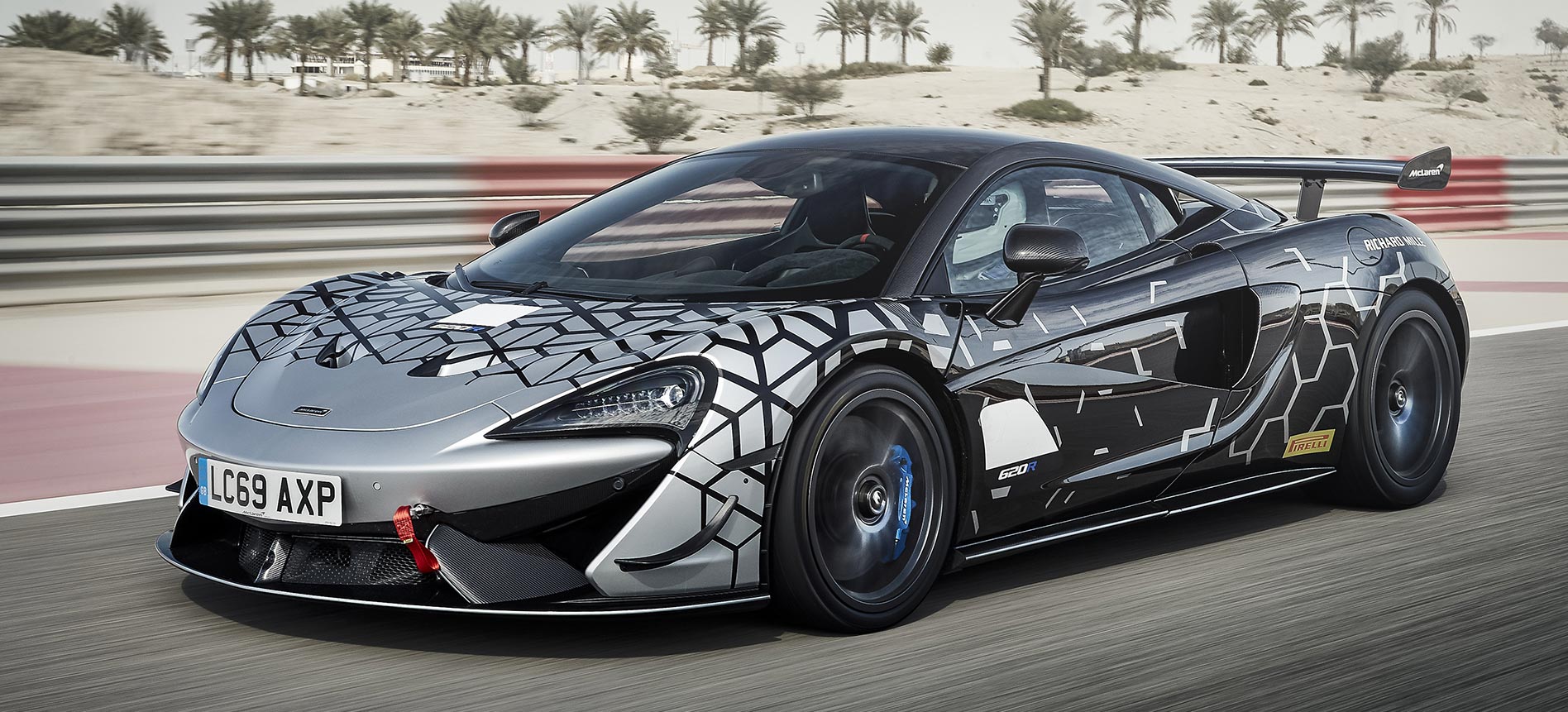
In addition to labelling the McLaren as a Porsche Cayman, the consignee and broker only paid AU$42,000 in taxes, which is a far cry from the required duties expected of the McLaren’s true value.
The Port of Manilla district collector, Michael Angelo Vargas, immediately issued a warrant of seizure and detention of the McLaren 620R shipment. The consignee and broker are now facing possible charges of breaching the Customs Modernization and Tariff Act to the tune of almost half a million dollars. Ouch.
No word is given of the fate of the supercar, though Philippines president Rodrigo Duterte is notoriously harsh on criminals and has taken a hard-line stance against corruption in the past, notably crushing AU$7.6 million worth of smuggled exotics cars (below).
We hold out hope that the special McLaren 620R won’t meet with the same fate… but we wouldn’t be surprised to see its untimely death displayed publically as a matter of principle.
It’s understandable that the importer would try and cut down on taxes – Asian countries have some of the highest car taxes in the world. But to blatantly lie on the importation documents is a bold move. And props to the customs officials who knew the difference between a McLaren and a Porsche.
Lesson learned: don’t try to pull the wool over the eyes of your government, especially if you’re from The Philippines.
Even before it hit the market Mercedes-AMG’s A35 Sedan looked set for an existential crisis. After all, originally it was the CLA that catered to people who wanted an AMG but wouldn’t dare go for something as common as a five-door hatch.
But you won’t complain about Mercedes-Benz squeezing another four-door sedan out of the W177 platform when you see the price. At $72,500, the A35 Sedan is $3300 more expensive than the hatch but undercuts the CLA 35 by a massive $12,000. A lot of that saving is in metal – line up the three and you’ll notice the Sedan shares its bodywork and design with the hatch rather than the CLA.
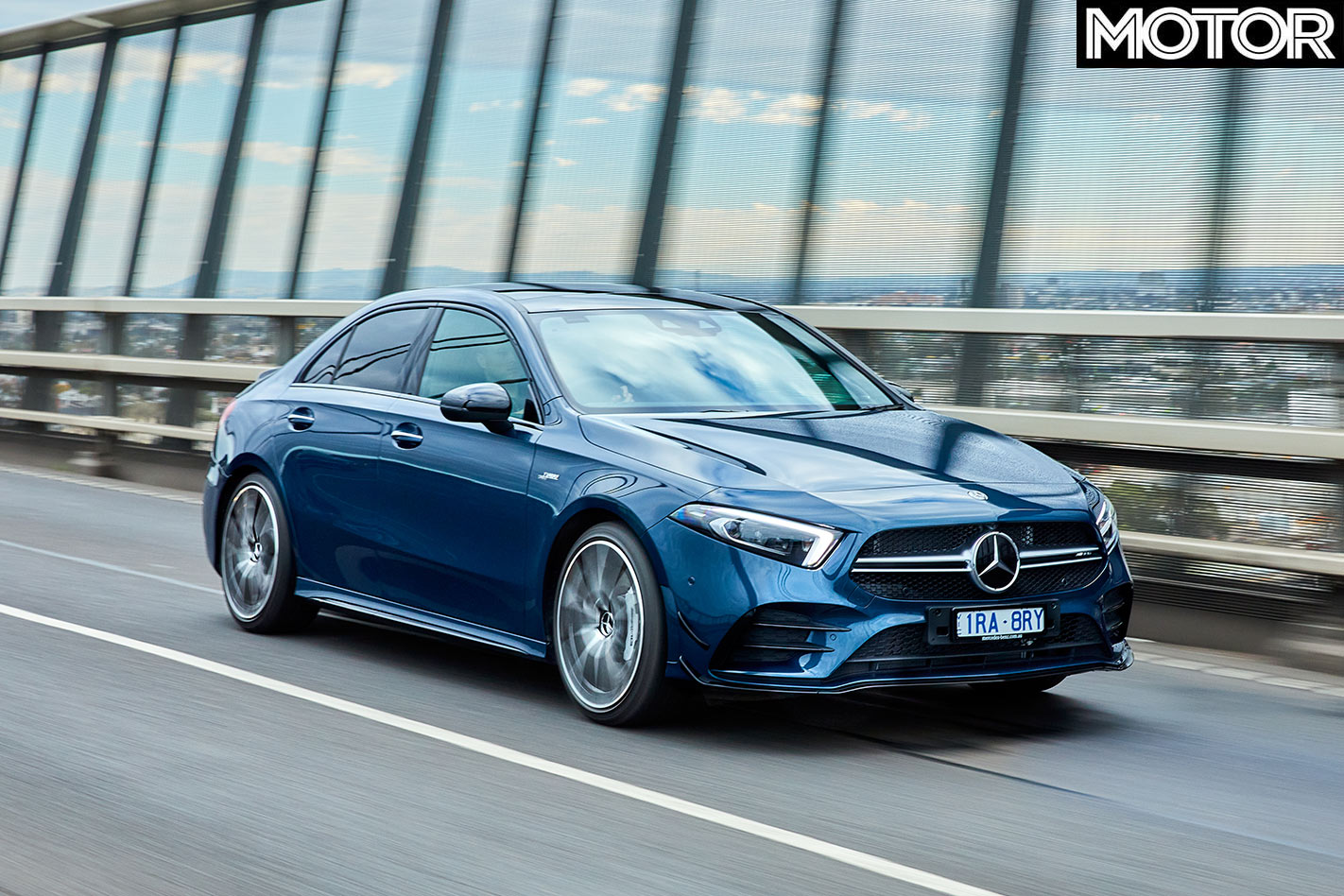
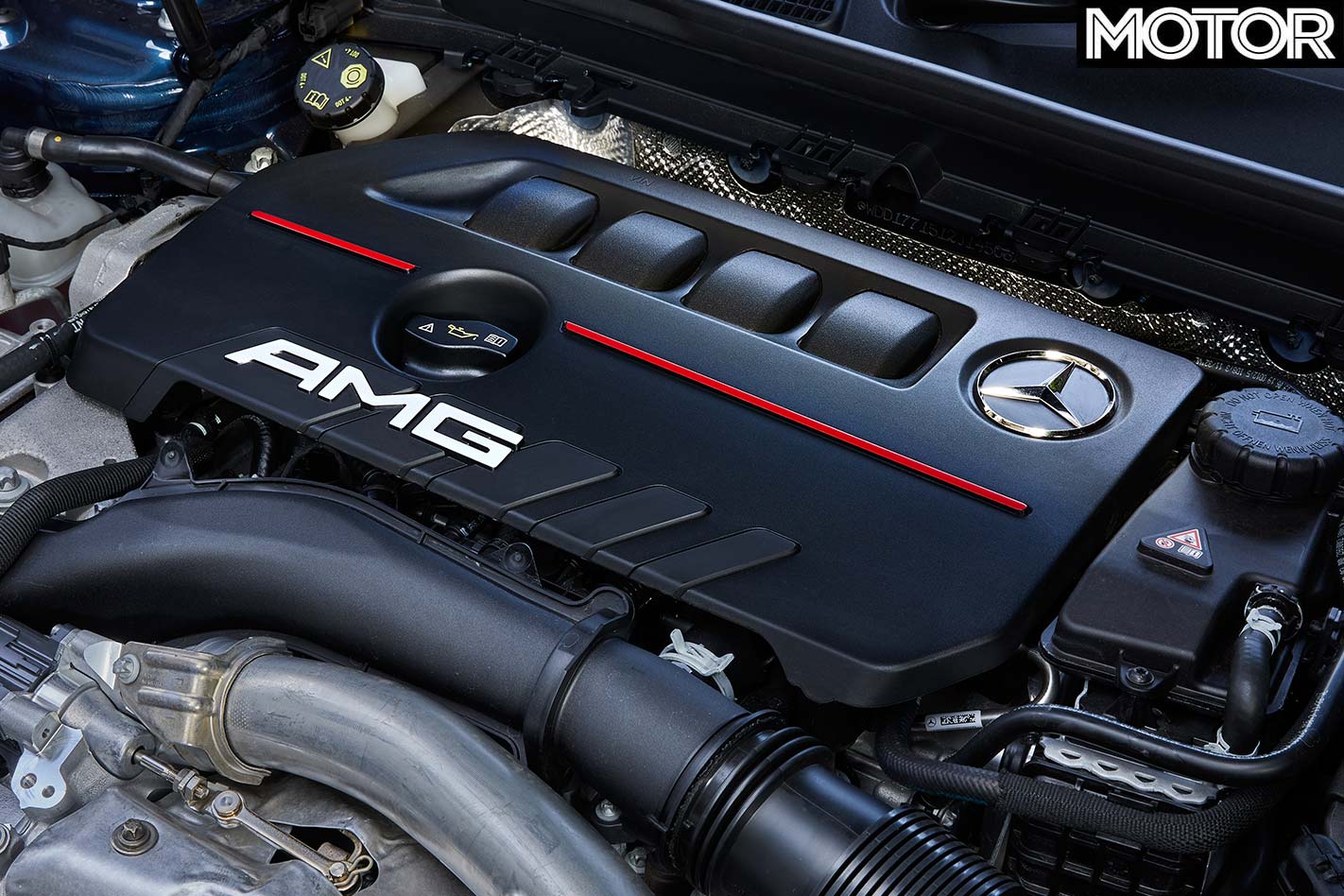
All A35 bodystyles more or less share the same performance hardware. A 2.0-litre inline-4 uses a twin-scroll turbo for 225kW and 400Nm, which goes through a seven-speed dual clutch auto to four wheels. With launch control 0-100km/h takes claimed 4.8sec, a tenth slower than its hatch twin thanks partly to a 15kg weight penalty. The added flab comes with the 110mm stretch in length and the new rump. At 4529mm overall it also welcomes an extra 50 litres in minimum luggage space. It’s an interesting design and we think it sort of looks like a shrunken Alfa Romeo Giulia.
From the hotseat it still offers an excellent driving position atop adaptive strut-front and multi-link suspension. In those AMG performance seats it invites a good thrashing across any kind of road surface, even on low-profile 19-inch rubber, and maintains a friendly suspension balance. It’s hard to say for sure but the Sedan’s damping also feels a touch nicer than the hatch’s.
Grip still stands out as its biggest strength and the all-wheel drive system’s ability to shuffle torque to a loaded axle ensures good pace. Couple that with its pin-sharp, if overly light, steering and you’d take some expensive scalps at a competitive Targa or hill climb. But given how tied down it is, only the brave should indulge in provoking it – on a wet surface it’s much keener to adjust its angle. For us, we’re more comfortable staying within its limits and using the rapid fire powertrain to pick a road apart, and in the A35 sedan that’s still very enjoyable too.
Day to day, the DCT can hesitate on low speed throttle, and also over shoulder visibility is poor. While it’s more athletic than BMW’s M235i xDrive Gran Coupe, it’s the car’s tech-laden interior which is going to feel like the best reason to pick an A35 Sedan over the aging Audi S3 Sedan that’s almost $7K cheaper. But if you really want a sedan, at this price you should very much consider a real one.
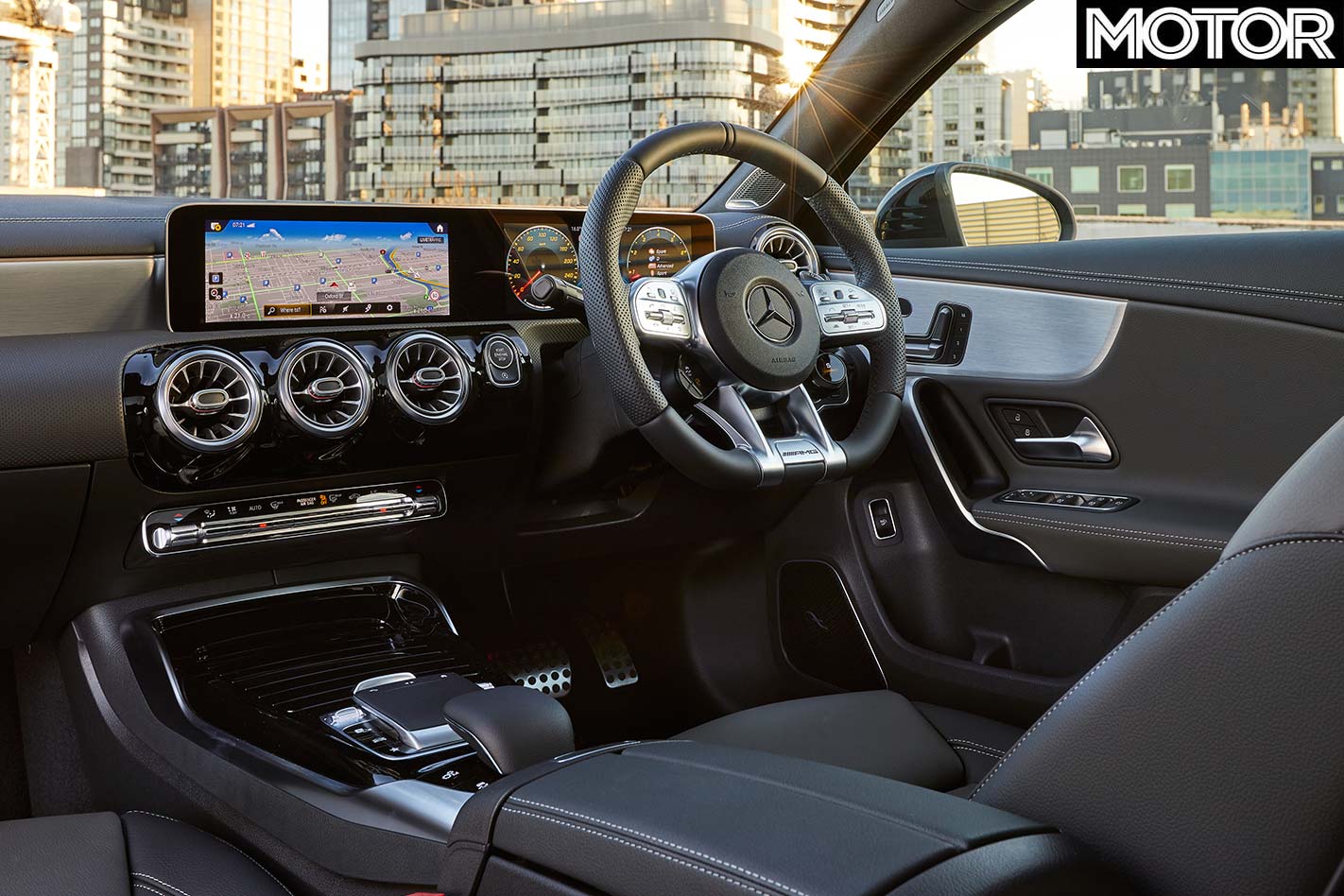
2020 Mercedes-AMG A35 sedanEngine: 1991cc inline-4, DOHC, 16v, turbo Power: 225kW @ 5800rpm Torque: 400Nm @ 3000-4000rpm 0-100km/h: 4.8sec (claimed) Weight: 1495kg Price: $72,500 Like: Assuring all-wheel drive grip; punchy powertrain; decent ride comfort; composure Dislike: Unintuitive dual-clutch; sudden breakaway when poked; low feedback Rating: 4.0
- Novitec’s McLaren GT upgrades
- Power up to 520kW
- Suspension and body mods, too
Novitec, based in Germany, has turned its hand to cars like the F8 Tributo and McLaren Senna in recent months, now offers upgrades that turn wick up on the GT’s engine, allowing it to produce up to 520kW (instead of the car’s usual-yet-still-potent 456kW) and 714Nm (up from 630Nm).
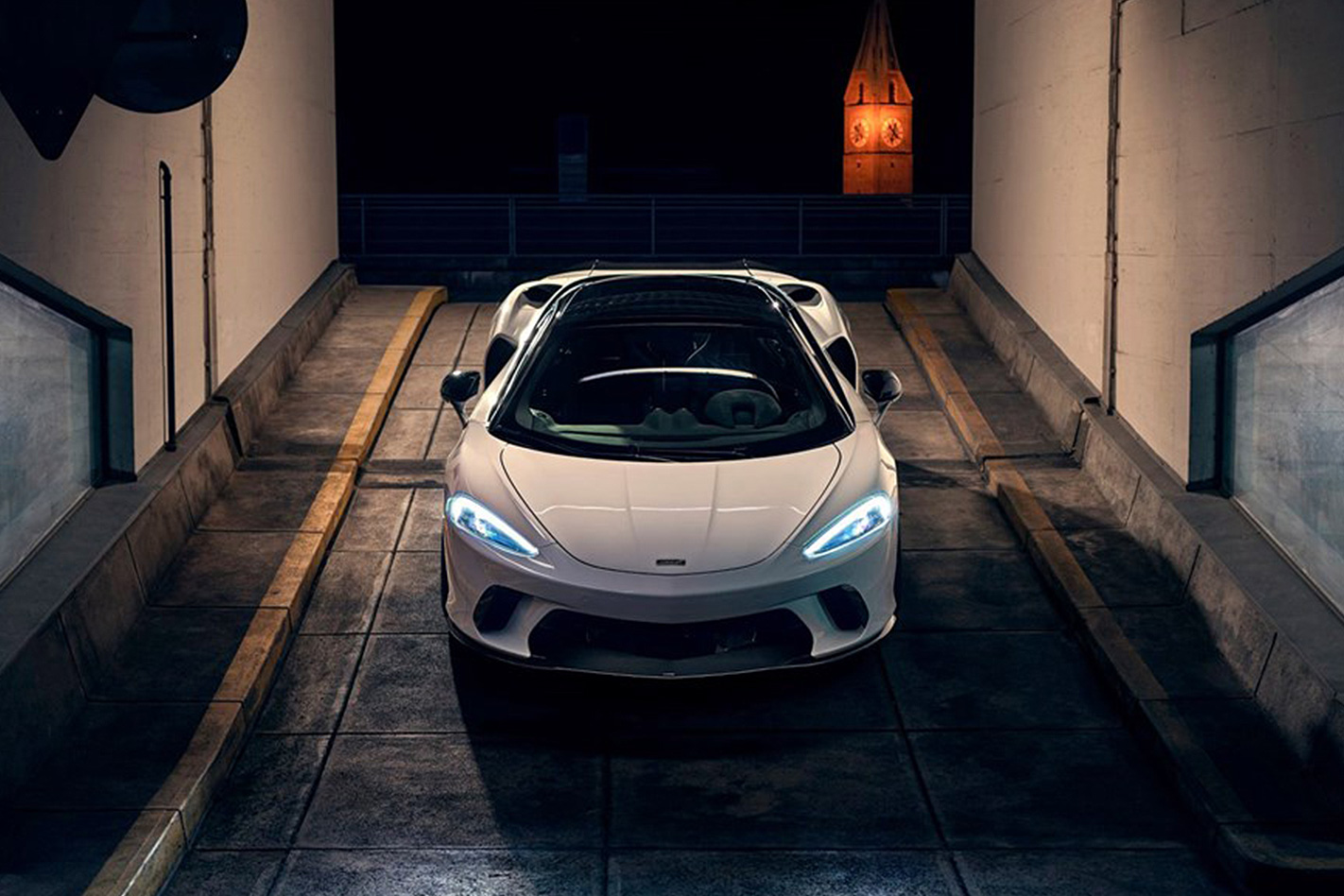
The highest of three engine tunes means the GT can hit 100km/h in three seconds and a top speed of 333km/h. The power mods come mainly from Novitec’s own remaps for the injectors and ignition, and recalibrating the turbo boost control.
Other performance upgrades include a stainless steel exhaust system, forged and mixed-size wheels made with Vossen, and a suspension kit that lowers the ride height by 25mm.
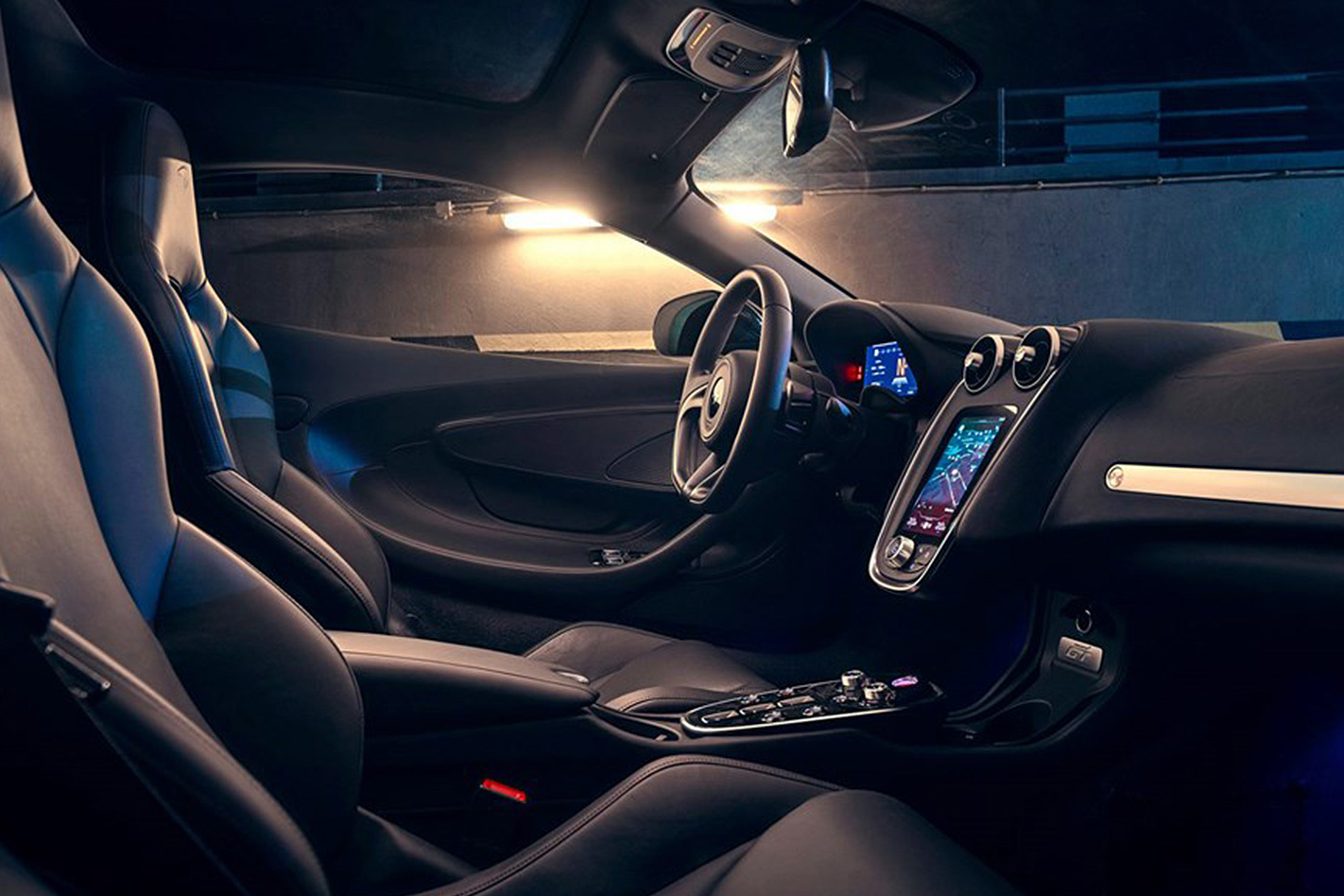
Visually, Novitec also offers a front splitter that can direct more air towards the radiators and brakes and a carbon rear spoiler can be fitted.
As is the way with many tuning companies, you can mix and match whatever bits of the upgrade portfolio to suit your needs (or, more accurately, wants).
This article was first published on CAR’s website.
The good news first. The Kia Stinger is going to retain its V6 twin-turbocharged engine for 2020 and it’s going to be more powerful than ever.
What’s more, it’s likely that the ‘lame duck’ four-cylinder engine, which accounts for a mere two percent of Australian Stinger sales is set to make way for something a good deal spicier.
Contrary to some persistent rumours, however, it looks unlikely that the Stinger’s going to get the 279kW 3.5-litre lump as seen in the second-gen Genesis G80 luxury sedan, sticking with a breathed-on version of the current 3.3-litre Lambda II V6 unit.
Breathed on very lightly we should add.
Korean Car Blog claims to have seen paperwork supplied to South Korea’s environment ministry which demonstrates a lift in grunt from 272kW to 274kW.
Kia Australia’s then-communications manager, Kevin Hepworth, was quick to pour cold water on upsized engine rumours earlier this year.
“We are getting no changes to powertrain, be that the gearbox or power outputs … there won’t be anything different to the actual engine,” he said.
“There may be a change to the headers or exhausts … but there is definitely no change in engine size or specification.”
So there is that.
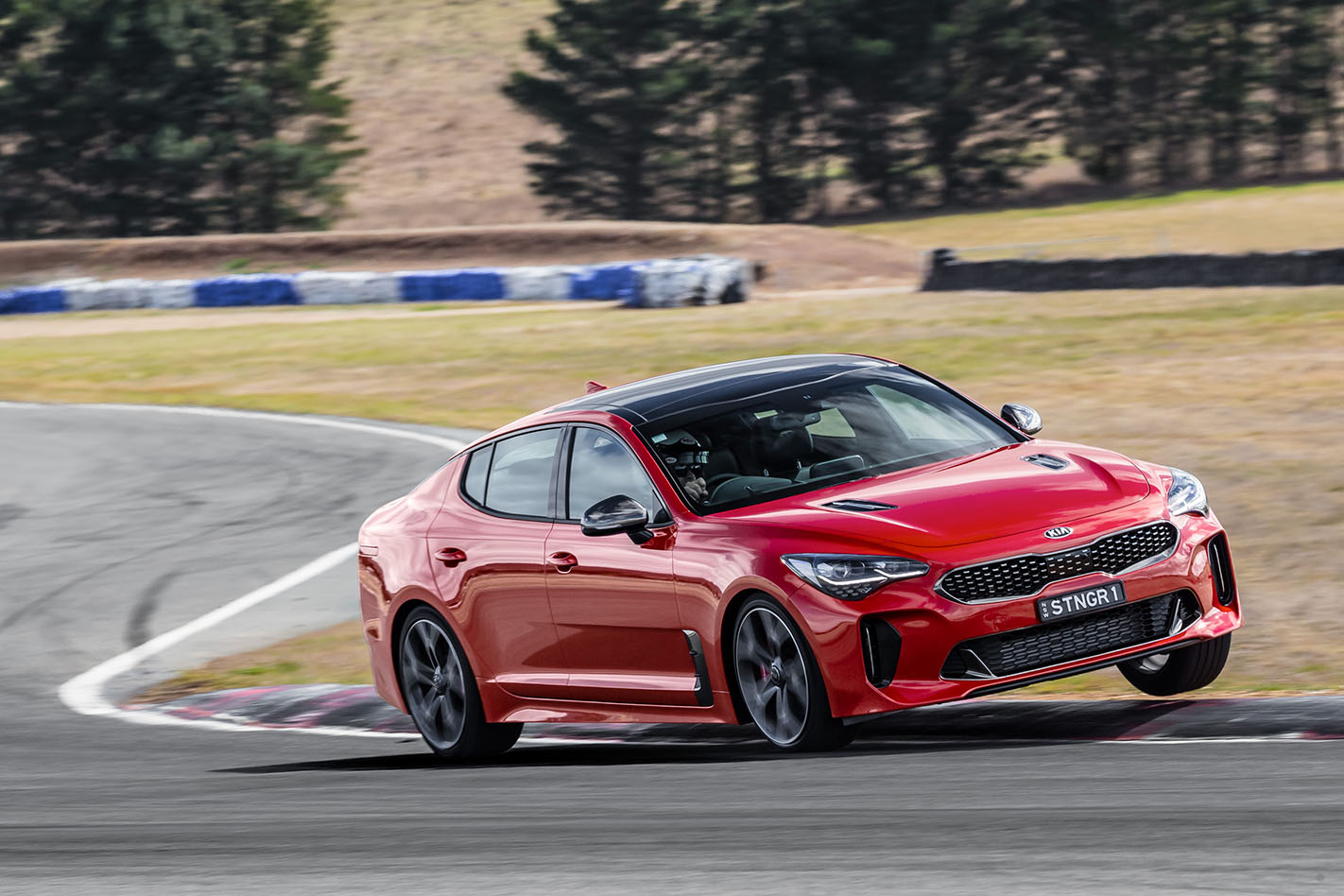
Still, the six-pot Stinger was already more than quick enough, so more power was probably the last thing it needed.
The same couldn’t be said of the 2.0-litre four which never felt up to its 6.0-second 0-100km/h claim.
Indeed, when we tested that engine in the very similar Genesis G70 at this year’s Car of the Year, it recorded a 7.6-second sprint to 100 versus a 5.9 second claim. In other words, level pegging with a Toyota RAV4 Hybrid.
To help fix that, there are rumours that the old 182kW/353Nm 2.0-litre could be replaced by a far more promising 224kW/422Nm Smartstream unit that has seen service in the Genesis G80 and GV80, but we suspect that were this the case, Kia Australia would already be trying to build excitement for the new powerplant.
Alongside the oily bits will be some subtle styling tweaks. Most noticeable is the full-width LED taillight signature, and some beakier-looking headlamps with prominent LED daytime running lamps. A revised bumper set, sequential indicators and bigger exhaust finishers give the rear a beefier look.
The basic cabin architecture looks broadly unchanged, although there is likely to be updates to the infotainment system, with a 10.25-inch touchscreen, a new digital dial pack and a few other minor ergonomic tweaks.
Originally planned for a Q3 arrival before coronavirus threw schedules into disarray, the updated Stinger will build on a decent record of success.
For the first six months of 2020, the Stinger was the best-selling large sedan in Australia, its 1029 units bettering the combined sales of its Holden Commodore and Skoda Superb rivals in the sub-$70k bracket.
It also outsold the combined figures of the Audi A6, BMW 5 Series and Mercedes-Benz E-Class from the next price bracket up.
There are now a trio of Trofeos to choose from if a Maserati is on your mind.
Tongue-twisters aside, the Levante is now joined by the Maserati Ghibli and Quattroporte as additions to the top-spec Trofeo lineup, receiving the same drivetrain treatment as the Levante Trofeo.
The sedans are now heralded as the fastest-ever four-doors in the brand’s history, both able to hit 326km/h thanks to the 433kW/730Nm 3.8-litre twin-turbo V8 nestled under the bonnet of each.
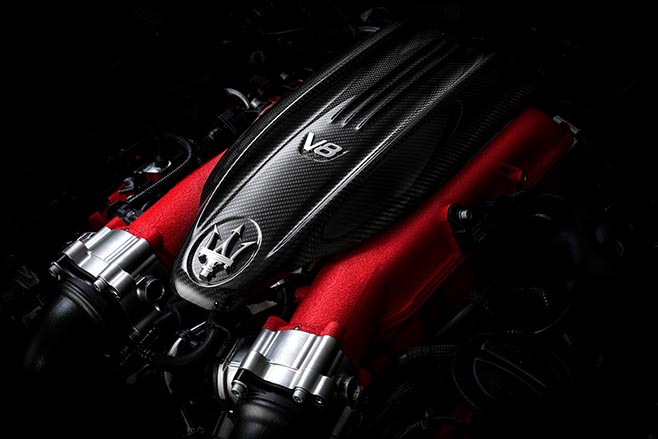
The engine, built at Ferrari’s Maranello factory, is in the same specification in the Levante Trofeo, and is linked to an 8-speed ZF automatic in all three Trofeo models.
While this engine has been available in the Quattroporte GTS GranSport in a lower tune for some time, this is the engine’s Ghibli debut.
With this drivetrain putting power and torque to the rears, the Ghibli Trofeo is able to hit 100km/h in 4.3 seconds, while the Quattroporte Trofeo manages it in 4.5sec. Both are also said to be able to come to a complete stop from triple figures in 34 metres dead, though neither are exactly featherweights.
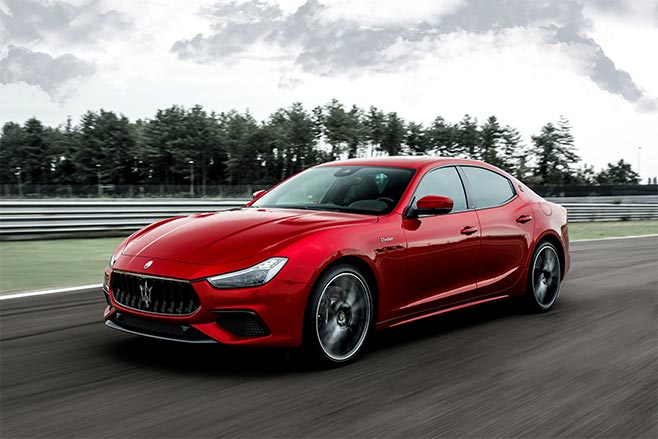
The Ghibli weighs a portly 1969kg, and the bigger (and more plush) Quattroporte another 31kg at two tonnes even.
Suspension in both models is essentially the same, double-wishbone fronts and multi-link rears with anti-roll bars at each end, and Skyhook dampers all round.
2018 Maserati GranTurismo review
A Corsa button is present in each, allowing the driver to get the most out of Maserati’s Integrated Vehicle Control (IVC) system. This means full power and “an even sportier driving style.”
As well as the sound of a Ferrari 3.8-litre V8 under the bonnet, the Trofeo models will be identifiable by the red accents on badging and around areas like the side vents.
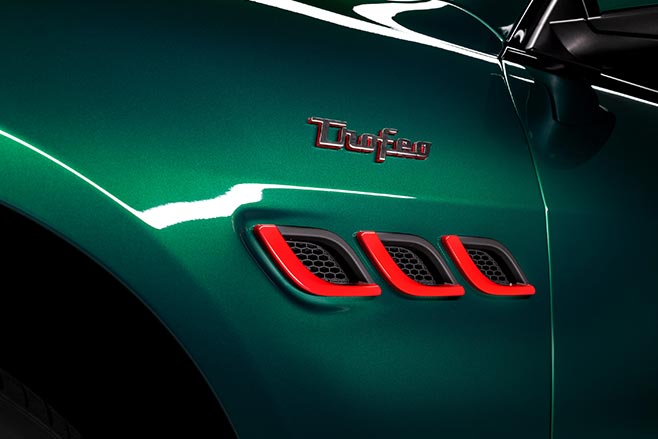
The bonnet on the Ghibli Trofeo will be unique thanks to air ducts for improved cooling, while aspects such as the light clusters and the interior have been redesigned for both Trofeo sedans.
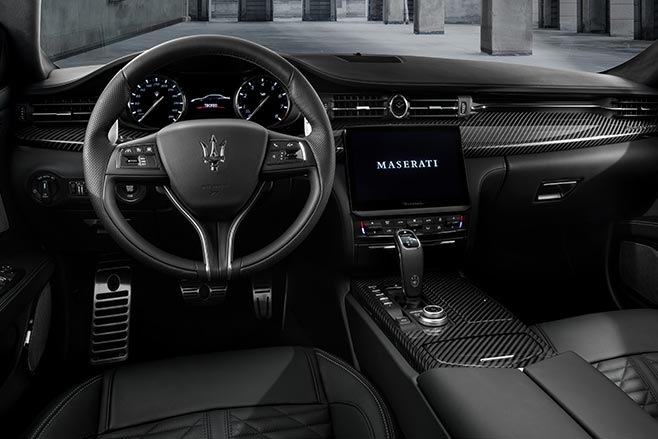
A new 10.1-inch display appears in both cars, with Maserati’s Intelligent Assistant infotainment system also upgraded for usability and connectivity. Seats are marked with the Trofeo name on the Pieno Fiore natural leather.
Maserati’s wicked new 463kW twin-turbo V6 details
With local pricing and availability yet to be confirmed, there’s no knowing how much it will take to get your hands on a Trofeo sedan. For reference, the Quattroporte GTS GranSport is listed at $299,990, while the twin-turbo V6-powered Ghibli S is a $175,990 offering.
What stands out?
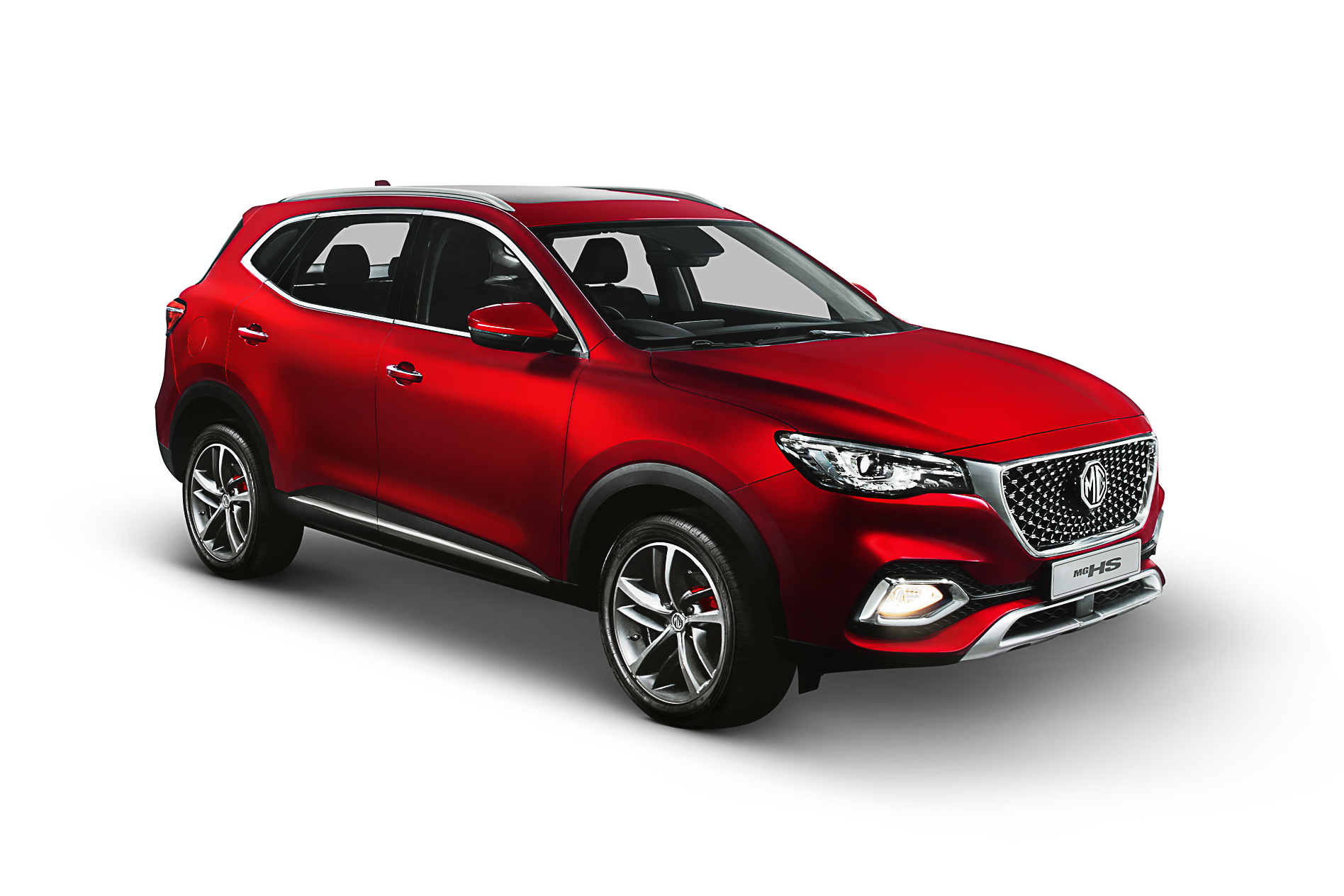
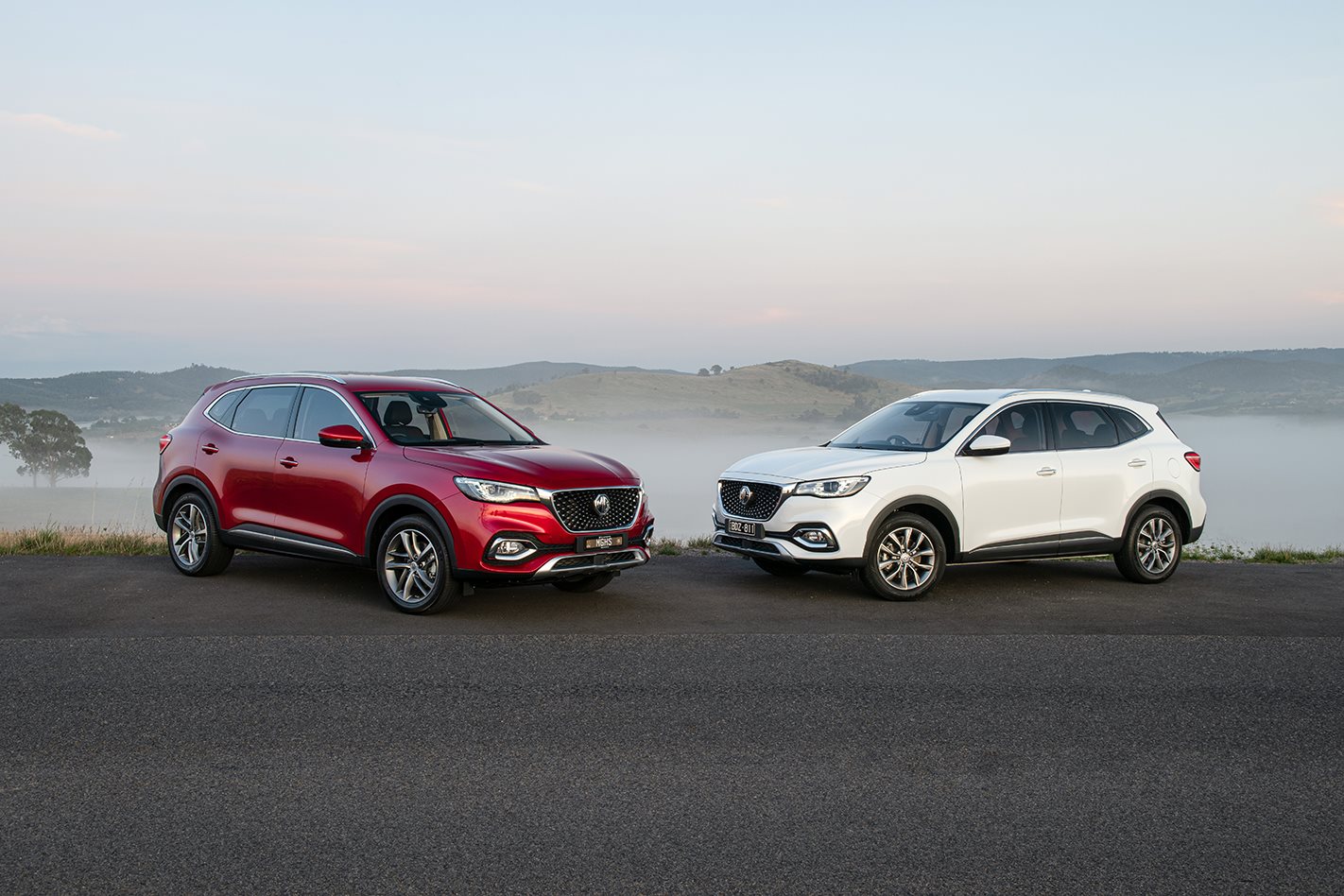
While the MG badge is synonymous with English sports cars, the MG HS is a Chinese-built medium SUV that provides excellent value in terms of pricing and features. Both versions have premium look-and-and feel interiors and a range of driver assistance features such as autonomous emergency braking and adaptive cruise control.
What might bug me?
People continuously reminding you that your MG is built in China, not England, as if the fact the iconic brand was bought by Chinese motoring giant SAIC was news to you.How the adaptive cruise control can struggle to settle into a consistent speed.The constant beeping by the over-zealous lane-departure warning.Trying to set the climate control on screen while the car is moving – the MG HS doesn’t have physical air-conditioning buttons.
What body styles are there?
Five-door SUV-style wagon only, with seating for five.The MG HS drives only the front wheels, and is classed as a medium SUV, lower priced.
What features do all MG HS versions have?
- A 1.5-litre four-cylinder turbocharged engine with seven-speed dual-clutch automatic transmission.
- An advanced driver-assist system, which MG calls ‘MG Pilot’ that includes city-speed autonomous emergency braking, adaptive cruise control, traffic jam assist, blind-spot detection, rear-cross traffic alert, lane keep assist, lane-change assist, and intelligent speed assist that can alerts you if you’re breaking the current speed limit.
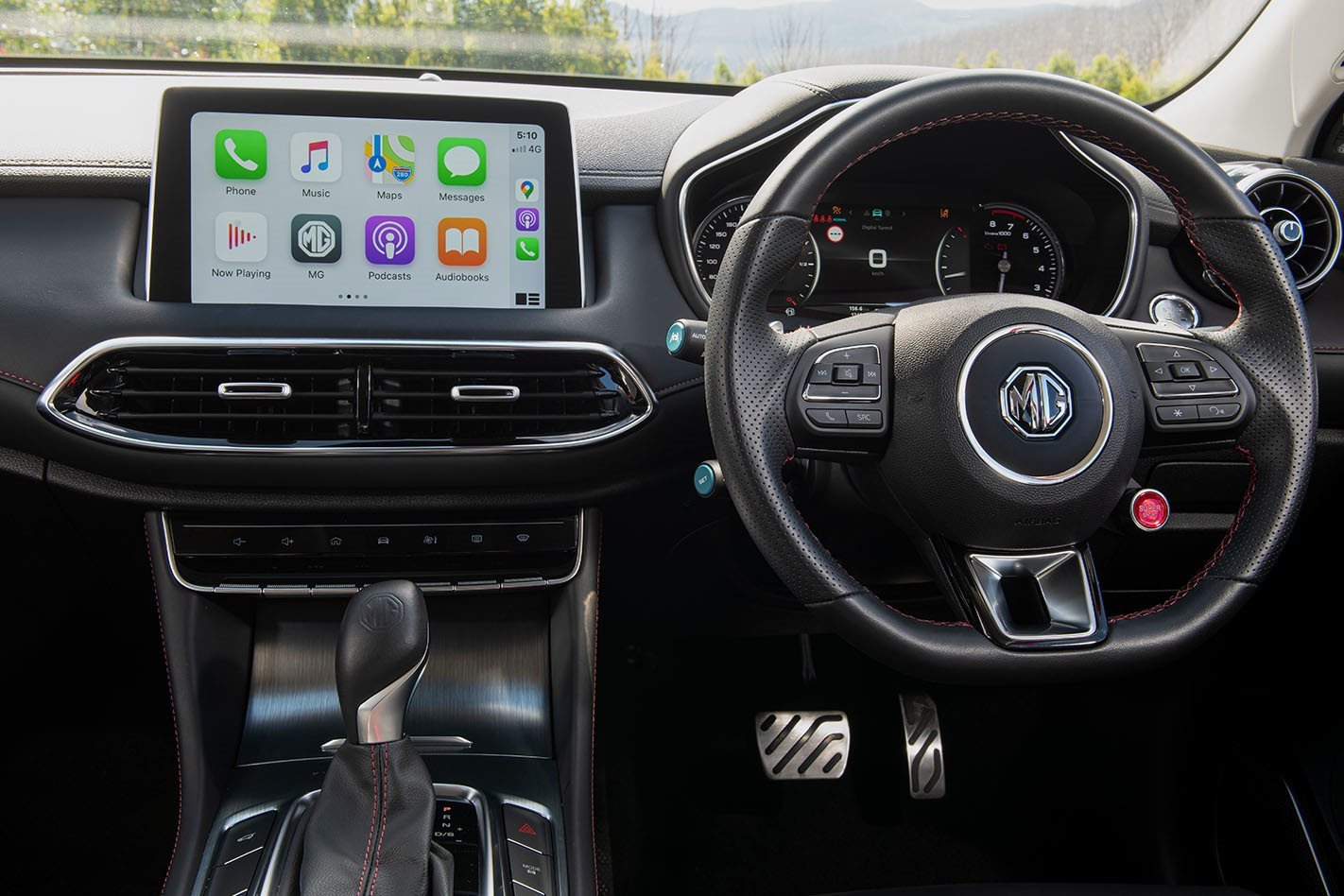
- A 10.1-inch touchscreen, Android Auto/Apple CarPlay smartphone synching, six-speaker sound system with an AM/FM radio, USB and HDMI inputs, Bluetooth audio streaming.
- Reversing camera with rear-parking sensors.
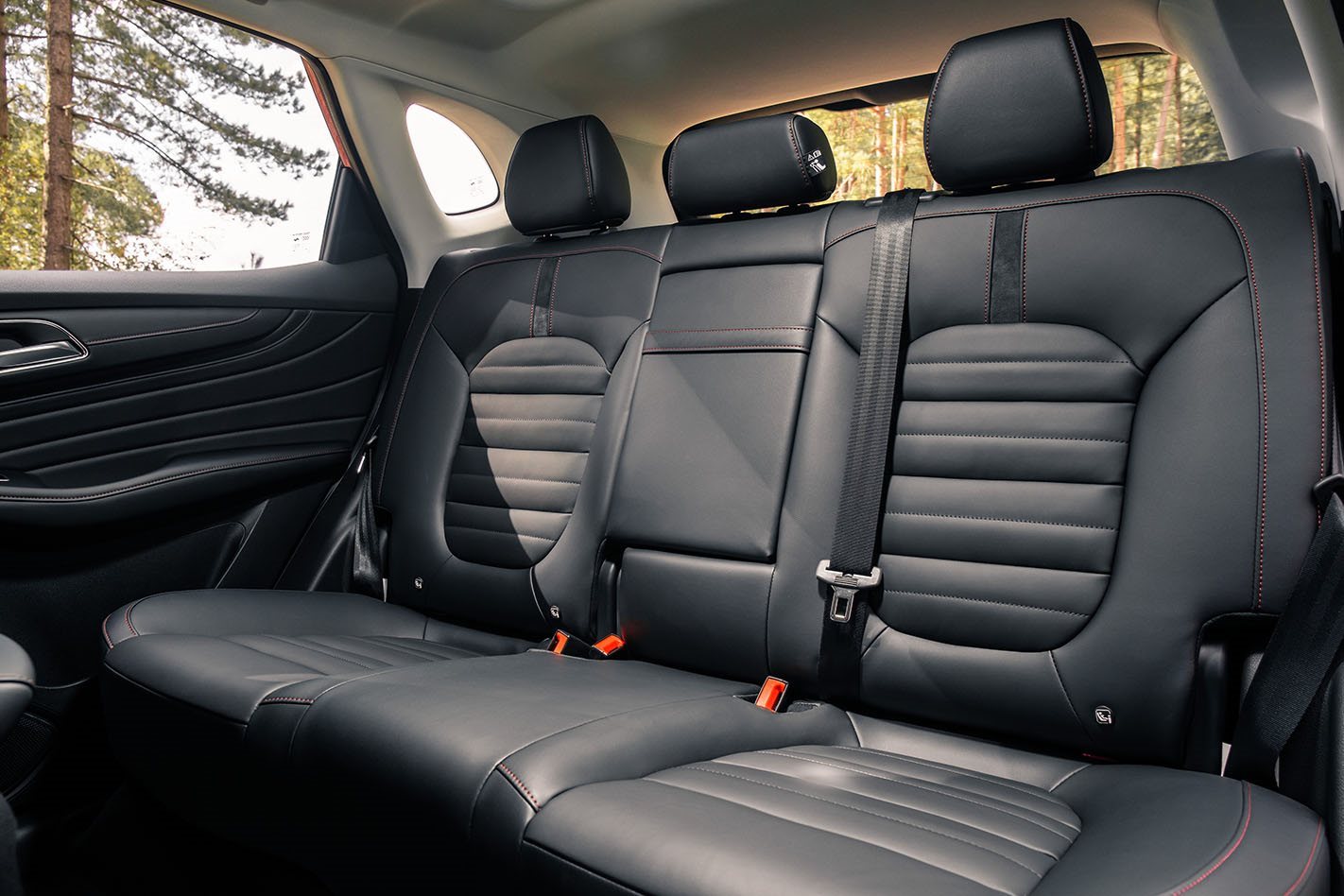
- Premium-feel leather-appointed seats with contrasting stitching, and six-way manually adjustable driver’s seat with lumbar adjustment.
- Tail-lights and daytime running lights illuminated by extremely long-lived LEDs. The headlights are self-levelling and automatically control the high-beam if it senses another vehicle approaching.
- Power-operated and heated door mirrors.
- Height and reach adjustment for the leather steering wheel, with buttons to operate the cruise control and multimedia features.
- Electronic park brake, hill-start assist control, and seat-belt reminders.
- Smart-key entry and start, which lets you unlock the car and drive away without removing the key from your bag or pocket.
- Air-conditioning with dedicated vents for rear passengers. Rear seats also get 2 x USB ports.
- Aluminium alloy wheels (which don’t need pesky plastic trim), and a full-sized spare.
- Tyre pressure monitors (which will give you early warning of a slow puncture).
- Six airbags. Stability control, which helps you avoid and control skids. (For the placement of airbags, and more on MG HS safety features, please open the Safety section below.)
Which engine uses least fuel, and why wouldn’t I choose it?
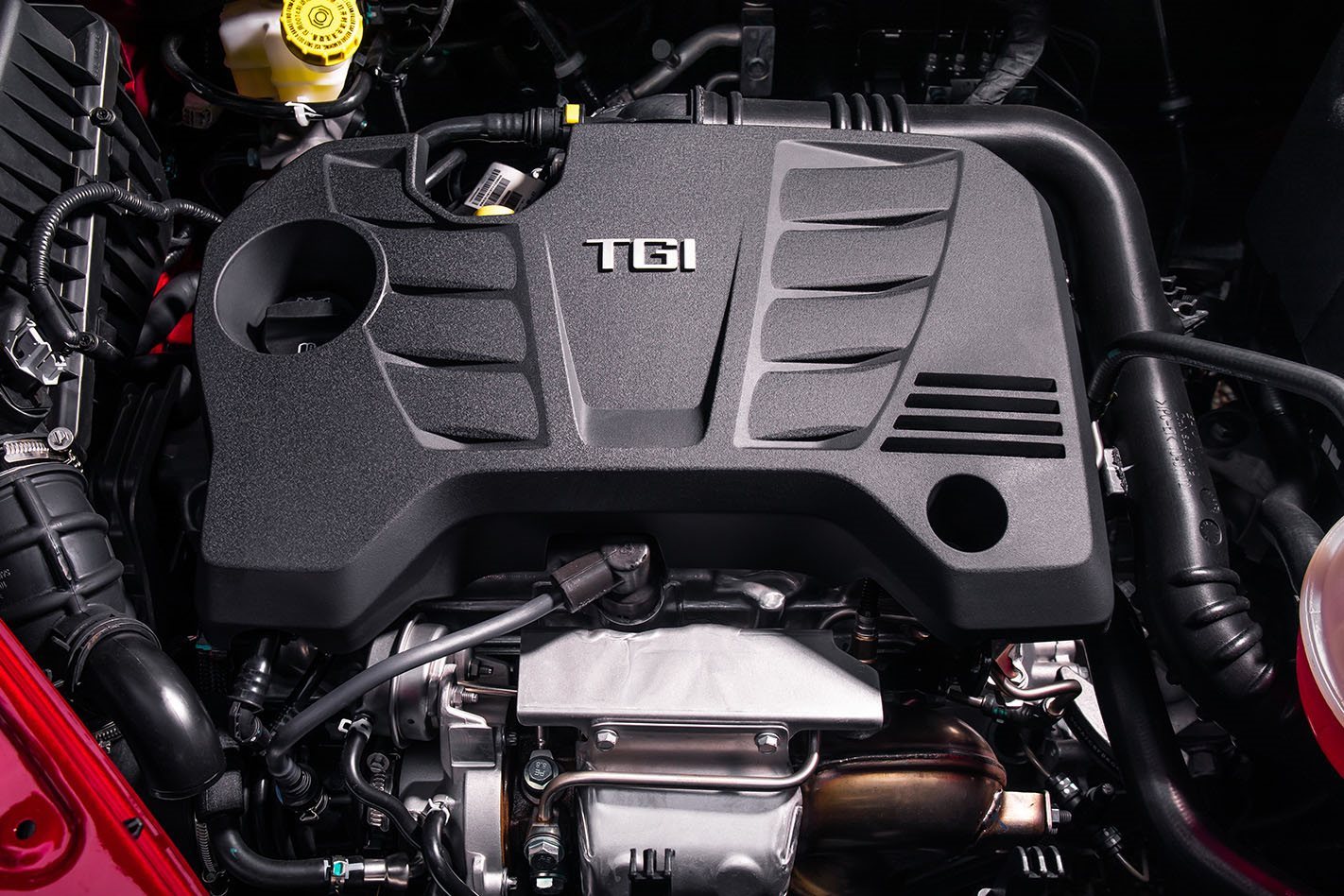
Every MG HS comes with the same engine, a turbocharged 1.5-litre petrol. On the official test, it consumes about 7.3 litres/100km (city and country cycles combined).This is coupled with a seven-speed dual-clutch automatic transmission that can be driven just like a manual but without a traditional foot clutch.The pricier Excite and Essence versions allow you to manually select gear ratio steps using paddles on the steering wheel.
What key features do I get if I spend more?
The least costly MG HS is the Vibe which comes with 17-inch wheels, manually operated air-conditioning, halogen headlights, and the features common to each HS version.
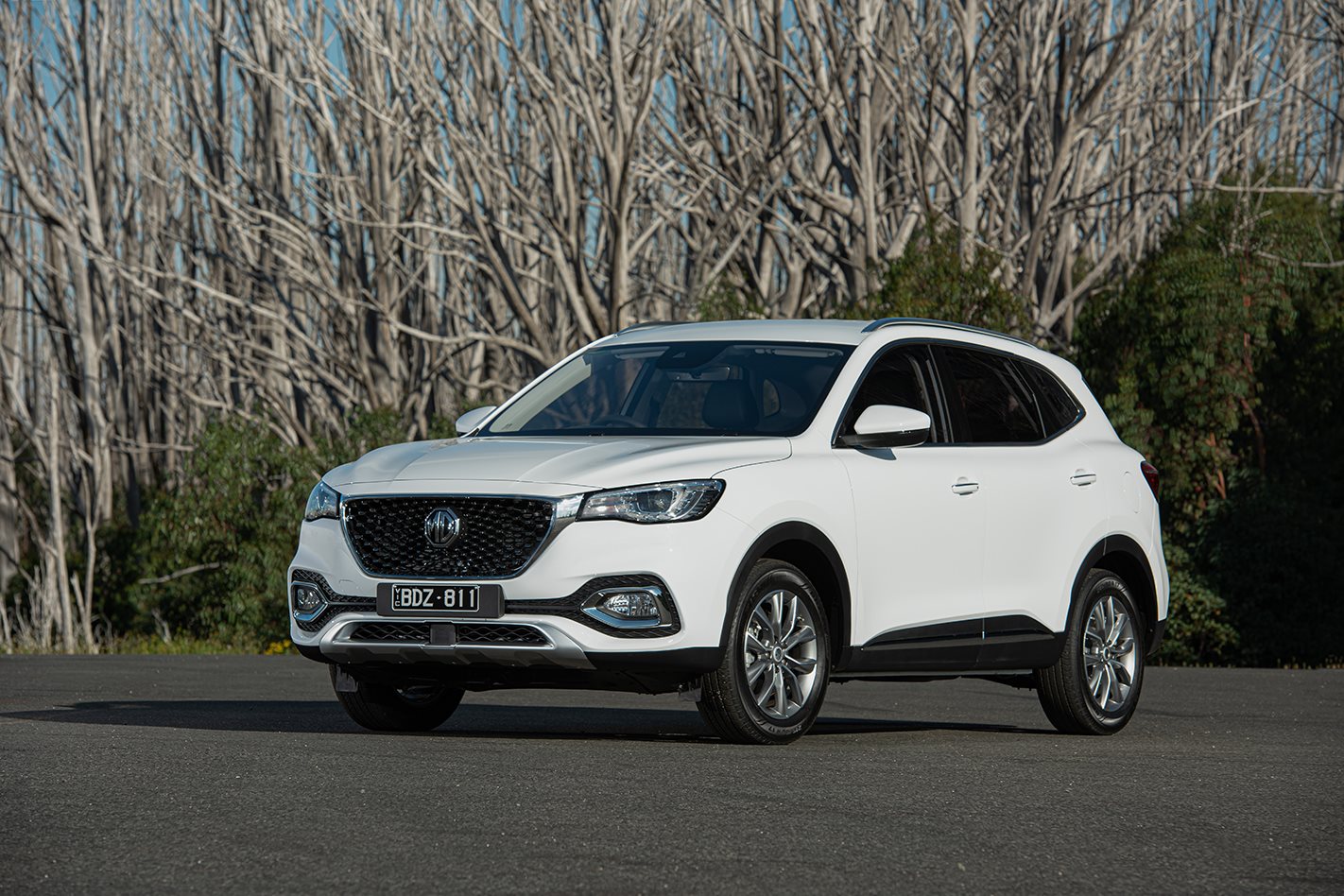
Paying more for HS Excite brings additional convenience and comfort including:
- Dual-zone automatic climate control.
- Power-operated tailgate.
- LED headlights and rear indicators with fancy-flowing sequence illumination.
- Interior ambient mood lighting.
- Rain-sensing windscreen wipers.
- Satellite navigation.
- Sporty metal foot pedals.
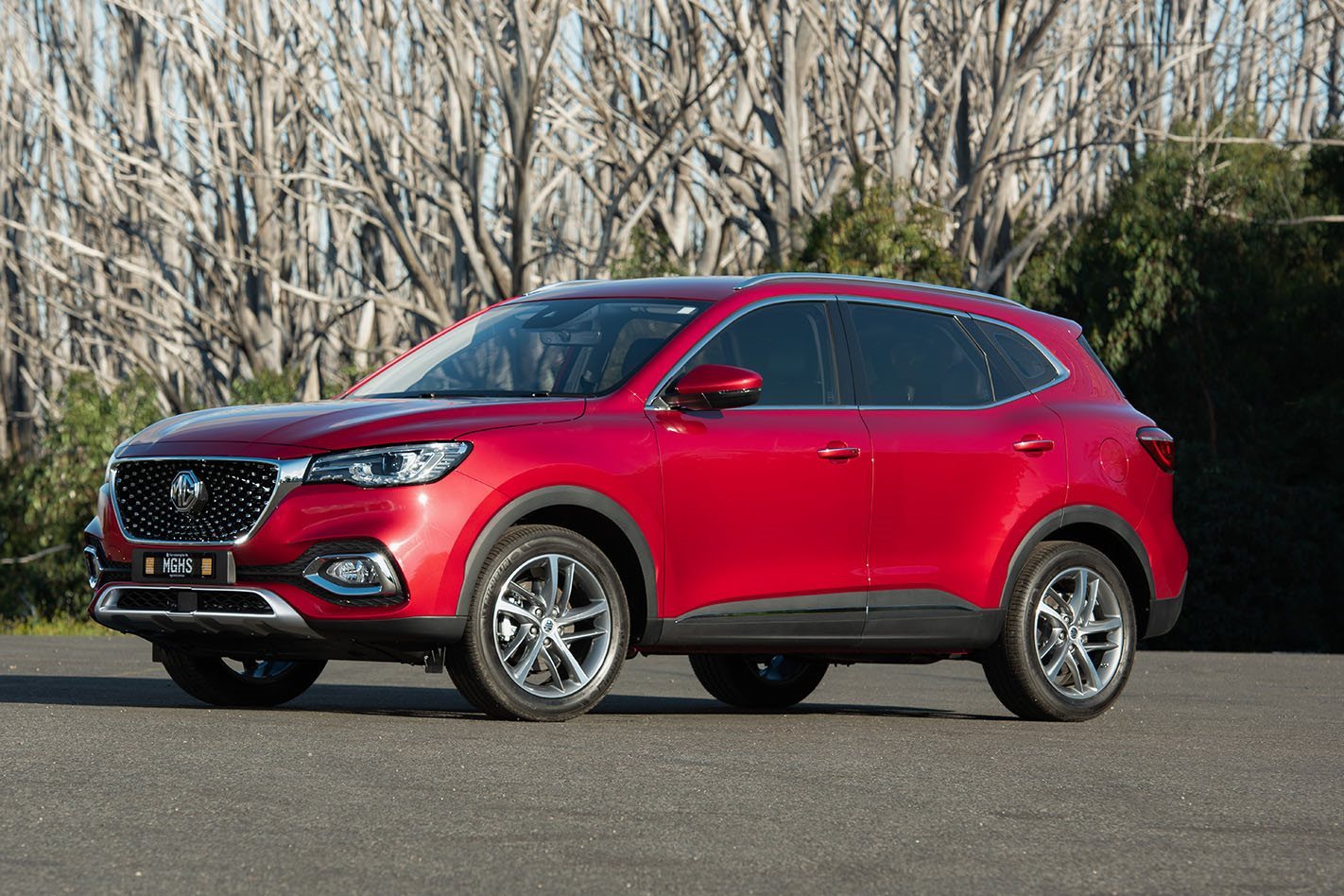
- Bigger 18-inch alloy wheels.
- Paddle shifters.
- Super sport mode that increases the revs and tightens the steering provide add to driver engagement.
- Panoramic sunroof.
- 360-degree parking camera.
- Two-tone leather sports seats.
- Power adjusted heated front seats.
Does any upgrade have a down side?
Not really, the entry-level Vibe is marginally the quietest to ride in on coarse-chip roads, because its 17-inch wheels use tyres with deeper and more cushioning sidewalls than the lower-profile 18-inch rubber under the Excite and Essence. Thankfully, the bigger wheels don’t seem to affect ride comfort much.
How comfortable is the MG HS?
The interior feels surprisingly premium, with both versions featuring plenty of soft-touch materials, supportive faux leather seats, a 10.1-inch touchscreen and a leather-wrapped steering wheel that wouldn’t be out of place in a European rival. Fit and finish of trims, carpets and switchgear is pleasing.The Apple CarPlay and Android Auto interface connects and works well, but are a few niggly issues with the infotainment system such as the interplay between the touchscreen and the buttons below that isn’t always intuitive or speedy. With headlights on during the day, indicators for the buttons are rendered invisible. Manual dials for the Excite’s climate control would also be appreciated, as adjusting it can be a little difficult on the move.
The cabin is well insulated from road and wind noise, contributing to a quality feel inside, and the ride is reasonably comfortable despite some harshness on less than perfect road surfaces.
What about safety in an MG HS?
Each MG HS comes with anti-lock brakes, stability control, six airbags, seatbelt reminders for all seats, tyre-pressure monitoring, a reversing camera, and LED daytime running lights.All versions also come with an active safety suite called MG Pilot that includes autonomous emergency braking (AEB), adaptive cruise control (ACC) and advanced safety technology including traffic jam assist, blind-spot detection, rear-cross traffic alert, lane keep assist, lane-change assist, and intelligent speed assist that can limit your speed to the current speed limit.
The AEB uses a radar sensor to detect other vehicles, bicycles and pedestrians and applies the brakes if it senses a collision. At speeds below 20 km/h, the HS will automatically apply its brakes to avoid a collision with a vehicle, bicycle or pedestrian. At speeds above 20 km/h, AEB will reduce the likelihood or mitigate the severity of an accident.
MORE: Autonomous emergency braking explainedThe adaptive cruise control monitors the road ahead and maintains the speed set by the driver. If the system detects a slower vehicle ahead it gently reduces speed by releasing the accelerator or actively engaging the brake control system. If the vehicle ahead speeds up or changes lanes the system automatically accelerates back to the driver’s desired speed.ACC also works in heavy traffic. If the system detects dense traffic or a traffic jam at speeds below 60 km/h, the driver can activate Traffic Jam Assist that will automatically follow the vehicle in front, controlling its acceleration, braking and steering within the same lane.Lane Keep Assist uses a camera to detect lane markings ahead and monitors the vehicle’s position in its lane. When the function detects the vehicle is about to unintentionally move out of its lane, it warns the driver by means of a visual, audible and steering wheel vibration. The car will also control the steering to keep within its lane.Intelligent speed assist reads speed limit signs and alerts the driver of the current speed limit by way of a symbol on the driver’s instrument cluster.The Australasian New Car Assessment Program (ANCAP) awarded the MG HS its maximum Five-Star rating in December 2019.
I like driving – will I enjoy the MG HS?
MG has delivered the goods when it comes to the HS’ features and packaging, but, while it’s one of the best Chinese-built cars to arrive in Australia so far, its drive is still not quite as refined as its more established Japanese and Korean rivals.It is a big step up from the GS model it replaces, however, with the steering, braking and handling all as solid as they need to be in a family SUV.
Ride is improved, although some harshness on less-than-perfect surfaces betrays the need for further development work if the HS is to match the class leaders.
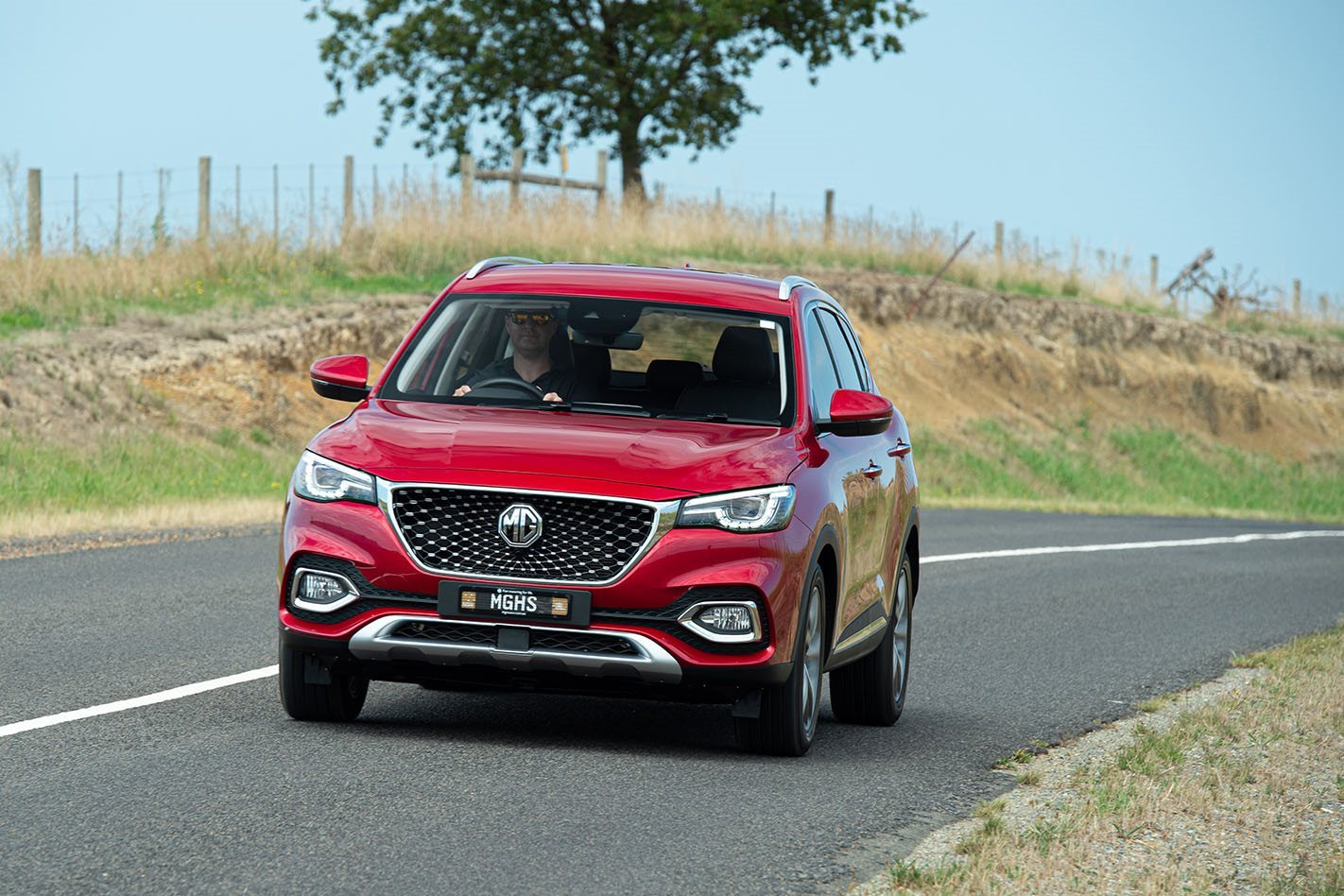
Despite turbo lag off the line, the 119kW turbo engine provides sufficient power for a vehicle this size. It’s not too noisy and revs willingly. The dual-clutch automatic transmission can be indecisive and typically lacks polish particularly at lower speeds, but it’s preferable to the less-sophisticated CVT autos found in rival SUVs.
MORE: 2020 MG HS Excite reviewThe more expensive Excite version allows for more engaging driving with paddle shifters to give you more control over gear ratios, and a super sport drive mode that tightens the steering and boosts acceleration by allowing for higher revs between gear changes.
How is life in the rear seats?
Rear passengers are well catered for, with two-position (slightly) reclining 60:40-split seat, fold-down centre armrest, ample legroom, air vents and twin USB ports.
How is the MG HS for carrying stuff?
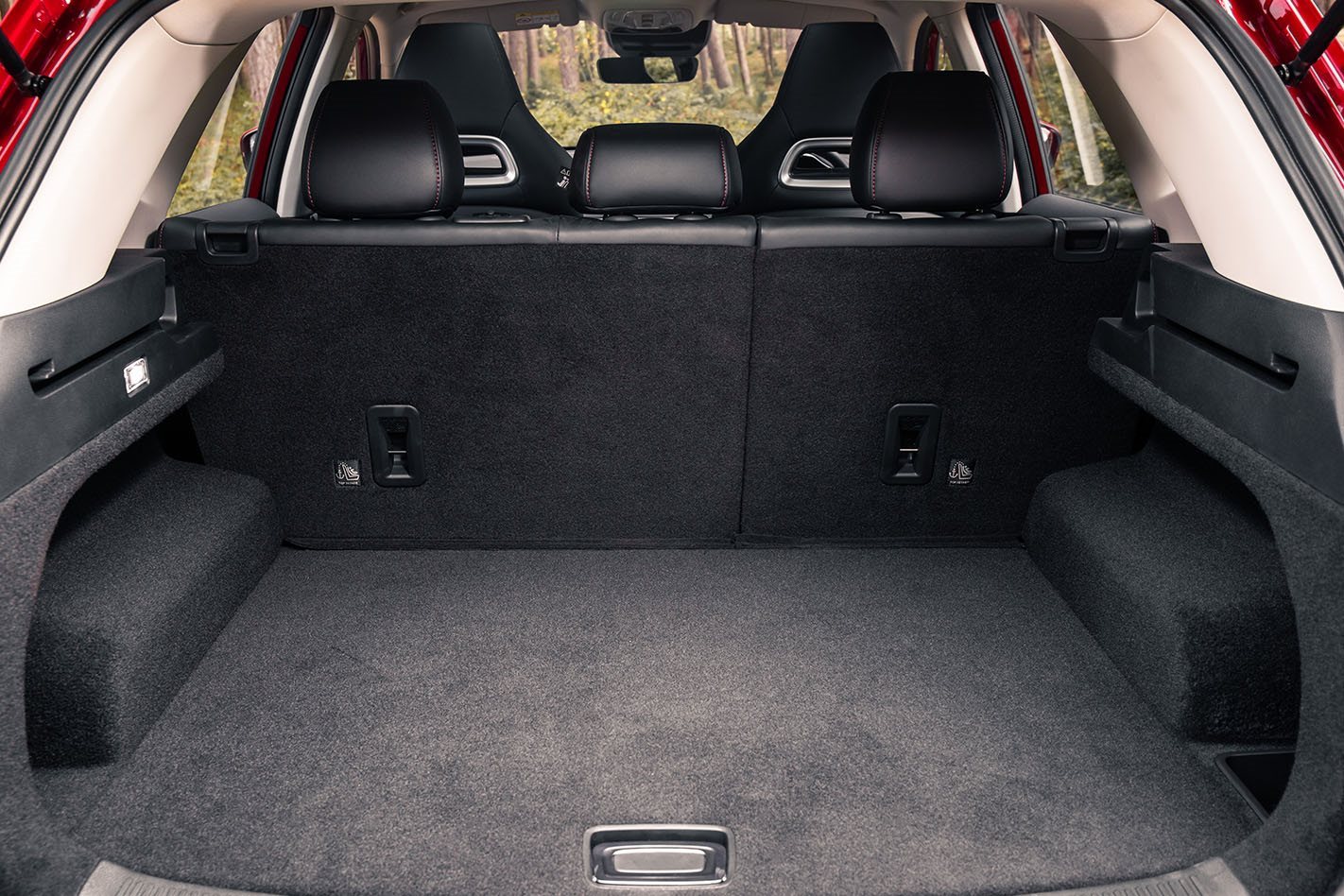
The MG HS can hold 463 litres of stuff in its boot, which about average for a medium SUV.Folding the rear seats down can net you up to 1287 litres of space. Both HS versions come with a storage box and luggage cover.
Where is the MG HS made?
The MG HS is manufactured in China.
What might I miss that similar cars have?
Not much, the MG HS is very well equipped though there are exceptions to its expansive features list including power-operated driver’s seat, heated seats, sunroof and digital radio. You’ll find these in some versions of cars such as the Mazda CX-5, Hyundai Tucson, Kia Sportage, Peugeot 3008, Ford Escape, Renault Koleos, Nissan X-Trail, and Volkswagen Tiguan.Perhaps a more efficient hybrid powertrain as found in the Toyota RAV4, Subaru Forester and Mitsubishi Outlander PHEV. A plug-in hybrid version of the HS has been revealed for the Chinese market but at this stage there no plans to sell this in other countries.
All-wheel drive for increased traction on slippery or gravelly surfaces, and mild off-road capability as available with the Forester, CX-5, RAV4 and X-Trail.
I like this car, but I can’t choose which version. Can you help?
The Vibe and Excite are excellent value for around the $30,000 mark, but we reckon the Excite has more than enough extras to justify the additional cost.
Are there plans to update this model soon?
No. This first-generation MG HS is an all-new model that replaces the GS as the brand’s medium SUV offering.
A plug-in hybrid version has been revealed for the Chinese market but at this stage there no plans to sell this in other countries.
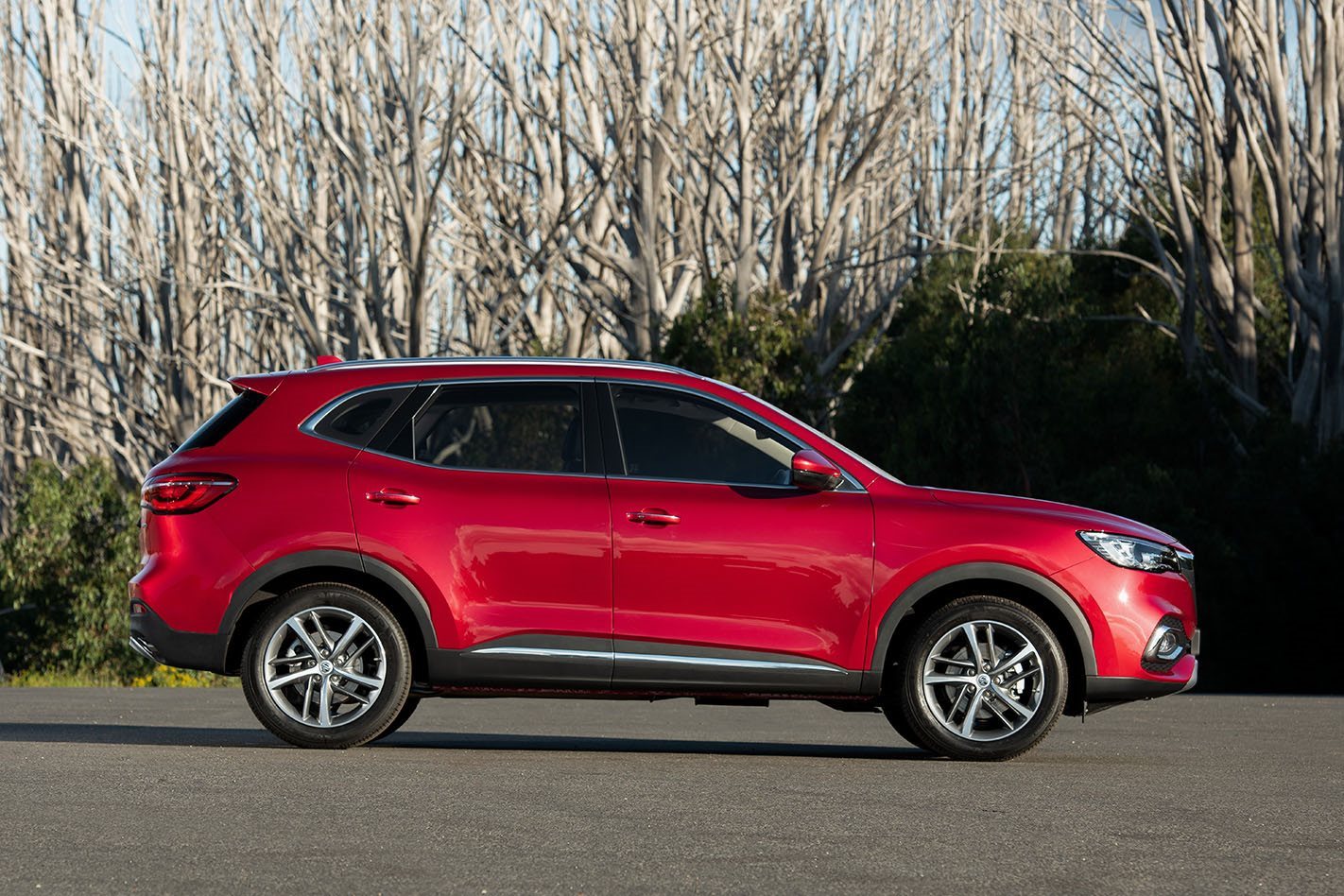
The top-spec HS Essence (below) was added to the range in August 2020.
Don’t expect any updates before 2021, though MG may introduce new technology to the range or special edition variants.