
There’s an air of pragmatism carried by McLaren’s 720S, unlike that of any of its rivals.
While it may not be considered as traditionally pretty, its alien looks are purposeful and are backed up by truly out of this world performance figures.
Safe to say it’s not a car most could realistically consider driving every day, and certainly not one you’d see your granddad stepping out of. Unless of course, your grandad is 78-year old Henry Harrfeldt of Norway.
Harrfeldt has been making the rounds online recently, thanks to a surfaced YouTube interview marking a year of ownership with his Amethyst Black 720S Spider.
Harrfeldt purchased the big Mac in 2019 and, in the video, states that the car has just passed 4000kms (considered high for usually-pampered vehicles like these).
“It’s a street legal race car,” he says in the video, “a bit stiff but very responsive”.
“Absolutely f*cking crazy,” he adds, after dropping a gear and giving the 527kW 4.0-litre twin-turbo V8 a healthy dollop of throttle.
When quizzed as to what his favourite aspect about the car is, the affable Norwegian petrolhead replies simply: “It’s fast”.
Indeed, speed and machinery have seemingly played a large role in Henry Harrfeldt’s life.
Born in February 1942, Henry in his early 20s competed in the motorcycle speedway British League in 1965 and 1966.
Although it was his brother Sverre Harrfeldt who really took to two-wheeled oval racing; winning the Norwegian Championship in 1962, 1964, 1965 and 1966, and a world finalist in 1963 and 1966.
Henry Harrfeldt later went on to compete in British Sportscar racing; finishing 10th in the 1991 Kenwood Sportscar Cup, and fourth in the 1994 REAB Sportscar Cup.
As for what else he has in the shed these days, it seems the British theme continues. Harrfeldt says he also has a 1970s AC Cobra (production ended in 1967, either a late-60s genuine example or a very early replica), and a Ford GT40 which he says is around 38 years old (likely a replica, given the time period) and occasionally sees track use!
Truly a man after our own heart, we can only hope we’ll also keeping the four-wheeled faith alive like Henry at 78 years of age.
Bravo!
You know what they say, common sense isn’t so common. You would think regardless of your mechanical aptitude with cars, just about anyone would know that if they have a flat tyre the right thing to do is to pull over as quickly and safely as possible.
But for two young idiots in Melbourne, driving to the point of demolition is just the tip of the stupidity iceberg.
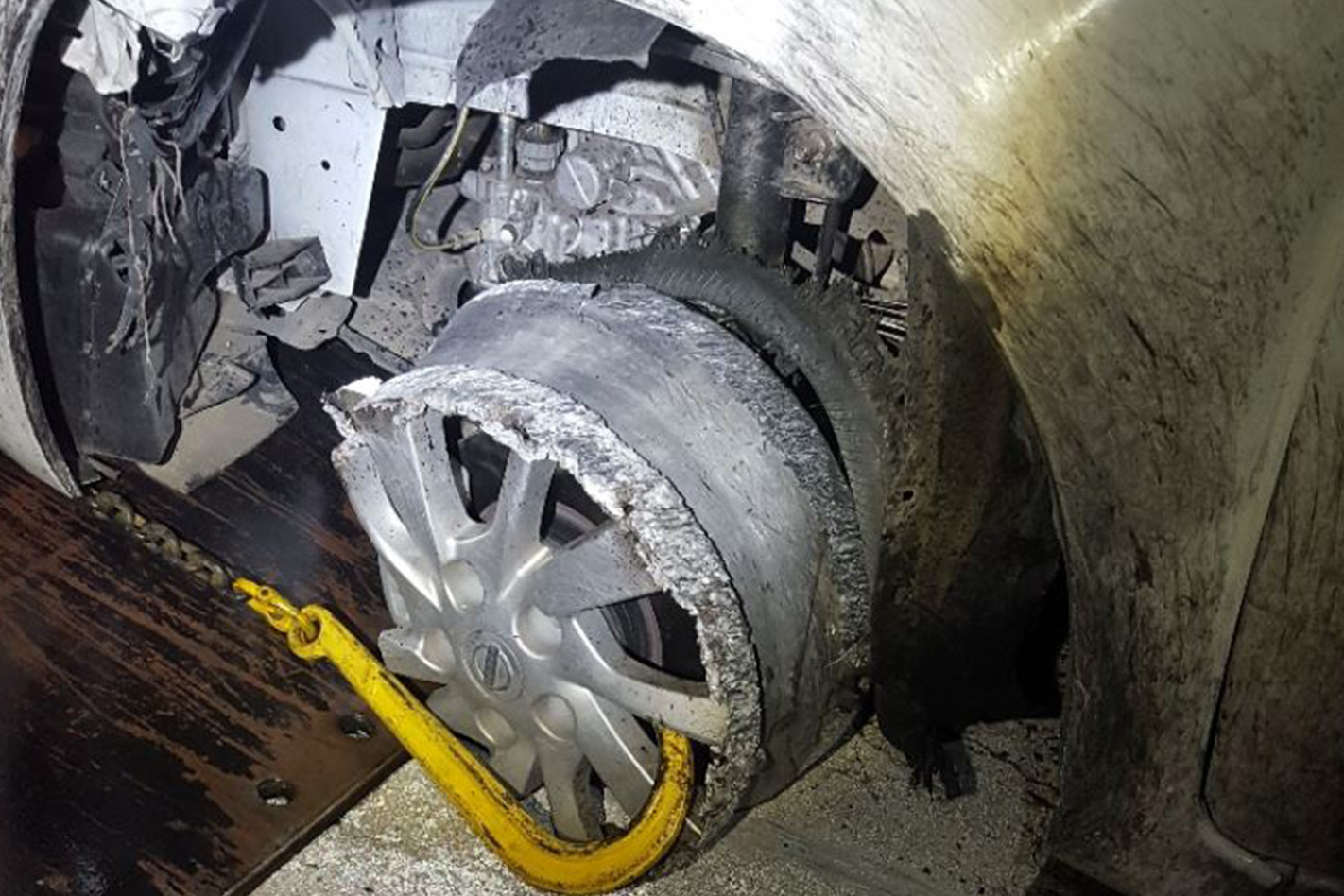
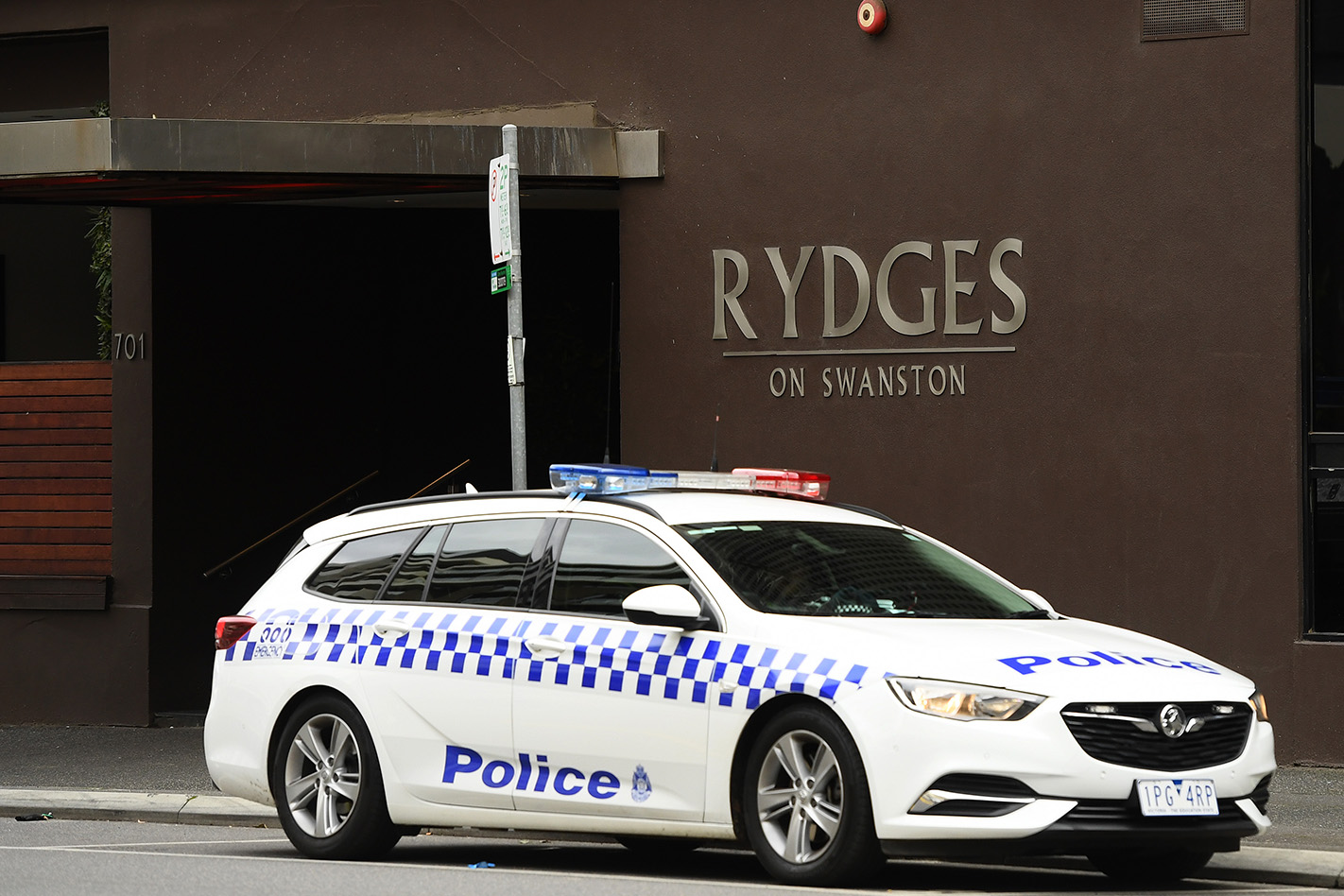
A 19-year old driver and his passenger were intercepted by a Police in Warryndyte at 3am on Wednesday morning, as their stricken car was allegedly blocking a lane on Yarra Road.
Not only had the teen allegedly driven the car to the point where both the wheel and the front passenger side of the car was destroyed, but he did so with an alleged 0.162 BAC reading and under the stage three COVID-19 restrictions currently in force in Melbourne.
It appears that despite being in a seriously damaged car and driving under the influence, the pair avoided having any kind of collision.
The excuse the two men gave for their behaviour is just as baffling as their behaviour.
In a statement by Victoria Police, it is alleged “[they] both stated it was not their fault that they did not know to change a tyre and blamed society for not teaching them.”
The driver’s licence was immediately suspended for 12 months and he is likely to be charged on summons with drink driving offences, while both the driver and passenger received $1652 fines for breaching COVID-19 lockdown restrictions.
At this point we would be tempted to bark on about how it should be mandatory to learn how to check and change your tyres as part of your licence test, because at the end of the day they’re the only things between you and the road.
But in this case, sometimes stupidity just can’t be regulated.
What’s on WhichCar TV this week?
The world’s greatest SUVs
There’s no escaping it: for better or worse our future is filled with SUVs. But they needn’t be boring – we’ve gone in search of some of the hottest sports SUVs that ride high but can equally get down low and go!
Dawn of the age of the performance SUV
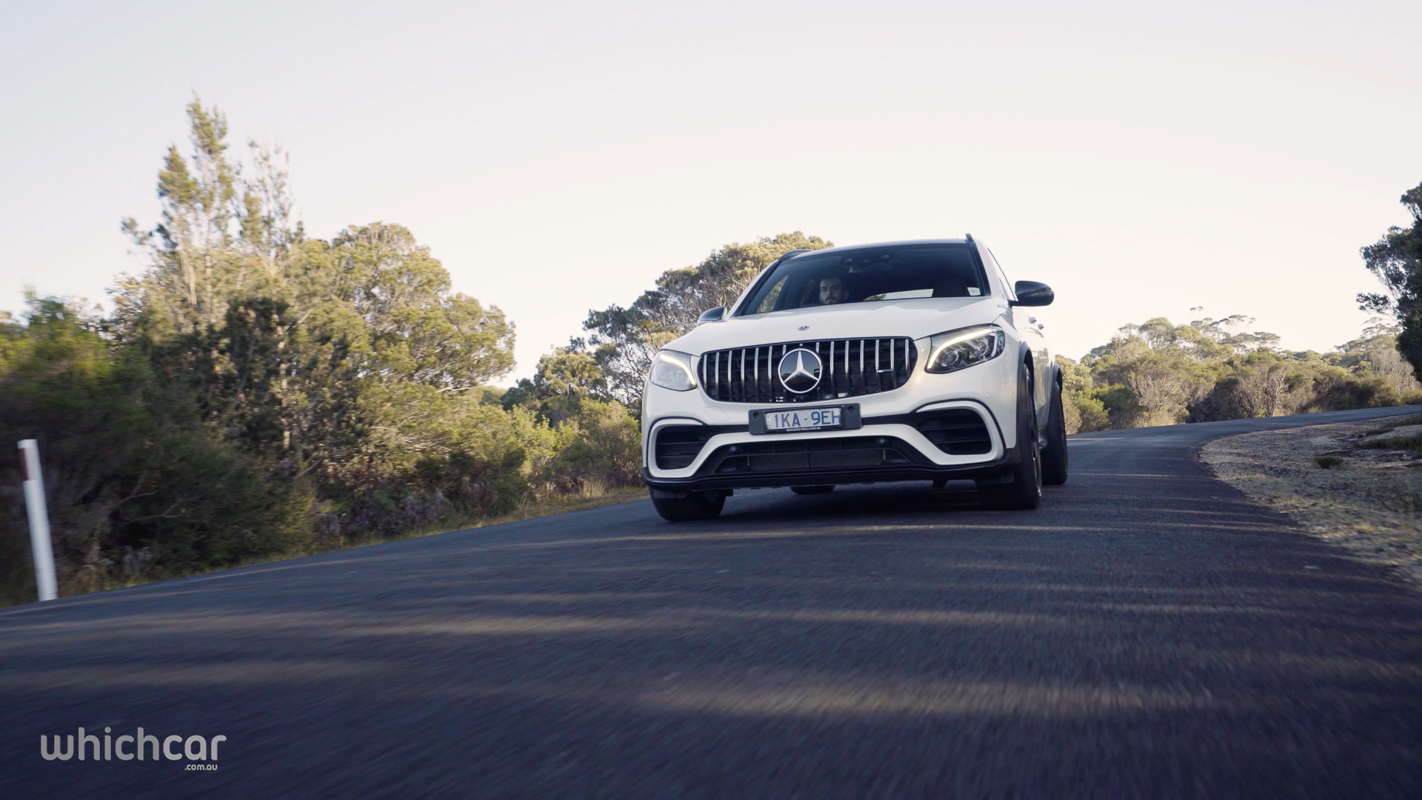
Performance SUVs used to mean dropping a huge engine into an SUV body and straight line speed but today’s age of sports SUVs are purpose-designed to actually provide a rewarding drive experience. We test two of the current crop back to back.
BMW X5M Competition drive review
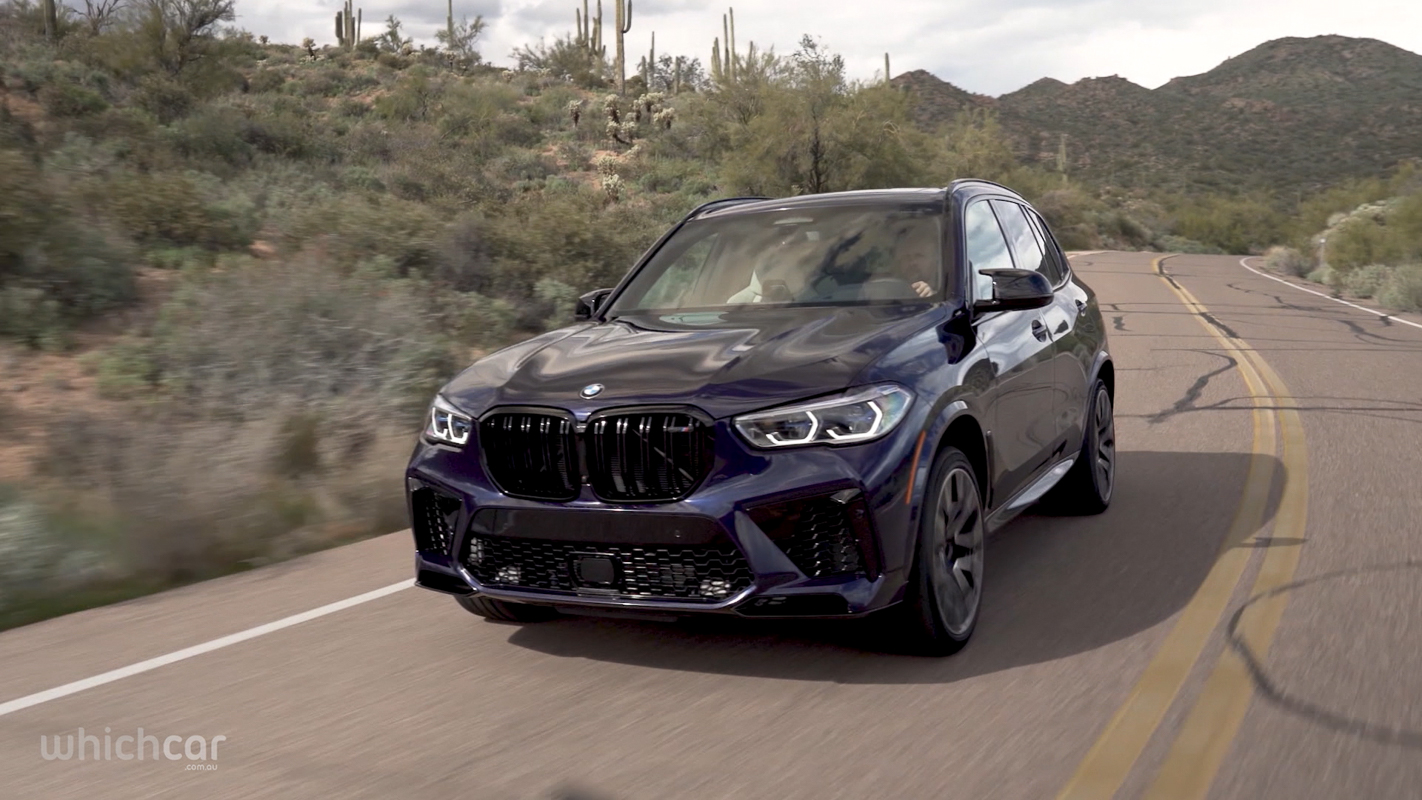
BMW knows its way around a fast SUV, if the latest X5M Competition is any indication.
Electricity or fossil fuel: which is faster in an SUV?
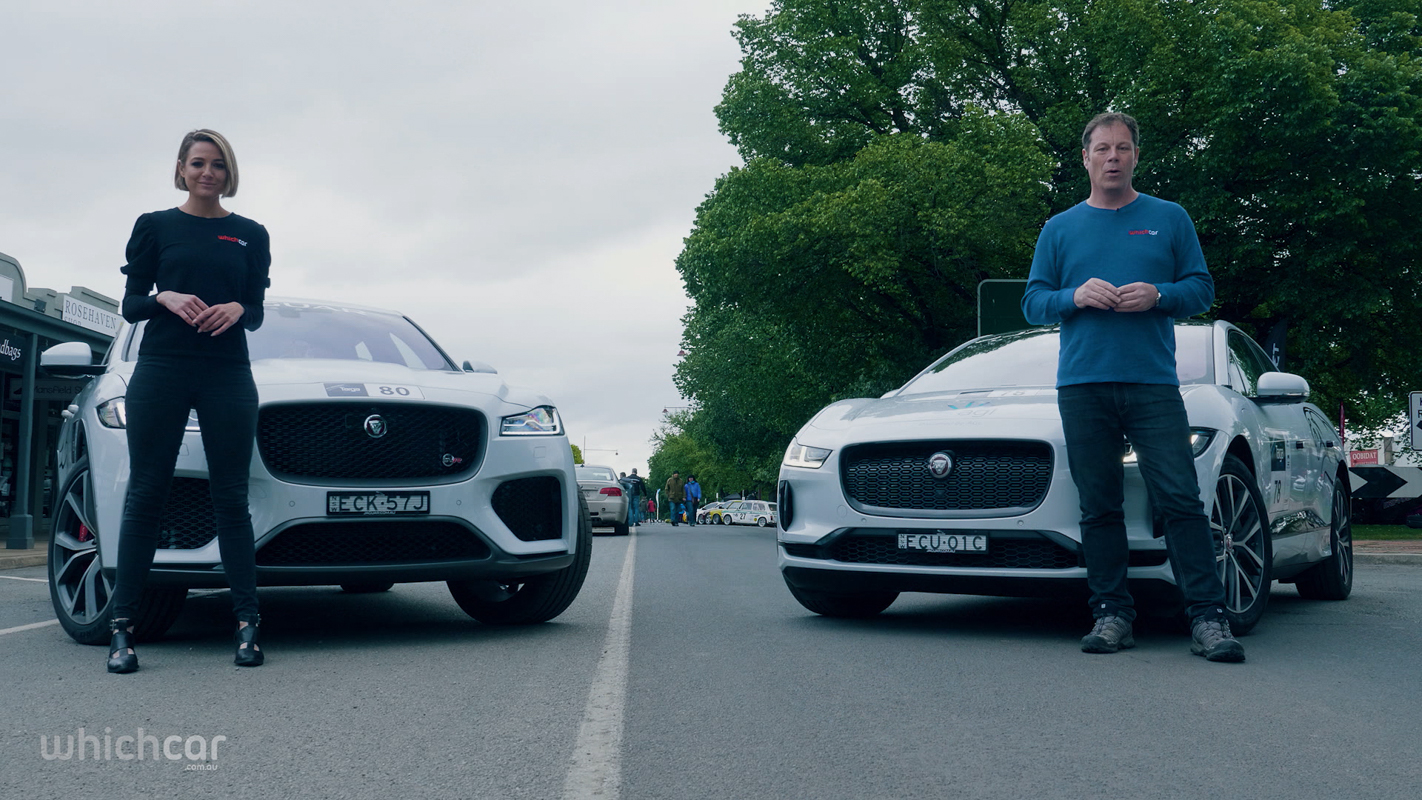
Just as quickly as SUVs have taken hold of the automotive world, so too has electric power. We take two of Jaguar’s finest SUVs to Targa to find out which is best.
522kW in an SUV
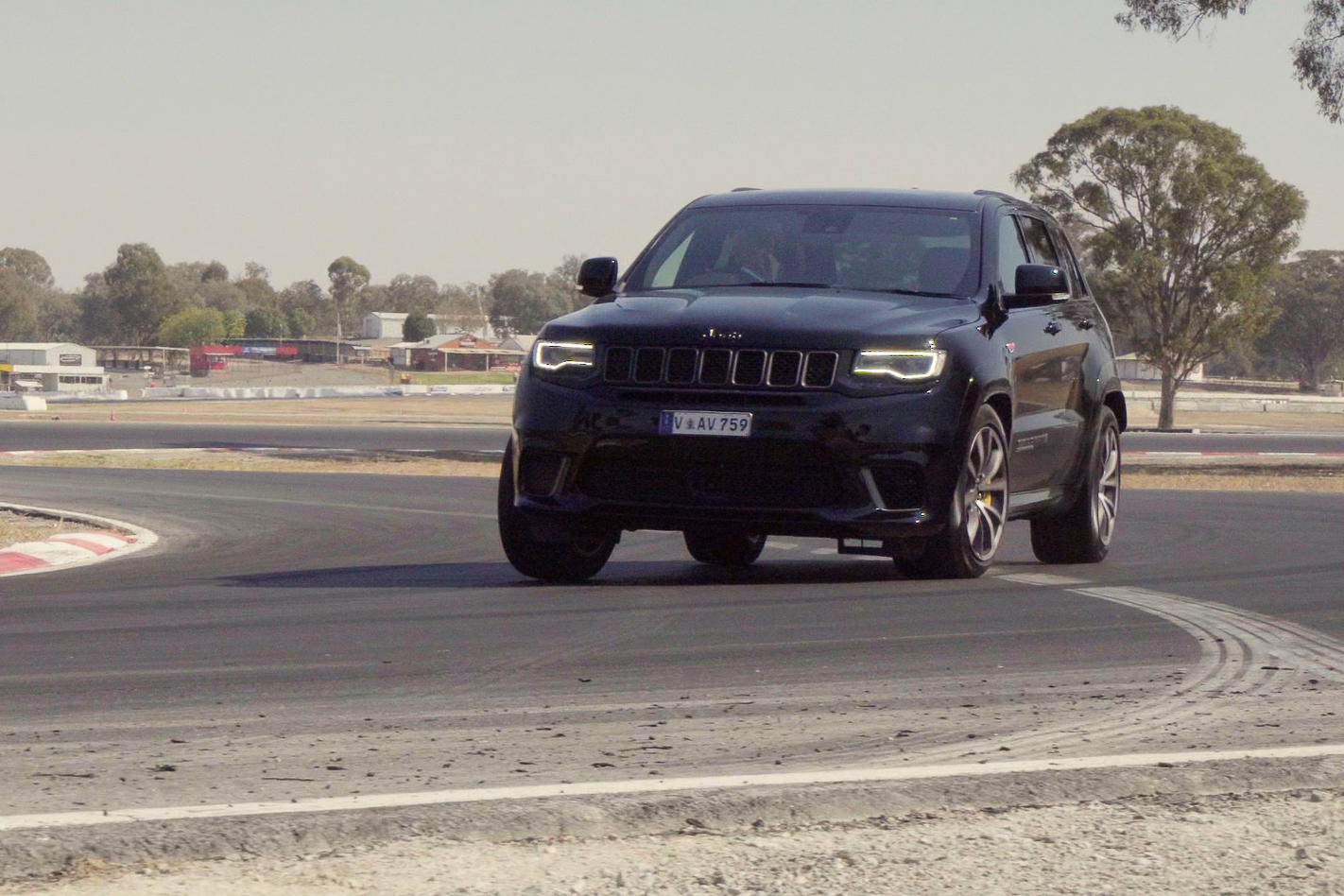
It seems the only place you can unleash the Jeep Grand Cherokee Trackhawk is indeed a racetrack. We find out what it’s really like to wrangle with all that power.
WhichCar TV Season Two Episode 22
3:30pm Sunday July 19, Channel 10
FIND THE HOSTS ON INSTAGRAM
Daniel Gardner @octanedan
Tony O’Kane @tony2000gtx
Tom Fraser @tommyfraser
WIN A TRIP TO THE MALDIVES WITH WHICHCAR
For season two, we’re also offering an amazing prize for our viewers. How does a trip to the Maldives sound? Pretty awesome, right?
The competition is open NOW so make sure you tune into WhichCar TV on Channel Ten at 4pm Sunday AEDT.
And, if for some reason you can’t (and it had better be a good reason!) then there’s a host of ways to catch up on the show, check out behind-the-scenes stuff and find out more about the cars Aussies want to buy.
For example, our weekly podcast, our Facebook page and our YouTube channel are standing by 24/7.
MISSED THE SHOW? Catch up at Ten Play
The stranglehold of ever tightening European Union emissions regulations has claimed another automotive icon with the popular Suzuki Jimny put out to pasture earlier than expected.
With its relatively unsophisticated 1.5-litre naturally aspirated petrol engine, Suzuki‘s loveable 4×4 will bow out of Europe before the end of the year, despite strong sales.
Its axing has been on the table for some time, but that timeline has been brought forward following a new EU ruling that all new cars must emit no more than 95 grams of CO2 per kilometre.
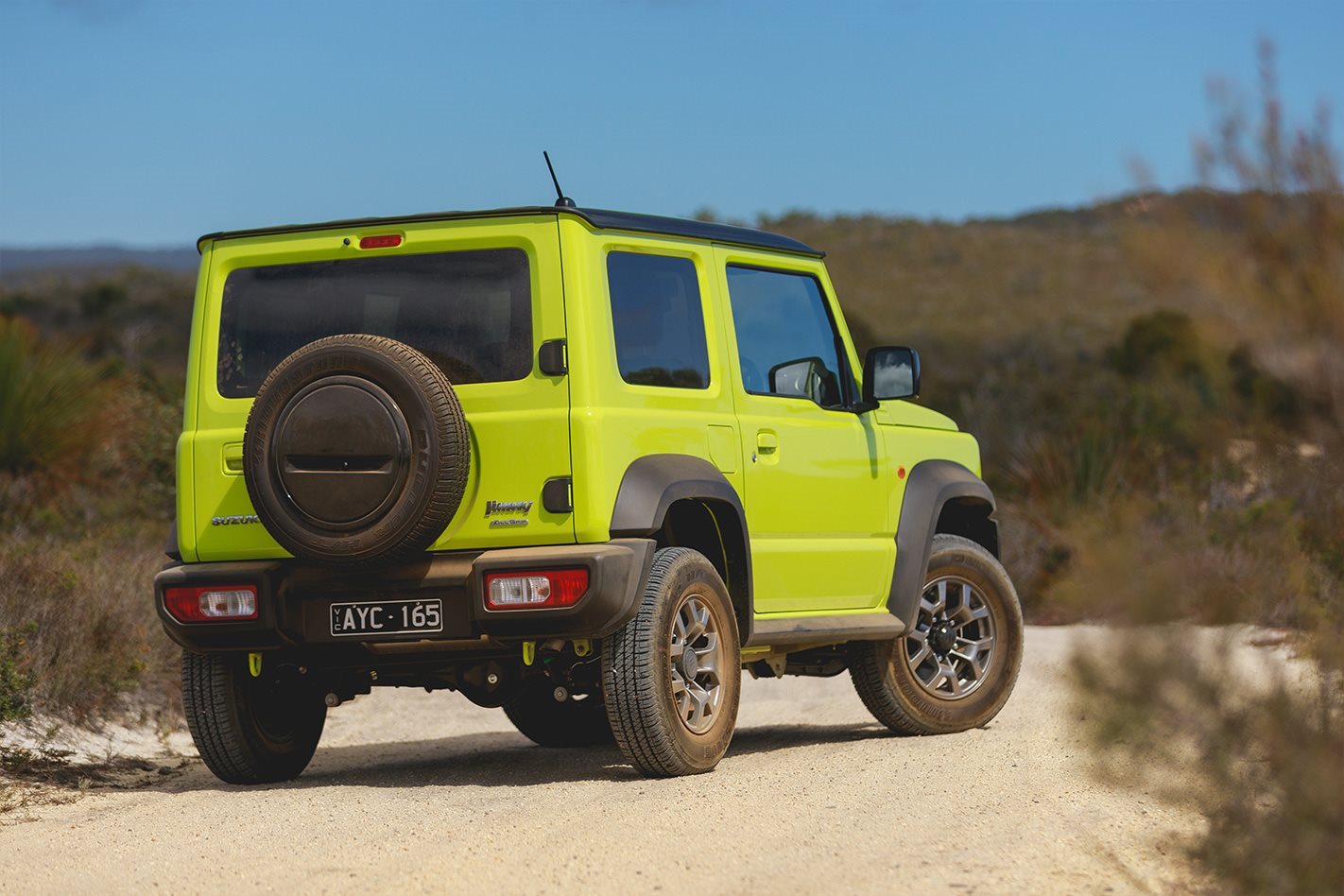
The emissions rules, which came into force this month, are causing headaches for a number of manufacturers selling in Europe, with the Japanese maker of the Jimny the latest to fall afoul of them.
Some exceptions are made for small-volume manufacturers such as Ferrari, which sells relatively few cars in comparison to volume manufacturers, but Suzuki, on the whole, isn’t small enough to save the Jimny.
Counting against the Jimny is its CO2 emissions of just over 150g/km matched to its petite 1135kg heft, which makes it more difficult for it to reach an EU acceptable target.
Despite a growing number of 48-volt mild-hybrid versions of its cars, including the Swift Sport, S-Cross and Vitara, going on sale in Europe (providing valuable credits towards its overall fleet emissions), the diminutive Suzuki doesn’t sell sufficient cars – and had no choice but to remove the Jimny from market.
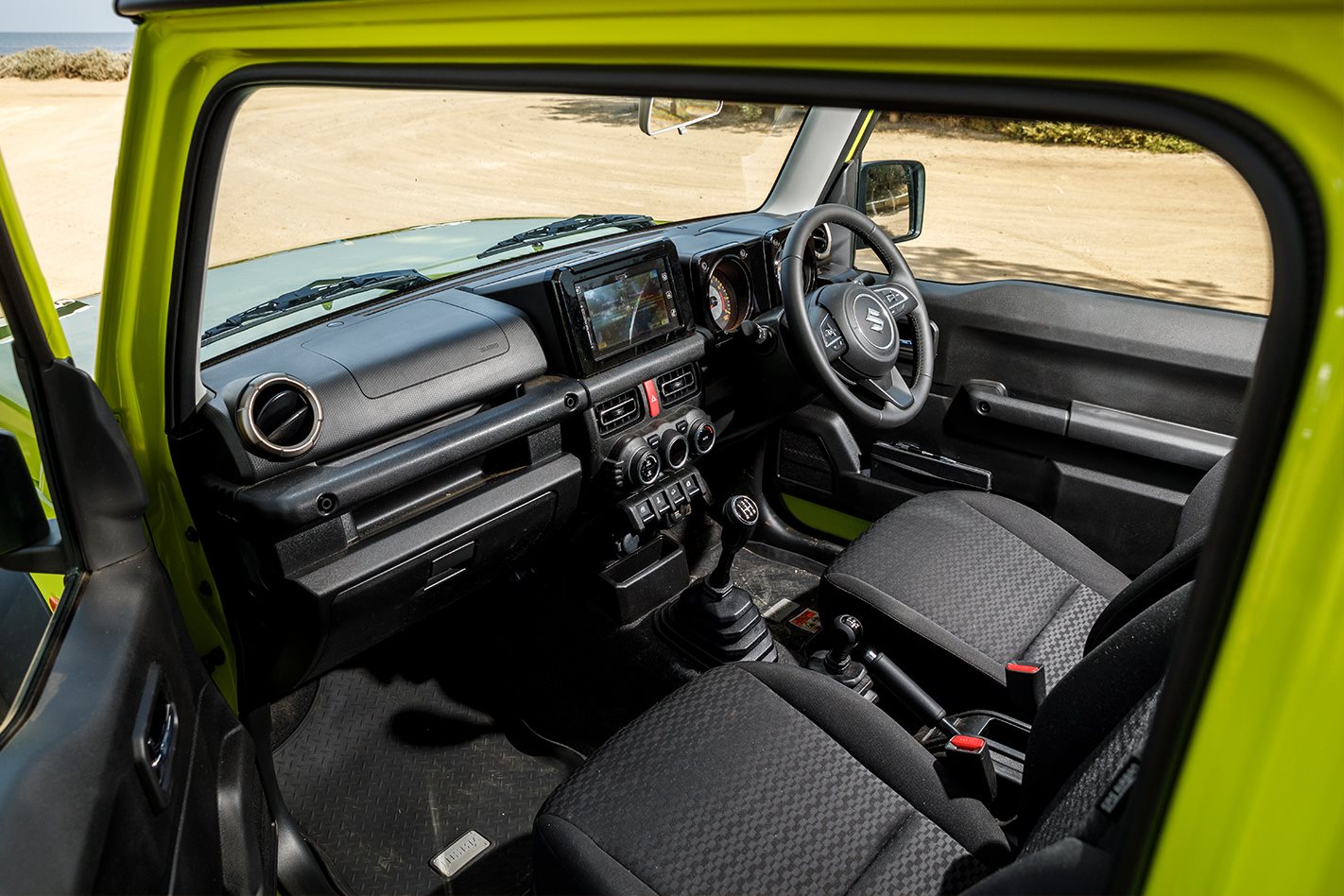
Somewhat ironically, small city cars are also adversely affected by the new rules. Operating on razor-thin profit margins, it’s difficult for a car company to balance the cost of adding hybrid technology to a compact city car while still maintaining an affordable price point.
It’s an unfortunate set of circumstances; Suzuki has enjoyed considerable commercial success for the model both in Europe and the UK, and it’s still a big hit in Australia. Waiting lists for the new Suzuki Jimny can stretch out for months, particularly in the UK where examples are being traded at well over the RRP.
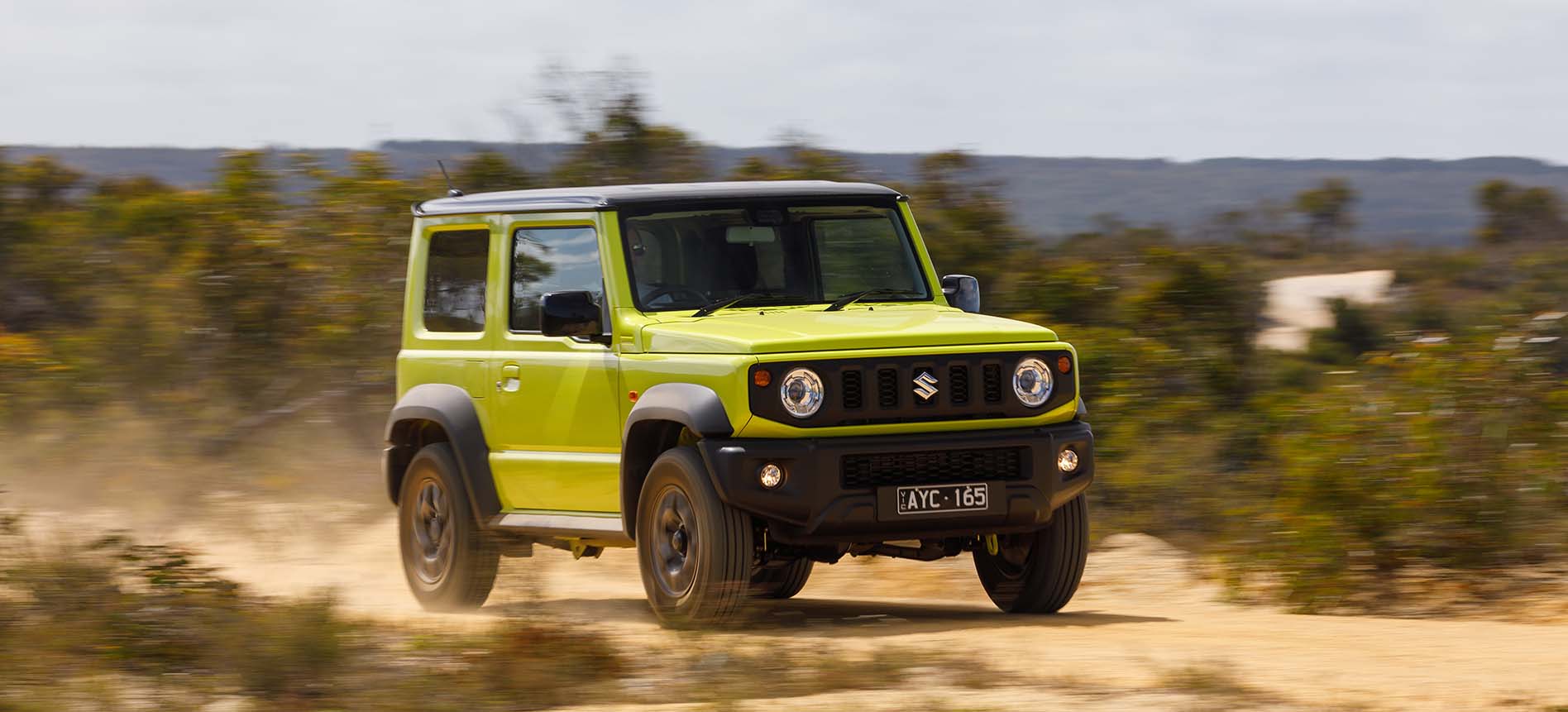
There is a glimmer of hope that the Jimny nameplate may return to Europe once again in commercial ‘N1’ guise, which could theoretically be sold in smaller numbers than its regular passenger-carrying counterpart, but no confirmation has been given.
An N1 Jimny is designed for the agricultural sector, and would likely be sold without a rear seat.
A non-factory ute version of the Jimny is sold in New Zealand.
This does raise an interesting question for other markets which will, no doubt, want to snap up the extra allocation of cars, should Suzuki allow it.
The question of whether we’ll see more build slots open up quicker here has been put to Suzuki Australia and the story will be updated with its response.
UPDATE: We’ve now driven a prototype of the Ariya, see our review at the link below!
The story to here
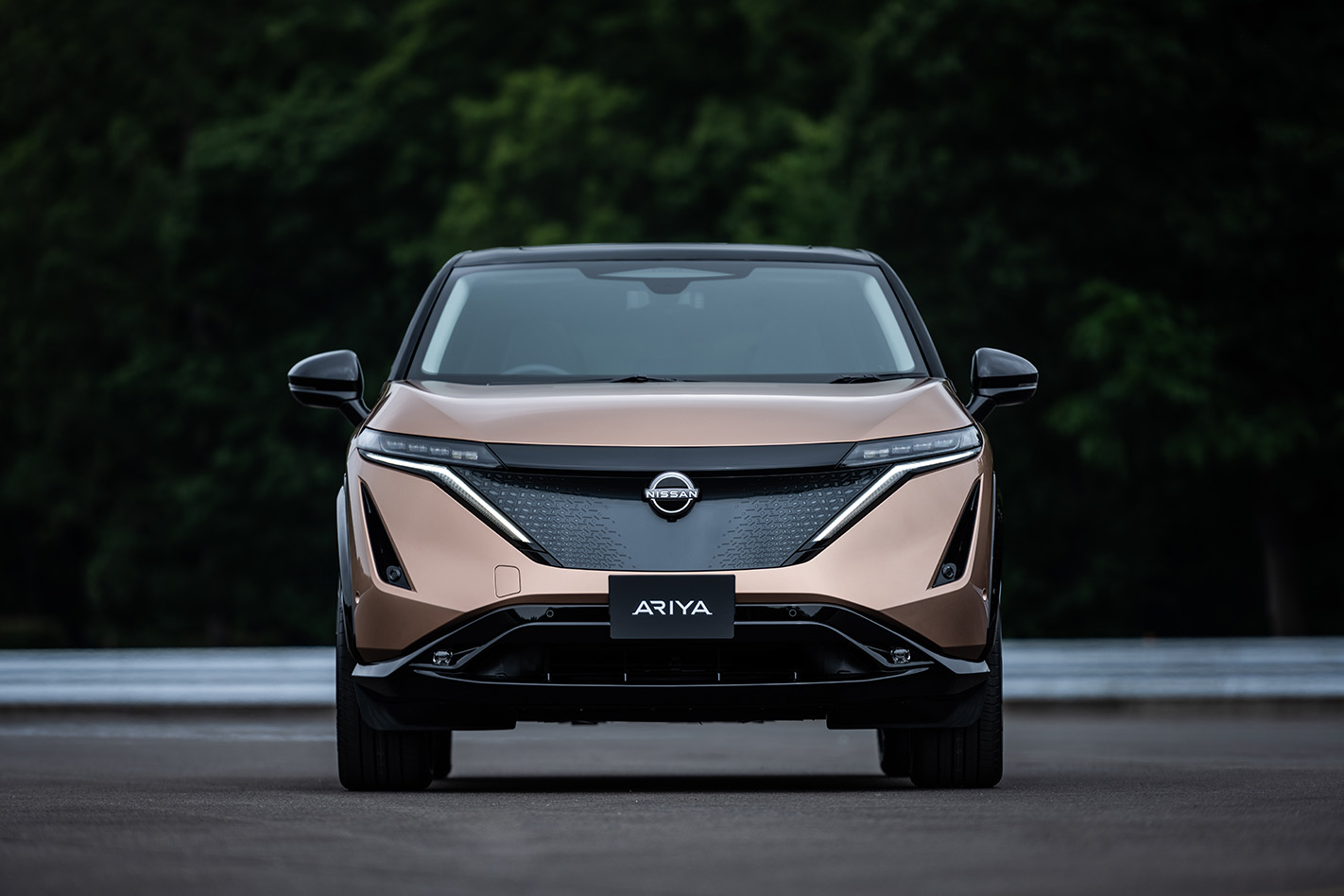
Nissan has ripped the covers off its newest crossover, the Ariya.
Let’s run down some key stats before we get into the nitty gritty. Nissan claims this new family hauler is capable of sending 290kW and 600Nm to all four wheels, thanks to an 87kWh battery and electric motors front and rear.
Anyone with even a passing knowledge of electric cars will understand that means the Ariya can accelerate from a standstill at an impressive rate. Nissan claims its flagship variant can crack 100km/h from a standstill in 5.1 seconds – that’s just one tenth slower than Lexus’s V8-powered LC500 grand tourer.
Both two-wheel-drive (which send power to the front) and all-wheel-drive versions will be available, while there are two different sized batteries available for both.
The smaller of the battery packs is rated at 63kWh, while the larger is the aforementioned 87kWh.
Kicking off the Ariya range is the 63kWh two-wheel-drive variant, with 160kW/300Nm, a 0-100km/h time of 7.5 seconds, and a claimed range of up to 450km pending homologation on Japan’s WLTC testing regime.
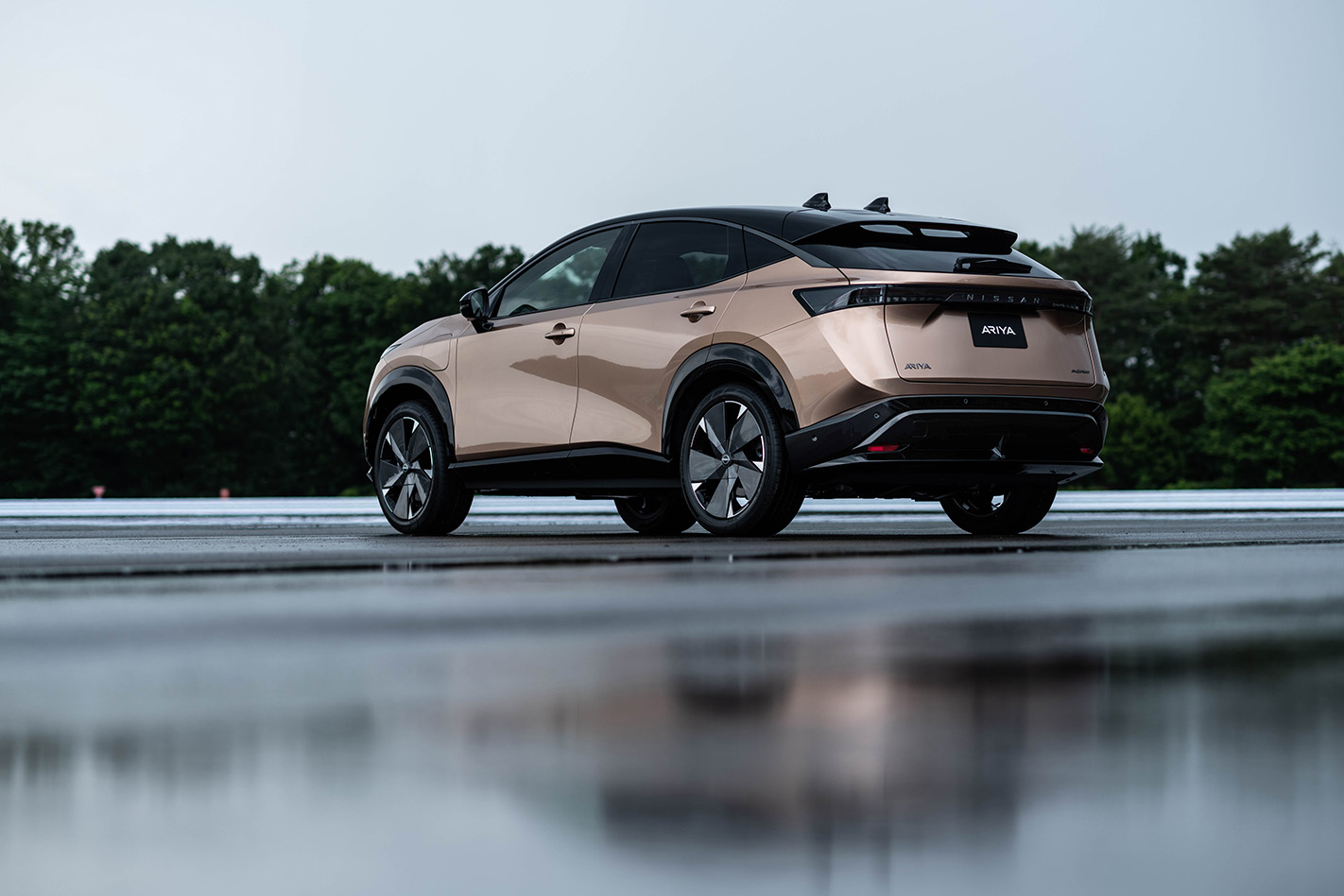
Next is the two-wheel-drive 87kWh variant, with 178kW/300Nm, a 7.6 second claimed sprint to 100km/h, but the longest potential electric range of the group of up to 610km.
The 63kWh all-wheel-drive model has claimed power outputs of 250kW/560Nm, a brisk 5.4 second claimed 0-100km/h time, and range of up to 430km.
Sitting atop the range is the 87kWh all-wheel drive, which along with its impressive power and acceleration, has a claimed WLTC range of up to 580km.
Nissan says the new crossover will weigh in at between 1900-2200kg depending on the variant, with all measuring in at 4595mm long, 1850mm wide, and 1655mm tall. There is 466 litres of cargo space in two-wheel-drive variants, and 408 litres in all-wheel drive.
The Ariya is built atop an all-new Nissan alliance-developed platform, dedicated to EV vehicles, with engineers making the most of the powertrain to stretch the new crossover’s wheelbase to 2775mm.
The climate control systems are located under the bonnet in place of where the internal combustion engine would traditionally be located.
Nissan claims it has achieved a weight distribution of “nearly 50:50”
“We also incorporated high-performance dampers, a sporty multilink suspension and soft motor mounts to really enhance the vehicle’s handling,” Development Chief Product Specialist Makoto Fukuda said.
While EVs are renowned for their swift ability from a standstill, this wasn’t the only priority for Nissan, with Fukuda adding “I don’t consider just being fast in a straight line to be an intelligent use of power.”
“The Ariya is fast in a straight line, but it provides maximum, usable performance in various driving situations, such as on a snowy mountain road or on wet city streets”
Read next:
It’s not all about performance and dynamics though – this is a family car after all. Nissan says it has focused on improving the EV’s range, building a battery thermal control feature it says “constantly optimizes the operating temperature of the liquid-cooled battery”.
Using 130W charging, Nissan says the Ariya can gain 375km of range in 30 minutes.
There’s also the latest version of Nissan’s automated driver assistance system, which is fitted as standard on the 87kWh all-wheel-drive variant. Nissan claims it “offers hands-off single lane highway driving capability”.
The system is made up of seven cameras, five millimeter-wave radars and 12 ultrasonic sonar sensors, and uses a dedicated shark fin antenna for accurate GPS positioning.
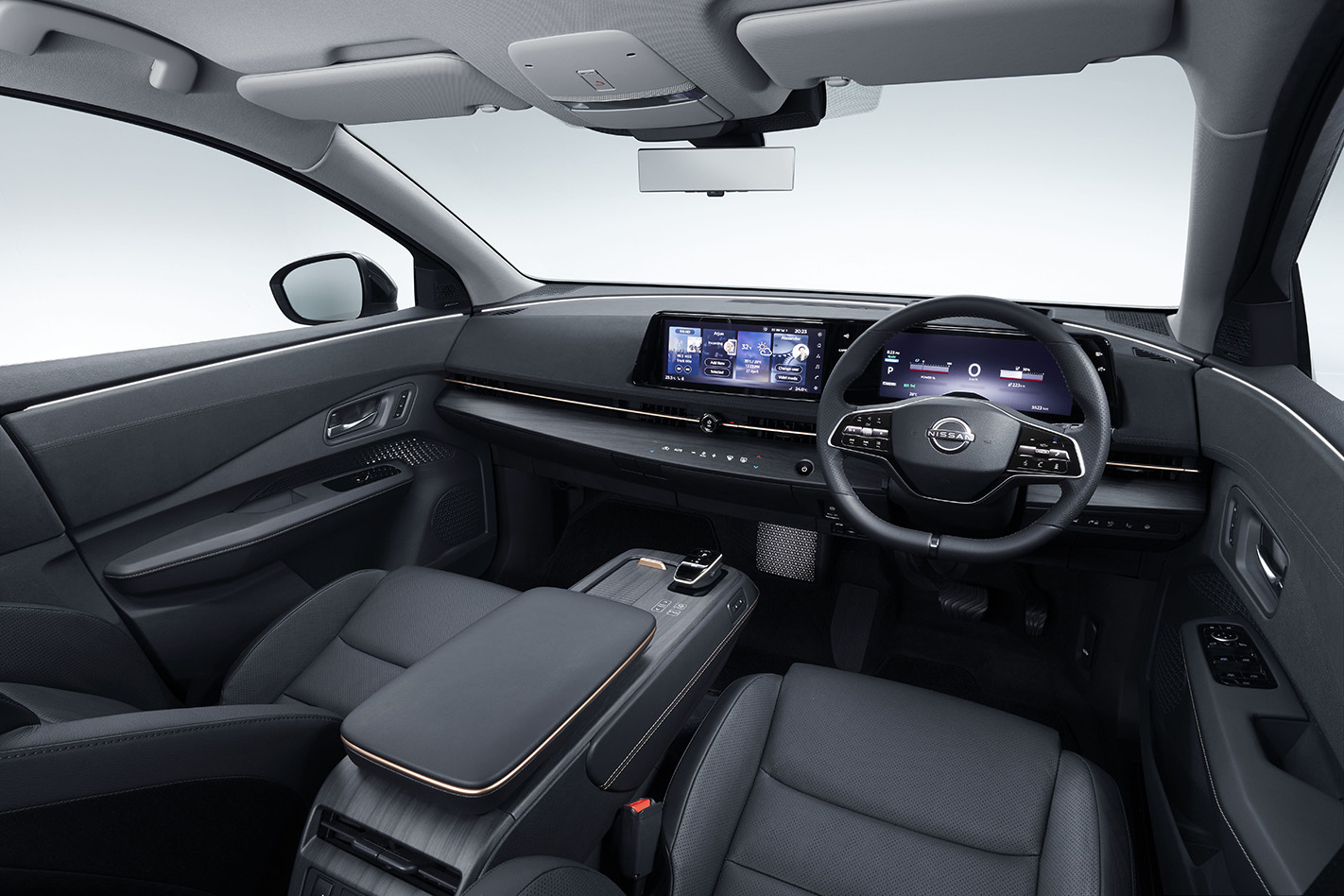
The exterior of the Ariya is suitably futuristic for a fully-electric SUV, moving away from the more pedestrian styling of the Leaf. It’s inside the cabin that things begin to ratchet up a notch.
Nissan describes the interior as being akin to a “sleek cafe lounge on a starship”. While the PR department has clearly been watching too many episodes of The Expanse, the design team has made a considered effort to make the Ariya’s cabin as airy as possible.
Nissan claims the crossover has the “most spacious cabin in its class”, with a dash that is “devoid of buttons and switches”. Climate control functions are operated through haptic switches in the wooden centre dash.
This may be great visually, but we’ll retain judgment until we get hands-on with the car.
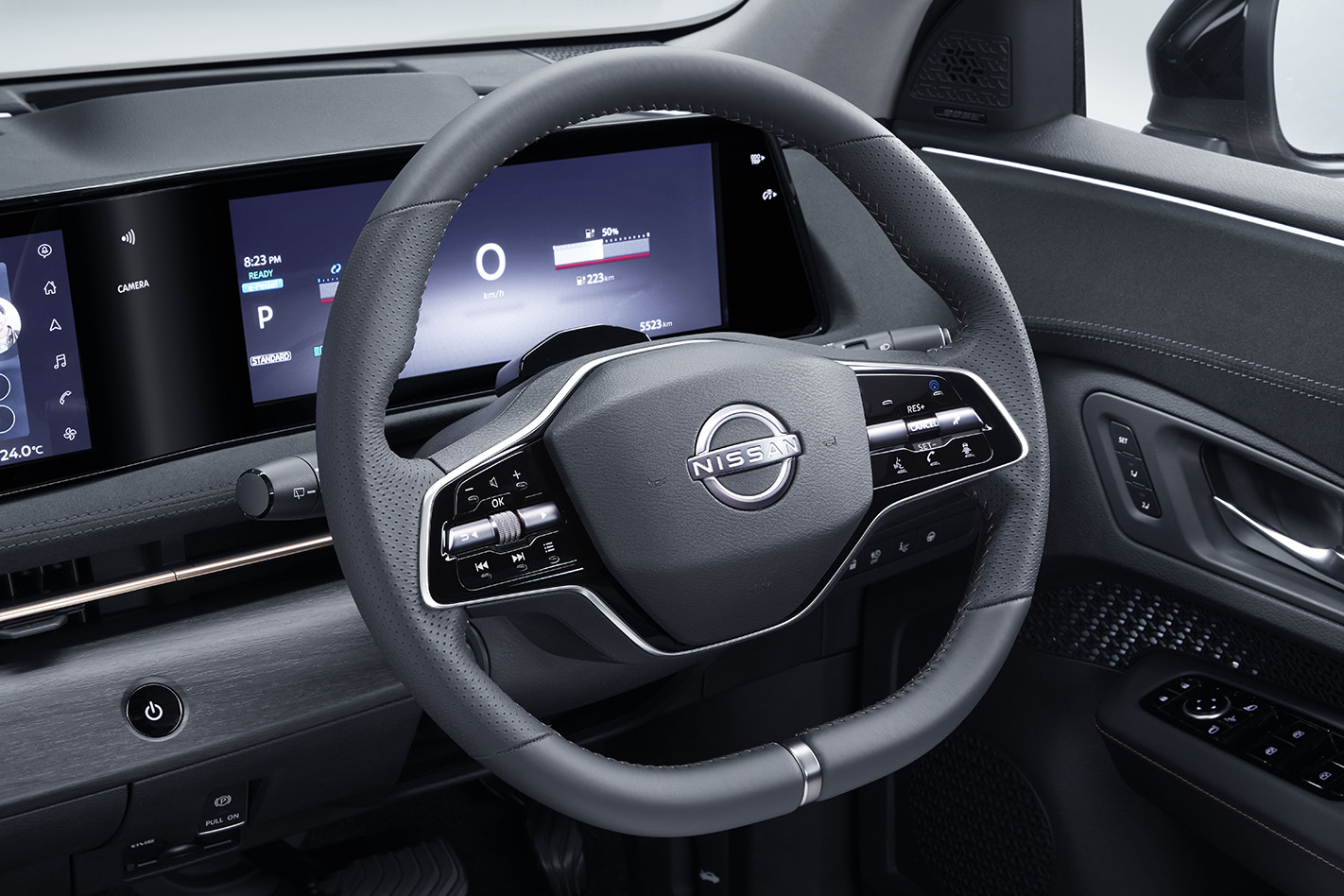
Inside there are also twin 12.3-inch screens that Nissan dubs “the monolith”, providing occupants with all their driving and infotainment information.
There’s even a centre storage box and foldout tray located under the instrument panel that can turn the Ariya’s cabin into a mobile office.
Amazon’s Alexa personal assistant is built into the car’s systems. The voice-activated feature can play music, place calls, listen to audiobooks, and control smart home devices.
This pairs with Nissan’s own “intelligent personal assistance technology” that can help with in-vehicle features.
Much like Mercedes-Benz’s MBUX system, the in-car assistant can be activated by saying “Hey Nissan”, and then make a verbal request.
The Ariya is expected to begin deliveries in its native Japan from mid-2021 with an estimated starting price of roughly ¥5 million (A$67,040). Sales in Europe, North America and China are expected by the end of 2021.
Scammers are running rife in Australia at the moment.We’ve only just passed the halfway mark in the year but the number of scams, and amount of money scammed, is on-track to eclipse 2019’s record well before year’s end.
(Case in point, even while writing this advice story we received a call from a scammer pretending to be the Department of Home Affairs!)
You might think that scams disproportionately affect older generations but Australian Competition and Consumer Commission (ACCC) statistics show that ages between 25 and 55 are being hit the hardest.
With more time on their hands during coronavirus lockdowns, scammers are putting in a more believable effort in an attempt to fleece you out of your hard earned money.
While most scams are generated through emails, the internet is the second biggest honeypot and classifieds (like when buying or selling a car) remain one of the most dangerous places to get scammed.
Here are some scenarios that you should look out for when buying or selling a car online.

Buying cars sight unseen
You already know that this is fraught with danger but it’s worth understanding why. Big purchases require due diligence, and if you’re unprepared to go and investigate the car you could be in for trouble. After initially arranging an amicable deal the the seller could quickly change tacts and take the money and run – should they feel like it.
You should only pay money for a car that you can verify is registered to the seller and have ensured that it is what it claims to be. We understand that sometimes rare cars in remote locations can only be acquired this way but if you get caught out and end up being scammed, you really have little recourse available.
Unrealistic price, suspiciously low price
You should know that low prices are meant to attract attention, and it’s this aspect that scammers aim to exploit when they price a car lower than the rest of the market.
Try and ascertain why the car is priced lower than the rest of the market by checking the kilometres, condition and service history. If none of those checks are out of the ordinary and the car is still unrealistically cheap for some reason, it’s probably a scam in which the car might not even exist!
Meeting in a public space
Sellers that insist on meeting in a place away from their home could be hiding their address for a reason. It’s a customary given that when buying or selling something privately you can expect to visit the seller’s house. It makes it easier for them so if they suggest meeting elsewhere you should proceed with caution.
The car might be stolen, the seller mightn’t want you coming back to seek recourse at their address when you realise something is wrong with the car, or worst case – your personal safety is at risk if they plain and simply try and rob you.
Unconventional payment methods
The best kind of payment methods for buying a car are bank cheques, bank transfer and cash. If a seller tries to get you to pay for a car via money order, Bitcoin, pre-loaded credit cards or wire transfer you should immediately be cautious that they’ll take the money and run away with the car.
For more information about how to pay for a car privately see this explainer here.
Quick sale
Oftentimes private car sellers are keen to move on their car as quickly as possible, but if you suspect a seller is rushing the process then you have to ask why.

This might be because the seller wants you to overlook a dodgy aspect of their car or mention that they have to travel overseas and need to sell in a hurry. This can lead to a scam in which the seller can ask for the money and say they’ll organise the car to be delivered, yet it never shows up.
Overpayment scam
This is one where the sellers have to be wary, and in relation to the sight-unseen situation. The buyer may send a cheque for more than is necessary for a car and then request that you refund them the difference. From there, you discover that the cheque has bounced and you’ve just sent the balance of difference to them.
Always ask for a bank cheque that ensures the money is actually in the account it’s being drawn from.
At the end of the day, the safest way to do business is by checking and checking again and inspecting the item yourself prior to arranging a deal. A car is a big purchase to make so always ensure you do your homework and arrive at a fair and reasonable price for both parties, exchanged in a safe and smart manner.
Facing off against the Porsche 911 has rarely been a productive use of car manufacturer resources.
In fact, most rival car makers have looked at Porsche’s flagship and come to an uneasy accommodation, namely that they’re clever enough to avoid tackling it head-on, but not so smart that they’ve figured out how to build a better sports car themselves.
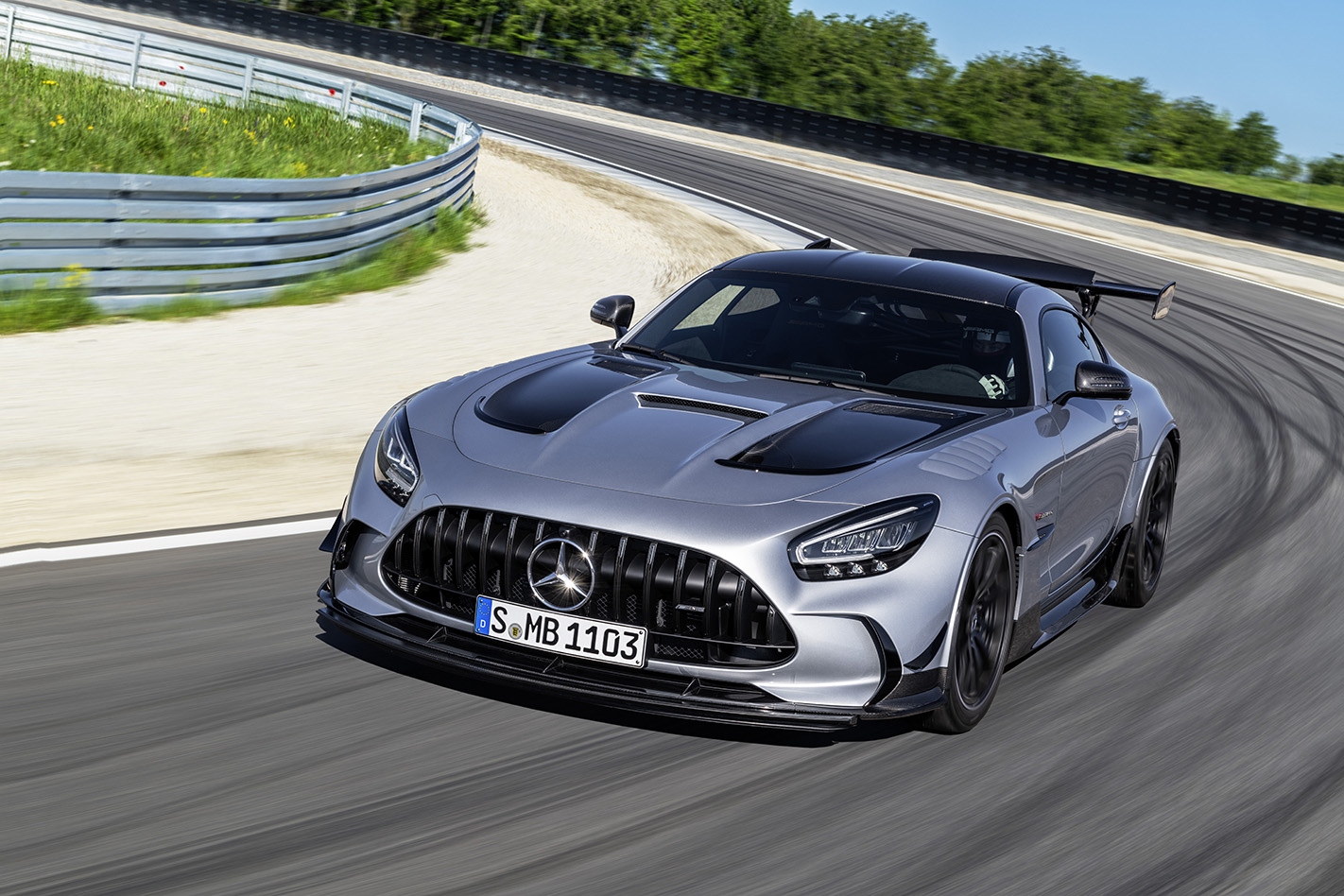
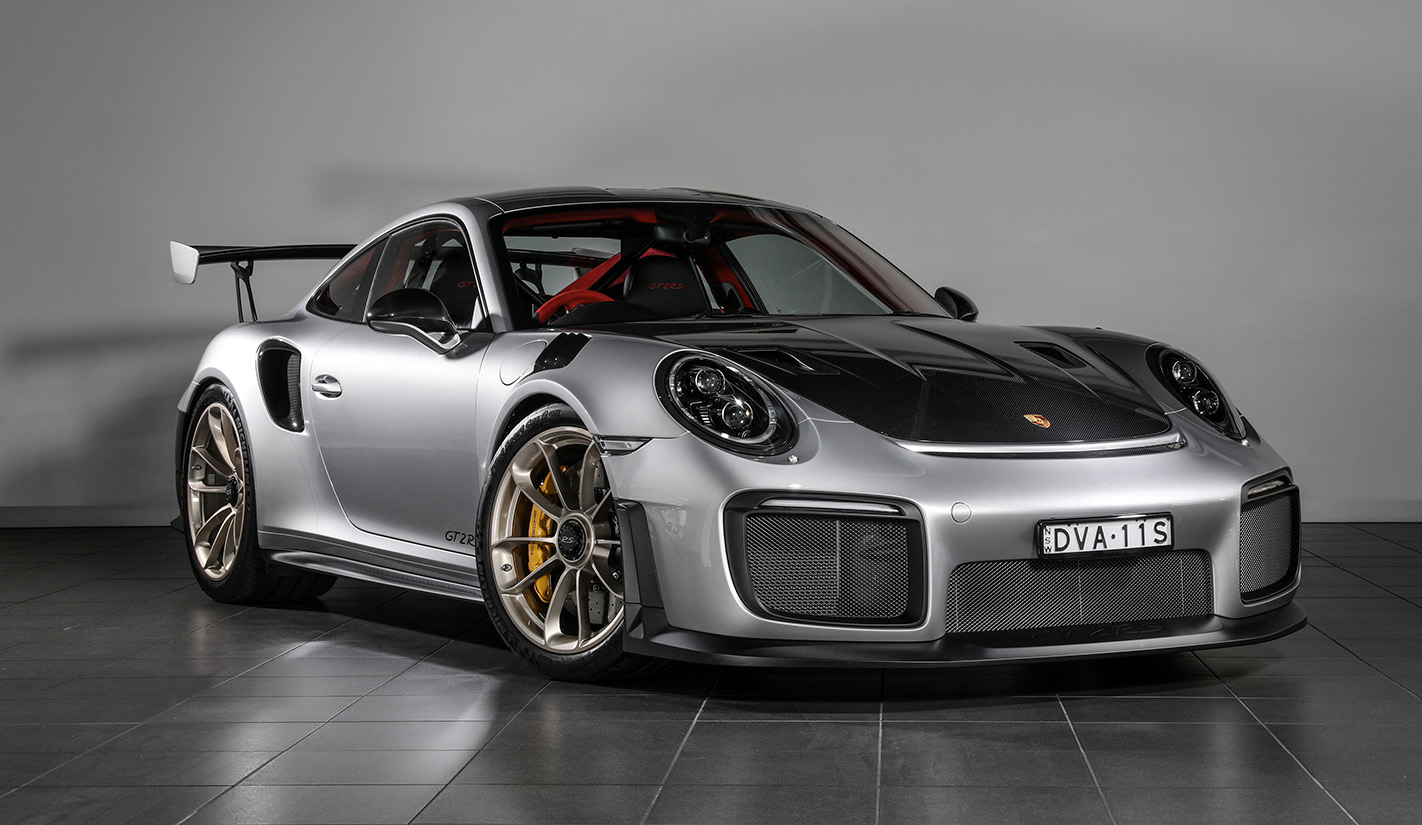
Therefore, it comes as quite some surprise to discover that Mercedes-AMG have painted a big roundel on the back of the Porsche 911 GT2 RS and taken aim.
Its new GT Black Series is, like Porsche’s powerhouse, a lighter, stiffer, angrier proposition than the rest of the range, so let’s see how it squares up in a few vital areas.
NURBURGRING LAP TIME
The Porsche 911 GT2 RS has form here. It scorched to an almost unbelievable lap of 6:47.3 in 2017 with Lars Kern at the wheel, before the same driver lowered that mark with a 6:40.3 time in the factory-sanctioned GT2 RS MR model. That time is a mere second off what then-F1 world champion Keke Rosberg achieved in a factory 956 during qualifying for the 1983 Nurburgring 1000km.
That’s a jaw-dropping time for a car wearing number plates and fitted with airbags and road-legal tyres.
By contrast, we’ve heard strictly unofficial whispers that the GT Black Series has logged a 6:58 lap of the Green Hell, which is 6.6 seconds quicker than the AMG GT R Pro model, but still a little off the Porsche’s demented pace.
Again, we’d reiterate that this isn’t an official AMG time and that Affalterbach might well be considering another crack in better conditions.
Verdict: Porsche, until we hear otherwise
DRIVETRAIN
The most powerful road-going Porsche was fitted with a 3.8-litre twin-turbocharged flat-six capable of 515kW at 7000rpm and 750Nm anywhere between 2200 and 4500rpm. That’s a specific power figure of 135.5kW per litre.
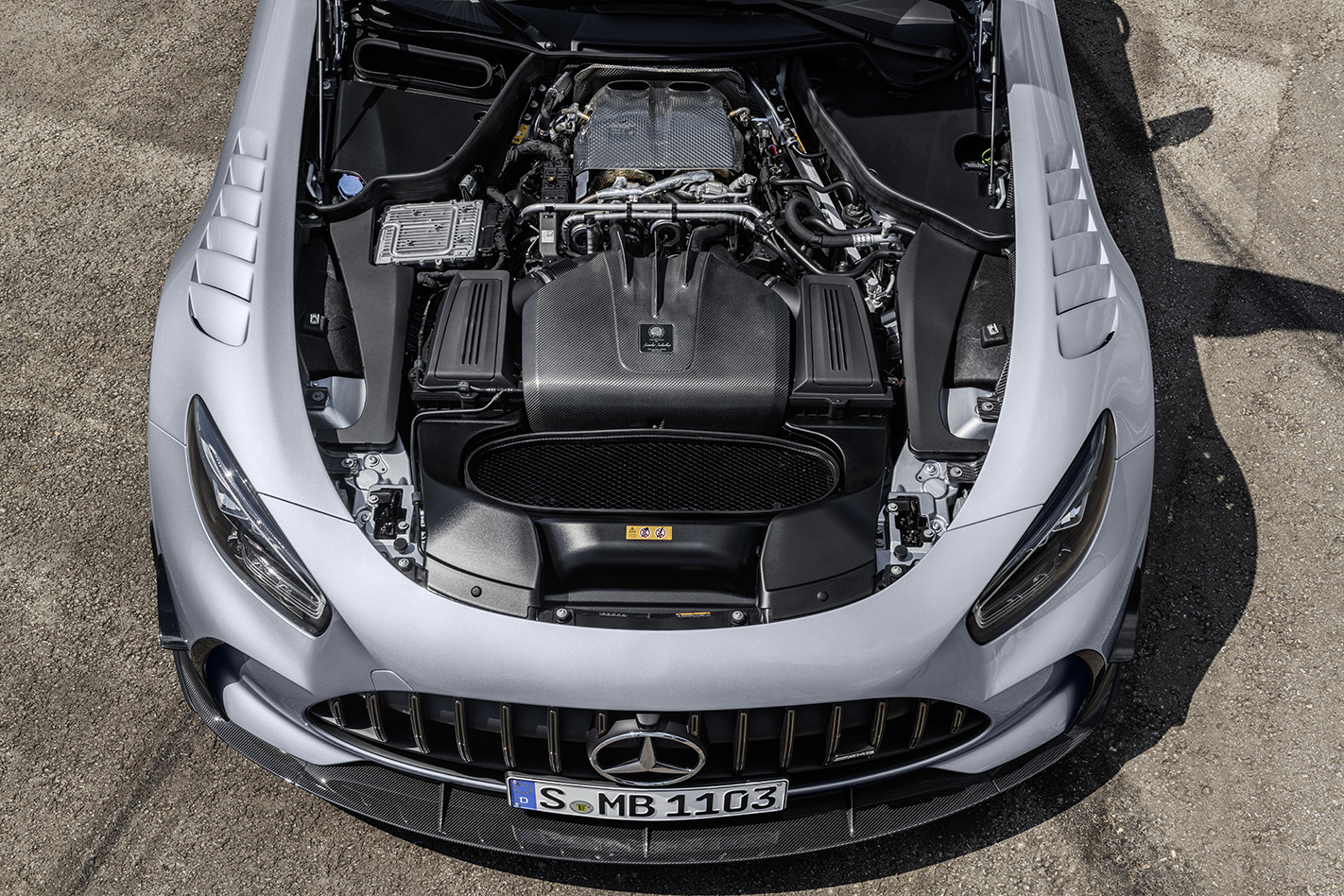
By contrast, the heavily revised flat-plane V8 of the GT Black Series ladles out a massive 537kW between 6700 and 6900rpm and peak torque of 800Nm in a broad swathe between 2000 and 6000rpm. Specific power? A near-identical 134.9kW/litre.
Both deploy torque to the rear treads via a dual-clutch seven-speed transmission, so there’s not going to be a lot of variation there, the AMG using a 13.9kg carbon fibre torque tube. The Porsche doesn’t need one of these for obvious reasons.
Verdict: AMG by a nose
STRAIGHT LINE SPEED
AMG is quoting a 0-100km/h time of 3.2 seconds and a top end of 325km/h, and also states that the GT Black Series will accelerate to 200km/h in less than nine seconds.
That’s an extremely quick car. Weighing 1540kg, the Black emerges with a power-to-weight ratio of 348.7kW/tonne.
We’re fairly certain that a front-engine car won’t get the drop on a GT2 RS out of the blocks though.
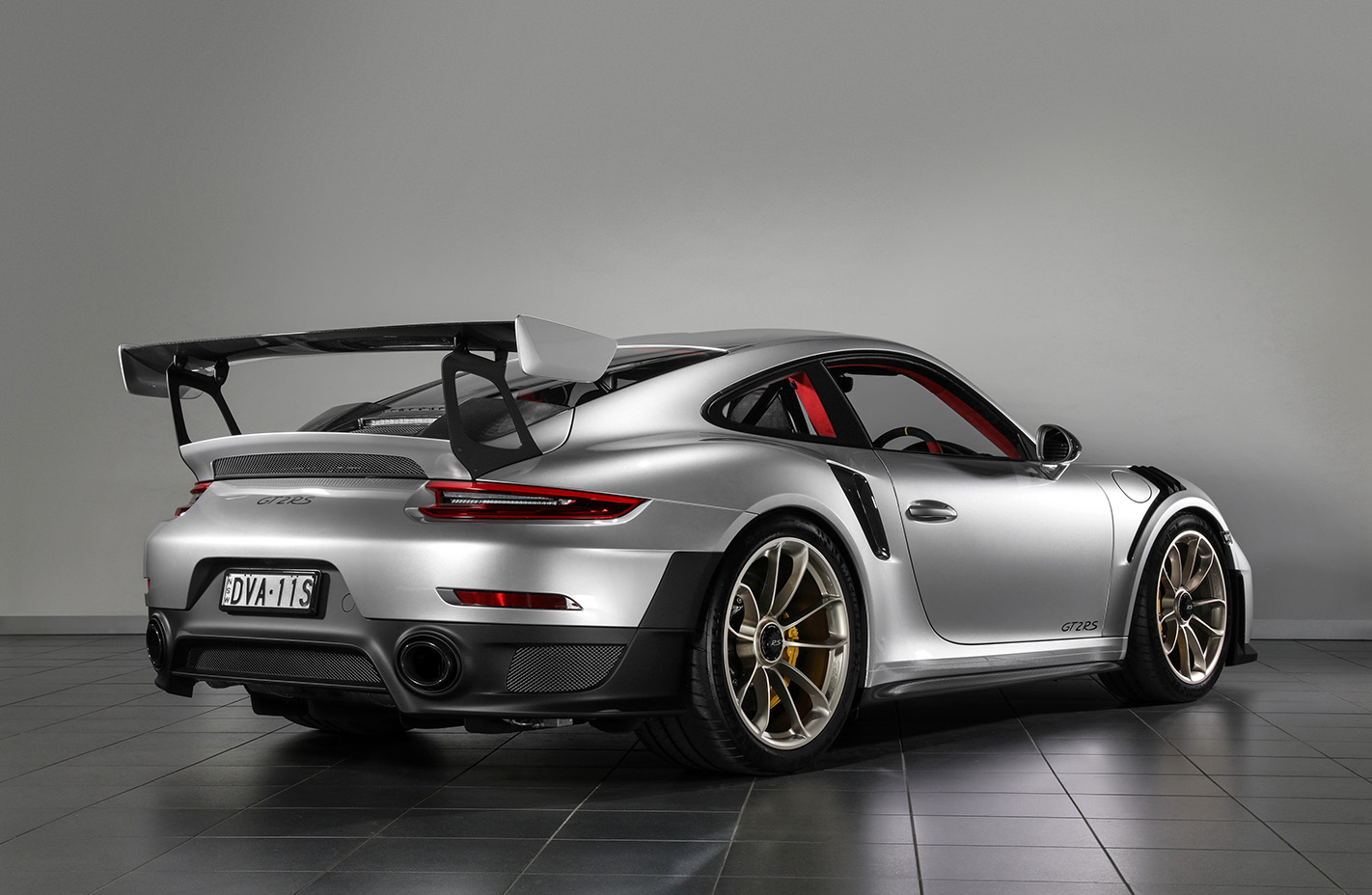
The Widowmaker logs a 2.8 second time to 100km/h and 8.3 seconds to 200km/h, with a top speed of 340km/h.
The 911 GT2 RS tips the scales at 1470kg, which sees AMG’s power advantage cancelled out and Porsche realising a small advantage here with 350.3kW/tonne.
Verdict: Porsche victory
AERO PACKAGE
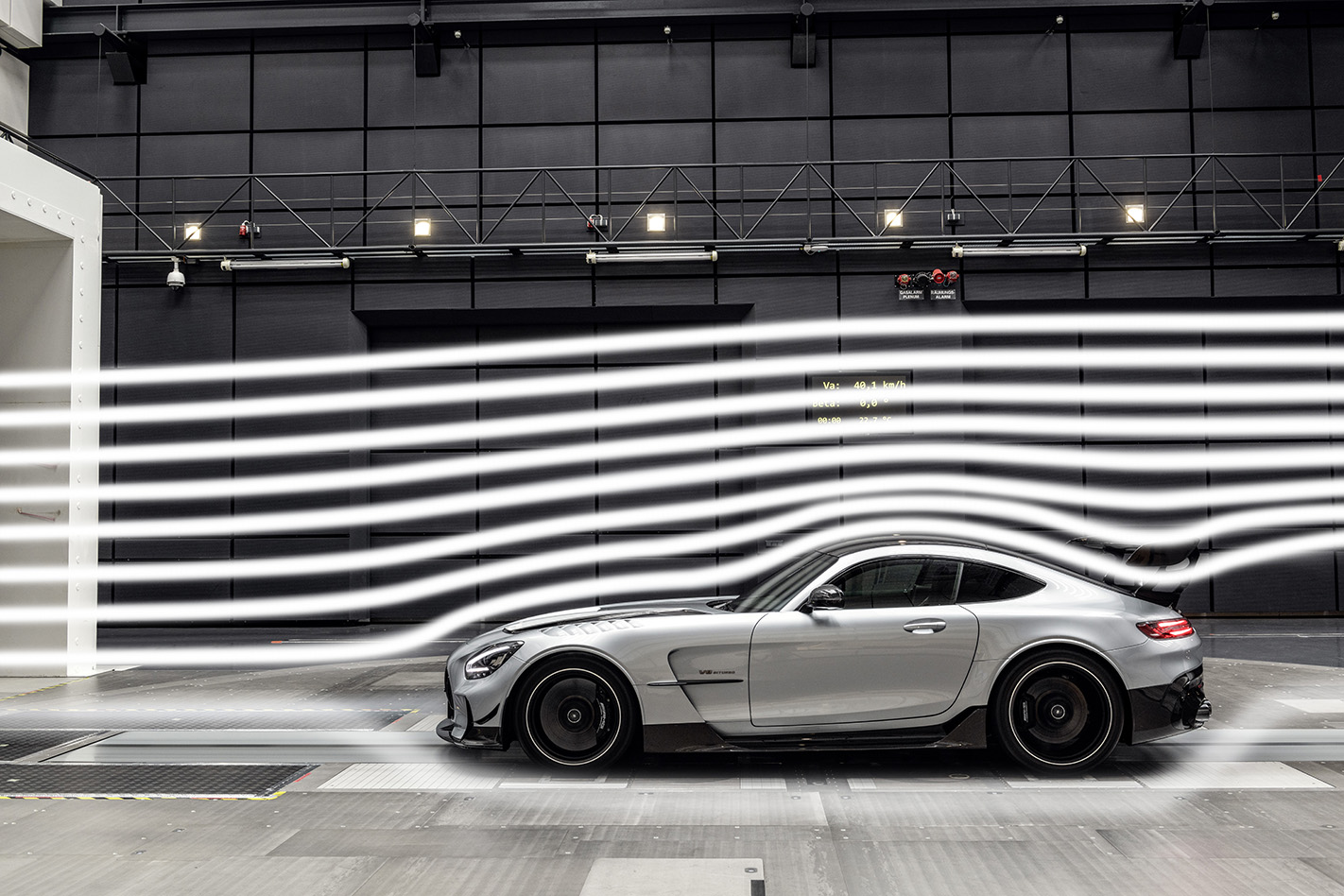
AMG has clearly channelled a lot of its GT3 and GT4 racing experience into the aerodynamics of the GT Black Series.
Its most obvious feature is the vast rear wing. This features an active element which can either be manually controlled via a switch on the dash or left to its own devices to act according to which of the Basic, Advanced, Pro or Master drive modes the car is set into.
At speeds of over 250km/h this wing flap retracts, but will pop back up to add stability under hard braking or steering.
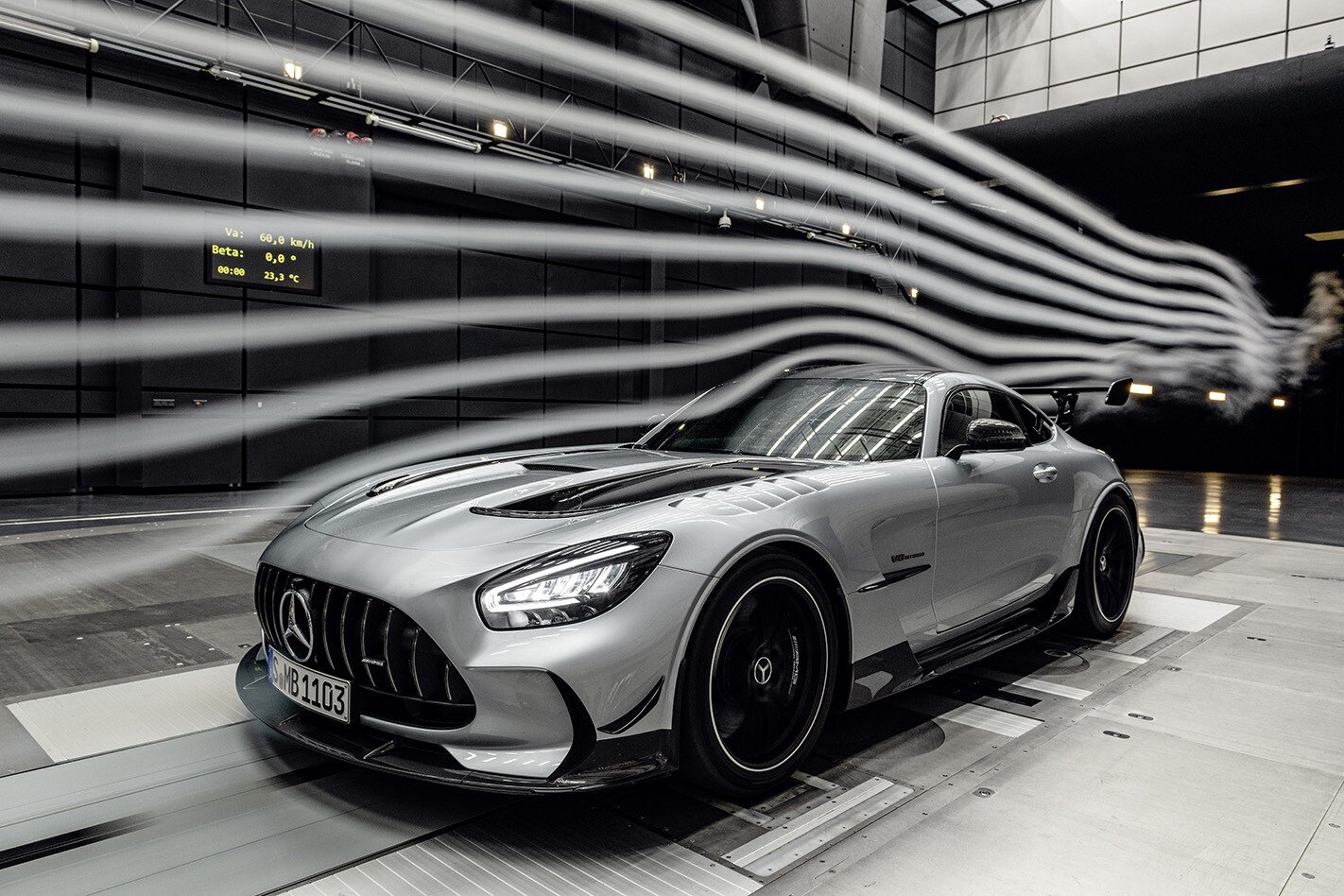
The underbody of the AMG is also virtually flat, with longitudinal fins guiding air to a functional rear diffuser. AMG claims a downforce level of well over 400kg at 250km/h. The grille has been modified with the central inlet now ducting air to the engine and the brakes. Where the outer inlets were, there are now guiding flics to increase frontal downforce.
Like the AMG, the Porsche also employs a carbon roof to lower its centre of gravity, but this is part of the optional Weissach package. The intakes in the Porsche bonnet channel air to the brakes while the vents in the AMG’s bonnet suck hot air out over the exhaust manifold.
The GT2 RS generates 340kg of downforce at full 340km/h speed, so the AMG is generating more aerodynamic downforce at a lower speed. Clearly this doesn’t come for free, and the combination of a lower top speed and higher torque and power figures suggest the GT Black Series is a draggier car.
Verdict: AMG wins the downforce battle
TYRE AND SUSPENSION
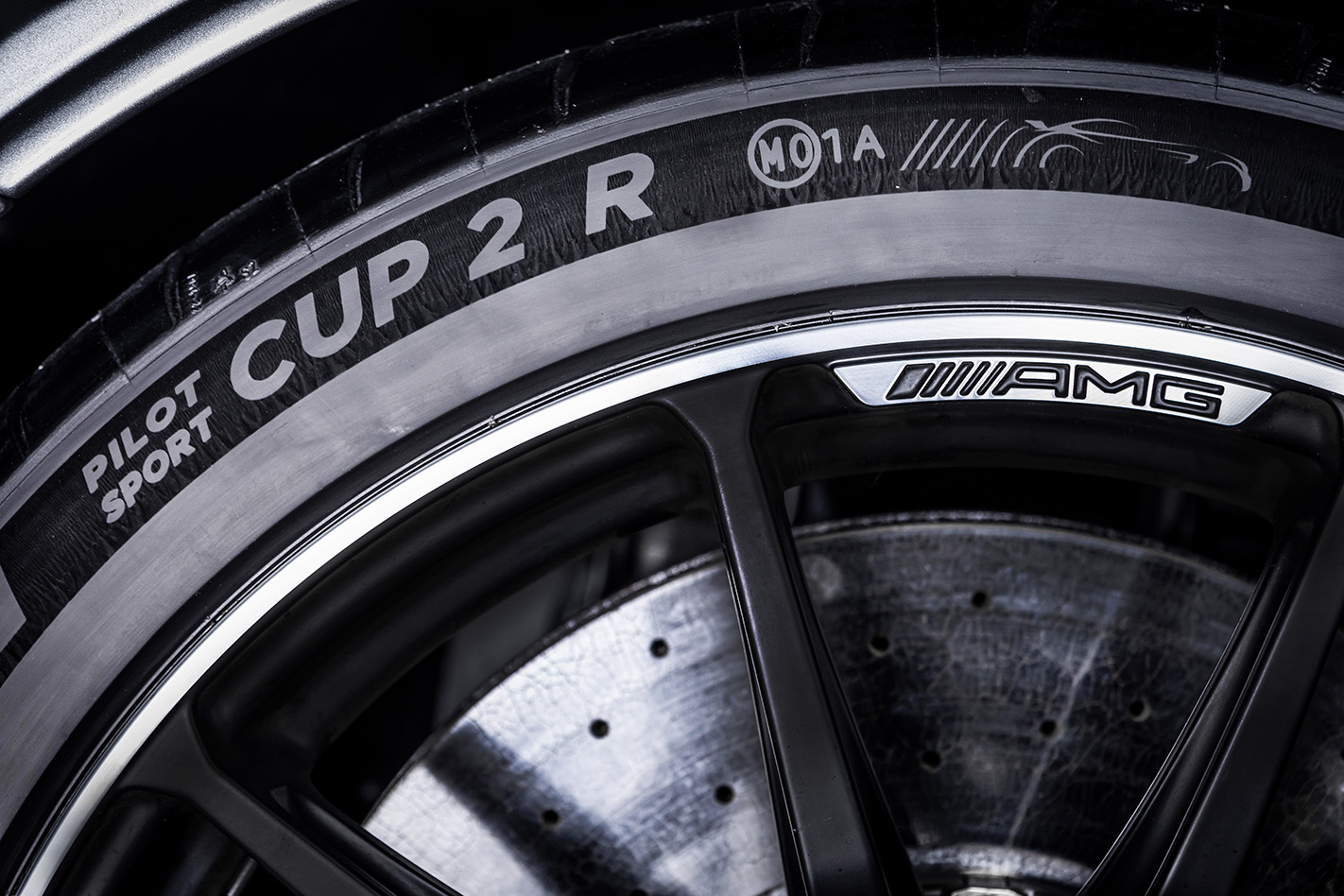
As in F1, GT Black Series drivers get a choice of tyre compounds. The Michelin Pilot Sport Cup 2 R MO tyre is available in soft (M01A compound) or an optional hard (wearing an M02 designation) better suited for high temperature track use. The front tyres are 285/35 ZR19 with the rears measuring a massive 335/30 ZR20.
Go Porsche and the rubber measures 265/35 ZR20 up front and 325/30 ZR21, so a different strategy: slightly narrower tyres on wheels that are an inch bigger front and rear.
We like the Michelin Pilot Sport Cup 2 tyres on the 911, but some swear by the Goodyear Eagle F1 Supersport RS rubber that Porsche also supplies in some markets. Both cars reduce unsprung weight with carbon ceramic stoppers.
The Porsche’s strut front suspension and multilink rear contrasts with the double A-arms all round with adaptive dampers on the GT.
The AMG also features a carbon front anti-roll bar, manually adjustable camber on both front and rear axles and no-play spherical bearings on the upper and lower wishbones of the rear axle.
Which is more effective in the real world? That’s going to take a full road test to discover.
Verdict: Jury’s still out here
CONCLUSION
Be very aware of the fact that any car that is capable of running a full lap of the ‘Ring in less than seven minutes is likely to be way more car than you or I are capable of exploiting to the full.
What laypeople will be able to appreciate is that the Porsche will be marginally more savage away from a standing start or that the Mercedes is generating considerably more downforce to stick it to the road or track surface.
Which wins? Well, of our five categories, it’s two wins each and a draw for the other, so we’re not able to split the two cars just yet.
Timing may well render this one moot in any case. By the time the AMG GT Black Series arrives in our hands, the 991 generation of GT2 RS will have been sold out.
So, in that regard at the very least, it’ll be a victory by default for Affalterbach but given the development budget ploughed into the Black Series, we don’t think they’d mind if we lined up a sneaky back-to-back at some point in the future.
Sign-up here to get the weekly Wheels highlights
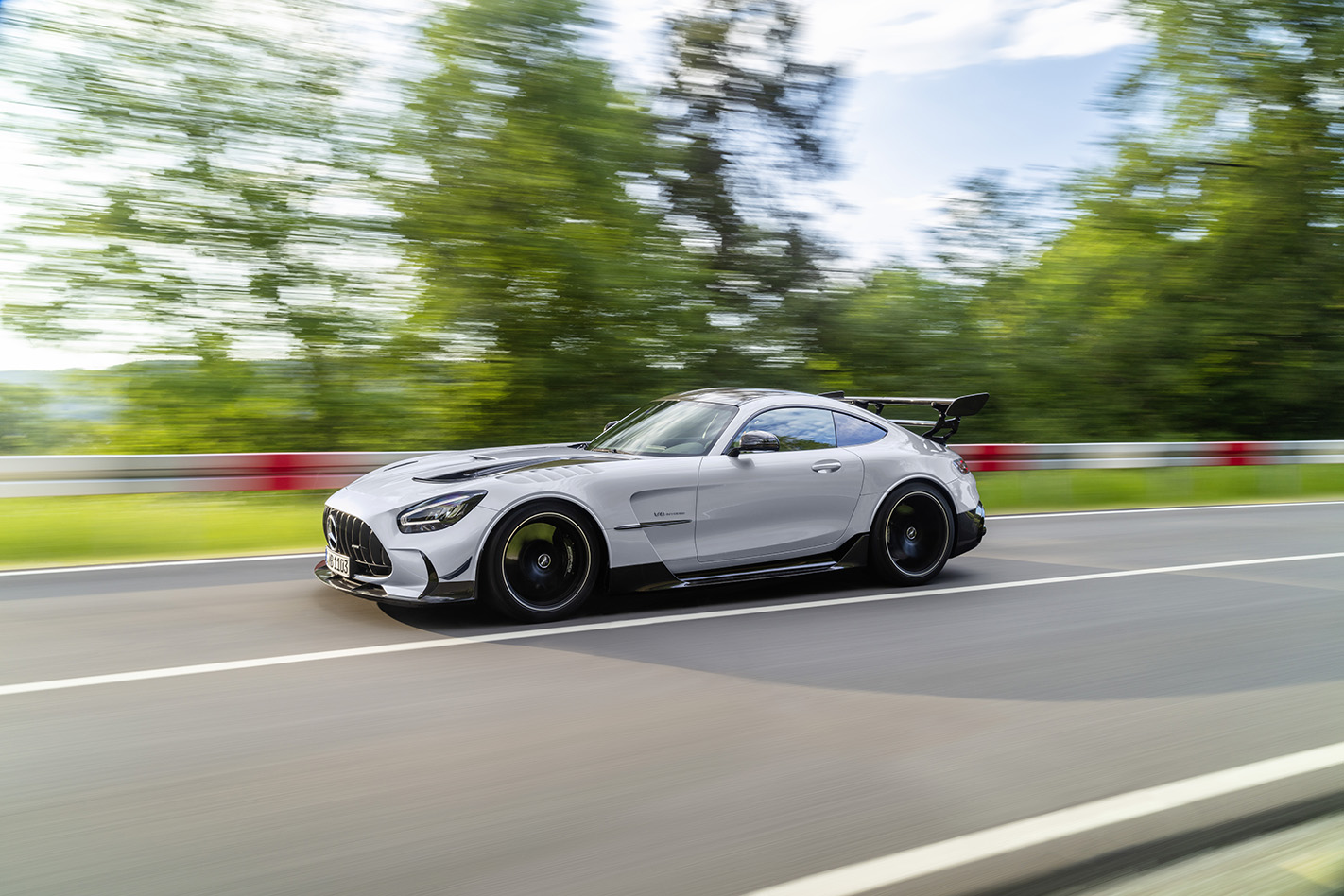
The first Black Series model in eight years has finally been revealed and it’s just the second turbocharged model in Black Series history, and the first boosted V8.
However, simply slotting in a slightly tweaked version of AMG’s venerable M177/178 4.0-litre V8 under the bonnet wasn’t going to cut it.
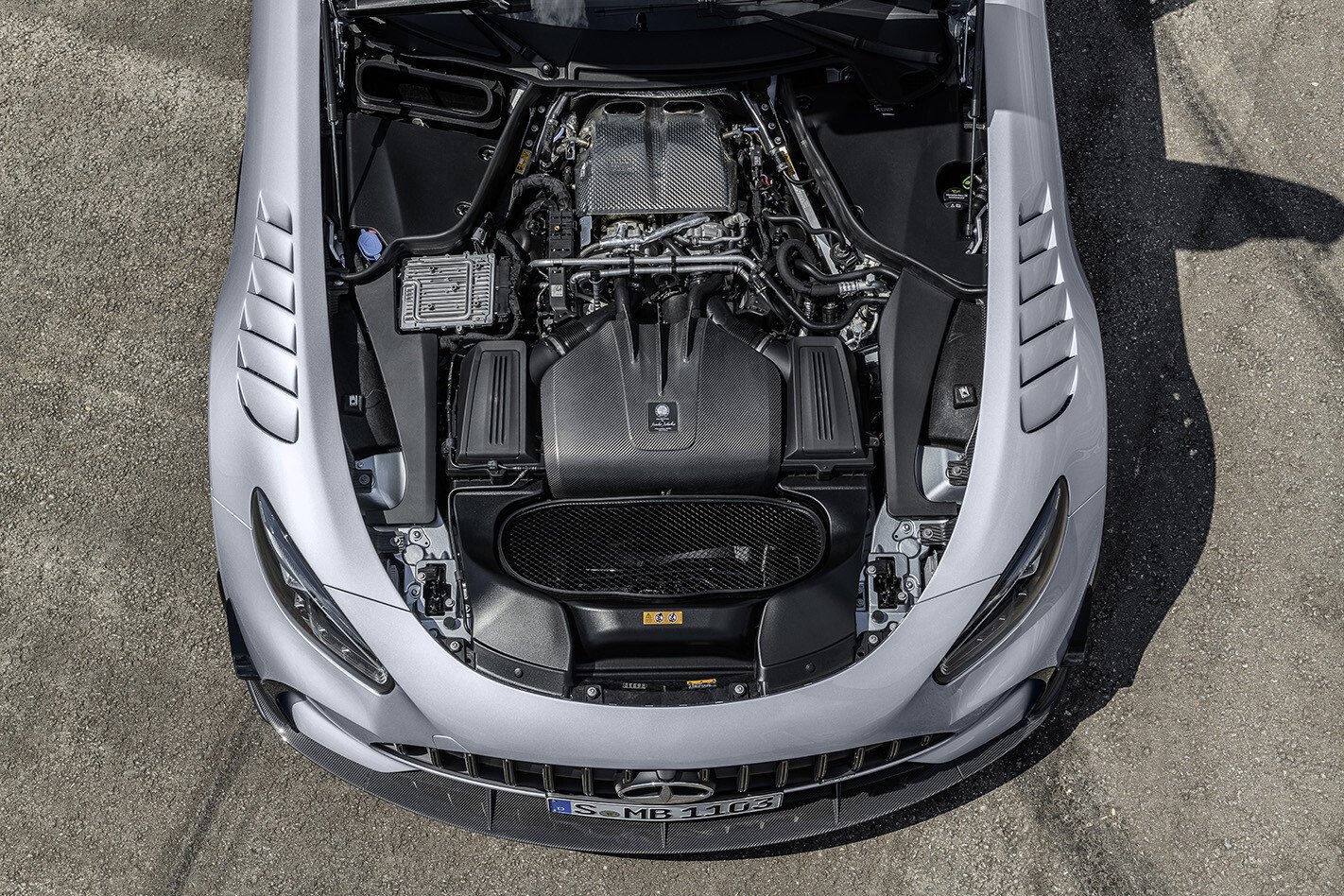
So, while the Black Series does utilise a similar core layout of a 4.0-litre V8 with two turbochargers nestled within the cylinder banks, AMG engineers have gone to town refining the powerhouse engine into something new altogether.
So extensive is the work, that AMG has given the engine a new internal designation of M178 LS2.
Official outputs for the Black Series’ engine are 537kW at 6700-6900rpm, and 800Nm in a massive powerband between 2000-6000rpm. For context, that’s a massive 107kW/100Nm more than what is on tap in the AMG GT R.
What’s new? Well, the biggest change is a move to a flat-plane crank design – the first of its kind in AMG’s history.
This helps the compact V8 have a more responsive character and rev harder, with redline jumping 200 revolutions per minute to 7200rpm. This more potent peak power figure compared to the GT R arrives 500rpm later.
Another side effect of the move to a flat-plane crankshaft is a new firing order. The 4.0-litre V8 now jumps between cylinder banks, with a 1-8-2-7-4-5-3-6 firing order. This creates uniformly oscillating gas columns which generate a predictable flow of gases through to the turbochargers.
Expect the GT R Black Series to sound very different to previous GT Rs as a result, with harder-edged top end acoustics, albeit at the cost of typical cross-plane V8 woofle and torque at lower revs. The flat-plane crank also generally delivers crisper throttle response.
AMG engineers have tweaked the compression ratio, and fitted new twin-scroll turbos with ball bearings for which ought to further improve throttle reactions – the same found in the AMG GT 4 Door.
However, the Black Series turbos have a larger compressor wheel, capable of shifting 1100kg of air per hour (up from 900kg per hour in the GT R.
Boost has also been increased. Where a regular GT runs 1.2bar and a GT R has 1.35, the Black Series winds up the boost the 1.7bar.
The dry sump engine also has new camshafts and exhaust manifolds, and larger intercoolers for better heat management.
Here at Wheels HQ we are big fans of the M177/178 lump – going so far as to naming it one of the greatest V8 engines ever built.
 Turbo Titans
Everything you’ve ever wanted to know about the humble turbocharger and its miraculous power-boosting abilities.
Mercedes-Benz’s trademark of offering niches within niches has continued on into more SUV territory, with the new-to-Australia GLB seven-seat compact SUV now on sale at local dealerships.
Somewhat inspired by the design of the old boxy-shaped GLK-Class (which was never offered Down Under) but with an added row of seats, the GLB has now touched down as a tow-strong line-up, but will be joined by a new flagship.
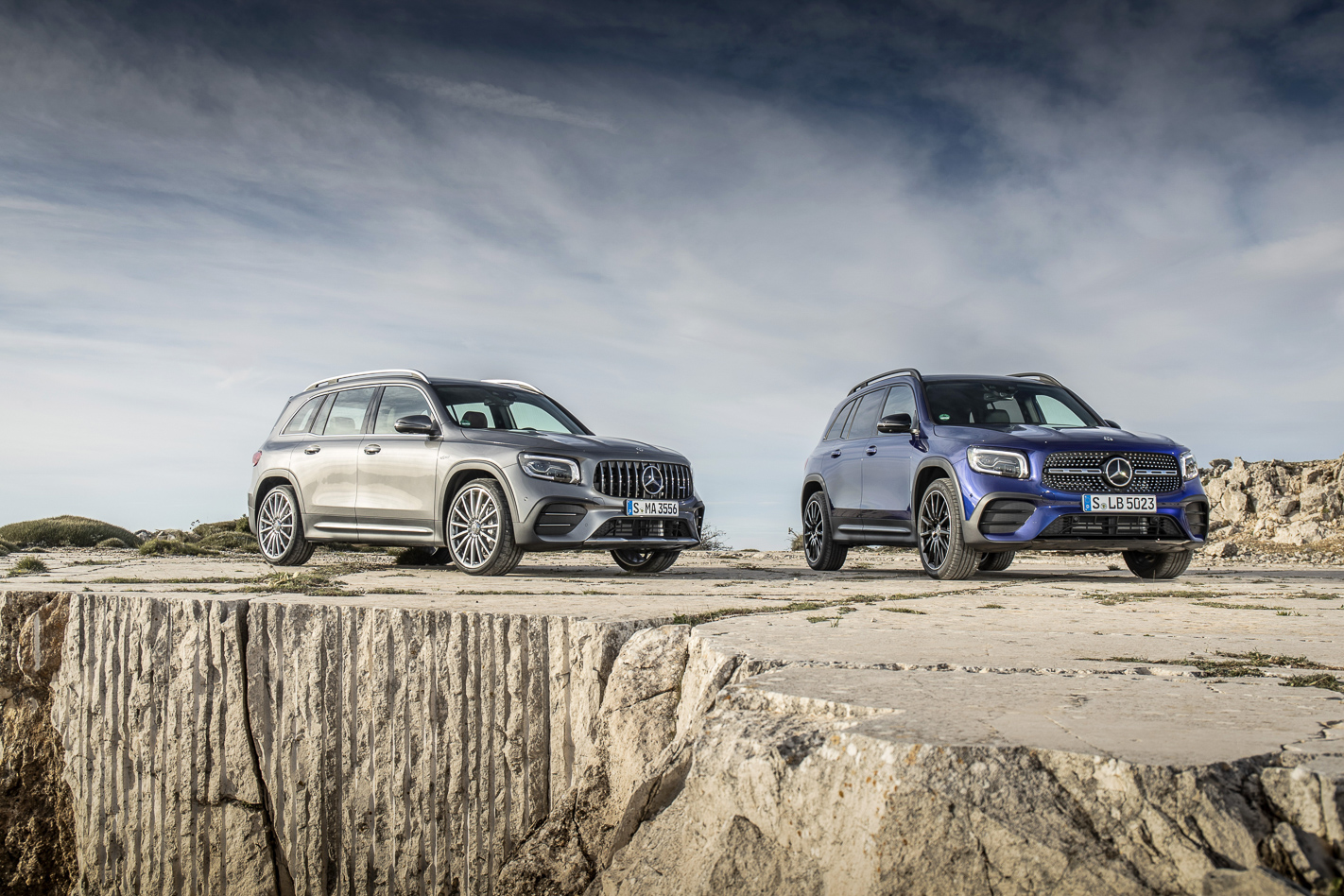
It neatly (but cosily) slots between the new GLA and recently-refreshed GLC, remaining dimensionally similar to the latter but with an added row of seating jammed in.
As far as rivals go, there are not too many other players for the GLB to compete with, except the Land Rover Discovery Sport which can also seat seven people in a luxury cabin.
“We’re extremely excited to launch the GLB and add an all-new nameplate to the Mercedes-Benz range in Australia,” product communications manager Ryan Lewis told WhichCar.
“The GLB’s unique combination of attributes makes it well-suited to our market, and initial feedback locally has been very promising.”
GLB pricing starts at $59,900 for the GLB200, bumping up to $73,900 for the mid-tier GLB250 4Matic and topping out with the AMG-fettled GLB35 4Matic at $88,900 (all prices before on-road costs).
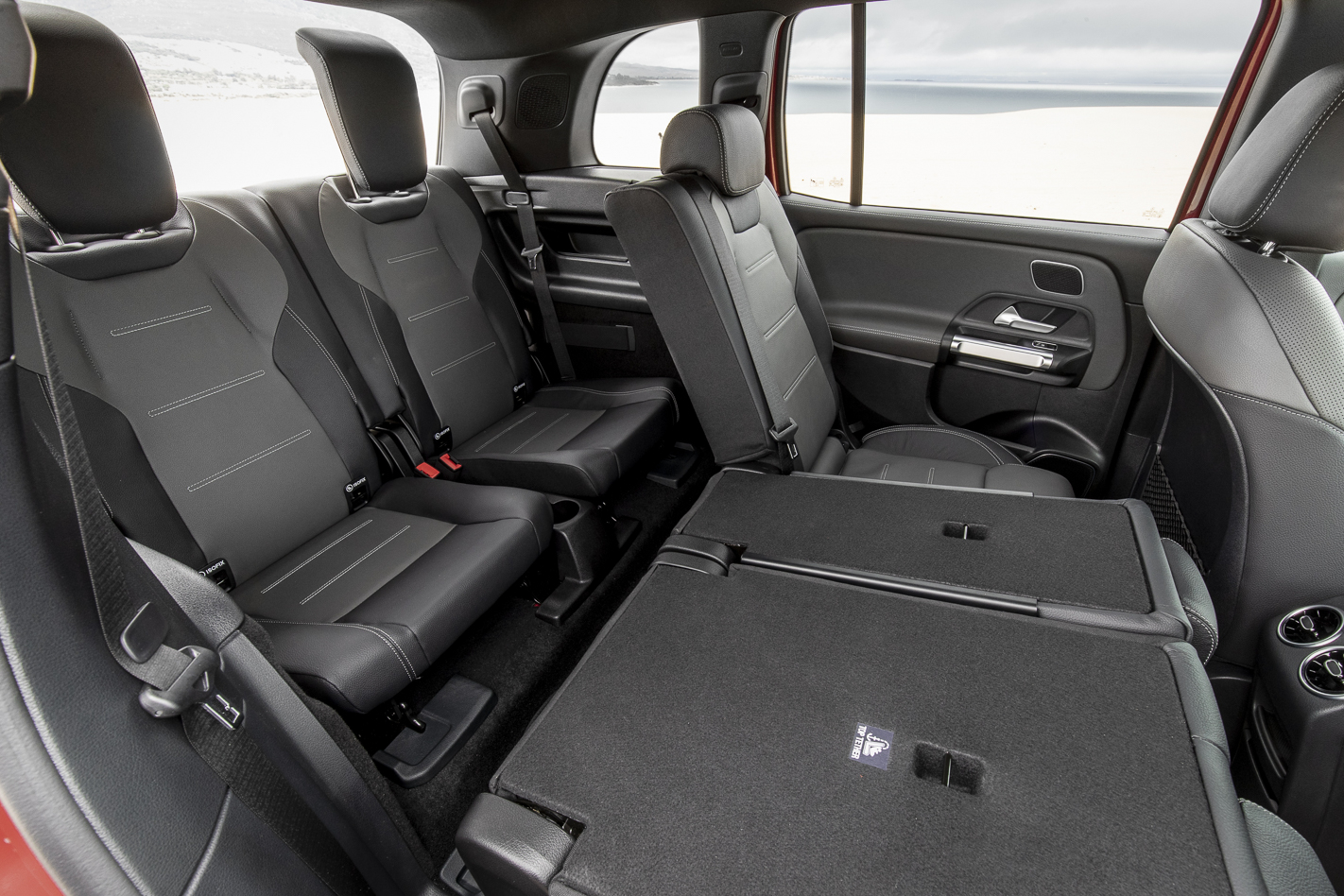
All cars will receive the third row as standard, which Mercedes-Benz says is good for passengers up to 168 centimetres tall.
Verifying those claims will have to wait until a first drive, but other models that pertain to accommodate as many in a similar-sized vehicle have failed to provide for people much larger than children. We’re looking at you Peugeot 5008 and aforementioned Land Rover.
Safety hasn’t been forgotten for the littlies up the back, with retractable head restraints, seat belt pre-tensioners, side window airbags and ISOFIX anchor points for baby seats.
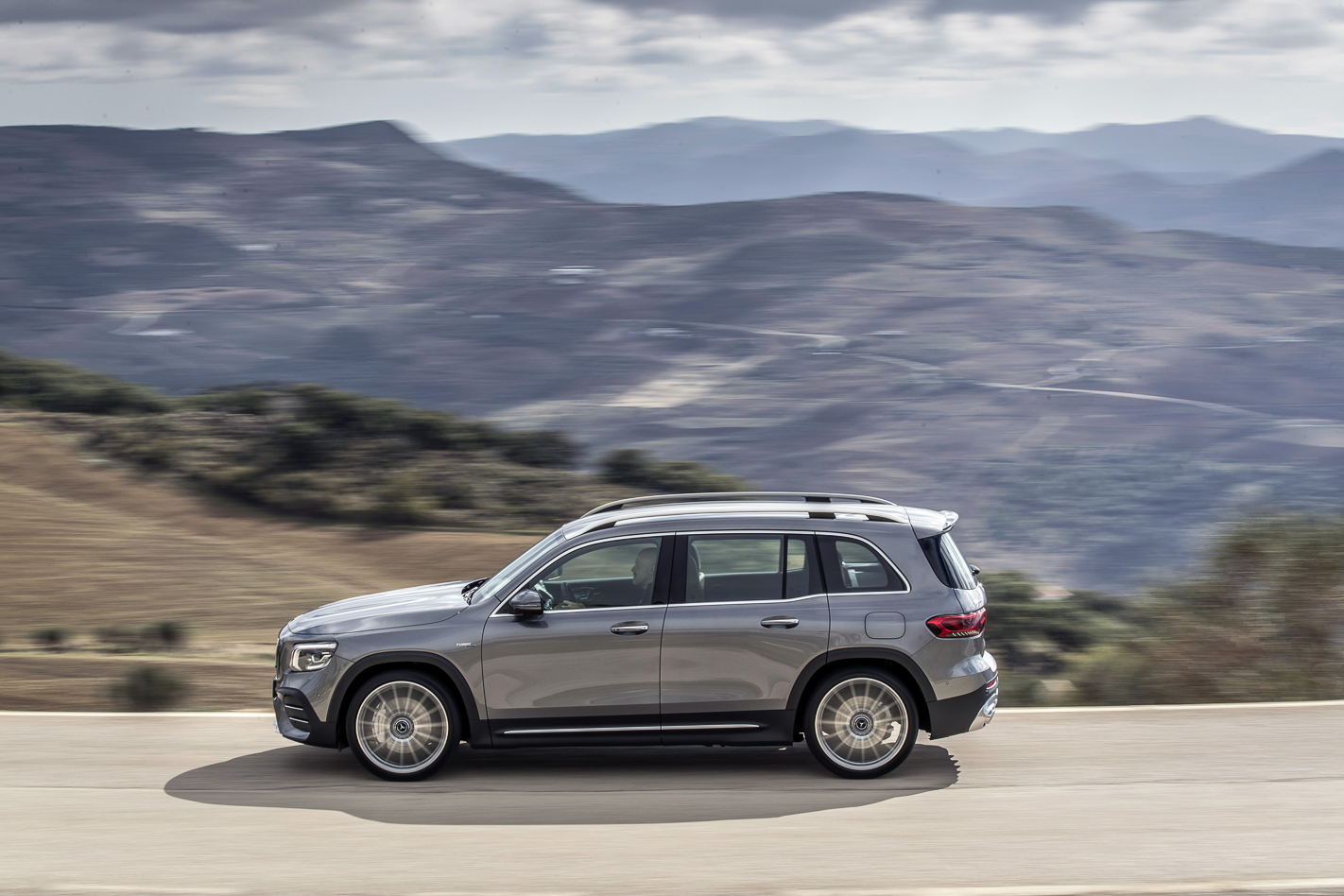
A drink compartment splits the two rearmost seats, while two outboard storage spaces contain a USB port each.
The GLB’s boot can expand from 560 litres (with the second row in place) to 1755 litres (second and third rows stowed), and when the third-row seating is lowered, the seatbacks are flush with the boot floor for easier loading.
Standard safety features across the range include active parking assist, adaptive high beam headlights, blind spot assist, lane-keeping assistant, active brake assist and nine airbags.
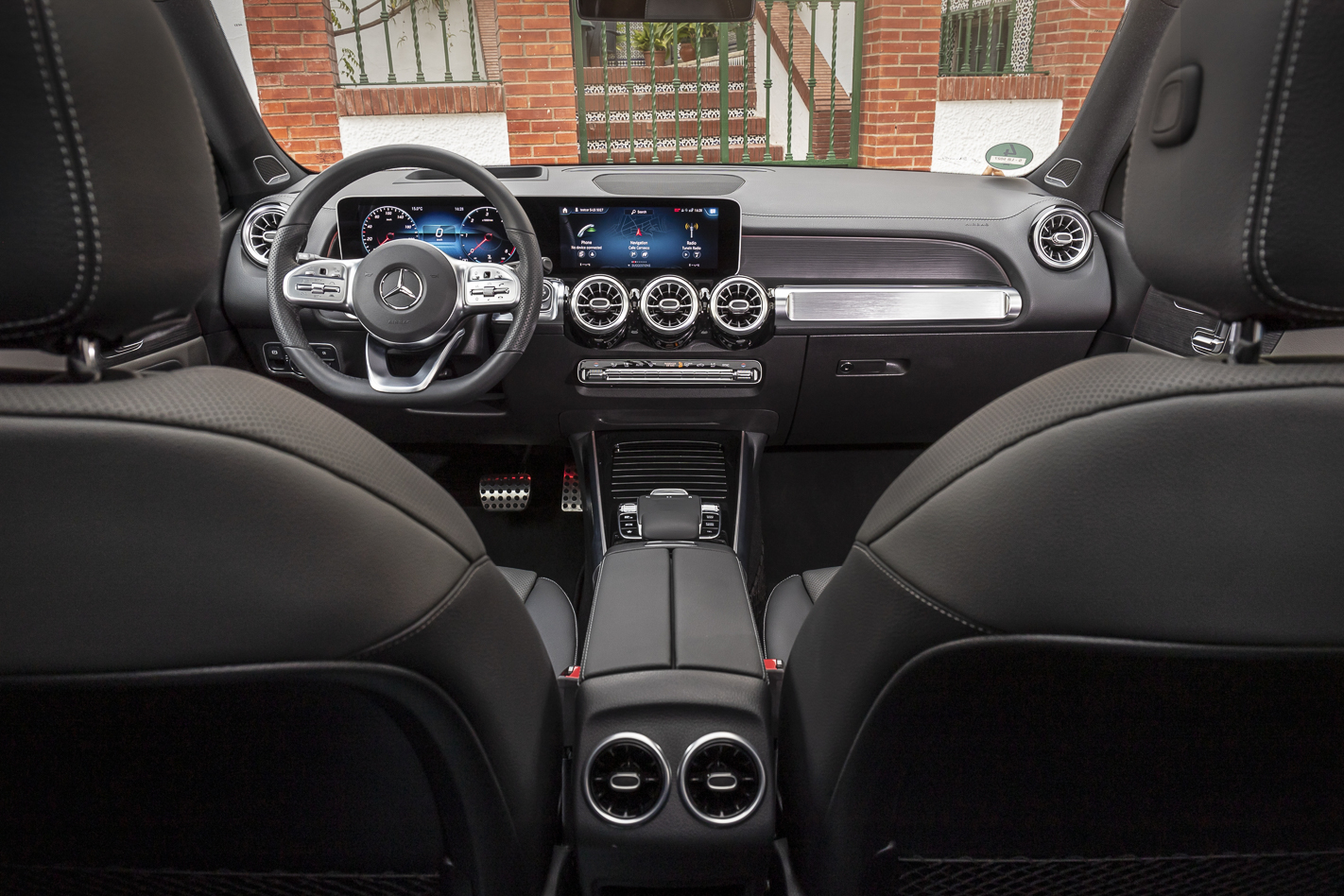
The GLB200 kicks off the new range with a 1.3-litre four-cylinder turbo petrol engine that sends 120kW/250Nm via a seven-speed dual-clutch automatic to the front wheels.
It gets the dual 10.25-inch widescreens that comprise the MBUX infotainment system (above), Android Auto/Apple CarPlay smartphone mirroring, wireless phone charging, keyless entry and start, an automated boot hatch, comfort seats in leatherette, illuminated door sills and a set of 19-inch multi-spoke wheels.
Car vs Road – Mercedes-AMG E53 Coupe
The range then steps up to the GLB250 model which is powered by a 165kW/350Nm version of Merc’s popular 2.0-litre turbo four-cylinder engine.
It uses an eight-speed dual-clutch automatic to send power to where it’s needed using the 4Matic all-wheel-drive system.
Over and above the GLB200’s spec, the GLB250 gets a panoramic sunroof, electric and heated front seats with memory, adaptive damping suspension, 19-inch wheels and an off-road package.
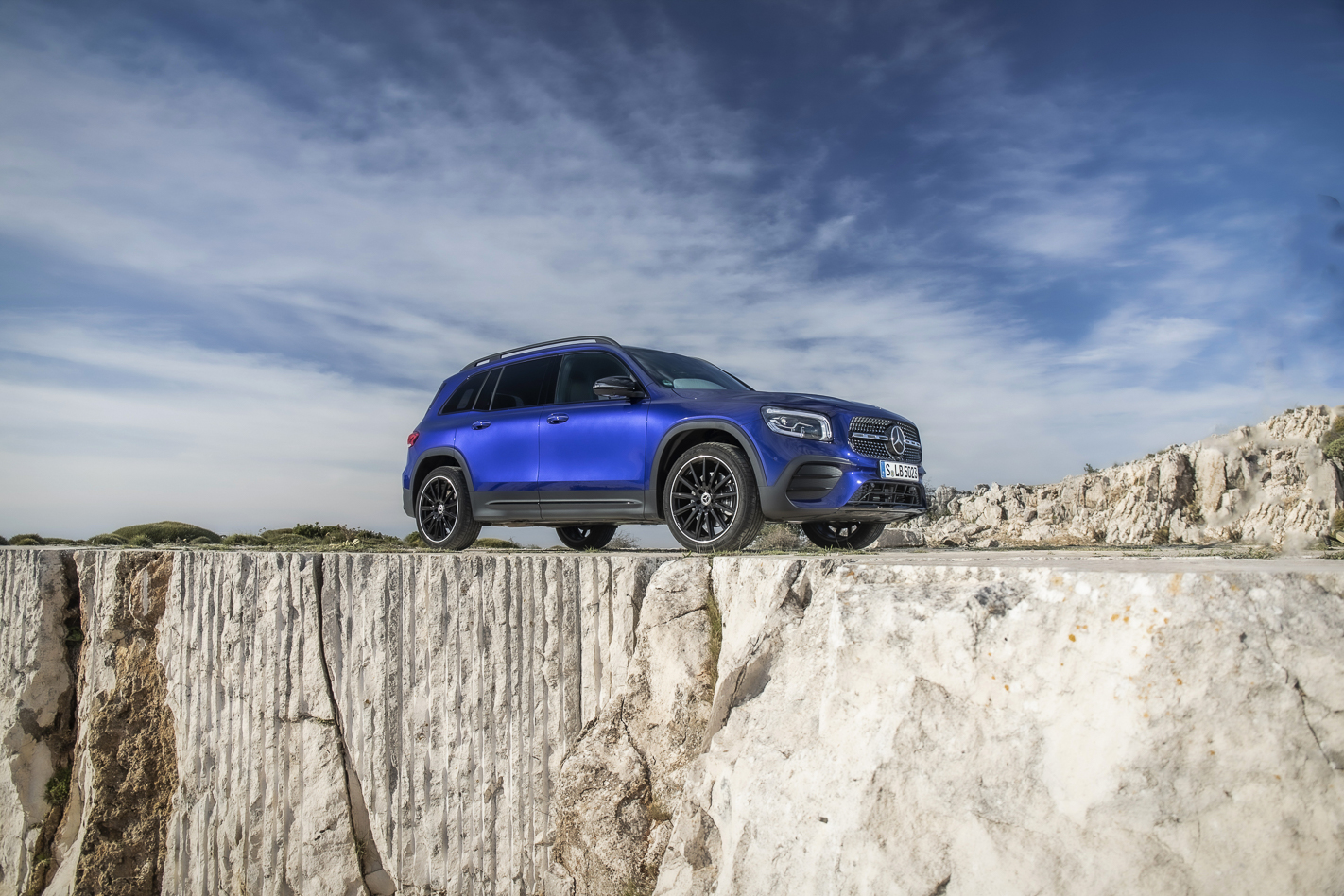
Beyond that, specification edges into the red zone with the AMG GLB35, which uses an AMG-tuned 2.0-litre four-cylinder turbocharged engine for an output of 225kW/400Nm sent to all wheels via an eight-speed AMG dual-clutch automatic.
A swathe of AMG-specific bits and pieces permeate the GLB35’s equipment list, such as the AMG exhaust system that can start up quietly to keep the neighbours happy, speed-sensitive steering, sports suspension with electronically controlled dampers, Nappa leather steering wheel, leather sports seats, stainless steel pedals, carbon interior trim, rear privacy glass and 20-inch AMG alloy wheels.
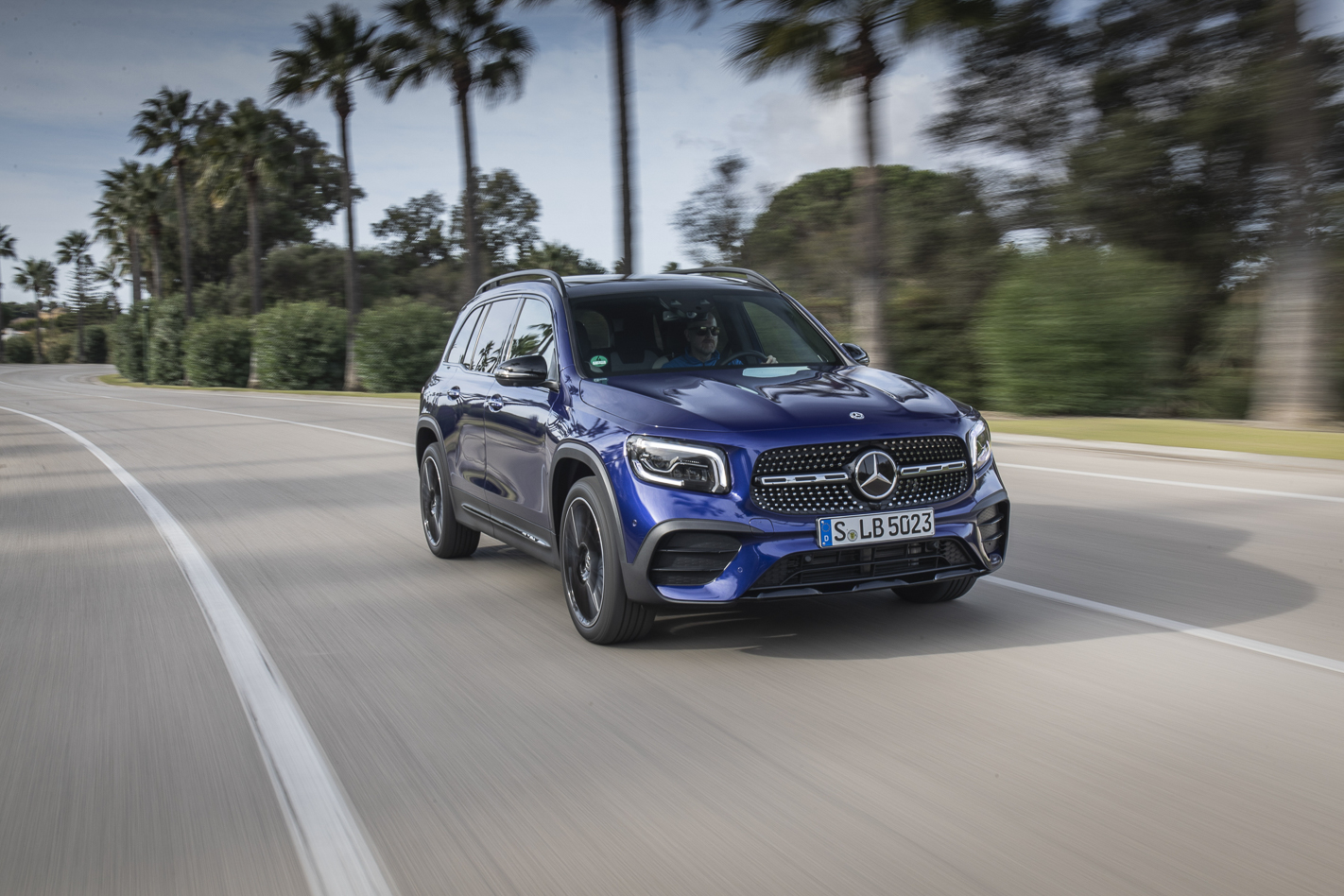
Drop into any Mercedes dealership from this week to meet the small-but-big GLB200 and GLB250, but their high-achieving sibling will turn up to the party stylishly later.
An Aussie touch-down is slated for later this year and WhichCar will be hands-on with the new GLB soon so stay tuned for our Australian-specific impressions in June.
Mercedes-Benz GLB Australian pricing
- GLB200 – $59,900
- GLB250 – $73,900
- AMG GLB35 – $88,900
THERE IS A CERTAIN thrill about discovering a new road. It starts at home, browsing Google Earth like a US spy satellite, zooming in on especially squiggly stretches to see if they’re sealed or not – or more than a car-width wide. Then there’s deciding to schlep the however many hours out there, hoping to discover it’s 100km/h not 80km/h, that it hasn’t been overrun by crazed trail-seekers in high-riding old Nissan Patrols, or herds of feral deer. Fair dinkum, in the Australian alps that’s very much become a thing.
That could have very well been the case for C486, too, the remote country road connecting Heyfield to Jamieson in Victoria a few hours east of Melbourne, 143km running roughly north-south and reaching 1558m in altitude as it crosses Mount Skene in the Australian alps. A good part of the road is unsealed, and so treacherous in winter (people kept needing to be saved) that it’s now only open seasonally.

An even better part of the road, at least for enjoyment in a low-slung car with softly sidewalled sporty tyres, is mercifully sealed, and that’s the part we’re exploring today. We’re heading from agricultural and timber town Heyfield to Licola, the only town – in all of Victoria – not on the state electricity grid. It is entirely self-sustained.
Given that we are still in some form of lockdown as we set off, our vehicle for self-isolation today at least can guarantee plenty of air-flow. To call the new Porsche 718 Spyder just a pimped-up Boxster would be to do it a gross disservice – and potentially mean you’re missing out on properly appreciating what is a seriously special car.
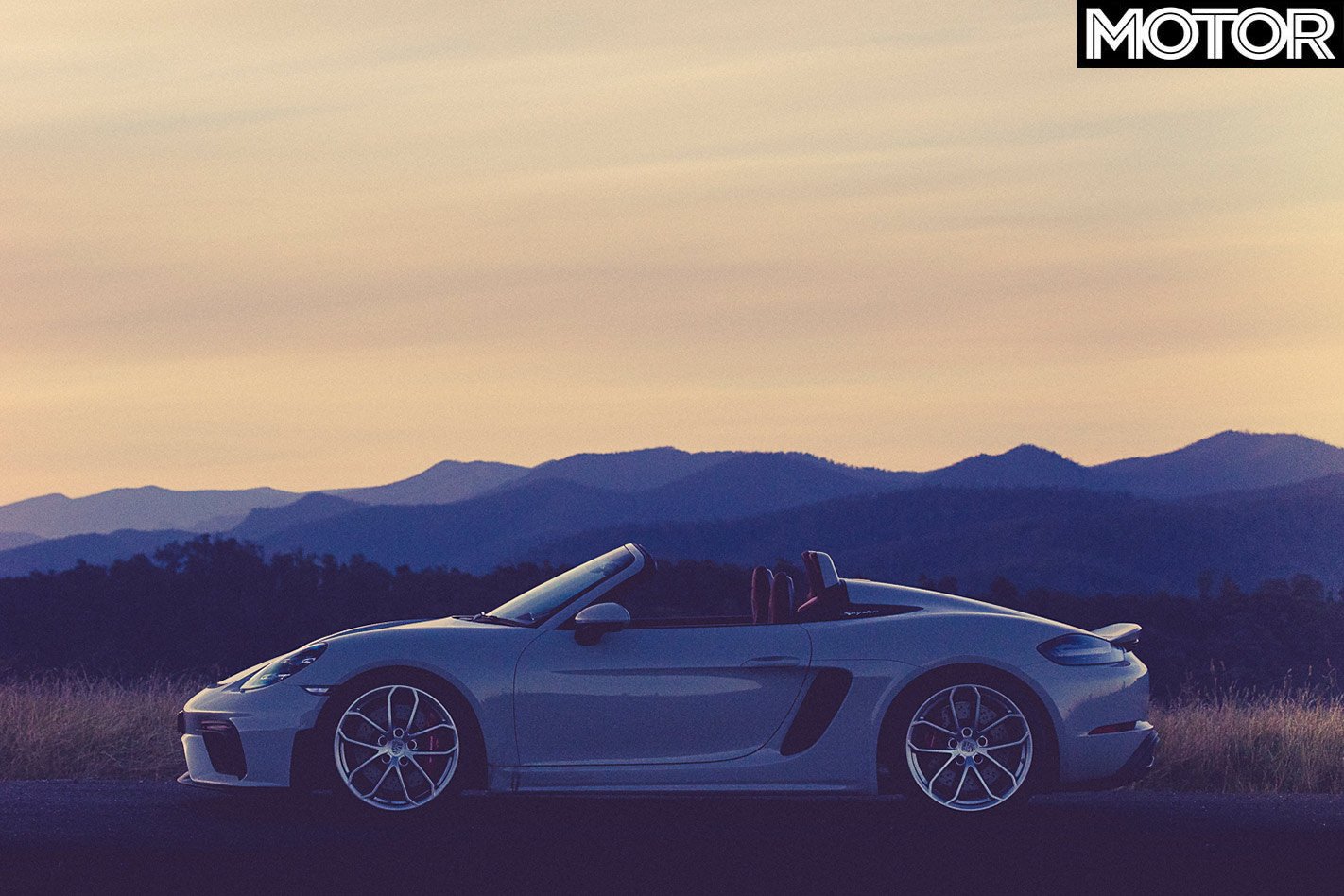
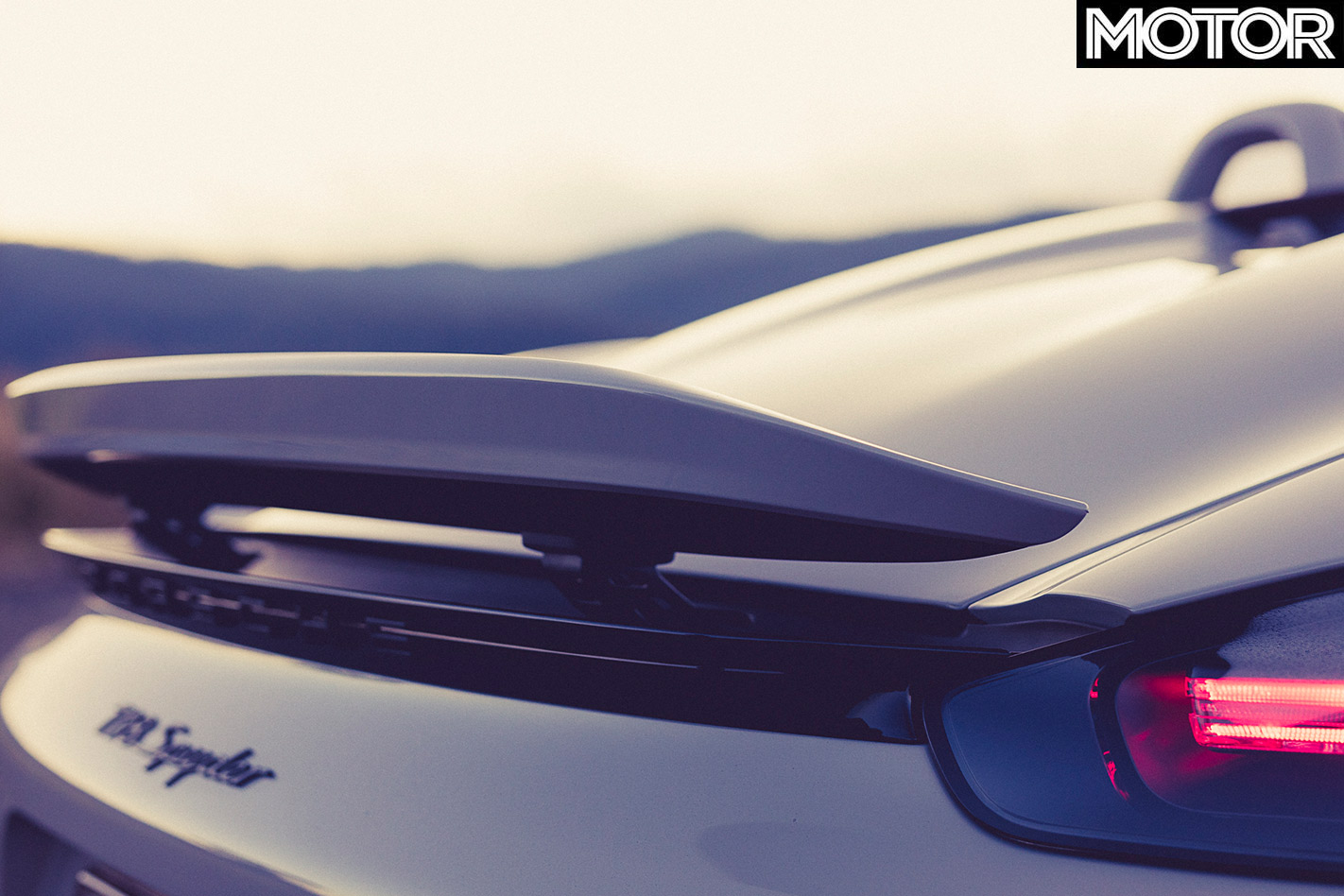
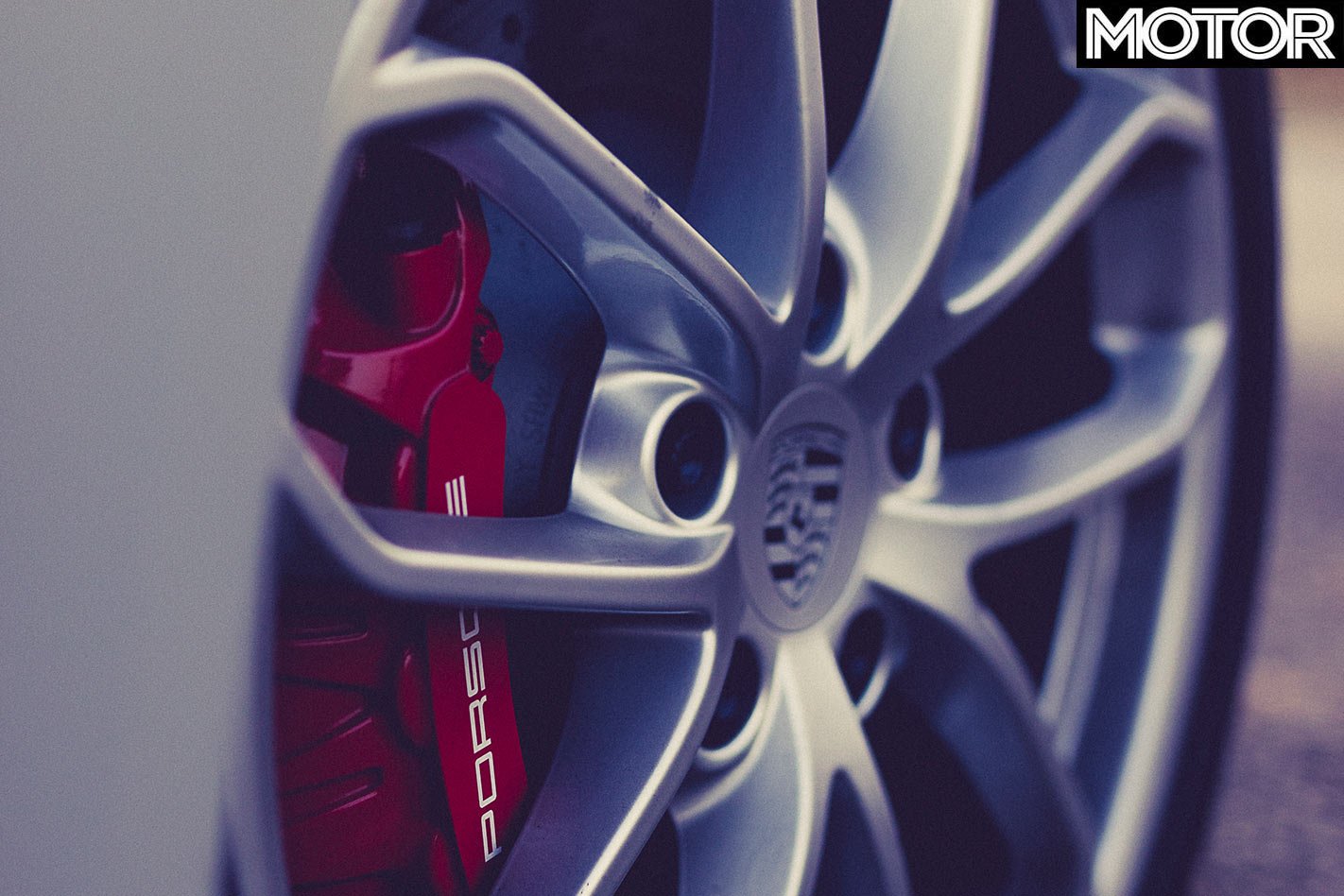
Sitting 30mm lower than a regular Boxster, on enormous, spindly, forged 20-inch wheels; and with low, protruding front spoiler, ducktail-esque rear lip and rear diffuser jutting outwards, the Spyder is visibly the GT3 of Boxsters (from the side profile of the front wheel forward it could be a 991.2 GT3 especially). But this one would be the GT3 Touring if you count the fact there is an H-patterned lever between the seats, no PDK available, not yet anyway.
Always something to be celebrated, the six-speed manual utilises the dual-mass flywheel from the 911 GT3, connecting a newly developed 4.0-litre naturally aspirated flat-six to the rear wheels only, by way of an honest, meat-and-potatoes mechanical limited slip diff. The engine is newly derived from the 3.0-litre 9A2 Evo turbocharged flat-six as seen in the 911 Carreras, but with turbos missing, bore increased by 11mm and stroke by 5.1mm, compression lifted to 13.0:1 and with a redesigned crankcase, dry sump, forged crank, new pistons, conrods, cylinder heads and variable intake. With a maximum engine speed of 8000rpm it’s a fairly serious bit of hardware, peak power of 309kW reached at 7600rpm while 420Nm plateaus across 5000 to 6800rpm. At 3995cc it’s a big engine in a small car, shorter than a Golf and only millimetres wider.

The GT3 treatment continues in the suspension, front and rear subframes pinched from the GT division’s 911 heavy-hitter, along with Weissach-trademark inverted dampers. Solid chassis mounts improve the connection to the standard Michelin Pilot Sport Cup 2 tyres measuring 245/35 front and 295/30 rear. Magnetorheological transmission mounts strengthen that further, electronically firming and softening as the situation demands. The suspension is adjustable for toe and camber and the anti-roll bars for stiffness.
Not that any of that is of any interest to us as we tackle an infamous Spyder quirk, the manually folding roof. With no assemblage of electric motors at your index finger’s beck and call, one must stop the Spyder if they so desire some top-down living. We won’t bore you with the exact process but needless to say, if someone didn’t show you how to do it, you wouldn’t know. It takes about 30 seconds and you only get a bit wet if it’s just started raining.

A positive of the effort required to remove the roof is that the Spyder does encourage you to leave it down for longer than you probably would have if you could just put it up at the press of a button. Which right now we sort of wish we could, now on the move and with the car showing 1.5°C. Fortunately you could cook an egg with the seat heaters and there’s also a steering wheel heater. Just don’t forget your beanie.
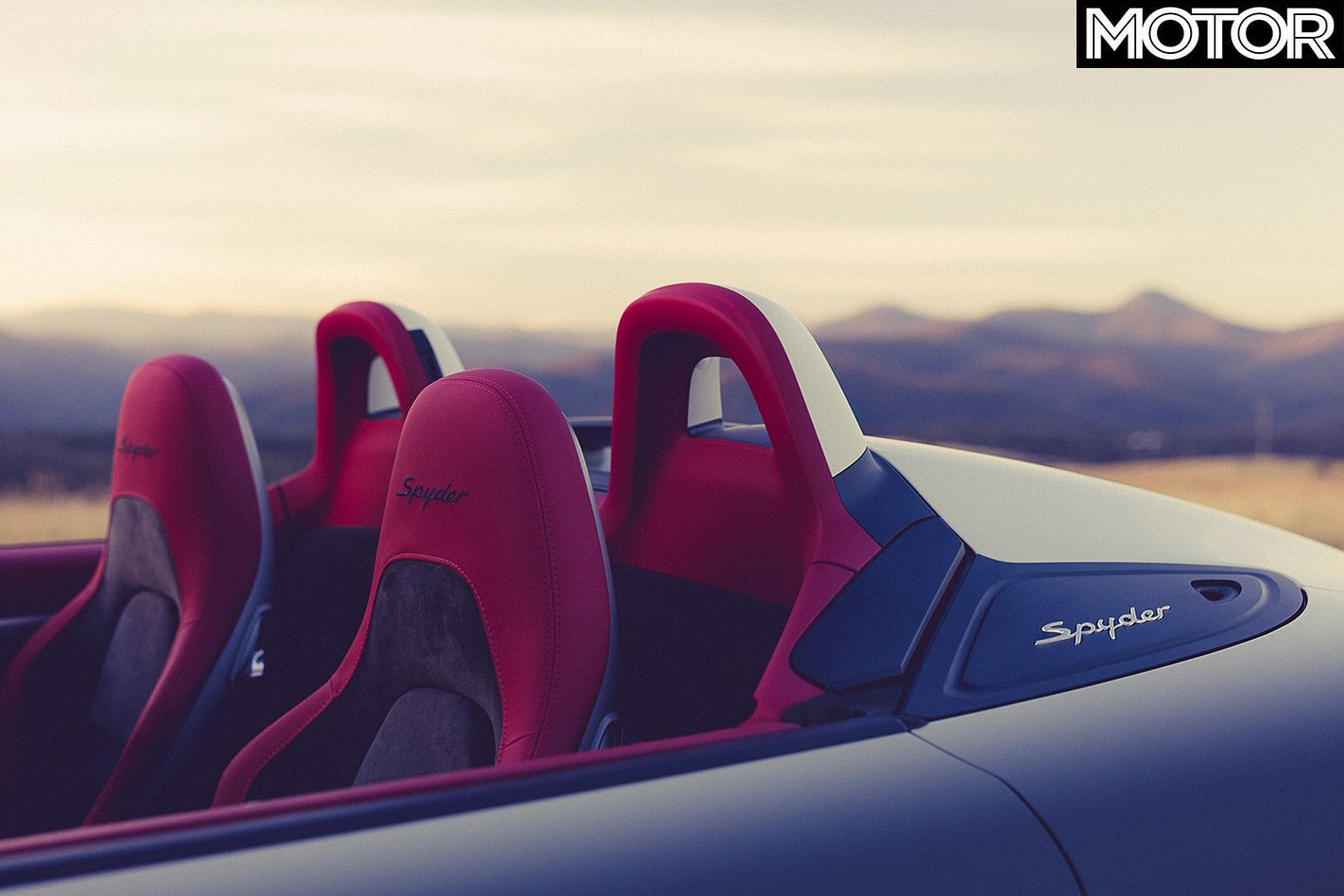
Like all great cars, the Spyder feels very right within the first few hundred metres of driving. The seating position is basically spot-on, positioning your hips low and with the 360mm steering wheel (slightly smaller than a standard Boxster) high and facing flat towards you. All the pedals are perfectly judged for their travel, placement and feel, the computer adding revs itself as you let the clutch out, making it very difficult to stall (and if you do, dip the clutch and the engine automatically restarts). The shortened gear lever, meanwhile, is just 16cm from the steering wheel (I measured it) and itself requires barely a movement of the wrist between gears, each ratio slotting with a beautiful, oily, mechanical precision, satisfying enough that you’ll be slowly rowing gears while stationary.
Myself and photographer Ellen having extracted ourselves from Melbourne’s sprawl at an hour caffeine can barely remedy, and heading the two hours’ east to get to the start of our newfound road, we find the Spyder delivers the minimum necessary comfort. Passing B-doubles is deafening even with the roof up, and at other times the tyres roar, especially on coarser chip roads. The stiff ride is not unbearable but certainly sporty. At every part-throttle, cruising opportunity the Spyder’s cylinder deactivation audibly switches to three cylinders. Wind noise with the roof off is actually not bad at all. And the ageing interior is kept modern enough by Porsche’s brilliant touchscreen infotainment system, and with some nice racy GT touches like the black fabric strips for interior door handles.
Thoughts about button tactility and Alcantara quickly fade away as we finally turn on to C486 at Heyfield, smells of woodfire and, well, cows infiltrating the Spyder’s open-topped interior. This part of Victoria is spectacular, and at this time very green, undulating fields working up to hills and with blue-tinted mountains off in the distance hinting at roads to come.

Straight away, the Spyder makes its personality clear by way of the lump of atmo six wedged in its middle. With a throttle so intimately connected to the engine you’d swear it was cable, the Spyder’s 4.0-litre is simultaneously free-revving yet awesomely muscular and flexible for something without turbos. Much has been made about the Spyder and GT4’s gearing and indeed it is on the tall side, first stretching to 82km/h, second 140km/h and 190km/h in third but certainly the engine has got the grunt to pull through them very nicely.
And the engine is truly sensational. At any rpm it’s bristling with willingness and enthusiasm. From low in the revs, flatten the throttle and it pulls cleanly and strongly against the taller gears, motivated by that muscular mid-range until at about 5600rpm when the rate of acceleration steps up another notch, a frenetic and potent surge all the way to the 8000rpm redline. At which point the note has hardened into a loud, very satisfying flat-six roar, all behind you and clear with no roof in the way, with interesting notes of three-cylinder and V12. It’s a noise you could easily imagine coming from out of a supercar let alone a Boxster. Indeed, this engine is going to be unreal with another 1000rpm and in the back of a 911…

While other cars require you to patiently learn the pace of gearchanges to find what is happiest, the Spyder demands nothing but the quickest shifts, the engine so free to rev that it’s like the faster you can put the clutch and throttle in and out and addictively snatch gears across the tight, short gates, the more the car likes it and wants it. It’s an unreal feeling.
Unless you’ve jumped in from a McLaren 600LT you won’t find the Spyder to be lacking acceleration either, Porsche claiming 0-100km/h in 4.4 seconds, 160km/h in 9.0 seconds, 200km/h in 13.8 seconds on to a top speed of 301km/h, roof up or down. The speedo goes to 330km/h.
You’ll want some heat in those 295-section rear Michelins if you’ll be attempting any acceleration figures, it must be said. After an initial, spellbinding fast and open section skirting along the top of a ridge with incredible views of Australia’s geologically ancient mountains, the C486 arrives at what is a long and steady climb up around the side of a hill and then back down again. The Spyder is basically relegated to second gear the whole time, with occasional excursions into third, which would be annoying if not for the engine’s response and brawn, but it does give you one less thing to think about as the sticky Michelins come up to temperature.
Hints of front end wash, wheelspin and ABS on cold, wet roads earlier in the day turn out to be handling red herrings as the Spyder sinks its fangs into a dry road. The car feels compact and pointy, the steering, while brilliant, not giving you as clear a connection to the front tyres as the throttle does the engine, but enough to give you confidence to push on. The limit of grip, though, just keeps feeling further and further away despite increasingly bold cornering speeds. Understeer reaches a point of being almost impossible, unless you pick up the throttle too early in a corner; throttle steer easily available on exit out of a second-gear corner if you wish. With very little bodyroll, the weight feels low in the chassis, the Spyder revelling in the brakes being held right up to apexes. But beyond that there is just so. Much. Grip. And once the tyres have temperature in them, the limit of braking basically becomes how hard you can push the pedal and how late you dare do so.
Needless to say, the Spyder’s cornering ability is intense, requiring almighty levels of concentration and bravery, but never intimidating or scary. It never feels flustered. It’s an almighty platform and one capable of seriously high cornering speeds. High stakes driving on the road, but fortunately wildlife is likely to be scared off ahead as you can hear the Spyder coming from a mile away.

The Spyder’s towering on-road limits aren’t just your own bravado either it must be said, as if the road isn’t on the smoother side, you soon find yourself holding back for fear of hitting a big bump that unsettles the car. The front end is as low as you can get away with, scraping on driveways (there’s no front-end lifter) but also causing worry about it bottoming out over a big bump at speed. I might get laughed at by a Porsche engineer for thinking that but it was enough to slow me down when the bitumen got a bit choppy. The damper button is no saviour here either, the two modes being very close together.
This is very much a car that would revel to find itself on a racetrack like Phillip Island, where you can properly row through those long gears. Perhaps never has a Boxster had legs this long to stretch. Certainly it would benefit from a shorter diff closing up the ratios; and some more regular performance tyres bringing the limits more into the realm of reality for road driving. But with or without the sticky Pilot Sport Cup 2s, the Spyder is as much baby open-top supercar as it is GT3-ified Boxster. This is definitely a car fast enough to make your passenger very quiet, one in which you have a ‘wow’ moment, a car that finds its way into your memory, and one you’d be very satisfied to have in your garage. To many, the sports car doesn’t get much better than this.
Feeling pensive, we adopt a more relaxed pace as we reach the end of the road, sleepy Licola nestling beside the tranquil Macalister River and a scene completely at odds with the atmo-six-fuelled ferocity experienced just moments earlier. Licola contains not much other than a few houses, a caravan park and a general store, the Spyder looking more than a bit lost amongst some parked-up four-wheel drives. No mobile reception, not even with Telstra, drives the isolated feeling home. If you press on after Licola towards Jamieson, route C486 is even quieter, even more picturesque and just as fun, with the mountains in the distance inviting you to go further. According to Google Earth, however, it becomes gravel not far beyond and you have to turn around. In a car like the 718 Boxster Spyder, that’s a very happy three-point turn. Just watch out for the deer…
2020 Porsche 718 Boxster Spyder specs
| Body | 2-door, 2-seat convertible | u00a0 |
| Drive | Rear-wheel | u00a0 |
| Engine | 3995cc flat-6, DOHC, 24v | u00a0 |
| Bore x stroke | 102.0 x 81.5mm | u00a0 |
| Compression | 13.0:1 | u00a0 |
| Power | 309kW @ 7600rpm | u00a0 |
| Torque | 420Nm @ 5000-6800rpm | u00a0 |
| Power/weightu00a0 | 218kW/tonne | u00a0 |
| Transmission | 6-speed manual | u00a0 |
| Weight | 1420kg | u00a0 |
| Suspension | Struts, coil springs, adaptive dampers, anti-roll bar (f); multi-link, coil springs, adaptive dampers, anti-roll bar (r) | u00a0 |
| L/W/H | 4430/1801/1258mm | u00a0 |
| Wheelbase | 2484mm | u00a0 |
| Tracks | 1538/1534mm (f/r) | u00a0 |
| Steering | Electrically assisted rack-and-pinion | u00a0 |
| Brakes | 380mm ventilated discs, 6-piston calipers (f); 380mm ventilated discs, 4-piston calipers (r) | u00a0 |
| Wheels | 20.0 x 8.5-inch (f); 20.0 x 11.0-inch (r) | u00a0 |
| Tyres | 245/35 ZR20 95Y (f); 295/30 ZR20 101Y (r); Michelin Pilot Sport Cup 2 | u00a0 |
| Price | $197,200 | u00a0 |
| u00a0 | u00a0 | u00a0 |
| PROS | Incredible engine; noise; magic handling; fat stance | u00a0 |
| CONS | Suspension only so compliant; too much grip? | u00a0 |
| Star Rating | 4.5 Stars out of 5 | u00a0 |
