
New car launches are one of the most enjoyable parts of a career as a motor journalist and, in today’s WhichCar Weekly instalment, Andy, Dan and Scott focus on exactly what they entail.
Opening the chat, the boys decide exactly how a press launch should play out and agree on all the elements a well-organised event provides, including the essentials, the nice-to-haves, and the things that used to be commonplace but are now confined to history.
Next, the talk turns to the launches through the ages and the ones we weren’t a part of but would have sold our hair to go back in time and jump on the invitation list. What makes the very best events and which past events are now part of journalist folklore?
But, despite meticulous planning, new car launches don’t always go to plan.
Etiquette is key but despite this common-sense based approach there are still a few who upset the applecart and the panel discusses some of the ways past launches have been marred by unbelievable occurrences.
Rounding out the chat today, are the craziest things to happen before, during and after a launch over the many combined years of our WCW trio attending press events around the world.
Let’s be honest though, Andy’s were always going to be the most outrageous weren’t they?
You can find WhichCar Weekly on all manner of podcast apps including iTunes and Podbean. Please rate, subscribe and leave a review!
And if you want yet more WhichCar action whether it be behind the scenes insights or the very latest from the Automotive front line, follow the day-to-day happenings of the WhichCar team on Facebook, Twitter and Instagram @whichcar
Listened to or watched the WhichCar weekly podcast? Help us out!
- Leave a note in the comment section below
Ask anyone who knows a thing or two about motoring – who invented the car? – and they will probably tell you it was Mercedes-Benz. But while the German giant might be credited with producing the first ‘production’ car (we’ll come back to those inverted commas later), the very first car of all is harder to identify.
Follow the breadcrumb trail back through the murky waters of time and you’ll end up (or should that be start) more than 100 years before the creation of Mercedes’ first model. As interesting as the origins of today’s cars however, are the technological inventions that have come and gone many times along the way.
First mass-produced car – 1901
Many cite Ford’s Model T as the world’s first mass produced car but it wasn’t, nor according to another incorrect claim was it the first made on a production line. But perhaps more significantly, the Model T was the first to be produced on a moving production line.
This important manufacturing evolution drastically reduced production times and costs, and that allowed it to be the first car available to the masses. What quantity deserves that accolade? Almost 20 years after the first was built in 1908, Henry Ford witnessed the 15 millionth example roll out of the factory.
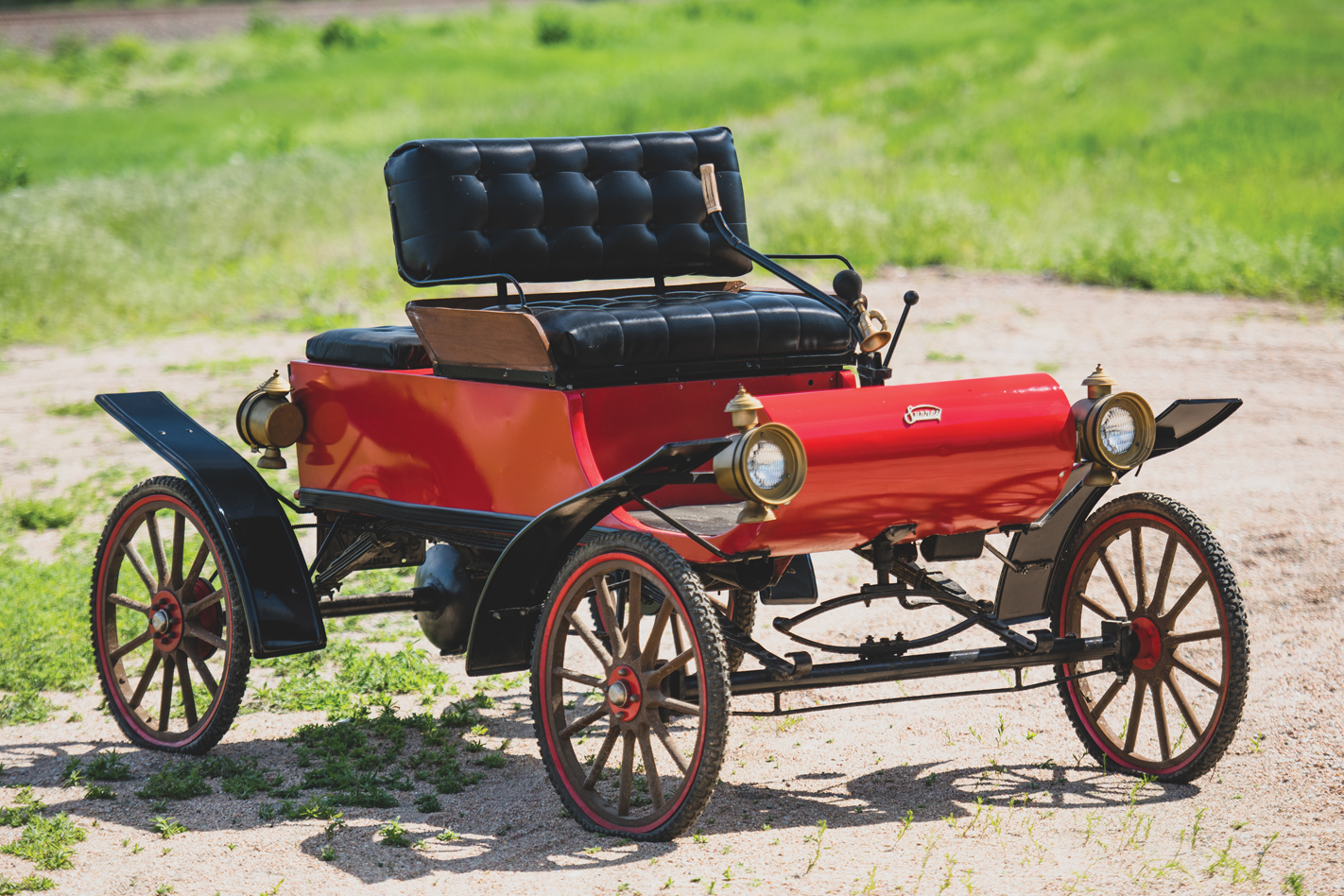
Despite the Model T’s place in automotive history, the first mass-produced car was actually the Oldsmobile Curved Dash of 1901, which used a 4kW 1.6-litre single cylinder to move up to two people at a dizzying 32km/h. About 19,000 were built.
First production hybrid car – 1900
As the world’s leading manufacturers scramble to slash emissions, boost economy and cut carbon production, hybridisation is a hot topic with virtually all the mainstream brands now offering some interpretation of combustion/electric combination.
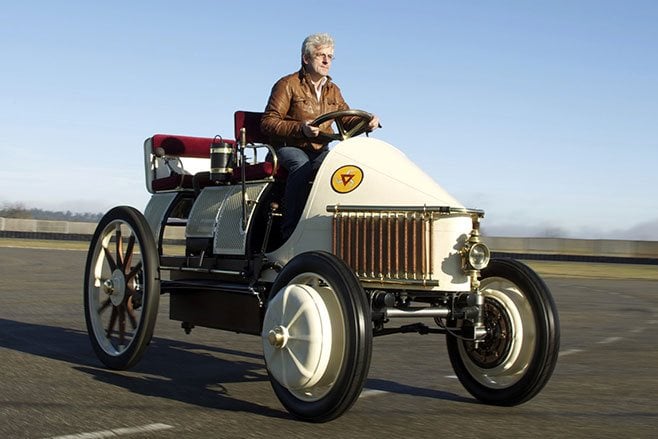
So it may surprise you to learn that hybrid cars are not, by a long way, a new idea. In fact, not only was the first production hybrid invented more than a century ago, it was created by none other than Ferdinand Porsche.
It’s battery weighed 1.8 tonnes, it could go no faster that 15km/h and its pure electric range was about 10km, but with a petrol engine to boost that distance, the Lohner-Porsche Mixed Hybrid has a little of its DNA in every Porsche hybrid on the road today, if not the models of every brand.
First production car – 1888
Karl Benz, who’s surname accounts for the latter part of the modern Mercedes-Benz brand, is often regarded as the grandfather of the modern car. In 1885, his first model – the Benz Patent Motorwagen – was born and the following year it was granted a patent.
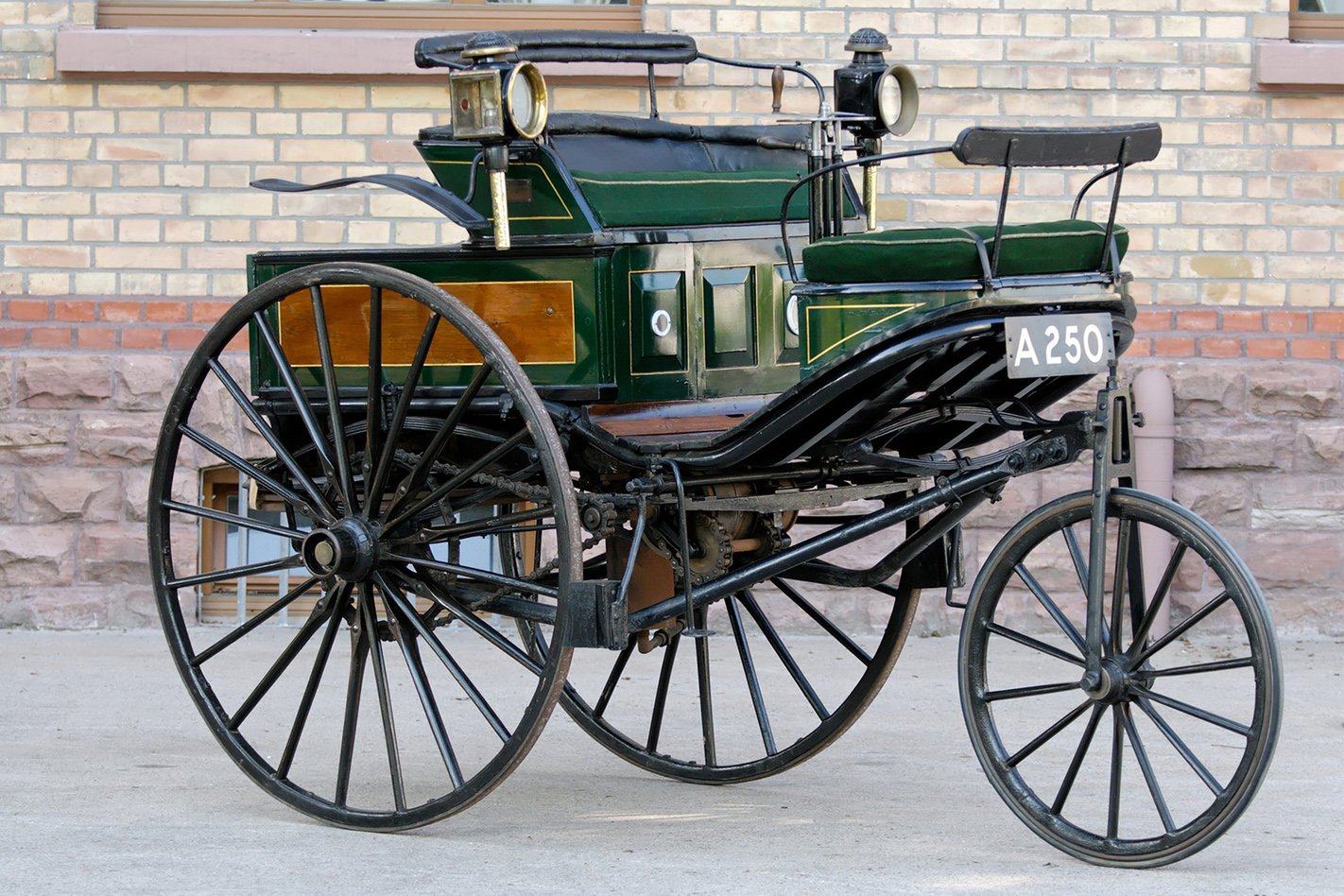
Most importantly though, in 1888, Benz offered the model for sale, taking his first model from the status of a one-off, into a commercially marketed machine – and the history books. He may have only produced about 25 of the cars, but that’s enough to earn the Benz Patent Motorwagen the title of first production car.
Little did he know at the time, but Benz only narrowly won the race to be the first, with Gottlieb Daimler and Wilhelm Maybach simultaneously developing their own car design that launched in 1889.
Either way, all three pioneers went on to forge the various facets of Daimler and Mercedes, and their surnames are very much a part of the German car company’s heritage to this day.
First petrol-powered car – 1870
This achievement was very nearly also awarded to Benz and thus confined to history, but a little-known engineer had already successfully created a petrol-burning ‘car’ in 1870.
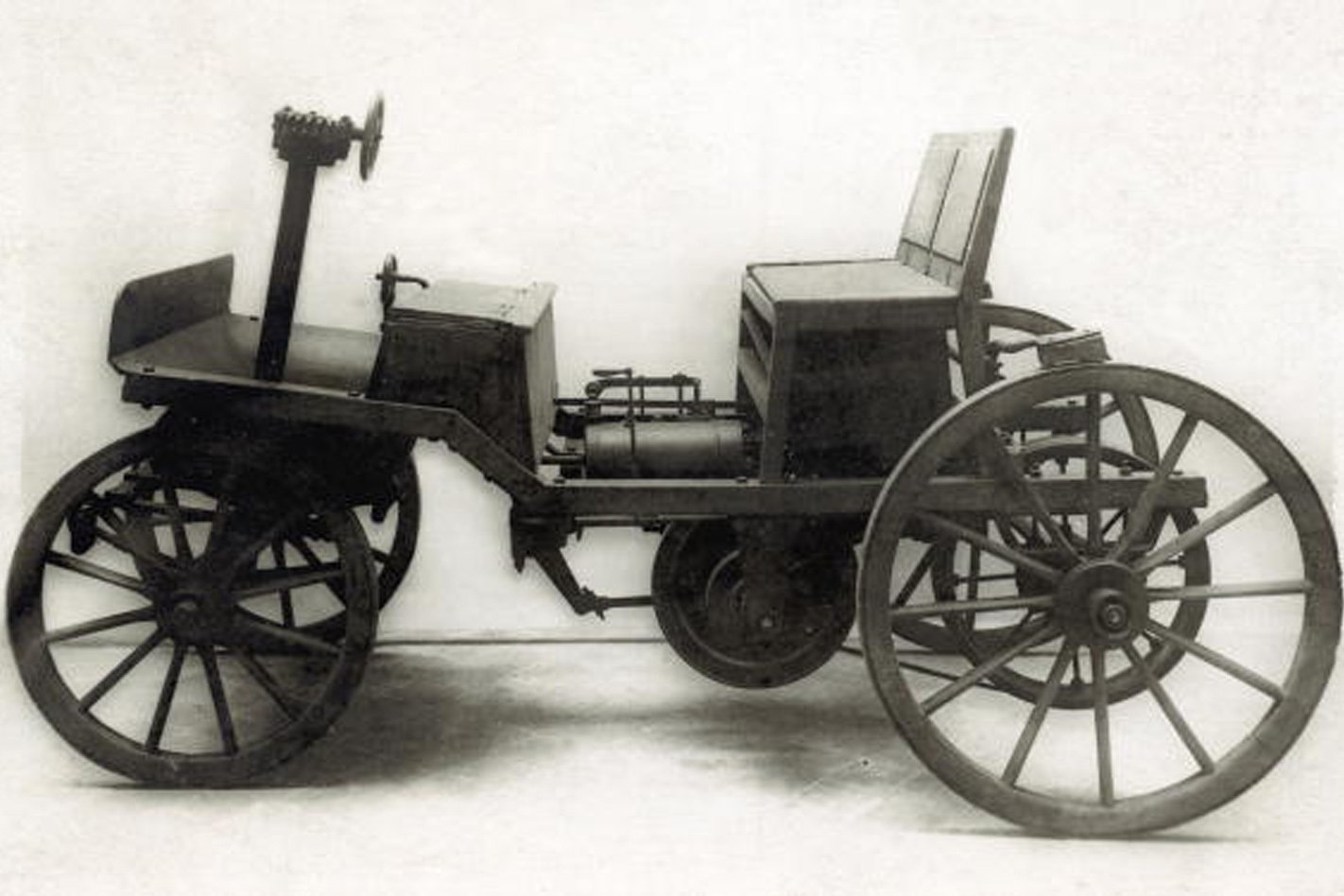
Siegfried Marcus built and patented a gasoline-powered handcart but followed it with a second vehicle – also in 1888 – a four-seater, petrol-engined car. The Second Marcus Car was regarded as the world’s first petrol-powered car and therefore, a logical pioneer of today’s cars. However, Marcus was of Jewish decent and all his achievements were erased from record by the Nazis in World War II.
While Benz is heralded in lights as the creator of the car, Marcus is arguably the godfather who gets little recognition.
First electric car – 1828
With combustion power establishing itself as the engine of choice for cars about 150 years ago (and that addiction to petrol and diesel only just starting to change today) it’s surprising to think that many viable power sources were on the table at the advent of privately owned cars. And that includes electricity.
Not long after he created one of the world’s first viable electric motors, Anyos Jedlik fitted his invention into a tiny car. It was a few volts short of a Porsche Taycan but this Hungarian Priest’s invention was the world’s first electric car.
The primitive vehicle would be followed by many more advanced versions around the globe, gaining momentum faster than combustion power cars in both senses of the word. The earliest production electric vehicle was Thomas Parker’s 1884 machine which used high-capacity batteries and knowledge he gained by electrifying London’s Underground train network.
Furthermore, during the 1900, virtually all land speed records were held by EVs.
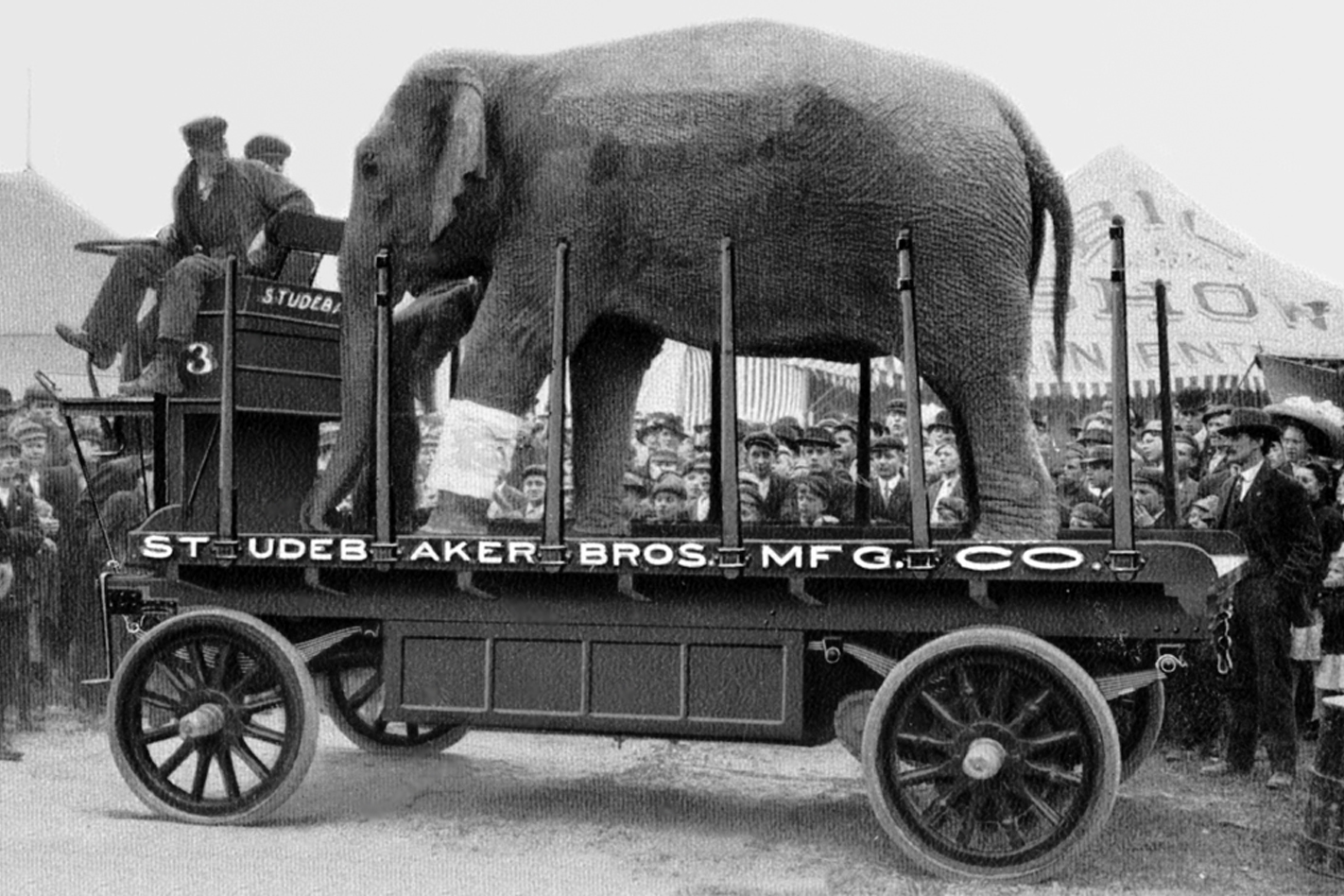
And in 1902, Studebaker became the first company to mass-produce an electric car. Alas, the superior performance of petrol-powered vehicles, coinciding with large-scale production operations from Ford and Oldsmobile forced the electric car into a long hiatus that only appears to be ending today.
The world’s first car – 1770 (or perhaps 1672)
And so finally, we can regress through time no further and arrive at the very genesis of all cars as we know them today. But once again we find the answer obscured by definition.
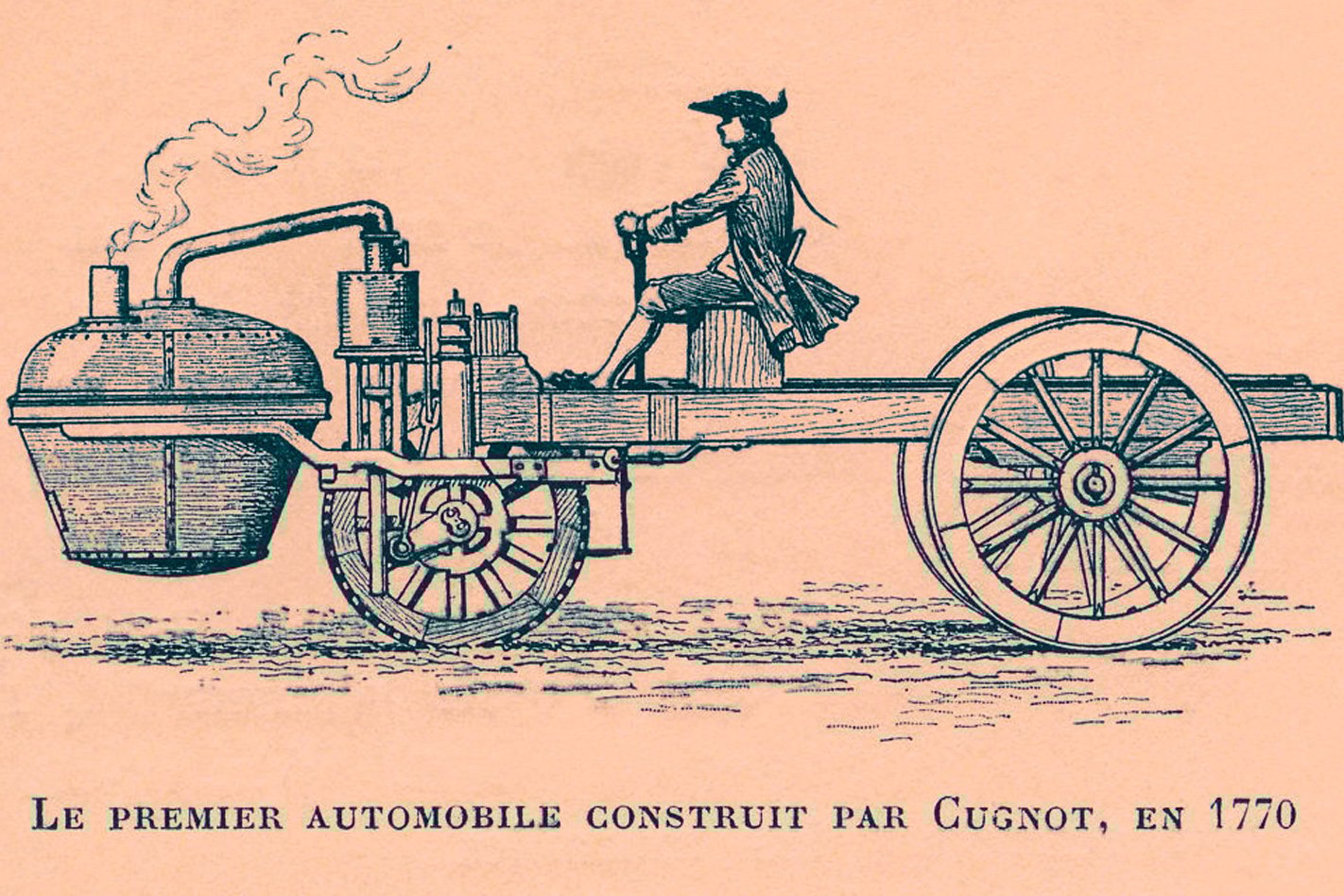
If you’re after the first driver-carrying self-propelled vehicle then look no further back than Nicholas-Joseph Cugnot and his 1770 ‘Steam dray’ – an experimental military tractor powered by a basic steam engine.
It might look like a Landcruiser stripped down to its chassis, rolling on a set of wagon wheels and with a gin still bolted to its nose, because that’s not far from the truth, but 250 years ago this early car was as cutting-edge as a Koenigsegg is today.
But the French inventor might have been beaten to the start line by by a Flemish missionary almost 100 years before that!
In 1672, Ferdinand Verbiest created what some might describe as a toy for Qing Dynasty emperor Xuanye, but others see it as a scale prototype for the first automobile. The 65cm-long car used a spherical boiler to shoot a jet of steam at basic turbine, which was connected to a wheel axle. With a single loading of coal, the little car could reportedly keep driving for about an hour, although no definitive evidence exists to prove it.
As far as we know, this 350-year old gift to a Chinese emperor was the first vehicle capable of moving on self-generated power – the first car, of sorts.

Whether the little car ever existed or not, Verbiest’s work will always have a significant place in the history of the car. In his Astronomia Europea, the mathematician and astronomer mentions the latin word ‘motor’ – this is the first recorded usage in the context and meaning we associate to this day.
If he didn’t actually create the first motorcar, Verbiest certainly named it.
Who invented the car?
Ultimately the car’s inventor comes down to a matter of definition and context, with the answer ranging anywhere between a car for the people born in 1901, to a four-wheeled, coal-fired folly of nearly 350 years ago. Take your pick.
Ford Mustang fans will be slightly disappointed to find that the price of the all-American muscle car has jumped across the board.
‘Slightly disappointed’ because the news isn’t so bad, but nonetheless those shopping for a Mustang will be expected to pony up an extra $500 for every model except for the 2.3-litre Ecoboost convertible, which jumps just $300.
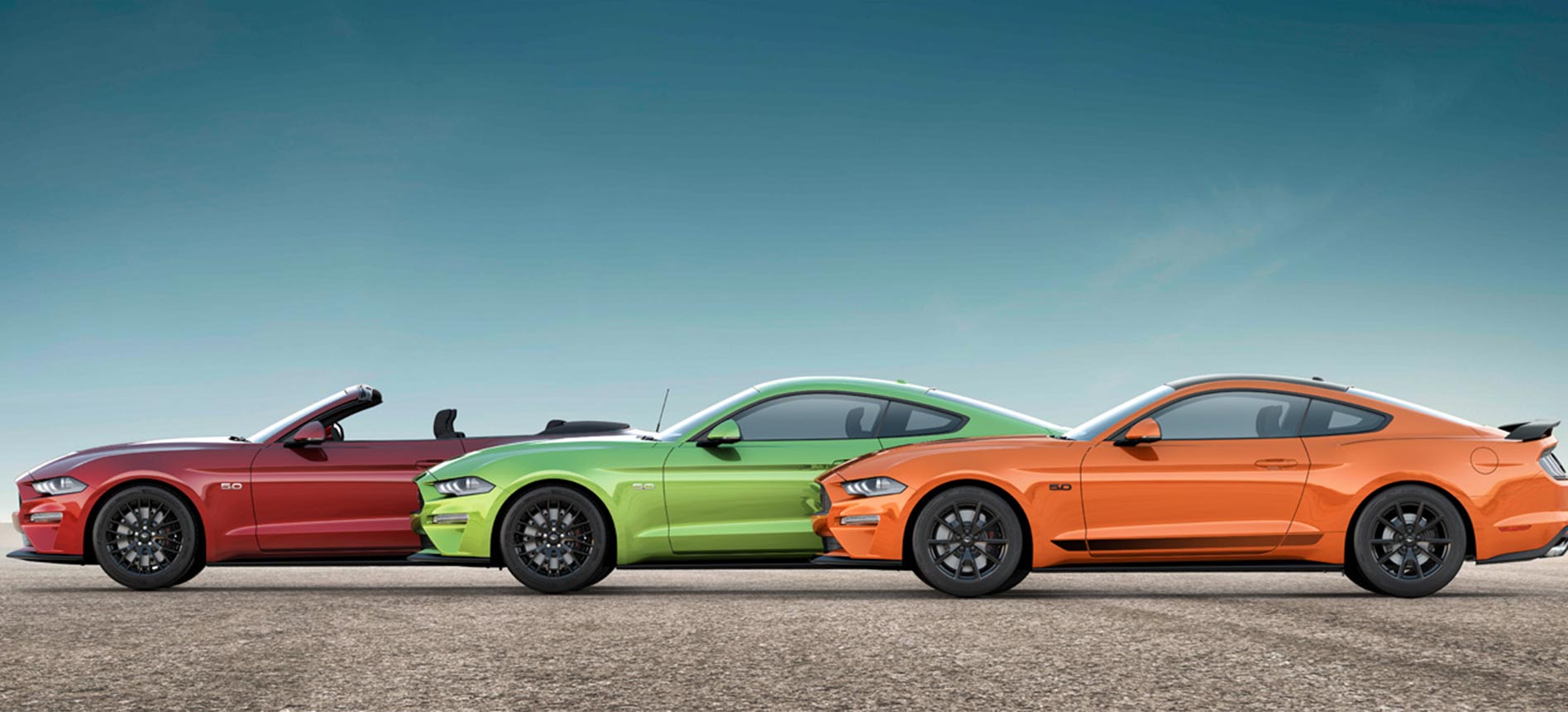
As such, the Mustang range now starts from $51,490 (before on-road costs) for the Ecoboost Fastback and finishes up almost $50k dearer at $100,480 for the Mustang R-Spec.
Ford managed to sell 309 examples of the Mustang in March which was up from 214 in February. However, on the whole, Mustang sales have endured a pretty steady slump in 2020, with new registrations down 40 per cent year-to-date compared to 2019. These pricing changes wouldn’t have been passed on lightly in this current climate.
Engine outputs stay the same, meaning the Ecoboost retains its 236kW/448Nm figures from the 2.3-litre turbocharged four-cylinder and the GT cars keep the 339kW/556Nm naturally-aspirated 5.0-litre V8.
The hotted-up R-Spec continues with its supercharged 5.0-litre V8 with 522kW/827Nm outputs as the hero car for the range – if you can find one.
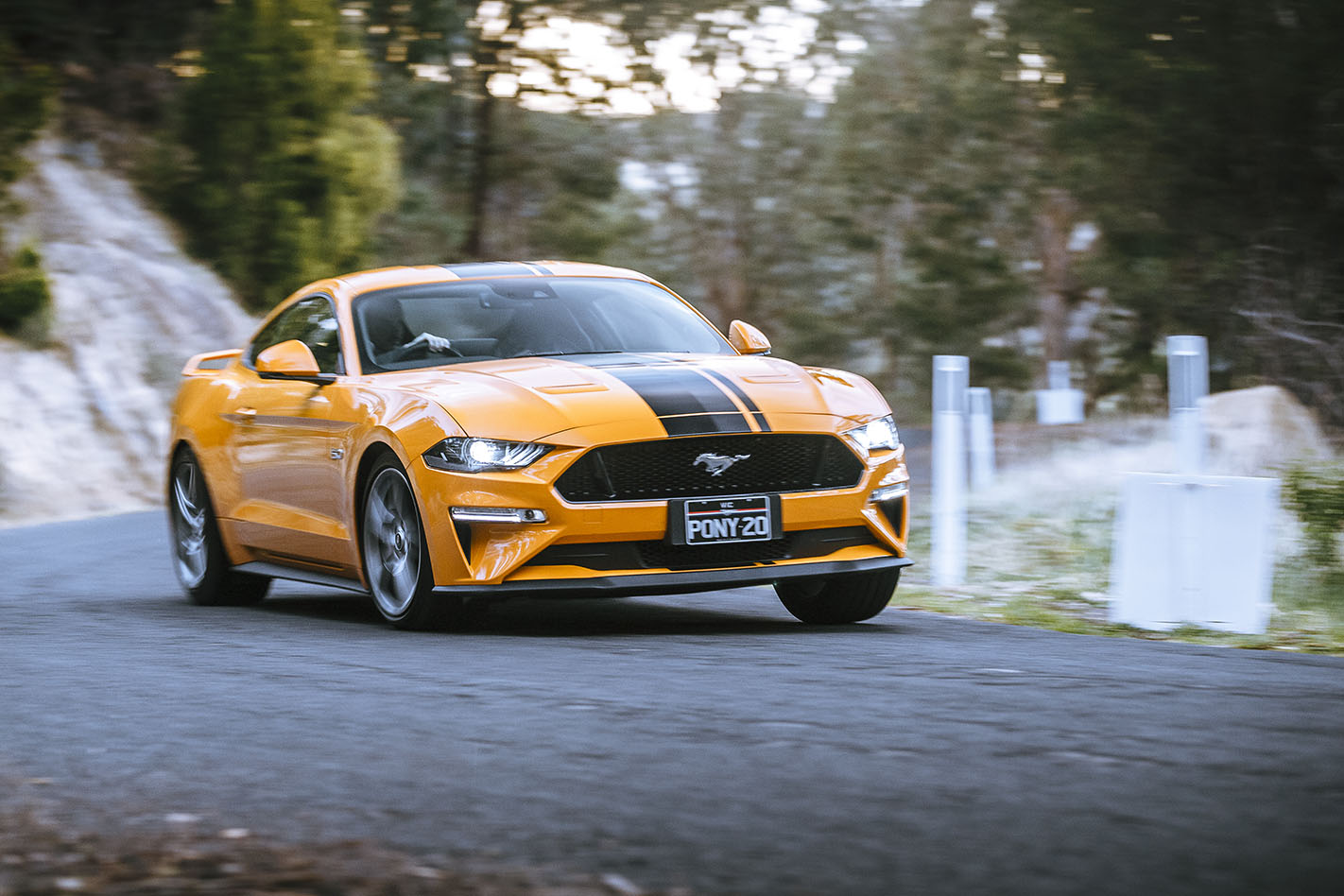
Convertibles continue to be only offered with a 10-speed automatic transmission and the R-Spec is only offered as a six-speed manual, but the Fastback cars can be had with either.
We haven’t come to expect any specification updates for the Mustang, leading us to suggest that the change in price is likely due to currency fluctuations.
We’ve contacted Ford Australia to find a definitive answer and will report back here once we have one.
2020 Ford Mustang Australian pricing
- Mustang Ecoboost Fastback – $51,490
- Mustang GT Fastback – $64,190
- Mustang Ecoboost Convertible – $60,790
- Mustang GT Convertible – $75,390
- Mustang R-Spec – $100,480
For almost twenty years, I commuted more than 150km to and from work every day, five days a week. Sounds like a punchline to a bad joke, right?
Looking at traffic data figures for the last couple of decades, I’ve spent at least 100 days of my life (and probably more) stuck in traffic jams. I’d sit in gridlocked traffic, surrounded by people like me, single occupants in sizable cars, all heading in the same direction at the same time, and wonder whether I could do anything about it.
No, said a succession of managers (who all lived no further than 10km from their respective offices). You need to be here so we can ensure that productivity is maintained.
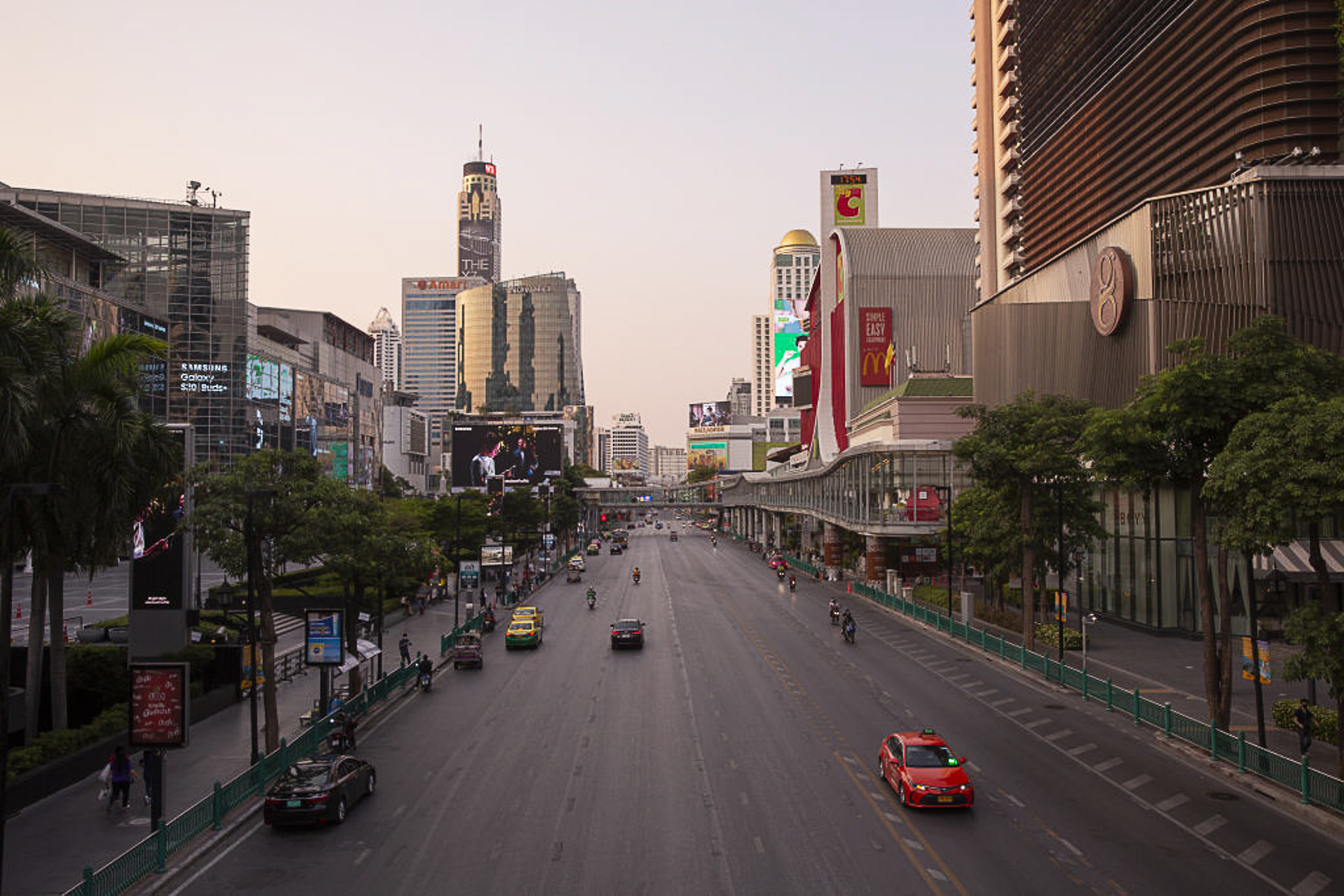
The bald-faced lie couched in that defence has been stripped bare in the last six weeks, as those of us who still have jobs are working from home (or WFH as it’s been stripped back to) and doing it – in my experience – with professionalism and enthusiasm.
No one is swanning about at the café – we’re not allowed to anyway – or skiving off to the beach. Thanks to Zoom, Monday, Google Meet and all the other tools we have at our disposal, it’s entirely possible to be more productive from home than it is in a modern open-plan office.
The lid is off the WFH jar, and it’s not going back on.
So where does this leave commuting? Will we look at driving to work by car in a whole new light going forward? Yes… and no.
Let’s look at traffic volume reduction over the last couple of months to start off with. Statistician Chris Holder, who runs a blog called Charting Transport, has run the calculator over some recent numbers, and reckons that traffic volume is down in Melbourne by some 40 per cent to the end of April 2020.
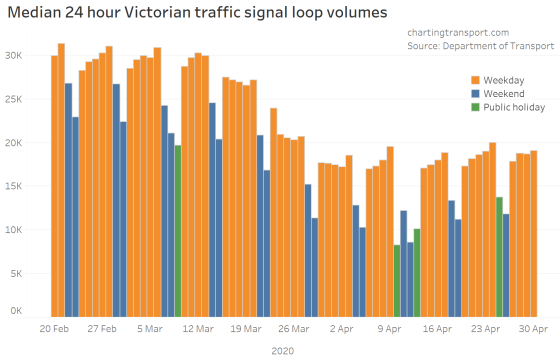
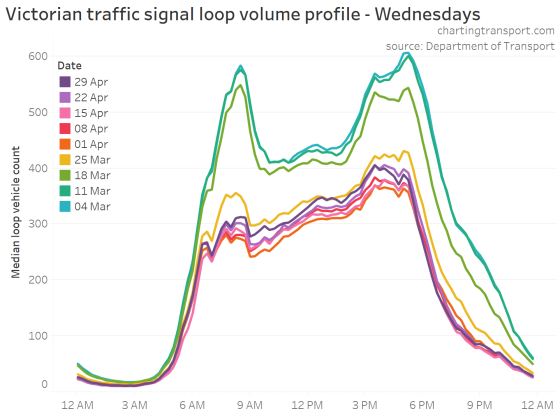
Using traffic signal loop vehicle count data provided by the Victorian government over the last three months, it’s plain to see that not only is traffic volume down, but the traditional peaks of morning and afternoon peak-hour traffic have flattened considerably.
Holder cautions that there are attenuating factors at play – public holidays and Easter traffic volumes, for example, are always softer – but with the implementation of social distancing and WFH, it’s obvious that traffic in one of the world’s most metropolitan cities has dropped markedly.
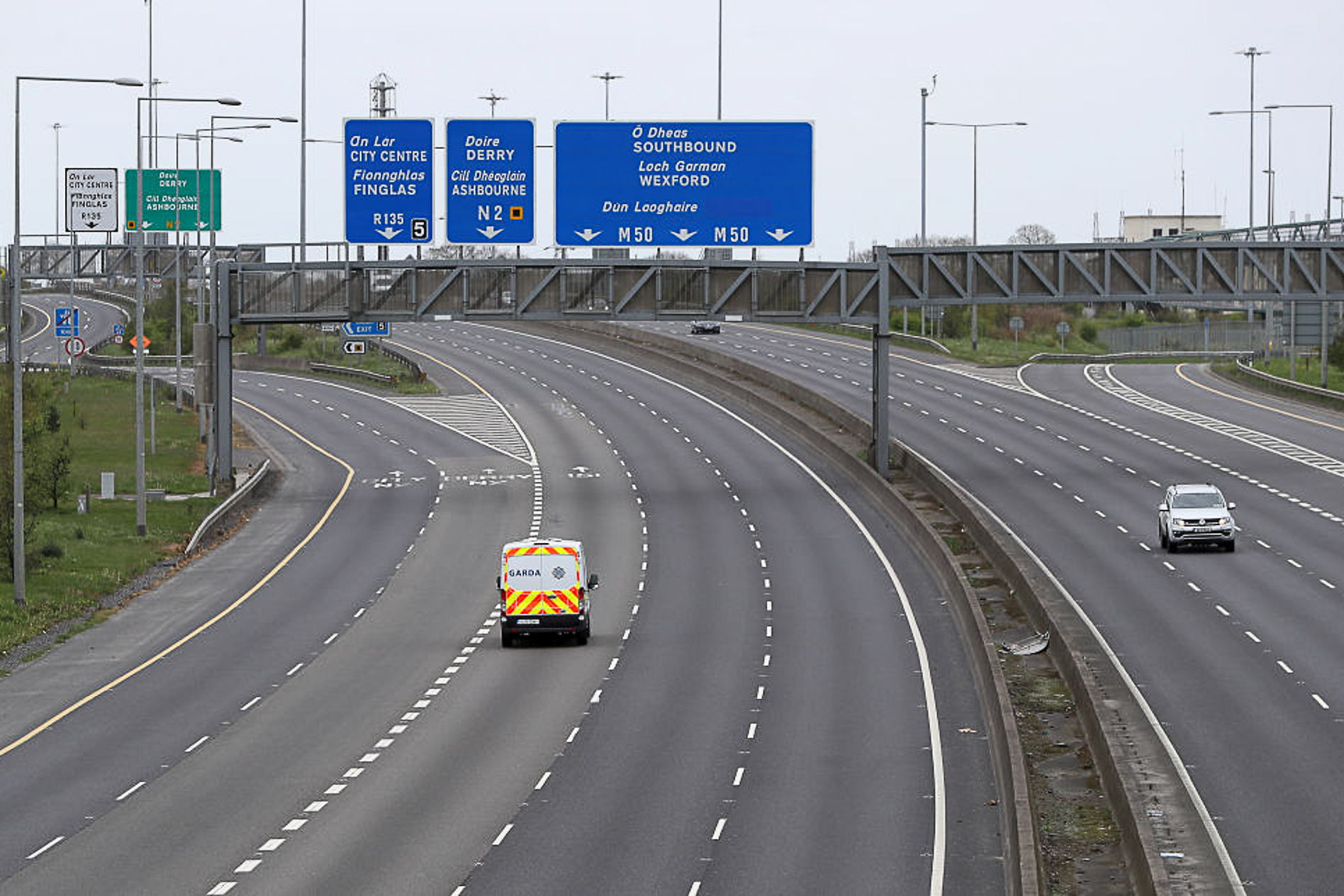
This data is backed by other sources, too. TomTom’s live-time traffic analysis tool shows that Sydney’s congestion levels are also down around 40 per cent in April compared to the same month in 2019.
Public transport, too, is experiencing a huge downturn. Foot traffic to transit stations in Melbourne in April fell almost 60 per cent, while Perth’s public transport network has recorded a 89 per cent decline in patronage to the end of April.
It’s a no-brainer to assign this reduction in traffic volumes and travel to people who now WFH as well as those complying with health department-imposed travel restrictions – but what will happen when restrictions ease in the months to come?
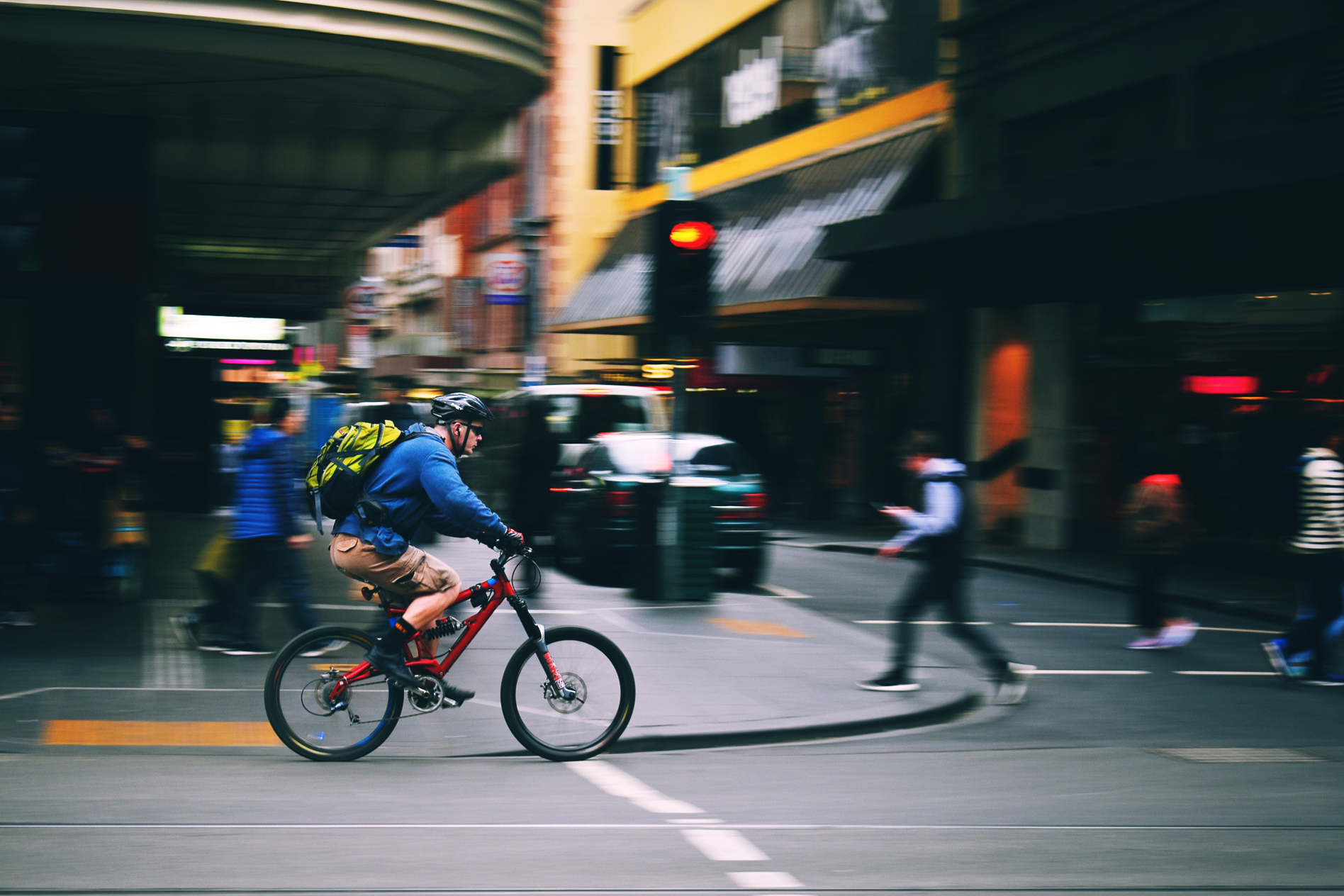
In cities like Paris and New York, an interesting phenomenon has popped up – those huge metropolises and others are actually adding cycle lanes at the expense of vehicle lanes, as cycling traffic grows in volume.
Experts suggest that the rise in cycling traffic has come as car density decreases and footpath traffic actually becomes too crowded for people to move around with social distancing rules in place.
As well, as incomes come under pressure, cycling is a cheaper way to travel – and it also counts as exercise!
But what of the humble car? Well, Chinese cities like Beijing are already starting to see increased car traffic volumes as people shun public transport in favour of the safety of a single-occupant car, rather than mass-transport solutions like buses and trains.
Whether this changes as social distancing measures – fewer passengers allowed on board, for example – become more commonplace remains to be seen, but for countries like Australia, the car is pretty essential.
Average commuting distances for most Aussies who own cars is between 16 and 18km, which largely precludes the use of bicycles for the majority of commuters.
However, the advent of the electric bike, or e-bike, could change that statistic in our relatively fair-weather country. With an average range of 50km and a governed top speed of 25km/h, e-bikes are becoming a valid alternative for people who might not have otherwise considered a bike as a commuting tool.
Personally, I wonder if everyone who is enjoying the bright blue skies and lower pollution levels that a decrease in vehicular transport has brought – global CO2 from fossil fuel emissions levels are tipped to drop by more than five per cent, while nitrous oxide levels have been slashed across the planet – and wonder whether a future without commuting is actually something worth fighting for.
The reality is, however, that traffic numbers will rise again in the coming months as people use the vehicles that they already own to isolate themselves from a threat that’s likely to exist for a couple of years yet – but, to the car industry’s increasing discomfort, there will be fewer people sliding behind the wheel in the medium- to long-term.
Whether you believe in ‘second chances’ or not, you’ve now got one if you were hoping to pick up a brand-new Ford Mustang R-Spec.
The limited-run supercharged muscle car, developed by Herrod Performance with Ford Australia as a factory product, reportedly sold out very quickly after it was put on sale (though not immediately, as some thought).
Number 272 of the 700 to be built has popped up as newly available in Port Macquarie, NSW, at Miedecke Motor Group, a dealership owned by the family behind Miedecke Motorsport.
Dealer principal and racing driver George Miedecke told MOTOR the car was originally allocated to a buyer who had to cancel the order, so the car is now on offer to the public.
Miedecke says the car is still for sale at the price most of the rest should have been sold for, approximately $120,000 driveaway. He add there were two other R-Specs allocated to the dealership, one which has a buyer waiting for delivery, and another intended for racing veteran (and George’s father) Andrew Miedecke.
Miedecke was unable to confirm if it’s the only R-Spec currently available as new from a dealership in the country, though MOTOR has contacted Ford Australia to find out if there are any more units yet to be claimed.
A quick search through the classifieds did reveal one privately available R-Spec, in Twister Orange, for $130,000 in ‘as new’ condition and 20km on the odo.
The 522kW beasts are still being constructed by a team of Herrod’s staff with Ford Australia input on the Ford Broadmeadows site, the first time cars have been built at that plant since the Falcon left us.
- Updates for Lexus LC coupe
- Small but important tweaks
- Convertible on the way
Available in showrooms from next month, Lexus Australia says the MY21 LC coupe will receive a range of chassis tweaks and equipment upgrades.
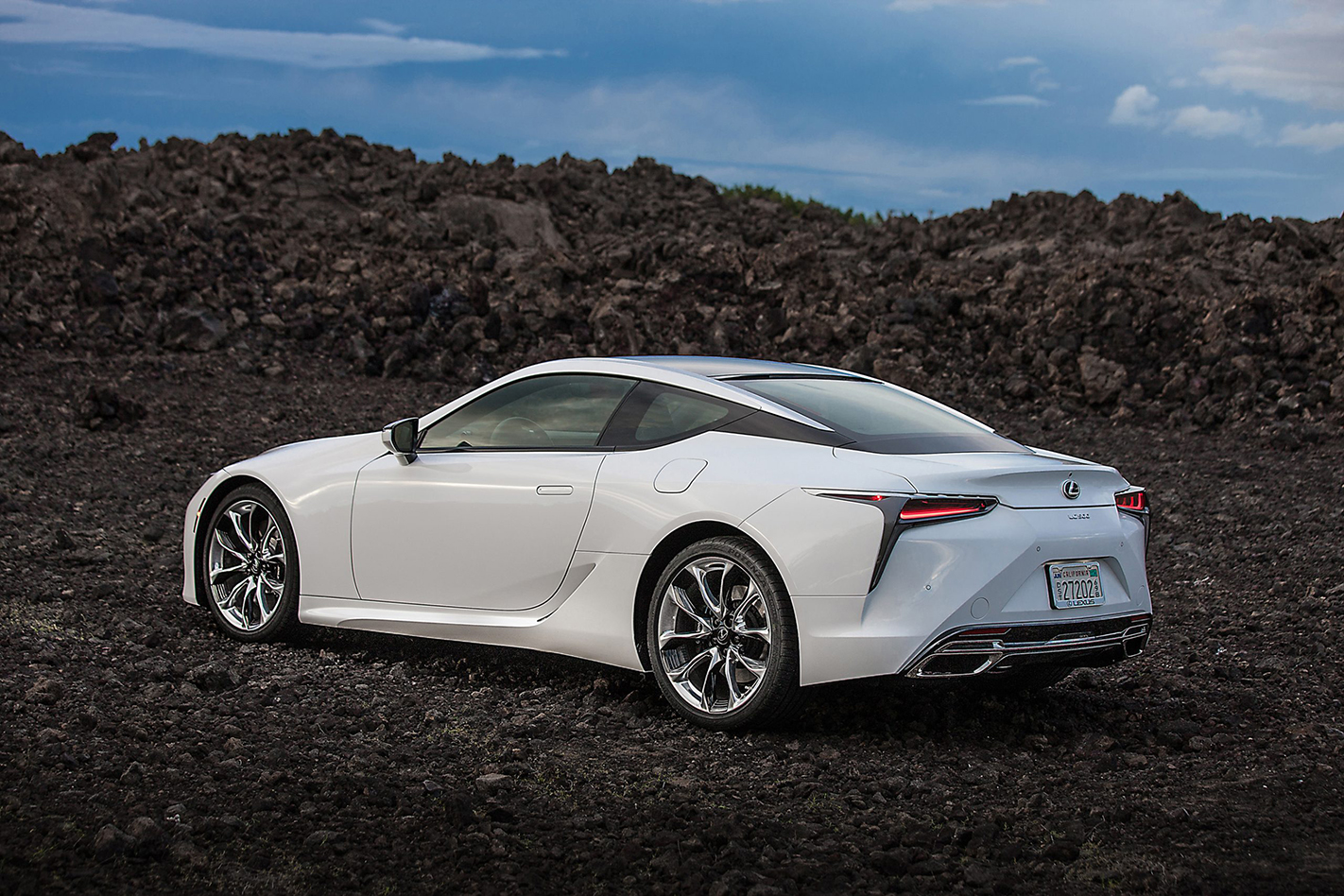
This includes a revised gearbox settings that Lexus claims improves throttle response for both the 5.0-litre naturally aspirated V8 LC 500 and the V6 multi-stage hybrid LC 500h.
In the LC 500 this means some black-box tweaking to enhance logic patterns for the 10-speed Direct Shift automatic transmission for gear upshifts at higher revs.
The LC 500h’s gearbox, meanwhile, is now able to downshift to second gear (previously third) while braking in the Sport S and Sport S+ driving modes, making for better acceleration out of a corner.
Lexus claims it has also enhanced steering feel by shedding 1.65kg from the front control arm, while stiffer front and rear springs help tighten handling.
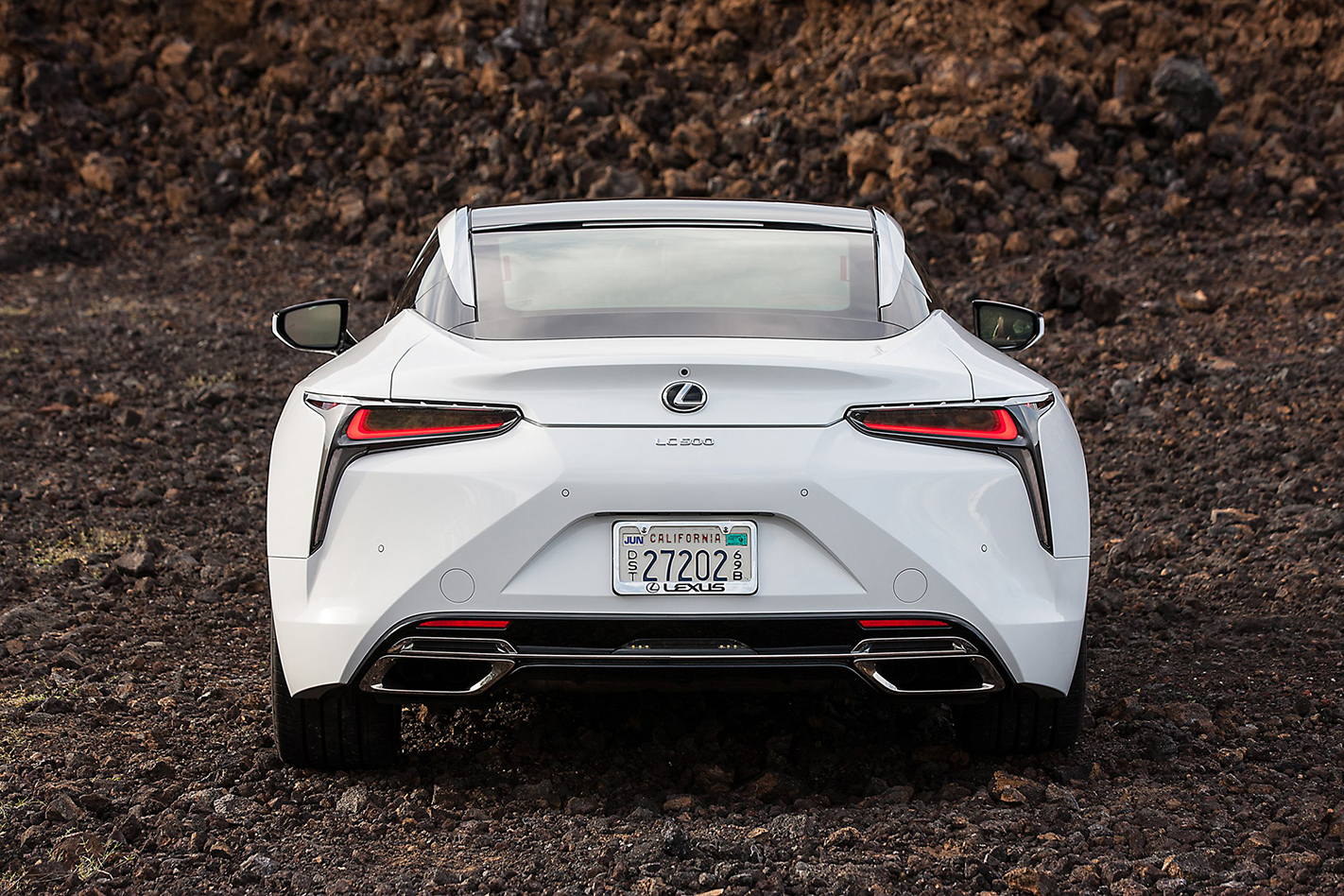
The LC’s adaptive dampers have been revised, while a Yamaha-developed performance damper now lives between the subframe and the chassis to add more stability.
The rear suspension has also been tweaked, with stiffer springs, a hollow anti-roll bar and slightly lighter 21-inch alloy wheels that save 3kg for the set.
Active Cornering Assist – otherwise known as torque vectoring – taps into the vehicle stability control to brake the inside wheels during high-G cornering, and is now standard across the range.
New comfort features include a heated steering wheel and an easy-access electric front seat slider to make getting in and out of the racy LC a little easier.
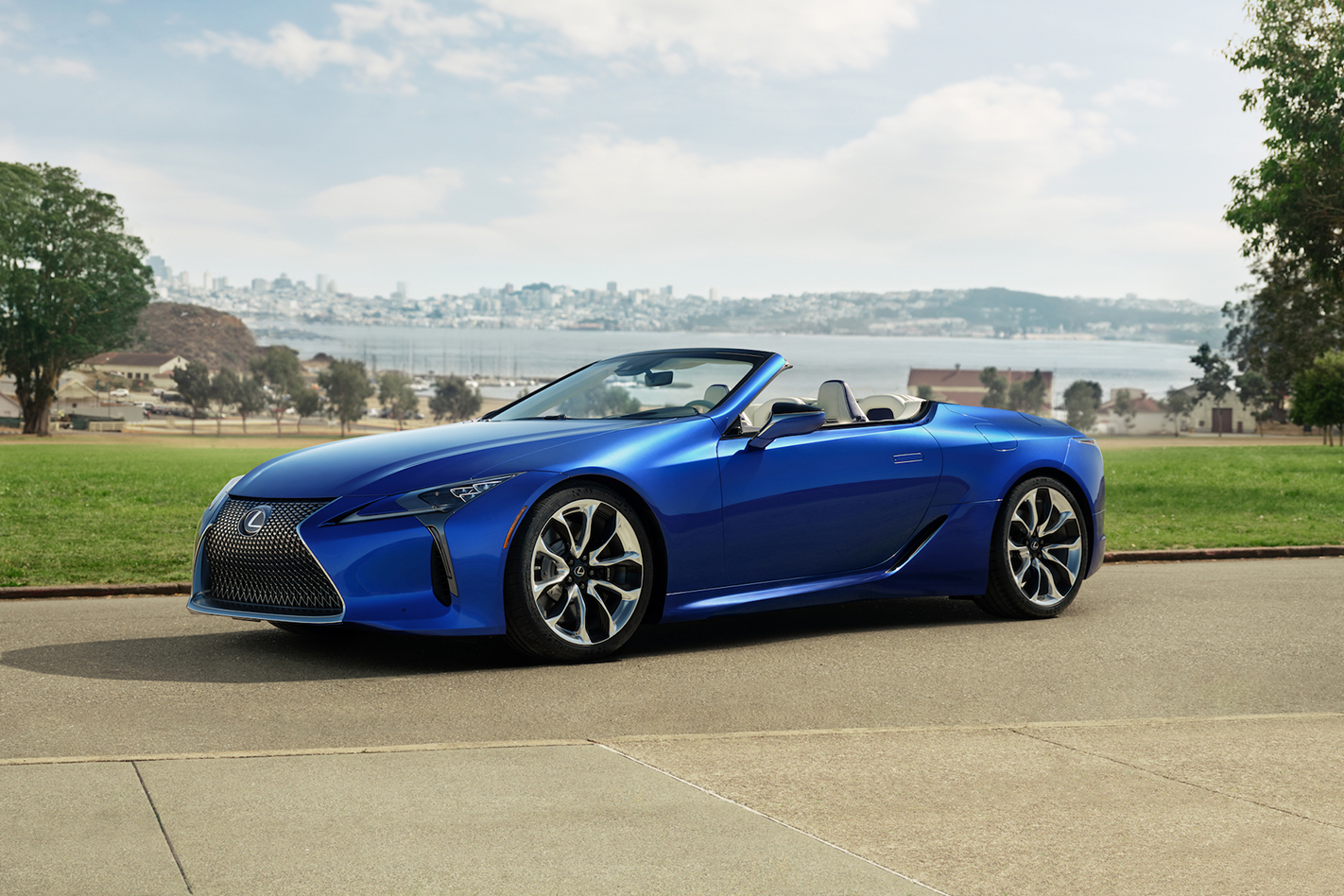
Pricing and full specifications for the updated LC coupe and new LC convertible will be announced closer to their launch dates, which is looking like the second half of 2020.
The LC 500 and the LC500h coupe are currently priced at $190,000 plus on-road costs.
Bentley has announced a carbon styling pack for the Continental GT and the Bentayga SUV.
The pack, designed to give its models more ‘visual sporting appeal’ will be available on the two models in the form of a carbon front bumper splitter, side skirts with Bentley badges, a carbon rear diffuser, and boot lid spoiler.
For the Bentayga, there’s also a “bi-plane tailgate spoiler” as well as rear screen strakes, with optional front air blades, wing vents, and mirror caps in a matching glossy carbon fibre finish.
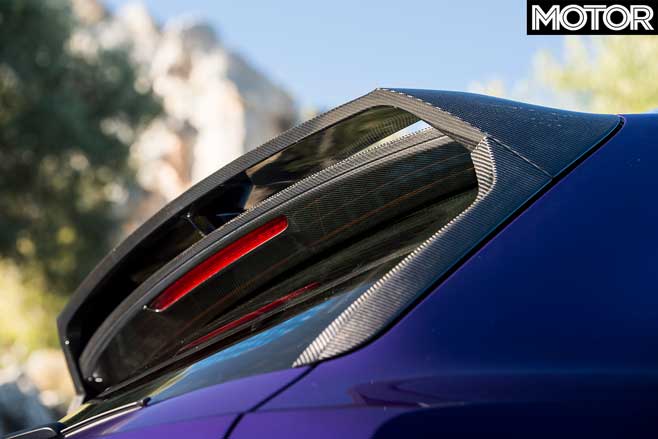
“The Styling Specification has been developed by the same engineering team responsible for the carbon fibre components on the previous-generation Continental GT, including the GT3-R and Supersports models, and the Pikes Peak and Ice Race Continental GTs.”
Bentley says after the majority of the development process is complete, a substantial testing regime ensures the parts are up to scratch. This includes 100,000km of test driving overall, with specific testing for ‘wading [water], kerb strikes, and rough roads’.
“The parts are also assessed across all driving conditions up to and including top speed, for stability, feel and performance under both acceleration and braking to ensure that the Bentley driving dynamic is not degraded.”
Bentley says the new Flying Spur is also soon to receive its own carbon styling pack.
We’re not sure where you stand on the subject of ‘restomods’. You know, bringing a classic car up to date with more modern parts. Many see it as a sacrilege to mess with period fixtures and fittings, while others see it as fair game. Much depends on the car in question. Some classic car icons are almost untouchable. Most would count the Porsche 959 among them. But not Bruce Canepa.
With a history of Porsche racing dating back to the ’70s, and podiums at the Daytona 24 hour and Pikes Peak on his resume, Canepa understands what makes the 959 special. The car you see here finished in resplendent Viper Green is what Canepa describes as a “reimagined” car. Aside from the paintwork and the sumptuous brown leather with green contrast stitching, the Canepa 959s have had a series of mechanical upgrades to help them realise their potential.
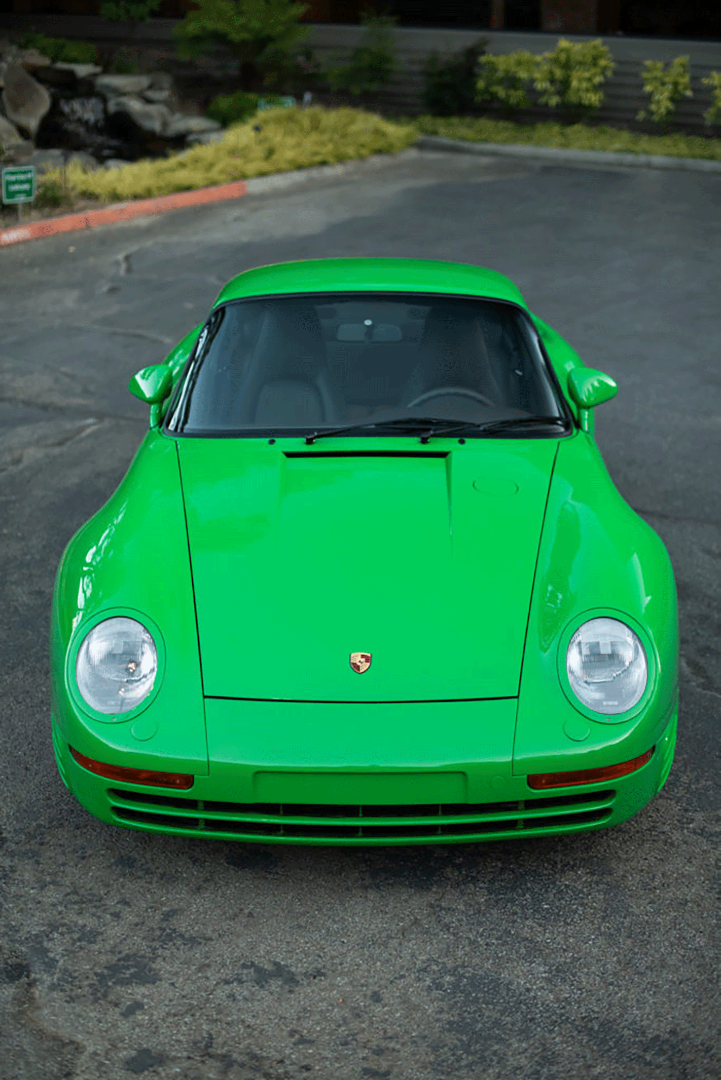
“The car started with 450hp (336kW), but Porsche’s engineers were building a race car that could handle up to 750 (559kW), so in many ways the car is now finally what it could have been,” says Canepa.
First, let’s cast our gaze back to 1986. Originally developed to conform to Group B racing regulations, the Porsche 959 was revolutionary. Only 292 examples were built during a two-year production run, although an additional eight sneaked out of the Baur plant gates as a set of parts in 1992 and 1993. At a time when Ferrari was working on the bare-bones F40, the 959 went in a very different direction, introducing all-wheel drive with a front/rear variable torque split, sequential turbochargers and even an electronic suspension system that could alter the car’s ride height. At 3.7 seconds to 100km/h and with a top speed of 319km/h, it was the fastest production car in the world.

What was mind-blowing then is merely pretty brisk now. A rear-drive Porsche 992 Carrera S is quicker to 100km/h and would leave the 959 for dead in corners. Therefore, the 959SC (Sport Canepa) now boasts around 600kW and 880Nm, close to double the original output and good for a 0-100km/h time of around 2.5 seconds.
Each 959SC is an individual commission with no two examples alike. This car is number 11 of what Canepa claims will be a run capped at 50. More than 4500 hours are spent to complete each vehicle. The tub is stripped down to bare metal and zinc-plated. Paint colours are generally chosen from Porsche’s Paint-to-Sample palette, and the custom leather interiors can be made in any hue imaginable. The 18-inch hollow-spoke magnesium wheels are particularly lovely, built by the original manufacturer and retaining the optic of the old 17-inch items, but now without the fiddly Dunlop Denloc bead profile and thus shod with tyres that are up to that vast increase in performance – Michelin Pilot Sport 4S or Cup 2.
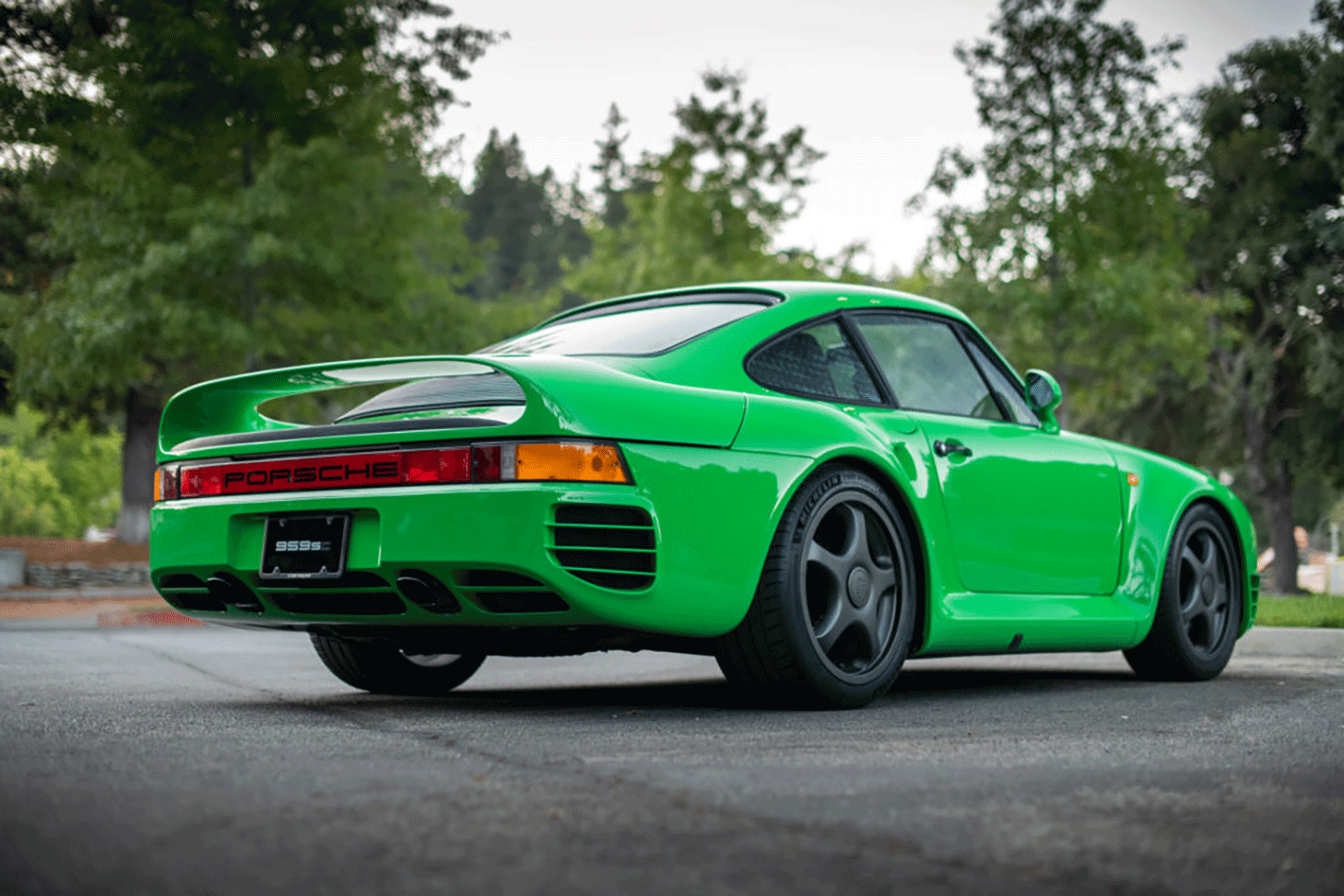
Canepa has developed proprietary dampers for the 959SC and these are twinned with titanium coil springs that use the original 959S design. Upgraded brakes are a must too, as are more powerful headlights. Titanium also has been used extensively in the design of the exhaust and many engine ancillaries to retain strength while reducing weight.
Want one? First you need to show up at Canepa’s facility in the Santa Cruz hills with your own 959. That will have set you back somewhere in the region of A$2.4m. Add another A$1.2m to that and you could be one of the lucky 50.
Sacrilege? Not according to Canepa. “No offence to anyone, but it’s actually better than new,” he says. It’s hard to argue.
BMW currently sells 28 different road car models with an M badge on the back, yet the first to carry any sort of Motorsport designation was the E12 530 MLE that rolled from the Rosslyn plant in South Africa back in 1976. In the intervening 44 years, the company has built many very good M cars but, I’d argue, only three truly great models: the E46 M3 CSL, the current M2 and the E39 M5.
It’s the M5 that might just be the most perfect archetype of the M genus. The raw ingredients are bewitching in their simplicity: a 4.9-litre normally aspirated V8 engine, a six-speed manual gearbox and rear-wheel drive. There are many reasons why this could be seen as the zenith of BMW’s M car development, but it’s the combination of conceptual purity and execution that distinguishes it.
Consider what came next. The E60 M5 was, by comparison, a bit of a tangle. We can argue back and forth on Chris Bangle’s styling for that car, and the same goes for the V10 powerplant, but the M division lost its nerve when it came to the fundamental way the M5 went down the road. The E39 offered an artfully polished chassis set-up from the factory. Good drivers instinctively knew how to get the best from it. The E60 M5 swamped the customer in choices because this was a vehicle with almost 600 permutations of gearshift method, power settings, shift speeds, suspension adjustments and traction control thresholds.
| Read next: Five BMW M3 CSL facts you probably didn’t know about
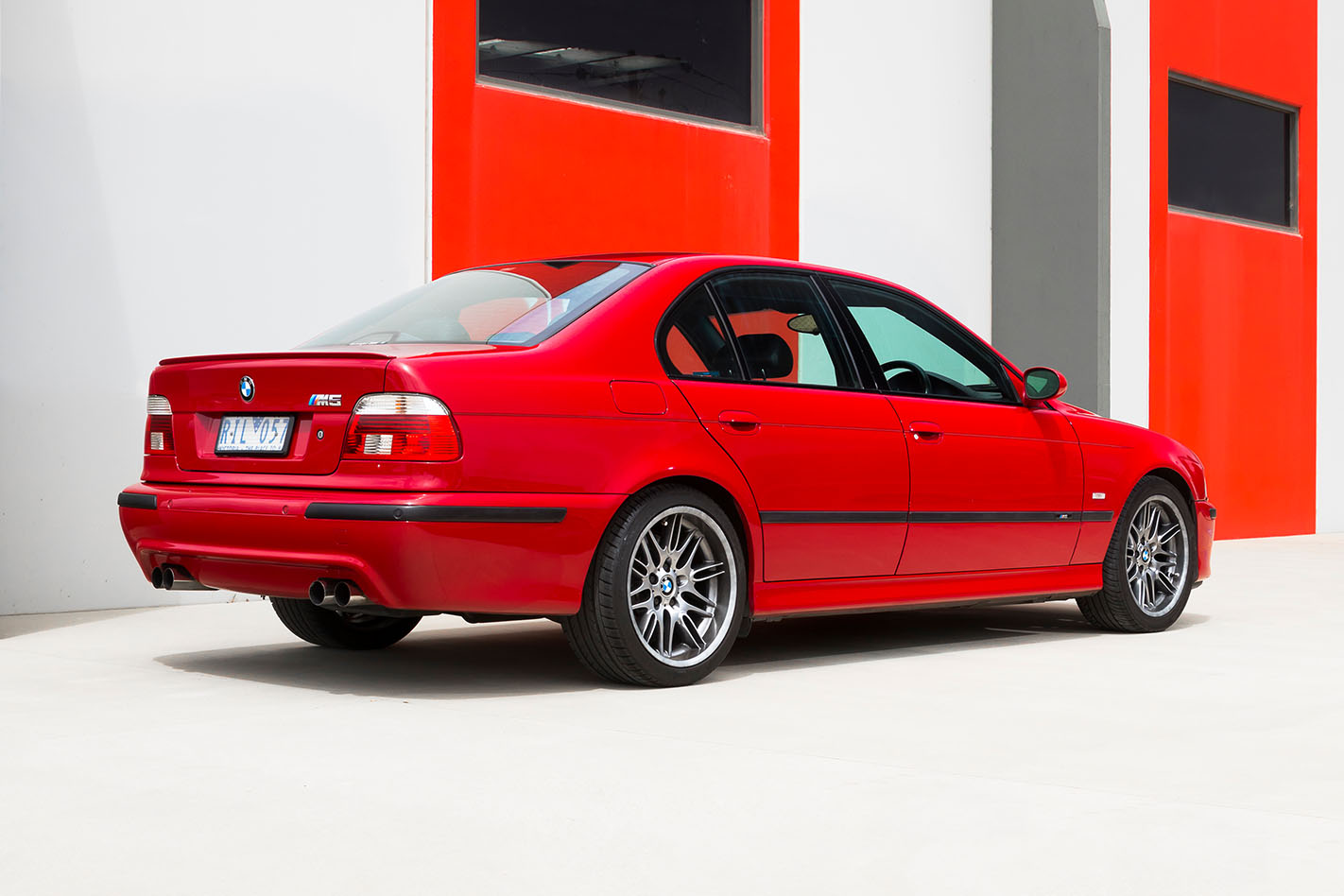
The E39 M5 had a Sport button and the ability to disengage the Dynamic Stability Control (DSC). That’s it. And few bother pressing Sport because it oversharpens the throttle and adds unnecessary heft to the steering. The throttle and steering are artfully honed as they are.
Equally straightforward was the M5’s mission. It had to wrest back superiority from Mercedes-Benz and AMG. BMW knew that Affalterbach was forging a technical lead in powerful V8 models, following the
large-capacity units seen in the W124 sedans and coupes. Its successor, the W210, was introduced in 1996, and E50 and E55 AMG models soon followed. BMW had stretched the S38B38 straight-six to capacity in the E34 M5 with the final cars making 250kW, but Munich knew it needed a powerplant that represented a step change in philosophy and capability.
| Read next: 30 years of BMW M3: E36 M3R
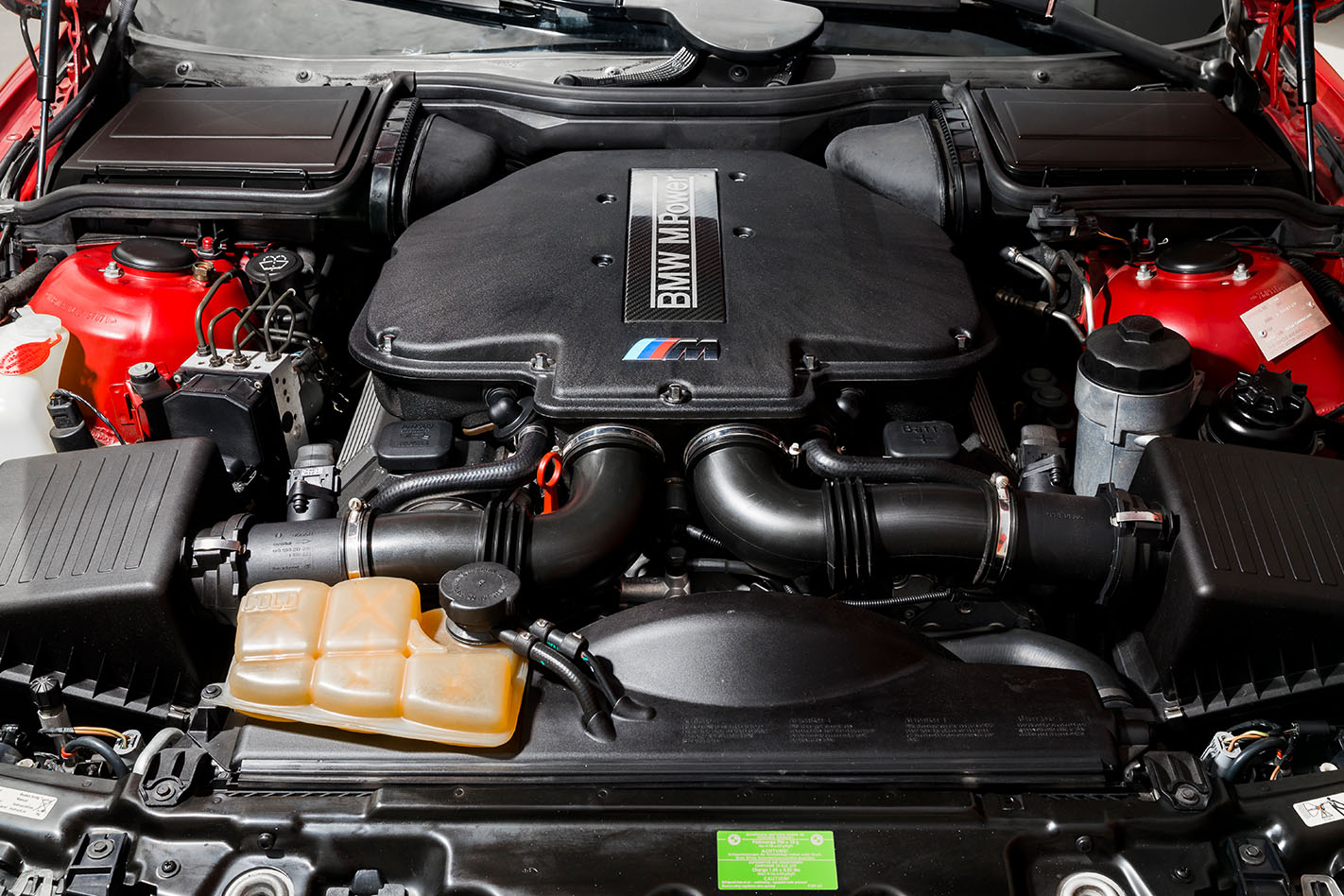
The 4.9-litre S62 V8 in the M5 was the first eight-cylinder engine fitted to an M car, and some diehards were at first affronted by this heavily reworked version of the 4.4-litre lump from the 540i, claiming that it fundamentally changed the character of the M5. It needed to. As Alexander Hildebrandt, the E39 M5 project leader, said, “I well remember the discussions about the BMW M5, and how – in the eyes of some M fans – it still had a flaw,” namely that V8 engine. The alternative was a heavily boosted six which, with the benefit of hindsight, would have rapidly been outgunned as AMG turned to forced induction for its V8s.
The E39 M5 was also a landmark car insofar as it was not built at the BMW Motorsport facility at Garching, instead running down the regular 5 Series line at Dingolfing, near Munich. Any suspicion that it might have been M lite or dumbed down in any way were scotched when it became clear how extensive its upgrades were. The engine was bored and stroked to 4941cc and fitted with individual electronically controlled throttle bodies, hollow camshafts, a duplex chain-drive for the intake cams and a trick lubrication system with G-force-sensitive scavenge pumps.
The suspension retained the basic 5 Series configuration of struts up front and a multi-link rear, but all the details were changed. The steering links were strengthened, the bushings beefed up, unique front wheel bearings were engineered, heftier lower rear control arms from the E39 Touring were introduced, while the rear integral link came from the V12 750iL. Polyurethane auxiliary springs sharpened body control, as did junking the rubber rear suspension bushings for steel ball joints. The spring height was cut and spring rates increased, shock valving was modified and thicker anti-roll bars were fitted front and rear. At the end of this exercise there was very little commonality between the suspension of the M5 and that of the 540i.
| Read next: Don’t expect BMW to limit power figures
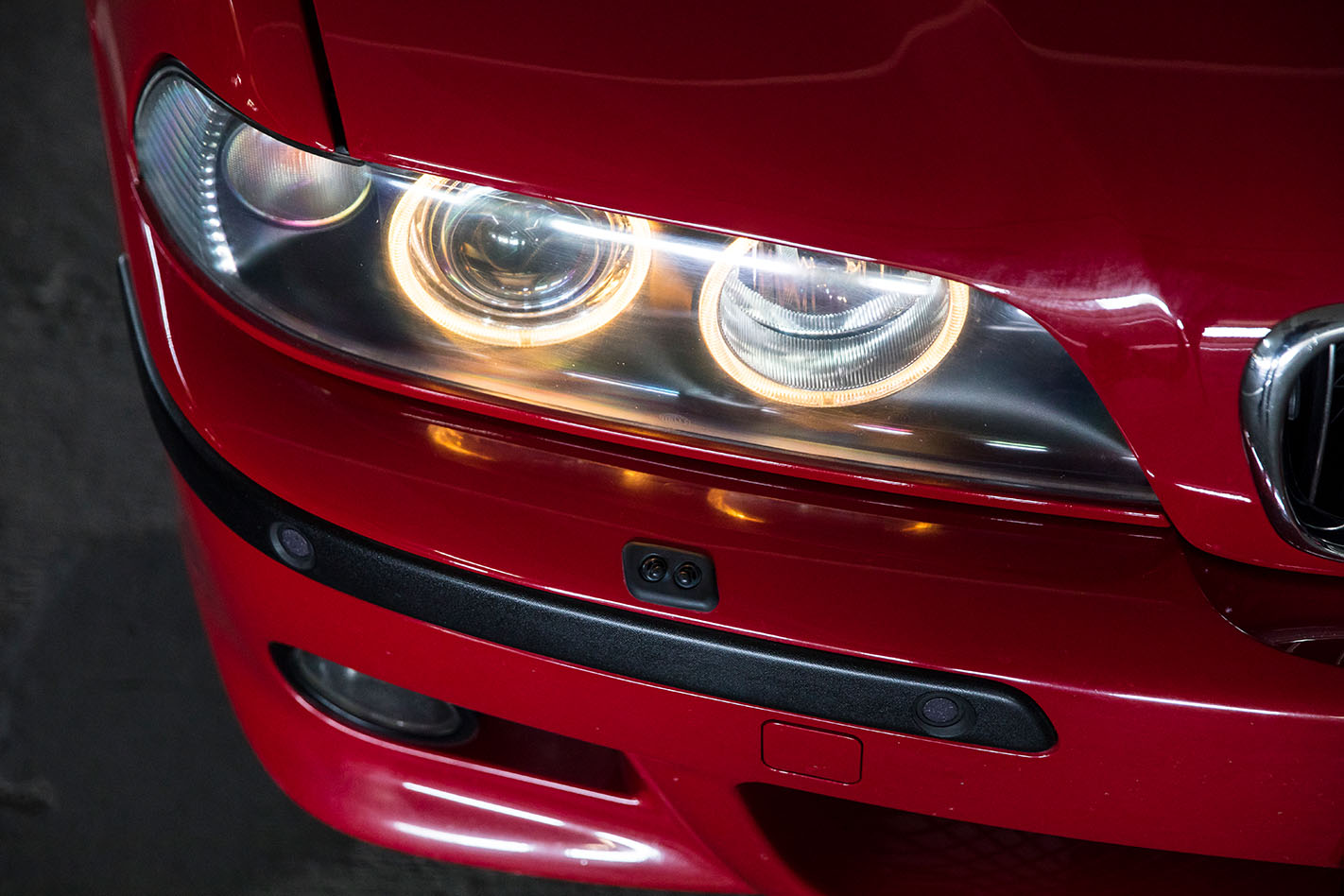
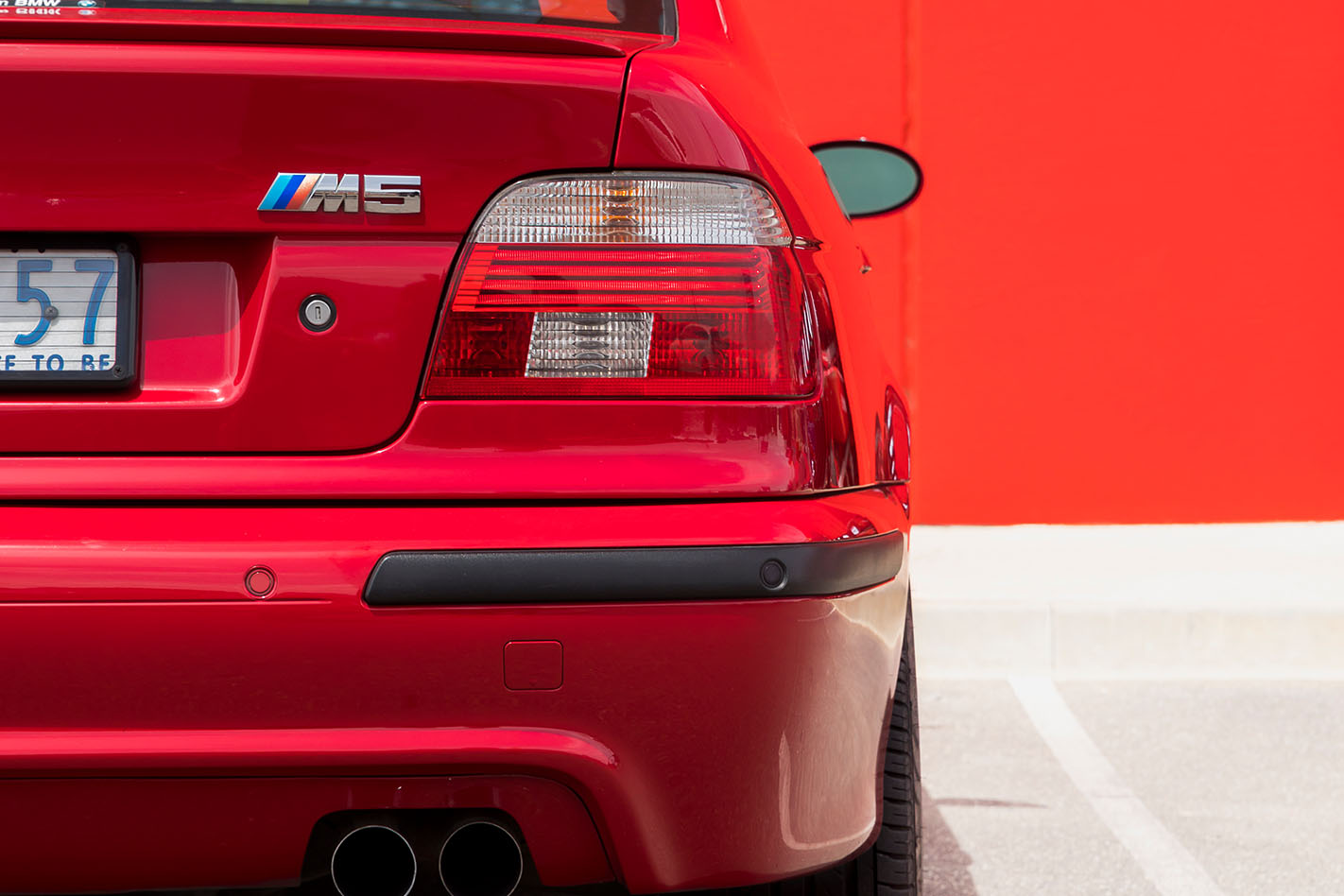
The M division then sharpened the ratio of the recirculating ball steering, fitted bigger brakes, 18-inch alloy wheels, ESC stability control that talked to the Siemens MSS 52 Motronic digital engine control system, and a beautiful exhaust that finished in quad tips. A subtle but purposeful bodykit, clear turn signals and a broader kidney grille gave the E39 M5 the requisite look of restrained menace.
Wheels somewhat missed the boat on the E39 M5. The first comparison test we put it into was in April 2003, by which time it had been on sale in most markets for four years. In those intervening years, Mercedes had retired the W210 E55 AMG and its successor, the W211-generation model, had acquired a 350kW/700Nm supercharged V8. Against that sort of muscle, the 294kW/500Nm BMW looked a little gun-shy. Nevertheless, Wheels scribe Graham Smith realised that while a new front had opened in the power wars, the M5 was still the sharper tool, noting “the BMW’s chassis is a driver’s delight compared to the Benz’s which, while being awesomely competent, lacks for those last few degrees of engagement.” It’s those final degrees that differentiate a good sports sedan from a great one. And, make no mistake, the E39 M5 deserves its place at the very top table.
Take its size. Its road footprint is significantly smaller than a modern M3, so it never feels unwieldy to thread along a twisty road. It is heavy, though, and the suspension tune, while more focused than its 5 Series brethren feels, by today’s standards, relaxed. The car you see in these images is the exact same vehicle we shot for the 2003 comparison against the Mercedes-Benz E55 AMG and the Jaguar S-Type R, owner Josh Davis having added another 130,000 kilometres to its odometer in the intervening 17 years.
| Read next: Modern Classic: Audi Quattro
From a personal perspective, an ‘Imola Red II’ E39 M5 means a fair bit to me as well. It was the first car I drove on my first international press event for The Times of London. Talk about being thrown in at the deep end. Back then a car that could sprint to 100km/h in 5.3 seconds and rev to 7000rpm felt like something from another dimension; now, while the M5 is still an event, its performance is about what you’d expect from a respectable hot hatch.
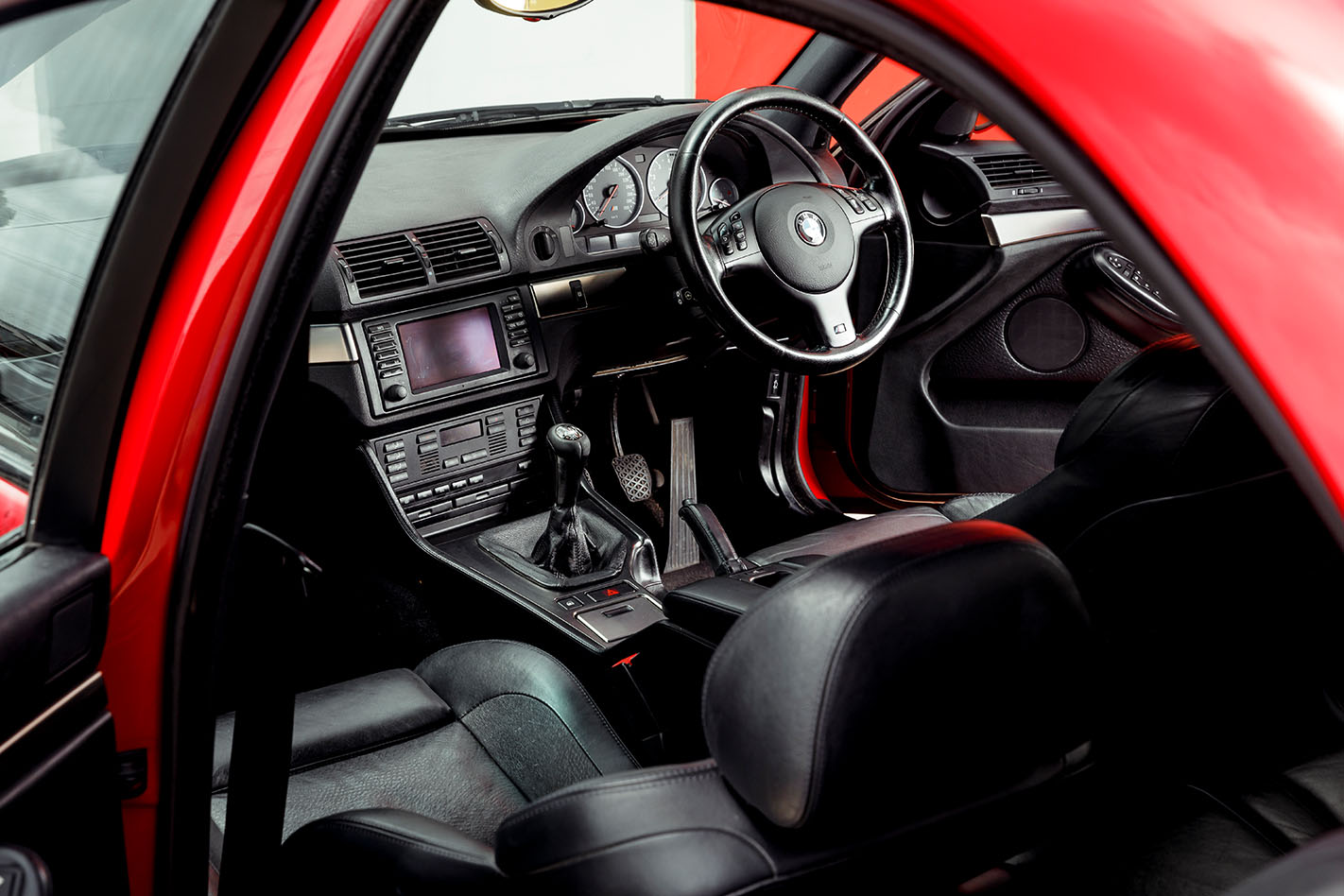
The interior stands up beautifully from an ergonomic perspective, the dial pack hailing from an age when BMW put a premium on readability. There’s an inherent rightness about a six-speed manual, hydraulically assisted steering and a good old-fashioned handbrake. For many, the E39 M5 marked a sweet spot; a blink-and-you’ll-miss-it handover from the analogue to the digital. So you have a central screen with sat-nav, a drive-by-wire throttle and the safety net of a rudimentary ESC system should you want it, but almost everything else is old school.
The E39 M5 didn’t change a great deal throughout its lifetime. Some additional paint finishes were phased in, and the car received a facelift in 2001. That introduced the ‘Angel-eye’ headlights, revised LED tail-lights, front parking sensors, a chubbier E46 M3-style steering wheel, an upgraded sat-nav screen, rear head airbags, grey dials, an upgrade to the air-con and the option of a punchier M audio system.
| Read next: Mercedes-Benz 190E EVO II Turns 30
For such a specialist model, the M5 is far from temperamental, but when inspecting one it pays to understand which parts are M5-specific, and therefore expensive. BMW ironed out a lot of snagging points with the 2001 facelift, so many of the irritating minor quality issues that afflicted early cars were fixed. In other words, buy on condition, but if you’re down to a decision, buy as late an E39 M5 as you can get. There are three key mechanical issues with the E39 that you need to keep tabs on.
The S62 lump featured a secondary air-injection system to reduce cold-start emissions. Over time, burnt engine oil vapours are ingested via the intake manifold and create a solid build-up in the cylinder head that requires an expensive (circa-$2000) fix. Look for the SES light illuminated in the dash and a Secondary Air Pump Low Flow fault code.
The VANOS (variable valve timing) system also can be susceptible to a diesel-like rattling. Some owners ‘cure’ this by introducing a heavier oil. Don’t do this. BMW initially recommended 10W-60 but in March 2000 changed that to a 5W-30 Castrol TWS (Edge these days) due to a minor change to the piston rings The rattle is fairly normal at start-up as the oil makes its way to the top of the engine. Post March 2000 cars received an oil accumulator to try to alleviate this issue.
| Read next: Modern Classic: Subaru Impreza 22B
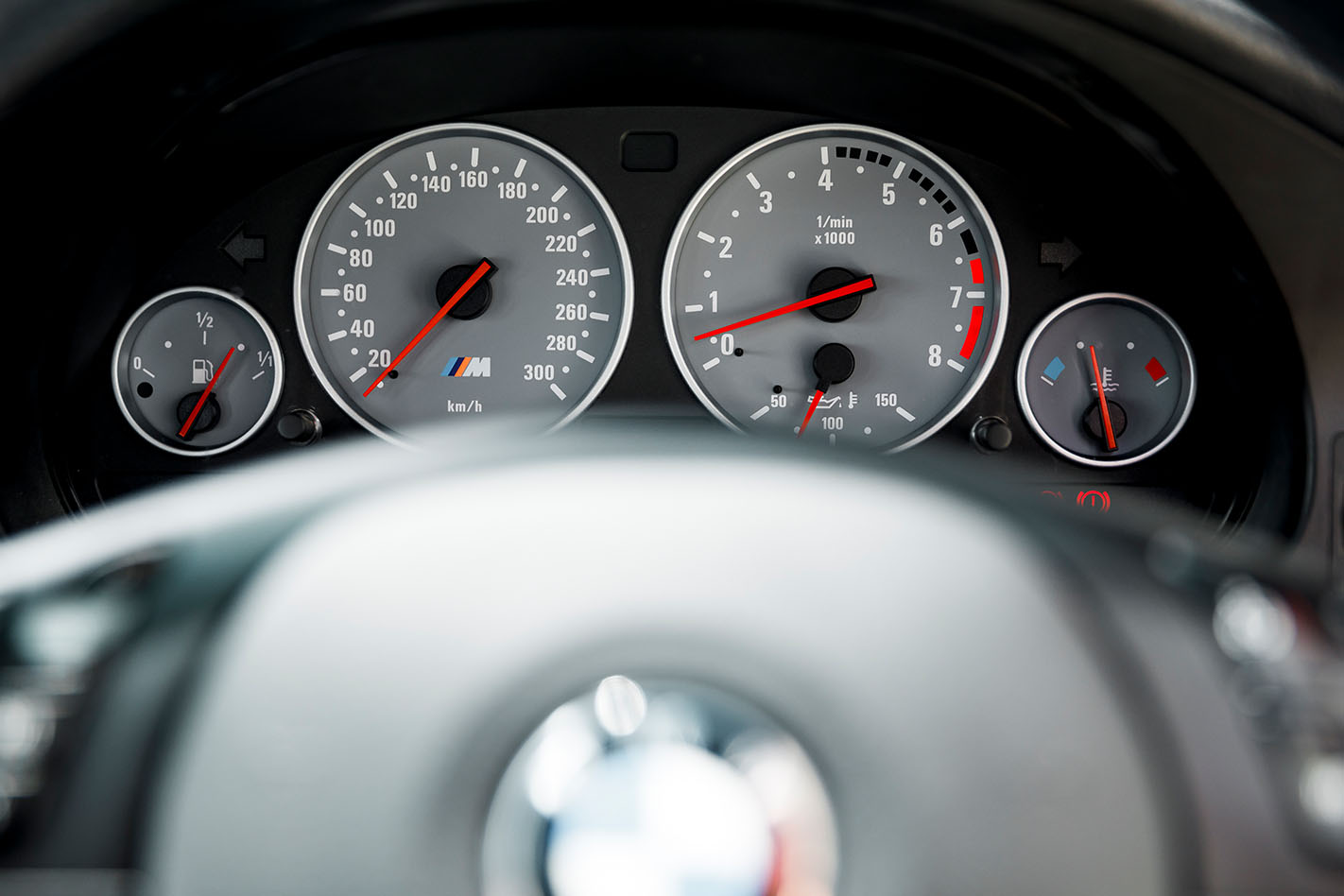
The third item to look out for is a worn timing chain tensioner; an issue often exacerbated by incorrect oil usage. It can seize, which wears the chain and its guides. It’s not a big job but ask the previous owner when it was last performed. It’s a relatively inexpensive part and changing it every 40,000km seems wise..
Make the effort to track down a good BMW E39 M5 and it still has the ability to make many modern super-sedans seem long on window dressing and short on nuanced chassis engineering. The M5 was a case study in how to transition a hand-built sensibility onto a line-built car. It was purposeful, athletic and charismatic, and now, as we crave feedback, delicacy and authenticity more than ever, its light only burns brighter.
| Read next: Modern Classic: Lamborghini LM002
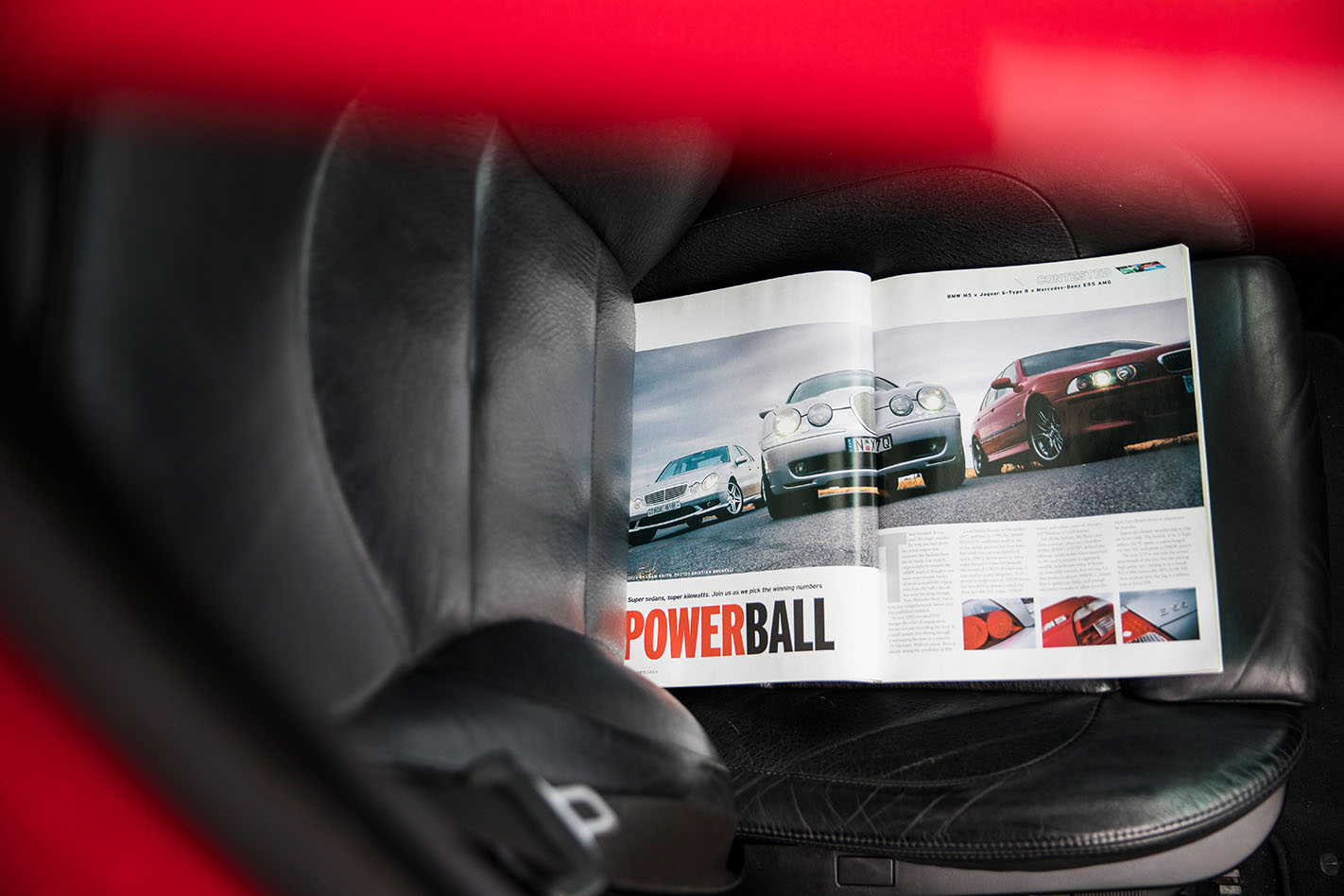
Who owns one? Josh Davis – Wendouree, Vic
“I grew up with Wheels and remember reading the April 2003 issue with the E39 M5 when I was just out of school. I told my friends, ‘I’m going to have one of those.’ Fast-forward to 2008 and I found myself in the position to buy one. It was only after I got it home that I realised it was the same car from the Wheels road test. It’s got one modification and that’s a muffler delete. It now makes my E63 AMG sound positively tame! This car is everything. They’ll have to bury me in it!”
Fast Fact
BMW built one solitary left-hook E39 M5 wagon in Titanium Silver with black leather … and then kept it to themselves. Since then a number of ‘tribute’ cars have popped up with reasonable regularity where owners transplant their E39 M5 sedan bits onto a 5 Series wagon body. So if somebody tries to sell you one claiming it’s genuine, it ain’t.
The Good: Handling acuity; magnificent V8 powerplant; appreciating in value; ergonomics; lofty position in M-car firmament
The Bad: Depressed valuations saw some fall into wrong hands; price of M5-specific parts; appetite for tyres; VANOS rattles
By the numbers
$250K – 2018 auction price of a 437-mile example
425 – Paint code for launch colour: Silverstone metallic
13.5 seconds – 0-400m as tested in 2003
20,482 – Production run 1998-2003
25% – Maximum locking percentage of limited-slip diff
SPECS
Model BMW E39 M5
Engine 4941cc V8 (900), dohc, 32v
Max power 294kW @ 6600rpm
Max torque 500Nm @ 3800rpm
Transmission 6-speed manual
Weight 1795kg
0-100km/h 5.3sec (tested)
Economy 15.5L/100km (tested)
Price $195,800 (2003)
It’s 6am and the sun is only just beginning to transform the sparkling waters off the coast of Cairns from the inky blackness of night to its translucent blue through a gloriously golden sunrise.
This feature was originally published in a previous issue of MOTOR
Its rays are piercing through, and spraying out of, a gathering of fluffy clouds on the horizon and snapper Brunelli and I are wiping the sleep from our eyes as we exit the hotel foyer ready to start one of Australia’s most epic driving adventures; a trek to Cape York, the northern most point of the country.
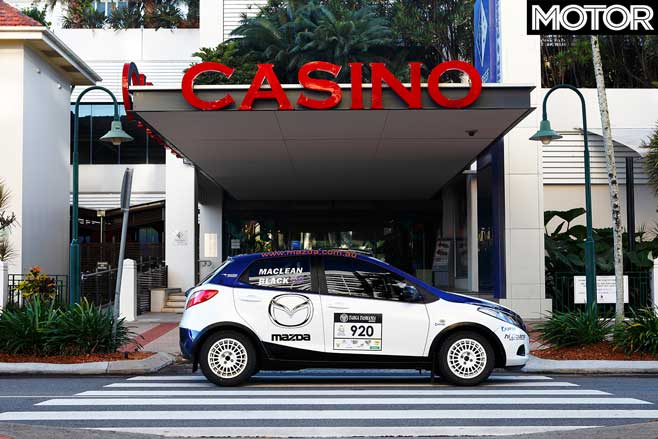
It’s a 3000km round trip from the top end’s tourist trap to the tip and back again, and one that’s normally tackled over a couple of weeks by fully-kitted four-wheel drives loaded to the gunnels with fuel, spare tyres and stuff to dig you out of trouble. Not us, not today…
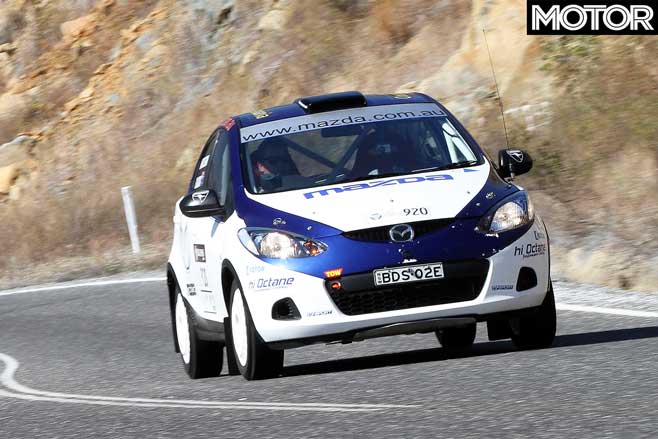
Nope, sparkling in the early morning glow outside the Reef Hotel on Cairns’ waterfront is the same giant-killing Mazda2 rally car I thrashed (and occasionally bashed) around the Apple Isle in last year’s Targa Tasmania. And, apart from a spit and polish as well as fitting its original gravel-spec wheels and tyres, it hasn’t been touched since. That’s obvious by the fact it is still wearing its Targa door stickers, my name – and co-driver Rod Black’s – is plastered on the rear windows, and the two battle scars it received from the Armco in Tassie are still there.
And we’re going to do the whole thing in three days, earning this adventure a new nickname; Targa Top End. We’re not doing it solo though; just as it was in the opposite end of the country, thankfully we’ve got a service crew with Mazda tech specialist, Shane Bradford, and the company’s technical training manager, John Reid, chasing us in a BT-50.
Curling over the roll-cage and dropping into the snug confines of the Mazda’s race bucket brings back a sense of familiarity for me, but not for Big Gull Brunelli who, after eventually securing his camera gear amongst the spare tyres and basic tool kit somewhere in the back, clambers into the passenger seat, tucks his knees under the Terratrip computer and buckles into the six-point harness.
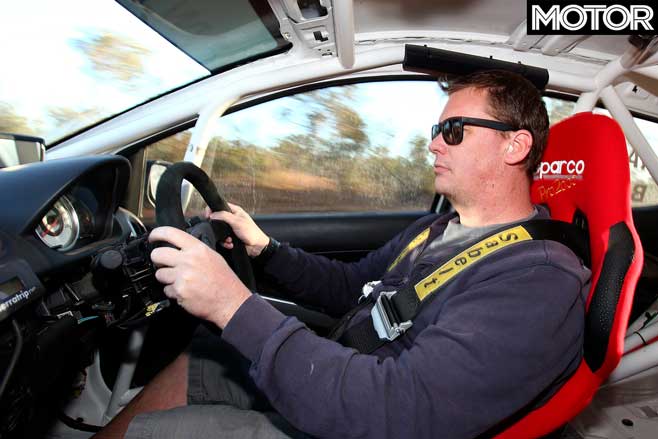
And if two large blokes in a little car doesn’t look weird enough, the number of goggle-eyed glances and fumbling finger-pointing we receive from the drunken backpackers stumbling out of Cairns’ night clubs at this time of day highlights just how out-of-place a little Mazda rally car is in this part of the world. Thing is, we know it’s going to get stranger the closer we get to the tip, where towns are as sparsely populated as the Mazda’s stripped-out cockpit and ratio of people to white LandCruisers is one-to-one.
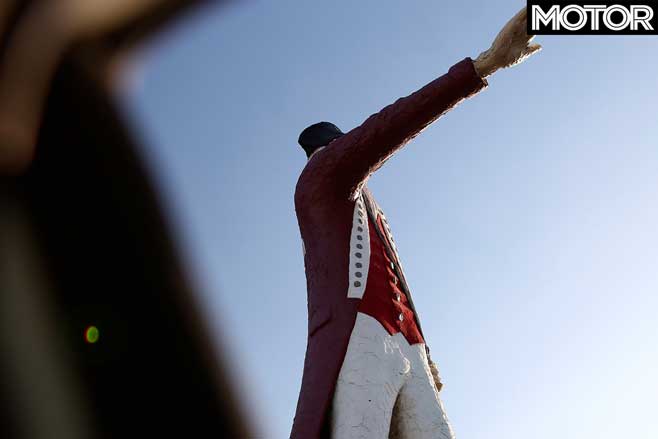
We’re not long out of Cairns, past an obscure statue of Captain Cook on the outskirts of town that looks as though he’s saluting from the Brandenburg Gates, when we start the steep and twisting climb towards the rainforest village of Kuranda.
It’s a great little ribbon of tarmac that, when it’s not spoilt by grey nomads and petrol tankers heading inland, is almost as good as anything in Tassie with its never-ending series of cambered switchbacks matched only by the majestic views of the cane fields and mangroves stretching into the azure blue waters off the coast.
Not surprisingly, despite its spongy gravel tyres, the Mazda feels as spritely and as grippy as it did down on the Apple Isle too; its Murray Coote suspension helping it dance across the blacktop following the lead of my hands on the suede-rimmed, three spoke steering wheel.
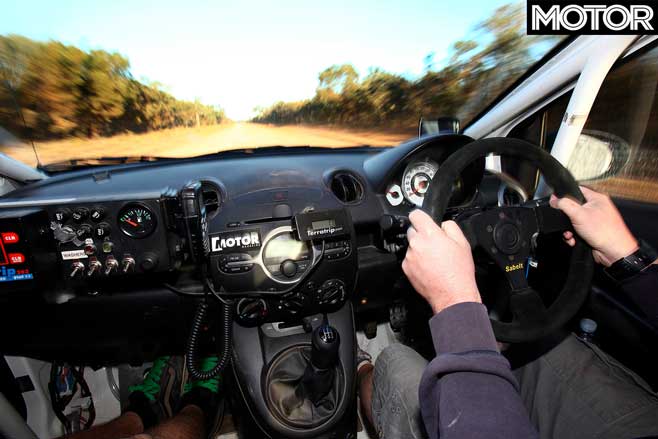
The landscape changes almost as soon as we hit the top of the ridge line onto the Atherton Tablelands; the dense rainforest disappears and transforms into sparse arid cattle country and the road straightens towards the horizon. And Brunelli’s search for photographic locations is dependent on how long he can keep his eyes open for, such is the monotony of the landscape, notwithstanding with the drone from the Mazda’s stock standard 1.5-litre four revving at 3500rpm through the open exhaust and the noise from its tyres.
It stays that way for 150-odd kays through the nondescript towns of Mareeba (allegedly Australia’s coffee-growing capital), Mount Molloy and Mount Carbine until the winding stretch that rises rapidly out of the plains and over Mt Elephant – literally in the middle of nowhere – finally grabs the Gull’s attention and we stop for a quick happy snap.
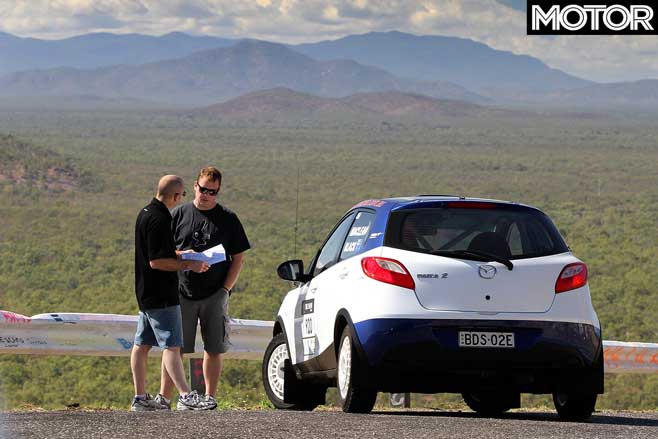
The twists and turns continue, although not as dramatically, as we traverse the Byerstown Ranges past the Palmer River Roadhouse onto Lakeland, a red dust-covered farming community with a massive truck wash at the entrance to town and, on the other side, the final intersection that separates us from Cape York; the turn-off onto the Peninsula Development Road where the <real> start of our epic adventure begins.
It was only a couple of hundred metres after the turn off that we spotted a symbol of just how harsh this place can be; a collection of dead LandCruisers parked behind a shed. “If they can’t hack it out here, what chance have we got?,” asked Brunelli.
“Dunno,” I respond… “but we’re going to give it a shot. We can’t turn back now, it’s just starting to get interesting.”
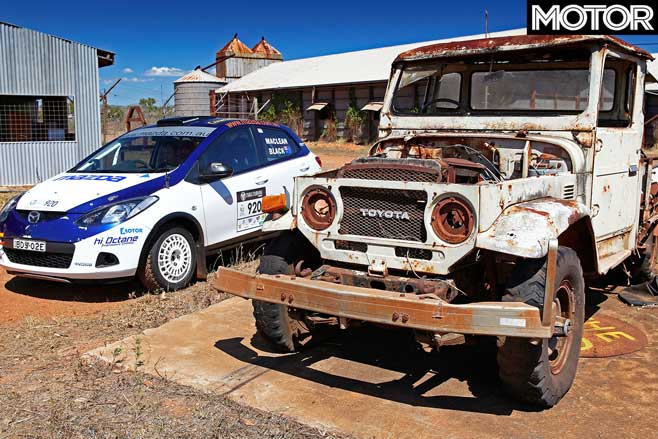
The road is still tarmac for another 30km out of town as it meanders through a gulley where massive Brahman cattle graze freely – and unfenced – amongst the termite mounds and the shrubs on the side of the road. And then, all of sudden, it stops, turns red… and dusty… and bumpy… and very, very noisy.
The drone of the Mazda’s tyres on tarmac is now overshadowed by the unfiltered, uninsulated cacophony of stones peppering its underside and constant corrugations vibrating the car like one of those dodgy motel beds you see in films. I can’t hear myself think, let alone anything Brunelli is trying to say, and, at less than 80km/h, it feels as though the little Mazda won’t last until lunchtime, let alone all the way to Cape York.
So I do the only thing thinkable and put the boot in, leaving Shane and John in our BT-50 support car in a cloud of red dust. At 100km/h, the noise doesn’t change but the Mazda starts to dance over the corrugations and, with a little tickle (and maybe a bit more) on the throttle, they almost disappear.
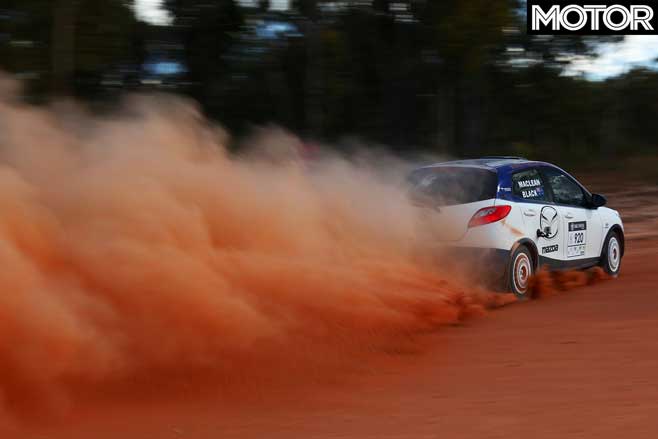
At least now I can concentrate, which is handy because the road isn’t just corrugated, there’s patches of bulldust, the odd sharp rock pokes its way through the top, the road suddenly drops away in sporadic dips for flood crossings and there’s the occasional corner. And, of course, there’s traffic… ranging from B-double trucks through four-wheel drives (with and without caravans) to motorcycles, which, no matter what the size nor direction of travel, create a massive cloud of dust that hangs in the air for ages, and then paints everything on the side of the road Outback Orange.
So overtaking comes with a degree of caution – and trepidation – to pull out of the dust and decipher whether there’s, firstly, nothing coming the other way, and secondly, enough road to get past. And, as I brave my first attempt to get around a fully-loaded Landie cruising at 60km/h, I sure as hell hope they can see me coming.
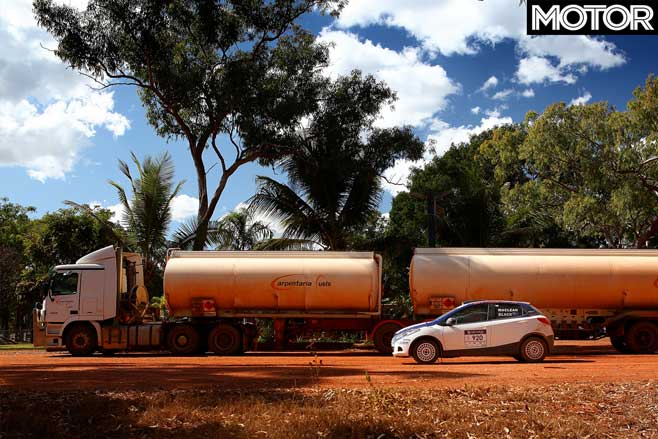
They do. They indicate to the left acknowledging they’ve seen us, and then wave as we go by. Then take a second look. And another… Clearly, they didn’t expect a stickered-up rally car smaller than the tinny they’re carrying on the roof to roar past them. Not up this end of the country, anyway.
We get the same reaction a couple more times until we stop for lunch at Laura, a one-pub town that is surprisingly staffed by a couple of good-looking Irish backpackers enticed out to Nowheresville for a couple of months to earn, and presumably save, enough funds to continue their travels. It’s the kind of place where you’d rather eat the sole of your shoe than the fisherman’s basket, but the schnitty sandwich is great and generous enough to make you wonder what kind of chicken it actually came from.
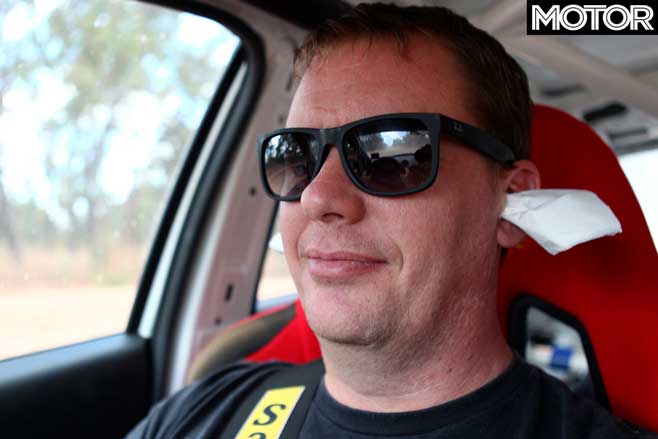
It was also served with enough paper napkins to make you wonder whether they were on commission from Kleenex. But their generosity was both fulfilling and proved a godsend when we got back on the road; Cristian ripping one of the napkins in half and stuffing it in his ears to dull the noise once we hit the dirt again. It was a genius idea that, despite making us look stupid, worked a treat.
Because out of Laura there’s only a series of short 2km-long stretches of sealed road every 30km (designed specifically for overtaking) between us and, 700km away, the top of the country.
There’s also not too many corners either, so, after a couple of hours dancing across the top of the corrugations in a straight line, I slide the Mazda like Sebastien Loeb into the first intersection we come to and realise this is what the car was built for.
Compared to its twitchy nature on tarmac at high speeds, it progressively drifts into lift-off oversteer on the gravel and modulated easily back into shape through either the handbrake or the throttle. It’s massively fun, and with no traffic for hours, we stay and play for a while.
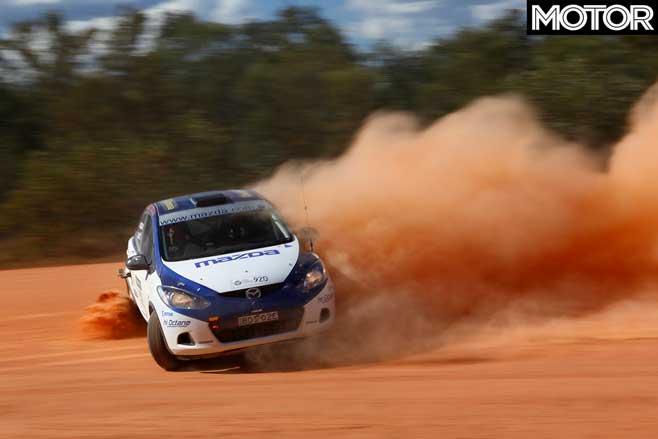
Little did we know, though, that literally 400m further up the road is a campground on the river next to the Musgrave Roadhouse. We sheepishly cruise past, wondering if anyone had heard us mucking around up the road, and pull into the Roadhouse to fuel up. No one even bats an eye, thankfully, not even the local cops that have stopped for a fill-up too.
After eight hours on the road, Musgrave Roadhouse is also not that far from our overnight stop at the Lotus Bird Lodge; a selection of quaint timber cottages nestled around the edge of a world-renowned bird-watching wetland. Big Gull decides to take advantage of the scenery and setting sun and take a pic next to the water’s edge, but it’s only later, over dinner with a bunch of wallabies for an audience, that Tom, the owner, tells us about the local community of crocs in the swamp. Ummm, nice to know…
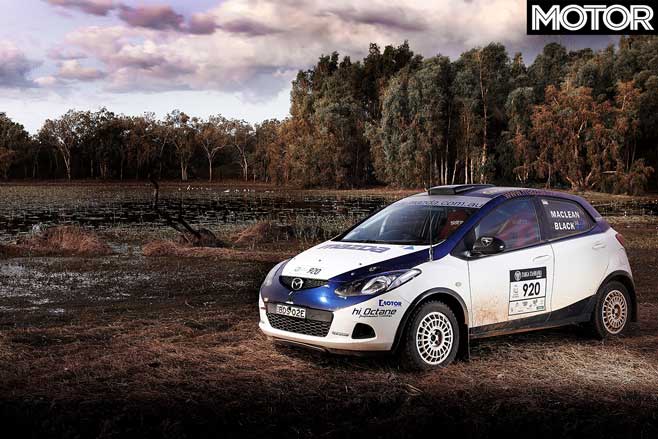
We get the same information after stopping for a swim in the gorgeous Fruit Bat Falls, just past Bramwell Junction where the old Telegraph Road begins, the next day. Hindsight is something those toothy buggers don’t care about, but bugger me if I haven’t learnt my lesson; the only safe place to swim up this end of the country is in a chlorinated swimming pool, of which there are… stuff all.
And that’s a tragedy, because after two days of driving every pore in our bodies is caked in red dirt and, as we watch the sun drift into the crystal blue ocean from the boat ramp in Seisa – 30km from Cape York – all we want to do is jump in the water.
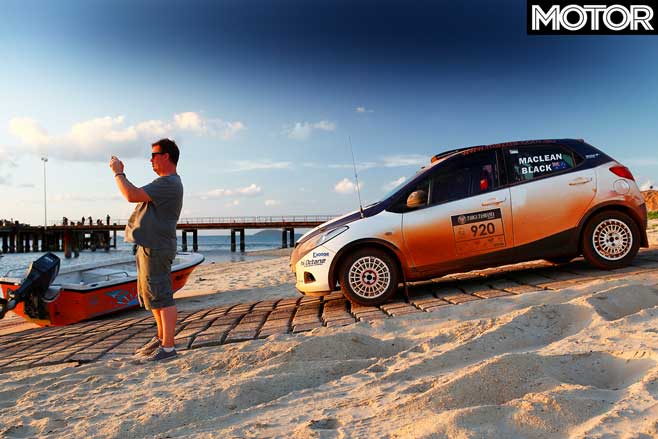
But we’re this close, and apart from a few roadside service stops to scrape mounds of dust from inside the rims, the Mazda hasn’t missed a beat; Just as it did at the opposite end of the country in Tasmania. It is clearly the toughest little car in the world, and I don’t want to jeopardise its arrival, or mine for that matter, at the northern-most point of Australia by taking a dip with Snappy Tom and his mates. That moment will have to wait until tomorrow morning though as we bunk up for the night in Bamaga, the biggest of five towns in the Northern Peninsula Area managed by the local Injinoo community.
Before we head off on our final trip to the tip the next morning, we discover there are plenty of other interesting sites to explore around the Cape, including a couple of WWII plane wrecks out near the airport and the Lockerbie Homestead ruins.
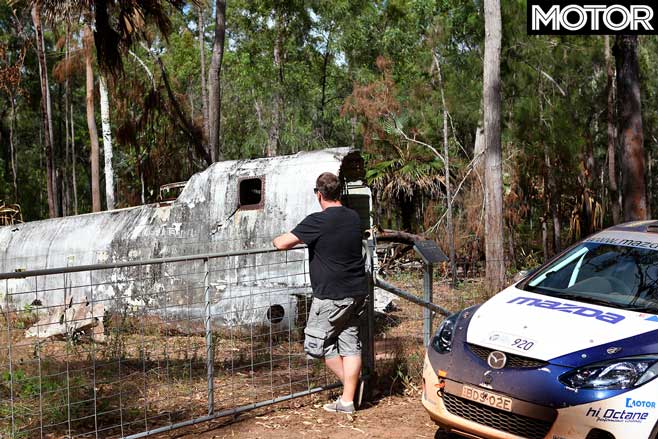
However, the most surreal of them all is the abandoned Pajinka Wilderness Lodge a few hundred metres away from the car park at Cape York. Its 24 bungalows, swimming pool, reception and restaurant were nestled amongst the lush rain forest but it went bust a decade ago and the previous owners literally walked out, leaving vandals and Mother Nature to reclaim it.
While walking around the resort was an eerie experience, it was quickly extinguished by the elation of pulling up to the most northerly car park in the country and then traversing the rocky outcrop to the absolute tip of mainland Australia. We made it, and proved the giant-killing capabilities of Mazda’s little rally car once again… something we should never had doubted.
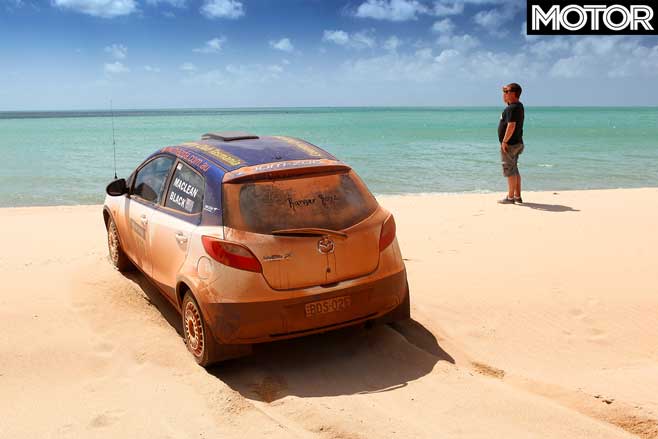
But then we realised we’ve only just completed half of the adventure and still had to get back to Cairns, which turned out to be a little more adventurous than we hoped for. Y’see, full of Cape-conquering confidence, we decide to head to the beautiful Punsand Bay for a bite to eat before heading south again. We have no dramas getting there, even crawling through a rather treacherous river crossing, bouncing through a narrow, gnarly goat track of a road and driving the car onto the pearl white sand for a photo.
But… let’s just say, oil and water don’t mix very well. Oh, and the back seat of a BT-50 is much quieter than a rally car!
