
People seem to be getting a little antsy on the roads while things are relatively quiet.
After the Cannonball Run record was broken in the US and a couple of burnout meets in Australia have been broken up, both during the COVID-19 pandemic, a man has been charged with numerous charges after hitting at least 271km/h on a public road between Montreal and Ottowa in Canada.
Driving a Dodge Challenger SRT Hellcat, no less one with the clearly marked ‘707HP’ decals to signify its 527kW of go, the man charged was considered rather lucky by police who witnessed the high-speed run.
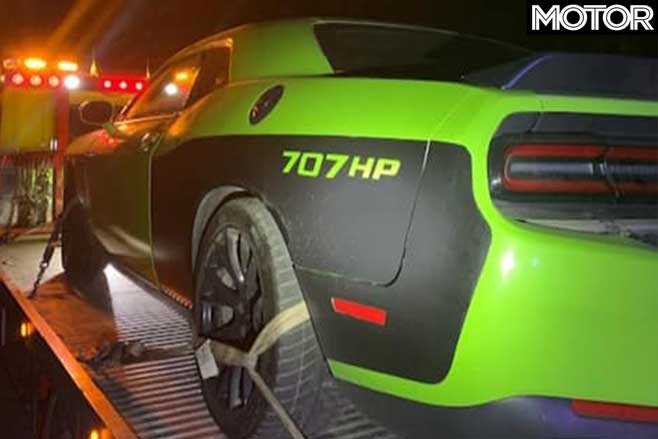
At around that 271km/h mark, one of the right-hand tyres on his Hellcat burst, leaving him essentially out of control at 160km/h higher than the posted 110km/h speed limit.
In a coincidence that might make him the unluckiest speedster of the moment, though perhaps fortunately for others, officers in a patrol car was there to see the whole thing.
As idiotic as that is, we don’t like hearing about people injured or killed on the road, and fortunately the driver was not injured.
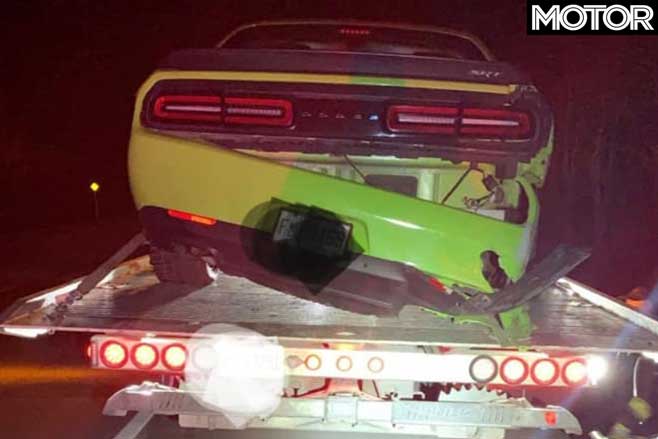
“This driver is lucky,” says the Ontario Provincial Police statement.
“He blew a tire at this unbelievable speed. No injuries, just a little damage.
“A Hawkesbury OPP officer spotted the car shortly before 12:30 this morning on Hwy 417 eastbound, east of the Town of Hawkesbury.”
The OPP also posted a couple of images of the lime green muscle car on Facebook, as well as a shot of the screen from the speed gun with the recorded velocity showing.
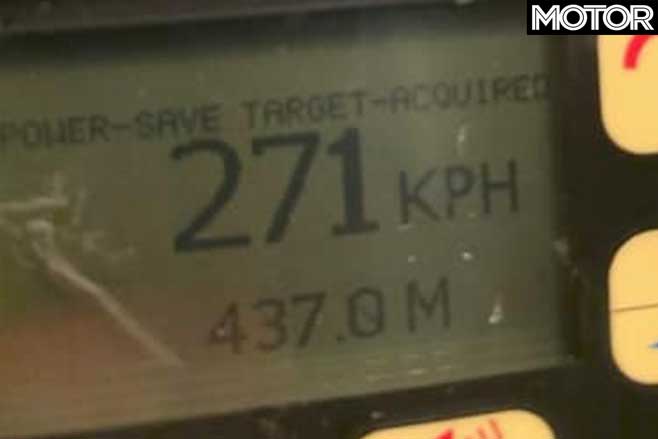
“Yes, that is 271km/h in a 110km/h zone. A rear tire blew shortly after the car passed the cruiser.
“The driver was charged with stunt, careless, and drive with cannabis readily available. The car was impounded, and driver’s license was seized for 7 days.”
Only a couple of days later, OPP revealed another incident of reckless driving – posted to the OPP’s Facebook page was an image of a BMW 5 Series attempting to drive with two wheels missing.
Not the ideal way to travel, so we’re told.
Does it get any more 1980s than this? A very unique pair of cars from Back to the Future has hit US-based auction house Bring A Trailer, looking to tempt bored coronavirus lockdown-ers into snapping up the set.
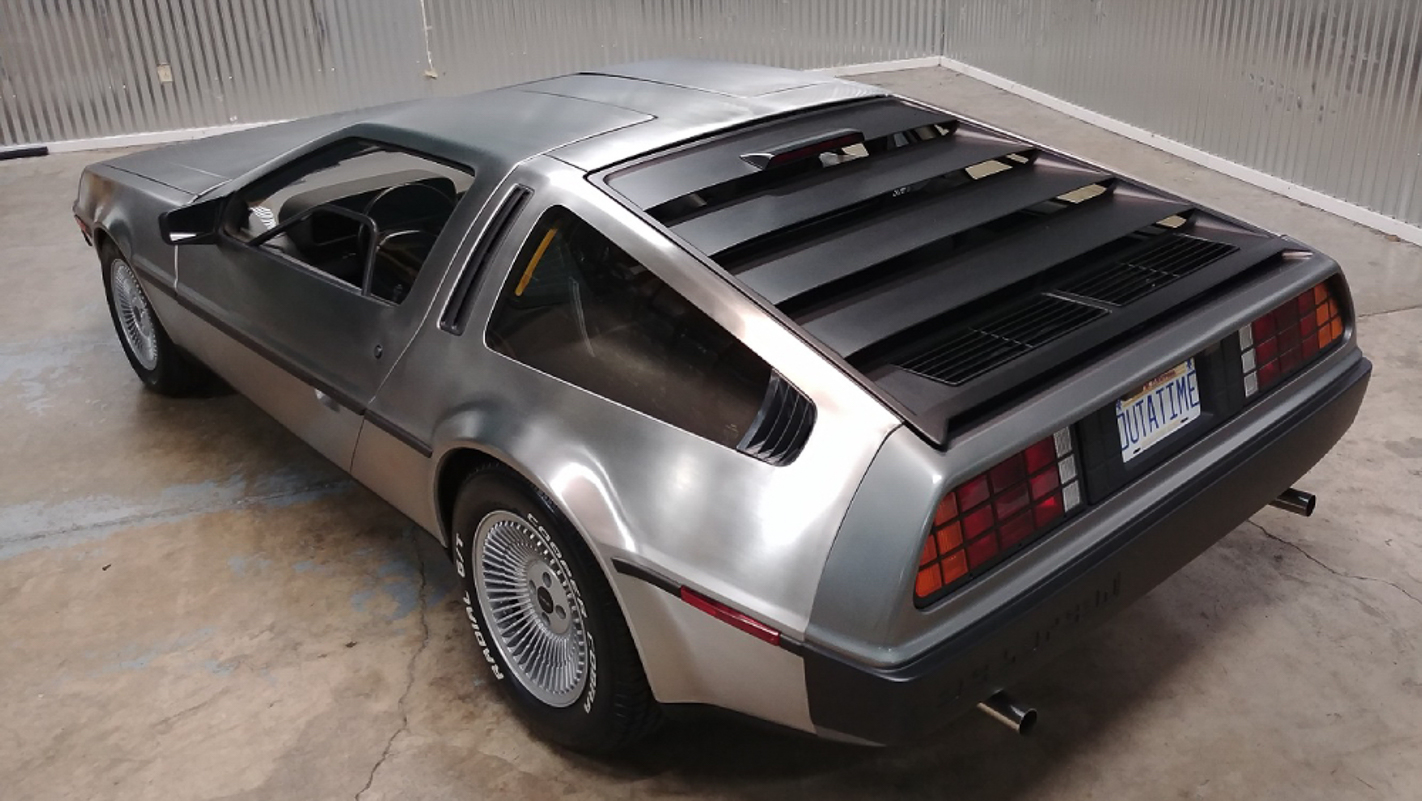
Complete in period-perfect guise, the first piece is the 1981 DMC Delorean hero car from the Back to the Future franchise, complete with a boot-full of film memorabilia from the movies.
The memorabilia includes a hoverboard, Nike Air Mags and period literature. The Delorean itself looks to be a pristine example, showing only 4300 miles (7000km) on the odometer and a respectable service history.
Sadly, there’s no Mr Fusion in sight…
The second item on the docket is the very cool, black-out 1985 Toyota Hilux SR5 Xtra cab (known as the Tacoma in the US), with those distinctive KC spotlights, black paint job, aftermarket wheels and bull bar.
This one is in similarly pristine condition, with 130,000 miles (160,000km) and a five-speed manual gearbox. It’s decked out in much the same way as the film car, and also includes a skateboard from the film, another pair of Nike Air Mags and a camcorder.
Weird movie trivia time – one of the two Tacomas used during filming was stolen, before being used by drug runners and subsequently seized by the Mexican government. Luckily, it was rescued and restored, and is now valued at more than US$250,000!
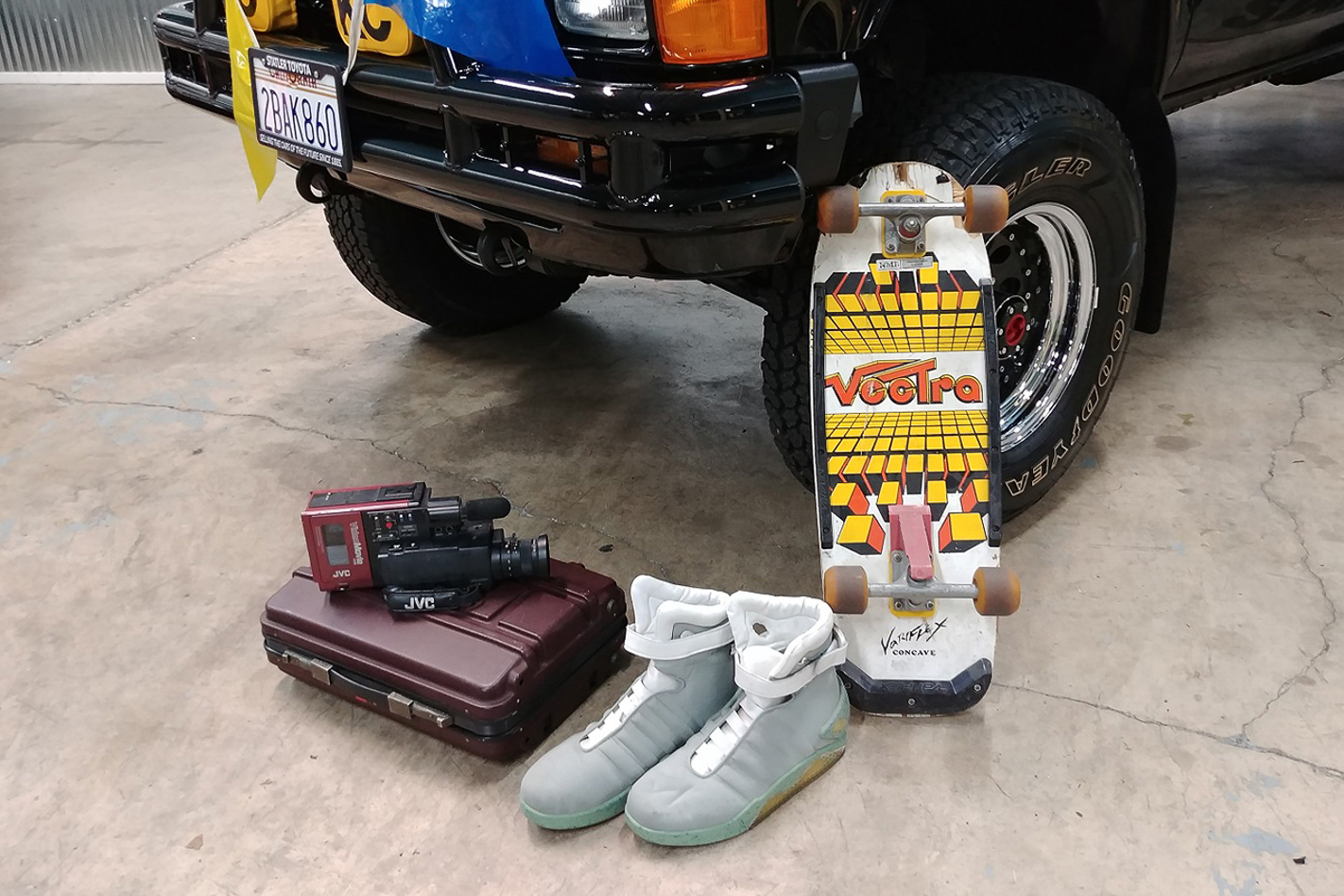
Both cars are being sold by Mcfly1895 and surprisingly the Hilux is currently the more expensive of the two with bids currently sitting at $58,000 USD ($88,730 AUD).
The Delorean is a much-more-understandable $35,000 USD ($53,544 AUD).
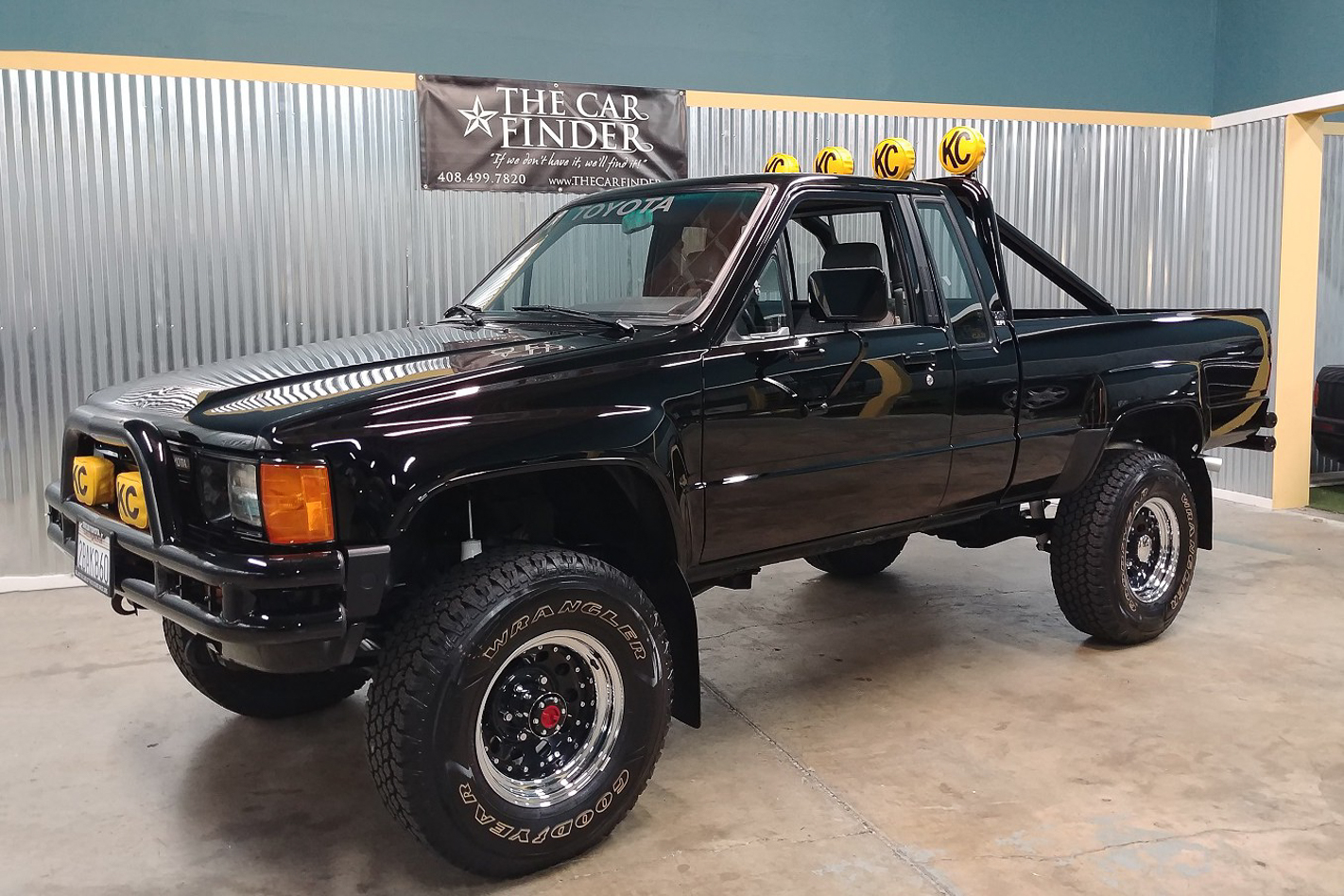
With a mammoth bidding price of AU$88,000 for a replica BTTF Hilux, it really goes to show that nostalgia can pull at the heartstrings!
So you are in the market for a new small SUV, but can’t decide which you want?
Well, if fuel efficiency is high on your priorities, maybe this list will help. We’ve trawled our databanks to put together a list of the most frugal compact soft-roaders on sale today, across a fairly broad spectrum. Despite everything here being a small SUV, there’s heaps of variety in their size, fit-out and mechanicals. From naturally-aspirated petrols to more sophisticated low-displacement turbo petrosl and diesels, to hybrids and even a couple of full-electrics, there’s more than one way to make an SUV efficient.
While these figures, which represent how many litres your car consumes per 100km, may not directly represent what owners experience on the roads of the real world, they give a good guide on which cars sip politely from their tanks, while others take large gulps.
Below is our full list of small SUVs, from cheapest to most expensive. We’ve also included the engine and gearbox of the vehicle – for more information just click their header to learn everything else you need to know.
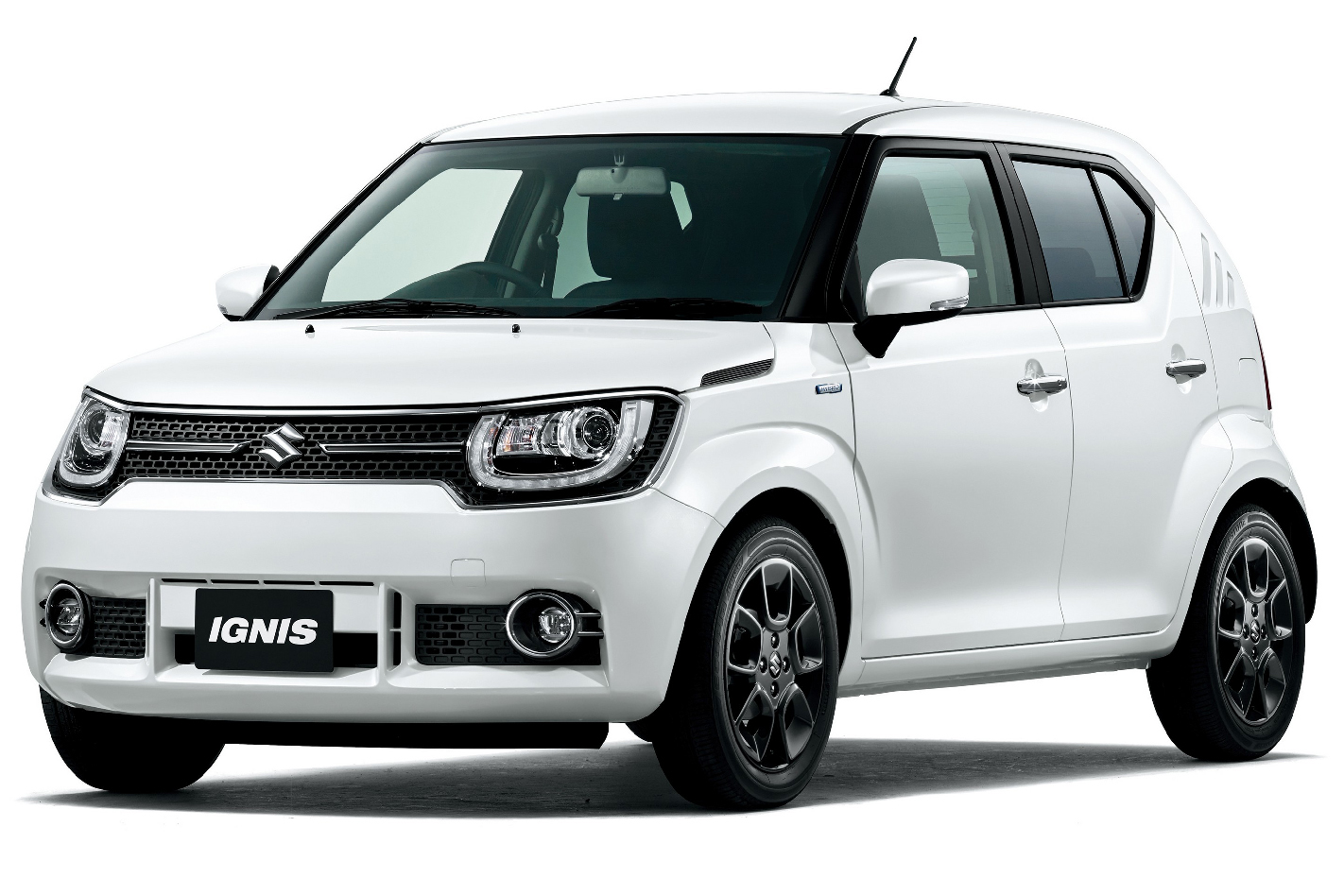
4.7L/100km 1.2 litre four-cylinder petrol, five-speed manual $16,690
5.6L/100km 1.2-litre four-cylinder turbo petrol, five-speed manual $23,490
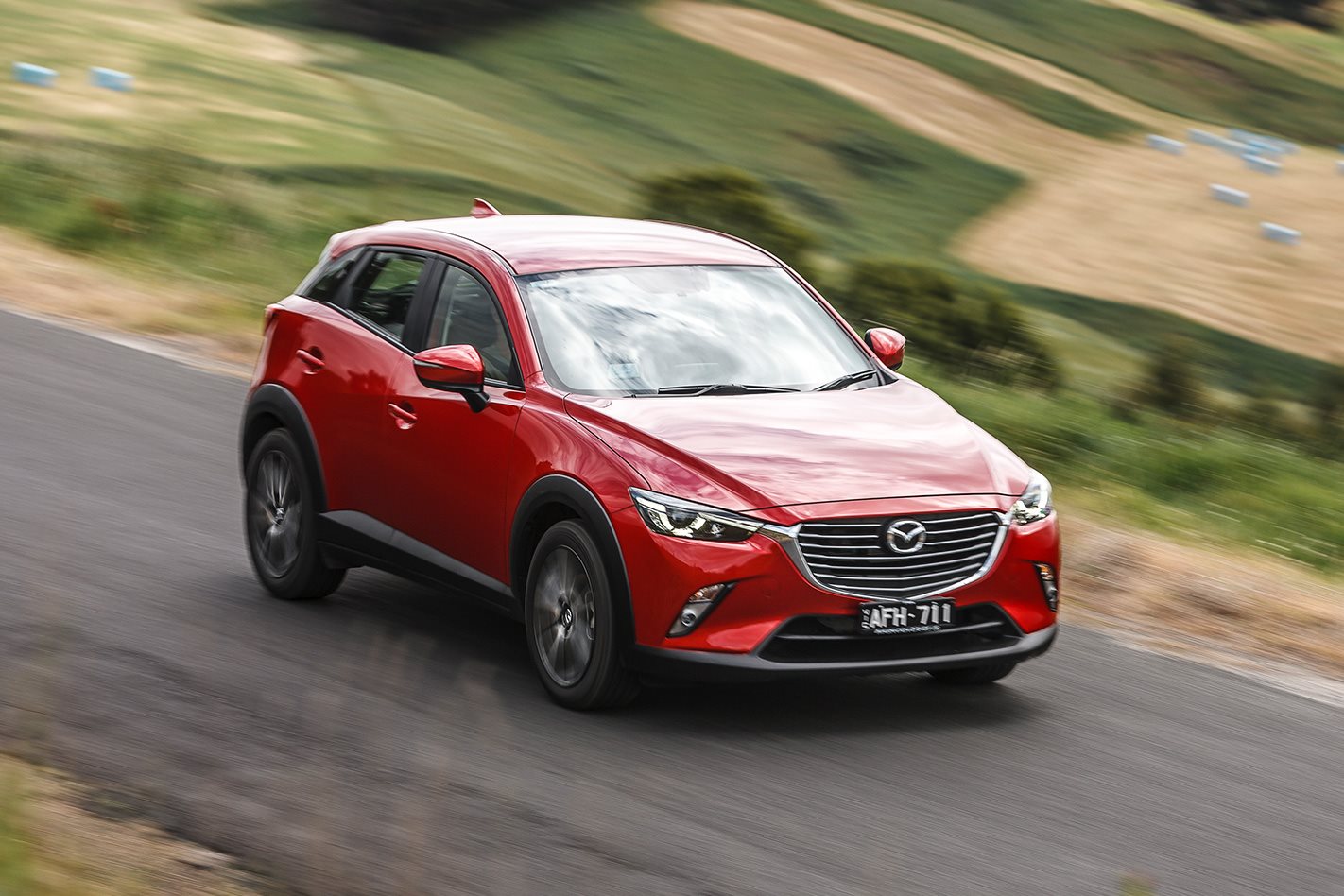
6.3L/100km 2.0-litre four-cylinder petrol, six-speed automatic $24,710
6.9L/100km 1.8-litre four-cylinder petrol, CVT $24,990
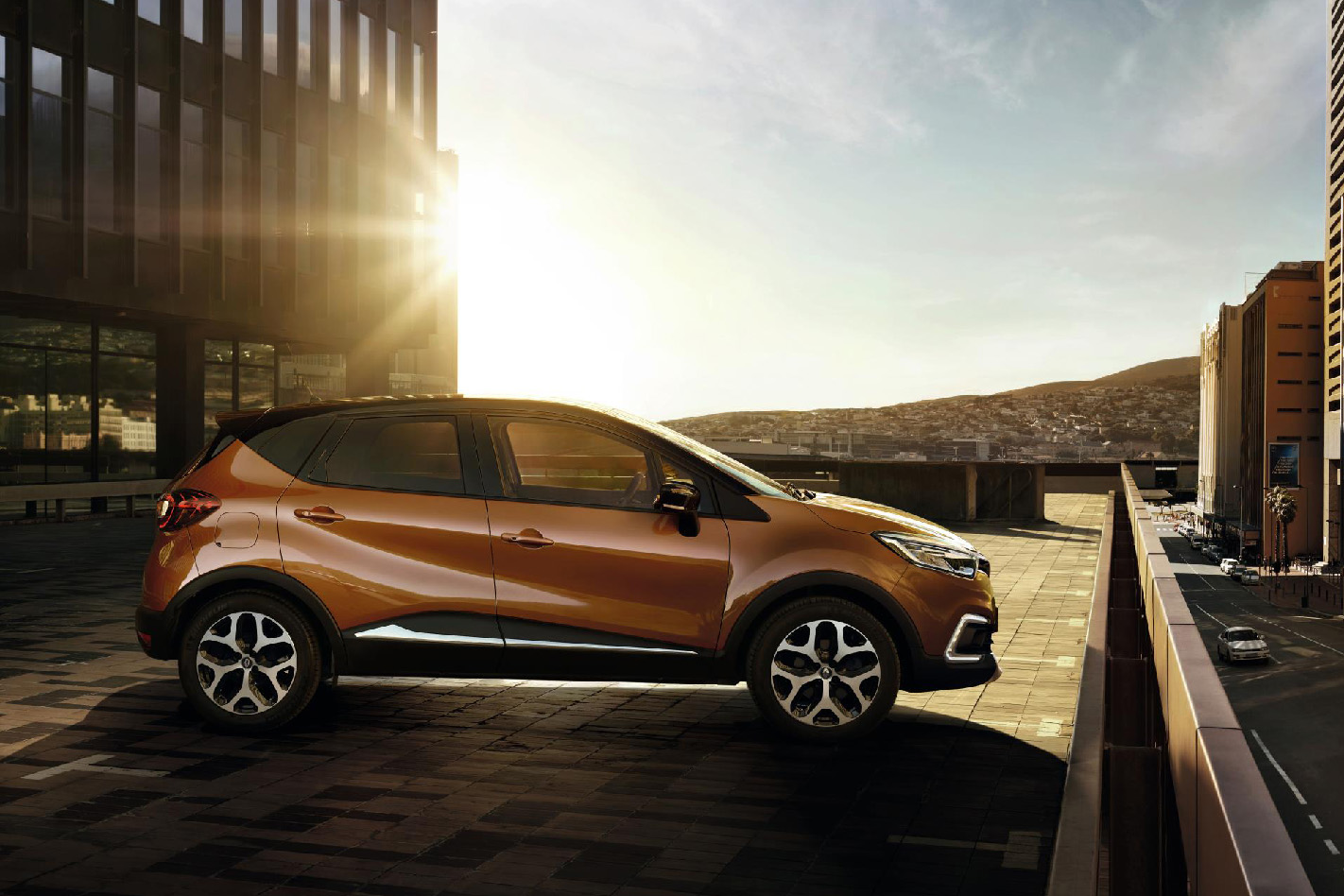
5.4L/100km 1.3 litre four-cylinder turbo petrol, six-speed automatic $25,990
4.8L/100km 1.2-litre three-cylinder turbo-petrol, six-speed automatic $25,990
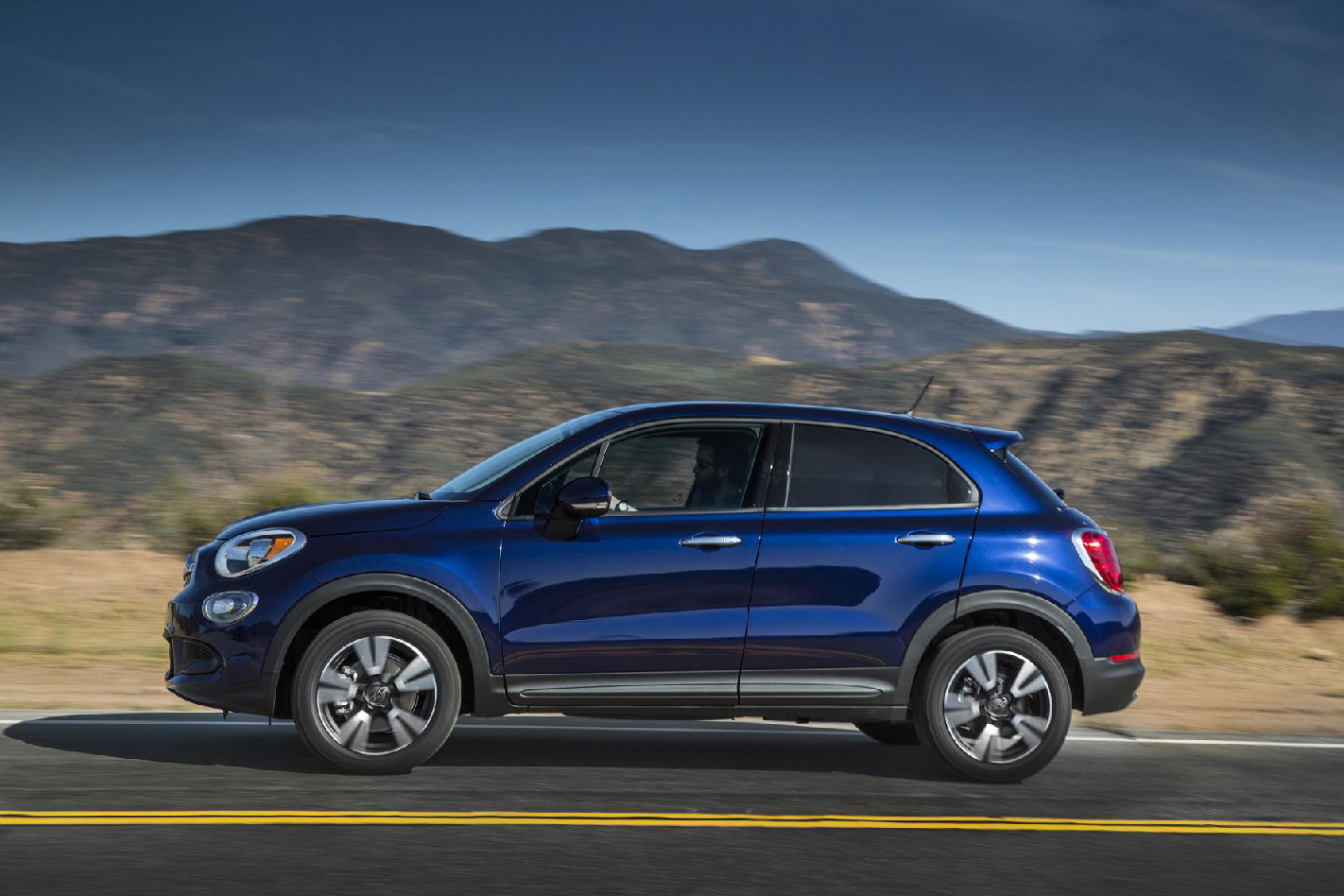
5.7L/100km 1.4 litre four-cylinder turbo petrol, six-speed automatic $26,990
5.9L/100km 1.4-litre four-cylinder turbo-petrol, six-speed automatic $29,990
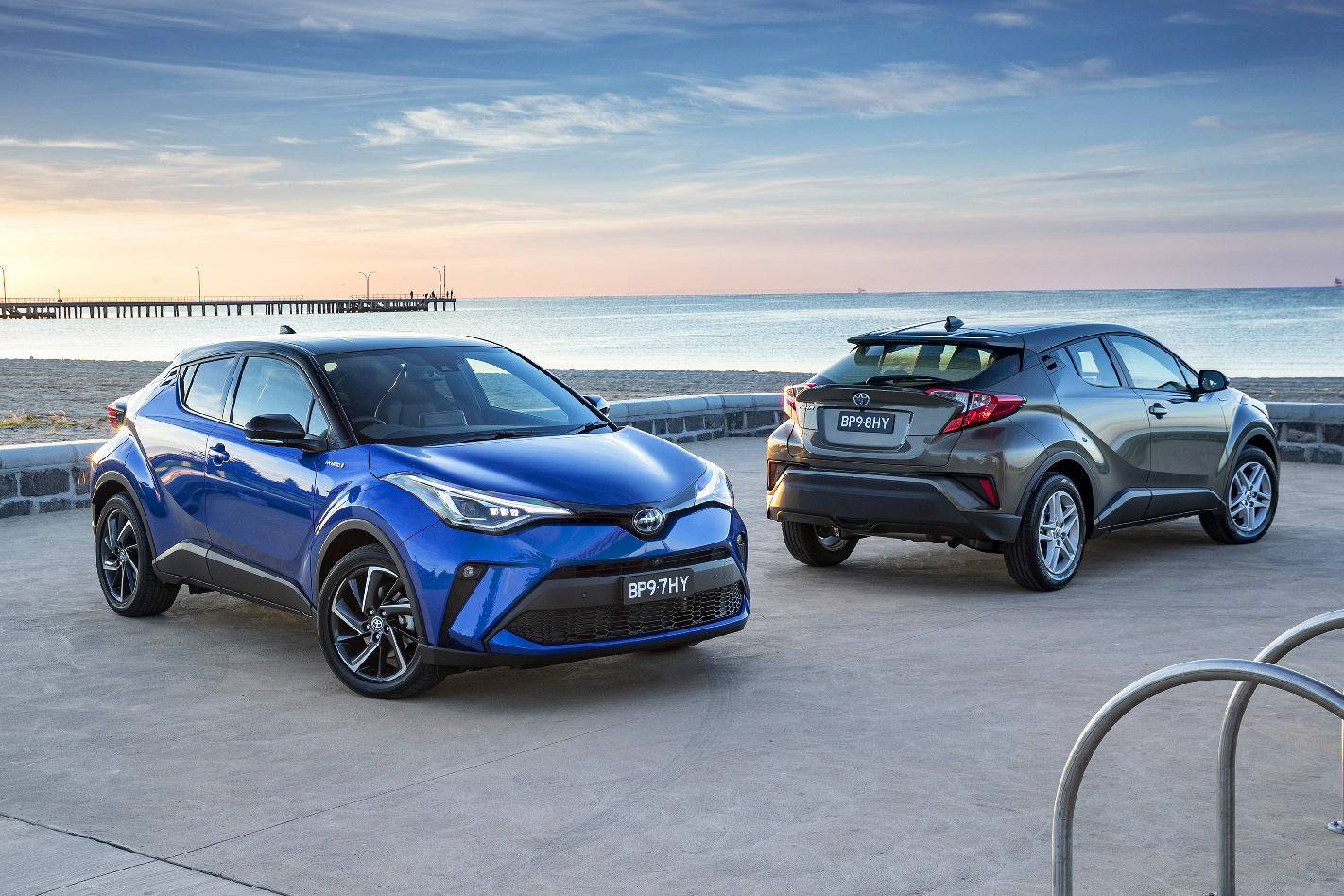
4.3L/100km 1.8-litre four-cylinder petrol-electric hybrid, CVT $36,440
0.0L/100km Electric motor, single-speed transmission $46,990
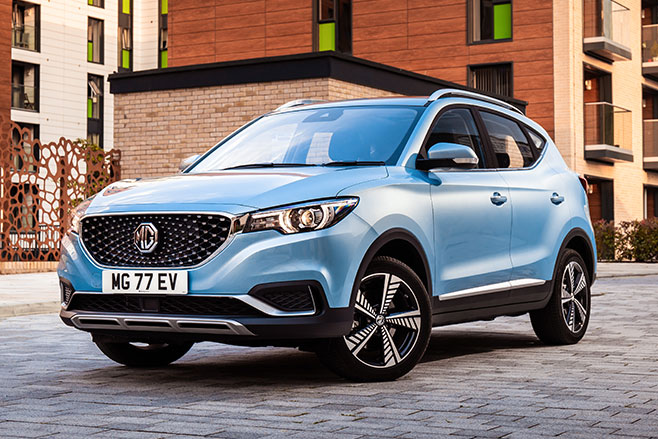
4.5L/100km 2.0-litre four-cylinder petrol-electric hybrid, CVT $48,550
BMW X1 sDrive18d
4.7L/100km 2.0-litre four-cylinder turbo diesel, eight-speed automatic $49,900
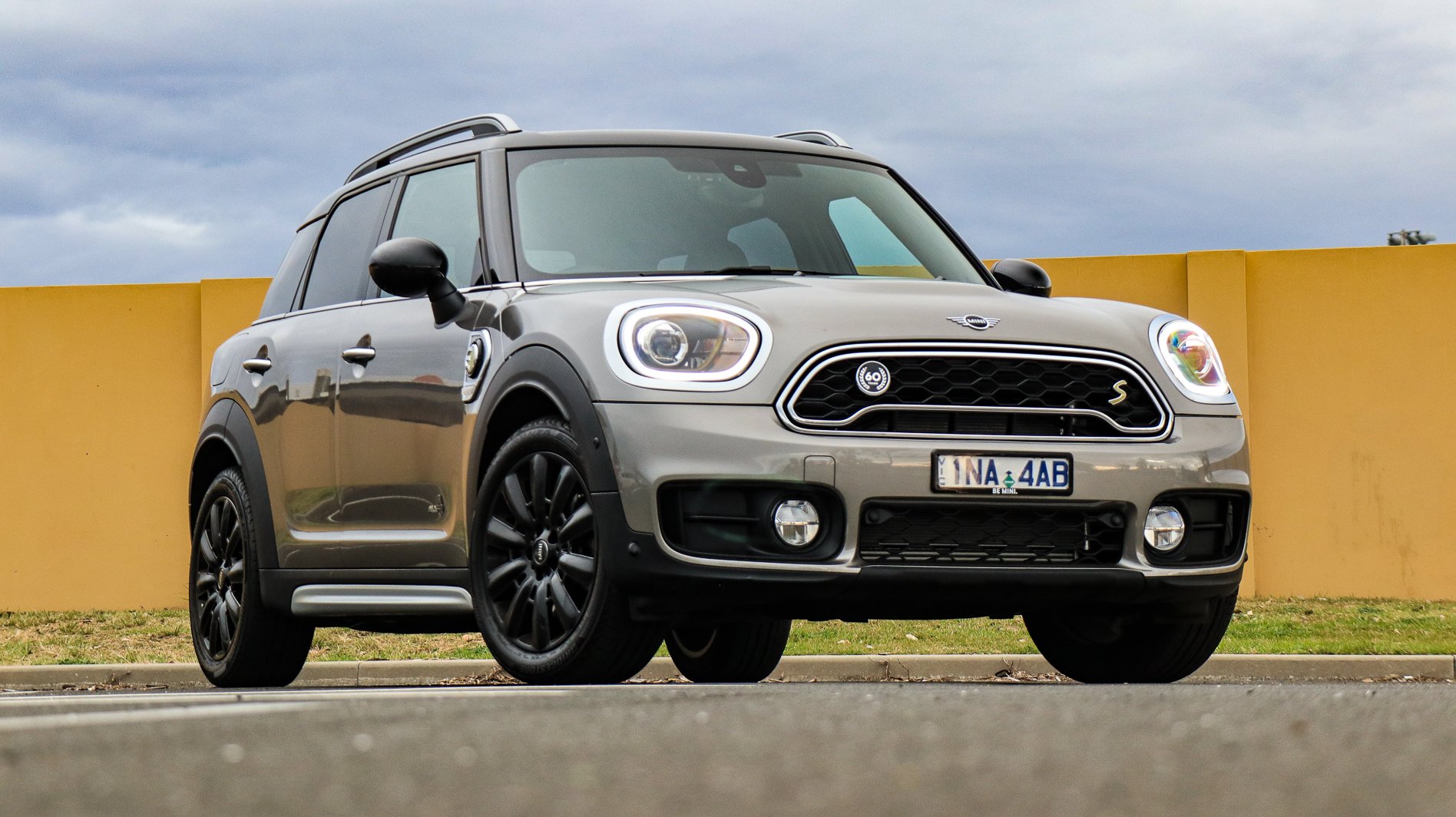
Mini Cooper Countryman S E All4
2.1L/100km 1.5-litre three-cylinder turbo petrol-electric plug-in hybrid, six-speed automatic $57,200
0.0/100km Electric motor, single-speed transmission $60,140
Small SUV comparison: Peugeot 2008 v Holden Trax v Mazda CX-3 v Toyota C-HR v Suzuki S-Cross
Now check out the boot sizes of Australia’s best-selling SUVs
There’s nothing worse than being caught out in a downpour, only to find your blades are smearing water across your windscreen, rather than removing it.
The blades on your windscreen wipers should be checked every six months or 10,000kms and changed at least once a year. If they’re leaving streak marks across the glass or screeching their way through the water they’re probably overdue for replacement.
There are many things, aside from general wear and tear that can affect your wipers including sun, oil, debris and saltwater, which can break down the rubber even when the wipers aren’t in use.
Wipers are one of the easier car-maintenance duties to do yourself. The blades can be replaced, as can the wiper assembly, although the latter is slightly more expensive but usually more effective.
Here are some easy steps to replace the wipers yourself.
Wiper assembly
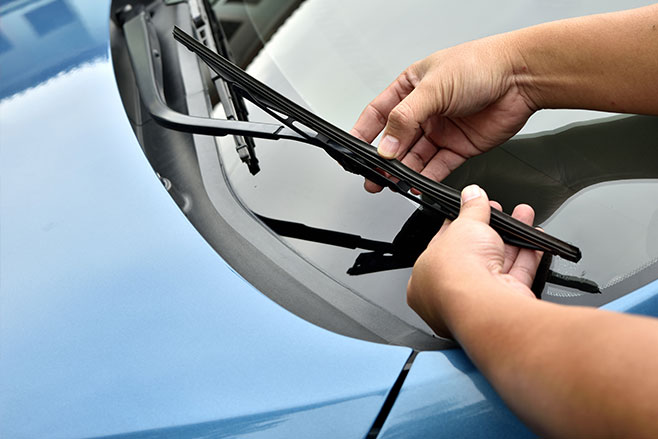
- Pull the blade assembly away from the windscreen.
- Find the clip, which will be below the hook located on the assembly’s pivot. Depress the clip to release the blade and remove the assembly by pull it down the arm. You may need a screwdriver for this depending on your car.
- In a similar motion, attach the new assembly to the wiper arm.
- Click it into place.
- Replace arm against the windscreen.
Blade refills
- Pull the blade assembly away from the windscreen.
- Squeeze the metal tabs at the end of the rubber insert and simply slide out of the blade. You may need pliers for this.
- The new rubber should have been measured against the length of the wipers, but if they’re too long, simply cut it with a pair of pliers either before or after installation. Ask the staff at the auto accessories store if you’re unsure on the size or need some help to cut the rubber.
- Insert the new wiper refill by sliding it into the claw and locking the metal clip at the end.
- Replace arm against the windscreen.
For any extra assistance, or if it’s your first time and you want someone to show you how to do the above steps, the staff at your local auto accessories store should be able to help.
In the course of a tumultuous ten days, Tesla founder Elon Musk has decried the “fascist” state, and commenced legal proceedings against the country of Almeda in California.
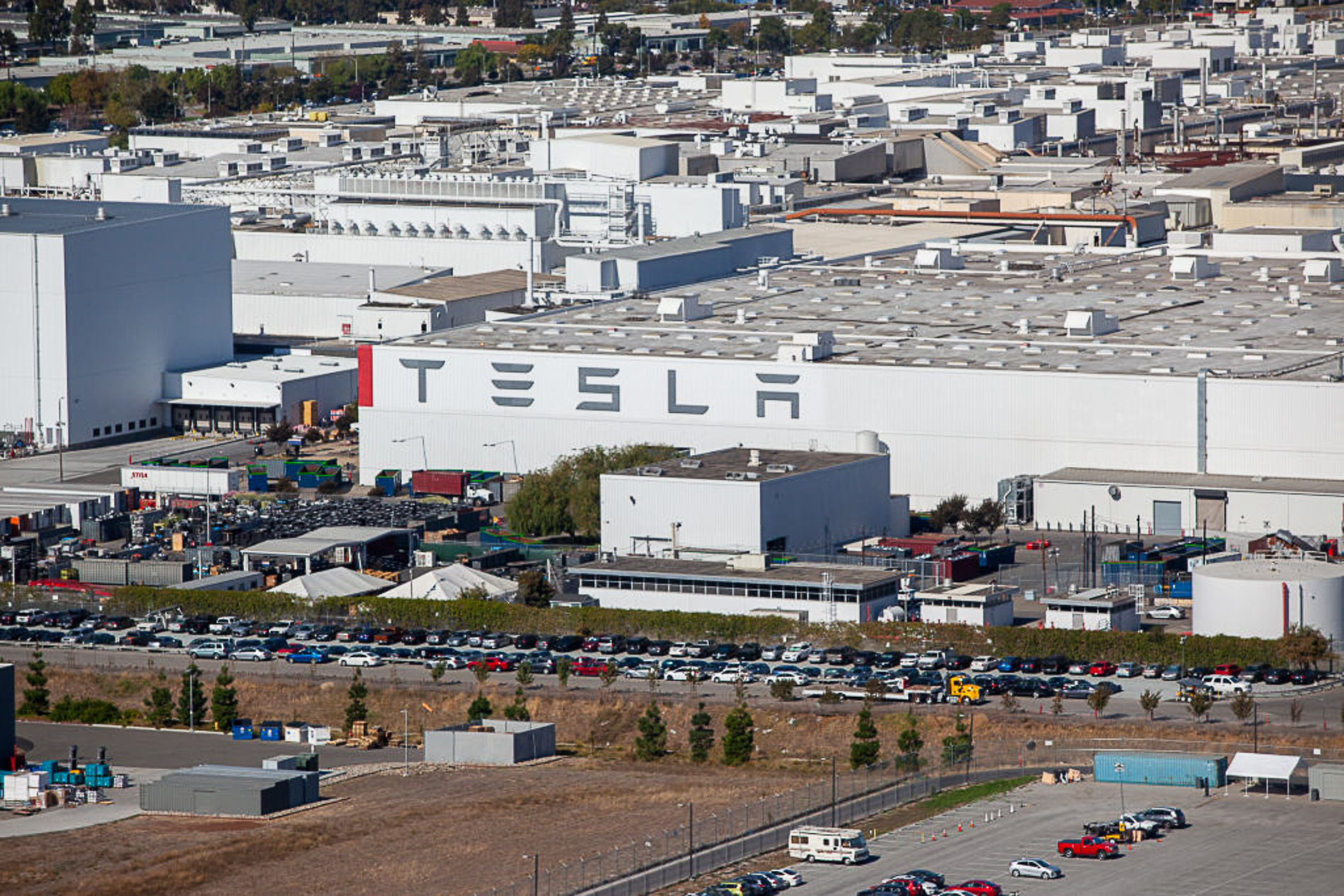
Adding to the controversy, the entrepreneur is taunting officials to arrest him on his own production line, and topping it all by reopening the Fremont factory in defiance of lock-down laws.
“Tesla is restarting production today against Alameda County rules,” he tweeted. “I will be on the line with everyone else. If anyone is arrested, I ask that it only be me.”
His latest outbursts on Twitter derides an “unelected county official” for what he perceives as a bias against Tesla reopening its main facility, which produces the bulk of the company’s cars.
“Yes, California approved, but an unelected county official illegally overrode,” he tweeted in reply to a question about whether the state of California has approved Tesla’s reopening after COVID-19 stay-at-home orders were loosened.
“Also, all other auto companies in US are approved to resume. Only Tesla has been singled out. This is super messed up!”
Tesla indicated last week that it was planning to bring back 30 per cent of the Fremont’s 10,000 workers. Unlike other US carmakers, Tesla’s workforce are not part of a union, which means that a return-to-work instruction is harder to disobey.
Musk, however, emailed employees last week, confirming that they may stay home if they choose to do so.
“If you feel uncomfortable coming back to work at this time, please do not feel obligated to do so,” he wrote. “These are difficult times, so thanks very much for working hard to make Tesla successful!”
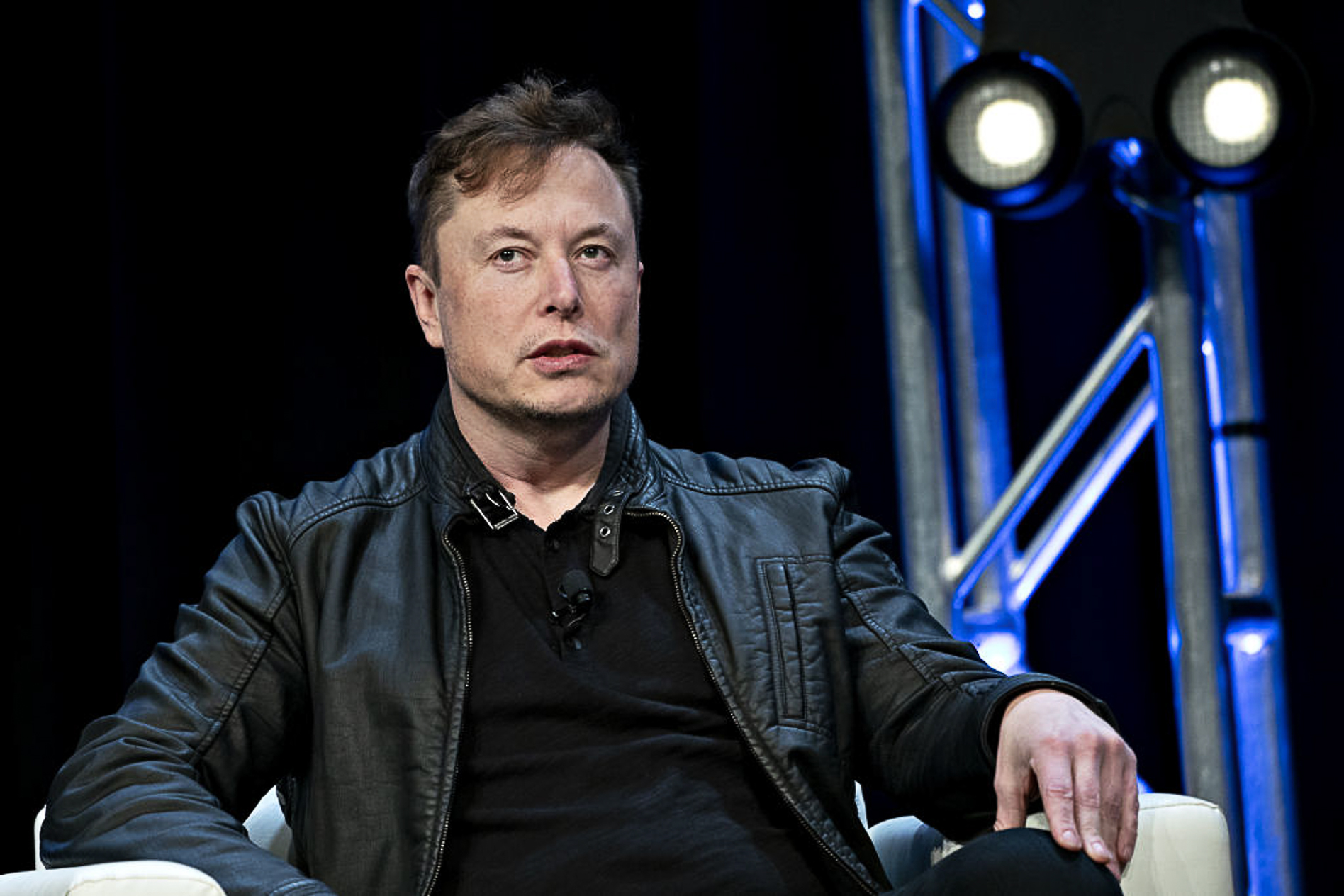
Musk speaking at a Satellite 2020 conference last month on behalf of SpaceX
The company says that temperature screening and social distancing measures have been implemented, but it stops short of confirming that it will issue all staff personal protective equipment like masks or goggles.
In a blog post on its website, Tesla insists that it has fulfilled every requirement that country officials have imposed.
“Tesla is not an outlier, nor are we going against the grain,” reads the post. “From the State’s very first shelter-in-place order, national critical infrastructure, including vehicle manufacturing like Tesla’s Fremont factory, was considered vital and given permission to continue operating. The Governor repeated this direction this week when he made clear manufacturing should resume.”
The post also points out other businesses of similar size that have already re-commenced operations, and that Tesla’s business should be classified as ‘essential’.
“Meanwhile, Alameda county, where our factory resides, and Santa Clara County next door, have stated in their return to work order FAQs that the manufacturing of distributed energy resources (which is defined in state law to include electric vehicles, solar and battery storage) is permitted to resume,” it reads.
Tesla also disputes the assertion that county officials have been in constant contact.
“Contrary to the Governor’s recent guidance and support from the City of Fremont, Alameda County is insisting we should not resume operations. This is not for lack of trying or transparency since we have met with and collaborated on our restart plans with the Alameda County Health Care Services Agency. Unfortunately, the County Public Health Officer who is making these decisions has not returned our calls or emails,” the blog reads.
In an astonishing, expletive-laden tirade last month, Tesla founder Musk lashed out at the Californian and US governments, accusing it of imprisoning citizens in the face of the coronavirus outbreak that is sweeping the country.
Speaking on a quarterly earnings conference call, Musk pulled no punches, railing against state- and nation-wide lockdowns that have seen car factories – including his own Tesla plant in Fremont, California – shuttered.
“Frankly, I would call it forcibly imprisoning people in their homes against all their constitutional rights, in my opinion,” he said on the call. “Breaking peoples’ freedoms in ways that are horrible and wrong and not why people came to America or built this country. What the f–k?”
Musk also demanded that people shouldn’t be forced to remain in their homes.
“This is fascist,” he said. “This isn’t democratic. This isn’t freedom. Give people back their goddamn freedom.”
It’s reported that the audio feed for the earnings call was cut off in the wake of the comments, which came as Musk was questioned about the extension of ‘shelter at home’ orders currently in place in much of California.
San Francisco will relax some restrictions around outdoor activities, but businesses are still under shut-down orders.
Musk has long held the view that the coronavirus pandemic, which has killed 61,000 Americans since February and infected more than a million US citizens to date, has been overplayed.
He fought against Californian stay-at-home orders, arguing the Tesla plant was an essential business, while leaked emails asking for workers to return to the plant this week have seen that plan shelved, while suggesting there would be no more cases of COVID-19 in the US by the end of April.
He also tweeted about coronavirus panic being “dumb” last month, which sparked a wave of criticism.
“As a basis for comparison, the risk of death from C19 is *vastly* less than the risk of death from driving your car home,” Musk, whose Teslas are equipped with what the company calls a bioweapon defence mode, wrote to SpaceX employees in early March.
And as recently as yesterday, Musk tweeted his displeasure to his 33 million Twitter followers;
The bizarre tirade to journalists comes after Tesla posted a surprise first-quarter profit in the face of the worst period the automotive industry has ever seen – though much of the fiscal growth came in the form of zero-emission vehicle credit sales to other carmakers.
More than $600 million worth of government-issued credits were sold to other carmakers to help them hit tightening emissions regulations, particularly in Tesla’s home state of California.
Sales of the Model Y crossover also commenced in a slowly recovering China.
Musk has also taken the highly unusual step of personally insuring his directors against liability, in the face of “disproportionally” high increases in premiums for the next financial year.
Musk’s personal stake in Tesla is currently worth around $40 billion, while his personal wealth is estimated at around $75 billion, despite never having taken a paycheque from Tesla.
What stands out?
The world’s most popular SUV, the mid-sized Nissan X-Trail is spacious and good to drive, with all but the least costly variant offering part-leather trim and satellite navigation. Seven-seat versions are available, as is all-wheel-drive, and a gutsy diesel engine. Autonomous emergency braking is standard.
What might bug me?
Getting what you want from the parking brake – and remembering to release it. You operate it with a left-foot pedal, and like most of its type it is hard to control with precision and easy to overlook.The engine stopping as soon as you take your foot off the accelerator, thanks to auto-stop function. This is designed to save fuel by turning the engine off, when you stop, and on again when you press the accelerator. It’s OK at traffic lights but a little frustrating when it cuts the engine while edging into a tight parking space. Fortunately, there is a button to override this feature.The antiquated infotainment system that lacks Apple CarPlay/Android Auto that’s now available in the smaller Nissan Qashqai.Driving at 80km/h on your space-saver spare, until you can repair the full-sized flat tyre.
What body styles are there?
Five-door wagon only.The X-Trail is available in front-wheel drive, or all-wheel drive.All-wheel drive X-Trails can drive their front wheels only (for best fuel efficiency), or their rear wheels also whenever the car thinks that’s helpful, or (at low speeds) all four wheels all the time. You choose from these three options (2WD, Auto, and Lock) with a switch on the centre-console.The X-Trail is classified as a medium SUV, lower priced.
What features do all X-Trails have?
Cruise control, and smart key entry – which allows you to unlock the doors with the key safe in your pocket or bag. A reversing camera.An MP3 compatible sound system with an AM/FM radio, a CD player, Aux and USB inputs, Bluetooth connectivity for phone calls and audio streaming, and at least six speakers.A touchscreen for controlling entertainment and other cabin functions. Smartphone integration through NissanConnect.Height and reach adjustment for the steering wheel, which carries buttons for operating the cruise control, the sound system and your phone.Three 12-volt power outlets in the cabin.Headlamps that switch on automatically when it’s getting dark. Daytime running lights, illuminated by very long-lived LEDs.Aluminium alloy wheels (which are lighter and more stylish than steel wheels), and a space-saver spare wheel.Hill-start assist, which controls the brake automatically to help you start from rest on uphill slopes.Intelligent Ride Control, and Intelligent Trace Control – Nissan technologies that micro-adjust the engine and brakes automatically, with the aim of steadying the ride and helping you steer into turns.Autonomous emergency braking, which can prevent you from crashing into a car ahead that has slowed suddenly.Six airbags. Electronic stability control, which is mandatory on new cars and can help control a skid or a slide. (For the placement of airbags, and more on X-Trail safety features, please open the Safety section below.)
Which engine uses least fuel, and why wouldn’t I choose it?
The 2.0-litre diesel uses least fuel of the three engines offered with an X-Trail, consuming as little as 6.0 litres/100km on the official test (city and country cycles combined).This turbocharged four-cylinder became available with the Series 2 midlife update of mid-2017, replacing the 1.6-litre diesel supplied previously.It’s an excellent engine, producing noticeably more power than either petrol alternative. Like many turbo diesel engines there is a moment’s hesitation when you press the accelerator, but it is has plenty of get up and go once you’re moving. The truck-like diesel sound is a louder than the petrol engine, but it’s not out of place in a rugged, high-riding SUV like this.The main reason you would not choose a diesel is that you want to pay less for your X-Trail. Diesel versions cost about $3000 more than similarly equipped petrol X-Trails. And the diesel engine is not an option if you want seven seats, or the mid-level features of the ST-L.Of the two petrol engines, the 2.5-litre four cylinder is the stronger choice and it comes with every petrol X-Trail but one. On the official test, it uses 8.3 litres/100km when powering an all-wheel drive X-Trail, and slightly less in front-wheel drive form.Both petrol engines are little changed from those in the Series-1 X-Trail. In a real-world comparison conducted for the August 2014 issue of Wheels magazine, an AWD X-Trail with the 2.5-litre engine consumed 11.5 litres/100km on average, about the same as an accompanying 2.5-litre Subaru Forester and a little more than a 2.5-litre Mazda CX-5.The other petrol engine, a 2.0-litre four-cylinder, comes with only the least costly X-Trail, the five-seat ST two-wheel drive manual. It is less responsive than the 2.5 litre, and it uses about as much fuel.The 2.0-litre petrol engine comes only with a six-speed manual gearbox. Every other X-Trail uses a CVT, or continuously variable transmission. The CVT does without the fixed gear ratios of a conventional automatic, instead adjusting in small increments to meet the driver’s requirements.(Power outputs and all other Nissan X-Trail Series 2 specifications are available from the Cars Covered menu, under the main image on this page.)
What key features do I get if I spend more?
The least costly X-Trail is the ST 2WD manual, which has cloth-covered seating for five people, a 5.0-inch touchscreen, and 17-inch wheels. It drives only the front wheels, with the 2.0-litre petrol engine, through a manual gearbox, and it has the other features you get in any X-Trail.You can spend a bit more for an X-Trail ST 2WD auto, which gets you the 2.5-litre engine and CVT auto transmission. And for a bit more again you can have an ST 4WD auto, which adds all-wheel drive.Spend some more on an X-Trail ST-L and you get satellite navigation and a 7.0-inch touchscreen. You also get Nissan’s Around View Monitor, which uses multiple cameras to create an overhead view of the vehicle for help with parking, and reverse parking sensors. There is dual-zone air-conditioning, which lets you and your front passenger set different temperatures. Front seats are heated and power-adjustable, and there is leather on all the seats and the steering wheel. Roof rails help you mount the optional roof racks.The ST-L also gains three sensor-based safety systems, in addition to the auto braking that comes with an X-Trail ST: Blind-spot warning; Rear cross-traffic alert; and Moving object detection. (For more on X-Trail safety systems, please open the Safety section below.)ST and ST-L 2WD auto models (only) can be ordered with seven seats.Spending more on the TS brings the diesel engine with all-wheel drive, however you only get the same level of equipment as the five-seat ST.The X-Trail N-Sport is a special edition version that’s based on the five-seat 4×2 ST-L but has a bolder look through the addition of blackened exterior features such as the grille, roof rails, door mirror surrounds, bumpers, and wider-diameter 18-inch alloy wheels,Cough up for an X-Trail Ti and you get a lot more luxury, and enhanced active safety.The Ti comes with a sunroof, and has a power-opening tailgate that you can trigger with your foot (in case your hands are full). Headlights use very bright and long-lived LEDs, adjust their beams so that they shine into corners, and switch to low beam automatically to avoid dazzling oncoming drivers. Wipers operate automatically when it rains.Complementing the heated front seats, which you also get with the ST-L, are heated rear seats and a heated steering wheel. There is a better sound system from audio specialist Bose.The wheel rim diameter grows to 19 inches, and tyres have a slightly lower profile – this is mainly a visual change. Intelligent cruise control can adjust your cruising speed automatically to maintain a safe distance from a slower vehicle ahead.A Ti also adds to the sensor-based safety features of the ST-L a more sophisticated auto-braking system that can respond to pedestrians, adaptive cruise control, lane departure warning, and lane keeping assist.The most expensive X-Trail is the TL comes with the diesel engine and the equipment that comes with an X-Trail Ti apart from lane departure prevention and adaptive cruise control.
Does any upgrade have a down side?
If you choose a seven-seat X-Trail you cannot get an all-wheel drive system. Seven-seaters also lose underfloor storage in the boot.The sunroof on Ti (and TL) models reduces headroom, something more noticeable in the second row of seats.There are three standard colours – red, white and black – with the remaining four costing extra.Upgrading to the diesel means missing out on equipment. The TS costs more than ST-L but has ST equipment levels, while upgrading to the diesel TL from the TI means missing out on lane departure prevention and Intelligent cruise control.The 17-inch wheels use a more popular tyre size, so there are more tyre brands to choose from and these tyres could cost less to replace than the 19-inch tyres used on the Ti (and TL). You feel the bumps a bit more on the 19s also, because their shorter sidewalls leave less air and rubber between you and the road.
How comfortable is the X-Trail?
For a mid-sized SUV, the X-Trail has a big cabin. Oversized sun-visors are a win for short drivers. The central touchscreen is easy to navigate, thanks to the host of menu buttons surrounding it. The ventilation controls below the screen are nicely presented and user friendly.Occupants up front have plenty of headroom, and it is easy to get comfortable in the driver’s seat. The broad seats work well on long trips, too.The X-Trail feels light and easy to operate, and steers nicely. The suspension is fairly supple and does a good job of soaking up bumps, especially when paired with the 17-inch wheels on most versions. In a Ti (or TL) on 19s – which arrived with the mid-2017 Series 2 facelift – you won’t feel quite as settled.On the motorway, the top-spec X-Trail Ti’s adaptive cruise control has trouble settling on the selected speed, which seems due to it sensing cars in adjoining lanes on gentle curves.Nissan added sound insulation to the X-Trail with that update, but the 2.5-litre engine – the only engine offered at Nissan’s media introduction – still sounds a bit vocal and you will notice tyre noise. An interior freshen-up extends to an appealing new steering wheel and minor revisions to trim.
What about safety in an X-Trail?
Every X-Trail has stability control, six airbags, auto-on headlights, LED daytime running lights, a reversing camera, and autonomous emergency braking (AEB). It is a rounded package that emphasises crash protection, visibility, crash avoidance, and safe reversing.Reverse parking sensors, which are now commonplace, are only available in the upper-spec ST-L and TI versions.There are airbags ahead of the driver and front passenger, to protect them in frontal crashes; one outside each front seat about chest level to protect in side-crashes; and a curtain airbag extending down each side at head level to protect those in the front and second seat rows from side crashes.The head-protecting side-curtain airbags do not extend to the third row of seats on seven-seat models, however. And while the front and second-row seats have seat-belt reminders, third-row seats have none.The AEB fitted to every X-Trail uses a radar-type sensor and operates at city and highway speeds – any speed over 5km/h, Nissan says. It works in concert with a Forward collision warning, which alerts you if it thinks you are too close to the vehicle in front. If you ignore the warning and the system concludes a crash is imminent, it can apply the brakes automatically, either avoiding the crash or reducing your impact speed.The X-Trail ST-L adds a blind-spot warning, which alerts you to the presence of vehicles near your rear corners that might not show in your mirrors. It also has a rear cross-traffic alert, which helps you avoid bingles when reversing from parking spaces (by warning of vehicles crossing behind you). And it gives you another reversing aid, labelled Moving Object Detection: this sounds a warning if something behind you is moving, which could help you avoid backing into a person or animal.The X-Trail Ti takes sensor-based safety a step or two further. Its auto braking augments the radar sensor with a camera, enabling it to distinguish pedestrians, and if necessary brake automatically for them, at speeds up to 60km/h. It also monitors lane markings, warning you if you are drifting out of your lane on the highway (perhaps from distraction or fatigue), and attempting to steer you back on track by applying the brakes gently on one side.It also has adaptive cruise control that allows the X-Trail to automatically match the speed of a vehicle in front of you.The diesel-powered X-Trail TL, shares the safety features of the Ti except that while it will warn of your lane-drift, it will not attempt to correct it.The Australasian New Car Assessment Program (ANCAP) rated the X-Trail at five stars for safety, its maximum score, in October 2014.
I like driving – will I enjoy this car?
The 2.5-litre petrol engine teams nicely with the CVT auto to make for good response to the accelerator. The engine is fairly peppy and willing to rev hard for overtaking. It handles a full load with little fuss.The 2.0-litre turbo diesel engine does all of the above well, without the need to rev hard. It handles highway driving with ease. It is also pleasant around town, though the lag when you press the accelerator becomes more noticeable in stop-start traffic.The body is generally well controlled and recovers quickly from bumps, but it will lean significantly if driven hard through a corner, something more noticeable when the road immediately turns the other way. Those body movements make the X-Trail feel less secure when driven assertively, although grip from the 19-inch tyres on Ti (and TL) models is good.The update of May 2017 brought two technologies designed to improve the ride and steering: Intelligent Ride Control, and Intelligent Trace Control. Nissan says the former adjusts the engine output to diminish the rocking effect of some undulating surfaces, while the latter can brake each wheel selectively to help you steer the car more effectively. Neither system made itself felt in any obvious way on the winding media launch route through the Great Ocean Road and Otway ranges of southern Victoria, but the X-Trail felt secure and safe, on sealed and unsealed surfaces.All-wheel-drive X-Trails are capable of light off-tarmac duty such as snowy roads or dirt tracks. They are among the less effective of road-biased medium SUVs in rougher going, limited in particular by overhang at the front – the low front bumper is a long way ahead of the wheels. On the plus side, you can lock-in an even power distribution between the front and rear axles at speeds under 40km/h, which might help you where it’s very slippery. Should you get a puncture, you’ll be hoping you can get out of trouble on the skinny space-saver spare.
How is life in the rear seats?
Three across the rear (or middle row, in seven-seat models) is achievable thanks to the broad cabin. That pew sits slightly higher than the front seats, for a good view. Tall folk could have their hair touching the roof, but most will be content with the headroom.Rear air-conditioning vents – in all X-Trails – create a good flow of ventilation around the cabin, while the backrest from the middle seat folds down to form a chunky arm rest.That second row of seats can also slide forward and back, creating great leg room in its rearmost position. Those in third-row seats (where fitted) will be a lot less comfortable, with marginal leg room: these are best left for children.If you are using child seats, they have to be fitted to the middle row of seats, which limits access to the third row (the easiest way in is then through the boot). Even without child seats, getting to that third row is best left to the very young: the passage between the tilted middle-row seats and the door frame is small.
How is it for carrying stuff?
The boot floor is flat and quite large, making it good for taking plenty of gear. Storage drawers under the floor are handy for messy or fiddly gear, and a sweet ‘Divide ’n’ Hide’ stackable storage system for the five-seaters lets you partition the boot for multiple items.For seven-seat models, that underfloor area is consumed by the seats when they’re split-folded (50/50) into the floor.While it has a narrow 135L of storage behind the third row of seats where fitted – to be expected in the medium class – there is capacious and stackable storage at 565 litres with just the five seats. Fold all flat, and the space is close to 2000 litres.The middle-row seat also split-folds, and in a 40-20-40 configuration that offers fantastic load flexibility.The X-Trail is rated to tow up to 1500kg with the petrol engine, and 1650kg with the diesel.
Where is the X-Trail made?
All X-Trails are produced in Japan.
What might I miss that similar cars have?
European styling, as featured in the Renault Koleos which actually shares the same chassis and powertrains as the X-Trail.The ability to plug in your smartphone and display apps from it on the car’s touchscreen, controlling them from there (or by voice). The Koleos, Ford Escape, Holden Equinox, Kia Sportage, Hyundai Tucson, Subaru Forester and Volkswagen Tiguan offer this, for example, via their support for Apple CarPlay and Android Auto.Head-protecting curtain airbags for those in third-row seats. These are available on bigger seven-seat vehicles such as the Toyota Kluger, Holden Acadia, and Mazda CX-9.Among other mid-size SUVs you might consider are the Mitsubishi Outlander and Honda CR-V (which also offer seven-seat options), the Mazda CX-5, and the Toyota RAV4.
I like this car, but I can’t choose which version. Can you help?
The X-Trail ST-L with seven seats is good buying. The third row of seats makes it more useful for families, and it has leather trim, satellite navigation, the bigger control screen, and more active safety.Unfortunately there is no diesel equivalent of the ST-L, which would certainly be our pick.
Are there plans to update the X-Trail soon?
The X-Trail went on sale in its current form about April 2014 with two petrol engines, adding a 1.6-litre turbo-diesel in October that year.A significant upgrade arrived in May 2017, retaining the previous petrol engines, dropping the 1.6 diesel, and bringing a facelifted body and (on every X-Trail) auto-braking, among other changes.A much more powerful turbo-diesel, the 2.0-litre X-Trail TS, joined the facelifted petrol X-Trails in June 2017, available only with an auto gearbox and AWD, and matching the trim level of the X-Trail ST. A luxury diesel, the TL, arrived in October 2017.In April 2020 Nissan added reverse parking sensors to the ST-L and TI versions.Special editions, including the 2018 and 2020 N-Sport and 2019 N-Trek have proved popular so expect to see more of these before an all-new model arrives some time in 2021.
Despite their success, the appeal of SUVs is still a mystery to many – and that sentiment extends even to those that design and build them.
“The SUV is so popular, I cannot explain it,” exclaimed Renault Design Concept Car director Francois Leboine, speaking to Australian journalists from his study in Paris.
“If you are a historian of the vehicle industry, it’s very interesting to see how a type of car is taking the place of everything like a virus – I’m just thinking that SUV is a type of virus, but maybe not a wrong way, but it is something that is just taking the place of everything.”
Leboire wasn’t equating the notion that the modern SUV requires you to seek hospitalisation, though. As he talked through the ideas behind Renault’s Morphoz electric EV concept, it becomes clear that the typical high-riding, long-wheelbase wagon-shaped vehicle is actually a pretty perfect fit for the times.
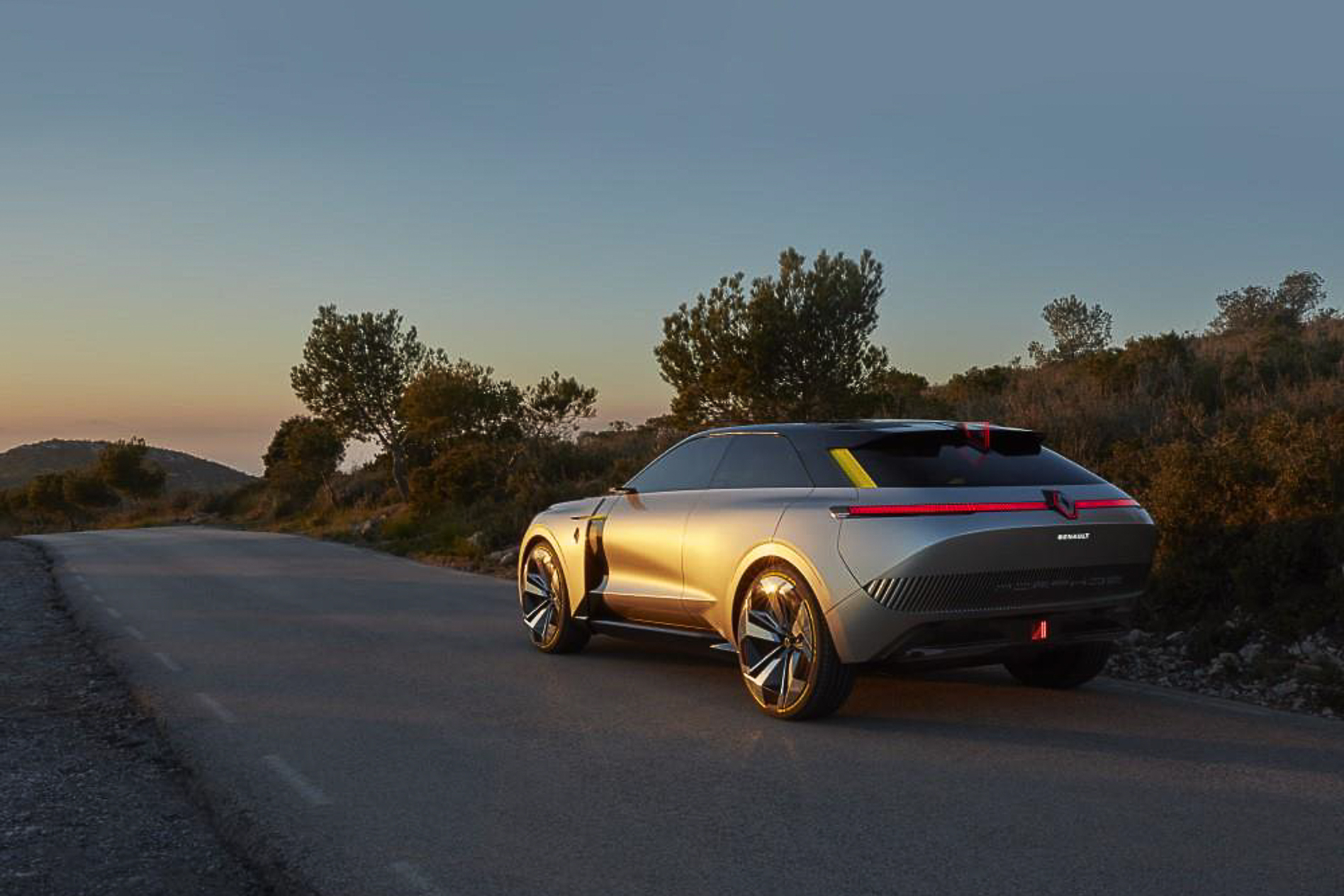
“When I say SUV, I’m more talking about proportions, dimensions and the feeling of SUV,” Leboire clarified. “It’s not only coming from the fact that you’re pragmatic, and see the way that SUV has taken every segment, every range of the car industry on the planet, where it’s actually just replacing half of the types of cars.
“We should all wonder why – and once we answer the question of why, which is our job as designers, it’s interesting to understand what are these chords that the SUV has been able to tick, that please people so much, and express them so well. What makes for the success of the SUV?”
There is also a physical practicality to the notion of an SUV silhouette, according to Leboire.
“The second generation of electric cars is made of big, heavy batteries that are put at the base of the car for balance reasons, and for physics,” he said. “Because of this you have a platform which is full of batteries, and because of this, you have a car that is quite high, with more or less the proportions of an SUV or crossover.
“You have a package, you don’t really have a choice; to make it pass visually, to make it look good visually, you can use what works today – the good proportions of an SUV – to put in on a package that has a problem of hiding a large section that needs large wheels to make it look okay.”
Leboire then pointed out that the next generation of electric cars will still follow the conventions of current cars – “for at least 20 years,” he predicts – such as bonnets that need to cater for internal combustion engine cars within the same family.
“So you still have a car with the constraints of cars that have gone before, and with the constraints of the second generation of electric cars, and the fact that you are in a market that is still fully in love with SUVs… take all this into account and then think of the second generation of electric cars,” he said.
He also says that designers are not yet at the point where they can let their styluses roam wild, free from the conventions of traditional car design.
“This is not true yet,” he said.
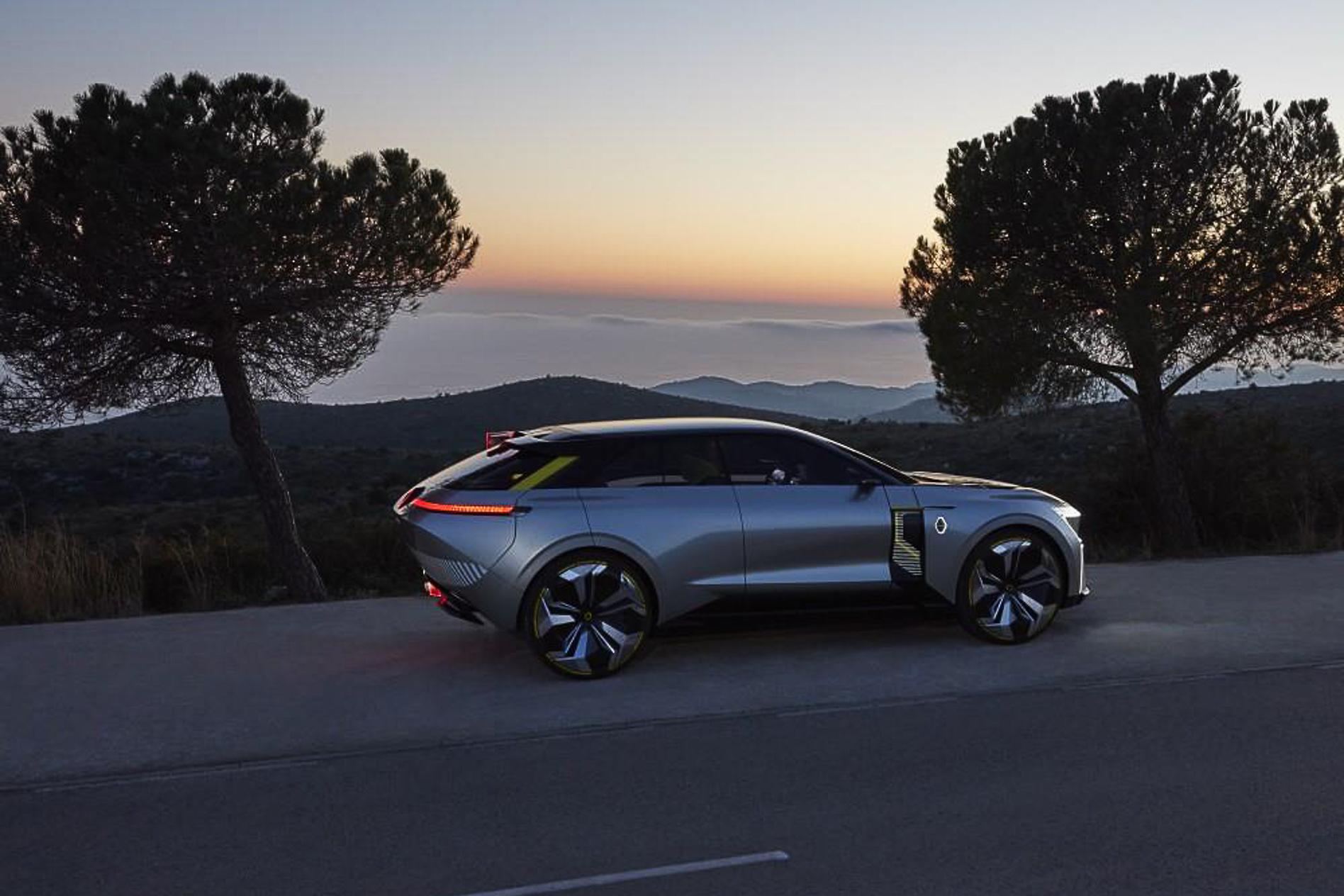
The Morphoz previews Renault’s second generation of electrification, something that Leboire – who also designed the small, funky Twizy two-seater – says is a real advantage.
“The difference between the first generation and the second is very big,” he said. “There were very few in the market and the competition wasn’t that strong; you could do whatever you wanted, and it would work because you were alone. As long as you didn’t make a big mistake, people will take it as it is because you’re not in competition.”
However, he acknowledges that this time the brand has stiff competition on the way from the likes of Volkswagen (which will likely debut in Australia with an electric SUV) and other mainstream brands, which are also looking to the mass EV sector en masse.
“The second generation is a big difference because everybody now is in the market,” he acknowledged. “You have to be a reference in terms of brand, but you also need to become very good in terms of product… and you have to be able to please all the people in the context of what you’re doing.
“With 2.0, you have to be iconic and different, you have to get out into the market by being one of the best and because you have to be chosen. The question of whether you will be chosen will always stay alive in the industry, but there are different ways of doing it.”
Volkswagen is out to reclaim its hot hatch crown with a four-pronged assault that could include an electrified 300kW hyper hatch to take on the Mercedes-AMG A45.
Facing stiff competition from newer rivals, such as the Hyundai i30 N and Honda Civic Type R, VW is mounting a multi-tier approach for its refreshed performance hatch line-up.
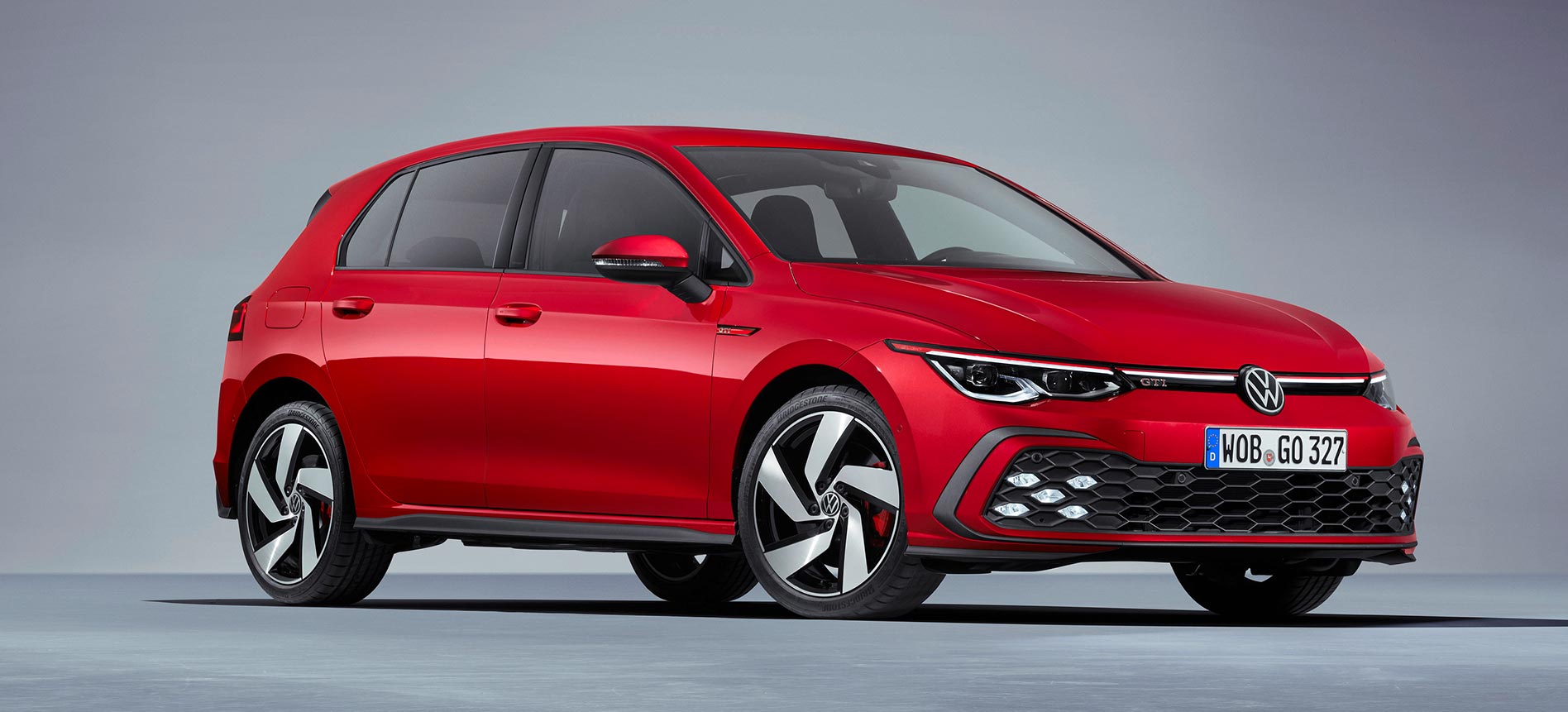
Leading the charge is the all-new Volkswagen Golf GTI which is set to arrive in Australia in the second quarter of 2021.
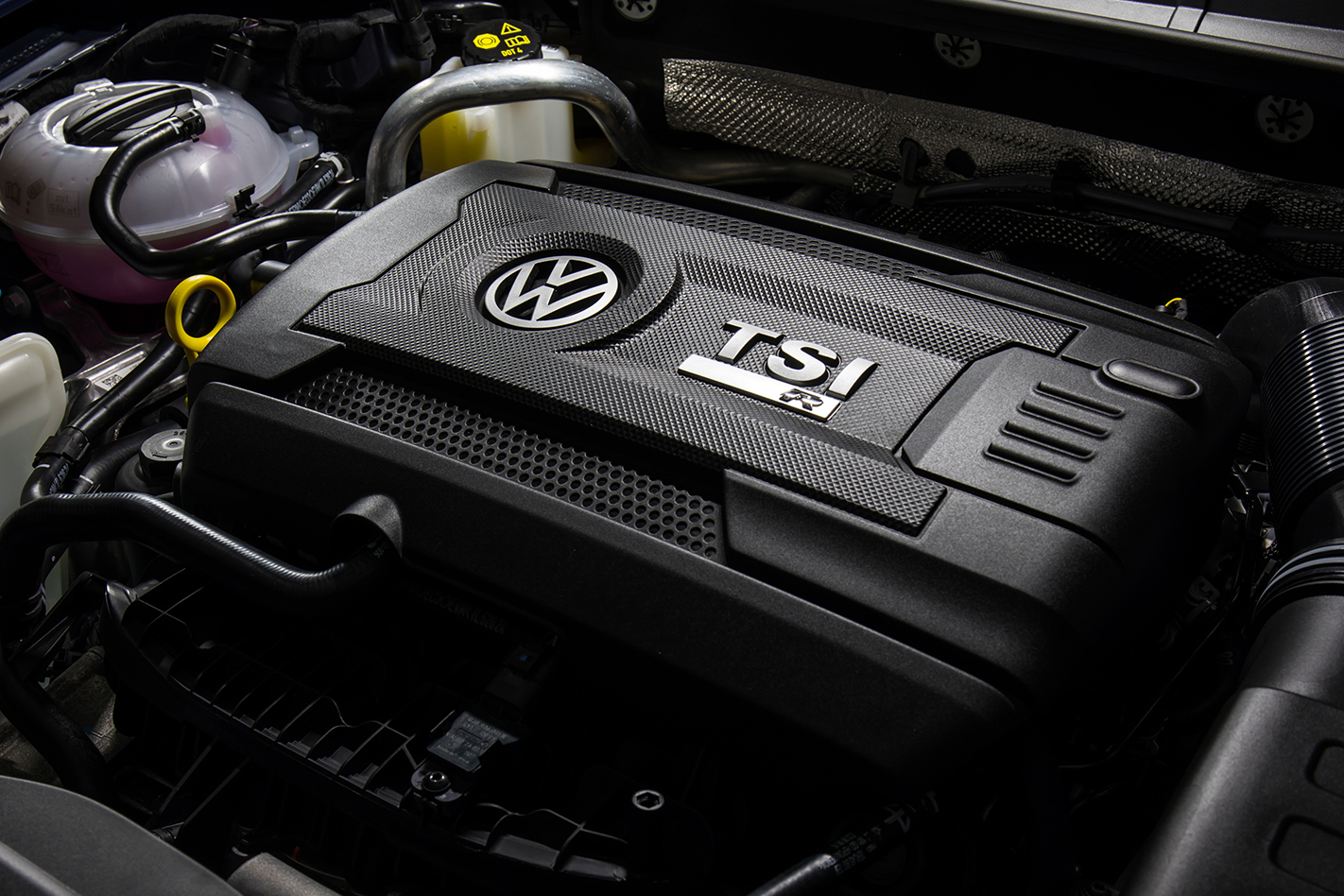
VW’s EA888 turbocharged 2.0-litre remains the centrepiece under the bonnet of the new GTI, producing 180kW and 370Nm – the same outputs as the outgoing Mk7.5 GTI.
The main development for the Mk8 GTI is the introduction of VW’s Vehicle Dynamics Manager system, which controls the adaptive dampers and locking front differential, promising to provide a greater breadth of ability between its maximum comfort setting and full attack mode.
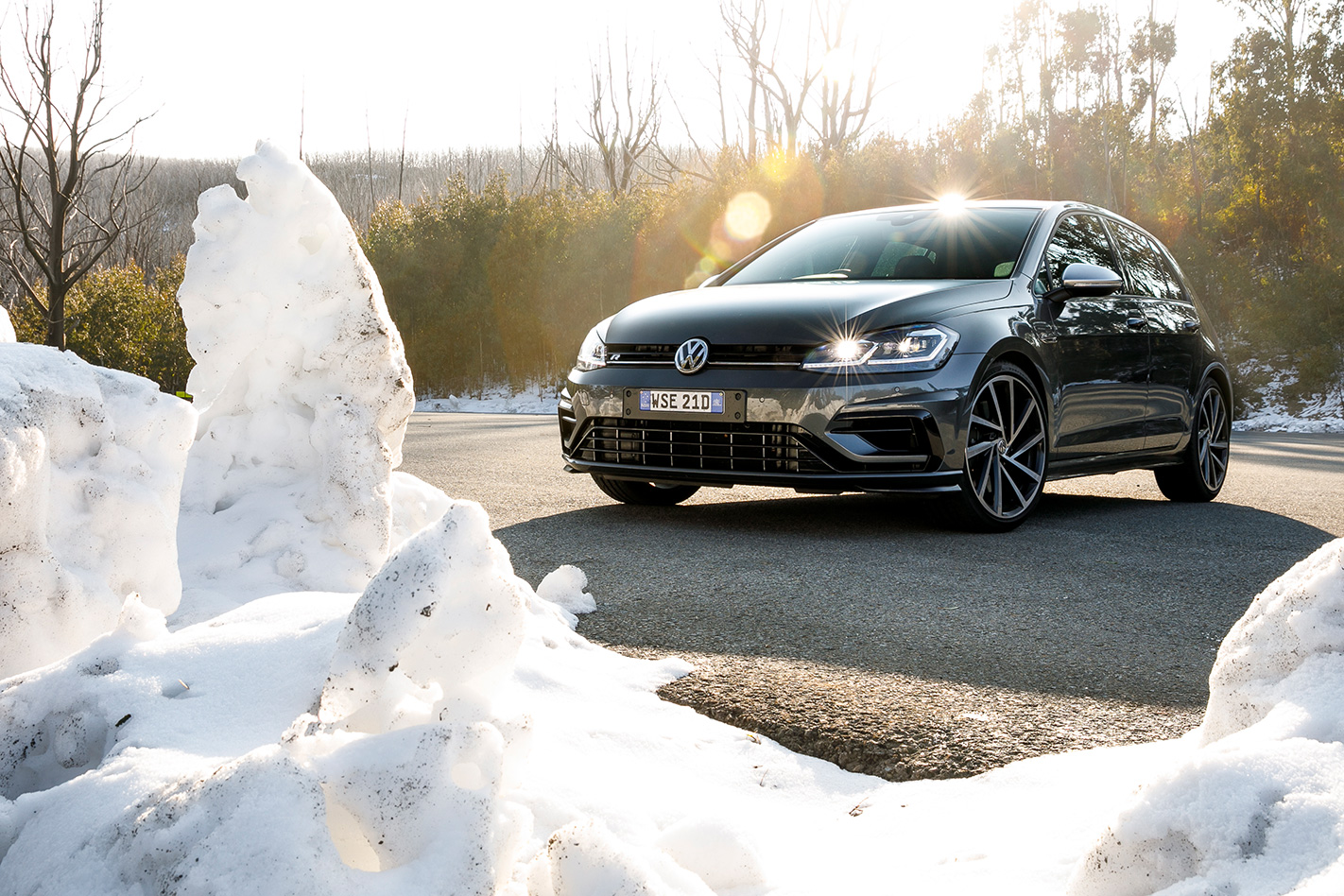
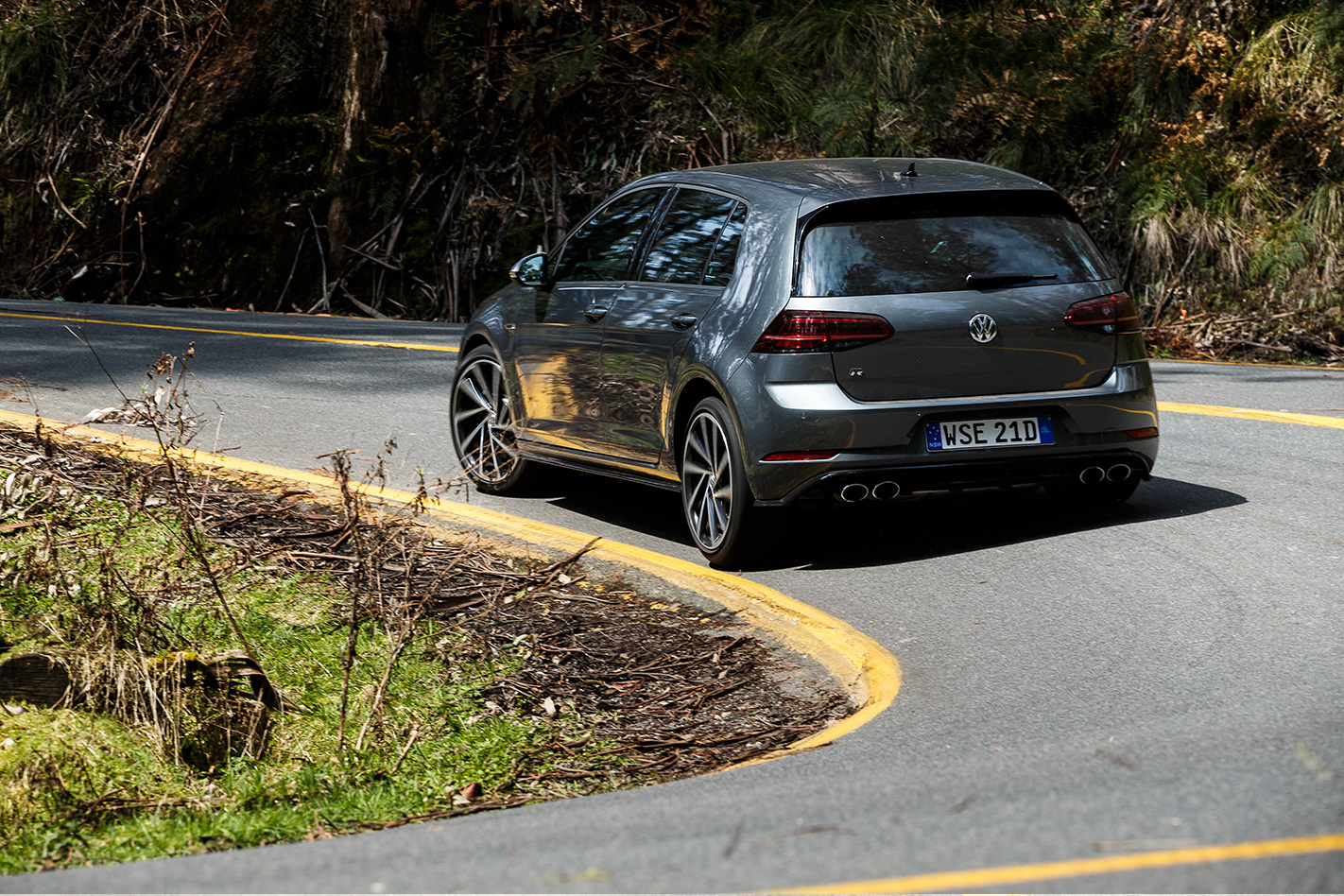
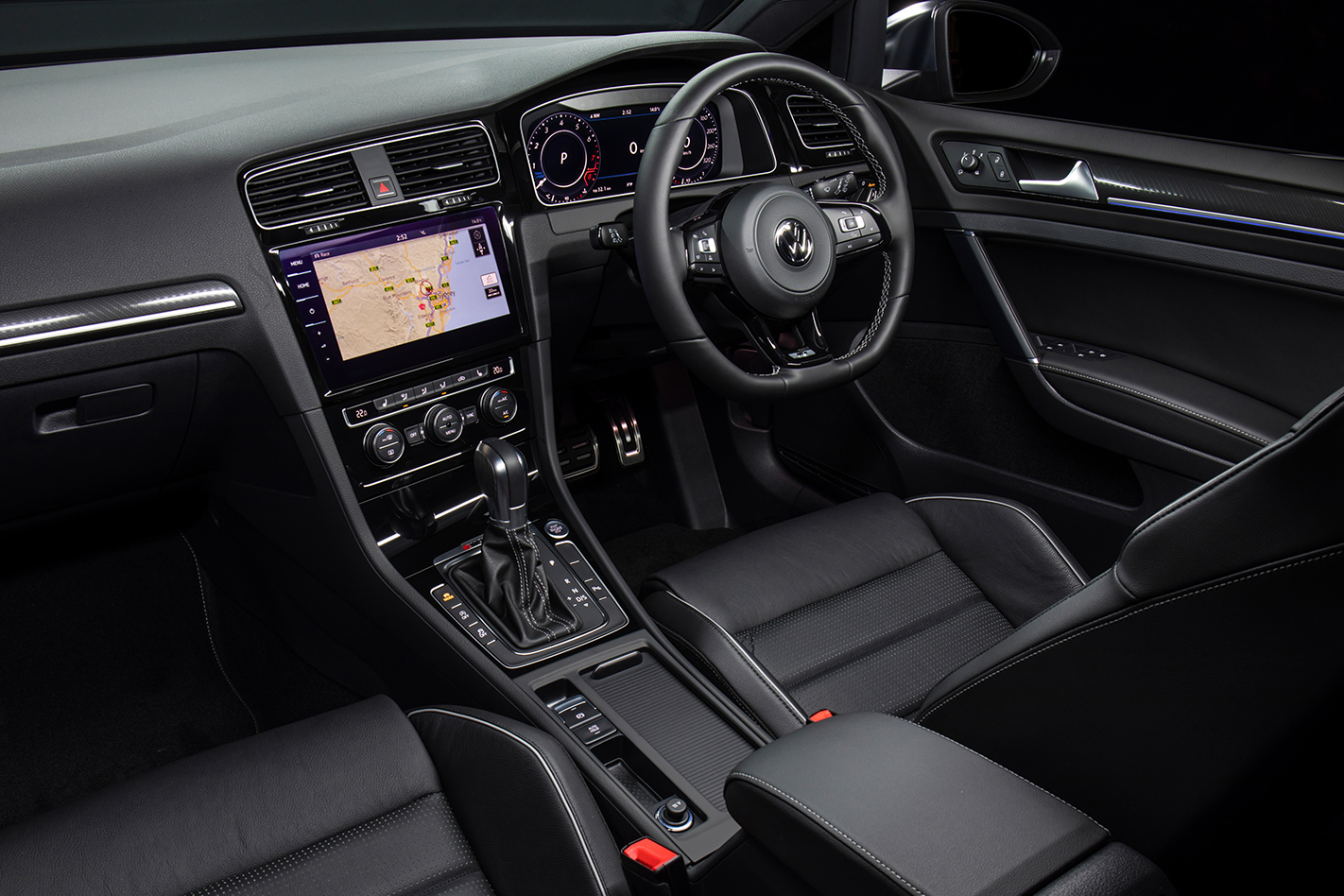
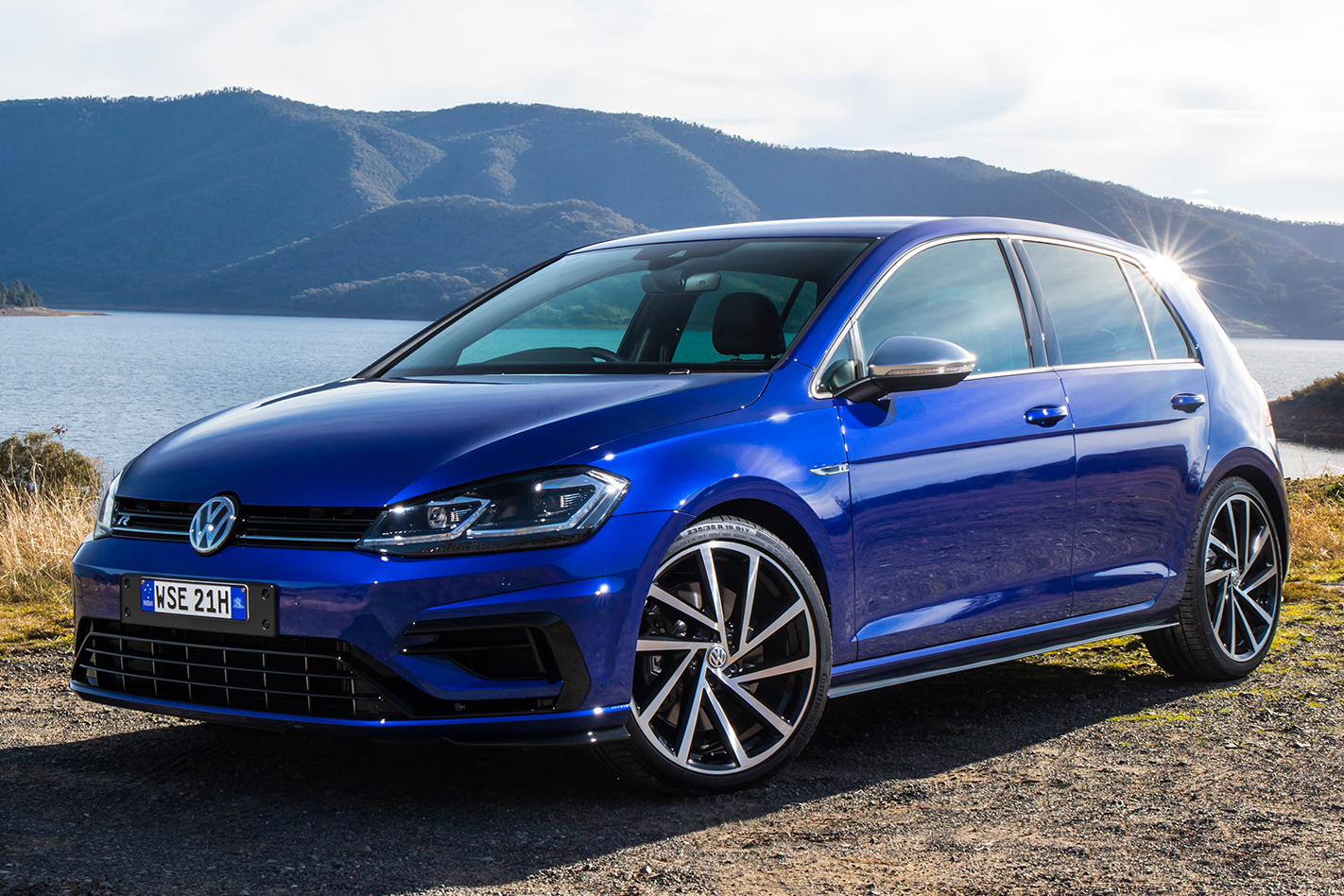
Yet to be shown officially but also due for a 2021 release is the 8th-gen Golf R, a circa-$60K flagship that will build on the GTI’s DNA.
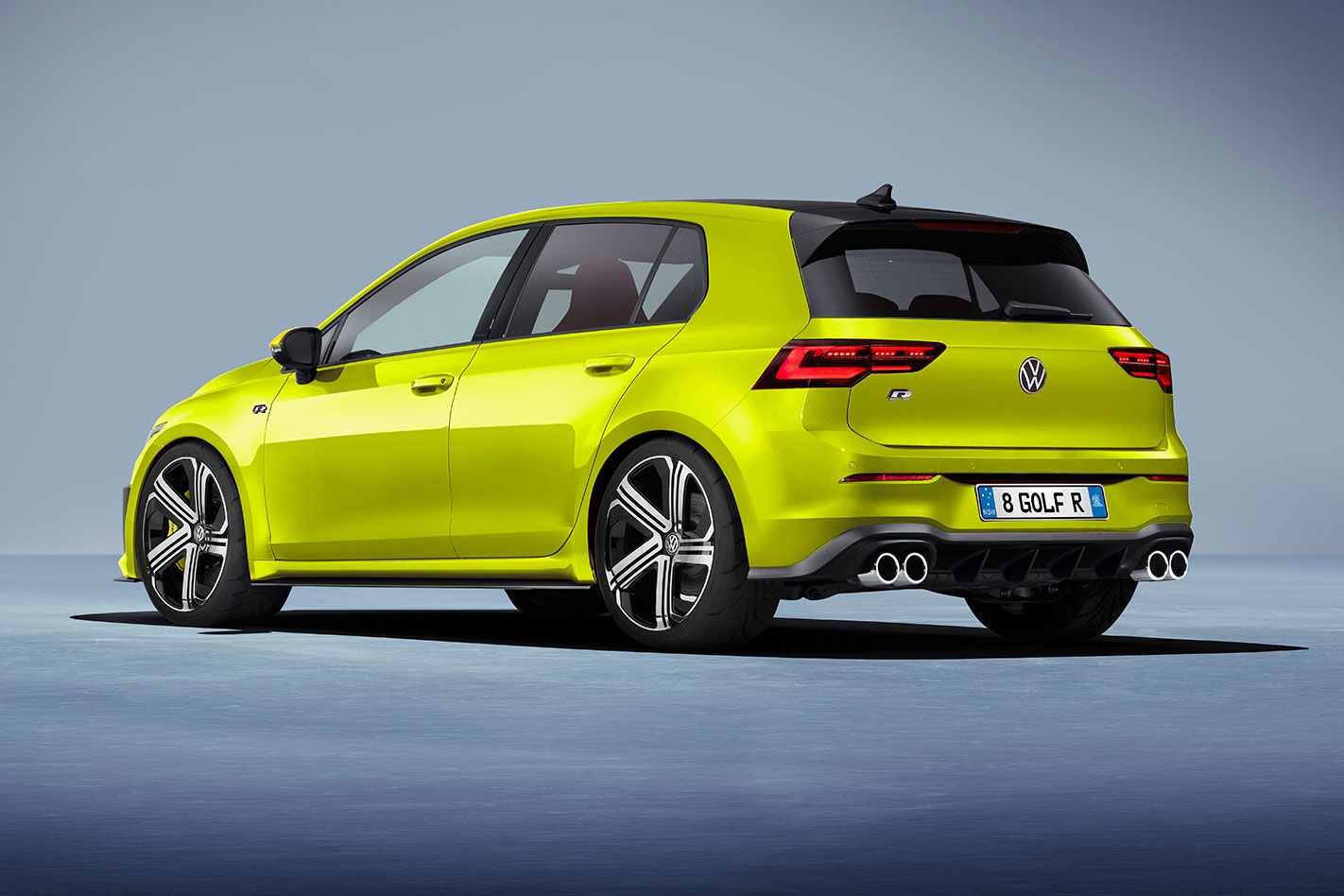
Leaked internal documents show the hotly anticipated pinnacle of the line-up (at least in the short-term) is unlikely to shift away from a proven formula, instead stepping up outputs from the familiar 2.0-litre four-cylinder turbo to 245kW. At that level it will be the most powerful production Golf to date.
Drive will continue through all four wheels and the chassis will be appropriately tweaked to handle the extra punch, along with DCC (Dynamic Chassis Control) adaptive dampers.
Spy pics of the top-secret model testing in the Swedish snow show dual exhausts hanging from either side of the rear end.
Blue brake calipers pinching cross-drilled front rotors promise to bolster stopping power, while a revised bumper and unique lower rear diffuser assist with cooling and high-speed stability while also ensuring the requisite increase in visual aggression.
Bridging the gap between the revamped Golf GTI and Golf R will be a new variant dubbed GTI TCR, which will form a halfway house between the two familiar Golf performance models.
Where the new GTI caps power at 180kW, the TCR will feed 221kW from its EA888 engine to the front treads.
The existing Mk7.5 TCR (which is expected to arrive in Australia in July) produces 213kW/380Nm and is a three-door-only proposition. The new Mk8 variant is expected to switch to a five-door configuration, and gain some aggressive new bodywork inspired by the race car with which it shares the badge.
Other additions for the TCR include extra cooling, a sports exhaust and track-focused rubber.
While the new-gen Golf R and TCR are a done deal, it’s the prospect of the long-rumoured Golf R ‘Plus’ that is most intriguing.
This halo model, which could have as much as 300kW and would act as a more affordable rival to the likes of the Mercedes-AMG A45, has been discussed deep within Volkswagen’s Wolfsburg head office, with boss Herbert Diess reported to be a personal proponent of the project.
However, while rumours of the hot hatch halo have been circulating for months, Wheels sources say the car is yet to get the crucial management sign-off. That means it’s not in the mid-term product plan and, even if given the green light, it won’t appear until at least 2023.
Another marketing-friendly option could be a 2024 launch to celebrate the 50th anniversary of the iconic GTI.
When contacted, Volkswagen Australia said it was unaware of any plans for a mega Golf, and that if it were to happen, it would be years away.
Not that it slows the discussions about what technical make-up the car could take.
Chassis tweaks would naturally run to stiffer suspension and, according to our spies, a wider track, something that would necessitate bespoke wheelarches to keep everything in check – and pump up the aesthetics.
It would also create a distinct look from the GTI and R models, which would continue to account for the bulk of hot Golf sales.
It’s understood that engineers have evaluated multiple drivetrain options for getting the requisite power – with Mercedes-AMG’s 310kW A45 one target mentioned – while meeting stringent 95g/km CO2 targets.
Whatever happens, expect emissions as much as performance to steer the agenda.
There’s also the rather large hurdle of ensuring any top-shelf Golf arrives with a Volkswagen-friendly price tag. Sister brand Audi does a thoroughly acceptable RS3 for $83,800, so R Plus would logically either have to offer more or sell for less – likely the latter.
Volkswagen executives initially considered employing Audi’s potent and characterful 294kW five-cylinder turbo as the powerplant for a Plus-powered Golf, but that plan has been killed off. Instead, it would be up to the familiar 2.0-litre blown four-pot to carry the Golf to a new level of performance, but what form it takes has apparently not been decided.
While a heftier turbo and strengthened internals could theoretically hit the 300kW-plus target, another option understood to be on the table involves electrification.
That would leave an electric motor to provide something like an extra 50-plus kilowatts, possibly more – all of which would blend nicely with Volkswagen’s broader switch to electric propulsion through its ID sub-brand.
It makes sense given Volkswagen’s performance direction too. The recently unveiled Touareg R utilises the 340kW plug-in hybrid drivetrain from Porsche’s Cayenne E-Hybrid.
However, there are challenges for an R Plus elsewhere. Any such program is unlikely to be for a single model, suggesting other vehicles within the group would need to utilise such a set-up to ensure its viability. There’s also the issue of weight. Throw in batteries and there’s the obvious issue of adding hundreds of kilograms to the car, which would trade off its agility.
On the other hand, electric motors also allow different thinking on the drivetrain front.
Rather than run driveshafts to the rear, Volkswagen could use the same approach as other all-wheel-drive hybrids – and the GTI Worthersee concept from 2017 – that leave the petrol engine powering the front axle while electric motors take care of the rear drive. Such a set-up would also help to overcome some of the weight disadvantage of carrying batteries and motors in addition to the ICE by eliminating diffs and driveshafts.
There are also benefits with torque vectoring and being able to quickly switch drive between wheels and axles depending on the surface and situation. It’s thinking that is already deep in development elsewhere across Europe.
What approach VW will adopt remains to be seen, though it’s clear the brand isn’t taking losing its place at the top of the hot hatch hierarchy lying down.
And the real winners in that scenario are us – car lovers looking for engaging daily drivers that can also lug the kids and dog about, without breaking the bank.
The heat is on
Australia took a long time to fall in love with the hot hatch. The original Golf GTI fronted up overseas in 1976 with 100kW per tonne. By 1980, our hottest local equivalent was the Alfasud 1.5 Sprint with a piffling 64kW/t. The Colt Cordia Turbo rectified things with 115kW/t in 1985, while the 1990 Ford Laser TX3 Turbo AWD took a step back to 102kW/t, little more than the Golf that started it all. Five years later, the Golf VR6 had barely moved the meter to 106kW/t. Then things got serious. The 2000 Audi S3 lifted to 112kW/t, with the 2005 Alfa Romeo 147 GTA cracking in with a hefty 135kW/t. By 2010 that figure had risen to 150kW/t for the Ford Focus RS and by 2015 to 179kW/t for the Mercedes-Benz A45 AMG. The latest A45 AMG S sets the current benchmark with exactly 200kW/t.
Three things you should know about the R Plus
- Bringing a 1500kg 300kW Golf R Plus to market would deliver exactly double the power-to-weight ratio of the original Mk1 Golf GTI (200 versus 100kW per tonne).
- A styling proposal for the Golf R Plus has already been completed and internally distributed within Volkswagen. It’s said to offer significant visual differentiation from the standard Golf R.
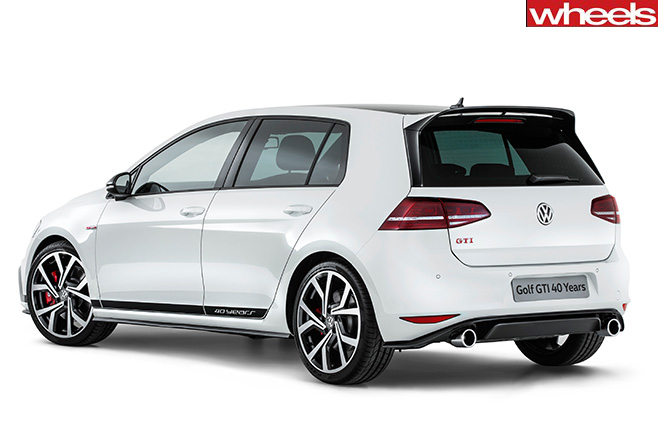
- If the R Plus were to adopt the same drivetrain architecture as the 2017 Worthersee Golf GTI 40 Years project, it would be the first production Golf that can be set in a pure rear-wheel drive mode.
This article was first published in the April issue of Wheels magazine.
There are a few liveries in Australian Touring Car history that are as recognisable today as the face of a mate or the label on your favourite brand of chocolate.
The ‘Silver Bullet’ VT Commodore V8 Supercar is one of those. Touring cars, not chocolates.
Driven by Russell Ingall in the 2000 V8 Supercars championship, The Silver Bullet was partnered by a black Castrol-liveried sibling piloted by Larry Perkins.
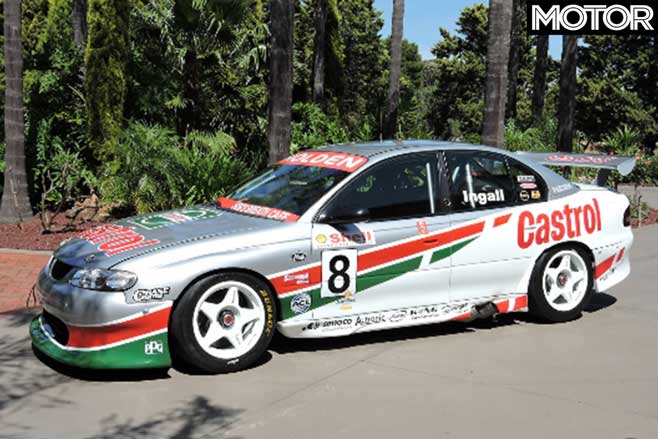
The Castrol-Perkins team and its two legendary drivers didn’t have the most successful of years in 2000, but that hasn’t stopped the car driven by Ingall from becoming an icon.
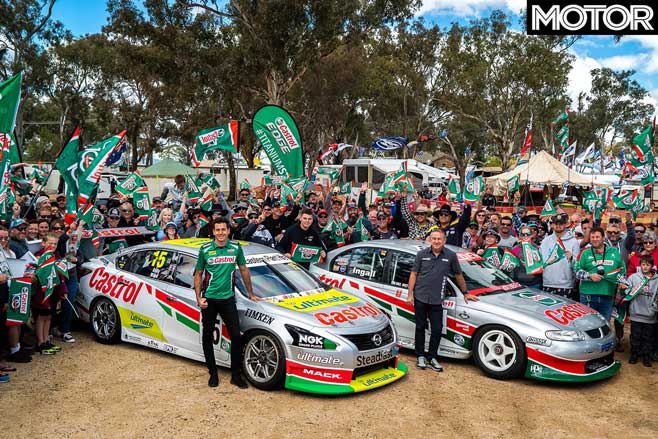
Rick Kelly’s Nissan Altima even donned the livery in the 2019 Bathurst 1000 by way of vote from fans.
Now, the original Silver Bullet is for sale, and its current owner has been reportedly excellent to deal with according to Jack Perkins, who manages much of Perkins Engineering’s business these days.
MOTOR gleaned some background on the car from Perkins, as well as confirmation the car and its sale were legitimate.
“Rusty’s car was silver with the Castrol green, red, and white. LP’s car was primarily black with green, red, and white.
“Technically speaking, this was Perkins Engineering’s second car using chrome moly [chromium molybdenum, an alloy] tube for the roll cage (as opposed to standard steel tube), and it was the first car fitted with the now famous Larry Bar.”
For those out of the loop, the Larry Bar was a “a diagonal roll cage bar across the front window opening section of the chassis,” Perkins adds.
Though originally a VT, which is what it’s referred to as, ‘PE036’ was later upgraded to VX-spec. After its stint with Castrol-Perkins, it was sold to Team Kiwi Racing, making it the second PE car sold to TKR during 2001, Jack Perkins recalls.
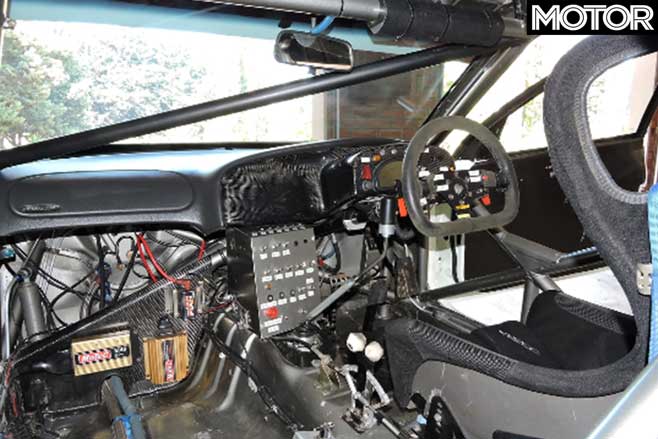
“Mark Porter was the last TKR driver to drive it in 2004, before current owner Mark Papendell bought the car in 2005.
“Papendell raced it in the DVS Supercar Series in 2005 and 2006. Since then Mark has restored the paint scheme the 2001 Silver Bullet Castrol livery.”
Currently, the car is for sale at an asking price of $500,000, which will include an original set of wheels as well as spares, plus all the logbooks and paperwork from CAMS and Perkins Engineering.
“Mark has been a great custodian of the car during his 15-year ownership,” Jack Perkins says, “we look forward to meeting whoever the new owner is when or if the car is sold.”
It might not be exactly the news some Ford fans were hoping for, but the Blue Oval has restarted a small manufacturing operation in Australia, not to resurrect the Falcon or Territory, but in support of health professionals and the fight against COVID-19.
As the world struggles to meet the demand for essential personal protective equipment, Ford has allocated resources at its Broadmeadows facility in Melbourne’s north to manufacture up to 100,000 face shields.
The vital protective gear will be donated to front-line doctors, nurses and other medical personnel who continue to test and treat patients with the virus, forming a crucial part of the fight to control and eradicate the disease.
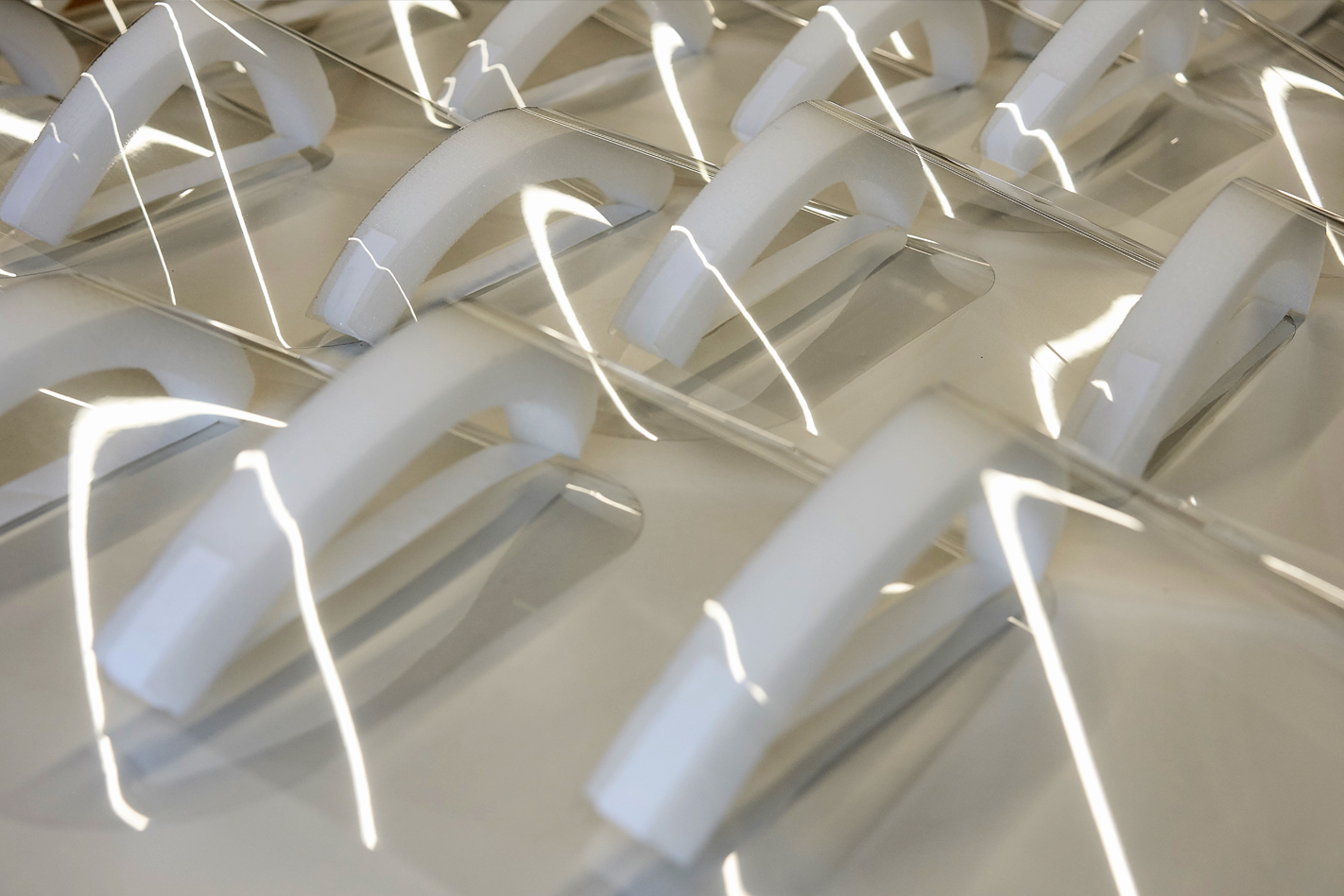
Over the past weeks, Ford has been testing and developing face-shielding prototypes at five Victorian hospitals and the final design is now in production at its product development facilities. The first examples of a Ford-built face shield are already in action around the state.
While the majority of Ford’s production team is involved with the assembly and distribution of the shields, the company has also been working with suppliers to help produce the materials and components required for their manufacture.
With its contribution to the cause, Ford joins an army of automotive brands and their staff that have turned their skills and resources to help with the coronavirus crisis.
Also on Australian turf, Supercar racing teams Erebus Motorsport and Triple Eight have already enlisted their support producing incubator chambers, ventilators and face masks.
Overseas, Ferrari has been 3D printing ventilator components, in Japan, Nissan has been manufacturing face shields similar to Ford’s Australian devices, while Jaguar Land Rover has been 3D printing their version of the potentially life-saving visors in the UK.
According to the company, skills and expertise retained in the company from a local car production era has enabled the company to rapidly develop the medical equipment and scale up to meet extraordinary demand.
“We said from the beginning of COVID-19 that any way we could help, we would help,” said the president and CEO of Ford Australia and New Zealand, Kay Hart.
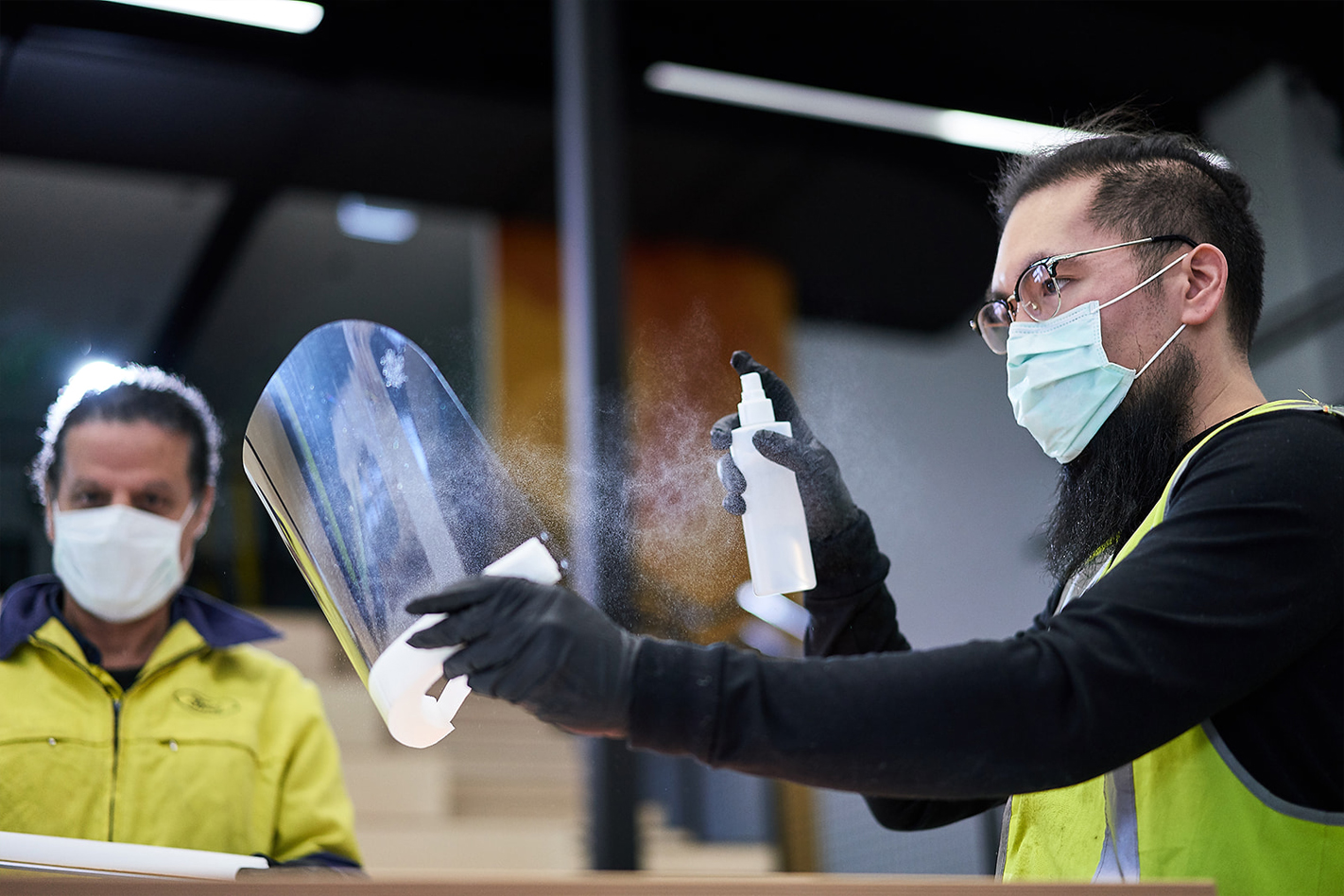
“Producing face shields is certainly something new for us, but our innovation team and engineers were able to test a number of different designs in hospitals and with their input we have been able to get the face shield right for the people who will be wearing them.
“With testing of the prototype shield now complete, we’re quickly ramping up production and working to dispatch the shields to medical workers and other facilities that need them.
But while the team is busy producing large numbers of the devices, Hart explained that it was business as usual for the locally-based design and development teams.
“It’s great that our team has been able to quickly pivot to put their skills towards producing the face shield while also continuing their global work designing and engineering pick-up trucks and SUVs.”
