
- Monster eight-seater claims 1000km battery range
- Ferrari-beating acceleration
- Is it just vapourware?
Not only that, it’ll accelerate from zero to 60mph (96.5km/h) in just 2.9 seconds – Ferrari-humbling territory for an eight-seat van that’s tipped to weigh 3500kg.
Based around a four-motor architecture, there will be a range of Model H vans; the base model will be offered with a mere 1000bhp (745kW) and an eight-tonne towing capacity, while its 150kWh battery array will provide up to 700km of range on a single charge.
The highest-spec car will use a 200kWh battery and offer the headline numbers of 1500bhp (1118kW) – at the wheels, mind you – as well as 1000km of range and 11,000kg of towing capacity.
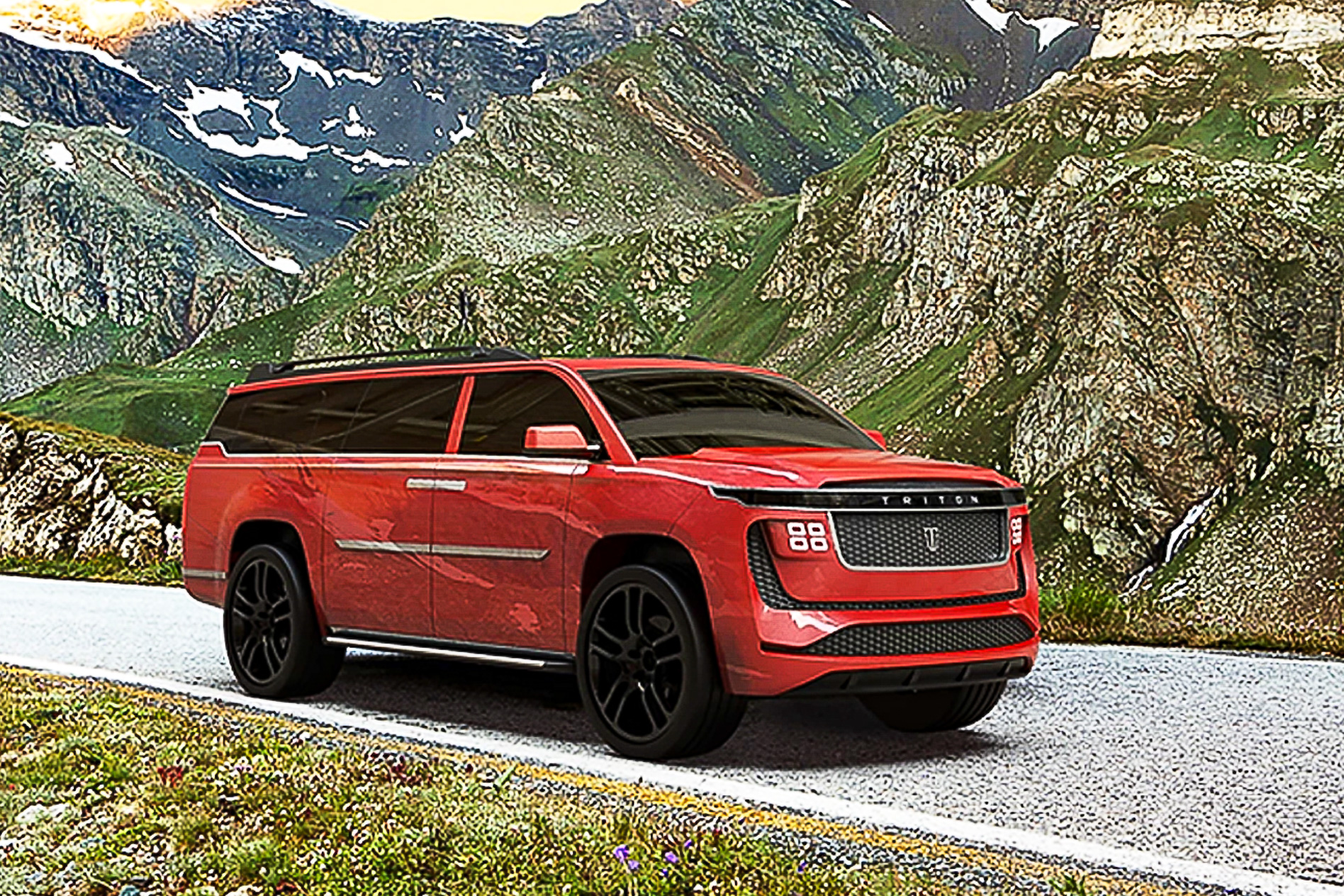
Triton makes big claims about its in-house battery packs, too, claiming that they are “half the weight and half the size of conventional vehicle batteries.”
The company also claims that by using its own wall box, the Model H can be used as a giant charging pack for homes in case of a blackout.
Not only that, the Model H will carry eight people and more than 5600 litres of luggage, and will come with a 10-year/240,000km warranty.
It’s priced from US$140,000 ($290,000), and a US$5000 ($9000) deposit will get you in the queue – though you’re expected to pony up the rest within five days.
While the company’s site lists its base in New Jersey, the founders and brains trust of Triton Solar are from India. Though the company claims the project has been in the works for some 18 months – and will be followed by a sports car in short order- there’s no information on how Triton will actually build its cars at scale.
It all feels a little bit too Utopian to be true, in our view. The easiest comparison to draw is with Tesla, whose forthcoming Cybertruck pick-up is acting as a lightning rod for the SU-EV movement.
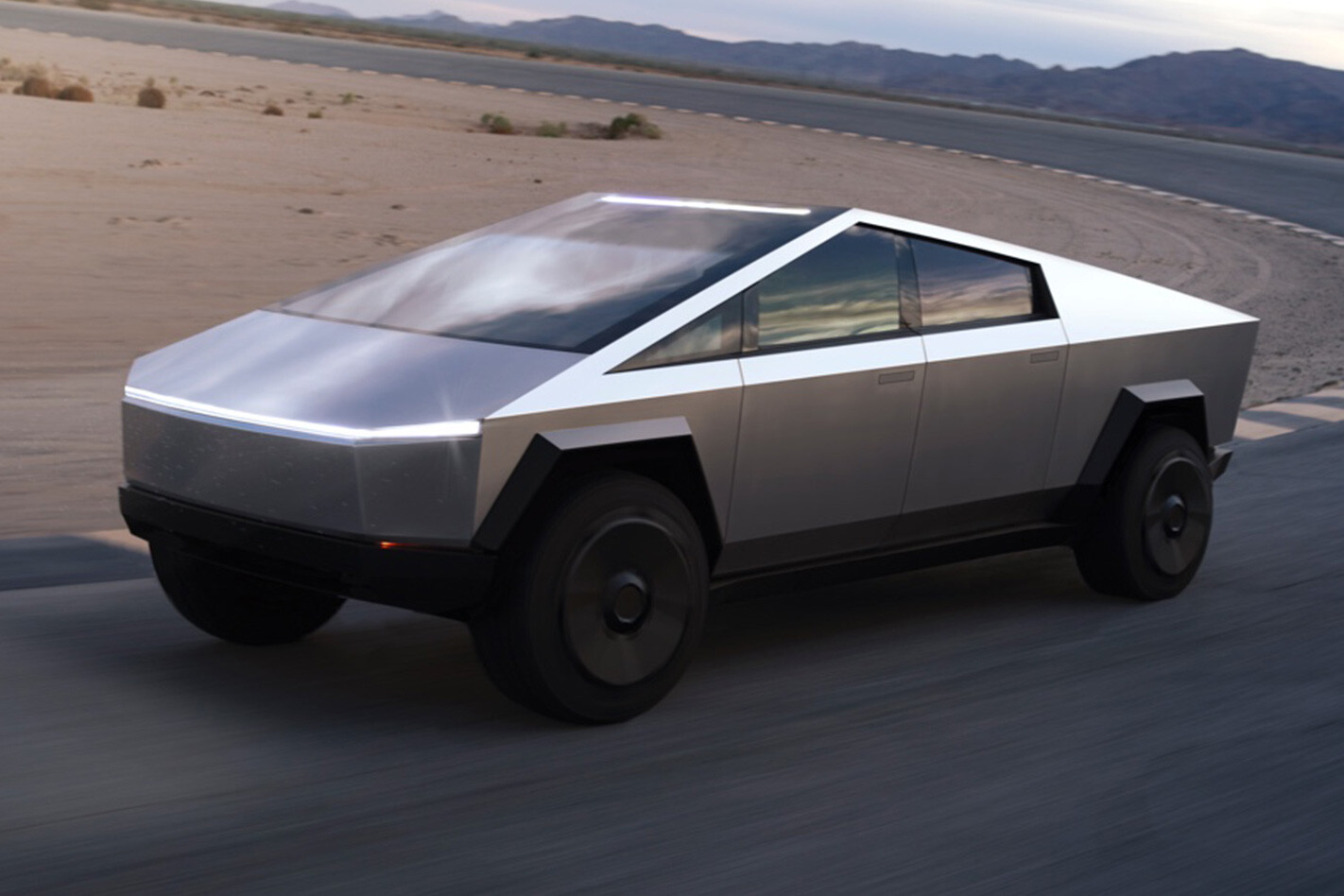
It was essentially forced to buy an old car factory to get its cars to market in any meaningful way, and its early-year struggles to overcome supply and quality-control issues should be a clear warning to those who want to follow.
Another recent example is Rivian, which bought an old Mitsubishi factory in the US as it plots a course towards a strong EV future.
Even small but smart players like Lucid – whose CEO was recruited by Tesla’s Elon Musk to design the Model S – are aware of the limitations of overpromising in a cut-throat world.
Will the Triton Model H ever see the light of day? Our guess that it’s a bit of a long shot.
Racing simulators are all the rage right now thanks to the pandemic turning us all into homebodies. For those that have the space, budget and time, the sim rig craft is fast turning into a competition to see who can one-up everyone else with rigs that are wild, complex or just plain cool, but few can touch this Mini Cooper S-based racing simulator built by artist and part time racer, Brent Cheney.
A long-held plan of the Utah man, Brent finally decided to make his dream a reality with the purchase of a US$1000 Mini Cooper S with a faulty engine before starting the mountain of work that followed.
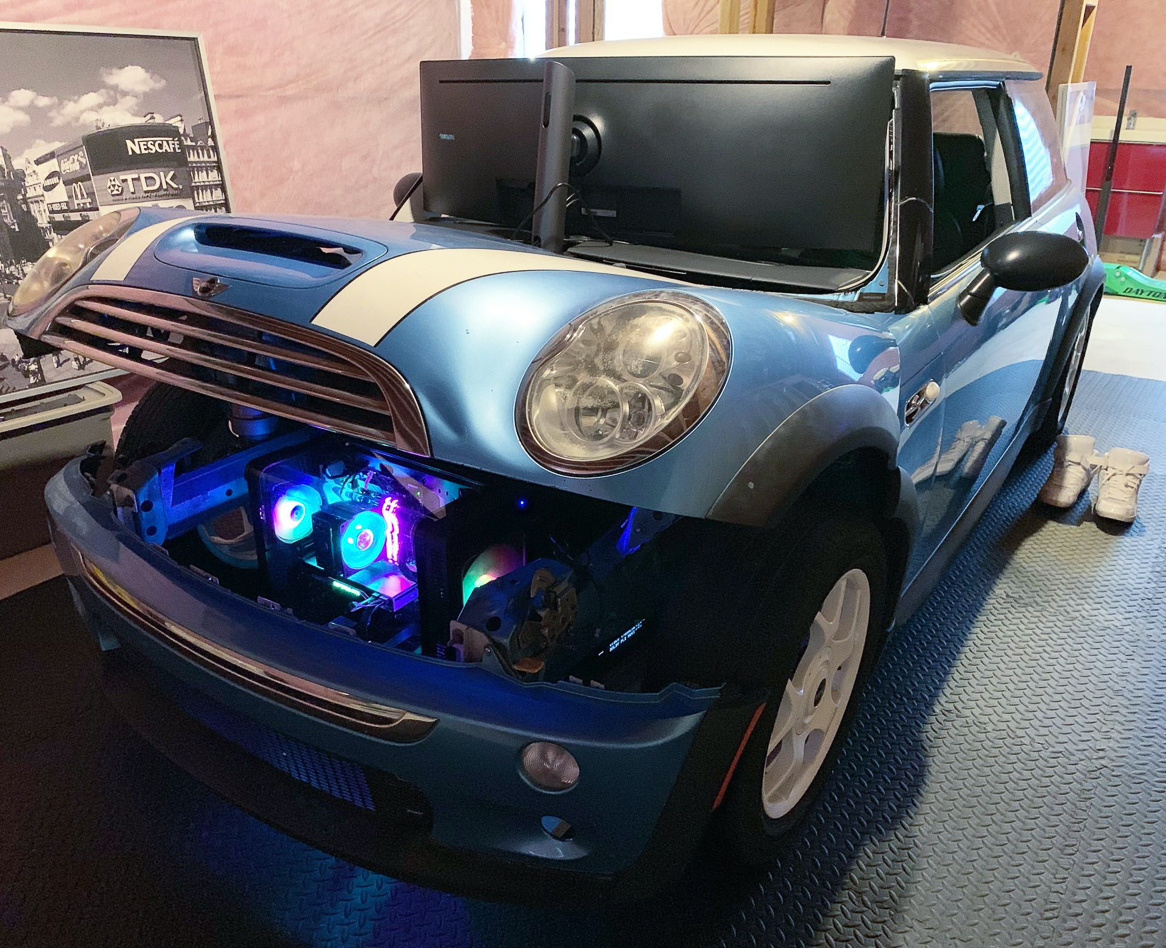
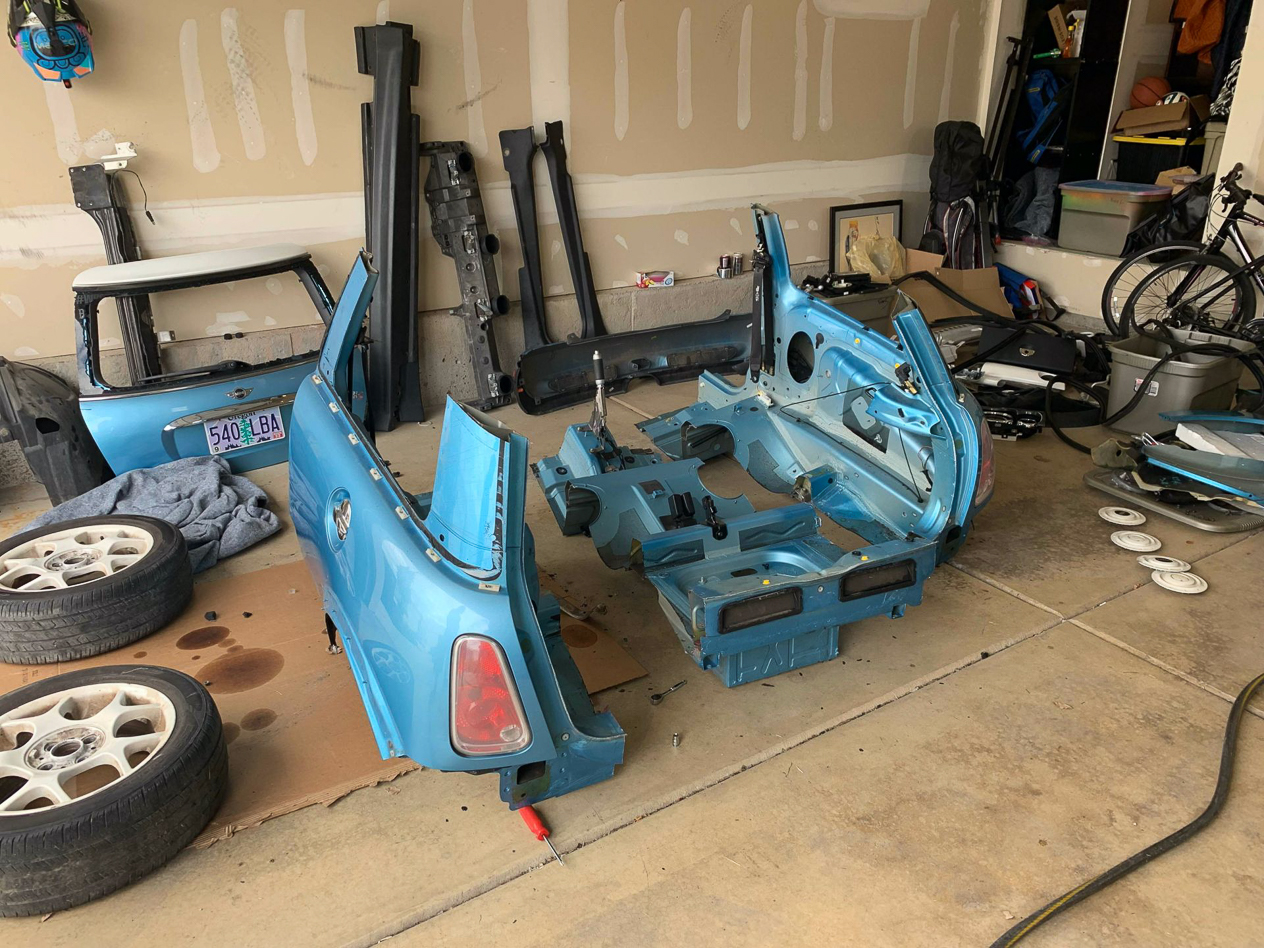
To get the car down to his basement man cave Brent ditched the useless engine, cut the entire car up using a power saw, before relocating all the pieces downstairs to reassemble upon a wooden base.
He used metal brackets, nuts and bolts to reconstitute the Mini’s components back to their original positions, but in lieu of an actual engine he put his Intel i9-powered gaming PC under the bonnet. A monstrous 49-inch Samsung monitor now sprouts from the dash and replaces the entire windscreen, and the standard tiller and pedals are replaced by Fanatec items. A six-speaker surround-sound Harman/Kardon sound system provides sonics, and is augmented by a boot-mounted subwoofer.
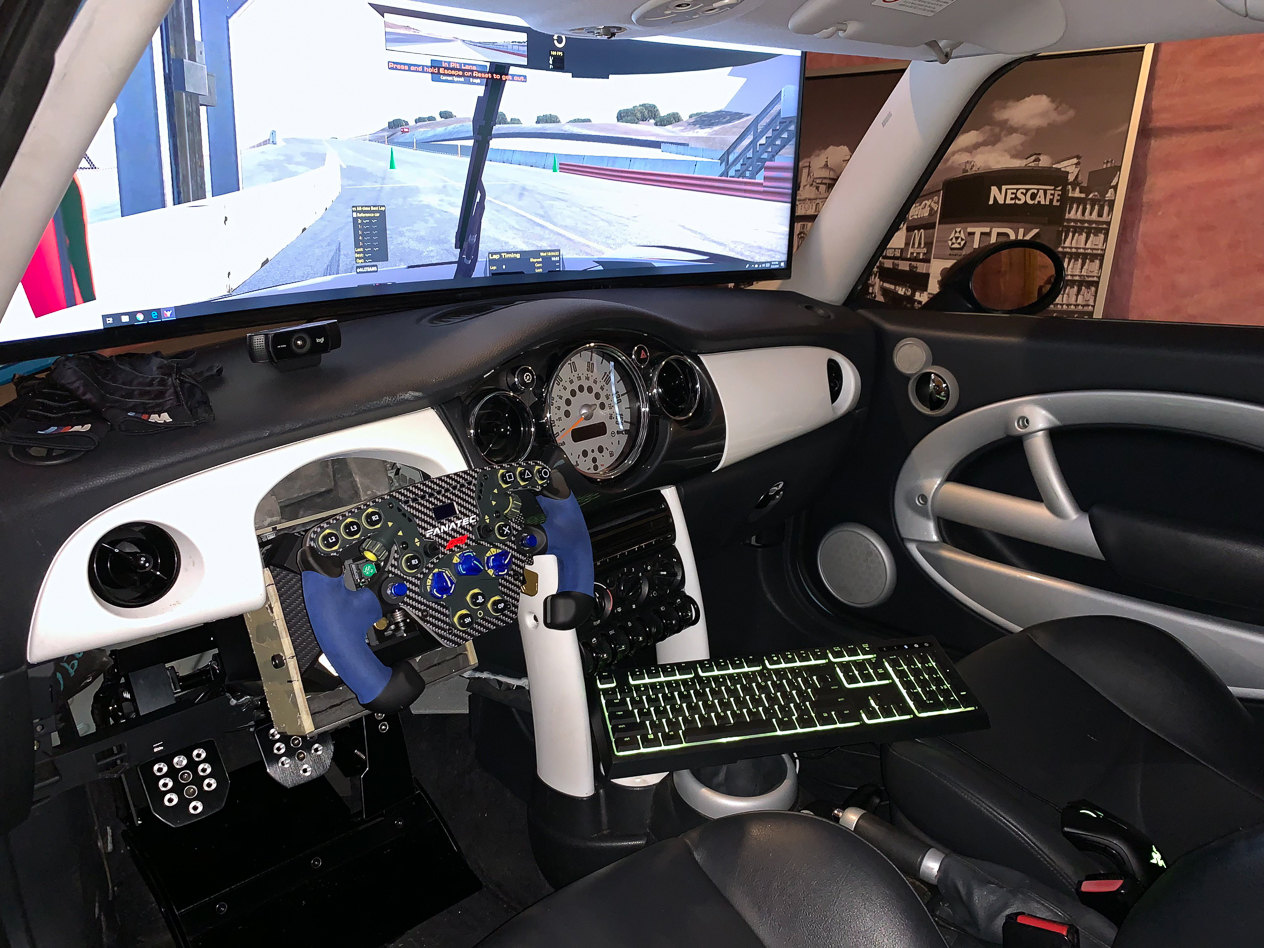
He even spruced up the interior by installing some phone chargers and iPhone-controlled ambient lighting.
The entire project took six weeks from go-to-whoa, and cost him roughly US$6500 (AUD$10,323) for all the simulator parts as well as the car.
Brent told CarScoops that the project started out as a ‘Hold my beer’ type challenge after his friend said it was impossible. “Most of the things I do because people don’t dream big enough. I have seen similar things but never a full car, so I knew that it was up to me to prove it to the world!”
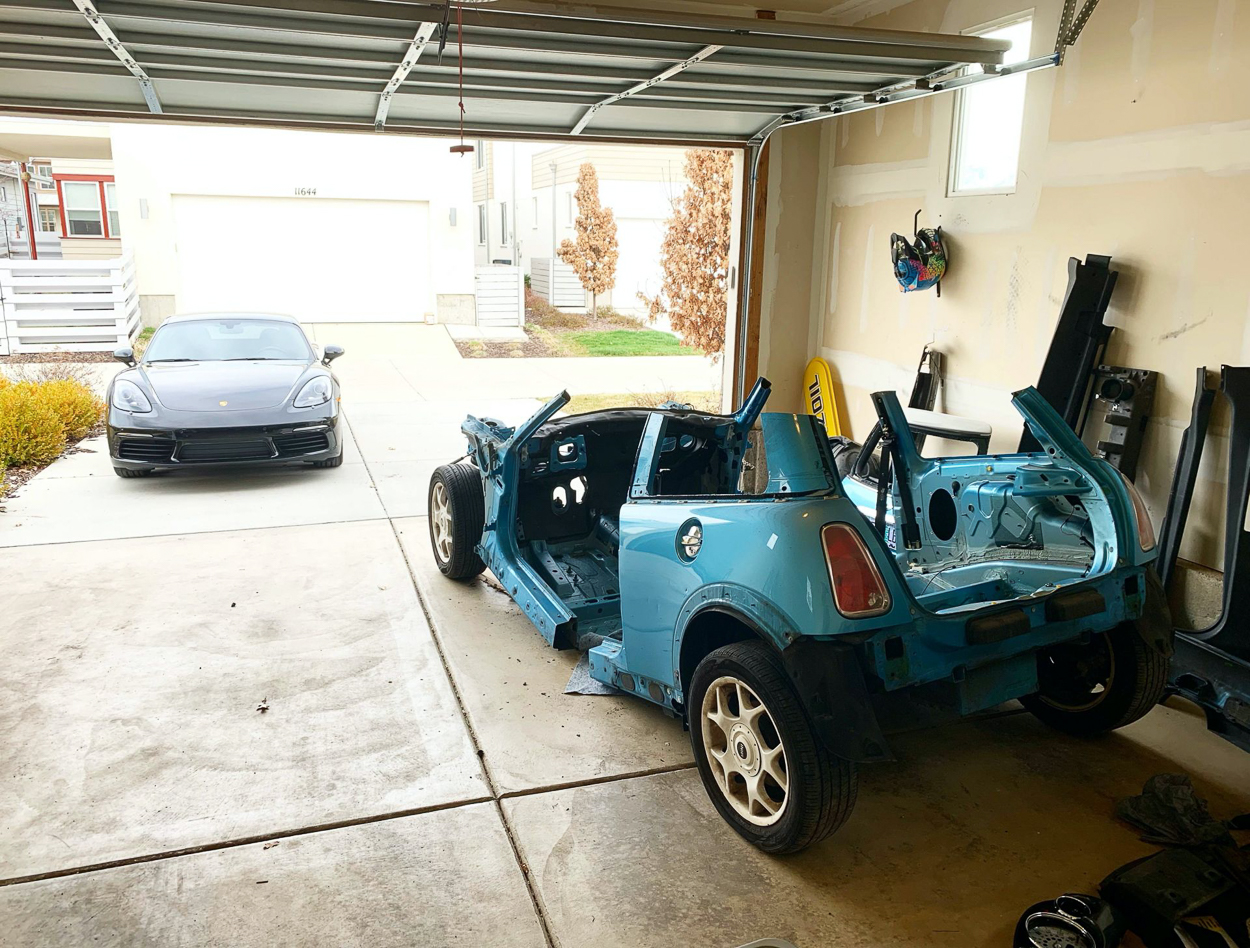
Originally I was planning on using an E36 M3, but [the Mini Cooper] sort of fell into my lap and it turned out to be absolutely perfect for the build. Once I had the car, I completely gutted it and cleaned, I cut it into pieces small enough to move to the basement. I had to be able to fit through doorways and around a tight corner on the stairs. From there I reassembled the car, then installed all of the electronics.”
Game of choice? Brent spends most of his time on the popular iRacing series where he hosts a competition with the Utah iRacing chapter.
The entire build is documented on his Youtube channel where he also holds livestreams using the Mini Cooper racing simulator.
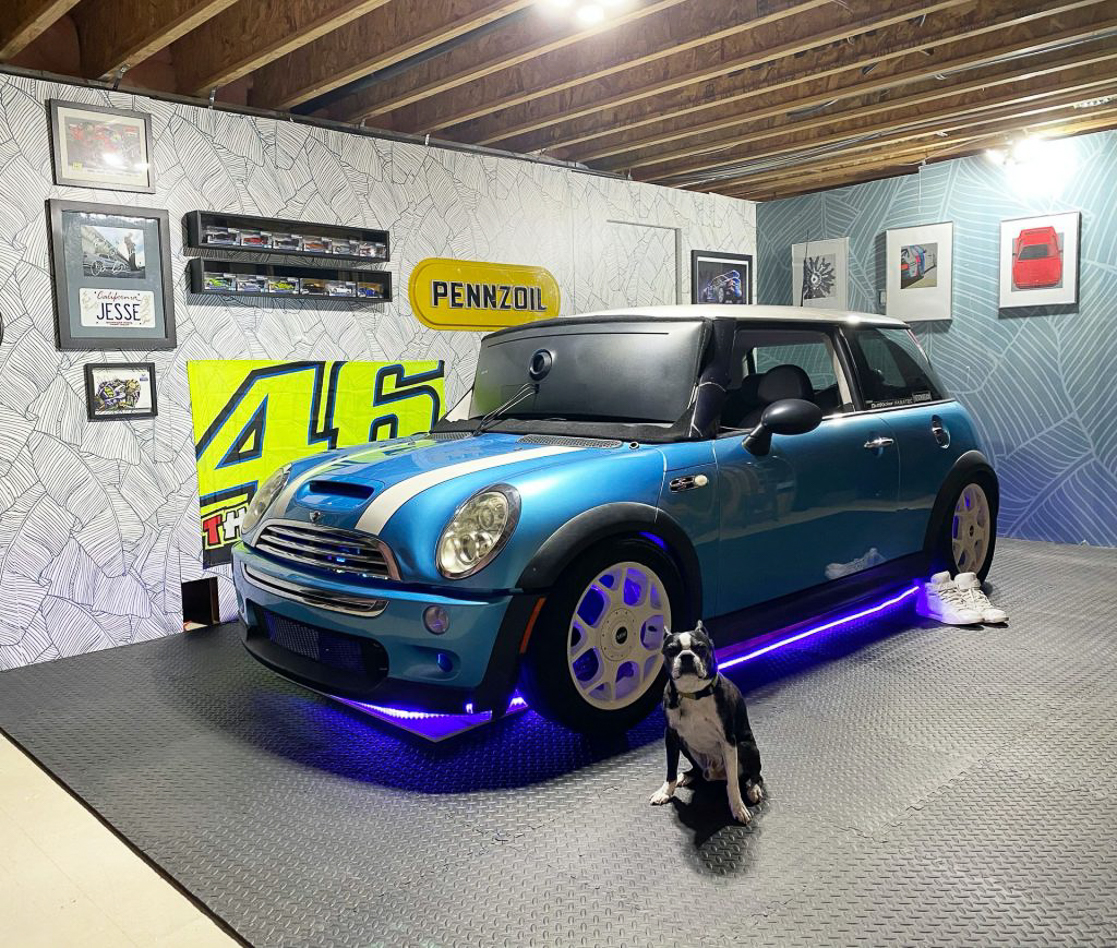
While pushing the nerdy basement-bound gamer stereotype to the extreme, Brent’s DIY job is admittedly quite cool, but you needn’t put in the same amount of effort to get involved. WhichCar has experience with iRacing having reviewed the game, including an explainer on what’s needed to get started. A carved-up Mini Cooper is not a prerequisite.
As far as development setbacks go, having a one-of-a-kind, hand-built prototype completely and irredeemably destroyed is a hell of a doozy.
That is exactly what happened to the McLaren F1 in the early stages of testing in 1993.
During the development of the F1, a number of prototypes were used, starting with the Ultima Mk3 kit car-bodied ‘Albert’ and ‘Edward’ twins, along with the five XP models.
It was the first of the production-bodied examples, XP1, that suffered an inglorious end, and there’s good reason you can’t ogle it as a museum piece.
You see, while XP1 was undergoing hot weather testing in Namibia at the hands of a BMW test engineer it was written off in a spectacular crash. The testing process for a car of the F1’s calibre was always going to involve some high speeds, and that’s exactly what the engineer was doing when it all went very, very wrong.
It’s reported that the engineer went offline while travelling in excess of 240km/h and clipped a gutter before tumbling end-over-end ‘several times’ and coming to a rest on its roof.
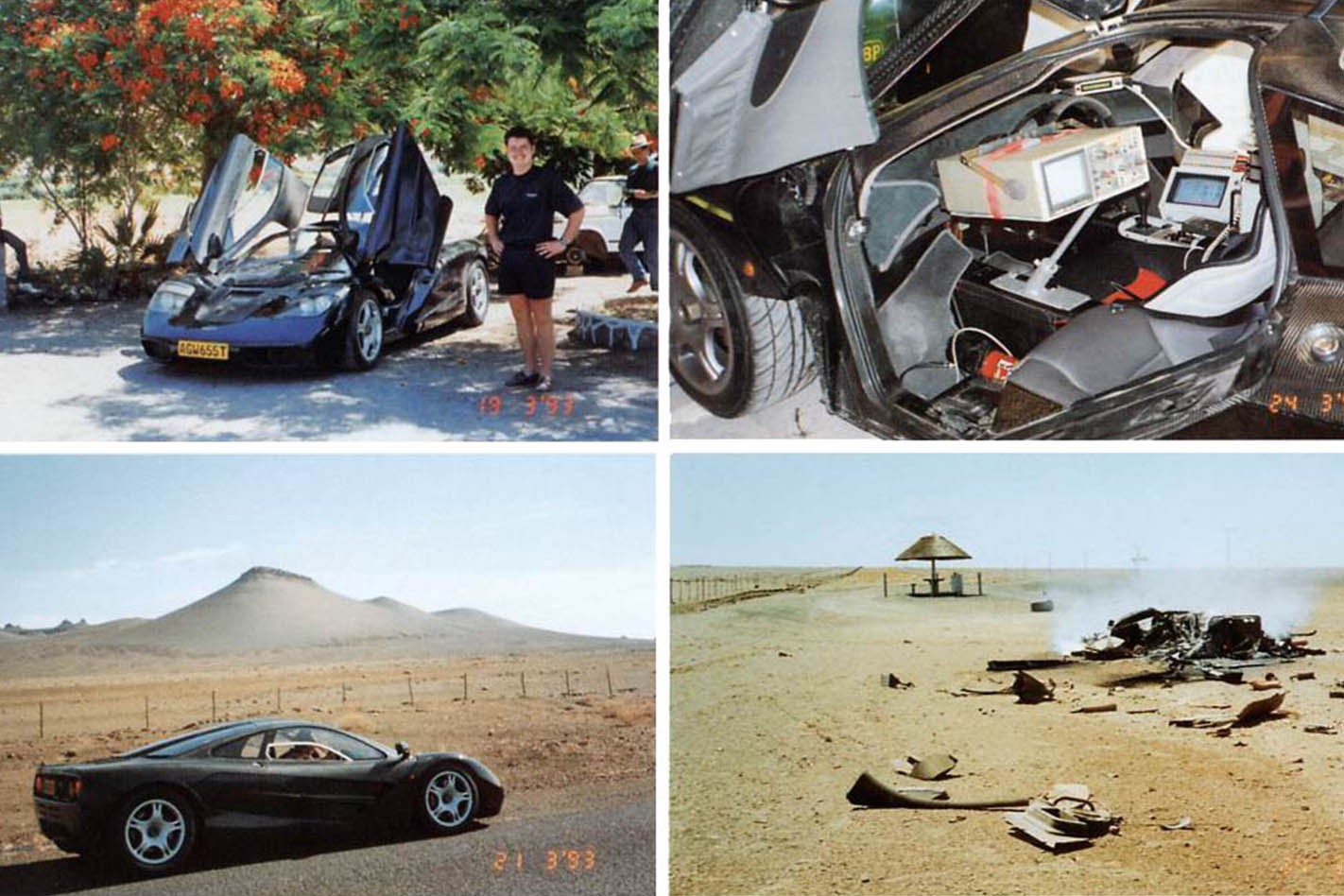
Miraculously, the engineer emerged from the wreckage unscathed, exiting the mangled vehicle through the broken windscreen just seconds before leaking engine fluids ignited on the exhaust manifold, causing a fierce blaze that torched the remains of XP1.
Following the crash, head of McLaren Ron Dennis had the expansive debris field combed, with the wreckage of XP1 collected from the desert and returned to home base in Woking.
The pieces were put in a box and buried, with a tombstone erected to mark the significance of the lost prototype.
All of this is documented in the definitive bible of the F1’s development, Driving Ambition – The Official Inside Story of the McLaren F1 written by Dennis himself, along with Doug Nye and Gordon Murray
Making XP1’s destruction a tougher pill to swallow than it already was, is the way in which it was born.
Murray, the F1’s legendary designer, had handed down an edict late in 1992 that XP1 would be completed by Christmas “come hell or high water”.
With over 6000 man hours put into building the prototype, the late-December crunch to get the car completed is known within the McLaren team as ‘The Lost Weekend’.
Legend has it one mechanic’s wife was poised to give birth at the same time as the engineering team were pulling an all-nighter. The employee snuck out for an hour to witness his child’s entrance into the world, before returning to work.
If you’re wondering how much XP1 would be worth today, you’d probably require the kind of bank balance that has three commas if you wanted to add it to your personal collection.
RIP XP1.
What stands out?
The Tiguan is a medium SUV from Volkswagen that’s based on the Golf hatchback and drives just as beautifully, with reassuring roadholding in all conditions. You can choose from three powerful, but economical turbocharged petrol engines that drive all four wheels. All have excellent smartphone integration, and an active safety suite that includes auto braking.There is also a stretched seven-seat version called the Tiguan Allspace, which isn’t included in this review.
What might bug me?
Stop-start driving with the auto transmission, which occasionally hesitates and can be inconsistent on take-offs. The Tiguan’s DSG auto gearbox is great once you’re moving, but many drivers do not find it as smooth and easy in town as a conventional or CVT auto.Driving after a puncture. The Tiguan has a space-saver spare wheel, which limits the recommended top speed to 80km/h.Paying more for fuel: both petrol engines require premium unleaded, which costs more than regular unleaded.
What body styles are there?
Five-door wagon only.Some Tiguans drive only the front wheels, but most drive all four wheels.Where the original Tiguan was classed as a small SUV, this replacement has grown a little and is classed as a medium SUV, lower priced.
What features do all Tiguans have?
An eight-speaker sound system with an AM/FM radio, a CD player, an SD card slot, Aux and USB inputs, and Bluetooth audio streaming. A colour touchscreen from which you can control the sound system and other cabin functions.Support for Apple CarPlay and Android Auto. If you plug in a compatible iPhone or Android smartphone, some phone apps – including mapping and music – are mirrored on the touchscreen display and can be controlled from there.Cruise control, windscreen wipers that operate automatically when it rains, LED headlights that switch on automatically in low light, and power folding door mirrors.A leather-wrapped steering wheel that carries buttons for operating the cruise control, the audio system, and your phone.A reversing camera and parking sensors front and rear. There is also an auto parking function, which tells you when you have found a big enough space and can steer the car in for you.Keyless Access lets you unlock the car and drive away without removing the key from your bag or pocket, and a power-operated tailgate that can open when you wave your foot under it.Aluminium alloy wheels, which are lighter and more stylish than steel wheels. A space-saver spare wheel (with a recommended top speed of 80km/h).Tyre pressure monitoring, which alerts you if a tyre is losing air.Seven airbags. Electronic stability control, which can help control a skid or slide (all new cars must have this feature).Autonomous emergency braking, and lane-keeping assistance. (For the placement of airbags, and more on Tiguan safety systems, please open the Safety section below.)The Tiguan comes with Volkswagen’s five-year, unlimited kilometre warranty.
Which engine uses least fuel, and why wouldn’t I choose it?
The Tiguan comes with three four-cylinder turbocharged petrol engines, with least powerful, the 1.4-litre 110TSI consuming 5.9 litres/100km on the official test (city and country cycles combined).The 110TSI is a sweet 1.4-litre petrol four-cylinder, although it won’t jump as hard when you first press the accelerator. Expect to average about 9.5 litres/100km in the real world, over a mix of city and country use.The Tiguan is also available with two 2.0-litre four-cylinder turbocharged petrol engines, the most economical of which is the 132TSI that consumes 7.5 litres/100km on the official test (city and country cycles combined). It provides more than enough power to the Tiguan particularly for overtaking.The most powerful Tiguan is the 162TSI, a more highly tuned 2.0-litre four-cylinder, and at 8.1 litres/100km it is also the thirstiest. (The number designating each engine represents its maximum power output in kilowatts.)Each engine requires premium unleaded, which is more expensive than regular unleaded and E10 (a blend of ethanol and petrol).The 110TSI comes with six-speed DSG (for direct-shift gearbox) auto. The 132TSI and 162TSI come only with a seven-speed DSG auto.DSG, or dual clutch, auto gearboxes work much like a manual gearbox with robotic control. It shifts very smoothly and quickly and saves fuel, but cannot match the fluid take-off from rest that you get with conventional or CVT autos.The 132TSI and 162TSI versions have a driving profile selection with 4MOTION (all-wheel-drive) Active Control. This lets you adjust how lazily or immediately the car responds to your control inputs, and also to optimise it for snow or gravel-road driving.
What key features do I get if I spend more?
The least costly Tiguan, the 110TSI Trendline, has cloth-covered seats, 17-inch wheels, and drives only the front wheels. A manual gearbox is standard, with the auto an extra-cost option.Spend more for any Tiguan Comfortline and auto transmission is standard. You also get satellite-navigation. Three-zone air-conditioning lets rear passengers too choose their temperature, and they can fold down little tables housed behind the front seats.Choosing Comfortline also gives you access to the more powerful 132TSI petrol engine, which brings all-wheel drive (which Volkswagen calls 4Motion).The 132TSI Comfortline also brings 18-inch alloy wheels, cloth seats and an 8.0-inch colour touchscreen.The Comfortline can also be had with a Driver Assistance Pack. That brings you Adaptive cruise control (which can match the speed of a slower car in front on the highway, even bringing you automatically to a halt if that car stops). There is also an Active info display – which replaces your instrument cluster with a 12.3-inch customisable colour screen. And there is lane-change assistance (called Side Assist) and a rear cross-traffic alert (for more on these systems, please open the Safety section below).Upgrading to the Tiguan Highline brings the more powerful 162TSI engine and you get body enhancements, a 9.2-inch touchscreen and bigger 19-inch alloy wheels.You also gain the Driver Assistant Pack as standard, LED tail-lights, Vienna leather upholstery, electrically adjustable front seats, heated front and outboard rear seats, and ambient interior lighting.The Highline now comes standard with Adaptive chassis control that lets you soften the suspension (for more comfort) or stiffen it (for sharper handling), while driving.Option packagesAs well as choosing the Driver Assistance Pack, the Comfortline buyers can option the Luxury package for about $4000. It brings leather on the seats, heating for the front seats, power adjustment for the driver’s seat, and a memory for up to three drivers’ settings. There is a big sunroof, and the exterior mirrors fold against the body automatically when parked (which keeps them out of harm’s way).If you still have money left to spend on your Comfortline you can also specify the Sound & Vision Package that adds a Dynaudio Excite premium sound system, active digital dashboard display, ambient lighting and surround view parking display.Spending about $3000 more on a Highline will get you the R-Line Package that makes the Highline look sportier with a series of exterior and interior enhancements including revised bumpers and side sills, a black rear spoiler, bigger 20-inch wheels with thinner low-profile tyres, R-Line Vienna leather sports seats, brushed stainless steel pedals, sports steering wheel with paddle shifters, black headliner, and aluminium scuff plates inside the door frames with R-Line logos.A Sound & Vision is also available for the Highline, which adds the active digital dashboard display, Dynaudio Excite premium audio and surround-view parking display.A panoramic sunroof can be added to the Highline for about $2000.
Does any upgrade have a down side?
The lower profile tyres on the more expensive variants ride more roughly – because there is less air between the wheel and the road – and could cost more to replace. The 20-inch wheels that come with the R-Line pack and Wolfsburg Editions, in particular, degrade comfort.White is the only standard colour; the other colours cost extra.
How comfortable is the Volkswagen Tiguan?
In any Tiguan, the front seats are a highlight. The padding is quite firm but gives you excellent support and great comfort over long distances. Vision too is excellent all round, and in general the cabin feels exceptionally airy and spacious.Buttons and dials are well placed. The touchscreen is high on the dash and its infotainment menus are easy to follow.In-cabin storage is excellent too, from binnacles in the centre console to large door pockets and even a covered cavity in the top of the dashboard.The Tiguan cruises quietly on country roads, suppressing road and engine noise well.Suspensions are taut but not uncomfortably so. Nevertheless, on all but the smoothest roads the ride feels somewhat unsettled – it’s less relaxing than you might hope for from a family hauler.Body roll is nicely controlled, adding to the easy-driving nature of the Tiguan.Each engine has plenty of punch in most situations, although the 110TSI may feel like it is working hard up long hills with lots of people on board.The DSG auto transmissions feel smooth and slick on the run. When parking or in stop-start traffic, they are less forgiving than other autos, however.
What about safety in a Tiguan?
Every Tiguan has the mandatory electronic stability control, auto headlights and wipers, a reversing camera, front and rear parking sensors, daytime running lights (which help other drivers see you), and seven airbags.In addition, all Tiguans have city-speed auto emergency braking, a highway-speed forward collision alert, lane-keeping assistance, and a driver fatigue monitor.Two airbags protect the driver and front passenger’s upper bodies from frontal impacts, and a third protects the driver’s knees. One outside each front seat protects at chest level from side impacts. And curtain airbags extending down each side of the car at head level protect front and rear passengers from side impacts.The Tiguan’s standard driver assist systems use radar and camera sensors to monitor the roadway ahead when you’re driving.Its autonomous emergency braking, which Volkswagen calls City Emergency Brake, operates at speeds up to 30km/h and can automatically brake the car if it concludes a collision is imminent (typically with a sharply slowing vehicle ahead). At all higher speeds, Front Assist warns you of an impending collision but will not apply the brakes for you.Lane Assist uses the camera to monitor lane markers. At speeds over 55km/h, if it concludes you are drifting out of your lane – perhaps from distraction – it will gently adjust the steering in an attempt to bring you back. If you continue to drift, it will vibrate the steering wheel and flash a warning.Fatigue detection monitors your movements of the steering wheel. If they suggest you might be falling asleep, it proposes you take a break.Should none of this prevent a crash (perhaps because you have been hit from behind), Multi-collision brake acts to prevent your drifting into the path of another vehicle after impact, automatically applying the brakes.On Comfortline Tiguans you can enhance the standard safety equipment with a Driver assistance pack at extra cost. Among other features, it adds Side Assist and Rear Traffic Alert – both relying on rear-facing sensors. The former helps you avoid changing lanes into the path of an adjacent or overtaking vehicle, warning you with a light in the exterior mirror and even seeking to steer you away from danger. The latter works when you are reversing, looking to either side behind you for vehicles crossing on a collision course. These come standard with the Highline.The Australasian New Car Assessment Program (ANCAP) has rated the Tiguan at five stars for safety, most recently in October 2016.
I like driving – will I enjoy this car?
The original Tiguan raised the bar for SUV driving manners when it arrived in 2008, and this slightly bigger replacement remains among the most enjoyable cars of its type – in this case, mid-sized SUVs.The steering is not as light as in some, but the weight – which is more noticeable above 60km/h – adds confidence. The steering wheel telegraphs every movement of the wheels, and that feel for the road is teamed with fantastic grip in corners.A feature called Extended Differential Lock brakes inside wheels gently when you turn, effectively directing less power to those wheels and more to the more heavily loaded outside wheels, reducing the likelihood of an inside wheel spinning, and improving acceleration and steering accuracy.Each Tiguan has plenty of grunt for sustaining cruising speeds. The 162TSI brings the most driving thrills. Its engine is a near match for that in the Volkswagen Golf GTI – a true hot hatch. While the Tiguan is not as fiery as the Golf – performance is dulled by its bigger and heavier body – the 162TSI feels brisk and helps you exploit the Tiguan’s excellent dynamics.All-wheel drive enhances the Tiguan’s stability on wet sealed roads. In AWD trim the Tiguan is a light-duty off-roader, effective on gravel or snow covered roads and easy tracks. However, it does not have the ground clearance or low-range gearing required for challenging off-road work.
How is life in the rear seats?
The current Tiguan is about 6.0 cm longer and 3.0 cm wider than the original it has replaced. Crucially, there is an extra 7.5 cm between the front and rear wheels, which liberates leg room in the rear. Tall adults will appreciate the generous rear head room, too.The rear seats slide forward and back to adjust boot space, and you can adjust the seatback angle for comfort.Rear storage is good, too. As well as sizeable door pockets there are small binnacles on either side of the seat base, providing a perfect cubby hole for toys or rubbish.Even if you are small, it is easy to see out from the back seat. And rear passengers in any automatic Tiguan can use airline-style fold-up tables mounted on the backs of the front seats.
How is it for carrying stuff?
Boot space in the original Tiguan was tight for family duties. This longer replacement can handle much more luggage.The boot floor is flat, broad, and deep, and there are binnacles in both rear corners for small items you don’t want rolling around.Rear seats now fold 40-20-40, which adds flexibility for combining rear passengers with long loads. You can fold either of the big outer seat units or both, or you can seat two outer passengers while still allowing long, narrow items to poke into the cabin.Plus, the entire rear seat unit slides forward and back, allowing a trade-off between rear leg room and boot space.However, while the seat backs flip down the seat bases remain in place, so that the expanded boot rises slightly towards the front of the car.The 110TSI is rated to tow 1800kg; all other are rated to tow 2500kg.
Where does Volkswagen make the Tiguan?
All Tiguans sold in Australia are made in Germany.
What might I miss that similar cars have?
Possibly a third row of seats, so that you can carry seven people, though Volkswagen has addressed this with the Tiguan Allspace that is not included in this review. The Nissan X-Trail and Mitsubishi Outlander also offer a third row in an SUV that is still classed as medium-sized.The option of a more efficient turbocharged diesel engine as with the X-Trail, Outlander, Hyundai Tucson, Kia Sportage, Jeep Cherokee, Mazda CX-5, Pegueot 3008, Renault Koleos and Toyota RAV4. Volkswagen culled the diesel-powered Tiguans from the range in August 2018 due to low demand.Otherwise you won’t miss much. The Tiguan is very well equipped, with models and options to please a wide variety of tastes.Among other cars you might consider are the Ford Escape, Subaru Forester, Holden Equinox, Skoda Karoq and Suzuki Vitara.
Are there plans to update the Tiguan soon?
This second generation Tiguan went on sale about September 2016, and so we are not likely to see an all-new model until 2022.About September 2017 the Tiguan Adventure was added to the original Trendline, Comfortline and Highline trim levels. The Sportline joined the range in December 2017 to provide a slightly less costly way to have the most powerful 162TSI.Volkswagen introduced the seven-seat Tiguan Allspace in August 2018.At the same time Volkswagen Australia announced it was dropping the smaller 110TSI petrol engine, and 110TDI and 140TDI diesels. The diesels were dropped due to low demand, while the 110TSI was omitted temporarily due to production being suspended in Germany in order for Volkswagen to complete testing for the new Worldwide Harmonised Light Duty Vehicles Test Procedure (WLTP) real-world emissions testing.The Tiguan 110TSI versions returned to the range in September 2019, bringing the entry level pricing back below $40,000.Expect to see a mild mid-life update for the Tiguan some time in 2020.
I like this car, but I can’t choose which version. Can you help?
The Tiguan 132TSI Comfortline has enough punch and features for very relaxed motoring on the open road, especially with the addition of the Driver Assistance Pack.
Over the years, staff at MOTOR, Wheels, and WhichCar have compiled various lists, both for publication and amusement, of some of the world’s worst car names.
We’ve popped them all into one place for you to browse in bewilderment, enjoy!
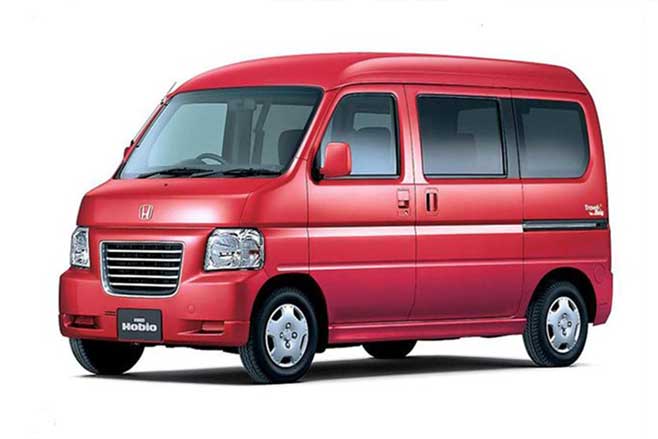
Honda Vamos Hobio Travel Dog
Honda’s 2003, three-cylinder micro-van was trumpeted as the world’s first dog-friendly small utility vehicle. In hindsight, it’s probably no surprise it was also the world’s last.
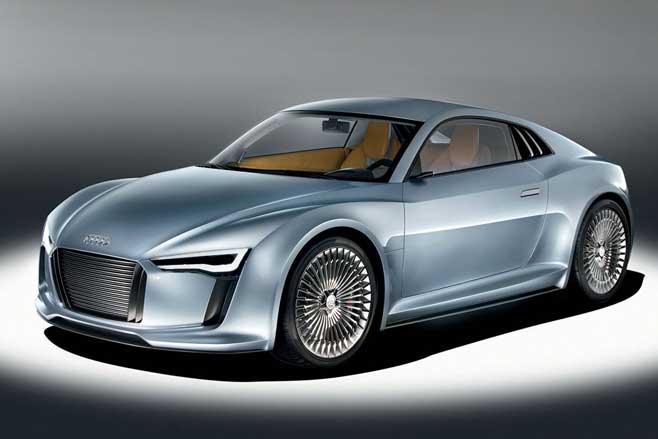
Audi e-Tron
Sounds brassy and tough and futuristic… is what Audi confidently decreed when it named its 2009 electric concept supercar. But while they were high fiving over a celebratory bratwurst, the name was really hitting the fan in France. “e-Tron” is French for excrement.
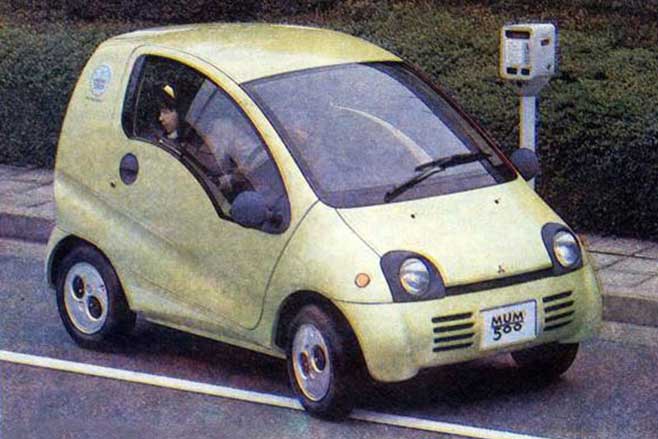
Mitsubishi Mum 500 Shall We Join Us
When Lamborghini runs out of heroic bulls after which to knight its new supercars, it could learn a thing or two from this three-cylinder Mitsubishi micro-car. Rolls right off the tongue.
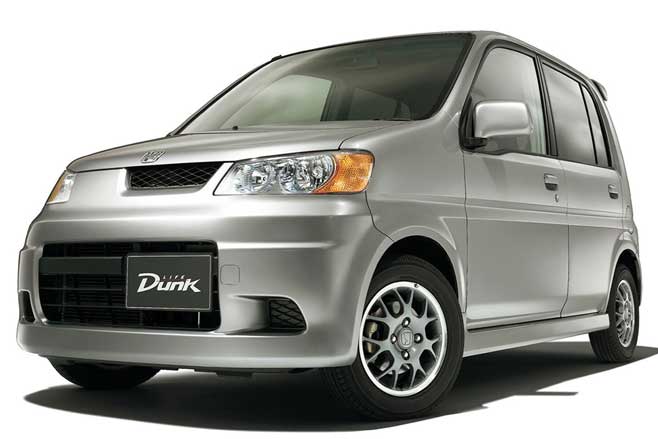
Honda Life Dunk
In 2000, Honda launched its oddly named Life Dunk. Sold in Japan, though it was zippy thanks to an itty-bitty turbo, its name suggests it would drain you of joy and make you miserable. A bit like Melbourne’s weather…
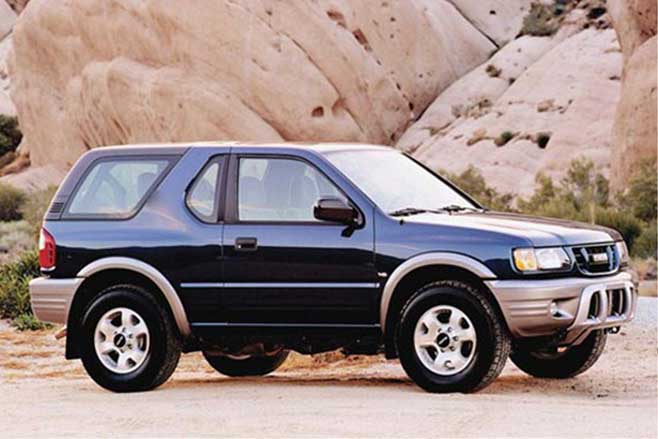
Isuzu Mysterious Utility Wizard
The only thing mysterious about this ’90s soft-roader was the unidentified substances being consumed by Isuzu’s marketing people. Thank Holden it was called the Frontera here.
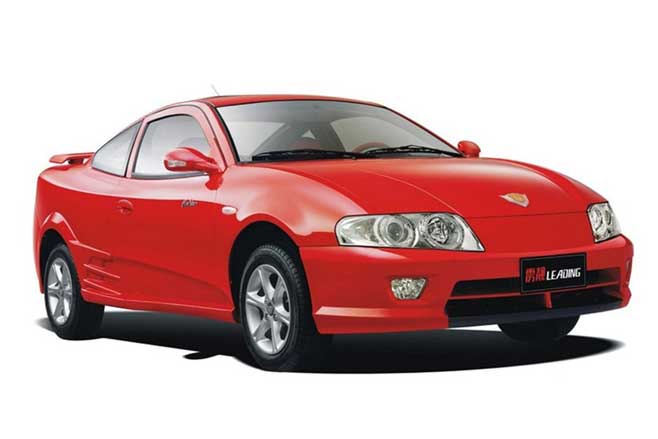
Geely Beauty Leopard
In 2003 Chinese car giant Geely launched the Beauty Leopard: a car neither beautiful, nor a leopard. It had a 1.3-litre Toyota engine and, catering to the suicidal, would do 180km/h. Outside of China, it’s famed for being the first car with a built-in karaoke machine. Seriously.
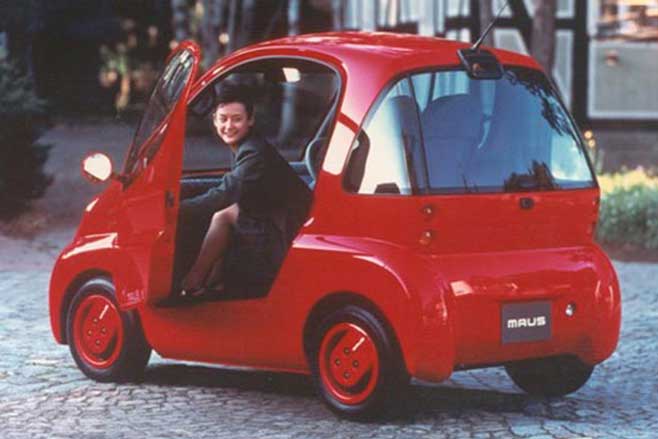
Mitsubishi Mini Active Urban Sandal
Succinctness has clearly never been a strength of Mitsubishi’s product naming department – the Active Urban Sandal does also sound like its’ coming soon to a Lululemon store near you. Though it never got past the concept car stage (that’s a shame), the electric, no-frills MAUS was 1995’s answer to the Smart ForTwo.
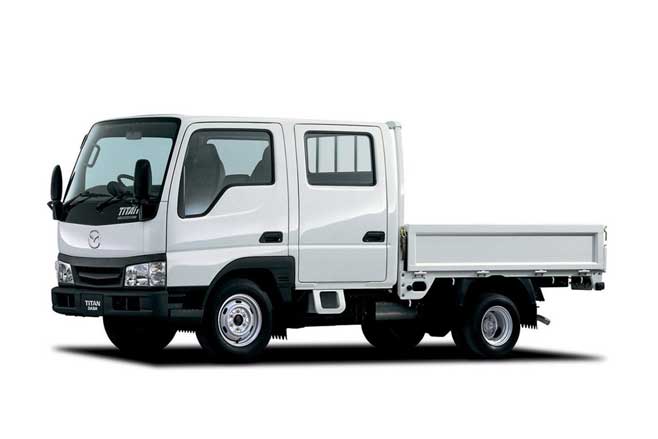
Mazda Titan Dump
Sure, it’s not a car, but even a Commodore Sportwagon with the rear seats folded down wouldn’t have the space to carry, well, a titan dump, whatever that is. So Mazda created its Titan Dump light truck with a generously-appointed tray, for Metamucil enthusiasts.
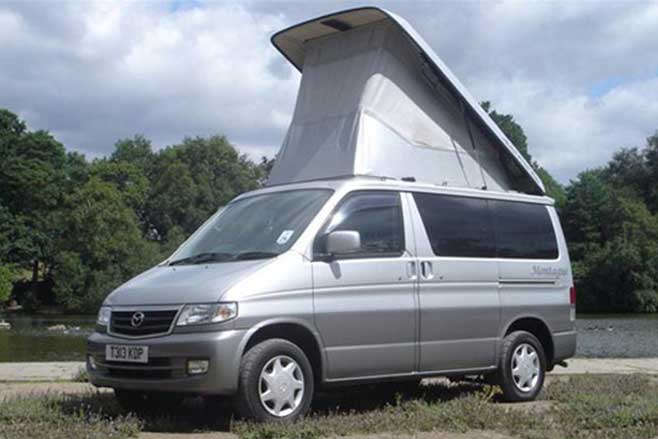
Mazda Bongo Brawny Van
Apart from its name, there’s nothing even remotely ‘brawny’ about this Mazda tradie van. The Brawny Van was a long wheelbase version of the weirdly named Bongo, which thankfully was renamed ‘Econovan’ by Ford when it was sold in Australia.
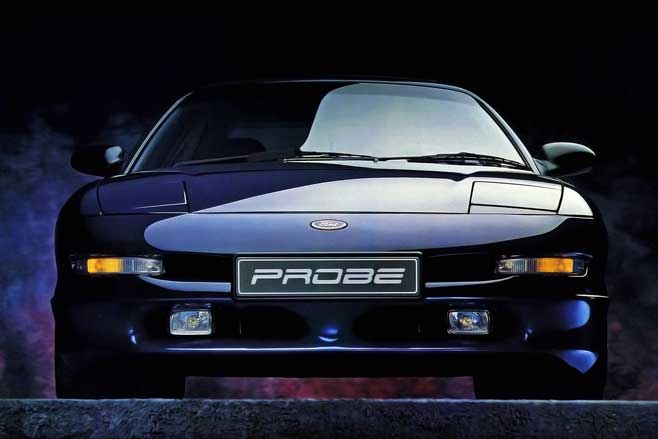
Ford Probe
Who ever thought this was a good idea?
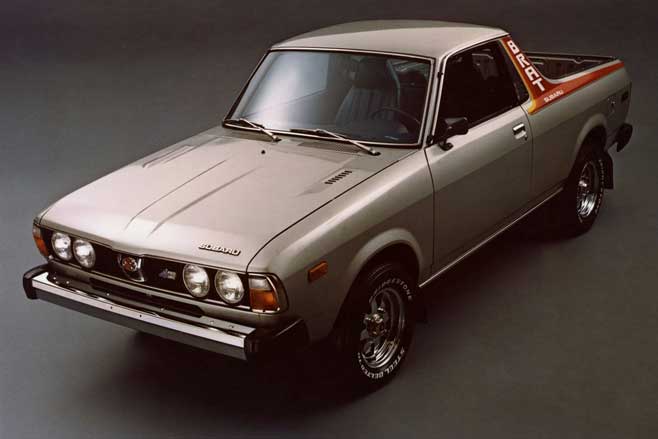
Subaru Brat
It’s the Brumby, which is a cool name for a car that has aged well and gained a little cult following. But the overseas version, albeit still cool, is named after a petulant child. It also had two rear-facing plastic seats in the tub. Hideously unsafe.
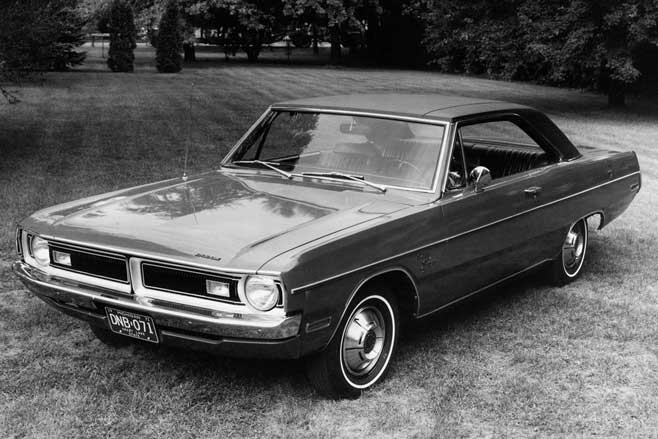
Dodge Dart Swinger
The Dart is a good thing – our mates at Street Machine and Unique Cars even gave one away a few years ago, but this variant’s name is, uh. Look, you might want to sanitise its keys – who knows how many bowls they’ve been in.
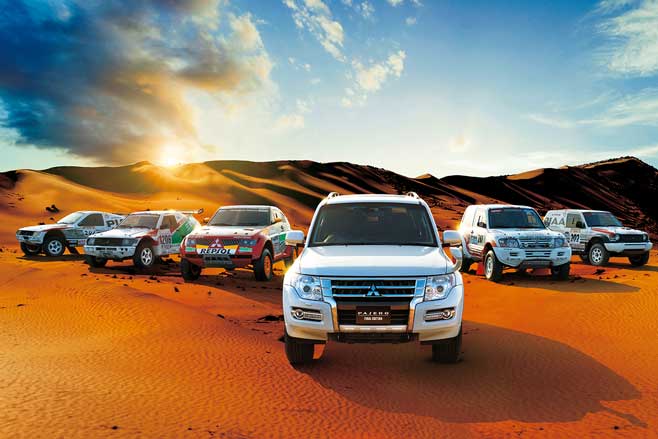
Mitsubishi Pajero
A fine off-roader and a fine name for English-speakers, but plenty of people are blissfully unaware that, in Spanish, this car is essentially called the Mistubishi Wanker or Jerk. Don’t go asking to rent a Pajero if you visit Mexico.
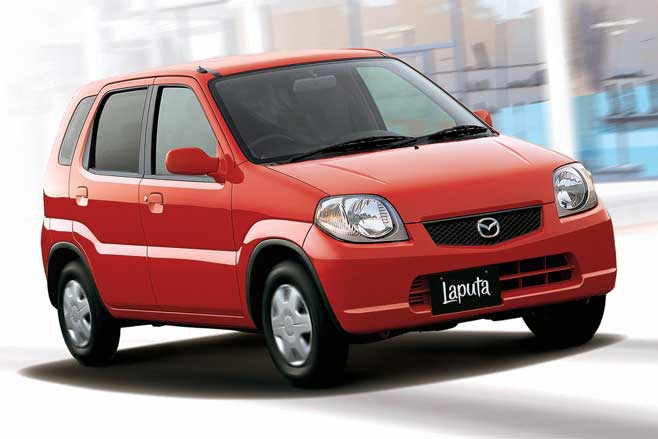
Mazda LaPuta
Again, one not to ask to hire in a Spanish-speaking nation. LaPuta means ‘the whore’ or ‘the prostitute’.
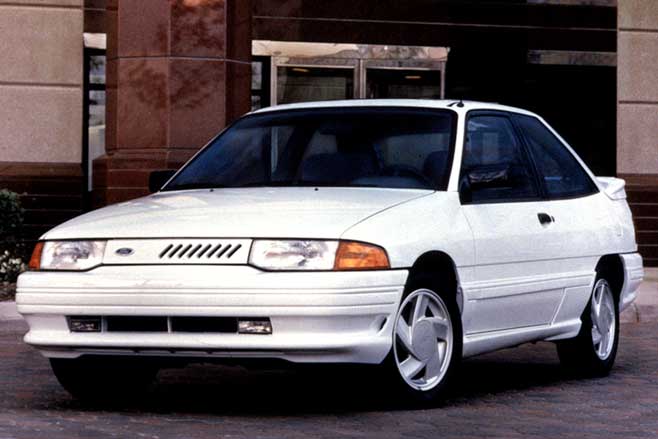
Ford Escort
This one works in English.
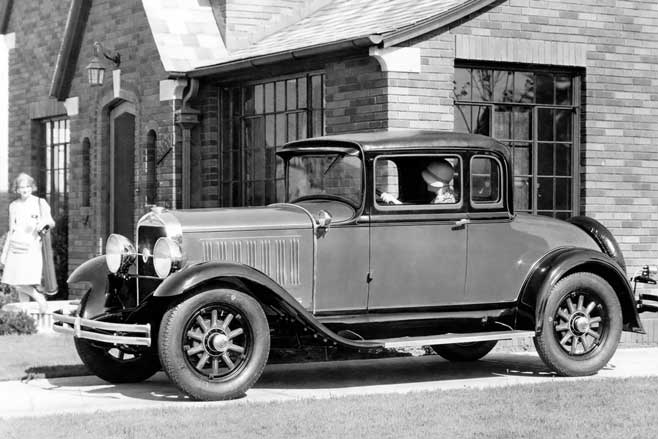
Studebaker Dictator
Back in 1927 being a dictator was a good thing, apparently. A few people have since made it clear (and some continue to) that we shouldn’t be particularly fond of dictators.
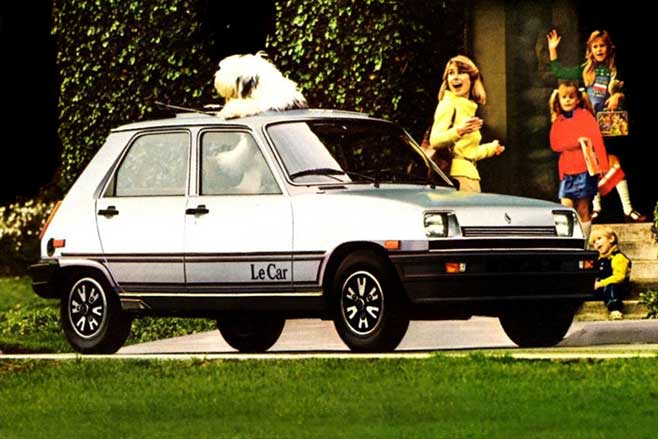
Renault LeCar
‘Can you go move The Car into the driveway?’ ‘Which car?’ ‘The Car!’ ‘But which one?!’
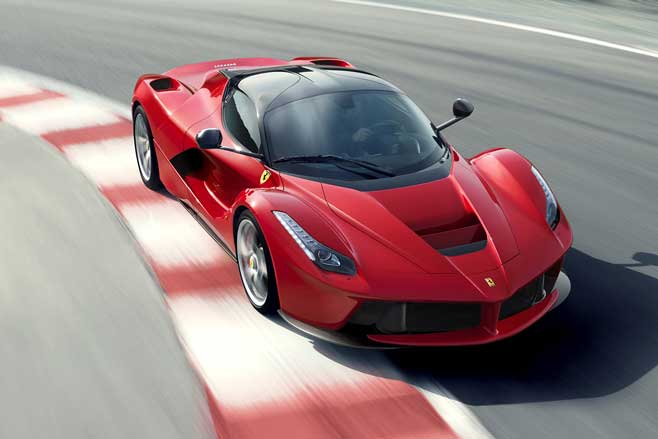
Ferrari LaFerrari
‘Can you go move The Ferrari into the driveway?’ ‘Which Ferrari?’ ‘The Ferrari The Ferrari!’ ‘But which one?!’
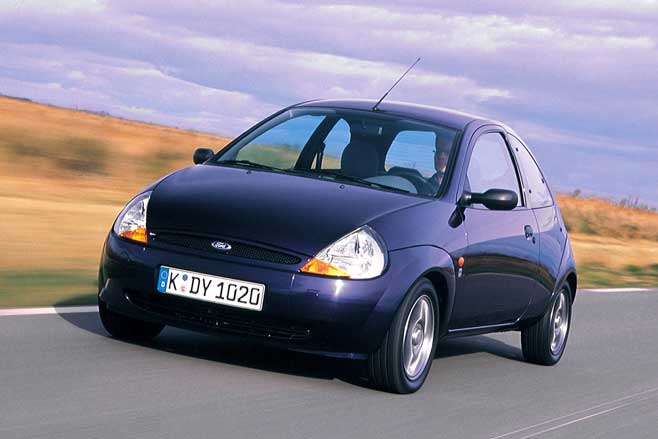
Ford Ka
‘Can you go move the Ka…’ Oh bugger off.
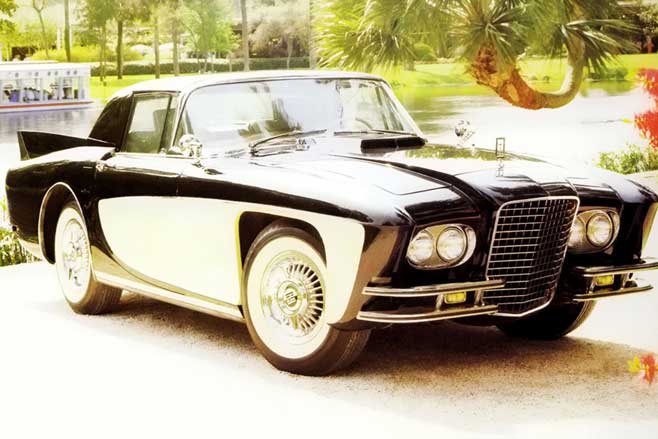
Gaylord Gladiator
Built by the Gaylord brothers as a concept for the 1955 Salon de Paris show, the V8-powered Gladiator was an ultra-luxurious coupe with an ultra-terrifying price tag. It was never mass produced.
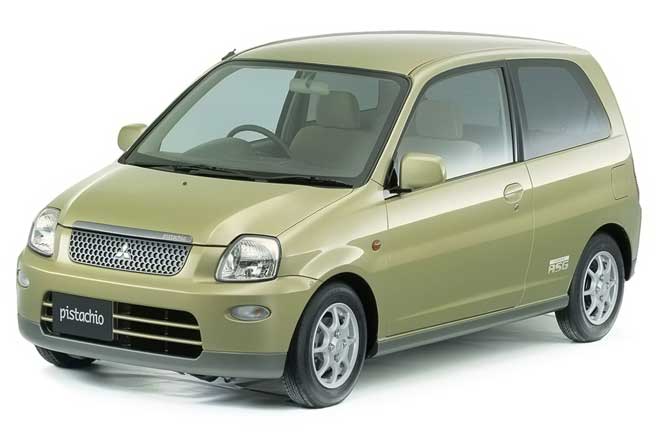
Mitsubishi Pistachio
Not only is the name a bit nuts, the colour it’s drawn from perhaps wasn’t the best hue of choice either.
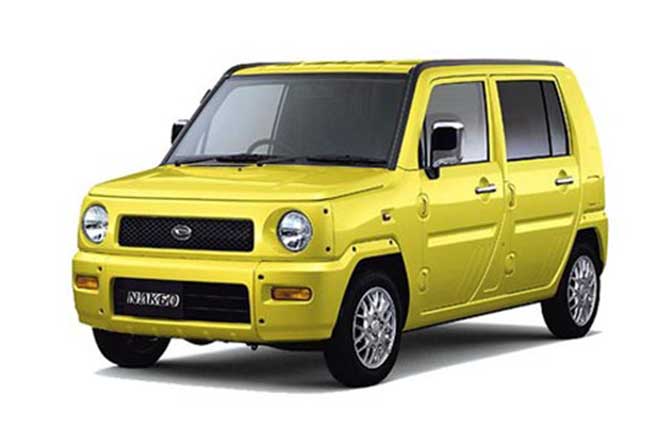
Daihatsu Naked
This would make more sense had the car been designed with more of its internals visible, like a naked motorbike. We’re concerned Daihatsu might’ve had something else in mind.
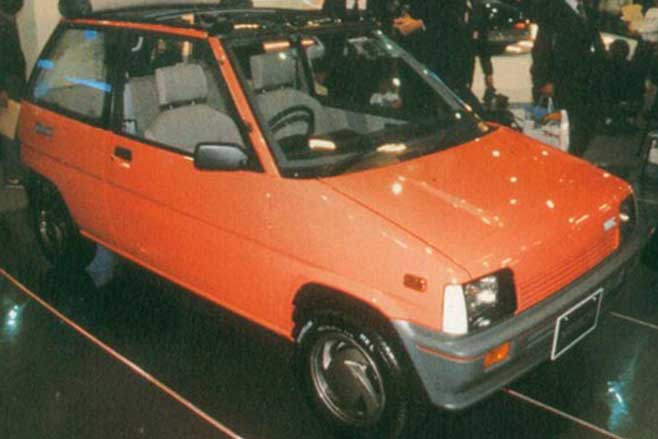
Mitsubishi Minica Winky
Proudly displayed on Mitsubishi’s stand at the 1985 Tokyo Motor Show was a microcar called the Minica Winky. Nudgy-nudgy.
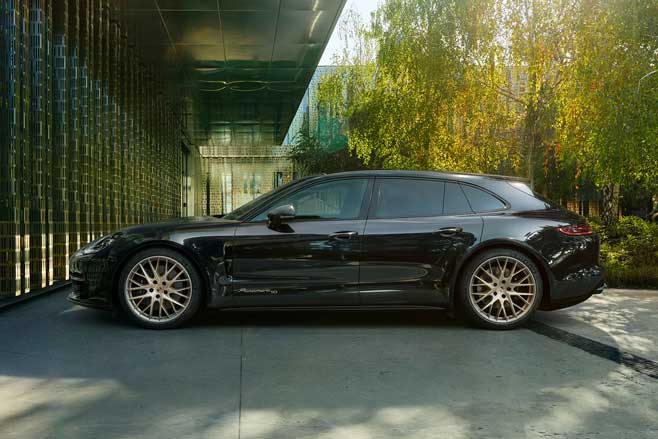
Porsche Panamera 4 E-Hybrid Sport Turismo 10 Years Edition
Sorry, just let me catch my breath.
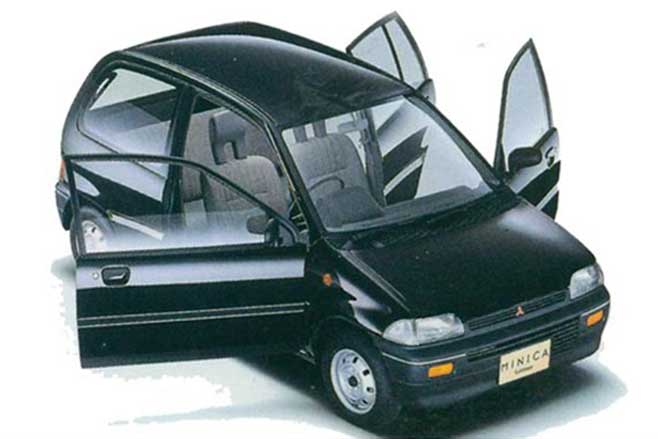
Mitsubishi Minica Lettuce
We have to wonder what other leaves the executives had on hand when they decided this version of the Minica should be named after a salad base.
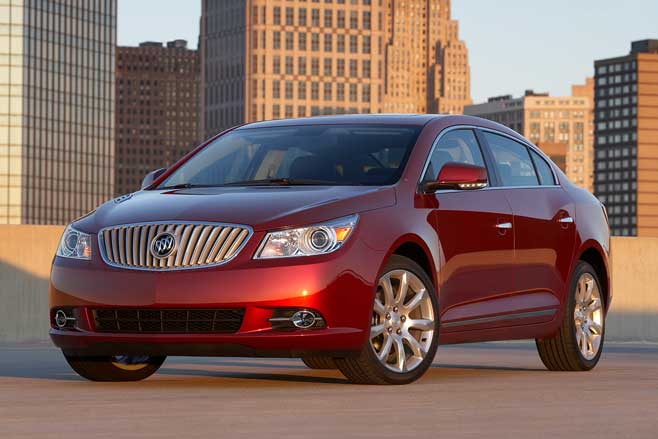
Buick LaCrosse
Not only was it weird to name the car after a sport and change the capitalisations, but ‘lacrosse’ means to ‘pleasure yourself’ in Canadian French slang.
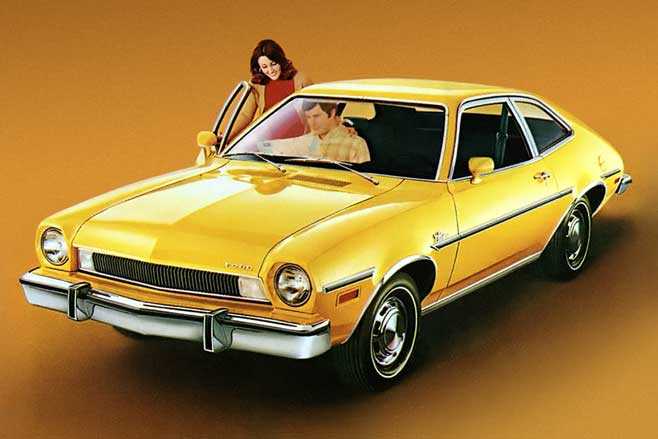
Ford Pinto
While ‘Pinto’ isn’t technically so bad in Portugese, as it means ‘baby chicken’ or ‘chick’, it is used as slang for ‘small male genitalia’ in Brazil. Much the same way roosters are called cocks in English…
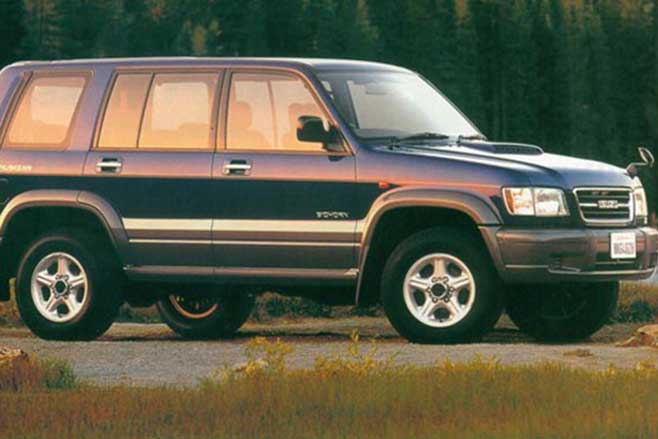
Isuzu Bighorn Plaisir
In Europe, Isuzu called this car the Trooper. Boring! Japanese buyers had the pleasure of calling it, much more temptingly, the Bighorn Plaisir. If the idea of a Bighorn Plaisir Long gets you breaking into a sweat, Izusu also made a Plaisir Short as well.
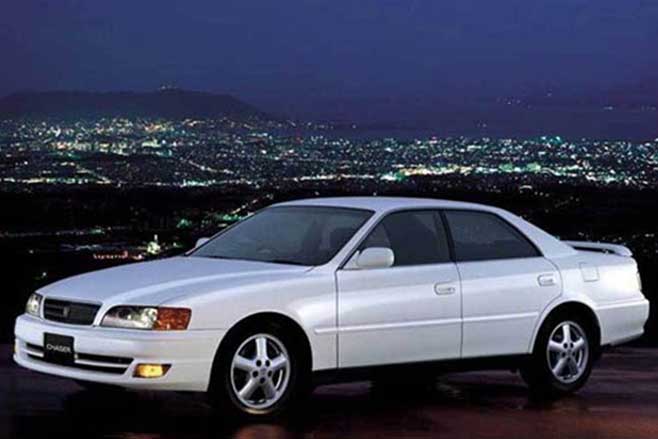
Toyota Chaser Avante Lordly
Reminiscent of something out of Benny Hill, the Chaser Avante Lordly was included in Toyota’s 1998 catalogue of models in its homeland. It wasn’t sold in the UK. I wonder why?
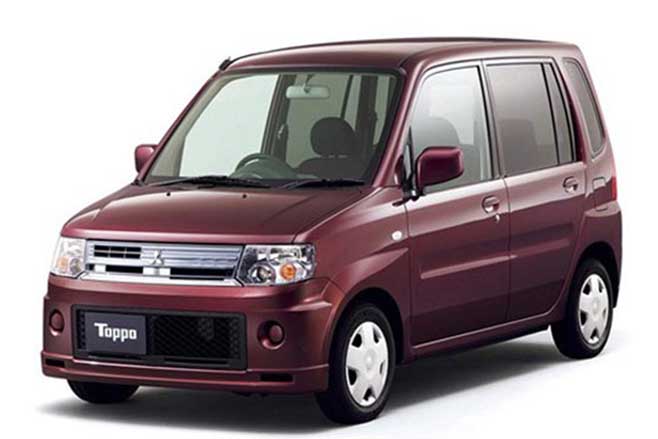
Mitsubishi Toppo Big Joy Guppy
Brilliant. Mitsubishi invents a car with a high roof and calls it Toppo. By adding the word Guppy after it, Mitsubishi then cornered the market in cars for fish who wear top hats. The car is also referred to as the Toppo BJ, the letters for ‘Big Joy’. Indeed.
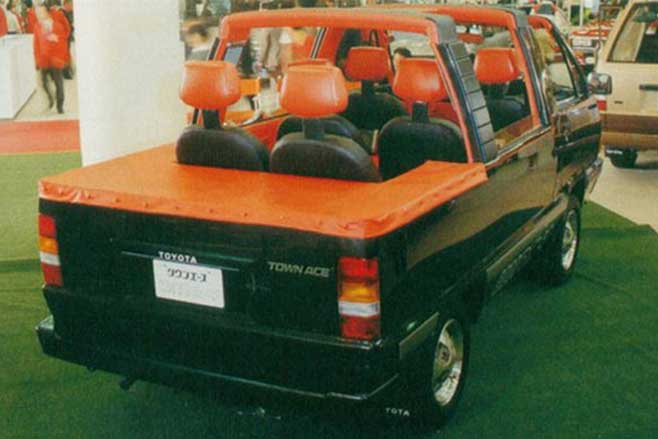
Toyota Town Ace Windy
In 1983, years before Renault inflicted its Wind (phnarr phnarr) on an unsuspecting world, Toyota actually created something worse: the Windy – an open-topped version of the Town Ace van. Strangely, it never made production.
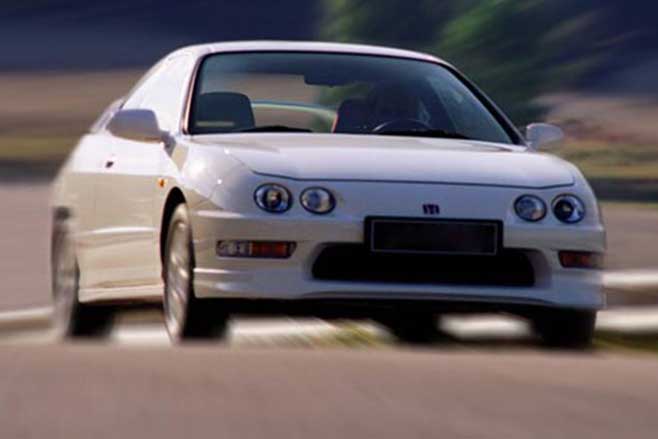
Honda Integra Hi-Glad Style
No one would question that ‘Integra’ is quite a cool name. It was even quite a cool car. Then Honda went and spoiled it all by creating a version that sounded like some 1990s nightclub drug.
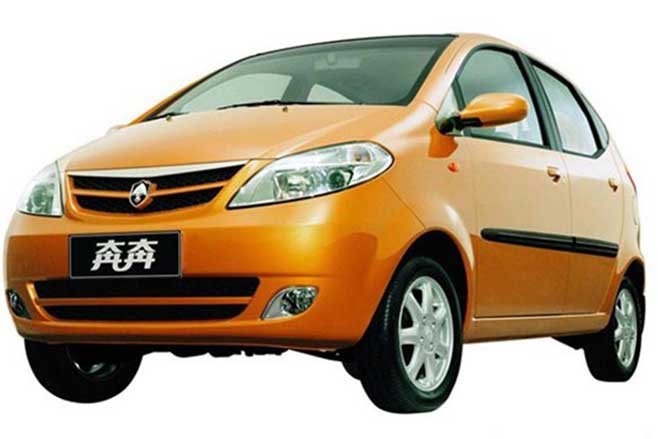
Changan Benni Love
China has its own Benny Hill-referencing car. Perhaps Changan’s car naming department ate some contaminated fish: they were also responsible for the wonderfully named River Sturgeon.
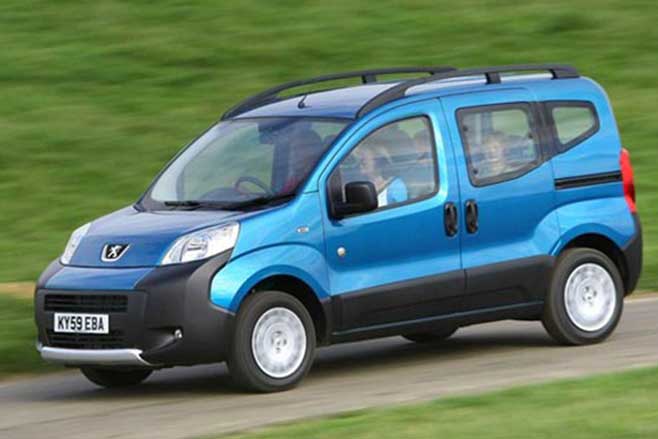
Peugeot Bipper Tepee Outdoor
Easily one of the most preposterous car names comes from the Peugeot stable. Bipper? Tepee? Outdoor? Each one of those names is terrible on its own. But all three together? Someone got paid to come up with that.
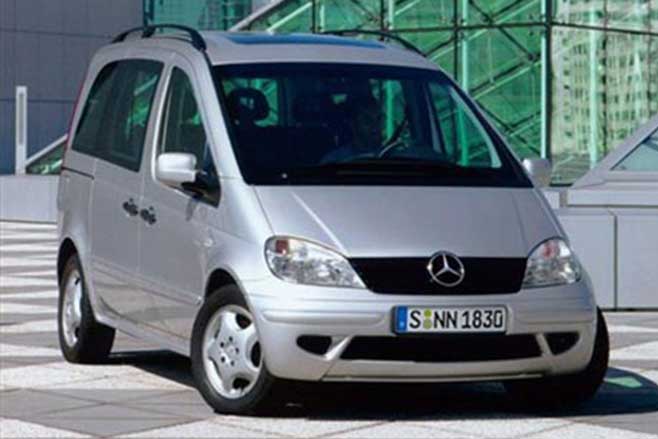
Mercedes-Benz Vaneo
Vaneo is a pretty terrible name for a car trying to hide its van origins. The clue’s in the name! Even worse, if you ordered your Vaneo in Ambiente trim with the optional Dog pack, you would then become the proud owner of a Vaneo Ambiente Dog. Woof!
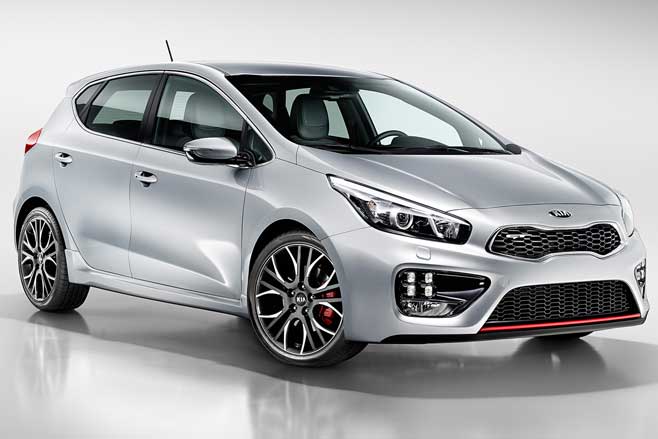
Kia Pro_cee’d
Not only a sub-editor’s nightmare, but also really quite annoying to write out or type. Later, it was just changed to Proceed.
What stands out?
Volvo’s first small SUV is an exceptionally stylish premium crossover, with an innovative interior design and a choice of turbocharged petrol powertrains. It’s great fun to drive around town and on the open road, with all-wheel drive adding traction on slippery surfaces.The XC40 was crowned the 2019 Wheels Car of the Year.
What might bug me?
The silly little gear shifter and the double-tap action required to shift gears from neutral to drive or reverse.Driving at 80km/h on the space-saver spare, until you can fix your full-sized flat tyre.
What body styles are there?
Five-door, five-seat SUV only.The most affordable XC40 drives the front wheels, the other two versions drive all four wheels.The XC40 is classed as a small SUV, higher priced.
What features do all XC40 versions have?
A 9.0-inch central infotainment screen with inbuilt satellite navigation with voice control. Entertainment functions include Digital Radio (DAB+), Apple CarPlay/Android smartphone pairing, Aux and USB inputs and Bluetooth connectivity for audio streaming.Reversing camera, and front and rear parking sensors.A 12.3-inch digital instrument and driver-information display with road sign information that displays the current speed limit.Eight-speed automatic transmission.Autonomous emergency braking that works at city speeds.Adaptive cruise control, speed limiter, and lane departure warning that alerts you if you begin to drift out of your lane (a sign of fatigue or distraction).Blind spot warning, which senses if a car is coming up your side, and rear cross traffic alert, which senses if a car is coming from either direction when reversing out of the driveway from a parking space.Power-adjustable driver’s seat with seat memory functions.Dual zone climate control, which allows the driver and front passenger to set their own temperatures.Roof rails, which make it easier to fit roof-mounted luggage systems.Keyless start and entry, and hands-free powered tailgate.Auto dimming rear-view mirror, windscreen wipers that operate automatically when it rains, and headlight washers.Aluminium alloy wheels, which are lighter and more stylish than steel wheels (with a space-saver spare wheel).Long-lasting LED headlamps that dip automatically for oncoming drivers and when you enter town, fog lights and LED daytime running lights with unique ‘Thor’s Hammer’ signature.Power steering drive modes, hill descent control and hill start assist.Waste bin with net in centre console and storage drawer under the driver’s seat.Electronic stability control, which is mandatory on new cars and can help you recover from a skid.Seven airbags. (To find out where they are placed, please open the review section “What about safety?”).The XC40 is covered by a three-year, 100,000km warranty.
Which engine uses least fuel, and why wouldn’t I choose it?
The economical D5 2.0-litre four-cylinder turbocharged diesel engine was dropped from the Australian XC40 range in June 2018 and replaced with the 2.0-litre T4 four-cylinder turbocharged petrol engine.The T4 is the most economical of the two petrol engines available in the local range, with an official combined fuel consumption of 6.9 litres/100km.One reason you may not want the T4 is because you prefer extra power from the similarly sized T5 turbocharged petrol engine. The T5 can push the XC40 from 0-100km/h in just 6.5 seconds. It’s a little thirstier than the T4, with an official combined fuel consumption of 7.7 litres/100km that pushes out to about 10.0km/h in real-world conditions.The XC40 comes with an eight-speed automatic transmission that drives the front wheels in the entry-level T4 Momentum, and all four-wheels in the T4 Inscription and T5 R-Design.
What key features do I get if I spend more?
The T4 Momentum is the least costly XC40 spec and comes with the less-powerful 2.0-litre engine and front-wheel-drive. It has all the above-mentioned standard features including cloth/vinyl seats and 18-inch alloy wheels.Paying marginally more again for an XC40 T4 Inscription brings the same engine but with all-wheel-drive. Seats are trimmed with leather and both front seats have powered settings. The headlights bend into corners as you turn, and the wheel size grows to 19 inches.Stepping up to the T5 R-Design brings a package adapted slightly for more spirited driving, including the more powerful of the two engines, a sports steering wheel with paddle shifters and contoured Nabuck leather seats, which provide progressively deeper bolsters each side of you, to help hold you in place around corners.The wheel diameter increases to 20 inches, with Pirelli V tyres that are wider and lower in profile – mainly for a sportier look, but also adding grip on dry surfaces.Special R-Design interior and exterior trim including the gear knob, foot pedals, tread plates, aluminium décor inlays, embroidery, floor mats and grille.You also get contrasting black roof and door-mirror caps, electric folding exterior mirrors, dual tailpipes, while bright lava orange carpet is a no-cost option.Optional extrasThere are several packages which add extra features to the Momentum, Inscription and R-Design spec-levels, including the Lifestyle Pack, which for about $3000 adds a panoramic sunroof, tinted rear privacy glass, Harmon Kardon Premium Sound System and sportier-looking 19-inch alloy wheels.The Technology Pack for the Momentum ($2000) adds a 360-degree parking camera, power-folding rear headrests, adaptive suspension dampers, LED headlights that bend into corners, and Park Assist Pilot which helps steer the XC40 into a parking space.This is also available in the Inscription and R-Design for $1900 without the bendy LED lights which are part of their standard features list.There also Comfort packs for each version. The Momentum Comfort Pack ($1000) brings a power-operated front passenger seat, heated front seats, heated steering wheel, and mechanical cushion extension for improved under-thigh support.The Inscription Comfort Pack ($950) adds all that without the mechanical cushion extension that’s already included, while the R-Design Comfort ($900) pack just has the heated front seats and steering wheel.Volvo also offers a host of individual optional extras.
Does any upgrade have a down side?
The R-Design’s 20-inch wheels use lower-profile tyres that will be more expensive to replace than those on the smaller wheels, and aren’t as likely to last as long. They also produce a slightly less comfortable ride (because there is less cushioning air between the wheel and the road).The Momentum comes with two standard colours, Black Stone and Ice White: all others cost extra. The Inscription and R-Design only offer Black Stone as standard, and a greater number of extra-cost colours.
How comfortable is the XC40?
The XC40 has a roomy and uncluttered cabin. The sculpted front seats provide excellent support on long trips. The driver sits quite high and has good forward vision, with controls easy to reach and use.Second-row seating is also comfortable, with plenty of head and legroom, but less under thigh support than the front seats.The cabin is pretty quiet, isolating you well from unwelcome external noises.The optional premium audio provides a rich, all-encompassing musical experience.
What about safety in an XC40?
Volvo’s are renowned for their safety, and the XC40 is no different.It was one of the first cars to be rated under tougher Australasian new Car Assessment Program (ANCAP) testing regime. It passed with the top 5-Star safety rating based on data provided by ANCAP’s continental partner, EuroNCAPThe XC40 has seven airbags: two in front of the driver and front passenger; side airbags to protect front occupants from side impacts; a driver’s knee airbag; and head-protecting curtain airbags down each side that protect even the third-row passengers.Among the active safety aids on every XC40 are city-speed auto braking, blind spot monitoring (a light in the side mirrors warns you of vehicles alongside out of view), and rear cross traffic alert (which alerts you, when reversing, to cars crossing behind).Rear Collision Mitigation Support works when the car is at a standstill. It looks for cars approaching too fast from the rear, and flashes the indicators should it detect one. If it thinks you are about to be rear-ended, it tensions your seatbelts and applies the brakes, to reduce your potential for injury.There’s also Front Collision Mitigation Support that helps avoid collisions by automatically veering to avoid a collisions with oncoming vehicles if travelling between 60 and 140km/h. If you cross a lane marking in the way of an oncoming vehicle, it automatically steers back and warns you.The Australasian New Car Assessment Program (ANCAP) is yet to test or rate the Volvo XC40, but it’s inconceivable that it would rate anything less than the maximum five stars.
I like driving – will I enjoy this car?
You will enjoy driving the XC40, which, apart from the raised driving position, doesn’t really feel like you’re behind the wheel of an SUV. It’s particularly great around town where it feels well planted with light, direct steering.That power steering can feel a little too light at speed though, where it feels a little disconnected from the front wheels meaning there’s less feel through bends. It does handle the bends well though, with the taught chassis doing well to contain its high-centre of gravity.The XC40 absorbs bumps; with any jarring well contained by the suspension and ergonomic front seats. Things can feel a little choppy in the back seats, though. Optional active suspension dampers improve ride and handling considerably.The T4 and T5 versions feel relaxed when driving around town and at highway speeds. The T5 in particular really comes alive when you put the foot down, when overtaking for example, with the eight-speed automatic gearbox providing smooth and well-timed gear changes.The all-wheel drive system on the XC40 Inscription and R-Design helps it maintain drive on snowy or otherwise slippery sealed roads, on gravel roads and on smooth tracks. The car does not have the ground clearance, underbody protection or low range gearing it would need for rough off-roading. And if you were to get a flat tyre while off the beaten track, you would have to struggle home on the skinny space-saver spare.
How is life in the rear seats?
The second row seats provide ample leg and headroom for two adults, or three smaller people.Rear seat passengers get their own air/heating vents, and a USB socket to keep their devices charged.Side vision is restricted, particularly for smaller people, thanks to the rising window line and the frame separating the split door window.It’s comfy back there, but it can get bumpy on rough roads and there are no grab handles to help counter side movement when travelling around bends.
How is the XC40 for carrying stuff?
Cabin storage is a highlight the XC40’s interior design, with illuminated front door bins big enough to hold a laptop bag, a flip-out handbag hook on the glovebox lid, and a deep, removable tub in the centre console that doubles as a rubbish bin.Boot space is 460 litres, which is about average for small SUV, but four bag hooks in the cargo area and a floor that lifts up to reveal a cavity to place loose items more securely, add practicality.The 60:40 rear seats easily fold down flat to extend cargo space should you need to fit a bigger load.
Where is the XC40 made?
The XC40 is made in Ghent, Belgium, and will also soon go into production in China where Volvo’s parent company Geely is based.
Are there any rivals I should consider?
The luxury small-SUV market is a late bloomer, with the XC40 joining a smallish field that includes the Audi Q2, BMW X1 and X2, Lexus UX, Jaguar E-Pace and Mercedes-Benz GLA-Class.Most of these models have comparable performance, thanks to a range of efficient but punchy turbocharged engines.
I like the Volvo XC-40, but I can’t choose which version. Can you help?
They’re all very good, but we reckon the mid-spec all-wheel-drive T4 Inscription hits the sweet spot in terms of pricing and features. The T4’s 2.0-litre engine while not as gutsy as the T5 still offers good all-round performance.
Are there plans to update this model soon?
The current XC40 was introduced in May 2018 as an all-new model with D4 diesel and T5 variants.The D4 was unexpectedly dropped from the range within two months of the XC40s arrival, and was later replaced by the petrol T4 along with the mid-priced Inscription spec level. A more economical three-cylinder T3 engine is available overseas and was expected to be added to the Australian range though it’s still unclear when that will happen. There is also a hybrid version in the works.Otherwise no XC40 updates are expected before late 2020.
Does the idea of hitting 300km/h in a compact coupe tickle your fancy? What about with the roof down? German tuner Lightweight Performance has built a car that can do just that.
The Lightweight BMW M2 Cabriolet (or Hillary, as they’ve named it) is a 315kW/600Nm BMW F23 2 Series Cabriolet that’s been given not only M2 Styling and power, but also the necessary components to be much closer to an M2 than a four-seat convertible really has any right to.
Given an M240i weighs about 1455kg while an M240i Cabriolet weighs in at 1620kg, we imagine the Custom M2 job here is a similar story.
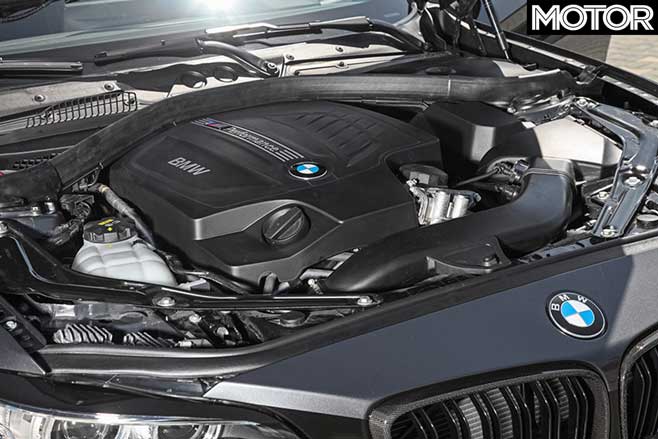
An M2 Competition normally weighs roughly 1550kg, so the idea of a 1700kg+ compact sports convertible is an odd one. It also brings the tuning company’s name into question.
But Lightweight boss Marc Müller says the car really needed to live up to the M2 name, so the company’s made sure it’s able to handle its new outputs.
“It was important to us that we not only convert this vehicle visually to an M2, but that the entire technology from the M2 is actually installed in the vehicle,” Muller says, originally in German.
“Visual conversions of an F23 to an M2 already exist, for us that was not the challenge. The DCT, including differentials from M2 axles, that was a must.”
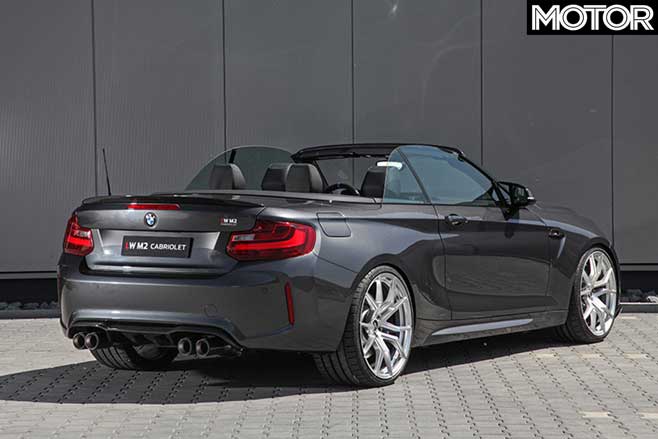
Bilstein Clubsport suspension, a braking system with ABS mimicking that of the M4 GTS, plenty of carbon, and a set of Michelin Pilot Sport 4 tyres complete the package.
Lightweight is offering the M2 Cabriolet for sale at €85,000, which directly converts to AUD$145,860, but in Germany the M2 Competition costs €61,900 (AUD$106,146) which just about matches Australian pricing.
For Aussies with a love for American muscle, our relationship with the Chevrolet Camaro will be remembered as short, loud, and meaningful.
HSV has confirmed its RHD conversion program for both the 2SS and supercharged ZL1 has ended, and won’t be restarted.
“There are no plans to bring back the Camaro. Once these cars are gone, they are gone.” HSV’s executive director of sales and marketing, Chris Polites, told CarAdvice.
The Chevrolet Camaro SS, with its 339kW/617Nm V8, went on sale in Australia locally in September 2018, while the real beast, the supercharged, 477kW/881Nm Camaro ZL1, hit the streets in the middle of 2019.
Since the HSV conversion program began – requiring around 130 hours of labour from start to finish – the Clayton-based company has produced 1200 Camaro 2SSs and 350 examples of the ZL1 as right-hookers.
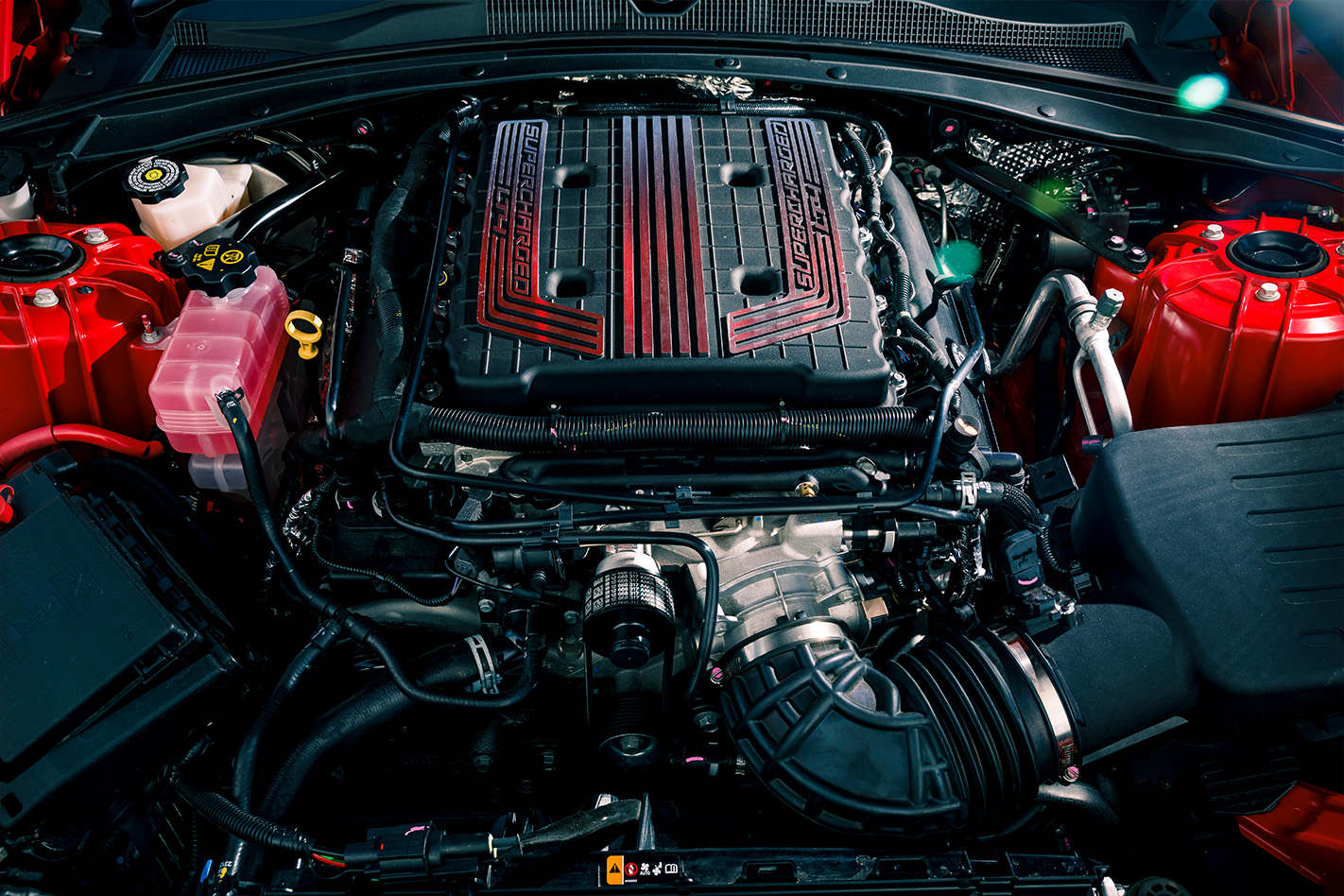
Reliable sources suggest there may still be nearly 100 ZL1s and 150 2SSs still in stock across the national network of 65 HSV dealers.
As for the HSV conversion operation, it claims to be still in negotiations with GM about the feasibility of establishing General Motors Specialty Vehicles (GMSV), which would see it continue to convert the Chevrolet Silverado pick-up, while also possibly adding the Corvette, large GM SUVs, and even models from other brands in the GM family to its portfolio.
Meanwhile, speculation has been rife in recent months that GM may cease its development of the seventh-generation Camaro, due in 2023.
Sales in the muscle-coupe segment have been in decline in North America, and Camaro has been outsold by both Mustang and Dodge Challenger in its home country.
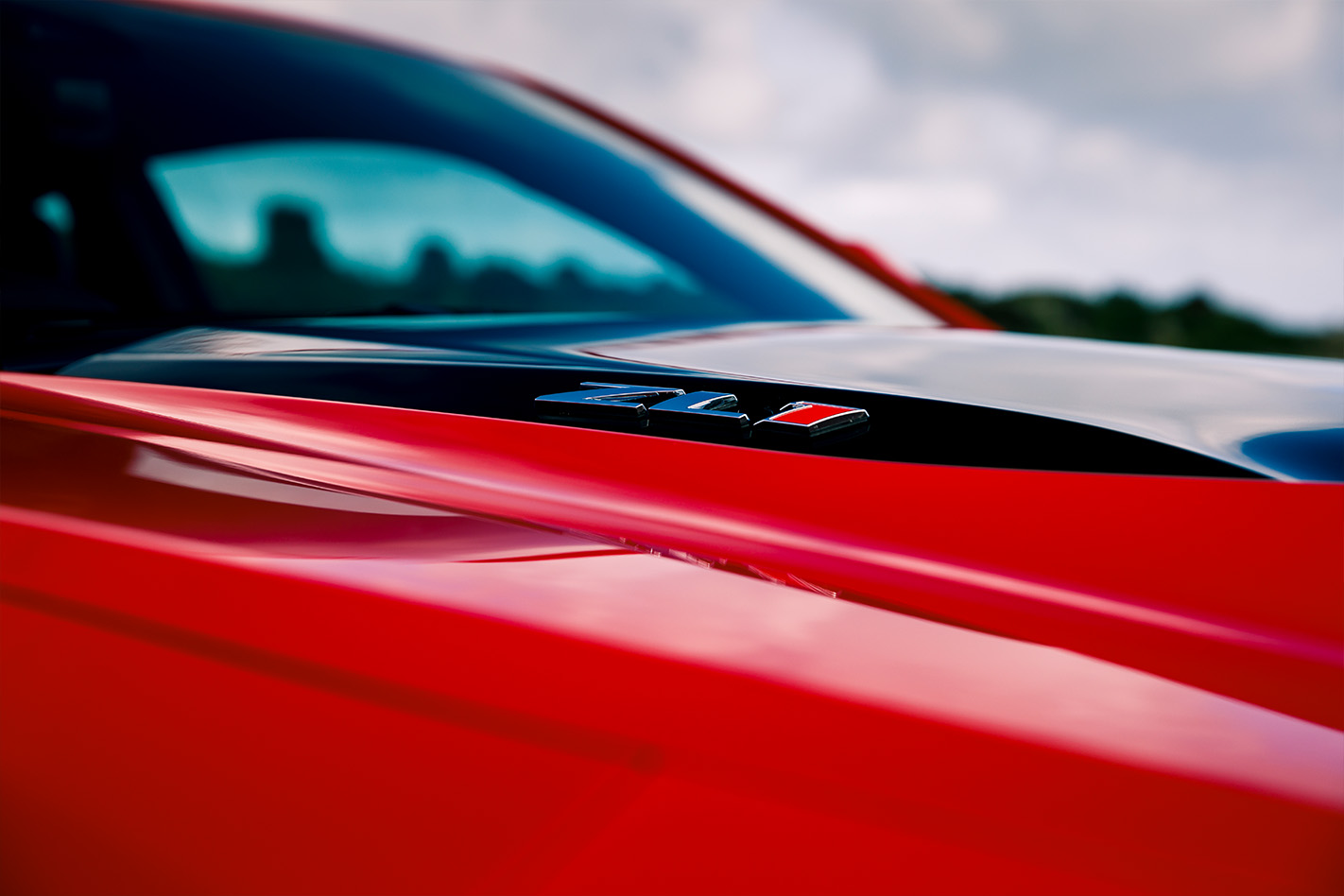
Further, plenty of insiders have pointed to GM’s shifting business strategy, which sees Camaro at odds with GM’s aim to focus on pick-ups, crossovers, SUVs and hybrid/electric vehicles in North America.
However, there have now been credible reports that indicate GM has “shelved” the program, rather than cancelled it, but if and when it will be restarted, well, you’d need a bug inside the GM boardroom to answer that.
If the seventh-generation Camaro does end up getting the green light as previously planned, it will likely be built on the A2XX/Alpha 2 platform that underpins the new Cadillac CT5 and CT4 sport sedans, which is an evolution of the Camaro’s current platform.
HSV’s decision to stop producing the Camaro puts a question mark over what the racing arm of the business – Walkinshaw Andretti United – will field in the Supercars championship.
Team boss Ryan Walkinshaw has publicly stated the squad will not race Commodores in 2021, while also indicating that the Camaro would not be suitable for Supercars until regulation changes are made.
One rule in particular had stopped the Camaro’s entrance into Supercars, pertaining to the front roll hoop, which gave the Ford Mustang racer its somewhat ungainly looks.
However, with the Camaro now leaving HSV’s portfolio, it seems unlikely that the V8 coupe would become the Walkinshaw team’s race track flagship.
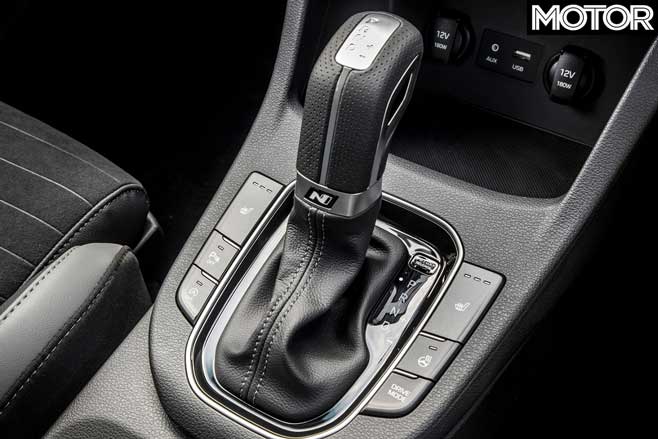
Hyundai Australia has finally confirmed the Hyundai i30 N will be available with a dual-clutch gearbox from the beginning of next year, with the MY21 hot hatch to bring the paddle-equipped variant to Australia.
Hidden in an Australian variant of the international press release for the new dual-clutch Hyundai Veloster N was the following line from the brand’s local PR.
“Whilst the Veloster N is not sold in Australia, the all-new N 8-speed wet dual-clutch transmission (N DCT) will be available on i30 N and i30 Fastback N models from early 2021.”
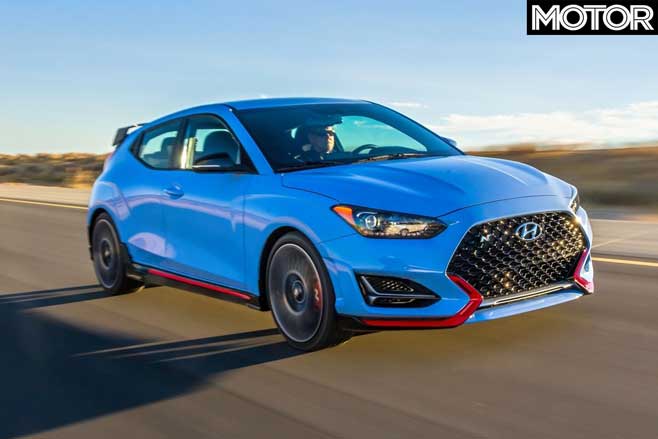
The confirmation of Australia’s expected i30 N DCT arrival is something prospective buyers and Aussie motoring media has been waiting for since the car’s introduction. Hyundai is also sticking to its word that the Veloster N is not currently a priority model in Australia.
In March 2018, a Hyundai representative said the idea of bringing the ‘standard’ i30 N wasn’t entirely off the cards. Australia currently only receives the fully-specced 202kW version, but a 184kW/353Nm version with no locking differential is also available in other markets.
As a potential way to offset the extra cost of a DCT gearbox, Hyundai would be able to offer the lower-spec i30 N, and at the time the brand was “open to it.”
“Our primary thought is that someone who wants an automatic type of transmission maybe isn’t someone who isn’t so worried about things like the differential, the high grip tyres, the larger 19[-inch wheels] and more aggressive hot hatch characteristics.”
“Maybe it presents as a better every day driving proposition, but still capable of occasional fun that the standard variant packaged with the automatic transmission as an option.”
Stay tuned for pricing and specification of the i30 N DCT to follow.
The next-gen Mustang is set to be an all-paw V8-powered monster, according to reports coming out of Europe.
The current S550-gen Mustang has been on sale since 2015, and has been a global sales success thanks to factory right-hand drive production.
We already know the S650 Mustang will be revealed to the public in two years’ time, thanks to a leaked job advertisement, meaning we should see this new model some time in 2022.
Both left- and right-hand drive production is expected to be retained for the next-gen ’Stang.
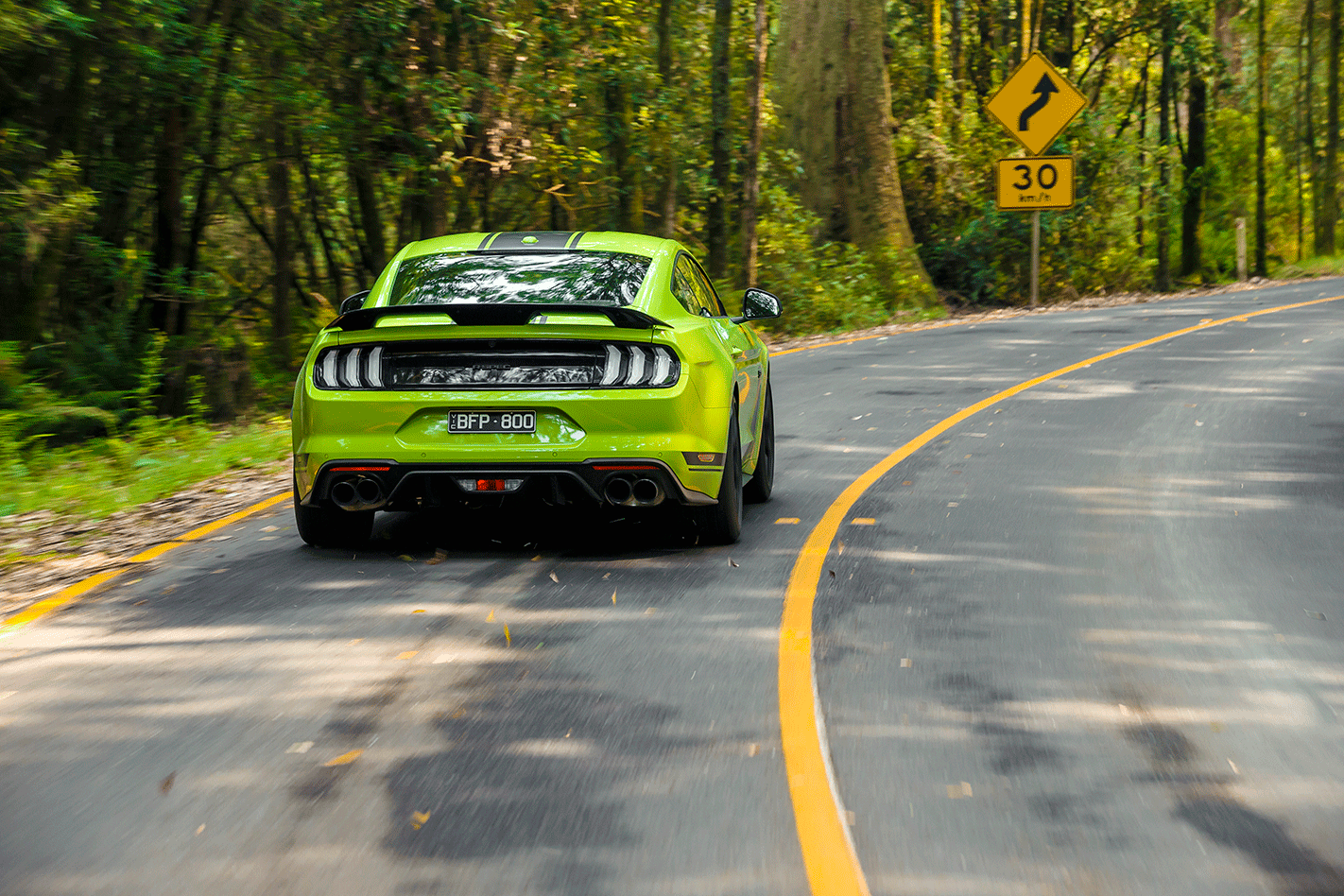
Thankfully, the V8 will stay, but, according to Britain’s Autocar, it will be mated to a hybrid system to get it past ever-tightening efficiency restrictions.
That’s not immediately bad news for enthusiasts, though, as it ensures the ongoing success and future of Ford’s Modular V8 dynasty.
According to Autocar, electric power from the hybrid system will be delivered to the front axle exclusively, with the traditional bent-eight transferring power to the aft treads – retaining the classic Mustang rear-drive personality.
It also bodes well for the next-gen Mustang’s performance ability. To whet your appetite for what all-wheel drive will give the S650 Mustang, consider that the Mercedes-AGM GLC 63 S SUV is faster to 100km/h than its C63 S coupe sibling, thanks almost entirely to an AWD drivetrain.
Wheels has experienced frustration in the past trying to get the Mustang’s V8 grunt to the ground – particularly in high-power supercharged variants – as the rear treads alone are unable to complete the task without falling into wheelspin.

Electric assistance on the front axle should help rectify this issue, and result in some spectacular acceleration figures – even without an increase in combustion power.
The system is reported to be based on a Ford patent from 2017 and would only step in when the rear wheels lose traction, while also providing torque vectoring in the bends.
According to Autocar, the S650 will be built on the CD6 platform shared with the Explorer SUV and Lincoln Aviator.
An all-wheel-drive hybrid V8 option also opens the door for a potentially cheaper non-electrified bent-eight variant, particularly in markets without emissions restrictions, such as Australia.
