
It’s no secret that Japan’s automakers like to keep their best for the home market, and the Honda FD2 Civic Type R was one such example. While Australia had to share Europe’s lacklustre FN2 Civic Type R hatchback, Honda Japan built what is still the only Civic Type R sedan.
Beneath its Evo-like rear wing and reprofiled front and rear bumpers, Honda’s engineers went to work, stiffening the sedan’s chassis and lightening it by 13.4kg, mostly by removing sound-deadening, while fitting a tweaked version of the beloved Integra DC5 Type R’s drivetrain.
In the FD2, the 2.0-litre atmo K20A engine was tweaked to make more power (165kW) than both the DC5 (147kW) and the FN2 (148kW). The six-speed’s ratios were redone, braking was beefed up with the fitment of 4-pot Brembos up front, and traction augmented with a Torsen diff. Honda claimed the FD2’s body was a whole 50 per cent stiffer than the DC5, while the sedan’s rear independent suspension set-up was more sophisticated than the FN2’s torsion beam design.
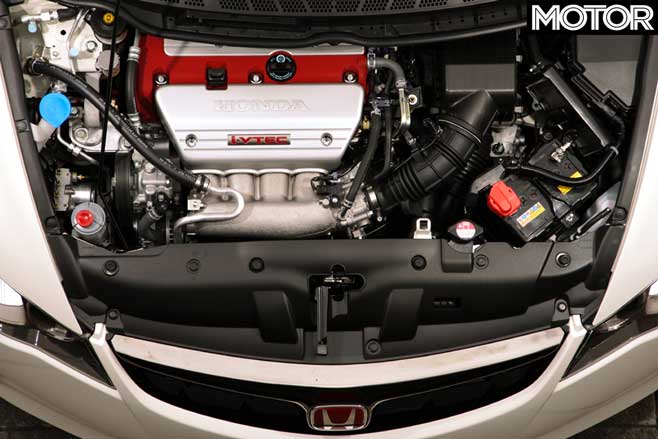
Do not dismiss the FD2 as a big softie for having an extra set of doors. In truth, it was more touring car than grand tourer. The engine needs to be worked hard, though it becomes enthusiastic operating from 5800rpm to its stratospheric 8400rpm redline, rewarding occupants with a sonorous and intense noise.
Not only that, but to say the ride is stiff is an understatement. Even on smooth highways the FD2’s ride quality is rump-numbing, leaving you in no doubt that the engineers developed this Civic solely for Japan’s glass-smooth tarmac and race tracks.
While many might find the FD2’s antics archaic, as an old-school, no-compromise four-door the buck really stops here. We may never know the thinking behind the engineers’ uncompromising decisions, but we’re glad they weren’t dissuaded from producing something so unapologetic.
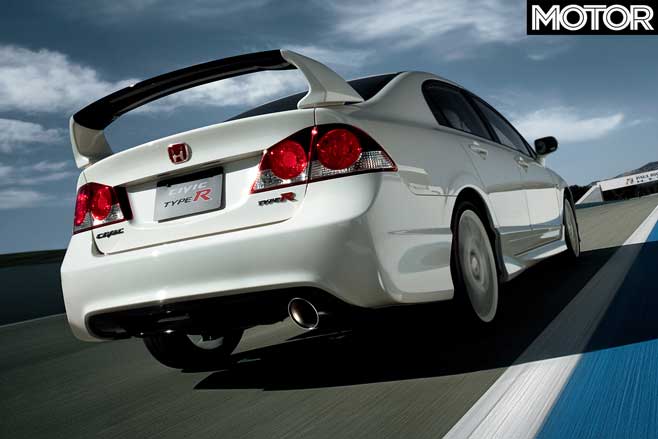
2007 HONDA FD2 CIVIC TYPE R SPECS Engine: 1998cc, inline-4, DOHC, 16v Power: 165kW @ 8000rpm Torque: 215Nm @ 6100rpm 0-100km/h: 6.3sec (estimated) Price: $33,000 (estimated)
*Australia’s new enthusiast-friendly import rules has made the FD2 eligible for import into the country.
The COVID-19 pandemic has demonstrated one of the unforeseen effects of robbing Australia of a local car manufacturing industry, according to the Society of Automotive Engineers – Australasia (SAE-A).
SAE-A Chairman and CEO Adrian Feeney said the pandemic had shown how valuable local car production can be by providing engineering expertise and facilities to locally produce necessary equipment for health workers to fight the virus.
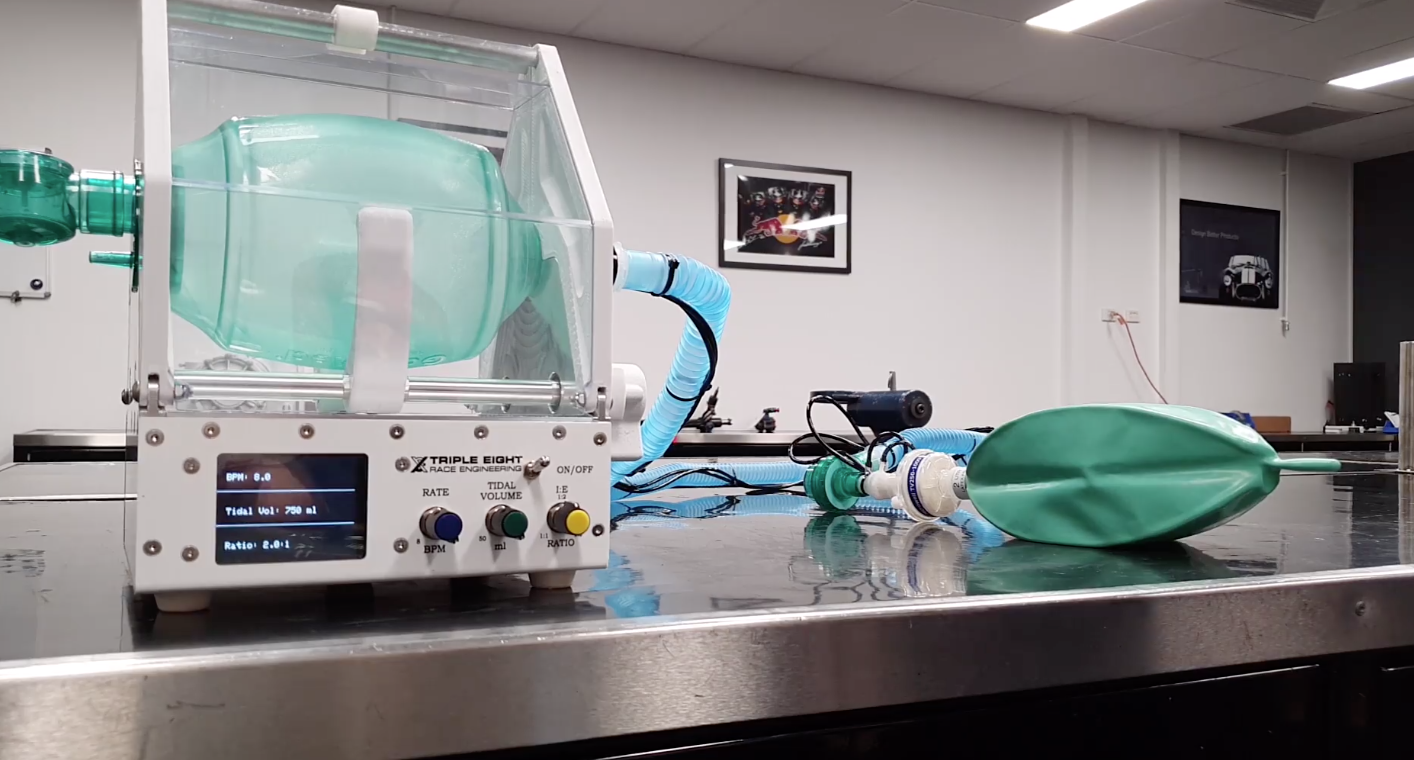
“Car manufacturers around the world are making masks, ventilators and other equipment, not just in America and Europe, but in countries like India and Mexico,” Feeney said.
“Not so in Australia, where we see Ford Australia developing a surgical face shield, but having to do it in a Parts Distribution Centre, not a car factory.
“It could all be so different if the government invested in reviving our car industry, starting with engineers, and ultimately full-scale specialist manufacturing.”
Time is running out
Feeney claims it’s not too late to rebuild the local industry, with vital automotive assets still in place that could easily be preserved if the government moved as decisively as it had to protect other industries from the pandemic.
“We have that capacity right now – engineers, proving grounds, factories and other facilities – that would cost hundreds of millions of dollars to rebuild if lost,” he said.

“It’s a big opportunity, with new players and technologies emerging all the time.
“Let’s not forget that Tesla got into full production by taking over a former GM-Toyota factory in California – well, we have former Toyota and GM plants too, and Ford for good measure.
“Tomorrow’s car could be almost anything – autonomous, electric, all sorts of things – and Australian engineers are renowned for the flexible thinking these new technologies require.”
Government investment
Mr Feeney said the right initiative by Australia’s governments over the next two years could attract corporate investment in a resurgent, world-class local car industry.
“Which Australian Prime Minister wants to be known as the Ben Chifley of the 21st century?”
“Next time we face a challenge that calls for world-class engineering and manufacturing capabilities, whether (it be) a virus or anything else, we will be ready and able to meet that challenge.”
Does Adrian Feeney have a point, or is he drawing a long-bow out of self-interest? Tell is what you think in the comments section below.
The upcoming Ford Focus RS is dead.
CAR magazine UK’s January 2020 issue initially spilled the beans on the Blue Ovals’ hyper-hatch, citing hybrid power as the key technology that would’ve kept it competitive in the ongoing hot-hatch arms race. It was a combination Ford genuinely explored – the RS was on the intended product plan for five years before disappearing, sources say.
According to a Ford statement released today, high development costs and changing emission laws mean the Focus RS won’t happen. GKN’s e-Twinster’s electric four-wheel drive is now no longer viable for the hyper-hatch – and that leaves the 2020 flagship dead in the water.
The statement reads as follows:
‘As a result of pan-European emissions standards, increased CO2 taxation and the high cost of developing an RS with some form of electrification for a relatively low volume of vehicles, we are not planning another RS version of the Focus.
‘We remain committed to Ford Performance vehicles in Europe as part of our DNA with cars like the multi-award winning Focus and Fiesta ST as well as our Mustang and Ranger Raptor models.’
The news also means the Focus ST is now the fastest Focus you’ll ever be able to buy – for over 300kW buyers will now need to look at the Mercedes-AMG A45.
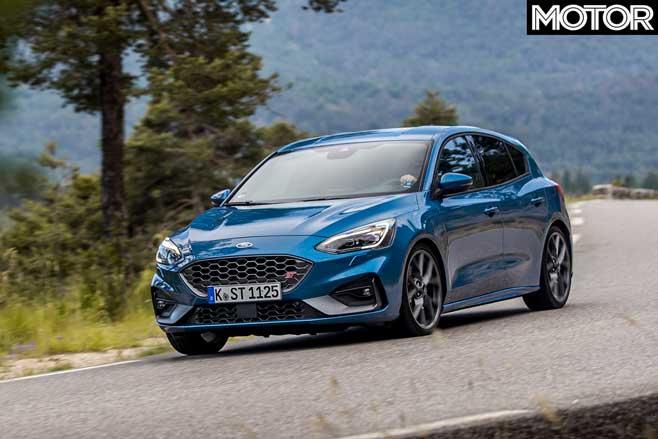
Stacking up the business case proved impossible. The Focus RS is very much a European success story – the Focus is no longer sold in the United States, and there’s insufficient demand for a hyper-hatch in other key markets such as China.
With Europe only able to generate 8-10,000 sales a year, the electrified RS couldn’t deliver sufficient profit given its expensive component base.
Performance models are also under threat from emissions regulations that compel car makers to average around 95g/km of CO2 across their entire fleets. Cars with big carbon footprints, such as super-saloons from Mercedes-AMG and BMW’s M Division, are disappearing from price lists in a puff of smoke. Meanwhile Peugeot Sport is reinventing its GTI models as pure EVs and performance hybrids. Sadly Ford couldn’t follow suit with the Focus RS.
What would the 2020 Ford Focus RS might have been
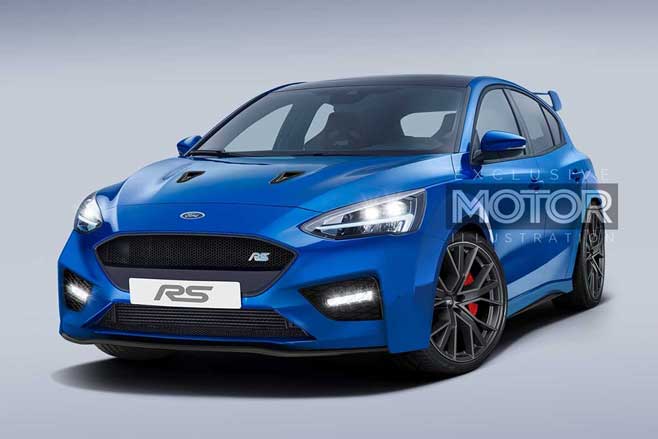
This should’ve been the moment that Ford pressed two contrasting buttons: the RS was tipped to include a 48-volt integrated starter-generator (ISG) for a gentle boost of all-electric power at low revs.
The outgoing Focus RS was very much an all-combustion affair, repeating the formula from all three generations of fast Focus.
Adding electrical assistance was a smart way of assuaging the Blue Oval’s green ideals, and complemented the Mustang Mach-E all-electric crossover – yet gave the chance to boost the RS’s performance creds further. And we all know how fast Fords mustn’t give any quarter on outright brawn and muscle…
So what would have the new RS hot hatch looked like?
Extreme as a Focus could, inevitably riding harder than a faulty dodgem car and accelerating faster than most sports cars. That electrically-assisted all-wheel-drive system may have even allowed a continuation of Ford’s Drift Mode, to compete with the sideways-inclined Mercedes-AMG A45.
Ford has form with its 2.3-litre EcoBoost engine, so that that unit could have remained the basis of its next hardcore all-wheel-drive hot hatch. The last RS made 276kW and 510Nm in Mountune-fettled spec.
This story first appeared on our sister site Car Magazine UK.
We have to admit – we didn’t quite see this coming. For the first time ever, the cost of a barrel of oil is now in negative territory. That’s right: producers actually have to pay for refineries to take their oil away.
But it’s not all producers. Specifically, it’s US oil fields that are now facing to prospect of switching off production and scrambling to find storage, particularly those in Texas and Oklahoma. WTI crude, or West Texas Intermediate, is considered the benchmark price for oil produced in the USA, and WTI futures sank overnight to -US$40.32 – a 321 percent drop – as low demand for fuel coupled with a shortage of oil storage saw supply vastly outweigh the country’s need for the commodity.
Does that mean you’ll soon be able to fill your tanks with ultra-cheap fuel? Sadly, no. Australian fuel is largely sourced from Japanese, South Korean and Singaporean refineries, which distill crude oil mostly supplied from the Middle East. The bulk of crude oil that’s refined in Australia comes from Malaysia and the Middle East – the USA isn’t a big part of our petroleum supply network.
Negative prices in the USA (whose production mostly goes towards its own domestic consumption, with little exports) currently means little for the rest of the world, but if the USA wants to keep its oil fields open that may soon mean another cheap source of fuel. But it would have to be dirt cheap – the world benchmark price for crude is Brent oil from the North Sea, and that’s currently trading at US$25.51 a barrel. It’s not in negative territory, but it’s still incredibly cheap given it was at US$61 a barrel at the start of this year.
Brent crude also provides a better barometer for what will happen to our local fuel prices in the near-term. With Australian economists reckoning that every US$1 fall in the cost of a barrel of crude results in a one-cent reduction in the bowser price of unleaded petrol, a per-litre cost of roughly a dollar – or less – seems feasible given current pricing of Australian unleaded, even allowing for the Government’s fuel excise and retailer profit margins.
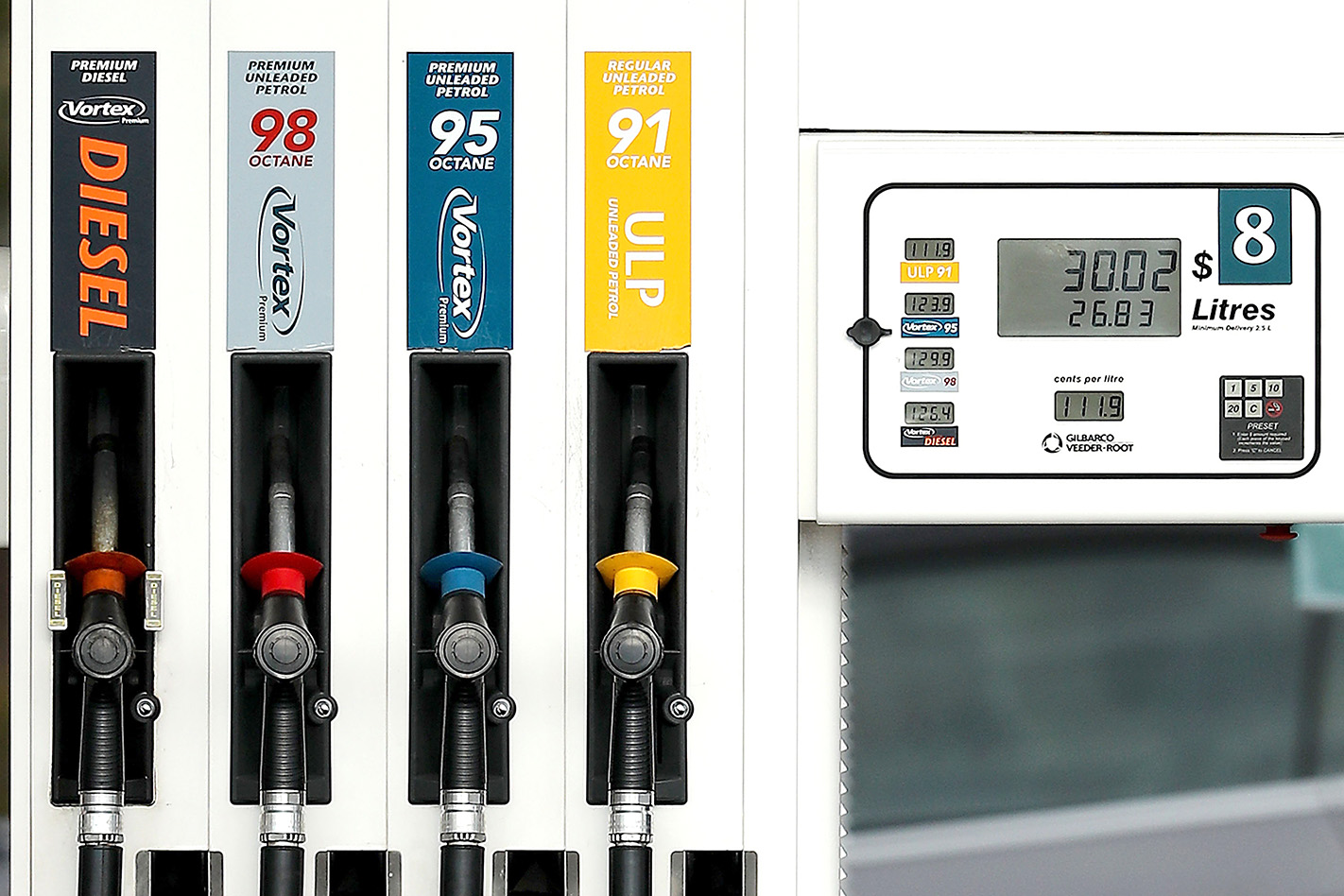
The global price of oil has been in decline since early January, however, values fell off a cliff in early March to US$28 per barrel before stabilising around US$30-31 – and then plummeting again on March 18 to US$20.83 a barrel. It’s wavered up and down since, and the reasons why really boils down to two factors – Russia and Saudi Arabia are trying to assert economic dominance over the other, while the coronavirus pandemic has basically killed demand for transportation fuel and lubricants.
So why is oil getting cheap?
An oil trade war between Saudi Arabia and Russia has been going on for months now, with both having turned up production earlier this year to try and flood the market with cheap crude and force the other out of business. It stems from a difference in opinion between the two countries on how oil output should be managed, but neither could predict the scale of the Coronavirus/COVID-19 pandemic and the effect it would have on the world’s need for petroleum.
The dispute was allegedly sparked by Saudi Arabia advocating a coordinated reduction in oil output by all OPEC+ countries (which includes Russia) in an effort to keep the price of the commodity high. Russia’s government disagreed with that approach and has gone rogue, jacking up output to instead drive the price down. And it could be quite protracted. Russia’s finance ministry says it has sufficient reserves to sustain oil prices as low as US$25 a barrel for “six to ten years”. Whether Saudi Arabia and its fellow OPEC members (which control roughly 35 percent of global oil production) can match that remains to be seen.

The combination of stay-at-home orders, suspension of aviation activity and industrial shutdowns have hurt demand for oil badly, so the surge in oil production has quickly filled up storage facilities across the globe. The economics of supply and demand thus dictate that the price of oil must fall, and it has most certainly done that. Oil production has been scaled back, but the supply line is not one that can simply be switched off at will – there’s a lot of inertia involved.
US producers will be sweating hard, right now. Even those US oil fields that aren’t selling oil at negative prices will be hurting, as the generally accepted break-even price for oil is around US$50 a barrel. No US producer is currently anywhere near that price right now.
Their options are to continue producing and hope storage or a customer can be found (offshore storage in anchored supertankers is one possibility), or shut down and lay off workers – something with the US government might not find palatable.

As other countries trim back their oil capabilities as a result, the power is left with those countries who can afford to wait out the price slump.
In the midst of this, the Australian Competition and Consumer Commission has declared that it will be watching fuel retailers to ensure any savings are passed on to motorists.
“We will be looking at the market very closely, to determine if further sustained reductions in international prices are being passed onto consumers, and we will be publicly identifying those retailers that are not passing on reductions.”
However, the ACCC acknowledges that its ability to regulate retail pricing is limited:
“The ACCC cannot control the petrol prices companies set but we can call out problematic price setting which can influence company behaviour,” Mr Sims said.
“At this time the Australian economy needs all the assistance it can get, and lower world oil prices are one of the few positives from current world events.”

Let’s face it: the financial argument for buying an electric car was always sketchy at best. We’ve run the numbers before, and unless you’re looking at premium vehicles where the cost of batteries can be more easily amortised, the payback period for an EV is often much longer than most motorists are willing to tolerate.
What’s a payback period? In this context, it’s the length of time an electric car takes to recoup its retail price premium over a combustion-engined equivalent.
EVs do that primarily by running on low-cost electricity, but also through lower long-term maintenance requirements and special feed-in schemes like vehicle-to-grid charging. Trigger warning: there’s plenty of maths ahead, so stay sharp.
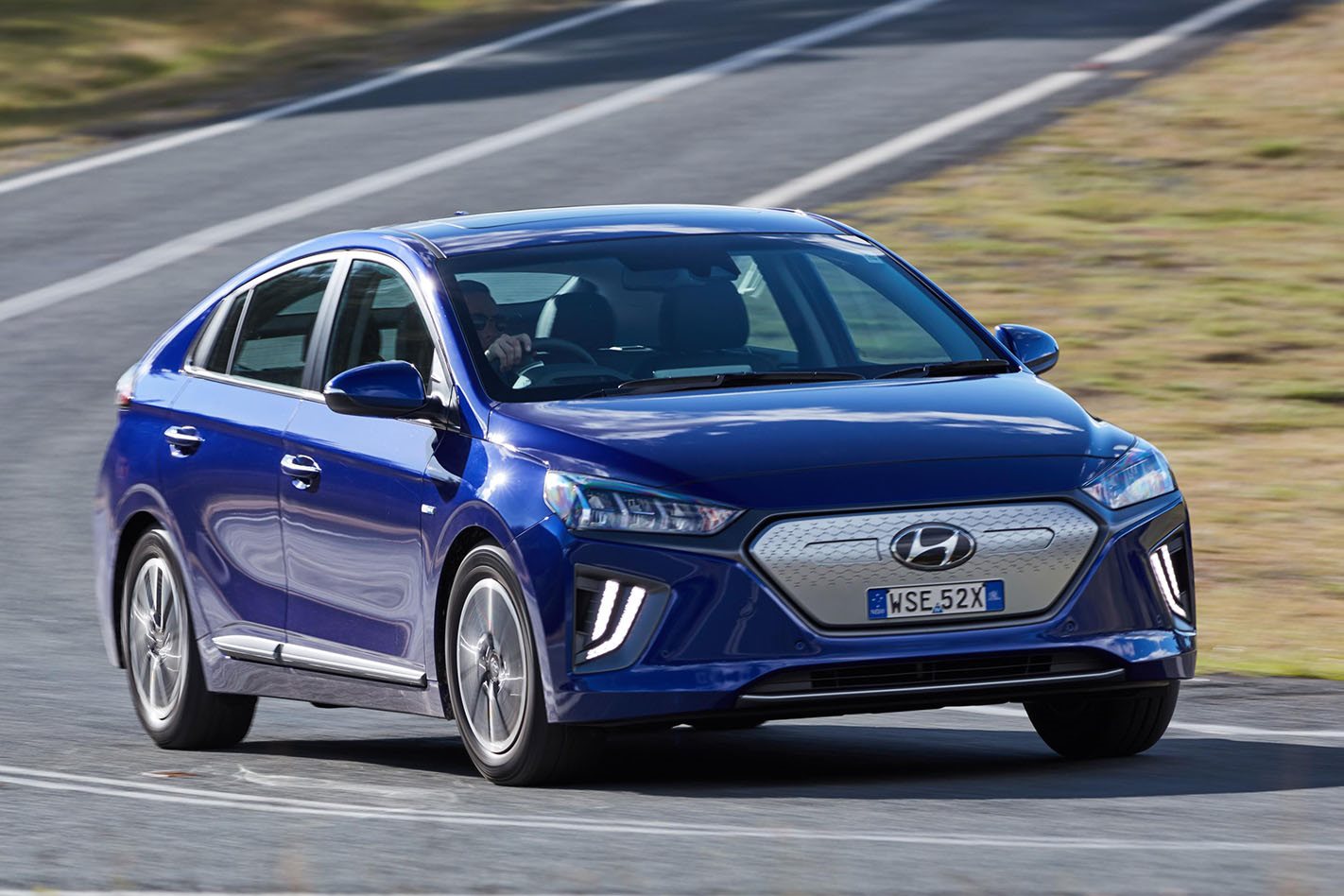
The last time we examined this question, we compared the $27,790 Hyundai i30 Elite with the $48,490 Hyundai Ioniq Electric Elite, and on a dollar-per-kilometre basis the i30 came out at $0.11/km while the battery-toting Ioniq cost just $0.05 in the worst-case scenario (using South Australia’s expensive electricity). However, that was back when the cost of fuel was $1.41.

Right now, the average price of 91-octane petrol is bang on $1.00 per litre in Melbourne, while the national average is $1.17.
Applying that to our Hyundai-vs-Hyundai comparison revises the cost per kilometre (CPK) for the petrol-huffing i30 fall to 8.6 cents. That’s still appreciably more than the Ioniq Electric’s CPK (which hasn’t really changed), and with electricity costs expected to gradually fall as social isolation measures and economic downturn take hold, the EV should still come out ahead even if fuel gets even cheaper.
Right?
Well, no. Let’s expand those numbers out to a yearly projection to better illustrate this, and we’ll also cover the one game-changing metric that’s often overlooked by EV enthusiasts.
According to the Bureau of Statistics the average Aussie motorist travels some 15,530km over the course of 12 months. Back in November last year, the i30 would have cost $1633.75 in fuel to travel that distance, while the Ioniq Electric would have added $719 to your household electricity bill if you only ever charged it up at home (again, that’s using SA’s pricey power – it would be even less in other states or if you were using your own solar-generated power).
But now, while the Hyundai Ioniq Electric still costs just about as much, the i30’s yearly fuel bill drops to $1344.58. In other words, you have the Saudis and Russians to thank for a triple-digit saving in your annual fuel costs.
What’s more, there are fuel stations selling 91RON for as little as 73 cents per litre in Sydney and 83 cents per litre in Melbourne. The tipping point is 68 cents per litre – at that price, our petrol-powered i30 example will have the same theoretical CPK as the Ioniq Electric, and the Ioniq’s payback period thus stretches to infinity.
Fuel is dead cheap right now, and experts are saying it’s going to stay that way for a while, if not get even cheaper.
Oil demand is forecast to drop by a record 9 million barrels per day according to the International Energy Agency, plunging back to levels not seen since almost a decade ago.
That’s got a lot to do with social isolation measures and the change in commuter behaviour that’s expected to linger as many companies decide to allow greater working-from-home flexibility for their employees. Fuel usage by the aviation sector will also take a while to recover to usual levels, which also affects the supply/demand pricing dynamic.
But what’s that “game-changing metric” we mentioned before? It’s depreciation, and while the i30 and Ioniq have the same three-year retained value figure of 54 percent (according to Glass’ Guide), their vastly different retail prices sees the Ioniq lose just under $10k more in depreciation alone.
And you can do the maths to figure out just what effect low-cost fuel will have on the payback period. In fact, we’ll do it for you: with the difference in annual running costs between the Ioniq and i30 now coming in at $625, the period of ownership needed to close the gap in the two cars’ retail pricing stretches to 33 years. When fuel cost $1.41 per litre, that gap was a still-extreme – but far more feasible – 22.5 years.
Even if you can get that Ioniq’s CPK down to zero, the payback period will still come in at 15 years if fuel prices stay the same. That does seem unlikely, but the message is clear – EVs will only begin to make financial sense for the mainstream public if either the cost of fuel skyrockets again, the retail prices come down, or a combination of the two happens.
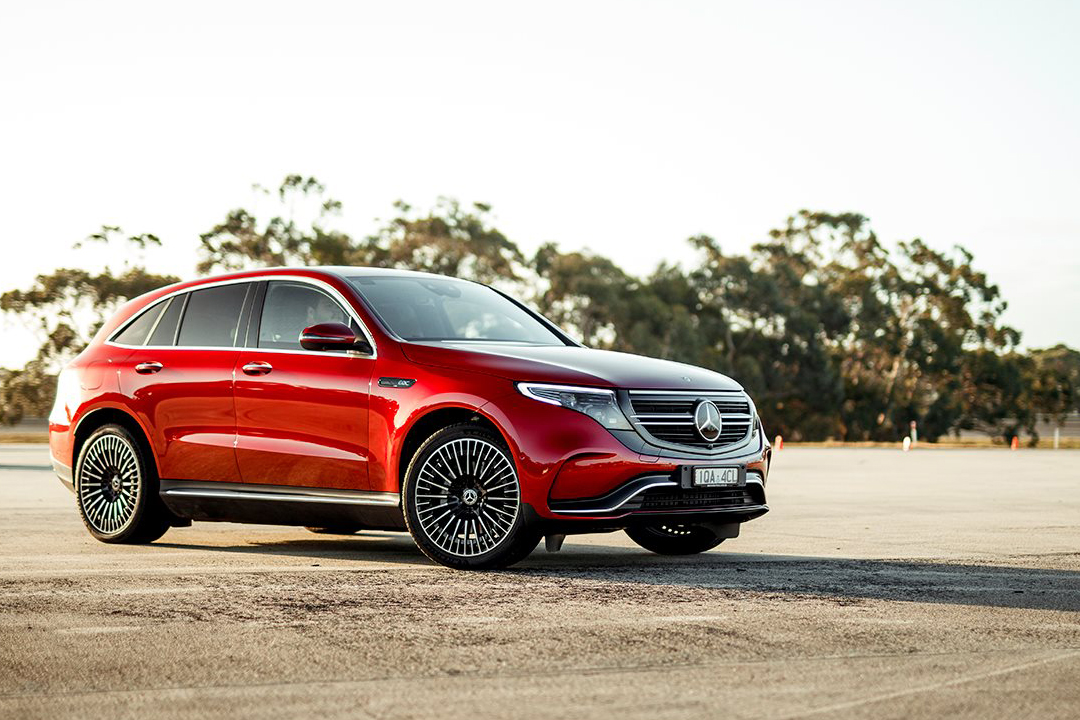
There’s also one notable exception to this rule, which we touched on at the start. Luxury cars broadly have much lower price differentials between combustion-engined and all-electric rivals, and in some cases the difference is almost non-existent. The Tesla Model 3 starts at $67K, for example, while the similarly-performing BMW 330i retails for $70K.
At those kinds of pricetags, the extra cost of an expensive battery pack can be more easily absorbed and there is no payback period to speak of. In fact, opting for the EV might actually leave you with more dollars in your pocket from the get-go.
For those of us who can’t stretch the budget that far, however, the dream of affordable electric motoring seems that little more distant for now.
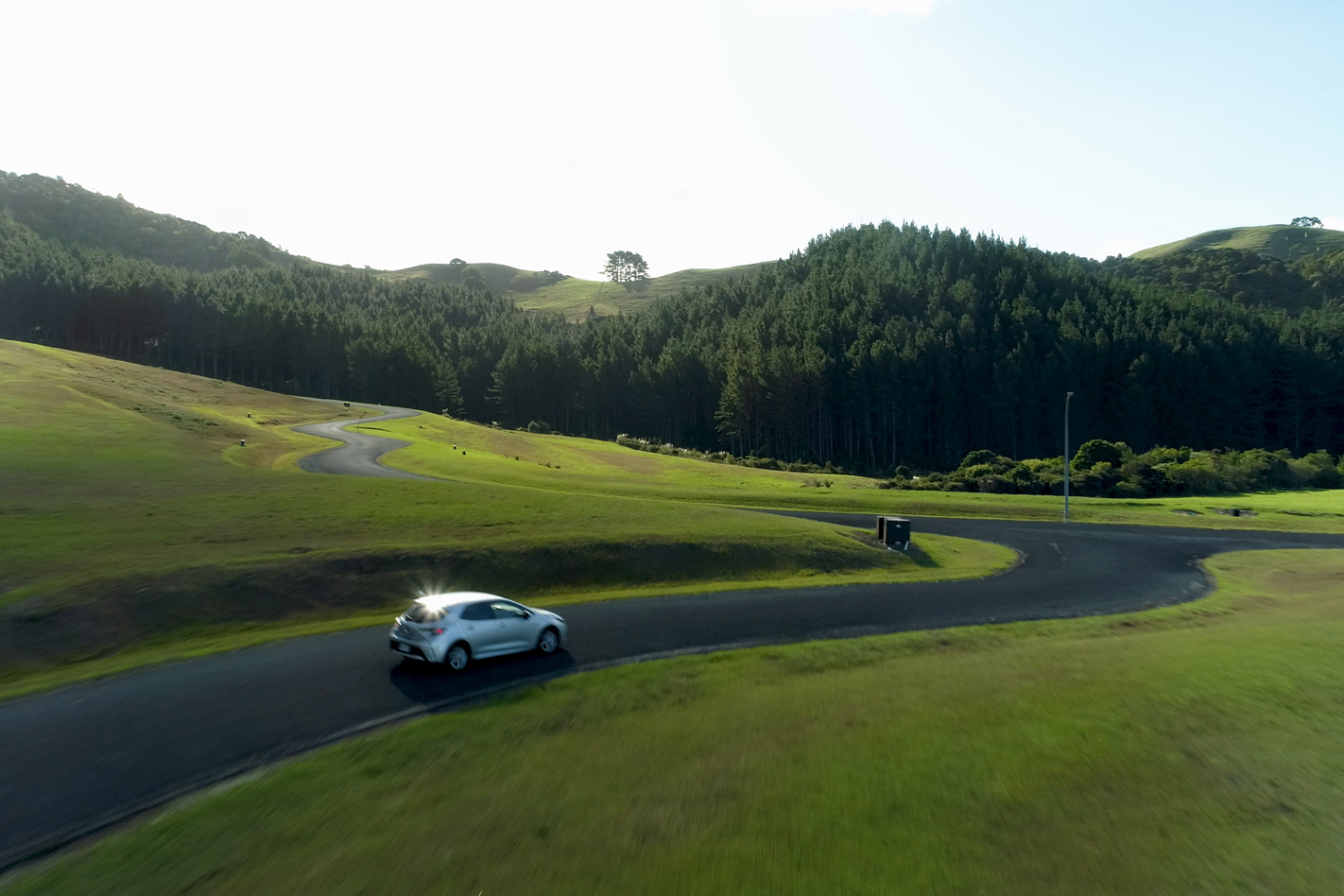
What is the Toyota Corolla Hybrid?
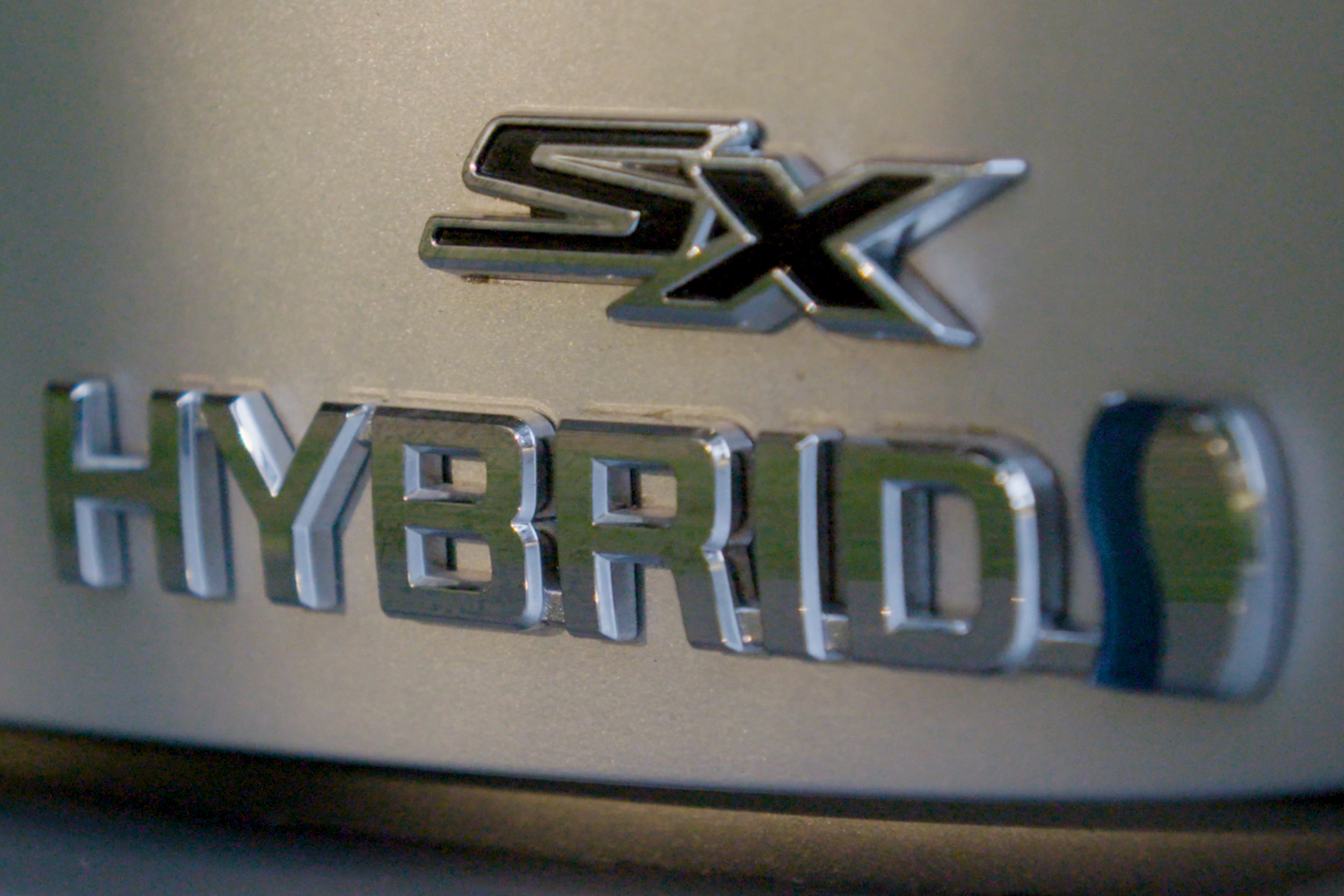
A special version of Toyota’s ubiquitous small hatchback that takes all of the interminable model’s likeable elements and adds a petrol/electric drivetrain for boosted efficiency and even a little extra drivability.
This version is the mid-range $29,735 SX which forfeits some of the ZR’s flagship equipment but gains a little more than the most affordable Ascent Sport.
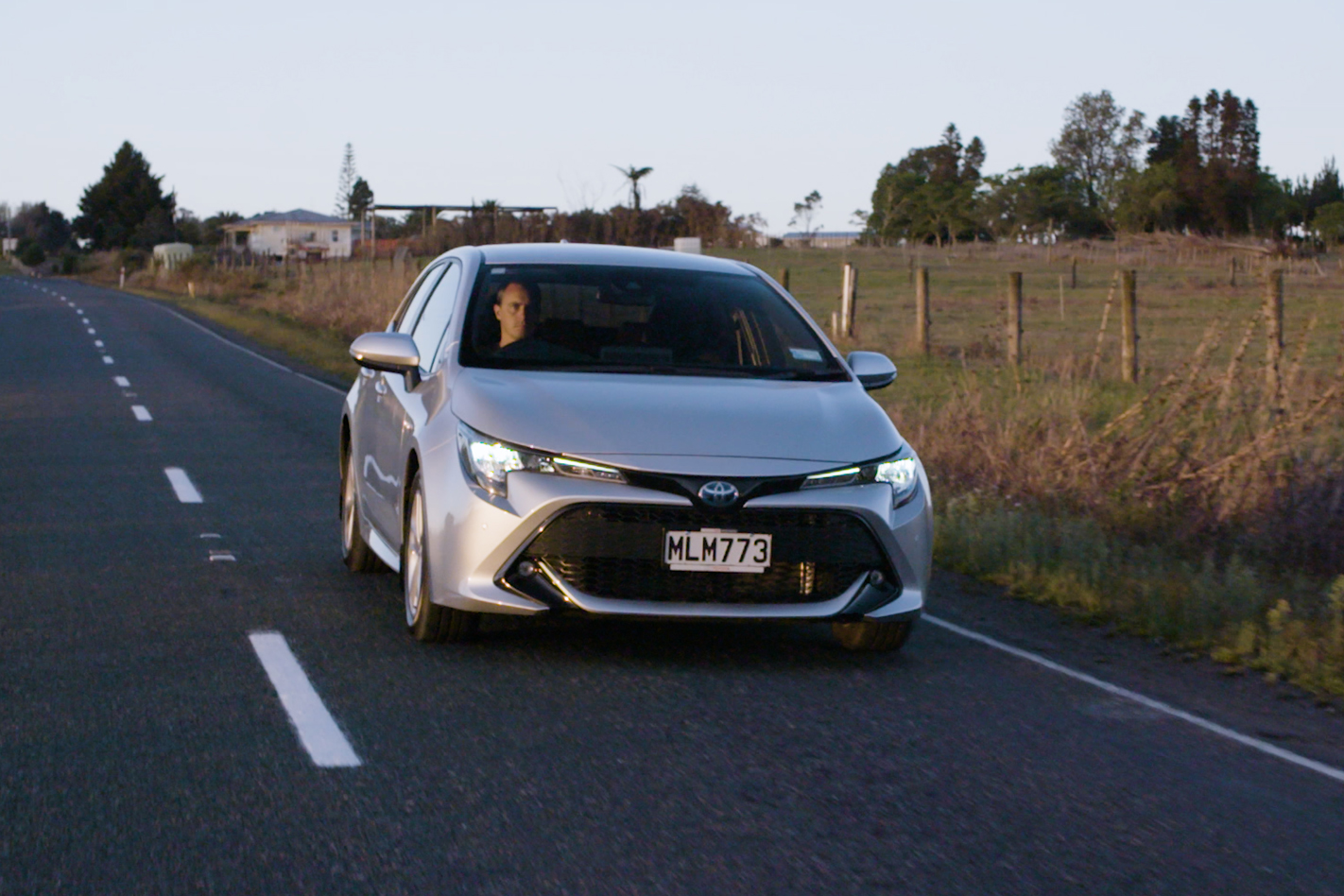
Despite its special drivetrain, this Corolla variant enjoys all the general features that have made the model such an enduring and widespread success and it even has a surprising price too.
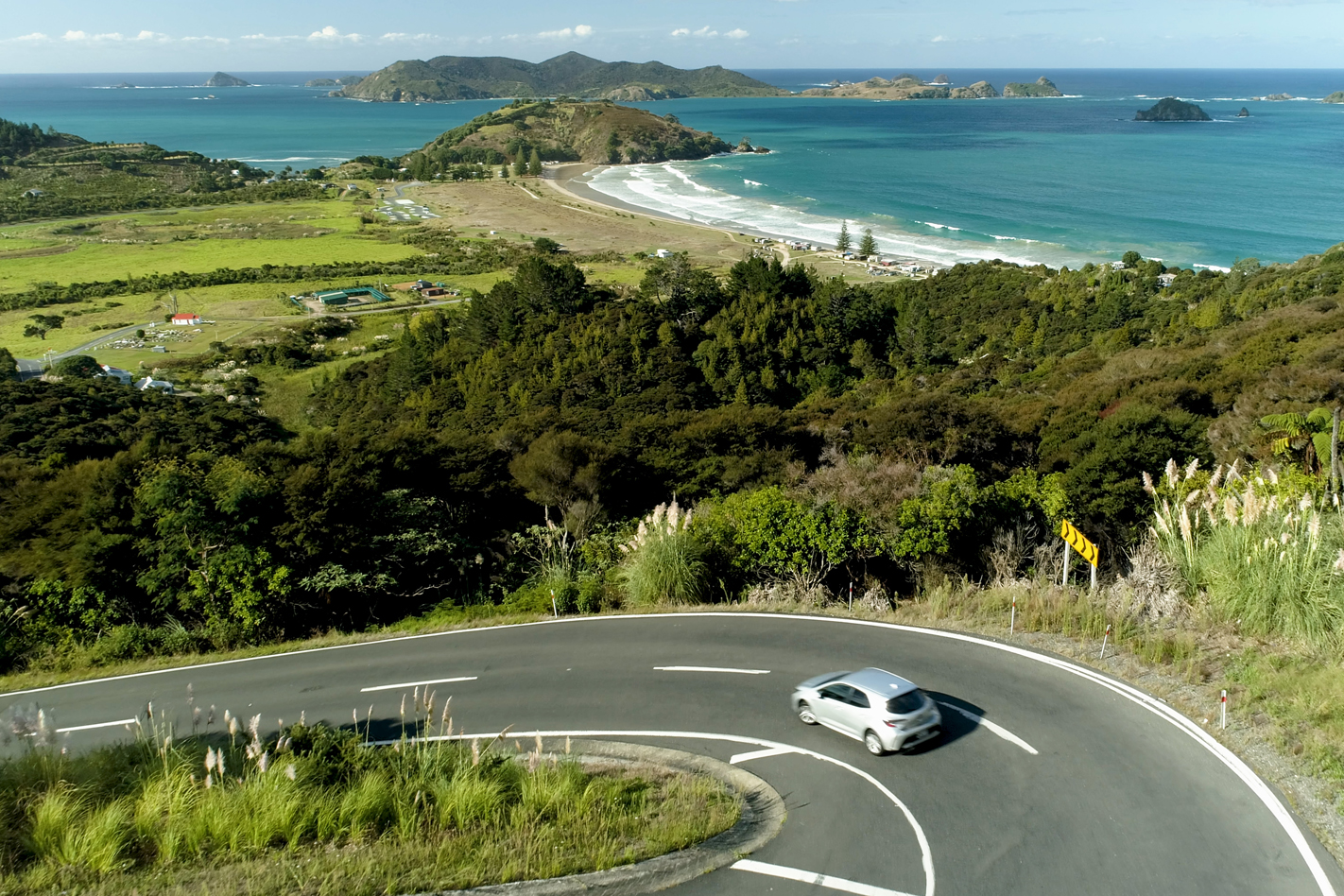
We saddled up this mid-range eco-warrior for a week in New Zealand’s North Island to see how a car that pertains to be the most environmentally sensitive in the line-up fares in a nation that is just as focused on the environment.
What is the Toyota Corolla SX Hybrid like to drive?
The Toyota Corolla is not fast. Let’s get that elephant out of the room early on. It doesn’t matter if you go for the standard 2.0-litre combustion-powered variant or this hybrid which combines a 1.8-litre petrol four-cylinder to an electric motor, they all accelerate to the milestone 100km/h in about 9.5-10 seconds.
However, in the case of the hybrid version, it’s added dollop of electric torque really comes into its own for ‘in-gear’ acceleration. When you’re out and about, the mild electric assistance is the difference between lacklustre and lively.
We’re not talking rally star, tyre-tearing performance, but a little extra nudge that makes the Corolla more eager in all types of driving.
It comes down to the delivery of power. While any combustion power engine will demonstrate some degree of response lag – whether it’s a turbocharged engine or delay in the transmission, a hybrid’s electrical energy is instant. Whether you can sense it or not, most drivers appreciate the nature of added electric torque.
If you feel like getting enthusiastic behind the wheel, the Corolla has a great chassis which is fun to steer but also confident and sure-footed. Special eco-boosting tyres are fitted as standard, which make your fuel go further but will complain sooner than more conventional road tyres.
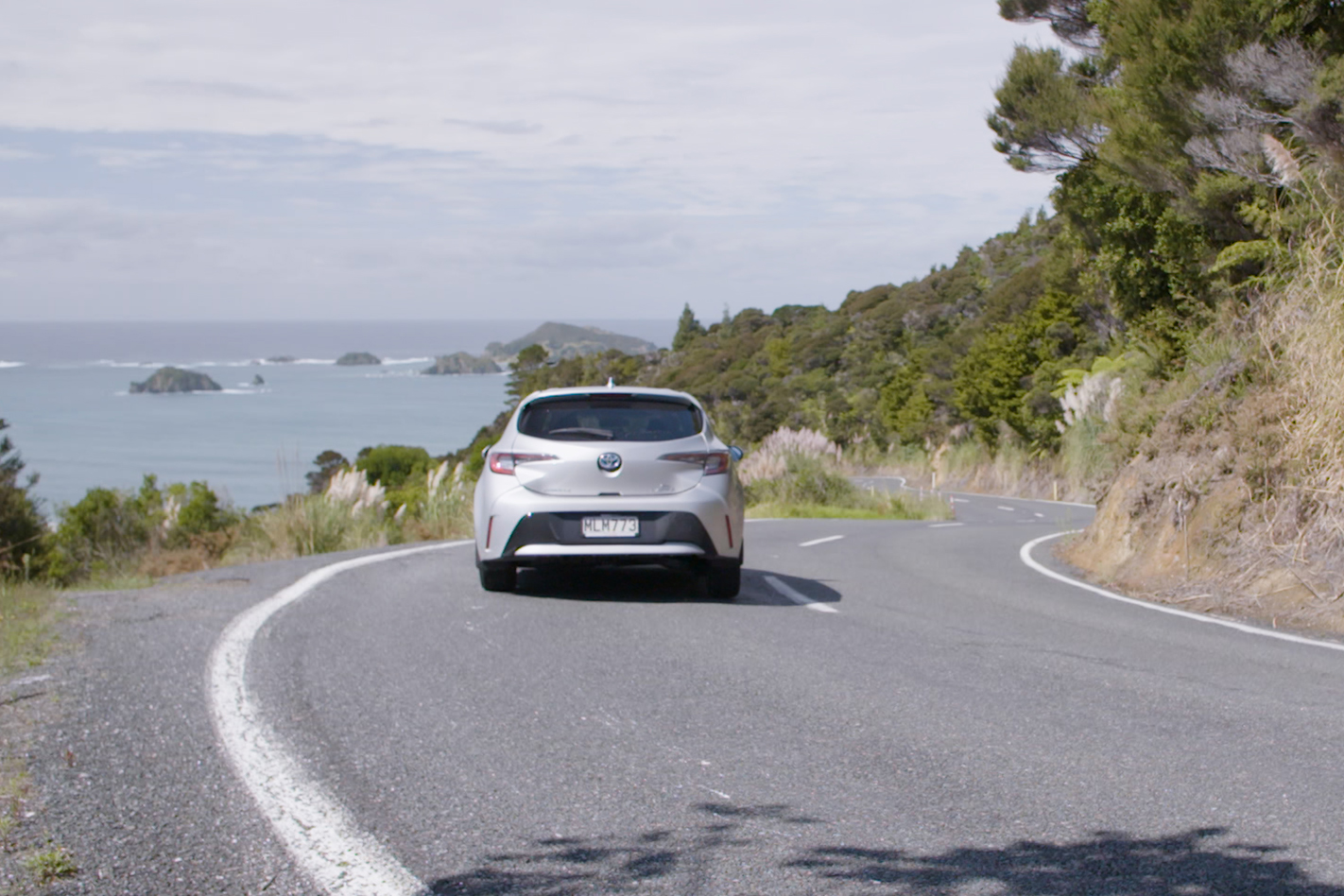
It’s extra weight from the battery and electric motor is evident but, thanks to careful positioning of the additional mass, the Corolla Hybrid sacrifices little in agility over the more conventional versions.
There’s a lot of road roar which is aggravated by New Zealand’s relatively coarse surfaces. We would be very interested to see how much a different set of tyres would contribute to road noise reduction, and grip when it’s time for a new set of boots.
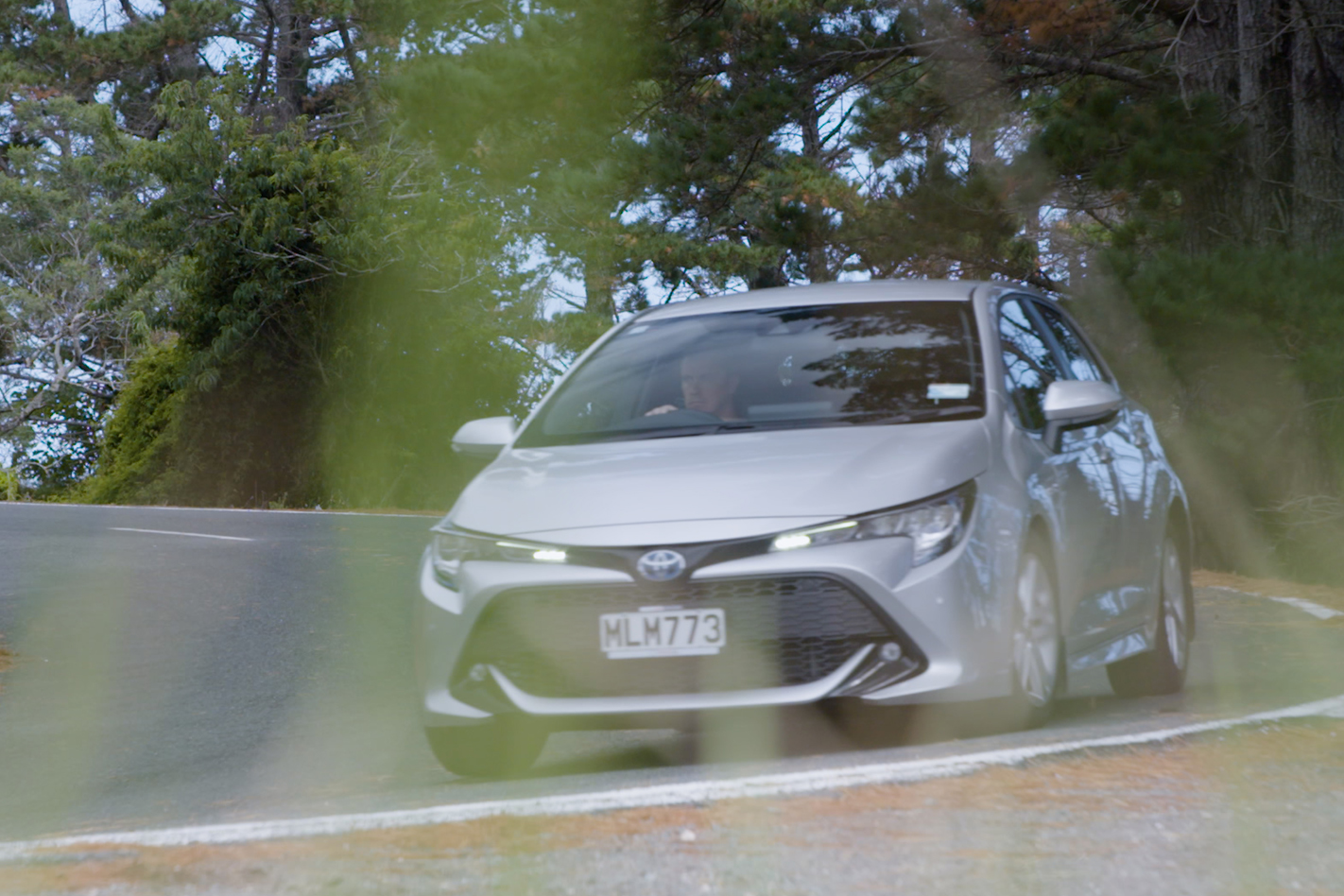
For the rest of the time, the Corolla has a beautifully smooth ride that’s comfortable but still in touch with the road.
What is the Toyota Corolla SX Hybrid like to live with?
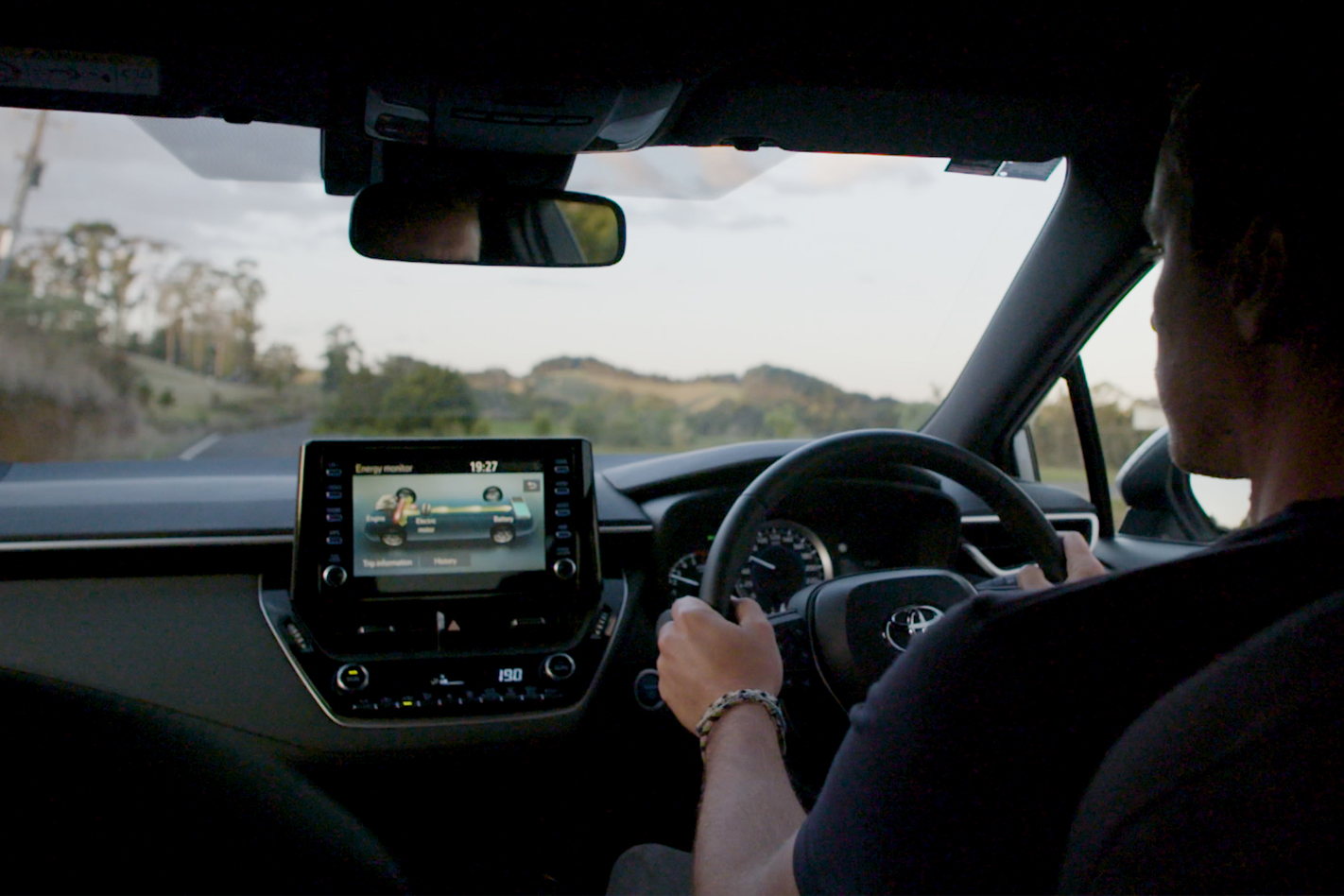
Perhaps our favourite attribute of the Corolla Hybrid is just how surprisingly normal it is. Adjusting your driving style is not necessary, there’s no charging regime to get used to, and its silent electric coasting at low speed is the most obvious sign it’s doing anything different … until you get to the fuel pump.
During a cruise from Auckland to the far north, the Corolla was using just 4.0-litres of fuel every 100km. That’s astonishing – particularly as hybrids aren’t normally best suited to freeway cruising when they typically drain the small battery and have to rely on combustion power alone.
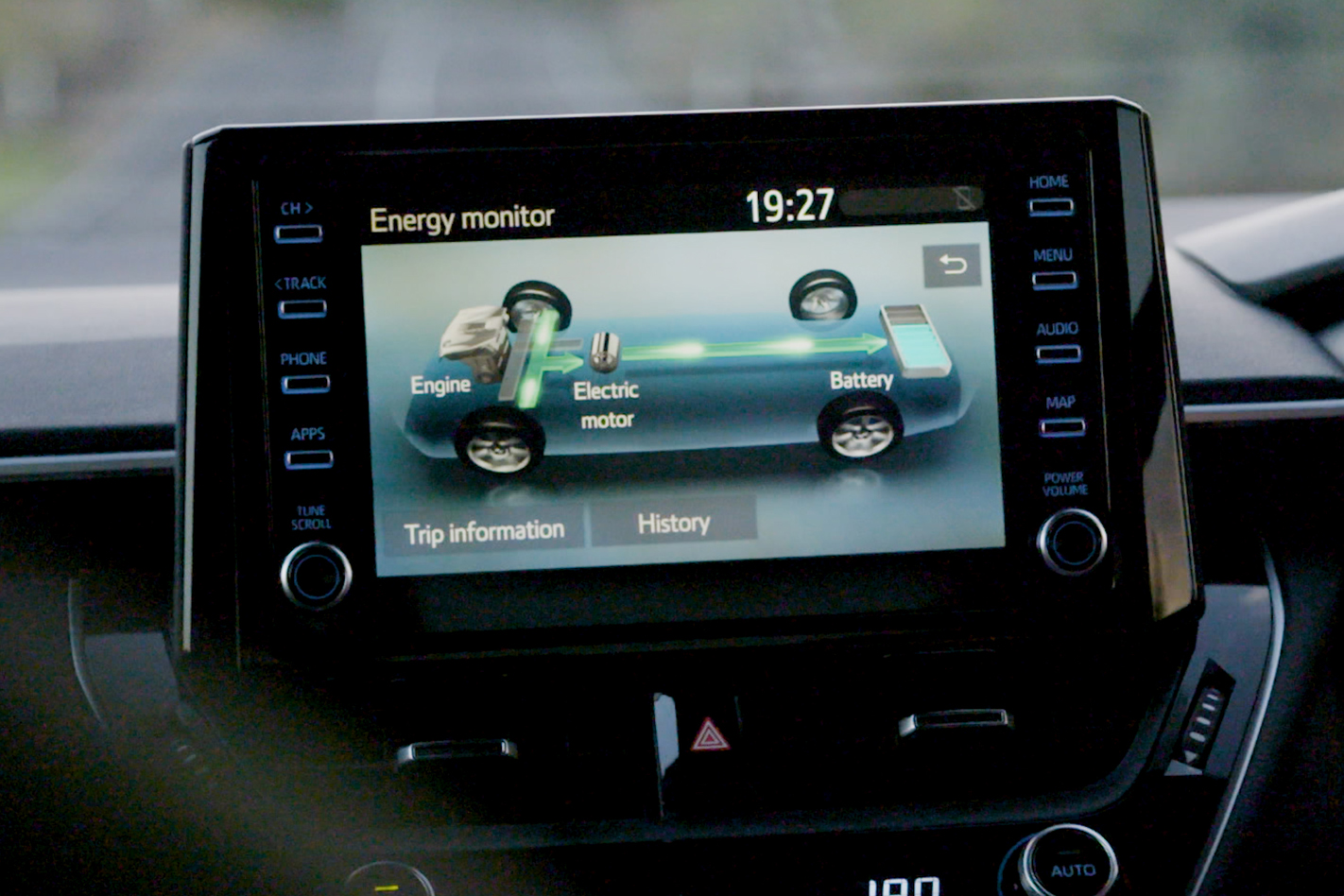
The Toyota, however, uses a special ‘Atkinson cycle’ for its petrol engine, which is not the best solution for power production, but is fantastically efficient. The result is a small hatchback that manages excellent frugality in stop/start traffic thanks to regenerative braking and pure electric driving, but continues to be economical when you’re out of town.
Seating is comfortable and roomy four four. Five would be fine for shorter trips but our main gripe is at the very back where you’ll find a tiny boot.
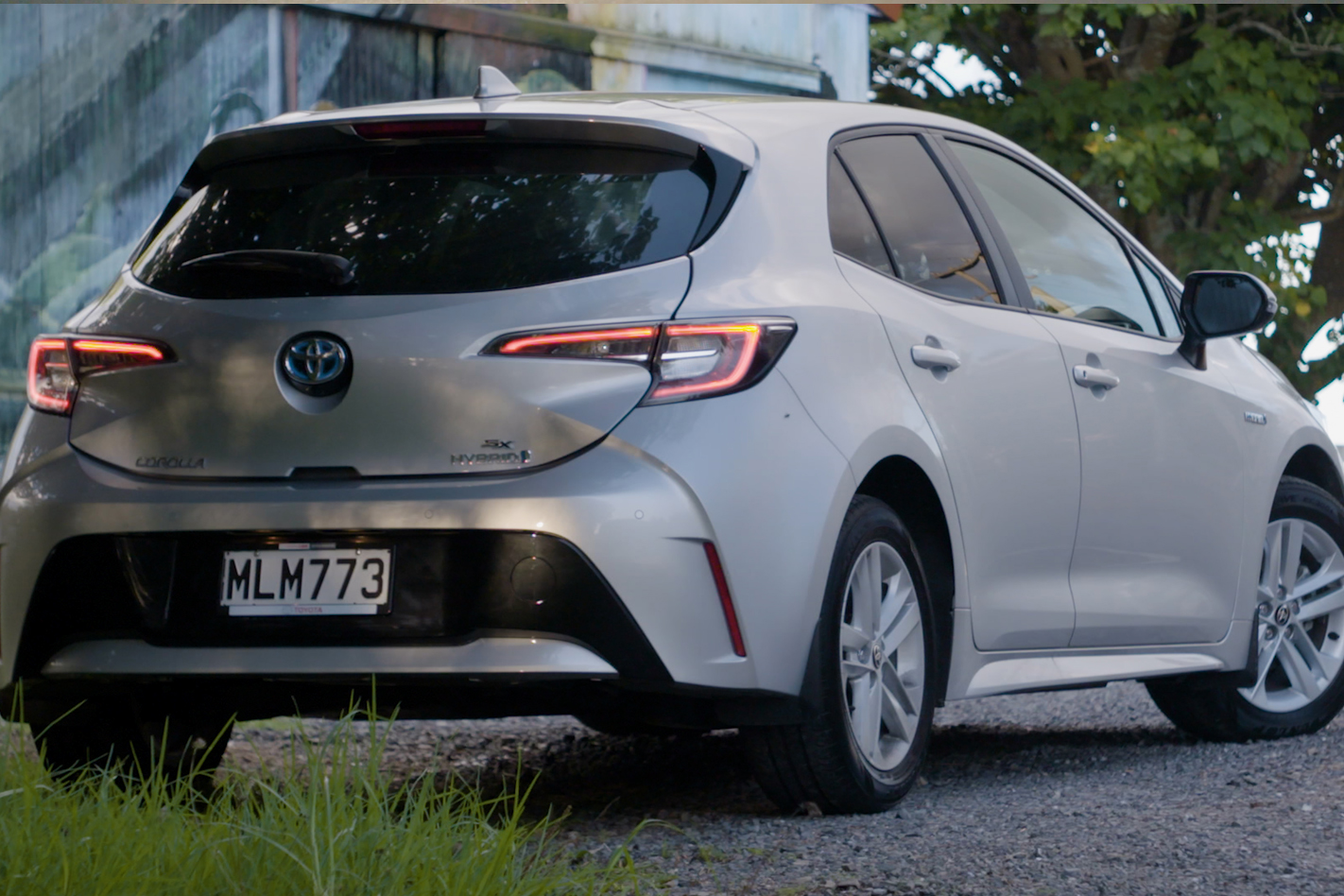
Measuring just 217 litres in volume, the Corolla’s luggage compartment is smaller than that belonging to the Kia Picanto micro hatch. Compared with others in its own small hatchback category, including the Volkswagen Golf (380L) and the Honda Civic (414L) the Toyota is a little inadequate.
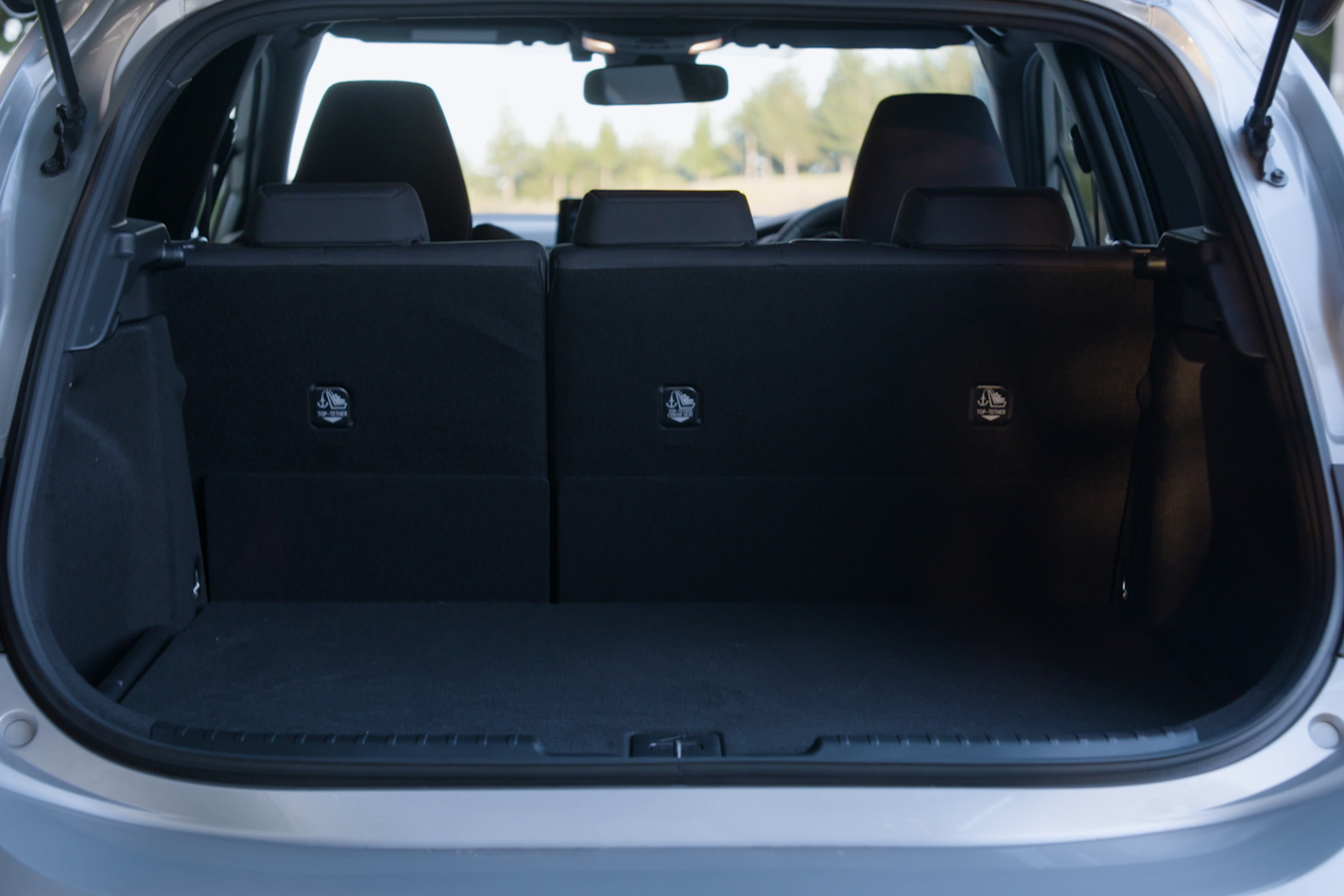
There’s also no lip on the edge of the boot when the hatch is opened, which allows things to fall out if they’ve moved in transit. Not great if you’ve picked up a couple of bottle of New Zealand’s finest pinot.
You can boost capacity to 333 litres and get a contents-retaining edge if you buy the range-topping ZR Hybrid, but then you’ll lose the laughably entitled ‘space saver’ wheel in favour of a puncture ‘mobility’ kit. You choose which is the lesser of two evils.
Beyond that, the Corolla was very much part of our team during a week touring the far north. It’s economy was proven through a wide range of driving styles and it hauled kit and people without complaint.
If you’re after a small hatch that works hard without shouting about it, the Corolla is certainly one to consider. If you’re after all that but loathe trips to the servo, the extra cash for the electrified version is definitely worth it. Speaking of which …
Is the Toyota Corolla SX Hybrid worth the money?
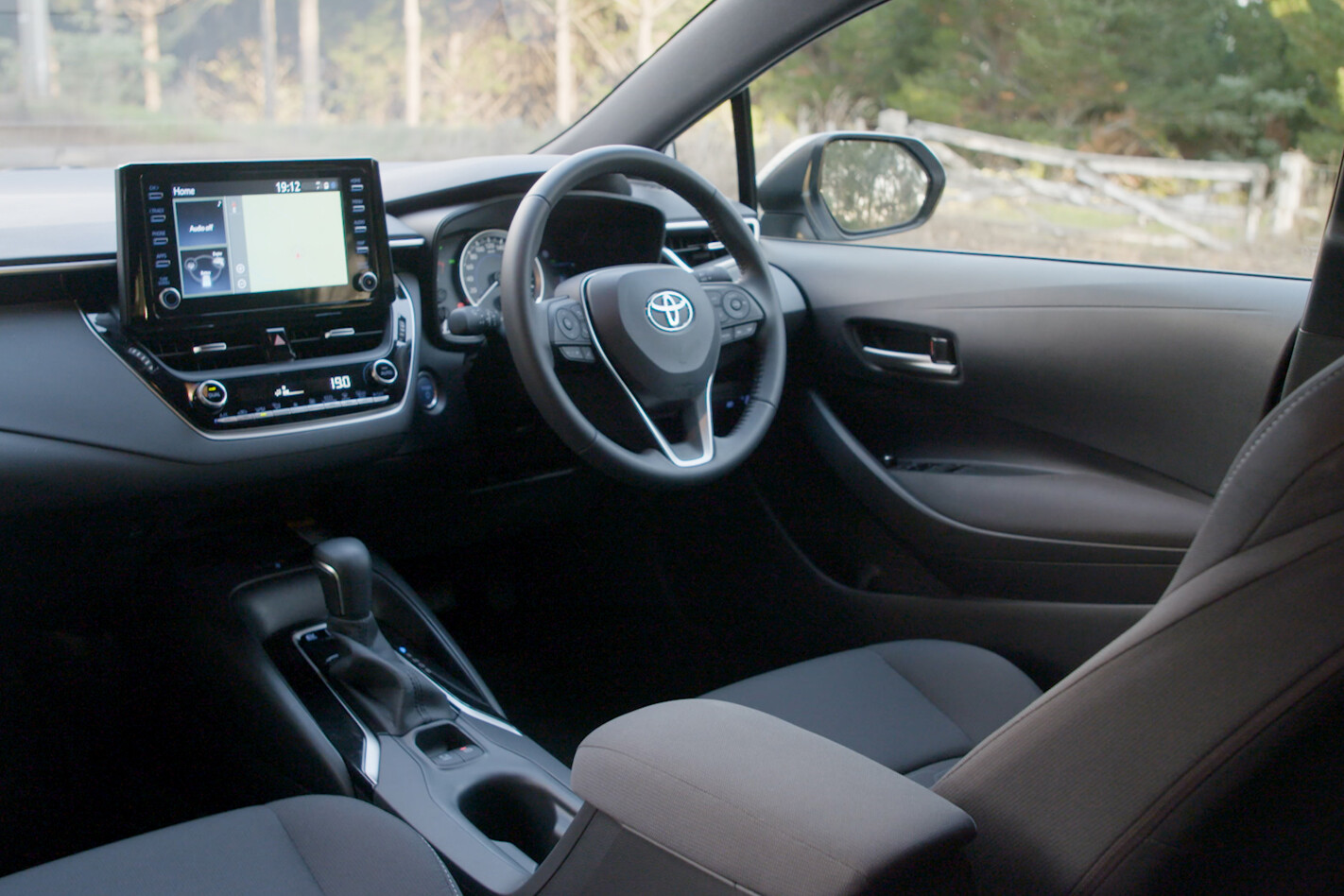
Viewed simplistically, a mid-range Japanese small hatchback priced at just under $30,000 is in line with other comparable offerings in the market. The Corolla SX is a typical example of a middle-of-the-road variant with a decent equipment list to remind you that you definitely didn’t jump in at the bargain basement end.
But that’s all before you consider its hybrid power party piece and that’s when the Corolla Hybrid’s value really starts to shine. As you might expect, a hybrid powertrain comes at a price premium but how much respective brands charge for that advantage varies significantly.
If you wanted to upgrade from a standard Honda Accord to the hybrid version, you’ll be charged an extra $2500. Fancy the hybrid version of the mid-range Nissan Pathfinder? That’ll be another $3000 on top. And if you upgrade to the electrified model of Lexus’ IS300 Sport Luxury you’ll be poorer to the tune of nearly $4000.
The Corolla? Adding the hybrid tech to any version including the least expensive Ascent Sport, the range-topping ZR or this SX, costs just $1500. That makes it the most affordable way to walk-up the range to a hybrid of any model line-up currently on sale.
In fact, the only models that can match that compelling price are also within Toyota’s ranks – both the Camry and C-HR cost the same to upgrade.
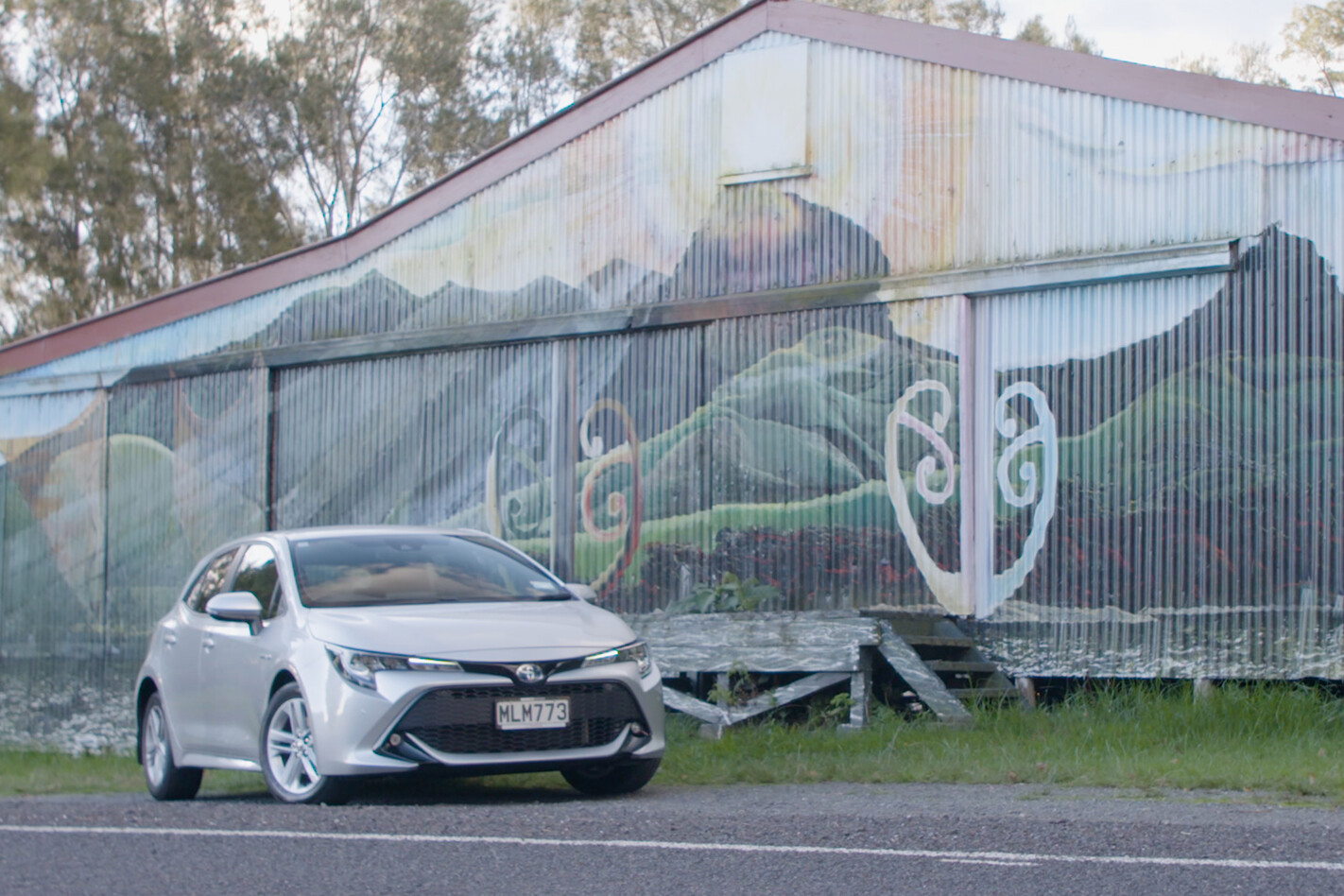
With all of this in mind, it’s fair to say the Corolla SX Hybrid is very good value. If the ‘standard’ Corolla package is appealing – and thousands of Australians think exactly that for good reason – the Hybrid adds a decent technological boost to economy and a little pep for the dynamics for nothing less than a bargain.
What stands out?
The seventh-generation Volkswagen Golf is an all-round convincing small hatchback and wagon, combining comfort with rewarding steering and handling. All versions, especially the GTI and R hot hatches perform strongly, and their turbocharged engines use very little fuel. Broadly effective auto braking is standard and options extend to a customisable digital instrument panel.This Golf ‘Mk7.5’ will soon be replaced by the eighth-generation model so look out for good deals.
What might bug me?
Driving at less than 80km/h on the space-saver spare, until you can fix your full-size flat tyre.Driving auto Golfs in stop-start traffic. The dual-clutch transmissions fitted to Golf automatics do not provide the fluid, elastic take-up from rest that you get from a traditional automatic gearbox or a CVT.If you’re after an all-wheel-drive Golf Alltrack wagon, perhaps the fact there is no longer the powerful yet economical diesel version.
What body styles are there?
Five-door hatchback, and five-door wagon.The wagon body is about 300mm longer than the hatchback body. Most of the extra length is in the boot, but you get a wee bit more space in the cabin too – and there is an extra 15mm between the front and rear axles.The Golf 110TSI and GTI models are front wheel drive, while the 132TSI Alltrack high-riding wagon and Golf R hot hatch and wagon drive all four wheels.Golfs are classed as small cars, lower priced.
What features do all Volkswagen Golfs have?
A sound system with an AM/FM radio, inputs via Aux, USB and SD card, Bluetooth connectivity for phone calls and audio streaming, and eight speakers, controllable from an 8.0-inch colour touchscreen.Support for Apple CarPlay and Android Auto, which work with Apple and Android phones. If you plug your phone in through the USB socket, many of its apps – including mapping and music – are mirrored on the touchscreen display and can be controlled from there.Cruise control, with a speed limiter (you can set an upper limit, to help avoid speeding fines).City-speed autonomous emergency braking with pedestrian detection, multi-collision brake that ensures the Golf doesn’t move after a collision, and front and rear manoeuvre braking that stops the Golf at very low speeds – this is great for preventing you hitting a hidden object while parking.Driver fatigue alertHeight and reach adjustment for the leather-wrapped steering wheel, from which you can operate the audio system, your phone, a driver-information display on the instrument panel, and the cruise control. Height adjustment for both front seats, and driver’s seat lumbar adjustmentA reversing camera, with guidelines, and front- and rear-parking sensors.Wheels made from aluminium alloy (which are lighter than steel wheels, and look good without plastic trim discs). Anti-theft wheel bolts, and a space-saver spare wheel with speed and distance restrictions.Tyre pressure sensors. These tell you when a tyre has lost pressure, so that you can stop driving on it and have it repaired before it goes flat.Daytime running lights that are illuminated by very long-lasting LEDs, and LED tail-lights.Heated and power-adjustable external mirrors.Rain-sensing windscreen wipers, dusk-sensing headlights, and auto-dimming rear-view mirror.Seven airbags. Electronic stability control, which can help you recover from a skid. (For the placement of airbags, and more on Golf safety features, please open the Safety section below.)All Golfs are warrantied for five years, with no limit on kilometres travelled over that period.
Which engine uses least fuel, and why wouldn’t I choose it?
There are four turbocharged-petrol engines available in a Golf, ranging from the economical 1.4-litre 110TSI, through to the Alltrack’s 1.8-litre 132TSI and the powerful 2.0-litre engines in the Golf GTI and Golf R hot hatches.With diesel engines no longer available, the 110TSI is the most economical, consuming as little as 5.4 litres/100km with the seven-speed DSG (dual-clutch) automatic transmission in the official test (city and country combined).This is the only engine available in the standard Golf hatchback or wagon variants and is available with a six-speed manual gearbox or DSG (dual-clutch) automatic transmission. The manual hatch consumes 5.7 litres/100km while the heavier automatic wagon drinks 5.6 litres/100km.One reason you would not choose the 110TSI is because you want the more rugged Golf Alltrack Wagon, which has the powerful 132kW 132TSI engine that comes standard with a six-speed DSG automatic that drives all four wheels and returns about 6.8 litres/100km on the test.Another reason is if you prefer one of the high-performance Golf variants including the legendary Golf GTI whose 2.0-litre engine sends 180kW/370Nm to the front wheels via a sportier seven speed DSG auto. This consumes about 6.5 litres/100km on the official test, though expect that number to rise when driving the GTI in the spirit it’s intended.The most powerful engine in the Golf range is the 213kW/380Nm 2.0-litre in the Golf R flagship that brings all-wheel-drive traction via a seven-speed DSG. It’s available in hatch or wagon versions that consume 7.2 and 7.3 litres/100km respectively.As well as being the most affordable Golf, the 110TSI Trendline manual is a very enjoyable car to drive, with sporty, short-shifting gearbox that makes it a good budget alternative to the GTI.The DSG automatic transmissions offered with all other Golfs operate more like a computer-controlled manual gearbox than like a traditional automatic. That fluid, elastic feeling with which a traditional auto moves off from a standstill is missing, replaced by a power take-up that can feel more abrupt – especially if you need to lift off and reapply power at low speeds.Once on the move however, DSG shifting is exceptionally smooth and fast – and the design is very fuel-efficient.(Power outputs and all other Golf specifications are available from the Cars Covered menu, under the main image on this page.)
What key features do I get if I spend more?
The least costly Golf, the 110TSI Trendline, has cloth-covered seats, manually controlled air-conditioning, 17-inch alloy wheels, the petrol engine, and the features found in every Golf. The manual gearbox is standard, with the auto an extra-cost option.The 110TSI Trendline wagon comes only with the automatic gearbox and adds roof rails and a luggage partition net.Spend more again on a 110TSI Comfortline hatch or wagon and you get more appealing cloth trim on the seats, and various cosmetic touches inside that lift the feel of the cabin. There is satellite navigation, which responds to voice commands. Dual-zone climate control maintains independent ventilation temperatures for the driver and front passenger. Auto transmission is standard (and the only option).Optional on all automatic Trendline all Comfortline Golfs is a $1500 Driver Assistance Package that brings several active driver aids including adaptive cruise control, which will slow you automatically to match the speed of a car ahead on the highway – resuming your preset speed when the way is clear. You also get lane-keeping assistance, a blind-spot monitor, and a rear cross-traffic alert, and park assist, that will automatically steer your Golf into a parking spot, among other features.If you want more luxury, you can pay still more for a Golf 110TSI Highline hatch or wagon, which brings you Vienna leather trim in the cabin, comfort sports seats with improved hip bolstering, heated and power-adjustable front seats, and a memory for the driver’s seat and exterior mirrors (which makes it easy to restore your adjustments after a companion has driven the car).You can unlock your Golf Highline and drive away without removing its proximity key from your pocket or bag. Headlights use very bright and long-lasting LEDs, and there are front fog-lamps for extra light when needed. A powered glass sunroof can help you enjoy the car on fine days.The Highline also includes the active safety features found in the Driver Assistance package including adaptive cruise control and park assist.The Golf Alltrack wagon brings the more powerful 132TSI engine and ‘4Motion’ all-wheel drive. It comes with features found in the Comfortline plus front fog-lights, LED ambient interior lighting, and power-folding exterior mirrors. You can also add the Driver Assistance Package to the Alltrack for about $1200.The Alltrack Premium comes with Driver Assistance package and the luxury items found in the Highline including Vienna leather trim, heated front seats, electrically adjustable driver’s seat with memory function, and exterior mirrors with memory function. It also has LED headlights.The Golf GTI comes with the more powerful 2.0-litre engine, seven-speed DSG auto and Driver Assiatance Package as standard, and most of the features found in the Comfortline spec. Extras include iconic Clark tartan sport cloth seats, GTI body styling, 18-inch alloy wheels, and performance features including front and rear ventilated disc brakes, adaptive chassis control, and gearshift paddles.The Golf R hatch and wagon bring more power and luxury over the GTI hatchback with the more powerful 2.0-litre engine, and the same interior trim and comfort levels as the Golf Highline. You also gain a 9.2-inch infotainment system and digital gauge cluster, LED headlights that point into corners, automatic high-beams, R body styling, 19-inch alloy wheels, tinted windows, metallic or pearl paint as standard.Option packagesAs well as the Driver Assistance package there are several ways to add more features to your Golf.These include the Sound and Vision Package for the Comfortline, Highline and Alltrack Golfs ($2300) which expands the central touchscreen to 9.2 inches (with control by gesture available), and supplies a more powerful sound system with bass-boosting sub-woofer. It replaces the conventional dashboard gauges with a digital display, which permits you to emphasise the information you need most, and customise its presentation.An R-Line Package, available only to Golf Highline customers for about $2500, and brings fancier 18-inch wheels, firmer suspension, progressive speed-sensitive steering, tinted windows, and sportier aesthetics inside and out.For about $2500 you can add Sport Luxury Package to the Alltrack Premium that adds 18-inch alloy wheels, steering wheel mounted gearshift paddles, panoramic electric glass sunroof and tinted windows.The Golf GTI Sound and Style package costs about $2300 and brings 19-inch alloy wheels, 9.2-inch touchscreen with satellite navigation and the premium sound system.There is also a Luxury Package for the GTI that for about $3900 adds Vienna leather appointed upholstery, heated front seats, power-operated drivers seat and exterior mirrors each with memory function, and panoramic sunroof.The Golf R has most of the above features as standard, though you can add the premium sound system ($1000) and/or panoramic sunroof ($1900) separately.
Does any upgrade have a down side?
The 18-inch wheels that come with the extra-cost R-Line package look great, but their lower profile tyres give a rougher ride, and they may cost more to replace.The only standard colour is white. All others are extra-cost options.
How comfortable is the Volkswagen Golf?
In many areas the Golf is the best small hatch for the money, and those areas include interior quality and equipment. Even the least costly version makes a good impression, with an ergonomically excellent steering wheel wrapped in leather, comfortable cloth seats, and classy cabin design.The Golf’s driving position does not follow the typical small hatch pattern of favouring those with short legs and long arms, and the front compartment offers a comfortable place for driver and passenger alike. Second-row comfort and space, while not quite as generous as in some other small cars, are enough to keep most adults happy.About town, the Golf is a breeze to drive with smooth, light steering and a good view of surroundings from the driver’s seat. Cabin noise levels are about the same as in many other small cars. Engine noise is low, which helps you relax in the cabin when cruising.This also applies to the Golf GTI and R versions that can dial back their aggression to offer comfortable and sedate daily drive through town, even on their firmer suspension and low profile tyres.Opt for the Infotainment Package and the bigger 9.2-inch touchscreen looks luxurious and is easier to use than the standard 8.0-inch unit. It is complemented by a 12-inch digital instrument cluster, the Active Info Display, which can also show navigation instructions – so that you don’t have to look across to the touchscreen.
What about safety in a Golf?
Every Golf comes with anti-lock brakes, stability control, seven airbags, tyre pressure monitors, a reversing camera, LED daytime running lights, auto emergency braking, and a driver fatigue monitor.That is a first-class package for a popular small car, enhancing safety on many fronts.The airbags are in the usual places: two directly in front of the driver and passenger; a third protecting the driver’s knees; an airbag outside each front occupant at chest level to protect from side impacts; and a curtain airbag extending down each side of the car at head level, protecting front and rear occupants from side impacts.The standard auto-braking on a Golf operates at city and highway speeds, Volkswagen says. The radar-based system scans the road ahead for obstacles, warns you of potential collisions, and can apply the brakes automatically if it concludes a collision is imminent.Called Front Assist and City Emergency Brake, the auto-braking works in two stages. At speeds under 30km/h, it will initiate a full emergency stop should you ignore its collision warning. At higher speeds it will follow audible and visible warnings with a jolt from the brakes – implying it is time you started braking yourself. Should you ignore that, it will brake automatically with the aim of quickly reducing your speed.The standard fatigue alert assesses your work on the steering wheel, warning you if you show signs of falling asleep.To most Golfs you can add at extra cost a Driver Assistance Package that gets you Adaptive cruise control and three more sensor-based driver aids: lane-keeping assistance, a blind-spot monitor, and a rear cross-traffic alert.Lane Assist uses a camera-type sensor to check your position on the highway in relation to road markings. If it concludes you are about to drift into an adjacent lane, it will attempt to gently steer you out of trouble – also vibrating the steering wheel to wake you up if required. The point is to help you keep your mind on the job of driving, reducing the risk from distraction or fatigue.The blind-spot monitor and rear cross-traffic alert look rearward. The former effectively extends the range of your mirrors, helping you keep track of traffic near your rear corners. The latter is helpful when you are attempting to reverse blindly from a car-park: it warns you if another vehicle is heading your way from the side.The Australasian New Car Assessment Program (ANCAP) has awarded the Golf its maximum safety score of five stars, most recently in July 2017.
I like driving – will I enjoy this car?
For the enthusiastic driver, the Golf offers one of the most rewarding chassis and suspension set-ups available in a popular small car. Steering is precise and communicative, and roadholding inspires confidence – thanks largely to a well-designed, independent, rear suspension. Body-roll is minimal.Both the 110TSI and 132TSI engines are very drivable with their good if not outstanding ability to gather speed balanced by their lively dynamics. The dual clutch automatic gearbox does take a bit of time to really get to know it – after all, it’s still a manual at heart, and as such will behave as such when it comes to pausing and taking off at traffic lights. It’s easily manageable after some experience, though.There are more powerful small cars available, but if it’s performance you’re after you can upgrade to the sporty GTI or R versions.On the road the Golf GTI immediately feels right. All the controls feel exactly as you’d expect them to. It’s a very entertaining drive, with accurate steering, strong brakes and a pleasing level of adjustability in the chassis. It can be driven very hard with confidence.The Golf R ups the ante with additional power and the all-wheel-traction that helps further inspire confidence and improve handling on wet roads or gravelly roads.At the other end of the scale, the Golf Alltrack’s 4Motion all-wheel-drive has surprisingly capable off-road manners and ability that far outstrips some high-riding SUVs. You can negotiate varied road surfaces via the Driving Profile Selector with hill-descent control helping you with braking down steep and slippery slopes.It’s let down a little by its sporty wheels which seem out of place off road and also add to road-noise. Smaller diameter wheels with chunkier tyres would be an improvement.All Golf versions are satisfying to live with day to day. You can appreciate the fine styling and general quality even when it they’re parked on the driveway.
How is life in the rear seats?
Some other small hatchbacks and wagons offer more room in the back, but the Golf here remains pleasant and practical and has enough headroom and leg room for adults.Wide-opening doors make life easier for loading kids and cargo.Isofix child seat anchors are provided, as well as conventional seatbelts for up to three rear passengers.Some hatchbacks inhibit vision out for children with a rising window-line. The Golf in contrast offers a decent side-view, which will keep kids happier on long drives, without compromising the generally appealing exterior look.
How is it for carrying stuff?
Golf hatchbacks offer 380 litres of cargo space behind the rear seats, which is quite a lot for a car of this type. Fold the 60-40 split seats and quoted capacity rises to 1270 litres.The longer wagon lets you squeeze in a lot more, with a 605-litre boot that expands to 1620 litres.There are hooks in the boot for tying down your load. The boot floor height can be adjusted: the taller setting eases unloading, while the lower lets you get more stuff in.Golfs can legally tow a braked trailer weighing up to 1500kg, and diesels 1600kg. All Golf wagons also come with factory-fitted roof bars, which make it easy to add roof racks or storage pods.
Where does Volkswagen make the Golf?
All Golf 7.5s sold in Australia are made in Germany.
What might I miss that similar cars have?
Not much. The Golf is well specified for a car at its price level and covers most bases from affordable hatchback to all-wheel-drive wagons and hot hatches.One thing the Golf range does lack is a sedan as found with the Kia Cerato, Honda Civic, Toyota Corolla, Mazda 3, Subaru Impreza, Hyundai Elantra and Skoda Octavia.Maybe a manual gearbox in the hot hatch versions, as available in a Hyundai i30 N, Honda Civic Type R, Peugeot 308 GTi, Renault Megane RS, and Subaru WRX STi.The Ford Focus is another direct rival to the Golf that features hatch and wagon versions.
I like this car, but I can’t choose which version. Can you help?
It’s hard to go wrong with any Golf – at either end of the price range, or in the middle.The more affordable Golf 110TSI Trendline is a tidy package and you can have a manual gearbox or (at extra cost) auto. We’d suggest spending the extra $1500 on the Driver Assistance Package.That said, at the other end of the price range a Golf Highline is also very appealing. And even if you add to it the R-Line and Infotainment packs, you’ll pay about as much as you would spend for the cheapest Audi A3.Of the performance versions, it’s hard to go past the GTI that has all the equipment you need and still offers a pure driving experience even without the manual gearbox.
Are there plans to update the Golf soon?
Yes. The current Golf, which Volkswagen calls the Golf 7.5, arrived in July 2017. It is a facelifted Golf 7, with a revised (and reduced) range of engines, bigger touchscreens, and extended options and driver aids.The Golf 7 (denoting the seventh generation) first went on sale in 2013. An update that arrived in the third quarter of 2015 brought slightly more power to the 1.4-litre petrol engines, with matching changes to the model names: the 90TSI gained 2kW and became the 92TSI, while the 103TSI gained 7kW and was renamed the 110TSI. That update also equipped the Golfs with new touchscreens, better multimedia features (including Apple CarPlay and Android Auto), and more equipment on some models.The updated Golf GTI and Golf R versions about the middle of August 2017.The 110TDI and 135TDI diesel engines were dropped from the range in August 2018.Volkswagen’s eighth-generation 2020 Golf Mk8 was unveiled in Germany in October 2019 and is expected to arrive in Australia in the middle of 2020 with a GTI version, with the all new Golf R expected several months later.
With the end of production for Ford and Holden now firmly in history, so too is our beloved ute.
Okay, you can buy myriad variations of dual-cab utes, and the Yank invasion full of converted pick-ups is gathering a heady steam, but none of them really tick the car-based formula we’re used to.
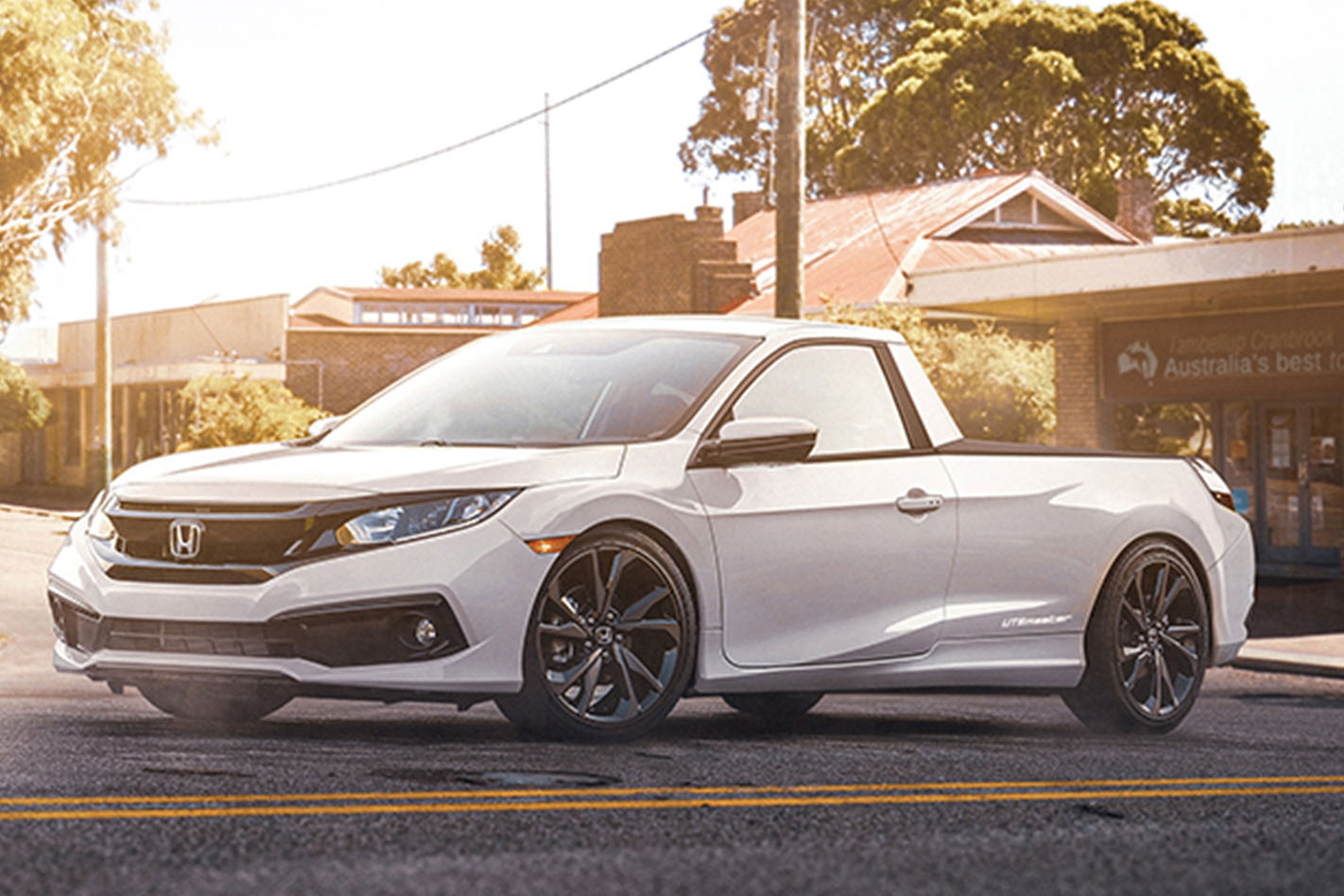
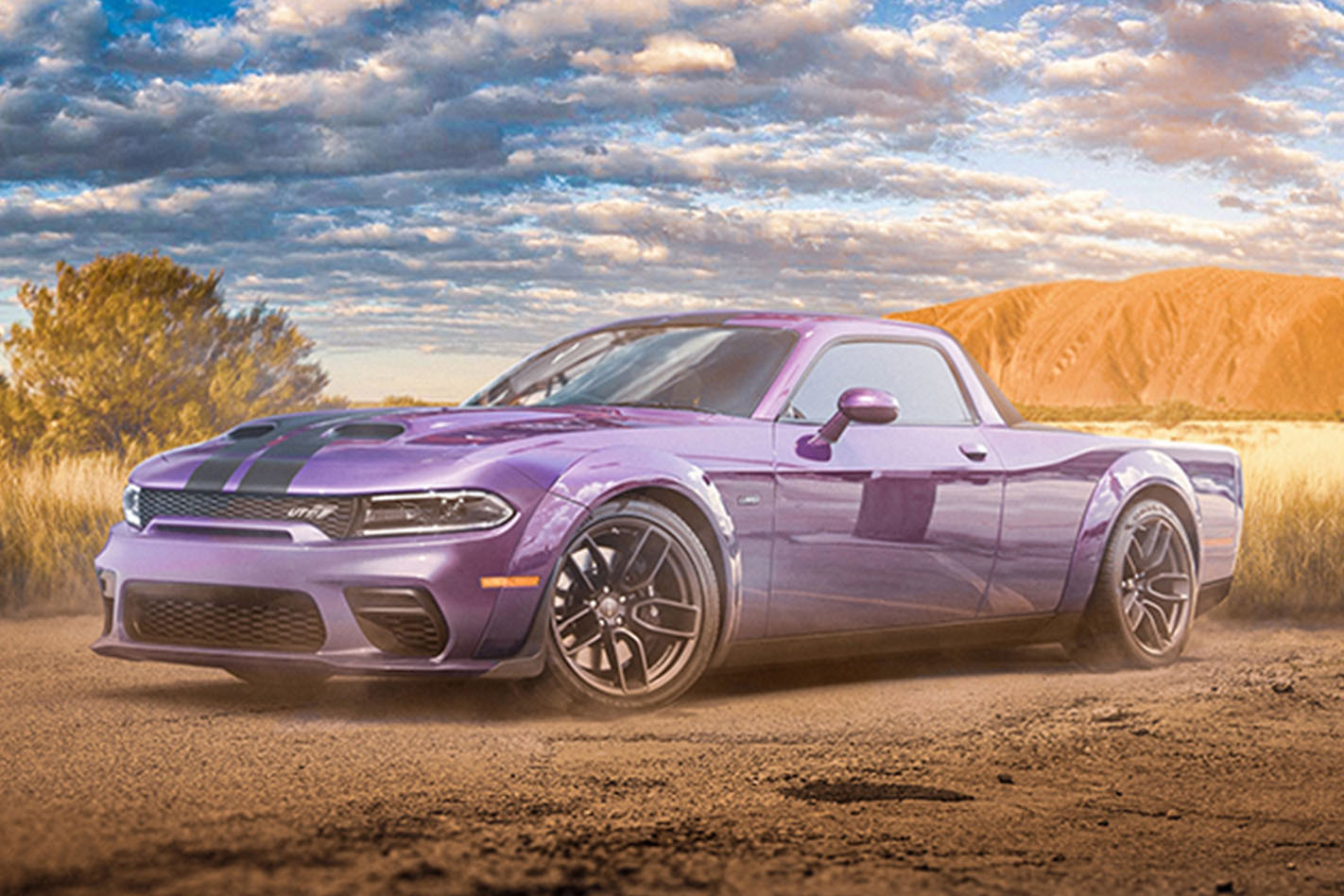
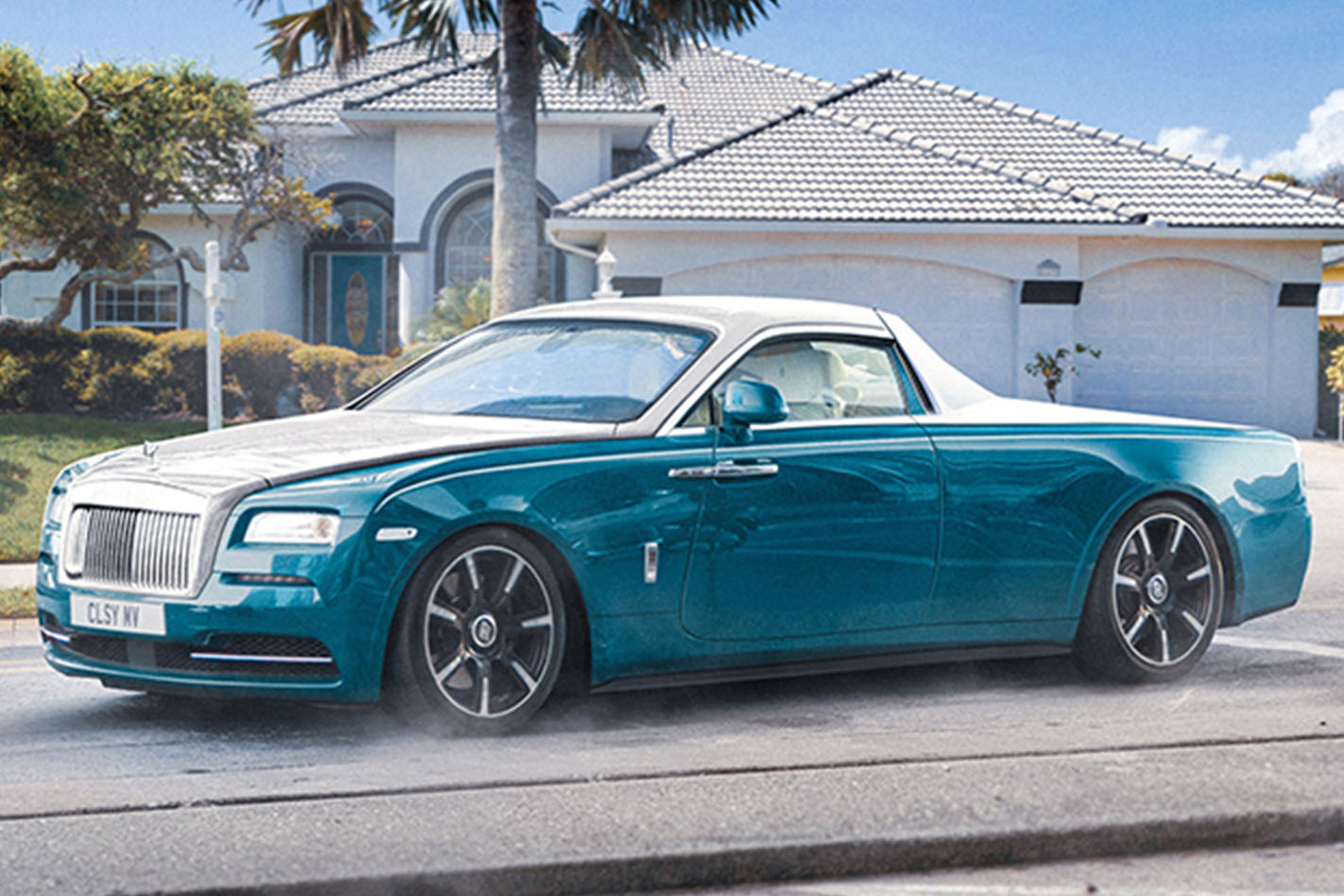
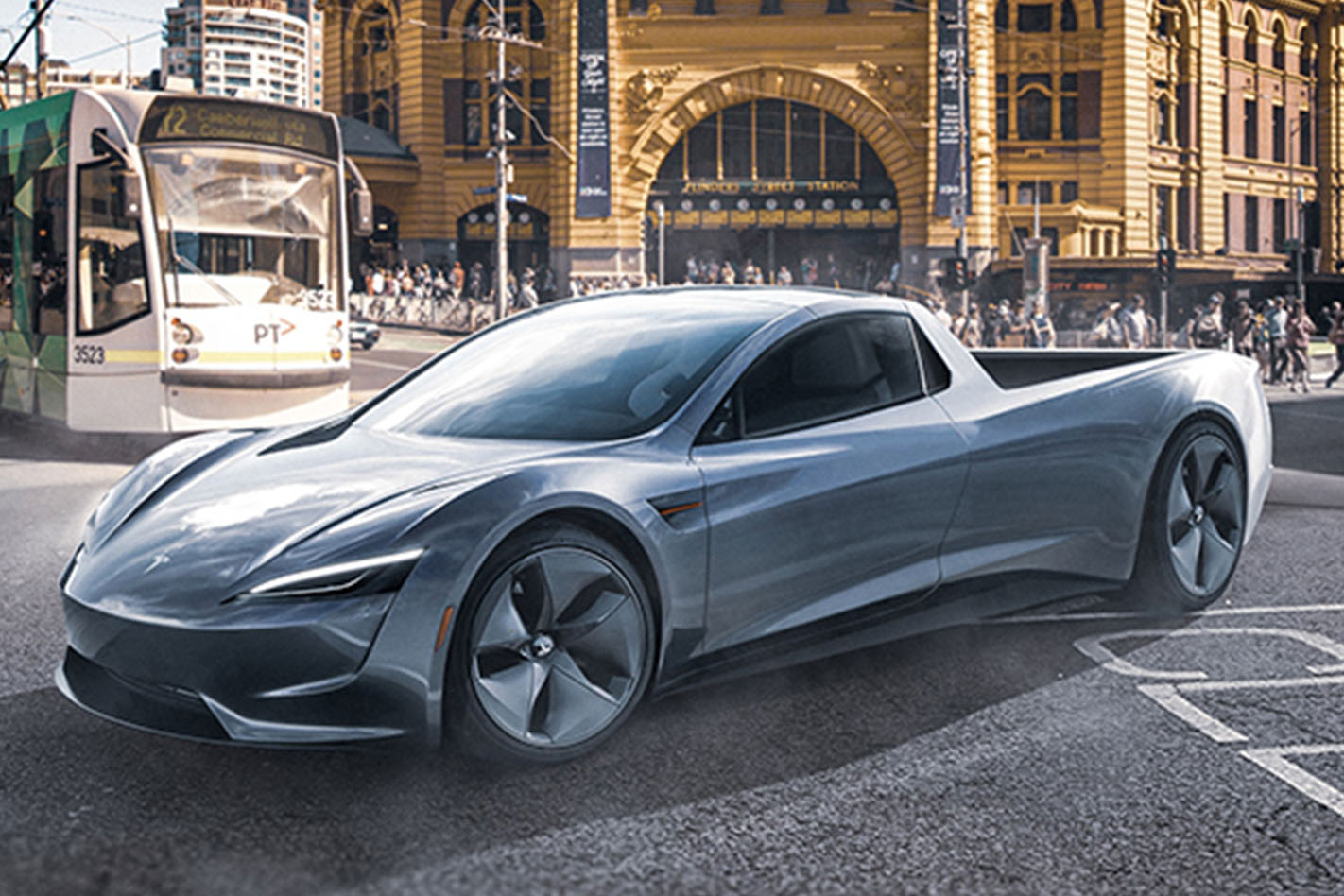
But what if there was a way to create your dream ute from an existing model? The team at Budget Direct Car Insurance have put together some computer-generated images so at least you don’t have to wonder what they might look like.
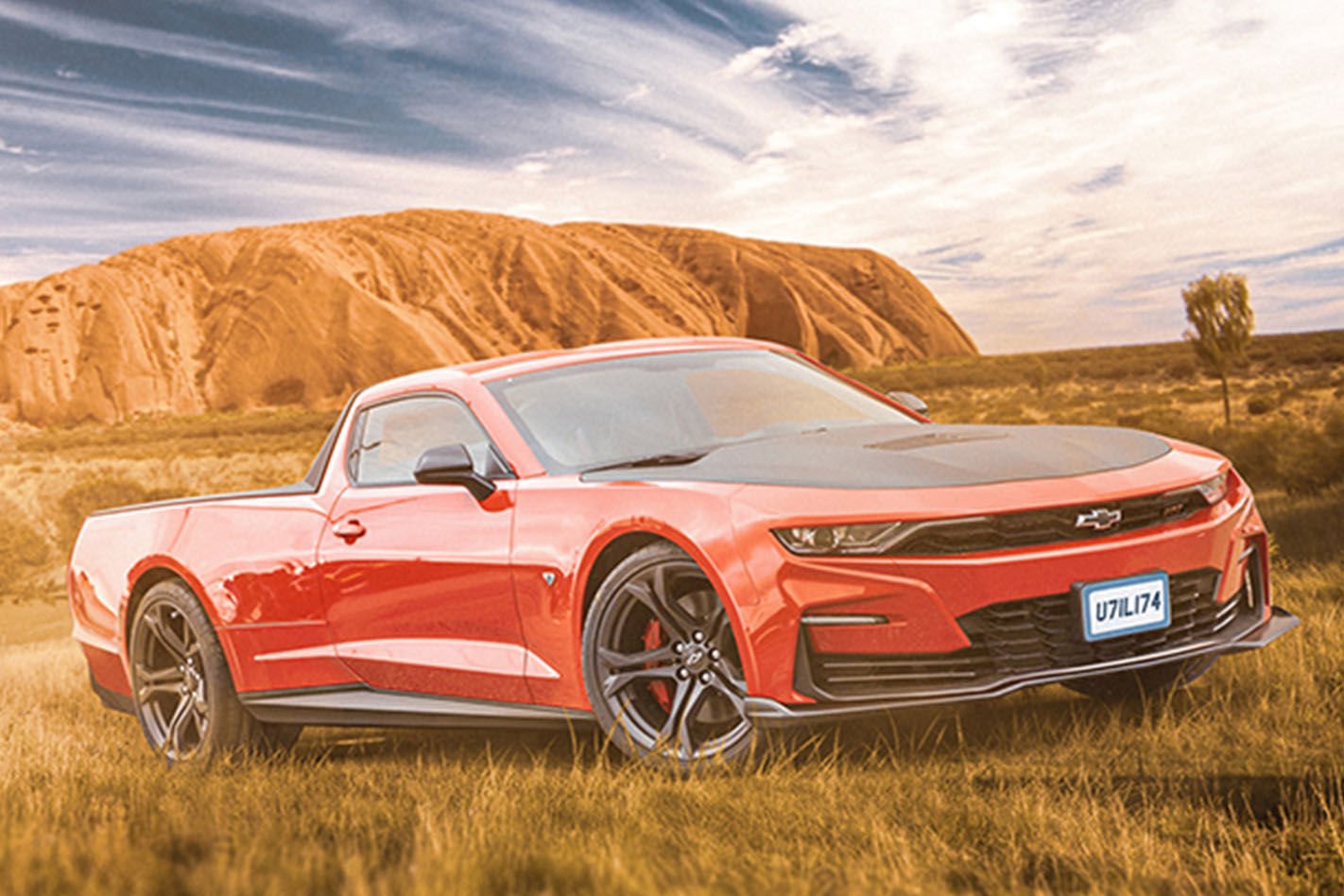
CHEVROLET
For those who crave anything from the SS Ute to the HSV Maloo and W1 utes, then a V8-powered, Camaro-based ute has to be a winner. After all, with its more sophisticated rear end (compared to the leaf-sprung Falcon), the Commodore ute was already branded somewhat of a two-door sports coupe.
Now, of course, we’re going to want the big-boy supercharged V8 found in the ZL1 for our Camaro-based super ute. With 477kW/881Nm and the choice of a six-speed manual or 10-speed auto, it’d sure be a valid replacement for your home-grown icons. However, even the atmo 2SS’s 339kW/617Nm would more than suffice. Obviously you could do the same with Ford’s Mustang if the Blue Oval is more your cup of tea.
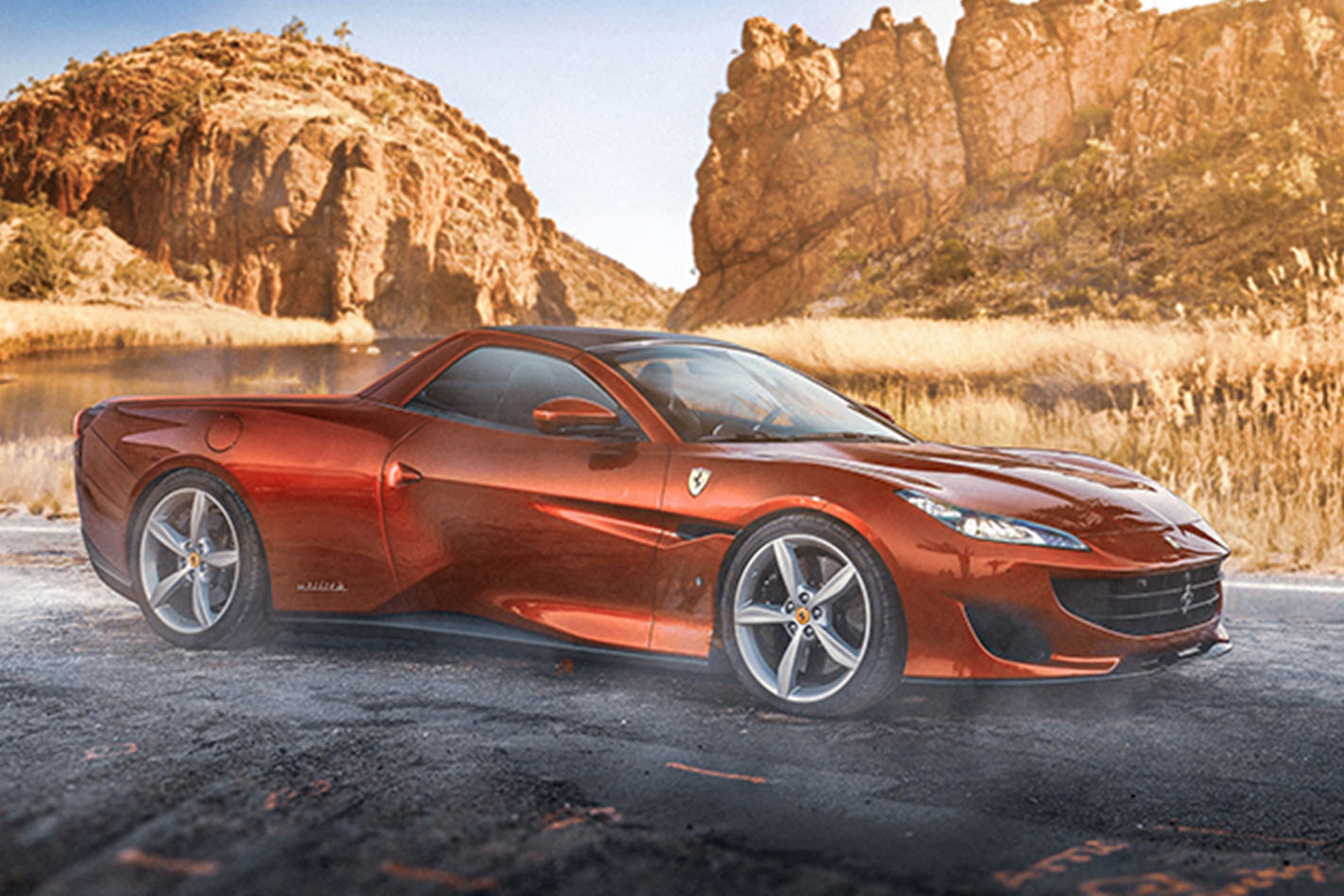
FERRARI
It’s not the first company you think of when dreaming up a ute, is it? Think it’s sacrilege? The company is already planning to release an SUV, the Purosangue. The famed Italian marque’s ‘entry-level’ Portofino offers the most ideal base given its front-engine, rear-drive layout. And what an engine the 3.9-litre twin-turbo V8 is, packing 441kW/760Nm. Should have no issues drifting, then…
Plus, with its rapid-fire seven-speed dual-clutch gearbox, you can feel like four-time world champion Sebastian Vettel with the column-mounted shift paddles. The hardtop folding roof would, sadly, have to go, but a big glass sunroof could be fitted so buyers didn’t miss out on fun in the sun. A Ferrari heart, luxurious cabin and a handy tray to boot – what’s not to like?
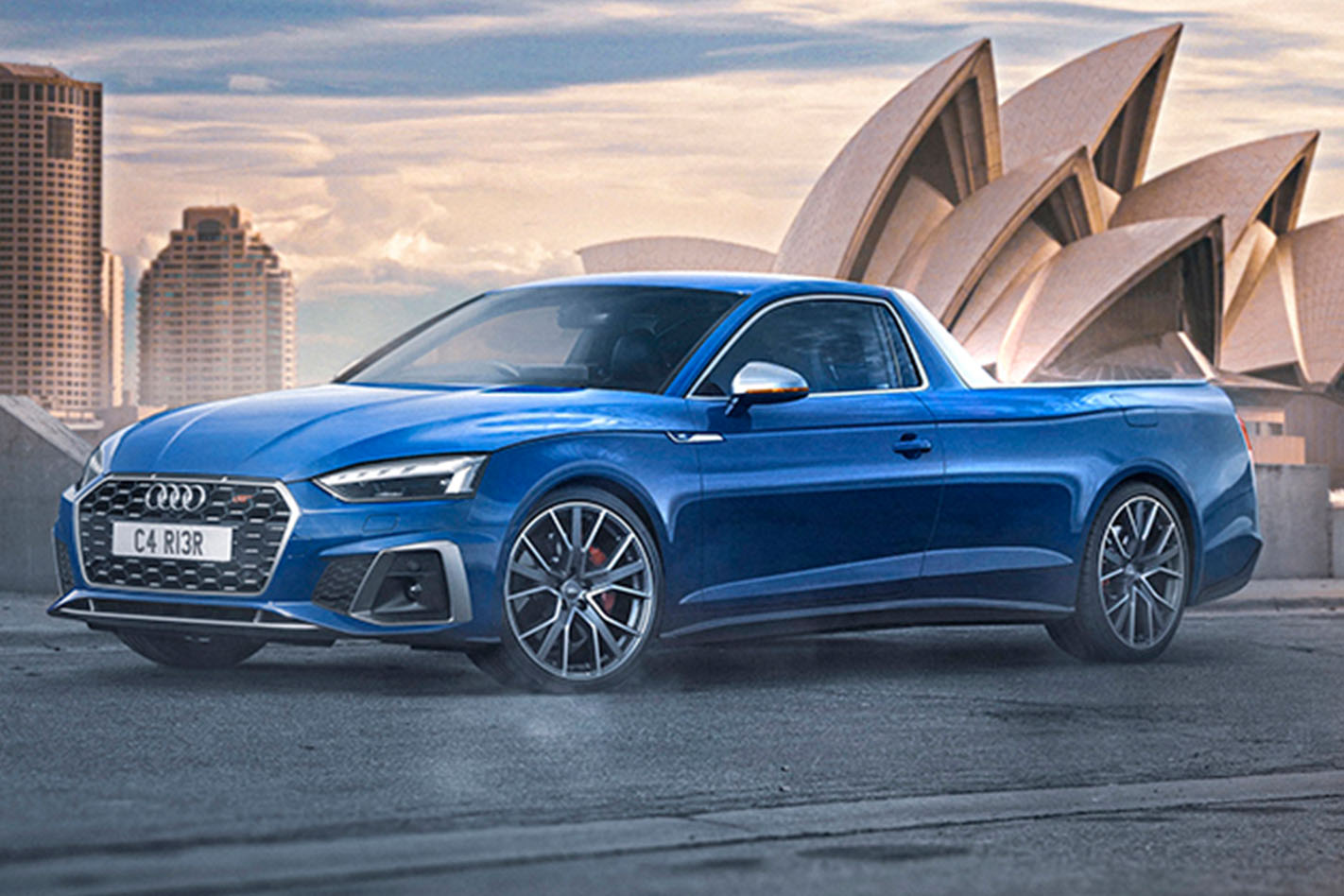
AUDI
A quattro all-wheel-drive ute with a 331kW/600Nm twin-turbo V6 sounds very tempting – especially when the RS4 donor car can reach 100km/h in just 4.1 seconds. And it can be optioned with tricky rear diff to get the back end more mobile, if not outright drifts. It sounds mean, too, with deep overrun histrionics matched an enticing growl to redline.
You’d also be getting a thoroughly luxurious cabin, something the Aussie offering never quite got to, with an Alcantara-wrapped Audi Sport steering wheel and the delights of Virtual Cockpit. Plus, due to the RS4 Avant’s (wagon) bodystyle, there’d be a decent-sized tray in the back to cope with all your load-hauling needs. If the RS4 is slated as all the car you could ever need, a ute version wouldn’t be far off that, either.
HONDA
As one of the greatest front-wheel-drive hot hatches of all time, the Honda Civic Type R forms an interesting basis for a performance-orientated ute. At 4557mm long, it’s not exactly a small vehicle, so thoughts of a Proton Jumbuck with more grunt should be discarded; especially with the Type R’s 228kW/400Nm 2.0-litre four-cylinder turbo under the bonnet.
It’s safe to say that the Civic gains a bad wrap for its exterior design, so without the oversized rear wing, the silhouette changes markedly. With less downforce it wouldn’t be as much of a corner carver as the hatch but it’d retain the superb bucket seats as well as the sweet-shifting six-speed manual and logic-defying mechanical LSD. It’d be the track-day ute where you can bring all your spares in the one car.
DODGE
Much like the Camaro, the Challenger Hellcat ute’s existence would primarily be to service the market left dry by the axing of our metal. Just whack the Charger face on for more aesthetic appeal and keep the supercharged Hemi V8 with 535kW and 889Nm. Sounds like a lot of fun.
Retaining the widebody look and long tray is essential to getting the mean proportions right, while the bonnet scoops and big wheels add even more visual menace. Combine that with a supercharger whine and an angry V8 soundtrack … it’s a winner.
ROLLS-ROYCE
If you’re entering into fantasy land, you might as well go the whole hog. And that’s a Rolls-Royce Wraith ute. Hey, if the staid British marque can venture off-road into the world of SUVs with the Cullinan, why can’t it make a seriously cool ute with the already two-door Wraith? Plus, have you ever seen suicide doors on a ute before (that wasn’t a show car)?
It’s perfect to grab all your lockdown essentials like that expensive coffee machine, Hermes luggage or pony for the kids. Oh, and the diamond-encrusted roof would definitely have to remain on the options list. The 6.6-litre twin-turbo V12 would also have to stay, sending all its 465kW/870Nm (Black Badge) grunt to the rear wheels alone. Posh bogans eat your heart out.
TESLA
With the flexible electric floorplan, all Teslas should be ripe for some crazy conversions. So forget the polarising Cybertruck (which is also a fairly unrealistic concept) and imagine what it’d be like if Tesla created a sleek ute based on the upcoming Roadster v2.0. Its tray space might be limited, but it sure would be fast.
The original Roadster put Tesla on the map, but few remember it today. However, with a 0-100km/h time of reportedly 2.0 seconds or less, v2.0 is going to cause shockwaves. And as a ute it’d be very cool – you’d just have to make sure you tie down the contents of the tub very, very securely.
RENAULT
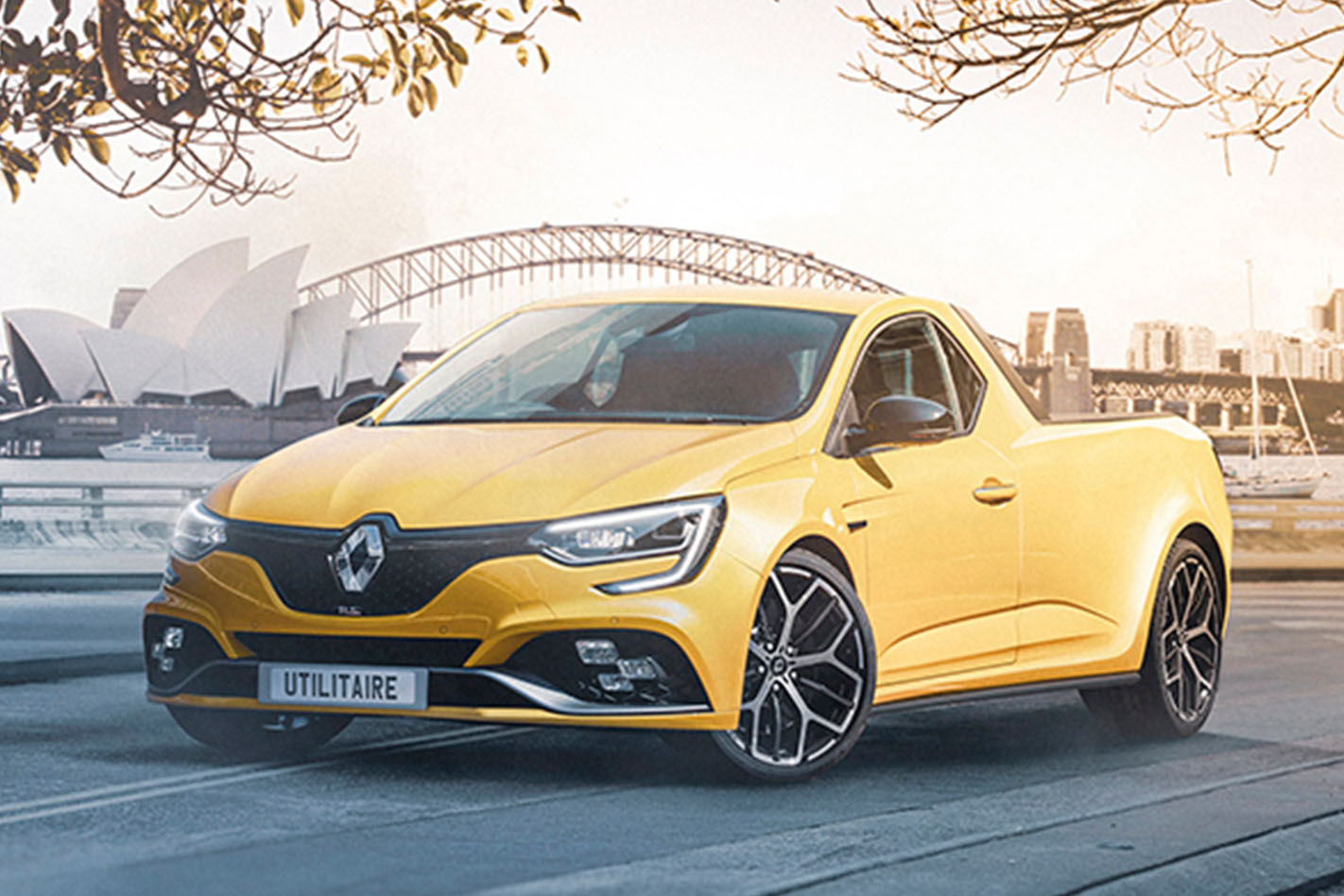
Judging by the French maker’s long tradition of making fun, engaging and fast hot hatches, a ute based on the current Megane Trophy-R would be an interesting proposition – roll cage and all. It already has its rear seats stripped out and the steering of the back axle deleted, so now all it needs is two doors lopped off and you’ve got a cool ute alternative.
It’s front-wheel drive only and comes with a six-speed manual gearbox and track-focused rubber. In other words, it’s the hay hauler that can shuffle around a track at a great rate of knots. A stumbling block for most would be price, given that the 221kW/400Nm 1.8-litre four-cylinder turbo hot hatch already comes in at $74,990. Ouch.
Of course, none of these utes are actually being built, but sometimes it’s fun to imagine what could be if budgets and volume sales didn’t matter. What’s your dream ute build?
Last time Aston Martin built its own engine, it was the 1960s. Tadek Marek was the man of the hour, having designed the Aston Martin V8 that would reign in the brand’s sports cars from the DBS V8 until the Virage of the 1990s.
Given the incredibly long lifespan of Marek’s V8 design, albeit tweaked along the way, it wouldn’t be unreasonable to expect another engine developed entirely by Aston Martin to last for quite some time, even if not across four decades. The rate of progress hasn’t exactly slowed.
The next big thing for Aston Martin’s powertrains might be already here in that case. And it’s not a V8. Or a V12. Aston Martin has built a V6.
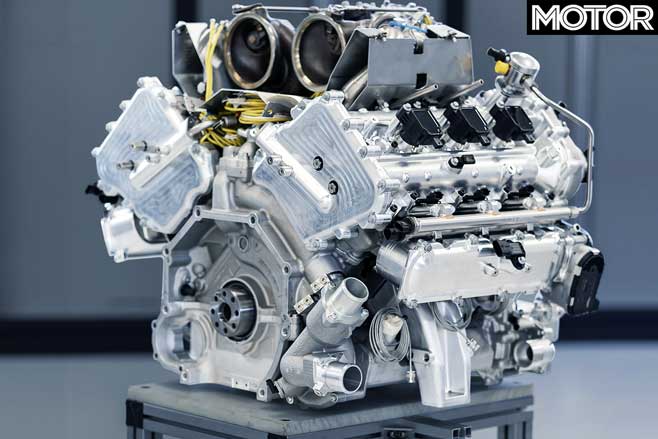
Dubbed TM01, in honour of the aforementioned creator of the Aston Martin V8, the turbo 3.0-litre V6 has been developed entirely in-house and is destined to be the soul of the Aston Martin Valhalla.
Joerg Ross, chief engineer and thus the man in charge of the powertrain’s development, says that if Aston Martin is to create a new engine completely on its own, the final product must be something worth being a spiritual successor to the original V8 developed in 1968.
“We wanted to create something that is befitting of the TM01 nameplate and create something that would have impressed our predecessor and pioneering engineer, Tadek Marek.”
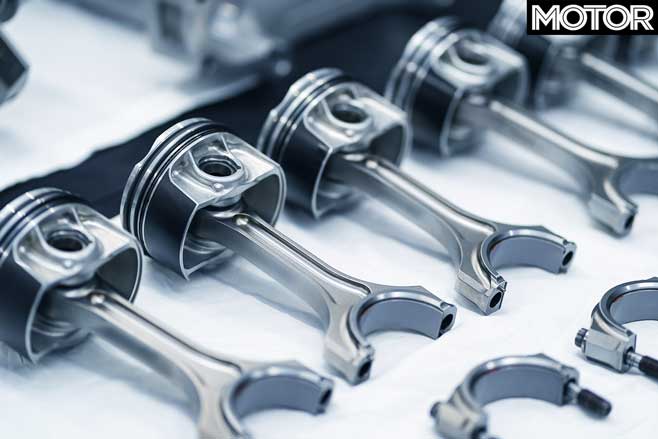
Aston Martin therefore seems to be relying quite heavily on this being its next primary engine, with Ross calling it “the future” of the brand.
“Putting a team together to deliver what is going to be the future power of Aston Martin has been an honour. From the very beginning, we have had the freedom to explore and innovate in a way that we have not been able to do so in a very long time.”
Aston Martin is still working on the development of TM01 with the most recent public announcement having been that dyno testing was successful, but no power outputs were revealed. What is known is that the dry-sumped engine will be part of an electrified powertrain and will be configured in a compact hot-vee package to allow it to be used effectively to keep the Valhalla’s weight distribution manageable.
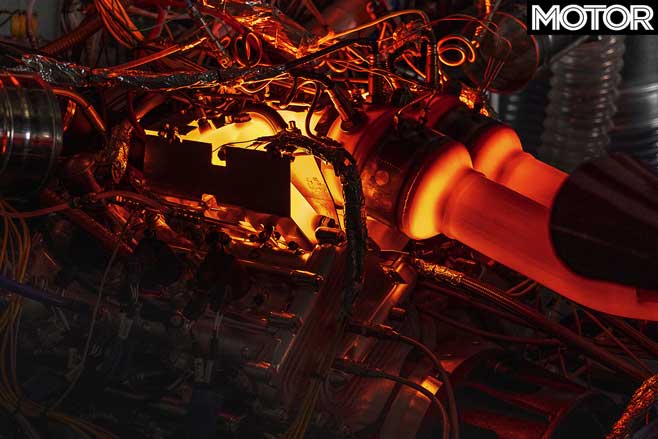
Aston Martin says the engine will weigh less than 200kg when employed in the mid-engine supercar. Aston Martin also says the entire system will be “the most powerful in the range” once it’s released.
Four Fast Facts: Aston Martin’s V6
From scratch
Aston Martin has completely designed this engine in-house, something the brand hasn’t done since the ‘60s. Aston also states clearly that there’s no relation between the Valkyrie’s Cosworth V12 and this V6.
Veeling hot
A hot-vee engine design places the turbochargers within the valley of the two cylinder banks, allowing the heat from the engine to keep the turbochargers responsive while still allowing air to come through from somewhere cooler.
Helping hand
The Valhalla’s drivetrain will be electrified, but Aston Martin still hasn’t revealed details of the hybrid system. There’s also the possibility it will use a plug-in system, but that’s only been hinted by Aston. Rest assured, it won’t feel like a Prius.
Top of the food chain
Aston says the Valhalla will be the most potent in its range, meaning the hybrid V6 will outgun the 533kW/900Nm DBS Superleggera’s V12, though this doesn’t explain where the ‘halo model’ Valkyrie sits.
Still think a V6 can’t be good enough for a car like the Valhalla? Check out our list of the greatest V6s to be proven wrong!
We recently nominated a list of our Top 50 driving roads and while we think we’ve covered many of the greatest routes both here in Australia and around the world, we threw the floor open to the brains trust that is the Wheels readership to see if they could add some cracking roads to that list.
Well, you didn’t disappoint. Here are some of the very best of your suggestions that came as part of our #DriveAfterIso campaign.
Arequipa to Chivay, Peru
Hat tip to S.A. Kilgour on our Facebook page for this high-altitude adventure drive. The 166km route traverses the high Peruvian altiplano.
“The roads are well maintained and you ascend to 4500m,” says Mr Kilgour. “There are long straights (no police around), curves, views of volcanoes, and herds of vicuñas grazing by the roadside.”
It all sounds quite idyllic and then you see images of the road. It loops lazily around the contours of the land, throwing in the odd well-sighted hairpin to keep things entertaining and there’s nobody there. It’s mapped on Google Street View, so dive in and take a look. Definitely one for the bucket list.
Cudlee Creek Road, South Australia
We nominated Gorge Road as one of our top 50, but Facebook user Andrew Ogar reckons there’s something even better in the immediate vicinity.
Nip off Gorge Road just south of the Millbrook Reservoir and you’ll find Cudlee Creek Road.
The route is pretty short and sweet, covering 11km down to Lobethal, and is a lovely touring road if you like open, flowing sweepers rather than white-knuckle hairpins.
Killarney Gap Road, NSW
Set the nav to start at Narrabri and finish 108km later in Bingara and you’re in for some fun.
This route, which starts about 150km due west of Coffs Harbour, is probably at its best up near Sawn Rocks, where it suddenly gets very twisty indeed at the top end of Mount Kaputar National Park.
Lightly trafficked and opening up into some expansive scenery along the way, this would be a great route for a car that’s both lithe and has some legs.
A Porsche 911 Carrera T would be perfect. Thanks to Rick Patterson for unearthing this gem.
Sorell to Swansea, Tasmania
We couldn’t pick a favourite road in Tasmania, because having sampled a lot of the local fare, it’s hard to find a bad road on the Apple Isle.
Reader Simon Tarte has a specific pick though and it’s the south-east coast route from Sorell to Swansea.
This 111km route starts just east of Hobart and finishes at Swansea, the gateway to the Freycinet National Park.
The Tasman Highway (A3) starts by pitching inland into the Mount Morrison hills and then descends to Spring Bay at Orford, before trending north to eventually hug the shore approaching Swansea.
It’s got a bit of everything, so we can see why you’d love it.
Loop of the Old Country
D.K. Waynard popped up on Alex Inwood’s Instagram page with this monster drive.
“Top of my list is the drive from Torquay (UK) west to Land’s End, then northwards to Manchester via Tintagel, Bath, Cardiff and eastern Wales. Then just for good measure keep going up to Inverness in Scotland, and back down via Edinburgh and York. Best drive ever.”
It’s certainly one with a ton of variety, from the tight country roads of Devon and Cornwall to the hill roads of Wales, across the Lancashire moors and up to the Great Glen of Scotland. And then back via the east coast. You’d need to budget some time for this one.
Honister Pass, Lake District, UK
Steve Dwight left these fair shores in 2018 for Europe, eventually landing a job in the UK that gave him the opportunity to do a fair bit of driving.
His pick? The Honister Pass in the Lake District and, specifically, in a Ford Fiesta ST. Having subsequently driven the feisty Fiesta, we can see where he’s coming from.
Think of the Honister as the polar opposite of the Cudlee Creek Road posted earlier. It’s so narrow that it makes a Fiesta look large and you’ll need to give the three-pot Ford everything up the 1 in 4 (25 percent) gradients. Another thing to consider: the pass here also holds the UK’s 24hr rainfall record, so probably best to leave anything with Cup tyres at home.
The Grand Ridge Road, Victoria
Cristina Baccino’s favourite drive route mixes the rough and the smooth.
The northern part of the Grand Ridge Road, from Warragul South across the Mount Worth State Park to Mirboo North is 48km of twists and turns that mixes beautiful open hilltop scenery of the Strzelecki Ranges with deep forest hairpins.
It’s bitumen for half of the route but throws in sections of dirt to keep you on your toes. Her perfect car for the job? “Probably a Toyota 86.”
Think you know better? Hit up the comments to give us something to look forward to and that we can #driveafteriso
