
SHOULD YOU need a history lesson on the development of the Audi Quattro, look no further than the September ’19 issue of Wheels magazine. Peter Robinson met Jorg Bensinger, the engineer who was the father of the Quattro, drove both road and rally versions at the original Turracher Hohe press launch venue and revealed the backstory behind this revolutionary vehicle.
It’s genuinely hard to overstate the Quattro’s impact. Pedants may well point out that Jensen had already built an all-wheel-drive sporting car with its 1966 FF. Better informed pedants could also point to road cars like the AMC Eagle and the Subaru Leone predating the 1980 Quattro but, to do so is to miss the point. The Golf GTI wasn’t the first hot hatch and the Toyota Prius was far from the first petrol/electric hybrid, but both captured the imagination and transformed the automotive milieu in much the same way the Quattro did.
As much as the Quattro all-wheel-drive concept transformed world rallying, the actual car wasn’t anything like as successful as its reputation suggests, claiming the manufacturer crown just twice, in 1982 and 1984. So, statistically, it’s as successful as a Citroen DS3 and less so than a Fiat 131 Abarth, themselves hardly icons of world rallying. It was what the Quattro stood for, as much as what it was, that cemented its status.
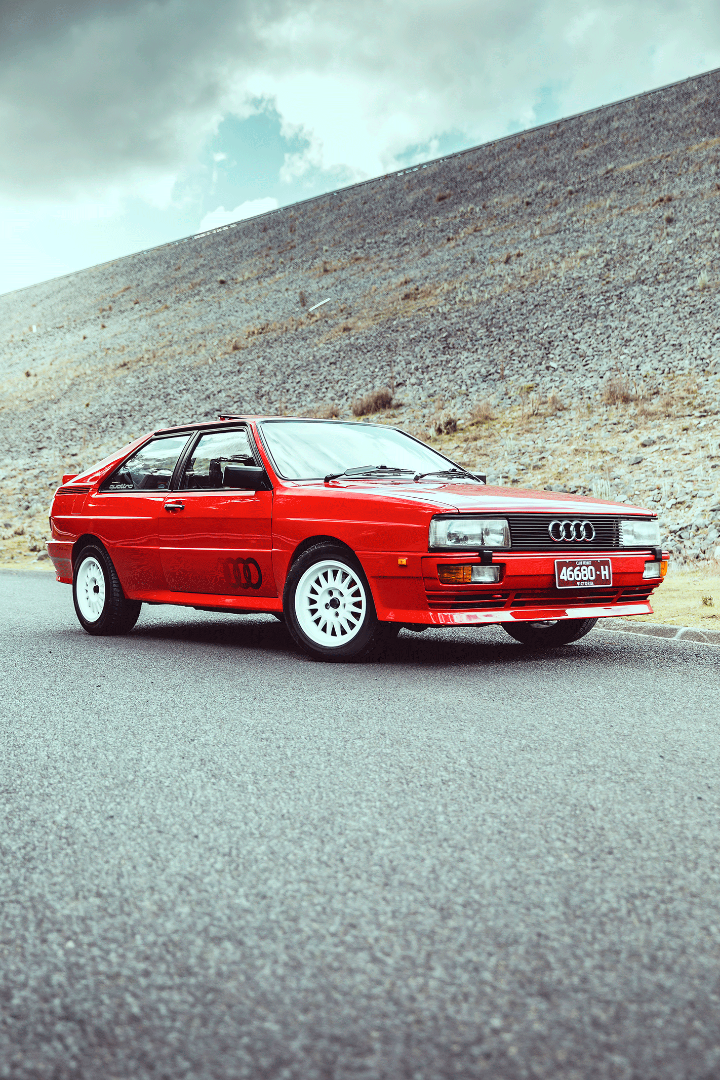
It marked a new era of professionalism in world rallying, of bigger budgets and a steelier focus. The sport moved into an era of hugely funded works teams with model succession plans. Group B went supernova and manufacturers were left carrying the can, but it was already apparent by mid-1984 that Audi’s superiority had a distinct expiry date. Whereas the Quattro was always a modified front-engined road car, the mid-engined, spaceframe Peugeot 205 T16 was smaller, nimbler and quicker, and formed part of an all-wheel drive mid-engined assault that included purpose-built racers like the Ford RS200, the Rover Metro 6R4 and the Lancia Delta S4. Audi’s response was the secret Sport Quattro RS002, a mid-engined coupe that was designed for the forthcoming Group S regulations, but which never saw the light of day after Group B was cancelled due to a series of high-profile accidents in the 1986 season.
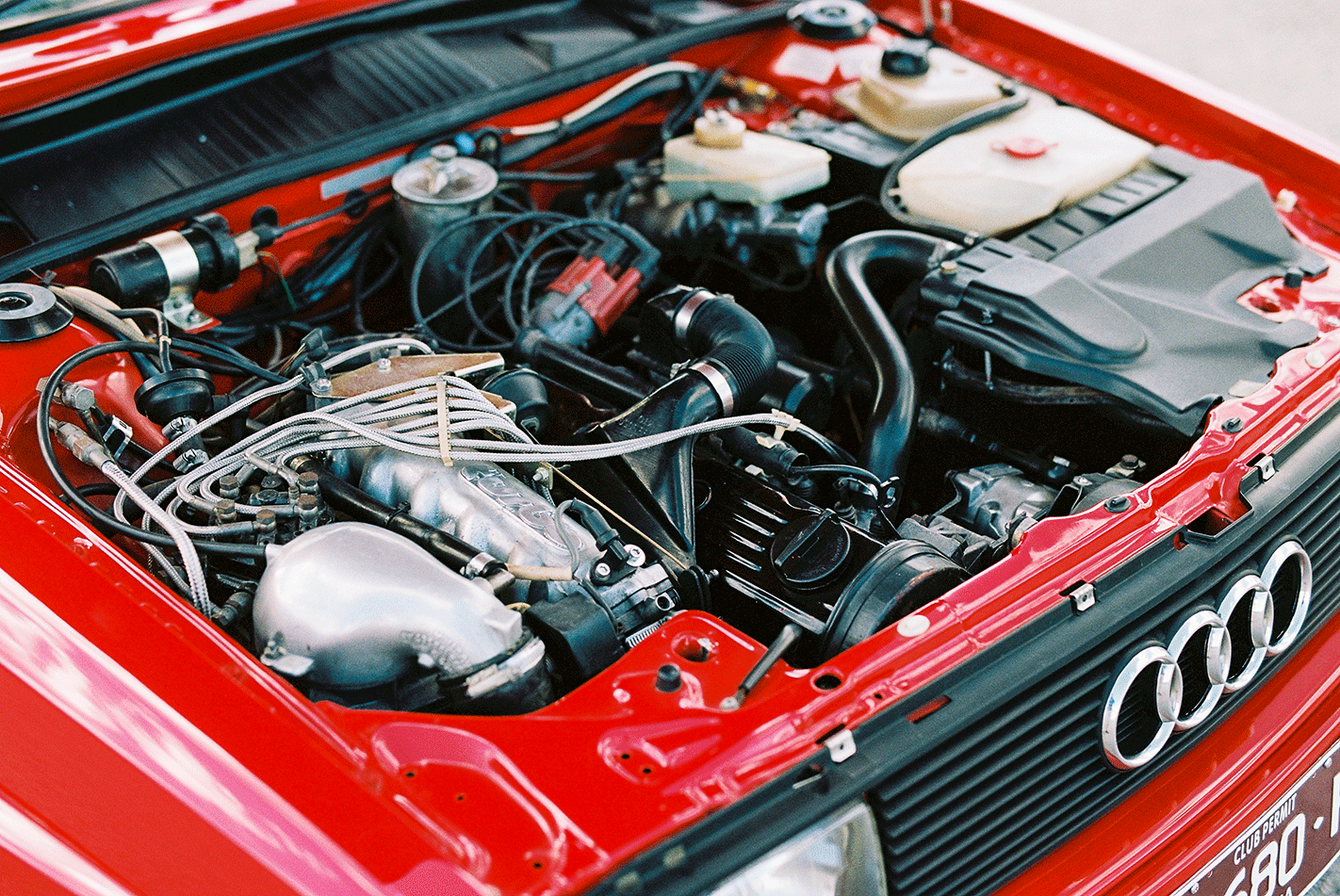
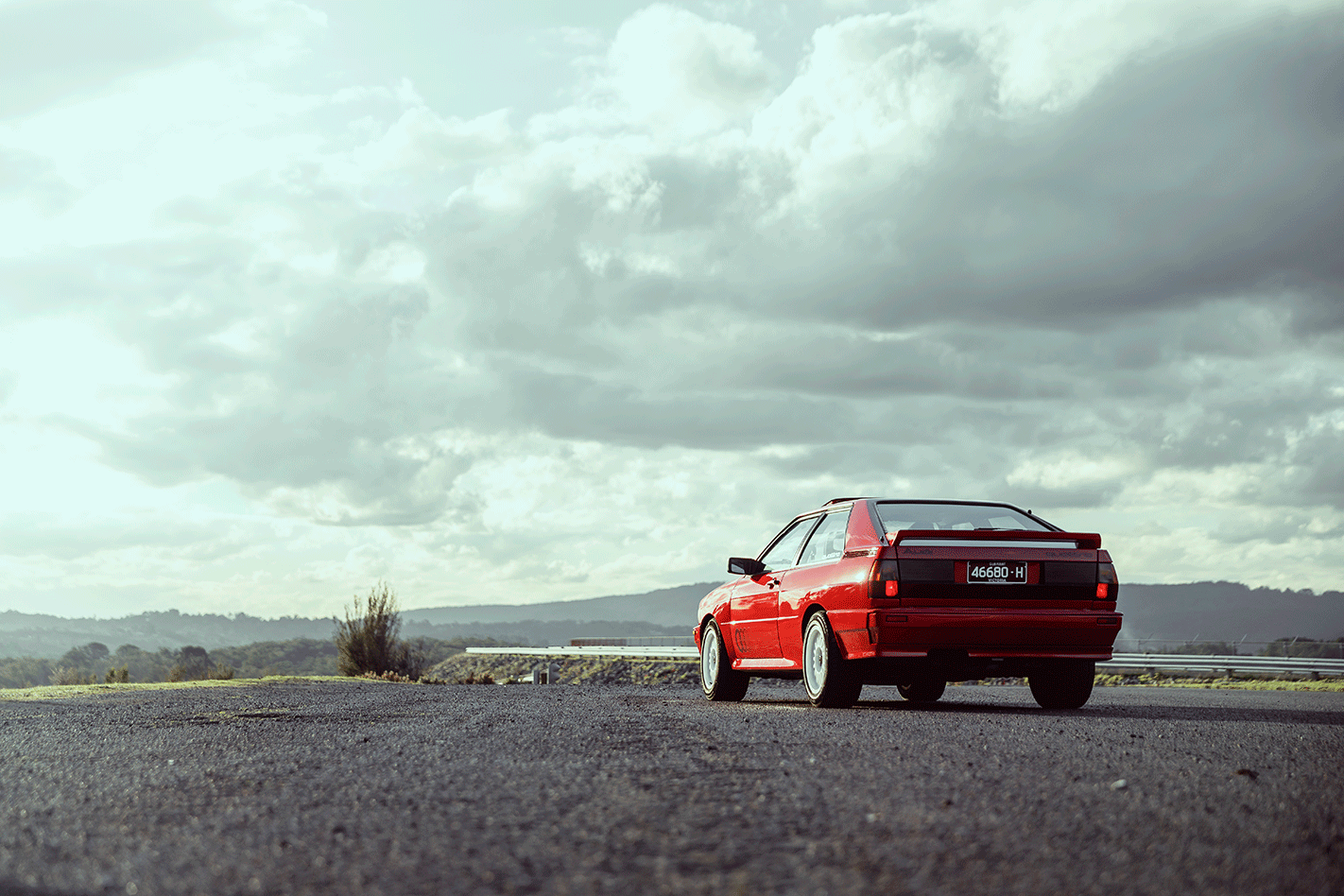
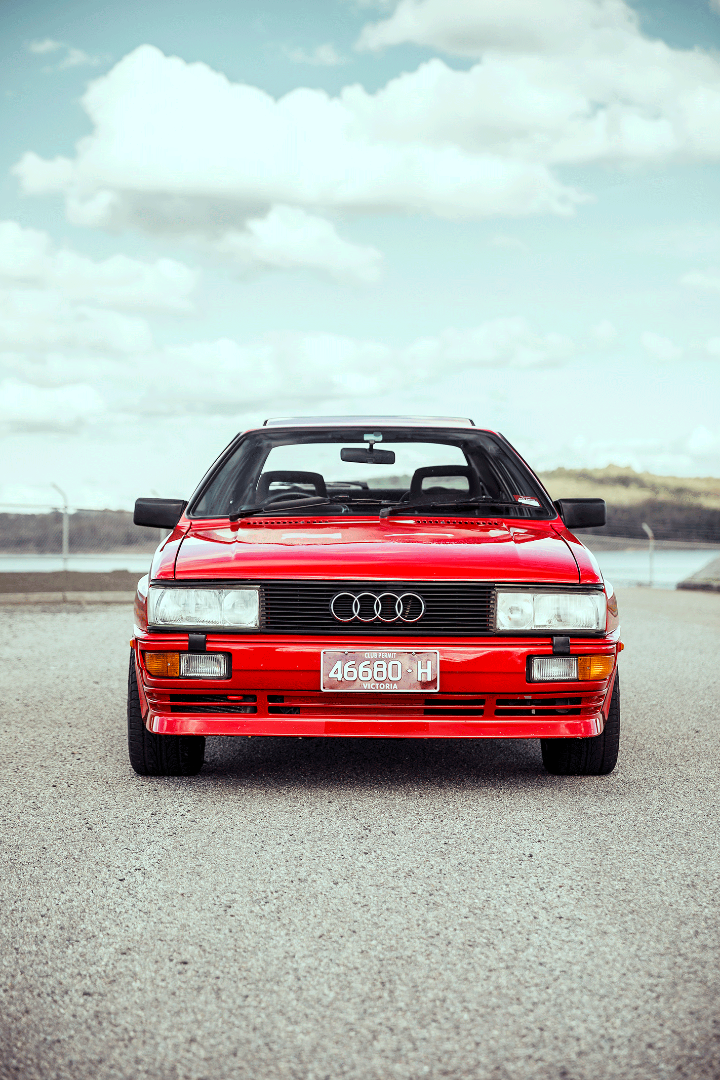
While the rally Quattro carved an indelible mark on the sport, the roadgoing versions of the ur-Quattro were similarly pivotal. A quick primer on the models available first. The five-cylinder road cars split neatly into three families. The original 147kW 2144cc ten-valve models are referred to as the WR cars (1980-1987), with the 147kW 2226 cc 10v with the Torsen centre diff being the MB engine (1987-1990), and the final 162kW 20v Torsen-equipped cars known to aficionados as either the RR or simply the 20v (1989-1991). The MB and RR models are a good deal more civilised on road than the somewhat crude WR.
The US market initially got a detuned version of the WR. The so-called WX engine made 119kW and was also exported to Swiss and Japanese markets that required additional emissions controls. In addition to these volume models, Audi also produced 224 examples of the short-wheelbase homologation special Sport Quattro. This made 224kW in roadgoing trim from a lower capacity 2133cc all-aluminium unit with four valves per cylinder, Bosch LH Jetronic fuel injection and a KKK K27 turbo. As well as having 317mm chopped out of the wheelbase to improve manoeuvrability, the Sport Quattro also received the more upright front glasshouse from the Audi 80 in order to improve visibility after Röhrl, Mikkola and Blomqvist had all complained of dash reflections in the raked Quattro screen.
When the Quattro first appeared on the stand at the 1980 Geneva Show, father of the concept and chief engineer Jorg Bensinger wasn’t entirely happy. He was proud of the mechanicals that underpinned the car but was less enamoured by the styling. “I would like a sportier body on the car,” he said to Gavin Green in a 1981 Wheels interview, “but we just didn’t have enough time or money to develop the car and design a new body for it as well. That’s why we chose the new Audi Coupe body,” he said and then presaged the flagship R8 by saying, “in future there will be a Ferrari-like body on the Quattro.”
Bensinger knew that Audi’s monopoly on all-wheel drive wouldn’t last. “Four-wheel drive will become popular in the upper end of the luxury market, and also in the upper end of the sports car market,” he said. “Mercedes already has four-wheel-drive sedans under test.” He also touched on the tie-up with Porsche that would ultimately result in the 964 Carrera 4. “Porsche wants to improve the 911 and this is an obvious way of going about it,” he noted.
While Quattro made more sense for Audi – a company previously married to a longitudinal front-engined architecture – than Porsche, whose 911 rarely wanted for traction, there were other aspects beyond drive going to each contact patch and the rugged five-pot turbocharged engine that distinguished the ur-Quattro. There’s a studied genius to the Quattro’s elastokinematics, in the tuning of its anti-roll bars and the axial, conical and radial deformations of its bushings. The spring and damper rates allow the car to travel quickly across poor surfaces, and excellent aerodynamic stability only adds to the car’s bulletproof feel.
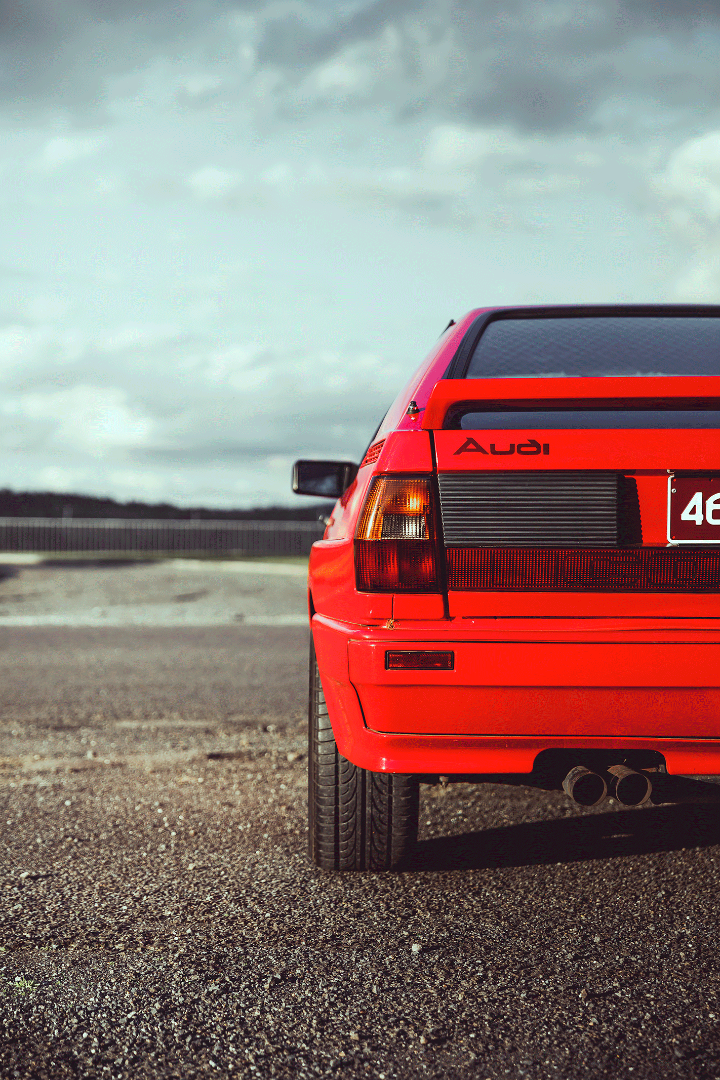
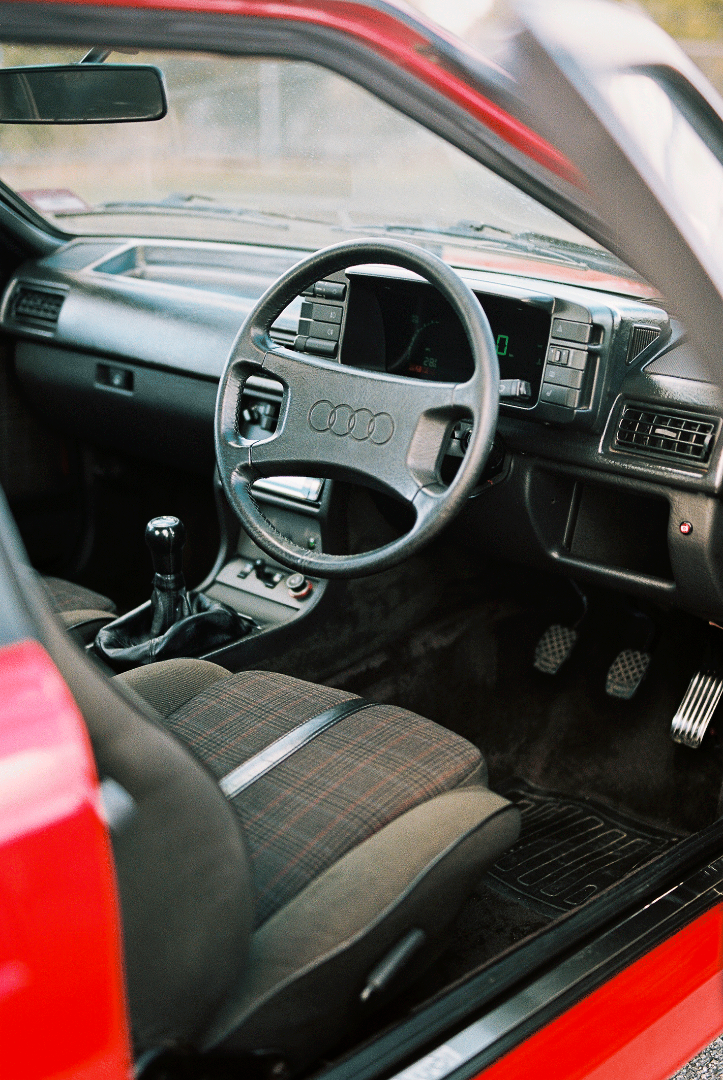
It got better with every passing generation and the late 20v models, with their higher compression engines, aluminium suspension and bigger rear brakes, are particularly sought after. At the other end of the spectrum are the 1980-82 ‘square headlamp’ version of the WR that existed just before Audi introduced the divisive green digital dashboard. These early cars have their own equally enthusiastic following.
All of which might just make the 10v MB models the best buy of the lot. They combine the Torsen-diff and better brakes with a more affordable asking price than the 20v run-out editions. No version of the Quattro was ever officially imported to Australia, and it’s not on the SEVS list for authorised import, so it’s hard to pick and choose as they remain relatively rare. As a result, prices vary quite markedly. Around $45,000 will net you a project, with a tidy MB getting towards $80,000 and a low-mileage, concours-spec RR well into six figures.
Buying and running a Quattro can be an involving process. Despite the five-cylinder engine being a fundamentally strong powerplant, there’s a lot to keep on top of. That’s not helped by the fact that official parts support from Audi has been patchy at best. Running a Quattro means digging around for new old-stock spares, relying on enterprising third parties and locating a sympathetic independent garage.
Some have complained that Quattros feel ‘old’ to drive. They shouldn’t. Although the steering is, by nature, slow, the chassis should feel tight. So check for front-end crash damage, and if the car feels loose on its feet, it’s likely that bushes and balljoints will need to be refreshed, new dampers fitted and the nine CV joints stripped and rebuilt. Alignment is also a key thing to address, so check the tyres for signs of uneven wear and return to factory camber and toe settings. Also ask the seller about timing belt renewals. Audi quotes a figure of 70,000km, but having had my MB Quattro lunch its engine due to a failed timing belt, I’d be inclined to limit that to 50K.
Check the seat backs for cracking and creaking as welds can fail. Have a fiddle with the central locking, the electric windows, the sunroof and the boot catch for niggles. Check for damp carpet in the boot (a notorious rust trap) and all four corners of the interior.
If it’s a late WR that you’re looking at, hold the ‘Check’ button in and the synthesised voice should work (how Eighties) when the ignition is clicked on. The fuel pump should not run until the engine is turned over. All Quattro five-cylinder engines have a degree of tappet rattle when you fire up the car but any prolonged ticking will probably be a notable Achilles heel of this car – a cracked exhaust manifold.
Another issue that frequently afflicts the MB and RR generations is a faulty brake hydraulic accumulator. Sited between the master cylinder and the bulkhead is the brake pressure servo. Sitting diagonally atop this is the low- pressure warning switch. Pull the connector off this and connect a multimeter to the switch. Pump the brake pedal hard. If the switch fails after three or fewer applications, the accumulator needs to be changed.
So while the Audi Quattro is anything but a low-involvement ownership exercise, the ends justify the effort. The Quattro will be remembered as one of a handful of 20th-century cars that markedly changed the automotive landscape. Ford Model T, Volkswagen Beetle, Issigonis’ Mini, Lamborghini Miura, Toyota Prius, Audi Quattro. It’s a select list.
Go back and read Peter Robinson’s story to better understand the impact this car, originally planned for just 400 homologation units, had on Audi’s global sales. It changed Audi and it changed the world. But, as Bensinger freely admits, Ingolstadt got there first, with other rivals working on all-wheel-drive mechanicals. Be that as it may. Every legend needs a little luck along the way.
1985 –Quattro debuts dual clutch transmission in competition
317 – The wheelbase chop (in mm) to create the Sport Quattro
23 – WRC victories
11,452 – production run between 1980-1991
38 – Years since a female last won in the WRC (Michele Mouton, Brazil)
MOUTON on THE MOUNTAIN
Michele Mouton blitzed Pikes Peak in 1984. When she arrived in Colorado in ’85, the officials set out to make life hard for her. They pinged her for a 5mph practice speed infraction, so she had to have her Quattro pushed to the line and start the engine when the lights went green. The result? She took the last four corners flat and set a course record.
You’d be hard pressed to find someone who thought the Audi A6’s 3.0-litre diesel donk a bit of a duffer. It hoofs along all right and achieved great mileage, which is just what you want in a diesel. Right?
This review was originally published in MOTOR’s September 2006 issue
Well, that’s not quite enough any more, according to Audi. It wants to make its diesel cars sporting and sexy. And it’s got a clue or two about how to do that. It is, after all, the first ever manufacturer to win Le Mans with a diesel-powered racer. Not only did the 478kW, 1100Nm diesel-powered R10 win, but it also set the fastest lap time and reset the record for the furthest distance travelled on a single tank of fuel.
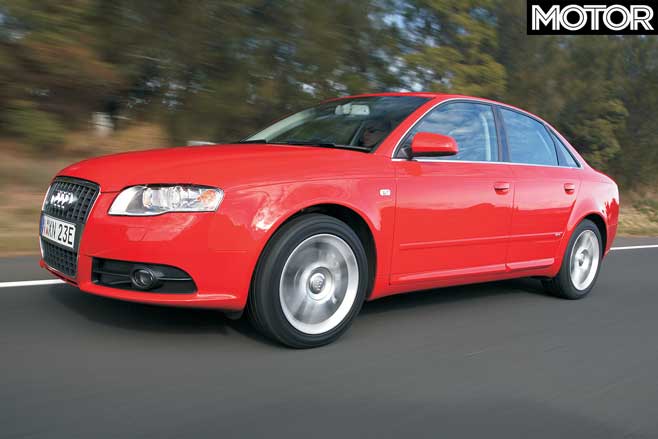
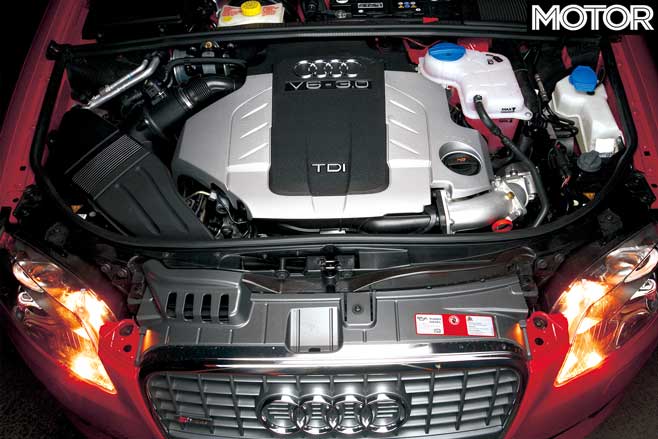
To celebrate, Audi has rolled out two new diesel cars: the deadly Audi A4 TDI quattro and the stupidly powerful A8 TDI quattro. The A4 borrows the A6’s 3.0-litre bent-six TDI, spinning out 171kW and a stump-pulling 450Nm. It hauls its 1655kg to 100km/h in just 7.8secs.
Audi claims the A4 will return around 8.4L/100km and get nearly 750km out of a single tank. They’re not too far off. The trip computer on the launch drive, which took in some incredibly spectacular and some very demanding roads in Tassie, recorded 9.5L/100km. And believe me when I say the horses weren’t spared.
That’s the thing about the A4; it actually encourages you to get the whip out. Kinky, no? And rather than being a bit of a rough experience, it’s actually bloody enjoyable. Power, and bucketloads of the stuff, is just always there. This donk in the new TT would be very nice indeed. And that notion might not be too far-fetched, either.
Time and time again you find yourself flapping down through the gears (A4 cops the six-speed tiptronic ’box from the S4) via the steering wheel-mounted paddles just to ride the wave of 450Nm. Third gear, mid-corner and feeding in the power – nothing else in this segment feels as good or as planted. I mean it.
And without quattro (all-wheel drive) you wouldn’t be able to exploit all that oomph. Grip, even on the icy, snow-lined roads we found, was immense. You can really lean on the well-balanced chassis, too – only barrelling into tightening second-gear corners saw the nose run wide. Even then it was only a smidge. And a simple lift brought it back to heel.
Ride quality is excellent. Sure it’s firm, but it’s firm on the sporting side of things, and isn’t what you’d call uncomfortable. Damping is excellent, and the A4 soaked up all of the lumps and bumps Tassie’s back roads could throw at it without upsetting its ride or handling.
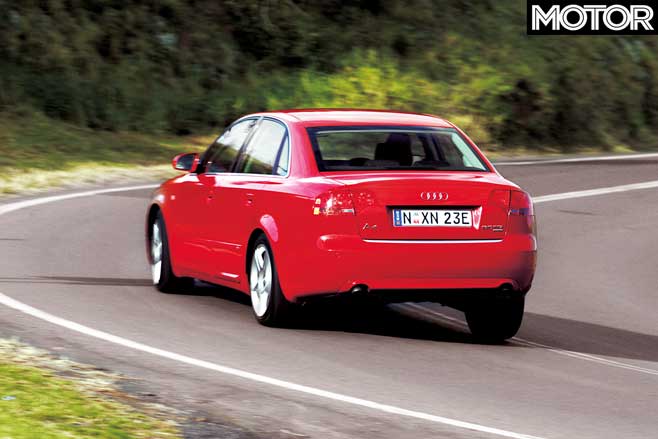
Styling-wise, we’re already familiar with the A4’s look. It’s subtle, purposeful and menacing, though the rims could do with an extra inch. Take a look inside, and the build quality is typical Audi. Our only gripe would be with the dash plastics: they’re just a little too cheap-looking for an $86K car. And the seats, though comfortable, don’t offer anywhere near enough lateral or thigh support for a car with this much grip and go.
Whether you’re just slinking around town or belting through the hills, the A4 TDI quattro is a diesel worth getting your hands dirty for. It’s got style, awesome grip and a heck of a punch.
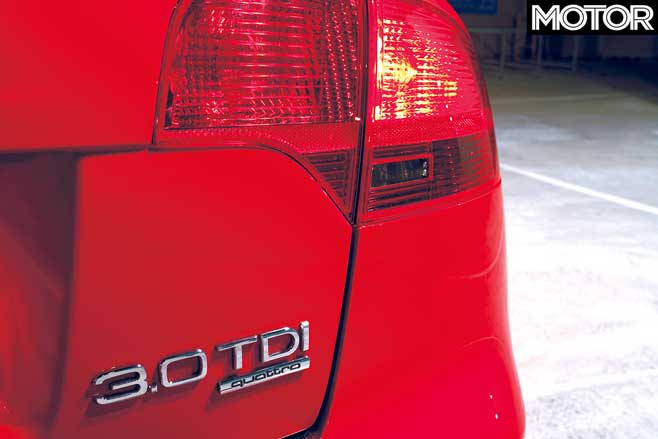
2006 AUDI A4 TDI QUATTRO SPECS Engine: 3.0-litre DOHC V6 TDI Power: 171kW Weight: 1655kg Drive: all-wheel Price: $86,700
As a motor journalist one hopes that all goes to plan on the road, whether that be the many thousands of kilometres in car review research or the many launches laid on to introduce new vehicles.
It’s fair to say, though, that it doesn’t.
Kicking off the chat today, Andy, Dan and Scott recount the times road trips ended badly. Sometimes it was plain bad luck, other times it was poor planning, but it definitely wasn’t always our fault – or at least that’s what we tell people.
Andy was once involved with the destruction of a prototype British sportscar and the police were actually delighted, Scott once detonated a very expensive engine and if you want to know Dan’s darkest hour on Australian roads you can listen to the episode in which he describes it here.
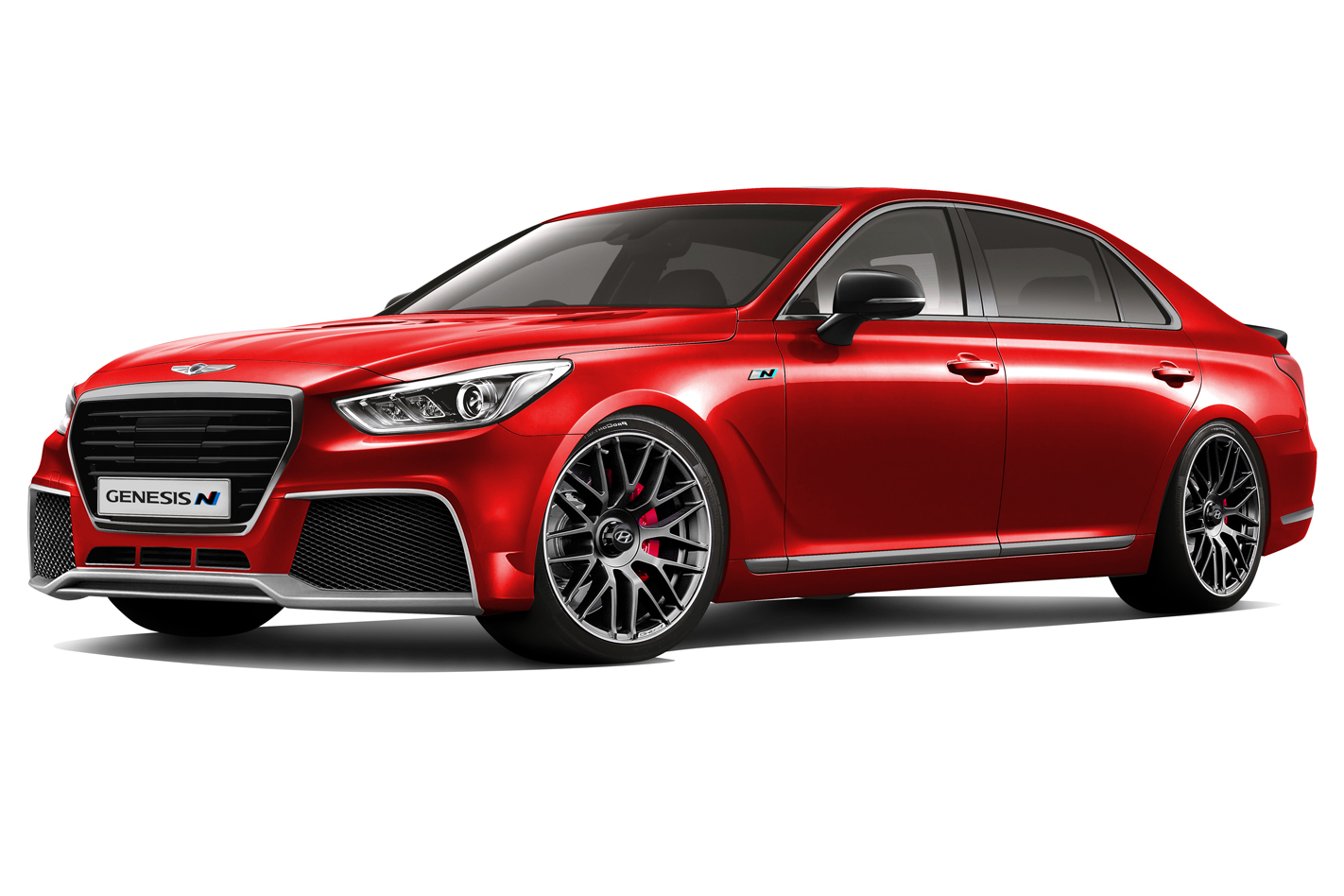
Sometimes we manage to get through an entire drive without binning a car, exploding its engine or losing it entirely, but in certain select occasions that might not have been the best result for it.
Next we discuss the cars that shouldn’t have been allowed to live and our worst cars to date.
MORE The worst James Bond cars of all time
It might have been something that promised to deliver and didn’t, sometimes it was a model that disappointed from the start, either way, this handful of abysmal machines are best forgotten.
But rather than ending on a critical note, we try to correct the balance by suggesting some of our best ideas for those cars that should have existed but the makers never agreed. Everyone yearns for a BMW M3 Touring or a Toyota 86 with a turbo, but the boys round out this week’s chat with some proposals you might not have considered.
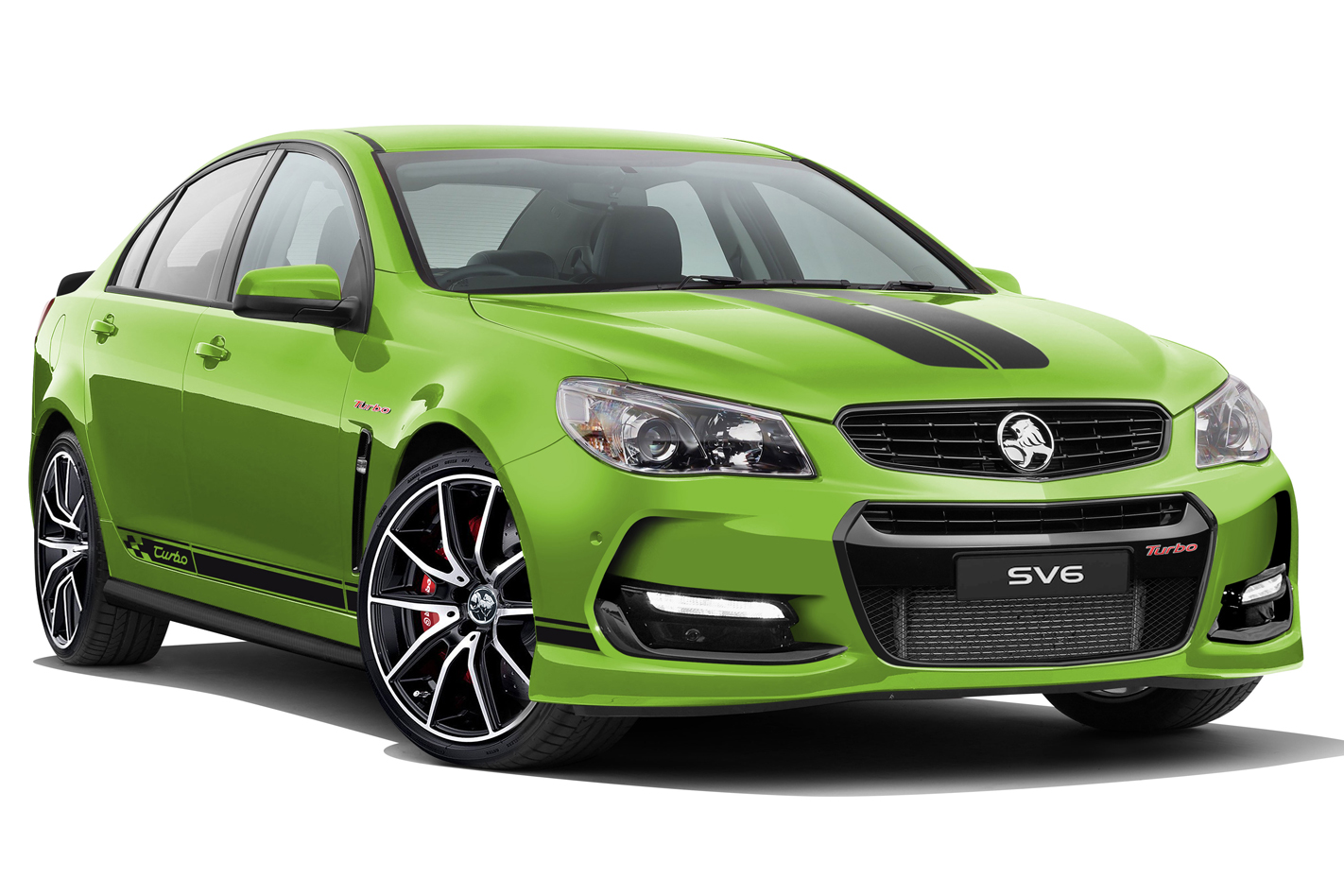
Let’s hope the major manufacturers were listening in.
Catch up on last week’s chat here
You can find WhichCar Weekly on all manner of podcast apps including iTunes and Podbean. Please rate, subscribe and leave a review!
You can also follow the day-to-day happenings of the WhichCar team on Facebook, Twitter and Instagram @whichcar.
Listened to or watched the WhichCar weekly podcast? Help us out!
- Leave a note in the comment section below
- Leave a review on Apple Podcasts/iTunes
- Subscribe to our podcast
Introduced in 2017, Mitsubishi’s newest offering, the Eclipse Cross, is pitched as the model that bridges the gap between the Mitsubishi ASX and Outlander. And while this may be the case in terms of pricing, it has a lot in common with the ASX when it comes to size and practicality.
The ASX (below left) is Australia’s most popular small SUV mainly due to its sharp pricing, which starts from $23,990 for the ES manual. Add a CVT auto and the price jumps to $25,990, which is still $4000 less than the entry-level Eclipse Cross ES ($29,990) that comes with CVT as standard.
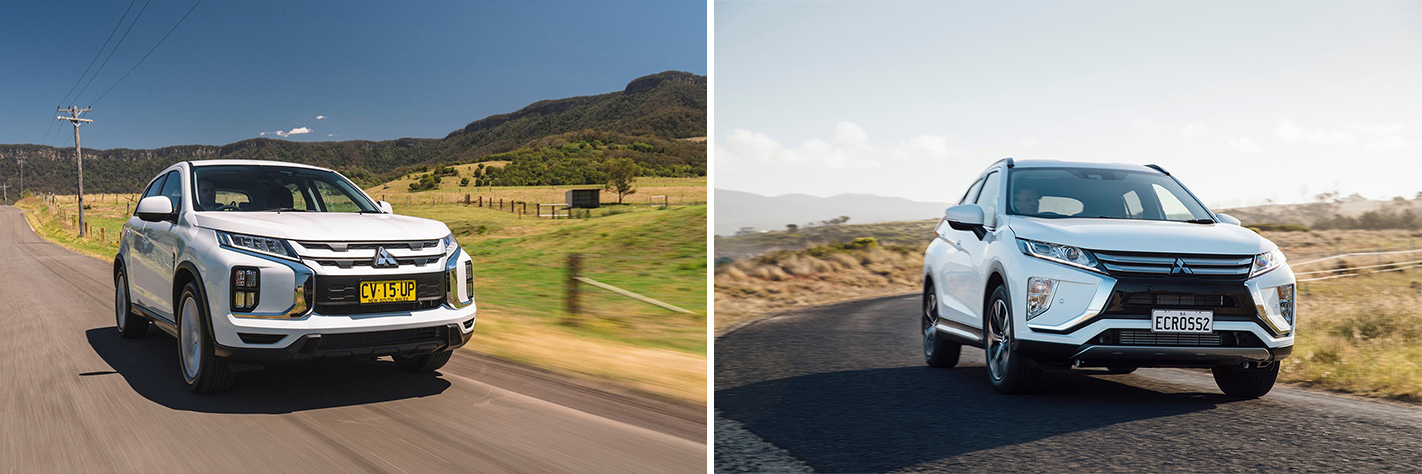
So what does paying extra for Eclipse Cross ES get you over the ASX ES, considering both cars have the same 1810mm width and 2670mm wheelbase?
The Eclipse Cross is powered by a 1.5-litre turbocharged four-cylinder petrol engine that produces the same power as the ASX’s naturally aspirated 2.0-litre engine, but considerably more torque.
Like the ASX, the cheapest version is front-wheel drive, and fuel use is about the same between the two – 7.3L/100km compared with the CVT-equipped ASX’s 7.6L/100km.
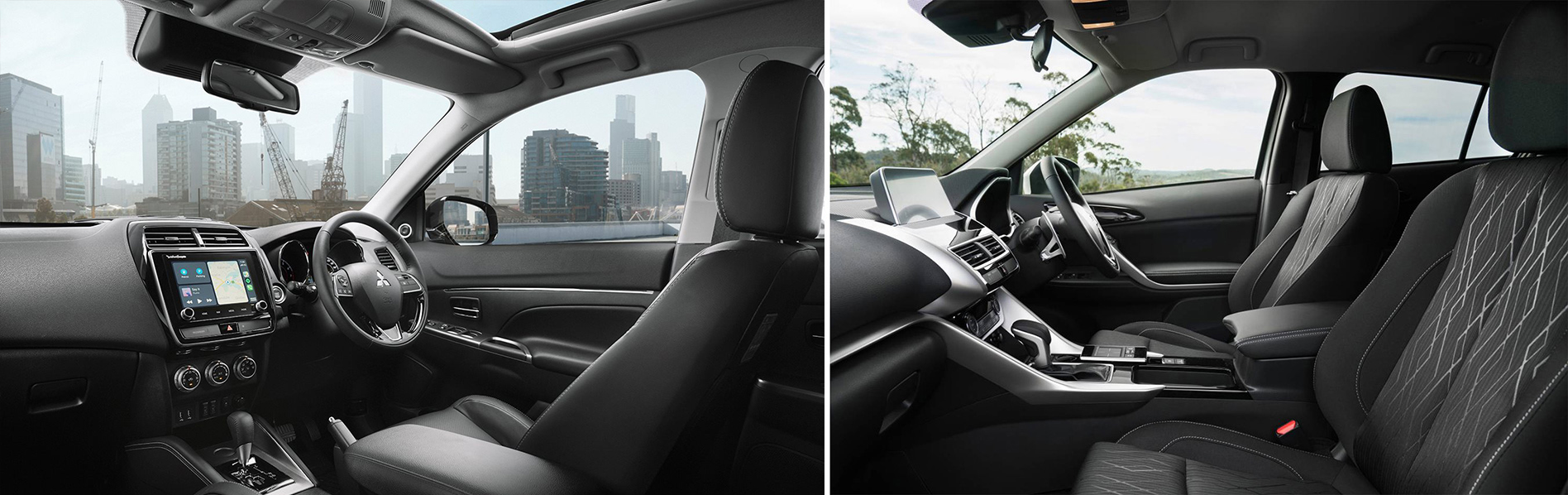
Its 341-litre boot space can be extended to 448 litres via rear seats that can recline and slide forward, while the ASX holds 393 litres. And if you need a trailer to carry more, the Eclipse Cross will tow up to 1600kg, compared with the ASX’s 1300kg – each has a maximum unbraked towing capacity of 750kg.
Looking inside, the Eclipse Cross has attractive new-generation styling that should give it an edge over the ageing ASX in the showroom.
The Eclipse Cross has 7.0-inch infotainment screen, with ASX gaining an 8.0-inch screen in its recent update. Both have Apple CarPlay and Android Auto smartphone mirroring, digital radio, four-speaker sound system and reversing camera, with the newer car gaining satellite navigation and a touchpad controller on the centre console.
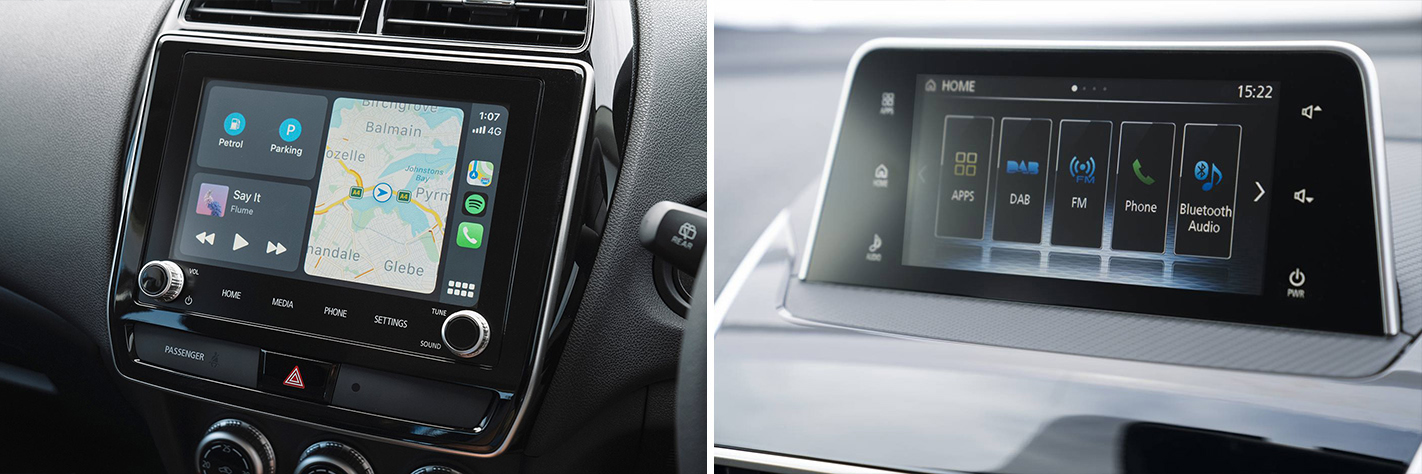
Other standard features common to both cars include autonomous emergency braking, cruise control, LED daytime running light, six airbags and leather-bound steering wheel.
The Eclipse Cross ES meanwhile gains an adjustable speed limiter, digital instrument display, sliding and reclining second-row seats, roof rails and heated door mirrors.
A big plus for the ASX ES, however, is the availability of an advanced driver assistance system package (ADAS) that adds lane departure warning, blind-spot monitor, lane-change assist, rear-cross traffic alert and auto high beam. The ADAS pack adds $1500 to the price of the ASX ES Auto, with the total price still $2550 less than the Eclipse Cross ES.
IF ANYTHING suggests Mitsubishi’s glory days are in the rear-view mirror it would be this Lancer Evolution Wagon.
Born just before the Global Financial Crisis, the Evo Wagon was a special-edition send-off to the supercar-killing Evolution IX, borrowing almost all of its goodies and bolting them into a regular five-door Lancer.
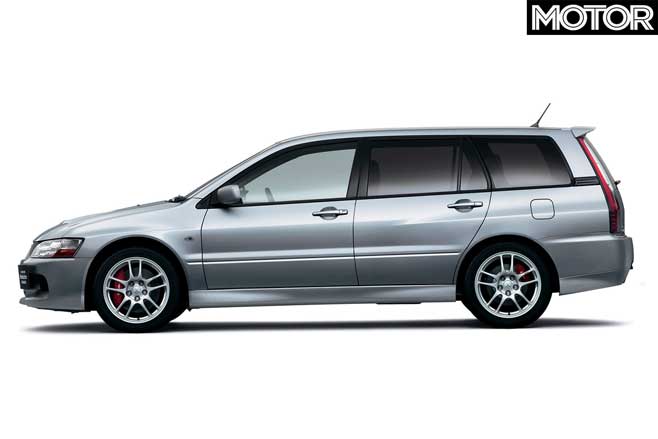
That means the Evo Wagon included Mitsubishi’s venerated 4G63 2.0-litre engine mated to a six-speed manual. It scored a slightly lower torque output than the sedan, making do with 206kW and 392Nm in lieu of the full 400Nm.
Despite this, and an extra 70kg loaded onto the rear wheels, the Wagon reportedly was every bit as quick as its four-door sibling in a straight line, with one outlet at the time recording a 4.8sec 0-100km/h sprint. That trumps our test back in 2005 of an Evo IX sedan that accelerated from the line to 100km/h in 5.02sec on Aussie fuel.
On the twisting stuff, though, the Wagon might have struggled to keep with its sedan counterpart due to its all-wheel drivetrain missing out on the lauded Mitsubishi’s AYC electronically controlled locking rear diff. Nevertheless, it came with a front helical LSD, active centre differential, Brembos and sedan-mirroring suspension and steering set-ups, so you still would have needed to tie down your surfboards extra tight.
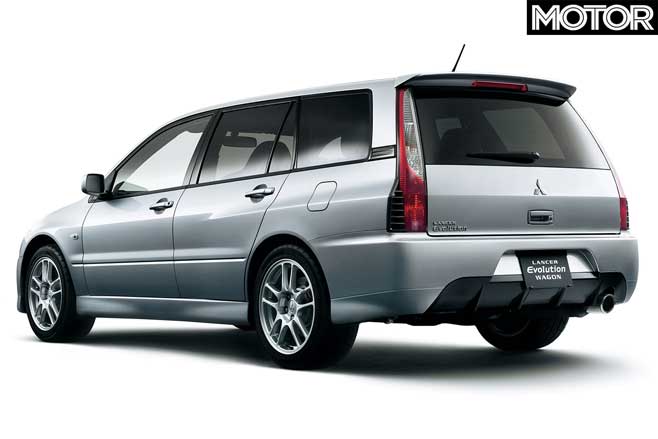
One thing the Wagon did offer exclusively was a five-speed automatic option. Called the GT-A, it was priced slightly lower than the manual-equipped GT.
And what was that price exactly? Being a special edition limited to 2500, the Evo Wagon was sadly restricted to the Japanese market only, making it a moot point for Aussie punters, but at release the GT was priced at 3.486 million yen (AUD$40,812). Nothing compared to what we’d pay to go back in time and drive one…
2005 MITSUBISHI LANCER EVOLUTION IX WAGON SPECS Engine: 1997cc inline-4, DOHC, 16v, turbo Power: 206kW @ 6500rpm Torque: 392Nm @ 3000rpm 0-100km/h: 4.8sec (estimated) Price: AUD$40,812 (converted)
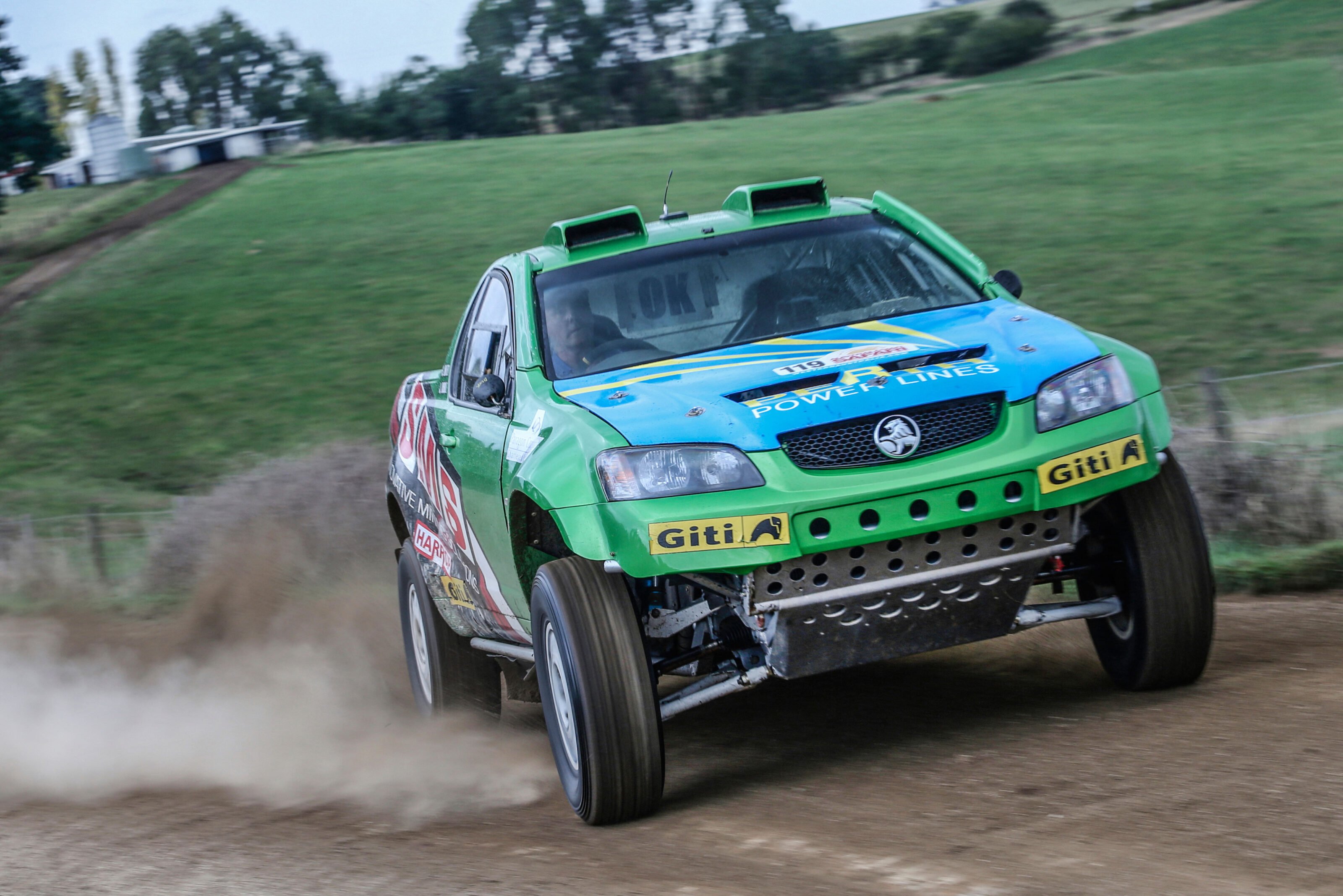
How could you not like a bloke who decides to build a 550kW supercharged all-wheel drive, V8-engined Holden Commodore ute?
Steve Riley is a Gippsland dairy farmer by profession and daredevil by choice. He raced off-road motorcycles for Honda for more than a decade and then made the transition to four wheels, and has since claimed three outright victories in the now defunct Australasian Safari.
We caught up with him in 2015 as he prepared to take on New Zealand’s reborn Race to the Sky hillclimb. With Pikes Peak being paved, the event became the longest dirt hill climb in the world.
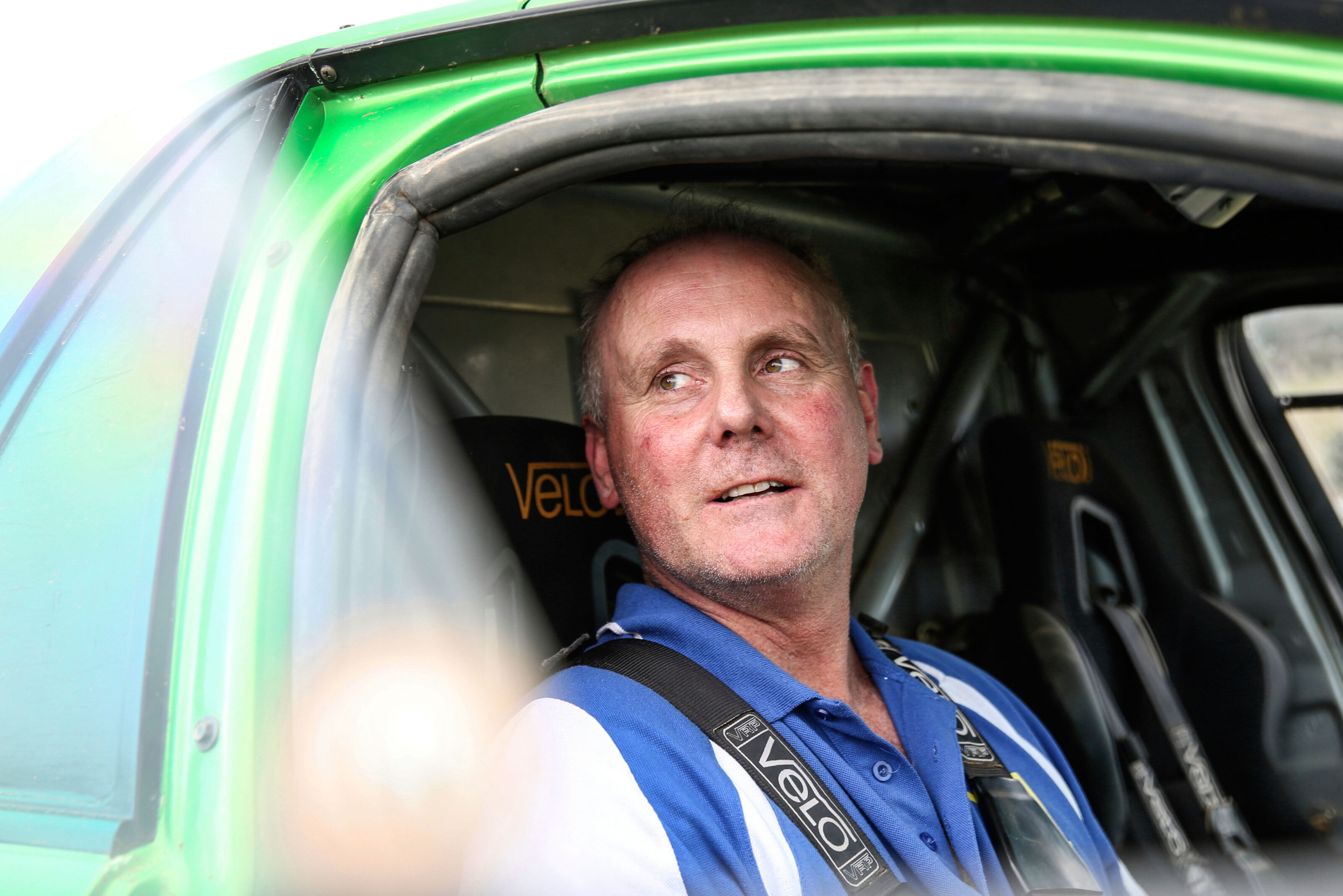
The 52-year-old, three-time Race to the Sky competitor has also had a couple of cracks at the Paris-Dakar – and finished both times – as well as the Pharaoh Rally in Egypt. This guy is a gun off-road racer who enjoys nothing more than “having a skid”, as he puts it.
But Riley fell in love with the Race to the Sky, which was staged on a sinuous dirt road out of the Cadrona Valley near Queenstown on New Zealand’s south island.
He raced it first in a Suzuki Hayabusa-engined special, and then added a second Hayabusa engine that helped him to finish second in 2002.
“We wanted more power and we thought of turbos and superchargers. But it was all a head-f— for me so we decided to just put another engine in it,” he laughs. “I was shit scared of it, it was crazy to drive.”
The Race to the Sky originally ran from 1998 to 2007 before various issues shut it down. Now Tony Quinn, the Scottish-born Australian-domiciled pet food and chocolate millionaire who has extensive motorsport investments on both sides of the ditch has fired the concept up once more.
And apart from simply being a great motorsport challenge, it has assumed the title of the world’s longest dirt hill climb event, now that the legendary Pikes Peak in Colorado has been sealed.
“It’s probably the best rally road you will find in the whole world, end of story,” declares Riley. “It’s got 136 corners, is 15km long and goes up a hill. What’s not to like about that?”
One hundred competitors on two and four wheels will take on the course. Quinn has commissioned ace race-car builder Paul Ceprnich to build him a tube chassis ‘Ford Focus’ powered by an 850hp VR38 Nissan twin-turbo V6 engine.
The event has also drawn the legendary eight-time winner of the event, Nobuhiro ‘Monster’ Tajima, to the south island, although he will drive his 670hp ‘Super 86’ based on a Toyota 86 rather than the wild Suzukis he has been associated with in the past.
Considering the strength of the field and some of the talent arrayed against him, Riley doesn’t think he is a winning proposition, but does aim to finish somewhere in the top 10. One thing he is sure of is that the Holden will be right up there amongst the fan favourites.
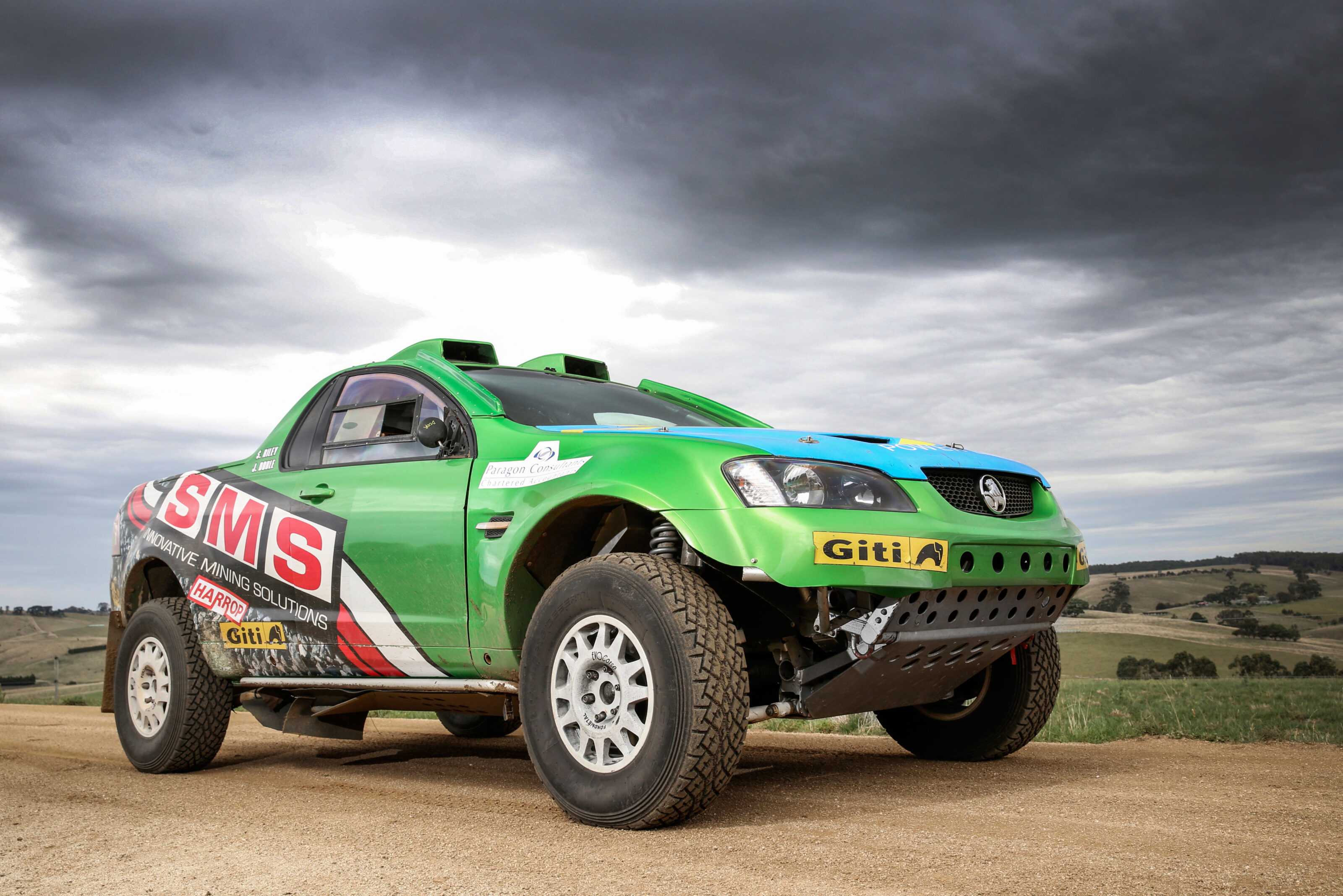
“You turn up at an event with a Nissan Navara, or a Patrol, or a Cruiser or a Pajero and people go ‘oh well’, but you turn up with a Holden ute with a V8 and a heap of ears prick up,” he said. “It’s got a real resonance with people and I suppose that comes from the V8 Supercars. To me, these are the V8s of the desert.”
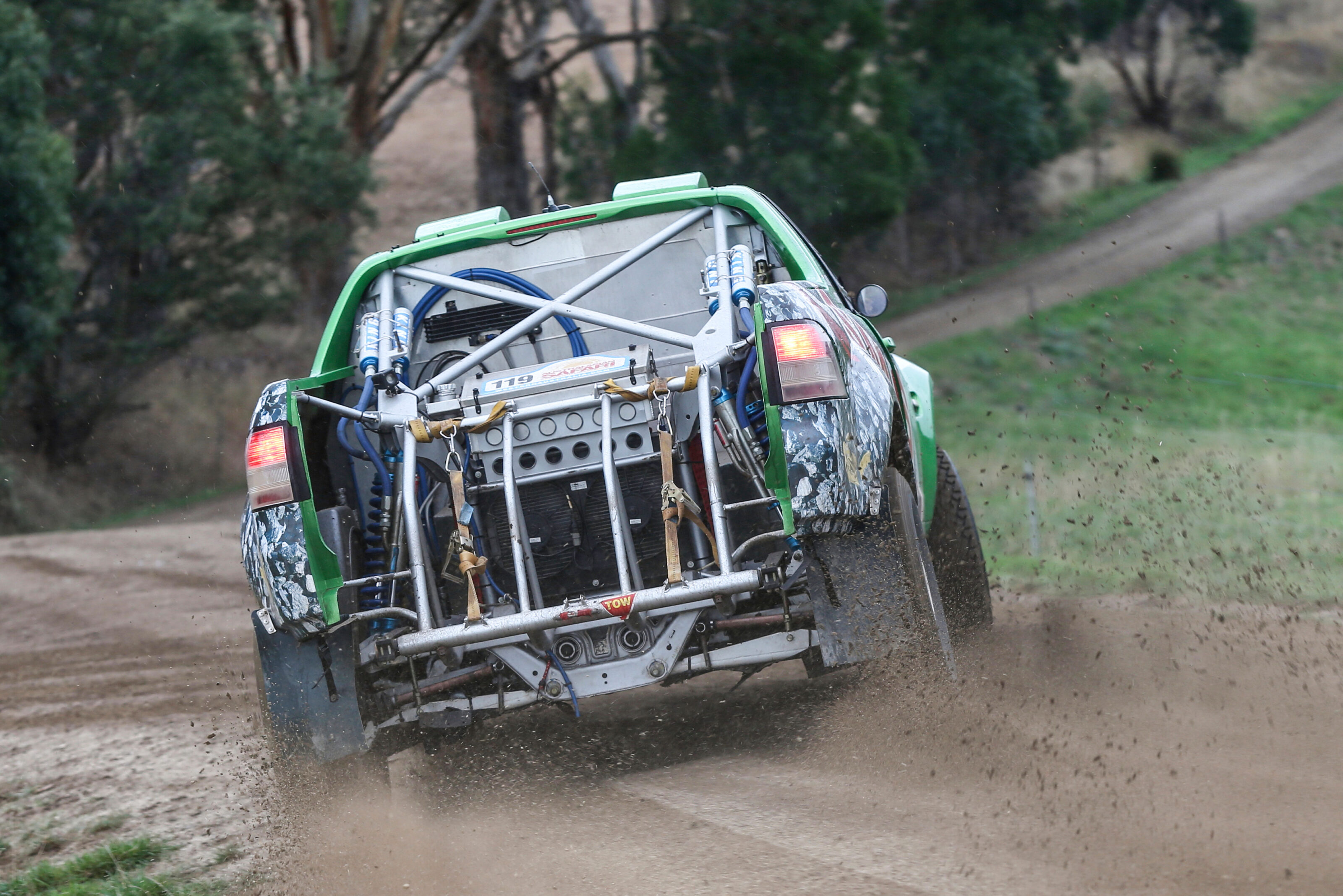
Calling this vehicle a ‘Holden’ is stretching the reality more than a tad. The 7.0-litre V8 (bored out from the standard 6.2) is Chev-based, but the blower is from Melbourne’s Harrop Engineering. That 550kW is made at the rear wheels running on E85.
The chassis is a space frame, the four-wheel-drive system from a Mitsubishi Pajero and the gearbox a Melbourne-built Holinger six-speed. Two massive King coil-over shocks suspend each corner of the car.
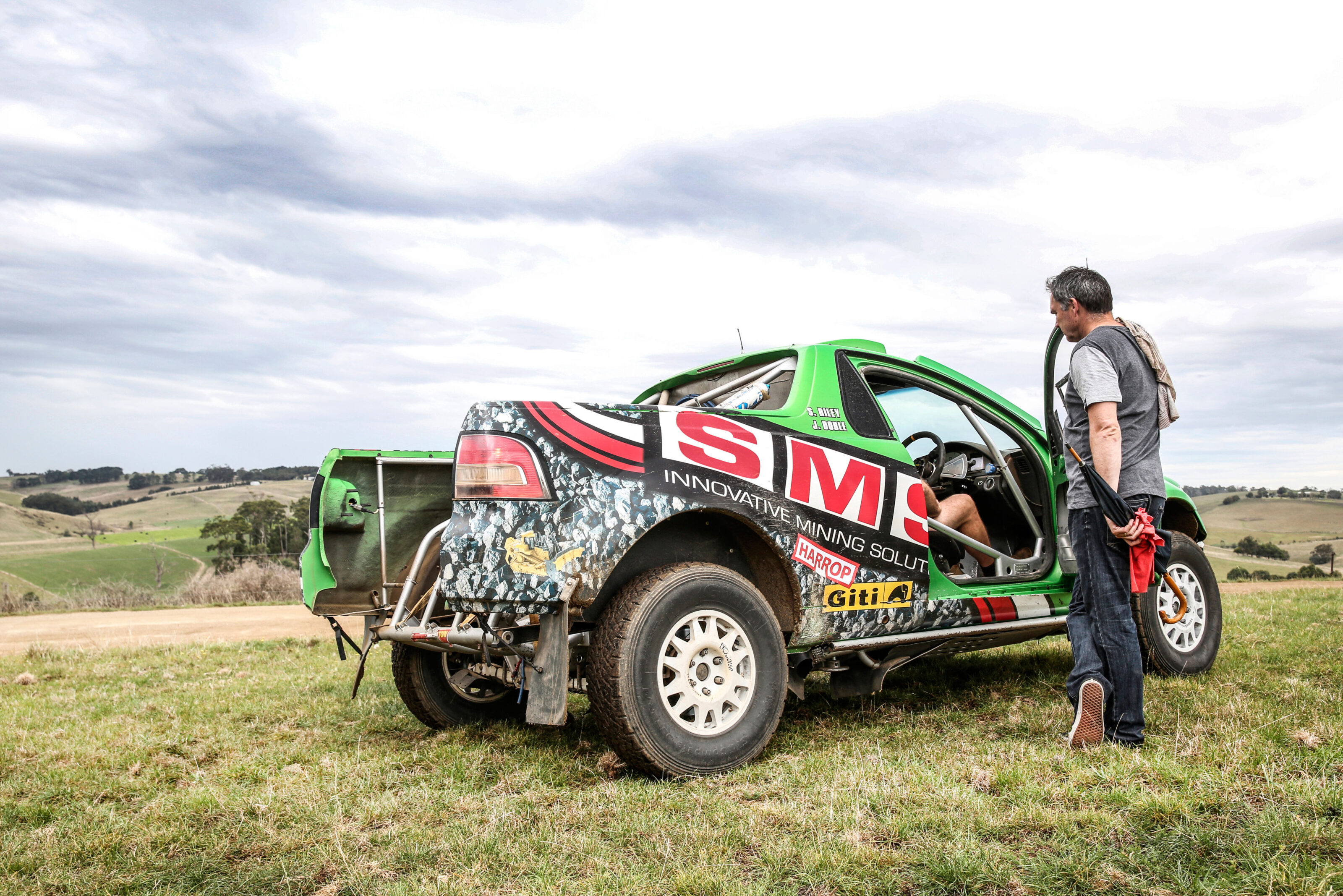
Impressively, apart from the engine, Riley built this thing himself in a shed on his farm – with a bit of help from his mates.
Listening and watching as it roars past on a brief demonstration run, it’s a visceral green missile, which Riley does well to keep pointed somewhere in right direction on these slick dirt roads.
“We’ll put on a good show,” he promises. We’re sure he will.
Following our interview with Riley, he went on to take his ballistic ute to the world stage, competing in the 2019 Dakar rally.
This article was originally published April 13, 2015, and has since been updated.
Burning cars on their roofs, surrounded by rabid race fans, with rocks being thrown at police.
It’s an image seared into the collective memory of Australia’s motorsport community – along with slabs of beer being buried at the top of Mount Panorama. However, as the mist of time has thickened, it’s a memory that has become somewhat obscured.
For many, the image of rioting race fans would be associated with the Bathurst 1000, the biggest race meeting held at Mount Panorama each year. But that’d be wrong.
Sure, the car racing fans that attended the 1000 each October were prone to burning the odd car here or there, with some circle work thrown in for good measure. In the ’70s and ’80s the top of the mountain was certainly a fairly lawless place during those early October weekends – not the kind of event you’d drag mum and the kids along to – but it was never anything that could be called a riot.
For the truly spectacular displays of anti-authority rebellion you had to turn the calendar to early in the year, when tens of thousands of our two-wheel brethren would descend on The Mountain for the annual Easter races.
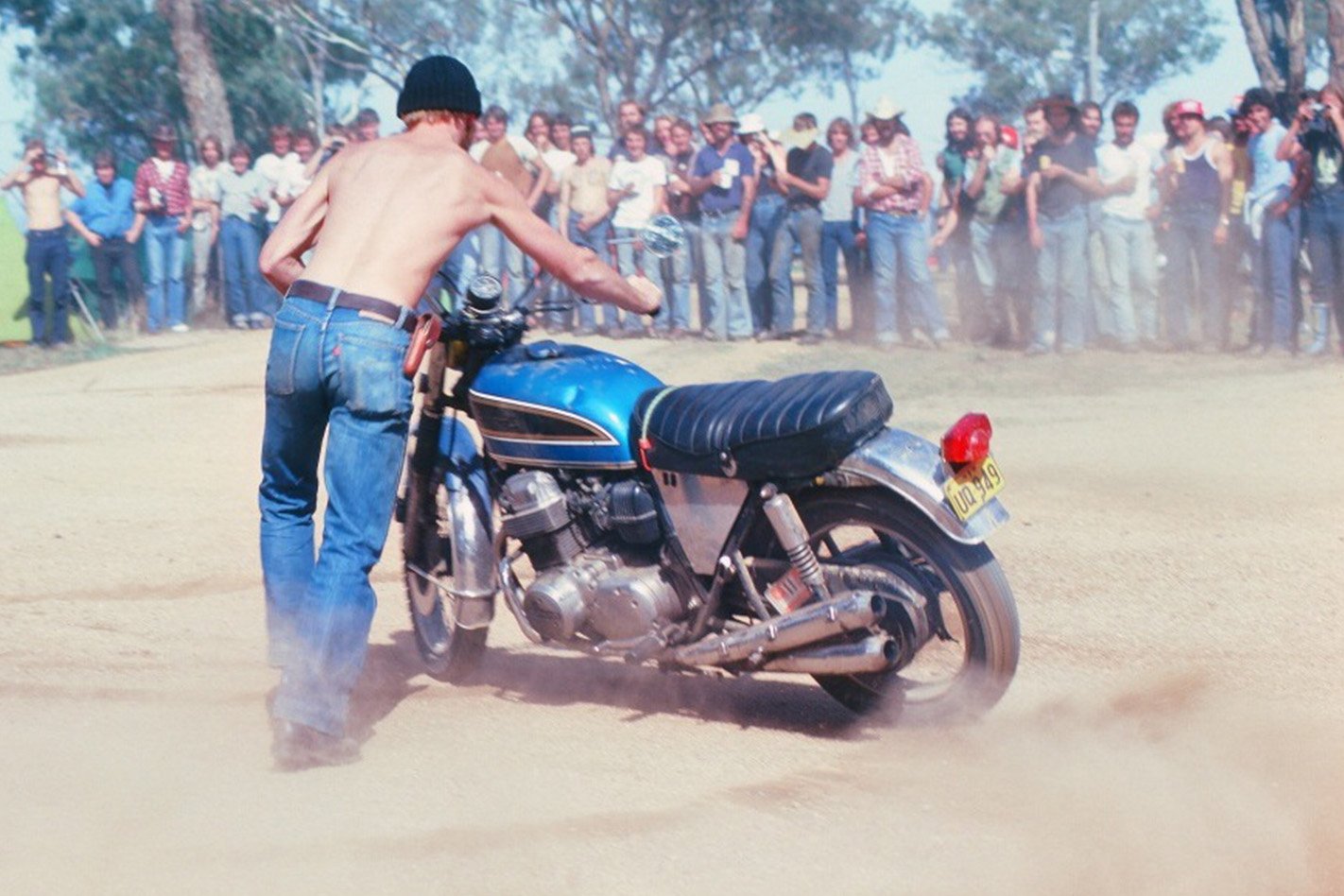
Having run since the ’30s, the Easter races at Bathurst were a staple of the Australian motorbike racing calendar at the time, and much like the 1000, fans would make the pilgrimage to Mount Panorama from around the country.
There was nothing particularly unusual about the behaviour of the motorcycle racing fans compared to their car counterparts. They were just as prone to drinking in the sun and partying by firelight as anyone else.
Each Easter the population of Bathurst would swell to 70,000, roughly 30,000 of those being motorcycle racing fans, with the police force in turn growing from the 25 normally stationed in the town to more than 500.
However, in the early ’80s the relationship between the fans and police began to sour. A number of big clashes with police in ’81 prompted police to increase their presence the following year, bringing with them the newly formed Tactical Response Group (TRG). The authorities, looking for a potential scapegoat, also claimed there was an increased presence of bikie gangs at the events, and began conducting more searches of all motorbike riders during race weekends.
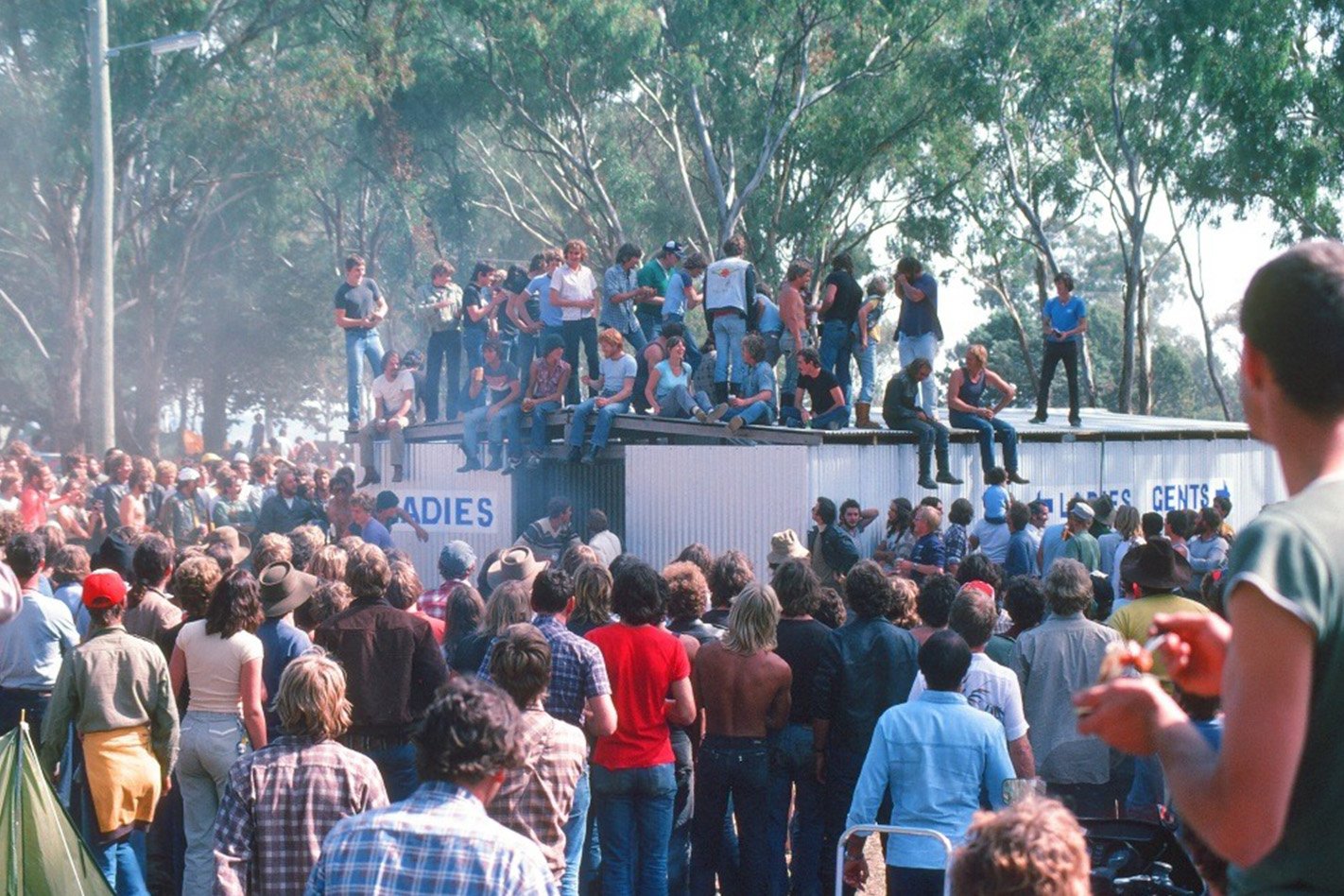
On the night of April 2, 1983, the top of Mount Panorama was turned into a battlefield. Tensions had been rising all weekend, with motorcyclists complaining of heavy-handed and unfair treatment by the police. Returning serve, authorities claimed fans had been acting up and taking part in ‘police-baiting’ in an effort to antagonise the cops.
Court records from the time reveal some of the antics of fans. One reveller was caught riding his motorcycle with a 44-gallon drum tied to the back and four of his mates inside. He had an alleged blood-alcohol level of .2.
Another, with a blood-alcohol level of .15, was riding his bike with nine pillions, weaving through the crowd before crashing into a group of police. Three of the people on the bike, including the rider, were naked.
These small, and in isolation relatively harmless, offences built up, and soon police began losing their patience with the crowd.
The spark that ignited the powder keg involved a Volkswagen sedan that drove through a crowded section of the camp ground, hitting two tents and a motorcycle.
Owners of the aforementioned tents and motorcycle were less than pleased at the turn of events, and confronted the VW driver and passenger. The situation had begun to escalate by time the police arrived. Without making any inquiries, they arrested the owner of the motorcycle.
Match lit.
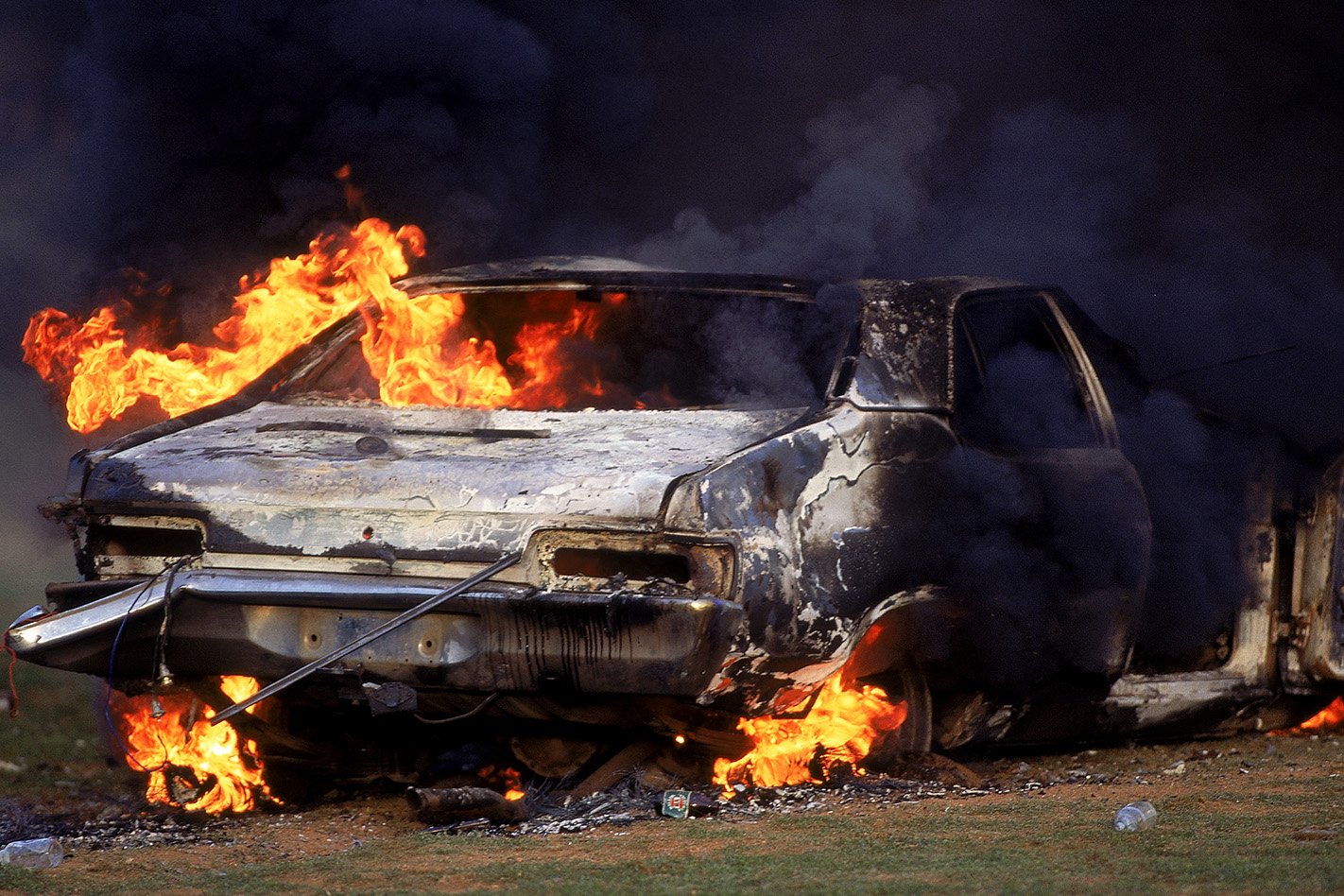
The crowd then began to harass the police, who retreated to a nearby police compound with the occupants of the VW, and the arrested motorcycle rider.
Here’s where things really ratcheted up a notch. Anyone familiar with Mount Panorama would be aware of the police building that is located at the top. Known colloquially as ‘The Fort’, it was surrounded by nine-feet-tall wire fences, and during events was usually staffed by 100 police officers.
On April 2, 1983, however, it contained 120 members of the police force, including all 53 members of the TRG.
Soon enough, The Fort was surrounded by an estimated 2000-4000 fans, armed with an array of beer cans, rocks, bottles, and petrol-soaked toilet rolls. You can imagine what happens next.
Oh, remember the VW that kicked off the whole ordeal? It was flipped on its side, eventually, returned to its wheels, set alight, and rolled towards the police compound.
After a 45-minute siege of the compound, with motorcyclists hurling projectiles, the revellers began to disperse on their own, returning to their camps.
Unwilling or unable to let the affront to authority go unpunished, the TRG squad emerged, equipped with riot helmets, shields and batons. Once the riot squad was able to establish a line of defence around the compound, they began arresting motorcyclists at random. By the end of the weekend, more than 150 were summoned to appear in court.
The carnage is reported to have lasted for over five hours, all with a backing track of The Doors at 120dB, as a band that had been booked to play had forgotten some key piece of equipment and instead opted to blast some crowd-pleasing rock at maximum volume.
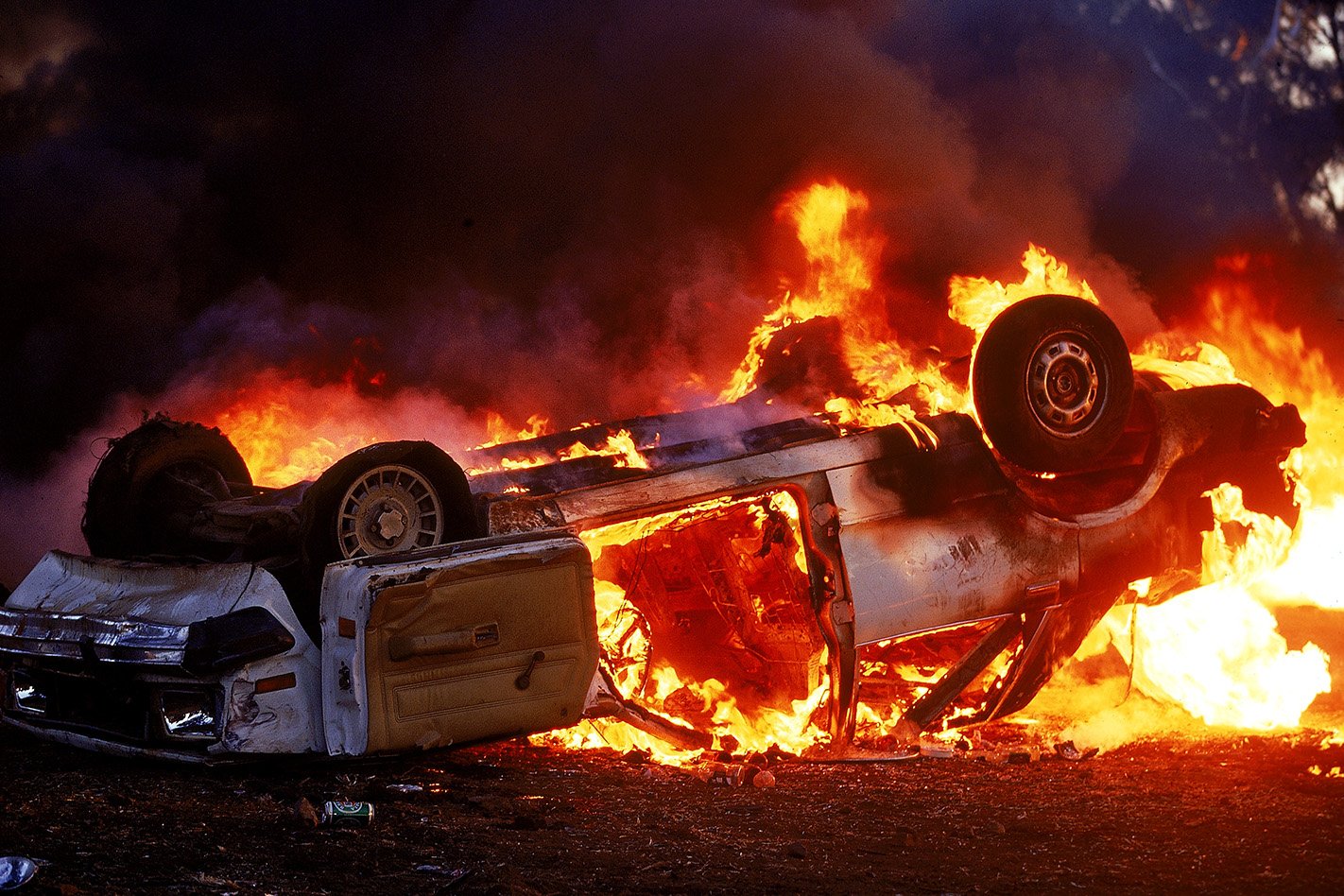
Following the events, the harshest criticism was laid on the TRG, with a report by lawyer David Heilpern stating: “[the TRG] not only proved the most brutal and violent in the riot situation, but also showed themselves to have, to a large degree, instigated the riot itself.”
In 1985, clashes between police and revellers escalated once again, this time lasting eight hours, with a vehicle belonging to a Channel 7 news team set alight.
The report into the ’83 riots would recommend the banning of alcohol from further events at The Mount, which would be implemented in ’86. This, combined with dwindling attendance rates, would kill the Easter bike races at Bathurst.
After that, the riots at Bathurst races ceased. Nowadays, with 200,000 attendees across the Bathurst 1000 weekend, events at Mount Panorama have a much more family-friendly tone.
There is still revelry and high spirits, but the colossal police presence ensures all shenanigans are quickly contained.
Pssst … want a cheap Tesla?
No? Well, you’re not alone; it seems not many other people did either.
Around the middle of last year, the company’s local operation trimmed the model line-up, killing the entry-level ‘Standard Range’ versions of both the large-sedan S and crossover X models; now prices have been bumped up across the entire three-model range.
But first allow us a quick clarification. Tesla is unique among brands in Australia in the fact it does not add luxury car tax (LCT) to the quoted prices of its vehicles to which the tax is applicable. Instead, it bolts this charge on as a separate figure, along with delivery fee, on-road costs, etc. Previously, our Tesla pricing in the Databank section of Wheels magazine has reflected that pre-LCT figure, making the cars appear cheaper than they actually are, and not comparable to prices supplied by other manufacturers. We’ve since amended those published prices as of the June edition, on sale May 25.
So, to the range revisions and pricing changes.
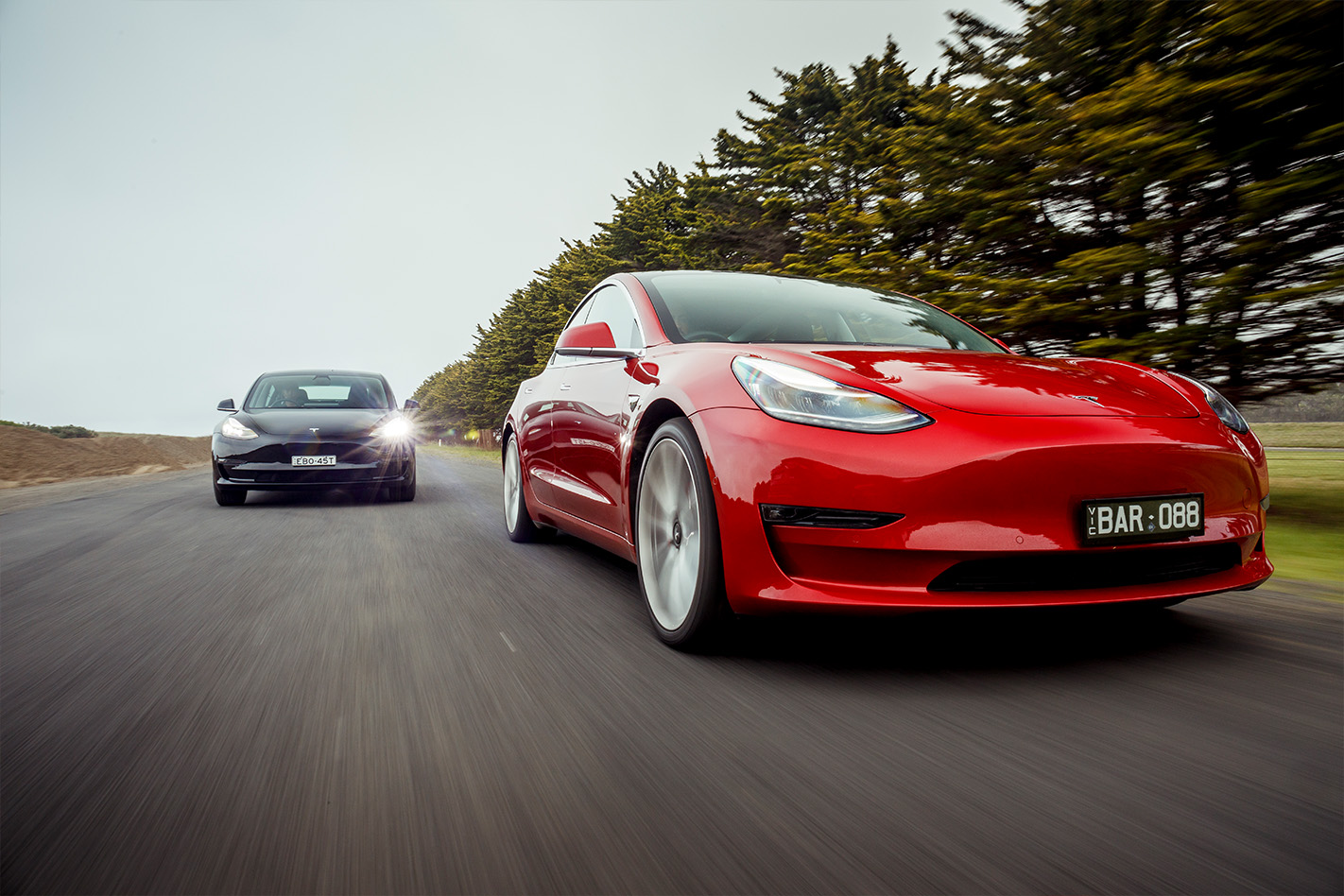
The line-up of the Model 3 is still three-strong, but the base variant, the Standard Plus (a rear-driver), climbs $6000 to $73,900. The mid-spec Long Range, which is a dual-motor, AWD layout, cops less of a hike: it’s up just under $2600, now $91,612, but does feature a spec change, adding 19-inch wheels in place of the previous 18s.
The range-topping 3 Performance is up by the same amount, now selling for $102,012.
The Model S has been pared back to a two-variant line-up, and both have headed north price-wise. The Long Range cops the biggest hike of the two, up a hefty $8800 to $147,512. The rise on the Performance is more modest, the extra $2600 taking it to $167,012.
The X offering now starts with the Long Range at $165,712, up a whopping $14,300 over what it was, which makes it the biggest inflator of the lot in percentage terms – that’s a 9.4 percent rise.
The flagship X Performance is up $10,400 to $185,212.
It’s worth clarifying that the Performance variants of S and X feature Ludicrous mode; this is not a feature specific to an even higher variant.
As for the yet-to-arrive Model Y mid-size crossover, we know it will be offered in two variants, both with AWD. The Long Range claims to be good for 505km (on WLTP) and 0-100km/h in 5.1sec, while the Performance claims a range only slightly lower – 480km – and 0-100km/h in a scalding 3.7sec.
No official word on arrival date or pricing on these for now, but stay tuned.
If you wanted to buy a new BMW M140i, you’re too late. MOTOR reader Scott Tye bought the last one.
Yep, the final new BMW M140i in the country has been sold, so you’d better hit up the classified listings if you missed out.
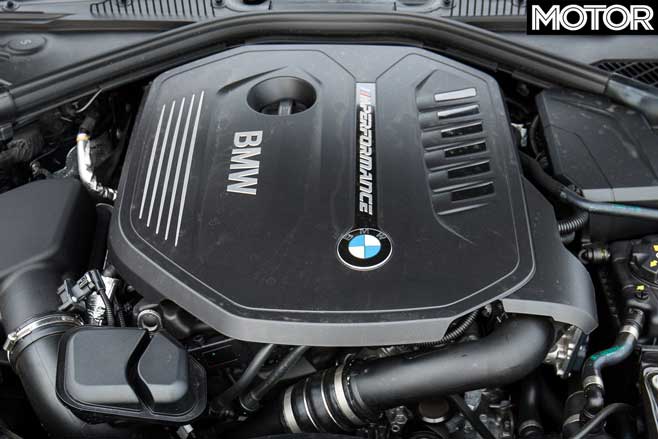
The 250kW/500Nm, turbocharged straight six-powered hot hatch was sold by Sydney BMW dealership Sylvania BMW, which MOTOR has since confirmed with BMW Australia as the last new M140i.
“My wife bought a M125i while I had a Golf GTI Original,” Tye told us.
“I loved her car but wanted a bit more, the M140i’s reputation is truly correct. So I searched and found the last one at Sylvania BMW. I will have it to the grave I reckon. It’s just a weekend car.”
If you’re not colour-blind, you’ll notice the last car was red (and now you’ve no excuse even if you are), but you might be wondering what gearbox it has.
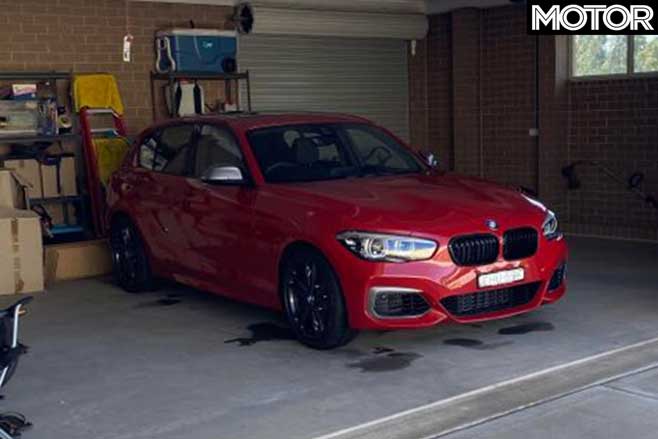
“Auto, I had no choice, but if I had a choice it would have been the ZF. My GTI was manual and I was disappointed.
“Make the car do all the work I say! But [you can use] Sport+ and use the paddles if you want or need that manual feel.”
Obviously, now’s not the time to be out driving for the sake of it, unfortunately meaning Tye hasn’t had much of a chance to really experience the M140i. He says he’s “not really driven [it hard] yet, still keeping it under 4000rpm and running it in.”
We know from experience there’s a lot of fun to be had in that car, hopefully its ‘last first’ owner gets to find out for himself sometime soon.
You only need to read the roll call on the new Ford Mustang range to see where Ford focused its energies. While the V8-powered GT remains unchanged both in title and mechanical specification, it’s the often forgotten turbo four-cylinder sibling that has used the MY20 update as its chance to step into the spotlight.
The entry-level Mustang’s name has evolved from the simple and somewhat dreary ‘EcoBoost’ tag into the very serious-sounding ‘2.3L High Performance’. We’ll just call it the HP from here on in.
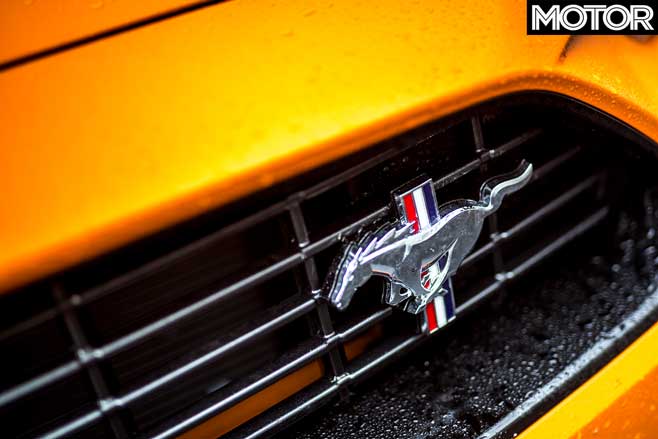
You can see Ford has also taken the opportunity to inject some attitude into the four-cylinder ’Stang’s looks, as all HPs feature new grilles and badges to advertise a new attitude. Closer inspection reveals horizontal slats and a new galloping pony badge, offset on the car’s passenger side, replace the 2019 model’s honeycomb radiator grille.
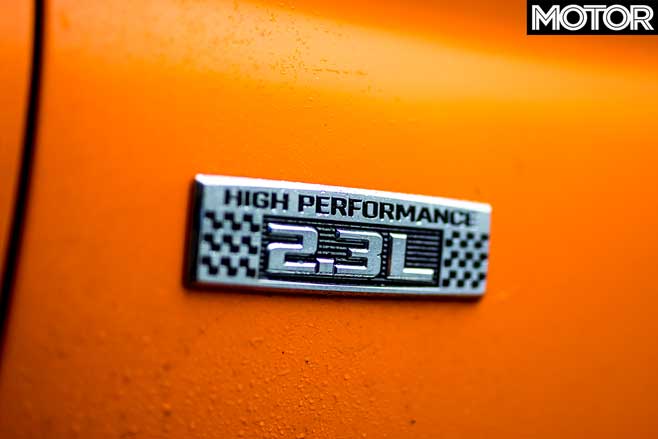
The new red-white-blue ‘tri-bar’ stripe behind the front badge also appears on the boot, while specific ‘2.3L High Performance’ badges are worn on the front guards.
Four new colours also join the Mustang’s palette, but we feel the Twister Orange hue clinging to our loan car is the most symbolic of them all, given that’s the colour you get after mixing red and yellow – the colours of the Spanish flag…
It turns out that Spain and the Mustang have a fair bit in common, too. Besides the Spaniards being the ones who introduced the wild horse breed to the Americas in the 1500s, Ford’s plant in Valencia builds this car’s 2.3-litre four-cylinder turbocharged engine. Valencia also made the 2.3-litre four in the Focus RS.
Despite the similarities between the two engines, including an identically sized 63mm compressor wheel (that’s 3mm bigger than the EcoBoost’s), it hasn’t been as simple as restarting the hot hatch’s engine production line.
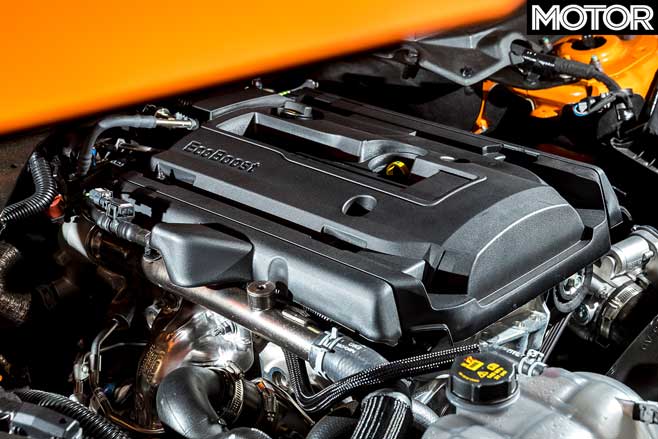
The new HP’s turbocharger, along with other components, are redesigned to suit a north-south orientation. The Mustang’s engineers also focused on a specific tune and broadening the torque spread in the HP’s mid-range.
That might be why it’s so easy to hustle the HP when the engine is coupled with the 10-speed automatic. As well as the two feeling well matched for frugal commuting, we used only 9.08L/100km on a drive on highway and mountain roads, the shortly stacked ratios keeping the four-banger in its sweet zone.
Ford claims the HP delivers its 448Nm at 3800rpm, yet it’s the fact that it produces 90 per cent of that maximum between 2500-5300rpm that helps the HP feel so urgent and responsive under foot. It’s a flexible engine, and the 6200rpm power peak makes the journey to its 6500rpm indicated redline worthwhile.
Mind you, with ‘only’ 236kW and 448Nm on tap, or an increase of 12kW and 7Nm on the MY19 EcoBoost, it doesn’t feel that much faster. After a few seconds on full throttle the speedo reveals you’re never carrying as much speed as you think.
That’s because the HP still has to lug around a lot of pony. Even with the four-cylinder engine erasing almost half the V8’s mass in the car’s nose, dropping 68kg in the process, it still tips the scales at 1716kg with the automatic transmission.
Ford provides no acceleration data to reveal how much faster the new HP is than the old four, and we remain sceptical of any drastic improvement on the MY19 until we complete performance testing of our own, but it’s clear that the four-cylinder Mustang package is more about cohesiveness than outright excitement.
Much of this centres around the HP’s favourable 53/47 per cent weight distribution, which gives it a front-end that’s more direct and responsive than any V8-powered GT. Even the added steering weight in Sport or Sport Plus drive modes fail to dull its pleasant, light feel.
It helps, of course, that Aussie cars have had their pick of America’s optional Handling Package and score new 32mm front and 24mm rear solid sway bars. They help the HP feel more tied down and, given the rear end benefits from a larger increase in roll stiffness, the HP is more controllable on the throttle when dallying with oversteer.
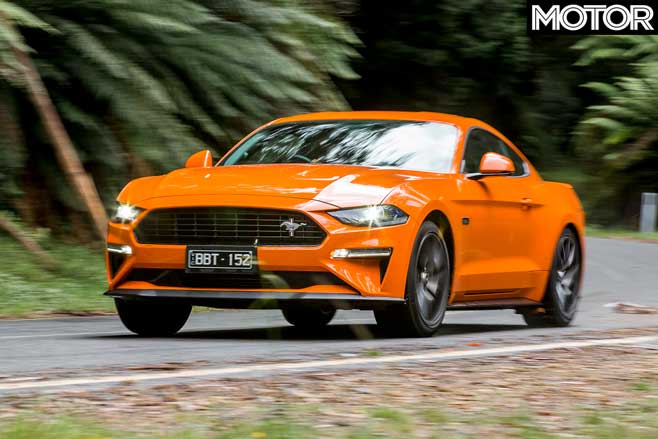
Combined with the standard-fit Torsen diff, the 2.3-litre engine’s fat mid-range and its improved throttle response, you will find the HP gives options in corners. You can either float it in and wrestle with the grip offered by the Pirelli P Zeros, or stab the throttle and tweak the rear angle.
That said, trying conditions can expose the limits of the 255mm-wide Pirellis that feature on a square fitment, as the car is more eager to break away on wet roads.
Given the car’s mass, its 348mm/330mm-sized brakes can feel a bit underdone, but they have enough finesse to salvage some confidence when setting up a corner. Besides, the HP never generates the sort of energy to warrant anything larger.
There’s also no meaningful upgrade in theatre, despite the active exhaust that’s fitted as standard. While the MY19 was a big improvement in this regard, and we love the pops released when you lift off, cycling through the drive modes fails to find any musicality. Thankfully the turbocharger keeps things interesting and you can hear it spooling through the exhaust.
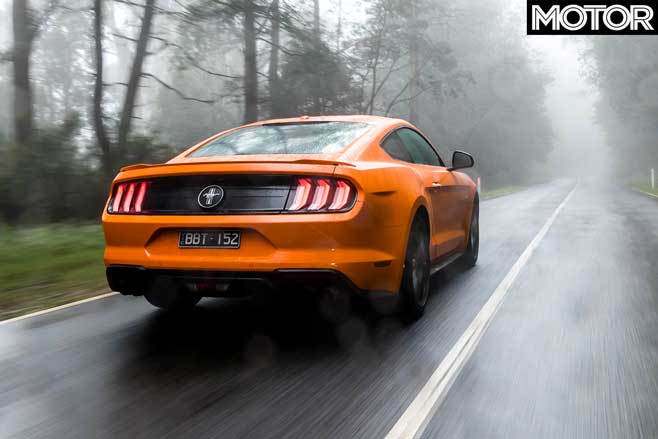
Swap winding roads for straight ones and the HP is excellent as a cruising device. Although Ford offers Magneride adaptive dampers as an option, the single-tune suspension on our test car served up a gentler ride than a GT at a cruise and at low speeds, which no doubt softer springs and a lighter kerb weight helped create. It’s well judged.
Inside, there isn’t much the HP owner would want for in the way of creature comforts and technology. With either transmission option, you score B&O sound and Apple CarPlay or Android Auto, accessed through SYNC3, along with power and heated/cooled seats. Add a full suite of adaptive safety features along with swathes of leather inside and it all feels a touch more premium than you might expect for a ‘base’ car.
Conversely, the price for Ford’s entry-level Mustang creeps up $1000 to $50,990 (before on roads) for the six-speed manual, and $53,990 for the 10-speed automatic. When you consider that will buy most of today’s best hot hatches, it’s a lot of money for something slower and, with only two doors, less practical.
But if for some reason your priorities hinge on the size of your fuel bills rather than the experience under your right foot, and the Mustang’s retro lines weaken your knees, then the HP offers more than just a heady price advantage (of $13K) on the V8.
It feels like Ford this time around made more time to develop the four-cylinder into its own car. And while that might come with its own inherent flaws, it also comes with advantages. And that makes this replacement for displacement more complete than ever for the undiscerning ’Stang suitor.
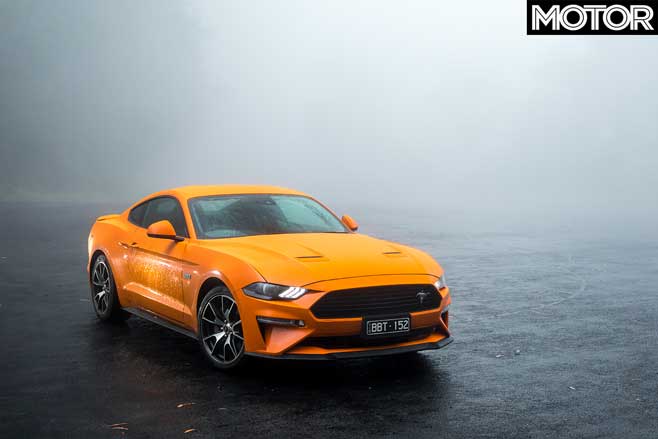
2020 FORD MUSTANG 2.3L HIGH PERFORMANCE SPECS Engine: 2261cc inline-4, DOHC, 16v, turbo Power: 236kW @ 6200rpm Torque: 448Nm @ 3800rpm Weight: 1716kg 0-100km/h: 6.0sec (estimated) Price: $53,990 (auto)
Likes: Chassis balance; frugality; tough-looking exterior; decent ride; more responsive Dislikes: Uninspiring exhaust noise; still feels a bit slow; getting expensive
Rating: 3.5 out of 5 stars
