
- New Ssangyong EV SUV spied in the NT
- First pics of new Korando on Aussie soil
- New SUV due next year
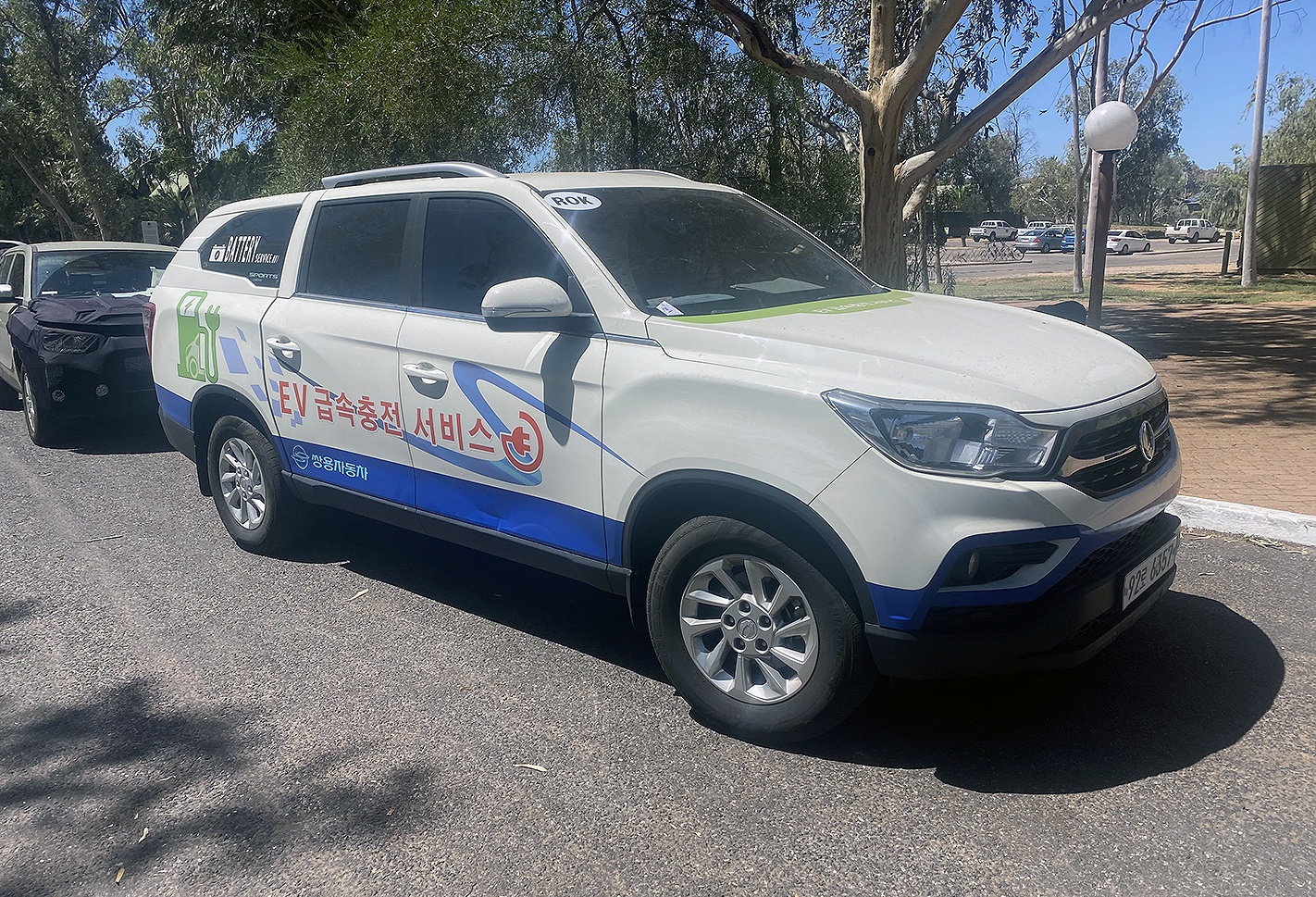
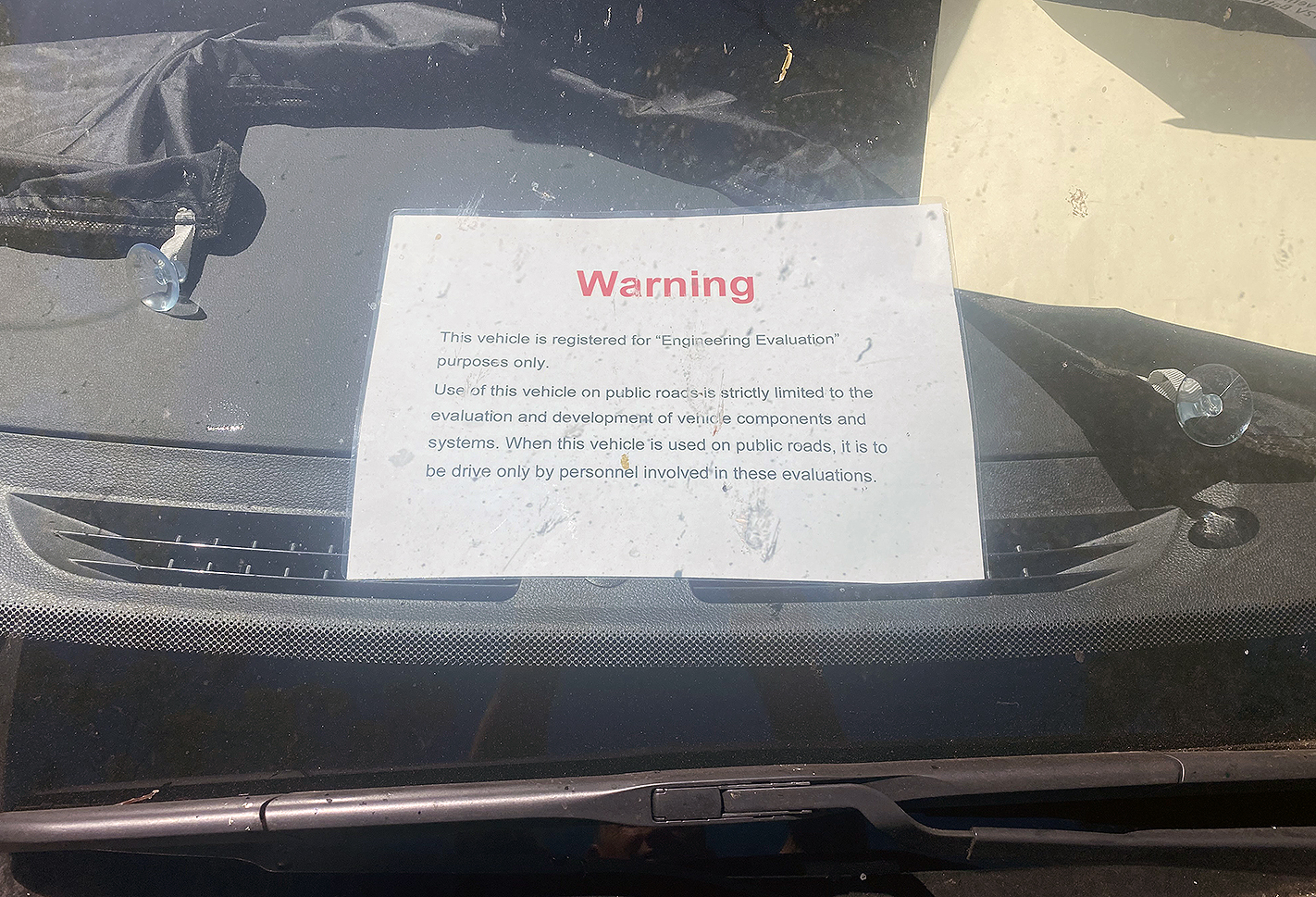
WhichCar reader Darren recently snapped these images what appears to be the SsangYong Korando E100, which the Korean carmaker revealed last year.
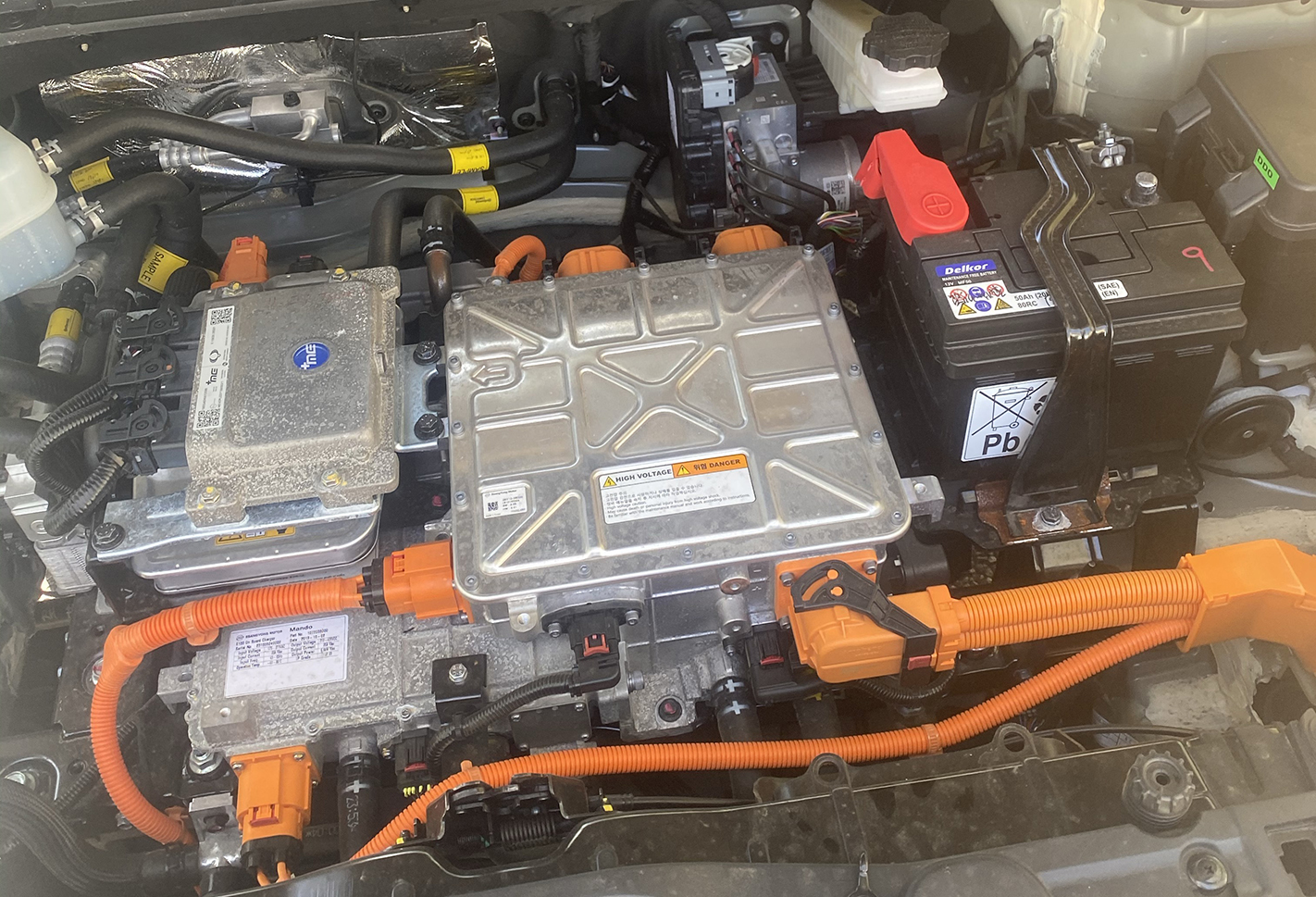
Based on the Korando medium SUV, the E100 is powered by a single 140kW motor connected to a 61.5kWh battery pack.
According to SsangYong the E100 will have a 420km range and class-leading acceleration. It also reckons it will be able to tow a caravan, though at this stage has not revealed its towing capacity or range.
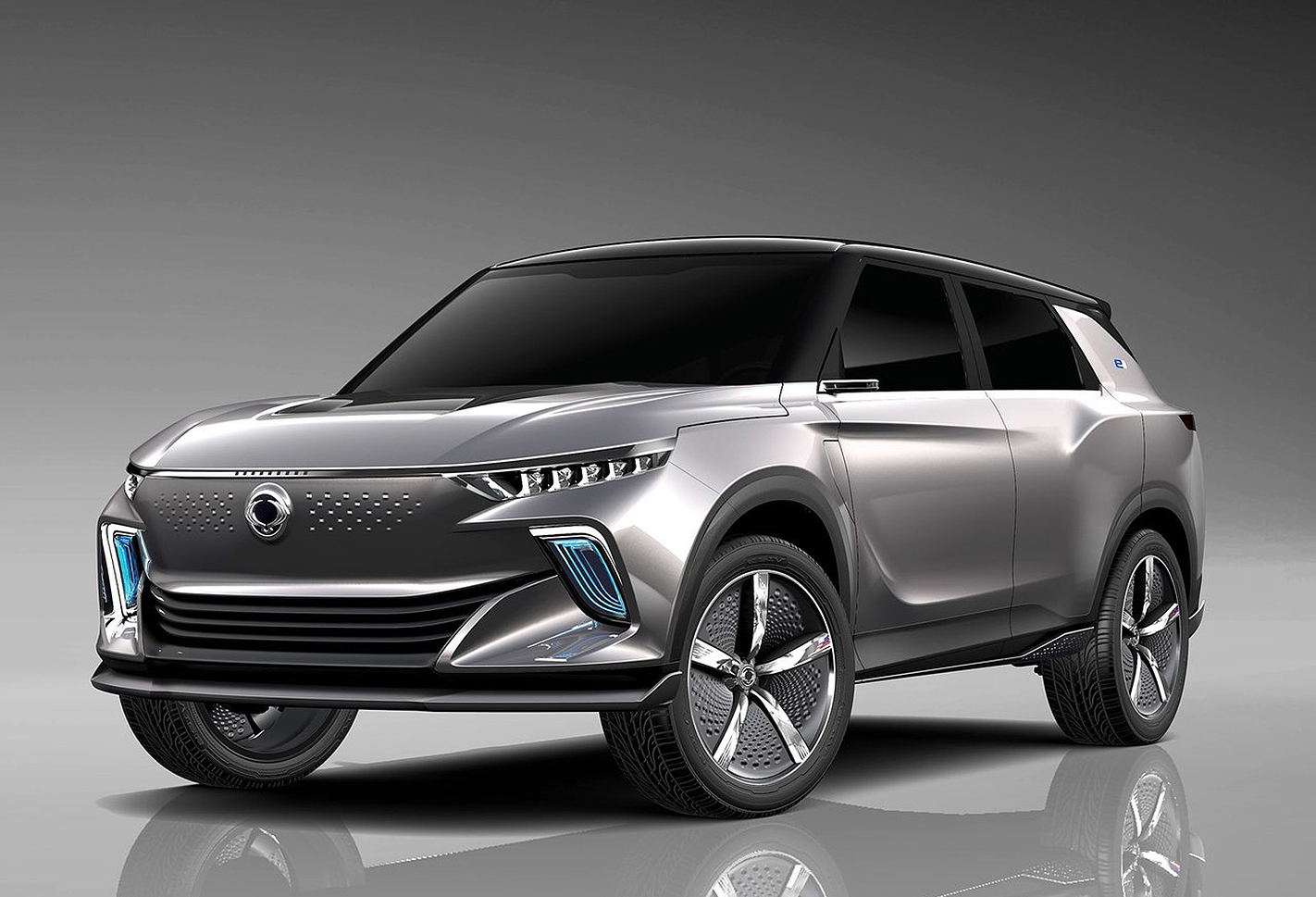
Clues to how it looks underneath the cladding can be found with the 2018 SsangYong e-SIV EV Concept (below) that shares the Korando’s profile and distinctive crease lines but has a more futuristic front end, with the standard grille being surplus to requirements.
The Korando is also expected to gain a 48V mild-hybrid system later next year to help meet the SsangYong range meet emissions targets.
WhichCar has contacted SsangYong Australia to find out if the Korando E100, which was slated to enter production in mid-2021, will be joining its revamped line-up which includes the Rexton seven-seat SUV and Musso dual-cab ute.
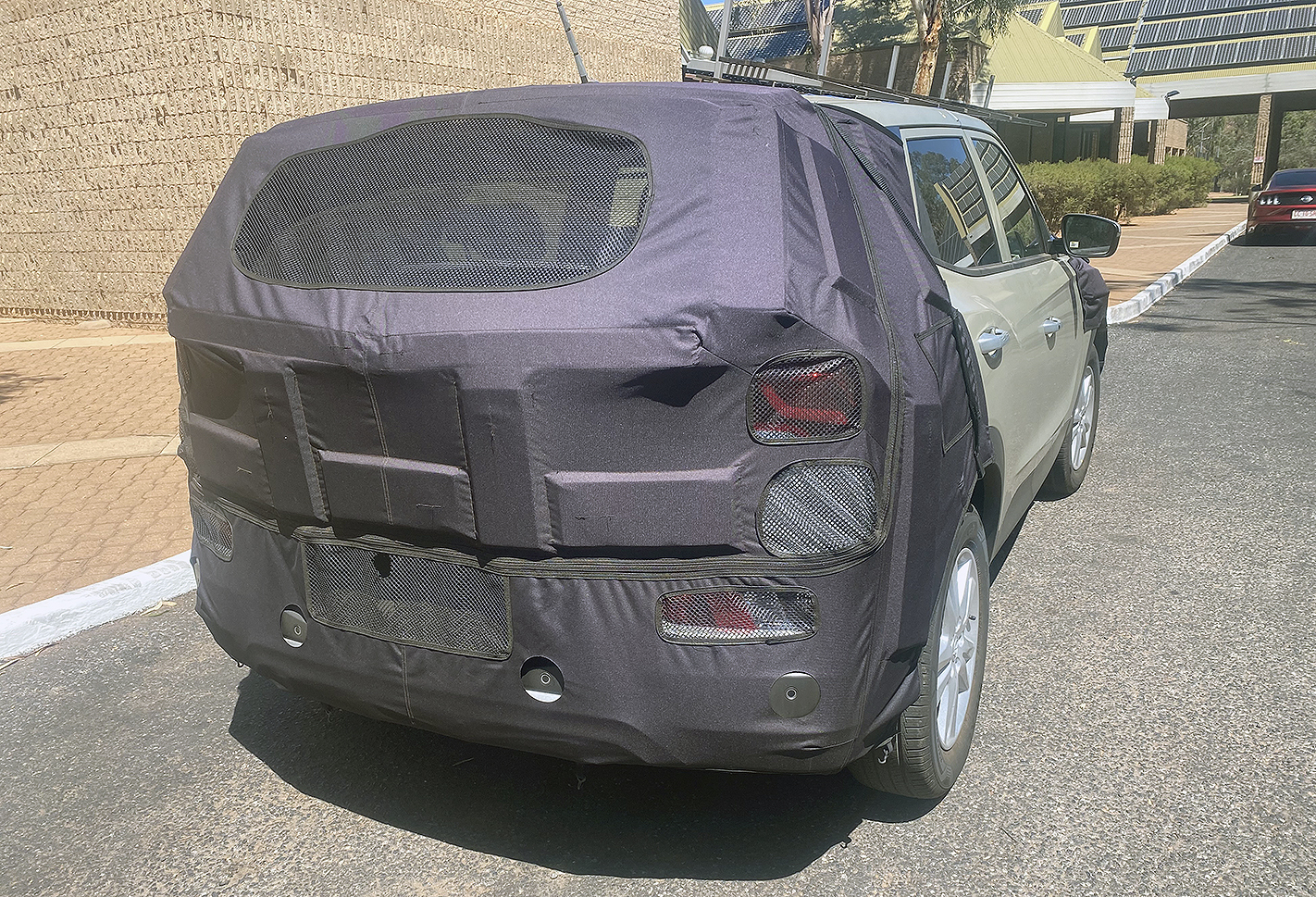
Seeing the cars being evaluated in Australia isn’t exactly confirmation of this. The fact they were spotted in Alice Springs could mean SsangYong has brought them here for warm weather testing as the Northern Hemisphere still emerges from winter.
But SsangYong Australia, which relaunched here in 2018 with full factory backing, has expressed that it would be very keen to see electrified versions become available Down Under.
Being one of the first carmakers to offer a relatively affordable medium SUV to the Australian market would boost SsangYong’s here.
If it does come to Australia, the SsangYong Korando E100 would provide a more practical option than the Hyundai Kona Electric while being more affordable than the Mercedes-Benz EQC and Tesla Model X.
SsangYong hasn’t revealed pricing yet, even for its European target market, but, using the Kona Electric as a guide, expect to pay from around the high-$50k mark.
Snapped something special? Let us know in the comments below and we’ll chase it up!
Every day filming for the TV show is a good day but there are some gigs you look forward to more than others. And I can tell you with absolute confidence that being thrown the key to the 2020 Audi RS7 just the day after it made its global debut was definitely one of them.
A few hours before, the all-new Audi RS7 had been revealed to a global audience at the Frankfurt motorshow but we had been ushered from the event to the airport, where a fleet of the fire-breathing rocketships had been summoned.
Rather than a pristine and controlled race track destination, we were instead directed to a lovely guest house in Absteinach, about an hour south. This lovely lunch stop was nestled in perfect lush German countryside and framed by the typically verdant landscape, but its proximity to a 50-year-old hill climb race called Zotzenbach Bergrennen was no coincidence.
Most of the shots you see in the TV feature were captured along incredible public roads that are closed once a year to hold the race.
Like so many of the locals, our hosts were diehard petrol heads and offered the unexpected treat of a tour of their garage. Wow. Mercedes 180 SL, E-Type Jaguar, original Mustang Bullitt, Willys Jeep.
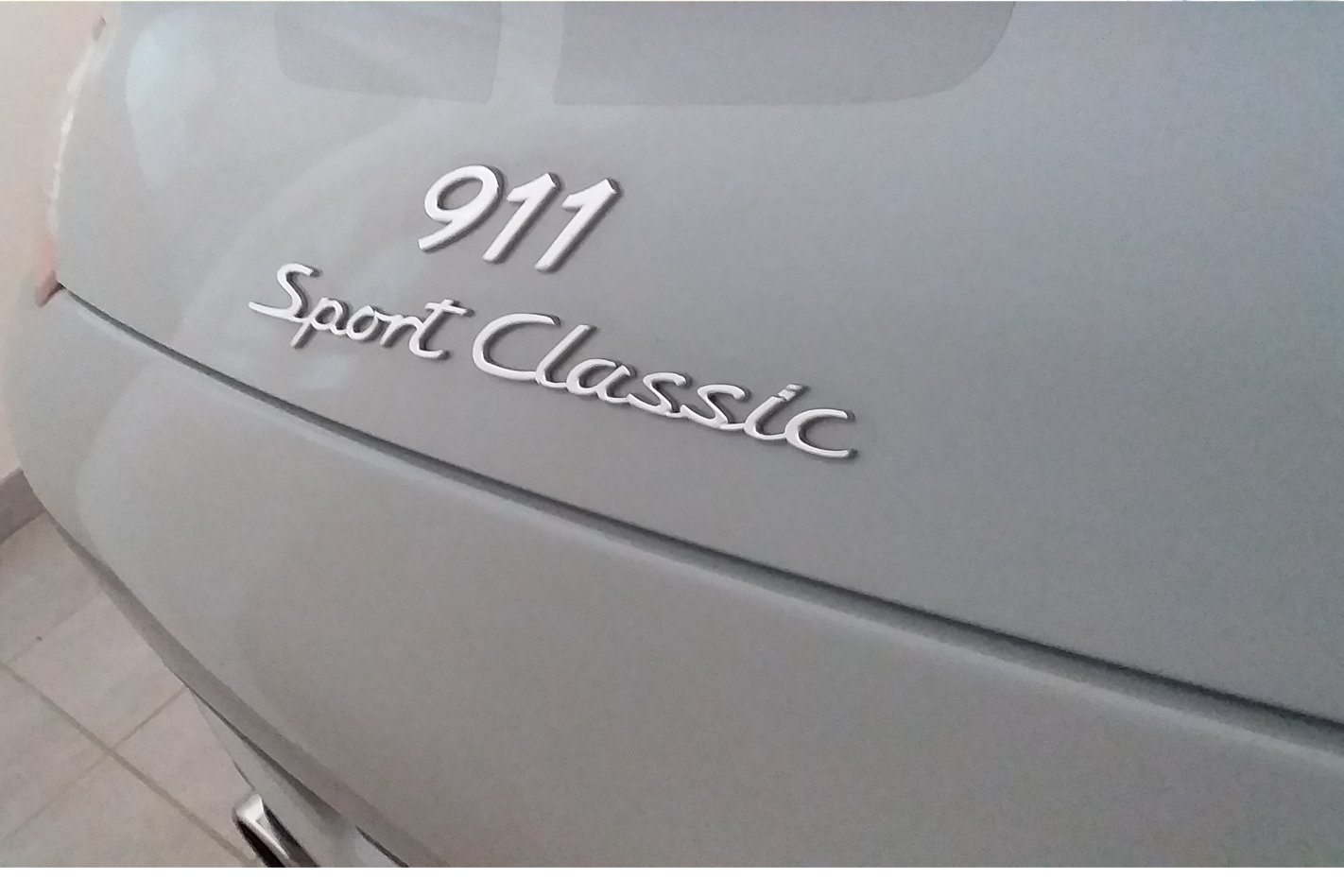
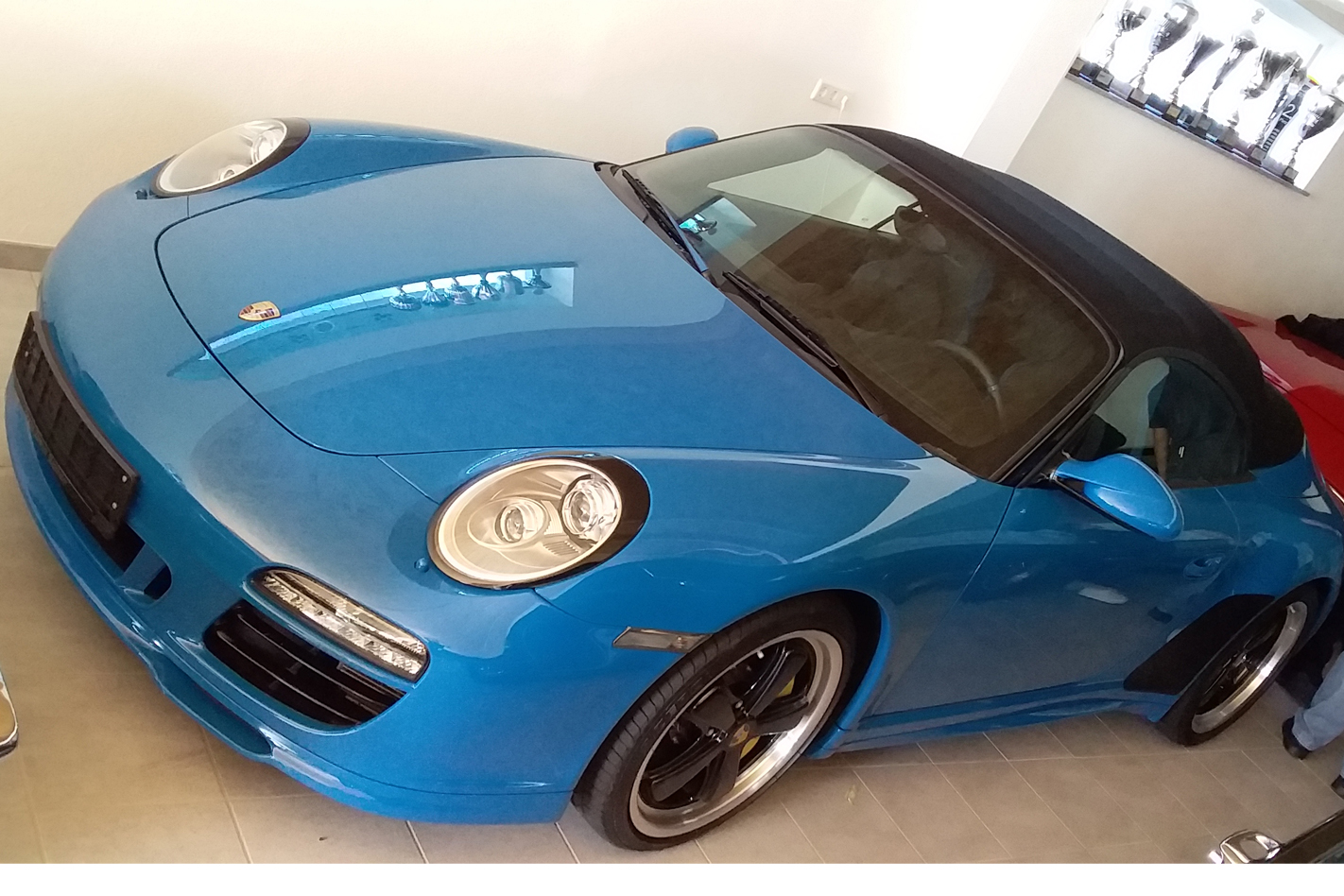
And the highlight for me – Porsche 911 997 Sport Classic and Speedster. All under one roof in a sleepy hillside suburb.

For context, only 250 of the Sport Classics were produced, and Porsche limited the run of Speedsters to 356 worldwide. An example of the former is currently on sale in Australia with an asking price of $850,000.
In Germany, you never know where you’re going to stumble into another unapologetic but humble car enthusiast, but there are everywhere.
Perhaps the most exciting part of the shoot, however, disappointingly happened after the cameras had been packed away and on one of Germany’s national treasures. No, not the Neuschwanstein castle, Ehra-Lessein, or the Reichstag – the autobahn.
The series of hill climb roads tucked away in the countryside had been perfect to test the physics-defying handling and grip of the RS7 but there’s really only one place you can fully exploit its immense 441kW and 800Nm of torque.
An arrow straight, perfectly maintained freeway also highlights that the zero-100km/h acceleration time of a car like this is somewhat meaningless. 3.6 seconds comes and goes in the blink of an eye and after that, it’s a matter of watching the speedo flash past milestones with unbelievable pace.
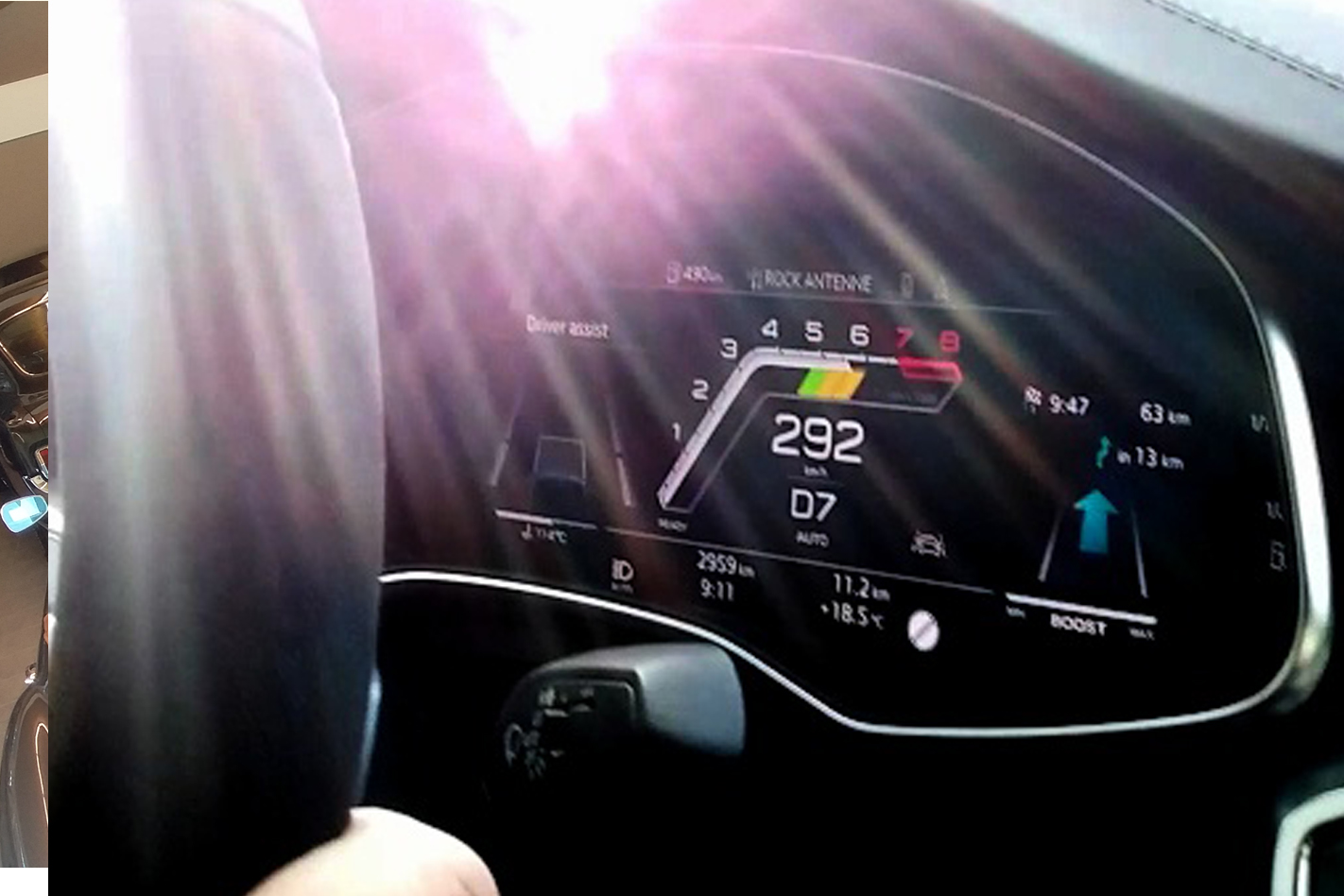
Obviously I was hunting the biggest trophy I could to take back to Australia’s puritanical roads rules, and although the magic 300km/h came tantalisingly close, I handed back the monstrous car with a new personal best of 292km/h.
More interestingly than the Audi’s ability to cleave through air like it’s in a vacuum is the nation’s attitude toward going fast, high-performance cars and standards of driving.
For example, drivers do a curious thing on the freeway called ‘keeping right unless overtaking’. You may not have heard of the concept of staying in the slower lanes unless you need to pass another slower vehicle because very few Australian drivers actually ever do it.
That means most drivers in Germany can happily bumble along between 130km/h and 200km/h leaving the inside lanes for owners of jet-propelled time machines to blast through unhindered. There are no vigilante do-gooders, there’s no feuding between selfish drivers and the freeways flow unbelievably efficiently.
MORE Lane etiquette 101
It couldn’t be further from the common Australian freeway that resembles Operation Escargot on a daily basis with every single lane choked to 98km/h by drivers that seem totally oblivious or ignorant to other road users.
The only thing that thwarted my quest to 300km/h was a car that pulled into the outside lane about a kilometre in the distance and required some heavy intervention from the massive carbon ceramic brakes.
The driver was doing nothing wrong and he most likely checked his rearview mirror before changing lanes as most Germans do. He simply wasn’t expecting a steroid-pumped Audi to be closing at close to lightspeed. Amazingly though, as I eventually passed, he raised a hand to apologise!
Can you imagine that ever happening in Australia? We can learn so much from Germany and its amazing car culture.
The Suzuki Swift Sport Series II will hit Aussie showrooms soon, featuring a few mod-cons and style changes for the low-cost baby hot hatch.
With pricing yet to be confirmed (but unlikely to stray far from the current $25,490 in manual), buyers can expect the Series II hatch to be available in May, with COVID-19 seemingly having no impact on the Swift’s availability.
Included in the update is, most obviously, a new orange paint option with a black roof two-tone scheme, plus a digital speedo, and safety features like blind spot monitoring and a rear cross-traffic alert. Door mirrors will also be heated.
The Swift Sport’s 103kW/230Nm turbocharged 1.4-litre four-cylinder engine remains unchanged, which is no bad thing by any measure.
Though it’s a relatively minor update, Suzuki Australia’s general manager for the brand’s ‘Automobile’ division, Michael Pachota, says the new features add extra life into a car the brand is already very happy with.
“The introduction of the updated Swift Sport Series II is a significant evolution of what was already a class leading driving experience,” says Pachota.
“New advanced technological features and a bold new colour option will be sure to impress. We welcome these refinements to the Swift Sport Series II, which will further enhance the driving experience of this iconic vehicle.”
Having been in Australia since early 2018, it’s likely this update will see the current-gen Swift Sport stay around for a while yet.
What’s on WhichCar TV this week?
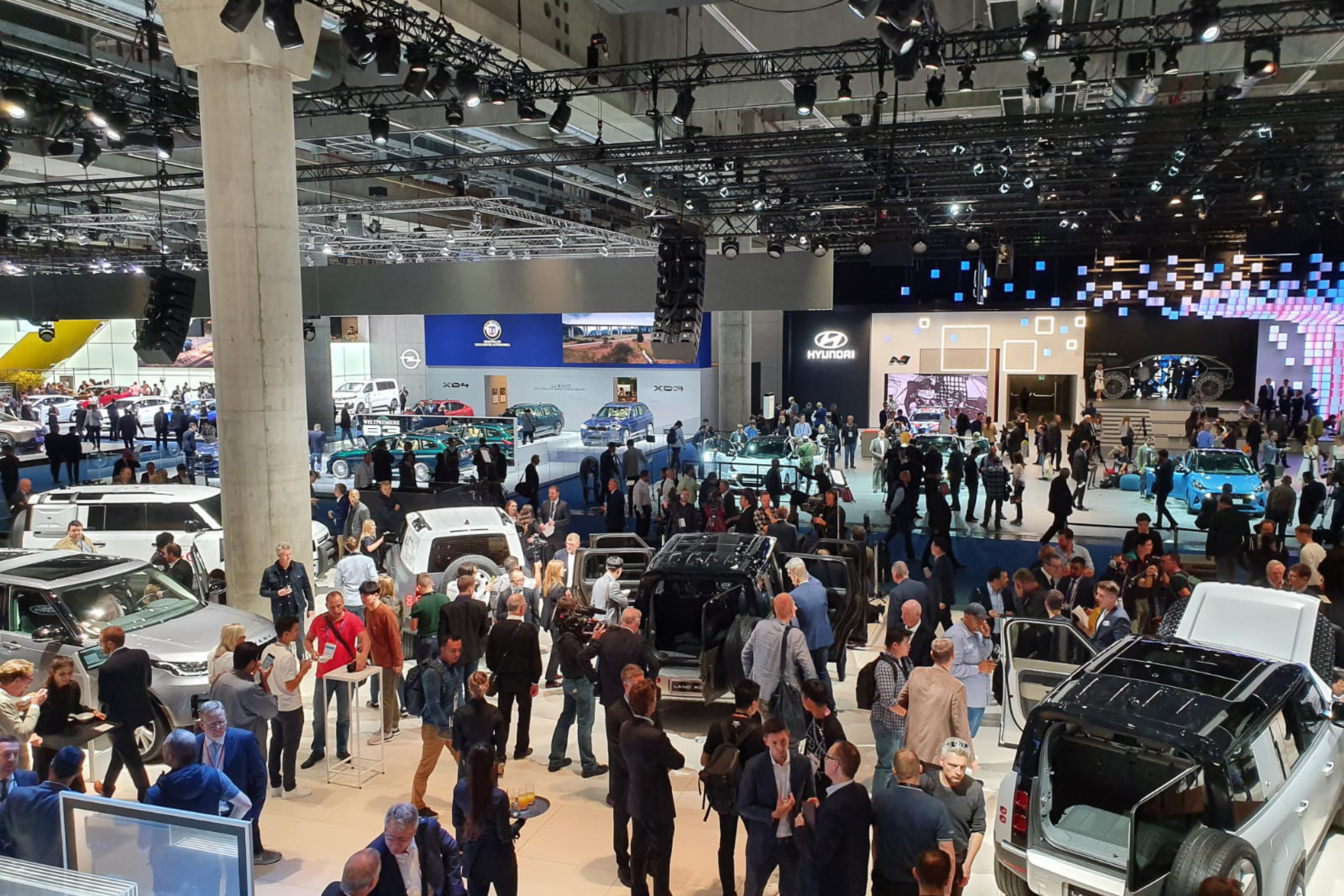
We visit the Frankfurt Auto Show
It’s the world’s biggest show by square kilometre-age, and we need three presenters to cover it!
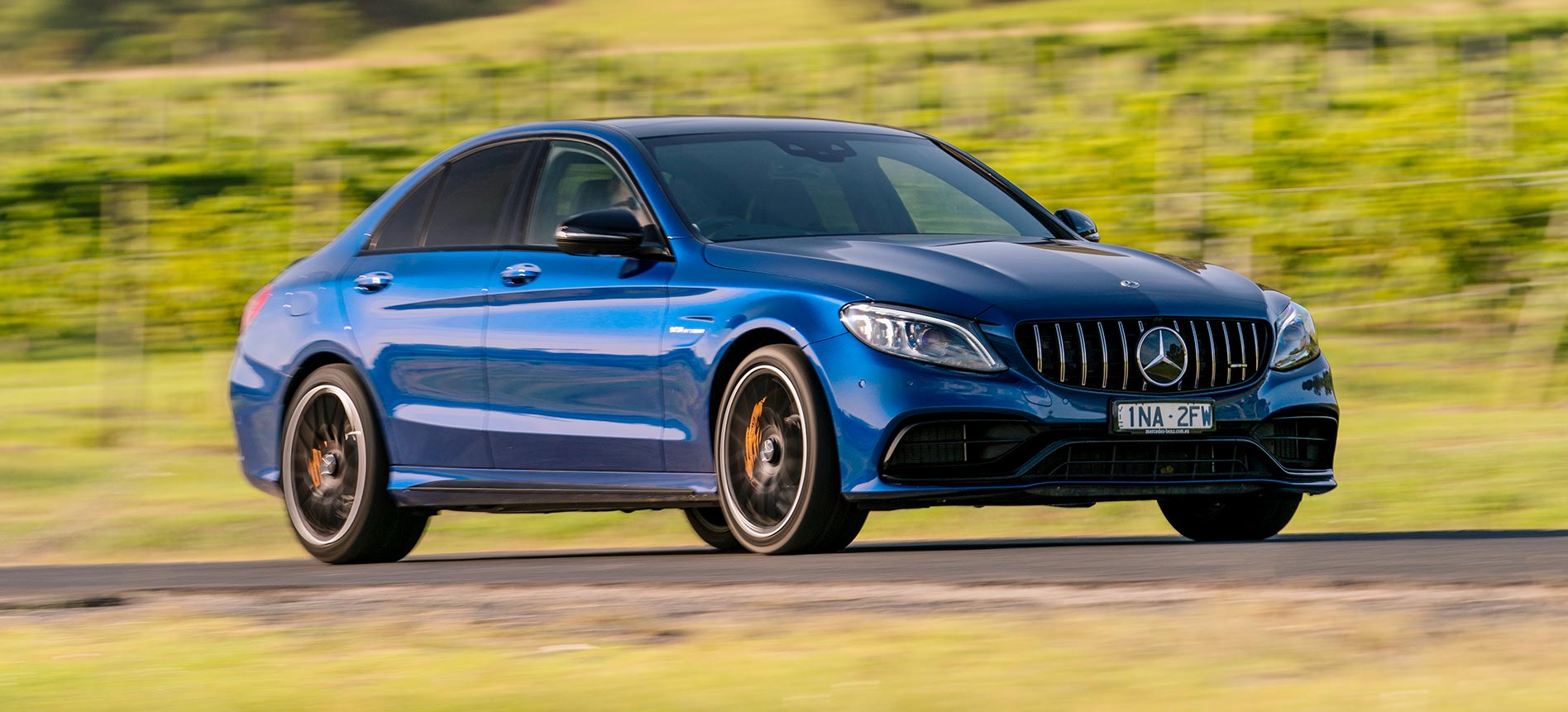
Editor’s review – Mercedes-AMG C63
Motor editor Dylan Campbell checks out Merc’s V8 bruiser up close.
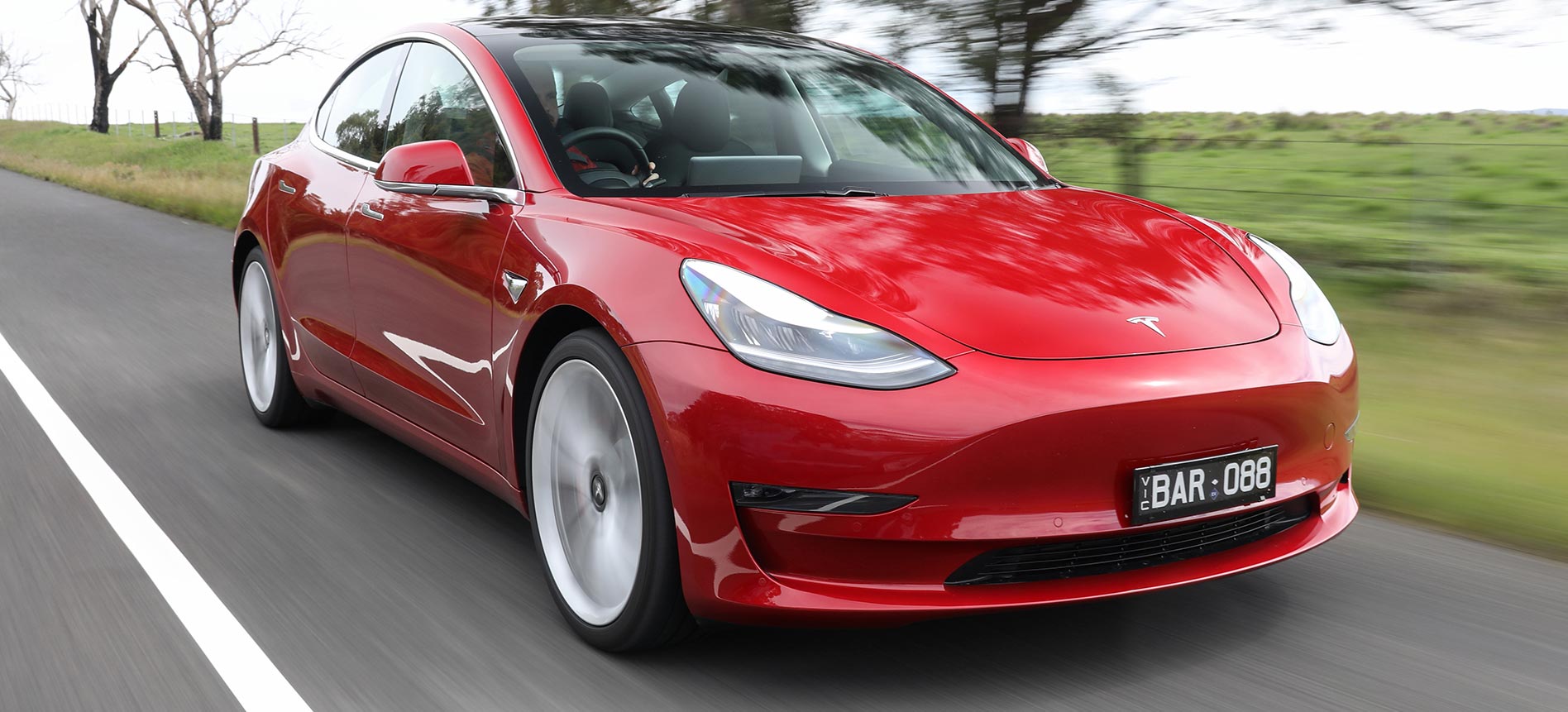
Tesla Model 3 Performance skids
Scott Newman slides sideways in the name of science in a Tesla Model 3 Performance.
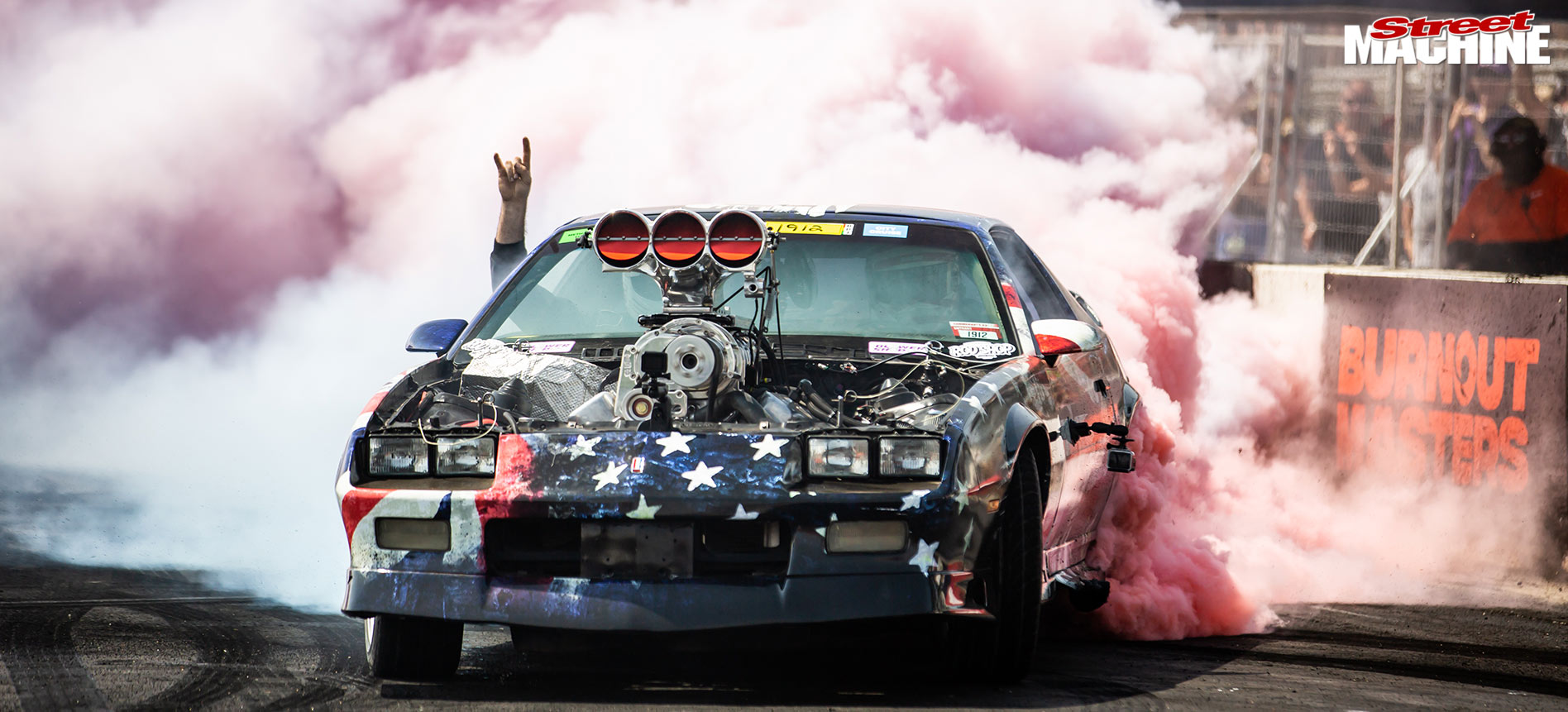
Continental Car Lab
Ever wondered why tyre smoke is white? And should you warm up your modern car? These questions and more answers in our Continental Car Lab!
For season two, we’re also offering an amazing prize for our viewers. How does a trip to the Maldives sound? Pretty awesome, right?
The Maldives competition is open NOW!
And, if for some reason you can’t (and it had better be a good reason!) then there’s a host of ways to catch up on the show, check out behind-the-scenes stuff and find out more about the cars Aussies want to buy.
For example, our weekly podcast, our Facebook page and our YouTube channel are standing by 24/7.
WhichCar TV Season Two Episode 9
4:00pm Sunday April 5, Channel 10
FIND THE HOSTS ON INSTAGRAM
Daniel Gardner @octanedan
Glenn Butler @glennthebutler
Dylan Campbell @campbellsoops
Scott Newman @addictedtosliding
Andrew Broadley @broads355
MISSED THE SHOW? Catch up at Ten Play
The list of motorsport categories transitioning to the virtual realm grows ever-longer, with the Australian TCR field set to line up on a digital grid for the first time tonight in the opening round of the 10-race Australian Racing Group eSport Cup.
Beginning in Bathurst, the series goes live at 8PM tonight (AEDT) with a healthy lineup of 52 drivers from a variety of racing disciplines: TCR Australia, S5000, Touring Car Masters and V8 Touring Cars are just some of the categories the drivers hail from, with a few special guests spread among them. To be streamed in real-time on Facebook and Youtube, we’ve included the video stream below for you to watch all the action.
The eSport Cup makes use of iRacing as its software platform, which has also recently been used by NASCAR and Supercars in their respective online racing series – which have now become their only outlet to put on a show now that the global Coronavirus pandemic has shut down virtually all motorsport. Formula 1 is another category that has also made the switch to virtual racing, however their software of choice is Codemasters’ F1 2019 – read about how F1’s first stab at eSports broadcasting went down.
For the first round, drivers will compete around Bathurst in iRacing’s sole TCR category vehicle, the Audi RS3 TCR. Successive rounds will see the field transfer into Formula 3 cars – something which may benefit those drivers hailing from S5000 racing.
Barring any technological issues, the combination of plenty of seasoned drivers and the mighty Mount Panorama circuit should make for good racing – and hopefully something more akin to NASCAR’s approach to e-sports rather than Formula 1’s. Watch the stream and let us know whether you think virtual racing is indeed ready to step up and replace motorsport… at least until we’re finally allowed out again.
With Hyundai continuing to pursue building a mid-engined sports car, most recently hinted at by the Hyundai RM19 concept, a spy shot from Koeran blog Bobaedream of a widened, Veloster-based prototype is all but confirmation the brand is well on its way to achieving its goal.
Now dubbed ‘MR23T’, interpreted as a mid-engine, rear-drive, 2.3-litre turbocharged drivetrain layout, which would make it likely more powerful than the RM19’s 290kW from a TCR-derived 2.0-litre four.
There’s also talk that the mid-engined car from Hyundai could run with hybrid power, as the company has been working with strategic partner Rimac Automobilli in developing high-performance electric and fuel cell prototypes.
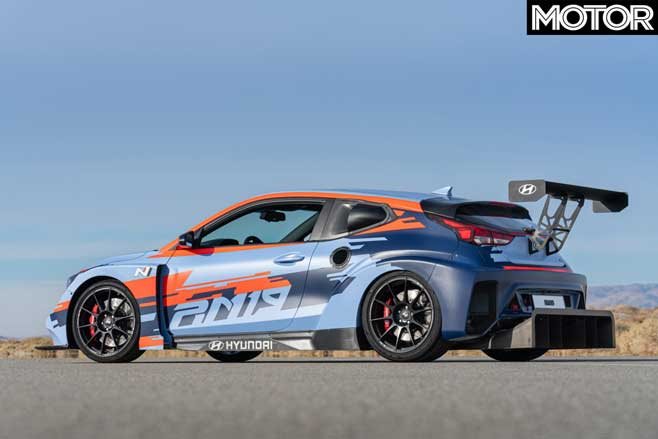
Thomas Schemera, executive vice president and head of product at Hyundai Motor Group, said upon the reveal of the RM19 at the LA Auto Show that the concept is indeed a signal of intention to build a real, mid-engined performance car.
“The RM19 signals future brand aspirations for Hyundai’s high-performance N brand, solidly moving N into the prestigious arena of supercar-level performance.”
While it’s unclear how close MR23T is to the final product, its widened rear haunches (which look an awful lot like vent intakes) definitely suggest it’s not just a modified Veloster.
BMW has introduced a new logo. It’s the first update in more than 20 years and will be used for “online and offline communication purposes”.
The German brand claims the new pared-down, two-dimensional logo “conveys openness and clarity”, while an “additional transparent version of the logo is a more invitation than ever for customers to join the world of BMW.”
Don’t go looking for BMW’s new corporate identity in the obvious places, though. Its cars and the interior and exterior of its dealerships will retain the current logo, presumably in part because the cost of updating its 4500+ dealers would run into the many millions.
The new logo is intended for communication purposes, including trade fairs and events, and will be rolled our between March 3, 2020 and May 31, 2021.
Beneath this marketing speak is a serious shift in philosophy for BMW. The 2020 transparent logo is the first time BMW has gone without the black ring surrounding the traditional blue and white quarters. Logos are how brands identify themselves to the world so any change can have major implications.
In his book Icons and Idiots industry legend Bob Lutz, having recently been hired as BMW’s Executive Vice President of Sales and Marketing, discovered new CEO Baron Eberhard Von Kuenheim had taken it upon himself to update BMW’s logo, primarily by removing the “old fashioned” black ring with BMW inscribed upon it.
Lutz was aghast at the thought of one of the world’s most iconic and recognisable brands being altered for the sake of fashion and vehemently opposed Von Kuenheim’s intention. Successfully, as it turned out.
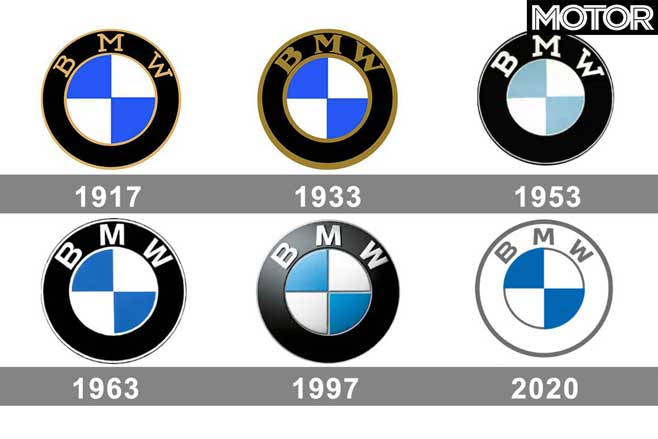
BMW’s traditional logo has changed a number of times of the years, however. It first appeared on October 5, 1917 with the blue and white quartered ‘pie’ surrounded by a solid black ring, bound by inner and outer rings and including the letters BMW – which stand for Bayerische Motoren Werke, or Bavarian Motor Works – in the colour gold.
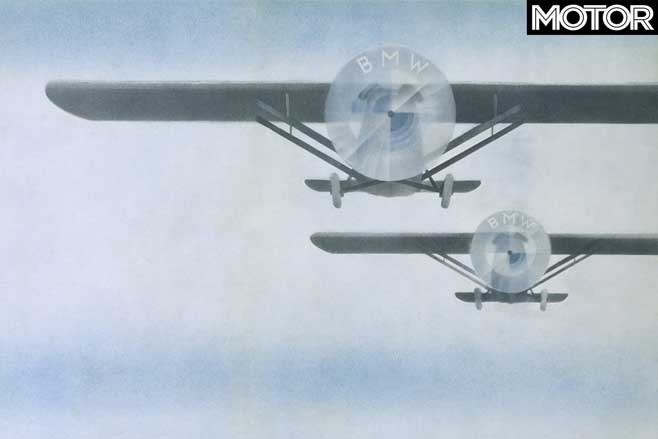
The black ring was carried over from the logo of BMW’s former existence as aircraft engine manufacturer Rapp Motorenwerke. It’s a commonly held belief that the alternating blue and white quarters are a nod to this aeronautical heritage and signify a rotating aeroplane propeller. Not so.
According to BMW’s website: “The company’s home state of Bavaria was also to be represented on the company logo. The quarter of the inner circle display the state colours of the State of Bavaria – white and blue.” However, as local trademark law forbade the use of coats of arms on commercial logos, BMW simply inverted the colours.
In 1933 the font changed, the colours darkened and the binding rings became thicker, then 20 years later BMW settled on the black, white and blue colour combination that continues to this day. A sharper, clearer version appeared in 1963 and endured (thanks to Lutz’s protestations) until 1997 when it morphed into a three-dimensional shield.
In what seems like a perfectly timed move to take advantage of our collective house arrest, The Bend Motorsport Park has just become the newest addition to highly regarded racing sim Assetto Corsa… but only if you play on PC. Sorry, Xbox folks.
Now available to purchase in four different configurations as DLC for the game, The Bend – located in Tailem Bend in South Australia and notable for being Australia’s longest and newest racetrack – has been assisting in the development of its virtual counterpart throughout 2019.
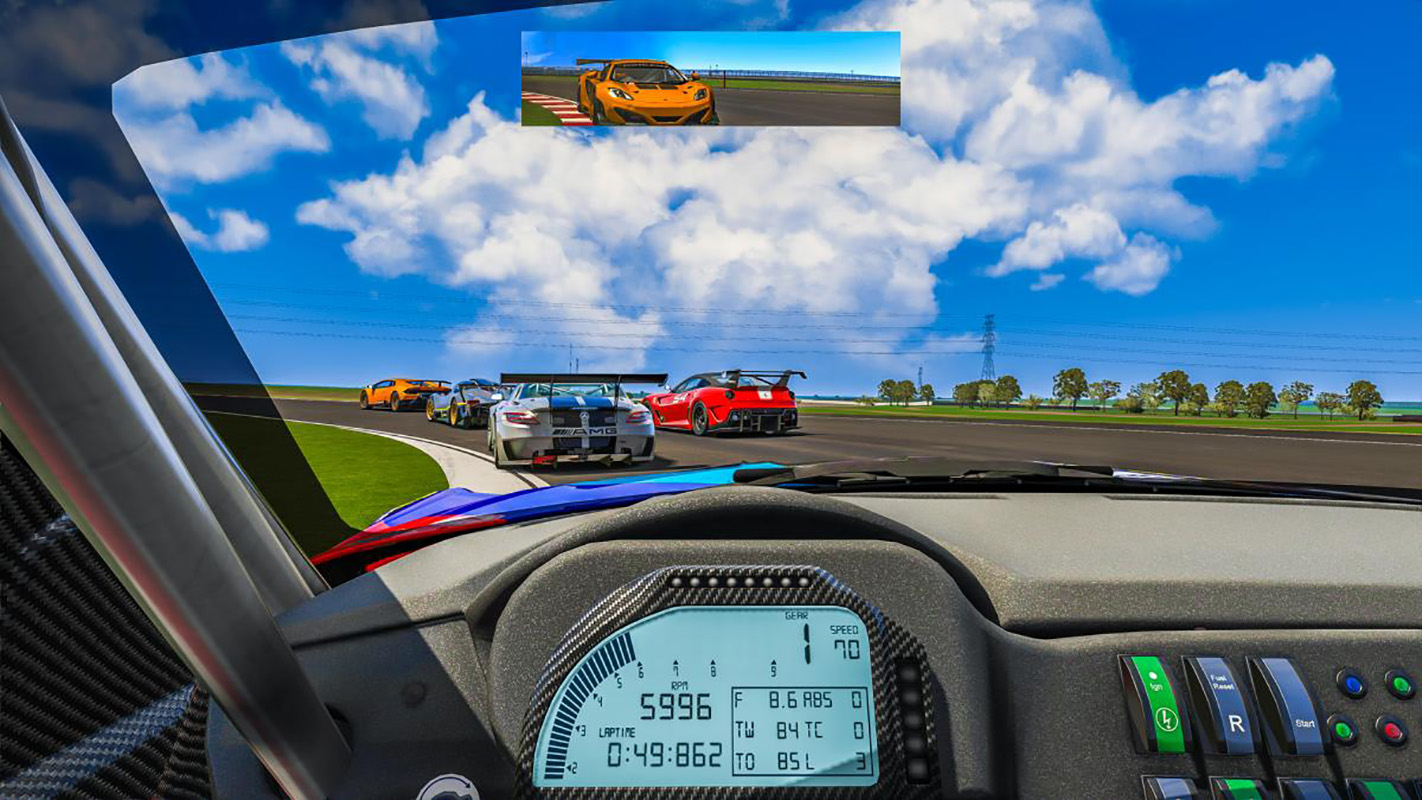
The circuit might look a little simple by modern standards, what with bright-green grass, 90s-era sky textures and an appearance that just looks a little too ‘clean’ for a circuit, the stuff that matters should be spot on. With a nine-month development that saw the track surface laser scanned, turned into CAD data, and cross-referenced with GPS measurements, The Bend promises that its digital version is ultra-faithful to the real thing.
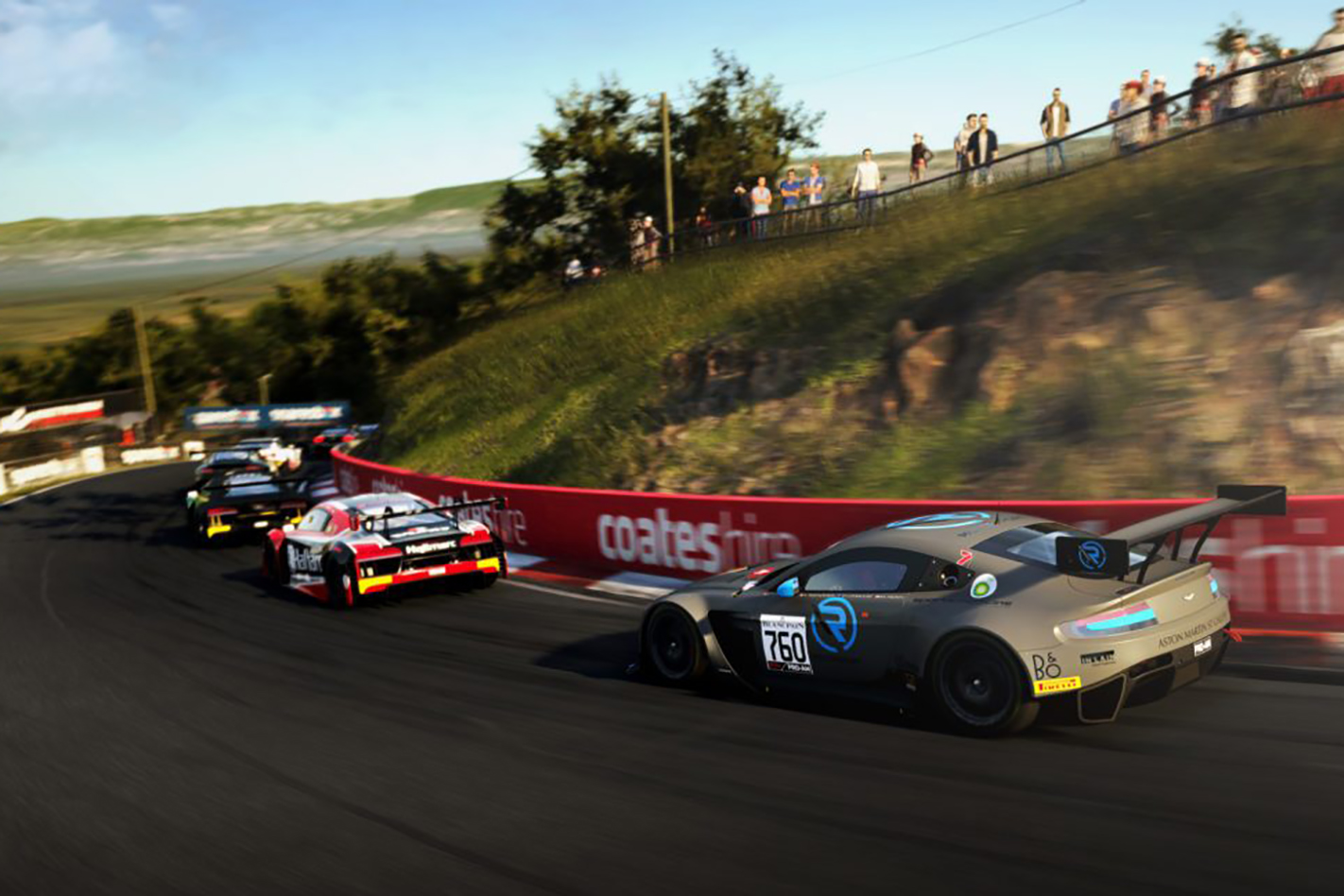
Even so, do not expect the same level of visual accuracy as the Mount Panorama DLC that was recently rolled out for Assetto Corsa Competizione. Yes, we know they’re two different games running on two different graphics engines, but ACC’s gorgeous Mount Panorama DLC (below) makes the official Tailem Bend DLC look particularly cartoonish.
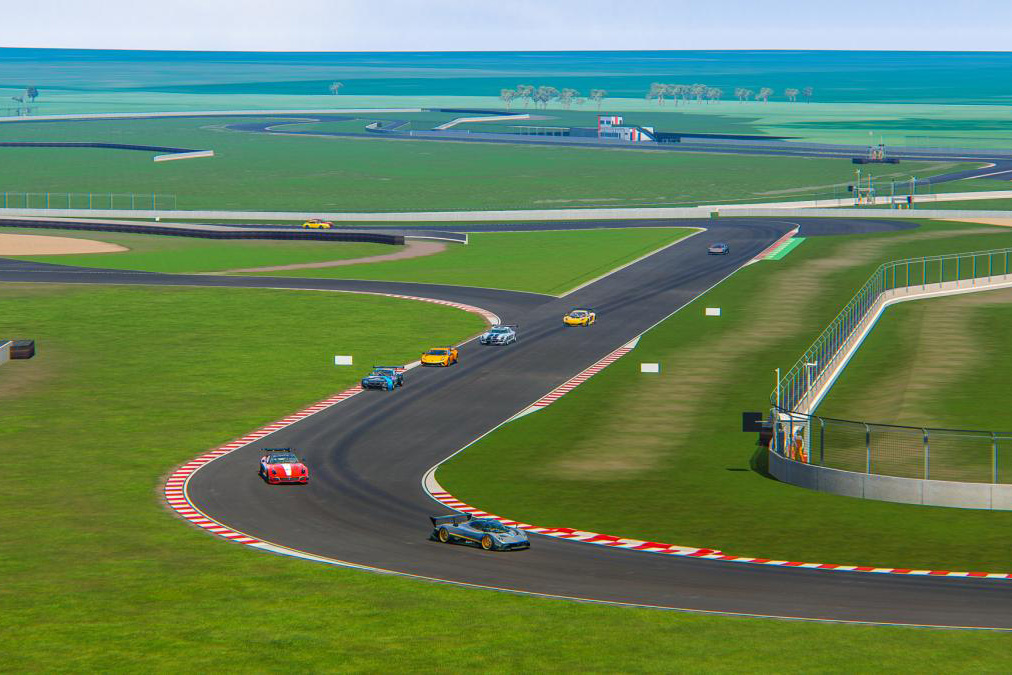
The primary offering and one which we suspect will be the most popular purchase is the full 35-turn, 7.77km GT Circuit, which is available for $19.95. At the same price is the shorter (4.95km) International Circuit, which skips the East Circuit section of the track but otherwise mimics the GT layout. If you’re looking to replicate Supercars races at The Bend, the International config is the one you’ll want.
Racers seeking a more cut-down experience can also opt for the East and West Circuit (3.41 and 3.93km respectively), each available for $9.95, but if you’re cashed up and keen for the full Bend experience you can save just under ten bucks and buy the whole set of four configurations for $49.95.
And that’s a hefty price for a track DLC, and not far off the cost of the Assetto Corsa Ultimate Edition that includes the base game and ELEVEN DLC packs that include, among a few other additional circuits, the mighty Nurburgring Nordschleife in high-res, laser-scanned glory – the only circuit in the world that’s longer than The Bend’s GT configuration. In fact, the Dream Pack 1 that contains the Nordschleife will set you back just $9.95 on Steam… and includes six new racecars to play with as well.
Nevertheless, if you want an accurate representation of Tailem Bend then there’s no real substitute. As far as we can tell there’s only one other DLC available for The Bend: a community-developed mod for rFactor 2. Plus, buying the official track puts a little more dosh in the pockets of The Bend Motorsport Park itself, so you’ll be supporting local motorsport in a fairly direct fashion – even if your visits to the track are strictly virtual.
Ford’s box-fresh Fiesta ST is one of the best performance cars you can buy right now, with an engaging character filled with charm and corner-carving ability.
While its dynamic ability thrilled us during our first drive, we also took the pocket rocket hot hatch to the dragstrip to find out exactly how quick it is in the real world.
Side stepping launch control, we piloted the Fiesta ST to 100km/h from a standstill in 6.7 seconds before going on to finish the quarter-mile dash in 14.9 seconds at 154.8km/h. Ford’s official acceleration claim for the Fiesta ST is 6.5 seconds.
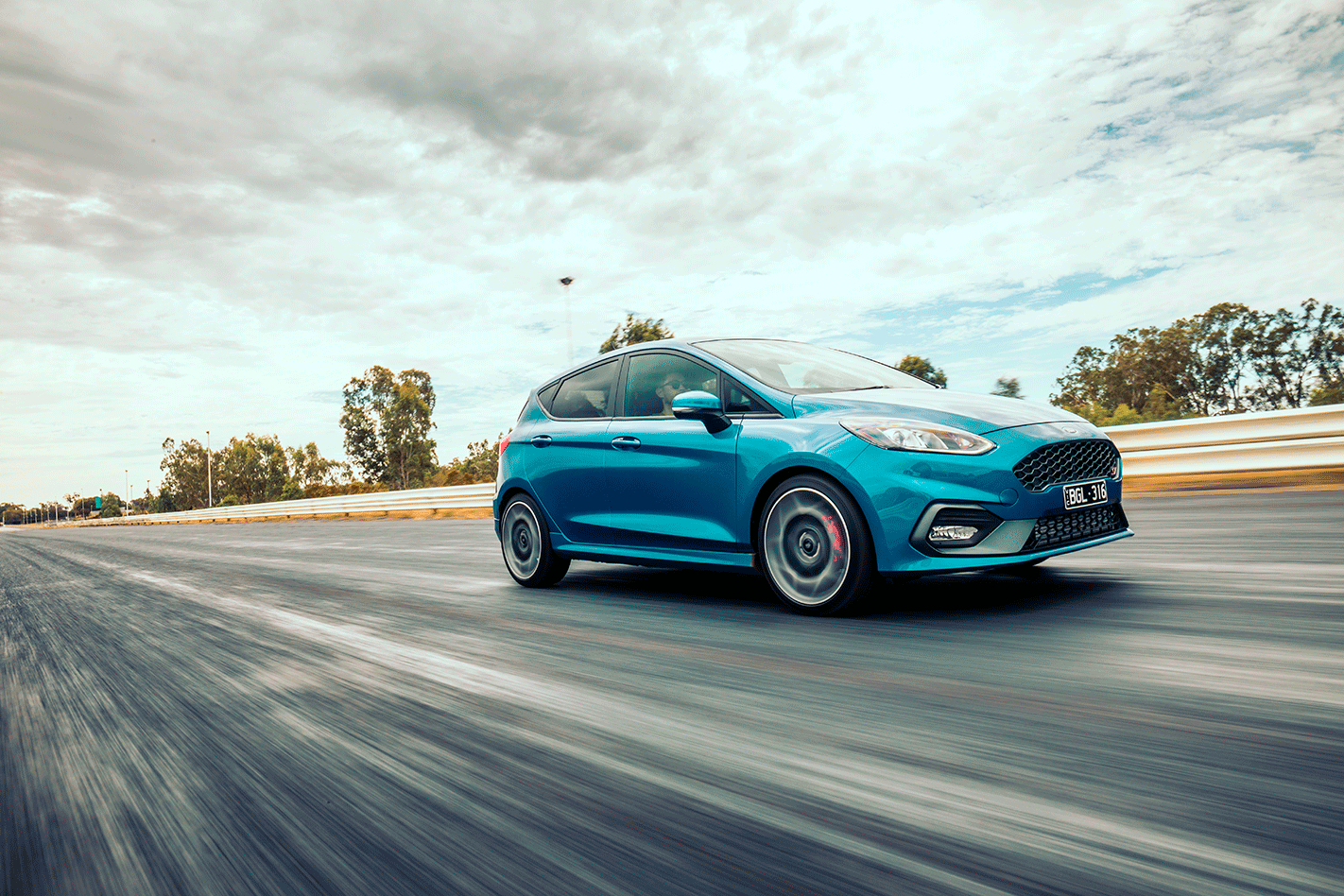
That’s not too shabby for a $32,290 hatchback, weighing in at 1208kg and powered by an energetic 147kW/290Nm 1.5-litre three-cylinder turbo.
Conditions at Heathcote Park Raceway were hot and greasy, with an ambient temperature of 31 degrees and an unprepared track. Representative of what most Australian drivers would experience during a Summer drive.
Managing wheelspin is the secret to nailing the best time possible, with your level of throttle-pedal finesse directly impacting the amount of axle tramp that ensues.
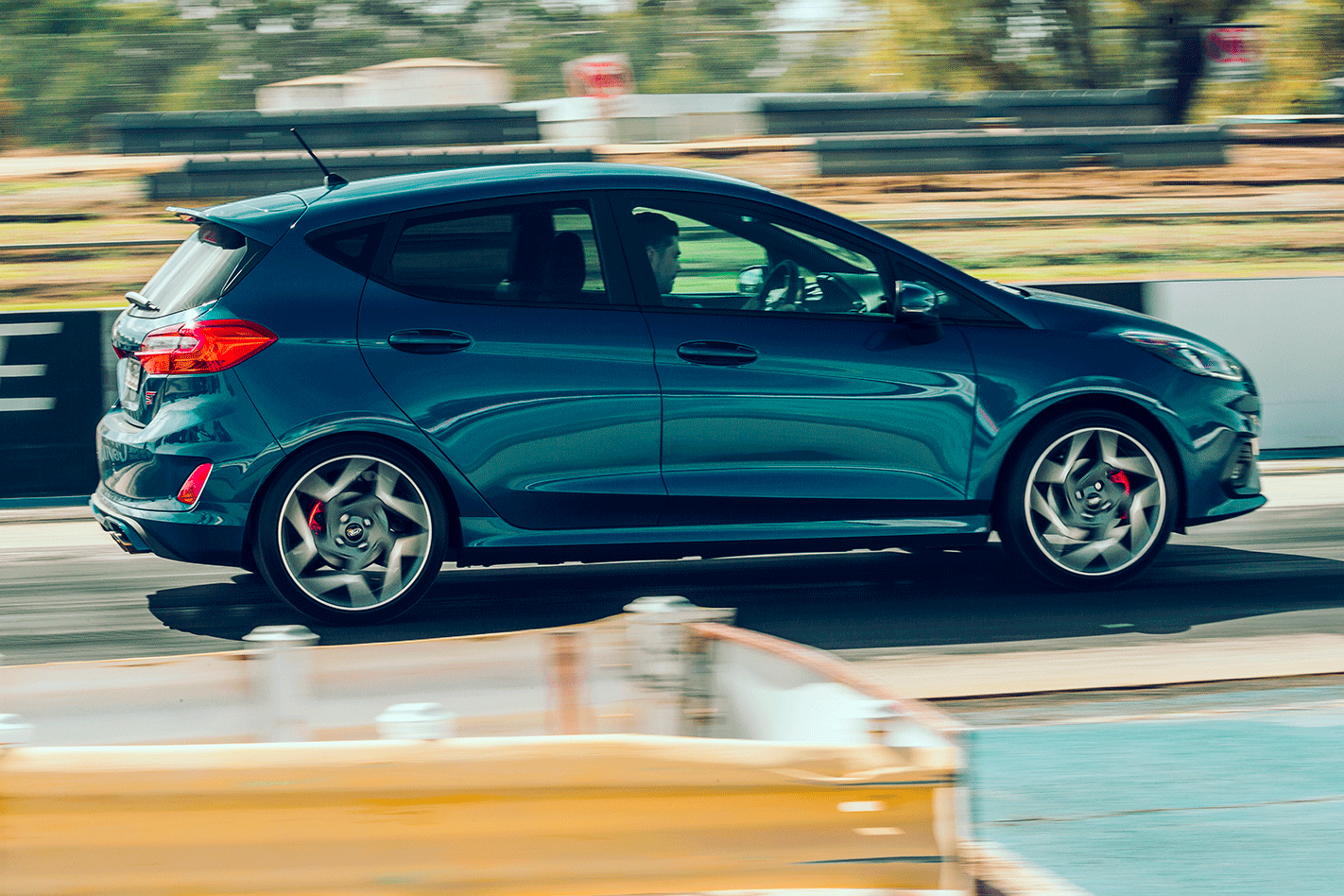
Get the balancing act right and it launches effectively, get it wrong and you’ll be left in the dust by many at the traffic light grand prix. The margin for error is incredibly thin.
Our best time was generated in Track mode with the ESC in its half setting; having it fully on saps way too much power from the front 205-section Michelin Pilot Sport 4 tyres. Turn everything off and you’ll just end up spinning those Michelin boots and be going nowhere in a hurry.
From the seat of our pants, the ST feels much quicker than the 6.7 seconds as the figure is hampered by the second-to-third shift required just before reaching 100km/h.
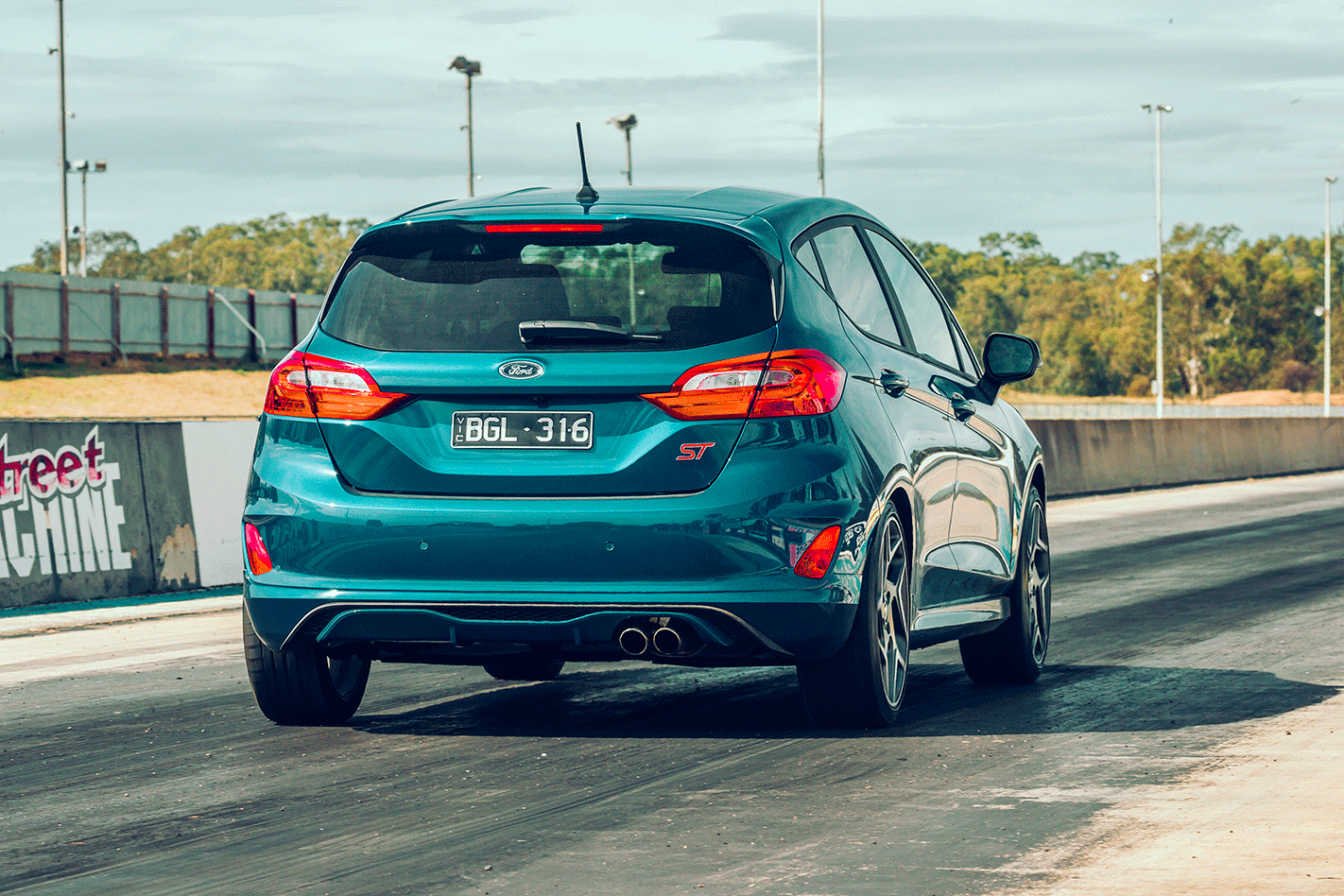
So depending on your level of mechanical sympathy, the claimed figure seems very achievable.
For reference, one of the ST’s closest rivals, the 147kW/320Nm Volkswagen Polo GTI, is also rated at 6.7 seconds for the 0-100km/h dash, but when Wheels tested it in late 2018 it recorded a stout 6.4 second sprint. The VW is identically priced at $32,490 but it’s DSG-only.
What do you think, is the Ford Fiesta ST the hot hatch of the moment?
What stands out?
The Subaru XV is a taller version of the very impressive Impreza hatchback, with a more comfortable ride, a longer touring range, and the ability to get you a bit further off the beaten track than most small SUVs.The all-wheel drive XV also offers Subaru’s EyeSight suite of driver aids, which includes smart cruise control and broadly effective autonomous emergency braking. It also features Subaru’s X-Mode downhill assist feature that will help slowly negotiate steep and slippery terrain without having to manually apply the brakes.
What might bug me?
Having to fool with the centre seatbelt when you fold the rear seat backs: it is built into the side of the boot, and stowing it is complicated.Not saving as much money on fuel as you hoped by opting for the XV Hybrid.Getting a flat tyre in the XV Hybrid and not being able to replace it with a spare wheel. The Hybrid’s batteries tale up the space where the spare is stored meaning you’ll have to make do with a puncture repair kit, which is only really useful enough to get you to a tyre repairer.
What body styles are there?
Five-door hatchback only.The Subaru XV drives all four wheels, at all times, and is classed as a small SUV, lower priced.
What features do all Subaru XVs have?
Cruise control, and air-conditioning that maintains a set temperature. Controls on the steering wheel for operating the cruise control, the audio system and your phone.A colour touchscreen for controlling cabin functions. An MP3-compatible sound system with a radio, CD player, Bluetooth connectivity for voice and audio streaming, and Aux and USB inputs.Support for Apple CarPlay and Android Auto, which lets you display some apps from compatible smartphones on the touchscreen and control them from there.Height and reach adjustment for the steering wheel, and height adjustment for the driver’s seat.Roof rails, which make it easier to fit rooftop luggage systems.Aluminium alloy wheels. All versions except the Hybrid have a full-size steel spare wheel. The Hybrid has a tyre repair kit.A tyre pressure monitor, which warns you if a tyre is going flat.All-wheel-drive, which improves traction and stability on slippery surfaces. Automatic transmission.Active torque vectoring, which helps the car turn more keenly (by braking individual wheels selectively).Hill-start assistance, which controls the brakes to help you take off on uphill slopes.X-Mode, a system borrowed from the Subaru Forester, which helps the XV climb slippery slopes. It directs drive to the wheels that have the most grip.Seven airbags, and a reversing camera. Electronic stability control, which can help you control a skidding car. (For the placement of airbags, and more on XV safety systems, please open the Safety section below.)Every Subaru XV carries a five-year, unlimited kilometre warranty.
Which engine uses least fuel, and why wouldn’t I choose it?
The 2.0-litre hybrid powertrain, called e-Boxer, joined the XV range in March 2020 and uses the same 2.0-litre engine used in regular XVs with a 12.3kW battery providing some additional boost.It has a claimed 6.4-litre/100km combined city and country fuel consumption on the official test, which represents a modest improvement over the regular XV.Subaru calls the e-Boxer a mild hybrid, but it does more than usual mild hybrid systems which simply offer a power boost on take-off but don’t drive the vehicles on batteries alone.However, it is a lot more subtle than full hybrid powertrains, with the single electric motor giving way to engine power at lower speeds and preferring to take up the slack when you’re coasting. The e-Boxer’s single electric motor contributes just 12.3kW of extra boost; by comparison, the Toyota RAV4 Hybrid has 131kW and 88kW electric motors for the front and rear axles respectively.The main reason you wouldn’t choose the XV Hybrid is it costs more than most of the versions without rewarding you with more power of efficiency.A second reason is if you want to use your XV for towing. The Hybrid can tow up to1270kg, which is 130kg less than the standard 2.0-litre versions.The 2.0-litre petrol XVs use about 7.0 litres/100km.The ‘boxer’ engine differs from other makers’ small-car four-cylinder units in that it lies flat across the engine bay rather than standing up vertically. This places the weight of the engine lower in the car, which – in theory anyway – helps it steer more responsively. And its arrangement of the cylinders in opposed pairs – colloquially a boxer configuration – helps it run very smoothly.While the engine in this XV shares its layout and 2.0-litre capacity with the car it superseded, it was redesigned extensively. The most prominent change is a move to direct petrol injection – which supplies fuel directly to each cylinder at high pressure, allowing the engine to use less of it while making a bit more power.The XV can shut down its engine when you are stopped, restarting automatically when you take your foot off the brake pedal to drive away. That saves fuel in the city.Every XV comes with a continuously variable automatic transmission (CVT). It uses artificial ratio steps to mimic the feel of a seven-speed conventional automatic – avoiding the irritating engine droning that some CVT cars exhibit when you accelerate hard.
What key features do I get if I spend more?
The least costly XV, the 2.0i, comes with a 6.5-inch central screen, cloth seat trim, and 17-inch alloy wheels.Paying more for an XV 2.0i-L brings you a lot of extra kit, perhaps most importantly Subaru’s EyeSight active safety suite. EyeSight includes adaptive cruise control, which can accelerate and brake to match the speed of a car in front. A lead-vehicle start alert lets you know when a vehicle ahead of you in a queue has moved on. There is autonomous emergency braking, which works at city and highway speeds, and lane keeping assistance. (For more on these systems, please open the Safety section below.)The 2.0i-L also has an 8.0-inch touchscreen, and two displays on the instrument panel, controllable from the steering wheel, that can show your EyeSight settings and other helpful stuff. There is nicer cloth seat trim, and leather on the steering wheel and gear lever. Dual-zone climate-control air conditioning allows individual temperature adjustment for the driver and front passenger. And the exterior mirrors can be power-folded, to keep them out of harm’s way when you’re parked.Spending more for an Impreza 2.0-i Premium gets you a powered sunroof and satellite navigation – the latter including the ability to have turn-by-turn instructions shown on the instrument panel display rather than just on the central screen.The XV Hybrid costs more than the Premium because of its electrified powertrain but misses out on some the Premium’s extras. It’s mostly based on the 2.0-L, but has the smaller 6.5-inch touchscreen. However, it does gain features that were only available in the 2.0i-S included auto-dimming rearview mirror, and additional active safety, including: rain-sensing windscreen wipers, dusk-sensing headlights, blind-spot monitoring, lane-change assistance, rear cross-traffic alert, and reverse auto-braking to help avoid parking and driveway mishaps.The most expensive XV, the 2.0i-S, adds luxury including part-leather seat trim, eight-way power adjustable driver’s seat, and heated front seats. The wheel diameter grows to 18 inches, and the tyres are the same width but slightly lower in profile.
Does any upgrade have a down side?
The bigger, 18-inch, tyres on the 2.0i-S will cost more to replace, and will feel a bit bumper to drive on than the taller-profile tyres on other XVs (because their shallower sidewalls leave less air and rubber between you and the road).Spending more on the Hybrid means you miss out on the full-size spare wheel. Because the batteries take up space under the boot floor you’ll have to make do with a less-convenient puncture repair kit.The leather-trimmed seats in the 2.0i-S are more slippery than the cloth–covered seats on the less expensive XVs, and you slide around in them more. That’s most noticeable when driving on rough gravel roads or tracks, where the cloth-trimmed seats hold you in place better and feel more comfortable.
How comfortable is the Subaru XV?
This new-generation XV is very much like the new Subaru Impreza inside – and that’s good.Like the Impreza, the XV is roomier than the car it replaced. The cabin is smartly designed, and trimmed to a standard much higher than seen in the previous XV. The premium cloth seats in the 2.0i-L, 2.0-i Premium and Hybrid versions are durable and comfortable, and arguably feel better than the leather seats in the pricier 2.0i-S.Tilt and reach adjustment for the steering wheel makes it easy for you to get comfortable behind it, even if the seat backrest could use finer adjustment. The chunky wheel, leather-bound on most versions, and neat new switchgear imbue the XV with a level of class beyond its relatively meagre price point.Even the XV 2.0i, the least costly XV, has two info screens in addition to the big central touchscreen.Dash-mounted air vents sit high and proud, filtering climate-controlled freshness in typically chilled Subaru fashion.The XV rides a bit better on its taller suspension than the Impreza, ironing out all but the sharpest bumps.
What about safety in an XV?
The XV comes with seven airbags, anti-lock brakes, stability control, seatbelt reminders for all seats, seatbelt pre-tensioners on the front and outer rear seats, and a reversing camera. Its standard safety package emphasises your control of the car, your protection in a crash, and the safety of those outside the car when you’re reversing.There is an airbag apiece ahead of the driver and front passenger; a knee airbag for the driver; an airbag outside each front occupant at chest level to protect from side impacts; and side-curtain airbags extending past both seat rows at head level, protecting occupants front and rear from side impacts.Augmenting this on the XV 2.0i-L, 2.0-i Premium and 2.0i-S is Subaru’s EyeSight active safety suite, which brings you autonomous emergency braking and lane-keeping assistance, among other features.Based on stereo cameras, the auto braking works at city and highway speeds, warning of an impending collision and braking automatically if you fail to react. Subaru says this third-generation system uses better image sensors that detect hazards – and endangered pedestrians – under a wider range of contrast conditions and at longer range than its previous systems.Lane keeping assistance alerts you if you have begun to drift out of your lane on the highway, perhaps through distraction, and can correct the steering gently to help guide you back.The XV Hybrid and 2.0i-S improve on this with a Vision assist suite, which uses radar-based sensors to scan behind you. It warns you if you are about to change lanes into the path of an adjacent or overtaking car. When you reverse out of a driveway or parking space, it alerts you to vehicles crossing your path to the rear. And it can brake the car automatically if it predicts you are about to reverse into a solid object.The Australasian New Car Assessment Program (ANCAP) awarded the Subaru XV a five-star rating for safety, its maximum, in May 2017.
I like driving – will I enjoy this car?
Yes. The new Subaru XV delivers just about everything we liked about the Impreza, including the poised and fluid feel from behind the wheel, and the nice way that it turns into corners, especially when driven with a bit of enthusiasm. Every XV comes with active torque vectoring, which helps here.The jacked-up suspension seems to absorb small, sharp, bumps better than the suspension on the Impreza, but even the XV will occasionally run out of suspension travel on a big bumps, sending a loud “thump” into the cabin.The fuel tank in the XV holds 63 litres – about 25 per cent more than the tank in the Impreza. That should give you significantly longer range between fills.On gravel roads and dirt tracks, an assured all-wheel-drive system and sharply tuned electronic stability control do a good job of discouraging the XV from wriggling around on the loose surfaces. The X-Mode’s hill-crawl function, which helps the XV climb slippery slopes, and the hill descent control that helps it get you back down, both work well, giving this small SUV some real-world off-road ability.The XV’s 2.0-litre petrol engine produces just as much power as it does for the Impreza, but in the taller XV it has to deal with more weight. If you demand a sharp burst of speed – when joining fast-moving freeway traffic, for example – the engine and gearbox need to work quite hard and generate a lot of noise.Any differences between the hybrid and petrol XVs are subtle. Like the petrol versions, the drive is smooth and quiet at lower speeds, though the engine and CVT do protest a little loudly when accelerating to overtake or join freeway traffic.The Hybrid also features the X-Mode hill-crawl function. According to Subaru, the electrified powertrain further improves traction because of the more precisely controlled torque distribution, though I didn’t get a chance to test this.
How is life in the rear seats?
It’s great for a car of its type, and better than in the already good outgoing XV, with a comfortable seat and enough leg and shoulder room to keep two big adults quite happy.The stadium-style seating provides a superb outlook as well, and dedicated vents supply heating and cooling.When driving on loose surfaces, the XV does a great job of suppressing gravel splash – the noise that stones make when the tyres throw them up into the wheel wells.
How is it for carrying stuff?
Boot space is about the same as in the superseded car a little below average for small SUV, with 310 litres. That’s slightly less than the 345 litres available in the Impreza which has a narrower space-saver spare wheel under the boot floor.Seats split-fold 60-40 for extending the load space to 765 litres.The XV can legally tow a braked trailer weighing up to 1400kg.The XV Hybrid can only tow up to 1270kg.
Where is the Subaru XV made?
The Subaru XV is manufactured in Japan.
What might I miss that similar cars have?
Maybe the more immediate acceleration of turbocharged alternatives such as the Hyundai Kona, Toyota C-HR, Citroen C3 Aircross and Peugeot 2008.Possibly lower fuel consumption and a longer range between fills from a diesel engine, which you can have in a Mazda CX-3 or Mitsubishi ASX, for example.The ability to tackle more challenging tracks off-road. The XV is as good as, or better than, most small SUVs in this respect, but alternatives with much more off-road ability include the Suzuki Jimny, and Jeep Renegade Trailhawk.Among other small SUVs (with less off-road ability) worth considering are the Honda HR-V, and Nissan Qashqai.
I like this car, but I can’t choose which version. Can you help?
The best value here is in the most expensive XV, the 2.0i-S. The price premium gets you leather seat trim, heated front seats and side mirrors, auto LED headlights and auto-wipers, and the rear-facing active safety features introduced with the Vision Assist package.
Are there plans to update the Subaru XV soon?
This second-generation XV arrived in June 2017 as an all-new model.Subaru introduced the hybrid version in March 2020.Expect a facelift and tech upgrade during the first half of 2021.
