
What stands out?
The Subaru XV is a taller version of the very impressive Impreza hatchback, with a more comfortable ride, a longer touring range, and the ability to get you a bit further off the beaten track than most small SUVs.The all-wheel drive XV also offers Subaru’s EyeSight suite of driver aids, which includes smart cruise control and broadly effective autonomous emergency braking. It also features Subaru’s X-Mode downhill assist feature that will help slowly negotiate steep and slippery terrain without having to manually apply the brakes.
What might bug me?
Having to fool with the centre seatbelt when you fold the rear seat backs: it is built into the side of the boot, and stowing it is complicated.Not saving as much money on fuel as you hoped by opting for the XV Hybrid.Getting a flat tyre in the XV Hybrid and not being able to replace it with a spare wheel. The Hybrid’s batteries tale up the space where the spare is stored meaning you’ll have to make do with a puncture repair kit, which is only really useful enough to get you to a tyre repairer.
What body styles are there?
Five-door hatchback only.The Subaru XV drives all four wheels, at all times, and is classed as a small SUV, lower priced.
What features do all Subaru XVs have?
Cruise control, and air-conditioning that maintains a set temperature. Controls on the steering wheel for operating the cruise control, the audio system and your phone.A colour touchscreen for controlling cabin functions. An MP3-compatible sound system with a radio, CD player, Bluetooth connectivity for voice and audio streaming, and Aux and USB inputs.Support for Apple CarPlay and Android Auto, which lets you display some apps from compatible smartphones on the touchscreen and control them from there.Height and reach adjustment for the steering wheel, and height adjustment for the driver’s seat.Roof rails, which make it easier to fit rooftop luggage systems.Aluminium alloy wheels. All versions except the Hybrid have a full-size steel spare wheel. The Hybrid has a tyre repair kit.A tyre pressure monitor, which warns you if a tyre is going flat.All-wheel-drive, which improves traction and stability on slippery surfaces. Automatic transmission.Active torque vectoring, which helps the car turn more keenly (by braking individual wheels selectively).Hill-start assistance, which controls the brakes to help you take off on uphill slopes.X-Mode, a system borrowed from the Subaru Forester, which helps the XV climb slippery slopes. It directs drive to the wheels that have the most grip.Seven airbags, and a reversing camera. Electronic stability control, which can help you control a skidding car. (For the placement of airbags, and more on XV safety systems, please open the Safety section below.)Every Subaru XV carries a five-year, unlimited kilometre warranty.
Which engine uses least fuel, and why wouldn’t I choose it?
The 2.0-litre hybrid powertrain, called e-Boxer, joined the XV range in March 2020 and uses the same 2.0-litre engine used in regular XVs with a 12.3kW battery providing some additional boost.It has a claimed 6.4-litre/100km combined city and country fuel consumption on the official test, which represents a modest improvement over the regular XV.Subaru calls the e-Boxer a mild hybrid, but it does more than usual mild hybrid systems which simply offer a power boost on take-off but don’t drive the vehicles on batteries alone.However, it is a lot more subtle than full hybrid powertrains, with the single electric motor giving way to engine power at lower speeds and preferring to take up the slack when you’re coasting. The e-Boxer’s single electric motor contributes just 12.3kW of extra boost; by comparison, the Toyota RAV4 Hybrid has 131kW and 88kW electric motors for the front and rear axles respectively.The main reason you wouldn’t choose the XV Hybrid is it costs more than most of the versions without rewarding you with more power of efficiency.A second reason is if you want to use your XV for towing. The Hybrid can tow up to1270kg, which is 130kg less than the standard 2.0-litre versions.The 2.0-litre petrol XVs use about 7.0 litres/100km.The ‘boxer’ engine differs from other makers’ small-car four-cylinder units in that it lies flat across the engine bay rather than standing up vertically. This places the weight of the engine lower in the car, which – in theory anyway – helps it steer more responsively. And its arrangement of the cylinders in opposed pairs – colloquially a boxer configuration – helps it run very smoothly.While the engine in this XV shares its layout and 2.0-litre capacity with the car it superseded, it was redesigned extensively. The most prominent change is a move to direct petrol injection – which supplies fuel directly to each cylinder at high pressure, allowing the engine to use less of it while making a bit more power.The XV can shut down its engine when you are stopped, restarting automatically when you take your foot off the brake pedal to drive away. That saves fuel in the city.Every XV comes with a continuously variable automatic transmission (CVT). It uses artificial ratio steps to mimic the feel of a seven-speed conventional automatic – avoiding the irritating engine droning that some CVT cars exhibit when you accelerate hard.
What key features do I get if I spend more?
The least costly XV, the 2.0i, comes with a 6.5-inch central screen, cloth seat trim, and 17-inch alloy wheels.Paying more for an XV 2.0i-L brings you a lot of extra kit, perhaps most importantly Subaru’s EyeSight active safety suite. EyeSight includes adaptive cruise control, which can accelerate and brake to match the speed of a car in front. A lead-vehicle start alert lets you know when a vehicle ahead of you in a queue has moved on. There is autonomous emergency braking, which works at city and highway speeds, and lane keeping assistance. (For more on these systems, please open the Safety section below.)The 2.0i-L also has an 8.0-inch touchscreen, and two displays on the instrument panel, controllable from the steering wheel, that can show your EyeSight settings and other helpful stuff. There is nicer cloth seat trim, and leather on the steering wheel and gear lever. Dual-zone climate-control air conditioning allows individual temperature adjustment for the driver and front passenger. And the exterior mirrors can be power-folded, to keep them out of harm’s way when you’re parked.Spending more for an Impreza 2.0-i Premium gets you a powered sunroof and satellite navigation – the latter including the ability to have turn-by-turn instructions shown on the instrument panel display rather than just on the central screen.The XV Hybrid costs more than the Premium because of its electrified powertrain but misses out on some the Premium’s extras. It’s mostly based on the 2.0-L, but has the smaller 6.5-inch touchscreen. However, it does gain features that were only available in the 2.0i-S included auto-dimming rearview mirror, and additional active safety, including: rain-sensing windscreen wipers, dusk-sensing headlights, blind-spot monitoring, lane-change assistance, rear cross-traffic alert, and reverse auto-braking to help avoid parking and driveway mishaps.The most expensive XV, the 2.0i-S, adds luxury including part-leather seat trim, eight-way power adjustable driver’s seat, and heated front seats. The wheel diameter grows to 18 inches, and the tyres are the same width but slightly lower in profile.
Does any upgrade have a down side?
The bigger, 18-inch, tyres on the 2.0i-S will cost more to replace, and will feel a bit bumper to drive on than the taller-profile tyres on other XVs (because their shallower sidewalls leave less air and rubber between you and the road).Spending more on the Hybrid means you miss out on the full-size spare wheel. Because the batteries take up space under the boot floor you’ll have to make do with a less-convenient puncture repair kit.The leather-trimmed seats in the 2.0i-S are more slippery than the cloth–covered seats on the less expensive XVs, and you slide around in them more. That’s most noticeable when driving on rough gravel roads or tracks, where the cloth-trimmed seats hold you in place better and feel more comfortable.
How comfortable is the Subaru XV?
This new-generation XV is very much like the new Subaru Impreza inside – and that’s good.Like the Impreza, the XV is roomier than the car it replaced. The cabin is smartly designed, and trimmed to a standard much higher than seen in the previous XV. The premium cloth seats in the 2.0i-L, 2.0-i Premium and Hybrid versions are durable and comfortable, and arguably feel better than the leather seats in the pricier 2.0i-S.Tilt and reach adjustment for the steering wheel makes it easy for you to get comfortable behind it, even if the seat backrest could use finer adjustment. The chunky wheel, leather-bound on most versions, and neat new switchgear imbue the XV with a level of class beyond its relatively meagre price point.Even the XV 2.0i, the least costly XV, has two info screens in addition to the big central touchscreen.Dash-mounted air vents sit high and proud, filtering climate-controlled freshness in typically chilled Subaru fashion.The XV rides a bit better on its taller suspension than the Impreza, ironing out all but the sharpest bumps.
What about safety in an XV?
The XV comes with seven airbags, anti-lock brakes, stability control, seatbelt reminders for all seats, seatbelt pre-tensioners on the front and outer rear seats, and a reversing camera. Its standard safety package emphasises your control of the car, your protection in a crash, and the safety of those outside the car when you’re reversing.There is an airbag apiece ahead of the driver and front passenger; a knee airbag for the driver; an airbag outside each front occupant at chest level to protect from side impacts; and side-curtain airbags extending past both seat rows at head level, protecting occupants front and rear from side impacts.Augmenting this on the XV 2.0i-L, 2.0-i Premium and 2.0i-S is Subaru’s EyeSight active safety suite, which brings you autonomous emergency braking and lane-keeping assistance, among other features.Based on stereo cameras, the auto braking works at city and highway speeds, warning of an impending collision and braking automatically if you fail to react. Subaru says this third-generation system uses better image sensors that detect hazards – and endangered pedestrians – under a wider range of contrast conditions and at longer range than its previous systems.Lane keeping assistance alerts you if you have begun to drift out of your lane on the highway, perhaps through distraction, and can correct the steering gently to help guide you back.The XV Hybrid and 2.0i-S improve on this with a Vision assist suite, which uses radar-based sensors to scan behind you. It warns you if you are about to change lanes into the path of an adjacent or overtaking car. When you reverse out of a driveway or parking space, it alerts you to vehicles crossing your path to the rear. And it can brake the car automatically if it predicts you are about to reverse into a solid object.The Australasian New Car Assessment Program (ANCAP) awarded the Subaru XV a five-star rating for safety, its maximum, in May 2017.
I like driving – will I enjoy this car?
Yes. The new Subaru XV delivers just about everything we liked about the Impreza, including the poised and fluid feel from behind the wheel, and the nice way that it turns into corners, especially when driven with a bit of enthusiasm. Every XV comes with active torque vectoring, which helps here.The jacked-up suspension seems to absorb small, sharp, bumps better than the suspension on the Impreza, but even the XV will occasionally run out of suspension travel on a big bumps, sending a loud “thump” into the cabin.The fuel tank in the XV holds 63 litres – about 25 per cent more than the tank in the Impreza. That should give you significantly longer range between fills.On gravel roads and dirt tracks, an assured all-wheel-drive system and sharply tuned electronic stability control do a good job of discouraging the XV from wriggling around on the loose surfaces. The X-Mode’s hill-crawl function, which helps the XV climb slippery slopes, and the hill descent control that helps it get you back down, both work well, giving this small SUV some real-world off-road ability.The XV’s 2.0-litre petrol engine produces just as much power as it does for the Impreza, but in the taller XV it has to deal with more weight. If you demand a sharp burst of speed – when joining fast-moving freeway traffic, for example – the engine and gearbox need to work quite hard and generate a lot of noise.Any differences between the hybrid and petrol XVs are subtle. Like the petrol versions, the drive is smooth and quiet at lower speeds, though the engine and CVT do protest a little loudly when accelerating to overtake or join freeway traffic.The Hybrid also features the X-Mode hill-crawl function. According to Subaru, the electrified powertrain further improves traction because of the more precisely controlled torque distribution, though I didn’t get a chance to test this.
How is life in the rear seats?
It’s great for a car of its type, and better than in the already good outgoing XV, with a comfortable seat and enough leg and shoulder room to keep two big adults quite happy.The stadium-style seating provides a superb outlook as well, and dedicated vents supply heating and cooling.When driving on loose surfaces, the XV does a great job of suppressing gravel splash – the noise that stones make when the tyres throw them up into the wheel wells.
How is it for carrying stuff?
Boot space is about the same as in the superseded car a little below average for small SUV, with 310 litres. That’s slightly less than the 345 litres available in the Impreza which has a narrower space-saver spare wheel under the boot floor.Seats split-fold 60-40 for extending the load space to 765 litres.The XV can legally tow a braked trailer weighing up to 1400kg.The XV Hybrid can only tow up to 1270kg.
Where is the Subaru XV made?
The Subaru XV is manufactured in Japan.
What might I miss that similar cars have?
Maybe the more immediate acceleration of turbocharged alternatives such as the Hyundai Kona, Toyota C-HR, Citroen C3 Aircross and Peugeot 2008.Possibly lower fuel consumption and a longer range between fills from a diesel engine, which you can have in a Mazda CX-3 or Mitsubishi ASX, for example.The ability to tackle more challenging tracks off-road. The XV is as good as, or better than, most small SUVs in this respect, but alternatives with much more off-road ability include the Suzuki Jimny, and Jeep Renegade Trailhawk.Among other small SUVs (with less off-road ability) worth considering are the Honda HR-V, and Nissan Qashqai.
I like this car, but I can’t choose which version. Can you help?
The best value here is in the most expensive XV, the 2.0i-S. The price premium gets you leather seat trim, heated front seats and side mirrors, auto LED headlights and auto-wipers, and the rear-facing active safety features introduced with the Vision Assist package.
Are there plans to update the Subaru XV soon?
This second-generation XV arrived in June 2017 as an all-new model.Subaru introduced the hybrid version in March 2020.Expect a facelift and tech upgrade during the first half of 2021.
After introducing a two-year warranty extension for the Koleos mid-size SUV family late last year, Renault Australia has announced that seven-year coverage is now available once more for the MY20 Koleos range – but only for the month of April.
The value proposition has been sweetened even further by the introduction of driveaway pricing too, with every variant in the four-strong Renault Koleos range now boasting a national driveaway price that essentially gives buyers all on-road costs for free.
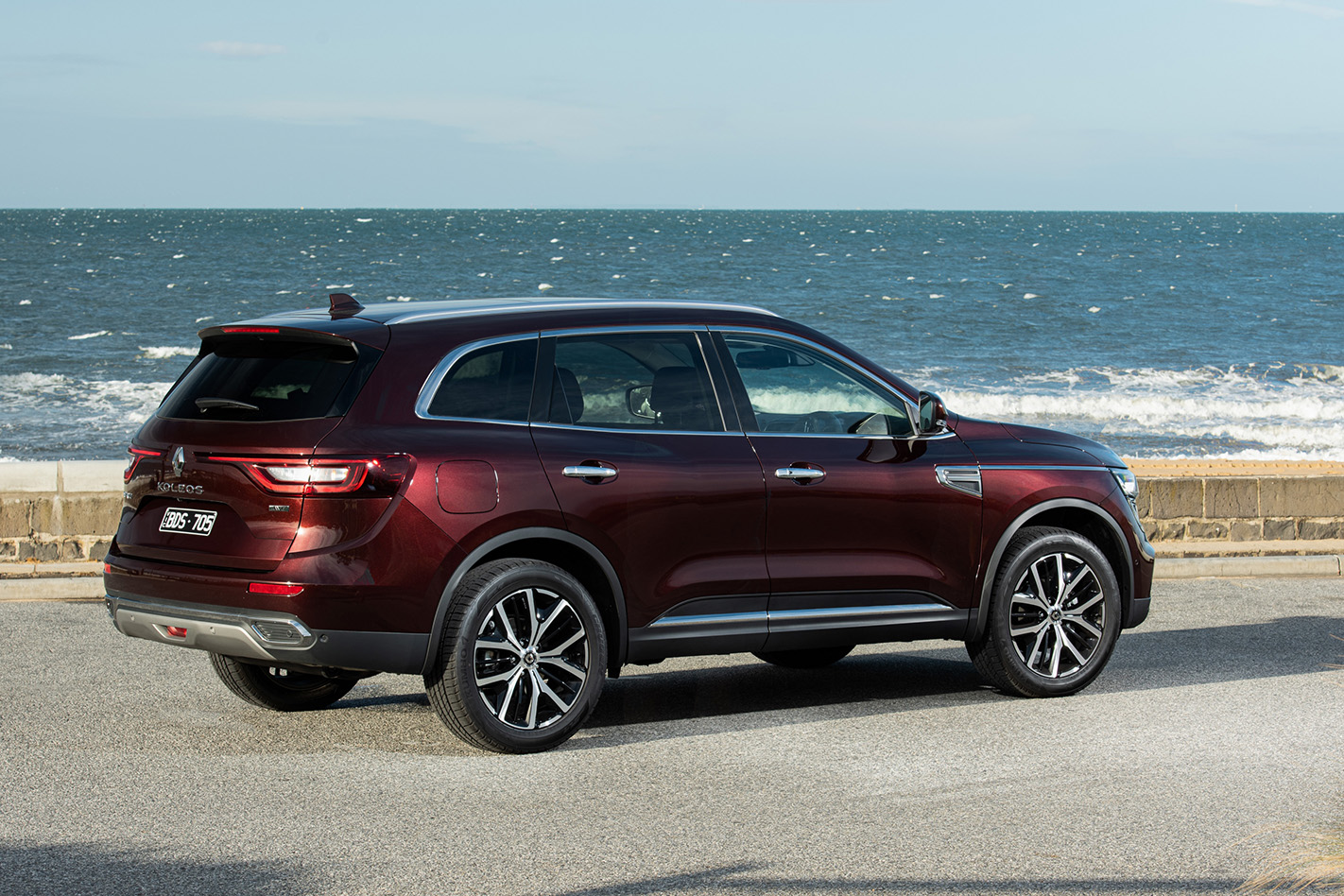
Starting at $31,990 and topping off at $45,490, the new driveaway prices are largely identical to the Koleos’ old retail stickers, with the exception of the entry-level Koleos Life being $500 cheaper.
The bulked-up warranty has no kilometre limitation, however commercial users are restricted to 200,000km of coverage – still generous terms nonetheless. It’s accompanied by five years of complimentary roadside assistance as well as five years of capped-price servicing.
The Koleos’ 12month/30,000km servicing intervals carry over unchanged. As do the specifications and features of each variant – the range still comprises of three grades and a single engine, with the diesel engine that was dropped at the start of this year unlikely to ever make a return.
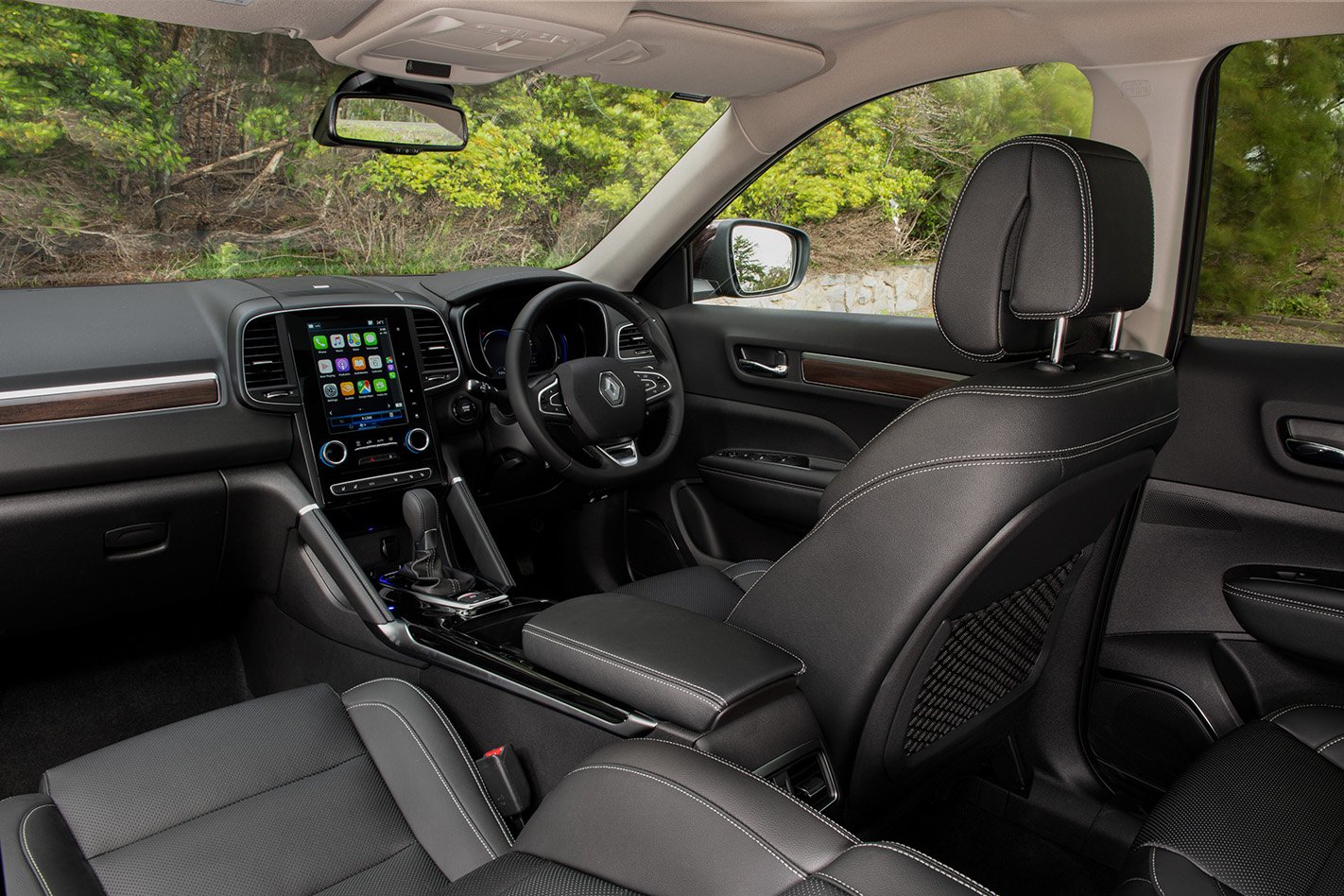
That leaves the Koleos Life as the base model with a 2.5-litre petrol engine driving the front wheels through an automatic transmission, followed by the mid-range Koleos Zen with the same driveline and the range-topping Koleos Intens with a choice of front-drive or all-wheel drive.
You’ll need to move quickly, however. The warranty and driveaway pricing incentives are only set to apply for cars sold in April, and it’s only for the Koleos variants mentioned. Renault Australia is keeping a keen eye on how the market responds, however, so a wider – and more permanent – application of those after-sales improvements may yet roll out across the rest of the Renault showroom.
What stands out?
The Mazda MX-5 is a traditional two-seat sports car, with a lightweight body and rear-wheel drive. It is among the least expensive of convertibles, and you can choose a folding fabric roof or a folding hard-top. This fourth-generation MX-5 is fantastic fun to drive. Wheels magazine named the MX-5 Car of the Year for 2016.
What might bug me?
Accommodating friends and luggage. The MX-5 is a very small vehicle with a tiny boot. And it has no child-seat anchor points, so you can’t carry children less than eight years old.Opening and closing the soft roof: it’s a quick, manual process but it is not as easy as pushing a button.Fumbling for the boot release: it is out of view near the rear numberplate, a place that gets dirty easily.Getting home after a puncture – there is no spare tyre, just a puncture repair kit.Paying extra for fuel. The MX-5 requires premium petrol.
What body styles are there?
Two-door, two-seat convertible only.The MX-5 Roadster has a folding fabric roof that you raise and lower manually. The MX-5 RF has a folding hard roof (made from steel, aluminium and plastic), which power-raises and lowers with the press of a button on the dashboard.The MX-5 drives its rear wheels, and is classed as a sports car, lower priced.
What features does every MX-5 have?
A sound system with an AM/FM radio, Aux and USB inputs, Bluetooth phone and audio streaming, and at least six speakers, controllable from a 7.0-inch colour touchscreen. (Two of the speakers are in the driver’s headrest.)Support for Apple CarPlay and Android Auto (so that you can plug in a smartphone and display compatible apps on the touchscreen).Cruise control, air-conditioning, and satellite navigation.A leather-wrapped, height-adjustable steering wheel, which carries buttons for operating the cruise control, the audio system and your phone.Very bright and extremely long-lived LED headlights and tail-lights.A puncture repair kit. Tyre pressure sensors that warn you if a tyre is going flat.Reversing camera, autonomous emergency braking, and traffic sign assistance to help you with identifying the speed limit.Blind-spot monitoring, and a Rear cross-traffic alert.Four airbags, and electronic stability control – which can help you avoid or control a slide. (For the placement of airbags, and more on MX-5 safety systems, please open the Safety section below.)All MX-5s with a manual gearbox have a limited-slip differential, which moderates rear-wheel slip through turns.The MX-5 is covered by a five year, unlimited distance, warranty.
Which engine uses least fuel, and why wouldn’t I choose it?
The smaller of the two engines available in an MX-5, a 1.5-litre, four-cylinder petrol, uses least fuel, consuming 6.1 litres/100km with manual transmission (official test, city and country combined). The automatic uses slightly more.It is based on the engine used in the Mazda2 light car but provides much more power when you work it hard, and has a throatier sound. Expect to average about 7.5 litres/100km in the real world.This is an excellent engine for the lightweight MX-5. The main reason you would not choose it is that you don’t want to work the car quite as hard.The bigger engine is a 2.0-litre four-cylinder petrol that brings you about 30 per cent more power than the 1.5-litre under most driving conditions. It responds more urgently to the accelerator than the 1.5 but does not spin as freely, and it will average about 8.0 litres/100km in the real world.Both engines need premium unleaded fuel.The MX-5 is available with a six-speed manual gearbox or a six-speed automatic.
What key features do I get if I spend more?
The least costly MX-5, the 1.5 Roadster, comes with a fabric roof, cloth-covered seats, 16-inch wheels, the 1.5-litre engine, and the features found on all MX-5s. A manual gearbox is standard, and an auto is an extra-cost option.One way to spend more on an MX-5 is to stick with the 1.5-litre engine but add some luxury, by choosing an MX-5 Roadster GT. That brings you leather-trimmed seats with heating, and climate-control air-conditioning (which maintains a set temperature). You can unlock the car and drive away without removing the key from your pocket or bag. Headlamps switch on automatically when it’s dark, and windscreen wipers work by themselves when it rains. And you get a better sound system, from Bose, with headrest speakers for the passenger as well.The GT versions also have lane-departure warning, and adaptive LED headlights that adjust their beam depending on the MX-5’s speed and movement.Alternatively – or in addition – you can spend more for extra grunt from the 2.0-litre engine. All 2.0-litre MX-5s come with 17-inch wheels, and lower-profile, wider, tyres, for more grip.Wheels aside, the MX-5 2.0 Roadster comes with the same equipment as the 1.5 Roadster. (And it costs less than a 1.5 Roadster GT.)The 2.0 Roadster GT comes with the equipment in a 1.5 Roadster GT.Settling on a 2.0-litre engine also brings you the opportunity to choose an MX-5 with a power-folding hard-top: the MX-5 RF.An MX-5 RF has the same wheel size and equipment as the 2.0 Roadster. And it costs about the same as a 1.5 Roadster GT.An RF GT matches the equipment of the 2.0 Roadster GT, but adds Adaptive headlamps (which shine into corners when you turn the wheel).
Does any upgrade have a down side?
MX-5s with automatic transmission use slightly more fuel and are not as much fun to drive. And unlike all manual MX-5s, they do not have limited-slip differentials.An MX-5 RF is a little bit noisier with the hard roof folded down than its soft-top cousins (but it will be quieter roof-up than the others).
How comfortable is the MX-5?
Two-seat convertibles are not designed to pamper. With the roof up, head room in the MX-5 is cramped for people taller than 185cm, and the cabin is snug. And you sit low, which can work your quads when it comes to alighting.Lowering the roof brings challenges also. It pays to keep sunscreen and hats in the car, for example. Even if it is not raining, a roofless cabin can be unpleasant on cold days – and on very hot days. Roof-down driving is best on dry days with mid-20s temperatures, and on balmy nights.The airstream will buffet the heads of tall people, and if you’re driving faster than 80km/h even short people will notice plenty of air currents swirling around the cabin – and more of them if they wind down the windows.Above 80km/h with the roof in place, you notice a rustling from where the canvas roof meets the windows. And on aggressive bitumen, a fair bit of tyre roar.The hard-top RF is a bit quieter than soft-top Roadsters when the roof is shut, and it feels more cosy. Arguably, it looks more interesting too.The MX-5 has a simple control layout, with audio buttons high on the dash and a trio of dials for the ventilation system. The tachometer – which displays engine speed – is the most prominent of the instruments, sitting proudly in the centre of the cluster, with the smaller speedo to its right.The colour touchscreen is a touchscreen only when the car is stationary. On the move, you have to use the rotary controller behind the gear selector to navigate the menus.MX-5 GTs have a softer feel inside than the others. Their Bose audio systems sound crisper and more vibrant, and you can play them louder.Seats in the MX-5 are well sculpted, with good support both laterally, for cornering, and for comfort on long drives. The steering wheel can be adjusted for height but not for reach.Raising and lowering the soft roof is done manually with the release of a lever. It’s light work and you can do it from either of the front seats. In an RF the task is made even easier: hold down a button on the dashboard and the roof packs or unpacks itself.For a sports car, the MX-5 rides very smoothly: it feels about as comfortable over bumps as many small sedans. In this respect, it would be a very easy car to live with, both around town and on the open road.The 1.5-litre engine works best when driven hard, when it produces the sort of throaty note you might hope for from a modern small sports car. The 2.0-litre feels stronger and doesn’t need to be flogged.The six-speed manual gearbox is light to use, abetted by a light-action clutch. The steering is light too, and the compact MX-5 body is very easy to manoeuvre in city streets.
What about safety in a Mazda MX-5?
The MX-5’s safety package significantly improved with the 2019 model, with the introduction of a reversing camera, autonomous emergency braking, and traffic sign assistance to help you with identifying the speed limit. This is on top of other standard active safety features including blind-spot monitoring, and rear-cross traffic alert that warns you of any vehicles approaching from the side while you’re reversing.The MX-5 GT also has lane-departure warning, and adaptive LED headlights that adjust their beam depending on the MX-5’s speed and movement.Every MX-5 has anti-lock brakes, stability control, four airbags, and two rear-focused sensory safety systems: Blind-spot monitoring, and Rear cross traffic alert.There is also a rollover hoop behind each seat. These and a strong windscreen give some protection if the car overturns.Two airbags are directly in front of the driver and passenger. The other two are placed immediately outside you and your passenger, and protect your pelvis, chest, and head, from side impacts.The Blind-spot monitoring detects vehicles lurking near your rear corners that might not show in your mirrors. Rear cross-traffic alert checks behind you to either side when you are reversing, alerting you to approaching vehicles with an audible alarm and a light in your exterior mirrors.Vision in an MX-5 Roadster is great with the roof down. Raising the roof impedes rear vision significantly.In an MX-5 RF, over-shoulder vision is poor even with the roof down, because the broad rear roof pillars remain in place.All MX-5s except for the 1.5 Roadster have LED daytime running lights, which help other drivers see you. The GT variants feature adaptive LED lighting that light up the road ahead as if it were daytime and adjusts the beam to suit different road conditions based on the car’s speed and movement.The GTs are also equipped with lane departure warning.The Australasian New Car Assessment Program (ANCAP) rated the MX-5 Roadster at five stars for safety, its maximum, in June 2016, and has since extended the rating to the MX-5 RF.
I like driving – will I enjoy this car?
Provided you can see past a convertible’s inconveniences, yes – absolutely. The MX-5’s compact body and other compromises are aimed at one thing: entertaining people who like to drive.At just over one tonne it is one of the lightest cars on the road. The MX-5 weighs hundreds of kilograms less than most small cars, which makes it not only more responsive to steer through corners but also more forgiving of small mistakes.That it drives the rear wheels helps also. The accelerator pedal affects only the rear tyres directly, leaving the front free for steering. And when you accelerate, the natural weight transfer rearwards increases grip for the tyres doing the pushing.Speaking of which, all manual MX-5s come with a limited-slip differential, which enhances acceleration on a slippery road or out of tight corners (by maintaining drive to the tyre with most grip).The MX-5’s steering is relatively light but wonderfully precise and engaging, responding very quickly to driver inputs. And the prominent front wheel arches that are visible from the driver’s seat make it easy to position the car through bends. Even the low seating position is all about making you feel like an extension of the car.That supple suspension allows significant leaning through corners, and that’s more obvious when you change direction quickly. However it never upsets the car’s poise.An MX-5 RF weighs about 50kg more than a 2.0 Roadster but it feels very much the same from behind the wheel – you would have to drive the cars back-to-back to pick up a difference.Grip from the 16-inch tyres on the 1.5-litre cars is good without being excellent – by high sports car standards. Push hard through a tightening corner and the tyres will start to squeal. That’s not all bad: it means you get a sense of where the grip limits are, and enthusiast drivers will enjoy that. The slightly wider tyres on 2.0-litre cars grip a bit harder and squeal less.The 1.5-litre engine is a bit lazy when driven gently, and requires a decent prod of the accelerator up long hills. But if you ask it to work it responds nicely, and it is very willing to rev.A 2.0-litre MX-5 is noticeably perkier when you first press the accelerator, delivering a deeper induction note and building speed with less apparent effort.The manual gearchange has a wonderfully precise action with a nice, short shift lever. The automatic is less convincing, and does not feel quite as fast – even in the quicker of its two modes, Sport. While all autos supply paddle shifters for a quasi-manual mode, the gearbox will shift up automatically once it reaches the engine’s limit.But you don’t need to drive an MX-5 quickly to enjoy its driver-focused feel.As well, you get the experience of having no roof above you. Your view out and up is not restricted. For many people who enjoy a convertible, feeling the breeze is a big part of the fun. And you can hear and – particularly – smell what is going on outside the car: you are part of the scenery, rather than locked away in a capsule. There is a lot of pleasure to be had from these things alone, in any MX-5.
How is life in the rear seats?
Not great – there aren’t any. The MX-5 is strictly a two-seater.That means kids, dogs and mothers in law will have to stay behind … which could be appealing for some.
How is it for carrying stuff?
It’s weekend-away gear at best in the MX-5. The Roadster’s shallow and narrow 130-litre boot will be filled by a couple of soft bags (forget suitcases or anything else bulky and inflexible). Accessing the boot can lead to dirty fingers because the release button is hidden near the rear number plate frame. But you can open it from a button on the remote key fob.In-cabin storage is very light-on. The slender door pockets might be good for a brochure or some letters, while the covered centre console is very shallow. There is no glovebox, but there is a deep binnacle between the two seat backs.With the roof down, items left in the car are an easy snitch. Even with the canvas roof up, thieves can enter a Roadster with the help of a knife. An MX-5 RF is more secure.When folded, most of an MX-5 RF’s roof is housed outside the boot, at the base of the rear uprights. That means boot space is barely compromised: you still have 127 litres.
Where does Mazda make the MX-5?
All MX-5s are made in Japan.
What might I miss that similar cars have?
Possibly a little more grunt on take off. The Abarth 124 Spider is produced by Mazda alongside the MX-5, in partnership with Fiat. It is a modified MX-5 fitted with a Fiat-supplied 1.4-litre turbocharged engine is more powerful than the 1.5-litre MX-5s and produces more torque than the 2.0-litre Mazda engine.The Toyota 86 and Subaru BRZ are low-priced rear-drive coupes which, like the MX-5, offer great steering and relatively low power. They have two small rear seats but they are not convertibles: there is a fixed metal roof. That roof isolates you more convincingly from the environment outside than the hard folding roof of an MX-5 RF.
I like this car, but I can’t choose which version. Can you help?
The 2.0-litre Roadster GT is arguably the pick for its excellent value and classier interior. The 2.0-litre cars also make excellent choices, but their extra grunt and grip is not necessary: they offer a flavour that is different rather than obviously more pleasant.The easy-to-drive manual gearbox suits the fun character of the car much better than the auto.If you are concerned about leaving your car unattended, or just want the slightly more intimate interior feel endowed by the hard roof, consider an MX-5 RF or RF GT.
Are there plans to update the Mazda MX-5 soon?
This fourth generation MX-5 (codenamed ND) went on sale in August 2015 with the 1.5-litre engine only. Cars with the more powerful 2.0-litre engine arrived about December 2015.The MX-5 RF arrived about the end of January 2017. About the same time the colour touchscreen previously available only on MX-5 GTs was extended to the Roadsters and RF, and all cars gained blind-spot monitoring and a rear cross-traffic alert.Mazda gave the MX-5 a slight upgrade in April 2018, which improved the rear suspension and noise levels in the Roadster versions, and added lane departure warning and adaptive LED headlights to the more expensive GT variants.Another update in September 2019 for the 2019 model year saw the 2.0-litre engine receive more power, and the safety package significantly improved with a reversing camera, autonomous emergency braking, and traffic sign assistance.In June 2019 Mazda rolled out Apple CarPlay and Android to the MX-5 range and also introduced a limited-run 30th Anniversary Edition that quickly sold out.Expect a a more substantial update later in 2020, and an all new MX-5 a few years later.Mazda increased it’s three year, unlimited kilometre warranty to five years in August 2018.
The 2020 Mitsubishi Mirage has arrived in Australia with a fresh face, new tech and revised interior to challenge the Kia Picanto’s dominance over Australia’s micro-car segment.
Now available in Mitsubishi showrooms, the facelifted Mirage takes off where its predecessor left off as one of the most affordable new cars on the market, with the entry-level ES manual retailing for $14,990.
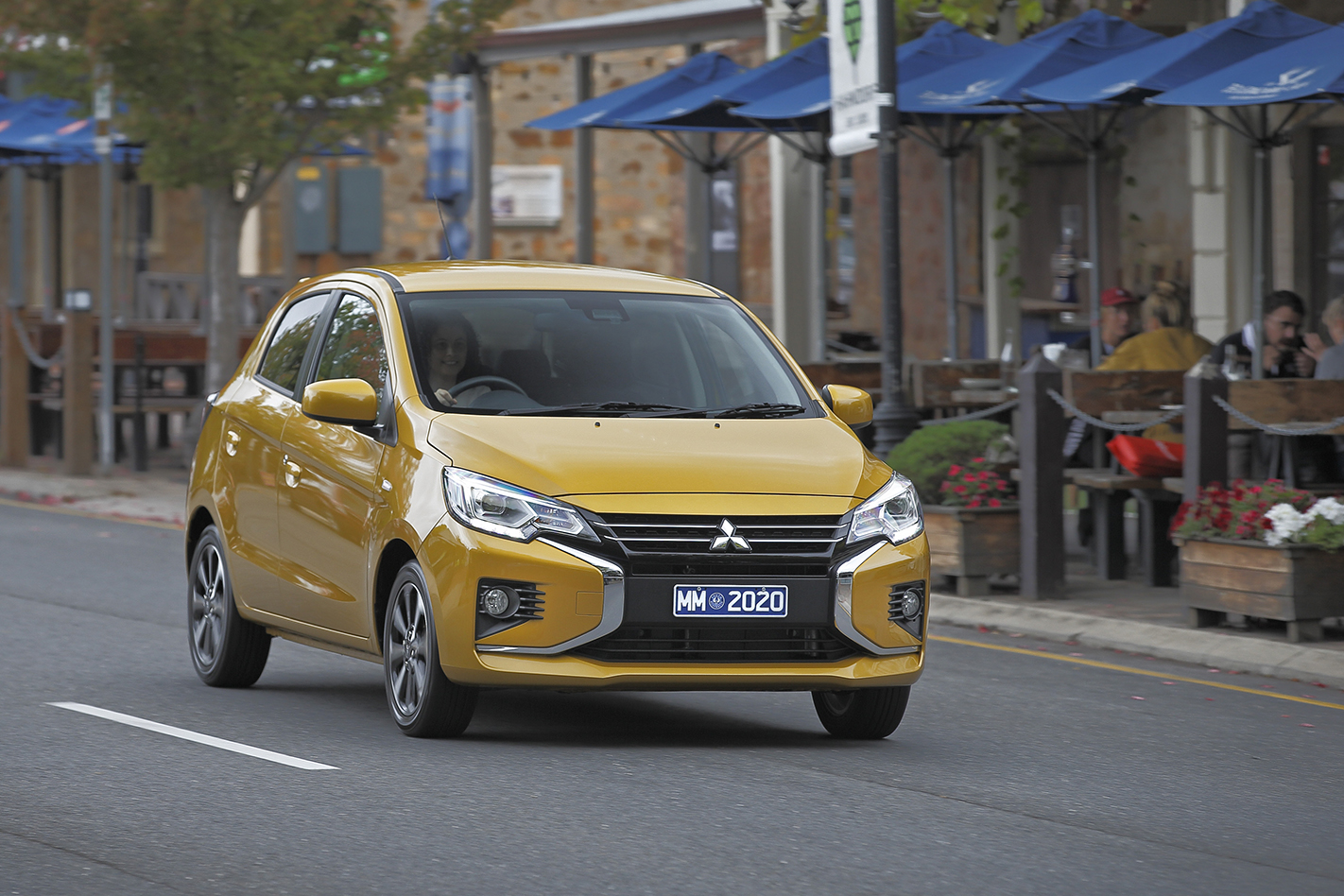
That’s $1000 more than the previous model, which is reasonable considering the update brings the eight-year-old sixth-generation Mirage a fresh interior fit-out, and – for the first time – autonomous emergency braking, an infotainment system and a reversing camera.
Like its recently facelifted ASX small-SUV sibling, the new look is framed around the brand’s ‘Dynamic Shield’ front design language, re-sculpted rear-end, and LED combination lamps at each end, which combine to help cure Mitsubishi’s baby hatch of its chronic blandness.
Inside, the 2020 Mirage gains fresh dashboard layout built around a 7.0-inch touchscreen with support for Apple CarPlay and Android Auto. Mitsubishi says it has also improved interior quality and comfort, with softer front armrests, and ‘sporty’ seat designs.
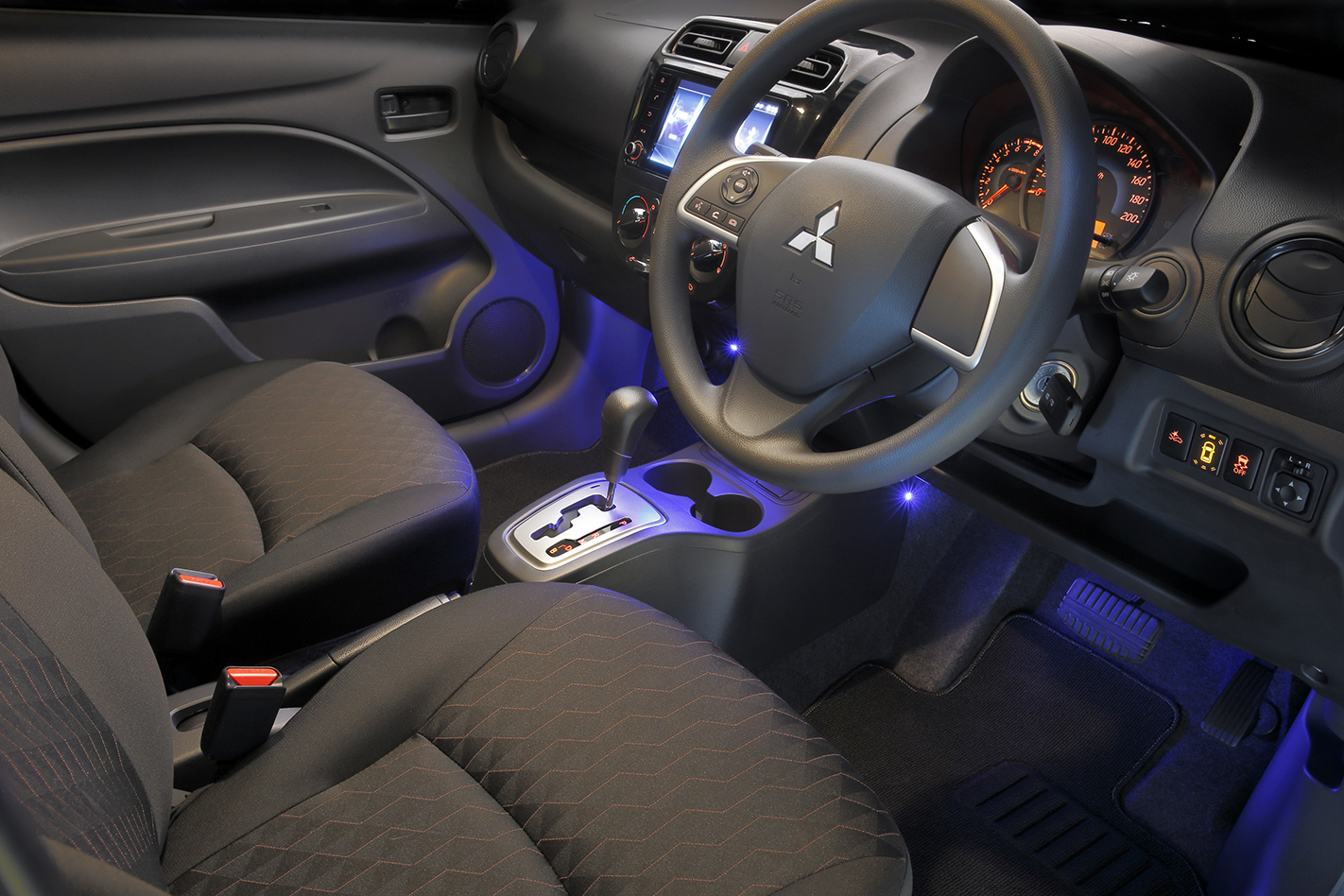
Safety tech includes low-speed auto braking, which Mitsubishi calls Forward Collision Mitigation System that prevents or reduces the severity of a collision at city speeds, while the range-topping Mirage LS has lane departure warning.
The frugal 57kW/100Nm 1.2-litre three-cylinder petrol engine carries over from the previous model with the ES having a choice of five-speed manual gearbox or CVT auto, and the LS CVT only.
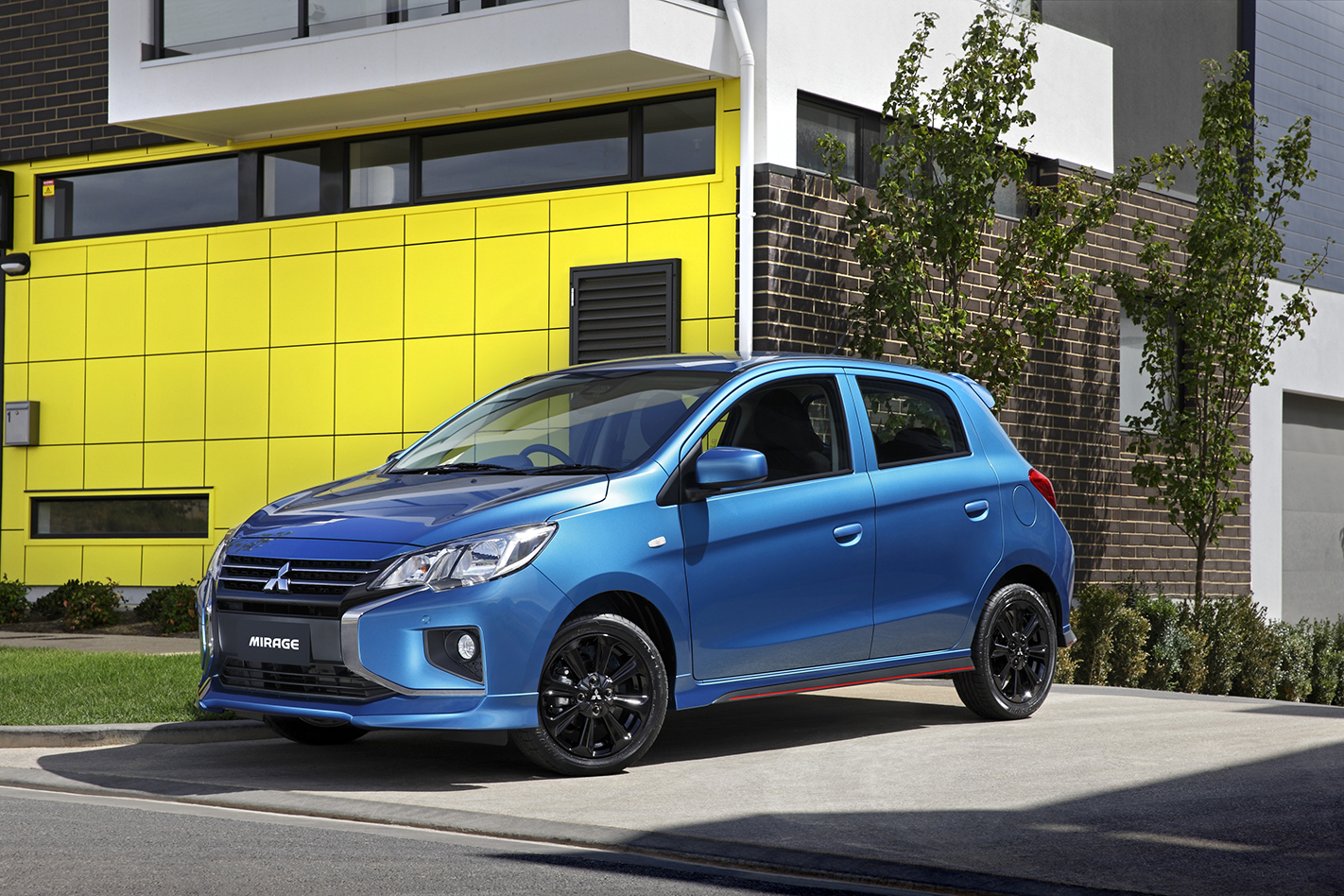
The Mirage is available in seven colours with White the only standard option, with metallic and pearl paints attracting a $740 premium.
Mitsubishi Mirage standard features
The entry-level ES comes standard with a five-speed manual gearbox, with the CVT auto costing an additional $1500.
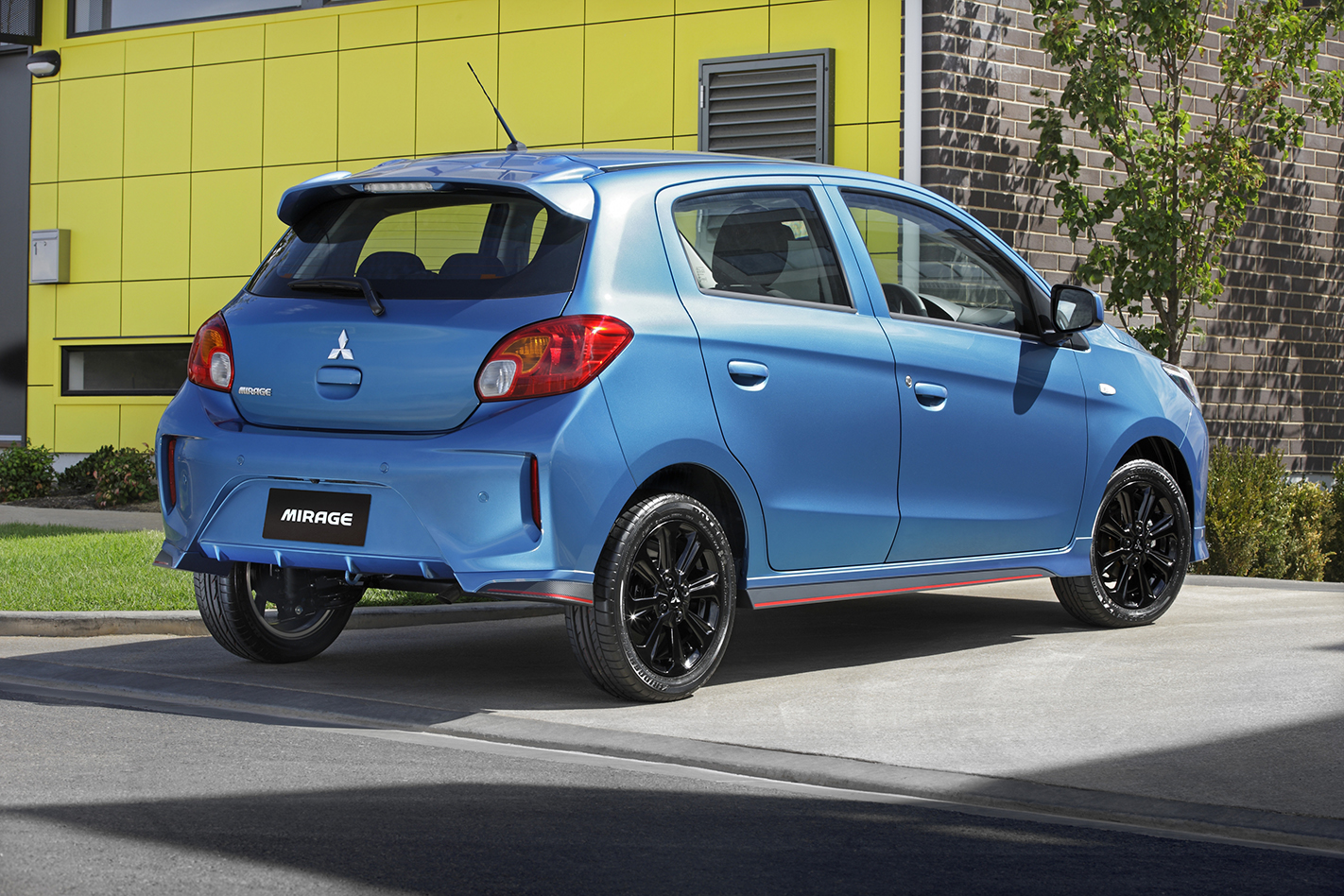
Standard kit includes:
- 7” smartphone touchscreen audio
- Bluetooth connectivity
- Apple CarPlay/ Android Auto
- Reversing camera
- Autonomous emergency braking
- Ambient temperature display
- Black cloth seats
- 14-inch steel wheels
- Daytime running lamps
- Hill-start assist
- Single zone climate control
- Contrasting cloth trim
- 15” alloy wheels
- Cruise control
- Privacy glass
- Lane Departure Warning (LDW)
- LED headlamps
- Fog lamps
- Automatic high beam
- LED daytime running lamps
- LED rear combination lamps
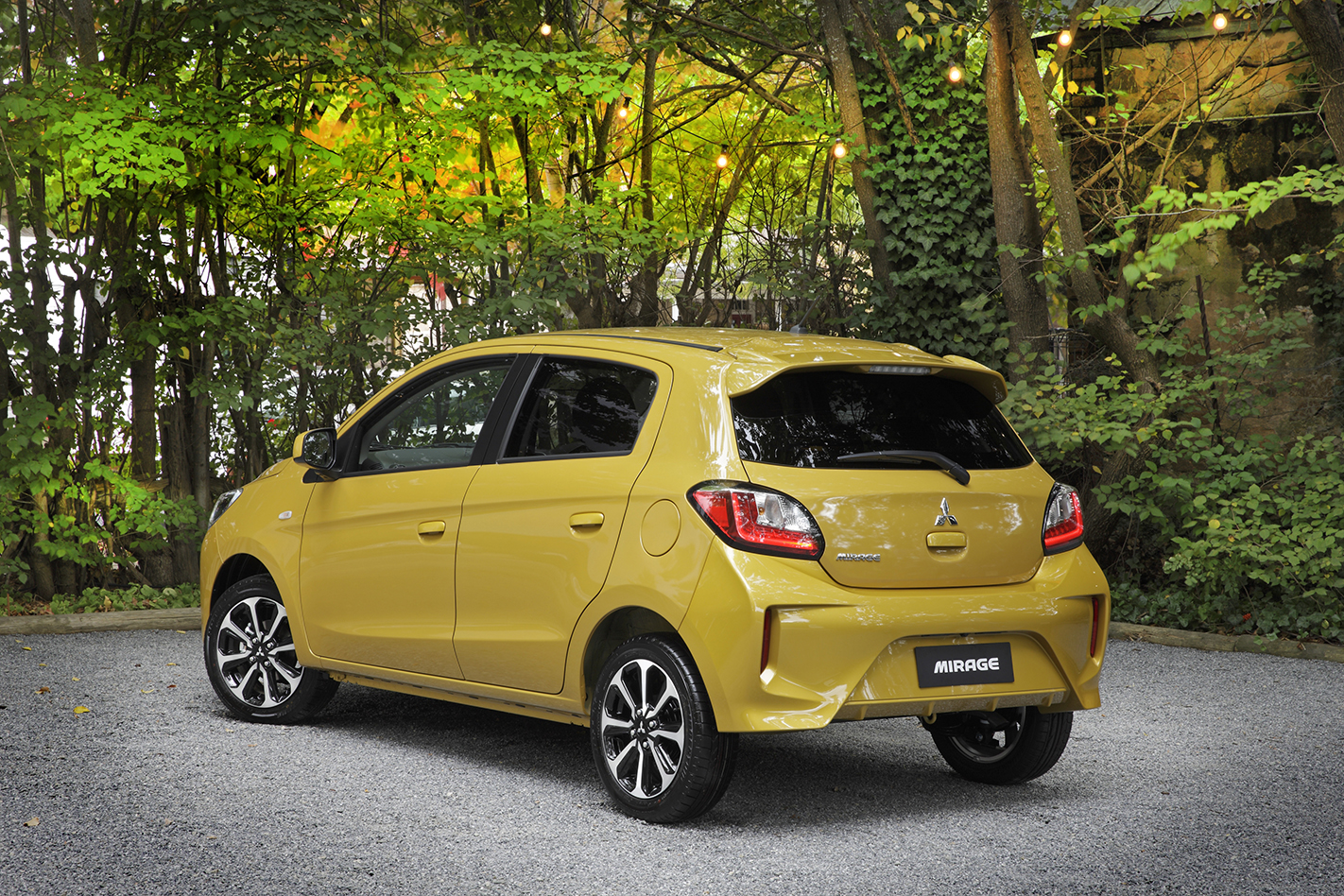
Mitsubishi Australia will be hoping the Mirage will be able to peg back its segment dominance that peaked in 2016 with 36.2 percent market share against a wider field that included the then-new Picanto and Fiat 500, and now discontinued models including the Holden Spark, Nissan Micra and Suzuki Celerio.
2020 Mitsubishi Mirage pricing (RRP)
- Mirage ES manual – $14,990
- Mirage ES CVT – $16,490
- Mirage LS CVT – $17,490
What do you think of the updated Mirage – too cutesy or perfectly citified? Let us know below!
Few cars have as significant, or loyal, a fanbase as the Nissan R32 GT-R. Held up as JDM royalty, the car Wheels dubbed Godzilla is the true definition of a modern classic.
However, with the cult favorite status comes some urban-legend baggage, and the GT-R still has its fair share of myths that surround its development.
So, we dived into our archives to dredge up some facts we think even the biggest of GT-R nerds would struggle to recall.

THE GT-R WAS ALMOST REAR-WHEEL DRIVE
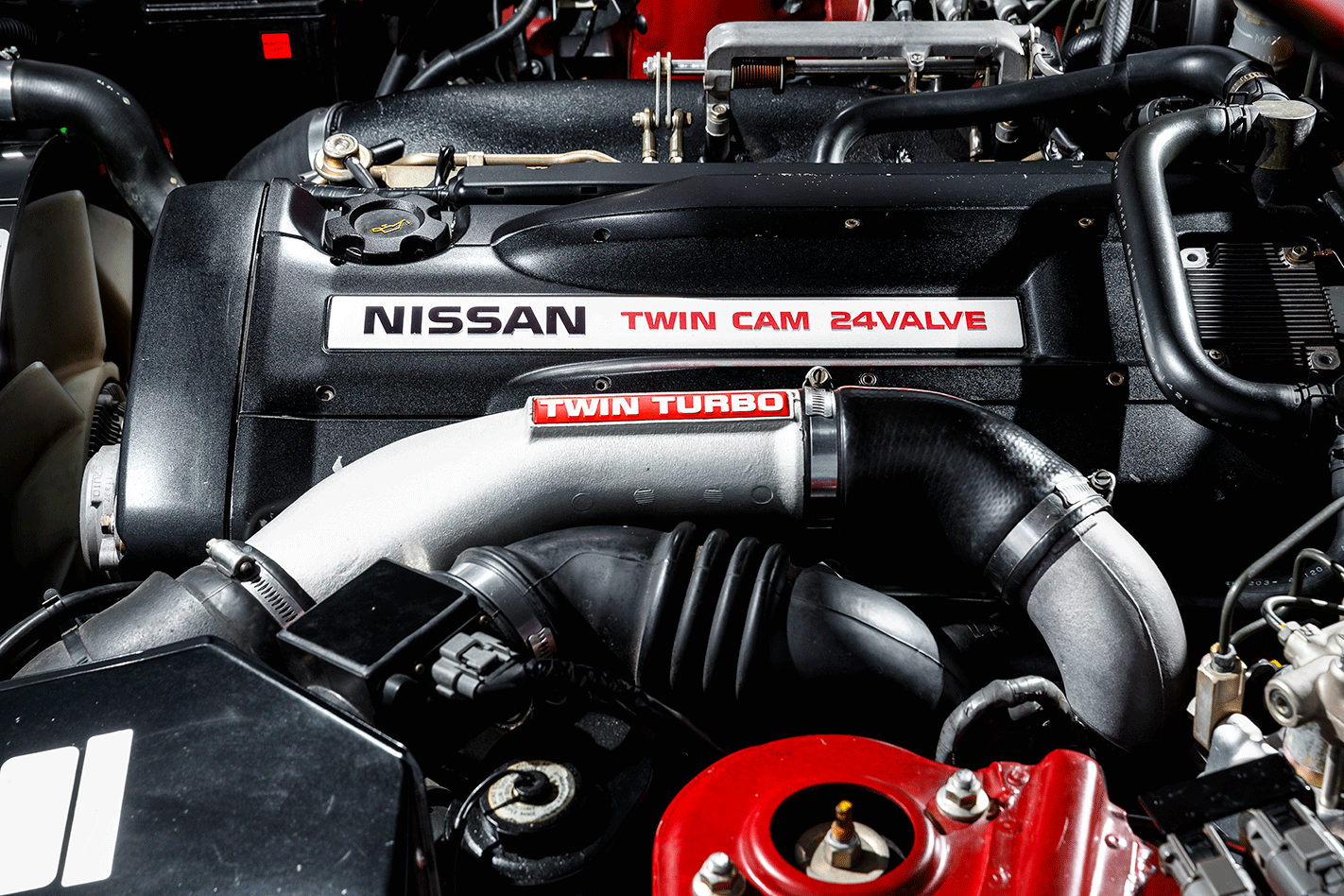
Three engineering mules were created: one with a standard rear-drive layout, one with an Audi-style fixed torque split, and one with a Ferguson viscous centre diff. None were deemed satisfactory. In particular, the rear-drive car exhibited too much early-phase oversteer. Chief of the Vehicle Experimental Department, Kozo Watanabe, ordered the team to develop a mulitplate-clutch all-wheel-drive system. The engineers had a year to get the drivetrain sorted; if not, project GT-X would become rear-wheel drive. History shows that the ATTESA ETS system gained Watanabe’s approval.
LEARNING FROM PORSCHE
A tear-down of a Porsche 959 convinced Nissan’s engineers that a variable electronic toque split with a wet multiplate clutch was the right move for GT-R. However, where the Porsche’s torque split replicated its 20 percent front, 80 percent rear weight bias under acceleration, Nissan came to the conclusion that the 959 got it wrong. During mid-phase cornering, 20 percent of drive going to the front tyres would always introduce understeer, a characteristic hard to engineer out of the R32 GT-R thanks to its unfavourable 59.4 percent front, 40.6 percent rear, static weight distribution. The engine hanging over the front axle and the fuel tank mounted aft of the rear axle also contributed to a high polar moment of inertia, despite Nissan’s attempts to lighten the front of the GT-R with aluminium body parts.

RUNNING RINGS ROUND THE COMPETITION
Chief test driver Hiroyoshi Kato’s first trip to the Nurburgring with the R32 saw it eclipse the Porsche 944’s production-car record of 8m45s by 15 seconds. However, Kato wasn’t happy with the amount of dull understeer, so Nissan’s engineers fitted a 20mm anti-roll bar up front and a chunky 25.4mm item at the rear to take advantage of the AWD system’s ‘accelerated power oversteer’. Corner exit speeds radically improved. And so did the time, with the R32 clocking an 8m20s lap of the Nordschleife.
NOT SO POPULAR?
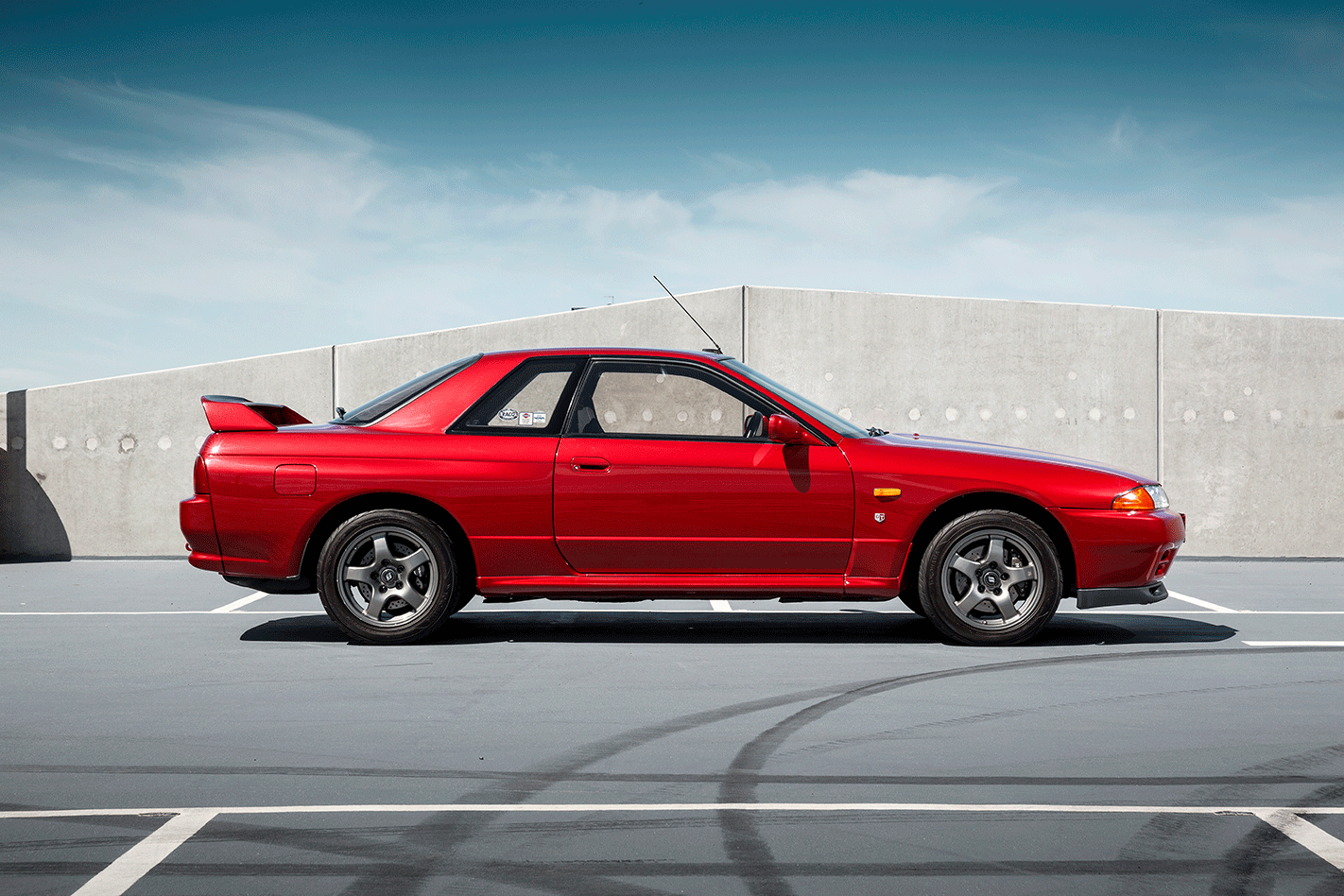
Despite the fact the production run of the R32 GT-R for Australia was just 100, only 63 of those were actually bought and registered by customers. Many prospective buyers were likely daunted by the list price of $110,000. Adjusted for inflation and taxes, that’s about $250,000 today – around the price of a 992 Porsche Carrera 4. Hindsight is a wonderful thing, indeed.
BUYING ONE TODAY
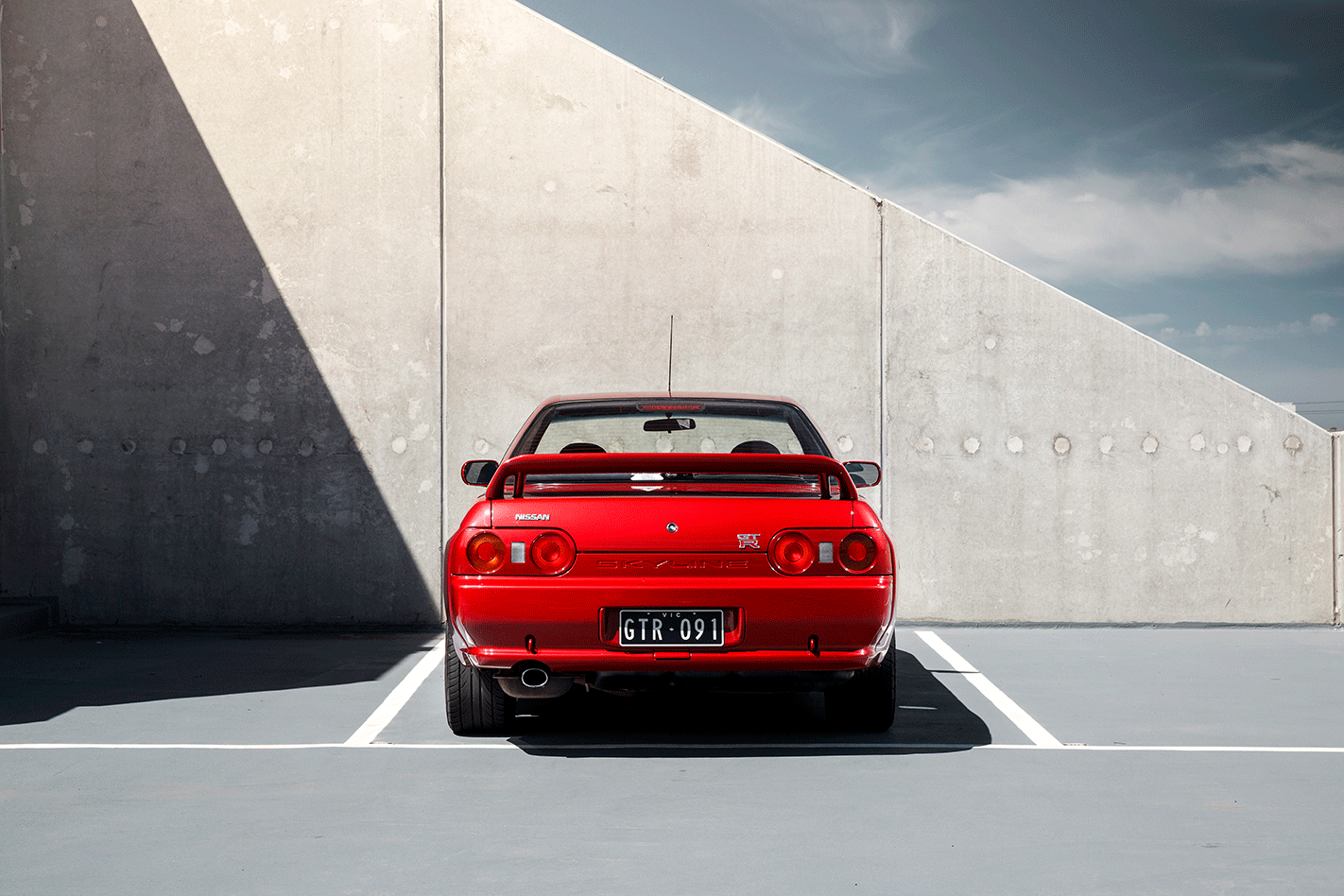
With some 44,000 R32s built globally between 1989 and 1994, it’s not as if this GT-R is rare. However, as we mentioned before, only 100 were officially imported. If you want one of those, look for a Nissan Australia compliance plate and a vehicle code 40ZKBNR32RX. Aussie-market cars also feature Blaupunkt stereos, a roof-mounted aerial, and replacement speedometers that read up to 260km/h.
The motorsport industry essentially came to a stand-still all at once, with every major series now waiting until it can once again race. But there’s another race happening, and the motorsport industry is starting to make moves again.
An Australian not-for-profit called Race Against COVID-19, started by racer and motorsport consultant Renato Loberto, kicked off creating connections between those needing solutions to medical engineering difficulties, and those with the ability to solve engineering problems.
Loberto spoke to MOTOR about his initiative, saying it’s a way to save lives using the creativity and ability of an industry currently willing to put its hand up to help.
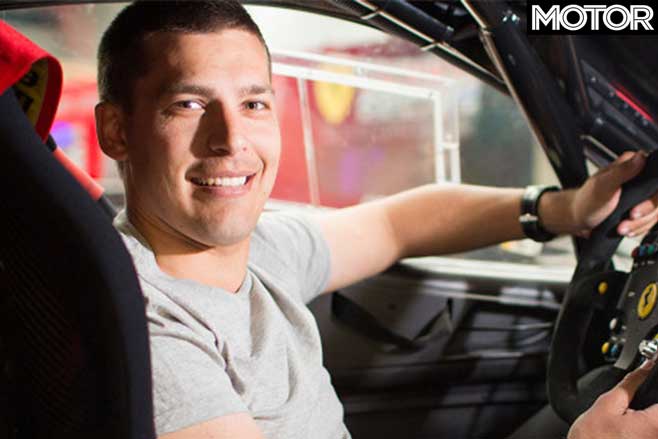
“It’s about connecting people that have a certain requirement to someone or a group with a different set of eyes to solve a problem that’s already existed.”
Loberto uses ventilators as an example, “the demand for them has never been like this, the solution used to just be for a factory to make more, but now that’s not enough.”
https://www.instagram.com/p/B-YrAoUHW5H/?utm_source=ig_embed&utm_campaign=loading
With Supercars teams like Erebus and Triple Eight both already working on developing solutions to the increasing demand for medical equipment, Loberto is now creating a network of those in the motorsport industry who have a skill that could be used to help save lives in the COVID-19 pandemic.
He says Supercars’s Medical Delegate Dr Carl Le is also part of the push to coordinate the teams’ efforts to create equipment for medical purposes, and that Ryan Walkinshaw signalled that his HSV/Walkinshaw facilities have the capacity to assist the other teams and add to the push to help.
“Kelly racing also has an advanced thing going with its 3D printing technology… and while that’s not the answer to our problems by itself, it allows rapid prototyping to see what might work and what won’t.”
Loberto is well-placed to coordinate the Race Against COVID-19 program, with a mix of his own management and event coordination skills, connections in the industry, and the fact his wife is an Epidemiologist – someone who studies the spread of viral diseases.
In addition, motorsport personalities are taking to social media to bring awareness to their audiences and use their reach to help out.
https://www.instagram.com/p/B-YrntlJio9/?utm_source=ig_embed&utm_campaign=loading
Race Against COVID-19 already has a website which allows individuals or businesses to register their ability to help, with tens of thousands of visits already and more than 100 companies supplying details on how they can contribute.
Loberto is keeping tabs on which people or companies can help in fields such as: Manufacturing and fabrication, programming, warehousing, or more specific capabilities like hermetically sealed areas and rapid prototyping. Even video and photo production capability is important for aspects such as training.
“Australia has some of the best engineers, mechanics, fabricators, logistics experts, and manufacturing facilities in the world,” Loberto continues in a press statement.
“We can put them to use by providing the Australian health care system with whatever they need by drawing on the broad range of skills, resources, experience and creative minds that exist within our industry.”
If you or your company can assist, use the very simple Race Against COVID-19 form to supply details, or pass it on to someone who can.
One of the very few positive things about war is that it’s an astonishingly effective catalyst for technological and scientific advancement. In fact, were it not for the second world war and the cold war that followed it, many of the things we take for granted today either would never have been invented, or wouldn’t be at the advanced stage that they are right now. One such innovation is the one you’re using to read this article right now: the internet.
The automotive industry, perhaps more than any other aspect of civilian industry, has benefited hugely from technology initially intended to help us kill other people. Somewhat ironically, most of that tech is now used to help us stay safer out on the road, and you may be surprised that the origins of much of your car’s features can be traced back to warfighting equipment.

GPS – the friend of ballistic missile submarines AND everyday motorists
Would you believe the technology that helps you show up to family dinner on time was conceived as something to make nuclear missile strikes more accurate? It’s true. GPS – or the Global Positioning System – was a US Department Of Defense invention that was only funded because it was critical to allowing a ballistic missile-toting submarine to deliver its nuclear payload with devastating precision.
By allowing the sub to find out its precise location anywhere on the earth, its targeting computer could be fed the right information to ensure its missiles landed on the correct targets, which, when you’re talking about nuclear weapons, is a kinda important detail.
Thankfully its original utility was never required, however its ability as a general navigational aid has since proved far more useful to the military, to civilian aviation, and from the 1990s onward, to ordinary drivers.

Radar – keeping the skies Nazi-free, and the roads bingle-free
The system that helps keep your car a comfortable distance from the car in front when active cruise control is switched on has its roots in world war 2 Britain, where it was deployed to detect Nazi bombers long before they came into visual range and thus gave British fighters the upper hand in the air.
That system was called Chain Home, and the technology it used is what we now call “radar” (originally an acronym standing for Radio Detection And Ranging). It’s been pivotal for commercial and military aviation since the British proved its usefulness in wartime, but it’s only recently become commonplace in cars as a safety device.
It’s also the technology that drives most active cruise control and autonomous emergency braking (AEB) systems. The principle remains the same – a radar transceiver in the car’s nose emits radio waves ahead of the car, with objects in front bouncing those waves back towards it. The time taken for those “returns” to arrive back at the car then tells the computer how far away an object is, as well as its rate of approach and general position relative to the car. If a collision is deemed imminent, the car can take over the brakes and throttle to ensure separation is maintained.
Night vision – Nazi tech helps you avoid stuff in the dark
High-end cars like the BMW 7 Series and Audi A8 have been available with forward-facing night vision cameras for a number of years now, allowing drivers to see hundreds of metres further ahead than the headlamps can reach, revealing potential obstacles and wildlife well in advance.
But what are the origins of this tech? Awkwardly, we have the Nazis to thank.
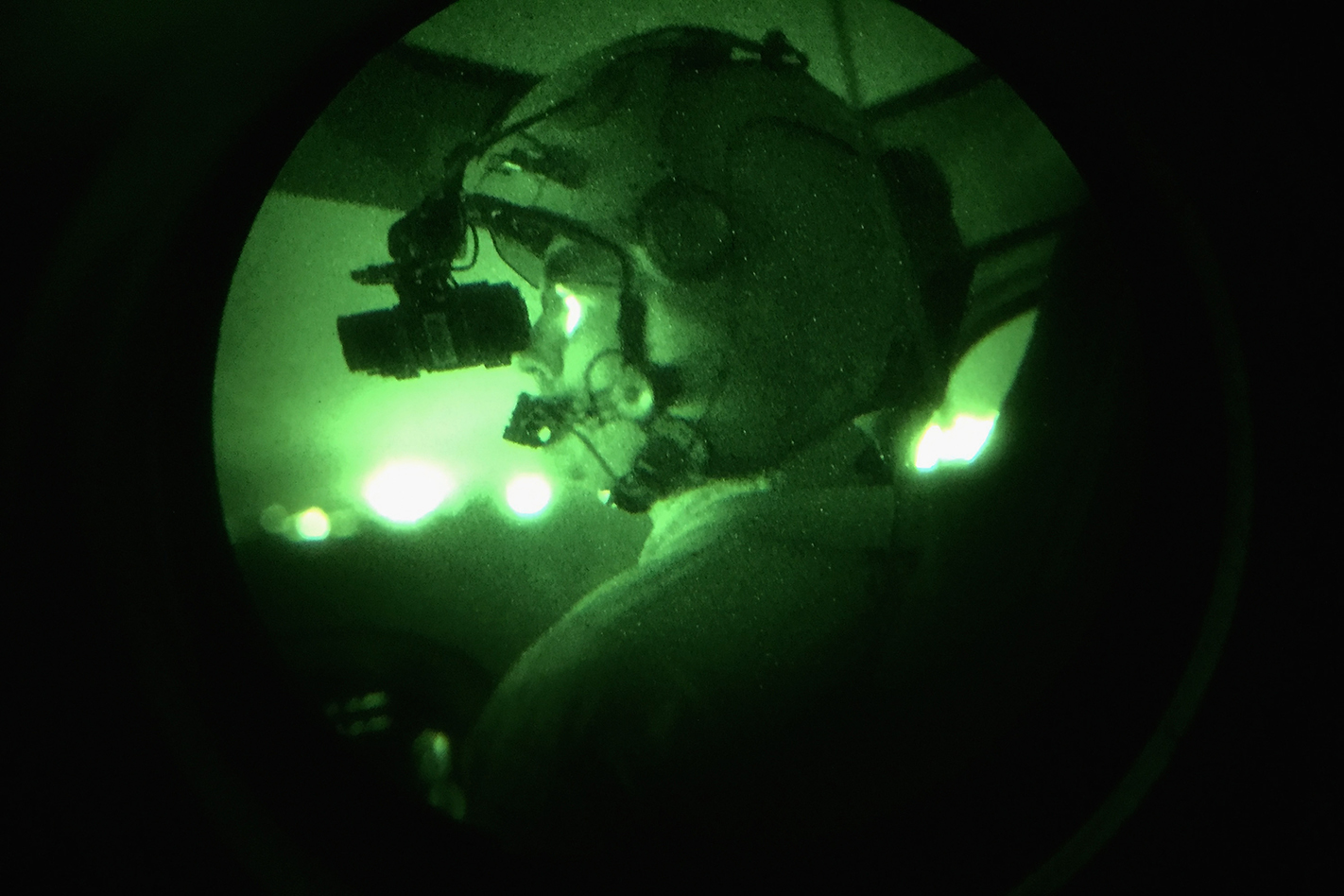
The Third Reich developed the first workable night vision systems, which worked on the infrared spectrum and required a sizeable infrared lamp in order for targets to be revealed. The USA made their own system afterward, with the Soviets following, and eventually over the course of the cold war night vision optics would shrink to the size where they could be mounted on a soldier’s rifle or helmet and didn’t require any infrared illumination to function.
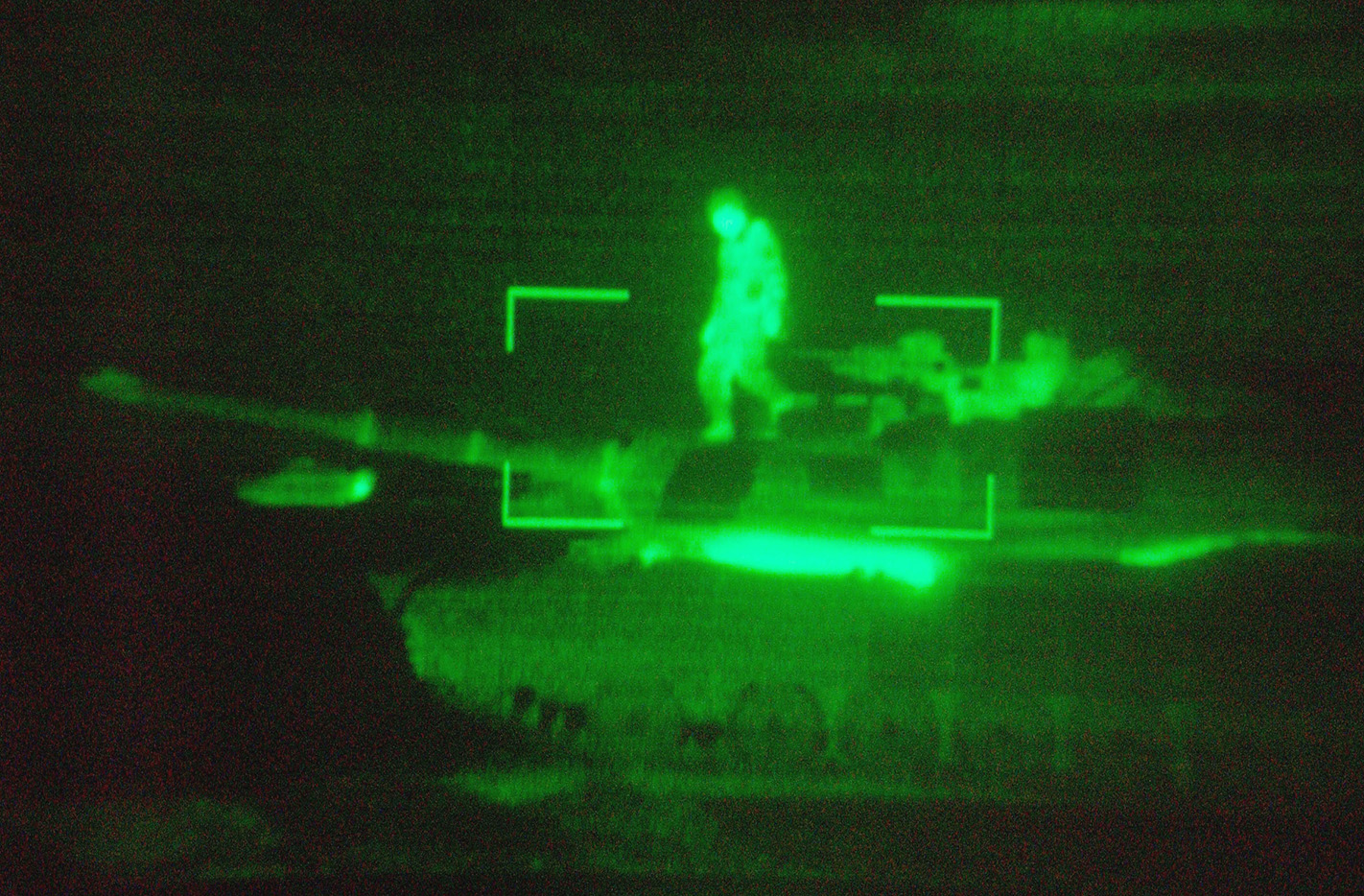
These days some night vision systems work by detecting emissions in the infrared spectrum (which mean you aren’t looking at light, but rather the heat given off by people, vehicles and the environment like in the image above) and are often referred to as thermal sights above, while the more common ‘green tint’ night vision systems are image intensifiers that magnify existing light levels and can work using just ambient light from the moon and stars.
Car-based night vision tends to use thermal imaging cameras rather than image intensifiers, and now that technology helps you avoid kangaroos on lonely country highways. Neat.
Car-to-X – it’s like the internet, but for fighter jets
The idea of cars being able to communicate wirelessly to other vehicles and road infrastructure is indeed a novel concept, and one that’s right now regarded as critical for the further development of autonomous cars and improving traffic flow in log-jammed cities.
However, it is far from a new idea.
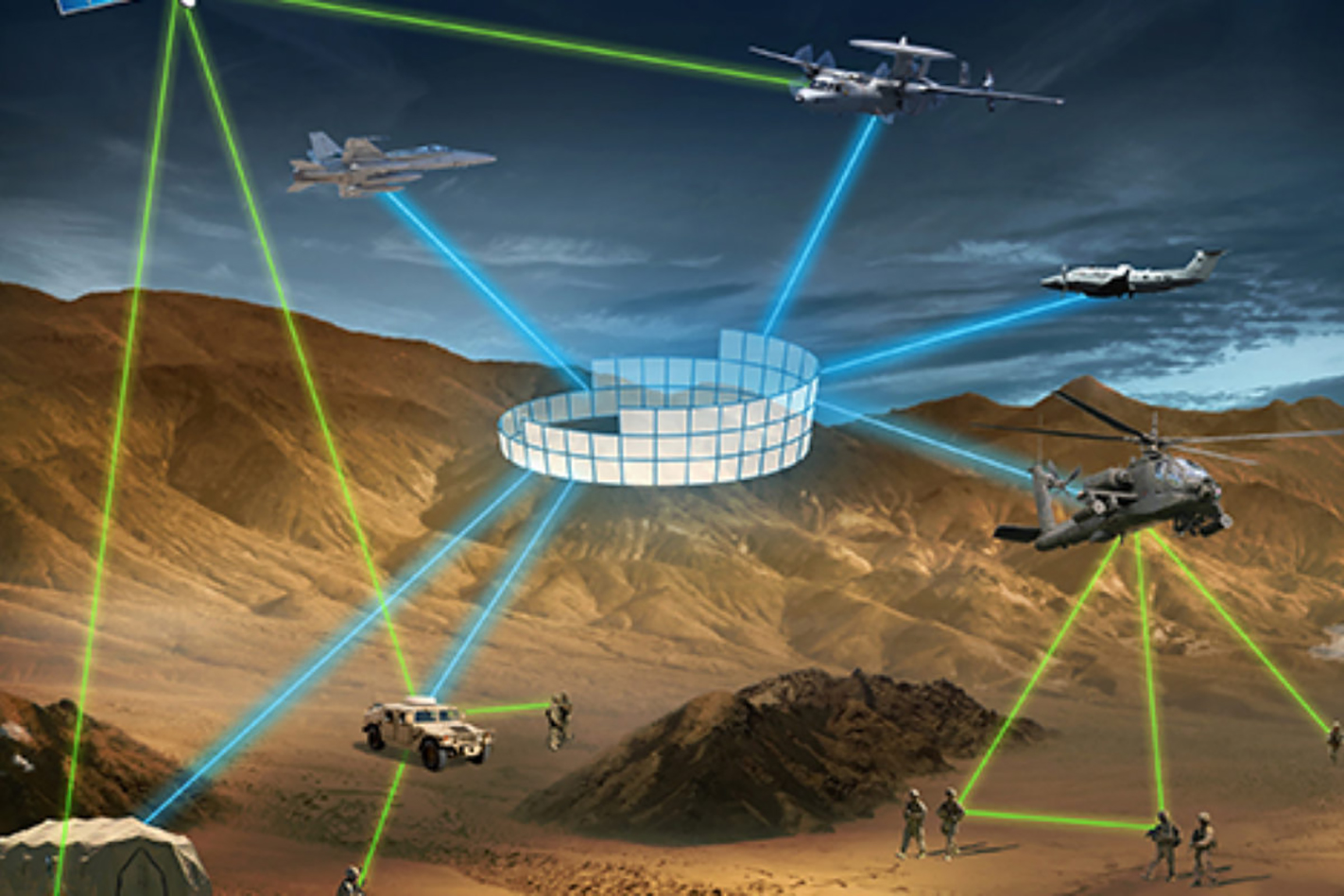
Western militaries have been using a similar system for decades now to enable fighter jets, bombers, radar installations and missile batteries to share information with each other, transmitting data about where targets are in the sky and on the ground wirelessly over a secure datalink.
Known by various names but most often referred to as “Link 16”, the datalink protocol gives a critical advantage to combat aircraft in particular: because target data is supplied by a different aircraft, they’re able to intercept targets without switching on their own radar – the electromagnetic equivalent of activating a strobe light in a dark room. By keeping their radar off and using the datalink, they can then sneak up to enemy forces while remaining undetected.
For cars, the data-sharing principle helps individual vehicles build a better picture of their surroundings than if they were relying just on their own on-board sensors. Also, by integrating with streetside infrastructure like traffic lights, they can also anticipate changes in traffic conditions and speed up or slow down accordingly, leading to smoother traffic flow and less time spent stationary. If you’ve heard the term “car-to-x“, that’s what this kind of ‘swarm intelligence’ is.
Drive-by-wire – faster, lighter and more reliable
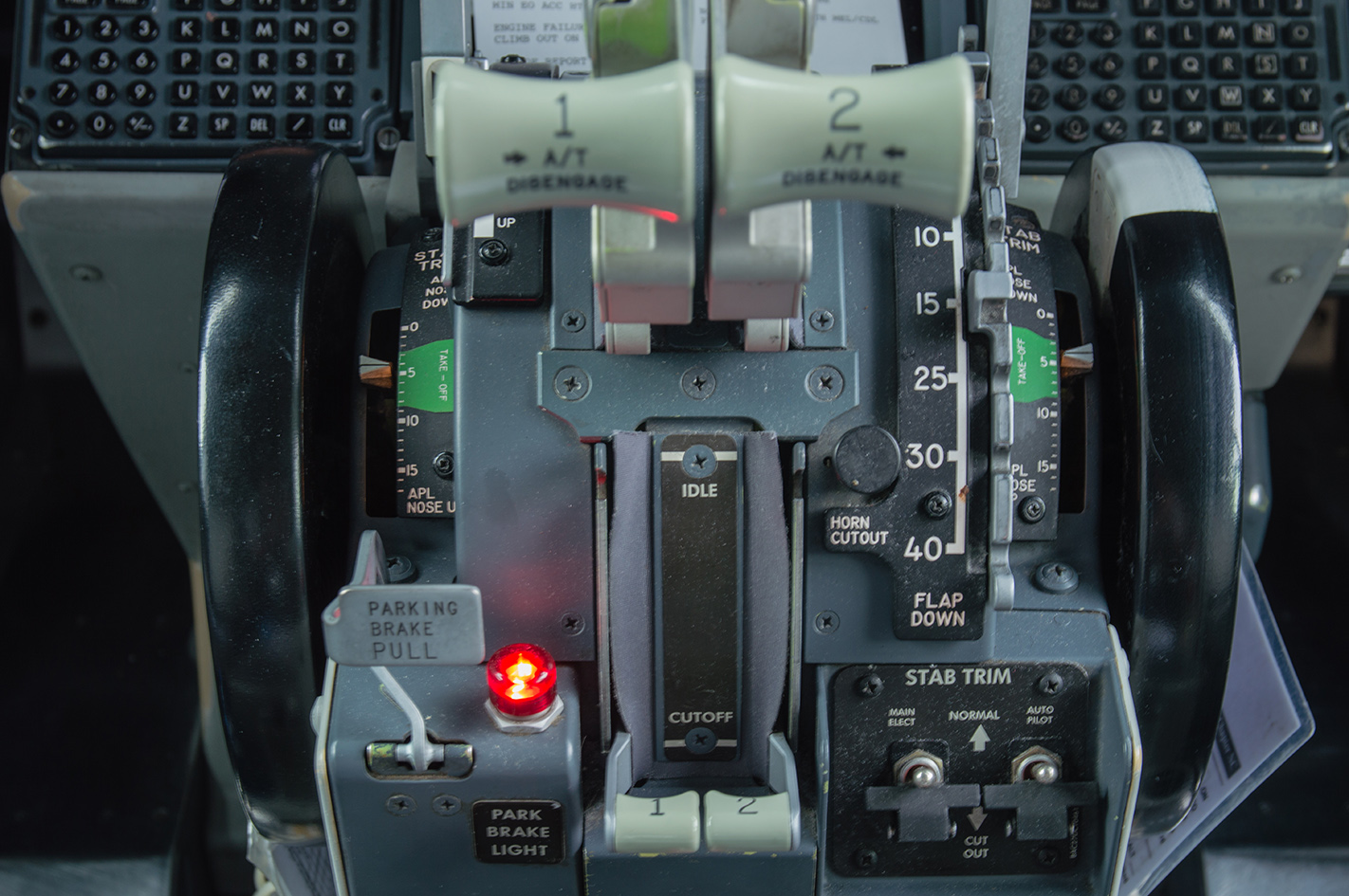
For obvious reasons, most people prefer the reassurance of a mechanical connection between their feet and hands to their car’s steering, engine and brakes. However, technology pinched from the world of aviation is slowly trickling down to everyday road vehicles, with the promise of better performance, less weight and improved reliability.
Both military and civil aircraft have been employing “fly by wire” technology for decades now, which sees traditional mechanical linkages between the pilot’s controls and the control surfaces, like rods, cables and hydraulic pipes, replaced by electrical connections and computers.
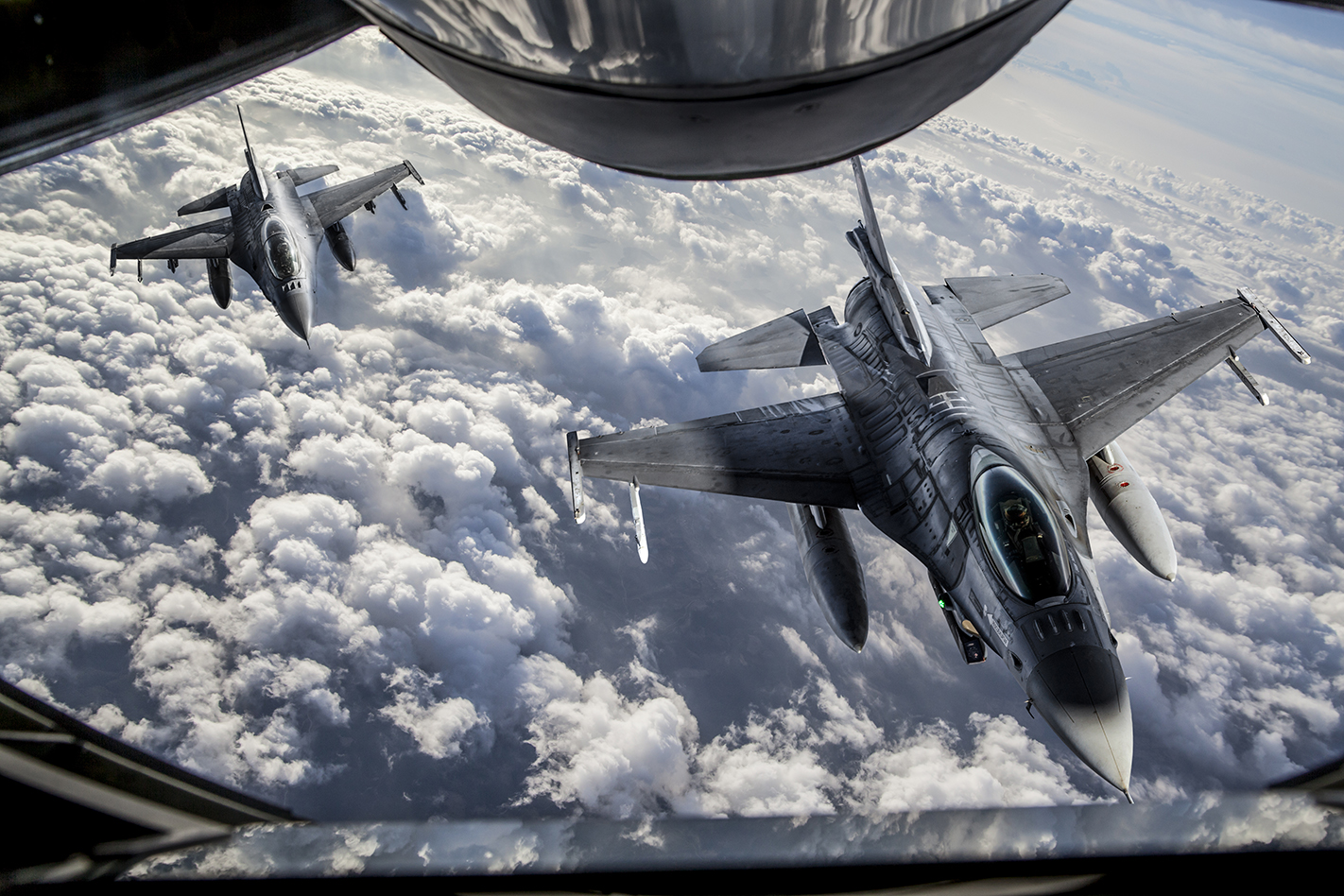
The main reason is to reduce weight and eliminate systems that can be tricky to maintain or offer poor reliability. A handy side-effect is that by filtering a pilot’s input through a computer, an aircraft can be made far more agile, a trick that the F-16 fighter jet, above, uses to great effect. How? Well, the pilot’s controls simply tell the computer what the pilot would like their aircraft to do – the computer meanwhile sends faster and more precise signals to each control surface to execute that command – often manipulating those surfaces in ways that wouldn’t seem intuitive to a human, or at speeds that a human wouldn’t be able to physically input.
Most cars these days feature fly-by-wire (or drive-by-wire, more correctly) technology in the form of an electronic throttle. It’s a similar principle to the above example – the accelerator pedal merely informs the car’s ECU about how much thrust the driver requires, while the computer has full control over the physical position of the engine’s throttle plate. The result is more responsive performance and better fuel economy, because a computer – and not the driver’s foot – is better suited to optimising air and fuel flow into the engine.
Steer-by-wire and brake-by-wire is also coming into existence, with Infiniti and Alfa Romeo leading that charge with the Q50 and Giulia respectively.
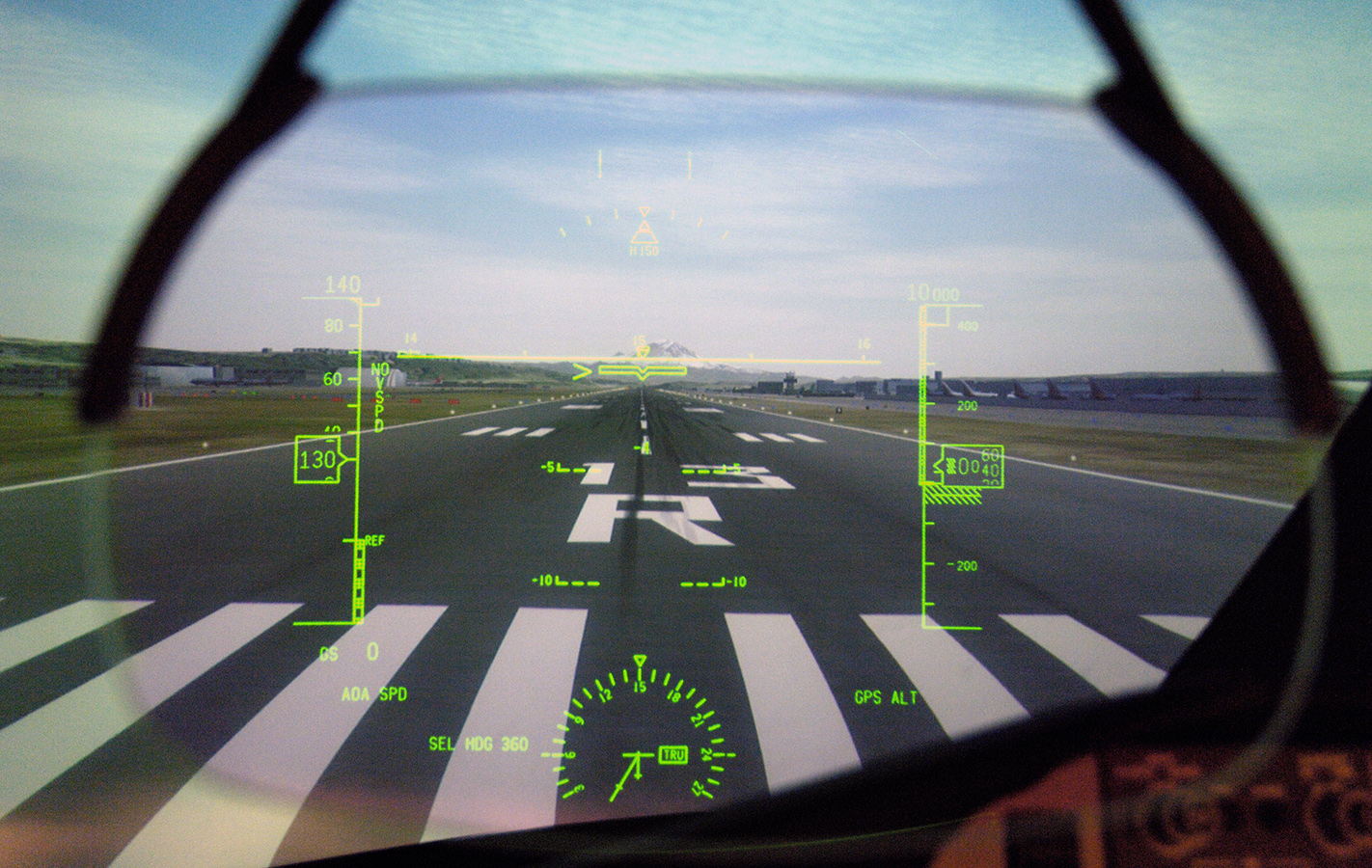
Head-up displays – jet tech for avoiding speeding fines
Is it any surprise that aviation has been the biggest source of technological trickle-down to the world of cars? Head-up displays have over the past decade become so common that you can now find them in something as ordinary as a Mazda 3 or Toyota Corolla, yet for most of the cold war period that tech was only found in frontline combat aircraft.
A development of simple reflector gunsights, head-up displays – or HUDs – project moving graphics onto a glass plate ahead of the pilot/driver, making the graphics and symbology appear to float in midair in front of the aircraft/car.
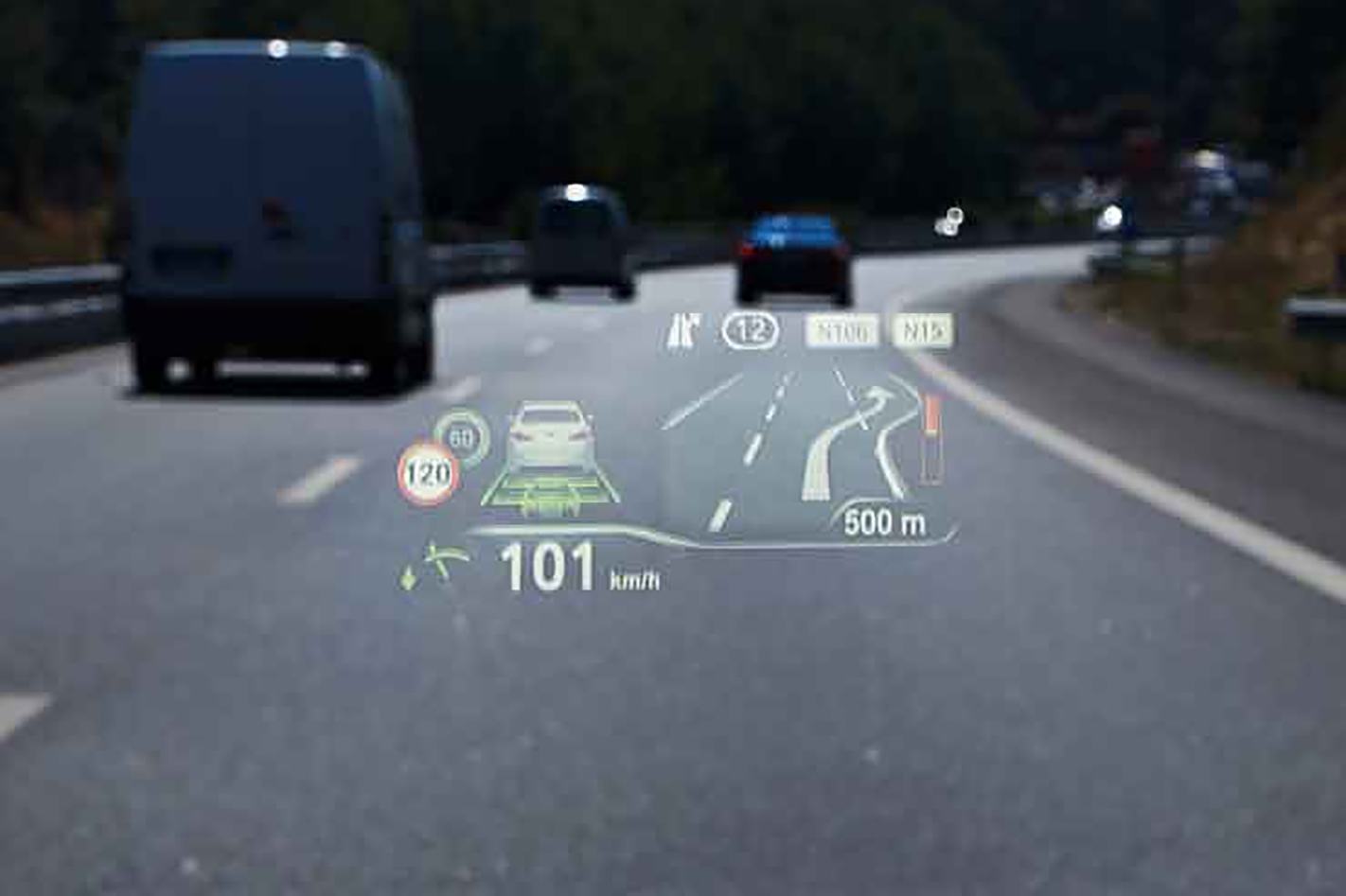
A HUD is vital in fighter jets because it puts crucial information right in the pilot’s eyeline, allowing them to maintain visual contact with targets and use their weapons more accurately. They’re great to have in cars for similar reasons, by projecting speed readouts, turn-by-turn navigation instructions and more, meaning you can keep your eyes up and on the road for more of the time.
Another handy side effect is that because that information appears to float ahead of the driver somewhere above the bonnet, a HUD can reduce eye strain by reducing the amount of refocusing the driver’s eyes have to do whenever they go to check their speed.
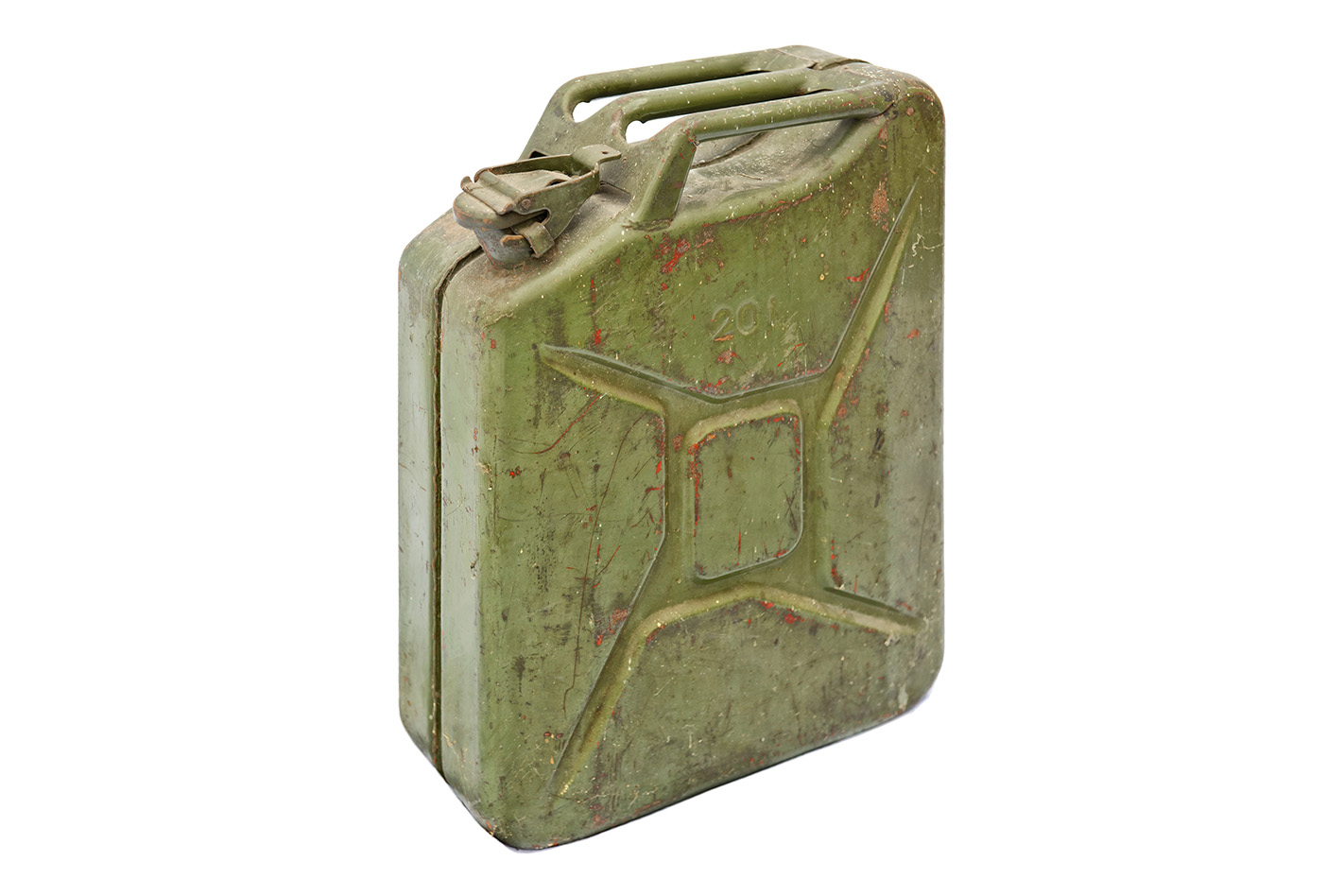
Jerrycans – Hitler’s gift to offroaders
Another product of the Third Reich, the 20-litre jerrycan as we know it today came into existence in 1937 as a product of German industry for the Hitler’s army. Issued en masse, it was groundbreaking in several ways – it was easy to produce with its body being made of two steel stampings welded together; it was easy to carry by hand; its rectangular shape made it easily stackable; and no special tools or funnels were required to pour fuel from it.
It was hugely superior to the more cumbersome and fragile containers used by the British and American armies, and the German design was almost immediately copied wholesale by the Allies. While Hitler didn’t make it through the war, the jerrycan that fuelled his armies has endured to the present day, where 4×4 enthusiasts continue to rely on them when venturing through the great outdoors.
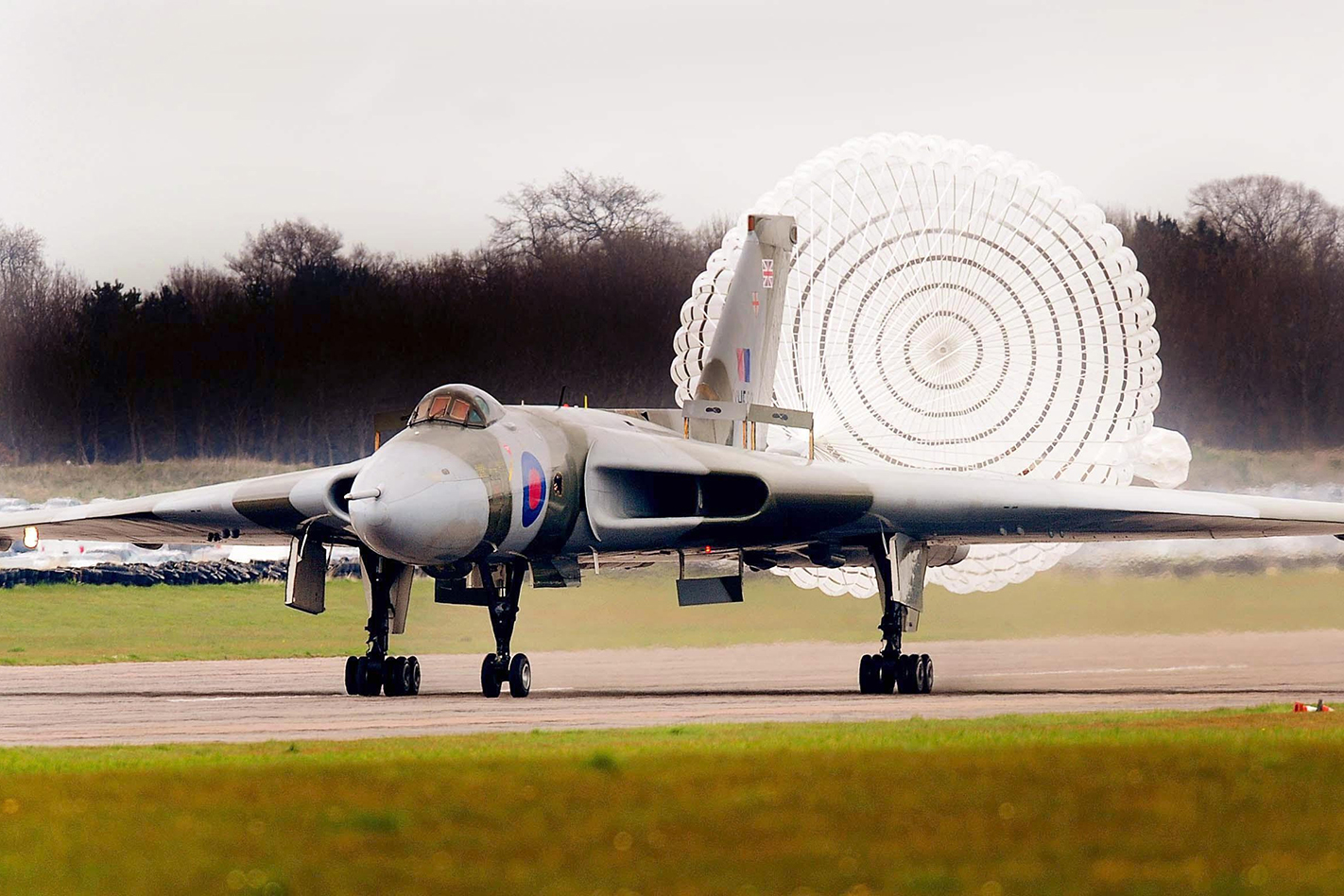
ABS – nuclear bombers need to stop safely, too
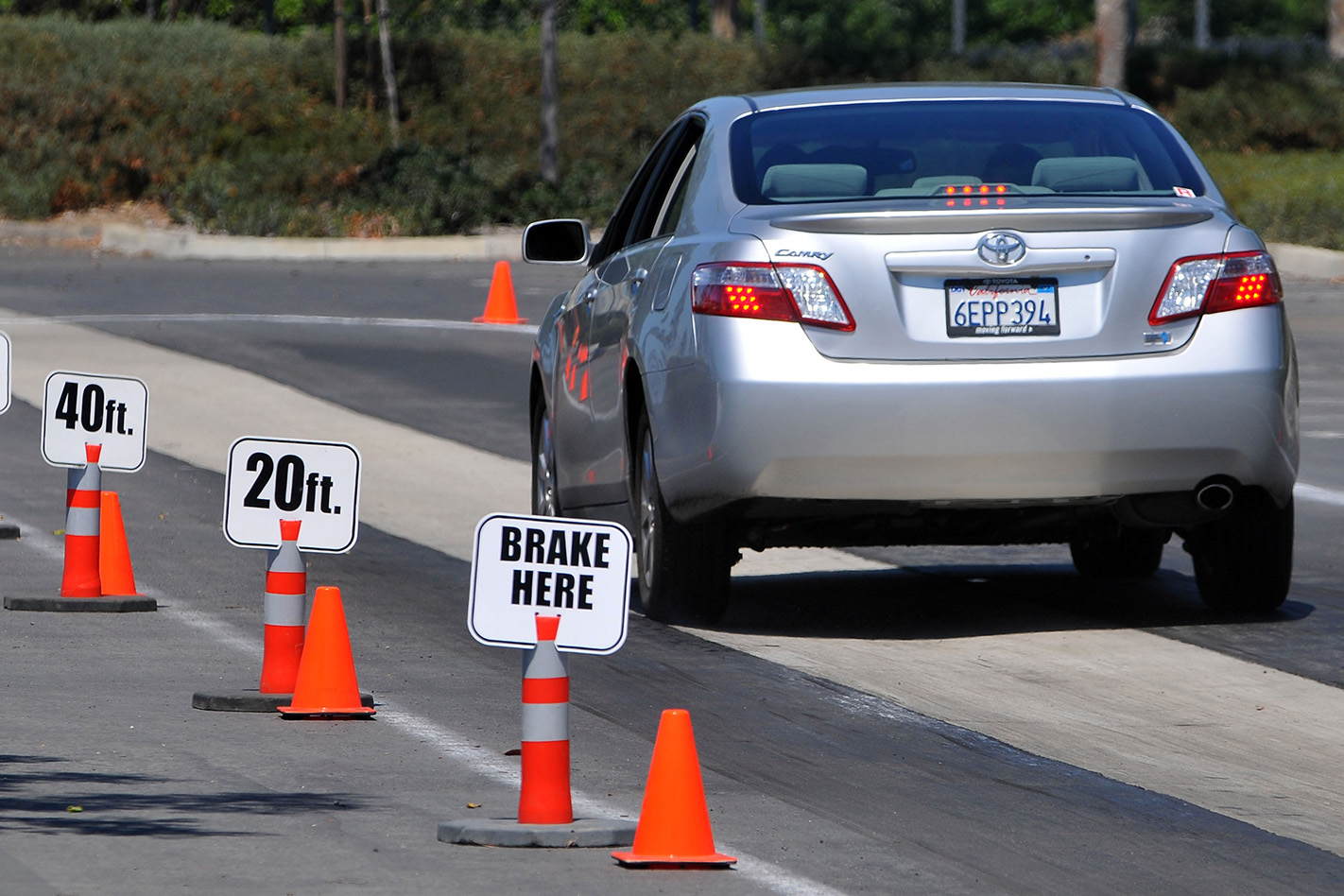
Picture this: it’s a rainy night, you’re piloting a four-engine bomber weighing around 70 tonnes and you need to land. Oh, and you’ve got a nuclear bomb on board.
Suffice it to say, you want to make sure that the thing is going to stop before the runway ends, but wet weather and a heavy aircraft are not in your favour. Thankfully, anti-lock braking systems were invented for precisely this reason – to bring heavy bombers to a halt without their wheels locking up and causing either a loss of control, a burst tyre, setting fire to the undercarriage or a longer-than-ideal landing roll-out.
Originally commercialised by Dunlop and marketed under the name ‘Maxaret’, early ABS was entirely mechanical and relied on flywheels and hydraulic links to detect when individual wheels stopped rotating while others were still spinning. If wheel lock-up was sensed, the system would ease hydraulic pressure on the brake for that wheel to get it spinning again, before re-applying pressure to recommence braking.
British nuclear bombers like the Vulcan (above) were among the first recipients of the Maxaret system, though it eventually found its way into a car – the Jensen Interceptor FF. Later innovations took ABS technology toward an electro-mechanical direction that eliminated the flywheel and improved stopping performance, and these days ABS is found in virtually every car on sale in Australia.
Airbags – torpedo-inspired lifesavers
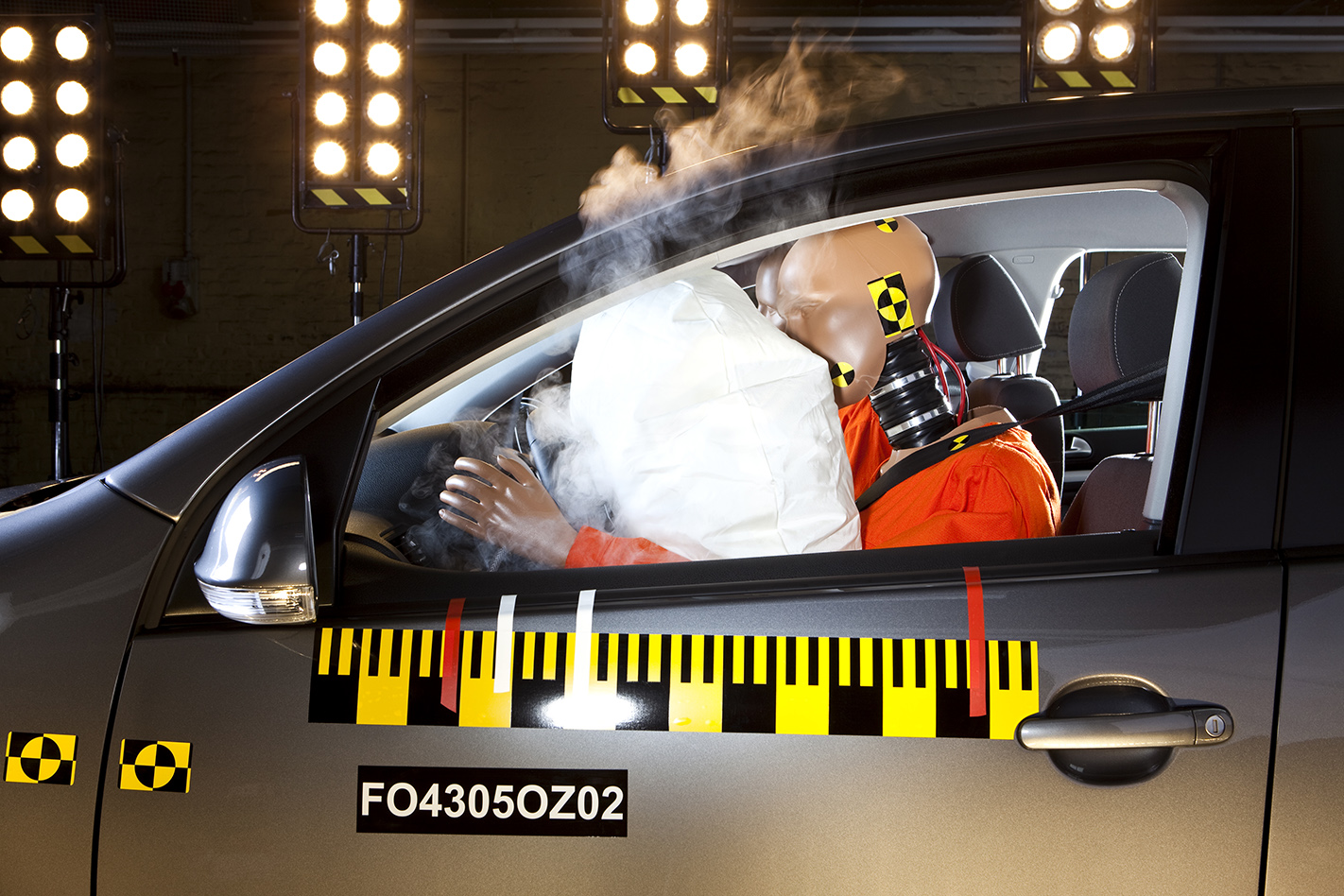
Engineer John Hetrick was one of several people who championed the use of airbags, but while the concept of providing a soft surface to cushion passengers in a crash was by no means his idea alone, he was the first to receive a patent for the idea and his solution for how to deploy an airbag certainly drove the technology in the right direction.
A former engineer in the US Navy, Hetrick was inspired by the compressed air system that launched torpedoes from submarines and figured that system could be scaled down for automotive use and supply the energy required to inflate an airbag. He was, as it turned out, wrong, but later research found that compact chemical rocket motors – another military innovation – were the secret sauce needed to make airbags a reality.
It’s easy to put off getting your car service. To your untrained eye, it all seems fine – it’s not making any funny noises, conking out on the middle of the freeway, and it stills rumbles like it always has when you start it in the morning.
But forgetting to service your car could be an extraordinarily costly mistake. There are plenty of things that can go wrong, and they may affect your hip pocket in subtle ways too.

For example being slack with maintenance can negatively affect your fuel economy, and not just elevate the risk of mechanical failure.
And fluids need to be regularly checked and changed to avoid moisture building up or oil degrading in quality, which can see your engine seize up when you least want it to, or have your brake fluid boil and become ineffective.
Taking your car in for a regular check-up will also ensure it remains roadworthy and help it retain resale value.
How often do you really need to service your car?
As a general rule, you should book your car in for a professional service every six months or 10,000km (whichever comes first). But every car is different and manufacturer’s recommendations on service schedules do vary, and this should be outlined in your car’s logbook or owner’s manual.
It’s also worth checking these documents for the handy tips on maintenance you can do yourself, and how often parts should be replaced.
As a rule of thumb, you should have your car looked over at least once or twice a year, and the schedule should alternate between a minor service and a major service, so expect to pay a bit more every second booking.
More modern cars have longer service intervals, often 15,000km/12 months. Bear in mind though that modern engines are far more complex and often less tolerant of neglect, so don’t be tempted to squeeze an extra few months out between visits to your service department.
What stands out?
The Suzuki Jimny is an attractively styled, low-cost, fun 4WD wagon that will go just about anywhere. It is built tough (on a truck-style chassis) and comes with dual-range gearing, which means it will thrive in off-road conditions that would stop or damage other small SUVs. As well, the Jimny’s compact dimensions make it easy to manoeuvre and to park in tight spots. While great off road, it comes with equipment to make it a handy runabout around town such as Apple CarPlay/Android Auto and autonomous emergency braking.
What might bug me?
That rear passengers can’t get out unless you do. There are only two side-doors.That you can’t take the kids camping in your Jimny, without towing a trailer. The Jimny is tiny inside, seats only four at best, and has minimal luggage space – about enough for a couple of overnight bags. To carry much more you need to fold down the rear seatbacks, which leaves seating for just two.The sense of déjà vu if you’ve ever driven an older model Suzuki Jimny or Sierra. Apart from the touchscreen the interior looks and feels incredibly similar to its predecessors going back to the 1980s.How noisy it is on the highway. The engine is quite small and has to work hard at open-road speeds.Depending on your shape, possibly that the steering wheel isn’t quite where you want it. You can only adjust the steering wheel for height.
What body styles are there?
The Jimny comes only as a three-door, four-seat, SUV-style wagon.It has part-time four-wheel drive, which means you can drive all four wheels but on soft or otherwise slippery surfaces. On normal sealed roads, the Jimny can be used in two-wheel drive (via the rear wheels).The Jimny is classified as a small SUV, lower priced.
What features do all Jimny versions have?
Climate control air-conditioning, and central locking (you can lock the doors by pressing a key-fob button).A 7.0-inch multimedia screen with satellite navigation, reversing camera display, and Apple CarPlay/Android Auto smartphone mirroring.Audio system with Bluetooth connectivity, and AM/FM radio.Autonomous emergency braking, hill descent control, lane departure warning, and cruise control.Power-adjusted door windows and exterior mirrors.LED headlights with high-beam assist, and front fog-lamps.Roof rails that make it easier to mount luggage systems.Fifteen-inch wheels made from aluminium alloy, which are lighter than wheels made of steel. A full-sized spare wheel and tyre.Part-time four-wheel drive, with dual-range gearing (which allows you to drive comfortably at very low speeds off-road).Electronic traction control, which helps prevent wheelspin on slippery roads and off-road.Six airbags, and electronic stability control. (For the placement of airbags, and more on the Jimny’s safety systems, please open the Safety section below.)The Jimny comes with a five year, unlimited-kilometre warranty.
Which engine uses least fuel, and why wouldn’t I choose it?
There’s only one engine available in a Jimny, a 1.5-litre four cylinder. It gives its best performance and economy on premium (95 octane) unleaded petrol, but it will run satisfactorily on regular petrol or E10.It is a smooth engine that propels the lightweight Jimny in a lively manner around town and supplies enough urge for secure highway cruising, though. It does rev a little high in top gear when you’re driving at highway speeds though, and you need to put your foot down on the open-road and hills.When the engine is mated to the five-speed manual gearbox it uses 6.4 litres/100km in the official government test based on combined highway and city driving, and slightly more in the real world. With the optional four-speed automatic, it consumes 6.9 litres/100km combined.
What key features do I get if I spend more?
The least costly Jimny comes with a five-speed manual gearbox and the equipment common to both Jimnys.The only feature you can spend more on, apart from premium and two-tone paint, is an automatic gearbox, in this case, a four-speed unit.
Does any upgrade have a down side?
The down side of the auto gearbox is slightly greater fuel consumption. Auto Jimnys use about 8.0 percent more fuel than the manuals.Only white paint is available without paying more money. The other colours are metallic and cost extra, as does opting for a two-tone finish.
How comfortable is the Jimny?
The overriding first impression when you climb into a Jimny is that this is a very small car. The tiny cabin is basically equipped, although well finished with the typical Japanese attention to detail.The cabin is relatively tall, however, and the upright seating position gives good vision over the bonnet and out to the sides of the car.The driver’s seat is comfortable, but the steering wheel only adjusts up and down.The Jimny is light and easy to drive, especially as an automatic. Its compact size and great vision make it particularly easy to manoeuvre in tight carparks and the like, something that drivers who are inexperienced or not very confident will appreciate.The Jimny doesn’t have a lot of power but because it is very light it gets off the mark quite well. You can keep up with traffic in town without working it hard.Out on the open road it also gets along with the traffic, but it doesn’t have much overtaking power and on some hills you will need to work it hard. This means using a lot of accelerator and changing down a gear or two to let the engine rev freely.
What about safety in a Jimny?
Safety is not a Jimny strong point by comparison with most other cars, with the Australasian New Car Assessment Program (ANCAP) giving it just a 3-Star rating in January 2019.The low score is mostly attributed to relatively poor pedestrian detection (52 percent). And despite having autonomous emergency braking (AEB), it only received a 50 percent mark for safety assist as the AEB did not have night-time functionality or cyclist detection.The Jimny did score reasonably well in terms of crash protection however, with adult occupant protection and child occupant protection scoring 73 percent and 84 percent respectively.Anti-lock braking and electronic stability control are also included – both features are mandatory on all new cars.The Jimny has six airbags, with two placed directly in front of the driver and front passenger to protect the torso and head in frontal impacts. Two side airbags protect front occupants at chest height during a side impact, while two curtain airbags provide head protection in both rows during a side impact.The Jimny also features lane departure warning, that alerts you when you stray over the line, and a reversing camera.
I like driving – will I enjoy this car?
The Jimny is a surprisingly fun car to drive in the city and suburbs, and even on a winding road – mainly because it’s so light and manoeuvrable.However, it rides high and sometimes feels a little unsteady on its truck-style chassis, which at each end suspends the wheels on a solid axle running across the full width of the car. All other small SUVs mount their wheels on shorter, lighter, hinged arms that allow them to move independently, and as a result bring you a smoother ride and more control on bumpy roads.The good thing about the solid-axle chassis is that it’s ideally suited to off-road driving, as it allows the wheels to move up and down a long way to maintain contact with rough ground.The Jimny also has plenty of clearance under the chassis, while the front and rear bodywork does not stick out far beyond the front and rear wheels – meaning you can nudge up to and over steep obstacles without grounding the bumpers.With all that going for it, and its low weight, the Jimny will just about go anywhere off road – sometimes to the embarrassment of more expensive and sophisticated 4WD vehicles.Switching between two- and four-wheel-drive is simple. You use a shifter between the front seats to select 2WD or 4WD, which can be operated while driving. To select low-range 4WD, which makes it easier to drive very slowly off road, you need to stop the car first so that the low gears can engage.Hill descent control helps negotiate steep descents by automatically controlling the braking so you can concentrate on steering around obstacles.If you puncture a tyre, you can swap it for the Jimny’s rear-mounted full-size spare without unloading the car.Owners can also feel secure in the Jimny’s toughness and durability, with previous generations earning an excellent reputation for reliability.
How is life in the rear seats?
Access to the Jimny’s two rear seats is via the front doors – after the backrest of a front seat has been folded forward, and the seat-base slid forward. Getting in and out is easy enough for children and small, agile adults, but difficult for anyone else.Provided the front seats aren’t occupied by big adults, the leg room at the back is okay. But once either front seat is slid back to accommodate a tall person, there’s little leg room left at the rear.The tall cabin does, however, make for decent headroom in the back, and there’s also sufficient room for two adults width-wise.Getting small children in and out of car seats in the rear is hampered by the two-door arrangement.
How is the Jimny for carrying stuff?
There’s not much space in the back of the Jimny, about 85 litres with the rear seats in use, so if you’ll have to fold the seats if want to carry anything more than two or three backpack-sized bags.The two rear seats fold separately, so you have the option of folding down one seat to carry a long item while still seating someone in the other. With both seats folded luggage space extends to 377-litres.Access to the luggage area is helped by the single rear door opening to the side and out of the way. There are however no cargo tie-down points in the rear. The rear door carries the spare wheel, which makes the door heavy to open on steep side-slopes.The Jimny is rated to tow 1300kg, which means it can haul a decent-sized trailer. That offers some compensation for the paucity of luggage space inside. .
Where is the Jimny made?
The Suzuki Jimny is made in Japan.
What might I miss that similar cars have?
That depends on what you think of as a similar car. The Jimny is the cheapest 4WD vehicle by a good margin, and it is also the most capable small 4WD off-road.Nothing else will get you off the beaten track in such a cost-effective way. (The only small SUV that approaches the Jimny’s off-road capability is the much more expensive Jeep Renegade Trailhawk).If you’re choosing a Jimny for mostly on-road driving, be aware that you will find many additional features in other small road-focused SUVs, such as height adjustment for the steering wheel and more interior space to accommodate rear passengers and some luggage. And most will carry you down the highway in a much more relaxed manner.That said the Jimny is one of the most affordable SUVs on the market, and arguably one of the most stylish.On the safety front, most small SUVs now come with more advanced active safety features and a 5-Star ANCAP rating.
I like the Jimny, but I can’t choose which version. Can you help?
The Jimny with the five-speed manual gearbox is the pick of the two available versions. As well as costing about $2000 less than the auto, it provides a more engaging drive and better engine management on and off road.
Are there plans to update the Jimny soon?
No, the fourth-generation Suzuki Jimny launched in Australia in late 2018 for the 2019 model year. If the previous generation model is a guide, expect any changes to be few and far between.Suzuki introduced a five-year/unlimited kilometre warranty for the Jimny and all other models purchased from October 1, 2019. This replaced the three-year/100,000km coverage.
IT’S that time of year again when the world’s carmakers do their best to pull the wool over our eyes with a barrage of April fools gags that range from the downright ridiculous to the almost believable. Here are our favourites from over the years.
Bowden’s Own Far Cough spray
Proudly made right here in Australia, Far Cough anti-bacterial spray is the perfect antidote for 2020 – and it’s almost the perfect April Fool’s gag.
In fact, it may be too perfect – the maker of Australia’s best car care gear – and owners of a proper Ford Falcon GTHO Phase IV – is actually producing a few crates for sale! Mark us down for two.
Four-seat Mazda MX-5
In 2014, Mazda’s stretch sportster fooled almost no one, and it only ever appeared in a single tweet on Mazda Japan’s feed. Does a four-seat MX-5 lurk in a warehouse somewhere?
Holden Commodore Hatch Hutch
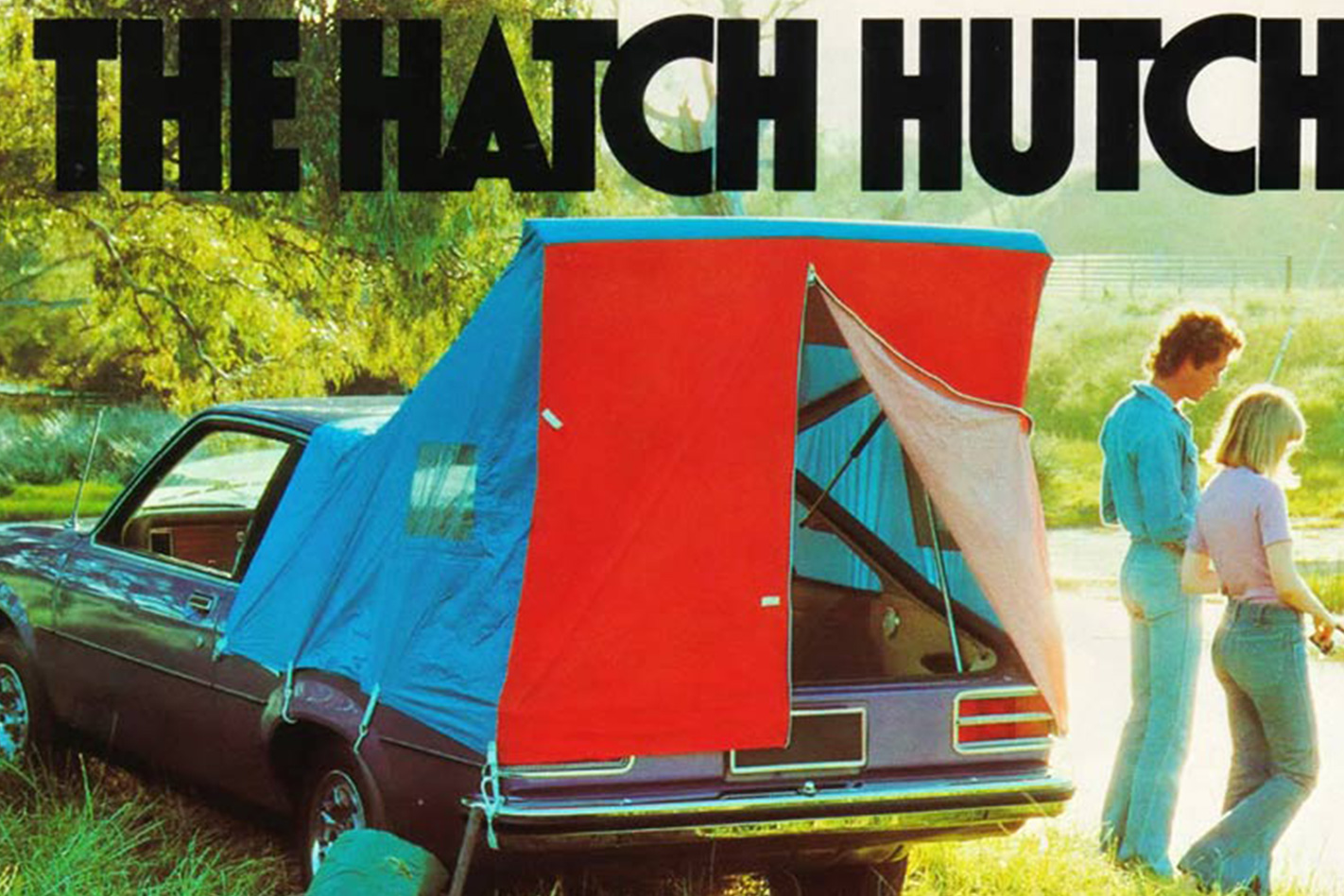
Holden went back to the future with the following announcement for a Hatch Hutch for the 2019 Commodore on its Facebook page:
The gag has some credibility as it harks back to the old Torona Hatch Hutch from the 1970s, which turned your ‘Rana hatchback into a panel van.
Sadly, it would be the last April Fools Day gag from Fishermens Bend.
Honda ‘Pastport interior redesign
Honda also went back in time for April Fools Day, presenting a ’90s-themed interior trim package for its 2019 Passport large SUV, dubbed ‘Pastport’.
Coupling the “authentic look of the new Passport on the outside, yet simplified with everything you love about the ’90s on the inside.”
The Pastport looks like a riot for Millenials, but sadly Honda notes that the slap bracelets aren’t included. Take a look at the video yourself.
Toyota HiAce Convertible
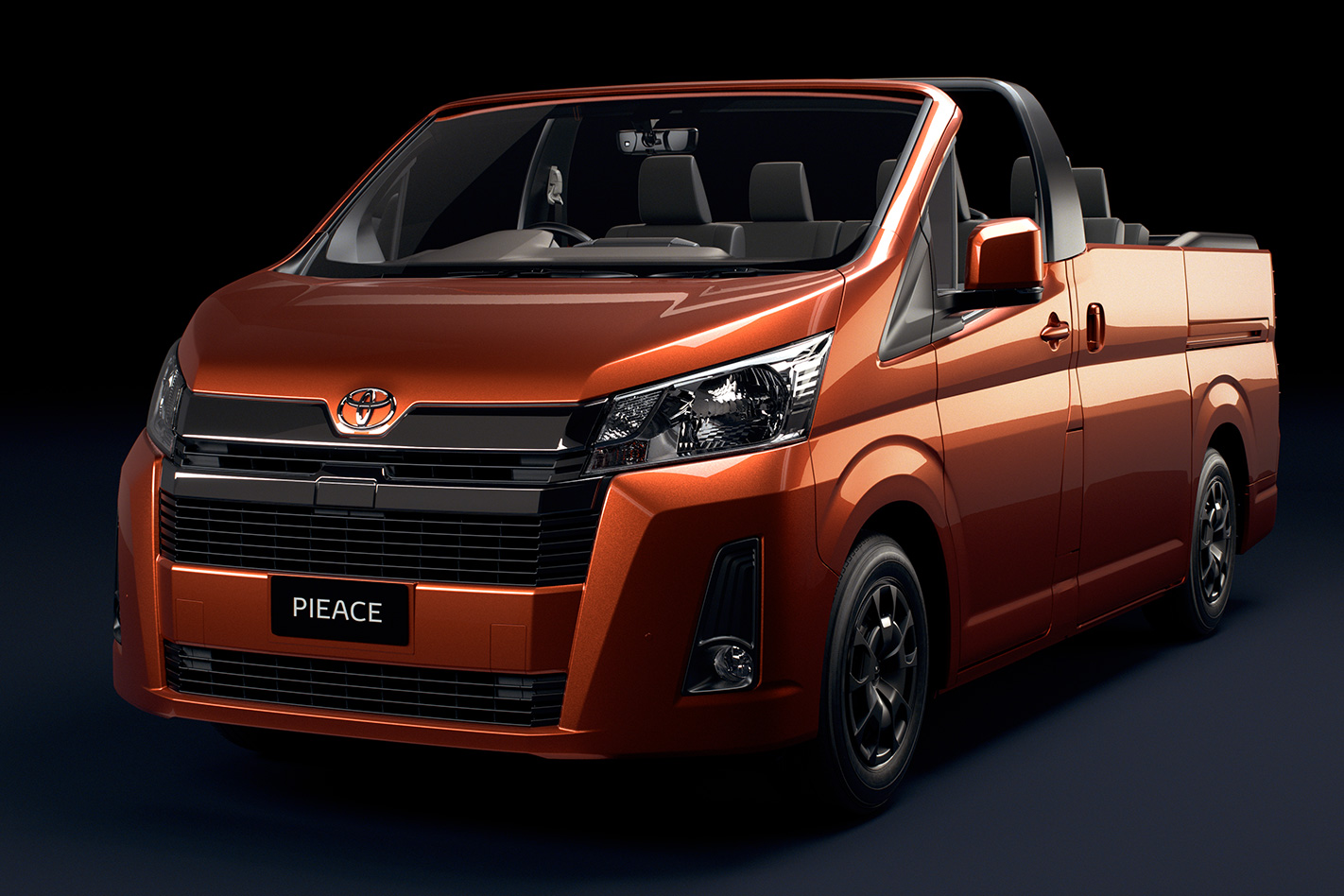
2019’s tilt at April Fools mirth by Toyota Australia was the HiAce Convertible, a chop-topped commercial with what must be the world’s largest z-fold fabric roof.
You’d presume such a machine would be targeted with laser-like focus on the sizable market for safari park vehicles (that’s sarcasm), but Toyota says its topless van isn’t just intended to be offered as a 12-seat microbus, but can also be enjoyed as a delivery-spec two-seater or worksite-friendly five-seat crew van as well.
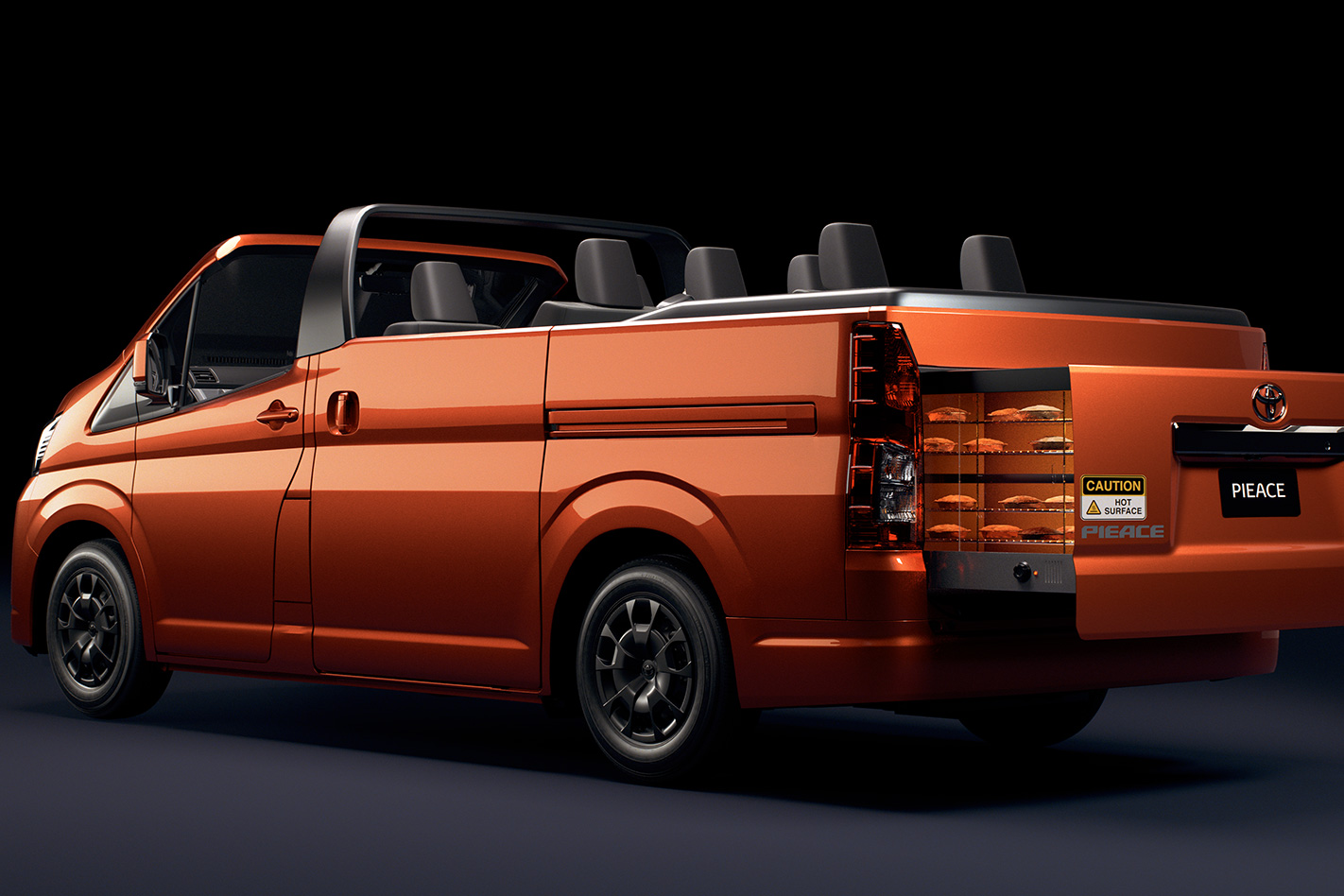
However, its piece de resistance is the innovative (and optional) PieAce feature – a roll-out canteen-grade pie warmer that slides out of the HiAce Convertible’s bum. Smoko will never be the same.
VW Caddy Maxi-Mini
It’s like a 2015 Volkswagen Caddy, only fun-sized. “We see the Caddy Maxi Mini as our equivalent of the chocolate bars at the supermarket checkout. We hope that when customers come and buy one of our multi-award-winning full-size vans, they’ll add a Caddy Maxi Mini as a little treat,” chortled those crazy Chermans.
BMW i-Setta
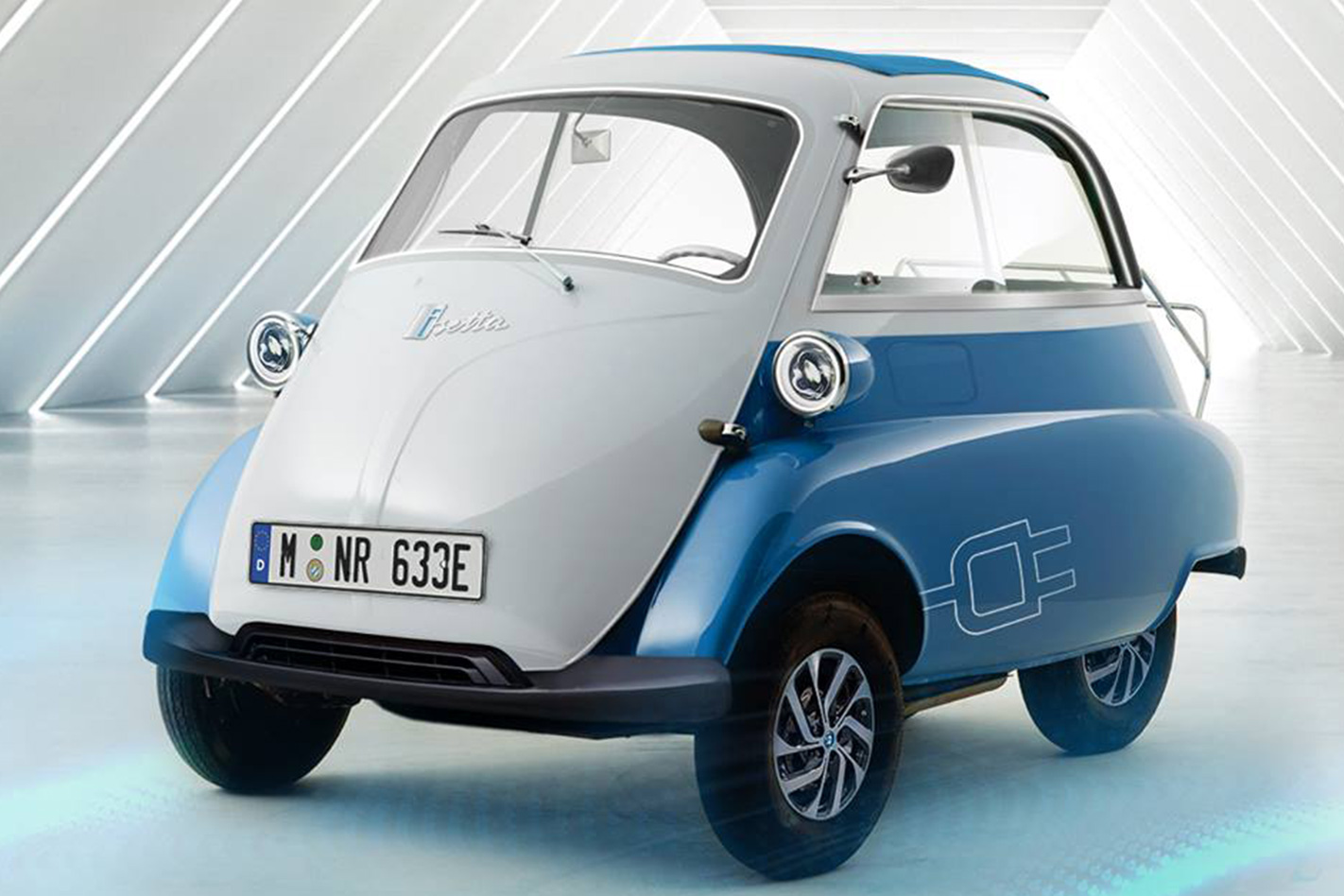
Adding to a burgeoning range of electric vehicles, BMW Japan took the liberty of revealing the BMW i-Setta.
Not much information was released along with the images, but BMW Japan said the electric-powered mini melded equal parts “tradition and innovation”.
Honda emoji horn buttons
Is this one really such a bad idea? Honda says the novel wheel design is an “integrated vehicle-to-vehicle and vehicle-to-human communications system for the modern driver.” No poop emoji, no care.
Audi b-tron
Audi used April 1 to announce the German carmaker is extending its efforts to develop alternative powertrains beyond the electric e-tron range, and g-tron and h-tron gas and hydrogen concepts. Introducing the b-tron concept that’s “creating buzz with a natural, ancient fuel: honey”.
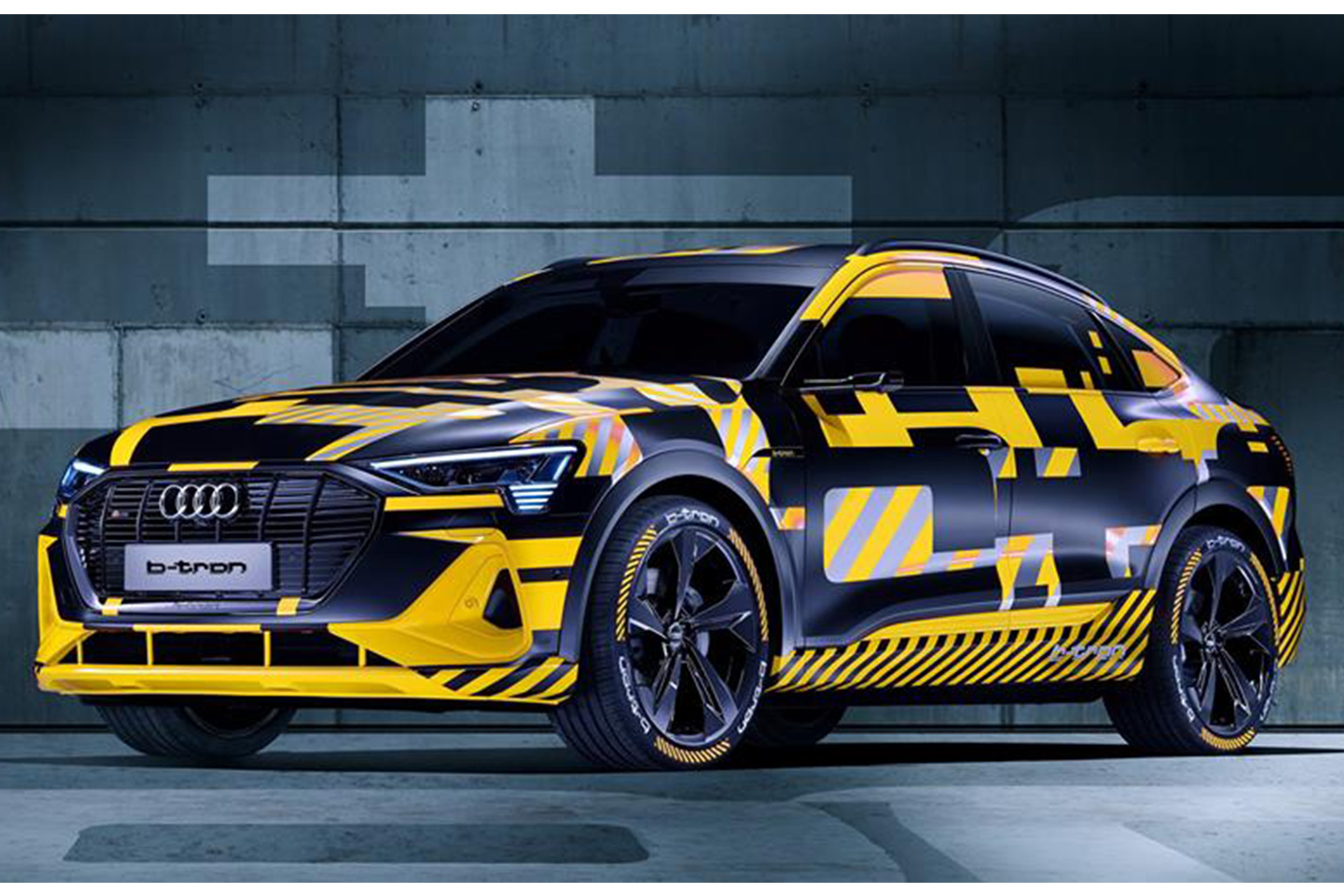
Audi’s announcement quotes Imker Honig, of Ingolstadt’s legendary Komplett Geschminkt skunkworks, who said “The idea, which came to me over breakfast, is just one of several new technologies that Audi will debut over the next 12 months.
“Early prototypes tended to attract scores of bees, typically around the hexagonal fuel cap. One tester was swarmed by a hive that had settled in the glove compartment. I don’t think he’ll be doing that again, ha!”
“That said, everyone loves the on-board toaster.”
The gag seems is obviously aimed at non-German speakers, with Komplett Geschminkt translating to ‘completely made up” while Imker Honig’s name just happens to mean ‘beekeeper honey’.
Even so, it’s a sweet idea that deserves bonus points for the great colour scheme.
Toyota Yaris Adventure
We almost took this one seriously… after all, Aussies loved the tiny Subaru Brumby back in the day.
Sadly, though – and despite the presence of a three-door Yaris – the Adventure lives only on April 1.
Lexus Enpaw
It’s a dog of a story…
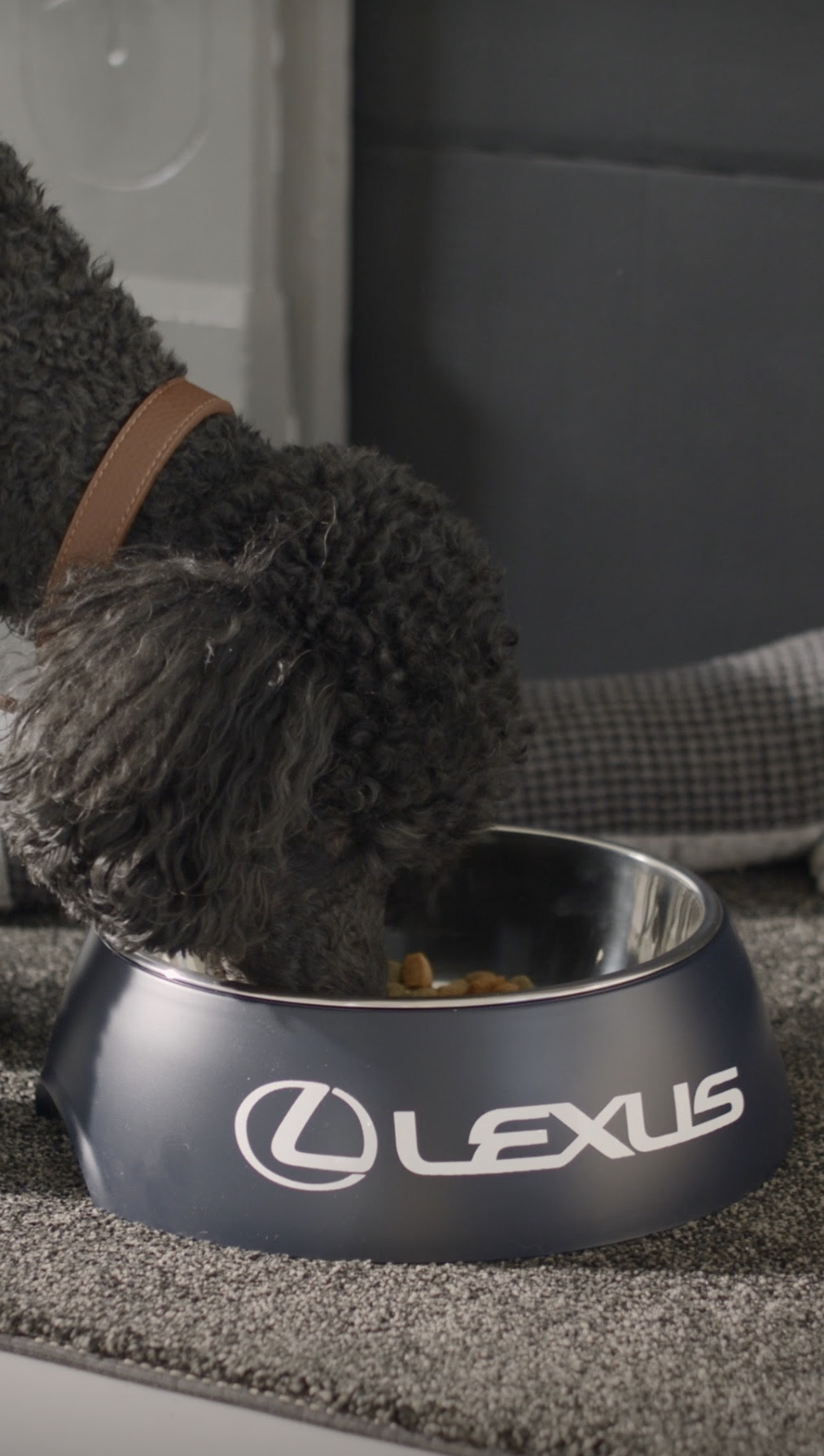
“Lexus has extended its class-leading Encore ownership programme to accommodate a special cohort of passengers doggedly ignored by rival brands,” reads its release.“Enpaw, a new chauffeur and accommodation service available on all Lexus models, allows four-legged canine friends to indulge in the finest four-wheel luxury by transferring them to a luxury boarding kennel when their owners take a holiday.
“With owners experiencing the unrivalled benefits of Encore, allowing them to take advantage of exclusive restaurant and accommodation offers, dogs will finally be let off the leash to enjoy the same level of Lexus-luxury lifestyle courtesy of Enpaw.”
Mini John Cooker Works
BMW and Mini have built themselves quite a reputation as a pair of pranksters on April 1.
The British brand presented a John Cooker Works version of its convertible Mini – yes you read that correctly – which allows caterers to convert the passenger compartment into a timber-topped work area for the preparation of food.
| Mini Cooper S to gain JCW tuning options
In a series of official images, an expert chef is preparing sushi, which is not the only fishy thing about the John Cooker Works. It doesn’t actually appear to have an oven, either.
BMW dDrive
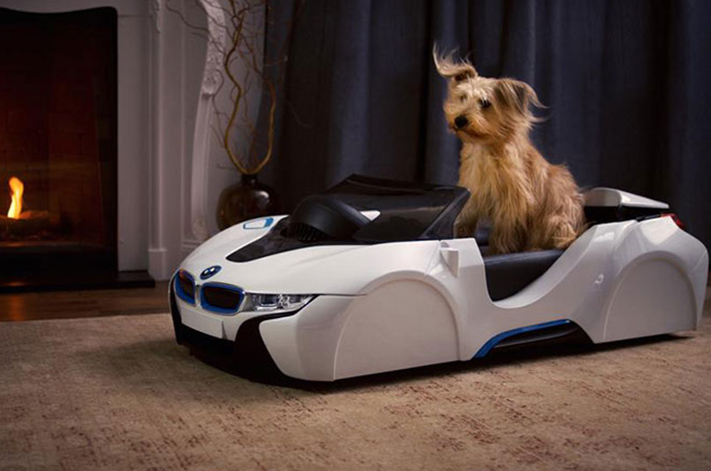
BMW, on the other hand, announced its dDrive dog basket which uses the company’s TwinPower Turbo technology to cosset your pooch with air, creating the same sensation of hanging out of the car window without having to go anywhere at all.
The company has not specified if the canine creation also incorporates technology to stop your dog jumping out if it sees a cat.
Lotus pet helmet
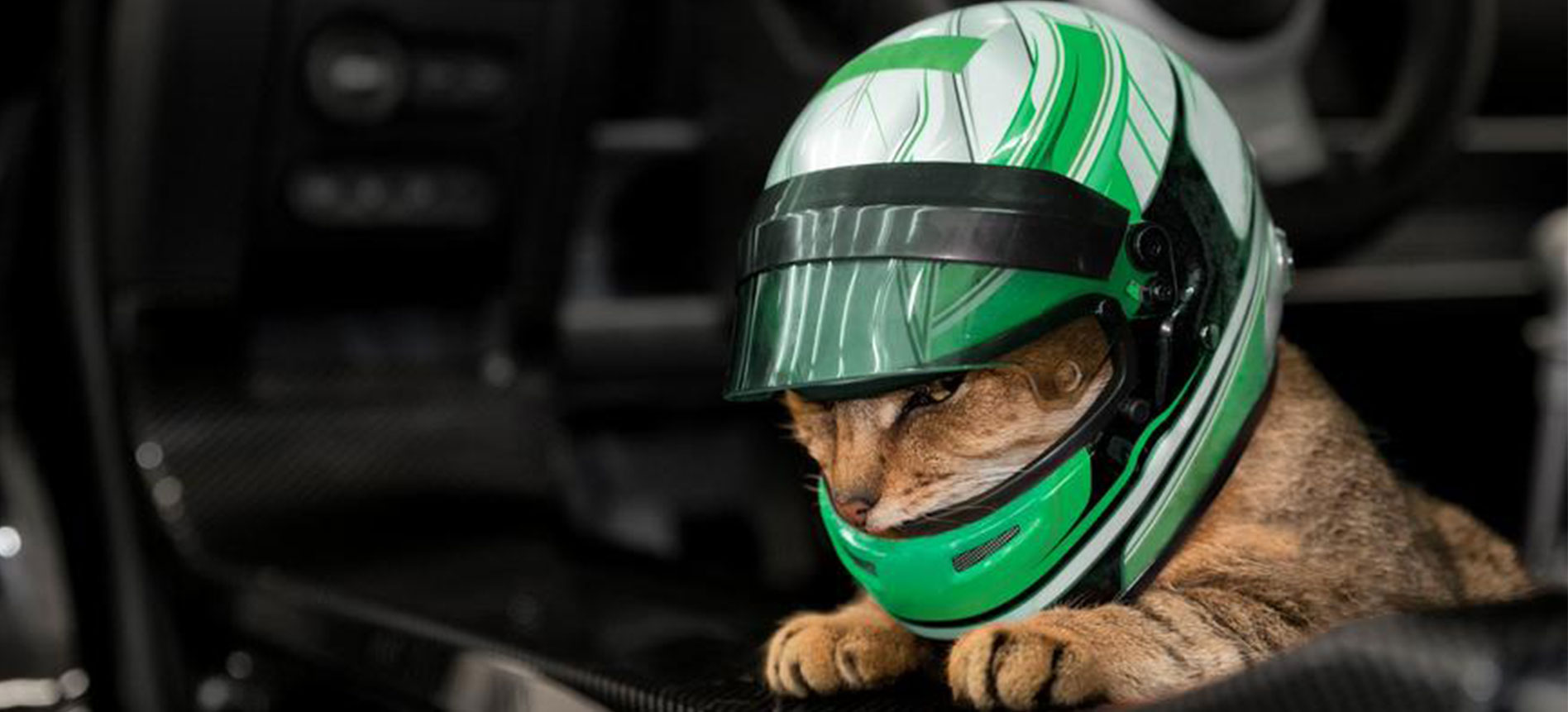
Speaking of which, Lotus stuck with the pet theme and offered a skid lid for your cat, allowing owners to take Tiddles to the track. But the feline helmets were only available until midday on April 1. Suspicious?
Feathered McLaren 570
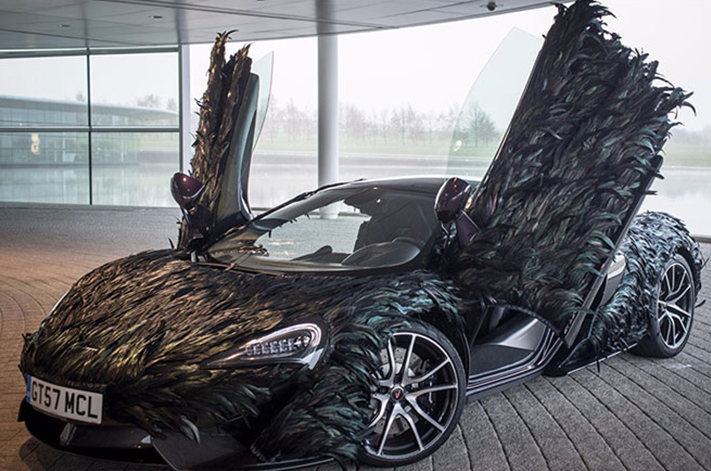
Top marks go to McLaren for creating something Andy Goldsworthy would endorse and a potentially marketable one-off.
Audi square cupholders
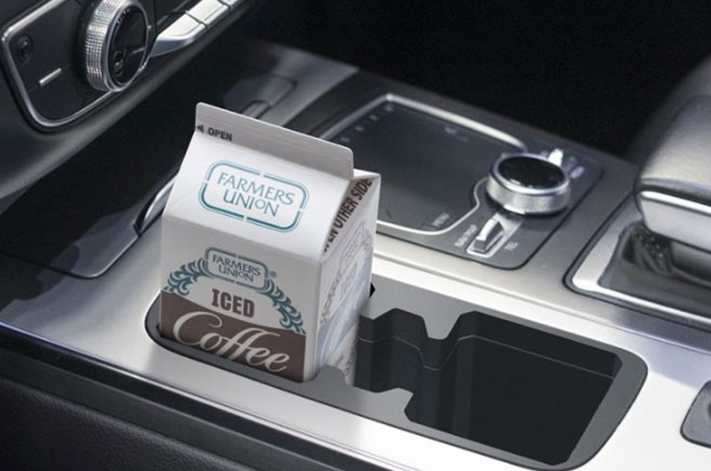
Audi fans will delight at the German car maker’s decision to offer a special square drink holder in selected models sold in South Australia, where the favourite drink is Farmers Union flavoured milk – sold in square cartons and not round bottles.
Bonus marks awarded for the local angle and even the production of a short film to add credibility.
Honda H-Swipe dating app
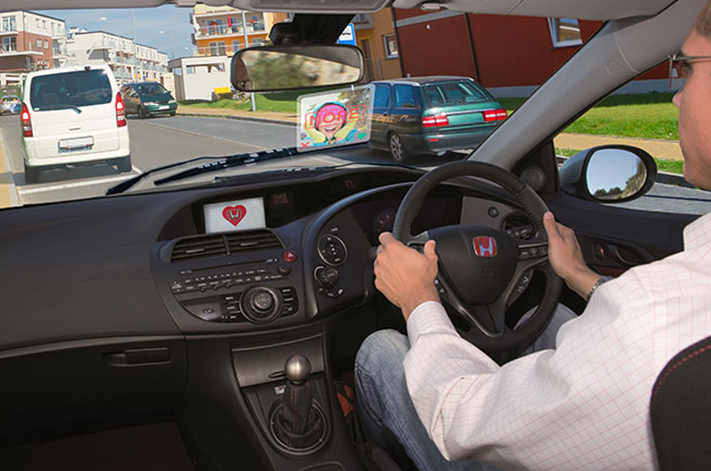
The user can either accept or reject the candidates by selecting left or right with special s-wipers (d’ya see what they did there?) operated by steering wheel buttons, which sounds a little like Nissan’s N-Connect application from last year, which notified users if a nearby car was occupied by a single person.
Of course, we may have been reeled in a little further if Honda currently offered any conventional head-up display technology in its cars.
Mercedes-AMG Sprinter63
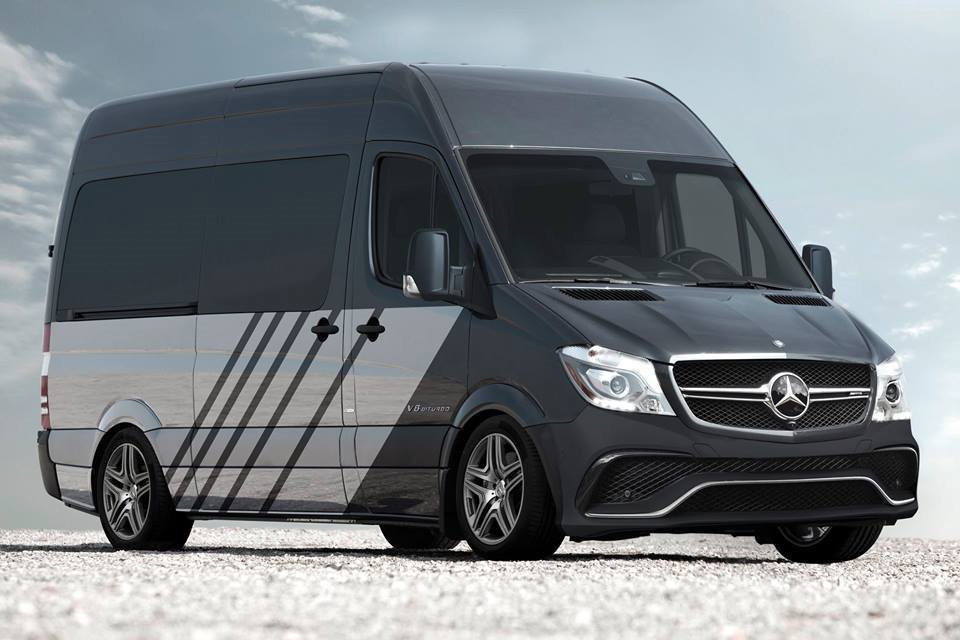
While it may be a gag to celebrate April Fools day, we do wish the Mercedes-AMG Sprinter63 S van revealed yesterday on Mercedes-Benz USA’s FaceBook page wasn’t a mere prank.
Maybe that’s because the credentials of this super Sprinter entail exactly what the badges on its doors suggest: a hulking AMG-built 4.0-litre twin-turbo V8 at its front, plus rear-drive, AMG re-tuned suspension, and a C63 S-matching front and rear diffuser.
However, unlike BMW’s awesome April Fools project that involved a turn-key BMW M3 ute (below), the Sprinter63 S isn’t real. Mercedes-Benz USA confirmed the photos as renders, saying: “It’s exactly what you’d expect of our high-performance division if they were given the keys to a Sprinter van”.
We are sad to read that, because – with 375kW under their right foot – your courier would never be late again.
BMW left-to-right hand drive
How amazing is this gag from BMW? In 1986, it pranked the world with the movable steering wheel, which ostensibly allowed Europeans to drive to the UK, open the glovebox and swap steering wheel sides.
We guess now that Brexit regs would rule this excellent gag inadmissible.
