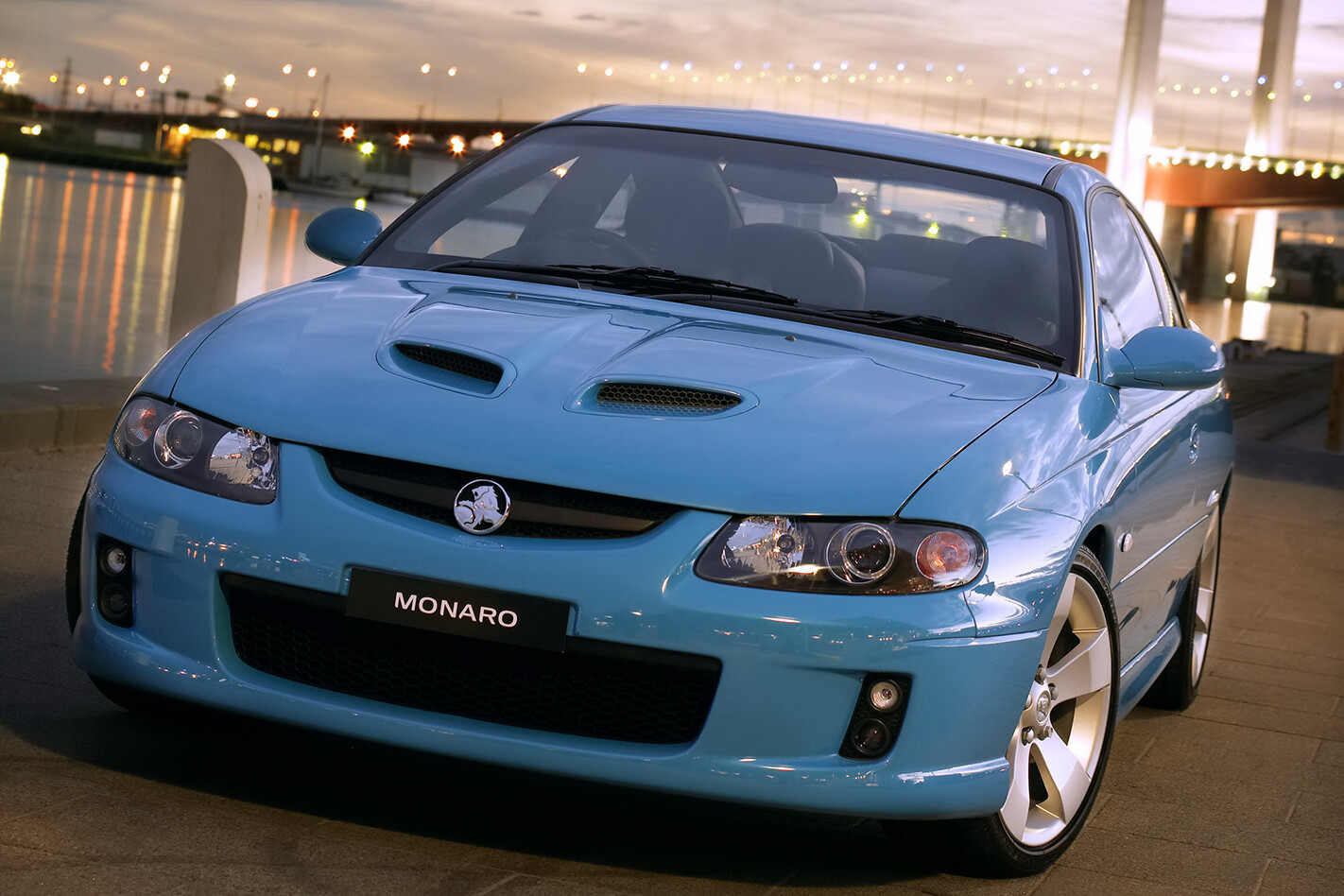
Never before in Holden’s history has so much hinged on one model. Its executive director Denny Mooney may have only joined the VE team at half-time, but his boots-and-all strategy has pushed the car – and the company – to new heights. Here are excerpts from an interview with MOTOR on the eve of the car’s national reveal.
This feature was originally published in MOTOR’s September 2006 issue
MOTOR: When you started here three years ago. What was your first reaction when you saw it up close?
Denny Mooney: I thought it was a beautiful car. I mean, it was clean, even European in nature, by way of its short front overhangs; it has got that proportion that some of the high-line European cars have. And there’s only a few cars in the world that have that kind of proportion. The short front overhangs, the wheelbase, the wheels out at the corners, so to speak, and a nice muscular track.
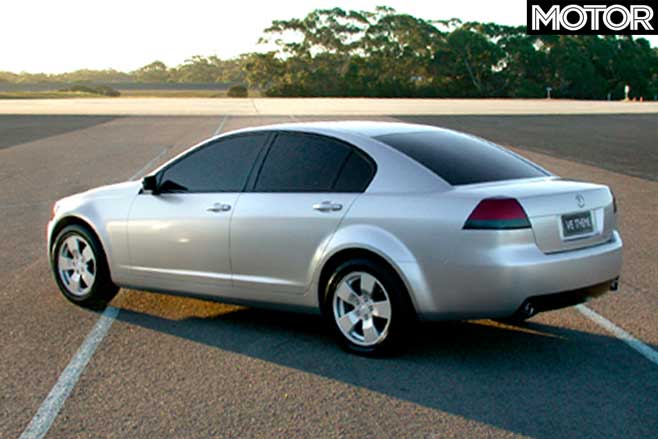
M: You have set a pretty high bar for this car. Are you happy, as the boss, that these targets have been met?
DM: I’m extremely happy. When I look at where the car is today, from an overall performance standpoint. we‘ve maybe exceeded my expectations in some areas. We still have a few little issues we have to get resolved here at the tail end, which we always do, but if you were to ask me six months ago how satisfied I was… I’m a lot more satisfied now than I was six months ago.
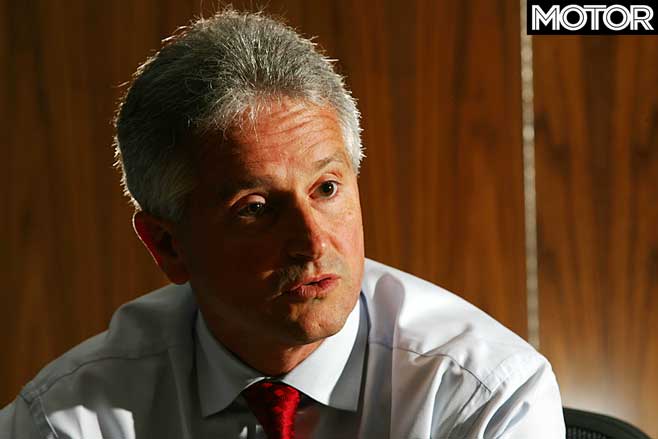
M: Was a billion-dollar car a hard business case to sell?
DM: Sure. If you went back to that timeframe; the dollar was very weak, our export business was growing very, very profitably because of the weak currency. So, if you looked at our finances and where we were at that point in time, it wasn’t as difficult as it would’ve been in today’s environment.
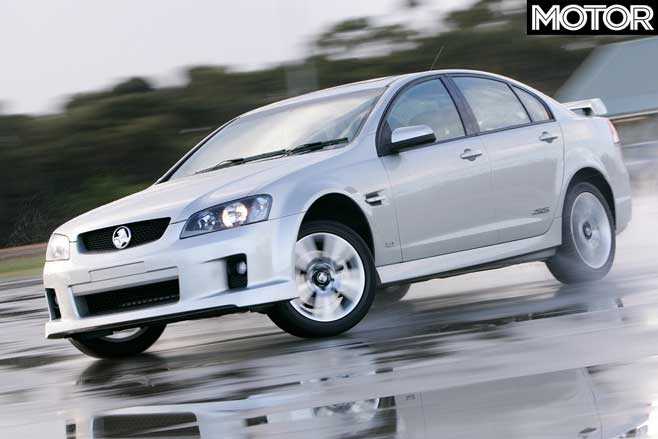
M: Given the gestation time of VE, is there anything you’d like to go back and change?
DM: Time will tell… I mean, twelve months ago, petrol |was| a dollar a litre. Now it’s been up as high as $1.40. Even a year ago, our thinking would be a little different than what it is today in terms of ultimate size and the fuel efficiency of the vehicle. But fundamentally, we still think a larger car [is suitable] for this market. People want a safe car, they want comfort for big drives with a couple of kids. There’s a core of the buying segment out there who wants to buy that kind of car.
I don’t know how different it would or wouldn‘t be, but obviously today with this kind of environment, we might have rethought about some of that stuff.
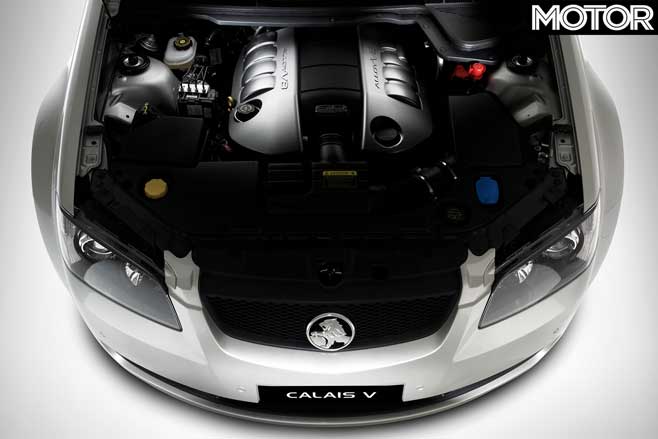
M: Given the feelings about fuel wiring at the moment, why is there no Active Fuel Management gear on the VE?
DM: If you look at the power-to-weight ratio of the cars, and the kinds of driving cycles that people generally adopt, the change on the fueI economy label sticker would have been so small, that it wasn‘t going to be worth it.
That’s not to say we‘re not looking at it; a year ago, when oil was as cheap as it was, we weren’t too worried about not looking at it. Now, I can tell you, we are looking at it.
St Heliers Bay is one of those affluent waterside suburbs you might find in Sydney, Melbourne, San Francisco or Barcelona. In this case it’s Auckland in New Zealand. The coffee shops are doing a roaring Sunday-morning trade, the joggers are out in force, as are the dog walkers and a multitude of cyclists.
Picking her way through the throng in a white Mustang convertible V8, it’s top appropriately dropped on this sunny morning, is Kay Hart, the president and CEO of Ford Australia-New Zealand.
Soon she’ll be driving the hour south to Pukekohe Motorsport Park to watch the Supercars racing version of the Mustang GT Fastback in action. But right now she’s squeezed some time in for a photo shoot and a talk with Wheels in the area where she grew up.
“I love it here,” she says. “The sea, the culture, the environment, the people and just the general vibe.”
Hart’s own vibe is happy and upbeat. She has a deep, frequent chuckle, a big smile and a remnant trace of a Kiwi ‘fush and chups’ accent. People who know her well insist she’s not only smart as hell, but genuine with it. Hart has heart.
She also has a strong constitution. She’d been in South Africa on a dealer trip prior to Pukekohe – pit-stopping at Ford’s Melbourne HQ briefly on the way through – then after NZ it was back to South Africa for a wedding, Melbourne, then Sydney for the launch of the Mustang R-Spec and on to Bathurst to witness Scott McLaughlin and Alex Premat’s victory in an epic 1000km battle.
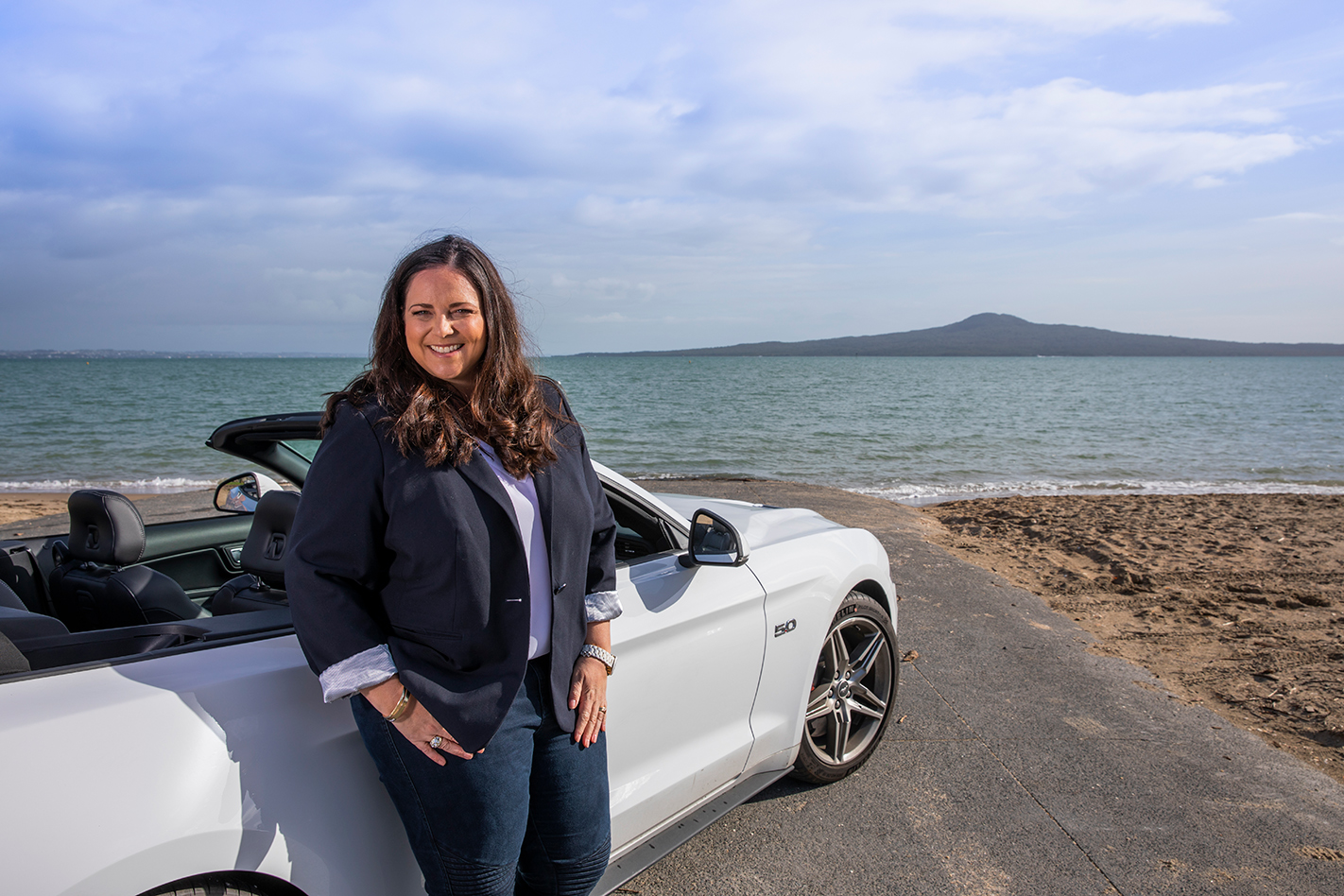
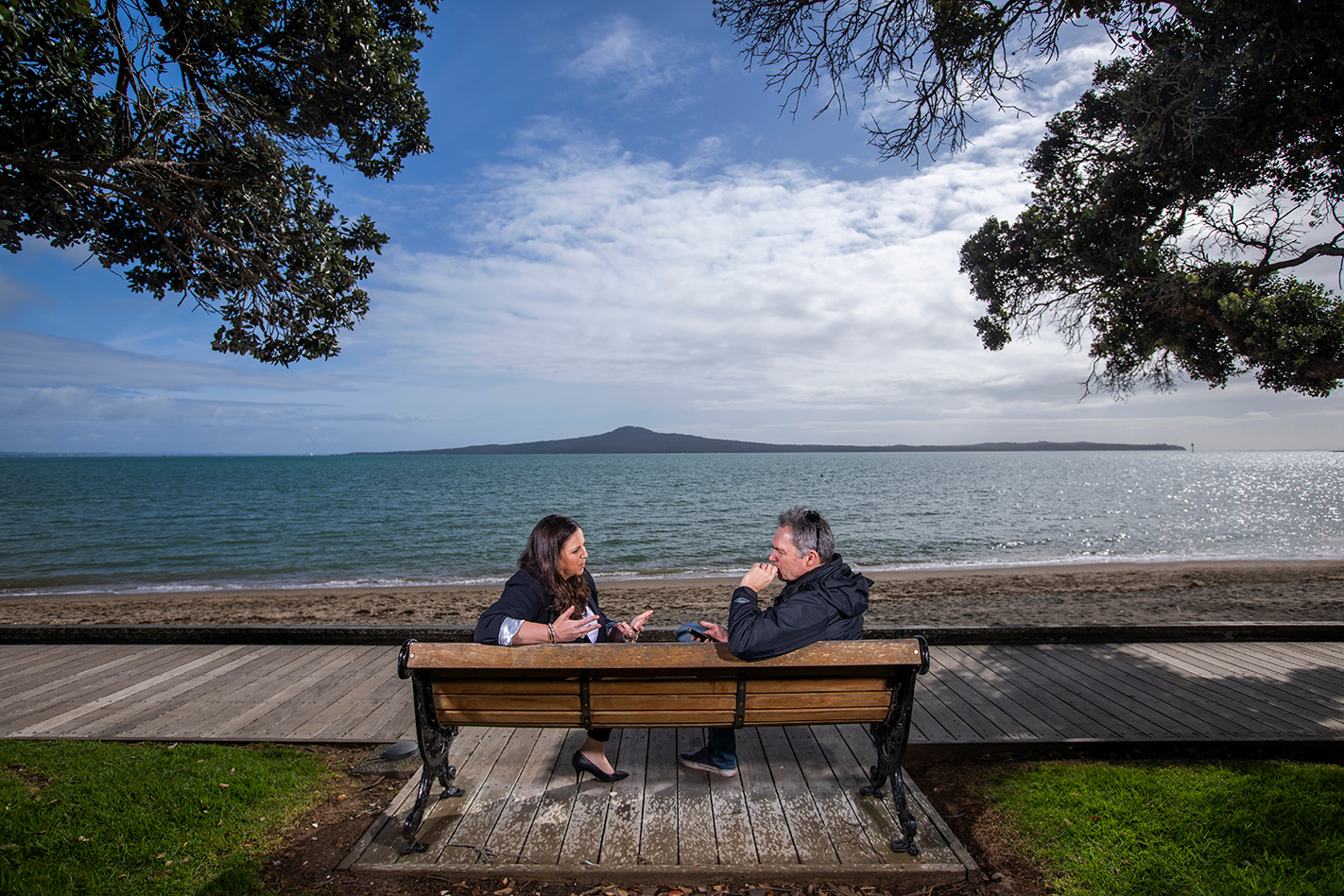
“The international travel is not so typical in such a short space of time, but I do try to get out within Australia as often as possible to visit dealers and customers,” she says when we catch up at Mount Panorama to complete the interview started on a beachside park bench at St Heliers.
Hart is a rarity in being the female boss of a car company in Australia. She’s also the first local Ford leader in a decade to be operating in anything like clean air. Her predecessor, Graeme Whickman, closed the Campbellfield and Geelong manufacturing plants; his predecessor, Bob Graziano, announced they were closing. Before him, Marin Burela’s reign was dogged by questions of local manufacturing survival. Hart, who took over the job 16 months ago, has the chance to go beyond all that. But not, she explains, by starting all over again. “One of the most important things [when she started] was to provide the team with stability in terms of direction and strategy and exactly what we are doing as a team,” Hart says.
That meant reinforcing the key tenets of modern Ford, which is now one of 60-odd brands vying for oxygen in the Australian market, not one of three manufacturers who, along with Holden and Toyota, were once distinct from the rest.
So the customer comes first and the relationship with the dealer network has to be as strong as possible. That’s all the more important in a new-vehicle retailing environment that is in steady decline in Australia. Overall, according to VFACTS, sales are down 7.9 percent year-on-year. Ford’s decline is among the more resilient of the majors at 8.2 percent. But it’s still a decline.
“It’s very clear the industry we are operating in at the moment is a tough one,” Hart says. “It’s obviously well down year-on-year and is continuing to decline. So it’s making sure we have the right strategy within the operating environment, which has become a lot tougher. ‘Customer first’ continues to be our key point. It doesn’t matter, big industry or small industry, that ‘customer first’ is still key to us.”
So what does that mean? Well, in product terms look at the R-Spec and Ranger Wildtrak X limited editions. A supercharged factory-backed Mustang has been a missing opportunity for years and the X sits atop the dual-cab range, where buyer interest seems insatiable. Hart says these are two examples of how Ford is changing to more rapidly and specifically respond to customer demands in the post-manufacturing era. “That’s the fundamental shift from a Ford standpoint in terms of what we are trying to do in the market and how our strategy is playing here.”
Hart is impressively good at staying on message. It’s not a surprise, car company executives are very well trained in this sort of stuff these days, and Hart is clearly a good learner. But her steady rise up the Ford ladder over the past 21 years suggests she has more talents than simply delivering positive soundbites. For years she has been identified internally as a star on the rise.
Her involvement with Ford and the car industry began almost by accident. A bachelor of business, management and marketing at Auckland University of Technology, she exploited her father’s extensive contacts in business to organise a month-long internship. It could have been an insurance company, a furniture company, or a fast-food retailer, but it ended up being Ford of New Zealand.
To be fair, there was a pretty strong likelihood it would be at the Blue Oval. That’s because her father, John Hart, was coach of the All Blacks rugby union team. And Ford was, and still is, a major sponsor.
“I got absolutely hooked, loved it!” Hart recalls of her Ford internship. “I had so much fun and I loved the passion. The passion for the brand and the industry as a whole, it got me hooked.
“So I got called up about a month after my internship finished – not even a month, I don’t think – and I got put onto the [Ford] graduate program. And so then I never looked back.”
Eight years at Ford NZ topped out as national sales manager. Then, for nearly two years it was marketing vice-president of Ford Thailand. After that came more than four years in Shanghai as Asia Pacific and Africa field operations and dealer development director. She became managing director of Ford Group Philippines in 2013 and moved to global headquarters in Dearborn, USA in 2016, first in a marketing role then to work on Team Edison, the global battery electrical vehicle operation. She returned down under in July 2018.
So why such a traveller? “I think the opportunities given to me by Ford, and I love travel,” Hart responds. “I love change, I love culture and I love learning, so to me, travel with all the different jobs [that I’ve held at Ford] has given me the opportunity to do all of that, and I’ve loved it.”
Hart doesn’t throw up the shutters entirely, but she’s definitely a private person. So when the subject turns to her father, still a nationally known figure in NZ, and her upbringing, she’s not so much taciturn as truncated. The smile’s still there but the details are limited. John Hart’s tenure as coach ended when the All Blacks didn’t win the 1999 Rugby World Cup. It was a wretched time for him. At a horse race soon after he resigned he was booed and spat upon and beer was thrown over a horse he owned.
“It was a tough year,” she says quietly. But she rejects the suggestion she hit the road with her job to escape the public bubble her father lived in, or she protects her privacy for the same reason.
“I think for me, Dad being in the public has provided a lot of positives,” she counters. “There have been negatives, but they have all been learning things. It didn’t shape what I wanted to do in terms of getting away from the public, but I think it shaped who I am from what I learned growing up. I value my privacy and I value my time with family and friends. But I am not actively hiding anything or keeping to myself. I do value it, and I think I have a very clear role between home and work.”
Watching Hart from a distance at the Pukekohe and Bathurst Supercars races there’s no doubt she is comfortable in her skin. She interacts easily with whoever it might be; McLaughlin, billionaire team owner Roger Penske, a fan seeking an autograph. It might not be a rugby stadium, but it’s a sporting venue and it’s in her blood.
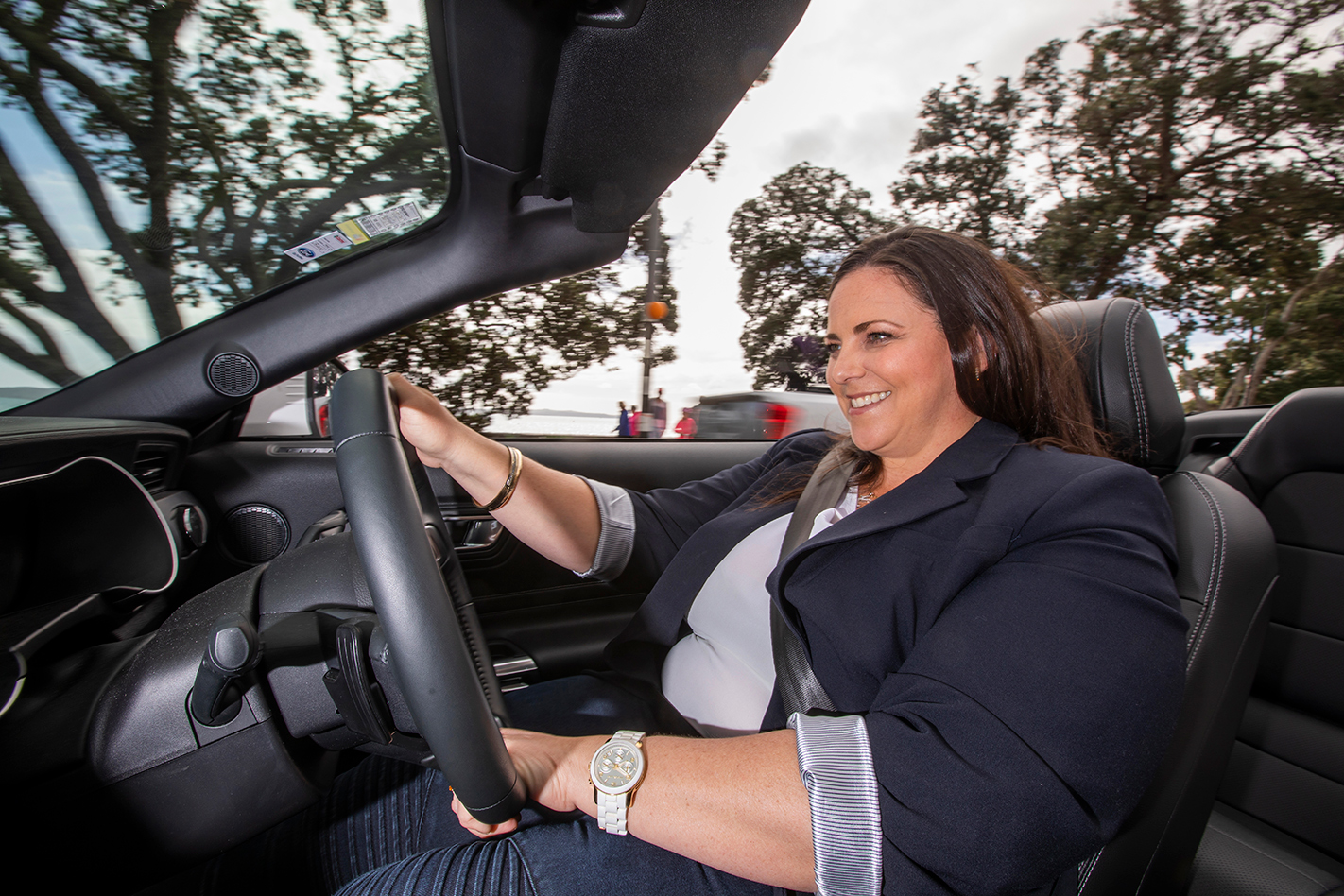
No question she’s been tested by the Mustang’s turbulent, albeit dominant, arrival in local motorsport in 2019. Parity fights, pit-lane politicking and a fair degree of dissatisfaction emanating from world HQ as things threatened to go pear-shaped, prompted her to express dismay with the situation in a media interview. “We have been disappointed with some of the discussions that have happened, no doubt,” she said in April at the height of the controversy.
Not fire and brimstone exactly, but Ford is a conservative company that hates discussing any of its issues in public, so the action of speaking out carried even more weight than the words themselves. It’s no surprise Supercars has not tried to slow the Mustang any further since then…
“Yes, challenging times, tough times, frustrating times throughout the year,” Hart admits. “But mostly successful. That’s what we want to remember this year for, not the challenges, but for the success.” Of course, neatly played. Spin that message back to the positive, as Hart so often does.
Away from public interactions with pesky journalists, Hart is described as inclusive yet decisive in business by those who deal with her. She’s less acerbic and divisive than Whickman – who she names as a mentor – and certainly more charismatic than the dour Graziano. The constant smile can be deceptive, though. Hart’s eyes can narrow and sharpen when something’s concerning her, even while the smile stays fixed in place.
There have been critical moments in each of Hart’s assignments that have helped her develop into the auto executive she is now. In Thailand, she learned how to do business in a foreign language; from Shanghai, she oversaw the rapid roll-out of dealer networks in China and India; in the Philippines, she realised she loved running the show. In the USA, though, she finally really connected with driving.
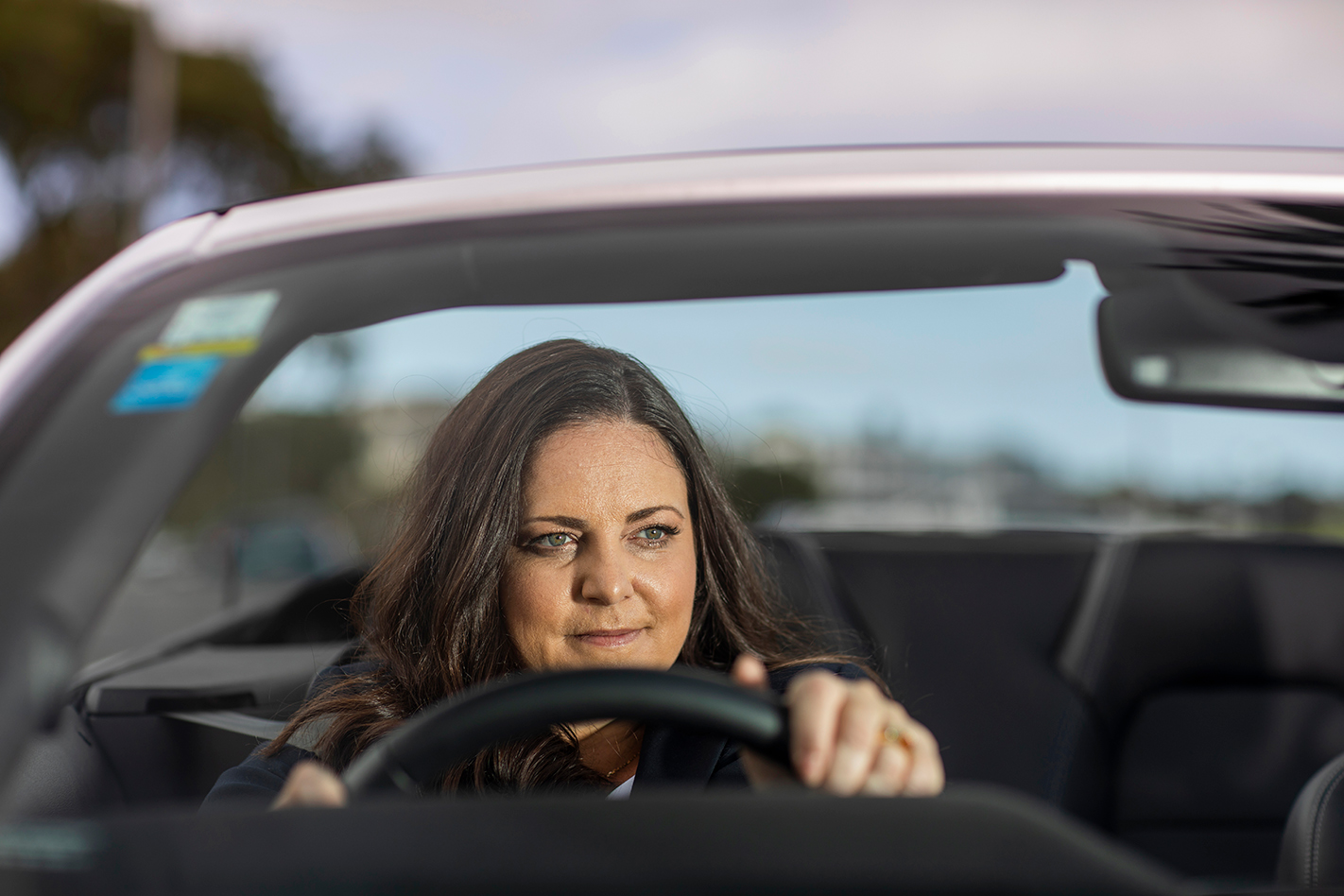
“Living in Asia for so long, I didn’t do a lot of driving,” she recalls. “I didn’t drive in the Philippines, Thailand or China. But in Michigan, because I could drive, I drove a lot. I went to the [Michigan] upper peninsula and it was amazing. I loved it. My first vehicle up there was the Explorer, then I got into the Expedition – big to bigger – then a Mustang convertible, and that got me hooked on the convertible and my first car in Melbourne was back to the convertible.”
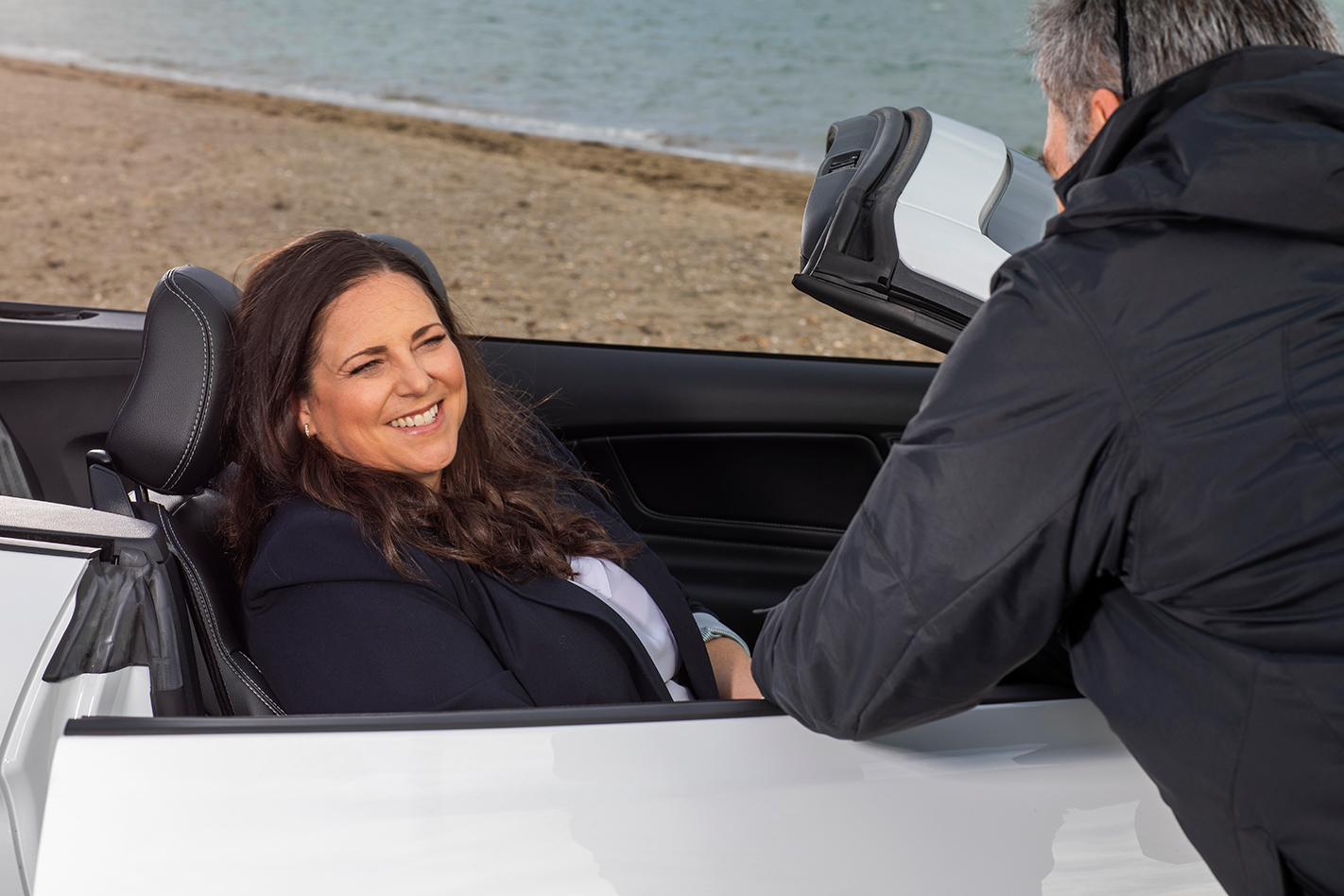
Her next company car is the Raptor, the wild off-road-focused version of the Aussie-developed Ranger ute. “Given the team we have in Australia and the pride we have in Ranger and hanging out with those guys and learning about the vehicle and then getting the opportunity [for them] to take me through the real details and engineering of it, I can’t wait [to drive it]. “We are going to go to the proving ground and really test out the vehicle.”
Hart says she has never experienced any negatives at Ford because of her gender, but she acknowledges that not every woman across the industry has been treated with fairness. With Dannie Winter the marketing director at Ford Australia, the company has a strong female public-facing outlook, as she and Hart are the two executives who talk to the media most often. In an industry where males dominate senior management positions, does a female perspective deliver an advantage?
“I don’t want to say that as a woman you do things differently, but I think it helps. Having a diverse workforce is so critically important across all levels of the organisation in terms of doing things differently and understanding and connecting with your customer base, which is society in general. So to me, it’s important to have a diverse workforce no matter at what level.”
Hart sips her takeaway coffee and looks out across St Heliers Bay towards Rangitoto Island. It’s a gorgeous view. Behind us, the Mustang is idling and her PR minder is signalling it’s time to go.
“I never thought I would be away for this long,” Hart muses. “I didn’t expect to be away from home forever. But I love what I do. It’s important to me as an individual. I need to have fun and enjoy what I do – be it personal life or work life. So right now, I am enjoying it. I have a great passion for Ford and the industry.”
And then Hart smiles, chuckles and moves on.
This feature was originally published in MOTOR’s September 2006 issue
- Part 1: Design and Conception
- Part 2: Bodyshell concept
- Part 3: Suspension Design
- Part 4: Engine
- Part 5: Transmission and Brakes
- Part 6: Safety
Part 1: Holden Commodore VE Design and Conception
Holden’s future depends on getting the VE right from the start By: Tim Robson
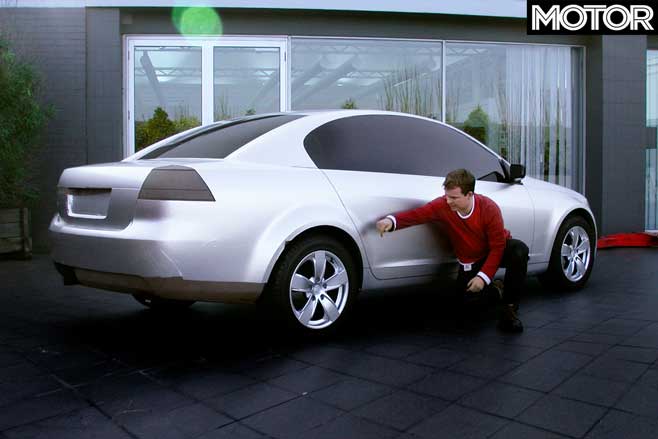
As passenger cars go, the VE Commodore’s base numbers stack up with nameplates around the world that cost more. A lot more. An almost perfect 50/50 weight distribution, decent wheelbase, wide track, short-ish overhangs, rear drive.
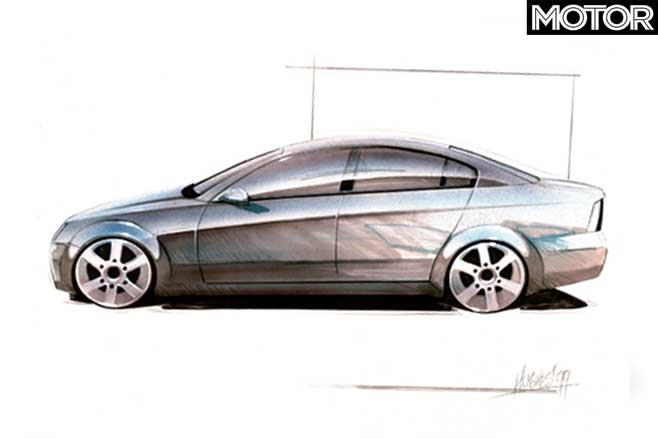
From the first VR-modified concept (a PhotoShopped image of a VT that IT boss Martin Wood presented to Holden’s top brass on a laptop and an old projector in 1999 – the catalyst for Holden’s gobsmacking, $10 million VR studio, incidentally) and first sketches, the VE’s basic shape has been driven by a key measurement – more than 90mm lopped off the car’s front overhang compared to the VT-VZ. This one pen stroke dictated so much of the character of the VE right from the first moments of its inception.
The implications were as far-reaching as they were (mostly) positive. Executive Director of Engineering Tony Hyde’s team could finally junk all of the mechanical hangovers that Commodore had been forced to carry over from its 19-year Opel and GM past. Some pieces of the front suspension architecture can be traced back, according to Hyde, to the 1978 VB.
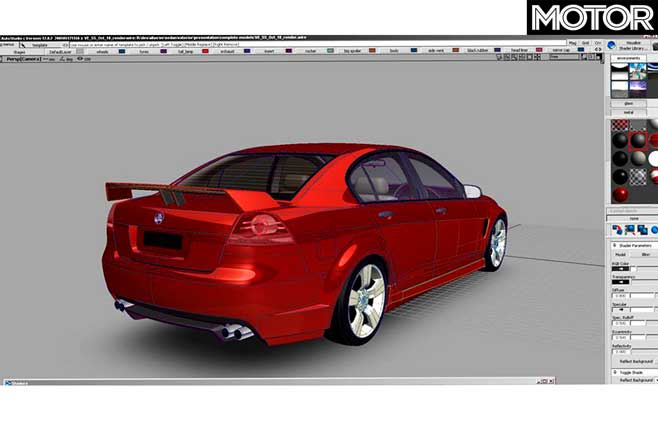
The team could now chase an entirely new and far loftier model for suspension and drivetrain specification, performance, and refinement. Design head Tony Stolfo and his main man Richard Ferlazzo, having already determined that the VZ’s interior dimensions model was ground zero, and that Mike Simcoe’s original dream of a taut, masculine, compact-looking sedan that still had to be undoubtedly a Commodore, had carte blanche to reinvent Australia’s most iconic nameplate.
“It’s Australia’s number one car – everyone is going to have an opinion,” observes Ferlazzo.
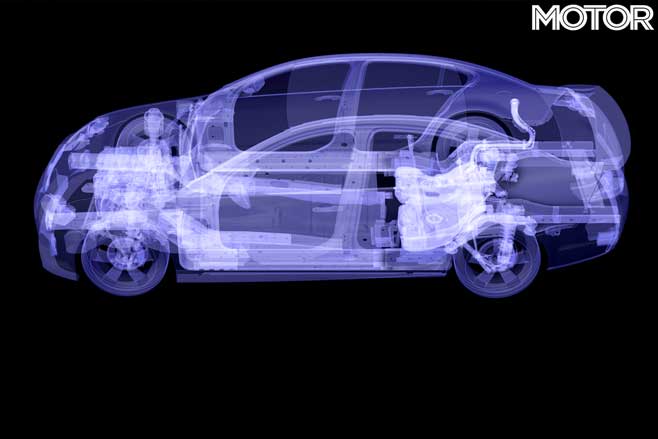
It’s been benchmarked off no lesser machines than BMW’s E39 5-Series, Audi’s last generation A6 and a host of other existing and emerging competitors. This was the ultimate attempt to get champagne from a beer budget.
Shutlines, surface tension, caps, modulated interiors, slip planes, flexible architecture, and a million other phrases, concepts, inventions and refinements were cast into a heady maelstrom that had many instigators. but one aim.
If engineering wanted one thing, the designers wanted it done prettier, the bean counters had to cost it to realistic levels, the manufacturing crew had to tool for it, the sales and marketing department had to make it fit within the boundaries of the Commodore culture. This pitched battle raged through the corridors of Elizabeth, Fishermens Bend and GM head office for more than six years.
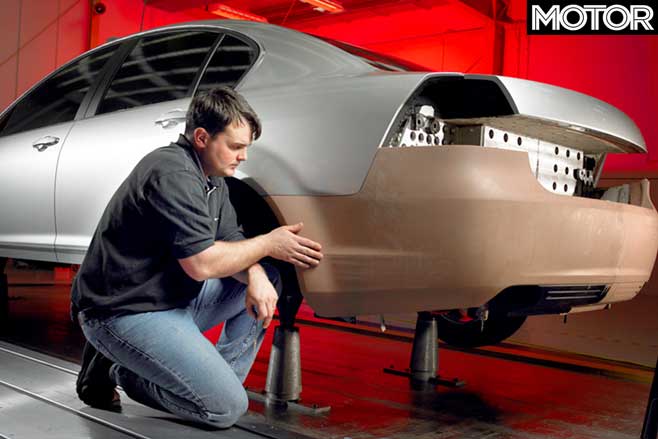
Then Denny Mooney entered the frame in 2004. An engineer in the mould of his predecessor Peter Hanenburger and a GM lifer, the young.ebullient CEO waded neck-deep into a project that had a very real ability to make or break Holden’s fortunes as a car manufacturer in Australia – and he wanted things done his way.
“He tore up million-dollar tools because he didn’t think that panel gap tolerances were close enough,” says Stolfo. “And those regular 6.30am review meetings were fun, too…”
With a mandate from the top, and in a time where ‘product guys’ and real cars, not profit-and-loss sheets, were considered the future of the group, VE flourished. The engineers, who were all driven hard by GM stalwart Hyde, could pit their wits, their arguments, and, above all, their passion to build, not just the best Commodore, but the best car possible. “It‘s the highlight of my career,” says Richard Marshall, body structure chief engineer.
Lessons learned from the VT-VZ experience are many. “We hadn’t planned on so many variants,” admitted Stolfo, calculating that there were 16 all told, including all-wheel drive, Crewman and Monaro. Every variant has its own unique interior styling, external packaging, and limited edition models needed to be produced.
With VE, the keyword is flexibility. The chassis itself is built with three stretch points, or slip planes, along the length of the body, allowing engineers to realise the designers’ ideals much more quickly and easily. Long-wheelbase ute, sir? Move the rearward pair of slip planes back. The underside-mounted fuel tank, suspension cradles, and body floors are largely undisturbed when these slip planes are changed.
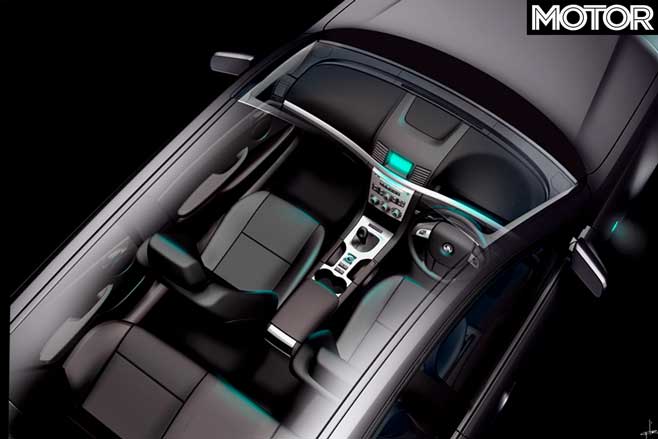
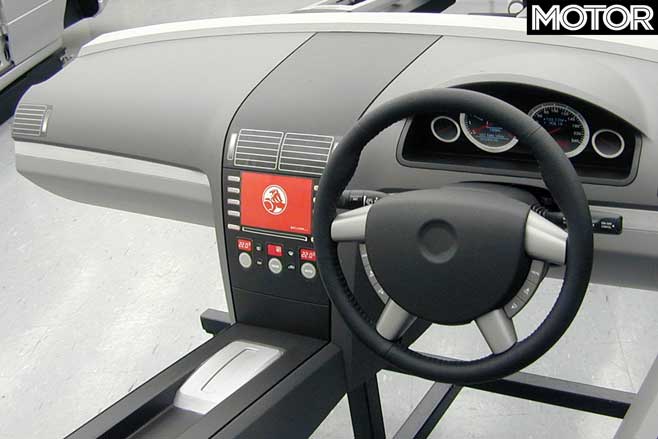
Interior treatments, too, are now easier to render, thanks to the VE’s internal ‘pod’ design architecture. Even the number of components on a door trim, for example, have been minimised and rationalised in order to achieve the desired look, regardless of model or variant, more easily and quickly.
Some old favourites and some long-held soft spots have come in for special attention, too. “Look!” exclaims Stolfo excitedly, opening the boot lid. “Four-bar trunk hinges! Finally!”
“And look at these,” chimes in Vallazo, gesturing to the door hinges. “Bolt-on door hinges. Finally!”
Getting the little things right; there’s the passion behind VE.
VE Development Time Line
1999 – Original Sketches A variety of Holden’s best penners put down some hard iterations of VE, among them Monaro man Mike Simcoe.
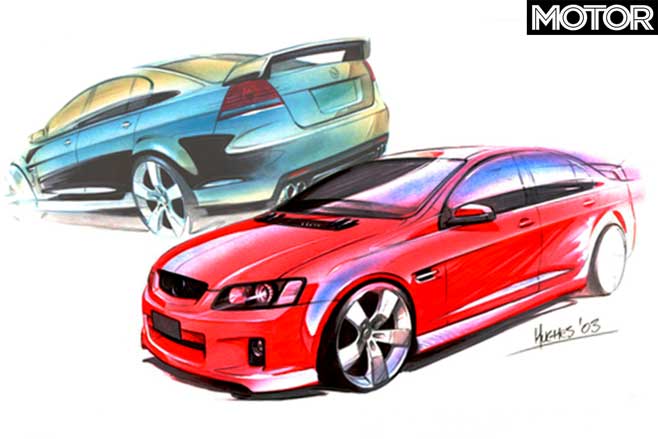
2000 – Hard Points Nailed ‘Hard points’ are the areas in a car’s architecture that define every other area of design: suspension, wheelbase, etc
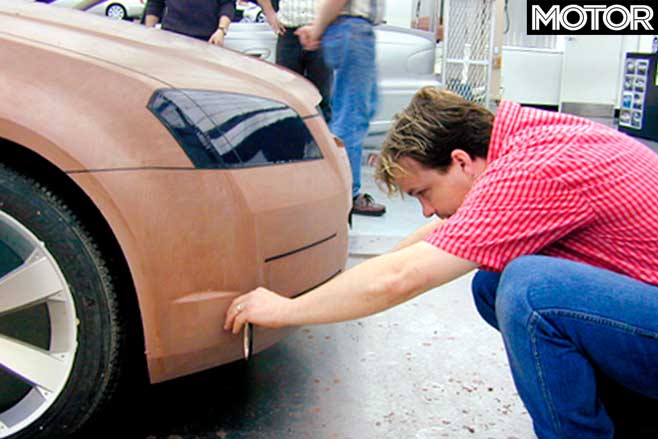
Dec 2001 – Full Size Clays While VE owes much to virtual reality technology, handmade clays still formed a large part of the decision making process
Dec 2002 – Proving Ground Nothing beats natural light to present a car, and Holden’s bigwigs gathered at Lang Lang to examine a full clay model for the first time.
2003 – Interiors Take Shape To give prospective export clients a better idea of the car’s proportions, a full-size, see-through mock-up is created in clay.
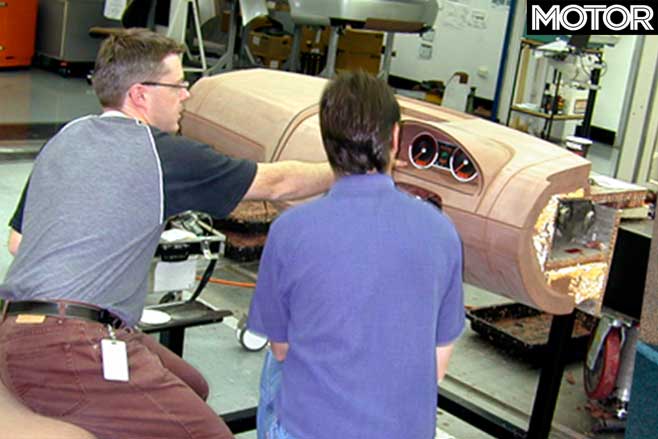
Dec 2004 – VDR Completed Validated Data Release; in essence its the ratification of the finished product. SS was developed virtually from November 2003.
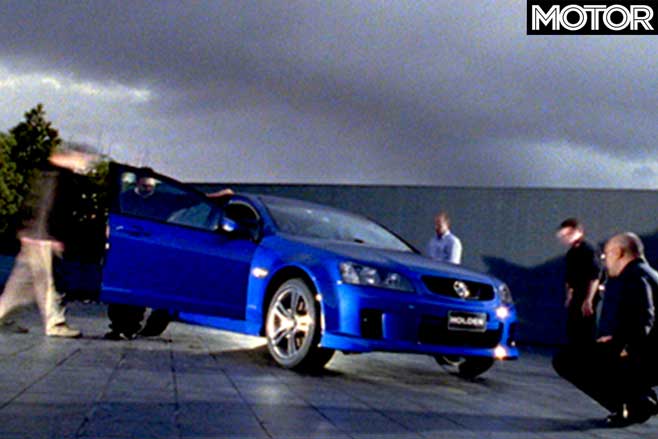
VE Development Test Mules
VX Suspension Hack – Mule One On the outside, a mild-mannered, beaten-up VX. Underneath lay the rough-hewn suspension architecture of VE. This one built in 2003.
Mule Zero – The First VE This is the first ‘proper’ VE, built in December 2003. Holden has logged 2.2-million kms at the PG on VEs, Each PG klick equals 30km to you and I.
Miles & More – World Testing The US, New Zealand, Canada, Europe and of course, Australia; disguised VZs and camoe’d VEs have racked up miles in every climate.
Part 2: Holden Commodore VE Bodyshell concept
Clever tricks and new tweaks in all-Aussie shell By: Glenn Torrens
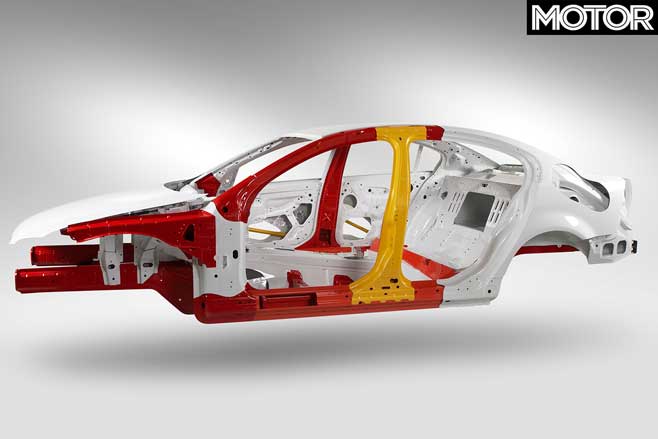
Holden’s VE bodyshell design brief: make it strong, flexible, and ours.
For the latter, all the architectural hangovers from the parent company (no more Opel borrowings, a la VT-VZ’s doors and suspension) are gone, and even the last of the previous Commodore’s handling traits have been removed, mostly with new suspension (which we’ll study later) and partly through the extra stiffness in the chassis.
More than three-quarters of the material in VE’s shell is high-strength steel, but to keep weight down, tailor-welded blanks (where a thick sheet of metal is welded to a thinner one before being pressed into snape) were used in the front chassis rails and floor reinforcing. This kept the shell’s bare mass increase to around 70kg – still a significant fattening, which is not popular for fuel misers, but you’re getting marked benefits in handling and safety.
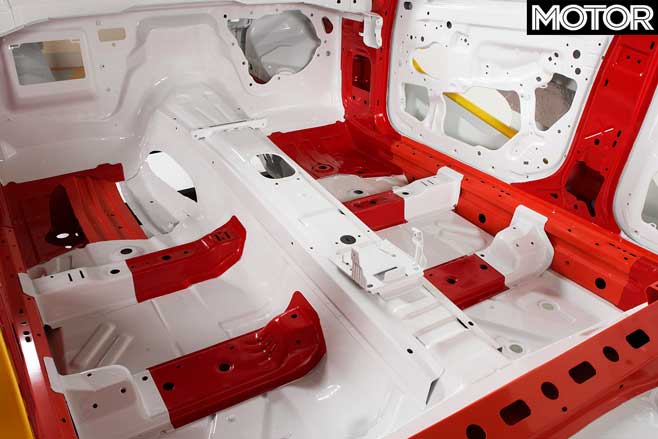
Shell stiffness has significantly improved thanks to the whole of the side body, from the A to behind the C pillar, pressed from one lump of metal – the first time an Australian manufacturer has dared attempt such a large single moulding. Then, to further improve side impact protection, an ultra-high-strength steel reinforcing core is hot-stamped into each B pillar.
Even the cowl area forward of the cabin has been designed to add body stiffness. Since the VN of 1988, Commodore’s glued-in firewall offered little in the way of strength, but VE’s firewall is now a stressed member. On top of all that, when the cross-beam mounting for the instrument module is welded in it becomes a brace between the A pillars.
Speaking of A pillars, they are large enough to swing a long, heavy coupe door from, and will be brought into service for this very thing, according to designer Mike Simcoe who recently confirmed the Monaro is coming. It’s one of a range of body styles the architecture can support, including ute, wagon and, in conjunction with its new suspension, a taller-bodied AWD soft-roader.
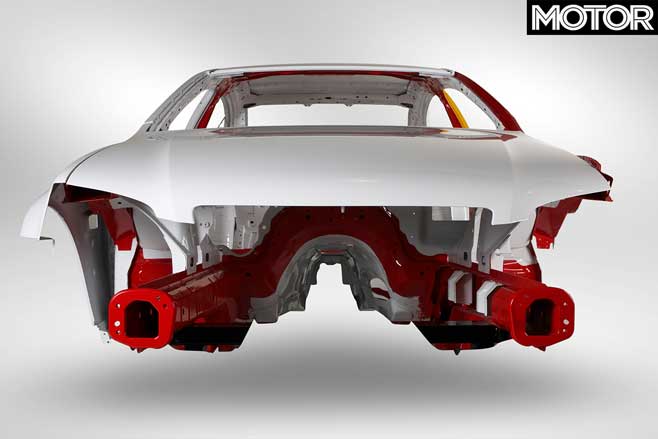
There’s some smart thinking in the way the shell – and car – go together, too. The nose of VE is a plastic/steel module containing windscreen washer bottle, crash beams, and pre-adjusted headlights. Benefits? Until the nose is slipped on, there’s a ‘walk-in’ engine bay for easier, faster manufacture with less risk of paint damage. In service, crash repairs will be cheaper. And it allows easier series/model/identity updates – totally different faces can be more easily applied to the same body architecture.
Out back, the fuel tank has been forward of the rear suspension, mainly to comply with US safety legislation, but this also helps weight distribution by putting more mass within the tracked-out wheelbase.
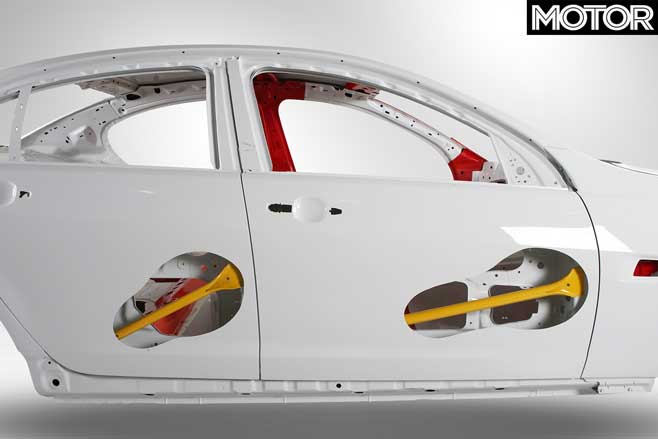
The battery has also been relegated to the boot, where the spare tyre well under the boot floor is a drop-in composite module, able to be factory-loaded into the car complete with the jack and spare tyre. The door hinges are bolt-on to allow fine-tuning of assembly tolerances at manufacture and assist repair.
All this cleverness is wrapped in bake-hardenable steel panels that allows tight tolerances – 1mm radius edges for wrap-over of panels such as doors – and good dent resistance.
What is in the Commodore VE’s bodyshell?
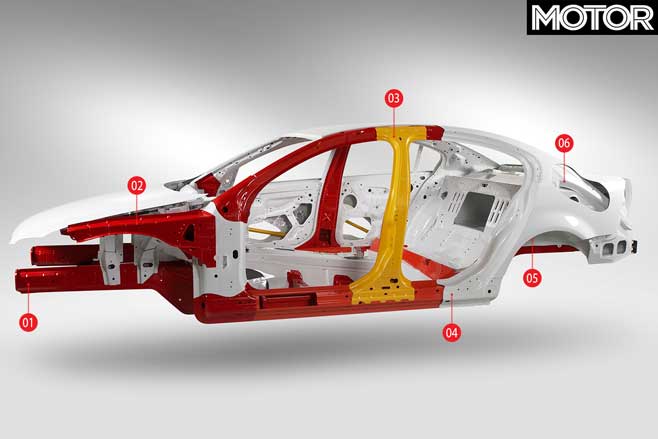
01 | Crossmember/Crash Paths Chassis rails are internally reinforced and are manufactured from tailor-welded ‘blanks’ giving them strength behind the axle line and crash softness forward
02 | Nose VE’s removable front-end module includes pre-adjusted headlights and the windscreen washer bottle on a steel/plastic frame. It slips straight on to streamline assembly and reduces crash repair costs
03 | Reinforced B Pillars B-pillars have massively reinforced cores. Box-section floor rails stiffen the shell and resist side impacts. Firewall is now welded to the shell
04 | One-Piece Body Side Stamping Stretching from the A-pillar to the tail light, the one-piece body side is the biggest ever from any Australian manufacturer. Check out the finish on the inside door apertures. It’s the same smooth quality as the rear quarter panel
05 | Fuel Tank The ‘saddle’ fuel tank takes 73 litres and places fulel mass within the wheelbase for better weight distribution – therefore handling – and better rear-end crash protection
06 | Spare Wheel Well and Boot Hinges The boot is wider and larger than VZ with more useable space thanks to compact four-bar hinges. Spare wheel well is a lightweight composite structure
Part 3: Holden Commodore VE Suspension Design
All-new design replaces Commodore’s 28-year-old underpinnings By: Glenn Torrens
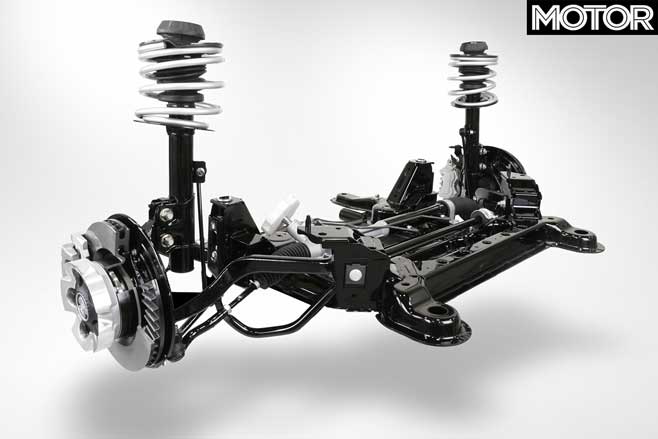
Commodores right up to VZ suffered tyre-chopping camber and toe change, thanks largely to the trailing arm rear-end and front strut geometry rooted in 1978 technology. But that’s all changed with the all-new VE, although the solution would appear to be more a simple variation than brand new technology.
To go back a step, Holden did investigate the upper and lower wishbone front suspension option, but most likely for cost reasons, went instead with a clever double ball joint system to replace the existing single ball joint at the base of the front strut.
The problem with the single ball joint is that the steering pivot point is inside the wheel, giving the front wheels a tendency to turn out under heavy braking and roll onto the tyre walls around corners. This can exacerbate tramlining and promote excess wear around the edge of the tyre, especially on the outer limits of lock. What Holden did was essentially add another ball joint alongside the first, repositioning the steering rack so that the pivot point is now virtually ‘outside’ the wheel.
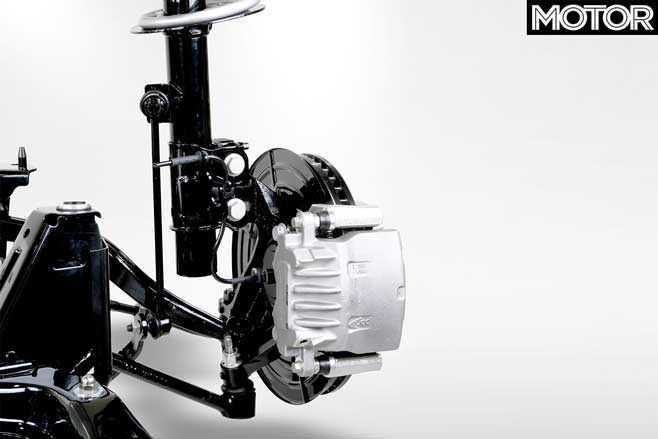
From what we can tell from our drives on the proving ground, this simple solution appears to have solved those problems. The 16×7-inch steelies (up from 15×6) on the Omega and Berlina VEs (sizes that increase to 19s on the other models) now sit flatter on the road when you’re clipping apexes at speed.
Out the back, a subframe-mounted multi-link independent set-up banishes the simplistic IRS to history. The VT’s semi-trailing arm/control-link layout had the tendency to distort bushes and transfer noise into the car. That’s something the new system eliminates, so it’s more compliant, especially towards maximum bump. There is no more reliance on the nose of the diff for rear subframe location, either, a problem for both getting the grunt to the ground and a source of transmitted cabin noise.
The upper suspension arms are lightweight L-shaped pressed steel units with ball-jointed inner and outer pivots as opposed to rubber units, all but eliminating comer load-induced camber change. The rearmost pivot – the one that takes the brunt of both accelerative forces and pothole shock – is bushed with voided rubber for compliance and noise isolation.
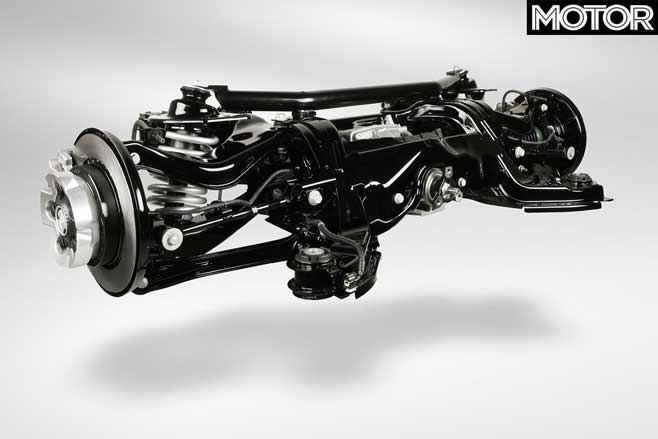
Both lower control arms are steel, too, with direct spans to large rubber bushes. The final member, a toe link, ‘steers’ the hub – and therefore the tyre – during suspension travel. Camber and toe alignments are both adjustable for fine-tuning of handling and reduced tyre wear.
Mounted on four rubber bushes, the complete module is easier to assemble into the car thanks to the captive spring in the coil-over spring/damper units that also provide more floor space in the boot. And, when the time comes, a better ute.
Three suspension tunes are offered. The FE1 spec has comfort-biased springs and dampers for Omega and Berlina. FE2 is a 10mm lower, firmer sports package standard on Calais, SV6 and SS. An FR1 ‘country pack’ (optional on Omega) gives 25mm more ride height, as well as an underbody bash plate.
What is new in the Commodore VE’s suspension?
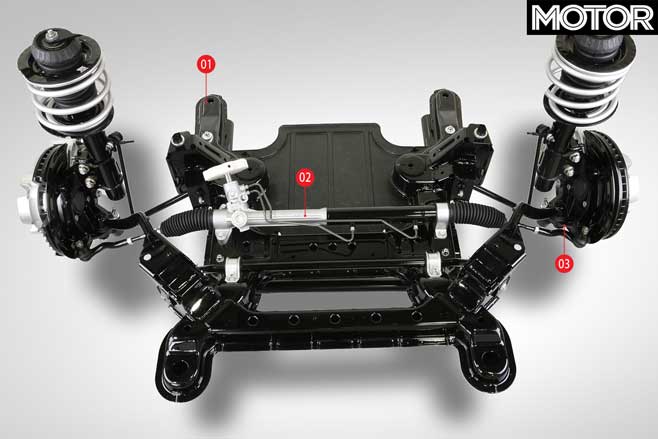
01 | Engine Cradle With large-section chassis rails and built-in firewall, the six-point cradle stiffens front end of car to allow suspension to work more effectively without strut tower brace
02 | Steering Rack Rack now north of axle line, lending itself to natural toe-out under cornering. Mounts now rubber-bushed for additional stiffness. Fronts are adjustable for camber, castor and toe
03 | Ball Joints, Bars & Castors Double ball jointed lower stubs position steering axis towards outer edge of tyre’s footprint. Strut-mounted swaybar reacts directly to wheel movement
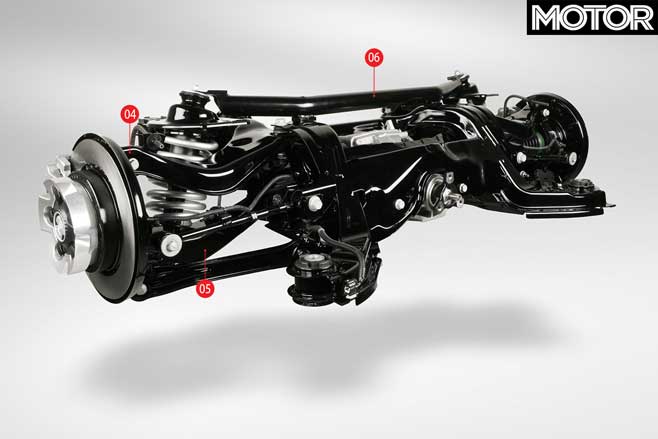
04 | Upper Arm and Springs Stamped steel arms combine strength and durability with acceptable weight; large rear bush isolates road noise
05 | Lower Arms and Toe Link Two lower arms on two rubber bushes allow degree of rear-steer guided by toe link
06 | Subframe Rear suspension module locates to body on four rubber bushes for effective noise isolation
All-Paw VE?
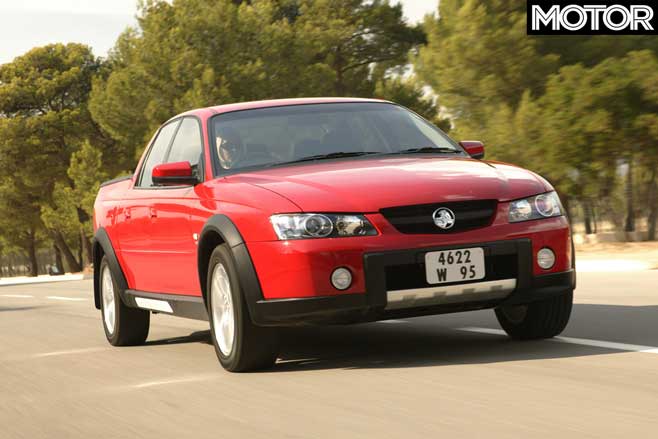
One of VE’s early design criteria was that its suspension be compatible with all-wheel drive. As well as placing the steering rack ahead of the front axle – ahead of where front-rear driveshafts and diffs need to be – the hub/stub axle was also designed to accept a driven axle through it.
The spring/strut is easily configured for a higher ride height, while the new caster rod design allows greater suspension travel for future off-road development. The rear suspension, too, is designed for an easy transition to AWD/off-road use with little more than taller coil-over spring/damper units required to raise vehicle ride height.
It remains to be seen whether the slow sales of the Commodore-bodied VY/VZ Adventra have killed Holden’s AWD aspirations, or whether this new platform will yield a true challenger for Ford’s Territory down the track.
Part 4: Holden Commodore VE Engine
A little nudge in the numbers for an established fave By: Glenn Torrens
Holden introduced two versions of GM’s all-alloy DOHC Global 3.6-litre V6 little more than 18 months ago with the VZ series, then the acclaimed 5.7-litre Gen III V8 made way for the Gen IV 6.0-litre in January this year. Pointless to bring in whole new donks,really.
But it wouldn’t be a launch without bigger numbers, so there are some changes to help lift power on both entry-level and high output V6s, and a little refining to lessen the V6’s rowdy noise and vibration. This was achieved under the padded engine cover with a new structural sump, engine cradle, cam drive chain, and harmonic balancer.
Performance-wise, the 3.6-litre alloy DOHC V6 in Omega and Berlina claims 180kW @ 6000rpm and 330Nm @ 2600rpm, which is up 5kW and 10Nm on the VZ equivalents, while Calais and SV6 goes up 5kW to 195kW @ 6500rpm from its dual variable cam timed ‘High Output’ engine, but torque remains at 340Nm @ 2600rpm.
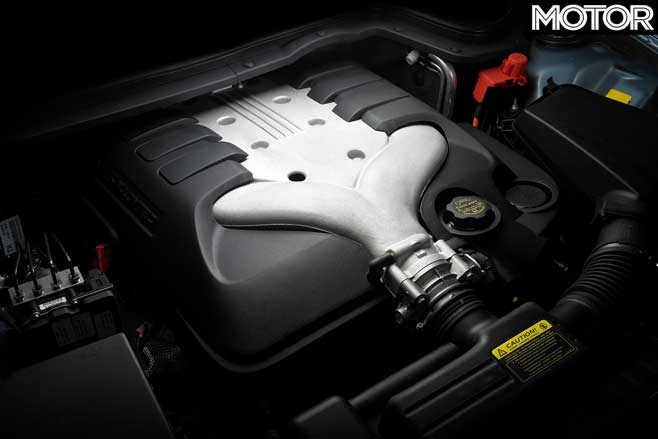
The Gen IV 6.0-litre V8 In SS, SS V and optional in Calais V gets a 10kW boost to 270kW, and a nice, fat 20Nm of torque, although that 530Nm @ 4400rpm is achieved with 98-octane fuel. Expect Messrs Watt and Newton to slacken off around 10kW if they drink cheaper brews.
Once all that power has been generated, spent gas exits through new dual exhausts that designers were able to introduce under both the 195kW V6 and V8 thanks to the space liberated by the new fuel tank location.
Holden created a media storm when it wouldn’t reveal fuel economy figures at the national VE launch event in Melbourne; hanging out for a couple of extra percentage points on the data, or looking for a bit more TV airtime? Whatever the story, the figures are in, and they’re not half bad.
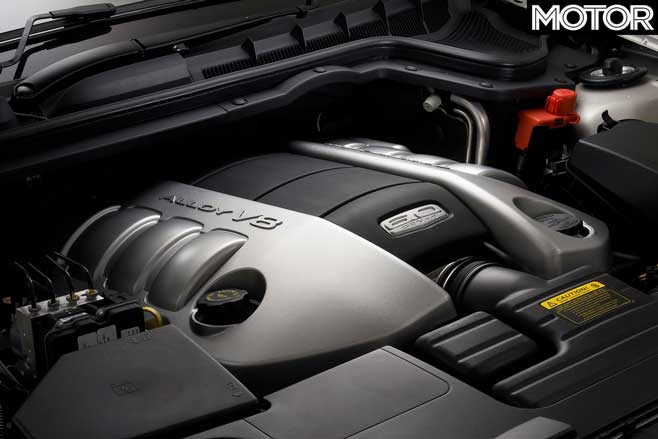
In fact, despite an almost-100kg weight gain across the board, the V8 variants have come in a little lower than the outgoing L76, at 14.4L/l00km in manual and 14.3L/100km in auto guise. The high-output six drops to 11.0 and 11.6 for manual and auto, respectively – the manual improving almost half a litre over the VZ version of the same motor. Figures on the Calais V8 creep up a little; 14.3 on the new car is 0.3L/100km worse than the outgoing Calais.
Both the V6 and V8 drive-by-wire pedal maps have been tweaked to provide more aggressive throttle action at low speeds, accessing a fatter torque spread provided by a variable-length intake manifold. And don’t be too worried about overheating while puttering around, as the cooling system now has gruntier three-speed fans. The system also requires less coolant and a quick-drain tap makes servicing easier.
A more effective power steering cooler is incorporated in the nose of the car (which may prevent MOTOR hacks from boiling the damned things) and all cars benefit from a regulated voltage control alternator.
Part 5: Holden Commodore VE Transmission and Brakes
Six-speed auto is the big news here, but the four-speed slusher lives on… By: Glenn Torrens
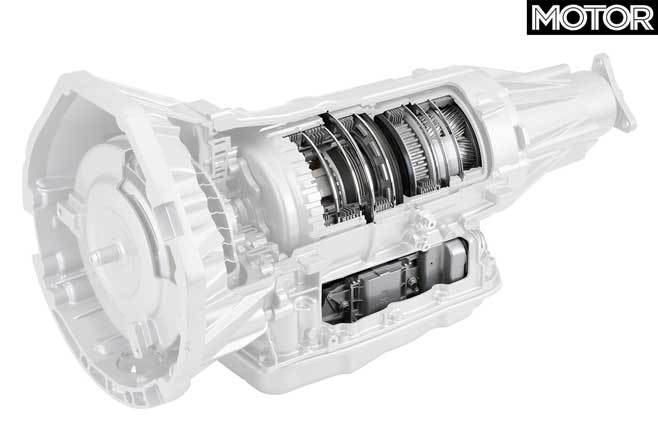
With the five-speed auto that arrived with Alloytec V6 18 months ago unchanged, the spotlight is now on VE’s all-new six-speed auto option behind the V8. Tagged 6L80E, the compact Michigan-made cogbox has a 6:1 ratio spread, providing a low first gear for off-the-line zap and a tall sixth that mimics the manual’s long haul gearing for highway economy – try 1500rpm at 100km/h.
Like the Calais and SV6’s five-speed auto, the V8’s six-speeder features Holden’s Active Select manual shifter, although the steering wheel paddles have been ditched for the more conventional shifter seen in BMW and Ford. It even has the same push-downshift/pull-upshift action, and the controlling software detects driver behaviour, holding gears for as long as necessary when the going gets gung-ho.
Manual gearboxes – the SV6’s Aisin AY6 and the SS’s Tremec T56 six-speeders – feature a remote shift mechanism to reduce shifter ‘buzz’ and isolate driveline noise from the cabin. The V8’s gearbox – fitted with the VZ Monaro’s close-ratio cogs – features triple synchros on first, and second and double cones from third to sixth, and its internal selector shafts ride on ball, rather than plain, bearings for smoother action. Both manual’s clutch pedal actions are lighter and closer to the floor (40mm versus 75mm from the floor for VZ) for smoother take-up.
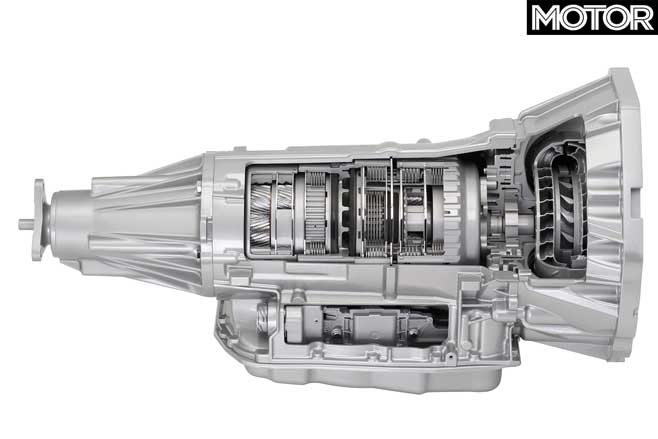
The 4L60E four-speed automatic is controversially retained in Omega and Benina and features the input shaft-speed sensor introduced on VZ 6.0. This upgrade improves shift quality and smoothness, which could be a bit hit-and-miss in the auto’s previous iterations.
With more torque now being generated in the lower gearing, the diameter of the two-piece tailshaft has been increased, and is attached at either end with bigger bushes.
At the back end the shaft is connected to an alloy-cased ZF differential that saves 4kg over the previous iron design, but more noticeable is that its housing is no longer a mount for the subframe, meaning less vibration and noise. Also helping out there are new tooth profiles lubricated with 75/50 synthetic diff oil; bigger balls in the driveshaft’s CVs, and more of them (eight rather than six).
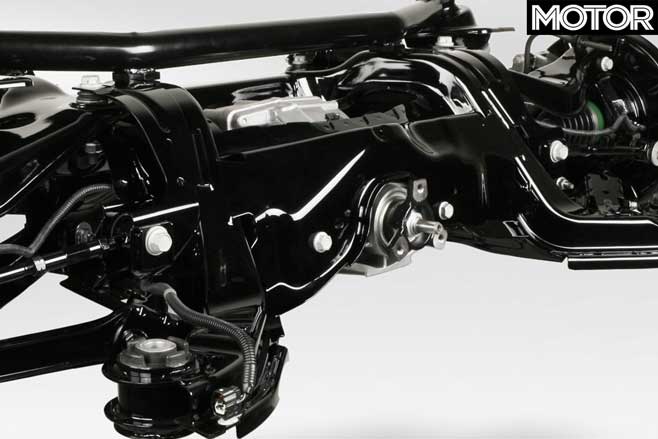
Diff ratios are 3.27:1 for the Omega/Berlina V6; the five-speed autos in the Calais V6 and SV6, plus the SV6 manual runs 2.92; and 3.45 in the V8s.
Them’s the Brakes
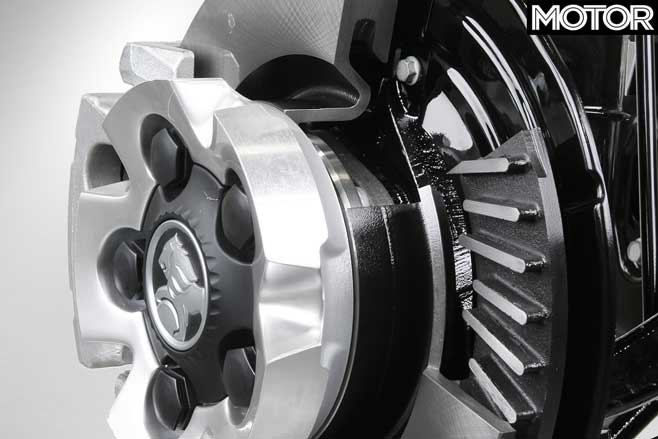
Following the lead of the VZ Monaro and 6.0-litre VZ SS, V8-powered VEs have larger brakes than the V6s – 321x30mm up front, in comparison to the V6’s 298×30, and all models receive larger, vented rear rotors; 302 for V6 and 324 for V8.
Although caliper hardware is identical, the V8’s are mounted on different cradles over rotors built with angled internal pillars and a J-section between the brake pad friction surface and hub. These features allow the brake to better cope with heat stress. All VEs cop ABS, EBD, and EBA (electronic brakeforce distribution and assistance).
Part 6: Holden Commodore VE Safety
ESP and new chassis design make VE the safest Holden yet By: Glenn Torrens
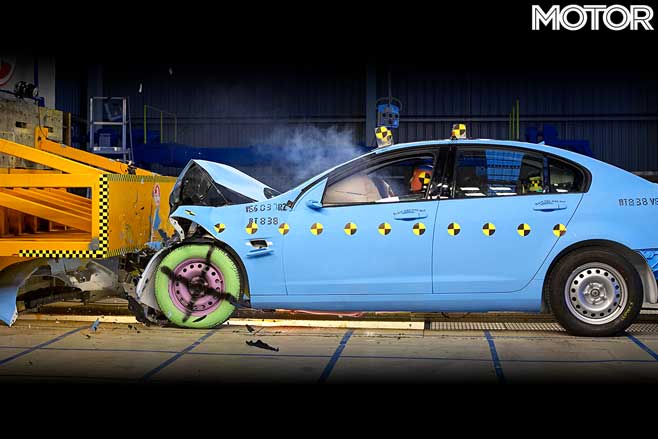
How the car stays out of trouble, and how it protects the people inside when things do go pear-shaped, has been a prime consideration during VE development. The results are the product of a partnership between Holden and the Monash University Accident Research Centre, who have been working together for more than a decade.
The key advancement is that Holden has made recent Electronic Stability Program (ESP) technology standard across the VE range. Previously a feature of up-spec V6 autos only, the ESP controls chassis electronics such as electronic brake force distribution, emergency brake assist, traction control, and ABS.
Significant calibration work was performed on Australian roads, especially loose gravel, so rather than a one-size-fits-all setting, there’s a dozen. Holden says this model-by-model calibration regime allows, “sporting variants to be driven enthusiastically without unnecessary intervention from the system.”
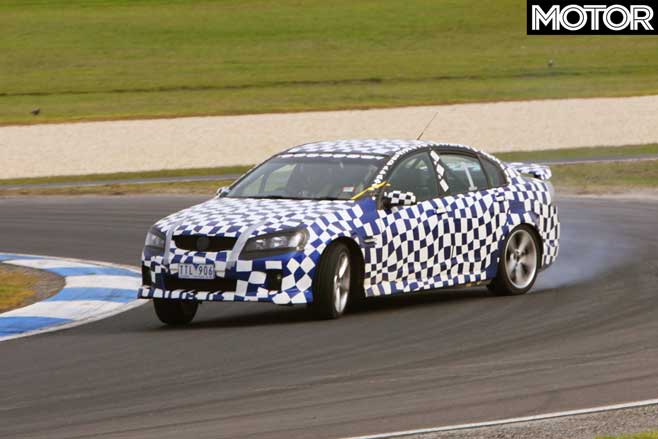
To that end it would appear Holden has dialled in a bit of the fun factor in the V8 Calais and SS, with the rear allowed to step out a little before the system kicks in. Of course, you can switch it off altogether with a button that lives out of harm’s way, forward of the shifter.
Curtain airbags make their Holden range debut and are optional across the range to supplement the side airbags, seatbelt pretensioners, and front bags. Those front bags are now two-stage and take into consideration seat position (hence driver size) and crash severity before deploying. The passenger bag’s dash cover is hidden behind a ‘burst-through’ seam rather than a glovebox-like panel and the seatbelts are looser against the body in general wear for better comfort.
The fun stuff is actually smashing cars into solid objects as part of the crash tests, and although most of the data was collected through computer modelling. Holden stuck 79 cars into the wall.
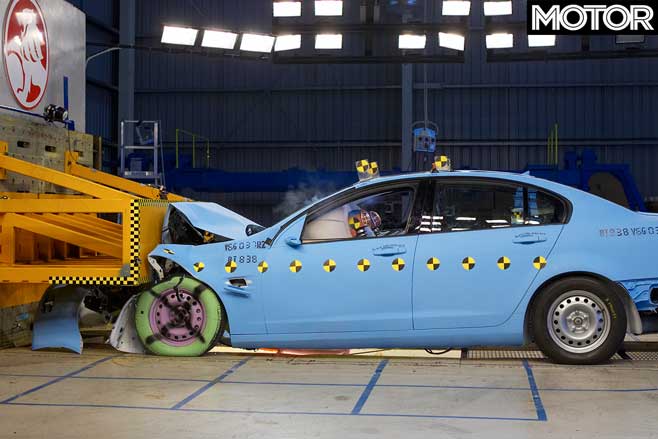
The results prompted designers to insert an ultra-high strength steel reinforcing core into the B-pillar to resist deformation and channel crash energy into the roof. So strong is the revised B-pillar that SES crews have been forced to update their rescue cutting apparatus.
Up front, tailor-welded blanks are used to form the chassis rails, providing a soft nose for minor bingles, and a progressively stiffer response in larger crashes. The upper engine bay rails also contribute; Holden did extensive work for truck under-run crash situations and the front wheels bear against the sills, rather than the front floorpan (a cause of foot injury), in bigger head-ons. Before things get that bad, there’s a deformable plastic egg-crate and extruded alloy crash beam behind the bumper skin.
To reduce foot, leg, and pelvis injuries in front end crashes, VE also features a breakaway brake pedal, with a diamond-section pivot that’s designed to deform to allow the pedal to swing free when the driver arrives on the scene with his leg hard on the brakes.
Holden says it all adds up to its safest car yet.
Big-ticket events like the Australian Grand Prix are still going ahead despite the coronavirus concern, thanks to the federal government deciding not to place onerous travel restrictions on people coming in from Italy. In terms of big event organization, it’s past the point of no return in terms of hard costs – flights are booked, food is ordered and transport is paid for, so fingers crossed it does go ahead.
The Geneva Show wasn’t so lucky, though, with some reports suggesting car companies have torn up the better part of half a billion dollars as a result of the cancellation. Even though the Swiss government will look at lifting its restrictions around large gatherings in a week or so, the show is a write-off – and our spooky gallery gives you a real sense of how close it was to completion.
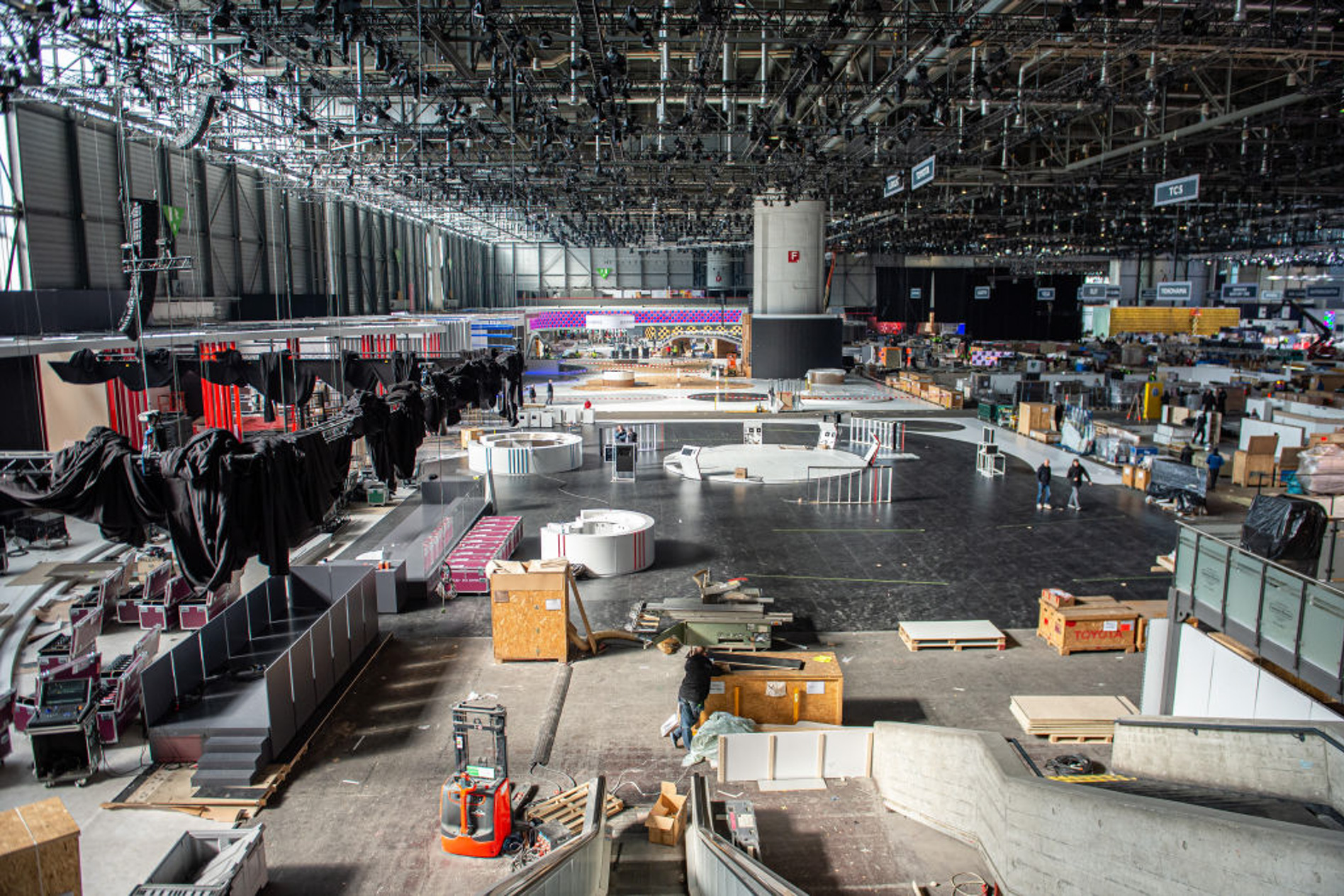
The car industry marches on, of course, and several big-ticket releases were hastily rearranged. Mercedes-Benz previewed the E-Class, Porsche took the covers off the new 911 Turbo S and Bentley’s bonkers Bacalar was unveiled in much less salubrious surroundings.
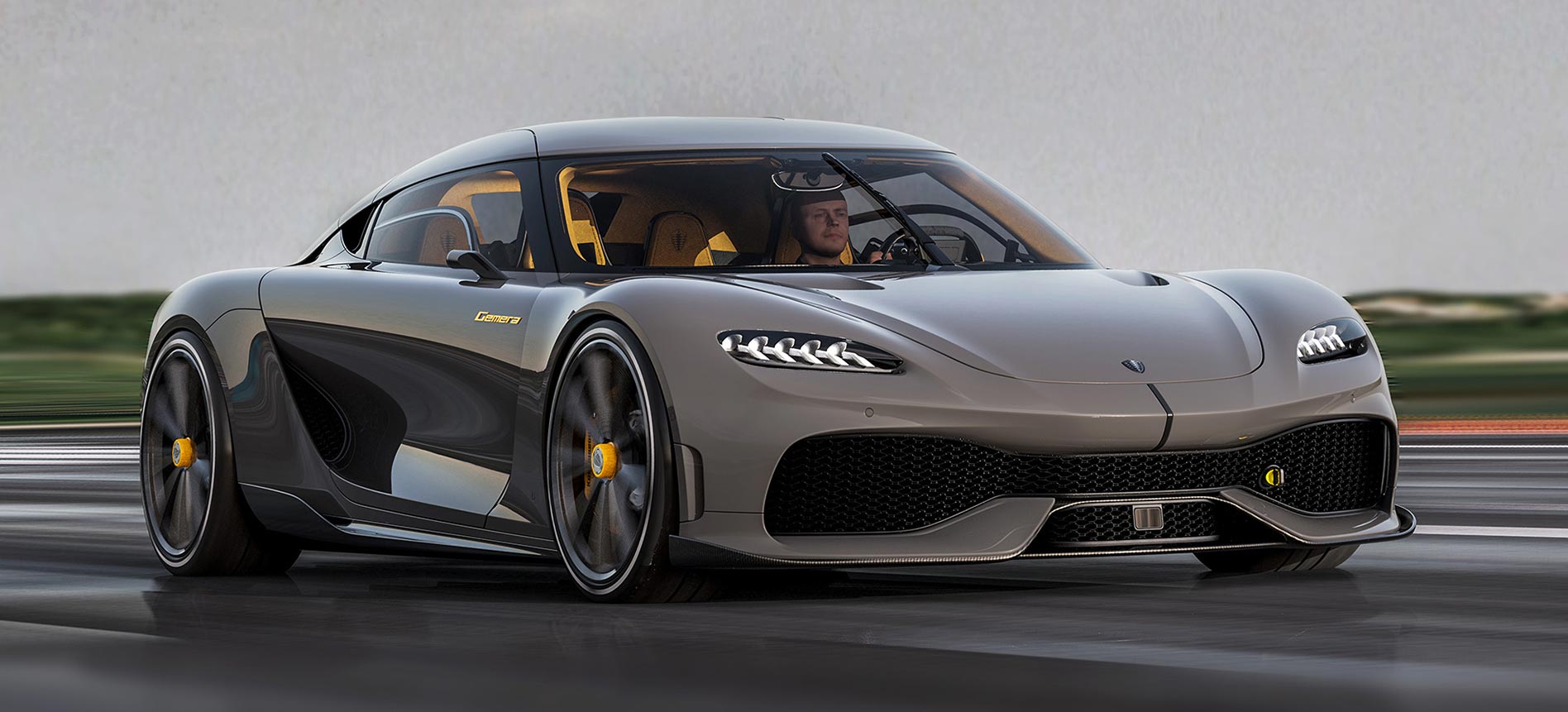
Probably the biggest non-launch launch of all, though, was the reveal of the 1200kW Koenigsegg Gemera four-seater… which was still held in the Geneva show hall!
Locally, Holden news rumbled on, and I feel there’s still a bit to play out as dealers prepare for war with head office over the allegedly poor compensation offers on the table. There’s little doubt now that GM has really bungled the entire process, adding a sour note to the sorrow and sense of loss that still pervades our game.
Other news of note across our network includes how the new Jeep Gladiator will fit into the local ute sphere, a look at the sales data from last month – hint; not great – as well as discovering the identity of a Ferrari that’s been perplexing our best people for the better part of a decade.
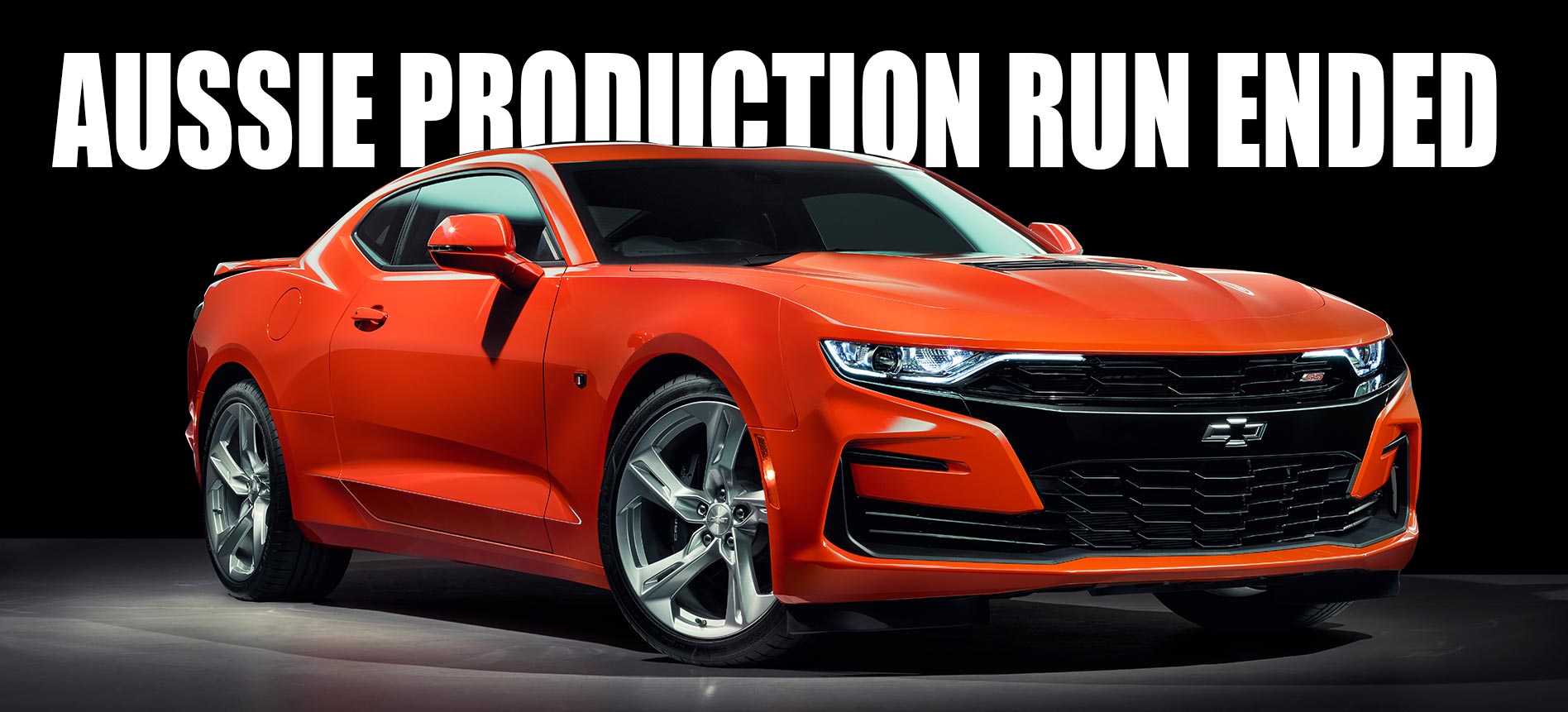
We’ve also checked out the new Audi A3, scooped the fact that the Chevrolet Camaro 2SS is out of production for Australia and revealed the identity of an expensive but shockingly bad baby seat.
WhichCar TV is on the box this Sunday at 3.30pm on Channel Ten – and on Prime in New Zealand – and our reams of social media feeds are pumping out all the good gear 24/7.
Lexus’ recently-updated RX 300 represents a bit of a dark horse amongst the incredibly competitive up-market mid-size SUV sector.
The update brings improved comfort, better value and more equipment; but is it enough to have you cross-shopping with the prestigious Germans you’ve been eyeing, let alone the award-winning Volvo XC60? Let’s find out.
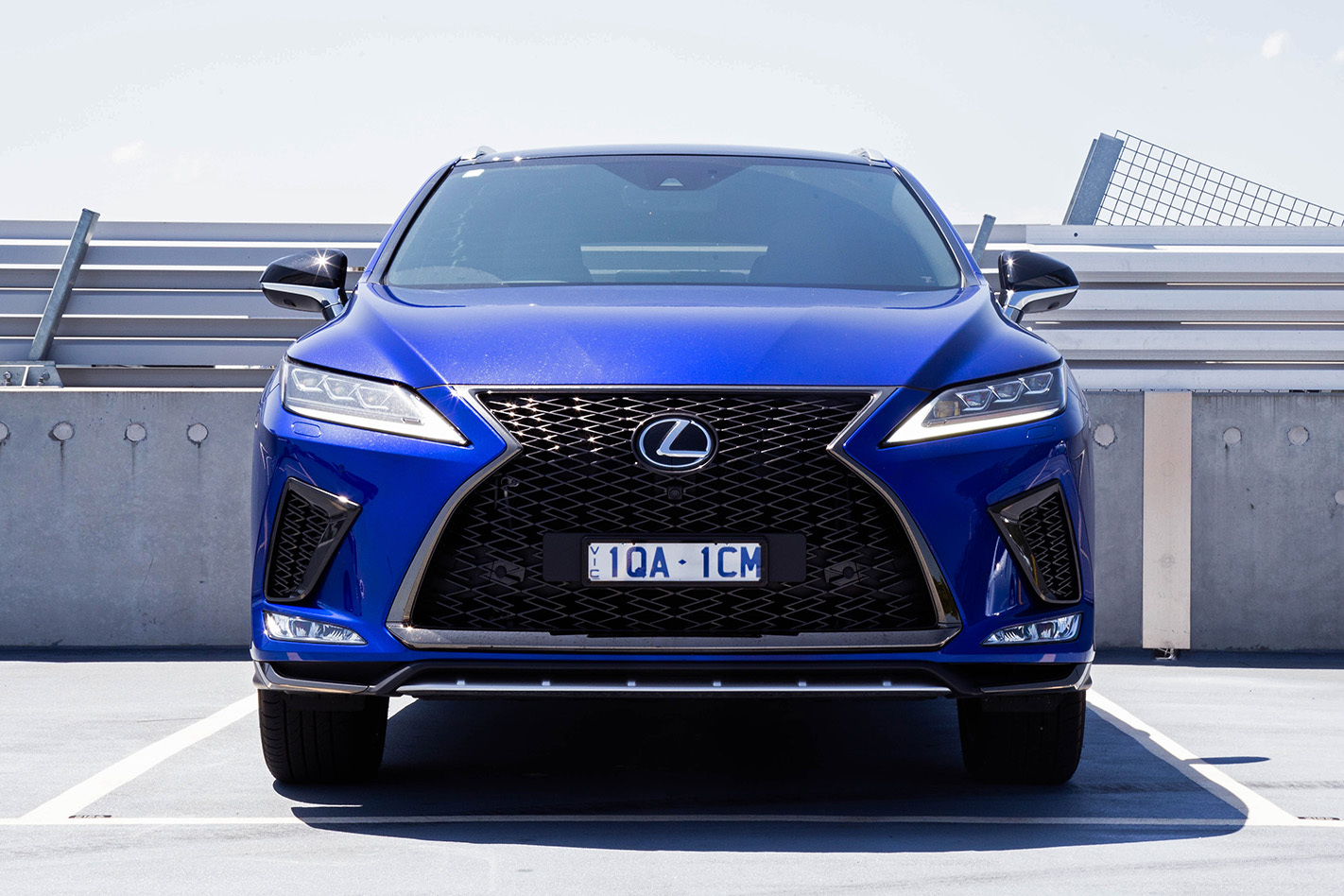
What is it?
This is the latest update of the fourth-generation Lexus RX, a nameplate first introduced back in 1998 as a relatively ambitious foray into the now popular ‘sport luxury crossover’ market.
A large SUV, the RX can be had in either five- or seven-seat guise and with the choice of three powertrains. The one we have here is the mid-tier F-Sport five-seater, powered by the entry-level ‘300’ engine, a 2.0-litre turbo petrol. Retailing for $86,800, it’s positioned as a value-rich proposition within the luxury SUV bracket.
Updates and facelifts are often skin-deep, frequently with a friendly new face, and a nip-and-tuck of the interior; and not much else. This one goes deeper, with significant chassis modifications as well as various new comfort, safety and tech updates.
Rivals include the popular Germans, including the Audi Q5, BMW X5 and Mercedes GLE; as well as the VW Touareg, Jaguar F-Pace and Volvo XC60.

How does the Lexus RX 300 F-Sport drive?
All RX 300s are propelled by a 2.0lt turbo four-cylinder coupled to a six-speed automatic gearbox, while its RX 350 sibling gains a significantly more powerful 3.5 litre V6 (with the RX450h adding hybridisation in to the mix) and an eight-speed automatic.
The 2.0lt turbo four-pot is not the most inspired powerplant, so don’t expect it to blow the doors off that GLC63 that’s lined you up at the lights. However power delivery is ultra-smooth… as long as you’re not in a hurry.
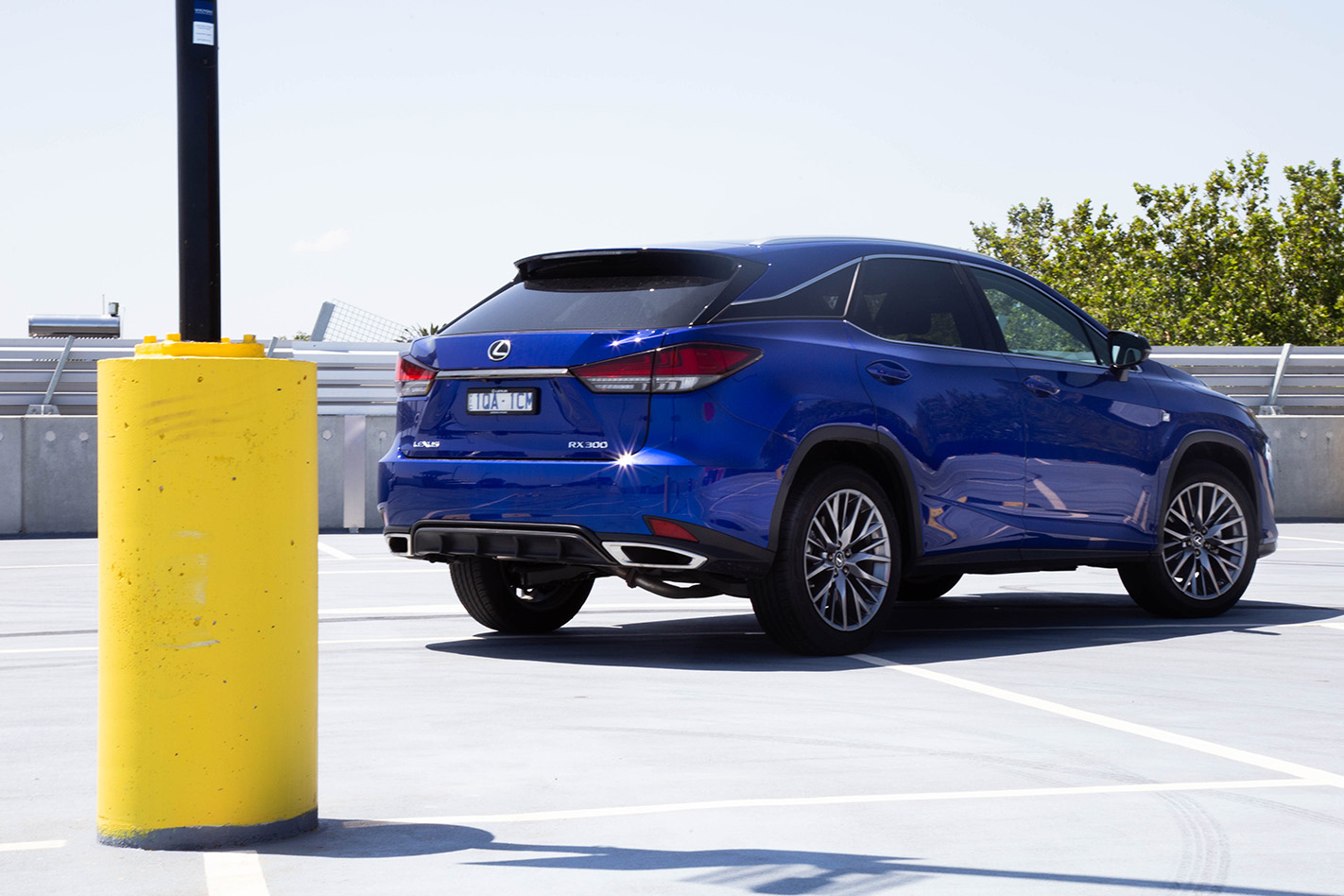
1890kgs of luxury SUV is a lot of mass for the 175kW engine to hustle, and while the claimed fuel economy figure is a reasonable 8.1L/100km, we struggled to get close to that over the week we had it thanks to mostly urban driving.
The big development for the update is the significant chassis tweaks under the skin. More spot welds (36 of them) and 4.2 metres of adhesive within the body’s construction allowed Lexus to fit softer springs as well as thicker anti-roll bars; cohesively refining lateral movement and overall body control. The RX 300 isn’t a driver’s car, but it certainly doesn’t claim to be. It is however well suited to driving the tribe all over the concrete jungle however, and is perfectly capable for the daily family haul.
The powerplant may be a bit of a slug, but the adaptive suspension coupled with the softer springs and more rigid chassis are marked improvements for the RX, whose previous iteration was frequently critiqued for its cumbersome mannerisms.
That softer suspension translates into a supremely comfy ride around town, and for the bulk of buyers (and their passengers), that’s perhaps the most important quality of any family-size SUV.
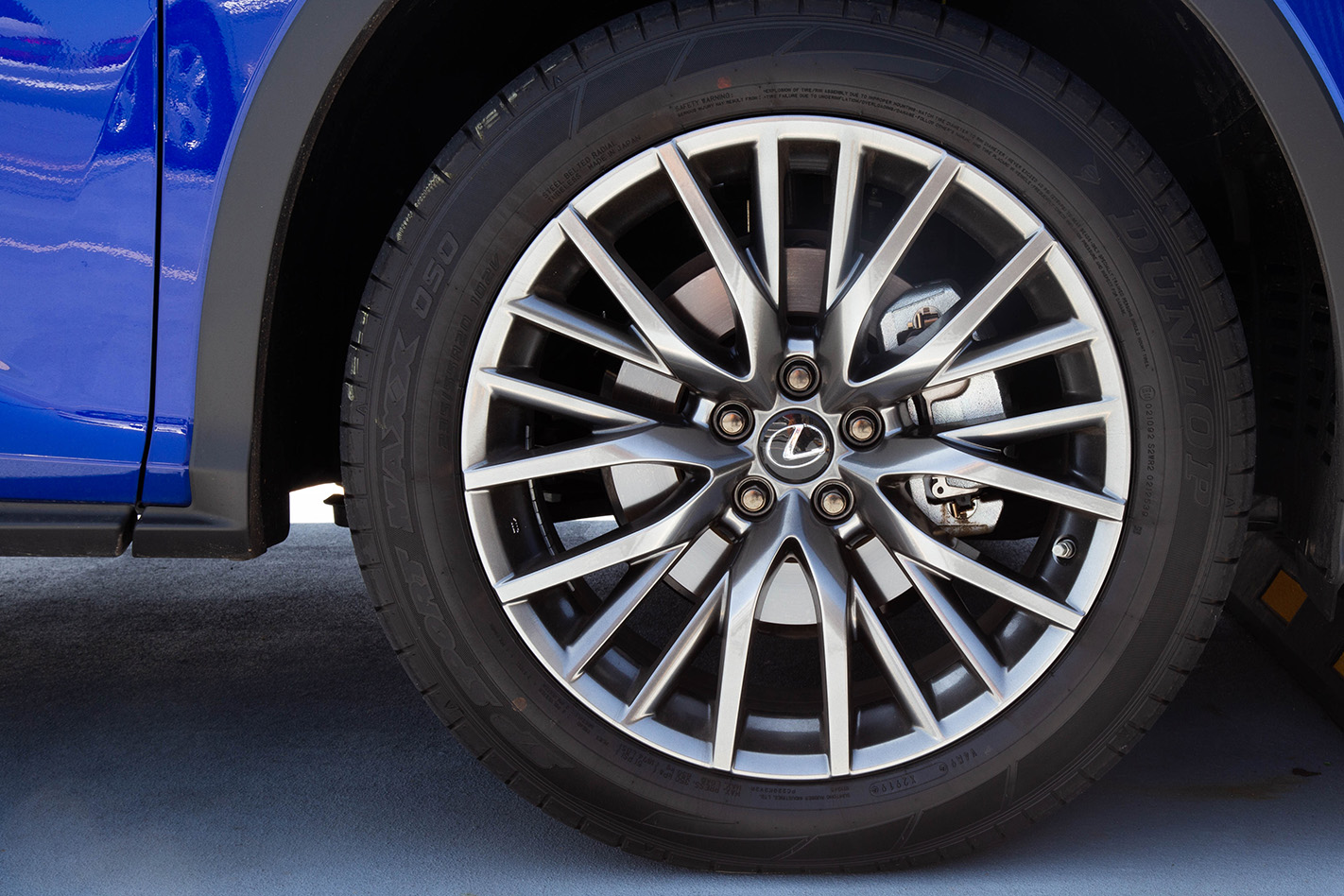
Is the Lexus RX 300 F-Sport easy to live with?
Day-to-day duties are easy and pleasant thanks to the RX 300 F-Sport.
The cabin is a polished and very pleasant place to be. A new 12.3-inch touchscreen provides the centrepiece the top of the dash, and now includes Apple CarPlay and Android Auto, as well as a welcome alternative to the at-times finicky Lexus trackpad.
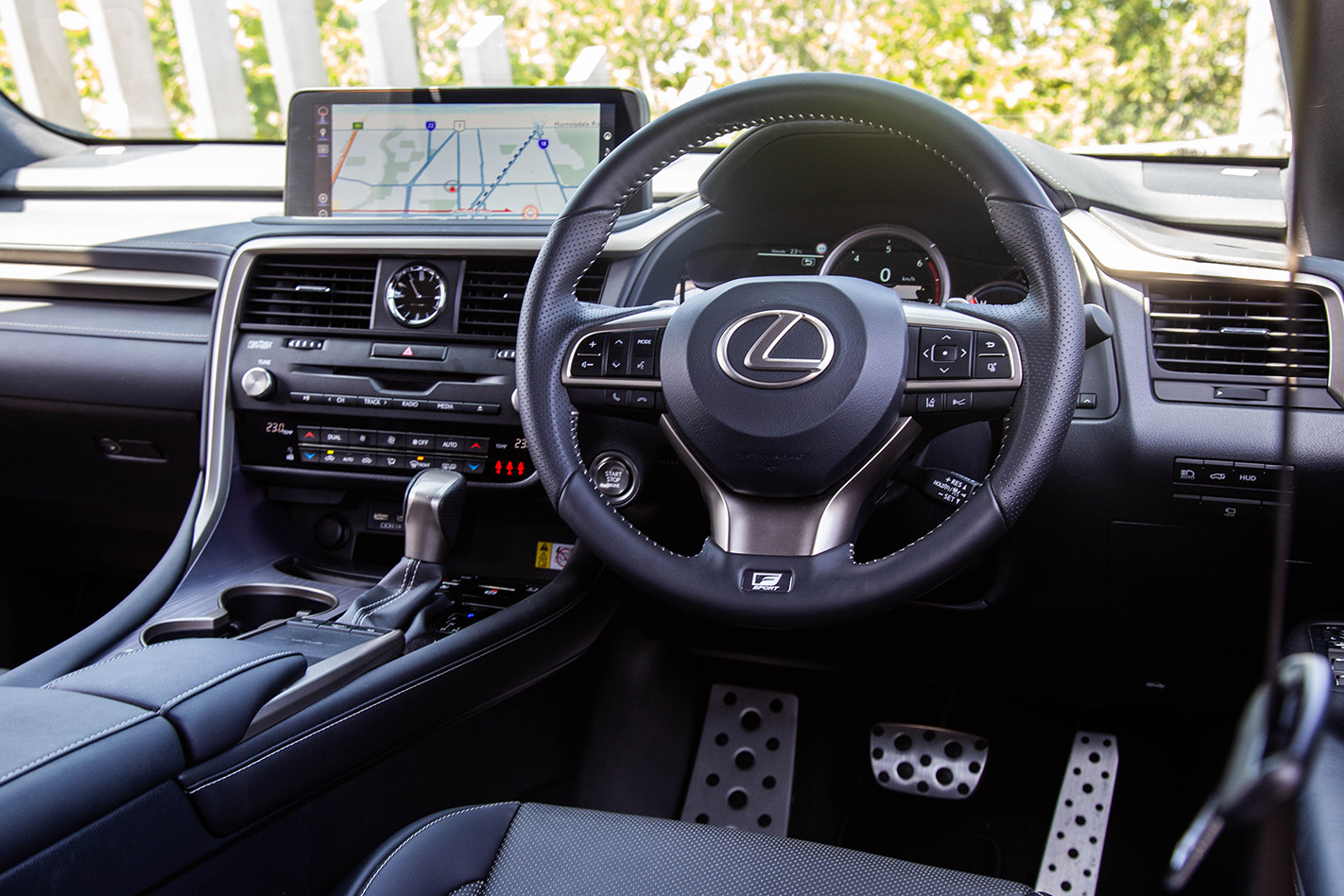
Front seats are heated and cooled (and electronically ten-way adjustable), with two extra USB slots complimenting the in-built wireless charger for those in need of extra juice.
In-built SatNav, leather trim, heads up display, a 15-speaker sound system and LED headlights are all standard affair, whilst on the safety front; an updated AEB system which can detect vehicles as well as pedestrians and cyclists compliments blind spot monitoring, rear cross traffic alert and side curtain airbags for both front and rear occupants.
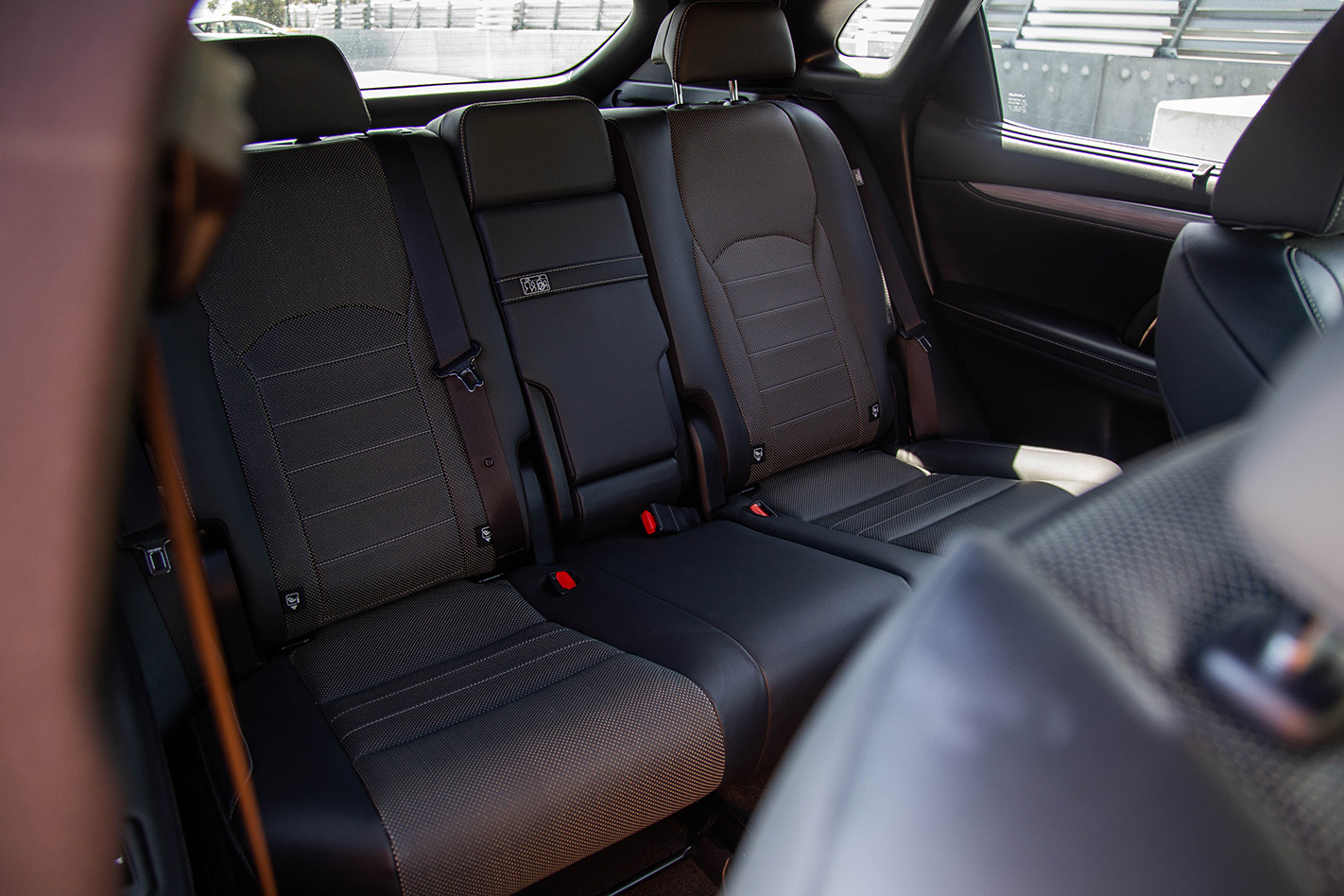
Out back, the rear seats gain their own air vents and sunblinds and very agreeable leg room, plus built-in retractable sunshades for the side windows.
Further aft, the boot allows an admirable 453 litres of storage though with the second-row folded flat, the space swells to 924 litres. If your arms grow weary after filling up all that space, you’ll be glad to know the tailgate is power operated, and closes with the push of a button.
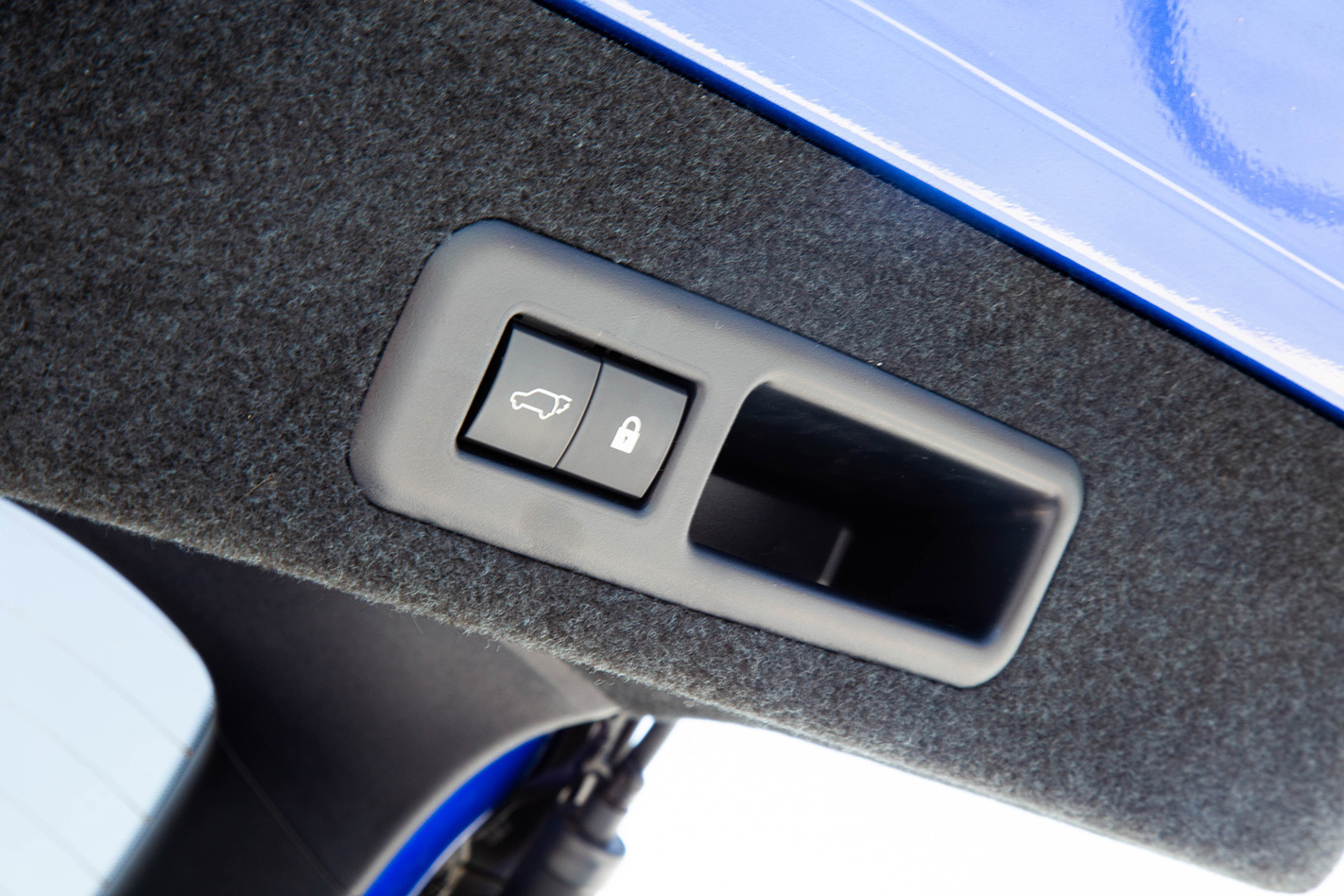
You’ll be visiting the service department once a year, or every 15,000kms – with a warranty covering four years or 100,000kms.
The Verdict
If you’re shopping for a smart luxury SUV but don’t go glassy eyed over the likes of the Three-Pointed Star or the Bavarian Roundel, Lexus’ RX may well be a dark horse worth looking at.
The Lexus RX is for anyone who is in the market for a luxurious, roomy and comfortable five-seat SUV. While the Germans have been dominating the sector with their prestigious badges, the Lexus offers some very real merit for those wanting something a little different from the pack.
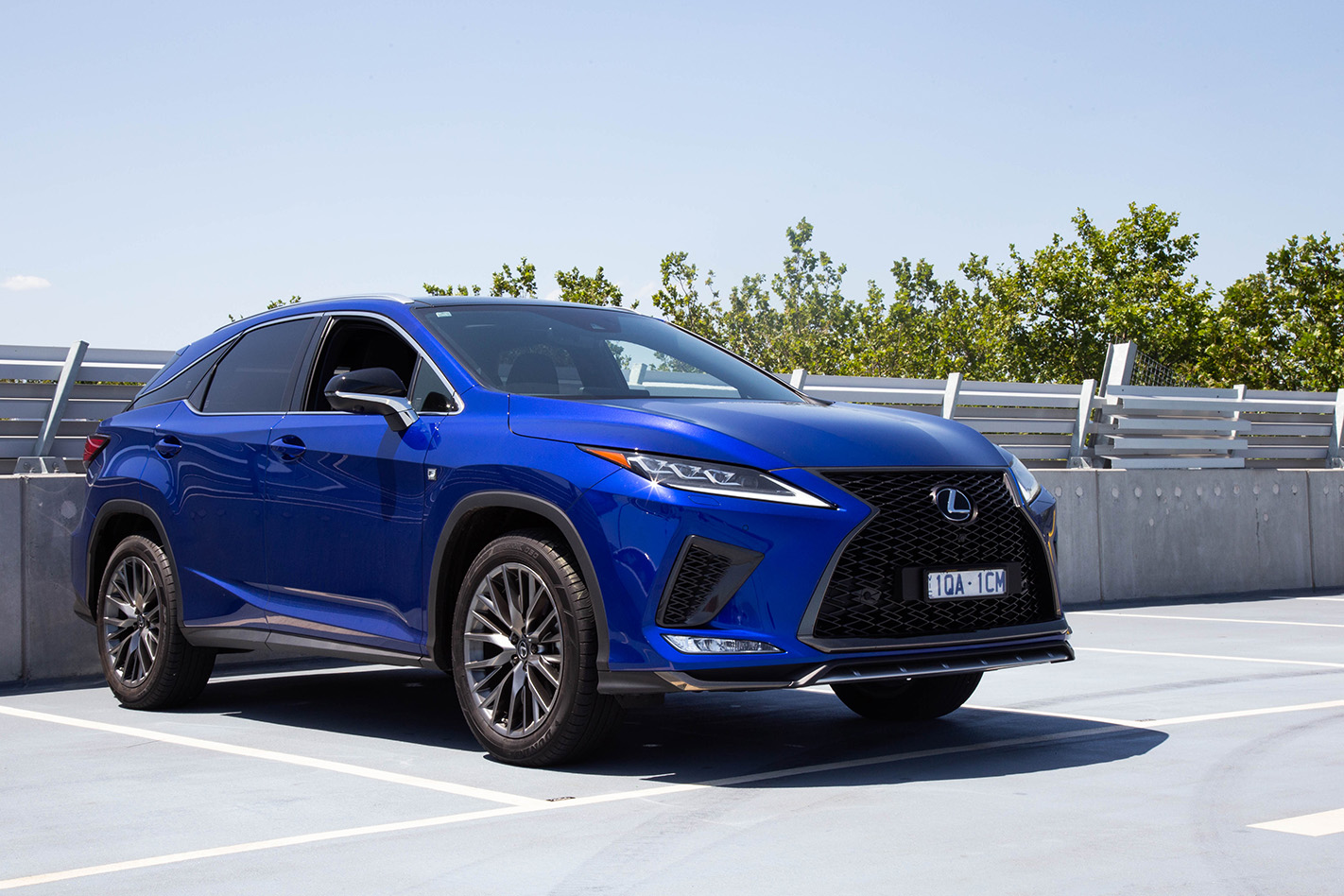
It will surely appeal to any of those urban dwellers with penchants for svelte Japanese design; its cocooning and welcoming cabin will surely please, as will its generous level of comfort and standard equipment.
It’s a perfectly capable urban-dweller with great levels of tech, comfort and safety; and offers a seriously capable alternative to the traditional big players of the high-end high-riding sector. If you like things a little different, a little less ostentatious, the Lexus RX 300 F-Sport hits in many of the right places.
Every racing driver in the world, in any category, watches Formula One and thinks, “I wonder what the car that’s winning the championship must be like to drive?” All of them would want to know just how good the best F1 car on the planet is.
F1 has been the pinnacle of our sport for 70 years, and the fact that only a handful of drivers today get to race a top car capable of winning races makes for a lot of jealous racing drivers around the world.
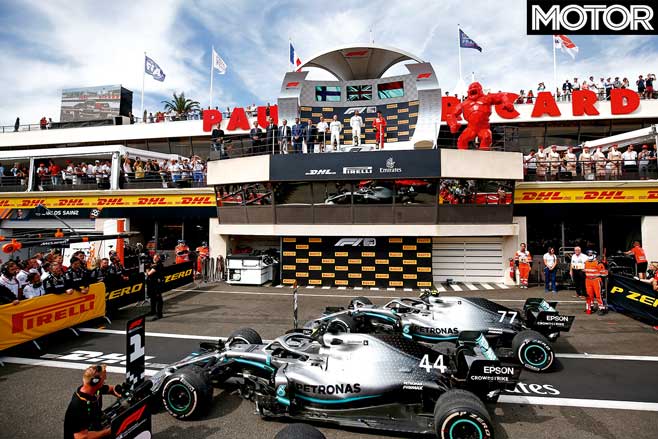
So you can understand my utter surprise when the phone rang late last year to ask if I’d be up for driving a 2019 Mercedes. “What – a current car? You mean this year’s car? Not some demo hack that’s been put together to do doughnuts in?” Yep, Mercedes was offering me the amazing opportunity to drive the very W10 that would be competing in the final races of the season.
Now, I’ve got to give a lot of credit to the Mercedes F1 team. It is in the middle of an extraordinary run of success that started in 2014. It doesn’t really need the publicity of inviting someone other than their existing drivers into the cockpit.
But, amazingly, the team was completely open to the idea of letting me – someone who has never driven one of its cars before – have a go and experience what Lewis Hamilton and Valtteri Bottas had at their disposal to deliver an incredible sixth consecutive drivers’/constructors’ world championship double for the team in 2019.
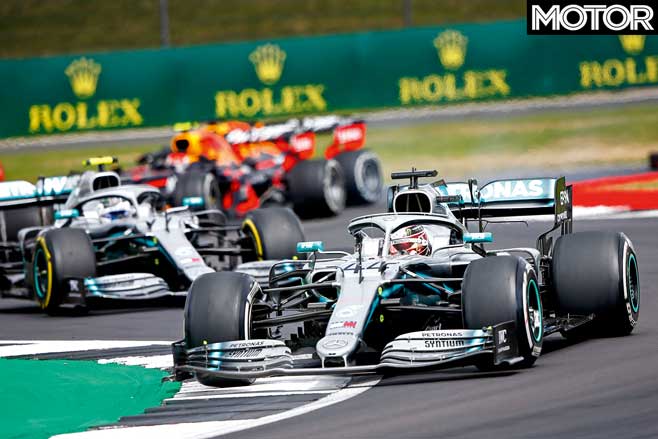
Considering this was one of the racecars and not just an old one used for show runs, I felt a real sense of responsibility to drive it properly and fast enough to experience it, but also give it back in one piece. Having the Hamilton fan club hurling abuse at me for damaging his car mid-championship was not something I looked forward to, let alone an awkward conversation with team boss Toto Wolff.
Fortunately for me, despite the fact that I don’t have a full driving program this year, I’ve kept up a reasonable level of fitness. I did some panic-induced neck training for the three weeks between the phone call and the day at Silverstone though, because I learned early in my career that being unfit doesn’t only affect your performance, it also means you can’t really enjoy the experience of driving as much.
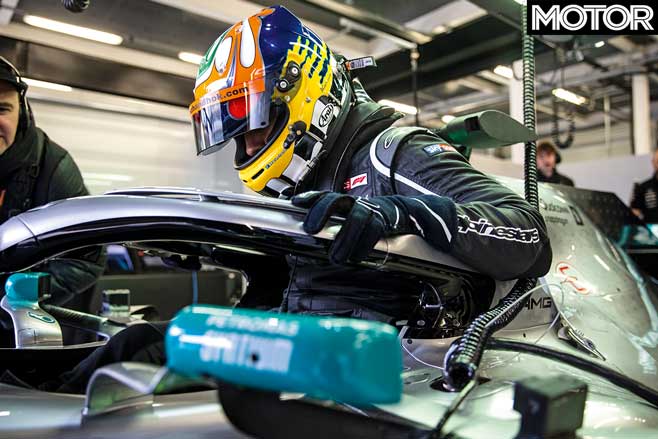
The team at Brackley was very good at preparing me. Despite the fact that for them it was a filming day and should essentially have been a bit of a jolly, everyone took it very professionally. My seat fitting turned out to be a fairly straightforward process thanks to a mix and match of Valtteri’s seat, Lewis’s steering wheel and steering column, and test driver Esteban Ocon’s pedals. Easy peasy! I then had a session with the engineers, running through the controls on the steering wheel and getting the chance to look through all the options in terms of the power unit, brakes and differential, as well as the reliability side in case we had an issue on track.
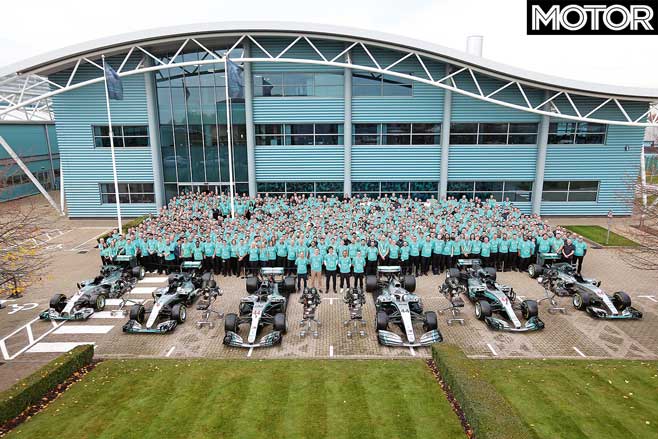
What came across was the attention to detail they put in. Yes, the team has nearly 1000 full-time staff and therefore can throw people at problem-solving, but the reality is they have to still think of the possible areas to gain performance, think of a way to implement a tool to gain that performance and then execute it in a way so that the driver can actually gain that lap time on track.
Every phase of the weekend is studied and solutions offered to find a bit of performance. Things such as how to get the brakes and tyres to the right temperature, how to find an extra couple of metres on the brakes when coming into a pitstop, how to get the pitlane speed limiter running as smoothly as possible without any oscillations, how to battle the dreaded tyre degradation by getting the electronic brake balance optimised for every phase of braking and also for every level of grip the tyre offers. The list is endless, but just a couple of hours spent talking to the engineers gives you an idea of how the mindset of the operation is tuned to search for these marginal gains.
It was off to the simulator next to get an idea of what the car would be like on track and also to practise some of the procedures and changing the settings on the steering wheel. After driving the ‘sim’, I found it hard to believe that the real car would be that quick, to be honest. I spoke with Anthony Davidson, who does a reasonable amount of sim work at Mercedes, and he said he thought the same thing, but the data pretty much matches up. Now I was properly excited!
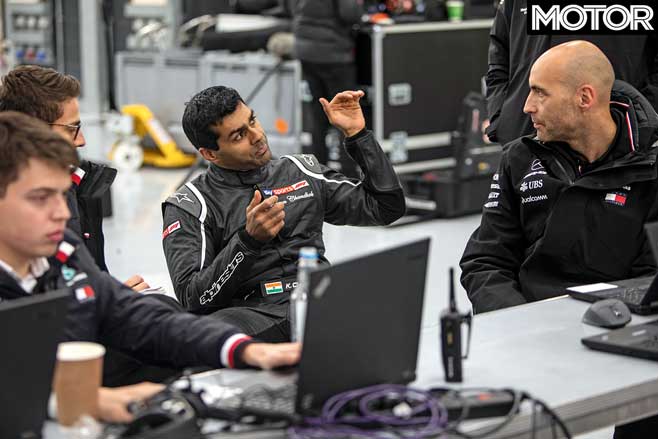
The most recent F1 car I had driven was the 2017 Williams. It was a decent midfield machine that season, allowing the team to run regularly in the points and finish fifth in the championship. Crucially, it had the Mercedes hybrid power unit, so at least I had some experience of that.
As dawn broke over Silverstone, I was totally relieved that the weather gods had been kind to me. It was cloudy, but there wasn’t much wind and it was going to stay dry. The International Circuit is about half the distance of the full Grand Prix circuit, but would still give me a chance to experience the car in fast corners like Abbey and Stowe, as well as medium and slower-speed corners such as Club and Village.
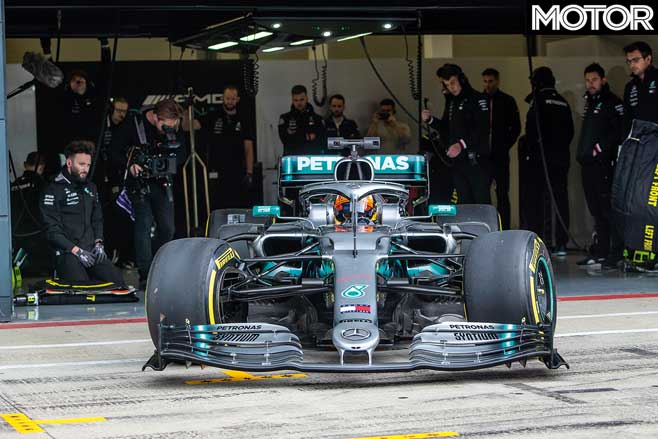
Mercedes had put together a program for me within the mileage limit that the F1 rules allow, which meant I could do a couple of short runs just to dial myself in, then also experience a longer run with a full fuel load and a short run with low fuel at the end. This would give me a really good overall picture of what the car was like in different configurations as well as give me enough laps to have a play with some of the tools in the cockpit to help to tune the balance.
I was certainly a bit nervous before getting into the car, but as the call was made to take off the tyre blankets and release the car, the TV presenter part of my brain got turned off and the racing driver part was activated. The nervousness disappeared, replaced by total curiosity and excitement because I knew that I was going to be driving something special.
As I dialled myself in, the first thing that struck me was just how good the traction and power delivery was. With around 1000 horsepower on tap, you would imagine that controlling the wheelspin is one of the biggest challenges, and I certainly treated the loud pedal with a degree of caution on the first couple of laps. But very quickly I realised that the rear actually stays very planted when accelerating out of corners and I could commit to the throttle much more than expected.
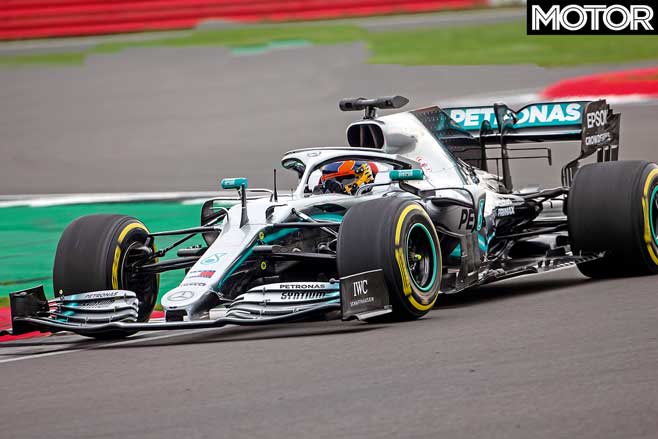
The amount of power itself doesn’t feel like it has changed a great deal since 2017, but the driveability and user-friendliness of the torque curve combined with the ability of the chassis to squat and deliver the power to the road without breaking traction was very impressive. In this current era of F1, where managing the rear tyres during a GP is vitally important, this is particularly handy for the drivers.
The two regular drivers have different throttle-pedal springs that adjust the level of stiffness, but that’s purely a driver comfort thing. What’s crucial is to make sure they have the right amount of control with that pedal to deliver the torque demand when coming out of a corner and balance the wheelspin. The suspension design and rear aero package clearly work well in terms of offering the grip needed, and that is a really crucial aid for Mercedes on a Sunday.
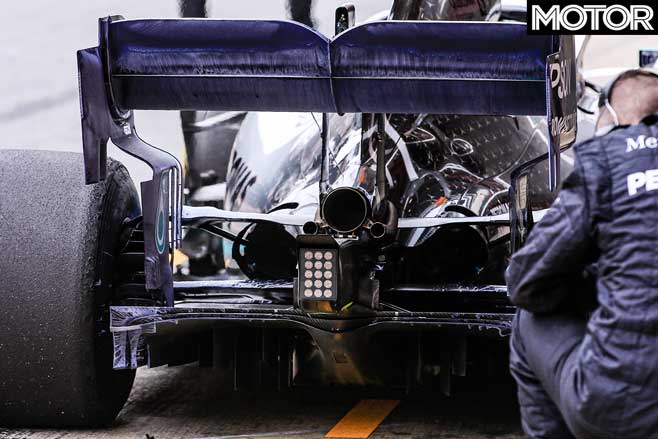
I expected the W10 to be impressive in the high-speed corners and of course it was. As I started to lean on the car on the corner entries, I soon realised I was so far behind the limit it was almost laughable. With every lap I started carrying more and more speed in and the only limiting factor seemed to be the tyres, which started to grain even within the first five laps. We had planned to swap back and forth between a couple of sets of tyres to try and eke out the mileage on them and that allowed me to build up speed in the faster corners.
The grip level was as staggering as I expected it to be, though experiencing it first-hand was something very special. As one of my heroes, Mario Andretti, would say, it feels like it’s painted to the road. My last-minute neck training felt useless as the g-forces built up, but I was loving every second of it. With every lap I was charging through Stowe faster and faster.
What’s interesting is how you can feel the downforce and resultant drag in the first two flat-out corners. As soon as you wind on the steering lock, the drag really kicks in and you can clearly feel the rate of acceleration reducing. Downforce really is a driver’s best friend and at probably 80 per cent of the circuits on the F1 calendar you would gladly take the penalty of drag for having more downforce.
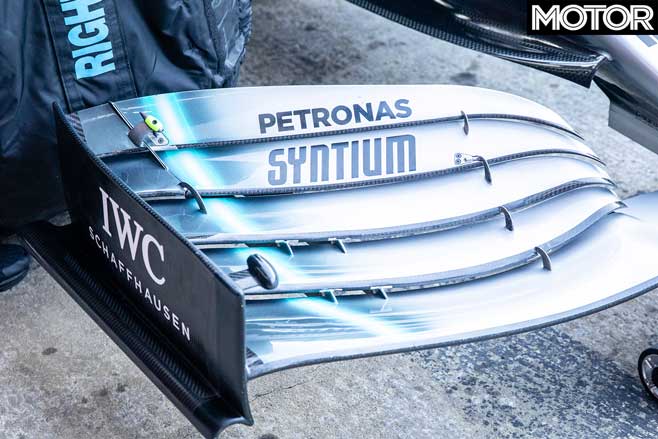
Brilliant as the W10 was in the high-speed corners, it was the performance in the medium and slow corners that surprised me. All season long rivals such as Ferrari talked about how good the Mercedes seems to be on entry to these types of corners and now I fully understand why.
As I got braver and braver on the brakes into Village, I was blown away by just how deep I could brake and also how much I could trail the brakes into the apex. One of the trickiest things in the Pirelli era since 2011 has been the ability to load the front tyre with both braking and steering load, but Mercedes seems to have nailed that with the W10. You can really pitch the car and turn in to the apex of the corner on the nose, and the most impressive part is that the rear of the car doesn’t feel like it’s going to lose any stability.
The combination of the level of downforce, aero balance, the brake migration maps (where the balance is adjusted between the front and rear through the entire braking phase) and the electronic differential work in conjunction to give the drivers the ability to really attack those corner entries. That first phase, when you hit the brakes and start to turn the wheel, is so important. It sends the messages of how much grip the car has to your brain and you then adjust the speed and steering lock accordingly until the apex before picking up the throttle.
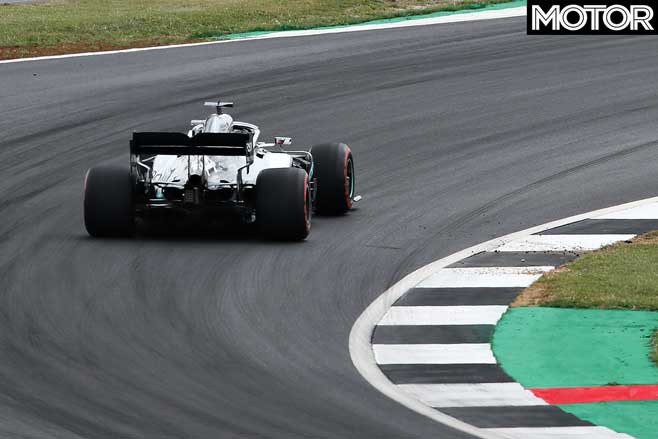
Having a car that’s confidence-inducing is very important in any category of motorsport, and the W10 is certainly that. The fact that even someone like me, who hasn’t really driven a modern F1 car in two years, can feel confident to attack the entries at corners such as Stowe or on the brakes into Village within a handful of laps is a sign of a great car. It doesn’t do anything unpredictable and that’s one of the big reasons why, across the 21 races of the season, the Mercedes has been a competitive package.
It was really interesting to load the car with 110kg of fuel and see just what it would be like for the drivers at the start of a GP. The team did its usual adjustments in terms of aero balance for me to really experience it properly. Of course you can feel the extra weight of the fuel, but that’s no different to when I raced in F1 or in any other category. The change of direction gets lazier and everything just happens slower – braking, accelerating and cornering speeds.
What surprised me was how much the extra weight affected the tyres in terms of graining. All through the season we heard drivers talking about having to manage and control their pace, particularly in the first stint of the race with a full tank of fuel. Perhaps the biggest example was at the 23-turn Singapore circuit, where the race pace was at times an astonishing 13 seconds slower than the qualifying pace.
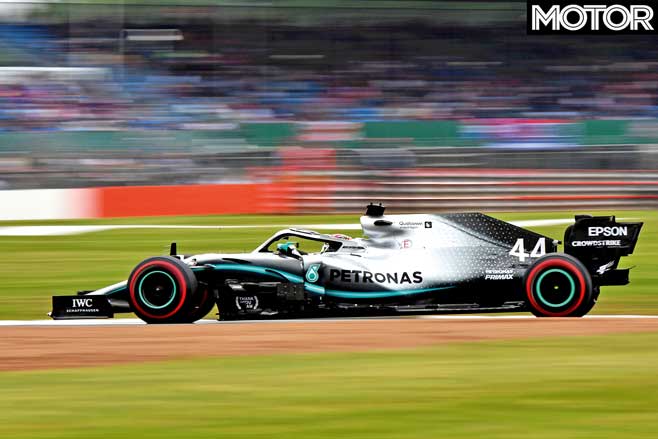
It’s a pretty frustrating way to drive a racecar to be honest. As soon as you feel the front start to slide a little bit on the corner entries, you need to slow down because that graining is just going to get worse and worse; similarly, as soon as you get a little bit of wheelspin on the rear you know you’re on a slippery slope.
This is why the drivers all have to drive so far below their limits on a Sunday and also why we rarely see them look exhausted after a race. These supremely fit athletes are not being physically tested, but instead their minds and senses are on high alert for any form of extra energy being put into their tyres.
Weight is an interesting point because the 2019 cars weigh 743kg, which is 138kg more than in 2004. Yes, the W10 is unbelievably quick, but it has so much downforce and weight that you don’t feel it as a brutal, violent beast in the way the V10 cars from the mid-2000s were.
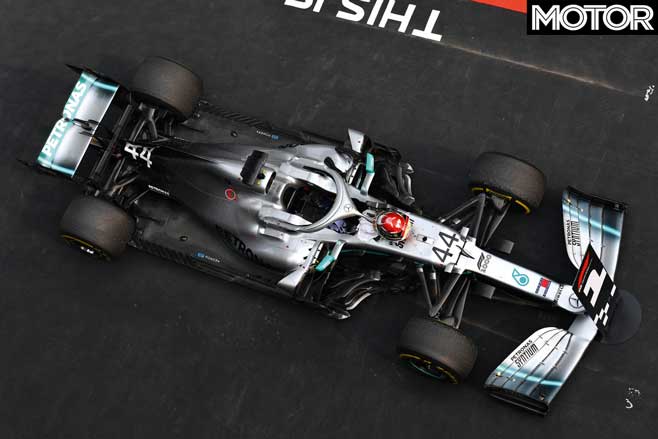
I’ve been lucky enough to test Juan Pablo Montoya’s 2004 Williams-BMW and that was an incredibly brutal experience that had me on edge the entire time. The extra weight we have now not only adds about five seconds of lap time but also has a major effect on tyre wear and graining, so I do have some sympathy for Pirelli in that respect.
What’s good about the W10 is that, in whatever condition, the car is balanced and predictable. This means that Lewis and Valtteri can adjust their speed to the level of grip offered by the tyres and for the weight without the car having any unusual shift in balance. The downforce, braking stability and amazing traction mean they can often manage their tyres better than others on the grid, and this means that even on weekends where they may not have had the fastest car during qualifying, they can keep the pressure up on their rivals during the races and capitalise.
My day at Silverstone was a truly memorable one. I’ve been very lucky to drive some incredibly special pieces of F1 history over the years; the W10 is the seventh different championship-winning F1 car that I’ve been privileged enough to drive.
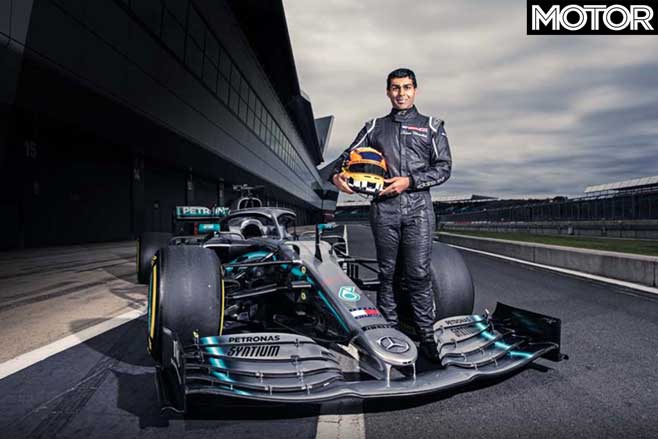
For me, the Nigel Mansell Williams FW14B from 1992 was emotionally the most special car I’ve driven, the 2004 Williams FW26 was the one that attacked my senses the most, and the 2011 Red Bull RB7 was the most responsive and sharp. But perhaps it’s the very nature of the sport that, with evolution and knowledge gained, the cars get better and better; overall I’ve got to say that the 2019 Mercedes W10 is the best racecar I have ever driven.
MERCEDES-AMG F1 W10 EQ POWER+ SPECS Engine: 1.6-litre V6, DOHC, 24v, turbo, hybrid Power: 750kW @ 15,000rpm (est) Weight: 743kg 0-100km/h: 2.0sec (est) L/W/h: 5000/2000/950mm Tracks: 1583/1567mm (f/r) Price: $250 million (estimate; includes 21 international track days)
Formula One Steering Wheel Explained
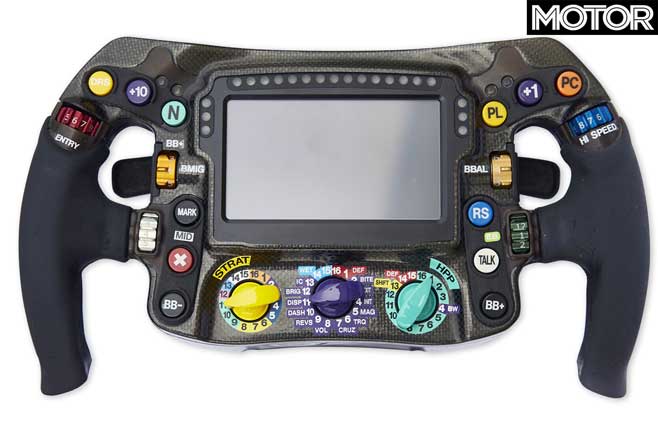
An F1 steering is a complex piece of engineering that controls countless functions on the car and is worth about $100,000. Lewis Hamilton’s wheel has 25 dials, buttons and paddles on the front alone, set around a digital dash display panel, and this is what they all do.
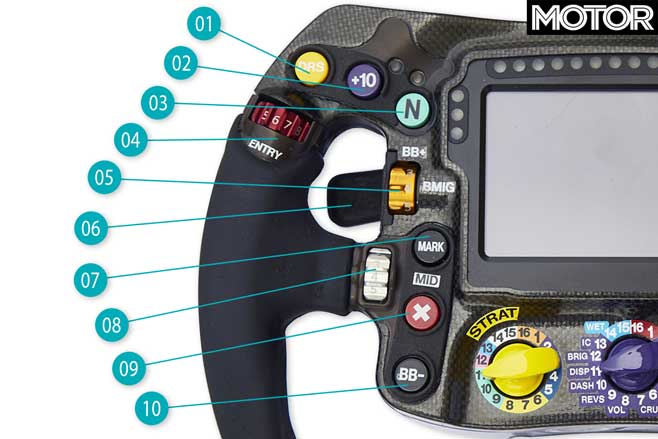
01 | DRS Operates the Drag Reduction System, which opens the slot gap in the rear wing to increase speed and make it easier to overtake a car ahead.
02 | Skip (10 preset) Increases the value of a selected parameter by 10 preset units.
03 | Gearbox Neutral Only selectable via this button to prevent unwanted on-track selection of neutral via the gearshift paddles.
04 | Differential 2 Specific diff setting adjustment for corner entry.
05 | Engine Braking BMIG (braking migration) adjusts how much engine braking applies.
06 | Downshift paddle For, er, changing down gears.
07 | Mark Used to identify a point of interest in the data as indicated by the driver.
08 | Differential 1 One of four dials used for diff adjustment, altering torque transfer between the rear wheels.
09 | Accept Used to accept the default modes selected by the Skip 10 and 1 buttons.
10 | Brake Balance Rearward Allows the driver to move the brake distribution rearward 0.5 per cent.
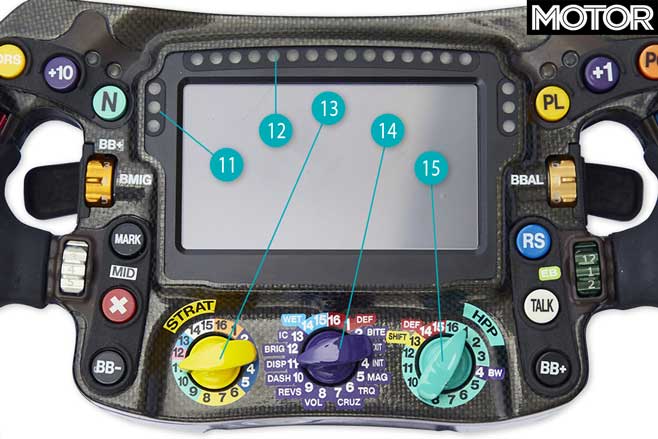
11 | Track Warnings These light up in different colours (yellow, blue, green, red, etc) according to warnings from track marshals and race control.
12 | Shift Indicator LED lights running from left to right, indicating when the driver needs to change up a gear.
13 | Strat Rotary How often have we heard ‘Bonno’ give Lewis a new Strat setting? These are the primary Power Unit modes.
14 | Menu Rotary Controls all the chassis settings, from radio volume and dash brightness to data display menus and rain settings.
15 | HPP Rotary Used to control the numerous High Performance Powertrain (HPP) settings, including for MGU-K energy recovery, as advised by the pits.
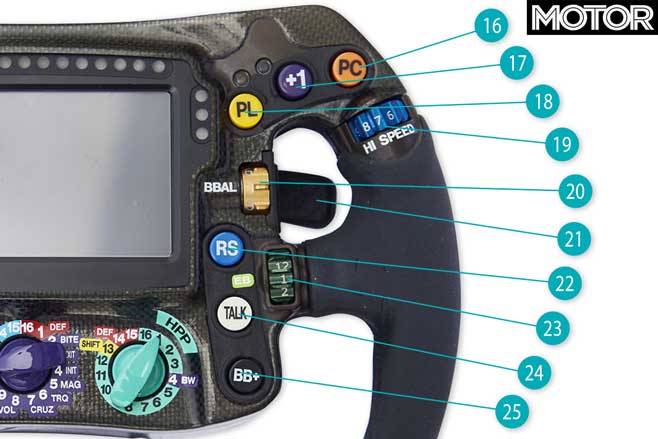
16 | Pit Confirm Sends an alert to the garage so the crew knows the driver is coming in, whether unexpectedly or by request.
17 | SKIP +1 preset Increases the value of a selected parameter by one preset unit.
18 | Pit Lane PL sets car to the pit lane speed limit.
19 | Differential 3 Specific diff setting adjustment for high-speed corners.
20 | Brake Balance Changes the balance to the front or rear, in bigger steps than with the BB- or BB+ buttons; used for different corners on qualifying laps, in the race as the fuel load reduces, or to reduce brake temperatures.
21 | Upshift Paddle New cog.
22 | Race Start Prepares the car for a race start, deploying maximum power.
23 | Differential 4 Specific mid-corner diff adjustment.
24 | Talk Radio button to enable the driver to talk to his engineers in the pits.
25 | Brake Balance Forward Allows the driver to move the brake distribution forward 0.5 per cent.
With the imminent arrival of Jeep’s Gladiator pick-up, the question many people are asking is if the big boxy Gladiator is a challenger for trucks like Ford’s Ranger Raptor or the Volkswagen Amarok 580 Ultimate – because starting at $75k or so sure puts the big Jeep into rarefied air.
However, the new head of Fiat Chrysler Australia, Kevin Flynn, believes the big rig is more than the sum of its competitors.
British-born Flynn is a 40-year veteran of the motoring industry, serving across brands as diverse as Lexus, Porsche and BMW, before moving over to FCA.
Faced with stiff winds in the Australian market around pricing and safety issues for both the Gladiator and its cousin, the Wrangler, Flynn is keen to make the distinction between the typical dual-cab ute so beloved of Australians and the larger Gladiator.
“We’re not calling it a ute,” he told WhichCar. “We’re calling it a truck because it is a truck. It’s lifestyle. It’s allowing Jeep Life to be lived on another level.”
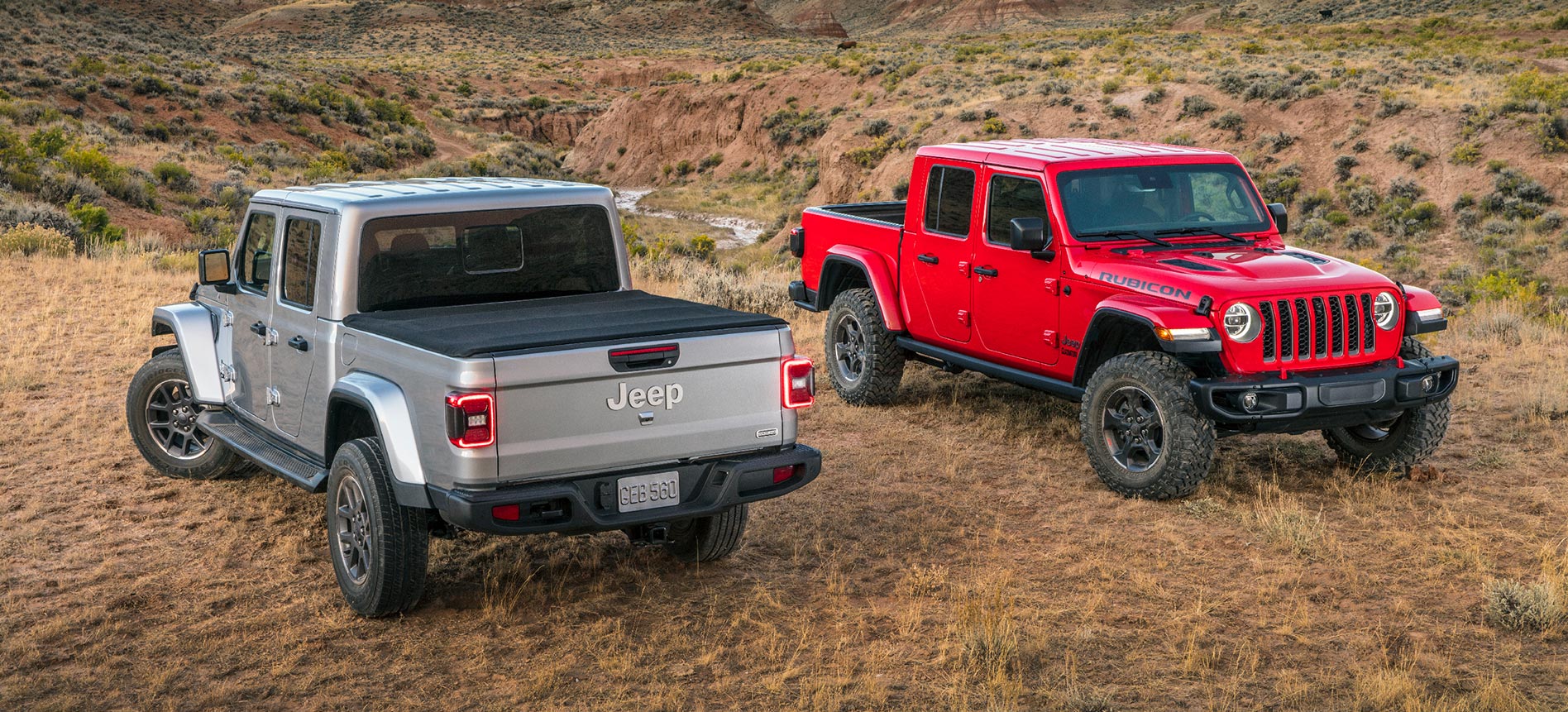
Gladiator’s built-in advantage
Flynn believes the difference between premium utes like the Raptor, the Amarok and the Gladiator lies in the fact that the Gladiator is purpose-built to excel off-road out of the box.
“Many manufacturers build utes, and then one of them in the range normally at the top end has got some modified suspensions and different wheels and has a level of capability,” he said. “Ours has that capability locked in from day one because that’s what it is. So we’re not adding a derivative of a range.”
The Gladiator shares the same structure as the Wrangler in that its panels can be removed to create an entirely different look, and Flynn believes it’s this versatility that gives the Gladiator the edge.
“It gives all gives people all those flexibilities to throw your ATV, throw your kayaks, throw your dirt bikes into it,” he said. “It’s just endless what you can do with it. So what if someone wants to put a concrete packer in it? That’s what people choose to use it for, of course, will be their choice. And we’re not going to define that.
“It is what it is and it’s unique. There’s nothing like it in the world.”
Flynn also acknowledges the brand has some fence-mending to do with its constituents.
“My evaluation when I talked to dealers, talked to customers, and looked around is actually I would say 80 percent of the challenges we created for ourselves are in the after-sales arena and in a way that we have cared – or not so cared – for our customer base and so forth.
“And quite honestly, we needed a seismic shift in attitude and really understand that we need to be customer-centric.”
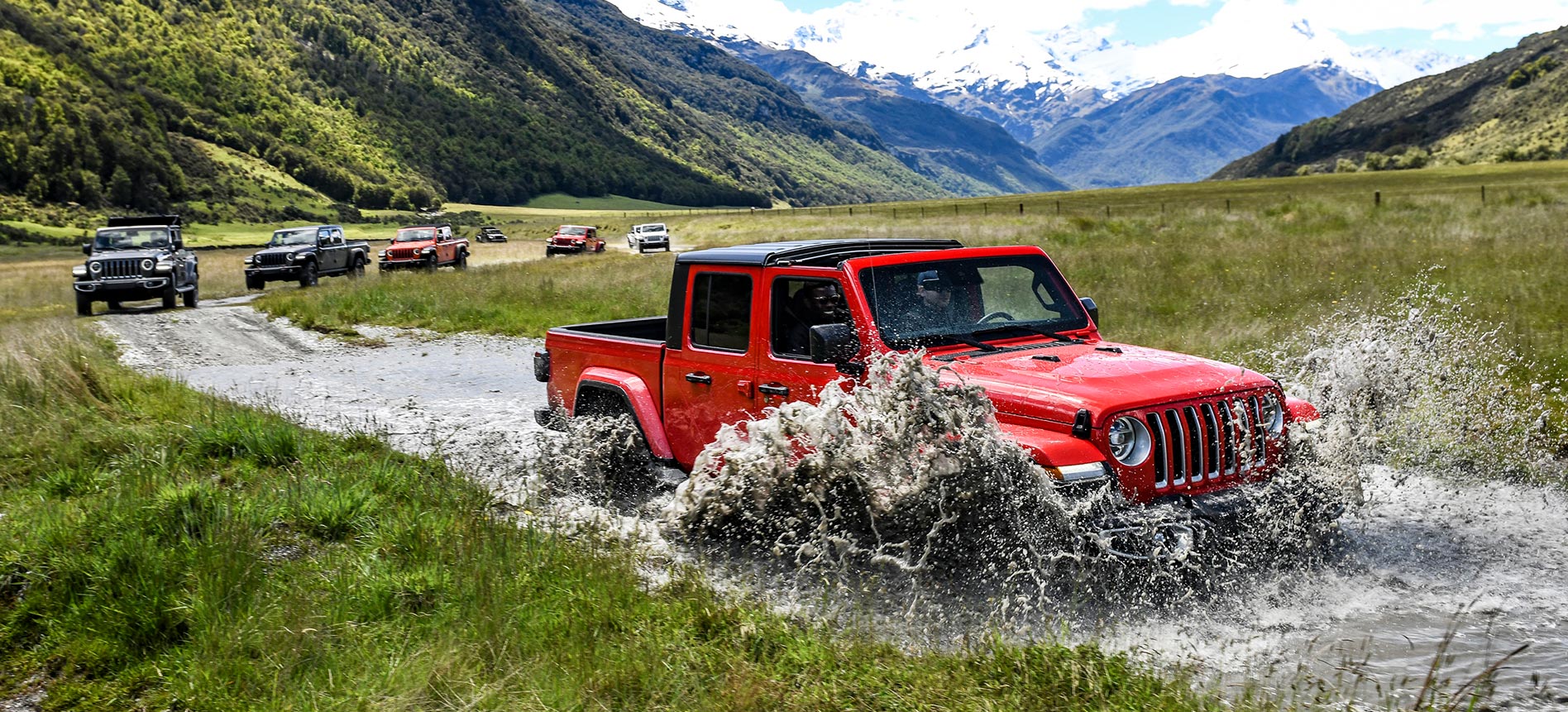
Jeep Gladiator pricing
The Gladiator pick-up will land in Australia in May in Overland and Rubicon spec-levels priced at $75,450 and $76,450 respectively.
There will also be a limited run of 100 Launch Edition models based on the Rubicon-spec Gladiator and priced at $86,450.
All Australian-spec Gladiators will be powered by Jeep’s 3.6-litre petrol V6 Pentastar engine that makes a claimed 209kW of power and 347Nm of torque, which will be mated to an eight-speed automatic transmission. No diesel variant is being offered.
While rumours of an automatic ‘sequel’ to the Ford Mustang R-Spec have begun to circulate, the man behind the car’s development says there are no plans for such a thing.
Rob Herrod tells MOTOR that, despite the fact he’s interested in the prospect, there is no plan to create another supercharged Mustang with Ford Australia.
While Ford Australia CEO Kay Hart has explicitly stated there won’t be another R-Spec, there was room for speculation that another model with a different name could act as a more luxo-spec supercharged ‘Stang.
R-Spec driven! We steer Australia’s own ‘Stang
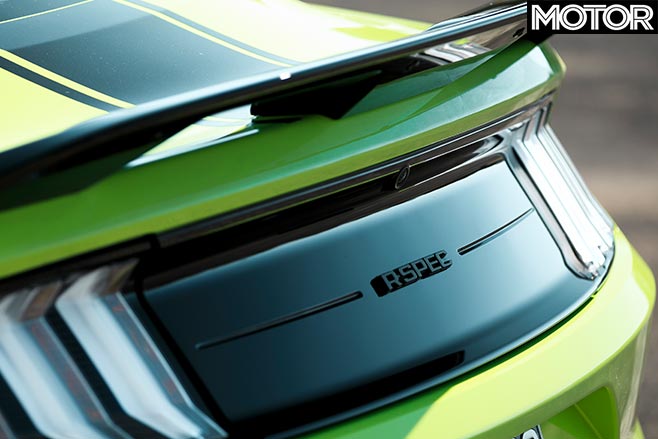
Herrod says while he’s hoping R-Spec is “the first of more projects to come,” he doesn’t have the time to develop another variant while working between his own business and the R-Spec program.
He believes his own Mustang, a supercharged car he received from the US, has helped fan the rumour flames, saying: “it’s no secret that my own development Mustang is a supercharged auto.”
He says that using his own car as a test mule makes sense for him in terms of getting to know the setups and decide on changes, and that his own car just happens to have an auto gearbox.
RIVALS! R-Spec meets Camaro ZL1 for a face-off
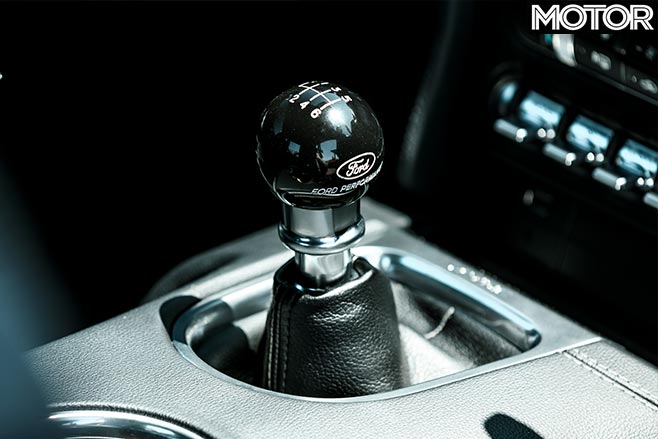
Originally, MOTOR understands the decision to make the R-Spec manual-only was related to potential cooling issues uncovered (by MOTOR, as it happens) with the auto gearbox under track-type loads.
Herrod has overcome these issues through his own development, he says, but Ford Australia stuck with manual ‘boxes for the R-Spec to suit the enthusiast tilt.
Of course, once R-Spec production wraps, Herrod says he’s willing to consider another project with Ford, but right now it’s nothing more than a ‘nice thought’ for the future.
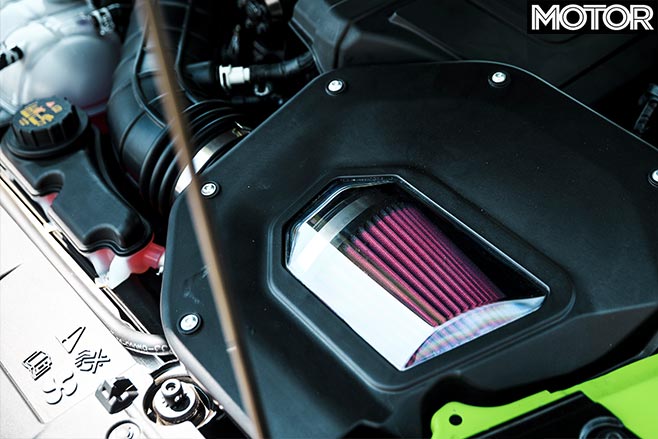
If he were to build another Ford Australia-sanctioned car, he says only that it’d need to be “a performance vehicle that the Australian public are wanting.”
Ford has provided no official statement on the rumour, and in terms of other collaborative performance cars Ford Australia might be considering, we’re sceptical of the prevailing rumour that a V8 Ranger Raptor is on the way.
- Bentley’s first pure electric car due by 2026
- Hybrids of all existing Bentley models by 2023
- Mulsanne limousine could be replaced by new SUV
- Smaller SUV under Bentayga ruled out
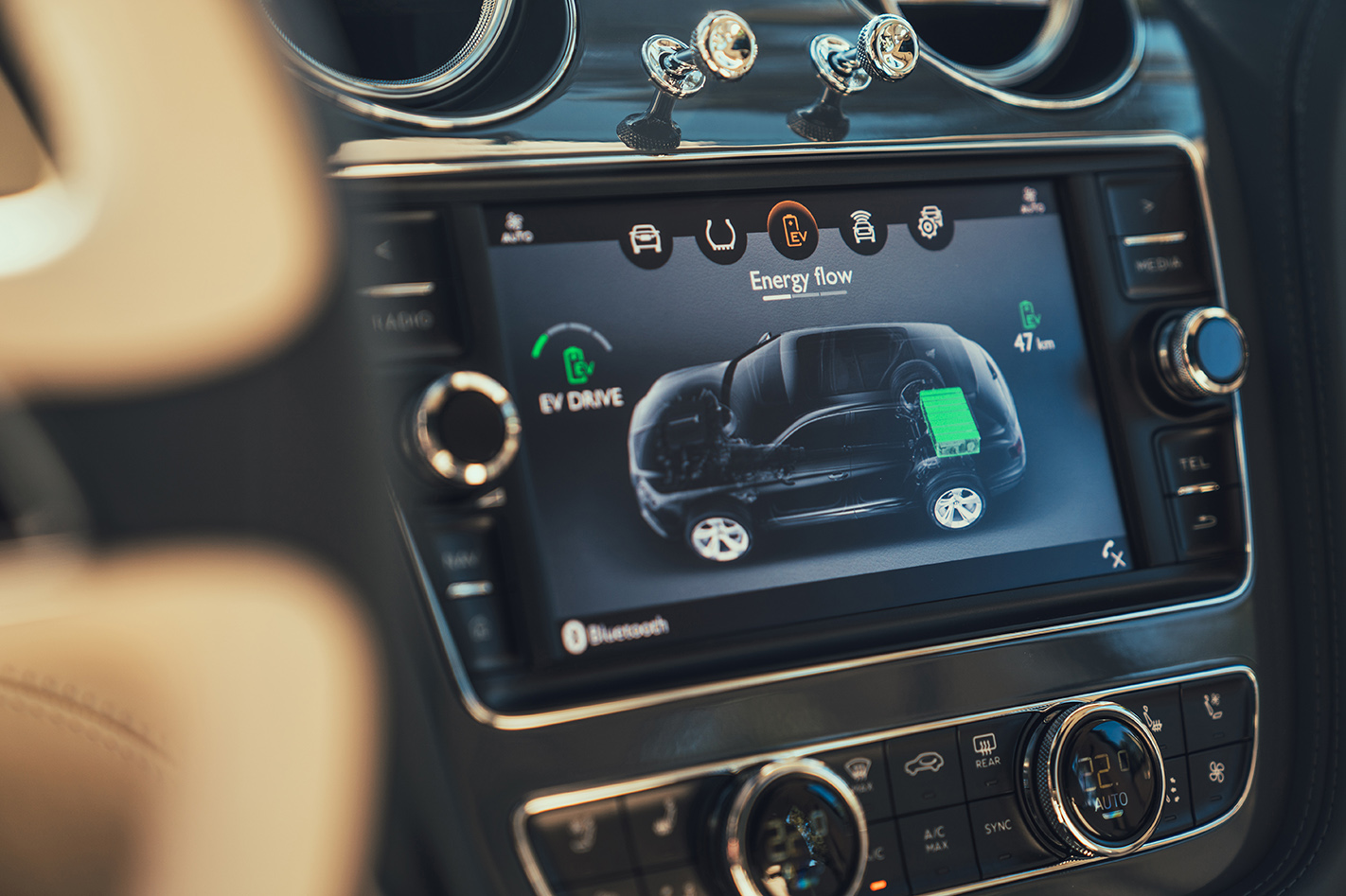
Bentley launched its first hybrid based on the Bentayga SUV in 2019. The high-riding five-door wagon uses the same 3.0-litre turbocharged petrol V6 and electric motor combination as the Porsche Cayenne eHybrid (Porsche is also part of the Volkswagen Group).
Bentley is expected to put this drivetrain into all other models – Flying Spur sedan, Continental GT coupe and GTC convertible – as it makes good on a promise to offer hybrid versions of every model within the next three years.
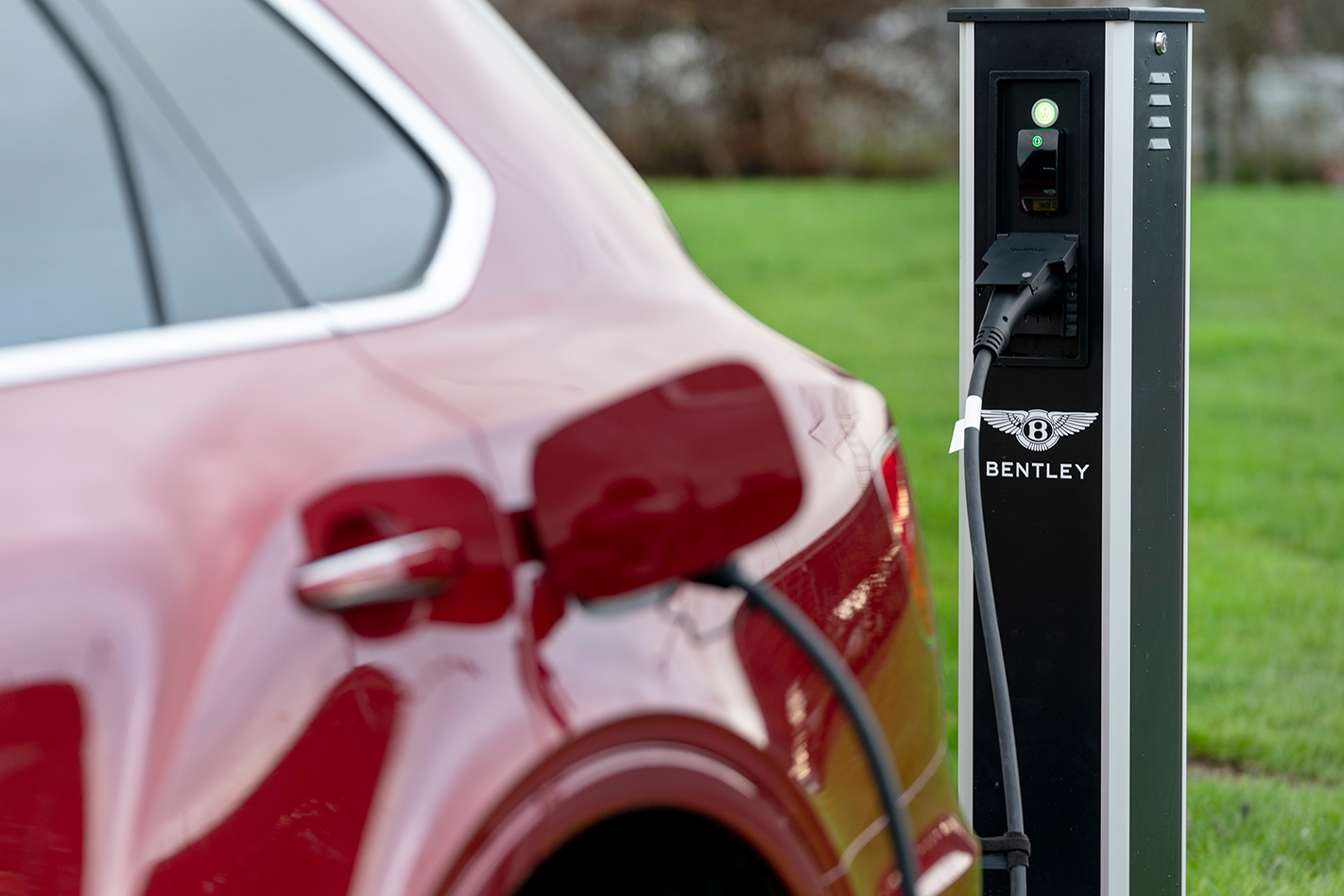
The Mulsanne super luxury limousine, the last word in Bentley luxury and a rival for the Rolls Royce Phantom, may not be a part of that future, however. It’s likely this model will be replaced by a bigger, more luxurious version of the Bentayga SUV. More on that in a moment.
As for what an electric Bentley will look like, the EXP 100 GT concept car revealed in mid-2019 gives a very strong hint. This 5.8m long, luxurious coupe has a theoretical electric touring range of 640km and can accelerate from 0-100km/h in 2.5 seconds thanks to solid-state batteries and electric motors in all four corners. Theoretically.
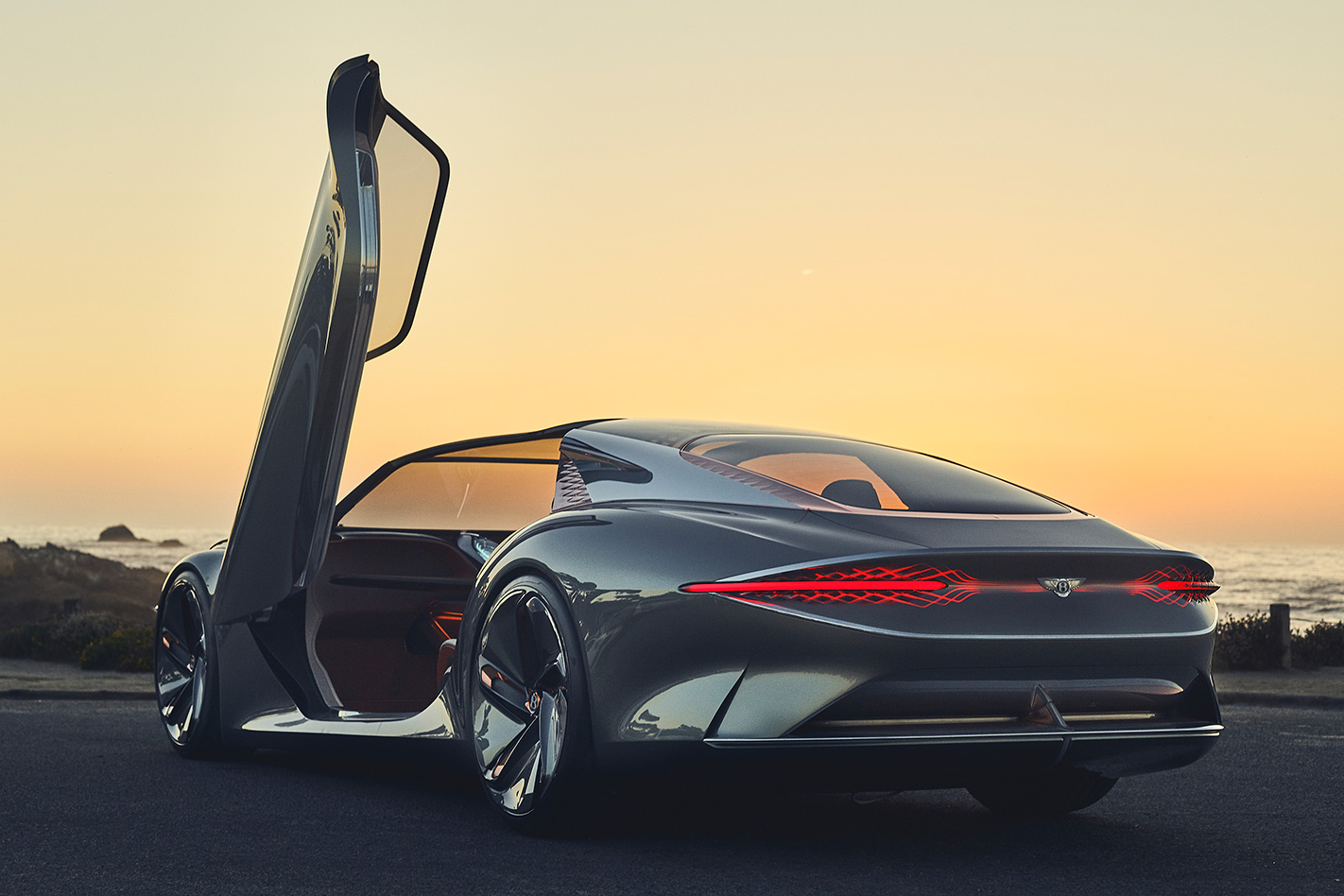
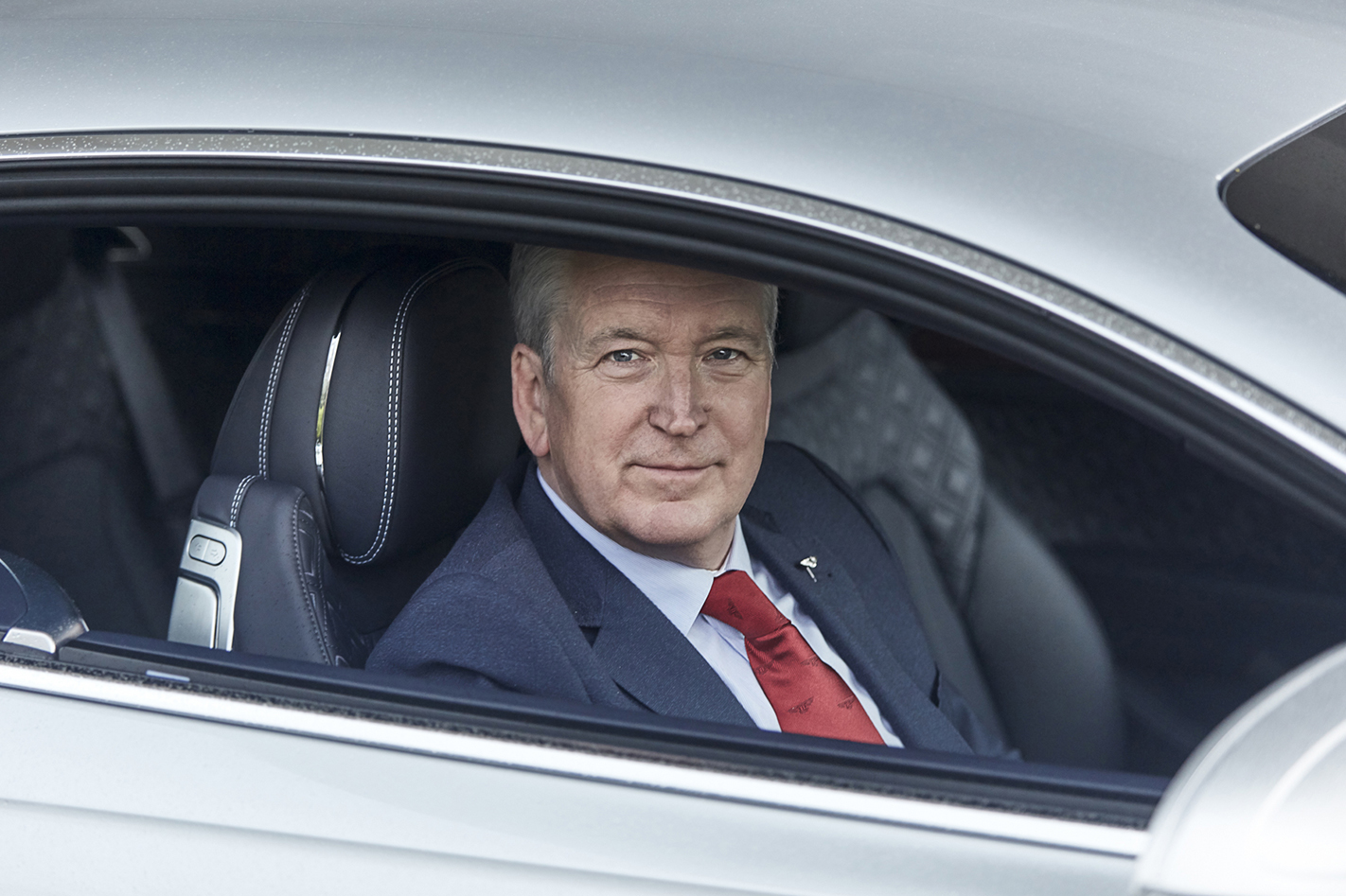
While the technology to do that in a two-tonne coupe currently doesn’t exist, Bentley Chairman and CEO Adrian Hallmark (below) says it’s just around the corner.
“With the known roadmap for battery power density improvement, we will be able to build a proper [electric] Bentley by 2025-26.”
“In five to ten years,” says Hallmark, solid-state technology will allow a thirty percent improvement in electric performance. “So, thirty percent lighter… Or, same weight and thirty percent more range.”
So, what constitutes a “proper” electric Bentley? Certainly not something that looks like a BMW i3 or a Hyundai Ioniq, says Hallmark.
“We don’t want to build small cars, we want to build Bentleys. We want to build a Bentley that’s got a credible driving range because we are the definitive grand tourer (GT). And a hundred miles isn’t a grand tourer.”
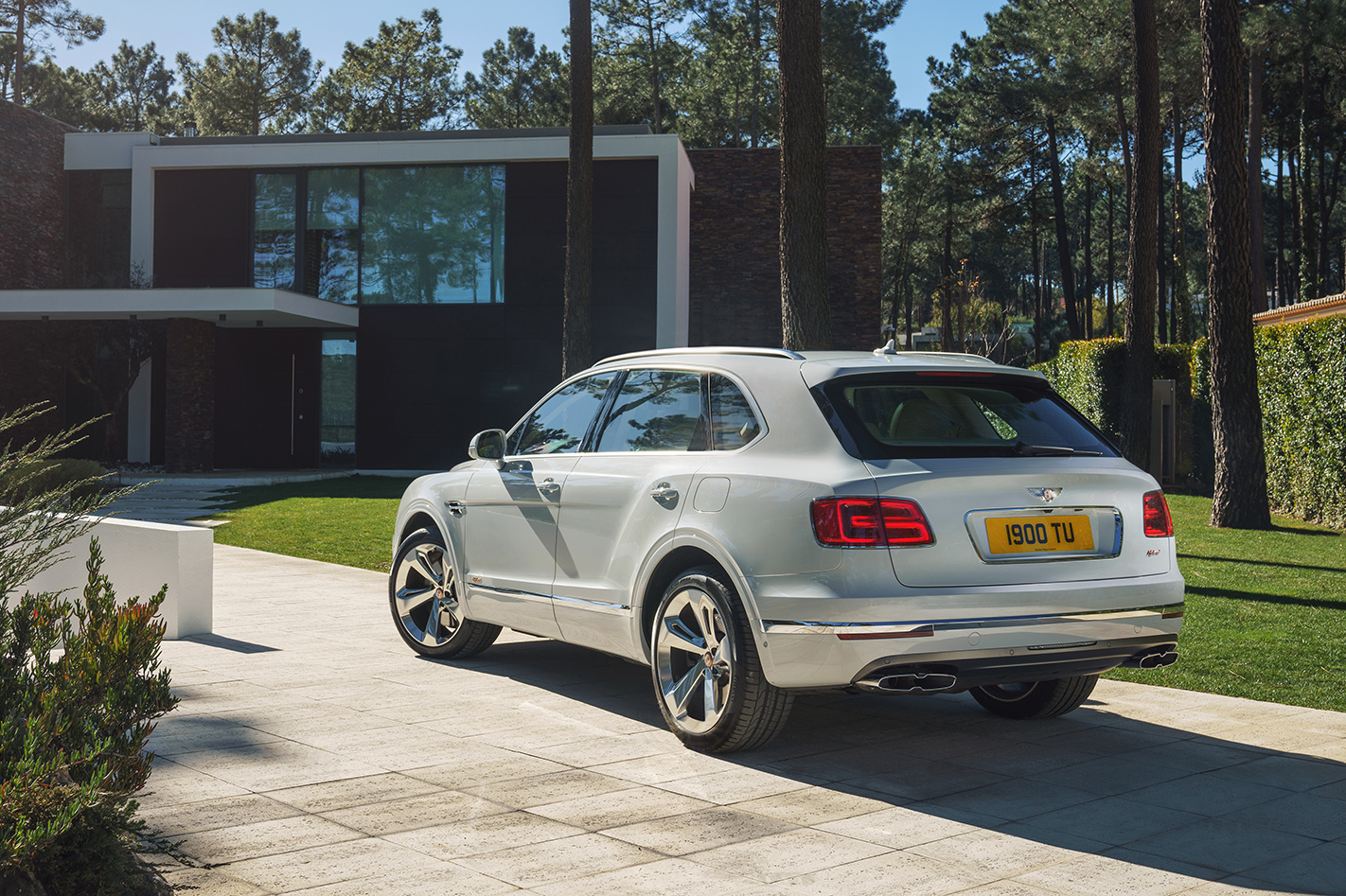
A good range for Bentley “has got to be 300 miles minimum [500km],” says Hallmark, and it will look, feel and drive like a Bentley. It will have “the right wheelbase, the right number of occupants, the right overall length, the right height the right shape, the right comfort, refinement and quality”.
The EXP100 GT’s use of a coupe body to preview Bentley’s first electric car was deliberate, says Hallmark. “Aero has a much bigger effect on battery performance than it does on conventional [internal combustion] engine performance.”
He said, by comparison, packing a Bentayga SUV full of batteries might yield “quite a big battery … [but] you could get less than 320km range”.
Hallmark says Bentley’s plans for hybridisation and electrification are all part of the brand’s stated goal of being the first Volkswagen Group member to achieve full carbon-neutral status from factory to showroom floor.
“We want to be the first in the Group, and the first in the luxury sector.”
Hallmark says Bentley is ideally placed to achieve that because it is small – compared to other VW Group brands – and therefore doesn’t use a lot of resources to begin with.
“So for us to de-carbonise, for us to make everything transparent from an operational or industrial perspective, is a way smaller challenge that a two, five or ten-million-car company.
“We’ve already got the biggest solar farm – car part farm – in the country out the back, and they are already carbon neutral for manufacturing operations. We’ve already taken that step in October.
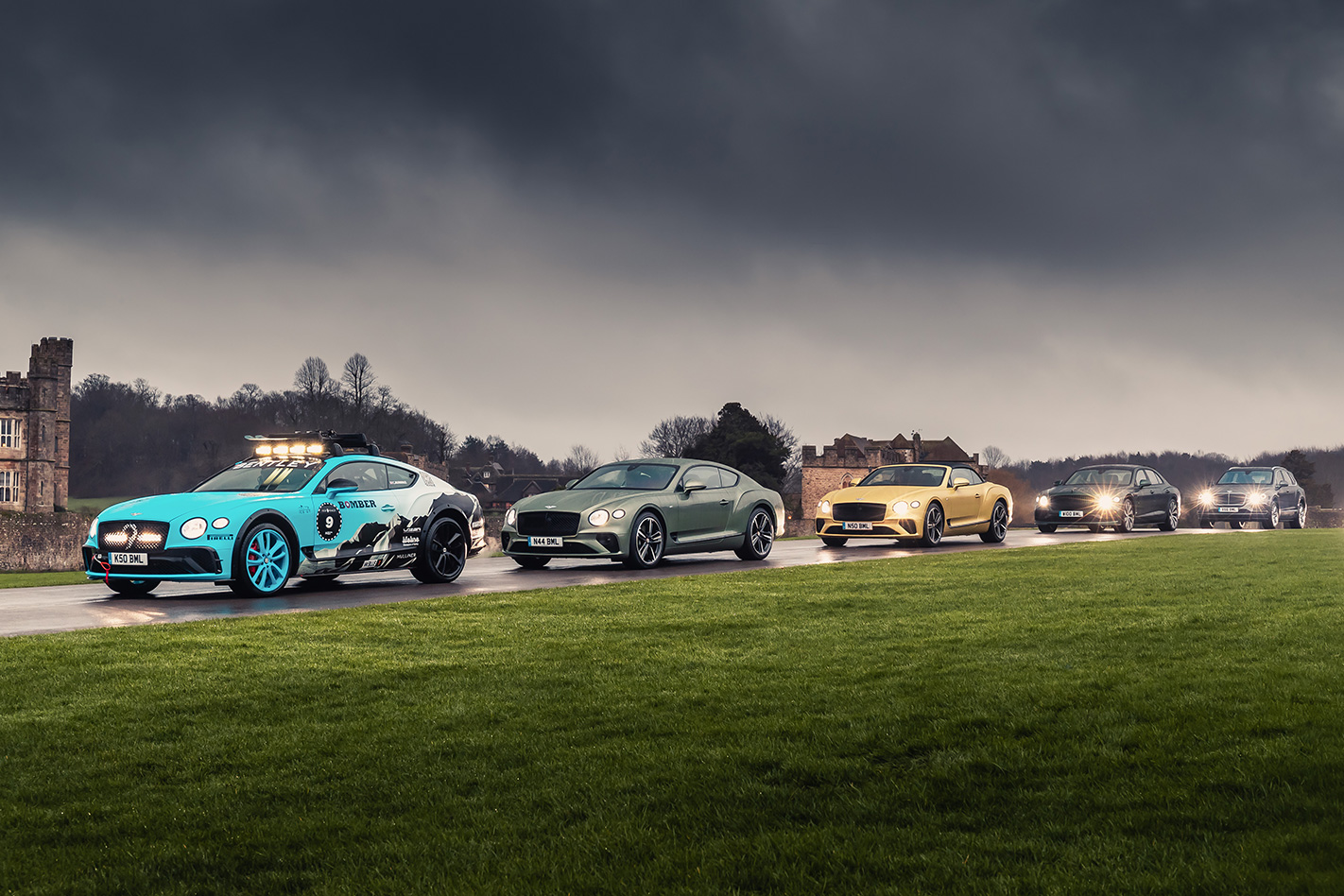
“We can see a roadmap … to de-carbonise the factory, to de-carbonise the products, and then to even to the final step of de-carbonising the supply chain. So, we don’t need the [VW] Group’s technology to do a lot apart from some of the vehicle technologies. And the main one is battery technology.”
Electrification is the next big step for all brands, and Bentley is well placed to take the lead – providing its Volkswagen Group owners let it.
Mulsanne luxury saloon could make way for another Bentley SUV
In 2019 Bentley sold 11,006 cars, its seventh consecutive year beyond 10,000, and all the more impressive because it did so without the Flying Spur sedan which historically has been a quarter of the brand’s volume.
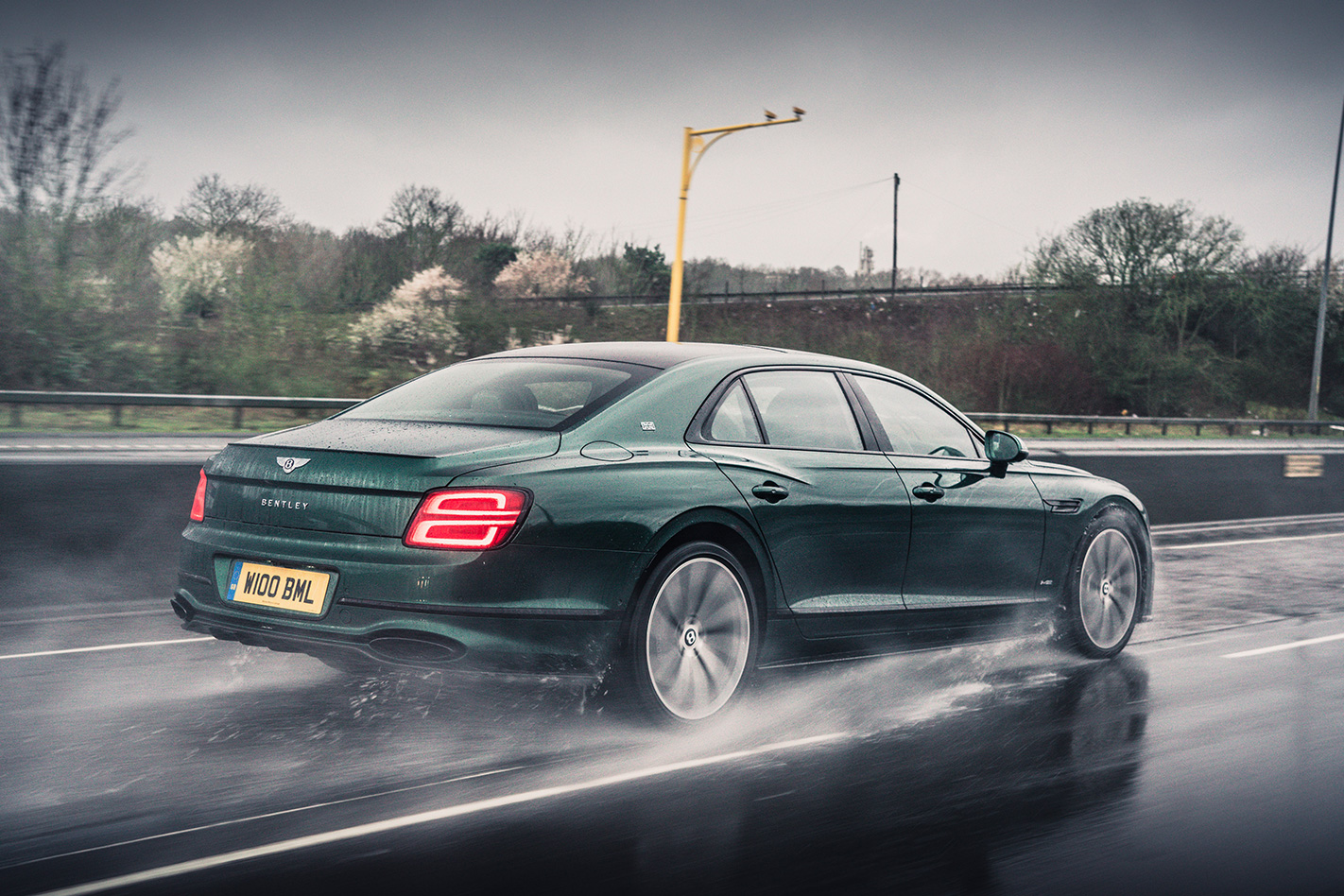
About 45 percent of sales were the Bentayga SUV, with the rest largely split between the Continental GT Coupe and Continental GTC convertible. The Mulsanne luxury saloon delivered around five percent of the sales, a far cry from the 25 percent the smaller Flying Spur sedan launched in late-2019 is expected to add, casting doubt over the Rolls Royce Phantom rival’s life expectancy.
“Unfortunately, the customer for that kind of vehicle is disappearing,” says Hallmark. He says Mulsanne buyers typically fell into one of two categories: Under 40s who all live in China, and over 60s who live in the US and Europe.
“That older target group, who are highly affluent and have grown up with that kind of product as being iconic and for them. You get a few music stars and such but it’s small, small numbers. They’d much rather have a GT or a Bentayga. So Mulsanne is in a demographic bubble. It appeals to a certain demographic, and as they get older and don’t want to spend $400,000 or $500,000 USD on a regular day-to-day car anymore. [Instead] they buy Flying Spur or they buy a Bentayga or another luxury SUV. So the big, big sedans are not so popular.
“If you look at China, every single car we sell has the longer wheelbase. It is half a million pounds each, and every buyer is under 40 years of age, and they’re all guys. So, it’s a great business, but it’s a shrinking business. And even the Chinese buyers, if we did a – not to give you the answer – if we did a longer wheelbase Bentayga, every single one of those Mulsanne customers in China… would take that instead.”
When asked directly if Bentley should add a longer, more luxurious and more expensive SUV above the current Bentayga, Hallmark all-but confirmed it.
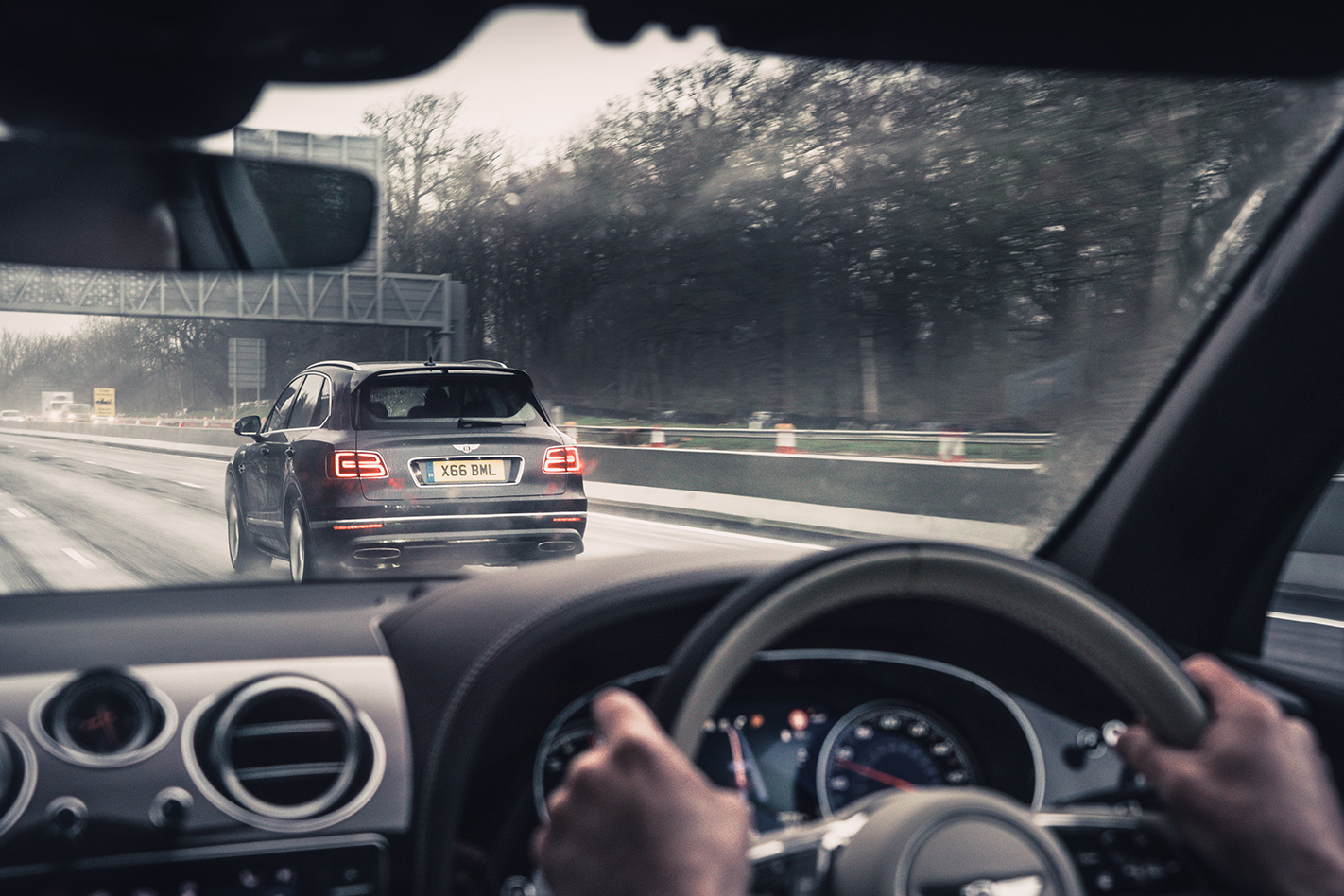
“We’d love to make an even more luxurious, even bigger Bentayga. Watch this space.”
And what other SUVs could Bentley add to its current range?
“I can imagine a big one. I can imagine a small one. I can imagine a coupe type one … Would a smaller SUV… If it were cheaper, and we had access to more of the volume beneath us, you could sell more cars. But we don’t want to be a big company.
“Now that’s not to say we won’t also expand lower down at some point. But our growth doesn’t have to be only by going to lower price segments with smaller cars.
“We are not fulfilling the potential of the brand where we are.”
From that, it’s clear that Bentley is very much looking up.
The sad news of Holden’s closure hit hard, no matter how much of a forgone conclusion it seemed to some. However, there are plenty of models to champion in the Red Lion back catalogue, one being the last of the reborn Monaro. Clean, ultra-low kay CV8 Z examples (VZ) are going for big money – although they have to be absolute minters. So much so that you could buy a new Camaro 2SS for the same spend. Which would you choose?
Chevrolet Camaro 2SS
It’s an American icon that’s found favour down under. And it’s not just the loss of Aussie muscle that’s created the following, with the Camaro’s history also resonating. Converted to right-hand drive by the gurus at HSV, the 2SS costs $85,990 in six-speed manual form and $89,190 for the 10-speed automatic.
What you do get for option for the newer model is more power. The 6.2-litre atmo V8 in the 2SS offers up a healthy 339kW and 617Nm, with the auto version quoted as reaching 100km/h in 4.0 seconds (4.5 seconds for the manual). Much like the Monaro, it sounds tough, too. However, the newer Camaro has the edge in terms of dynamics – which you’d expect with progress.
Inside the conversion is very hard to pick, with hardly any remnants of its life on the ‘wrong’ side of the road. Vision is compromised by the high belt line and low roof, with the rear seats a domain for kids only. Like the Monaro, the boot is useful, if not huge at 260 litres.
As we were writing this story, HSV confirmed that it was ceasing the re-engineering process of MY19 Camaro 2SS models, so if you want one new, you’ll need to get in quick.
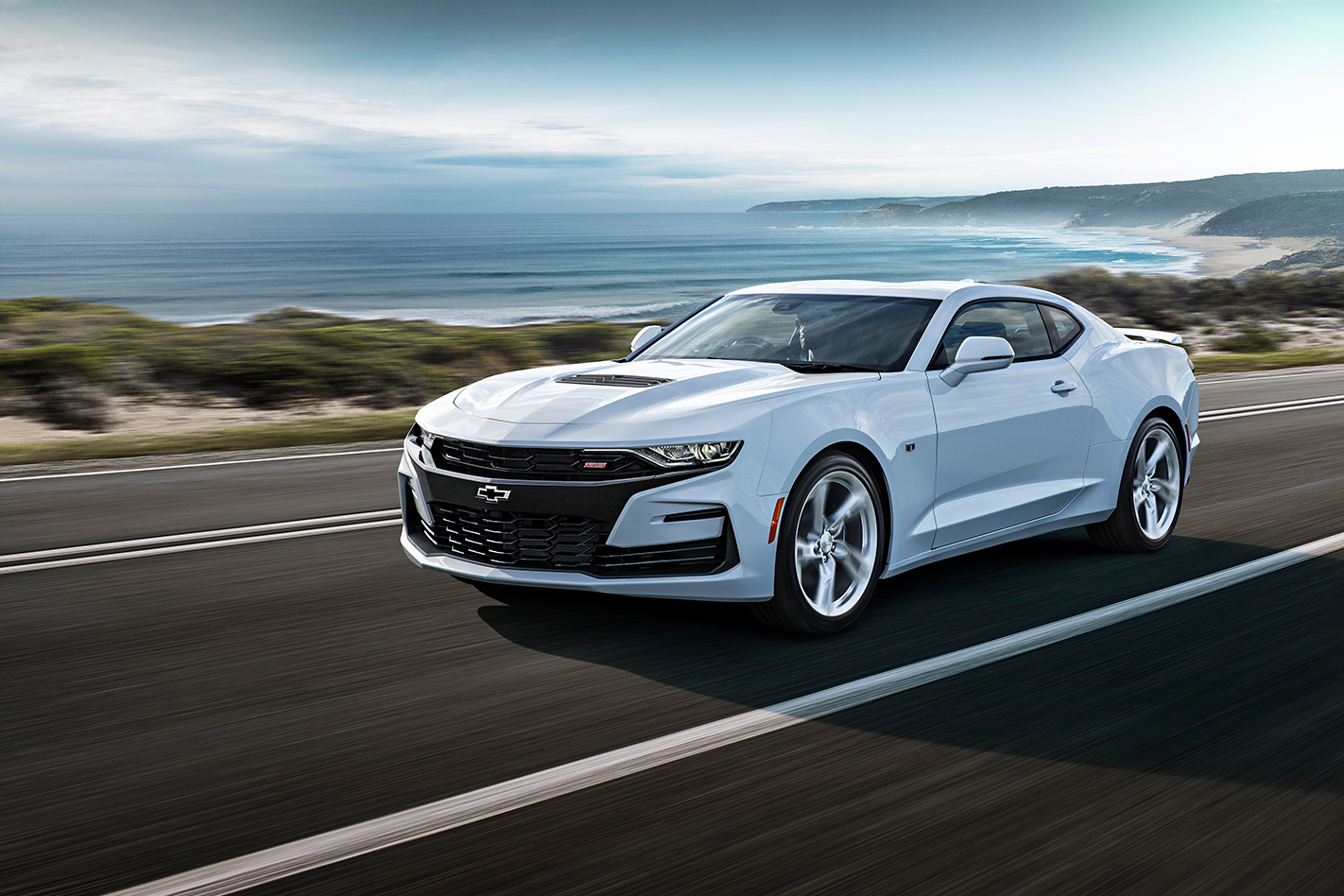
Holden VZ Monaro CV8 Z
It’s 1998. The VT Commodore is selling like hotcakes and Australia is gearing up for the Olympics. However, for the car world and Red Lion fans, Holden dropped a bombshell at the Sydney motor show – the Commodore Coupe Concept. Jaws dropped. Of course, we now know that concept became the reborn Monaro in 2001. And you’ll be shelling out more now for an end-of-the-line CV8 Z than when it rolled out of Elizabeth in 2004 (Series III).
HSV versions aside, the double-nostril CV8 Z receives the most grunt with a 260kW/500Nm 5.7-litre V8. The firepower is sent to the rear wheels alone via a four-speed automatic (there is also a six-speed manual). While not enjoying the full dynamics of a sports car, the Monaro is a big and comfy coupe with a strong soundtack and long-legged cruising ability.
It looks good too – especially from the outside. The Series III gained a cleaner interior layout, but being a car of a mid-noughties ilk, it lacks modern tech like smartphone mirroring. It’s a dedicated four-seater, with a degree of head and legroom in the back, while the boot is useable.
Holden opted not to develop a two-door coupe version of the praised VE platform. So the Monaro story came to an end in 2006 with the impending release of the ‘billion-dollar baby’.
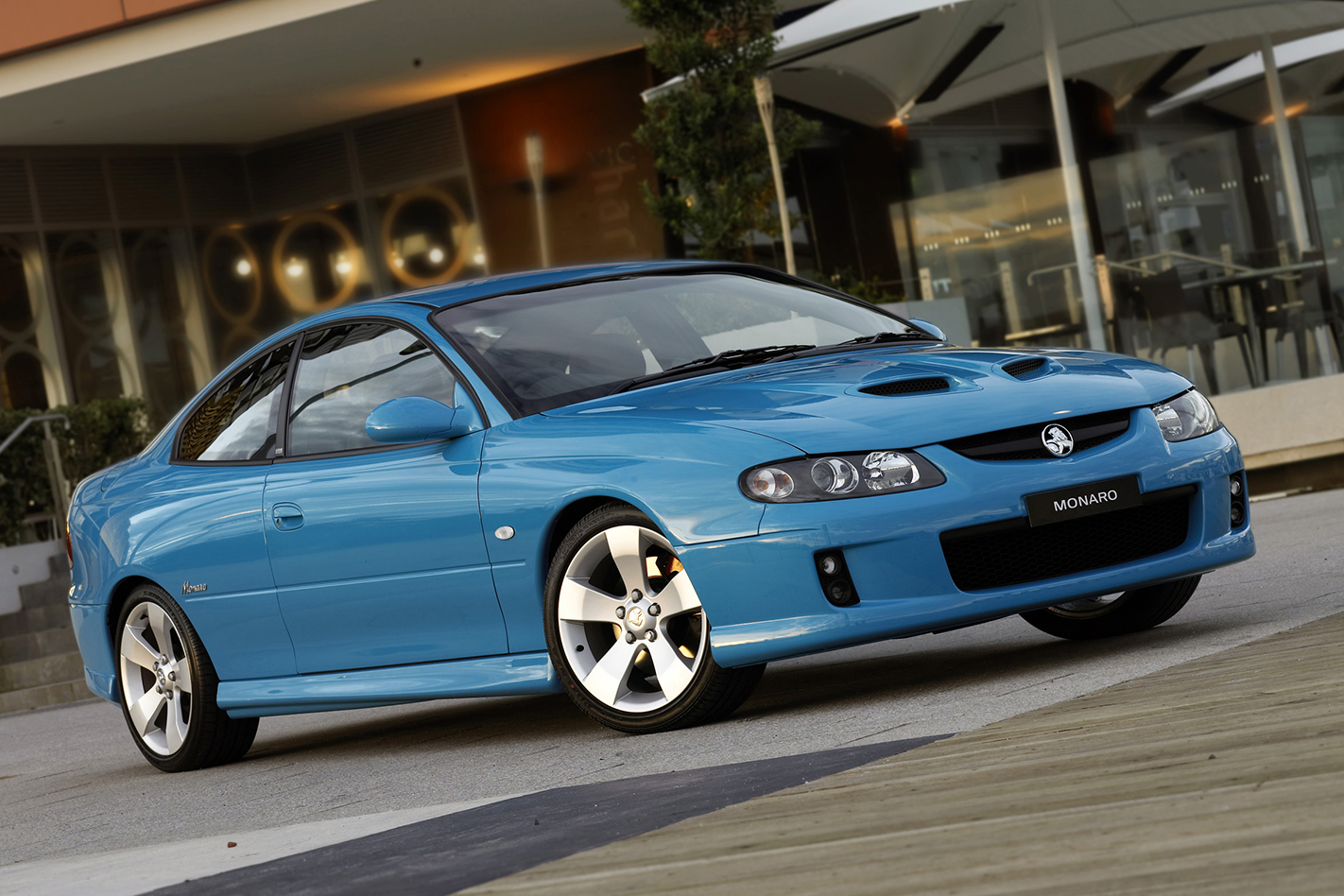
Wheels staff picks

Trent Giunco
Staff Journalist
If I’m thinking in terms of an appreciating asset, then of course the Aussie Monaro has my attention. From 2001 to 2006 Holden sold around 55,000 Monaros (here and in America), so you’d think finding one shouldn’t be too hard. It’s just a case of asking yourself how much you’re willing to pay. However, the Monaro shouldn’t be viewed as just an investment proposition. Yes, the Camaro has a dynamic and performance edge, a very clear one actually, and some would argue that it’s just as cool – or even more so. I’d understand if you chose the Camaro. However, there is something more intrinsically special about driving a piece of local automotive history.

Cameron Kirby
Online Editor
It has to be the Monaro for me. While I think the market has become artificially inflated as people try and fluff prices in the wake of Holden’s demise, the Aussie-built product still offers great long-term value if you hold onto it long enough and keep it in good nick. While I probably won’t be taking it out for daily duties, I wouldn’t want to keep something this classically beautiful as a garage queen. This is a V8 coupe built to be enjoyed and driven, and that’s exactly what I’d do – my heart swelling with Aussie pride every time I hop behind the wheel. Heart over head.

Andy Enright
Deputy Editor
Camaro or Monaro? Here’s the weird thing. Both head and heart say Holden. The Monaro would not only be a safer home for your hard-earned cash, but it also tugs at the heart strings like few modern motors. It is, quite simply, the loveliest hunk of Australiana that ever rolled from a local production line. Even if the Yanks didn’t get the styling, I believe the clean lines will continue to shrug off the years elegantly. So an easy win for the Holden? Not so fast. The Camaro is so much quicker and angrier that it is indisputably a better muscle car. It’s a league more capable in so many regards that it would be hard to overlook. With GM abandoning right-hand drive markets, Aussie right hookers aren’t about to suddenly become cheap either. So it’s the Camaro for me. Sorry, people.
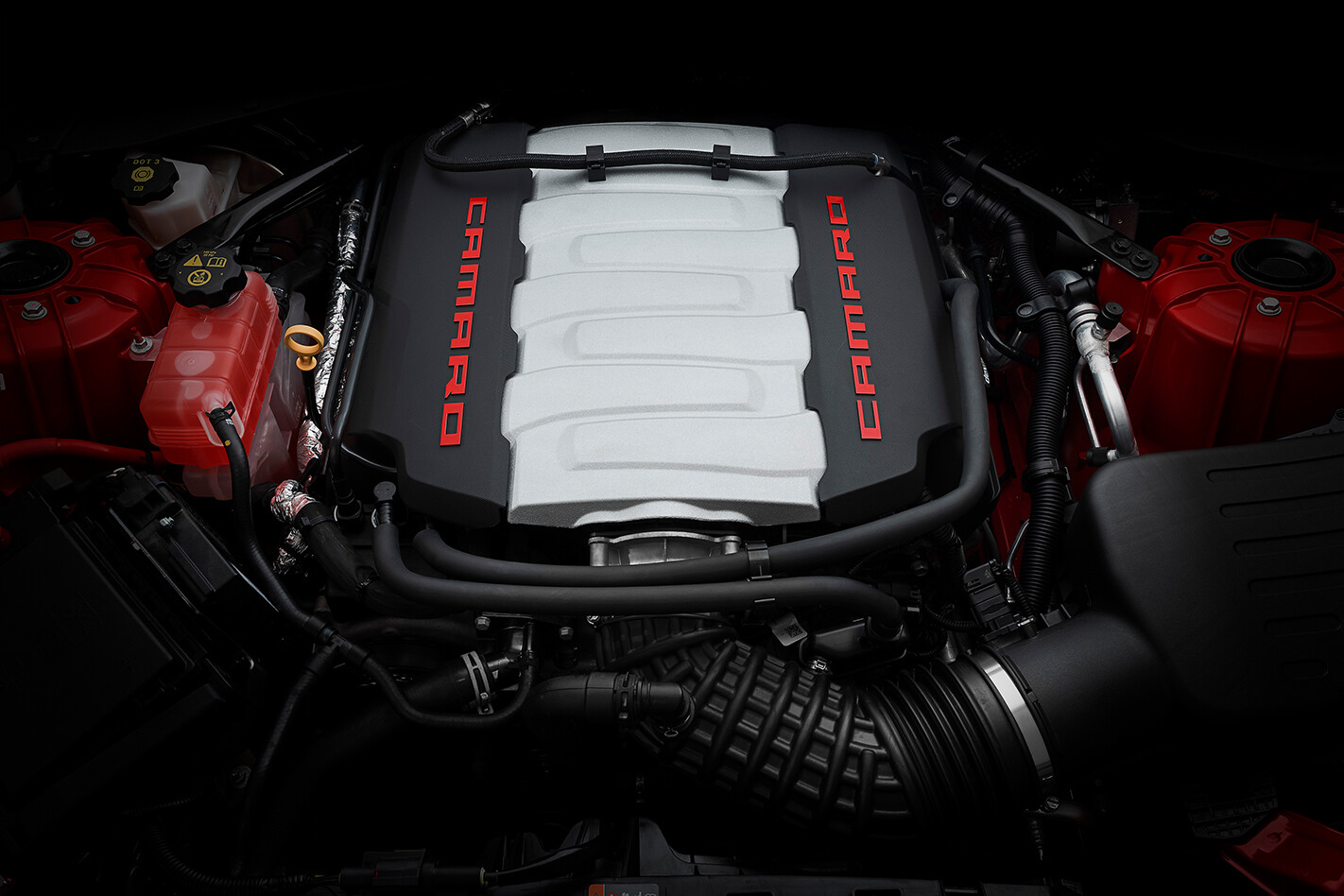
CHEVROLET CAMARO 2SS SPECS
- Price: $85,990 (manual); $89,190 (automatic)
- Engine: 6162cc V8, OHV, 16v
- Output: 339kW/617Nm
- Transmission: 10-speed automatic
- 0-100km/h: 4.0sec (claimed)
- Efficiency: 11.5L/100km
- Drivetrain: RWD
- Doors: 2
- Seats: 4
- Wheels size: 19-inch
- Country of Origin: USA (converted to RHD in Australia)
Read next: Holden’s concept cars could be saved
HOLDEN VZ MONARO CV8 Z SPECS
- Price (new): $60,490
- Engine: 5665cc V8, OHV, 16v
- Output: 260kW/500Nm
- Transmission: 4-speed automatic
- 0-100km/h: 5.8sec (claimed)
- Efficiency: 13.7L/100km
- Drivetrain: RWD
- Doors: 2
- Seats: 4
- Wheels size: 18-inch
- Country of Origin: Australia