
What started out as a father and son project to build a replica of a Lamborghini out of their garage, has not only captured the imagination of people from around the world but also attracted the attention of the supercar maker itself.
As a follow up to its 2018 “Real Lamborghini Lover” Christmas video, Automobili Lamborghini chose to feature Sterling Backus with his 12-year old son Xander, and their 3D-printed life-sized replica of an Aventador SV called the “Interceptor” in its 2019 Christmas video.
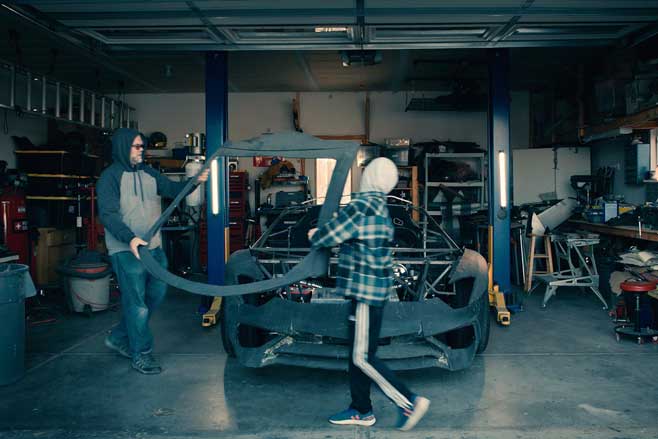
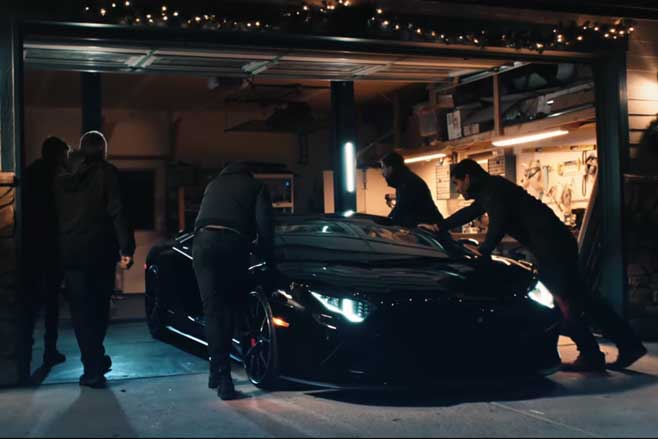
In the video, Sterling talks about the work that goes into his remarkable home-built creation and what inspired it, while Lamborghini treated the family to a surprise Christmas present by slipping a real Aventador S into the garage and letting the family experience the real deal for themselves for a few days.
“When I got the phone call from Lamborghini to do a feature, I was completely blown away, it was epic,” said Backus to WhichCar. “It was like getting a call from the Pope, and he wants to come for dinner!
“Consider this, in my job designing optics and lasers for research, I deal with a lot of Nobel Laureates and relatively intelligent folk that are known around the world, and when Lamborghini called me, I was very nervous. And to this day I’m still starstruck when I talk to them.
“Ever since I was a child, I’ve always dreamt of having one, and this is was a way to realise that childhood dream and at the same time use it as an educational tool. It is something me and my family will never forget.”
The project, which was inspired by a Forza Horizon 3 gaming session, has been ongoing for nearly two years, with all the CAD (computer-aided design) work, 3D-printing and its construction being carried out from the Backus’ family home in Erie, Colorado.
The Interceptor’s construction was based around a 1/10th scale CAD model Backus sourced from the internet. Using the wheelbase and track width measurements of the real car as reference points, Backus scaled up the drawing in Solidworks, filled in details to refine the model further, and printed the panels using three 3D printers he bought off Amazon.
The story, which our sister publication MOTOR initially reported back in July, did attract commentators who questioned the legal issues surrounding replica supercar builds, which was a topic of discussion at the time.
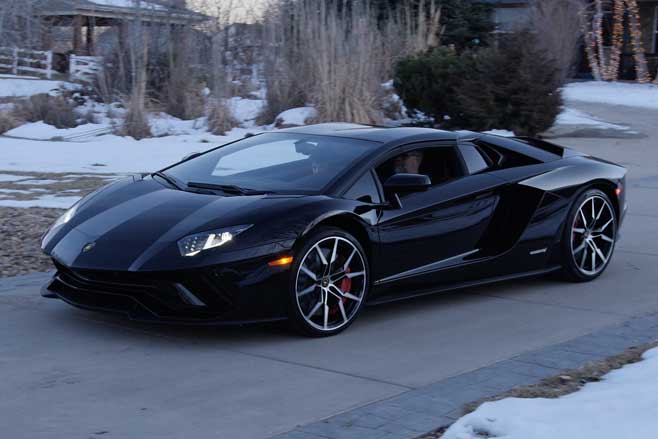
Lamborghini still maintains that, while the company is against any attempt at counterfeiting its cars, it has made an exception in Backus’ case. Seeing that is is evident that Backus has no intention of making a sale from his creation and built the Interceptor purely out of the family’s passion for Lamborghini cars, the company deemed his efforts “a true story of authentic passion that deserves to be featured.”
Despite the international attention his project has attracted, it hasn’t fazed the father of three, who is a research scientist with Thorlabs and holds an appointment in the Colorado State University. “I’ve met new people who are very interested in the project that I’m doing, but besides that, things haven’t changed a whole lot of me, which is good.”
Even so, Backus has soldiered on, building the Interceptor part by part and keeping his three original 3D printers rather busy, one of which has been printing panels non-stop for the past 15 months.
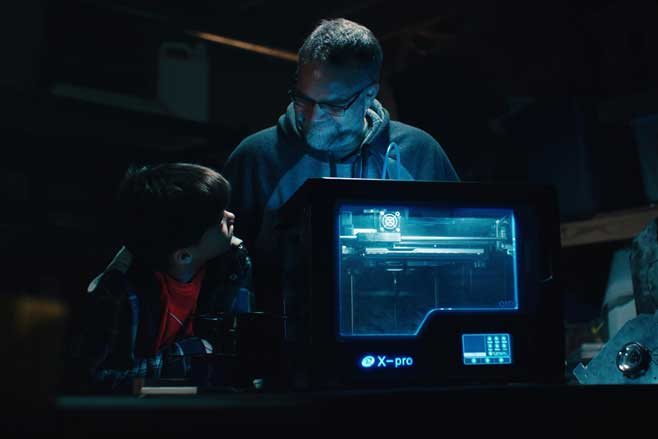
“The big reason for having the printers running is that we have had a lot of failures, this is part of the scientific process. You fail, but you learn from your failures, which is the important part,” Backus said.
Despite learning a lot of the methods used in the Interceptor’s build, such as 3D printing and encapsulating the printed panels in carbon fibre, by himself, Backus has managed to get his creation close to a roadworthy condition. Two months ago, Backus fired up its Corvette-sourced 5.7-litre V8 engine and drove it under its own power, albeit for a short distance.
“It runs and drives, we had some hiccups that we are still working out, and we are still finishing up the panels, the electrics and the interior,” he added. “We still have a way to go to make it roadworthy.”
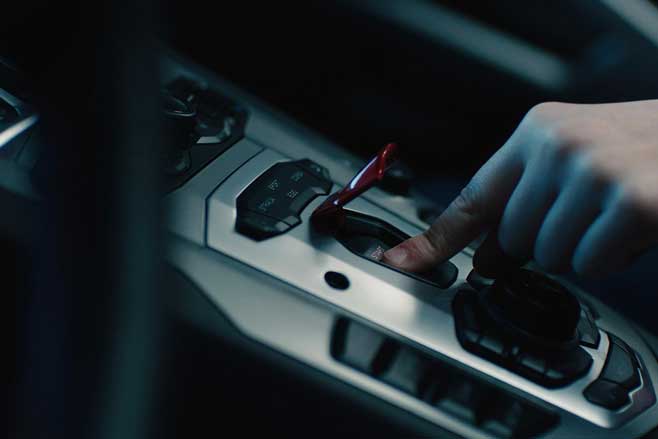
Even his optimistic early budget of making the car under $20,000 USD has been surpassed, as he managed to source used Aventador interior trim pieces to furnish the interior and make it more like the real supercar.
“Looking at it right now, I think it will probably end up somewhere in the region of $25,000 or $27,000 (~$36,000 – $39,000 AUD). We are car guys, and we are always going to blow our budget for our passion!” Backus laughs.
That being said, Backus’ project isn’t destined for the local car meet or a track day, instead, he wants to get it on the road and drive it to the local school.
“We hope to get it on the road by October next year. I want to drive it to school, to show and draw the kids in and start a conversation on the importance of education in STEAM (Science, Technology, Engineering, Arts, and Math), how it goes into a machine like this, and tell them why they are learning and how important it is!” said Backus.
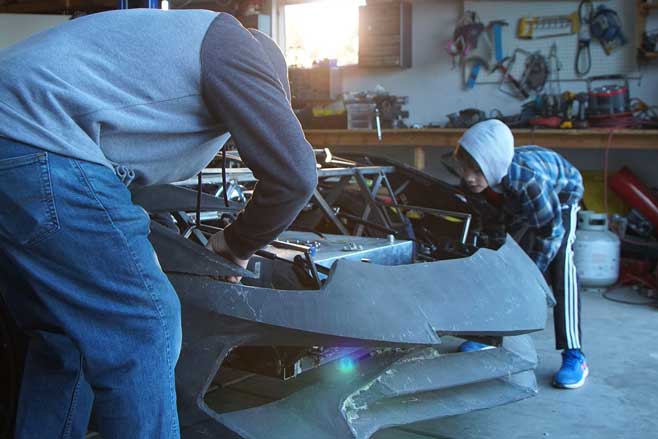
For Backus, a finished product isn’t the only lesson he wants others to take from this endeavour.
“Failure is part of success. That is the main talking point here. I think a lot of children these days are under pressure to succeed but they also need to learn how to fail as well,” he said.
“It is what you do after you fail that matters, do you learn from the process or do you repeat it? Things are not going to work the way you wanted to, you will be frustrated, but it is what you do afterwards.”

What will Backus do when it is finally made roadworthy? To him, he doesn’t see a point where he would comfortably put down his tools and pack away his printers and say “enough”.
“I think the Interceptor will never really be completed as a project, it is going to evolve, I will always find something to tinker and improve on, maybe drop in a V12 some day,” he muses. “One thing is certain, if I were to do another car like this, it will be a Lamborghini, I’m head over heels for Lamborghini cars.”
“They’ve gone stark, staring mad.” That was the opinion of a friend of mine in the tech industry who’d recently visited the UK and had been subjected to the new normal of Brexit politics. The public over there were, he reckoned, “like frogs in a pot of boiling water.” They didn’t even realise how bad things had become but, to an outsider, it was desperately apparent.
The more he bemoaned the situation, the more I was reminded of a conversation I’d had with him regarding the automotive industry some time previously. With such a profusion of automotive brands and the egregious nature of some manufacturer cheating, he couldn’t believe that some marques hadn’t become entirely toxic.
Were we the frogs in the pot, meekly accepting the way that certain car manufacturers lied, cheated and gamed the system? Looking at the burgeoning sales of some of the worst offenders, it appears that car buyers don’t just accept being treated with contempt by manufacturers. They reward it.
It’s almost as if we’ve become careworn and fatigued by stories of manufacturers recalling cars due to emissions defeat devices, being fined billions of dollars for misquoting fuel economy figures or installing known faulty components. Buyers perceive that this has become the new normal. Every time regulators try to nail shut one box, a new instance of gerrymandering seems to pop up.
The European Commission has reported that some car manufacturers have artificially inflated their emissions figures so that they can more easily meet EU fleet CO2 cuts for 2025 and 2030. Inflate the 2021 figure and the subsequent cuts are that much easier to achieve. We could go on, but you get the point.
Doug Croker, author of our Letter of the Month in this issue, reckons we should amend our Databank section to indicate lemons under recall or beneath a cloud of controversy. The problem is, that would likely leave a reduced set to choose from, which highlights the nub of the problem. There’s a common acceptance that almost everybody’s at it, which hardly incentivises manufacturers onto the path of moral rectitude.

Wheels has had a long tradition of holding car manufacturers to account. Peter Robinson’s column in the October issue details the aftermath of the infamous lemon cover when we held back our Car of the Year award and, back in the ’60s, the magazine pushed for Holden to improve the braking on the EH. That came after the 179ci red motor’s hefty power boost over the EJ’s grey motor overwhelmed the new car’s ability to stop sharply. Robbo gave no quarter in the ’70s when the wallowy HQ was put before him. It copped such a savaging that it paved the way for Holden to fundamentally reassess its vehicle dynamics.
We’ve been strident in calls for centre-rear sash belts and stability control to be mandatory for inclusion into Car of the Year, and Phil Scott’s quality audits from the early ’90s held a blowtorch under manufacturers who expected Australian buyers to accept second-rate products.
It’s not always easy to speak truth to the power of major manufacturers. It probably won’t surprise you to learn that some of our most forthright reviews have attracted the ire of the very biggest car makers. Over the years, we’ve had a few uncomfortable phone calls. Nevertheless, in an industry that’s increasingly cowed by the power of big manufacturers and which leans to the craven call of influencer culture, there must exist a place for a publication that’s prepared to deliver a frank and fair verdict. Recent record combined readership figures across the Wheels magazine and website indicate that you’re in agreement, so we’re not about to change that policy anytime soon.
Speculation has been rife about Aston Martin’s financial health. Like its most famous customer in Goldfinger, the laser is heading straight for Aston’s nether regions and CEO Andy Palmer will need to do something smart – and soon – to switch it off.
When it floated a year ago on the London Stock Exchange, Aston was valued at £4.3bn ($A8bn), and returned £1.1bn (A$2bn) to its Italian and Kuwaiti private-equity owners.
That valuation was based on the glorious future envisioned in Palmer’s ‘Second Century’ plan, in which SUVs, sedans and EVs double Aston’s volumes to 14,000 cars by 2023, finally giving it the scale and stability it has always lacked.
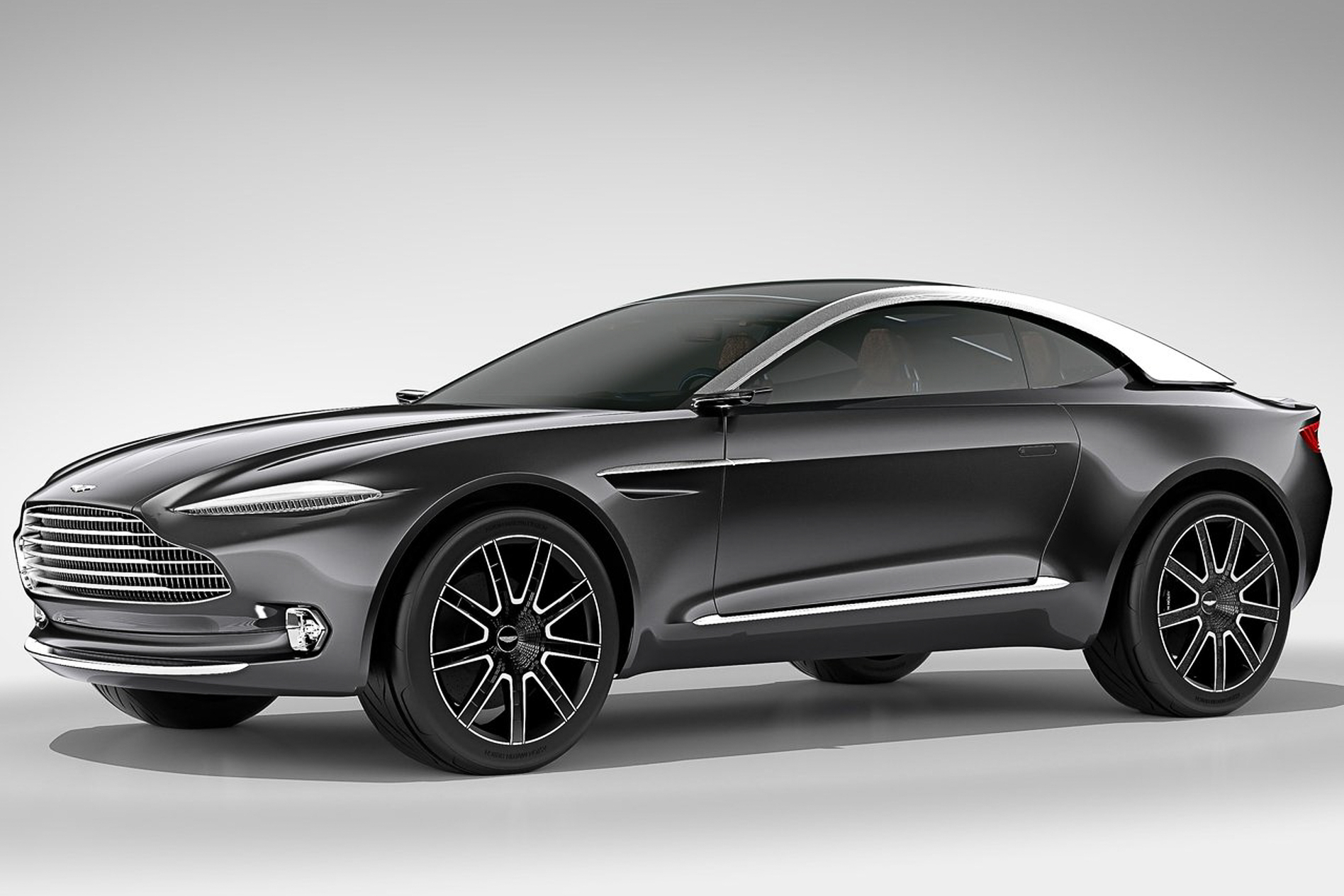
Aston Martin DBX
That plan is still on track, just about. The trouble is that old Aston is getting in the way.
The share price had been on the slide for a while, but the announcement in late July of an £80m (A$150 million) loss in the first half, slumping sales in the UK and Europe and a sharp downward revision to estimated full-year sales caused the stock to plummet, leaving Aston worth just a quarter of what it was a year ago.
The share price slump reflects investors’ concern that Aston might break before it can get to Andy’s promised land, its cash burnt up by the toxic combination of turbulent current trading and the cost of developing those new models. It simply needs more money.
The proceeds of the IPO didn’t go into the business but straight back to the investors and the execs, including Palmer. They won’t want to dilute their holdings now by raising the required cash with new equity issue at rock-bottom prices. Aston will probably have to borrow the money, but it will be expensive to finance and will add to its debt pile.
So Aston is in a tight, but by no means inescapable, spot. The leading auto analyst Max Warburton has examined Aston’s accounts and in a private note to investors says that he believes the company will find the funding to make it through to 2021, by when DBX production should have ramped up and added around 4000 units to Aston’s sales.
The firm will also need to cut costs sharply, possibly slowing or even pausing development of the mid-engined Vanquish and Valhalla, and, after the DBX launch, revising its growth plans downwards accordingly.
The $4.5m Valkyrie is pretty much done, and despite its low volumes will make a useful contribution to Aston’s coffers once it starts selling at the end of the year. But Warburton warns that there’ll be no wriggle room in Aston’s escape plan: Valkyrie and DBX will both need to arrive on time.
Even if Aston can get DBX and Valkyrie on sale on time, its future is by no means guaranteed. The company is busy completing its new factory at the former RAF base at St Athan in Wales, where Palmer will attempt something few car company bosses would have the stomach for: building two entirely new types of car, in a new factory with a new workforce.
Usually, it’s one or the other: a new car in an existing factory or vice versa. But the scale and pace of Palmer’s expansion plan force him to do both, so St Athan will build both the DBX and Aston’s future electric vehicles.
The main risk is to quality, and that risk is all the greater when you’re a luxury car maker with a reputation for hand-tooled opulence but occasional mechanical and electrical woes.
There’s also no guarantee that the DBX will reach and maintain the sales Palmer needs, and the concern is that the new SUV might not generate the cash on which the latter stages of Palmer’s plan rely. Aston has been bankrupt seven times in its long history. Everyone watching is hoping that, like paper, it won’t fold eight times.
Key new models – the cars that must save Aston
2019
DBX
Aston’s first SUV is the single most important car in Palmer’s plan and launches later this year. It is critical to Aston’s success in China, which loves an SUV, and to attract a greater proportion of female buyers. Production of confirmation prototypes has already begun at the new St Athan plant and will ramp up over 2020.
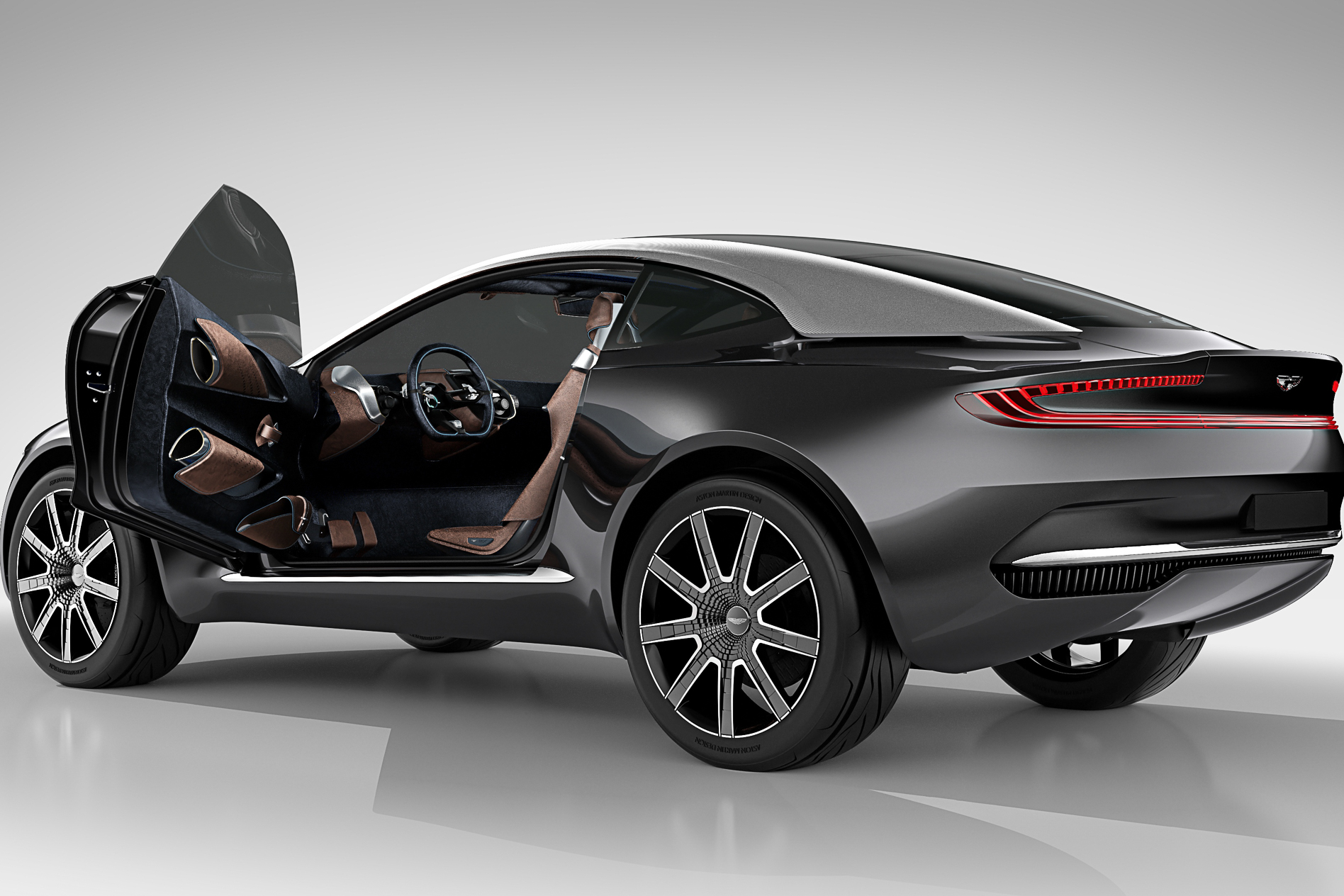
Valkyrie
Aston’s pinnacle mid-engined hypercar, designed with the Red Bull Racing F1 team and Adrian Newey. Will cost $4.5m and carry an 865kW hybrid V12. Followed by the track-only Valkyrie AMR Pro, if the road-legal one isn’t quite enough for you. Rivals the Mercedes-AMG One. Only 150 road cars will be made, and 25 AMRs.
Rapide E
The first all-electric Aston, the Rapide E will be made at St Athan in limited numbers – only 155 will be built. The ageing Rapide host car loses its V12 but gains a facelift and a 450kW electric drivetrain good for a range of around 320km. Not a very significant car for Aston’s bottom line, but a chance for it to learn how to do electric.
2021
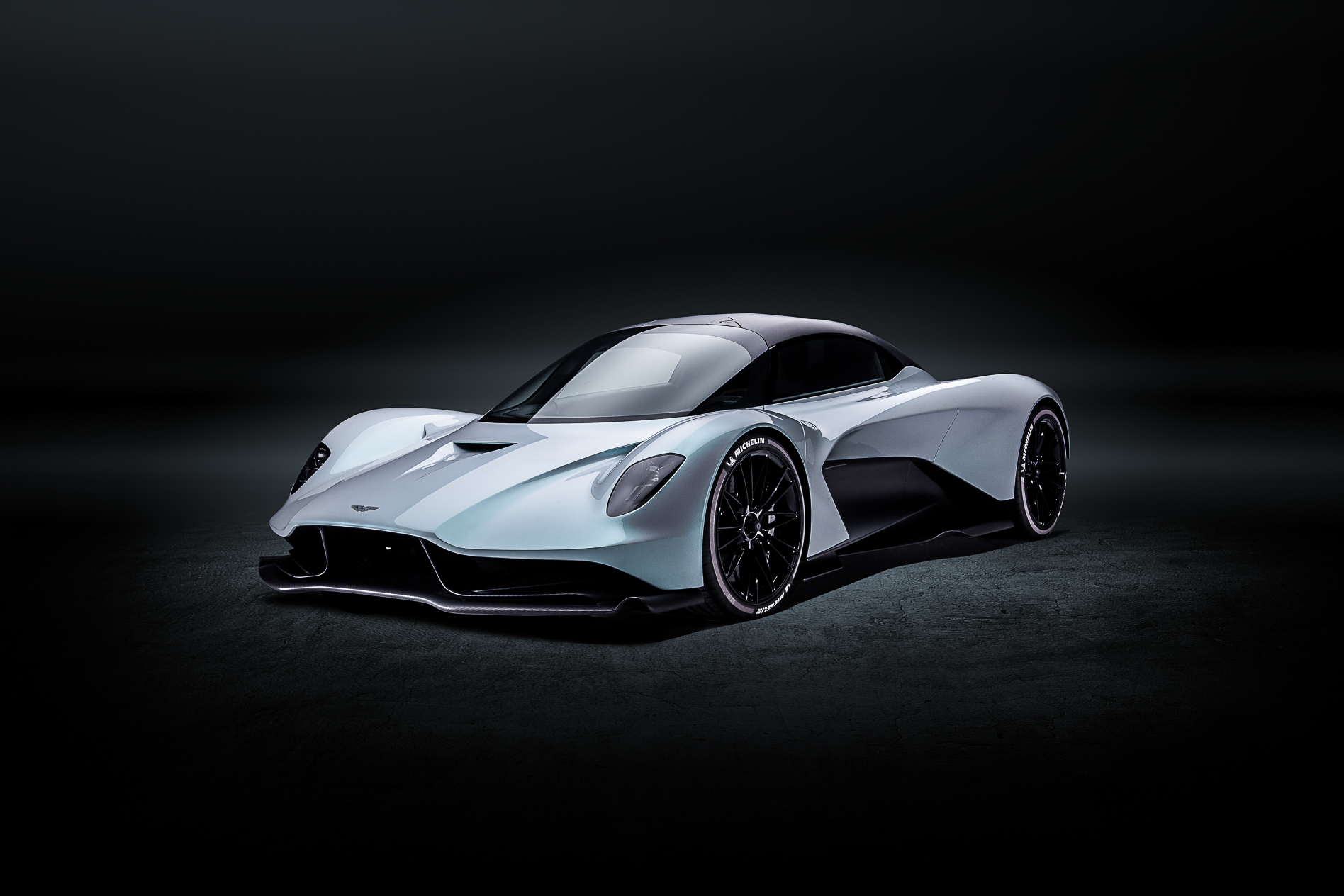
Valhalla
Valhalla is designed to bridge the huge gap between Valkyrie and Vanquish, and it sits perfectly between them in its design and engineering. It gets the Vanquish’s V6 but with the KERS system from the Valkyrie, and unlike the Vanquish it gets the direct involvement of Newey and Red Bull. Limited to 500 units.
2022
Vanquish
After at least two decades of thinking about it, Aston finally gets a mid-engined rival for the F8 Tributo, Huracan, etc, previewed by the Vanquish Vision Concept. Could be very significant to Aston’s finances – Ferrari’s current mid-engined V8s make huge margins that underpin the company’s profits. Hybrid V6 power and an aluminium chassis.
Lagonda SUV & sedan
Last year’s Lagonda Vision concept announced the rebirth of Aston’s other, largely dormant nameplate as an all-electric super-luxury brand to rival Bentley and Rolls-Royce. A sedan comes first, possibly as soon as 2022, followed by a R-R Cullinan-rivalling SUV. Both will be made at St Athan.
I don’t mean the fastest, the most innovative, not even the best – no, which performance car of the 2010s might be most remembered decades from now?
I have a hunch, a personal opinion. And I’m just going to say it: Ferrari 458 Speciale.

I’ll get to why, but first, the why nots. Countless cars could go here, cars that deserve to be included on a list of the greatest and most important performance cars of the 2010s.
There are the vehicles that democratised dynamics previously reserved for cars multiples their price: Subaru BRZ, Toyota 86, Ford Fiesta ST, FK8 Honda Civic Type R. The first Mercedes-AMG A45, the populariser of hot-hatch, twin-clutch launch control and supercar-beating 0-100km/h times. The magic BMW M2 Competition; the under-appreciated M140i.
The Aussie cars that were the high watermark of local engineering: the Ford Falcon XR6 Sprint, Holden Commodore VFII SS-V Redline, HSV Gen-F2 GTSR and, to only a slightly greater extent if you ask me, the W1.

Then there is the exotica for those privileged enough to afford or even experience them: the howling Lexus LFA and the big-bore 997.2 Porsche 911 GT3 RS 4.0. The 991.2 GT3 too, and the devilish GT2 RS. The Huracan LP580-2, a welcome cosying to Lamborghini values of old. And the 600LT, possibly the first McLaren to be taken seriously against the likes of Porsche and Ferrari.
There are some cars that may be doomed to a future of marginality – much like the Ferrari F50 – until they get their time in the sun again. I’m talking Porsche 918 Spyder, Ferrari LaFerrari, McLaren P1.
These cars pushed the boundaries, and flew the flag, for what was doable with hybrid technology, but were ultimately weighed down by the same systems to the point I wonder if their hybrid gubbins were, on balance, more of a liability. Of the 2010s, it could be the small-engined, skinny-tyred BMW i8 recognised for best imagining a ground-up hybrid sports car.

There are other cars that might still be yet to get all the credit they deserve. The Tesla Model S P85D – if any still work in 10 years – for getting the market excited about an electric car. The i30 N, Hyundai courageously muscling in on a very difficult category and succeeding. The supercharged V8 Jaguar F-Type Coupe R with rear-drive – about as agile as a Wallabies fullback but a distillation of some very time-proven driving ingredients. More deserved to be sold.
But back to the 458 Speciale. There’s not a lot I can say about this car that you’ve probably not already read, except that it was the zenith in what may be remembered as the (somewhat now dead) era of pursuing excitement, speed and friendliness in equilibrium when it came to developing a sports car.

The Speciale, in my books, is the most complete performance car of the decade. With its 9000rpm, 14:1 compression, 445kW 4.5-litre mid-mounted atmo V8, it was an almighty fast car, capable of low-11sec quarters out of the box. But unlike some of its turbo descendants, every single kilowatt was usable, for your right foot if not the rear tyres.
There might never be a car so fast that’s so easy to trust so quickly. It got into your bloodstream like a substance you had never tried before. It thrilled, made you feel lucky to be alive, but also had the ability to make you feel a tad sad. Because even if you owned one, there’d be the omnipresent suspicion there might never be another performance car like it.
- Dream drives for the last litre of fuel
- Our writers select their final ever drive
- When oil runs dry, this is what we’ll be in…
Now what does a million bucks get you? The front bumper off that Bugatti ‘Noire’? A Rolls-Royce wheel nut? The million-dollar garage game just isn’t the same when you find yourself saying, hands clasped as in prayer, ‘My dream would be a Honda Jazz and classic Ford Escort… I think I could afford those.’
And that’s not the only game that’s changed over the last decade. Remember speculating about what you’d drive if there was only one gallon of petrol left on Earth? Of course, back then the scenario was an apocalyptic future in which we’d run out of oil.
People used to write articles about ‘peak oil’ and the long decline that would follow. We imagined petrol getting more and more scarce until all the wells ran dry and then there would only be one litre left in the world – one litre in a little green jerry can, a stratospherically valuable object, guarded by armed security, coveted by the world’s millionaires like a Golden Ticket to Wonka’s Chocolate Factory.
And what would you drive, if you could burn that last litre? Ah, how the arguments would rage. An early 911 or a Caterham 7? Someone would always choose the Lamborghini Countach, even after it was pointed out they’d only do 12km before the gallon ran out. Still, I suppose it didn’t matter then, because the last gallon scenario was way off in the distant future, maybe 50 or 100 years hence. Oil wouldn’t run out in our lifetimes.
Well, we now know oil will never run out – and lots of it will be left in the ground. Yet paradoxically the last litre is coming faster than ever.
It isn’t going to unfold as we predicted. The momentum to replace fossil fuels is building, and all the car manufacturers are now racing to switch to electric power. As worldwide demand for petrol falls over the coming years, the economics of production could shift rapidly: refineries could close, driving the cost of fuel up further, making electric power all the more attractive, accelerating the revolution.
Before you know it, running a petrol engine in a public place – coughing those fumes in the faces of the little children – will be as socially unacceptable as smoking a pipe in a maternity ward. All those Ferraris will be sheeted over and stored, their fuel tanks bone dry, until in the end there’s just one, solitary litre left: one remaining puddle of this poisonous, carbon-emitting chemical in a little green jerry can – and no one will want it or care.
Except us. And then there’s the most important question of all: if you had the last litre on Earth, what would you drive? We asked six CAR magazine writers to choose their final drives, for that precious last litre of fuel. Read on to find out what they picked and why.
Sam Smith on the Jaguar D-Type
A car is basically a conduit for moments. Designing an automobile, for example, means stacking thousands of small decisions, instances where some engineer or stylist helped determine the nature of the end product.
Or take driving, which is little more than stringing memories across a piece of landscape, then processing those instances through your brain’s unique filter. The list goes on—racing, breaking, fixing, whatever, it’s all the same. Wheels are just an excuse to get off the couch and spend time in satisfying ways, and that time is then packaged into instances you remember later.
And yet, you cannot drive a Jaguar D-Type without being consumed by someone else’s moment. The accomplishment is now so old that it doesn’t belong to any one person – though it’s definitely yours, and mine, and Coventry’s, and England’s, and pretty much the property of any living human who ever loved beauty and grace and hard work.
You think about Le Mans, 1955. That first year the D won overall, when giants like Lofty and Sayer and Dewis took the lessons from Jaguar’s XK120 and C-Type and shot them out the bore of a 1200kg, 250-horsepower barrel with the hips of a woman and the finish of an airplane. That it spit loose the raucous, animal snarl of one of the last century’s greatest engines was just icing on the cake.
Twenty-four hours is a long time to drive a race car, and France in the ’50s was a hell of a rough place to do it. So the D is comfortable. If the seat behind that wheel is even half original – and many of them are – it’ll be faded and cracked and suggest the furniture in old libraries. Fat cushions, soft leather. There is a wheel in front of you, wood-rimmed and elegantly thin, and those feline fenders, arcing and compound and obviously formed by hand.
To your left is a shift lever, short and canted steeply forward; the gearbox it works does not like to be rushed. You can shift the car quickly, but you have to know what you’re doing, and you have to be confident. Which can be a lot to wrap your head around, the first time you drive a D-Type, because it feels less like a machine and more like a purpose-built piece of performance art designed to show phone-obsessed idiots that humanity was once a little more romantic.
You initially feel supremely unworthy. At least until a lap or three later, when the car has coaxed you into sliding it around like any old hack, because that’s just what great racing cars do.
The D was ahead of its time. The disc brakes, power-assisted off a pump on the gearbox, are so light and powerful you can lock the wheels on a toe. (Not pressure. Just draping your foot on it.) The car points quickly but needs to be set into corners with a smooth, firm hand.
There’s compliance enough that road driving is low-stress and comfy, but also a special kind of adjustable, with skirt-hiking yaw on tap and that glorious ripsaw exhaust snort, so you never forget you’re in something special. And there is more chassis stiffness than you expected – than anyone has any right to expect.
Norman Dewis – as well as a racer, he was Jaguar’s chief test driver when the D-Type was being developed – once told me that he did 280km/h, in the dark, on the Mulsanne in the middle of the race, chuckling giddily at the impossible thrill. There is probably another equally appropriate response to the notion of taking that shape and that sound to 0.25 mach in the dark, but I’ll be damned if I know what it is.
Dewis, who died this June, knew his final-litre answer. On some level, the Jaguar is everyone’s answer. Which is partly why we still sit here, more than half a century later, marvelling at those hips and that noise and the story, chuckling to ourselves at the carrier of those moments, across decades and miles, even in a quiet photo shoot, 280km/h or not.
Mark Walton on the Ariel Nomad
The Ariel Atom is eccentric yes, but at least it has a clear purpose: continuing that long tradition of lightweight British sportscars, it belongs on a track or a winding B road, and its function is to slice through brain cobwebs like a Spartan sushi knife.
The Ariel Nomad, on the other hand… well, the Nomad makes even the Atom look reserved. This is a car with no clear purpose. It’s an off-roader, sort of – though I doubt many buyers actually take it on the gravel.
Instead, it’s more like an imaginary dune buggy for the road; a muscled-up sand-rail; an ’80s Tamiya radio-control, made flesh; a Desert Storm Fast Attack Vehicle minus the .50 calibre machine gun. It’s a ridiculous figment of so many schoolboy dreams, manufactured in Somerset. Just standing next to it releases some kind of endorphin in your brain. Everyone stares at it.
But that isn’t the only reason I’d choose the Nomad to burn the last gallon of fuel on Earth. When you climb in – gripping the pipe that arches over the ‘door’, feet on seat, swinging in like an athlete on gym apparatus – you plop down into a hard plastic seat.
The interior is busier than the Atom’s, with more pipes curving around you and a flat windscreen ahead, but it shares its meticulous austerity: not a nut or a wire more than is necessary, and beautifully finished. The dash is from the Atom 3.5, so it’s more haphazard, less ‘styled’ than the wonderfully updated Atom 4, but it suits the military Nomad.
The gearstick is short, finished with a lozenge of polished alloy, and this example has also been fitted with a fly-off handbrake – a tall black handle that rises out of the floor almost up to the steering wheel. It acts like a bicycle brake on the rear wheels – pull to skid. This is a cockpit for driving and nothing else.
But that isn’t the only reason I’d choose the Nomad to burn the last gallon of fuel on Earth. Start the engine with a rubberised black button and your seat buzzes with vibration. While all recent Atoms have used 2.0-litre Honda engines, the Nomad is fitted with 2.4-litre from a US-spec Civic. It puts out 180kW and 300Nm of torque. Ariel offers a supercharger upgrade, which takes it up to around 220kW, but our example is naturally aspirated.
Loaded with options like the winch, spare wheel and roof lights, this car weighs more than the 670kg basic weight; which in turn means it’ll be slower than the claimed 0-100 time of 3.4sec. But let’s not quibble – this is still a seriously rapid car, if not a lightning flash like the 238kW Atom 4.
But that isn’t the only reason I’d choose the Nomad to burn the last litre of fuel on Earth. The real character of the Nomad is in its gait. Sitting tall on Eibach coil springs and rolling around on those huge all-terrain tyres, it’s a totally different beast to the Atom – instead of being razor sharp and tightly pinned, it moves around a lot on its squishy suspension.
Brake into a corner and you see the nose squat relative to the wheels, then rise again as you accelerate away. This dive and lift is matched by lateral movement in the corners, as the tyre tread squirms. At first, this is unnerving – it feels like you’ve got a flat tyre or a couple of loose bolts. You have to build confidence to start enjoying this floatiness and remind yourself: it’s not an Atom, so stop driving it like an Atom. Instead, go big, go bold, go lairy: chuck it into a corner and lift off the throttle, knowing the dive will load up the front tyres, loosen the rear and trigger big lift-off oversteer.
And that’s the real reason I’d choose the Nomad to burn the last litre of fuel on Earth – because if we are going to have to kiss goodbye to petrol-engined cars, you might as well pick the most stupid, pointless one you can find – and go out with a laugh.
Steve Moody on the Renault 5 GT Turbo
Nearly 30 years later, my last litre will be spent much as the first was, hedges flashing by, empty lanes and youthful optimism, a little Renault engine spinning itself into a frenzy.
There is nothing like that first journey in your first car. I remember laid out ahead the sprawling possibilities of trips, freedom, adventure, that my Renault 5 Campus, an unsophisticated little tin box with no headrests, clock or revcounter, presented. I drove the long way home from the test centre at a lick, or what passed for lick in a 30kW, four-speed car, down winding country lanes. I just missed a horse float.
Of course, there will always be first cars, but the experience will be so much more procedural in the digital, plastic-boxed and satellite-tracked age, tethered to charging cables, travel patterns downloaded to apps, behaviour reported to insurance databases. That’s not exploration and learning. That’s going there and back. Efficiently.
They won’t flood the engine outside the rugby club disco at 2am, attempt to drive to the coast, but get lost and end up… somewhere. The clutch cable won’t snap on your way to school, the engine overheat in a queue coming home from the beach, or the speedo stop working (and, handily, the odometer too).
For the last indulgence, I get to dredge back up all that unfettered independence and chaos of my teenage days, but turn up the boost. Literally. The car I really wanted was the Renault 5 GT Turbo, and my friend had one. It was the first car I was ever shocked by: the brutal speed as the turbo punched us into the future, or a wall.
Now, the GT Turbo’s acceleration seems less devastating. But as it warms, the little tyres glue up, giving the wonderful steering even more texture, and the rudimentary Garrett turbo starts to deliver that 100kW whoosh.
Kept wound up between surprisingly long gears, it covers ground quickly, silkily, smelling oily-sweet as it burns those last precious drops, a manic mouse, my face glassy-eyed and grinning. It ends as it began. But actually, in the Turbo, even more gloriously.
Ben Pulman on the Porsche 911 GT3 RS 4.0
Those final klicks with that final litre of fuel will be crushingly emotional. There will, no doubt, be a phase of crying at the side of the road. But before then comes another, crucial phase. This is the phase when I have to decide what the correct car would be – a decision more important than choosing the right name for my first child.
A manual gearbox, hydraulic steering and delivery to the French Alps on the back of Elon Musk’s new semi are must-haves. Using an electric Tesla truck for the DHL duties is all about saving as much fuel as possible for the main event: the naturally-aspirated engine.
Shortlisted were AMG’s 6.2-litre V8, after a memorable night in a Merc C63 Black Series on the Pacific Coast Highway, and the LFA’s V10 that I can still hear wailing on the Route Napoleon. But given carte blanche, the revered 4.0 RS 911 is my choice.
The carbon bonnet and front wings came from that era’s 997 GT2 RS. With the subsequent switch to PDK it would become the last manual RS. But most important of all was the enlarged 3996cc flat-six. Effectively pinched from the 911 RSR racer, crankshaft and all, it was the final hurrah for the Mezger, an engine with real motorsport pedigree (including a outright win at Le Mans in ’98).
It does not disappoint. It idles unevenly, impatiently, but higher revs harmonise the six cylinders and hint at how this engine should be used. Go for it, and the response is instant, the performance still so strong, the hard-edged howl evocative of days (and nights) spent at Le Mans and the Nürburgring, watching 911s at full chat.
Then there’s the manual ’box. Shared across all 997 911 GT3s, it is stubborn, but I love it. Each gearchange, be it up or – with an accompanying blip – down, brings back memories of our Sports Car Giant Test at Cadwell Park in a gen-one GT3 RS, taking a gen-two GT3 across the Alps one winter, and a summer’s evening after leaving the office spent in a gen-two GT3 RS.
The 4.0 feels narrow, the view out beyond the grey revcounter just perfect. The nose bobbles, the hydraulic steering moves delicately between your fingertips, and the engine lets you know exactly where it is, three bewitching sensations Porsche has now all but dialled out of the 911.
What a car. What a fabulous car.
James Taylor on the racing kart he built with his father
For a while, I could carry this whole kart around in my pocket. It began at an after-school club held in the metalwork block. The aim? To build a kart from scratch and then race it to glory, a notion too exciting to be true. And for a long time, it was; after weeks of toil, I’d succeeded only in building two small brackets to carry the front stub-axles. Hence the pocket-portability. Had my dad not stepped in to help me, I’d still be building it now.
We started it when I was 11. We had only a couple of hours a week available to work on it, no drawings to work from, and it really was a from-scratch project. The chassis was a bunch of steel tubes to be cut, bent and brazed together, and we made practically everything by hand: steering column, floor, engine mounts, pedals… Finishing it seemed an impossible dream.
And then, the day after my 14th birthday, it was suddenly a reality. A herculean effort by my dad had got the kart running and that first drive, all 60 seconds or so of it, in a circle in the cul de sac outside our house until the engine stalled, is still one of the most exciting drives of my life.
Then we were racing for real, in the National Schools Karting Association series, kart perched on an old box trailer behind our Peugeot estate. We went as far south as Camberley in Surrey, as far west as Glan-y-Gors in Conwy, and as far north as the extraordinary Rowrah circuit in the Lake District. Imagine somebody shrunk Spa and put it in a quarry in Cumbria – for me, Rowrah’s up there with the Nürburgring for the title of world’s best track.
It was a family effort. My dad was chief engineer, my mum chief co-ordinator, my sister Hannah initially an enforced drag-along-ee, and then a driver too. Since the kart used a Honda C90 motorbike engine (three gears, auto clutch), it could be raced in two different classes; in one you were allowed to shift gears, in the other it was locked in gear. My dad engineered some ingenious quick-release pedal extensions so that Hannah could race in one class, me in the other. Between us we won scores of races and meetings, including a couple of national sprint titles.
We were already a close-knit family: the karting didn’t so much bring us closer together as embody the closeness we already had. My dad was a design engineer, and racing with him showed me just how talented he was.
Not just in making the kart in the first place (looking at it now, I understand anew just how epic a job it was), but in the way he could make it faster, and explain it to me in a way I could understand. I learned so much, and driving was only part of it. But it was the most thrilling part. The balancing act of a four-wheel drift, the heartrate-spike of an out-braking move, the crushing low of not finishing a race, cancelled out by the lasting europhia of a win. Thankfully I realised how lucky I was at the time.
My dad was taken from the world three years ago but the kart is still here. I’ll never part with it. If, as I worked on those brackets all those years ago, you’d told me that one day the kart would be photographed with a Jaguar D-type in CAR, I’d have been both proud and puzzled.
But there’s no other vehicle here I’d rather put my last litre of fuel into, for as many laps of Rowrah as we could manage, each lap winding the clock back and brushing fresh colour onto memories that will never fade.
Chris Chilton on the VW XL1
The options raced past my eyes like the fruit on a slot-machine drum. Maybe I’d fuel half a dozen passes down the drag strip in Dick Landy’s wheelying’ 65 Dodge Coronet. Pull off one flying lap of VW’s Ehra Lessien test track in a Bugatti Chiron.
Maybe I’d hook up with Markku Alén and ride shotgun as he went maximum attack on a section of the Tour de Corse in a Lancia 037, because that’d be almost as much fun as doing it badly myself. I could have picked any of those. Instead, I picked a diesel hybrid.
Not just any diesel hybrid, though, but Volkswagen’s incredible XL1, so named for its ability to travel 100km on one litre of fuel. VW imported 26 into the UK for Brits who paid more than $200,000 for the privilege. At that price, if you bought one to save money on the commute, there really wouldn’t be any oil left by the time it had washed its face. But the fact remains, this is the most frugal car ever put into production.
Yeah, I know, choosing the most frugal car on the planet to make your last litre last longer sounds as misguided as watering down the world’s last schooner of beer 10 times over to make it do the same. Better to enjoy the pure hit and, forever after, the memory of it, right?
But there’s one very good reason why I chose it. I want to split my litre in two. Driving solo is fun, but the real thrill is always in the chase, so I’d share my gallon with a friend and duel to the death. Which, given how frugal the XL1 is, might take a while, even with only half a litre in the tank.
And that’s because the XL1 was built with the single-minded focus we normally only see in the craziest supercars, and much of their tech, too, only repurposed to maximise efficiency. It features a carbon chassis, ceramic brakes and gullwing doors. It looks like the love child of a Citroën SM and McLaren Speedtail, shrunk to 2:3 scale.
The XL1 is tiny. Shorter than a Polo and further from the sun than a Ferrari. It weighs just 795kg. And it’s huge fun to drive. That part I wasn’t expecting. The unassisted steering feels unfashionably heavy – and unfashionably communicative. Driving one is a physical experience, but the feel and accuracy of the front end keys you into corners like no other fuel-sipper, and quite a few supposed sports cars I’ve driven. The puny 115mm front tyres don’t flop onto their sidewalls on corner entry and, because 55 per cent of its mass sits over the real wheels, the XL1 barely needs to slow for bends.
Which is good, because you really want to maintain momentum in the XL1. First, because the carbon brakes are difficult to modulate, and second, because there are scooters with more poke. Power comes from a combination of a 5.5kWh plug-in battery and 27bhp electric motor, which has a range of up to 50km. But not how we’re planning to drive it, it doesn’t.
At higher loads and speeds the tiny 800cc, 35kW diesel – half a Golf TDI’s 1.6 – takes over, but push the throttle down hard beyond the detent and the two power units team up to provide a combined 50kW and 103lb ft of torque.
The XL1 isn’t fast, but it’s fun to extract what performance there is. Top speed is limited to 160km/h, and 0-100km/h takes 12.9sec. The crazy 0.186 Cd factor means the XL1 requires just 5kW to cruise at 100km/h. Accelerating through the gears, you surf a wave of low-rev torque that gives you a satisfying tap on the shoulder.
There’s no manual mode for the DSG transmission, so for my hypothetical duel I’d just mash the pedal and go, hope to be ahead by the first corner, and then keep my eye on the not very good camera-based side mirrors (tech that only just made it to Audi’s e-Tron) and be prepared for any attacks from behind.
And I’d flip the bird to Moody, Smith and Walton as I passed them, parched at the side of the road.
What would you drive for the last litre of fuel? Sound off in the comments below
This article first appeared on our sister site Car Magazine UK
Ker-rack! You know the sound. It’s when ultra-low-profile tyre meets pothole, rams an underdamped shock absorber into its bump stop and sends that painful crash through the car like a crack of lightning. Cringe factor is off the scale, credibility takes a hit.
This feature was originally published in MOTOR’s April 2004 issue
Both Avalon and Winton are, as you’d expect, rather smooth. Fine for power and numbers, but the real- world test is an empty, snaking ribbon of road that ranges from smooth hotmix to a coarse blue metal deck, complete with tricky off-camber corners, broken edges, loads of nasty potholes and more. We know it simply as The Hillclimb. For one day we put every car under the microscope, driving the same 16km – 8km up and 8km back.
We twist the volume of speed down a few levels, so the mind has more time to assess each car’s strength and weakness. And if a car fails to light the candle down the 3km of strip or 3km of track, it’ll often reverse the trend and make its point very clearly on the road.
By now we have a fairly good idea of the top 10 or so, but apart from march flies the size of eagles, The Hillclimb is always good for a few surprises. If past Performance Car of the Year experience has taught us anything, it’s not to count out any car until it’s been given a chance to prove its abilities on the road.
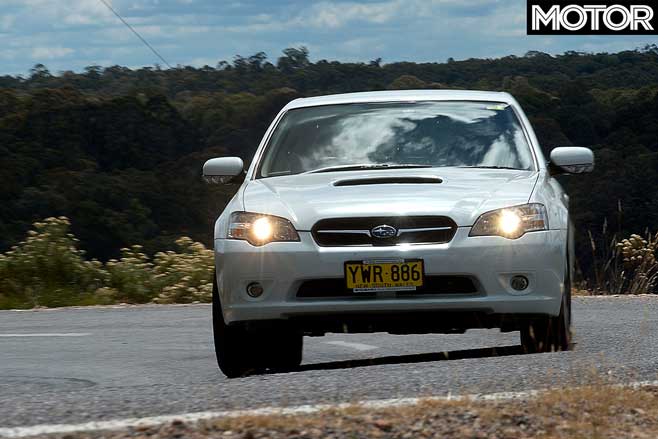
Exhibit A is Subaru’s Liberty GT – slowest over the standing kay, just 2km/h faster than the Astra, third slowest around Winton and no better than 15th in the seven time or speed tests. But it came back strongly at The Hillclimb with sharp steering, fine balance and great brakes. Its power still feels soft, but the less rushed nature of road driving allows more time to think about and play with the auto’s shift buttons.
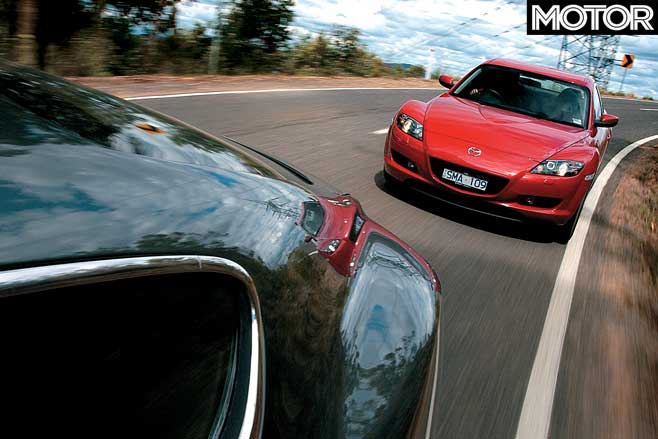
Another car that came back into the reckoning on the final day was the Mazda RX-8. The fact that it sneaked ahead of more fancied machinery at Winton helped to raise the level of respect for its dynamic properties, but it wasn’t until the run up the hill that the RX-8’s true colours began to shine through with any great clarity. With direct steering and a superbly balanced chassis, you can take great liberties in the four-door Mazda. With an ultra-low centre of gravity, its body remains remarkably flat during cornering and the suspension soaks up any bitumen nasties with excellent control.
The RX-8’s relative lack of grunt is no less evident on the road, though. To tap into any meaningful performance, you’ve got to be prepared to wind the rotary to the heavens. By the time you’ve got it percolating, its rivals are down the road somewhere.
The Holden Astra SRi Turbo is a perfect example of why PCOTY is not merely a track-based competition. Finishing dead last at Avalon and Winton, it felt agile and fleet-footed. The steering rattle was more obvious, there was less push, but the long and rubbery shift kept calling at every change. The brakes felt better, but it could still use more squirt.
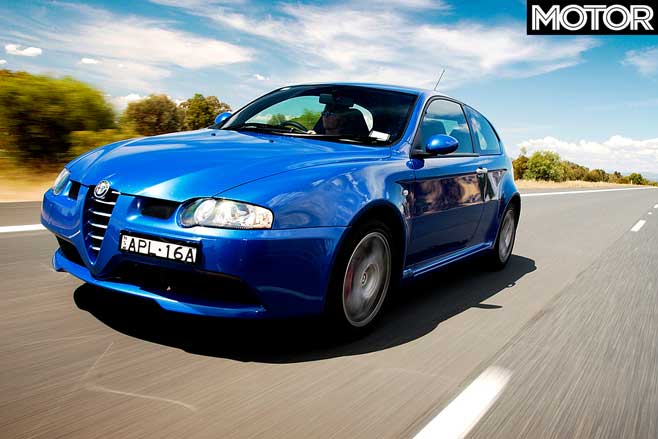
Not so the Alfa; there’s enough wheelspin already, thank you. Its chassis seemed to be constantly fighting the weight of its V6 engine, pushing wide early and refusing to regain its line until power was cut altogether. Placing its considerable (by hatchback standards) reserves through the front wheels also exposes weaknesses in the form of torque steer when you get on the power hard out of tight corners.
And it was the one voted less able to handle a pothole. Remember that crashing sound? It was describing the Alfa, which lacks control over broken sections of bitumen, with an apparent lack of travel, especially at the front.
The Chrysler Crossfire might have had more mechanical grip than MT on the Lambo’s key, but its wide, low-profile hoops crash over bumps almost as badly as the Alfa. There’s no disguising its origins. Heavy throttle springing, slow steering, notchy gearshift and an ESP system that cuts in even when you’ve thumbed it off are all long-time traits of the soon-to-be-replaced Mercedes-Benz SLK.
Add a chassis devoid of much feel and a 3.2-litre V6 engine that lacks for grunt at the top end and you begin to understand why it didn’t fair too well on the road in this company. Actual on-the-limit handling is pretty good, but there’s not enough communication being fed back for you to really enjoy it. The Crossfire scores four yawns for excitement.
CSV’s grunting Mondo felt completely at sea on the hill, but ironically it also seemed even faster than on the track. Its enormous underbonnet reserves spear you up the road at a ferocious rate and its brilliant brakes wipe off speed in masterful fashion, but the slow-witted, remote steering just can’t keep up once you’ve lined up an apex. There’s lots of initial understeer, but once committed in a corner you have to be very careful with the application of power.
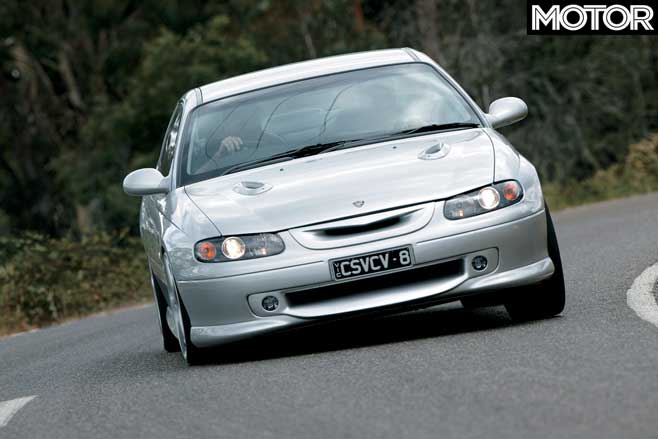
Too much too soon and a surge of torque heading toward the rear wheels sees the Mondo’s tail hang wide with little warning at all. A lack of suspension travel also had the Malvern Marauder crashing against its bump stops and feeling anything but composed. It’s challenging and fun in a curious kind of way, but I never felt comfortable – not with Evans looming large in the mirrors behind me in the HSV ClubSport R8, at any rate!
You can’t argue with the efforts of the Jaguar XJR’s gutsy supercharged 4.2-litre V8. Not when it’s mated to the world’s best six-speed automatic gearbox. The Jag steers accurately, but the weighting isn’t there to back it up. As such, your inputs need to be finely measured to get the best from it.
The long-travel suspension is marvellously comfortable but just a little too soft when you’re hurrying along, with the odd moment of float before settling down over rough roads. The XJR approaches the outer boundaries of adhesion in a nice, progressive manner – but it’s hard to get excited about it doing so. Bloody nice thing, though.
The same could be said for the Volvo S60 R. It might be reasonably quick on the straights and grippy when the road is smooth, but there are far more rewarding (not to mention more keenly priced) alternatives here. It suffers from anaesthetised steering, a rather slow gearchange and a computer-controlled suspension that can’t quell vertical movements sufficiently in any of its three settings. As one judge moaned, “show me feel, show me directness, show me control”. Sadly, the Volvo is deficient in each of them.
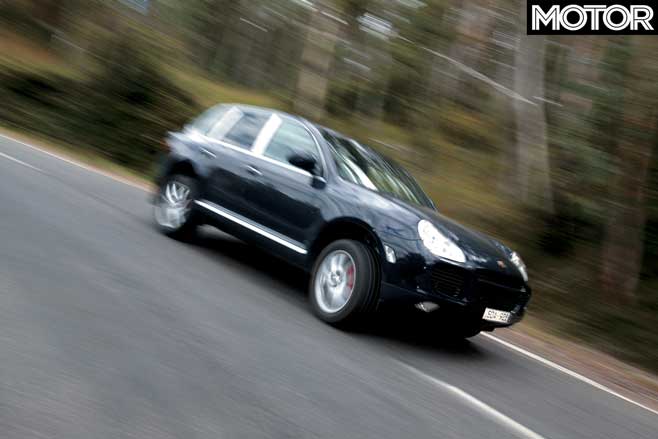
By far the most contentious of this year’s PCOTY entrants, the Porsche Cayenne is proof, if ever you needed it, that mud-slinging off-roaders make lousy performance cars. The Cayenne gathers speed like a runaway train and stops just as impressively, given that it weighs well over two tonnes. But on the road it rolls with conviction and the front end eventually squirms into progressive understeer with powerdown. It’s got wonderful suspension control for such a big beast, though, but the seats lack for lateral support when you’re really on it. It’s a petrol-slurping dragster wrapped up in a military uniform.
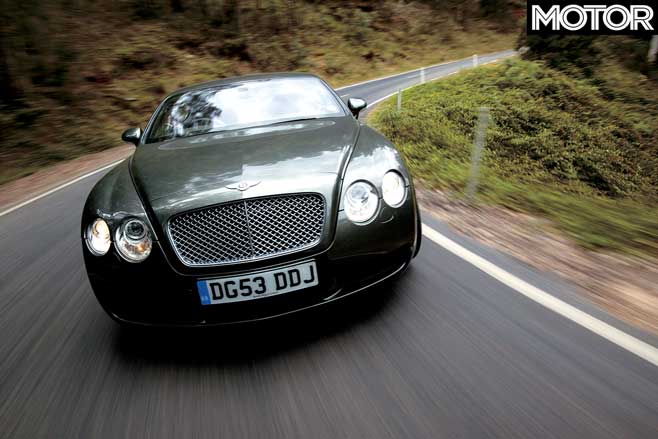
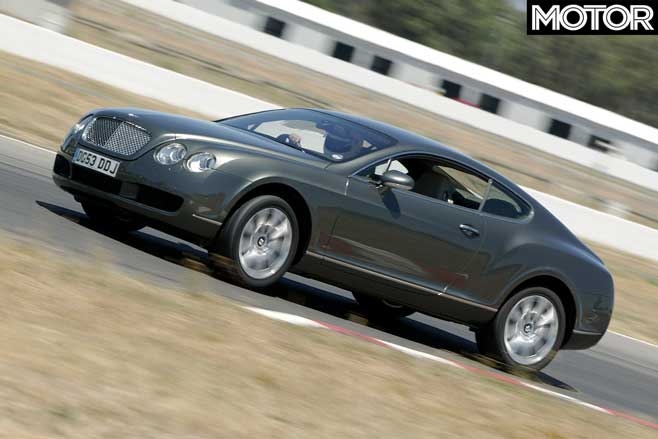
It mightn’t have been the tidiest car up the hill, but the Bentley Continental GT put a huge smile on the face of each and every one who drove it. Incredibly and effortlessly fast in short bursts, you quickly learn to keep a watchful eye on its speedo; what feels like 100km/h is often a lot more! Floor the throttle and it surges forward with all the athleticism of a big-engined sports car, albeit in complete silence.
Problem is, it does this without delivering any meaningful feedback. You know you’re travelling quickly, but at the same time you’re mindful that it’s not delivering the full story. The steering is light, and it fails to communicate its actions with any great clarity. The air suspension is actually quite impressive in sport mode, where it manages to control body movements with authority over fast, open roads.
In the end, however, the big Bentley just can’t hide its mass. It weighs 1000kg more than the BMW M3 CSL, for God’s sake! Its weighty engine is mounted well forward of the front axle line, placing lots of mass where you really don’t want it to be. Pitch the Conti at a tight apex and, while its huge tyres manage to put up a good deal of resistance, they just can’t oppose the laws of physics. In the end, a combination of increasing body roll and all that weight pushes the front end wide.
Most of the judges reckoned the BMW Z4 provided the most fun. Its 3.0-litre six is the perfect companion to the German roadster’s delightfully adept rear-wheel-drive chassis, with a typical rev-happy nature and enough torque at low to middling revs to ensure solid punch out of corners. Accurate and superbly weighted steering, along with excellent body control and high levels of grip, let you exploit its handling to the full without feeling like you’re about to come undone in dramatic fashion. It’s certainly not the fastest, but on a challenging road the little BMW is the real deal.
Drive the 4.2-litre V8-powered Audi S4 up the Hillclimb after the Mazda RX-8, as I did, and you quickly become aware of just how disparate some of this year’s PCOTY contenders are. The Audi has power and torque in places the RX-8 can only dream about. This made the S4 more tolerable in real-world conditions, although few of the judges would contend that it was any quicker over the course.
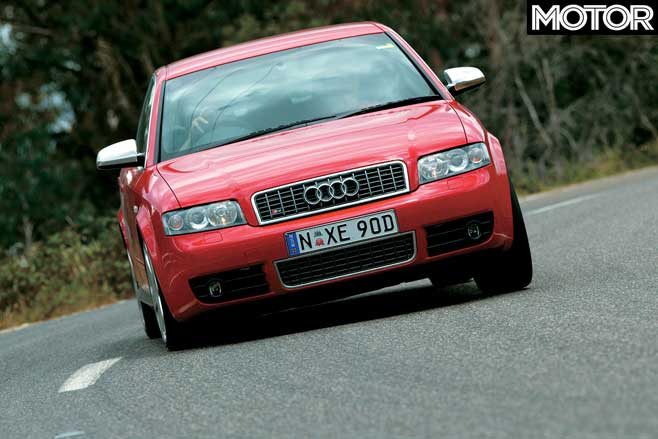
The trade-off is more body roll, but few cars manage to place their power to the ground or offer up such high grip levels as the S4. Cam tried to disprove that opinion by dropping a rear wheel onto the dirt around a sweeping right-hander and having the sliiiide of the day. And if a pro said it was big, we were all cursing that we weren’t on that corner to see it!
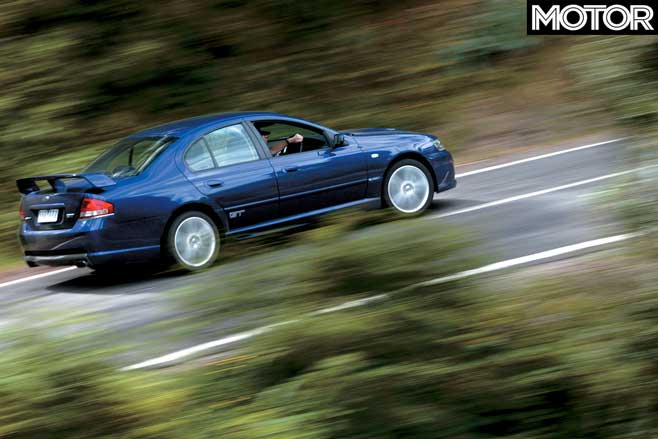
The HSV versus FPV form at Winton continued at the Hillclimb, where the Falcon GT lacked the dynamic presence to see off the well-sorted ClubSport R8. While there’s no doubting its power, the Falcon just can’t seem to get its reserves down as well, either off the line or over twisty terrain. Nor is the FPV as poised as the HSV when approaching its limits.
When pushed hard, the GT is subjected to noticeably more body roll than the well tied-down R8. Both cars are big on entertainment value, though, with progressive power on oversteer out of tight corners. Still, when push comes to shove the Falcon feels less forgiving than the remarkably adroit Clubbie.
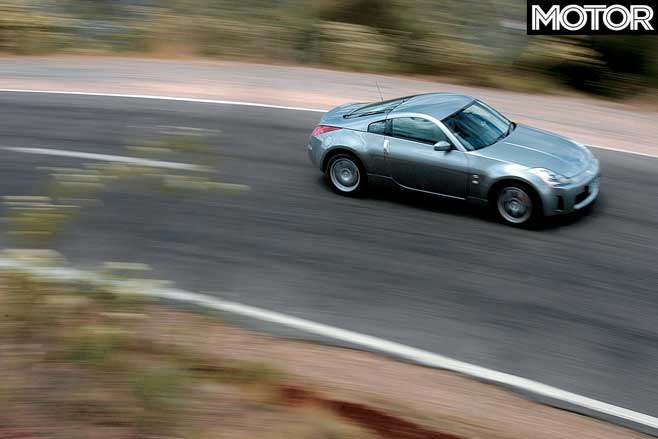
While the HSV was always high on the judges’ mental list of potential finalists, that was far from the case with the Nissan 350Z Track after the first two days. The Japanese coupe had only managed to manoeuvre itself into the top half of the PCOTY field on the strength of its heightened handling at Winton. Could its ascendancy continue at The Hillclimb? Yes and no, as it turned out.
In terms of driveability, the rear-wheel-drive Nissan was one of the real standouts. The flexible nature of its engine and the snappy feel of its six-speed manual gearbox allow you to build speed with utter confidence. But despite accurate steering and a chassis that keeps body movements to a minimum, its ride is too firm and lacking in compliance for the road, where its progress is easily upset by camber changes and broken surfaces. The 350Z is great when the road is smooth, but less than convincing on rougher surfaces.
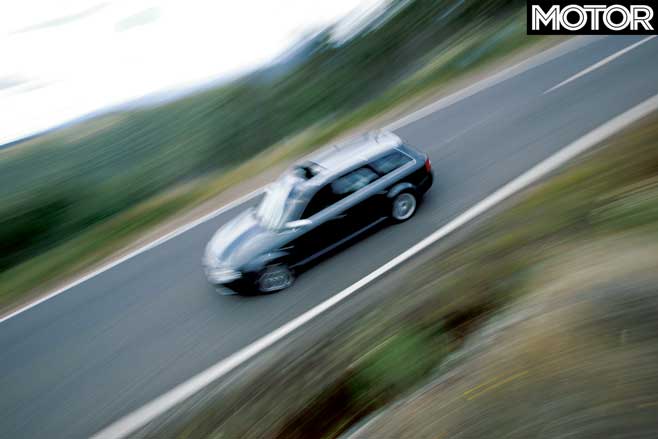
The Audi RS 6 also continued its impressive run by romping the 16km in spectacular fashion. No one expected the Ingolstadt stormer to do quite so well at Winton, where it bagged a top three spot. If anything it felt even better suited to our road course. It didn’t lack for pace or traction, despite having a hefty 1865kg to haul.
The way it gets its reserves down in such clean and clinical fashion on rough roads is quite amazing. Had it been raining, only the Gallardo would have stood a chance against the RS 6. It almost didn’t stand a chance when Jesse came close to a head-on in it with the Gallardo, which was charging vigorously. We won’t name names, but let’s just say his initials are the opposite of ‘full’…
As Jesse will attest, while the RS 6’s steering is direct in its actions, it doesn’t communicate with quite the same clarity as some of the more fancied cars in this group. Turn-in is also a little slow. However, once you’re committed there’s heaps of grip. You simply place the RS 6 in a corner and it resolutely sticks to its line. Nice ride, too. If ability and versatility are what you’re looking for, there may be no better performance car on the planet right now.
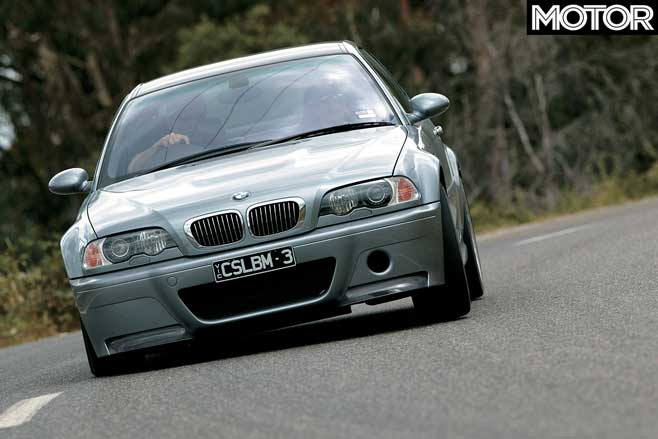
The M3 CSL had perhaps the most to lose. Engineered primarily as a track racer and running on Michelin Pilot Cup tyres, its meeting with the road was heavily anticipated by the judges. But with one of the world’s best road car engines, an idiot-proof gearchange, extraordinary chassis balance, big brakes and accurate steering, the lightweight M3 hardly put a foot wrong.
Its only real failing was an underdamped feel on big bitumen corrugations or potholes, a drawback of its suspension being tuned primarily for smooth-surfaced track work, no doubt. Nasty bumps and ruts can knock it off line, and it gets a lot of lateral head-toss, but it’s remarkably well composed and a blast to drive hard.
Sounds dreamy, too, with the high pitch giving due warning to the road workers who’d decided mid-afternoon to patch a few of our prized potholes. But thanks to the BMW’s mechanical howl, instead of a ‘slow down’ sign, they gave us the thumbs up.
Just like the Lamborghini Gallardo, in fact. Imposing as it might look, it really is a peach to drive on the road. The shove provided by the 5.0-litre V10 engine is mind blowing – especially at the top end, which just never seems to end. Its soundtrack is quite special, too. I certainly wasn’t the only one to wind down the shallow side window just to sample the Sant’Agata supercar howling at 8000rpm off the rock-face walls at close range.
What moulds the Gallardo’s on-road character the most, though, is its four-wheel drive underpinnings. They allow you to place all of the engine’s mighty reserves to the ground in a measured and confident manner. There’s no theatrics here. The chassis is superb, providing the best balance between front-end bite and rear-end grip of any car assembled here.
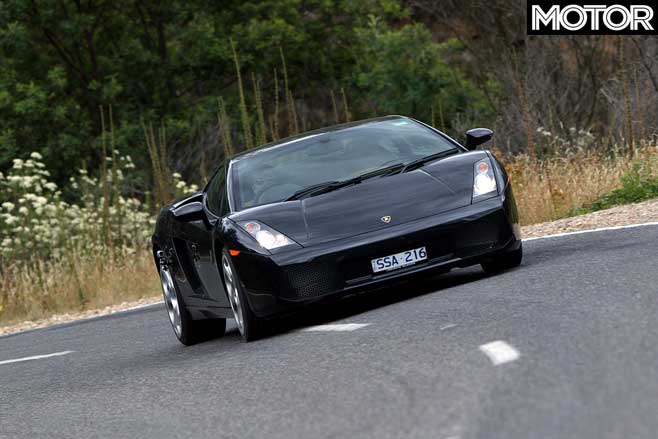
It’s also adjustable when the limits of adhesion are exhausted through deft steering wheel and throttle inputs. Ride is surprisingly compliant for a car in this exulted league – the suspension being firm but not crashy when the surface deteriorates. This inherent firmness also keeps body movements to an absolute minimum. And what brakes! If only all cars stopped like the baby Lambo!
Still, there’s a price for the excellence, an eye-watering $190,000 more than the already hugely capable and confidence-inspiring CSL. So, despite its immense ability, the Gallardo is anything but a shoe-in for the title at this stage.
So, 19 cars down, and three days of testing are over. It’s time to head back into town for another $1000 refuelling stop and to whittle the field down to the six distinguished finalists.
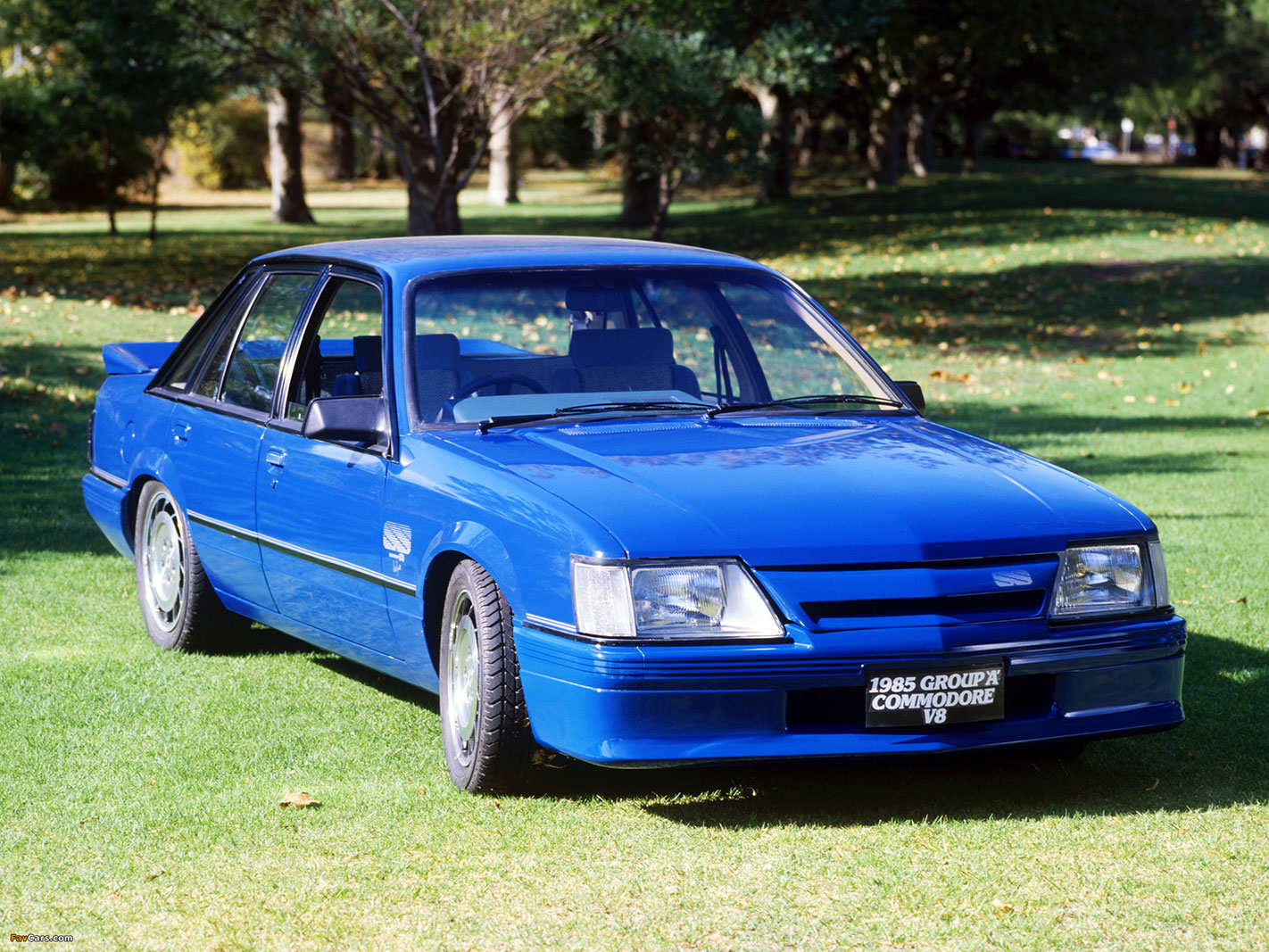
Holden VK Commodore
I just love them. A mate (US-based Aussie businessman Kenny Habul) has a VK Calais Director over here and it’s unreal. I had a couple of five-speed manual VKs back in the day, and I actually have a mate looking out for one for me at the moment. Not ‘cost no obstacle’ but I’d pay good money!
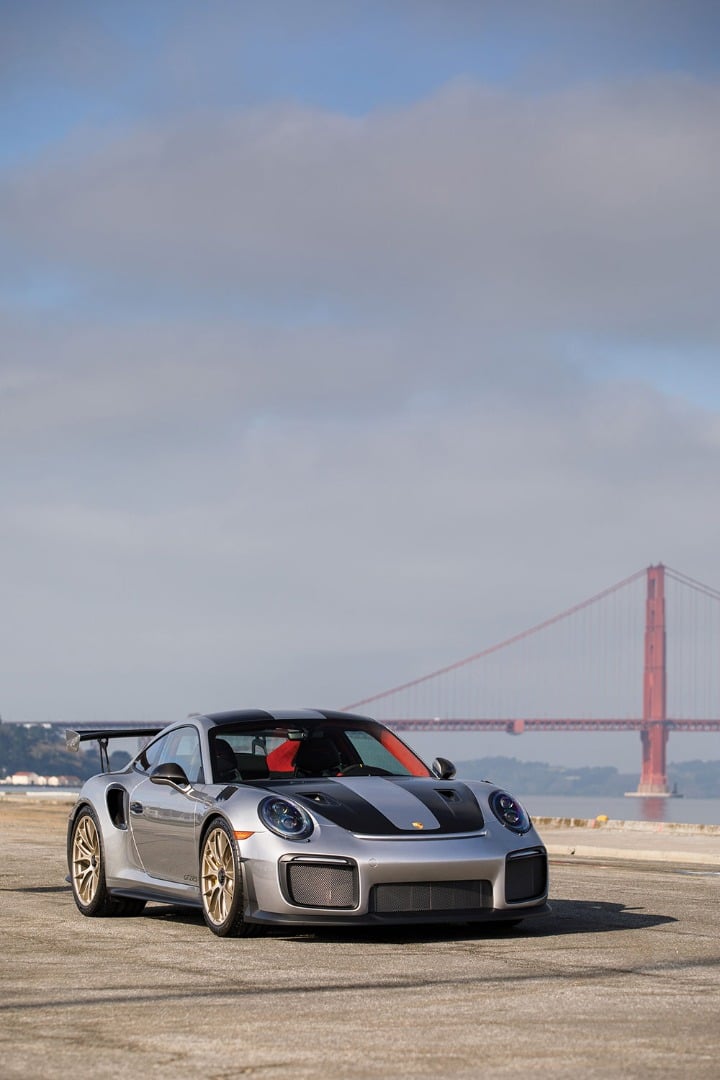
Porsche 911 GT2 RS
I’ve got the current model at home in Charlotte; slate grey, with black wheels and carbon brake rotors. It’s pretty much a race car for the road. I wanted to spec it with the Weissach pack, but US law says you’re not allowed to have it with the titanium roll-cage here in the States, which is a bummer.
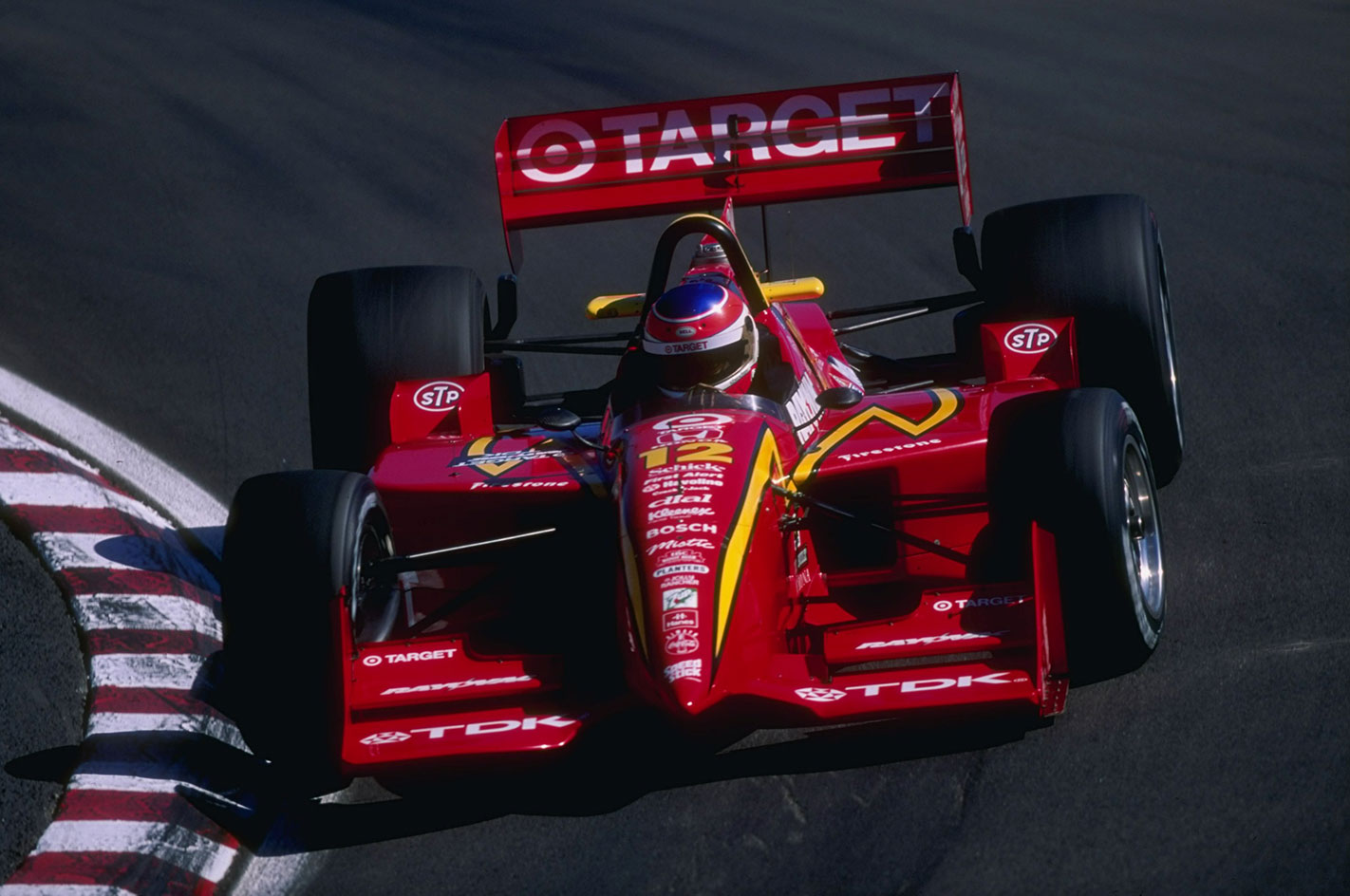
1996 CART Car
Oh man, they were just the best. They were a bit before my time, but I remember watching them race at Surfers Paradise. They ran turbocharged V8s at like 17,000rpm on 22psi of boost, and you could hear them on the other side of the Southport bridge. Just amazing.
Morley’s the bloke at MOTOR who has probably forgotten more about cars than the rest of us can remember. Living though the 1980s might not have helped there.
But his columns are always an insight for the younger folk at MOTOR, which happens to be all of us.
Here’s a collection of his thoughts through the year of 2019, from dangerous driving to being a connoisseur of old cars.
01 – How to write a good car classifieds ad
Not just a good column, but genuinely useful advice from someone who lurks the classifieds regularly.
02 – Interviewing Kimi Raikkonen is excruciating

“I scored a three-minute interview slot with Kimi Raikkonen… Christ, what a train-wreck.”
03 – The 40km/h speed limit law for passing emergency vehicles is dangerous
Victoria’s speed limit law is a danger to everyone on the road.
04 – Are dual-cab utes increasing our road toll?
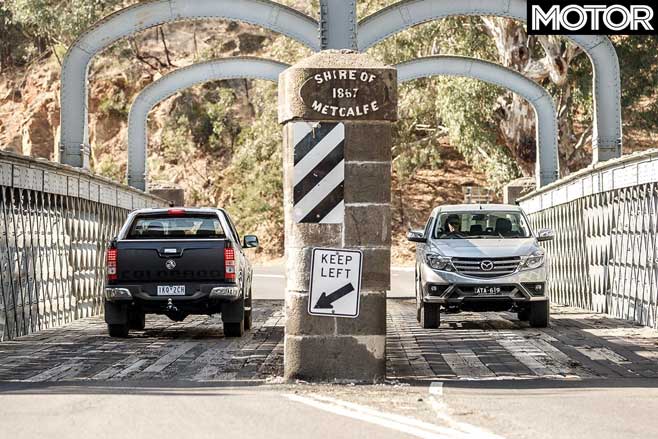
The most divisive column we’ve published this year.
05 – Remembering Malaysia’s forgotten hot-hatch hero
You kids ever heard of the Proton Satria GTi?
06 – Fake news is everywhere

From lifestyle television shows to political PR spin and EH Holden brochures, the world is full of fake news.
07 – How to avoid road rage situations… sort of
There is an easy solution to avoid being the target of road rage. Don’t be ‘THAT guy’…
08 – Buying a car is easier than buying an appliance

Turns out buying a fridge wasn’t as straightforward as buying a car. That, or Morley’s just really not a fan of salespeople.
09 – Some drivers are not meant to be on the road
A chance encounter with an oblivious driver has Morley wondering how some people allowed to drive.
10 – Converting a classic into an electric car isn’t cheap
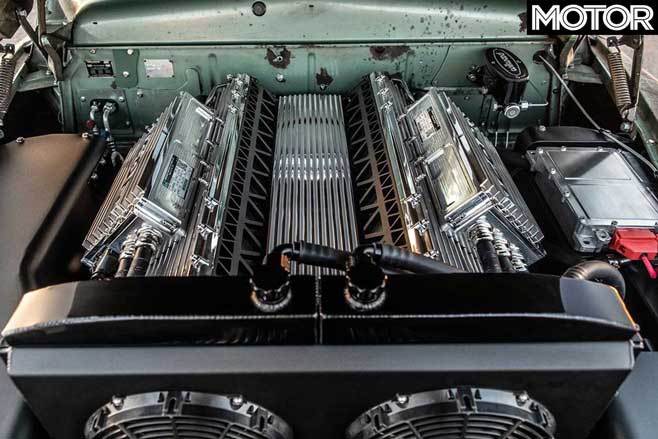
Morley’s electric dreams get a cold shock of reality.
11 – The motoring equivalent of pill testing
Rather than stop others from having fun, why not create a safer avenue for it?
12 – It was the Americans who inspired the SUV coupe trend
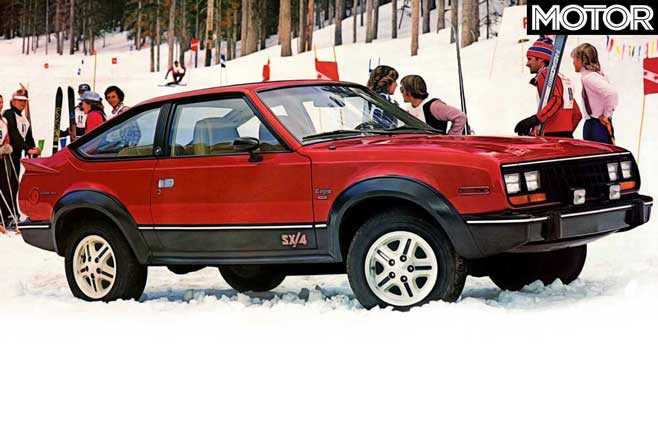
The Germans might be responsible for starting the SUV coupe trend of recent times, but its origins can be traced across The Pond.
13 – Can we bring back our manufacturing industry?
Australia’s manufacturers don’t need to look far for the solution, we just need to export a problem.
14 – How to make train travel more fun
Morley’s solution gives “railroad cars” its literal meaning.
Winton is not Australia’s best racetrack. Harsh but true. There isn’t a high-speed straight, there’s little character, it’s dry, brown, dusty, remote and almost always hot and unpleasant.
This feature was originally published in MOTOR’s April 2004 issue
If you nominated Winton as your favourite track, you’d have as many rocks in your head as a gravel trap. But the majority of Victoria’s V8Supercar teams use Winton as their official test loop because, like it or hate it, the 3km national circuit is a tough, tricky technical challenge that tests engines, gearboxes, tyres and brakes through a good mix of slow, medium and fast corners. Perfect for PCOTY! A quick time is under 1min 40sec, while the PCOTY record is 1:36.35, set by Porsche’s stonking 911 GT2 in 2002.
Just one of the judges officially races the clock. Cam McConville is given an out lap and two fliers to squeeze out a hot time – itself a sub-test of a car’s ease of driving. The other six judges use the track to push each in an arena that’s safe and controlled. All for science and quantitative comparison purposes, of course. At the end of the day we combine Cam’s times and comments with our own thoughts and arrive at a general assessment and agreement of each car. And those who don’t agree with the majority are shouted down and/or beaten.
With that mindset, and 45psi hot pressure in all its tyres, the smallest fish jumped into the big pond. Holden’s Astra SRi Turbo, the Current Bang For Your Bucks champ might have been 19th fastest from 19, but it didn’t feel it. As one of only two front-drivers in the field and the cheapest by almost 15 grand, the lone budget banger Astra faced a tough job to impress.
Its sharp throttle response and torque allow for a higher gear, though the steering is a little slow and its soft suspension lights up the inside tyre. “It likes longer radius medium to high-speed corners,” said Cam. If it’s a consolation for the wooden spoon, the Astra Turbo feels faster than its lap time suggests.
Certainly much nicer than Alfa’s Romeo 147 GTA, the other front-driver that’s $23,000 more and just 0.9sec quicker on lap time. A glorious engine with thrumming tunes and torque everywhere, its steering is super-sharp, but its suspension super-sux.
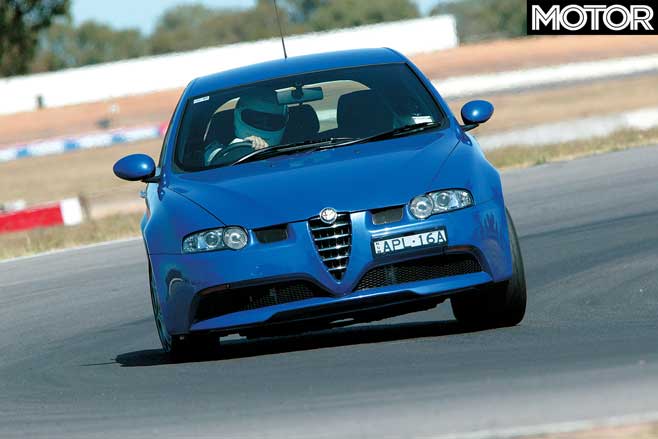
Apart from yawing and twisting around the vertical axis mid-corner, it combined turn-in oversteer with power-on understeer – and lots of it! Hitting kerbs was like riding a jackhammer and its 300Nm at 4800rpm laid down black strips on most exits. And ASR would stamp on the brakes when it thought the driver had run out of talent – which was sometimes good, but more often bad. Not fast, but a bit of fun.
Rather a contrast to the Subaru Liberty GT. The fact that it wasn’t slowest around Winton was a surprise following its modest straight-line speed. Put it down to the sharp steering, strong brakes, a well balanced chassis that held good corner speed and 180kW, giving it a slim 0.2sec advantage over the Alfa. An impressive road car, but uninspiring around Winton.
The more competent, more involving (but double the price!) Volvo S60 R scraped into 16th spot ahead of the Sooby by just 0.06sec. Another all-wheel-drive turbo, its five-cylinder engine drone was more pleasant from outside than in; not so the park-bench levels of upper body support.
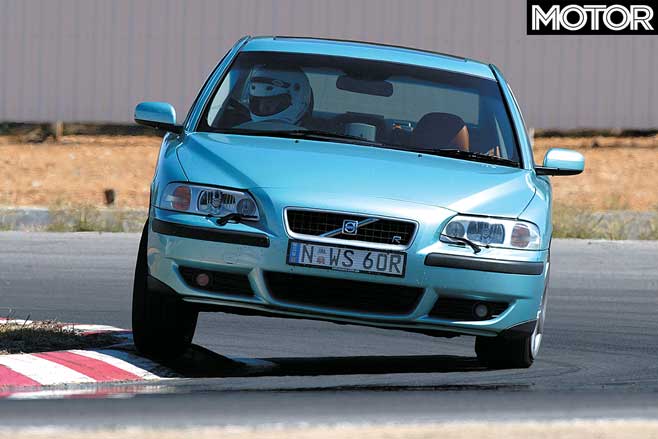
The trippy shifter shuffled through gears smartly, but high-stepping clutch action made smoothness more of a chore than a challenge. Sharp steering wasn’t the only advantage of the 18-inch wheels; grip was strong and balance neutral with a trace of front-end push. Strong brakes weren’t enough to impress Cam, who said the S60 R was better suited to sweeping corners like Phillip Island.
The Commodore SS can feel a little unlucky, being pipped for 14th by Porsche’s Cayenne Turbo. The Aussie 5.7-litre sedan proved a decent all-rounder, but a little underperforming. Cam loved it (he should, he drives one daily), giving it the thumbs up for steering, balance and powerdown, but the majority of judges were twisting flat-hands, citing lack of speed, a slow shift and mild understeer among its main criminal accusations. The SS also seemed to tire quickly; by day’s end it felt sloppy, slow and weary. The SS might be a bit short of thrills, but it’s second best on bills.
Which leads nicely to the decadent $203,400 Cayenne Turbo. Despite having 331kW, the Cayenne’s got one problem – or, more specifically, 2355 of them. Kilograms. Not a lot of love for the fat chick, and though she sprints like an Olympian, there’s that important subject of corners and having to slow for them. Brakes were good on lap one but quickly started to overheat and shudder.
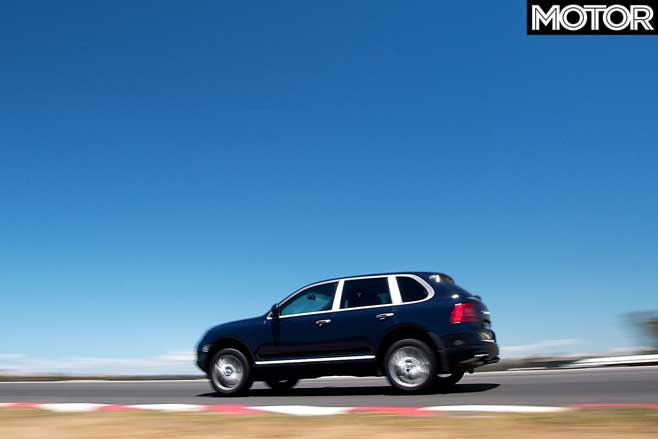
Changing direction was like turning the QE2 from port to starboard. And its insane speed and weight meant braking distances were doubled. The Cayenne might have been like the juggling clown at an X-rated party – there for novelty value – but its 1:46.12 lap walloped the BMW X5 4.6i from last year by 4.56sec. A lumping piece of lard, but a damned quick lumping piece of lard.
Marginally better was Jaguar’s XJR, and we mean marginally. Two-tenths faster, 298kW of supercharged V8 means little when it cuts power due to overheating. Just like last year. It also suffered from a tendency to spin an inside wheel, an unhelpful, confusing gearbox and brakes that went to lunch before we did. Next!
If there was one vehicle that contrasted the Jag’s lack of fun factor, it was FPV’s Falcon GT – the quintessential drift car. Beautifully balanced, heaps of torque, not a lot of rear grip and handfuls of steering angle meant it was a challenge (and a travesty) to drive the GT straight. So no one did. Especially MT, who claimed the first spear-off of the day while trying to drive it at a 100-degree angle.
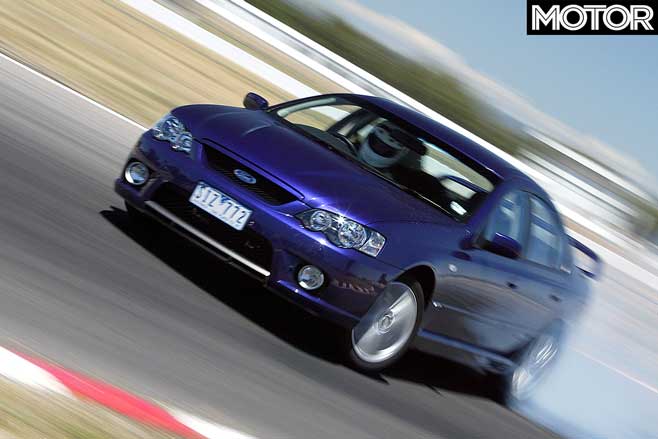
A great soundtrack kinda distracts from the lack of mid-range urge. And the average two-three shift. Steering is a little vague, there’s a frustrating lack of redline or limit marking, and it had serious issues with powerdown and a quick lap.
It was too easy to oversteer, with the norm being screeching levels of full opposite lock, smoke-churning, koala-scaring, engine-on-limiter oversteer from entry to exit. And the GT soaked it all up without a complaint. Only okay fast, but two-thumbs-up fun.
BMW’s Z4 was almost the anti-GT, with a modest 170kW from its 3.0-litre six and a chassis that felt like it was magnetised to the track. Cam was begging for more power, which was a sign that (a) the chassis is sweet and (b) BMW’s two-stage traction control wasn’t fully disabled, which would have easily dropped a second.
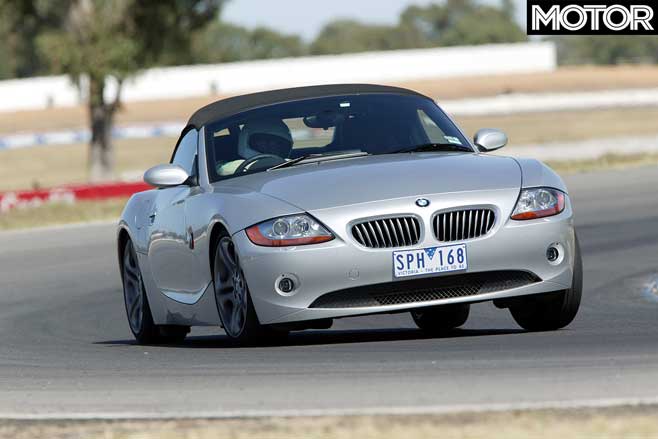
Cam sprouted “very neutral”. A good all-rounder with a spread of power and gearing that seemed well suited, despite a notchy shifter, with great turn-in, nimble steering and glued powerdown. Still, it was relatively slower here than at Wakefield Park in BFYB, which indicates that it prefers faster corners. The Z4 was also the first real sign that we were getting to the good stuff.
Almost. Then there was Bentley’s Continental GT, which scraped into the top 10. And we all looked at each other, shaking heads. The porker of the field with a lardy 2410kg, it’s a big, heavy barge but impressively doesn’t feel like it. Nimble isn’t right; try ‘not as bad as you’d think’.
The ginormous 405mm front rotors were fine, but the pad compound struggled. And after just two laps the temperature needle climbed into the red. Cam summed it up: “It’s impressive for the weight, but if I spent $400,000 on a car I’d have the Lambo.”
Chrysler’s Crossfire evoked mixed feelings. Cam labelled it forgiving and docile; everyone else was less PC, proclaiming it dull. Two-stage ESP cuts the fun, the steering is woolly, the brakes don’t inspire confidence and it sounds a bit flat. The surprisingly quick 1:44.8 lap was down to its good balance and loads of tyre grip.
Cam added: “The rev limiter’s so soft that the engine just disappears and you wonder what’s wrong. It’s easy to drive at 9/10ths, but unrewarding and understeery if pushed more.” Easy to drive fast, but barely raised the pulse above idle.
If it’s all about intensity of the drive, this is where 9400rpm of chimed redline rotary in Mazda’s RX-8 shines. With a beautiful chassis, precise steering, great brakes and awesome powerdown, the fact that it was only two-tenths quicker than the ‘Misfire’ dropped jaws.
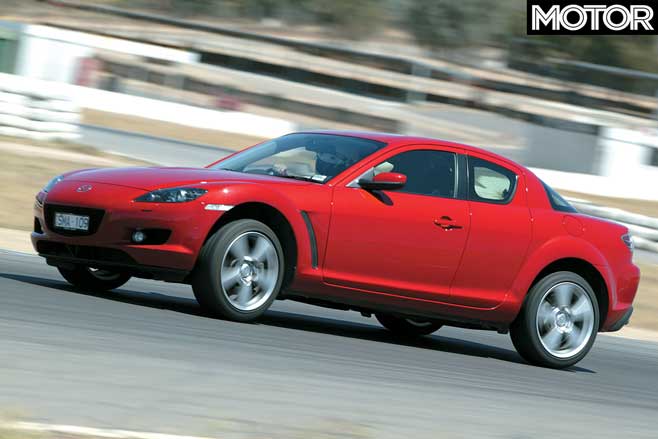
The seating position is perfect, but it’s a little twitchy on the limit, and there the DSC (even deactivated) rams on the brakes if there’s too much yaw. Very easy to drive and a lot more fun, it just didn’t have enough squirt pulling out of Winton’s many tight corners. Please, Mazda, bolt a blower on it!
Audi’s newest baby, the S4, also suffered turbo envy simply because its big brother, the RS 6, was here. Grip was good, thanks to the driving-fast-for-dummies quattro system, and the silky, throbbing 4.2-litre V8 revved oh so smoothly, even if it didn’t do a lot above five grand. But the shifter was overly springy, as was the clutch action, challenging smooth downshifts. Yep, it did understeer, and the steering was a little slow, while its lack of top end disappointed some in power, if not noise. The S4 proved that one man’s dull was another man’s delight, and seventh fastest was deserved.
HSV’s ClubSport R8 was harder edged, the first of the big-bangers. Quite a complete package, the R8 had good turn-in, grip, with a touch of early-corner push, before settling and sinking in the rear on exit. The mid-range grunt is thick and it loves a rev, the extra few hundred from HSV helping a lot. It rarely felt short of urge, the brakes stood up to all but Cam’s punishment, and it rated high on the funzo scale. Back pats to HSV.
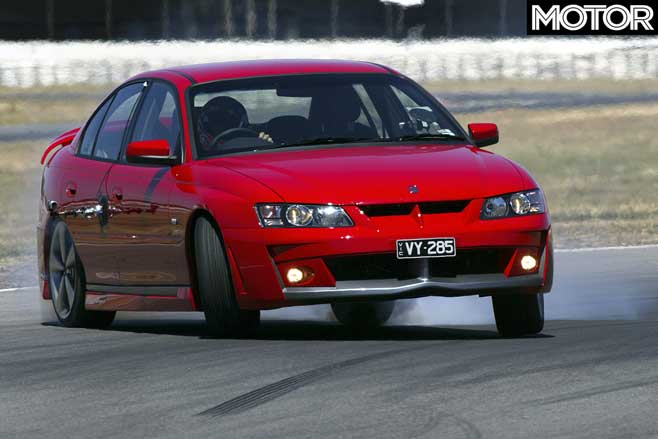
With 79kW, 147Nm and two cylinders less, plus a weaker weight-to-power ratio, it was a damned impressive feat when Nissan’s 350Z trumped the R8 by more than three-tenths. Cam was indifferent: “Underwhelmed. Braking is good, but not up to the RX-8. A little boring because I had a third more understeer, which probably means it had more rear grip. Another car where a secondary DSC jams on the brakes at times of extreme stress – but it’s here when the fun starts.” Or, thanks to DSC, stops.
The Z is a more masculine car than the RX-8; its engine, gearshift, brakes and steering are all a level firmer and gruffer. Fifth fastest, Z sure ain’t dead, showing plenty of speed.
‘Plenty’ isn’t nearly enough for the Monaro-based CSV Mondo GT370R. With a thunderous 370kW and 580Nm on offer from its 6.5-litre Gen III, being eight-tenths faster than the HSV is impressive more because of its weaknesses. Of the go/stop/corner trio, two out of three ain’t bad, but it ain’t ballet, either.
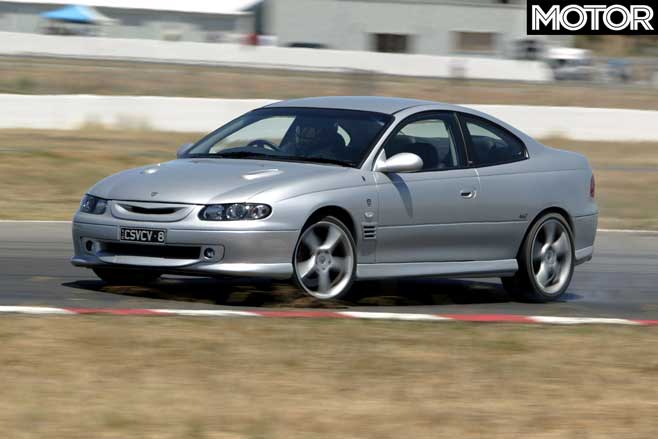
The CSV is simply a bullet down the straights, with incredible, powerfully effective brakes that relish a rogering. But its slow-rack steering and softish handling were proof of its test mule status and age.
With little relative grip, getting the power down was a lesson in throttle control, as Strap-On found out big time! Cam said: “You feel like you’re driving in the wet; you have to feather the throttle.” In fact, it felt quicker (and safer) with the traction control on.
Audi’s RS 6 grabbed the lap dash bronze medal, six-tenths clear of the Mondo but a massive 4.6sec off second place. And did it on its back, hands behind head.
“It’s good to see Audi has made something that puts a smile on your dial,” spilled Cam of the 4.2-litre, twin-turbo quattro supercar. “It’s awesome. By far the best Audi I’ve ever driven. It’s got so much more power, it’s less understeery, has heaps of mid-corner grip and the engine is just awesome with so much torque – and you can hear it. Fantastic!”
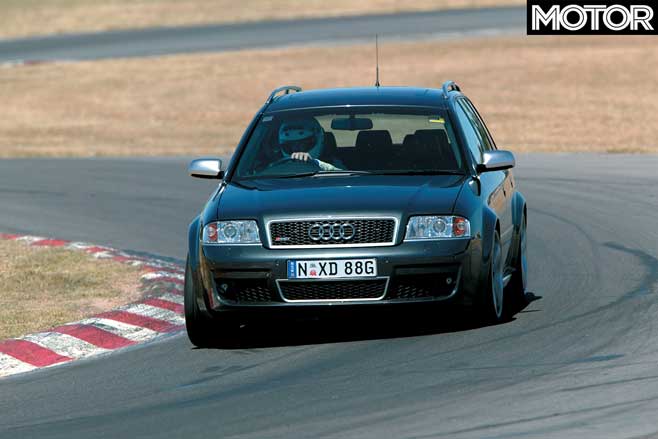
The RS 6’s turbo grunt launches it from corners with a remarkable resistance to understeer, and the top end belts out with a deep, throbbing blast, upshifting automatically, but inviting manual downshifts while stamping on the brakes, which faded slightly after a decent punishing (thank that 1865kg). Even with its quick 1:42.09, it surprised us to discover the RS 6 didn’t even break into the all-time top 10!
It took the agile and amazing Lamborghini Gallardo to do that, slipping into a clear fourth in the all-time top 10, and runner-up in this year’s field.
Simply amazing, the Lambo sliced around Winton like a pro. There are just so many reasons why the Gallardo is fast: 5.0-litre V10, 367kW, 510Nm, just 1450kg, fatter track than a Commodore or bulldog-like RS 6, wide 19-inch rubber, all-wheel drive with 70 percent rear bias. But what really boils the lobster are the brakes; 365mm front and 335mm rear ventilated and cross-drilled rotors, eight-piston front and four-piston rear calipers are just so damned effective that they almost stop time!
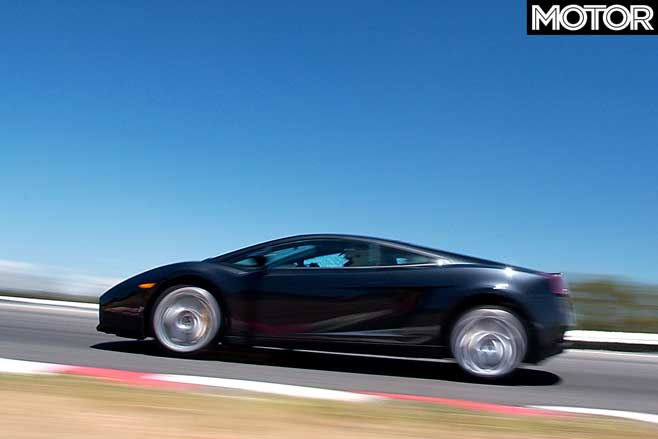
There simply isn’t a road car we’ve driven that stops better than the Gallardo; a heavy shove on the skinny middle pedal just sinks the nose into the tarmac like the index finger of God is pushing against the windscreen.
Turn-in is intuitive, the rear drifts a touch to banish the thought of understeer and the quick steering (2.3 turns lock-to-lock) seemingly pulls the nose towards the apex. The immense grip, chassis balance and torque split take care of the high mid-corner speed and once the apex is nailed, so’s the throttle. On the limit the tail slides just a touch as the front is already pulling it back into line, all the while as neutral, addictively electrifying yet easy as anything we’ve ever driven.
With highlights like the perfect seating position, Cam was smitten: “It looks like it might be fearsome to drive but it’s not. It just dangles the carrot – ‘go on, a bit more, a bit more’ – each lap.”
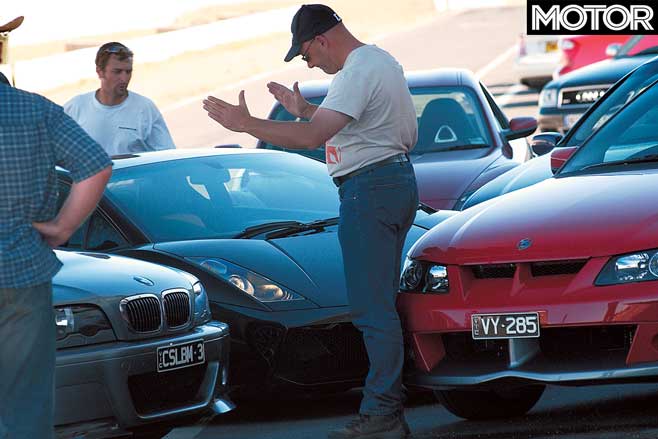
It wasn’t all sugar and spice, though, the shifter proving a pain constantly baulking the second-to-third shift like an XR6. Cam’s forced solution was to double-clutch during the upshifts, losing at least a few tenths. “Certainly the biggest grin factor by far,” he added. “And the sound is even better than the M3.”
Not so its lap time, though. A clear half a second faster, the grand champion of Winton 2004 is BMW’s glorious M3 CSL.
“Where can I get one?” was Cam’s first question. “Or more importantly, how can I afford one? It’s probably the most spot-on road car I’ve ever driven around here. It feels like a race car; it brakes unbelievably well and it even blips the throttle. And it’s so consistent.”
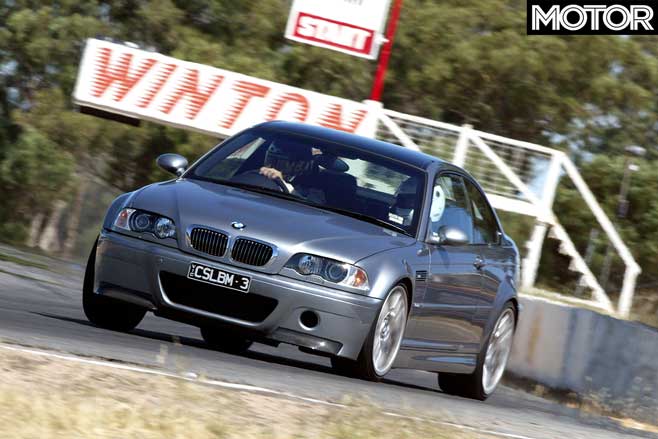
Of course, the sticky Michelin Cup tyres are made for hot lapping, and though some reported a dead feel on turn-in, they’re probably good for at least a second a lap. Maybe two. But it’s not just the tyres; it’s also easy to drive, with fantastic balance and an innate way of making you feel like a racer.
The sound is pure sex – a high-pitched, thrumming wail that sounds like it’d shatter glass. If the Lambo sounded best from inside, the BMW was the pick from pitlane. The SMG gearbox works a treat, allowing downshifts before the corner, while the single-piston 345/328mm brakes hung in impressively well.
Difficult to fault, its pace was only slowed through the old turn one, which demanded third gear but forced it out of its happy power zone. With a 1:37.06 lap, any car that can match or beat a Porsche 911 Turbo and Lamborghini Gallardo is a deserving track champion. M3 CSL, a gold medal performance.
PCOTY 2004: Winton Lap Times
| u00a0 | Car | Lap | Gap |
| 1st | BMW M3 CSL | 1:37.06 | u00a0 |
| 2nd | Lamborghini Gallardo | 1:37.51 | +0.45sec |
| 3rd | Audi RS6 | 1:42.09 | +5.03sec |
| 4th | CSV Mondo 370R | 1:42.71 | +5.65sec |
| 5th | Nissan 350Z Track | 1:43.18 | +6.12sec |
| 6th | HSV ClubSport R8 | 1:43.50 | +6.44sec |
| 7th | Audi S4 | 1:44.31 | +7.25sec |
| 8th | Mazda RX-8 | 1:44.62 | +7.56sec |
| 9th | Chrysler Crossfire | 1:44.87 | +7.81sec |
| 10th | Bentley Continental GT | 1:45.03 | +7.97sec |
| 11th | BMW Z4 3.0i | 1:45.28 | +8.22sec |
| 12th | FPV Falcon GT | 1:45.57 | +8.51sec |
| 13th | Jaguar XJR | 1:45.94 | +8.88sec |
| 14th | Porsche Cayenne Turbo | 1:46.12 | +9.06sec |
| 15th | Holden Commodore SS | 1:46.13 | +9.07sec |
| 16th | Volvo S60 R | 1:47.00 | +9.94sec |
| 17th | Subaru Liberty GT | 1:47.06 | +10.0sec |
| 18th | Alfa Romeo 147 GTA | 1:47.22 | +10.16sec |
| 19th | Holden Astra SRi Turbo | 1:48.14 | +11.08sec |
PCOTY 2004: The Professional Opinion
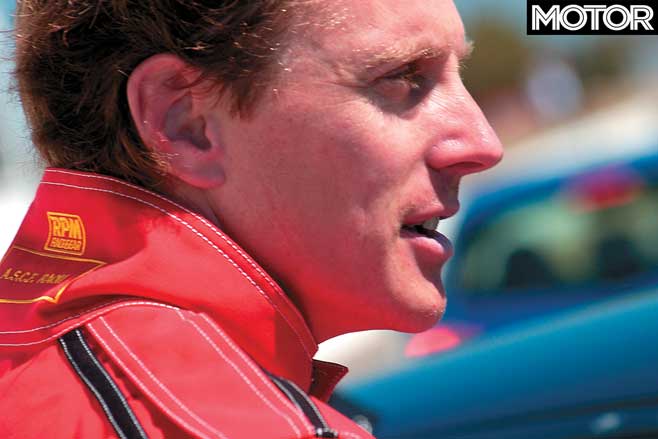
V8Supercar race driver Cameron McConville spills his speed beans
Holden Astra SRi Turbo “A really good engine, but it doesn’t like the tight stuff. It’d be 50 percent better with an LSD.”
Alfa Romeo 147 GTA “Really aggressive on turn-in. The engine sounds fantastic; it just needs a bit of suspension sorting. A lot of power for the chassis and it lights up the inside tyre too easy.”
Subaru Liberty GT “Engine’s nice, revs well. Nothing flash. It felt very rolly. Auto won’t shift down when asked, and in an undesteery car you need engine braking for balance.”
Volvo S60 R “Nice – I like the gear change. Not much feel in the brakes, but quite neutral. A bit of understeer on tight corners, which you’d expect from all-wheel drive. Just doesn’t feel that fast. Needs more grunt. Easy to drive, quite a surprise.”
Holden Commodore SS “A docile version of the R8. Could do with more grunt. Turns in well (with a big clunk) and has good powerdown, with some mid-corner push. Chassis and brakes felt good.”
Porsche Cayenne Turbo “Awesome engine. Tiptronic was frustrating; wouldn’t go into the right gear. A lot more understeery than I thought. It doesn’t like changing directions. The brake pedal was on the floor on the second lap. Not a racetrack car.”
Jaguar XJR “Lights up the inside tyre on the tight stuff. Had brake shudder pretty badly. Not that nice to steer, either – very vague, not that responsive. Temperature went to red on the second lap and then it lost power.”
FPV Falcon GT “Similar to the R8: too much body roll. Felt smaller than the HSV but not quite as good on powerdown. Stopped well, with no brake fade. Initial turn-in was good, but light high-speed push.”
BMW Z4 “Very pleasant and neutral. The chassis feels like it could handle more power. Brakes went long on the last lap. Traction control probably slowed me down a couple of seconds a lap.”
Bentley Continental GT “So much power! Box won’t downshift, even at 4500rpm. It overheated and went into limp-home mode going down the straight the second time.”
Chrysler Crossfire “Surprisingly quick, and very docile. Could do with more power. Heaps of grip, but go past the limit and the ESP brakes the unladen wheel. A novice could be quite safe on a track.”
Mazda RX-8 “Not overly powerful but a lot of fun on the limit. No brake fade, gearbox is one of the best I’ve used and the engine sounds great, just needs more herbs. Mid-corner speed is where it picked up time.”
Audi S4 “Engine sounds great but doesn’t feel like it’s going anywhere. Brakes are great, gearbox is fantastic, steering’s nice but a little bit vague on initial turn-in. Easy to drive, but a little dull.”
HSV Clubsport R8 “Turns in really nicely with a bit of exit understeer on high-speed corners, meaning it’s quite low in the rear and it squats down well. Had a little bit of pedal fade on that second lap. A good, fun package.”
Nissan 350Z Track “Felt grunty! Better power than the RX-8 but not the same grip. More understeer, but still neutral and a little taily coming off the turns. Gearchange isn’t as nice but still short. Good mid-range, but could do with more.”
CSV Mondo GT370R “Needs more work on grip and less on power. Have to drive it like you’re in the wet; you just can’t get the power down. Horsepower rich and grip poor.”
Audi RS6 “Awesome. So much grip, that engine note, so much mid-range torque – best engine so far. It’s got so much power you can actually steer it through the corner rather than having the mid-corner push quattro traditionally has. Well done, Audi!”
Lamborghini Gallardo “Has so much grip. Could have a bit more grunt down low; everything happens around 5000-6000rpm. So much mid-corner speed and very little understeer. Awesome brakes, no fade at all. Across-gate gearchange is slow. Probably not as quick as the M3 but biggest grin factor by far.”
BMW M3 CSL “A race car hidden under a soft bodyshell! Bit light on the steering and aggressive on turn-in. Gearbox is great; nice to have a sequential ’box that changes down when you tell it to. No noticeable brake fade, tyres didn’t go off and the engine is just awesome – revs all the way to 8000rpm. Can’t fault it, as a track car it’s perfect.”
I CAN guess what you’re thinking: Inwood has been banging on about this white Volvo for months now. Yawn. But look closer; all is not what it seems. Yep, like many other Aussies, I’ve embraced this whole ‘downsizing’ thing and swapped out the (brilliant) XC60 T8 I’ve run since its COTY win in January for its smaller brother – the box-fresh, and highly sought-after XC40.
My time in this new addition will be fleeting. It’s earmarked for Wheels online editor Ryan Lewis who’ll slip behind the wheel next month once his 3008 long-termer heads back to Peugeot HQ.
For now, though, I thought it’d be useful to share my initial thoughts on how the XC40 measures up. After all, expectations are high: concentrating the goodness of the XC60 into a smaller, funkier and more affordable package has to be a recipe for success, surely?
View all Volvo new, reviews and comparisons

Just getting an XC40 is a minor miracle in itself. A combination of supply constraints and a massive underestimation of demand by Volvo Oz means that for now, there’s a six-month wait on orders. Just one powertrain is available; a 2.0L turbo four in two states of tune. Ours is the sportier T5, in R-Design trim level, which adds a smattering of upgrades inside and out (see sidebar above), with a few options that build on the $55,990 list price. They include the $2500 Lifestyle Pack (heated seats, panoramic sunroof), Adaptive Cruise Control with Pilot Assist for $2500, and an excellent 360 camera for $900.
All up, the sticker jumps to $62,710, which is a sizeable $43K saving compared with the larger XC60. And there’s plenty of core goodness to enjoy. The first thing you notice is the size. Foursquare and tall, with a chunky stance and a generous 2702mm wheelbase, the XC40 feels perfectly proportioned for a young family. The cabin is airy, the rear seat spacious, and the number of cleverly designed and thoughtful touches verges on Skoda-esque. There’s a small, removable rubbish bin in the centre console, a take-away food hook that extends from the (chilled) glovebox, and the 460-litre boot has a three-piece floor that lifts and folds to stop bags sliding around.
There’s performance to burn too. T5s deploy the same 2.0-litre petrol/eight-speed auto combo as some XC60 variants and with 185kW/350Nm on tap, performance is hot-hatch rapid.
Unlike the XC60, however, the smaller XC40 debuts Volvo’s all-new CMA (Compact Modular Architecture) platform, though there’s plenty of common DNA. The pair share the same smartphone-like infotainment system, the steering has that unique combination of being accurate and quick-witted while feeling light and a little distant, and both roll on huge wheels. In R-Design trim the XC40 boasts 20-inch hoops and it’s here that we run into the first chink in its armour. Suspension comprises struts up front with multi-links out back, and while the passive set-up is nicely poised through turns, we are keen to see what ride improvement comes with cars fitted with optional ($850) adaptive dampers.
Meanwhile, the back seat cushion is a bit firm and flat, and rear three-quarter vision is heavily impeded by that chunky C-pillar.

And annoyingly, the stop-start function switches itself on with every new journey. Turning it off requires you to dive into the infotainment screen, swipe right and locate the appropriate tab.
Where the XC40 claws back ground is with its personality. Unlike the beautifully engineered and mature XC60, the XC40 majors on character and spunk. There’s plenty of visual flair and I especially like the scalloped bonnet and section on the lower door. The only bummer is this particular XC40 doesn’t have the lairy Lava Orange carpet option, which makes me think of the Peugeot 205 GTI.
So is the XC40 as convincing as our reigning COTY? First impressions are that it shares much of the fundamental virtues. Let’s see what Lewis makes of it over the next five months.
Update #2
By Ryan Lewis
DISASTER loomed large this month, and you, faithful reader, were lined up to receive a blank page that very nearly took the place of this XC40 update. See, the stylish Swede has been so popular in the Wheels office that for a good portion of the last four weeks I had no idea where it was.
Editor Inwood reluctantly renounced possession of the key after welcoming the XC40 into our garage last issue, as a follow-up to its bigger brother, and his last long-termer, the XC60. But somewhere in the transfer to yours truly, the in-demand Scandinavian fell into opportunistic hands and became nigh on impossible to get a steer in, with every other member of staff playing dumb to its whereabouts.

By the time I tracked it down there were seven different phones paired to its Bluetooth system. That was no great surprise, as the owners of those devices had stopped by my desk to spontaneously relay their individual XC40 appraisals. I’ve been exposed to every XC40 opinion except my own.
What came through loud and clear was universal appreciation for the XC40’s youthful design panache. Desire for the Iron Mark brand has come on in leaps and bounds with each new vehicle, and this – its most accessible SUV – is now arguably the most attractive to an enthusiast audience.
Distinctive exterior highlights include its Hammer of Thor headlights (carried over from the XC90 and XC60 SUVs before it) and a rising window line that meets a split C-pillar and fashionable blacked-out roof. There’s undeniable flair in the execution of the XC40, though it remains friendly and approachable. Not to mention perfectly sized for young, urban-dwelling families like mine, though its appeal extends far beyond a single niche.
So the XC40 is kicking goals before turning a wheel, but we will get to that part of the equation in the coming months. One impromptu drive review delivered at my desk was presented by a journo who seemed to have evaluated it like it was Volvo’s latest sports car. Having just finished up in a Peugeot 3008, I think my frame of reference is a little more appropriate, and a quick stint in a near-identical T5 R-Design on hand for Car of the Year testing gave me enough ammo to brush those comments off. To say I’m looking forward to getting to know the XC40 is an understatement.
Update #3
LIKE a Tony Greig pitch examination, which verged on forensic in its investigation of firmness, springiness and surface moisture, I tend to pay careful attention to where I place my bottom.
Hard-earned experience tells me this is an undervalued life skill, and one that is particularly useful when it comes to cars. Not because my derriere is especially sensitive, but because proper seat comfort is one of those things you never truly appreciate until it’s gone, like having a full head of hair, or a healthy set of chompers.
And Volvos; well, Volvos have always had great seats. Read next: The Volvo XC40’s 2019 COTY victory in pictures

The pews in the XC60 long-termer I ran last year were especially praise-worthy, and the plush, electrically adjustable, leather-clad seats in the XC90 T6 Inscription I drove over the Christmas break were, if anything, even better. Both major on comfort with brilliant lateral and lumbar support.
All of this serves to explain the niggling disappointment I’ve felt with the seats in our XC40 T5. They aren’t bad exactly, they’re just a little … flat. And narrow. And short in the base.
T5s use ‘sportier’ seats than other XC40s, and both rows have issues with my 6ft frame. The fronts lack lateral shoulder support and are too narrow in the base, so the outside of your thighs can feel pinched. And while there’s oodles of space in the rear, the bottom cushion is too short and minors on under-thigh support.

Fickle complaints, you might suggest, considering the XC40 has just been handed our highest honour, but hey, no car is perfect, right?
Update #4
AS you’ll HAVE noted from the opener to this Garage section, I’m currently in the rather excessive and embarrassing position of running two long termers: one is the current Wheels Car of the Year, and the other is a bona fide carbon-tub, doors-go-up supercar. So you can see why that combo is worth putting up with a bit of stink-eye in the office for.
As a result of the McLaren arriving, I’ve been able to spread the good news about the Volvo XC40 a little wider, and the recipients of the Enright largesse this month were video director Josh Robinson and photographer Ellen Dewar. I don’t think I’m offering too much in the way of a spoiler to let you know that you’re set for one heck of a comparo in a forthcoming issue when we pit BMW’s M2 Competition against the Alpine A110 up on the Great Alpine Road. The XC40’s role was to act as a chase car, camera dolly and hauler for all the imaging equipment. And that is a lot of gear.

It’s said that nature abhors a vacuum and so do photographers and video teams. Any available space in a vehicle gets filled with hard cases, stuff sacks and tripod bags until it’s packed to the roof lining. Both Dewar and Robinson looked a bit sceptical when offered the XC40 but were duly impressed with the amount of gear it could swallow. “I reckon I can get more in here than I would have done in my FJ Cruiser,” admitted Dewar. Robinson was more impressed by the pace the Volvo could carry on a twisty mountain road. “Sorry for holding you up,” said the impeccably mannered chap after almost driving the tread clean off the tyres.
Indeed, on some of the grittier sections of the road up from Harrietville to Hotham, the XC40’s all-wheel-drive advantage meant that it could punch out of corners at a pace that neither of the sports coupes could quite level with. What’s more, it did so while consuming less fuel on the route up the hill than the featherweight 1.8-litre Alpine A110. Go figure that one out.
The XC40 returned to Bauer Towers filthy and definitely in need of a little TLC. But having earned its spurs on a Wheels road test, it’s certainly not short of respect. There are some COTY decisions that the lens of hindsight can warp into personal uncertainty and doubt. This isn’t one of them.
Update #5
CAN WE TALK about sport modes? Broadly speaking, these fall into two types: those that affect the suspension settings and those that don’t. These overlap almost perfectly with the respective Venn diagram of those sport modes that are worth having and those that are complete junk.
The XC40 T5 R-Design on our fleet doesn’t have adaptive suspension and therefore I hadn’t really bothered with the sport mode, figuring that it would just ruin the throttle mapping, change the gearshift strategy to ‘perforated eardrum’ and make the steering feel as if the rack was running in Perkins Paste. Besides, I was largely satisfied with the way the XC40 would tackle a twisty road in its Comfort mode.

Body control was well contained and the steering, gearshift and throttle never felt noticeably doughy.
So the Drive Mode button just sat there unpressed, but the longer I ignored it, the more I felt I’d devalued my service to you, dear reader, who needs to know what happens when buttons get pressed in these things. So while taking the twisty route home one evening, I decided to switch the car into Dynamic, largely so I could make snarky references in my next long-term report at how inept and comical it all was.
But it wasn’t. The steering weighted up sympathetically, so that you could just take up the strain with the weight of your arm on corner entry without it deviating too far off line, but enough to feel the tyre’s contact patch flex a little under torsion. The throttle pedal seemed to tense a little without becoming neurotic. It wasn’t a night-and-day difference, like those shots on a Light n’ Easy ad where people turn from Pillsbury-white pupae into condoms stuffed with walnuts, but it gave the Volvo the feel that it would now leap out of the blocks at the ‘b’ of the bang.
The gearshift strategy was awful, though, so if you’re going to use the Dynamic setting, make sure you click the car into manual shift mode and get tapping on the wheel-mounted paddles instead. It took us over 5000 kilometres to unlock the next level of fun in the XC40. The secret sports car in the Wheels garage continues to win friends.
Update #6
IT’S A road tester’s nightmare. We’re talking about those cars that initially blind you with their brilliance but which, after a few weeks, turn out to be a chore to live with. We often only get a limited amount of seat time to deliver you a reliable verdict, so we’re naturally cautious of these superficial dazzlers and prefer to give those that might be satisfying slow burners the benefit of the doubt.
Winning the judges over at Car of the Year is almost certainly a good indicator that a car will shine over the long haul, but we’ve had a few years that have raised eyebrows among readers. Leyland P76 (1973), Honda CR-Z (2011) and BMW i3 (2014), I’m looking at you. I’m utterly certain, however, that the XC40 won’t attract such controversy. It convinced at the event and, after six months with the car in every condition imaginable, it continues to shine.

It’s easy to see why. The XC40 is bigger than its key rivals inside. To net something that’s comparably sized and sports a premium badge, you need to spend more. A lot more. This T5 R-Design delivers 185kW of AWD goodness from a base of $56 grand. You could buy a $60K Mercedes-Benz GLA 250 and only end up with 155kW of the good stuff, and you’d still have to ladle on gear like the $2K AMG Line kit, the $2.5K COMAND pack, another $2.5K for the driver-assist pack, a grand for the parking assistance pack and then you’re into nearly $70,000 for something smaller, slower and due for replacement.
It’s no wonder the fob for the XC40 remains one of the first to disappear off the office key board. I’m sadly saying adjö to the Swedish SUV and handing the keys over to Alex Rae, our newest signing. You can look forward to something even faster and considerably more yellow from me next month, but I’m certainly going to miss what might just be the best long-termer I’ve had the privilege to run.

Update #7
When Dep Ed Andy flung the XC40’s neat rectangular key fob toward me, I thought there’s surely no worse an introduction to Wheels’ long-term car pool. I had settled into my new seat in the office, but this was the ultimate litmus test: “Here’s the 2019 Wheels Car of the Year winner, tell us what you think about it.” If I was anything less than impressed, I’m sure Editor Inwood would be scratching his head.
Thankfully, it’s not hard to understand why it took out the top gong, with its slick and spacious interior, good handling and punchy engine apparent from the outset. But I had something more in mind for my first long-term report, rounding up the wife and child to head north along the east coast toward Bega – you know, where the cheese comes from.
Read all Volvo XC40 content including news, reviews and specs
I was a bit sceptical as to how a tech-laden journo, his wife and two-year-old son with a litany of possessions from pram to portacot plus the pantry of food he can eat in any 12-hour period would cram into the Swedish car maker’s smallest SUV. But an SUV it is, the popular replacement for sedans and wagons that were equally called upon for such a trip when I was a tot. If we did it in a VC Commodore back in the day, surely this family bus can do it now.
The baby seat snapped in neatly against the rear pew with Isofix clips and anchored over the seat. The rear seat sits high, so the little man had a good view.

The boot’s rated capacity is 460 litres, which is smaller than a VW Tiguan but bigger than a Mazda CX-5. A flat floor with no obstructions was long enough that the pram was placed north to south – important to free up space on one side – and then the bags and sundry stuff piled together like Tetris. With arms grappling bags, the foot-operated, auto-opening tailgate was particularly useful, and despite a brimmed boot, the parcel shelf fell flat when the lid closed for unobstructed vision out the rear. Beaut.
With bottles of water sitting neatly out of the way in the centre console we hit the road. We’ve already attested to the spirited nature of the T5’s engine tune, and despite a saggy bum from all that gear, the 2.0-litre four-pot was no less punchy. Slow traffic that required expedited overtaking wasn’t a hassle (signed speed limits along the Princes Highway reach 110km/h) and over the 1000km trip, fuel consumption was steady at 8.9L/100km.
The all-wheel-drive system provided confidence on a wet twisting mountain road north of Cann River. No question front-drivers would have struggled for traction with similar throttle inputs. Same for all-paw versatility off the sealed stuff, where the XC40 scrambled around cows on the farm at our destination in ‘off-road’ driving mode. The only quibble is that the system doesn’t instantly catch the spinning wheel, needing a second to direct power to where it’s best deployed.
Two kids and we mightn’t have felt so comfortable. We were packed to capacity, so a reassessment of ‘essential’ luggage or a bigger cargo capacity would be needed, but for this modern family, it was a Goldilocks outcome.
Update #8
SURELYthere’s no place more important in a car than where the driver touches it for most of its motoring life – bum on the seat, hands on the wheel, fingers on controls.
Driving position, connection with the car and touch points quickly form an almost infrangible first impression; so there’s no point engineering a dynamically stunning vehicle and putting a wonky steering wheel on it.
After living with the XC40 for a couple of months, I think that more than a cursory effort in this department is what helped Volvo’s small SUV claim victory in Wheels Car of the Year 2019. Though the sportier seats in the T5 are a touch narrow and flat to rival the cushy tush holders in some rivals, the breadth of adjustment to find a suitable driving position is great, and the materials feel premium with practical longevity in mind. It’s the Scandinavian feng shui: it’s lagom.
But the leaps and bounds Volvo has made in the ease of use and convenience of its instruments and controls aren’t immediately evident.

Volvo’s step into the ‘all-in-one’ infotainment system was, in many ways, brave. When the XC90 arrived in 2015, you could count on a velociraptor’s hand how many manufacturers had successfully embraced a digitised cabin.
It’s almost par for the course that when a manufacturer opts for a landscape screen – particularly when it’s plotted on top of the dashboard like an afterthought – the design and layout for functions such as heating, cooling and seat-warming are already baked into the dashboard’s mould.
But when a portrait screen is used, it usually means most of those functions need to be moved, or integrated, and it is the latter that can really make a mess of functionality. The XC40 has basically shoehorned nearly every core function into its touchscreen; gone are ‘old-school’ switches. So what of its functionality?
When Renault started doing this about half a decade ago, it was a nightmare. It was like trying to pin down a Battleship in the board game but on a boat that was actually sinking.
I was reluctant to think that the Swedes had found a solution, but they have. The software is lightning quick and there’s no latency from recognition to input. Hit the seat-warmer and it instantly clicks and changes the graphic.
The HVAC (heating, ventilation and air-conditioning) is the same. It’s like a smartphone to use, and it controls almost everything – lane-keeping assist, engine start/stop, ‘bending’ light-beam assist, adaptive cruise control, traction control, seat-warmers, and obvious things like the radio.
What’s best is that it isn’t distracting to use and it makes life easier, not harder. It’s clever, and shows we can successfully move on from switches that are collecting dust – literally. It’s an example to many of how to make the switch to digitisation feel seamless. And it makes a good impression, every day.

Update #9
Bye bye, Swedey
All good things come to an end, and our COTY winner is certainly that, and more
- Price as tested: $62,710
- This month: 641km @ 9.1L/100km

Though my new-starter status had me miss some of Wheels’ full tenure with the XC40, I can confirm to you, valued reader, that all the counsel given already on these pages during our extensive time with Volvo’s smallest SUV has proved spot-on. As deputy editor Andy Enright rightly proclaimed in his initial assessment, the good outweighs the bad by about 99 to one.
But that doesn’t mean I wasn’t willing to challenge the XC40 and promptly took to it with my young family on an interstate road trip, prepared to pack the Swede up to the gills.
From the outside, the XC40 just doesn’t look that capacious, so it had me thinking I’d have to load it like a kid cleaning his room – you know, where mum comes in for an inspection with a rake, looks under the bed and makes you feel like a slacker. But somehow it swallowed almost everything in its 460L boot, which expands to 1336L with the seats down (the ISOFIXed baby seat didn’t allow for that).
Inside, further flatpack ingenuity – something that must flow in the water around Sweden – was discovered when I pulled out almost 20 receipts while de-littering the cabin. (I thought it might be nice to give it a proper scrub after almost 15,000km cross-country touring.) There are hidey holes everywhere, and pockets, and a little flap that covers an abyss that I think Enright hid some tiddly bits of orange peel in. That’s the consequence of being so popular in the car park with the journos at the office, you don’t get a second to pull out your belongings before someone’s nabbed the keys. At least there’s an abundance of storage to hide their rubbish.

What’s also evident is that it’s not only the big-boot-loving parents in the office that enjoy the Volvo, because it’s more than just a box for carting tots. The T5 R-Design we have gets the juicer 185kW/ 350Nm tune of the 2.0-litre turbo-petrol four-pot. That’s 45kW and 50Nm more potent than the T4 and it gives the XC40 some serious poke – as tested, our long-termer reaches 100km/h in just 7.2sec. That’s hot-hatch brisk.
Then there’s its dynamic prowess, which isn’t quite as hot hatch like, but is capable of a good crack on the right road. Hit the Sport mode button and the steering feels usefully weighted, the throttle becomes more engaged and the wide 20-inch 245/45 tyres provide a lot of grip to dig into corners on. The only blight on its performance is that the eight-speed automatic, left to its own devices, is not always on the ball. But overall, talk about bang for your bucks in a premium crossover.
Though that raises the question: is the R-Design, at $56,990, the sweet spot in the XC40 range? Well – and your wallet can thank us – not really. The R-Design, for all its flashy kit that does look the part with a black roof on a white body and 20-inch alloys rolling underneath, doesn’t feel significantly richer than the mid-tier Inscription at $50,990 or even the entry-level Momentum from a friendly $44,990, which is a big compliment to them. Beyond saving coin, they enjoy smaller wheels with thicker sidewalls and thus have better ride comfort. And the lesser-powered T4 Inscription that also looks the business is hardly a sacrifice – it’s just that the T5 is endowed with a drivetrain that’s properly vigorous, rather than merely competent.
So there you have it. While the XC40 stood up to scrutiny in over 11,000km of testing as Wheels Car of the Year, it’s good to know that it continues to impress over ten months later.
