
We’ve already seen Stephan Papadakis and his team at Papadakis Racing tear down a stock B58 Toyota Supra engine, pulling the BMW-built six-cylinder unit apart and explaining its inner workings.
Now, after having put together a plan to get 746kW out of the engine (or 1000hp to them), Papadakis has reassembled the engine with a video describing the process and explaining how it’s done.
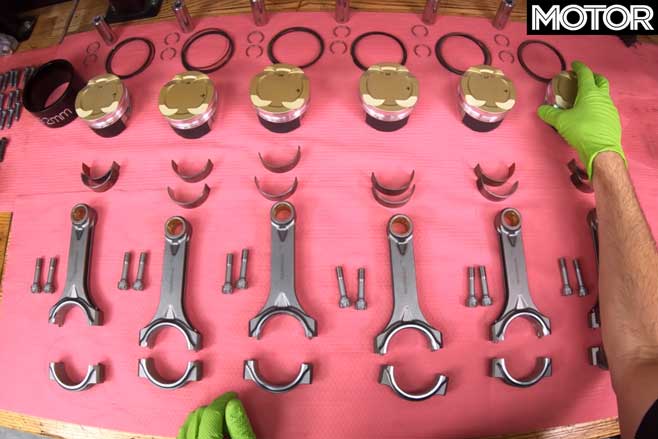
The style of video is in-depth without being dragged out, much like the other videos the team has created with this engine, so it’s quite easy to watch all the way though even if you’re not incredibly mechanically inclined.
Stephan is quite adept when it comes to explaining relatively technical happenings in a straight-forward manner, all while clearly showing each step of the process on film. He even runs through his own learning process with the engine, and follows along during a section of the build in which he had to backtrack to fix an error.
Driver for Papadakis Racing’s drift team Fredric Aasbø also posted about the engine build on Instagram, suggesting we might soon see him return to drive a Supra (he started drifting in an older model as a privateer) in the Formula D championship soon.
https://www.instagram.com/p/B3ZTuzelDwZ/?utm_source=ig_embed&utm_campaign=loading
Side note: make sure you don’t miss the 8:20 mark in the video to see Stephan take a quick chocolate snack break.
In the near future we can expect to see Papadakis test the engine on a dyno, but if you’re interested in how some of the higher spec parts were made, there’s a video for that too!
This week’s reveal of the supercharged Ford Mustang R-Spec marked the end of a long and at times painful journey for Ford Australia.
As Damion Smy, Product Communications Manager for Ford Oz, explains: “It’s not a new idea. Customers have been asking for a supercharged Mustang since day one; we’ve wanted to do it since we’ve had Mustang in Australia.”
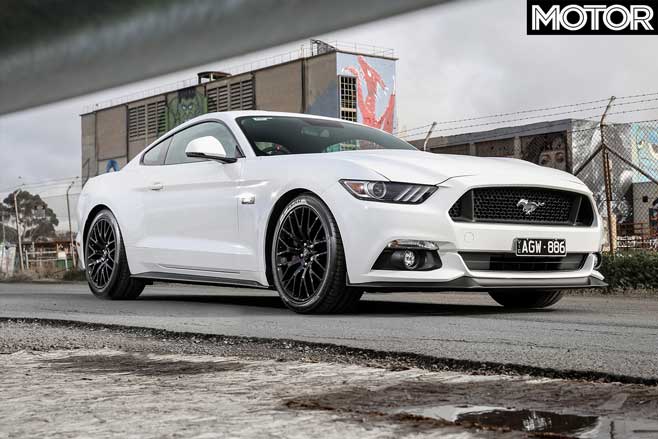
Early attempts at offering a factory-backed supercharged ’Stang were stymied by drive-by noise regulations, though customers could always buy an ADR-compliant blown Mustang from Herrod Performance, the rules for Secondary Stage Manufacturers being slightly different than for OEMs.
The arrival of the MY18 Mustang and its heavily upgraded V8 opened the door once again. “With the update in 2018, the third-generation Coyote engine started the game again in terms of what was technically able to be achieved,” says Smy.
“Things like the active exhaust, it enables you to do more things within the ruleset that you’ve got to be able to get the car through,” adds Ford Australia’s Special Vehicles Engineering Manager Justin Capicchiano.
This is where Ford collaboration with Herrod Performance is key. Behind the scenes, Herrod and his team had been working to comply the supercharged MY18 Mustang just as it had the previous model.
While the calibration on the R-Spec is purely the work of Ford Performance, Herrod’s close ties with the US allowed him to provide feedback as FP made further refinements. “If I have a problem, I know who to pick the phone up to and who to talk to.”
Herrod’s work allowed Ford Australia to fast-track the program, essentially cutting what would have been a four-year project had it started from scratch in half. Nevertheless, while Herrod’s package was essentially ready to go, it had to be subjected to the scrutiny of Ford Australia to ensure it had the confidence to offer a full five-year warranty.
“The most important thing is that [the R-Spec] behaves like a Mustang should,” says Capicchiano. “Otherwise it doesn’t matter how good Rob’s relationship is with Ford, we wouldn’t put the car on the road.”
The result of these years of hard toil is a 500kW+ supercharged Mustang available as a factory-backed package with a five-year warranty. In the words of Herrod: “Until I have a car that’s good enough for you to drive, you won’t get one out of me, now we have a car that’s good enough for you to drive.” We look forward to doing so.
Overall Rating

5 0 5
Plus & Minus
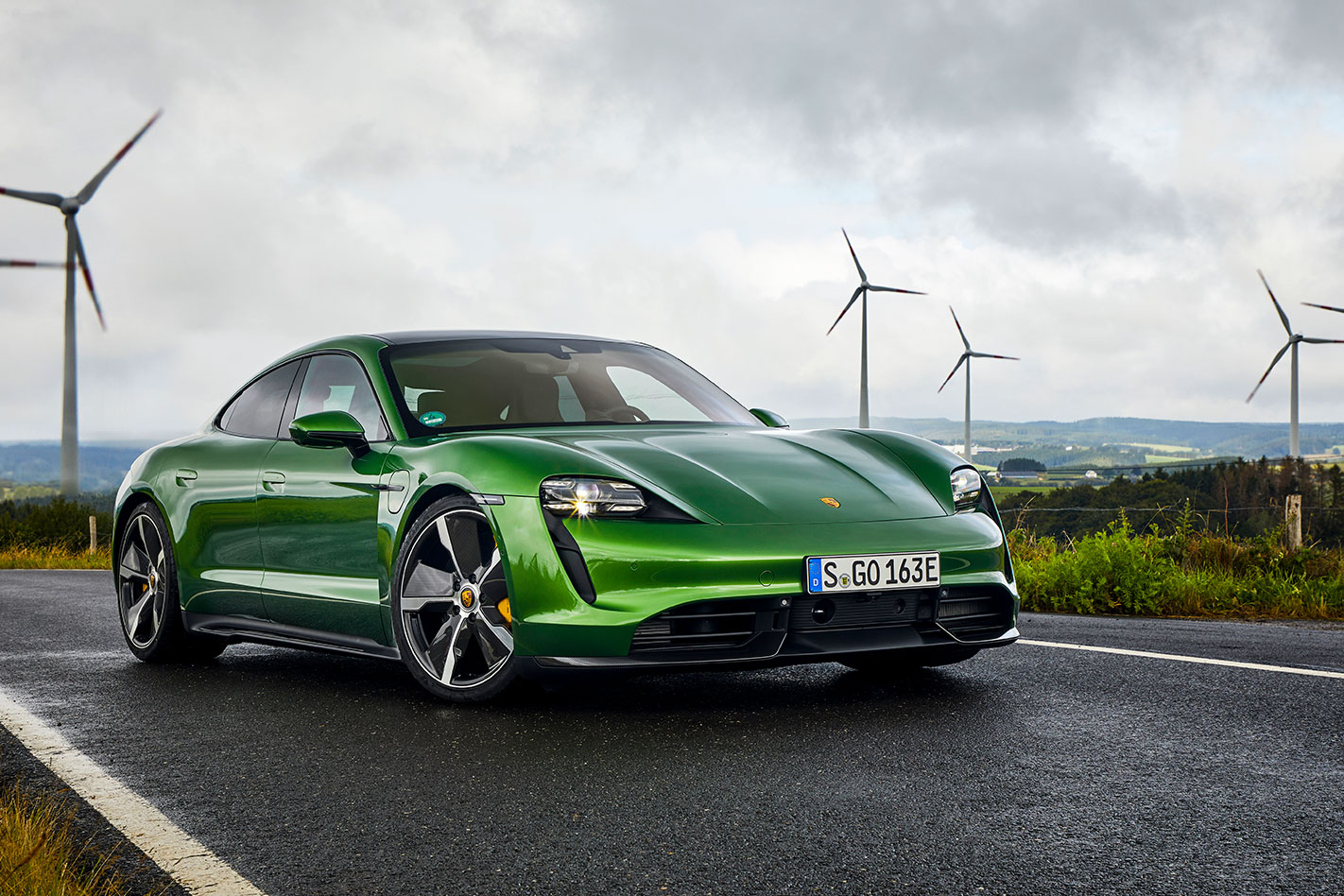
WHAT IS THE PORSCHE TAYCAN?
The most hyped EV in years? A line in the sand for the future of the performance car? This feels like both. Welcome to the Porsche Tacyan – Porsche’s first EV and a car that doesn’t only offer the promise of driver-focused performance, but also a quality interior, a decent boot and faster charge times.
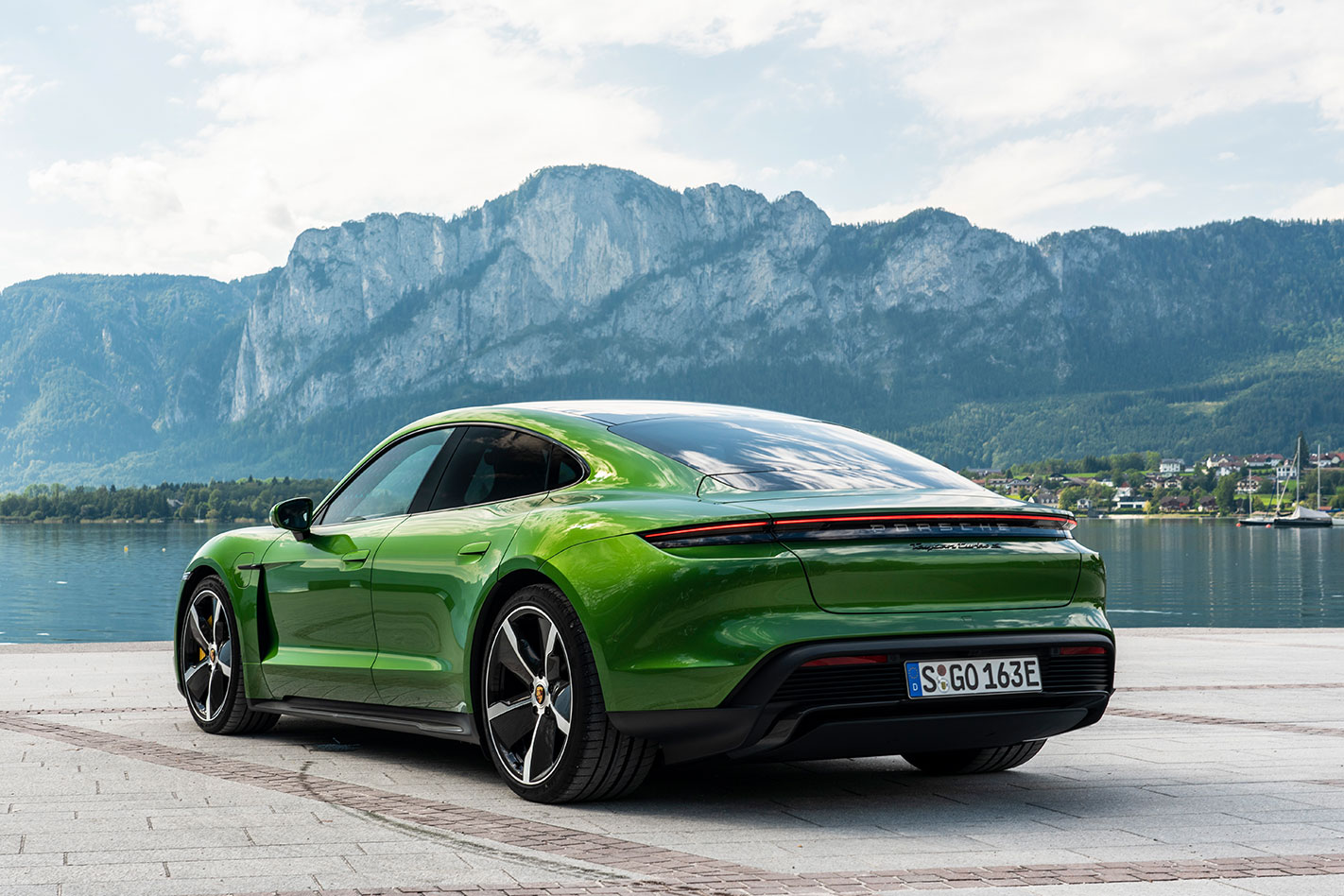
WHY WE’RE TESTING IT
While Wheels deputy ed Andy Enright gave us the full technical low-down on the Taycan last month, courtesy of a deep-dive technical briefing at Porsche’s all-new 1 billion-euro production facility in Zuffenhausen, this is our first chance to drive a Taycan. So strap in, for what follows is a glimpse at Porsche’s future. No pressure…
THE WHEELS REVIEW
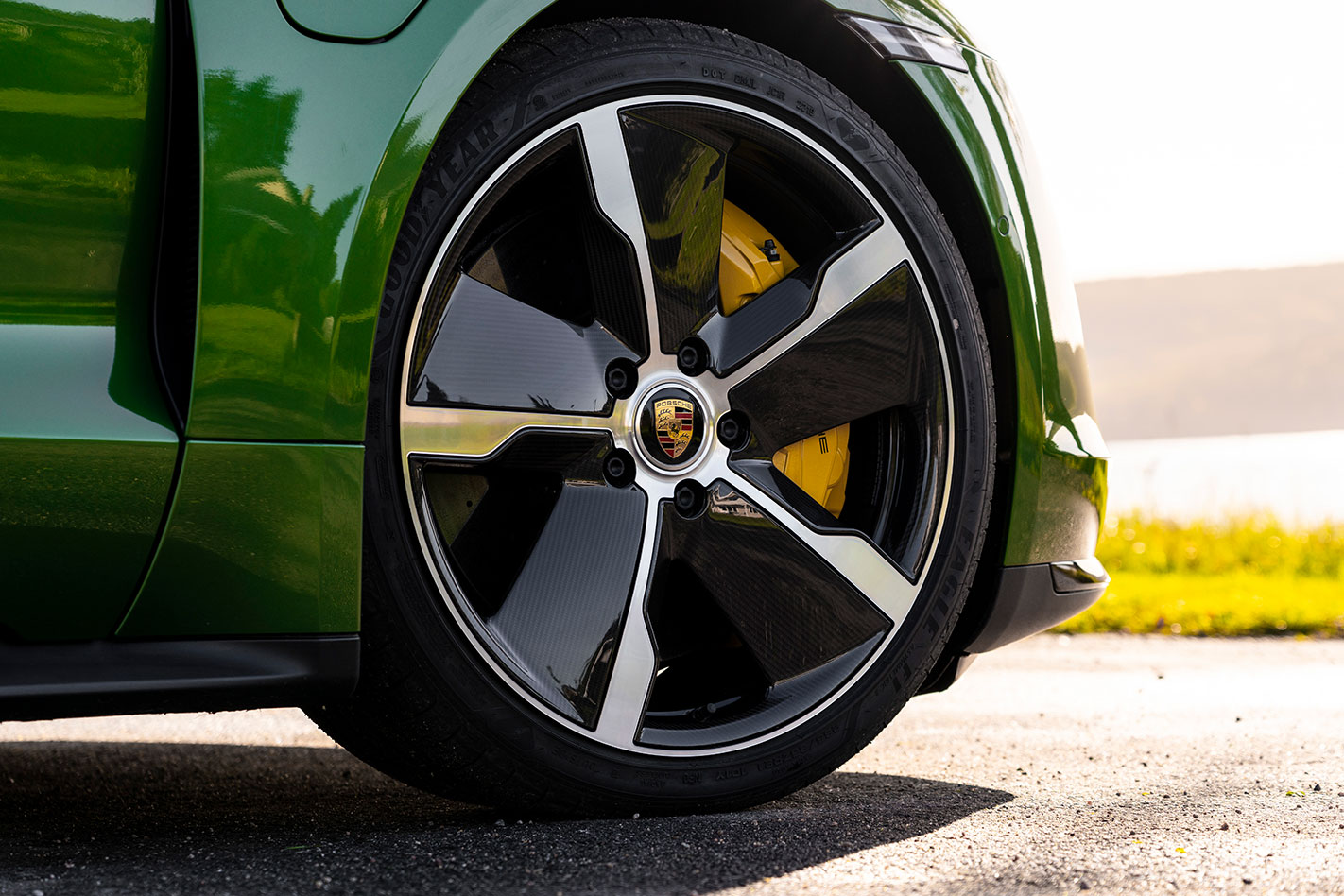
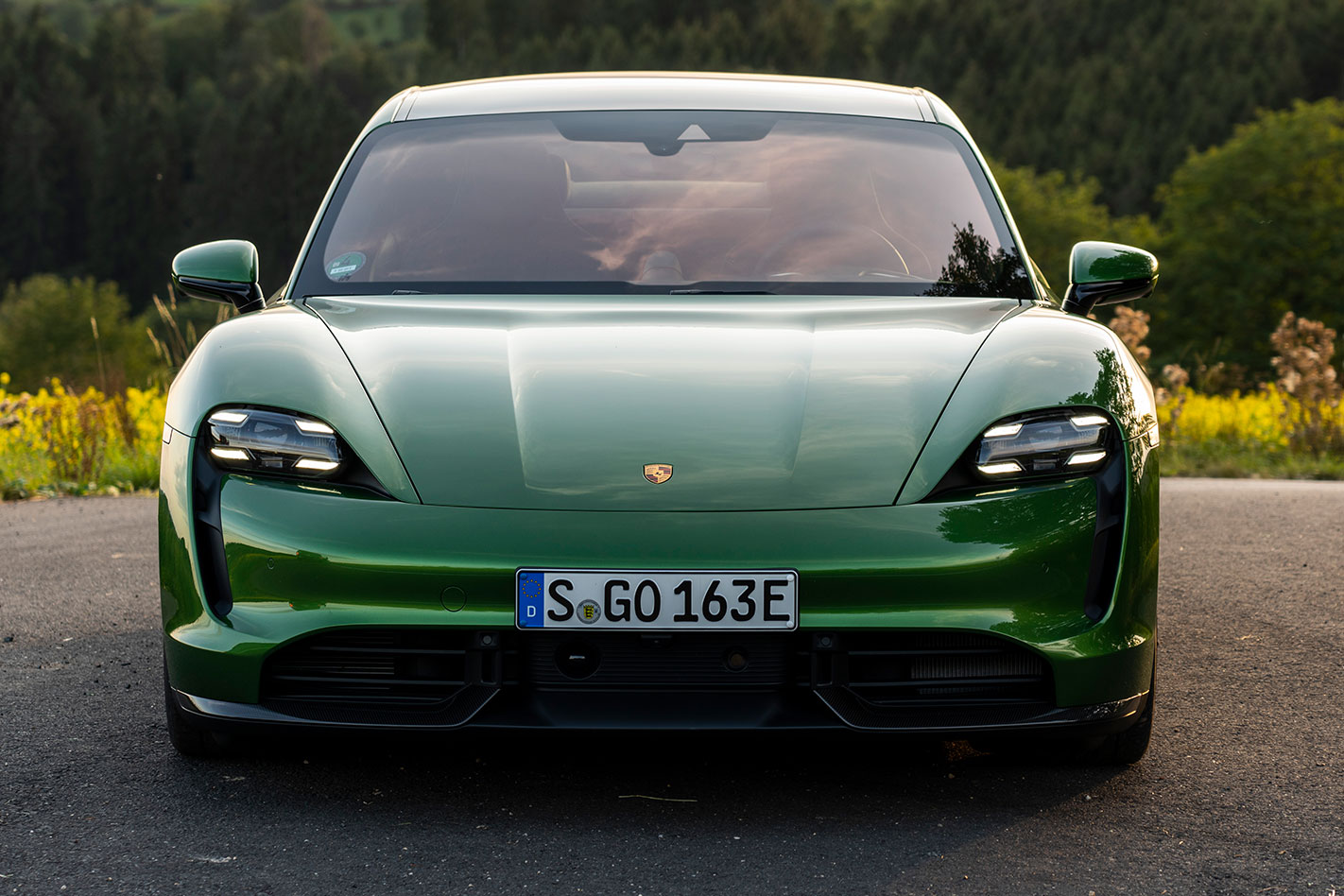
Autobahn, 180 clicks south of Berlin. Rain spatters the windscreen as you patiently negotiate the melange of trucks, white vans and hustling BMW wagons. Then, as if by some invisible signal, the fast lane clears and the road straightens. Flatten it. The Porsche explodes forwards, but not in the way you’re used to. There’s no kickdown from the gearbox, no flare of revs, no howl from a collection of pistons, valves and plugs. There’s only silence, save for some wind rustle and the rising roar from the 21-inch Goodyears. Just silence, and crushing, unrelenting, seemingly unstoppable acceleration.
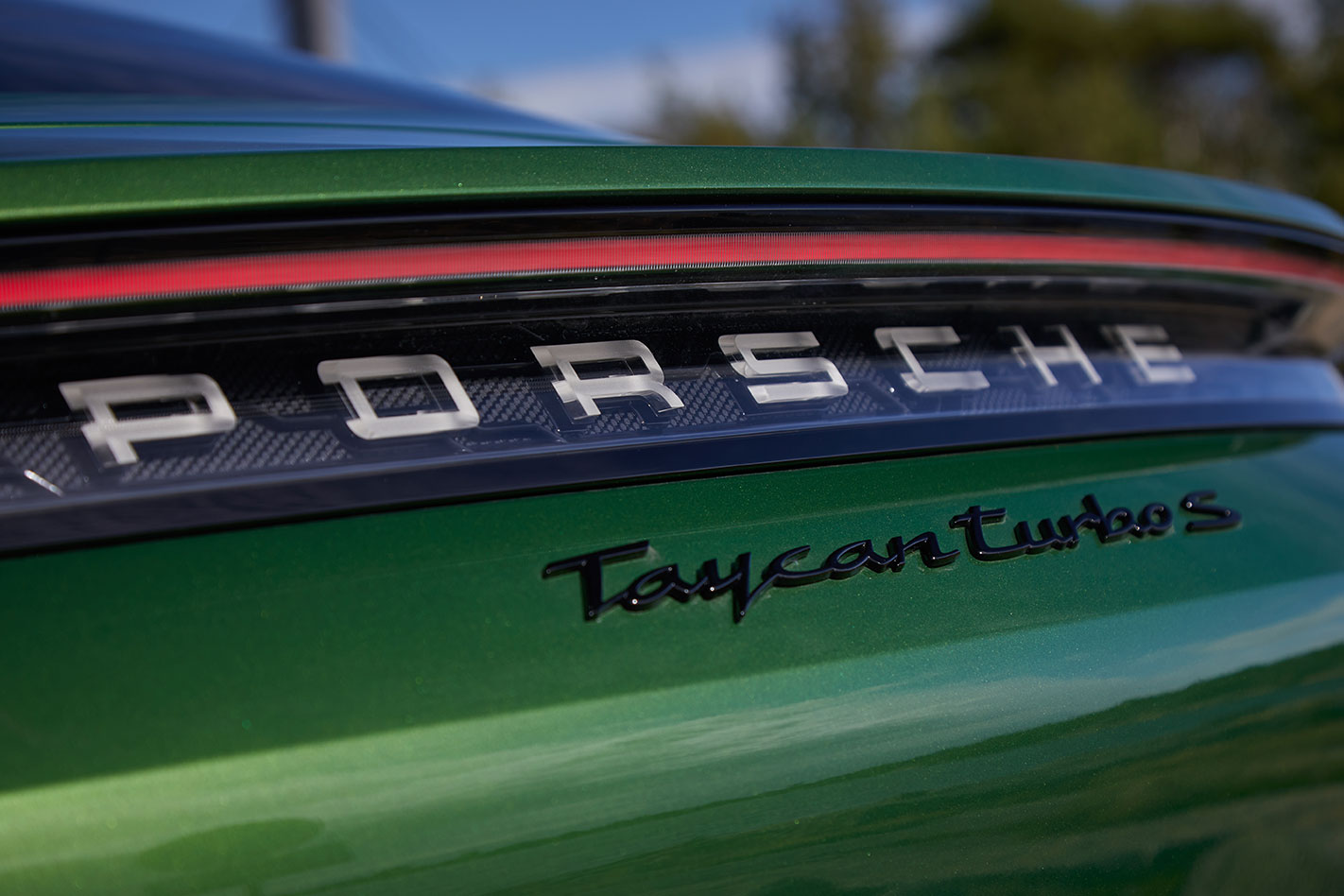
The official VMAX is 260km/h but so rapid is our accumulation of speed that the Taycan’s speedometer rushes pass that number with disdain. Only the sudden appearance of a van turning into the top lane seems capable of slowing Porsche’s EV as you get hard on the brakes at 270km/h.
Loosen your grip; take stock. Breathe.
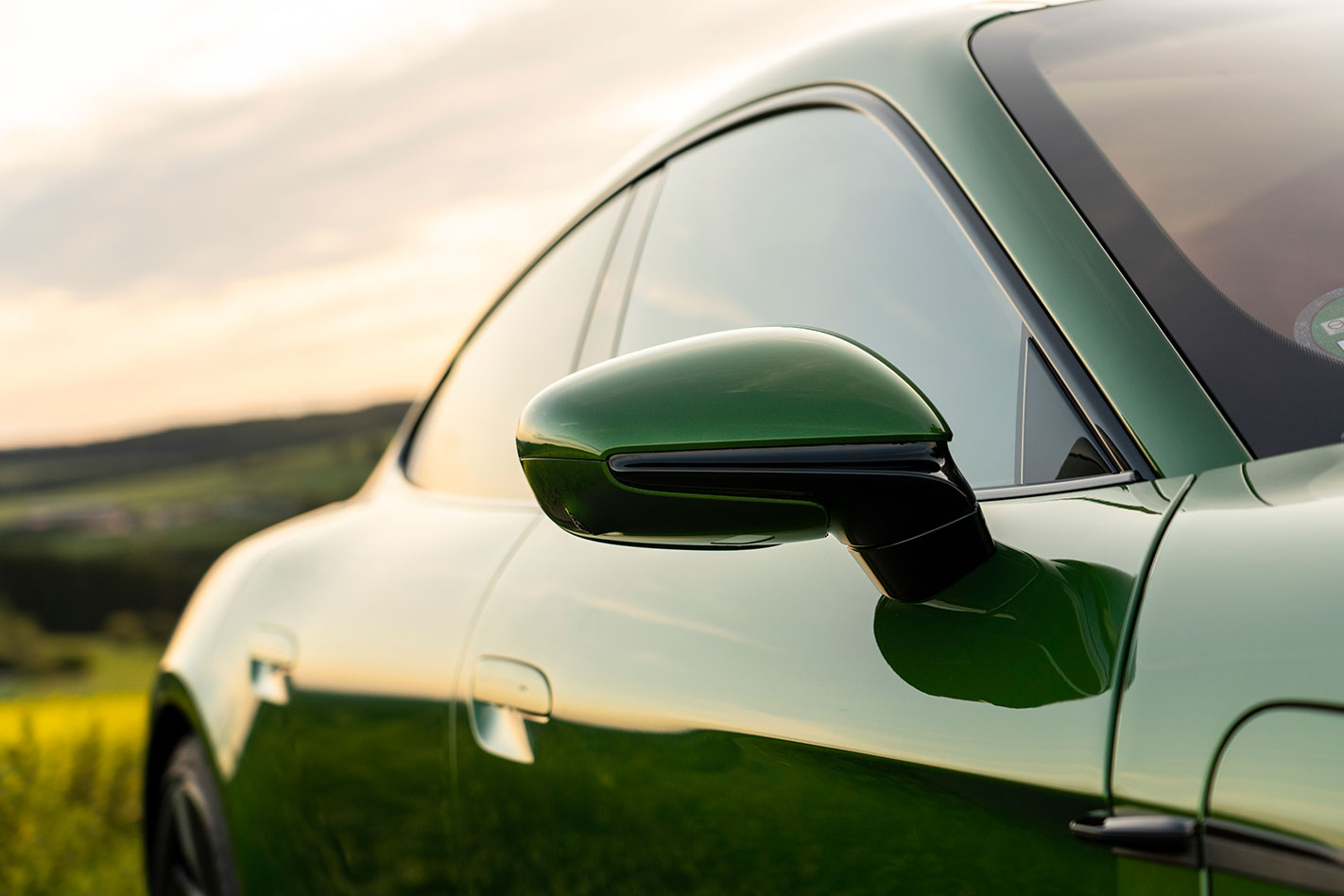
No, we’re here to learn something deeper. To answer the question printed on the cover of last month’s issue (Wheels, November): “Has Porsche created an EV with soul?” For that’s the promise that sets the Taycan apart, isn’t it? The sense that this is finally an EV that draws a line in the sand. That it’s different. That it’s an EV for drivers.
Windier roads, and some more seat time are needed to answer that properly, but first, some background. Last month’s Taycan technical deep dive was comprehensive, so if you’d like a greater understanding of how Porsche has moved the EV game on technically, head there now.
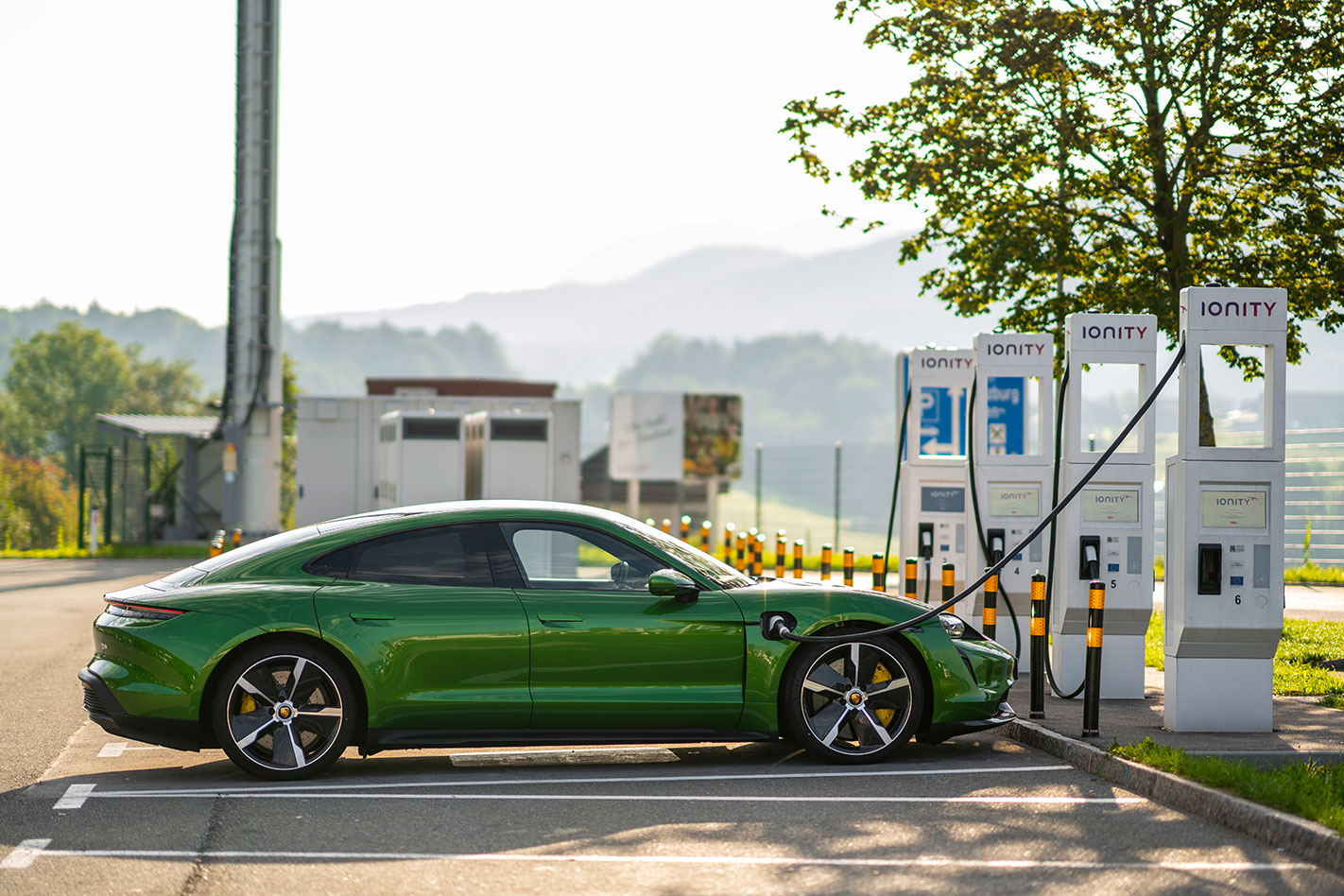
Read next: Porsche Taycan drives distance of Melbourne to Perth in one day
For now, Porsche is alone here (other EVs use 400V) and is bullish in spruiking its benefits. Greater voltage allows for a lower current, which boosts recharging times (Porsche claims that with the right charger and a warm battery, a 5-80 percent recharge takes 22.5 minutes) and provides the ability to use a thinner wiring loom which can be packaged more easily and weighs 4kg less. Lower current also means there’s less heat in the battery, electric motors and other core components; a crucial factor in delivering consistent and repeatable performance, which is a weakness in key EV rivals. Porsche isn’t shy in pointing this out.
“Every Porsche is track ready, and we are track ready with this Porsche in particular,” I’m told by Dr Ingo Albers, the man in charge of the Taycan’s chassis. “Mostly it will be the driver that is the limit, not the car. After doing 25 launch control starts you are tired, I promise.”
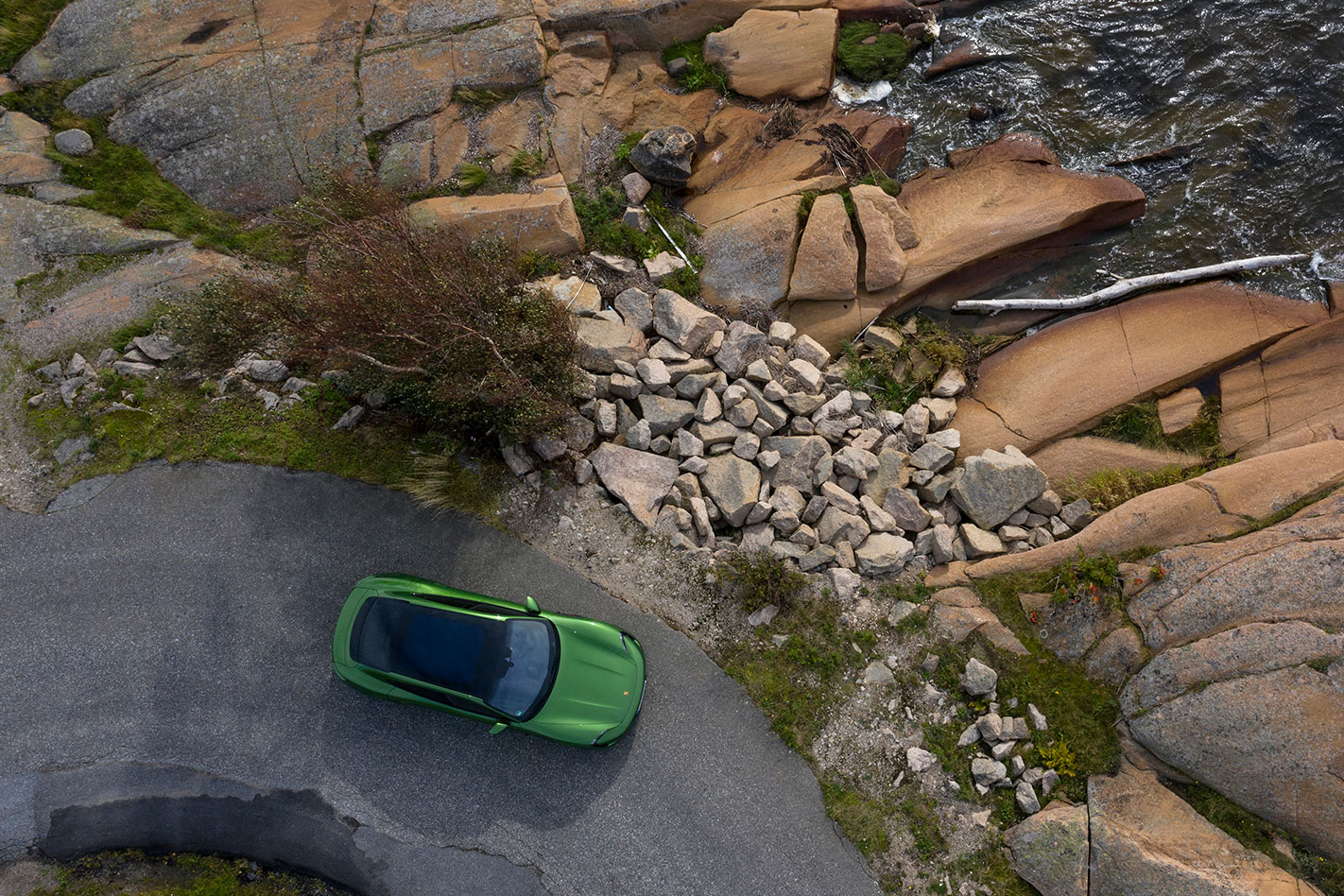
It’s the more aggressive, and more expensive, Turbo S that we drive first, however. Tipped to cost $350,000 when it arrives locally at the end of 2020, it too deploys 460kW in regular driving, though an additional pulse inverter on the front axle means its overboost outputs leap to 550kW/1050Nm. Range drops to 412km, though performance numbers tumble too. Here, 0-100km/h takes 2.8secs. “And our figures are from a standing start,” adds Ingo, the subtext referring to Tesla’s ‘one foot rollout’ technique for recording performance times.
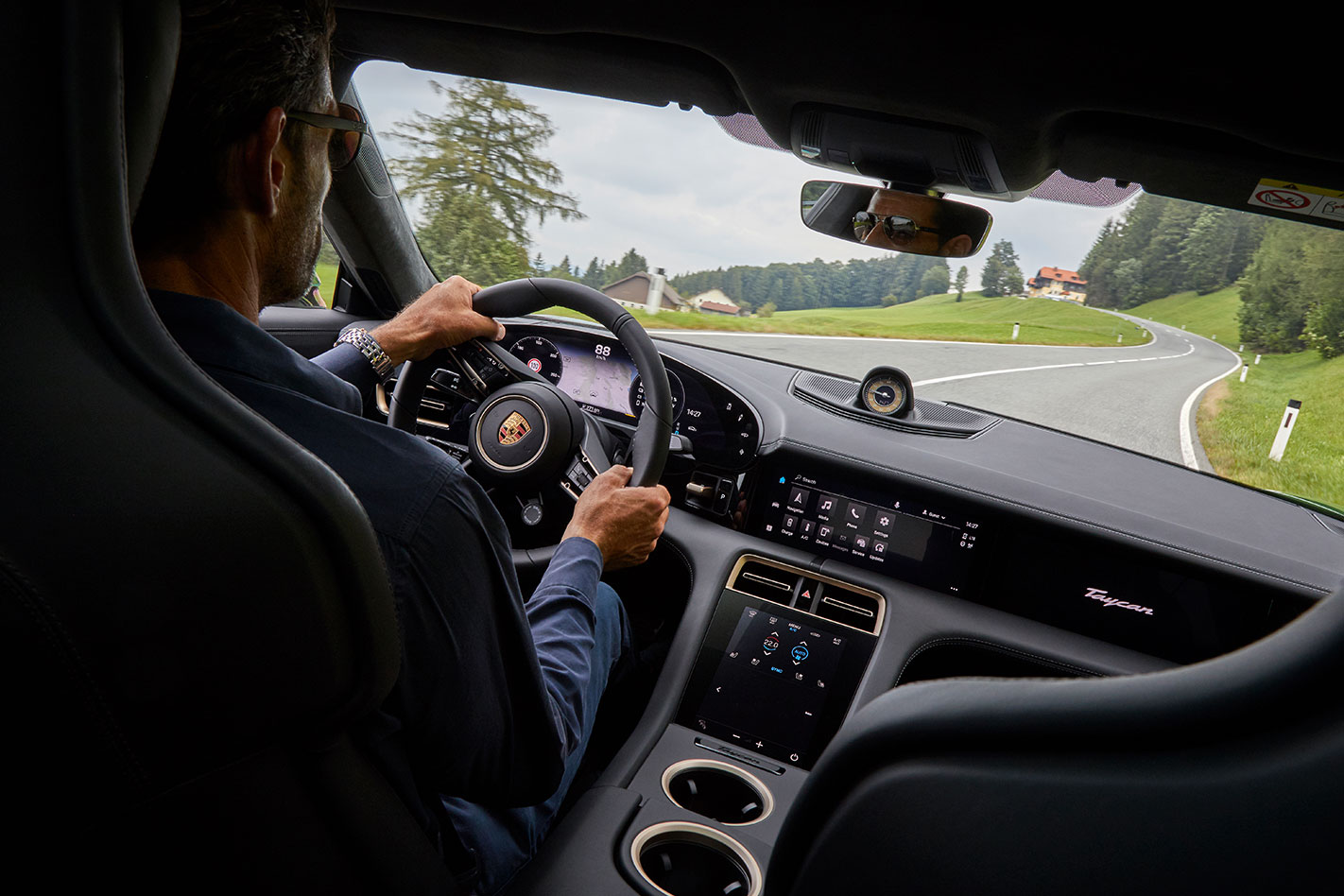
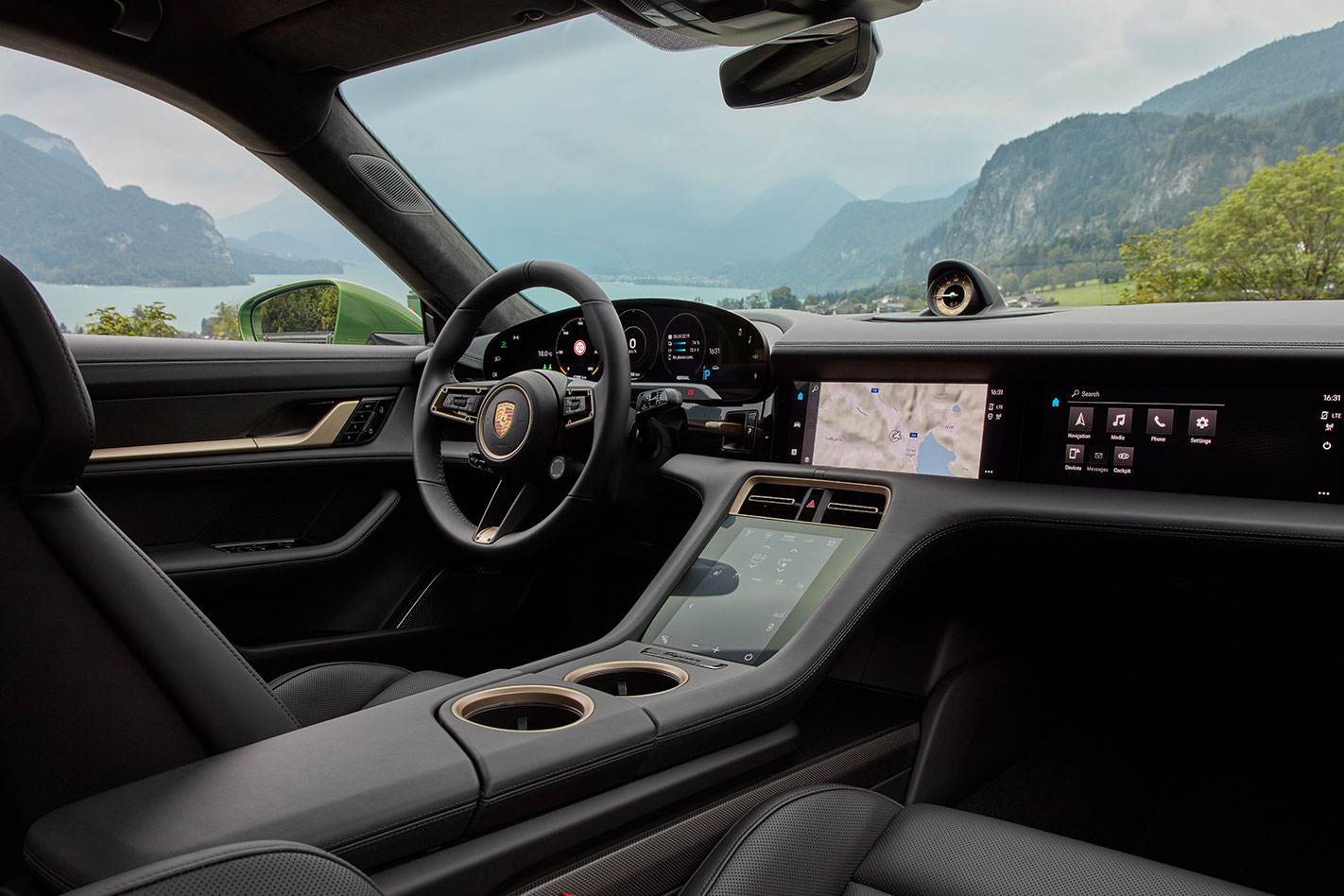
Drop into the driver’s seat and pause for a moment. You approach the Taycan wary that it will deliver an alien experience. Tesla’s minimalist cockpits and contrary operating functions play on your mind, but slip inside the Taycan and it instantly feels familiar. The driving position is low, natural and very 911. The steering wheel is lifted straight from the 911, and all of the key controls and functions fall naturally to hand. Only the radically different dash architecture, headlined by a curved 16.9-inch instrument cluster and a multitude of other touch and haptic screens, requires some recalibration.
Is the ‘cheaper’ Turbo noticeably less frantic? Yes, though both are monstrously rapid, with more shove and faster responses than any Porsche I’ve ever driven. Porsche’s data shows that in the first 2.5sec of a launch, the Taycan covers the same distance as the 918 Spyder hypercar, which should see you decimate all comers in the race away from the traffic lights.
Calm things down and the Taycan is effortlessly unflappable. Again, there’s an immediate familiarity to the controls. The steering (2.5 turns lock-to-lock) is nicely judged and naturally weighted, throttle tip-in is smooth, and it feels more agile in heavy traffic than a Panamera, which is its closest sibling in terms of size. Less natural is the coasting function. Preconceptions play a role here as EVs have conditioned our brains to expect heavy recuperation when you lift off the gas. You won’t be ‘one-pedal driving’ in the Taycan, however. Roll out of the throttle and it’ll maintain a constant speed which, initially at least, almost feels as though the car is increasing its speed. You can boost the level of recuperation though three settings, though get used to the default setting and it quickly becomes preferable to heavy regen.
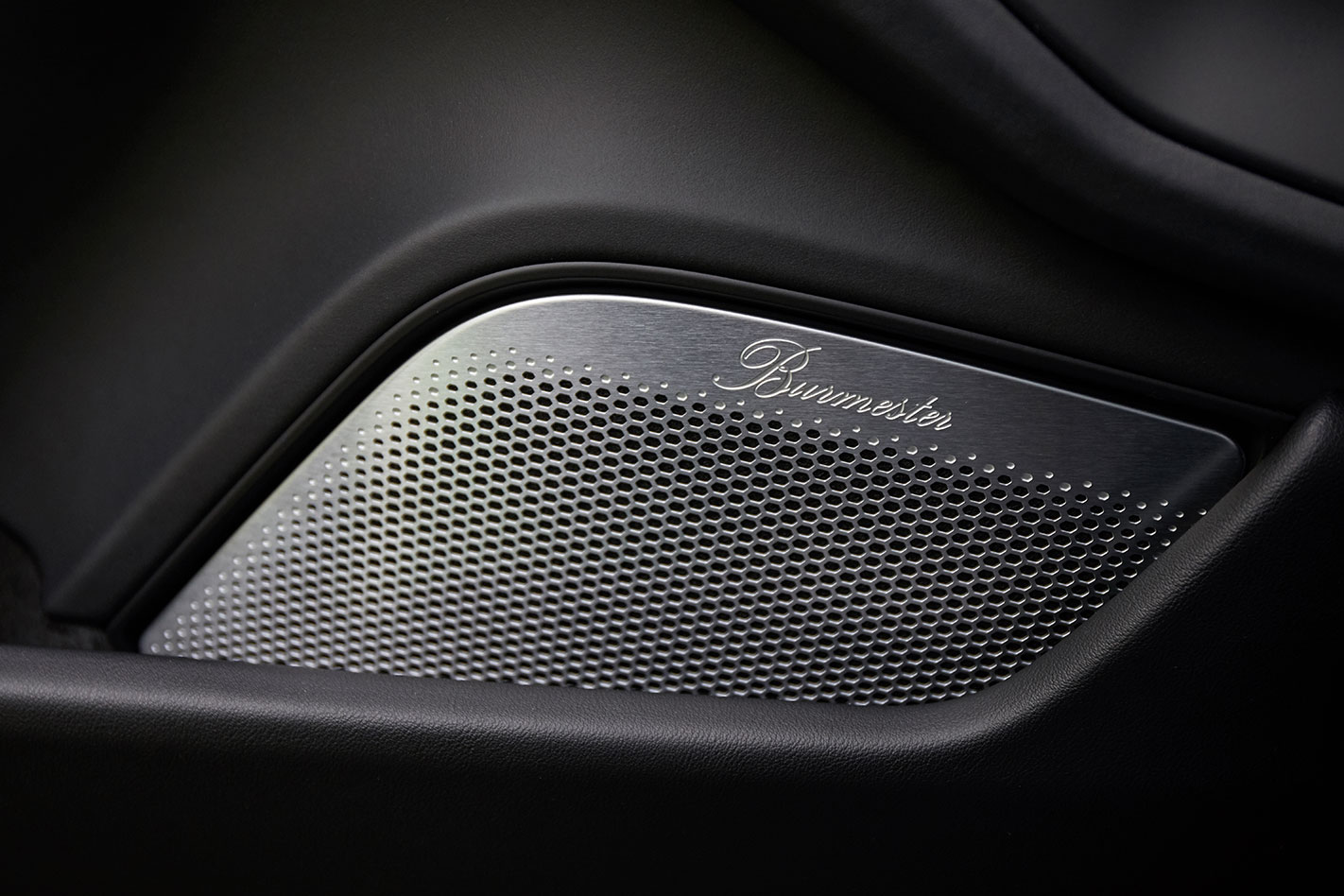
It’s not perfect, however. Rear headroom for tall passengers is compromised (counter-intuitively, cars fitted with the optional panoramic glass room actually have more headroom than those with a steel roof), and while there’s ample toe room and sufficient kneeroom thanks to a lengthy 2900mm wheelbase and scalloped front pews, the rear bench could do with more under-thigh support. I’m also not sold on the plethora of screens in the front of the cabin. The curved instrument cluster is a triumph, with sharp graphics and intuitive touch pads on either edge for the lights, traction control and suspension settings, but the 10.9-inch screen on the lower section of the centre console is less convincing. Unlike the other touchscreens, this responds via haptic feedback and is something of a fingerprint magnet, which quickly detracts from its sleek appearance.
And if three screens aren’t enough, you can option a fourth display for the passenger. Even more than the lower central screen, however, this feels like tech for tech’s sake as it doesn’t offer any functionality the passenger can’t access by simply moving their hand two inches to the left.
Find a winding road and your focus hardens. It’s wet, the ambient temperature hovering around 5C, and the twisty sections on our road loop are so narrow that they’re virtually a single lane at the apex. Not ideal for a circa-500kW performance car that weighs 2.3 tonnes… yet the Taycan simply demolishes the route.
Read also: Hennessey amps up the Porsche Taycan
Rear-wheel steering is standard, as is Porsche’s full armada of chassis control systems, including torque vectoring, an electronically controlled limited-slip differential and active anti-roll bars, the latter taken directly from Panamera and Cayenne.
Body control is vicelike, with any lateral movement so small as to be virtually imperceptible at sane speeds. And while grip levels are high, there’s enough communication through the seat of your pants to telegraph when you’re nearing the limits of adhesion. Ignore those signals, however, and there’s real fun to be had on corner exit. Be judicious with your throttle inputs and the Taycan’s ability to slingshot out of a corner is almost without peer, though get greedy with your right hoof and it can feel nicely rear-driven too. Sport and Sport Plus loosen the electronic nanny to give hints of yaw and, should you be feeling confident, ESC off really means OFF.
Read next: Porsche Taycan completed an eight-minute lap at the ‘Ring without brakes
Kudos too goes to the brakes, which is odd because most of the time you won’t actually be using them. While the Taycan doesn’t rely on regen when you lift off the throttle, it does recuperate heavily when you press the brake pedal. So powerful is the system that it can send 265kW of energy back into the battery, meaning that the majority of braking events won’t see you use the enormous mechanical hardware (Turbo S variants use 420mm carbon ceramic front discs clamped by 10-pot calipers, 410mm discs with four-piston calipers at the back) at all. Delve deep into the brake pedal to engage the hydraulic system, however, and the crossover point from regen to hardware is impressively smooth and effective.
So the Taycan is fun, engaging, and has a strong sense of Porsche DNA shot through its dynamics. Yet there’s no escaping that this is a very different kind of experience. Does it feel like a proper Porsche? Absolutely. Is it a reassuring, polished, and powerful glimpse into the future of the performance car? Undoubtedly. But is it the equal of, or an improvement on, the level of connection and engagement offered by the existing crop of performance cars? Perhaps that’s an unrealistic expectation, but this initial drive suggests that might be the only measure the Taycan falls short on.
PORSCHE TAYCAN vs RIVALS
Tesla Model S P100D; Porsche Panamera Turbo; Porsche 911 GT3; Tesla Model 3; Jaguar I-Pace
Specs and pricing
Model: Porsche Taycan Turbo S
Motor: 2 x AC synchronous motors
Max power: 560kW
Max torque: 1050Nm @ 0rpm
Transmission: Two-speed reduction gear
0-100km/h: 2.8sec (claimed)
Economy: 26.9kWh/100km
Price: $350,000 (estimated)
On sale: Q4 2020
With the first examples of the second-generation Ford GT approaching two years of age, “used” examples are beginning to come onto the market.
Recently a black 2017 GT Heritage Edition made headlines, exchanging hands for USD$1.54 million (AUD$2.3 million) at Barrett-Jackson’s recent Las Vegas auction.
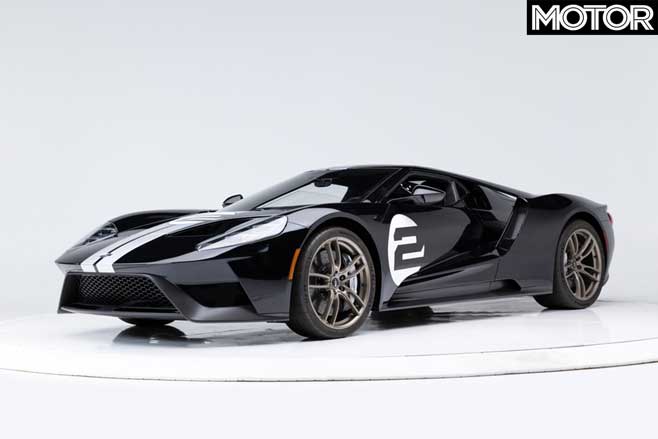
This was by no means the most expensive GT to be sold at an auction nor was it the first, but it is an accurate reflection of used GT prices following the expiration of Ford’s two-year no-sell agreement for each GT.
With more GTs expected to enter the market ‘legally’ as individual agreements are set to expire, second-hand GTs are no longer a rare ‘forbidden fruit’ on the used market.
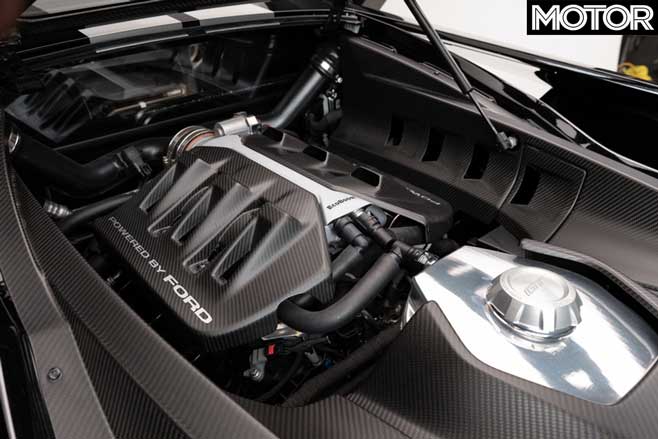
When Ford released the second-iteration of its GT supercar, it attracted a fair bit of controversy, some for its price, some for its use of a 3.5-litre twin-turbo V6, but quite a significant lot for its “rigorous” customer selection criteria.
Ford was particularly touchy on selling their halo to speculators and collectors, and as such thoroughly vetted its customers and slapped those that did buy it with a binding agreement that they would not sell their GTs for 24 months.
Despite all the controversy Ford found no shortage of buyers for its USD$450,000 supercar with over 6500 applicants for the initial run of 500 examples.
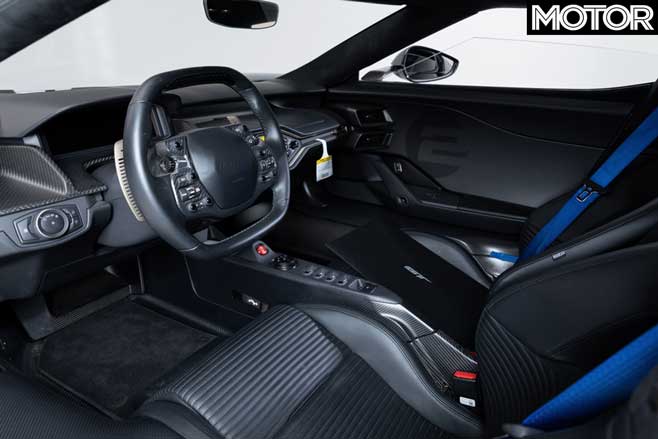
Nevertheless, whether through oblivious disregard of conscious disobedience, not every GT owner honoured their side of the deal. WWE wrestler John Cena was famously sued by Ford for selling his just weeks into taking delivery of his in 2017.
In 2018, a GT was auctioned off for USD$1.65 million by Mecum Auctions, an auction which Ford took the auctioneers to court over to prevent. Mecum eventually reached an agreement with Ford to not accept any further GTs that was still within the two-year ownership agreement.
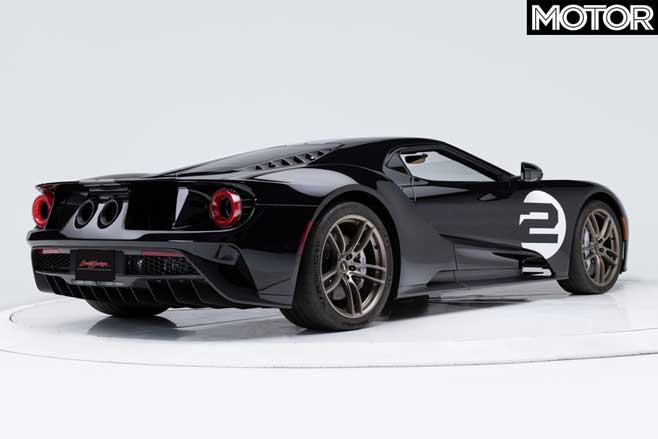
Later that year Ford itself sanctioned the charity auction of a new Ford GT Heritage Edition, which was sold at a Barret-Jackson’s event for USD$2.5 million.
That being said, despite Ford’s efforts to ensure that its GTs are sold to customers who would drive their cars, the USD$1.54 million GT Heritage Edition only had less than 50km on the clock. Speculate away on that as you may.
Everyone remembers a particularly special 21st that stands out from the others. Whether it be that party where someone filled the street with burnout smoke, set fire to a car or decided to ride a bull. Or perhaps it was the one where a guest picked up a guitar and delivered a set that would have made Farnham weep. Or maybe it was the one where your Nan shared a table with a toothless guy whose blood had an octane rating, but they’re still friends on Facebook to this day.
But if you had made your way to the southern New South Wales town of Deniliquin last weekend you could have attended a 21st that had not just one of those defining features, but all of them and more.
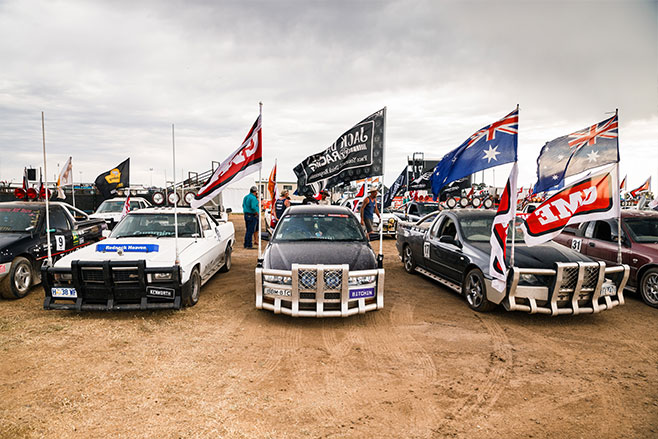
This year, the Deni Ute Muster turned 21 and it has left a mark more indelible than a doughnut on an industrial estate, but amid the festivities and celebration of the world’s biggest ute gathering, there was an elephant wandering the dusty paddocks.
Click on main pic for more 2019 Deni Ute Muster images by Nathan Jacobs
When Holden followed Ford’s lead and put the final nail in Australian manufacturing in 2017, the bloodline of locally made vehicles was severed along with the supply of new car-based utes. Following the announcement that there would no longer be a Ford Falcon or Holden Commodore Ute however, the respective companies were quick to point out that they offered a substitute in the form of a Ranger and Colorado.
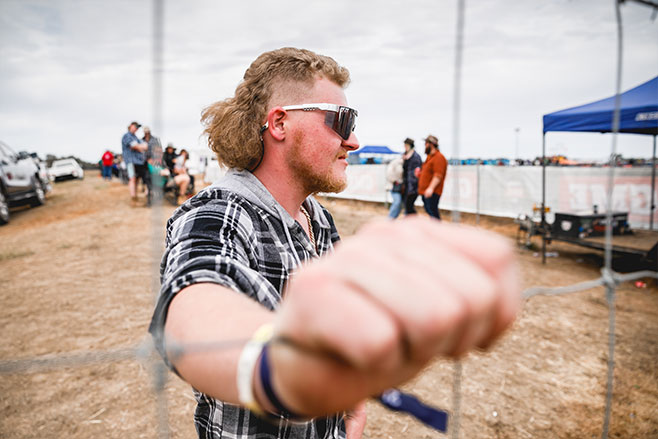
While sales of all one-tonne and dual-cab utes certainly seem to suggest punters are taking the bait, do these high-riding, four-wheel drive favourites appeal to the most discerning ute audience in the world?
To answer this question, we took a pair of hopefuls to the Deni Ute Muster’s 21st birthday to try and predict what the festival would look like in another two decades. And virtually everything about the long weekend was a surprise.
Rather than presenting the somewhat predictable blue oval and lion badged representatives, we took a different approach.
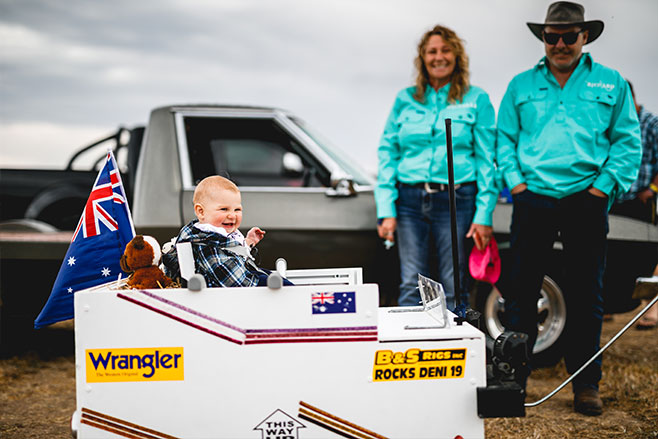
If true-blue patriotism died with the end of local production, surely a new generation of ute buyers wouldn’t care for the nationality, instead placing a greater priority on value? In the red corner, therefore we have SsangYong’s Musso XLV – a full-sized dual-cab from South Korea with four-wheel drive, diesel power and a bargain $40,000 price tag.
In the black corner, there is something very different – the Ram 1500 Laramie – the only vehicle on the market that might just satisfy a diehard traditionalist who insists on a petrol-powered V8ute to replace their SS or XR8.
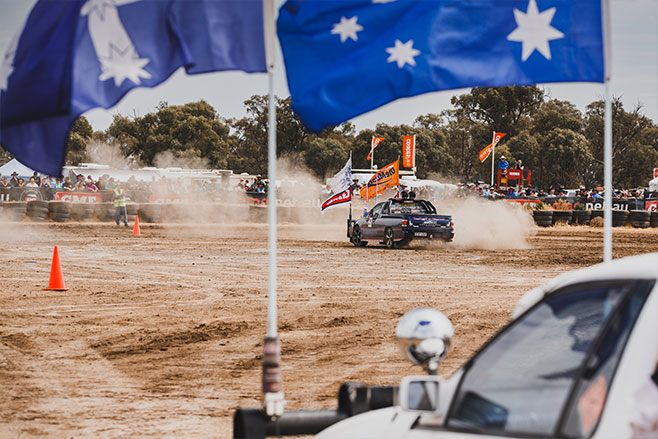
Either the pair of alternatives will be accepted as worthy substitutes, or we will be torn to shreds by the melee as barefaced traitors in the eyes of true-blue patriots.
But rather than swarming the foreign invaders seconds after arrival and tearing off parts like safari park monkeys, the crowd was surprisingly merciful. Instead of the animosity I had expected, was replaced by cautious curiosity.
In the case of the SsangYong, some said they initially mistook it for a Colorado, others reported that it looked ‘good’, while others claimed the price was genuinely compelling. And the Ram had an even easier ride.
Unsurprisingly, its 5.7-litre petrol ‘Hemi’ V8 struck a chord with almost all ute aficionados and its sheer unapologetic size, conspicuous styling and acres of chrome-look trimming won over even more fans.
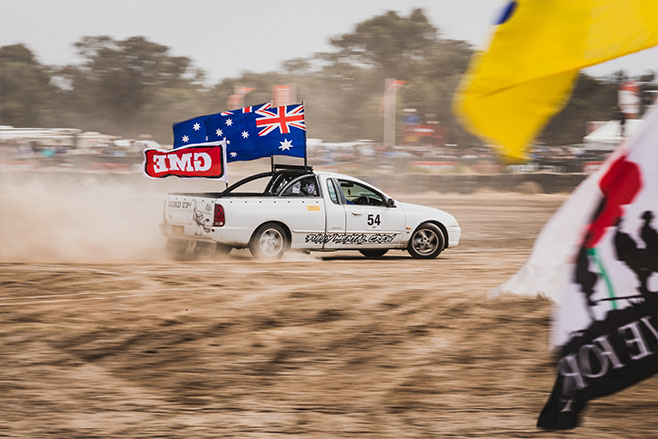
A tougher crowd however, was found in the ‘Sports Arena’ queue. ‘Sports’ may be a slightly misleading title, but out here, racing through a course of barrels head to head with another competitor, or simply applying a little artistic interpretation during the ‘Circle Work’ event is considered sport, and who are we to argue?
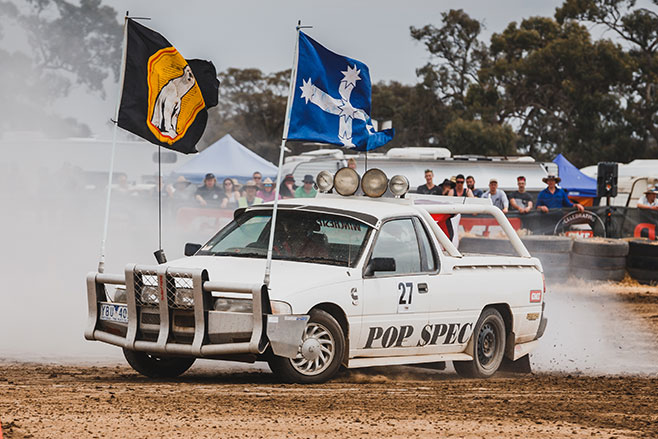
These guys are about as traditional as they get. Massive five-post roo-catchers, insanely loud exhausts and more stickers than paint applied exclusively to Ford or Holden hardware of all ages. No speed limiters were necessary since the sheer number of flags adorning each ute provided as much wind resistance as a re-entering space capsule.
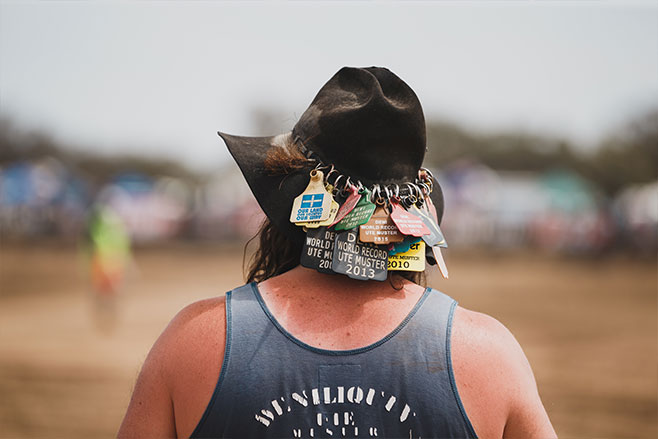
How would our pair of hopefuls fare in front of this unorthodox panel? Not great, it turns out.
While some merit was awarded to the Ram for its thirsty and theatrical V8, both lost points for looking a little plastic in the company of some seriously agricultural kit – never has that term been more appropriate.
The competitors also raised concerns regarding maintenance, and we’re not talking service intervals. Out here, if a red motor drops a cylinder, you’ll probably find the correct HT lead in the local IGA, but if a South Korean model throws up a fault code, the nearest diagnostic machine is probably in … South Korea.
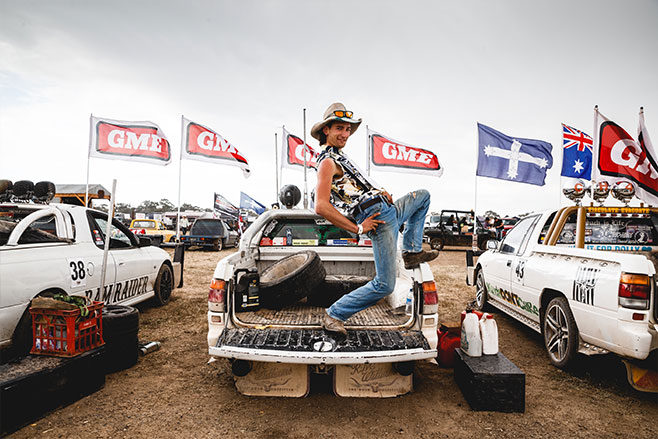
It may be a moot point for us city folk, but try explaining that to a stockman (or stockwoman) who has fixed every car they’ve ever owned with bailer twine and a gas-axe. As the saying goes out here – if it moves and it shouldn’t – cable ties. If it doesn’t move but it should – WD40 spray.
Things didn’t go much better at the show-and-shine where the judges applied the same strict criteria as to all entrants. Both cars lost points for looking as if they had been driven 300km and then parked in a windy, dusty field for two days – which they had.
Once again, the Ram garnered more support with its dual exhaust, mighty engine and imposing proportions winning favour, while the SsangYong clawed back some praise for being red.
Harsh local criticism aside, allow us temporary custodians to interject with a touch of unbiased objectivity. Firstly, when the final Aussie-made V8 ute has oxidised and been carried away by the wind, it’s likely you’ll still be able to buy the American-made V8 Ram. And if you loaded three VF Commodore Utes onto a trailer, the Ram could tow it.
Furthermore, the Musso offers a massive tray almost as large as the Ram’s, switchable four-wheel drive, an efficient diesel that produces 420Nm of torque and the range starts at just over $30,000 so, I’m sorry, both still have a place out here along with many other options too.
It is however, unrealistic to expect any newcomer to be as warmly received as something home-grown wearing a blue oval or lion badge, and there are many who will never accept anything else, but at no point did anyone claim that either of our cars didn’t have a place at the ute muster.
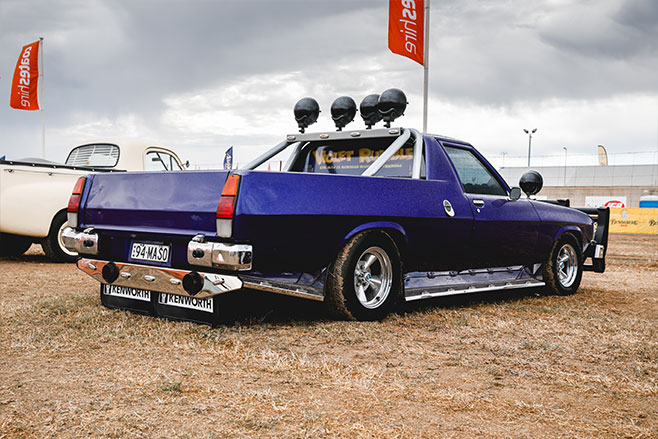
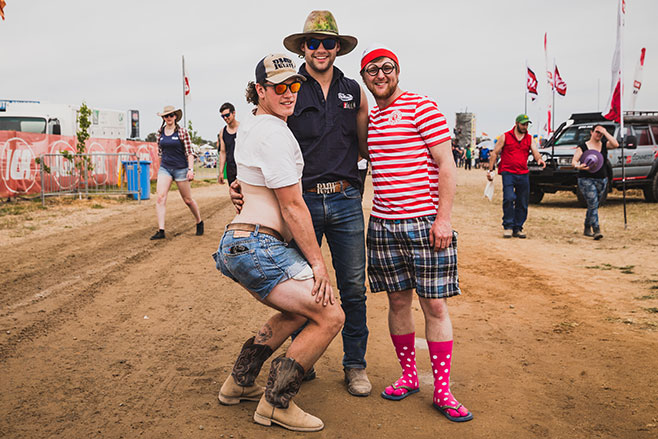
Beneath the layers of dust and airborne hydrocarbons, a sense of inclusiveness underpins this entire festival and there is a warming camaraderie between people and utes. After all, these are the people who even on a good day have some of the toughest jobs in the world but now have a crippling drought to deal with too. If you can’t love and respect your neighbour then you have as close to nothing as you can get.
But when country folk get together, it does not necessarily result in the post-apocalyptic combination of night-long burnouts, key-banging and lawless trouble like Lord of the Flies in a field. Dare I say it, it was mostly rather civilised.
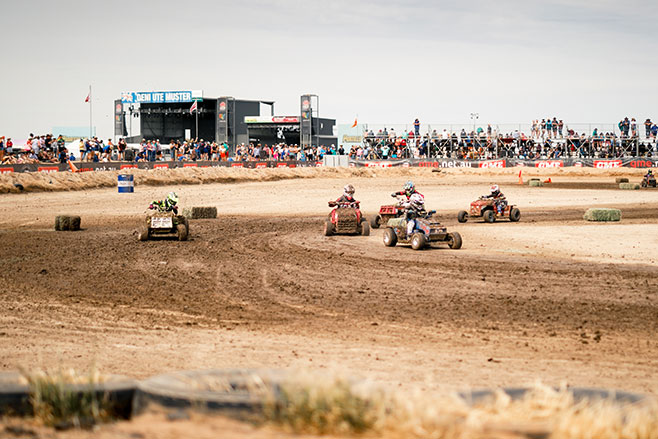
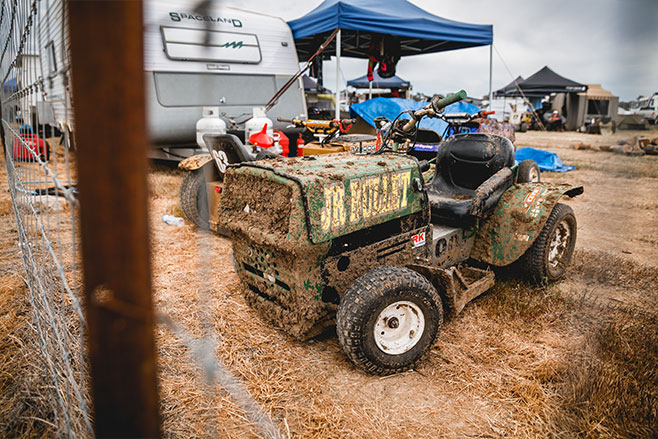
Yes, at some point a ute did get rolled on to its roof and set on fire, and there were scenes that I swear I’d previously seen in a Mad Max instalment, but that’s not all this festival is about. On the contrary, there was good food, shopping, there were families, kids playing, young and old, and all united by a common love of utes and country music.
An affordable South Korean one-tonner and oversized Yank tank may never become the prevailing favourite in the Deniliquin paddocks but, like a group of southern softies visiting for the weekend, neither will they ever be turned away.
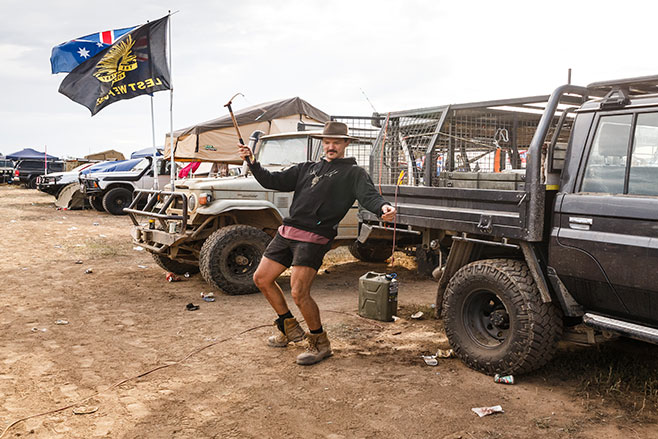
Overall Rating

5 0 5
Plus & Minus
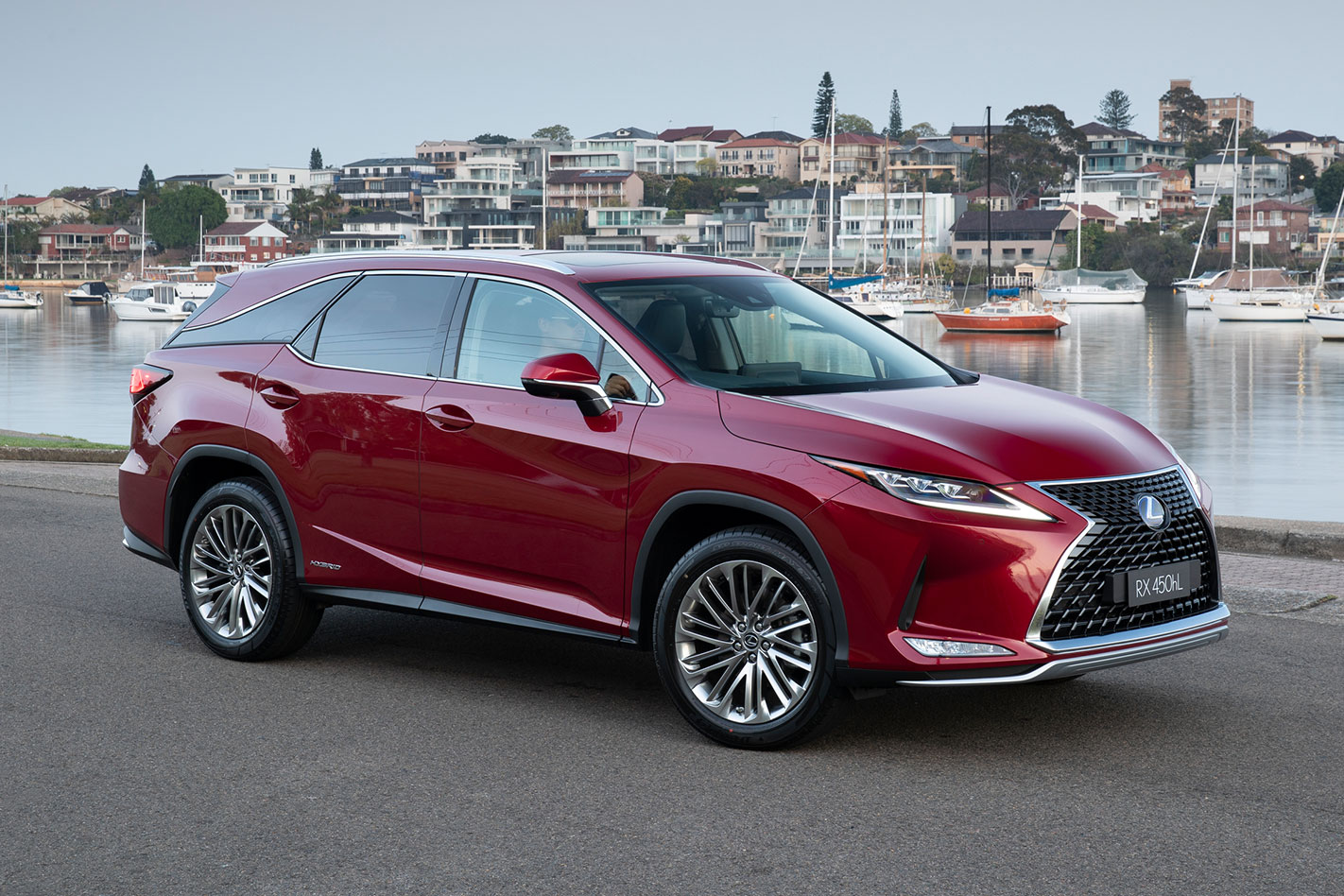
WHAT IS IT?
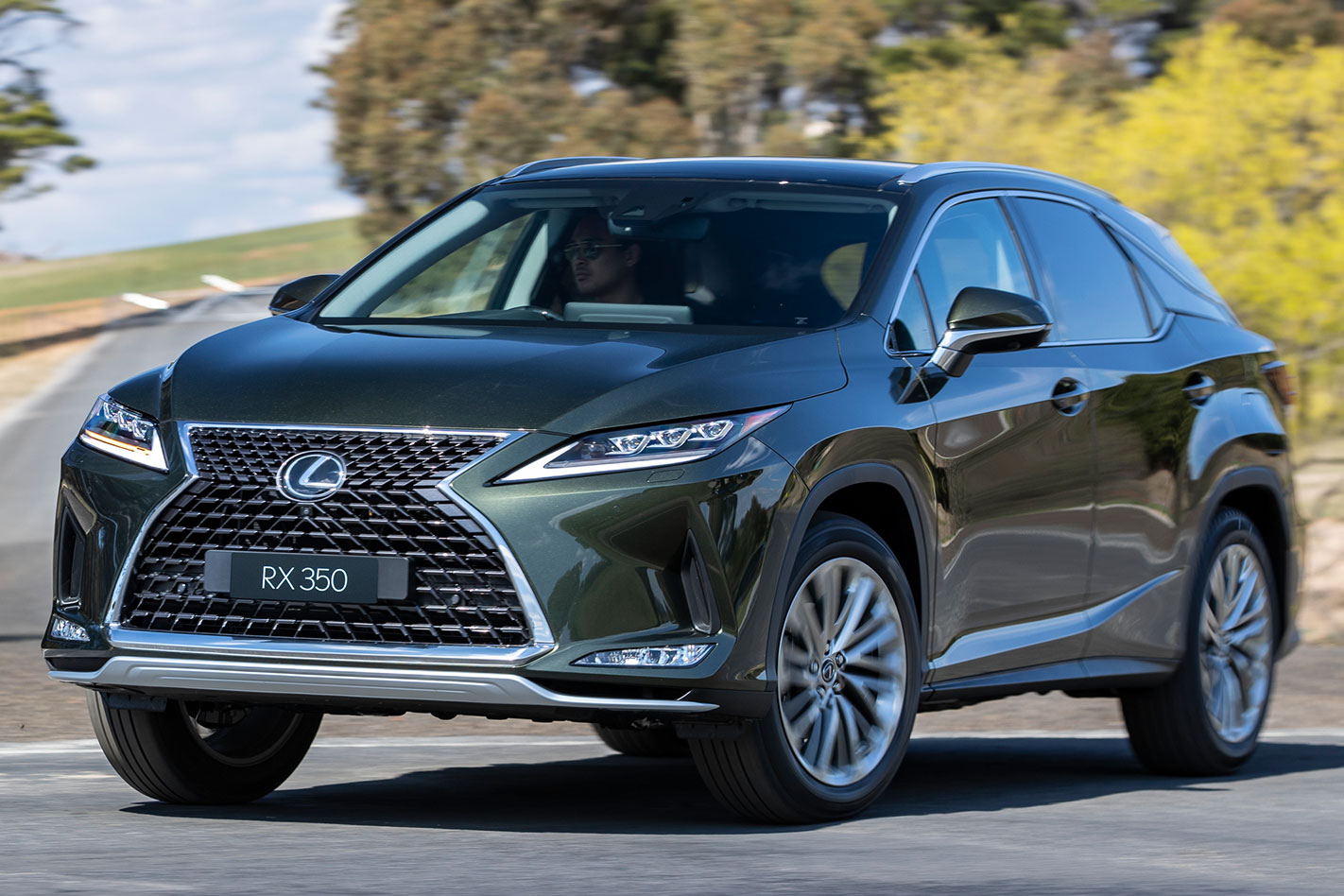
The Lexus RX is an upper mid-size SUV, available as either a five- or seven-seater, and offered with a choice of three powertrains.
WHY WE’RE TESTING IT
This update of the fourth generation is much more than just a facelift, so we were keen to see if the stiffer body and revised suspension tune really does bring an appreciable difference to the dynamics.
THE WHEELS REVIEW
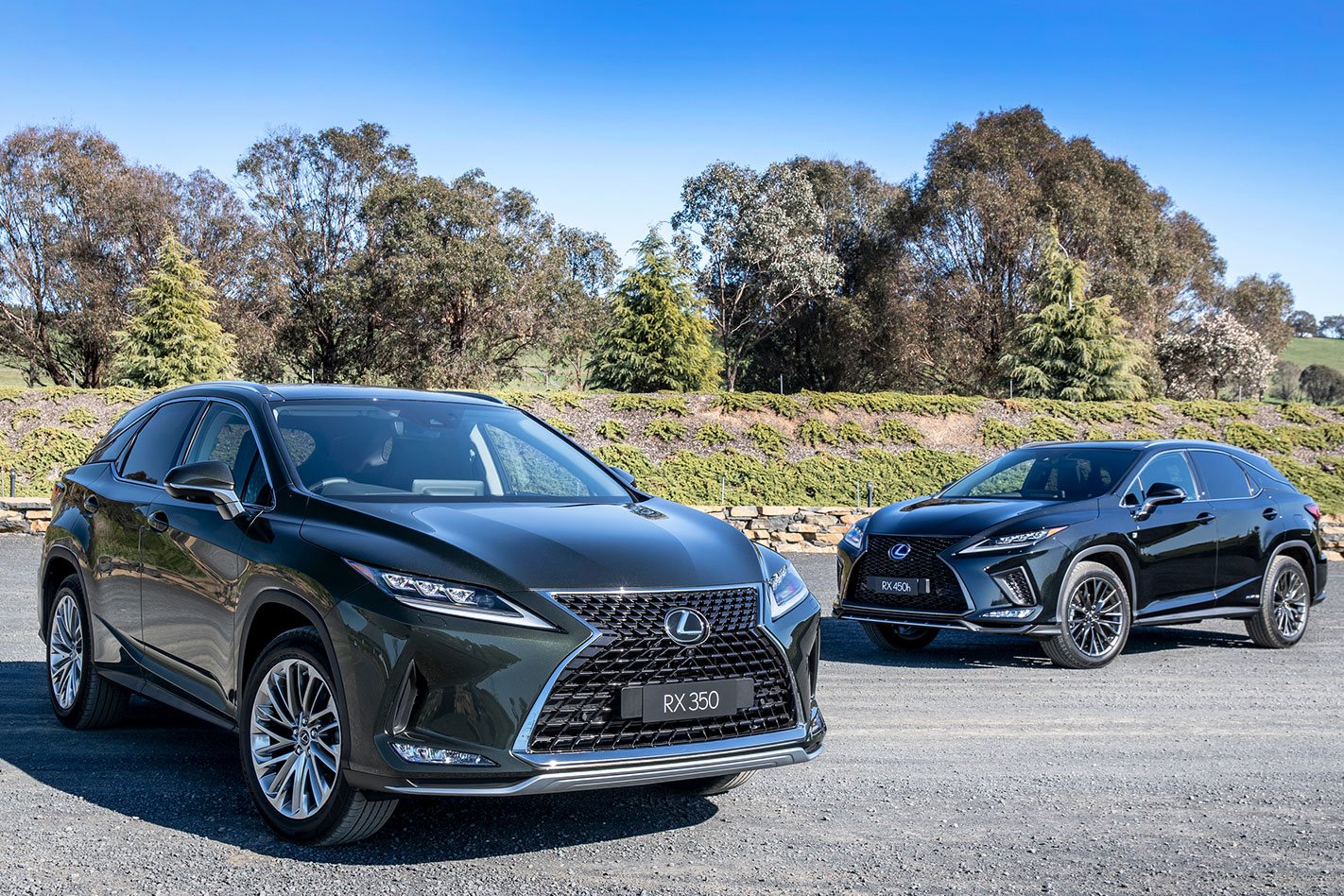
Just as facelifts can come in differing levels of invasiveness and successful outcomes for people, so it is for cars. Here, in the case of the Lexus RX, it’s actually selling it short to even call this update of the fourth generation a facelift. Yes, the bumpers and lights are new, so it qualifies on that level, but there have also been significant body stiffening measures introduced, allowing a comprehensive retuning of the suspension set-up, and a raft of comfort and safety upgrades to see it through the next phase of its life span.
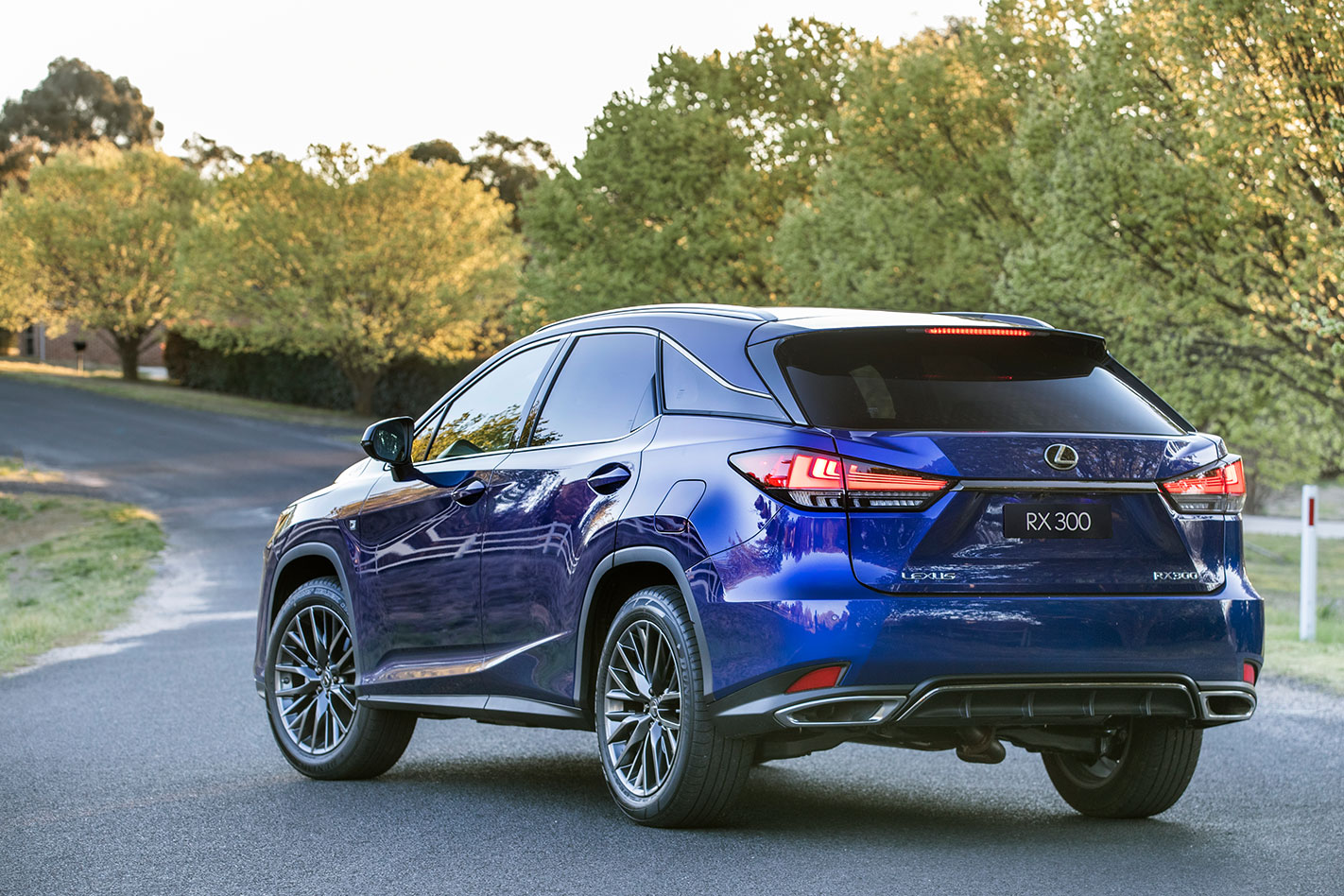
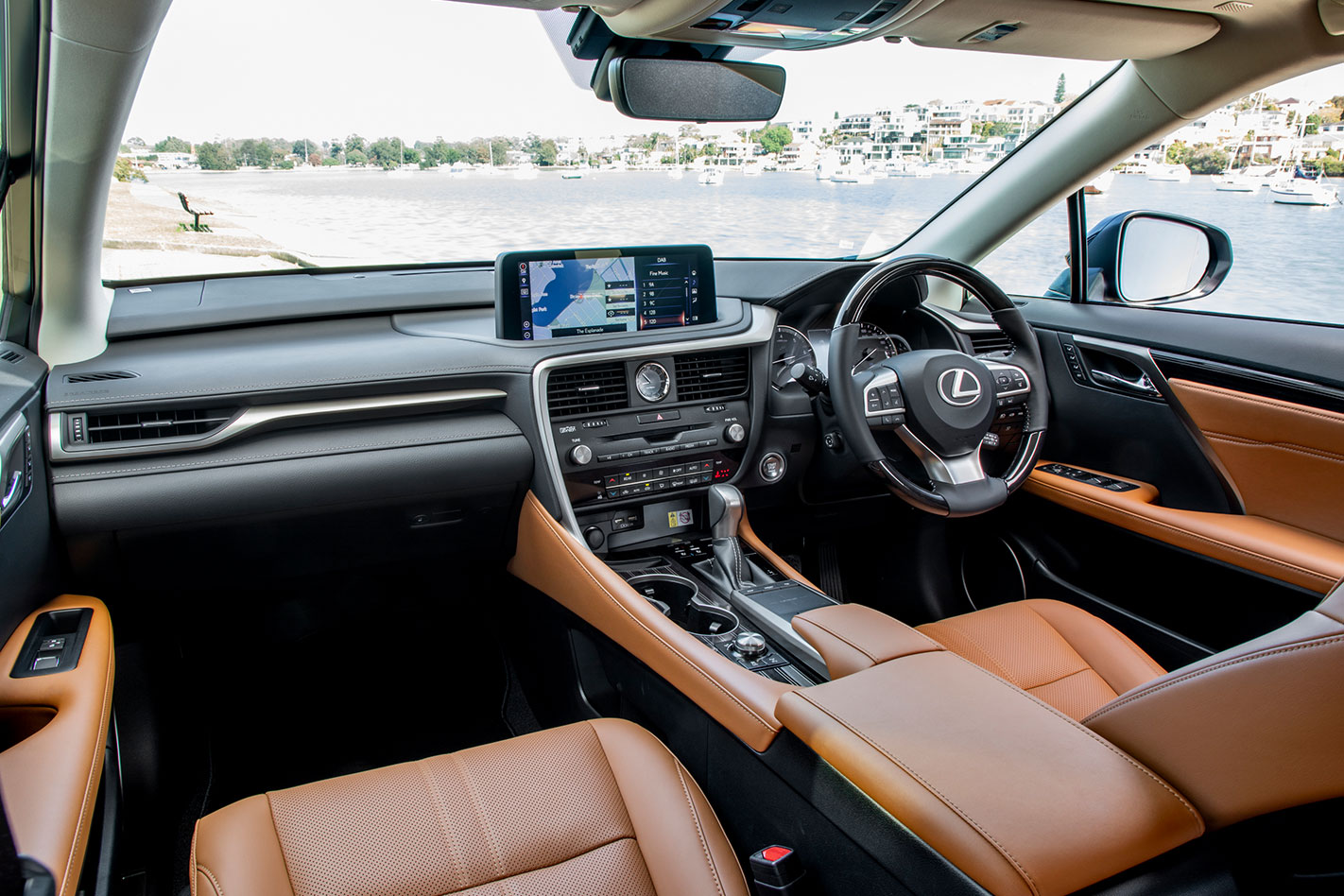
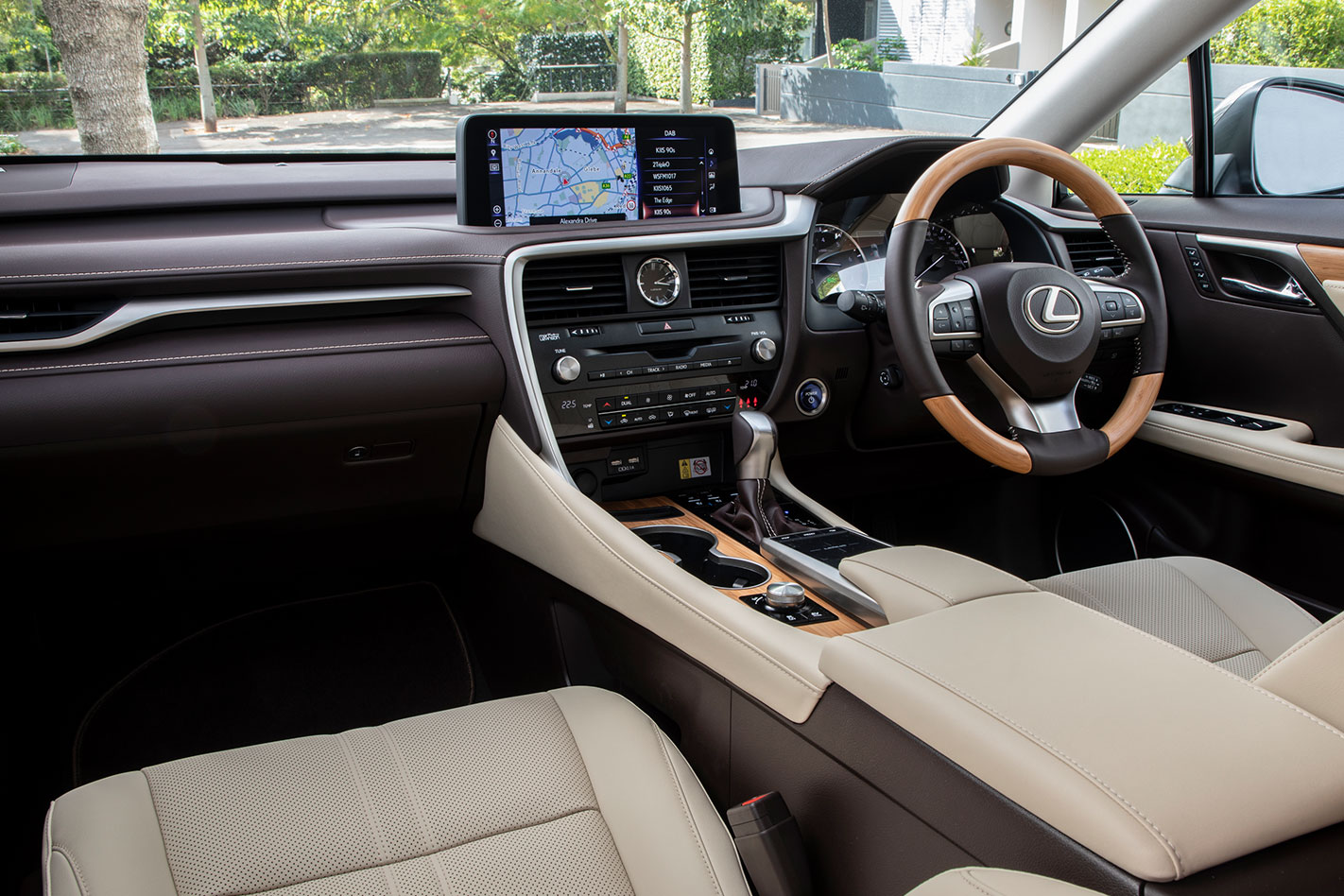
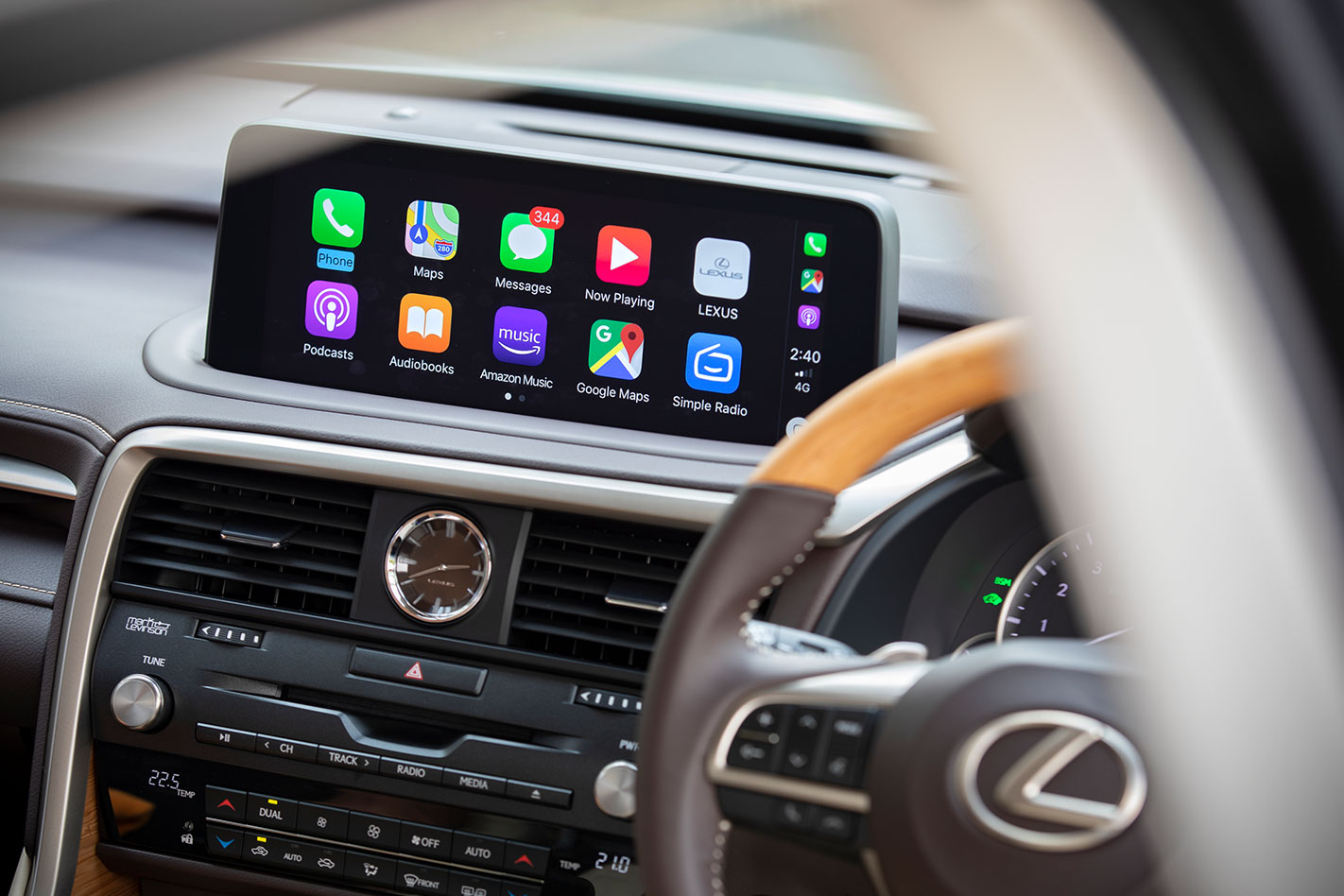
As for pricing, the RX300 Luxury has been trimmed by $1600 to open the range at $71,920. But it’s the availability of the RX as a seven-seater V6 hybrid from under $95K that gives this Lexus a USP over its Euro competition.
RIVALS
Audi Q5; BMW X5; Jaguar F-Pace; Land Rover Velar; Mercedes GLC; Volvo XC60/ XC90; VW Touareg
PRICE AND SPECS
Model: Lexus RX450hL Sports Luxury
Engine: 3456cc V6 (90°), dohc, 24v + electric motors
Max power: 230kW @ 6000rpm
Max torque: 335Nm @ 4600rpm
Transmission: CVT
Weight: 2275kg
0-100km/h: 8.0sec (claimed)
Economy: 6.0L/100km
Price: $111,070
On sale: Now
The Ford Mustang R-Spec program created many hurdles. One was making the engine package work, one was getting the vehicle complied, the other was simply how to build it.
Ford Australia obviously wrapped up its local manufacturing involvement in October 2016 and while Herrod Performance’s workshop is capable of producing a few cars a week, it’s not equipped to handle a production number of 500 or so.
To solve the problem, Ford has set up a small-scale production line in its Campbellfield facility, staffed by Ford-trained Herrod Performance workers. It’s a similar arrangement to the way FPV Falcons were built once production was brought back in-house in February 2013.
Ford Australia’s Special Vehicles Engineering Manager, Justin Capicchiano, explains: “To build however many cars Rob’s built in the past, it’s been able to be contained within those four walls [at Herrod Performance]. When you scale up, there’s complexities in manufacturing that you need to get right. You’ve got to get those processes right from the start.”
It’s been an intense learning process for Herrod and his team: “For me, doing what I’ve done for 40-plus years, and let’s say with the last Mustang, to where Justin and his team have educated us, I’ve had to be re-educated on how to productionalise the build of a car. It’s been a whole new learning curve.”
About 20 people will work across five stations during the build, though the exact numbers have yet to be nailed down as the process continues to be refined. “Part of any manufacturing process is that stage of continuous improvement before it finally gets ready for full production,” says Special Vehicles Engineer Nathan Medbury. “The team are still finalising that iterative process.”
Prototype ‘slow builds’ have been completed, during which the process is documented. “We did that with Premcar support,” explains Capicchiano. “They did a process control plan, which is a very specific level of information.” “It’s like a recipe book to bake a cake,” adds Medbury.
While Herrod Performance employees will build the cars – and all R-Specs will say Herrod Performance on the compliance plate – Ford’s involvement has been key in adding the manufacturing principles of “repeatability and quality”.
Capicchiano: “If you buy a Ford Performance supercharger kit, that comes with written instructions. What Rob’s guys have done is refine the process so rather than us go and get the recipe book from Ford Performance, that’s why you get Rob.”
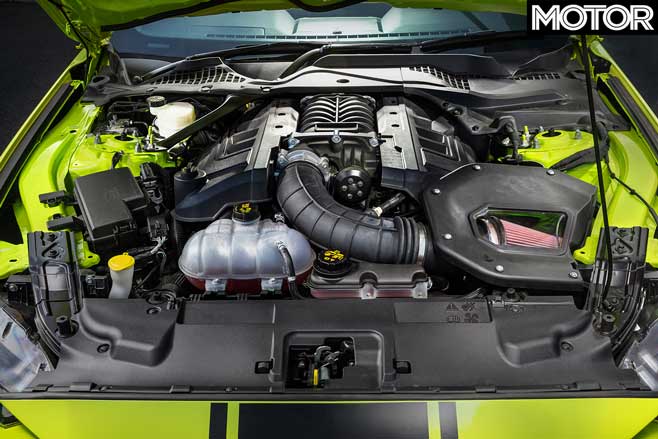
Ford’s ‘first manufacturing principles’ include details like which bolts and hose can be re-used or what needs to be replaced and the all-important order to ensure work is being completed in the most efficient manner: “Once you take things off, you don’t want to have to put them on again,” says Capicchiano.
The process begins with each car – a fully-built Mustang GT manual – being washed, cleaned and inspected, before it is placed on a hoist to be disassembled and the exhaust, springs and swaybars fitted. The supercharger kit is added once it’s returned to terra firma and any interior and exterior modifications completed last: “Anything you could potentially scratch or scuff will be one of the last things that goes on the car,” explains Capicchiano.
Herrod Performance has been an accredited Secondary Stage Vehicle Manufacturer since it started building supercharged ‘Compliance Pack’ Mustangs in 2016, but this only allowed it to produce up to 100 vehicles per year. In order to take on the R-Spec program, it needed to obtain further certification.
“Getting to 0-100 [cars] was hard,” says Herrod. “This was harder again. A lot of this has been pretty hard to comprehend; sleepless nights, my head bursting with information and all these acronyms Ford uses internally. What we’ve achieved has blown me away.”
Here’s hoping the Mustang R-Spec blows us away when we drive it in early 2020.
It’s the biggest, baddest circuit on the planet, the venue where the world’s hypercar manufacturers duke it out for ultimate laptime bragging rights, and the home of one of the world’s most grueling 24-hour endurance race. And you, my fellow Regular Joe, can rock up on virtually any given weeknight and rip around it in whatever vehicle you fancy.
I’ve wanted to drive the Nurburgring Nordschleife ever since I first experienced it in Gran Turismo 4 as a teenager. As time passed and my awareness of the track and its mystique grew, that want multiplied exponentially. It’s Everest for car fans, and what self-respecting mountain climber doesn’t want to eventually have a crack at the tallest peak?
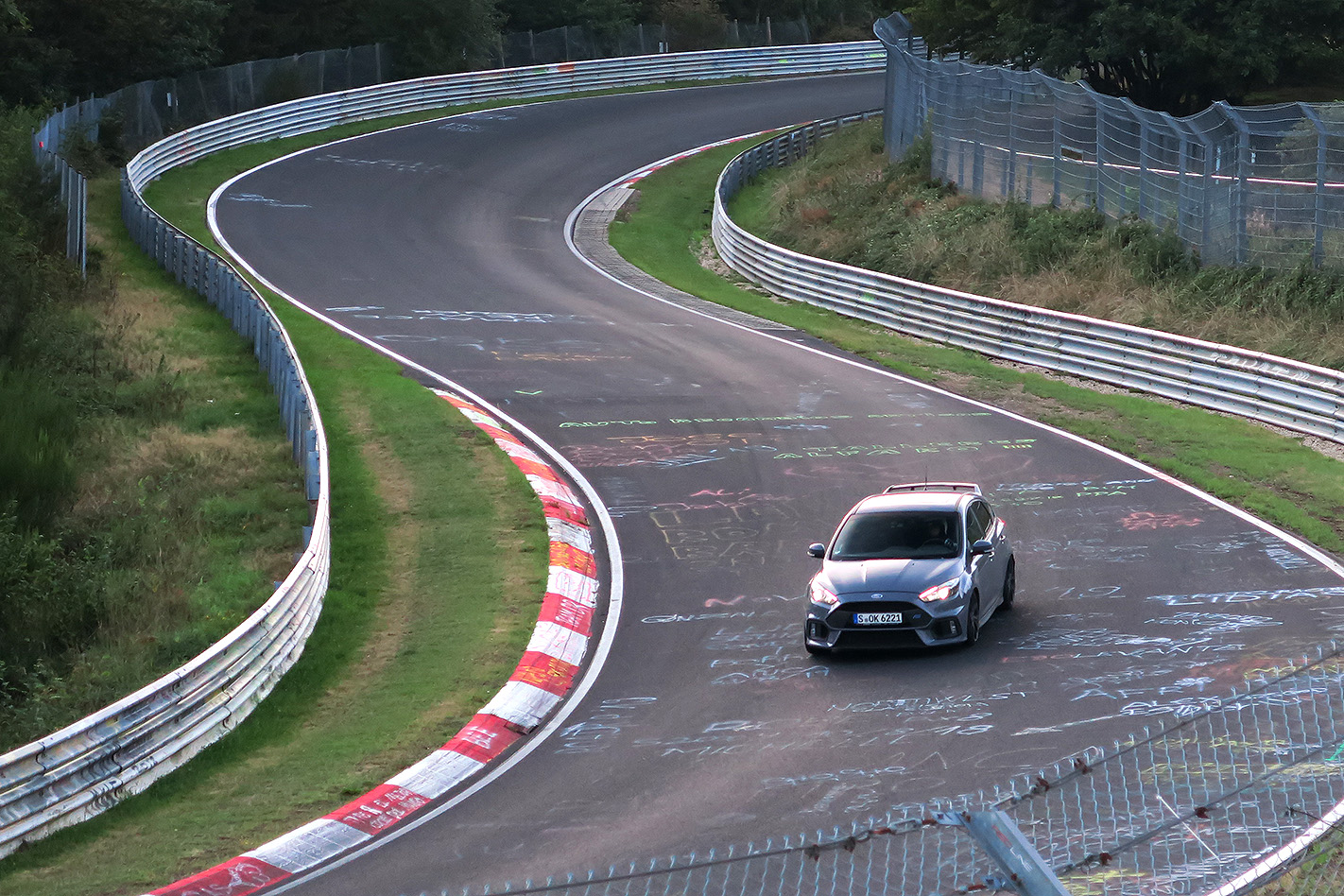
The only thing is… the Nordschleife is a dangerous place. Plug “Nurburgring crash compilation” into Youtube and you’ll see why. Have a big prang there and even if you walk away unscathed, you’re going to have a mega invoice from the circuit’s owners for the cleanup crew, lost earnings due to circuit closure and the replacement of any guard rails that your poor car managed to chew up as it pinballed between the ‘Ring’s unforgiving Armco. Oh, and a towing bill for your lump of scrap metal and/or the cost of a helicopter ride to Koblenz hospital if you really mess yourself up.
And that’s if you’re driving your own car.
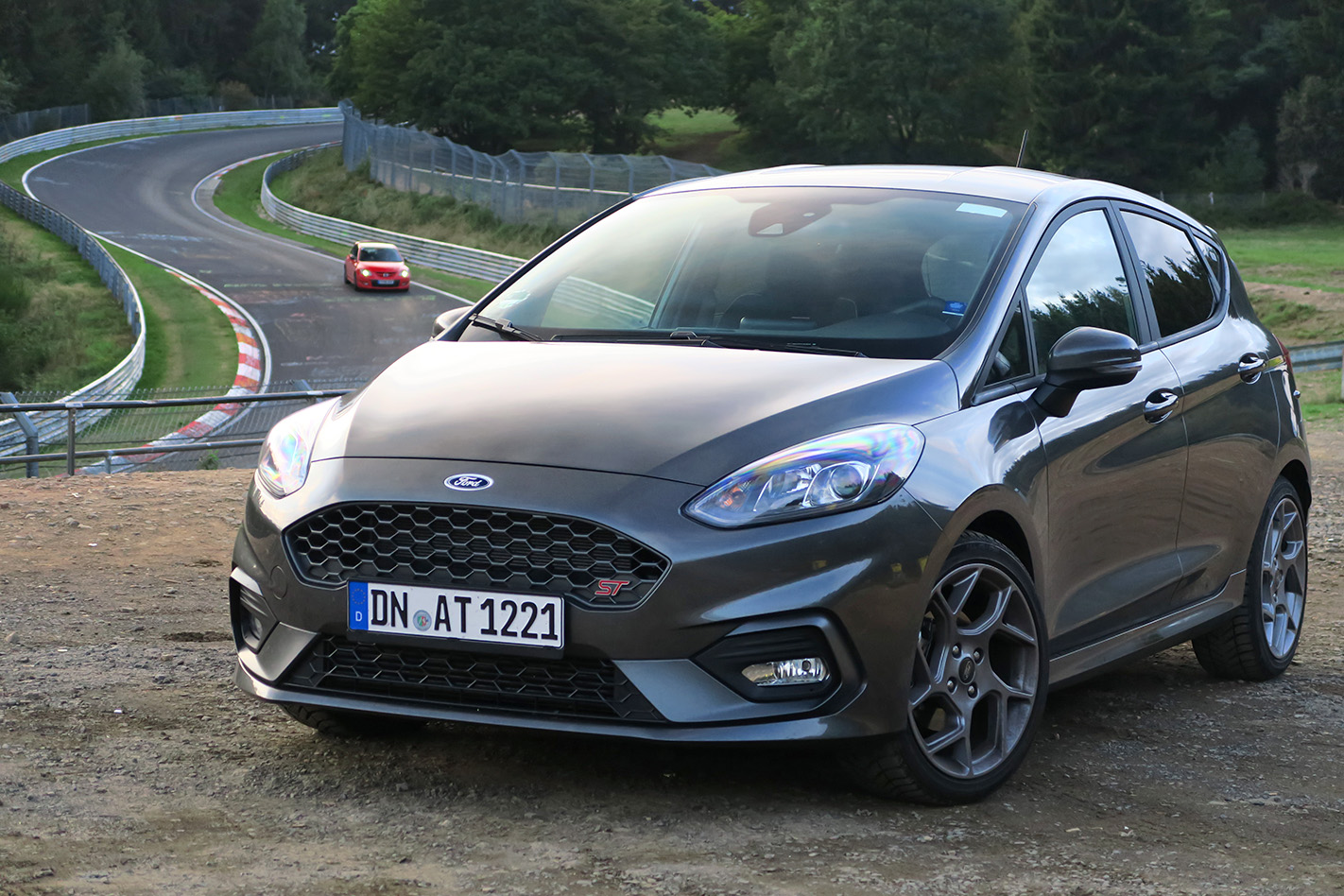
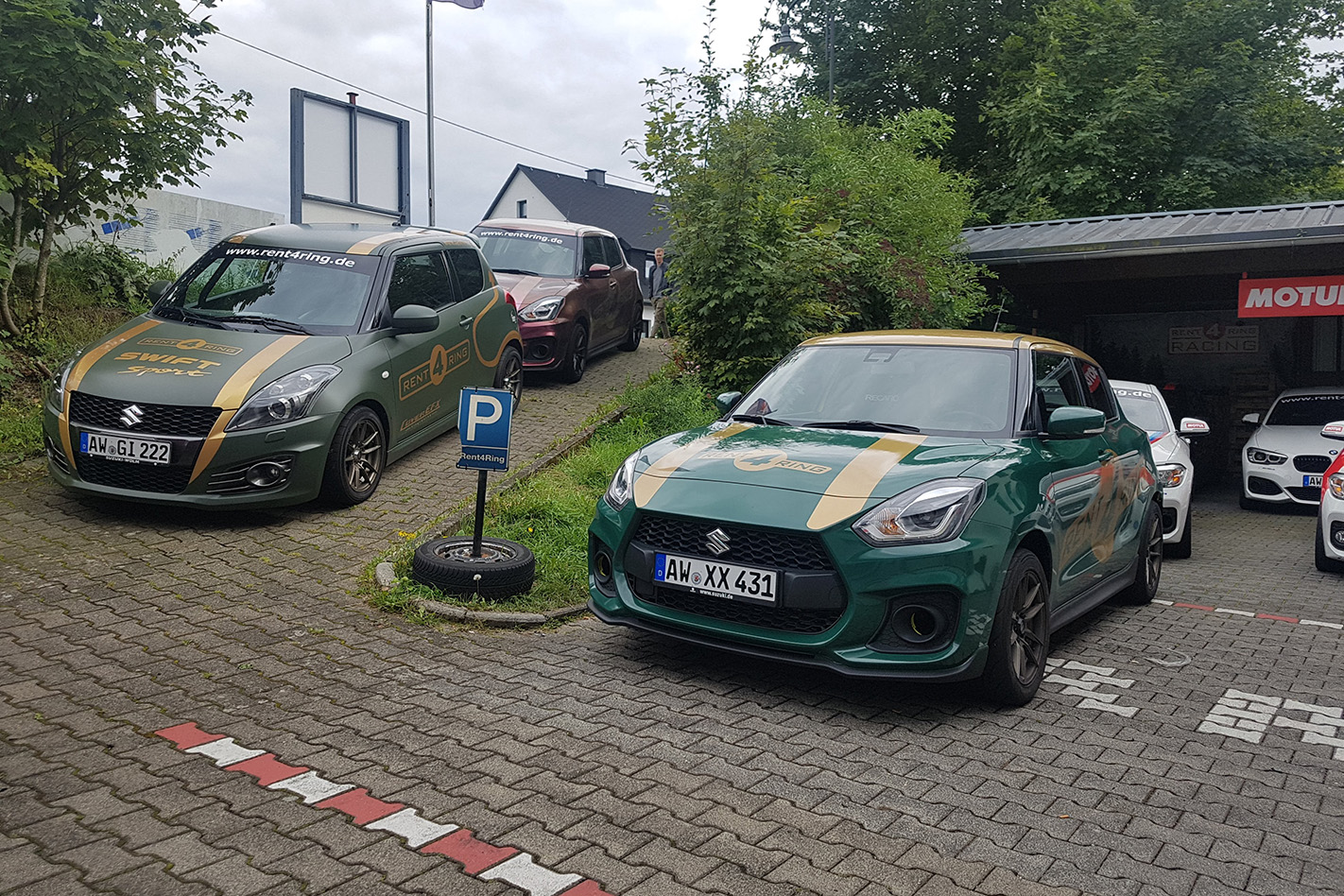
As a tourist I had to rent something if I wanted a crack at the ‘Ring, and with rental companies like Hertz aggressively policing Germany’s most famous racetrack to ensure customers aren’t wrecking their property, the only solution was to rent a racecar from a company that’s comfortable having strangers take their cars onto the ‘Ring.
But even then, the financial fallout of having a prang is significant. The insurance excess for the car I selected – a Suzuki Swift Turbo, rented through Rent4Ring – was €8000, or AU$13,000. Stories of fun-seekers winding up in the hole for tens of thousands of dollars are common at the Nurburgring.
The Forza Motorsport, Project Cars, Assetto Corsa and Gran Turismo franchises all feature the Nurburgring Nordschleife in high-def, with everything from the guardrails to the graffiti rendered in lifelike detail. The ‘Ring’s notoriously bumpy and cambered surface has also been modelled accurately by these games, as has its 300 metre vertical elevation change – in short, it’s as close as you can get to the real thing without actually having to travel to Germany.
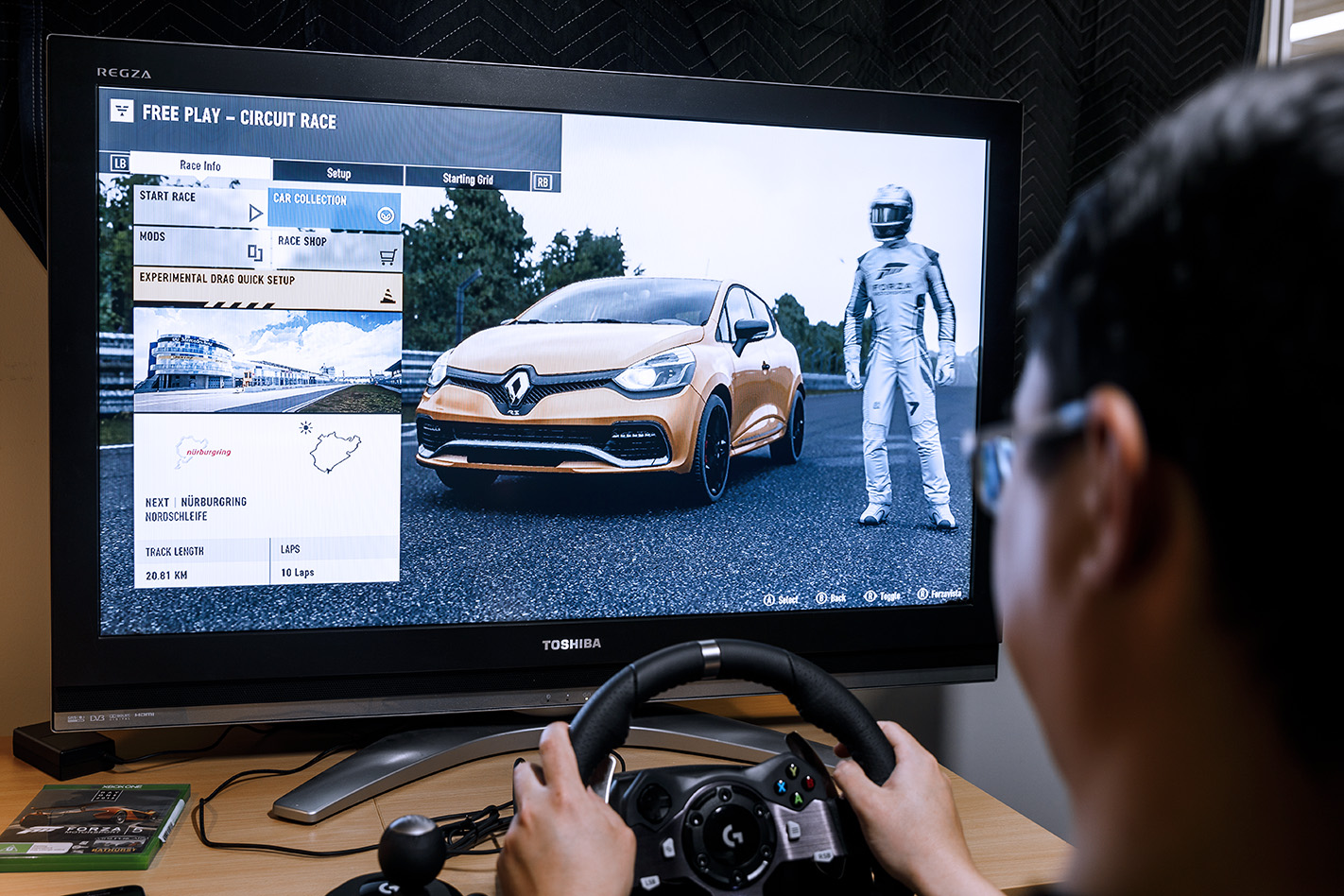
As for the car, sadly Forza doesn’t offer up the Suzuki Swift Sport in its catalogue of driveable cars. It does, however, feature the Renault Clio RS, another B-segment five-door hot hatch with turbo power and an entertaining chassis. The Clio has a stronger power-to-weight ratio, but beside that the two cars are fairly close in configuration and intent. To enhance realism, all assists except for ABS were switched off.
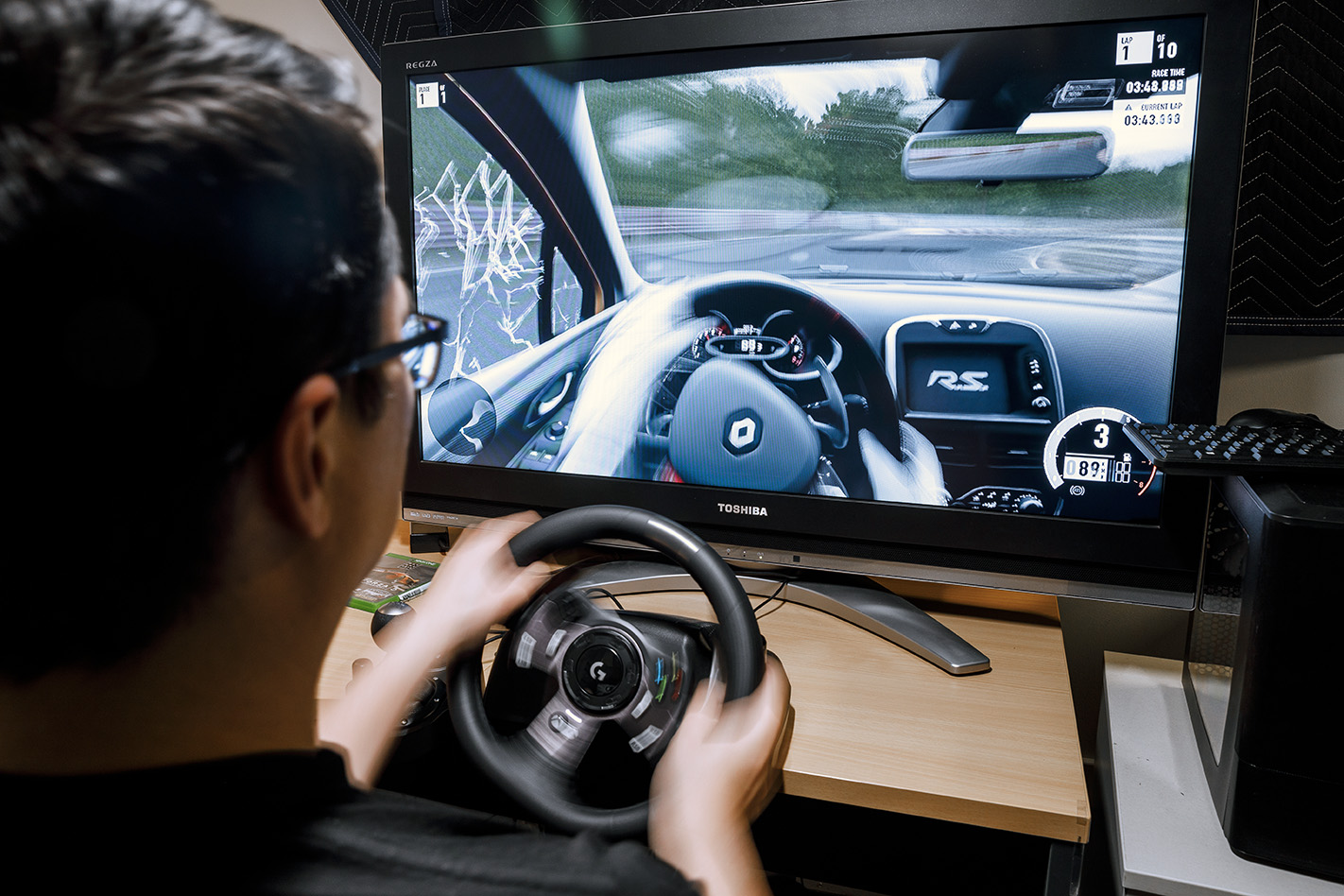
Intially, there was no shortage of crashing. Though slow, the Clio RS can be a tail-happy thing with a sharp throttle lift or some trail braking, and there’s no shortage of corners at the Nurburgring that easily induce a tank-slapper. Managing entry speeds and learning which corners required more care than others is the first lesson, and one that takes at least a good dozen virtual laps.
Once that level of familiarity was attained, I could ratchet up the speed. Despite being a daunting track with barely any harm-reducing runoff or gravel traps, there’s more than a few places along the Nordschleife’s 22.8km length where you can apply full power for long periods of time and attain speeds north of 200km/h, even in an entry-level performance car like a Swift Sport or Clio RS.
Places like the stretch between Flugplatz and Schwedenkreuz, the downhill approach to Fuchsrohre and the steep ascent from Bergwerk corner nearly all the way to the Nordschleife’s famous Karussell banking.
The flowing corners between Karussell and its smaller counterpart, kleines Karussell, can also be smoothly linked together if you know the right line, but learning that line is a challenge given many of the approaches are blind. Thankfully, figuring out which way the track goes in a sim results in much less scuffed paint and bent metal than if you were to attempt the same in real life.
And the same goes for other Nurburgring danger spots, like the fast left-hander at Schwedenkreuz and sharp right-left-right that lurks at the end of a high-speed downhill/uphill section at Adenauer Forst. Did you look up some crash vids earlier? Odds are the higher-speed prangs you saw were recorded at one of those two corners.
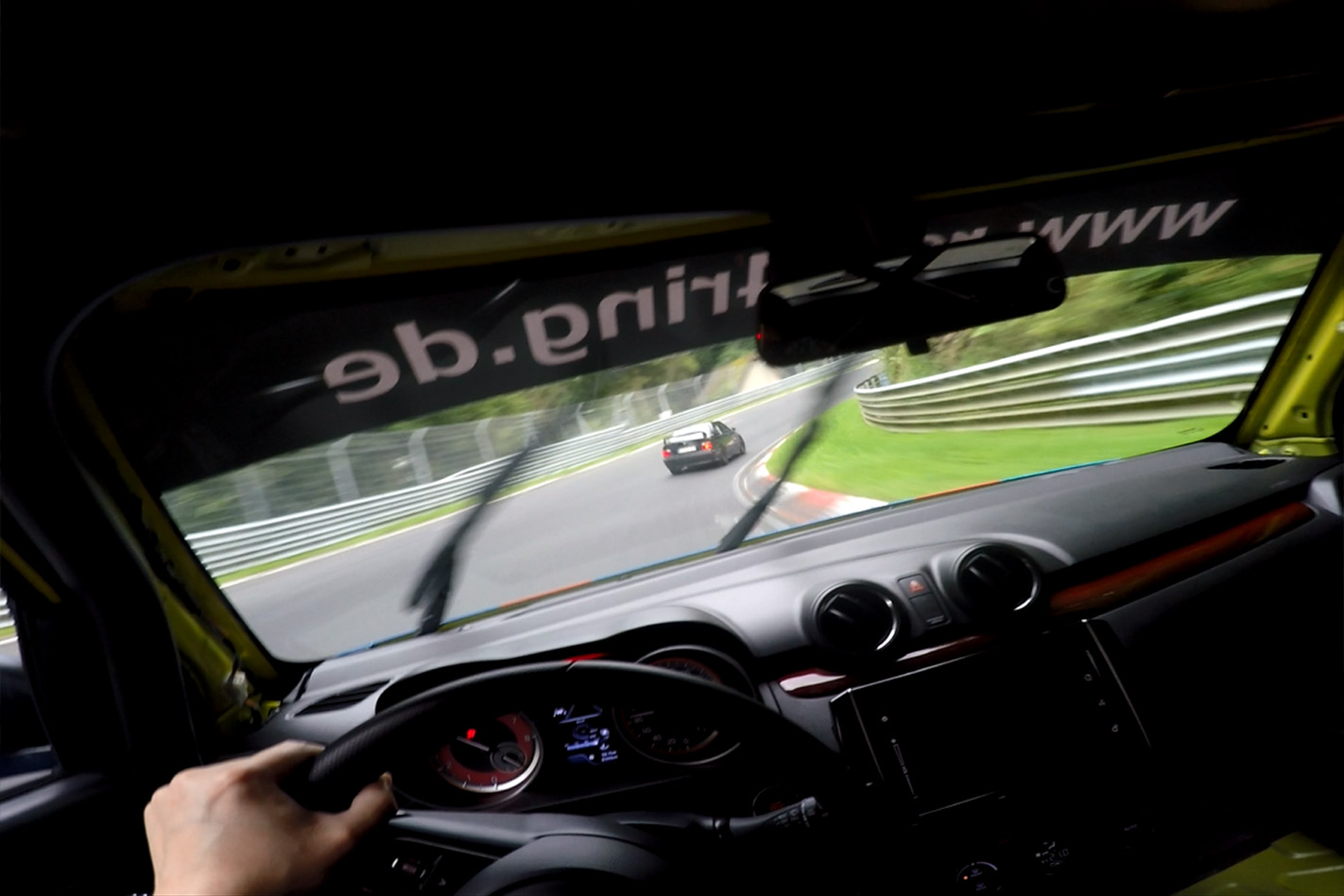
And that’s a testament to the accuracy of modern racing games. That first lap around the ‘Ring felt natural, like I’d been to the circuit before. There were no surprises apart from the occasional M3 or Mercedes-AMG GT Ring Taxi thundering past from behind and a slightly damp surface from some drizzle. In fact I wasn’t worried at all about whether I’d take a turn wrong and understeer into a guardrail – I was more concerned about whether other traffic would hold me up.
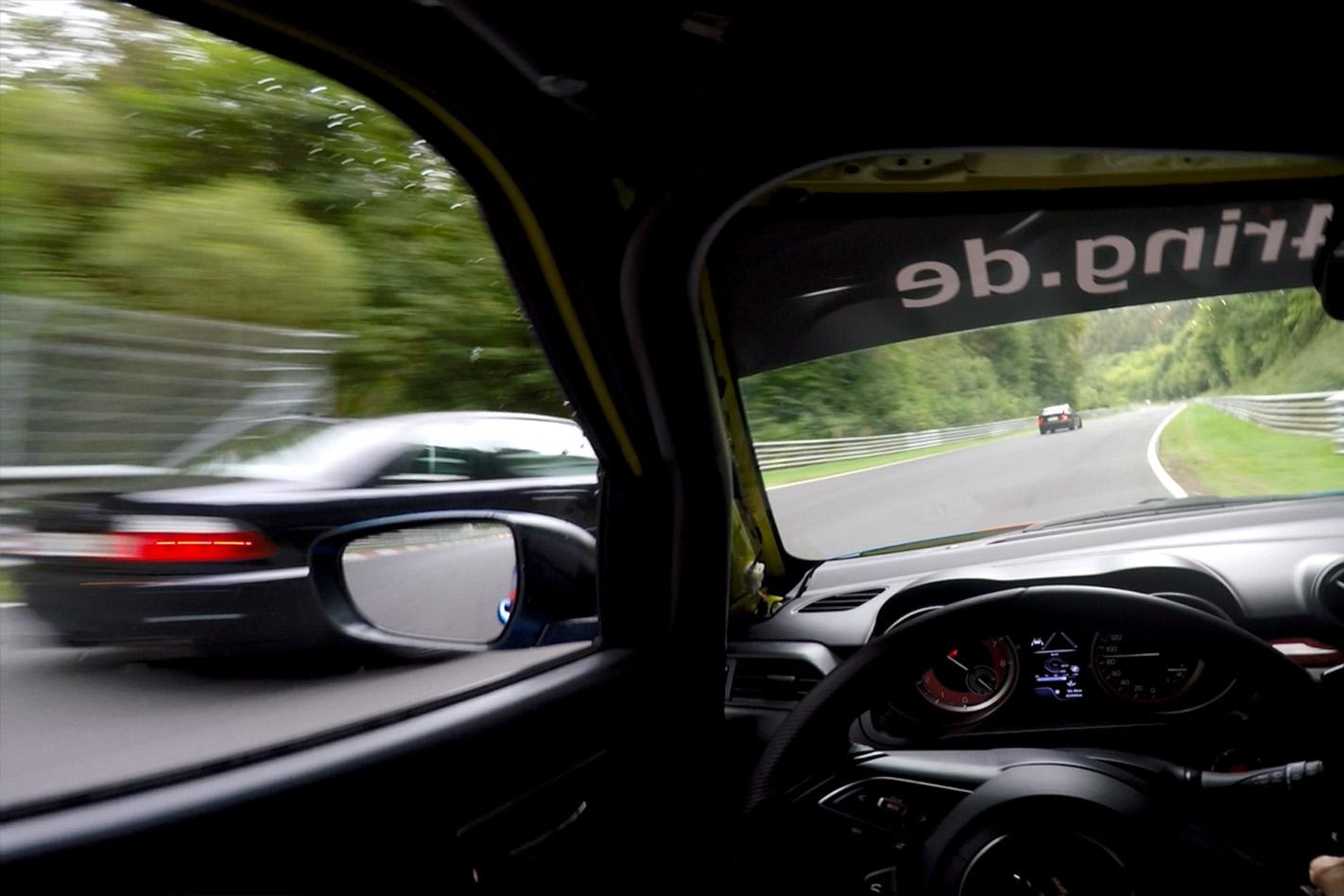
And doing that practice with a proper wheel peripheral like the Logitech G920 was also invaluable – and in my opinion, should be mandatory if you want to do the same. Aside from having something more realistic interface than a tiny thumbstick and shoulder triggers to control the car with, introducing the critical technology of force feedback adds a tactile element to the learning experience.
You can actually feel how the front wheels react to certain kerbs and bumps, and that’s vital prep if you want to stay safe.
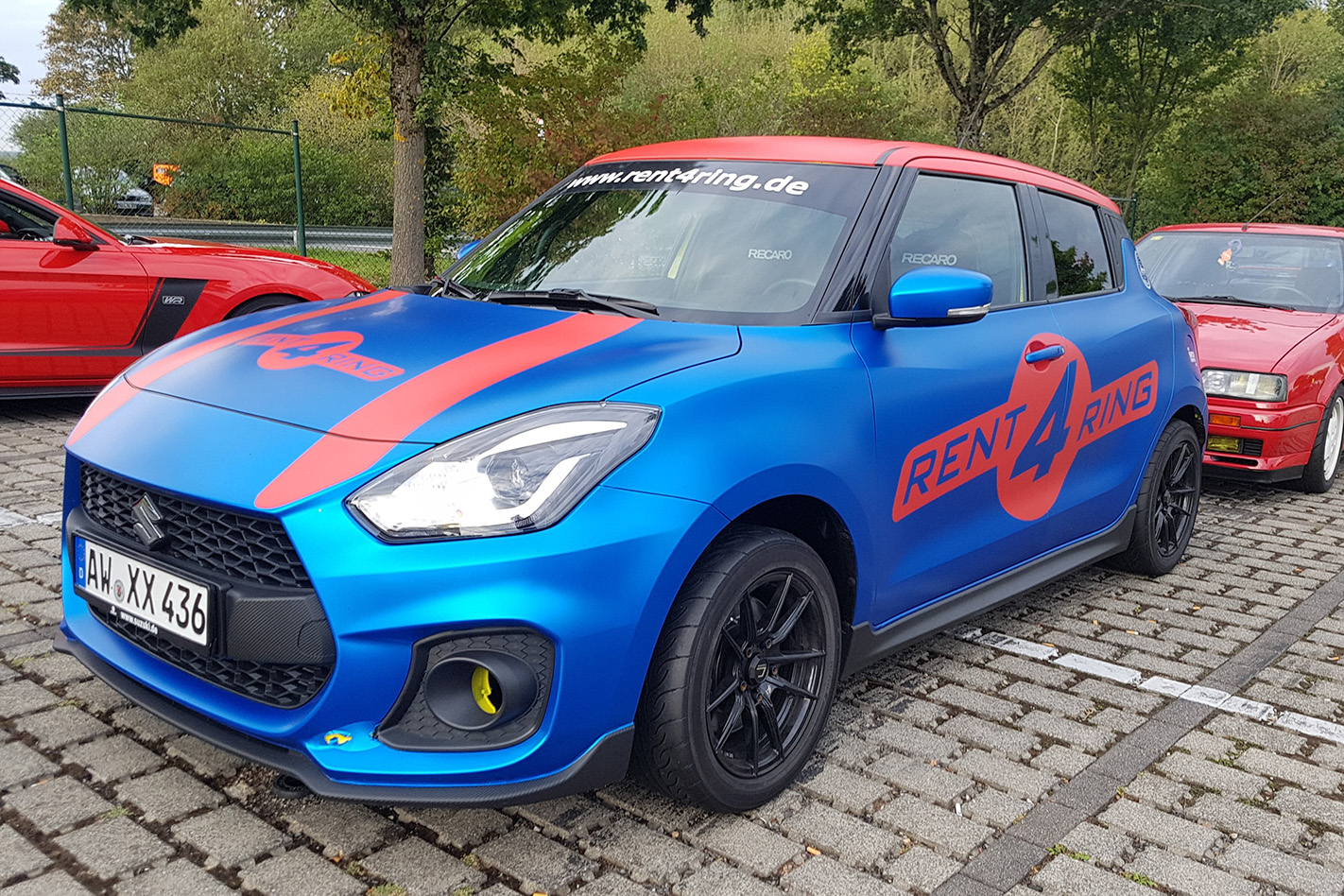
Did I have fun though? Absolutely. Without practicing the track ahead of time I wouldn’t have had the confidence to push harder, andthe experience would have been more about learning the circuit rather than actually enjoying myself.
Considering the monumental cost of renting a track-prepped car at the Nordschliefe (I did three laps of the circuit at a total cost of AU$616), getting familiar enough with the track to actually drive hard means you’ll get more value from your spend while still remaining safe.
But as faithful as it is to the source material, games can’t convey the sheer scale and challenge of the Nurburgring. It’s something every avid driver should attempt at least once in their life… but only after they’ve done their homework in the virtual realm first.
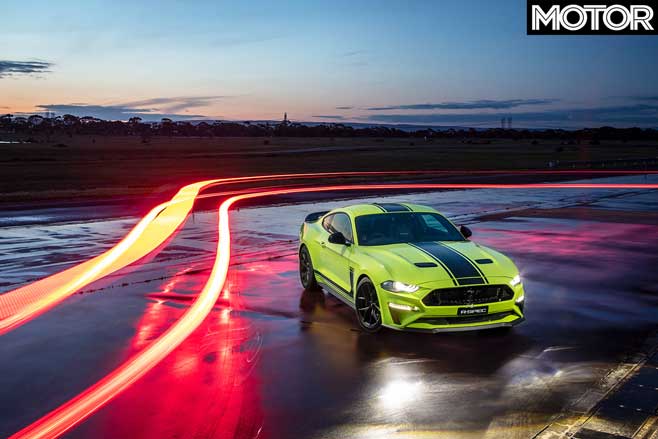
Meet the Ford Mustang R-Spec, a limited edition, homegrown supercharged special that will land in Australian Ford showrooms in early 2020 for around $99,980 with a full five-year warranty.
Denied the possibility of a Shelby import program due to the lack of right-hand drive availability, Ford Australia has teamed up with long-time Blue Oval tuning guru Rob Herrod and his team at Herrod Performance to deliver a power-packed Pony Car for the 21st century.
At the heart of the R-Spec is the Ford Performance supercharger kit, consisting of a Roush 2.65-litre blower, new lower intake manifold with integrated air-to-liquid intercooler, 87mm electronic throttle body, new air inlet system and fuel rails.
Ford Performance claims outputs of 522kW and 827Nm, but Ford Oz is keeping tight-lipped on local figures until the car has been certified. “We want genuine power outputs,” says Ford Australia’s Product Communications Manager, Damion Smy. “Whether it’s in a Focus, a Fiesta ST or whatever, we want real-world performance figures that are genuine. We’re not here for the biggest number for a quick headline.”
Expect Aussie outputs to differ slightly as the local certification process is different – US Mustang GTs produce 343kW/570Nm, which becomes 339kW/556Nm in Australia – and the R-Spec uses a different exhaust, built to Herrod’s specifications to Ford Performance supplier Borla.
Mustang R-Spec on Aussie roads at last!
The engine calibration itself is the product of Ford Performance, which is the key to Ford Australia being confident enough to offer a full five-year warranty. “The check and balances on that kit, that’s all managed by Ford Performance in the States,” explains Ford Australia’s Special Vehicles Engineering Manager Justin Capicchiano. “they do all the validation and durability work. Our job is to deploy that kit in a productionised environment.”
To achieve that Ford Australia has set up a small-scale production line in its Campbellfield facility to turn standard Mustang GTs into R-Specs. The line will be staffed by Herrod Performance employees trained by Ford Australia to ensure OEM levels of repeatability and quality. “Doing what I’ve done for 40-plus years, I’ve had to be re-educated on how to productionalise the build of a car,” says Herrod. “It’s been a whole new learning curve.”
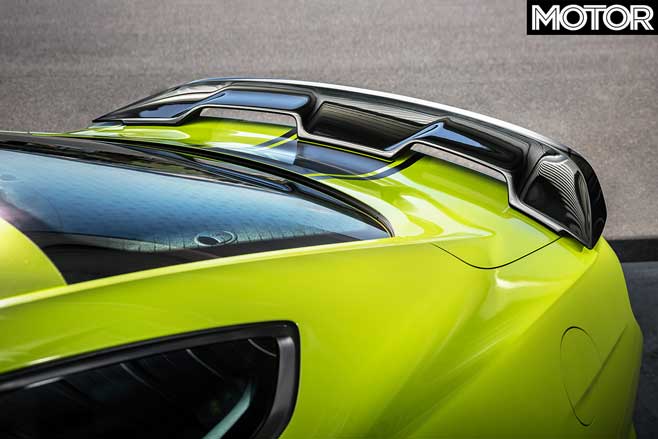
Like the recent Bullitt, the R-Spec will be manual-only. The official line is that customers for these limited-edition cars – 500 vehicles will be produced – prefer manuals, but while that may be true, MOTOR understands getting the supercharged engine to work with the 10-speed auto in a certifiable package proved too high a hurdle.
However, while supercharged grunt is the R-Spec’s main calling card, it’s more than just an engine upgrade. Adjustable anti-roll bars are fitted, while new progressive-rate springs drop the ride height by 20mm and require the standard MagneRide suspension to be reprogrammed to suit.
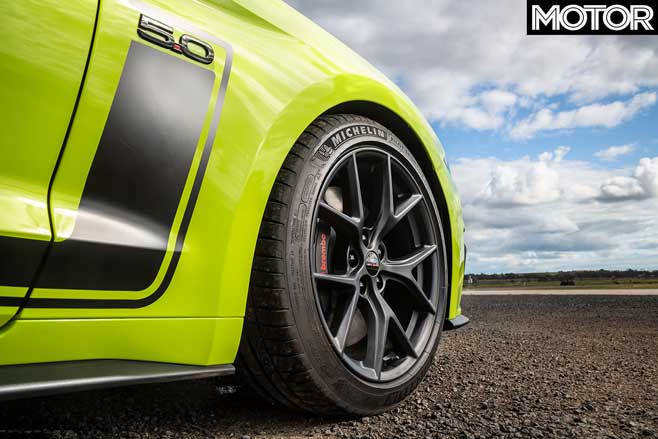
Ford Performance rims measuring 19 x 9.5-inch front and 19 x 10-inch rear (a half-inch wider than standard) wear the same Michelin Pilot Sport 4 S tyres (255/35 and 275/35 front to rear respectively).
The exterior styling is primarily the work of Dave DeWitt, lead exterior designer for the Ranger Raptor. The exact colour palette has yet to be confirmed, but will include both MY20 hero colours, Twister Orange and the Grabber Lime you see here.
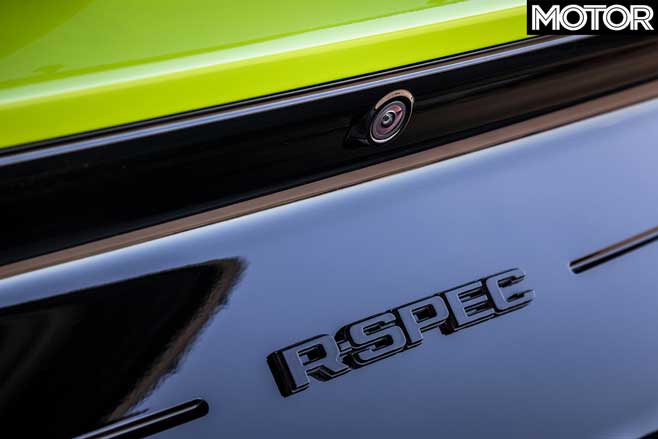
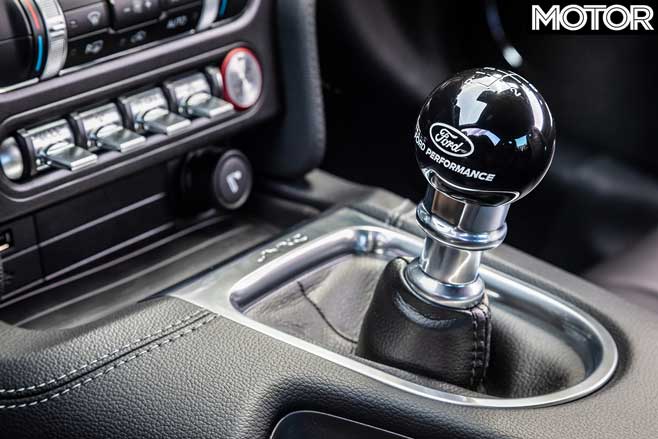
All details above the ‘belt line’ – mirrors, vents, grille, rear boot panel, that giant spoiler lifted from the 2020 Shelby GT350 – are gloss black with everything below – wheels, lower skirts – satin black. An R-Spec badge replaces the standard GT at the rear, while inside it’s all standard bar a Ford Performance shift knob and scuff plates.
Ford Australia has publically said it’s been working on a supercharged Mustang program for a while, but with little progress most assumed it was dead. It’s a testament to the ‘car people’ inside Ford Australia, not to mention the crew at Herrod Performance, that a factory-backed mega-horsepower muscle car will soon be available.
“It’s been a passion project within Ford,” says Smy, “We’ve stopped at nothing to get a supercharged Mustang for our customers.” Capicchiano adds: “It’s touched every part of the business. If someone asks if you want to help out on a supercharged Mustang project, the answer is not no, it’s ‘yes and when can I have the keys?’”
We’ll bring you official specifications and, of course, a full review as soon as we can.
It is not every day you’d find a Zonda up for sale, and according to auction house RM Sotheby’s, this one-off Pagani Zonda Aether is the first Zonda to head to auction in nearly seven years.
Headlining RM Sotheby’s first-ever Middle East auction, the Aether roadster’s auction is set for November 30, right on the eve of the final race of the Formula 1 2019 season at Abu Dhabi’s Yas Marina circuit.
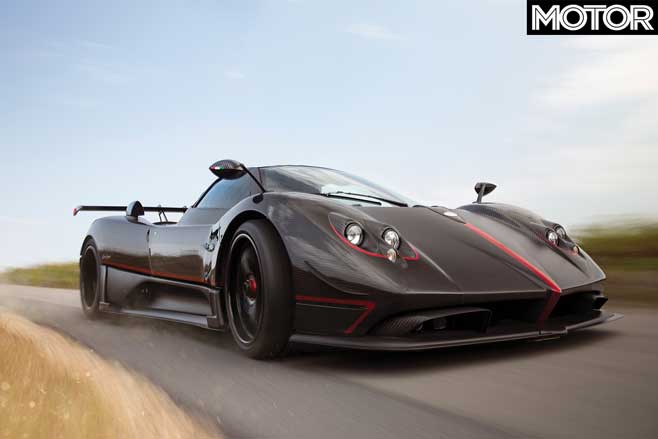
According to the auctioneers, the Aether is expected to fetch around USD$5.5 million (AUD$8.2 million), which is nearly a cool AUD$3 million more than a new Huayra Roadster – once considered the most expensive new car on sale in Australia upon its launch.
Built in 2017, five years after the official discontinuation of the Zonda series, the Aether roadster sports similar styling elements to the Zonda Cinque roadster, such as its rear arch air intakes, swooping overhead roof scoop, and rear wing.
Beneath sinister looking exposed carbon-fibre and red accented exterior, the Aether packs Pagani’s “760” specification engine – the 559kW tuned version of the Zonda’s 7.3-litre AMG-sourced naturally-aspirated V12 – which is mated to a traditional six-speed manual transmission.
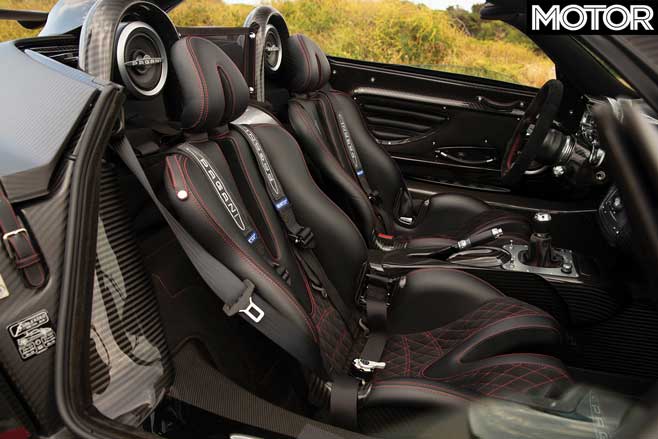
Other unique appointments to the Aether include the fitment of door straps and a green starter button that were lifted from the track-only Zonda R.
According to online reports, the Zonda Aether was commissioned and owned by Swiss luxury car dealer Ronnie Kessel, the same individual who commissioned the one-off Ferrari SP38 from the Maranello car maker’s ultra-exclusive Atelier programme.
While we cannot confirm those reports, we certainly get that impression from Kessel’s own Instagram account.
https://www.instagram.com/p/Bk3BX-sAaup/?utm_source=ig_embed&utm_campaign=loading
RM Sotheby’s confirms that the Zonda Aether is offered straight from the original owner’s collection, and will be part of an auction line-up comprising of more than 30 racing, sports, and supercars.
