
Remember when your parents would ask you what meal you wanted for your birthday dinner? Lamb roast was my go-to dish, with crispy roasted potatoes, and lashings of homemade mint sauce. For my most recent birthday, my husband asked what car I wanted to borrow for our weekend away with friends.
This time, my menu featured three premium SUVs, none of which I had yet experienced: Audi Q7, BMW X7 M50d and the Porsche Cayenne Hybrid. With six of us heading away for the weekend my decision was as easy as my cake icing choice (caramel): it had to be the BMW X7, the newest and most luxurious of the three.
On approach as a 5ft nothing female my “birthday present” is all kinds of overwhelming. The largest of BMW’s X models, the X7 is visually imposing thanks in part to BMW’s largest ever signature grille housed in its prominent front fascia. The upsized and upmarket X7 doesn’t stop there; its windows are large, it stands tall with high ground clearance, and it has the largest panoramic roof that I have ever seen. My first thought is ‘can I get into this thing’ and secondly ‘can such a little person drive it?’
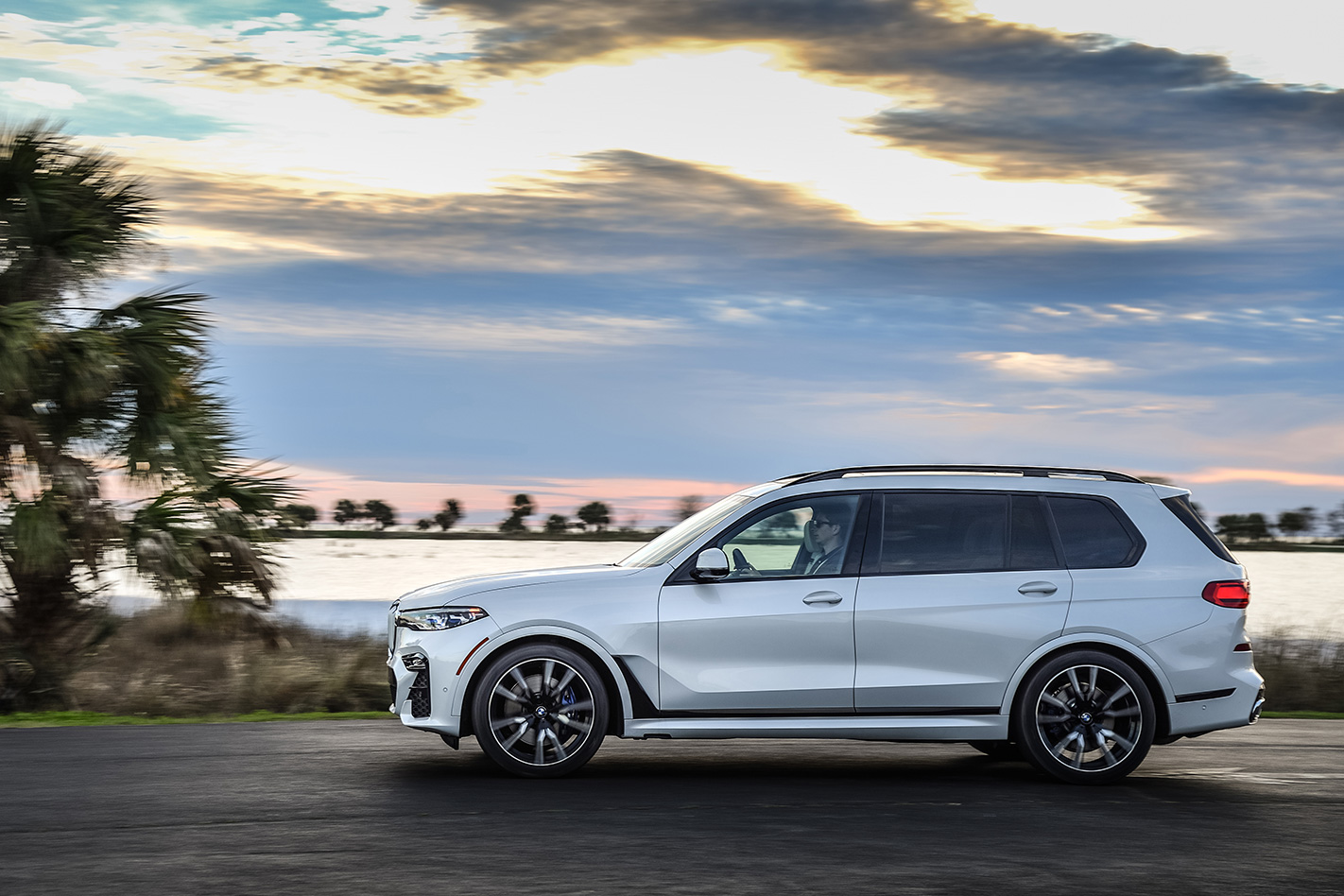
Lucky for me both are possible and the birthday weekend trip away gets underway, but not before I load the boot with too many bags for one person. All necessary, of course! The X7’s standard automatic tailgate operation makes this relatively easy even with arms full of luggage. With key in my pocket, a kick of my foot under the bumper opens the tailgate and I toss my two bags and a cold pack filled with champagne into the 750-litre boot. I’ve left the 3rd row of seats folded away because I won’t need them until much later in the day.
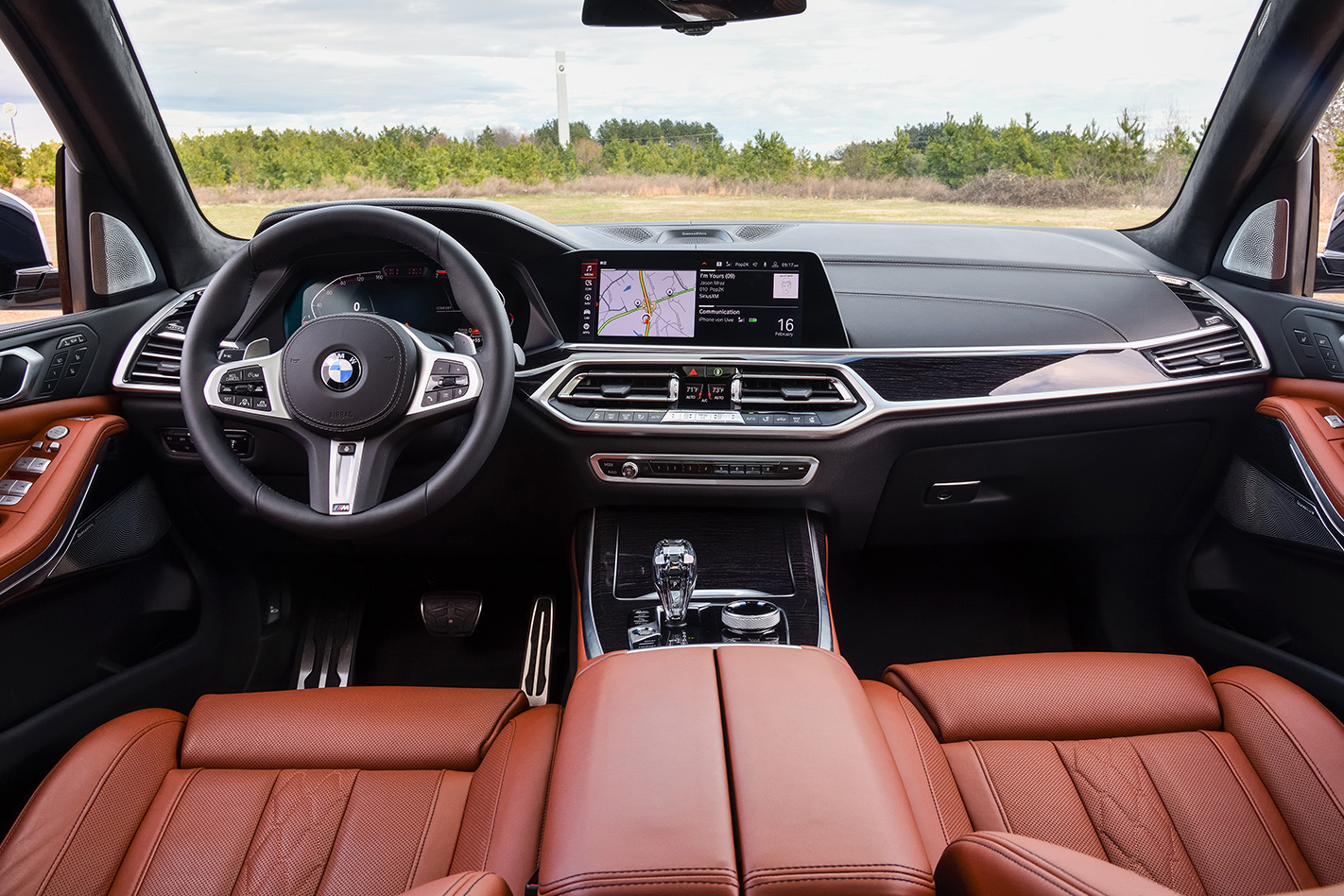
Climbing into the driver’s seat does feel a bit like hoisting myself up into a truck, but once inside it feels like I am on top of the world. The driver’s seat is electrically adjustable in more ways than I care to count, and the cockpit itself wants for nothing; it even has a crystal gear shifter with multiple X7s etched into the facets.
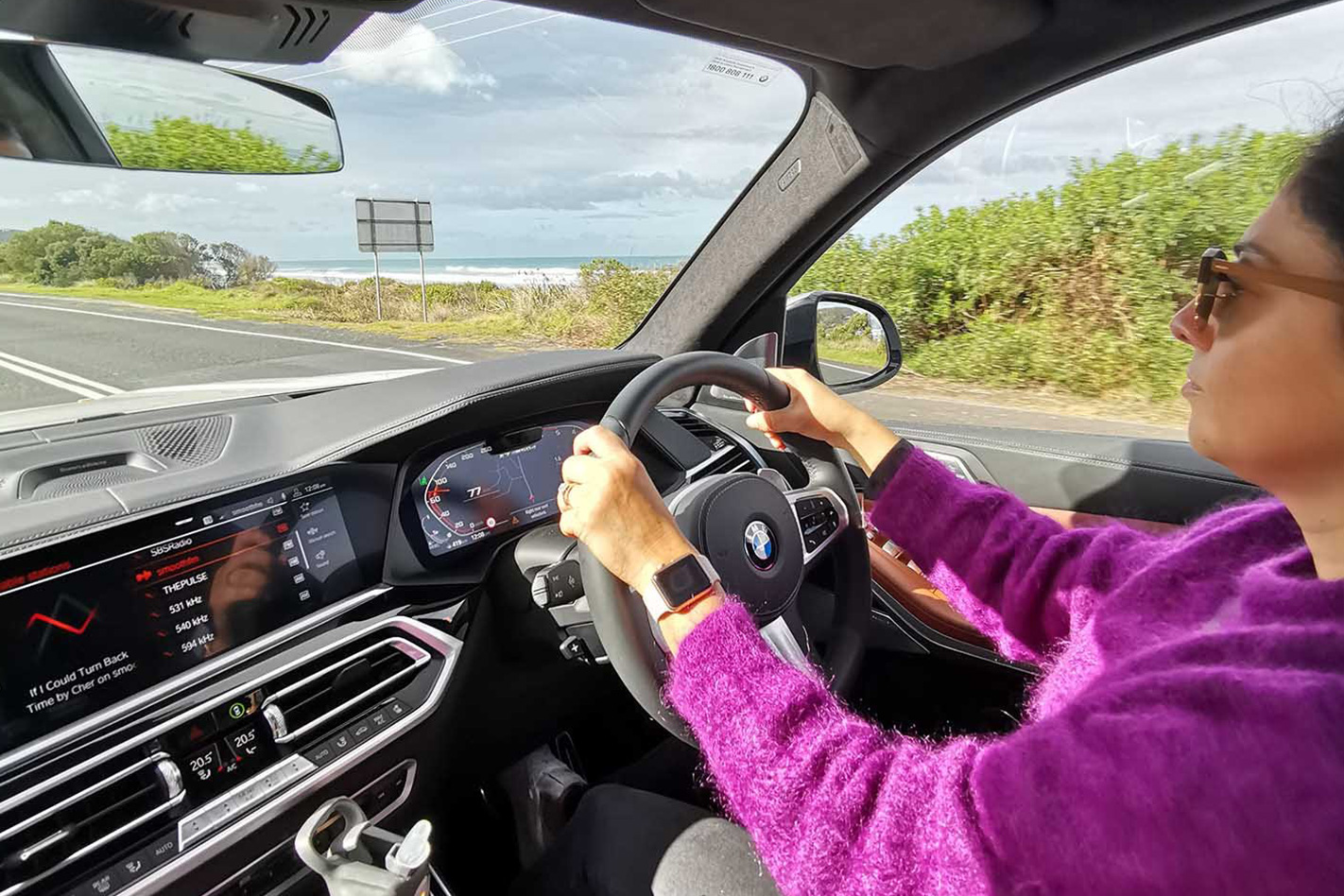
BMW Live Cockpit is standard, which means you get two 12.3 inch displays with increased functionality, including what I quickly christen the Harry Potter Control. This is a gesture sensor that lowers and increases the volume by capturing hand movements. This thoroughly entertains my birthday weekend guests, especially because I feel the need to say “wingardium leviosa” while doing it.
Speaking of music, the road trip sing-along is greatly enhanced by the 20-speaker Bowers and Wilkins 3D surround sound system with a 1,500 watt output easily drowning out the voice of one of my wannabe singer off-tone friends. Also requiring regular use of the gesture control (any excuse) to turn the sound up!
The new X7 has BMW’s 3rd generation head-up display, which is larger and clearer than the previous generation. Other driver functions worth noting include BMW’s iDrive system which makes life easy on the road for navigating, choosing music and making phone calls. This all can also be done using BMW’s voice recognition system.
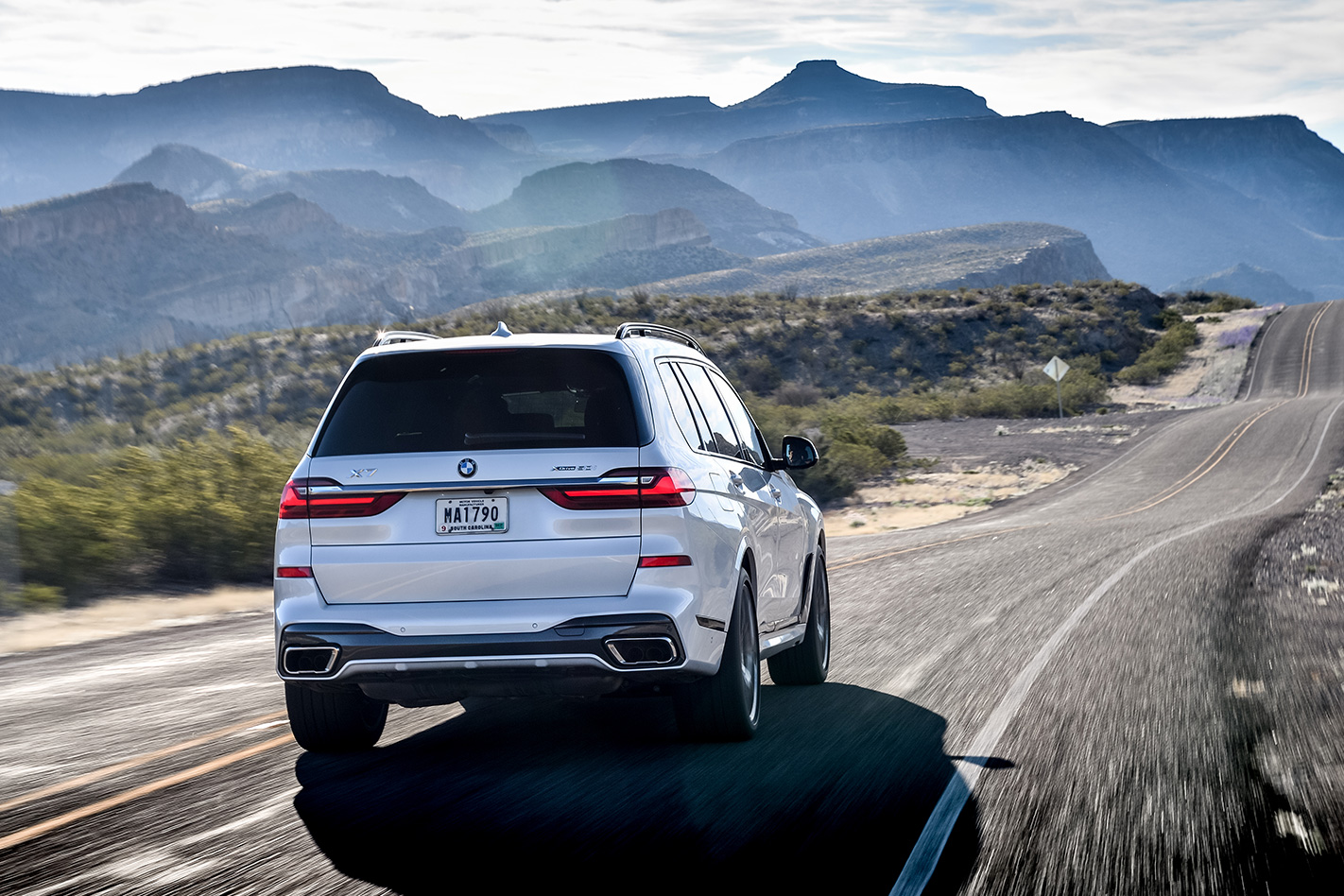
Once we get moving, I quickly forget that I am in an almost 2.5 tonne beast high off the road. Instead it feels like I am floating through the curves of the Great Ocean Road thanks to the X7’s standard air suspension, not to mention the ease with which the X50d’s 8-speed transmission and 3.0-litre, six-cylinder turbodiesel engine moves this luxury SUV. BMW claims the X7 can accelerate from 0-100km/h in 5.4 seconds and reach a top speed of 250km/h. The many caravans and tourist vans on the Great Ocean Road means I have no chance to try out either claim, especially because that would be illegal!
I am struck by the ease with which the BMW X7 takes corners and stays so firmly planted for such a large vehicle. The steering, too, is light and easy, which also disguises the X7’s size and weight. The X7’s M50d engine eats up hills with seemingly little to no effort.
Meanwhile my passengers are enjoying messing with the five-zone climate control system, and charging their phones from the USB ports in both the 2nd and 3rd rows. Interestingly, the 3rd row, which sometimes falls short in other 7-seaters, is not short on luxury or comfort in the X7. For starters, it has its own air-conditioning controls, and occupants also benefit from the extremely long sunroof. As for space, the real test was when I put two of my vertically blessed friends in the back. It did take us a while to sort out the electric seat buttons that can be accessed either from the boot or the side of the 2nd row seats, but once my friends jumped in they settled easily without complaint. Who wouldn’t be with the soft Vernasca leather trim that comes standard on all models.
As the long weekend progressed, we threw all kind of tests at my “birthday present”, including driving in the dark and the pouring rain, and taking full advantage of the BMW X7’s suite of driver assistance and safety technology. Okay, you’d expect a lot from a car priced from $168,900, but it’s also fair to say the X7’s active safety suite doesn’t disappoint in terms of the number of systems or their operational capabilities. In particular, I found the Speed Limit Info and Active Cruise Control very handy in maintaining my no fines in five years record on the Geelong road.
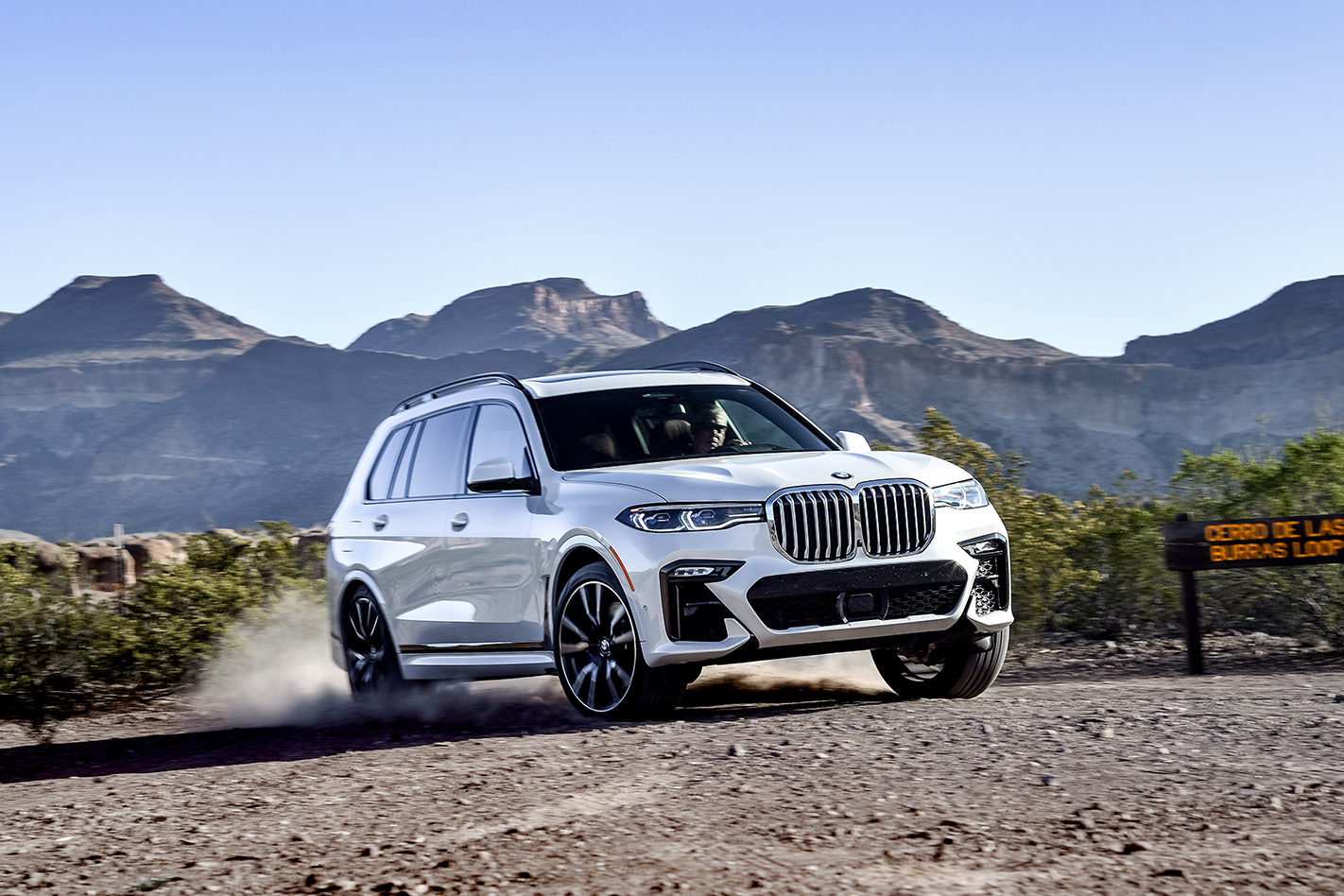
By the end of the weekend, none of us wanted to say goodbye to the BMW X7. We were awed by this big SUV, not just its size, but how the interior delivers comfort and luxury unrivalled in a seven-seater.
No one should have to hand back a birthday present. After all, Mum never got the lamb roast back, that’s for sure.
So, there’s a BIG, four-seat, monster-engined, all-wheel drive two-door in your future. Lucky you. Only problem is, of course, that these things aren’t exactly falling out of the trees.
Oh, sure, you could sell the kids into slavery and drive home in a Bentley Continental GT. And a two-door Audi RS quattro should still leave you with one kidney. Or, you could take a leaf out of Dick Smith’s book and shop locally. And at that point, all roads lead to a pre-loved HSV Coupe 4.
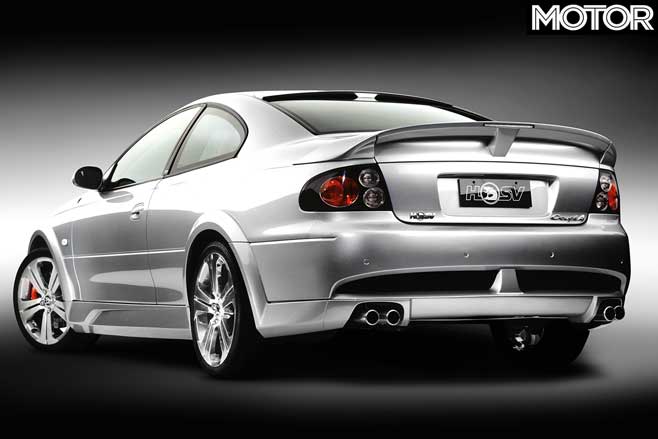
The big all-paw HSV wasn’t as well received on its debut back in 2004 as it probably should have been. Based on the sexy Holden Monaro body shell, the Coupe 4 built on the other HSV hardtops, the GTO and GTS, by adding the all-wheel drive set-up from the Holden Adventra/HSV Avalanche. The result was big, bold but, somehow, less than the sum of its parts.
The driven front-axle compromised the exhaust system and actually robbed the big 4 of a few kilowatts, while the general complexity underneath made servicing a bit more drawn out (and costly).
The Coupe 4 was also heavier than a rear-drive GTO or GTS and was only available with a four-speed automatic. Throw in the tacked-on wheel arches (to keep the wider four-wheel drive front track legal) and not everybody was convinced.
Of course, that was then, this is now, and any home-brewed HSV is emerging as a collectible. Throw in the relative rarity of the Coupe 4 (for all those above reasons) and the big fella is beginning to emerge as a proper local hero. About time.
HSV Coupe 4 vital checks
Body and paintwork
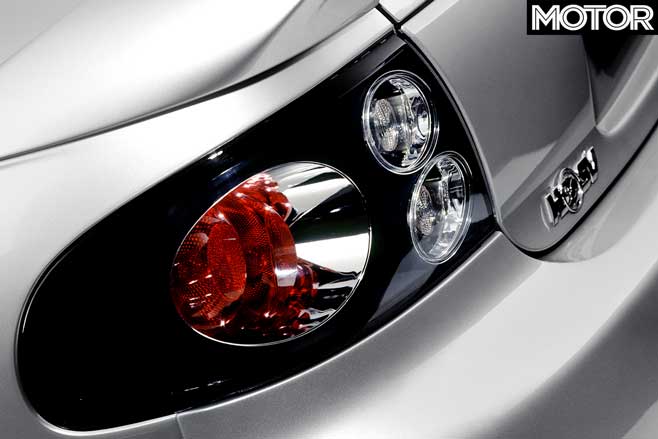
Any high-performance car with a natural tendency towards understeer is a prime candidate to have head-butted something solid in the ensuing years. So check it all closely, because the Coupe 4-specific grille and front apron won’t be found at Pinch-A-Part. Make sure the little attachment points for the apron aren’t busted and hanging off and that the chrome grille surround isn’t flaking or lifting (usually thanks to high-pressure car washes).
Some very early Coupe 4s also had problems with the rear tyres rubbing on the plastic flares, so you need to get down and dirty and stick you head up under the guard to find any damage. A change to wheel offset at the Clayton factory (we think) fixed this problem, but any car that’s been fitted with aftermarket wheels at any stage could have played the same game of clearance silly-buggers.
Beyond that, a scruffy Coupe 4 isn’t something you’re likely to find, but if you do, back it in that the rest of the car will be as manky and neglected as the paint. This car is not old or cheap enough yet to be a diamond in the rough, and skank will never be skin-deep on a Coupe 4.
Mechanical
The Coupe 4 was built well after the initial dramas surrounding the Gen III V8. Tales of oil burning seem to be restricted to the very early cars (pre-VX) although even the later LS1 can be a bit rattly when you take off from a cold start.
But this slight clatter is more of a characteristic than a problem and it seems to be a function of the short-skirt piston design in an all-alloy engine which needs a bit of heat in it to expand all the metal bits until they’re happy.
Either way, the rattles should be gone by about the second or third gear-change. Certainly, all LS1s seem to do it, and we’ve seen them with 400,000-plus kilometres showing, so it doesn’t affect them long term.
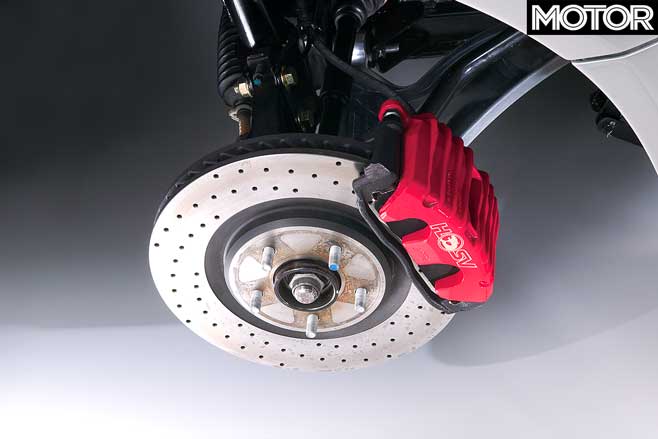
The one thing you do want to see, though, is a complete service history, particularly for the four-speed auto which can fail well before 200,000km if it’s been neglected. You need to pay close attention to the condition of the suspension, brake rotors and tyres on any Coupe 4, too, as the all-wheel drive grip and kerb weight of the thing both place stress on these components. At least the all-paw grip meant that the Coupe 4 was not a tyre shredder, making it invisible to the grubs inhabiting the Skidlife pages on social media.
Servicing is a bit more complicated than a rear-drive HSV thanks to all that componentry that was not only bulky, but also laid out, um, imaginatively. As in, the front diff was mounted alongside the engine’s sump with one driveshaft going straight to the front hub and the other passing through a sealed sleeve in the sump. The idea was to keep the centre of gravity low by not stacking the engine on top of the front diff, but it does make things a bit complicated if you’re chasing oil leaks (not unknown in an LS1).
Interior
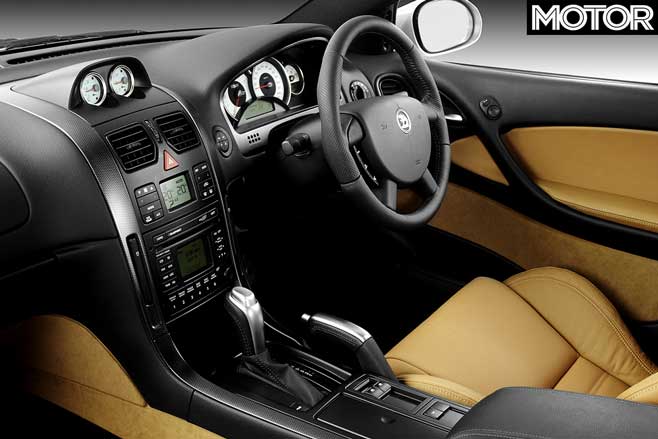
Leather was a natch for a car costing just fifty bucks shy of 90 grand back in 2004. But the factory didn’t really nail the interior of these cars. For a start, the leather used was not the lovely, soft stuff you see now. In fact, it was pretty cheap gear and soon went hard and brittle in any car that saw its share of sun.
Sometimes the leather would crack, other times the stitching would tear out. It’s important then that the car has been exposed to minimal UV or has been owned by somebody who took the time to condition the leather from time to time. Either way, the outside bolster of the driver’s chair is likely to be a bit cracked and crinkly.
Door trims are another HSV Coupe/Monaro bug-bear. Because the coupe’s door is longer than a sedan’s, it needed a different door trim. But since the volumes weren’t huge, it was done by a different supplier and the end result just didn’t measure up quality-wise.
Instead of being wrapped right over the top of the trim panel, the vinyl covering was cut short and glued, so when the inevitable shrinkage occurred, the covering peeled off the trim panel and went all wrinkly.
Looks horrible and the fix isn’t simple.
In Specs: VE Series I Commodore SS Engine: 5665cc V8, OHV, 16v Power: 270kW @ 7400rpm Torque: 475Nm @ 4000rpm Transmission: 4-speed auto Current price range: $24,000 to $30,000
Three reasons to buy the Coupe 4
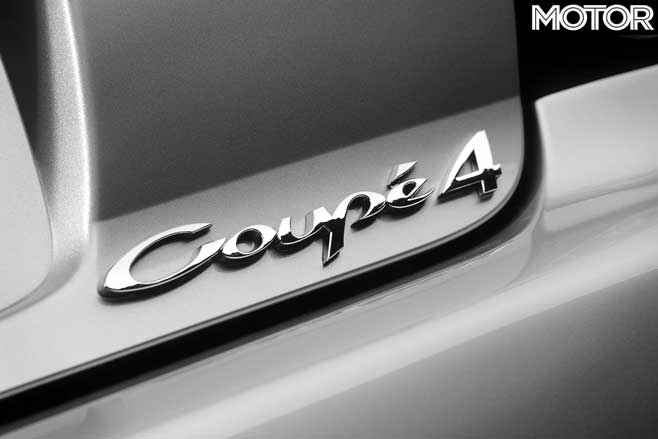
Unique These were bought by grown-ups and never fell to a price that attracted the P-plate brigade.
Practical A car for all seasons. Can give you your usual HSV jollies as well as keeping itself nice on trips to the snow.
Residuals It’s an Aussie V8. And we all know what that means post local manufacturing, right?
Three other options to consider
01 – HSV GTO
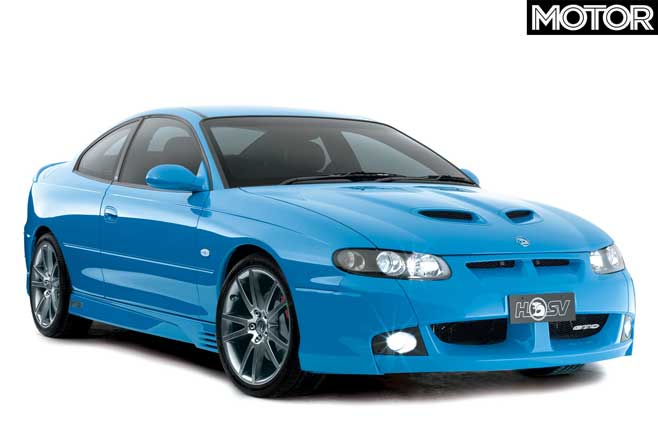
The same formula but without the complexity, mass (or grip) of the Coupe 4. These are still very entertaining cars, just watch out for modified examples that could be harbouring all sorts of future trouble.
02 – Holden Monaro
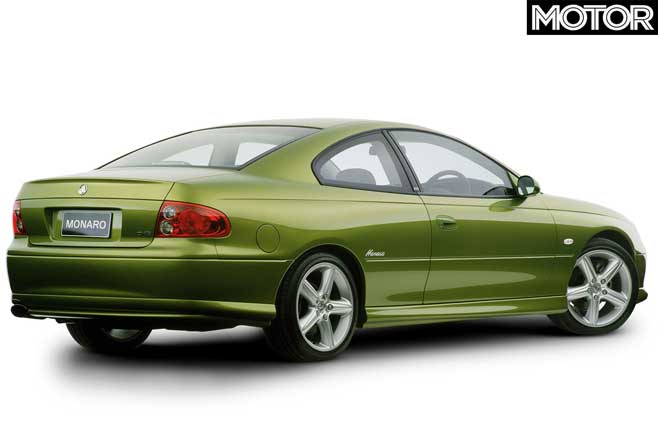
You can still buy these pretty cheaply (for now) and you won’t lose the same amount of sleep if you decide to modify for more poke. There’s true purity in the lines of an unspoilered Monaro that the HSV stuff can’t (or didn’t want to) match.
03 – Audi RS5
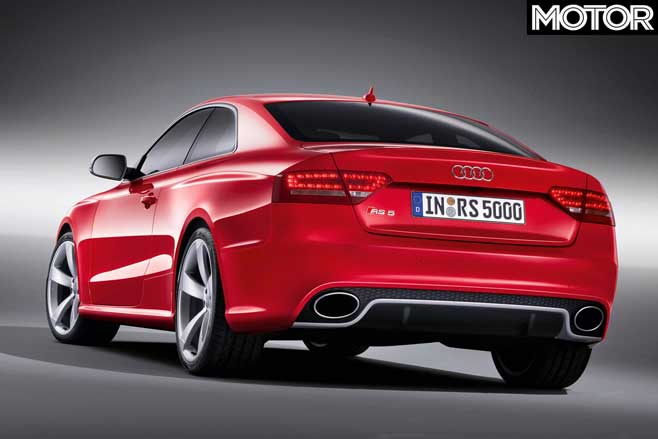
Atmo 4.2 V8 in the all-wheel drive coupe from Ingolstadt was sweet, tuneful and went like a good ‘un provided you remembered to always drive the pick-handles out of it. A good reminder of why we miss aspirated V8s.
While automotive brands usually like to carry on about weight-saving technologies and new materials – while adding kilos at each model change – Bentley has always made a virtue of being big and powerful.
Not for nothing did Ettore Bugatti (who wouldn’t recognise ‘his’ two-tonne sports cars these days) once describe a Bentley as le camion plus vite du monde (“the fastest truck in the world”).
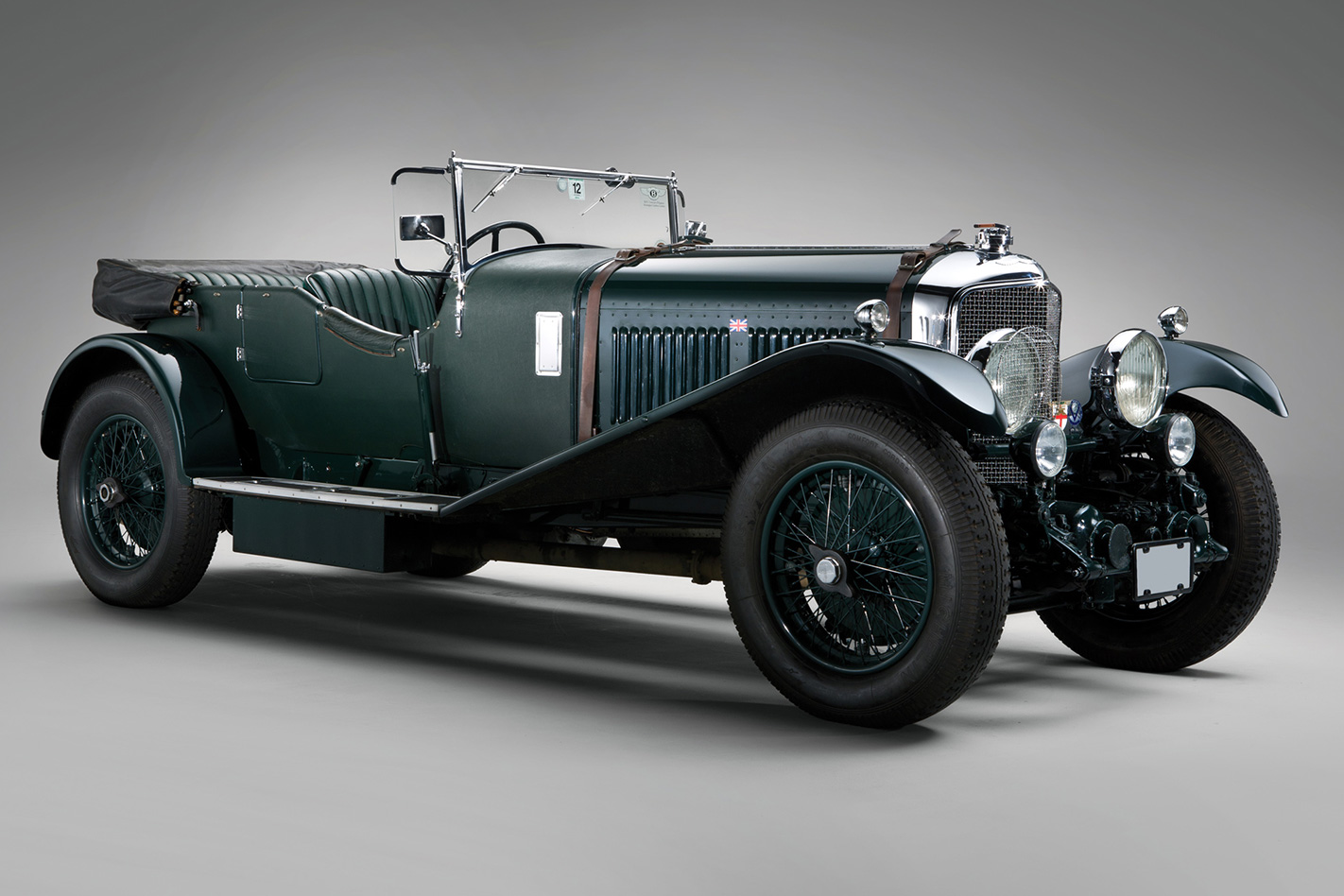
If Bugatti didn’t like French honour being insulted by Bentley’s first three Le Mans wins in 1924, ’27 and ’28, there was worse to come. Those were achieved with four-cylinder models of 3.0 and 4.5 litres. Meanwhile, Walter Owen Bentley was already preparing for his next cargo of Le Mans silverware by introducing, in 1926, his first six-cylinder engine, the ‘6½ Litre’.
The first inline six was in fact 4.5 litres, but the extra capacity came about after WO, personally testing the prototype in France, happened upon the prototype Rolls-Royce Phantom 1, also testing there. An impromptu road race convinced WO of the need for more cubic inches – not least because Bentley had his eye on the market for larger, more formal ‘carriage’ cars.
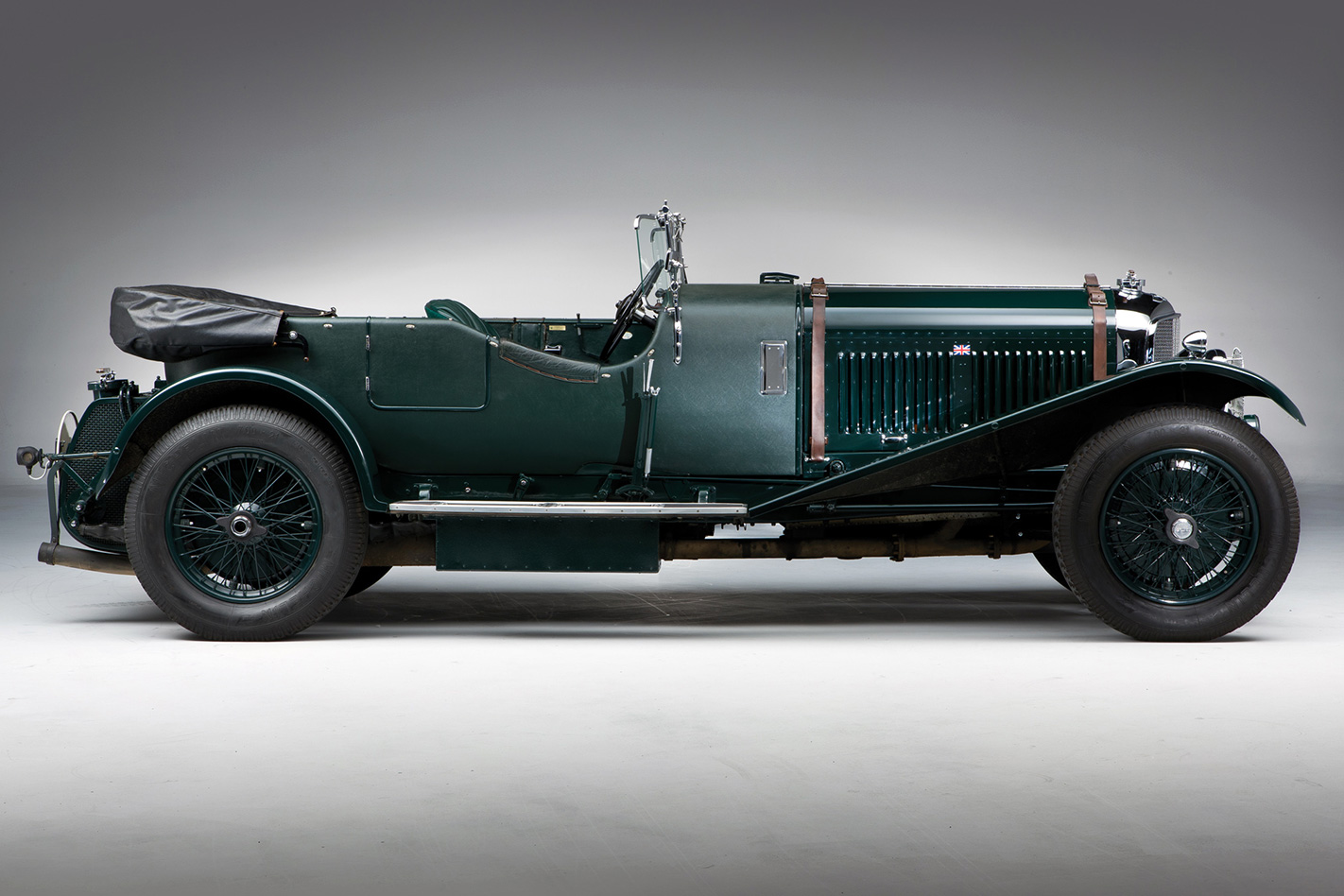
By 1928 Bentley was preparing a Speed variant of the 6½ Litre, to replace the now ageing four-cylinder. WO had always made known his preference for more displacement, in opposition to some of his drivers’ supercharging experiments that would produce the unsuccessful four-cylinder 4.5-litre ‘Blower’.
The Speed Six began its racing career in 1929, with driver (and Bentley’s chairman and financier) Woolf Barnato leading home a trio of atmo 4½ Litre four-cylinders to sweep the first four places at Le Mans. A year later, Speed Sixes would claim first and second at Le Mans, while the three 4.5-litre ‘Blower’ cars would not see the finish.
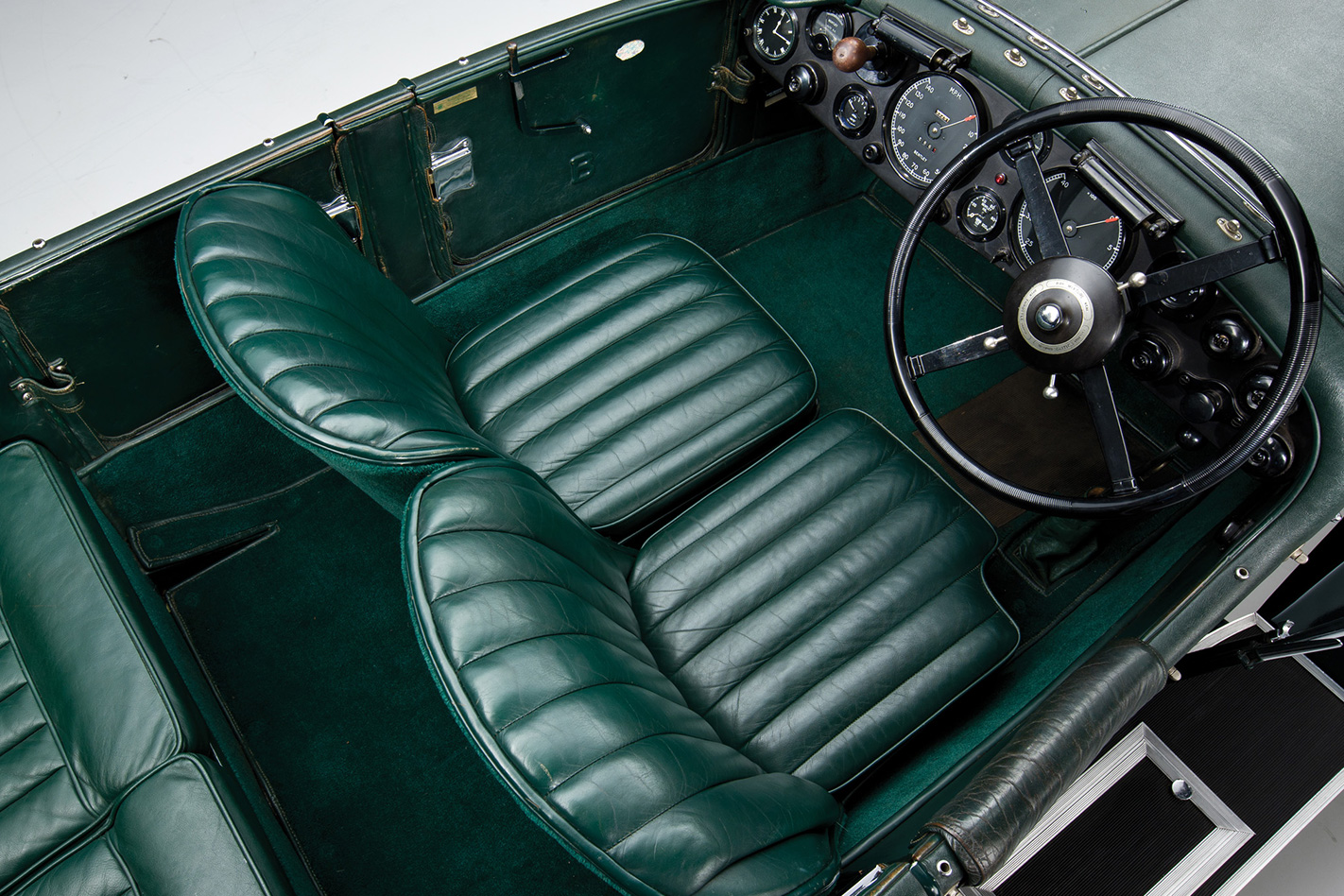
Barnato naturally had various Speed Sixes as his personal road cars; the most famous being a low-roofed Gurney Nutting coupe, celebrated (erroneously) as the car in which he raced the Calais-Mediterranée Express ‘Blue Train’ in 1930. In fact, that was achieved in a Mulliner-bodied Speed Six saloon.
The 6½ Litre and Speed Six were discontinued in 1930, with 363 of the former and 182 Speed Sixes built. Their replacement, the 8 Litre, would be WO Bentley’s last, brief hurrah.
Send more cubes
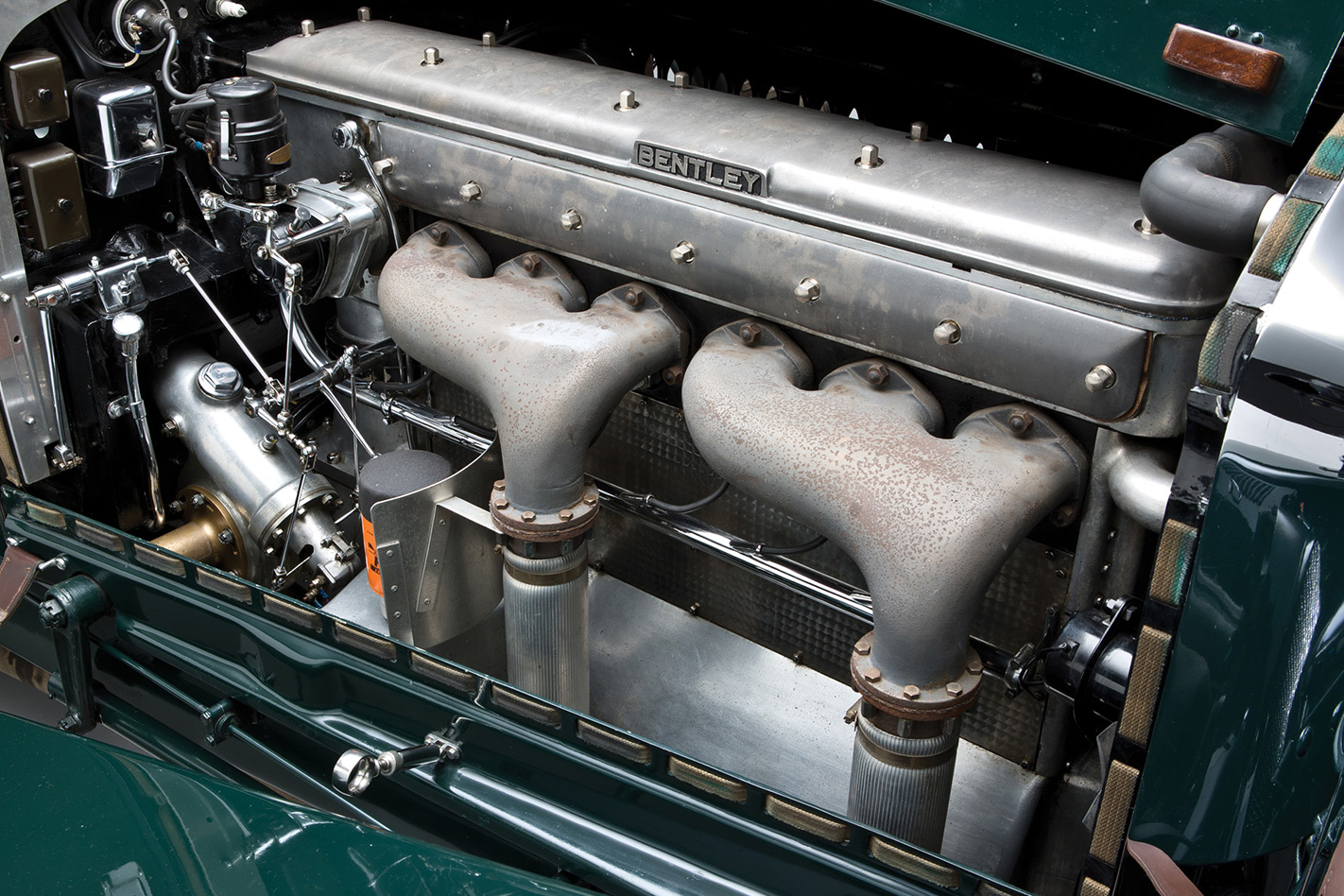
The 6½ Litre or ‘Big Six’ was a 6597cc inline six-cylinder, with an aluminium crankcase and one-piece, cast-iron block and head, featuring twin ignition and four valves per cylinder. The Speed Six gained a higher compression ratio (5.8:1), single inlet ports and twin SU carbs, increasing power to 134kW at 3500rpm.
The long and short of it
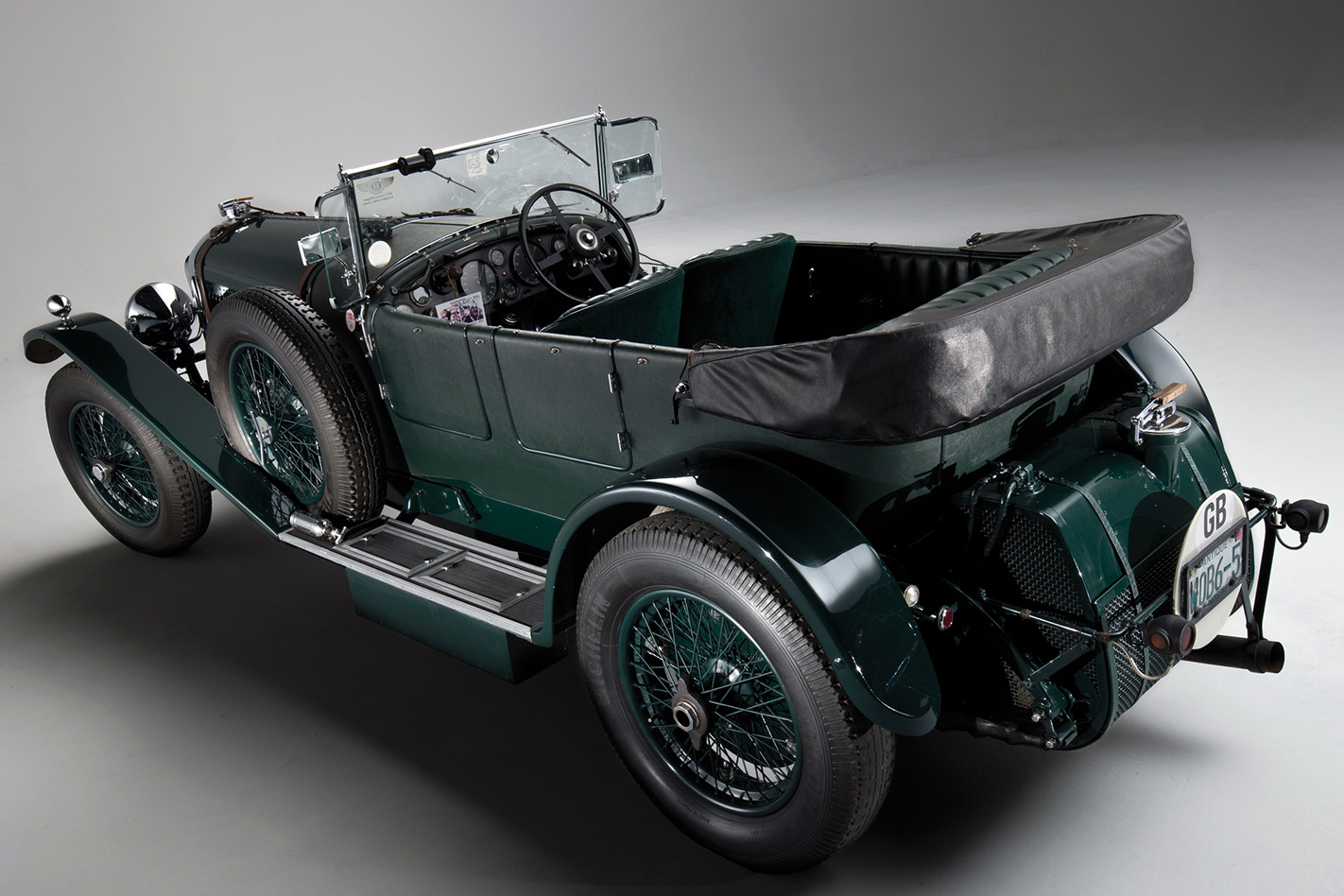
With its racing destiny already clear, the Speed Six was offered on a range of wheelbases, from 3502mm to 3874mm. Suspension was by semi-elliptic springs on a beam front and live rear axle. Steering was by recirculating ball, while four-wheel brakes comprised 400mm finned drums, assisted by a Dewandre servo. Spoked wheels were initially 18s with 6.75 tyres, later cars stepped up to 6.75 x 21s.
Fuel-injection is fantastic stuff. Without it, you’d never get engines so happy to hug dolphins, nor would you get the power, torque, reliability or driveability we’re seeing from modern stuff. But bugger it, I’m from the generation that loves to fiddle with the shiny metal bits under the bonnet.
This article first published in MOTOR Magazine December 2001
I grew up screwing a few more degrees of advance out of the dizzy and swapping jets in the inch-and-seven-eighths Strommy that graced my inlet manifold. Not that the engine wasn’t running right, I just liked to fart about.
Now, this wouldn’t be so bad if the engine was in perfect tune to begin with. Big-dollar stuff like Porsches and all might have close to the perfect ignition and fuel map burnt into its Eprom (because there’s a narrower production tolerance at the factory) but the stuff most of us drive will never be mapped perfectly out of the box.
Enter a gadget called Unichip. It’s a curious name, because the mere mention of the word ‘chip’ tends to send people running in the other direction.
Bitter experience has taught us some replacement chips actually achieve didley squat and can actually increase fuel consumption AND decrease power at the wheels. Form an orderly queue to the left. And even once you’ve replaced the chip, you’re back to square one fiddle-wise, because you can’t alter the new settings.
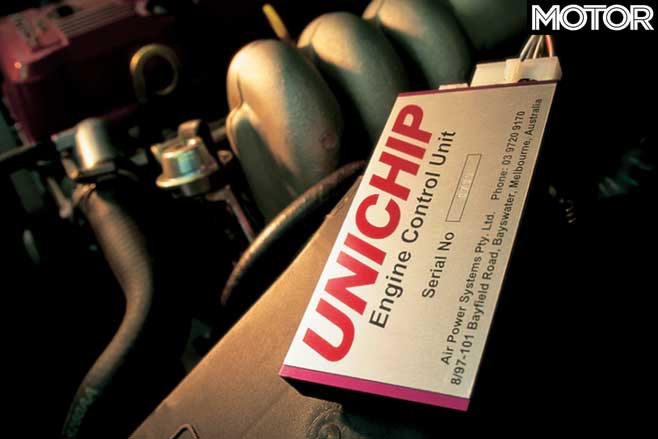
The solution is something fully programmable like a MoTeC system. That’s line for race cars, but not so great for road cars, because by replacing the standard computer there’s the hassles of wiring it all up, interfacing it with the factory sensors, instruments and functions. And unless your car is brimming with mechanical mods, it’s a bit of overkill.
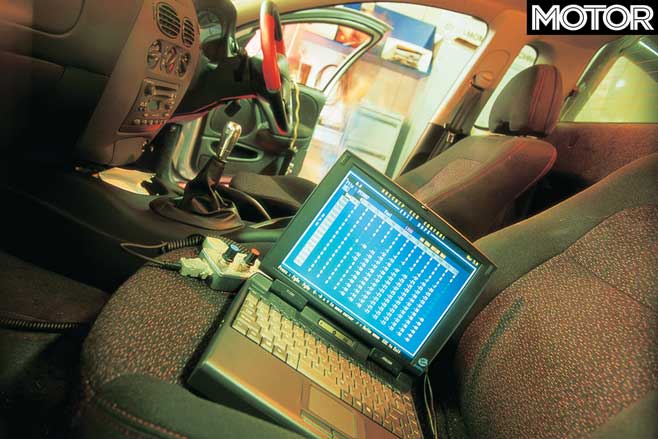
And that’s where Unichip comes in. It’s neither a simple replacement chip, nor a complete replacement computer. It’s more or less a piggy-back computer that taps into the standard on-board brain and allows fiddling of the fuel and spark maps, without altering anything else like idle controls.
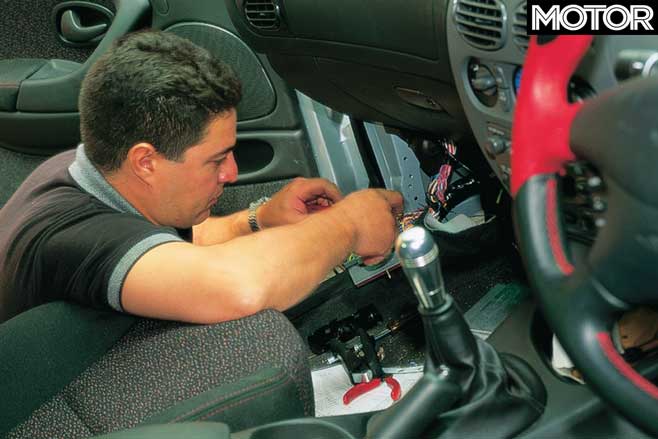
So, you can tune the ignition and fuel settings in real-time (on a rolling road dyno) and optimise both with a possible 204 settings for each element. And, if you’re running LPG or want the option of using standard unleaded one day and premium the next, you can program multiple maps (switchable via a dash-mounted button).
And just to prove how trusting I am, I allowed the Australian importer of Unichips, Air Power Systems, to splice a Unichip into the wiring loom of my XR6 Ute. As in, my very own, personal, the-rego’s-in-my-name XR6 Ute. And I hate dynos.
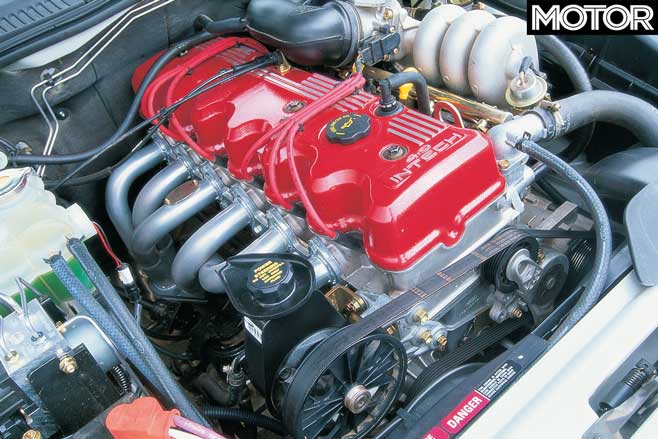
The Ute runs a set of replacement headers and big-bore exhaust, so the standard factory settings (particularly on the fuel map) were potentially up the duff already. And given that Fords are usually fuelled pretty rich, there was theoretically scope for gains.
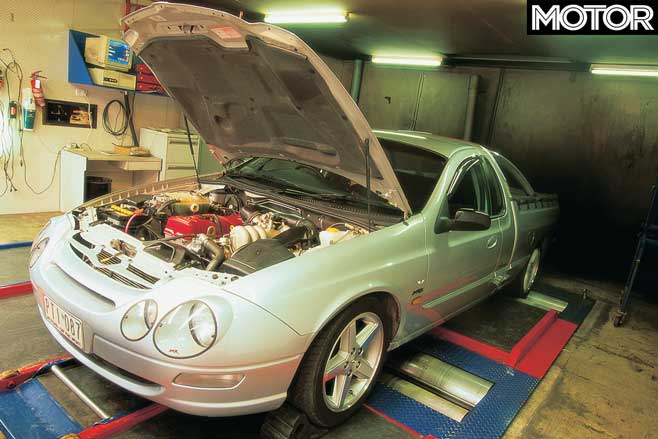
So we strapped it to the dyno and ran it up for a baseline figure. Andwhaddayaknow? Turns out Howard The Ute is a pretty healthy XR6 (I’ll claim full credit with my patented running-in procedure which I’ll share for a price) with 122kW at the wheels.
Then it was a case of working out how much more ignition advance we could safely run, as well as pulling heaps of fuel out of the equation, to keep the air-fuel ratio optimised between power and economy at different load and throttle positions across the rev range.
An hour and about five dyno runs later, the Unichip was programmed and Howard was making 134kW at the rear Dunlops. Yep, simple as that.
I’ve since been back to APS and programmed a second ignition map for premium unleaded and although peak power is no different, the extra spark advance permitted by the premium juice has fattened up the torque curve below about 2500rpm.
Even better than the extra peak urge is the part-throttle urge and the crisper response on either fuel type. And the real bonus? Howard actually uses less fuel than he did before. Bank on about five per cent less overall (in my case) and enough grunt to keep an XR8 brutally honest.
The good news is that a Unichjp works on anything with an on-board computer. We’re talking everything from a Hyundai Excel to a 911 GT3 (Jim Richards’ racing GT3 uses a Unichip, by the way).
The whole shebang (fitting and tuning) takes about four hours tops, although there’s extra time involved if you want multiple ignition maps like I did. For a single fuel and ignition map, plus the cost of the Unichip, plus dyno time, you’re looking at about $1100, but when you sell the car, you can usually take the Unichip to your next ride. And if you can’t (for technical reasons) APS offers a trade-in deal.
FAST FACTS Morley’s Ford Falcon XR6 ute ENGINE: 4.0-litre inline-six, SOHC COMPRESSION: 9.1:1 (standard) POWER: 122kW @ 5000rpm (stock); 134kW @ 5000rpm (Unichip tune at wheel) TORQUE: 374Nm @ 3500rpm (stock); 380NM @ 3500rpm (Unichip tune) WEIGHT: 1620kg (standard) POWER-TO- WEIGHT: 75kW/tonne (stock); 83kW/tonne (Unichip tune) TRANSMISSION: 5-speed manual SUSPENSION: Double wishbones, coils, anti-roll bar (f); live axle, dual-rate leaf springs (r) L/W/h: 5077/1870/1465mm WHEELBASE: 3096mm TRACKS: 1566/1546mm (f/r) BRAKES: Ventilated discs, twin piston calipers (f); solid discs, single piston calipers (r) WHEELS: 17.0 x 8.0-inch (f & r) TYRES: Dunlop SF Sport, 235/45 ZR17 (f & r) PRICE: Unichip fitted from $1100
It’s funny how some holiday plans can seemingly come out of nowhere. You start with an idea, which snowballs into other ideas that you want to explore, and the ancillary stuff like transport or accommodation tends to just work itself out as you go.
At least, that’s the experience we had on a recent European road trip that saw us borrow someone’s Audi RS6 from London, UK to Sardinia, Italy and back again.
Initially the plan had myself and a few friends flying from London to Italy to attend a number of summer automotive events, but a last minute change had us at the helm of a friend of a friend’s RS6 which took the entire trip from great to phenomenal.
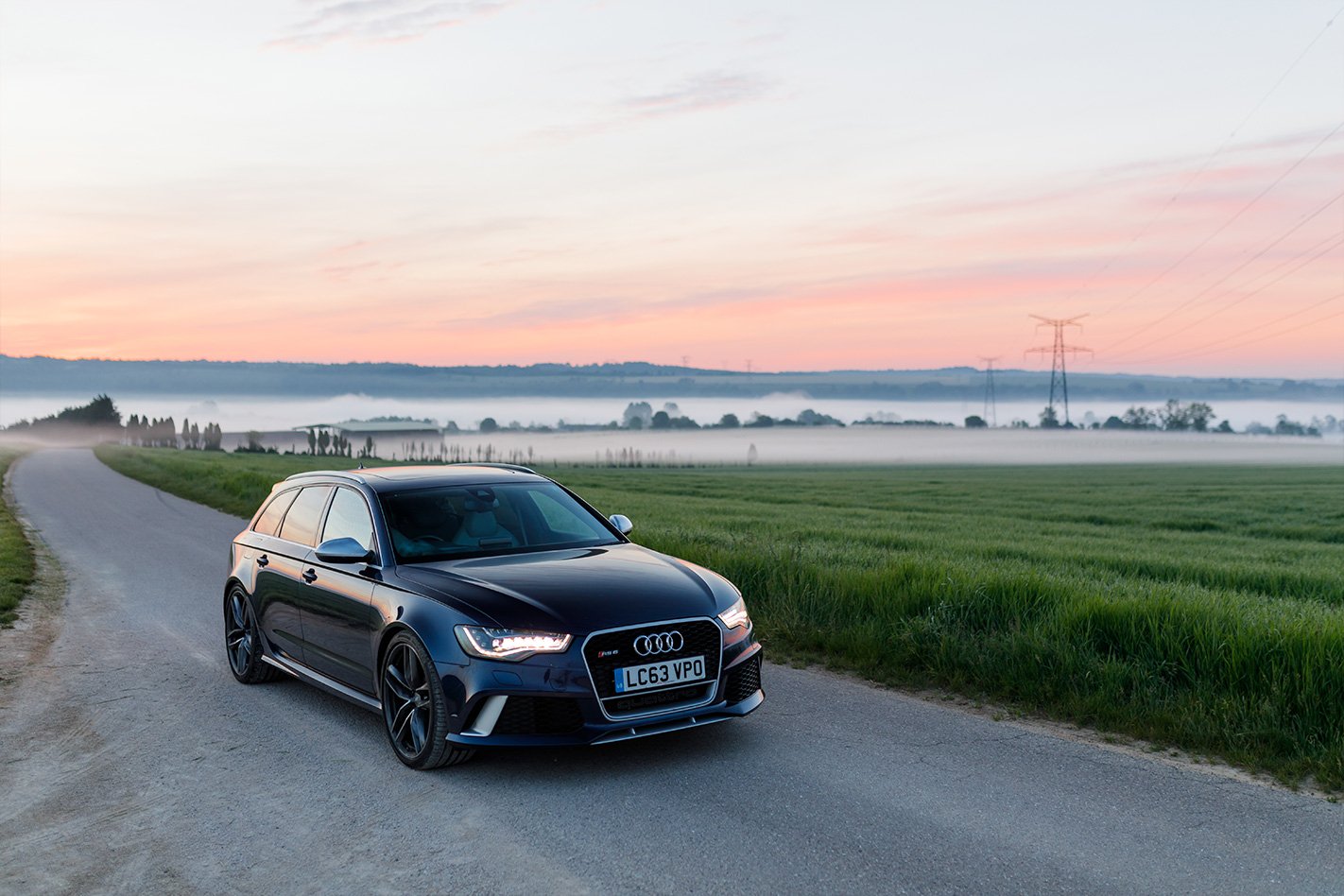
It meant that the extra days spent driving through Europe would place pressure on an already tight schedule, but who’s going to pass up an opportunity to drive a car that was tailor-made for blasting about on European roads?
So with that in mind, we saddled up for a long-haul Melbourne to London flight and tried to get whatever sleep possible ahead of a 13-hour drive to our first stop at Lake Como, Italy.
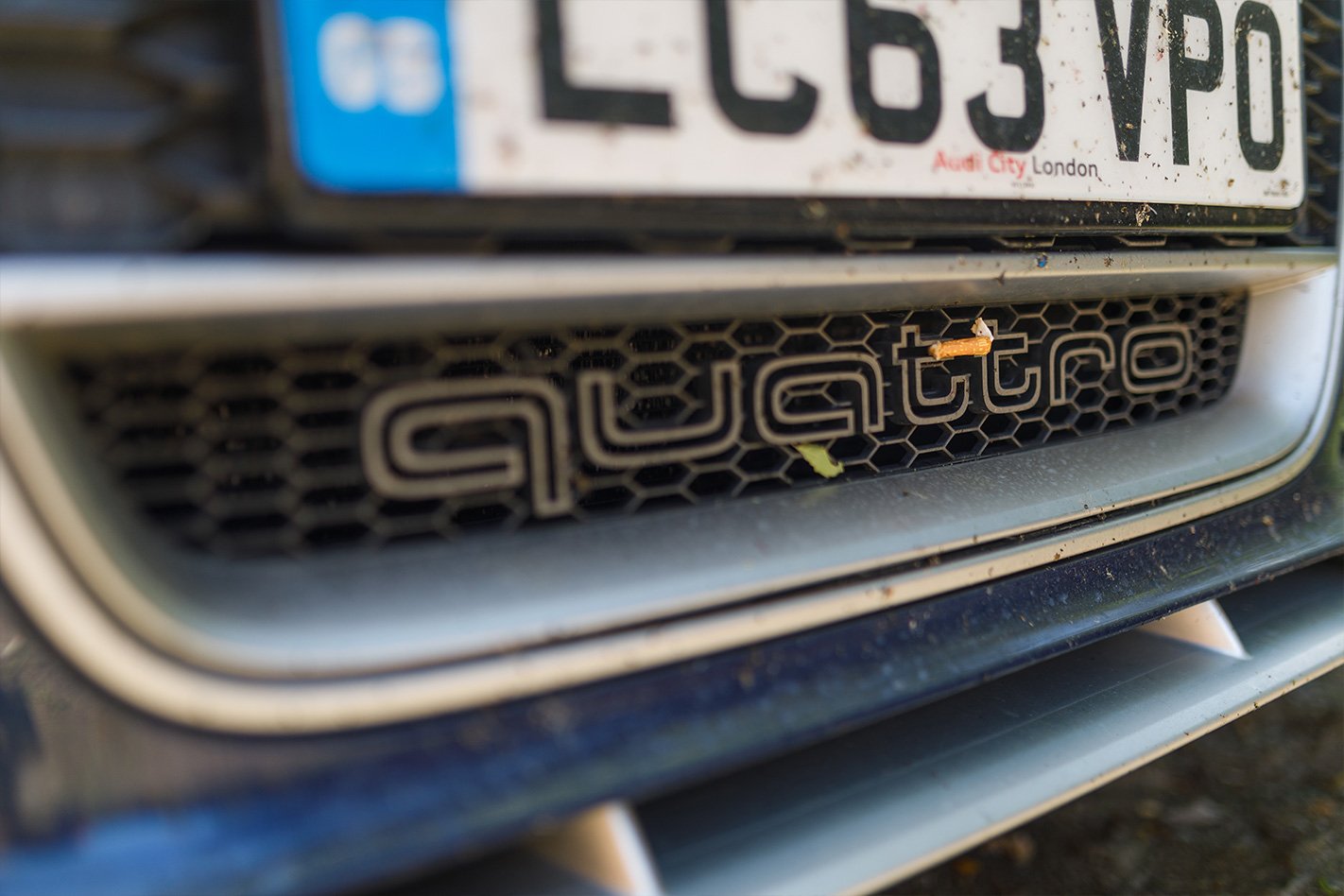
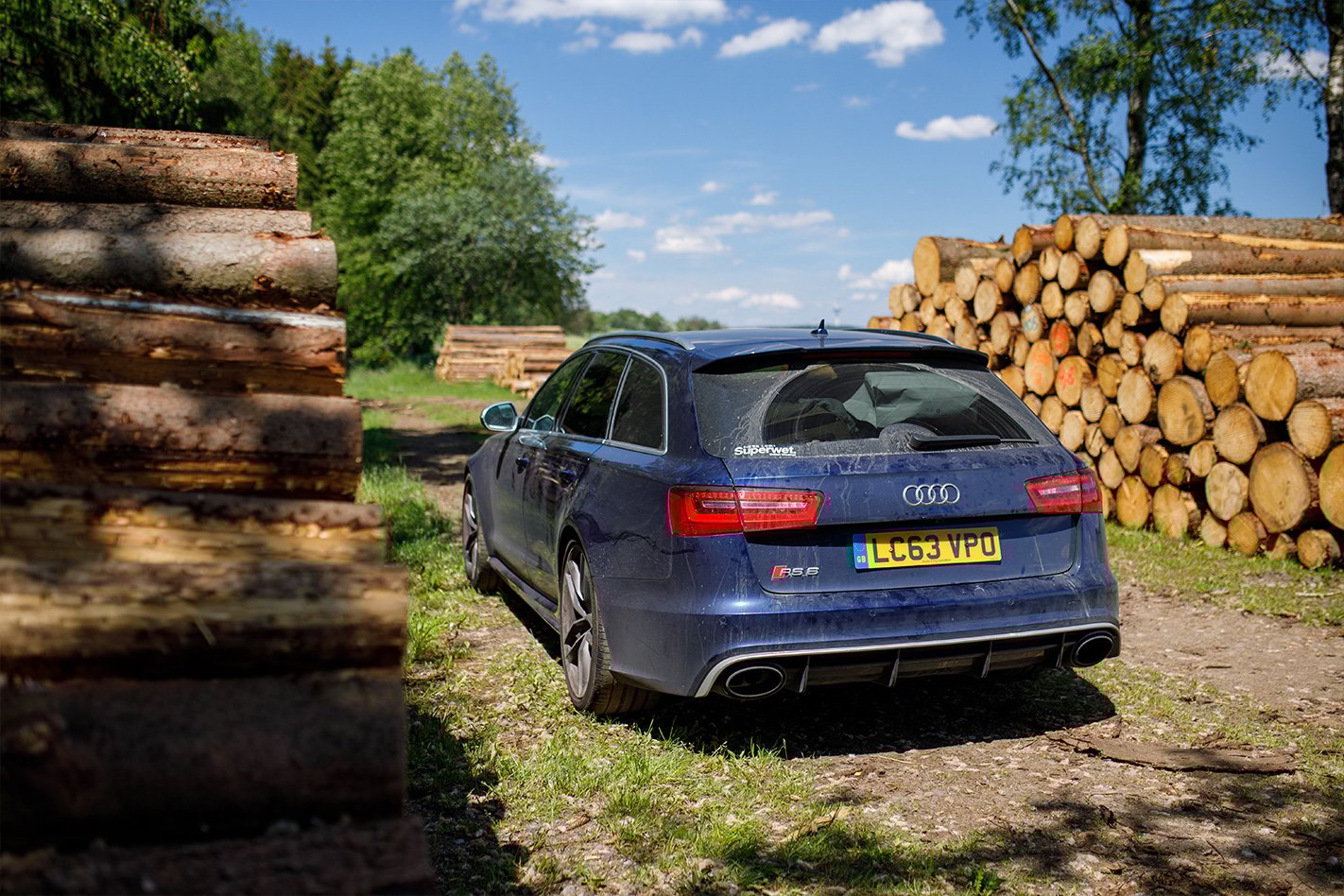
Upon landing in London, we’re greeted by the Estoril Blue Audi RS6 that’ll be home for the next 10 days. Although a slightly older example, it still holds up in 2019 as one of the fastest touring wagons money can buy – soon to be superseded by the C8 generation car. Propelled by a twin-turbocharged 4.0-litre V8, the RS6 eeks out 412kW and 700Nm and will run to 100km/h in 3.9 seconds.
Further to that, it has space for five people and luggage, complete with amenities like quad-zone climate control so everyone can get comfy, and a Bose audio system for the designated DJ.
Concerning, though, was the game of luggage Tetris that had to be played to fit four suitcases, as well as backpacks and camera gear in the boot before we set off. With some serious coercing, the 565-litre boot cavity was tediously and tightly packed before heading off toward the Eurotunnel, stopping for a quick post-flight dinner along the way.
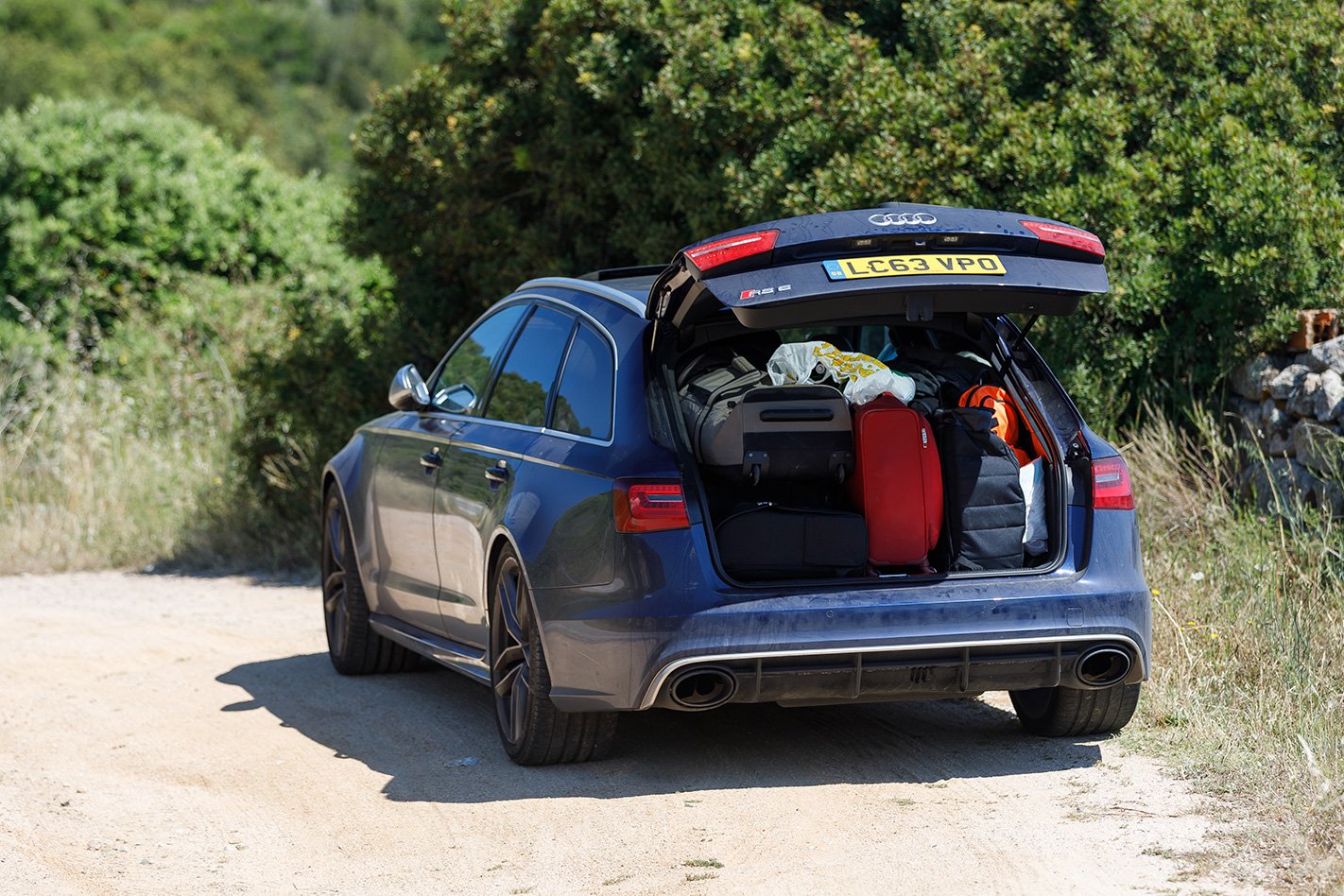
We set course for the train at Folkestone, UK which would take 90 minutes of London’s motorways, whereupon we would slide the car into a train for a 30-minute ride underneath the English Channel, landing in Calais, France. From there, it was game on to drive through the night, arriving in Lake Como the next morning.
Making the drive from London to the Eurotunnel stressful was the constant stream of traffic, marred by average speed cameras and late night road works. Not exactly the experience you’d hope for after a 22-hour flight, ahead of a further 13-hour drive.
Even so, we made it to our train in time, which in turn deposited us on the other side of the English Channel.
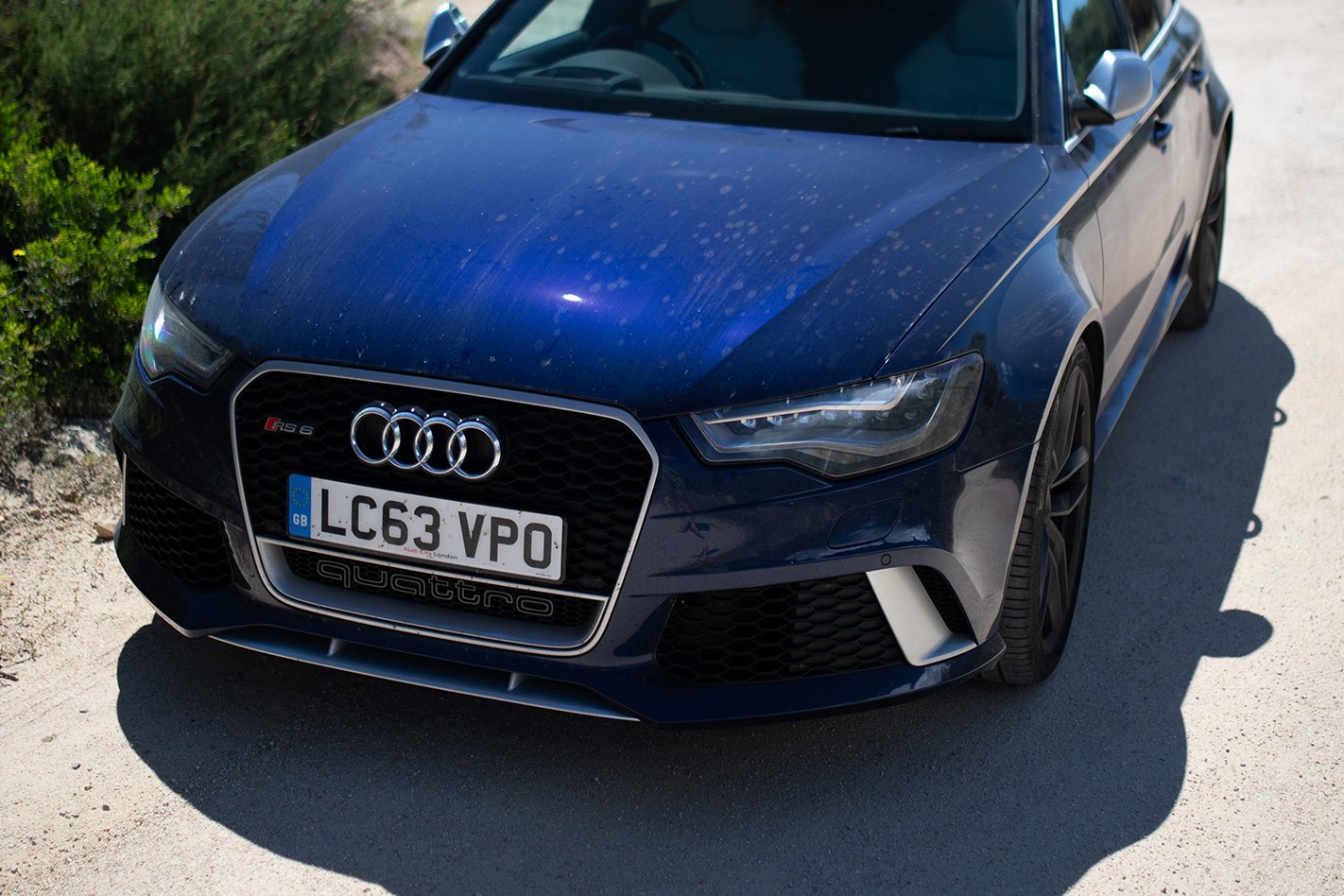
We didn’t waste any time in Calais, setting straight off through France bound for Switzerland. Extra care was taken to abide by French motorway speed limits and rules, after hearing that law enforcement can be particularly strict.
We took turns behind the wheel throughout the night. I got my first steer (after a powernap) just after we stopped for a sunrise photo in rural France.
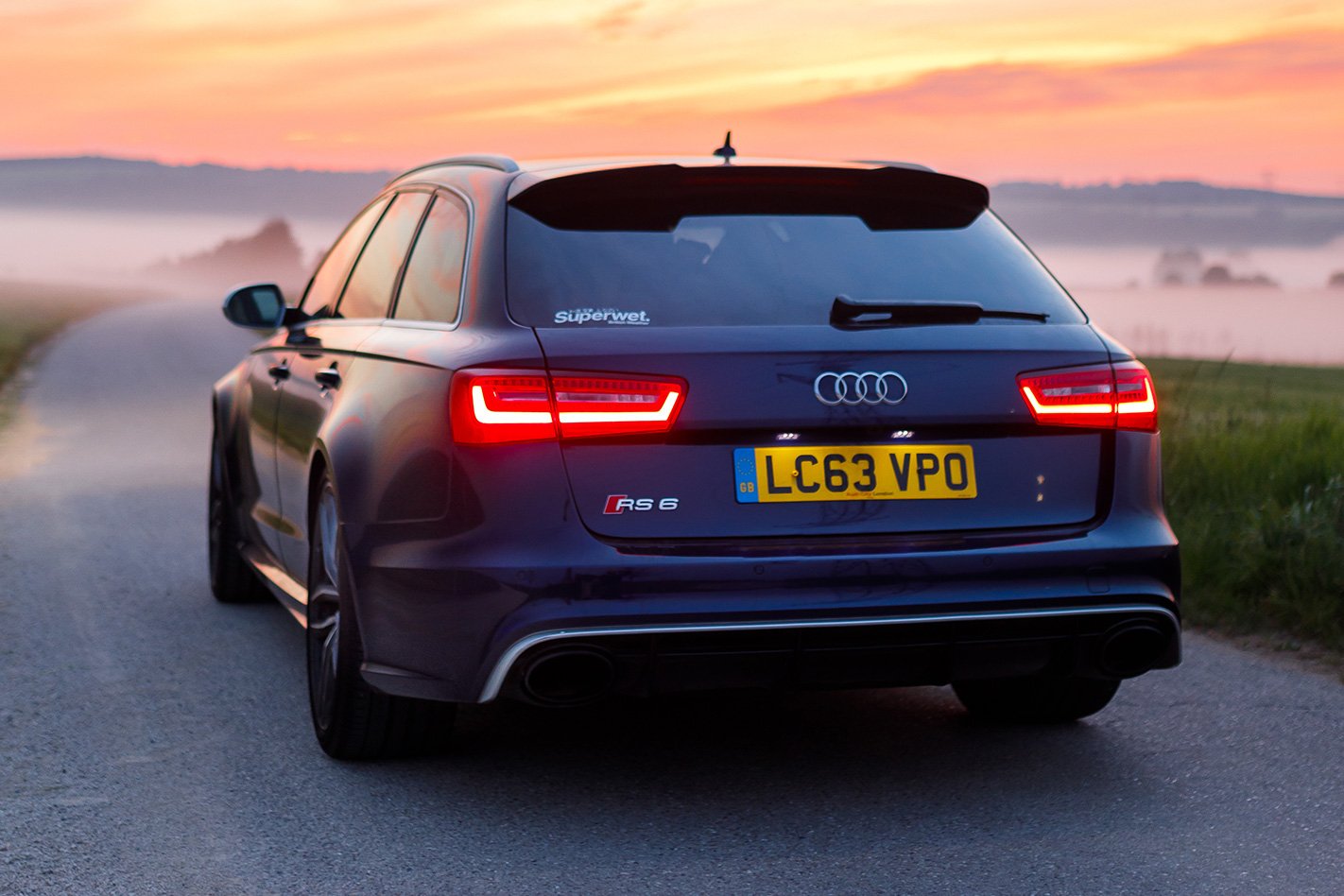
It didn’t take much to get comfortable in the big wagon. Settling in for the first time only built excitement for the fact that we would get to pilot this for the next 10 days.
While this particular car was nearly six years old, it still pulls hard like few other wagons can today. There’s immense respect for a car that can haul itself plus passengers and luggage along a motorway for hours on end, all the while shooting a growly V8 soundtrack out the tailpipes.
It surely must have been ahead of its time, as much newer competitors like the Mercedes-AMG E63 S and Porsche Panamera Turbo S Sport Turismo (which we meet later) have spent recent years catching up while the Audi RS6 can still hold its own, relatively speaking.

More than France, our journey through Switzerland was a cautious one, as the country is notoriously harsh for speeding and traffic offences. And despite some of the most stunning scenery on Earth, our trip through Switzerland was dispatched with haste.
Now onto (one of) the main events. The reason we were stopping in Lake Como was for the annual Concorso d’Eleganza Villa d’Este car show. The world’s longest running Concours d’Elegance, Villa d’Este features pristinely prepared classic cars on the banks of Italy’s idyllic Lake Como.
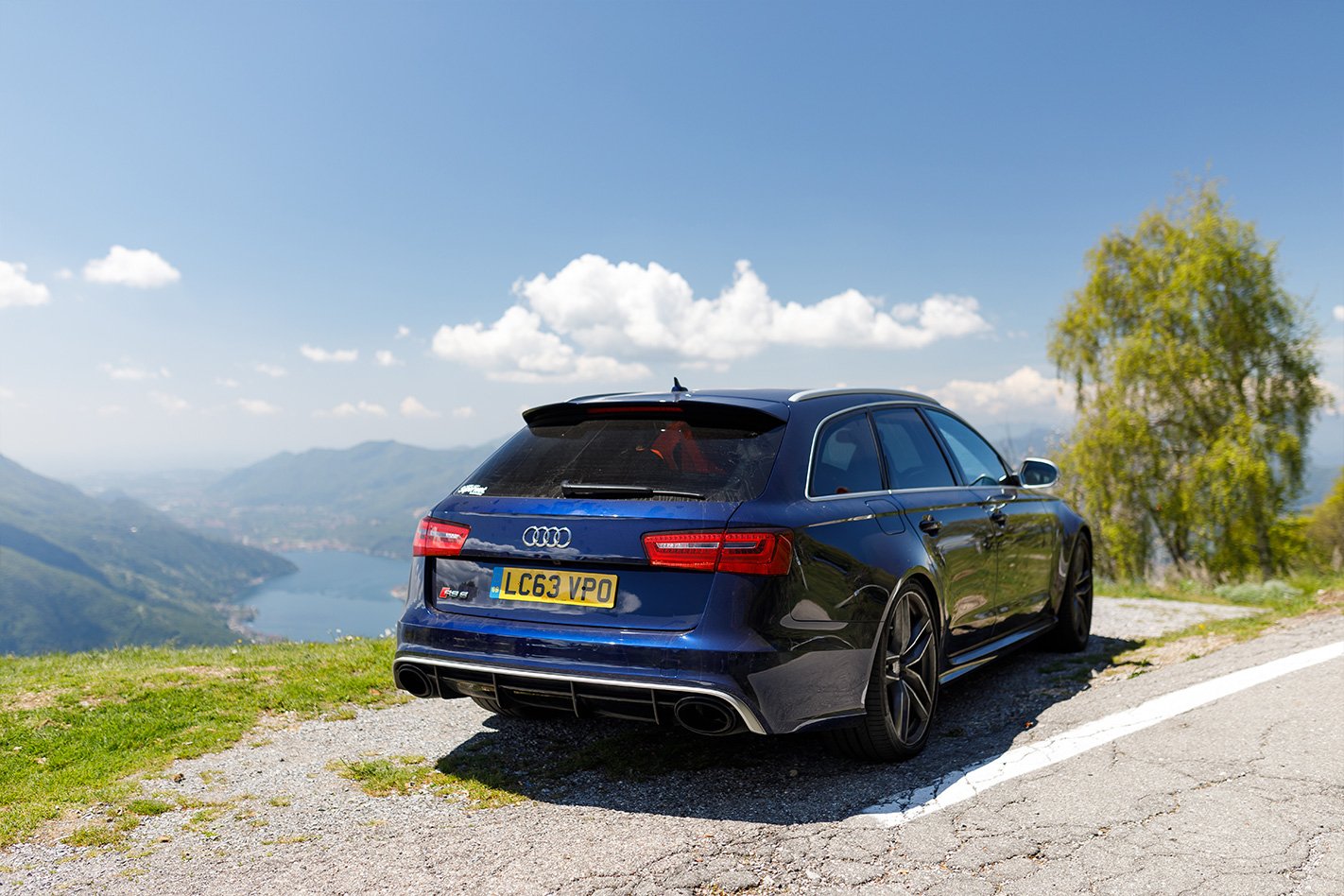
The roads following the lakeside were scarily narrow, making for precarious navigation of the Audi’s almost 2m wide nose around buildings and oncoming cars, but being in Italy meant we were at least able to let the big Bahn-storming RS6 off its leash somewhat.
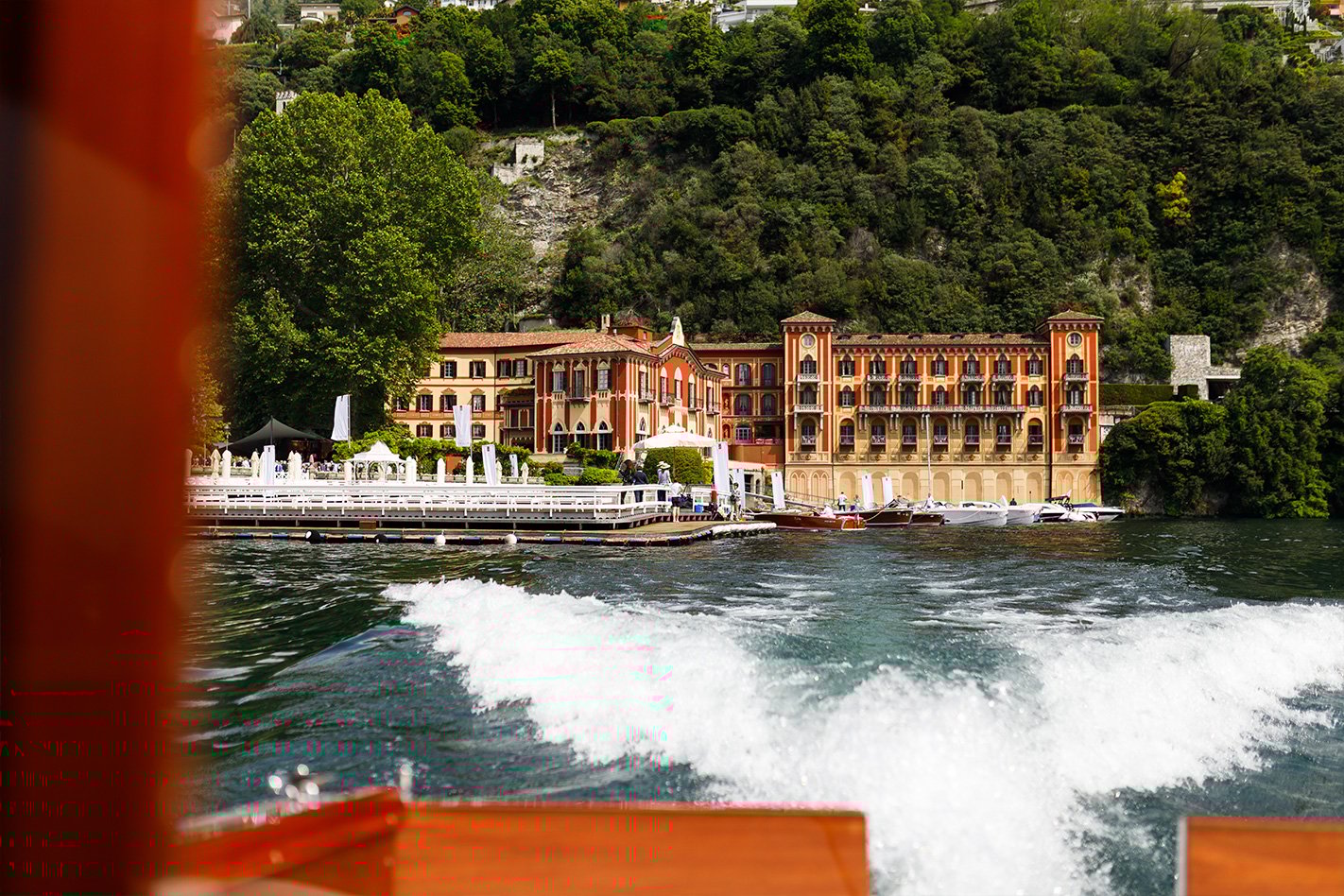
Echoing off the quintessentially Italian brick buildings of Lake Como was that dirty, walloping V8 exhaust note that became so intoxicating, almost every stretch was performed at full-throttle. Punching the accelerator resulted in a thud in your back, as all 412 kilowatts are sent to all four wheels in traditional Audi quattro fashion.
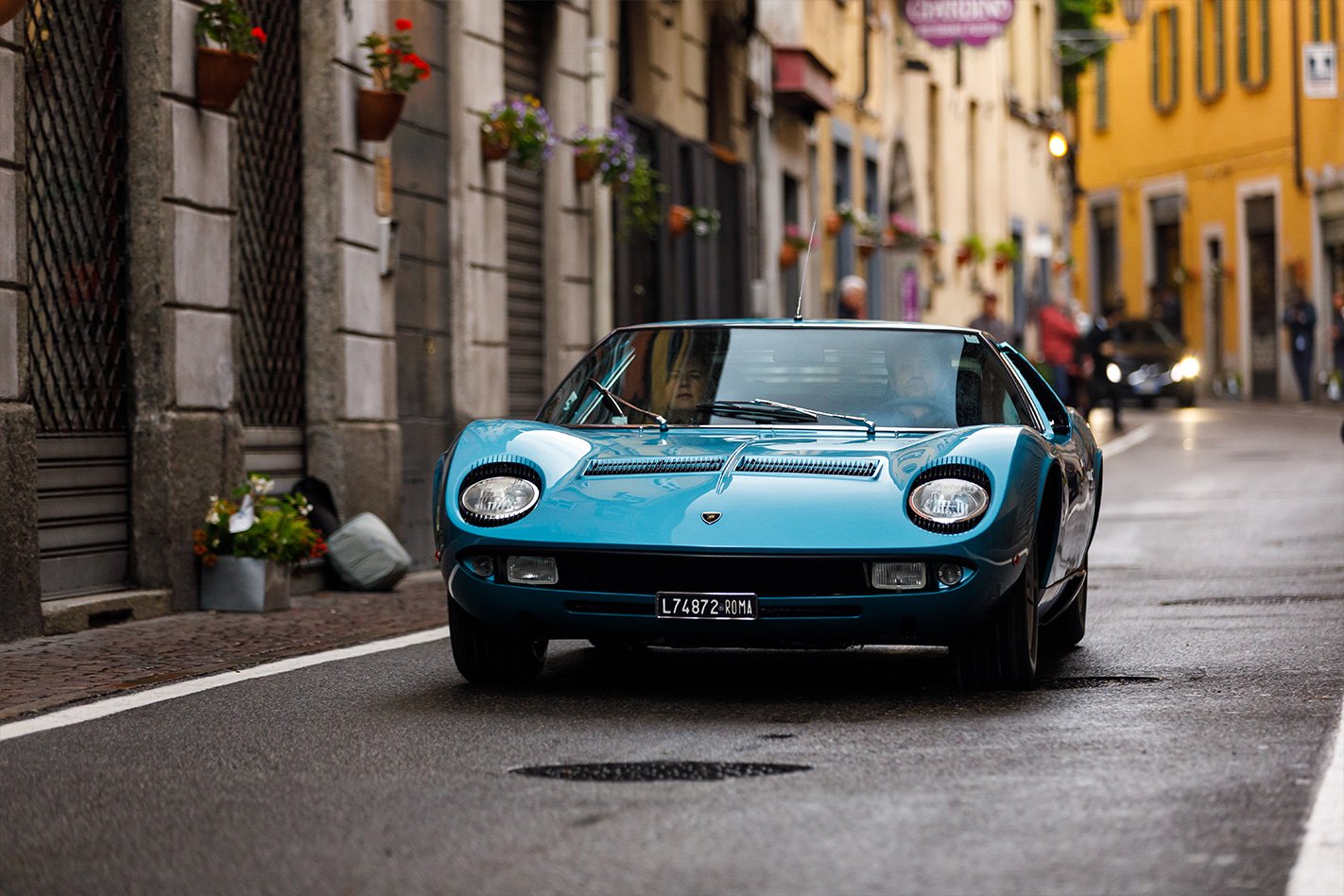
Moving further south, our next mission involved tagging along on Pagani’s Italian rally – marking the 20th anniversary of the Zonda. This was being held in Sardinia, so we ventured to the portside town of Genoa to load ourselves and the car onto a 12-hour ferry ride.
As boring as it was, the water-based portion of our journey was completed overnight, allowing some much needed sleep ahead of a busy week in Sardinia.
Pulling into port, we disembarked and immediately made a beeline for the hotel hosting the Paganis and their owners.
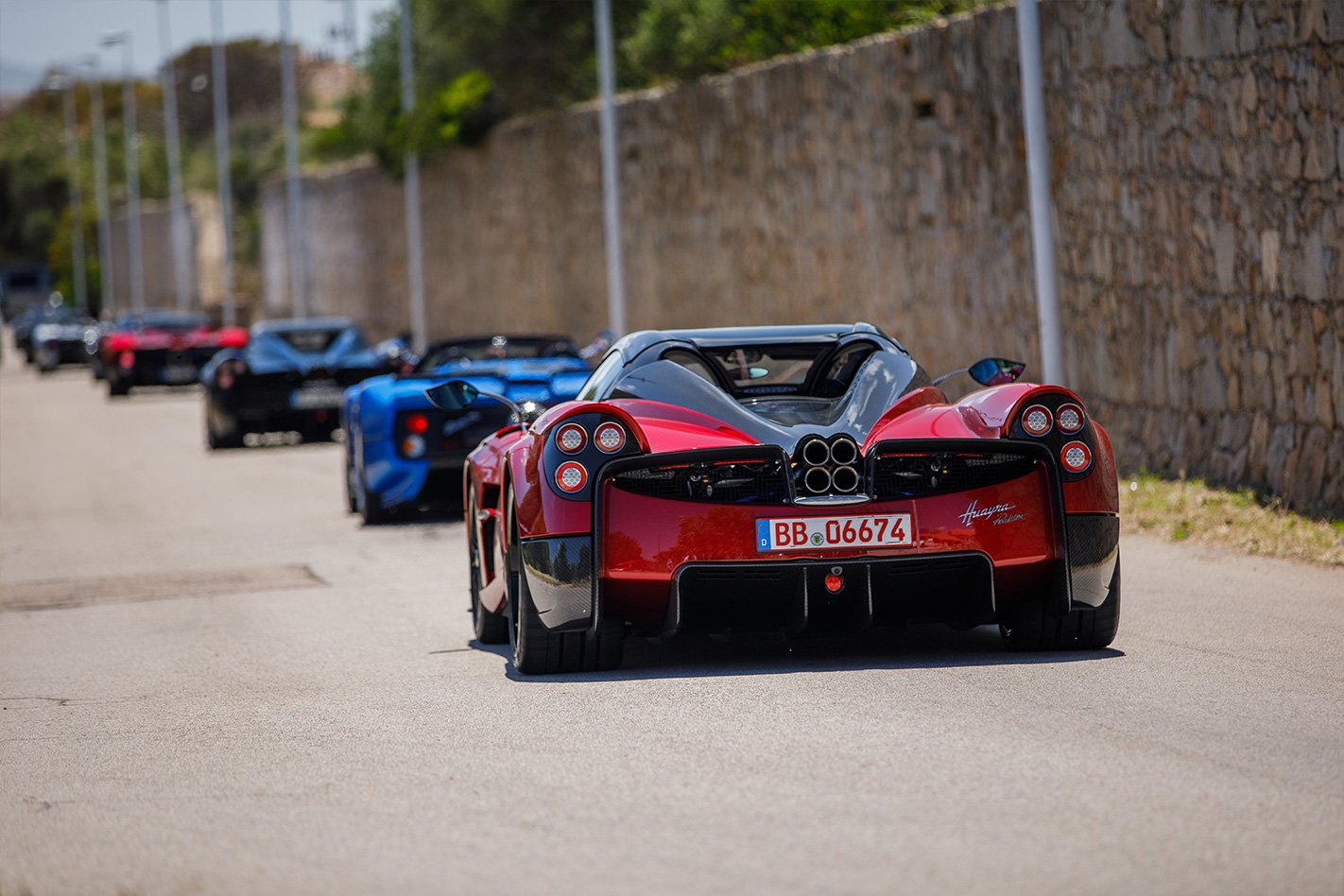
We were greeted by a 30-strong contingent from the Modena-based manufacturer, with cars being shipped in from around the globe for the Pagani Raduno.
Not wasting any time, we then gave chase to a group of Pagani owners who’d decided on a run east across the island, through sun-drenched hills ending up at the seaside town of Alghero. The sight of the haphazard organisation of Paganis took many of the locals by surprise, but everyone was encouraging and keen to see them all the same.
Generally, the Italian public are supercar-friendly and so too are the police. As long as you’re not being stupid, you can have a lot of fun.
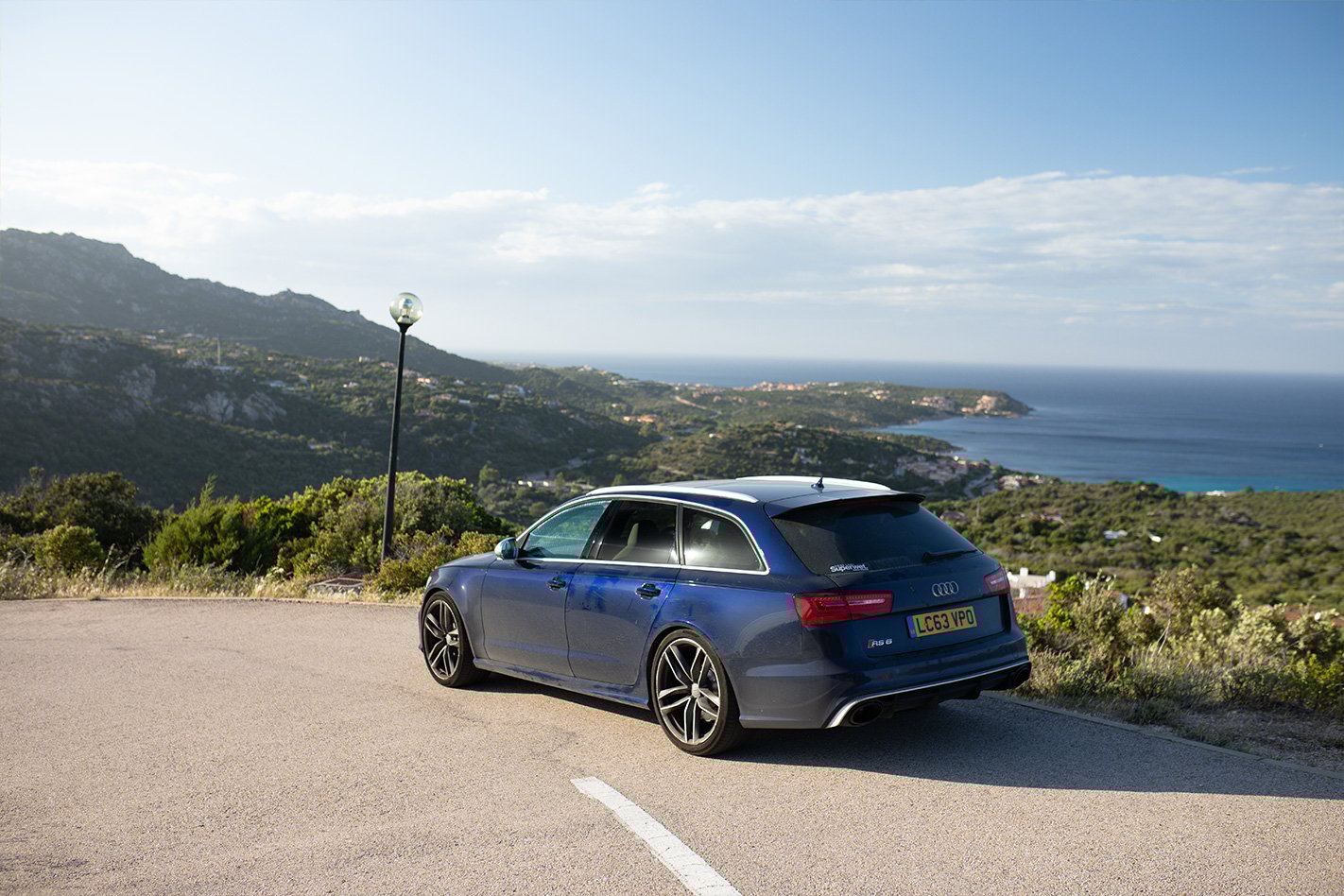
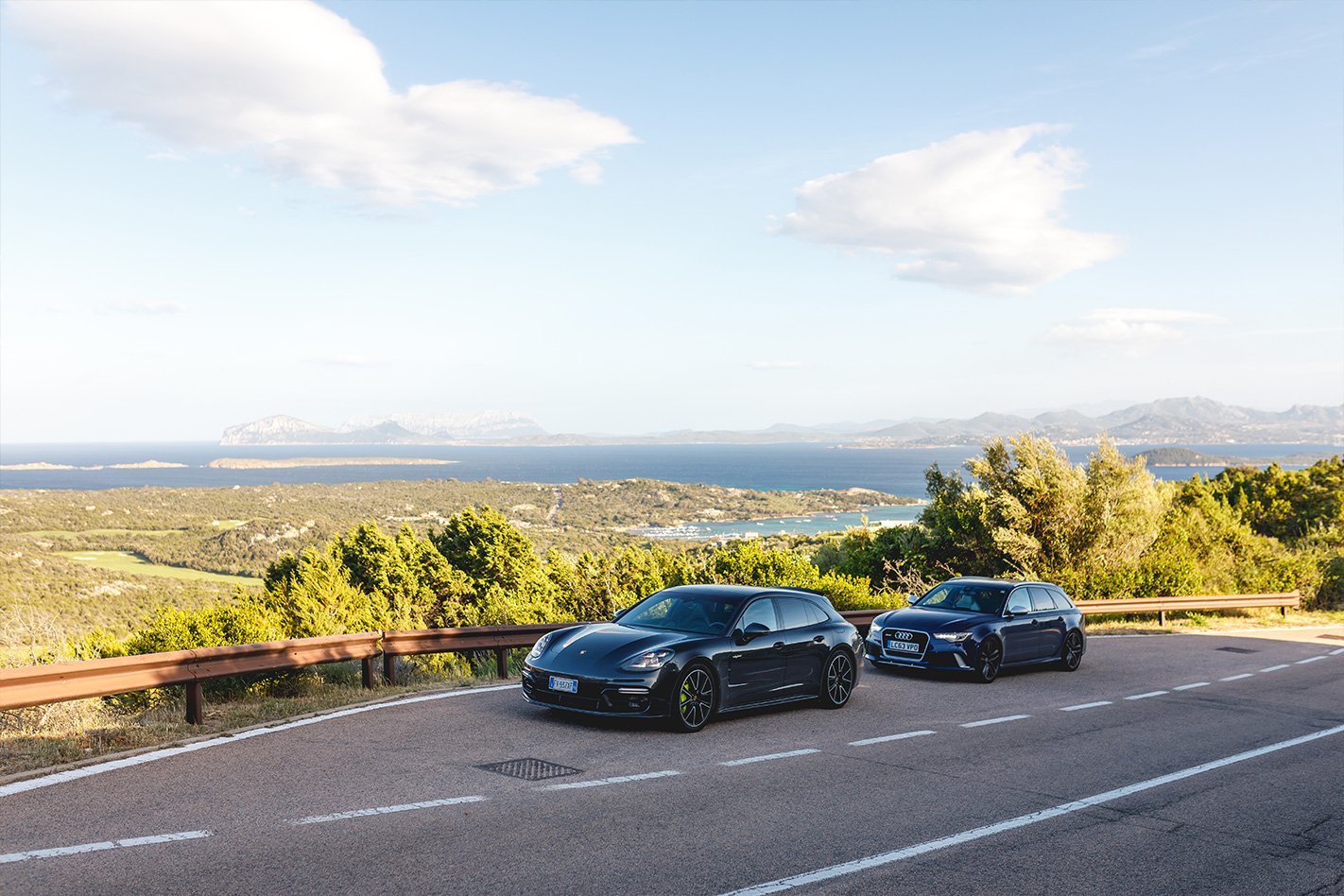
A colleague who joined us for the Sardinian adventure had procured – ahem – a Porsche Panamera Turbo S e-Hybrid Sport Turismo (ridiculous name) which allowed us to set the RS6 side by side with the latest and greatest. Apart from the Porsche having greatly updated technology, new-age hybrid boost tech and a good 90kW more, we were able to keep up in the Audi through winding country roads.
The remainder of our Sardinian adventure involved leapfrogging with the Pagani crew and taking pictures. We visited clear blue beaches and wound through countryside vineyards, the RS6 never skipping a beat in its duty of keeping up with the hypercar crew. We did need to top up the oil, which could have been checked in a pre-road trip vehicle check, and the 25,000km brake pads did start to get tired, but to only have those small problems… we were happy.
On return to London we’d decided to take the scenic route that snaked up through the remainder of Italy and into Switzerland before glancing across Germany with a night spent in Stuttgart, and finally cutting across The Netherlands, Belgium and France back to London.
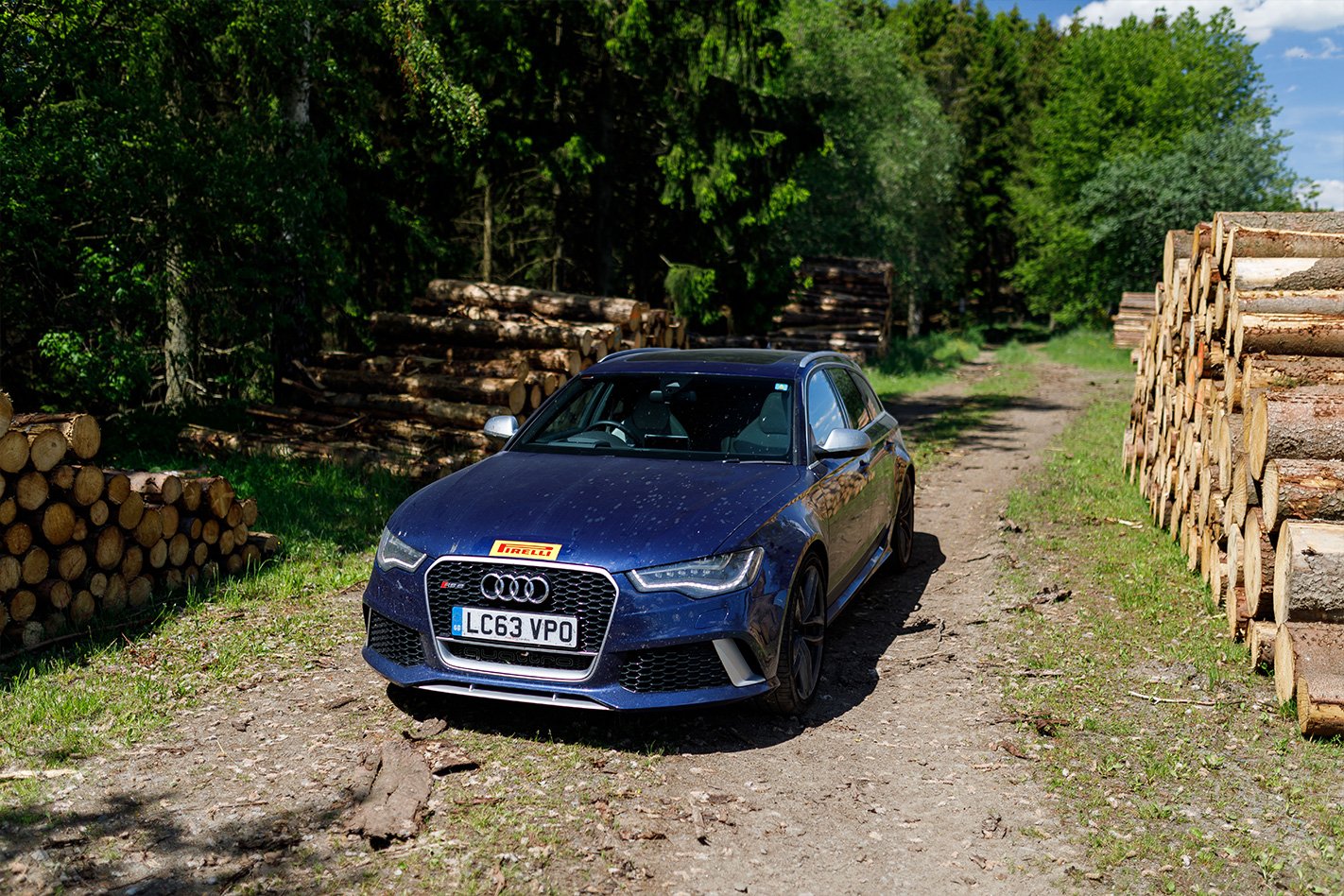
It was sad to see Italian roads go, going from a very car-friendly country to that of Switzerland, a very unfriendly place for cars. Nevertheless, we were taken aback by the awe-inspiring mountain ranges, and sheer green-ness of Switzerland. A photo opportunity waiting to happen, we stopped off at what could only be described as the set of The Sound of Music, with lush rolling hills peppered with sunburst yellow flowers to snap some pics of the RS6.
Only minutes later we were accosted by an irate Swiss woman for stopping on her driveway. After an awkward English/Swiss exchange I explained about the photos and said sorry, only to have her double-down on her anger and chase us out of her village.
From then on, we made a point to get our hurry-on and passed by Lake Bodensee in Austria and into Germany which sparked unspoken excitement within the car. Autobahn.
Much to our surprise, we didn’t have to wait long to get our first stretch of unrestricted road and put the hammer down. The sensation of being able to legally max out your car is otherworldly and we got a scare passing by a police car only to then remember where we were. Despite the luggage, four-up passengers and moderate Sunday afternoon traffic, we managed to find a quiet stretch and reach 271km/h.
Later that night after some schnitzels, we retired early in Stuttgart ahead of another long day of driving back to London.
The following day we woke early to visit the Porsche museum, and made an on-the-fly decision to stop by the Nurburgring.
While it did push back our schedule a little, it was a public track day so the area was a hive of activity and every second car was something unique to look at.
Then onwards we went heading east out of Germany hitting a further three countries in the same day. It was a stretch to make our 10:30 train booking to cross the English Channel, but the Audi made great strides and we were back in the UK before we knew it.
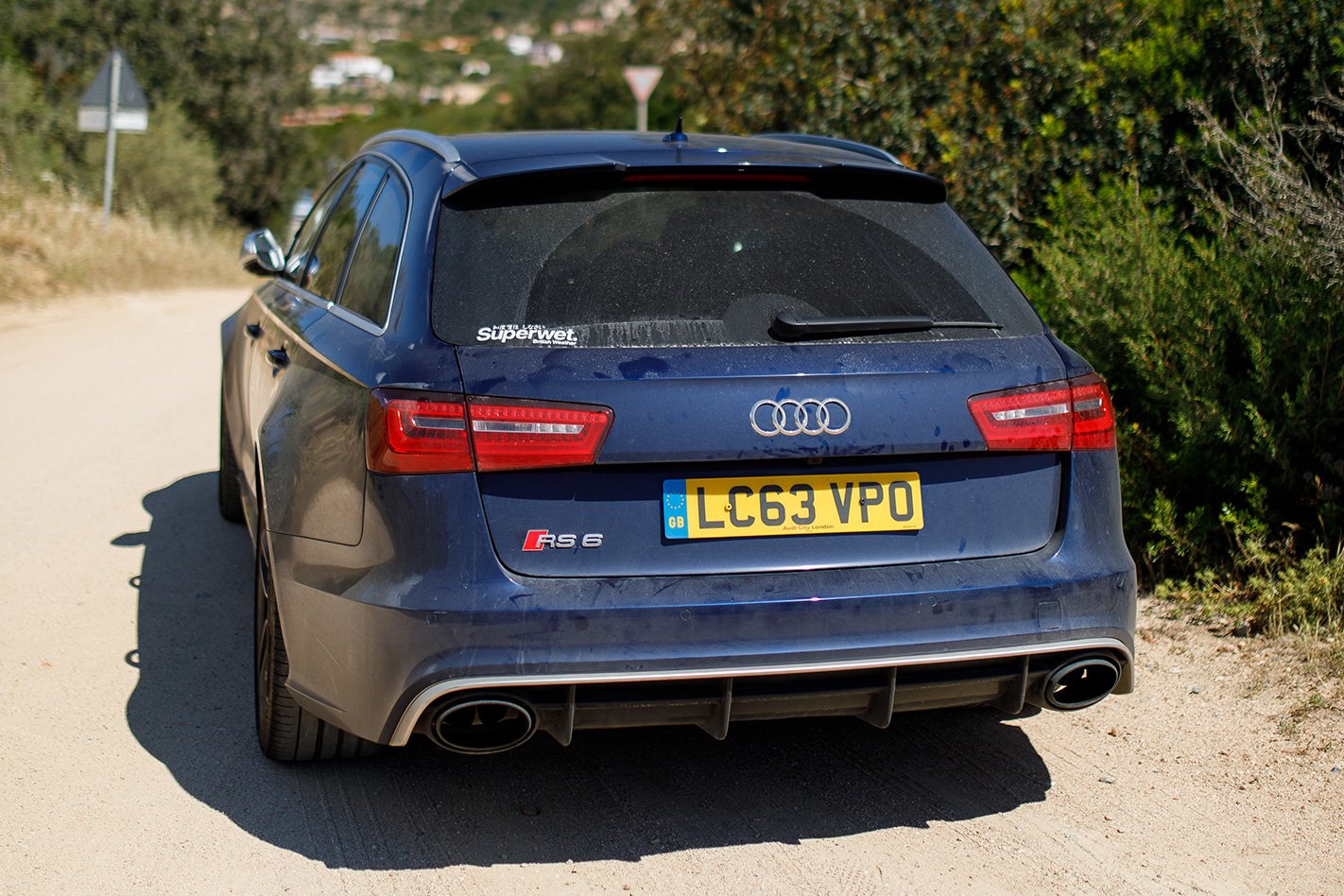
Weary eyed and famished, we dropped the RS6 back to its garage and owner, expressing our extreme gratitude to the vehicle that’d allowed this trip to become something amazing.
While flights down to Italy would have been easier, cheaper and convenient, a road trip allowed for so much more exploration and opportunity. And the mighty Audi RS6 was the perfect touring companion.
Click on the image gallery at the top for more photos by Tom Fraser
More than anything, this Toyota Supra is remarkable for the fact it exists. The imperative that it make money meant Toyota could not do the car by itself, but the joint venture with BMW that created it and the Z4 has been so fraught that Tetsuya Tada, Supra’s refreshingly honest chief engineer, told me “there were many times when I believed it simply would not happen”.
So you might fear some unsatisfactory compromise between Toyota’s craving for a balls-to-the-wall Porsche Cayman rival and BMW’s no less strong, but more commercially-motivated desire, to build a broadly defined sporting GT.

If so, you’re not alone; Toyota did too. Which is why once the hard points had been agreed – platform, powertrain, wheelbase and so on – the two projects became separate entities, to the extent that Tada-san has driven a Z4 just once and has no idea how his car differs from theirs in terms of settings for suspension, steering and electronically controlled differential. “If you’re going to compare the Supra to another car, compare it to the Cayman,” he said. That’s fighting talk.
It’s an intriguing car even before you’ve fired up BMW’s 250kW twin-scroll, single-turbo straight six. Remember too, it’s the first car developed from scratch by Toyota’s in-house Gazoo Racing high-performance division, hence its full title of Toyota GR Supra.
I think it looks great, save some fussiness around the tail, but the hybrid BMW/Toyota interior takes acclimatisation. I don’t suppose too many Toyota customers will be outraged by the clear and effective iDrive interface, and the bespoke instrument pack is informative and attractive. But the BMW switchgear looks odd in here, at least to me.
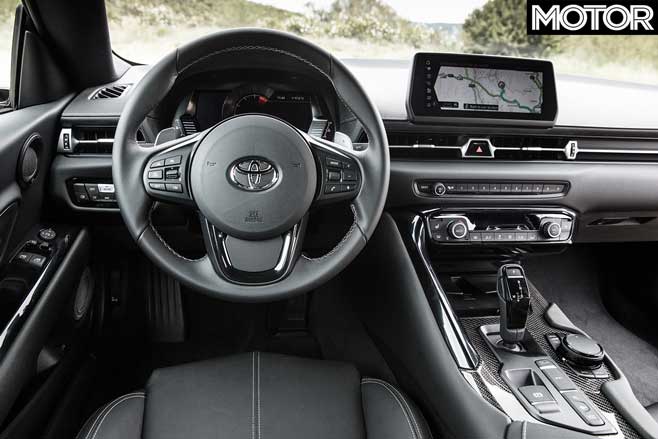
For a car with ambitions as a Cayman rival, you might expect to find a manual or double-clutch gearbox, but instead ZF’s ubiquitous 8HP 51 auto directs the power to the rear wheels via a multi-link rear axle. There are struts up front. The driving position is excellent and while the glass house is quite small, visibility is good enough by two-door coupe standards.
The most obvious benefit brought by such a combination of assets is that the Supra is extremely easy to drive, fast or slow. And while that might not be the most exciting of attributes to attach to a once achingly cool nameplate returning after a 17-year lay-off, it matters out there in the real world.
But for the derisory amount of stowage space, this would be an exceptionally easy car with which to live. The engine is smooth at part throttle, the gearbox smoother – even the steering lock is incredibly generous. You’ll like the big boot too.
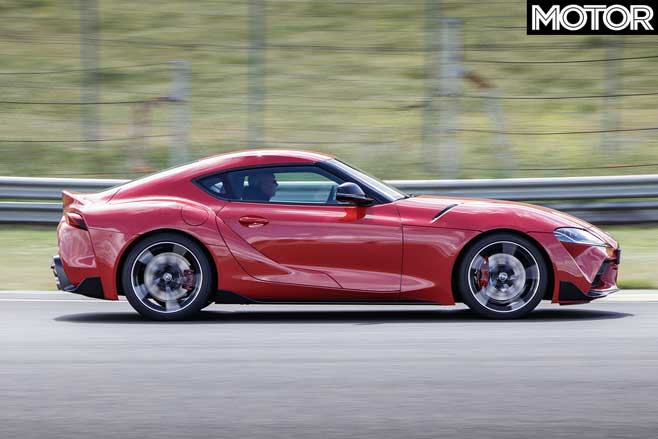
But actually, you just want to know what it’s like to drive. From the outset the signs are good, perhaps maybe even a little too good. You’ll notice first the ride quality: we’re used to cars like Caymans and Alpines riding well, but to achieve such plush comfort with a more sizeable engine is a different challenge and one to which the Supra rises with ease. It glides down the road in a way you’d be happy to find in a soft-bottomed GT car, let alone one billed to be as sporting as this.
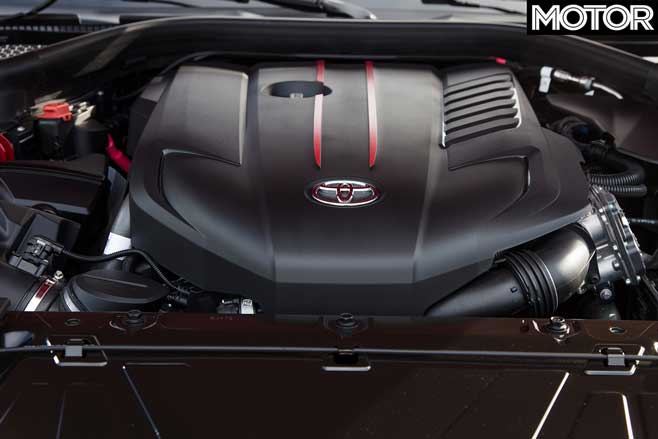
That six-cylinder engine is terrific, too. Not an M Power marvel, true, but certainly far more charming in both voice and power delivery than anything you’ll find in a 718 Cayman. There’s essentially zero lag and the power band is so wide you can deal with almost any decent road in third and fourth alone.
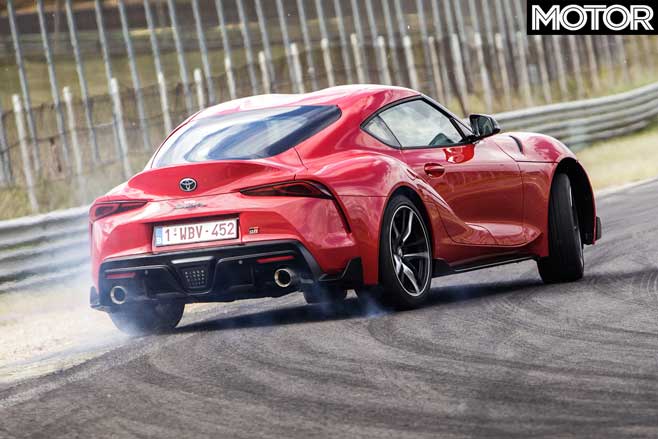
You’ll like the way it handles, too: its steering is quite quick while avoiding the off-centre aggression engineered into some rapid racks to make cars feel more sporting than they really are. Lateral grip from the fat Michelins is impressive, longitudinal grip in the form of traction more impressive still. It’s a very easy car to get into a corner and an even easier one in which to power away from an apex.
So all good, then? Yes, and if this car has an issue, that’s it, right there. There’s goodness here, lots of it, but not so much that you’d readily identify as being truly great. Which in this small but highly select class, is problematic.
Whatever Toyota’s engineers say, the eight-speed auto is not the right transmission for this car. It’s quite quick, but it doesn’t rip through ratios as would the double-clutch ’box it needs. It can seem a little slow to take up downshifts too. Toyota says a DCT was ruled out because of weight, but the Cayman and A110, both lighter cars (the latter considerably so), are so equipped.

But the real reason the Supra falls slightly but significantly short in the all-out sports car role chosen for it by its creators is the way its chassis is configured, and in three key areas.
First there is that suspension softness: standard adaptive damping means the body’s never going to flop about, but there is still too much movement when you start to drive it really hard. The car is always stable but it needs guiding down a great road, where either one of its mid-engined rivals can simply be lobbed. Its body movements need a degree of anticipation and management that theirs do not.
It resists understeer commendably well and will only oversteer on a dry road if provoked, and that’s impressive, but its angle of attack is less throttle sensitive than the mid-engined cars’, lacking as it does their near-balletic, on-the-limit grace.
Secondly, the steering is fine at guiding the car, but less good at filling your fingertips with information about road conditions. Finally, the brake pedal has a slightly dead feel and should you ever take your Supra near a track, the discs will likely need some management if full performance is to be maintained lap after lap.
But none of this is what irks most about this new Supra. It’s the indelible impression it gives that within that sensuous shape a truly great car lies imprisoned. I can almost hear it rattling the bars. My feeling when I drove it was not so much how good a car this is – and don’t let anyone tell you otherwise – but how much better than this it could so easily be.

It doesn’t even need more power. But a six-speed manual gearbox like the one BMW already ties to this engine would be a huge improvement and would shed some kilos, too. Apparently Toyota is considering it.
I hate oversprung cars, but I’d still sacrifice some of that peachy ride quality if it brought a little more composure ‘in extremis’. And a set of big brakes would not go amiss either.
Toyota says that this Supra is just the start of the story. There is already a four-cylinder car on sale in Japan and Tada-san is absolutely not ruling out higher performance versions. I hope he rules them in soon.
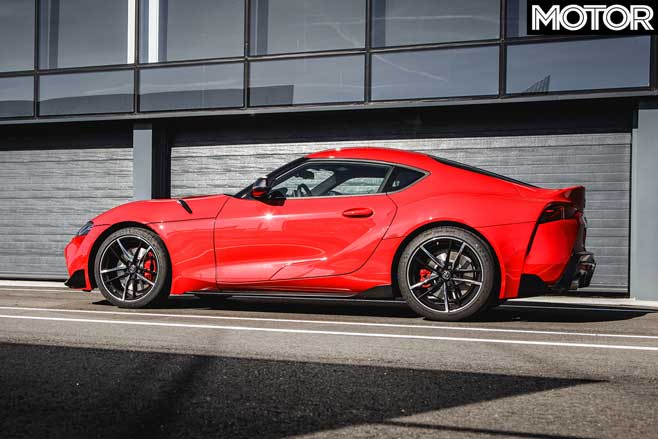
To me ‘Supra’ is a special name and it deserves to be attached to very special cars. For all Toyota’s claims that the new Supra has not been compromised by its BMW associations, it feels compromised.
It’s as if Toyota knew exactly how to make this a landmark sports car but pulled back, just a little, right at the last moment. Until it has the courage of its convictions and delivers the car the Supra could so transparently be, impressive though it is in many ways, it will remain a ‘work in progress’.

FAST FACTS 2020 Toyota GR Supra BODY: 2-door, 2-seat coupe DRIVE: rear-wheel ENGINE: 2998cc in-line six, DOHC, 24v, turbocharged BORE/STROKE: 82.0 x 94.6mm COMPRESSION: 11.0:1 POWER: 250kW @ 7800rpm TORQUE: 500Nm @ 1600-4500rpm WEIGHT: 1495kg POWER-TO- WEIGHT: 167kW/tonne TRANSMISSION: 8-speed automatic SUSPENSION: struts, adaptive dampers, coil springs, anti-roll bar (f); multi-link, adaptive dampers, coil springs, anti-roll bar (r) L/W/h: 4379/1854/1292mm WHEELBASE: 2470mm TRACKS: 1594/1589mm (f/r) STEERING: electrically assisted rack-and-pinion BRAKES: 348mm ventilated discs, 4-piston calipers (f); 345mm ventilated discs, single-piston calipers (r) WHEELS: 19.0 x 9.0-inch (f); 19.0 x 10.0-inch (r) TYRES: Michelin Pilot Super Sport, 255/35 ZR19 (f); 275/35 ZR19 (r) PRICE: $84,900-$94,900 ON SALE: September 2019
PROS: Smooth engine; ride quality; looks; interior quality CONS: Transmission; soft suspension; brakes; too ‘nice’? RATING: 4 out of 5 stars
It’s a WhichCar Weekly special! With so much happening at the 2019 Goodwood Festival of Speed, we decided to dedicate this week’s full 30 minutes of chat to the annual motoring mecca in England.
Alex was our man on the front line, bringing all the blow-by-blow action as the three days of automotive nirvana went down, and he’s joined in the WCW studio by a bumper panel for this special occasion.
Best known for the fiercely competitive hillclimb racing, since the inaugural festival in 1993, the event has grown to include other crowd pullers including major model debuts, a rally stage, incredible sculptures and even a soapbox competition.
Alex thumbed a lift up the hill in something exotic and spent plenty of time skulking through the startling hardware on display, from the latest gleaming metal – in many cases making its first public appearance – to some unbelievable historic turn-outs.
Of course, Andy weighs in with an anecdote of his own about the FoS, and as usual his tale comes from a place you would never expect, and then ends up going somewhere just as unexpected.
If you want to know the sound of envy, just listen to Scott and Dan reacting to the Goodwood review. Neither has yet made it to the show but the chat leads on to a potential solution.
If you’re on the go, you can find WhichCar Weekly on all manner of podcast apps including iTunes and Podbean. Please rate, subscribe and leave a review! You can also follow the day-to-day happenings of the WhichCar team on Facebook, Twitter and Instagram @whichcarau.
Listened to the show? Help us out:
- Leave a note in the comment section below.
- Leave a review on Apple Podcasts/iTunes
- Subscribe to our podcast
What happens if you’ve always wanted a powerboat but can’t stand water? Well, you could buy a BMW M850i Convertible.
This isn’t to suggest the handling of this flagship droptop is in any way nautical – in truth it’s quite the opposite – but in sound and shape it’s redolent of the sleek wedges you see skimming through the surf with massive outboards hanging off the back.
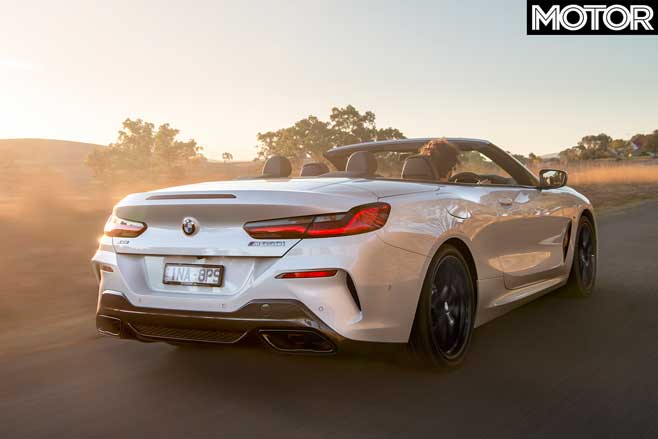
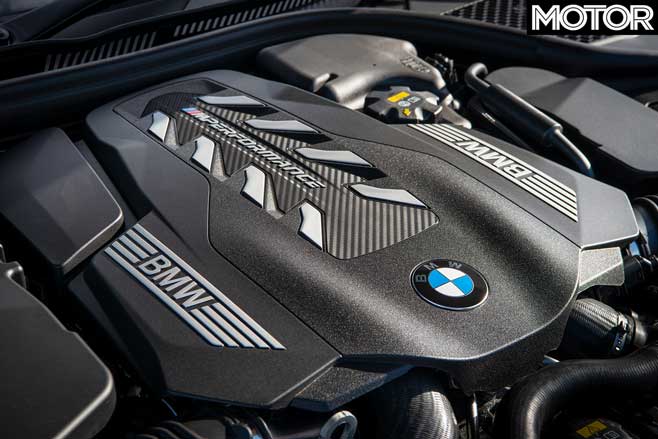
At 4.85m long, 1.9m long and weighing in at over two tonnes (2015kg) the M850i Convertible is a big bus, but defies its size thanks to some tricky technology and a hefty helping of good old-fashioned horsepower. Under the bonnet is a 4.4-litre twin-turbo V8 producing 390kW from 5500 to 6000rpm and a mountainous 750Nm spread from just 1800rpm all the way to 4600rpm.
It’s a monster of an engine. According to the claimed figures the 165kg-heavier Convertible is two-tenths slower to 100km/h than the Coupe, but 3.9sec certainly isn’t hanging about – you’re likely to be too busy hanging on to notice. Then there’s the noise.
Deep and guttural with shift-cut cracks and over-run crackles, it’s the sort of soundtrack more commonly associated with AMG. BMW’s ‘standard’ V8s have sounded better than their M Division counterparts for a few years now and the M850i continues that trend.
Sadly dropping the roof – a process that takes 15 seconds and can be done at up to 50km/h – doesn’t further reward your ears. Whether there’s a degree of synthesised noise in the cockpit or the soft-top roof filters out some of the less attractive acoustics, with your hair in the breeze the exhaust sounds a bit flat and uninspiring, especially at higher rpm. Is it coincidence that the M850i sounds best during short blasts away from the traffic lights?
This is a shame as when you really get stuck in this land yacht displays a remarkable amount of dynamic talent. Accurate steering, substantial levels of lateral grip, strong brakes and all-wheel drive traction ensure corners can be dispatched at a tremendous rate, but it’s the all-wheel steering that endows the M850i with an agility at odds with its size.
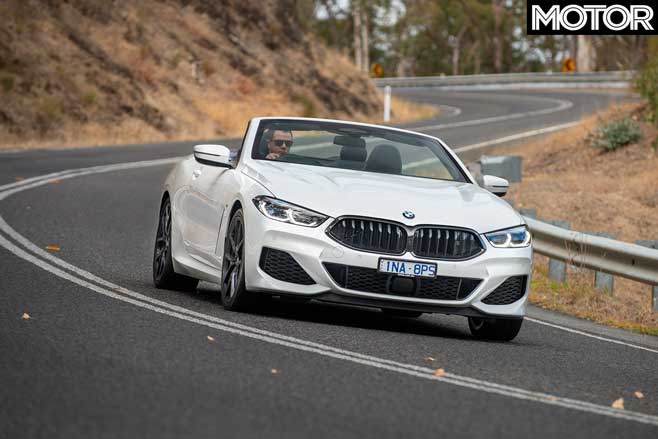
Up to 72km/h the rear wheels point in the opposite direction to the fronts, while above that speed they point in the same direction – in both cases to a maximum of 2.5 degrees – to improve response and stability respectively. Done poorly it can make the car feel nervous or unnatural, but in this case it feels to remove 300-400kg from the kerb weight. The ride is good, but perhaps not as plush in Comfort as might be expected in a $281,900 grand tourer?
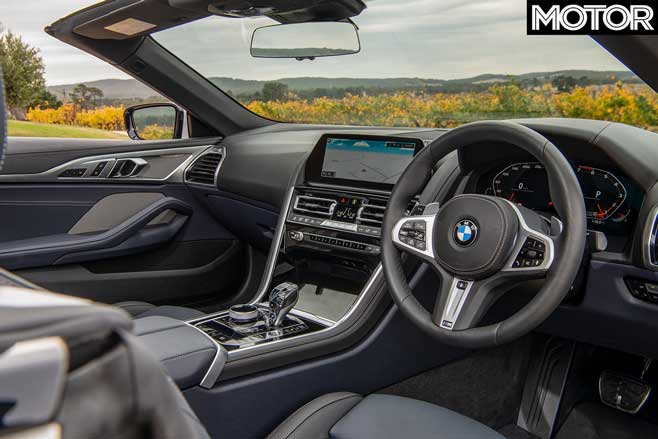
Inside the 8 Series will be familiar to anyone with experience of an X5 with new digital instruments, the latest iDrive infotainment system and Swarovski crystal gearknob, along with a number of welcome heat sources – steering wheel, neck scarfs and seats. Unfortunately, poor packaging has carried over from the previous 6 Series, with the 8’s rear accommodation limited to children at a stretch.
The M850i’s Convertible price tag is as substantial as its presence on the road, but if you’re in the market it’s worth considering over the Coupe. Any dynamic compromises occur at a pace few will venture to achieve and there’s the added benefit of unlimited headroom should you have the desire. Just remember to stay out of the water.
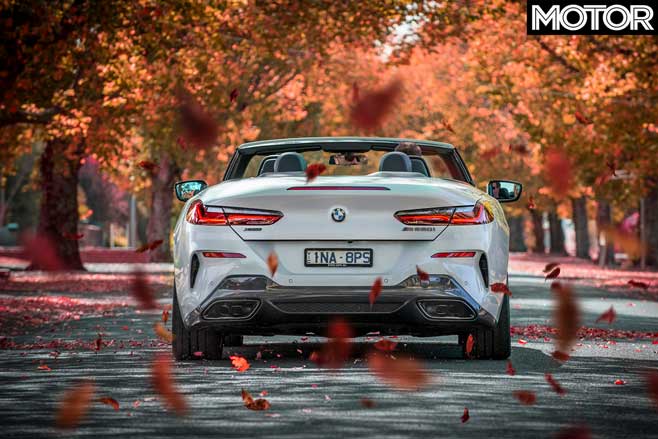
2019 BMW M850i CONVERTIBLE SPECS Engine: 4395cc V8, DOHC, 32v, twin-turbo Power: 390kW @ 5500-6000rpm Torque: 750Nm @ 1800-4600rpm Weight: 2015kg 0-100km/h: 3.9sec (claimed) Price: $281,900
Like: Monster V8; presence; dynamic prowess Dislike: Mega money; packaging
Rating: 4 out of 5 stars
What is it?
When we drove the high-spec Pathfinder Ti earlier this year, the verdict was that although the $66,390 version packed in a lot of kit, we suspected the more affordable offerings might make more sense. So it’s time for a rematch in something that’s a little kinder on the wallet – the ST 4WD.
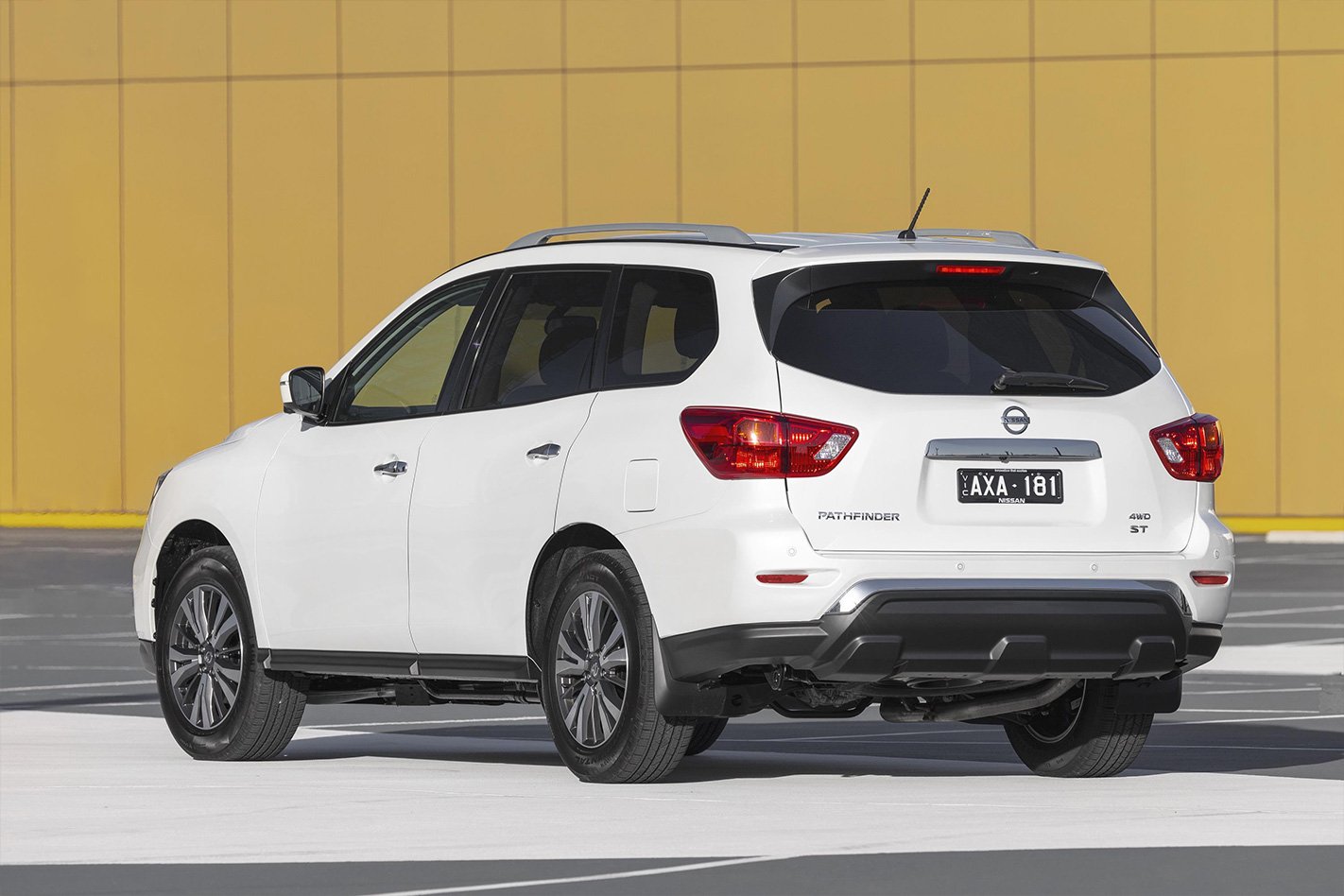
How much is the Nissan Pathfinder ST
While the Ti we tested in May sits just one rung below the range-topping Ti Hybrid, this $45,490 variant is positioned just one slot above the entry-level Pathfinder. Paying the extra cash for the AWD over the $41,990 ST 2WD doesn’t net you any more equipment – its feature-set is identical. Rather, that premium goes entirely into adding a selectable all-wheel drive system underneath.
Who is it for?
Quite simply, this Pathfinder is for exactly the same type of customer as the Ti – most likely a large family with a high workload for the family car. However, the ST is definitely geared towards those who can’t justify a $60k-plus budget, and/or don’t need an extensive equipment list.
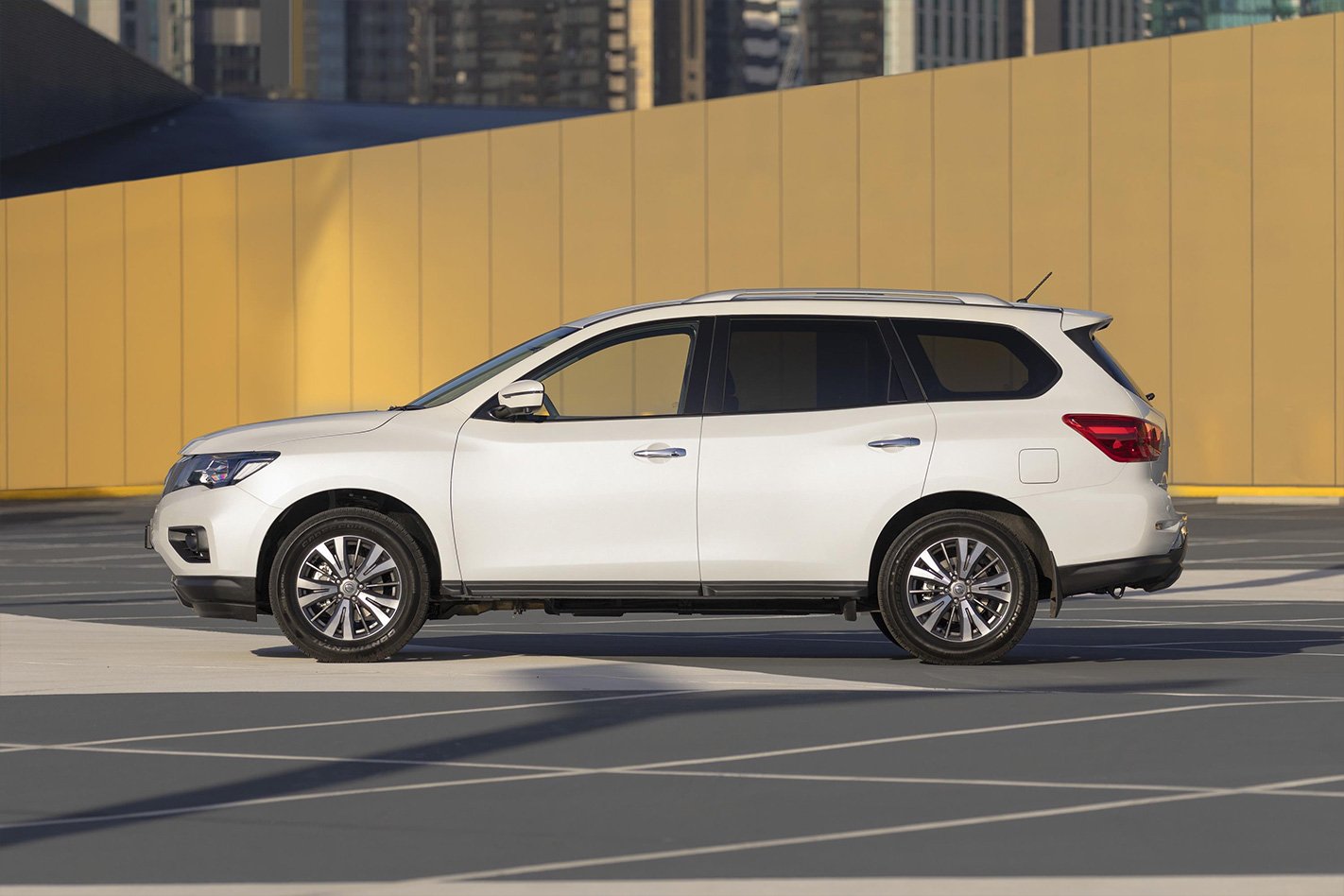
It’s also for families wanting decent all terrain ability for leaving the blacktop far behind on camping expeditions, and will happily invest the extra $3500 for the AWD to enable said adventures.
Is the Nissan Pathfinder ST easy to live with?
Arriving late into Melbourne’s international airport, recently, after a long day and protracted delays, I was met by a typical mid-July occurrence: Cold wind and driving rain. But I had the Pathie loyally waiting for me in the dark carpark and I can’t tell you how comforting that thought was.
Unlike leather upholstery, its curiously shiny fabric seats were inviting – not cold, and its massive boot swallowed big bags for the hike home. Furthermore, its elevated driving position and tall glasshouse offered a reassuring view of the road on a foul evening, while the soft suspension and tall tyres soothed away the stresses of the day. In short, it was the perfect car to come home to.
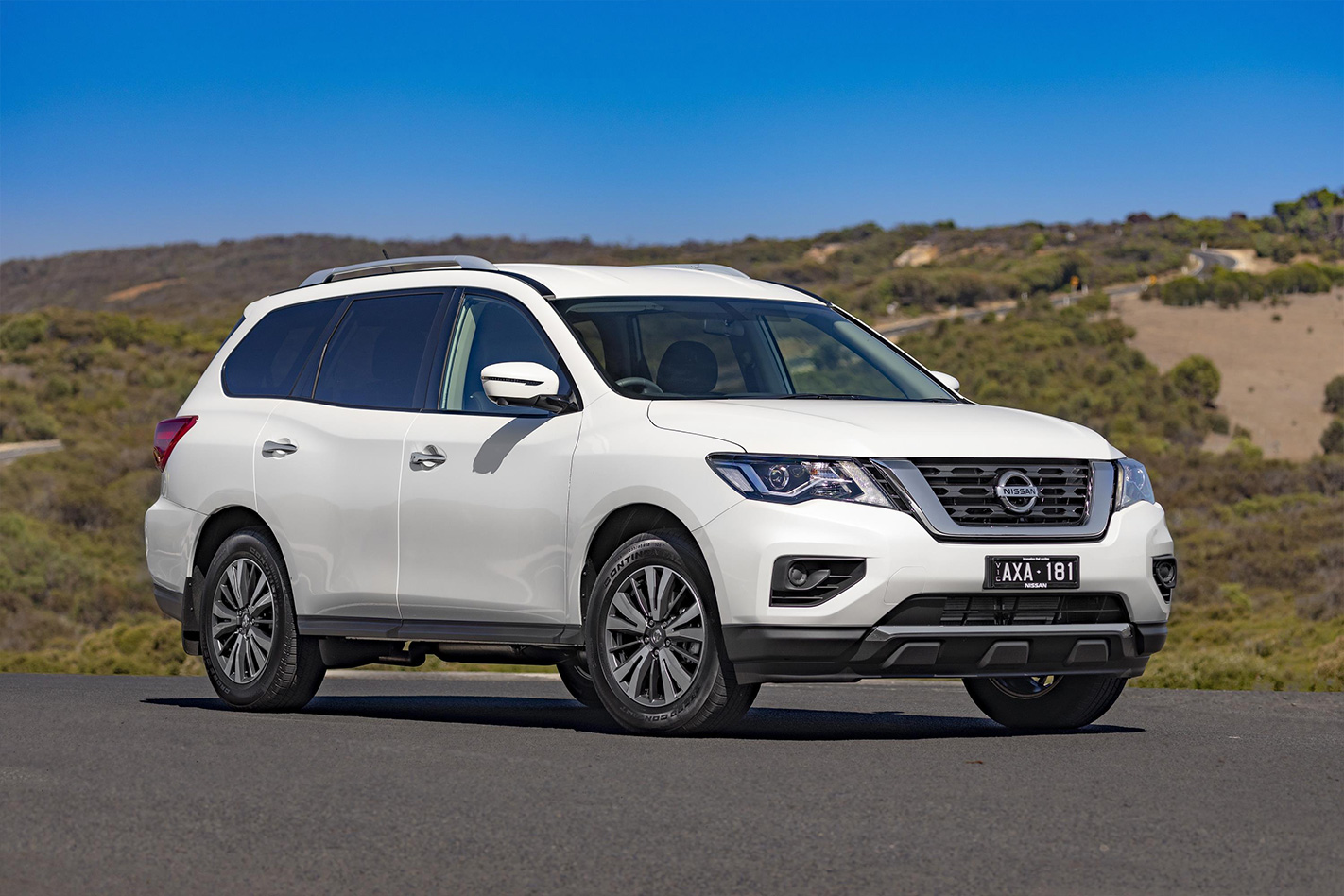
Even in the top-shelf Ti specification we tested earlier in the year, the big Nissan is not a glamorous or sexy car and I don’t think it would mind me saying it’s not particularly exciting either. In my mind, embellishments such as 20-inch wheels, hide upholstery and bright paint are of little value.
What the Pathfinder is, however, is a dependable and benign machine that is best left unmolested with pricy affectations. Not only will you save cash but you won’t be constantly worrying about kerbing ostentatious wheels when parking or scratching the paint when accessing a hard-to-reach campsite. Anything that detracts from the relaxing ownership experience of a vehicle like this undermines its core purpose.
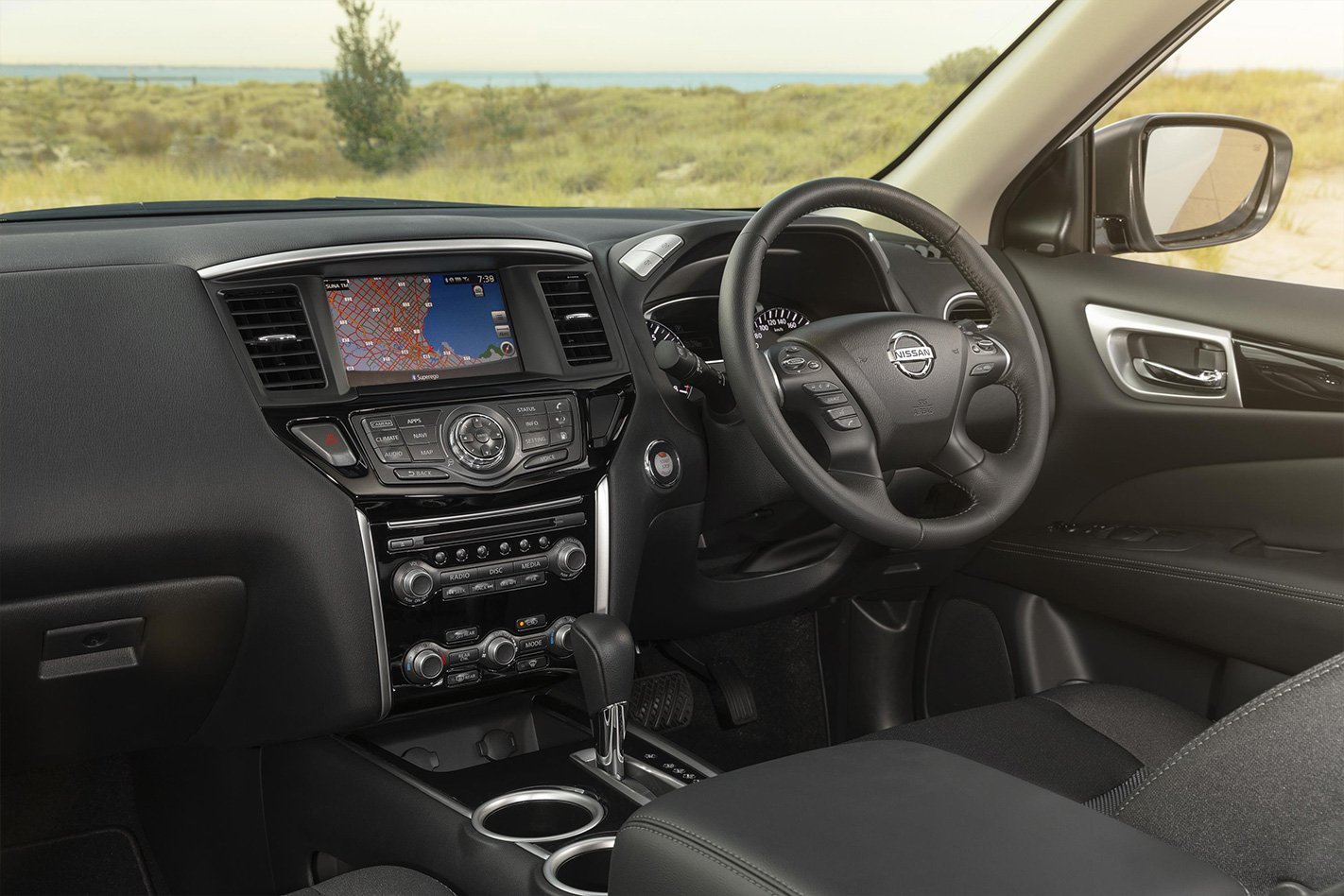
You still get plenty of storage about the cabin. There’s a third row of seats at the back for days when you have a few extra members of the soccer team to look after, curtain airbags, forward collision monitoring and tyre pressure monitoring.
Perhaps ST owners will miss having integrated navigation (there’s no Apple CarPlay or Android Auto smartphone mirroring either), LED headlights, 360-degree camera (a simpler rear-view camera is included), electric seat adjustment and clever rear-door alert that’s offered in the Ti grade, but for the most part, it’s only luxuries that are left out.
How well does the Nissan Pathfinder ST drive?
The beauty of the most affordable ST 4WD is that you get exactly the same drivetrain that’s standard fitment for the Ti. That means the same powerful and smooth 3.5-litre petrol V6 sending grunt through an obedient CVT auto for lots of performance and load-lugging muscle.
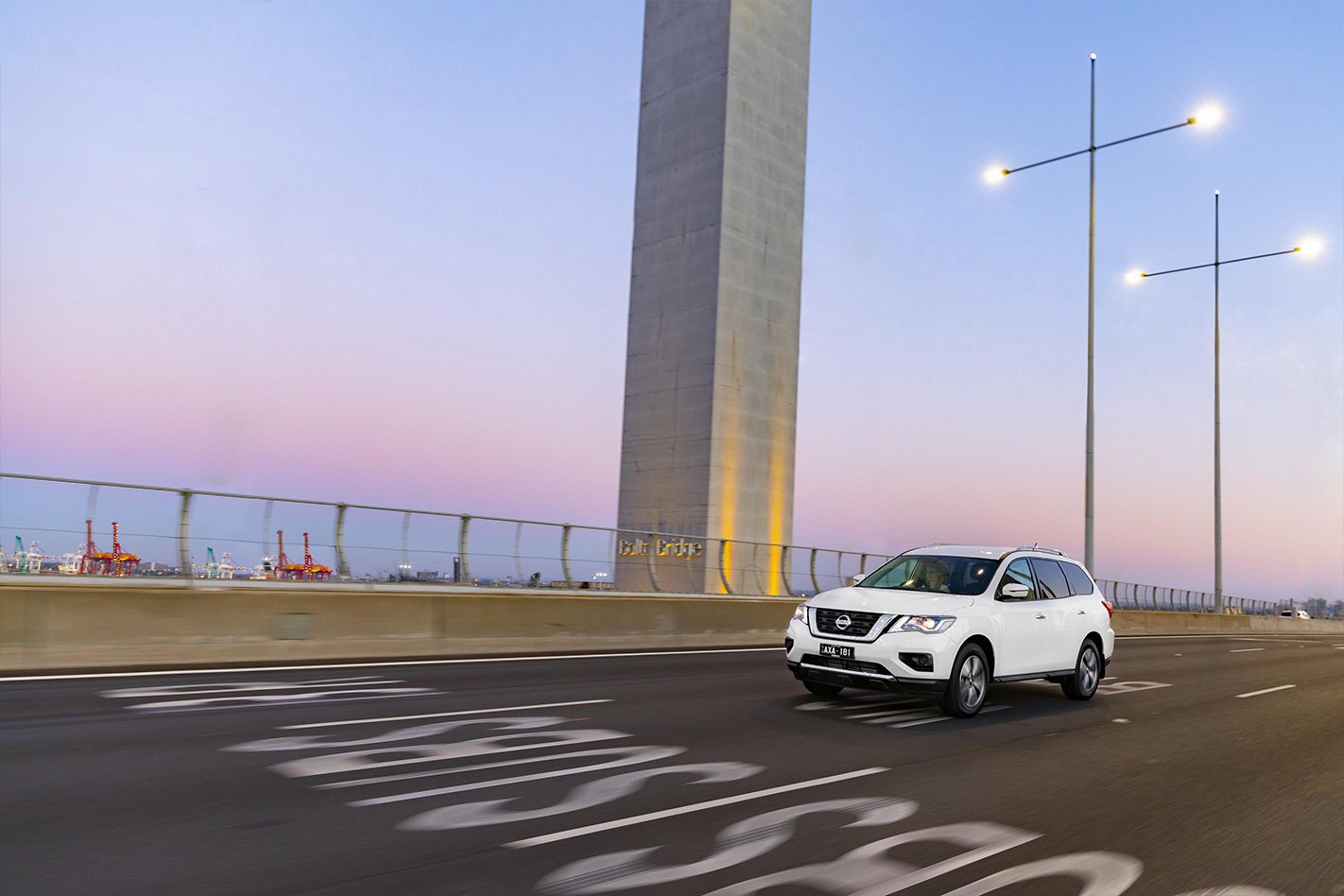
It’s not the most efficient result with a hefty two-tonne kerb weight asking for 10.1 litres of fuel per 100km on the combined cycle (a result that we found easy to achieve in a week of real-world driving), but having a bit of go under your toe is one of the Pathfinder’s pleasant surprises.
With a significant inertia to overcome and prodigious pulling power from a standstill, the front wheels alone cannot cope with full throttle. In the wet, off-the-mark traction is even more laughable when in 2WD mode, so the switchable transmission was left in ‘auto’ all-wheel drive for all conditions. Configured that way, grip in wet weather is very hard to breach.
That decision will probably cost more at the pumps but scrubbing a set of front tyres through lots of unintentional wheel spin will also hit the wallet where it hurts. Which is the lesser of two evils is up to the end user.
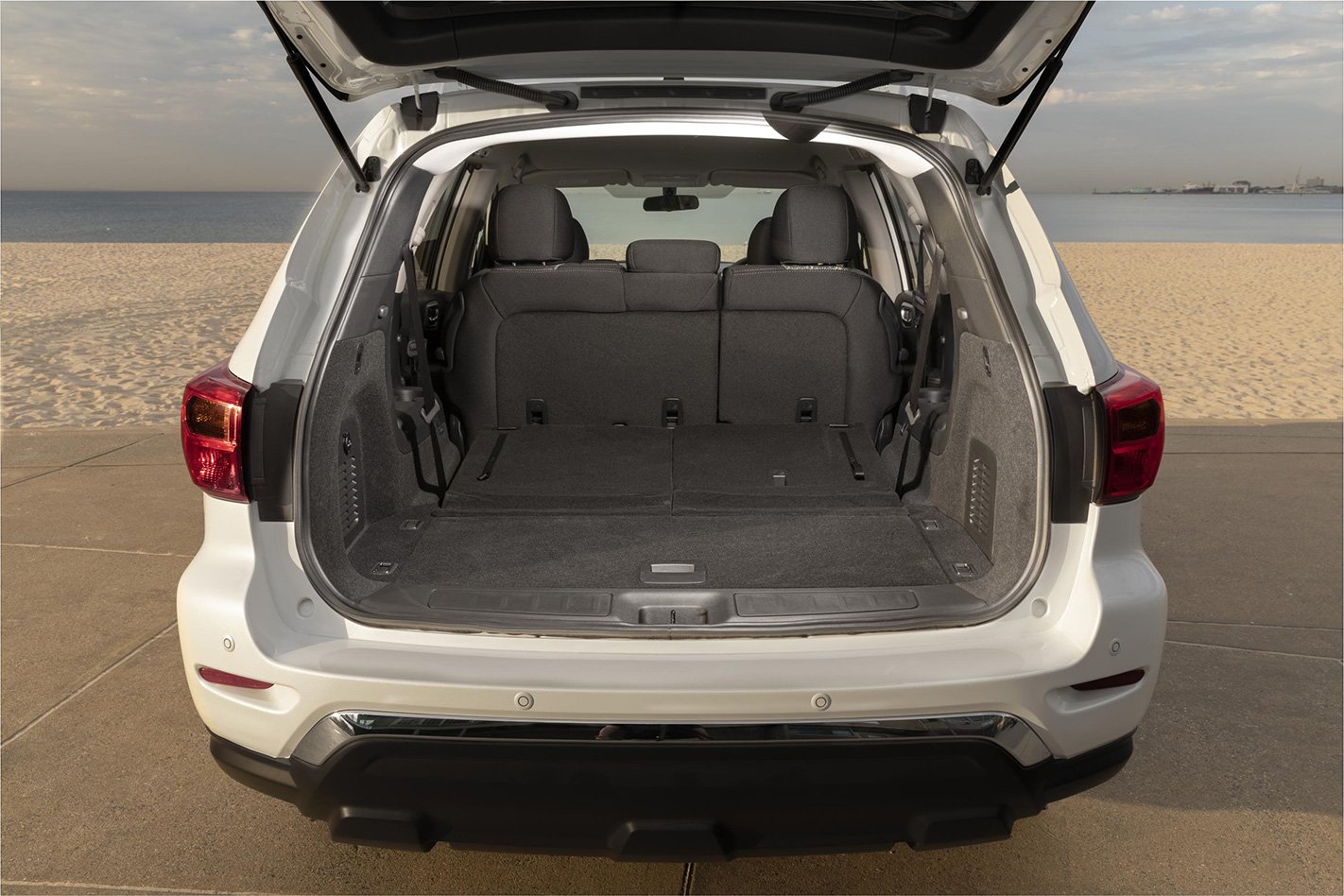
As a result of the identical driveline (with the exception of a hill-descent system that’s included in higher grades and most drivers will probably never use) the driving experience is almost indistinguishable. The taller tyres on 18-inch wheels arguably improve the ride over the 20-inch posh rims, but beyond that it’s business as usual.
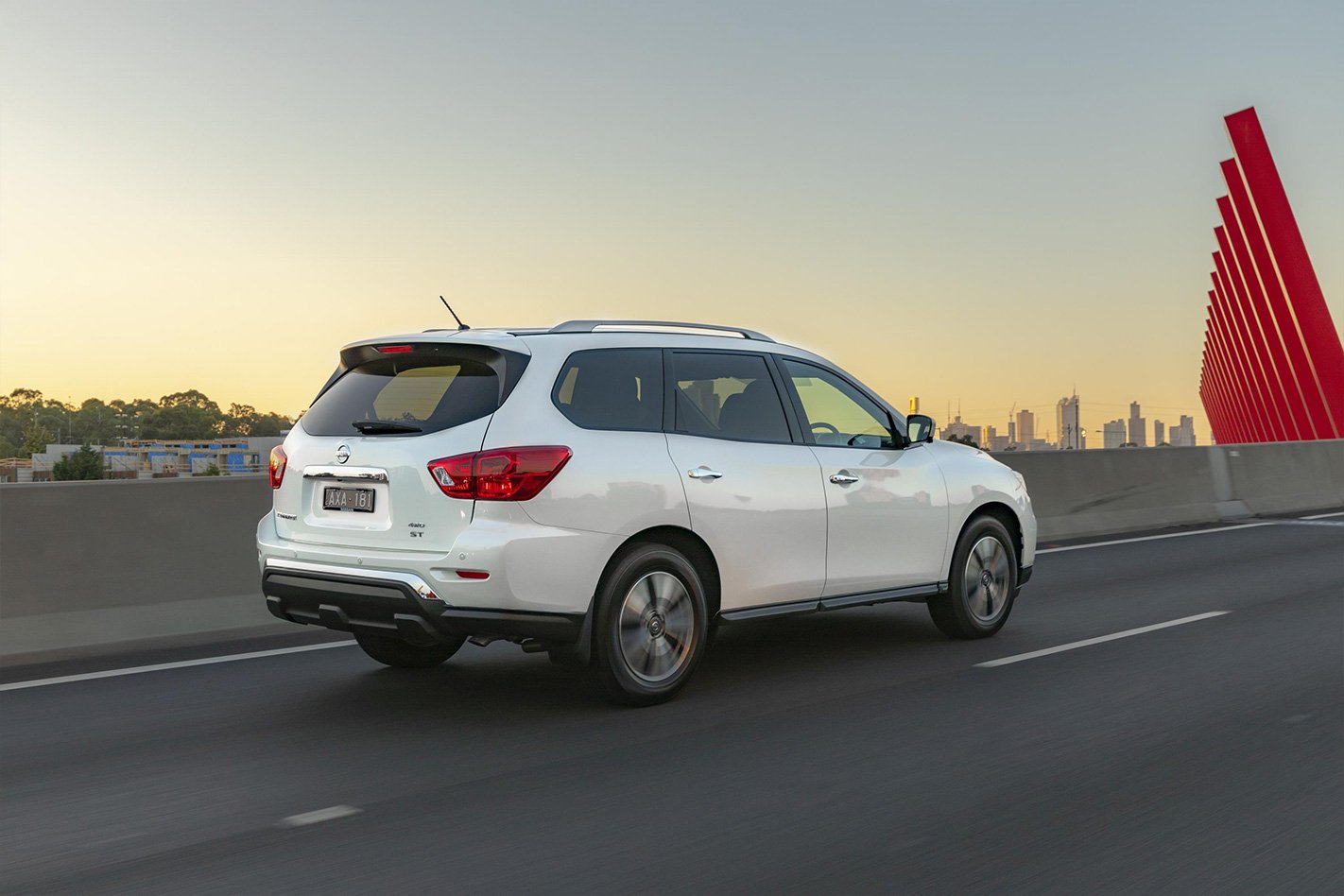
Braking and acceleration are excellent for a car of this size and weight and the steering is the only qualm with far too much power assistance to offer even the slightest sensation of feedback from the road. That’s probably not a problem for most of the Pathfinder’s target audience, but you will notice it if you are getting out of a number of rivals including the Kia Sorento or Mazda CX-9.
The Pathfinder is classed as a large SUV but it’s one that hides its measurements well through good design and ergonomics. The third row of seating is a meaningful size and the ride comfort will keep all occupants happy.
All in all, it’s a very easy companion to live with and its stoic ability to get on with the job makes some other big SUVs look neurotic by comparison.
Verdict:
After a long day would you rather come home to the family dog performing an interpretive dance while juggling the cat, or would you like it to be simply holding your slippers and the paper?
The Pathfinder is not a vehicle that is designed to wow and delight with every trip. It’s a hard-working addition to the family that can be praised for not garnering attention.
At the entry-level, the ST does everything you would want a large SUV to do in this particular (relatively affordable) part of the market. Anything else would be a bonus – but one that you could most likely live without.
Our only must-have would be the four-wheel drive transmission, which comes as a relative bargain over the ST 2WD considering how much it adds to the model’s appeal and driveability.
As we hypothesised in our summary of the high-grade Ti, something from the more affordable end of the spectrum would appear to be where the wise choice is, and a few days living with the ST certainly seems to confirm the theory.
Perhaps we need to inspect another Pathfinder variant to see if the real gem of the line-up is hiding somewhere in the middle of the range?
Here’s the stories that we featured this week on WhichCar.com.au
Tomorrow marks 50 years since the Apollo 11 moon landing. And no, it wasn’t faked, as these hilarious moon-walking bloopers released by NASA prove (check out the kangaroo hopping at 1min 25sec). It’s also eight years to the month since NASA last launched astronauts into space on the Space Shuttle, which I was lucky enough to witness. These incredible achievements expanded humanity’s frontier, but we’re seemingly no closer to living in space despite the combined $400 billion (inflation adjusted) that America alone has spent on the Apollo and Space Shuttle programs.
That hasn’t stopped Toyota, the world’s biggest car brand, starting work on a Lunar Rover for model year 2029. Interestingly, Toyota says the prototype will be “a modified version of a standard production vehicle”. Get ready for the 2030 Toyota LandCruiser: for all roads on Earth … and beyond. Presumably it’ll roll on these self-inflating, shape-shifting, talking tyres of the future, too…
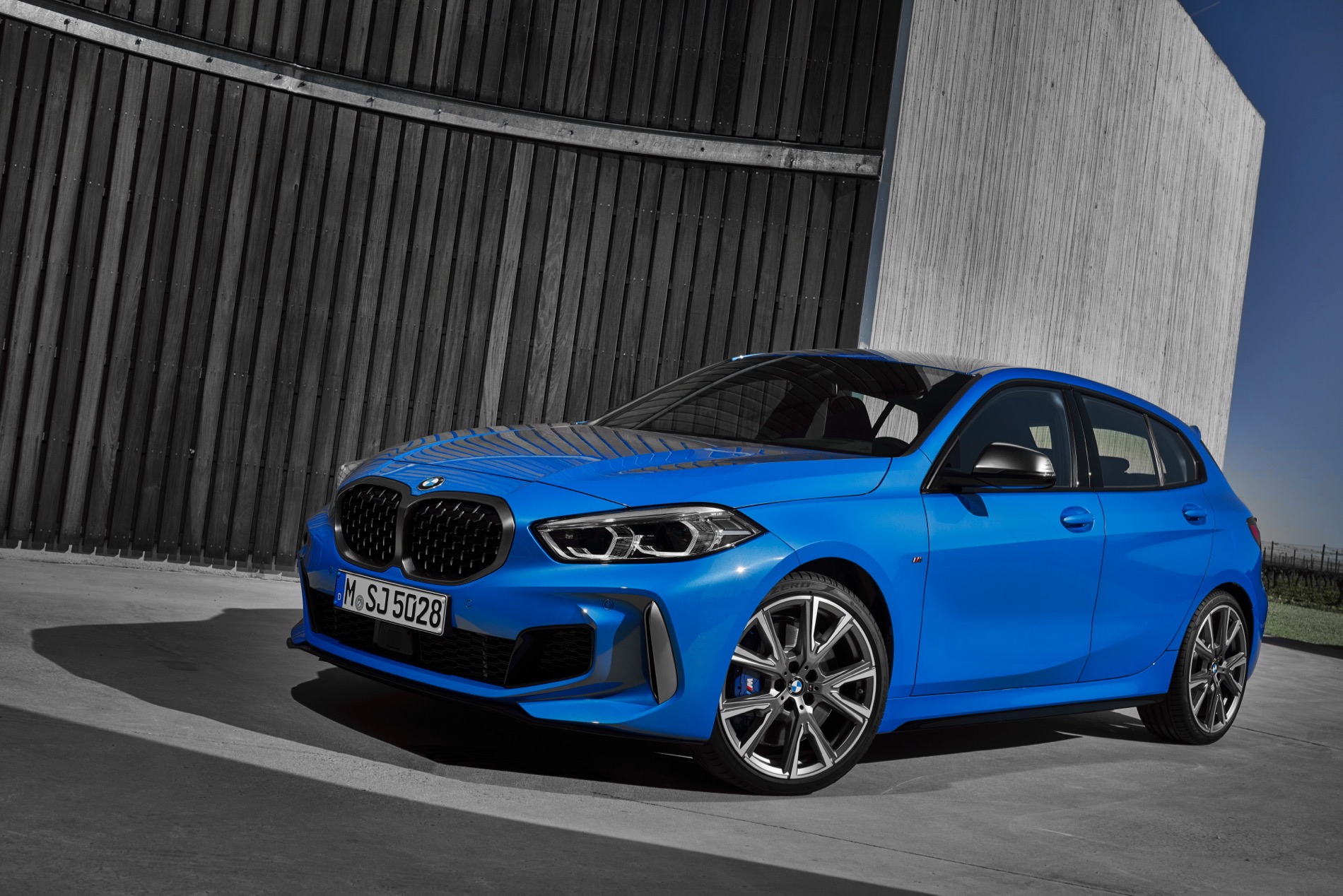
Meanwhile, back on Planet Earth, WhichCar revealed how you can get a $3 million Aston Martin Vulcan hypercar for free. We met the luckiest man alive, who survived a crash in a 400km/h Bugatti Veyron. We also test drove the new BMW M135i hot hatch — and didn’t crash – and learned the next BMW M2 will stay rear-drive.
Big news for us this week! Season 2 of WhichCar’s TV show on Network Ten has not only been green-lighted, we’re doing 30 episodes instead of 20! Read more about Australia’s favourite new car show here.
On the subject of Road Safety, a ticked off Mark Webber teed off on Australia’s parochial road safety policies, encouraging our legislators to “pick up the phone” to other countries setting a better example. It appears the UK is also leading Australia in supporting EV adoption, too, with a proposal for all new homes to have electric charging points.
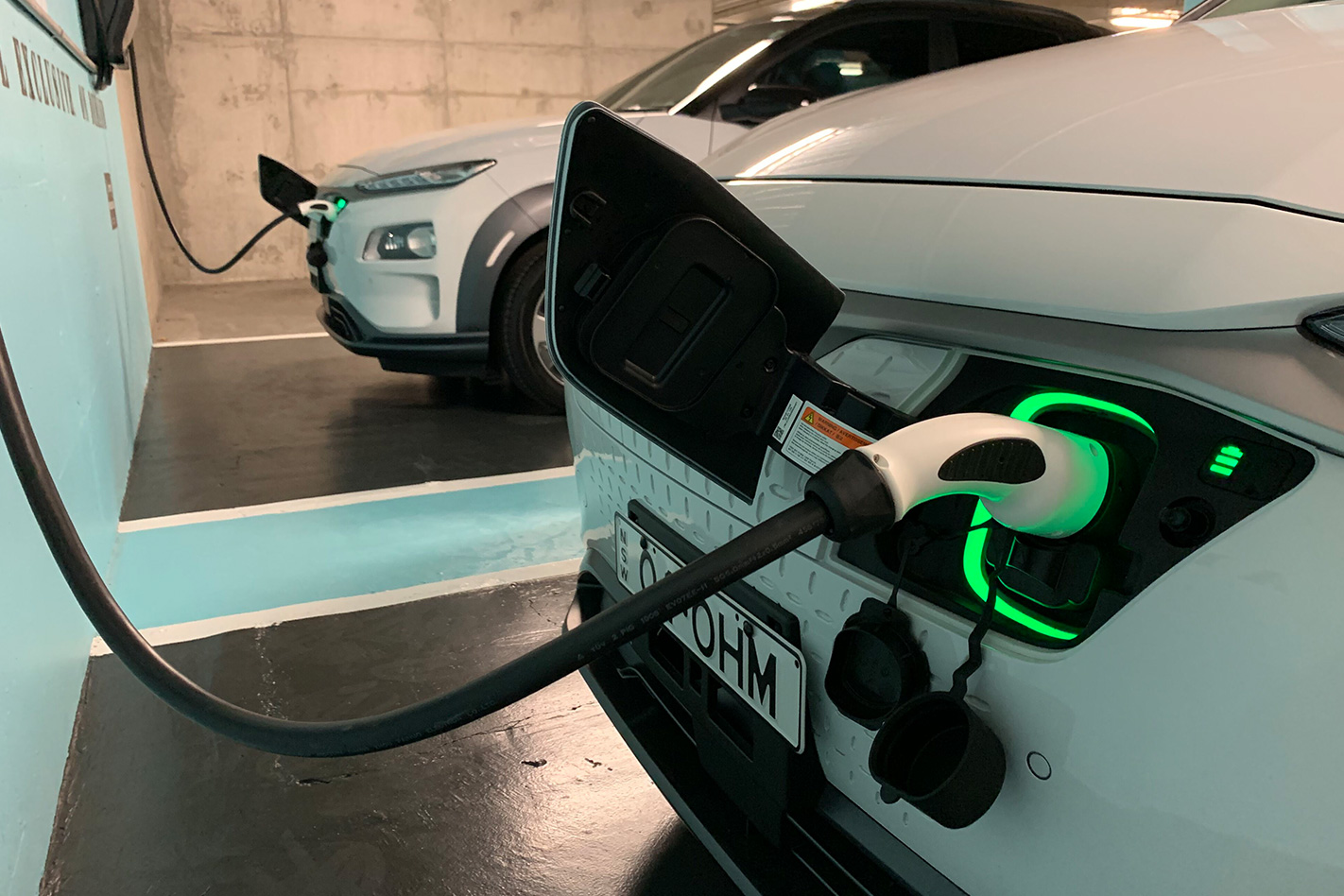
On the subject of electrification, we took a closer look at Rivian, the EV ute startup now bankrolled by Ford and Amazon, adjudicated a power struggle between the Nissan Leaf and Australia’s wide brown land, investigated the cheapest ways to charge your EV, and learned about a Nissan-based electric ute launching in China next month that can do 400km per charge.
Also this week, Ohmie Go launched Australia’s first EV sharing program, German gearheads ZF unveiled a two-speed EV motor that could dramatically increase EV touring ranges, Nissan rolled out some Navara updates, and Ford added AEB to Everest SUV models.
Skoda launched a ‘Parent Taxi App’ via which kids can ‘buy lifts’ by doing chores. Skoda also confirmed a hotter RS version of the Kodiaq SUV for Australia. This ‘high-performance’ bi-turbo diesel model was previously ruled unfit for Australia’s ‘hot and dusty’ climate, so Skoda Oz had its engineers reclassify Australia as ‘moderately hot’. That’s good news for climate change, too, right?
Happy birthday to Audi’s RS performance brand which turns 25 this year. We flew to Germany to join the celebration and learned about a raft of new RS models which we’ll tell you about over the coming weeks.
Disclaimer: Don’t do this at home folks! The ingenuity of Australians always amazes us, but this bloke who fitted a leaf blower to supercharge his Commodore, leaves us speechless.
Have a great weekend!
