
- All-new Range Rover Evoque goes on sale in May
- Prices start from $62,670
- 26 variants will be available
- Three-door deleted from line-up
Range Rover focused its development efforts on delivering real-world benefits like greater space and practicality, as well as improved agility, economy and driveability. Range Rover has also introduced a number of new technologies and updated existing systems to improve the Evoque’s capabilities both on-road and off-road.
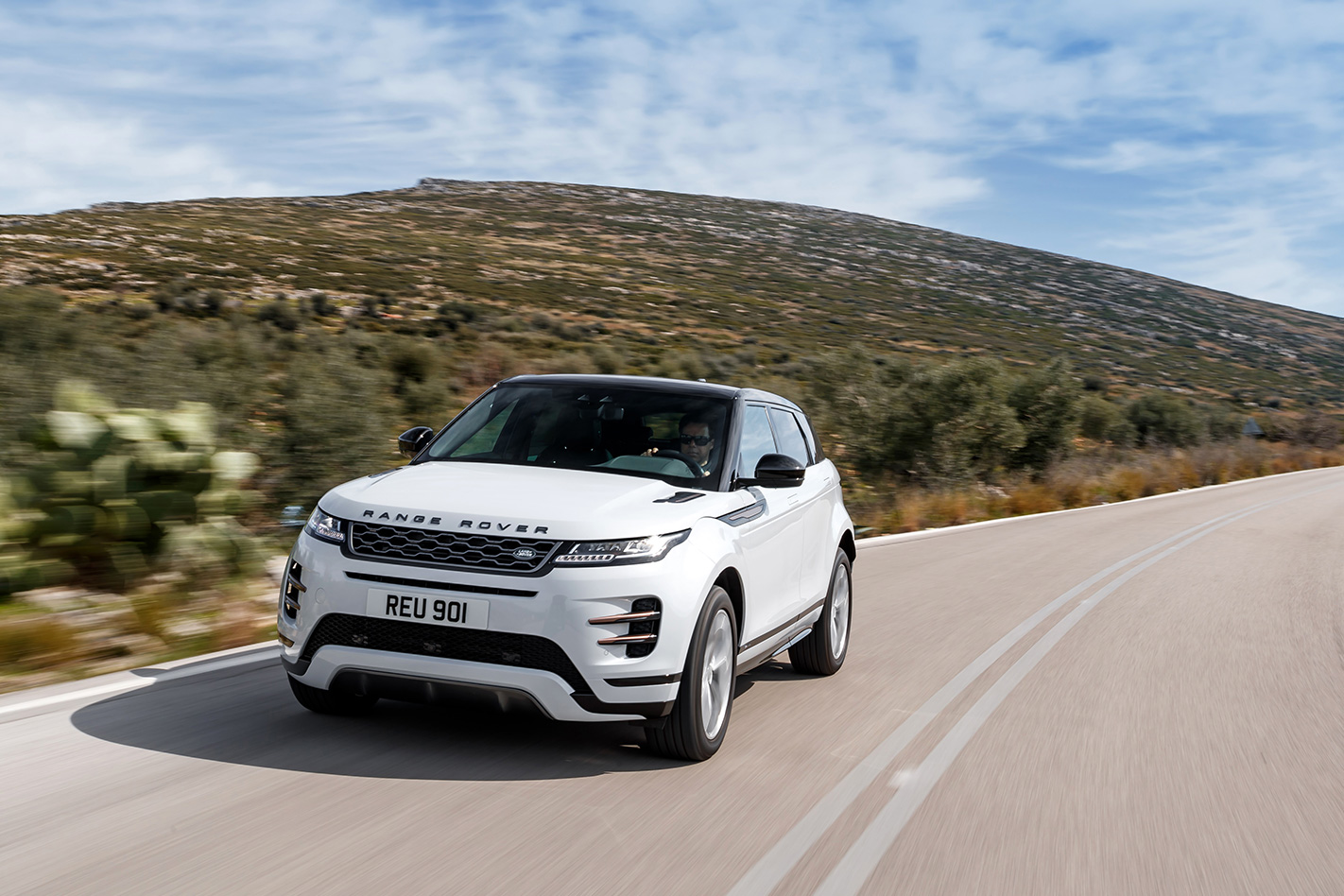
The new Range Rover Evoque goes on sale from May 2019, with prices starting from $62,670 for petrol models, and $64,640 for diesel models. An incredible 26 variants of the new Range Rover Evoque will be offered for sale in Australia from May – a number Land Rover Australia said it worked hard to keep to a minimum.
There are two basic drivetrains – 2.0-litre turbo-petrol and 2.0-litre turbodiesel, drawn from Land Rover’s Ingenium engine family – both offered in a variety of power levels, and sometimes in combination with an electric motor and battery pack, which Range Rover says improves real-world driveability and stop-start smoothness, and reduces fuel consumption by up to six percent.
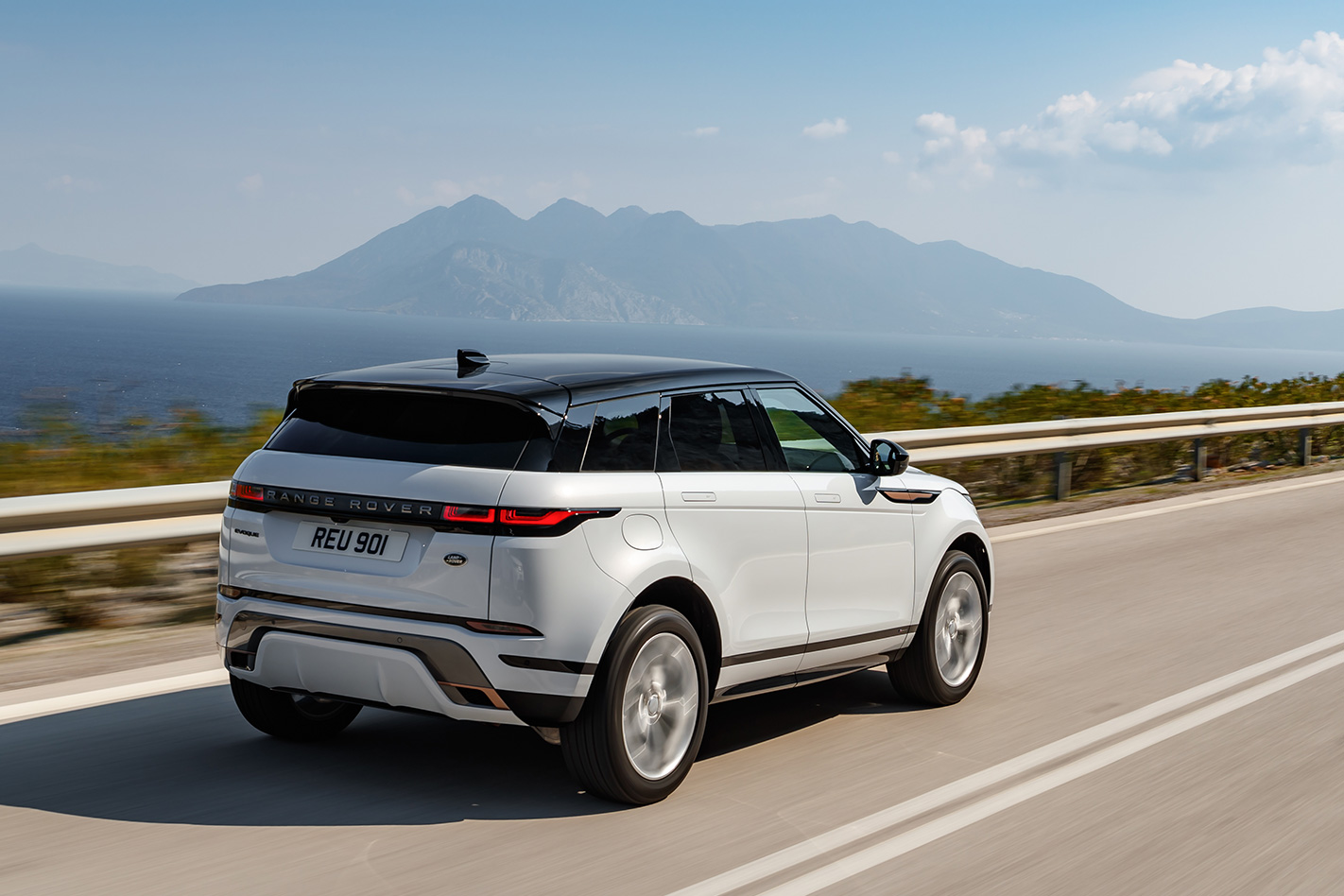
All Range Rover Evoque models this time around are five-door wagons with a nine-speed automatic transmission and all-wheel drive. The three-door bodystyle and front-wheel-drive options have been dropped.
Range Rover says there was very little demand – “less than three per cent of sales” – for the three-door, and any advantage to fuel economy that front-drive models offered can now be matched by a clever drivetrain system which effectively disconnects the rear axle when it’s not needed.
There’s also no sign of the controversial convertible model making a comeback in the new range, either.
This 2019 Range Rover Evoque is a complete overhaul; nothing but the door hinges are carried over from the original Evoque which launched back in 2011.
The exterior design is similar, no question. But put the 2019 model next to the 2011 original and the differences are obvious. While both share the Evoque’s trademark falling roofline, rising beltline and long wheelbase – three styling elements that define the Evoque, says Land Rover design boss Gerry McGovern – the 2019 model is cleaner and more mature. It also inherits Range Rover’s trademark front-end styling first seen on the larger Range Rover Velar, as well as those cool retracting door handles.
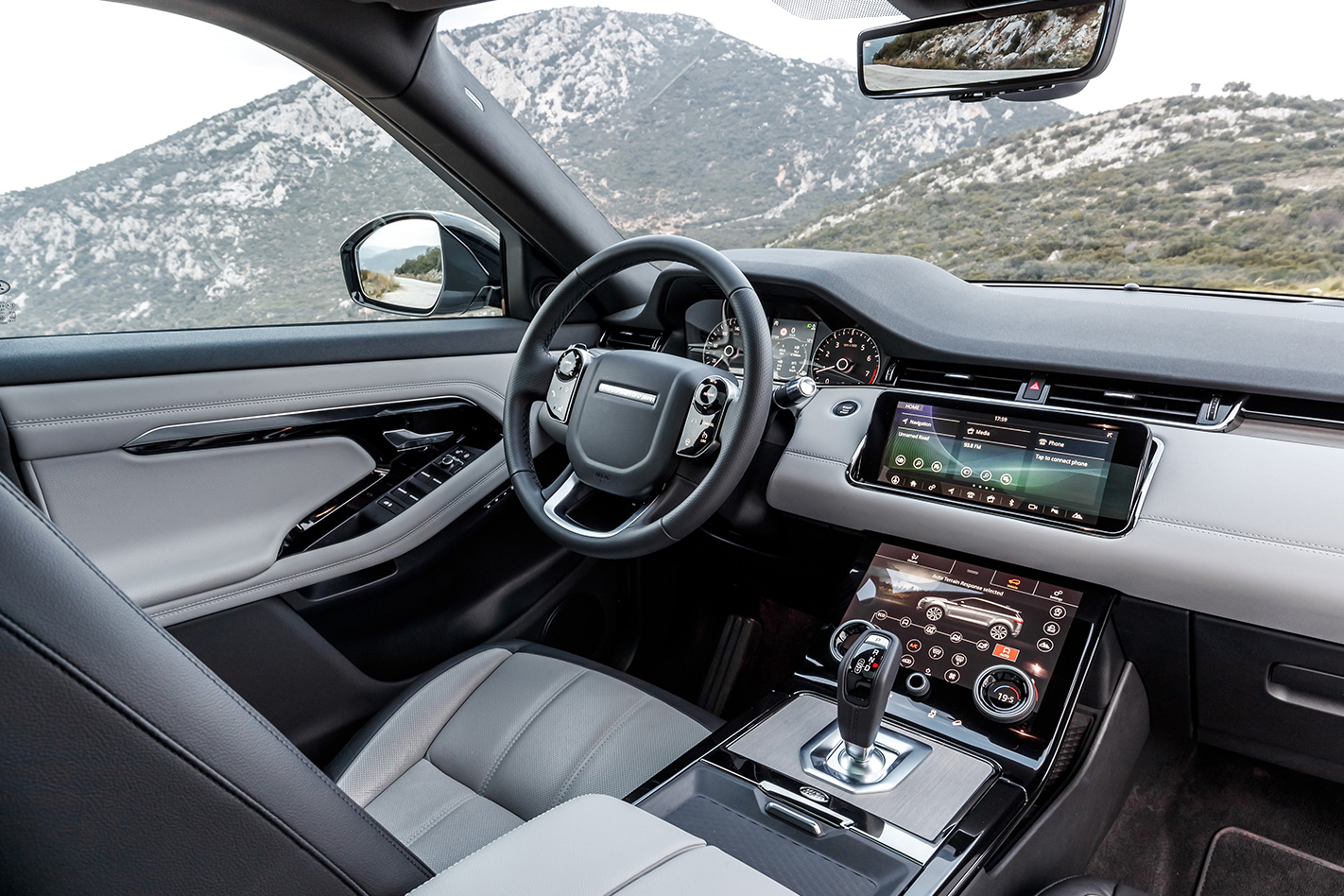
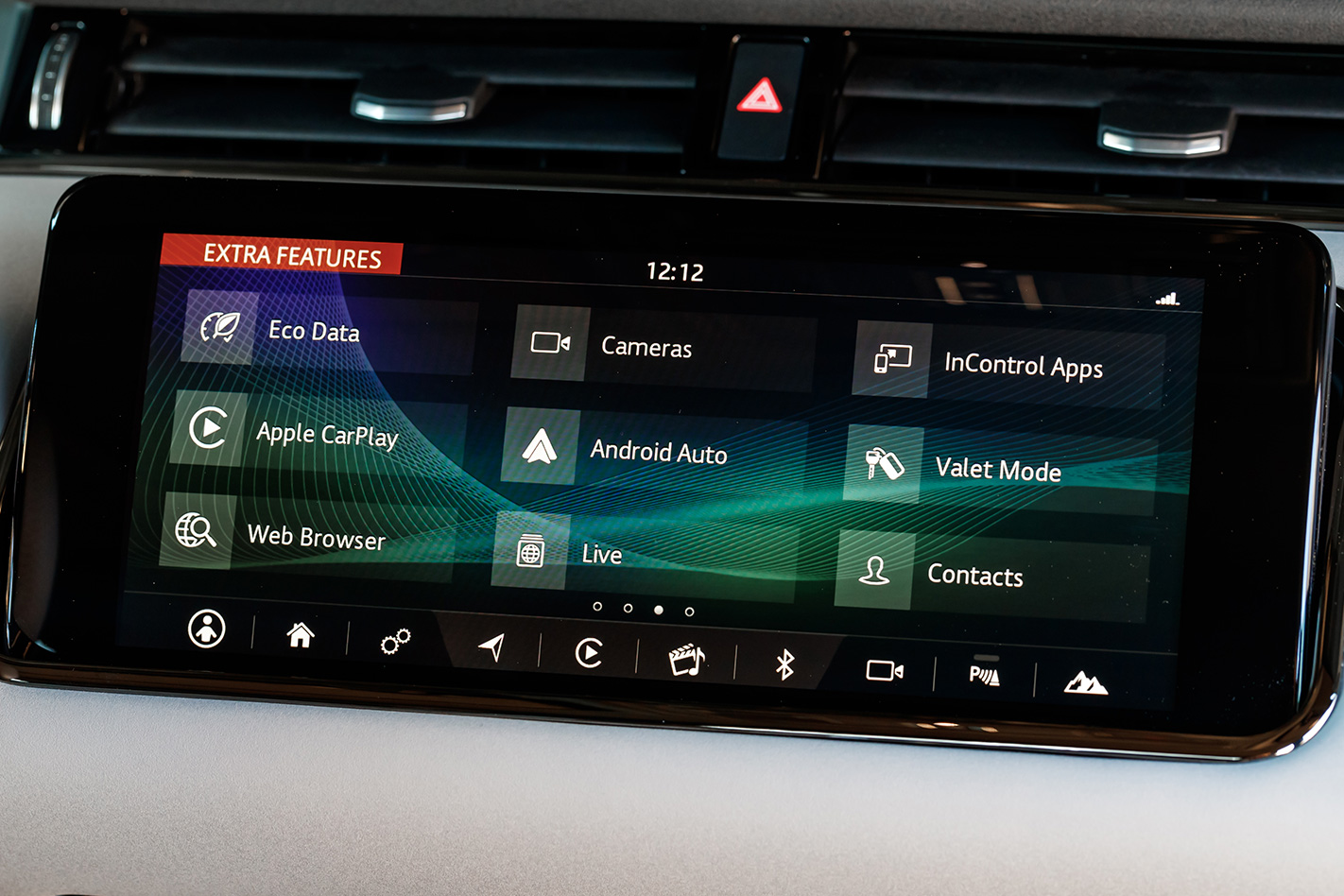
The ‘hand-me-downs’ continue inside the new Range Rover Evoque, with the Velar’s twin touchscreens taking pride of place in the centre console. The software interface used to run all the systems – climate control, entertainment, satellite navigation, communications, etc – is a newer version of the Velar’s, which now includes the ability to receive over-the-air updates. This means owners will get new features as they become available, without having to visit a dealership.
One criticism of the original Evoque was its interior space… or, more precisely, the lack thereof. The fact that the new Evoque is almost exactly the same size as the original – 1mm longer, 4mm wider and 11mm lower, if you must know – doesn’t bode well for improvement, but that’s not the case.
There’s more legroom in the rear and more practical boot space, too, including enough width to fit a set of golf clubs. Door openings have been reprofiled to allow easier access for passengers. Headspace, too, is adequate in the front and rear.
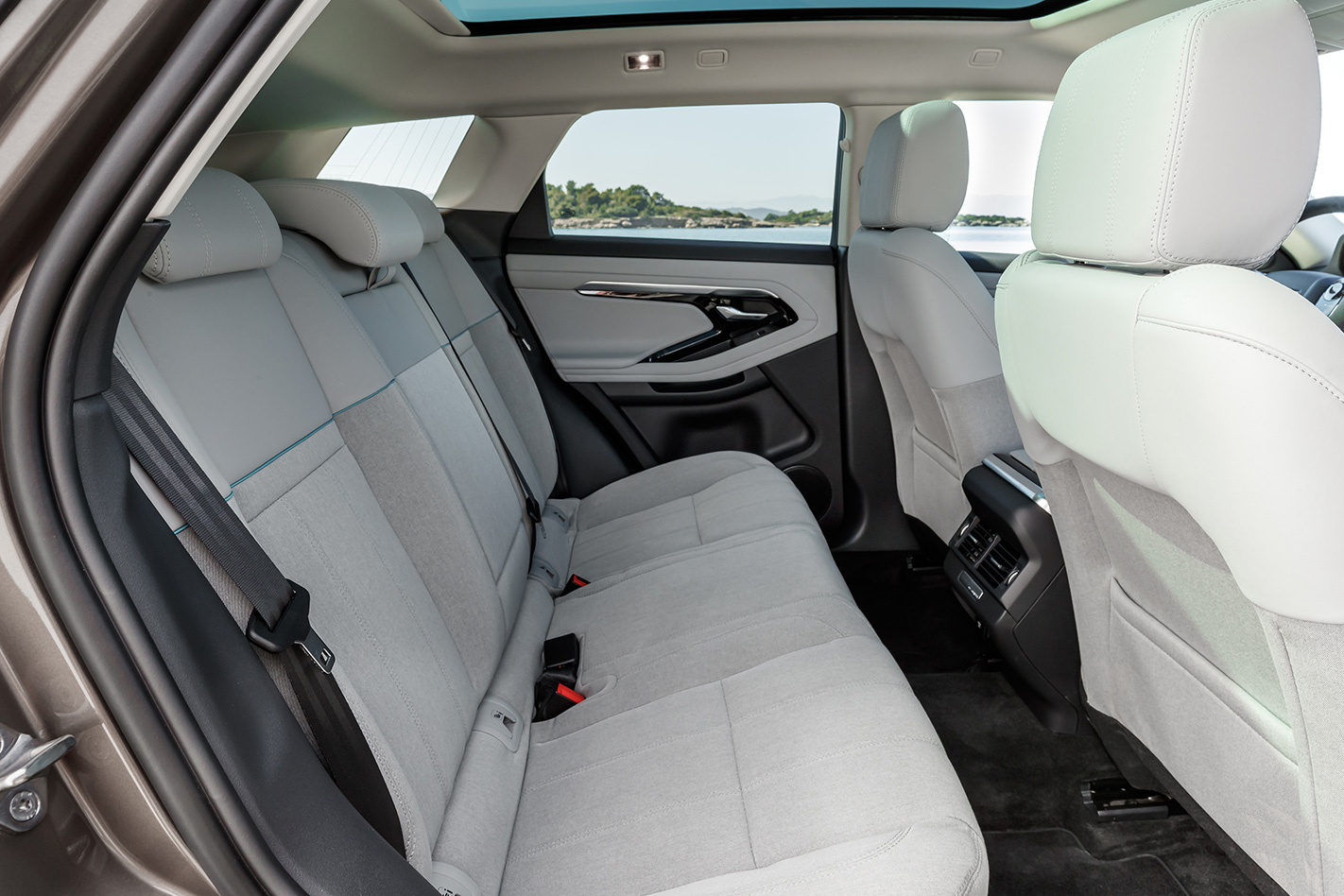
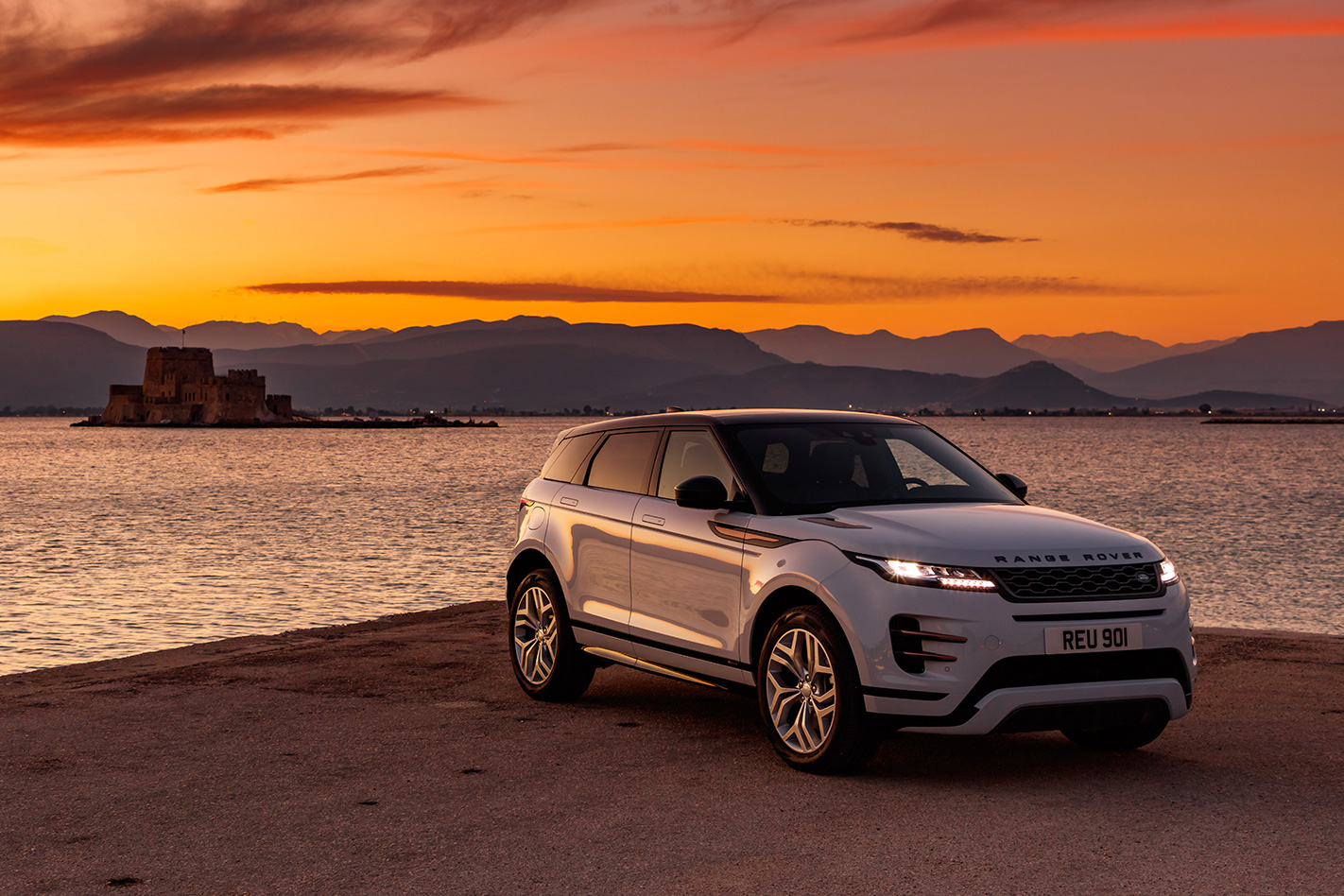
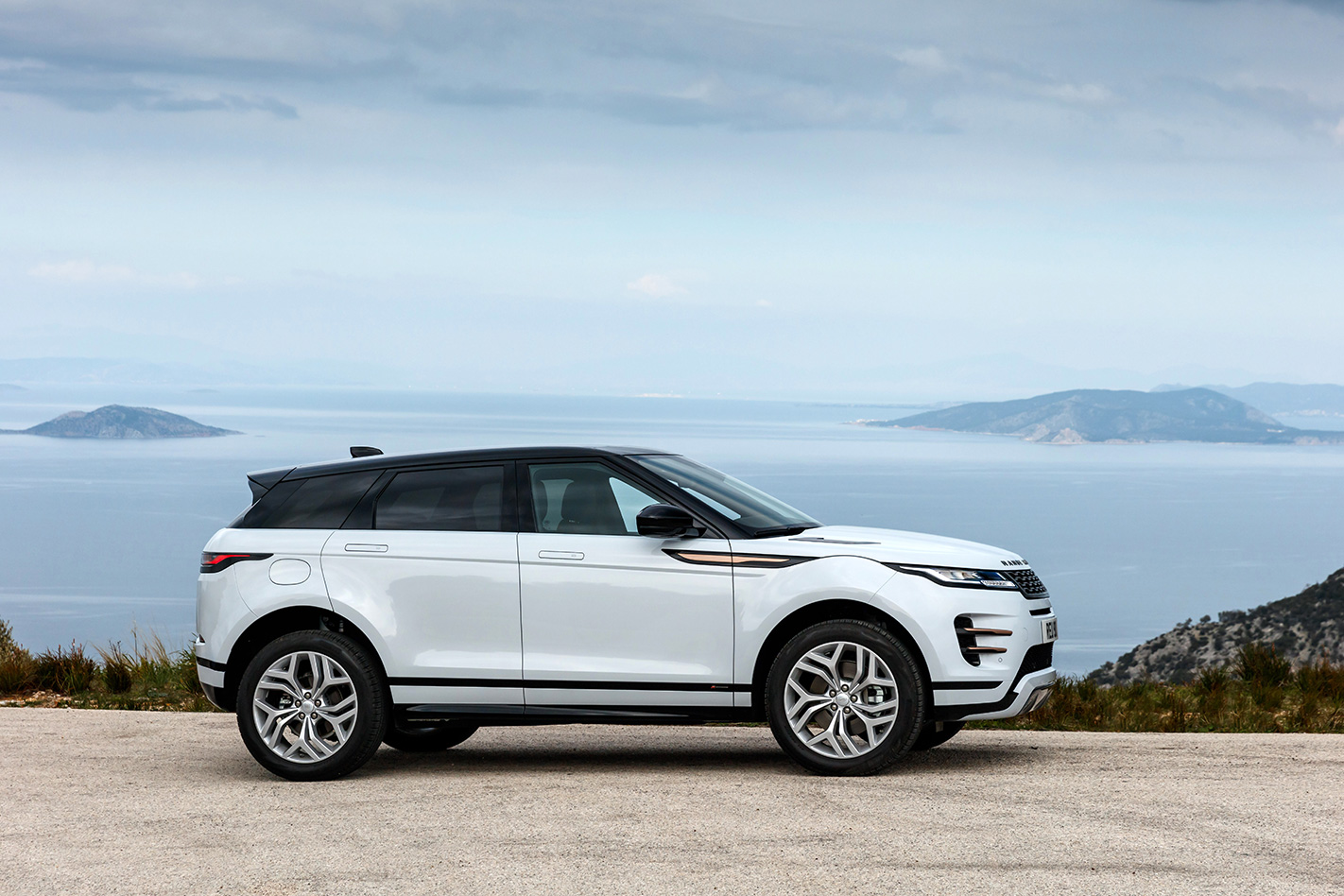
Range Rover was very deliberate about retaining the original Evoque’s external size, despite the company investing in an all-new platform (which could easily have been made bigger), because customers told them the Evoque’s 4.37m length made it easier to manoeuvre and park.
Unusually for all-new cars, the 2019 Evoque is actually heavier than the model it replaces, by up to 66kg on some models. Range Rover says some of that weight is accounted for by the MHEV system, and that it has combatted any flow-on effect of the extra weight on fuel consumption with drivetrain efficiencies and aerodynamic tweaks (such as more rounded rear corners).
The Evoque’s interior party tricks are many. Two that really stood out to me are the rear-view mirror, which looks utterly conventional, and works exactly like a mirror…until you flick the dimmer switch. Then it transforms from a mirror into a high-definition TV screen, hooked up to a camera mounted inside the shark-fin on the roof.
This may initially sound gimmicky, but it means back seat passengers or large luggage loads no longer block the driver’s rearward view. Effectively, you see right through them to whatever is behind the car, just like X-ray vision. This is a competitive edge for Range Rover that no other Evoque rival can match.
The second party trick is also a significant real-world safety feature, and was originally devised to make offroading easier.
Cameras mounted under the front of the car project the scene immediately in front of the vehicle onto one of the dashboard screens, effectively rendering the bonnet invisible. This will come in handy when parking in tight spaces, manoeuvring around gutters or obstacles, or in any situation where up to now the bonnet has blocked vision.
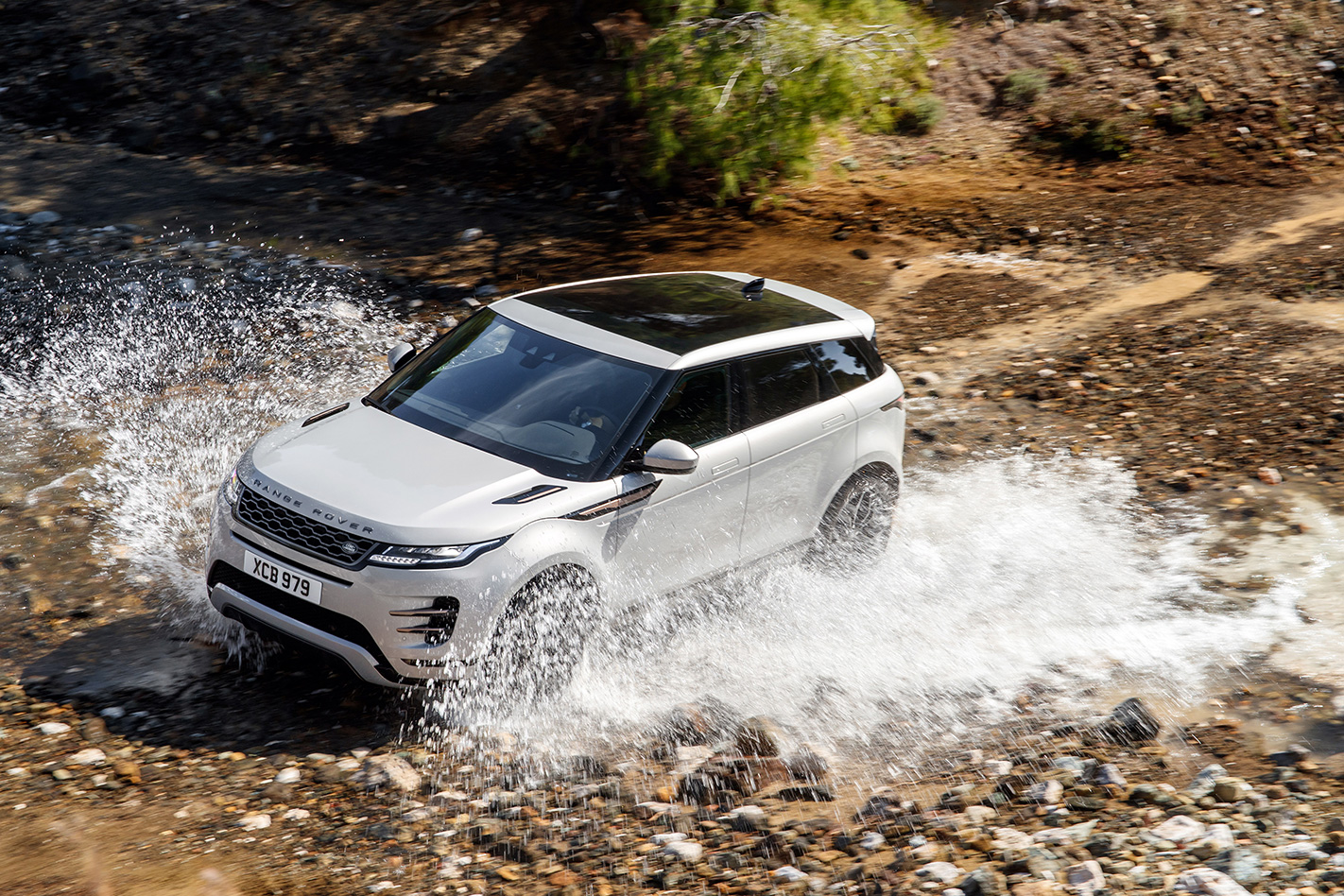
Cameras down the side and one at the rear provide similar views of objects to the car, effectively giving the driver full 360 degree awareness.
The new Evoque also pushes further into sustainable, eco-friendly technologies, in obvious ways and not so obvious. One of the latter is the Kvadrat seat upholstery, which is made from recycled water bottles – 53 per cabin, we’re told – combined with wool fibres to deliver a convincingly premium interior trim.
There’s also a Eucalyptus upholstery option produced from natural fibres, for those who don’t want to sit on Evian bottles or animal by-products.
In all, Range Rover claims up to 33kg of natural and recycled materials are used in each Evoque, taken from post-consumer and post-industrial sources.
All Range Rover Evoque come standard with 10-way electric front seats, cruise control with speed limiter, dual zone climate control, satellite navigation, and a six-speaker sound system with Bluetooth, Apple Carplay and Android Auto.
Standard safety includes a full complement of airbags, auto emergency braking, stability control and lane keep assist.
With a couple of notable exceptions over the years (including most recently where I finally came to the end of my tether with the redneck one street over) I don’t go looking for trouble.
Same goes for when I’m on the road: I like to think I fly under the broad sweep of dickhead radar. And I can do that because of my personal policy of never assuming that the bloke in the next car is (a) Awake, (b) Concentrating, or (c) Anything other than a homicidal tool having a bad day. It’s a policy that has served me pretty well over the years.

By assuming the worst from my fellow road-users (often with enormous justification, I should add) I can take steps to avoid the tangle even before the dope in the other car suspects he or she even has a chance to make a situation my problem. By watching the car next to me and where the driver’s hand is, I can predict whether or not they’re planning to make a lane-change on top of me.
By estimating the instantaneous weight distribution of a car heading for a traffic light, I can predict whether the driver is planning to stop or give it the berries and blast through on a stale orange. By checking the makes and models (and condition) of the cars in front of me as I roll to a red light, I can usually pick the driver that will be the nose-picker when the green arrives, and arrange to be in any of the other lanes.
Okay, so the aim of the game is to avoid conflict and let other folks claim road-rage for their own; get on with my life and leave others to their own messes. But what surprised me the other day was just what a magnificent aggro-firewall this policy of non-engagement through invisibility has created for me.
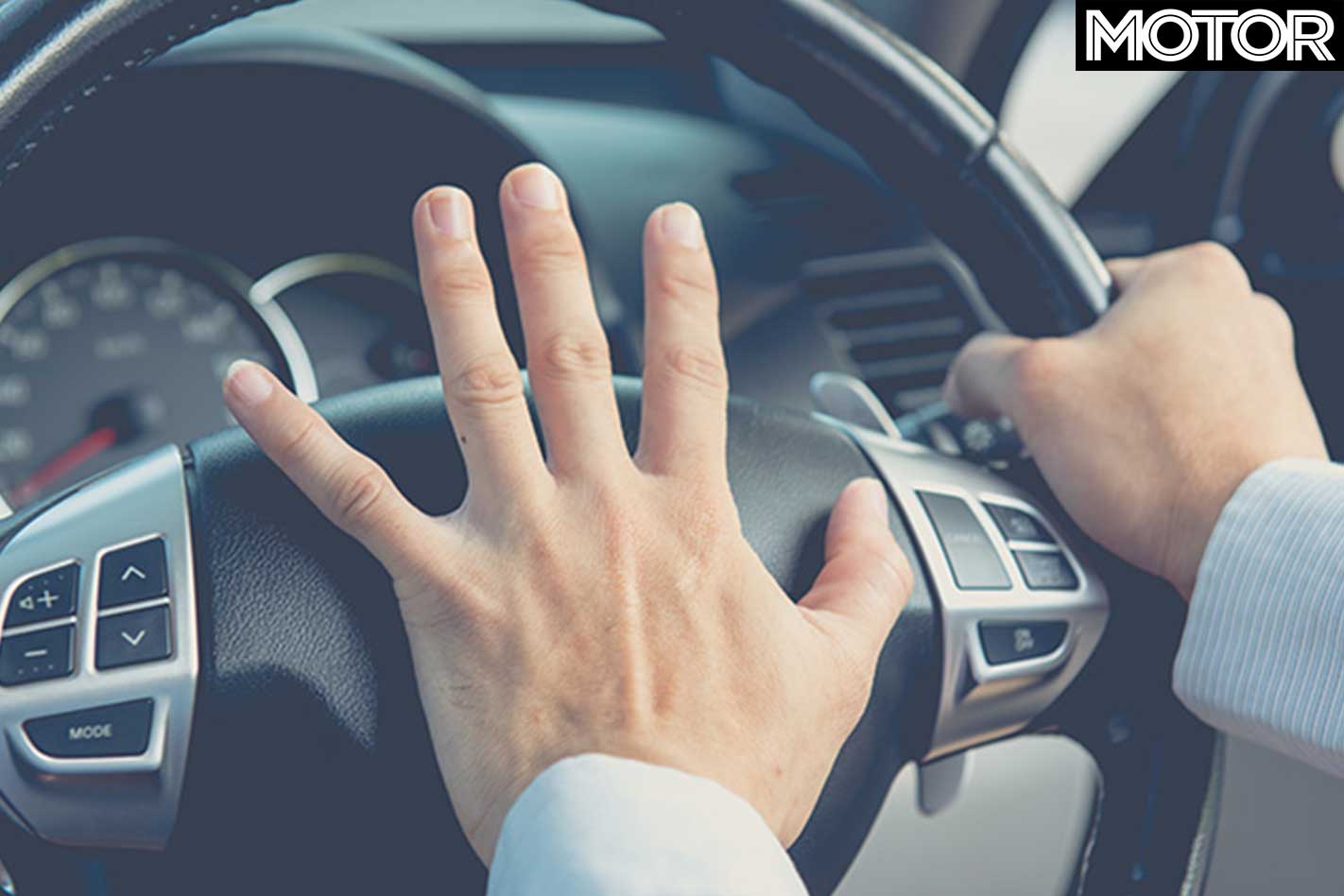
And it all happened because I was having a bad one. Not only that, but it all happened in thirty seconds as I returned to my parked car after a frank and meaningful discussion with my bank manager.
Anyways, my crook knee was playing up at the time (too many F-grade hockey matches and motorbike crashes) so I was slow to get back into the car. More than that, I had the door flung wide open to avoid bending my knee any further than I had to.
Which is when a Territory came around the corner, spotted me dragging my carcass into the car and blasted his horn at me because he had to move slightly closer to the centre-line to get past me without actually slowing down.
Then, not 10 seconds later, I attempted a U-turn to go back to work, but (and an unfamiliar car is no excuse for a bloke who changes cars more often than a meth-head switches doctors) I misjudged things and had to do a three-point turn. And whaddayaknow? Territory-Boy’s brother (I assume) is now coming up behind me.
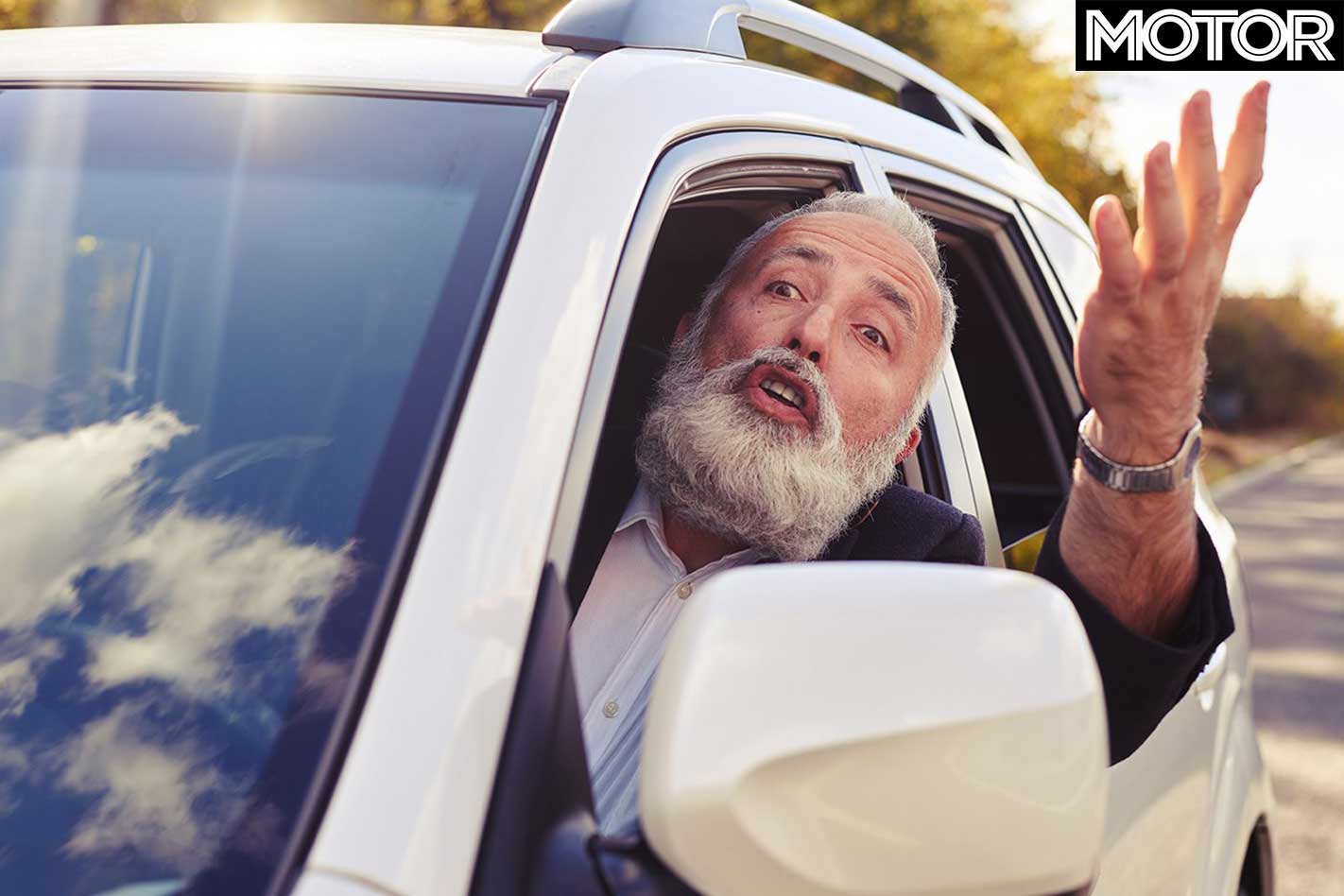
But instead of slowing a bit and going around me as I shuffle the Ds and Rs in the tranny, he flashes his lights and floors the gas, screeching around me with a finger out the window. Nice.
But then it dawns on me, for the last half a minute, I have become THAT guy. You know, the bloke who constantly mis-reads the traffic, doesn’t know the dimensions of his own car and faffs about with his radio volume when the light has already gone green.
But more than that, it made me realise that by driving like an imbecile myself, I had managed to flush out the other half-wits; the ones I usually avoid by not giving them the opportunity to do anything stupid or offensive to me. I had ceased to fly under the Radar of Stupid. Lesson learnt; I won’t be doing that again.
Oh, and my hill-billy neighbour? He miraculously found an excuse to move suburbs. I think he’s shacked-up with my bank manager.
CARBONFIBRE is a composite material comprised of two key ingredients. Fine fibres provide enormous tensile strength and component stiffness, while a resin holds the fibres together and helps form the part’s shape. Since it was invented, manufacturers and material specialists have been increasing the strength of carbonfibre by improving the fibre volume fraction; the ratio of carbon to resin. The more fibres you can squeeze into the component, the stronger it becomes. It’s also more consistent. A void of resin within the material (or even worse – an air bubble) is a weakness, so filling more of the space with fibre also reduces the chance of component failure.
That’s where Lamborghini’s ‘forged’ carbonfibre comes in. Instead of hand-laying many sheets of fibre mat into a mould, which is labour intensive and can introduce defects, a mixture of chopped fibres and resin is forced into a closed mould. The extreme pressure excludes air and excess resin and allows intricately shaped components to be produced.
The Lamborghini Huracan Performante’s spoilers and fins are perhaps the most well-known application of the material, but Lamborghini has also produced prototype suspension arms and even con-rods. The aesthetic difference is immediately obvious. Instead of the trademark woven appearance of traditional carbonfibre, forged carbon has a random fibre arrangement and a unique marbled look.
It’s lighter, stiffer, more reliable, looks cool and it’s driving down the cost of high-tech composite materials. That’s why you’re going to see a lot more forged carbonfibre in many applications, including cars.
Driving further
Golf equipment manufacturer Callaway partnered with Lamborghini to develop forged carbonfibre, and the resulting high-tech clubs took a little Lambo influence for their name too. Callaway says its Diablo Octane drivers will drive a ball eight metres further than the previous model.
Strong connections
With a density one third that of titanium but greater in strength, the potential of forged carbonfibre is obvious. Lamborghini’s next-gen V12 is likely to get forged carbon con-rods; around 50 percent lighter than current steel components. That means lots of revs and big power.
Light show
Forged carbon debuted at the 2010 Paris motor show with the reveal of the Lamborghini Sesto Elemento. Its suspension arms and monocoque used the forged material and the car’s name translates to ‘sixth element’, a reference to the atomic number of carbon.
What is BMW’s iDrive system?
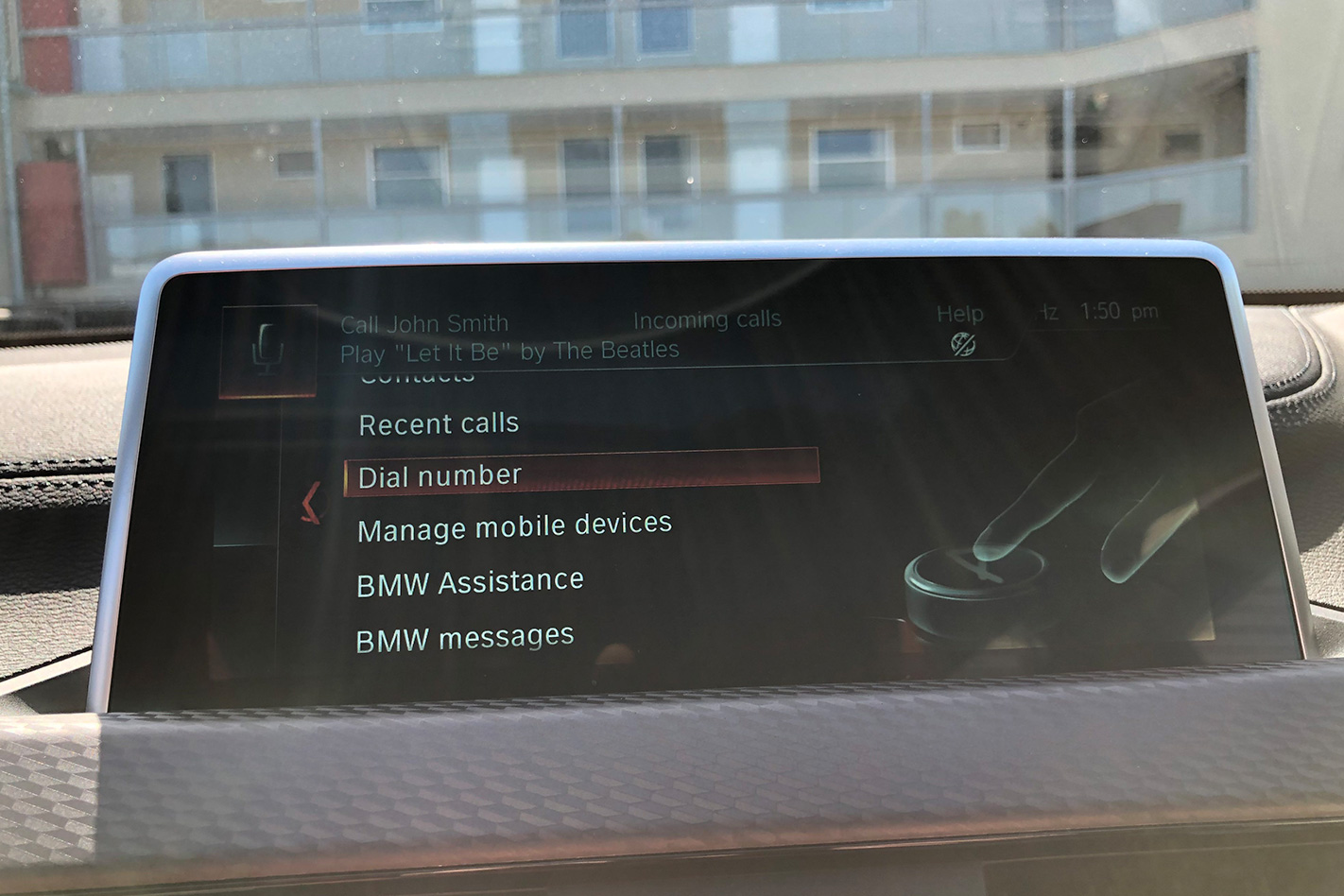
BMW’s iDrive system is it’s home-grown infotainment software that services BMW’s range of vehicles, from the 1 Series small hatch all the way to the 7 Series luxury limousine. It’s used to interact with the car’s secondary computer system, specifically controlling things like radio, navigation, climate controls and communications – basically all the things that aren’t mechanical, though it’ll show you some data on that stuff as well.
How does it work?
The infotainment interface is accessed through a screen housed in the dashboard and controlled using a rotary dial on the centre console, touchscreen or voice activation.
BMW’s iDrive makes use of GPS to provide up to date maps for navigation, an internet connection for weather information and news services and a phone’s Bluetooth connection for auxiliary audio input.
What features does it have?
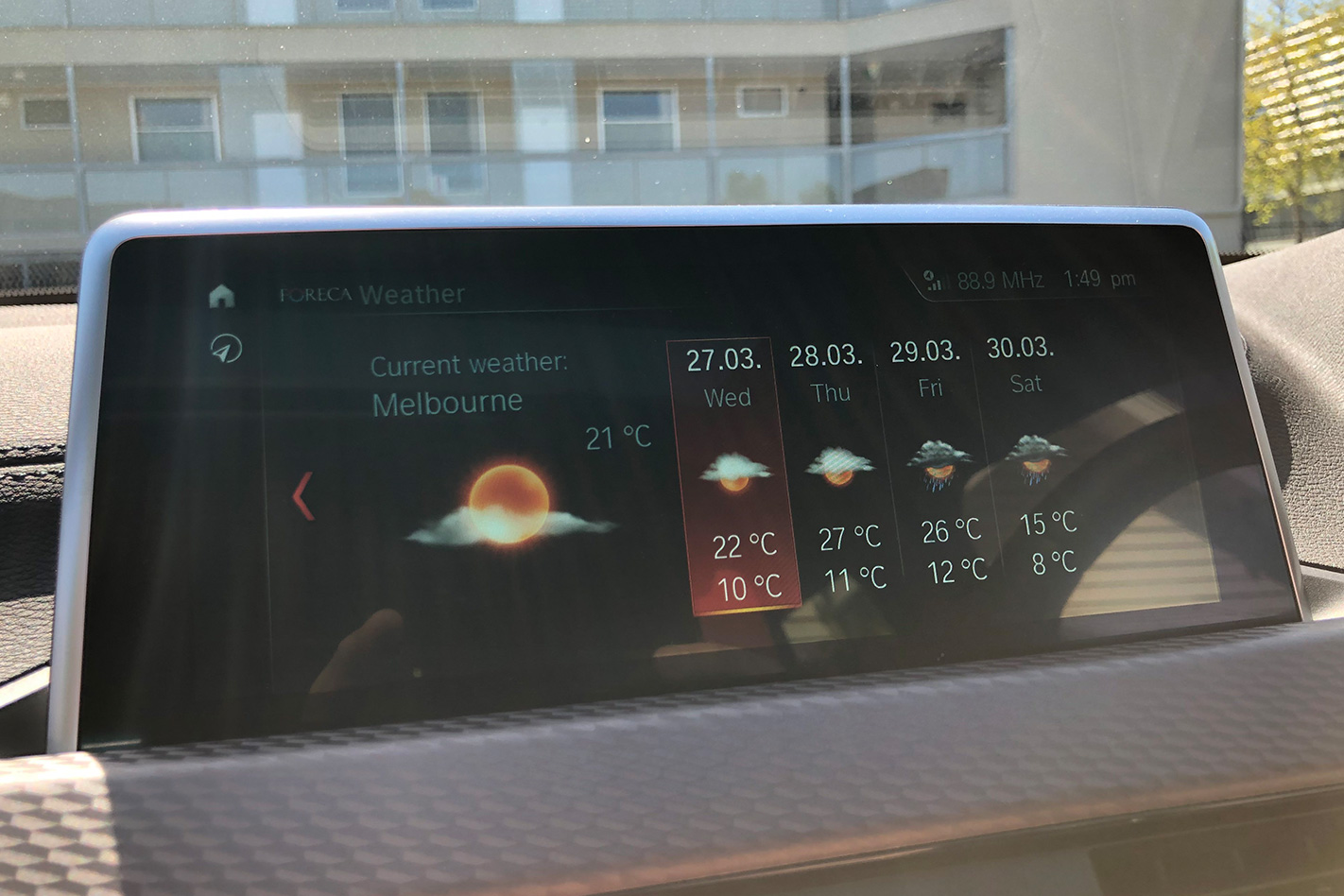
Since its introduction in the 2001 BMW 7 Series, iDrive has progressively gained more functions as newer technology becomes available. Passengers can play music, use turn-by-turn navigation, make voice calls or send voice-activated text messages, as well as access other ‘Connected’ features like weather information and concierge services.
Are there any problems?
BMW’s iDrive is one of the more intuitive and dependable car infotainment systems out there, and rarely has problems in terms of software malfunctions or user errors. Some software issues occurred early on with older systems in 2000s-era BMWs, but these days most bugs have been ironed out. BMW’s infotainment system is now in its 7th generation.
How do you upgrade it and how often?
Updates between iDrive systems are few and far between, and most BMW owners tend not to update the entire units, rather opting to update the maps once every few years. This requires an update that can be done by an authorised BMW workshop.
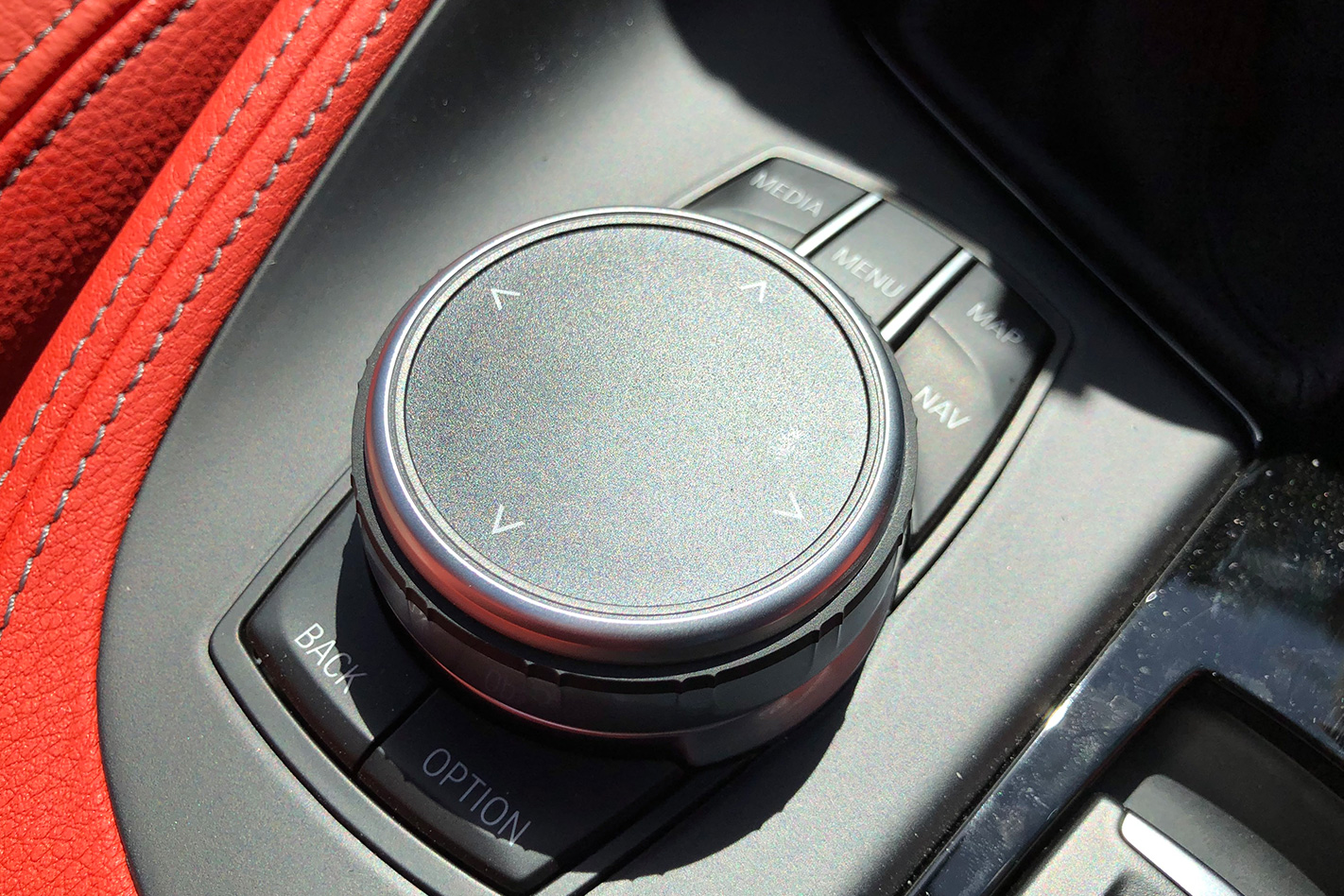
Is the navigation good?
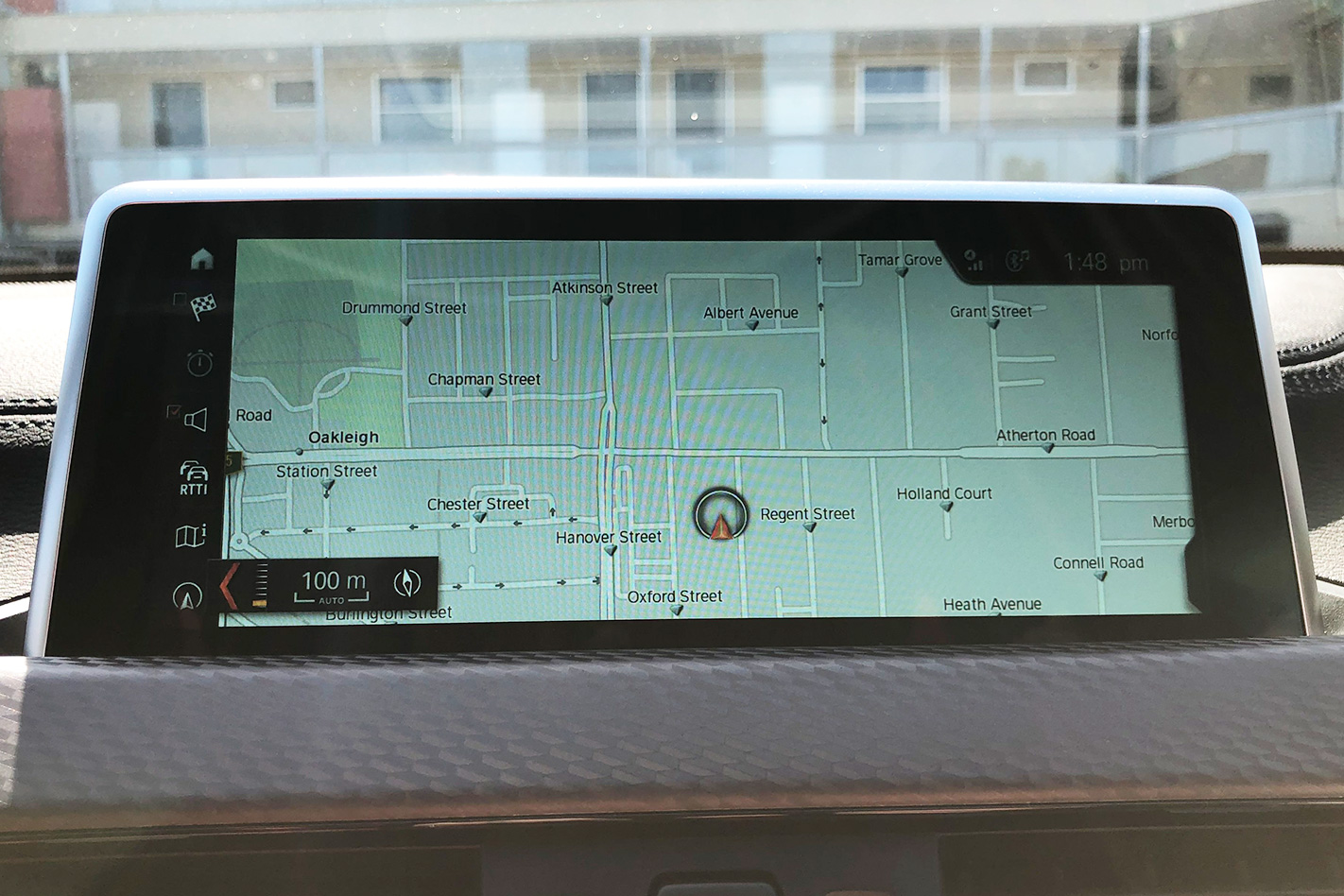
Navigation is one of iDrive’s strong points, with clear and detailed maps paving the way for navigation that includes real-time traffic information. New maps are released yearly, and available from the dealership, but many choose to update their version of maps once every few years as new road networks are created. Navigation can be accessed hands-free too, with voice control allowing accurate comprehension of the intended address without the need to physically interact with iDrive.
With the addition of Apple Carplay, other map options are now available too including Apple Maps, Google Maps, and Waze. These apps are able to provide even more detailed maps and act just like the apps found on your phone.
Which phones is it compatible with?
Phones aren’t strictly necessary to use iDrive, they only enhance the experience through Bluetooth streaming, call functionality, etc. Just about any phone with Bluetooth capability can be used with iDrive, and can be paired to the car in a matter of seconds.
That said, if you have a iPhone you also get the ability to use Apple CarPlay smartphone mirroring on the latest iteration of iDrive – unfortunately Android phone owners are left out in the cold.
Can you download apps?
Apps can be downloaded to iDrive, but more emphasis is placed on proprietary apps like Connected News and Weather rather than third party apps like Spotify or Waze. That said, Apple CarPlay functionality allows for phone apps like Spotify in place of the regular iDrive interface.
iDrive will become a legacy software soon as the latest 2019 BMW 3 Series and X5 use a new system called BMW Cockpit with OS7. Although a new name is involved, the systems remain very similar and iDrive will continue to be supported in the future. Stay tuned to see our review of BMW Cockpit and OS7 technology in the next instalment.
Could it be that we’re starting to lean on the limits of the Ford Coyote 5.0-litre V8 as far as forced induction goes? After thumping the latest Tickford-modified blown pony around, I’m starting to think that might be the case. Here’s why.
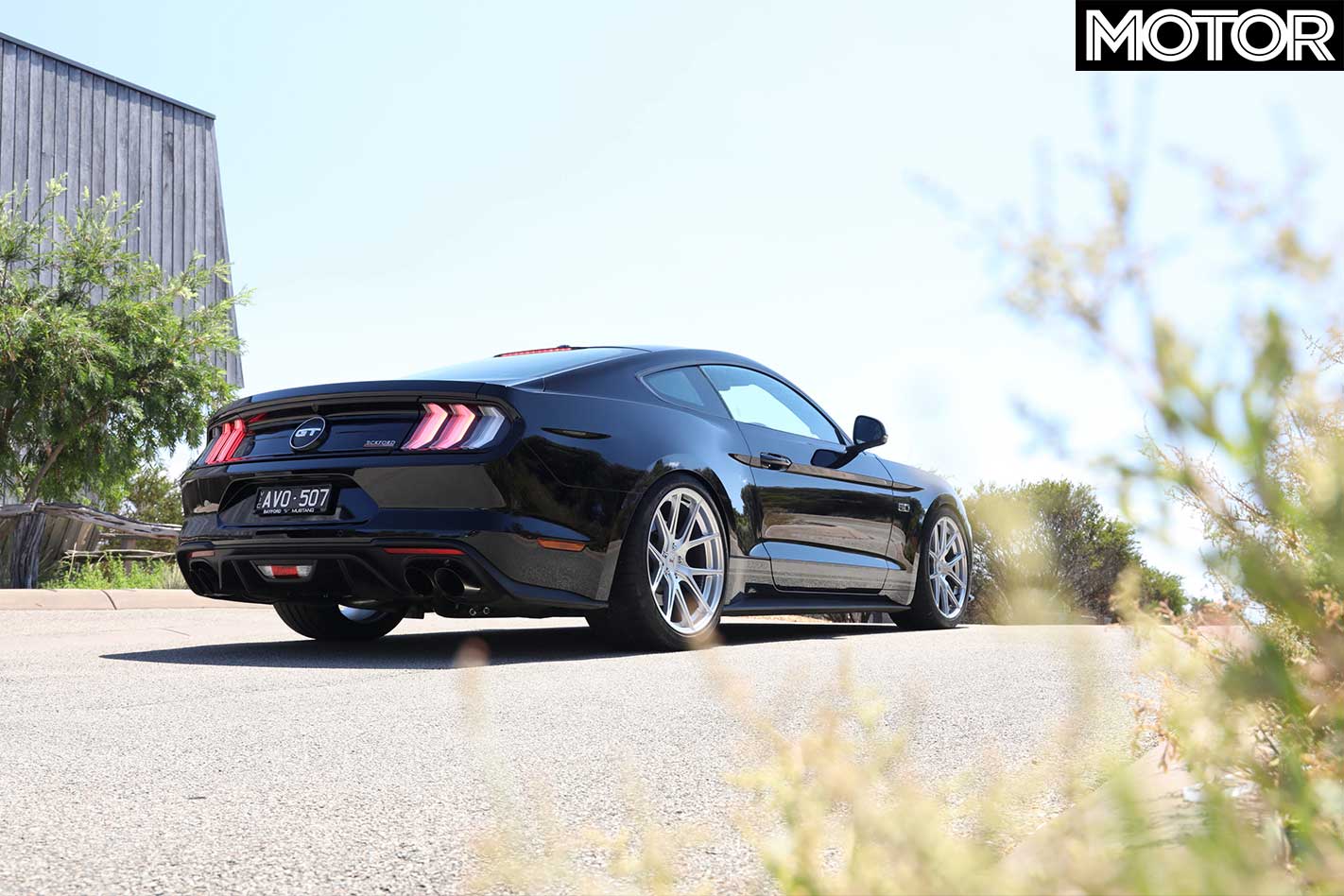
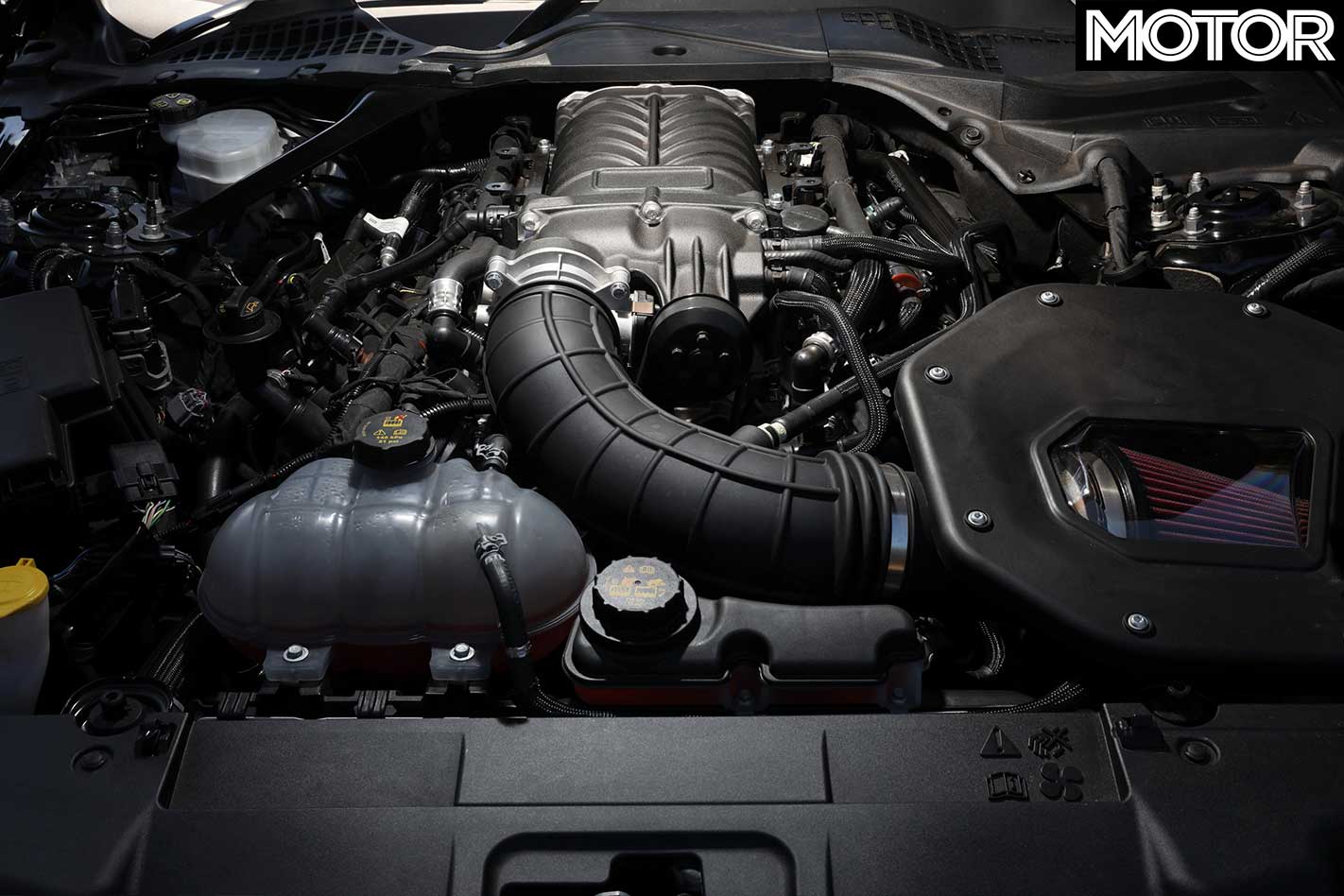
With the latest-gen Coyote, all roads travelled by those of a supercharging disposition have led to the House of Roush (well, most roads, anyway). In the old days, everybody would have their own theories and it’d be dyno-sheets at 10 paces. Not this time; with the budget and the smarts to develop a kit that takes a 339kW Coyote to way beyond 500kW, the Roush hardware seems to have become the go-to set-up. Fair enough.
But here’s where engineering types start biting their nails and the Coyote looks like it might be running out of tuning headroom. By blowing six or seven pounds of boost into a 12:1 compression-ratio V8, you’d have to imagine you’re getting pretty close to the ragged edge in terms of detonation and having the thing eat its own head gaskets out of spite.
Of course, with modern electronics, you can control the boost and take into account a whole slew of factors like combustion-chamber temp, and use that knowledge to adjust stuff like the fuel tables and spark curve to prevent a catastrophic failure.
Which I think is what was going on when I tried to run the Tickford Mustang down the Heathcote hotmix. I drove straight up from Melbourne, strapped the Driftbox to the Ford and clattered down the track for a low 13 (seconds) and a terminal speed of 182-something (km/h). About as fast as a stocker, then. Never mind, we’re still getting the feel of the thing and how to launch it, so let’s have another go.
Only this time, the time went up and the terminal speed went down. Grip didn’t seem to be a problem, but a lack of top-end surge from about 6000rpm onwards sure was. In fact, the engine felt like it was either dumping boost or pulling loads of spark advance out of the picture at that point. Still felt super fit up to six on the tacho, but the last 1500rpm were killing it.
Even accounting for the fact that I might have been having a numpty moment, the terminal speeds the ’Stang was notching up just weren’t the stuff of a potential 11.0-second car. Yet, on the road, that’s exactly how fit the thing felt with heaps of mid-range and boxloads of torque. So what’s going on?
That’s precisely what we asked Tickford later that arvo. The white-coats there gave the car a once over and declared it fit for duty. Nothing wrong with it. So, the only thing I can suggest is that as the cylinder-head temps started to get up a bit after the first run, the ECU stepped in to prevent a melt-down as the revs rose and the boost curve got into its stride.
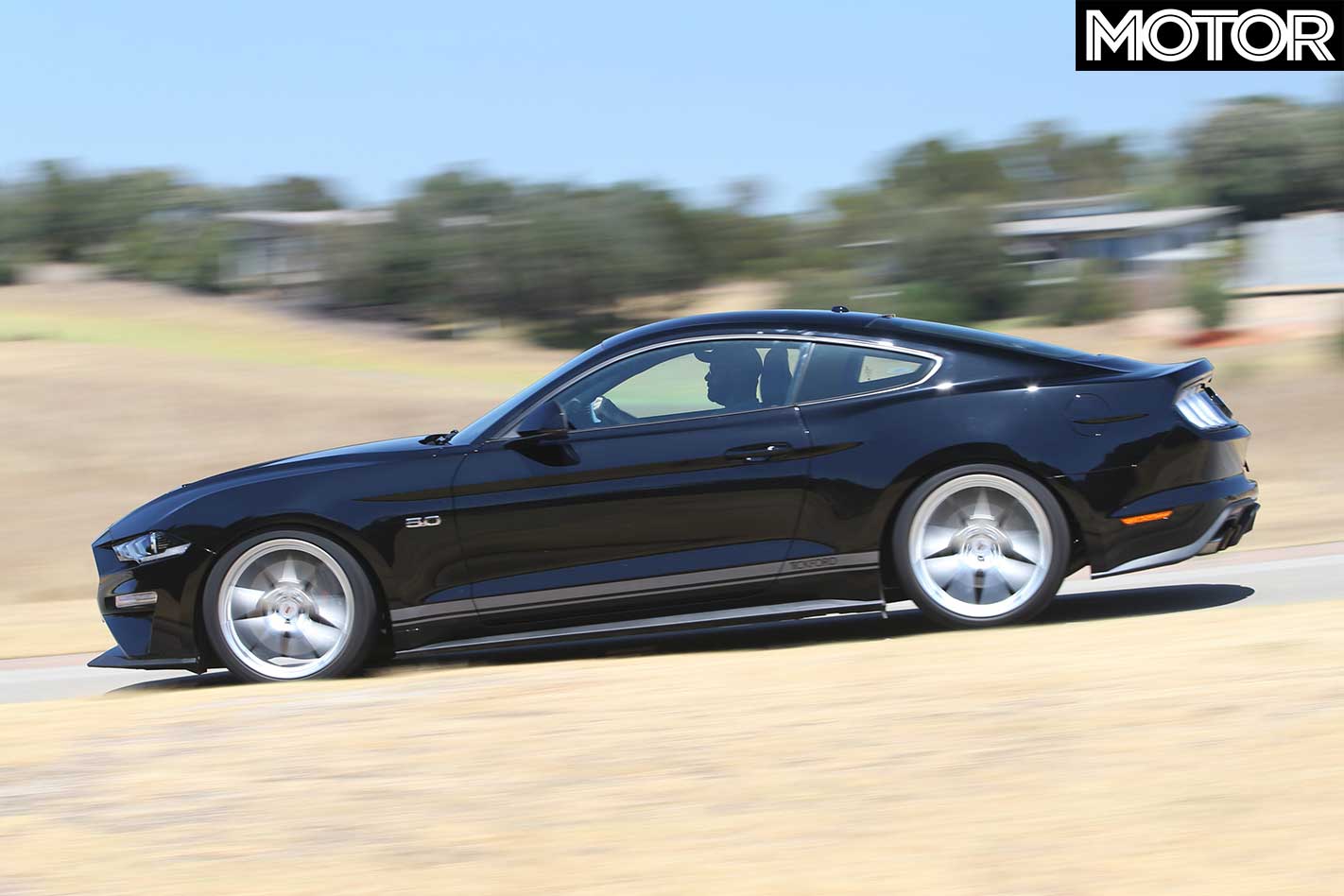
As an owner, you might be pretty chuffed about this. Except that it happened after just one run with an ambient temp of about 17 degrees.
We have a bit of background to this at Motor, too. Previous investigations with a blown Mustang and a dyno have suggested that once cylinder-head temps get above about 105 degrees, the 700-plus-horsepower show is all but over as the brain goes into survival mode.
Again, fair enough, but how mild do conditions have to be before you can rattle off half a dozen passes and get a proper 400m number? Will it do it at all? In the old days, you wouldn’t have dreamed of supercharging a 12:1 engine without decompressing it. Could it be time to revisit that rule of thumb?
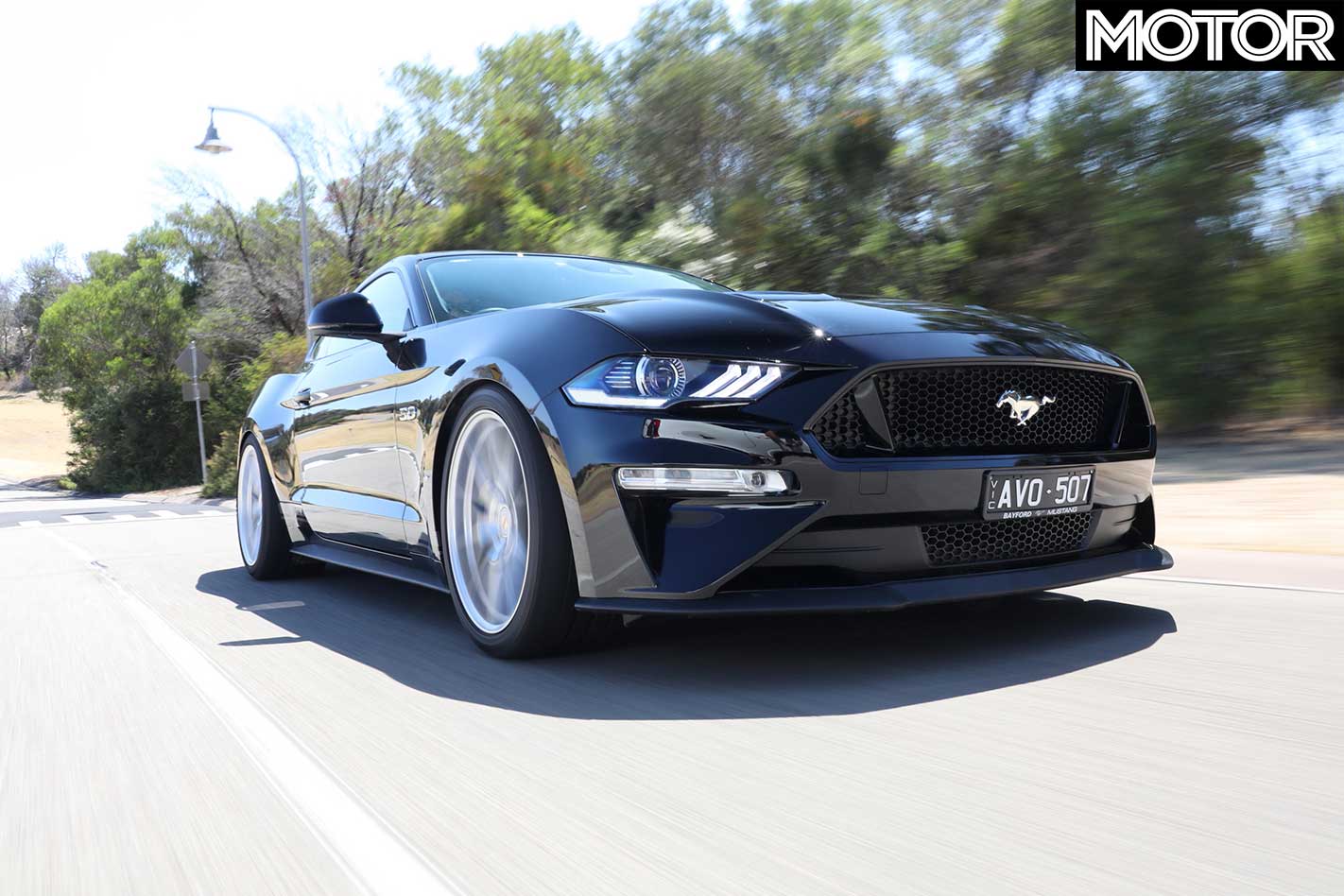
The true shame of it is that this has (otherwise) been my favourite MY19 Mustang yet. In the real world where the head-temps don’t go feral, this particular car was a total sweetheart. And that starts in an area where this particular package raises the bar for blown ’Stangs – the subject of driveability. Specifically in the way the engine and throttle are mapped.
Previous Roush-blown ’Stangs we’ve sampled recently have all had their share of foibles in this regard mainly in the form of a stutter or gurgle on light throttle at low revs. We’ve flagged it and while it’s been acknowledged, the strict terms of use from Roush Inc have meant that any fiddling of the tune is verboten.
The usual answer was that the factory was aware of it and was constantly issuing flash upgrades which would be applied to customers’ cars gratis. Fair enough, but does the glitch have to be there in first place? Seems not, because in the Tickford-Roush installation the problems simply do not exist. At all.
This has been such an issue, the first thing I did once the ’Stang was warmed up was to drop it into a tall gear and accelerate gently from just-off-idle revs – the exact circumstances that produced the staggers in every other Roush Mustang I’ve sat in. Now, either Tickford knows something that no other Ford tuner does, or Roush has revisited and fixed the electronic tune. Who knows. Who cares? But it’s sorted.
As such, what you get is a throttle and tip-in response that feels totally natural. And that’s a huge part of the experience in something with so much grunt as this as where part-throttle is a major part of life (unless you’re keen on fireside chats with Constable Unstable).
It’s also a factor given the overall tractability of the MY19 Coyote which, despite the 7500rpm redline, is otherwise happy at 1000rpm and sits on just 1600rpm at a legal 100km/h. And thanks to the blower-torque, you won’t need to backshift for hills. This is a fat curve, kids.
The one thing the ECU upgrades haven’t fixed is the general uselessness of the launch control program. And because launch only works with the traction-nannies engaged, it’s constantly kicking the sunshine out of the bugger at the smallest flare-up from the 295 Contis. It also seems you need to switch off both traction and ESP to get the thing to burnout.
The other highlight with the Tickford is the suspension which, after all, is the other thing that’s going to define the car if you use it daily. The gear itself is German-made H&R (and, from the website, appears to be made in a big shed behind a ginger-bread house in rural Chermany) and consists of coilovers replacing the stock ’Stang’s MacPherson struts and a specific coil and shock at the rear for a 25mm ride-height reduction. Gawd, it’s lovely.
Okay, so I reckon the springs are still a bit on the firm side in the way they pick up and amplify expansion joints, but the way the springs and dampers are matched, and integrated, stamps the set-up as the biz.
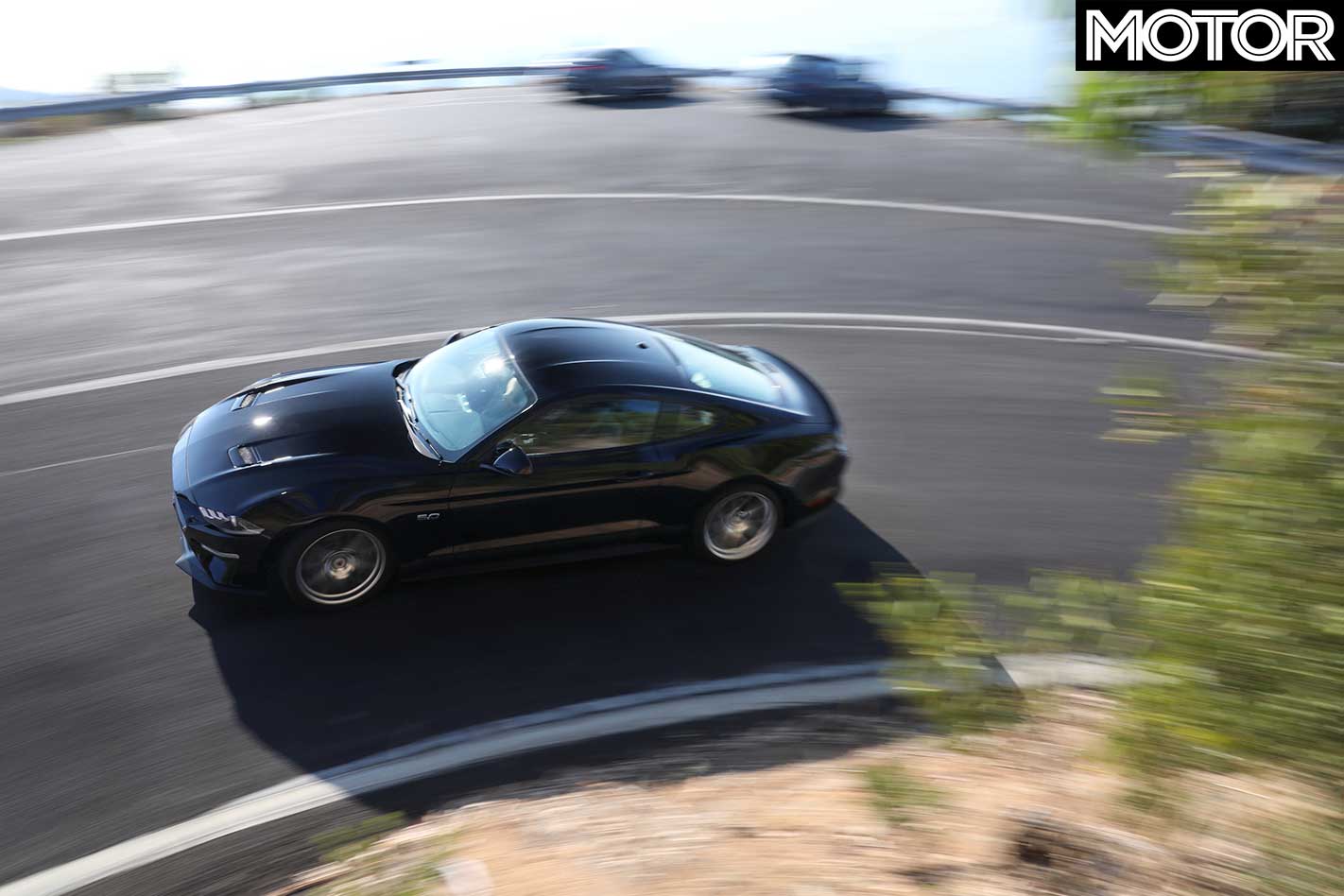
The level of control also means the Mustang is now a more planted gadget and better able to cover ground at higher velocities. It still has the direct steering feel, but that Dude-where’s-my-castor dartiness is gone, replaced by a confidence born of competence. Here is a Mustang where driving faster is, simply, driving faster, not braver. The only downside is that you lose the adjustable damping of the various drive modes. Live with it, okay.
The rest of the package also makes me think this is a particularly sweet example of the Mustang breed. The clutch is light and the shifter for the six-speed, despite being completely stock, is accurate, sharp, smooth and, frankly, the best Mustang gearstick I’ve ever hauled on.
The diff seems tighter in this car, too, and you need to be a bit wary of turning out of driveways where you can sometimes hear a bit of clanking from the rear axle, usually followed by a chirp.
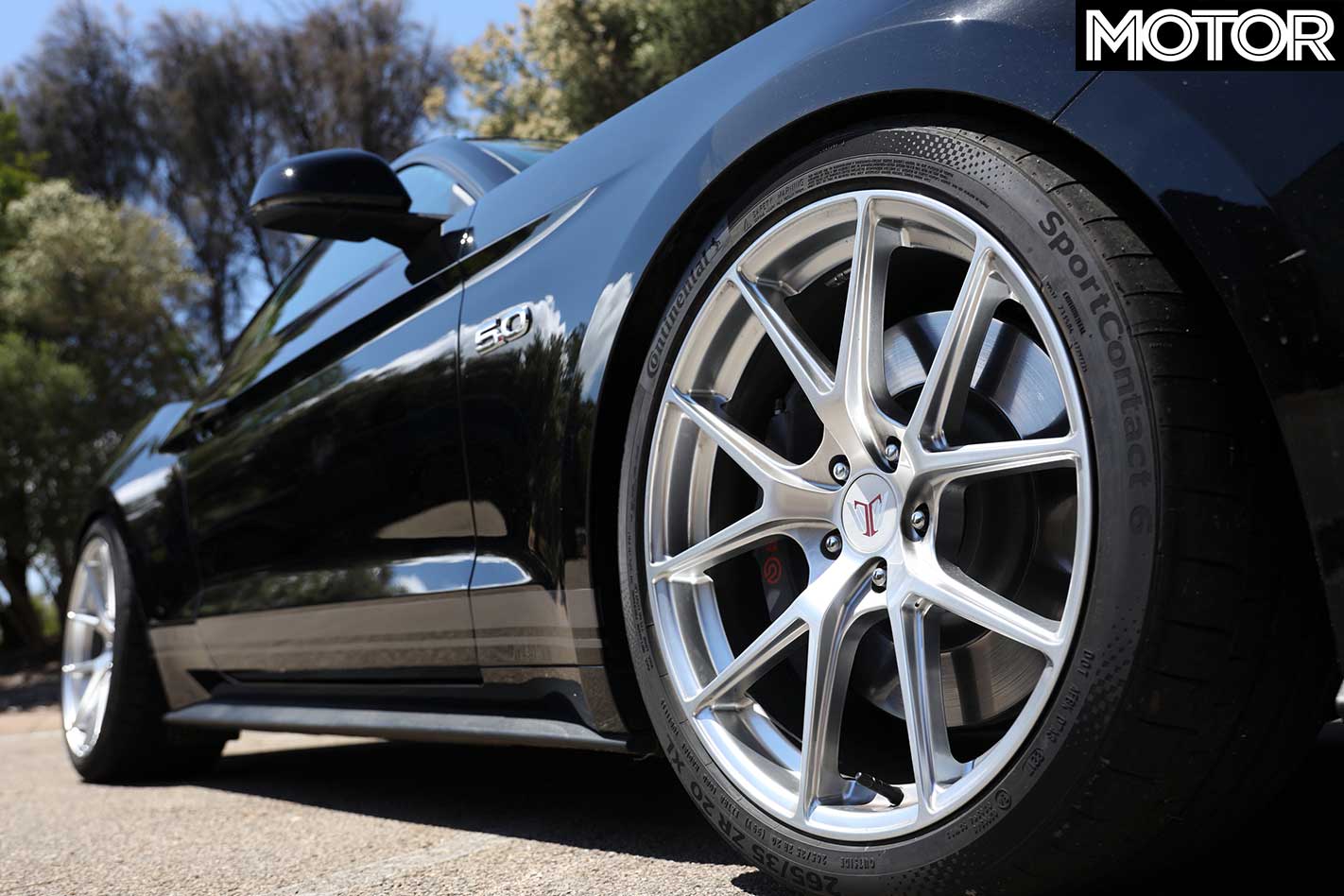
The grip equation is further enhanced by the Conti SportContact6s fitted to this car in a hearty 265/35 ZR20 and 295/30 ZR20 fitment on Tickford-specific alloys (described as semi-forged, whatever that means). And when you jump on the picks, you realise just how good the stock Mustang front six-potters are, with great initial bite and plenty of stopping power. Again, this car felt like the best of its breed in the anchors department, those big tyres helping for sure.
Inside, well, we all know that the MY19 ’Stang is a big step up from the old girl, but a few things still annoy me. The start button looks like it came in a Christmas bon-bon, the park-brake lever is on the far side of the console (although at least it’s not an e-brake) and the cheap looking toggles only toggle one way. But the rest is on-brand in a making-Merca-great-again kind of way.
I really like this car, I do. In so many ways, it’s the best Mustang I’ve driven. But if Tickford reckons it aint broke, yet it can’t run the low-12sec it feels like it should be able to, I’m just left wondering about the point of the whole exercise.
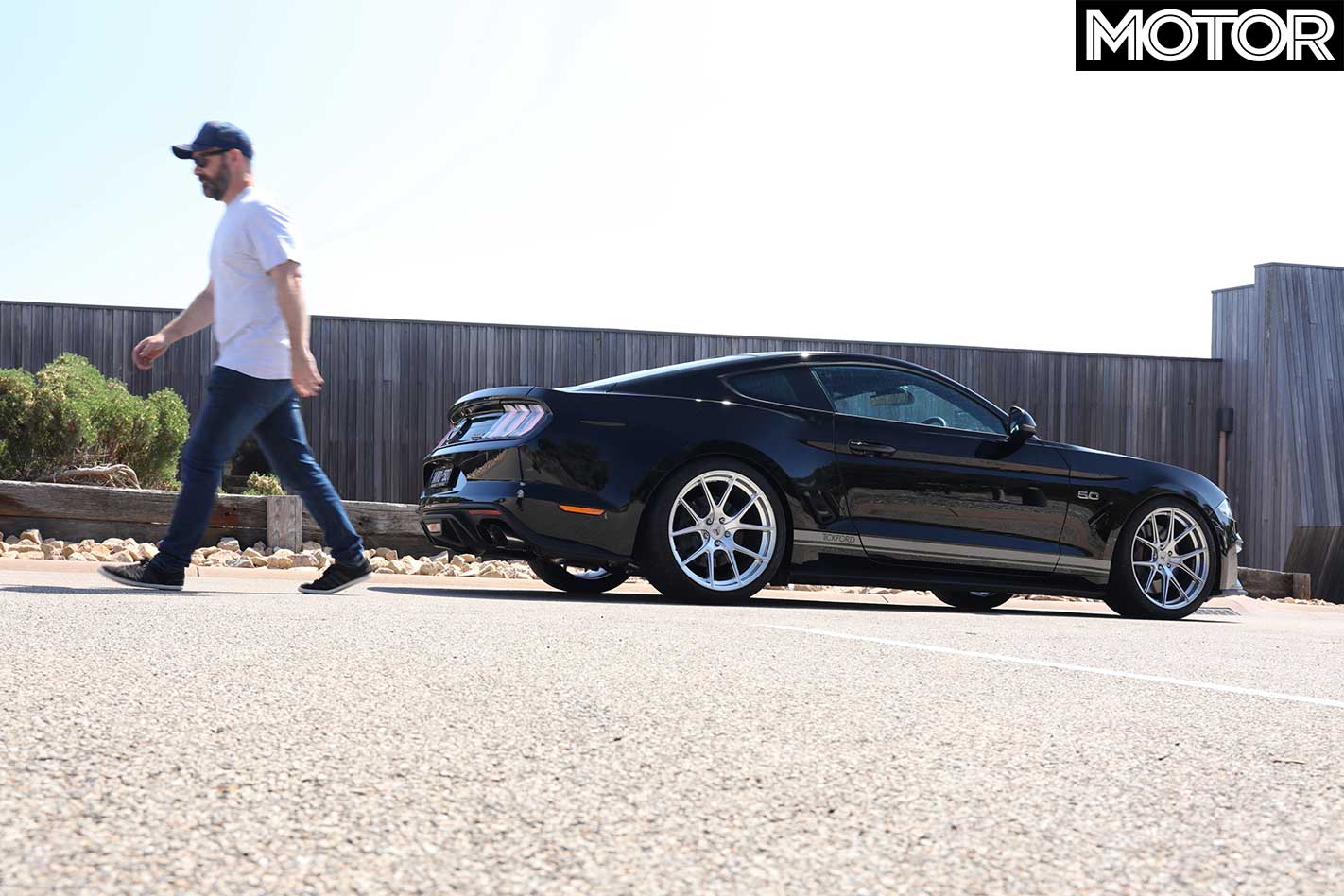
I don’t want to have to wait for a sub-zero winter’s day and then be locked into nailing my quarter mile at the first attempt before the tune goes all wonky on me.
What I need to see is a series of dyno runs, one after the other, with no fall-off in performance to be convinced that my hard-earned thousands are being well spent.
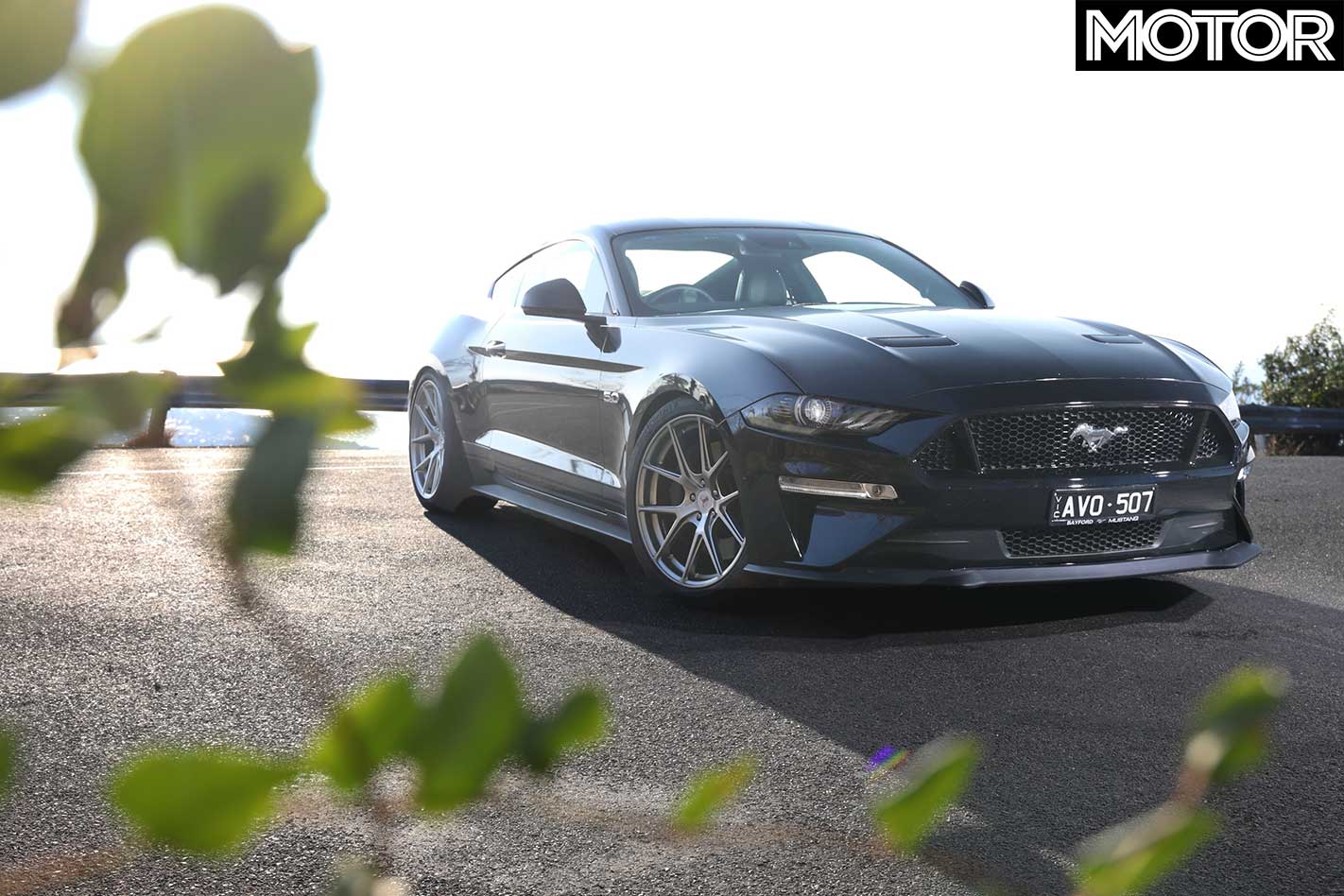
FAST FACTS 2019 Tickford Ford Mustang GT BODY: 2-door, 4-seat coupe DRIVE: rear-wheel ENGINE: 5038cc V8, DOHC, 32v, supercharged BORE/STROKE: 93.0 x 92.7mm COMPRESSION: 12.0:1 POWER: 530kW @ 7250rpm TORQUE: 827Nm @ 4500rpm WEIGHT: 1785kg POWER-TO-WEIGHT: 297kW/tonne TRANSMISSION: 6-speed manual SUSPENSION: struts, coil springs, dampers, anti-roll bar (f); multi-links, coil springs, dampers, anti-roll bar (r) L/W/h: 4789/1916/1387mm WHEELBASE: 2720mm STEERING: electrically assisted rack-and-pinion BRAKES: 380mm slotted, two-piece rotors, 6-piston calipers (f); 330mm slotted, two-piece rotors, single-piston calipers (r) WHEELS: 20.0 x 9.5-inch (f); 20.0 x 11.0-inch (r) TYRES: Continental SportContact 6; 265/35 ZR20 (f); 295/30 ZR20 (r) PRICE: $90,300 (as tested)
PROS: Sweetest, most balanced blown ’Stang yet; value CONS: Wasn’t giving up the numbers down the strip RATING: 3.5 out of 5 stars
The Strip
| Tickford Ford Mustang GT | |
| 0-10km/h | 0.40sec |
| 0-20km/h | 0.89sec |
| 0-30km/h | 1.41sec |
| 0-40km/h | 1.86sec |
| 0-50km/h | 2.35sec |
| 0-60km/h | 2.84sec |
| 0-70km/h | 3.31sec |
| 0-80km/h | 4.26sec |
| 0-90km/h | 4.78sec |
| 0-100km/h | 5.31sec |
| 0-110km/h | 5.90sec |
| 0-120km/h | 6.56sec |
| 0-130km/h | 7.55sec |
| 0-140km/h | 8.41sec |
| 0-150km/h | 9.26sec |
| 0-160km/h | 10.18sec |
| 0-170km/h | 11.36sec |
| 0-180km/h | 12.94sec |
| 0-400m | 13.15sec @ 181.09km/h |
| 80-120km/h | 3.0sec |
| 100-0km/h | 35.20m |
| Speed in gears | |
| 1st | 85km/h @ 7400rpm |
| 2nd | 131km/h @ 7400rpm |
| 3rd | 194km/h @ 7400rpm |
| 4th | 250km/h @ 6700rpm* |
| 5th | 250km/h @ 5430rpm* |
| 6th | 250km/h @ 4150rpm* |
Heathcote Dragway, 17˚C, dry. Driver: Scott Newman *Manufacturer’s claim
How Tickford makes 530kW
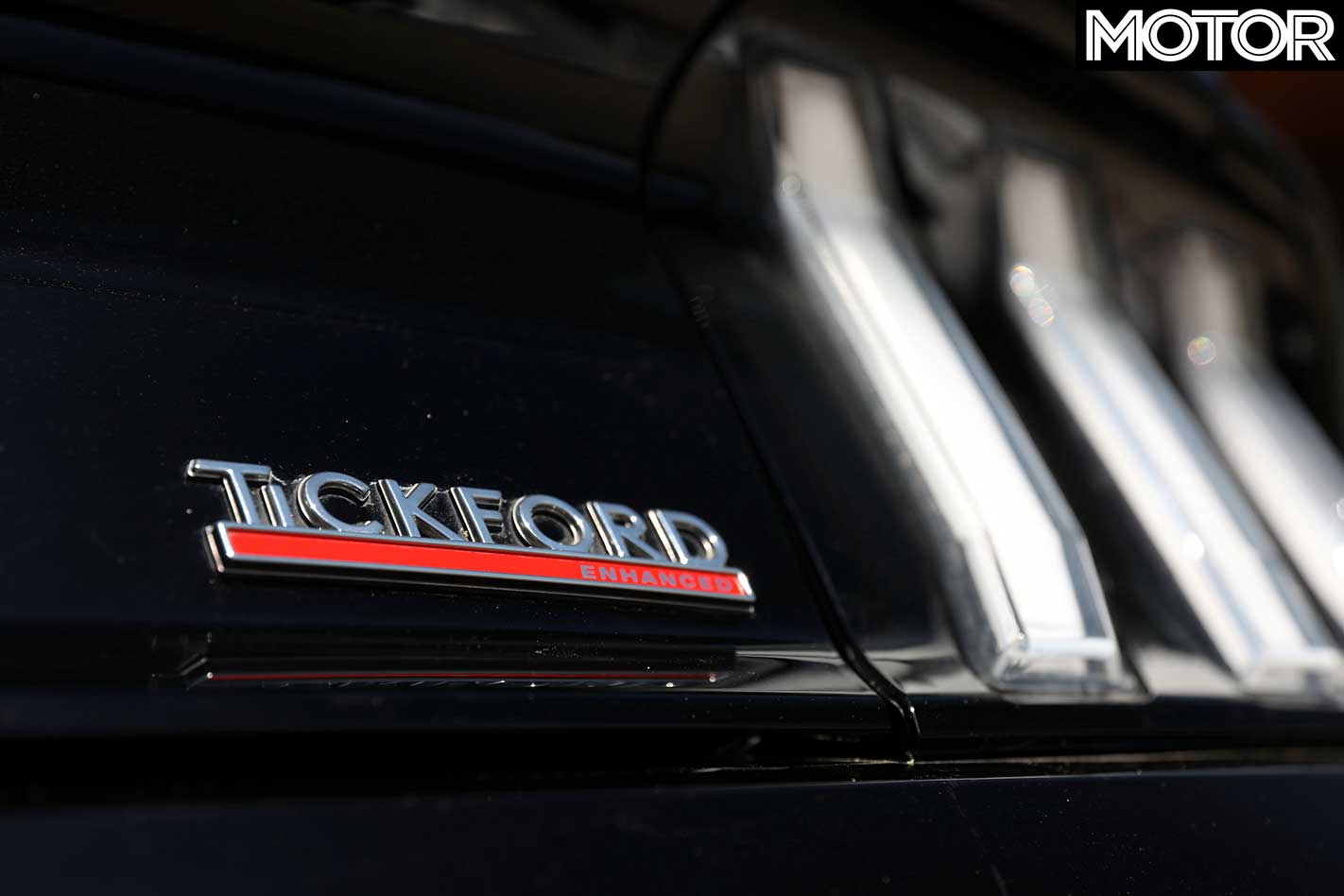
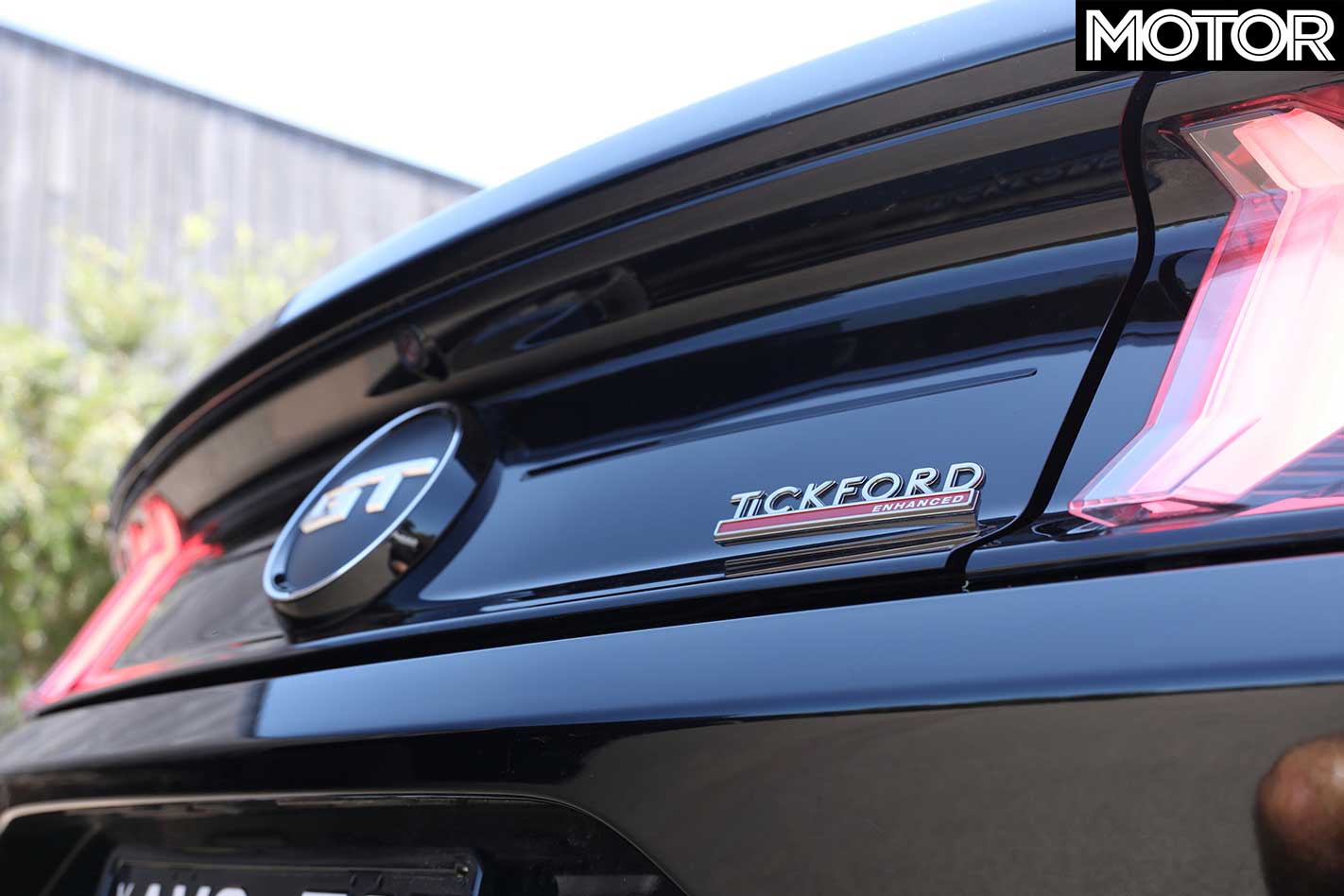
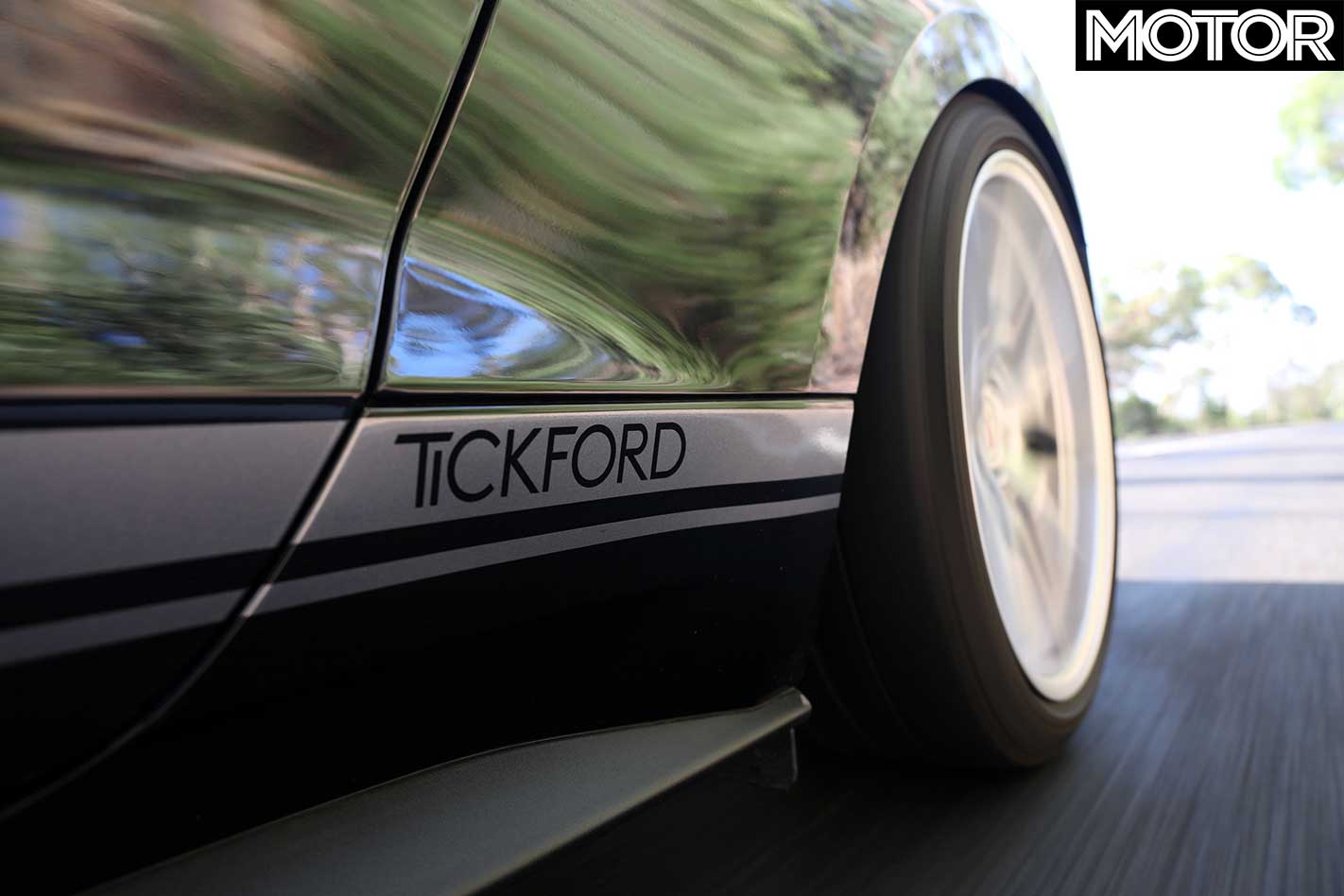
Whether you opt for the cosmetic add-ons here at $825 for the stripes (the build-plate and Tickford-modified decal comes standard) is a matter for the individual, but the aspect that has Mustang fans licking their lips is – as usual – the blower kit. That starts with the latest spec 2.3-litre Roush twin-screw and extends to that all-important ECU calibration and tune.
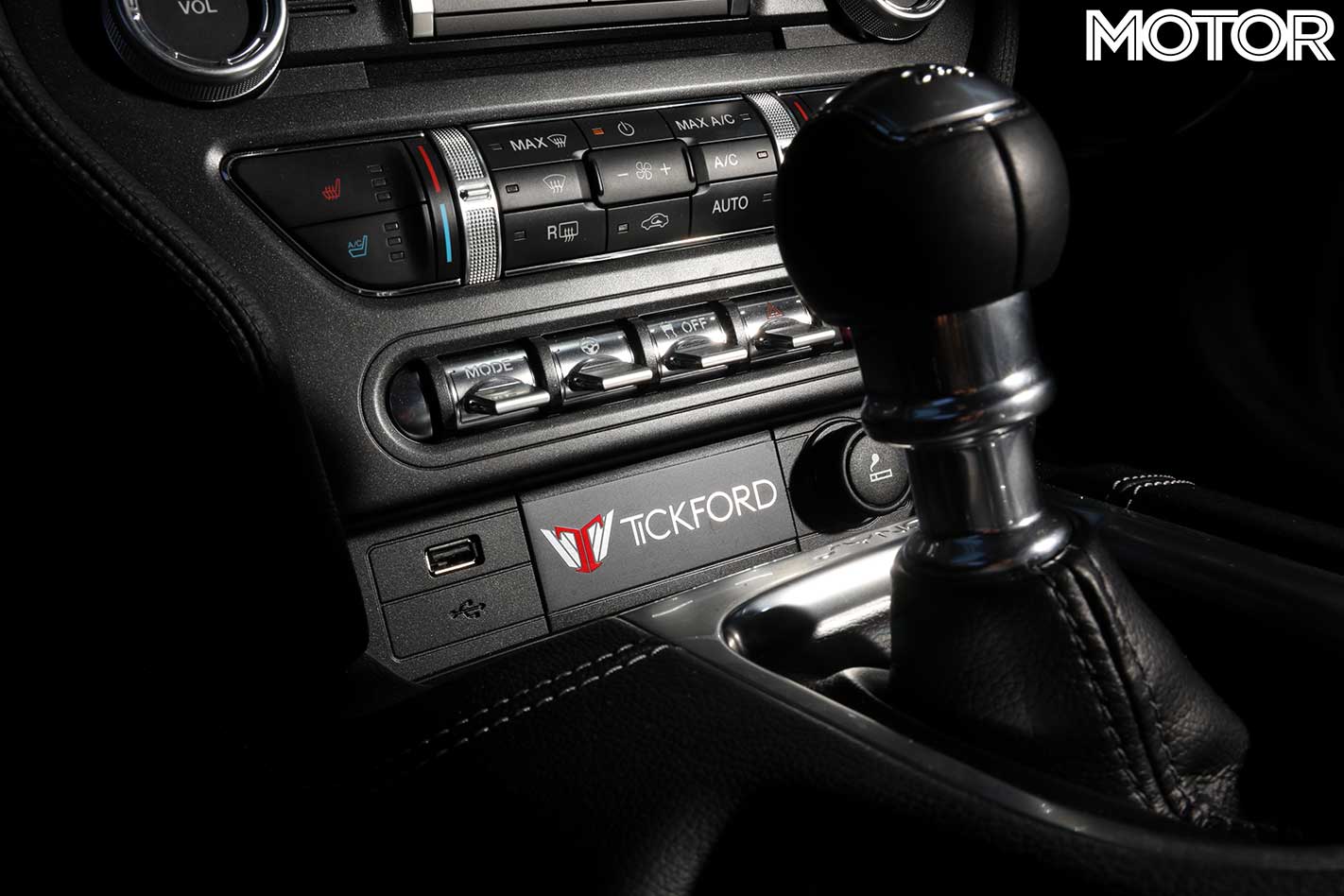
Further supporting the theory that heat might be the enemy here, the Tickford package includes a more efficient radiator and an air-to-water intercooler. The intercooler also features its own, self-contained cooling system, so it isn’t adding to the engine temps via the radiator. A low-restriction air-filter is housed under a see-through panel on the air-box and Tickford quotes a kit-fitting time of two days – drive-in, drive-out.
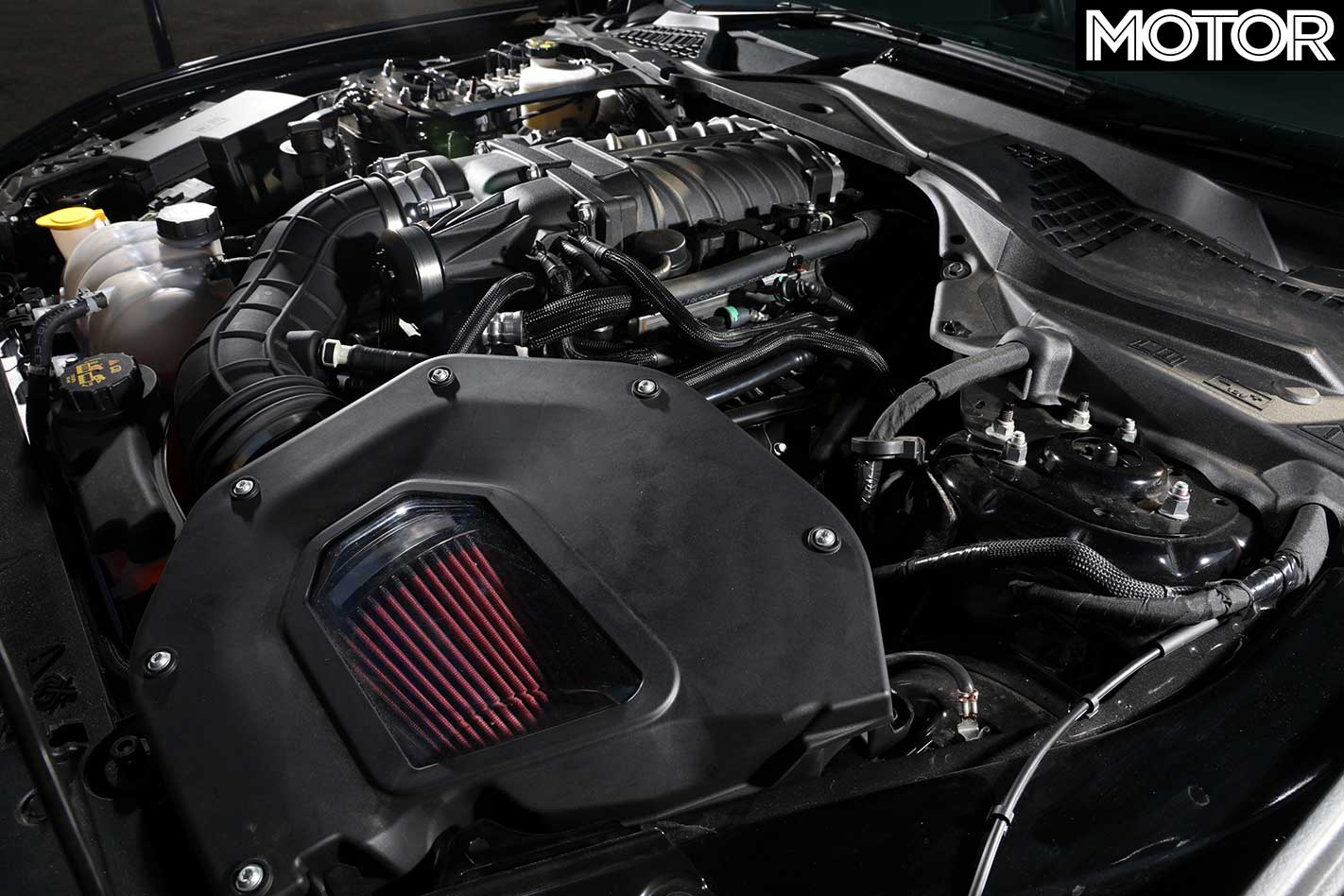
It’s all yours for $17,995 fitted, while the suspension and tyres and other stuff is on top of that. The 9.5 x 11.0-inch wheels and tyres are $4500, but you can spend a bit more and go for a seven-spoke design in 9.0 x 11-inch size.
Law of diminishing returns must kick in here somewhere. And the suspension will rush you $3990 fitted which, to me, seems like the bargain of the century and would be the first box I’d tick, even before I’d made up my mind about the supercharger and the conditions it seems to impose on the V8 coupe.
Up to 40 Takata airbag-equipped cars in Western Australia have been refused registration, as the search for the deadly ‘alpha’ Takata airbags ratchets up.
The bans come in the wake of an intensive blitz to capture and eliminate the last remaining cars on Australian roads still equipped with early-model – and incredibly volatile – Takata airbags.
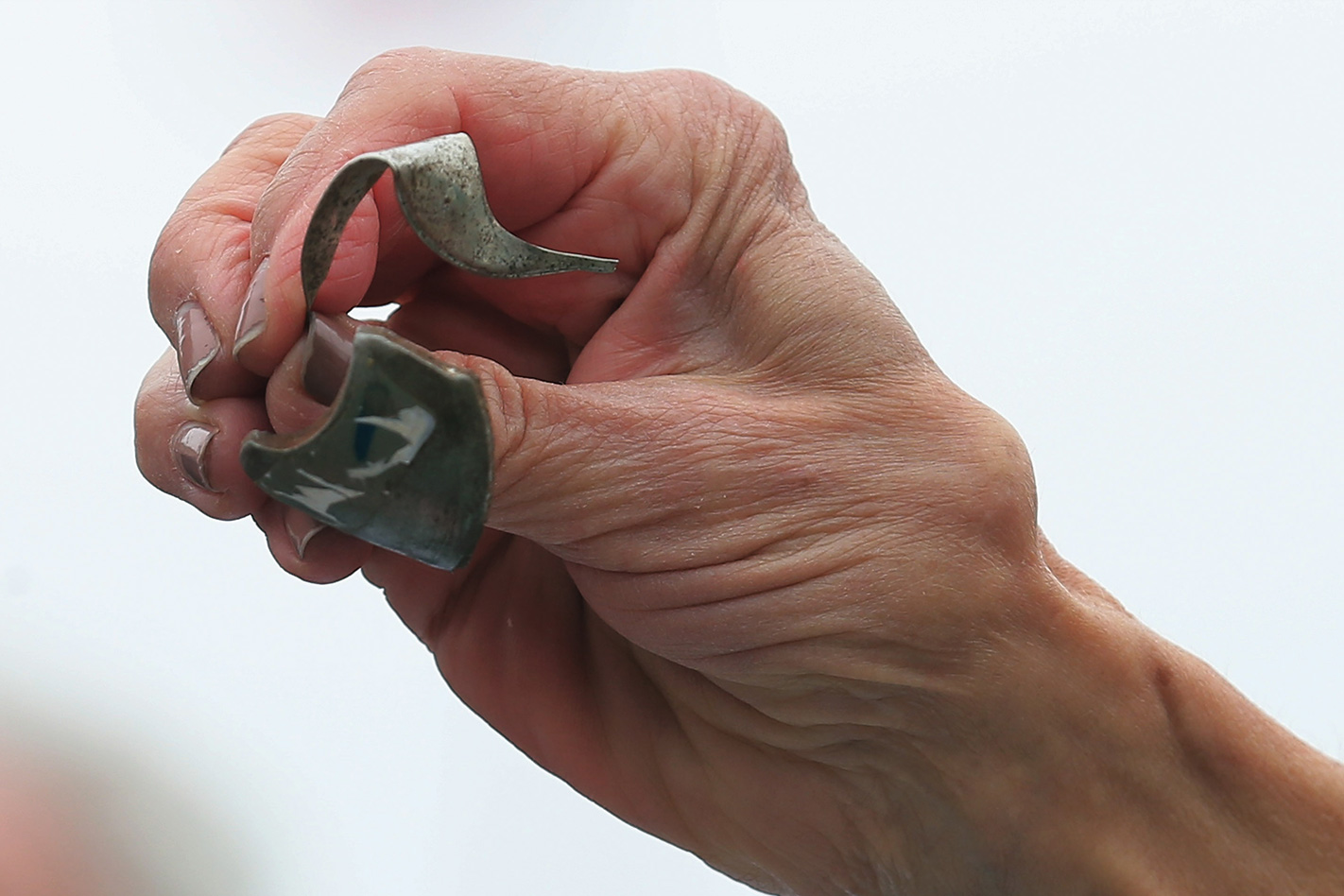
A piece of Takata shrapnel
The Western Australian action comes after that state’s Department of Transport sent letters to 190 registered owners of cars on the national recall list, warning them the cars would be deregistered.
With 66 compliances after the first letter, a second letter netted a further 28. Of the remaining 96, more than 40 registrations have been refused registration.
“Given the serious dangers that Alpha airbags pose, the department has now taken the step of cancelling the vehicle licence of affected vehicles,” a spokesperson from the department said.
The department also claims it is the first in Australia to actually cancel registrations, even though NSW, South Australia and Queensland have made provisions within their own transport departments to do so.
However, Victoria remains the only standout state, with car companies lashing authorities for prioritising revenue over safety.
Of key importance is finding the last remaining so-called alpha airbags. The propellant within these bags – which is also used in military missiles as fuel – is now so unstable, the uncontrolled explosion can rip apart the metal ignition barrel, firing shards of metal at subsonic speeds into the face and torso of the driver or passenger.
It is responsible for two deaths in Australia and more than 23 overseas. A driver of a 2002 Honda Civic was killed in Arizona only last week, according to reports.
The car company said that 12 letters were sent and 20 phone calls were made to the car’s original owner about the recall, before the car was sold to the victim.
Car companies including Holden, Ford, Toyota, Mazda, Nissan, Mercedes-Benz, Volkswagen and many more have spent millions of dollars and thousands of hours in tracking down cars fitted with the faulty airbags in Australia.
Vehicle owners can easily check the status of their cars on www.ismyairbagsafe.com.au website or by texting TAKATA to 0487247224 to check the recall status.
Haven’t checked if your car is affected yet?
Visit https://ismyairbagsafe.com.au/ now!
JUST the idea of Alpe d’Huez broke Pascal Simon. Some 35 years ago, the last Peugeot rider to ever wear the leader’s yellow jersey in the Tour de France pedalled towards the foot of the most mythical climb in this most magical bike race, pictured the 21 hairpin bends snaking up into the heavens in front of him, stepped off his little bicycle and quit.
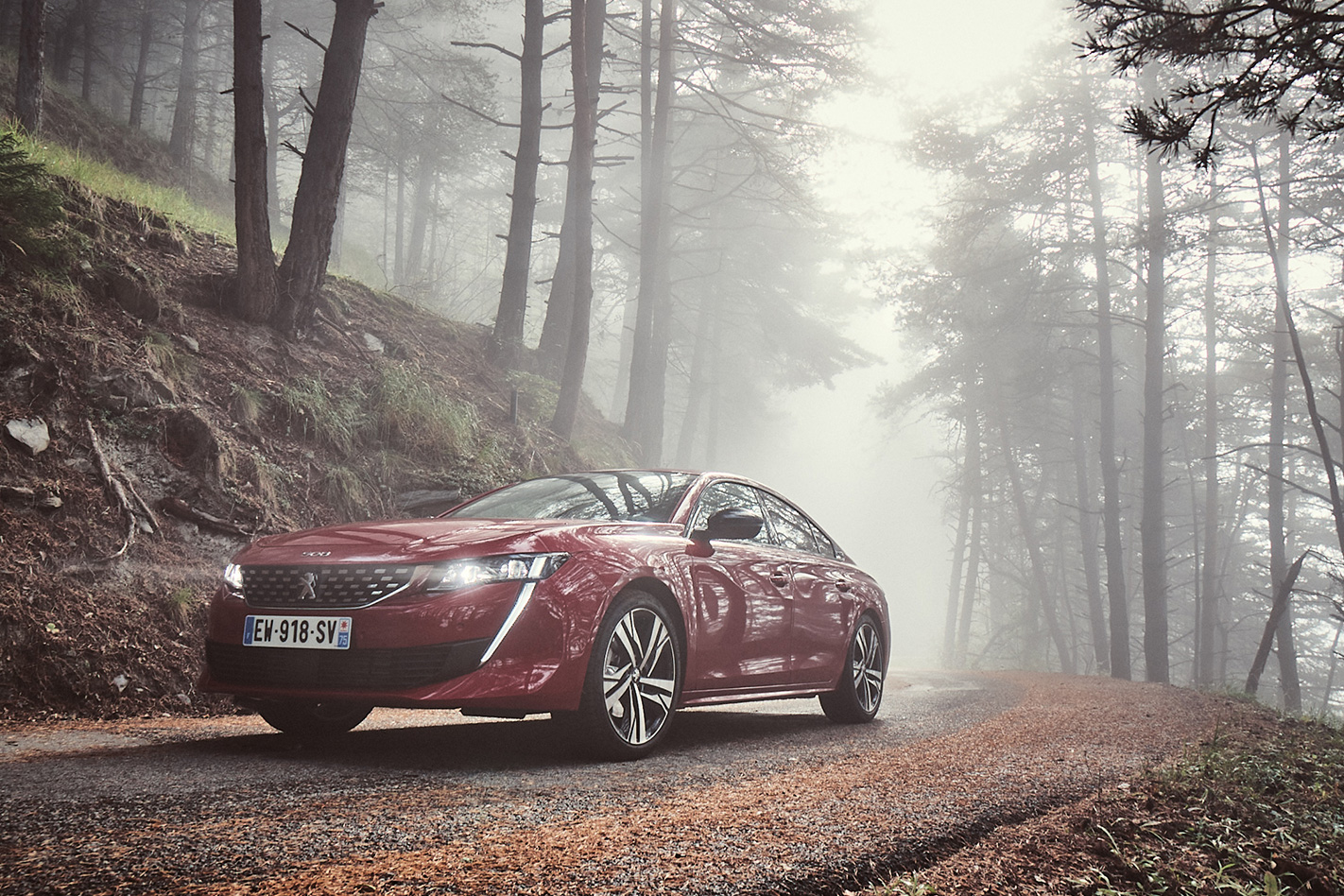
Injury and the relentless pressure from the eventual winner, Laurent Fignon, undoubtedly contributed to his withdrawal, but there’s something about Alpe d’Huez; pro cycling’s hallowed cathedral of climbs. Three and a half decades on, we’re at the Alpe with a pair of Peugeots (one of them with just two wheels) and a point to prove.
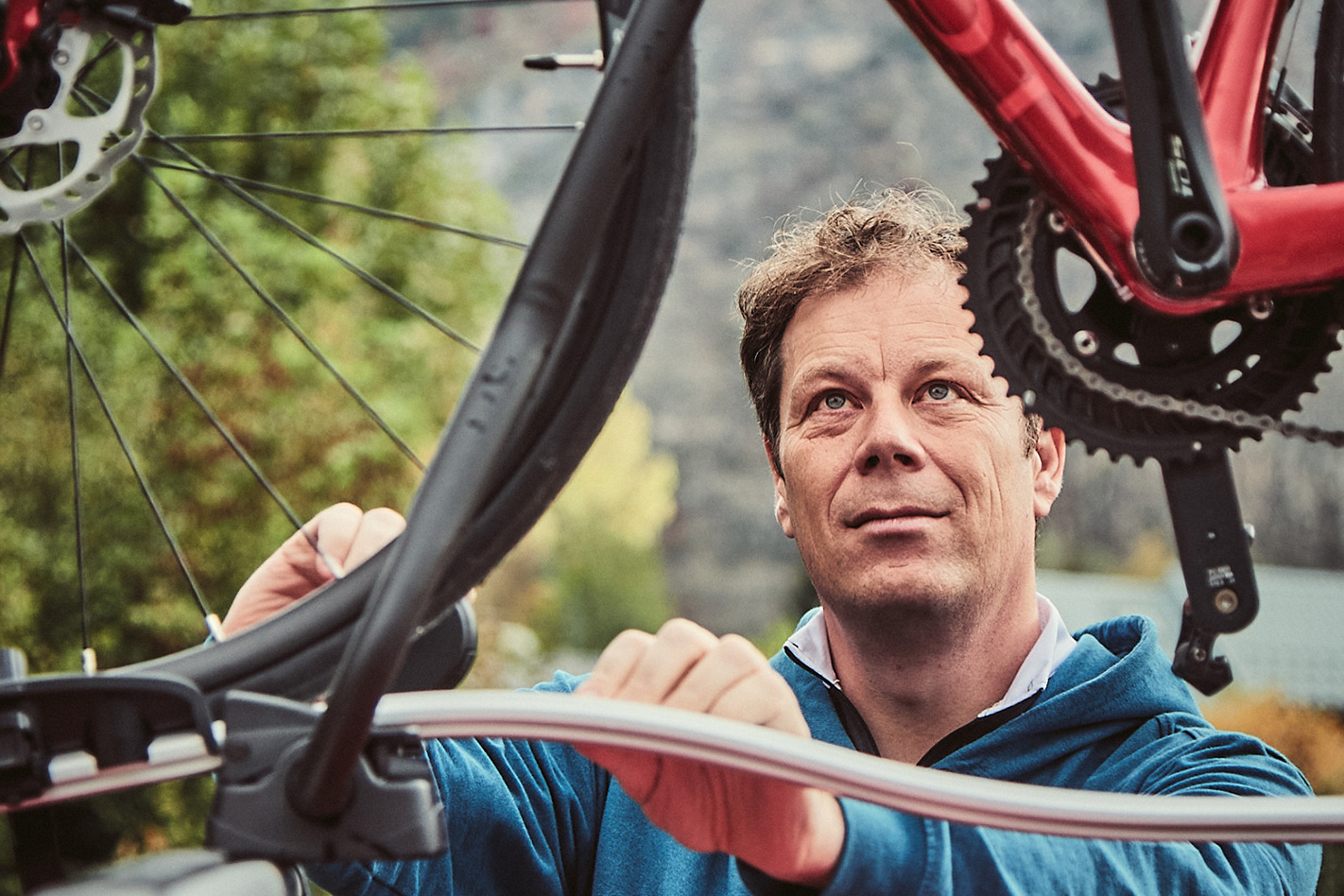
A few points, come to think of it. We’ve covered the 600km from Paris to the Oisans region of the French Alps in Peugeot’s 508 GT. An extended autoroute leg stretcher followed by a workout on these magnificent mountain roads ought to be enough to establish whether this marks a much-needed reset of the datum for the mid-range sedan. On board is four grand’s worth of carbon-framed Peugeot R02 road bike that I’m going to attempt to ride up Alpe d’Huez, prefaced by precisely zero training.
The 508’s launch could be construed as either brave or foolhardy, depending on your viewpoint. Just at that point when the market is migrating to the blurred niches of crossover hell, Peugeot brings us a defiantly conventional top-end-of-mainstream sedan and wagon. Ever see one of those Attenborough documentaries with fish flapping desperately in an evaporating puddle? That’s where the 508’s attempting to survive.
2019 Peugeot 508 wagon revealed
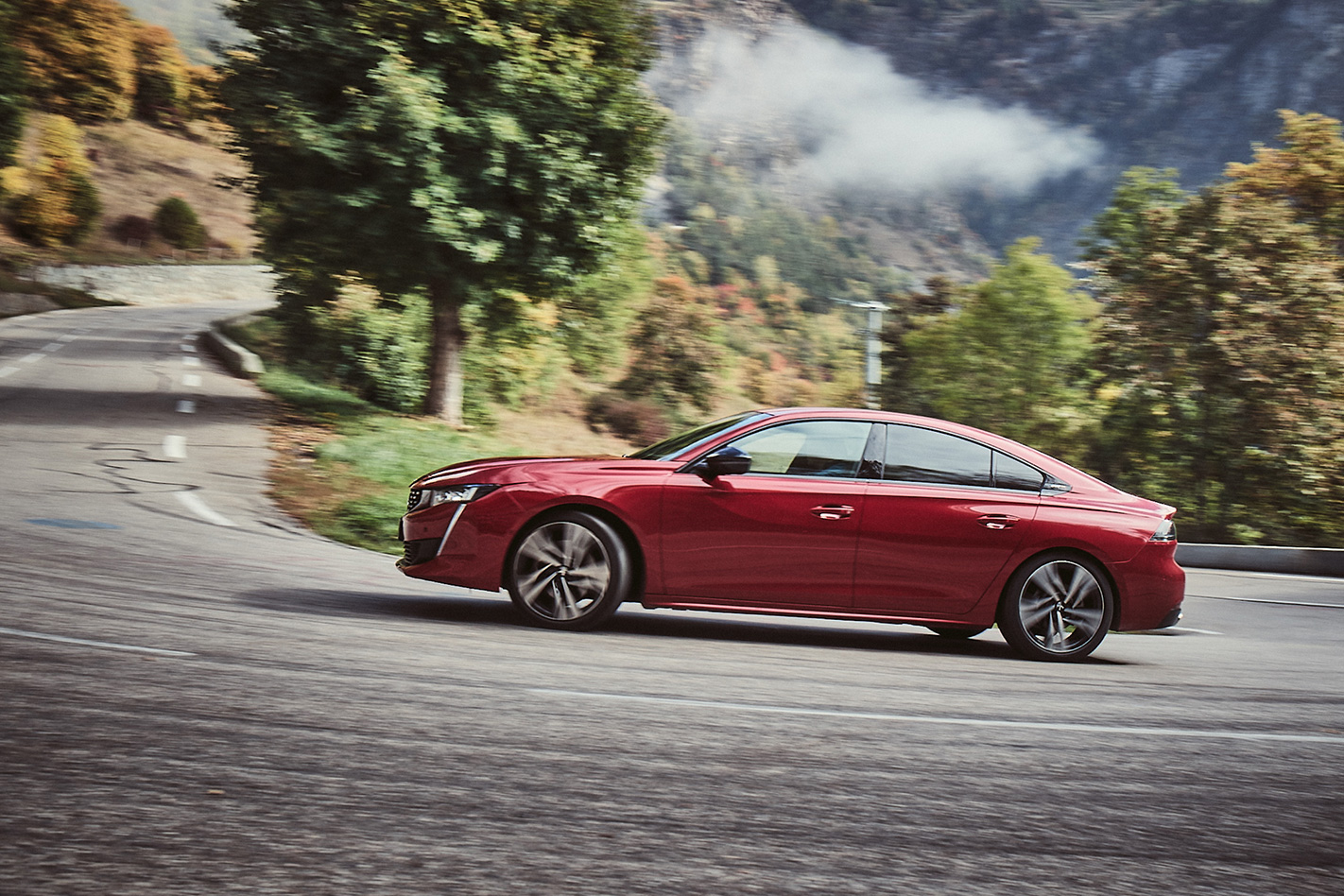
It’s sharper and fitter than its amorphous predecessor, with slick EMP2 underpinnings making it light on its feet. Power comes from a 169kW 1.6-litre four, driving the front wheels through an eight-speed Aisin auto, but tasked with just 1420kg in this GT model, it feels alert and peppy. With solid active cruise and lane-keep functions, a decent Focal stereo and adaptive suspension, it monstered the autoroute leg, with only some wind rustle from the roof bars reminding me why the 8.0L/100km fuel-economy figure wasn’t quite as expected.
Recce time. Watch the heli footage of Alpe d’Huez packed with a million spectators in July and the road looks like all of the Alps encapsulated into one mountain, cycling’s Maracana climbing over a thousand metres straight up. Down at ground level, it’s a far more cryptic undertaking, rarely ever straight, melding to the folds, rills and cliff bands of this mountain’s complex topography. There’s no warm-up, either. The road arrives from the almost pan-flat Romanche valley and launches straight into one of the most savage gradients on the entire climb. I’m shocked. It’s like a wall. Alpe d’Huez has been haunting me for weeks as I plot a method of getting to the top. This chilling introduction has me wondering if I’ve hopelessly underestimated the physical challenge.
The 508 yelps up this first stretch, which meanders endlessly to the first hairpin. A plaque attached to the rock face is numbered 21, with the names of past stage winners here. This one features Fausto Coppi, who won what was the Tour’s first mountain-top finish in 1953, and Lance Armstrong, who prevailed in the midst of EPO-era 2001.
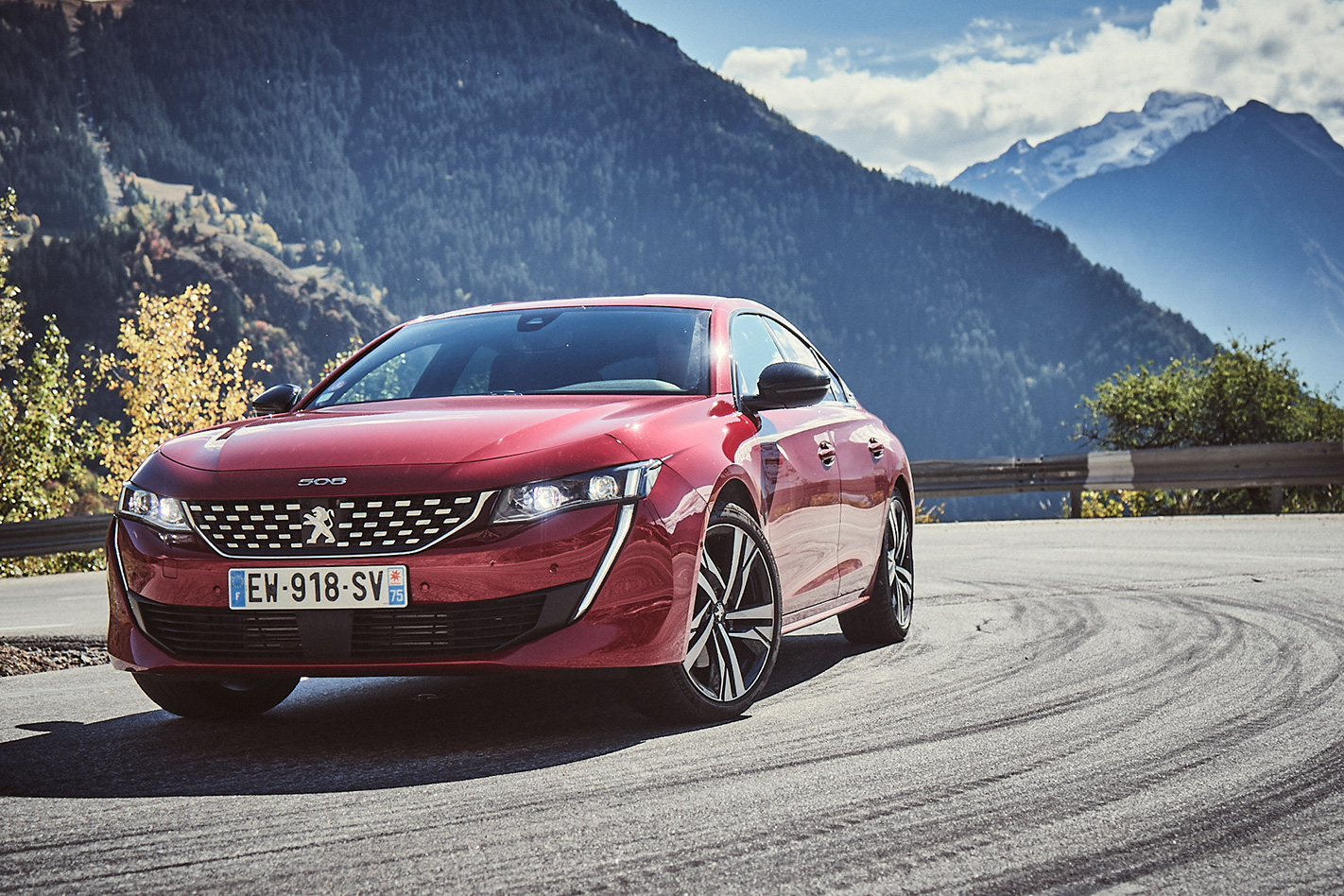
The second pitch is hardly any easier, and nor is the third or fourth. The gradient seems to ease off a little at the hamlet of La Garde, before stepping up again on the approach to the seventh switchback, the famous Dutch Corner, which, during the race, is a roiling sea of orange around Saint Ferreol church. Above the old silver-mining village of Huez, the mountain opens into pastureland, with the chalets of the ski resort clinging to the plateau above, the road here climbing to nearly 14 percent.
The Peugeot loves diving into each hairpin hard on the picks as you look over your shoulder up the road, taking great liberties with your line and figuring out how to unstick a front end that’s hot-hatch tenacious. Use the paddles, switch the car into Sport and it lets you pick up the throttle early, leaning on a power-to-weight ratio that, at 119kW/tonne, is probably more warm hatch than hot, but still enough for a presentable 7.3sec to 100km/h. Just not on this gradient. It holds onto gears manically in this mode and, unlike the 5008, there’s no manual button atop the gear lever, that function now being hopelessly buried in the infotainment.
I reach the top and quickly come to the conclusion that there are few places more depressing than an out-of-season ski resort. It’s deserted. Rain starts to fall on the road back down as it darkens. By the time I reach the valley, Alpe d’Huez village is an off-world neon glow in the nimbostratus overhead. I’m not encouraged.
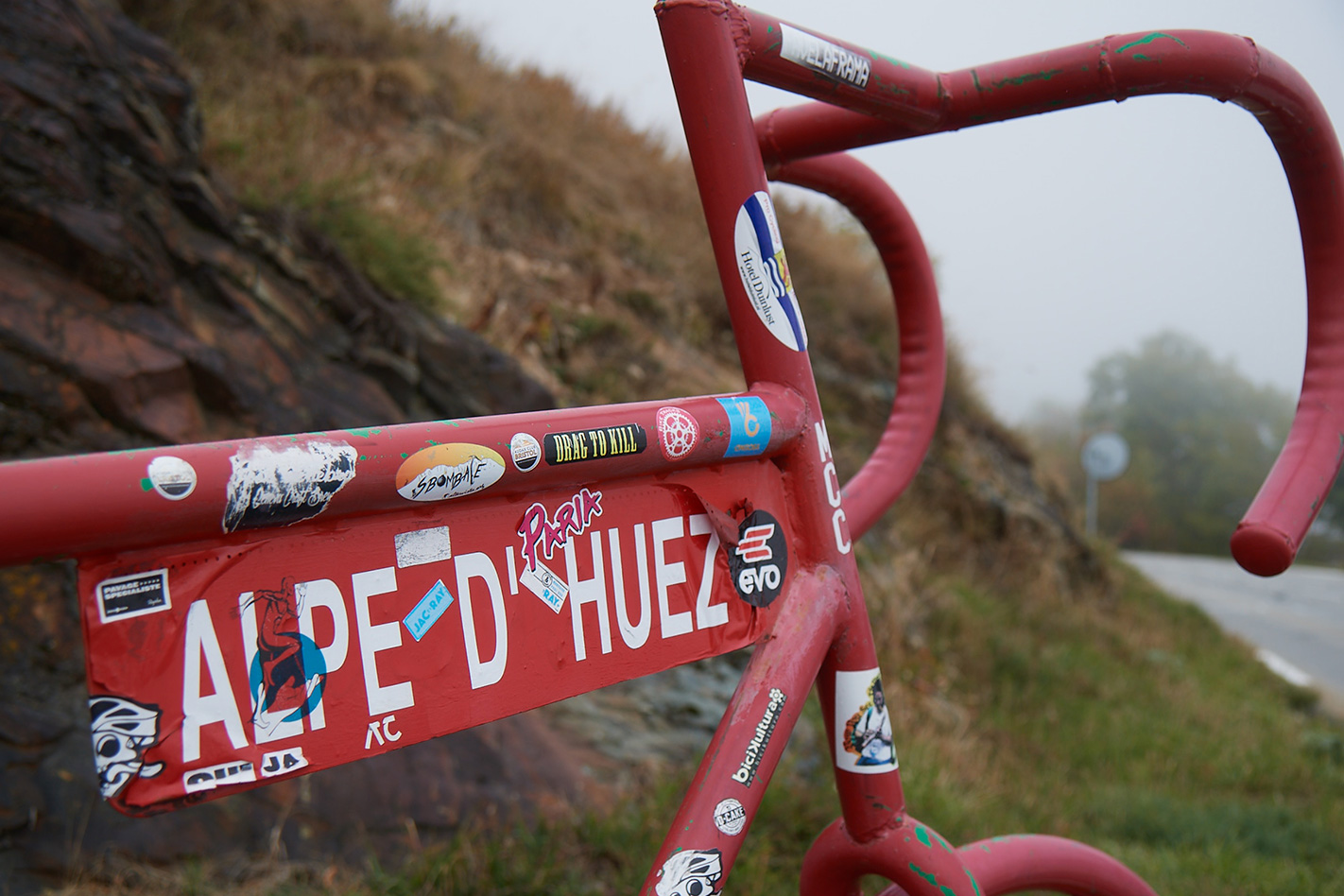
My feeling of foreboding isn’t helped when I check the bike into a local shop for a quick once-over and Thierry, the proprietor, takes one look at the rear cassette, shrugs and says, “You only have a 28.” I take that as meaning I don’t have low enough gearing. Then he looks at me disparagingly, 6’4” and 105kg not being the genotype for a climbing cyclist, and mutters, “I think maybe you can make it.” Hardly an unalloyed vote of confidence.
Things get worse that evening when the effects of an ill-advised autoroute panini take hold. The next morning I’m feeling wholly dreadful, but the combined effects of cabin fever and gastro in a tiny, sweaty and increasingly grim-smelling hotel room drive me out the door.
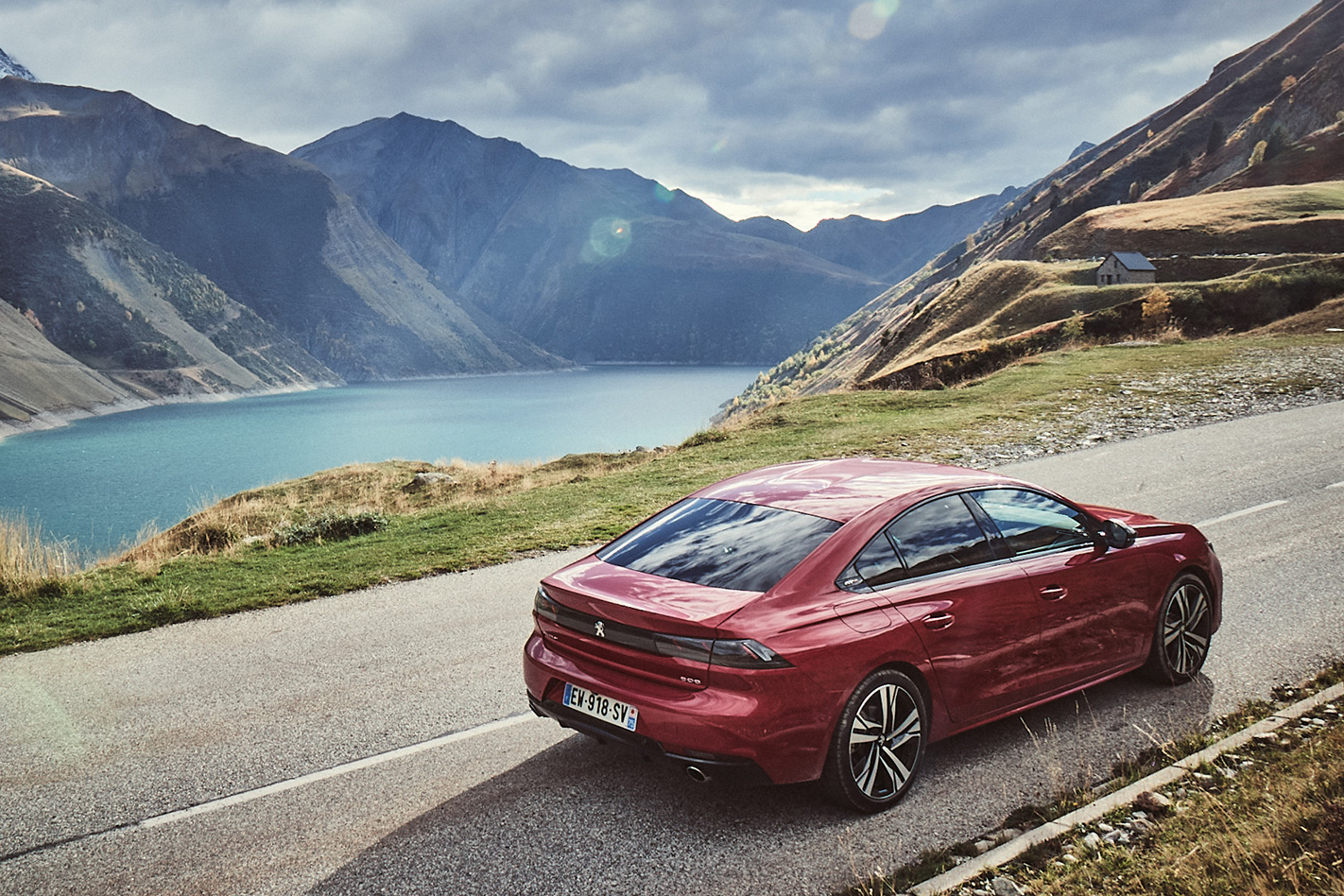
As I look up at the road to Alpe d’Huez, feeling drained and hopelessly ill-prepared, I know but one thing. If I stop, I’ll lose heart and turn back, so I vow not to stop and see where that gets me.
I feel as if I’ve emptied about 50 percent of my reserves on those first four hairpins. Thierry was right. Even in the lowest gear, I’m pushing hard on the cranks and wrenching at the bars with every rotation, rather than engaging in the effortless walking-pace spinning I’d imagined. A few locals emerge from a bar in Huez in time to catch me throwing up onto the road as I pedal onwards. It happens again on the other side of the village. I try not to think of my heart rate, the fear of failure, the weird metallic taste of blood in my mouth or anything else and just robotically count each pedal rotation to 100 and start again.
It’s an utterly horrendous experience. I wanted to know what it felt like, and now I know. Alpe d’Huez is laughing at me, each hairpin seeming to get agonisingly further apart. Just when I think my torment is over, I enter the resort and find that there are actually 22 hairpins on the Tour route, the final one numbered zero.
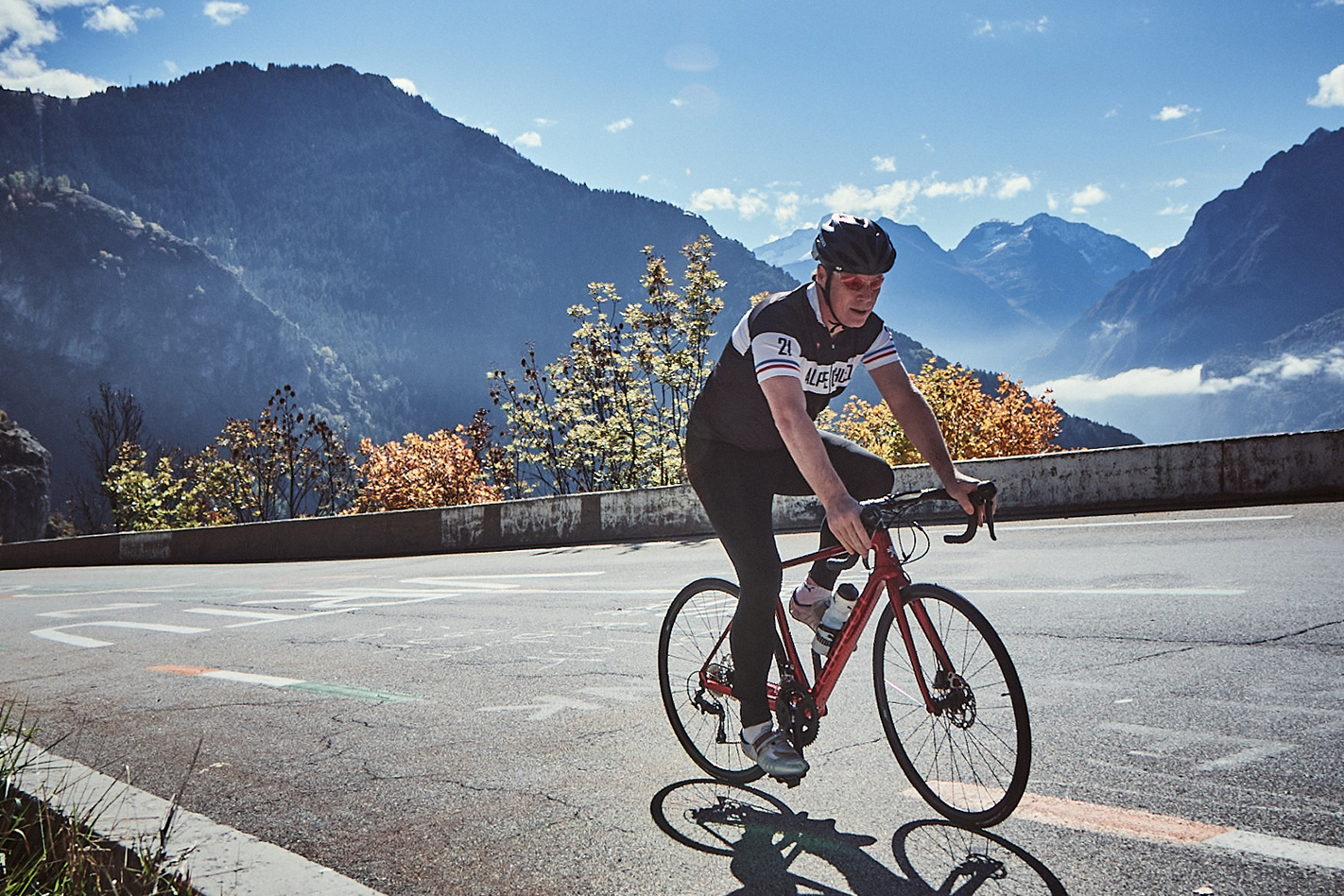
The nondescript finish line arrives on an avenue on the gentle slopes of the snow-capped Grandes Rousses. I crawl across and then realise I don’t have the strength to unclip my cleat from the pedal and begin to topple over in slow motion. In that moment I recall Peugeot’s PR man confirming to his Peugeot Cycles associate that I would treat this beautiful bike as if it was my own. At the last second, my sock slips out of the shoe and I catch myself. I sit dazed by the side of this deserted grey road with one shoe on, wind whipping through the shuttered chalets while I try to make some sense of what’s just happened.
It’s hard not to think of the ghosts who have passed this way. Of Marco Pantani, whose name still emblazons the tarmac all the way up the hill, his 37-minute ascent writ large in the tour record books, albeit tainted with the blanket suspicion of the EPO era. Or the recently departed Laurent Fignon, who stalked Peugeot’s Pascal Simon to his capitulation. Peugeot’s own Phil Anderson, the very first Australian to wear the Tour’s yellow jersey back in 1979, was a relative unknown from Melbourne who grabbed the maillot jaune in the Pyrenees and fended off the wily Bernard Hinault all the way to the 17th stage. Alpe d’Huez proved his nemesis too.
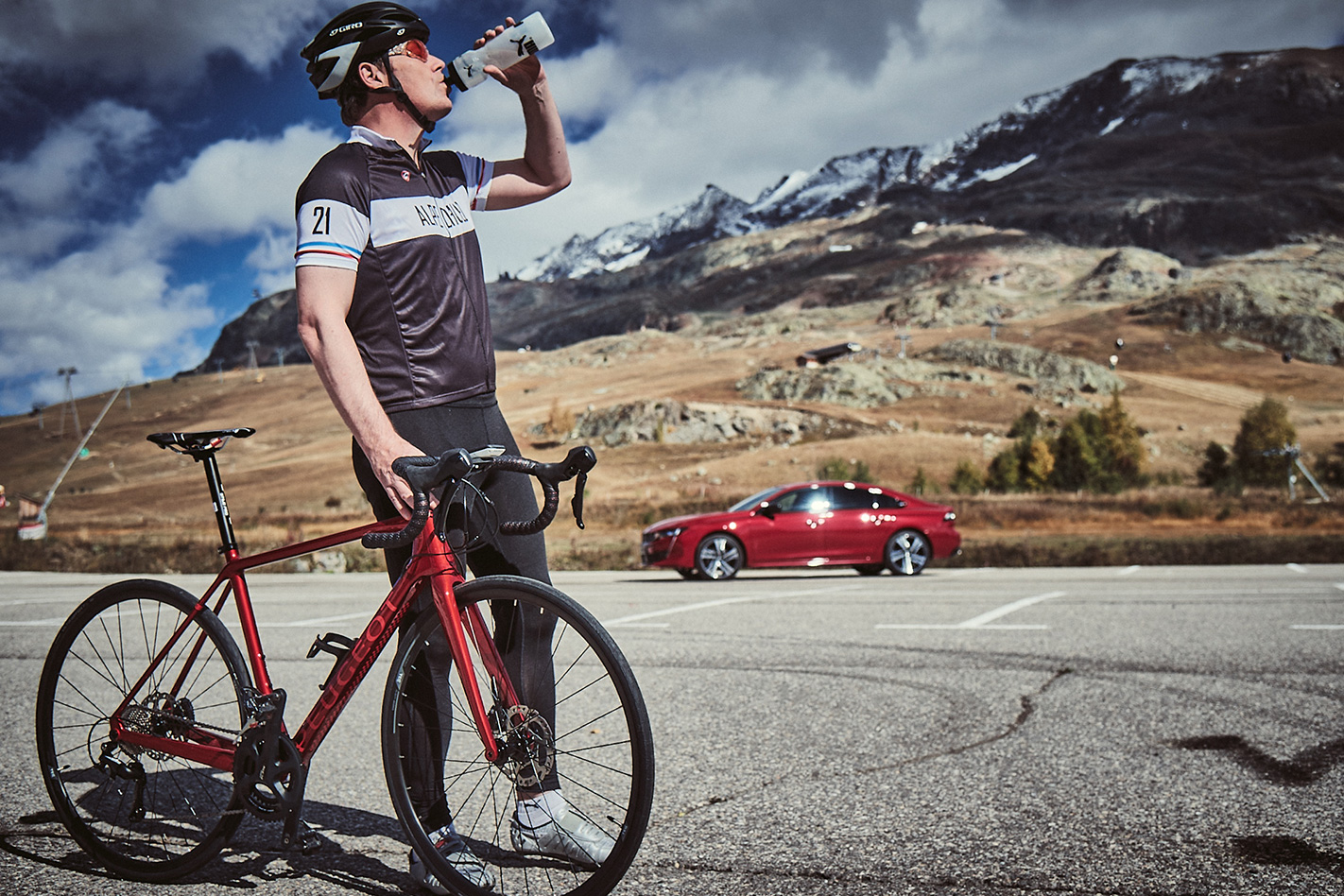
Short of sitting through Evita in the Streatham Odeon to impress a girl, I think riding up that hill might have been the worst 77 minutes of my life. Even the run back down is frustrating, the road never really giving you a good look at it to get some speed up. A couple of hairpins from the bottom, I overcook one turn, end up on the wrong side of the road and almost bugsplat myself onto the front of a Renault van. The heart-rate trace recounting my slither into the oncoming vehicle doesn’t lie. So, yes, it is possible for a near-50-year-old desk jockey to ride up Alpe d’Huez in one hit with no specific training, but it’s neither enjoyable nor recommended.
Some recompense comes the next day. Photographer Jahn and I head back into the mountains, driving the magnificent road up from Allemond to the Col de Croix de Fer. At 2067m above sea level, this pass links the Maurienne and Romanche valleys and is a wild and beautiful drive, climbing through larch forests and past two vast reservoirs before cresting in a jaw-dropping view over the triple peaks of the Aiguilles d’Arves. The 508 is so much fun, finding the path of least resistance on the run back down, encouraging you to lean on its steering, take great bites out of well-sighted apexes and leap it off the heavy cambers. Pressure off, I even get back on the bike and enjoy a leisurely pedal.
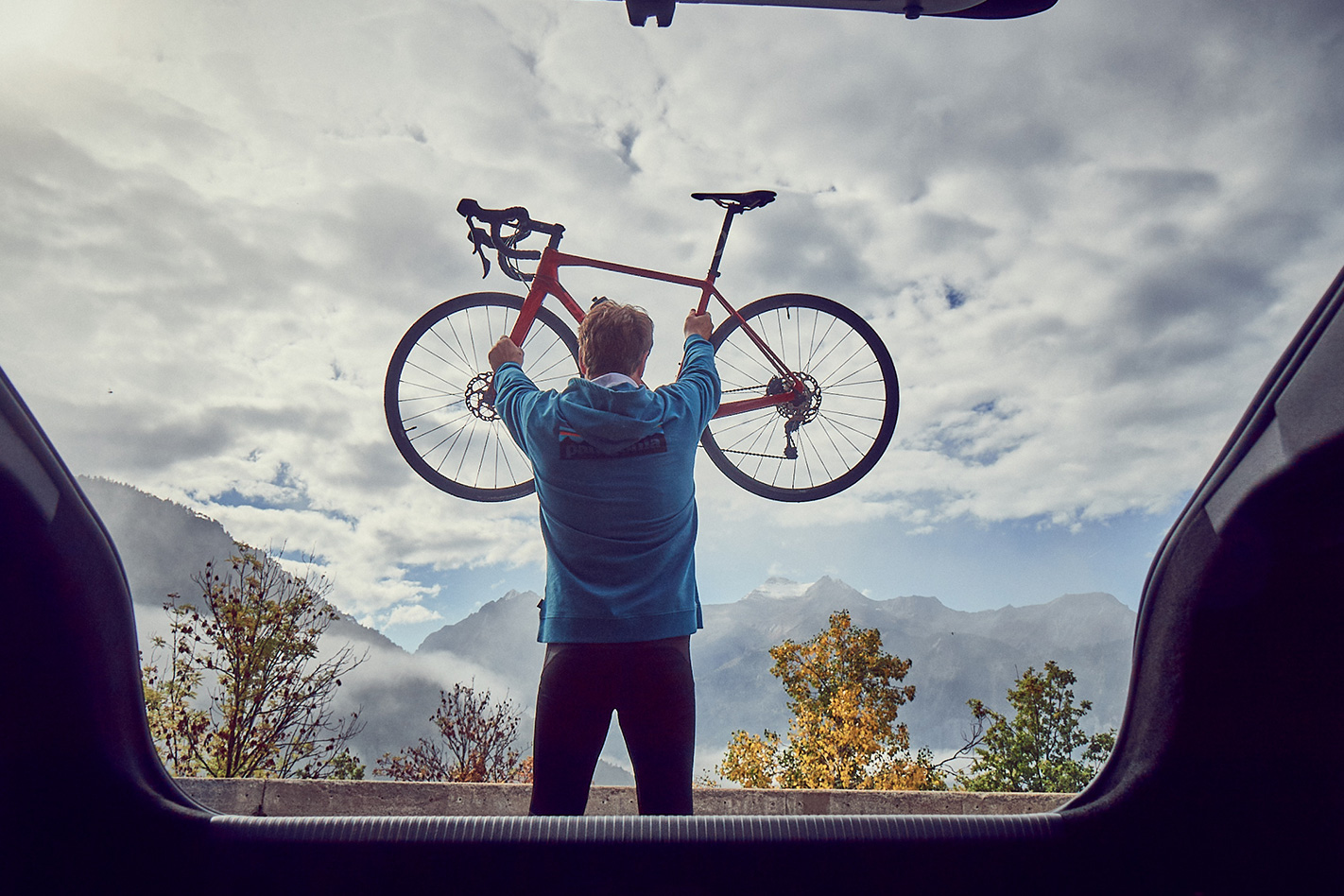
Pop the Peugeot’s liftback, drop the seats and the bike fits inside easier than it would in my Range Rover Velar long termer. Surely there has to be a place for a car such as this; something light, fun to drive, smart and genuinely functional, yet we continue to turn our backs on cars like the 508.
On reflection, perhaps our desire to wedge ourselves into a cookie-cutter lifestyle has overwhelmed proper assessment of our needs and, come to think of it, capabilities. The Tour might well be won on the Alpe, but so too is a welcome dose of perspective.
The contenders
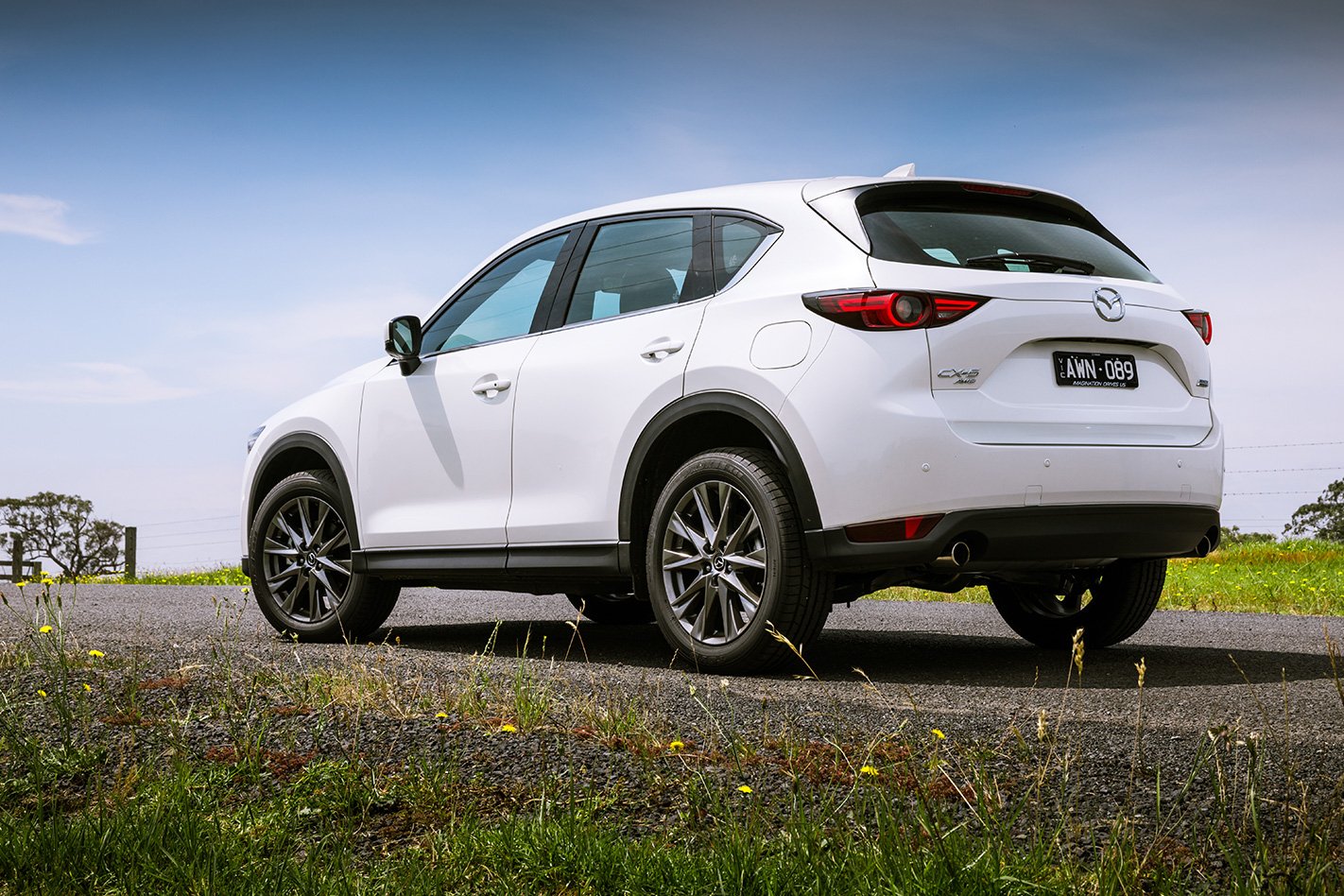
Strictly speaking the Mazda CX-5 isn’t a ‘newcomer,’ but the force-fed petrol engine that’s just been transplanted into its snout is definitely a fresh addition to Mazda’s likeable mid-sizer. Displacing 2.5 litres and augmented by a turbocharger, it’s lifted almost wholesale from its bigger CX-9 sibling and gets us a little bit excited. After all, the formula of adding a big engine to a small car is one that’s delivered great results in the past, although this time it’s not power-to-weight that’s the attractive proposition, but a great deal more low-down tractability and everyday driveability than the carry-over atmo petrols that sit beside it in the CX-5 range.
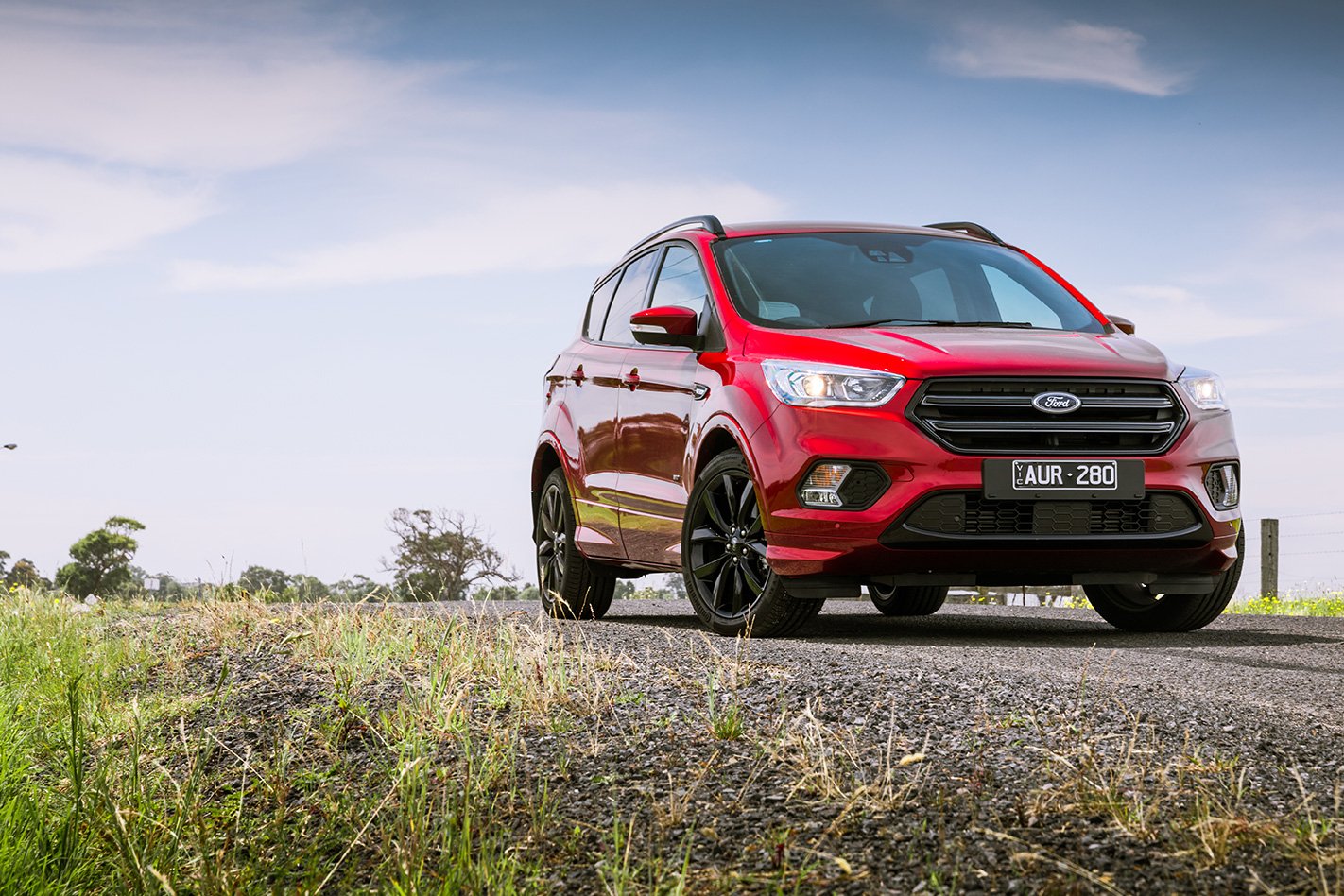
The Escape ST-Line, meanwhile, is a familiar face. Also rocking turbo power and all-paw under-bits, the Escape is a Wheels favourite by virtue of its agility, value and stout straight-line performance. However, with the CX-5 now flexing more torque, is the Ford’s dynamic edge enough to keep it relevant?
Equipment and value
It’s a pricey thing, but the Mazda comes packed out with a 360-degree parking camera display, powered tailgate, head-up display, sat-nav, Apple Carplay/Android Auto, appealing leather upholstery and, of course, one of the biggest petrol engines in its class. Safety aids comprise AEB (which works at speeds between 4km/h to 80km/h as well as in reverse), lane-departure warning and blind-spot monitoring.
In the blue corner, the Escape ST-Line mirrors most of the Mazda’s equipment list when specced up with the optional $800 Tech Pack, meaning major differences aren’t many and mostly boil down to the absence of a HUD. The kicker? the Escape ST-Line is a sub-$40K offering, while Mazda asks $49K for the CX-5 Akera, given its flagship status. Even though the Ford needs to drink pricey premium unleaded and the Mazda will happily slurp 91-octane, the Ford’s value proposition is simply sharper, thus handing it the win for this round.
Space and comfort
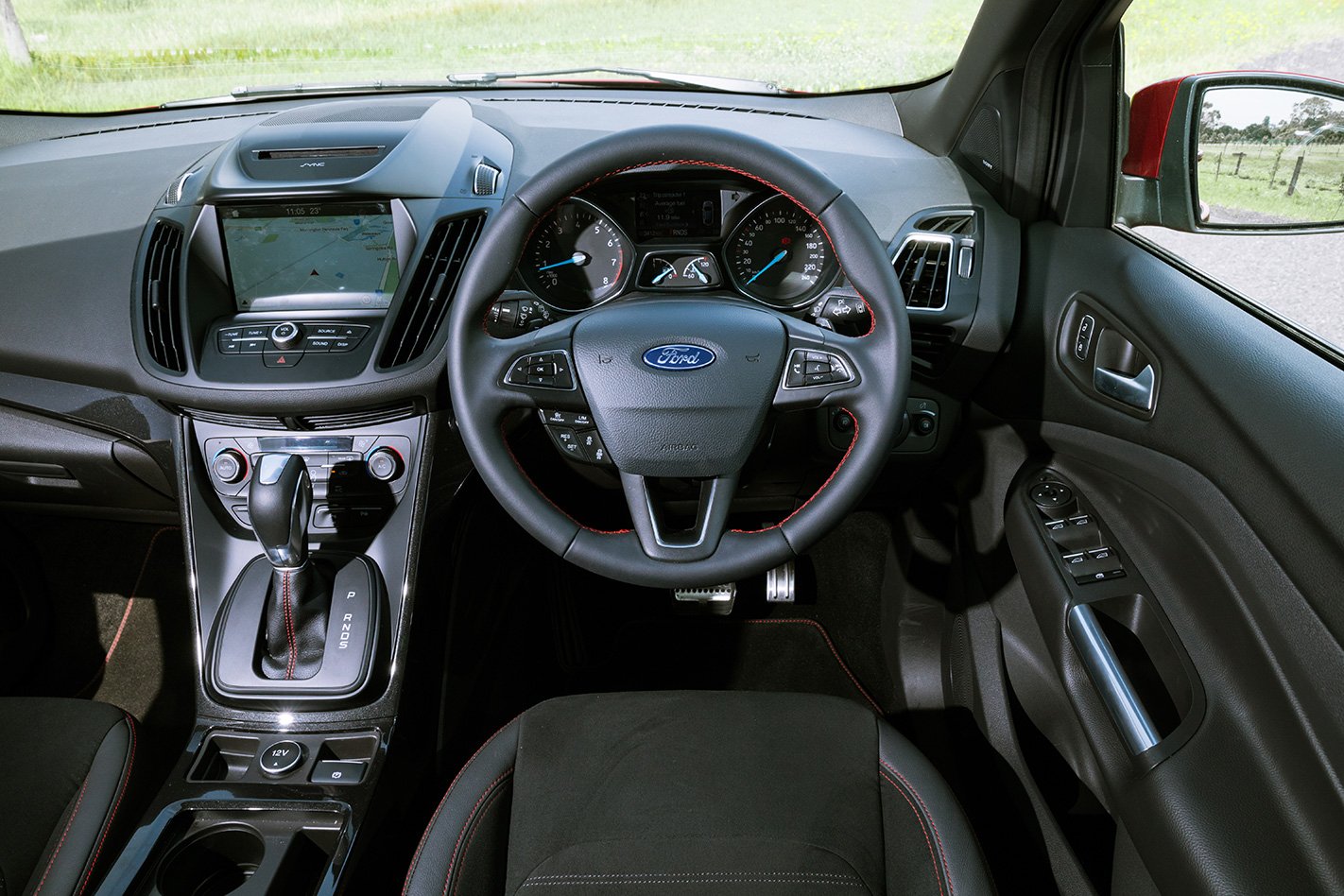
Hop between the two and you’ll instantly note that the CX-5, which launched in second-gen form in 2017, is a full generation ahead of the 2012-vintage Escape. The interior of the Mazda is more sophisticated, cohesive and ergonomically sound than the plasticky, dated Ford. Accessing the ventilation controls on the Escape’s lower dash is hampered by that high-set gear shifter, and the dash vents simply serve to freeze your fingers rather than cool your face. The Mazda’s driving position also feels more car-like and natural, but some may prefer the upright, more commanding SUV-like posture you need to pilot the Escape comfortably.
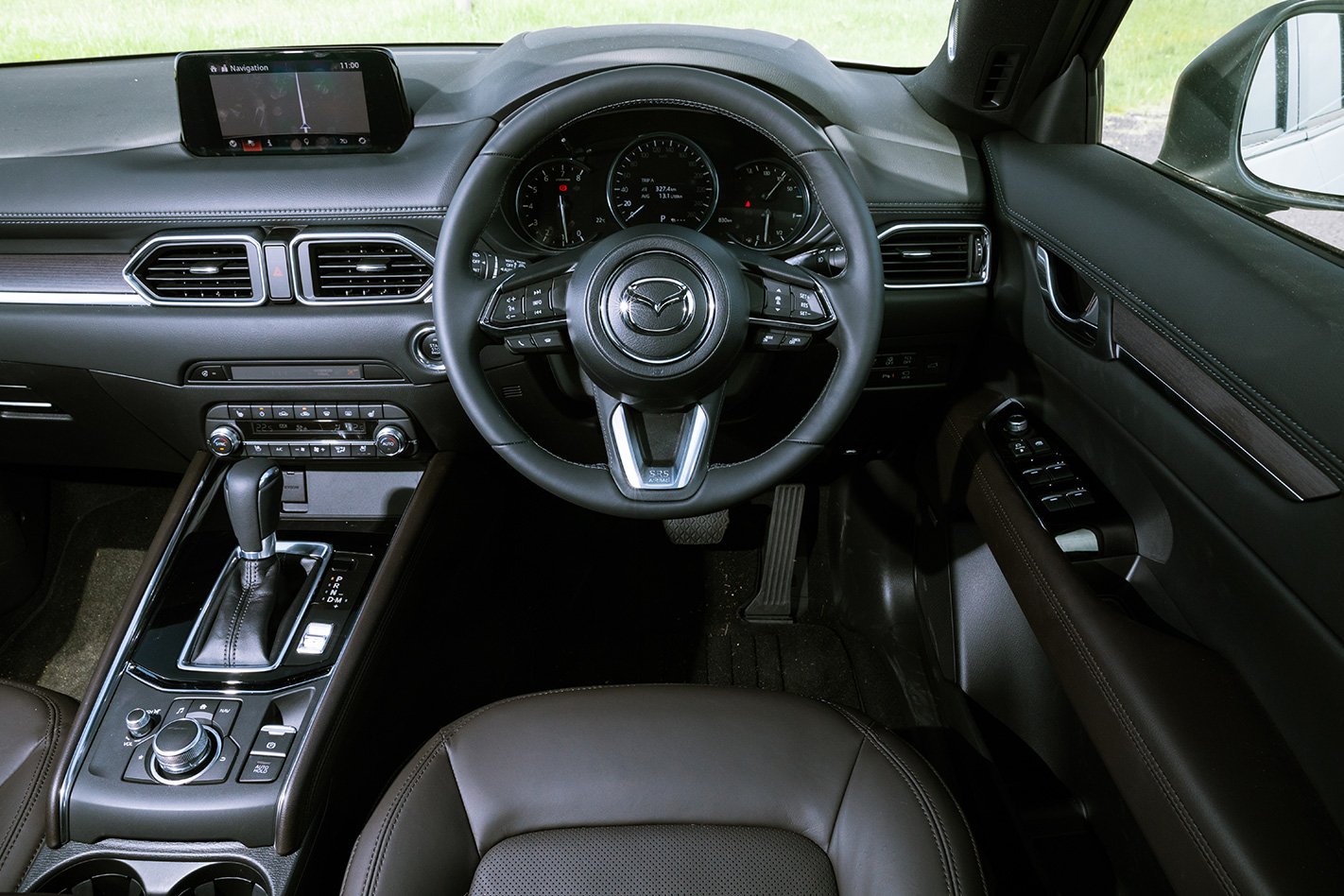
When it comes to seats, though, the ST-Line’s deeper bolsters and microsuede panels feel better beneath your bum and behind your back. Then again, the Mazda’s larger and more practical 442L boot capacity (versus 406L) tips the balance toward the CX-5 here.
How they drive
There’s a hot-hatchy feel to the way the Escape ST-Line connects your fingertips to the front wheels. It’s decisive and fast-reacting, but with just enough on-centre relaxedness to not feel fidgety on straight highways. Intriguingly, though, it layers commendable ride comfort on top of that dynamic aptitude – a true achievement given its sports-oriented damper settings, 10mm lower springs and low-profile Continentals. And though it may lack torque relative to the Mazda’s grunty 2.5 turbo, the Escape’s engine feels more lively and willing to spin, with a six-speed auto that executes intelligent shifts.
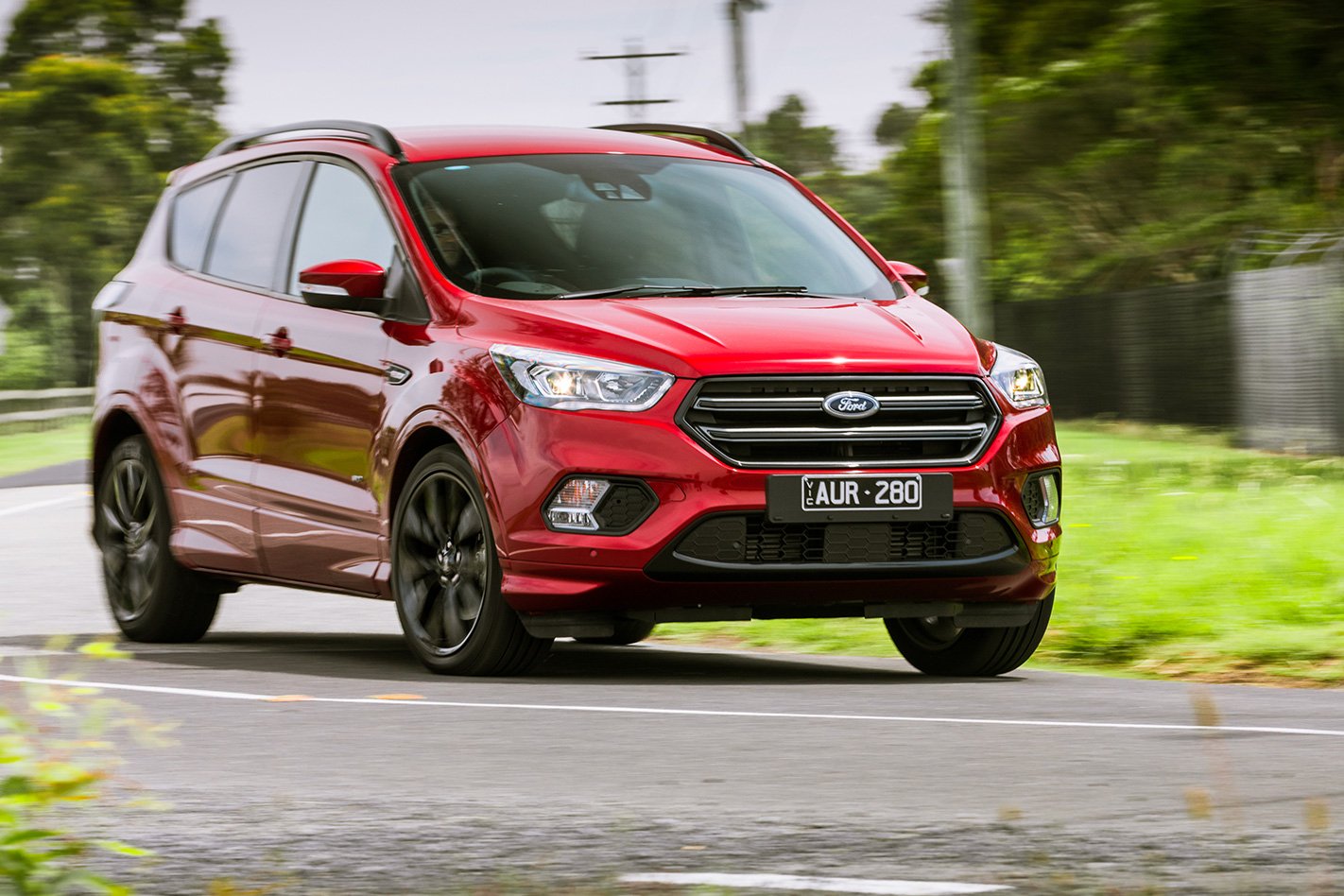
The Mazda has muscle, no doubt about it, but a sensitive ride over low-amplitude bumps and a transmission that seems a tad too willing to kick down a gear don’t gel with the engine’s relaxed yet strong low-end torque delivery. A re-tune would cure those ailments, no doubt, but right now it’s the Ford that boasts the edge out on the street.
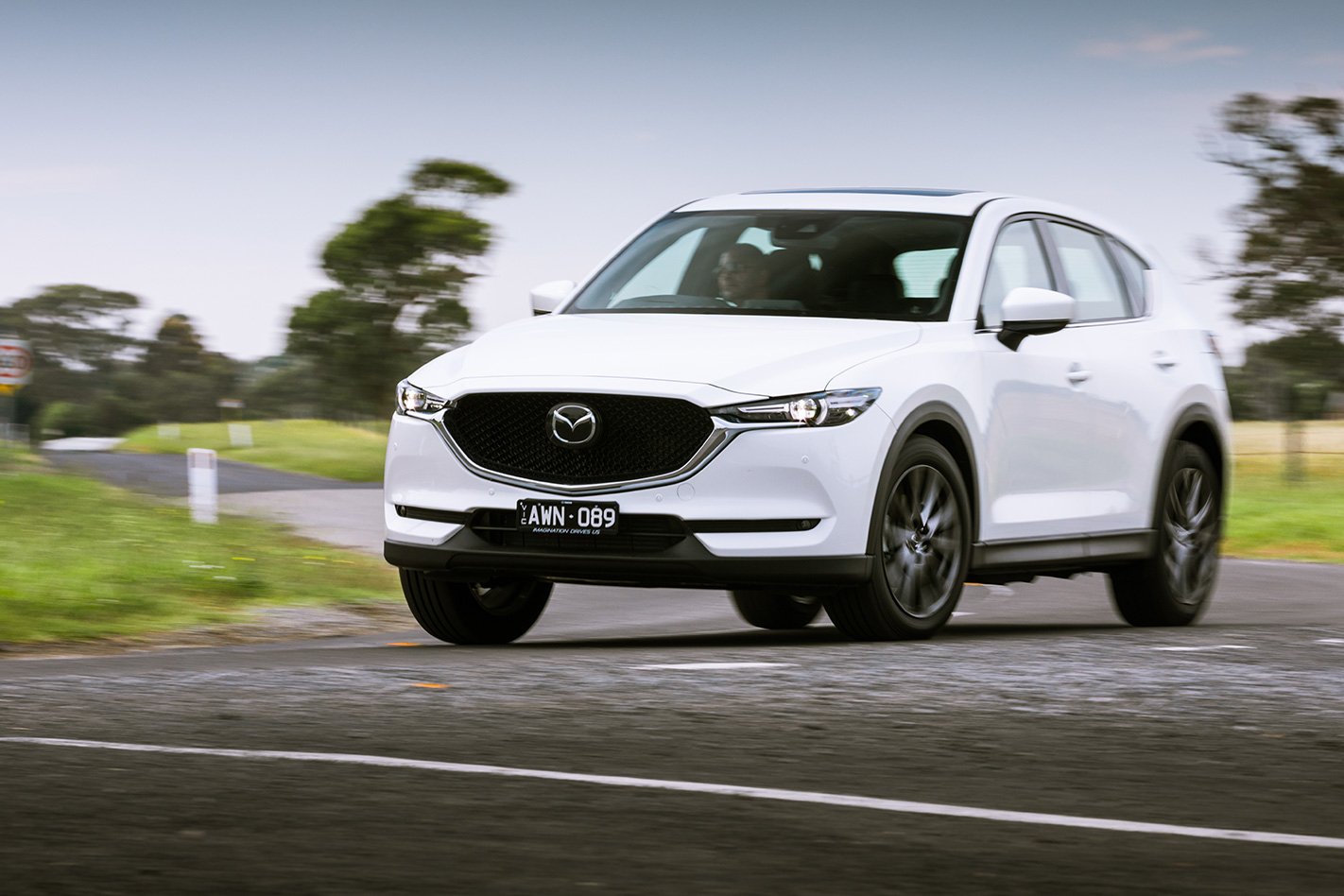
The victor
Shoehorning the 2.5-litre turbo into the CX-5 has resulted in the best mid-sized Mazda SUV to date, but the cost disparity between it and the similarly specced Escape ST-Line is hard to justify if things like cabin design are secondary considerations for you. The Escape feels just as quick and actually rides better than the Mazda, which cements the outcome. Value and dynamics give Ford the win.
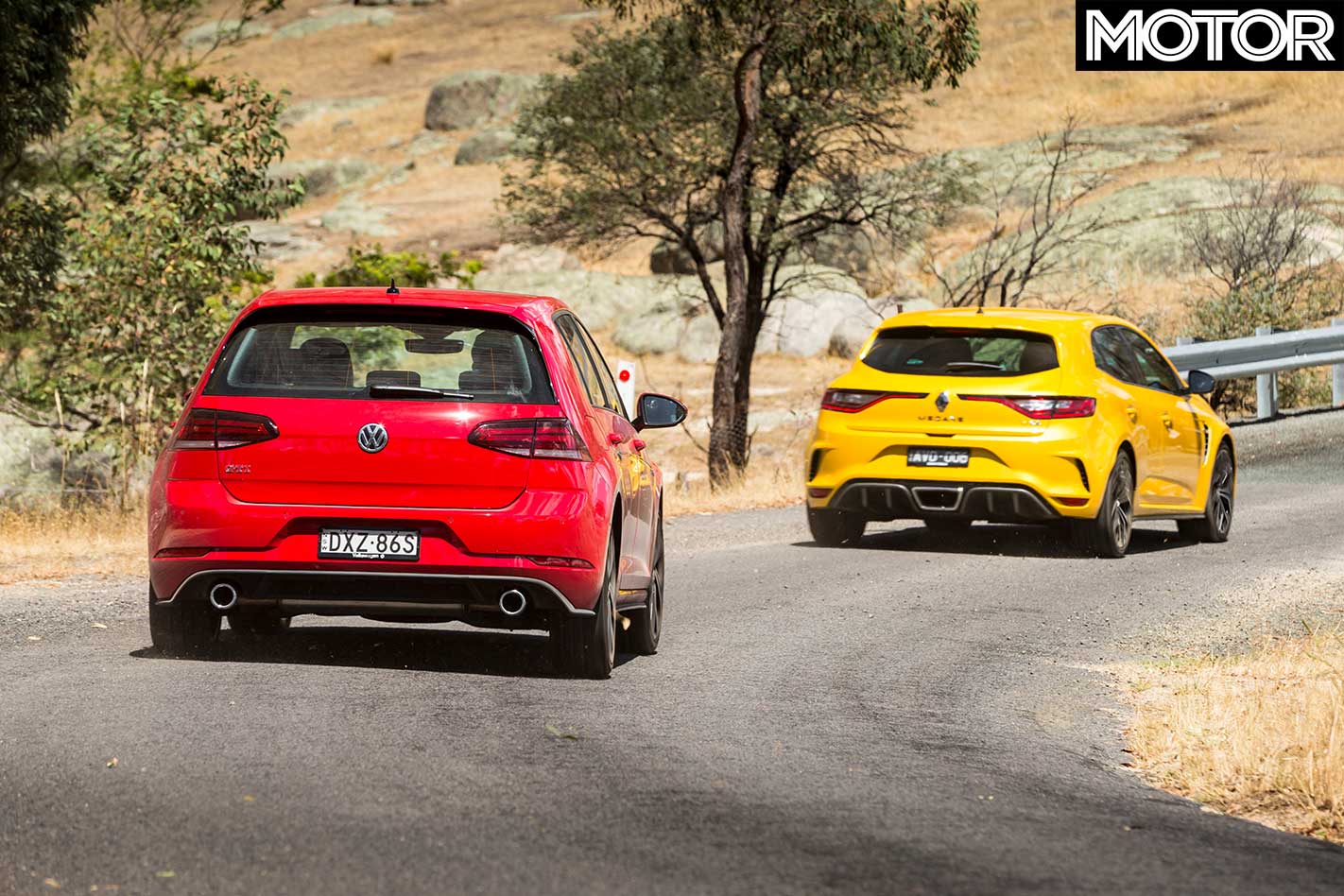
When Renault revealed its new 2019 Megane RS with five doors and an automatic transmission, we wondered if they were hiding the three-door manual one behind a curtain. But they were not – instead, they had taken the Megane RS in a more sensible direction. And sensible is not what we are used to thinking of Renault Sport.
These folks, remember, replaced the rear seats in a Clio with a V6. The result was delightful, but the handling endangered anyone other than Sebastien Loeb. Sometime later, it built a Megane RS with plastic windows, a carbon-fibre bonnet and a roll cage to claim a front-wheel drive lap record at the Nürburgring Nordschleife.
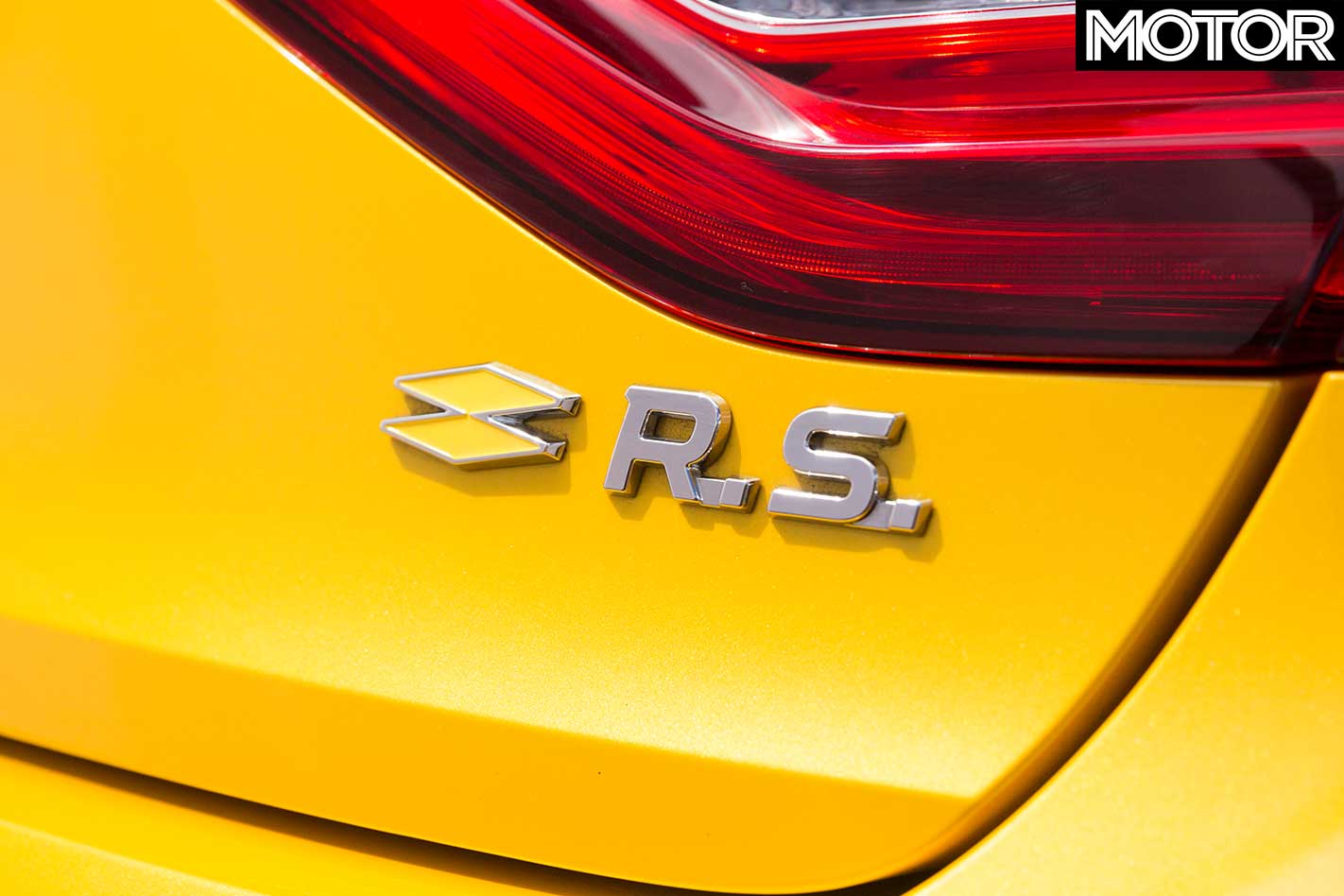
This madness continued until the second-generation Megane RS. It was a stiff-riding, manual-only hatch that didn’t compromise fun. We loved it. But then the capable Mk IV Clio RS arrived in 2014 with five doors and EDC only, Renault-speak for Efficient Dual Clutch. It lost character, but gained sales. Many feared it was a sign of things to come. They were right.
This new Megane RS introduces five doors, an automated ’box, a smaller 1.8-litre turbocharged engine, and more choice. You can pick between two chassis options and soon will be able to pick two engine outputs. It’s the same case for the transmission, but since we’ve already spent a lot of time with the manual, we’re keen to see what its EDC is all about.
Volkswagen’s range of performance Golfs once spoiled us for choice as well, but its front-wheel drive offerings have dwindled. It flicked the GTI Original and GTI Perfomance and now gambles on a single MY19 GTI variant, boosted in value and performance, to strengthen defences against circling foes.
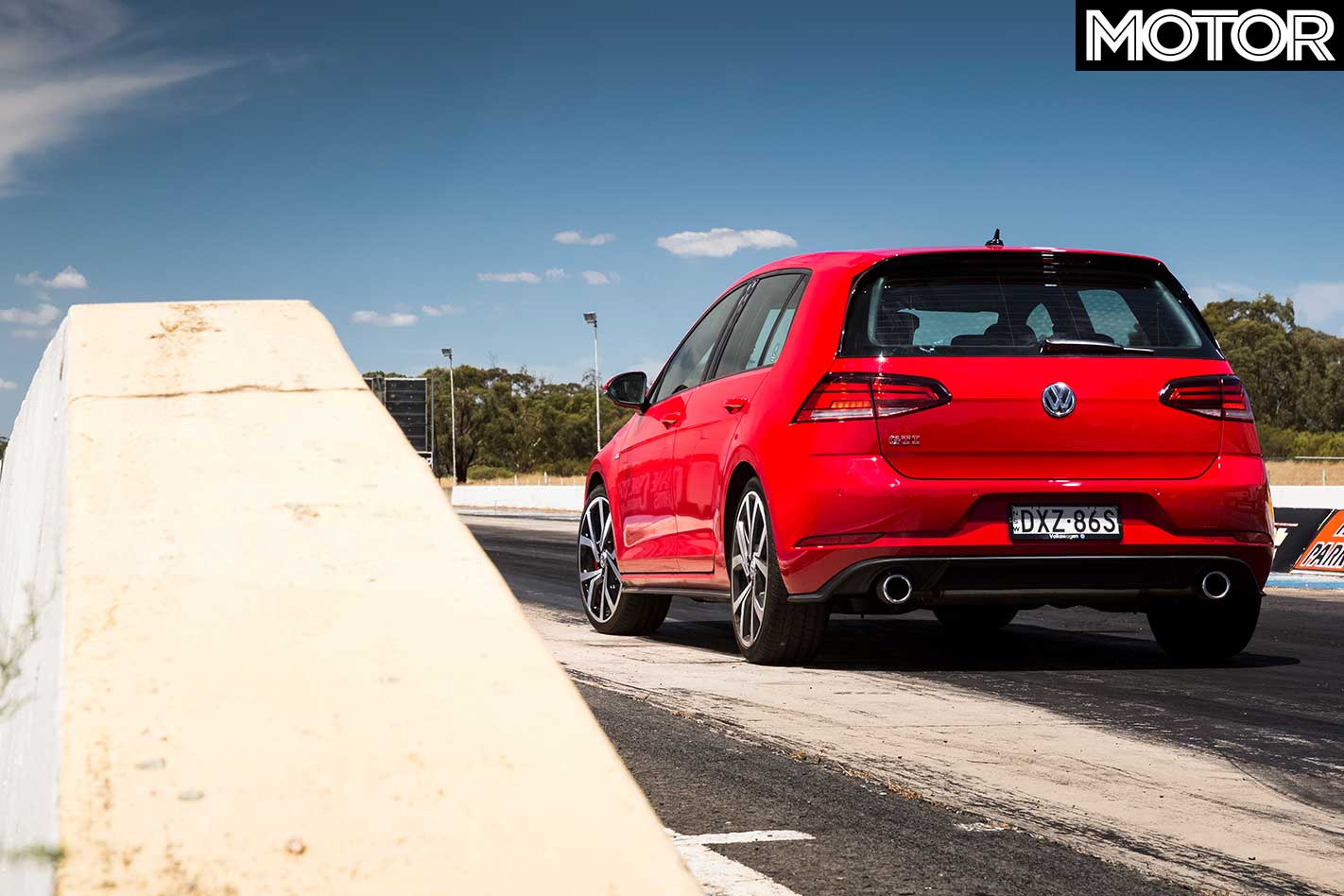
Its 2.0-litre turbocharged four bumps outputs to 180kW/370Nm, up 11kW/20Nm, and employs a Haldex-based, electronically locking front differential. The brake discs grow in size, too, from 312mm/272mm front and rear to 340mm/310mm. Essentially, it’s the powertrain and brake package from the three-door limited GTI Edition 1.
As a result, the five-door only GTI now starts at $46,190 with a seven-speed wet dual-clutch. That’s $2200 more than the 2017 version. It justifies this with a digital instrument cluster and active safety gizmos. But with the Sound & Style pack that swaps 18s for 19s and adds premium audio, along with the $3900 Luxury Pack’s heated leather seats and a sunroof, our press car charges $52,390.
At $47,490, the ‘automatic’ RS is three grand more expensive than the base car that comes with a six-speed manual transmission, and ours is loaded with the complete options list. With metallic paint ($880), premium audio ($500) and Alcantara seat trim ($1190), it nudges the price to $50,060. So it’s ringing the Golf’s doorbell for a fight.
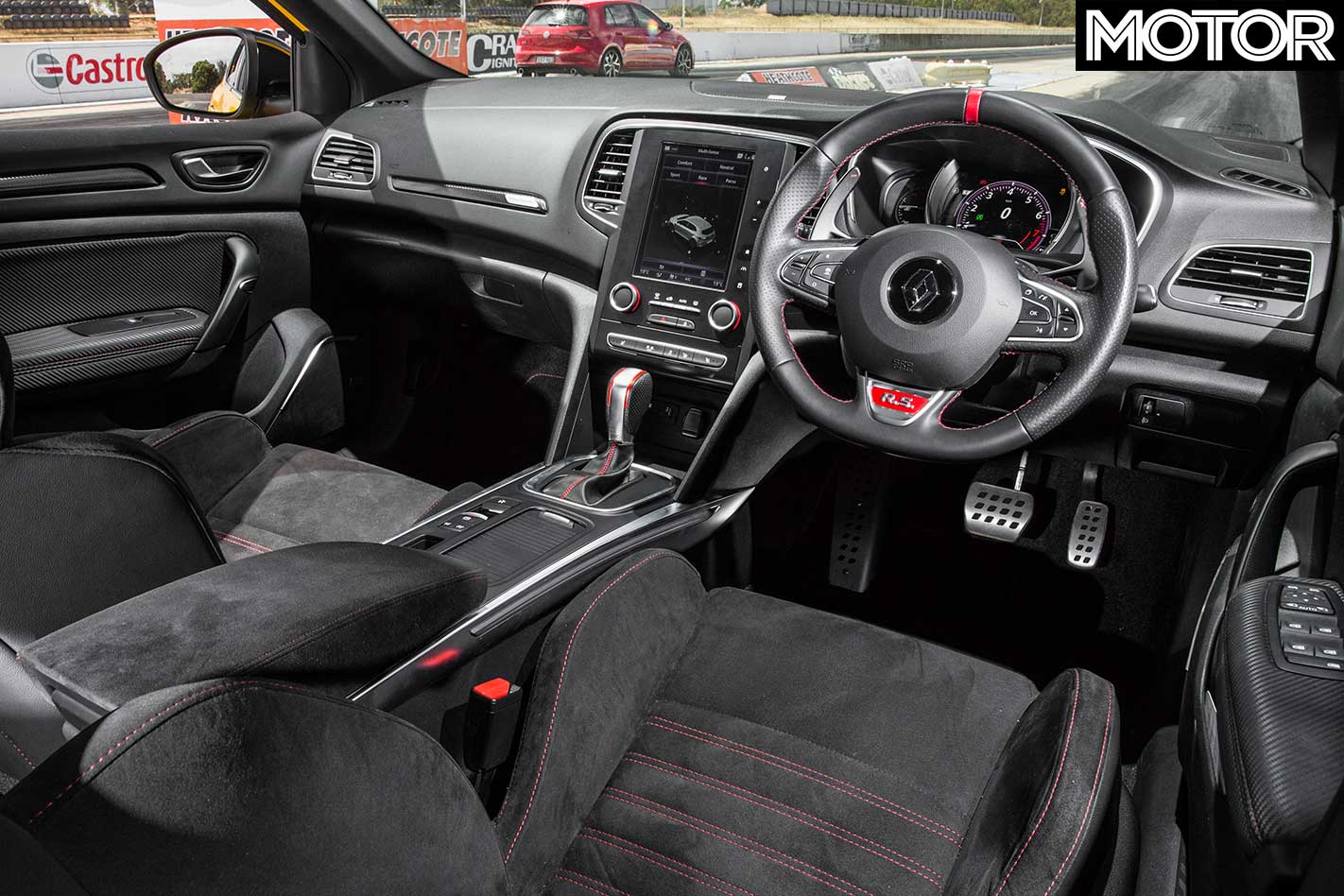
As always, there are two chassis tunes, but Renault has banned the stiffer Cup Chassis from being optioned on the base ‘auto’ RS, denying it a mechanical front LSD and dual-material front brake discs. They’ll instead come on the RS300 EDC Trophy that arrives later this year.
It’s still packing RS-specific goodies like hydraulic bump stops and rear steering. They’re a first in the hot hatch segment and work with ultra-wide 19 inch tyres to, hopefully, deliver handling nirvana. Brembo brakes also feature at each corner.
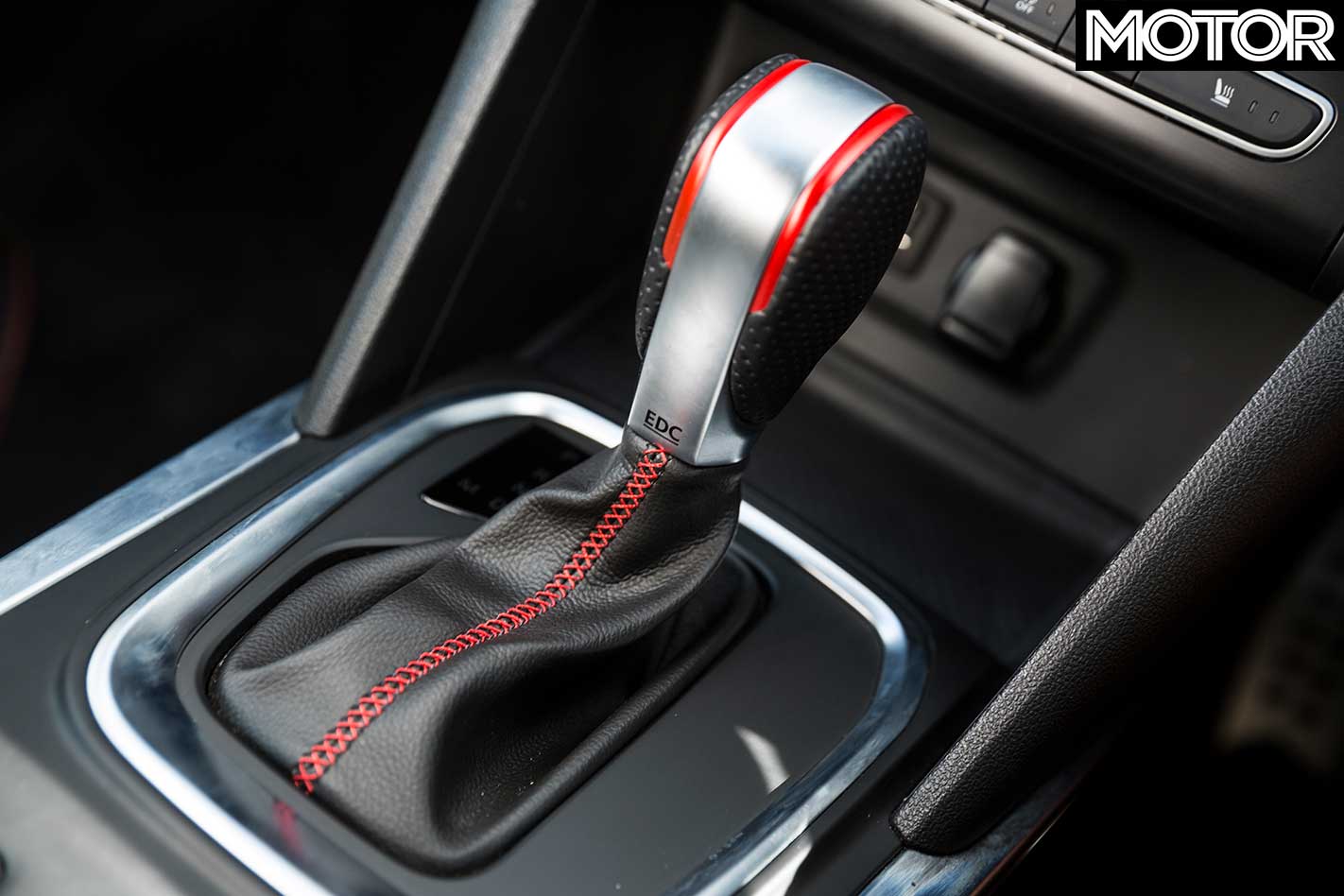
The only thing unique to this EDC variant, compared to the manual, is its six-speed Getrag dual-clutch transmission. Obvious, yes, but it gets a new set of gear ratios and adds a launch control function. As a result, it’s also claimed to hit 100km/h from rest in 5.8 seconds even though it’s 23kg heavier. That’s Honda Civic Type R fast.
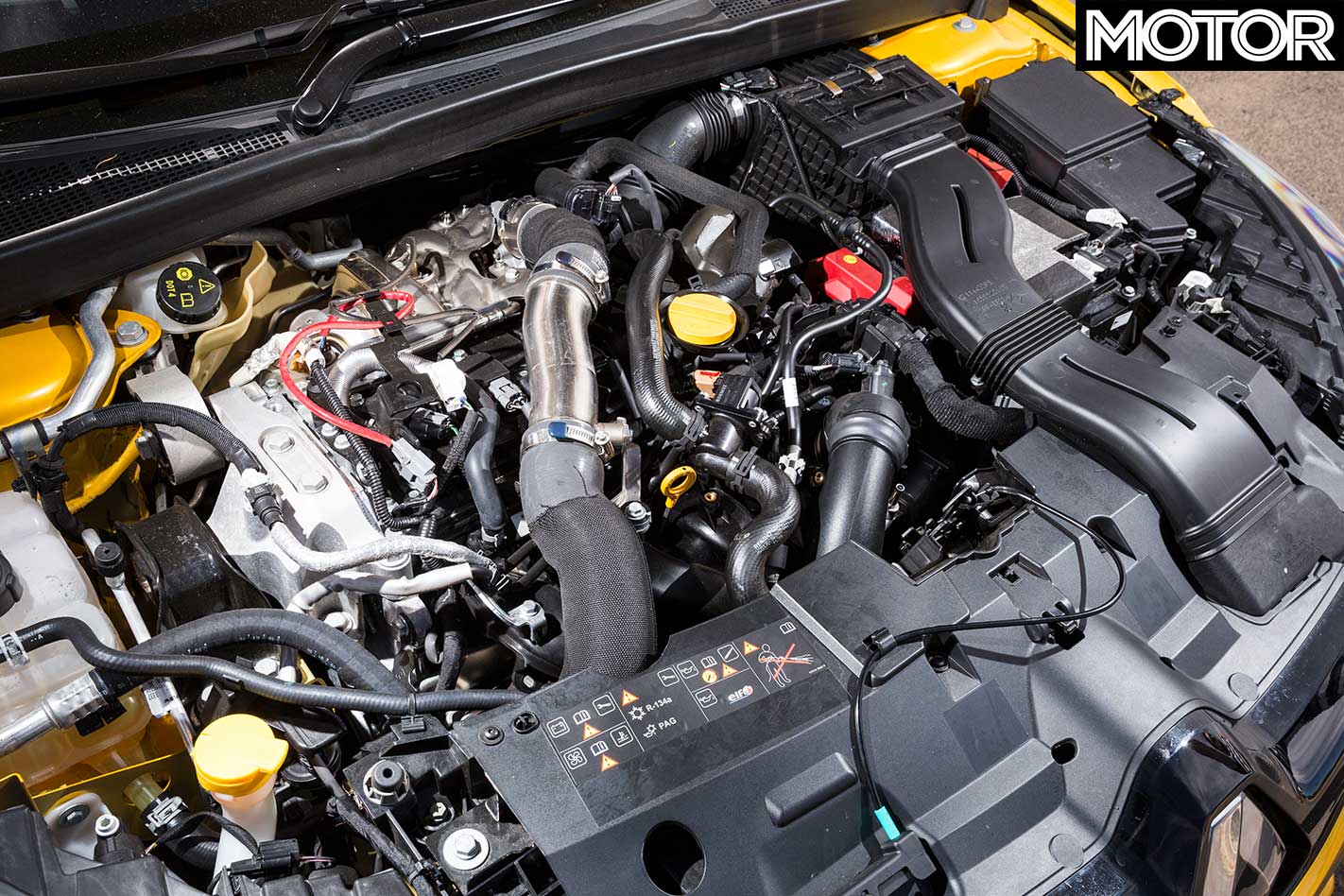
Engineers focused on the 1.8-litre engine’s mid-range response, aiding its twin-scroll turbocharger with a specialised intake system and cylinder head. That means it’s good for 390Nm from 2400rpm to 4800rpm, and power peaks at 6000rpm with 205kW. The result is a less frenetic delivery compared to the old F4RT engine. But traction’s still an issue.
Pointed down Heathcote on a very hot day it yields a 6.6sec run to 100km/h from rest out of the box. Even with wide 245mm Bridgestones the open-diff front axle breaks into wheelspin. It’s unavoidable in first gear, launch control or not, and lingers for a moment in second gear.
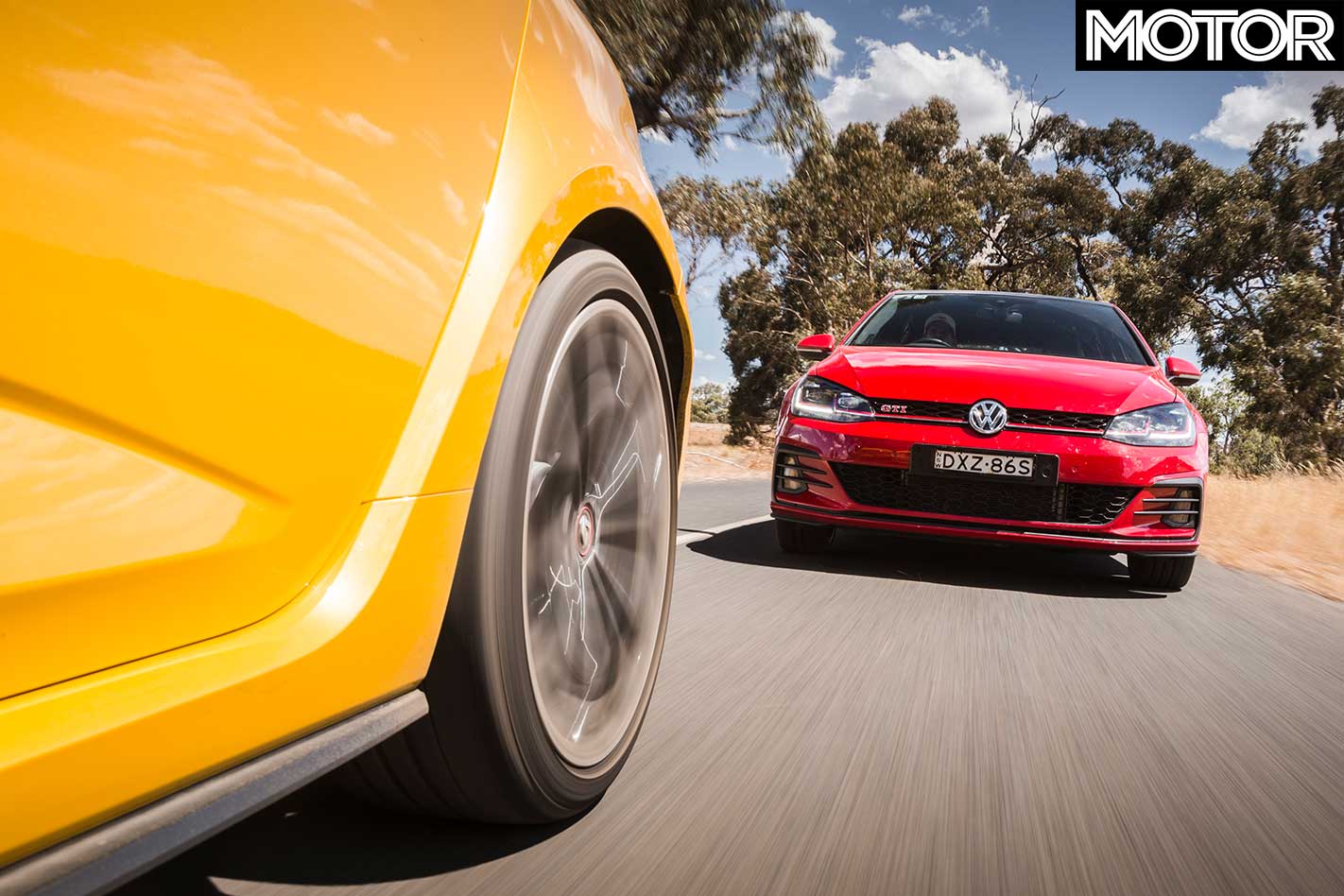
We find a grippier patch to launch the car. Put the powertrain into Race, load the brake, spike the revs to 3000rpm and wait for the Christmas Tree lights to disappear on the dash. When they go out it eases, rather than drops the clutch, in first gear. It bites and soon we’re into second, then third, as the exhaust squeezes out an enticing crack on each upshift. Eventually, the Driftbox shows 0-100km/h is done in 6.4sec and 400m in 14.52sec at 162.66km/h.
That’s slower than what we extracted from the new manual RS Cup by four and five tenths respectively, which could be down to a few things. We couldn’t figure out how to adjust the launch rpm, you can’t build up boost against an electronic handbrake and the automatic powertrain shifts at 6875rpm, or earlier, whereas the manual can run to 7000rpm. It’s hot, too, and the car’s sensitive turbo engines are feeling it.
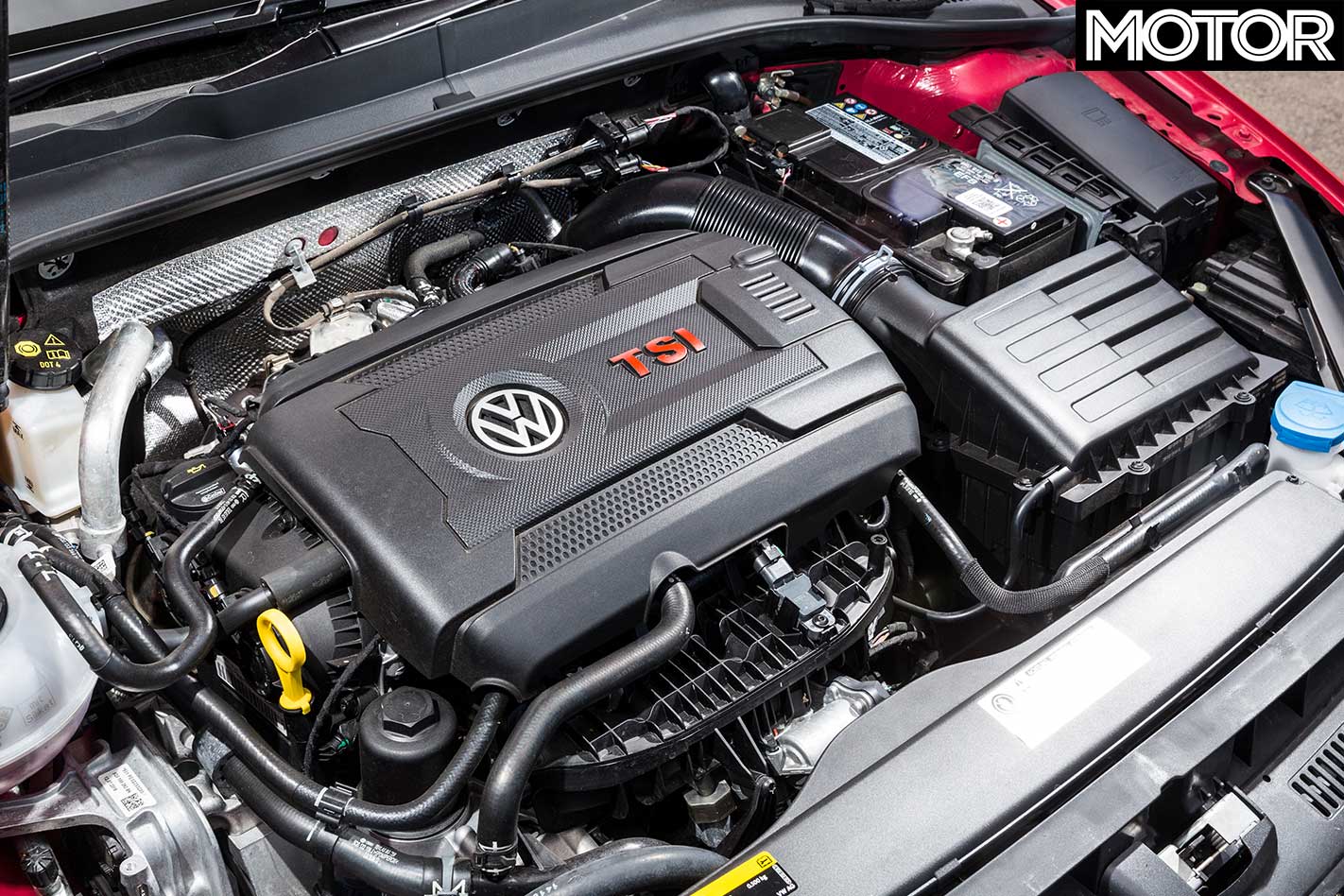
Our curiosity narrows on the GTI and its fancy differential.Could it mask a 25kW and 20Nm disadvantage? VW fiddled with the GTI’s engine software to broaden its power band while moving it up the range so peak power spreads almost all the way until redline. It’s a brawny unit that pulls hard from down low and delivers its turbo surge in a linear fashion.
We should be celebrating that ESP now goes all the way off, but with no added grip, it doesn’t matter how clever this Haldex unit on the front axle is, those 225mm Pirelli P-Zeros are no match for its torque. Even playing around with the launch control rpm proves useless, as once that turbocharger starts whistling in first gear all bets are off on finding purchase.
Keeping the throttle buried with ESP in its half-way mode is the best solution. This way the engine stays on boost while the traction control manages grip through first gear. It runs the Renault very close, hitting 100km/h from rest only 0.09sec later, in 6.51sec, and closing that gap to 0.06sec by the 400m mark where it registers a 14.58sec pass at 161.66km/h.
Although it’s producing less power and finding less traction, its 273Nm-per-tonne trumps the Megane’s 268Nm. It spreads the grunt over a bigger area, accelerating strongly all the way to its redline. Still, it falls behind on a roll as 80-120km/h in 3.72sec trails the Megane’s 3.57sec.
You won’t save either car’s engine note as your ringtone, but the Renault at least injects some excitement into its noise. Its exhaust is rorty and an artificial note played through the speakers adds more depth to the growl. The Golf, meanwhile, sounds muffled, like it’s roaring into a pillow.
Inside is a better place to hear the Golf’s throaty sound, and you can change it in the Individual drive mode. You can switch between Normal and Sport, changing when the sound generator kicks in as opposed to its actual volume. The Renault, by comparison, is your own recording studio.
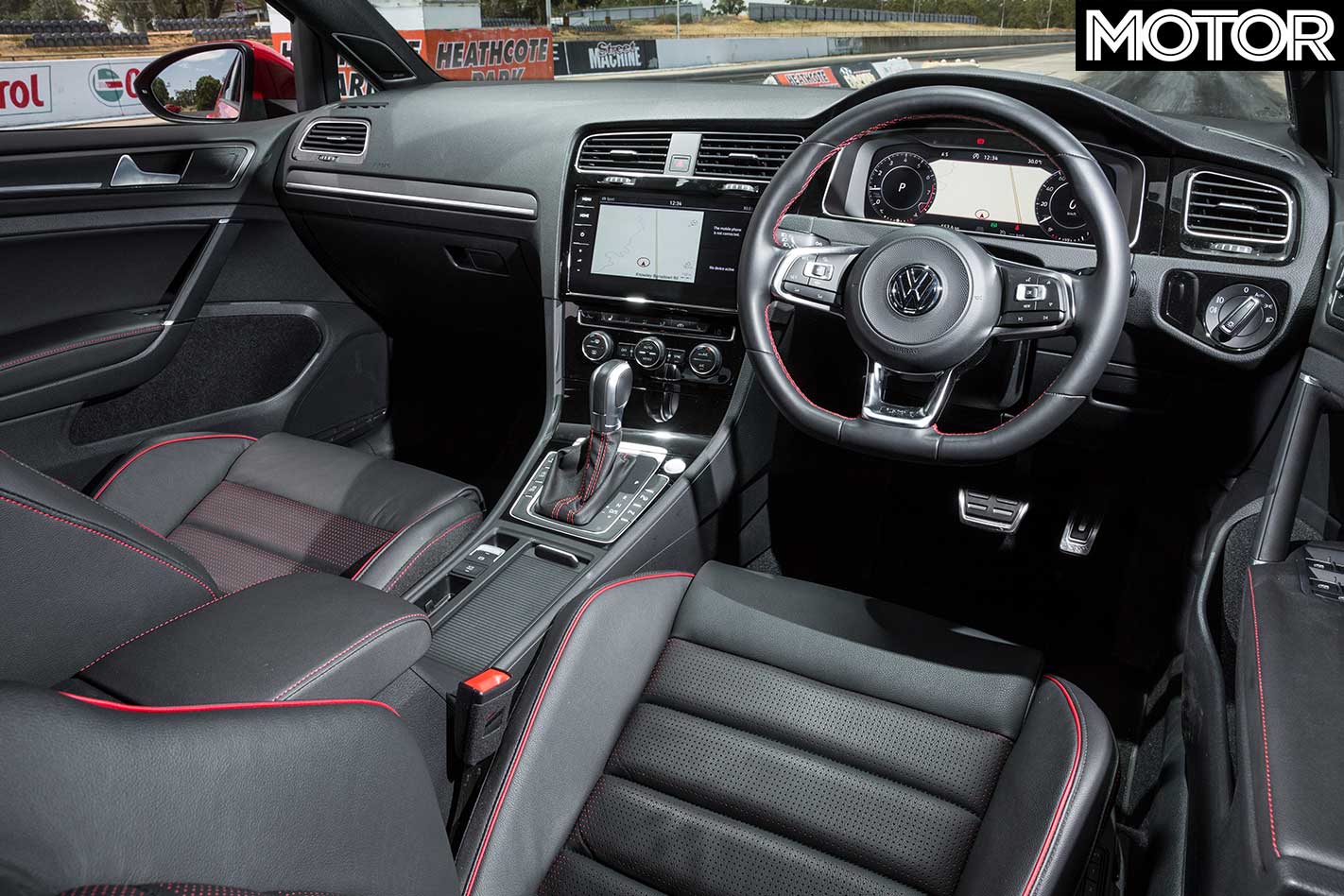
‘Perso’ mode lets you toggle multiple instruments between Normal, Sport and Race. The powertrain mapping amps up its shift noise, the exhaust system takes care of the pipes and the artificially generated noise adds more than you think. So, really, you can tailor the noise and volume to your own taste.
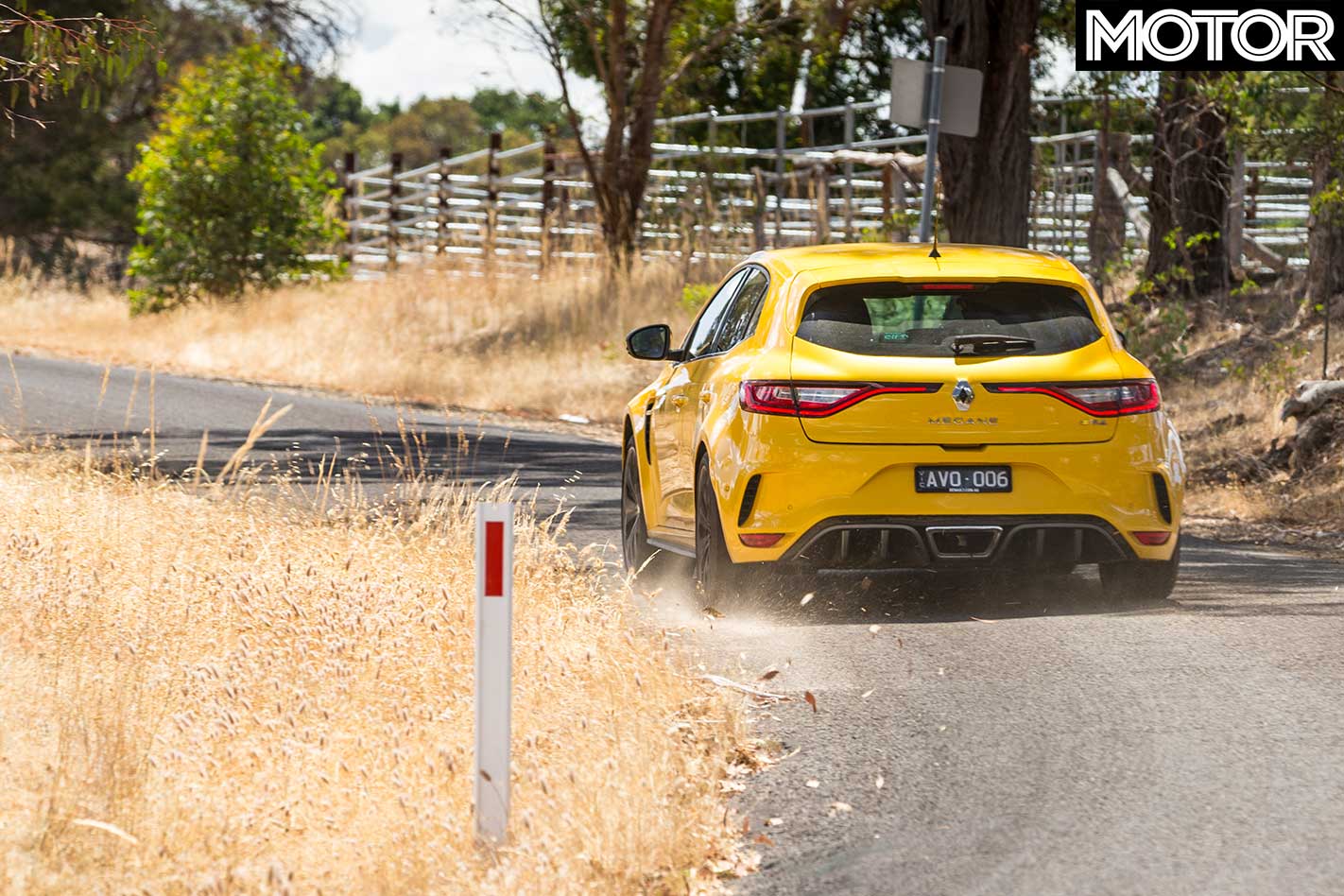
You can also tailor everything from throttle response to its rear-wheel steering setup. In Sport, or any mode below it, the rear wheels point in the opposite direction up to 60km/h, above that speed they’ll point in the same direction. Race mode lifts the switchover to 100km/h.
Apexes are an endangered species when the Renault approaches and the rear axle makes its steering super sharp. Gone is the Megane’s granular steering feel, replaced with something slightly elastic and light in assistance.
Meanwhile, in the Golf, you can play around with the steering weight. It’s a fast rack on paper, going from one lock stop to another in 2.1 turns, though as much as we like its weighting, it’s outclassed by the Renault. You can sense there’s slight delay in turn-in, or the front-end doesn’t respond as quick as the steering.
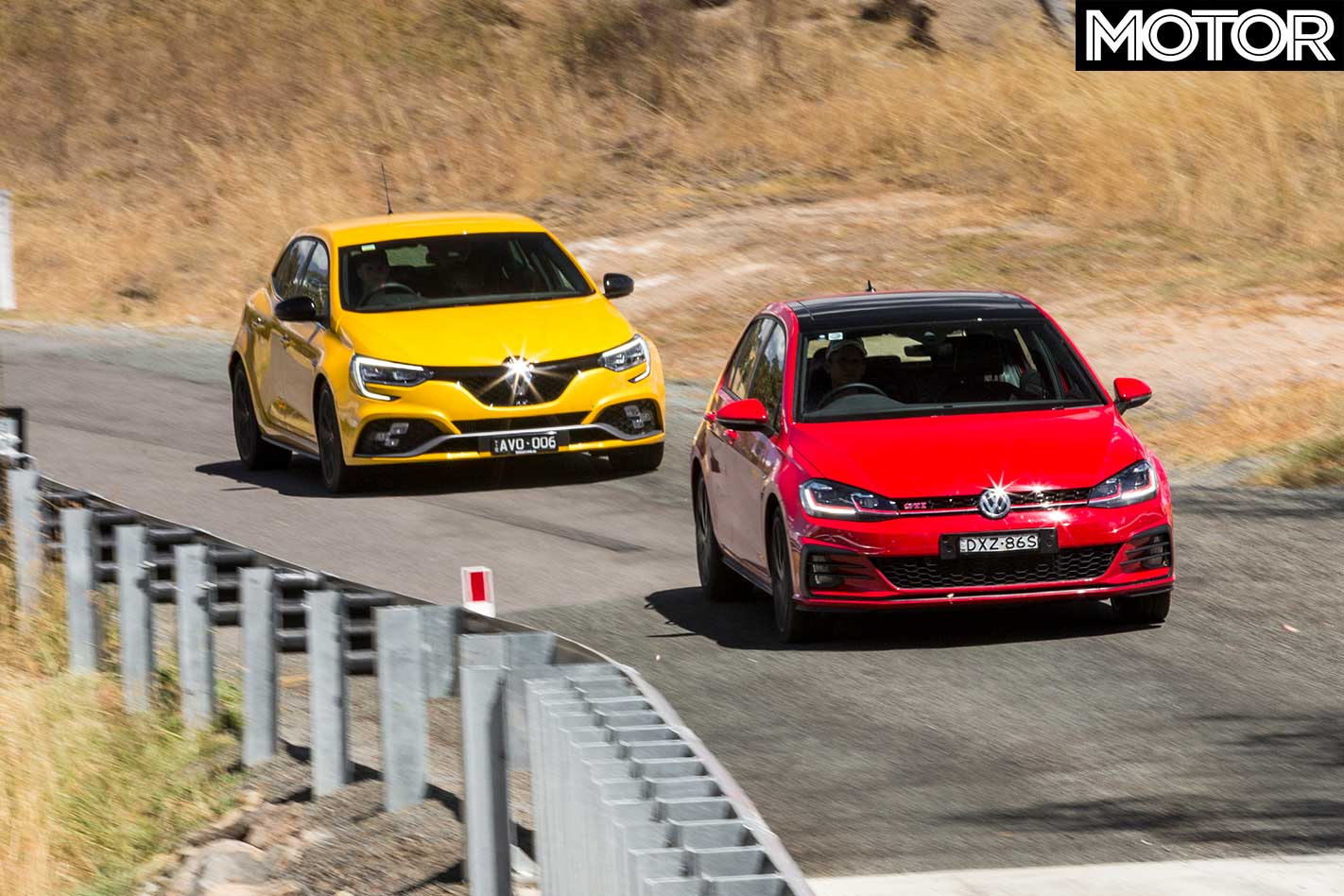
The same story plays out in handling. The Renault barrells into bends with so much grip and composure you always feel like it could have committed with another 10km/h. It’s almost intimidating to think of approaching its limits on a road. Its dual-axis front suspension helps it dig in under power surprisingly well, too, even with no limited-slip differential.
Try to keep up in the Golf and you might barrel into the bushes. Its relatively soft suspension setup leans on its outer contact patches and it doesn’t like being provoked. Adding sudden lock wags the rear-end and wakes the stability control. There’s an upside to this, though.
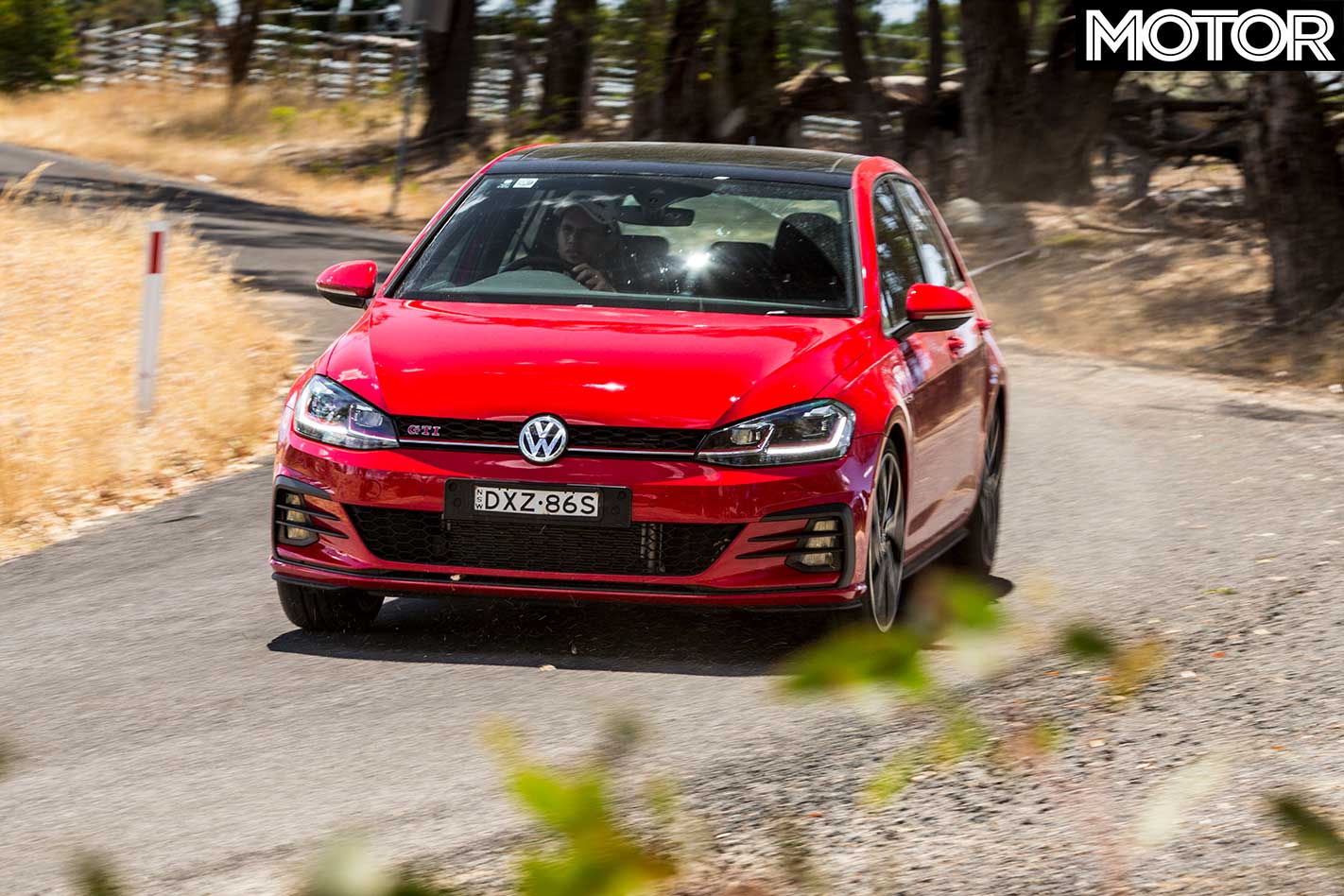
It sails over pimpled surfaces at any speed and only snags on gaping potholes. But it doesn’t crash into them, and eats up stretches of road better than some touring sedans. Obviously the suspension’s hard bits, like springs, dampers and bushings, are setup to suit the car in its softest damper setting.
Conversely, suspension is the only thing you can’t adjust in the Renault. It’s fixed and the result feels like being punched through a thin mattress. Hydraulic bump-stops put a second piston inside each damper that help slow big compressions and they work, to a degree, to isolate big hits at high speed.
Not to damn it with faint praise, but the RS is fine to live with. It’s clearly not built as well as the Golf inside, but the layout and seating position are good. The same goes for tech and outward visibility. The dual-clutch saves it from dodgy pedal layouts and you’ll get used to the weirdly positioned volume stalk, if not the cruise control buttons. Gotta love French quirk…
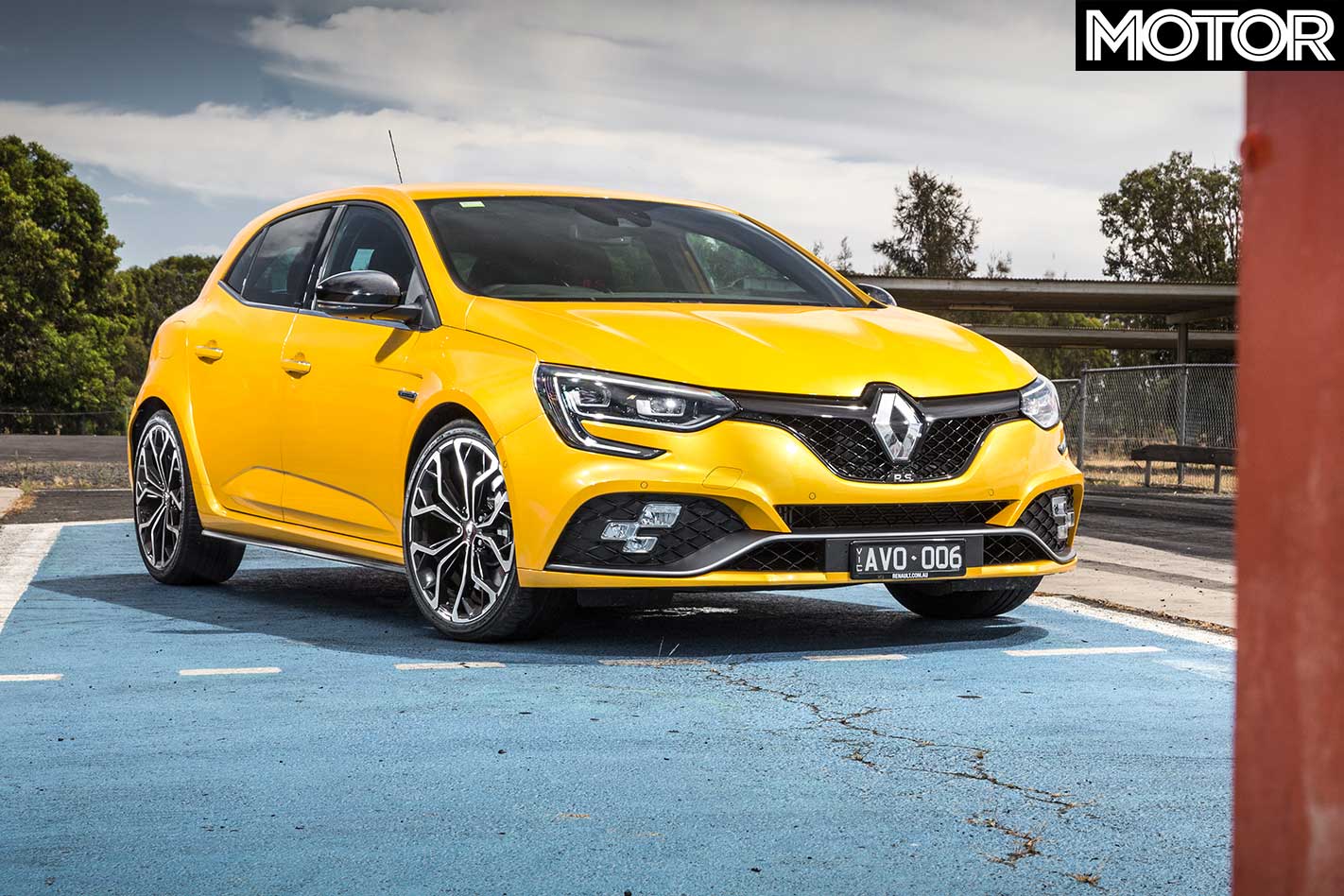
What the transmission adds, though, are frustrating paddles. They’re metal and a delight to pluck, but if you’re going to mount them on the steering column, Renault, size them properly, like elephant’s ears. Not Spock’s from Star Trek. They are occasionally a bit awkward to use mid-corner.
There are no such complaints with the Golf. It’s a lesson on refinement, class and functionality. It’s the little things, like the dead pedal to the right of the accelerator, or the felt lining along the door bins, that show you where the money goes. And that new digital cluster also means it feels fresher than ever.
Of course, the MY19 Golf GTI runs this race down to a photo finish. It’s still incredibly accomplished and relevant, and in isolation it’s fantastic. But we liked it a lot more as a premium option in a range, not the only one. At $50K, it’s lost its champagne-on-a-beer-budget appeal. And its performance feels softened off when having a real crack.
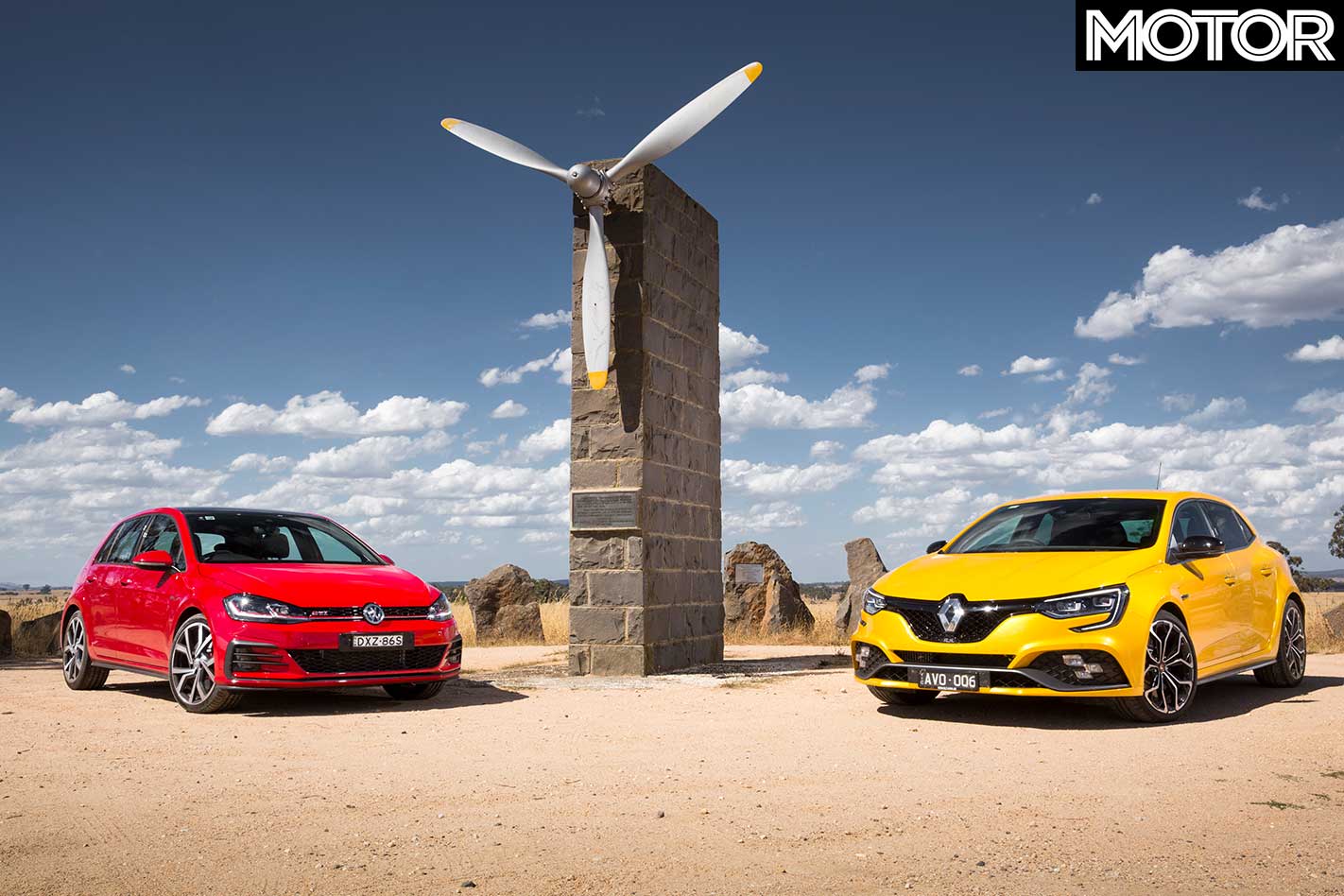
When it comes down to it, we’re parking our butts in the Renault. The points it loses on liveability are clawed back on X-Factor. Its engine is smaller, but thanks to some clever turbocharging, it’s just as strong. It sounds better than the Golf, too, and its chassis is pure wizardry.
It’s a surprise, because we never thought we’d like it this much. You could easily drive it every day, provided you’re not crossing cattle grids daily, and the transmission not only suits the direction Renault has taken the Megane RS, but finds the aural character and involvement that’s missing in the manual version. It’s a crazy new world, where we prefer an ‘auto’ RS over a manual one, but as we’ve known all along, crazy is Renault Sport’s specialty.
Fast Facts
| u00a0 | Volkswagen Golf GTI | Renault Megane RS280 EDC |
| Body | 5-door, 5-seat hatch | |
| Drive | front-wheel | |
| Engine | 1984cc inline-4, DOHC, 16v, turbo | 1798cc inline-4, DOHC, 16v, turbo |
| Bore x Stroke | 82.5 x 92.8mm | 79.7 x 90.1mm |
| Compression | 9.6:1 | 9.9:1 |
| Power | 180kW @ 7000rpm | 205kW @ 6000rpm |
| Torque | 370Nm @ 4600rpm | 390Nm @ 2400-4800rpm |
| Power/Weight | 133kW/tonne | 120kW/tonne |
| Transmission | 7-speed dual clutch | 6-speed dual clutch |
| Weight (dry) | 1352kg | 1450kg |
| Suspension (f) | struts, adaptive dampers, anti-roll bar | struts, dampers, anti-roll bars |
| Suspension (r) | multi-links, adaptive dampers, anti-roll bar | torsion-beam, dampers, anti-roll bars |
| L/W/h | 4268/1799/1442mm | 4372/1874/1445mm |
| Wheelbase | 2626mm | 2669mm |
| Tracks | 1538/1516mm (f/r) | 1615/1596mm (f/r) |
| Steering | electrically assisted rack-and-pinion | electrically assisted rack-and-pinion; rear-wheel steering |
| Brakes (f) | 340mm ventilated discs, single-piston calipers | 355mm ventilated discs, 4-piston calipers |
| Brakes (r) | 310mm ventilated discs, single-piston calipers | 339mm ventilated discs, single-piston calipers |
| Wheels | 19.0 x 7.5-inch (f/r) | 19.0 x 9.0-inch (f/r) |
| Tyre Sizes | 225/35 R19 88Y XL (f/r) | 245/35 R19 93Y (f/r) |
| Tyres | Pirelli P Zero | Bridgestone Potenza S001 |
| Price | $52,390 | $50,060 |
| Pros | Interior polish; fit and finish; ergonomics; ride | Theatre; looks; grip; turn-in |
| Cons | Traction; grip; soft handling | Stiff ride; lofty limits |
| Rating | 4 out of 5 stars | 4 out of 5 stars |
The Strip
| u00a0 | Volkswagen Golf GTI | Renault Megane RS280 EDC | |
| 0-10km/h | 0.57sec | 0.61sec | |
| 0-20km/h | 1.13sec | 1.19sec | |
| 0-30km/h | 1.73sec | 1.77sec | |
| 0-40km/h | 2.28sec | 2.33sec | |
| 0-50km/h | 2.83sec | 2.86sec | |
| 0-60km/h | 3.49sec | 3.48sec | |
| 0-70km/h | 4.13sec | 4.09sec | |
| 0-80km/h | 4.83sec | 4.73sec | |
| 0-90km/h | 5.63sec | 5.55sec | |
| 0-100km/h | 6.51sec | 6.42sec | |
| 0-110km/h | 7.48sec | 7.3sec | |
| 0-120km/h | 8.54sec | 8.3sec | |
| 0-130km/h | 9.69sec | 9.6sec | |
| 0-140km/h | 11.03sec | 10.92sec | |
| 0-150km/h | 12.5sec | 12.32sec | |
| 0-160km/h | 14.34sec | 14.01sec | |
| 0-400m | 14.58sec @ 161.69km/h | 14.52sec @ 162.66km/h | |
| 80-120km/h (Drive) | 3.72sec | 3.57sec | |
| 100-0km/h | 41.04m | 37.21m | |
| Speed in Gears | |||
| 1st | 55km/h @ 6500rpm | 57km/h @ 6825rpm | |
| 2nd | 86km/h @ 6500rpm | 90km/h @ 6825rpm | |
| 3rd | 125km/h @ 6500rpm | 131km/h @ 6825rpm | |
| 4th | 169km/h @ 6500rpm | 180km/h @ 6825rpm | |
| 5th | 221km/h @ 6500rpm* | 234km/h @ 6825rpm* | |
| 6th | 250km/h @u00a06500rpm* | 255km/h @ 5395rpm* | |
| 7th | 250km/h @u00a06500rpm* | N/A | |
Heathcote Raceway, 28˚C, dry. Driver: Louis Cordony *Manufacturer’s claim Official timing supplier – VBOX Australia
In Detail
2019 Renault Megane RS280 EDC
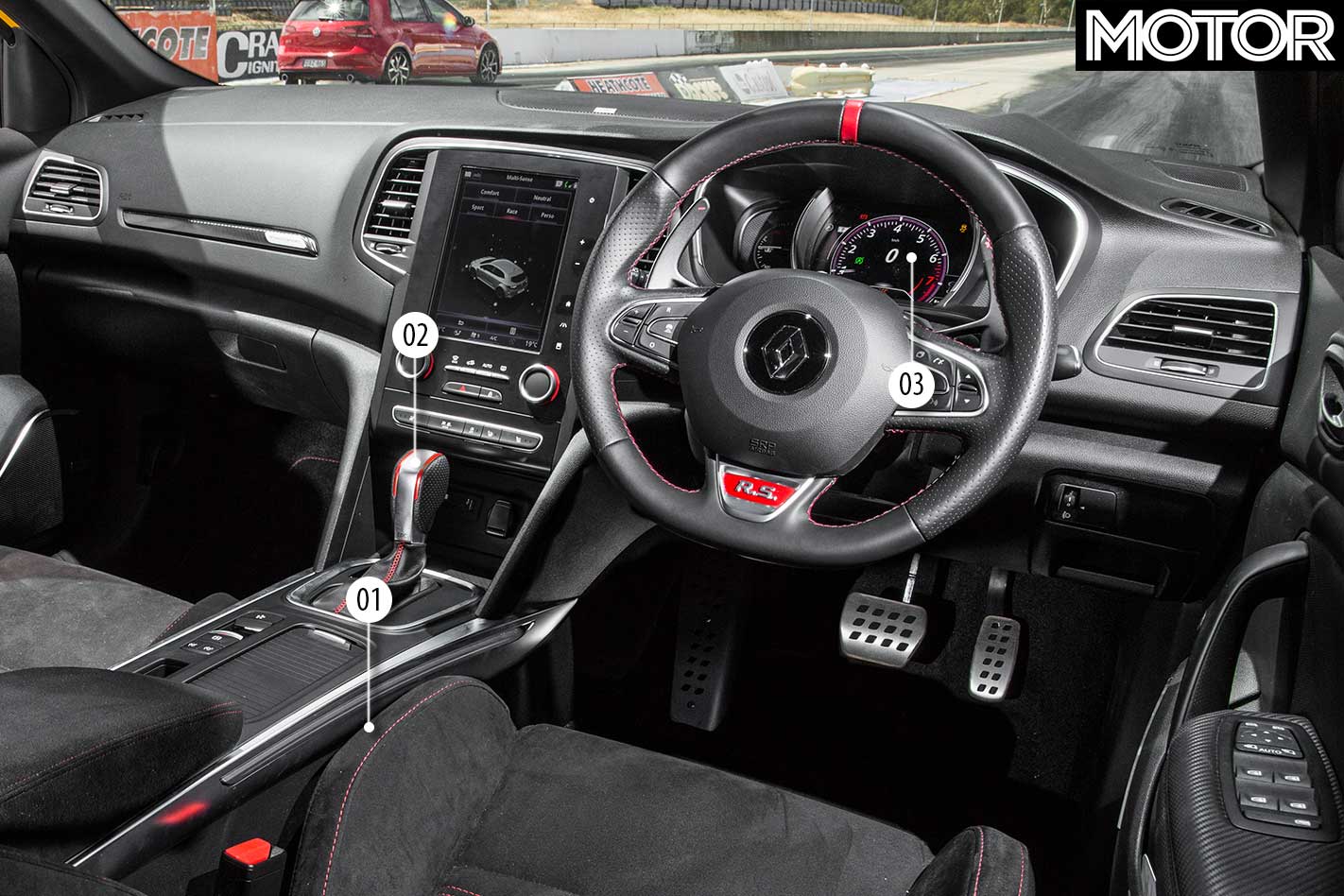
01 – SEATS Megane’s standard cloth seat trim looks infinitely cheaper than VW’s ‘Clark’ upholstery, but their bolstering comfort is in another league
02 – GEAR SHIFTER Gear lever action and feel is worse in Megane, compared to VW, but the paddle action is much slicker and more tactile. We love the paddles’ metal touch.
03 – INSTRUMENTS Megane cluster can’t match VW’s for clarity or functions, but offers more customisation of rev and speed information through drive menu
2019 Volkswagen Golf GTI
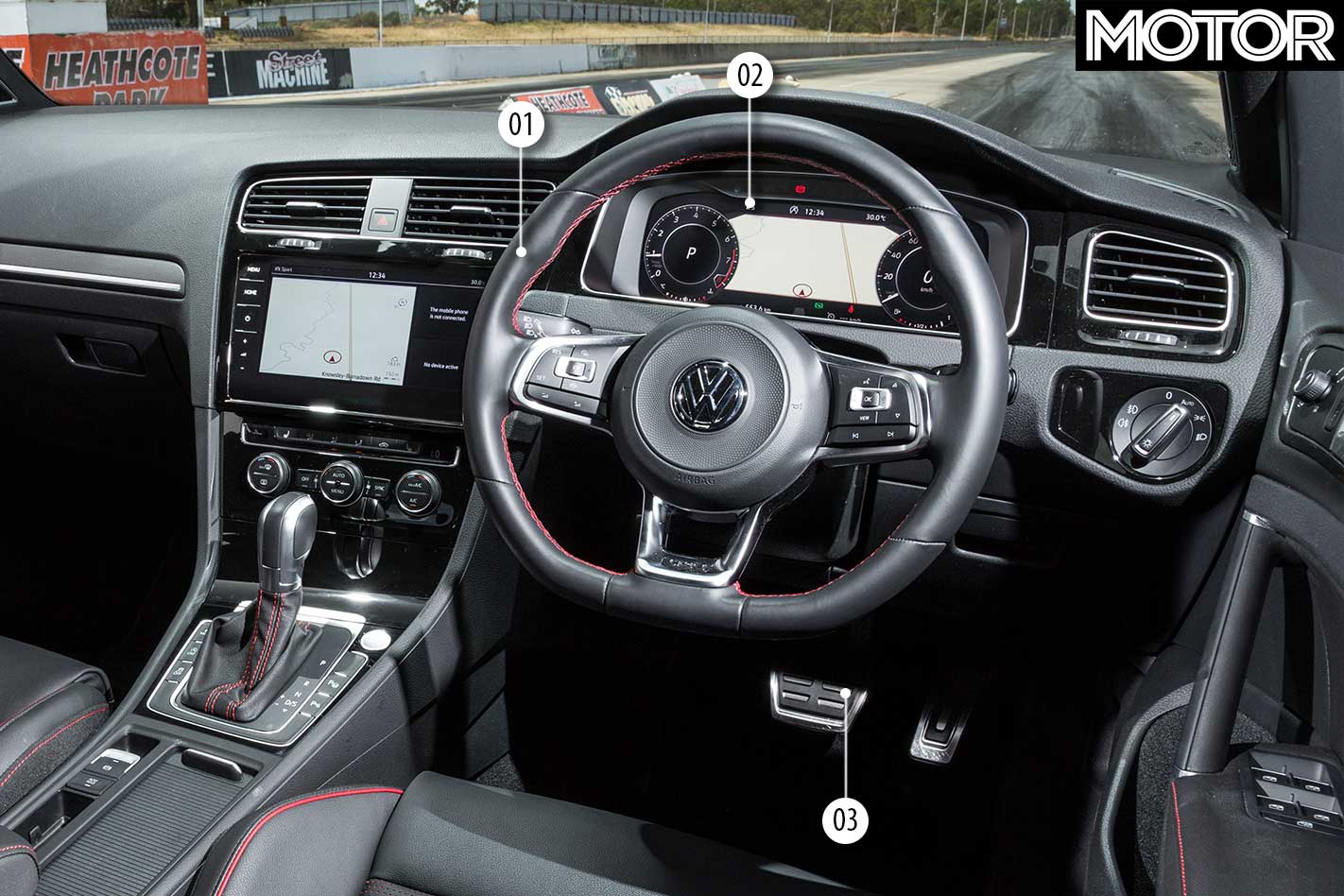
01 – STEERING WHEEL Lovely leather wheel in VW uses a rounder rim than the Megane’s nappa leather wheel, which has more formed thumb locks
02 – TECHNOLOGY Huge 9.2-inch info screen trumps Megane’s 7.0-inch display for graphics and resolution, but is part of $2300 Sound & Style pack
03 – PEDALS Volkswagen footwell is more spacious, however, the Megane’s pedals feel sturdier underfoot and feature a fancy metal footrest
*This article originally stated the succeeded Golf GTI was equipped with a dry-clutch six-speed DSG transmission. This was incorrect. The article has been updated to reflect that.
You know that feeling when you think you’ve out-braked yourself into a corner and your eyes freeze and there’s a gassy taste in your mouth for that life-flash second before muscle memory or adrenaline or whatever it is takes over and gets your eyes and the wheel and the car miraculously turning where you need to go?
I know that you know that feeling, because you’re reading this. Not that Wheels readers are over-ambitious drivers, but rather, that we’re car people. We want more from our motoring, from our choice of car to the way we spec it, what we do to it, how we drive it. The old Thrillseekers TV series put it best: We’re a special breed of cat. We don’t wait to meet danger. We chase it, challenge it – and lick it.
I’ve just had that very same feeling, sitting on my fat quoit in front of the telly. My wife was watching some program about a Japanese woman named Marie Kondo.
In case you haven’t heard (and I obviously hadn’t), Marie has written a book, The Life-Changing Magic of Tidying Up: The Japanese Art of Decluttering and Organising, which is selling its brains out all over the world.
Suddenly, starkly, I knew what was coming. A fridge magnet had foretold for months of an imminent council clean-up. My beloved merely turned her head. At me, frozen in terror.
My wife is convinced I’m a borderline hoarder. I admit that I collect a lot of car stuff, the value of which may not be immediately apparent to most.
I know I needn’t explain the hundreds of awesome motoring and motorsport books, the 550-odd slot cars, the static models, the magazines – oh Lord, the magazines… Nor the more personal career mementoes, like the flag from the roof of the Porsche 911 I drove across the Simpson Desert in 1999, the jack from the Holden JB Camira we shredded in 2006, the Olivetti Praxis 35 (with box and papers) that was the Audi Quattro of typewriters when I got it in 1983.
Marie Kondo’s thing is to decide whether a particular item “sparks joy”. Well, those things do. About once a decade, when I look at them. If something doesn’t spark joy, Marie advises, you thank it for being in your life and let it go.
What I’ve spent the weekend struggling with is the boxes and boxes of media kits and brochures, the motor-racing programs and printed results. As I looked at them, there was certainly a spark of recollection, even a new awareness of the initial reason that I kept, say, this 1983 Dick Johnson Racing media kit, or the 1988 Paris-Algiers-Dakar book of supp regs, or a dozen years’ worth of Australian F1 Grand Prix media kits and programs.
But a spark of joy?
I’ve realised that things like these always had almost the gravitas of sacred tomes. It’s really important to remember that I hadn’t foreseen the advent of the internet: a journo’s reference material and sources were his or her stock-in-trade. I couldn’t predict why, in future, I might have need of this 1989 Arrows F1 media kit (with earplugs and stickers) – but I knew that if I ever did, I wasn’t going to find one at the local library.
I found seven or eight really big, glossy calendars. A few from Lamborghini, a couple from Bentley, a few more from Porsche. They go back to 2008. Each time I’m gifted one I think, “Ooh! This is beautiful! It’s way too good to get all fingerprinty on the wall. I must put this away and save it.” On the weekend, for the first time, I acknowledged a flaw in the strategy of using a calendar in any year other than the one on the front. But I’m still in touch with my inner 15 year old’s belief that I’ll one day slice out my favourite pictures and Blu Tack them to my bedroom wall.
I’ve just packed up most of the stuff and put it back where it was, to figure it out later.
