
Feast your eyes, if it’s to your taste, on the Hispano Suiza Carmen electric supercar.
It marks the ‘world stage’ return of the little-known Spanish brand, which has been flying under the radar for most of its 115 year history.
Hispano Suiza calls the Carmen a ‘hyperlux’ grand touring car, with the design and intended elegance of the 1938 Hispano Suiza H6C Dubonnet Xenia.
Another electric supercar revealed: the Pininfarina Battista
While its stunning design might spark debate, the performance figures Hispano Suiza claim are hiding beneath its swoopy body are impressive.
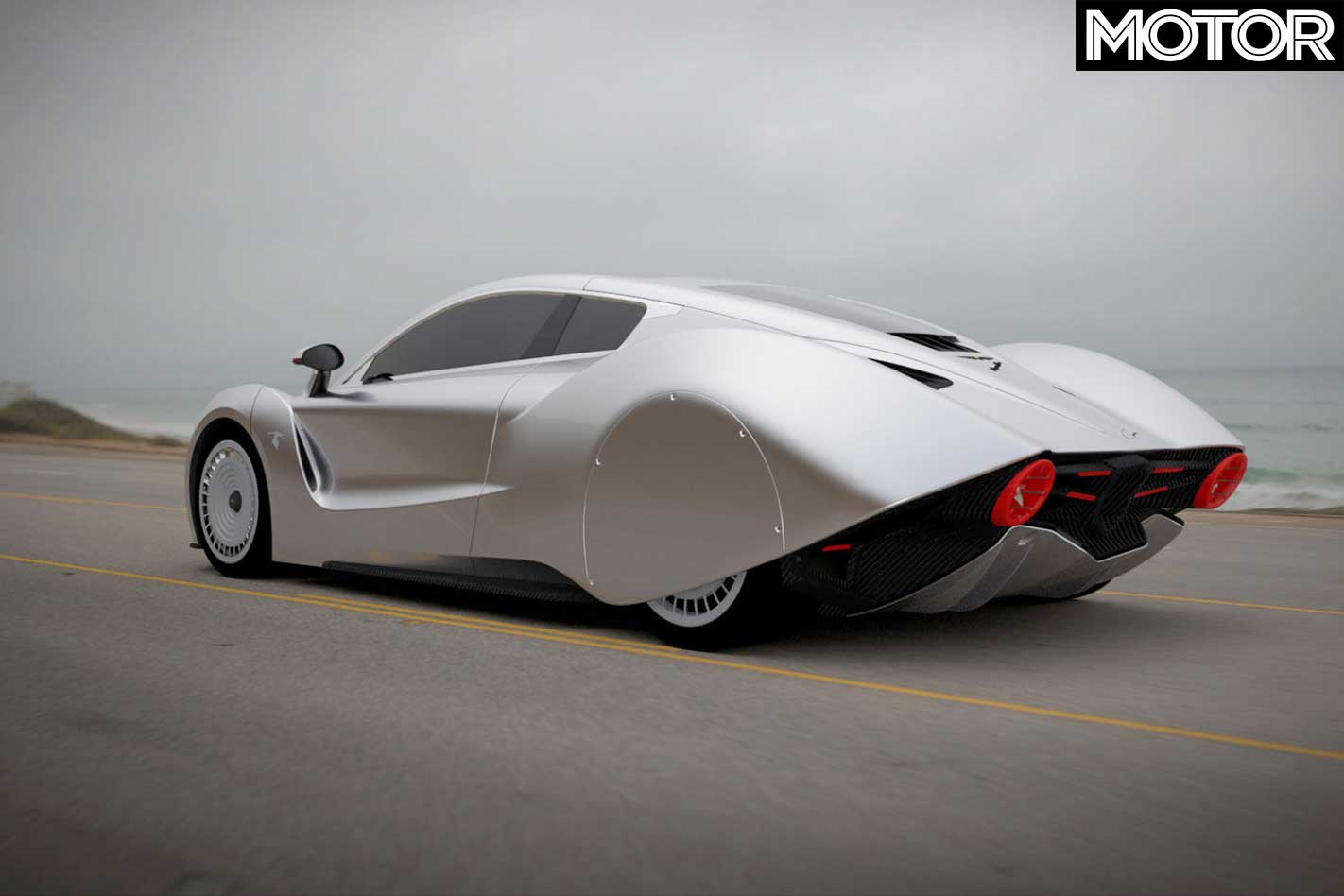
The rear wheels are powered by two 375kW permanent-magnet synchronous motors, one each, resulting in a total of 750kW for the 1,690kg mass.
Not only is 444kW-per-tonne nothing to scoff at, but Hispano Suiza says the Carmen is able to hit 100km/h in less than three seconds.
It says a ‘T-shaped’ batterly layout “running as a central spine of the car and behind the seats,” is important to the Carmen’s stability and structure within the carbon fibre monocoque.
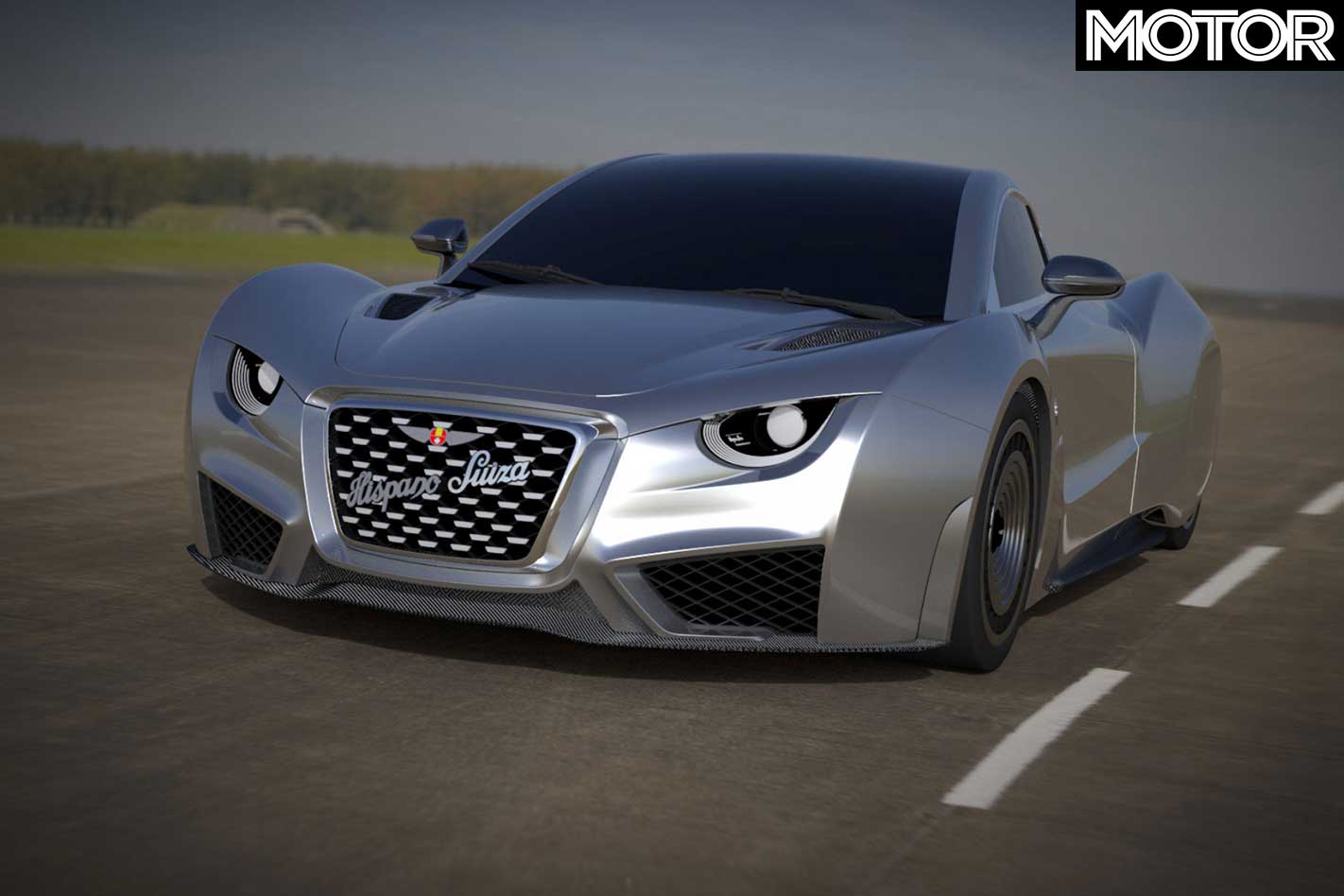
While the car is inspired by the design of the unique H6C Dubonnet Xenia, Hispano Suiza says the car is actually named for and inspired by the company president’s late mother, Carmen.
“The production car world premiere is the realisation of a lifelong ambition for the Suqué Mateu family and, in particular, for Miguel Suqué Mateu, current president of Hispano Suiza and great-grandson of the brand’s founder [Damián Mateu].
“The Carmen is inspired by the unique style and elegance of Mr Suqué Mateu’s mother, Carmen Mateu.”
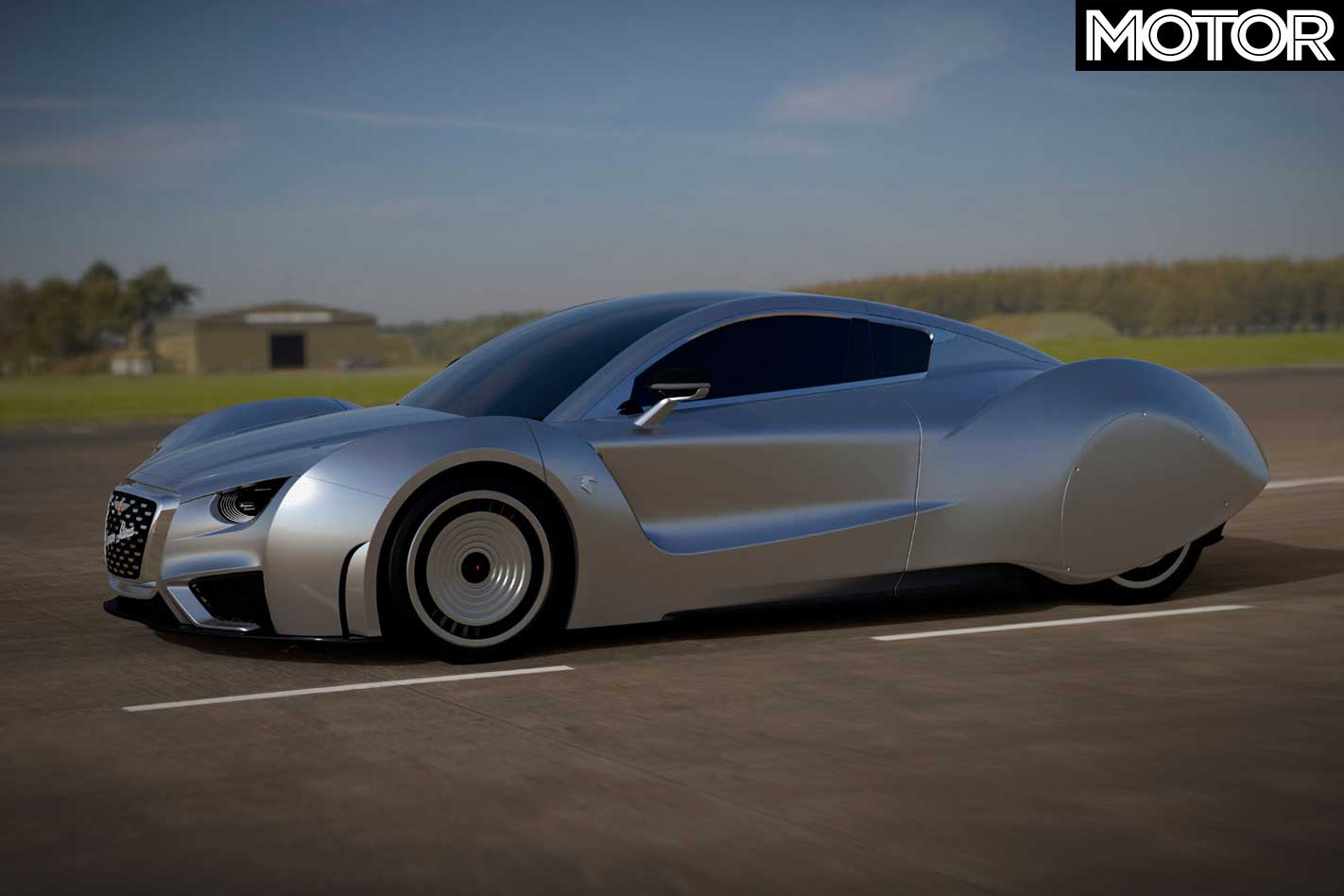
Only 19 of these rather pricey (€1.5 million, or AUD$2.4 million before taxes) electric supercars will be built between this year and 2021.
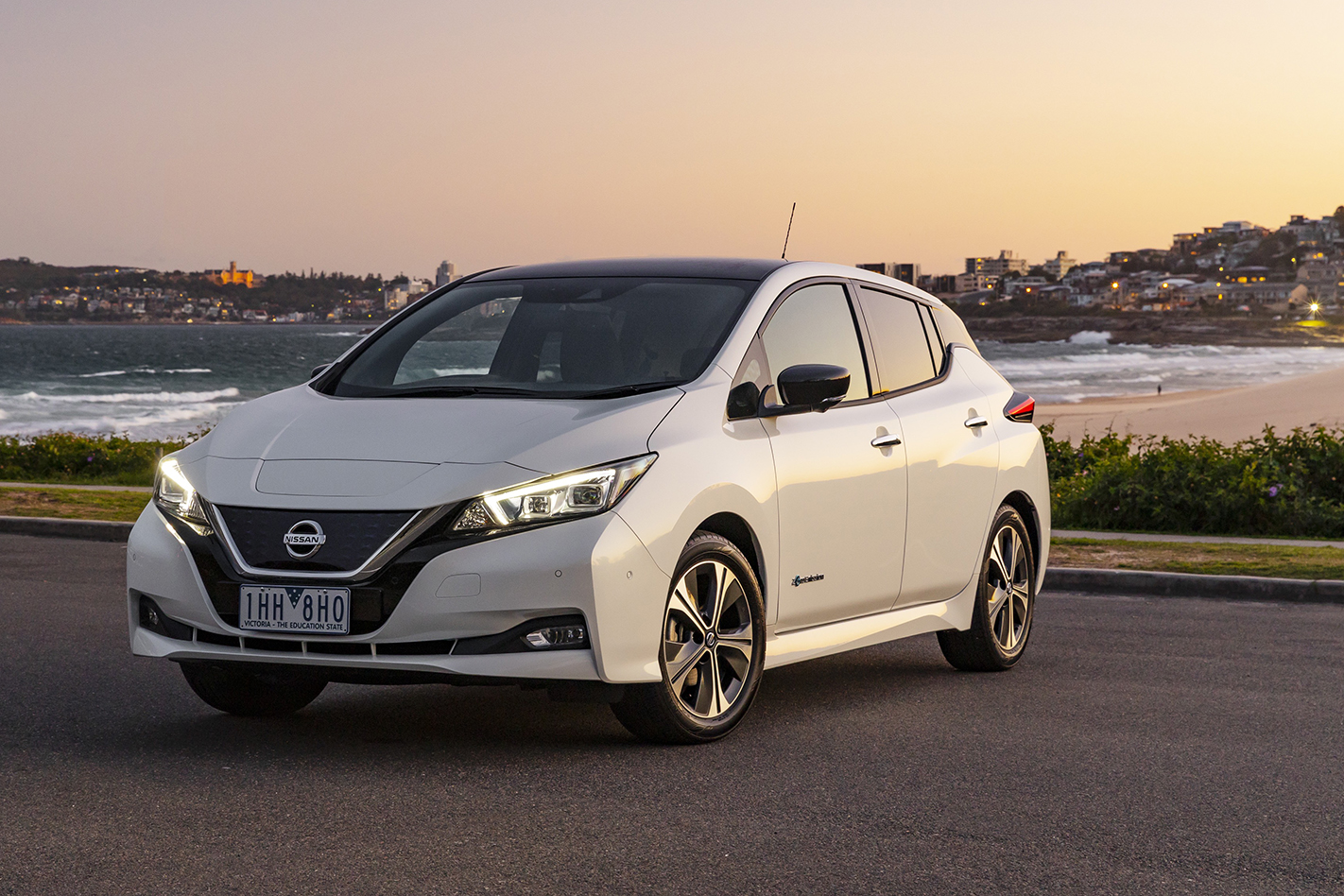
Nissan Australia has confirmed that the second generation of its all-electric Leaf hatchback will arrive in local showrooms in August in a single high-specification grade, with a price that sneaks in under the $50K barrier – but only just.
Retailing for $49,990 before on-road costs the new Nissan Leaf costs $1000 more than its closest competitor, the Hyundai Ioniq Electric Premium, but boasts a significant hardware advantage in its bigger battery and more powerful motor.
While the Hyundai offers a 28kWh battery capacity (think of that number as being equivalent to the volume of a fuel tank), the second-generation Nissan Leaf can store a more useful 40kWh in its lithium-ion battery pack.
The Nissan Leaf’s power output also outguns its Korean rival, with 110kW of power and 320Nm of torque eclipsing the Ioniq EV’s 88kW/295Nm figures.
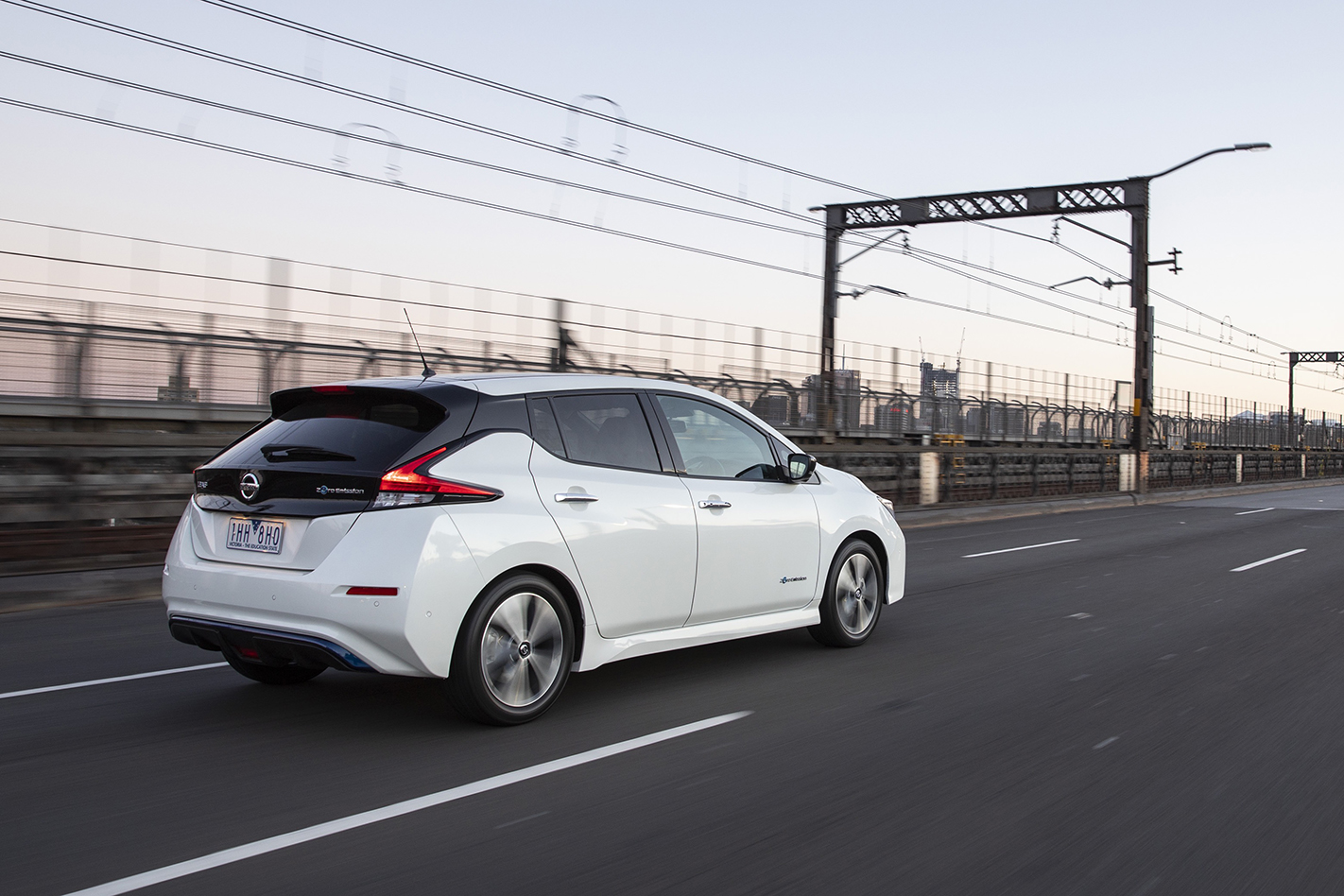
As for range, Nissan claims a real-world single-charge travel distance of 270km – 40km more than the electric Ioniq. While Nissan has recently announced an even longer-ranged Leaf variant (which has yet to be confirmed for an Australian release), the base Leaf’s 270km figure should allow the average Australian motorist to comfortably drive for around three or four days before a recharge is required.
WANT TO KNOW HOW THE NEW NISSAN LEAF DRIVES? READ OUR REVIEW
Charge times vary depending on what method is used, with a standard household wall outlet able to recharge a battery from near-empty to full within 24 hours and a CHAdeMO rapid charger able to bring a battery from 20 percent capacity to 80 percent in around an hour. For the best convenience though, owners will likely install a 7kW wall charger in their garages or carports to achieve a full-charge time of 7.5 hours.
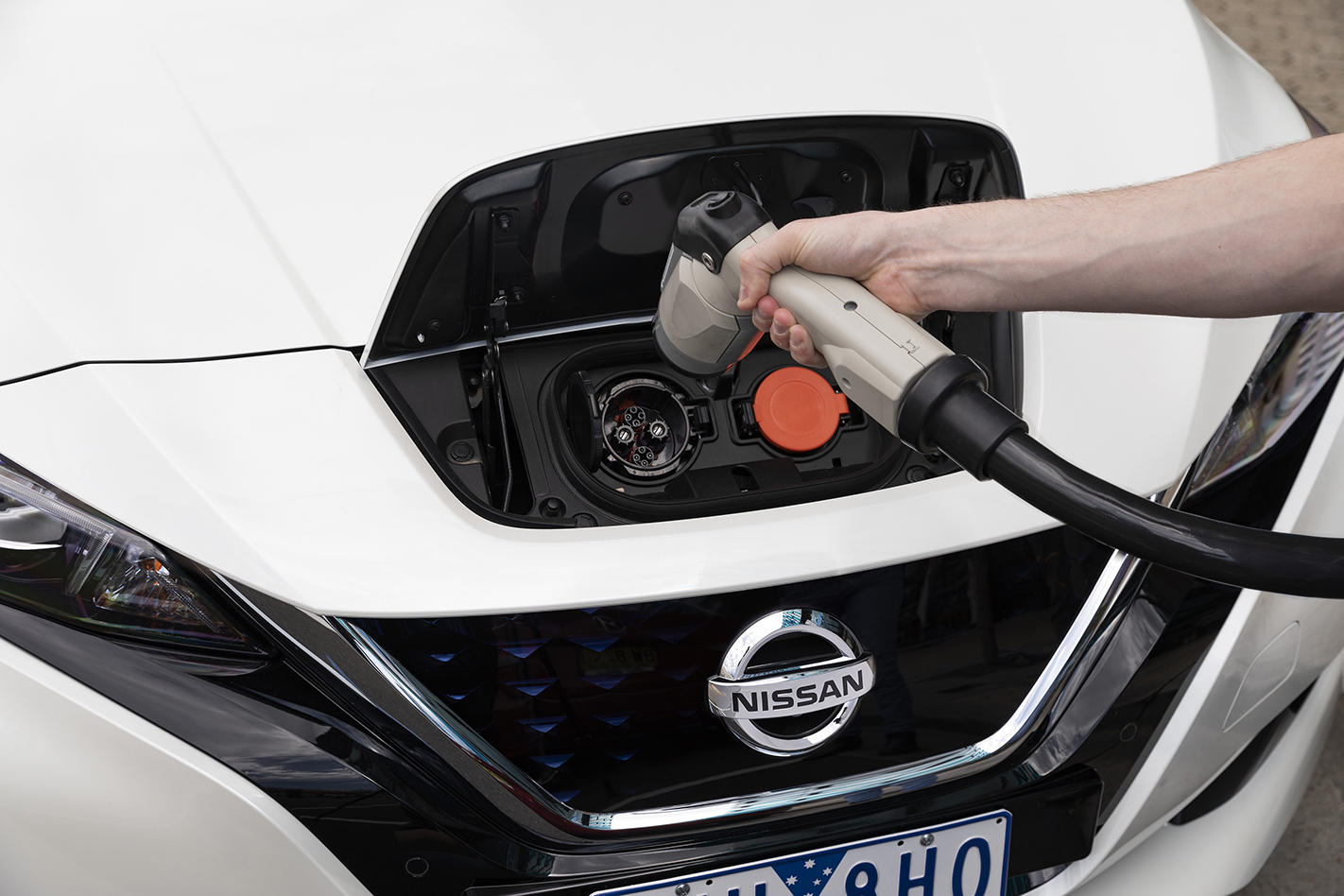
But the Leaf won’t just be able to take power from the outlet – it’ll be able to feed some of its stored energy back into the power grid, something which could earn owners extra income merely for plugging their car in while parked.
Known as ‘vehicle to grid’ technology, it allows energy infrastructure companies to draw on the power stored in electric vehicles to help smooth out the electricity supply. It’s only momentary – and will not greatly impact on vehicle charge times – but vehicle owners are compensated each time it occurs.
Nissan Australia is still working with energy companies to bring Vehicle-To-Grid services to our shores (it’s already been proven in Europe), but all Leafs sold here will be compatible with the technology.
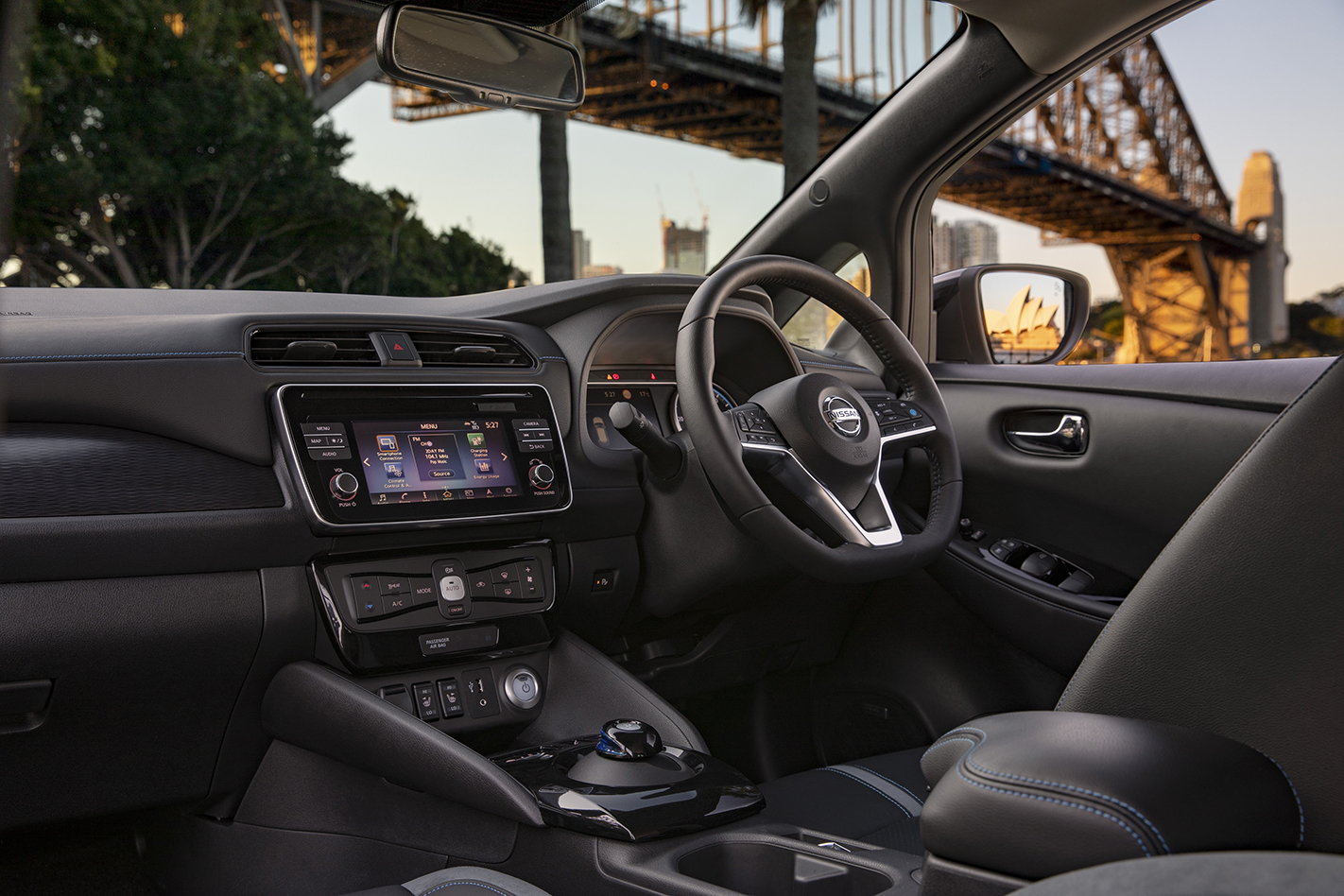
Other standard equipment in the Leaf includes highlights like active cruise control, a 360-degree camera view that can detect moving objects, auto high beam, front and rear parking sensors, an 8-inch touchscreen infotainment display, sat-nav, a heated steering wheel, climate control and leather upholstery.
Android Auto/Apple Carplay smartphone mirroring will also be standard, while safety equipment includes Autonomous emergency braking with pedestrian protection, lane keep assist, frontal collision detection and rear cross traffic alert.
PRICING
Deliveries of the 2019 Nissan Leaf officially begin in August this year, though prospective owners can pre-order a Leaf from today. All pricing does not include on-road costs.
- Nissan Leaf 40kWh – $49,990
TWO TENTHS of a second. That’s all that split the BMW M2 Competition and M5 Competition around one lap of the West Circuit.
When Rick Kelly revealed this, jaws should have hit the concrete. But the M2 Competition had enchanted so many at this point, we more wondered if it could squash BMW’s 17-year-long drought at Performance Car of the Year. It was clear this is one of Munich’s most potent weapons in a while.
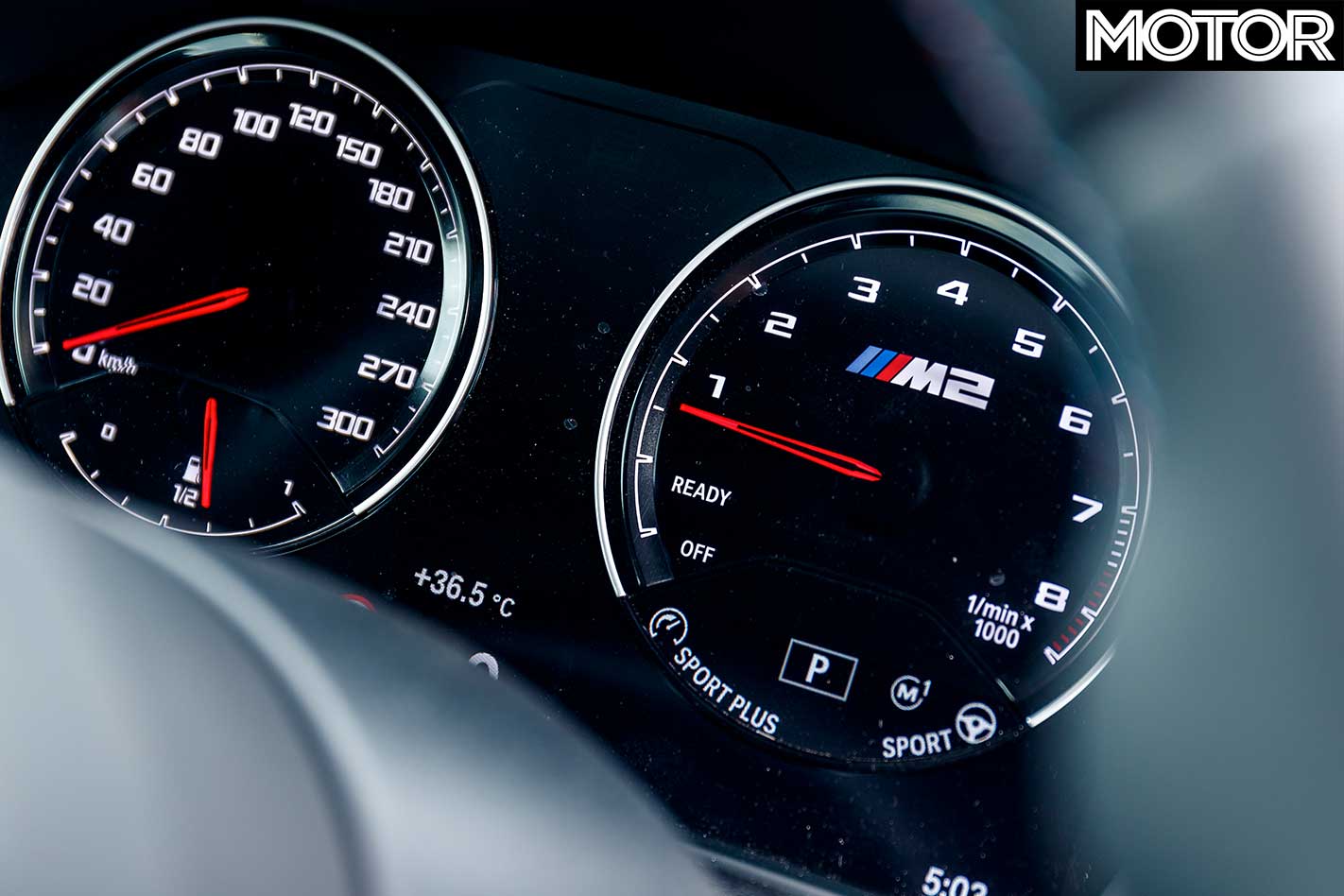
The M2 has barely passed puberty in its life cycle, but the Competition badge changes much more than its name. BMW now bolts the M3 and M4’s twin-turbo inline six into the M2’s little snout to raise power from 272kW to 302kW. Meanwhile, torque swells to an M3/M4-matching 550Nm.
Despite gaining 55kg, an injection of an extra 30kW/85Nm means it still punches as hard as a rapper’s security guard and a 2.5 second burst from 80-120km/h reveals it’s three tenths faster than the old car on a roll. Drop the hammer and thrust builds instantly before its mid-range hurls you into a meaningful top-end rush.
It sounds all right, too, as even though the new engine replaces the N55’s soulful timbre with a coarser note, its growl is more natural approaching its 7600rpm redline.
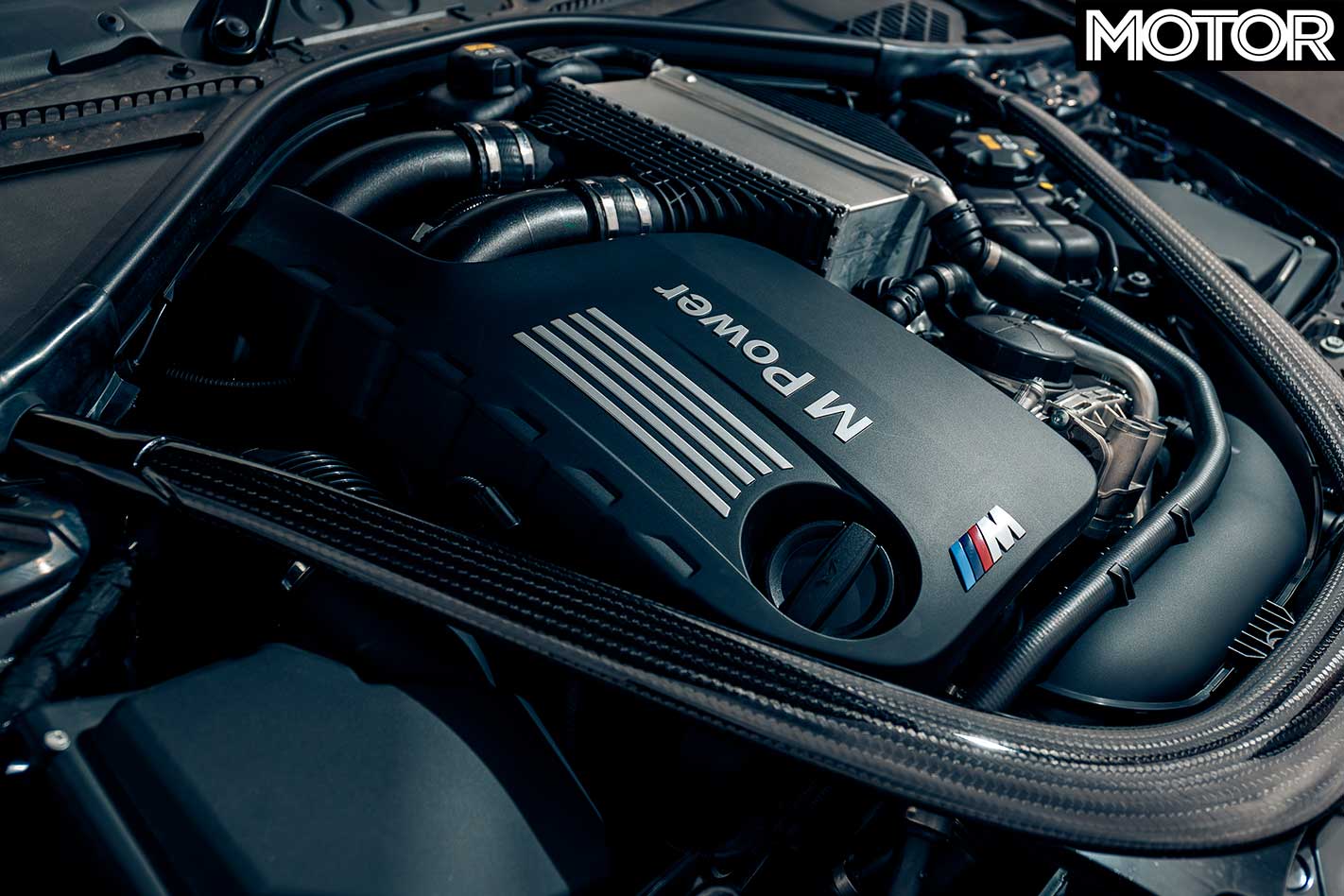
We’ll admit we were nervous to uncork this power where South Australia’s Gorge Road straddles Cudlee Creek, especially in something as wide and short as a go-kart. Those corners dotted with cracks, lumps and elevation changes aren’t forgiving.
Yet, few could have kept up with the M2. New engine mapping calms the S55’s outputs so they build more progressively and make its throttle more usable than the original M3 or M4 could ever dream.
Turn in and it holds on as if its Michelins double in width. The suspension soaks any big lumps and, crucially, it’s an M-car that wants to talk to you. You can feel the grip of each tyre patch through those nice, big-winged M4 Competition seats. The steering, too, relies on new software and a reinforced front-end to cut corners with the kind of precision a surgeon would envy.
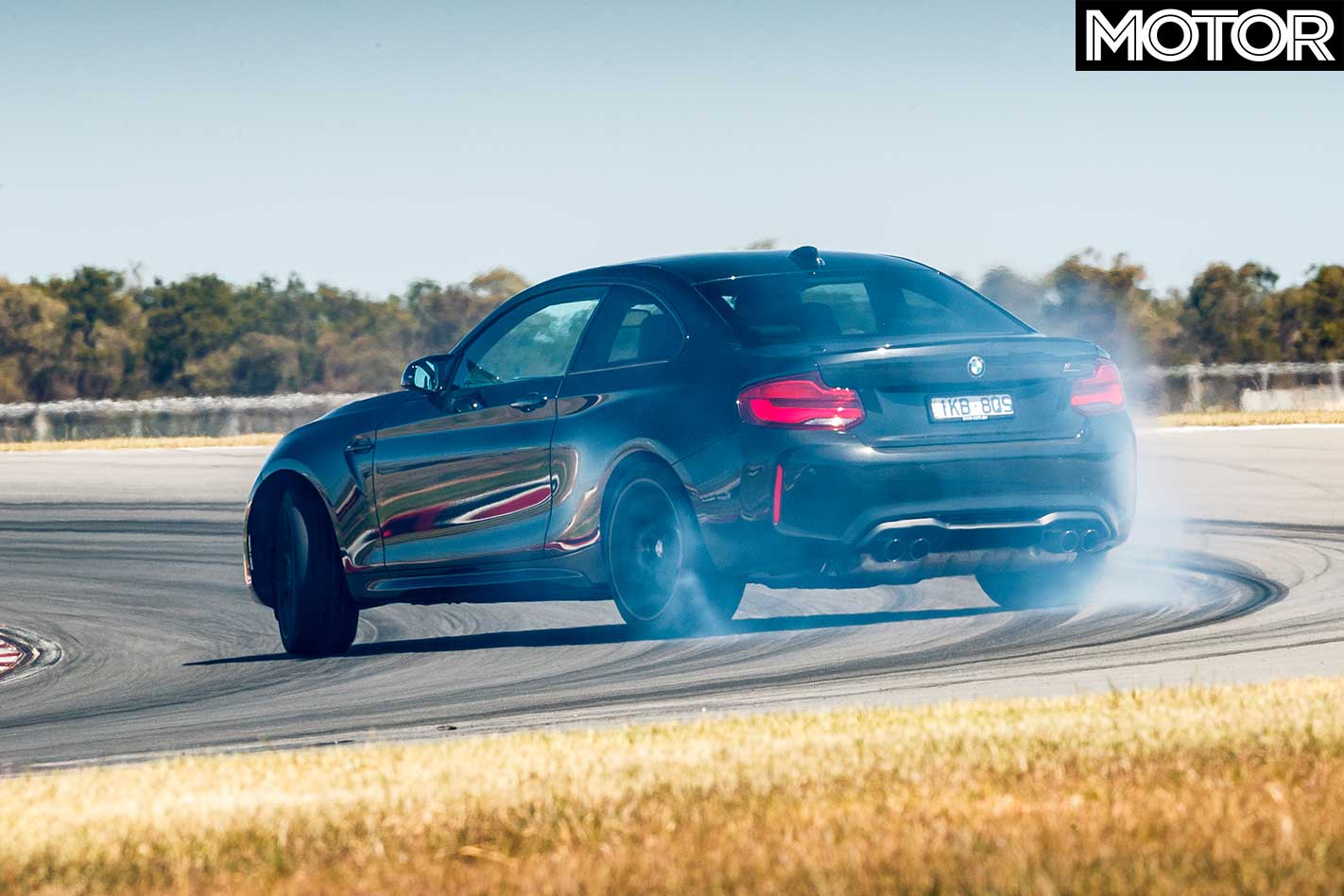
Make room on your bucket list to drive this thing on track because its dynamics are bewitching on, and beyond, its limit. It’ll happily shift its angle of attack into a corner on the brakes or pivot around at the apex with more lock.
Meanwhile, stability software lifted from the M4 CS softly guides, rather than snaps, you back in line if you overcook it. Switch off the stability and not only does it now have the power to now match, and overcome, its prodigious grip, it gives you the confidence to hang the tail out at a desired angle.
Throughout the event you’d exit the M2 Competition wanting more for all the right reasons. Only a crowbar would pry Messrs Newman and Campbell from the driver’s seat after their drift shots. Even Rick found it difficult to move onto the next car.
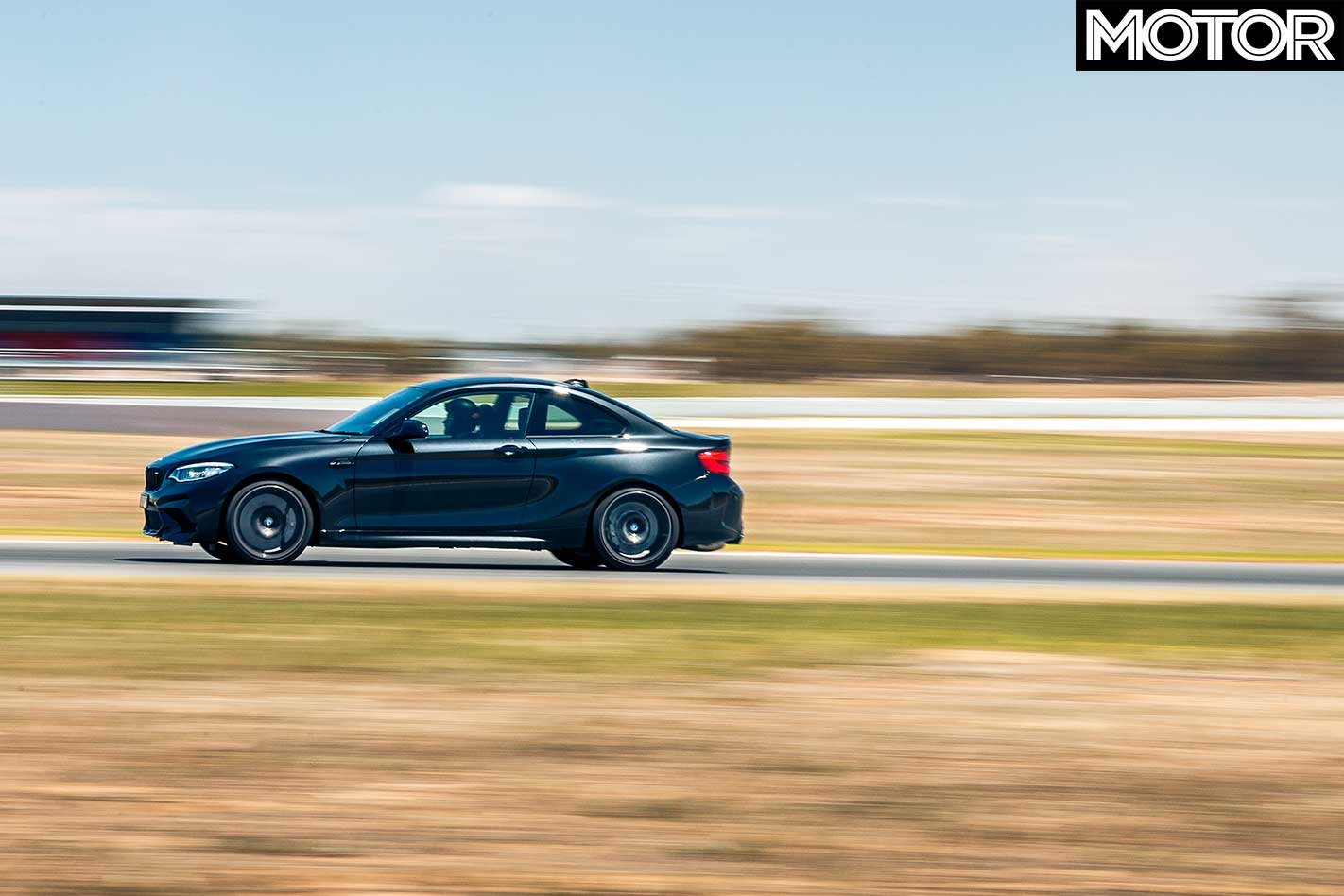
Hunting down its big bro so convincingly on a track with a straight as long as an airstrip shows how deep its talents reach, and only Max Verstappen on a qualifier would care about the whiff of understeer or high-speed instability.
Few cars have felt as involving, exciting and confidence inspiring. That rings true even outside the walls of PCOTY where its price, practicality and pedigree attract a span of rivals. It might not accelerate like an Audi RS3, or poise itself like a Porsche 718 Cayman, but it comes close, and offers more options than either.
It’s hard to grasp this breadth of ability when you first hop in. You still sit high and it’s clear much of the Competition’s budget was spent on things deep underneath the leather. Its ride, too, is firm. Do we wish it had adaptive damping? Not if it compromised its simplicity, because that’s what allows it to focus on mastering one thing – driving.
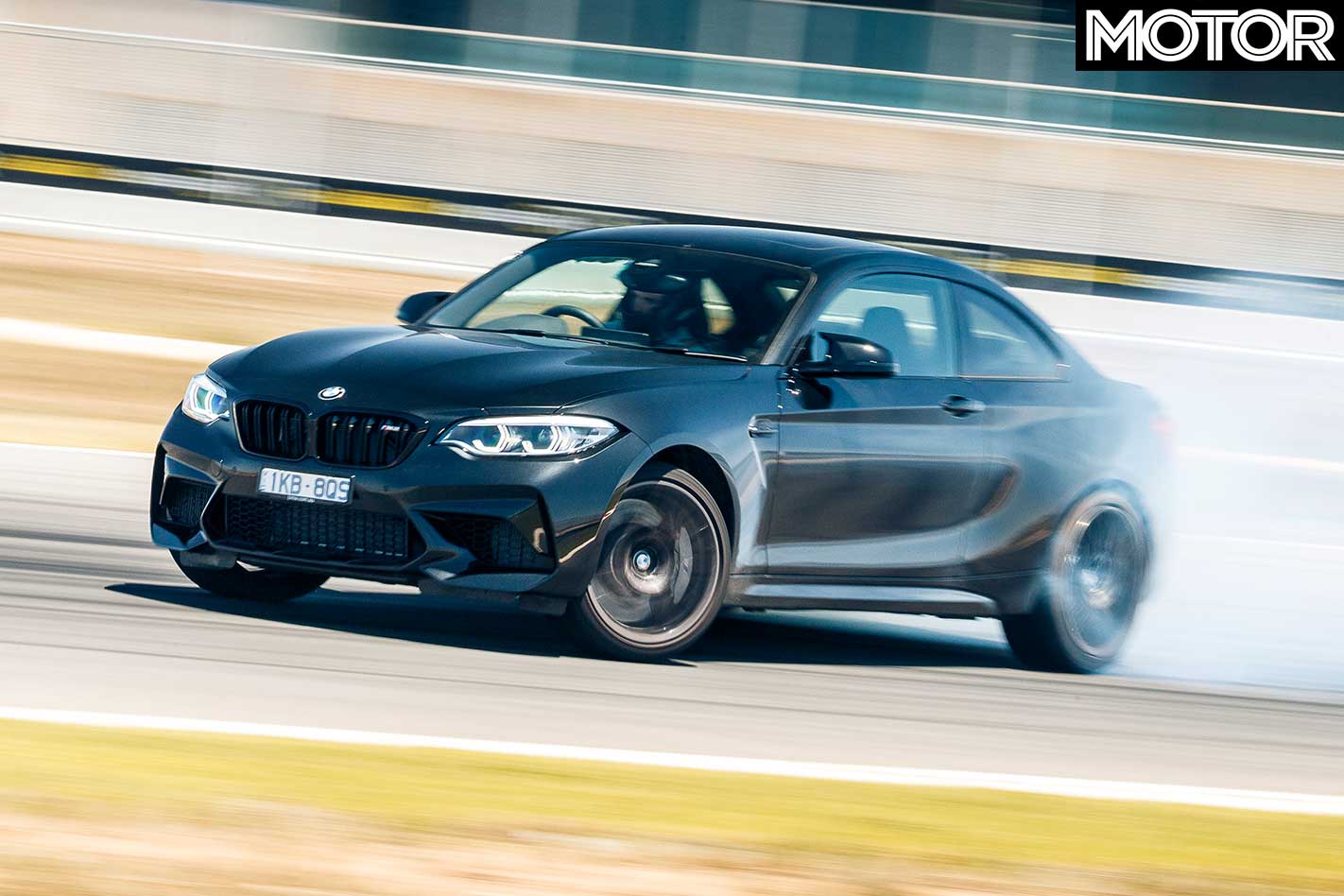
As for improvements, we do wish 400mm and 380mm brake discs combined with 20 pistons worth of caliper bit harder. But the real value in the optional brakes, that inflate its $104,990 price by $3000, is they’ll outlast Iron Man’s armour suit. And even though its seven-speed dual clutch proved faultless, there’s a good chance the no-cost six-speed manual would sweeten its package even further.
Slaying what finished in first place was always going to be a colossal challenge, yet at the top of three judges’ score sheets and a tight second on another, it came very close to joining the E36 and E46 M3 in BMW’s PCOTY trophy cabinet. However, swiping a silver medal in a field of this calibre is a solid achievement and helps the little fella make a point loud and clear. BMW M is back.
The Numbers
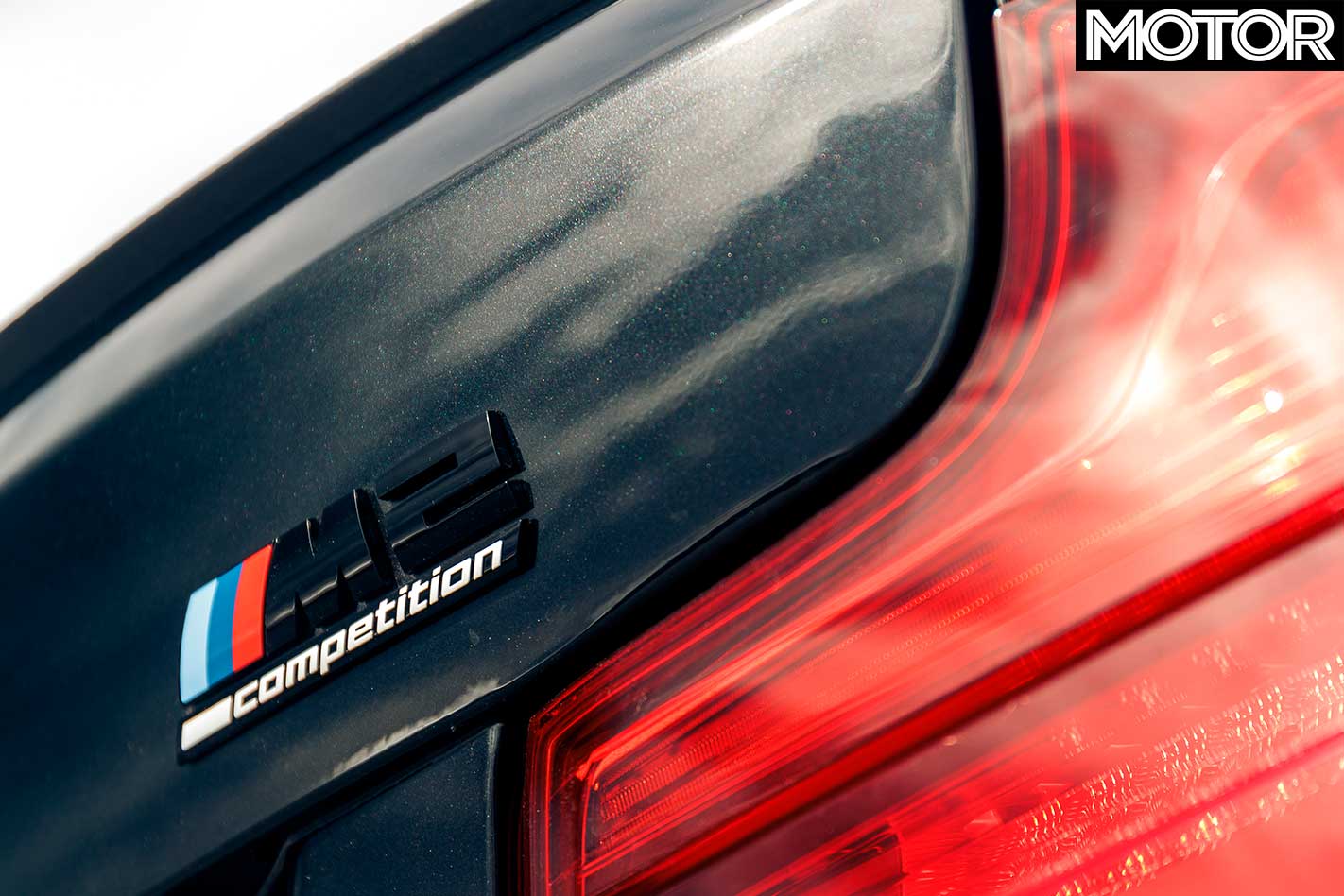
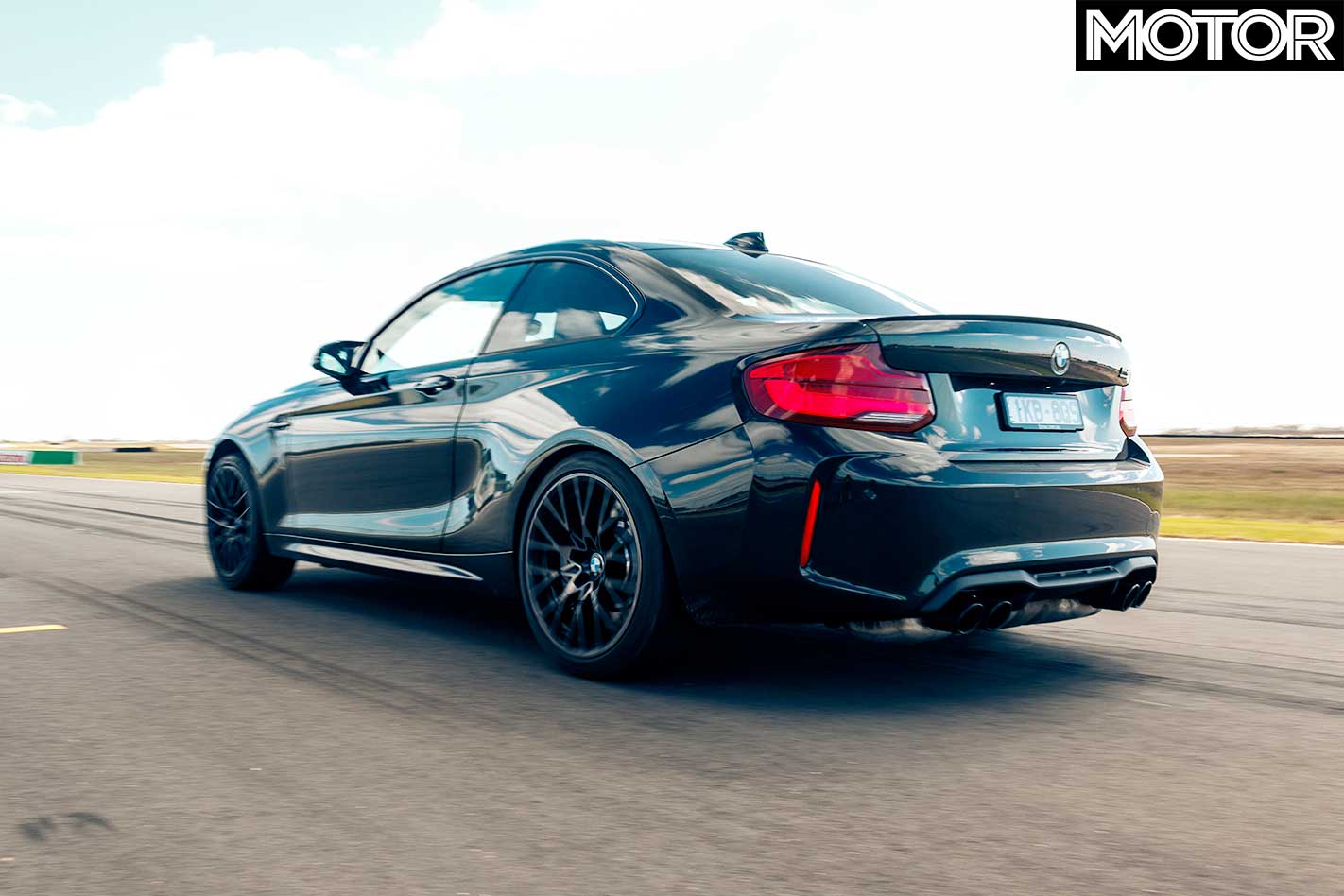
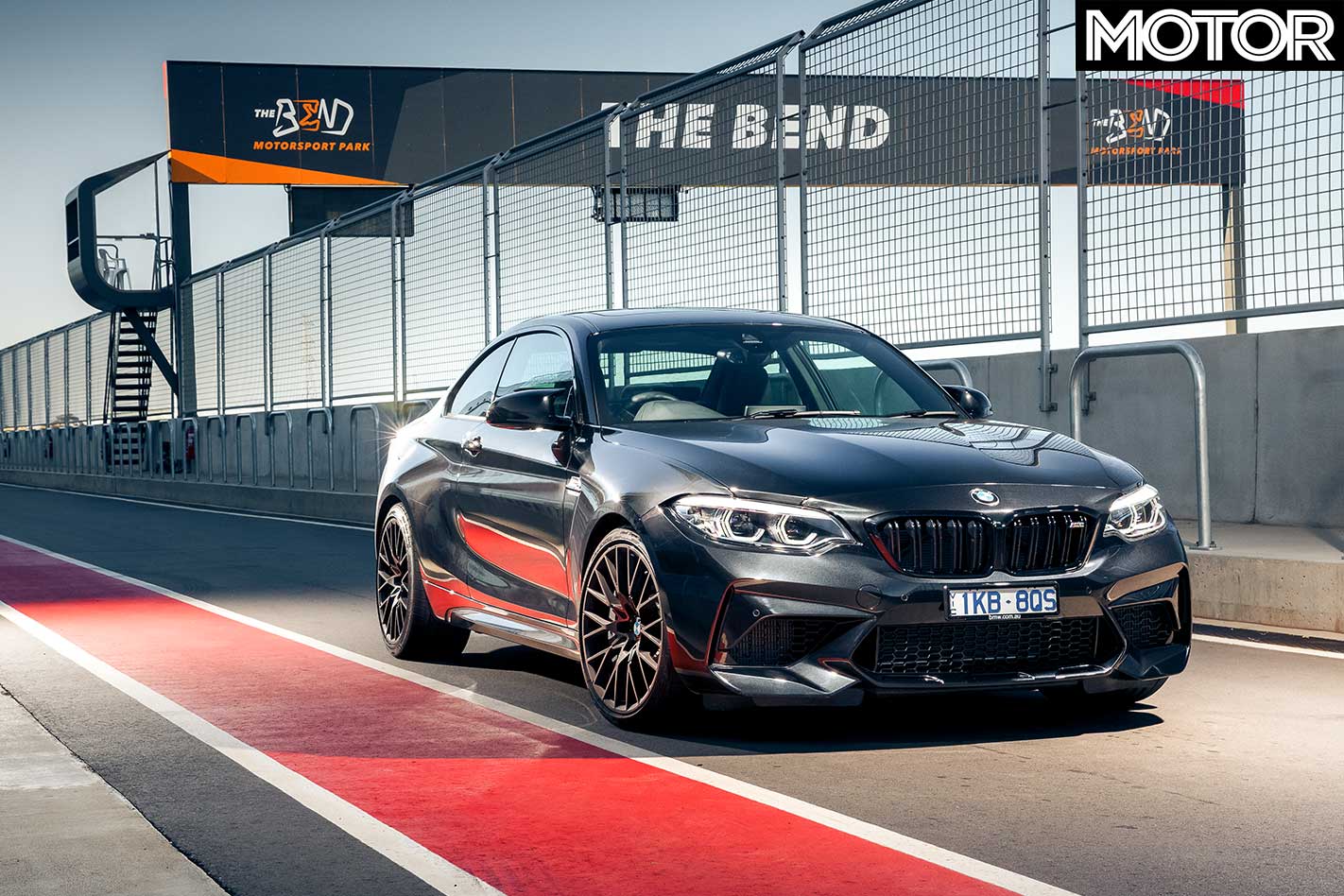
2019 BMW M2 COMPETITION SPECS: Engine: 2979cc inline-6, twin-turbo, DOHC, 24v Power: 302kW @ 5250–7000rpm Torque: 550Nm @ 2350-5200rpm Weight: 1575kg 0-100km/h: 4.5sec 0-400m: 12.52sec @ 182.57km/h The Bend lap time: 1min 31.0sec Price: $107,900
Judge’s Rank
Dylan Campbell – 1st “Love at first slide… my Performance Car of the Year.”
Louis Cordony – 2nd “Like a well-trained pitbull, it’s both your best friend and a viscious giant killer”
David Morley – 1st “My favourite BMW just got even favouritier. Come to Daddy.”
Scott Newman – 1st “A new entrant to BMW’s pantheon of greats. Would happily drive this forever. “
Rick Kelly – =5th “A nice road car that turns into a monster when it needs to.”
PCOTY 2019 Scoring
| Judges | DC | LC | RK | DM | SN | Total |
| Performance | 17 | 16 | 16 | 17 | 18 | 84 |
| Dynamics | 18.5 | 14 | 14 | 17 | 19 | 82.5 |
| Accessibility | 9 | 7.5 | 8 | 9 | 8 | 41.5 |
| Liveability | 7.5 | 7 | 8 | 7 | 7.5 | 37 |
| Value | 9 | 7.5 | 8 | 8 | 9.5 | 42 |
| X Factor | 9 | 7 | 5 | 9 | 7.5 | 37.5 |
| Total | 70 | 59 | 59 | 67 | 69.5 | 324.5 |
In terms of mainstream local motorsport, the average Australian is generally only conscious of the Virgin Australia Supercars championship. But with the decline of local manufacturing and fewer factory-backed teams in the Supercars championship, more categories are steadily gaining in popularity year-on-year.
GT racing is a burgeoning class of motorsport both among fans and competitors, especially in Australia thanks to headline events like the Bathurst 12 Hour. Designed as a middle ground where both amateurs and professional drivers compete together, the racing aspect provides an extra challenge for the gentleman drivers who flock to the category, while professionals racers are able to hone their skills in the hopes of getting noticed by larger race teams.
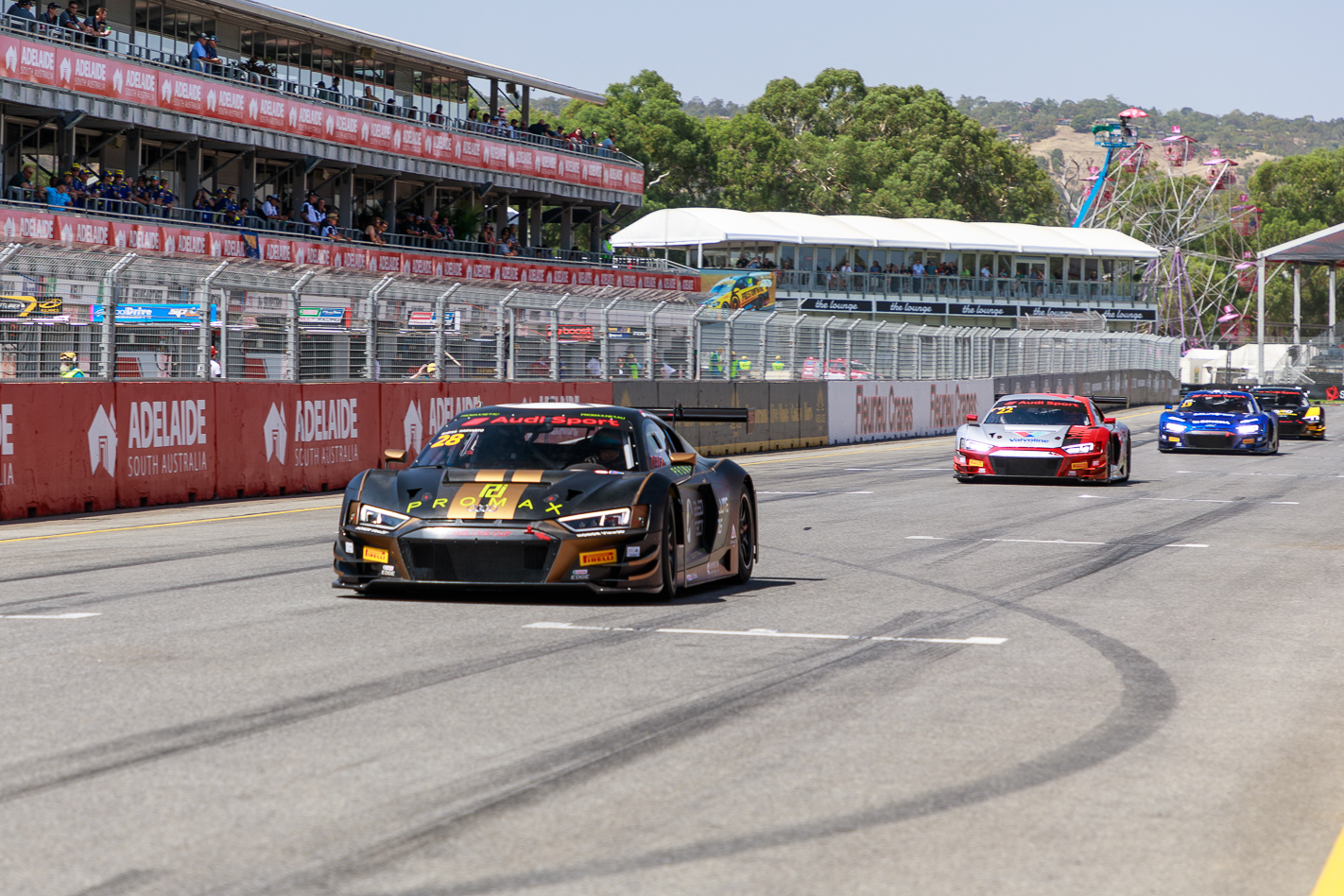
But like so many other extracurricular activities, a GT racing campaign takes huge amounts of money to run, and takes a lot of time in the seat to be competitive.
Which is where Audi’s R8 LMS Cup comes into play.
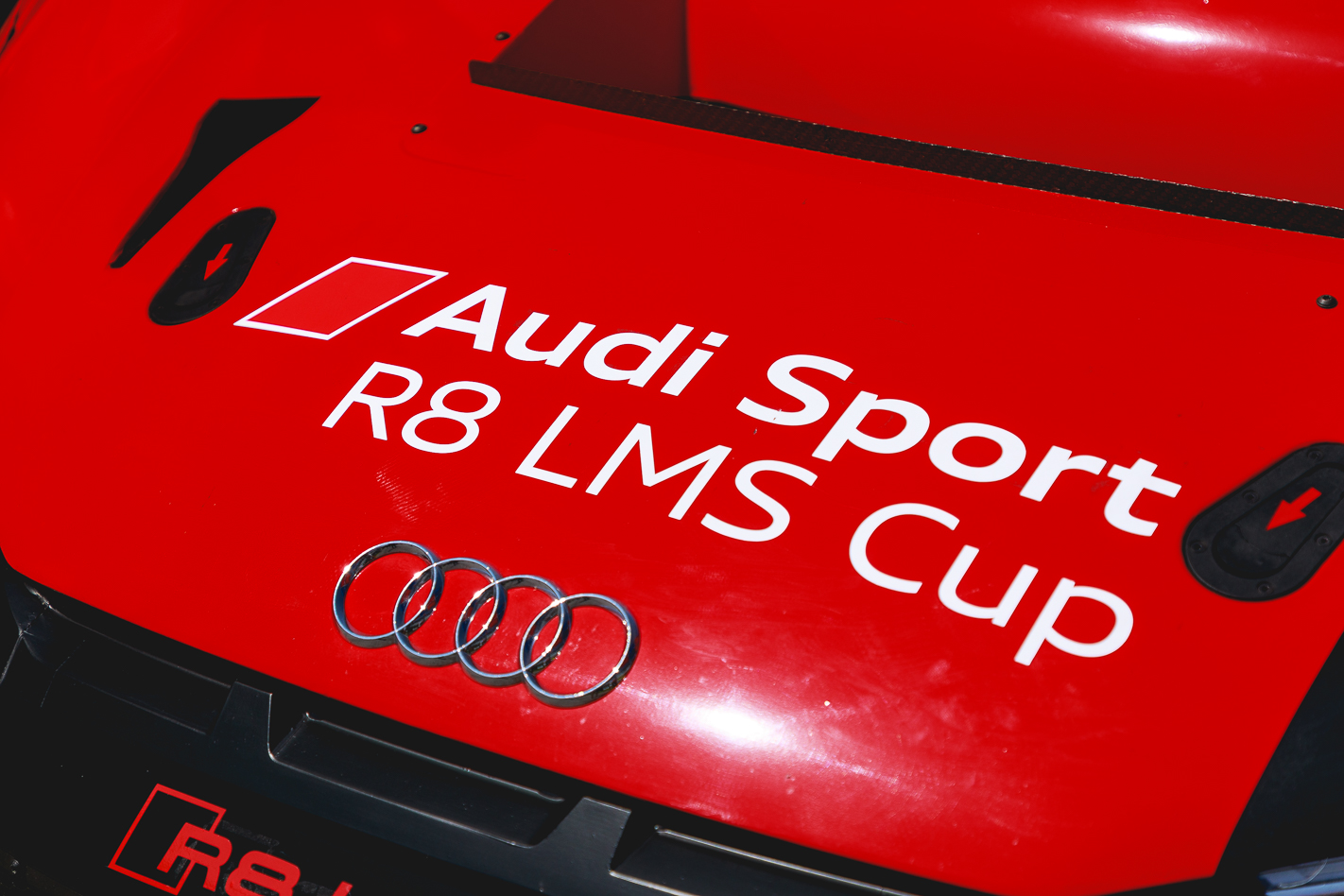
Created as a one-make race series (where all drivers are in the same car), all competitors are on an even playing field and the series is heavily backed by Audi Sport China. Meaning, instead of having to organise ancillary GT racing aspects like mechanics, transport and spare parts, Audi takes care of that side of the race weekend while all you have to do is buy the car and drive fast.
Now in its eighth season, this is the second time the series has come to Australia. The opening round begins in Adelaide during the Adelaide 500 weekend, before heading to various other Asian destinations like Shanghai, Suzuka and Sepang circuits.
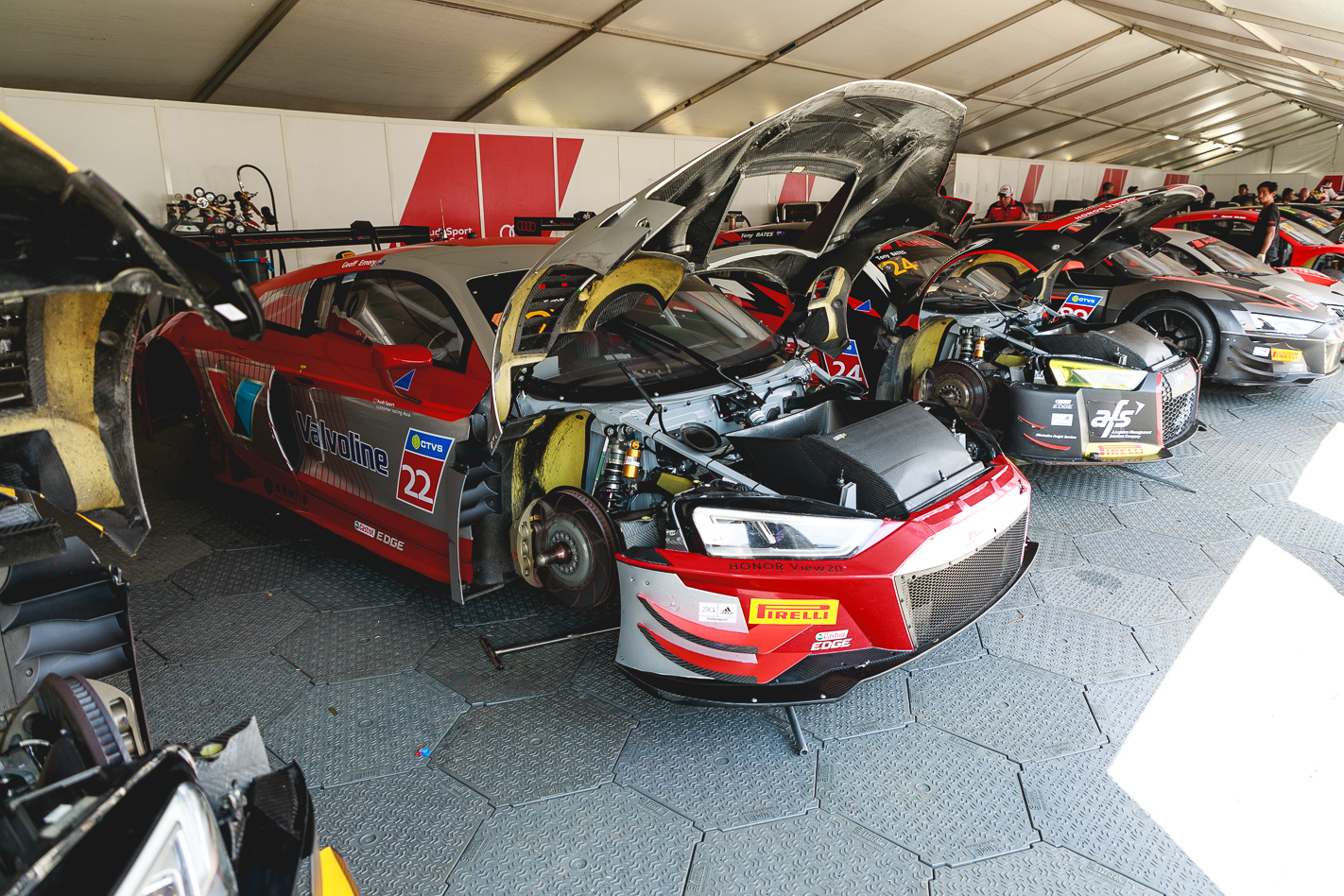
Race weekends consist of 90 minutes practice time before qualifying sessions. Races then go for 30 timed minutes plus one lap.
Initially only open to drivers of GT3-spec Audi R8s, last year a GT4 category was added to the LMS Cup, which is intended for beginners. Whichever class you do go, costs for the GT4 spec race car are similar to an R8 road car’s price of $400,000, while the GT3 is closer to $700,000.
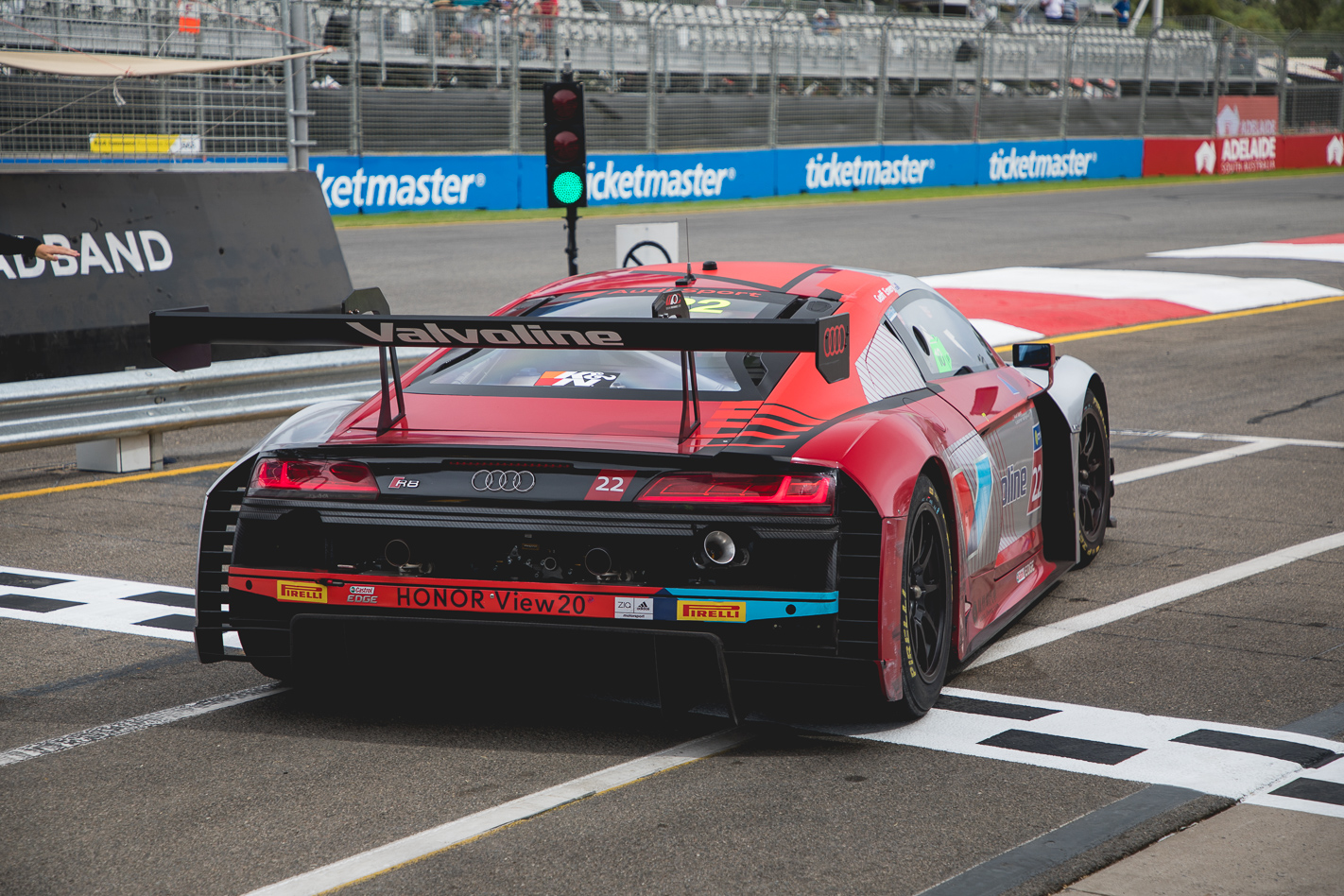
It’s a close-knit group, with an emphasis placed on the sharing of data, mechanics and driving instructors, but when the chequered flag drops racing becomes the priority and drivers pull no punches.
Melbourne Performance Centre (MPC) in Croydon, Victoria is the factory-backed workshop who runs Audi’s motorsport efforts in Australia, whether it be selling the cars, servicing, or trackside support.
“MPC exists because track time only accounts for the smallest proportion of the time and effort needed to field a competitive car,” says Troy Russell, part-owner of MPC.
“GT3 racing is exciting racing because all cars have strengths and weaknesses. The cars are so reactive to a change as well, if we change rear ride height by one millimetre that’s a substantial change.”
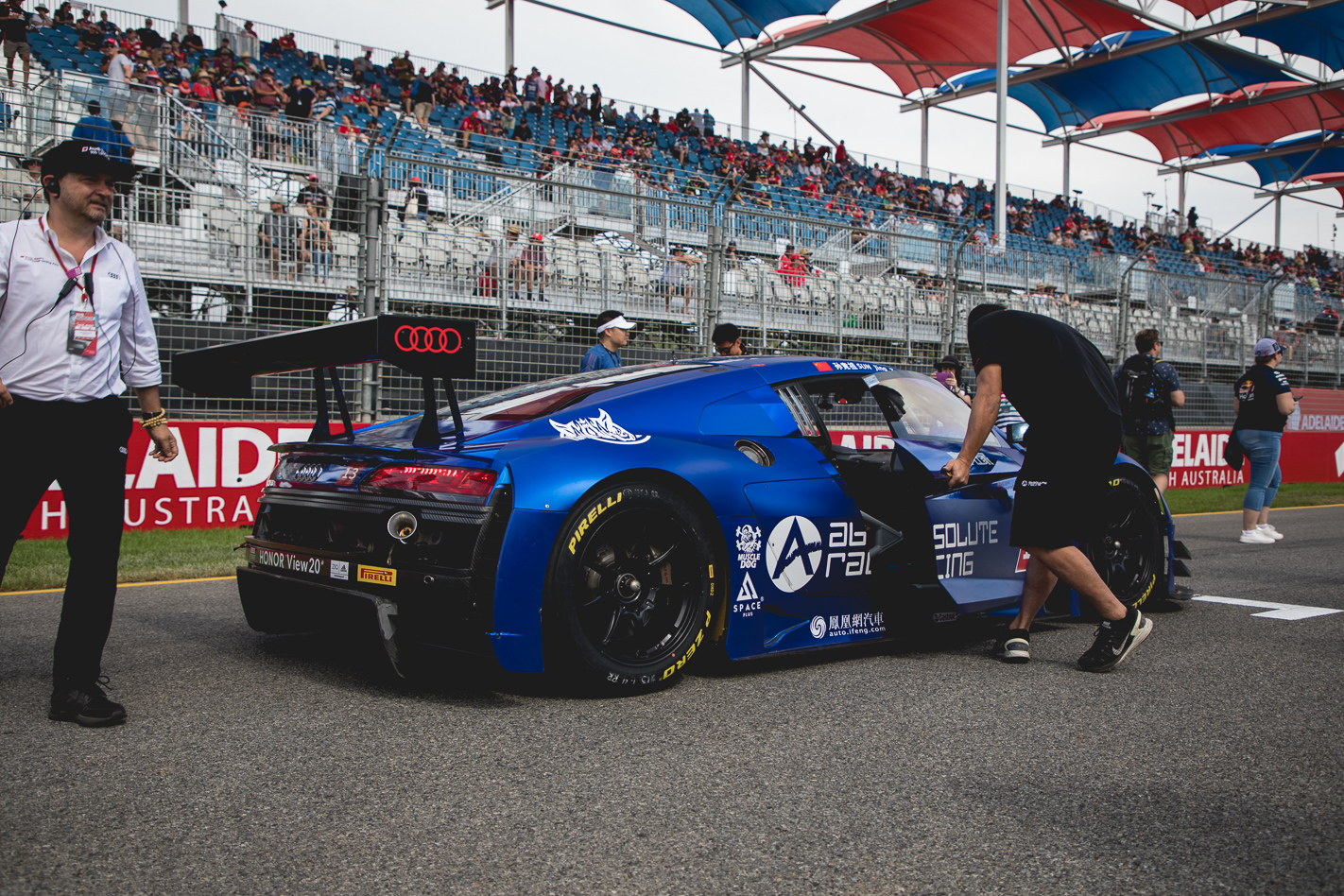
“It’s why we always aim to set up the race cars in our specified shop, where we control the variables, compared with what we’ve got this weekend at the Adelaide 500 which is a marquee paddock with uneven ground, etc.”
The R8 LMS Cup is the kind of series that attracts people like Steve McLaughlan, who fields multiple Audi R8 LMS cars throughout Australia. Having spent his early years in rally cars, McLaughlan then applied himself to a working life before reuniting with motorsport throughout the 2000s.
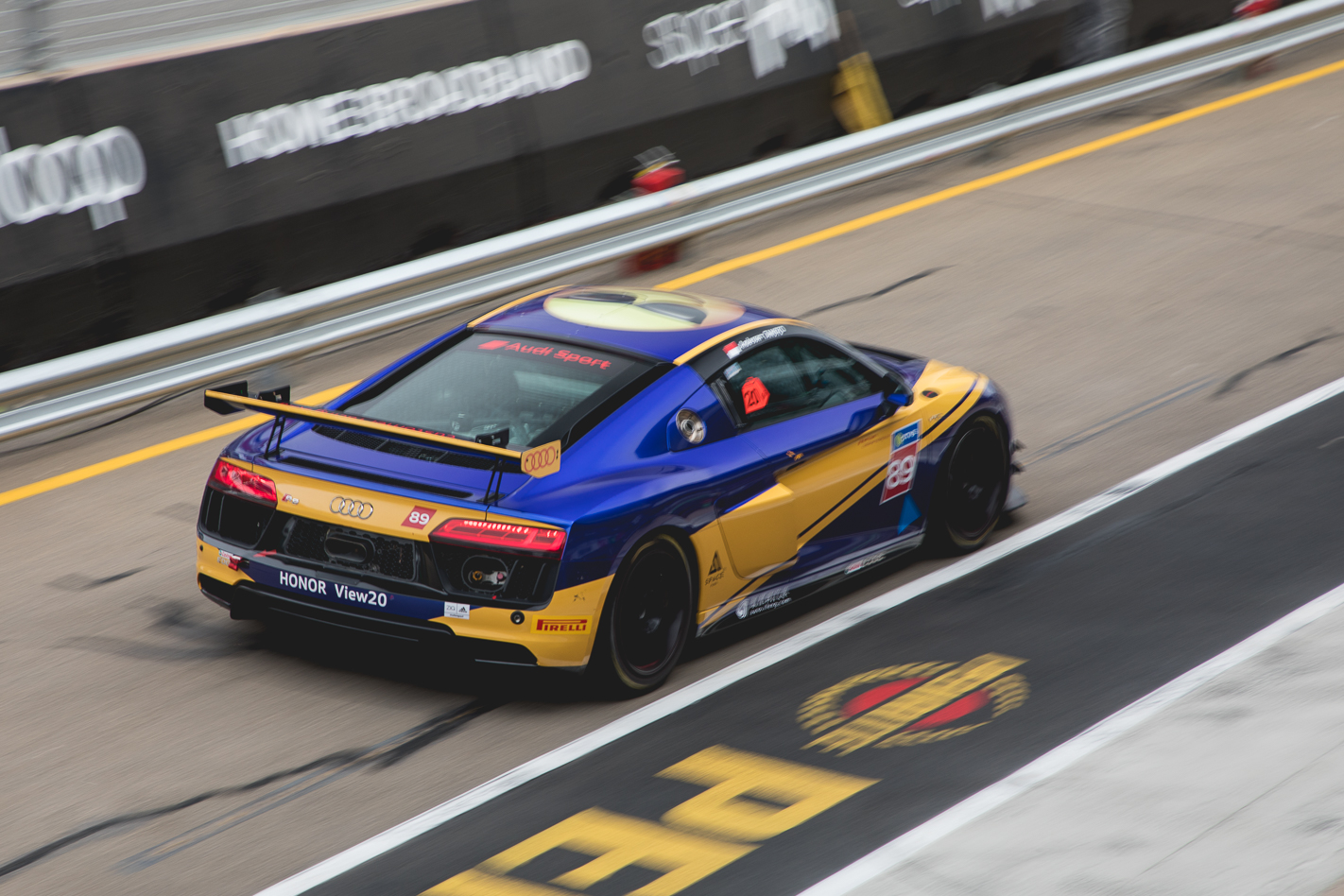
It took a while to fully invest into one category, but Steve said “Troy convinced me to test drive the Audi R8 LMS and that’s how I arrived in the Audi family.”
Having been through multiple runnings of the Bathurst 12 Hour with professional European drivers, Steve’s grateful for Audi’s factory backed involvement.
“Audi Sport is able to send out drivers like Christopher Mies, the support particularly from Germany is helpful in being competitive.”
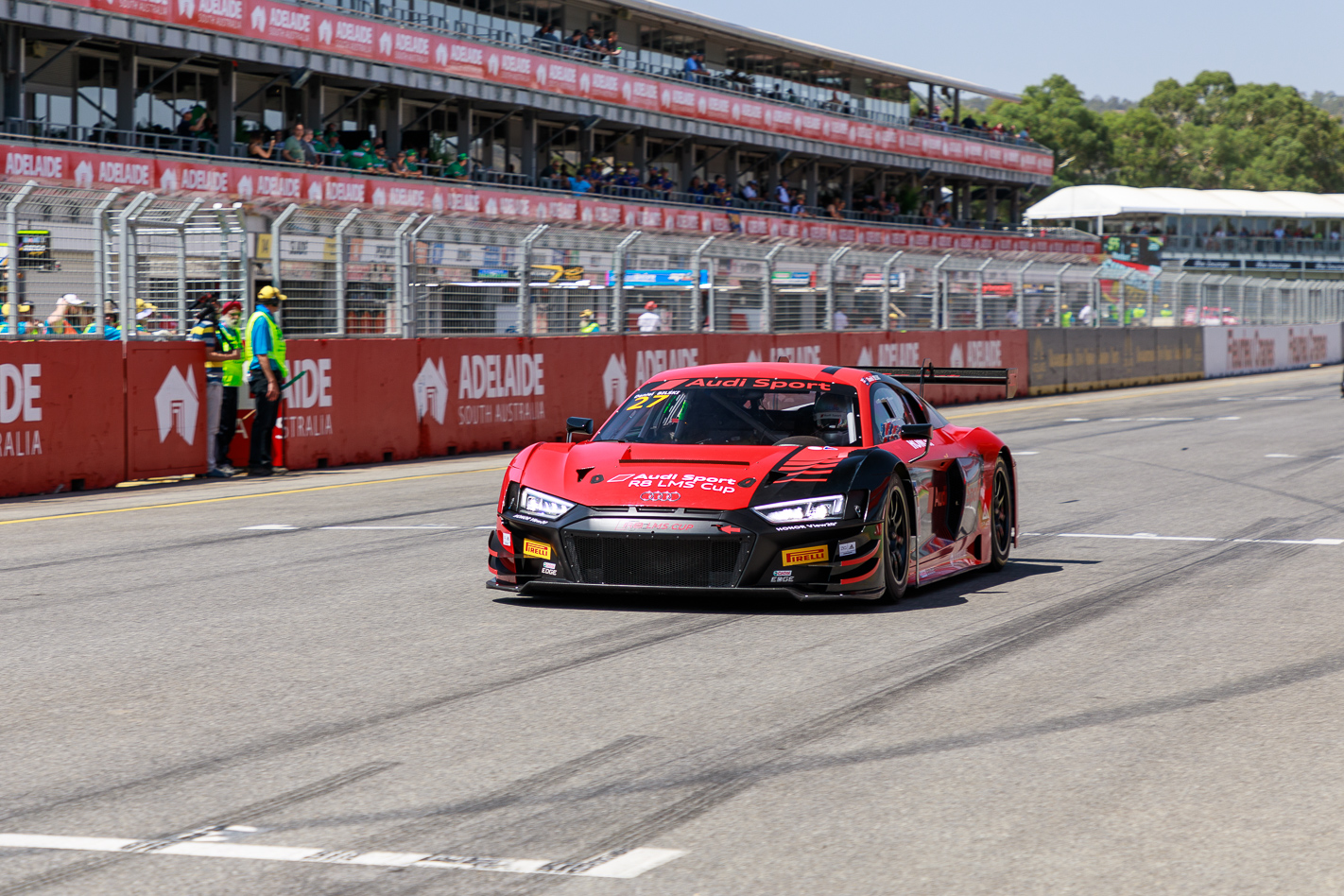
Audi China also provides driver training during R8 LMS Cup rounds for those who need it, with FIA World Endurance Championship star Weiron Tan dispatched to set lap times for the amateur drivers to try and match.
As for incentive to compete, various prizes like fully-funded seats in races like the 10 Hours of Suzuka to a one-of-a-kind “Audi Sport R8 LMS Cup edition” Audi R8 road car are on offer.
But really, the incentive for being in the series is a bit of “me-time” for the busy professionals who might spend 90% of their time in business.
It’s about as turn-key as motorsport can get, as long as you’ve got the money.
It’s a question a lot of car lovers ponder over whenever the lottery results flash up, or even idly think about on a slow commute home… what car would I buy if I won the lottery?
We often play the game of ‘three-car garage’ in the office, where we each have a million bucks and we can only ever own the three machines that we pick.
For American man Michael J. Weirsky, though, the answer to that eternal question was answered long ago.
Weirsky, from New Jersey, won a staggering US$257 million ($365 million) in a New Jersey state jackpot lottery last week, and he was unequivocal when it came to the first thing he would buy with his winnings.
Would it be a million-dollar Lamborghini Aventador SVJ, perhaps? Maybe a McLaren 720S, or even something a bit more luxurious like the new Bentley Bentayga? Nope.
“First thing I’m doing is buying my new pick-up, a Ford Raptor,” the 54-year-old told journalists at a press call announcing his win. “It’s something I’ve wanted for a long time, and I’m gonna get it.”
Of course, he isn’t referring to our own Ford Ranger Raptor; while it went on sale in the States recently, a Raptor version is still at least a year away.
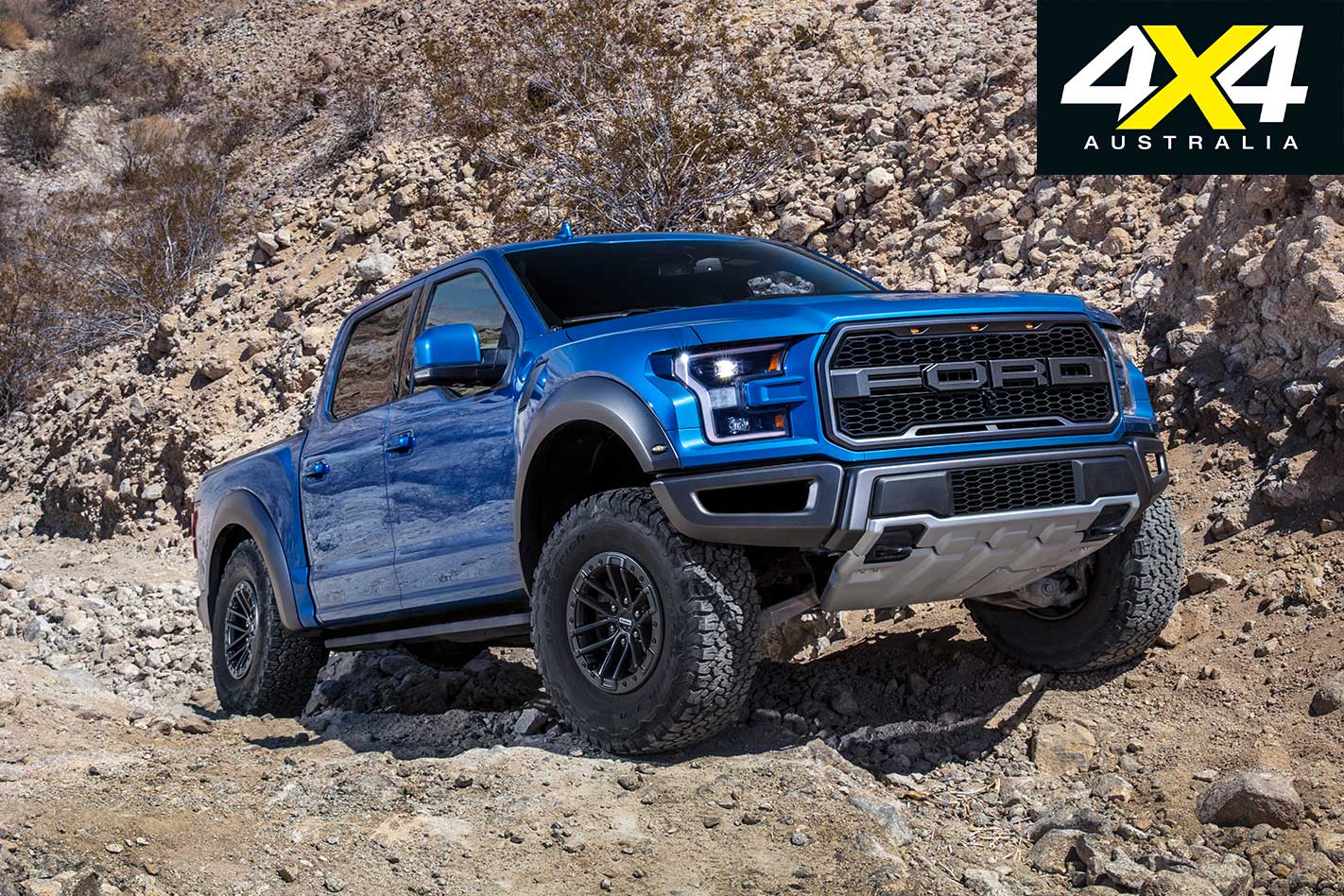
No, he’s referring to the original and mean Ford F-150 Raptor, the twin-turbo petrol-engined behemoth which retails for around US$60,000 ($90,000). Making 353kW and 691Nm from its GT-derived 3.5-litre V6, the big dual-cab also runs electronically controlled Fox dampers.
Weirsky, a house husband of fifteen years before a divorce last year saw him on the unemployment line, said he’d also buy his mum a new car and renovate her house, as well as take his family on an extended holiday.
He also said he was lucky to even claim the prize, after leaving his just-purchased tickets on the counter of the shop where he’d bought them. Fortunately, a stranger in the queue behind him handed the tickets in, where Weirsky retrieved them the next day.
“I’m trying to find him now,” he told reporters. “I’m going to give him something.”
Maybe he should buy two Raptors…
COMMENT BELOW: If you won the lottery, what the one car is you’d buy with your winnings? And you have to keep it forever, too. Go!
Even the most celebrated and well-established of them all, the VW Golf GTI, can’t last for a whole model lifecycle without an extra-hardcore run-out special edition. We’re lucky it can’t, or we’d have missed out on some utterly brilliant fast hatches over this car’s long and illustrious history.
Emerging this time, as a farewell to the GTI Mk7.5, is an ode to the FIA’s now globally popular Touring Car Racing motorsport formula. The GTI TCR is also an attempt to keep VW’s evergreen hot hatch competitive.
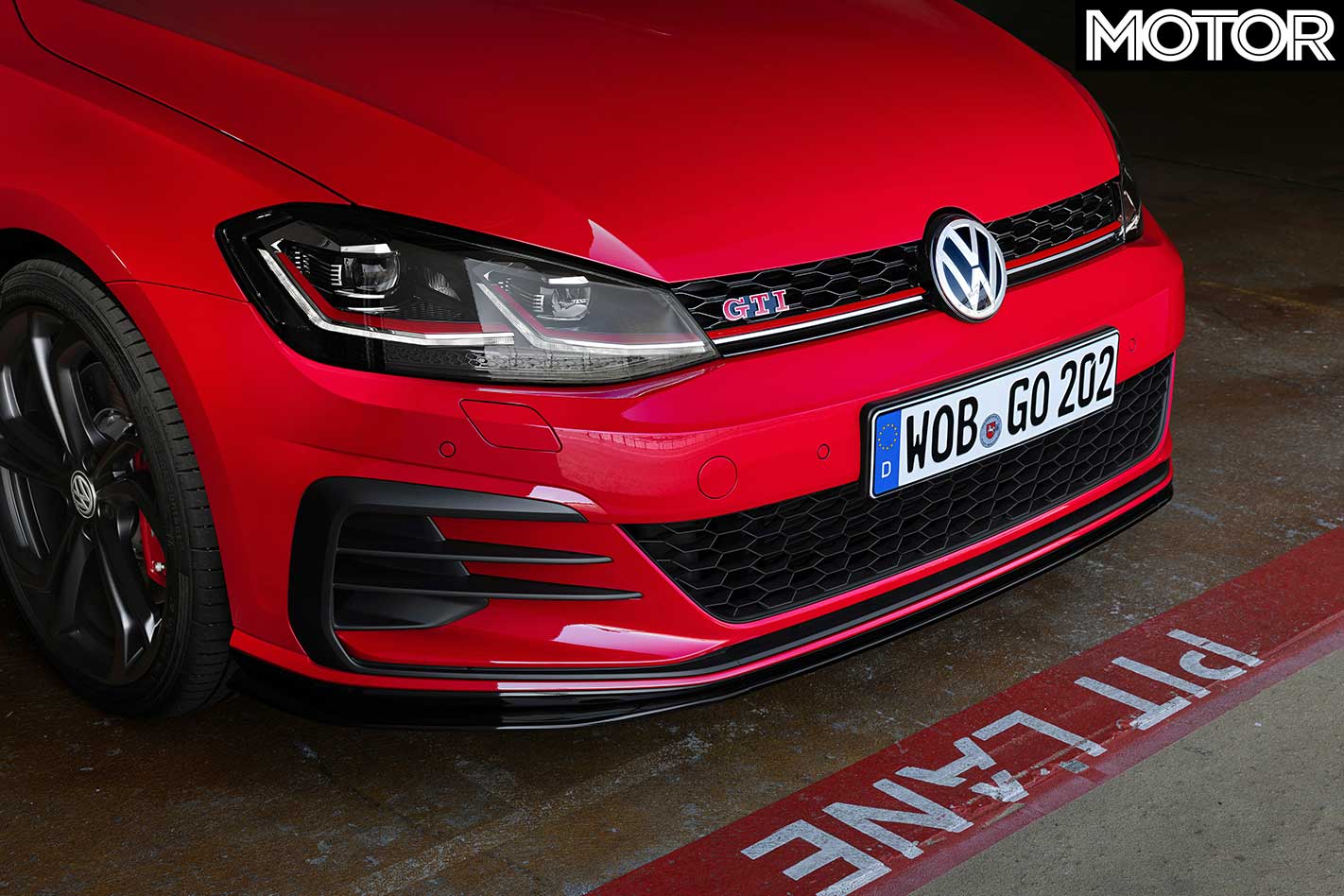
So, power jumps to 213kW and torque to 380Nm, courtesy of the EA888 2.0-litre turbo four pot that’s been updated with new software management, furnished with a couple of extra radiators, and made WLTP-emissions compliant. Sadly, like the garden-variety GTIs, the TCR only comes in DSG form – the same seven-speed dual-clutch used in the Mk7.5.
The TCR gets VW’s electronic locking ‘eDiff’ as standard, but it adds sizable composite brake discs as well as forged 18-inch alloy wheels. It comes as standard with passive suspension developed from that of the GTI Performance, with revalved, firmed-up dampers, and with shortened, stiffened coil springs that drop the car 5mm.
You can choose between two optional rolling chassis upgrade packs. The first adds forged 19-inch rims and beefed up adaptive dampers, the second a slightly different set of forged 19-inch rims, the same sports adaptive dampers and Michelin Pilot Sport Cup 2 tyres. Both upgrade packs see the car’s 250km/h speed limiter removed. Final spec and pricing for Australia is yet to be confirmed.

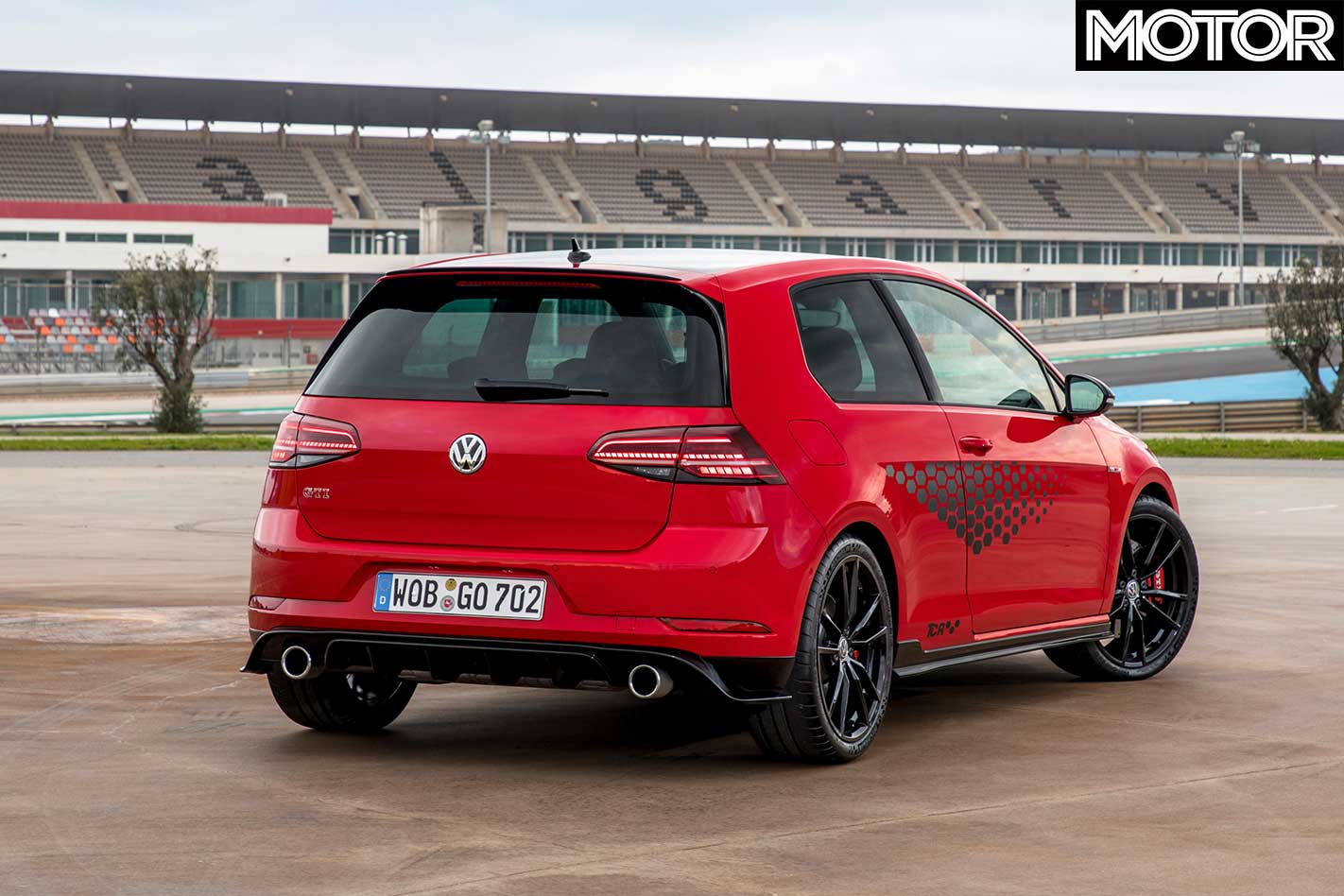
Outwardly, the TCR is probably best distinguished from the lesser GTI by its matte black alloy wheels, and the extended front splitter, rear diffuser and roof spoiler that make up its new TCR racer-inspired aero kit. Well, those and the car’s motorsport-tastic hexagonal side decals (which are effectively a no-cost option). You can add carbon-fibre door mirror caps, or you can opt for ‘pure grey’ paint if you like, which is exclusive to the TCR.
On the inside new microfibre-and-cloth sports seats appear, as does a modified steering wheel with perforated leather grips and a competition-style dead-centre marker in red. The TCR’s driving position is near-perfect for a hot hatch. Its new sports seats are great and its interior fittings look and feel absolutely first class, showing few signs of age.
However, most of that’s also true of a regular GTI and wouldn’t be a good enough reason for finding the extra cash. So what would be?

Well, the TCR certainly delivers a dose more straight-line pace than the car on which it was based – the Clubsport S – though not a huge one. There is only 10Nm of extra torque on offer here over a GTI, which probably isn’t enough to notice in terms of mid-range thrust – although the TCR doesn’t feel short on the stuff.
Where the car really delivers on its makeover is at high revs, and particularly so through the last 1500rpm of the operating rev range, when that freed-up 2.0-litre pulls with notably greater enthusiasm and venom.
The engine also retains a nicely balanced broad spread of potency, and has improved low-range response thanks to better ECU mapping. It may not quite have the measure of absolutely every engine of its kind, but the TCR’s motor effectively banishes any semblance of meekness from the GTI’s character. If you want a really fast and exciting hot hatch, this engine puts the Golf GTI back in the conversation.
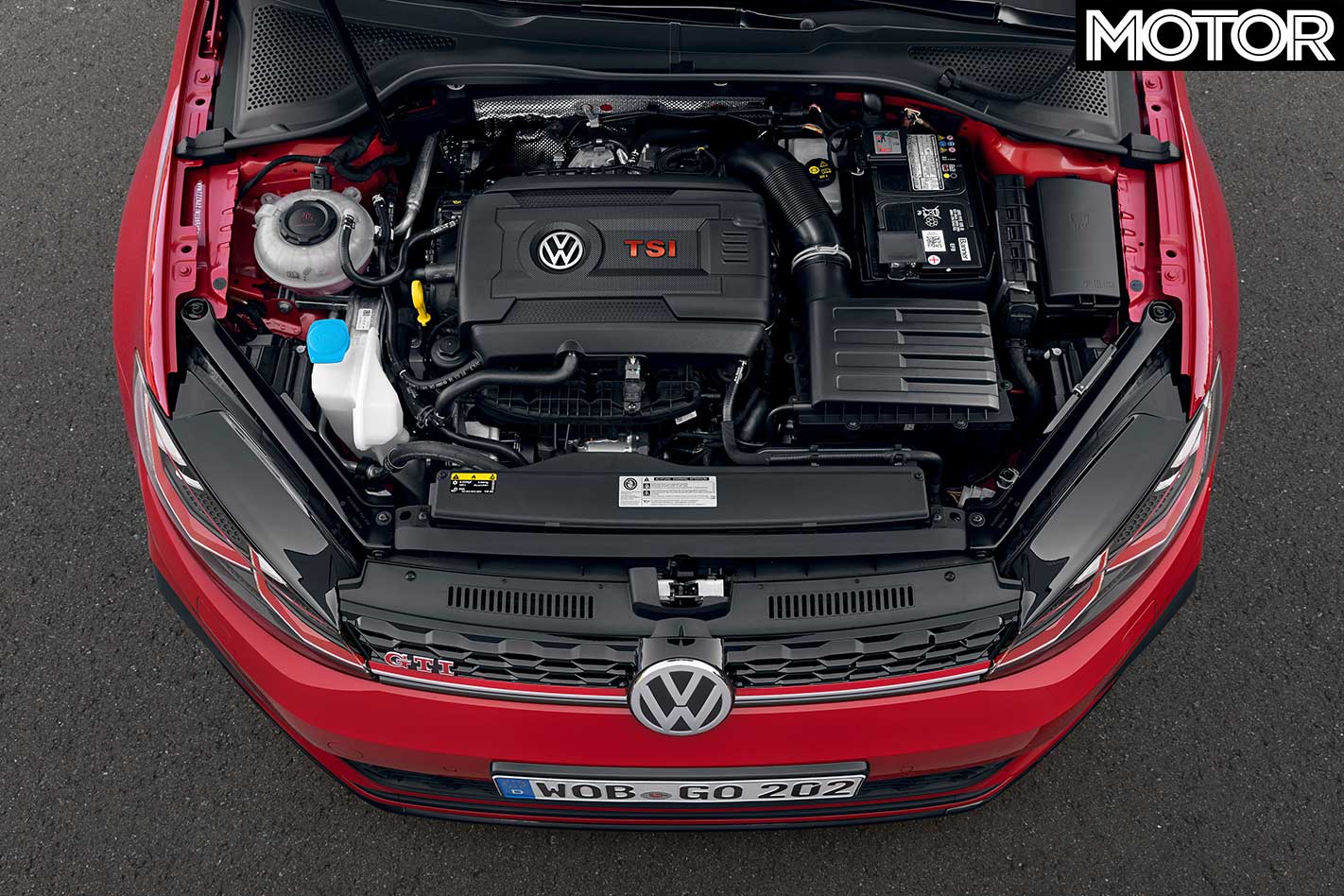
Whether the TCR’s ride and handling keep it in that chit chat, however, is unexpectedly open to question. The engineering team could easily have duplicated the axles of the superb GTI Clubsport S here, but for some reason chose not to – that comes as a surprise.
The TCR is still a fine hot hatch and a compelling driver’s car, but one that doesn’t have the otherworldly body control and wheel dexterity of the last extra-special GTI – and that’s regardless how you’ve got its adaptive dampers configured. And yet – because the TCR is still a GTI at heart – it doesn’t have the hip-swivelling handling agility, tactile driver engagement or the sheer excitement value of its greatest rivals, either.
The car is totally at home on track, particularly on the optional Michelin Cup 2 rubber, but with more notable precision and unflappable stability about its handling than balance and direction-changing vigour. It’s enormously capable and viceless when being driven fast, keeping its body flat and working its tyres evenly, sticking diligently to a chosen line.
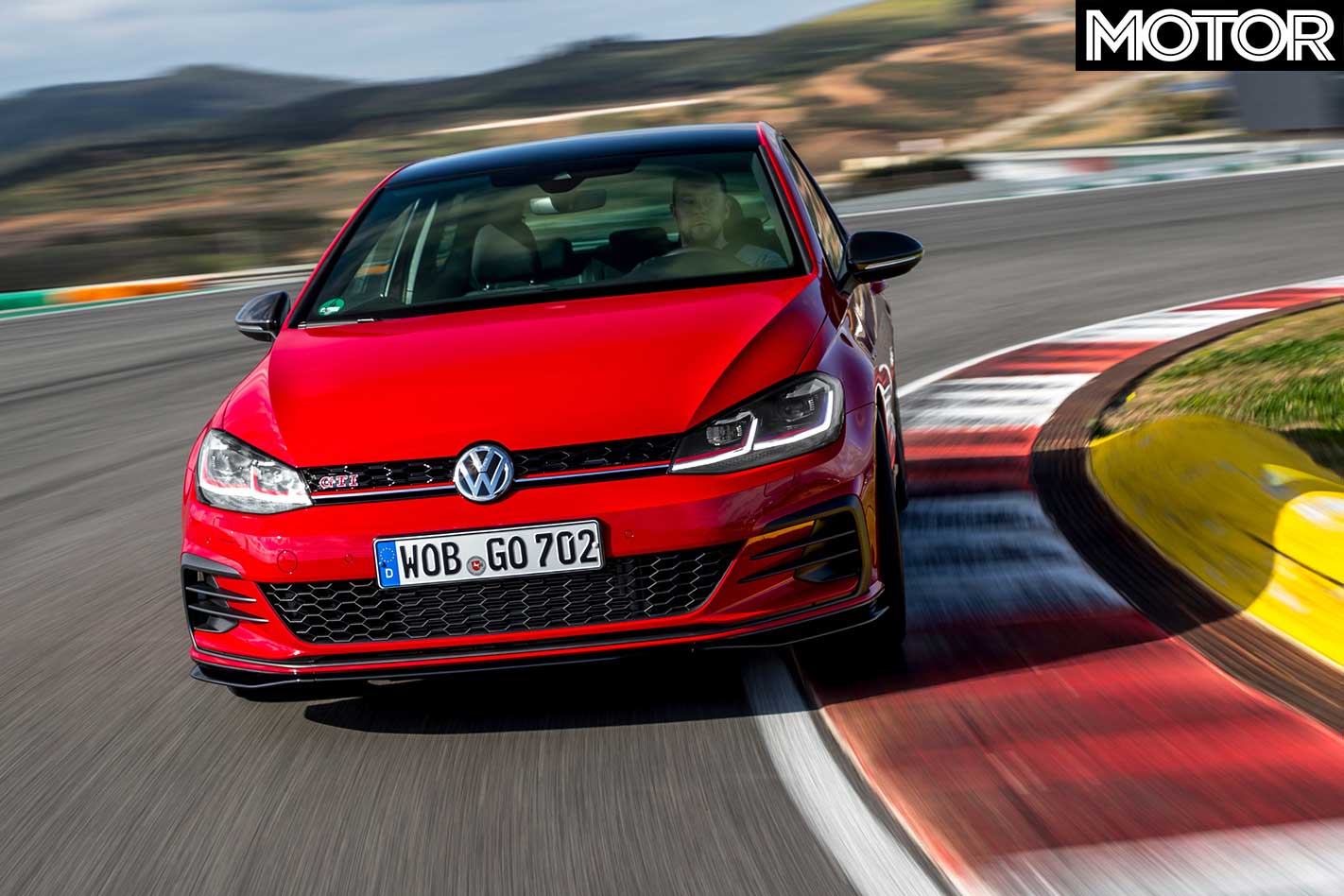
On the road, though, where you expect a fast Golf to be nothing short of brilliant, the TCR’s ride is guilty of the odd stumble and stutter. It can feel firm, stubborn and excitable when dealing with bigger, sharper intrusions – though it’s not so reactive as to deflect the car’s steering, nor is it any kind of barrier to your enjoyment of the car when the surface is good.
But now and again, when a ridge or lump in the road taken at pace makes the car’s damping bristle and grab – and when the suspension seems keener on pummelling the road and rebounding off it than engaging with it – one particularly telling thought may begin to interrupt your enjoyment: “wouldn’t a standard GTI have dealt with that better?”
Maybe. We’d be able to answer that in more emphatic fashion, however, if the suppleness and road-suitability that the GTI TCR has clearly surrendered had been traded for a more tactile, engaging, playful and vigorous dynamic character. That might have made the GTI TCR a fine alternative for a Honda Civic Type R.
While good, it’s not quite made it that far. Instead, the GTI TCR doesn’t so easily escape the bounds of the ordinary. Which is a shame.
This is a hugely capable and complete hot hatch, which will inevitably be judged by a very high standard. The GTI TCR amounts to no more or less than the sum of its parts. As parts go, they’re an awfully long way from shabby – but the plain truth is, those MkVII GTI bits haven’t quite come together here to make something as spectacular as you’d hope.
2019 VOLKSWAGEN GOLF GTI TCR SPECS Engine: 1984cc inline-4, DOHC, 16v, turbo Power: 213kW @ 5400-6400rpm Torque: 380Nm @ 1950-5300rpm Weight: 1410kg 0-100km/h: 5.6sec (claimed) Price: $60,000 (est)
Likes: Golf-R power levels; sticky Michelin Cup 2 rubber; dynamic ability; plush cabin Dislikes: Doesn’t come together as well as you’d think; could be more fun on the limit
Rating: 4 out of 5 stars
The Nemesis
2019 Honda Civic Type R 2.0-litre turbo inline-4, FWD, 228kW/400Nm, 0-100km/h 5.7sec 1380kg, $51,990
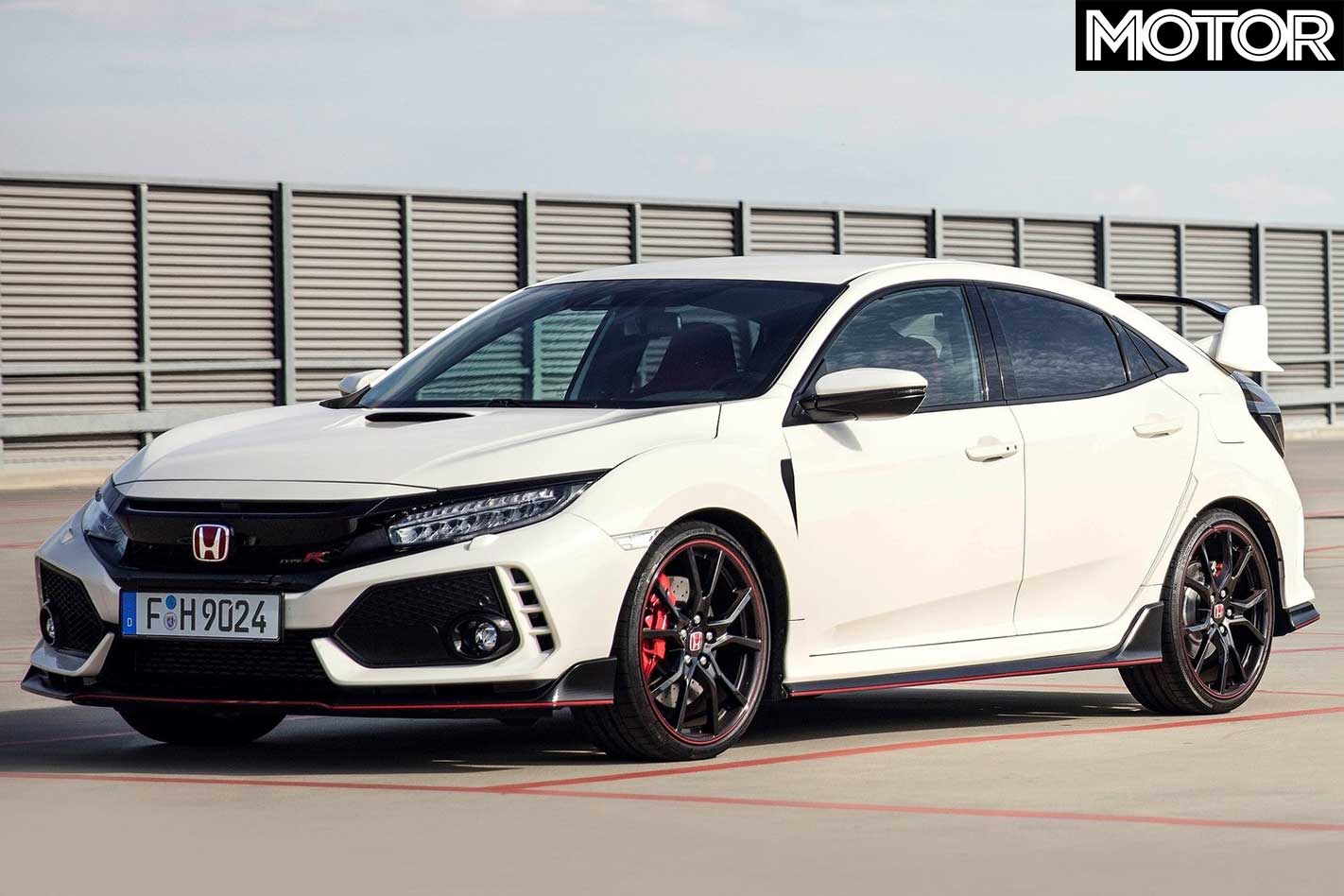
A MOTOR PCOTY and BFYB winner, the Honda Civic Type R is the hot hatch benchmark. Quick in a straight line, around corners and at a track, the Type R adds an on-road duality for an enviable hot hatch.
The 2020 Volkswagen Golf Mk8 has been snapped with no disguise or camouflage, well ahead of its anticipated public debut at the Frankfurt motor show in September.
First reported by UK site Autocar, the new Golf – also referred to as the Golf 8 – is a sharper, more refined version of the current Mk7.5 Golf hatchback, and is set to become a technological wunderkind for the German brand.
It’s said to be based on a massively overhauled version of the current Golf’s modular MQB platform, with up to 50kg potentially lopped off the overall weight of the car. It’ll retain the familiar front-wheel-drive, five-seat, five-door hatchback architecture, while sedan and wagon versions will also be created from the latest version of the ubiquitous MQB platform.
The Golf 8 is expected to be both wider in track and longer in the wheelbase, creating more interior space in the cabin and pushing it further away from the now-similarly sized Polo in overall dimensions.
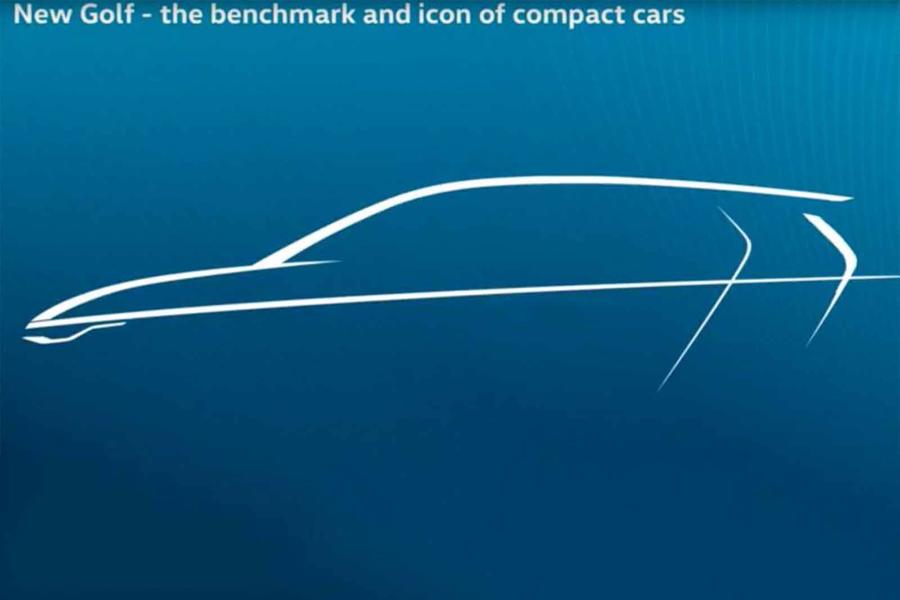
What is also expected to change drastically is the Golf’s level of technology. For one, the VW Golf 8 is expected to not only offer 12-volt mild hybrid systems to complement its powertrains, but it’s set to debut the Volkswagen Group’s much more sophisticated 48-volt hybrid system as well.
This system has only thus far been seen in VW Group cars like the Bentley Bentayga and Audi Q7.
Both hybrid systems will incorporate a new combined starter motor/generator that can add baseload power and torque to the internal combustion engine of the car.
While nothing’s been confirmed, those engines will likely include a hybridised version of the Golf’s current 1.5-litre four-cylinder turbocharged petrol engine, while rumours of a 1.0-litre three-cylinder petrol engine that uses hybrid boost instead of turbocharging are emerging from Europe.
The 48-volt hybrid system, meanwhile, could mark a move to a small electrically powered exhaust-gas compressor to complement the hybrid system’s additional electrical input into the car’s power and torque figures. This potentially does away with the need for the turbocharger and all of its ancillary systems like an intercooler.
However, reports suggesting that the Volkswagen Golf GTI Mk8 will retain a turbocharger at the expense of the hybrid powertrain have recently emerged from Germany.
A pure electric Golf is unlikely to emerge, though, as VW has developed a completely separate platform – called the MEB – to underpin a variety of electric cars and SUVs.
The Golf, which competes against the likes of the Hyundai i30, Toyota Corolla and an all-new Mazda 3, will likely debut at this September’s Frankfurt motor show, with the first of the Australian-spec cars expected to arrive in 2020.
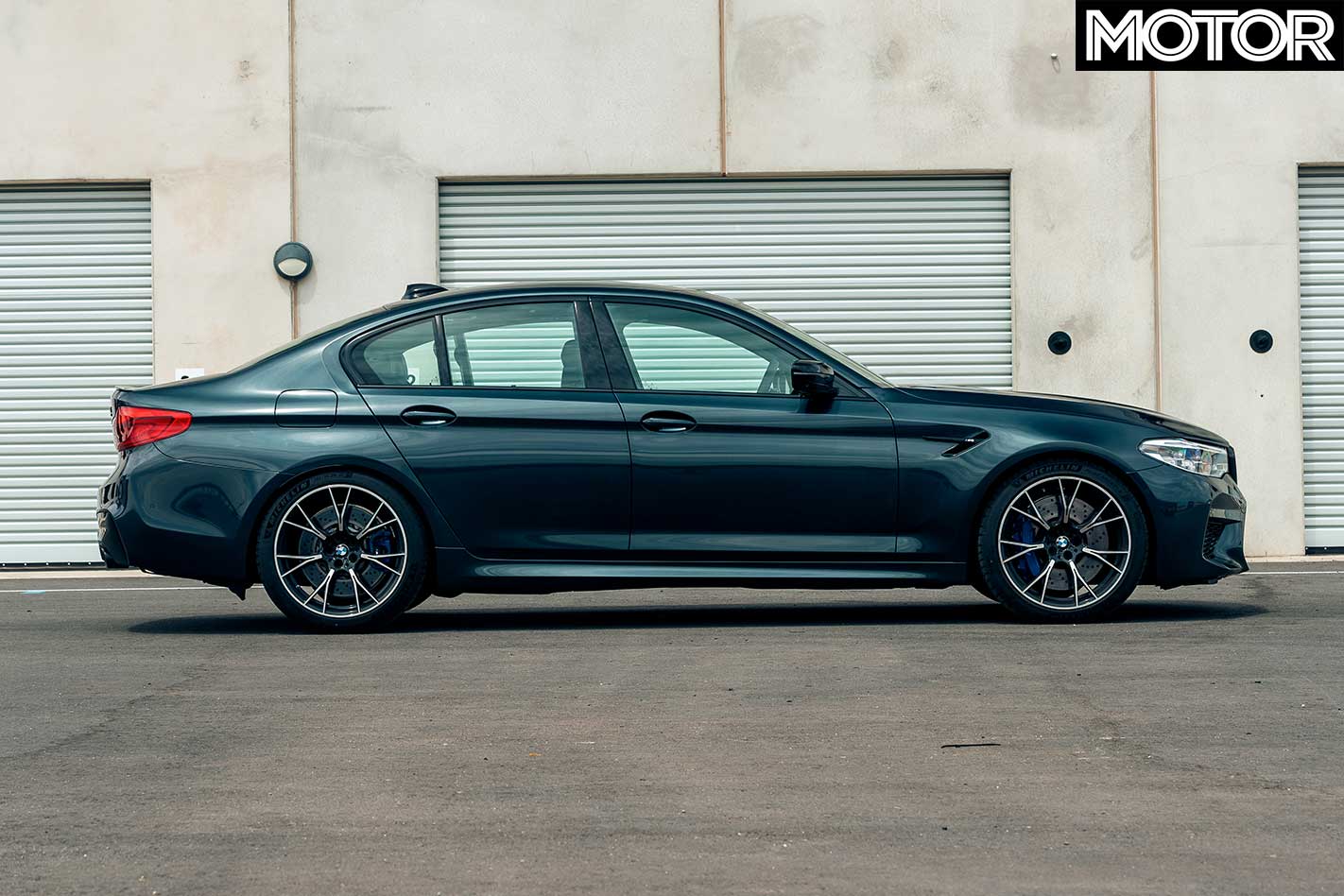
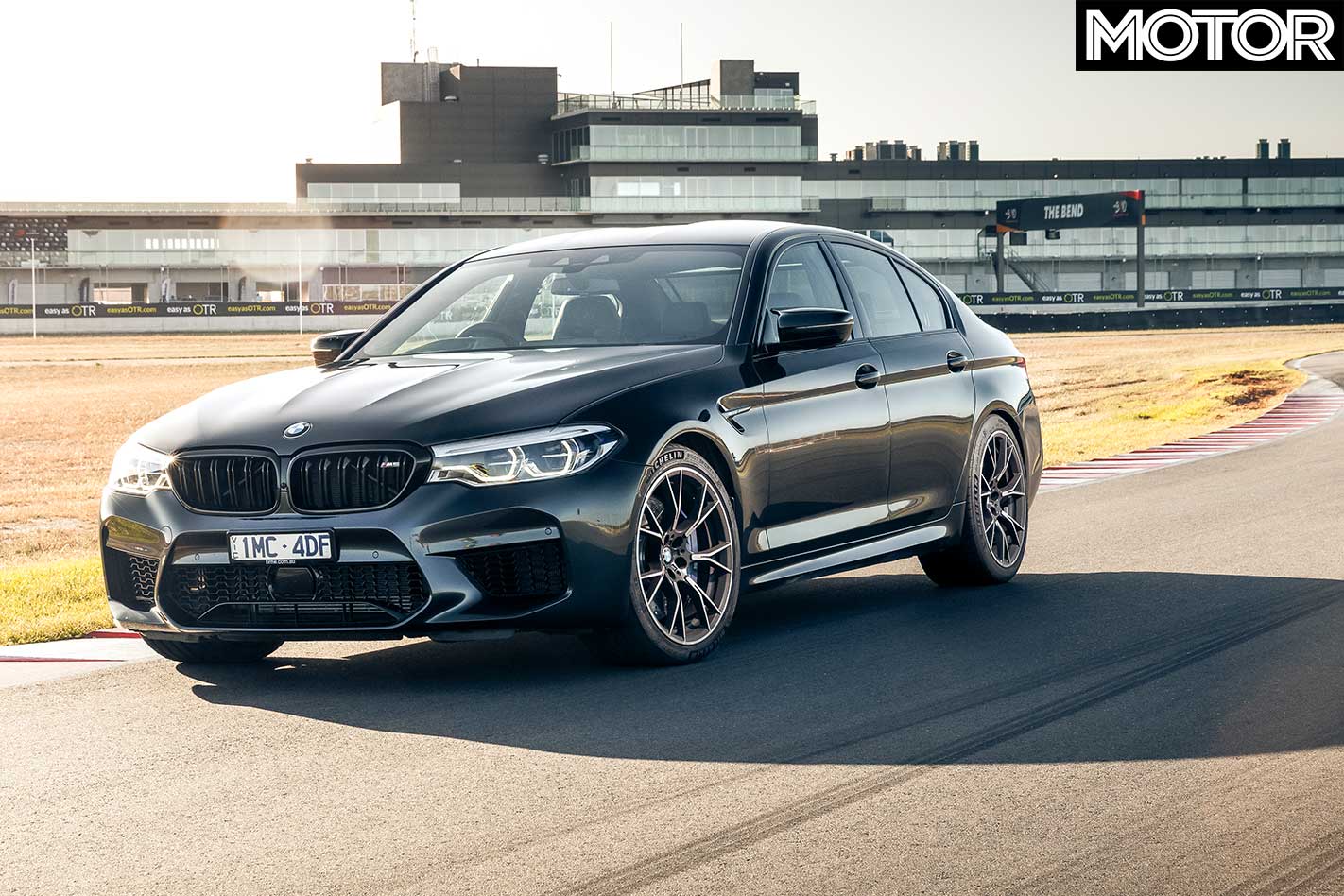
It’s a fair while since the BMW M5 has been declared a sensuous, inviting thing. Three generations probably (starting with the V10 E60 model back in ’05). Even in this car, the latest, Competition version of the M5, there’s still a slight tactility barrier between your brain and the car.
The steering is a bit lifeless and the whole car is faster than you’ll ever be, so you might as well shut up and just take the ride on its many other merits. And merits there most certainly are. Enough for third place, anyway.
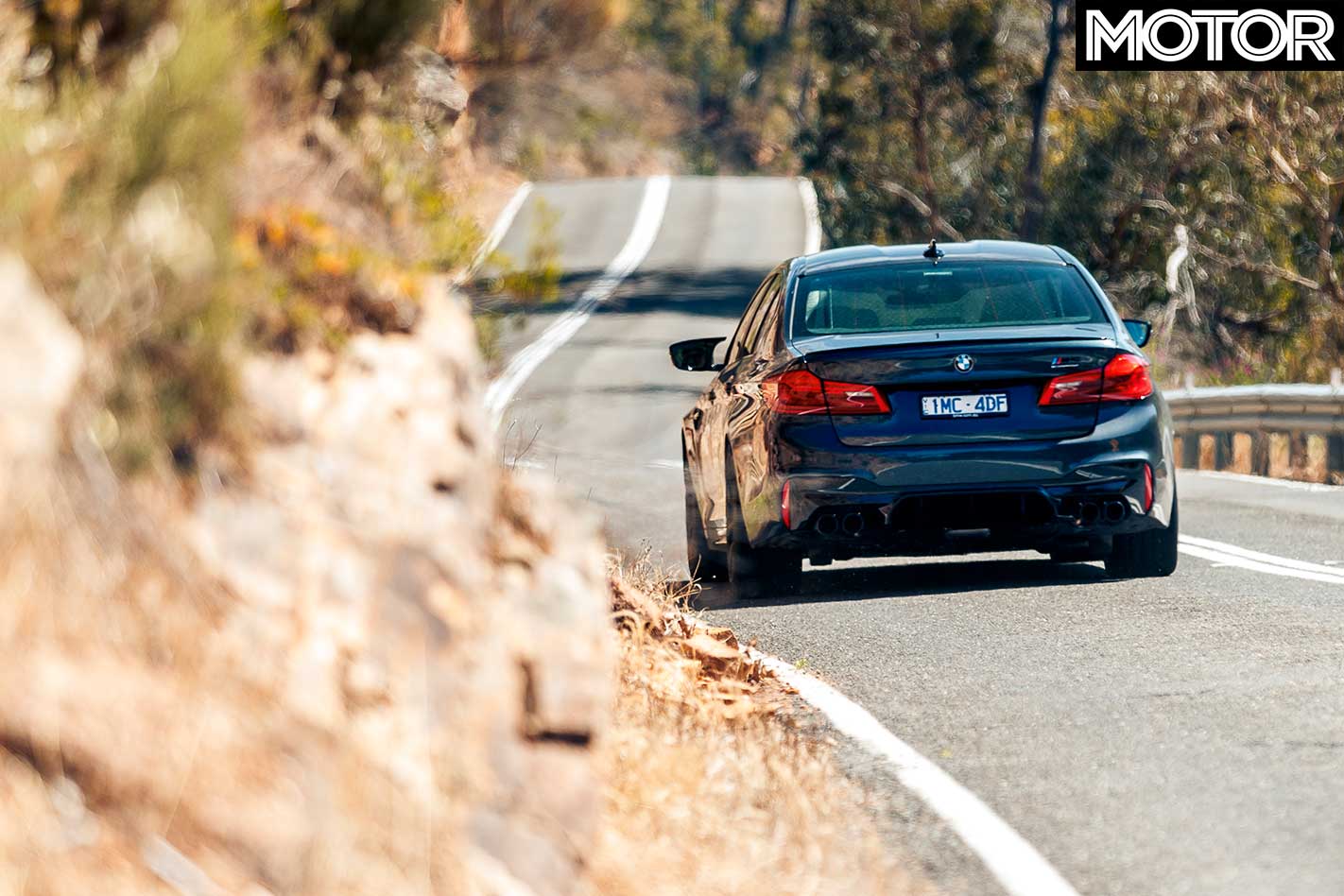
Actually, calling the M5 Competition out for being a bit aloof is probably a mistake to begin with. Remember being told how a modern supersonic fighter-jet just wouldn’t stay in the air without computers? Well, it’s the same thing going on here, I reckon.
While your attack-jet has to be inherently unstable to be able to turn fast enough, and absorbs distance faster than the human brain can figure, it’ll also fall out of the sky without a super computer making the crucial split-second decisions.
Ditto the M5, to some degree. See, there are times, particularly on the track where you honestly felt like you were just (and only just) hanging on to the tiger’s tail. When those 460kW and 750Nm light off, you are inevitably going to start arriving at corners in a way you’ve never discussed with your Nana. At which point, you better hope like hell that the car is going to step in and not get as flustered as you are right at this instant.
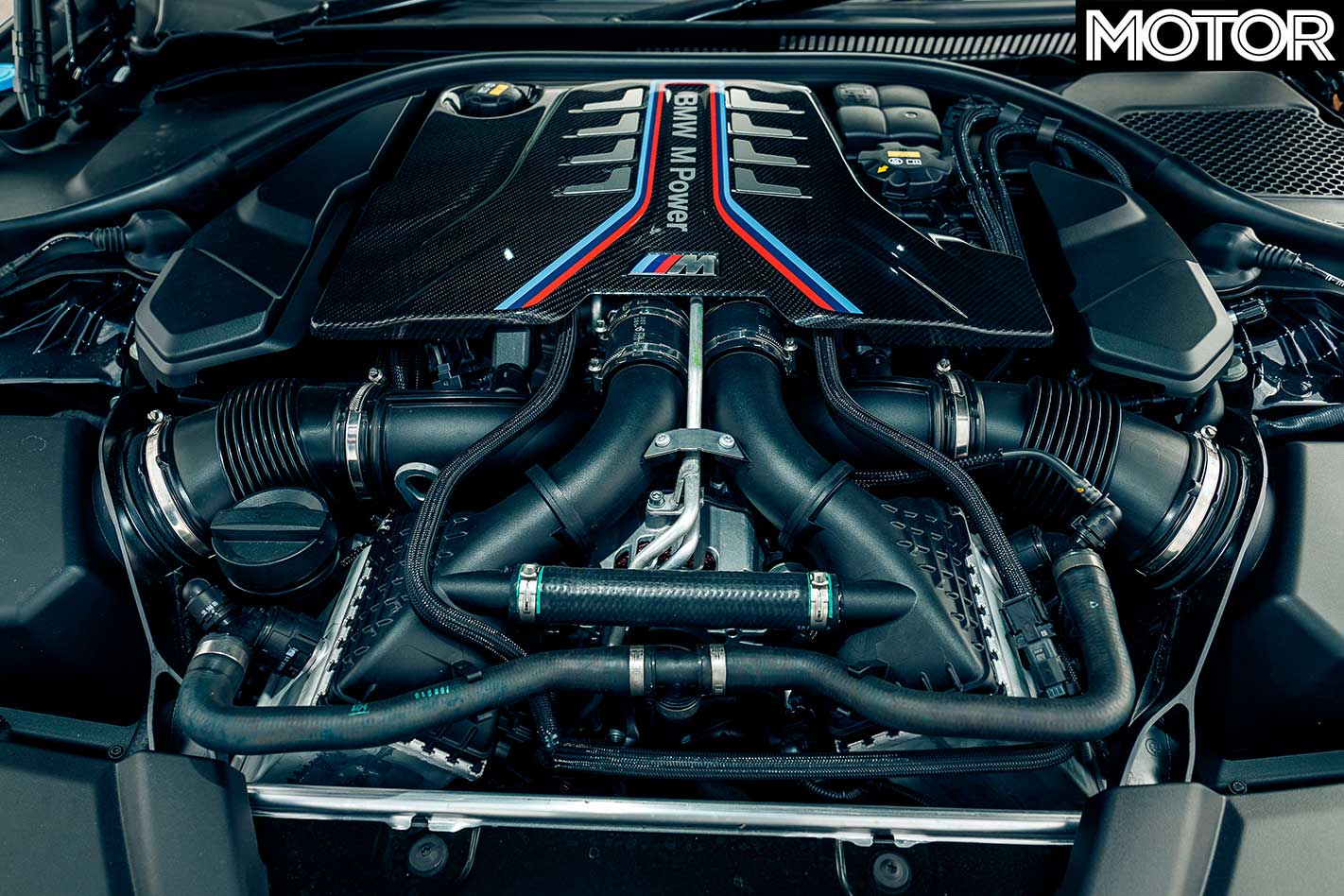
Seriously, on full boost and big revs, unless you’re Rick Kelly, you’re probably just along for the ride. It’s very focusing, but it’s also intimidating. Kind of like trying to land a four-metre shark in a three-metre tinny. You better be careful where you put your feet.
The M5’s lap time of 1.30:8 puts it fourth outright in the inaugural MOTOR/The Bend GP, an amazing feat when you consider that it’s the only car here (apart from the hot hatches and the RS4) with four doors and five seats. It’s also a hefty bugger at almost 1.9 tonnes, and, again, it’s here that you can see that the Competition is all about a result, not necessarily giving you puny humans a chubby, per se.
With the dampers set to Comfort, you might notice a tiny bit of body roll and maybe even a whiff of understeer on the track. But switch the drive modes up to a racier setting and the thing is suddenly producing mild oversteer on the limit. Turn off the DSC (as you can in a modern M-car) and turn off the front axle, and the M5 is a drift-car par excellence.
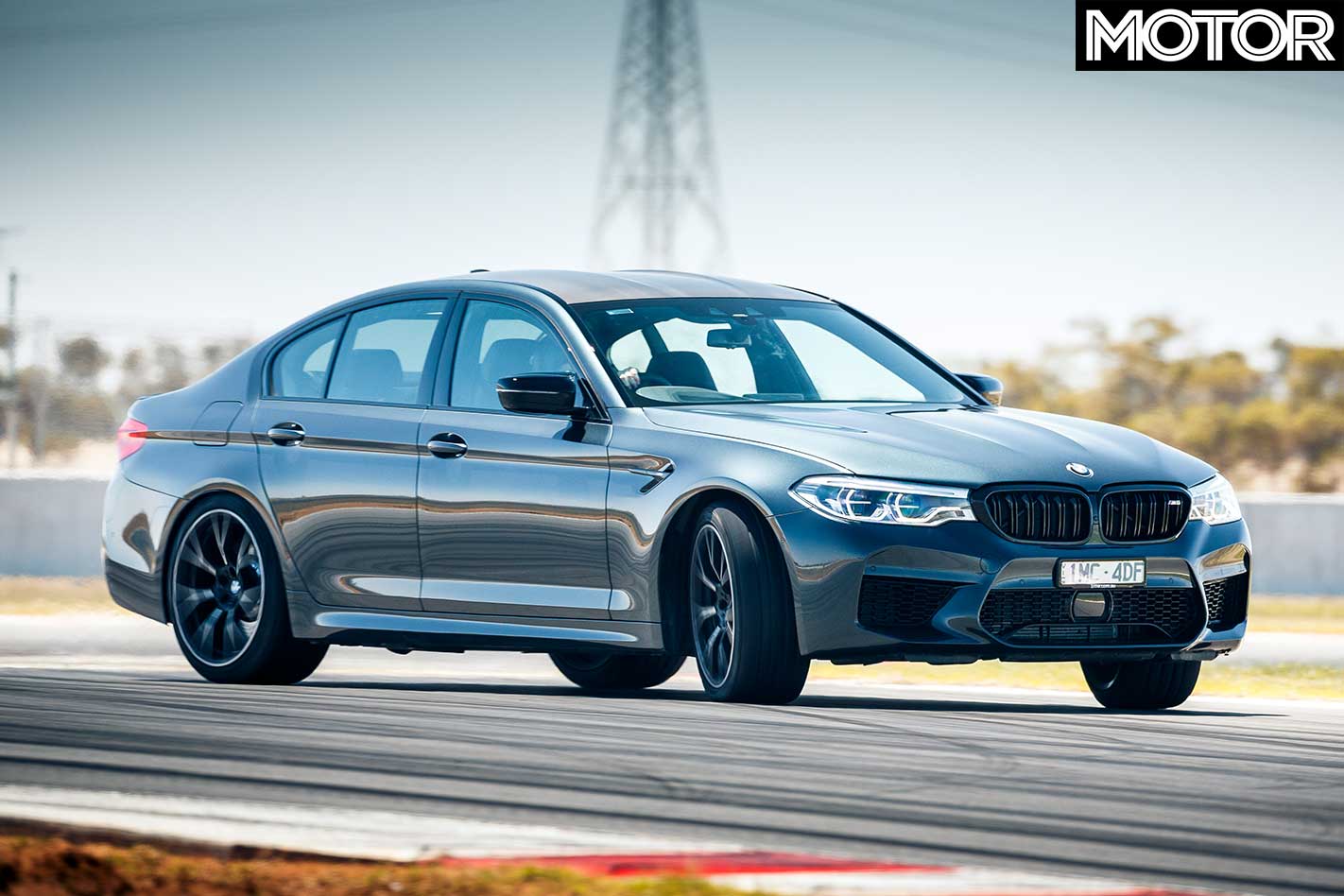
In a straight line, the thing is utterly formidable. Again, it’s a no-nonsense approach to things with the Competition combining tyre and mechanical grip (it’s all-paw, remember) with a warhead of an engine to get it to its destination 400m away.
From rest, it needs just 3.78 seconds to get to 100 and from there it requires a mere 7.45sec more to reach the quarter-mile (in 11.53sec). At which point it can be relied upon to be screaming along at better than the double-ton. In the process, it requires just 1.8 seconds to get from 80 to 120km/h. Only the 911 GT2 RS needs less time for this crucial-to-overtaking stunt. And not much less.
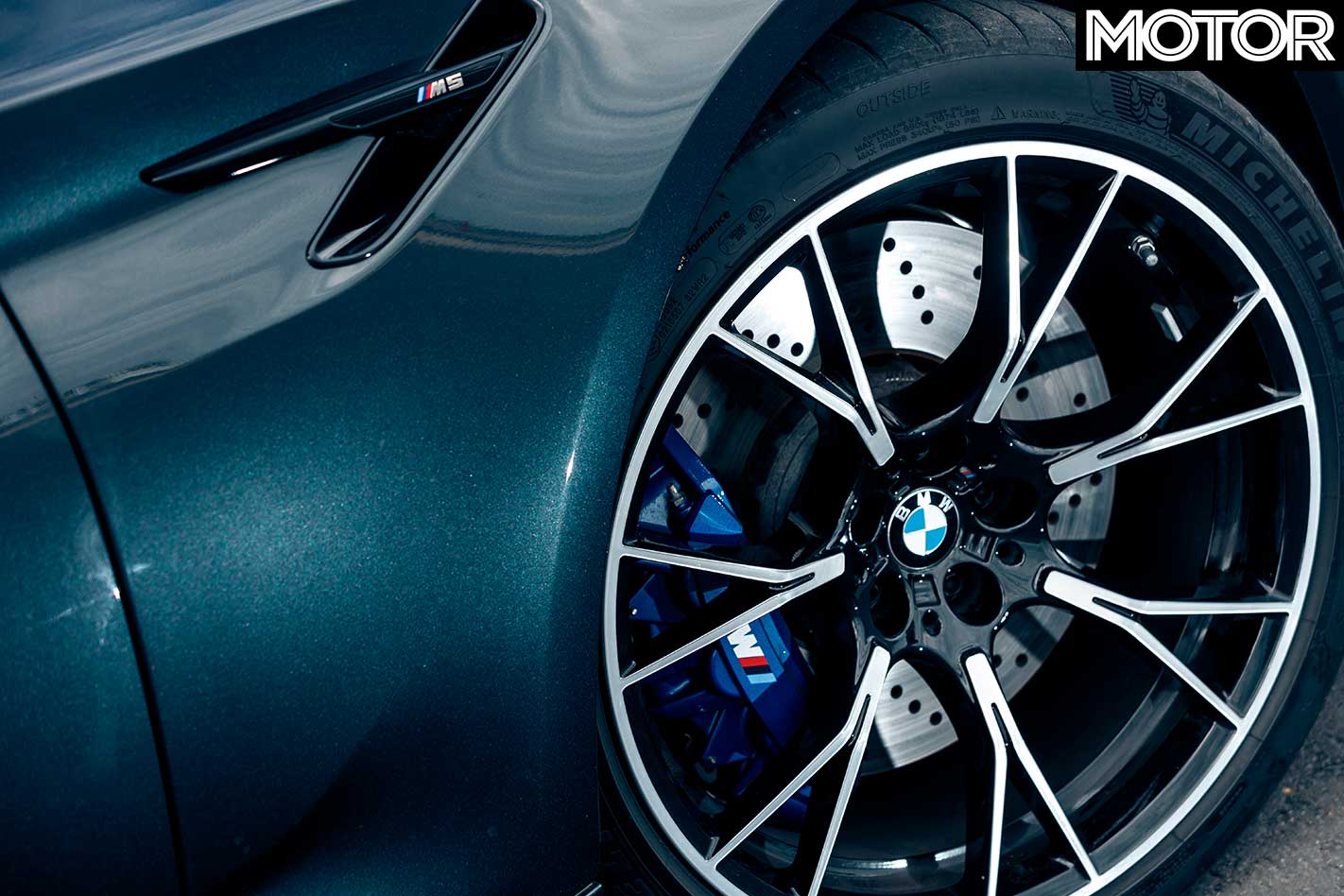
And you don’t need to be redlining the thing in every gear to achieve that sort of thrust, either. The torque curve is flat enough that every single one of those Newton metres is available from as low as 1800rpm all the way through to just 200rpm shy (5800) of where power maxxes out. That’s modern engine management for you. Impressive barely covers it.
The other theme that has surrounded the latest M5 is its value-for-money quotient. Okay, so the Competition package adds around $30K to that, but you can see and feel where that money has gone. BMW has previously admitted that the Competition is all about going fast at the possible expense of some luxury.
But unlike the track-oriented M4 CS where BMW ditched everything from the cup holders to the actual door trims, in the M5 Competition, it’s hard to see where the luxo thing falls anything like short. On the flip side, the stiffer suspension can be felt and it’s this that gives the car its edge on the track.
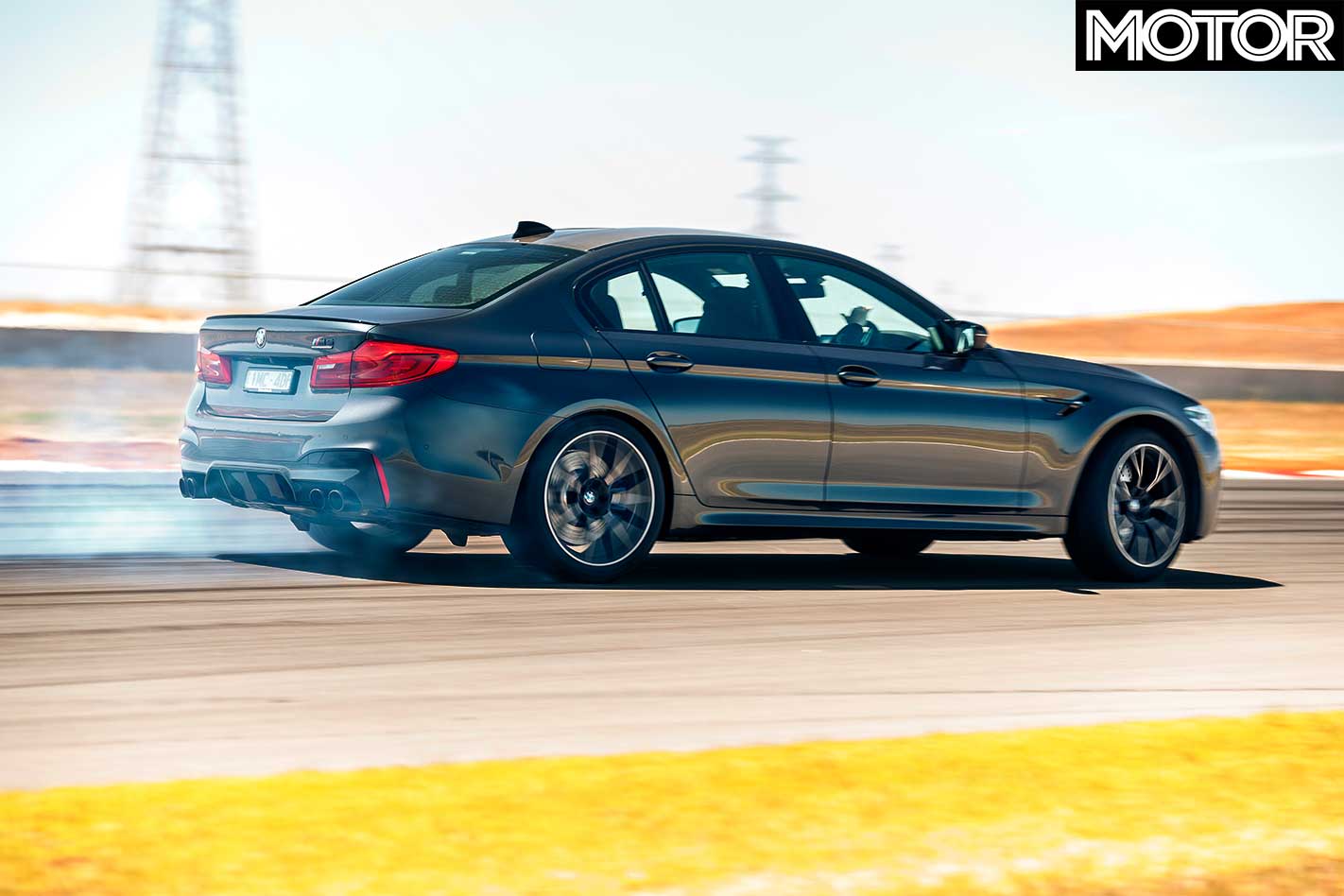
Well, combined with the lower ride height and the tweaks to the wheel-alignment settings, but the fact that adaptive dampers have been retained enable to car to remain civilised but fearsome over a wide range of conditions.
It may not be the most talkative car BMW has ever built, but in terms of the brand’s four-door sedans, it’s far and away the fastest we’ve ever seen.
The Numbers
2019 BMW M5 COMPETITION SPECS: Engine: 4395cc V8, DOHC, 32v, twin-turbo Power: 460kW @ 6000rpm Torque: 750Nm @ 1800-5800rpm Weight: 1865kg 0-100km/h: 3.78sec 0-400m: 11.53sec @ 203.09km/h The Bend lap time: 1min 30.8sec Price: $229,900
Judge’s Rank
Dylan Campbell – 3rd “If it had the front end and noise of an E63, it would be near perfect.”
Louis Cordony – 5th “Superman in a business suit, but three cylinders sound missing.”
David Morley – =5th “A dead-set ballistic missile. With controls of clay.”
Scott Newman – 4th “Lunatic performance but ride, steering and noise should be better.”
Rick Kelly – 2nd “A big angry monster that really deals with its size well.”
PCOTY 2019 Scoring
| Judges | DC | LC | RK | DM | SN | Total |
| Performance | 19 | 16.5 | 18 | 18 | 19 | 90.5 |
| Dynamics | 18 | 11.5 | 16 | 16 | 16 | 77.5 |
| Accessibility | 8 | 7.5 | 8 | 8 | 8.5 | 40 |
| Liveability | 8.5 | 7 | 9 | 7 | 8 | 39.5 |
| Value | 7.5 | 6.5 | 7 | 8 | 8.5 | 37.5 |
| X Factor | 8 | 5 | 6 | 6 | 6 | 31 |
| Total | 69 | 54 | 64 | 63 | 66 | 316 |
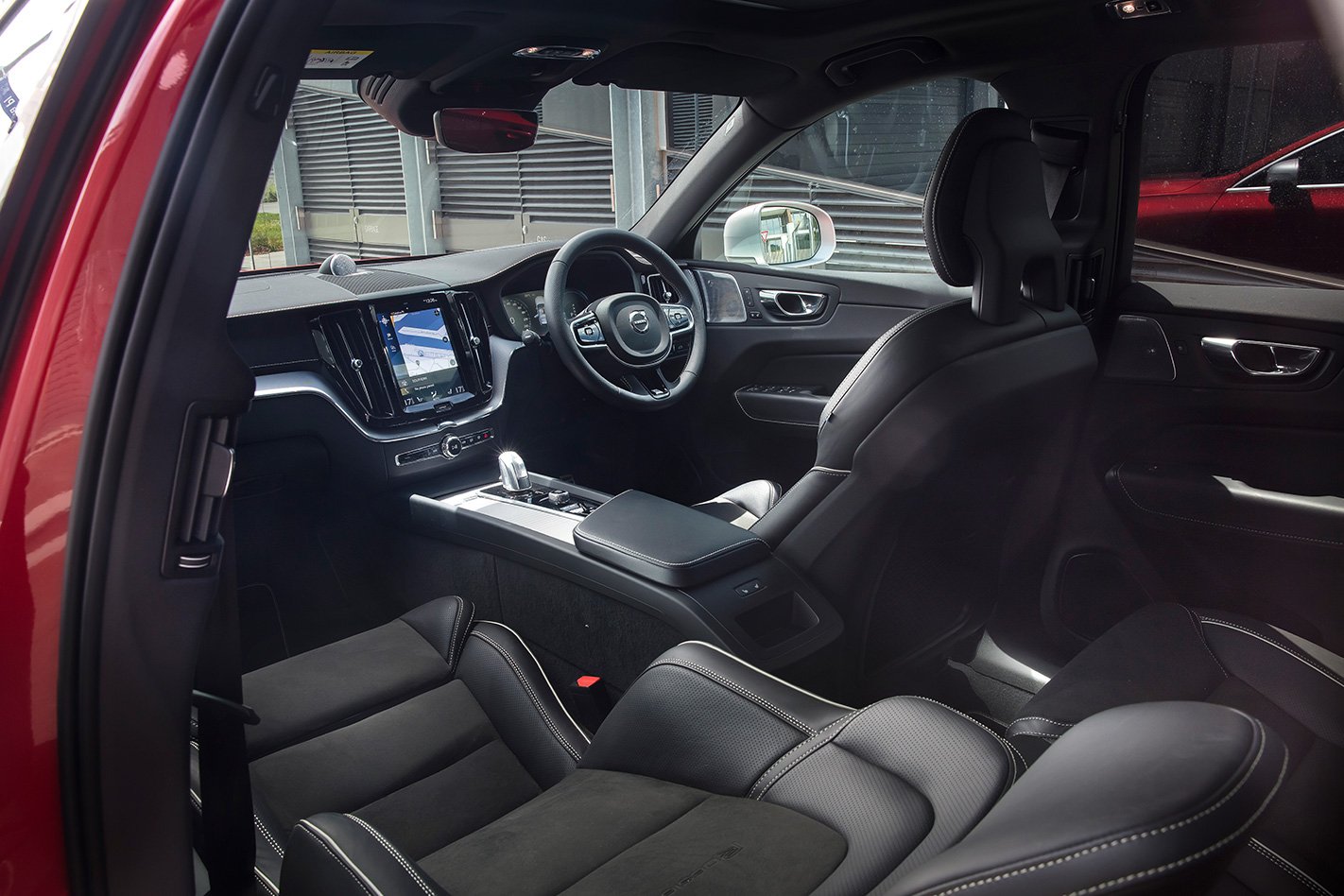
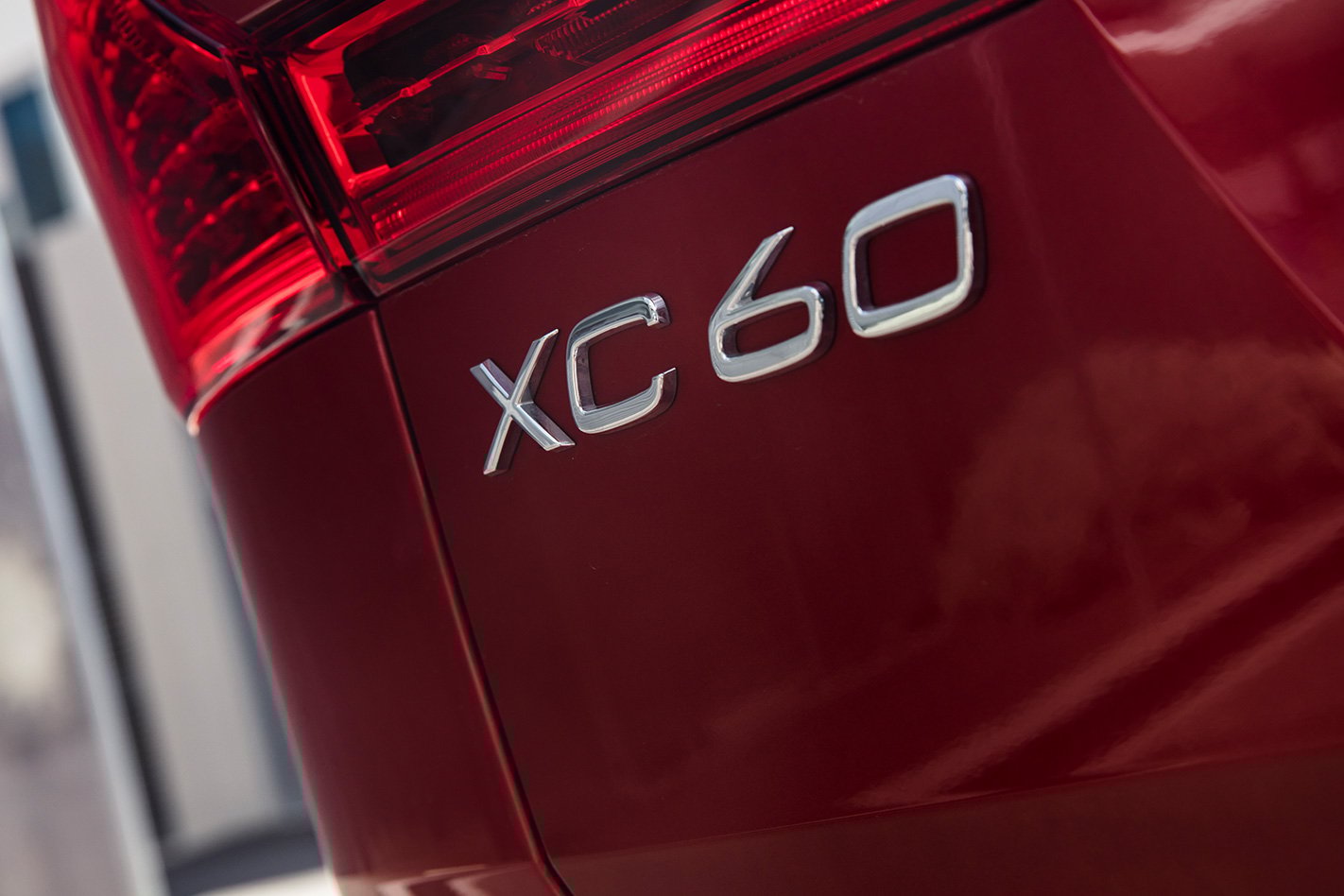
THERE were some who disagreed with the XC60 winning last year’s Wheels Car of the Year. But then there are some who believe the earth is flat, that you can buy Ray Bans for $15 by sharing a Facebook ad and that vaccines rather than dud genes are responsible for their dullard kids. The most awarded car in the history of ever is at its most imperious in range-topping T8 plug-in hybrid guise. Fitted with the obligatory optional air suspension, it’s a car with plenty of strings to its bow.
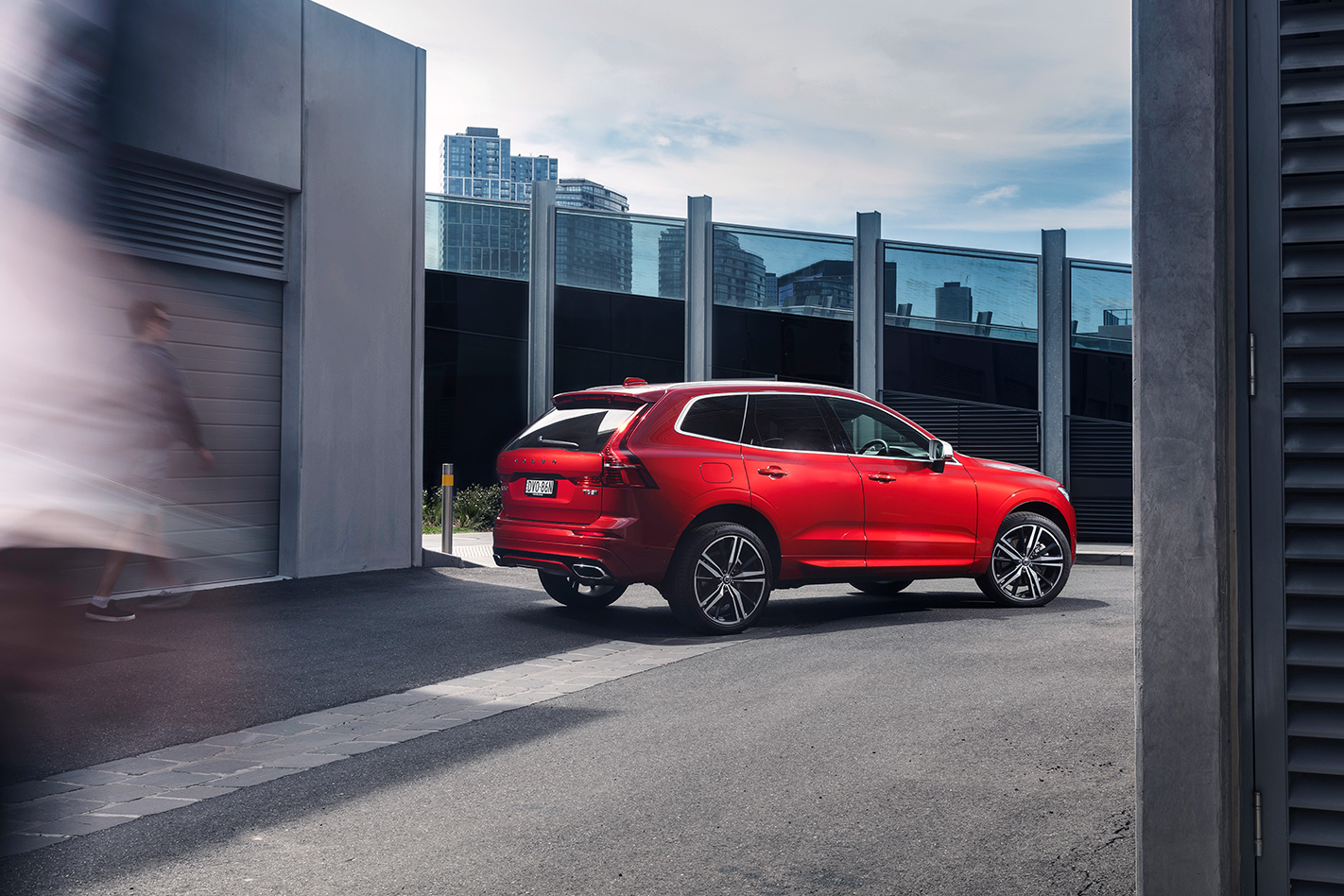
Were we nitpicking, we’d probably like a little more pure EV range than the 35km maximum that the onboard computer shows which, like all batteries, gets better in warm weather. When the battery is depleted, you’re basically left with an XC60 T6 carrying 200kg of dead weight. Switching the XC60 into charge mode while you’re on the move will recharge the relatively small 10.4kWh lithium-ion battery in about an hour of suburban driving, but it does so at some cost, fuel consumption climbing to around 16L/100km in the process. In order to get anywhere near Volvo’s 2.1L/100km claim, you need to cover relatively short commutes and not tax the 2.0-litre four-pot too severely.
Fuel consumption is also dented on longer drives in Hybrid mode, where the battery depletes fairly quickly and the engine is left to pick up a proportionally higher percentage of the burden. We averaged around 8.5L/100km on longer drives, although editor Inwood’s six-month tenure with a T8 saw him average just under 5.0L/100km with diligent charging, a measured right boot and a commute that leaned more on volts than 98RON.

A full charge for the battery takes three hours when using a 16-amp mains electricity supply, four hours with a 10-amp supply or seven hours if using the standard six-amp plug. The battery is neatly housed in what would ordinarily be the transmission tunnel. Locating the battery along the centre line of the car and not under the floor means that neither ground clearance nor boot space are compromised. The fuel tank is a measly 50 litres, though.
Priced at just $14K more than the conventionally powered XC60 T6, the T8 will appeal to those who enjoy the idea of never seeing a servo during the week. It also offers a notable performance uptick, the T6’s outputs of 235kW/400Nm being trounced by the T8’s 300kW/640Nm. That in itself will be enough for some. The XC60 was always a class act, and the T8 adds a glittering array of intriguing facets yet brandishes its PHEV ability lightly.
8.5/10
Ford’s new Focus ST was revealed to the world in mid-February, with an expected arrival in Australia in early 2020.
So it makes sense that, before it arrives, we’d want to get an idea of where the car is coming from, namely its less performance-oriented family members. Enter the 2019 Ford Focus ST-Line.

But with a host of ST-Line specific parts, the sportiest hatch so far in the new Focus range has enough character to keep even a proper hot hatch enthusiast content – if not entertained.
The twin exhaust exit, honeycomb grille, rear spoiler, and some of the bodywork sets the ST-Line apart from less sporting models, while the interior is mostly the same as other models, fairly utilitarian but by no means offensive.
A lowered stance – by 10mm – is the result of sports suspension replacing the standard setup.
That suspension does make the car a little stiffer to ride in, isn’t adjustable, and could even be enough to turn some more bump-sensitive shoppers away, but on a lively drive it helps communicate the road’s surface via the steering wheel.

A set of Continental SportContact 5 tyres provide plenty of grip for road driving, while a relatively playful chassis feels like Focus ST DNA is present, and provides enough mid-corner adjustability to sharpen up if you find yourself running wide.
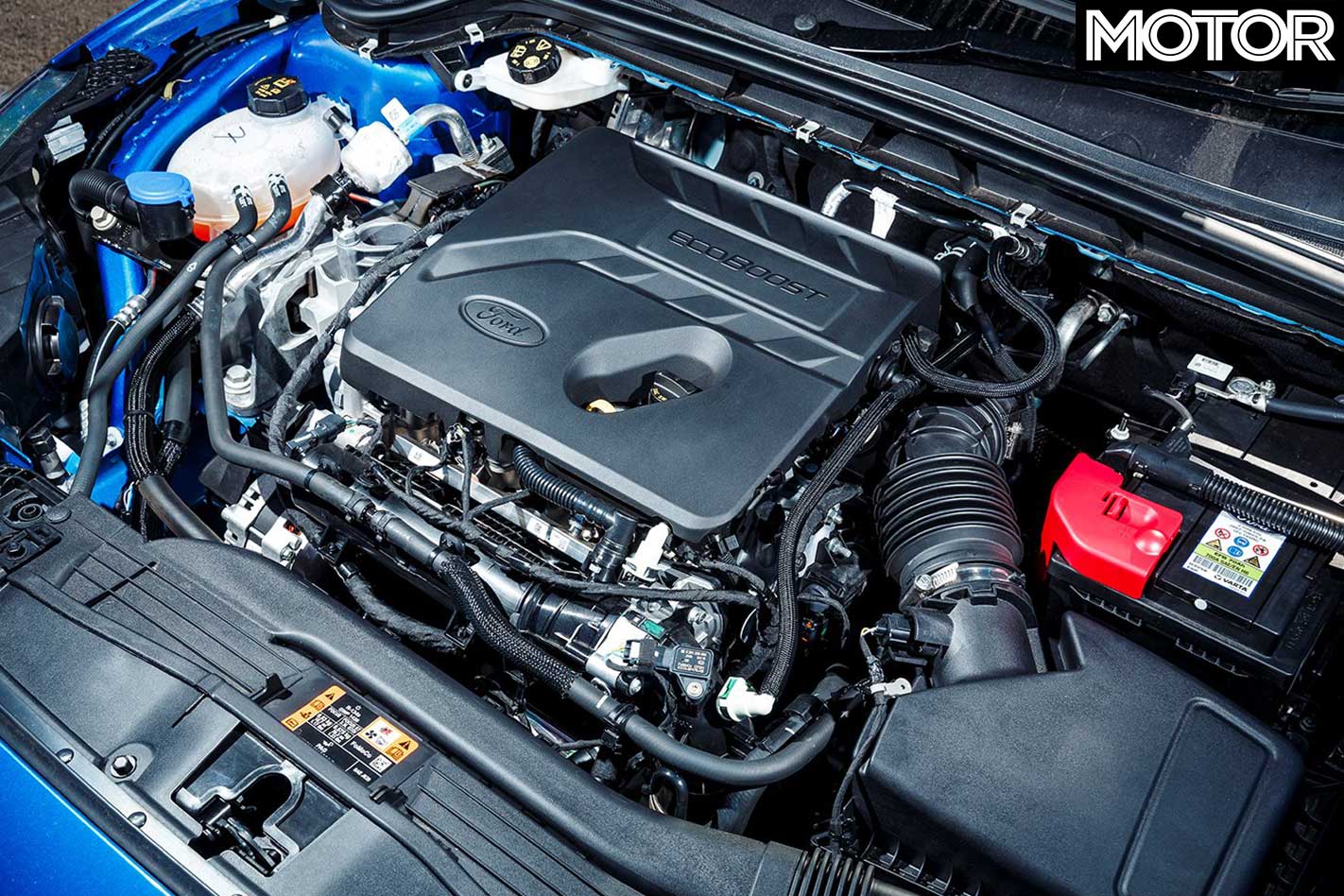
Its three-pot engine also sounds rather fun, and even though it feels like you’re headed off the torque band at the top end, it eggs you on in the mid-range with a surprisingly lively exhaust note.
The only gripe found with its drivetrain when things get spirited is the gearbox. It’s not the most perky unit, with the same gears and ratios as its sibling models.
It does come with paddle shifts and a ‘manual mode’, though its willingness to follow orders is low. It also shift up well before redline, admittedly keeping the needle in the torquiest part of the tacho, but that’s not always the goal.
Mercifully, when left to its own device, the ‘box is fine and the rest of the car makes up for it. No manual shifter is available, at least not until the Focus ST arrives. If the ST-Line is the ‘warm hatch’, we can’t wait for things to get properly hot.
2019 FORD FOCUS ST-LINE SPECS: Engine: 1.5-litre inline-3, turbo Power: 134kW @ 6000rpm Torque: 240Nm @ 1750-5000rpm Transmission: 8-speed automatic with paddle shift Drive: FWD Weight: 1388kg Price: $28,990
