
In many ways the McLaren 600LT is like a pavlova. Both are light, more than the sum of their parts and very, very tasty. It takes a mere handful of ingredients and a simple recipe to create Australia’s favourite Christmas dessert, and a similar process has transformed McLaren’s Sports Series into a fire-breathing, tyre-burning supercar of the highest order.
You’re probably aware that LT stands for Longtail, a homage to the McLaren F1 GTR Longtail that raced in the late ’90s. It’s a bit of a misnomer in the case of the 600LT, its rear elongated by just 74mm whereas the original F1 GTR was 641mm longer than the car on which it was based. Other dimensional changes include a ride height drop of 8mm and an extra 10mm of front track.
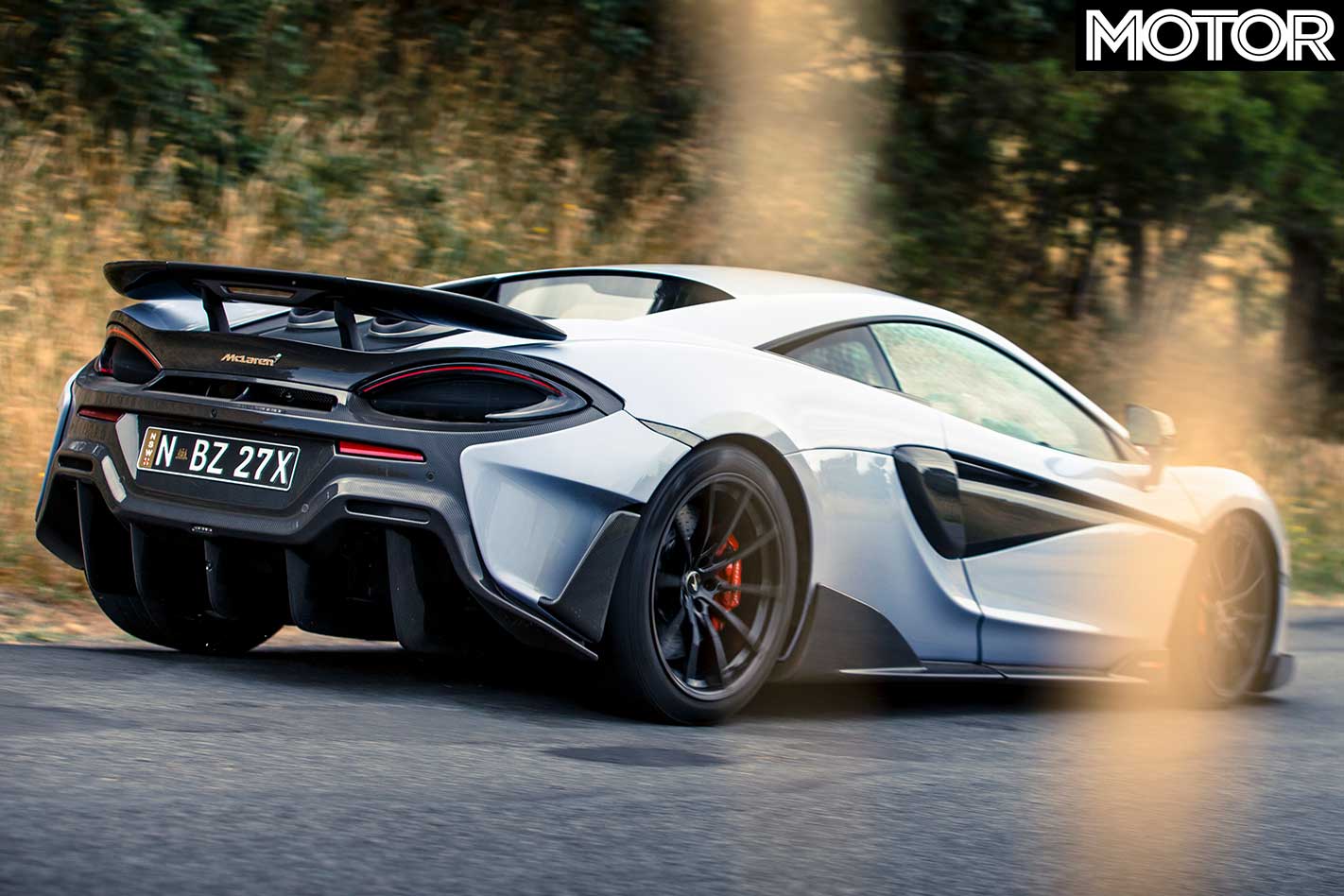
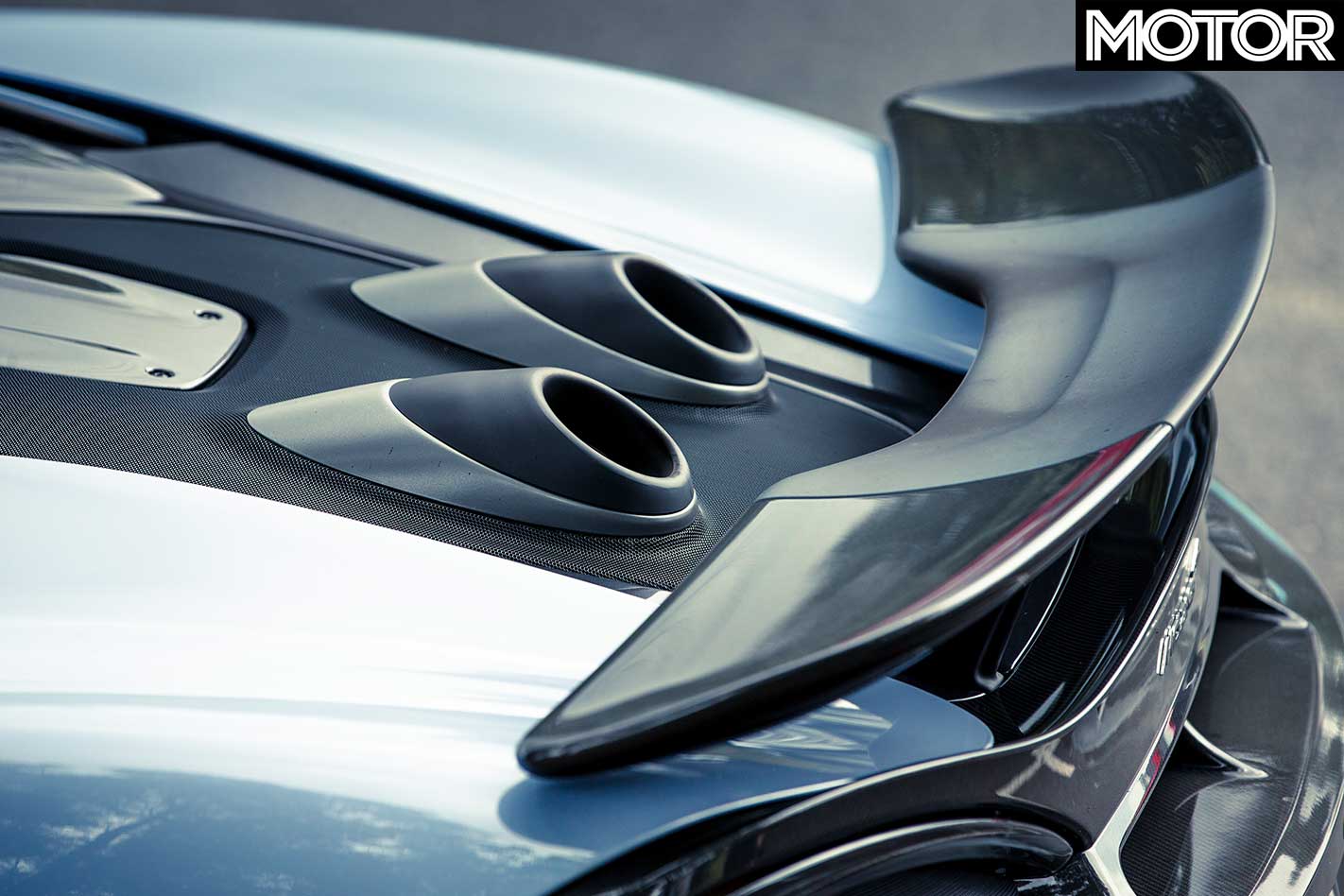
A recalibrated ECU and new top-exit exhaust system lifts outputs to a healthy 441kW/620Nm, an extra 22kW/20Nm over the 570S. Of more importance is the weight reduction. McLaren claims a 100kg diet compared to the 570S, though the actual figure depends on the spec of each car.
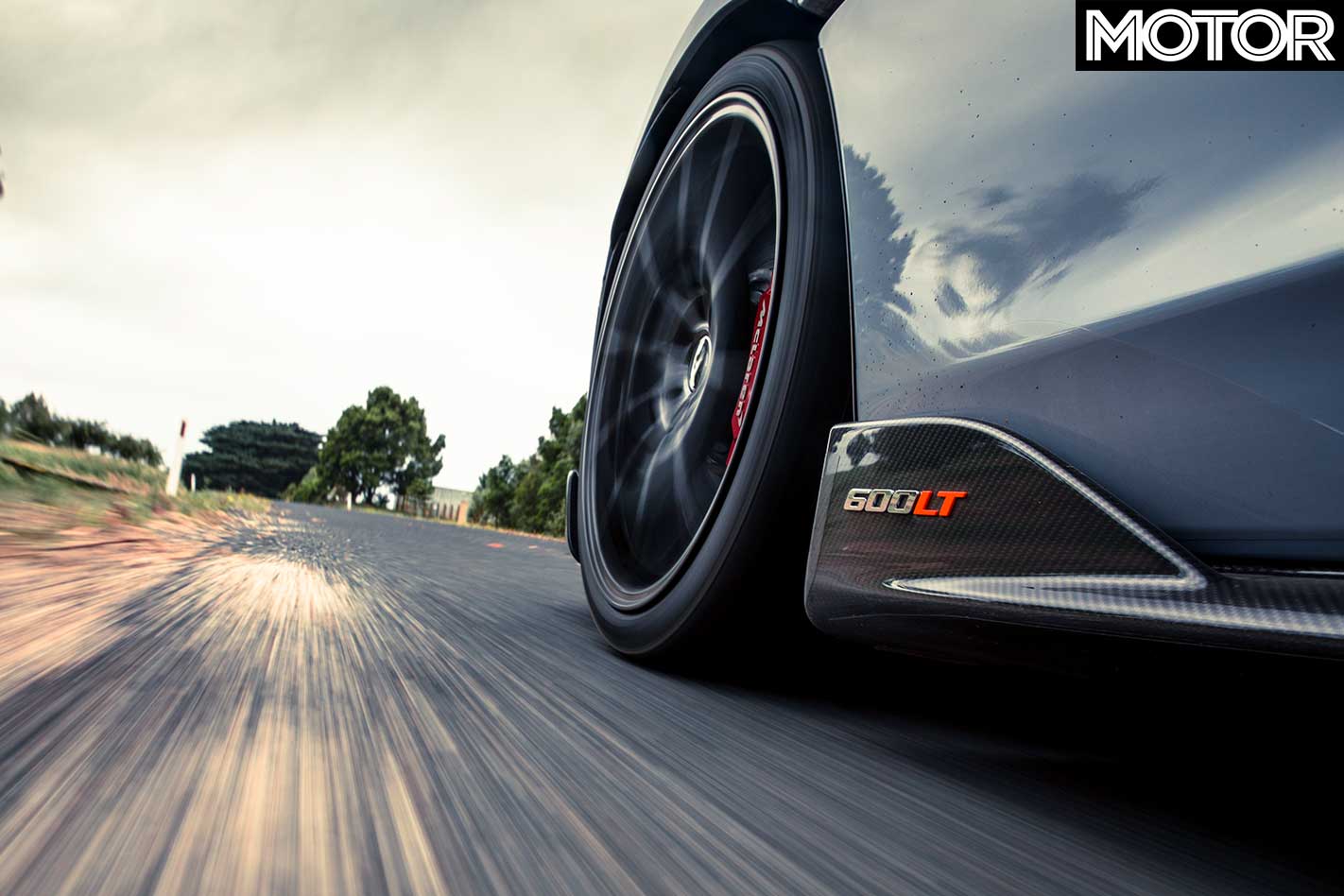
Nonetheless, it’s an impressive loss, with weight shaved from a number of areas. Forged aluminium suspension wishbones and uprights are 10.2kg lighter, aluminium brake calipers and stiffer carbon-ceramic discs from the Super Series shed another 4kg, while forged alloy wheels – 19.0 by 8.0-inch front; 20.0 by 11.0-inch rear – delete a further 17kg.
Fixed-back carbon racing seats delete 21kg while ditching carpet cuts 5.6kg and exposes the carbon-fibre floor, which does look better than the welded aluminium you find in Ferrari’s lightweight models. You can even see the wiring harness snaking its way out from underneath the driver’s seat. The aero addenda, consisting of a front splitter, longer rear diffuser, side skirts and fixed rear wing, is all crafted from carbon fibre and results in 100kg of downforce at 250km/h.
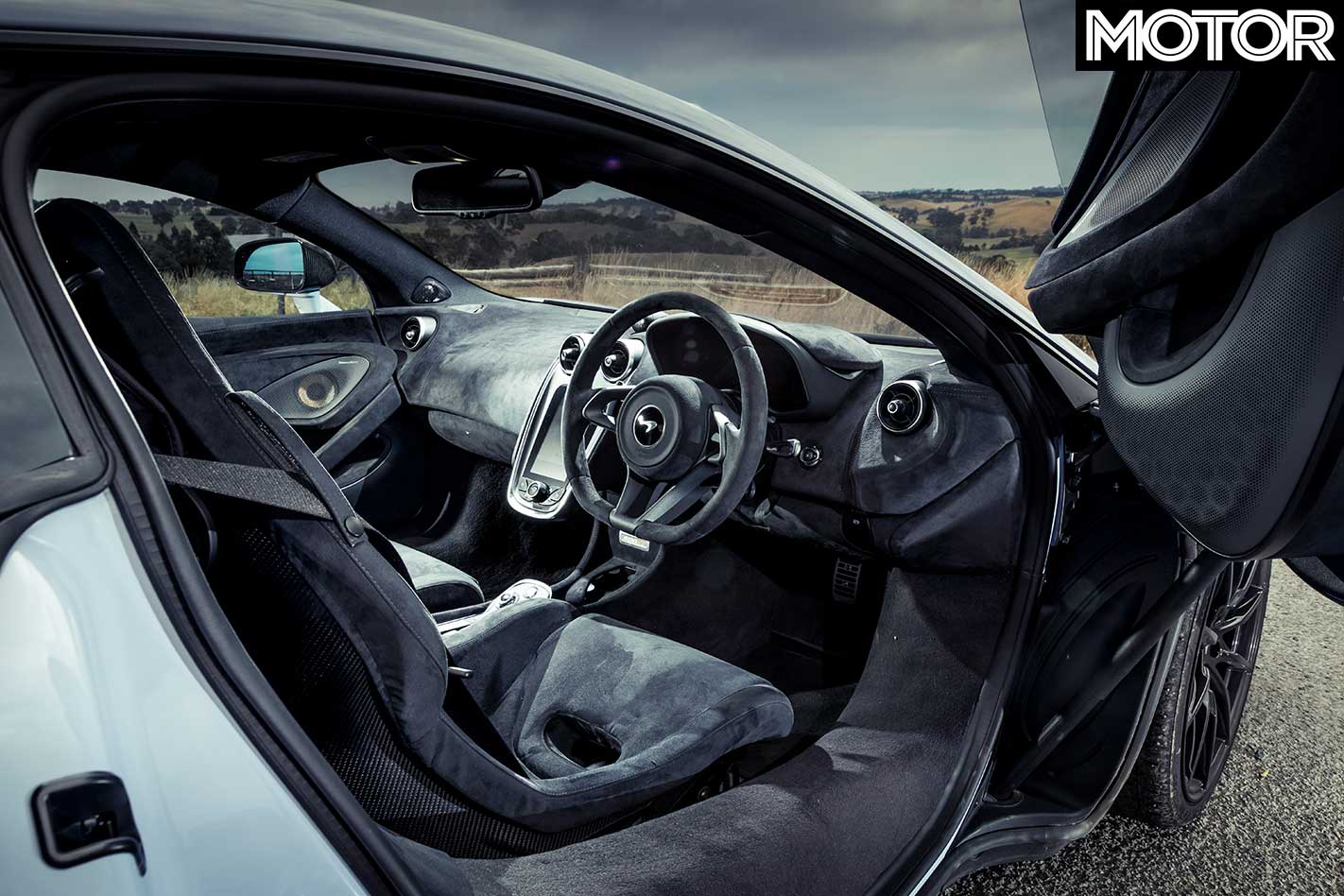
To look at, the 600LT’s interior is all business, covered almost floor to ceiling with Alcantara, though our test car is fitted with air-con, sat-nav and a stereo – in this case an excellent 12-speaker Bowers & Wilkins system. All this eats into its weight advantage over a 570S, but makes the car far more useable on a day-to-day basis.
Happily, the 600LT is not a hard-riding skateboard; even with thinly padded race seats there is enough suspension compliance to easily pass the everyday driver test – it’s even relatively quiet until you hit coarse-chip tarmac, at which point the Trofeo R semi-slicks create a hell of a racket.
Those lightweight seats may be an issue, though. Hopefully they are available in varying sizes, as neither photographer Nathan Jacobs or I are large gentlemen, but we are wedged in tight. Anyone with wider hips (ie, women) or of larger stature simply wouldn’t fit in our test car. That aside, the driving position is brilliant and I love the way it essentially forces you to left-foot brake. The nose lift ruins the stance but is vital in avoiding expensive scraping noises on driveways and such.
Press the start button and there’s a lengthy whirr of starter motor before the M838TE 3.8-litre twin-turbo V8 awakens with a blare. It’s loud but tuneless at low rpm, the combination of a flat-plane crank and forced induction giving it the aural appeal of an old Nissan SR20 inline-four with a cannon exhaust, thankfully without the drone.
Before you even begin to investigate its performance, the 600LT feels more special than its Sports Series siblings. Firstly, it looks incredible, the heavily raked profile and contrasting carbon panels giving it real supercar presence. On the move the Alcantara-clad steering wheel gently jiggles in response to bumps or cambers, while your already limited rear vision is further obscured by heat haze from those top-exit exhausts.
Press the throttle and there’s a long enough delay to wonder what’s happening before all hell breaks loose. To call the 600LT laggy is a step too far, but it doesn’t have the immediate response of a 488 GTB or GT2 RS.
Presumably it’s the result of fairly large turbos, as the torrent of power that is unleashed all the way to 8000rpm is insane. The claimed performance numbers are comical: 0-100km/h in 2.9sec, 0-200km/h in 8.2sec, 0-400m in 10.4sec. Those figures put it virtually on par with the 720S, but while it doesn’t quite feel as supernaturally rapid as its sibling, it’s better for it.
There’s still enough power to make your head spin, but it doesn’t dominate the experience like in the 720S. As crazy as it sounds for a car capable of mid-10sec quarter miles, the whole package feels beautifully homogenous.
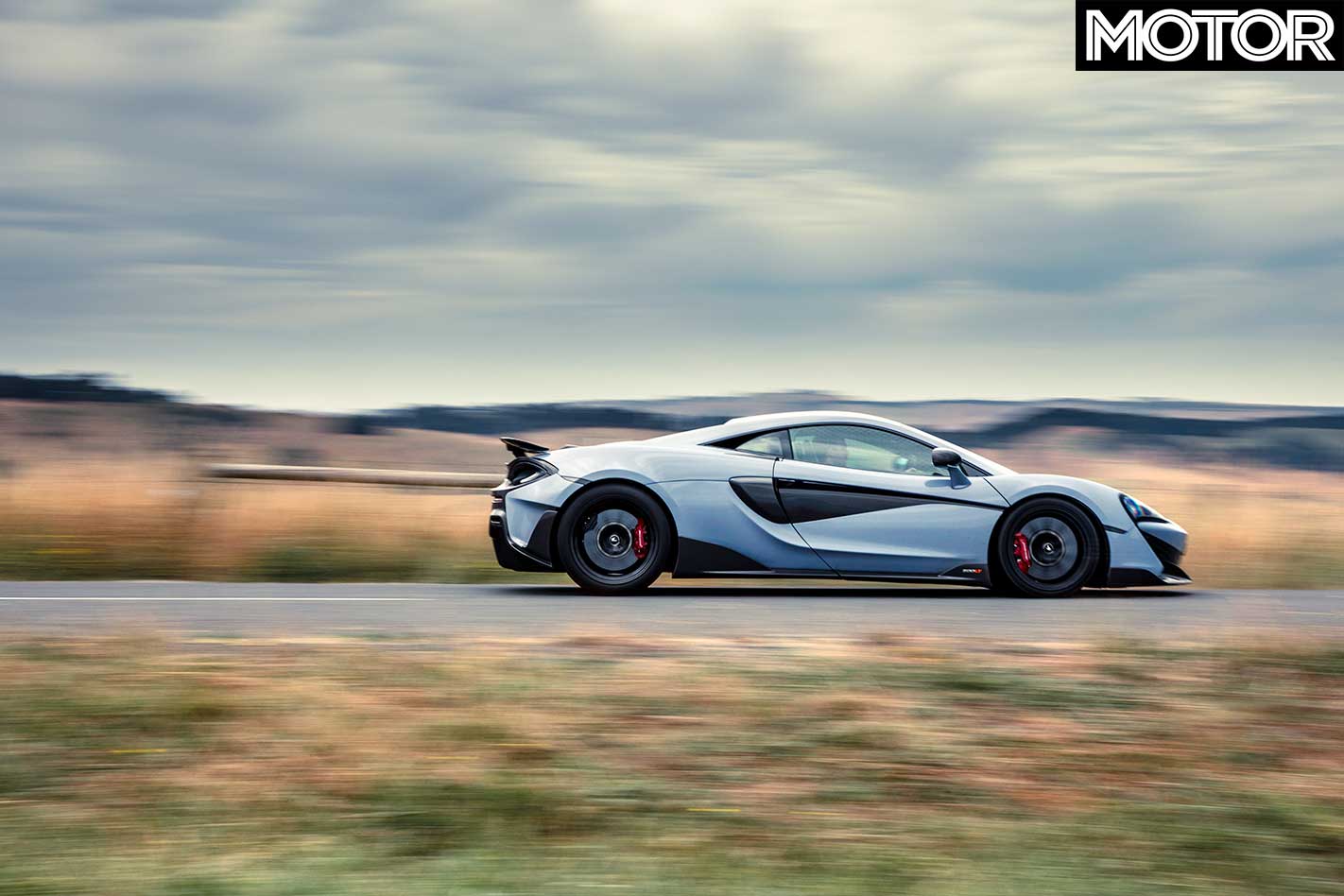
There’s outrageous grip and traction, though enough sheer grunt for third-gear oversteer to be easily available, the superbly calibrated ESC subtly mopping up any over-exuberance. The steering is sublime, heavy at low speeds but so communicative that once you’re somewhat accustomed to the speed you can throw the 600LT into corners and feel the tyres gently smear across the road.
A quick couple of words on the gearbox – it’s perfect. In Track mode upshifts are seamless and downshifts are nicely mechanical, accompanied by vicious cracks from the exhausts. The brakes, too, are astounding; a little dead initially, but with benchmark power and feel in hard use.
Under heavy load the engine also comes alive, the dull buzz quickly morphing into a sharp racecar-like growl. The slight lag makes for a more challenging drive, but arguably a more involving one. Having to accelerate early and time your inputs accordingly is simply part of learning to tame this beast.
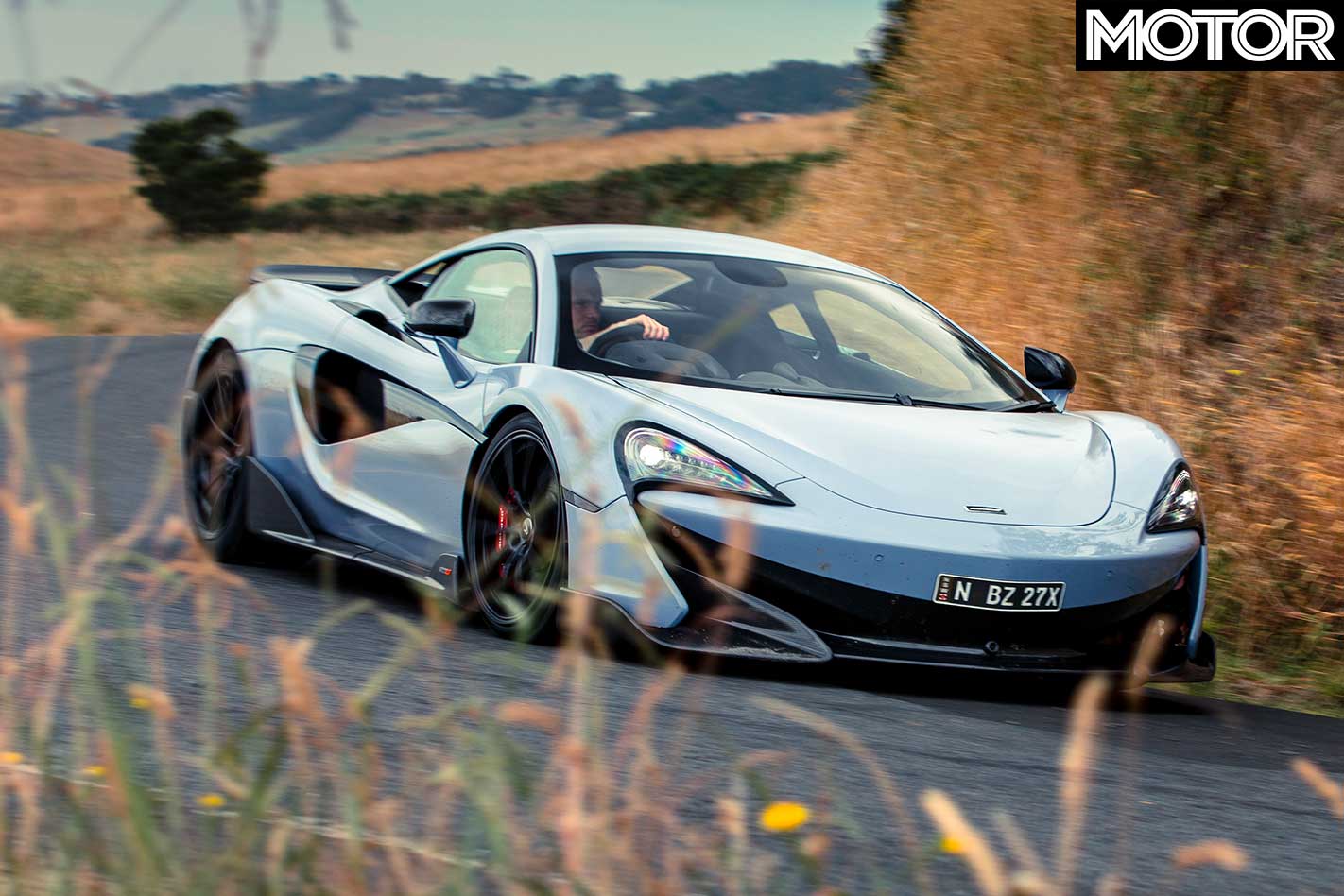
There are a couple of issues: the steering kickback that blights all McLarens is lessened, but not eradicated and the lack of an LSD results in occasional inside wheelspin. By far the biggest issue, though, is not the length of the tail but the height of the nose. If there’s not an F1-style wear plank under that expensive carbon splitter there needs to be, as time and time again it headbutts the tarmac.
As such, the 600LT comes tantalisingly short of a perfect score. On track, where there are no bumps to disturb its composure, it probably deserves one. Nevertheless, McLaren has created an intoxicating supercar that, even with the seemingly obligatory $100,000 options spend, significantly undercuts rivals from Ferrari and Porsche. It’s currently the best car Woking makes.
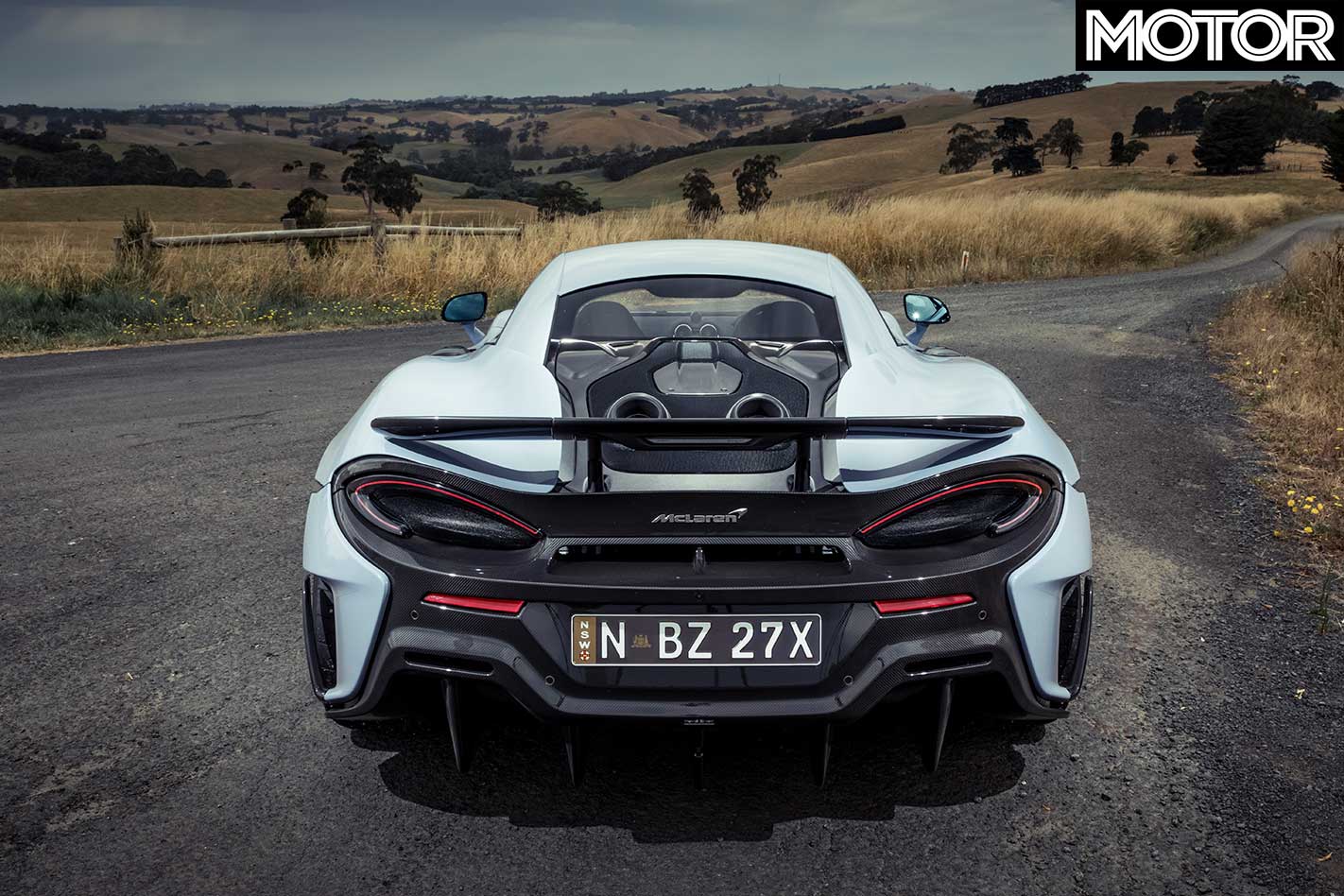
2019 MCLAREN 600LT COUPE SPECS: Engine: 3799cc V8, DOHC, 32v, twin-turbo Power: 441kW @ 7500rpm Torque: 620Nm @ 5500-6500rpm Weight: 1356kg 0-100km/h: 2.9sec (claimed) Price: $455,000
Like: A top flight supercar that feels more special than the model on which it’s based Dislike: Nose way too low; an LSD would help; steering kickback still present
Rating: 4.5 out of 5 stars
The Nemesis
Lamborghini Huracan Performante 5.2-litre V10, AWD, 470kW/600Nm, 0-100km/h 2.9sec, 1382kg, $483,866
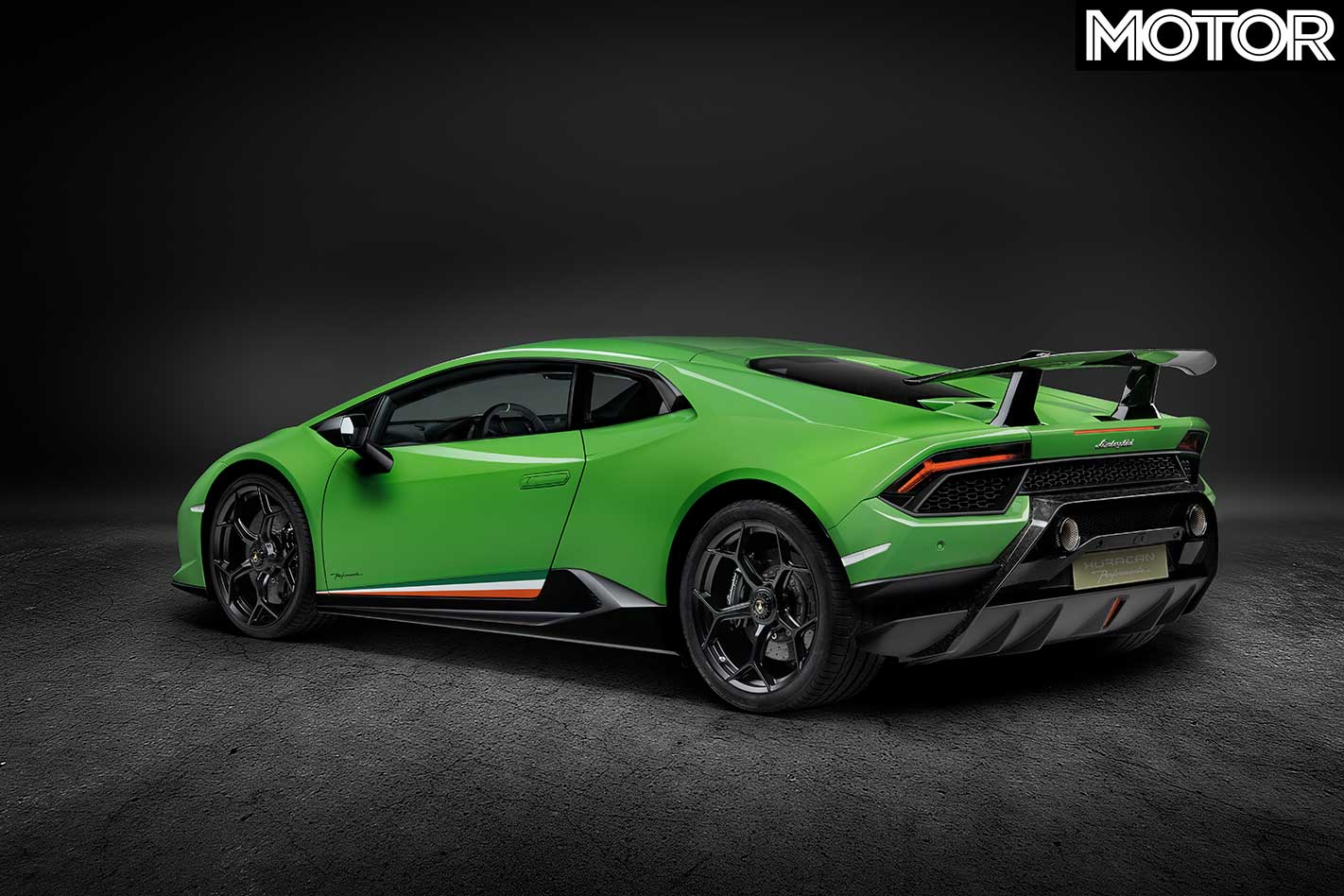
Similar in approach but very different in mechanical execution, the Lambo using a bellowing atmo V10, all-wheel drive and clever active aerodynamics. Both easier to buy than a Ferrari 488 Pista.
NORMALLY you’d imagine the prospect of your 1960s Lamborghini exploding to be a very real concern.
But Swiss artist Fabian Oefner has exploded a Lamborghini Miura in a different way; the latest art piece of his Disintegrating series.

Dubbed Disintegrating X, the mesmerising artwork took two years to complete and involved photographing each individual piece of a Lamborghini Miura.
Where Oefner’s artwork normally involves using intricate scale models, this time around he used the real thing – a 1972 Lamborghini Miura which was in the process of restoration in Sant’Agata, Italy.

The New York based artist travelled to Italy to take over 1500 images of individual components, before merging them together into the organised chaos that you see here.
Arguably one of the most attractive designs of all time, the 1966 Lamborghini Miura is often lauded as the first real supercar – blending explosive mid-engined performance with gorgeous design.
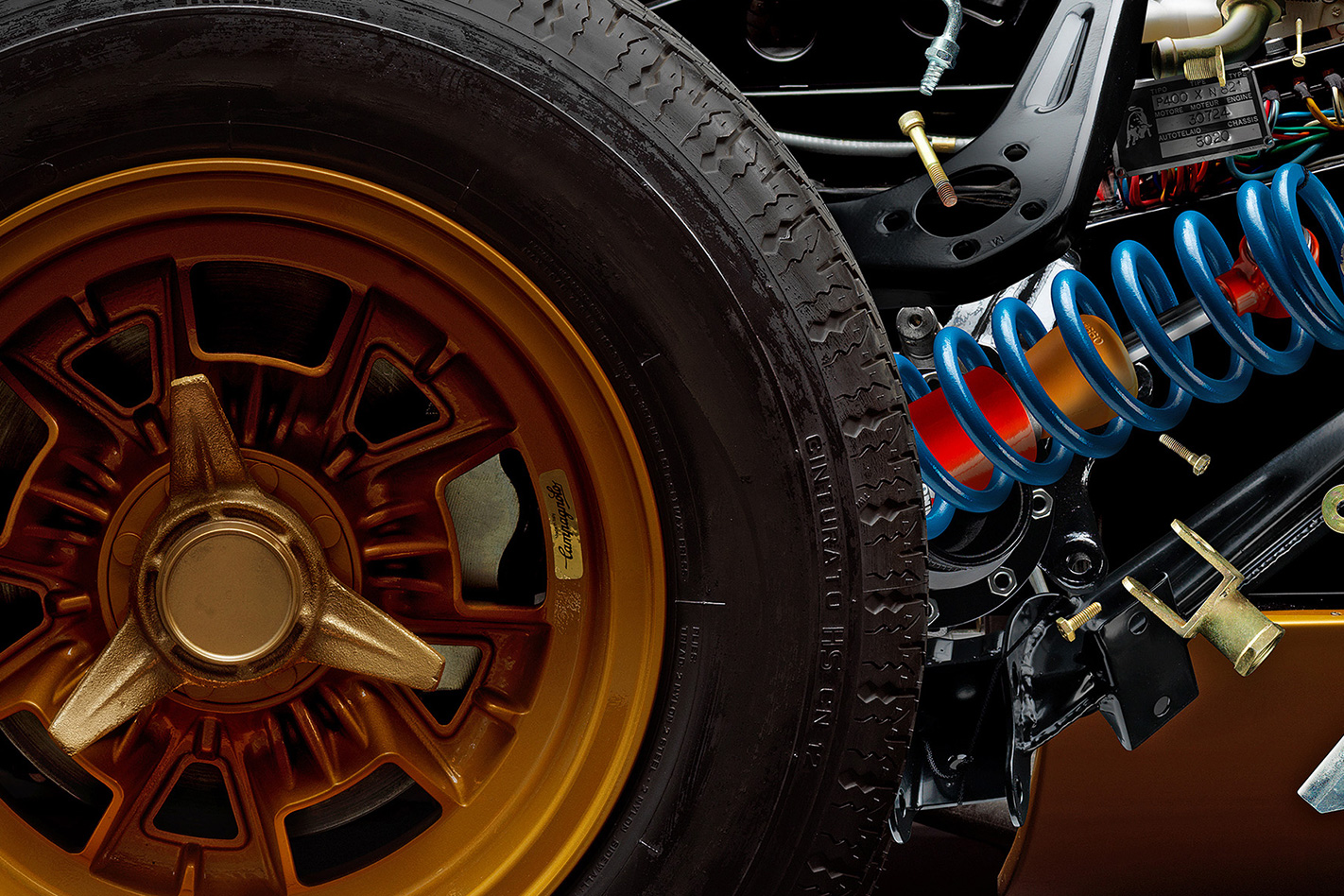
Oefner’s work on the Disintegrating series began in 2013 and he’s completed work on the 1982 Porsche 956, 1934 Bugatti Type 57 SC Atlantic, 1957 Maserati 250 F and 1969 Ford GT40 since.
A single sketch starts the arduous process of creating the artworks, before each component is photographed in-situ with various lighting techniques. The thousands of images are then cut and pasted into the final image in Photoshop.
Oefner’s finished image is on display in the MB&F Mechanical Art Devices gallery in Geneva, Switzerland and is available in a limited run of prints.
Click the gallery above to see more images of the exploding Lamborghini Miura and Fabian Oefner’s previous work
- Deleted tweet sent by UK designer
- Appears to show 2020 Land Rover Defender interior
- Defender set to debut later in 2019
- But Land Rover Discovery SVX has been canned
The dangers of social media to car companies has reared its head again, with a UK designer has seemingly tweeting a spy picture of the cabin of the brand new Land Rover Defender, which is due to launch later in 2019.
The offending image was quickly removed, apparently at the behest of a cranky Land Rover PR person who suggested to tweetist Richard Charles that a “legal team” could get involved.
The Defender is supposed to herald a return of a more utilitarian vehicle for the Indian-owned British brand, in the same vein as the soon-to-be launched Jeep Wrangler.
The single spy shot of the 2020 Land Rover Defender reveals a driver’s space which is a lot different to anything that’s currently in the Land Rover range. A leather-wrapped steering wheel lies quite flat in front of the driver, with the old-school four-spoke design brought into the modern age with the use of exposed Torx bolts and alloy-esque spoke detailing.
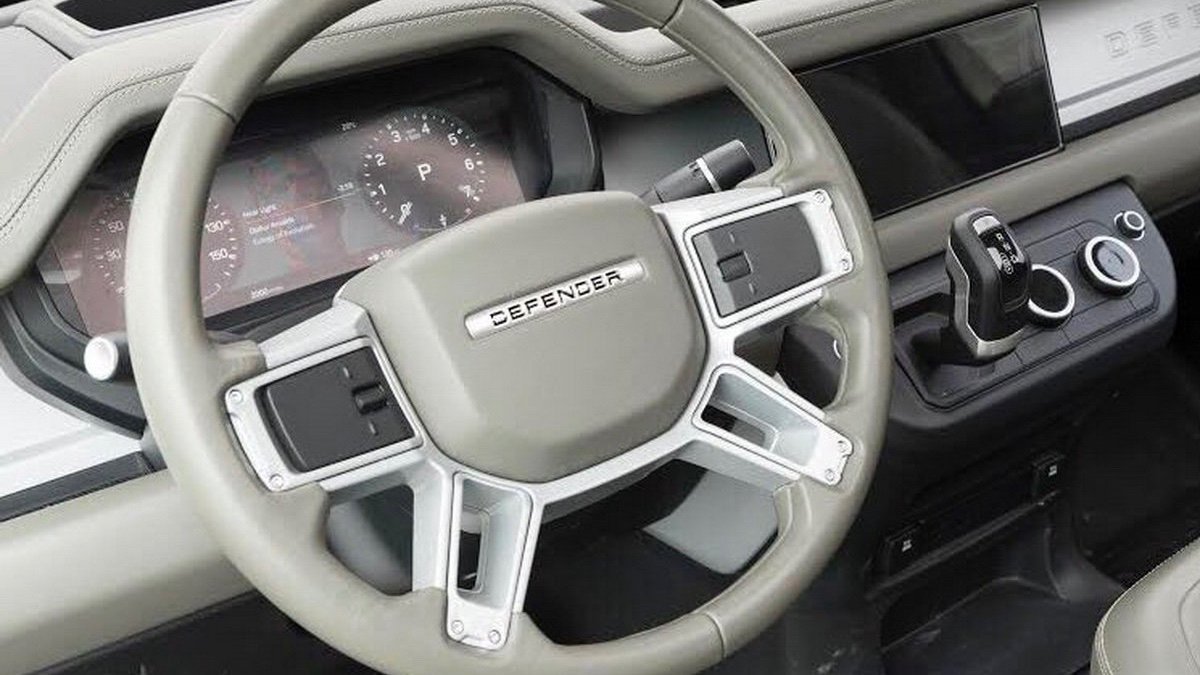
The dash itself is digital – a la vehicles like the Range Rover Velar – and there’s a rectangular multimedia screen in the centre console. A large, flat embossed alloy panel finishes off the dashboard on the passenger side.
The automatic gearbox shifter is located on the centre console itself and looks to be a return-to-centre trigger style device. Two dials to its right could be reserved for climate control functions, while an external volume button is also visible.
It’s likely that the image is actually one taken of a pre-production mock-up of the Defender’s cabin, thanks to the number of blank buttons on the centre console.
Given the location of the auto shifter and the presence of what looks like rubber matting, Land Rover appears to be staying true to the Defender’s original ethos of rugged usability.
Land Rover is stepping up its program of controlled images leaks, with the most recent set depicting both short- and long-wheelbase versions will be made available.
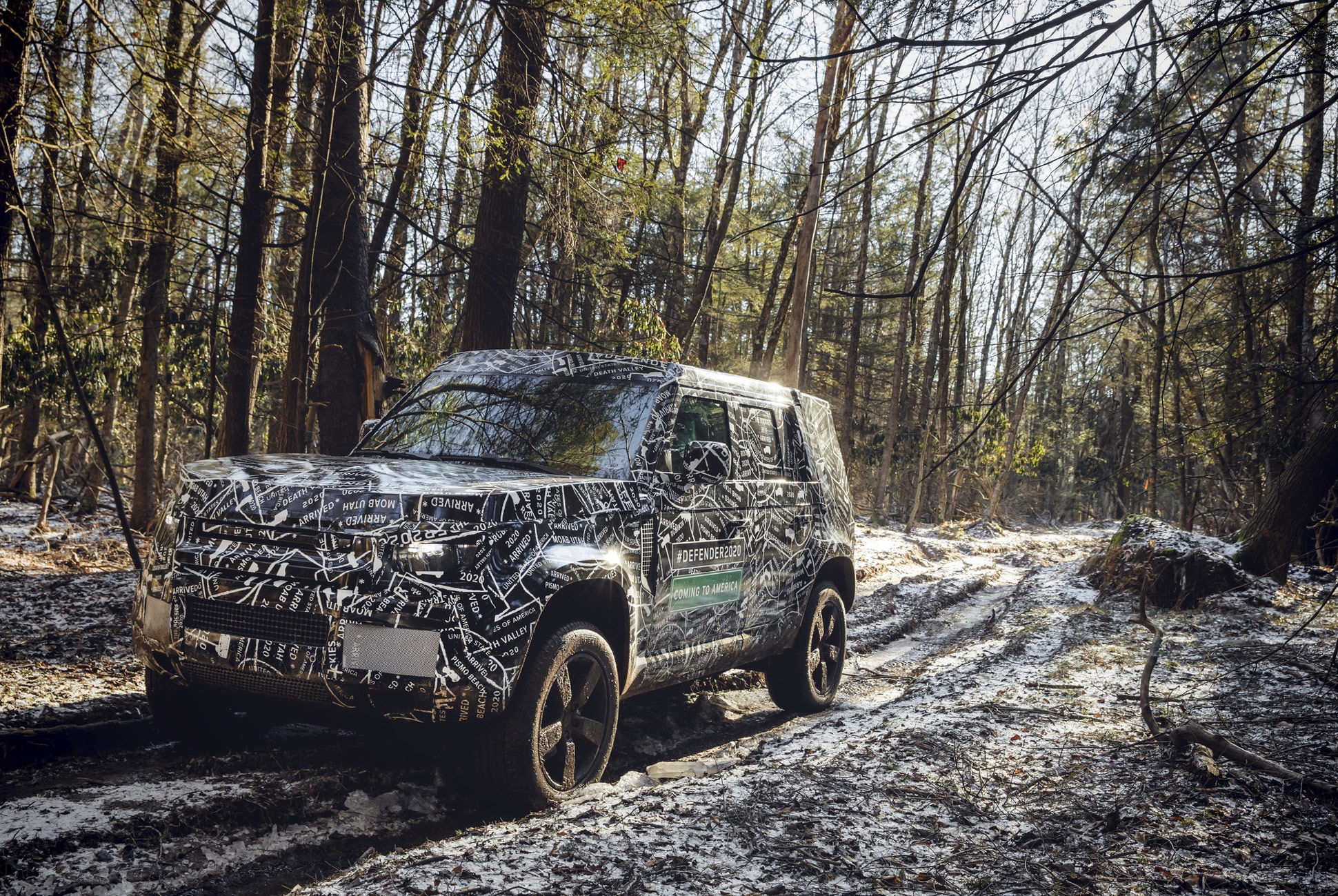
Two-litre diesel engines will likely be the main motivator for the 2020 Land Rover Defender, as well as the brand’s new Ingenium six-cylinder petrol and diesel engines. An electric version is also being mooted.
The Defender will also move from a ladder frame chassis to the same modular architecture that sits under vehicles like the Discovery. It will also likely feature the pick of Jaguar Land Rover’s electronic off-road technology.
Land Rover Discovery SVR cancelled
However, the bad news for the beleaguered brand continues, as it reels from the news of a staggering $6 billion loss in the last three months of 2018. The brand has cancelled production of a second model, the Land Rover Discovery SVX, even before it hit the production line.
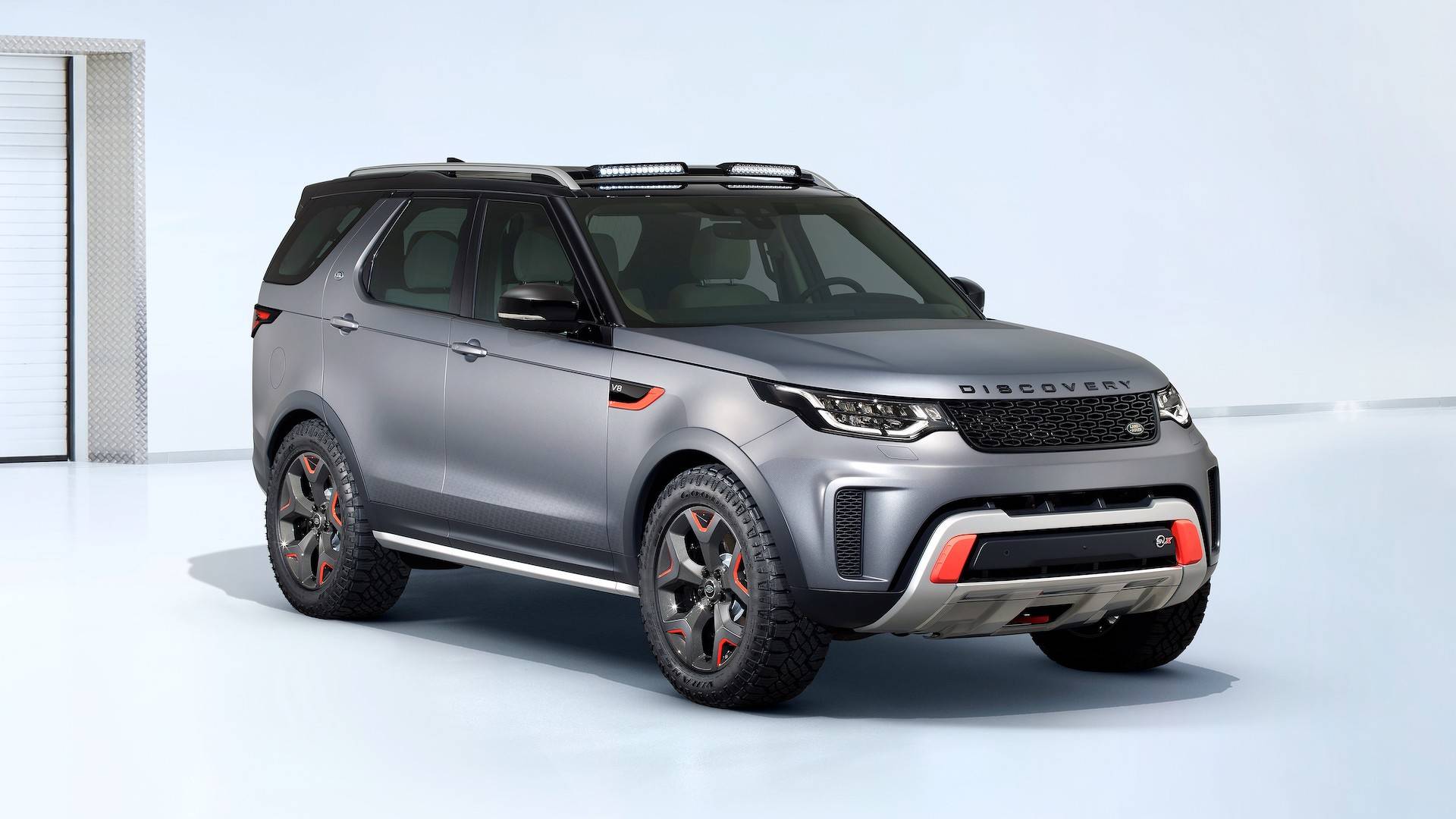
The Discovery SVX (below), which debuted at the 2017 LA motor show, was set to be powered by the company’s supercharged 5.0-litre V8. Like the mega-dollar Range Rover SV Coupe, which was canned in January, the Discovery SVR was slated to go on sale late in 2018.
Still a bit stunned, my face twitching, I reached up under my glasses to feel a bit of wetness. Blood. A lot of it.
“Err, I’ll be right back,” I said to the barista at The Bend Motorsport Park, as I rushed off to the men’s room to do god knows what. Swab my bleeding eyebrow with very unsterilised bits of toilet paper, presumably.
Moments earlier I had just walked, full noise, into the world’s cleanest, most unstickered glass wall outside the brand new cafe upstairs at The Bend. My mind was elsewhere – it was thinking braking and turning points, the trickier bits of The Bend’s 3.41km West Circuit, as I took stock of whether or not I had enough match fitness and simple alertness (and possibly skill) to strap myself into a 515kW rear-drive Porsche with its engine in physically the wrong place. Hence the barista visit.
But suddenly the long list of priorities for MOTOR’s 2019 Performance Car of the Year, in my mind – the testing, photography, videography, logistics, many moving parts – were instantly subordinated by a brand new, very urgent task. Get myself to hospital.

“You’re in charge now,” I said to Associate Editor Newman who had a “what? Why?” look all over his face. “I’ve just walked into a glass wall in the cafe upstairs, my glasses are, it turns out, quite unexpectedly sharp, and the ambulance guy says I should get myself to the emergency department in Murray Bridge, 25 minutes up the road, to get probably stitches.”
Before this point, I had somehow managed to make the bleeding stop but there was a very gnarly gash under my eyebrow. “You did what?” quizzed Morley. And then the others. “I’ve gotta go”.
The drive to Murray Bridge in our Ford Escape support car (possibly someone else should have driven me in hindsight) was an odd one, not just because it was not even the slightest bit on the radar five minutes earlier. I was supposed to be driving a Porsche 911 GT2 RS, or an Audi R8 RWS, or BMW M5 Competition, on a beautiful new racetrack, at 250km/h.
“You should have made up that you crashed a car or something,” said the nurse as she swabbed my wound, laughing that I had basically walked into a wall. The irony of receiving such an injury on a day where I was driving some of the fastest road cars in the world beyond their limits, on a track – truly very dangerous activity – was not lost on me.

The doc in Murray Bridge gave me a local and stitched me up. “You probably shouldn’t drive on the track any more today,” he said, and excitement and surrealism of the whole thing turned to glumness. I realised I might not get to drive some of the faster cars on track, at Performance Car of the Year, a day that I, and the MOTOR crew, use as motivation to get us through hundreds upon hundreds of hours driving a desk.
I got myself back to The Bend in time to coordinate, with snapper Ellen Dewar, the sunset group shot, my face patched up, which then became the evening’s entertainment as everyone else watched on. “We have to check if there’s a CCTV camera up there,” laughed The Bend guys, and me with them, sort of, as I wondered if my profile as Editor of MOTOR was about to be trumped by me, the YouTube viral video.
It was all okay in the end, I managed to fulfil my duties as a judge on Performance Car of the Year. But it was just another unexpected turn at our 2019 instalment – 11 superb cars, five dream days – the rest of which you can read in our February 2019 issue of MOTOR. Enjoy.
- NSW government will not re-register Takata ‘alpha’ airbag equipped cars
- More than 1600 cars affected
- Two people in Australia have been killed by Takata alpha airbag
- More than 25 million cars affected by Takata airbag recall worldwide
The Takata airbag recall is the biggest such recall in the history of the automotive industry, with millions of dollars spent by every car company to track down and replace Takata-branded airbag inflators.
Takata is – or was – the world’s biggest producer of airbags, but a series of deaths in the US revealed a frightening fault with older airbags.
The airbag’s detonator charge had deteriorated over time, and there is a 50:50 chance that the detonator will explode unpredictably if the car is in an accident severe enough to set off the bag.
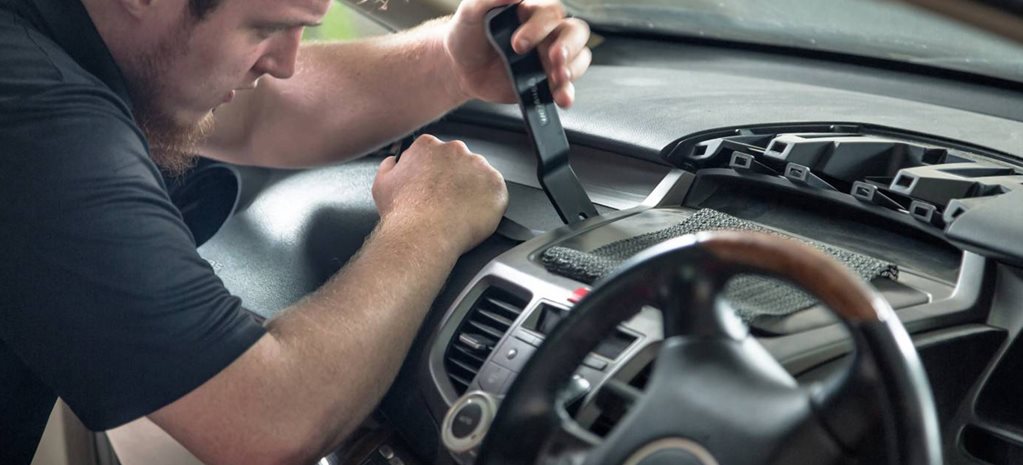
The resulting uncontrolled explosion can rip apart the metal ignition barrel, firing shards of metal at subsonic speeds into the face and torso of the driver or passenger. It is responsible for two deaths in Australia and more than 20 overseas.
Companies including Holden, Ford, Toyota, Mazda, Nissan, Mitsubishi, Mercedes-Benz, Volkswagen and many more have outlaid millions of dollars and thousands of hours in tracking down cars fitted with the faulty airbags in Australia.
However, after a program of mailouts, phone calls and even door-knocking, at least 1600 cars with the deadly alpha bags remain unaccounted for in NSW.
“The NSW Government supports the nationwide compulsory Takata Airbag recall and, for safety reasons, has made an amendment to the Road Transport (Vehicle Registration) Regulation 2017, meaning those who have not had faulty Takata airbags replaced could risk suspension of their vehicle’s registration,” reads a statement from the Roads and Maritime Services.
If a vehicle registration is suspended, it is against the law for the vehicle to be driven or for another person to drive the vehicle, meaning:
- the vehicle’s registration cannot be renewed until the airbag is replaced
- the vehicle cannot be sold
- the vehicle cannot be transferred to another owner.
Honda Australia managing director Stephen Collins said last year that it was critical that the remaining outstanding customer cars are taken to car dealerships. “These vehicles still have potentially dangerous airbags in them that can cause serious injury or even death in an accident if the airbag deploys incorrectly,” Mr Collins said.
As an example, Honda has sent more than 1.5 million pieces of correspondence in relation to its airbag recall, including messaging on social media, door knocks, multiple letters to known addresses and the establishment of a call centre.
Still another million cars to find
The registration suspension action only applies to the Vehicle Identification Numbers (VINs) of those 1600 NSW-registered cars. However, there are still more than one million cars on Australian roads with potentially deadly ‘beta’ Takata airbags fitted, which are also under recall.
Car companies are now calling for the registration ban – which kicked off in South Australia last September – to be extended to beta airbag-equipped cars, with some industry officials fearing that the spotlight on alpha Takata airbags – which have a one-in-two chance of exploding – is taking the emphasis away from beta bags, which have a one per cent chance of incorrectly deploying.
Haven’t checked if your car is affected yet?
Visit https://ismyairbagsafe.com.au/ now!
BRIAN Tanti’s coachbuilding and engineering skills propelled him to the curatorship of Lindsay Fox’s staggering car collection for 27 years. Now Tanti, 56, is showcasing those car-building techniques in an innovative Sydney workshop and events space, where body jigs and milling machines mix with cocktails and coffee.
Tanti was born in Malta, his family moving to Melbourne when he was nine months old. His parents ultimately had seven kids. “My father wasn’t particularly interested in cars, but two of my uncles had an influence. One worked as a fitter and turner, the other as an aircraft fitter. At a very early age I learned about excellence. And I had a cousin, an apprentice at Ford, he had an XU-1 Torana. I’d watch him working – I was six or seven – and just be fascinated by the way people problem-solve.”
Tanti took an apprenticeship as a panel beater, being introduced to wheeling machines and metal forming during stints at the Kangan Batman TAFE. “I found that very creative – taking something inanimate and giving it form.”
He spent a year in the UK at a coachbuilding firm, returned to Melbourne to do restoration work for a Rolls-Royce dealership, then joined a new, independent shop repairing and restoring early Ferraris. After one more stop (working on E-Types), around 1991 Tanti got a call from Lindsay Fox’s people.
“Lindsay had a workshop employing two mechanics, a trimmer and coachbuilder; I was the second coachbuilder hired. We were in a small shop in Caulfield with no signage. We didn’t do any outside work.”
Tanti recalls that, when he started, Fox’s 130-or-so car collection was valued at $9m. “By the time I finished in June of this year, $9m would be almost tied up in one car.” Tanti says that while Fox didn’t seem to drive his cars often, “he’s very passionate about seeing the cars going from being basket-cases to cars that are paraded on concours lawns – and I think he likes showing people that process, too.”
One favourite project was Fox’s blue 1955 Porsche 550 Spyder – chassis 56. “A lot of things weren’t right, and it became almost an Indiana Jones experience, restoring it … Lindsay was kind enough to let me go to America, where I looked at three cars and took the math data. In many respects, it was the most challenging car I’ve built.”
By mid-2018, Tanti found that the 550 was just one of a couple of attractive forms playing on his mind. “I met a girl and I’d been commuting to Sydney for two and a half years,” he says. Tanti took the “leap of faith”, then proceeded to fully equip a large, modern workshop on Sydney’s lower north shore.
“I’ve had this idea to reproduce a 550 Spyder,” he explains. “I’m tooling up to build four, nut-and-bolt faithful cars and I’ve had a few enquiries from serious collectors.” He suggests pricing will be around 10 to 20 percent the value of a genuine 550 Spyder, which change hands for $4-$8 million. Those maths also tally with the 4000 to 5000 hours Tanti says go into building one.
The exercise is being sustained by Brian Tanti’s Workshop (www.briantantisworkshop.com) functioning as a corporate events space.
“One of the things I learnt from 25 years of running events at Docklands was that people loved the museum, but they really enjoyed being in the workshop. I’m talking about people that had no particular interest in cars at all.”
And he’s running the whole show on his own. “At one point we were employing about nine staff at the (museum) workshop in Docklands. I’m happy to just be here on my own and see where we go from here.”
- Introduction: A spicy serving
- Update 1: The nuts and bolts, examined
- Update 2: Performance tested
- Update 3: From M to N
- Update 4: Hillclimb hottie
- Update 5: Track star
- Update 6: Rallyin’ time
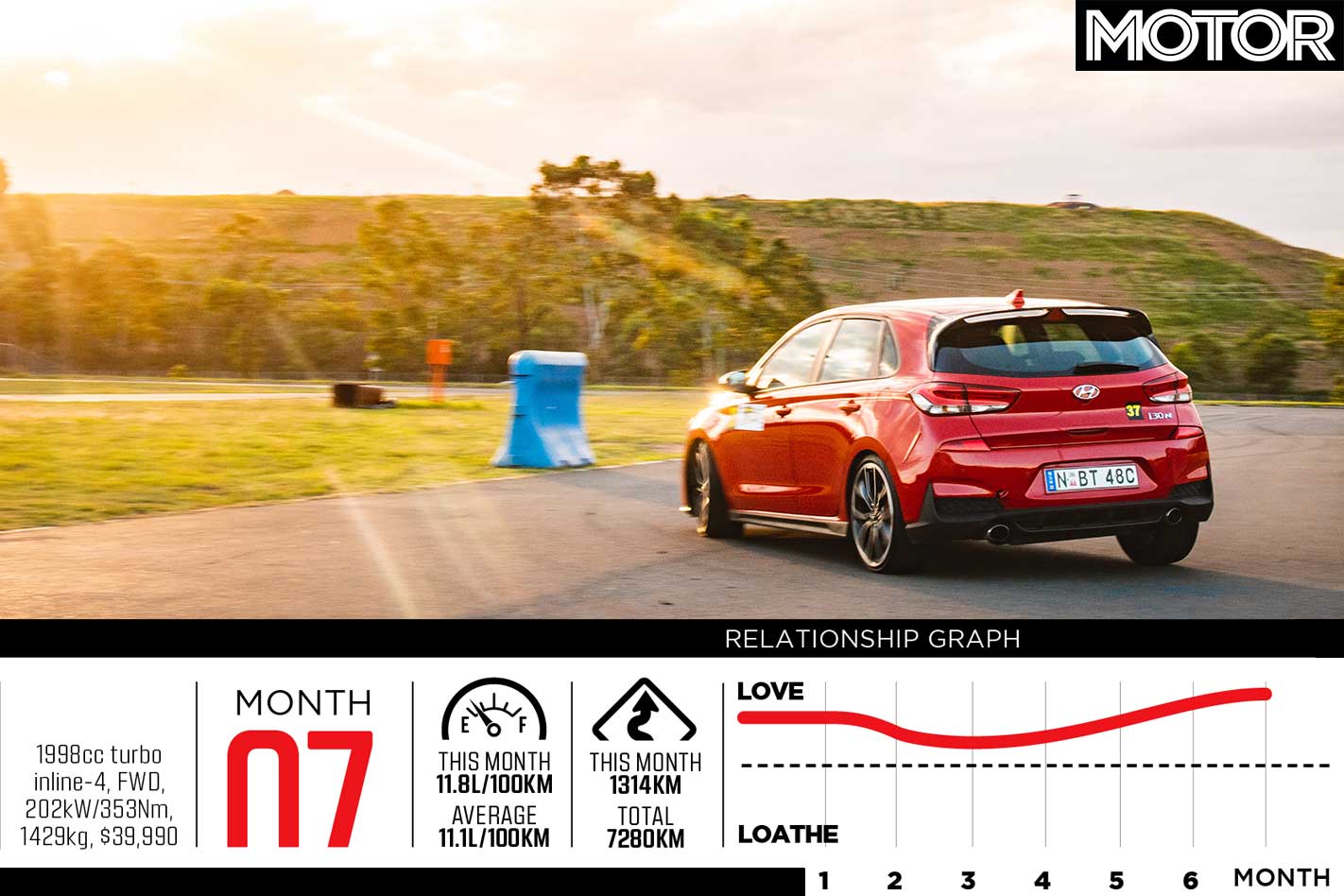
- Update 7: Conclusion
Introduction: A spicy serving
Occasionally in this job you can drive a car without driving it at all.
No, I’m not referring to some prototype autonomous system, rather circumstances dictate that you can get behind the wheel of a new model, yet be little wiser about what it’s actually like to drive.
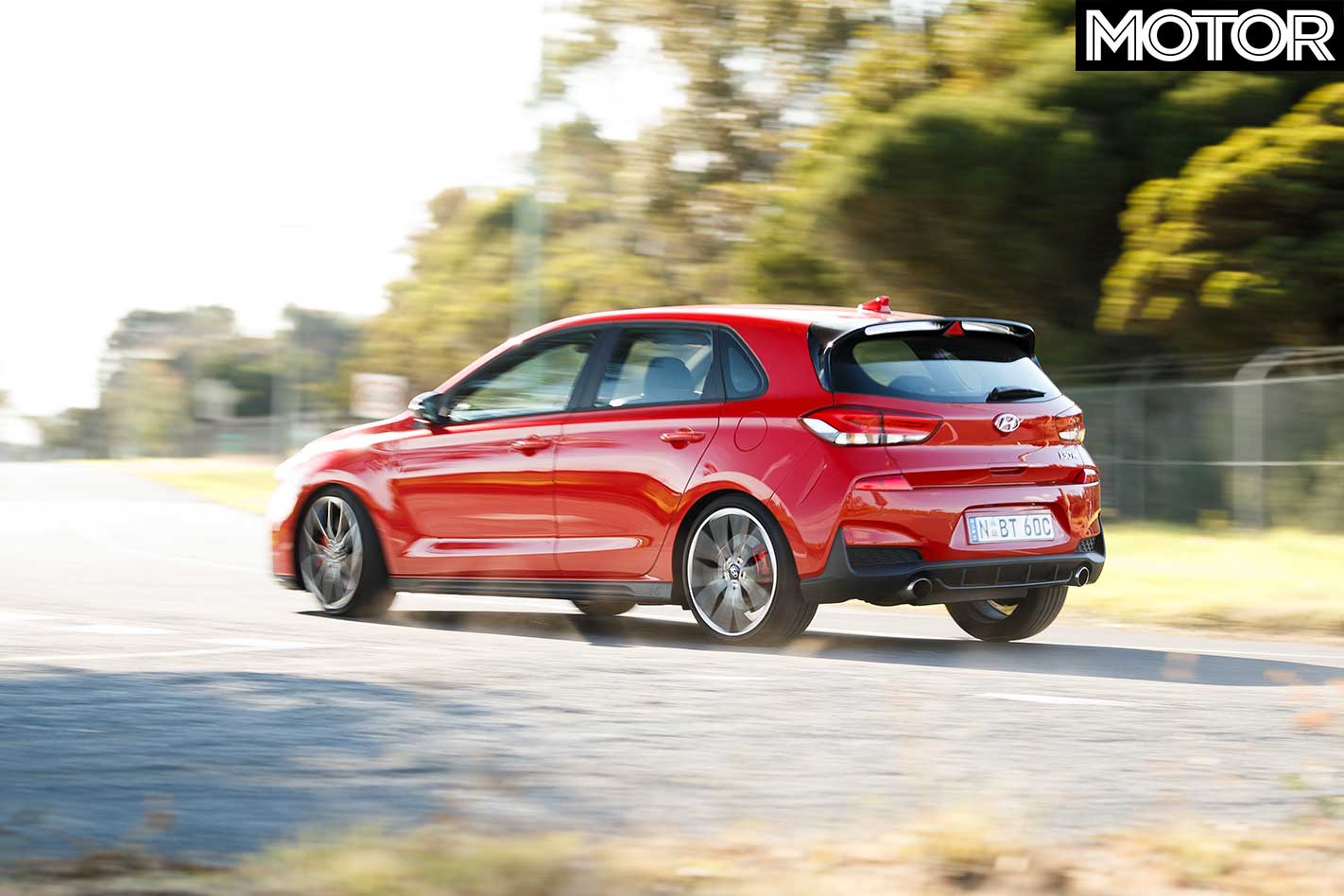
Personally, the Hyundai i30 N is the perfect example. I’ve actually driven it twice: once on a go-kart track during WRC Rally Australia last year and then again at Winton during this year’s Bang For Your Bucks testing. So if you asked me what an i30 N is like to drive I could give you an answer in a very specific set of circumstances, but if you wanted to know what it’s like to drive on the road, I’m afraid I wouldn’t be much help.
In six months’ time, however, hopefully I’ll be able to tell you all that and more, as Hyundai’s new hottie has joined the MOTOR garage for an extended stay. For now, let’s cover the basics.
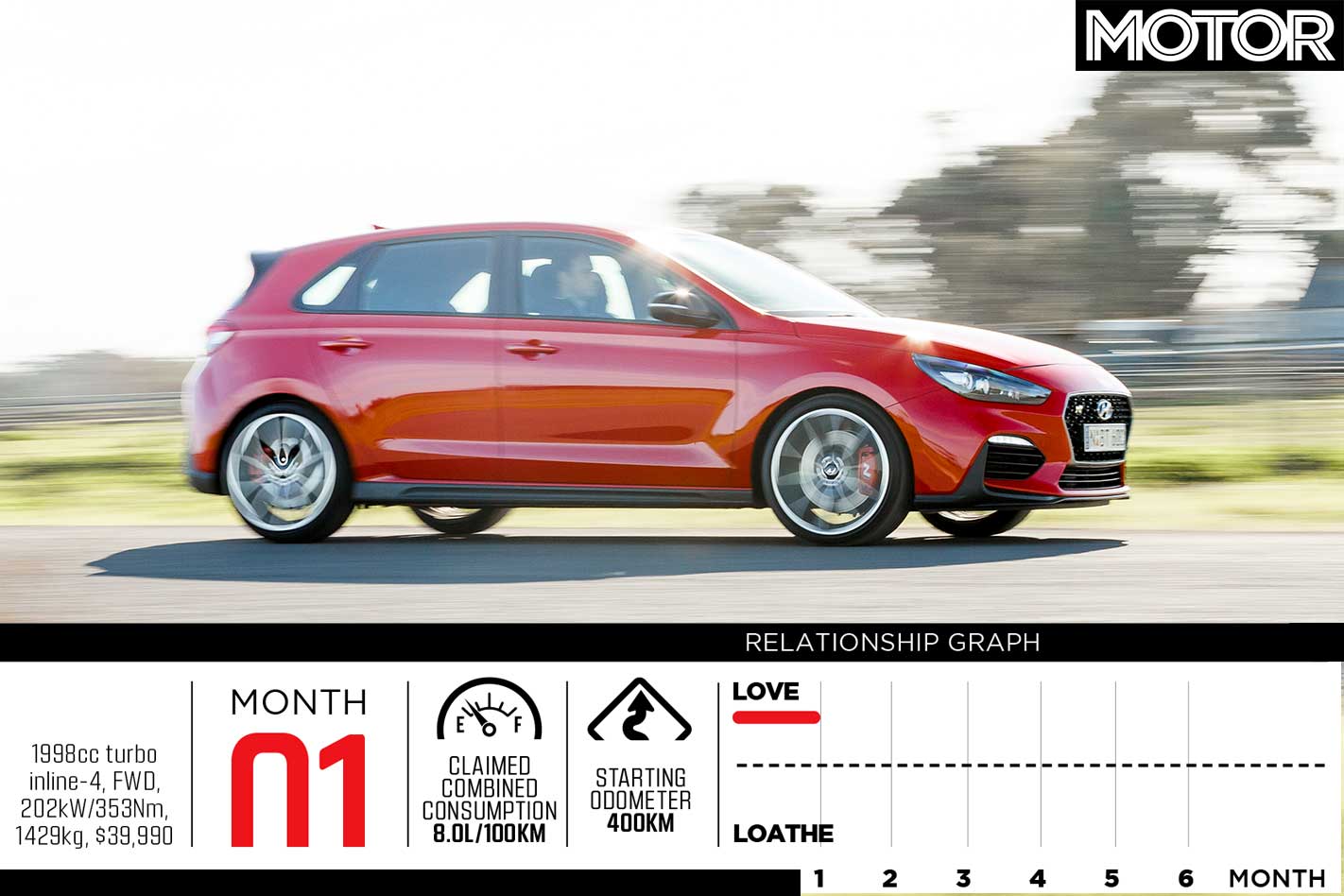
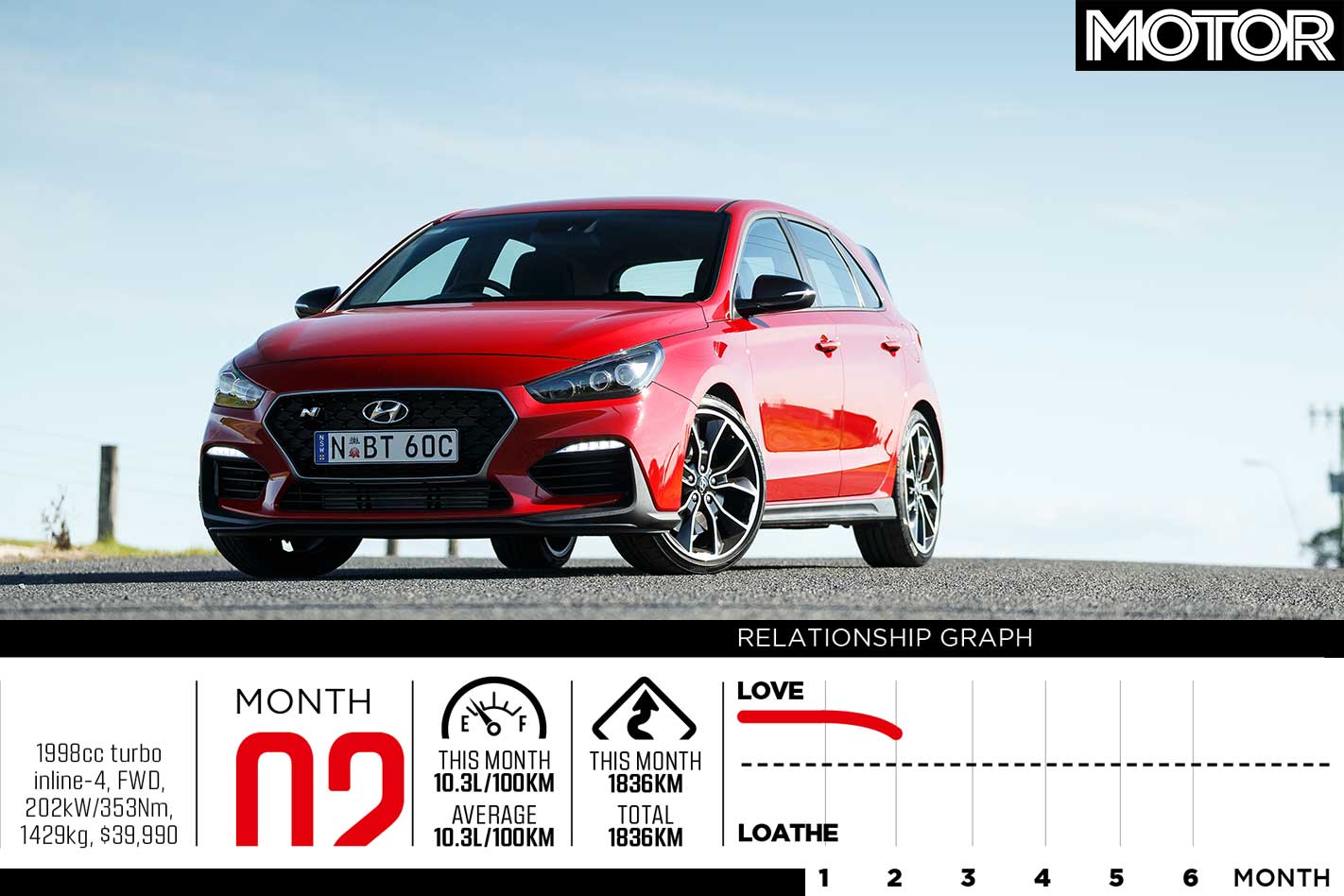
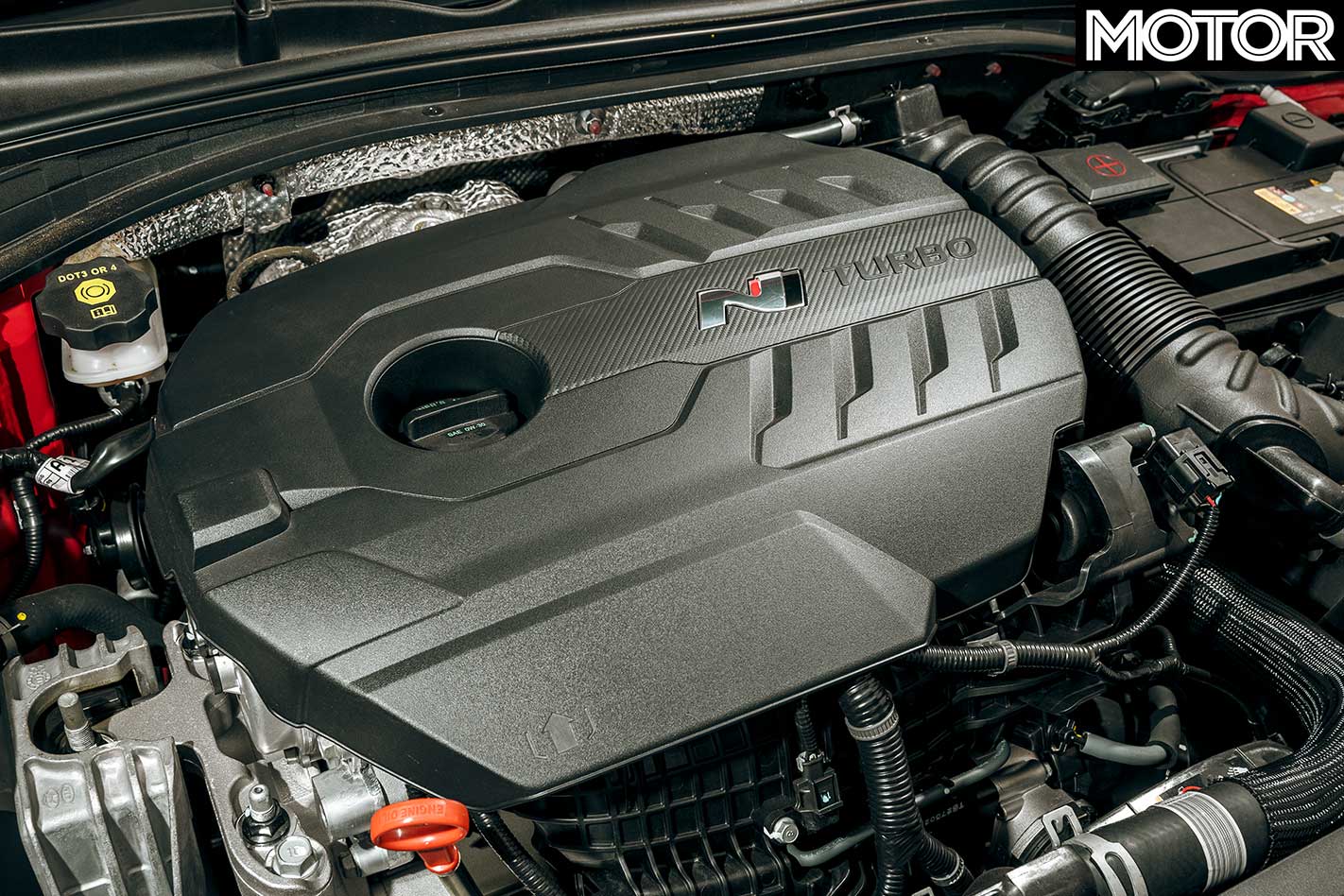
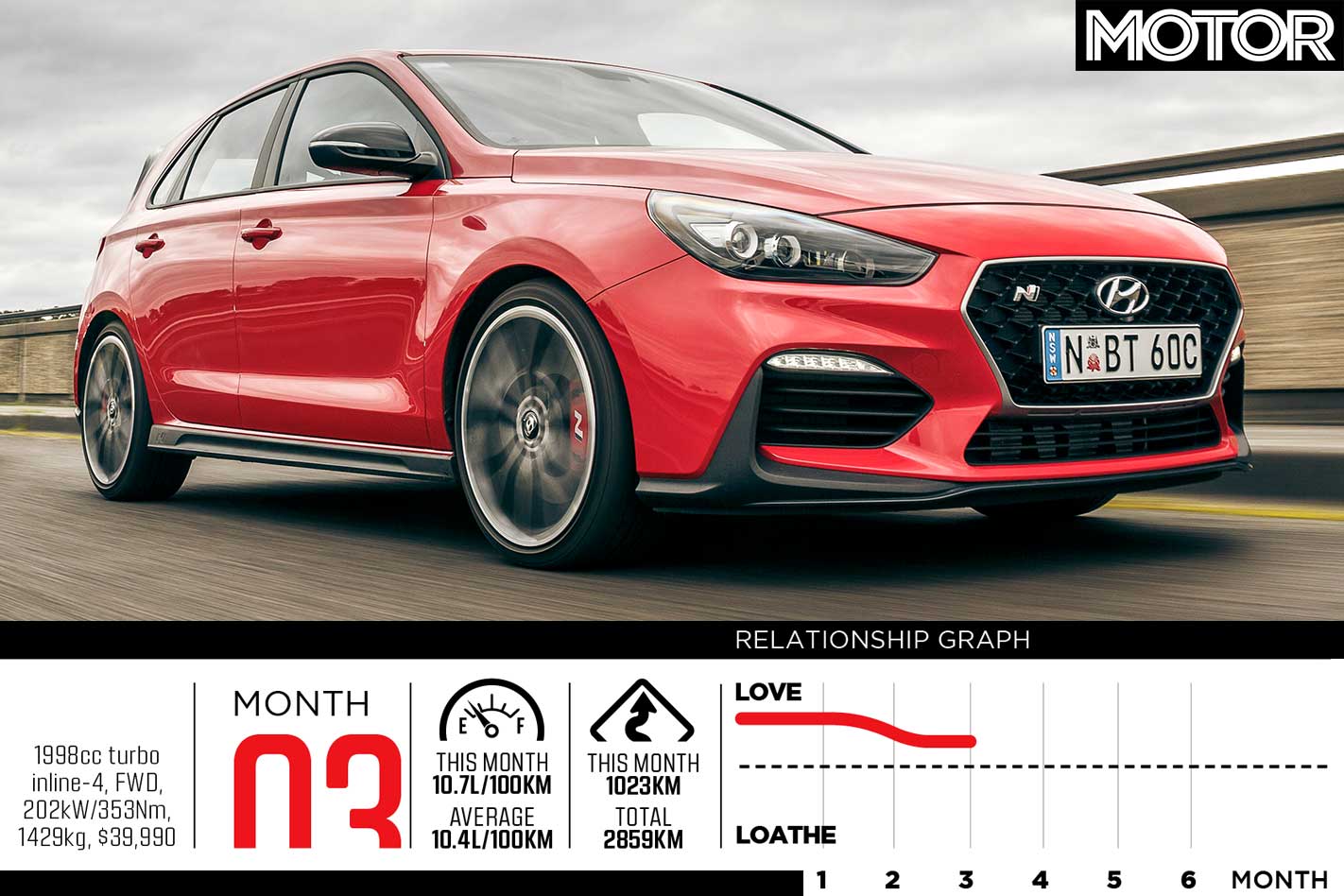
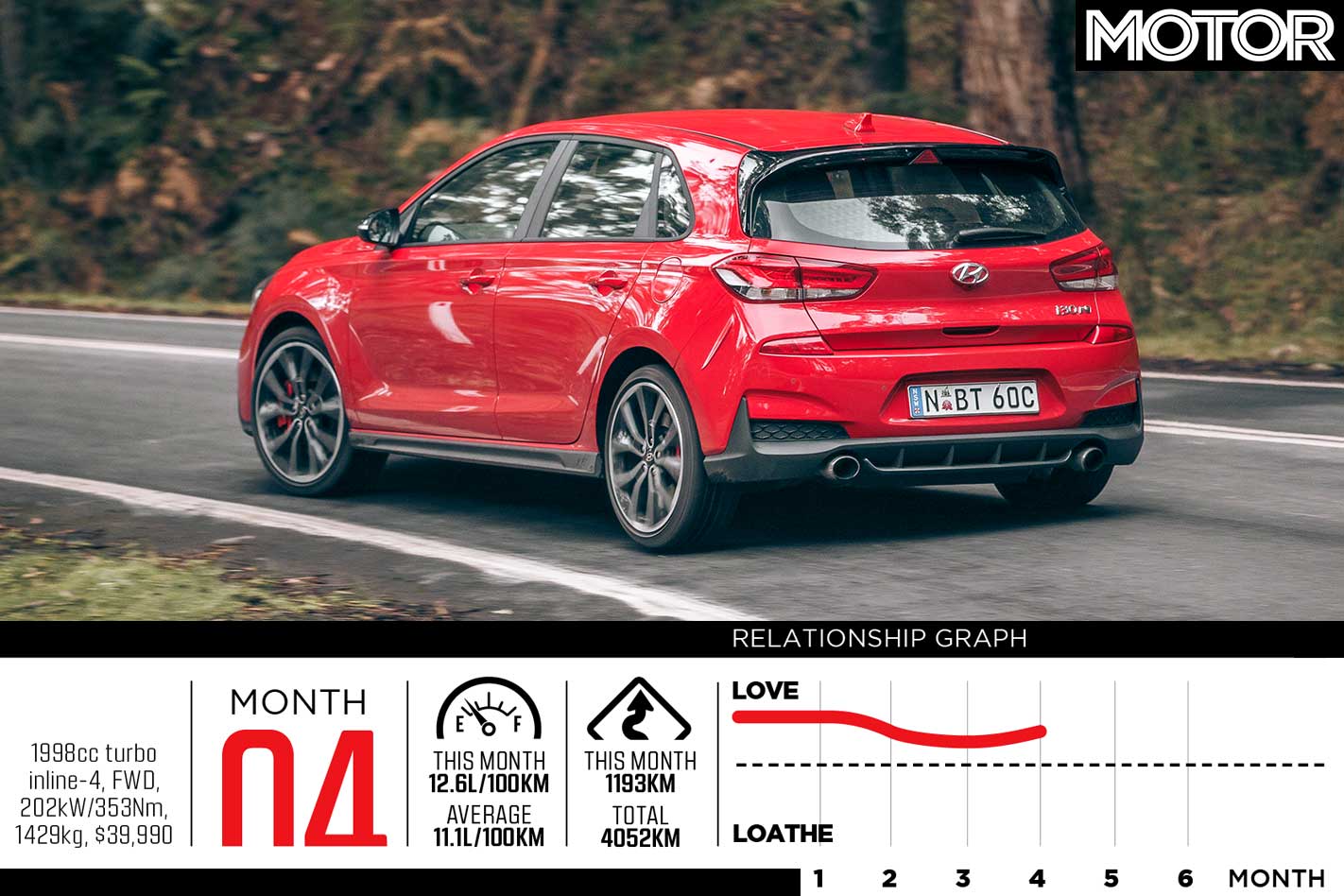
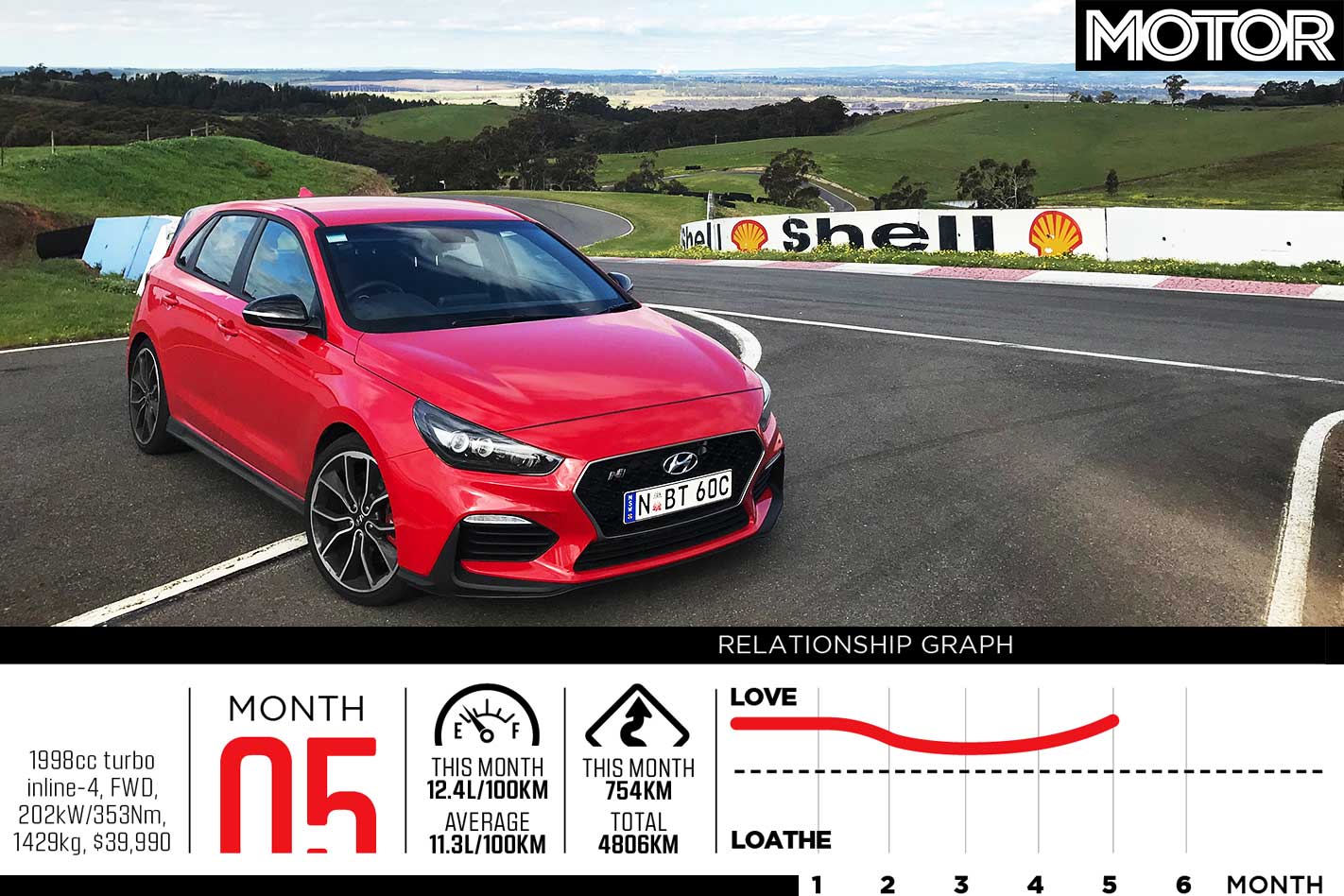
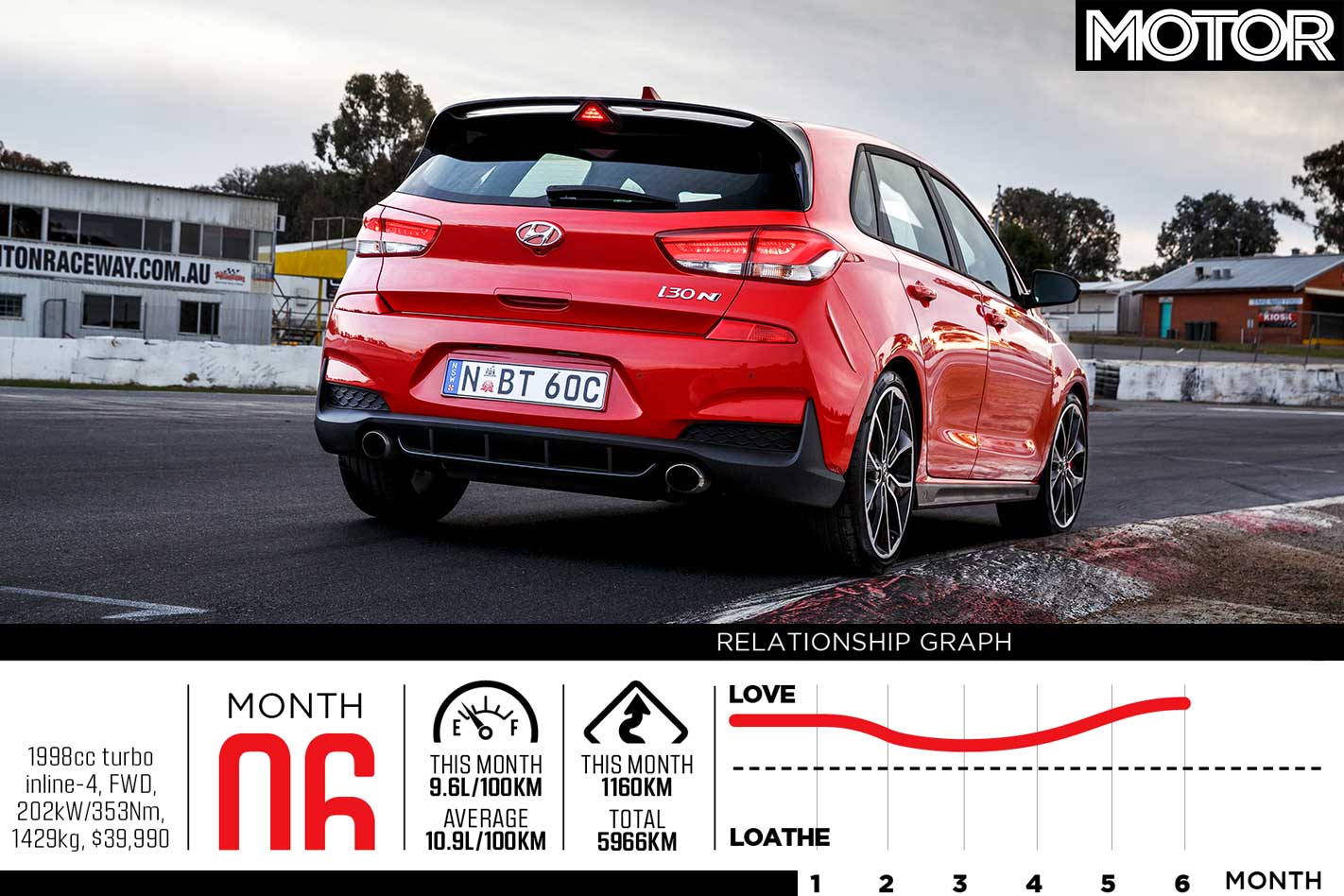
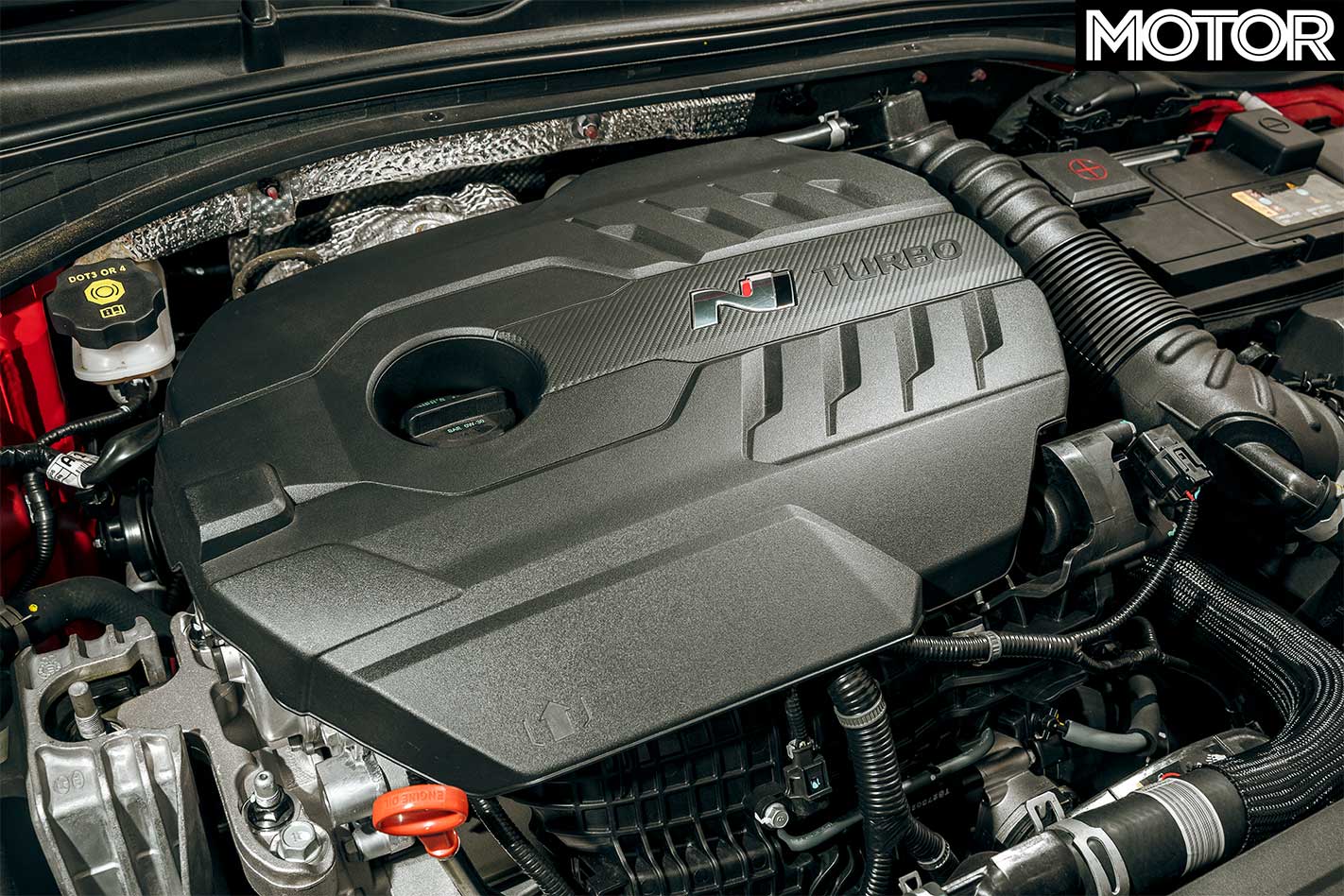
Under the bonnet is a 2.0-litre turbocharged four-cylinder, which produces 202kW at 6000rpm and 353Nm from 1750-4200rpm, with 378Nm available from 1750-4200rpm on overboost for 18 seconds at a time. It’s perfectly square (86.0mm by 86.0mm), runs a 9.5:1 compression ratio and requires 95RON fuel.
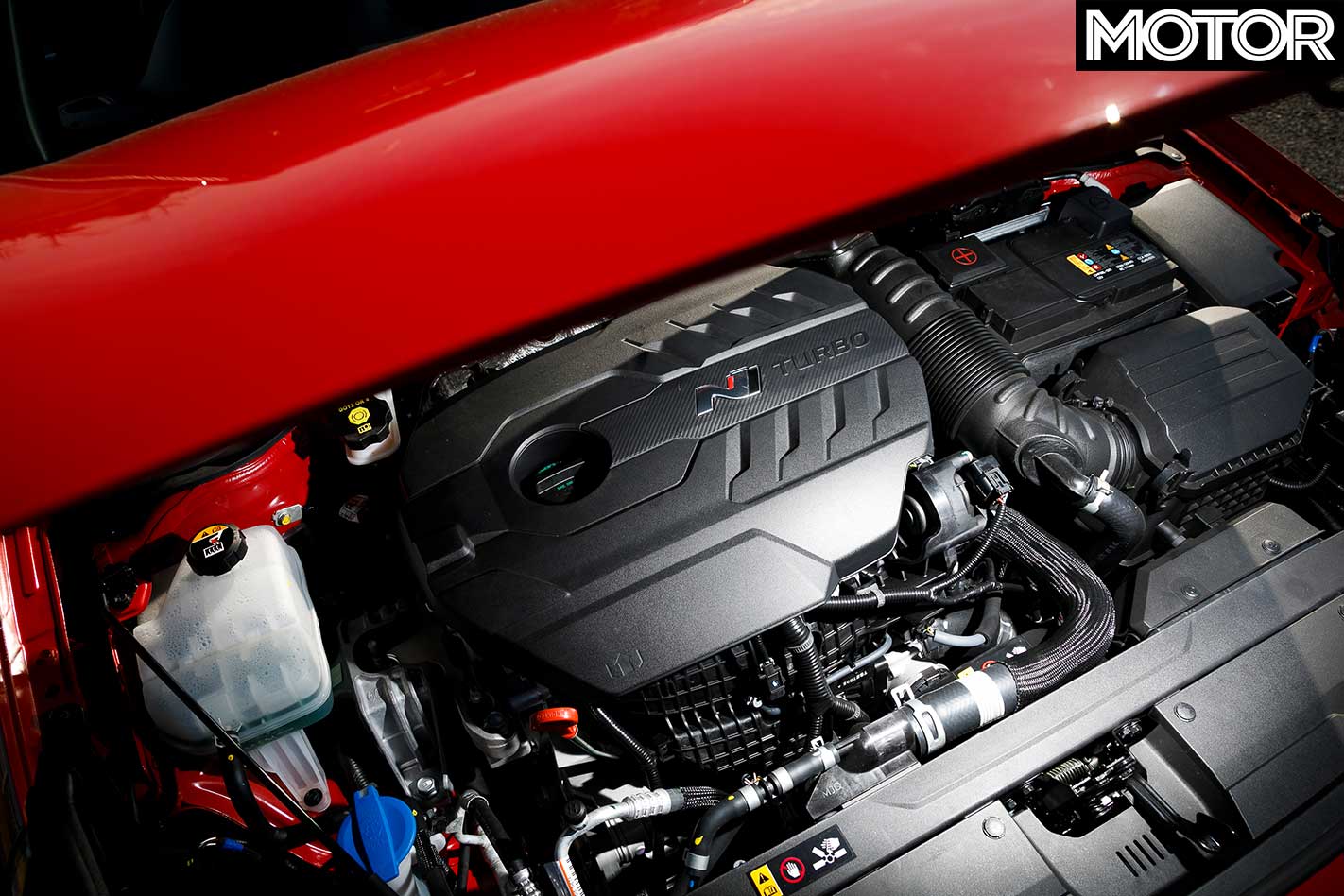
A six-speed manual is the only gearbox for now, though Hyundai is working on a dual-clutch, and power is fed to the front wheels through an electronically controlled mechanical limited-slip diff – no brake-activated faux-LSD nonsense here!
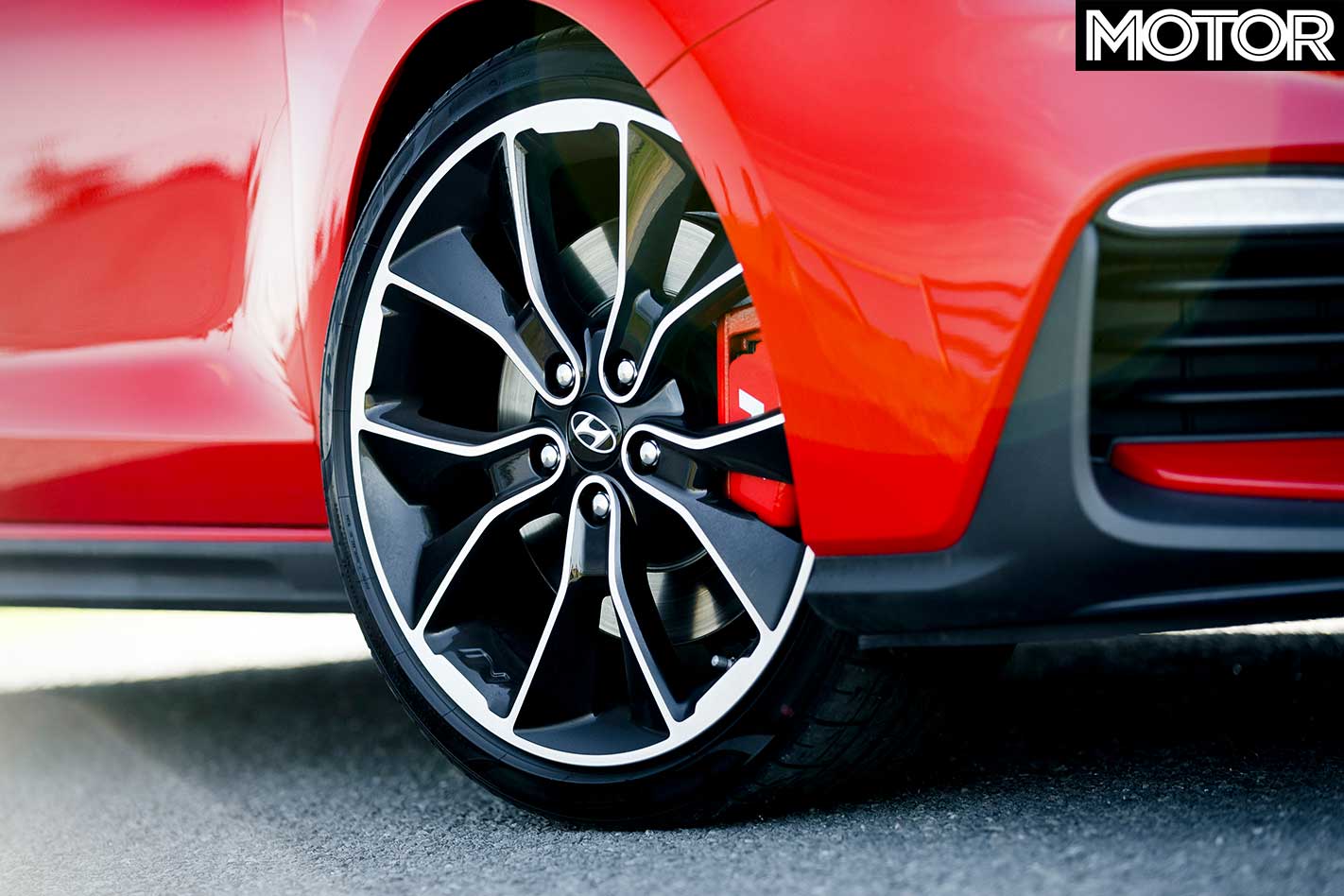
Suspension is MacPherson Strut front and multi-link rear with adaptive dampers all ’round and the wheels are 19 by 8.0-inch wearing 235/35 Pirelli P Zeros developed specifically for the i30 N (hence the ‘HN’ code on the sidewalls).
The steering is electrically assisted and stopping power comes courtesy of ventilated discs (345mm front, 314mm rear) with single-piston calipers at both ends, which Hyundai claims are sufficient to repeatedly haul the 1429kg i30 N up on track.
Overseas, a ‘base’ i30 N exists sans diff (along with smaller wheels, brakes, less power and no overboost) but after much deliberation Hyundai Oz decided to just offer the one mechanical specification with varying levels of interior kit.
‘My’ i30 N is as base as they come, its vivid Engine Red paint job (the best colour to my eyes) one of three solid colours, the others being Polar White and the Performance Blue hero colour. Opt for grey, slate or black and you’ll need an extra $495.
The $3000 Luxury Pack brings plenty of extra goodies, including heated 12-way power adjustable front seats, a heated steering wheel, park assist, keyless entry and go, wireless phone charging, auto-fold mirrors, rear privacy glass and more. Add another $2000 and you’ll score a panoramic glass sunroof. Will we miss this stuff? Time will tell.
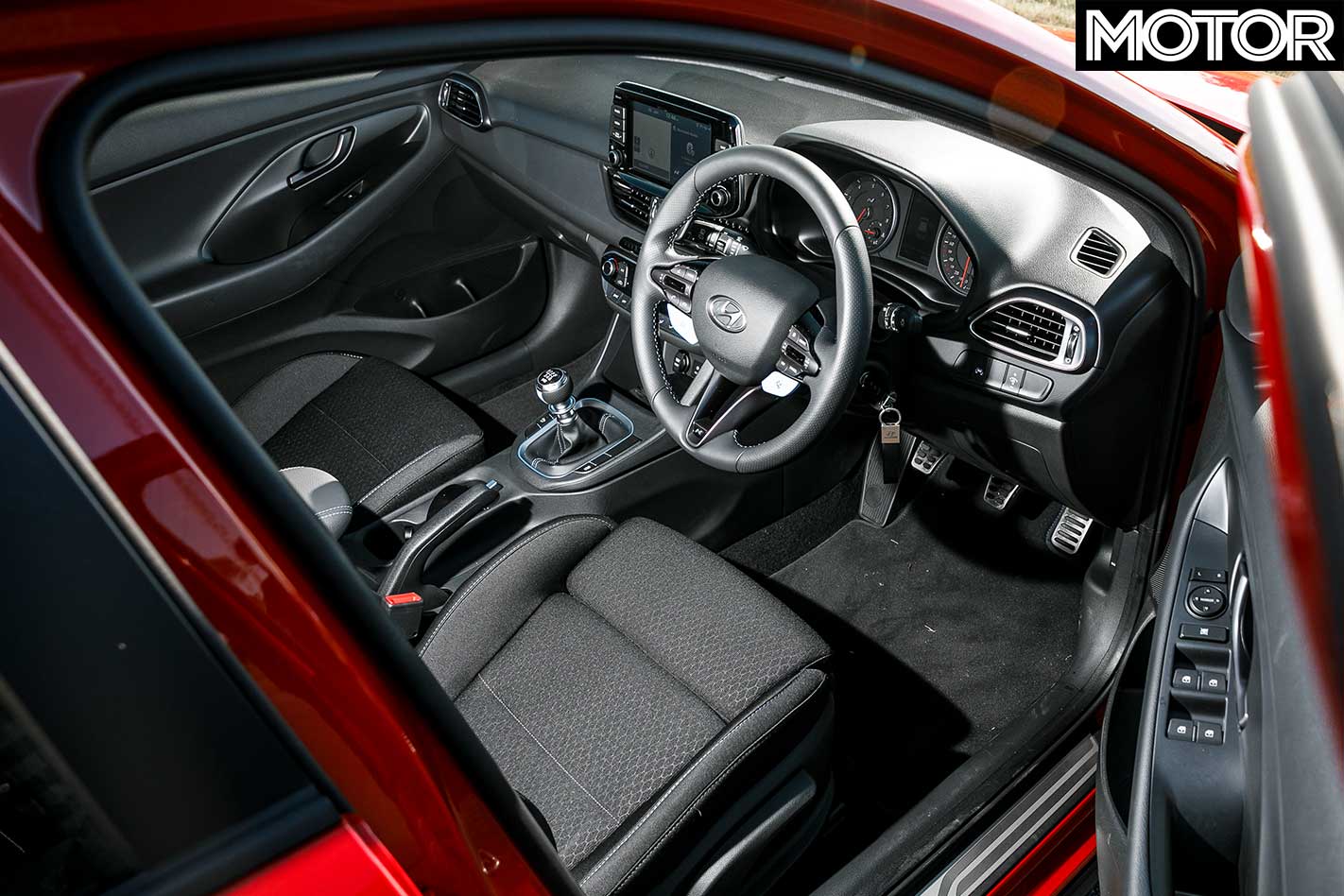
Happily, all the juicy mechanical bits are present and correct and it’s these bits we’re most interested in putting to the test over the next six months on road and track. There’s a lot to unpack, as the i30 N’s tremendous configurability – there are multiple settings for its engine response, rev matching, LSD, exhaust, suspension, steering and ESC – means there is a total of 1944 different combinations that can be saved to its ‘N Mode’ button.
To spend one minute in each you’d need to drive for more than 32 hours, which is one way to pass the time on a trip from Melbourne to Cairns. That’s not on the agenda, but plenty of other things are.
2018 Hyundai i30 N Pros & Cons
Three things we’re excited for: 1 – Track time 2 – Pops ’n’ bangs 3 – Heel ’n’ toe
Three things we’re nervous for: 1 – Lack of smart key 2 – Ride quality 3 – Liking it too much
Update 1: The nuts and bolts, examined
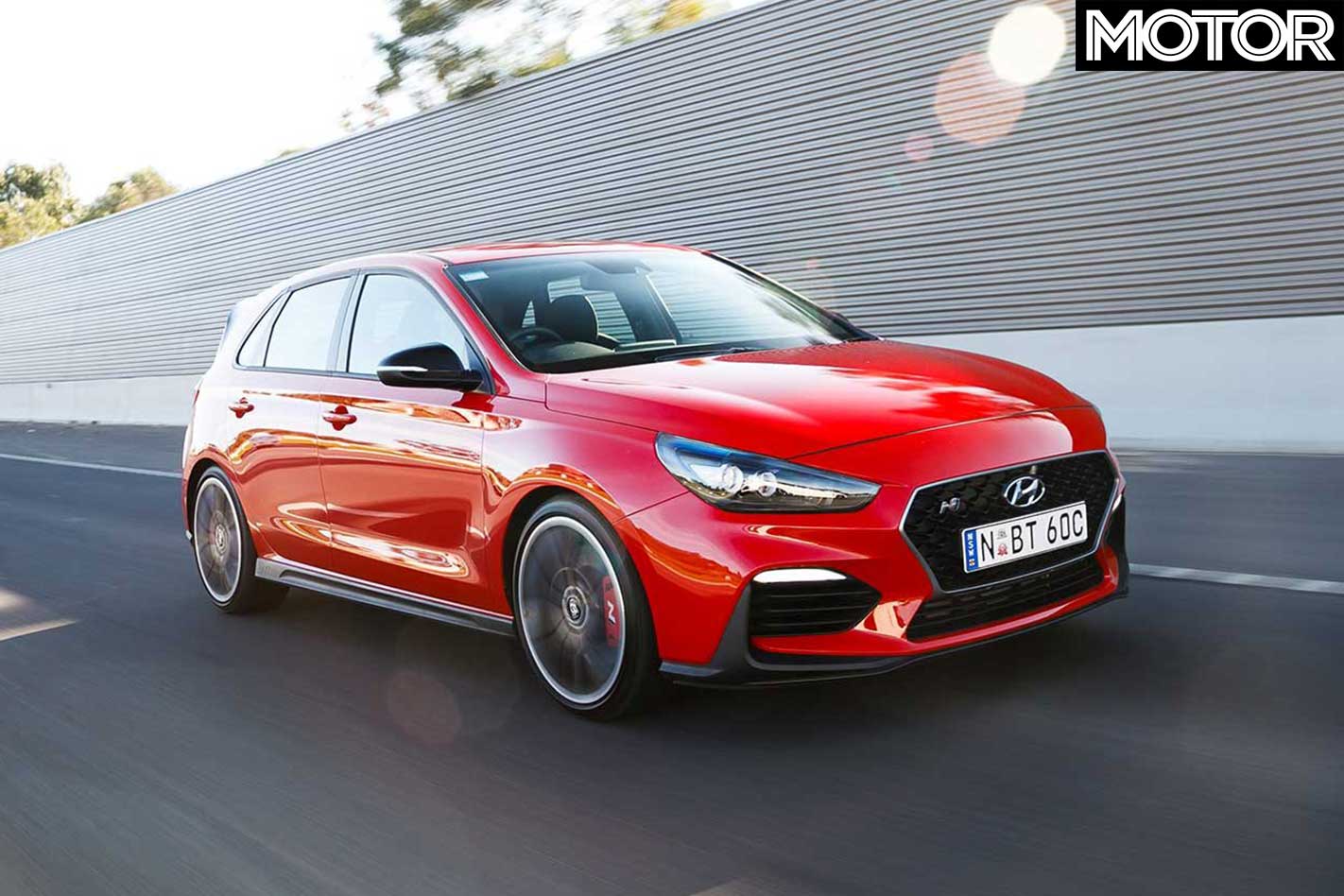
Hyundai Australia loves the i30 N. Of course, I’m sure it loves every car in its range (maybe…), but behind the scenes plenty at Hundee Oz are particularly excited to have a proper performance product in its range to promote and sell.
It wants to foster a community of N owners, setting up a number of ‘N Performance’ social media accounts to inform current and potential owners about every facet of Hyundai’s first true hot hatch.
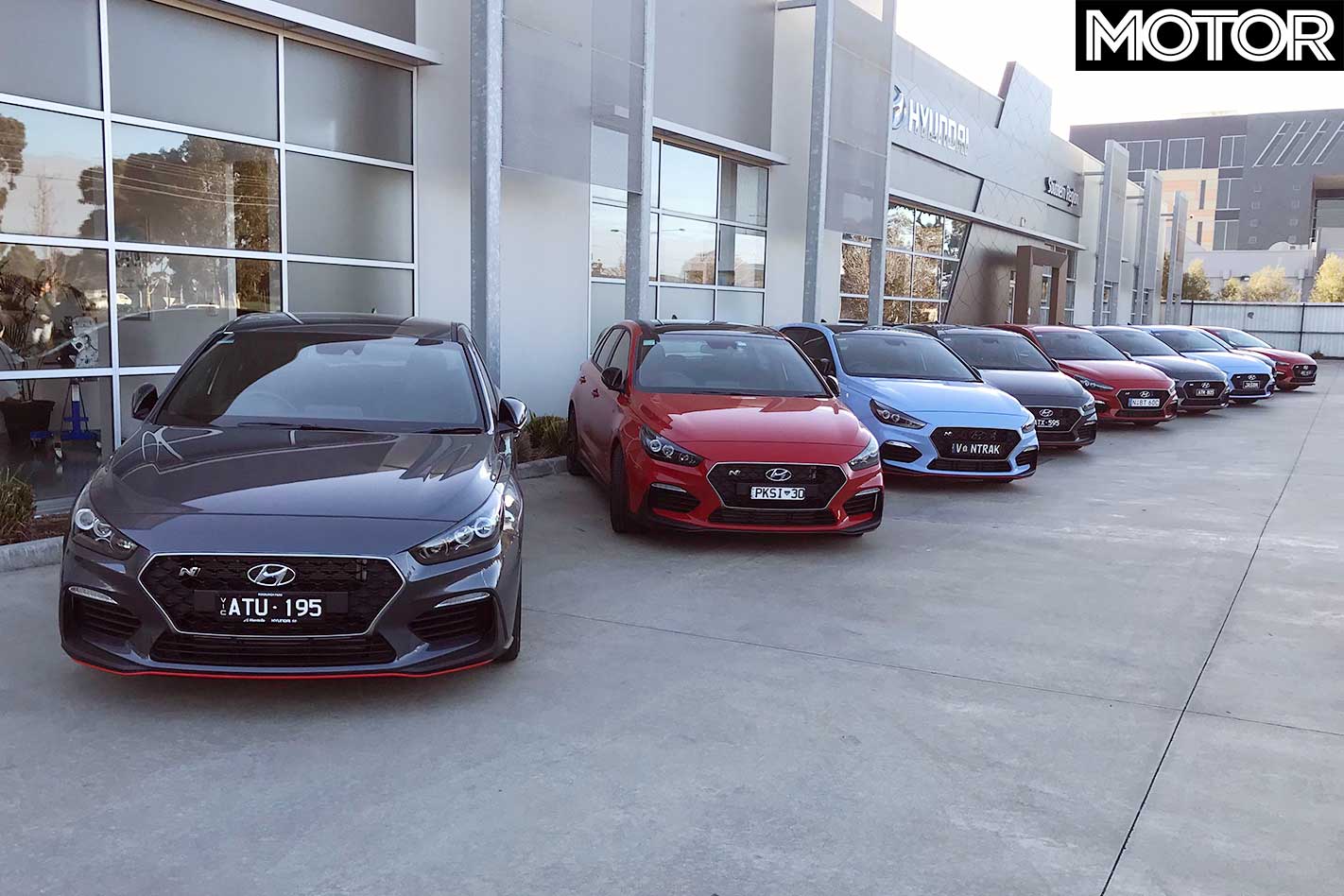
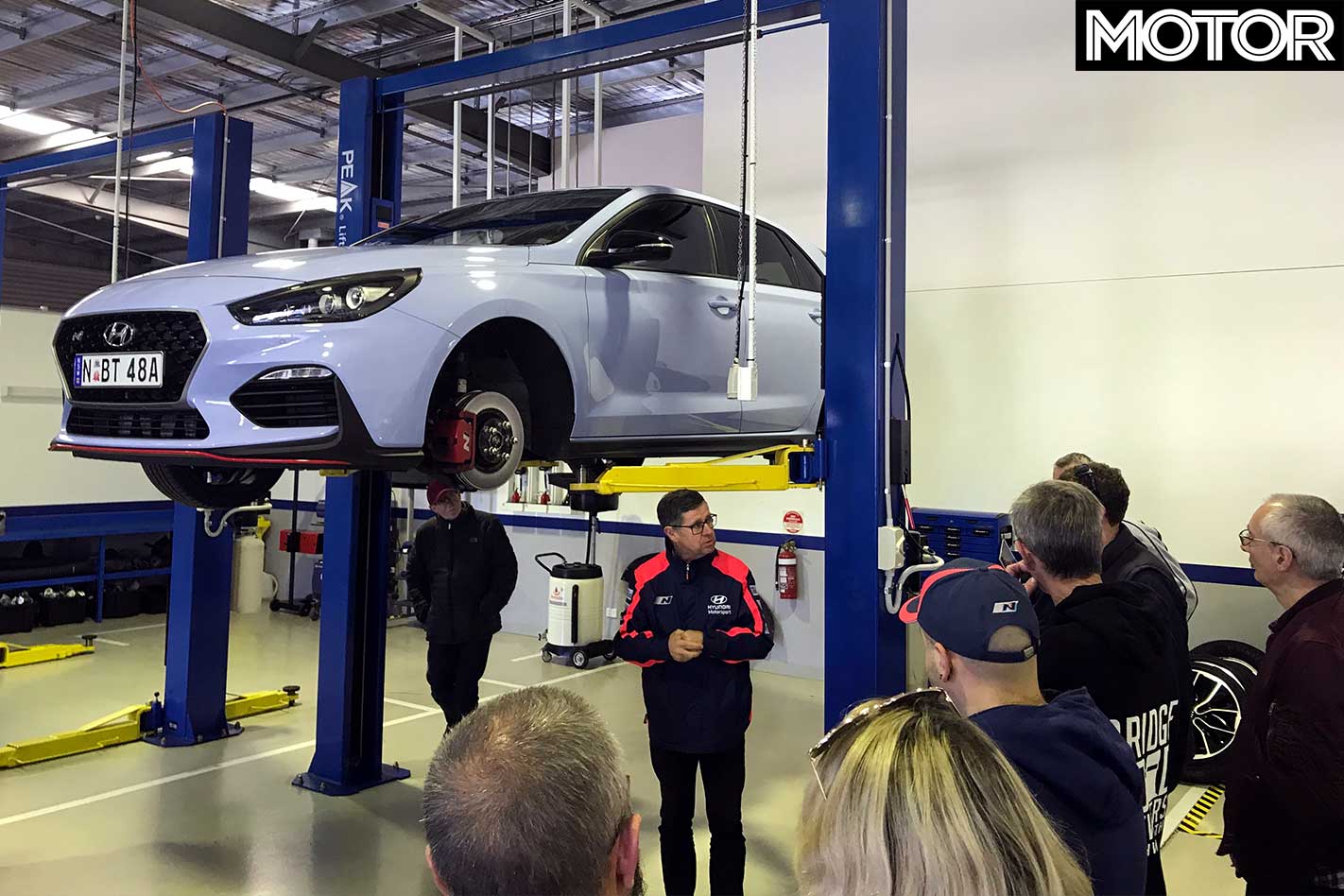
As part of this, workshops were recently held in Melbourne and Sydney, with technician Geoff Fear giving a presentation and taking questions. Thankfully, instead of a projector and Powerpoint there was an i30 N on a hoist and a number of disassembled N parts littered around to have a closer look at. Of course, as an i30 N ‘owner’ I had to head along, eager to learn more.
It turns out there is no such thing as a typical i30 N owner, customers ranging from young hot hatch fans to pension-age enthusiasts keen on one last performance car. Unsurprisingly, there were quite a few questions about tuning the i30 N, deftly batted away by the Hyundai crew, but refreshingly the bold addition of a track warranty had many punters intrigued and keen to head onto the speedy side of pit wall.
As one of the i30’s biggest markets, Australia had a bigger say in the development of the N than you might expect. So big, in fact, that local cars have not just a bespoke suspension tune, but unique dampers.
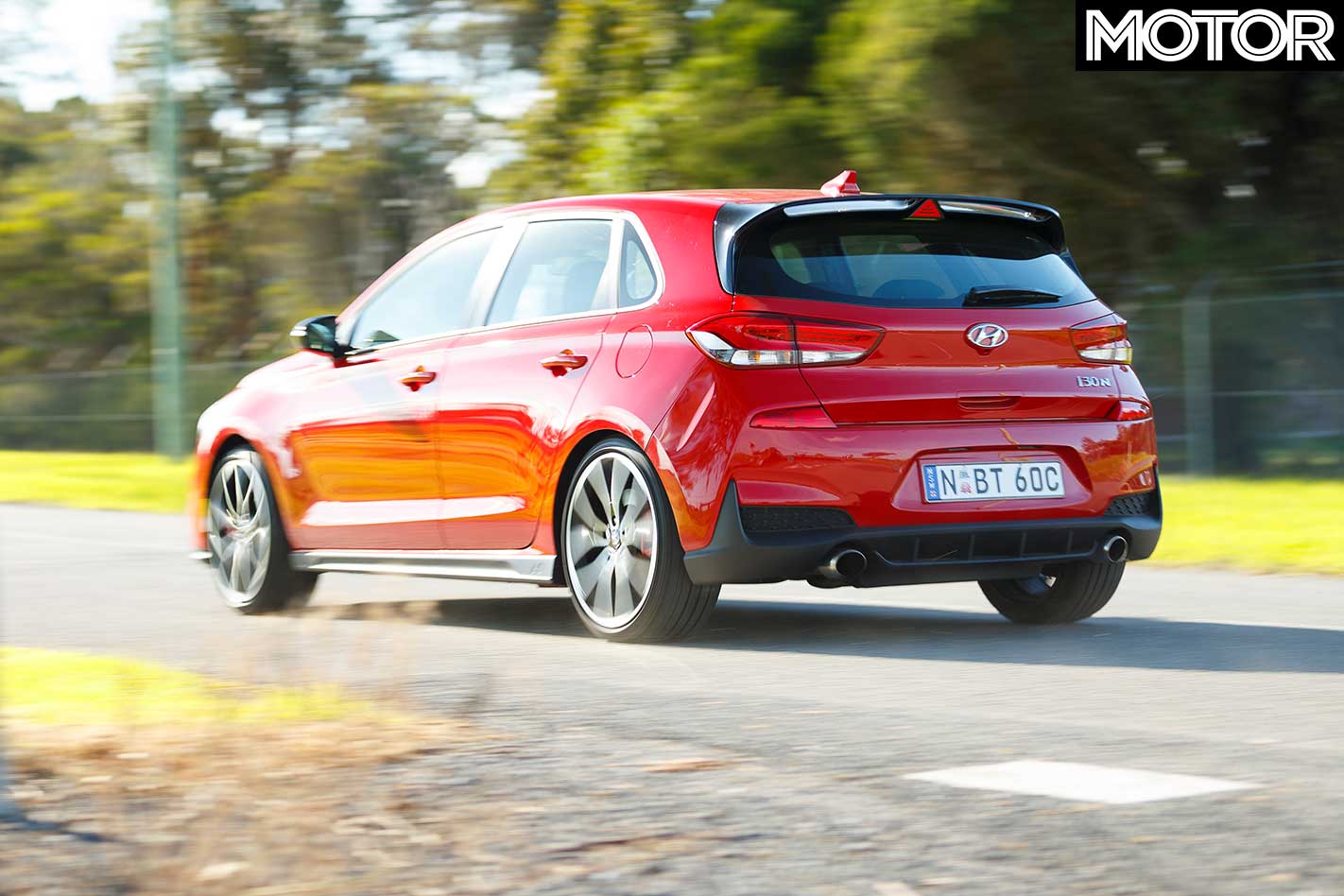
For this you can thank Australia’s crappy roads and our habit of driving over them at 100km/h regardless. Even in Normal mode, overseas Ns are set up quite stiff, Albert Biermann’s logic being that he wanted the car to feel instantly responsive, even on a short test drive. Trouble is, in Australia that responsiveness would likely translate into a sore bum in Normal and loosen fillings if you strayed into Sport Plus.
An Aussie-spec tune wasn’t an easy sell. It took Hyundai’s local engineers to drive Biermann around on a local visit to convince him the car needed to be softer to work on our roads.
Eventually, pothole after pothole had the boss onside: all Ns use the same springs and swaybars, but Aussie cars score different, softer damper internals, the extra compliance not only making the car more comfortable but improving its pace on country roads, too.
The job isn’t done yet – the goal is to go even softer. Don’t be surprised if the forthcoming i30 N Fastback has a little softer ride and likes a bit of tail-out attitude in the corners.
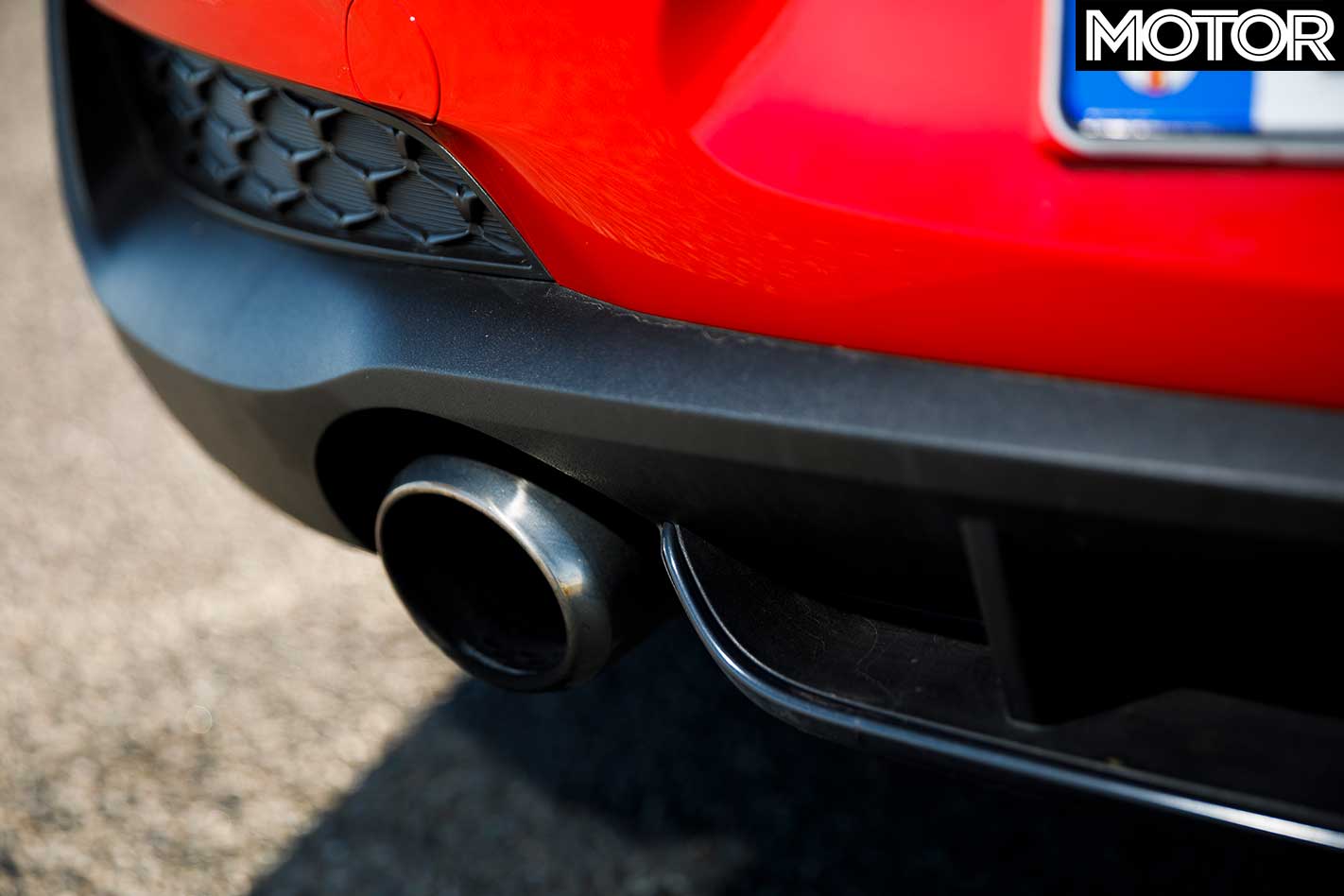
Other little nuggets of information: in Normal the exhaust operates only through the passenger-side tip; selecting Sport bypasses the muffler and uses the driver’s tip while also adjusting cam timing and injecting extra fuel to spark those signature pops and crackles. According to Fear, one engineer spent two years just working on the overrun theatrics.
In addition, if you’re going to change wheels, ensure the offset is identical to stock, otherwise you’ll alter the scrub radius (where the tyre contacts the tarmac). The i30 N is set up so the dead centre of the tyre is the contact patch; change the offset and you’ll affect this, changing your handling and tyre wear for the worse.
Use this month has effectively been adding some kilometres to the car before really stretching its legs – probably unnecessary, but old habits die hard. In day-to-day use I think the Hyundai Australia chassis folk are spot-on, it could use a little more ride compliance.
It’s an excellent compromise – if the car had passive dampers it would be about spot-on – but given the i30 N’s adaptive set-up, why not slacken off Normal more to accept the worst bumps and lumps? If you need the extra body control, that’s why Sport exists.
The turning circle is annoyingly large; at 11.6m it’s a metre larger than the regular i30, which it seems is just enough to make the difference between a successful u-turn and a three-point effort. Probably the biggest annoyance currently is the gearbox.
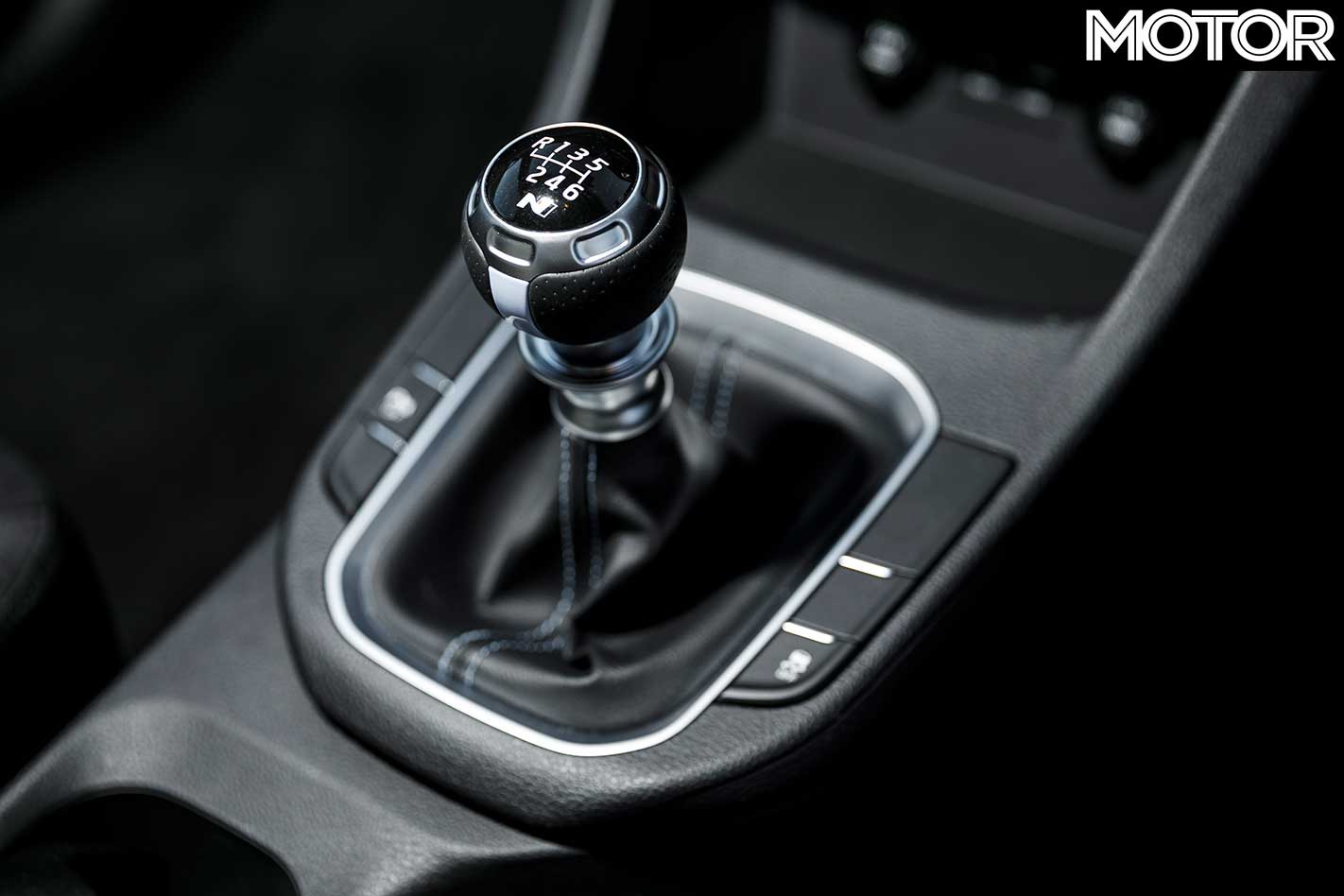
The shift is very notchy and sometimes baulks on the 5-6 change. It may be a cold oil issue, further investigation is needed, but getting back into the N after a day or two in a new manual Mustang, it’s the muscle car that has the superior gearchange. Stalling is also very easy, which is just bad driving, but some cars flatter you more than others.
That’s virtually it for the bad stuff – this is a very easy car to live with. That said, I already know if it were my money I’d be speccing the Luxury Pack, if only for the smart key and push-button start.
Keyless entry makes life so much easier when you have arms full of shopping, etc. For $3000, it also adds heated front seats and steering wheel, powered front seats with suede inserts and leather bolsters, front park assist and more – seems good value.
2018 Hyundai i30 N Pros & Cons
Three things that we’re rating: 1 – Grunty engine 2 – Seat comfort 3 – Apple CarPlay
Three things that are grating: 1 – Shift quality 2 – Turning circle 3 – Stalling a lot
Update 2: Performance tested
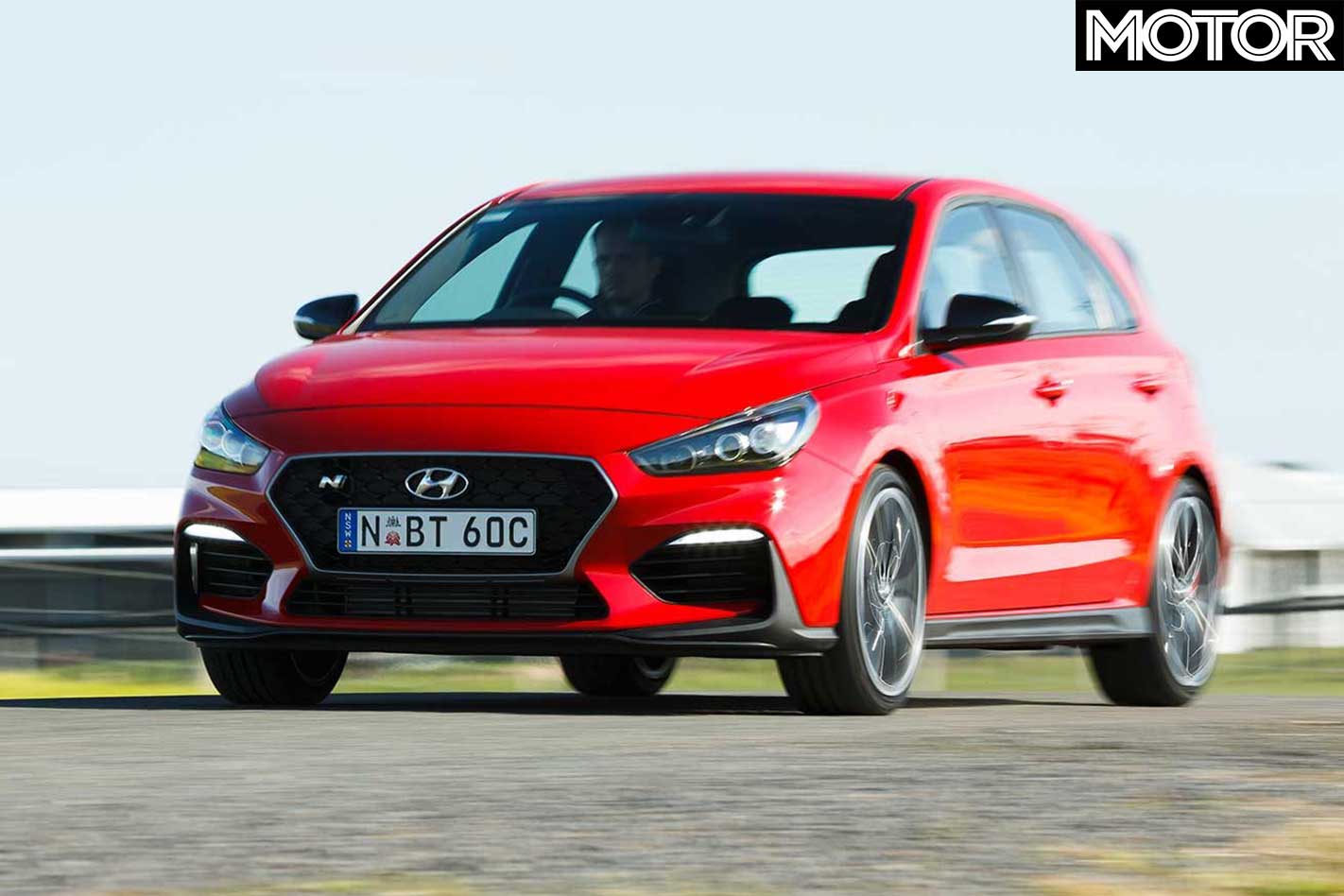
Hot hatches are all about handling. Except they’re not.
Straight-line acceleration might not be as high a priority for fast five-door buyers as, say, those looking at muscle cars, but drag-strip bragging rights are still valuable. Given the i30 N faced the 400m this month for the comparo you can read in the latest October 2018 issue, it seems appropriate to dig into the numbers in a little more detail here.
Hyundai claims 0-100km/h is achievable in 6.2sec. It is, but it’s not an easy task. Like most turbo front-drive hatches, the i30 N has traction issues, but what is unusual is that loss of traction isn’t the problem. Instead, pesky non-switchable traction control prevents the Namyang native putting its best foot, ahem, wheel forward.
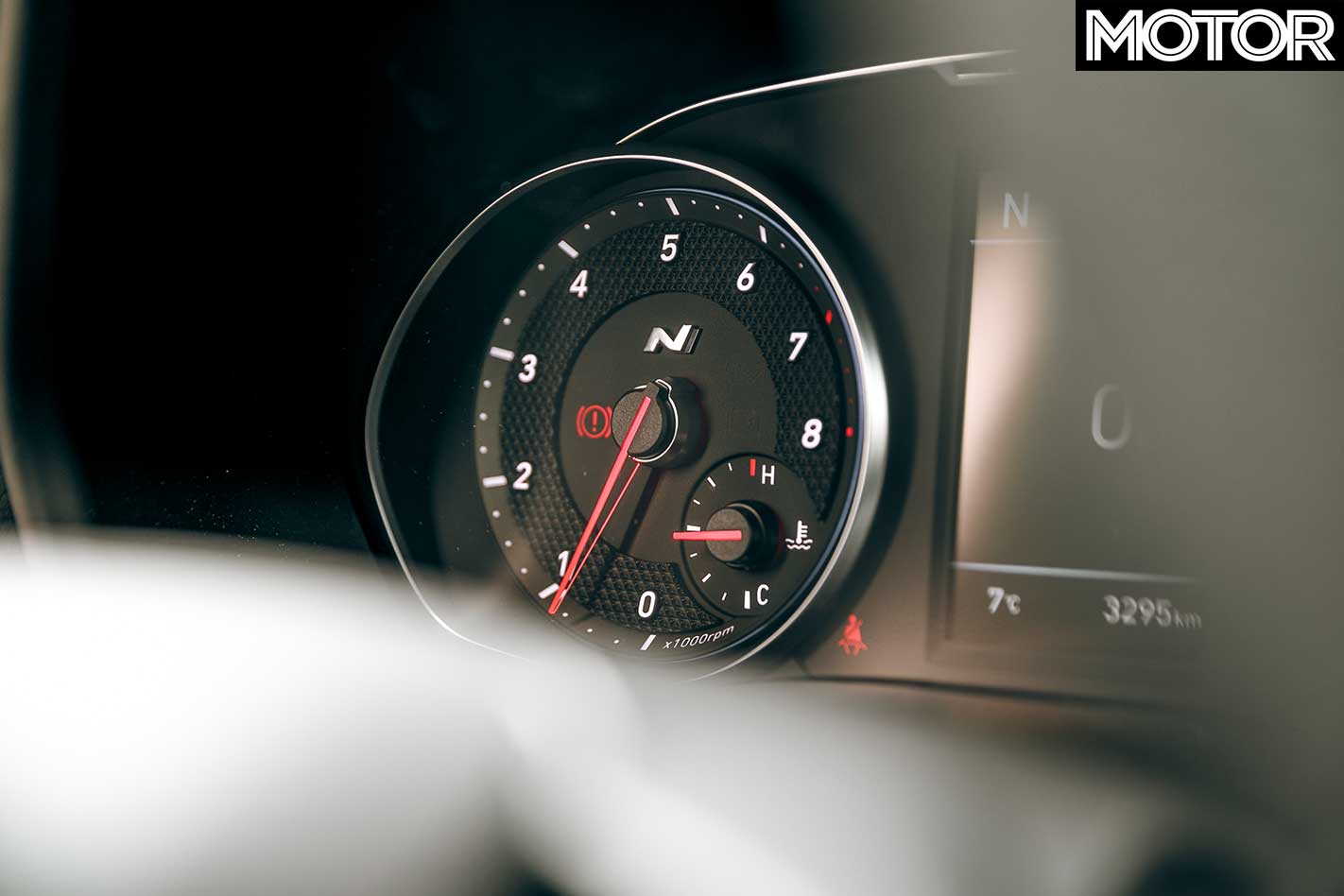
The best way to launch most force-fed front-drivers is to have the front tyres rotating slightly faster than road speed. It’s a delicate balancing act, as too much throttle wastes time through excess wheelspin, while too little lets the engine bog and boost disappear, at which point you might as well pull the handbrake on and get out, the time will be that bad.
Of course, zero wheelspin would be even better, but is also virtually impossible when feeding turbocharged torque through just the front tyres alone.
Unfortunately, this time-tested approach is impossible thanks to the i30 N’s overzealous traction control program, a frustrating trait it shares with Golf GTIs.
Despite deactivating every possible electronic aid, each launch results in a telltale orange light flashing on the dash (to the left of the ESP light if you’re curious). The intervention is only brief, but it’s enough for the engine to pause and precious tenths to tick away.
It’s difficult to understand why this would be the case, as Hyundai is happy for ESP to be deactivated completely and let the driver hang the tail out to his or her heart’s content. The answer isn’t certain, but someone who would know suggested it’s a durability measure to prevent excess axle tramp, which would explain why the Golf would have similar protection in place.
Hyundai’s hottie is further hamstrung by gearing designed to ace the European 0-60mph (0-97km/h) benchmark. Try as you might, nothing will make the i30 N reach 100km/h in second gear, the rev limiter cutting in at 99km/h. Worse still, third gear is quite tall (stretching to 149km/h) so progress is slowed further.
Nonetheless, get everything right and the result is 6.24sec to 100km/h. It must be said that this number was an anomaly, most runs being a few hundredths either side of 6.5sec, but for one run the electronics looked the other way long enough for most of the i30’s 202kW and 353Nm to be put to good use.
The N doesn’t feel as quick as its outputs suggest. Its 2.0-litre T-GDi engine performs very strongly from 4000-6000rpm, but power drops off dramatically beyond this as its turbocharger runs out of puff.
It’s not an issue on the road, for the broad powerband provides a wide river of torque in which to swim, but in the extreme environment of performance testing (or on track?) these things are noticeable. That said, we all know hot hatches are all about handling, which we’ll investigate next month.
2018 Hyundai i30 N Pros & Cons
Three things that we’re falling for: 1 – Mid-range grunt 2 – Quick gearshift 3 – Bang, pop, bang
Three things that we’re not fond of: 1 – Traction control 2 – Gearing issues 3 – Power drop
Update 3: From M to N
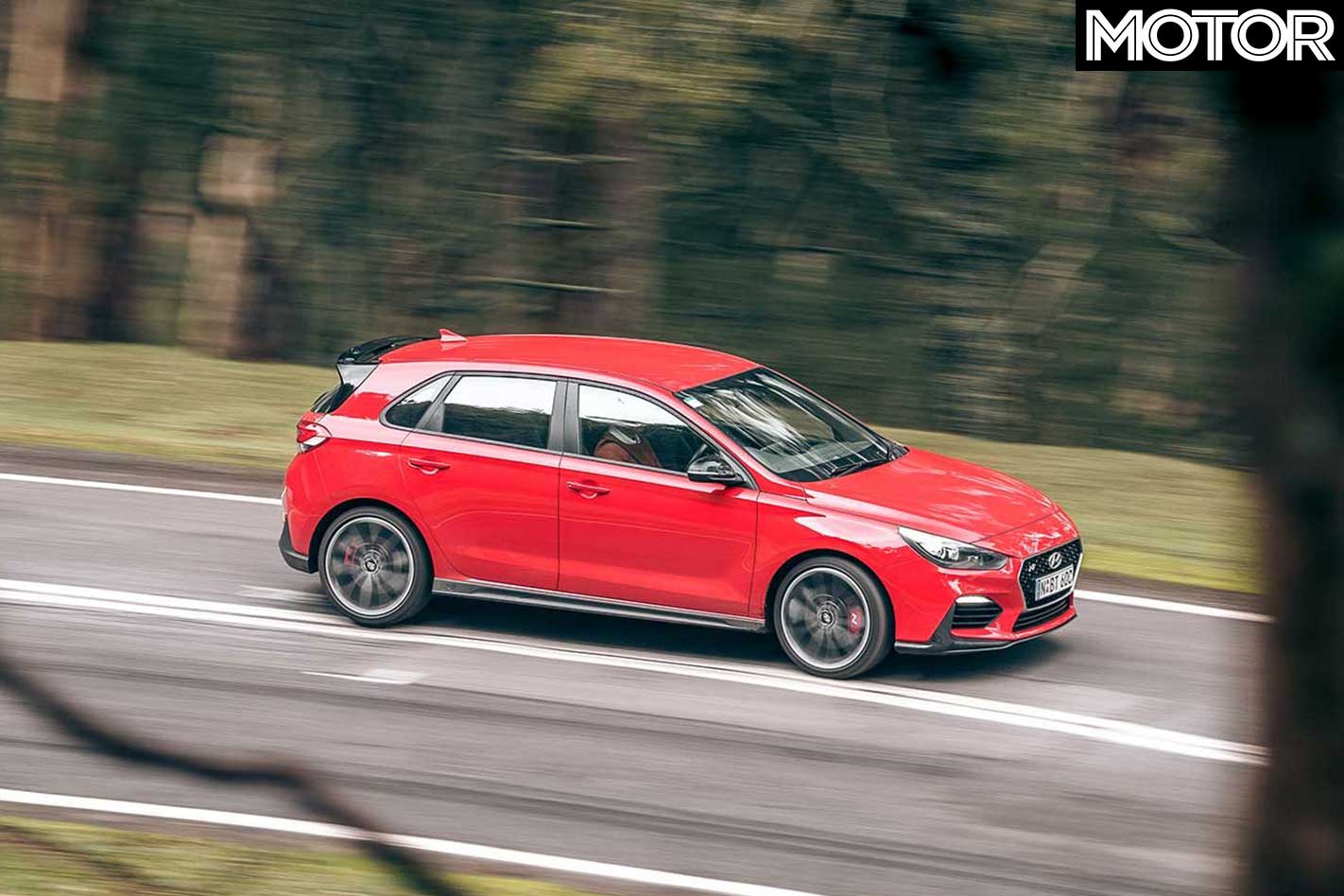
Albert Biermann relocated half way around the world to move next door. Alphabetically next door, that is.
Regular readers will probably be aware that before he became Executive Vice President for Vehicle Testing and High Performance Development at Hyundai and Kia, Biermann was a BMW veteran of 32 years, climbing the corporate ladder to the very top rung as head of M Division.
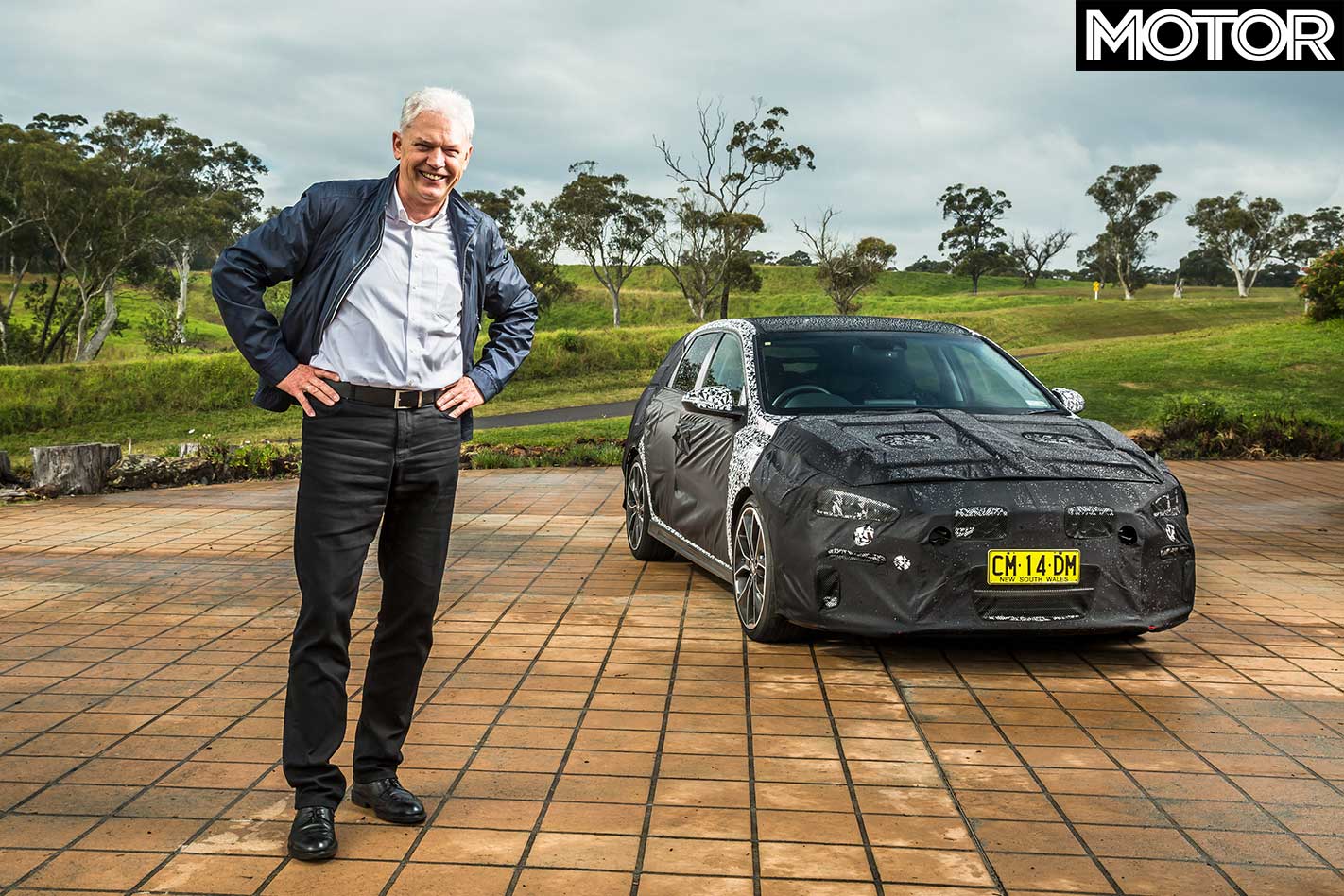
In April 2015, Biermann relocated from Munich to Namyang and subsequently moved from M Division to N Division. Anyone familiar with recent BMW M products will soon notice Biermann’s fingerprints all over the i30 N.
While hundreds of engineers were involved with the development of Hyundai’s first hot hatch, as project leader Biermann had the final say and it’s clear he’s carried certain development philosophies with him, philosophies that were no doubt a large part of the reason Hyundai-Kia poached him in the first place.
The i30 N’s USP is its almost endless configurability. Steering weight, damper stiffness, engine response, diff actuation, exhaust note and more can all be adjusted through either two or three different settings. I once asked an M engineer why all these modes were offered – surely it would be better to just offer one ‘correct’ mode?
He explained that customers enjoy them, there’s no ‘cost’ in offering them – ie, you don’t have to sacrifice anything on the engineering front – and there’s value in the ability to have, for example, heavier steering at autobahn velocities compared to parking speeds. Fair point, but the approach only really works if there’s a ‘one-size-fits-all’ setting that suits the majority of driving scenarios without the need to constantly alter settings.
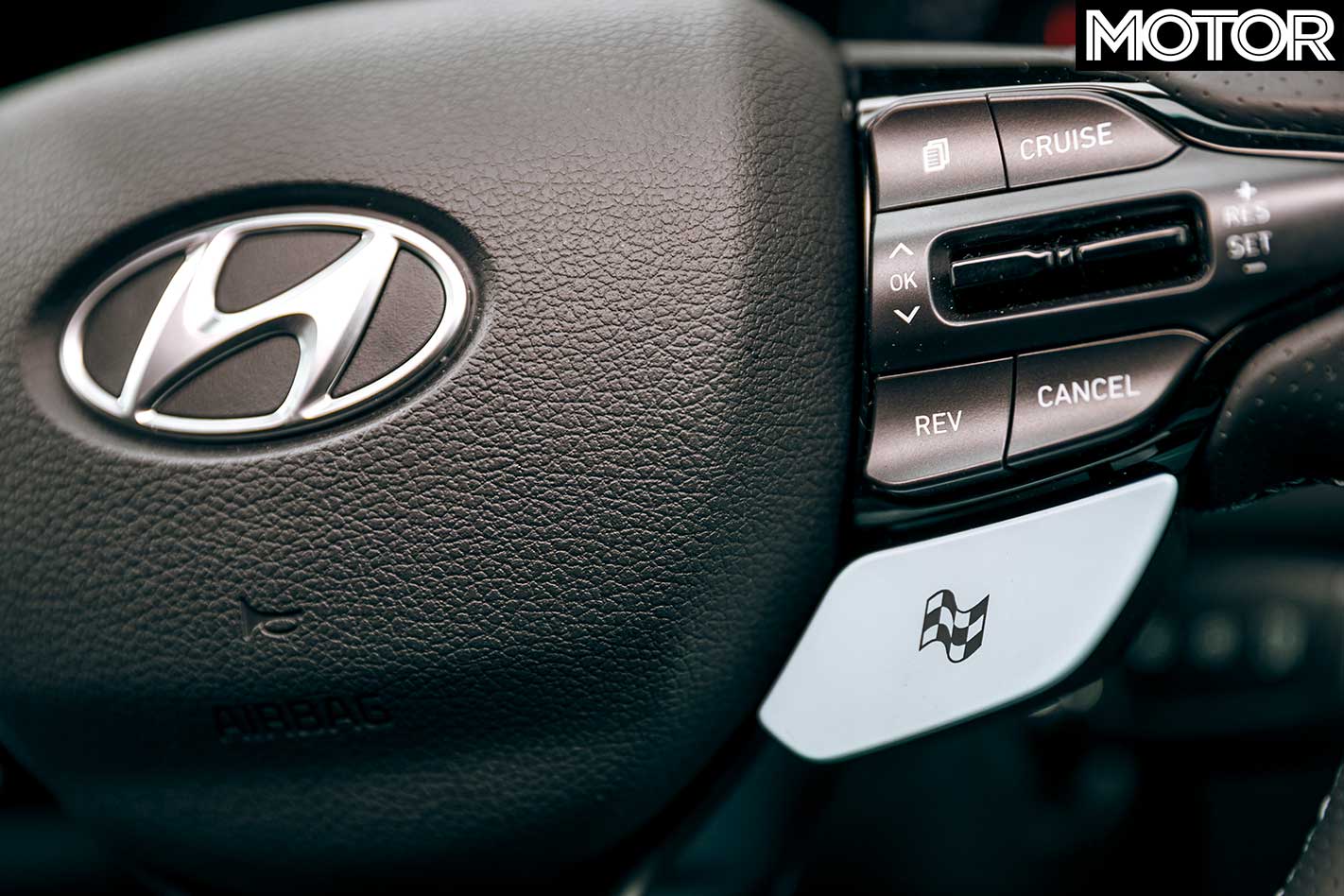
Thankfully, the i30 N by and large pulls it off. For day-to-day driving my preference is to leave everything more or less in its default mode; about the only changes I ever make are occasional forays into Sport if I’m feeling inspired or a press of the REV button on the steering wheel if I’m feeling lazy and can’t be bothered blipping my own throttle on downchanges.
Hyundai has successfully offered the ‘ultimate’ setting that means I can get in and drive without the need to hit a bunch of buttons.
As a quick aside: what does the i30 N have in common with the Porsche Carrera GT? An anti-stall function. Having been taken to task by Hyundai’s PR boss for my complaint about the ease with which it’s possible to stall the i30 N – which is more a function of my lazy driving than any fault of the car – I investigated the anti-stall system, which is separate from the rev-matching function. This brings me back to the Carrera GT.
Upon its release, Porsche’s mega-buck hypercar was criticised for the savagery of its tiny carbon-ceramic clutch. Whether Porsche forgot to mention it or, more likely, journos forgot to listen, the Carrera GT had an in-built anti-stall function that allowed for smooth take-offs as long as you didn’t touch the throttle, which confused the system and allowed the engine to die.
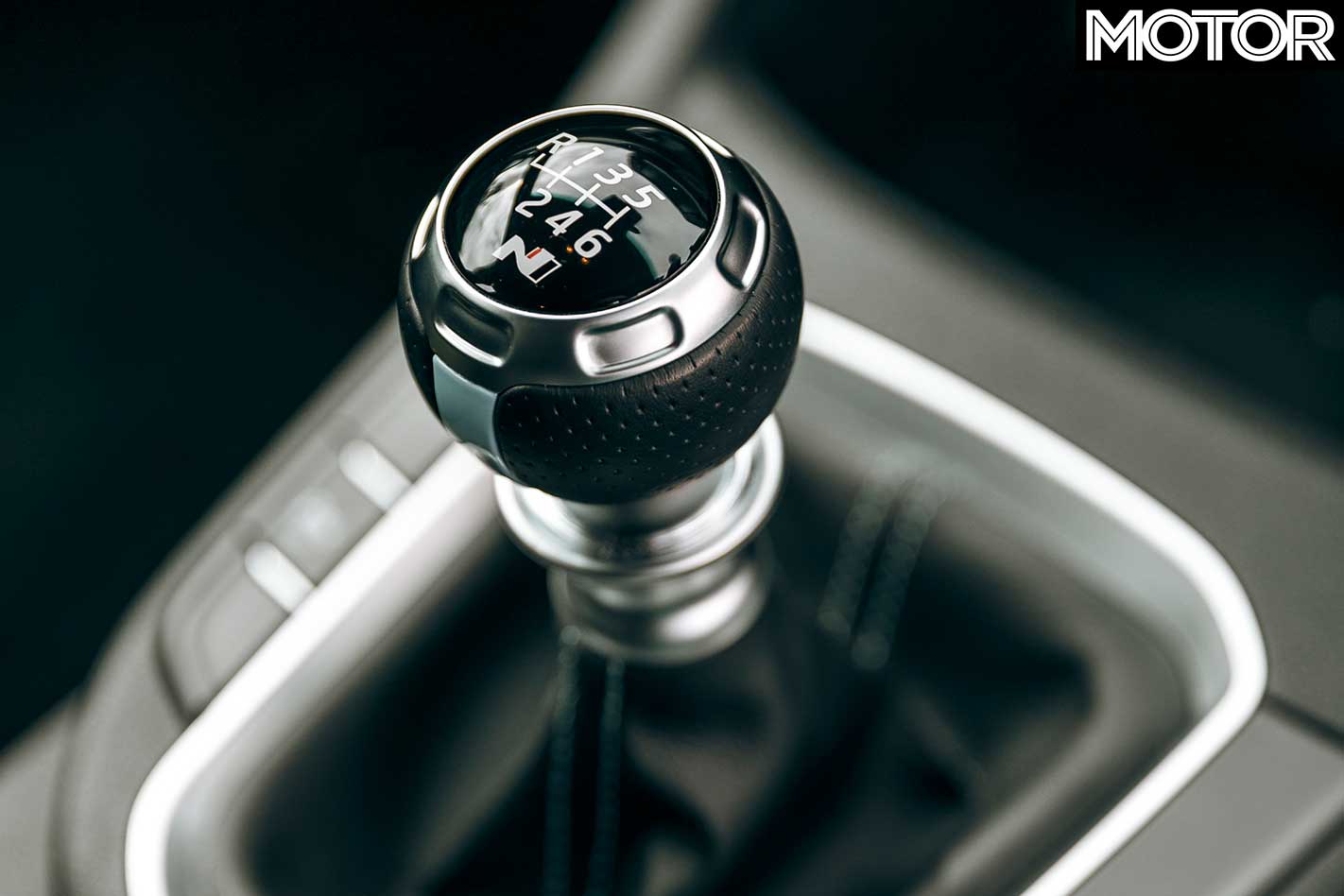
Now, anti-stall or not, I’m not suggesting the i30 N is anything like as capricious as the Carrera GT, but I think the systems operate in a similar fashion. Let the clutch out slowly with no throttle and the i30 N smoothly moves from a standstill; apply a little bit of throttle and the computer thinks you’re taking things into your own hands – or, in this case, feet – backs off the assistance and if you’re sloppy with your inputs, lets the engine die. Regardless, stalling has become much less common in recent times.
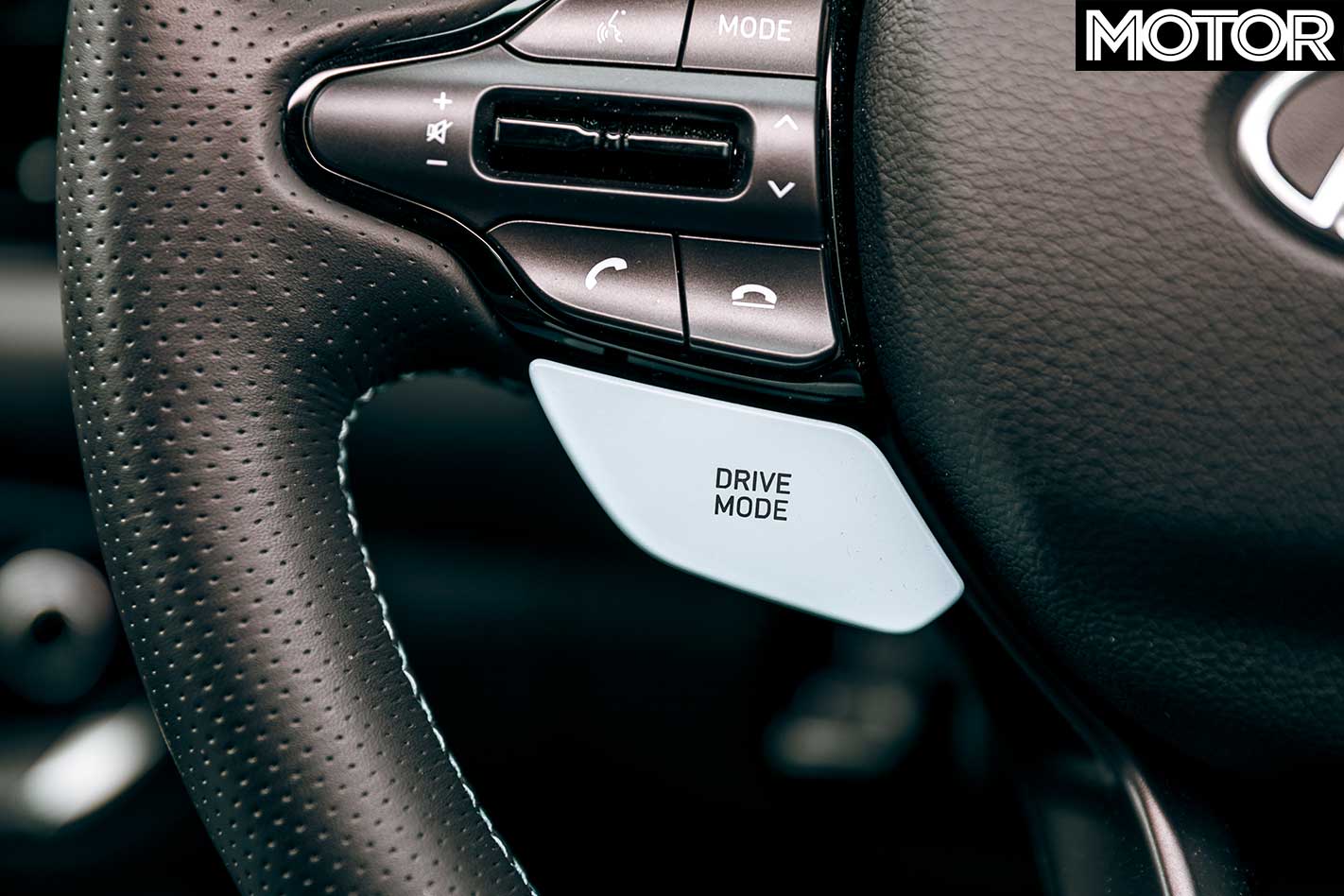
When it’s time to use the i30 N as its maker intended there are two options. Either cycle through the drive modes using the button below the left-hand spoke of the steering wheel, which shifts all respective components to Eco, Normal or Sport.
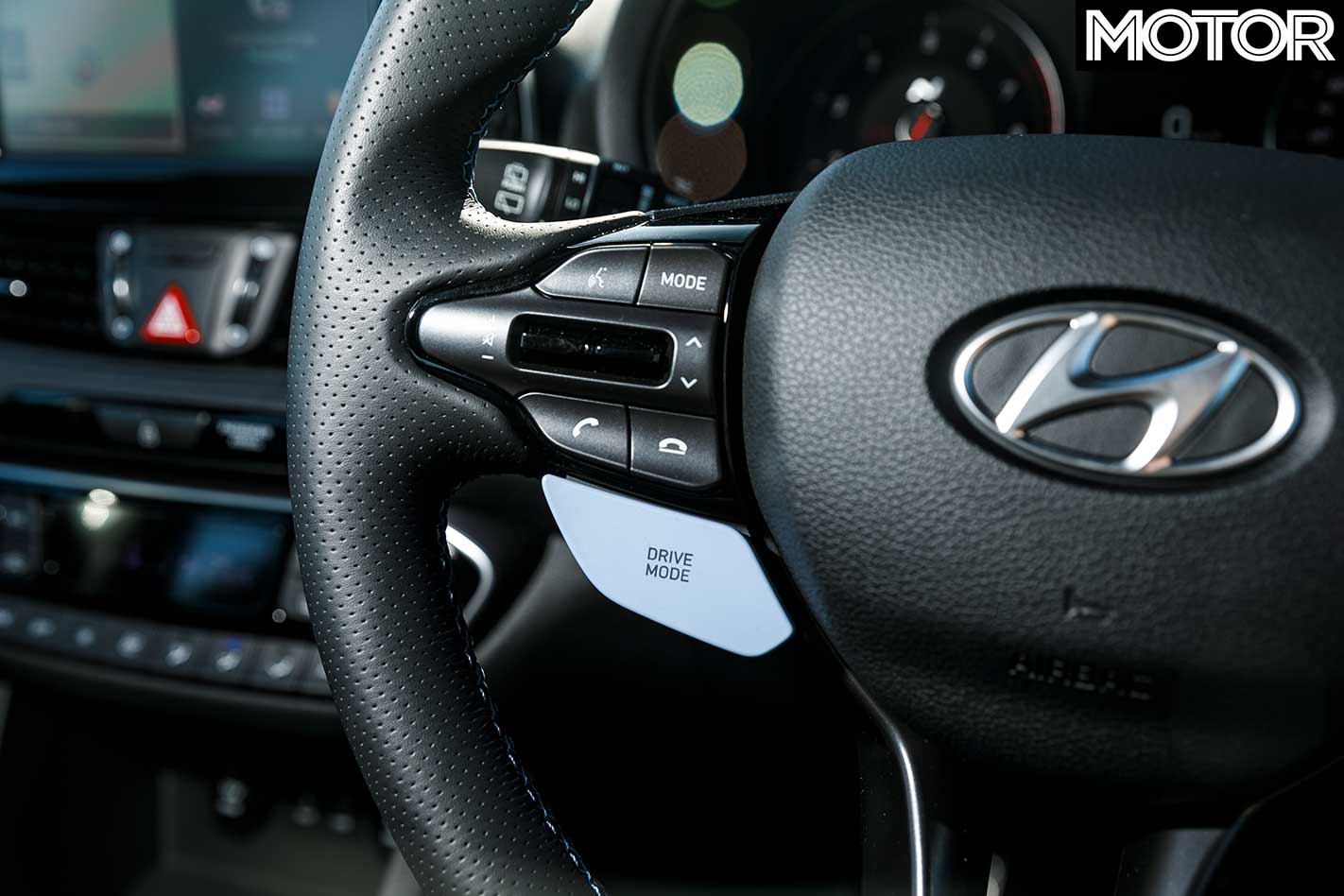
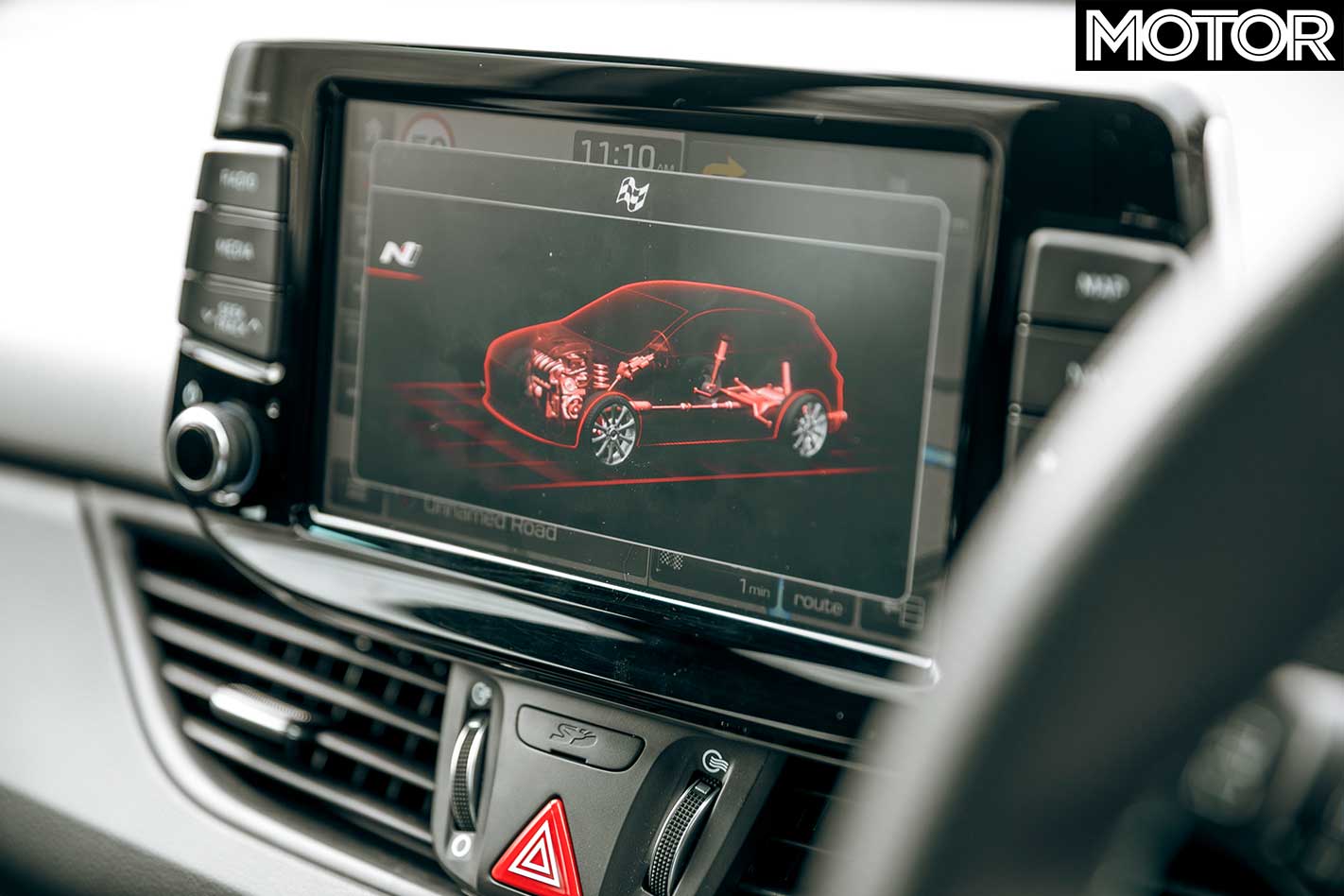
The second option is the chequered flag button on the other side of the horn. One press activates the maximum attack N Mode, but a second press allows you to individually select your favoured combination of settings in an N Custom mode.
Of course, anyone who has driven a BMW M model in the past decade will be familiar with the M button, expanded with the latest generation of cars with an ‘M1’ and M2’ button, allowing the driver to save two setting combinations.
In the Hyundai, the various settings are selected via the central touchscreen with the menus split into Powertrain and Chassis. For reference, my N Custom selections are maximum sportiness for every Powertrain setting, while on the chassis side it’s Normal steering, ESC in Sport and suspension in either Normal or Sport depending on the demands of the road.
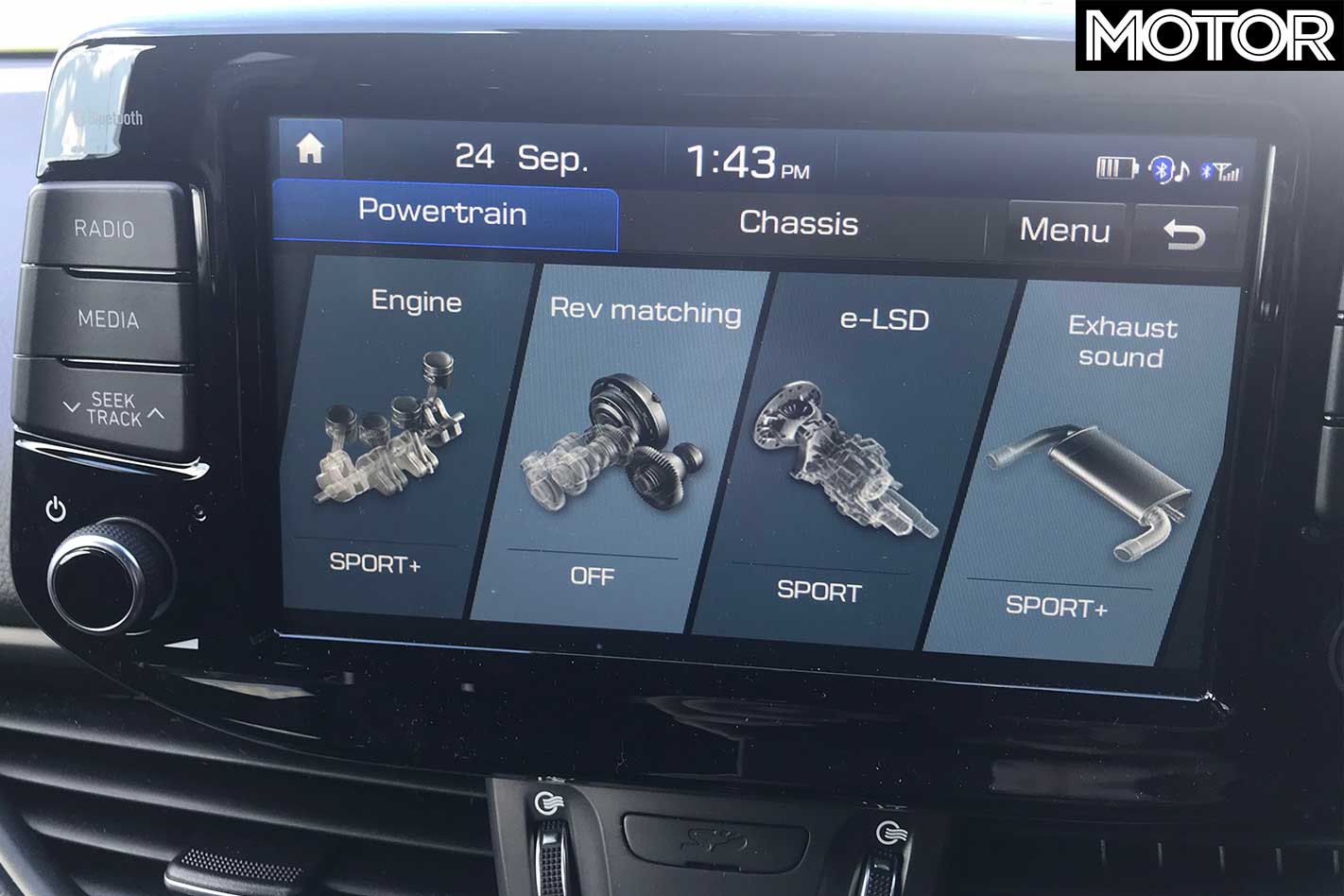
Returning to the conversation with that M engineer, I suppose that’s the advantage of these myriad settings – choice. For mine the exception is steering; I can’t imagine a scenario in which you’d want heavier steering than the Normal weighting – why increase the driving effort?
Next month, we engage N Custom mode and test the i30’s abilities at the racetrack.
2018 Hyundai i30 N Pros & Cons
Three things that we’re falling for: 1 – Useability 2 – Not stalling 3 – Turns heads
Three things that we’re sick of: 1 – Blue buttons 2 – Quite thirsty 3 – Not much else
Update 4: Hillclimb hottie
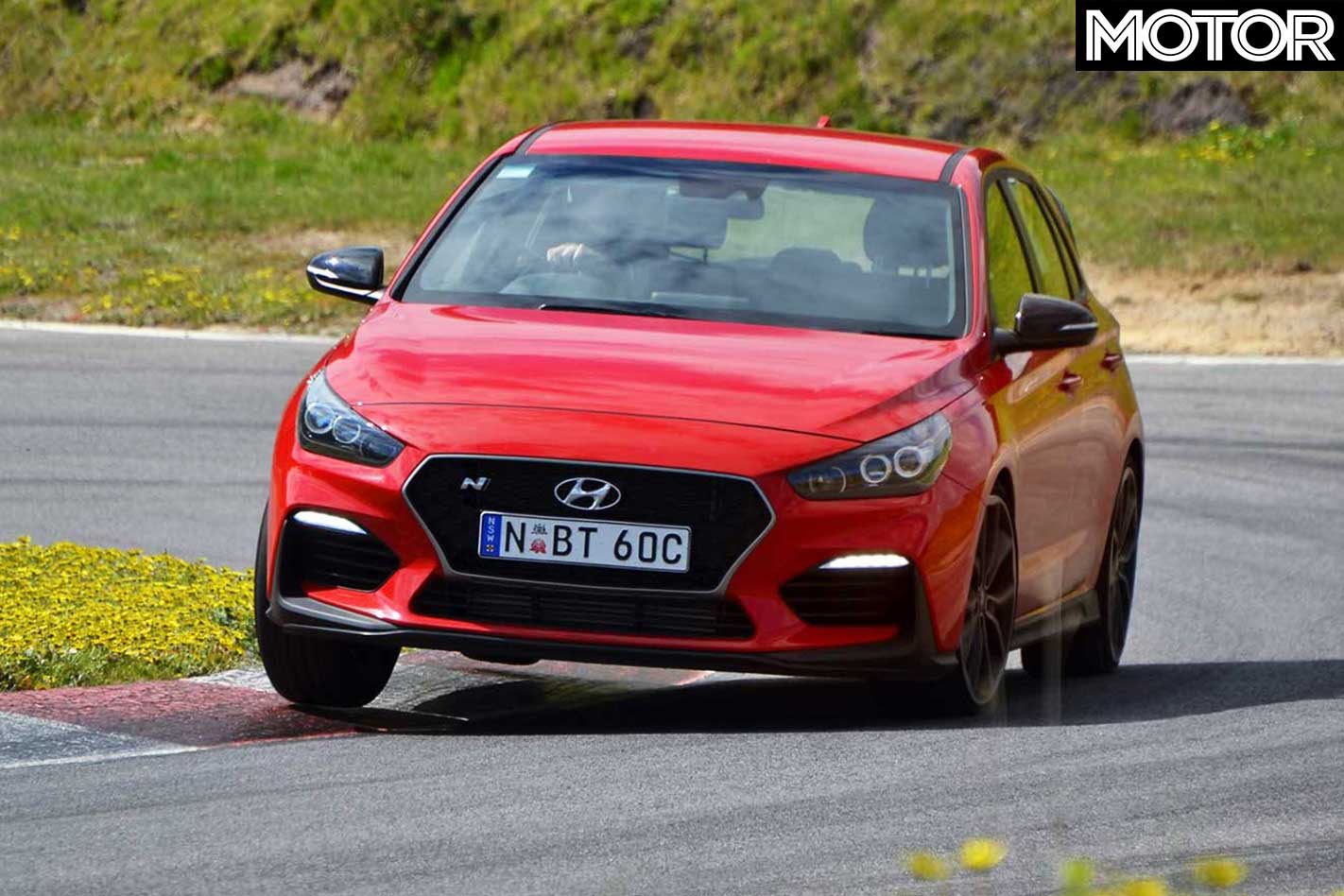
Track days are fantastic fun, but they can be a bit hard on the gear. Very, very few standard production cars can withstand a full day at the track without needing a new set of tyres, brakes or both, not to mention the heavy fuel consumption.
Thankfully, there are myriad other ways to get a competitive fix that are easier on both your car and wallet. These include autocrosses, motorkhanas and this month’s topic, hillclimbs.
Generally slow speed and short in duration, brake and tyre wear are minimal and temperatures are always under control. The annual Kyneton Car Club hillclimb at Bryant Park – more commonly known as Haunted Hills – in Victoria’s Gippsland region is the perfect example. For the grand total of $100 each competitor receives eight runs of around 60-70sec split evenly across two different track layouts.
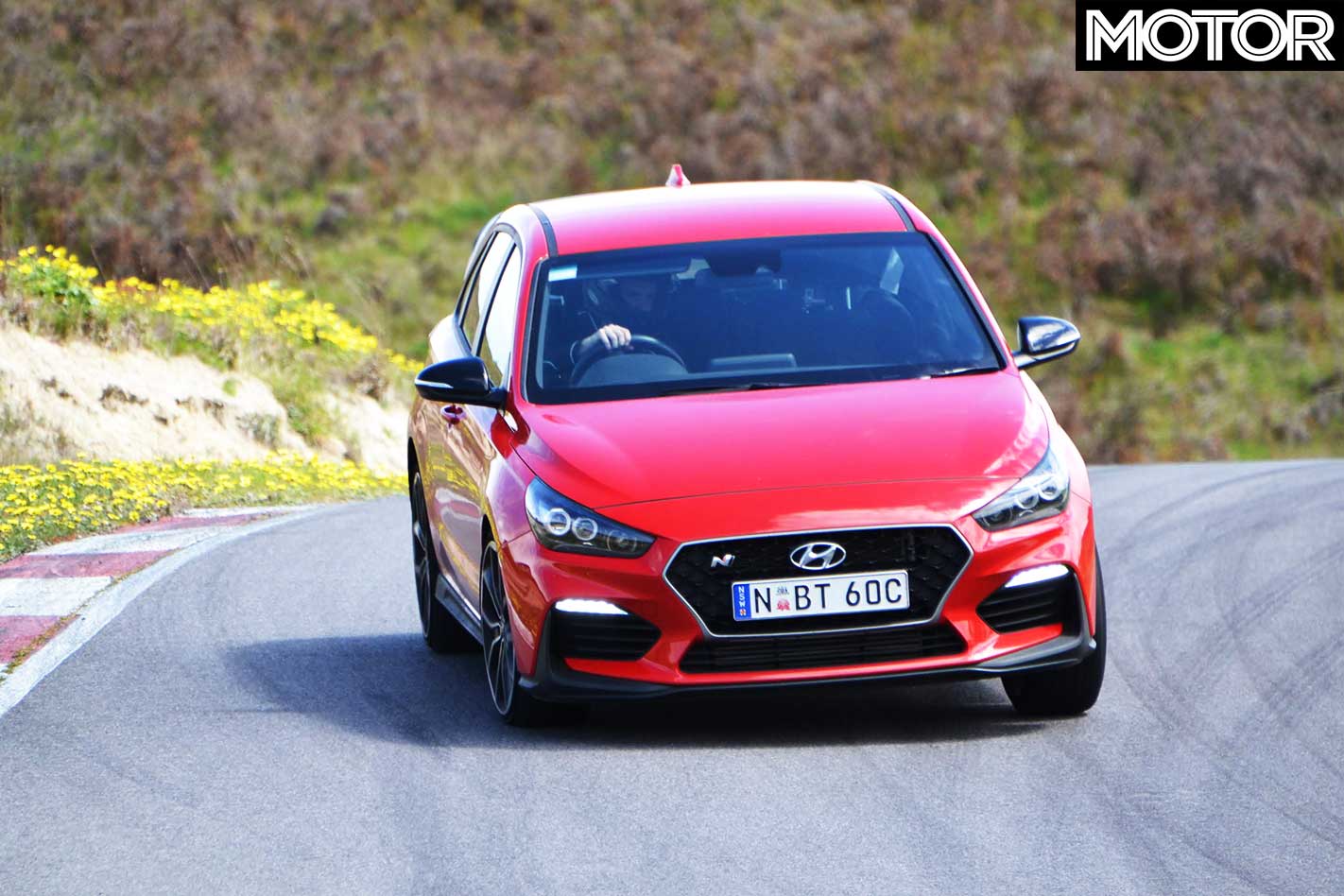
The low level of mechanical stress is evident in the incredible variety of cars competing, everything from well-worn Subaru WRXs on semi-slicks to a Holden VE Calais family hauler to various Japanese and European 1980s rear-drivers. And a showroom-fresh Hyundai i30 N.
A helmet and an internally mounted fire extinguisher are the only safety requirements and if entering a brand-new car in a competitive event seems risky, consider that unlike a track day, where there are other cars and drivers to worry about, at a hillclimb the only way damage could occur is if the driver makes a major mistake.
Mistakes, minor ones at least, are hard to avoid in hillclimbs. Kyneton’s format is such that each competitor’s best run on each track layout is combined for their final time, alleviating the pressure of nailing every run.
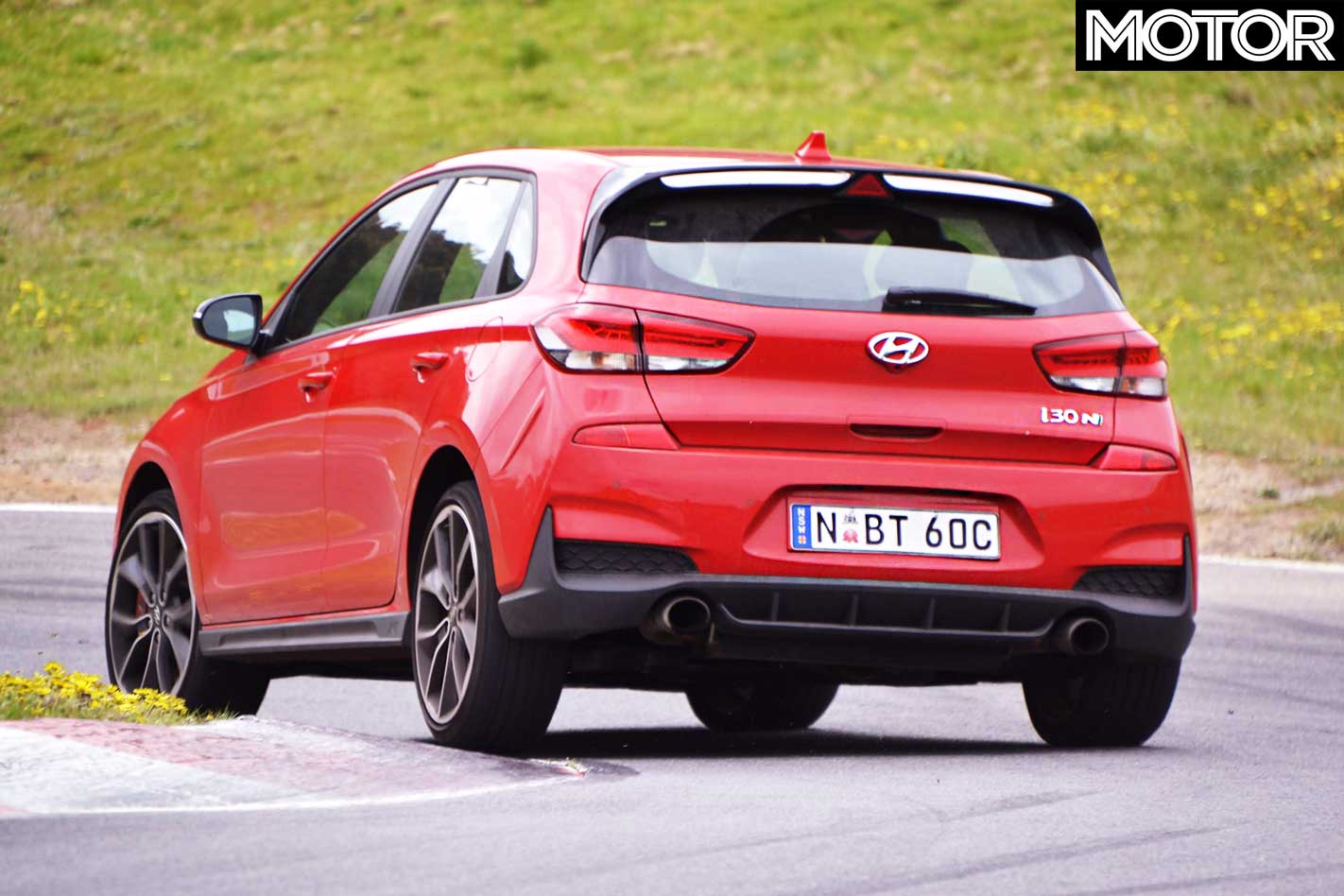
Nevertheless, the need to push hard from the very first metre, usually with cold tyres and brakes, requires focus, especially as the times are often close enough that an overshoot or half-spin will result in tumbling down the order.
MOTOR long-termers have previous form at the Bryant Park Hillclimb; I ran my Peugeot 208 GTi here in 2014 and it finished a credible sixth outright. The track’s tight confines and constant turns favour grip, agility and traction, though a bit of power doesn’t go astray.
With such a diverse array of cars, it’s almost impossible to have expectations, but I was hopeful the i30 N’s turbo torque, electronically controlled LSD, strong brakes and outright grip would allow it to be at least competitive.
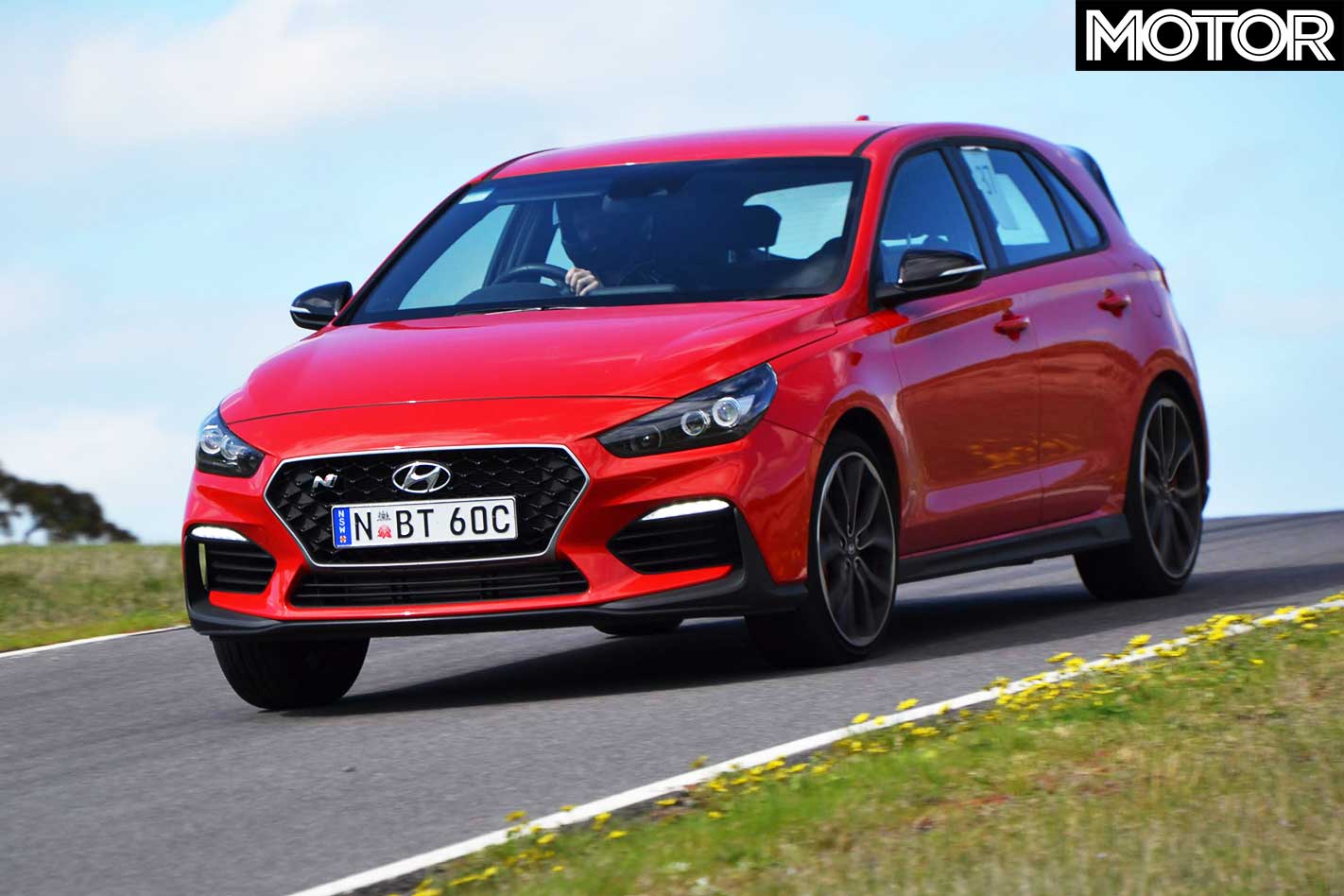
Two slow sighting laps are allowed in convoy to understand the track layout, but the first competitive run is still conservative, with braking points and outright grip levels still unknown. Still, its 66.61sec opening salvo is quickest by 1.21sec, raising a few eyebrows.
The nearest competition is Ian Johnston’s home-built Toyota Lexcen, which doesn’t sound too impressive until you discover it has a 6.6-litre supercharged V8 producing well over 500kW, a custom all-wheel drive system, independent rear end, ABS, traction control – the works. It’s a monster, but Bryant Park brings to mind Nelson Piquet’s quote about driving an F1 car at Monaco being like “riding a bicycle in your living room”.
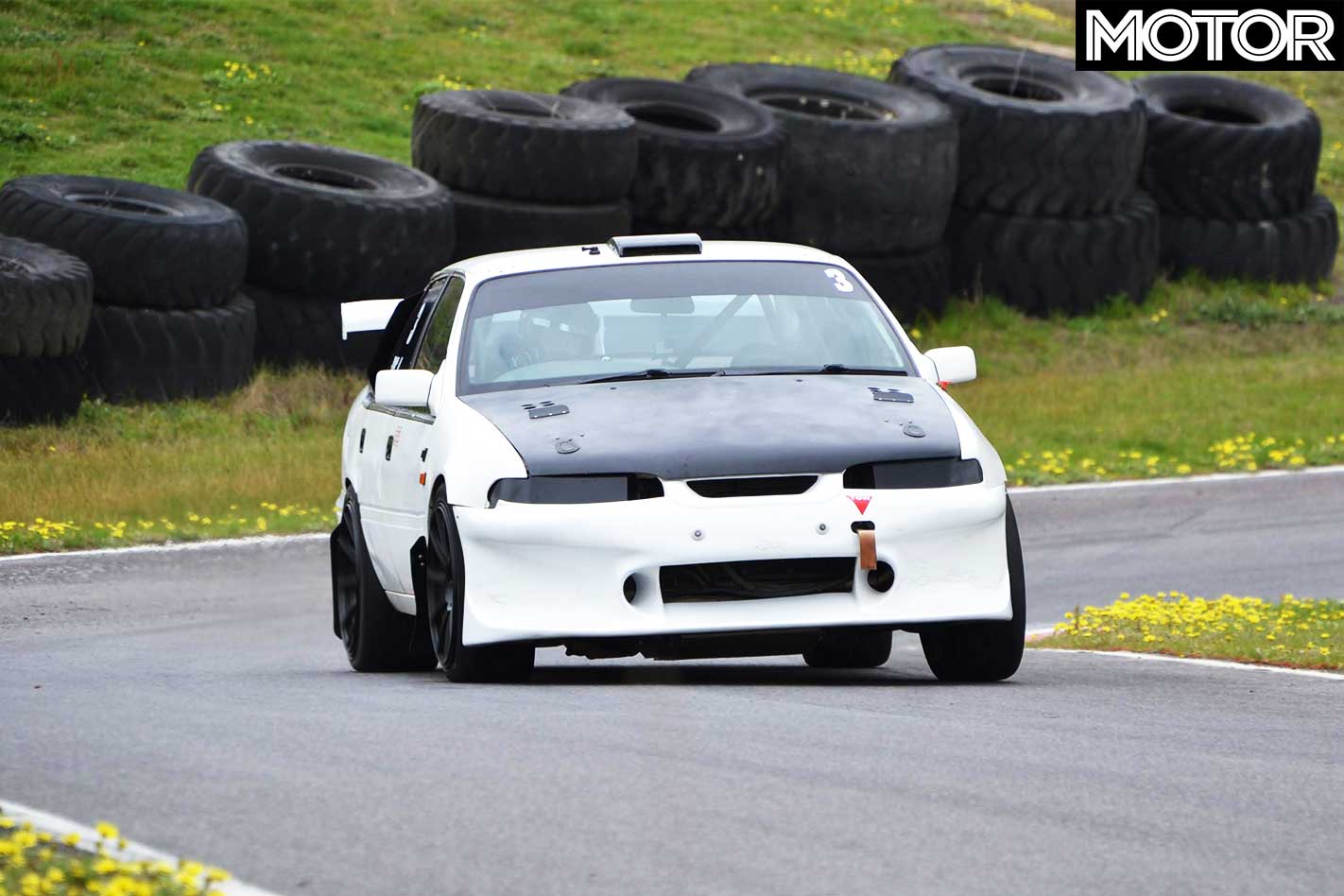
The i30 improves to 65.05sec on the second run, but Ian closes the gap to 0.54sec – too close for comfort. Thankfully, a little extra commitment results in a 63.67sec to secure the quickest time. Onlookers are shocked at the speed of this humble Hyundai, but they underestimate the capabilities of modern performance cars and the pace of their development. The i30 N’s effort is 3.7sec quicker than the 208 GTi – itself a reasonably potent little hot hatch – managed four years ago in almost identical conditions.
On the second track layout that gap widens to four seconds. By now, the Nissan R33 GTS-t of Matt Beardall has joined the fight at the front. Unfortunately, the i30 N is relegated to third on this track layout, but it’s incredibly close, just 0.25sec separating the best runs of a stock front-drive four-cylinder hot hatch, modified rear-wheel drive six-pot coupe and wild V8 all-wheel drive sedan, the common thread being drivers doing their best to squeeze the maximum out of themselves and their machines.
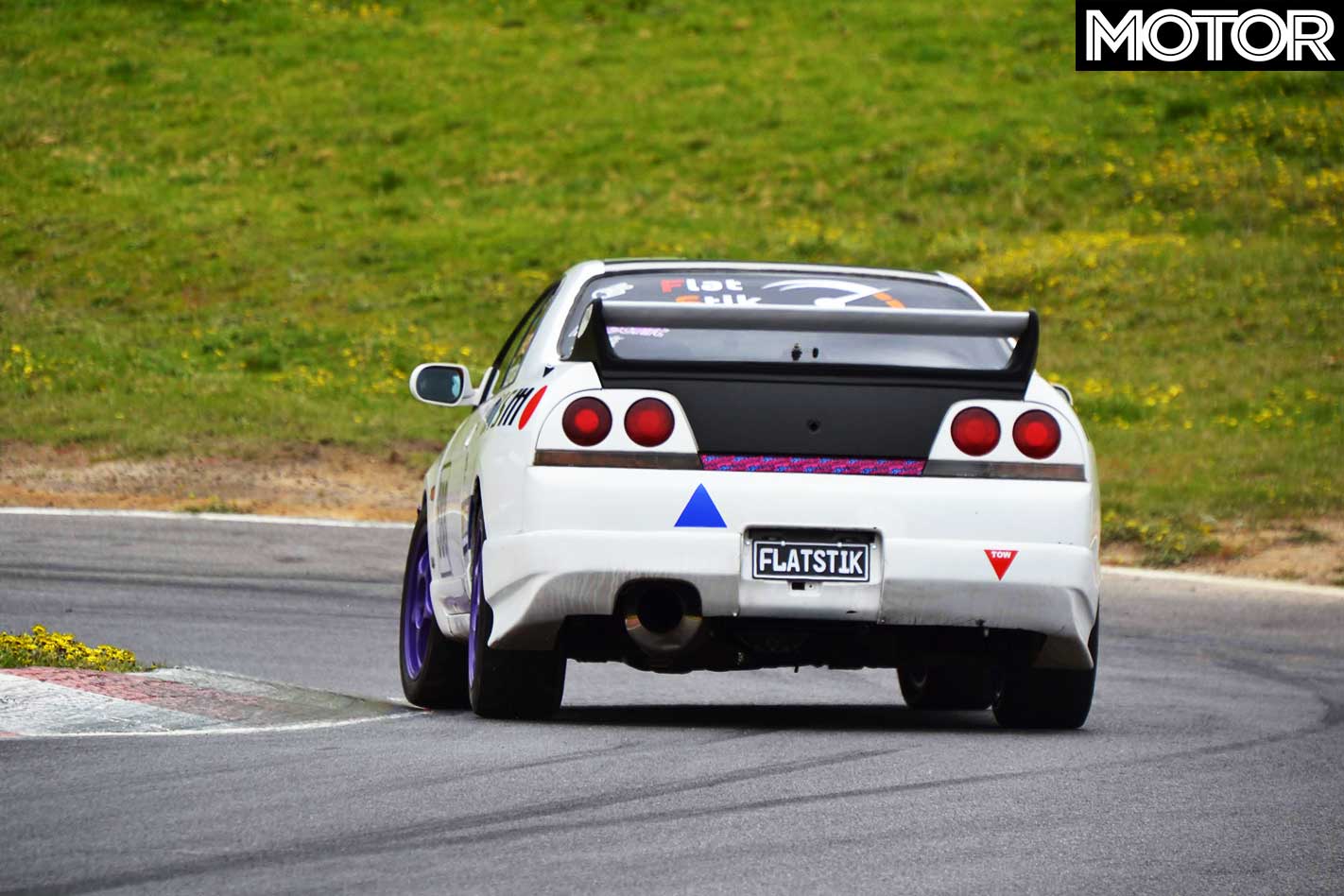
In the final results, the i30 secures victory, its combined time – the best run from each track layout – edging Beardall by just 0.96sec. The true hero of the day was the Hyundai’s ESP system. On cold tyres, the i30 N wasn’t afraid to wag its tail on Bryant Park’s initial fast downhill run; set to Sport the ESP provided enough leeway to prevent time loss while straightening the ship on a couple of occasions when the driver’s ambition outweighed his ability.
Without that safety net, I simply wouldn’t have had the confidence to push as hard. Speaking of pushing hard, next month it’s time for some track work.
2018 Hyundai i30 N Pros & Cons
Three things that we’re falling for: 1 – Winning 2 – Sports ESP 3 – Driving home
Three things that we’re not fond of: 1 – Being beaten 2 – Power understeer 3 – Post-racing blues
Update 5: Track star
There’s been a lot of chat about warranties in the automotive media recently. Not the sexiest topic, but a very important one for peace of mind when buying a new car.
So far in 2018, Holden, Ford, Mazda, Citroen and Peugeot have joined Skoda, Honda and Hyundai in offering a five-year, unlimited-kilometre warranty, though Tesla (eight years/unlimited km) leads the way, with Kia (seven years/unlimited km) and MG (six years/unlimited km) securing the silver and bronze medals respectively.
Hyundai caused a further stir with the release of the i30 N by announcing it would extend its warranty to cover track use. Such a stance isn’t unprecedented: like Hyundai, a number of manufacturers offer track coverage on certain models, though no one else has been as keen to publicise it.
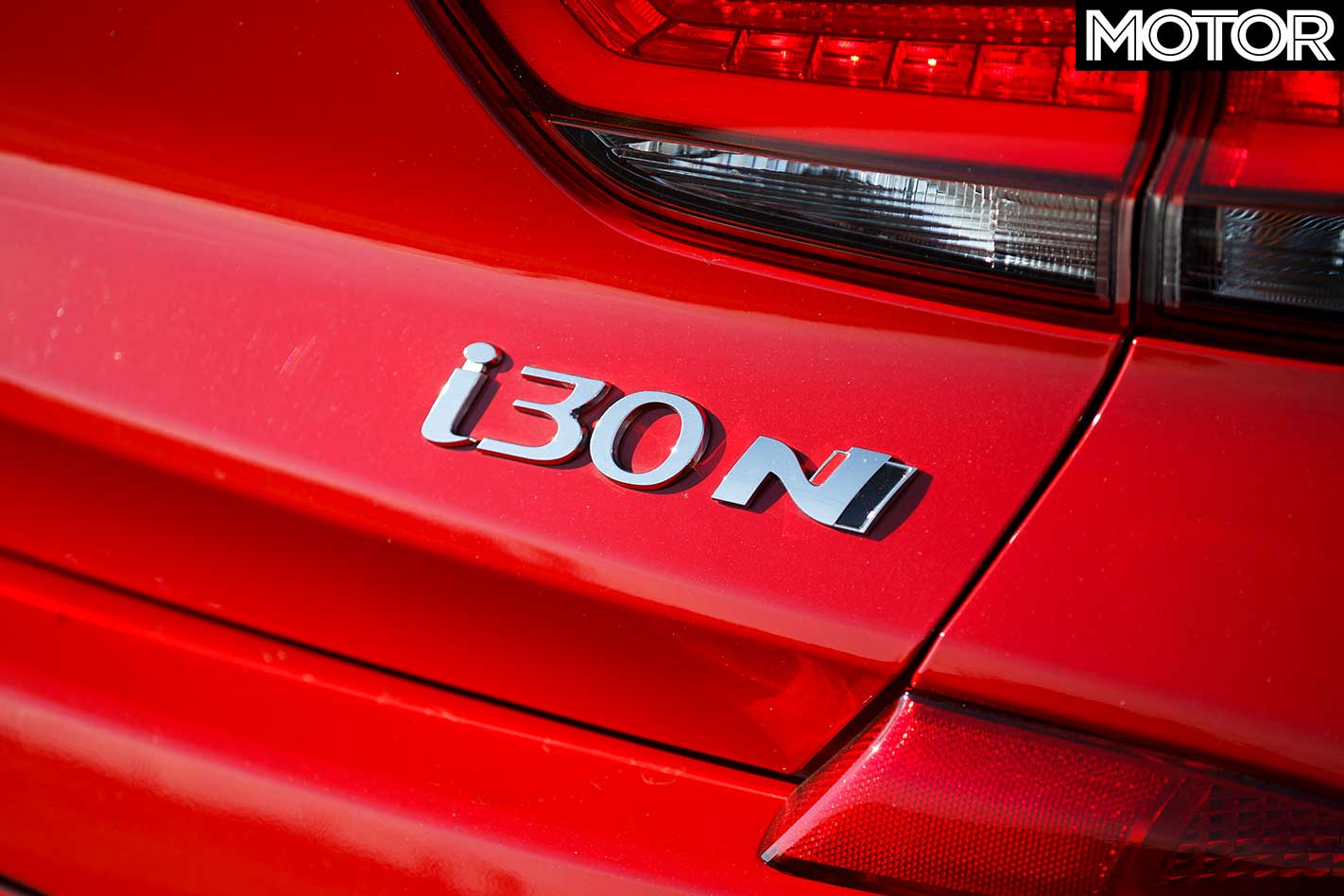
The warranty covers “non-competitive” use, so your weekend track day is fine, the hillclimb we competed in last month is not. However, this only applies to components directly affected by that use. Had I broken first gear on the start line of that hillclimb, tough luck, but had the headlights stopped working then that has nothing to do with a competitive environment.
Hyundai goes one step further by covering the use of non-standard rubber. Bolt on a set of R-spec tyres for your track day and despite the higher stresses involved, Hyundai is confident its first hot hatch will take the punishment.
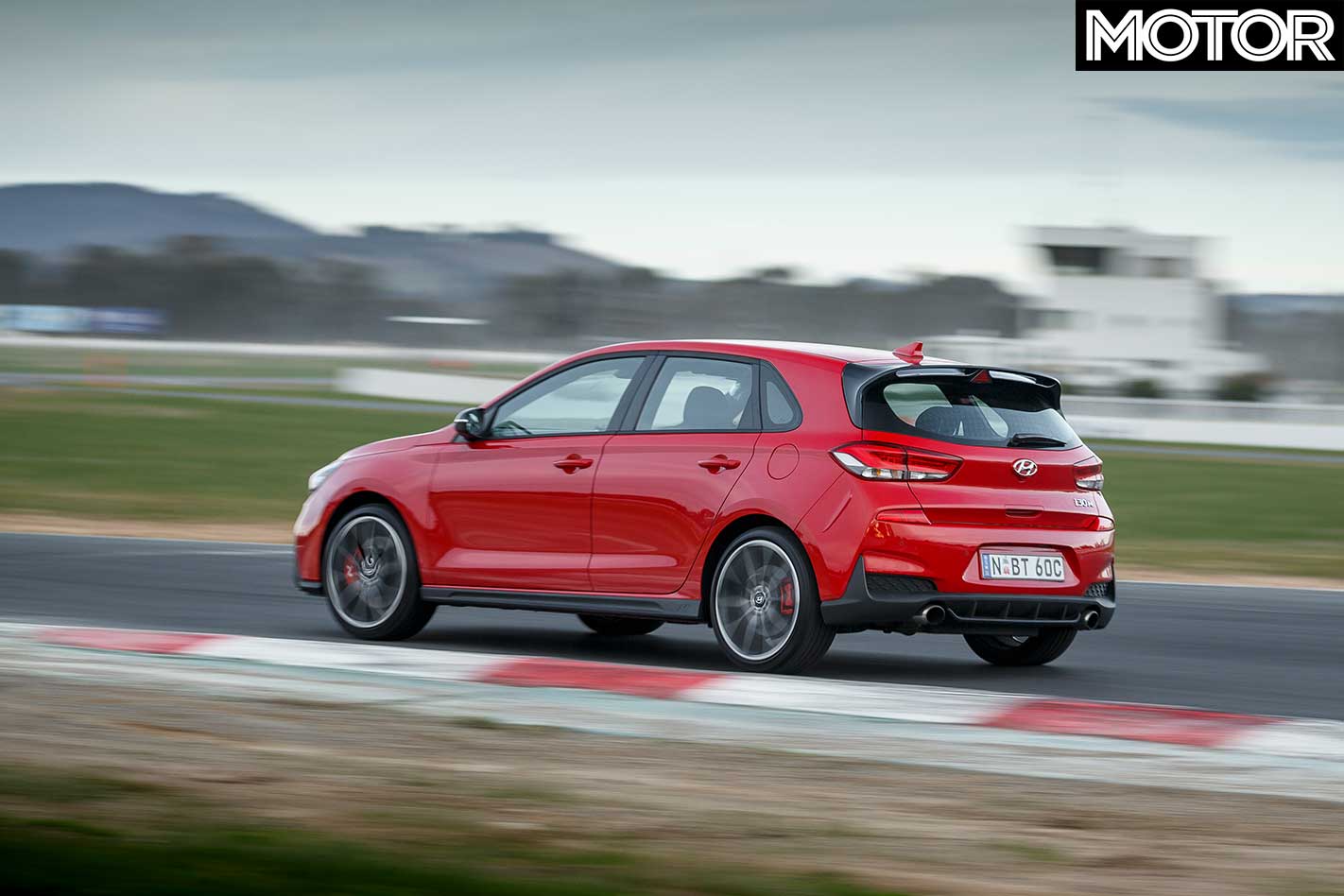
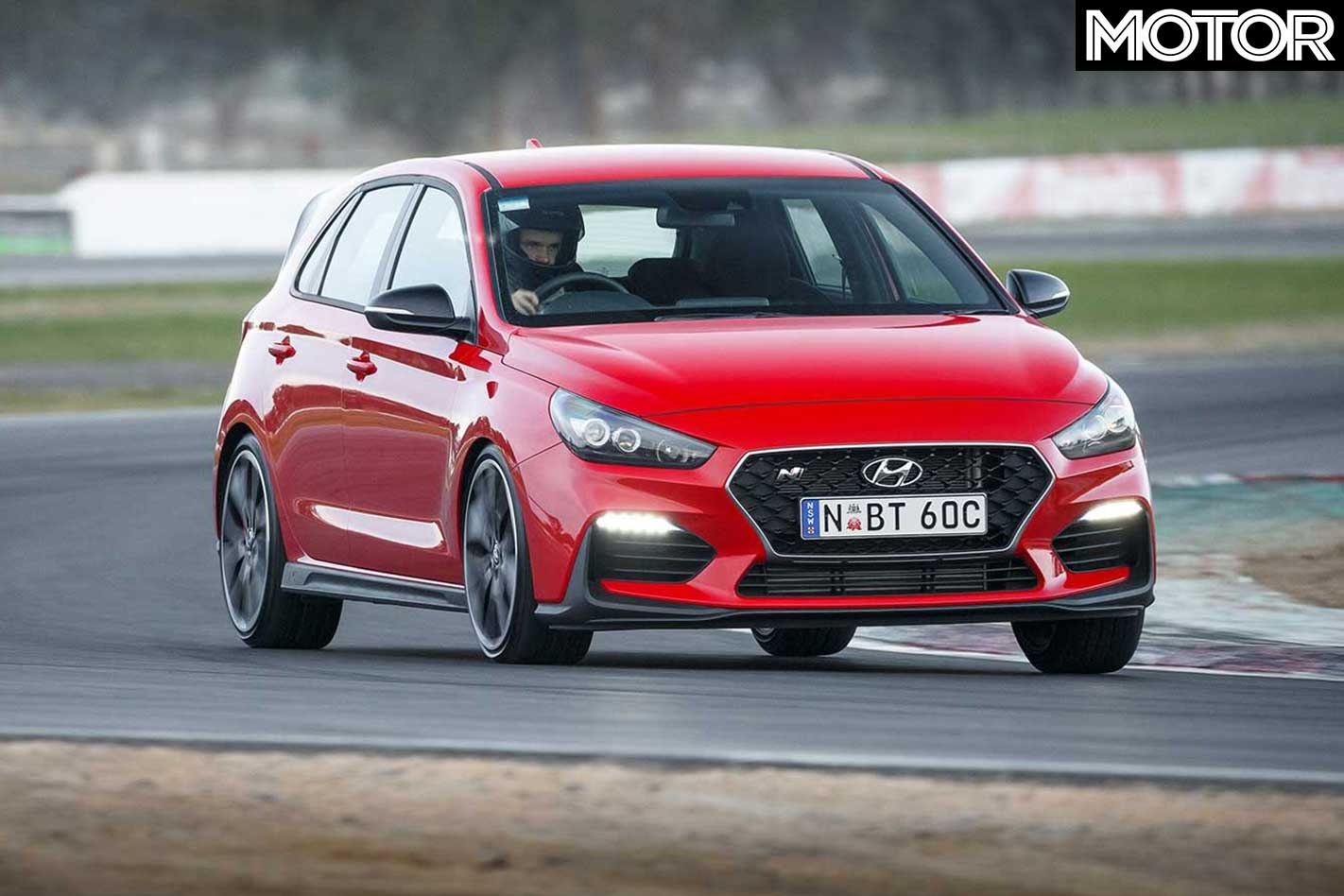
We’ll be doing just that next month, but first let’s examine the i30 N’s circuit prowess in stock form. While ‘my’ i30 N has only seen track action once at Sandown (and technically Haunted Hills) I’ve also driven the standard car at Winton during this year’s Bang For Your Bucks and at The Bend Motorsport Park during recently completed Performance Car of the Year testing, so plenty of laps on different track layouts and surfaces.
Once beyond pit lane you notice the i30’s lack of top-end grunt far more acutely than on the road. As mentioned before, the turbo runs out of puff at higher revs, its size chosen for response and mid-range torque rather than outright grunt.
It’s not at all a bad choice, for it works perfectly on the road and has its advantages on track, too, allowing third to be used out of tight corners to maximise traction without sacrificing acceleration.
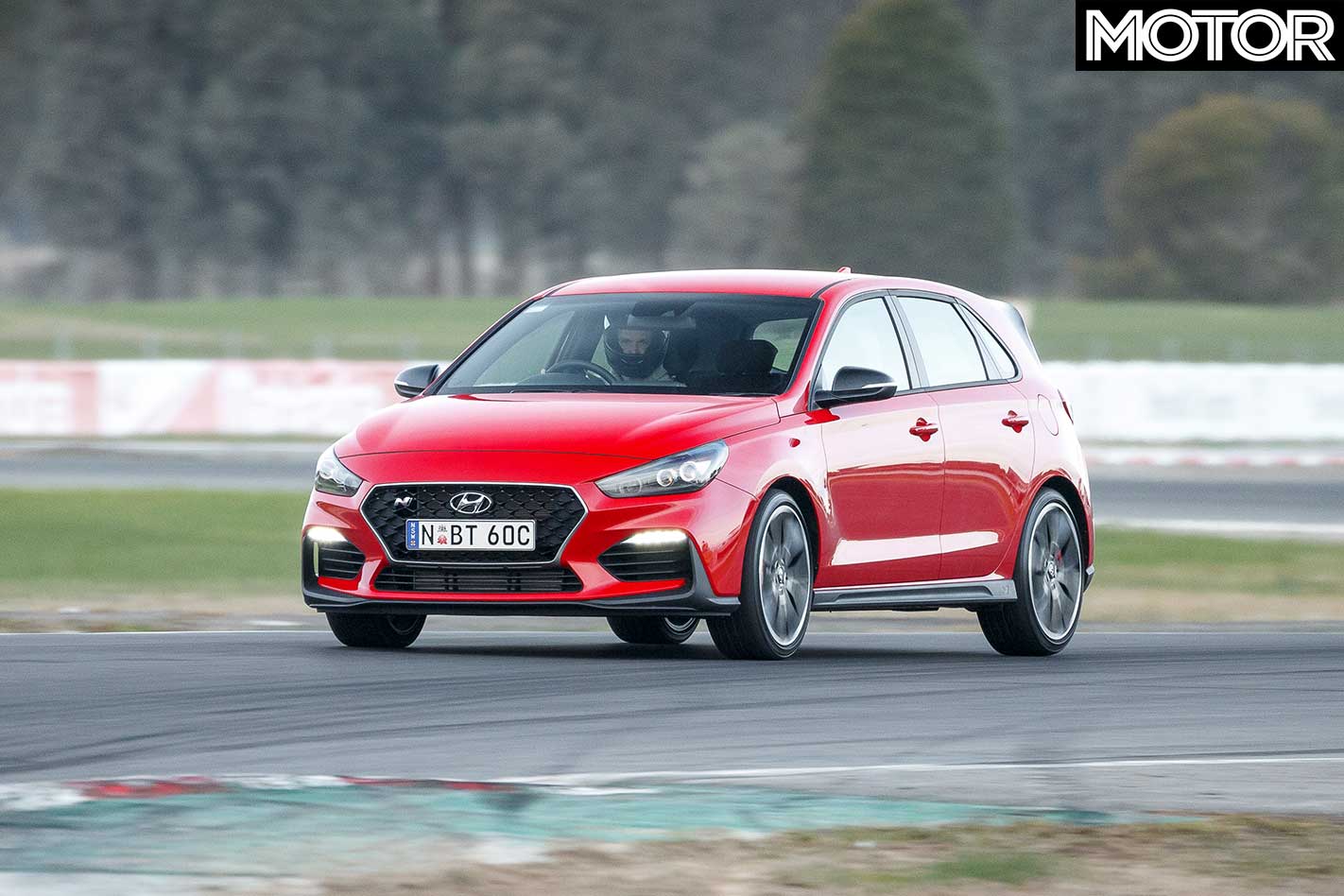
Nonetheless, it’s usually better to pluck the next gear by 6000rpm rather than stretch to the 6500rpm redline or beyond. Oh, and if you are in third, remember to give the throttle a big blip down to second as there’s a large gap between the two ratios.
On cold tyres the i30 is a very keen oversteerer, but the balance quickly improves with temperature. It’s not especially adjustable unless you’re really provoking it, particularly with the firmer damper modes quelling body roll, but don’t confuse the lack of movement as a lack of entertainment. It’s easy to punt quickly and accurately, yet rewards good driving.
Thus far I’ve enjoyed it most on the faster sweepers of The Bend. It was effective at Sandown, but lacks the outright power to make the most of the layout. Winton’s long corners don’t do powerful front-drivers any favours. Those with patience may disagree.
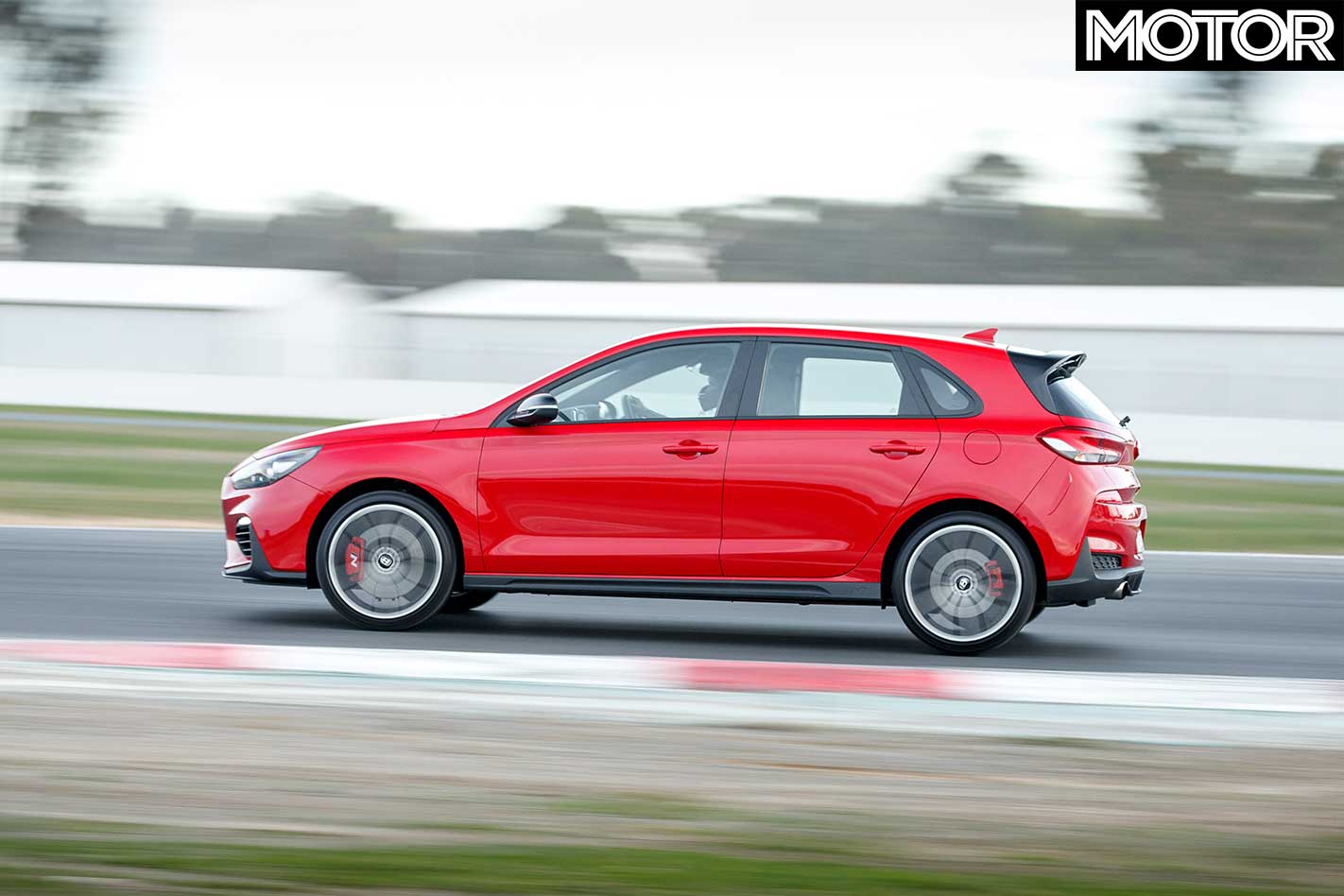
You’d think the obvious suspension setting on track would be Sport Plus, but that’s not necessarily the case. Even at The Bend, which is smoother than a James Bond pickup line, putting the dampers in their stiffest setting had the i30 bouncing, while down Sandown’s bumpy main straight it felt like the wheels were hopping clear off the deck. And that’s before you try and cross the kerbs.
If you’re hitting the track in your i30 N (or any other car for that matter), don’t automatically assume stiffest is best (stop sniggering…).
Hyundai claims to have completed over 100 laps on the same set of tyres at Wakefield Park, but either it has a very gentle test driver or Wakefield is particularly gentle on rubber. Sandown, it seems, is particularly brutal.
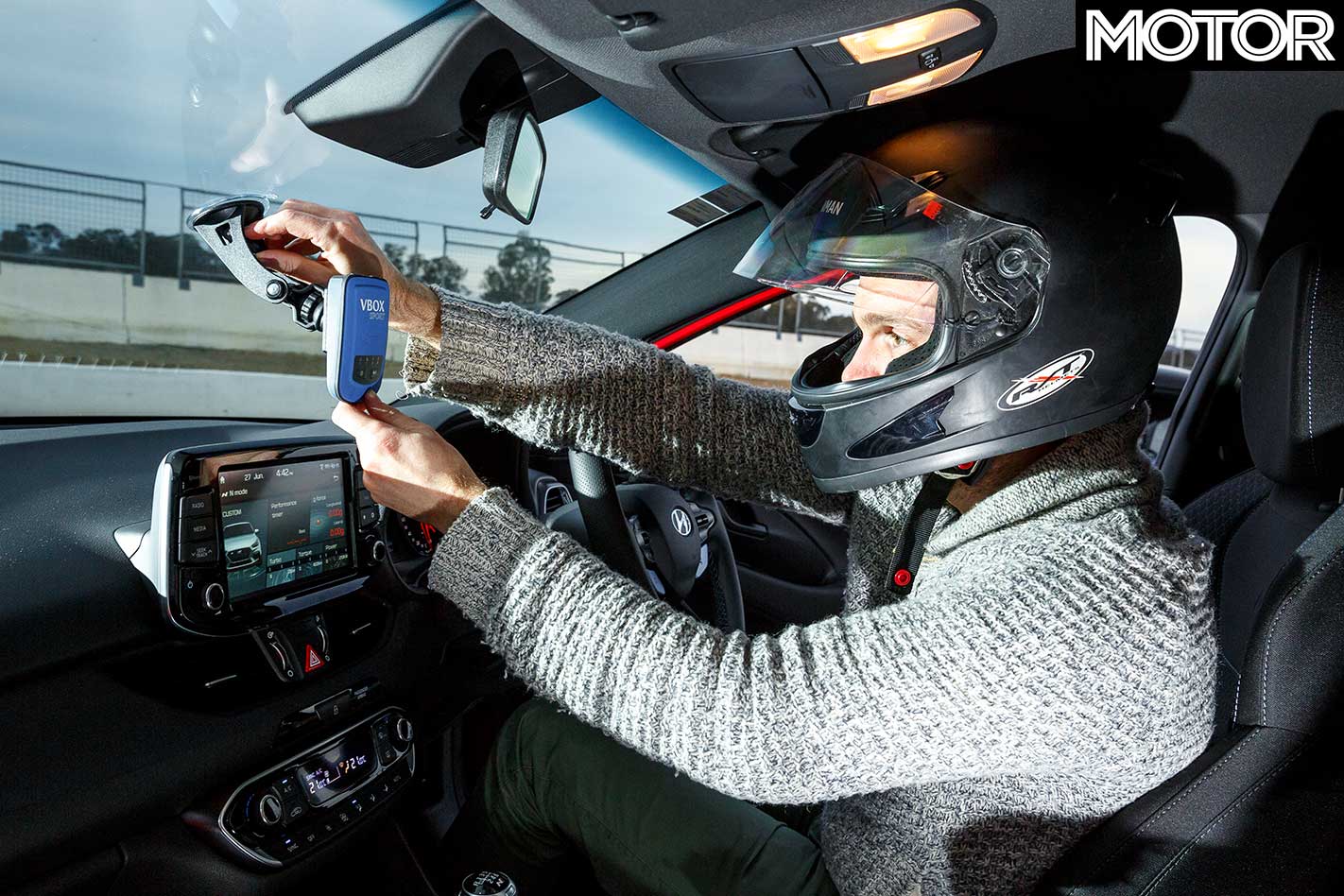
The i30’s bespoke compound Pirelli P Zeros certainly held up better than the Continental SportContact6s on Dylan’s Civic Type R, but two sessions resulted in significant enough wear to necessitate a front-to-back tyre swap, which isn’t the work of a moment with only a standard scissor jack.
At Winton the i30 N displayed a weird vibration at the limit; instead of progressing further into understeer the tyres would begin to gently shudder as they scrubbed across the surface. It displayed the same behaviour at The Bend, which Rick Kelly – someone who knows a hell of a lot more about tyres than I do – suspected was due to a fairly hard tyre compound. This would make sense if Hyundai has asked Pirelli to engineer in some extra track durability.
As mentioned, next month it’s time for some sticky rubber.
2018 Hyundai i30 N Pros & Cons
Three things that we rate: 1 – Track durability 2 – Front-end grip 3 – Warranty cover
Three things that we hate: 1 – Changing wheels 2 – Tyre vibration 3 – Not much else
Update 6: Rallyin’ time
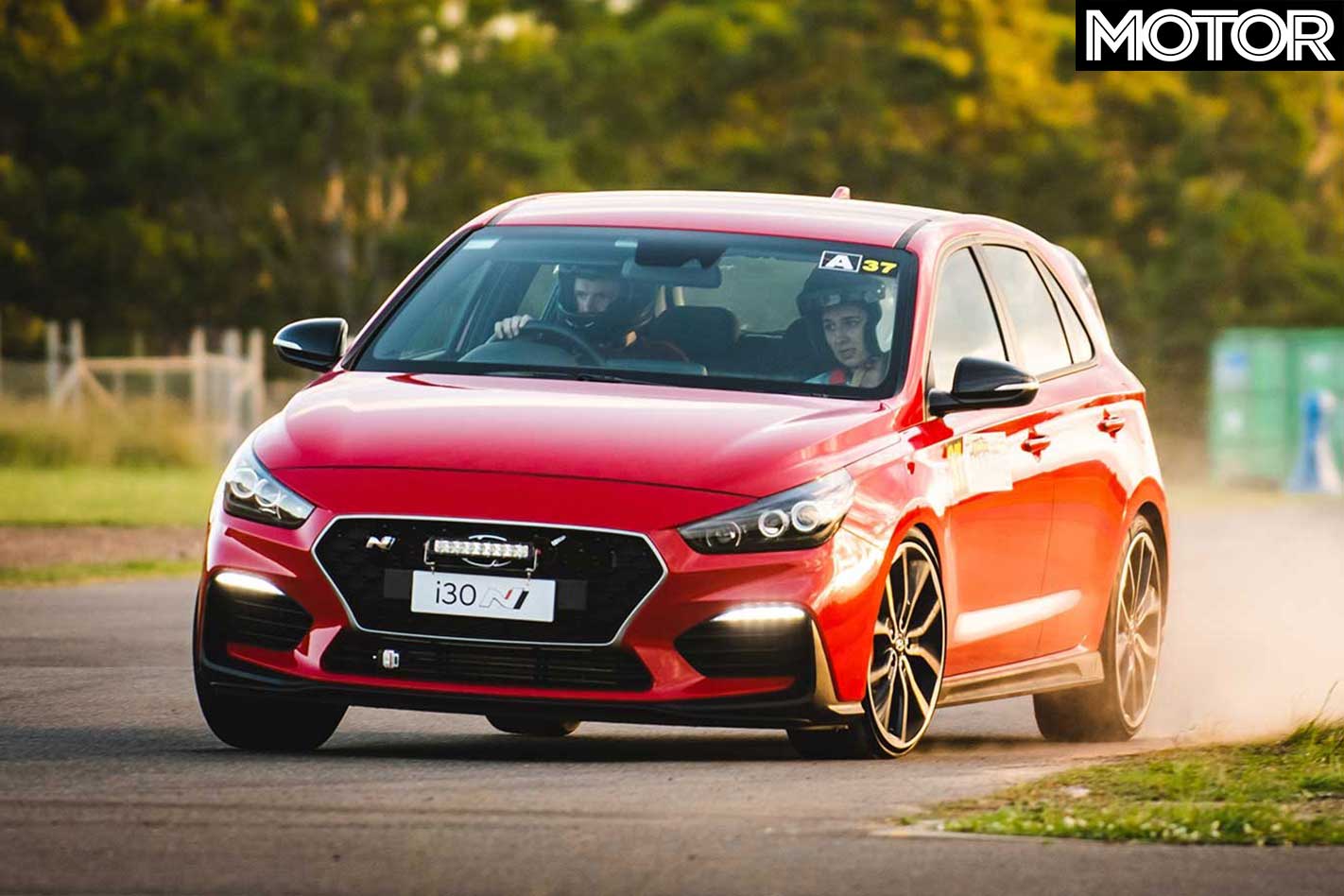
I should be preparing ‘my’ i30 N for competition, but there’s a Toyota Corolla World Rally Car being lowered out of a transporter in front of me and it’s amazing. The Twilight Rallysprint series, held at Western Sydney Dragway by the North Shore Sporting Car Club, may be a fun event, but the entered machinery is very, very serious.
The transporter in question belongs to Neal Bates Motorsport, which unloads the Corolla WRC of technical director Darryl Bush, a modified Toyota 86 for Lewis Bates, and Neal’s restored Toyota Celica ST205 GT-Four Group A, which won Targa Tasmania and the Australian Rally Championship in 1995. I could stare at it for hours.
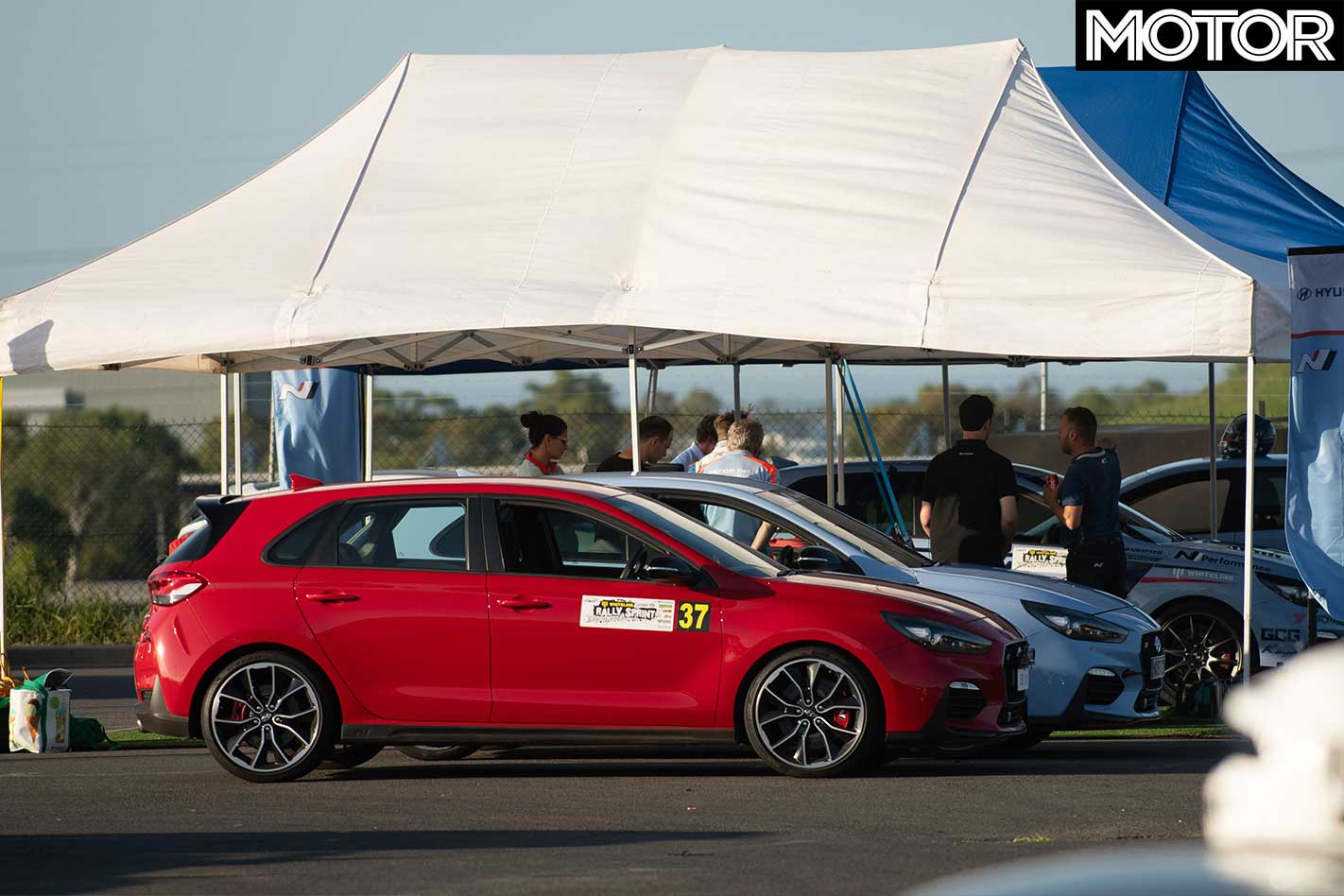
But I don’t have time, because a trio of Hyundai i30 Ns await competition. Hyundai has been a keen supporter of the Twilight Rallysprint and has employed rally royalty of its own. Driving the lead car is Brendan Reeves, while for this round another seat is filled by Wayne Bell.
Bell drove for the Holden Dealer Team in the 1970s and ’80s before piloting Hyundai’s factory F2 car from 1994-1998 in various Asia-Pacific and World Championship rounds. In the third car, there’s me.
The rules of the Twilight Rallysprint are simple: each competitor has five runs, with the fastest three runs counting. Lowest combined time wins. Prior to competition, two slow-speed runs are allowed to check the course and write pace notes. Jumping in the MOTOR silly seat is Brendan’s wife Cass for a bit of intra-marital rivalry.
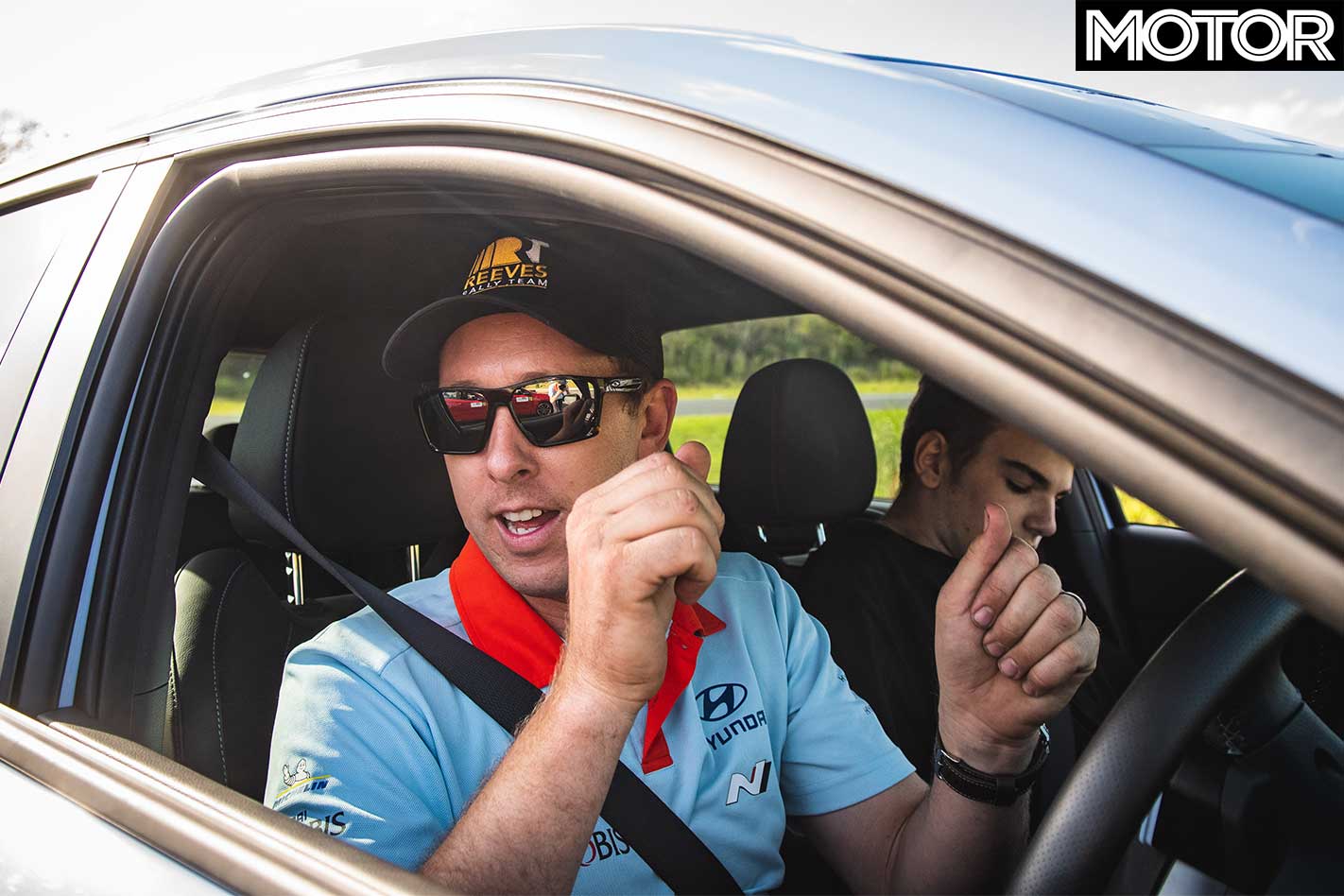
Given what it has to work with, the NSSCC has done a remarkable job of creating an interesting course. It begins with a sequence of 90-degree turns, continues through quicker access roads with a handful of chicanes and a roundabout for good measure before looping around to blast the wrong way up the drag strip, with an ever-tightening chicane the final sting in the tail. The chicanes change every round and the quickest cars complete the course in less than two minutes – even the i30N clocks 160km/h.
Our first three runs are completed on the normal Pirelli P Zero ‘HN’ tyres. The car is standard bar some bitier brake pads that give great pedal feel but are more aggressive; it appears the i30 N now has stopping power beyond the capability of its tyres.
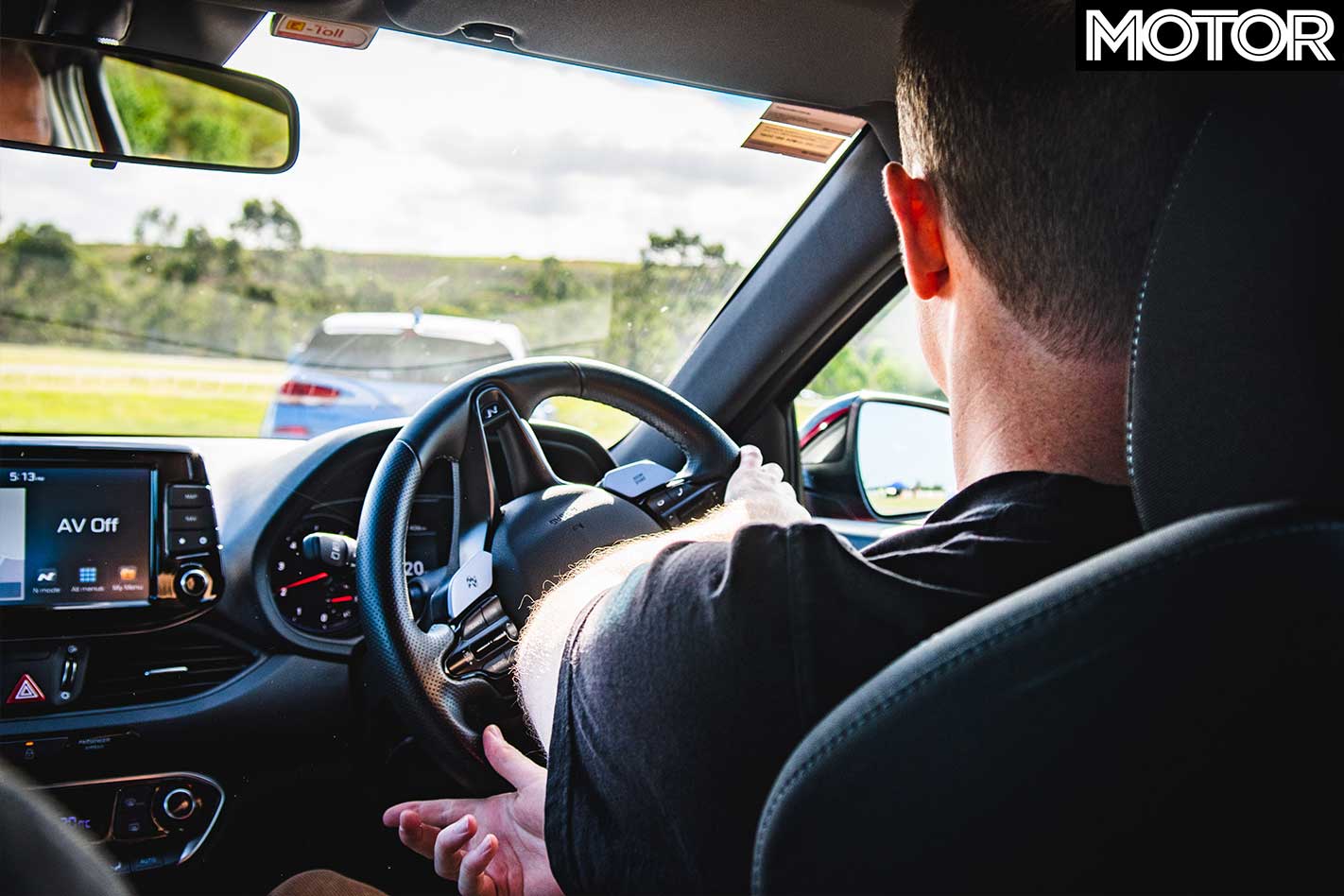
After three runs and an improvement of 2.9sec, it’s time to bring out the big guns: Michelin Pilot Sport Cup 2s. Hyundai is conducting a lot of tyre testing with the aim of offering a ‘track pack’ wheel/tyre combo for circuit-going i30 N owners.
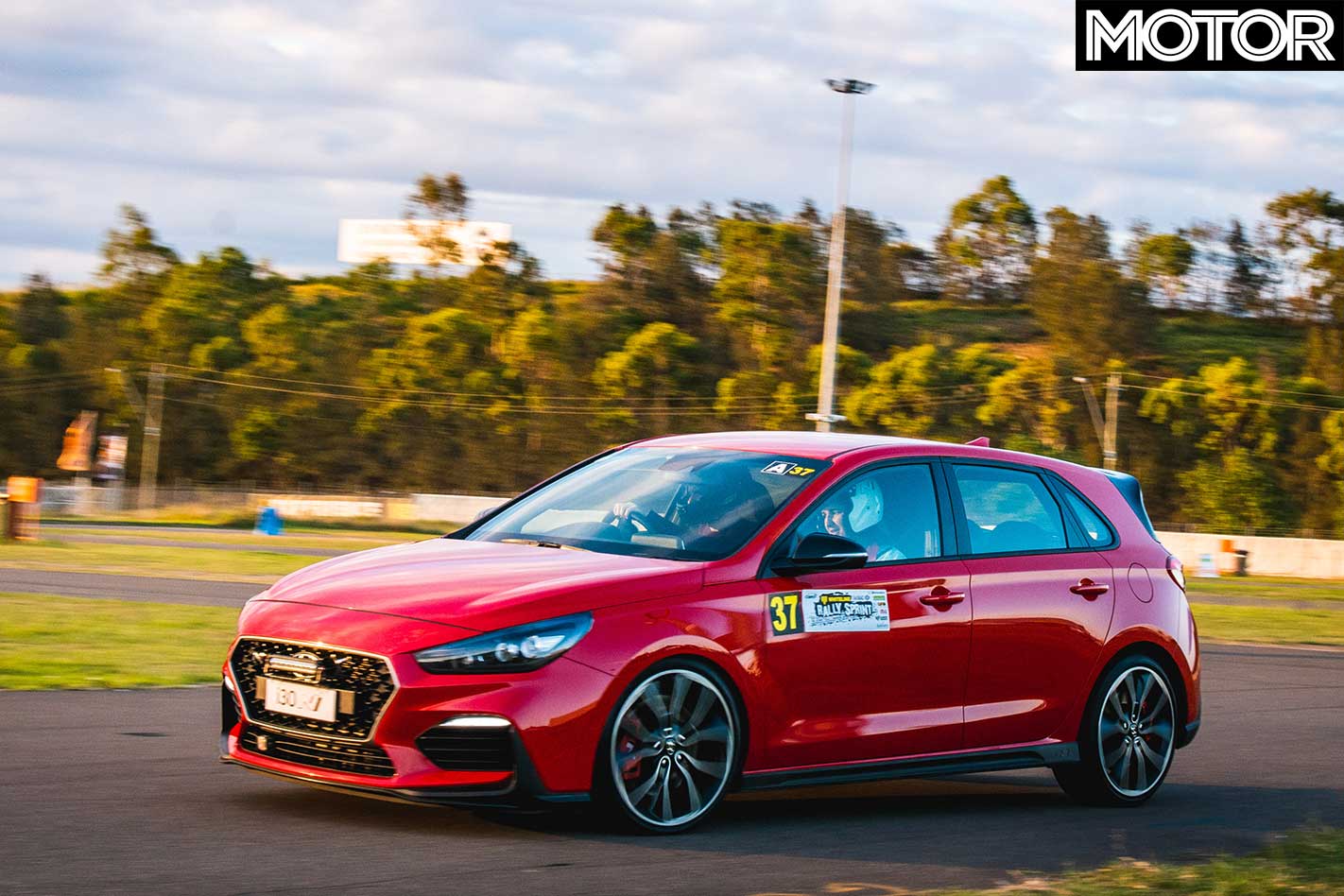
The new rubber doesn’t transform the i30 N, it just makes it a little bit better everywhere. It shows in the times. Even while getting used to the extra grip, our next run is 1.7sec quicker, the final run a second quicker again to record the 17th-fastest time.
The car just feels better; it can be driven more aggressively with a more positive front-end, the inside rear lifting clear of the deck in most turns. The end result is 22nd from 84 entrants, with Brendo securing 17th thanks to his extra power, grip and talent.
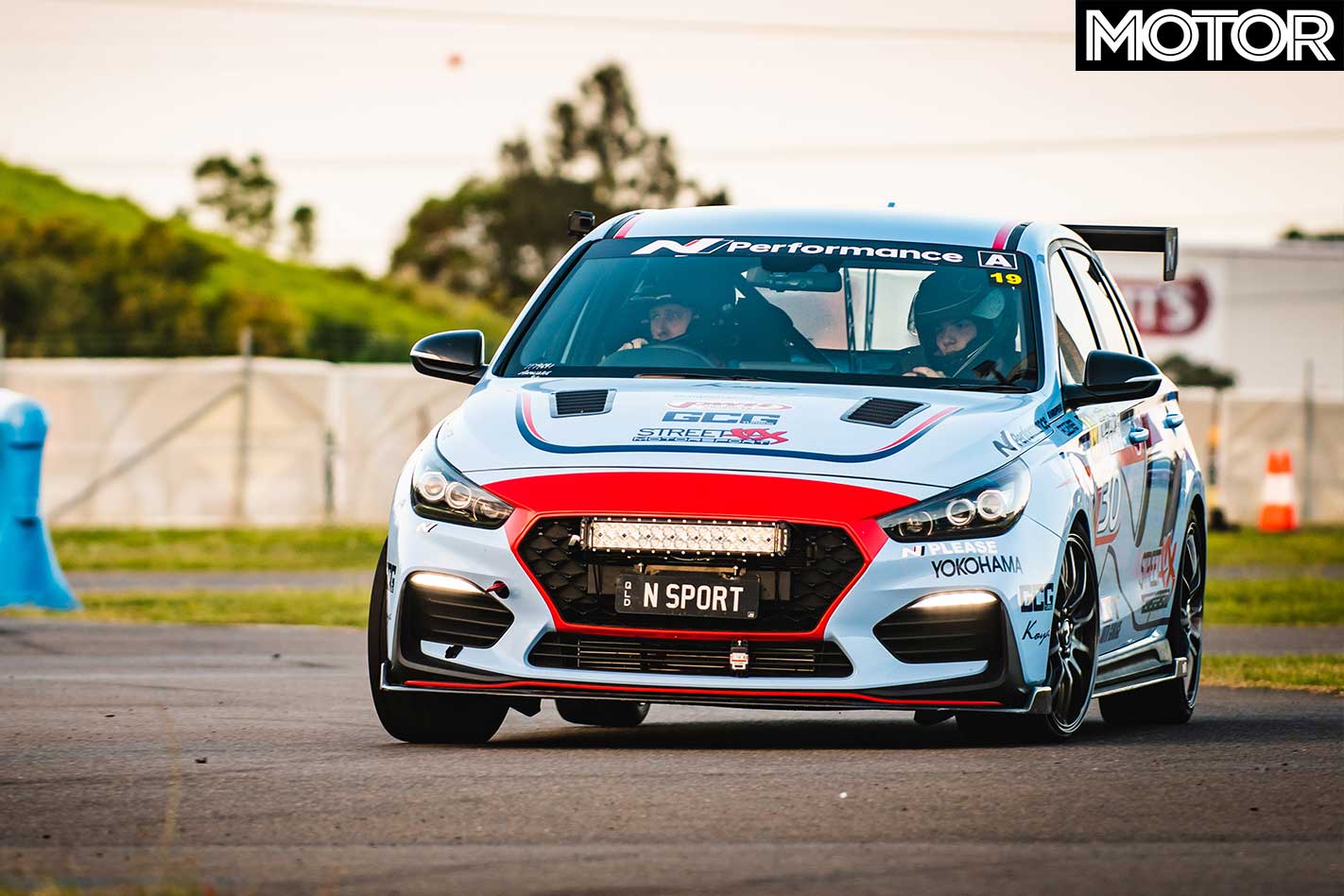
Fast forward a week and we’re at Winton with a set of shiny new Pirelli P Zero Trofeo R tyres, rubber familiar from the HSV GTSR W1. First up, a session on the by-now second-hand standard P Zeros. The track feels a bit greasy, but after a few attempts a lap time of 1:40.7 compares reasonably well to the 1:39.6 Luffy managed during this year’s Bang For Your Bucks.
After bolting the Trofeos on, the first few laps are completed incredibly slowly. The tyres are absolutely brand new and have all the grip of sheet ice.
Once roaded and up to temperature, the i30 N once again feels ace, particularly in change of direction and through Winton’s medium-speed corners. A best time of 1:38.5 shows the value of sticky rubber, but there’s more time in the car.
By this stage BT60C’s brakes are feeling the strain, struggling to cope with one lap’s worth of heat, though to their credit they never give up.
So what’s the upshot of all this fun? If you want to track your i30 N, invest in some sticky rubber, some better pads and fluid, and enjoy taking some much more exotic scalps.
2018 Hyundai i30 N Pros & Cons
Three things we’re falling for: 1 – Extra grip 2 – Performance 3 – Competition
Three things we’re not fond of: 1 – Post-rally blues 2 – Road/tyre noise 3 – Turning circle
Update 7: Conclusion
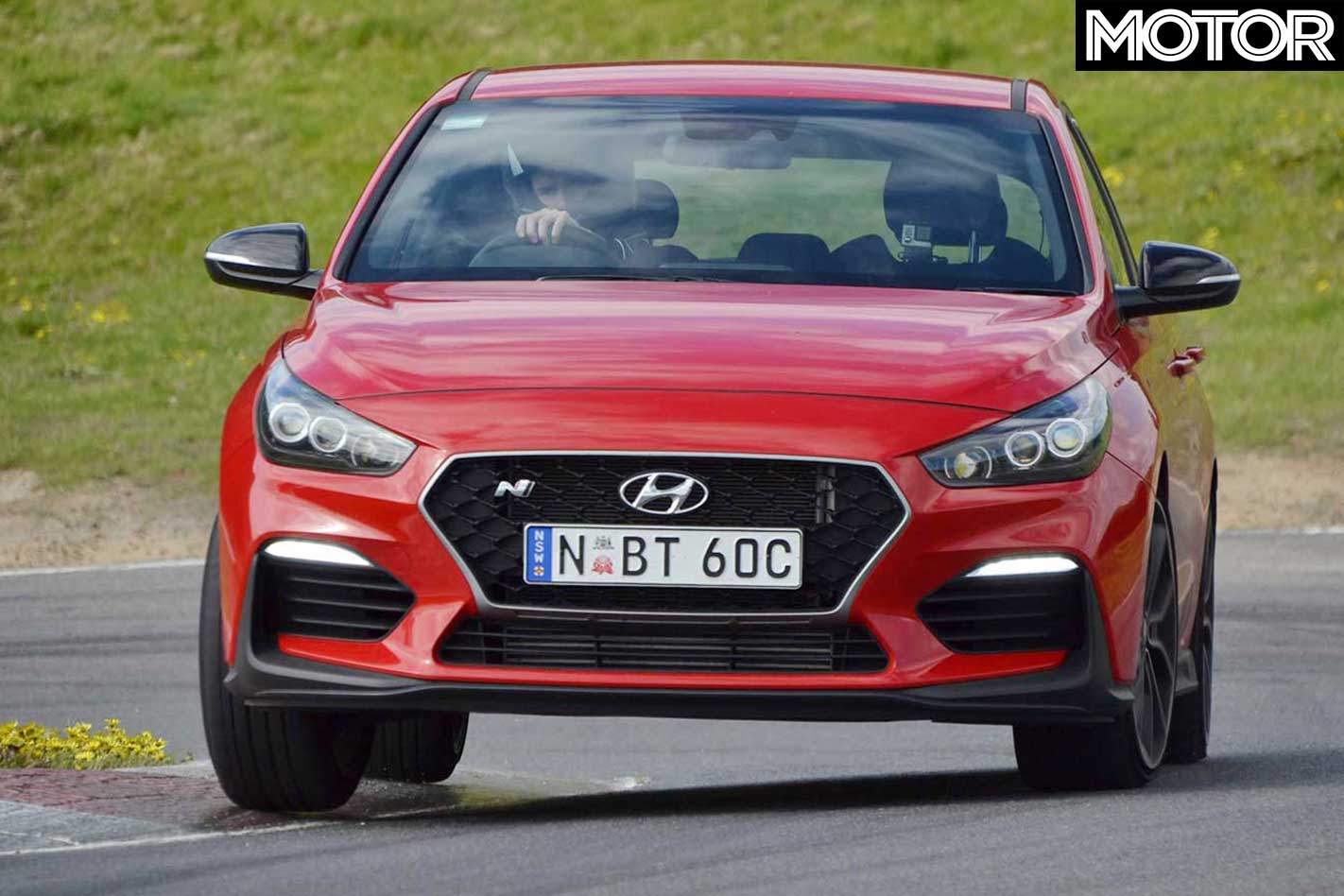
Some cars shine in isolation, only for their foibles to become clear in comparison to their rivals. The Hyundai i30 N is in the opposite camp; it certainly feels like a very polished hot hatch in isolation, but only when you drive it in the context of other performance machinery do you realise what a high level it achieves.
This has been a more thorough long-term test than most, partly because of the i30 N’s broad abilities and partly because as one of last year’s most important releases, we felt it was important to put this newcomer through the wringer, so to speak.
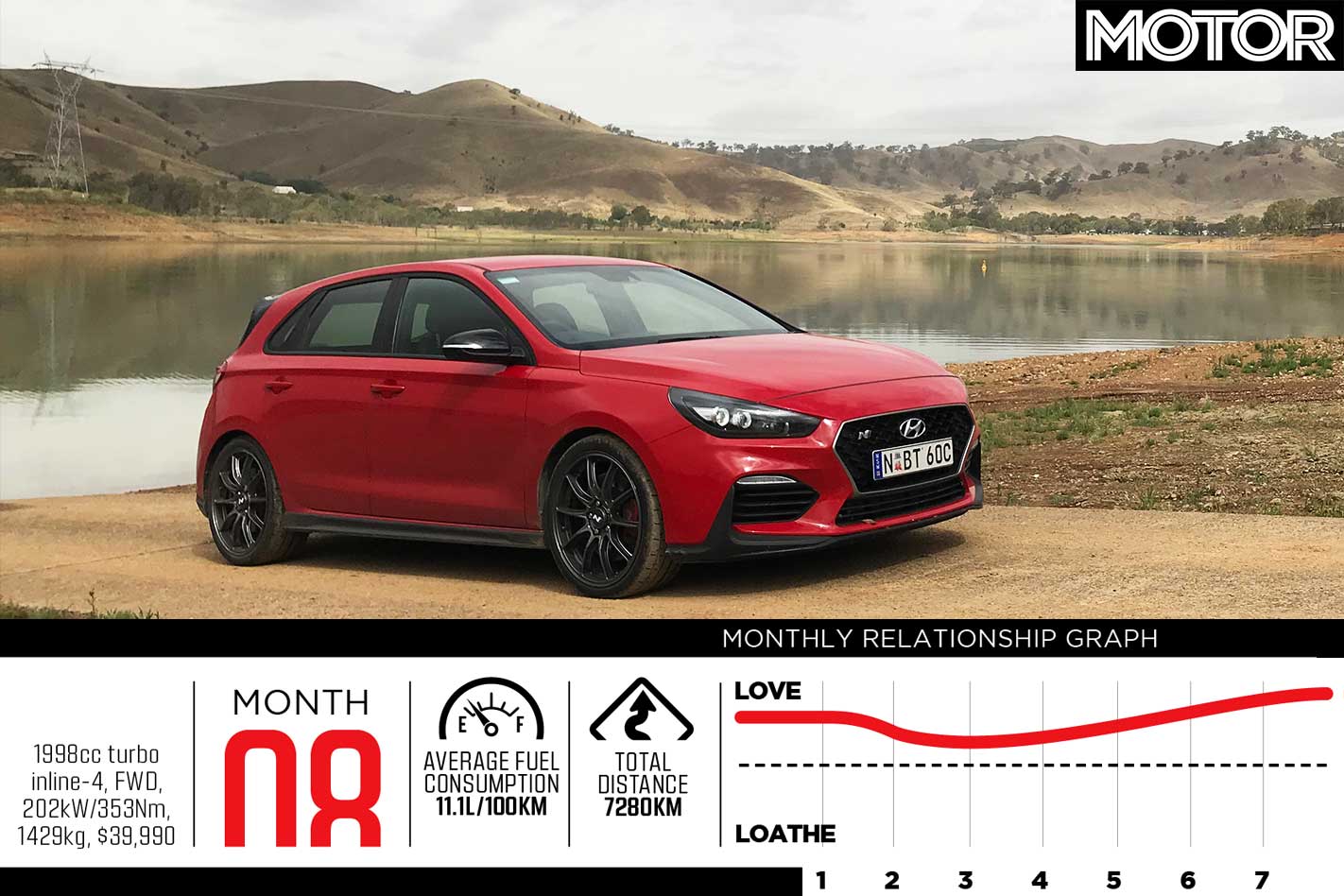
As well as appearing at Bang For Your Bucks and Performance Car of the Year, six months spent with ‘my’ i30 N included more than 7000km of road testing, a comparison test against its closest rivals, straight-line performance testing, track testing at Sandown and Winton and club-level competition in a hillclimb and a tarmac rallysprint.
As such, we feel well placed to deliver a definitive verdict on Hyundai’s first hottie: it’s excellent. Let’s explain why, bit by bit. The drivetrain is the i30 N’s weakest link. Its on-paper stats of 202kW and 353Nm, with 378Nm available on overboost, are impressive, and the 0-100km/h claim of 6.2sec is competitive given the sole choice of a six-speed manual gearbox.
On the road the engine is very effective. Response is excellent and the broad spread of mid-range torque from 2000-5000rpm gives it the ability to pull vigorously out of almost any corner. On track it’s less impressive, the smaller turbo that’s responsible for the quick build-up of boost running out of puff beyond 5500rpm. If there has to be a trade-off, it’s difficult to argue with Hyundai’s decision to prioritise road flexibility over redline fireworks.
That said, I wish it sounded a bit better. The vicious rally car-style pops and bangs on the over-run are nice, but were they made so overt to distract from the fact that the basic engine noise isn’t anything special? Overall, the engine is solid but nothing amazing.
The gearbox fares similarly. Overall the shift quality is very nice, with each successive gear selected with a flick of the wrist. The i30 N is an easy car to stall, though; when I first wrote this I got an earbashing from Hyundai PR but pretty much everyone in the MOTOR office is in agreement.
The fact that the first thing Rick Kelly did behind the wheel of the i30 N at PCOTY was stall it means I’m sticking by the assessment. It has anti-stall software but it’s not strong enough to use no throttle and I suspect applying any throttle manually deactivates the ‘help’. No big deal, but it requires acclimation.
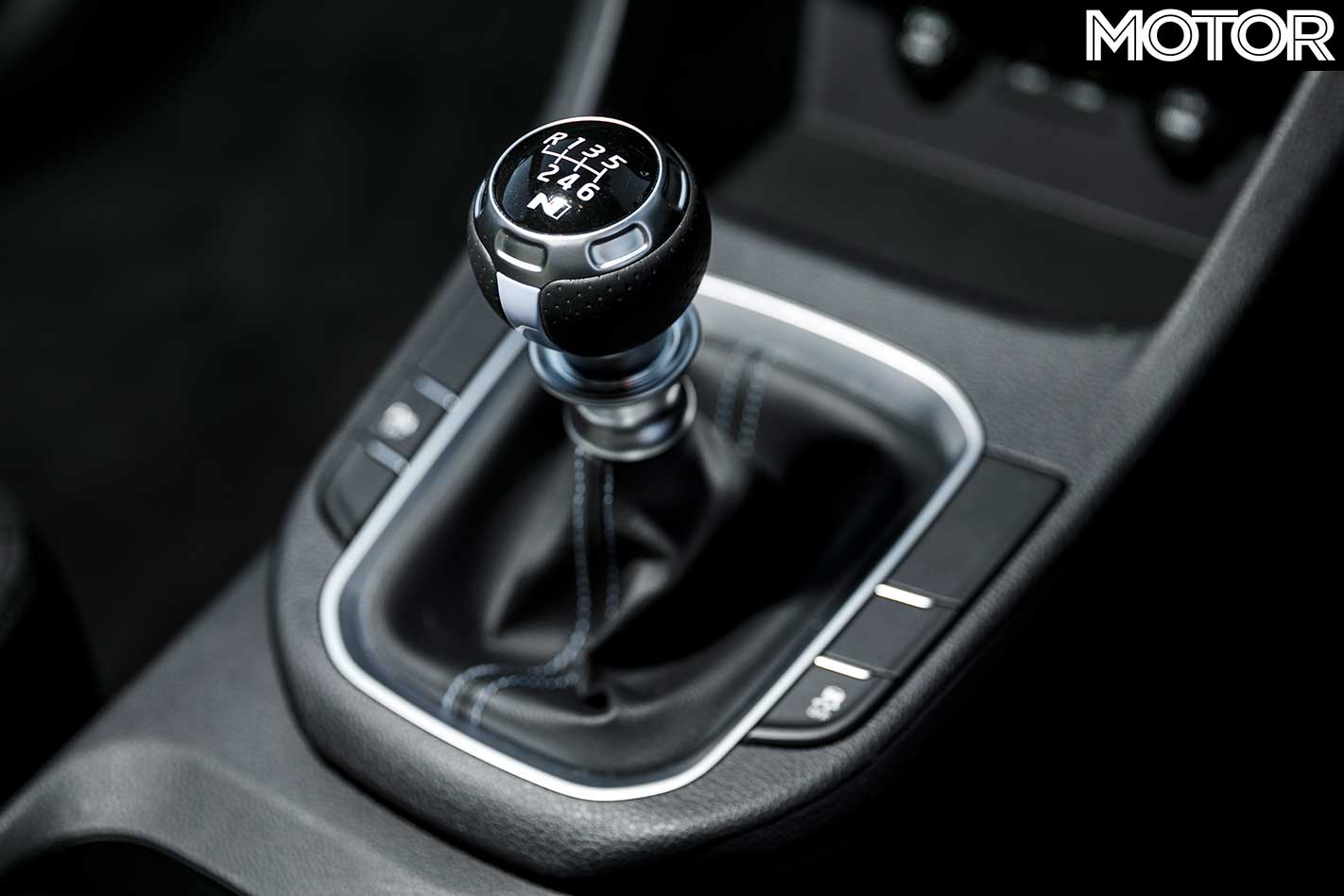
Another bugbear was the gear lever occasionally getting caught on the 5-6 shift; it’s the work of a moment to find similar complaints on i30 N owners’ forums around the world so it’s a common issue.
Again, not a huge drama, but annoying, as is the large gap between second and third gear. Second is short, ending at 99km/h, whereas third is quite tall, stretching to 149km/h. Did Hyundai choose a short second to improve the 0-60mph (97km/h) time, or was it the only gearset available?
Not sure, but it hampers the 0-100km/h time, as does the non-killable traction control in first gear, which cuts in to tame the vicious axle tramp and keep the driveshafts and CVs in one piece. A slightly longer second gear would make the i30 quicker against the clock but, far more importantly, better to drive.
And that’s saying something, because it’s already fantastic. On road or track, you’re guaranteed to get out of an i30 N with a massive grin on your face and probably have to wait for whoever you’re driving with to catch up.
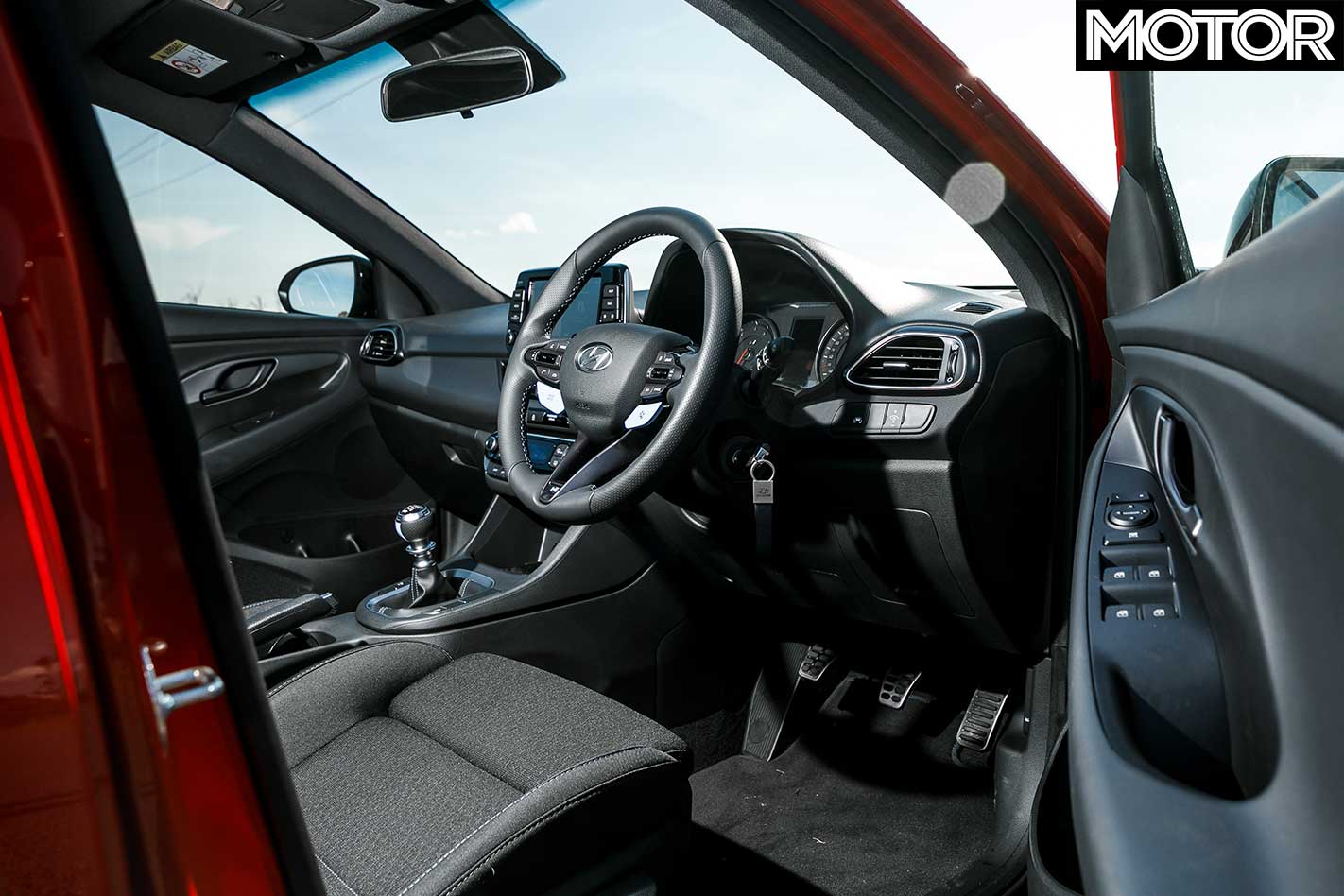
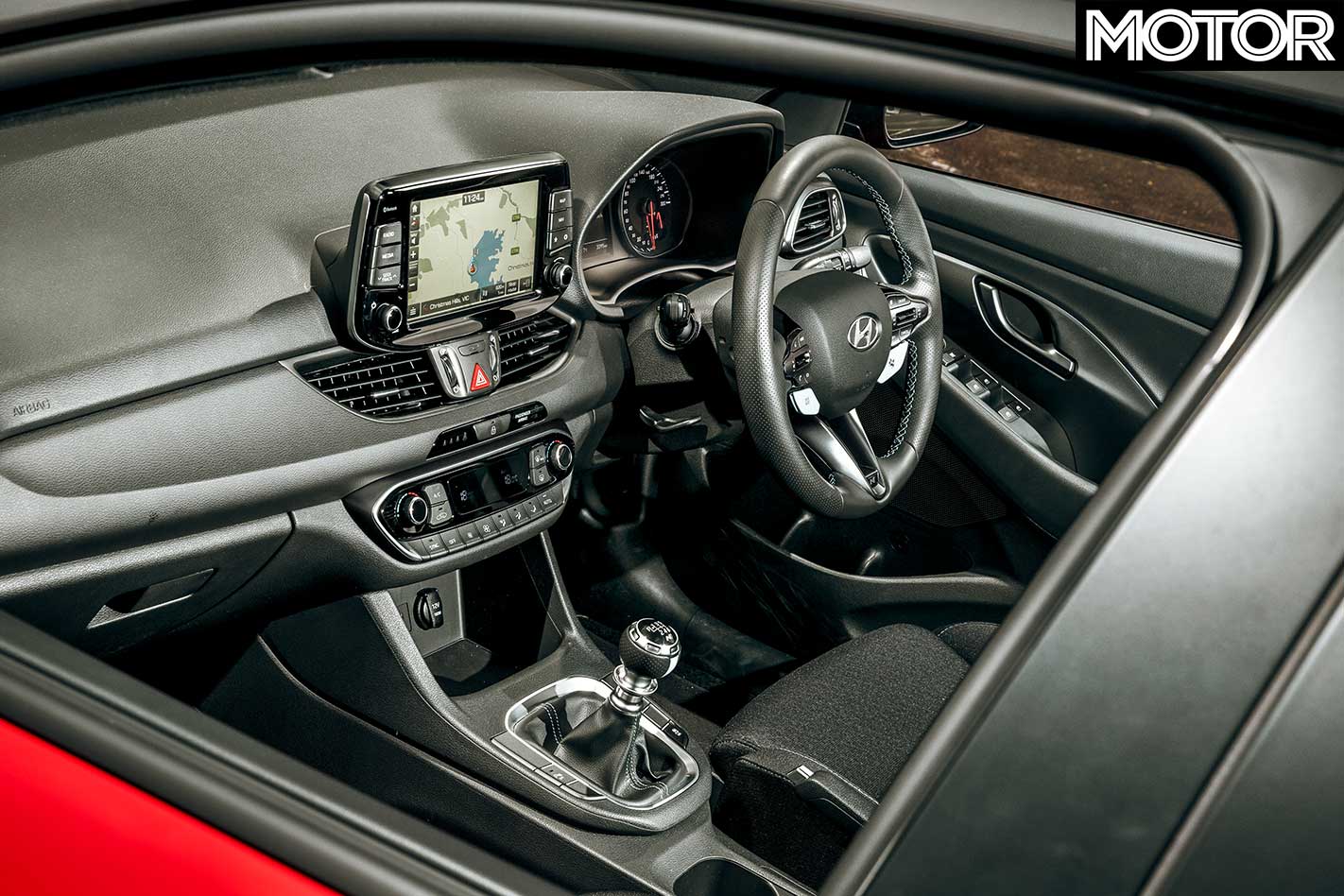
It’s precise and grippy yet also adjustable, with strong brakes and a great front-end courtesy of that electronically-controlled limited-slip diff. The i30 N’s interior is a bit plain (though very functional, I have no complaints) because Hyundai spent the money on the mechanicals and the decision has paid huge dividends. Ideally, there’d be a little more ride comfort; the new i30 N Fastback has a softer setup and it’ll be interesting to see if this carries over to the hatch.
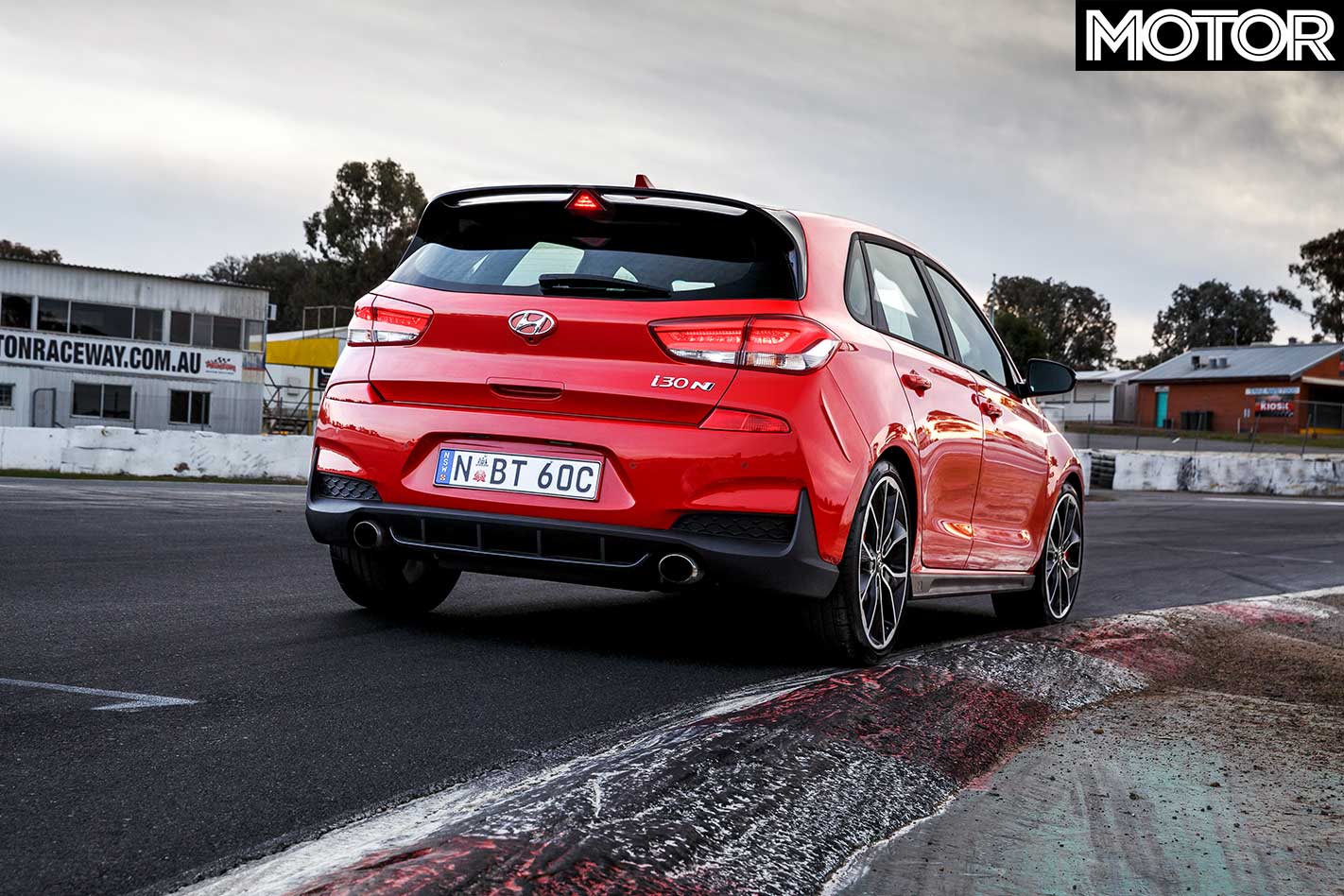
Hyundai has talked up the track day prowess of its first hot hatch and, by and large, the i30 N delivers. If you’re a regular circuit goer we’d recommend racier brake pads and better fluid as the brakes on NBT 60C were pretty tired by the end of our loan. Likewise, a set of semi-slicks will increase your enjoyment as the stock camber settings don’t let the standard Pirellis bite into the tarmac hard enough. Best of all, neither track use or the fitment of sticky tyres will void your warranty.
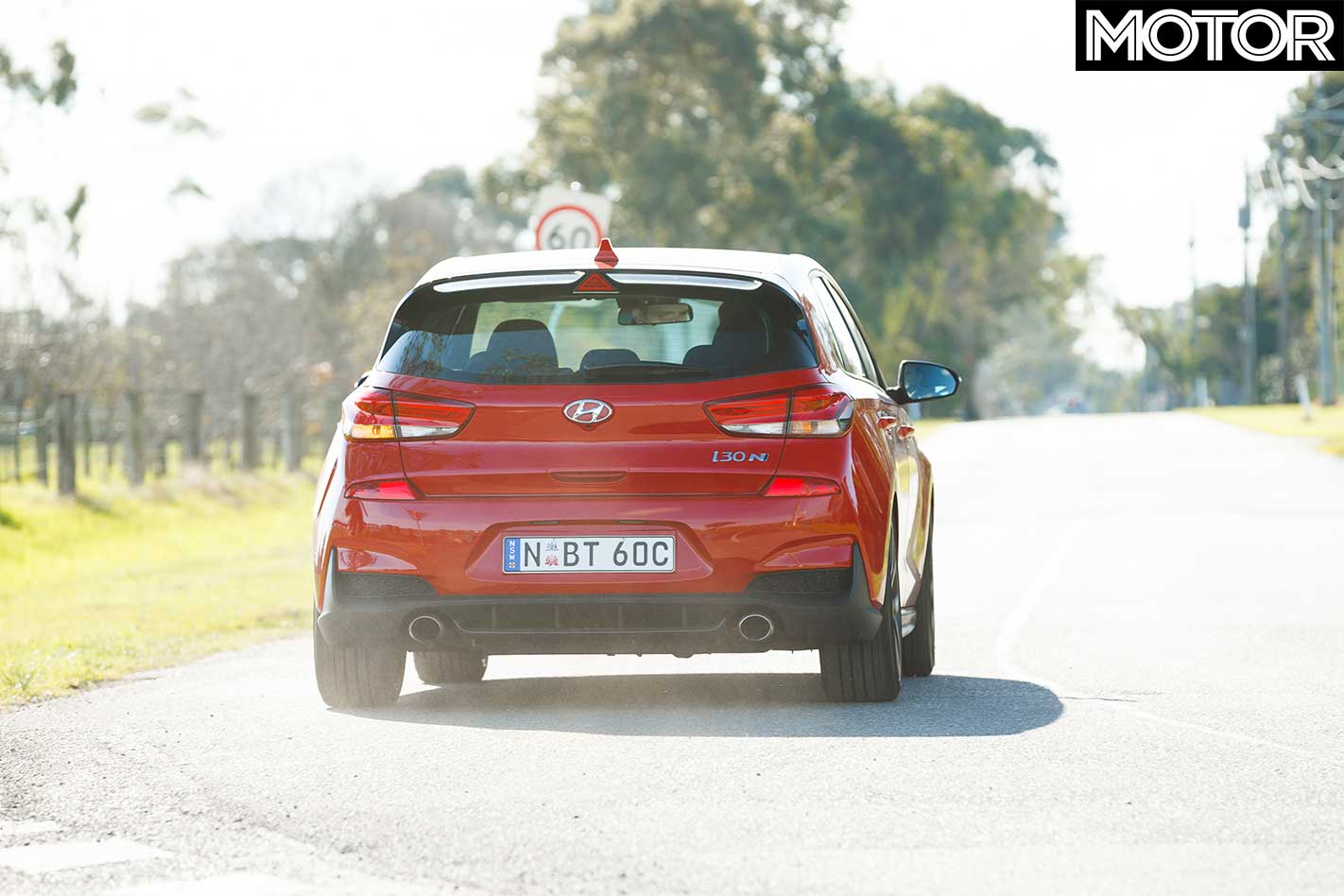
For a first attempt, the i30 N is a stunning achievement. It’s the perfect hot hatch: practical and undemanding in everyday use, yet it comes alive at the first sniff of a twisty road. All for $40K or so before on-road costs. There are minor flaws, but none are deal breakers and most probably already being rectified for future updates. We’d say Hyundai is set to feature towards the pointy end of the hot hatch segment for years to come.
2018 Hyundai i30 N Pros & Cons
Three things that need to stay 1 – Adjustable chassis 2 – Stamina 3 – Broad powerband
Three jobs for facelift time: 1 – Revise gearbox 2 – Engine sound 3 – Jazz up interior
What is it?
The Holden Colorado is a dual-cab ute that should be doing better business for the brand – and we don’t understand why it’s not.
Begat of the partnership between Isuzu and Holden in the early part of the century, the Colorado has been since poked and prodded by Australian-based Holden engineers to build a better mousetrap… and it shows.
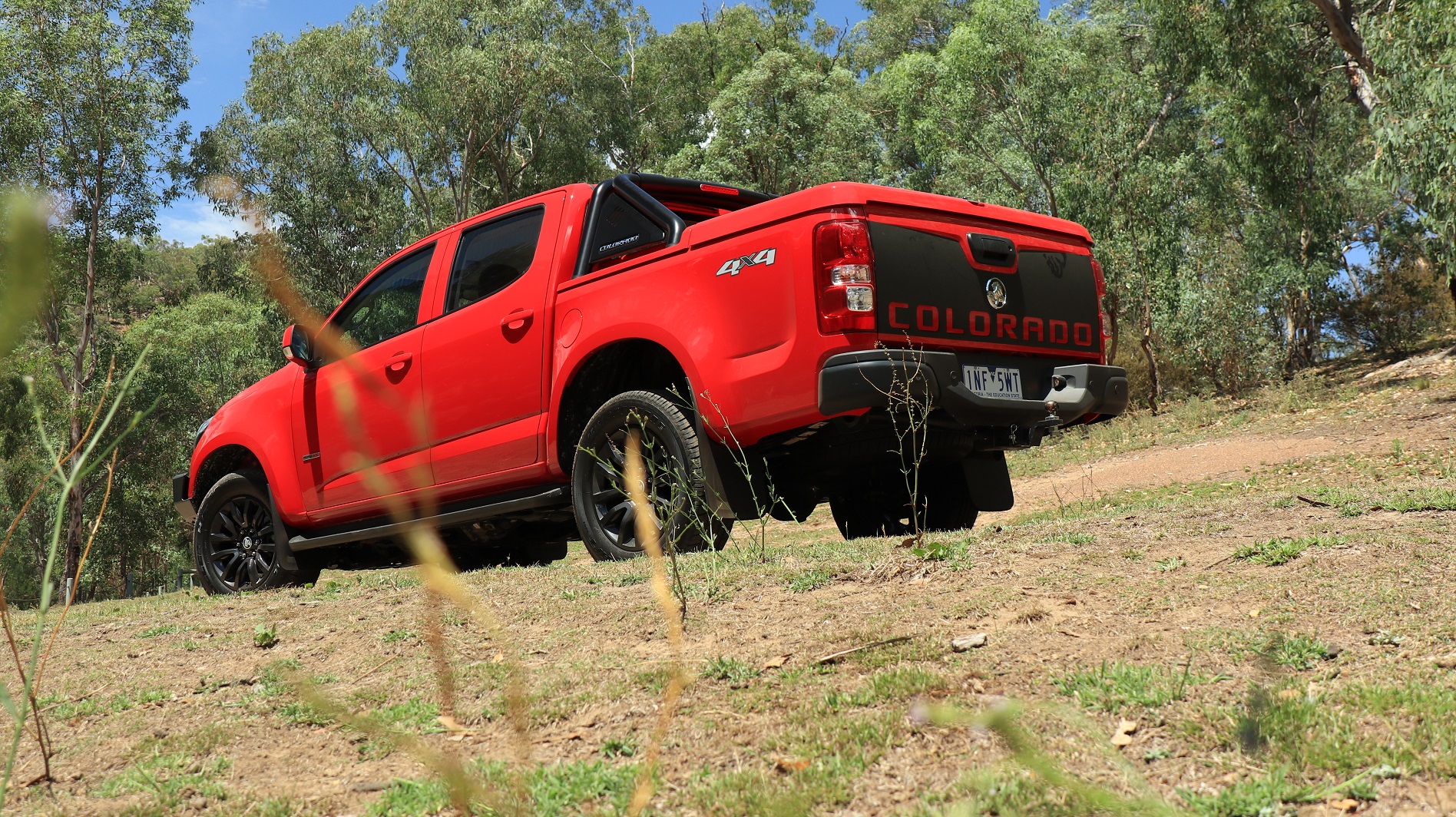
How much is the Holden Colorado LT?
For $46,990 before on-road costs at list price – and from $43,990 driveaway, according to Holden – the LT drops into a competitive space in the dual-cab ute segment that includes the $47,490 Ford Ranger XL double-cab, the $46,640 Toyota HiLux SR double-cab and the Volkswagen Amarok Core Plus at $47,590.
The 2018 Holden Colorado LT packs in Apple CarPlay, hill descent control, 17-inch rims and a seven-inch touchscreen.
Our tester came with a few accessories, including a ‘short’ nudge bar, LED lights, hard tonneau cover, black 18-inch rims and sport bar, for a total of $9065.
When it comes to fuel cost, Holden rates the LT at 8.6L/100km. Filling its 76-litre tank with diesel will be a $100-120 exercise on average, and you should get close to 1000km of range from a tank.
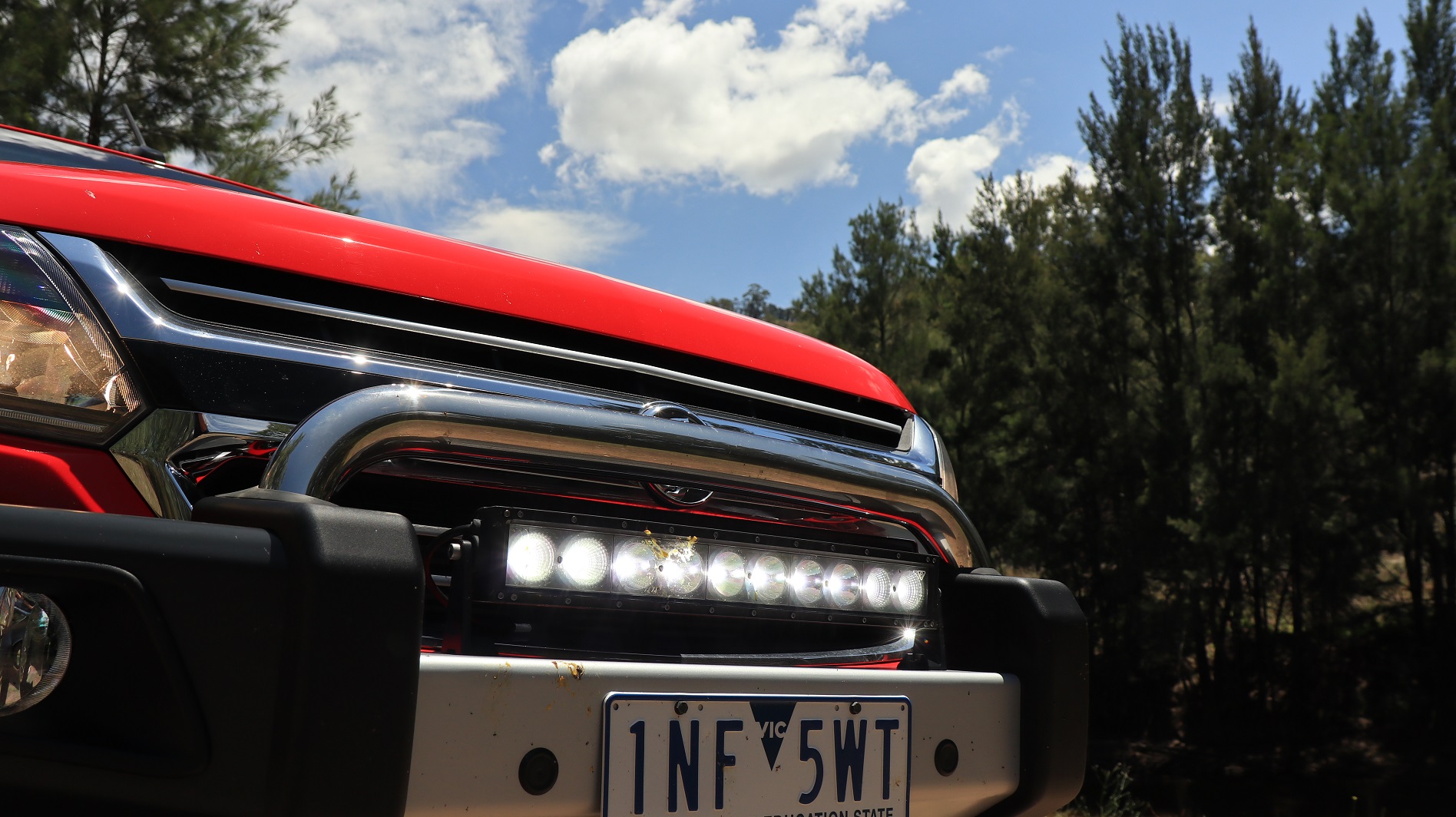
Our tester was fitted with an optional nudge bar and LED lightbar.
Who is the Holden Colorado LT for?
While the Ford vs Holden rivalry that our fathers grew up with is long gone, the Colorado should appeal to those ute buyers who still bleed Holden red. The vast majority of dual-cabs are pretty much the same rig, but the Colorado’s localisation program has really paid dividends.
Is the Holden Colorado LT easy to live with?
Inside, a no-nonsense cabin offers a large, easy-to-use seven-inch multimedia system with smartphone mirroring. The seats are deep and wide, and the fact that the rear seats can tumble backwards adds flexibility to the cabin. The rear seats themselves are decent, too, without the overly vertical backrest that plagues other utes.
There isn’t a lot of storage room in the cabin, though, and the steering wheel lacks reach adjust, which is a bit of a shame.
It’ll tow 3500kg without drama, though – something that we trialled with a horse float last year. The tray will only just accept a standard pallet, but kudos for the included tub liner.
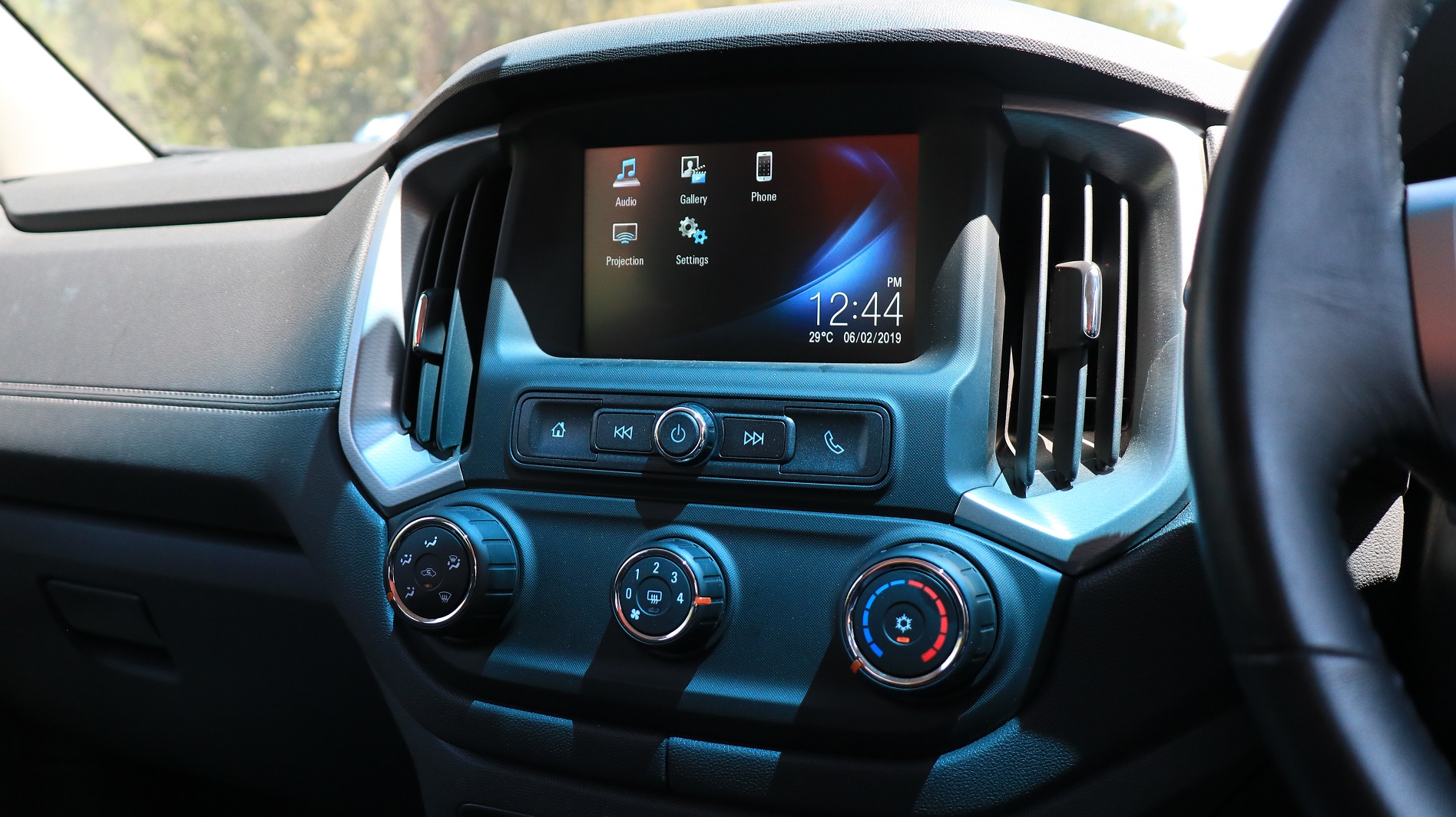
Apple CarPlay is included
How well does the Holden Colorado LT drive?
For me, the Holden Colorado LT’s real strength lies in its on-road ability. We’ve had a few punts in the Colorado ute over the last 12 months, and the word ‘stability’ keeps coming up. With the steering rack from the last of the Aussie-made Commodores, and some witchcraft-clever rear leaf spring tuning, the Colorado’s on-road manners are exemplary, especially when it comes to unladen, high-riding, dual-cab utes.
It steers with confidence and agility, with more underhand feel than most of its rivals. The ride comfort, too, is brilliant, even without a load in the tray (it can carry up to 1029kg, if you’re interested).
The 147kW, 500Nm 2.8-litre turbo diesel engine is getting on a bit, but it still offers up a usable band of torque all the way through its rev range. It also teams up well with the stock six-speed automatic.
For off-road, Holden has added a limited slip rear diff than works with traction control electronics and a low-range transfer case, but it’s handicapped a little by highway-spec all-terrain tyres and less suspension travel than some of its rivals – but it certainly can scramble up a muddy hill just fine.
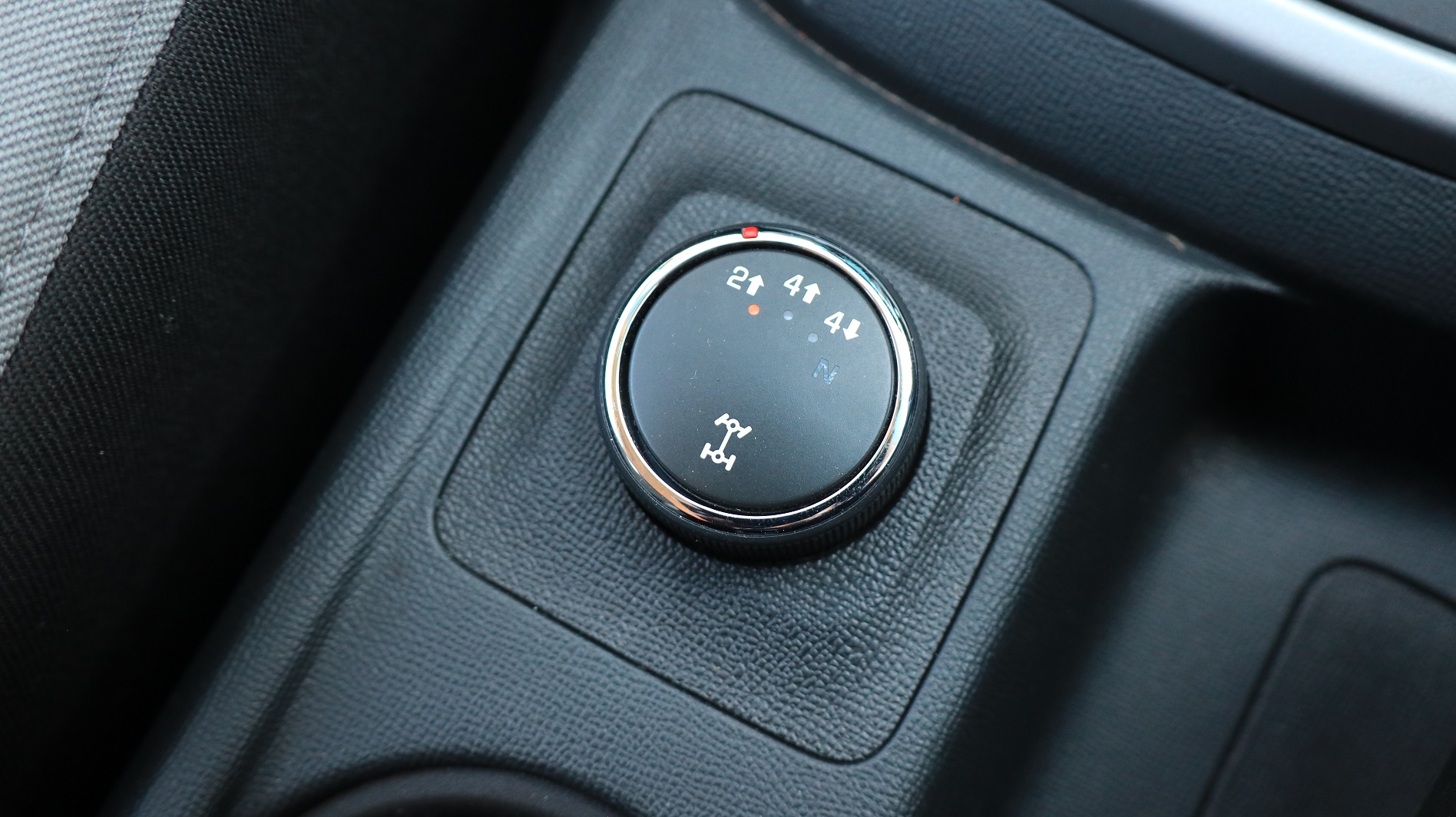
Rear-wheel-drive is standard, but 4H and 4L are available on the fly
Verdict
Holden is not the same brand it once was, and that’s having an impact on foot traffic to its dealerships. But honestly, if you’re in the market for a dual-cab ute and you don’t at least have a look at the Holden Colorado, you’re doing yourself a disservice.
The Colorado compares well for price, spec, ability and – in our eyes at least – looks. It also benefits from a local tuning program that has absolutely transformed its on-road manners.
Holden Colorado LT 4×4
Price $46,990 Engine 2776cc 4cyl, dohc, 16v, TD Power 147kW @ 3600rpm Torque 500Nm @ 2000-2200rpm Transmission 6-speed automatic Dimensions (L/W/H/W-B) 5361/1872/1800/3096mm Weight 2121kg Tray capacity 1029kg Braked towing capacity 3500kg Unbraked towing capacity 750kg Ground clearance 215mm
The Mitsubishi ASX has been with us since 2010 which, coincidentally, was the last year one was featured in a Wheels comparison. For the record, it just pipped the Peugeot 3008 but was firmly put in its place by the Volkswagen Tiguan. Since then, apart from reporting on its myriad facelifts, we’ve ignored the ASX.
You haven’t though. Check the sales figures for last year and the Mitsi is right there rounding out the top dozen cars sold in Australia. While we’ve looked down our noses at it because it’s not the sharpest steer, both fleet and private buyers alike have looked at the value proposition, the space on offer, the $240 per year servicing fees and the no-nonsense mechanicals and decided that it deserves a place on their shortlists.
We’ll gladly put our hands up on this one and admit that we love a car that drives well. Wheels always has. But it’s also worth looking at the demands of the market as a whole and understanding that for many buyers, poor refinement and so-so dynamics aren’t really a major impediment. After all, of that top 12 cars sold last year, only the VW Golf, the Mazda 3 and the Mazda CX-5 are cars you’d conceivably drive just for the fun of it. The rest are there for other reasons.
And it’s hard to argue with an SUV range that starts at $23,490. That wouldn’t even buy you Chinese tat like the MG ZS 1.0-litre or get you in on the ground floor of Hyundai Kona ownership. True, the entry level car doesn’t get AEB and nor can it even be optioned onto this basement model ASX. All of which means that this car wouldn’t get the five-star ANCAP rating that it currently wears were it tested today. That legacy rating from 2014 has helped prop up ASX sales through facelift after facelift. Last year the ASX was the best selling vehicle in its sector, battering journo favourites like the Mazda CX-3.
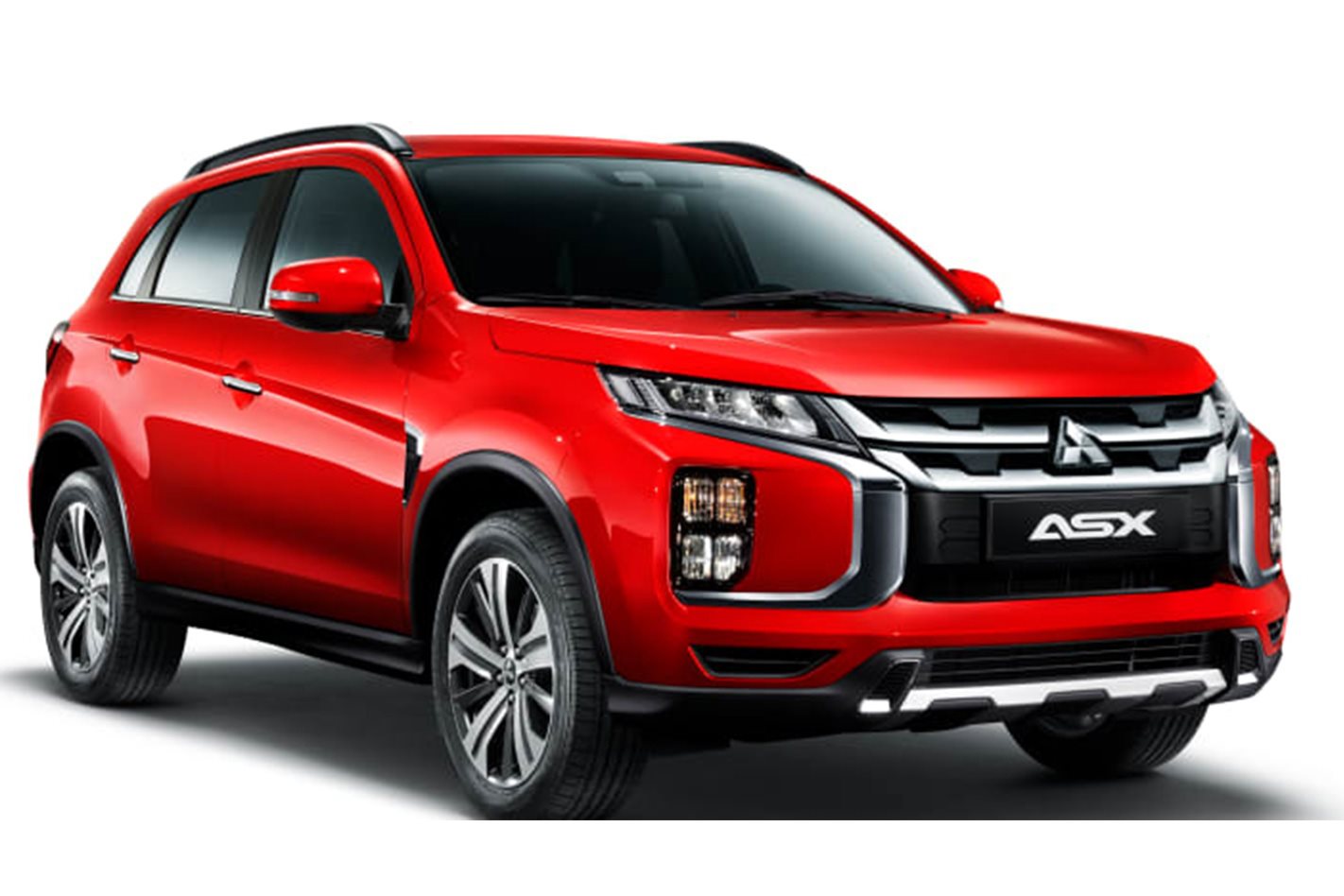
The 2020 model gets the fourth styling update since we last compared the ASX in 2010. We’re not saying it’s in the Mickey Rourke bracket of having had work done, but it’s had enough nips and tucks for its sump bolt to be somewhere behind the front grille. Has it got better looking? You tell us. Here are the five ASX iterations. Which one do you think looks the best?
2020 Mitsubishi ASX
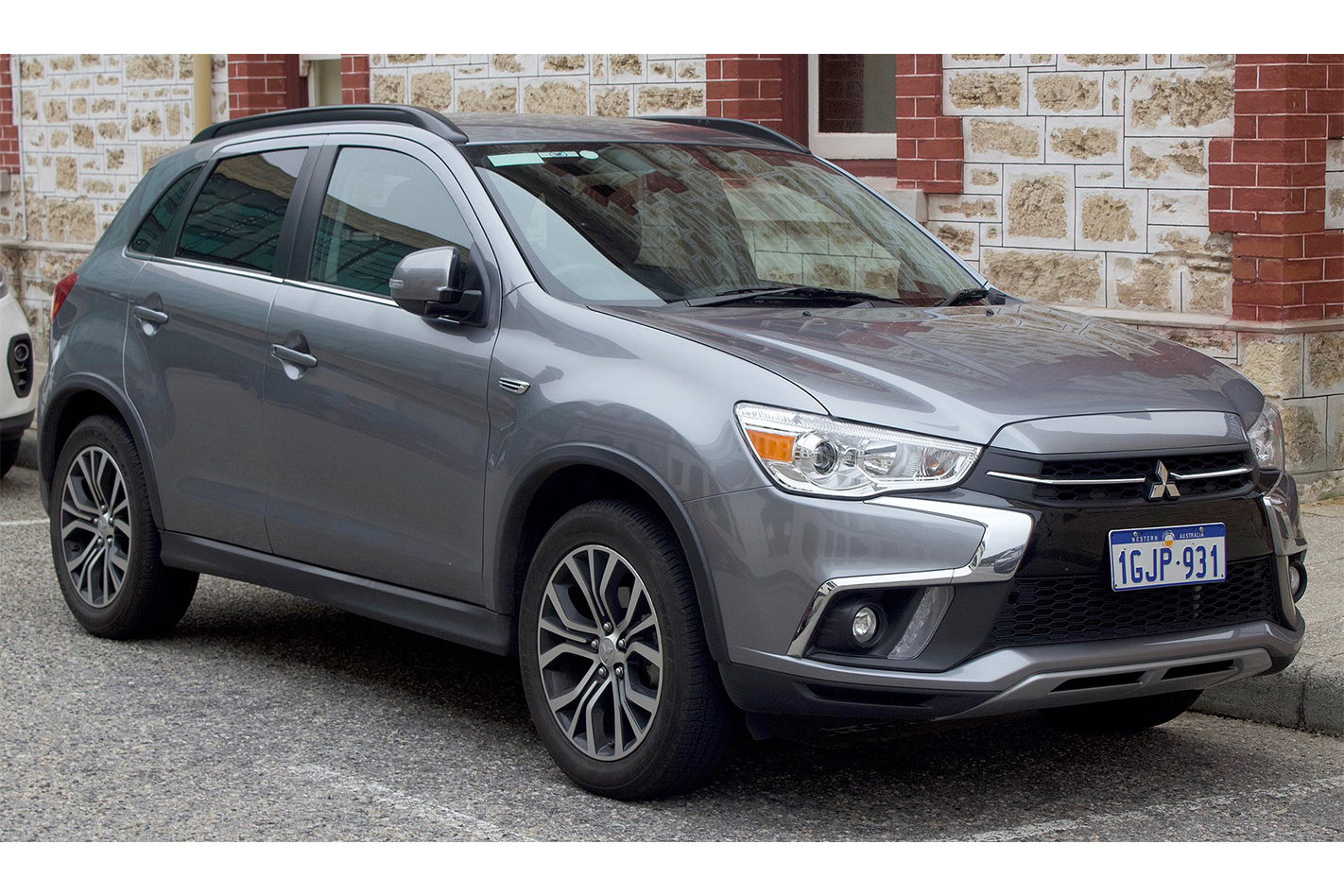
2018 Mitsubishi ASX
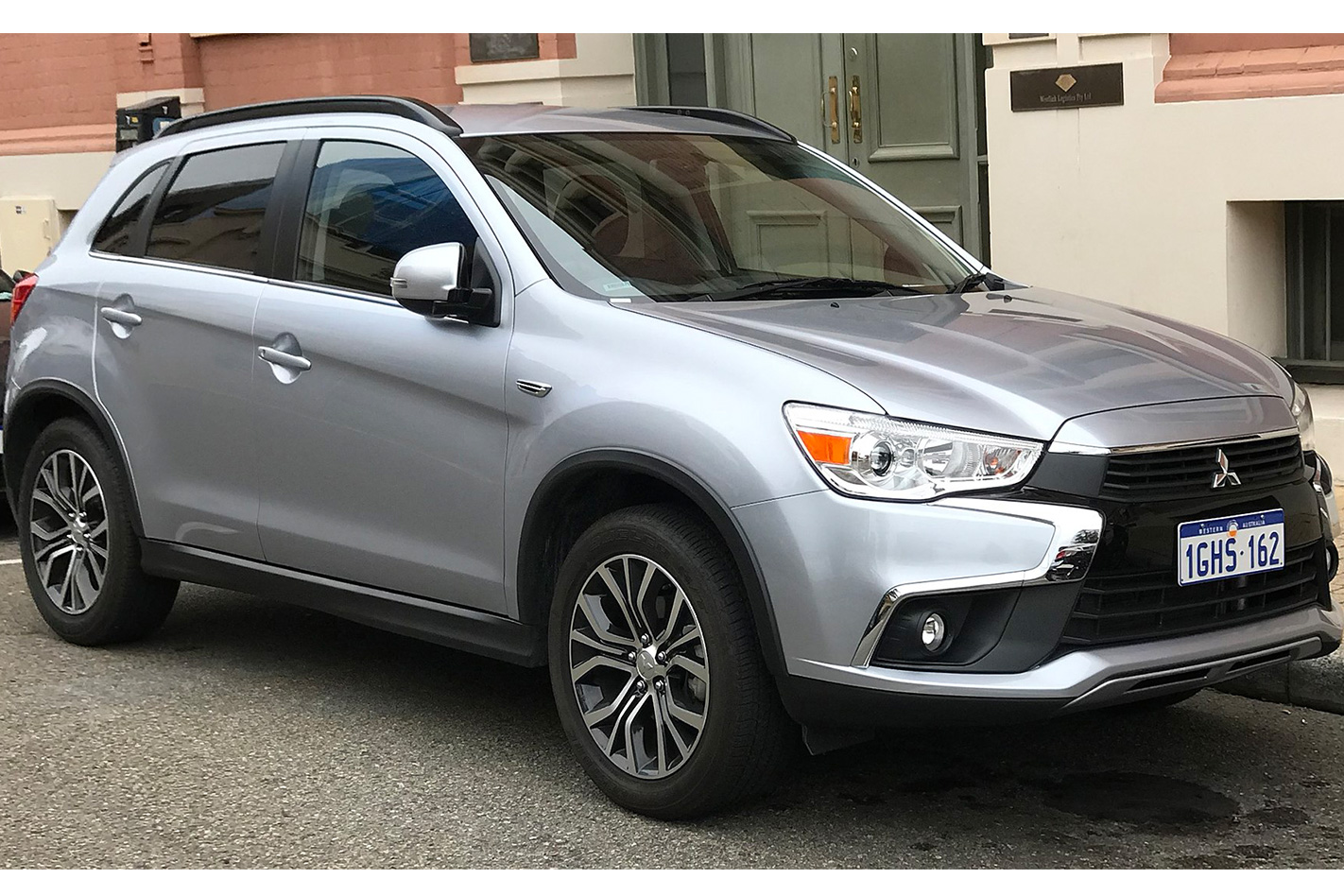
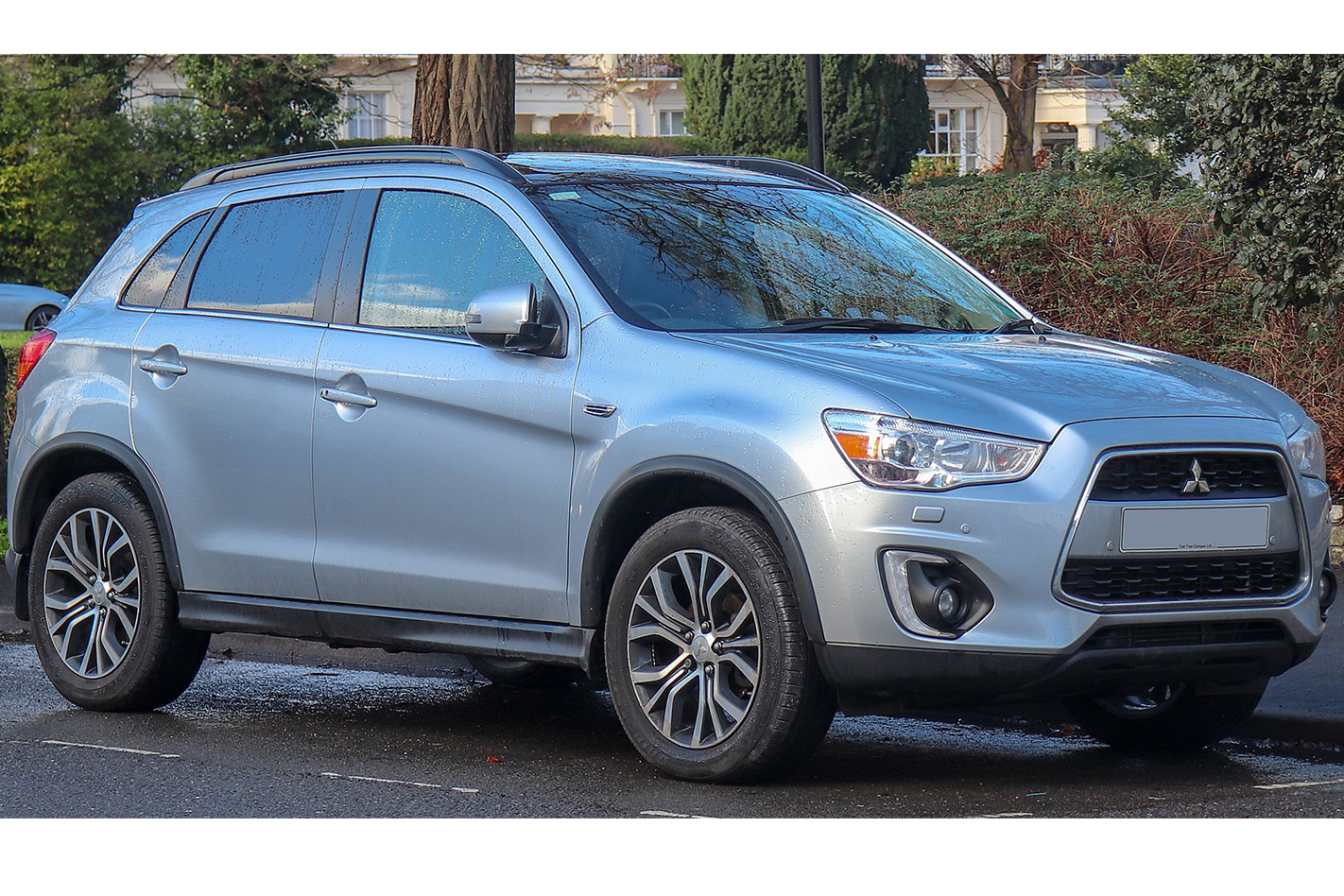
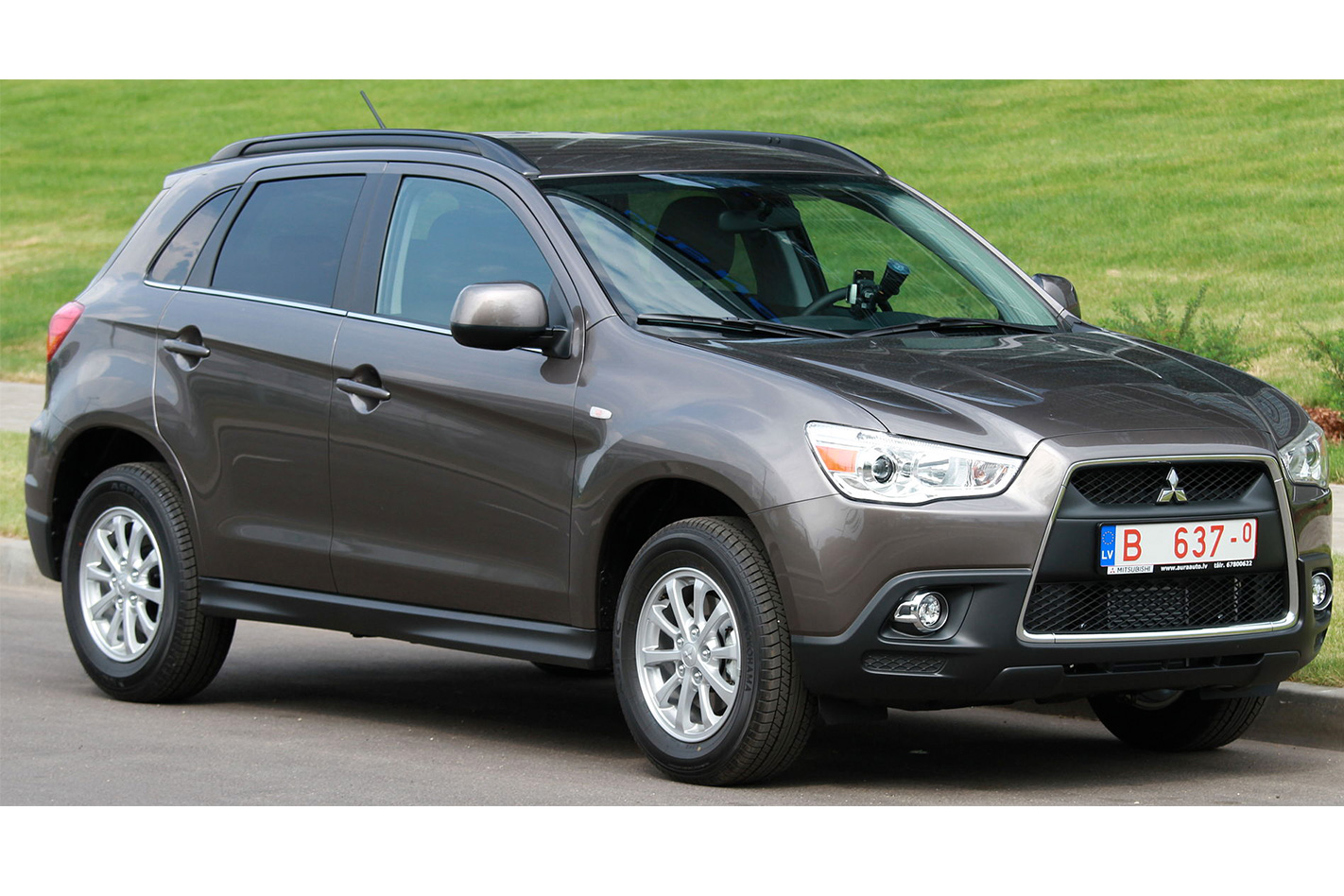
So while the ASX has never been a great car, it’s always proved doggedly buyable and for that we doff our caps in belated and long overdue respect. Mitsubishi’s baby SUV plugs cannily into Aussie private and fleet buyer behaviour and has done for a very long time. That, in itself, deserves a round of applause.
WHAT IS IT?
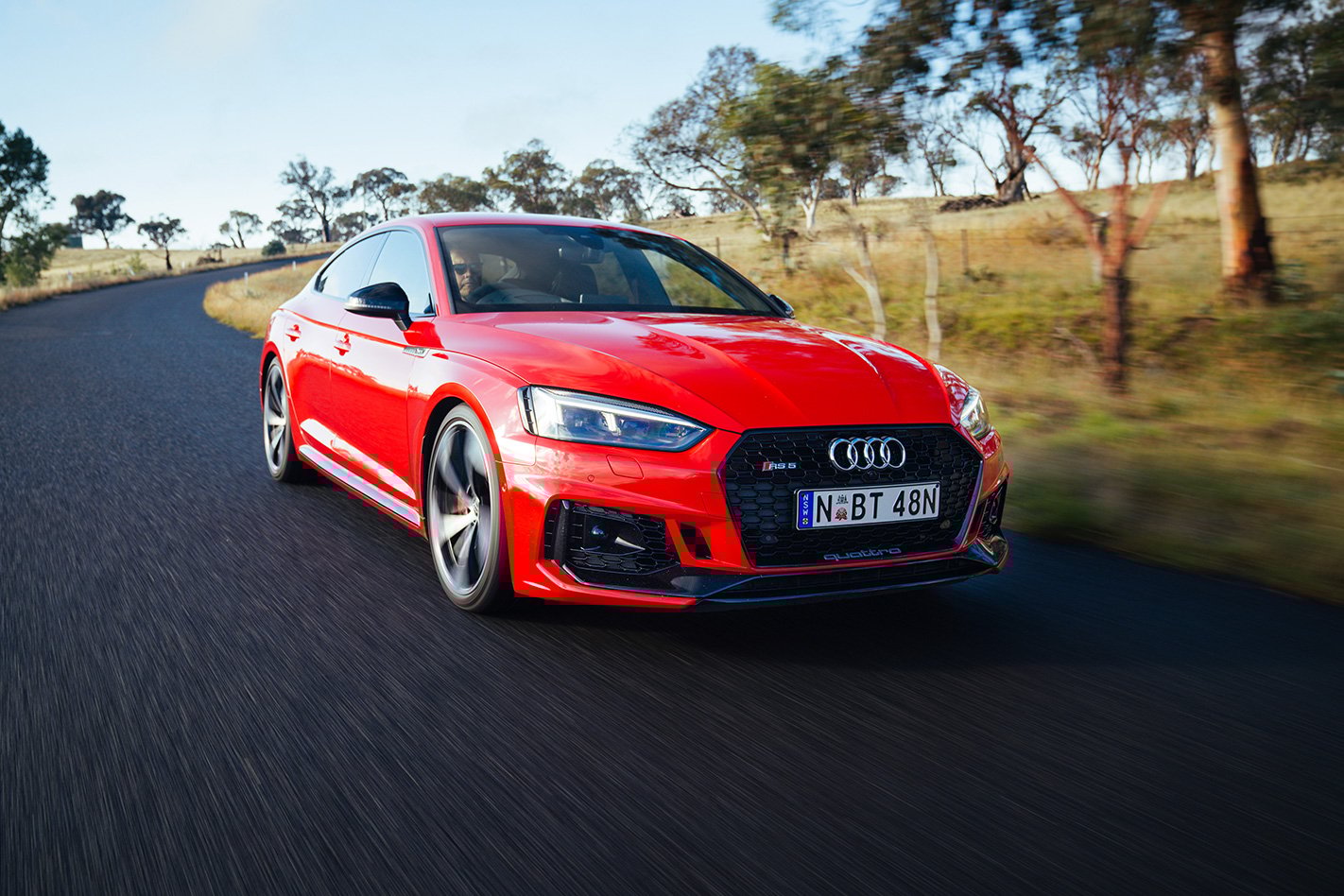
Audi’s mid-size performance flagship, packaged in a svelte yet practical five-door body style.

WHY ARE WE DRIVING IT?
We’re well familiar with the coupe variant of the RS5, and the wagon version (RS4 Avant), so we were keen to see how the dynamic abilities married with the specific packaging attributes of the Sportback body.
MAIN RIVALS
Mercedes-AMG C63S Estate, or, if you can live without the hatch and folding seats, Alfa Romeo Giulia QV or BMW M3.
THE WHEELS REVIEW
WHEN is a sedan not a sedan? Why, when it’s a Sportback, of course. Seemingly specifically conceived to send car styling purists into paroxysms of rage or confusion, the odd combo of swept coupe roofline, two rear doors and a hatchback-esque tailgate at first seems at odds with the mission statement of the RS line-up.
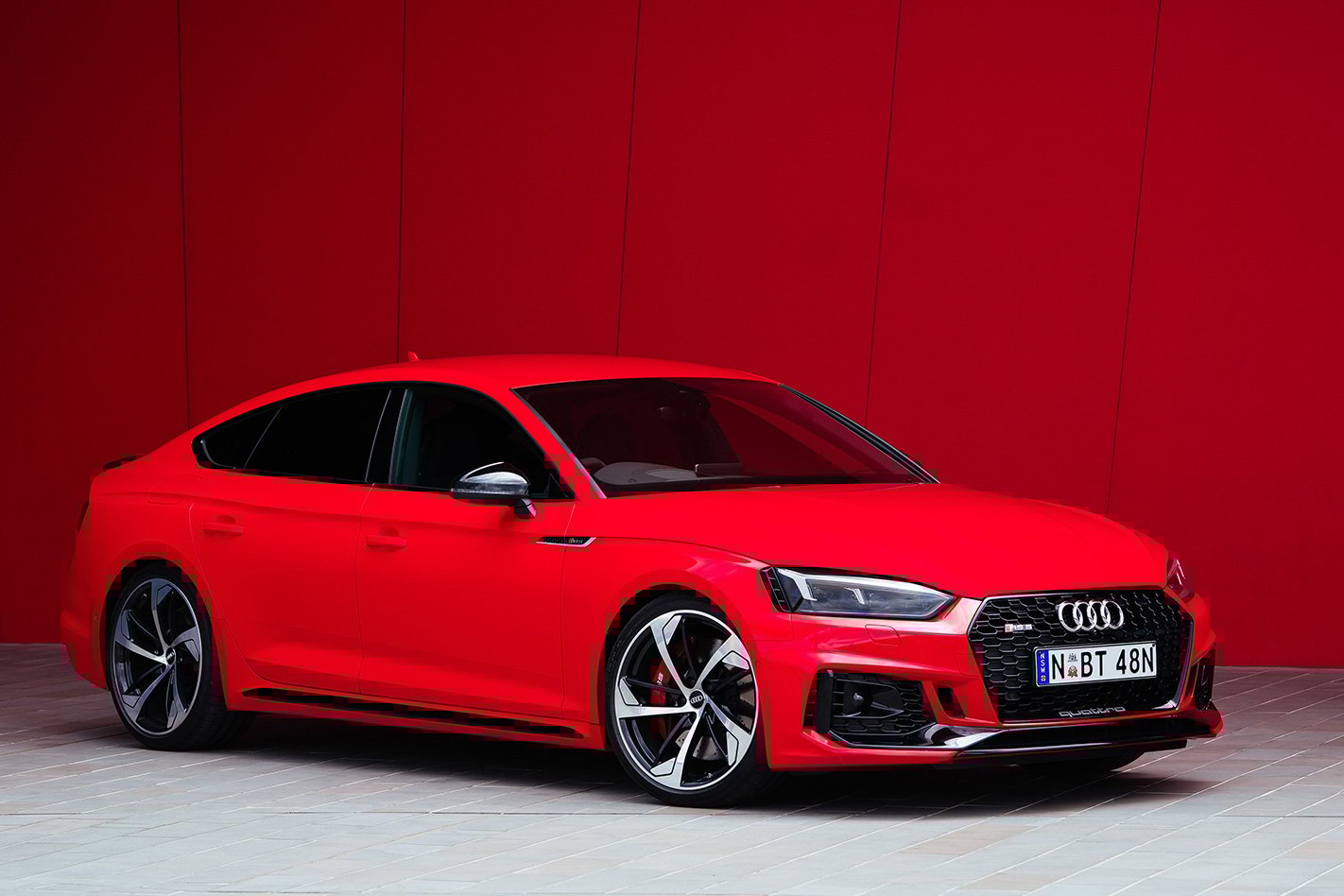
Take a closer look, though, and the truth reveals itself – it’s just a different take on the sedan. Five seats? Yep. Decent cargo capacity? With 480 litres seats-up and 1300 litres down, you bet. Take the other two cars on the same RS plane – the three-door RS5 coupe and the hound-tastic RS4 Avant – and it’s a tidy box set.
Given its lineage, you won’t be surprised to learn that the RS5 Sportback shares its 2.9-litre hot-vee twin-turbo six with the others, along with its centre diff-based AWD set-up and eight-speed automatic transmission.
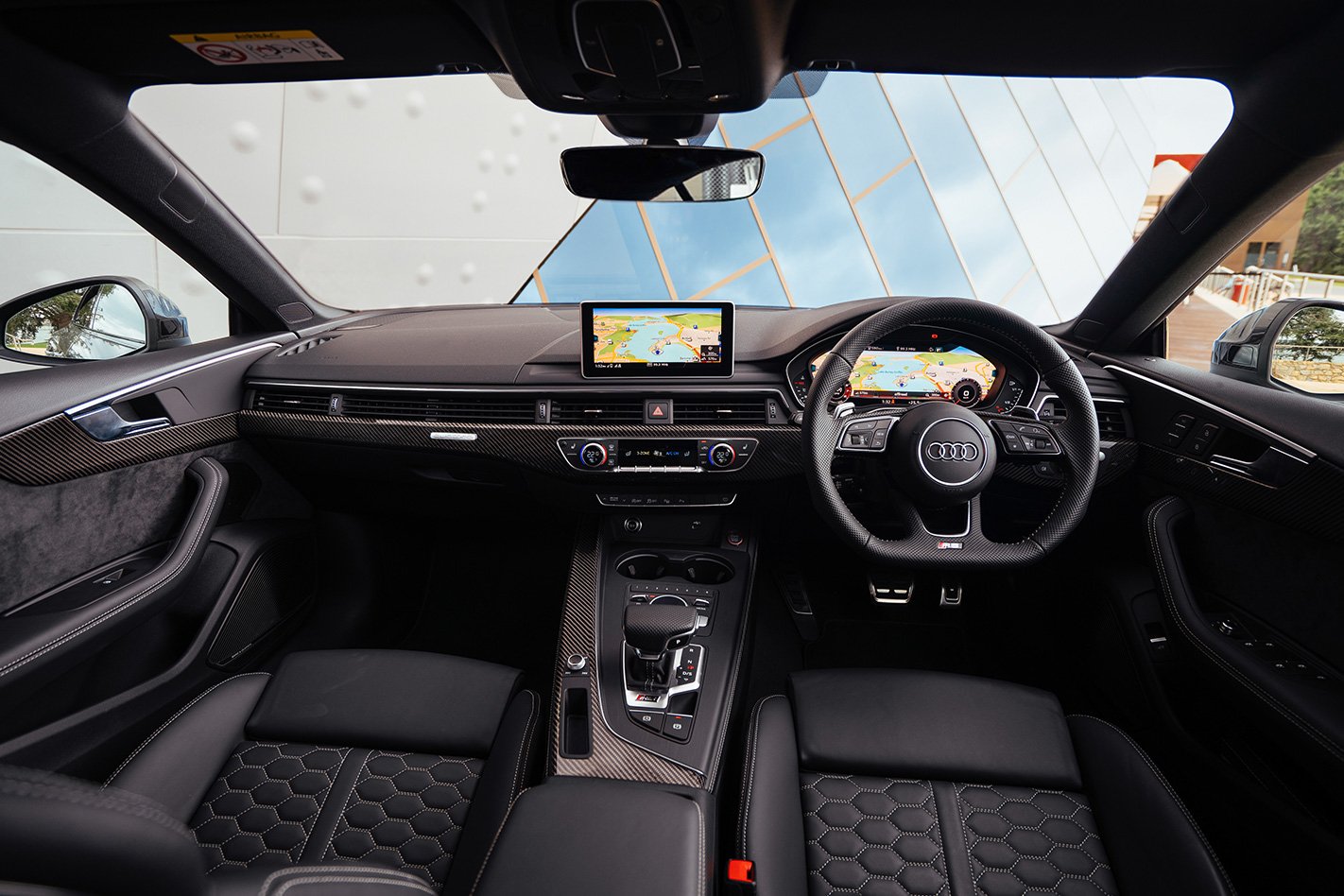
The sportified interior treatment comes across, as well – though the B9-spec centre console and multimedia set-up looks decidedly last season with the advent of cars like the A7.
Thank goodness for the digital dash, then… Although the multiple screen modes can feel a bit complex and unwieldy in use, the included heads-up display helps to simplify things.
With all 331kW and 600Nm present and correct – and just a 40kg increase in weight over the 1655kg Coupe – you won’t be surprised that performance levels are similar. The $157,700 RS5 is more of a delicate wallflower when compared to the ten-pound sledge of something like a Mercedes-AMG C63S, but sometimes it’s the quiet ones that need watching.

With a fat, plentiful and linear wedge of torque available from just off tick-over, the RS5 has no trouble building serious pace. No siree. It’ll fire through to 100km/h from rest in a claimed 3.9sec, and onto 250km/h if you live Up There. Whang it in its sportiest mode and its deep, throaty warble is a (slightly too muted) pleasure to invoke.
The adaptive steering is weighty – perhaps a little artificially so – but it’s easy to direct at pace. Audi’s diagonally linked adaptive dampers work well with steel springs and a stiff roll structure to adhere the RS5 to rippled terrain, though the road noise from the stock ContiSports is a bit too intrusive on NSW’s coarse-chip stuff. The standard steel brakes are bonza, and there are expensive carbon-ceramics should you have the need for them.
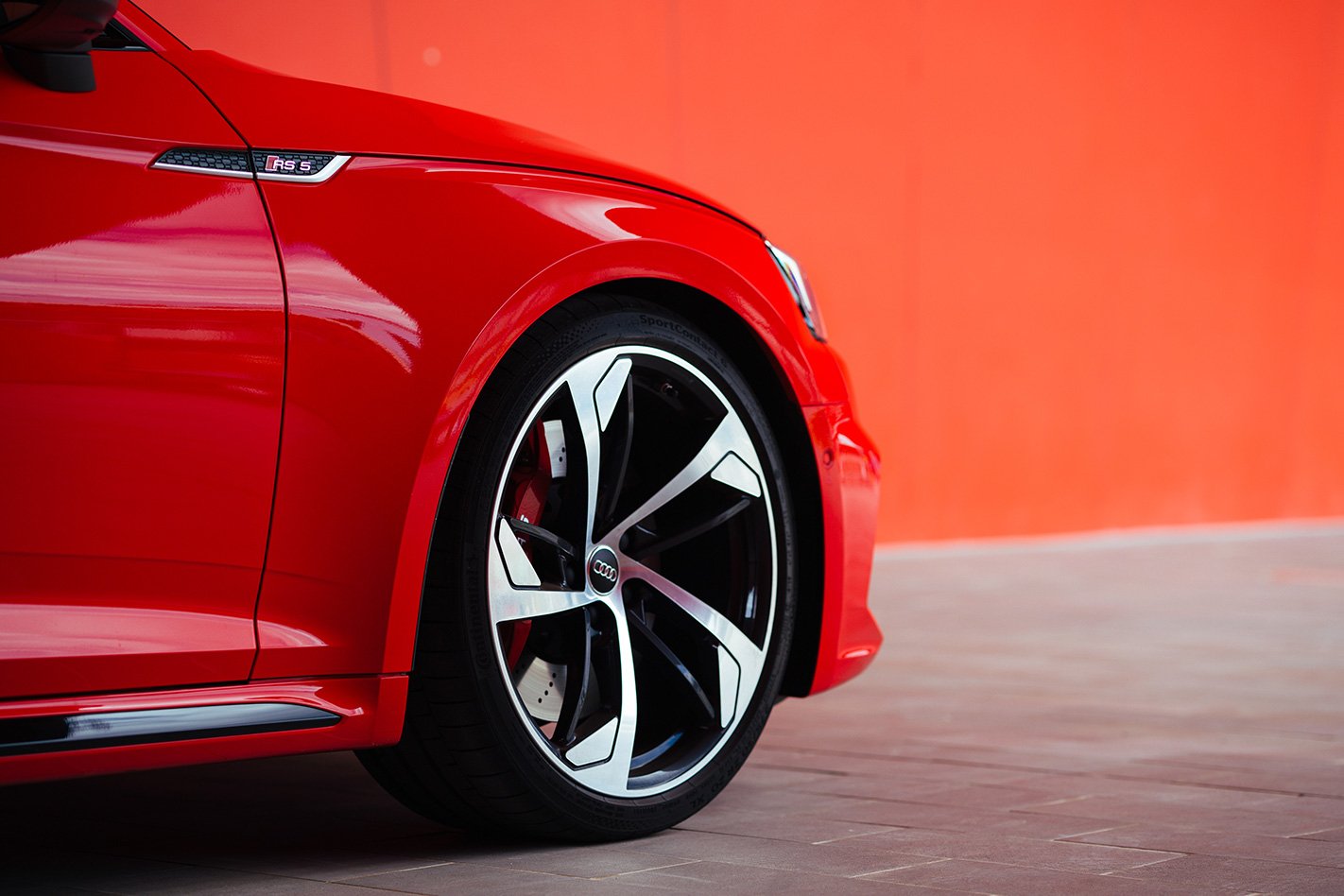
Back-seat room is good leg-wise, but headroom can be marginal. However the size and flexibility of the luggage compartment is a great addition to this mile-munching, softly-spoken backroad blaster.
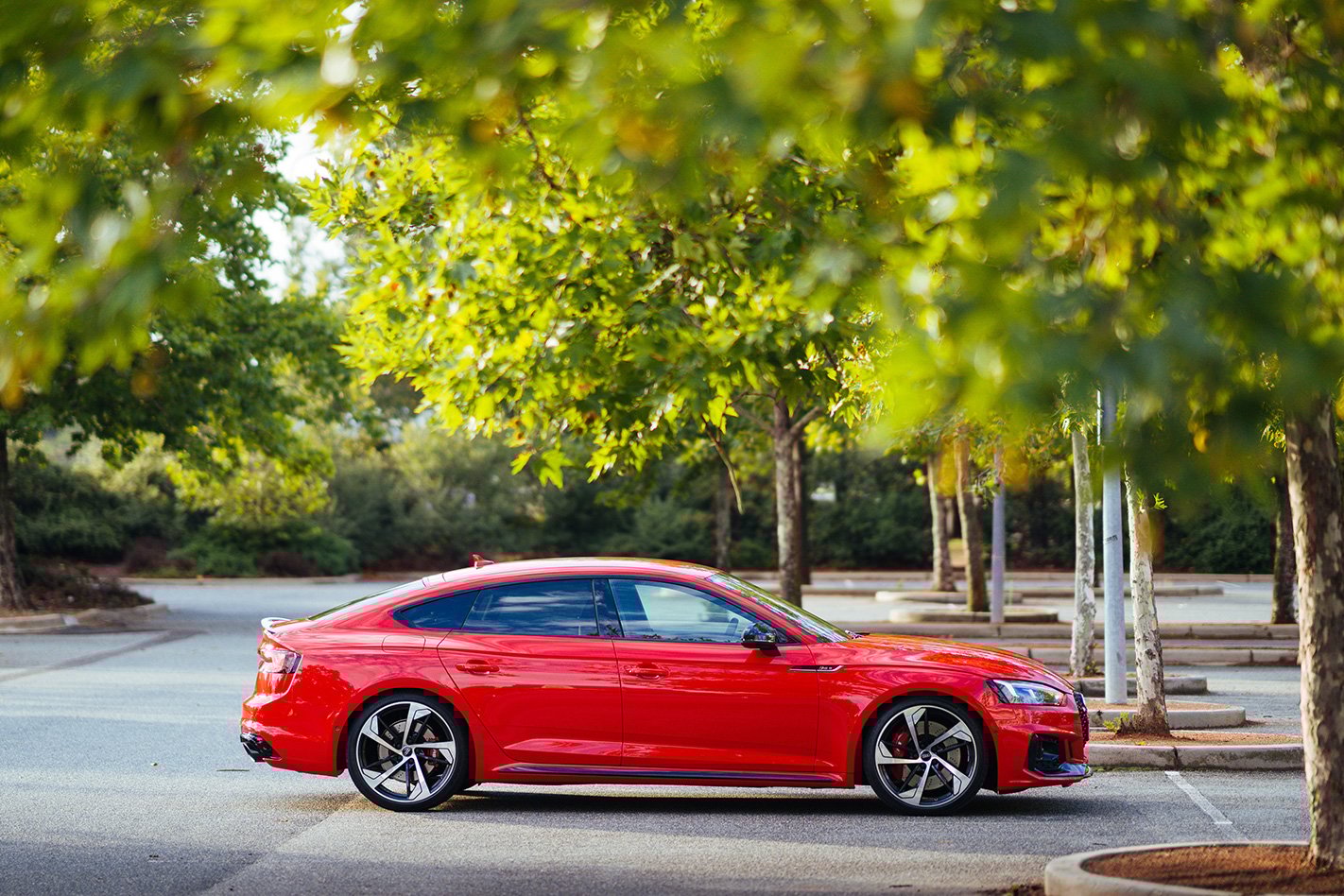
THE WHEELS VERDICT
Don’t expect Mercedes-AMG levels of engine explosiveness, or the style of edgy, highly interactive rear-drive thrills delivered by Alfa’s Giulia QV. The RS5 Sportback is a more measured offering, delivering its formidable pace with greater subtlety, a less shouty engine note, and more overall day-to-day liveability and comfort.
Plus: Relentless pace teamed with smooth composure; all-weather traction; room for five and ample luggage. Minus: V6 hides light under bushel; coarse-chip noise; lacks the manic charisma of rivals from Mercedes-AMG and Alfa Romeo.
SPECS
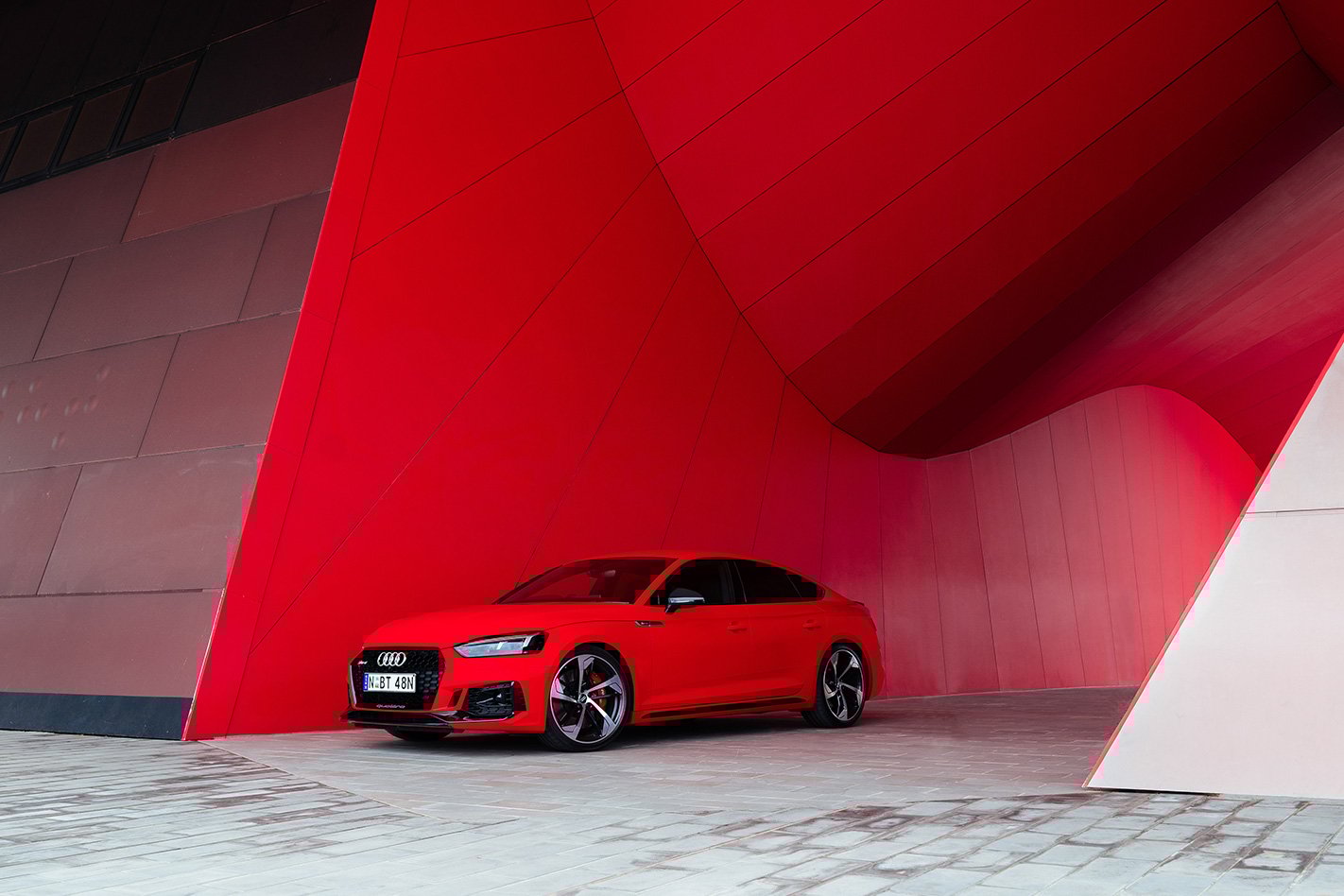
Model: 2018 Audi RS5 Sportback Engine:2894cc V6, dohc, 24v, twin turbo Power: 331kW @ 5700-6700rpm Torque: 600Nm @ 1900-5000rpm Transmission: eight-speed automatic Weight: 1695kg 0-100km/h: 3.9sec (claimed) Fuel economy: 8.8L/100km Price: $157,700 On sale: Now
