
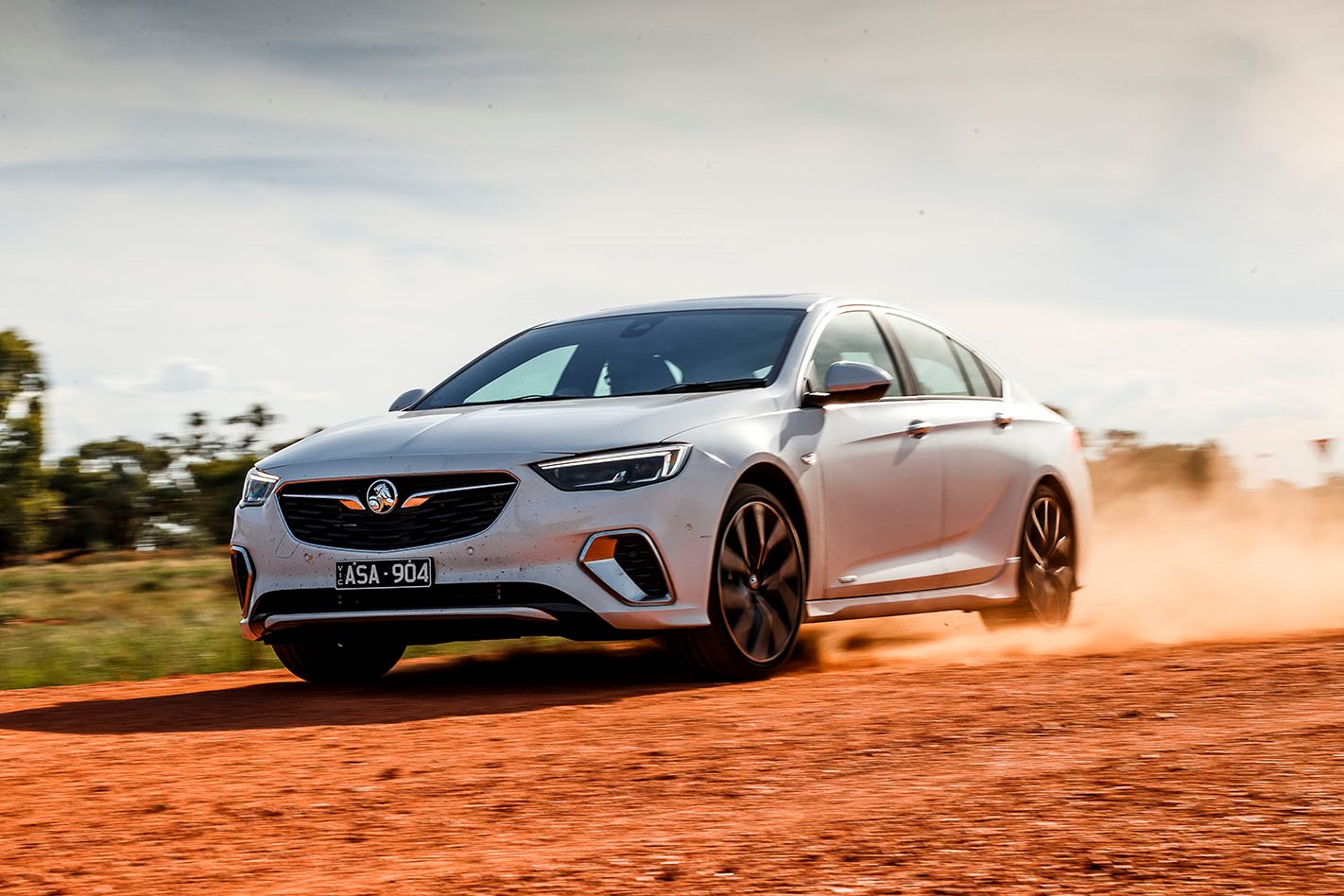
IT’S NO GREAT secret that Holden’s sales are disappearing down the gurgler at a terrifying rate, as the company’s GM and chairman Dave Buttner’s remedial measures are yet to have a significant effect.
To put some meat on those bones, Holden’s sales in November were 5125, slipping to 4822 in December and surfing the crest of a slump in January at 4167 registrations.
That’s a drop of around 17 percent in three months alone. Granted, January is traditionally a dud month for new vehicle sales in general, but the figures still look stark. Across 2018 as a whole, Holden sales were down 32.7 percent.
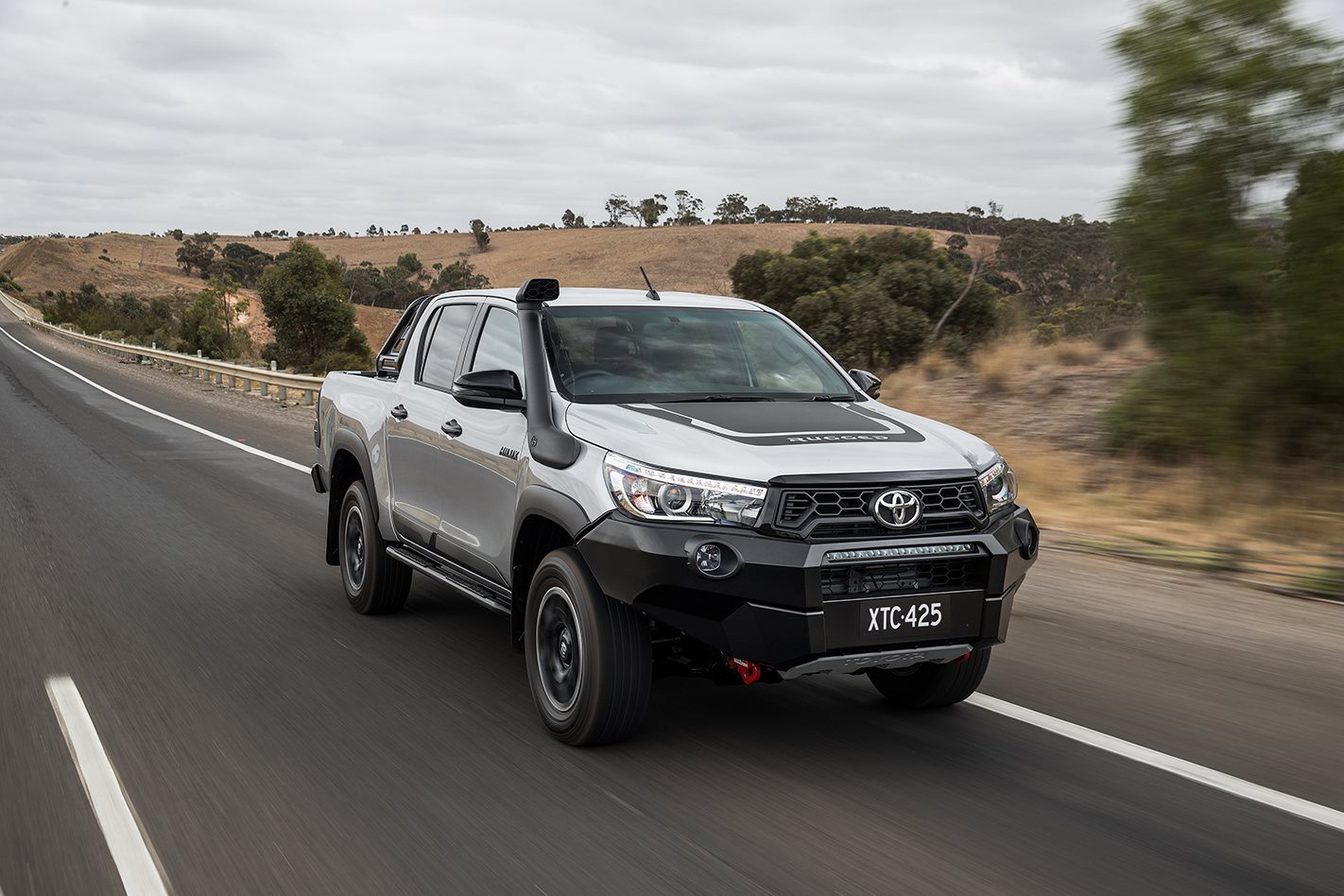
By contrast, Toyota sold 4671 Hiluxes in November and finished December with 3871 units shifted. Extend those trend lines and within a couple of months, Holden’s entire vehicle range – Barina, Astra, Commodore, Trax, Equinox, Acadia, Trailblazer and Colorado – could conceivably be outsold by the Hilux.
Sales of the Hilux 4×4 climbed by 9.3 percent across 2018 and the 4×2 models saw an 11.3 percent uptick in sales across the same period.
We’re not about to put the house on it, but we wouldn’t be at all surprised if the Hilux was outselling Holden by May.
Holden, GM still silent about Inchcape import deal
It’s not all doom and gloom for Holden, however. The Acadia large SUV has been well received and it’s worth noting that when Buttner took over as GM in August, the company’s market share stood at an all-time low of 4.6 percent.
During the fourth quarter, Holden outperformed a tanking market and that share climbed to 5.6 percent.
Stemming a trend that has seen the business halve its sales in seven years and, during that same period, slip from the second highest selling car brand in Australia to sixth last year isn’t the work of a moment, but if Buttner needs any additional motivation, perhaps Toyota’s big-selling ute could be the spur.
MORE: Toyota Hilux Range Review MORE: Toyota Hilux Specs, Range & Price
You had to be a screw loose to own the previous Mercedes-AMG G63. Not just because it was effectively designed in the 1970s, but also some lunatic had bolted in a 5.5-litre twin-turbo V8 with side exit exhausts. If it was the first time you’d ever heard of it, you’d think the G63 the creation of some mad German in his backyard – not an official factory vehicle from Mercedes-Benz itself.
But the thing is, the last G63 did drive like something someone made in their backyard. With a ladder-chassis, solid front axle, 2.5-tonnes and way too much power, it was a total laugh, but a right wobbly thing to drive. If it was flaws that made a car loveable, by giving it a human quality, the previous G63 was marriage-grade stuff.
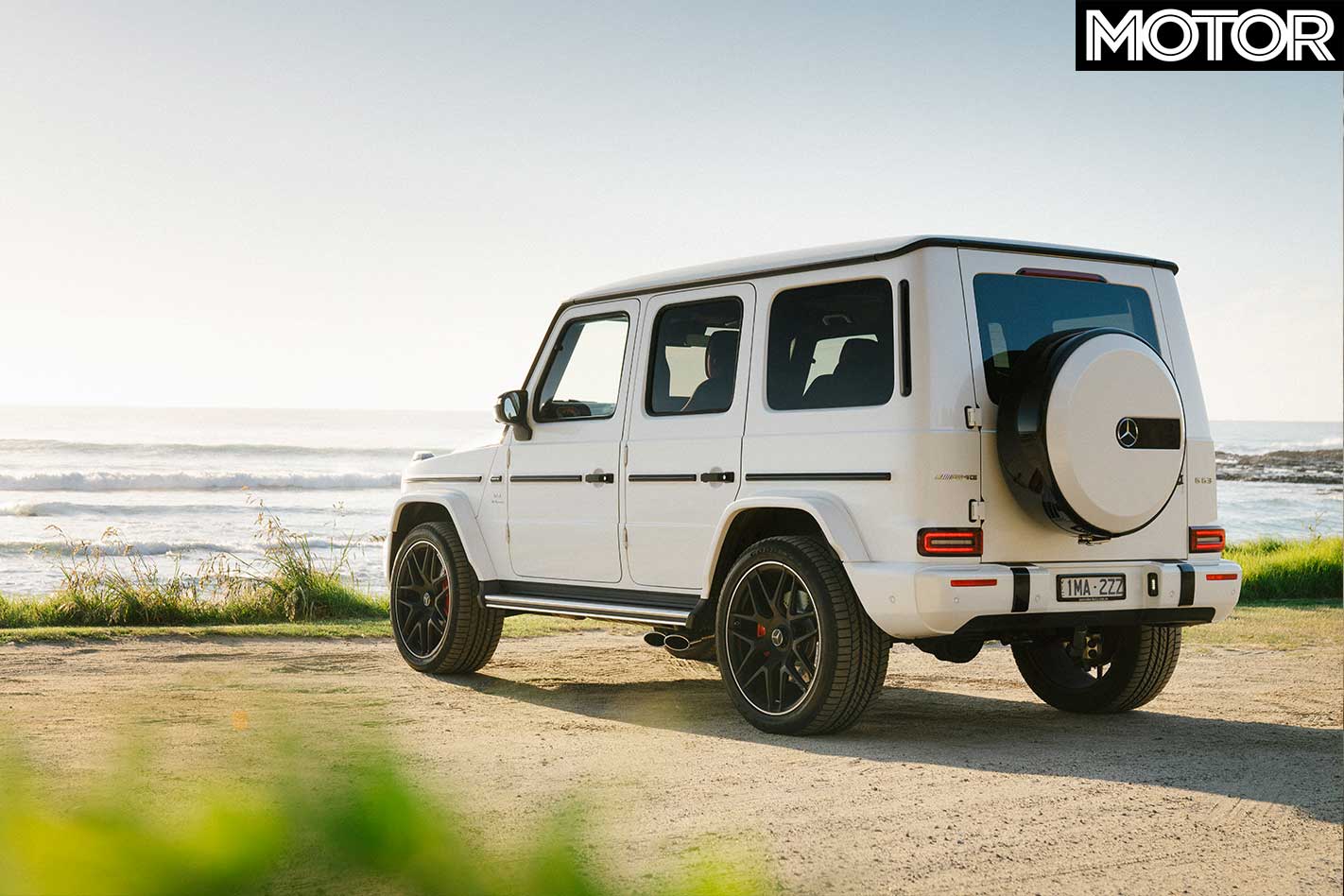
Enter the brand new 2019 Mercedes-AMG G63, which MOTOR has just tested in Australia. Still looks like it was designed with a ruler, its slab-like exterior is the stuff of Adrian Newey’s nightmares (its 0.53 Cd means it produces more than twice as much drag as a new S-Class).
However the only carry-over parts from the previous model, we’re told, are the windscreen wipers, rear-door-mounted spare wheel carrier, and exterior door handles, which retain a charming click during opening and closing. Everything else? Brand new.
Urus racing series is a symptom of SUV-madness
The ladder chassis layout remains, which is partly why the new G63 still weighs 2.5 tonnes, but it’s out with the old live axle front suspension, in with a modern, independent double wishbone set-up.
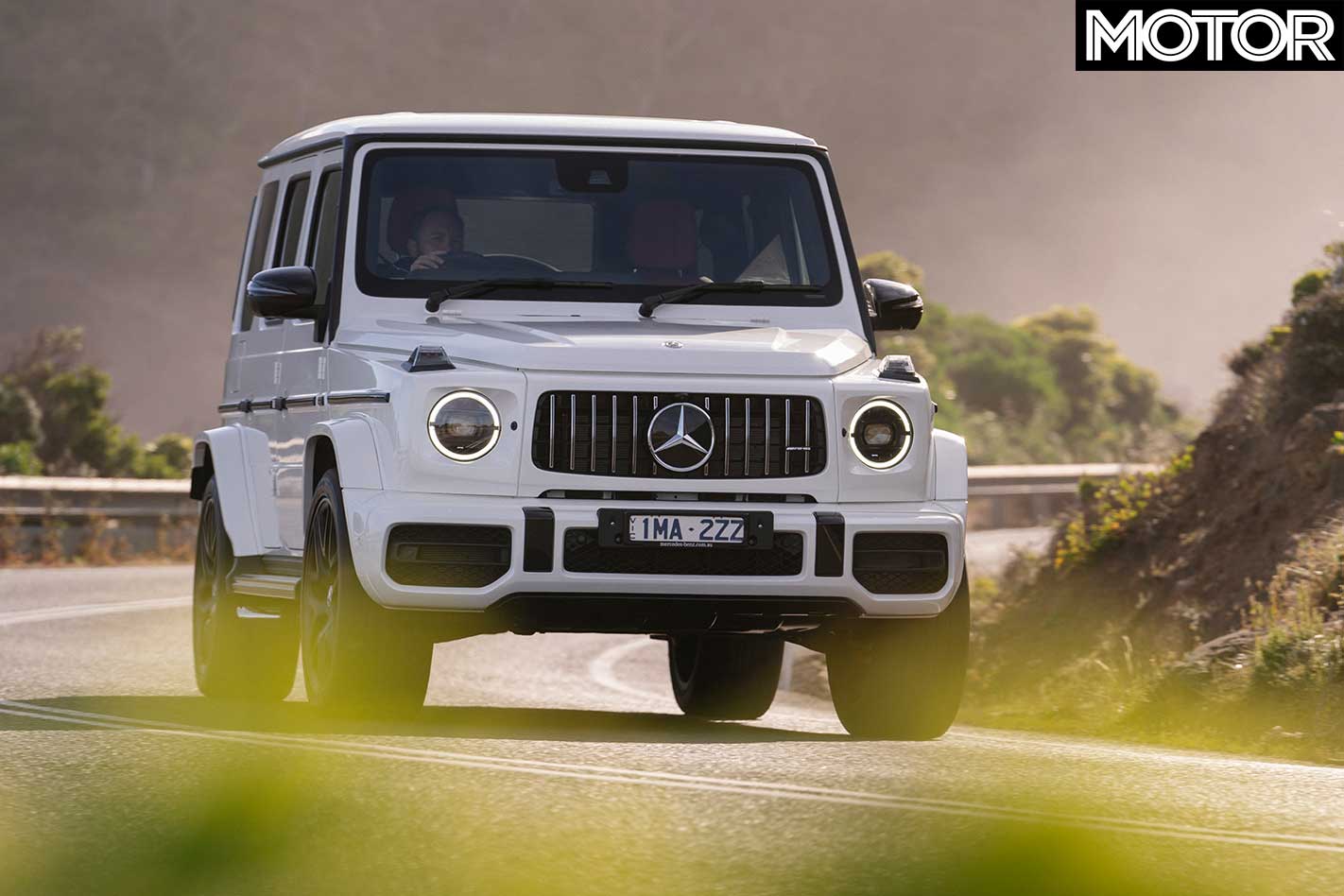
The rear axle remains a solid beam but now located with four links and a Panhard rod. There are anti-roll bars front and rear, while connecting the wheels to the body is an air suspension system with adaptive dampers. The old recirculating-ball steering, through which you kind of made suggestions to the front wheels, rather than directly steered them, is now replaced by a new rack-and-pinion EPAS set-up with a variable ratio.
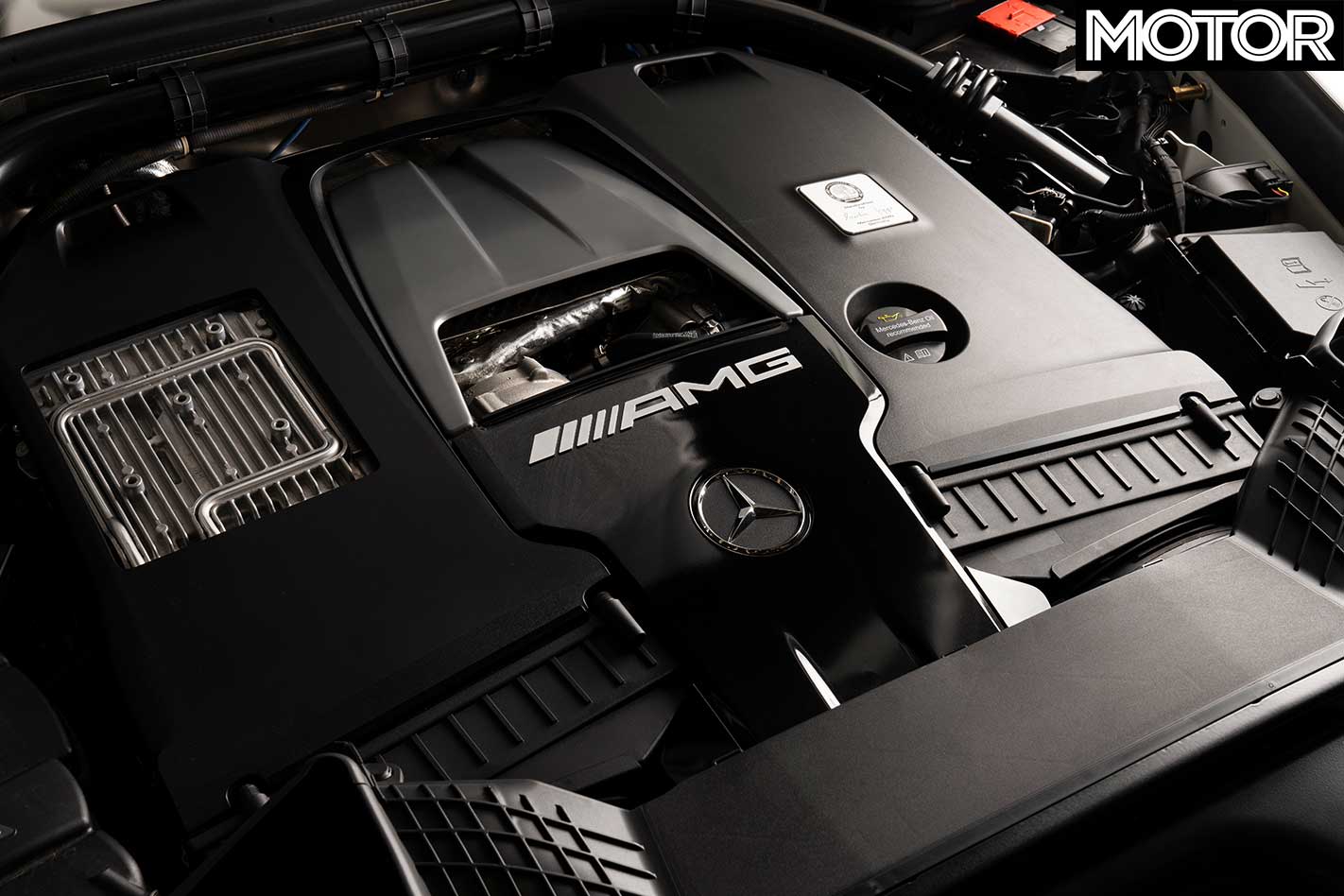
Under the bonnet, AMG has replaced the hard working old 5.5-litre with the increasingly ubiquitous 4.0-litre twin-turbo M178 V8. Outputs are up from 400kW/760Nm to 430kW/850Nm. Bigger news still, weight is down a staggering 170kg thanks to newly aluminium bonnet, front guards, doors and tailgate. Thanks to that, and also the punchier ratios of a new quick-shifting nine-speed torque converter auto, the claimed 0-100km/h time has dropped from 5.4 seconds to 4.5.
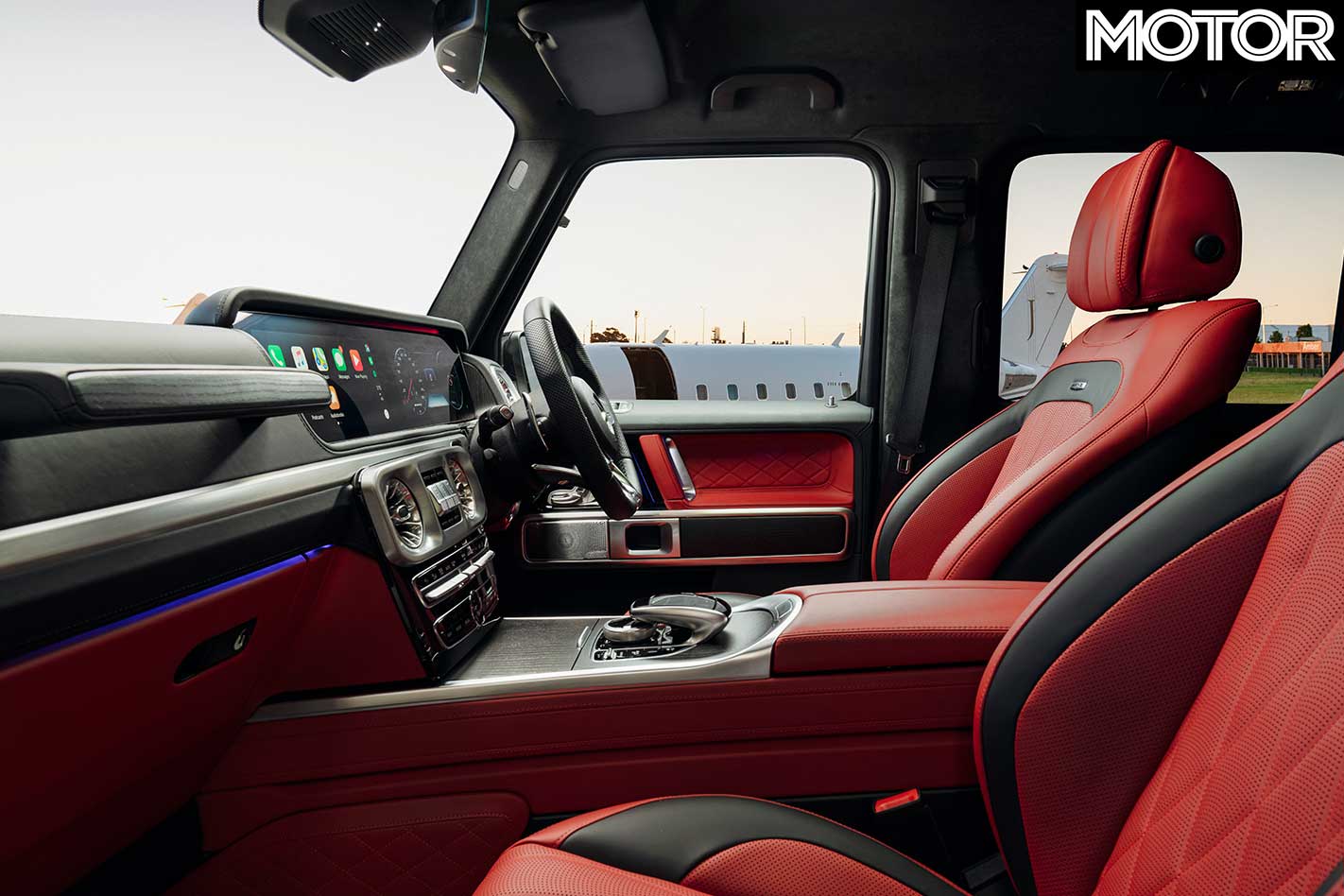
Inside, you sit high, the big, broad windscreen comically vertical, chunky bits of exterior bodywork visible all around you. But crucially, you’re no longer strangely cramped despite, with the previous G63, being in what you thought was an enormous car.
By making it quite a bit bigger than the old one (101mm longer, 121mm wider, 40mm taller), Mercedes-AMG has worked hard to expand legroom, shoulder and elbow room throughout the cabin, and it shows in that it now has the spaciousness you would expect for a vehicle this size. And bonus to those who want to wear their top hats or elaborate fruit bowl fascinators while they drive – headroom is still significant.
The interior represents a massive change on the old G63 – it’s now roomy, luxuriously appointed, easy on the eyes. Leathers, soft materials, stitching and beautiful screens make this a special place to sit, and with its high-tech aura, create an interesting contrast against the old-school doors and exterior styling.
There wouldn’t be another car on the road that looks as classic as this but hides as much tech inside. And for sure, the G63 has as high-tech an interior as any other Mercedes-AMG on sale.
There’s been a night-and-day improvement to how the G63 drives. At low speeds, on Aussie roads, it’s comfortable, quiet and refined, the ride more than acceptable, even if there remains an omnipresent chassis wobble over bumps reminding you you’re on a ladder chassis. It is also maniacally fast for how big it is and how much it weighs – recall that 4.5sec to 100km/h will match a Gen-F2 HSV GTS on its best day, and beat it on its worst.
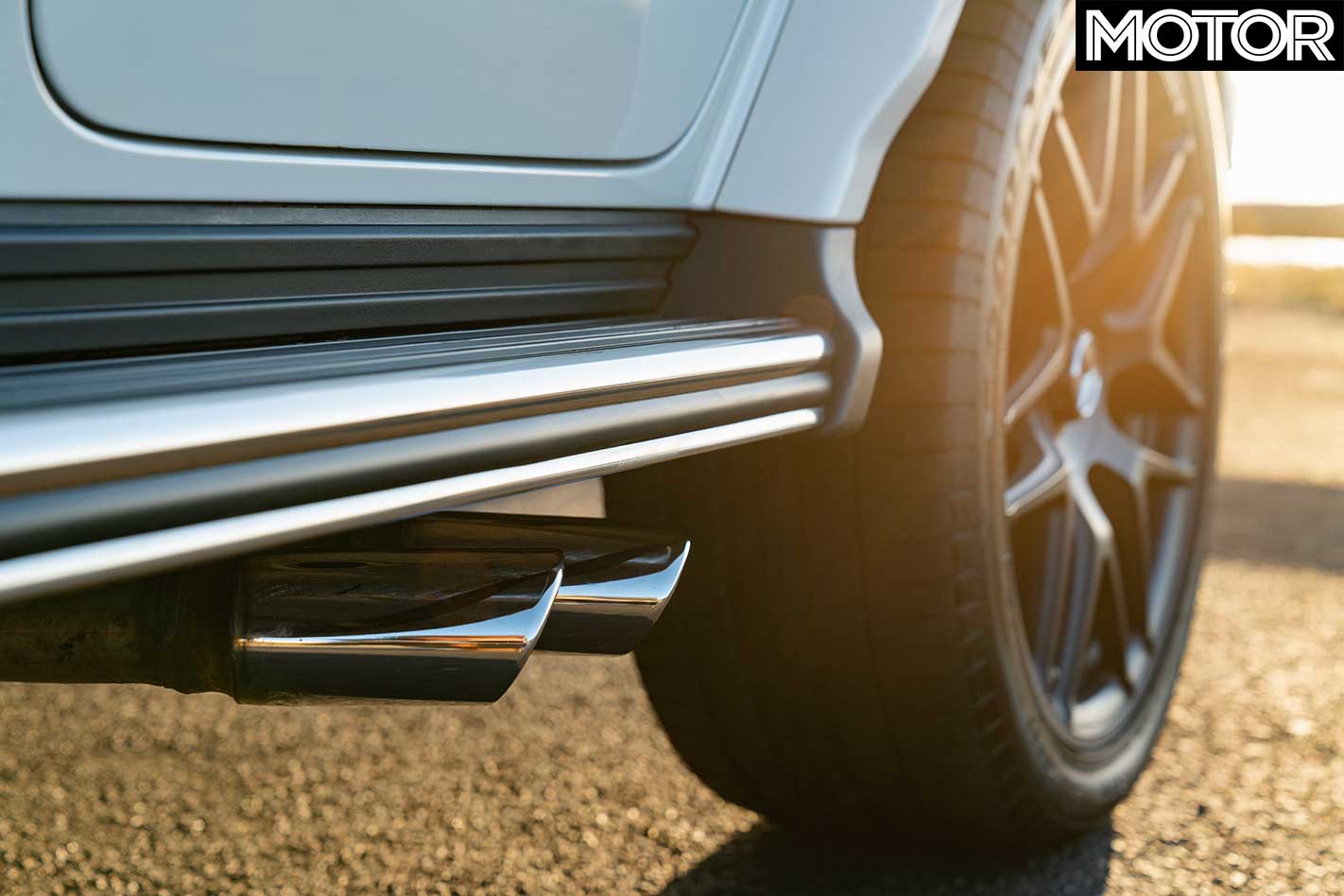
There is a mountain of effortless turbocharged torque available at any point in the rev range, making the G63 an effortless cruiser – or a total madman under full acceleration. And yes, for those who loved the old G63 for the racket that came out those sidepipes, the reduction in engine capacity has not a bit diminished the decibel factory.
Or given it manners – it is just as bassy and raucous, the whole aural shebang enhanced further by a new E63-esque fake induction snarl coming through the interior speakers, but one that sounds realistic.
In the old G63 that monumental engine meant you could easily find yourself entering corners at grisly speeds only to have a panic attack when you started turning the steering wheel. It was a lumbering beast that felt to have twice as much power as it could handle, so it’s best to imagine that for the new car, it’s like Mercedes-AMG put it on a hoist and found about three dozen critical chassis bolts that needed tightening.
Thanks to the new suspension architecture, the handling has been transformed from loose to – gasp! – good. There is also a brand new accuracy and positivity about the controls which give you the confidence to guide the G63 through corners at speeds you wouldn’t dare in the previous car.
And one does not now call the chassis and compliance good because they remember the old one to be so truly terrible. It’s genuinely good. It handles way better than it ought to.
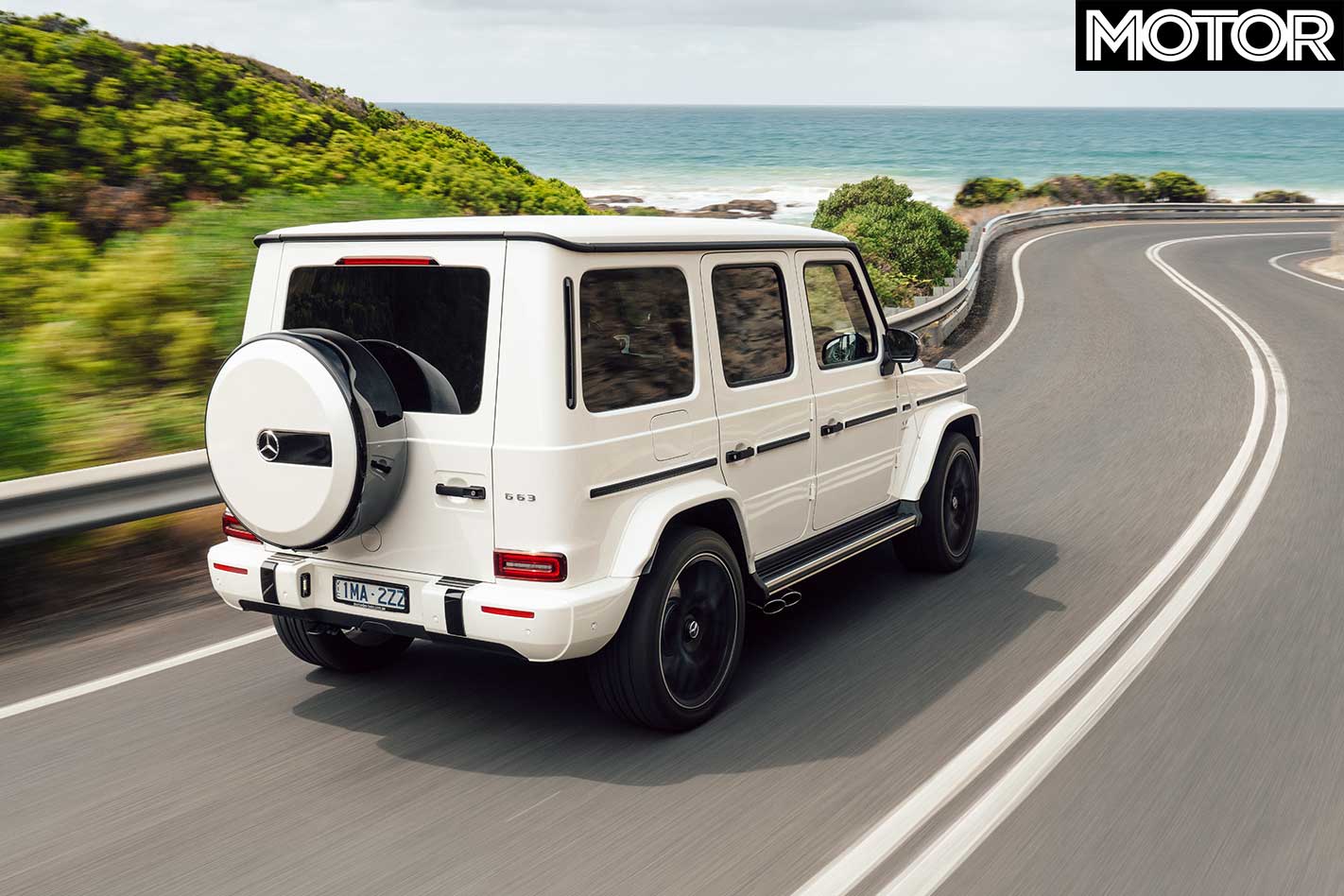
Of course, let’s not get carried away, this is, of course, no taut and precise sports car. While it encourages you to press on harder, it forgets its own weight and size and suddenly you enter a new realm of ESC intervention and unhappy SUV tyres as the hulking G63 leaves its comfort zone.
It is still no dynamic patch on other SUVs in the Mercedes-AMG stable, like, for example, the smaller GLC63. And where most other performance SUVs are becoming almost giant hot hatches, the G63 is a car you enjoy up to seven tenths, beyond which the law of diminishing returns sets in.
Where the G63 really excels is in creating a feeling. From the first time you see it and its boxy styling; the side-exit exhausts and huge wheels; the view out the windscreen and the burble and racket of its V8… no other car offers the unique experience of the Mercedes-AMG G63. And for that, we love it.
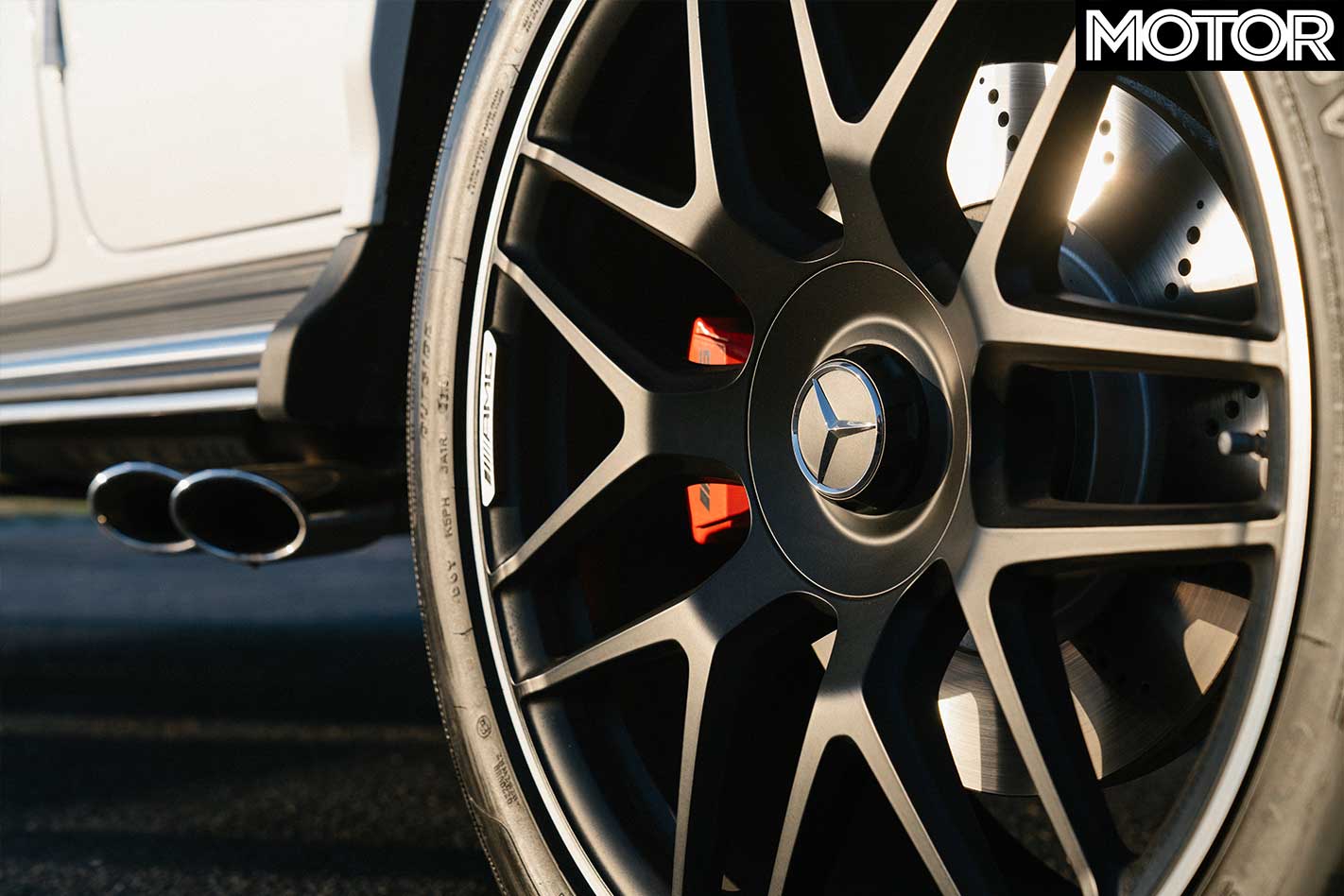
Like the old car, its lovability is increased by its flaws (of which there are significantly less than the predecessor model). Forget the diff-lock buttons and other rutted-road paraphernalia if you have the optional 22-inch wheels, as the 295/40 Goodyear Eagle F1 SUV tyres look like they’d lose a fight to even the bluntest of rocks.
Fortunately, for those still keen on some mud bashing, the standard 21-inch wheels come with more off-road friendly 285/45 Pirelli Scorpion Zero Asimmetrico tyres. For more off-road thoughts, read the review from our dust-loving colleagues at 4X4 Australia.
It’s worth mentioning that the G63 is very thirsty, showing 18.6L/100km on the trip computer based on 600km of what would be slightly harder than usual driving. Although fortunately its 100-litre fuel tank still permits somewhat normal range between fills, not having to spend half your life at a servo.
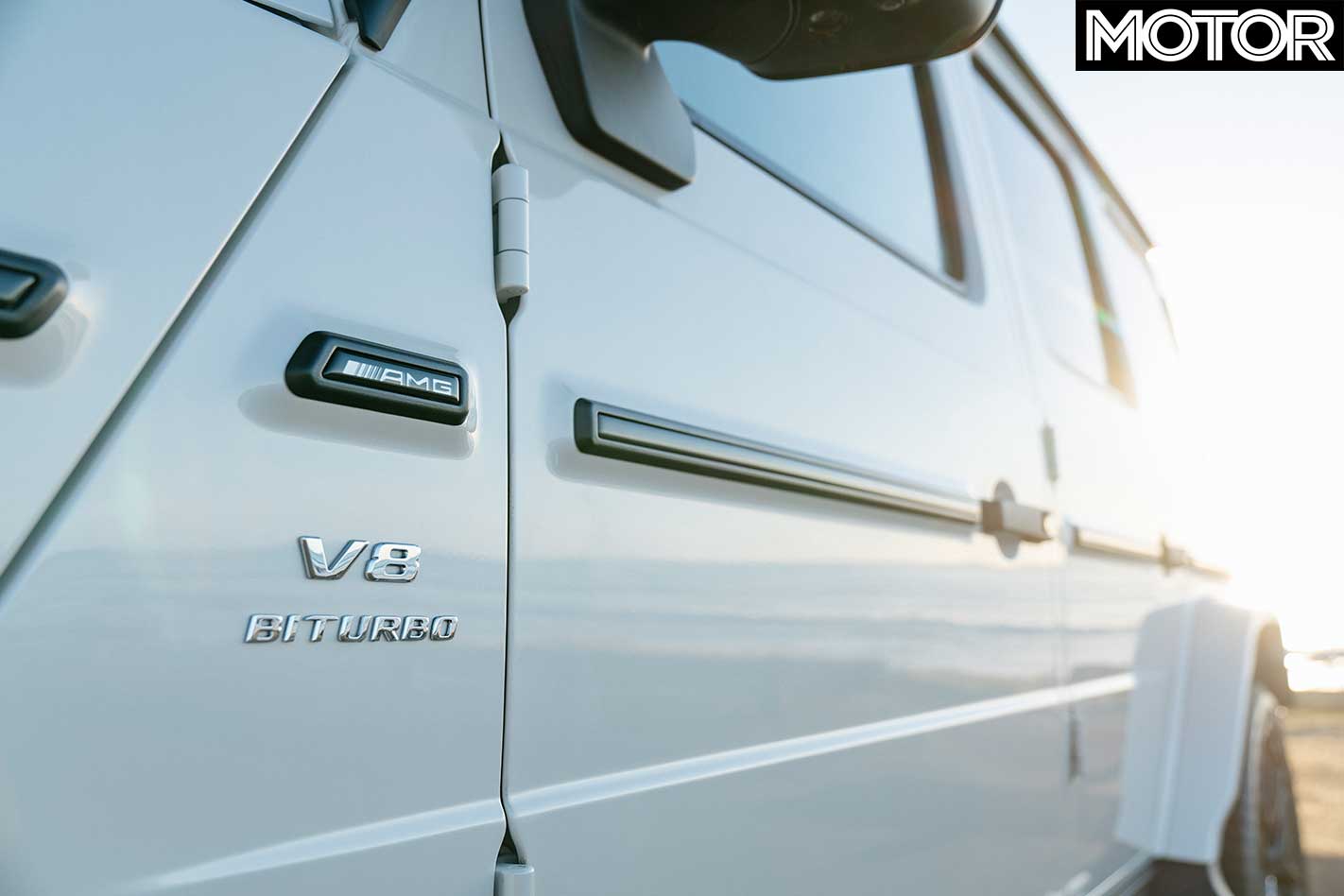
At $247,329 before on-roads and options, the G63 is also expensive, in part because it is effectively hand-built at AMG’s Magna-Steyr factory in Graz, Austria. Not that its owners care as Mercedes-Benz Australia has already sold all its allocation of approximately 100 cars per year, meaning if you do want a G63 in Oz, there’s a bit of a wait.
This won’t deter your typical G63 owners who are after a genuinely unique car. For these kinds of people, in a confusing sense there may be something newly boring about the dynamically much-improved G63 – there was something endearing about the old G63, what was probably the most woeful-handling model in the entire Mercedes-Benz range. But it was either put the big, boxy brute out to pasture or ready it for the 2020s – and as we eye further autonomy and electrification, we are desperately glad AMG chose the latter.
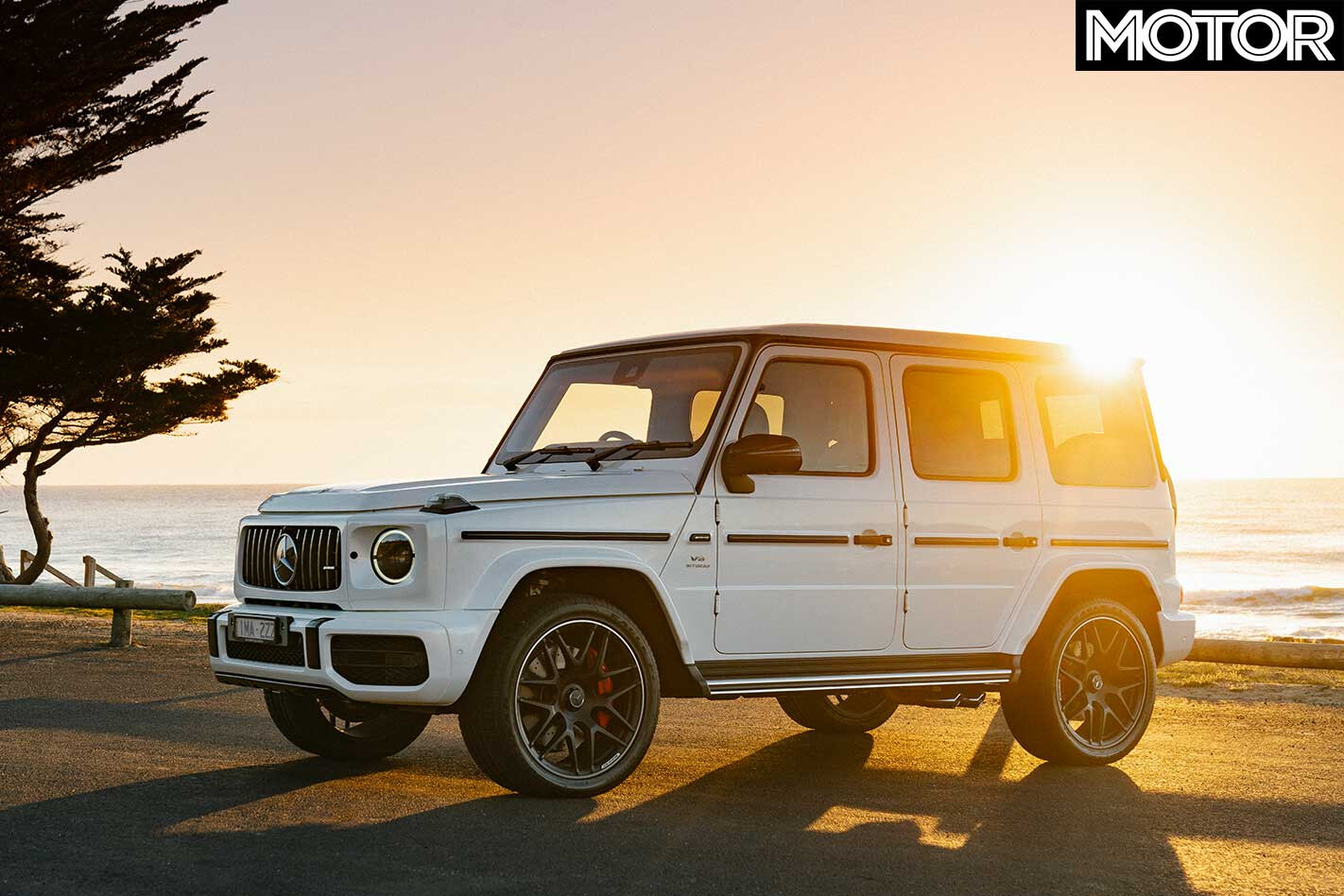
2019 MERCEDES-AMG G63 SPECS Engine: 3982cc V8, twin-turbocharged, DOHC, 32v Drivetrain: nine-speed automatic, torque converter; all-wheel drive Power: 430kW @ 6000rpm Torque: 850Nm @ 2500-3500rpm Weight: 2485kg 0-100km/h: 4.5sec (claimed) Top speed: 240km/h (claimed) Fuel consumption: 13.1L/100km (claimed, combined) Price: $247,700 On-sale: Now
Rating: 3.5 out of 5 stars Likes: Retains its mad, side-exit exhaust, V8 personality; berserk acceleration; huge improvement to ride, refinement and handling; beautifully built; newly spacious and well-appointed interior with all the tech you’d ever want; still looks as cool as the old one Dislikes: Expensive; thirsty; still not going to win gold at the Handling Olympics; still a bit wobbly
2019 Mercedes-AMG G63 S options – highlights
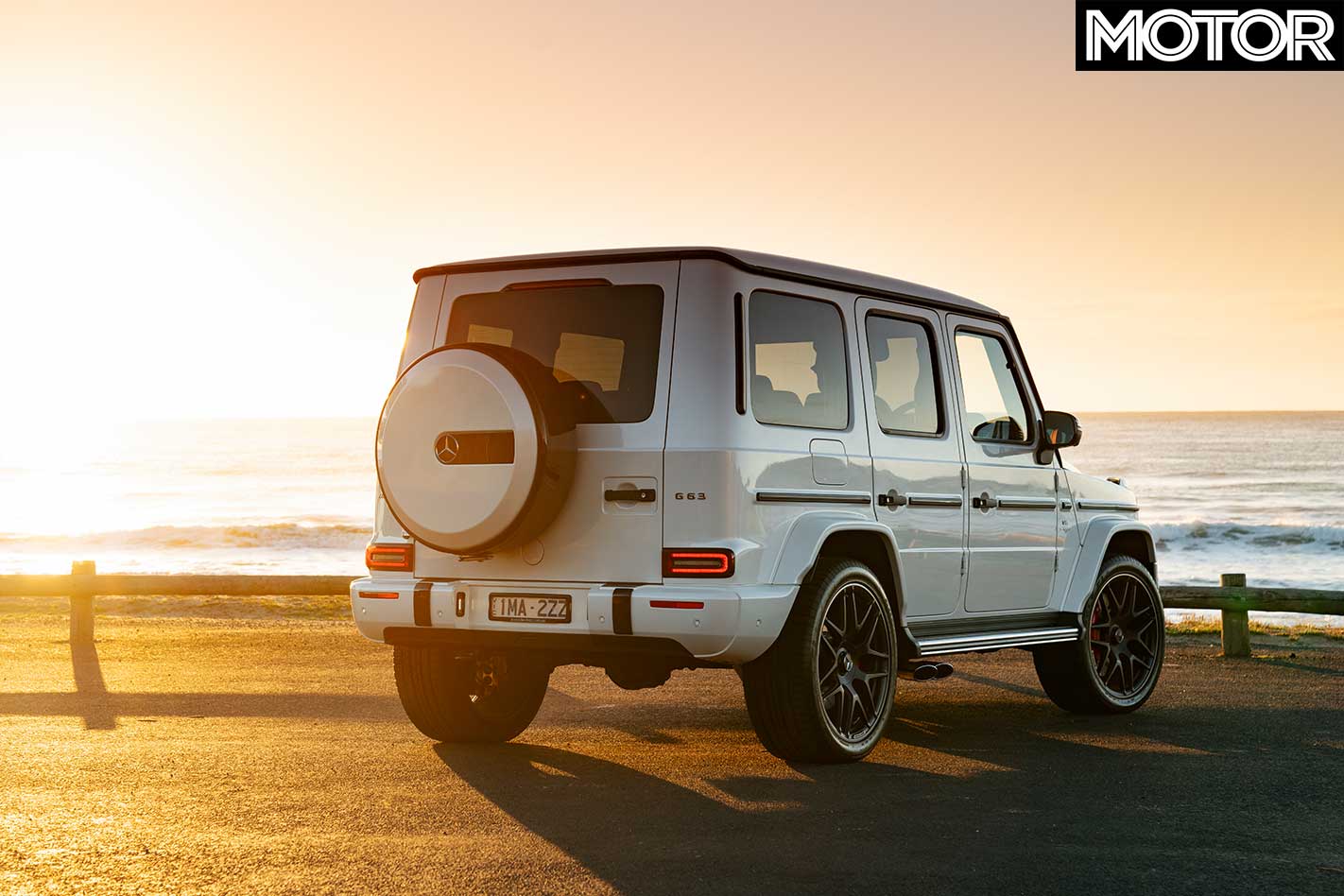
Night Package, $5900: Smoked and black bezel indicators, tail-lights and headlights. Other exterior bits painted in black. 22-inch wheels in matte black. AMG Enhancement Package, $4000: Lifts speed limiter to 240km/h. Carbon-fibre engine cover. “Fancy front seats” (our terminology), $5900: Dynamic bolsters, massage function, air-conditioning. AMG Performance steering wheel, $900: Nappa leather and suede-like Dinamica microfibre. AMG Carbon-fibre trim, $6500: Bits of the black weave on the steering wheel and elsewhere throughout the cabin. 22-inch forged wheels, $3700: Comes with 295/40 Goodyear Eagle F1 SUV.
Jaguar has fired a warning shot straight across the bow of BMW and Mercedes-Benz announcing it too will join the exclusive in-line six-cylinder petrol engine party with a new 3.0-litre Ingenium engine.
The all-new engine will appear under the bonnets of Jaguar (and sister Land Rover) models from 2020 with power outputs of 265kW or 294kW, while torque will be rated between 495Nm and a hearty 550Nm.
Peak outputs are enabled by a new mild-hybrid system which adds a 48-volt electrical motor into the mix for a fuel saving of 20 percent compared with the outgoing V6, while a new filter reduces particulate emissions by up to 75 percent. Carbon emissions are also believed to be slashed.
Unlike the 3.0-litre V6, which relied on a belt-driven supercharger for boosted power outputs of up to 294kW, the Ingenium six uses a twin-scroll turbocharger supplemented by an electrically driven supercharger.
The more efficient turbocharger allows power equalling the current V6 hero for a reduced fuel bill, but loses none of the instantaneous acceleration and torque delivery thanks to its electric supercharger, says its maker.
While V6 engines traditionally allow more compact packaging, the evolution of straight-six units has allowed bulky auxiliary components to be relocated and package in tighter spaces. The real advantage of a returning six-pot is smooth power delivery thanks to a crank angle and firing order that V6 and even V8 engines cannot equal.
While BMW has stuck to its straight-is-best philosophy since the dawn of time, arch rival Mercedes recently returned to the in-line six format with the AMG E53 Coupe, after an extended tenure of V6-powered vehicles.
The revenant straight-six engine’s arrival in a year will end a 23-year hiatus for Jaguar, with its last in-line six put out to pasture with the X300 luxury sedan in 1997.
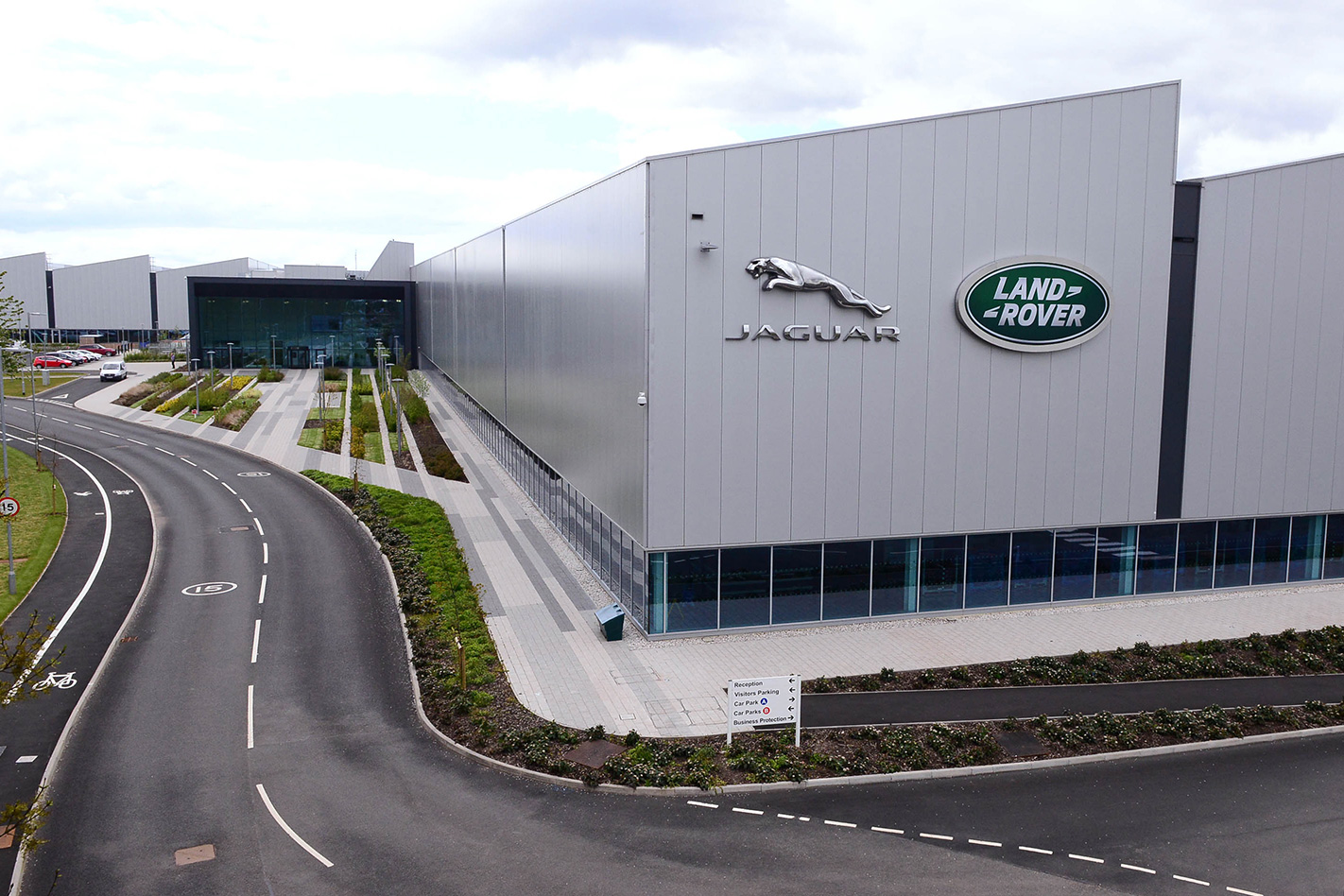
It’s the third engine to join the Ingenium family, following the initial four-cylinder diesel and the four-cylinder petrol after that, and is the continuing fruition of a £1b ($1.8b) Wolverhampton Engine Manufacturing Centre that went live in 2014.
The plant is a state of the art facility which draws 30 percent of its electricity from 21,000 solar cells, contributes no waste to land fill and was designed to allow ‘flexible engine architecture’ – an approach that enables a number of different engine configurations to be produced without the full cost of development and manufacture on different lines.
That flexibility could allow the company to add a fourth engine to the growing line-up and a 3.0-itre diesel six to replace its current V6 diesel.
Further educated speculation would also suggest that the new in-line six has plenty of capacity and the company will be wheeling out more potent versions for S and SVR-badged variants following its introduction.
This is an Audi RS5, but with a twist. That’s because it’s the Sportback version. It has four doors, or five if you count the boot.
It’s made for people who want the style of the coupe with some practicality of the RS4 wagon. Its roof is longer, for instance, so it can actually seat five people.
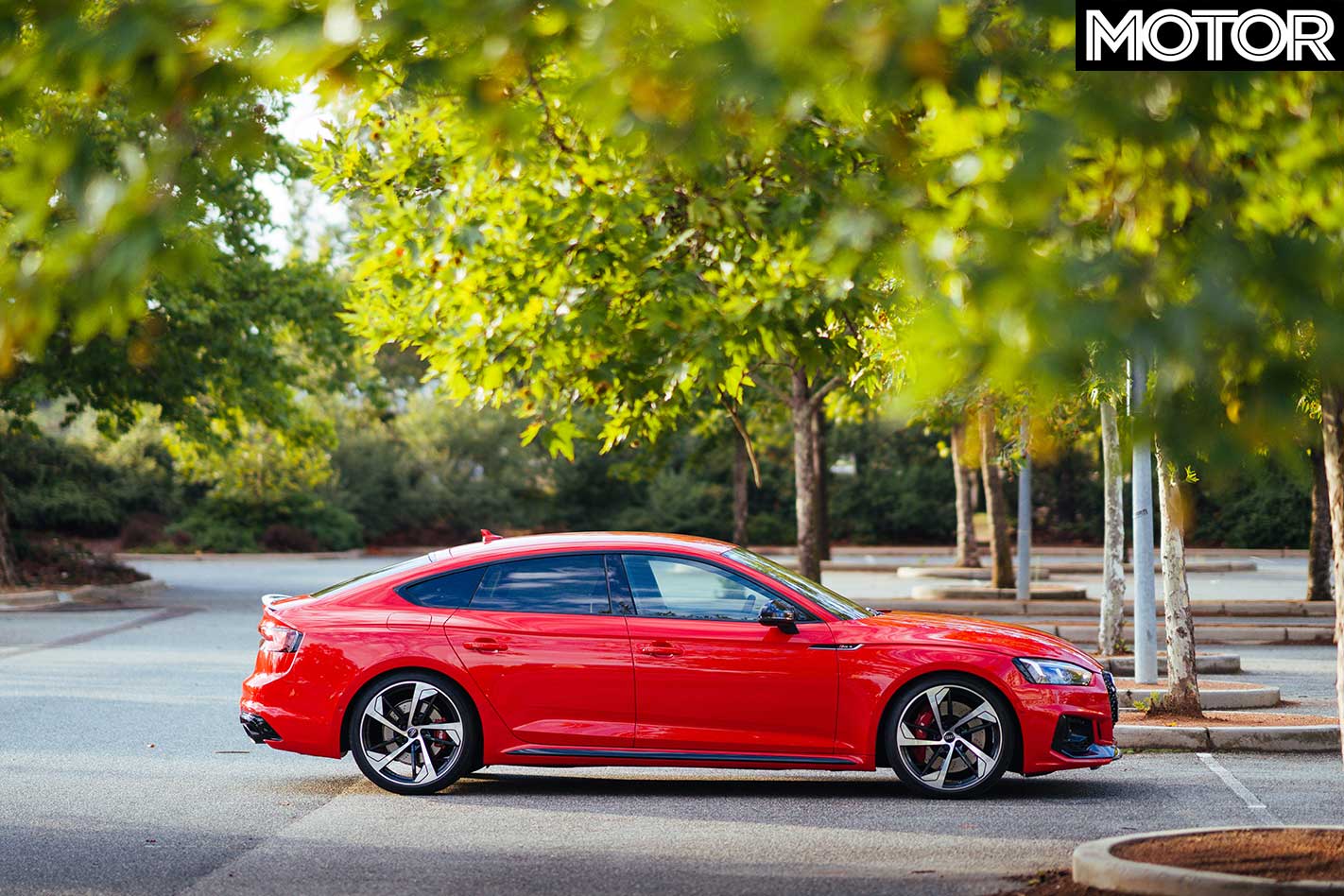
To squeeze in those new doors it takes on a new, slightly pregnant looking form. Its wheelbase and length are 59mm longer, mimicking the wagon on both accounts. Strangely, though, we’re told it hasn’t gained any flab, even though there’s no carbon-fibre roof on the options list, as it’s now too large.
Why does it exist? Some would call it a spiritual successor to the B7 RS4 sedan, letting Audi punch on again with the BMW M3 and Mercedes-AMG C63 S sedan. Sceptics, who know the Sportback accounts for 40 per cent of A5 sales, would instead say it’s a money motivated decision.
Either way, Audi’s mighty 2.9-litre twin-turbo V6 still powers all four wheels through an eight-speed automatic transmission. It produces the same 331kW and 600Nm as the coupe and accelerates to 100km/h in an identical 3.9 seconds.
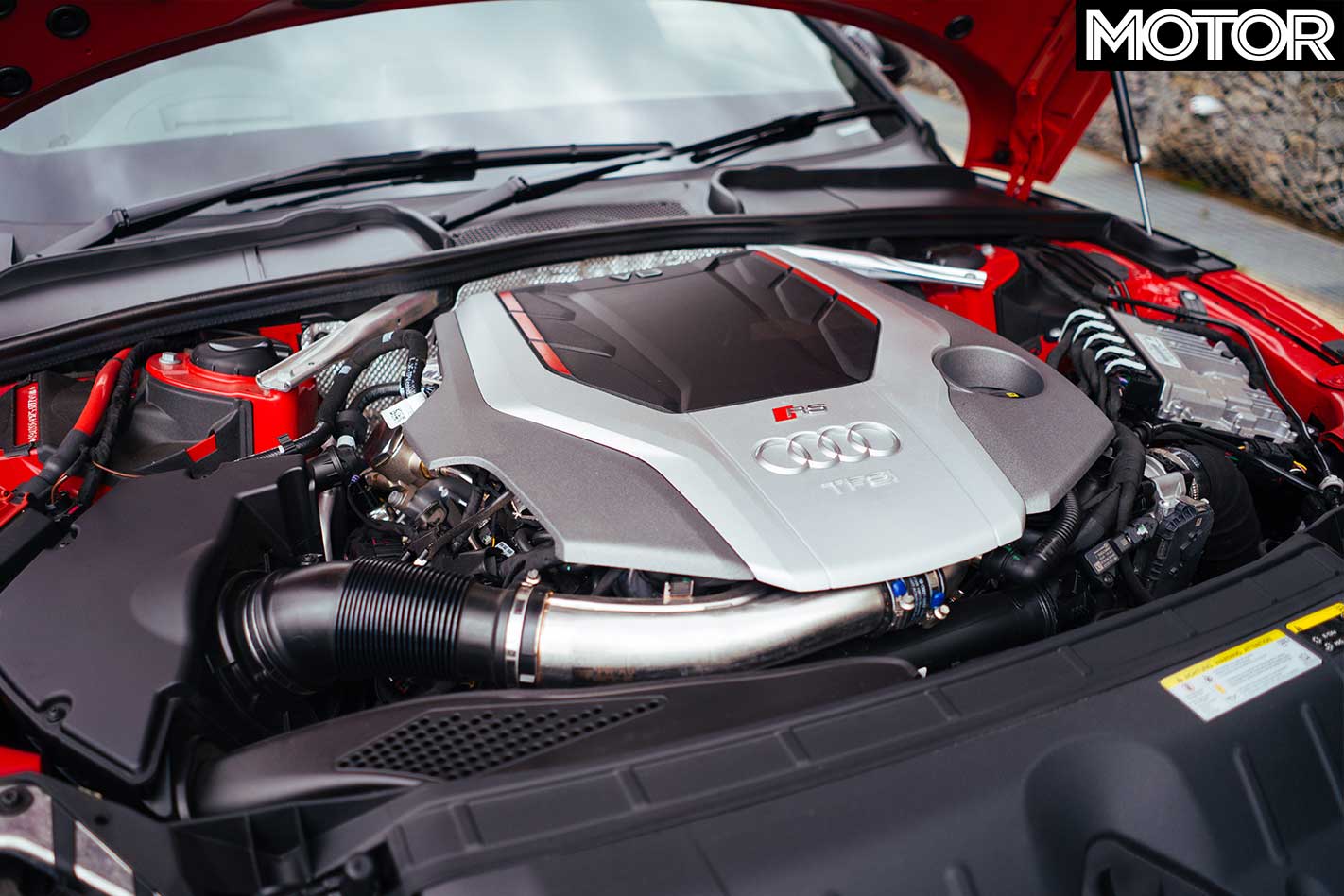
Yes, it falls short of the previous generation RS4’s 4.2-litre V8 for emotion, but it delivers surging performance. There’s little turbocharger lag and is only challenged in top gear uphill. Everywhere else, it simply picks you up and throws you down the road in a way that would embarrass some supercars.
Wheelspin is non-existent. Even though the transfer-case can send as much as 85 per cent of snot to the rear, or as little as 30 per cent, its grounded by Continental SportContact 6 tyres that measure 275mm wide. In normal conditions the split is set at 60 per cent.
So massive are its grip levels in a straight line, it’s hard to imagine it ever letting go. Throw this thing into a corner, though, and it’ll wriggle into oversteer. It happens with a slight delay, so that there’s time to sense its sizeable mass coming around, but this also means it needs a bit of time to recompose itself.
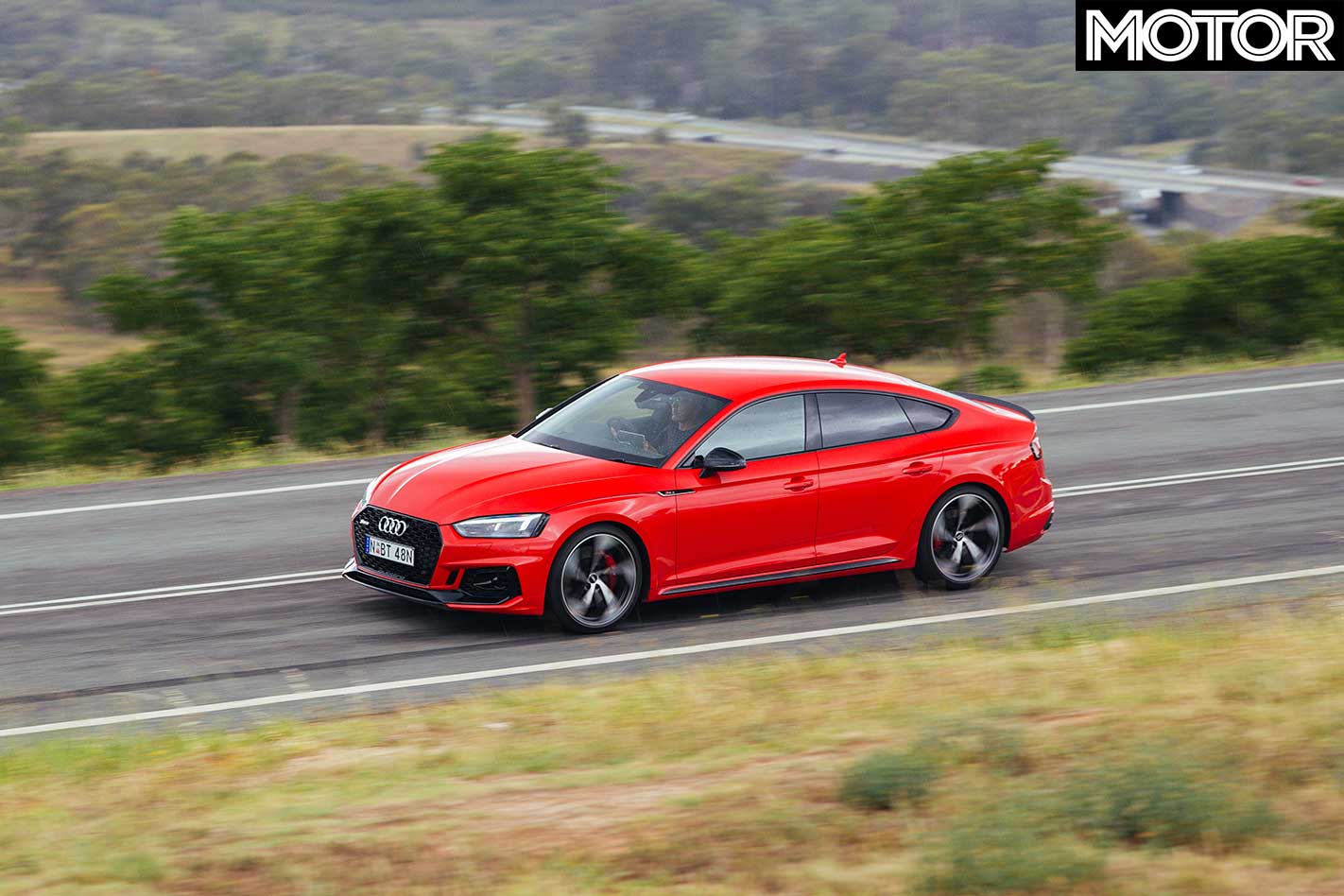
Yet, although friendly, it’s not scalpel sharp, and especially so in the Sportback. It feels the least athletic of the trio.
Smooth inputs make its chassis, riding on hydraulically linked dampers, feel slightly inert. Its nose is reluctant to follow the first quarter turn of lock and the rear axle keeps a tenacious hold on the road. An electronically controlled locking rear differential divides power left to right, with the ability to focus all its torques on one wheel.
While we’d never thought we’d want the (optional) Dynamic steering, its infamous system that effectively quickens the ratio at certain speeds, in the new RS the Dynamic drive mode locks the ratio at 13.5:1. Compared to the standard 15.9:1 ratio, it could increase its cornering enthusiasm.
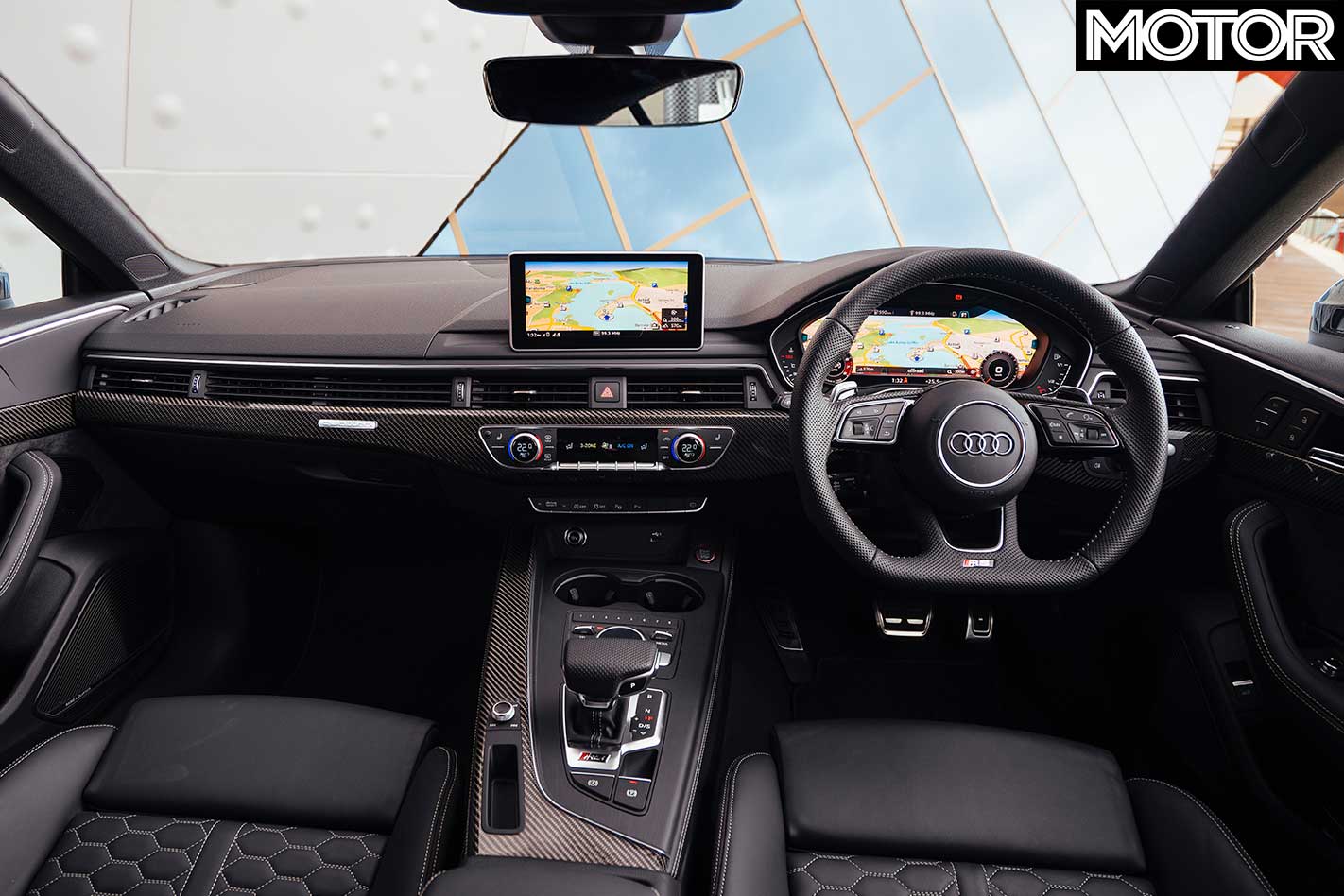
Really, though, this is a car designed to travel long distances in comfort and it does that superbly well. It stands apart from a frenetic M3 or brash C63 sedan as a gran tourer on steroids. And it’s hard to imagine how’d we would improve that formula, so well does it blend comfort and explosive acceleration. It’ll be a brilliant place to get into after a long day.
The $3900 Technik package, with its Matrix LED headlamps and heads-up display is a worthy buy for this stuff. It also comes with a wireless charge pad. The interior also oozes enough function, class and technology to make the RS Design pack, that spruces up the front seats, steering wheel and doors with faux suede and leather for $3300, also seem unnecessary.
Philosophically, though, part of us thinks something with an RS badge, that stands for RennSport (‘motor racing’ in German), should deliver more handling precision, chassis responsiveness and engine theatre.
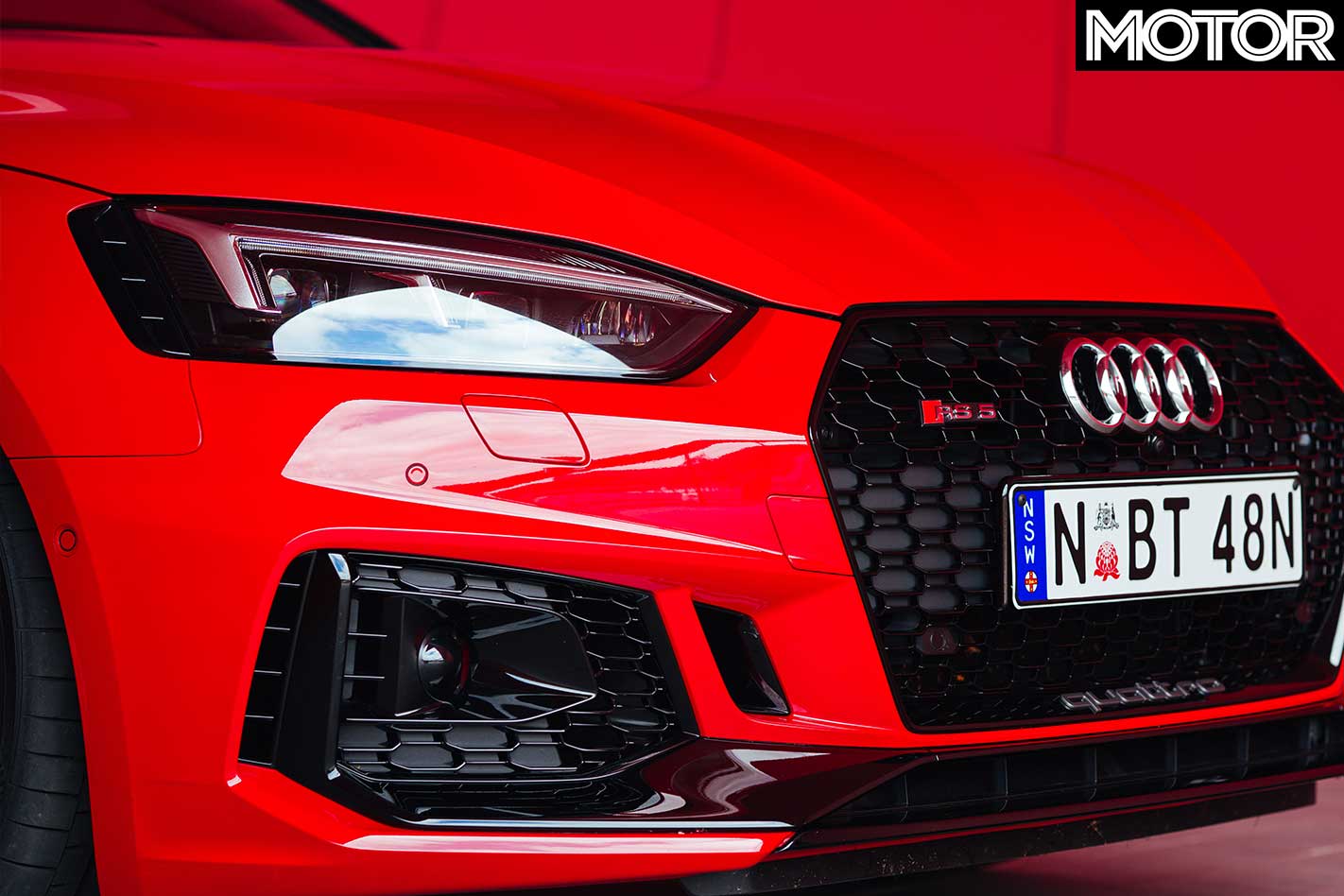
And even though the new turbocharged era of engine performance helps take full advantage of its Quattro grip, if we had to assess this car on its character, it feels closer to an S5 Sportback Performance rather than a racetrack mauler in a leather suit. That said, its extra doors suits this MLB Evo RS platform better than the RS5 Coupe.
If you value style, more than you do a sensuous driving experience, then perhaps this is the car for you. But what makes the RS5 Sportback good can already be found in the RS4 Avant. Something that’s cheaper, roomier and, for some supernatural reason, handles better.
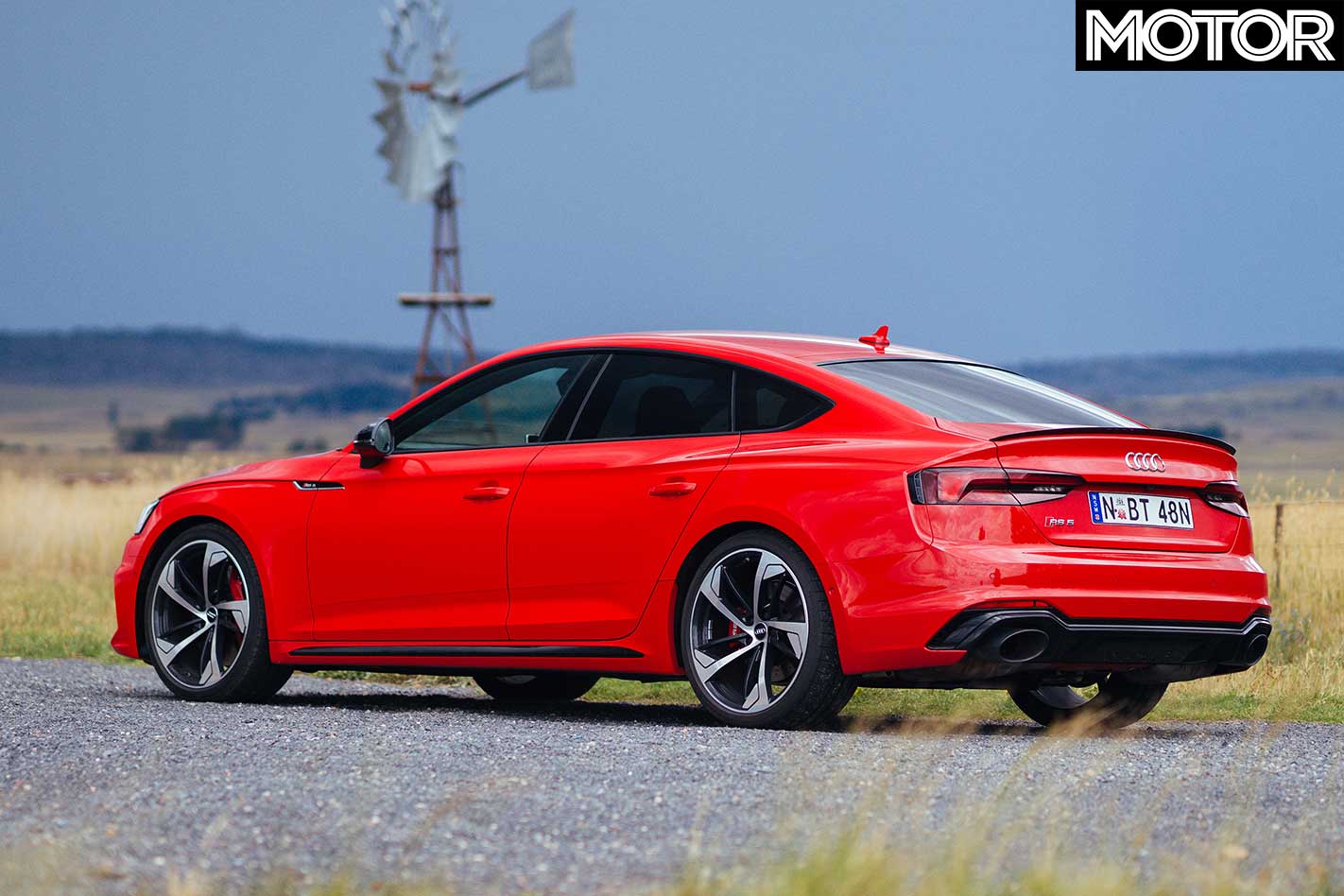
2019 AUDI RS5 SPORTBACK SPECS: Engine: 2984cc V6, twin-turbo, DOHC, 32v Drivetrain: 8-speed automatic; all-wheel drive Power: 331kW @ 5700-6700rpm Torque: 600Nm @ 1900-5500rpm Weight: 1660kg 0-100km/h: 3.9sec (claimed) Fuel consumption: 8.8L/100km (combined claimed) Price: $167,900* *As tested with metallic paint, 20-inch alloys in matt titanium and milled finish, RS specific inlays in carbon, Audi matrix LED headlights with darkened trim elements
Like: Grunt, style, grip, classy cabin Dislike: Weight, feedback
Rating: 4.0 out of 5 stars
YOU may have missed it, but earlier this week BMW confirmed the only rear-drive hot hatch you could buy will be going the way of the Dodo.
The rear-drive hot hatch has always been a singularly niche genre, and one that the latest generation of BMW 1 Series elevated to new heights.
But, with production for the F20 1 Series coming to an end, so is this ultra-nerdy subclass, for the foreseeable future at least.
BMW Group Australia CEO Vikram Pawah laid out the terms of the rear-drive hot hatch’s demise with some carefully worded comments.
“To celebrate the last six-cylinder, rear-wheel drive 1 Series hot hatch, we are excited to present customers with the BMW M140i Finale Edition,” he said.
His statement leaves the door open for a four-cylinder rear-drive 1 Series in the future. However, industry speculation suggests this won’t be the case, and future 1 Series models will drive the front, or all, wheels only, and be limited to a selection of four-cylinder engines.
To celebrate the wonders of the rear-drive hot hatch, we’ve compiled a list of our five favourites from history.
To be eligible we kept the rules rather simple. The car had to have a hatch, send power exclusively to the rear treads, and be somewhat compact in size. Some of the entries seem natural fits, while we are sure others will prompt a flurry of emails to the Wheels inbox.
BMW M140i PE
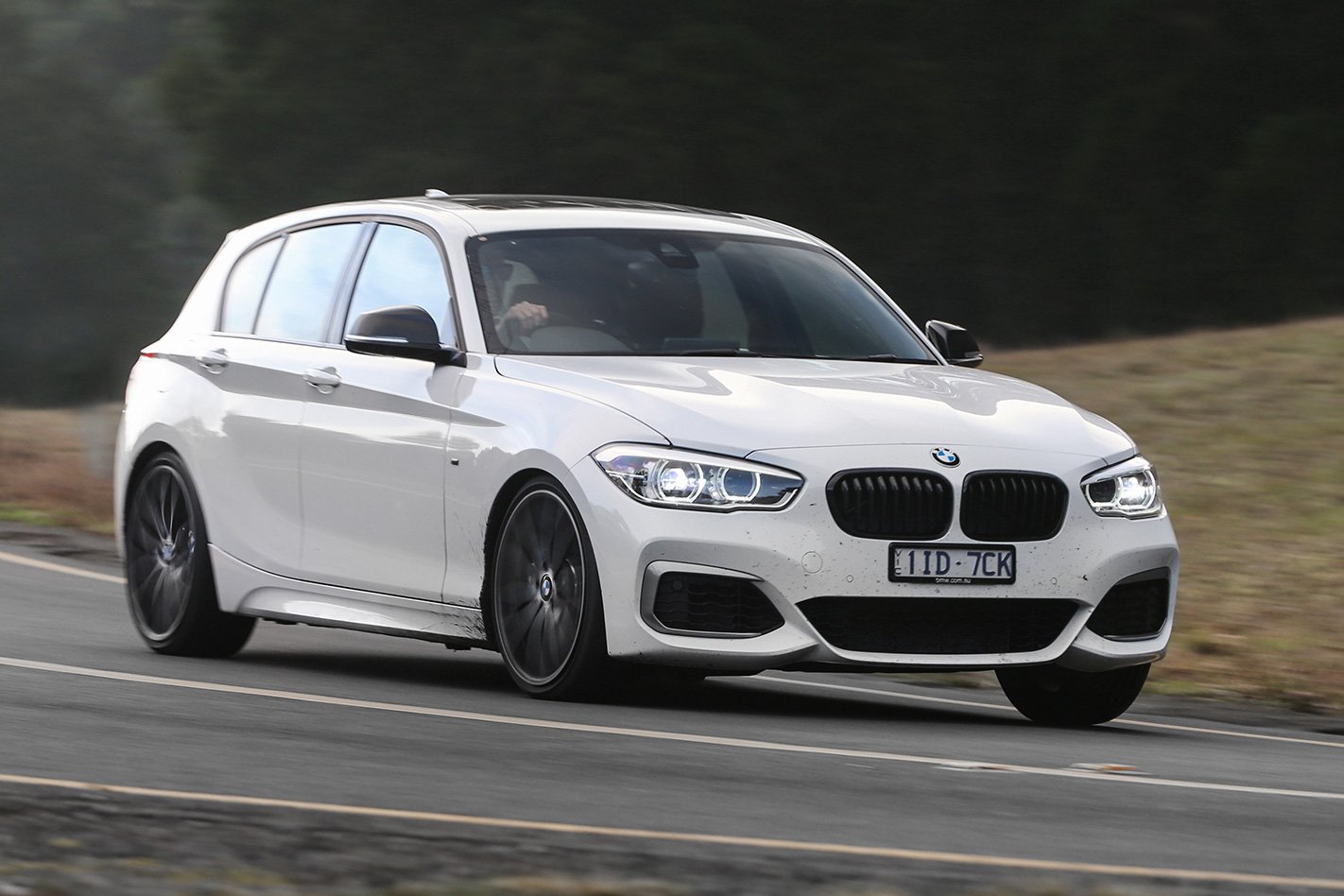
Perhaps the final and finest rear-drive hot hatch is the 2018 BMW M140i PE, which was limited to just 60 models.
The M140i is the halo of the current F20 1 Series range, and comes fitted with a B58 3.0-litre straight-six turbo motor pumping out 250kW and 500Nm thanks to a twin-scroll turbo
This allowed the compact hatch to crack 100km/h in 4.8-seconds. BMW Australia upped the ante with the Performance Edition, which was fitted with a slew of M Performance goodies such as 19-inch rims, carbonfibre wing mirror covers, chrome exhaust tips, and swathes of Alcantara on the inside.
Most importantly the car was fitted with a proper limited-slip differential as standard, to really emphasise the rear-drive fun.
Only 60 were made available, each at a cost of $71,900.
Holden LX Torana A9X
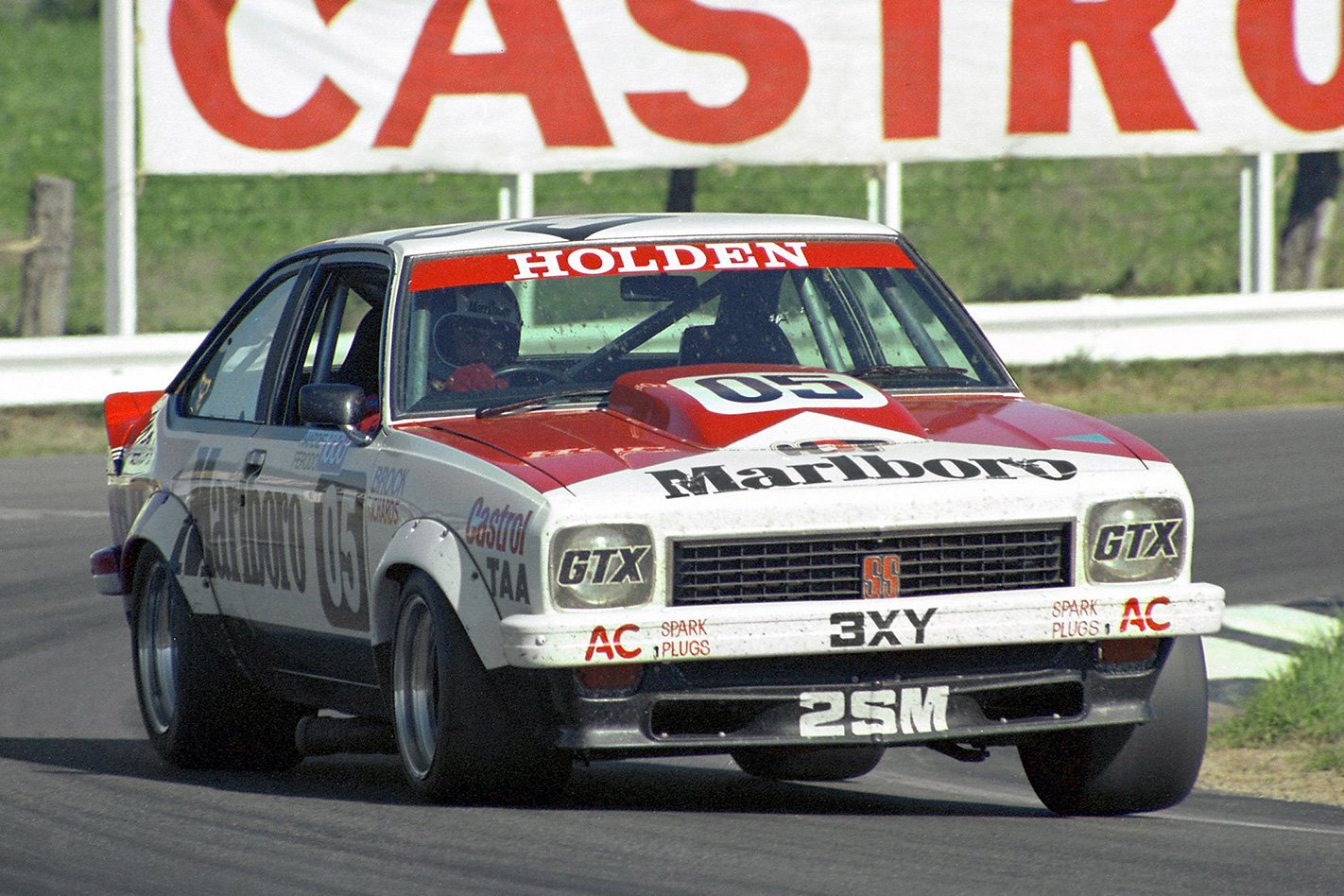
We’ve got our flame suits donned for this one.
Including the Holden LX Torana A9X is sure to cause some consternation among readers, but hear us out. The LX Torana is a hatch, and when fitted with the optional A9X pack, it was undoubtedly ‘hot’. Therefore, it meets our requirements.
If you have been living under a rock, the A9X Torana is what happened when owners of the 5.0-litre V8-powered SS hatchback (and SLR 5000 sedan) variant decided to tick the box for the ‘A9X Option’.
While visually similar to the L34-optioned LH Toranas, the A9X added a rear-facing bonnet scoop, along with mechanical additions such as rear disc brakes, heavy-duty axles, and a ’10 bolt’ differential.
The LX Torana A9X was thrust into cult status when Peter Brock and Jim Richards won the 1979 Bathurst 1000 at the wheel of one, winning by a record six laps.
Peter Perfect once opined that the LX A9X was the best race car he ever drove.
In modern terms the 161kW and 400Nm outputs from a 5.0-litre V8 don’t set the world on fire, but in ‘70s Australia, hatches didn’t get any hotter.
Talbot Sunbeam Lotus
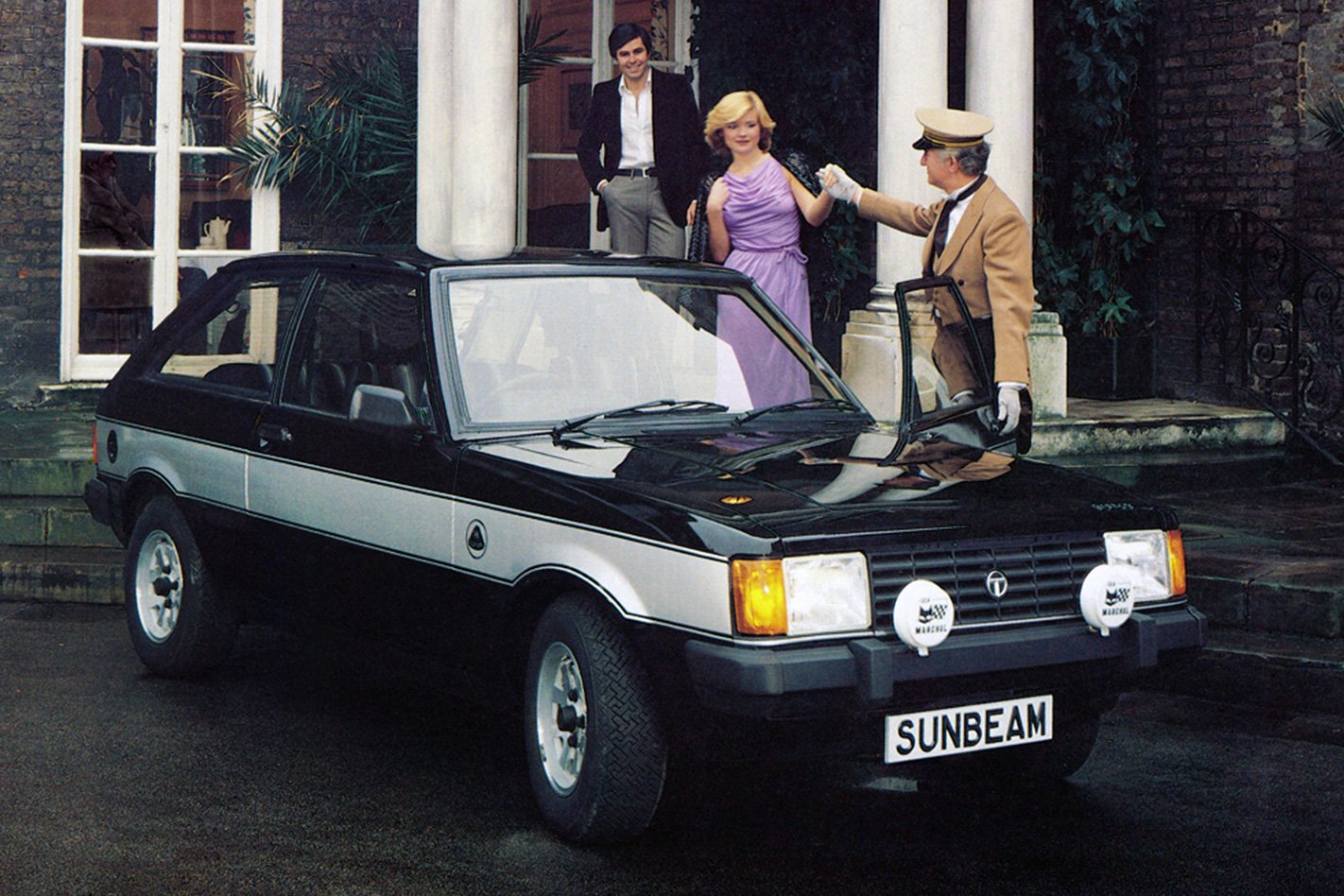
To properly tell the story of the Talbot Sunbeam Lotus, first you must start with the Chrysler Sunbeam.
First manufactured by Chrysler Europe in 1977, the Scottish-built car was funded by a British government grant designed to keep the Linwood plant running.
Originally the car rolled off the production line with a knackerless 928cc Coventry Climax engine inherited from the Hillman Imp. Importantly, the pitiful 31kW of power was sent to the rear wheels.
In order to boost the Sunbeam’s image, a hot hatch version of the Sunbeam was launched in 1978, called “Sunbeam Ti”. This version was fitted with a 1.6-litre that delivered 75kW.
At the same time Lotus was commissioned by Chrysler to build a version of the Sunbeam for rallying.
Based on the Sunbeam 1.6 GLS, the Sunbeam Lotus was fitted with stiffer suspension, a larger anti-roll bar and a larger transmission tunnel. Power was improved thanks to an enlarged 2172cc version of Lotus’ 1973cc ‘907’ engine. The 16-valve slant-four produced 112kW and 203Nm in road trim, improving to 186kW for racing.
Renault Clio V6 Renault Sport
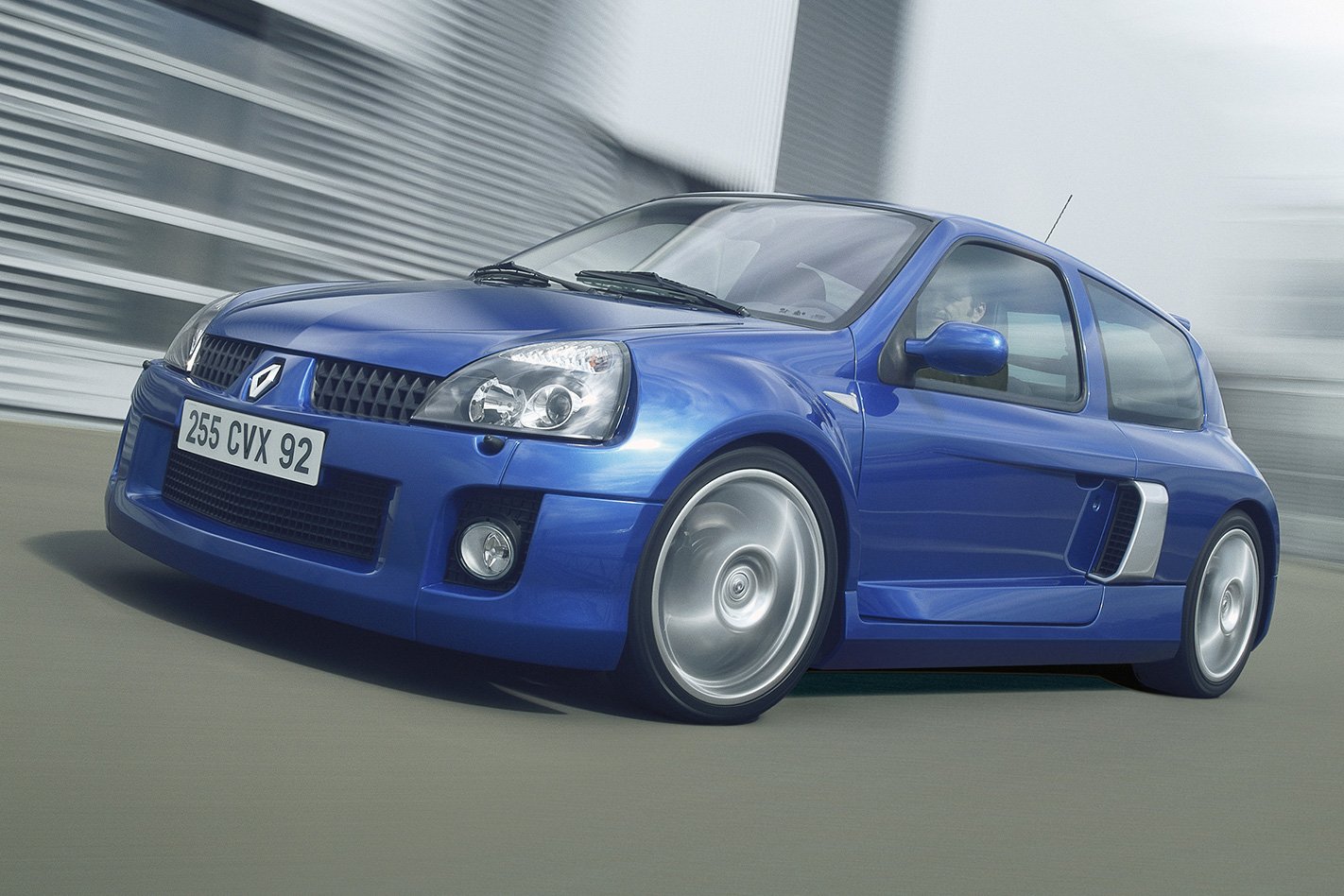
If you are particularly averse to snap oversteer, it might be best to skip this entry.
Despite its well-earned reputation for being cut-throat when driven on the edge, no rear-drive hot hatch list would be complete without the Renault Clio V6 Renault Sport.
Designed by Renault, but developed and built by Tom Walkinshaw Racing, the Clio V6 was based on the second-gen hatch it shares its name with. However, the mechanical relationship is little more than visual.
A 169 kW ES9 3.0-litre 60-degree V6 was sourced, and mid-mounted behind the rear seats. In the change from front-engined, front-wheel drive, to mid-engined, rear-wheel drive, the Clio V6 gained 300kg over the standard Clio 172 Cup.
Despite its power advantage, the Clio V6 was only 0.5-seconds quicker to 100km/h, with a claimed time of 6.2-seconds.
Power was bumped to 188kW for the Phase 2 car, while a racing version called the Clio V6 Trophy was built with a sequential Sadev gearbox, full roll cage, magnesium wheels, and an improved engine output of 210kW.
Toyota AE86
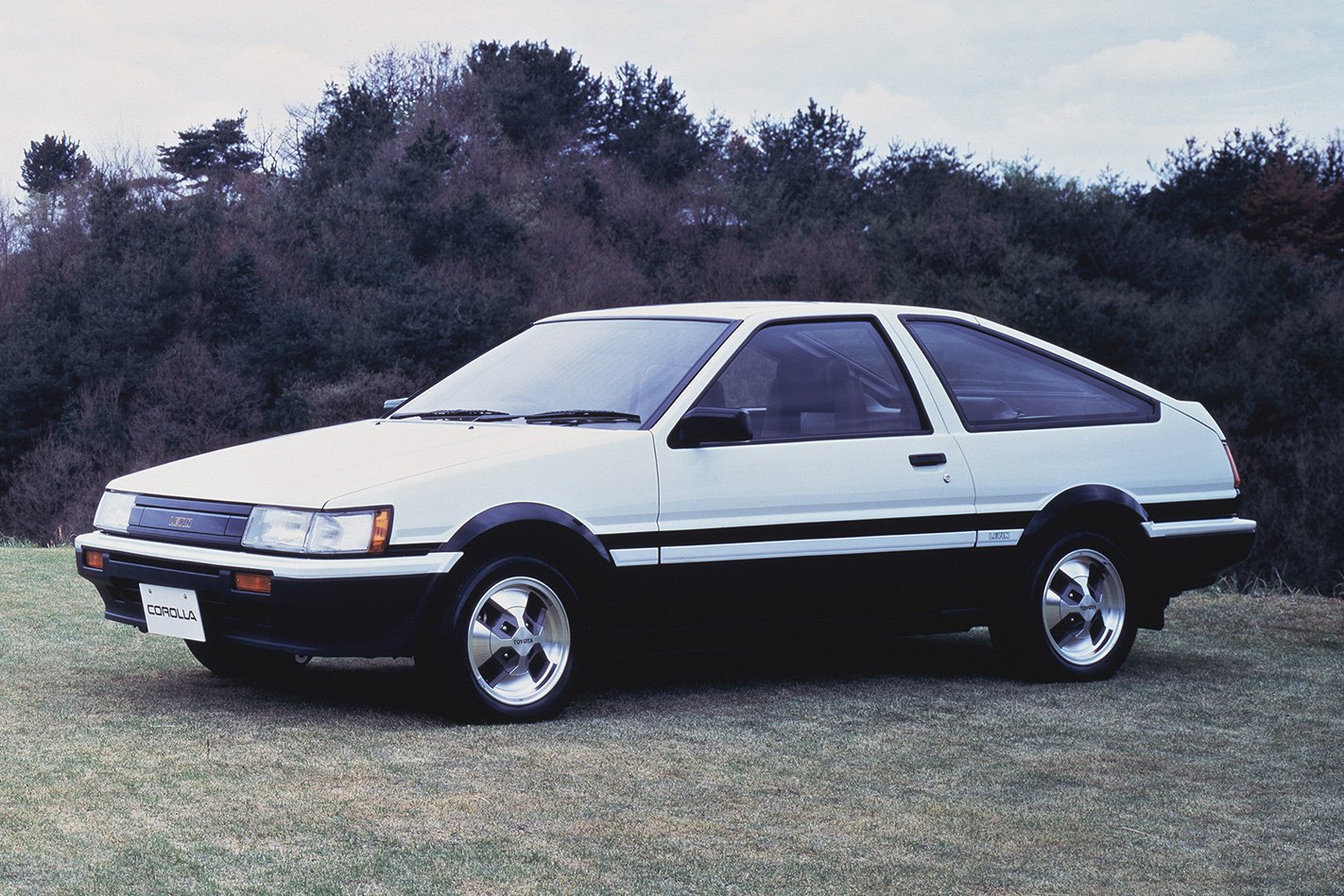
What, you thought we were going to forget to include the iconic Toyota AE86? Based on the fifth-generation Corolla, the AE86 has become a cult-icon thanks to its rev-happy naturally-aspirated engine, rear-drive layout, and place in drifting folklore.
Fitted from the factory with a 1.6-litre 4A-GE DOHC four-cylinder (the same unit fitted to the AW11 MR2), the AE86 combines light weight, 50:50 weight distribution, and sublime chassis tuning.
The engine revved to a 7800rpm redline, thanks to a 9.4:1 compression ratio, with a limited-slip diff available from the Toyota factory as an optional extra.
Buying this once cheap Japanese hatchback is an exercise in compromise and growing budgets nowadays, with prices beginning to soar.
However, those lucky enough to add one to their garage go to sleep knowing they have one of the best driving machines ever produced ready and waiting for them in the morning.
The 2020 Toyota Supra has been photoshopped each and every way by fans to try and imagine what the new sports coupe will look with some exterior enhancements, and now Toyota’s own performance division TRD has given their take on matter with their new range of TRD options.
The concept dubbed the ‘GR Supra Performance Line Concept TRD’ was revealed at the Osaka Auto Messe in Japan, an event specialising in custom cars.
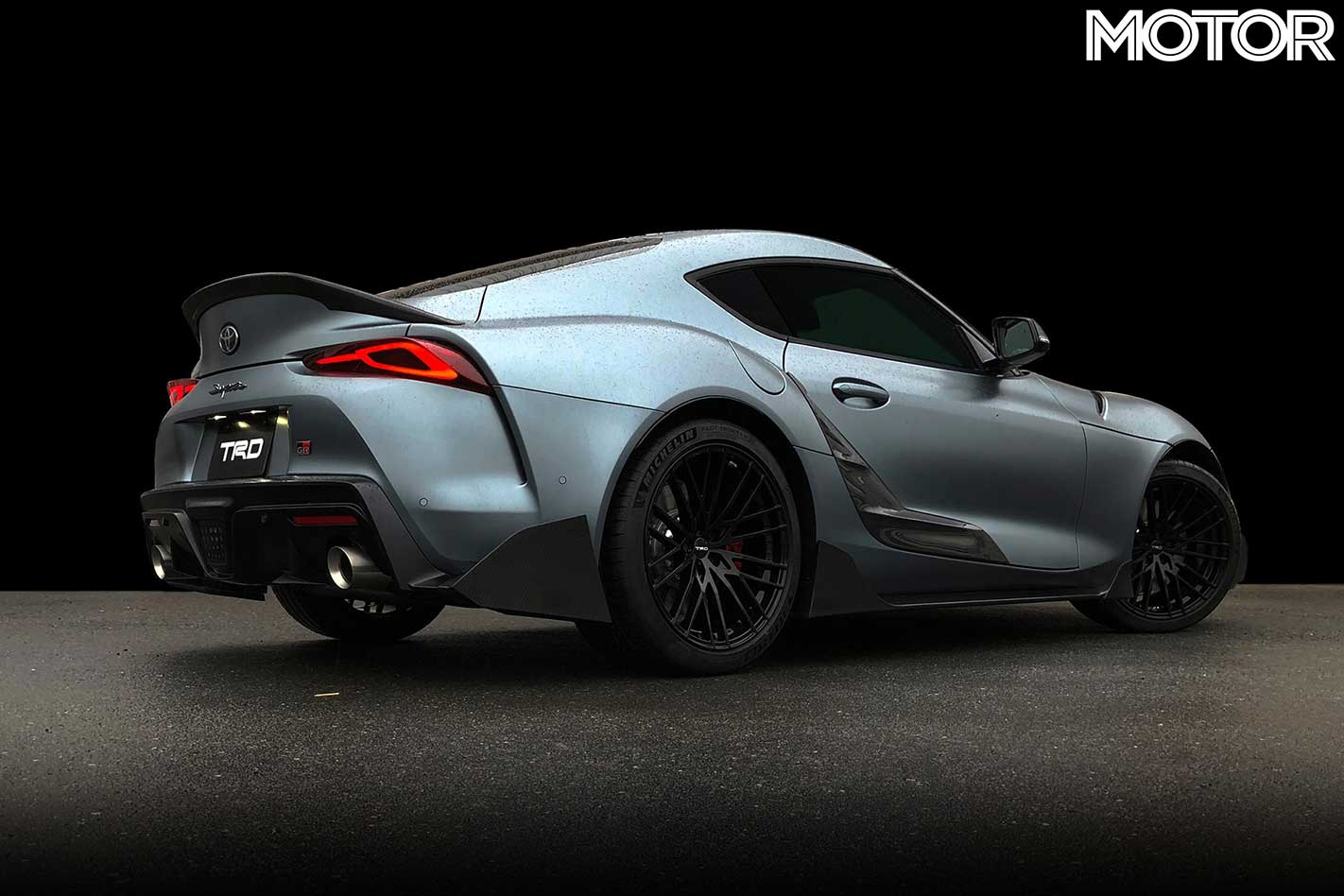
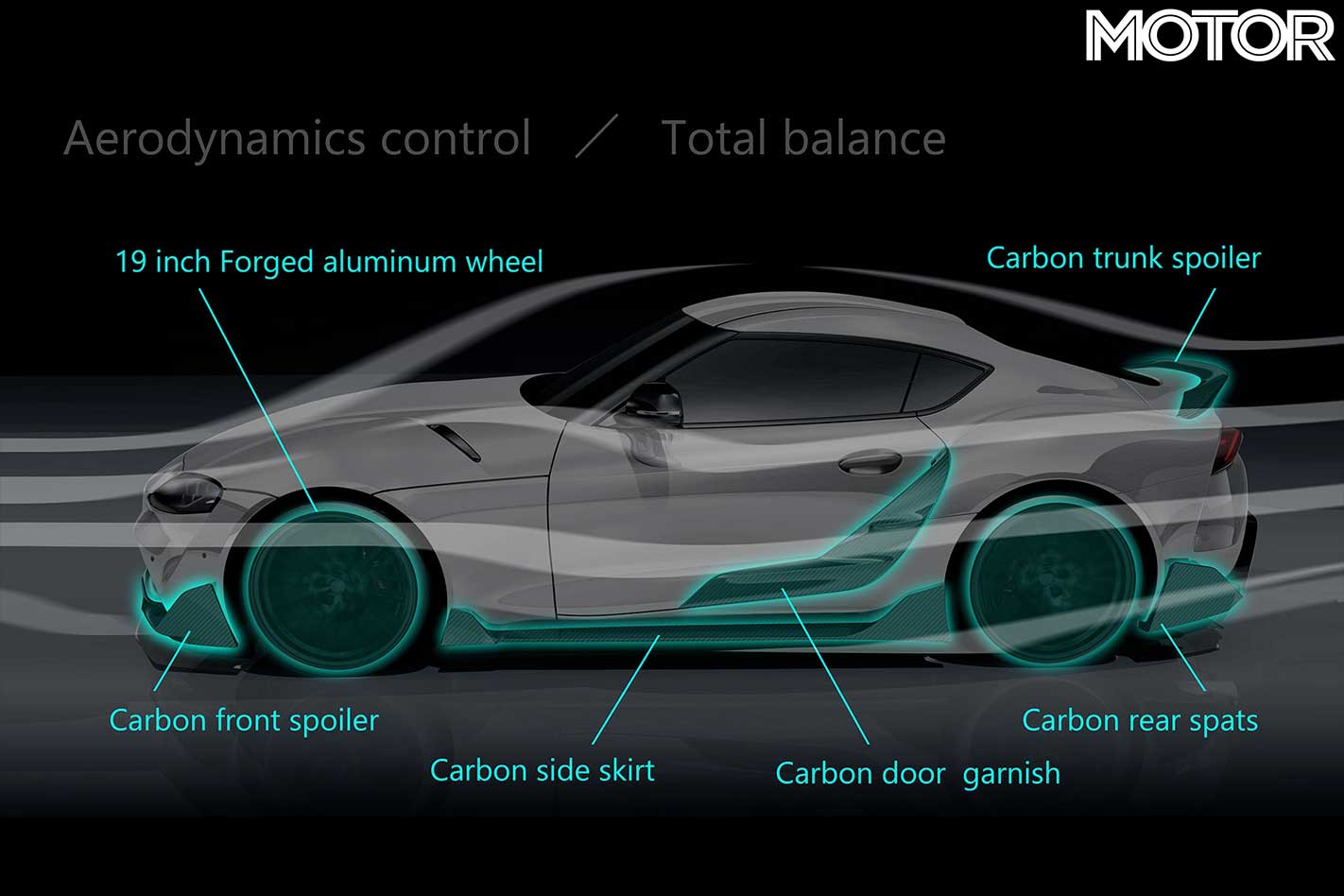
The new TRD parts showcased for the Supra included a new carbon front lip, carbon side skirts and a bigger carbon version of the rear diffuser.
The package also includes a bigger carbon spoiler to extend the factory hump in the boot lid, as well a carbon door garnish draped across the bottom of the doors, supposedly to send air towards those aggressive rear air dams.
Topping off the package is a set of forged 19 inch aluminium wheels, finished in black.
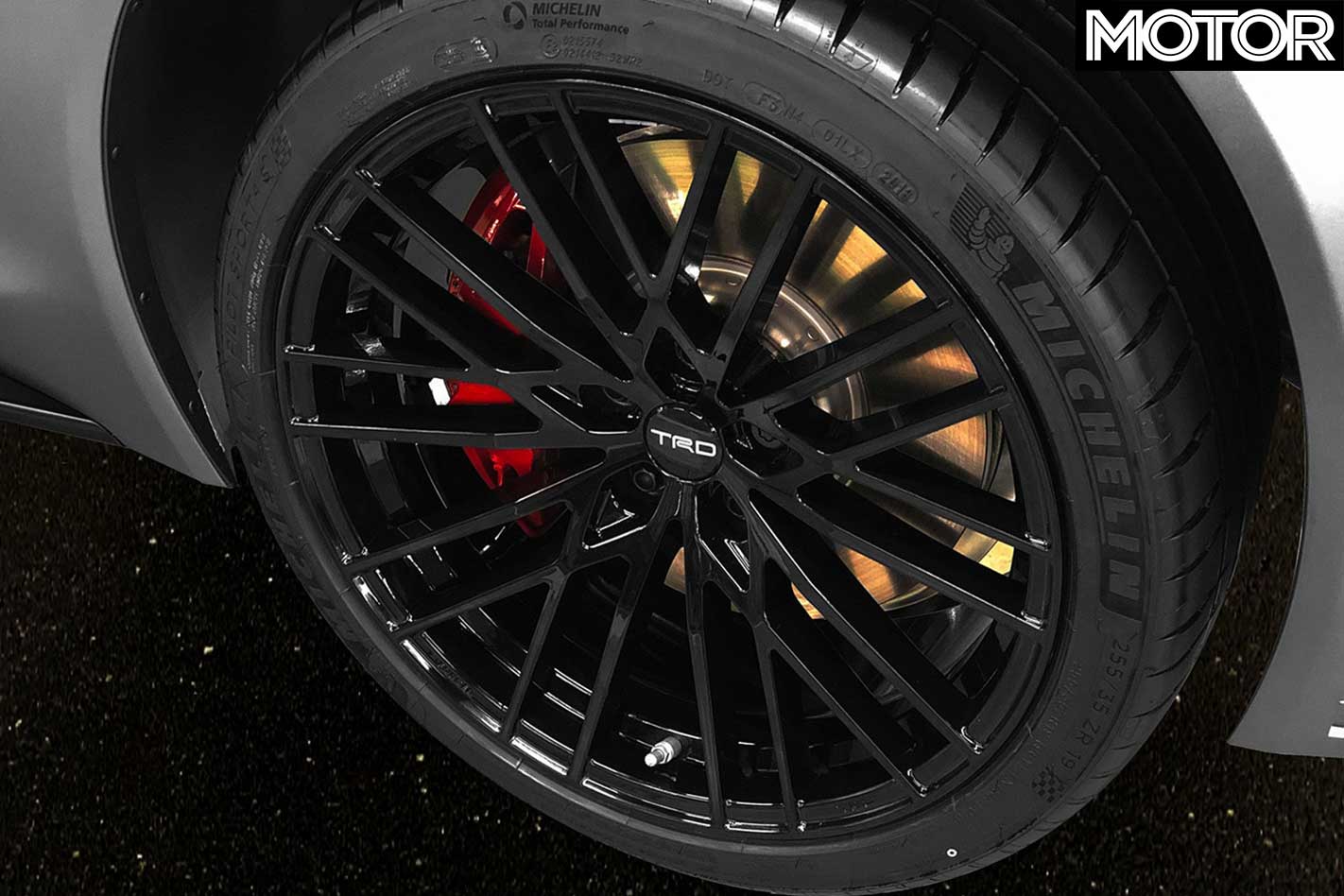
From the loose Japanese-to-English translation on their website, TRD claims the new package helps improve both steering response and aerodynamics, whilst giving the car an aggressive look and feel.
There’s no mention of an increase in power for the turbocharged three litre straight-six BMW engine, or any modifications to the cars suspension or handling.
Still, it’s hard to deny that the new TRD goodies turn this Supra into a far more aggressive looking prospect; but there’s no real word as to whether these will be a Japanese-market-only option or if we’ll be able to get our hands on some TRD options here in upside-down country.
With less than 500 cars coming to Australia in the first shipment, which won’t be here until late 2019, we may have to wait a while to find out.
Subaru will showcase two electrified powertrains, which the Japanese car maker bills as “all-new, all-powerful” at the Geneva motor show in March. Making their debut under the company’s established e-Boxer hybrid nomenclature, the new engines are expected to represent a more concerted push toward battery-enhanced technology for Subaru.
And with future iterations of Subaru performance cars, most notably the WRX and WRX STI, expected to retain their grippy all-wheel-drive underpinnings yet transform into petrol-electric hybrids, there are reasonable odds that the Geneva engines could provide clues about what’s in store for those models as well.
Subaru’s PR office appears to be priming us for such a scenario. Using language like “there’s hybrid, then there’s the all-powerful e-BOXER”, and “excitement generates electricity”, in their announcement of the dual-hybrid debut, we’re guessing these engines will pack a much greater punch than the company’s most recent hybrid effort – the 115kW/253Nm naturally-aspirated 2.0-litre hybrid used in the Japanese-market Subaru Forester e-Boxer.
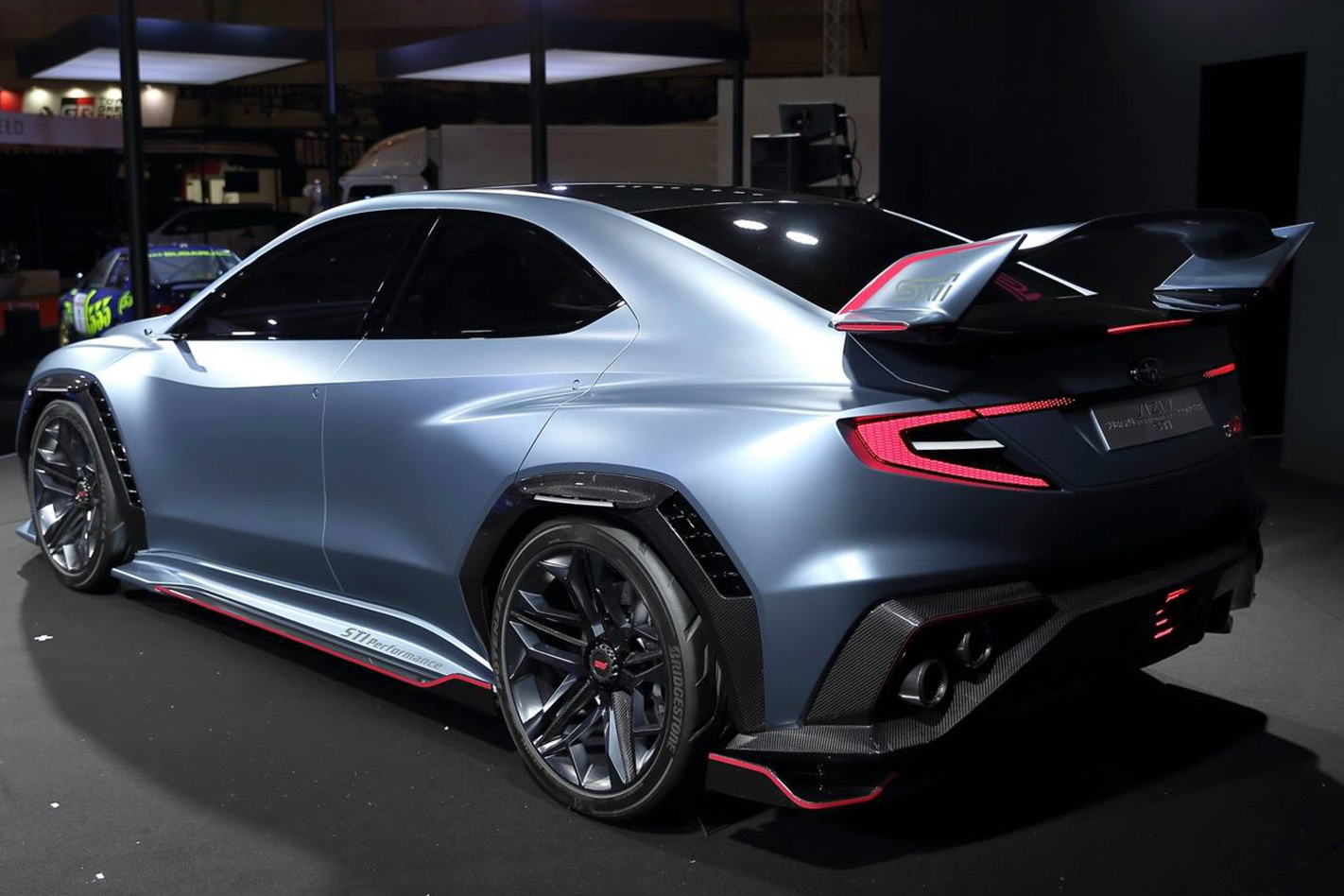
And they will need to if Subaru is to deliver on its commitment to electrify its range of cars while avoiding alienating thousands of WRX fans. The current WRX and WRX STI will be due for all-new replacements in 2020, and while they generate a stout 197kW/350Nm and 221kW/407Nm respectively from their turbocharged flat-four engines, both powertrains suffer from considerable turbo lag.
Augmenting an otherwise-traditional turbo flat four with an electric motor to ‘fill in’ that turbo-lag-induced pause in power makes sense from a performance point of view, and would help Subaru’s track stars exploit their all-wheel-drive grip advantage to the maximum. At the same time, the hybrid hardware could also help tame that other WRX negative trait: high fuel consumption.
What it would mean for the rest of the drivetrain is a mystery – Subaru’s current hybrids all send power to the wheels via a CVT automatic, a type of transmission that’s not known for offering much in the way of driver enjoyment.
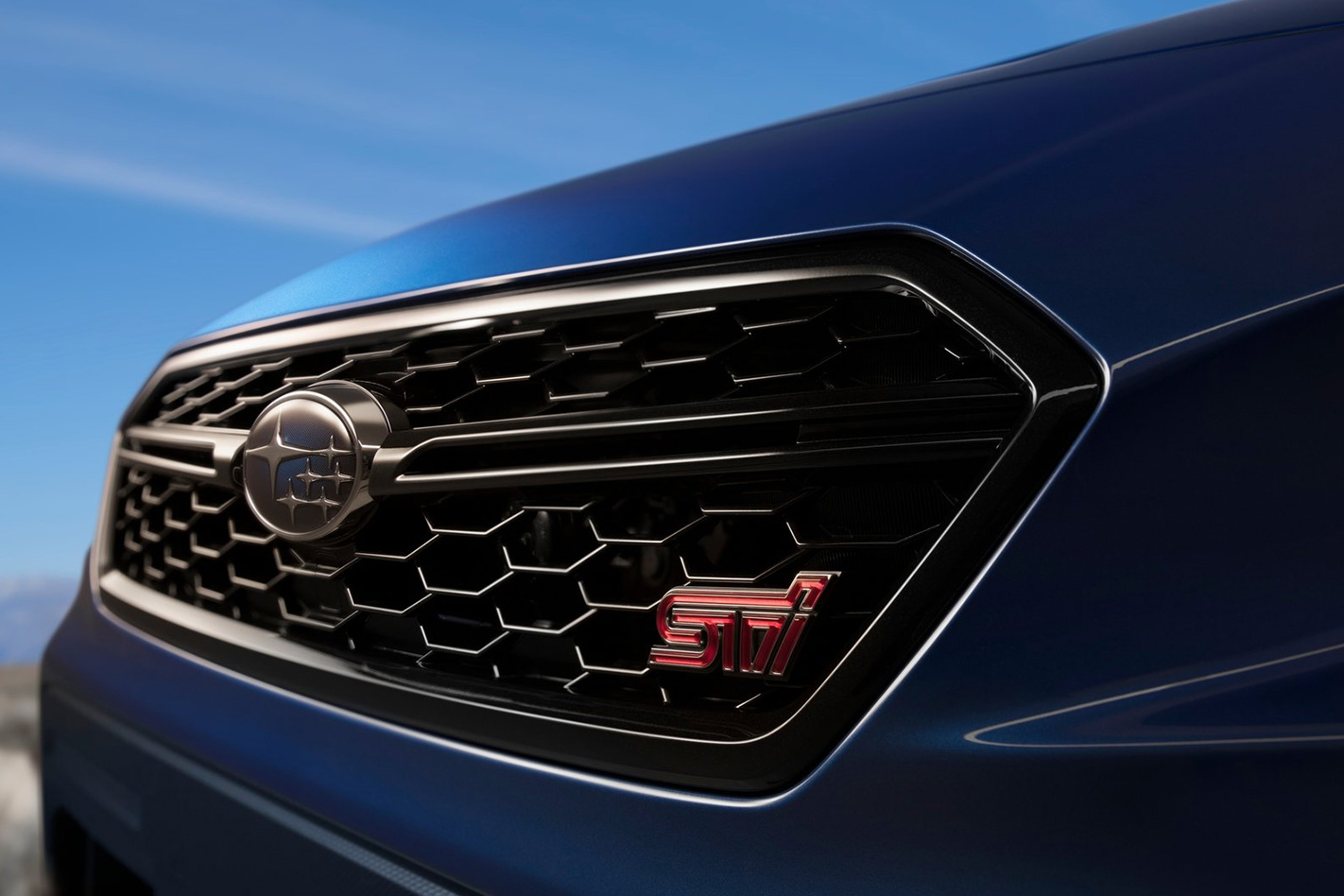
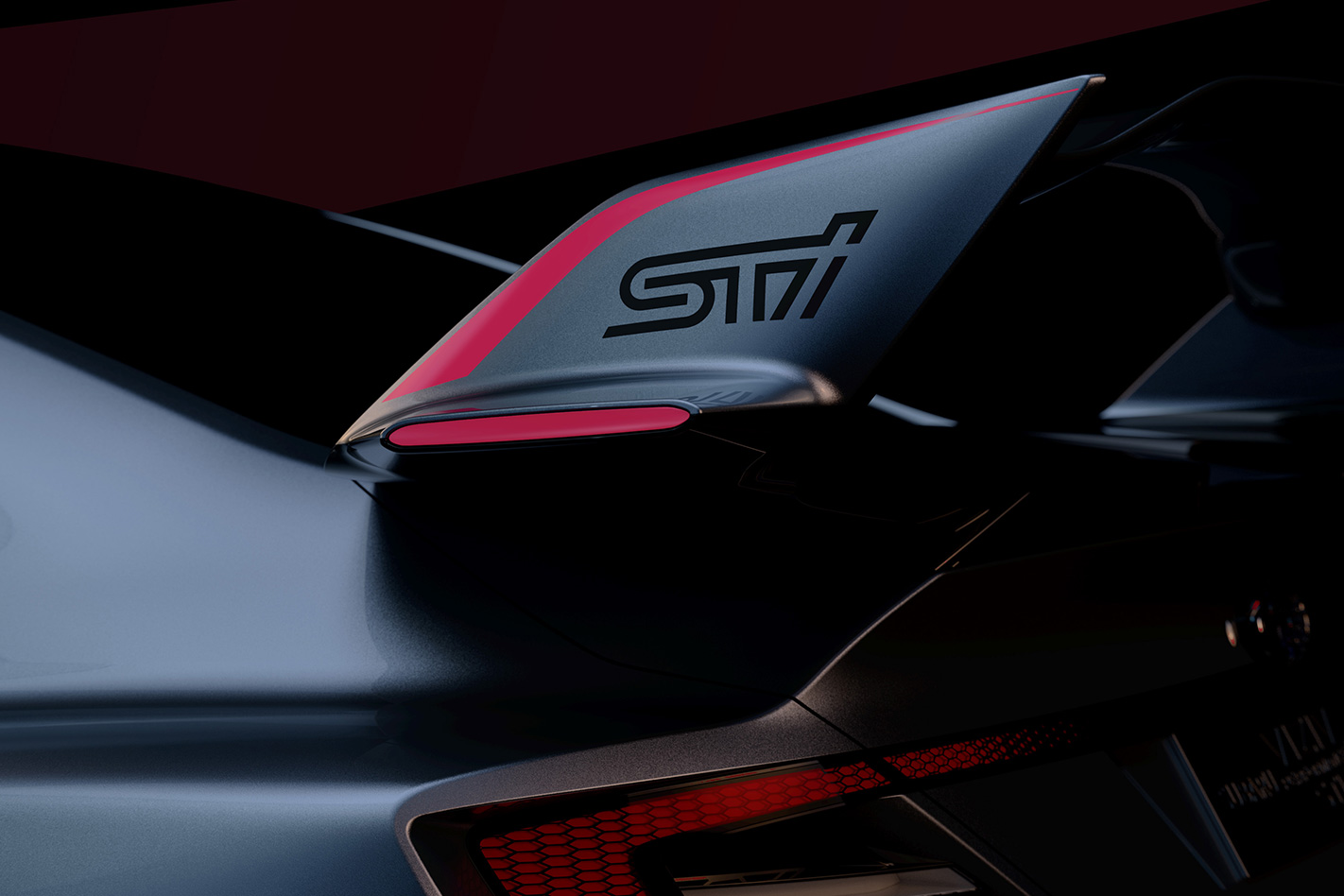
However, we do have at least some inkling of what a future Subaru performance car might look like – hybrid or not. Last year’s Subaru Viziv Performance STI Concept (pictured) was an ultra-aggressive design study that pointed toward a very WRX STI-ish four-door sedan, and its prominent bonnet scoop suggested turbocharged engines were still very much at the front of Subaru’s mind.
Yet making it a hybrid would be relatively easy. If a production version were to eventuate it will be built on Subaru’s hybrid-accommodating SGP architecture (which underpins the current Impreza, XV and Forester), and Subaru executives have already dropped hints that hybridisation is on the horizon for the company’s performance cars. How soon is that future? We’ll likely find out on March 5 at Geneva.
Three decades ago Mazda introduced a little car with a big future. Since then the now-iconic MX-5 has gone on to be a resounding success for the Japanese manufacturer, and one of the most loved sports cars of modern times.
In recognition of consistently strong global sales and a fearsomely loyal fan base, Mazda has created a special edition dubbed the 30th Anniversary Edition.
You could argue that, with a recently updated and more powerful engine, combined with arguably the best chassis and handling package to date, the current ND model needs little enhancement to celebrate 30 years.
On the other hand, you’d be forgiven for saying the special paint, Rays wheels, Alcantara Recaro seats and boosted brakes are a mere gesture in return for more than a million sales.
If that’s the case, have a look through our special 30th birthday celebration gallery, as we glance back at some of the most memorable special editions from Australia and around the planet since the venerable MX-5 came into the world.
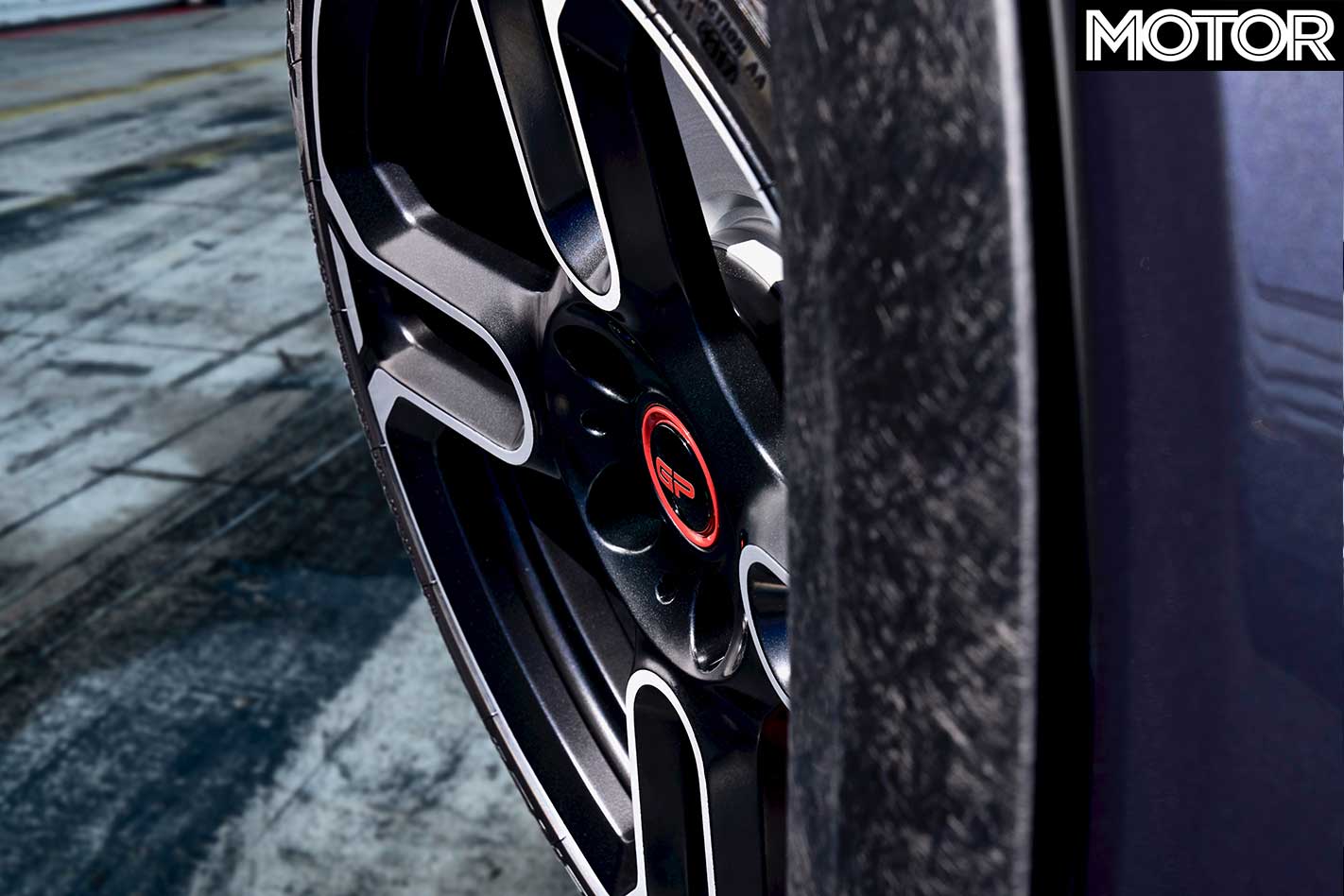
Mini has announced the next version of Mini John Cooper Works GP is on its way for a 2020 arrival.
Limited to 3000 units, the JCW GP will follow in the footsteps of its predecessors from the previous generations of Mini Cooper from 2012 and 2006.
This generation’s JCW GP was previewed at the Frankfurt Motor Show in September 2017, and the teaser shots released by Mini appear to show some very similar styling details.
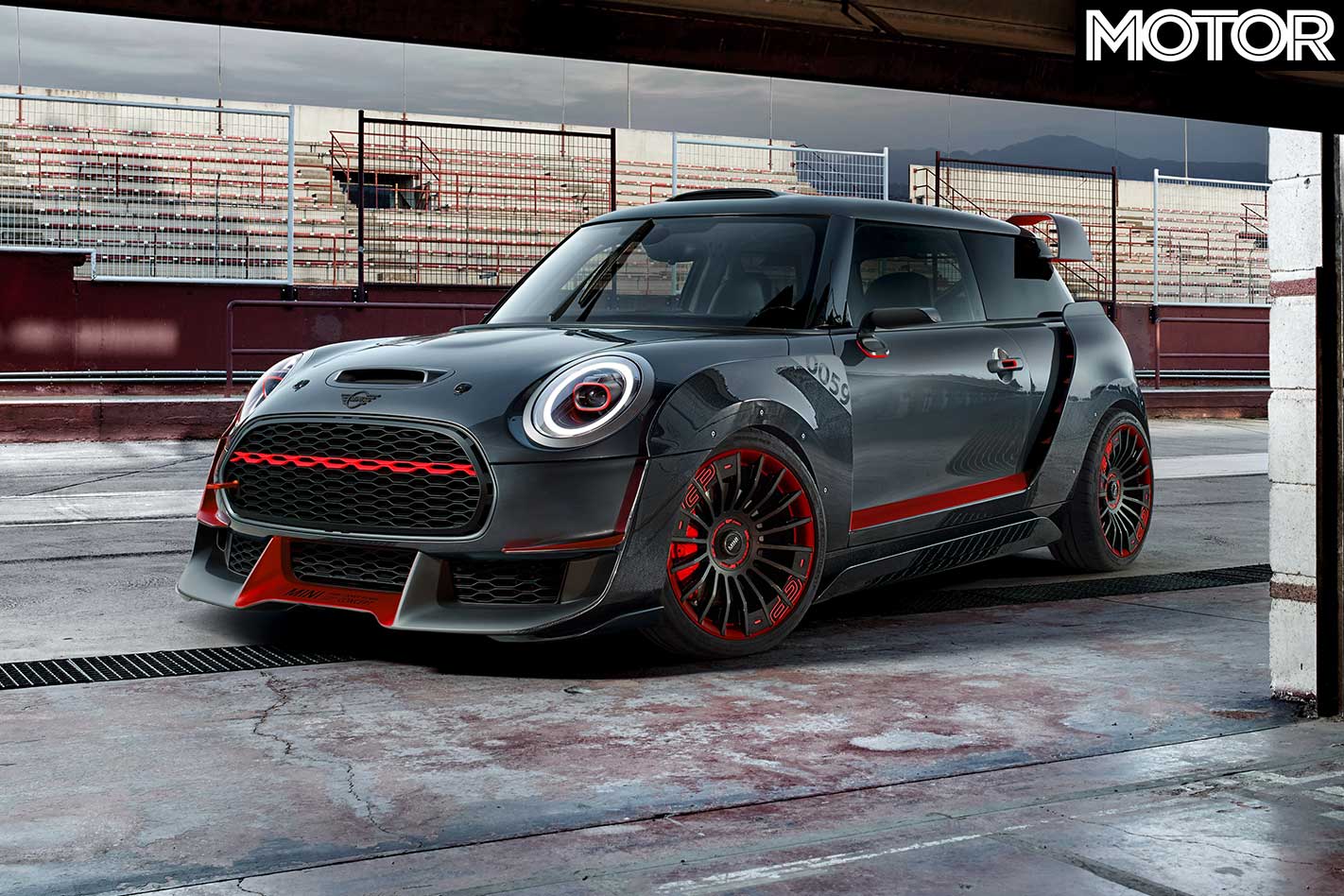
But it’s the new information that’s most exciting, with promise of more than 220kW thanks to an engine from the BMW Group portfolio, likely a modification of the newest high-powered turbocharged inline four which debuted in the BMW X2 M35i.
Mini calls it “by far the fastest and most powerful MINI ever to be approved for use on the road.”
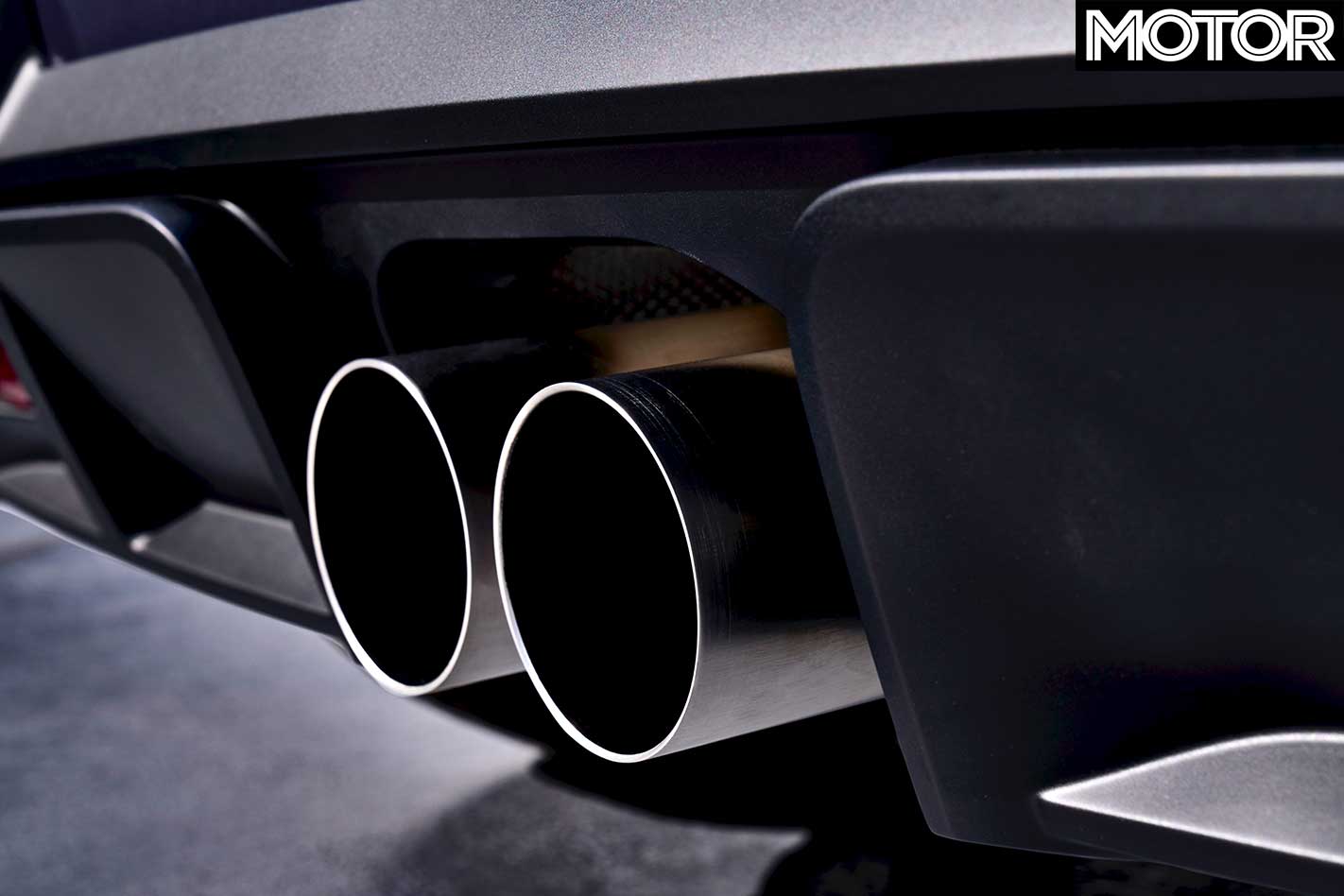
In terms of styling, we expect to see a very close link to the 2017 concept, with a large wing, aggressive splitter and diffuser, and motorsport-inspired accents and trim.
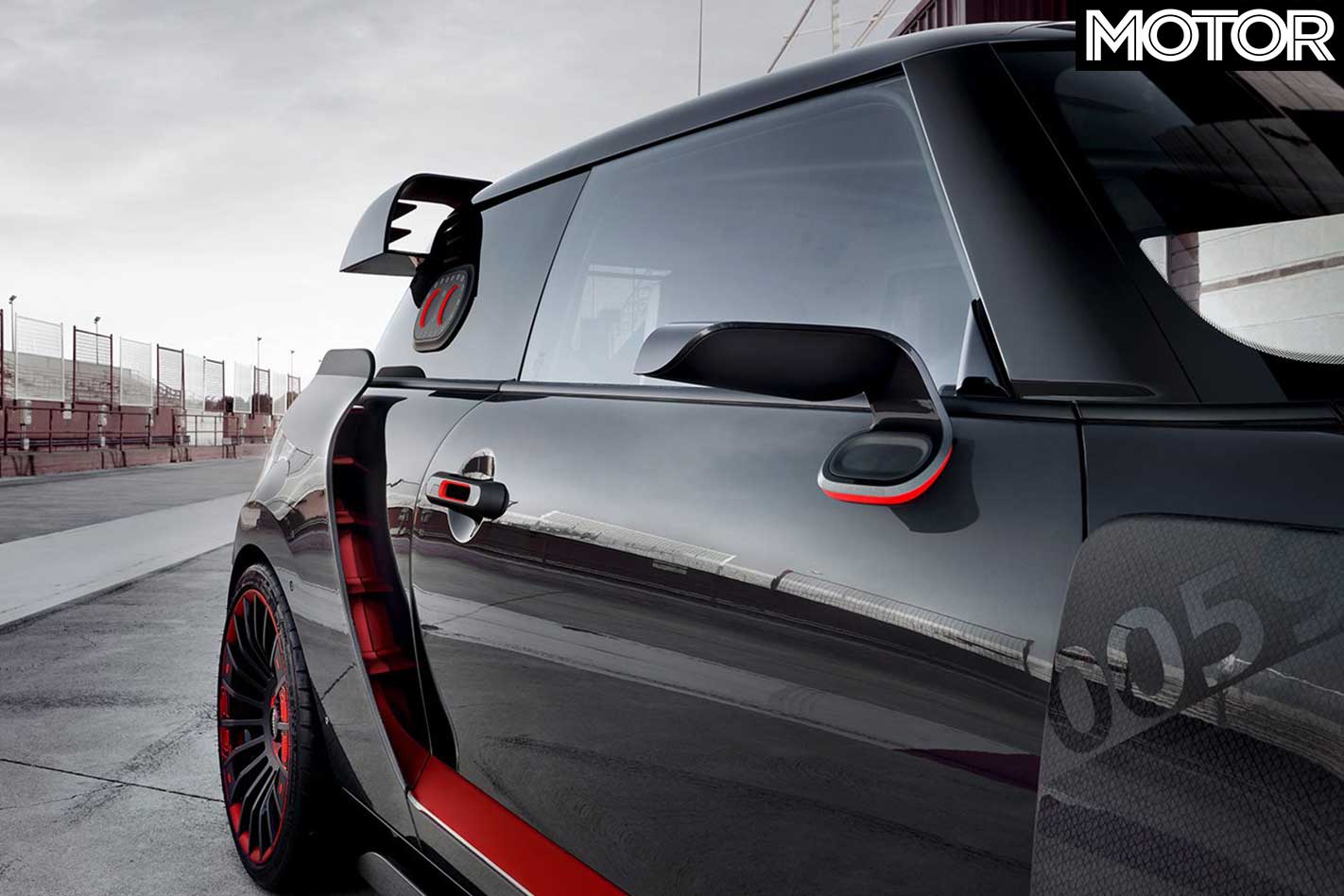
Mini says aerodynamics and weight reduction will also be targets for development over the next few months, with suspension to be specifically tuned for the new engine’s outputs.
Mini VP of product and launch management Thomas Giuliani says he expects the new JCW GP to sell out quickly based on demand for previous generations of ‘GP’.
“The fastest Mini in our brand history – which now goes back 60 years – is an expression of pure racing passion,” says Giuliani
“We are well aware of the enormous fascination exercised by the Mini John Cooper Works GP, not just from the euphoric reactions to the concept vehicle but also from past experience: after all, every one of its predecessors was completely sold out even before the official market launch.”
Locally, Mini Australia has expressed interest in the 2020 Mini Cooper JCW GP, after the previous GP model saw 55 units arrive in Australia in 2013.
“Mini Australia is very excited by the announcement and has already expressed interest in securing an allocation, though at this point it’s unconfirmed.
“If confirmed, Mini would expect a 2020 arrival in line with the rest of world.”
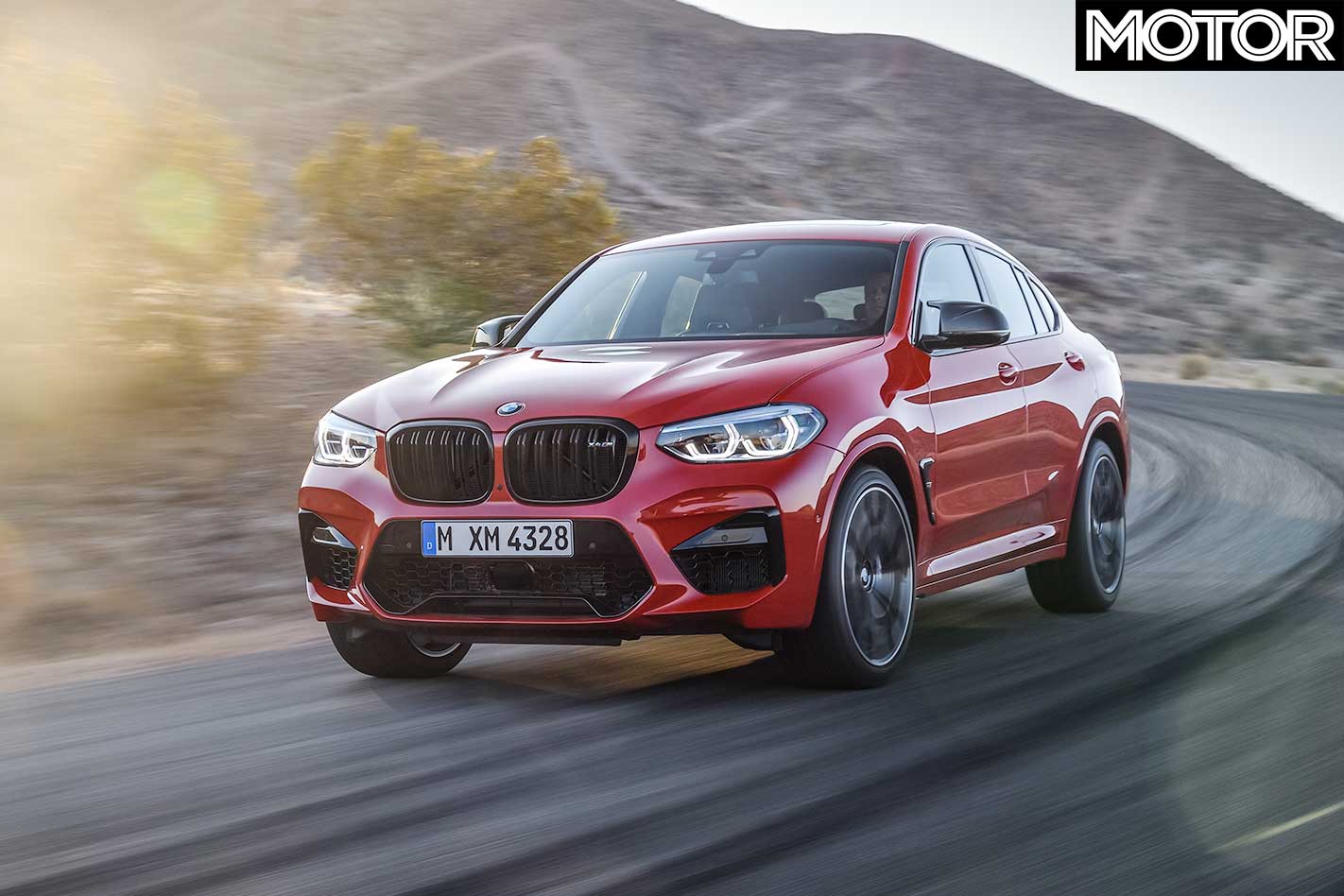
BMW has officially revealed the newest members of the M family, the mid-sized X3 M and X4 M SUVs, with power figures that outgun some of M Division’s finest, and styling that seems to lean towards the subtle side.
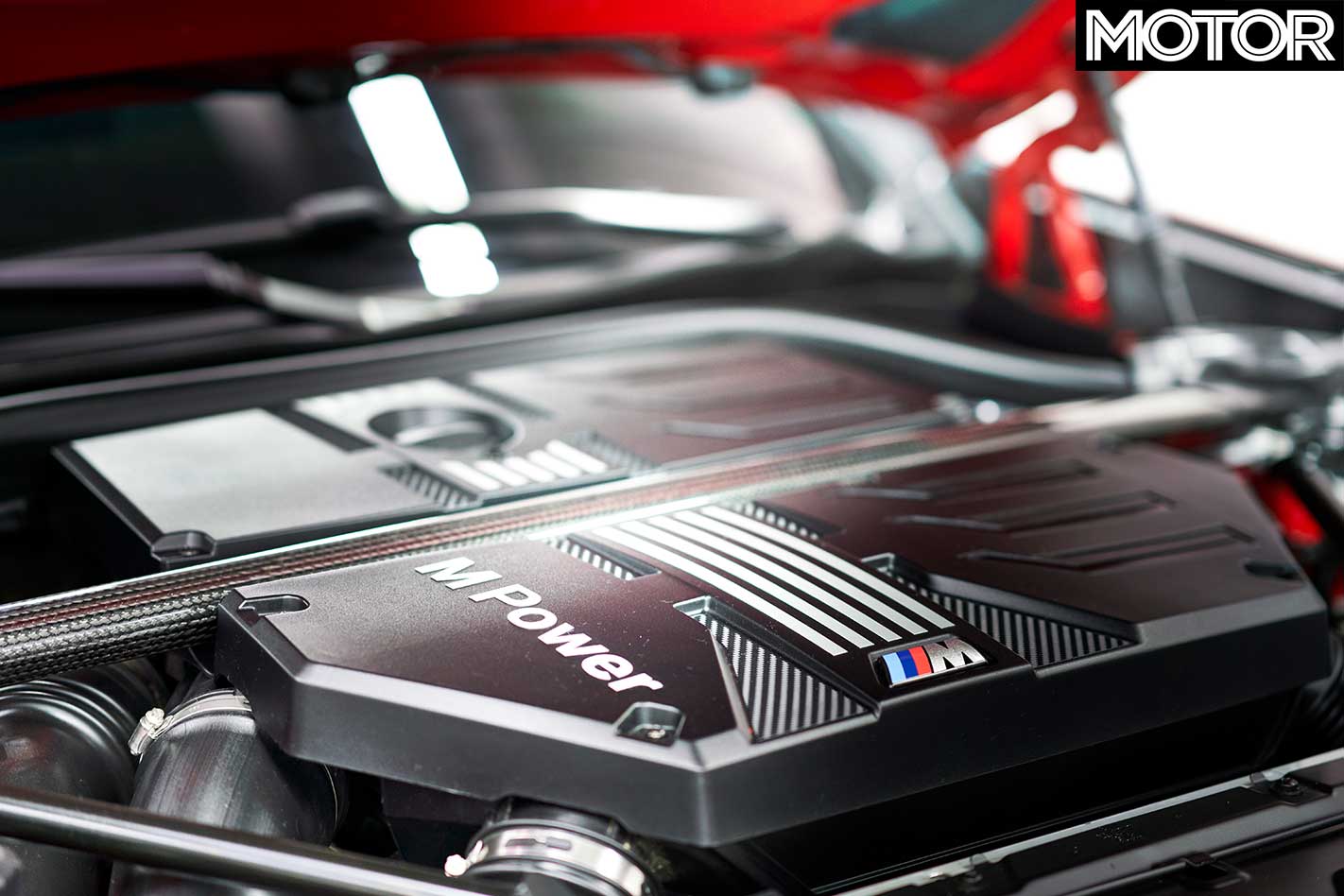
With a new 3.0-litre twin-turbo inline six, the BMW X3 M and X4 M both produce 353kW and 600Nm, more than any other six-equipped M car.
BMW says they’ll hit 100km/h in just 4.2 seconds, but that there will also be Competition variants with an extra few kiloWatts (for a total of 375kW) allowing a 4.1 second 0-100km/h sprint.
Helping this is a slightly wider torque band in the Competition models. In standard spec, the X3 M and its X4 companion reach peak torque between 2600 and 5600rpm, while the Competition’s peak torque drops off only after 5950rpm.
Peak power delivery arrives at a high 6250rpm, and carries through to the 7200rpm redline in both versions of X3 and X4 M.
Interestingly, BMW says the core of its cylinder head in the new engine has a 3D-printed core, which allows a more complex construction than conventional manufacturing.
“3D printing technology has cut the weight of the new engine’s cylinder head core and allowed its coolant ducts to be routed in a way that optimises temperature management.”
The engine sends power to all four wheels with a rear-bias as in the BMW M5, via an 8-speed M Steptronic automatic transmission. BMW says the gearbox give drivers enough control in manual mode that it’ll allow the tacho to reach redline and won’t automatically upshift once it’s there.
Both versions of each model come with BMW M-tuned adaptive dampers as standard, and while BMW doesn’t specify, it wouldn’t be a surprise if the Competition variant has a slightly stiffer bias.
M Division has stiffened up the chassis of each with elements like engine bay bracing made from carbon fibre reinforced plastic, while the Competition versions gain extra custom custom-made swivel bearings, torque arms, wishbones, and model-specific anti-roll bars.
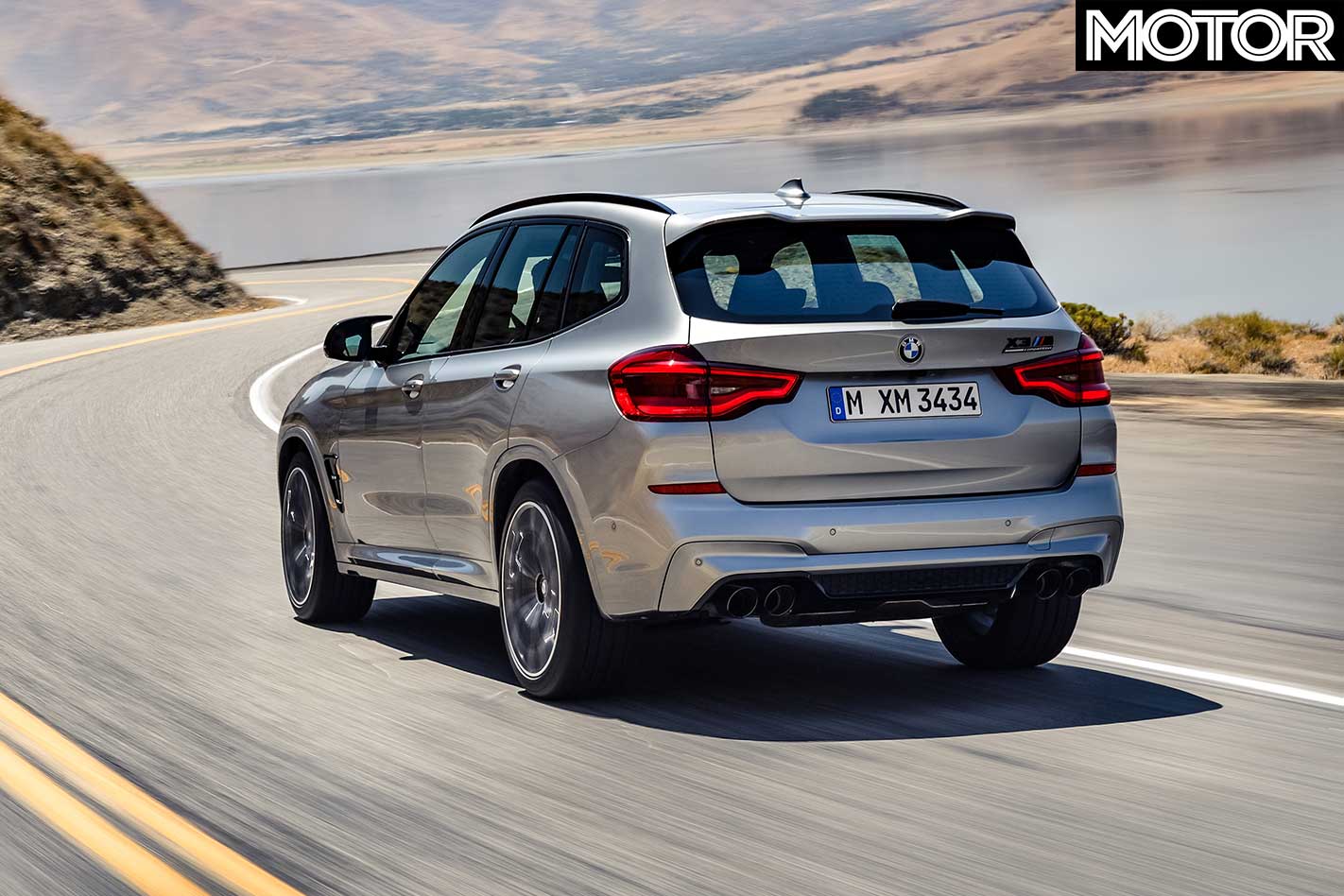
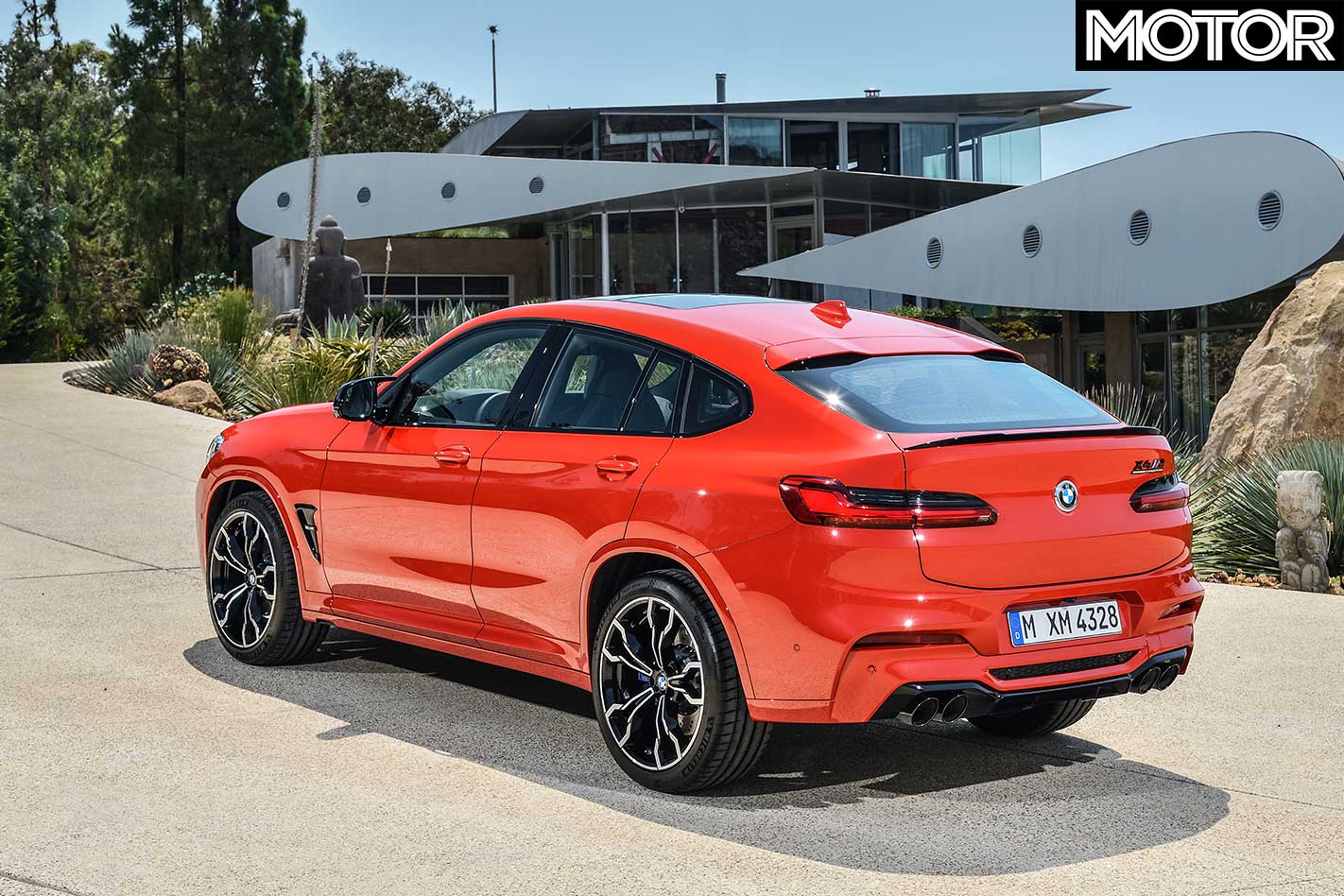
While BMW’s M cars are rarely visually raucous, the X3 and X4 M models have remained relatively subtle with only small accents such as lip spoilers and their badging to give the game away. An optional M Carbon exterior package will be available about mid-year for those who wish to change this.
Seven colours are to be available, ranging from the subtle M-exclusive Donington Grey, to brighter hues such as Toronto Red metallic.
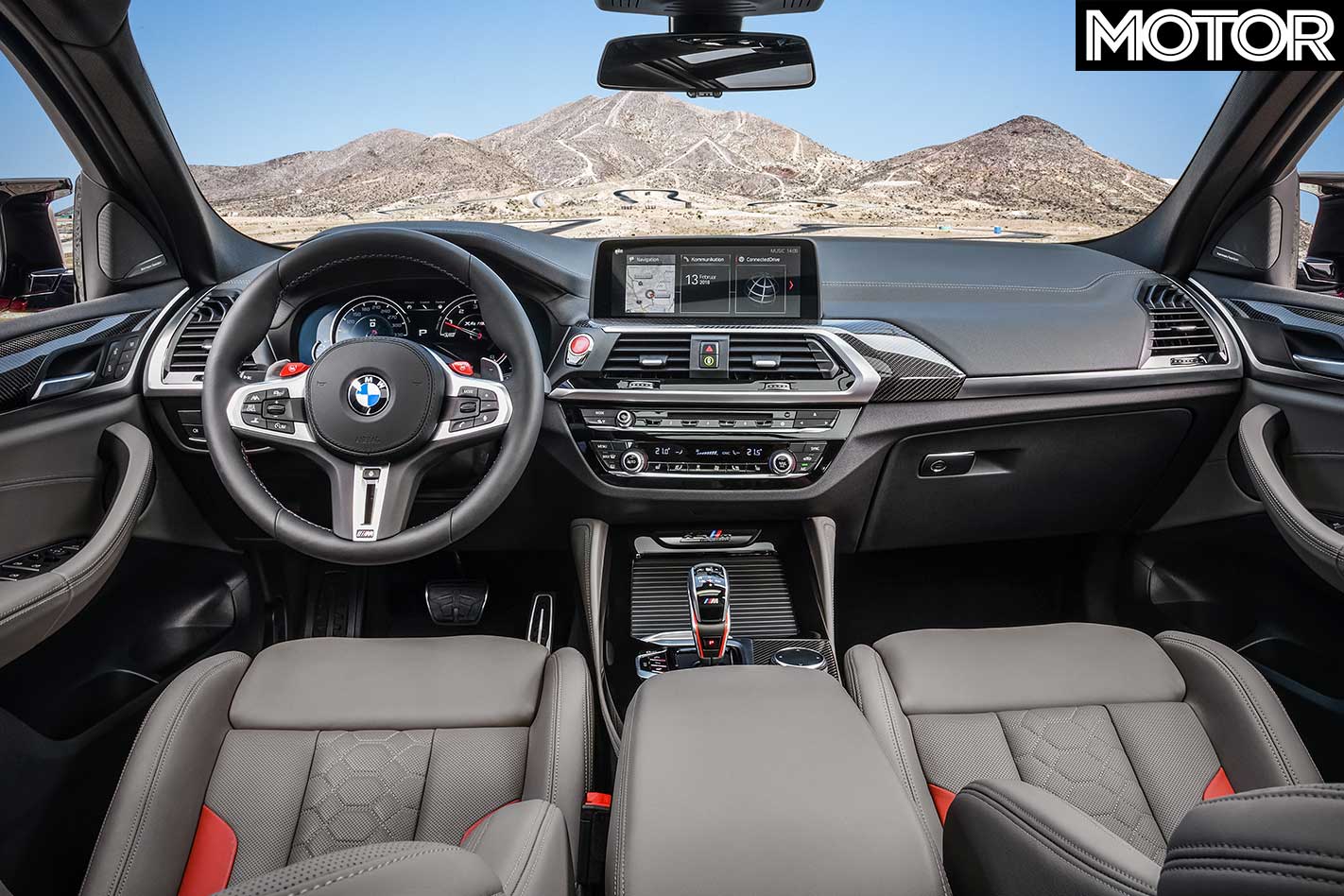
Inside, all the usual M car elements can be found, including an M steering wheel, carbon fibre trim, an M instrument cluster, and the new M1 and M2 buttons fitted to the wheel allowing easy access to customised drive settings.
Local pricing and availability for the X3 M and X4 M is yet to be confirmed by BMW Australia.
