
It may not have had as many comebacks as Dame Nellie, but Alfa Romeo is certainly something of a comeback kid in this market.
This review was originally published in MOTOR’s April 2007 issue
You probably don’t remember the 1960s and ’70s when Alfa was a real force here in Australia, but take it from us, it was. The Italian firm was genuinely seen as a viable mid-price Euro along with several other manufacturers that tripped over their underdaks around the same time, including Renault, Lancia and Fiat.
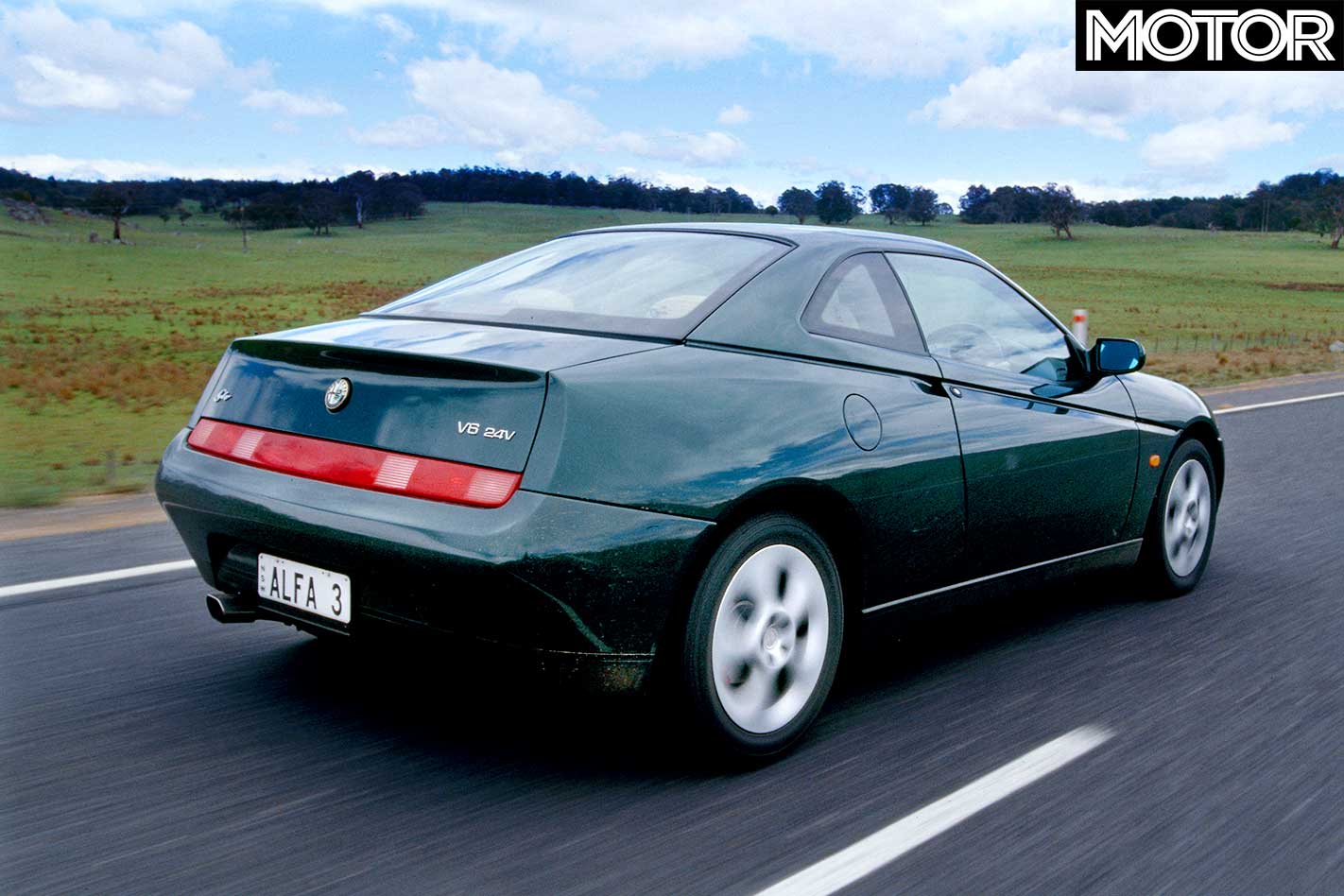
A couple of models are responsible for the resurgence in interest; namely the 156 four-door and the GTV coupe (and let’s not forget the Spider which was based on the GTV).
And these days, the GTV is starting to attract those who want a young-ish second-hand coupe with a bit of flash and Italian levels of involvement and depreciation. That you also get Italian levels of build quality (insert shrugged shoulders here) is a gimme, but not one that you can do much about. You want Samantha, you gotta cop Endora into the bargain.
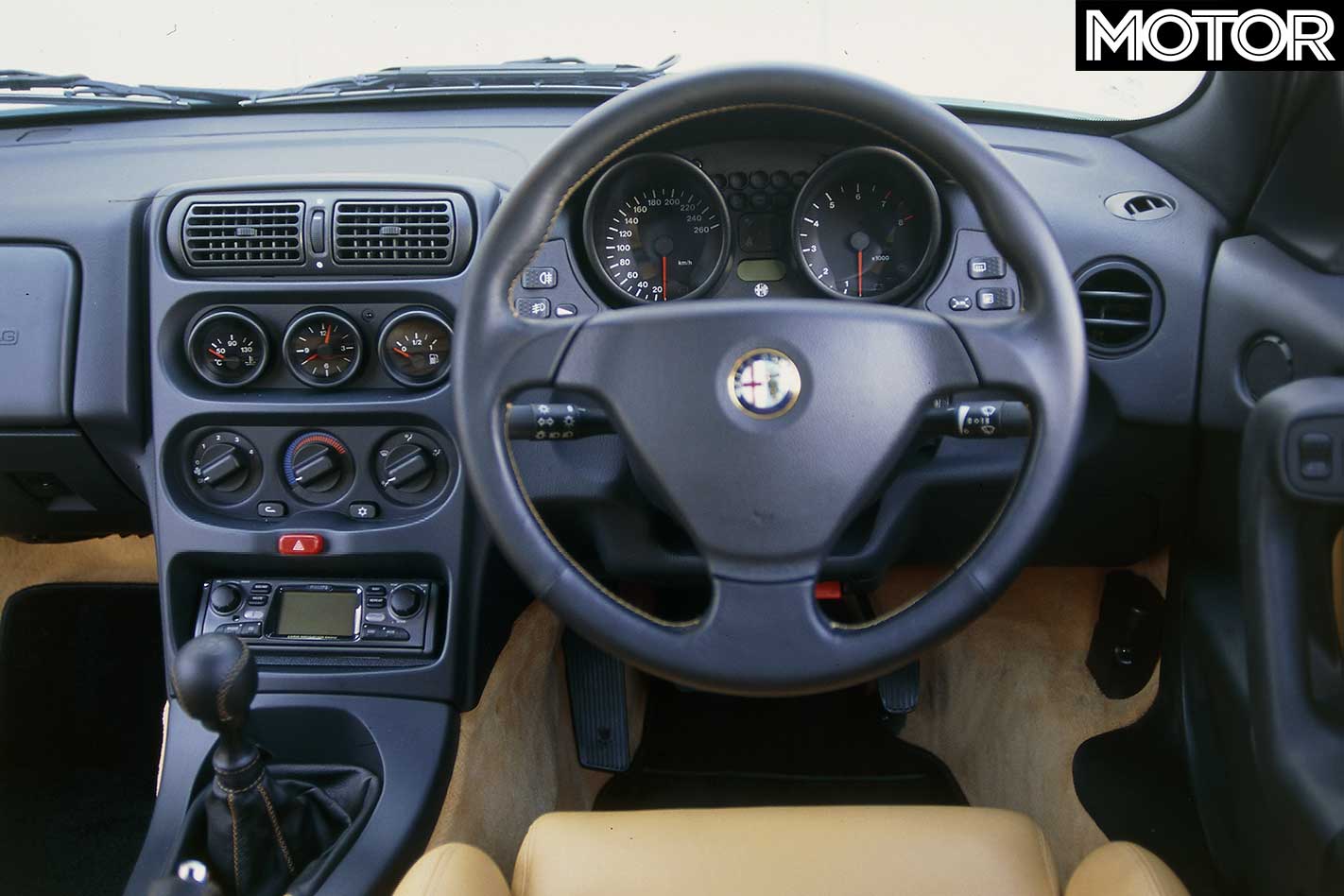
Precisely which version of the handsome GTV you go for will be dictated by what you intend to do with the thing. If it’s for tooling around and looking speccy, then the base-model, four-cylinder version will do the job just nicely.
In fact, that’s selling it well short, because the lighter four-banger meant it was also the most balanced GTV in the model’s line-up, and it steers more accurately and changes direction better than the bigger-engined version as well. On the other hand, there’s something delightfully compelling about the GTV V6.
It’s often said that every Australian boy should own a V8-powered car at some stage in their life. But, it’s equally true that if you’re into European coupes, then you really need to also have your name on the rego papers of an Alfa V6.
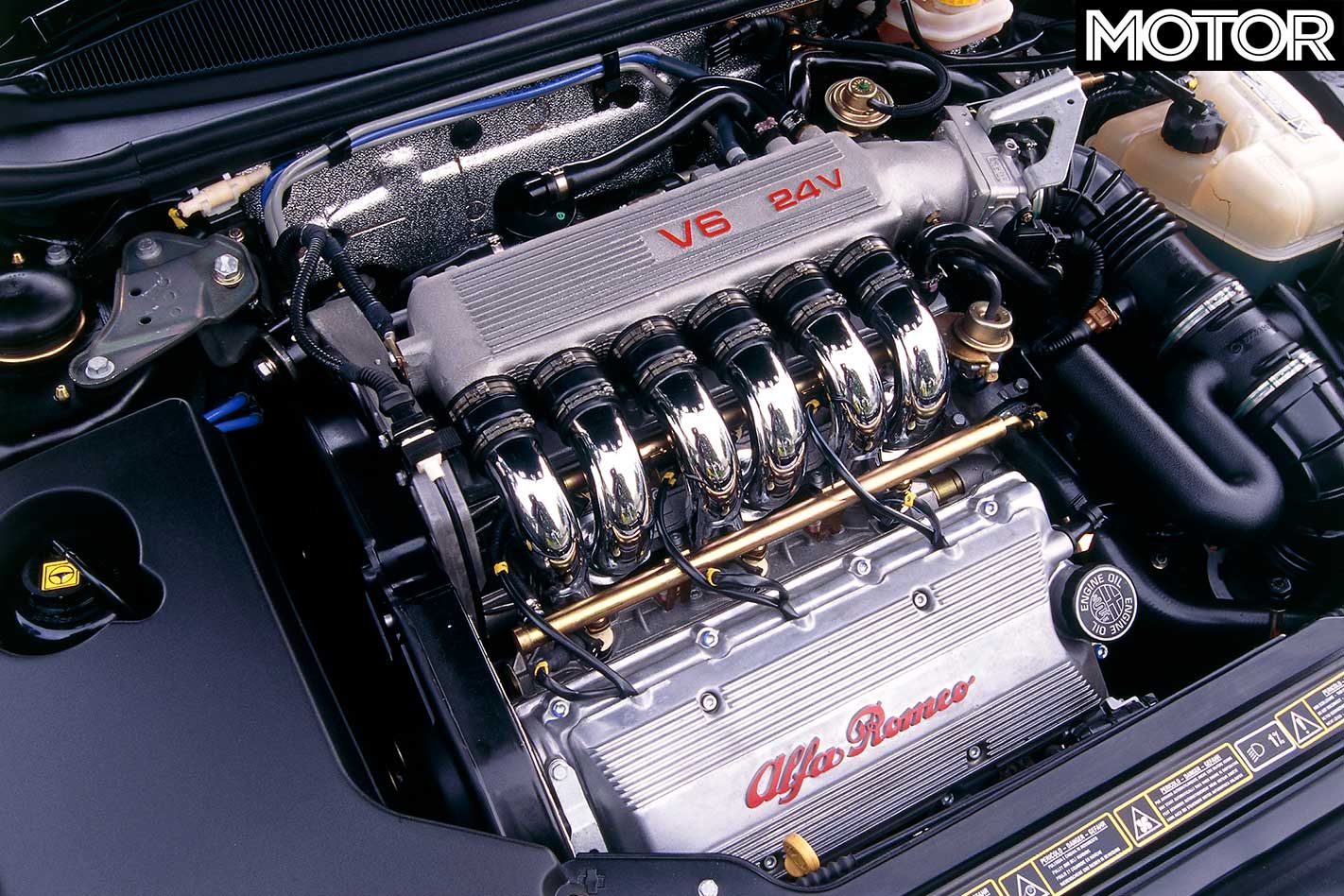
The three-litre version of the Alfa bent-six kicked out 162kW and 270Nm (against 114kW and 186Nm for the four-potter) and while the four-pot was sweet, smooth and felt like syrup being poured down your bum-crack, the V6 GTV is all about rasping noises and surging mid-range squirt.
Interestingly, the V6 didn’t really use any more fuel than the four, either, so if the budget will stretch, the six is definitely the one to go for.
Both versions of the GTV were manual only, which suggests Alfa itself wasn’t treating the whole thing as a token gesture (not to mention sparing us any of that Selespeed nonsense). But, the best news came in late 1999 when the V6 ditched the five-speed for a six-speed.
If you can afford it, the absolute-best GTV of that era to be shopping for now is the later version with the 3.2-litre V6. With its gear ratios tightened up in six-speed form, the engine’s rippling 176kW and 289Nm made for some truly rapid progress.
Yes, you had to hang on to her with the threat of torque steer only ever an ankle flex away, but Lord, did the 3.2 boogie. Even today, a 3.2 will still feel fast and perky and be totally up for whatever sort of mischief you have in mind.
The gearshift is good enough and the clutch has enough feel to give you confidence even when banging the ratios home. The chassis will ultimately understeer (but you already guessed that, right?) and while the ride is okay, you can soon find the limits of front-end travel when you start pushing hard on bumpy stuff.
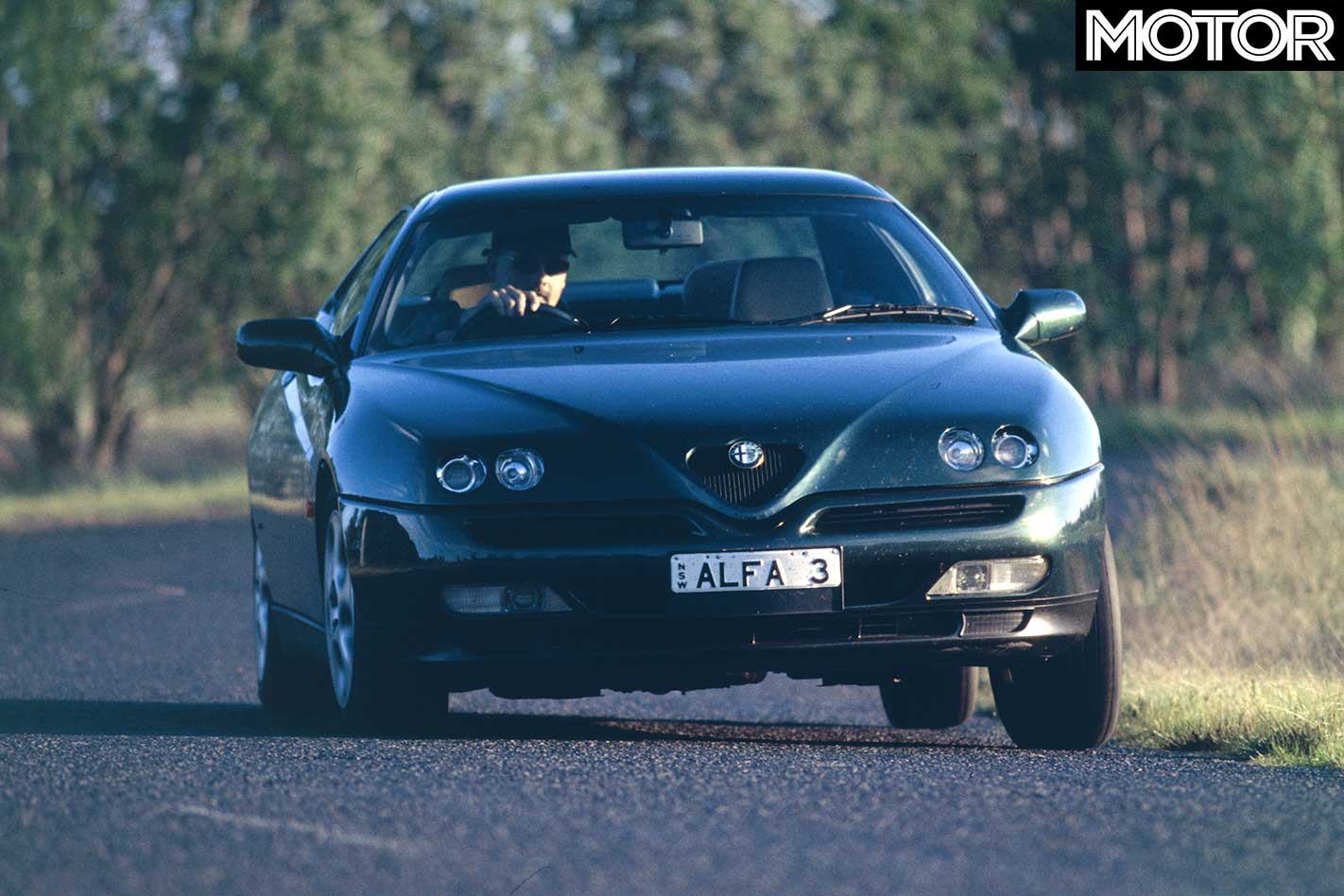
Like most things Alfa, the ownership experience tends to vary. At the very least you’ll be confronted by things like rattly trim and poor plastic finish (particularly after a few years under the Aussie sun).
On the other hand, the leather trim seems to be standing up well to wear and tear and you don’t see really crapulent-looking GTVs lurking around with smoky tailpipes and crook panel gaps. Not yet anyway. Both engines are hardly new designs and have been well proven by time and kilometres, which means the real wild-card is the list of previous owners.
Which is to say that a well cared-for example is likely to still be a nice car, while one that has been thrashed by some hair-gel-Nuvolari wannabe could easily be stuffed by now. Check out the owner at least as closely as the car.
FAST FACTS 2000 Alfa Romeo GTV V6
BODY: 2-door, 2+2-seat coupe DRIVE: front wheel ENGINE: 2959cc V6, DOHC, 24v POWER: 162kW @ 6300rpm TORQUE: 270Nm @ 5000rpm WEIGHT: 1415kg POWER-TO-WEIGHT: 114kW/tonne TRANSMISSION: five-speed manual SUSPENSION: struts, A-arms, anti-roll bar (f); multi-links, coil springs, anti-roll bar (r) L/W/h: 4285/1780/1318mm WHEELBASE: 2540mm BRAKES: 305mm ventilated discs (f); 240mm solid discs (r) WHEELS: 16 x 7.0-inch (f & r) TYRES: Pirelli P Zero, 205/50ZR16 (f & r) PRICE: $79,500 (2000)
What we said?
“A fun car; the engine noise, even inside the car, is fantastic. The steering is very good and doesn’t feel like a front-driver turning in, but it’s got too much exit understeer. And you can’t modulate it with the throttle…but if it was a rear-driver it would be the pick of the bunch.” – Cameron McConville, BFYB ‘99, September 1999
Why not try…
2001 Alfa Romeo Spider T-Spark
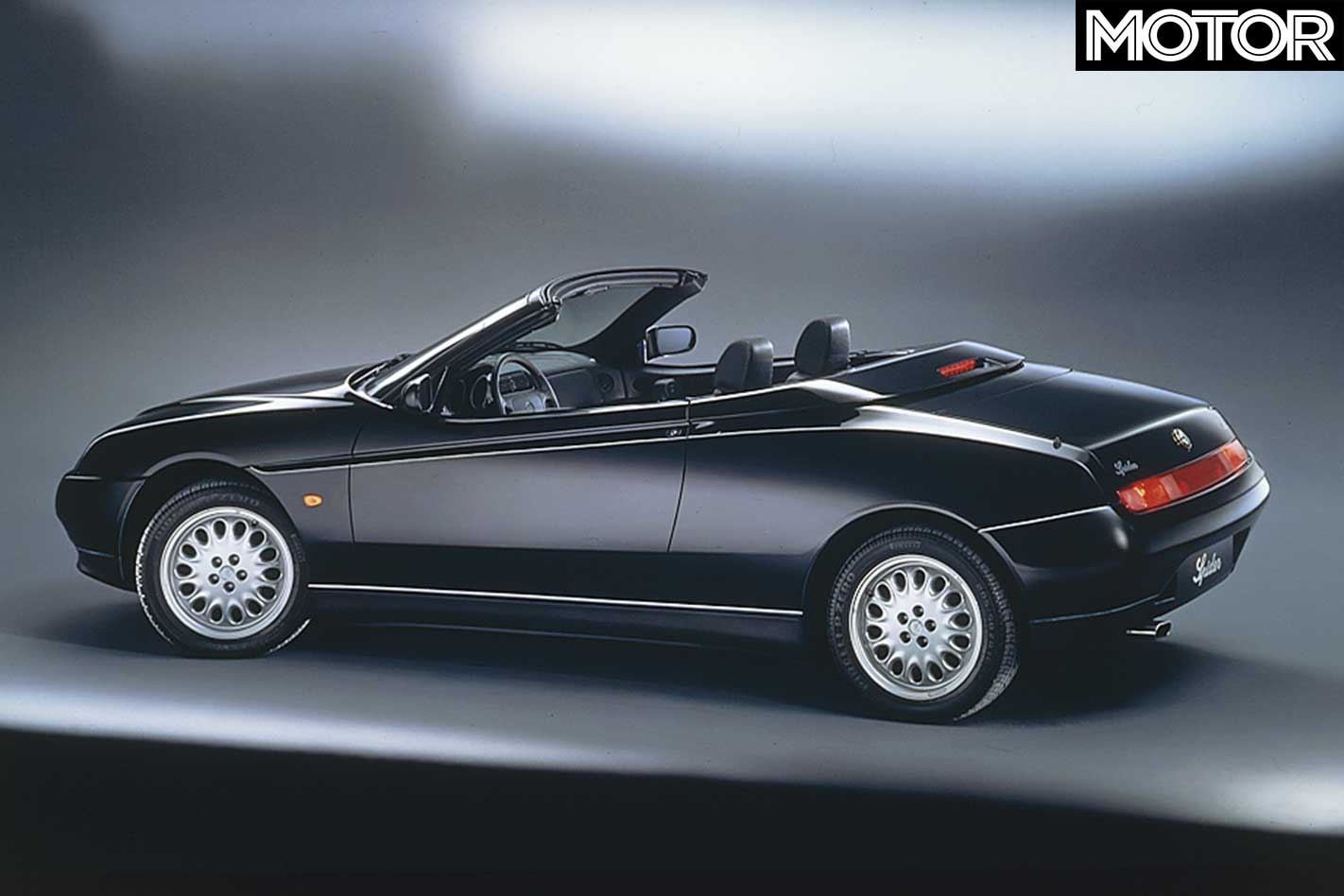
Launched at the same time as the GTV, the convertible version makes a bit more sense in 114kW two-litre form because the lid-off thing means the lack of hard-core grunt isn’t such an issue. You’ll need to find an extra few grand, but it’s worth a look.
2001 Saab 9-3 Aero coupe
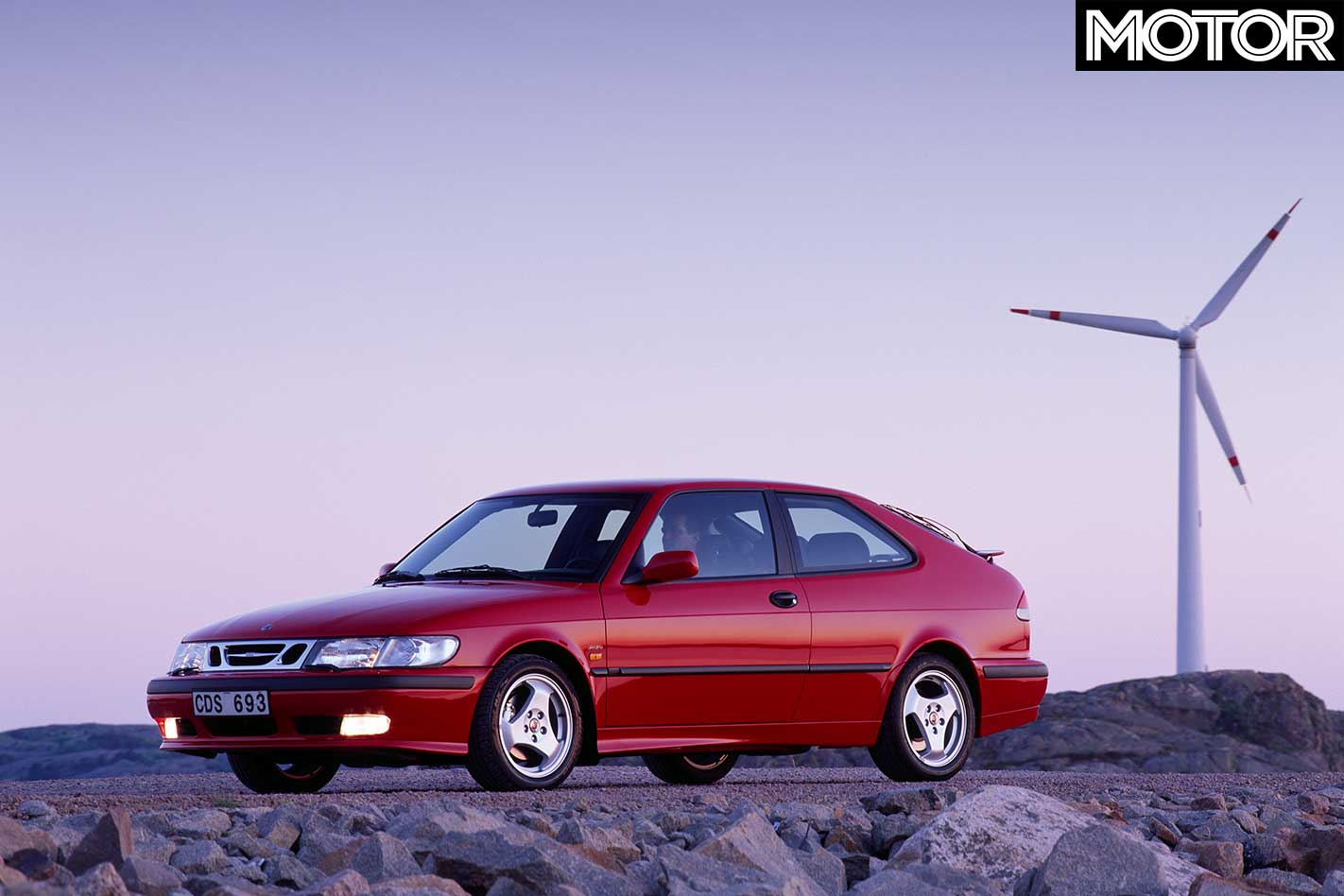
A 9-3 Aero from around the turn of the century gets you the two-door coupe thing in a European package. Bank on the 151kW engine and go for the five-speed. Not as overtly charismatic as the Alfa, but definitely not Japanese in flavour, either.
1999 BMW 323i (E46)
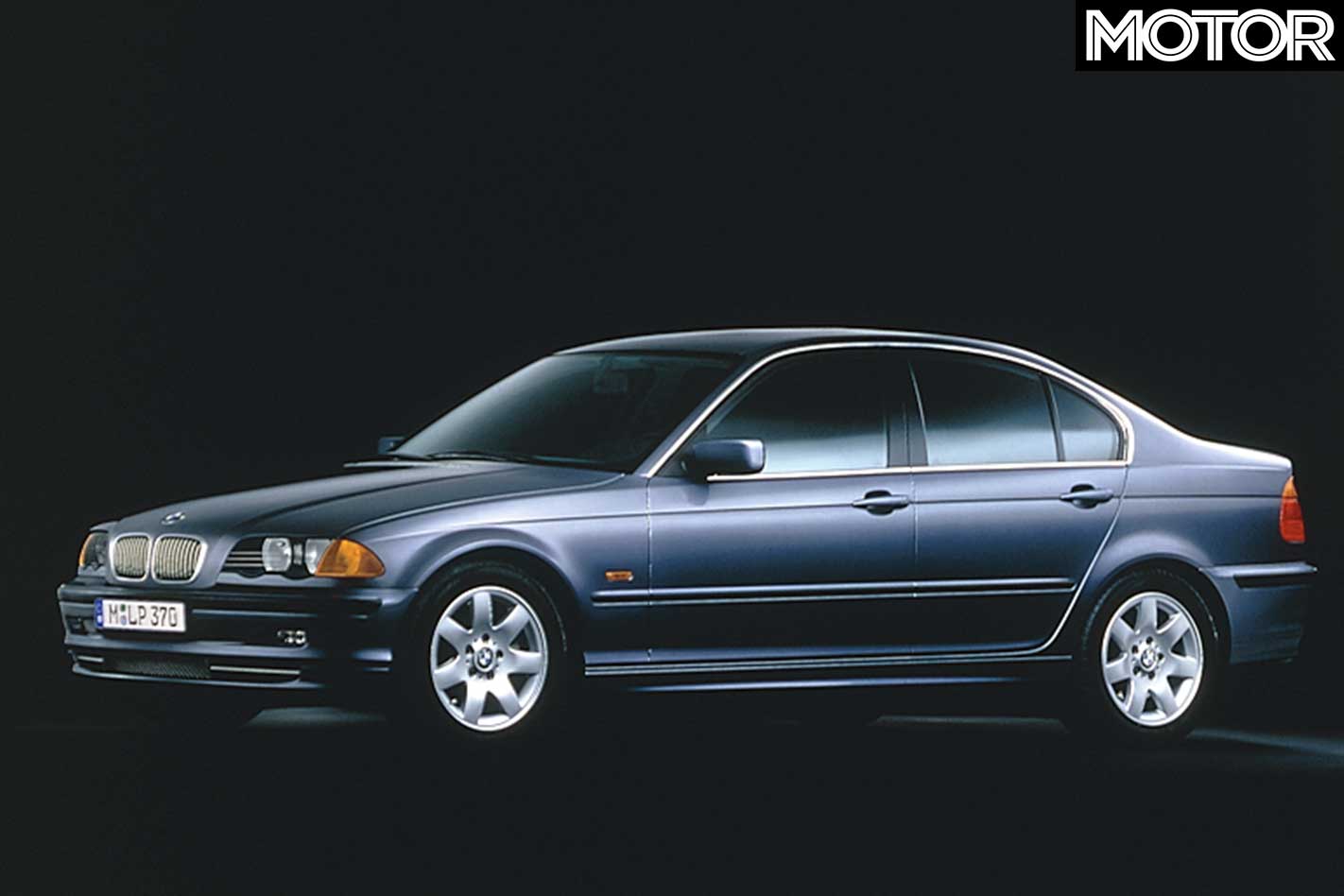
Go back a handful of years to the late ’90s and the four-door 323i is around the same money. Forget the coupe – it’s too pricey – but the sedan is still a swish looker anyway. The 125kW 323i actually measured 2.5 litres, and is a classic BMW straight six.
1999 Audi TT
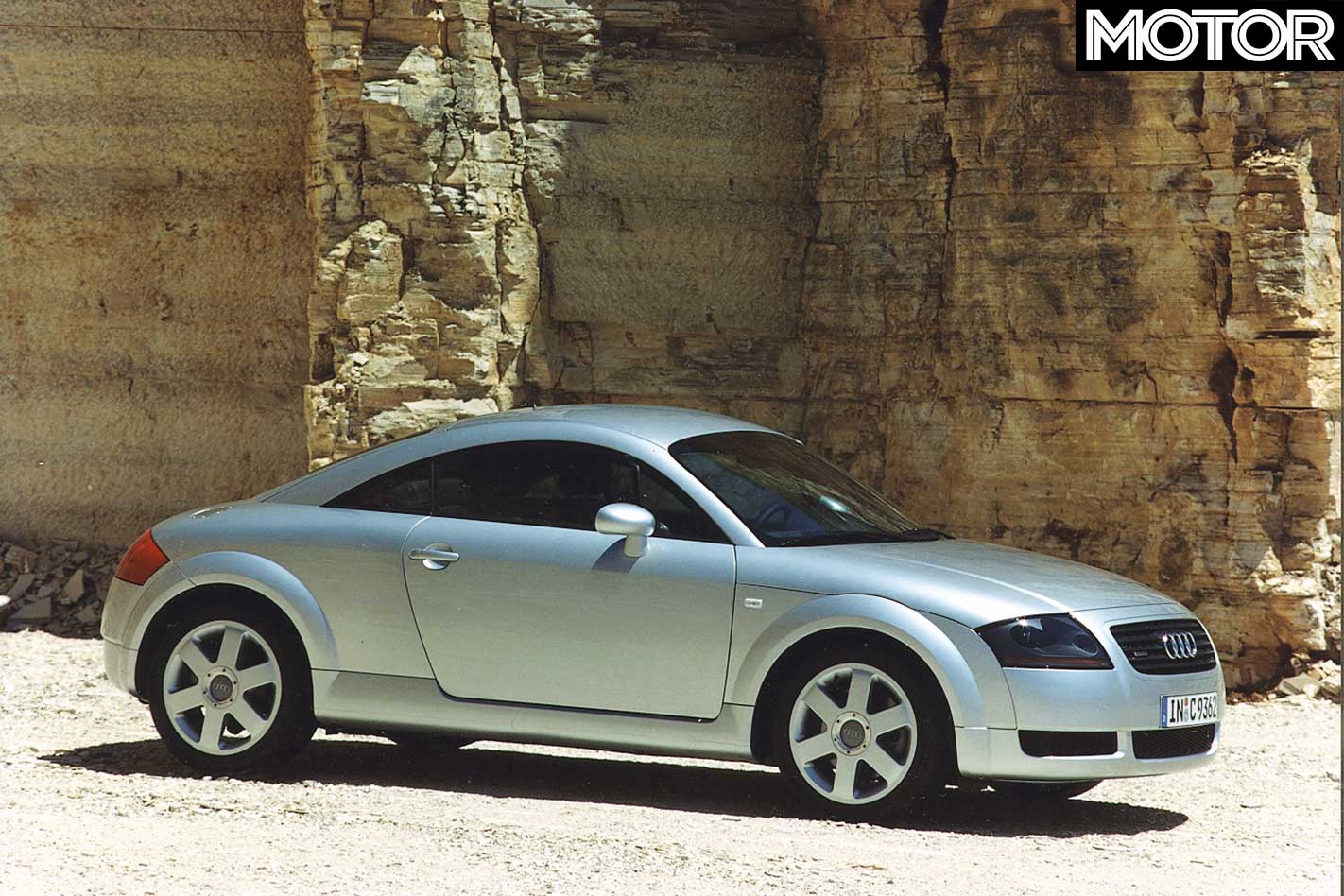
Got a bit more gold to play with (okay, quite a bit more)? Then look at the original TT in front-drive, 132kW form. It still looks stunning and nobody will know its approaching eight years old. The interior still floats our boat, too. Faster 165kW quattro is dearer.
Poor new car sales in December have capped off a year of market correction for the Australian new car industry, which posted its worst annual total since 2014.
National vehicle sales for December fell by 14.9 per cent from the corresponding month in 2017 to 87,528 vehicles.
The best-on-ground for December – and for 2018 – was once again Toyota, which now holds almost 19 per cent of the total new car market, as well as Australia’s two favourite new cars in 2018: the HiLux light duty commercial and Corolla small hatch and sedan.
Out of the top ten new car brands in Australia, half of them – including second-placed Mazda, third-placed Hyundai, fifth-placed Ford and sixth-placed Holden – sold fewer new cars in 2018 than they did in 2017.
The figures for the former powerhouses from Detroit (Holden and Ford) make for sobering reading: Holden fell almost 30,000 sales in 2018 to slip to sixth place with 60,751 cars sold, while Ford dumped around 9000 sales to move ahead of its arch-rival for the first time since 1997, with 69,081 sales for the year.
As for the top-selling brands that managed to outperform their 2017 numbers in 2018, first-placed Toyota only added some 500 cars to its 2017 tally of more than 217,000 cars, while tenth-placed Honda (up 4742 to 51,525), seventh-placed Kia (up 4078 to 58,815) and fourth-placed Mitsubishi (up 4290 to 84,944) all posted solid lifts.
The Federal Chamber of Automotive Industry (FCAI) figures released today show that 1,153,111 new cars, SUVS and light commercial vehicles were sold in 2018, versus the 1,189,116-vehicle score posted in 2017. This is a difference of three per cent overall, while December’s score of 87,528 is almost 15 per cent down compared to December 2017.
The December score is the tenth consecutive drop over the corresponding period in 2017. FCAI chief Tony Weber noted that a number of wider economic factors have played a part in the overall new car sales picture.
“New vehicle sales results in 2018 reflect a challenging climate across the Australian economy including a slowing housing market, tightening of money-lending, and the drought,” said Mr Weber in a statement.
It’s a sentiment echoed by the industry, with Volkswagen Australia chief Michael Bartsch saying that he’d never seen a year like 2018 in his experience.
“It’s a consequence of a lot of things. And I think that’s what has made the year so challenging, is that you can’t put your finger on one thing,” he told WhichCar.com.au.
Bartsch did suggest, however, that the industry is in the midst of a self-correction phase over what are known as ‘cyber cars’, or vehicles that have been marked as sold, but are in reality not on the road as new vehicles.
“Everybody starts out the year with a sales target, and for people like me, everything hangs off achieving a certain volume a year,” said Mr Bartsch. “When you have a market like Australia that turns down dramatically, all of a sudden, the volume plans that you had for the year, the budgets that you set for the year are starting to disappear.”
Mr Bartsch explained that dealers are then being pressured to report cars as sold that are not really sold. “For all intents and purposes, the public is being told that Brand X has sold 10,000 cars for the month,” he said. “The reality of it is, only 8000 found real owners and the rest of them are demonstrators, service loan vehicles, or reported as sold to rental car companies, but the dealer owns the rental car company,” Mr Bartsch explained.
He noted that the FCAI is aware of the issue and are moving for the industry to implement a change that will see sales data compared with registration data.
“I’m very pleased to say is that the FCAI is aware of the problem,” said Mr Bartsch. “[The FCAI is] now going through a process where, with all its members, [it is] moving towards a self-regulatory environment where reported data will be overlaid with registration data from the government to confirm that they have indeed been sold or registered.”
The policy will be tabled at the next FCAI board meeting in March 2019.
Want to know more about how each brand stacked up? Head here. Alternatively, click here to find out which individual models fared best with new car buyers in 2018.
Standings Volume Share
1 ▲ Toyota 217,061 18.8%
2 ▼ Mazda 111,280 9.7%
3 ▼ Hyundai 94,187 8.2%
4 ▲ Mitsubishi 84,944 7.4%
5 ▼ Ford 69,081 6.0%
6 ▼ Holden 60,751 5.3%
7 ▲ Kia 58,815 5.1%
8 ▲ Nissan 57,699 5.0%
9 ▼ VW 56,620 4.9%
10 ▲ Honda 51,525 4.5%
Hi WhichCar,
The ex-wife is taking half of my stuff and all of the kids, so it looks like I no longer need my Volkswagen Touareg. I do, however, need something much smaller and cheaper to run thanks to the sudden change in my asset portfolio. It still needs to fit two passengers on every other weekend, but I’m not fussed on whether it’s a hatch, sedan or whatever. I prefer petrol, and something that has a bit of a ‘Cool Dad’ vibe would be handy.
Trent, Gladesville NSW
Hi Trent,
We reckon something from the hot hatch genre will fulfil your requirements well, and the good news is there’s a broad array of cars to choose from.
It’s pretty hard to go past the Hyundai i30 N. It’s one of the most impressive hot hatches around, yet it also manages to be one of the most affordable at $39,990 before on-road costs. For your spend you’ll get one of the most powerful engines in the segment with 202kW and 378Nm, mated to a practical five-door hatchback bodyshell that should have no trouble taking a couple of passengers every so often.
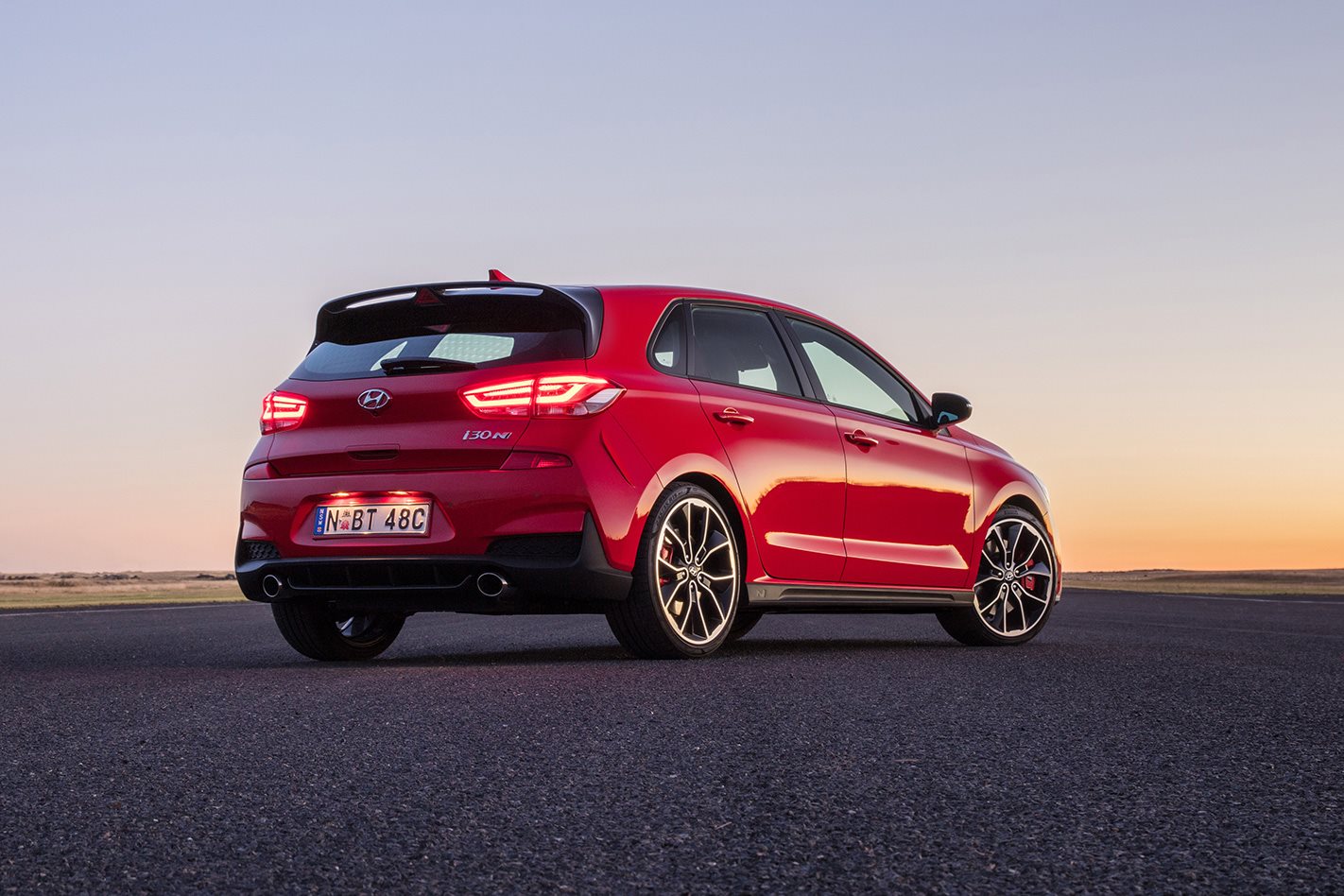
Running costs should still be reasonable as well – Hyundai has a capped-price servicing scheme and a five-year warranty, while the claimed fuel economy of 8.0 L/100km is exceptional for a car with its performance.
Also have a look at the Volkswagen Golf GTI, Honda Civic Type R and Peugeot 308 GTI, but bear in mind that none of them match the i30N for sheer bang-for-buck value, and only the significantly more expensive ($50,990) Civic Type R delivers a more exhilarating drive.
WhichCar recommends: Hyundai i30N
Need help to choose a new car? We’re here to help. Email us at [email protected]
There’s an angry man hidden in the HSV VXR’s dashboard and he’s trying to rip my arms off.
This review was originally published in MOTOR’s April 2007 issue
Flatten the accelerator and he erupts, his tattooed arms tugging and sawing at the Astra’s chunky wheel as he attempts to spit the car sideways.
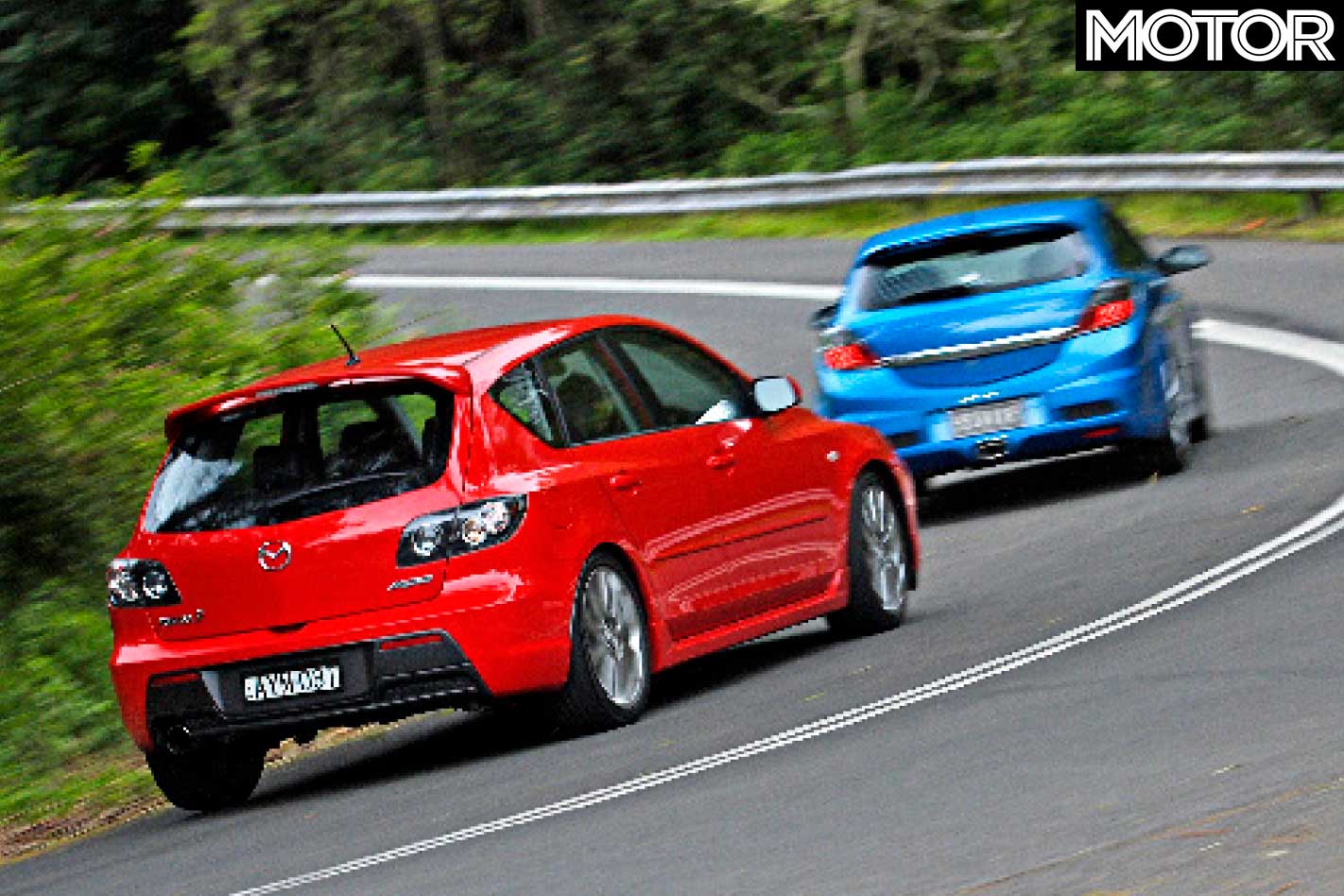
It’s a violent, engaging, exhilarating introduction to Holden’s new hot-hatch contender, the 2.0-litre turbo-charged Astra VXR, yet if the newcomer is to succeed it not only has to tame the beast lurking in the shadows of its front-paw set-up, but it must also topple the current hot-hatch king; the Mazda 3 MPS.
And that won’t be easy. Back in November of last year we raved about the Mazda and its huge dollops of useable shove that shamed performance cars several leagues above. Its neutral balance and composure inspired confidence in medium-to-long flowing corners, while its understated five-door looks and Q-car appeal made it the ideal sportscar predator.
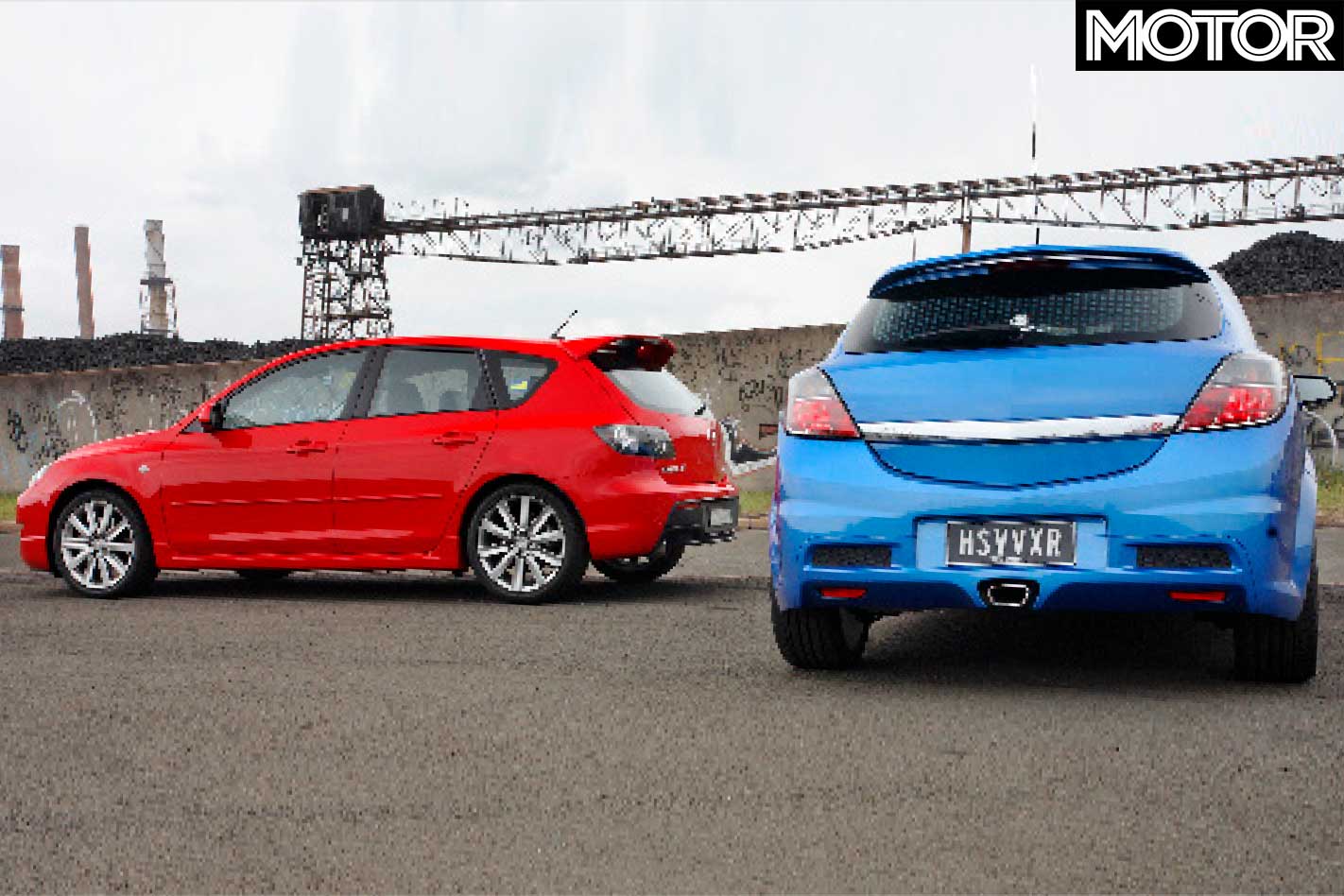
But now it’s the VXR’s turn to create a scene, and with that curvaceous, chop-shopped three-door profile it’s off to good start. Based on the stock Astra Coupe, the VXR finds a perfect niche between the fussy design of the Focus XR5 on one side and the lacklustre lines of the Golf GTI and Mazda 3 MPS on the other.
Squat and menacing on standard 19-inch rims, the high and narrow side-windows are coupe sleek, while the blistered arches and jutting chin spoiler inject a masculine, aggressive edge to proceedings.
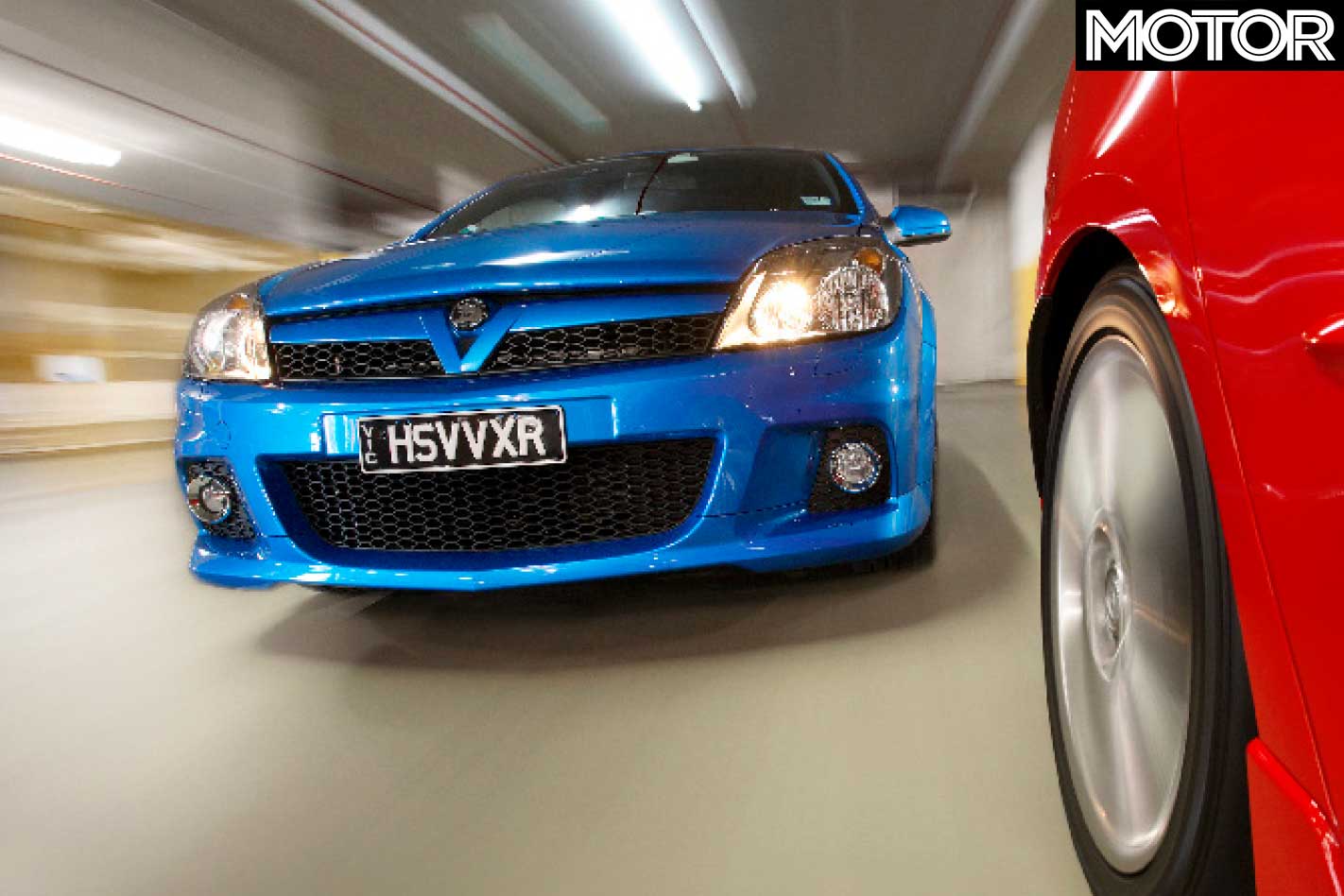
Pedants could accuse the trapezoidal exhaust pipe and chrome boot strip of being too finicky, yet next to the modest lines and subtle bulges of the Mazda, the Astra is sexier than a digitally-remastered Lara Croft.
Maybe it’s the door count and flat red paint, but after the primal stirrings of the VXR, the Mazda causes little more than a twitch – there’s certainly more bulge in the MPS’s bonnet than there will be in your pants.
But that’s not to say it doesn’t appeal. The transformation to MPS spec may be subtle, but the designers have executed it with care, neatly grafting the deep front and rear air-dams, cute roof-spoiler and gaping exhaust to the standard bodywork.
At 18 inches, the smoked chrome multi-spoke alloys are a notch smaller than the Astra’s, but they still fill the arches nicely. You just get the impression Mazda is appealing to those in the know and not the phone-snapping teenagers.
Step inside and the roles instantly reverse, the Holden becoming the drab, emotionless bureaucrat while the Mazda slips off its strides and goes skinny-dipping. Both cars have Recaro tattooed on their front seats but that’s where the similarities end.
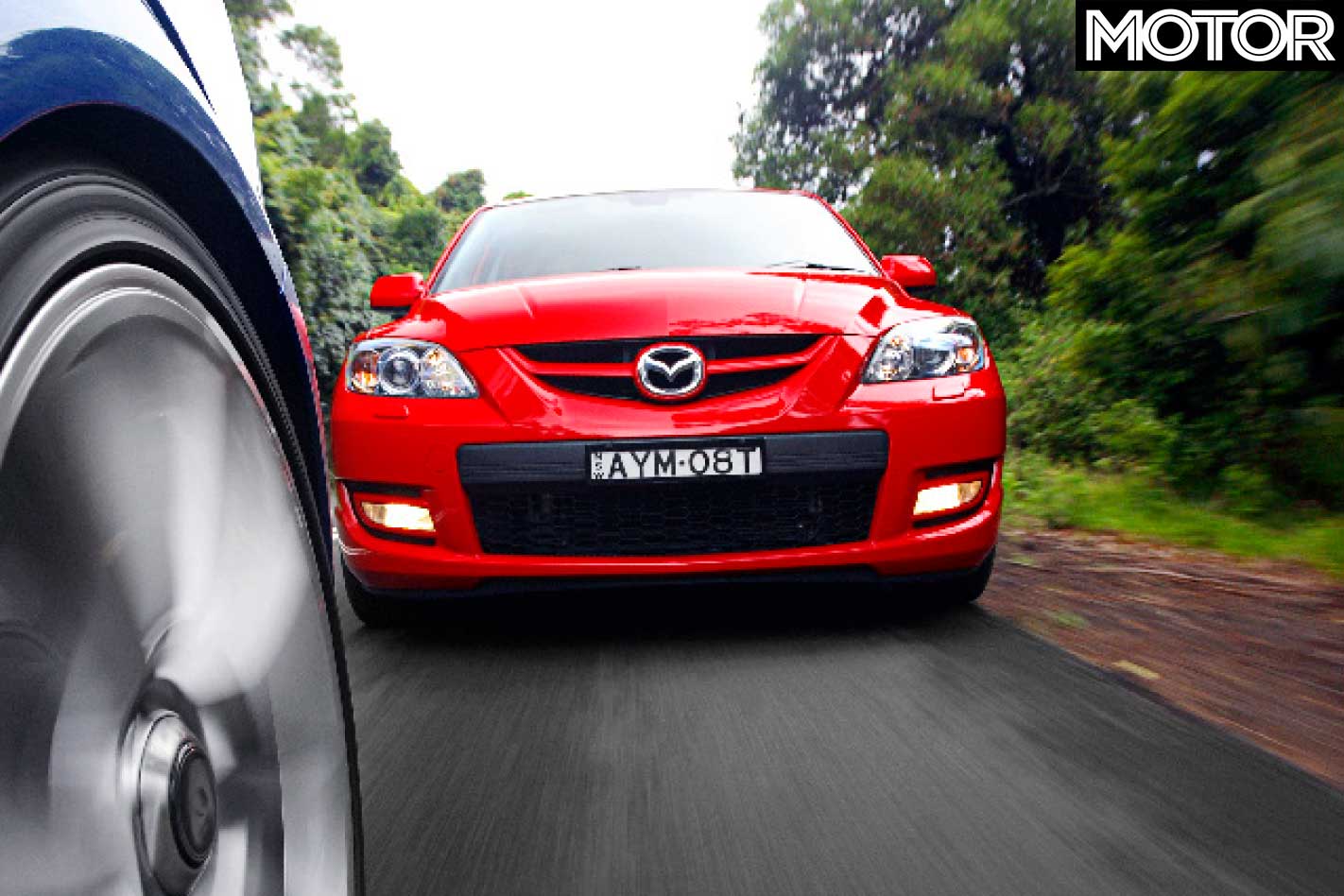
Despite the flecks of VXR livery and a chunky, small-diameter steering wheel, the Astra is the poster child of straight-laced utilitarian functionality. Square buttons located with the haphazardness of kids laying out Lego, hard grey plastics and a general feeling that there’s no salsa on the VXR’s burrito sums up the view from the Astra’s driving seat.
Step from the VXR into the MPS and it’s a revelation. A well laid-out dashboard hosts a series of silver-flecked instruments and red-ribbed dials, while the part-leather seats and aluminium pedals of the optional Sports Pack add prestige to the standard Mazda 3 cabin.
But I have my reservations. Like the loudest guy at a party, the MPS’s cabin makes the mistake of attracting all the attention and then failing to back it up with any substance. The plastics are hard and brittle, the steering wheel lacks the sporting contours of the Astra’s rudder, and staring down the barrel of the cylindrical speedo pods distracts from the job of driving. The speedo indicators are some 10km/h off to the minus, as well.
But we’re not here to pontificate over the minutia of speedo dials and hard plastics; we’re here to decide which of these hot-hatch goliaths deserves your hard-earned when it comes to signing the cheque.
Blatting along the sweeping coastal roads north of Sydney, the VXR spits and froths away from every set of traffic lights. The angry red-neck is still there, tugging away at the steering wheel, but with familiarity he’s more a lively drinking buddy than an unbearable bastard.
The first thing you notice is the lack of turbo lag. Boost builds early, with the full 320Nm glob of torque available at 2400rpm. The result is a linear, unrelenting surge when the adrenalin flows, but also a surprisingly crisp sixth-gear pick-up when cruising. Spearing triple figures in 6.9 seconds and the quarter in 15.2, the VXR is quick by anyone’s standards, but it’s certainly not the undriveable savage we were led to believe.
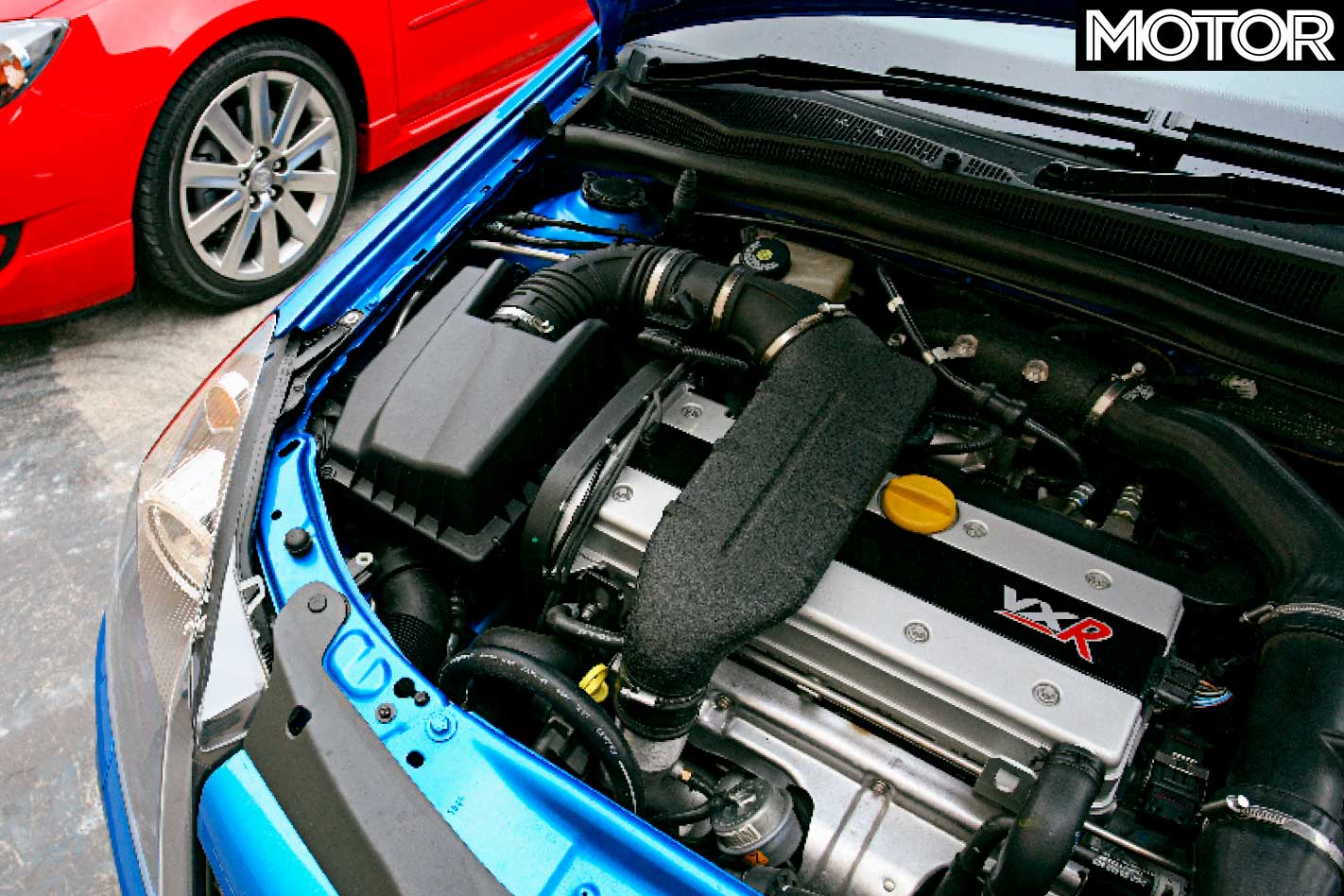
Then you get to a twisty section and, with sport button engaged (this sharpens the throttle response and loosens the reins of the traction control), the VXR sets off like its balls are on fire. Galloping hard towards the first apex, it’s down through the slick six-speed ’box, clutch down to third, down to second, blip of the throttle with the heel, hard on the easily-moderated brakes with the toe, turn in, front-end bites and settles, feed in the power, running wide to miss the ute parked on the inside verge, ease off, the back-end breaks and slides wide in a predictable arc bringing the front in tight, feed out the lock, full power, revs flare beyond 4000rpm, the engine adopts a harsh induction bark and the VXR picks up another scent, scampering hard towards the next apex.
Six klicks and a rhythmic stretch of liquorice lace behind us, it’s time to take a breather. Clambering from the Astra’s deeply bolstered seats, it’s only now that I realise my buttocks are still clenched and my mouth’s as dry as a South Australian dam.
The reality is this: the VXR’s trump card is its drama. It’s not civilised, it’s not going to waft you along on a fluffy bed of roses, it’s going to toss you like a salad and stick its toe so far up your arse it’ll be able to drop-kick your tonsils.
Next the Mazda, and as their publicity men have seen fit to pin a devil’s tail on the 3MPS’s sporty rump, I tug gingerly on the demon’s door-handle, conscious that I might just be opening the gates of hell. I needn’t have worried. Firing up the turbo-charged 2.3-litre soul reveals a benevolent tone, more akin to God grumbling than Satan belching. Filtering into the stop-start city traffic the MPS feels civilised and well mannered, picking up smoothly and chugging merrily on part throttle until the traffic clears and the pedal finally hits the deck.
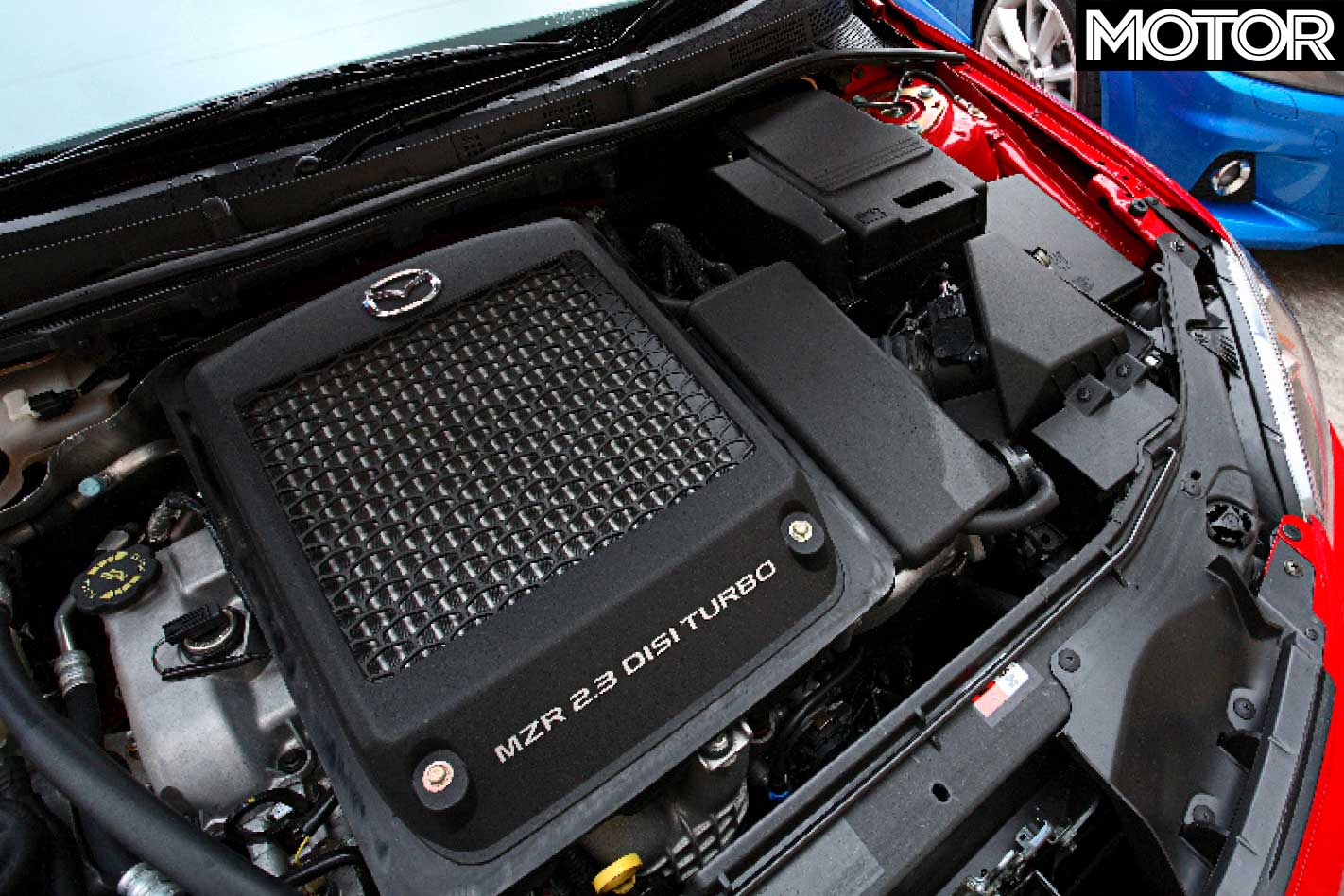
Against the clock the Mazda is the quicker of the two (6.8 seconds to the tonne, 14.8 on the quarter), but, for the electronic interference in the Mazda, it doesn’t always feel it. You see, to ensure the MPS’s doesn’t cook its tyres before the first full-moon, Mazda engineers have installed Switchable Dynamic Stability control and torque sensing limited slip-diff – the latter absent on the Astra – which together work to harness power in the first two cogs. The result is a far more linear and controlled deployment of power in the Mazda than in the VXR.
Not that it’s perfect. Catch the MPS off the boil and the lag from the low-pressure turbo is more noticeable than in the Astra, requiring a greater level of concentration if you’re to make that blink-and-you-miss-it gap in traffic. Scanning the stats of both cars, it’s easy to see why.
With 380Nm at 3000rpm, the Mazda may have more torque than the 320Nm VXR, but as it arrives 600rpm further up the rev range it allows the Astra to throw the first punch. Ultimately, though, it’s the Mazda that hits hardest.
But as the creative minds at Pirelli keep telling us; Power Is Nothing Without Control, so the first time you throw the 3MPS into a corner it’s a relief to find it remains calm and balanced, allowing minute throttle and wheel inputs to keep things honest. It lacks the seat-of-your-pants sensation of the Astra, but the added adjustability is more than welcomed on unfamiliar territory.
It’d be easy to put the difference down to personality traits, but the reality is the Mazda has a more exotic rear-suspension set-up than the Vauxhall. While the VXR relies on a good old-fashioned torsion beam rear axle, resulting in a fidgty, boisterous ride, the MPS carries its arse on a trick multi-link rear set-up, allowing it to gobble down bumps and road scars will little more than a belch. But don’t think that makes the VXR any less of weapon. It’s just one that could go off in your hand at any time.
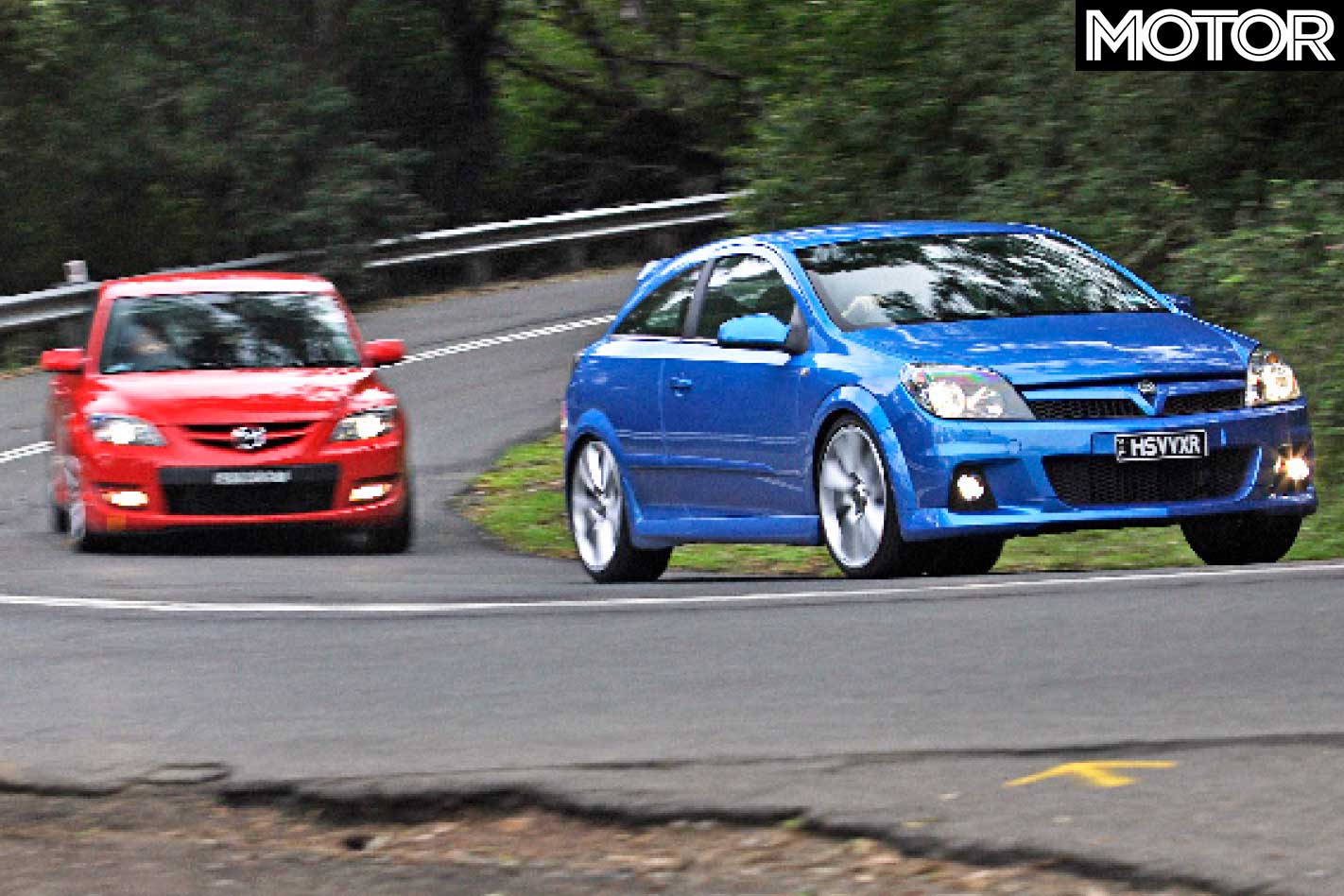
Ultimately, the 3 is more compliant, more benign at the outer reaches of the fanging envelope than the more nervous VXR. Its typically delicate chassis balance – a trait of late-gen Mazdas – imparts plenty of turn-in bite through steering that may be muffled, but also more chatty than the VXR’s.
The 3 also backs up its go with well-modulated, fade-free whoa, thanks to beefier sliding caliper hardware up front. Just as well, because it can take a terrifying turn of pace right up to the apex – and beyond, if you’re not ready for it. On my usual test loop I find I’m always a gear higher; there’s little point holding a cog past 6700. The torque reduction function on second works brilliantly – there’s just not enough legs in that gear to exploit it fully.
So which should you buy? If you’re crunching the numbers, the 3 will leave you some $3000 better off ($39,990 plays $42,990), but gives you more herbs (190kW plays 176kw), more doors (if that’s important to you) and better handling across the gamut of terrain you’re likely to encounter. The HSV gives you sex-pot looks, a bit of exclusivity (your new hottie is unlikely to be mistaken for your mum’s shopping hack) and a lot of immediate, visceral pleasure.
Tough call, but the more measured ride and extra oomph tips our hand towards the devil’s tail. This time.
Fast Facts
| u00a0 | Mazda 3 MPS | HSV Astra VXR |
| Body | 5-door, 5-seat hatch | 3-door, 5-seat sedan |
| Drive | front-wheel | |
| Engine | 2260cc inline-4, DOHC, 16v, turbo | 1998ccu00a0inline-4, DOHC, 16v, turbo |
| Bore x Stroke | 87.5 x 94.0mm | 86.0 x 86.0mm |
| Compression | 9.5:1 | 8.8:1 |
| Power | 190kW @ 5500rpm | 177kW @ 5600rpm |
| Torque | 380Nm @ 3000rpm | 320Nm @ 2400rpm |
| Power/Weight | 135kW/tonne | 127kW/tonne |
| Transmission | 6-speed manual | |
| Ratios | 3.54/2.24/1.54/1.17/1.09/0.86 | 3.82/2.16/1.48/1.07/0.88/0.74u00a0 |
| Final Drive | 3.94 (1st-4th) 3.36 (5th-6th) | 3.94u00a0 |
| Weight | 1403kg | 1393kg |
| 0-100km/h | 6.8sec | 6.9sec |
| 0-400m | 14.8sec | |
| Suspension (f) | struts with coils and double absorbers | u00a0struts, coils, anti-roll bars,u00a0Lotus springs and dampers |
| Suspension (r) | independent multi-link with low profile springs and cylindrical shock absorbers | u00a0torsion beam,u00a0Lotus springs and dampers |
| L/W/h | 4430/1765/1465mm | 4290/1753/1420mmu00a0 |
| Wheelbase | 2640mm | 2614mmu00a0 |
| Tracks | 1535/1525mm (f/r) | u00a01480/1477mm |
| Steering | power rack and pinion | |
| Turning circle | 11.0m | u00a010.85m |
| Brakes (f) | 320mm ventilated discs, twin-piston calipers | u00a0321mm ventilated rotors, sliding calipers |
| Brakes (r) | 300mm ventilated discs, twin-piston calipers | u00a0278mm solid discs sliding calipers |
| Tyre Sizes | 215/45ZR18 (f/r) | u00a0235/35ZR19 (f/r) |
| Tyres | Bridgestone Potenza | Continental SportContact 2u00a0 |
| Price | $39,990 | $42,990u00a0 |
| Pros | Composed handling, excellent brakes, good value and practical | Old school hot-hatch charm, lively steering, sexy looks, feels fastu00a0 |
| Cons | Turbo-lag, plain looks, shopping hack image | u00a0Jittery over the rough stuff, dull interior, poorly-labelled speedo |
| Rating | 4 out of 5 stars | 3.5 ouf ot 5 stars |
You may have seen a bit of activity on your social feeds lately about US truck owners blocking access to Tesla Supercharger and other electric charger sites because… well, who knows? It’s become known as ‘icing’, and it’s catching on across the country.
It does appear to be a pretty futile act of resistance, given you can still charge an electric car, you know, at an electric power point.
Still, one Tesla Model X owner and blogger, Patrick Lawson, has decided to see if he can ‘de-ice’ Supercharger stations with the help of a tow rope, an admittedly dodgy-looking towball and a length of tie-down strap.
In one corner is the Telsa Model X of unknown model designation, which can tow 2250kg of braked trailer, and in the other is a Chevrolet Silverado 1500 dual-cab, which weighs between 2300 and 2400kg.
Here’s what happens…
SEVENTY years ago, to the very day this issue hit the stands, a nervous General Motors unveiled the first Holden, a cream 48/215 sedan.
Based on a rejected wartime Chevrolet proposal out of Detroit, it was exactly what our car-starved nation craved.
Of course, the ‘FX’ and every one of its 31 locally manufactured successors have since woven themselves into our social fabric, but today, post factory shutdown with only imports from Thailand, Germany, Poland, England, Mexico and Korea to rely upon, ‘Australia’s Own’ is stumbling and our car-saturated country no longer cares.
Now, with the past a cross for the brand to bear, a worried Holden is once more looking to the US to find its way, with what many may be surprised to learn is the company’s first-ever full-sized seven-seater SUV.
Is the Acadia from Tennessee the crossover that the brand must bear to survive? Can America make Holden great again?
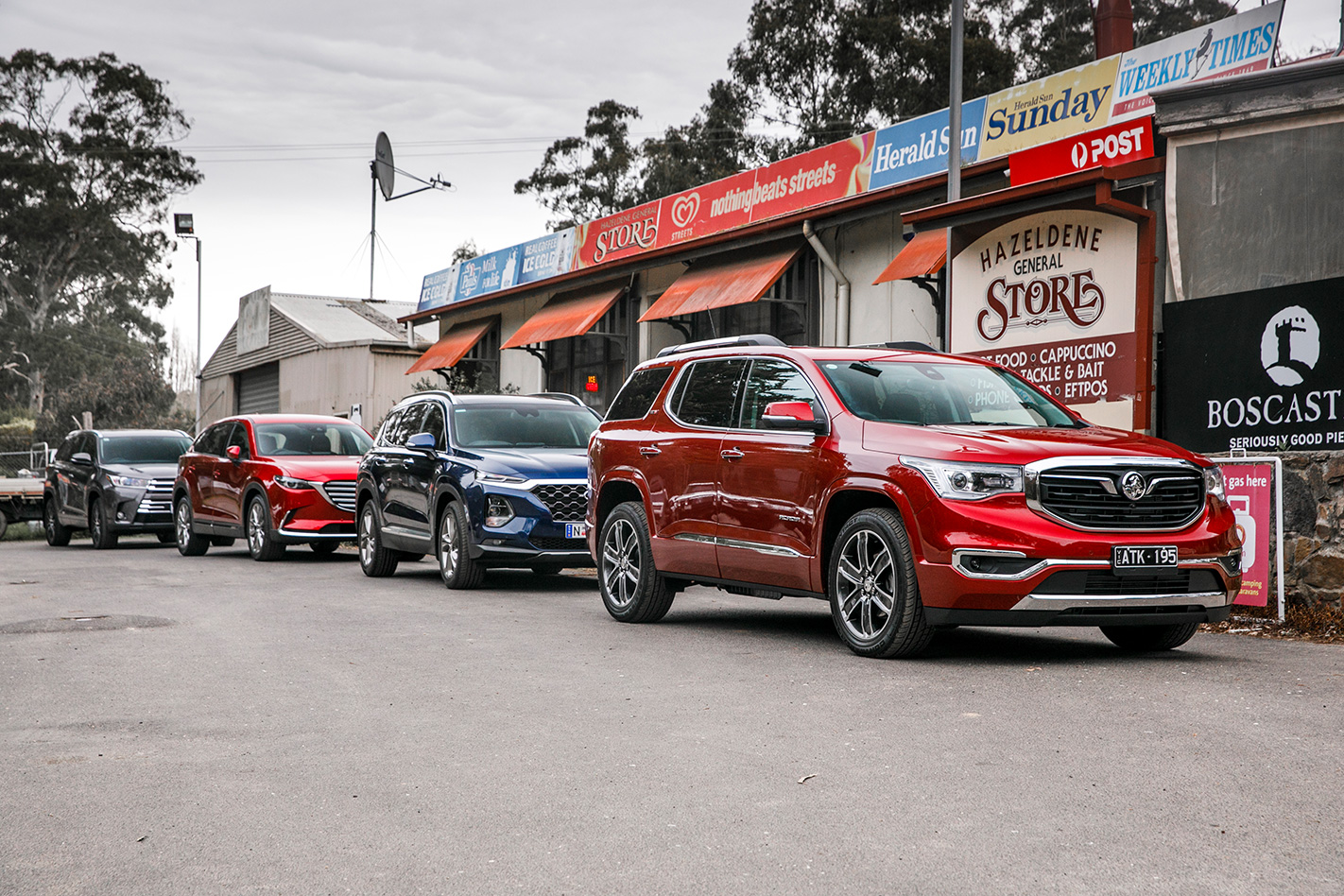
To find out, we’re fielding the $67,490 flagship LTZ-V all-wheel drive against a trio of its similarly monocoque-bodied AWD adversaries – in ascending order of popularity, the Hyundai Santa Fe, Mazda CX-9 and Toyota Kluger.
We’re talking proper range-toppers across all four, too, with leather, sunroof (dual panel in Acadia and panoramic in Santa Fe), electric tailgate, powered, heated and ventilated front seats with driver’s memory, surround-view cameras, tri-zone climate control, keyless entry/start, sat-nav, digital radio, premium audio and driver-assist safety tech including AEB, alerts for collision, lane-departure, blind spots and rear cross-traffic scenarios, adaptive cruise and auto high beams all included.
2018 Holden Acadia launch review
Metallic paint and – in the Hyundai – fancy beige/brown interior hues are the only options on test. Little wonder Holden reckons disenfranchised Statesman/Caprice and Ford Territory fans are in its marketers’ crosshairs.
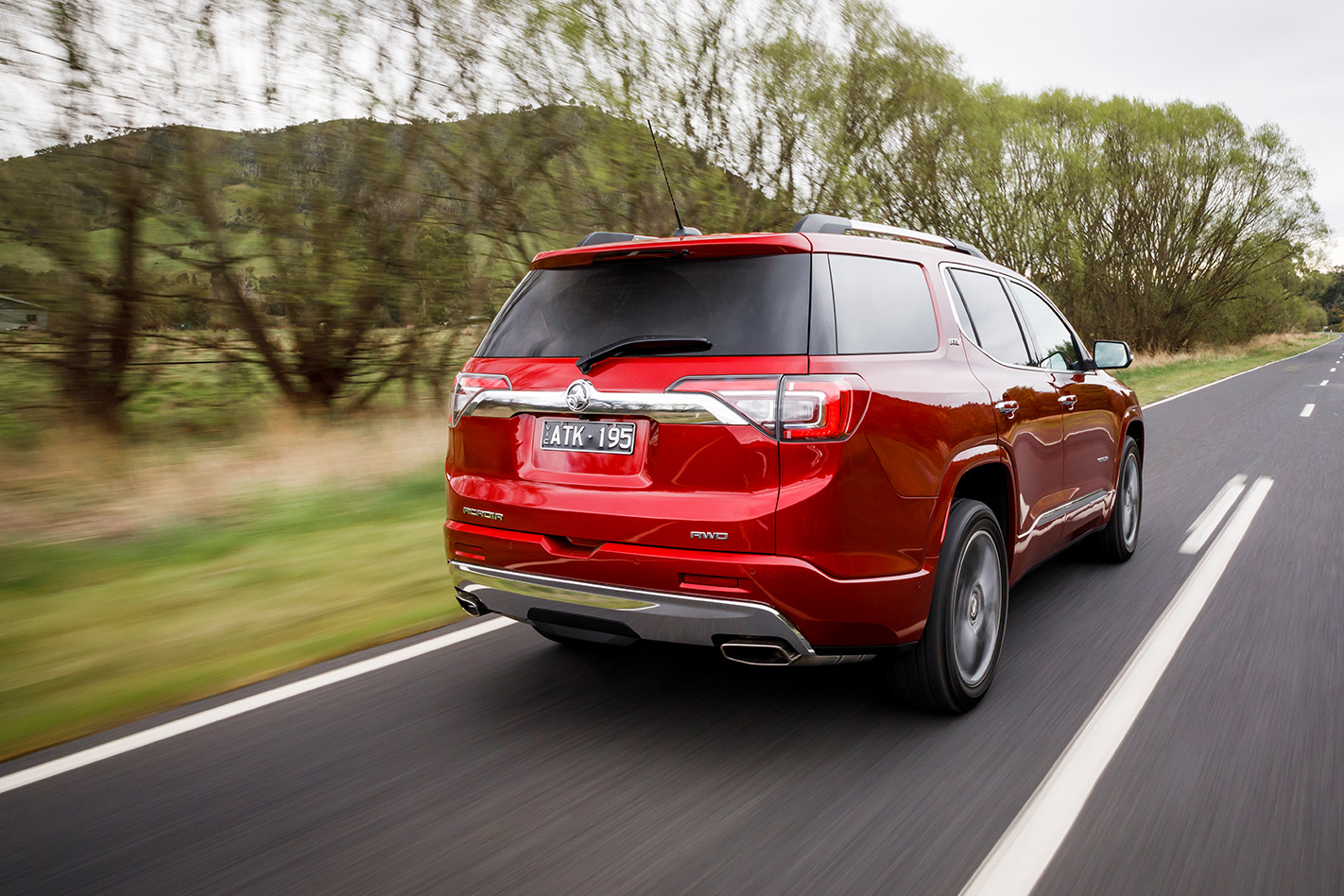
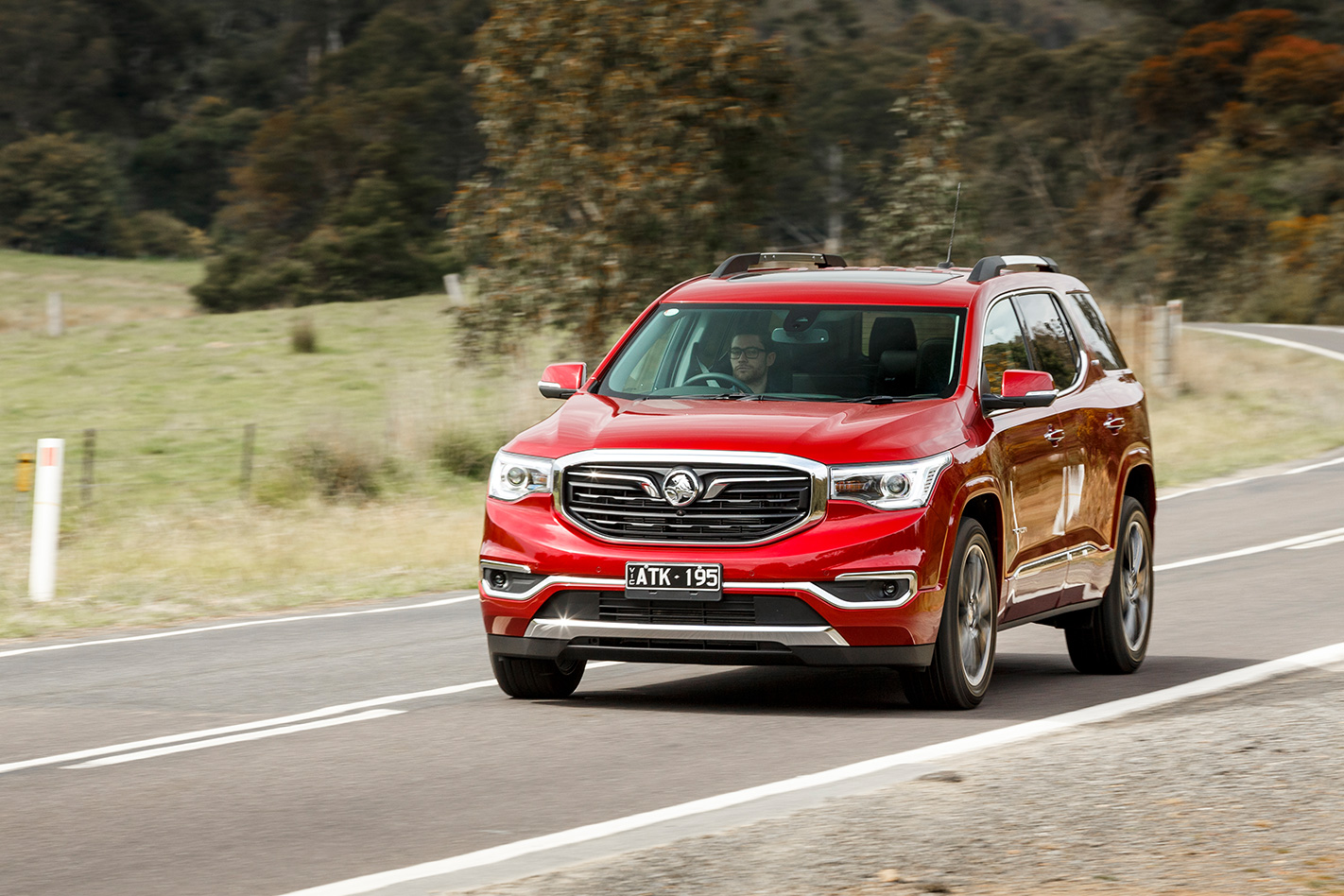
Besides tough, bluff, GMC pick-up truck-like blokey good looks, the Acadia LTZ-V is unique with the very car-like inclusion of adaptive dampers, paired with the standard 20-inch alloys, a trailer-hitch camera view, haptic seat vibration alerts when danger encroaches and a nine-speed auto for its LGX High Feature 3.6-litre V6, while sharing with Santa Fe inductive smartphone charging and a pre-exit reminder to the driver to check the rear seats for kids.
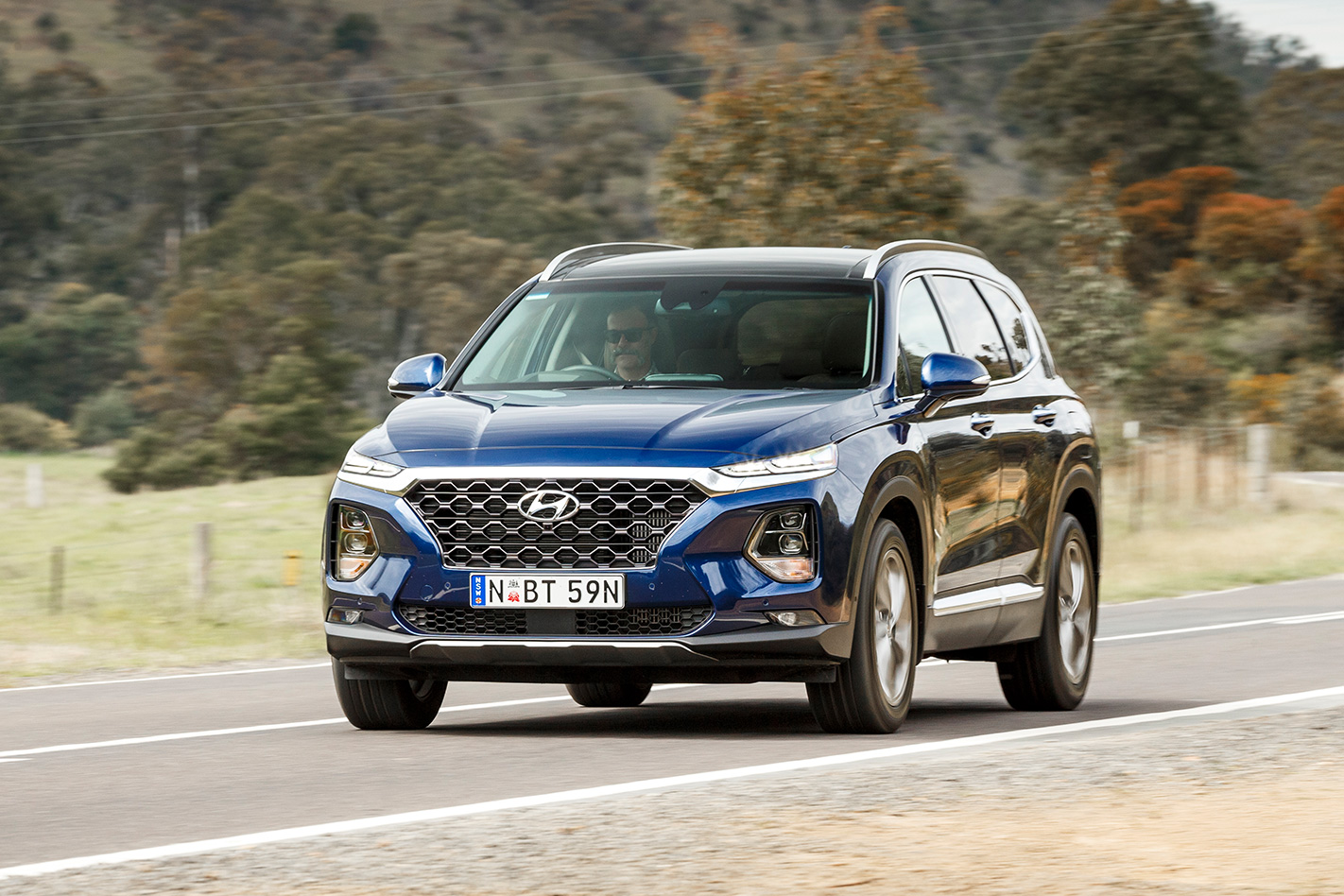
The Hyundai, represented by the $60,500 Highlander CRDi, is the cheapest on test, highlighting value pricing that helped it score a slim victory in our recent stoush against three other diesel-powered seven-seaters. Huh? Diesel? Frustratingly, a petrol-six alternative is not offered in high-end variants, so the trusty, torquey old 2.2-litre four-cylinder turbo oil-burner it is, mated to a brand-spanking in-house eight-speed auto. This probably partly explains why this completely redesigned TM series out of Korea hasn’t yet blitzed the sales charts since landing in July, though heavy-handed styling after the handsomely slick DM predecessor may also be to blame.
Alone with an ‘Auto Link Premium’ app that – among other things – brings remote-controlled engine-start/stop, locking, hazards, horn, climate and defroster to the driver’s fingertips, the Highlander also matches the Toyota and Mazda by brandishing side window blinds, and the latter brand with a head-up display and heated wheel/outboard rear seating. Swish!
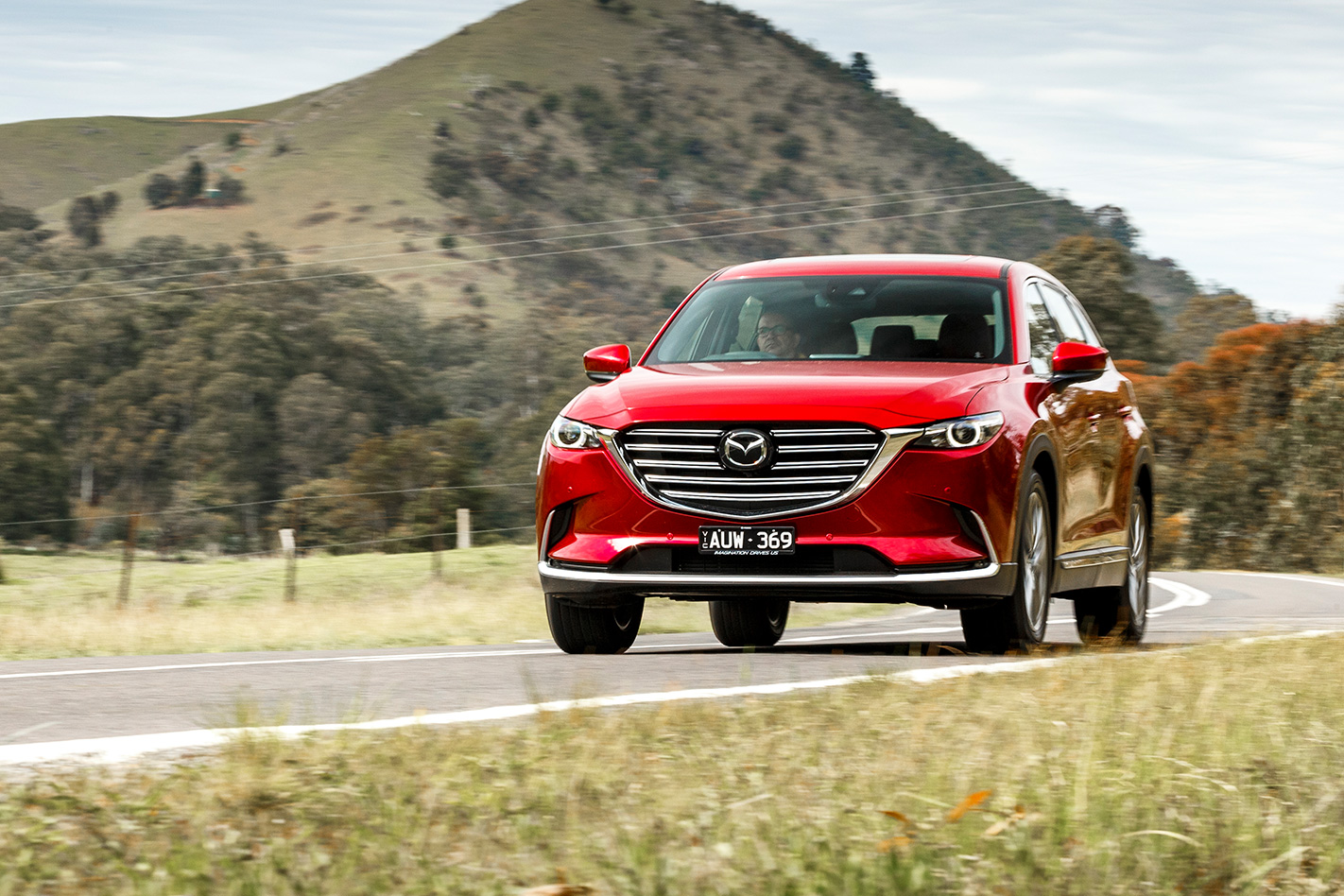
Released in September, the revised MY19 CX-9 – in glitzy Azami LE guise from $66,490 – is more than just the brand’s long-overdue Apple CarPlay/Android Auto debut (BT-50 aside), with improved (fixed-rate) dampers, beefier steering components, sturdier engine mounts and a thicker headlining, joining Audi-esque frameless interior mirrors, an overhead storage console and hand-finished leather, wood and aluminium inserts. Lush. It’s the second update the COTY-winning TC series has received since arriving from Japan in July 2016.
Older still is this quartet’s bestseller, the Kluger. A mover-’n’-shaker across both sides of the Pacific (where, confusingly, it’s known as the Highlander – a name Hyundai has denied Toyota Oz permission to use for 15 years) ours is the Indiana-made Series II makeover, which surfaced in early 2017 with direct-injection for the gutsier 3.5-litre V6, an eight-speed auto and updated active safety.
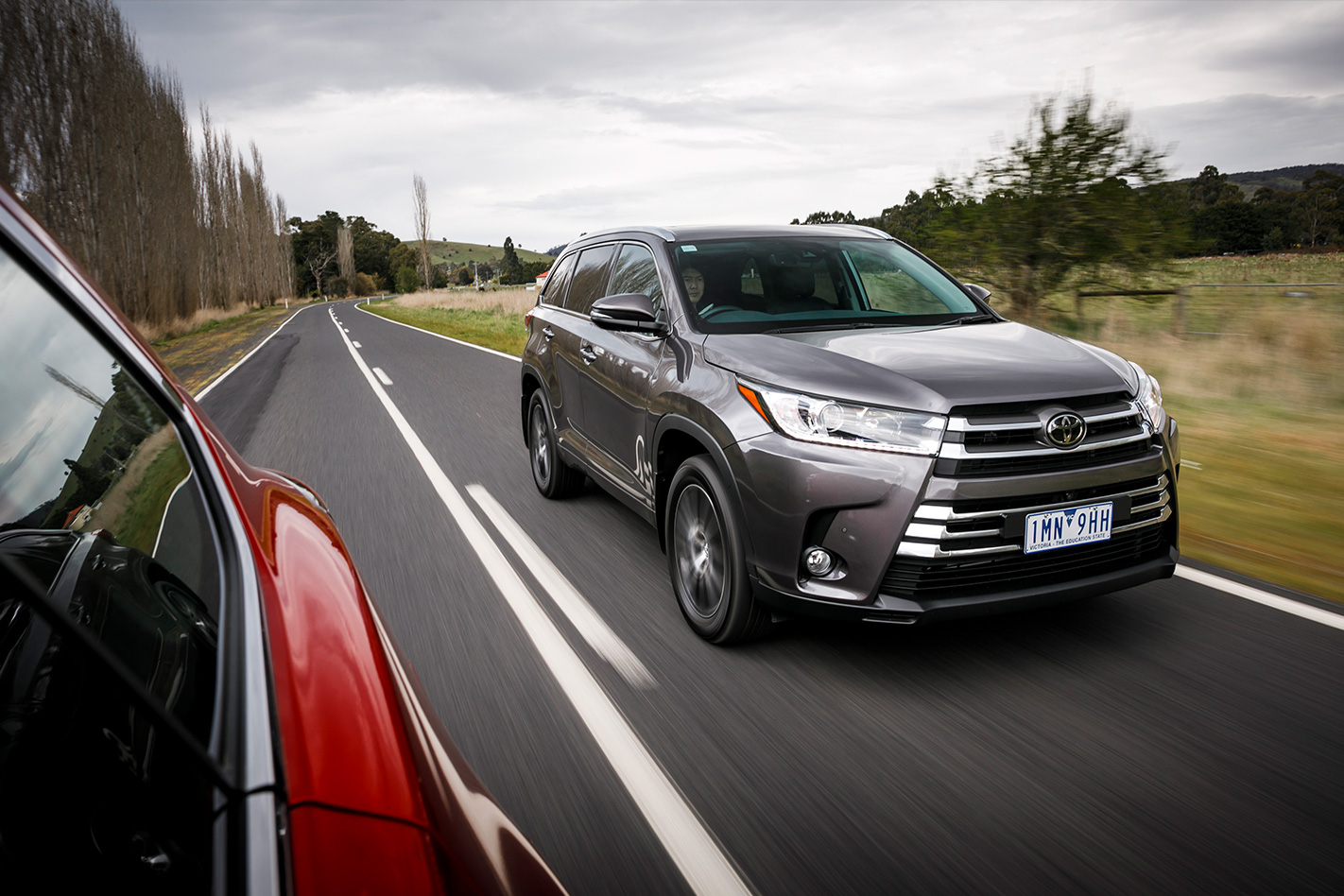
At nearly $10K per seat, our $69,246 Grande AWD’s only real USPs are a tailgate with separate-opening glass hatch (memories of Territory right there) and antiquated roof-mounted Blu-Ray player (perfect for watching Finding Nemo and The Wire box-set). Oh, and two fewer years of warranty, at only three years. Boo!
Still, it’s plain to see why the square-jawed Kluger is such a showroom draw. Immense in every dimension, the Grande grants loads of space for five adults and will happily accommodate an extra two in the simple-to-access third row. Operation-friendly controls, huge (analogue-only) dials and a humongous central bin further aid family-focused travel.
However, extended stints on the fat, flat seats reveal support shortfalls, cheapo monotone hues abound and hard plastics offer neither surprise nor delight in something so expensive. And don’t bang your noggin on that low-hanging DVD player, either.
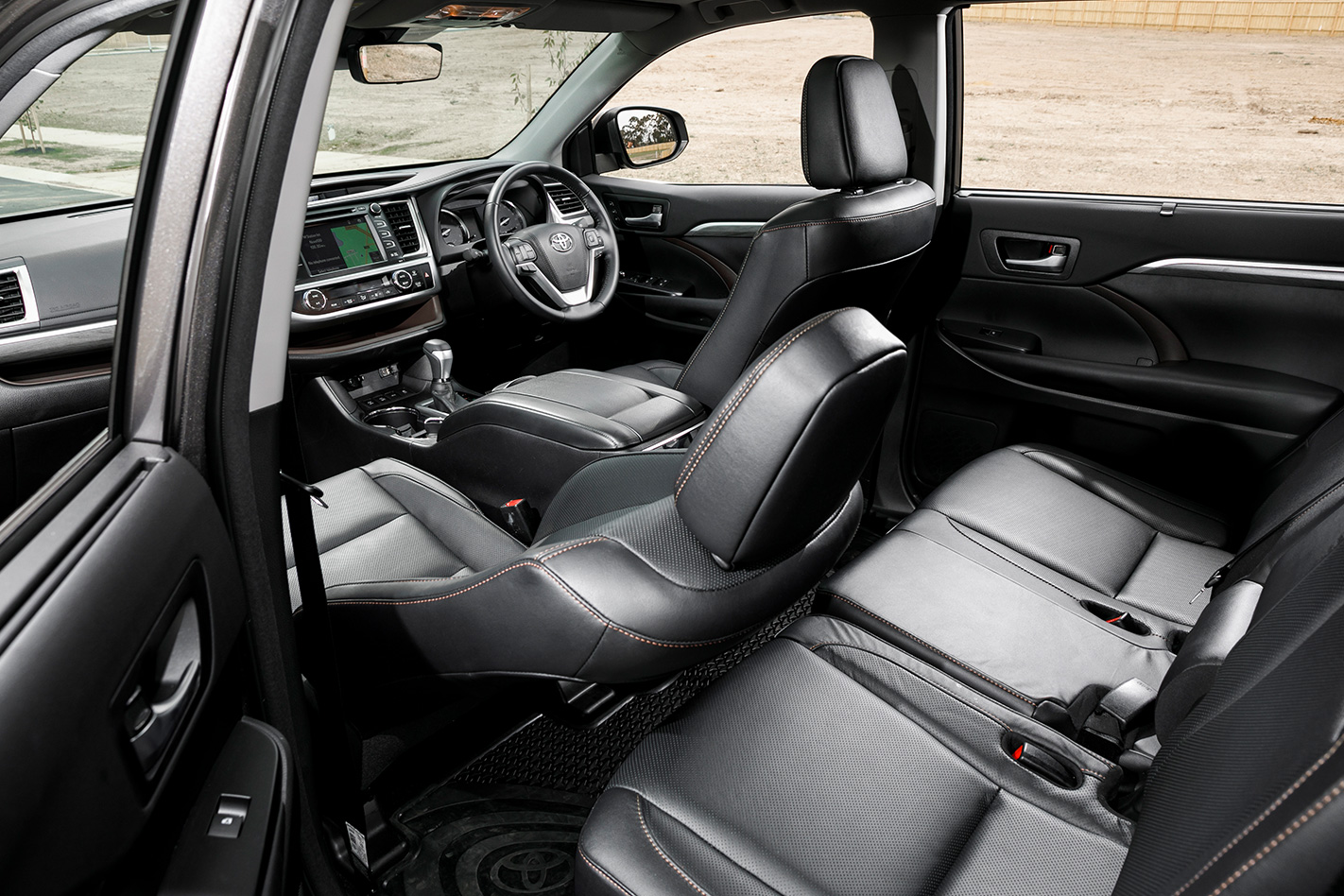
If only Toyota hired Hyundai’s cabin curators, with their playful yet proficient deployment of colours and textures, which significantly lift the Highlander’s ambience. Tighter physical dimensions dictate there’s less space, but third-row access is brilliant thanks to a novel one-touch seat fold/slide mechanism. Throw in well-padded pews and the Hyundai’s classy, inviting interior can still accommodate seven in comparative comfort.
If you happen to be sat right in the Santa Fe’s rear then vision is hampered by the rising window line (though it’s way better than before) and tall centre-row backrests, but there’s multi-speed fan control as well as the lights, cupholders and 12-volt outlets that the others also provide. Too bad clambering in/out is tricky due to narrow apertures. Note that none boast the satisfaction of motorised push-button second-row backrest releases.
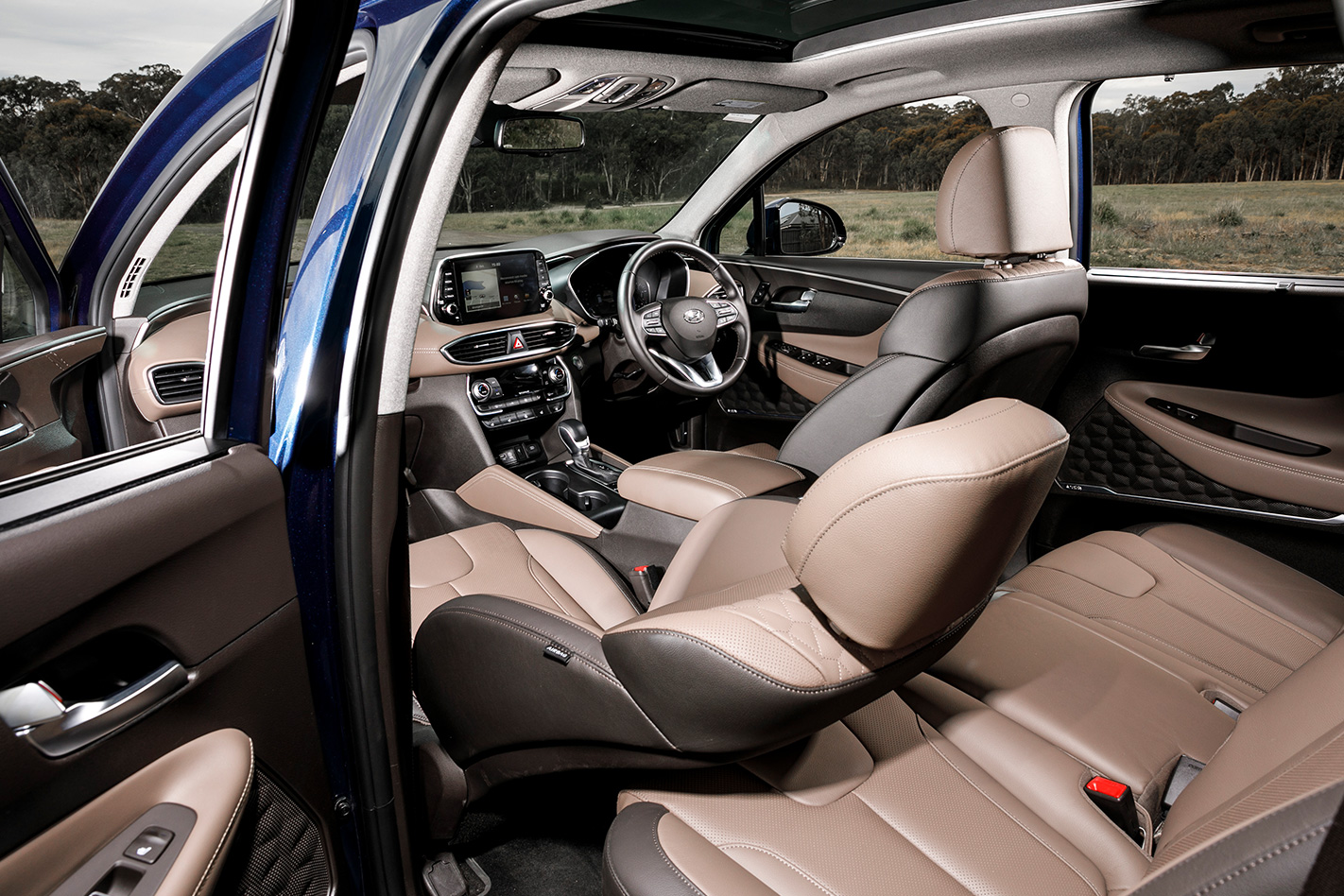
There’s almost dull uniformity across all four SUVs as far as middle-row amenities including storage, ventilation and USB access are concerned, with varying but overall more-than-sufficient leg, knee, head and shoulder space on offer – even in the compact Highlander. People are sat somewhat higher than those up front, especially in the stadium-esque Mazda, though elevation amounts vary.
Greater differences lurk up front, with the Hyundai clearly gaining inspiration from the CX-9 for design and layout, if not quite in execution. Both deliver a low cowl, snug driving position, wide centre console, prominently perched touchscreen, sporty instrumentation and supportive seating that provide an inclusive cockpit experience.
Where the Highlander stumbles yet the Azami LE soars is in the details; there’s a sheen of luxury in the former that is betrayed by budget plastics and jarringly irregular graphics, while the latter adheres to doggedly consistent, lofty stylised standards throughout. It’s the difference between tacked-on and built-in.
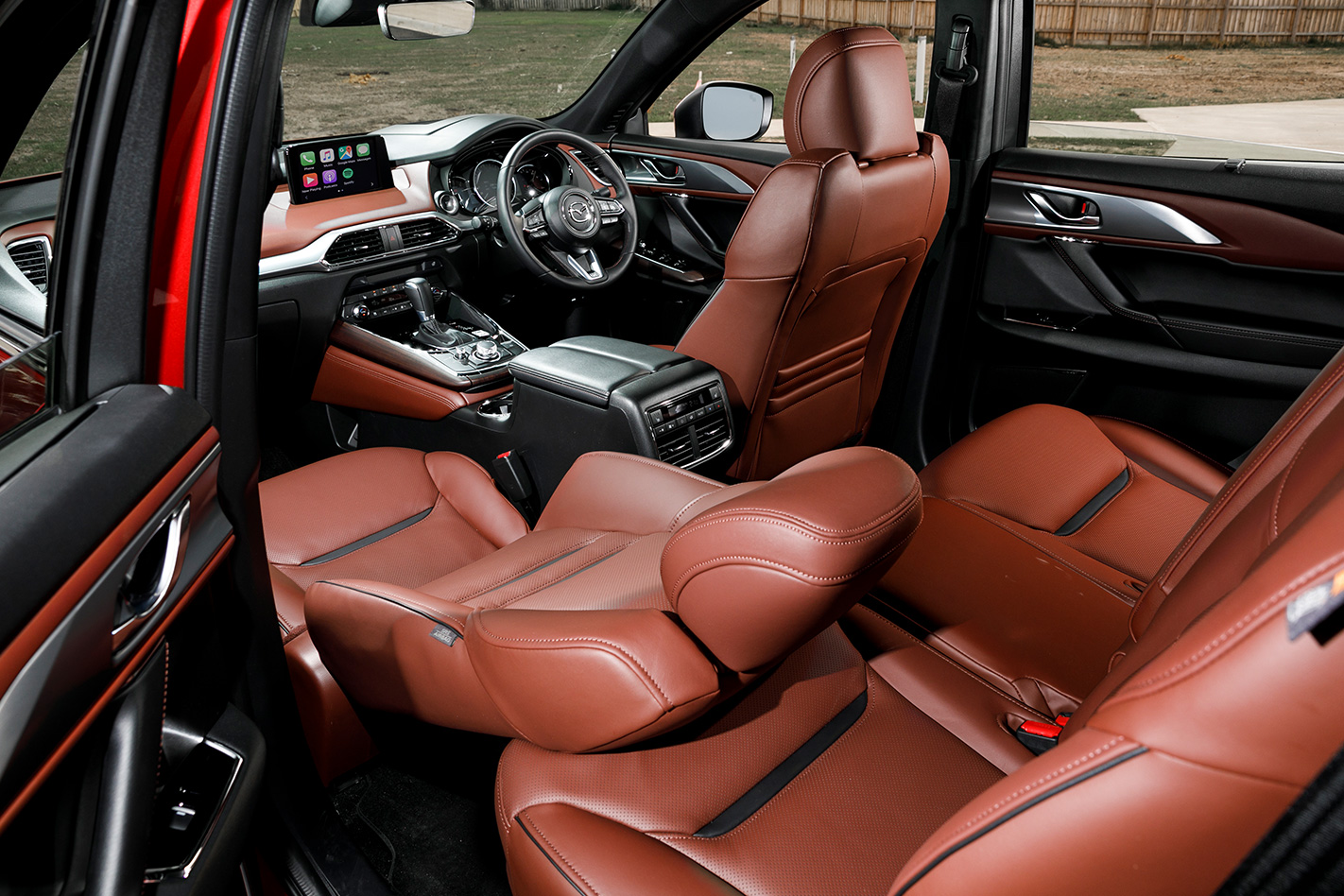
Yes, the CX-9 lacks third-row face-level outlets, but the middle-row’s vents do effectively disperse air; seat comfort remains a priority throughout, and no cabin is as quiet or classy. At five metres, the Mazda is nearly limo-like in length, and so provides the necessary space and practicality, yet does so with moxie and panache. The Azami LE feels its sticker price.
If the CX-9 is the massive SUV that doesn’t seem it, the Acadia somehow is the opposite, and a peculiarly, charmingly/irritatingly American take on what constitutes a seven-seater at that. While the Kluger feels large and utilitarian, the Santa Fe stylised and spec-laden and the CX-9 cool and cultivated, the Holden nee-GMC manages to meld elements of all three, in a long, wide and boxy wagon that Canyonero-driving Marge Simpson might revel in.
Agreeable seating (especially the middle and rearmost rows, which are cushy for hefty derrieres and low-set for larger folk), a chunky (if overly plasticky and a tad greasy) dash with ZB Commodore VXR-like analogue/digital instrument combos and suave new multimedia interface, and laughably generous storage throughout will quickly win friends, but please brace for iffy trim quality, sloppy finishes, clumsy thumb-actuated tip-shifter and a vague drive-mode selector.
Infuriatingly, the flat-floored Acadia’s refreshingly airy, roomy cabin comes achingly close to ideal until you realise that GM didn’t bother switching the middle row for RHD, so kerb-side occupants must tip and slide the larger portion of the bench to squeeze through. Fail.
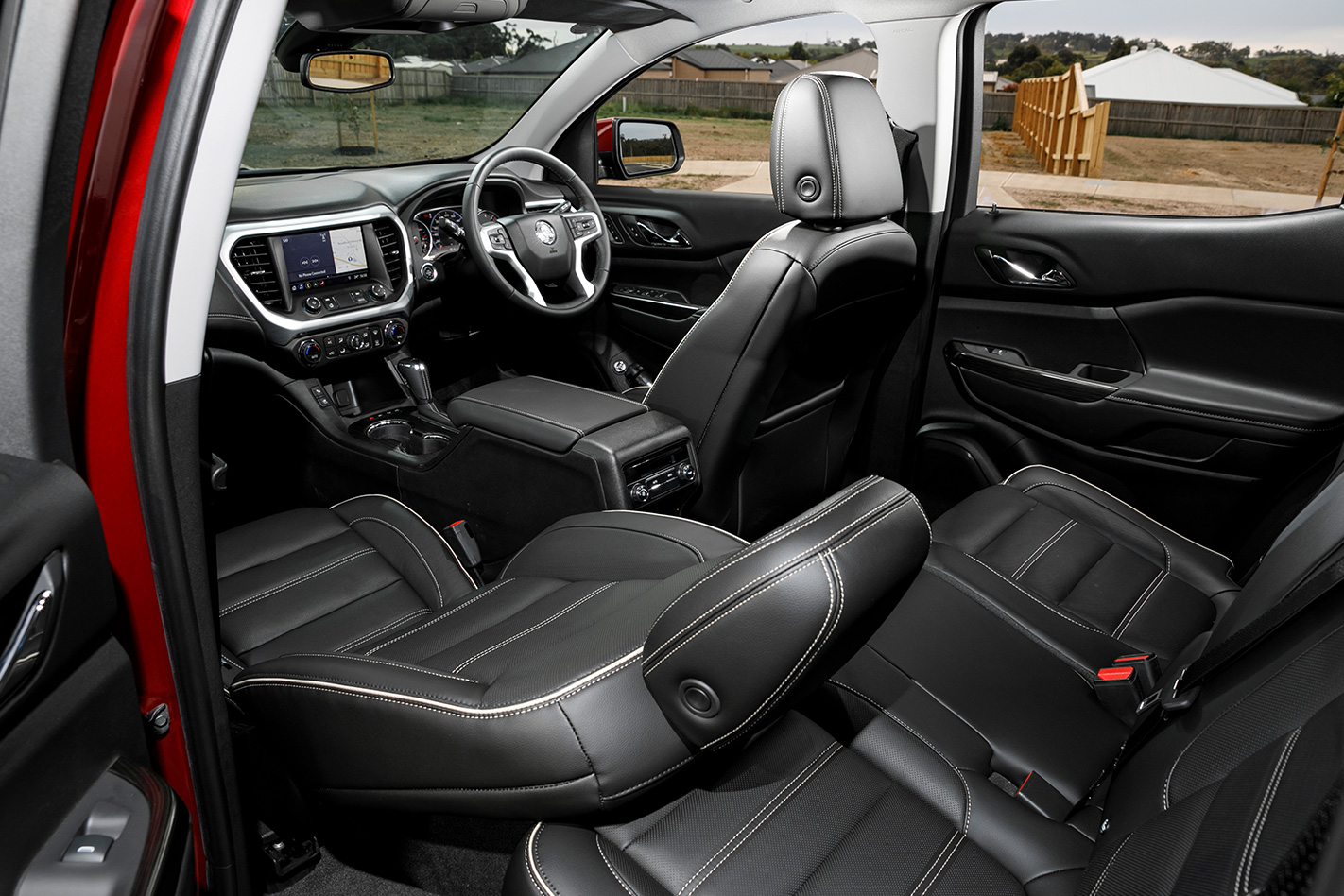
Despite the voluminosity, entry/egress to the third row is inexplicably tight. The Yank is also vocal and occasionally even vibey back there, too.
Some of that noise can be blamed on the brawny Acadia’s 231kW/367Nm 3.6-litre V6, which makes the most of its Aussie-tuned nine-speed auto to deliver rousing as well as rapid performance. Brisk off the line, the LTZ-V is quickest in every increment, and blitzes the others in rolling acceleration, requiring just 4.7sec to surge from 80-120km/h – nearly a second clear of the next-best.
That the hot-rod of the quartet also returned an impressive 10.0L/100km reflects the efficiency of the powertrain calibration. That was only a litre adrift of the Santa Fe diesel, which admittedly was throttled mercilessly to keep up with the speedy petrol pack. Battling gusts at Heathcote, the Hyundai fell short of the 9.5sec 0-100km/h we managed a few weeks earlier. That said, in isolation, the 147kW/440Nm 2.2 CRDi’s refinement is remarkable, and once in the torque band in real-world scenarios, provides ample oomph for eager dispatch.
As with every current Kluger we’ve tested, our Grande’s performance proved both strident as it strove effortlessly to 100km/h (in 8.0sec flat) and muscular in the mid-range, remaining within half a second of the hard-charging Acadia in the 400-metre sprint at 15.8sec. The revised 218kW/350Nm 3.5-litre V6 is also sonorously smooth and reasonably parsimonious to boot, using 10.4L/100km. Another good showing from the Toyota in its twilight years.
The Mazda with its 170kW/420Nm 2.5-litre four-pot turbo, meanwhile, always felt quick, strong and reactive to throttle inputs away from the track, despite its failure to breach the 8.0sec 0-100km/h mark on our blustery drag strip. Across 400m it was just 0.1sec shy of the Kluger, revealing the rich torque band at low revs, that translates to quite vigorous, lusty reflexes when called upon.
Again, in its natural environment, those six forward ratios make the most of the turbo’s outputs to really push the CX-9 along, while kickdown is instantaneous. That the Holden recorded slightly better fuel economy did shock, however, though the Azami LE did beat our previous efforts.
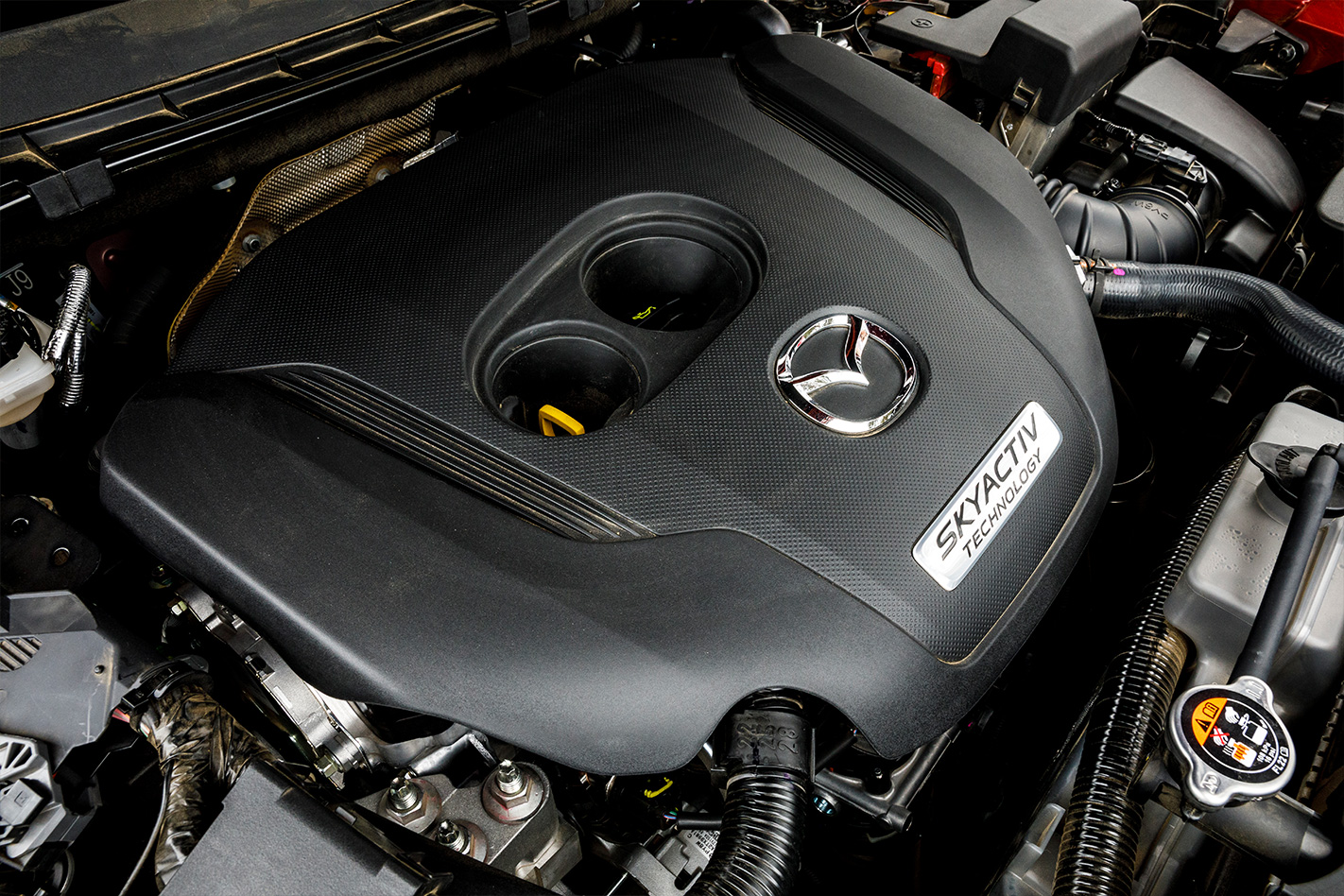
Where the Mazda really slays is in its dynamic character, with the group’s meatiest and most involving steering, which delivers outstandingly lively and tactile handling for an SUV of this size and mass, as well as predictable, four-square grip.
And it’s not just for the keener drivers either, for even on 20-inch alloys, the recently fettled suspension’s inherent suppleness is obvious, ironing out irregularities while still providing sufficient damping over more serious stuff. The ride does err on the firm side, but the compromise between comfort, control and quietness puts the Azami LE in a league above most competitors. At any price point.
Holden revealed that, in the LTZ-V, the helm’s feel has been tuned for lightness but is still weightier than the US GMC set-up, and that’s probably fine for the vast majority of Acadia buyers.
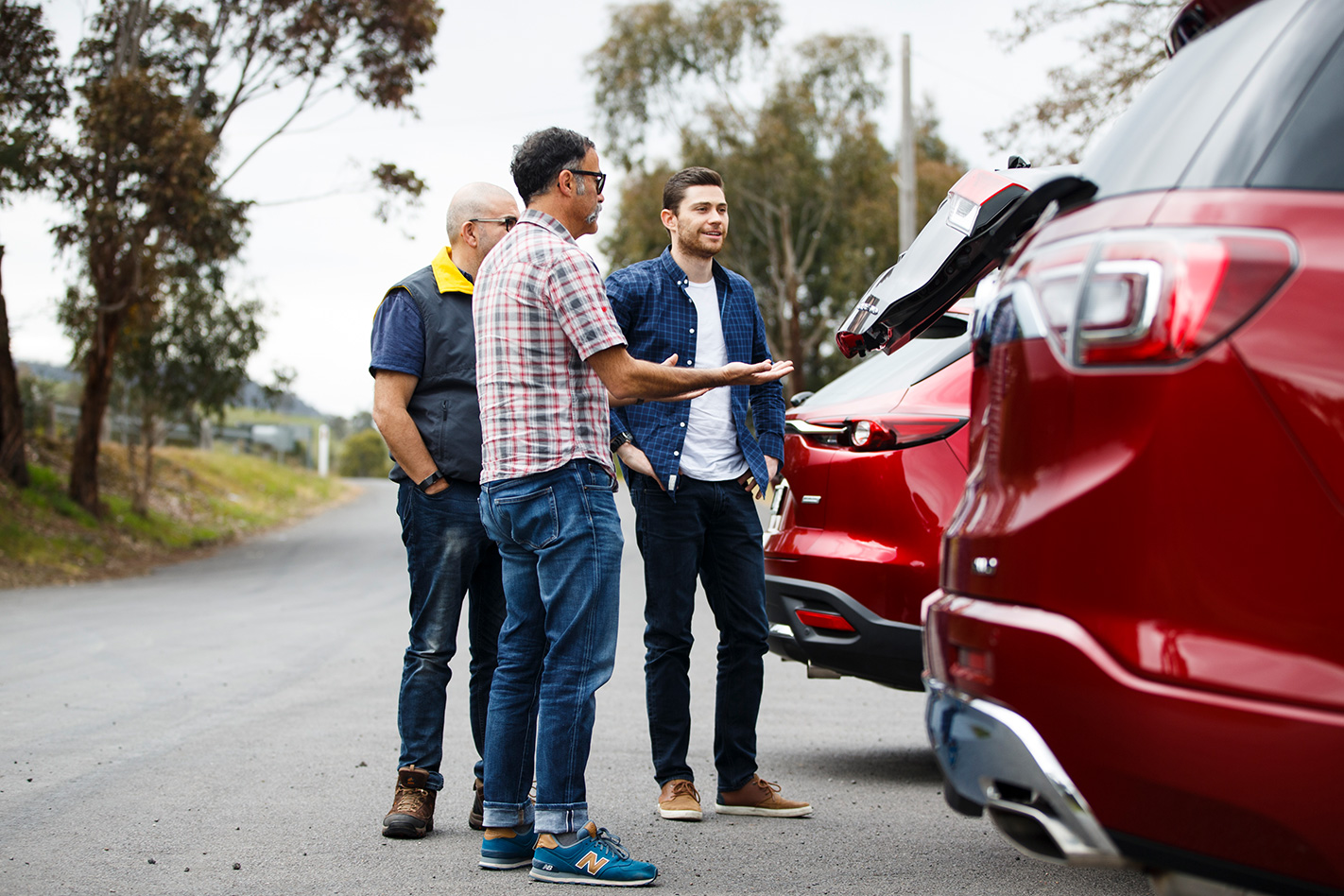
For us, though, even in the heavier Sport mode, we wanted more heft, though turn-in is certainly crisp and measured enough, with levels of poise and control for a two-tonne SUV that enthusiasts can actually revel in, especially when pressing on. Even more so over gravel, in fact, where the Holden really steps up.
Also on 20s, the Acadia’s electronic dampers make a huge difference, offering a softness over larger hits that isn’t matched here. But whether the Holden brings a palpably better ride than the CX-9 is debatable; in comfort mode the LTZ-V displays less dynamic discipline than the Mazda, while in Sport the busier suspension is less absorbent. And it’s also noisier overall. Again, the Hiroshima machine’s honed consistency pays dividends.
The Santa Fe, too, brings some unexpectedly sporty dynamics to the table, shrinking around the driver with the series’ newfound agility, tautness and assurance, backed up by stable and relaxed gait in most circumstances.
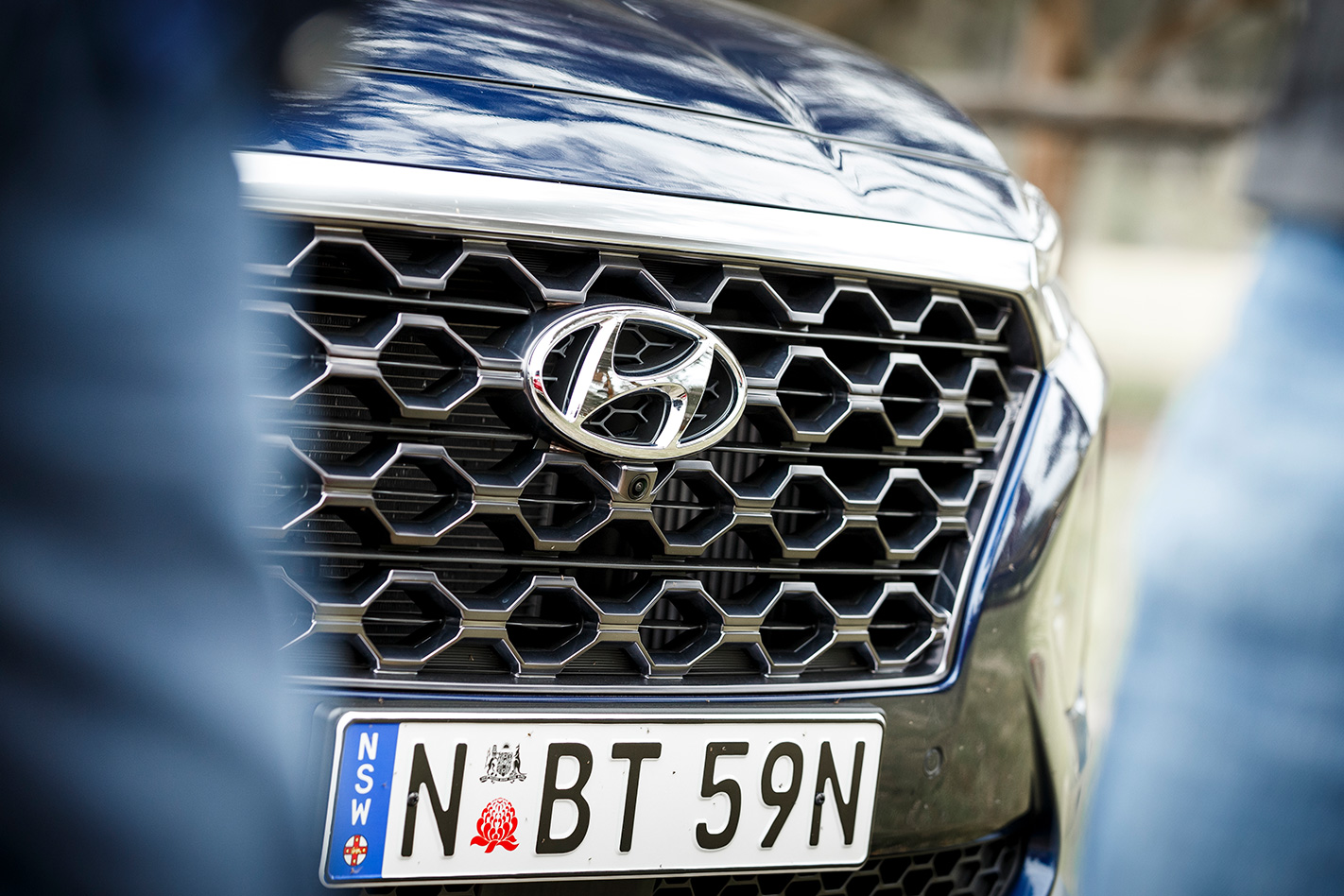
On the other hand, there’s none of the CX-9’s natural driver engagement from the steering, while the chassis can feel too stiffly tuned, with limited wheel travel when roads turn rough, accompanied by discernible lateral as well as vertical body movement over nastier bitumen.
Lastly, there’s the Kluger. Capable and even commanding across a variety of conditions, it offers up surprisingly contained and surefooted handling and steering characteristics, and a wheel that’s also reassuringly isolated from any kickback. It’s too remote for our tastes, though, while the ride never really feels settled, telegraphing niggling irregularities with annoying regularity. The Toyota is also prone to vibration and pitching, which seals it as the least dynamically disciplined of the foursome.
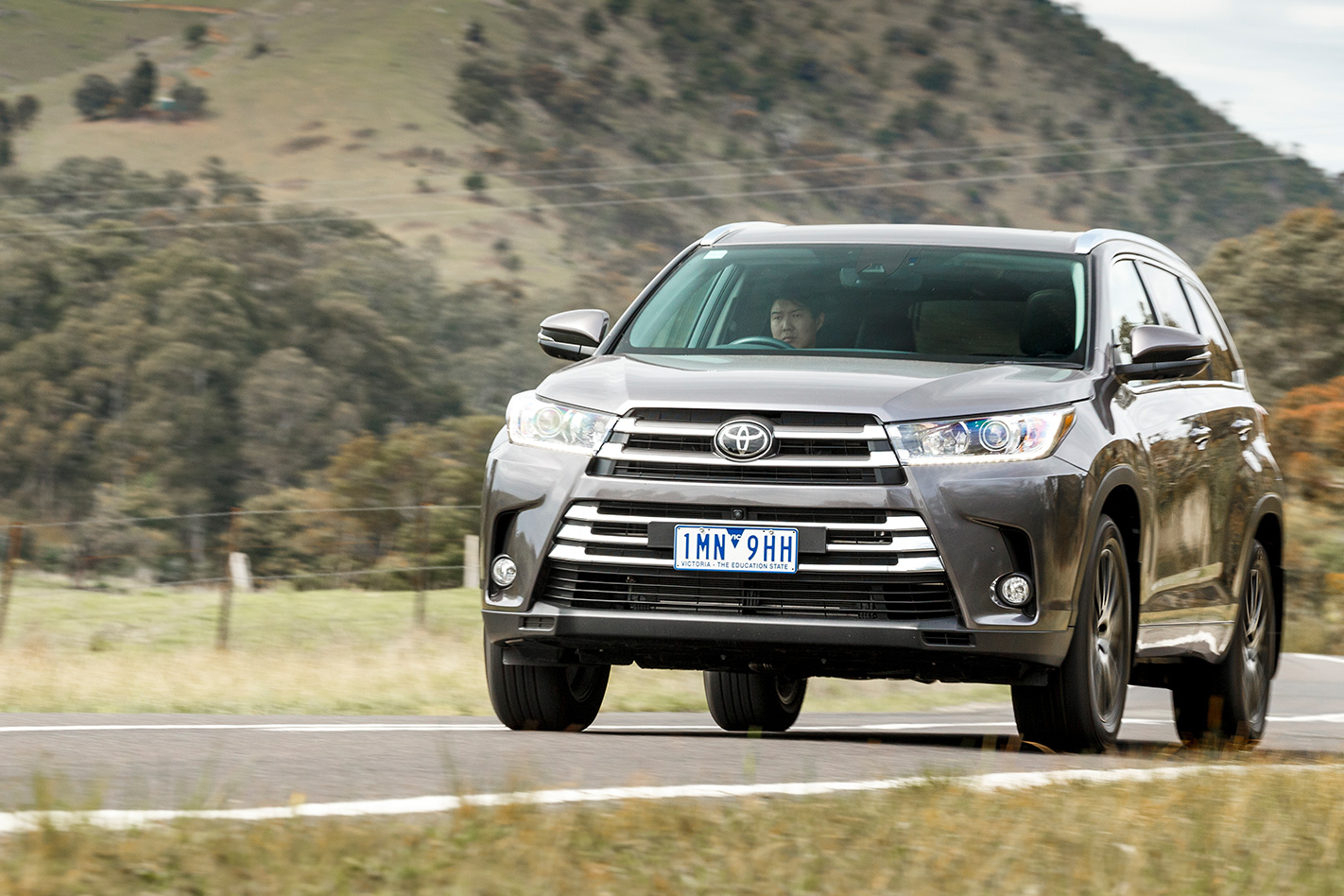
The Grande, then, is a big, reliable, hardy and no-nonsense seven-seater with plenty of poke – those 2017 updates weren’t in vain. But it’s also an expensive and dated bus that feels out of its depth here. In isolation, the Highlander is a massive leap forward for the Santa Fe, bringing newfound packaging and presentation appeal to go with its handling alacrity. There’s no missing that comparatively low price either. A deserving winner against other diesel rivals, in this company, the Hyundai lacks the consistency, polish and appeal of the CX-9, as well as the character, composure and completeness of the Acadia. Ultimately, the Mazda CX-9 uses its smarts most effectively to outmanoeuvre its rivals. Cohesive, confident and alluring, the Azami LE feels special where the others may merely seem capable. We’re as proud as ever of our 2017 COTY call.
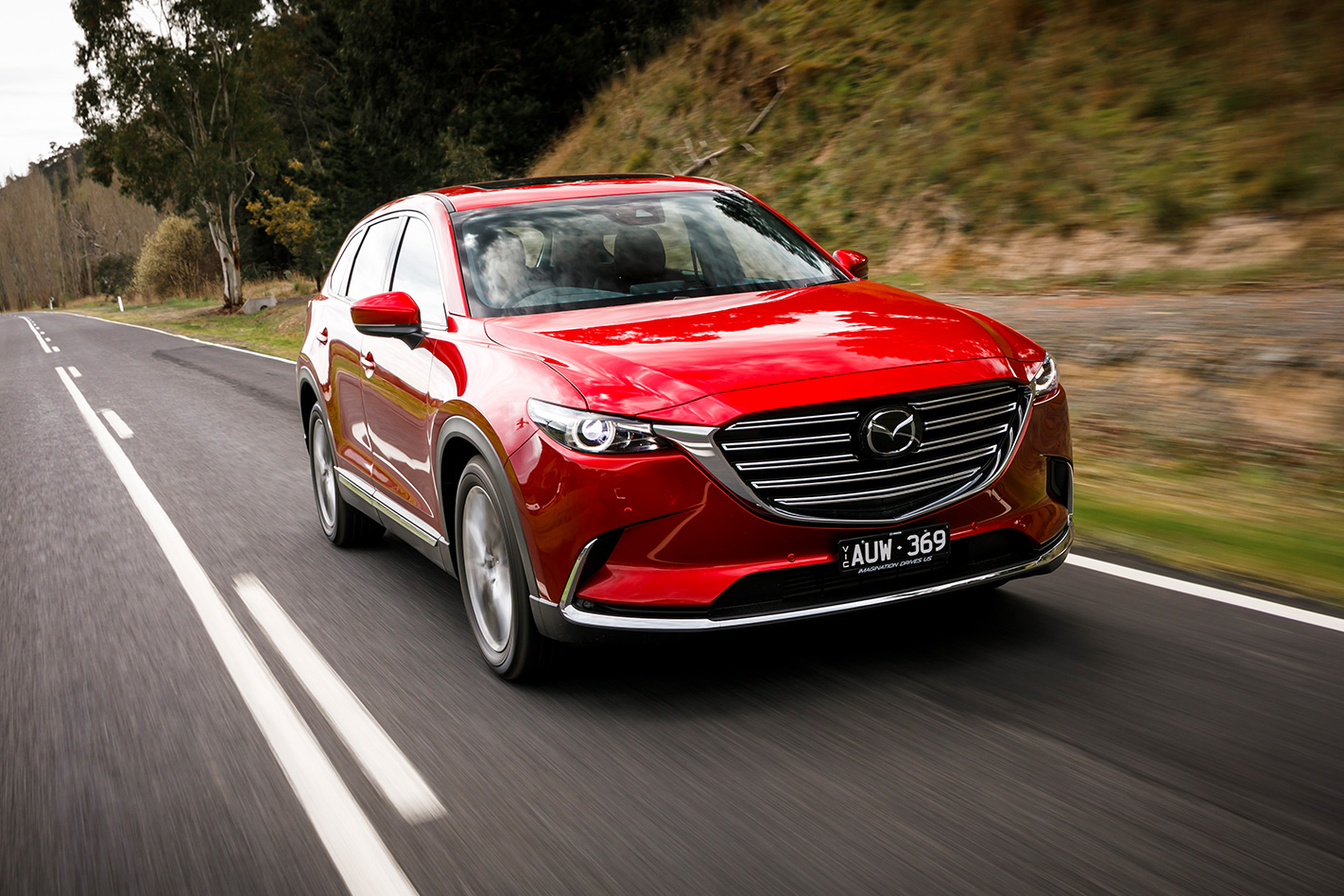
But, boy, we’d not hesitate recommending the Acadia LTZ-V. Attitude, personality, specification, packaging, performance and efficiency are highlights. It’s a strong shot at the top of the class – one that falls just short of snatching victory from the high-flying CX-9.
Unashamedly American as it is, the Acadia could be the model to make Australians crave a Holden again.
There’s no denying that you can find a lot of value in buying a used car. But you’re also taking a chance that the car has been cared for and serviced, and will get you further than the former owner’s suburb before breaking down and costing you thousands in unexpected repairs.
Sometimes, it’s safer and less stressful to buy a new car instead. That way you know you’re getting a vehicle in top working order, and with the peace of mind that it has a warranty should anything go wrong.
The good news is that new cars have never been more affordable, or better. Cars like the Kia Rio, Holden Barina, Mitsubishi Mirage and Honda Jazz are all less than $20,000 to buy (driveaway) and will guarantee you five years or more of untroubled motoring.
2019 is shaping as another bumper year for new car buyers on a budget, with significant updates to a number of key players at the sharpest end of the affordability chart – no matter your taste – plus there’s a couple of very interesting newcomers on the horizon that promise to shake up the establishment. Here are 15 options coming to Australia in 2019 that start at under $50,000.
Audi A1
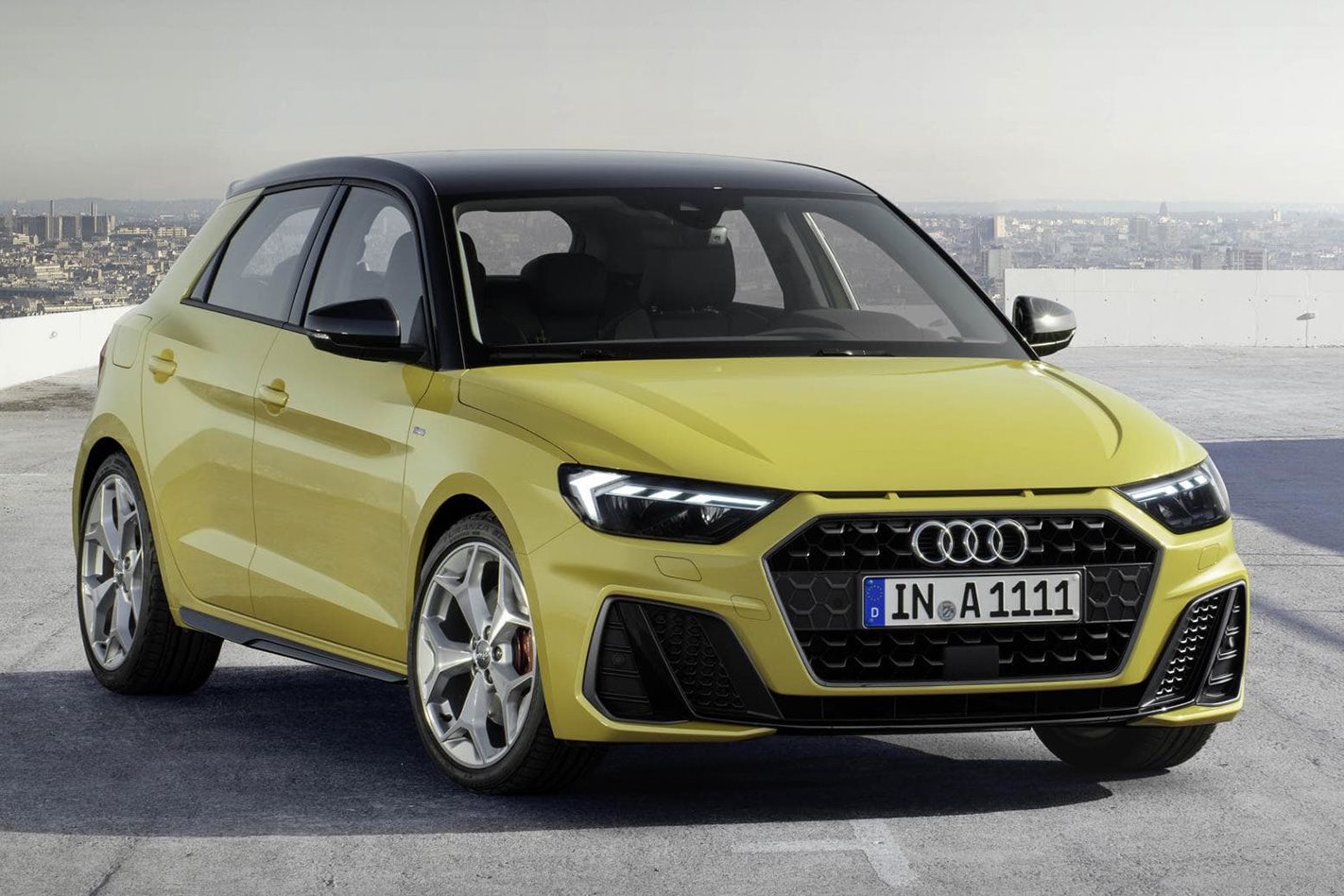
An all-new iteration of Audi’s gateway hatchback.
Price range: $30-40K
Rivals: Mini Cooper, Fiat 500
Due Date: March/April 2019
Spun-off from the new Volkswagen Polo platform, Audi’s box-fresh second-generation A1 city hatch promises to inject a great deal more sophistication into the bottom end of the German brand’s product portfolio. Now measuring over four metres long, it’s physically bigger than before, but a range of new powertrains – including a 1.5-litre turbo four with cylinder deactivation – move the mechanical game along as well. Inside there’s a greater sense of maturity in the cabin furnishings, plus plenty of infotainment tech.
BMW 1 Series
Baby Beamer is less for the baby boomer with switch to front drive
Price: $42,000-$72,000
Rivals: Mercedes Benz A-Class, Audi A3/S3
Due: November 2019
BMW is being pretty cagey on this one, but let’s have a swing anyway… Swapping to front wheel drive for the first time, the BMW 1 Series will still yield a performance variant – only this time it’s likely to mimic the M5 by offering all-wheel-drive in conjunction with a turbocharged four-cylinder petrol engine. This will pitch it up against Mercedes-AMG’s inbound A-Class hotties.
Given the potential change to a front-wheel-drive layout, it does put questions marks around the fate of cars like the M140i – it may well even be given a stay of execution until BMW’s first real FWD hot hatch is, err, hatched.
Citroen C5 Aircross
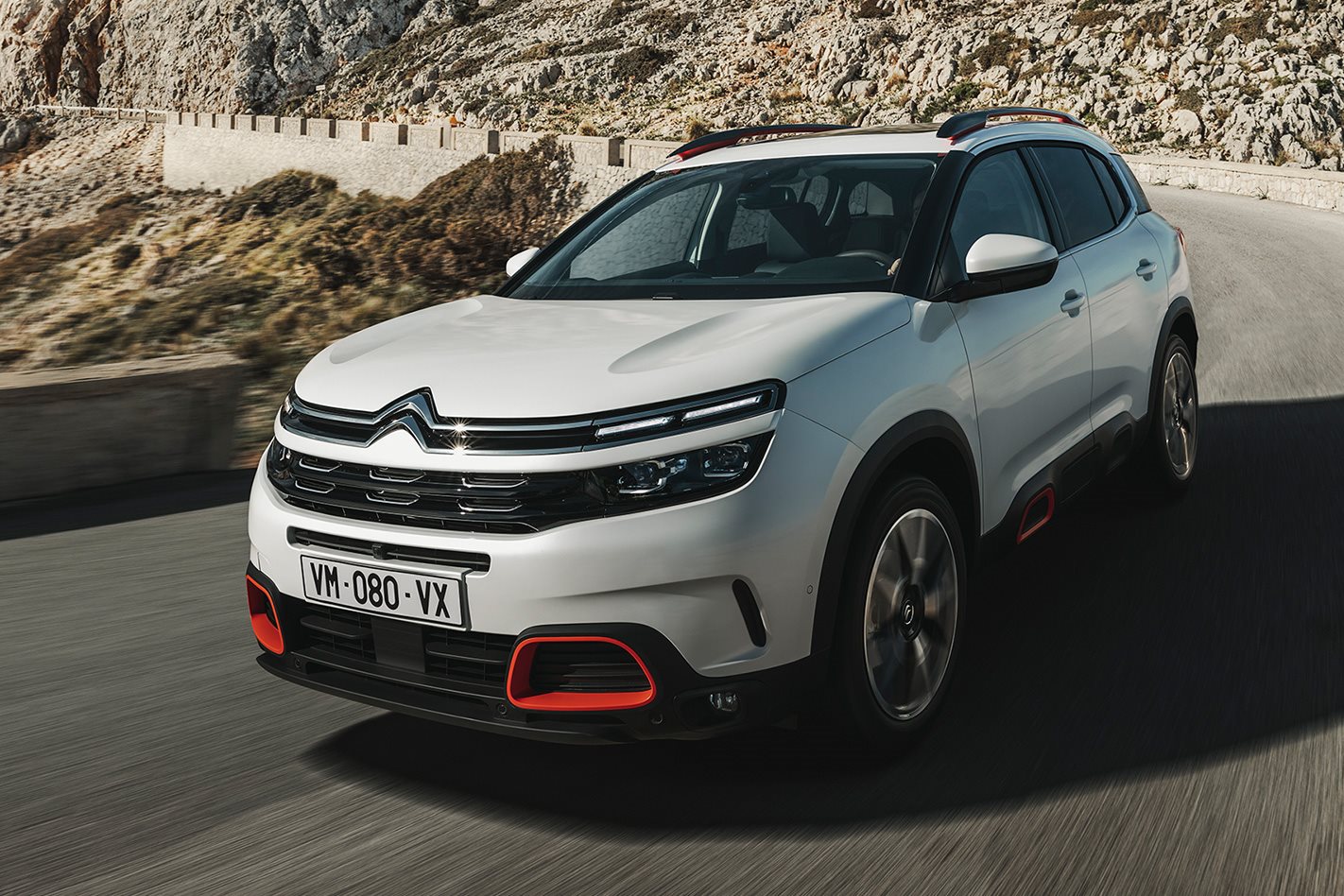
The C5 Aircross has morphed into an SUV that harks back to comfortable Citroens of old.
Price range: $38,000 -$55,000 (estimated)
Due date: Mid-2019
Rivals: Mazda CX-5, Subaru Forester, Peugeot 3008, Renault Koleos
Citroen says the new C5 Aircross will be the ‘most comfortable and modular SUV in its segment’ by drawing on its predecessor’s plush hydro-pneumatic suspension with tech that it calls “Progressive Hydraulic Cushions”. Ride comfort will be further enhanced by ‘Advanced Comfort’ seats that filter out road disturbances. The 4.5-metre-long C5 Aircross will make the most of its spacious interior by offering a wide centre console and flexible rear seating that can expand boot space from 580 to 720 litres.
Ford Fiesta
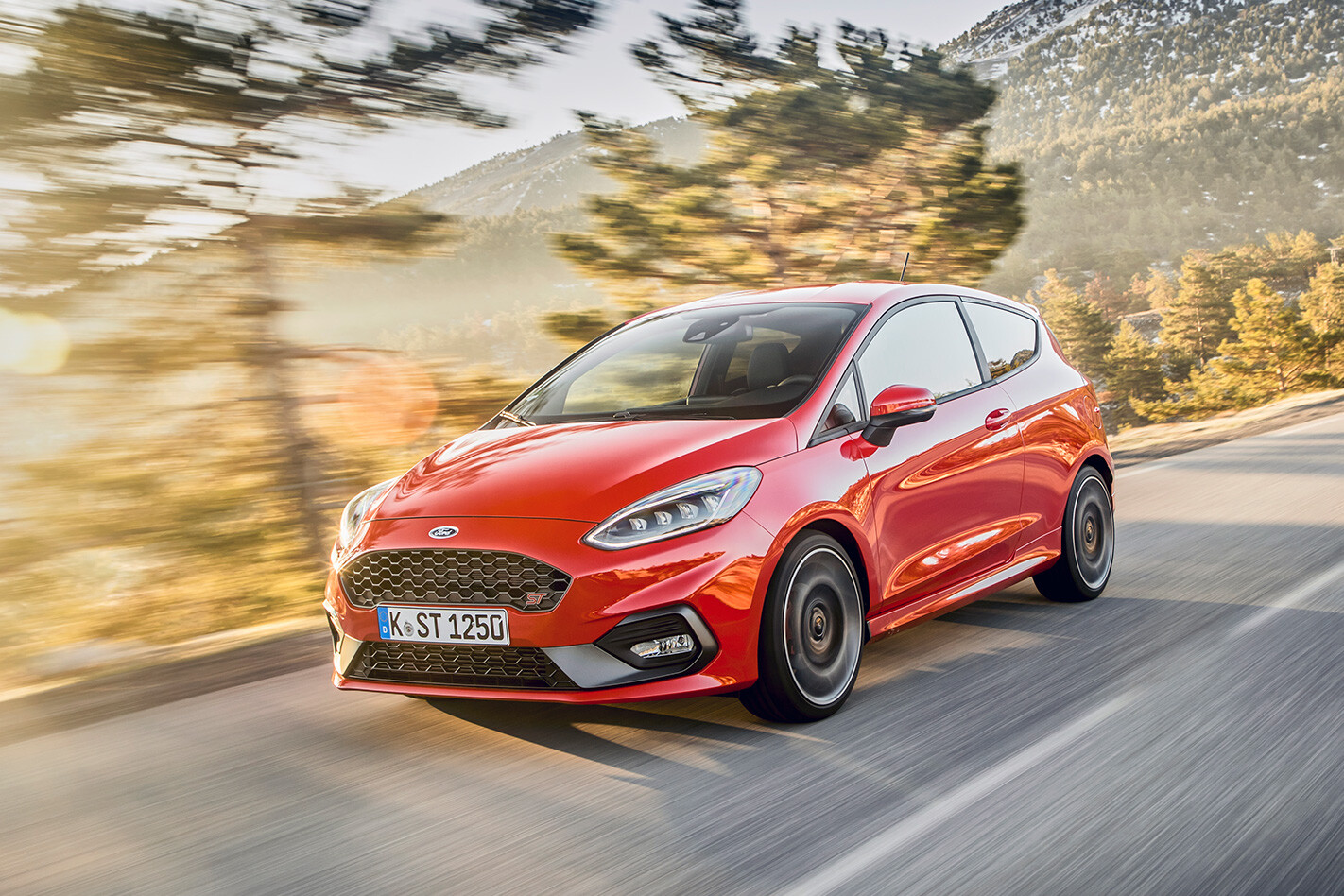
The Fiesta returns for another generation – but only as a hot hatch
Price range: $28K-$30K
Rivals: Volkswagen Polo GTI, Suzuki Swift Sport, Renault Clio RS
Due Date: Second quarter 2019
The Fiesta has long been a dynamic darling of the compact hatch set, and Ford will be cranking up the athletic ability of its next-generation Fiesta next year with the Fiesta ST hot hatch.
However, the ST will be the only way you’ll get to put a new-gen Fiesta in your driveway, for Ford Australia has declined to bring lesser models in the range to local showrooms due to unfavourable exchange rates putting the squeeze on pricing.
As for the ST, we’ve already driven it and declared it to be one of the best hot hatch options at its expected high-$20K price point. Expect to see it land sometime in the second quarter.
Ford Focus Active
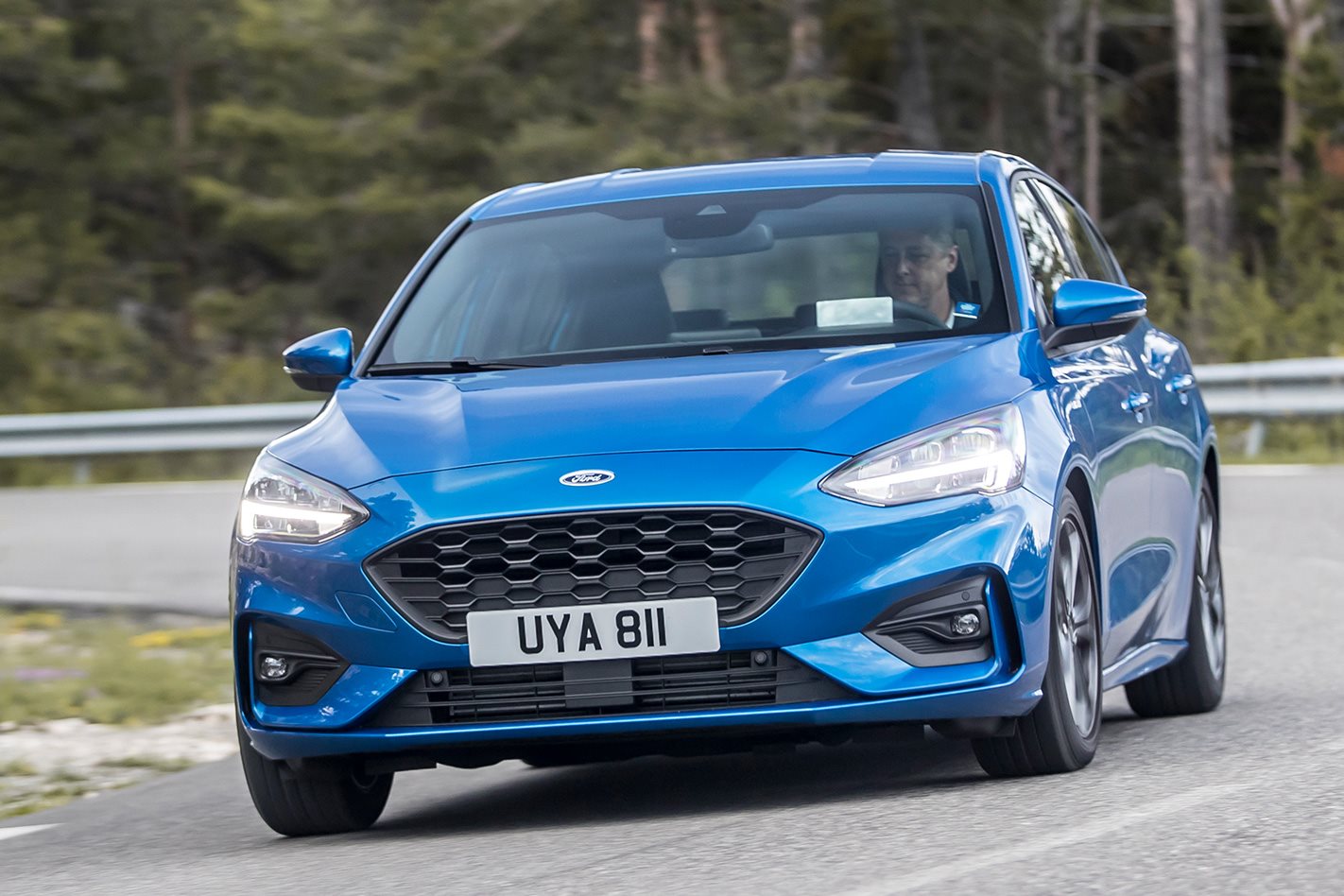
A jacked-up version of the Focus for those with an outdoorsy bent
Price range: $29,990
Rivals: Subaru Impreza XV, Fiat 500X, Citroen C4 Cactus
Due Date: second-quarter
The Focus hatch has already received its full model changeover by now, but the family will grow when the Focus Active rolls into Ford showrooms in 2019.
Following a similar format to the Impreza-based Subaru XV but described by Ford as a passenger car rather than an SUV, the Focus Active will bridge the gap between the regular Focus hatchback and Ford’s bona-fide SUV line-up. The ‘missing link’, if you will.
Only one engine, a 134kW 1.5-litre turbo petrol, will be offered, and the Focus Active is strictly front-wheel drive with an eight-speed automatic.
Hyundai i30 N Fastback
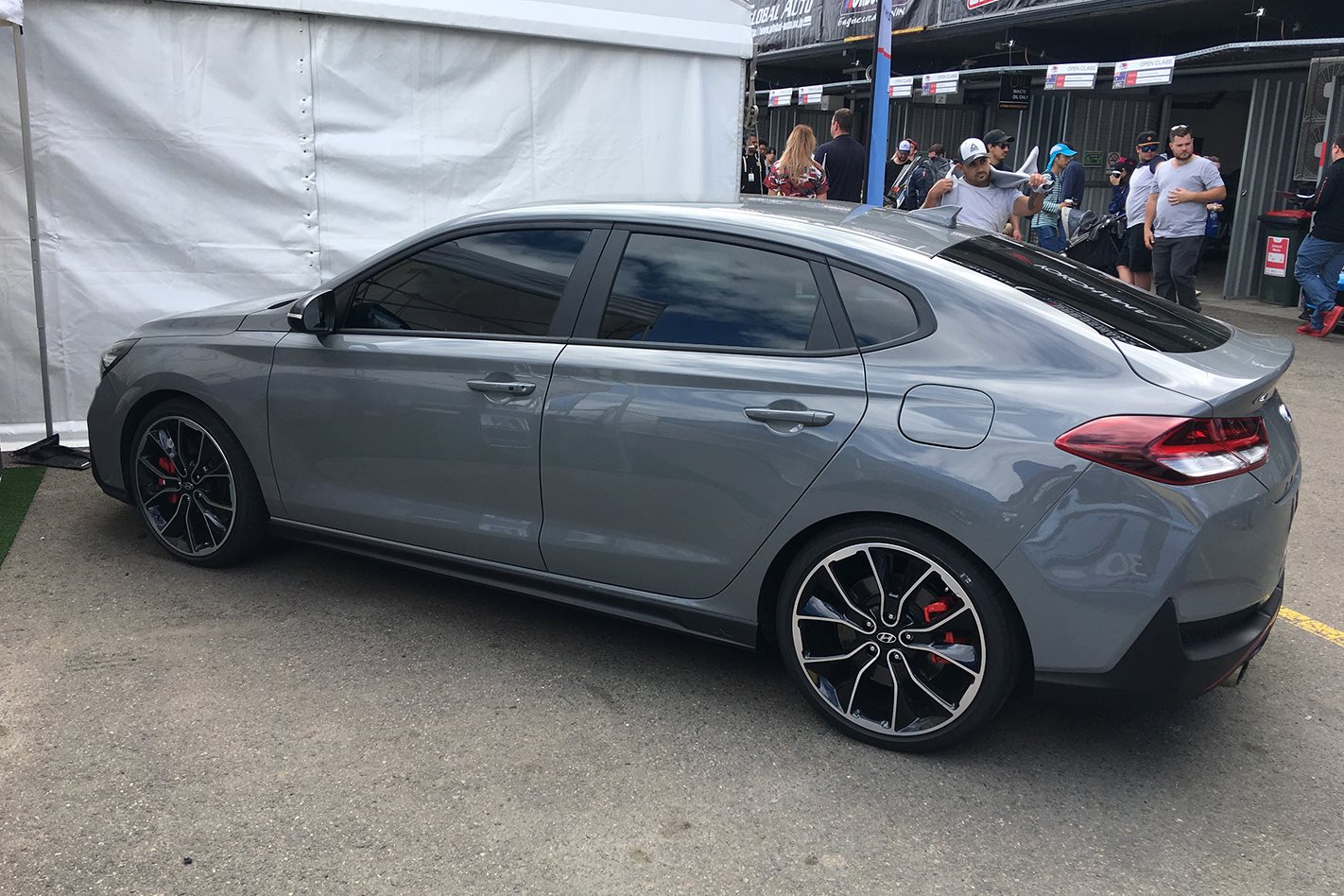
The only way you can buy an i30 that isn’t a hatchback
Price range: $40,000
Rivals: Subaru WRX, Renault Megane RS, Honda Civic Type R
Due Date: Unknown
While some overseas markets enjoy the ability to buy an i30 in a more mature ‘four-door coupe’ bodystyle, Hyundai Australia says the i30 Fastback is not coming our way… unless you spend big on the high-performance N variant.
Fatter profit margins at the circa-$40k mark mean the European-built i30 N Fastback actually makes economic sense for Hyundai to sell in cost-sensitive Australia, even though lesser variants aren’t. For buyers looking at the existing i30 N, the impending option of a grown-up looking Fastback may prove quite alluring, especially as it retains all of the go-fast mechanicals of its hatchback brother.
Exact launch timing has yet to be settled, but the i30 N Fastback’s price should only wear a very modest premium over that of the hatch.
Jeep Wrangler
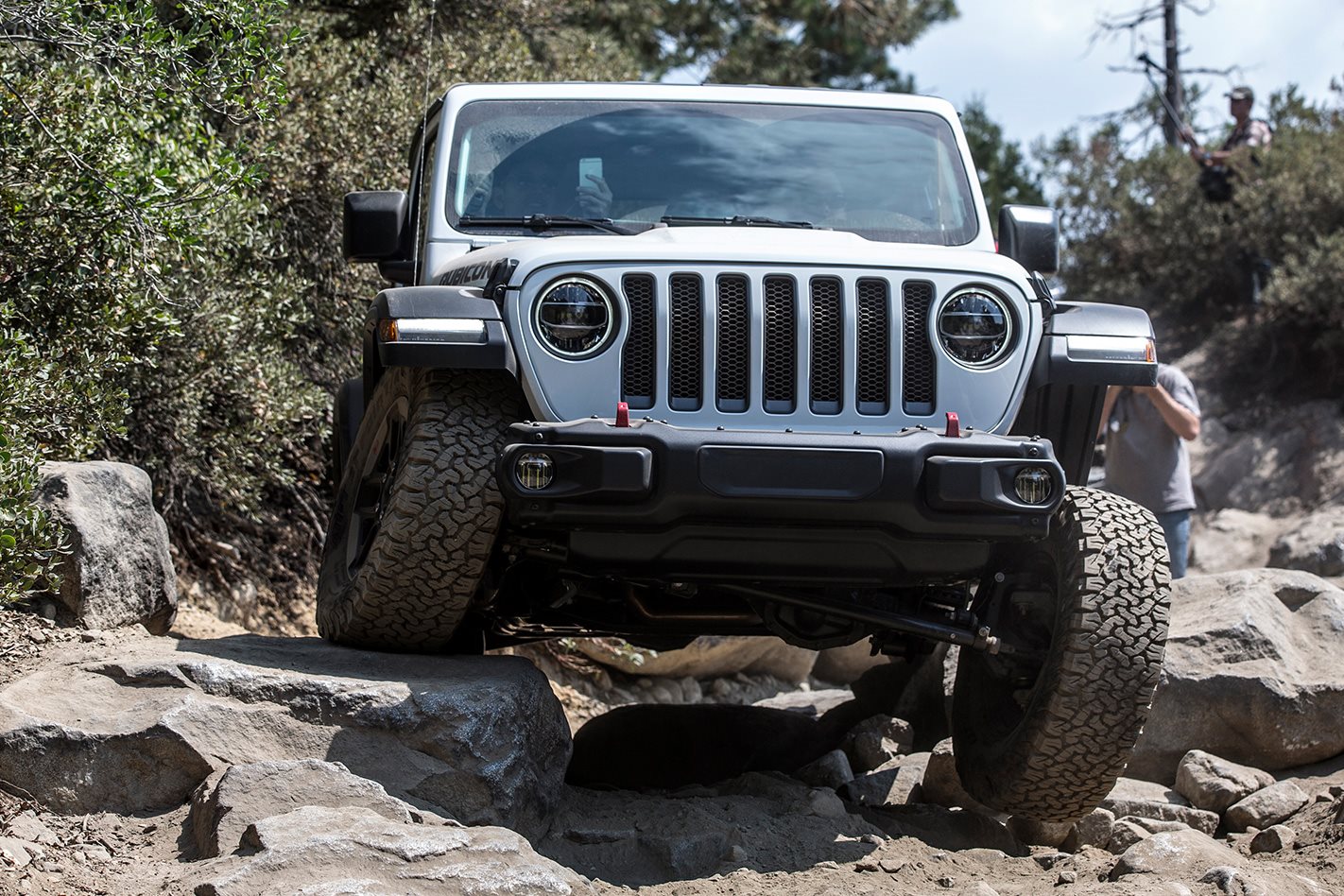
An all-new version of the archetypal Jeep arrives early next year with looks that still hark back to its 1940s origins.
Price range: $40K-$70K
Due date: January 2019
Rivals: Ford Everest, Suzuki Jimny, Toyota 76 Series Wagon
The all-new Wrangler will have plenty of 21st-century technology under its familiar looking skin including a new 2.2-litre turbo-diesel engine, eight-speed auto, and a huge leap in interior presentation and equipment.
Jeep is touting even greater off-road ability, but with suspension retuning aimed at improving road manners and ride comfort to overcome the current model’s weaker points. One weak point it seemingly can’t overcome is safety – with EuroNCAP deeming it worthy of just one star out of five during independent crash testing.
The 2019 Wrangler range includes the entry-level Sport, the Overland and the more off-road focused Rubicon.
Mazda 3 – mid-2019
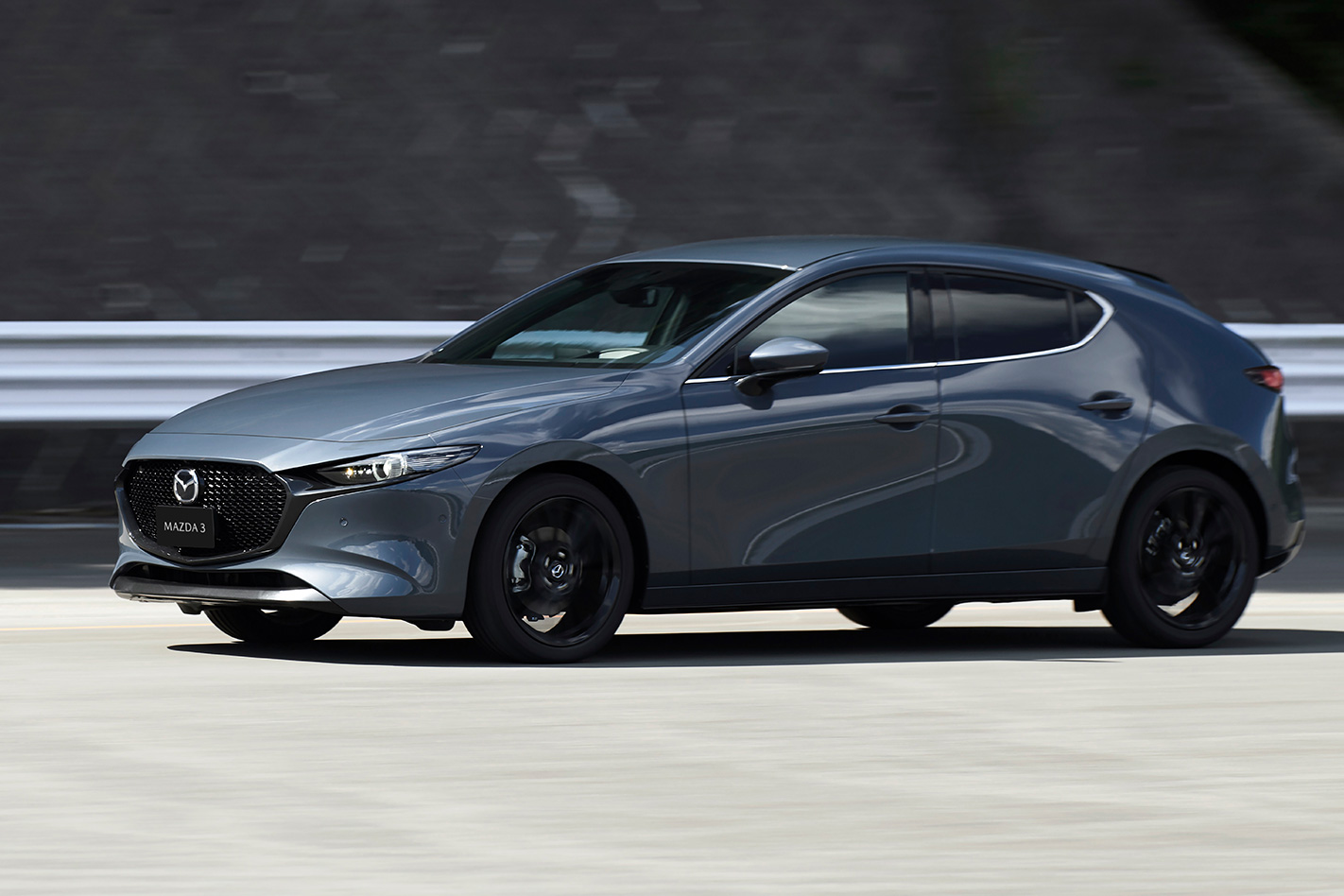
Mazda’s evergreen and much-loved all-rounder returns in its fourth generation
Price: $22,000 (estimate)
Rivals: Toyota Corolla, Hyundai i30, Kia Cerato, Volkswagen Golf
Due: June (approx.)
In the middle of the year Mazda Australia will change over its popular Mazda 3 range with an all-new generation hatch and sedan, and while local details such as range structure and pricing are still far from ironed out, the design of the new 3 shows that Mazda’s mainstay small car is set to be a real looker. The hatch and sedan will be quite visually distinct from the B-pillar rearward – certainly more so than the current generation – and the local powertrain line-up is likely to include Mazda’s innovative and ultra-efficient SkyActiv-X supercharged compression-ignition engine.
MG GS
MG aims to boost sales in Australia with its premium-equipped new-generation medium SUV.
Price range: $27,000 – $37,000 (estimated)
Due date: October 2019
Rivals: Mazda CX-5, Toyota RAV-4, Hyundai Tucson
Based on the X-Motion concept revealed at the 2018 Beijing Motor Show, the MG GS’s attractive lines appear to have been penned to directly take on the Mazda CX-5, with state-of-the-art driver assistance tech and German-rivalling upmarket cabin appointments to sweeten the deal.
The latter includes a 12.3-inch digital instrument cluster, 10.1-inch infotainment screen, soft-touch surfaces and eight-speaker Bose sound system. A gutsy 2.0-litre turbocharged petrol engine will be one of the engine options, with all-wheel-drive also available.
Mitsubishi Triton
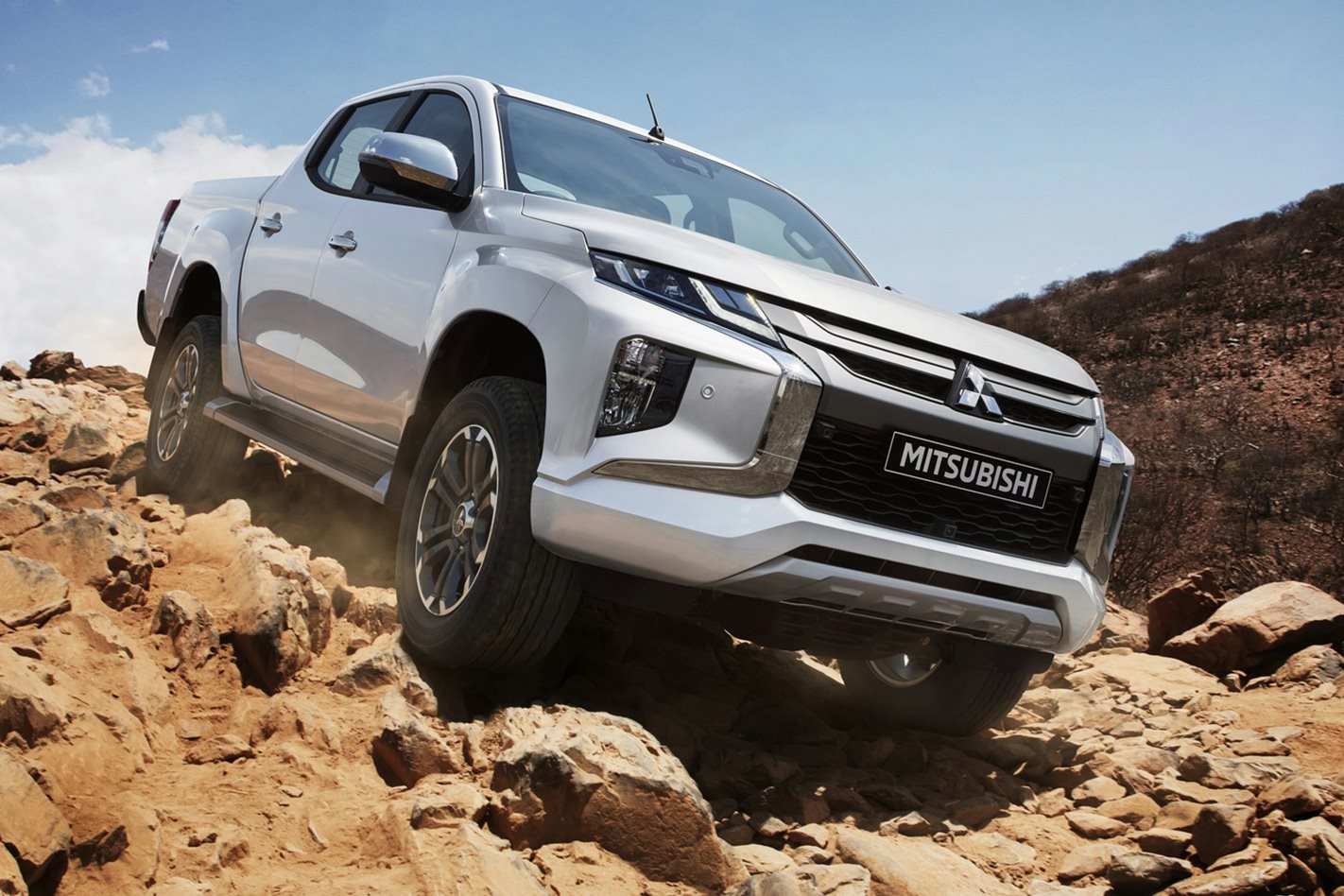
A major update and facelift of the popular dual-cab ute.
Price range: $25,000 to $50,000 (estimated) Rivals: Toyota Hilux,Nissan Navara, Isuzu D-Max, Ford Ranger, Holden Colorado, Mazda BT-50 Due date: January
It’s not quite a full new model but with more than 2400 changes including new sheet metal, updated six-speed auto, more cabin equipment and safety tech, the 2019 version is significantly different. A new flagship is also expected at a later date bringing a tough truck rival to the Ranger Wildtrak and HSV Sportscat.
Peugeot 508
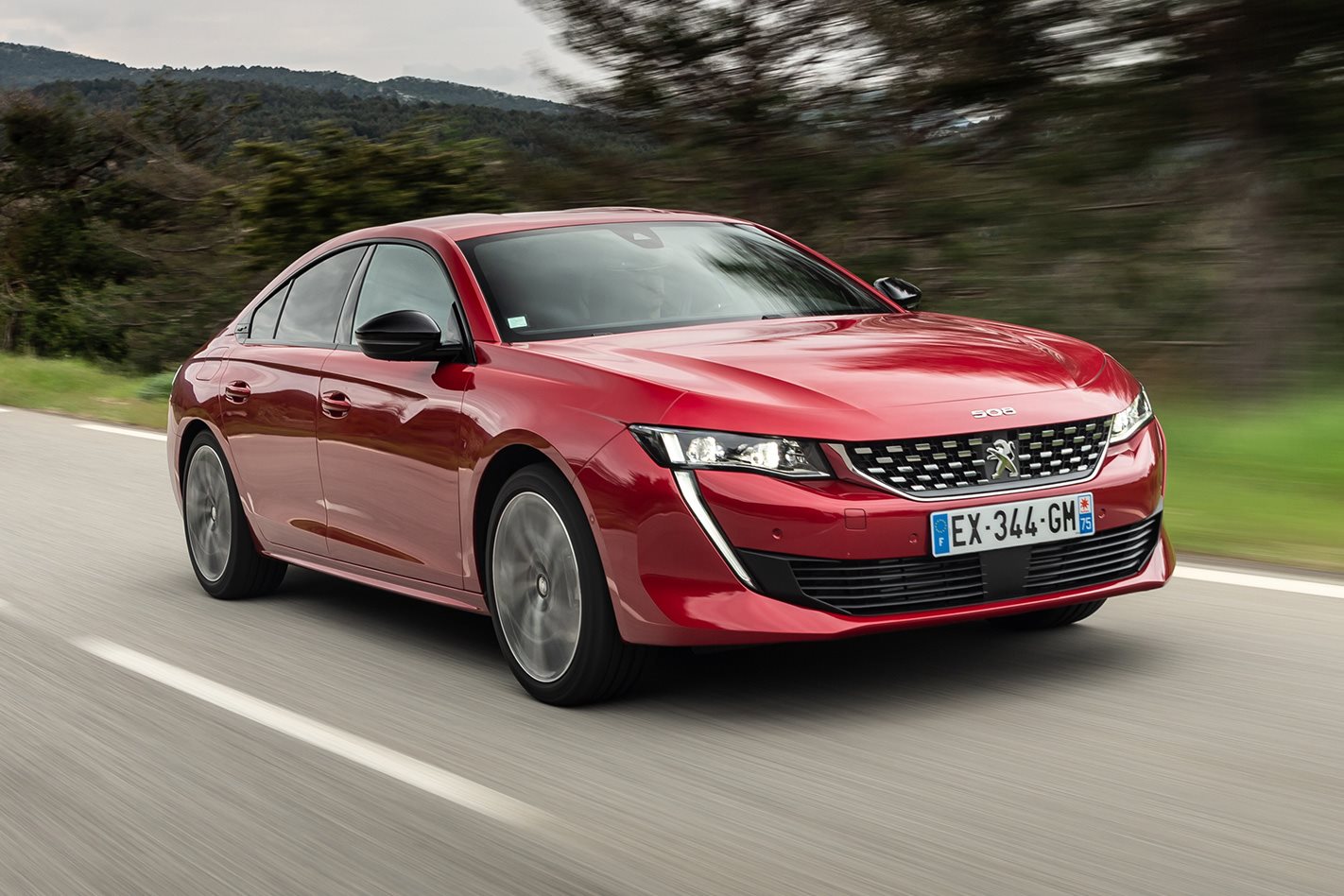
Ooh la la! Who knew a mid-size sedan could look this good?
Price range: $40K+
Rivals: Volkswagen Passat, Toyota Camry, Mazda 6
Due Date: June 2019
After a couple of generations of extraordinarily soporific 508s, Peugeot has shaken off whatever ailment afflicted its design department and released a stunning mid-size pair in the form of the 2019 Peugeot 508 sedan and wagon.
Strong visual links with the 3008 and 5008 are in evidence both inside and out (a very good thing), and the new 508 looks modern, dignified and flaunts a far more premium aura than most would expect of the French brand. Lightweight engineering also promises more than a skerrick of dynamic aptitude as well. Translation: it’ll drive like a dream when it gets here in mid-2019.
Renault Alaskan
Renault joins the one-tonne ute revolution at last, but is it fashionable to be late?Price: $26,000 to $55,000 (estimated) Rivals: Toyota Hilux, Nissan Navara, Isuzu D-Max, Ford Ranger, Holden Colorado, Mazda BT-50 Due date: December
After a protracted gestation and a drawn-out arrival date, it looks like Renault will finally weigh into the potentially lucrative dual-cab ute contest on red dirt.
Like the Mercedes-Benz X-Class, the Renault Alaskan also takes its underpinnings from the popular Nissan Navara, and although exact Australian specifications are yet to be confirmed, it’s likely the French contender will offer a high-end version with lots of kit as well as a more affordable workhorse at the entry point.
SsangYong Musso
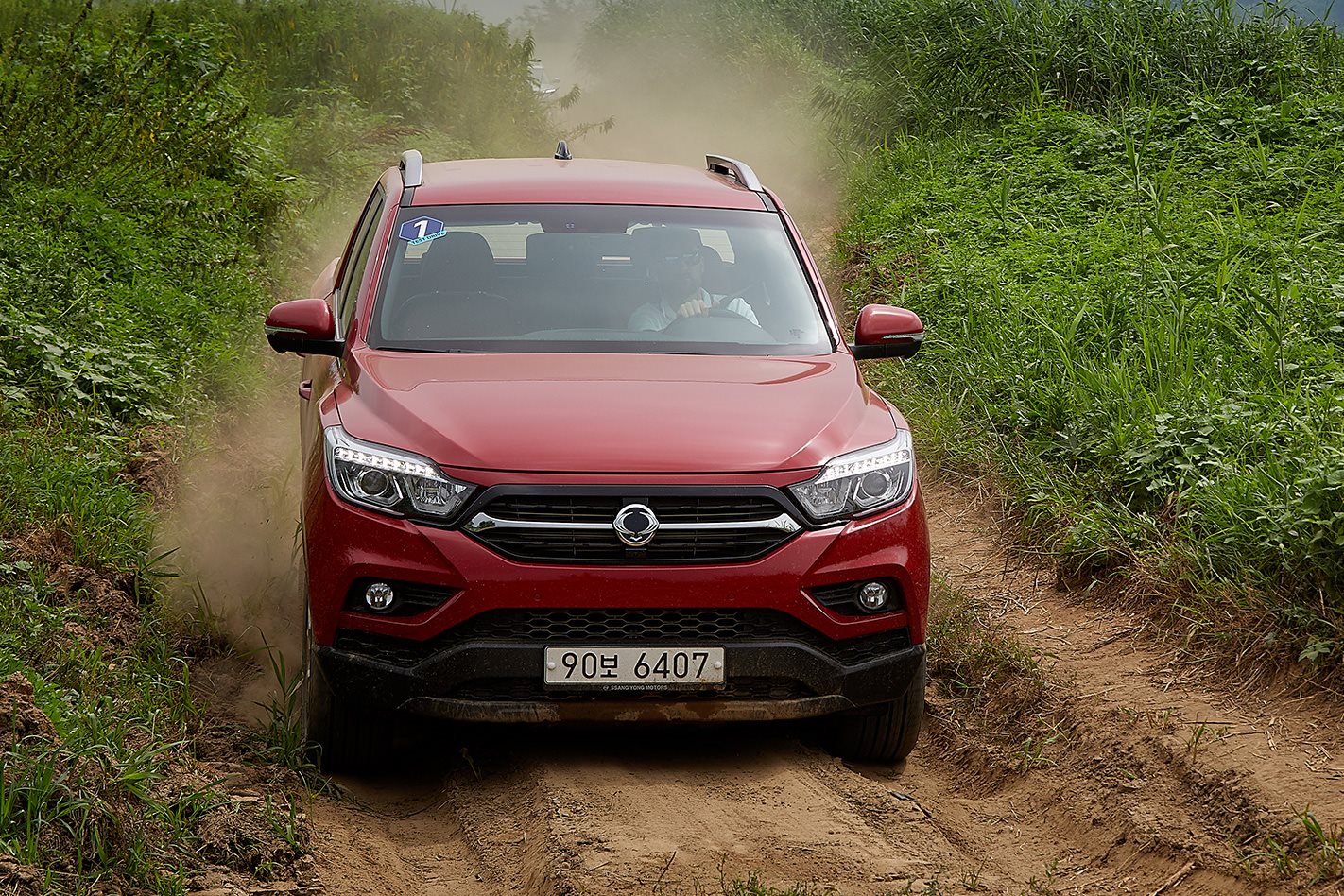
Returning South Korean ute brings sharp pricing, neat features and class-leading warranty
Price range: $39,990 to $52,990 Rivals: Toyota Hilux, Nissan Navara, Isuzu D-Max, Ford Ranger, Holden Colorado, Mazda BT-50 Due date: January
After a two-year hiatus, SsangYong is back on Australian turf with a factory backed operation and a four-model assault for its relaunch. Leading that charge is the Musso one tonner, which makes a good case for itself with standard AEB, enticing prices and an unbeatable seven-year warranty.
Suzuki Jimny
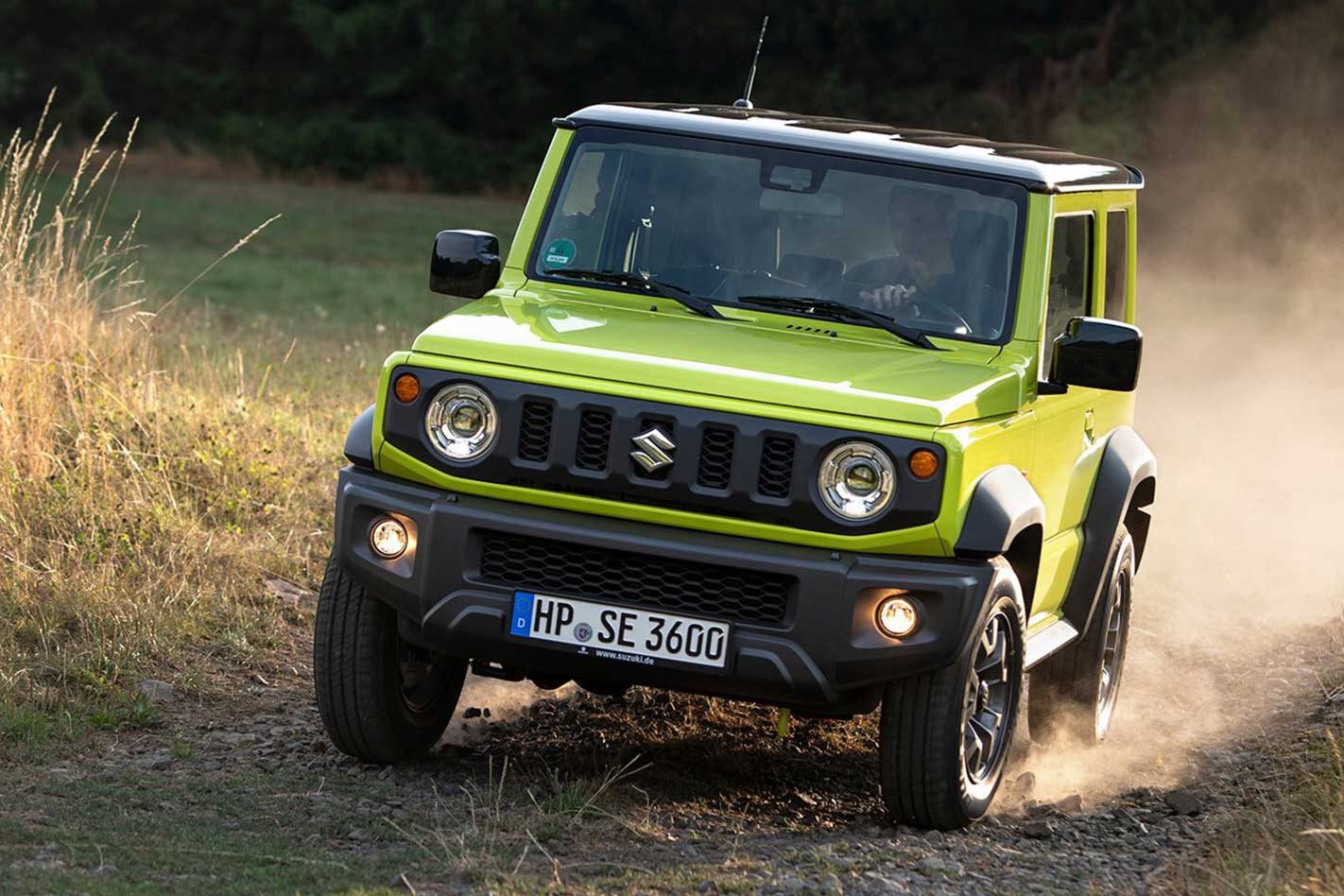
Suzuki goes back to the future to revive its mini 4×4’s iconic styling and serious off-road cred.
Price range: $27,000 – $29,500 (estimated)
Due date: February 2018
Rivals: Jeep Compass Trailhawk, Jeep Wrangler
It has questionable road manners and safety, but if initial reaction is any guide the new Jimny will be one of the most popular releases of 2019. The boxy fourth-generation Jimny retains its ladder-frame chassis, live front and rear axles and dual-range transmission that’s still activated by a proper lever.
There a few modern touches including a large infotainment screen with Apple CarPlay and Android auto connectivity. It will also come with a more powerful 1.5-litre petrol engine (up from 1.3L) petrol four-cylinder engine with a choice of five-speed manual or four-speed automatic transmissions.
Toyota RAV4
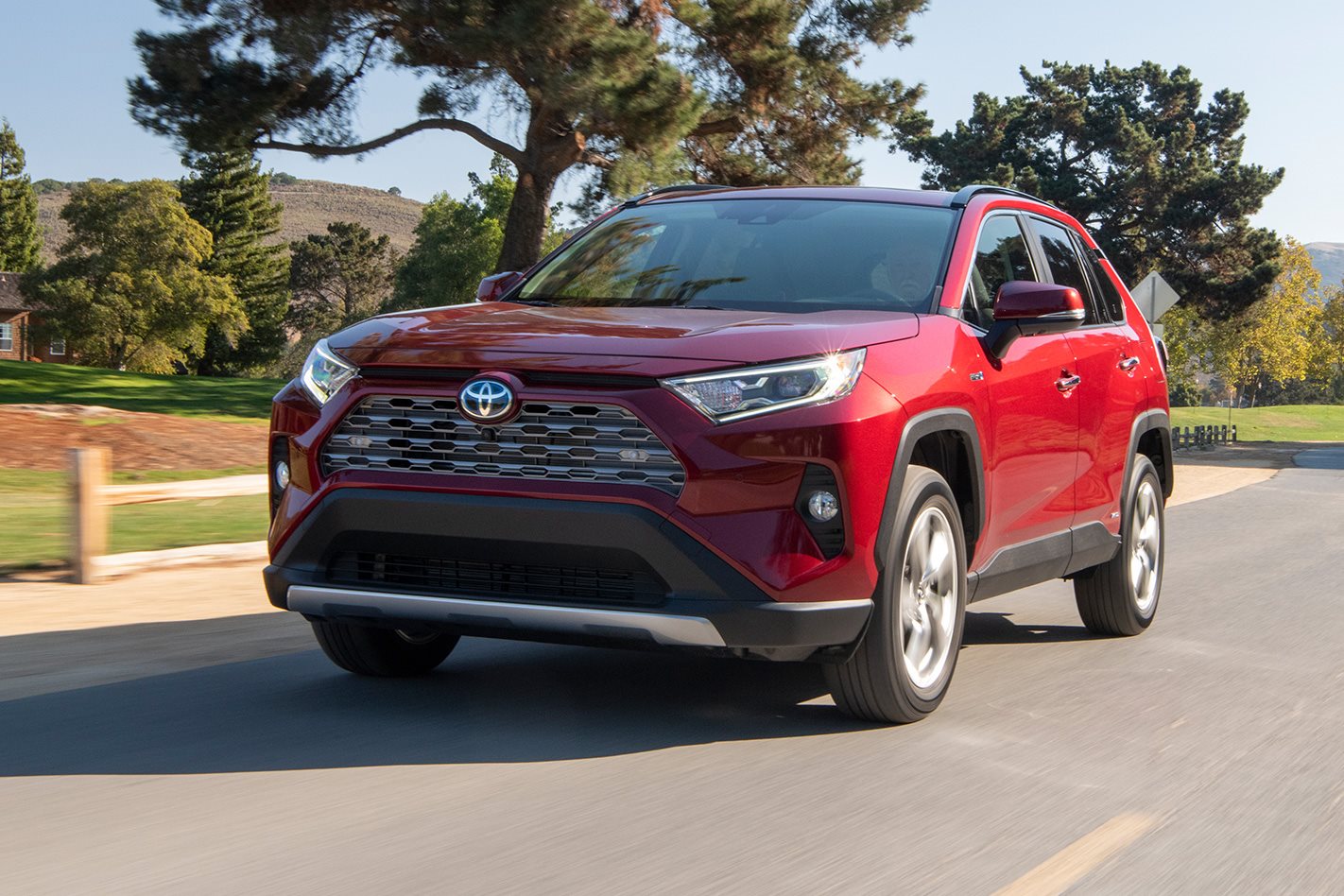
Toyota’s mainstay medium SUV has been totally redesigned and offers more comfort and technology than ever before
Price range: $30,000 – $55,000 (estimated)
Due date: April 2019
Rivals: Mazda CX-5, Subaru Forester, Jeep Cherokee
One of the most significant new cars for 2019, the all-new Toyota RAV4 promises to shake up the highly competitive medium SUV market by setting new benchmarks in terms of standard features and modern powertrains, including a petrol/electric hybrid. It will have the option of torque-vectoring AWD and multi-terrain drive modes to help it grip, and spawn a more off-road focused version called the ‘RAV4 Adventure’. The new RAV4’s bigger exterior dimensions will result in significantly more interior space and comfort, while the interior design will be more upscale than the current model.
I’ve been trying to think of some kind of comparison with football or cricket or golf, but I know nothing about any of those games and care even less, so I guess I’ll just get straight into it. In late-September I was at Laguna Seca Raceway in Monterey, California, with a few mates (and 80,000 new ones) for the Rennsport Reunion VI.
For those that haven’t heard of it (though Porsche Australia staged a small-scale version in Sydney in 2016), Rennsport is basically Porschepalooza – the Woodstock of Weissach’s wunderwagens, billing everything from the latest record-breaking 919 Hybrid Evo, through pretty much every Porsche model (many of them the actual cars) that ever raced or won at Le Mans, ‘outlaw’ 356 and 911 road cars, literally right down to the Porsche-Diesel air-cooled tractors built from 1956-’63.
And yes, there were races for them, too.
The roughly triennial Rennsport was born in 2001 with an event at the Lime Rock circuit, remaining on the east coast for editions II and III at Daytona in 2004 and 2007. It moved to Laguna Seca for IV in 2011 and many hope it continues its cycle there.
Northern California is probably the epicentre of the classic car world. Just a few weeks earlier, Monterey’s Pebble Beach had hosted its annual Automotive Week, scene of some of the world’s heaviest-hitting concours and auctions, and four days of historic racing at Laguna Seca.
Picture that – minus pesky Ferraris, Bugattis, Isotta-Fraschinis, or whatever else might impede one’s seeing and hearing and smelling and touching every kind of racing and road-going Porsche that ever was – and you’ve got the picture.
Oh, the touching. In the vast, open-sided marquee of the Chopard Heritage Display, the line-up of 100 or so cars included, well, what are now pretty much irreplaceable automotive artworks. Like the Gulf-liveried 917K chassis #022, driven by Steve McQueen in Le Mans (and now owned by Jerry Seinfeld); one of the monstrous, 1100kW 917/30 CanAm cars; a catalogue of 935s, 911s, 908s, 906s, 904s, Paris-Dakar 959s; and the actual Porsche No.1 built by Ferry Porsche in 1948.
In the fortuitously glowing early-Autumn weather, these cars were open, unroped, with punters milling among them with their swirling cameras and kids and tripods and selfie-sticks …
The nearby pit garages housed yet more masterworks, variously from Porsche’s own Museum and privately owned – like 956-003, the third-placed car of Schuppan-Holbert-Haywood from the 1-2-3 whitewash at Le Mans 1982. Bloody Seinfeld again.
The US has a whole community of Porsche celebrities, often former (and current) racers like Bruce Canepa and Gunnar Jeannette who buy, sell, restore and maintain (for even richer guys) many of these historically significant cars. Canepa, a circuit racer who in 1981 built and drove a 930-powered open-wheeler to second overall at Pikes Peak, expensively terminated his own 917K’s engine during one of the weekend’s races.
I’ve hardly even mentioned the almost non-stop racing and on-track displays – the latter including laps in Porsche No.1 by Dr Wolfgang Porsche, and rather more brisk lappery by Timo Bernhard in the 919 Evo (which didn’t extend to a widely rumoured attempt on Laguna’s outright record). In the model-grouped car parks, one wandered among hundreds of 356s, every generation of 911, cars ranging from the rare and immaculate to the shit-beaten and rat-rodded … a dozen or so 959s, about as many 918 Spyders…
This was also a bit of a reunion for me. Without being a wanker about it, I was seeing some of the actual cars that, over the years, I’ve been privileged to have driven or ridden in. I had my bum-prints in the 1998 Le Mans-winning GT1-98, a 1977 Le Mans 935, a 917/30 CanAm, a 356 Carrera GTL Abarth, and a handful of the Porsche Museum’s road cars also present.
Wide-open ker-ching
Events like the Porsche Rennsport Reunion and Ferrari Racing Days aren’t just great for enthusiasts; they’re also great for business. While, ironically, the traditional motor show is slowly disappearing, these single-marque events are capable of bringing serious money to local economies – such that governments now court these manufacturers to bring the shows to them. Additionally, through show registrations and contests, manufacturers can harvest a shedload of info on customers and prospects.
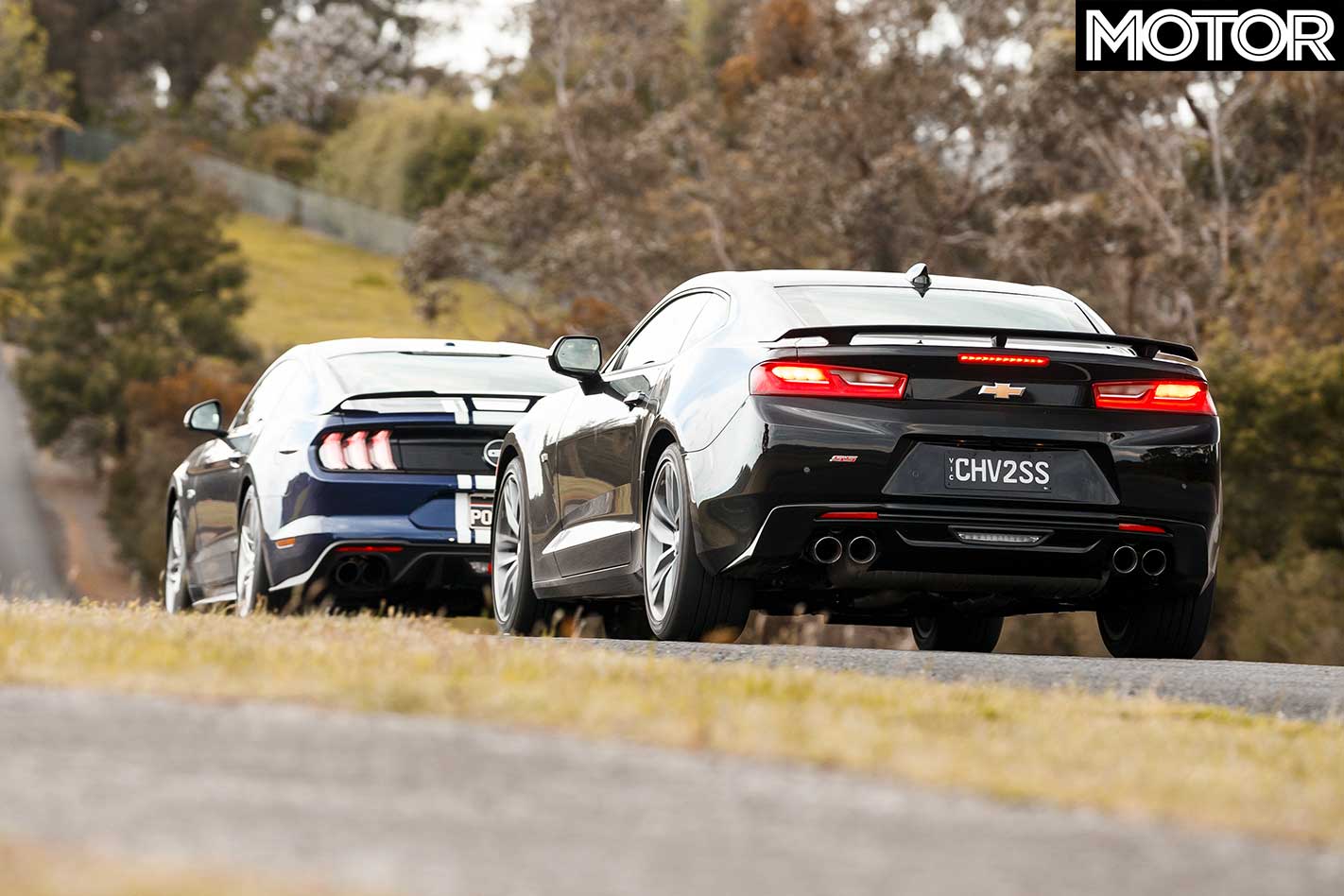
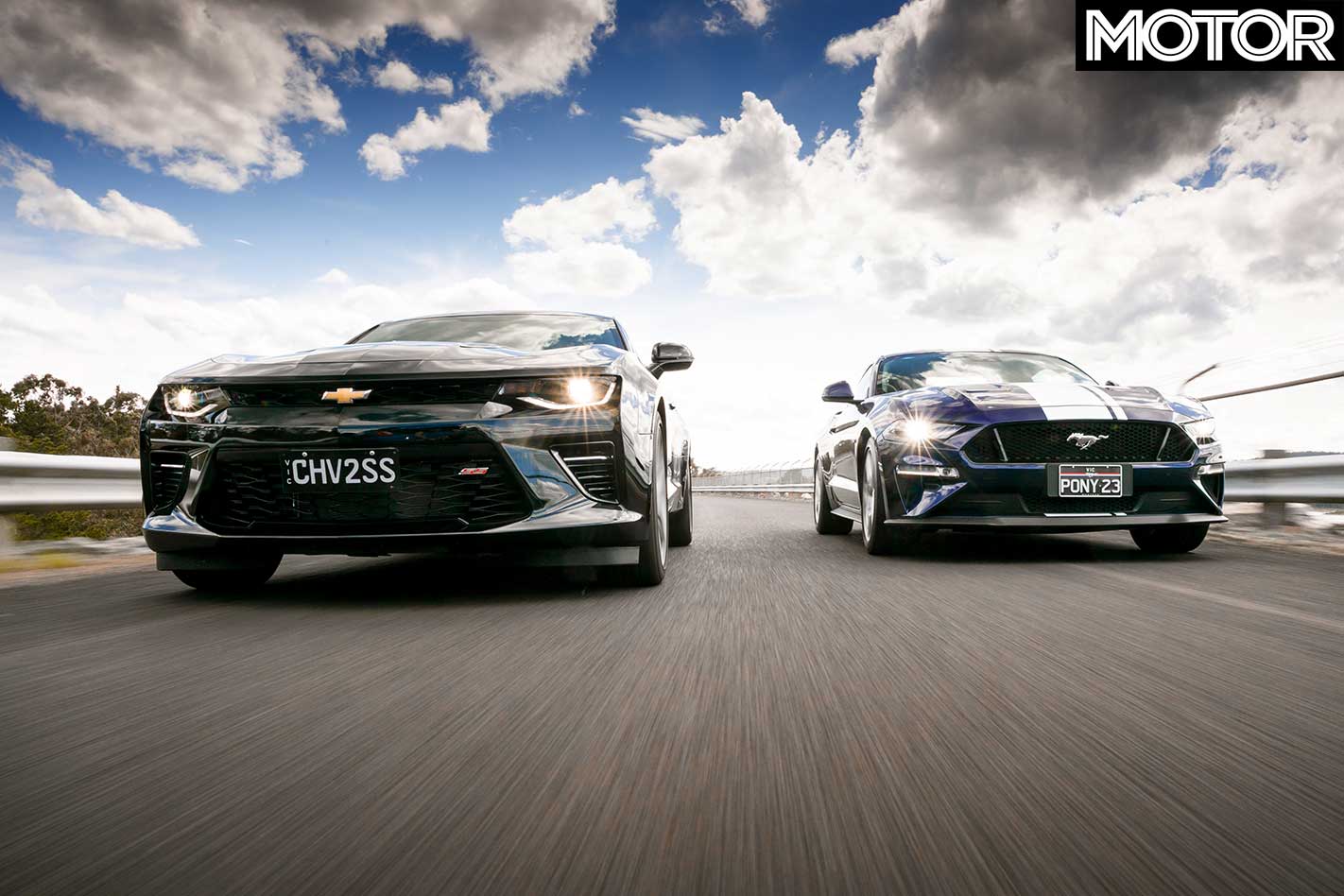
Thunder. That’s what erupts after pressing the round, polished button labelled ‘ENGINE’ on the Ford Mustang GT’s centre stack. Throttle intensifies its barrage. And you instantly suspect this might be the best sounding car under $100,000 – except, maybe, for the ominous Chevrolet Camaro that’s about to fire up alongside it.
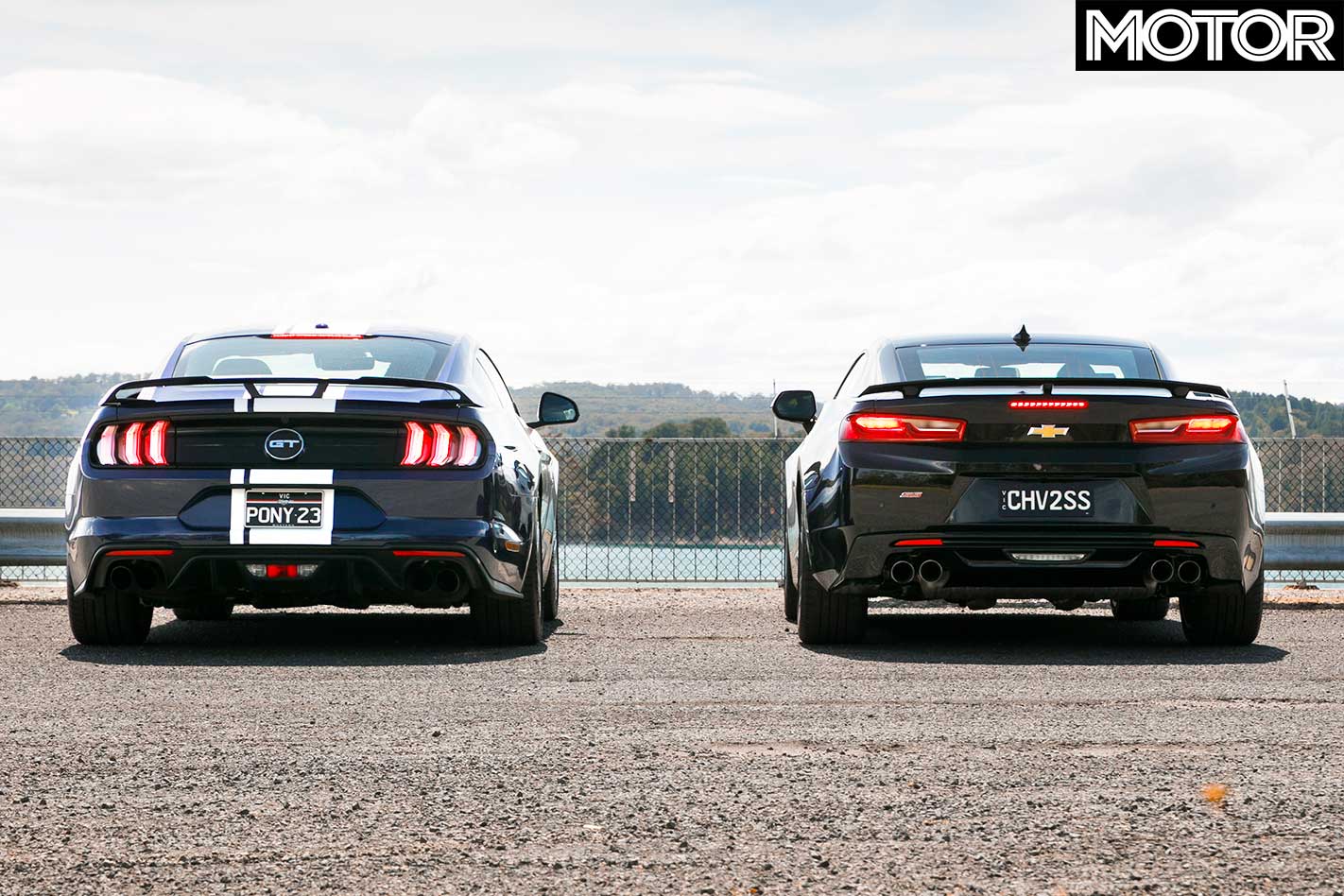
Together they are writing the sequel to the Australian rear-drive V8 performance sedan. It’s been more than a year since Holden shut off its local factories. Yet while Ford V8 fans have feasted on the Mustang since 2016, it’s only now that the GM faithful are getting their equivalent fix. And it’s all thanks to the fine folk in Clayton at Holden Special Vehicles.
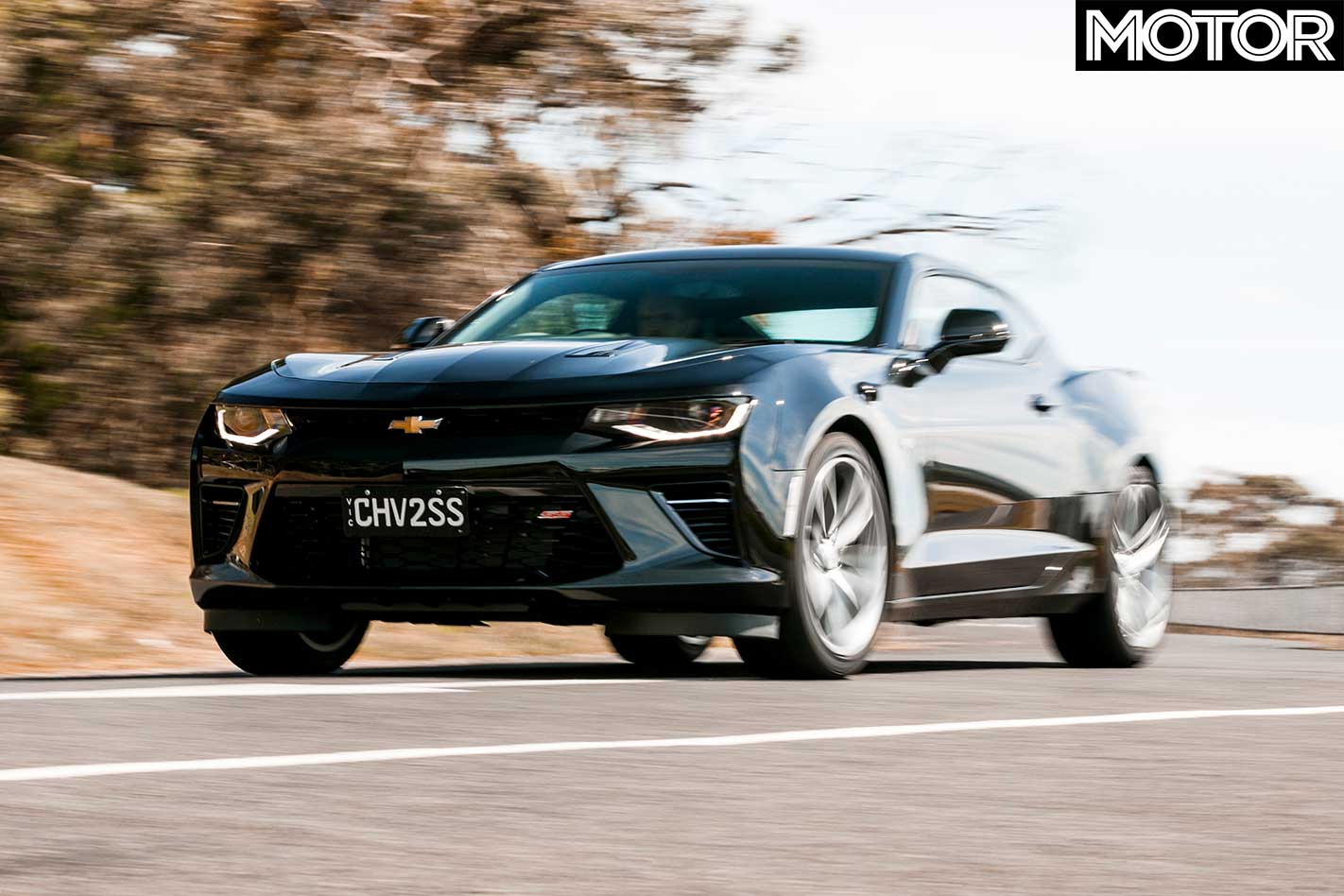
HSV zeroed in on the Camaro after learning GM would kill the V8 Commodore. It successfully gained approval on a right-hand drive project in 2015 and now, with Chevrolet’s sixth-generation V8 bruiser finally ready, it starts a new Red and Blue rivalry that feels particularly nostalgic.
They’re both remarkably similar to each other and our bygone boof-heads. They count eight cylinders each, drive the rear wheels and are only just short of five metres. But while they’re separated by a couple thousand dollars back home, the scales aren’t so even in Australia.
HSV virtually rebuilds the car in Clayton. Its firewall is redrilled, its loom is rewired, the footwells are modified and it’s completely stripped during the process. This inflates its cost well above the Mustang that leaves its Michigan factory (only a couple hours’ drive from the Chevrolet one) with the steering wheel on the right side. But we’ll get to dollar figures later.
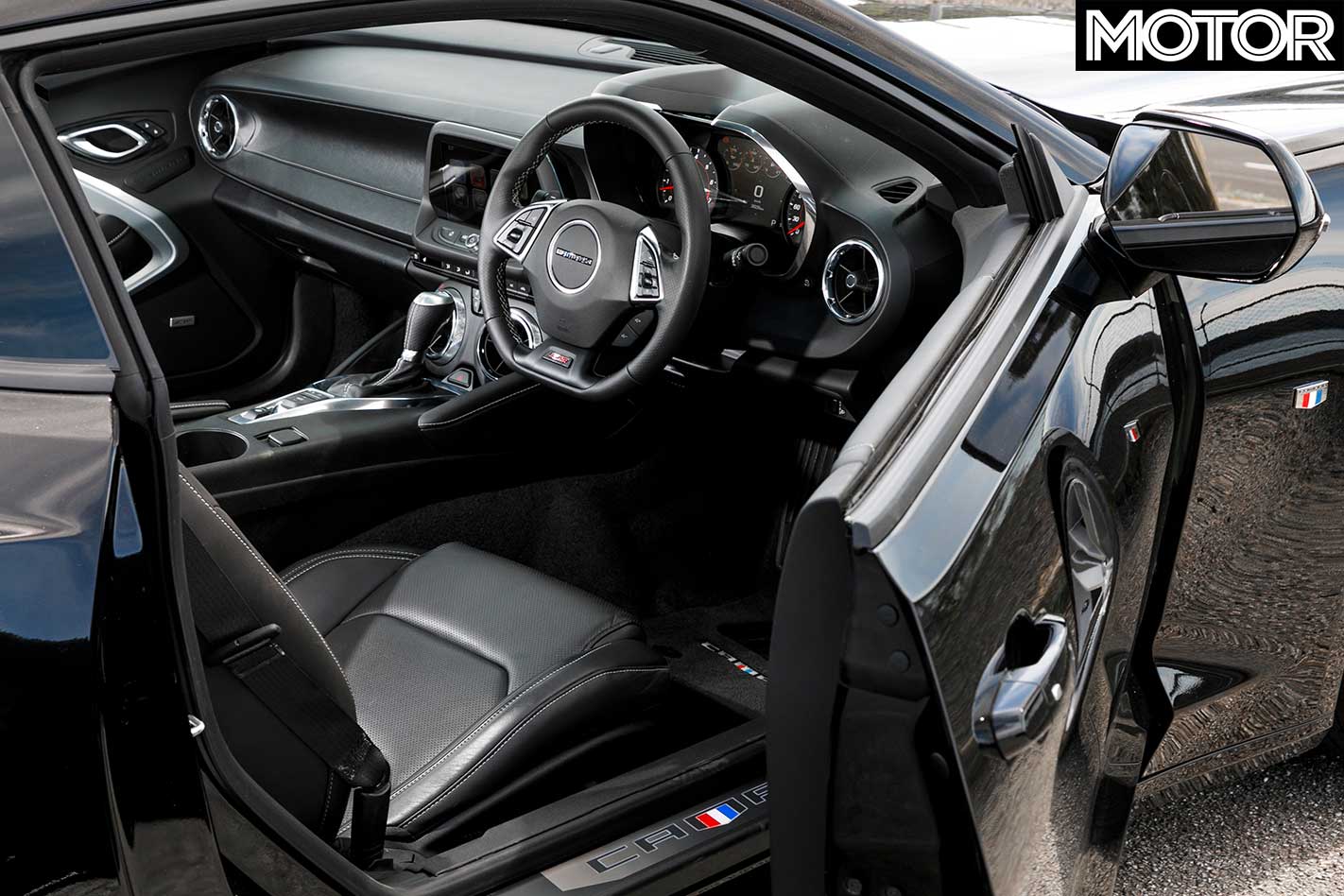
HSV also uses Argentinian core vehicles, not because someone at GM’s shipping docks misread the destination address, but because their car offers the most ADR compliant parts. This saves development costs, but it’s also why, for now, HSV offers the Camaro only in 2SS trim. The ‘2’ means it packs more fruit like Bose audio, interior mood lighting and power seats with heating and ventilation.
Argentina must be sunny because, whether you like it or not, every single car also comes with a sunroof. Meanwhile, the restricted spec also means Magnetic Ride Control, Recaros, different style wheels and styling packs are all missing from the HSV brochure, even though they’re available in America.
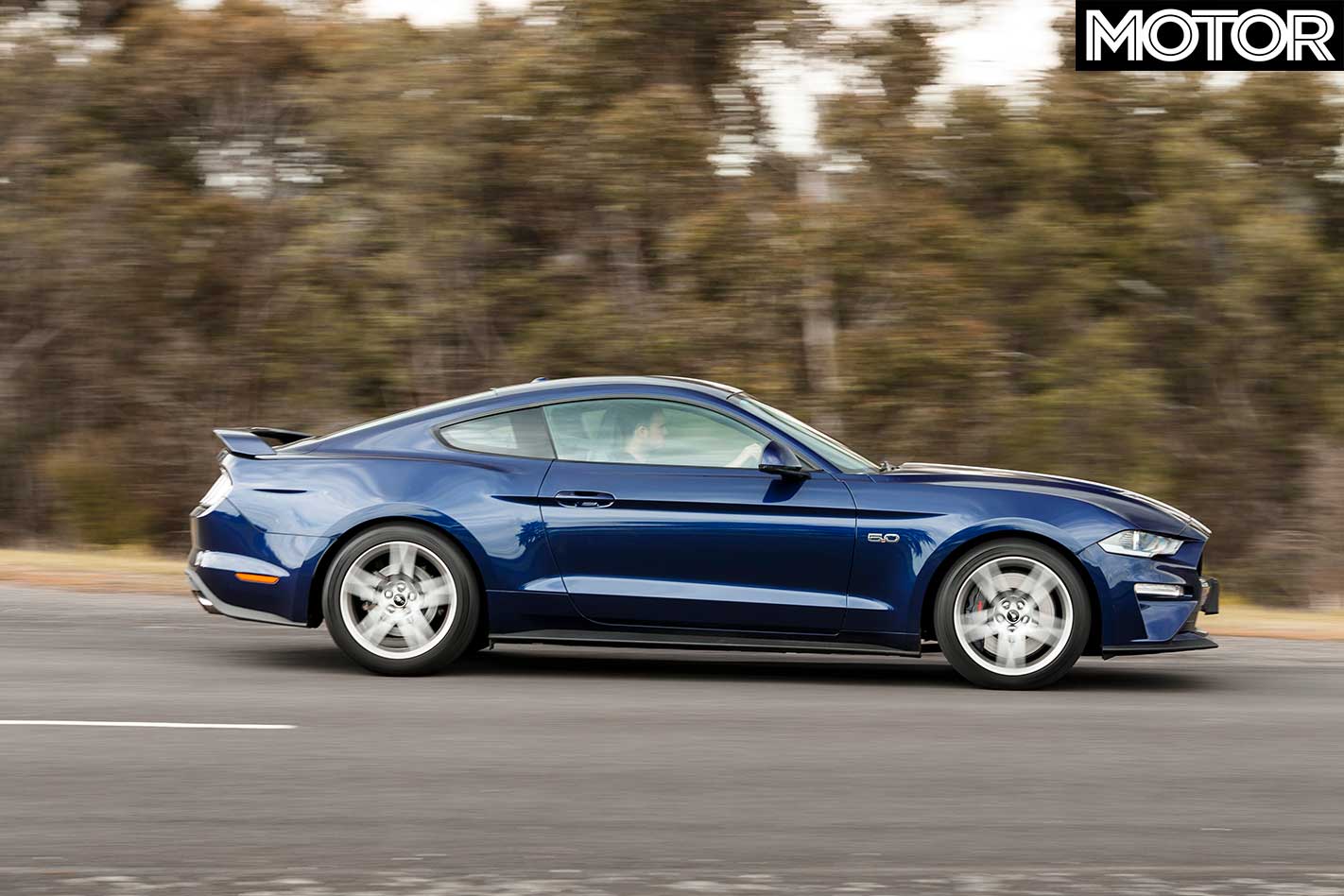
Ford’s product planners enjoy much more freedom. After ludicrous success in both left- and right-hand drive markets it’s revamped the Mustang to keep a firm grip on a sales lead it has back home. The new car’s aerodynamics are slipperier, the engine is more powerful, the suspension is sturdier, while the interior and styling ooze more appeal.
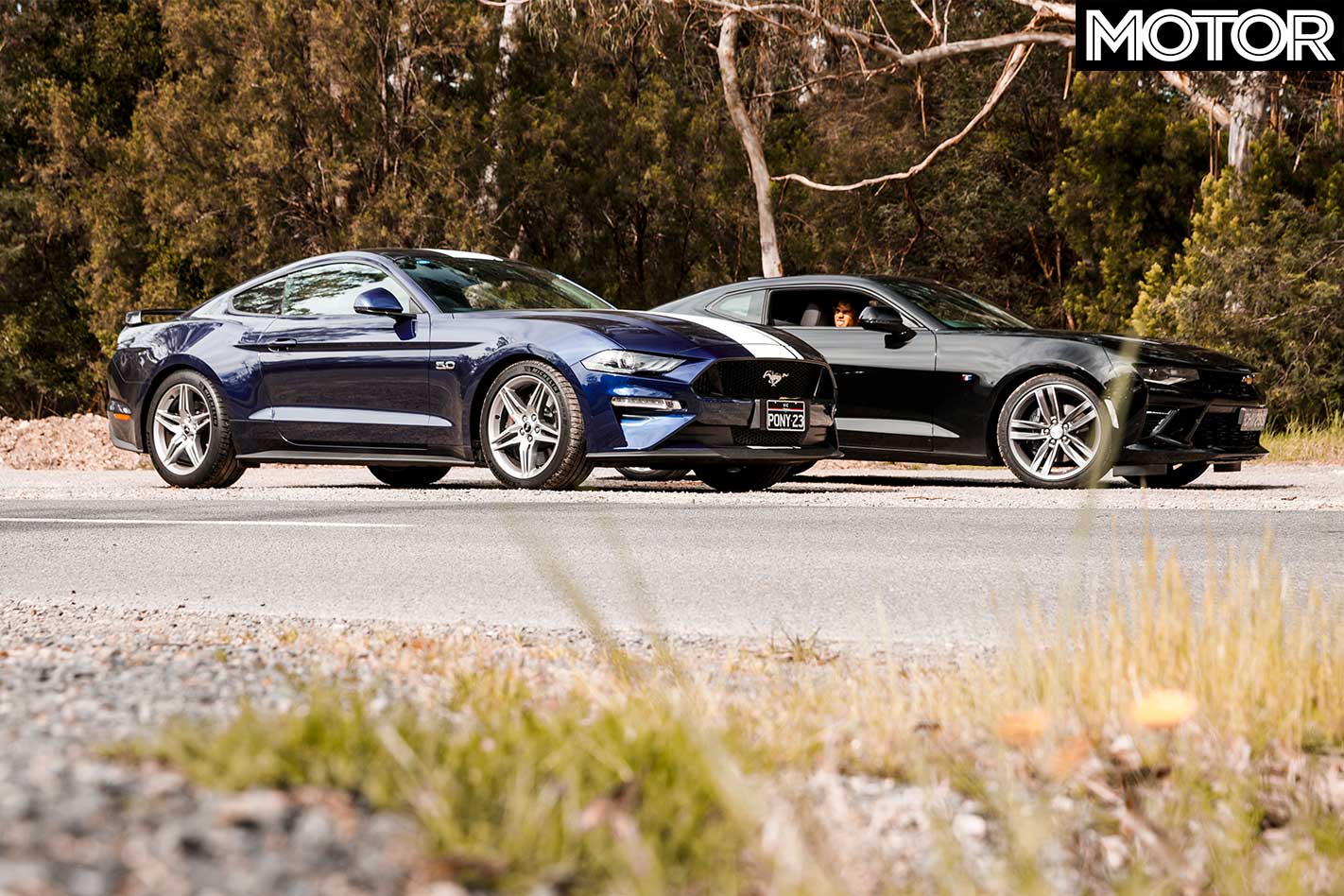
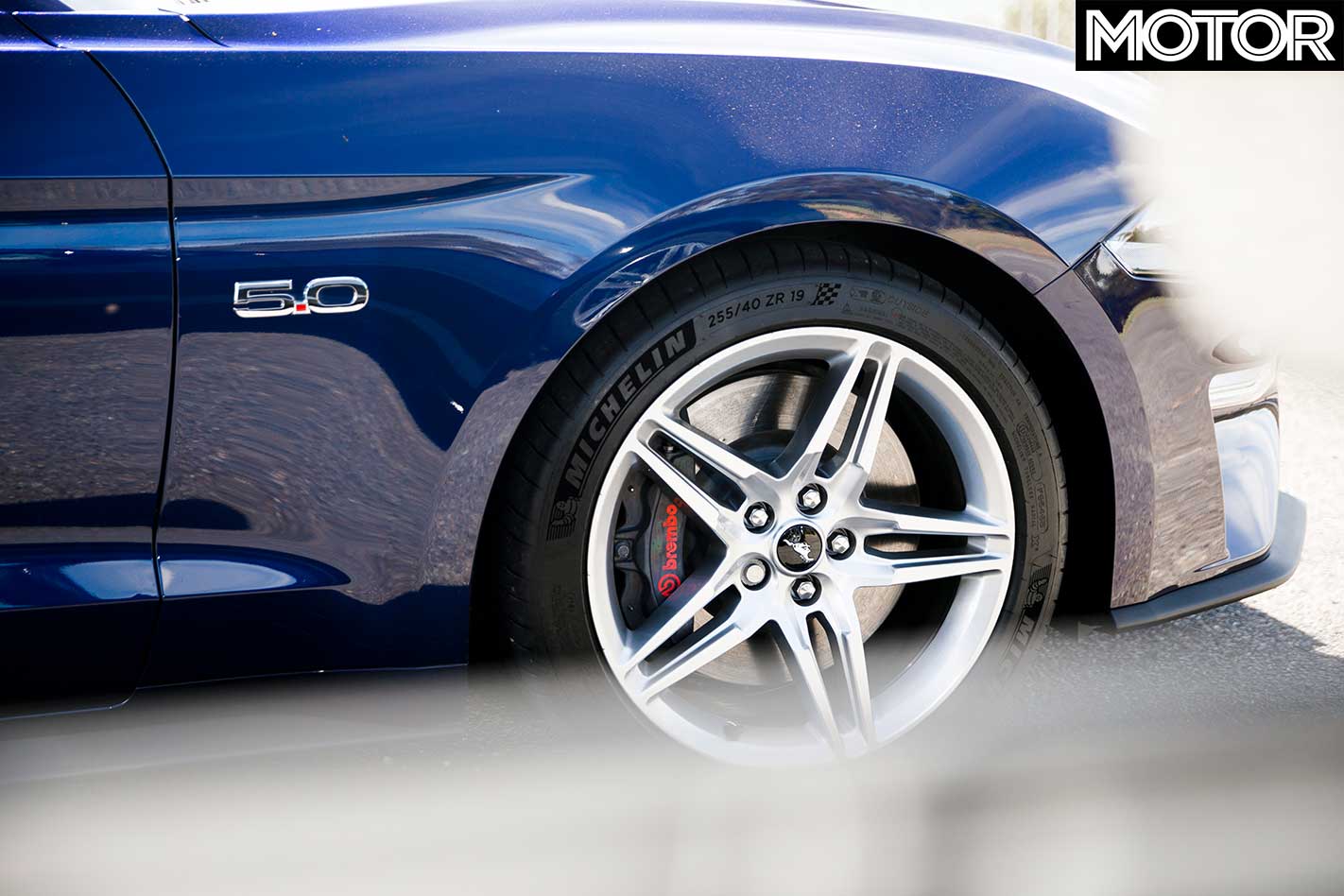
Our Mustang also flaunts a slew of new options made available for the 2018 model year. It’s fitted with the new optional ‘off-the-deck’ rear spoiler ($750), forged 19-inch racing wheels ($2500), Recaro seats ($3000), adaptive dampers ($2750) and racing stripes ($650). Most importantly, it features the new 10-speed torque converter automatic that, in its early stages, was co-developed with GM.
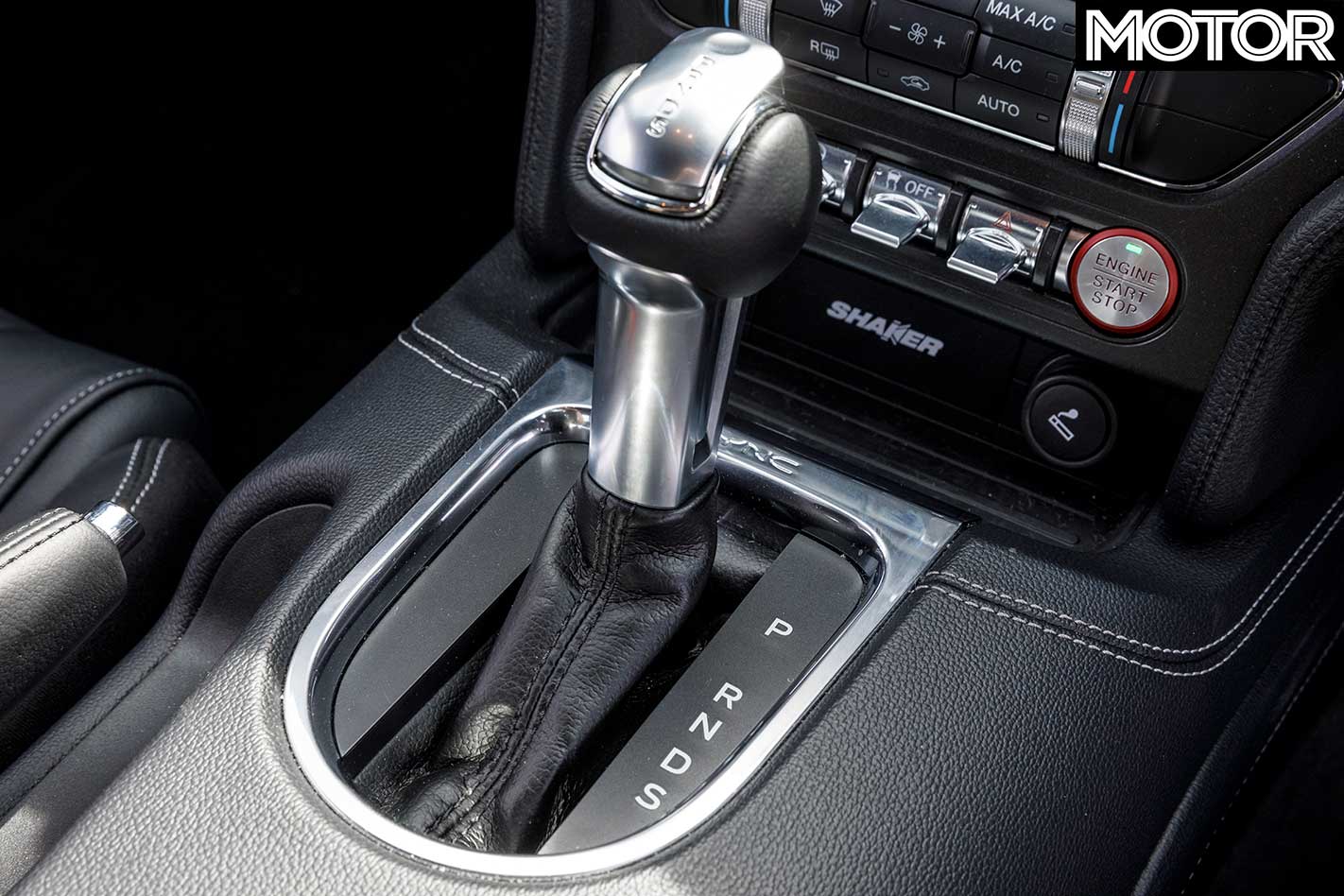
You’d think swapping cogs yourself would crown you king in a Mustang GT, but an automatic honed for the track and strip with specialised modes suit the bigger, brawnier Coyote V8 perfectly.
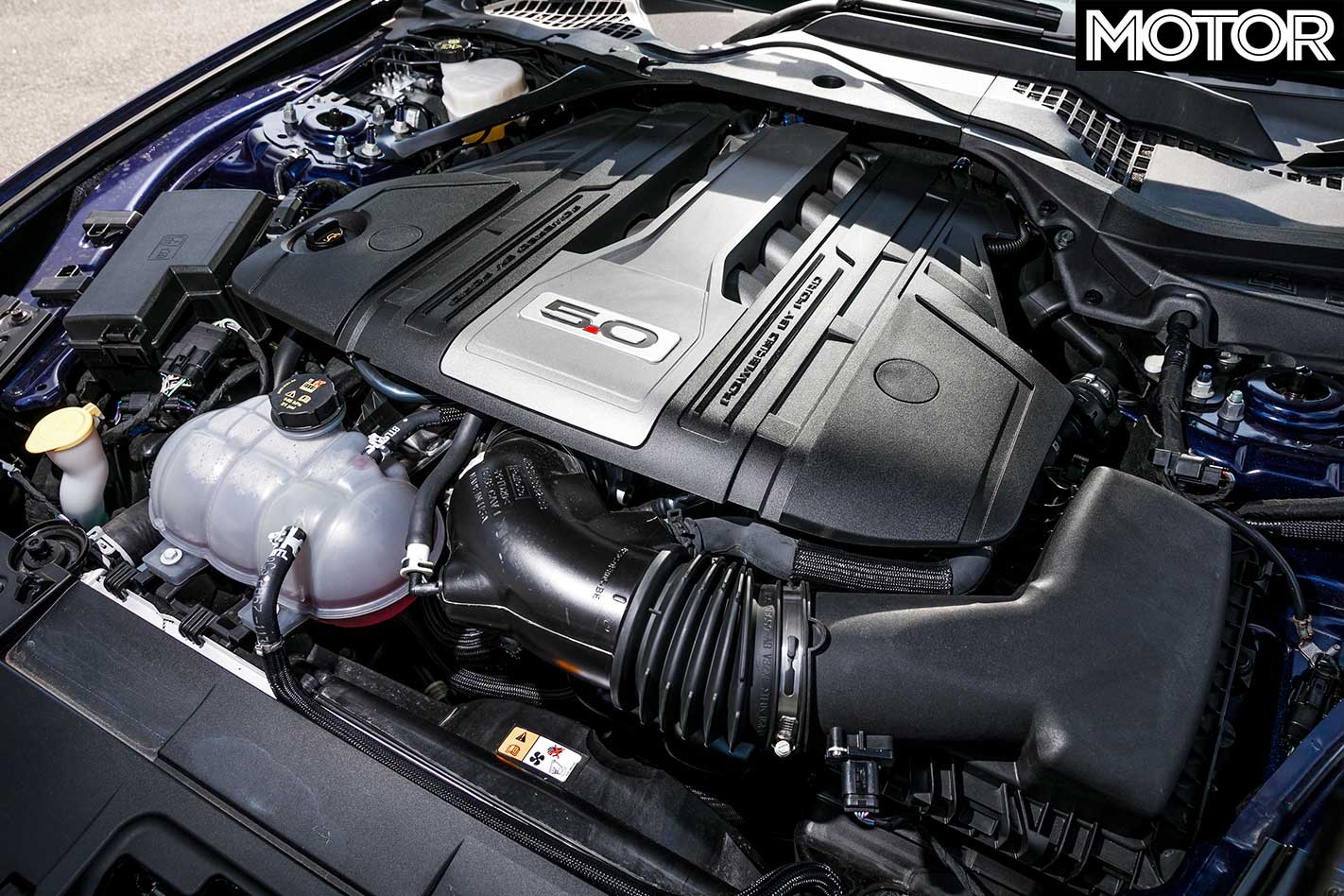
That engine enters a third generation of tune after engineers plasma coated its bores, fattening capacity by 84cc, and redesigned its cylinder heads around larger valves. There’s dual-fuel injection and a higher redline, too, of 7400rpm.
We’ve all seen a V8 ‘SS’ wearing bow-tie badges before, but now the link is bona fide. While the Camaro’s LT1 engine shares its 6162cc capacity and bore spacing with an LS3, new variable valve timing, direct injection and cylinder deactivation curb its consumption and lift power. A redesigned rotating assembly for the pushrod small-block, along with new high-compression pistons, also helps it spin to 6500rpm.
It develops 339kW at 5700rpm while the Mustang’s double overhead camshaft arrangement, also breathing through an 80mm throttle body, produces the same grunt at 7000rpm. The matching power numbers are more an inconsistency than coincidence.
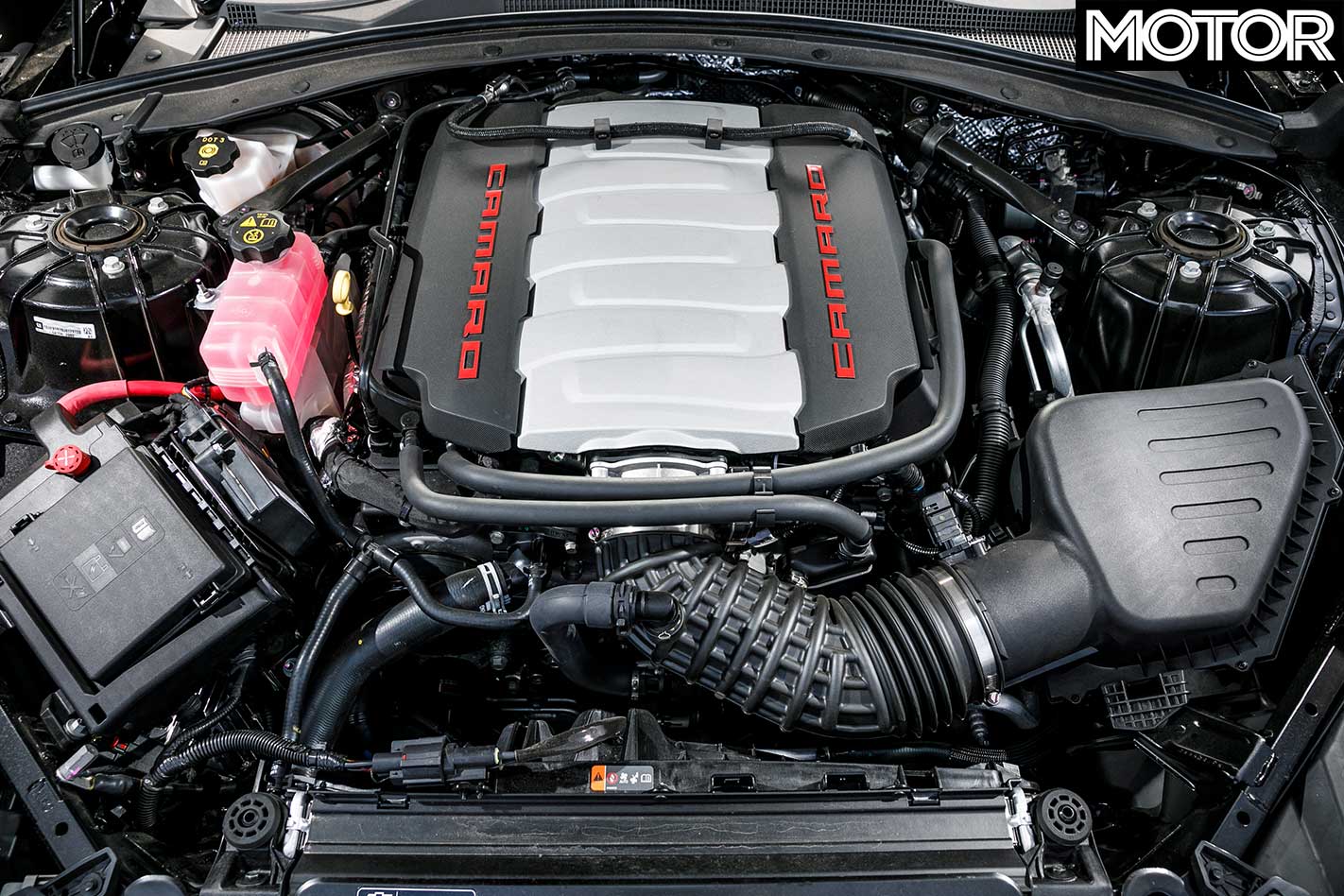
Ford’s quoted 339kW is gained from DIN testing methods, where engineers leave the exhaust and ancillaries on the engine during its dyno run. The Camaro’s power figure, however, is achieved using an SAE method carried over from America that tests engines on the dyno without power-sapping accessories.
No matter how much the DIN test would dock the Camaro’s figures it still would easily hose the Mustang for torque. Each car makes maximum torque at an identical 4600rpm, but the Camaro’s 617Nm towers over the Mustang’s 556Nm.
That might be why Ford huddles the 10-speed transmission’s ratios so close together. Direct drive is seventh gear and, unlimited, it runs to 293km/h. Meanwhile 1:1 in the Camaro is sixth and is geared to 310km/h.
Can the Camaro prove there’s no replacement for displacement? Heathcote Raceway’s drag strip will answer that. You’ll find its circle-shaped starter button to the right of the centre screen. Prod it and the LT1 explodes into life with a hard-edged growl. The noise is dense and yet, when you tickle the throttle, it bursts into a free-revving roar.
After building a 1500rpm stall against the 8L45 transmission, we roll into the throttle. Grip is good, even in its looser ESP setting called StabiliTrak, but the times aren’t. Manufacturer claims suggest 100km/h should drop in 4.4 seconds with the automatic. We’re getting 5.5sec, 13.5sec at the quarter and 180km/h on the Driftbox.
We squeeze the brakes harder next time. The revs creep to 2000rpm on the stall, then we feel out the launch, bleeding off the brakes smoothly before stomping the throttle when there’s enough grip. With 275mm wide Goodyears we get away with small chirps of wheel spin. Triple figures arrive in 5.0sec flat and the quarter mile in 13.0sec. Top speed bumps to 182km/h.
We go through more runs without much improvement until we switch to manual mode. It nets an instant gain, dropping quarter miles into the 12.8sec range, by letting the engine wind out to redline rather than upshift early. Soon 4.68 seconds to 100km/h and a pass of 12.8 with 181.76km/h flashes on the Driftbox screen and we know that’s it.
Time for the Mustang. Right away we understand why the new gearbox’s Drag mode is its party piece. We spend the first run catching the rear end as it dances down the strip. The mode keeps torque flowing during shifts, so the force of each engagement is so savage, ESP has to be turned off to let the car move around. Make sure you’re caffeinated before trying it.
A few more runs inject crucial heat into the tyres, slashing times to 4.95sec/12.89sec while lifting trap speeds to around 187km/h. But with surface grip not as good as it could be, it musters a 2000rpm stall before the rear Michelin Pilot Sport 4 S tyres start grating against the surface.
The next run nets its fastest figures. They’re a marginal improvement, and slower than the Camaro, but the fact we’re well into fifth gear over the line with another 6km/h hints at its potential. We’ve extracted 4.59sec/12.49sec from a grippier runway, however, we can’t spend all day tearing down the drag strip. Falling trap speeds suggest rising cylinder head temperatures could be sapping engine power. Besides, there are a lot things going on underneath these cars that are worth roads more winding.
These muscle cars now pack the chassis smarts to chase down hot hatches and mug them for their lunch money. Their layouts are harnessed by front struts and multi-link rear suspension that control staggered tyre widths.
Beefed-up front knuckles for the Mustang’s adaptive suspension find more purchase and the tweaked rear-end is more controlled under power. It also sits nice and flat through corners until the odd lump exposes lingering rebound and float.
Poke it and it can bite, without warning, too, thanks to mute, but precise, electric steering. Luckily, if you get into trouble, its six-piston Brembos bite fast and hard. They react sensitively to slight brake pressure, which is more welcome when the Mustang’s 1756kg barrels into corners.
The transmission, too, thrives in a fast-paced environment. It comes alive when you attack in Sport Plus or Racetrack mode, firing down gears when you’re hard on the stoppers or quelling oversteer by skipping up through them.
Conversely, the Camaro’s chassis emerges as its true highlight. Thanks to GM’s Alpha platform, which succeeds the Zeta platform that underpinned the VE/VF Commodore, it has a longer wheelbase than the Mustang, resulting in a more central driving position.
This gives you a greater sense of control. Get the front to stick and the throttle dishes out small dabs of oversteer through a clutch-pack LSD. Meanwhile, the StabiliTrak ESP keeps things tidy with the same finesse as HSV’s Competition Mode in the Gen F2 range.
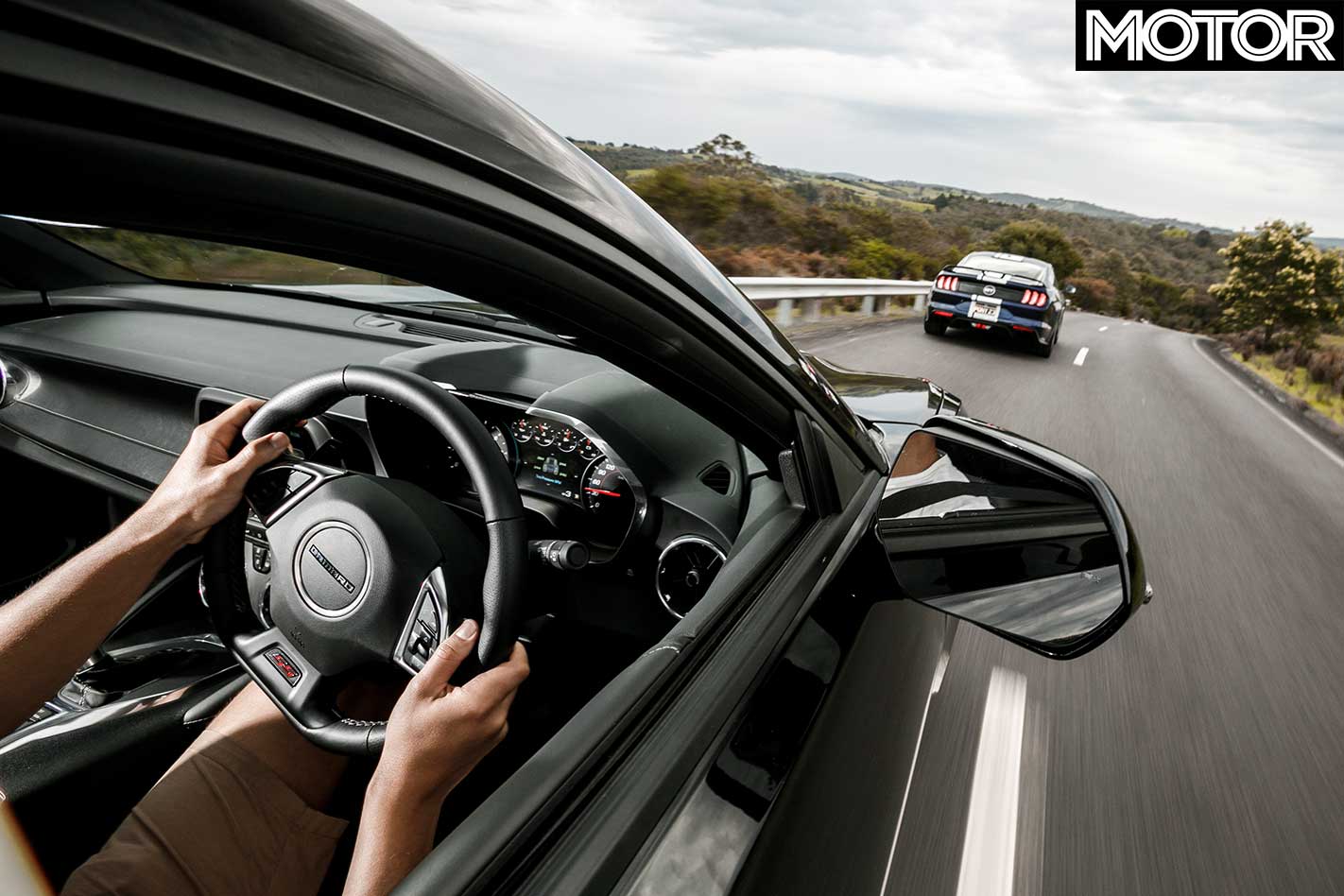
Its controls are easy to use. The brakes, comprising four-piston Brembos that clamp smaller discs, feel more natural and need a firmer squeeze. Meanwhile the steering is just okay. It prefers slow, precise inputs, and is heavy. Feel or feedback vanishes with the effort required to steer when in Sport or Track mode.
Back-to-back, the Camaro feels like the faster car and its speed is easier to extract. There’s more grip, feedback and the LT1’s midrange is devastatingly effective on the open road. Its gearbox also impersonates a race sequential ’box on upshifts, venting a pop of pressure from the exhaust, but it feels tardy on the fly, especially in manual mode. We’d also like its small paddles to respond with a nicer click, rather than their current arcade-ish tap. It’s dull.
Buyers might envision themselves sitting next to Playmate of The Year in the Camaro, but she’ll be swapping into the Mustang if the road surface is ugly. Its huge, low-profile run-flat Goodyears occasionally thud into holes while its FE3 suspension offers one type of ride: firm.
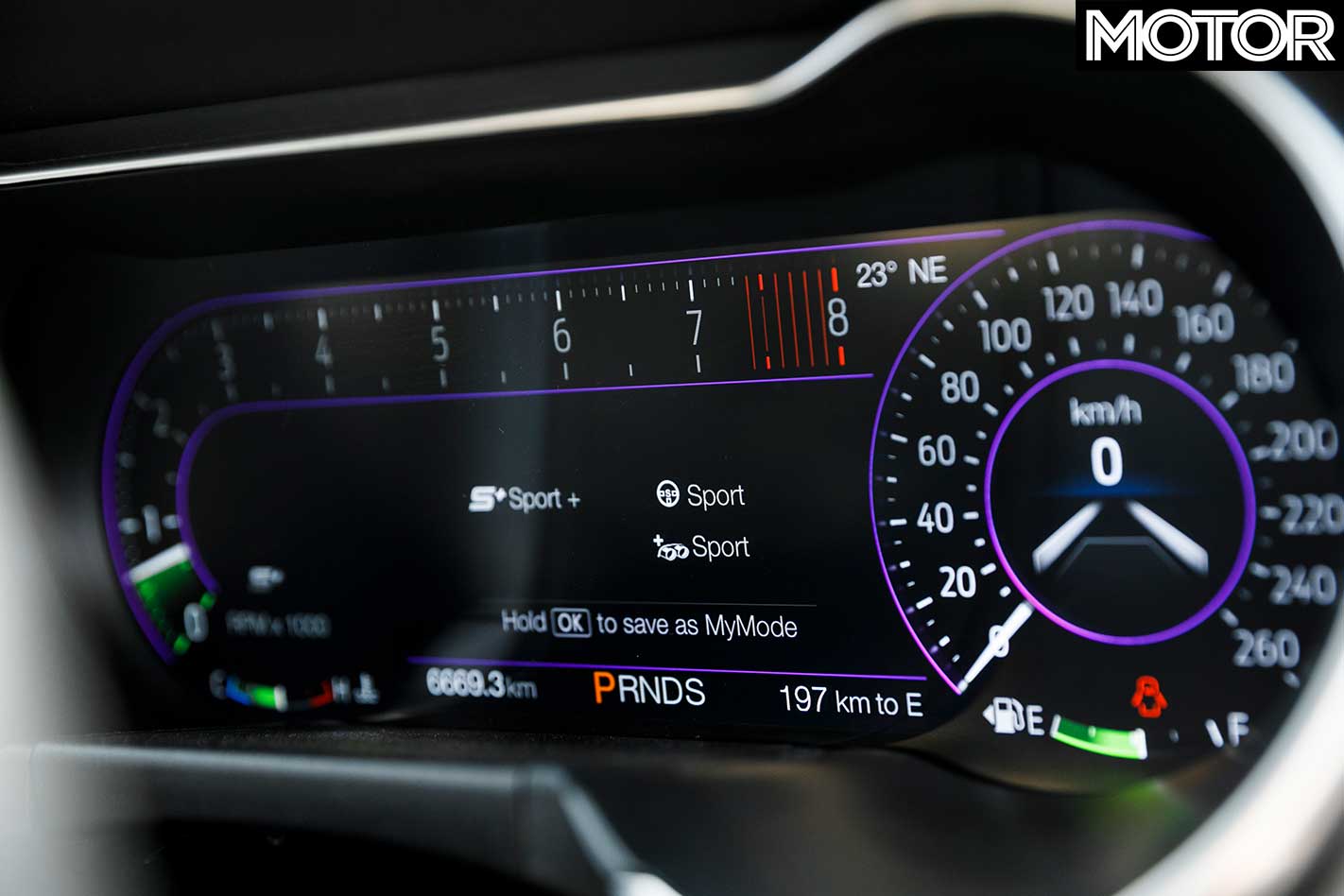
The Mustang’s adaptive suspension is smoother where the Camaro pogoes about, but you annoyingly can’t set the system separately to the drive mode. So if you want to dial up the commitment with the powertrain then you’re going to have to endure aggressive damping as well.
The active exhaust, at least, offers more customisation. Its 12.4-inch digital cluster lets you divide your exhaust, drive mode and steering to your liking. Its Quiet mode is much more noticeable than the Camaro’s equivalent Stealth setting but all other times the Coyote’s growl is an omnipresent force. Whether it’s throbbing on idle, tickling along at a cruise on a freeway, or feathering the throttle in a car park, you’re immersed in proper muscle-car theatre.
However, that’s not the case in the Camaro. In more relaxed situations it shuts down cylinders to run as a V4. You’ll hear an off-beat tick after the switch, then you’ll notice a lack of bottom-end response. At first it’s intriguing. After a week it’s mildly annoying. After a year we imagine ourselves madly scrolling Google pages in search of a tuner to disable it. Some don’t mind it – after all, it saves fuel – and keeps the Chevrolet small-block viable. Yet, we’re not sure you buy an SS for a part-time V8.
It might work only for a small portion of the time, but our problem is with when that is. Lazily cruising around on small throttle openings in a V8 muscle car is a big part of the experience. Trading that to gain a litre of fuel over each 100 kilometres on our road test, that involved some cruising and a good dollop of hard driving, isn’t worthy in our opinion.
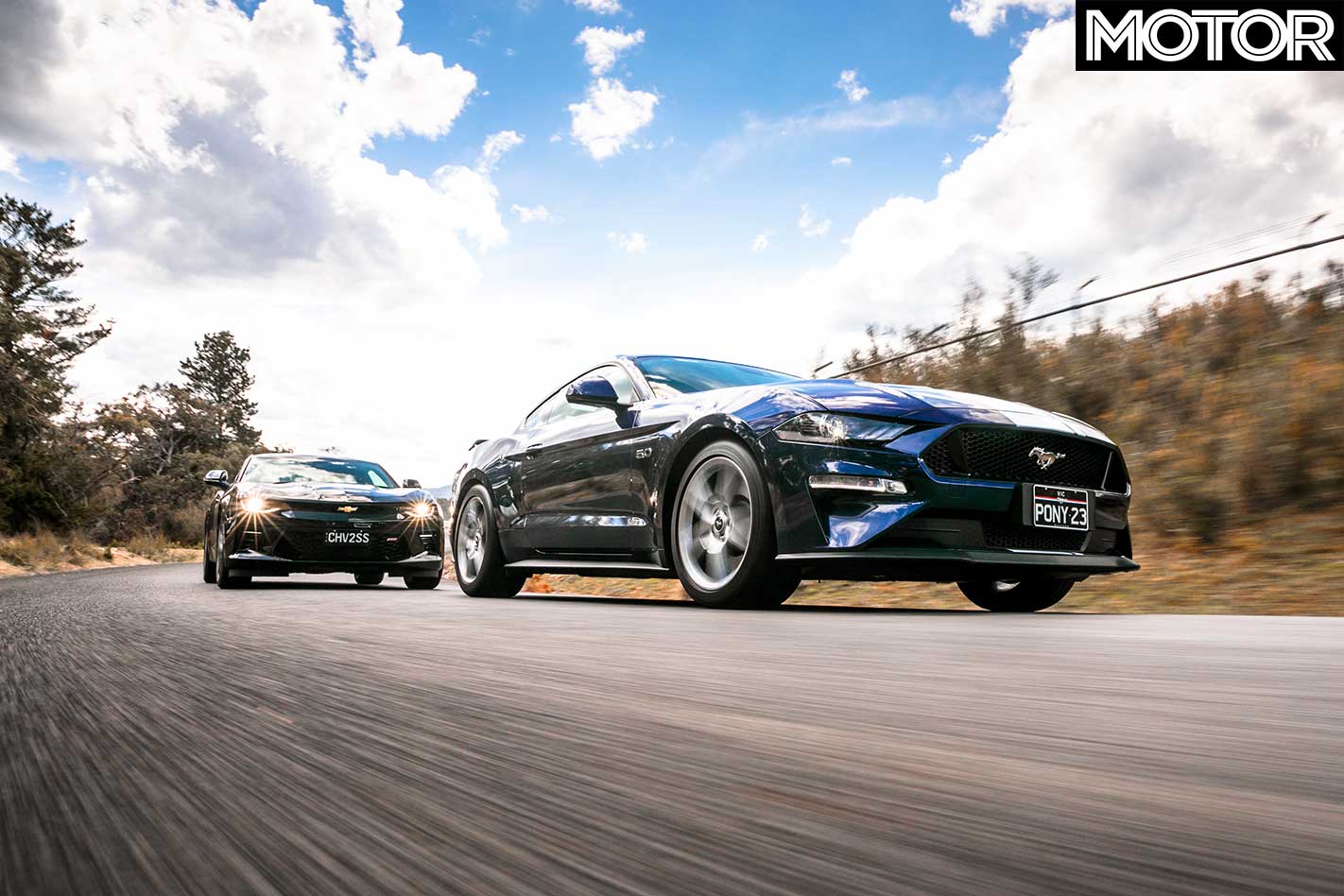
Even though this hurts the Camaro’s emotional appeal, it’s extremely hard to separate these two based on subjective feelings. They’re both icons, and either car’s looks would enchant the brand agnostic. The sixth-generation Camaro design, at least for the 2017 model year, channels the original car’s angular aggression. It will twist bystander’s necks everywhere it goes.
The Mustang’s cab-rearward silhouette is just as pretty in the metal. Lowering the bonnet this year might have smoothed off its iconic snout, but regular attention from strangers confirms its retro design is instantly recognisable.
So let’s look at this more objectively. Yes, the Camaro is faster and easier to approach on the limit. Its engine delivers fearsome mid-range and we can’t wait to explore its potential with a 10-speed transmission.
The right-hand drive swap doesn’t penalise it, either. Besides some minor flaws on our ‘pilot’ press car, like the rough looking microphone holes in the right A-pillar, the Camaro feels as if it emerges from Michigan already in right-hand drive.
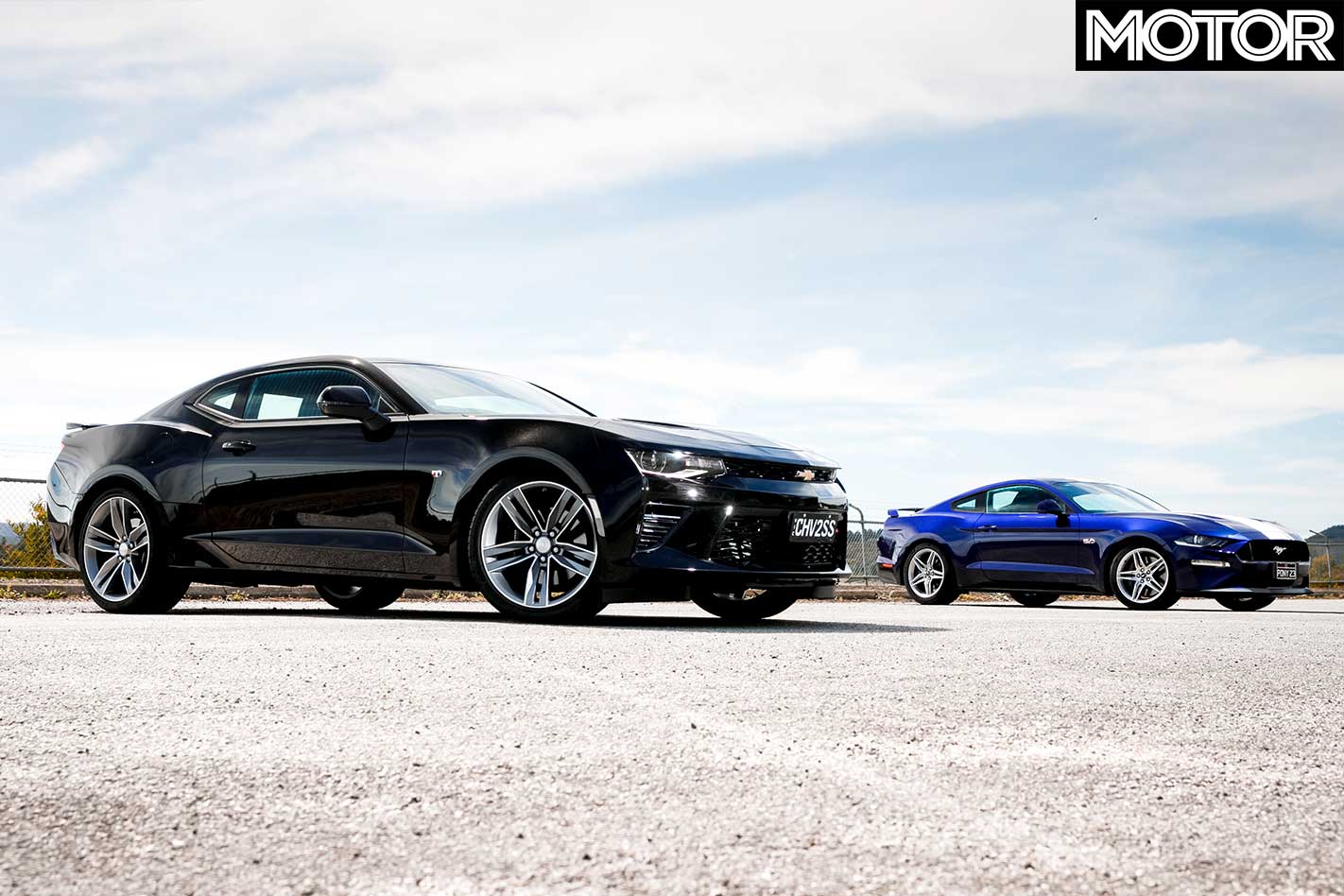
But it doesn’t, and it costs $85,990, or $20K more than a $65,990 automatic Mustang GT. This forces HSV to position the Camaro as a more exclusive product than the Mustang. It’ll certainly be a rarer car, HSV is expecting to sell 1000 per year when Ford has already sold 18,000 Mustangs with a healthy chunk of them being the V8. But it’s hard to believe its premium stance when it lacks all the features found in the Mustang. Like sat-nav, for instance.
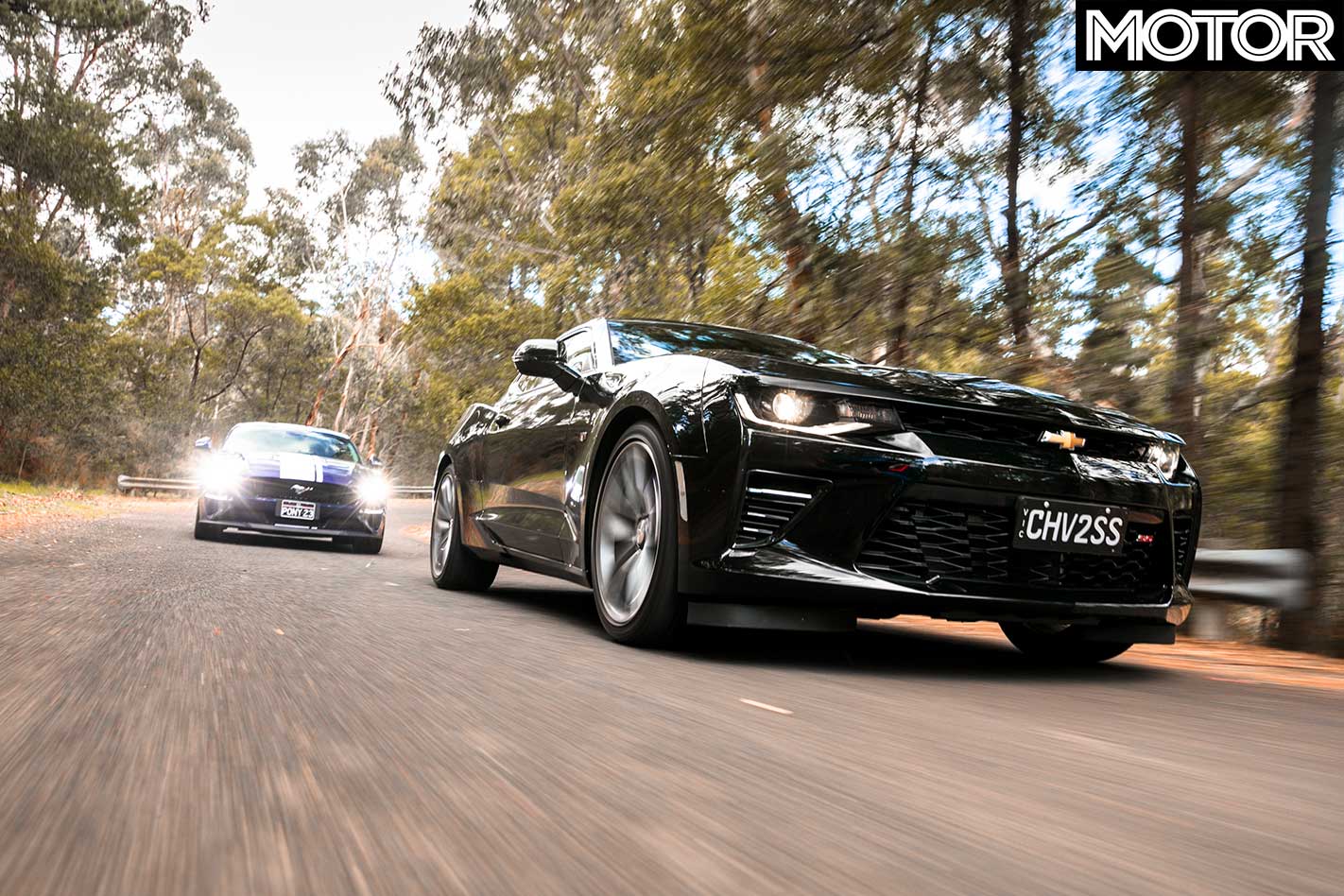
Our heavily optioned Ford closes the price gap to $10K. But if it were our car it’d only have the electric Recaro seats and maybe the adaptive suspension. Maybe.
Okay, the Mustang lacks polish when you dig in your spurs, but if the measure of a muscle car is how it makes you feel, then dollar-for-dollar it wins. It rides better, looks great and sounds grouse for much less. The Camaro may be lightning fast, but thunder always gets the last say.
Fast Facts
| u00a0 | Chevrolet Camaro 2SS | Ford Mustang GT |
| Body | 2-door, 4-seat coupe | |
| Drive | rear-wheel | |
| Engine | 6162cc V8, OHV, 16v | 5038cc V8, DOHC, 32v |
| Bore x Stroke | 103.25 x 92mm | 93.0 x 92.7mm |
| Compression | 11.5:1 | 12.0:1 |
| Power | 339kW @ 5700rpm | 339kW @ 7000rpm |
| Torque | 617Nm @ 4600rpm | 556Nm @ 4600rpm |
| Power/Weight | 198kW/tonne | 193kW/tonne |
| Transmission | 8-speed automatic | 10-speed automatic |
| Weight | 1710kg | 1756kg |
| Suspension (f) | struts, dampers, anti-roll bars | struts, adaptive dampers, anti-roll bar |
| Suspension (r) | multi-links, dampers, anti-roll bars | multi-links, adaptive dampers, anti-roll bar |
| L/W/h | 4784/1897/1348mm | 4789/1916/1396mm |
| Wheelbase | 2811mm | 2720mm |
| Tracks | 1600/1597mm (f/r) | 1642mm (f/r) |
| Steering | electrically-assisted rack-and-pinion | |
| Brakes (f) | 345mm ventilated discs, 4-piston calipers | 380mm ventilated discs, 6-piston calipers |
| Brakes (r) | 339mm ventilated discs, 4-piston calipers | 330mm ventilated discs, single-piston calipers |
| Wheels | 20.0 x 8.5-inch (f); 20.0 x 9.5-inch (r) | 19.0 x 9.0-inch (f); 19.0 x 9.5-inch (r) |
| Tyre Sizes | 245/40 ZR20 95Y (f); 275/35 ZR20 98Y (r) | 255/40 ZR19 (f); 275/40 ZR19 (r) |
| Tyres | Goodyear Eagle F1 Asymmetric 3 | Michelin Pilot Sport 4S |
| Price | $85,990 | $75,640 |
| Pros | Grip; meaty mid-range; looks; driving position; clever ESP; upshift noise | Top-end power delivery; noise; looks; equipment; modes; value |
| Cons | Price; ride; AFM; steering weight | On-limit handling; fussy gearbox |
| Rating | 4 out of 5 stars | 4 ouf ot 5 stars |
The Strip
| u00a0 | Chevrolet Camaro 2SS | Ford Mustang GT | |
| 0-10km/h | 0.43sec | 0.41sec | |
| 0-20km/h | 0.84sec | 0.83sec | |
| 0-30km/h | 1.33sec | 1.27sec | |
| 0-40km/h | 1.64sec | 1.74sec | |
| 0-50km/h | 2.04sec | 2.22sec | |
| 0-60km/h | 2.50sec | 2.71sec | |
| 0-70km/h | 3.00sec | 3.15sec | |
| 0-80km/h | 3.50sec | 3.71sec | |
| 0-90km/h | 4.07sec | 4.32sec | |
| 0-100km/h | 4.68sec | 4.90sec | |
| 0-110km/h | 5.47sec | 5.56sec | |
| 0-120km/h | 6.18sec | 6.29sec | |
| 0-130km/h | 6.96sec | 7.01sec | |
| 0-140km/h | 7.86sec | 7.79sec | |
| 0-150km/h | 8.87sec | 8.69sec | |
| 0-160km/h | 9.93sec | 9.61sec | |
| 0-170km/h | 11.06sec | 10.70sec | |
| 0-180km/h | 12.44sec | 11.82sec | |
| 0-400m | 12.8sec @ 181.76km/h | 12.79sec @ 187.47km/h | |
| 80-120km/h (Drive) | 2.62sec | 2.54sec | |
| 100-0km/h | 33.79m | 35.83m | |
| Speed in Gears | |||
| 1st | 68km/h @ 6500rpm | 62km/h @ 7400rpm | |
| 2nd | 104km/h @ 6500rpm | 98km/h @ 7400rpm | |
| 3rd | 149km/h @ 6500rpm | 136km/h @ 7400rpm | |
| 4th | 183km/h @ 6500rpm | 165km/h @ 7400rpm | |
| 5th | 244km/h @ 6500rpm | 192km/h @ 7400rpm | |
| 6th | 290km/h @ 6080rpm* | 229km/h @ 7400rpm | |
| 7th | 290km/h @ 5175rpm* | 250km/h @ 6320rpm* | |
| 8th | 290km/h @ 3950rpm* | 250km/h @ 5380rpm* | |
| 9th | N/A | 250km/h @ 4360rpm* | |
| 10th | N/A | 250km/h @ 4050rpm* | |
Heathcote Raceway, 16˚C, dry. Driver: Scott Newman/Louis Cordony *Manufacturer’s claim Official timing supplier – VBOX Australia
In Detail
2018 Chevrolet Camaro 2SS
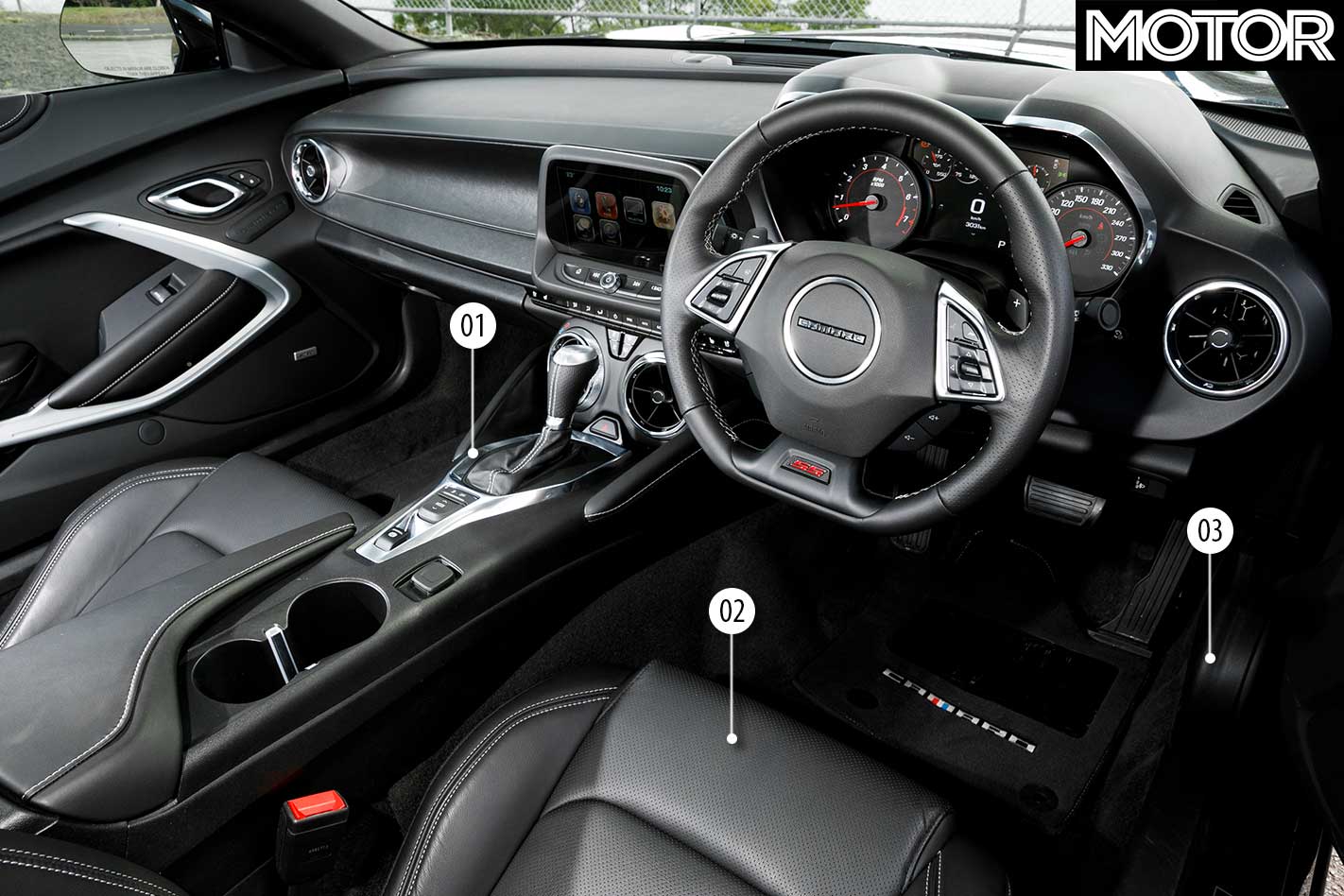
01 – LHD CLUES There’s a handful that hint at the conversion. The indicator clicking sound comes from the passenger side of the dash. The ‘P-R-N-D’ is on the wrong side and somewhat hidden by the gear lever
02 – THE SEATS Strike a good balance between support and accommodating size, as they’ll clearly fit humans bigger than the average MOTOR tester who, for reference, weighs 80kg and spans five foot 10 inches
03 – FOOTWELL HSV widens the footwell before fitting new pedals. The seating position is fantastic, with no compromises from having started life in left-hand drive. Headroom’s a bit tight with a helmet, though
2018 Ford Mustang GT
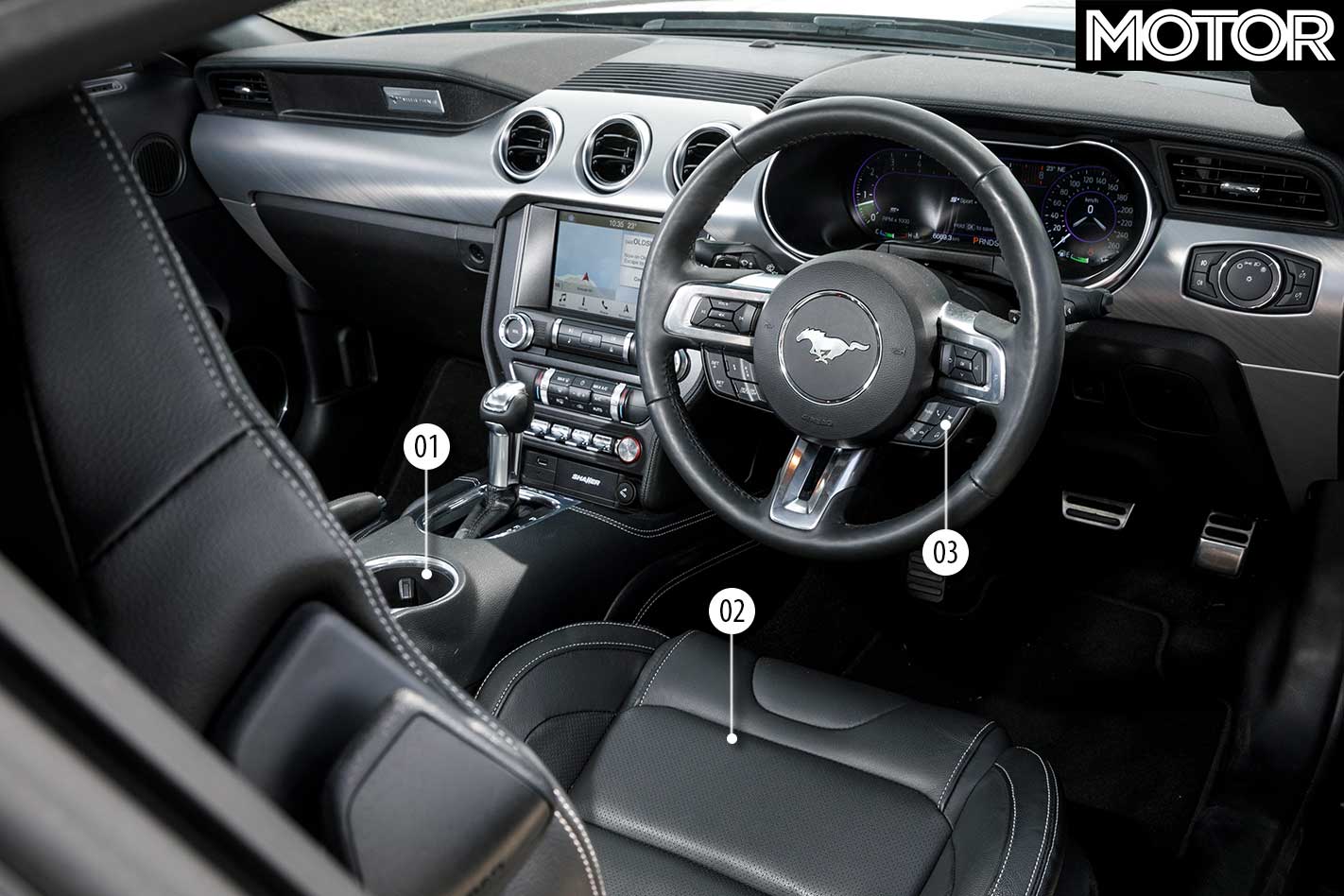
01 – QUIRKS Like the Camaro, the cup holders rest on the centre console’s ‘wrong’ side. You sit a lot higher in the Mustang than you do the Camaro, however forward and rearward visibility is better
02 – NEW GEAR 2018 Mustang interior highlights are digital cluster and (optional) Recaro seats. The 12.4-inch screen offers plenty of fun customising the display; there’s all the telemetry you’ll ever want
03 – GOODIES There’s radar cruise control and auto emergency brake. Upgraded interior over regular GT in America helps lift ambience but the Camaro’s interior, even with less equipment, feels slightly more premium
Every year at the beginning of Japan’s winter, dozens of race cars and thousands of Nissan die-hards descend upon Fuji Speedway, nestled in the hills beneath Japan’s iconic Mount Fuji, to celebrate the company’s motorsport history… and take a glimpse at what’s around the corner.
This is the Nismo Festival, a tradition that brings together Nissan’s most notable race cars and puts them – and the fans that worship them – on the track. Now in its 21st year, around 30,000 Nismo fanatics attend the festival on average, and Nissan and Nismo make sure there’s plenty to keep them entertained. The headline acts that roll onto Fuji’s 4.5-kilometre track are all owned by Nissan and normally kept garaged at its huge Zama ‘archive’, west of the company’s Yokohama headquarters, and despite being irreplaceable pieces of racing history their drivers don’t hold back. Joining them are dozens of privately-owned historic racers, grassroots-level Zed-cars, and privateer-run racecars from Japan’s Super GT series.
If you’ve ever wanted to watch Nissan’s hero cars from the JGTC era, Le Mans, Daytona and even Bathurst driving at full speed on one of the world’s fastest circuits, then there’s no event better. Want to know what it’s like? Click through the gallery above to find out.
