
If you’re a fan of rare, exclusive, classic, or just old cars, there’s one event on the calendar you won’t want to miss: Motorclassica.
Each year, the Royal Exhibition Building in the idyllic Carlton Gardens is filled with vintage and classic cars, as well as car brands displaying their latest wares – usually of the fast and pricey variety.
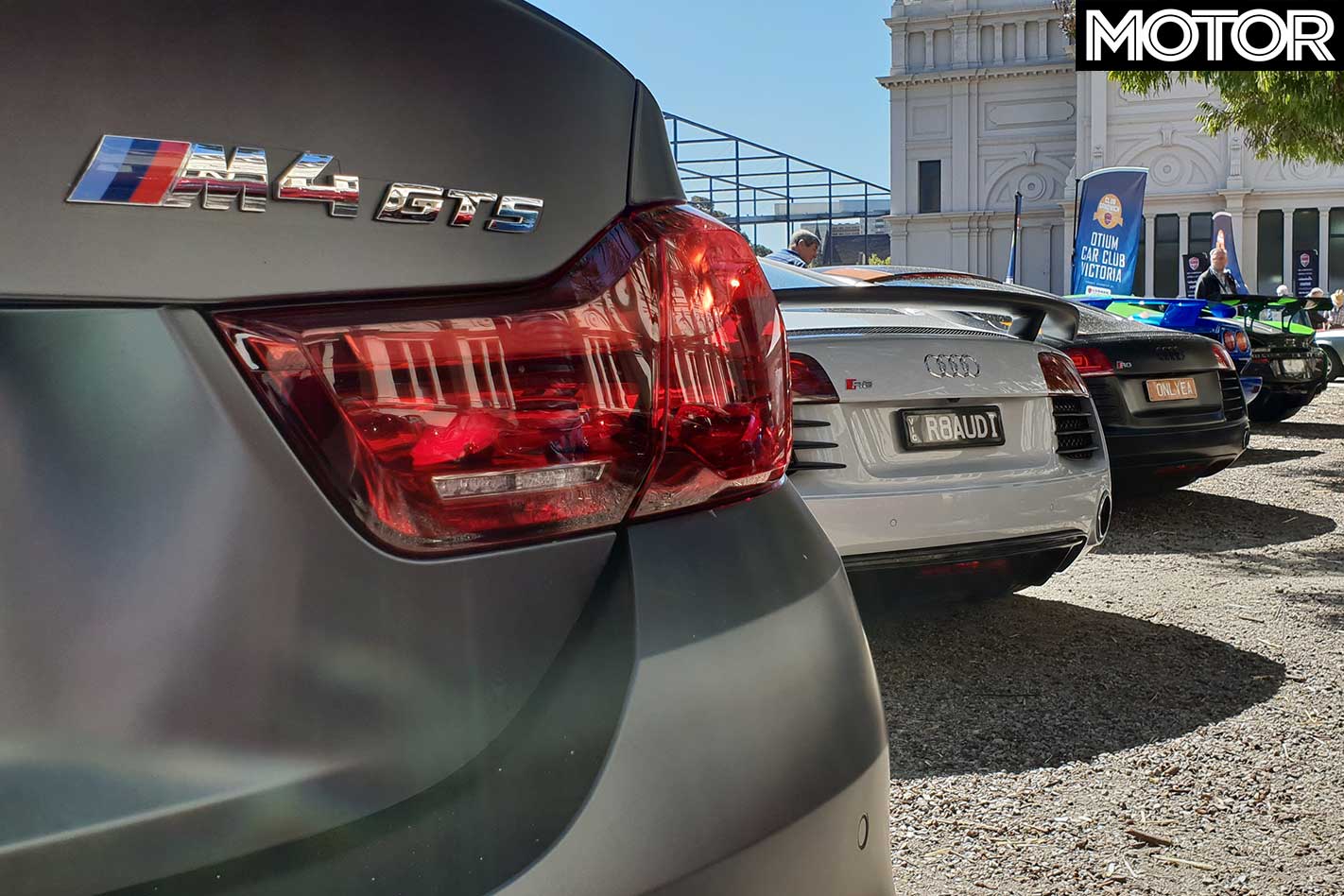
So we’ve picked out a few highlights that you won’t want to miss, ranging from new carbon-bound supercars to older, simpler treasures.
Even before you get into the building, there’s plenty of metal worth stopping for. Tuners, clubs, and dealers have organised large collections of cars to be present, with Lorbek’s fleet flanking the main entrance and its surrounds. Lamborghinis, Ferraris, and McLarens of the more modern era are abundant.
A few rare beasts take centre stage in the courtyard – a DeTomaso Pantera and a Countach 5000QV flank a Ford GT40 replica, and a Porsche 911 GT2 RS lurks not far away.
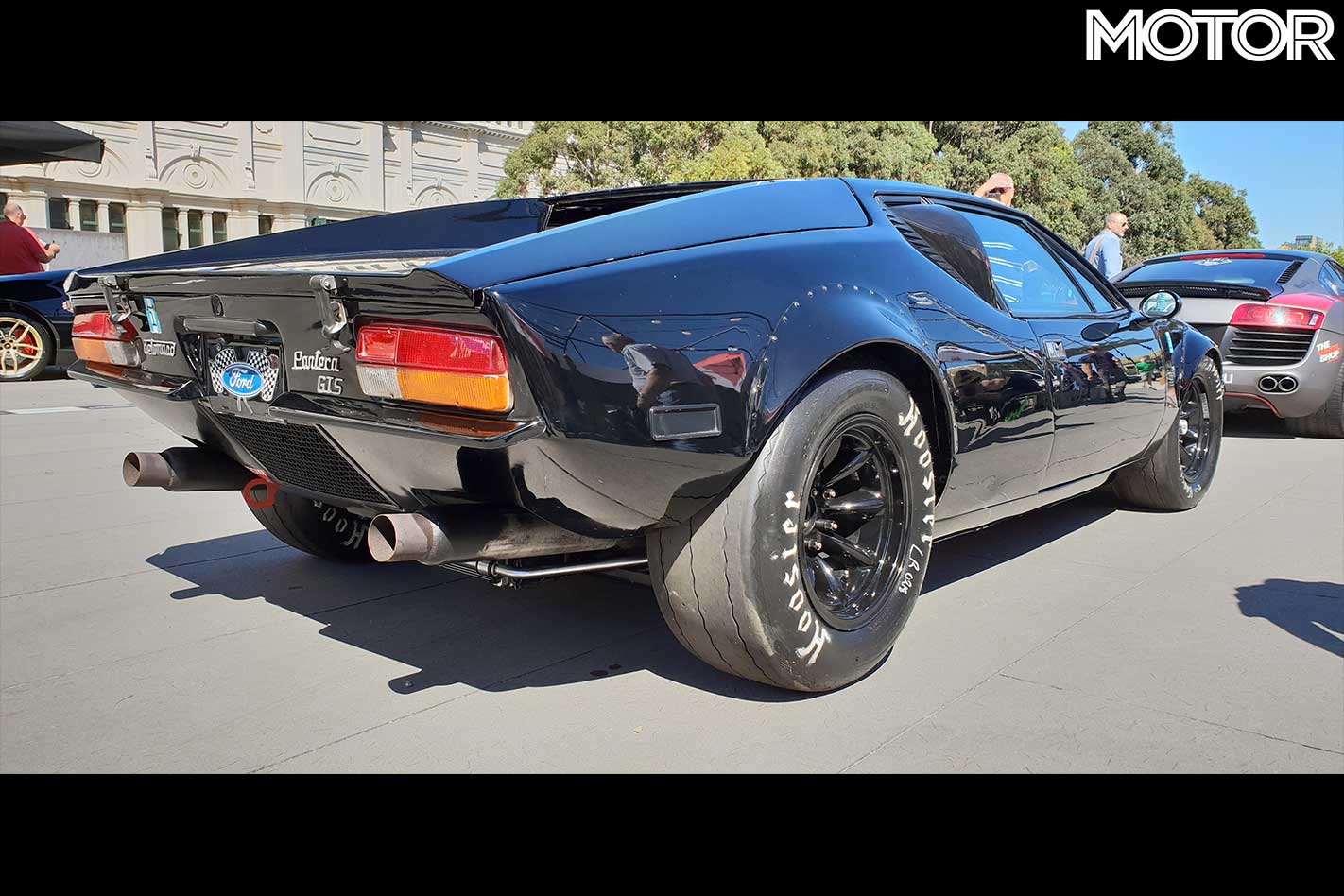
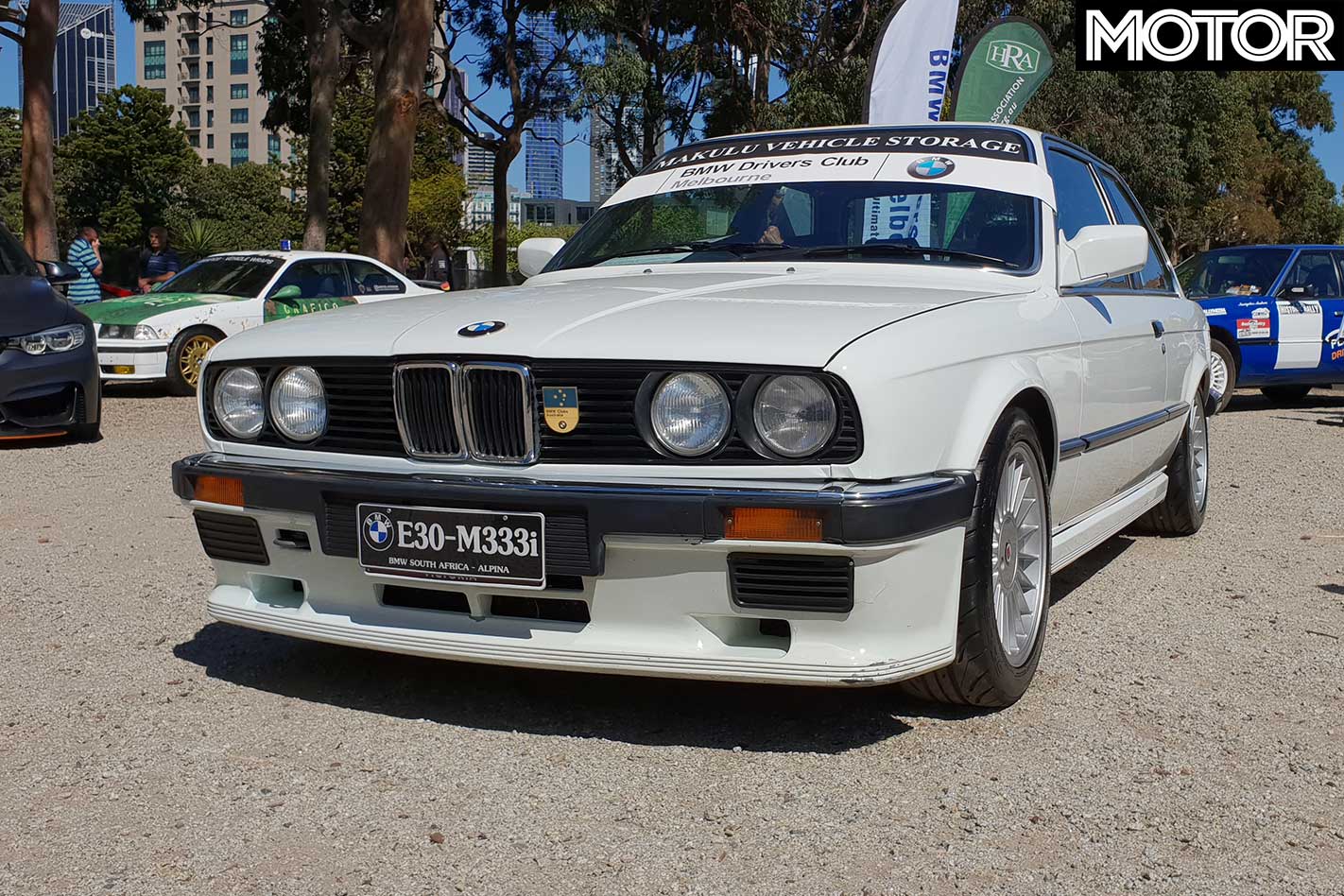
In amongst the BMW club section there’s even an E30 M333i, a super-rare South African model with BMW’s ‘big six’ 3.3-litre inline engine.
Once you’ve managed to make it inside, it’s worth going to each manufacturer’s stand and checking out the cars you might never get another chance to see.
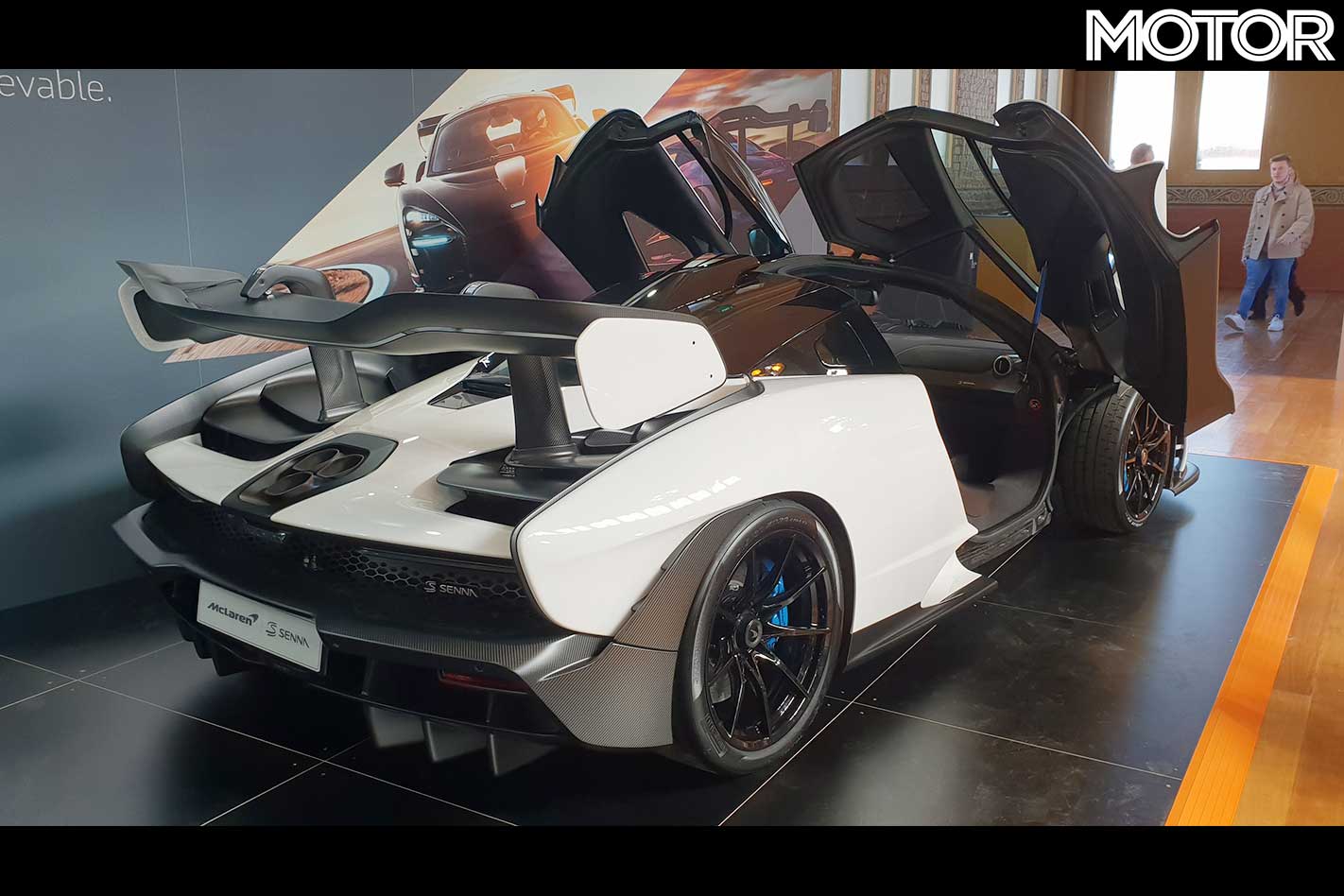
McLaren is quite close to the main entrance, with the Senna and 600LT taking pride of place. Both are to be or have been sold here, with the 600LT due to start deliveries this year and the Senna’s already having commenced.
It’s unlikely you’ll see a Senna hit the streets unless you’re very lucky – pricing starts at GBP750,000, meaning they’re stratospherically costly here in Oz.
About 10-20 metres away is the Ford Mustang Bullitt, which you’re far more likely to see hitting the streets. Ford should have no problem selling all 700 units bound for Australia.
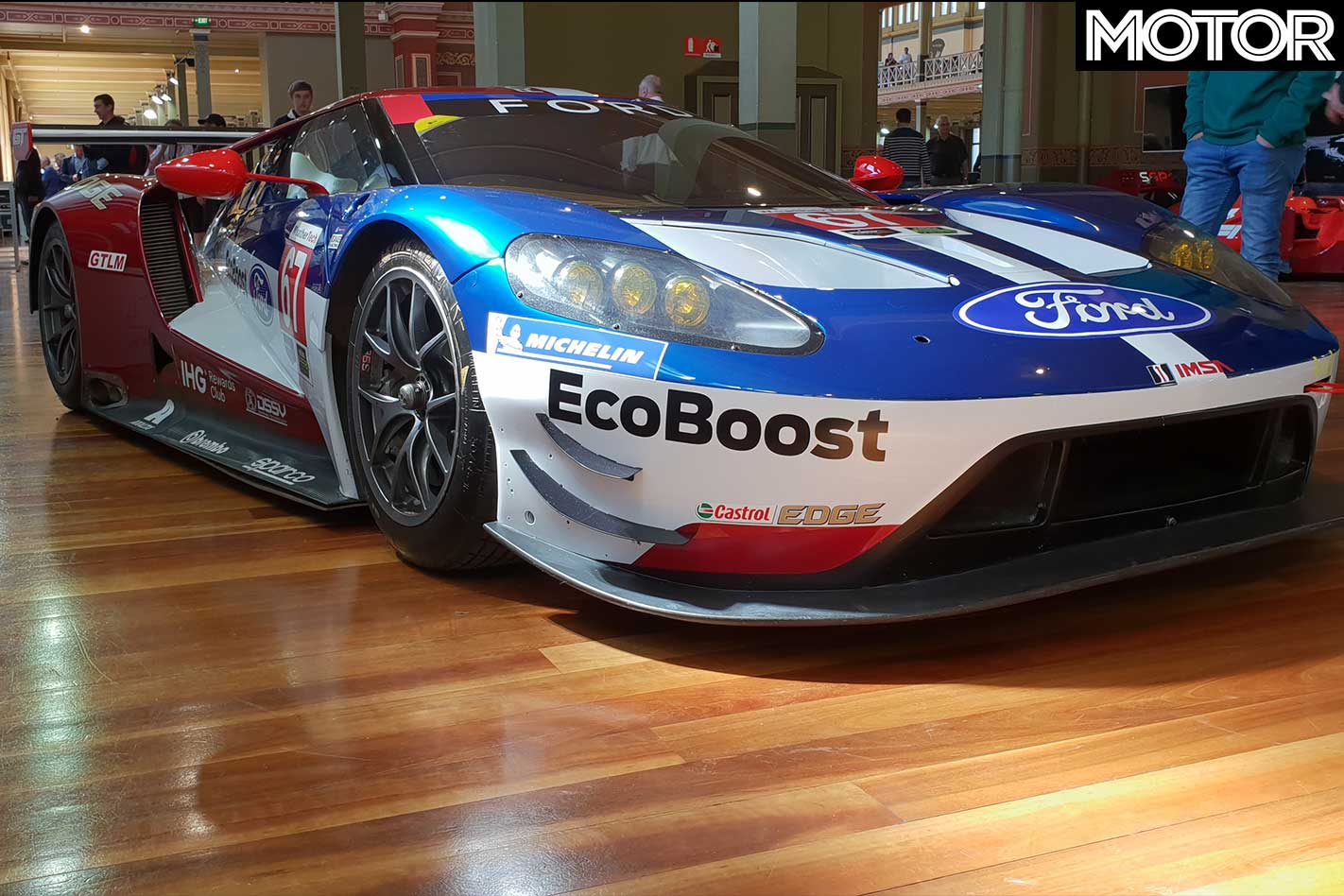
Ford Performance has also brought the Ford GT Le Mans race car to be displayed only a week after it made its local debut on a lap of Mt Panorama. It looks absolutely wicked up close.
Mercedes-Benz has brought along a 1996 C63 AMG – something relatively nondescript, but worth seeing as it’s a relatively uncommon car these days. It was also the first mass-produced AMG model sold here.
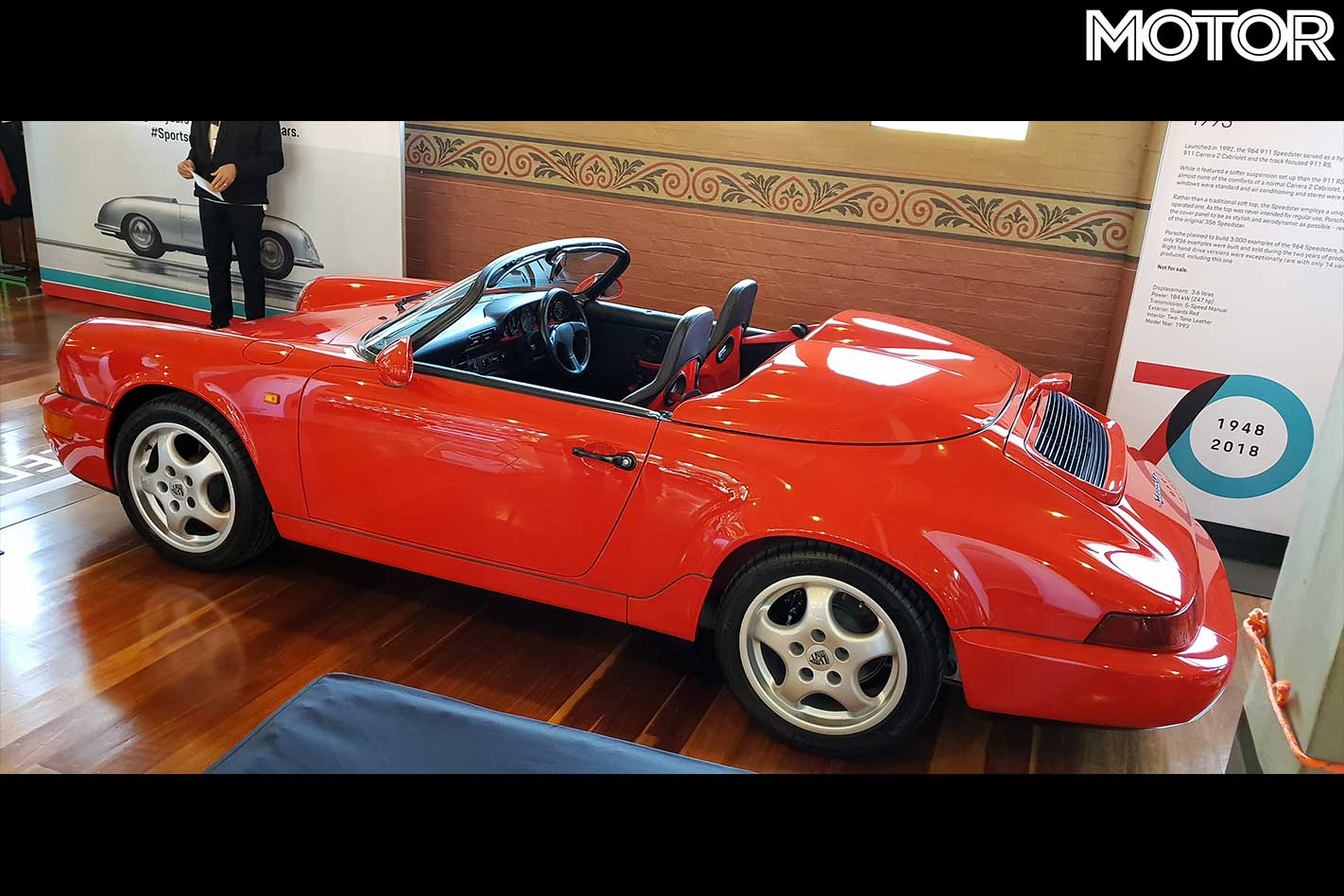
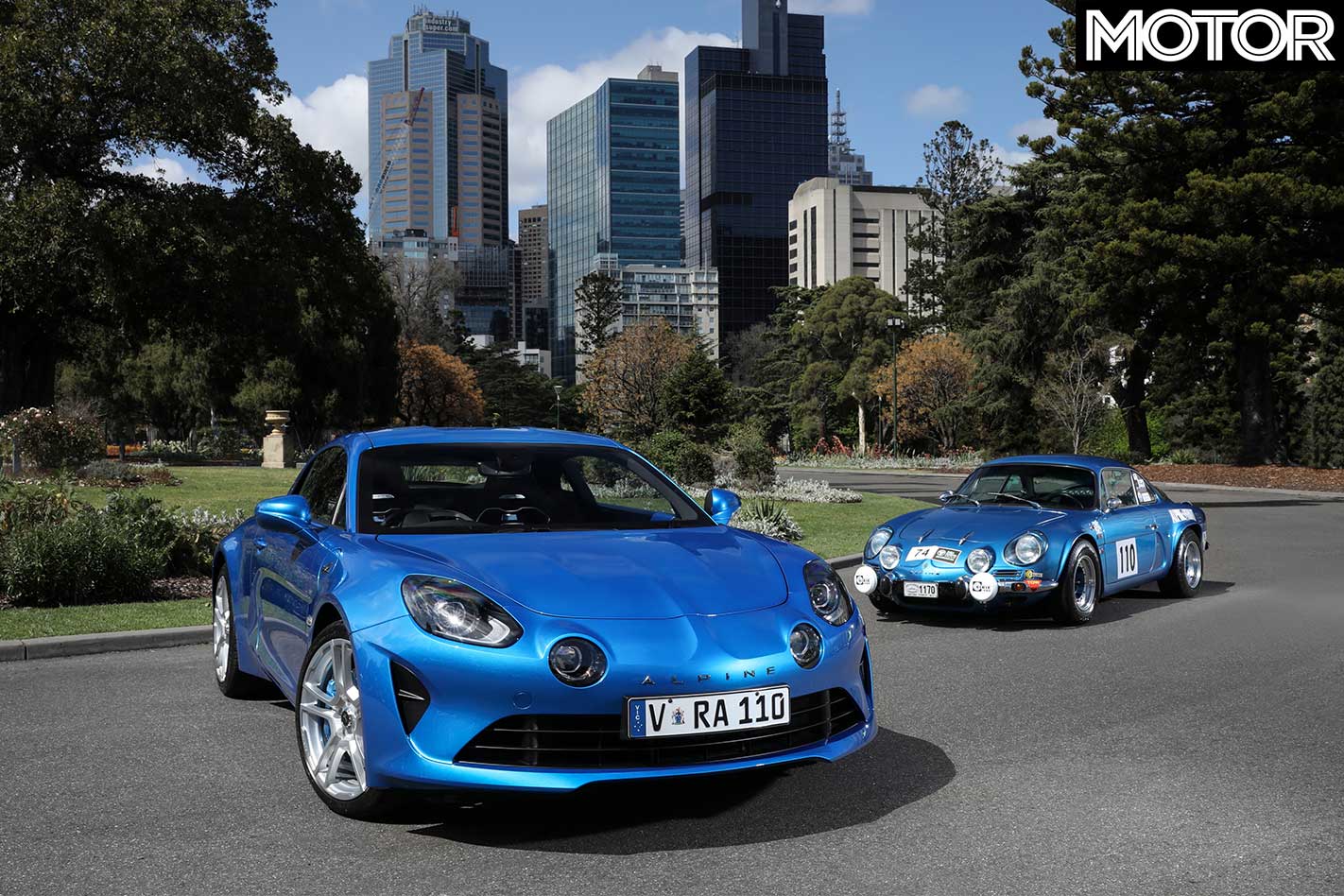
Just next door, Porsche has a new 911 GT3 RS and a 1993 Speedster on display, while Alpine is showing off its new A110 and the historic car which gave it its name.
Motorclassica runs from today (October 12) to Sunday October 14.
Mercedes-Benz buyers holding out for the powerful A250 hatch are set for a Christmas treat, with a lower-priced version arriving in showrooms by the end of the year.
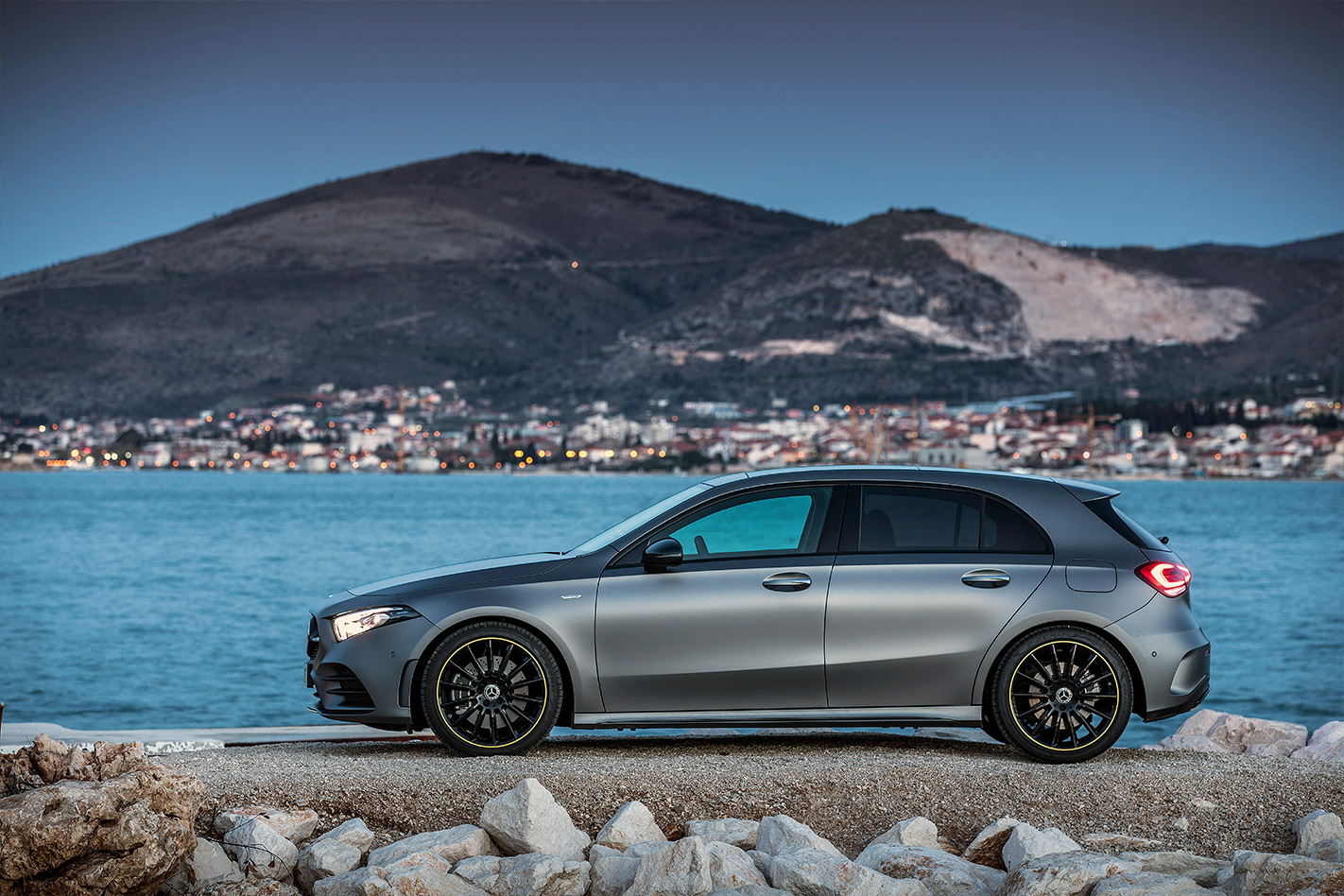
Mercedes-Benz Australia has secured a limited number of A250 4Matic hatches, which have the same equipment levels as the A200 currently on sale, including the state-of-the-art MBUX infotainment system With ‘Hey Mercedes’ voice control, while adding more power and ‘4Matic’ all-wheel-drive traction.
At the A250’s heart is a reworked version of the 2.0-litre engine in the previous model with slightly higher 165kW/350Nm output through the standard seven-speed dual clutch automatic transmission.
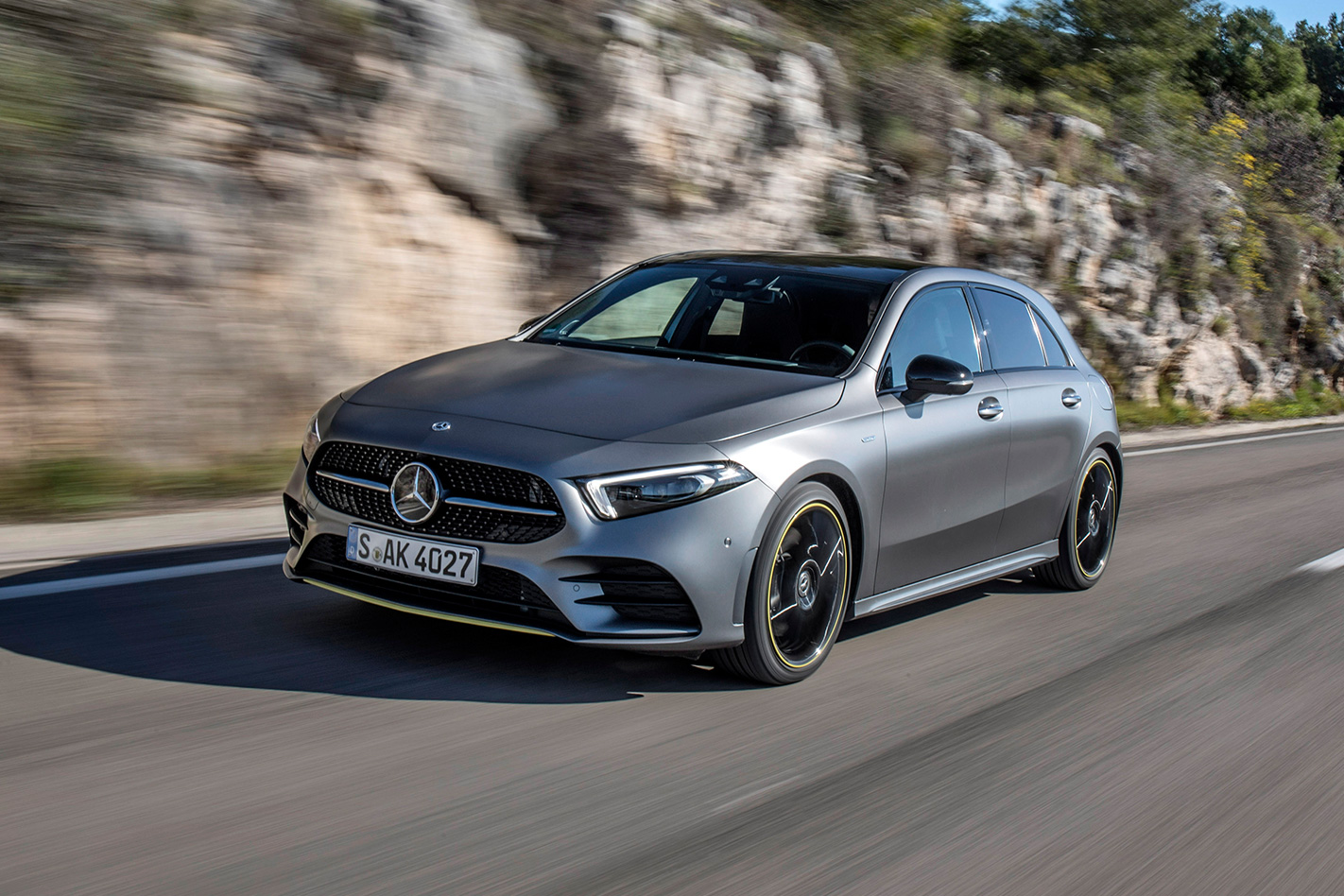
An extra 5kW of power helps in part to shave a second from the previous model’s 6.3-second 0-100km/h time, while being a full 1.6 seconds quicker than the A200’s 7.8-second sprint.
The 4Matic AWD system can divert up to 100 percent of torque to the rear axle for brisker launches, while ‘Dynamic Select’ allows the driver to set drive modes for different road conditions or for more economical driving.
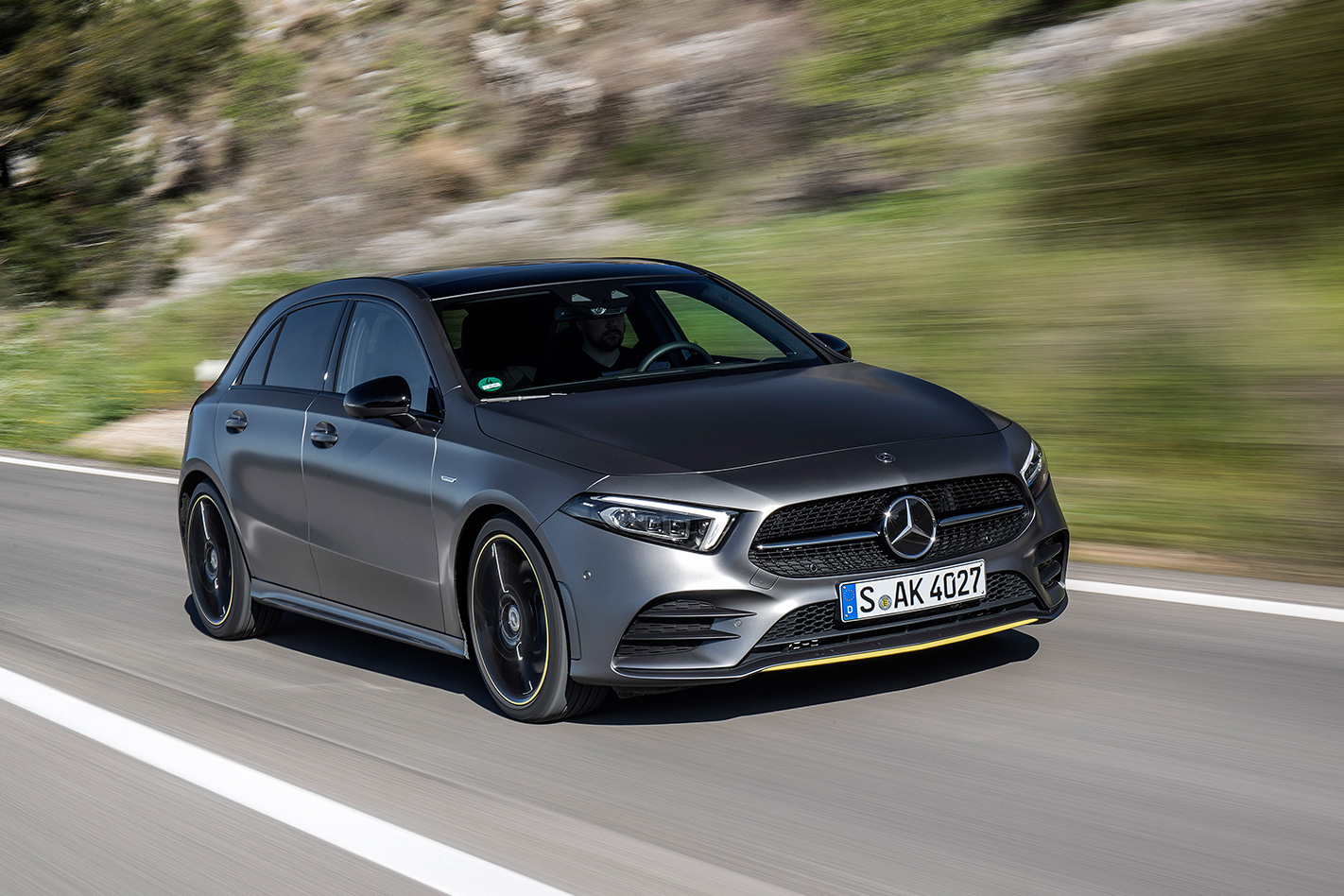
Priced at $49,500, the early arriving A250s cost just $2300 more than the A200. However, it misses out on equipment set to become standard on the A250 such as adaptive dampers and 19-inch wheels shod with Pirelli P Zero rubber, which are expected to raise the price to around $55,000.
As with the A200, the limited-run A250 4Matic features 18-inch alloy wheels, MBUX with widescreen cockpit (a pair of 10.3-inch digital screens), ‘Touchscreen Central Display’ with satellite navigation, LED headlights with adaptive high beam, keyless start, wireless phone charging, auto braking, lane keeping assist and speed-sign recognition.
The most affordable A250 will be available from Mercedes-Benz dealerships from November.
Mercedes-Benz A-Class pricing
- A200 – $47,200
- A250 – $49,500
ANOTHER week has flown past, and with it a flurry of news, reviews and announcements.
If you’re anything like us here at Wheels, you’ve feverishly devoured every morsel of breaking automotive information going around and the following 10 questions should be a doddle. However, if the demands of modern life meant you missed some of the latest, we are here to help.
Put your knowledge to the test below to see how much attention you really paid to the news, and if there’s anything you missed, click the links and get yourself up to speed.
We need at least one of these twin-turbo monsters in our garage
Need to catch up? Read the full story here: Porsche 911s with ‘80s Formula 1 engines to be sold
VW apprentices have turned a stylish sedan into a stopwatch-killer
Need to catch up? Read the full story here: Volkswagen Arteon time attack car specs revealed
One owner, only driven on Sundays
Need to catch up? Read the full story here: Championship-winning Datsun 280ZX for sale
Never count out The Kid at Bathurst
Need to catch up? Read the full story here: Craig Lowndes wins Bathurst 1000
Falcon GT HO Phase III crosses the auction block
Need to catch up? Read the full story here: Rating the great Aussie V8s at Bathurst
Sleek, silent, and on our shores
Need to catch up? Read the full story here: Concept lands in Sydney, previews production EV
Welcome to the future, Jeep
Need to catch up? Read the full story here: Jeep steps into a new electrified future
BMW’s large SUV will start from $112,990
Need to catch up? Read the full story here: 2019 BMW X5 pricing and features
Cullinan is quick to a canter
Need to catch up? Read the full story here: 2018 Rolls-Royce Cullinan review
Would you buy a Beetle for A$1.4 million?
Need to catch up? Read the full story here: Million-dollar VW Beetle barn find for sale
Sportscars with manual transmissions can retain more value than an equivalent automatic – we confirmed this just last week. But the news isn’t good for the core band of enthusiasts who must dip our own clutch pedal, because the DIY-shifter is becoming rarer and rarer.
Some cars – such as the Holden Commodore, Kia Stinger, and even BMW’s all-new 3 Series – have simply shunned the manual from performance versions, however, there are models that had or have a stick-shift available overseas, but were denied Aussie entry.
What are we missing out on?
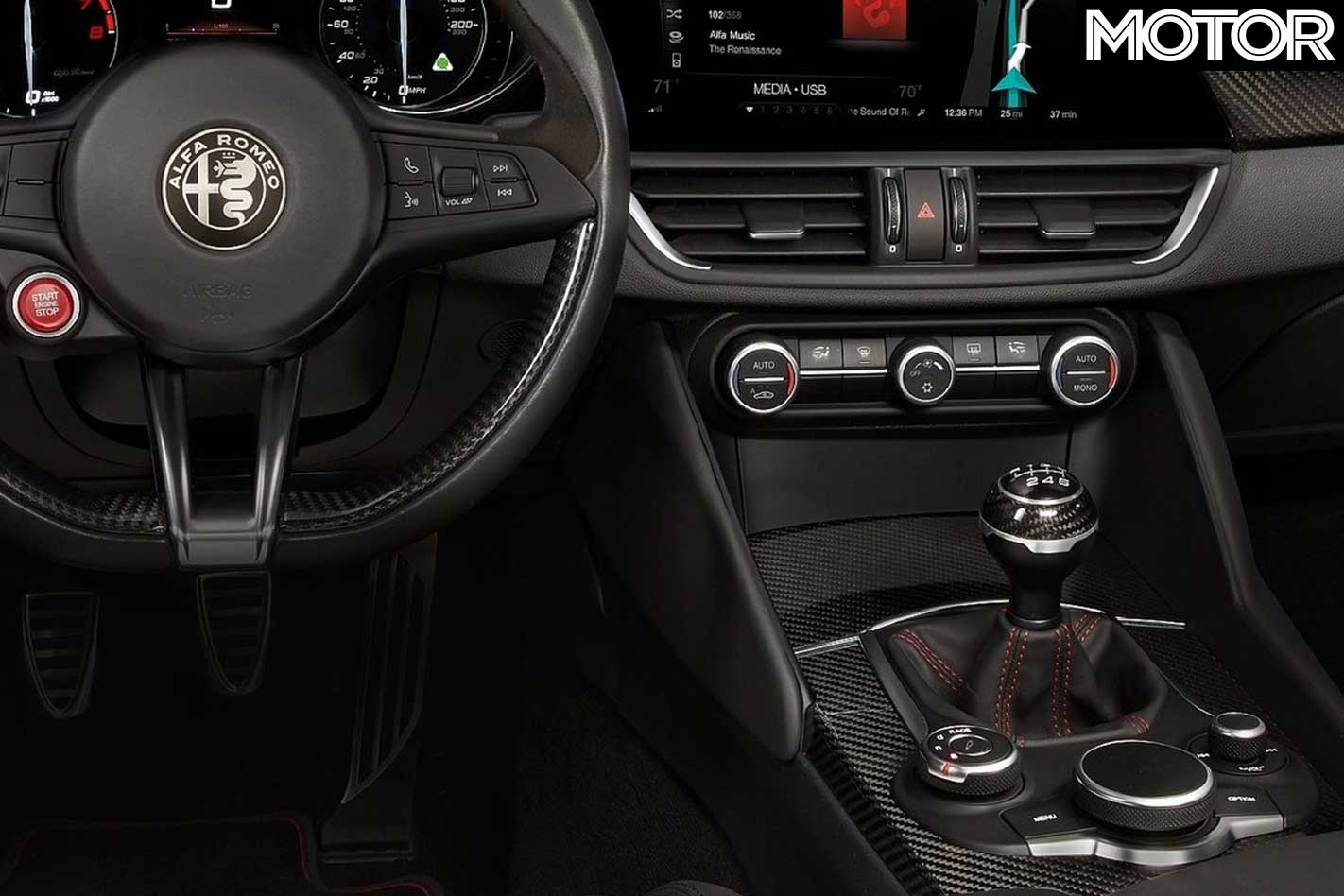
The M3 might still offer a manual – and a tasty one at that – but the epic 5.0-litre V10-engined E60 M5 was offered with a clutch pedal only in the US. Particularly as the alternative single-clutch ‘SMG’ auto was so average, conversion kits are available and are highly sought after. C’mon – a 373kW V10 manual rear-drive sedan; where do we sign?
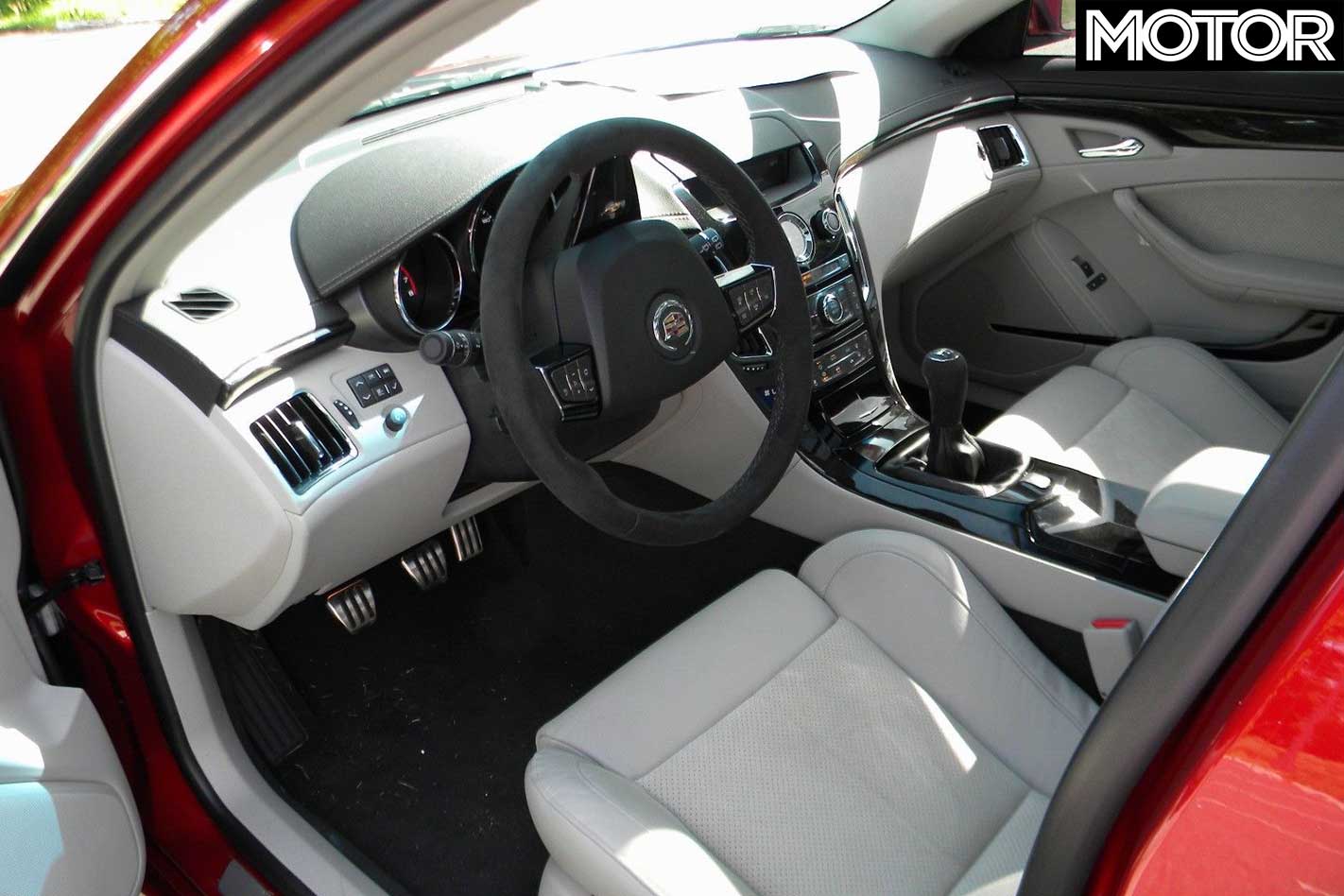
In parallel, Cadillac’s failed attempt at launching in Australia in 2008 may have cost us the chance to sample a high-performance manual version of its large sedan and wagon long before HSV produced its equivalent. We are, of course, talking about the CTS-V manual, available with the LSA 6.2-litre supercharged V8, in rear-drive, and as sedan or wagon.
Incidentally, right to the very end HSV never produced a Clubsport R8 LSA Sportwagon.
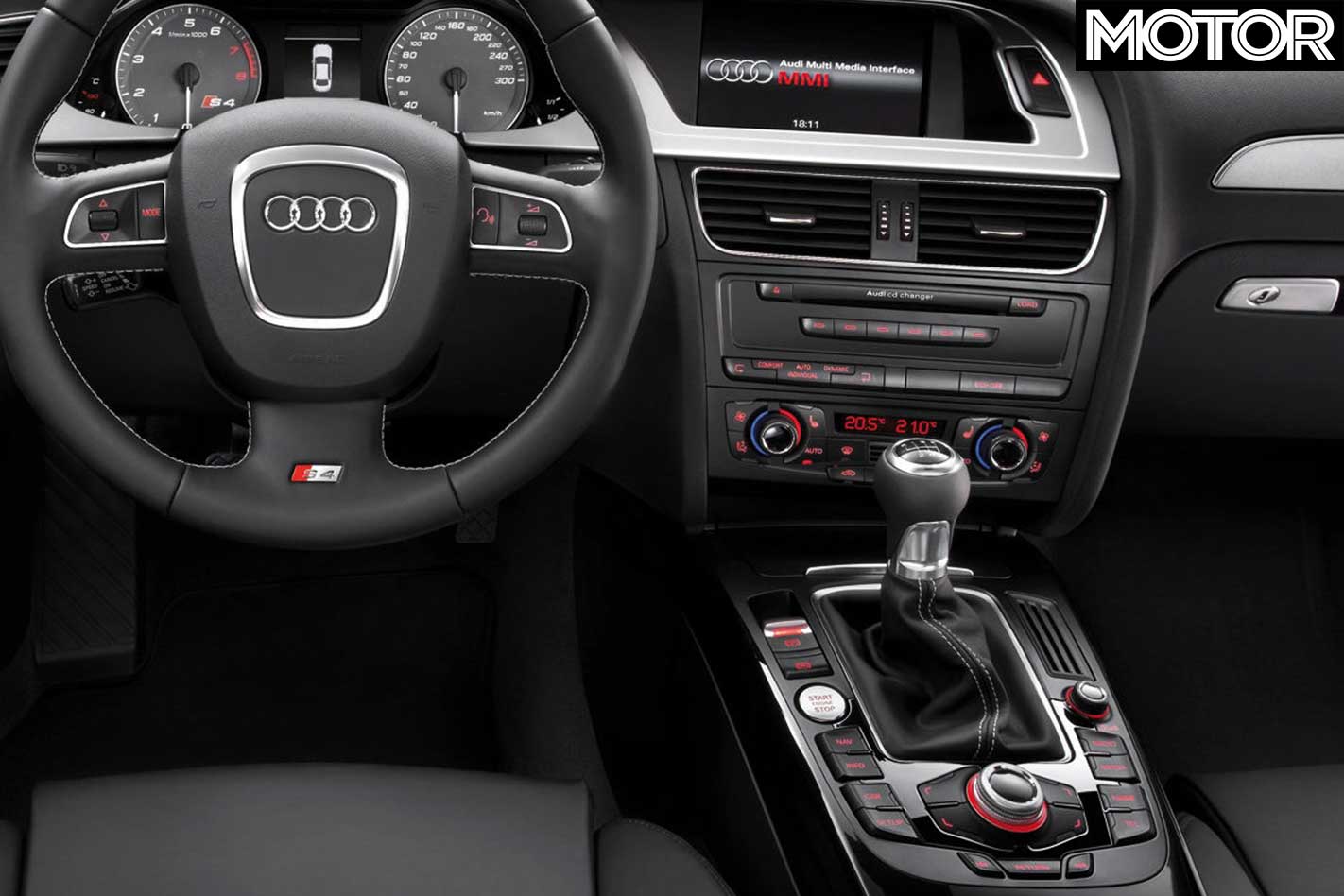
And even Audi has recently denied us a manual sports sedan, as well as a manual coupe.
The late-2000s S4 may not be as ballsy as an RS4, but its 3.0-litre supercharged V6 combined with a ‘crown’ locking centre differential to work a dynamic treat even with the seven-speed dual-clutch auto solely available in Australia. And the lack of the six-speed manual available overseas especially hurts given that the ‘S tronic’ has been known to suffer reliability issues.
Although Ingolstadt has since switched to eight-speed auto-only for its latest S4 globally, the current-generation TT S – an absolute sweetheart of a driver’s car, by the way – is still available with a six-speed manual in Europe. The 210kW/380Nm 2.0-litre turbo is still a lower, lighter Golf R, but given how good the Volkswagen is these days, that’s no bad thing.
Speaking of that sibling German brand, the just-released Polo GTI is available with a manual overseas but not here. Arguably light hot hatches are at their best when drivers row their own gears, though we understand a technical issue is affecting the 147kW/320Nm 2.0-litre turbo five-door from being imported – overseas, the engine gets a particulate filter with the manual but not the auto, and our fuel quality isn’t good enough to work with the filtration.
Finally, a production rather than technical issue affects the Honda Civic Si manual from lobbing Down Under. Our Civics are made in Thailand, with the exception of the superb Type-R built in the UK – which is only where the 1.5-litre turbo also mates with a manual.
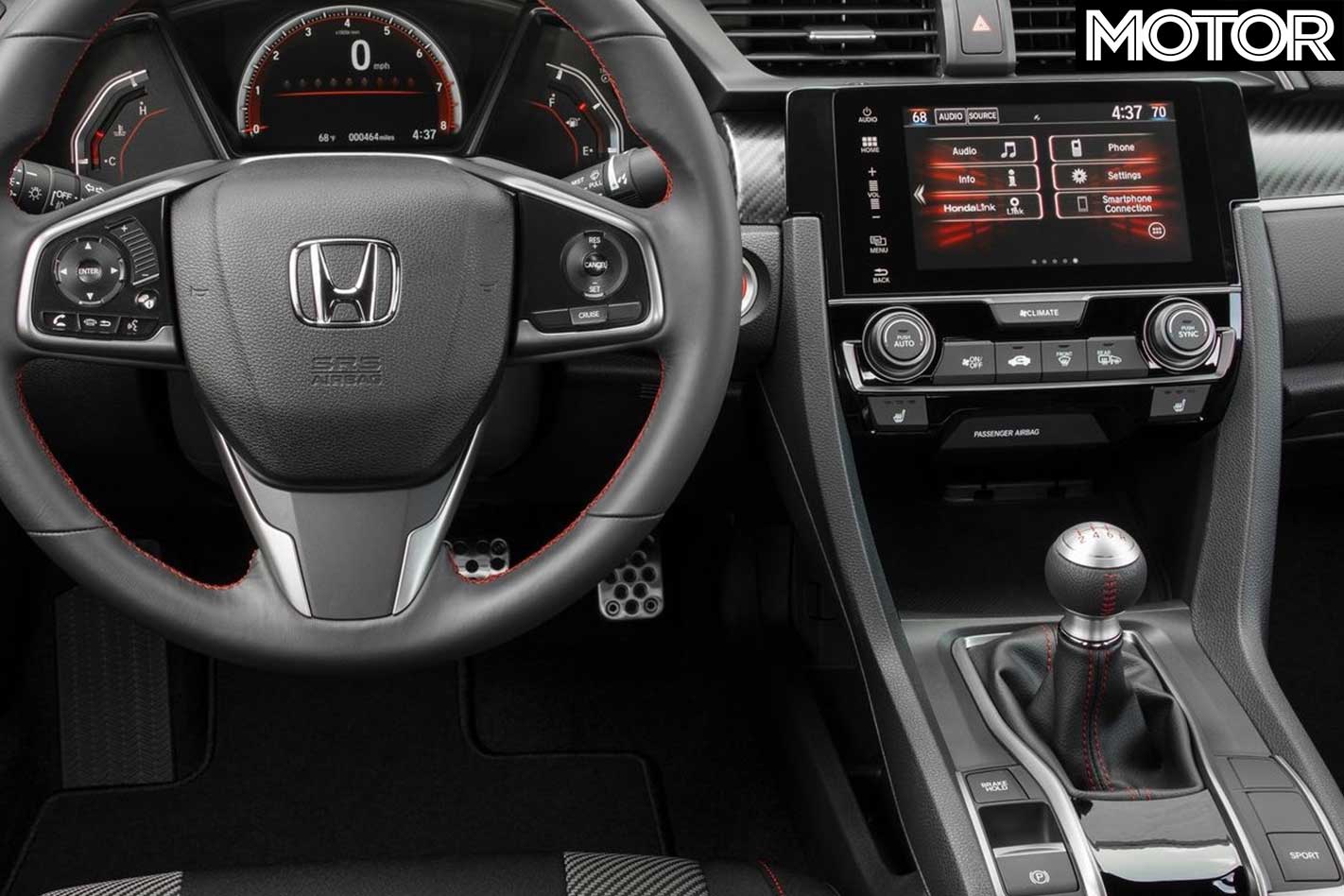
The thought of a sub-Type-R Honda warm hatch is alluring, though small car manuals in general are disappearing fast – even Ford’s all-new Focus will be auto-only here, despite historically being a renowned driver’s car within the segment. All of which leaves the Mazda3 SP25, Hyundai i30 SR and Holden Astra RS as your ‘go to’ manual warm hatches.
For now, at least…
WHAT IS IT?
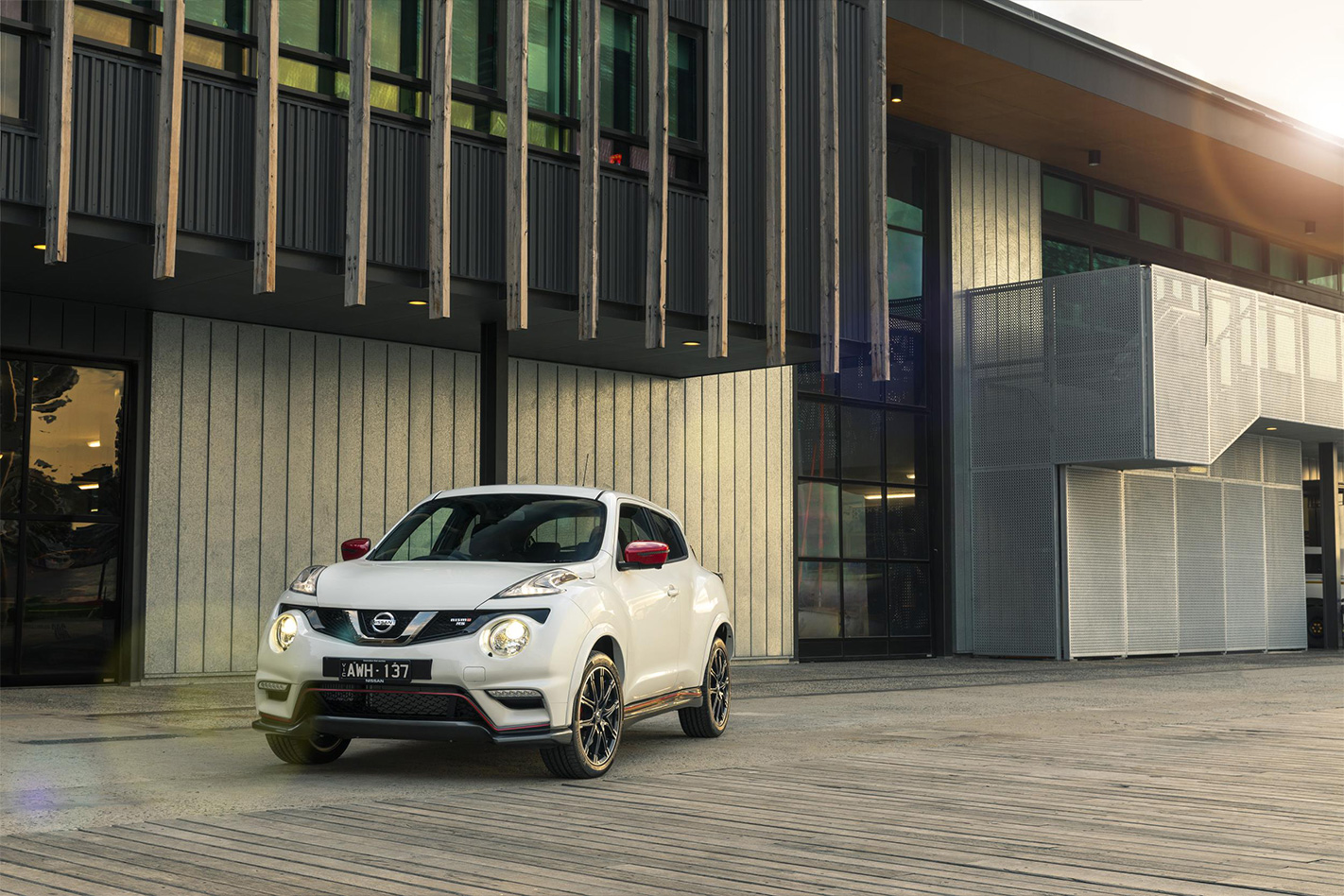
This is the sportiest version yet of Nissan’s uniquely styled Juke crossover. It arrives Down Under late in its product cycle to inject a welcome dose of freshness to a range left languishing after emissions regulations discontinued its most popular variant; the entry-level automatic ST.
WHY WE’RE DRIVING IT
Because this is the third, and for now final, car to join the Nismo brand in Australia. It’s also the first SUV to be tweaked by Nissan’s iconic motorsport arm, so we wanted to see if Nismo’s dynamic nous – made famous in sports cars such as Skyline and GT-R – can translate to a high-riding crossover.
MAIN RIVALS
No direct crossover rivals to speak of but for this money you could buy: Volkswagen Golf GTI, Volkswagen Polo GTI, Hyundai i30N, Renault Clio RS.
THE WHEELS REVIEW
IT’S HARD to know what to make of the Nissan Juke Nismo RS. Of all the motoring world’s curios, it’s one of the most intriguing, not just for its polarising looks and convention-busting size and performance, but because its circa-$40K sticker price ($37,790 for the manual front-driver, $41,490 for the CVT AWD) places it firmly in the crosshairs of some serious competition. This is Volkswagen Golf GTI and Hyundai i30N money. And if you critique it objectively, the results aren’t entirely flattering.

Built on ageing underpinnings (the Juke first launched in Europe in 2010, this platform debuted in the mid-2000s), it’s so old that Nissan has actually stopped making it. Only 240 Juke Nismos are coming to Australia, not because Nissan didn’t want more, but because that’s all that were left.
2018 Nissan Juke scores cosmetic upgrades, Juke Nismo around the corner
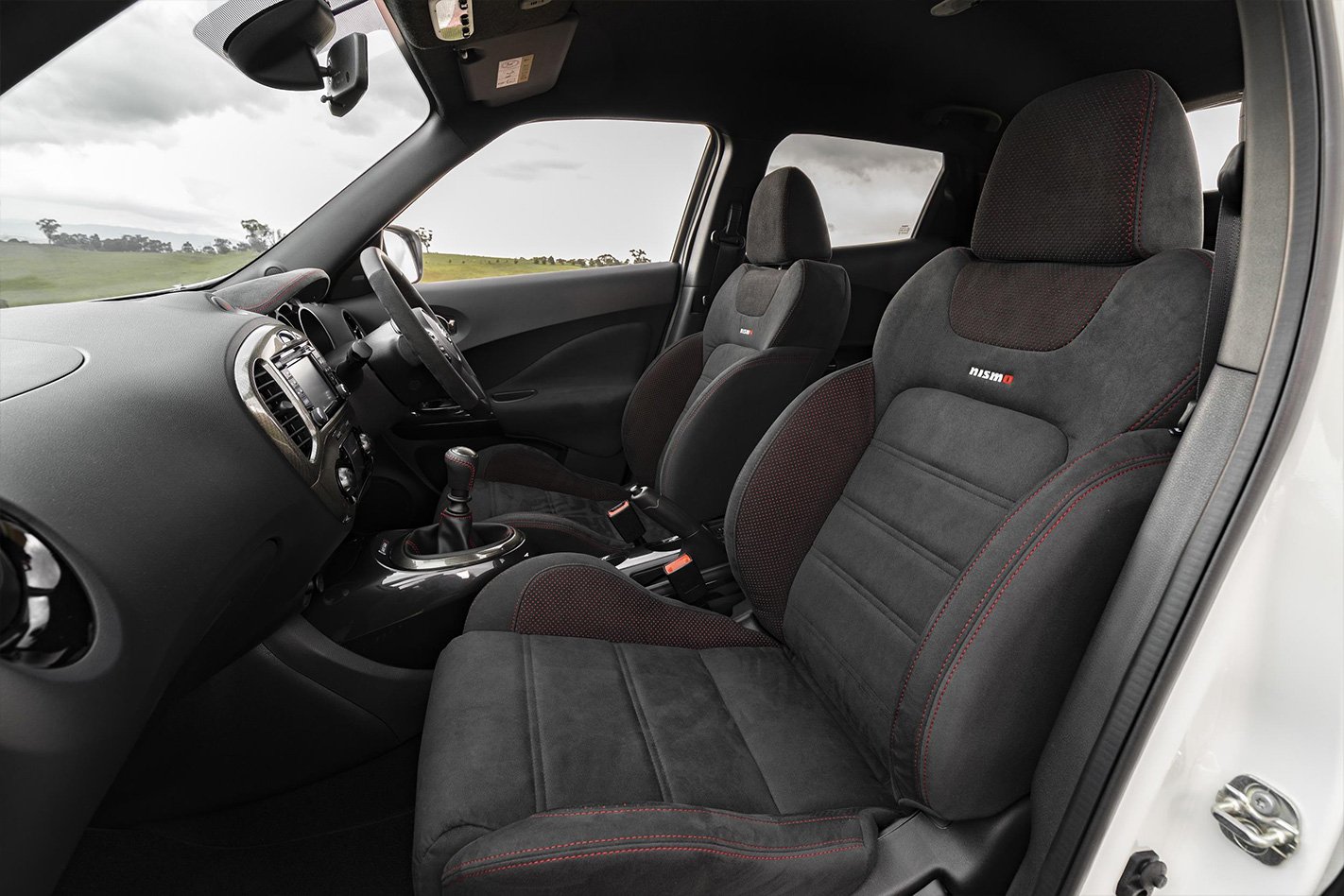
Inside, the design is outmoded (though the supportive Nismo-specific seats are excellent), most of the surfaces are covered in hard plastic and it’s no packaging triumph either – the cabin is less generous than the aforementioned hot hatches, particularly in the rear.
There’s also a disconnect between its SUV form and the expectations brought by a Nismo badge. People associate Nismo with swoopy Skylines and two-door coupes, not fussily styled, front-wheel-drive crossovers.
And yet despite all this, there’s something endearing about the Juke Nismo. It dares to be different and this is no stickers-and-stripes exercise. There’s genuine substance here.
The 1.6-litre four-cylinder turbo has been fettled and now produces 160kW/280Nm in manual-guise and 157kW/250Nm for the CVT auto. The manual front-driver is the one to buy, not only to side-step the CVT, but because at 1281kg, it’s some 140kg lighter.
Performance is punchy and eager, allowing for surprisingly swift progress, and the chunky gearshift snicks satisfyingly through the tightly packed ratios.
Undoing that goodness is the 1.6L’s soundtrack. Wind the wicked-up unit out and it emits a moan that lingers long after you’ve come off the throttle thanks to revs that hang on the overrun.
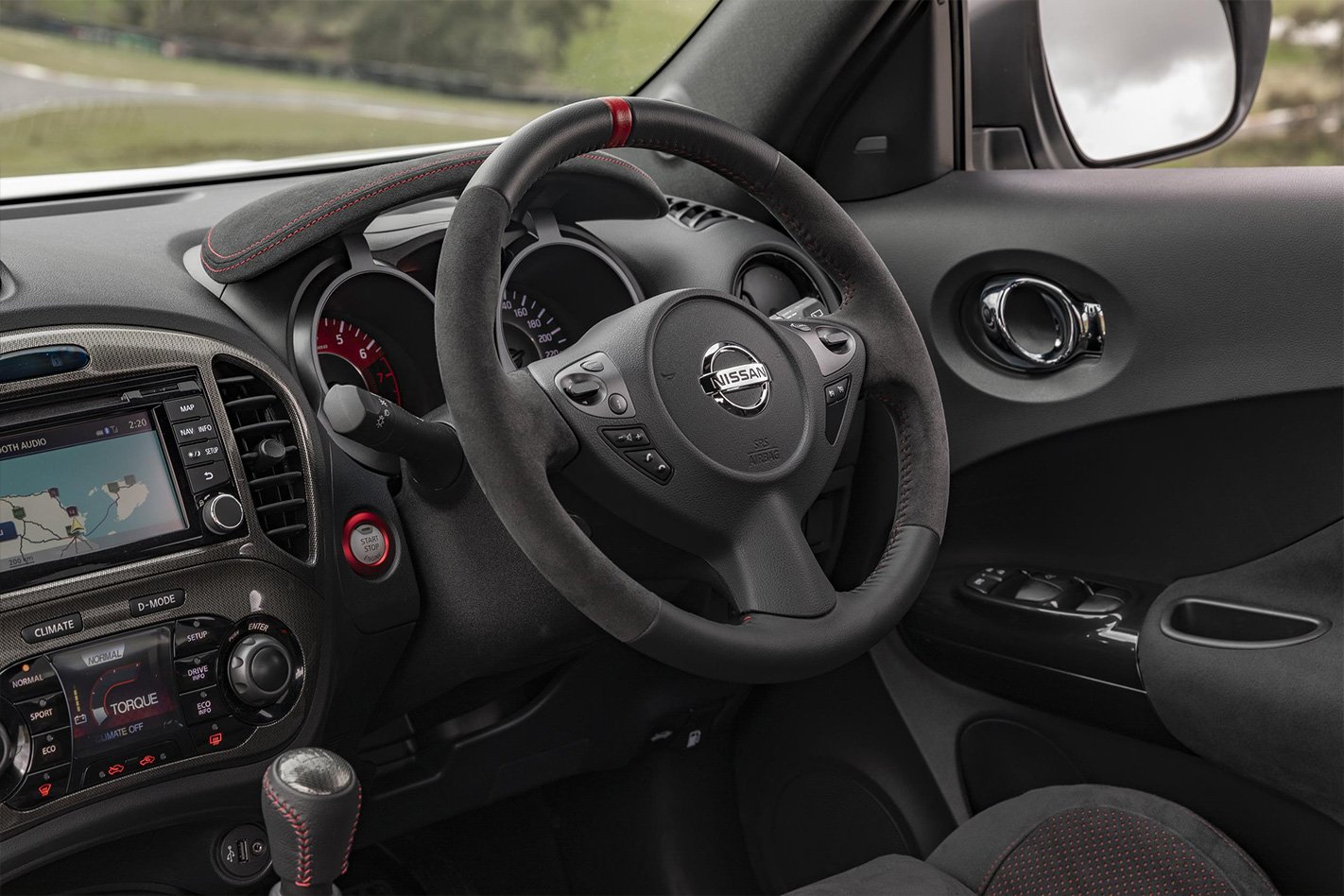
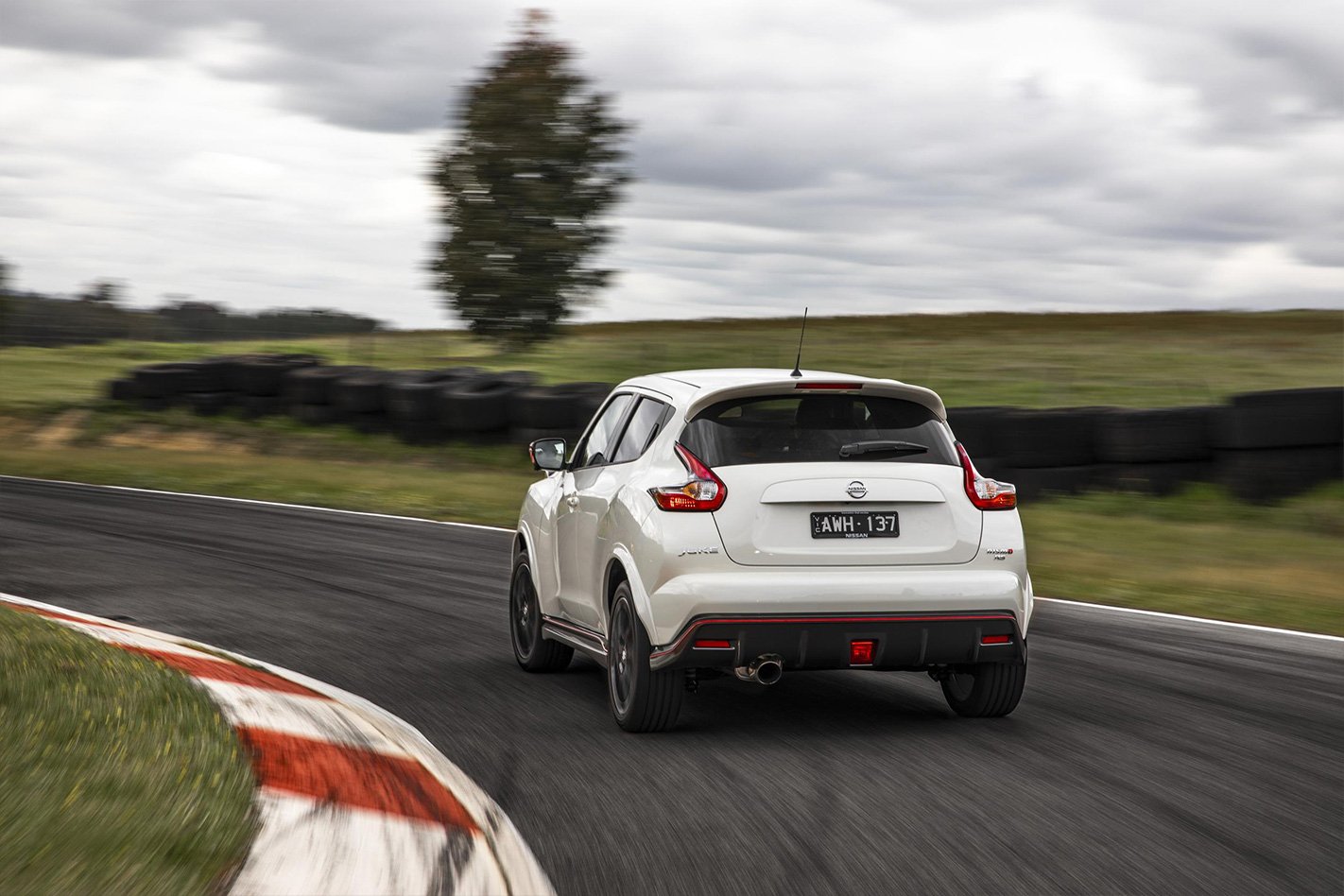
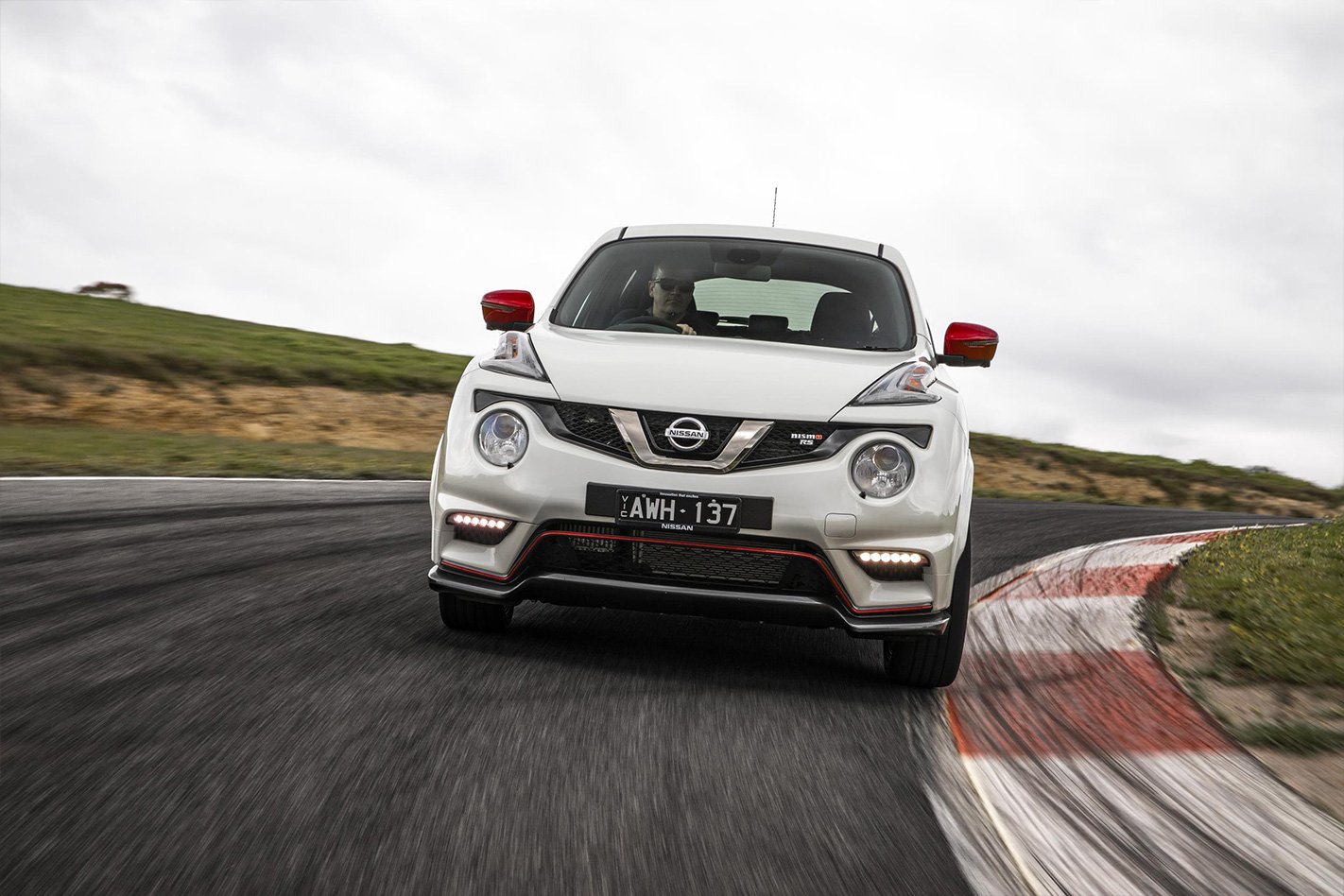
Nismo’s engineers have been busy with the chassis; the body is 40 percent stiffer, spring and damper rates have been increased on both axles, and front-drive versions score a limited-slip differential. Pedal the Juke leaving a respectable buffer to its limits and the handling is neatly composed, with strong outright grip and steering that’s nicely weighted and accurate, albeit with a slight dead spot off centre.
Push harder and the diff’ enters the fray, but the Juke isn’t a driver’s car that likes to be overextended: scruffy understeer, ESC interventions and pronounced torque steer are all there to be had if you try too hard. At least the ride on 18-inch wheels is well controlled, even if the suspension does run out of travel over bigger compressions.
GT-R R32 v R33 v R34 v R35 comparison
The Juke Nismo is something of a mixed bag, then, and one pragmatically outshone by more conventional rivals that offer more space, polish and driver appeal. But what these others lack, of course, is the Juke’s individualism and character, which for someone willing to wear the extra cost is undeniably unique.
THE WHEELS VERDICT
Taken in isolation, the Juke Nismo is an endearing thing. Bursting with its own personality and character, the Nismo treatment delivers a welcome boost of performance and handling know-how, providing you don’t ask too much of the front axle. But its charisma and Nismo cachet are being relied upon heavily to win buyer’s wallets before they consider equally priced alternatives, and that could be a tough ask.
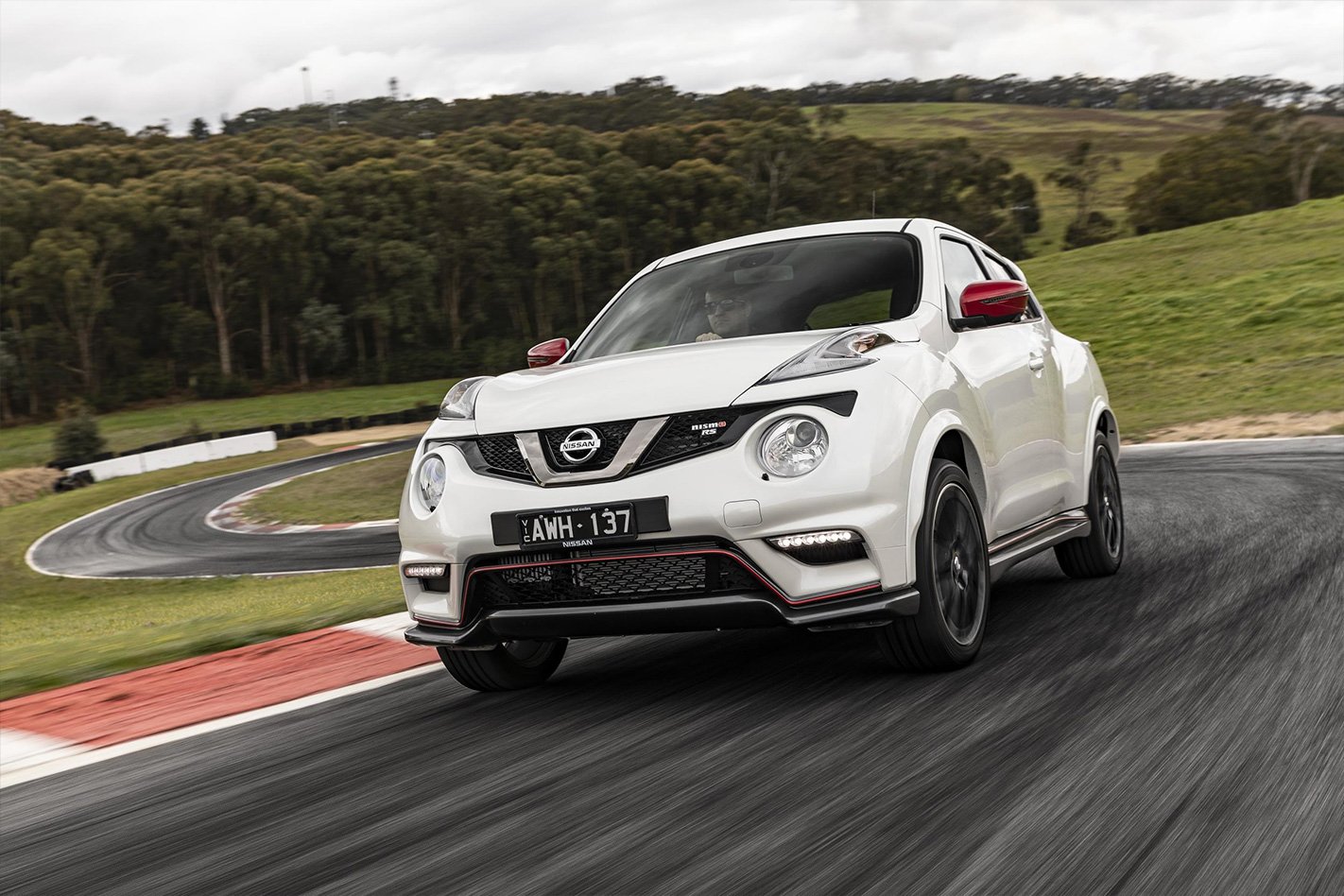
PLUS: Perky 1.6; great seats; decent outright grip; quirky character; brave design MINUS: Cabin materials and design; weezy soundtrack; torque steer; feels its age; costs Golf GTI money; brave design
SPECS
Model: Nissan Juke Nismo Engine: 1618cc 4-cyl, dohc, 16v, turbo Max power: 160kW @ 6000rpm Max torque: 280Nm @ 3600-4800rpm Transmission: 6-speed manual Kerb weight: 1281kg 0-100km/h: 7.1sec (est) Fuel economy: 7.2L/100km Price: $37,790 On sale: Now
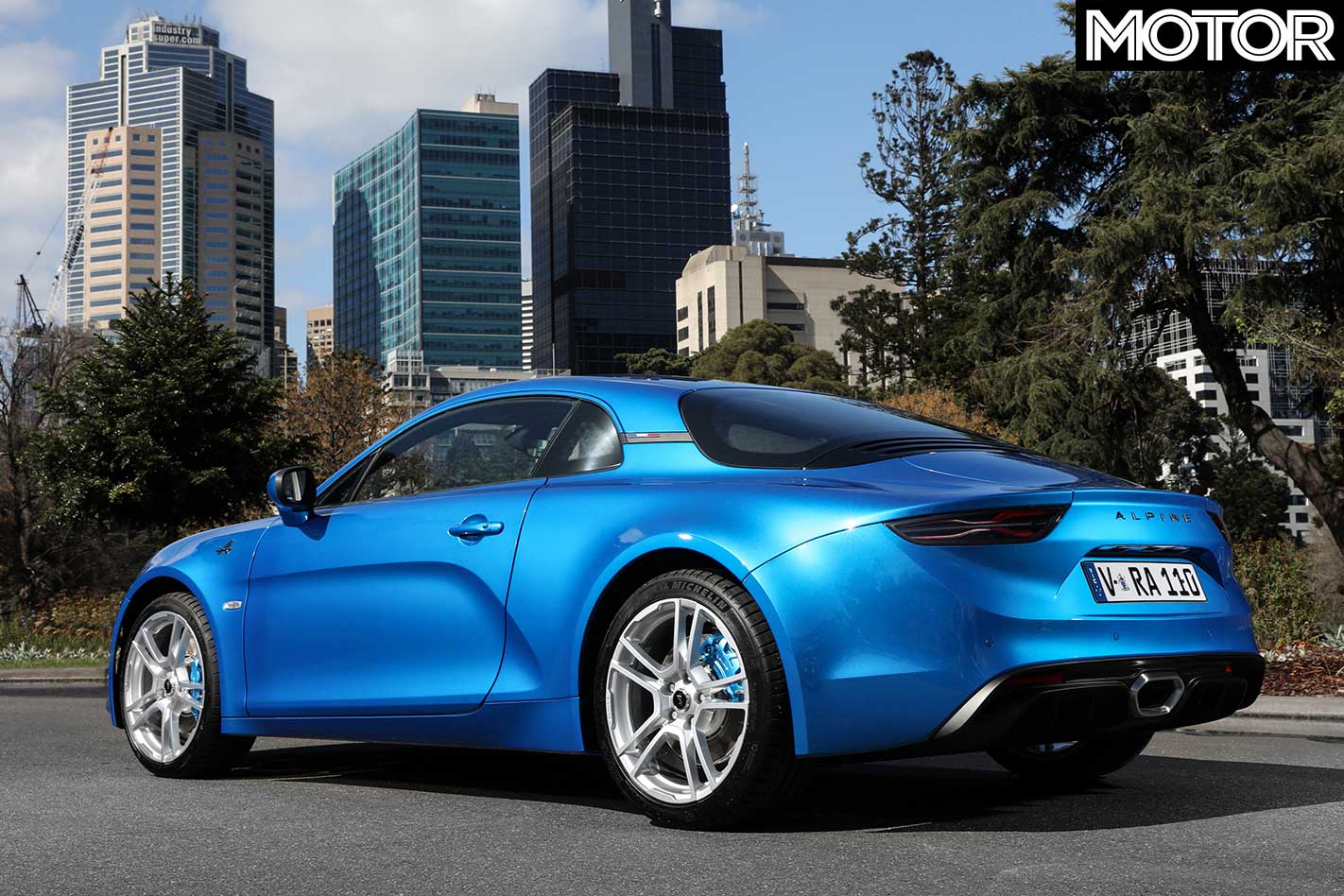
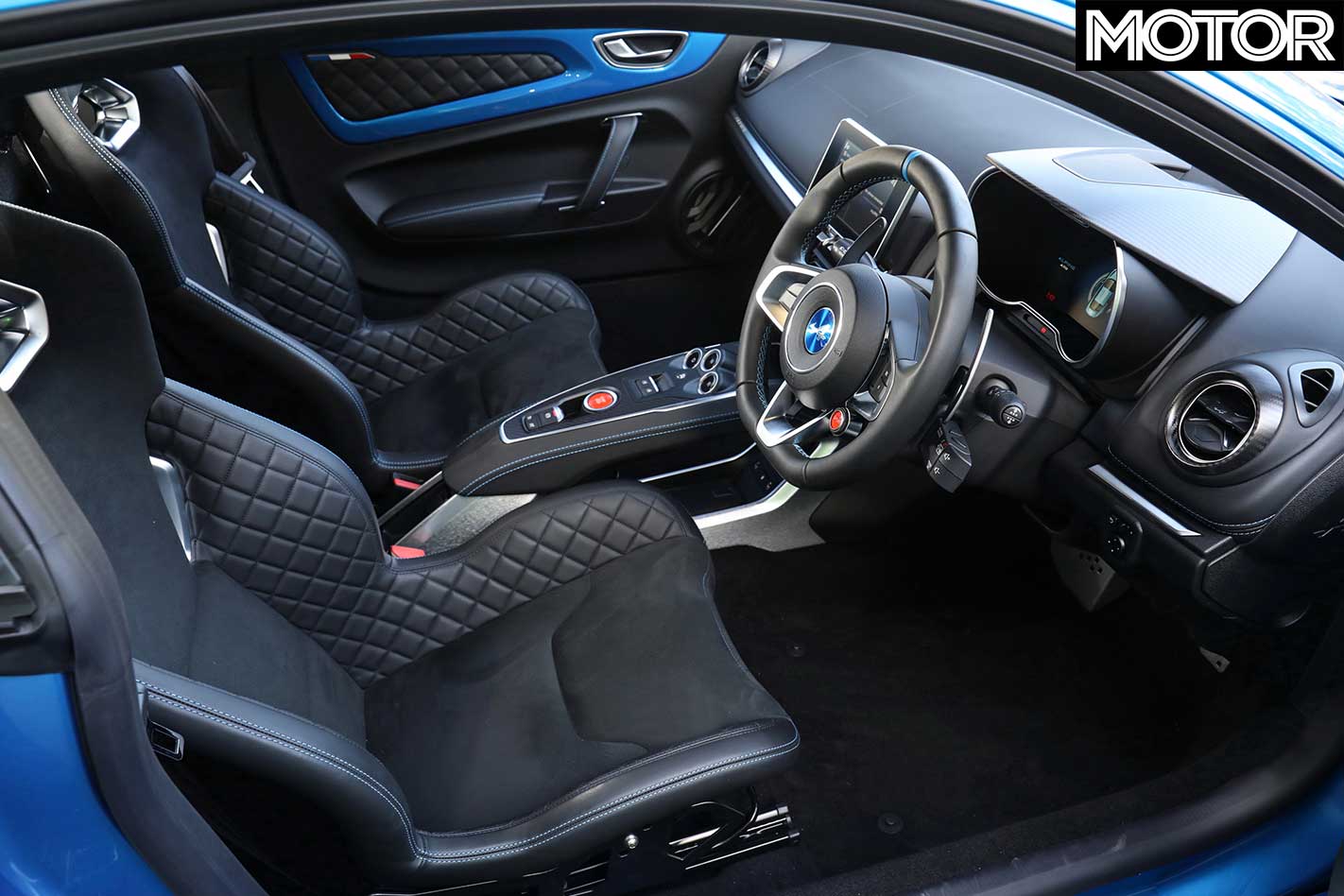
The lauded 2019 Alpine A110 has made it Down Under with 32 of the initial batch of 60 Australian Premiere Editions already spoken for.
Given the A110 made its first appearance at Motorclassica, most buyers have put pen to paper sight unseen. The $106,500 Australian Premiere Edition is a limited run for 2018 only, while 100 of the $97,000 Pure and $103,500 Legende editions are slated for 2019.
Brighton Alpine in Melbourne is currently the only dealership you can buy an A110, but Alpine Australia’s Managing Director, Andrew Moore, says another is in the pipeline.
“We’re selling all around the country from Melbourne. We want to make the experience very special so we offer the opportunity to customers to fly them to Melbourne and deliver the car so they can drive it back.”
A second Sydney dealership is planned and servicing will be carried out by a designated, authorised service outlet within each state.
Moore says the reasoning for Alpine receiving a green light in Australia is largely due to the local success of the Renault Megane RS.
“We’re a very strong Megane RS country – we’re third globally with previous vehicles behind Germany and France. Based on what I’m aiming to achieve stock wise with Megane RS this year and into next year, there’s a chance we’ll be the number one market for Megane RS globally.
“So the sportscar heritage we have and the knowledge that Australian consumers love their sportscars, helped us push a little bit further,” Moore says.
Unlike the Renault Megane RS with which the A110 shares some mechanicals, Moore believes that a manual transmission won’t join the seven-speed dual-clutch transmission.
“Because the A110 is such a unique car, Alpine wanted to focus its investment on the one transmission and have it absolutely done right.
“If you try and do everything, you don’t get anything 100 per cent right … Alpine has said that this is what the package is going to be and we’re going to make this one amazing.”
When asked what car Moore thinks is a direct rival for the A110, the answer was simply “Porsche Cayman”.
“The interesting thing with the Cayman is that, to me, it’s the comparative car. But I believe we’ll get more customers who have considered a BMW, Mercedes or Audi, and are perhaps looking to move to Porsche in the future, who will choose this car… versus a traditional Porsche Cayman customer looking at the A110.
“The way this car is promoted is such that it’s a brand in its own right. I’d suggest most purchasers of the vehicle who don’t have a deep understanding of its heritage will not for a moment even consider it as a Renault. It’s an Alpine, you’re going to an Alpine dealership and it’ll be marketed solely as an Alpine.”
Demand for the A110 out of the Dieppe factory in France is so strong in Europe that the waiting list for around 6000 customers has ballooned to 12 months.
Barra the world, you say? What if that Barra is made of plastic, and was built by one guy with a knack for Lego.
It’s an FPV-spec Barra Turbo, an inline 6-cylinder engine created by Ford Australia and tweaked by its performance arm, for the uninitiated.
The engine seen in this video is rather similar to the first Lego Barra we saw, a standard Ford Turbo motor with the red head to give it away. But this engine has a difference, it can be opened up to see the pistons firing.
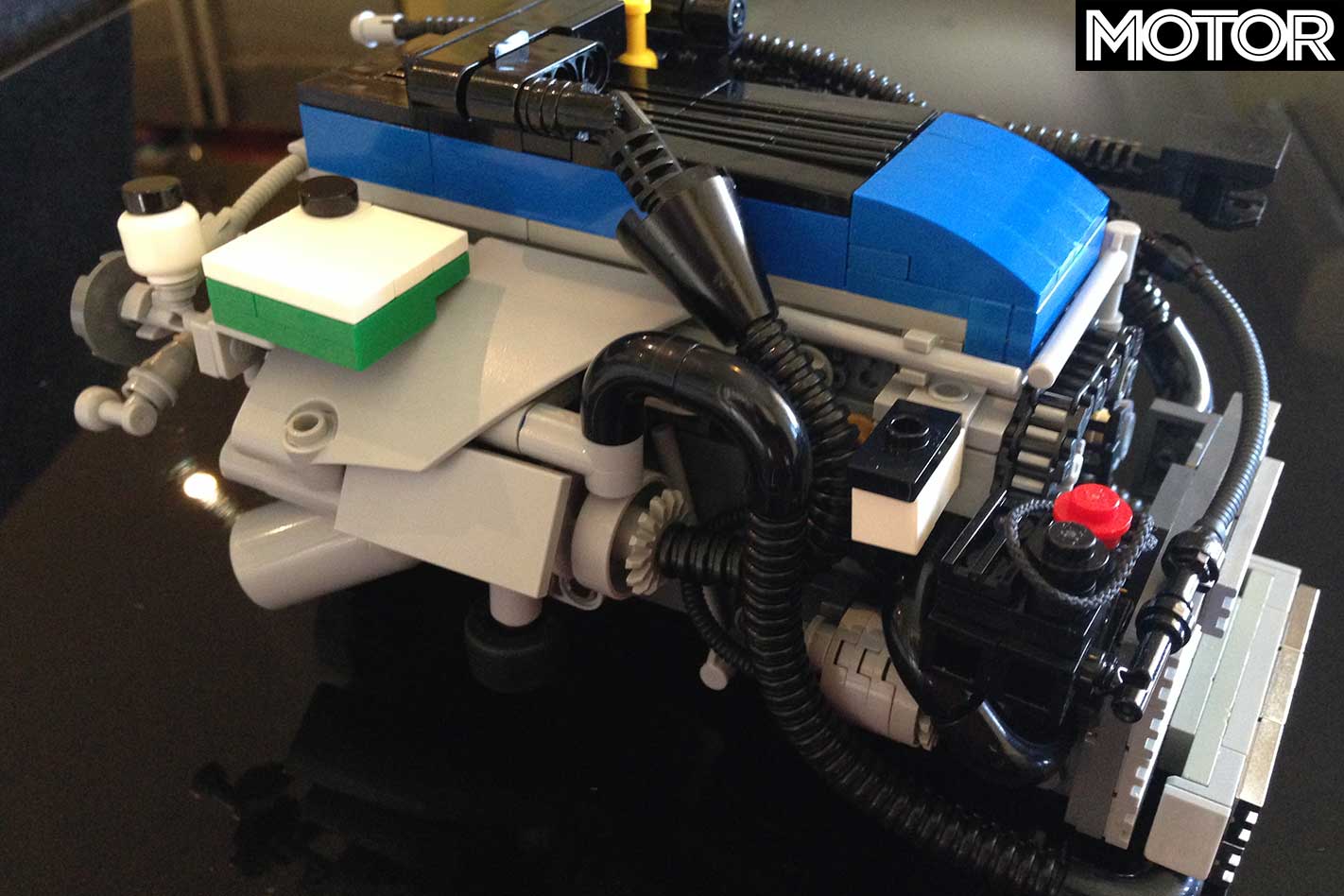
“I never expected much public interest in my Lego Barra and never planned on another, but now I have completed my second,” Leo tells us.
“When I bought my new 2014 XR6 Turbo there was also a private sale, second hand FPV F6 for the same price, it had only 12000km on the clock but it was an older ‘08 model.
Leo says even though he ended up buying the XR6 Turbo, he still feels a little regret he didn’t take the FPV.
“Now, 4 years later I still think ‘hmmm’ when I see an F6. Brembos, leather, boost gauge… even the rear bar looks easier to keep clean.
“The second Lego Barra had to be blue.”
“Besides the colour, the two engines look identical. There are some internal differences, but they are the same length, height, and width, and the piece count is similar.
“The red Barra has standard Lego conrods combined with gearing for the turbo, however the blue engines conrods are longer (using 4 Lego pieces per rod ) and runs a similar, but different flat plane crank.
“Internally the blue engine is more correct, however making the side removable has impacted its strength.”
Leo’s first engine, the standard Barra Turbo, has now been viewed thousands of times on YouTube, and he’s even submitted it as a Lego ‘Ideas’ entry.
If his entry into the Ideas programme gets enough support, there’s a chance Lego will put the engine into production.
Though chances are usually slim for these submissions, a little support from MOTOR readers couldn’t hurt.
The fourth generation BMW X5 SUV will arrive in Aussie showrooms next month with just two initial variants: the X5 xDrive 30d and the range-topping X5 M50d.
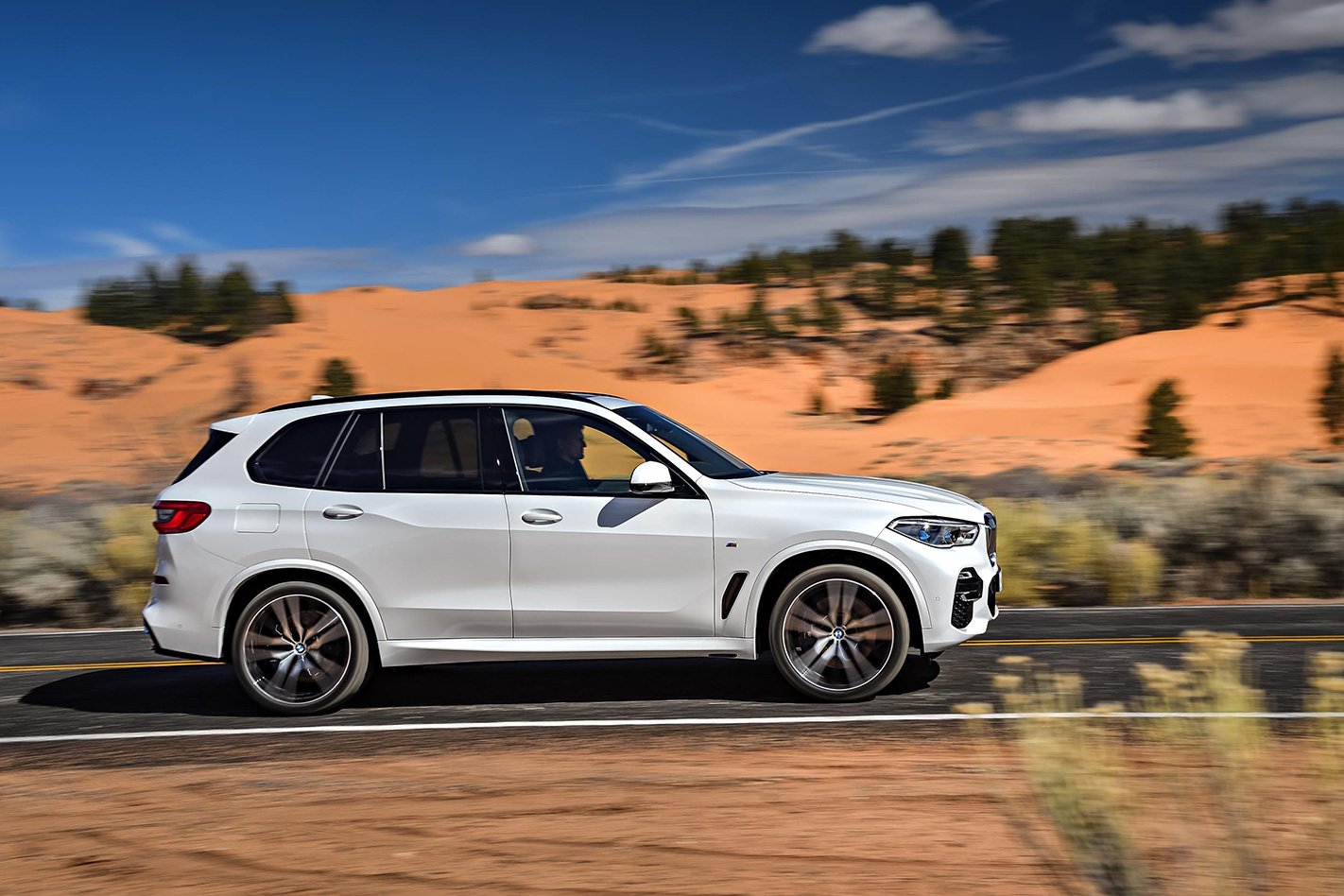
Pricing for the new-gen “Sports Activity Vehicle” starts at $112,990 for the X5 xDrive 30d, with the M50d priced at $149,990. More variants are slated to follow in 2019.
Highlights include the introduction of two 12.3-inch touch-displays as part of BMW Live Cockpit Professional – bringing BMW’s infotainment system in-line with the well-advanced offerings by Mercedes-Benz and Audi – a variety of optional air suspension packages and a newly introduced xOffroad Package for those actually interested in taking their X5 cross-country.
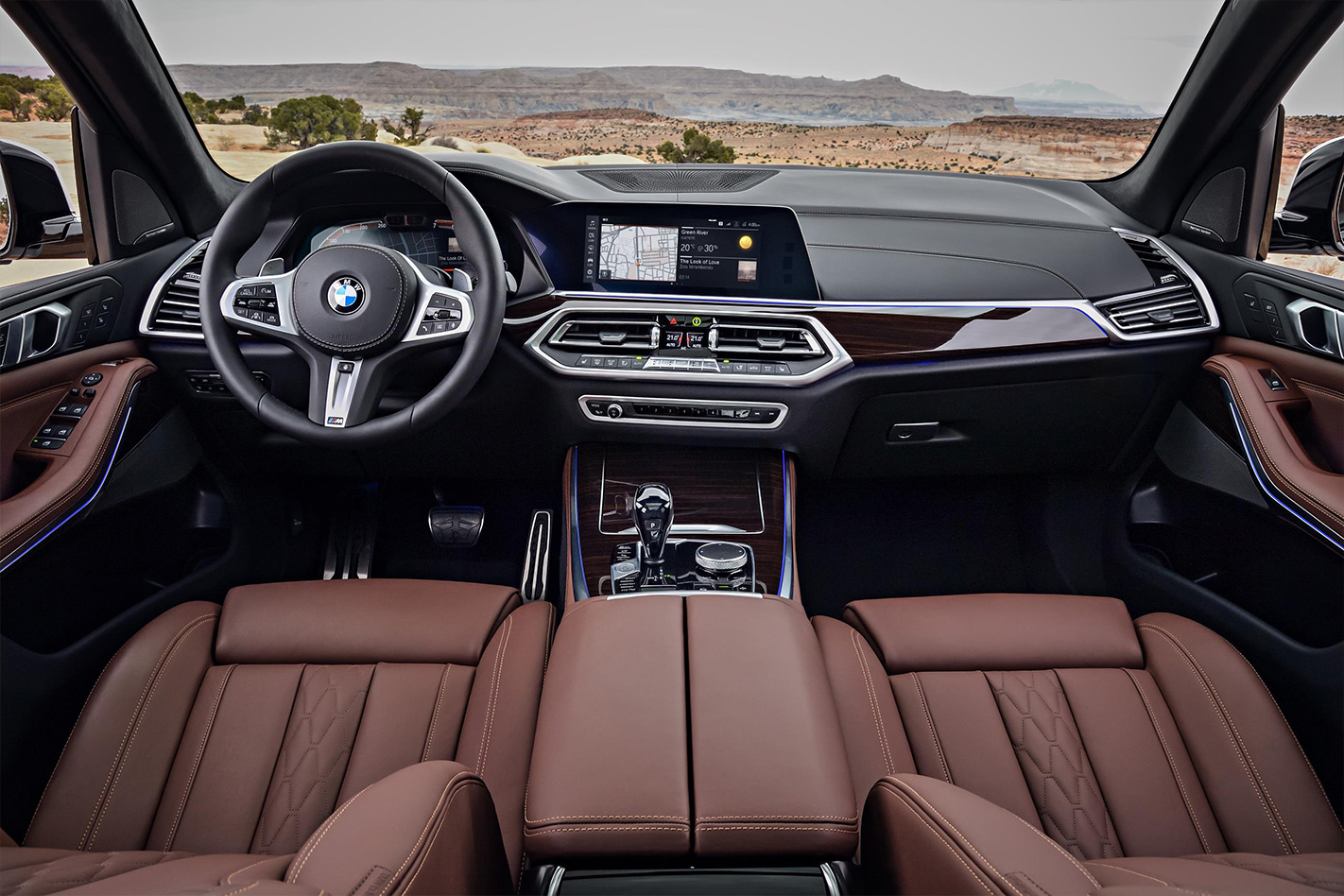
Bigger than the F15-generation X5 in almost every respect, the 2019 X5 makes use of its extra space particularly in the back half of the car – with increased legroom for second row occupants and a capacious 645-litre boot which expands to 1860 litres with the seats down. No mention is made of a seven-seat version making its way to Australia yet, as was offered in its predecessor.
The xDrive 30d’s new 3.0-litre six-cylinder diesel powertrain produces 195kW and 620Nm of torque sent to all four wheels. It’ll sprint to 100km/h in 6.5 seconds using an eight-speed gearbox.
Its standard features list includes surround-view 3D parking cameras, active cruise control, a configurable ambient lighting package and Apple CarPlay, all presented with up-spec xLine trim as standard.
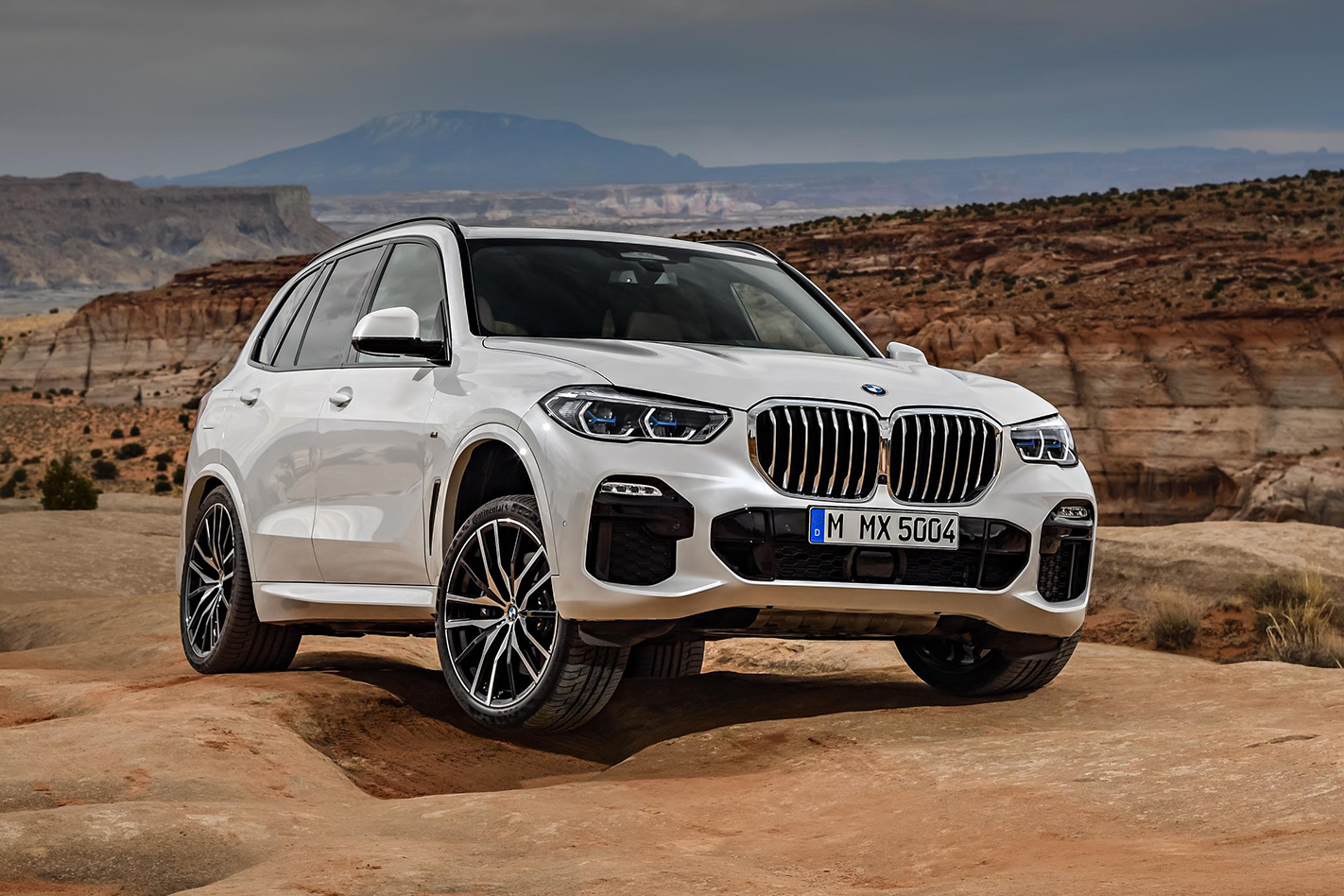
The gap between the xDrive30d and an M car can be bridged with the $4000 M Sport Package that incorporates sports trim pieces like 20-inch M alloy wheels with run-flat tyres, M Sport braking package, adaptive M suspension, shadowline black trim pieces around the exterior and an M Sport bodykit around the car.
If you want the real M experience, the X5 M50d’s 3.0-litre six-cylinder quad-turbo diesel engine (an extra turbo than before) pumps out 294kW/760Nm of torque for a monstrous 0-100km/h time of 5.2 seconds.
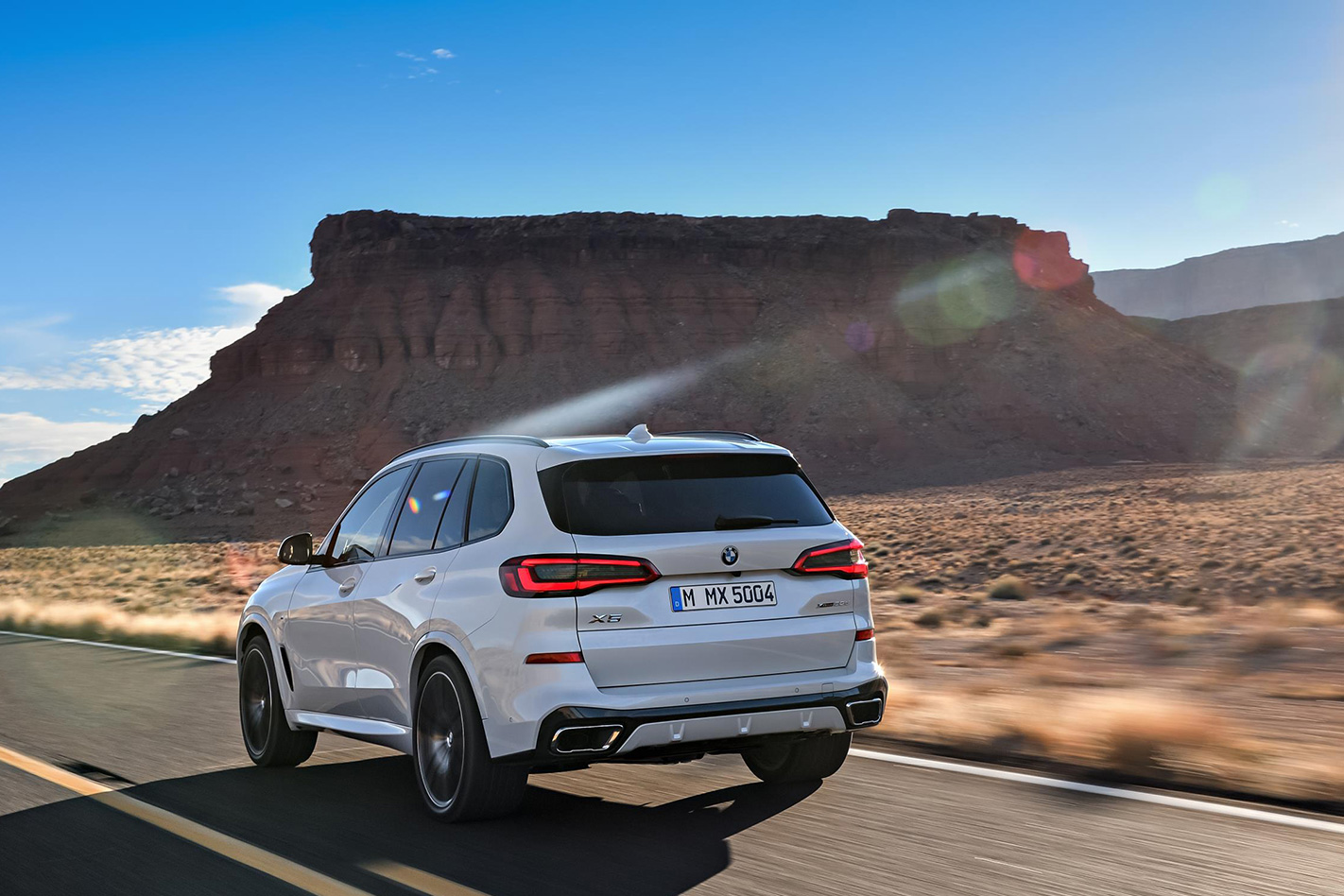
The M50d includes the M Sport package aspects as standard, and builds upon the xDrive 30d spec with 22-inch M alloy wheels, soft-close doors, four-zone automatic climate control, a 16-speaker Harman Kardon sound and BMW Laserlight headlights.
INTRODUCTION
Fiat’s first crossover trades on its strong visual association with the perky 500 compact hatchback, while packaging it up in a higher-riding, bigger-bodied form factor that promises greater versatility and contemporary appeal.
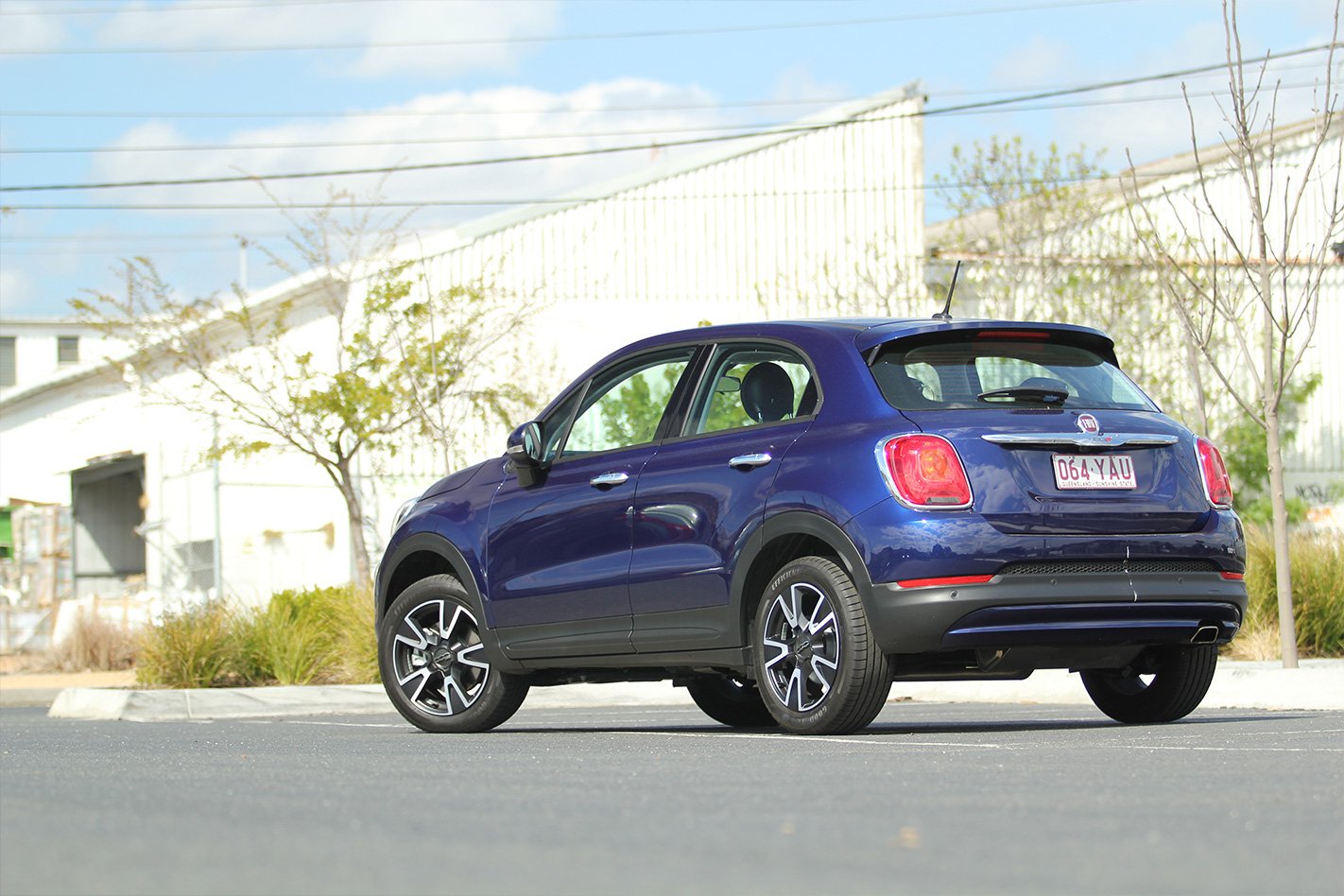
Updated earlier this year with the addition of lane departure warning, blind spot monitoring, AEB and adaptive cruise control – plus the deletion of AWD variants from the range – the 500X’s only natural competitors in the ‘fashionable European five-door’ set are the Mini Cooper 5-door and Citroen C4 Cactus. It inhabits a competitive segment and packs plenty of kit, however is that enough to elevate the small Italian to the pointy end of the market?
VALUE
The 500X Pop Star Launch edition is the priciest variant in a line up that starts at $24,990, but given all models are powered by the same 103kW 1.4-litre engine and boast the same front-wheel drive mechanical layout, what extra value does one get when opting for the range-topping Launch Edition?
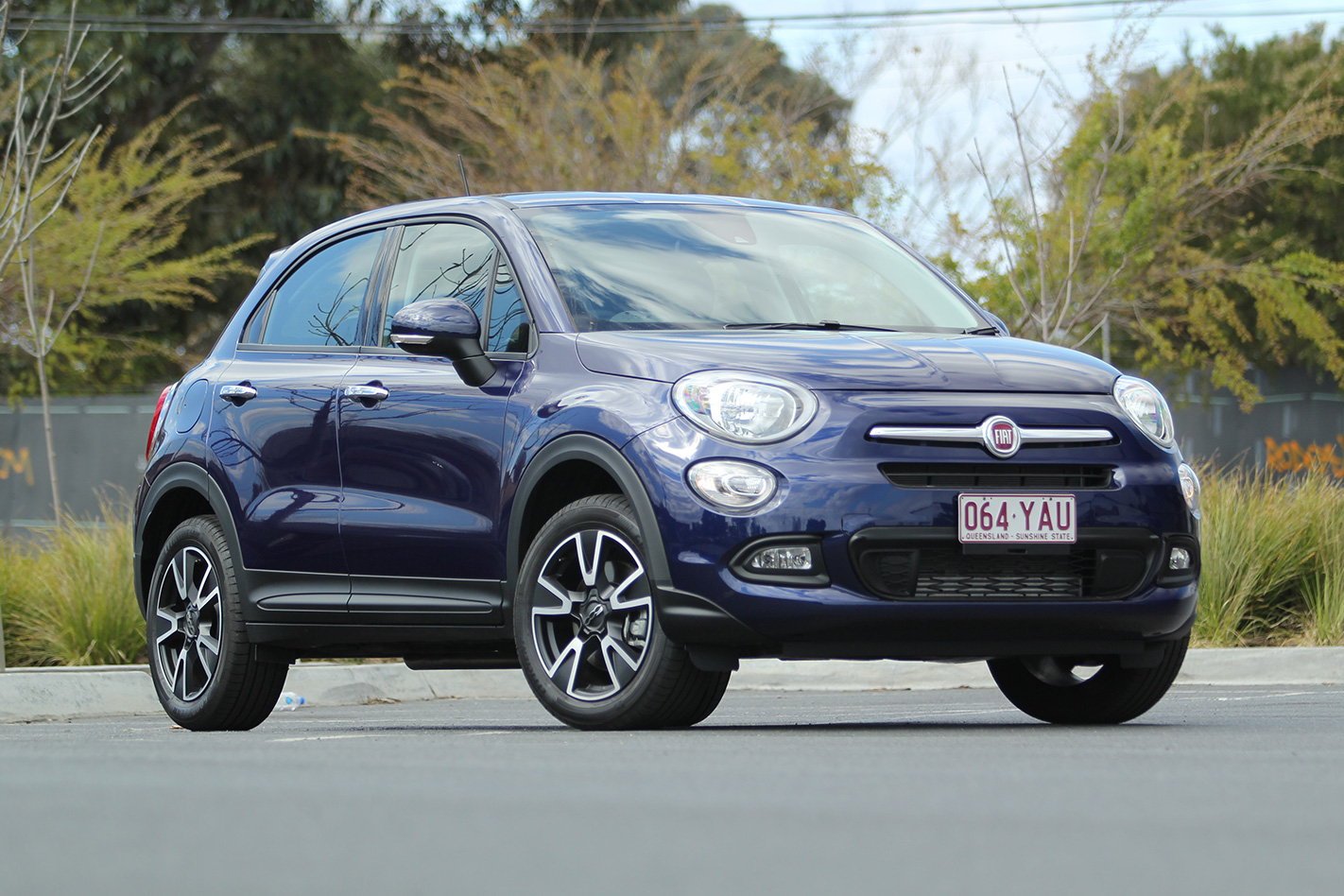
At $32,990, the Launch Edition is $3000 more than the Pop Star grade it’s based upon. The extra outlay brings a dash of extra luxe – which we’ll cover in the next section – and an automatic transmission is standard, but when compared against many other mainstream five-door hatches and compact SUVs, its value-for-money is only average.
Similarly-priced vehicles like the Hyundai Kona Elite/Highlander and Toyota C-HR Koba present similar value. However, if you specifically have something European in mind, your only other real options are lower-spec versions of the larger Skoda Karoq and VW Tiguan, or the Citroen C4 Cactus. Only the Cactus boasts the same kind of visual eccentricity as the Fiat, but it’s priced lower – and specced to a lesser level as well.
Running costs should at least be reasonable. With a claimed fuel consumption of 5.7 litres per 100km and the ability to run on 91-octane petrol, keeping the 500X juiced up should be relatively gentle on your wallet.
STANDARD FEATURES
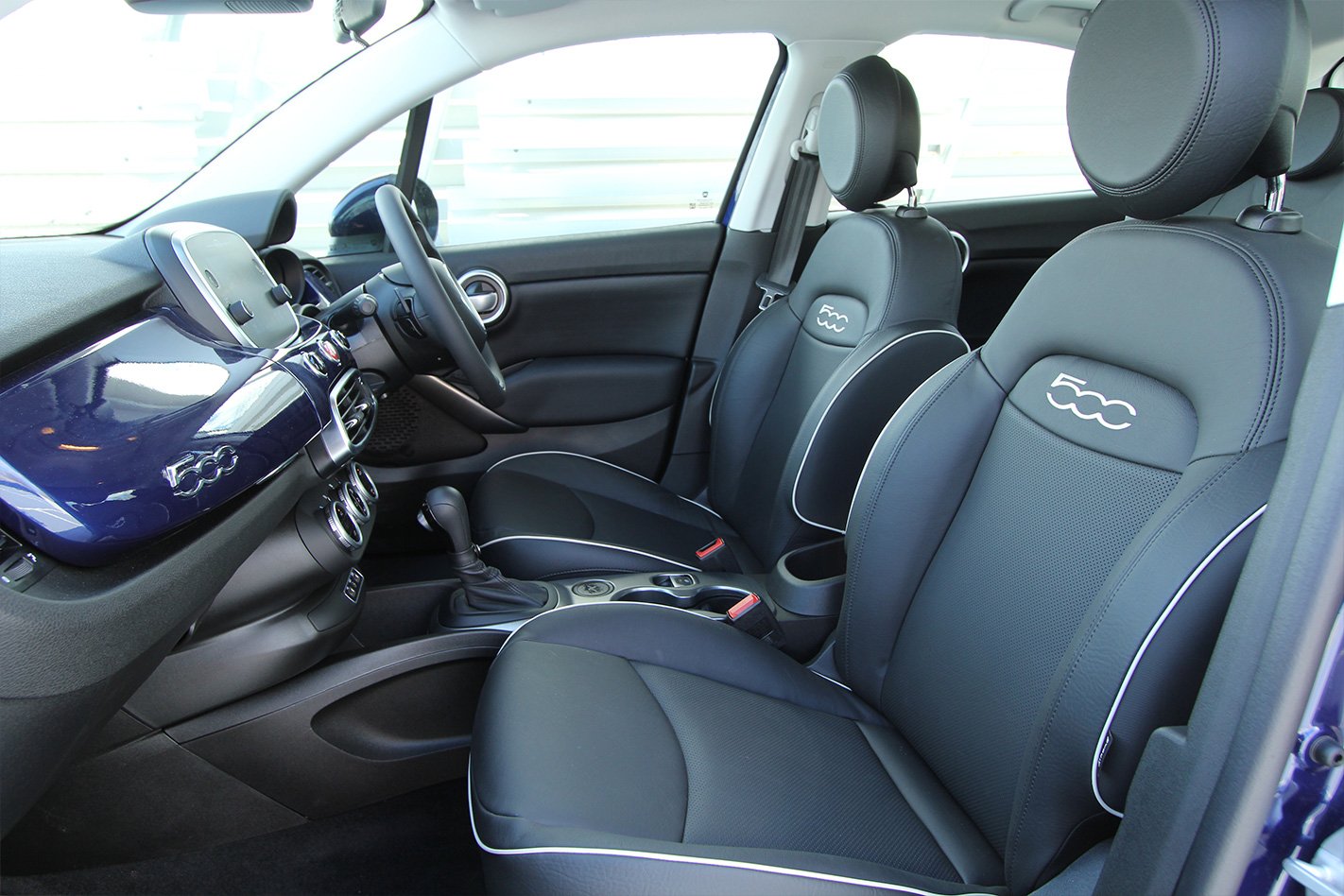
Exclusive to the Launch Edition are partial-leather upholstery, power-adjustable front seats, power-folding mirrors and a more highly-specced sound system by Beats Audio.
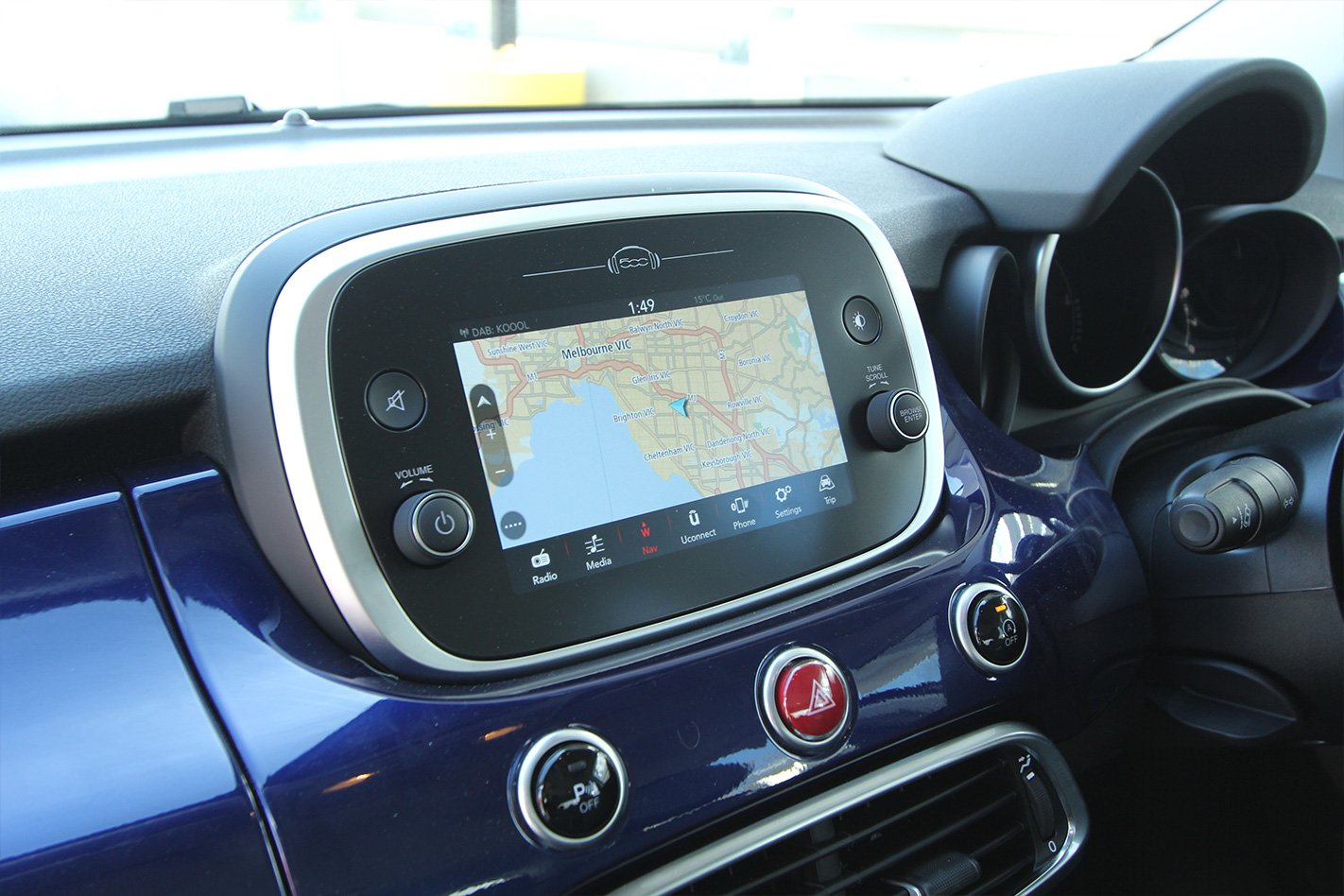
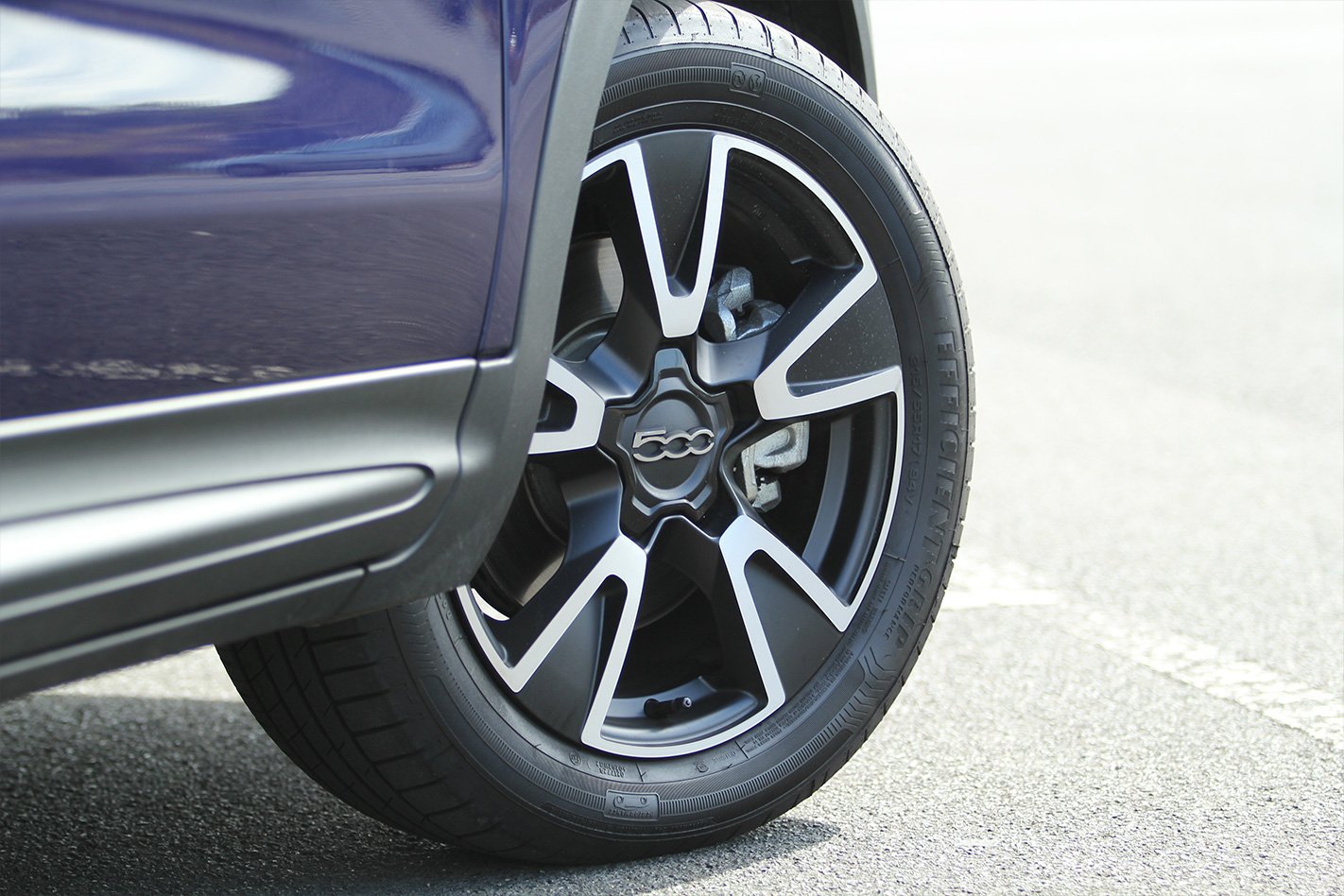
That’s on top of standard features like keyless entry and ignition, dual-zone climate control, active cruise control, rear parking sensors, a reversing camera, rain-sensing wipers, dusk-sensing headlamps, fog-lamps, 17-inch alloys and a seven-inch colour touchscreen display with sat-nav and Android Auto and Apple CarPlay smartphone mirroring.
SIZE
The 500X measures 4.25 metres long and 1.79 metres wide, which puts it somewhere in the middle of the small SUV category for size. The Mitsubishi ASX and Toyota’s C-HR are slightly bigger, while other rivals like the Hyundai Kona are fractionally shorter.
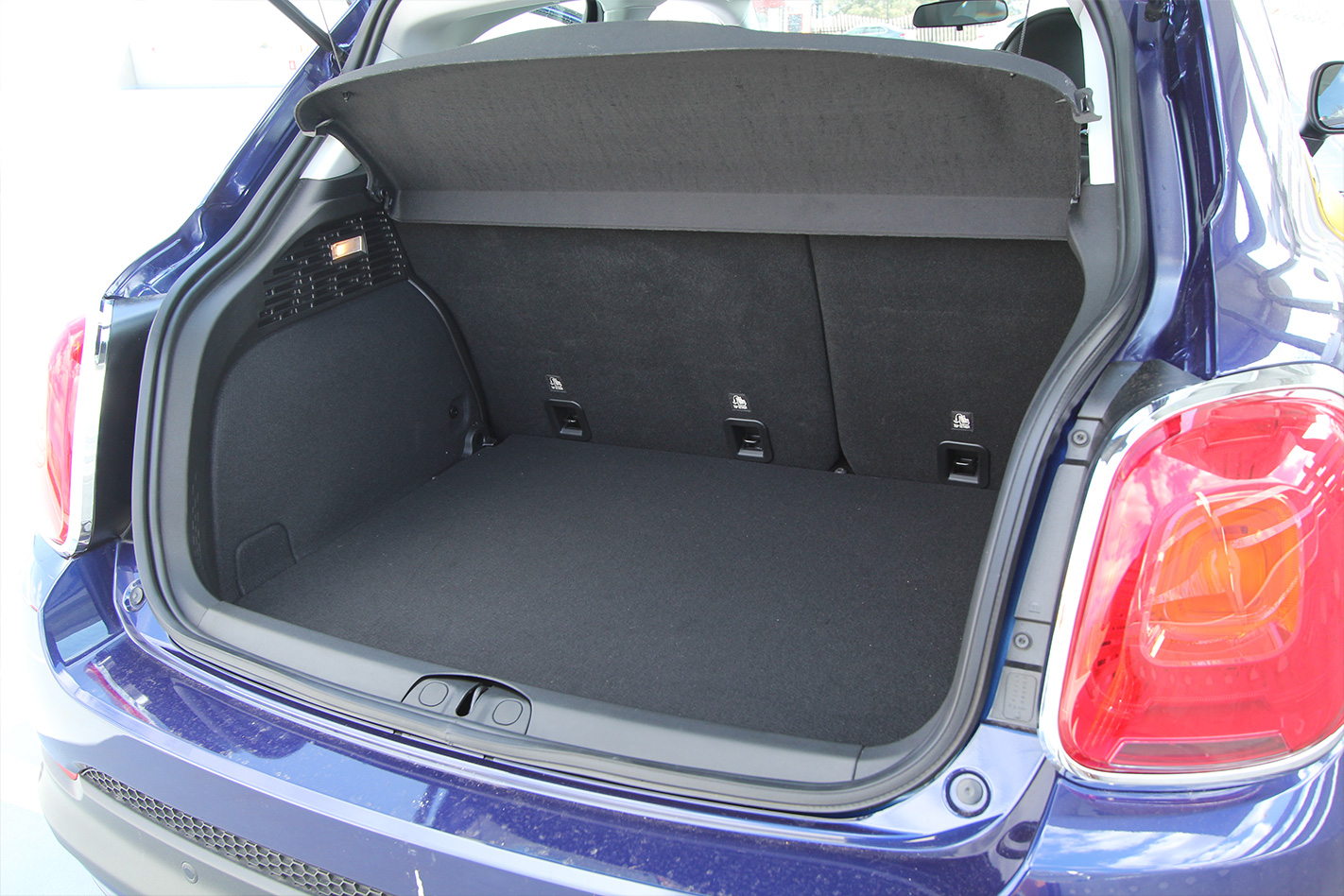
Boot capacity is just 350 litres, however, which is getting on the small side even for a small hatchback – SUV segment rivals typically tote more.
SAFETY
Safety equipment is quite good in the 500X Pop Star. On top of the now-mandatory electronic safety aids like stability control, traction control and ABS, the 500X Pop Star also gets a forward collision warning, autonomous emergency braking, lane departure warning, lane keep assist and blind spot monitoring.
Those looking at the entry-level 500X Pop should note that those aforementioned additional safety features are not standard at that grade.
Seven airbags are standard across the range, however, with full-length curtain airbags providing head protection for those in the back. Crash protection was assessed by ANCAP back in 2016, with the 500X scoring a five-star result.
COMFORT
Though the 500X looks big from the outside, venturing within quickly reveals some packaging shortcomings. The front seats are roomy enough, but the rear seats are sorely lacking legroom. Flat and firm seat cushions don’t’ do the rear bench any favours either, nor does the surprisingly high window sill – if you’re short, it may feel like you’re sitting in a bathtub back there.
The pedals/steering/wheel/seat relationship also could benefit from a greater degree of adjustability to improve driver ergonomics, but the interior’s presentation is at least faithful to Fiat’s established style. The body-coloured dashboard trim is a nice retro throwback – and cleverly conceals the upper glovebox – and the high-set infotainment screen is easy to use. Bright sunlight can, however, make it a little hard to read.

Material quality could be better as well. An over-reliance on hard, coarse-textured plastics brings down the ambience somewhat, despite the presence of leather and faux-metal finishes elsewhere.
ON THE ROAD
Given the right engine, the 500X actually feels like it would make a better performance hatch than it does a compact SUV. It rides firmly, corners reasonably well, its dual-clutch gearbox bangs out ultra-crisp gearchanges and there are even shift paddles for you to indulge your inner race driver.
But sportiness isn’t a priority for the average SUV buyer. Comfort would arguably be several rungs higher up on the list of wants and needs, and unfortunately that’s something that the 500X fails to provide its driver and passengers.
It’s brittle and sharp even over mild bumps, and you’ll feel every catseye and expansion gap through the 500X’s leather-wrapped wheel.
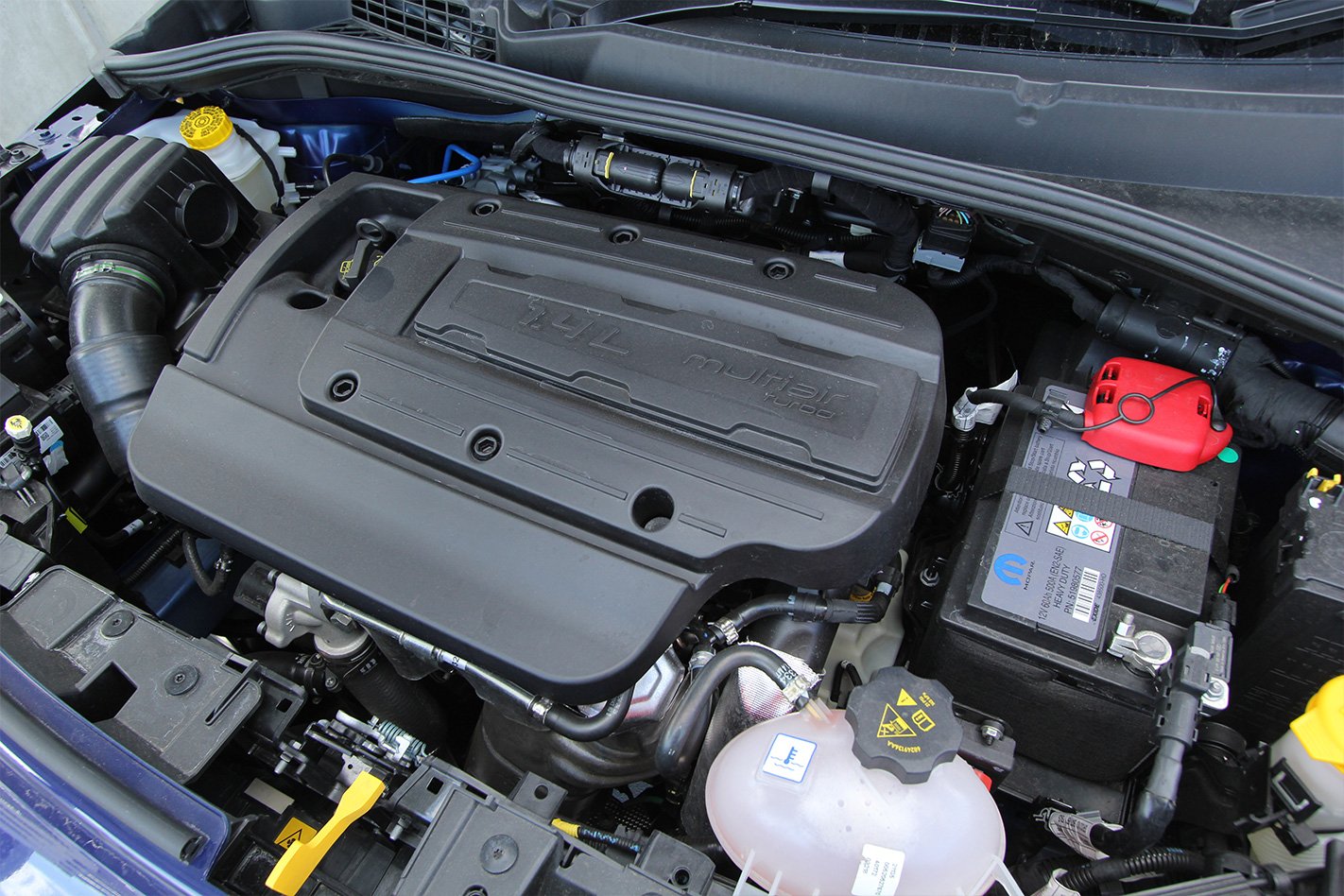
It’s quite noisy inside too, especially when the engine is being asked to work hard. Given the turbo 1.4-litre only puts out 103kW and 230Nm, it will definitely spend more time in the upper reaches of its rev range than, say, the Hyundai Kona’s more powerful (and relaxed) 130kW turbo 1.6.
VERDICT
There are some fundamental flaws with the 500X that likely won’t sit well with those just looking for a competent, yet compact, SUV.
A lack of rear cabin space and a smallish boot rob it of the versatility that SUV buyers seek, while its stiff-legged ride means even those in the front will have something to complain about.
If you’re seeking a certain aesthetic or have an ingrained fondness for Fiats, the 500X may prove enticing. Its feature list is certainly rich enough at the Launch Edition level, but assessed on purely practical and objective grounds the 500X is difficult to recommend over the bulk of its competitors.
Volkswagen Australia’s apprentice-built World Time Attack Challenge car for 2018 was announced last month as a 2018 VW Arteon, normally a 206kW offering, now a purpose-built racer capable of a sub-4sec sprint to 100km/h.
Volkswagen has revealed the specs and details for the car, known as the ‘ART3on’, as well as revealing that it achieved a 3.9-second 0-100km/h run at Luddenham Raceway, which VW says was “on an uphill straight”.
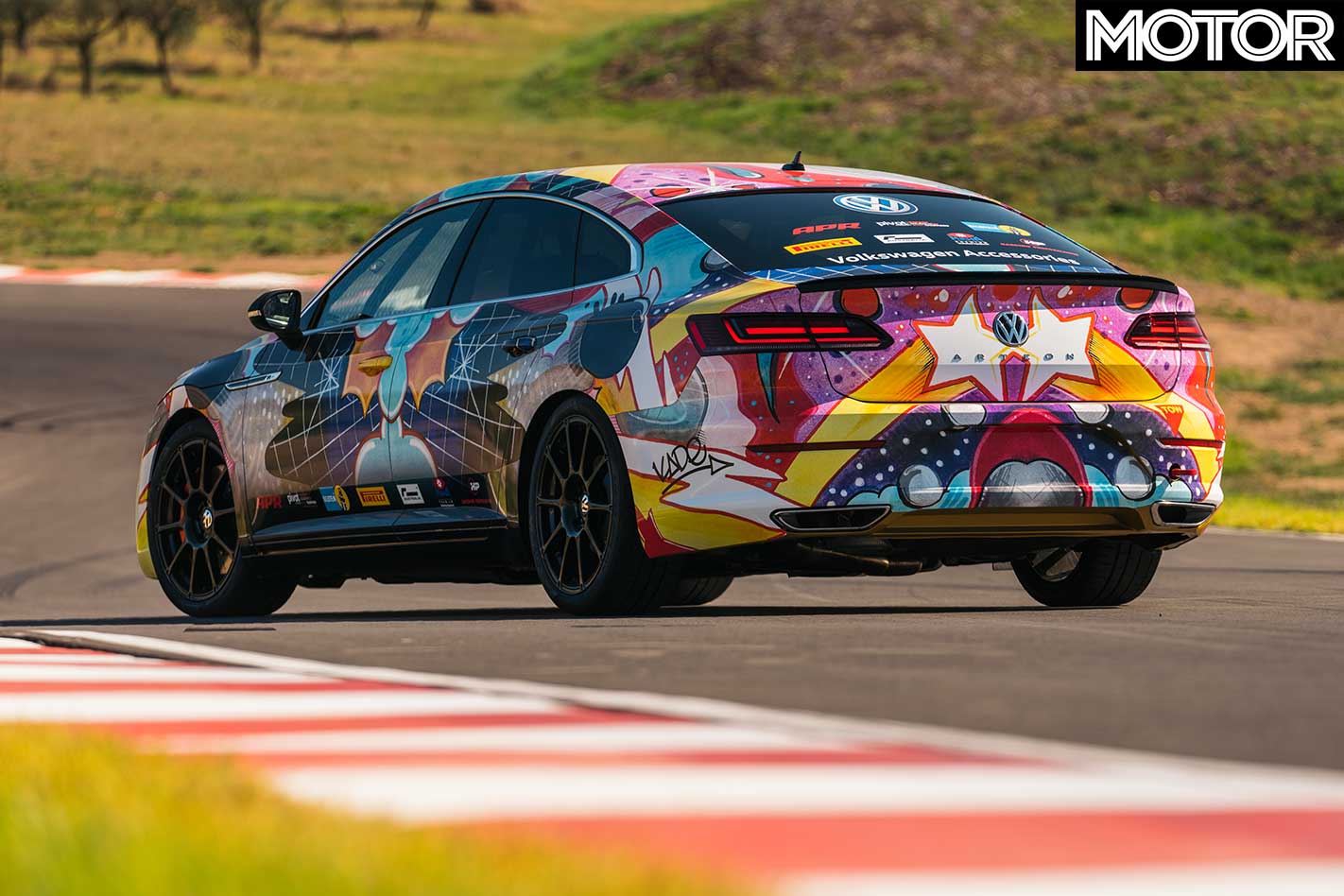
That time comes thanks to the new outputs of 360kW and 600Nm from the turbocharged 2.0-litre inline four, after Volkswagen apprentices gleaned knowledge from mentors in Australia’s automotive aftermarket industry. The ART3on still has VW’s 7-speed DSG to shift cogs.
VW Australia’s Luka Popovac says this is an unusual thing for Volkswagen to do as an importer of first-tier manufactured cars.
“This program is unique to the Australian automotive sector in that we are collaborating with a part of the industry that we typically wouldn’t as a subsidiary importer,” Popovac says.
“We have been blown away by the support of our program mentors, who have given generously of their time, and their products, to help teach our apprentices and build something extraordinary.
“Not only has the ART3on inspired our apprentices, we hope it will also inspire a new generation of technicians to pick up a trade in Australian automotive.”
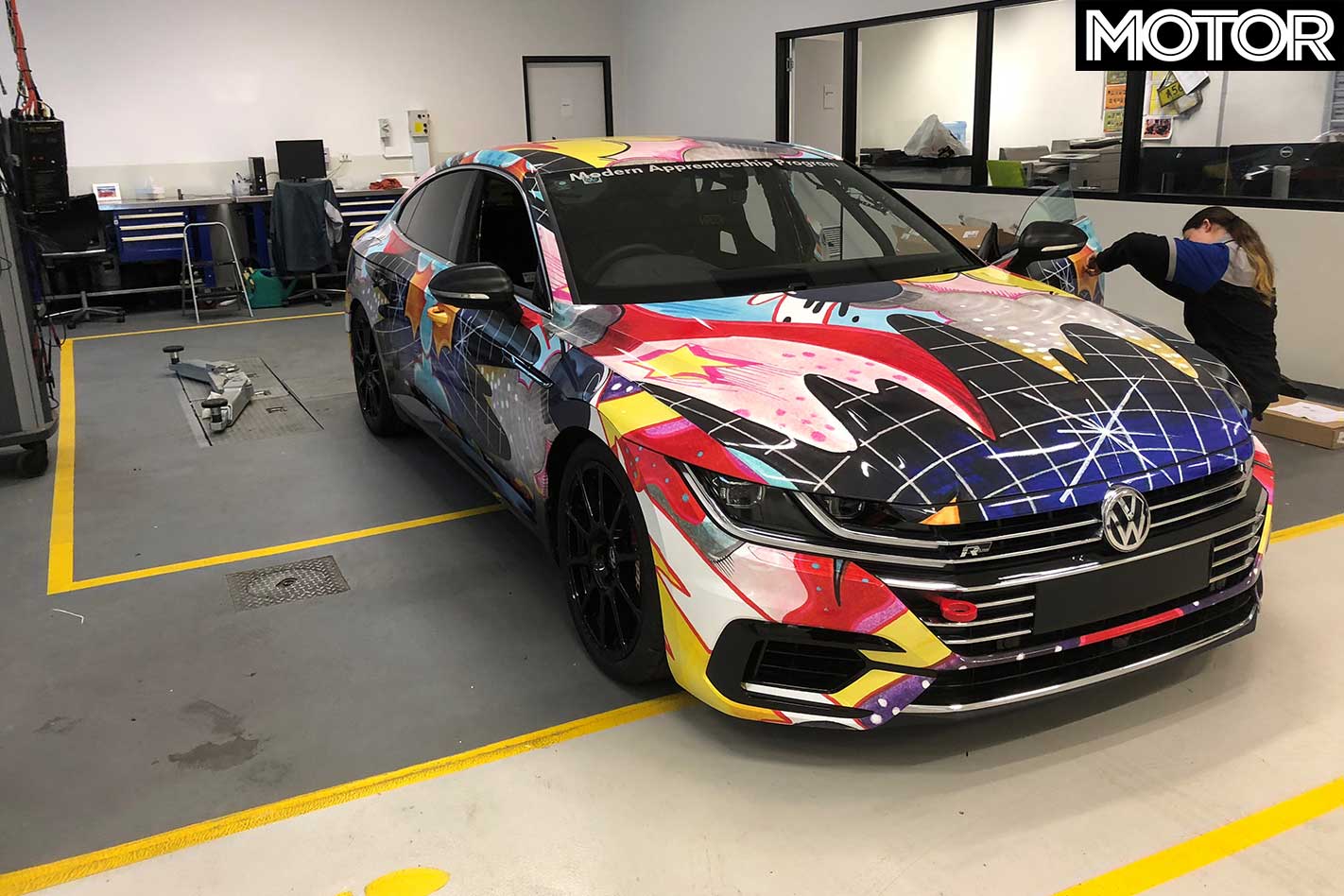
Bond Roll Bars, Bilstein Australia, APR/VolksMuller, Harding Performance, and even international companies like Milltek and Racing Line UK make the list of brands VW Australia has collaborated with to create the ART3on.
Harding supplied a stage 3 turbo and intake, oil management, intercooler, and fuel pump from Racing Line UK, as well as adding Harding DSG software to the mix to improve gearbox performance. A Milltek sports exhaust, downpipe, and high-flow cat replaced the stock system.
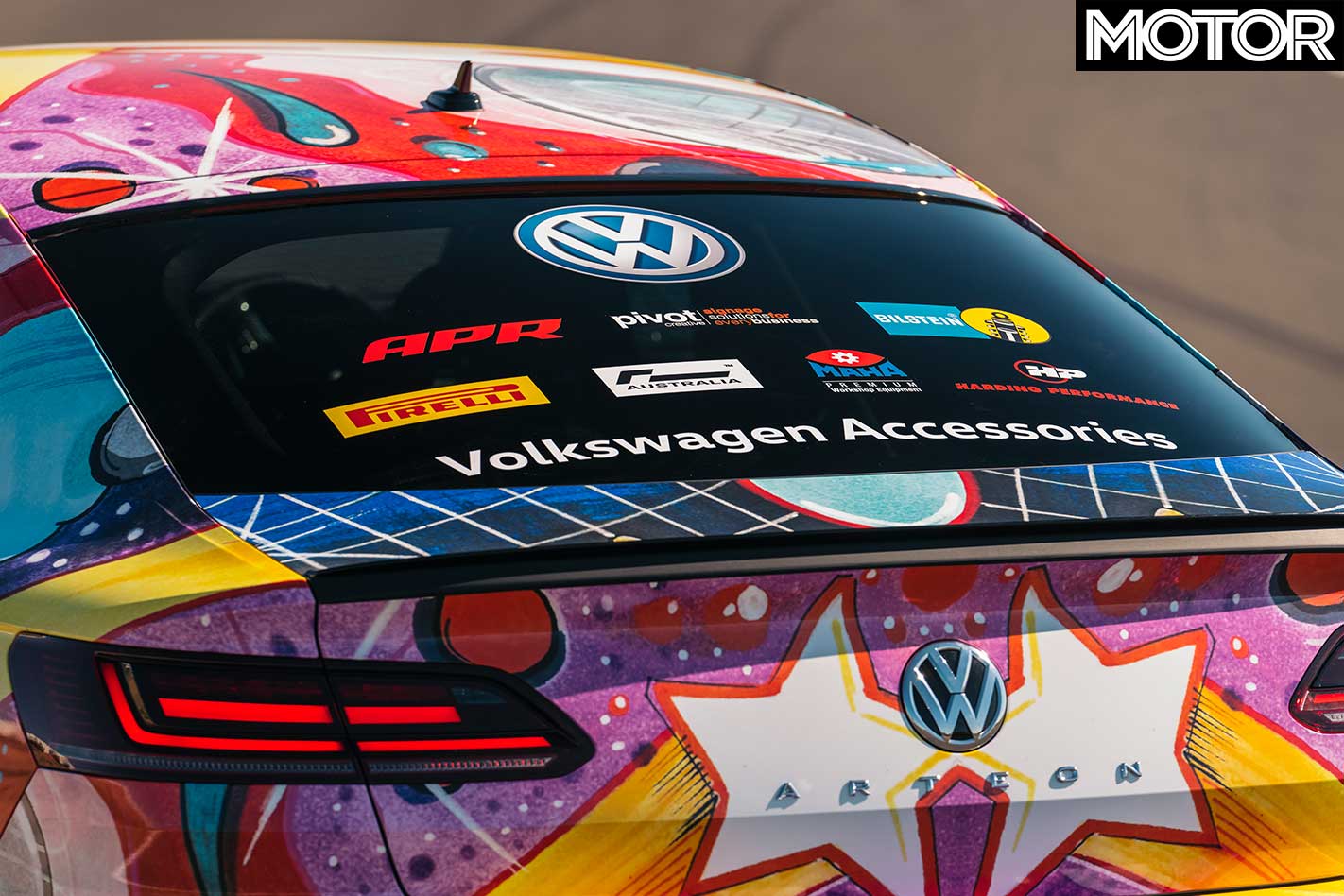
The car’s unique paintwork comes from Simon Murray, a street artist based in Sydney and known primarily as Kade.
This weekend at WTAC, racing driver Renato Loberto will pilot the ART3on after having helped with the development of the tuned VW sedan from the driver’s seat, giving apprentices feedback on its capability.
