
ON THE face of it, Lamborghini’s Huracan Performante has no chance of beating the hypercar ‘Holy Trinity’ on a racetrack. Porsche’s mighty 918 Spyder would appear to have all its numbers covered off. The Lambo coughs up a mere 477kW versus the Porsche’s 661kW. Even taking into account the hybrid 918’s heftier kerb weight, the scores read 306kW/tonne for Sant’Agata and 397kW/tonne for Weissach.
The 918 has more than double the Performante’s torque and is nearly a second and a half quicker to 200km/h. The Porsche also puts a good deal more rubber on the road (an extra 20mm wide at both ends) and makes both peak power and torque figures earlier than the Lamborghini. So why is it five seconds slower at the Nurburgring? Slower too around Balocco, Willow Springs, Hockenheim, Vairano, Le Mans (Bugatti layout) and Autocar’s UK handling track. The answer is simple. The Lamborghini has a smarter aerodynamic package.
It’s tempting to think that aerodynamics is a mature science, that we already know pretty much all there is to know about the interactions of boundary layers, laminar flows, separation layers, cone vortices and such like. In fact, advances in computational fluid dynamic modelling are demonstrating that our grasp of aero and our techniques for managing airflow are, in road cars at least, fairly rudimentary.
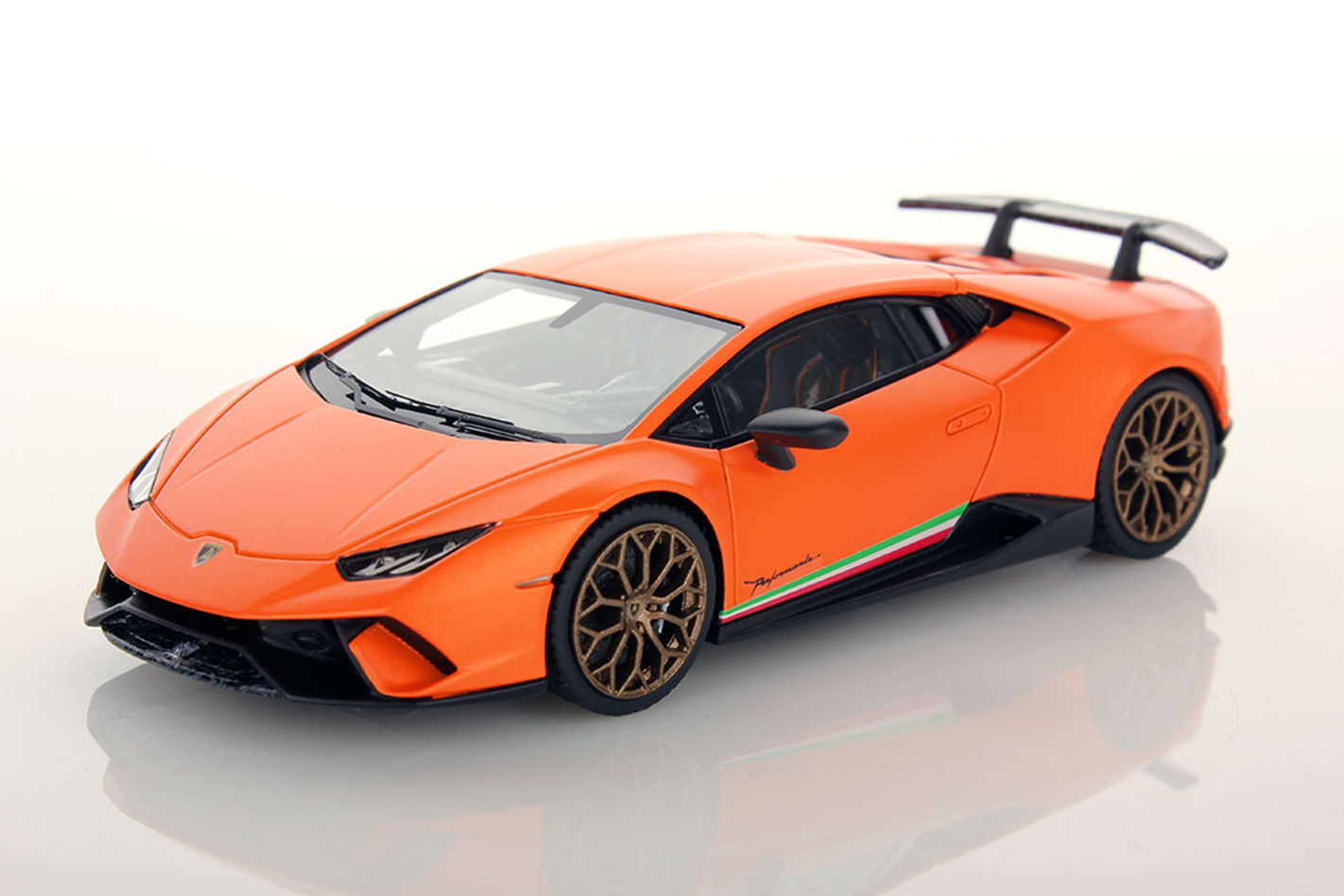
As manufacturers wring increasingly marginal gains out of internal combustion engine technology, aerodynamics yields the greatest potential for significant step change. The Huracan Performante debuted ‘Aerodinamica Lamborghini Attiva’ (or ALA), a system that, when broken down, does two fairly easy to grasp things. It uses active aerodynamic devices to recognise when the car needs more downforce and when it needs a lower drag coefficient. It also uses the rear wing to ‘aero-vector’ a measure of downforce to one or other of the rear wheels.
The genius of ALA is in its subtle use of tiny electric motors to control the internal flaps that direct airflow rather than huge hydraulic active aero devices. Also it uses air to control air; directing airflow beneath the rear wing, for example, to disrupt the low pressure zone beneath it, in effect stalling it to reduce downforce and increase straight line efficiency. These flaps can operate in slightly less than 0.2s, which beats motoring a wing up and down. Elements of this tech have now been introduced to the even hairier Aventador SVJ, enabling it to eclipse the mark of the previous incumbent at the Nordschleife, the Porsche 911 GT2 RS; for the time being at least.
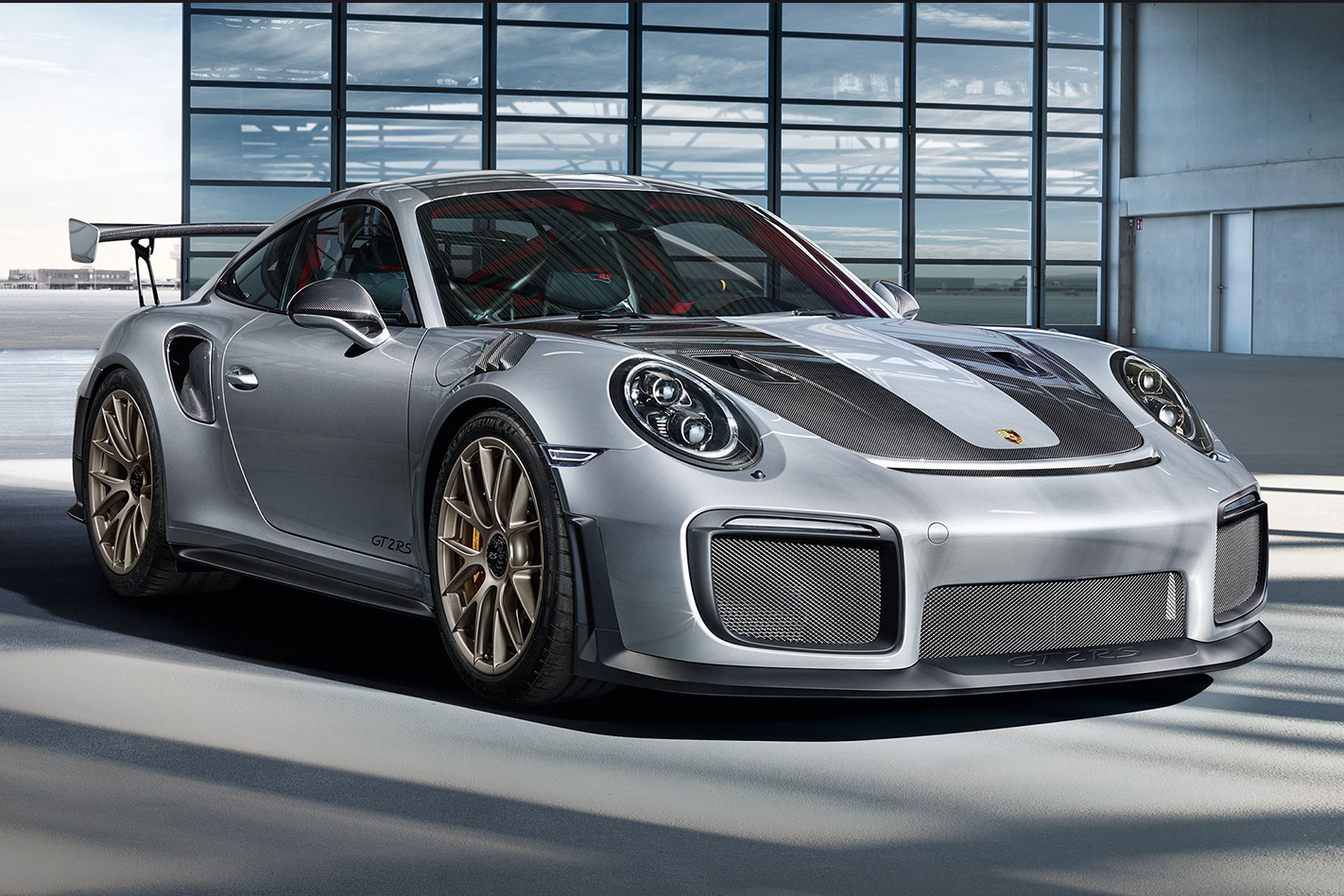
The Huracan Performante’s peak downforce at 310km/h is 349kg. The GT2 RS can develop 450kg when its non-active rear wing is set to its highest angle of attack. A McLaren Senna moves the game on with 800kg but even this pales compared to what Aston Martin is reporting for its forthcoming Valkyrie hypercar. It makes a monster 1800kg of downforce in road trim, although it hasn’t been revealed at which speed.
The Valkyrie is pumped chock-full of typical Adrian Newey F1 tech, from the intricate Y250 winglet ahead of the front tyre to the keel of the car that dates back to his old Leyton House F1 sketches. Although Aston Martin’s styling group initially looked after everything above the car’s beltline, the more recent iterations show that Newey has influenced that area of the car as well. Pressure-reducing vents have appeared on the front guards, there’s a combined NACA duct and roof scoop and, most importantly a whole lot of attention paid to lateral expansion, both behind the front wheels and in the massive diffuser extension at the rear.
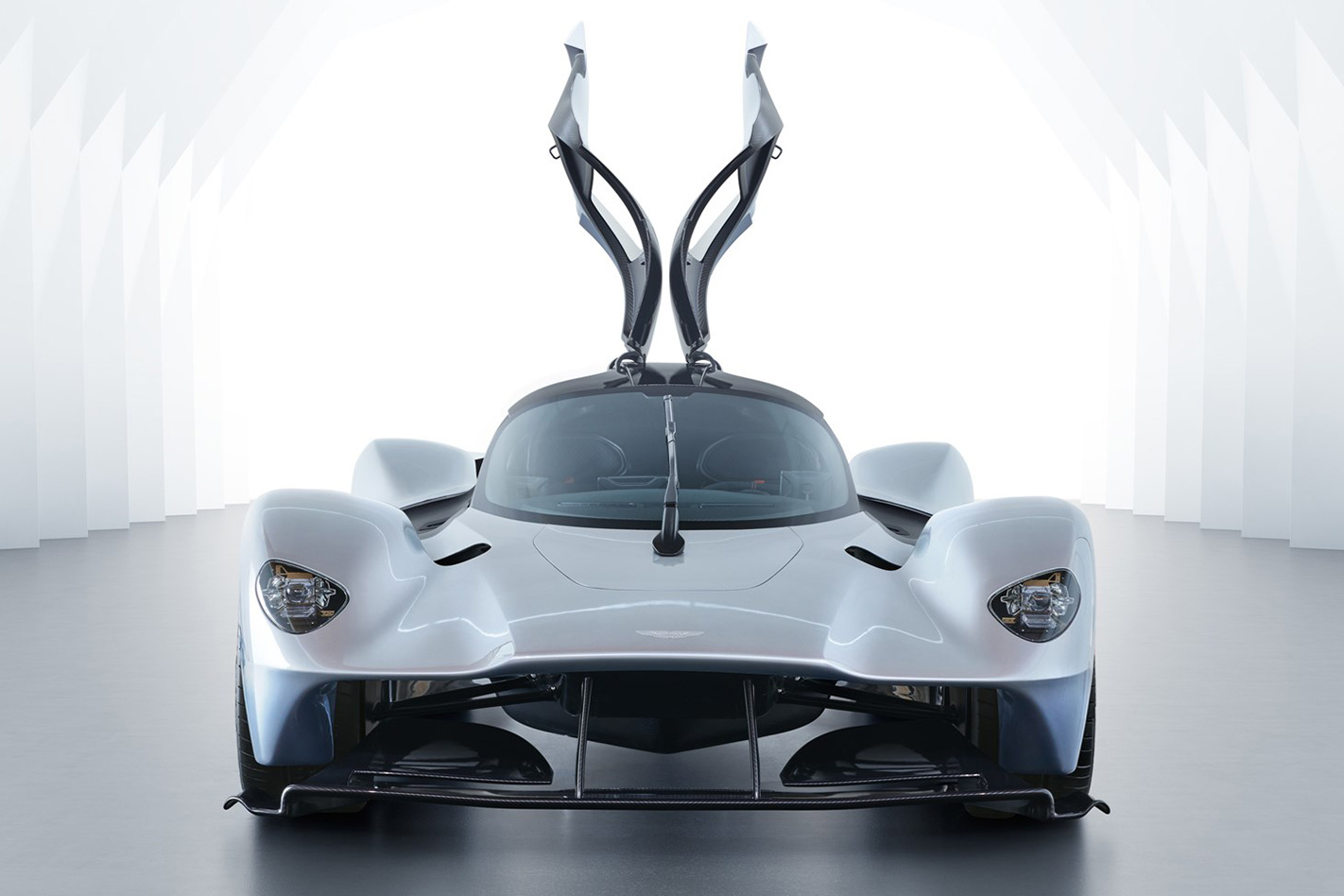
With a relatively small rear wing and a comparatively elevated floor height thanks to the twin venturi tunnels, the diffuser helps move the underbody centre of pressure rearwards, creating two huge low pressure vortices at the back. There are interesting design features such as the winglet that reduces tyrejet (the aerodynamic ‘squirt’ off the tyre) to the centre of the car and an exhaust outlet that’s now closer to the rear wing, creating a more defined blown effect. With total downforce beyond that of modern GT3 cars and around that of an IndyCar, it goes some way to explaining why Aston Martin’s CEO Andy Palmer made what seemed at the time to be the outlandish claim that a Valkyrie on road tyres would probably put you on the podium in the LMP1 Class at Le Mans.
It’s still a big call, but it highlights quite how far production car aero has come. Increasingly, manufacturers are realising ways of reaching that holy grail of generating downforce with minimal drag penalty. Enzo Ferrari once claimed that aerodynamics was for people who couldn’t build engines. He also said that the Jeep was America’s only real sports car so he wasn’t right all the time, but it’s a mark of how far we’ve come that Lamborghini, the upstart rival from down the road, now aims to eclipse Ferrari’s road cars using a method that, in the light of Il Commendatore’s quote, must seem deliciously piquant. Maranello isn’t about to let that slight stand, so get ready for the next generation of supercars that work the air smarter than ever before.
It seems there’s a new ‘hypercar’ almost every month, and July 2018 was no different.
In the last few days of the month, hype started building around the first project from an Austrian firm called Milan Automotive. We’ll get the obvious out of the way… it’s not pretty.
Dubbed ‘Red’ after the red Milan bird of prey, the Red is a 974kW/1400Nm quad-turbo 6.2-litre V8-powered mid-engine rear-driver which is claimed to hit 100km/h in just 2.47 seconds.

While cars like this tend to have a habit of slipping under the radar or not being built in their original intended form or quantity, Milan Automotive has reportedly already secured more than a dozen orders for the Red, with a maximum of 99 to be built.
Each will be bespoke, meaning all will technically be ‘one-of-a-kind’ hypercars, but Milan doubles down on the whole ‘individual’ theme and steps into something a little more arbitrary: “in addition to the customization options, the full personality of every Milan Red unfolds together with its owner to make it unique.”
While the Red is still unproven, the plans and elements of its design are admittedly impressive.
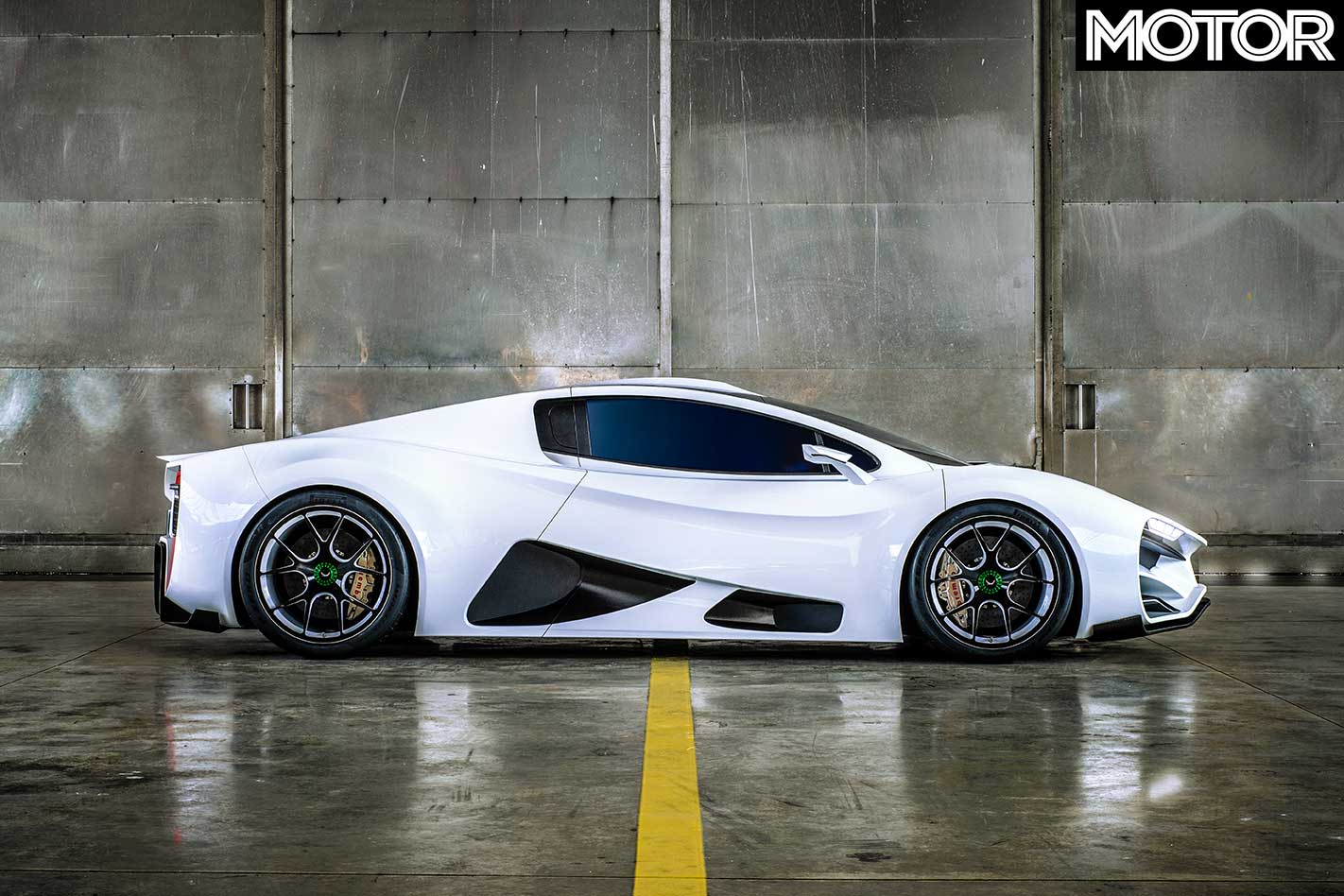
Almost all of the car’s structures and elements that allow for it will be built from carbon fibre and CFRP (carbon fibre reinforced plastic), which will be handled by fellow Austrian company PEAK Technology.
Even the wishbones will be made from carbon fibre, something Milan Automotive claims is a first for a road-going car. Brembo will provide the carbon ceramic stopping power, while a ‘high downforce diffuser’ will apparently keep the car grounded via its long (starting from just behind the driver’s seat) structure.
At the €2 million Euro (AUD$3.15 million) mark, the Red isn’t cheap… we’ll be interested to see if it takes flight.
SSANGYONG is poised to re-establish its position in the Australian automotive retail landscape with a holistic re-launch strategy that will boost its dealer presence and improve aftersales care along with a heavyweight promotional campaign.
Four new models will end a two-year retail hiatus when they arrive in November this year, but the South Korean company says a complete, multi-pronged assault on the local market is the only way it will earn the trust and attention of Australians.
Key to the campaign will be the reboot of the dormant dealer network that has been confined to service duties while the sales operations have been in its two-year stasis. According to SsangYong Motor Company export managing director Sanjeev Saksena, almost all the existing dealers want a piece of the relaunch action.
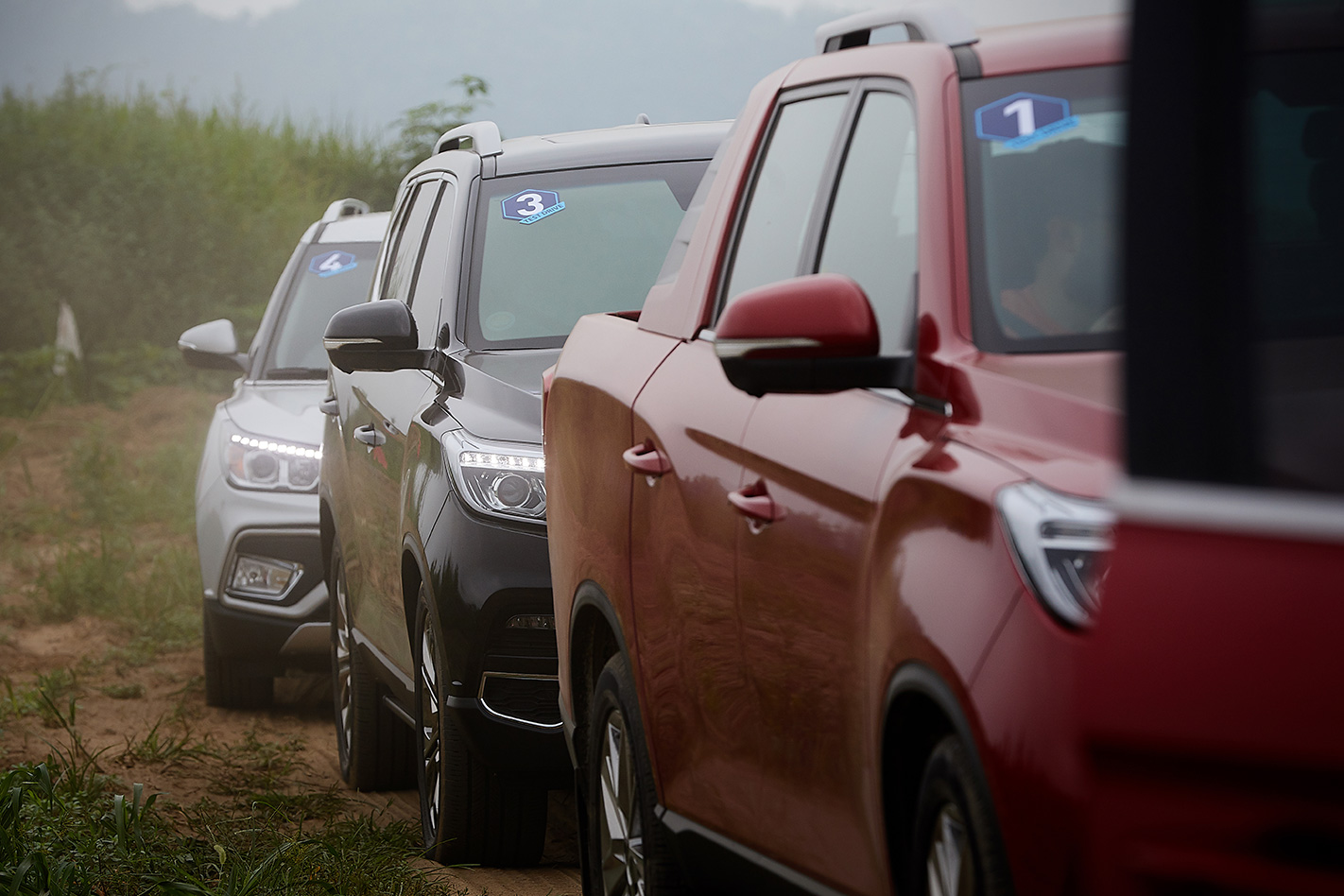
“The advantage we have is that we already have 27 dealers who have written an intention that they will continue with us, so we are not starting from scratch,” he said.
The company expects that figure to grow to about 30 showrooms for the official launch at the end of the year and that figure could double to 60 in the next five years, it says.
A stronger dealer network will be central to the company’s plans to bolster after-sales and service quality, which includes a “best in class warranty”.
SsangYong Australia’s freshly appointed managing director Tim Smith explained that the brand’s presence will be very different compared with previous years, with many areas under the spotlight for enhancement.
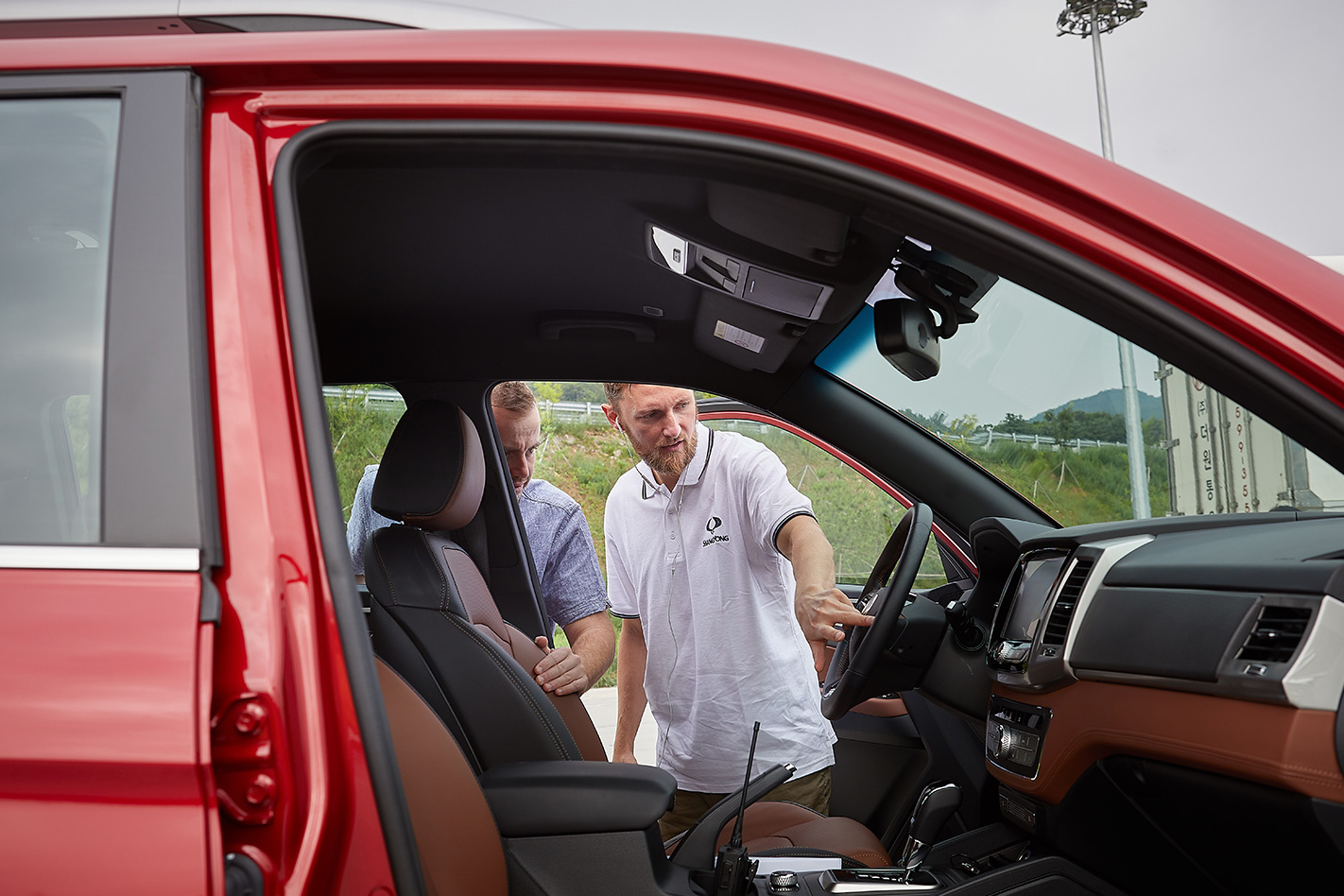
“Our offer to the market will be comprehensive, strong warranty, local tuning,” he said. “We will be doing everything in our power ensuring products, franchise offering and customer service will be as good and better than our competition.
“We certainly think we’ve learnt a lot from previous experiences and distributors in Australia. Certainly from SsangYong’s point of view we know what can work and what doesn’t work. We’ll be as comprehensive or more comprehensive from a customer service, product offering and value proposition.”
Pricing and exact local specifications are yet to be confirmed for the four-model line-up, though SsangYong says we should expect ‘Kia and Hyundai pricing and Subaru performance’.
An exact warranty and service schedule is also still under development, but Smith said the end offering would be a ‘hybrid’ package that could be used as a strong marketing tool.
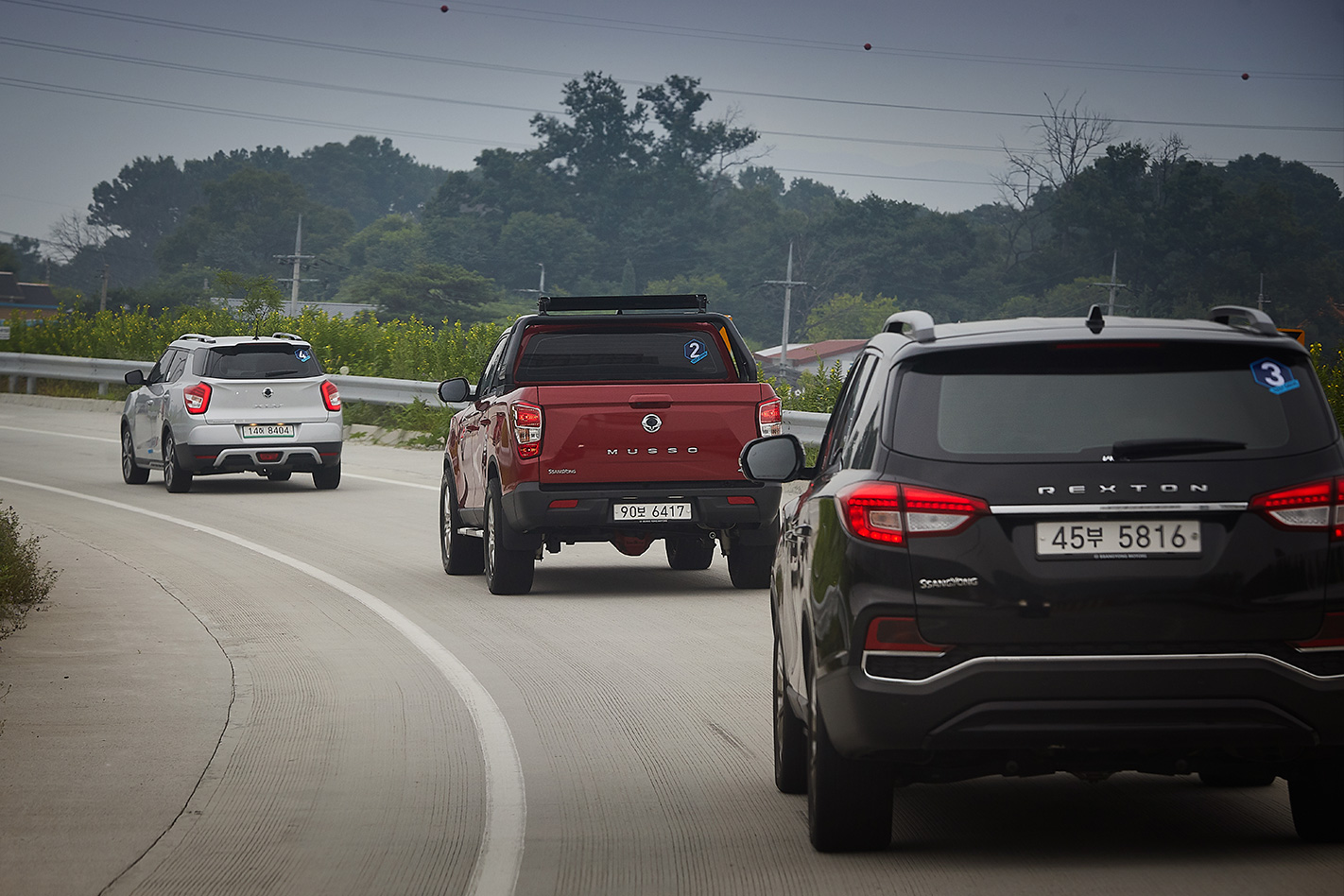
“Capped-price servicing is really good for the customer because they know what they’re in for, but it also limits the responsibility of the dealer,” he said. “So we’re probably looking at that in a hybrid model to begin with, so it will be strong for the customer – in that they know what the lifespan of the servicing costs are – but it won’t be as prescriptive for the dealers.”
Needless to say, capturing a new audience is a fundamental target for the revenant brand, but before that, the company says it is prioritising its existing loyal customers, many of whom are apparently missing SsangYong’s local presence.
While other relatively small car makers struggle to gain recognition in Australia, Saksena explained that the existing customer base will be a valuable leg-up from launch.
“We already have 18,000 customers. Our first marketing initiative will be to ensure that we reach those customers,” he explained. “We’ve been absent from the market for two years and there will be many people trying to replace their vehicle and we would like to ensure they are replace their SsangYong vehicles with a new SsangYong.
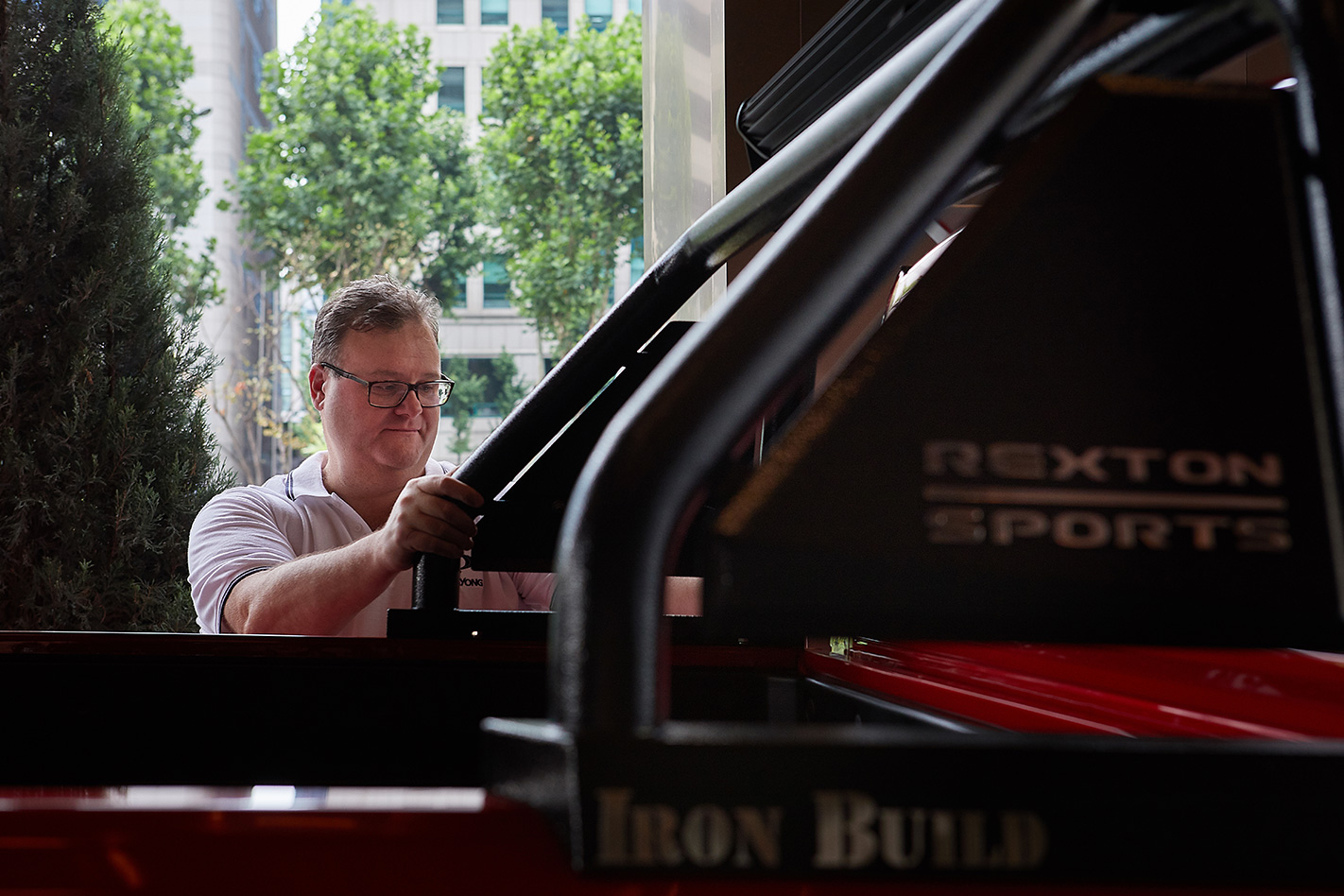
“Then those customers have to recommend us to the others, and our investments will also get into ensuring the new products are reaching new customers, and if the customers aren’t coming into the showroom then we need to reach the customers.”
After that, a more aggressive marketing and promotional drive will look to grab the attention of yet more potential newcomers to the brand, with a significant portion of the relaunch budget allocated to marketing.
“Here we also have an advertising company … who want to work with us and understand that not only is the product much better, but the communication is also very important because are going to invest millions of dollars,” said Saksena.
The venture to take over the Australian distribution from independent outfit Ateco will be the first of its kind globally for SsangYong. Export senior executive director Daniel Rim explained that among many advantages, the hand-back would allow a dramatic increase in promotional activity.
“Typically, distributors engage more actively in retailing and transactional promotions,” he said. “Less on the brand promotions, but when we come to Australia we will be heavily investing in brand building. That’s a long term strategy.
“We’re not looking for quarterly profits, we are looking for long term goals and long term sustainability.”
Many other brands enjoy the luxury of being woven into Australia’s history through longstanding relationships in the market and Smith said the company will be trying to integrate SsangYong into the lives of Australians.
“The products will do a lot of that work for us. Going forward, we would love to be part of Australian culture and Australian lives and offer our brand as a real alternative to our competitors, but that has to be balanced infrastructure, resources, investment and profitability that we do. But we’re not going away, we’re here for the long term.”
After the Australian launch this year, SsangYong will take over the distribution operations in other global regions, including Russia and the United States, but Rim insisted the pilot relaunch in Australia was not simply a toe in the water for other markets.
“All different regions have different marketing needs – driving preferences, habits are different – so we gain all these global perspectives of running our own retailing, so we already have the knowledge and we are going to apply that to the Australian market, as well as other markets in the future.”
Smartphone mirroring technology will progressively become standard across Mazda’s range in Australia as its product range is updated.
Apple CarPlay and Android Auto, which allow a driver’s smartphone to be mirrored to the vehicle’s infotainment screen, are not currently compatible with Mazda’s MZD Connect system.
The only vehicle in Mazda’s range currently sold with smartphone mirroring tech is the BT-50 dual-cab trade ute, which is fitted with a third-party branded head unit.
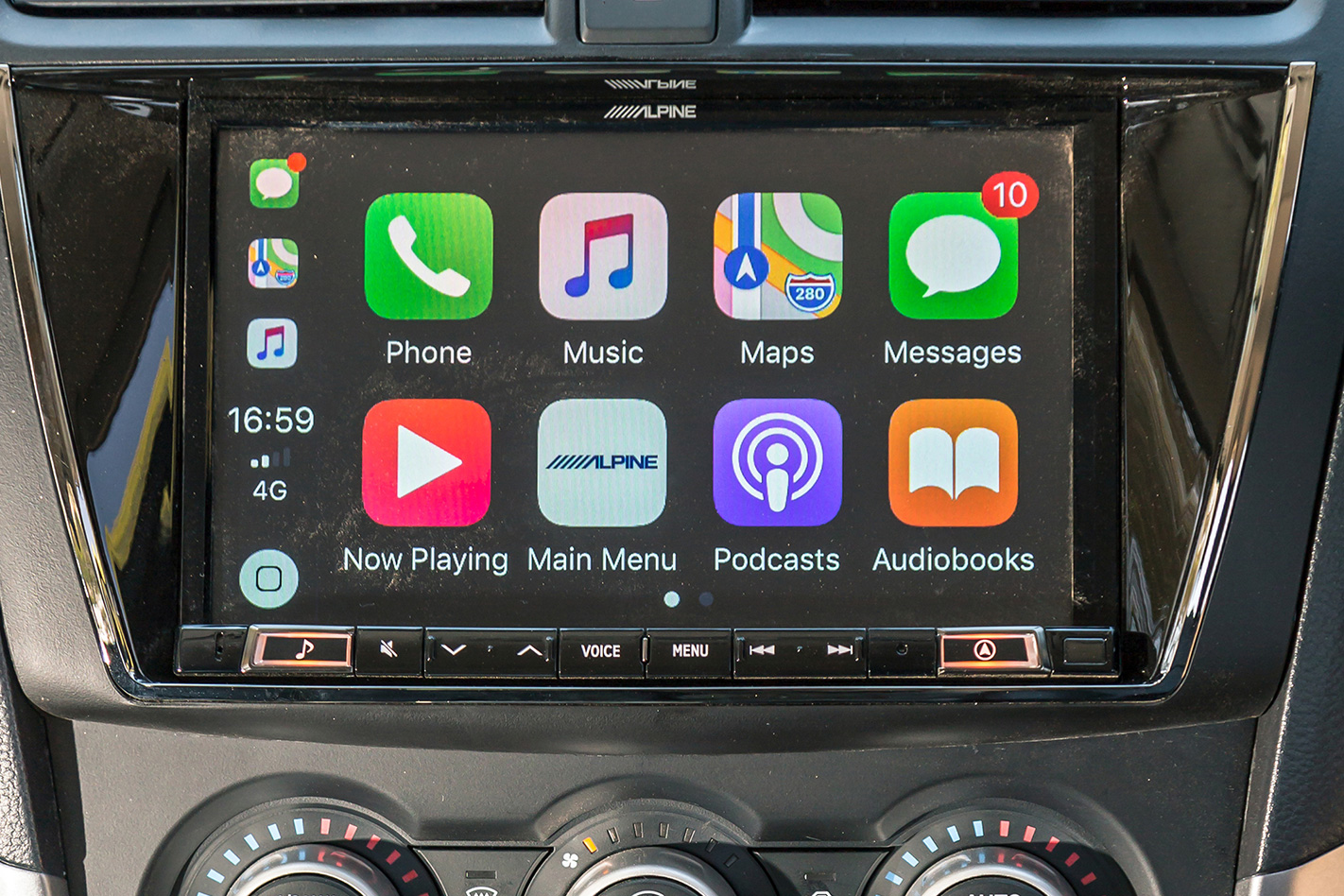
WhichCar understands that Mazda products fitted with smartphone mirroring as standard will start arriving in showrooms before Q4 this year; however the tech will be added progressively across the range.
This means that not every car will be sold with the smartphone mirroring, instead only gaining the feature as standard once a mid-life update or new generation is introduced locally.
A Mazda spokesperson told WhichCar that existing customers who desperately want Apple CarPlay and Android Auto will have the option of having the systems fitted to their cars retroactively.
The retrofit will require both a hardware and software change, which means the work will be completed by a Mazda dealership. The spokesperson added Mazda Australia is currently working through the costs associated with the instillation.
Apple CarPlay and Android Auto have become new must-have standard features for many manufacturers, with the systems giving customers the ability to use their own audio streaming services and map apps through the car’s inbuilt screen.
To better understand how smartphone mirroring works, read our Android Auto vs Apple CarPlay explainer.
Mazda is the latest car maker in Australia to extend its warranty period from three to five years, matching the bulk of its rivals with the most common length deal in the local new car market.
From today, the new five-year/unlimited kilometre warranty will apply as standard to all new Mazda vehicles sold in Australia.
The move follows the recent decisions by other manufacturers including Holden, Ford and Honda to boost their warranties to five years, matching Hyundai, Mitsubishi, Skoda, Renault, Citroen, Peugeot, Isuzu and Jeep.
“The new warranty will give customers another reason to choose Mazda, bolstering confidence in our already solid reputation for quality, hard-wearing cars,” said Mazda Australia managing director Vinesh Bhindi.
Mazda’s decision comes as a bit of a surprise as it is consistently the second-most popular vehicle brand in Australia after Toyota, thanks to an established reputation for quality and reliability.
But it demonstrates how warranty periods have become an important factor for people choosing a new car. They’re also a key reason behind the continued rise of brands such as Hyundai and of course Kia, which got the ball rolling in 2014 with its celebrated seven-year warranty.
Mazda’s move leaves Nissan, Subaru, Suzuki, Toyota and Volkswagen as the only mainstream manufacturers to still only offer three year warranties.
Subaru tested the waters with five-year warranties on selected models sold during September 2017.
How does a 415kW/747Nm wagon sound to you?
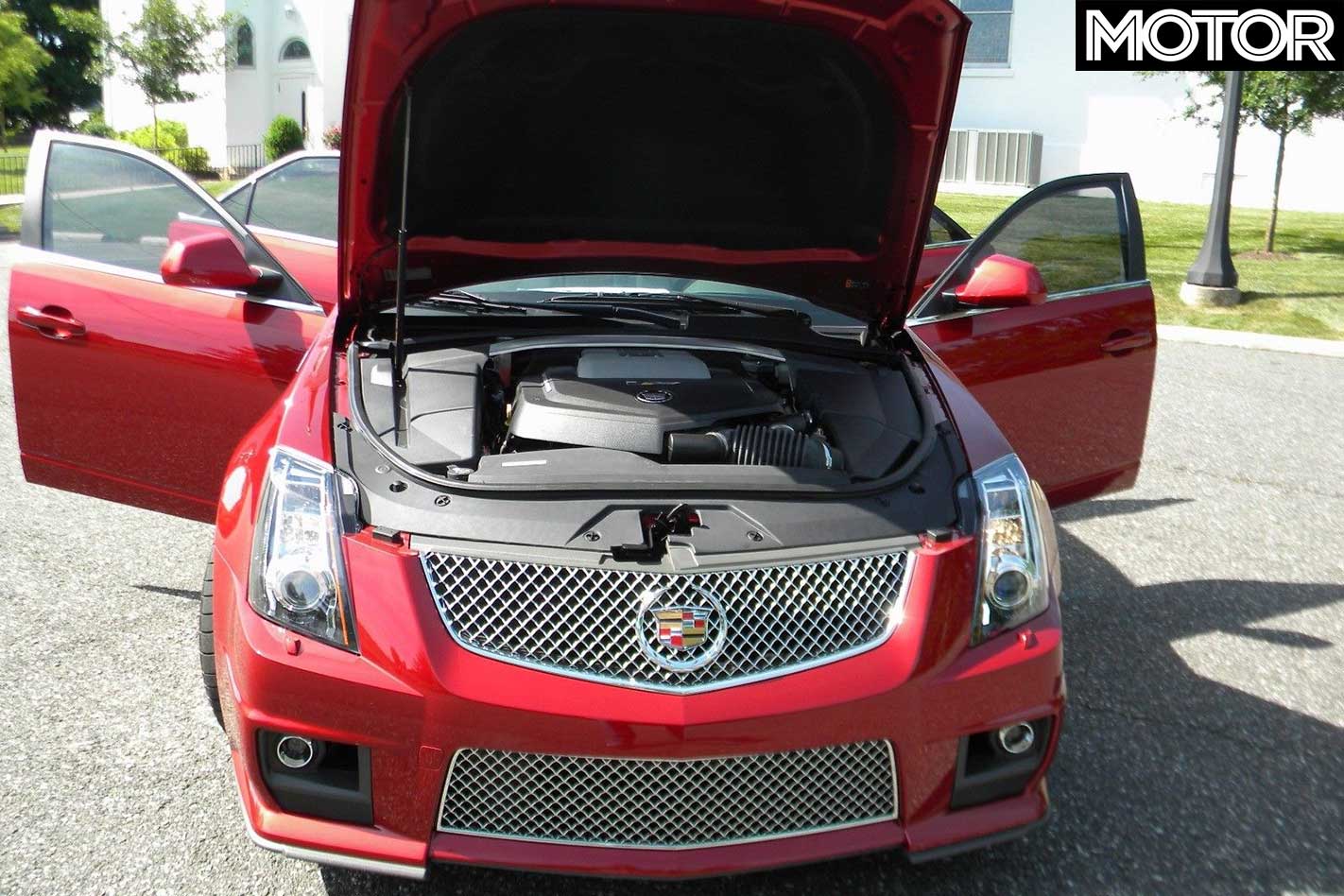
It sounds excellent to us, which is why we’re glad the Cadillac CTS-V Wagon exists. While the 400kW/671Nm HSV Clubsport Tourer LSA was all we had access to locally, we could have had another option if Cadillac did show up on our shores.
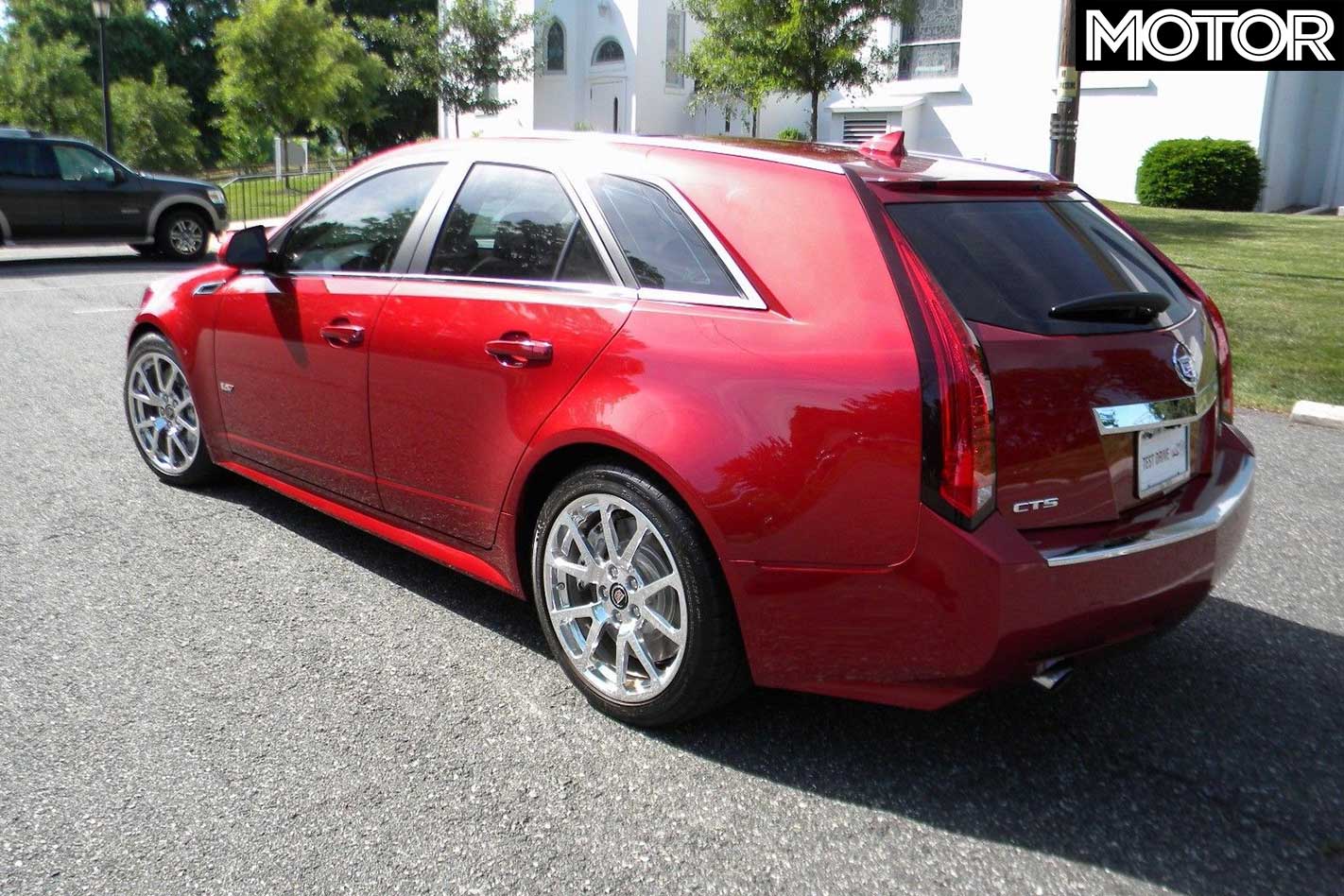
The catch? It’s currently advertised at USD$84,495, or just shy of AUD$115,000. Even a Tourer LSA was only $86K new.
But Cadillac’s wagon was impressive, with the likes of GM’s magnetic ride control (found in one form locally on the HSV Senator), Brembo brakes, and Michelin Pilot Sport PS2 tyres making it more capable than a wagon usually would be.
According to the listing, 1767 wagons were made, with less than a third being manual. While the car was intended to be more luxury focused, the fact it was offered with a manual ‘box makes it just a little bit more special.
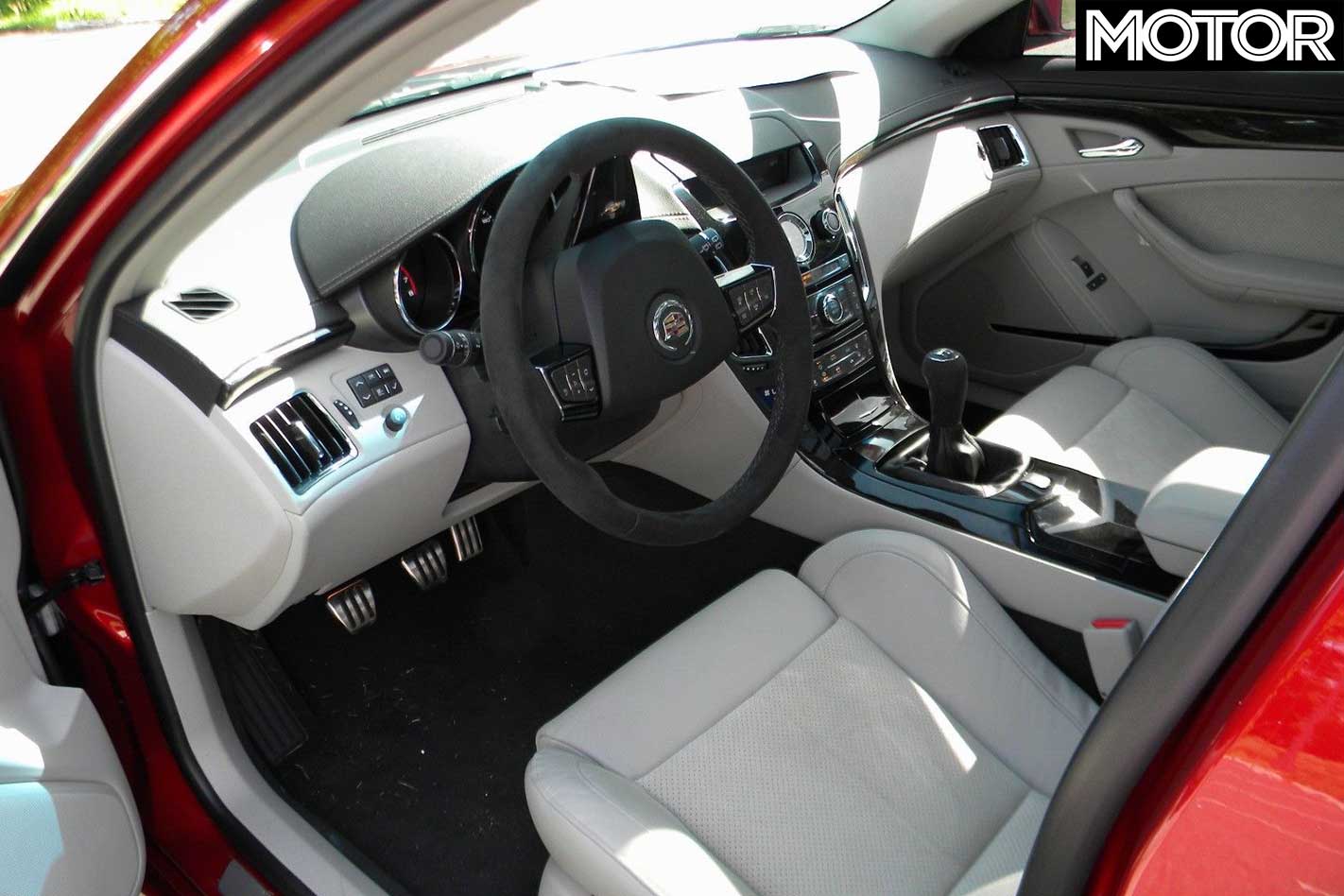
The seller adds that only 26 cars like this were finished in the same colour, Red Obsession, adding another notch to the rarity board.
These factors combined, we think, go a long way to explaining the rather large sum of dough being asked for the car, which has apparently only had two owners and lived in a climate-controlled garage until last year.
You can check the ad out for yourself, though the listing is due to end this weekend.
Tell me about this car
After a sales hiatus in Australia, SsangYong is preparing to introduce a fresh line-up of vehicles under factory guidance in November and, in addition to a dual-cab ute and large SUV, the smaller end of the range will include a pair of almost identical high-riders.
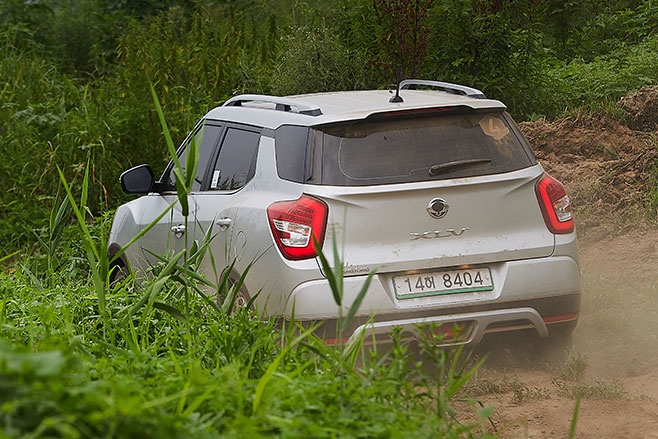
The Tivoli is the baby SUV of the range bringing proportions similar to a Kia Sportage, while the XLV is much the same vehicle with the exception of minor exterior details and its extended boot space (up from the Tivoli’s 423 litres to a hefty 720 litres).
If you’re in the market for an affordable small SUV but need a load area that is more typically found in the segment above, the SsangYong XLV might be something to consider.
Strengths
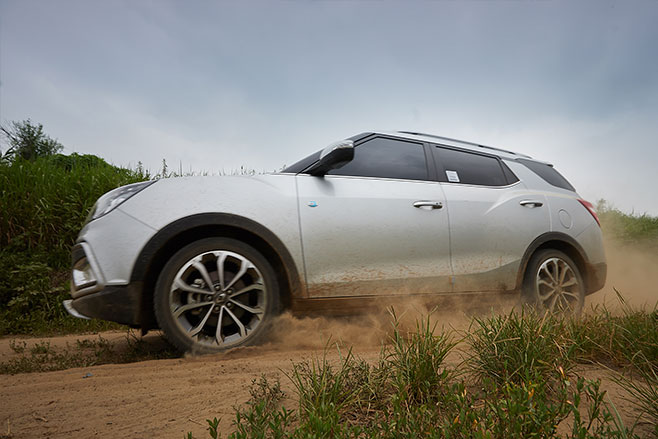
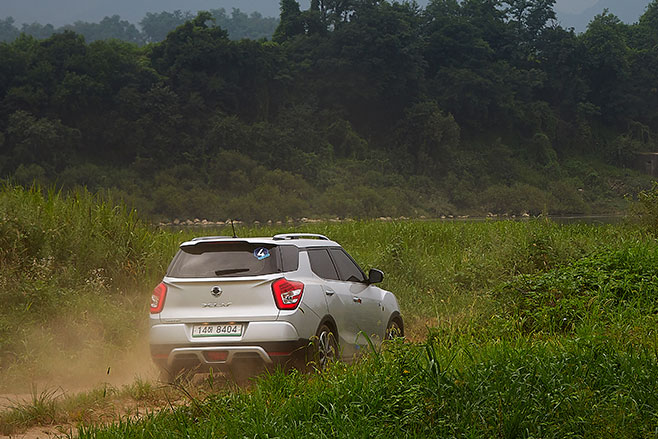
- Genuine off-road ability – With permanent variable four-wheel drive, our test car negotiated a surprisingly gnarly off-road excursion. While its larger siblings have boosted ride height to cope with deep ruts, the lower XLV nevertheless made surprising progress and traction was never an issue. You won’t need to select from different modes because the system automatically shares power between the wheels depending on which have the most grip.
- There aren’t many vehicles in the class that can offer realistic off-road promise and the standard XLV could provide the basis for a special edition that could compete with Jeep’s Compass Trailhawk.
- The XLV’s middle-of-the-road ride height also benefits manners on road and a little blast on Korean country roads revealed a playful chassis despite its all-terrain capability.
- A comfortable ride was another pleasant surprise from the XLV, completing a well-rounded no-compromise performance that will suit a wider range of customers who have different uses for their small SUV.
- Exact kit for Australia is yet to be decided but our test vehicle was decked out with an impressive array of equipment including heated and cooled front seats, heated second-row seats which also recline, 7.0-inch touchscreen, two 12V sockets in the cabin, a USB port and even an HDMI line-in.
- A huge 720-litre boot is class-leading for the segment and expands to 1294 litres with the rear seats folded. The luggage area also contains a 220V power socket alongside a 12V socket.
- Excellent safety features will really stand the little SUV strongly in Australia’s demanding market. The lane keeping assistant is very effective and not as intrusive as some other brands, while AEB, seven airbags, speed sign recognition, automatic high-beam headlights, hill-hold and tyre pressure monitoring are all feathers in the XLV’s cap.
- A broad range of customisation options are likely to be offered including two-tone roof and body colour combinations which look great and add an individual look especially with a wide range of wheel colours and designs, while three high-quality Nappa leather interior options are offered including an eye-catching red with black or more subtle tan and beige.
Weaknesses
- Its name – SsangYong took the curious decision to name two very similar vehicles significantly different names. We can help but feel something along the lines of Tivoli Grand or Tivoli L would retain valuable model linearity.
- While refined and quiet, the 1.6-litre diesel manages just 94kW and 300Nm which feel a little flat when hauling the 1535kg XLV. That might not be a problem however, with a new 1.5-litre turbo petrol likely to join the range as part of an update later in its lifecycle.
- Its generous boot doesn’t have remote power opening, which would complement the more practical load features.
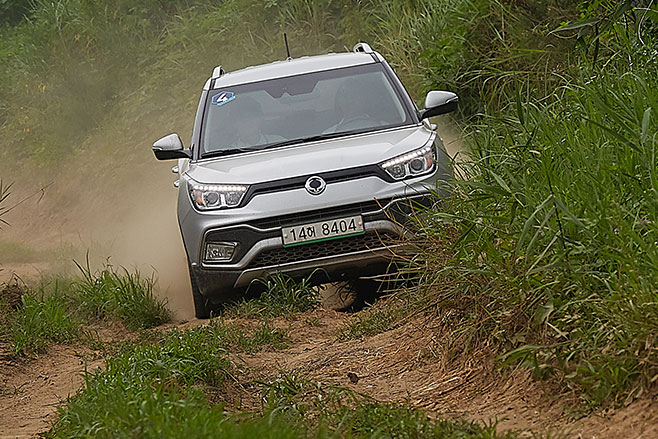
- Interior design is generally inoffensive but there are some curious mismatches such as the red LCD climate panel, full colour central screen and monochrome driver’s information display. A little continuity would tie the cabin together more neatly.
- SsangYong doesn’t have the brand familiarity of many big players in the Australian market and the company is going to have to work hard to gain the trust and recognition, even with a range of vehicles that deserve praise and consideration. That lack of brand equity might affect value when it’s time to sell your XLV.
- Pricing is yet to be announced and could potentially make or break the XLV.
Any rivals I should consider:
At the affordable and of the small SUV market, Hyundai’s Tucson and the Kia Sportage both prove that low cost doesn’t have to equal low quality. With the other South Koreans however, you get one of the best known and respected brands in Australia.
Depending on where SsangYong positions the XLV and Tivoli pricing, MG’s ZS is a Chinese bargain that may have to be factored in, as is the Haval H6 if you are after something larger.
WHAT IS IT?
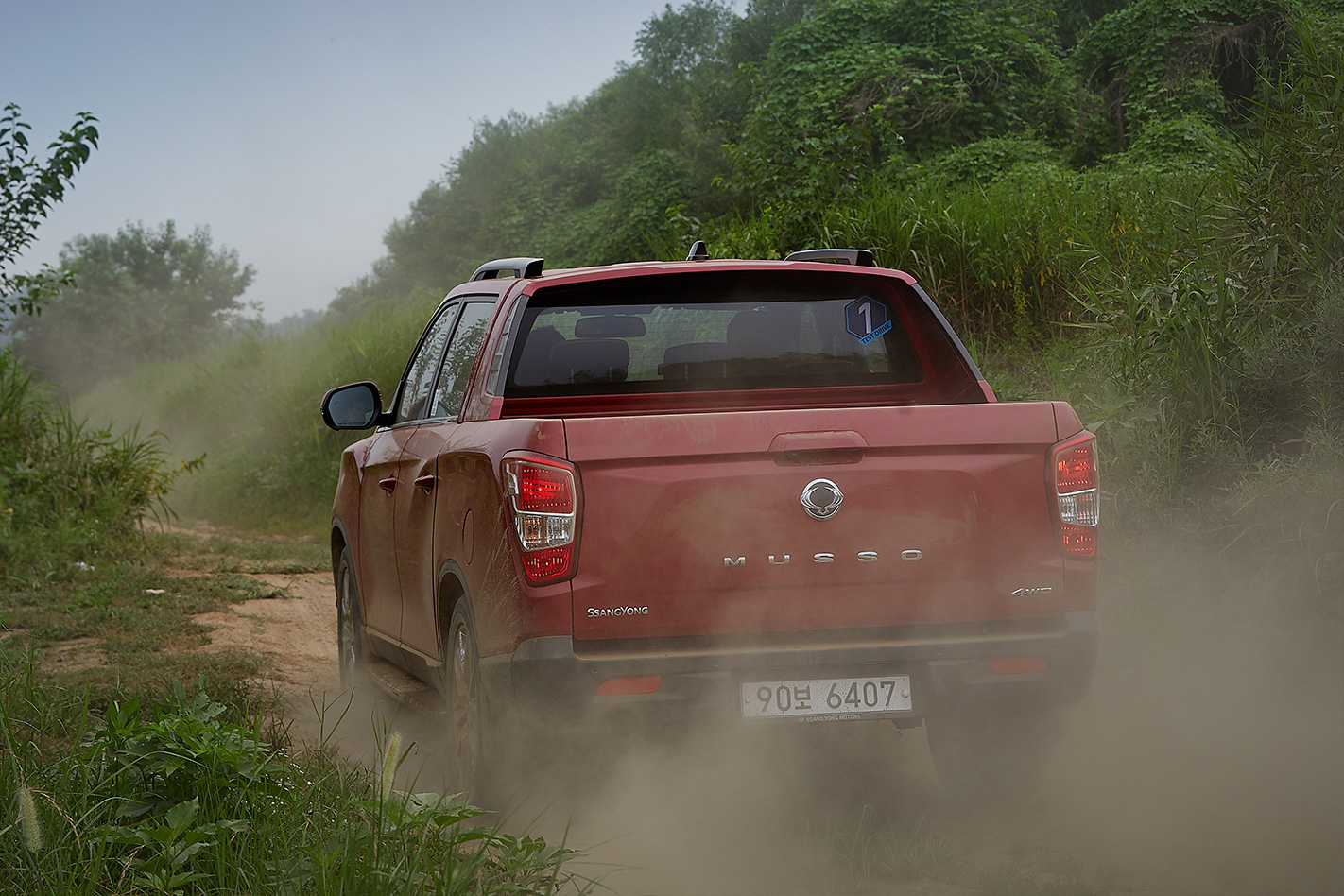
The return of South Korean brand SsangYong’s one-tonne ute after a retail hiatus in Australia. Pricing is yet to be confirmed, but the Musso will touch down in November offering a new dual-cab ute option at the more affordable end of the spectrum.
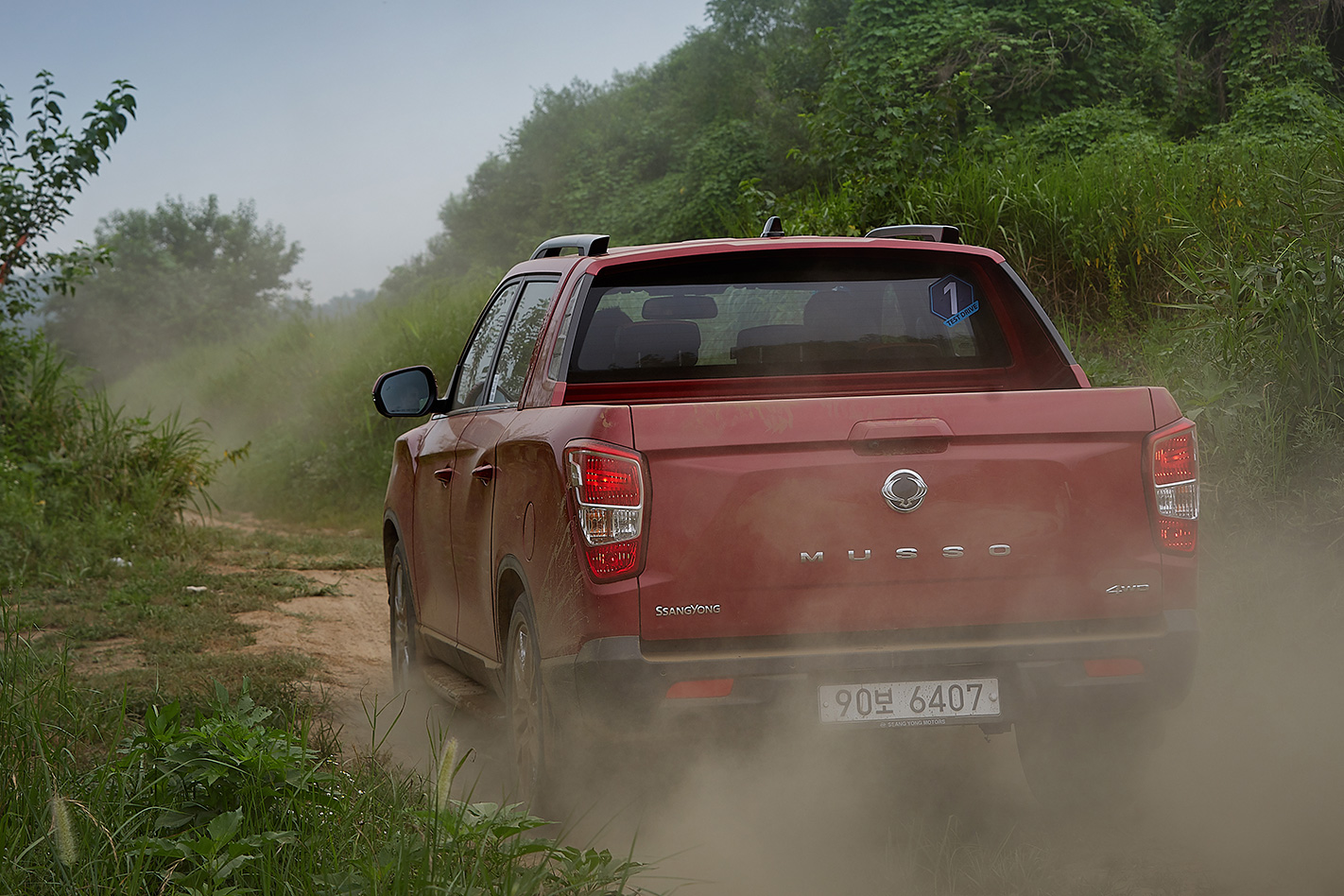
It’s powered by an efficient diesel engine, has switchable four-wheel drive and will be offered in a number of variants including a long or short tray version, with three different rear suspension arrangements, but for this first quick review we focussed on the long tray variant with a five-link rear axle with coil springs.
WHY WE’RE TESTING IT
SsangYong is relaunching in Australia under factory guidance, aiming to perform significantly better than when it was distributed here by Ateco. To do that, it needs a rock-solid product line-up. All four models from launch will need to pull their weight, but a one-tonne ute has the potential to claim a sizable portion of a very popular and growing segment in the local market.
If it can nail the balance of value, quality and practicality, the Musso could be the hero that puts a wallflower brand back on the Australian automotive map.
MAIN RIVALS
Without local pricing it’s hard to highlight a direct rival for the Musso, but it if it targets the more budget end of the dual-cab ute spectrum, Isuzu’s D-Max will certainly be in its sights as will the excellent-value Mitsubishi Triton.
Those in the market for an affordable one-tonner with off-road promise should also put the strong all-rounder Holden Colorado on their consideration set.
THE WHEELS VERDICT
SsangYong’s new Musso delivers a comprehensive set of likeable features wrapped up in styling that is unrecognisable from the products the South Korean brand churned out before it exited Australia a few years ago – and that’s a good thing.
Driving dynamics, build quality and practicality appear to be on a par with other affordable dual-cabs, while engine refinement, interior features and equipment compete with offerings at the top end of the scale.
But the potential of the Musso Down Under boils down to the as-yet unconfirmed pricing, and Australians simply won’t pay attention to any of its positive attributes if the company can’t entice them into showrooms with a sharp deal.
PLUS: Generous equipment list; incredibly smooth and refined engine; encouraging off-road promise; safety tech MINUS: Choppy on-road ride; engine output lowest in the class; unconfirmed pricing could make or break
THE WHEELS REVIEW
COMPETITION in the dual-cab ute arena is fierce, driven by an insatiable demand for high-riding workhorses that can double as family haulers. You need only look at the nine-ute megatest in the July edition of Wheels to see how the humble outback plugger has evolved in to sophisticated, safe all-rounder, but while Mercedes, Volkswagen and Ford battle it out at the high-end, SsangYong says there is room to wriggle in at the low side of the price spectrum with a value-rich offering.
Gone are the days when a contender in the segment could survive with a single USP, whether it be off-road ability, bargain-basement pricing or a reputation for reliability. The one-tonner of today needs to be able to do it all and that’s where SsangYong’s returning Musso looks promising on first inspection.
Its predecessors – the Musso Sports and Actyon Sports – wore awkward aesthetics, but SsangYong is starting to take styling seriously and the version that will reintroduce a retail presence to Australia looks as handsome as many other one-tonners in the game.
Then there’s equipment – another selling point customers are placing increasing importance on. Here too, the Korean performs well and the version we jumped in to was decked out with a range of kit you would never have found just a few years ago regardless of the brand.
Heated and cooled front seats, a heated steering wheel, 9.2-inch central touchscreen complemented by a central 7.0-inch screen between the gauges, keyless start, 360-degree camera, Android Auto and Apple CarPlay compatibility. These are all highlights previously unheard of from the brand and only recently in some premium offering dual-cabs.
While local equipment levels are still far from confirmed, Wheels understands Ssangyong Australia is aiming for a high-grade offering and we’d expect most of the Musso’s Korean-market luxuries to find their way to our shores.
Safety features are also well represented with six airbags, blind-spot monitoring, lane-departure warning and rear-cross traffic alert for our test vehicle.
A first blast out onto South Korean roads was not quite enough for a full comprehensive review but offered a first taste of how the newcomer (or revenant) will fit into Australia’s landscape, starting with a freeway cruise.
As you would expect from any unloaded one-tonner, the ride is stiff and fairly agricultural but there’s a confidence in its manner on the road. It is mechanically related to the Rexton large SUV but a key difference is found at the rear axle.
While the SUV has a more comfort-focused multilink independent set up that wafts (almost lollops) along uneven surfaces, the Musso’s load-lugging five-link tail shivers along the freeway.
For the Nissan Navara, its industry-first coil-sprung rear axle was much hyped but did not bring the dramatic improvements in unladen ride comfort that were promised. The same appears so with the Musso, but it is at least on a par with stiffer leaf-sprung set ups.
Beyond the firm ride, the Musso has a few pleasant surprises including a surprisingly refined diesel engine. While SsangYong once relied on Mercedes’ hand-me-down donks, it is now producing its own 2.2-litre unit.
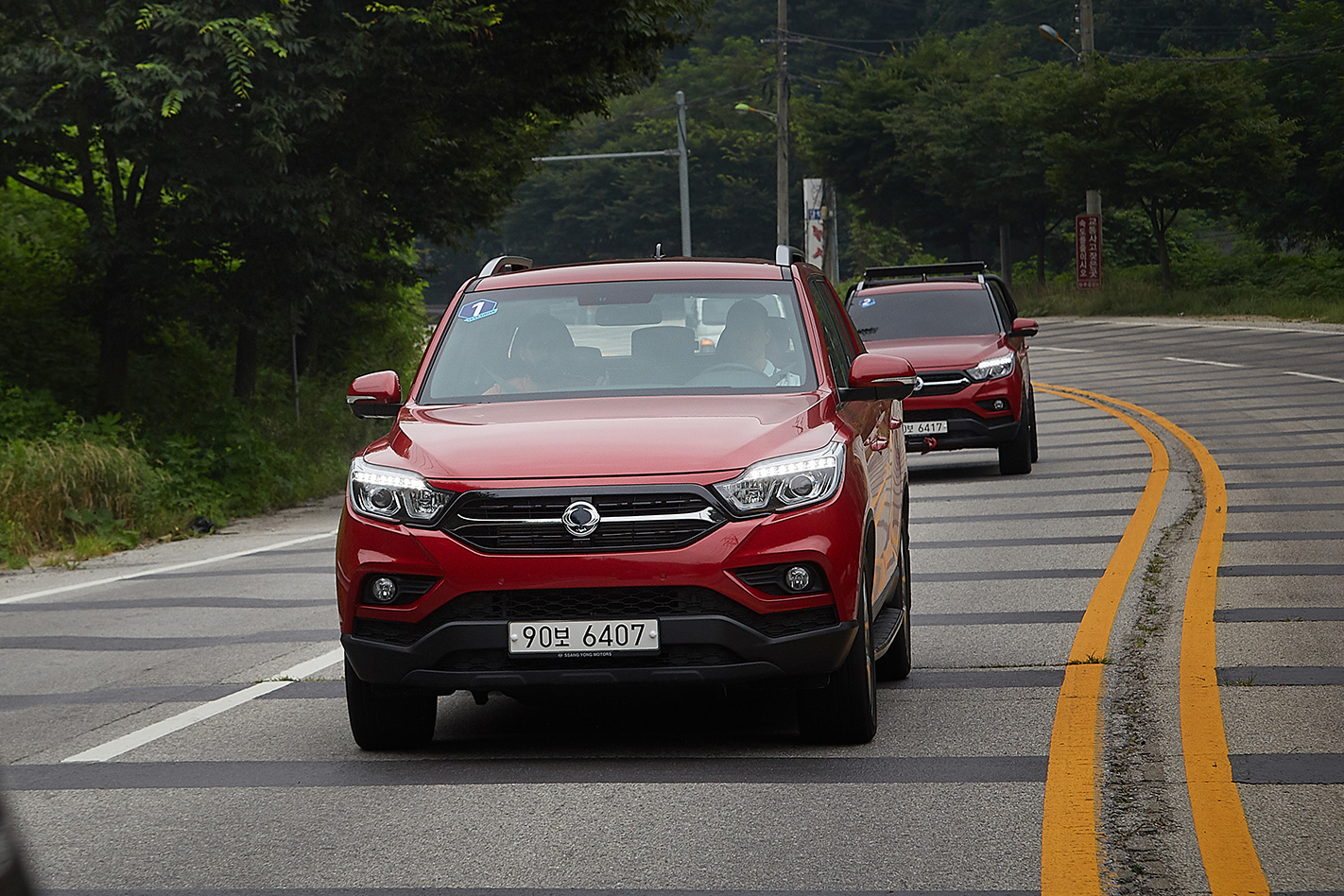
For a two-tonne vehicle it could do with a bit more torque than its 400Nm peak, and it’s here where it falls short of the rest of the pack. The Navara manages 450Nm from the same capacity, while the Triton and D-Max produce 430Nm from 2.4L and 3.0L respectively. While the Musso’s powertrain is competent at low speed, it quickly runs out of puff when executing overtaking moves. That shortfall in grunt is partly redeemed through low NVH levels, however.
The Musso’s six-speed automatic is a limiting factor to torque output, with the seven-speed automatic of its sibling, the Rexton, able to tolerate an extra 20Nm form the same engine. That said, the Aisin torque-converter gearbox does a discrete job of swapping cogs and is largely unnoticed during freeway cruising. In Korea, a six-speed manual is also available.
Ergonomic seats offer a comfortable place to spend time for extended drives and offer the elevated view of the road that will appeal to many Australian pick-up fans.
There’s more good news in the second row too, where we found ample room for three adults, reclining back rests, folding arm rest with cup holders and deep door storage pockets. Move even further back and you’ll end up in a 1570mm by 1300mm tray which is decked out with a 12-volt power socket and tie-down points.
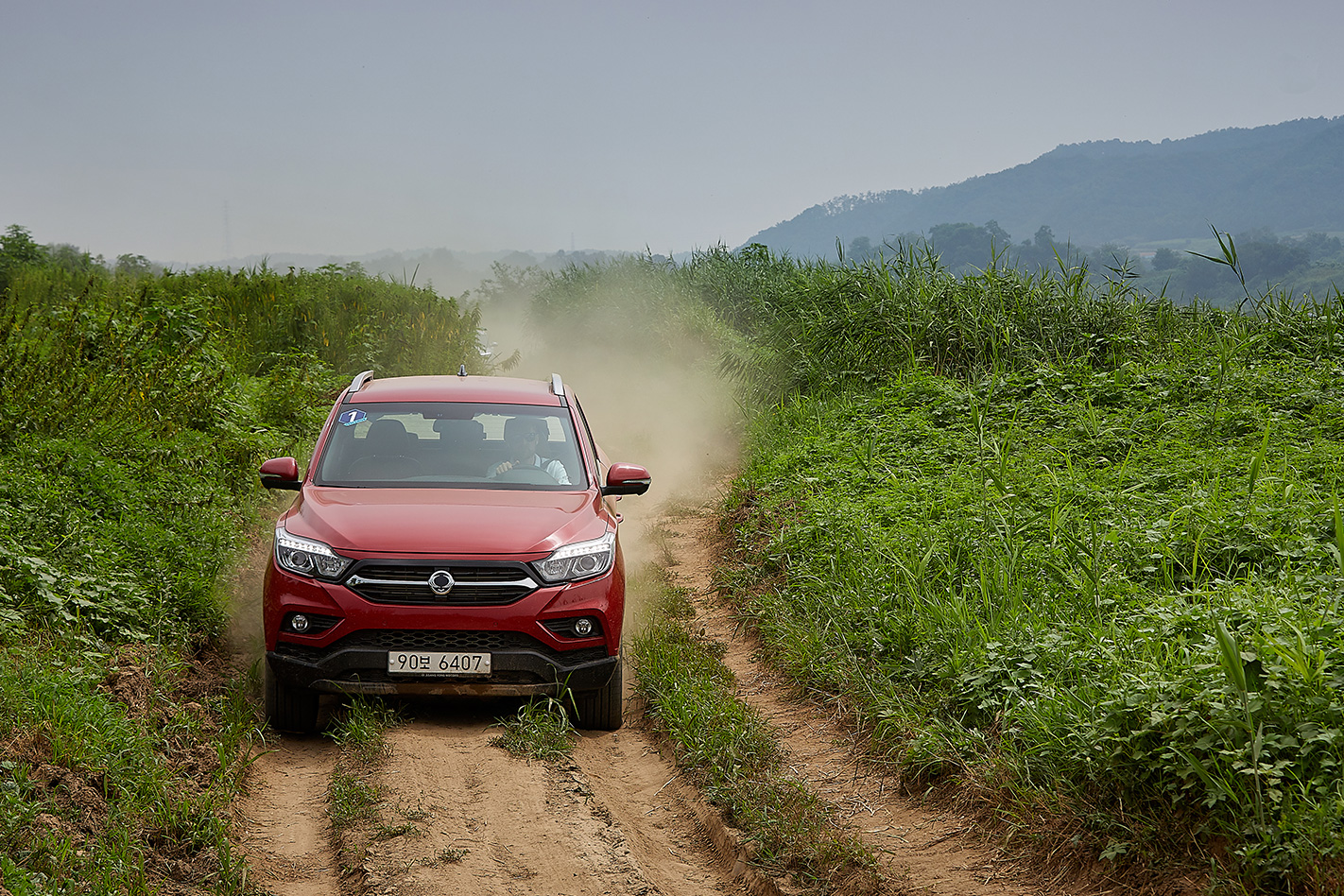
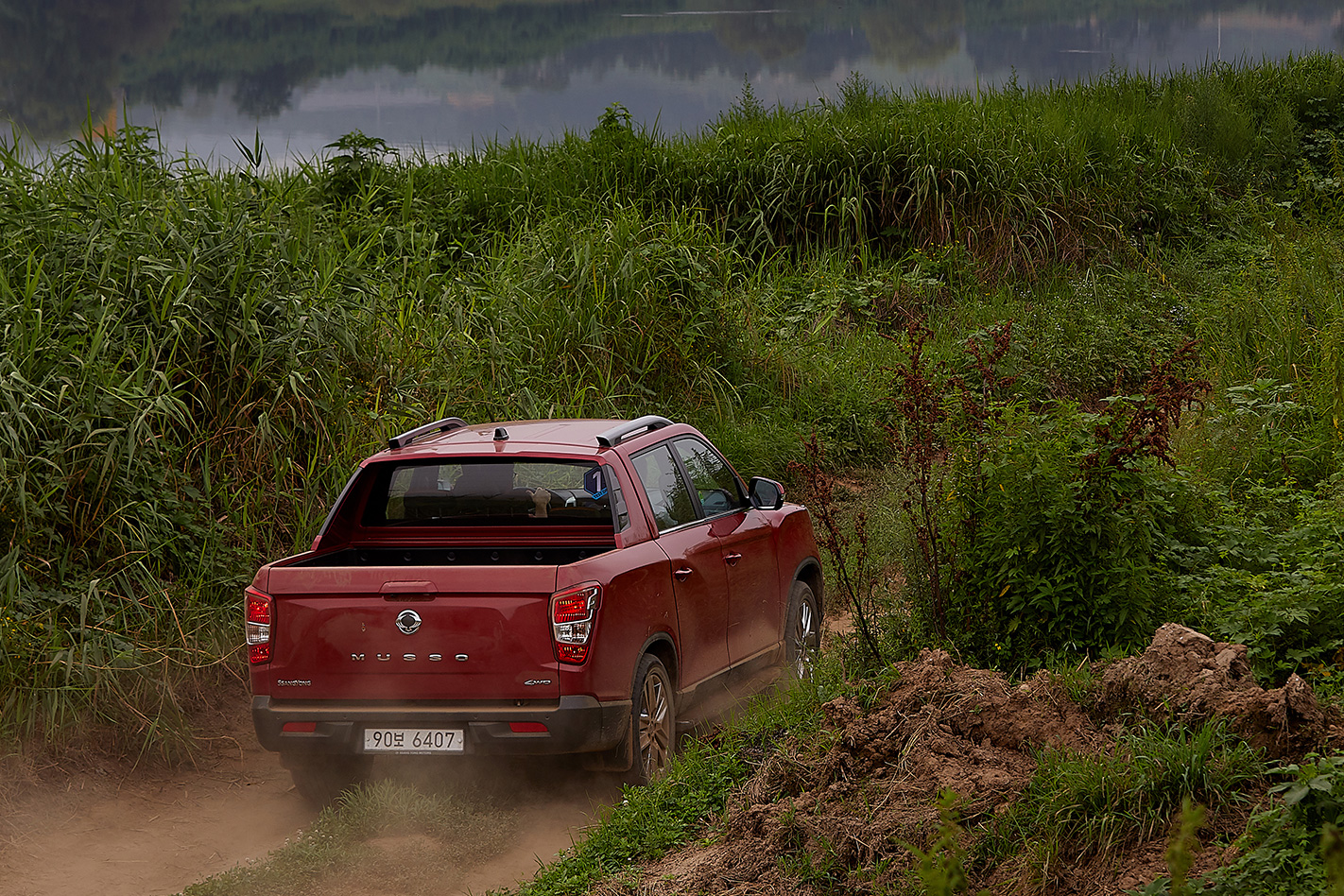
The brand is pitching itself as an SUV specialist with all models including the dual-cab possessing genuine off-road credentials – something we had a chance to sample with a detour along a swollen river near the demilitarised zone.
The loose dusty trail is ordinarily underwater at the height of the wet season but was exposed during our visit, leaving a track that was capable of bogging the rear wheels when in two wheel drive. A quick flick to all-paw with the electrically engaging transfer box and we continued along the banks.
Despite the mud it wasn’t the most challenging off-road tour and we are certain the Musso can handle a lot more. Deep ruts were not enough to beach it, a water crossing produced a decent bow-wave and some loose surfaces proved the all-wheel drive system wasn’t just along for the ride.
Surprisingly, the hard ride that made itself apparent during on-road driving seemed to soften on rougher terrain, as if the chassis tune is happier when each axle is handling different jobs simultaneously.
The limits of suspension travel were also not explored. Assessing the suitability of the coil springs for hardcore bush bashing will have to wait until the local launch in November. But if coils simply won’t cut it for ute purists, SsangYong will offer the dual-cab with a long load area and more conventional leaf springs alongside the coil arrangement. And if that wasn’t enough, a short tray version will be fitted with the independent suspension of the Rexton – an industry first.
Turning the dial to low range certainly wasn’t necessary for our brief hack off-road and we look forward to a second meeting when we can test the Musso to its all-terrain limits. The same goes for assessing its 3000kg towing capacity too.
SsangYong’s new Musso has a fighting chance to win over substantially more customers in Australia’s challenging car climate than it did under the custody of independent distributors. Not only does the company say it will be pumping more resources into aftersales and the dealer network, it will also offer a compelling vehicle that is packed with kit and comparatively handsome. If the product is right, the sales should follow.
But there’s still one variable that needs to be revealed: pricing. Once that part of the equation is in place, the reborn Musso could be something that many Australians might find hard to resist.
SsangYong Musso SPECS
Model: SsangYong Musso 4WD
Engine: 2157cc in-line 4-cyl turbo diesel Max power: 133kW @ 4000 rpm Max torque: 400Nm 1400-2800 rpm Transmission: six-speed automatic Weight: 2090kg Fuel economy: 8.6L/100km 0-100km/h: N/A Price: $ TBC On sale: November
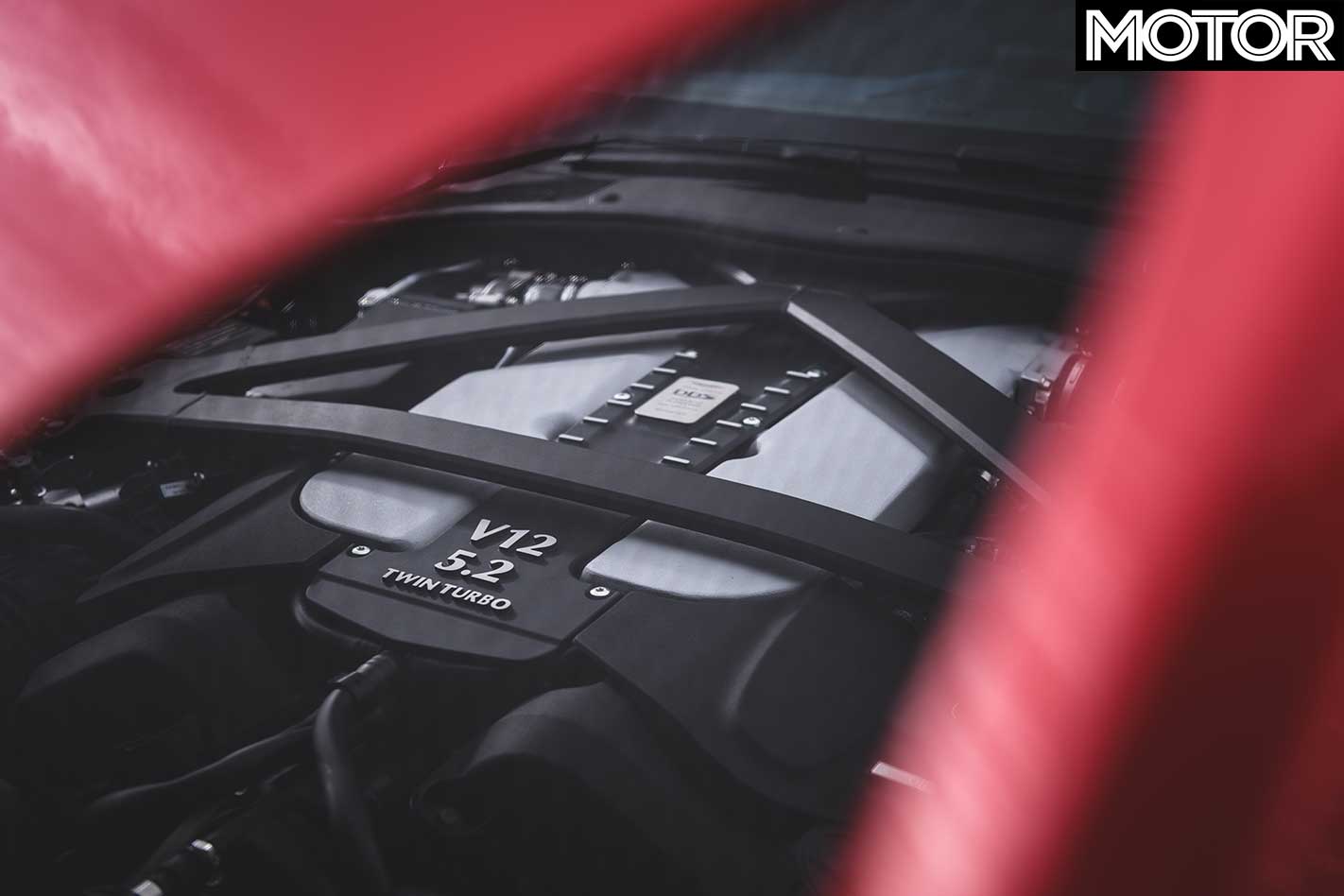
As you thumb the crystal button on the dash, the starter motor emits a high-pitched, fast-paced whirr, then there’s a deep growl as 5.2 litres of twin-turbocharged V12 erupt to life.
Very sharp ears will be able to tell it’s a V12 of Aston Martin’s creating, and not just any V12 but the one nestled below the long clamshell bonnet of the DBS Superleggera, the brand’s new halo model, one boasting rear-drive and more than 500kW.
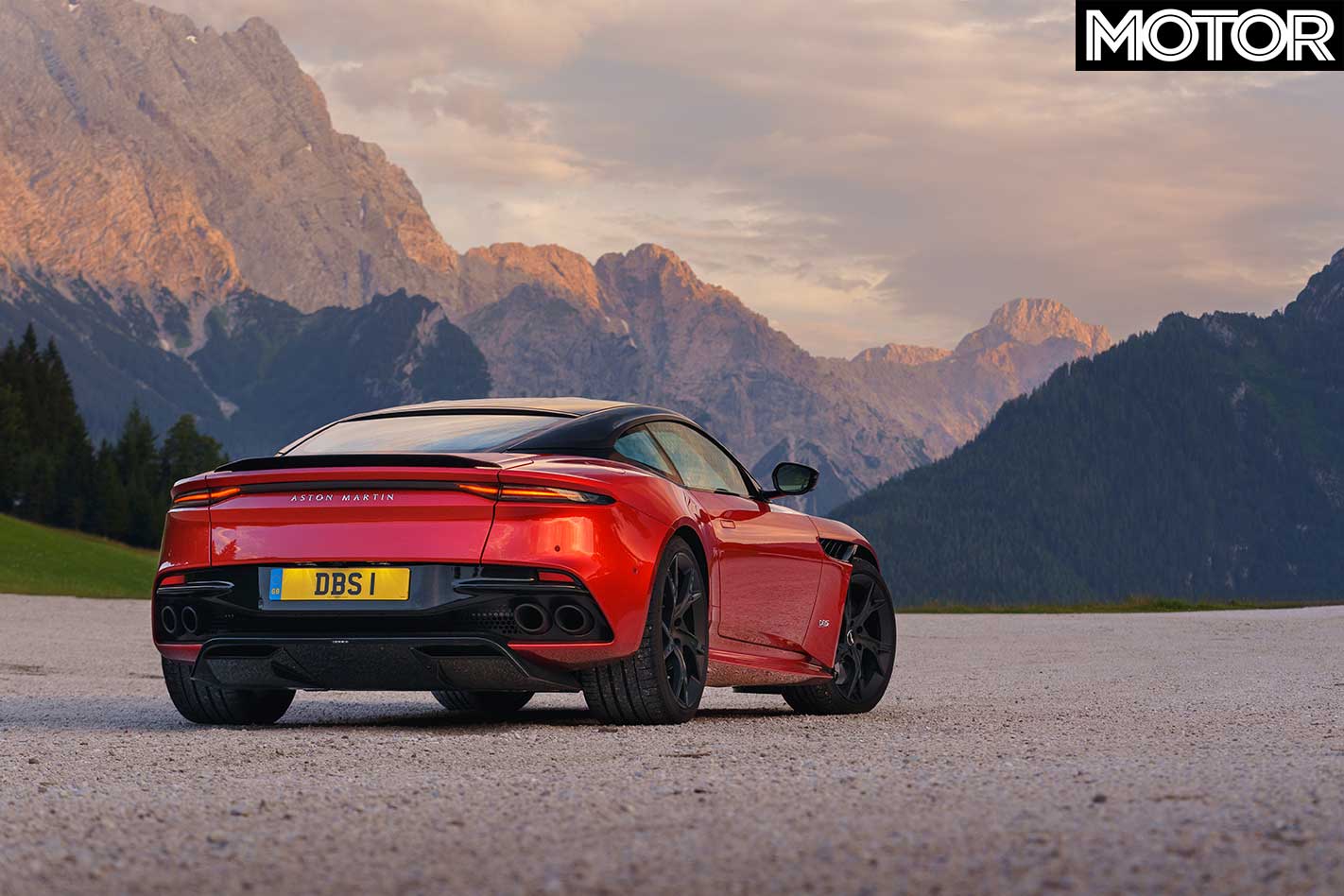
The DBS badge was first seen in 1967 and has appeared on and off since, most recently in 2007-2012, while Superleggera pays homage to the Italian coachbuilder Touring which gave the lightweight treatment to legendary Astons like the DB4.
If you’re not up to speed with how the DB11 evolved into the DBS Superleggera, read about the changes here. Basically, more boost bumps outputs from 447kW/700Nm to 533kW/900Nm; new carbon-fibre bodywork drops weight 72kg to 1693kg (dry); the whole car has been restyled, now wider and more muscular, aggressive yet elegant, more compact in the metal than in pictures.
There are bigger brakes; wider wheels and tyres; a 10dB louder exhaust; functional aero, up to 180kg of downforce at 340km/h, the DBS’s top speed. Zero to 100km/h takes 3.4 seconds, claims Aston, with 160km/h taking only another three.
There’s an eight-speed ZF automatic and a mechanical limited slip differential, the transmission mounted between the rear wheels for better weight distribution, which is 51:49 front-rear despite the big V12 up front.
As you might imagine, the DBS Superleggera is properly potent in a straight line. The torque is eye-opening, the traction control heavily trimming back the grunt in order for the rear 305s to stand any chance. But while wheelspin feels to be only ever a flex of the right foot away in the lower gears – provided the electronic nannies aren’t around – once it’s hooked up, the Superleggera charges forward in a way that will have the knuckles of passengers turning very white on the grab-handles.
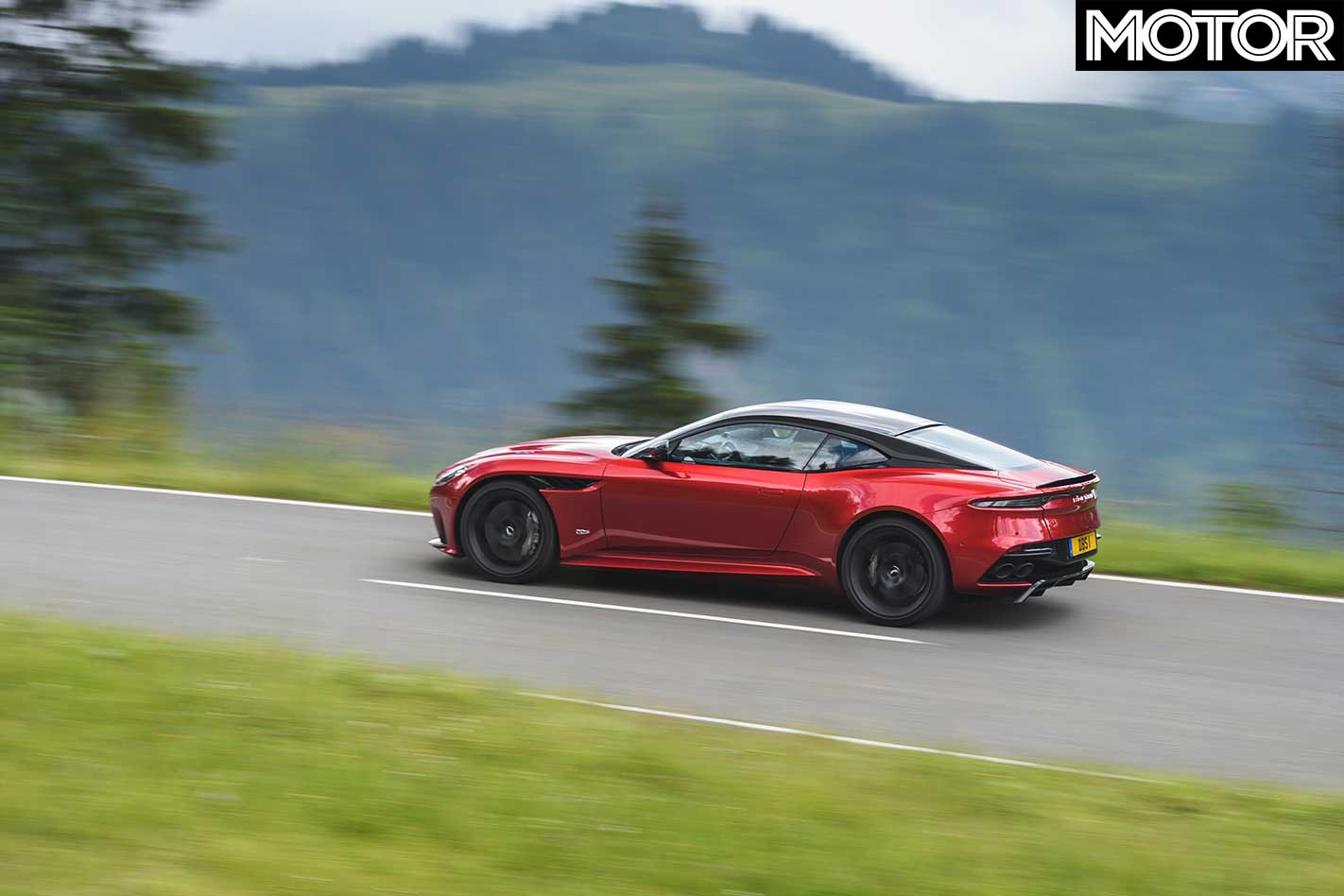
That said, while it’s staggeringly quick and nobody in their right mind would ever want for more, it doesn’t leave you power drunk like other 500kW-plus cars we’ve recently sampled, like Porsche’s 911 GT2 RS, that last dizzying sting in the tail perhaps softened, in the DBS Superleggera’s case, by the weight.
It’s the weight that never quite goes away during hard cornering, either. The DBS Superleggera is a very competent handler, with a sharper front-end than we were expecting. There are masses of lateral grip available, making this car one seriously rapid gadget up a twisting mountain road.
However, while other breakneck grand tourers like the Ferrari 812 Superfast reveal more and more handling talent the harder you drive them – making them a bit addictive in the corners – it’s possible to “fully know” the DBS Superleggera in perhaps 30 minutes of enthusiastic driving. And prior to the end of our drive, we had no strong desire to get out the Gregory’s and look up the nearest racetrack.
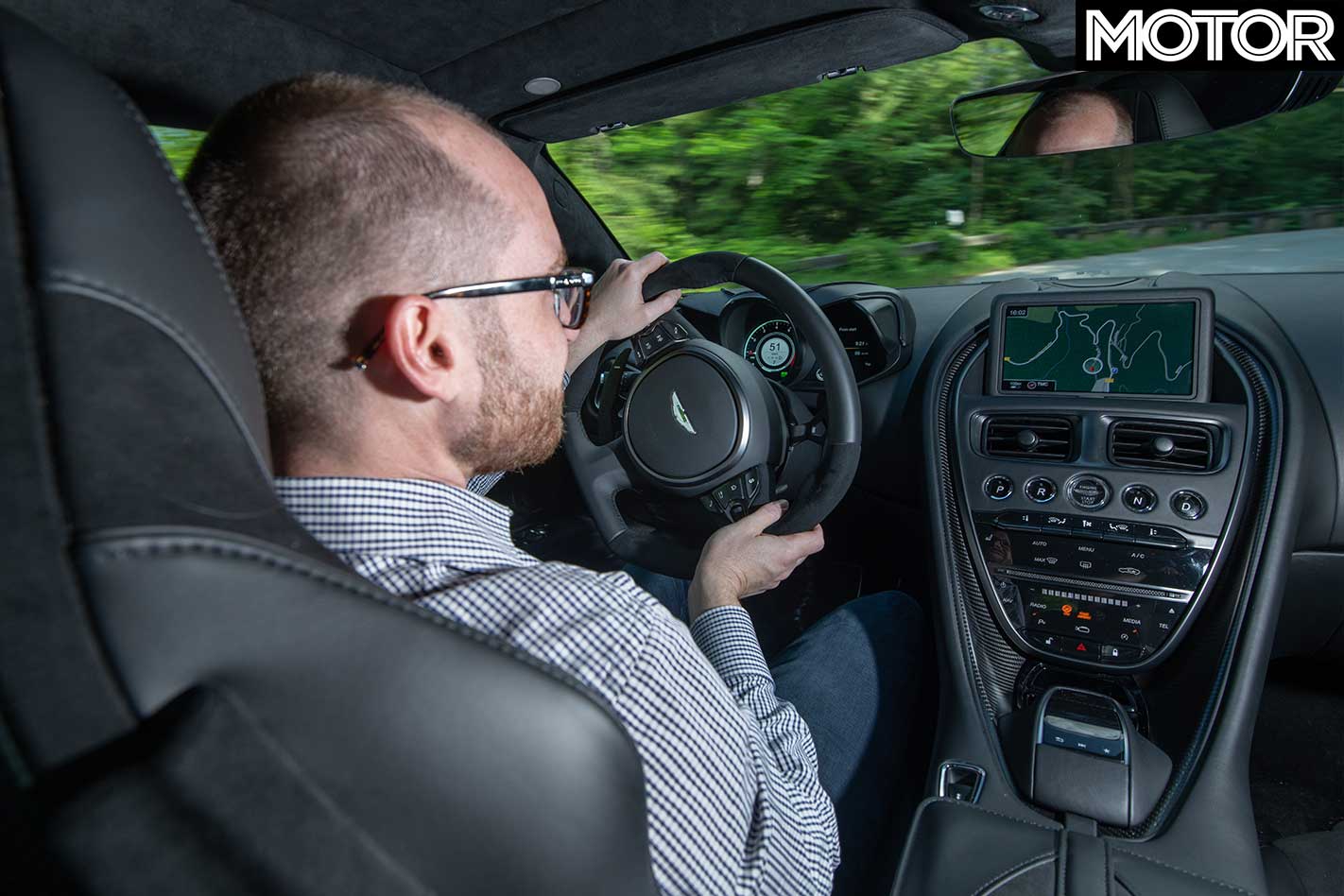
Perhaps Aston Martin should be hitting up its AMG partners for some of their brilliant new chassis electronics as the DBS Superleggera is quite heavily tethered by those of its own. In fully ‘on’ mode, using the Sport Plus powertrain setting, while you’ll get the occasional flare of wheelspin in lower gears – sometimes fourth gear if you hit the right bump – barely a degree of corner-exit yaw is given on the throttle and ESC interventions can be brusque.
Very, very sadly for us, it wasn’t until the end of our short drive on the international launch that we discovered a Track mode ESC setting buried in the menu of the instrument binnacle. So it’s very possible that in this mode – or, dare we say, the electronics fully off – that the DBS Superleggera is a screaming riot on the road. Certainly, there’s no wanting for the ability to turn the rear tyres with the throttle.
We also felt sad to be exiting the short section of autobahn that was included in our test route in Germany. That’s because this is one car that feels made for autobahn top-speed blasts, its combination of stunning grunt, aerodynamic stability and ultra-supple damping priming the confidence reserves for a crack at that 340km/h figure. However, it was not to be.
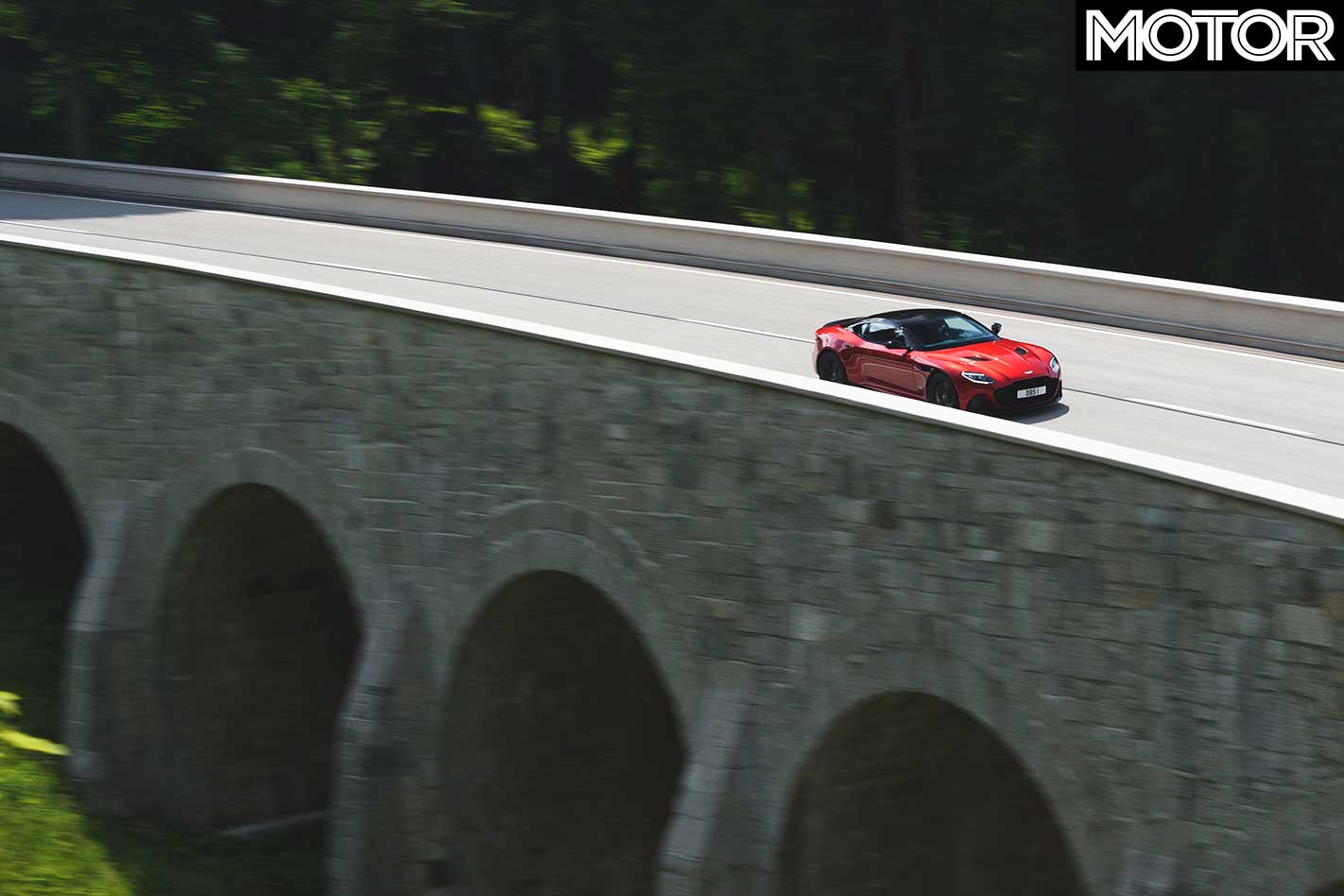
True to its DB11 origins, the DBS Superleggera is a top-notch grand tourer. The ride, despite the 35/30-profile front/rear tyres, on 21-inch rims, remains blissfully intact.
Some, attracted to the grand tourer vibe, may find the DBS Superleggera transmits a few more minor imperfections of the road surface than desirable, but during our drive, on admittedly very good German roads, not once did we wince from a bump. The Superleggera’s supple, long-stroke suspension ticks the box very well for ride comfort.
The interior is quite a nice place to be, too. Sumptuous leather abounds and you’ll find your hand automatically exploring various surfaces in the cabin. Mercedes switchgear is peppered about but works well.
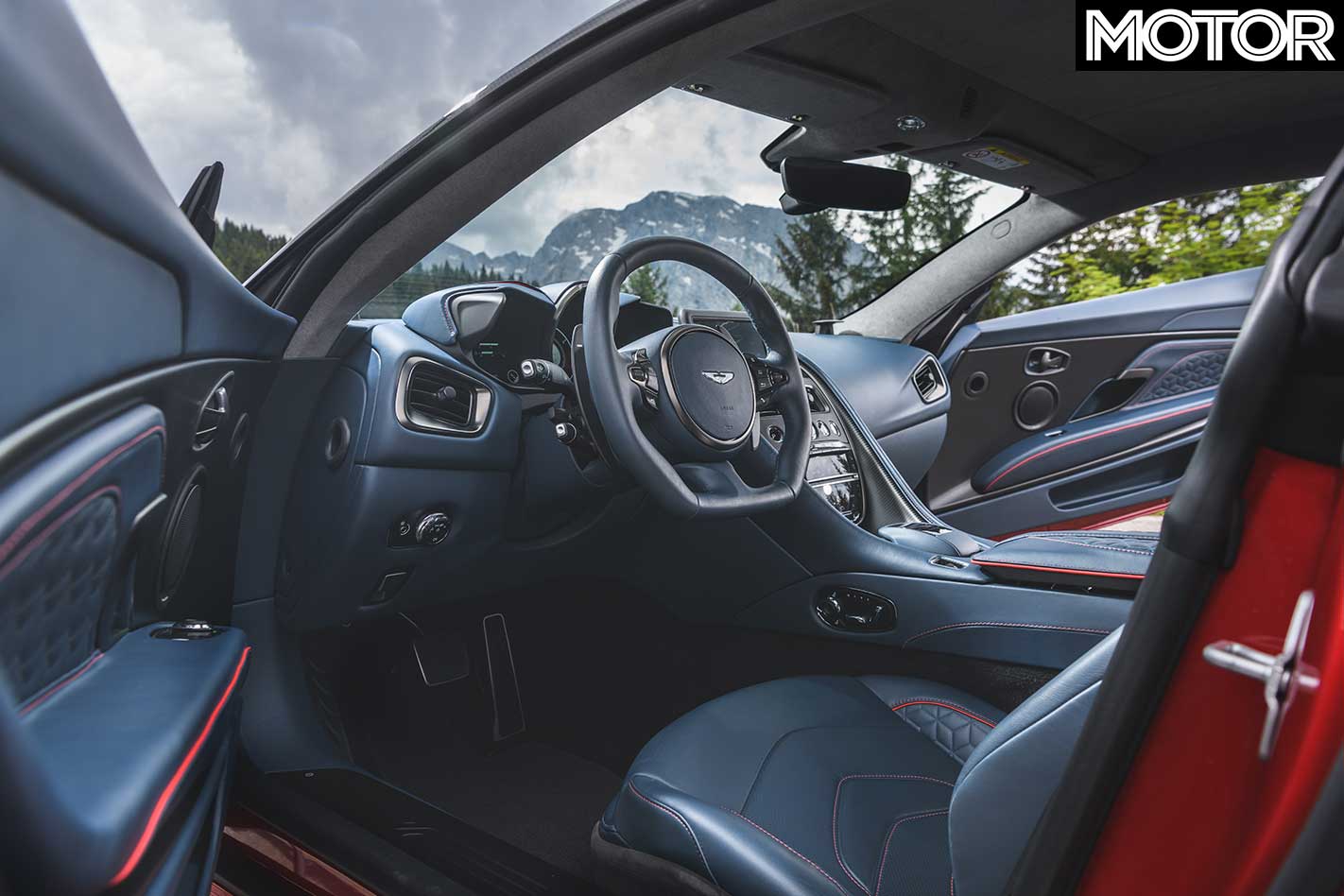
One snippet of highly subjective feedback we’d give to Aston is ditch the digital tachometer and work up something beautiful and analogue incorporating a small digital display if need be. If one car company should be the last bastion of gorgeous analogue dials, it should be Aston.
A tessellating stitching pattern used around the interior adds a special and ultra-sporting ambience and, interestingly, reminds one of Lamborghini. In fact, perhaps this is the Italian 12-cylinder brand Aston Martin should have been mentioning at the international launch; more than once it dropped the 812 Superfast into the same sentence as the DBS Superleggera.
The DBS Superleggera’s styling is pure joy to drink in and as such, it turns heads like it’s feathered. It also makes a mean noise and is a bit of an event to drive – all things you could say about an Aventador.
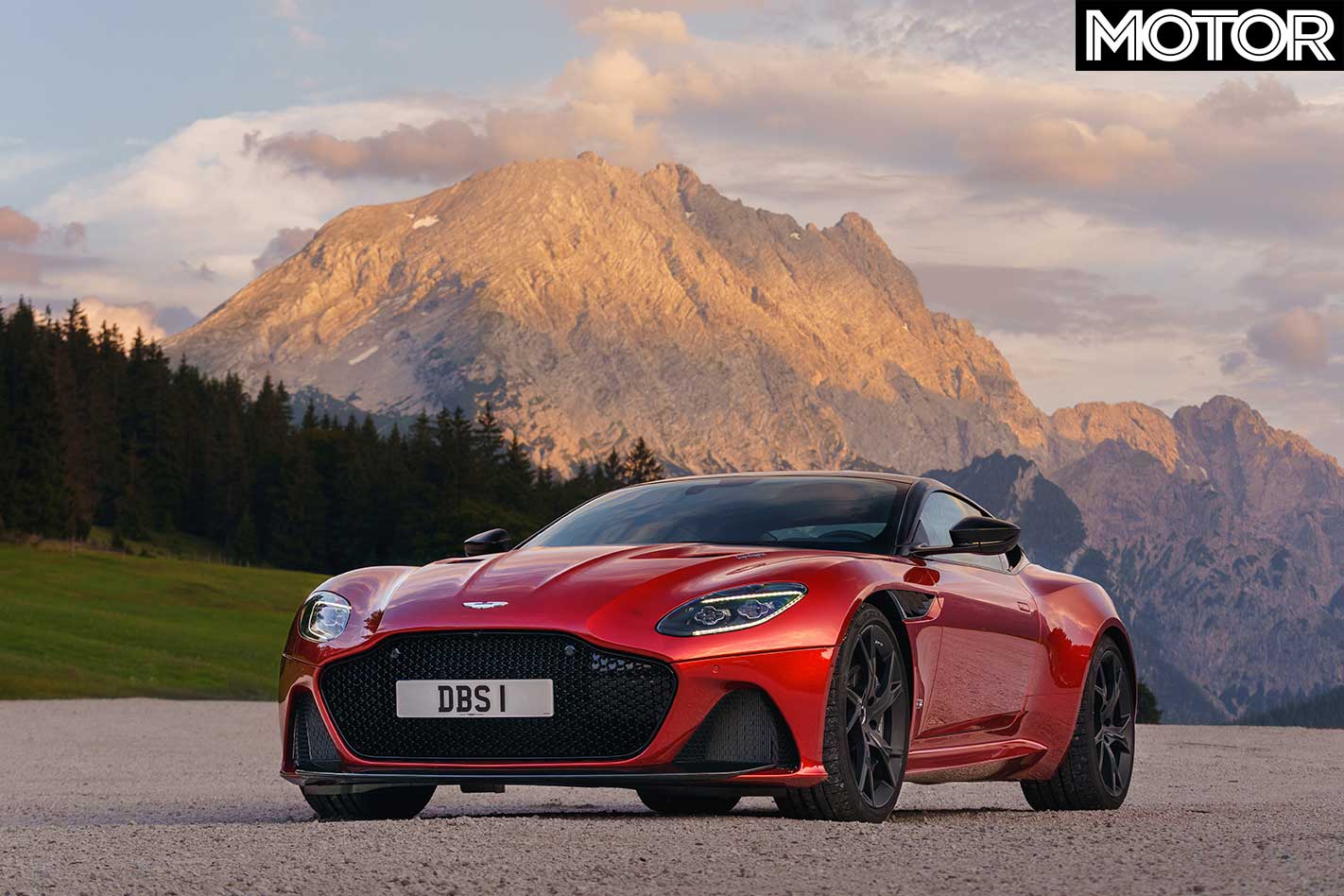
But for the price of that car, with a few options, you could just about have two DBS Superleggeras – and while you’d need a double garage for that, and perhaps your head checked, unlike the Aventador there’d be no driving around pot-holes, or swearing at the transmission.
2018 ASTON MARTIN DBS SUPERLEGGERA SPECS Engine: 5204cc V12, twin-turbo, DOHC, 48v Drivetrain: 8-speed automatic, rear-wheel drive Power: 533kW @ 6500rpm Torque: 900Nm @ 1800-5000rpm Weight: 1693kg (dry) 0-100km/h: 3.4sec (claimed) Top speed: 340km/h (claimed) Price: $517,000
Rating: 4 out of 5 stars
Say what you like about Chrysler, but you can never accuse the company of cranking out boring, generic products.
This review was originally published in MOTOR’s March 2004 issue
Eight litres and a V10 speaks for itself in the case of the Viper. And the PT Cruiser and Prowler are just bare-arsed retros. And now we get the Crossfire – a car that blurs the retro line with its hot-rod meets high-tech looks and what are probably the most sophisticated underpinnings to grace the grimy side of a Chrysler to date.
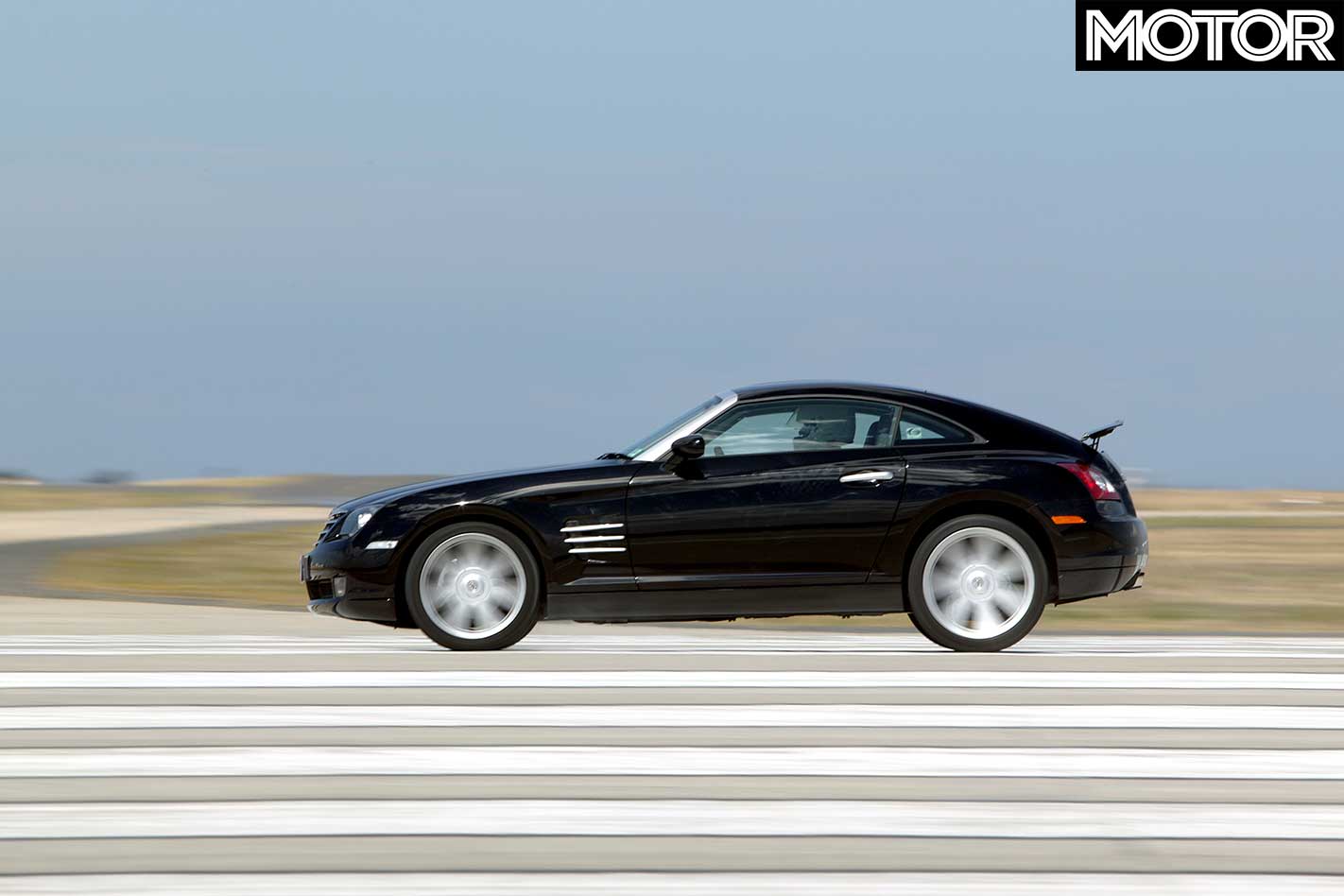
Inside, and we’re off to Europe with plenty of Mercedes-Benz thinking and styling in evidence in everything from the dash layout to the grain in the plastic trim. And while the Crossfire is very possibly the only Chrysler in the world that doesn’t have even a single cup-holder to its name, it’s equally true that the Germans appear to have taught the Seppos a thing or two about build quality and interior fit and finish.
But is the Crossfire’s Teutonic content merely the result of the Daimler-Chrysler merger a few years back? The reality is that the Crossfire is more or less a Benz SLK below the sills.
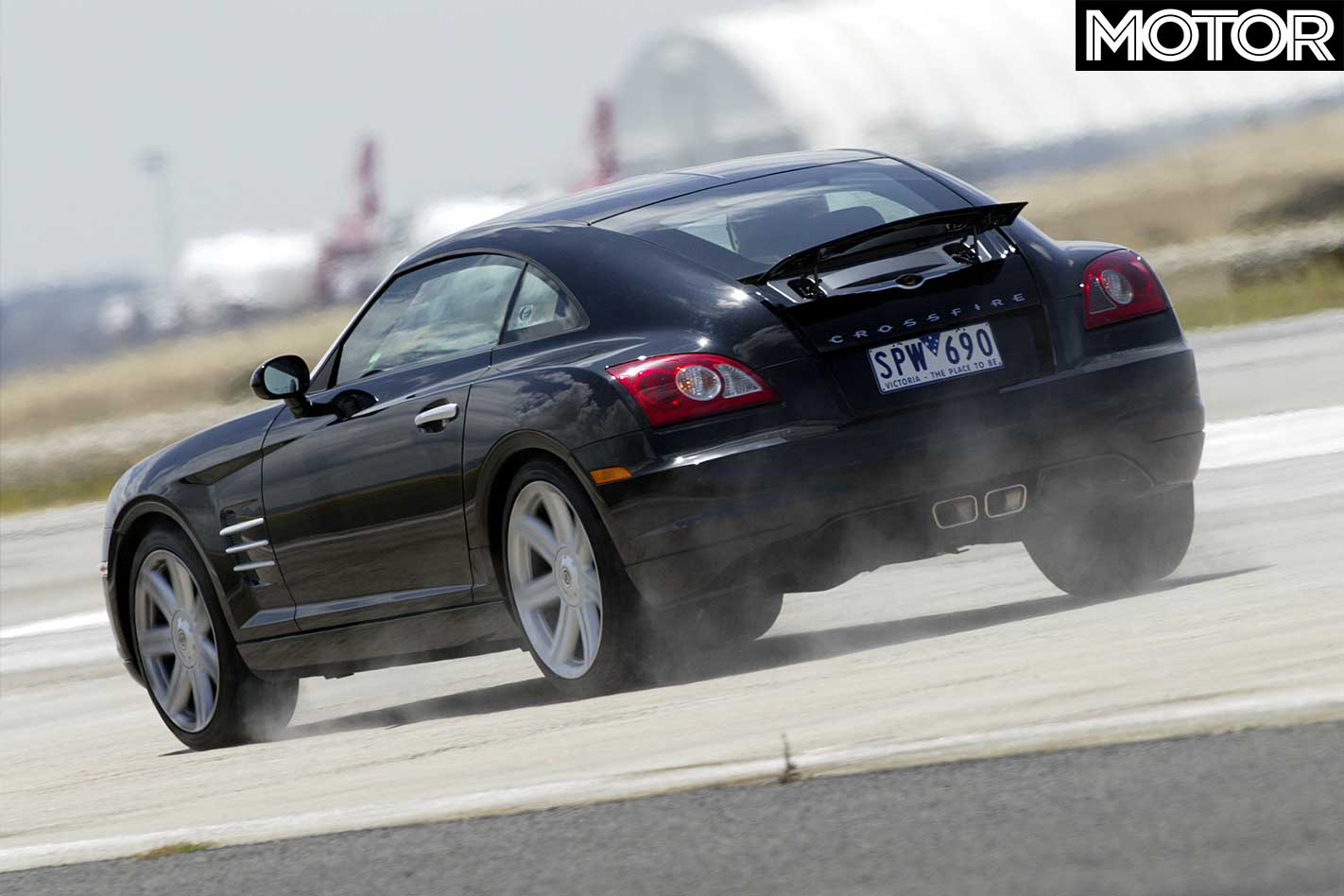
The engine, tranny (although there’s a manual option in the Crossfire we don’t get in the Benz roadster) and rear suspension are definitely SLK derivatives, and there’s plenty of speculation that the front suspension is ditto.
You still get the nice initial ripple absorption that suggests a soft set-up, but things deteriorate a little as the bumps get bigger in amplitude and the Crossfire’s travel begins to get used up. It stays flat, though, and you get the feeling that it’s really only those low-profile, fat hoops that are making the thing feel like it’s hopping about a bit.
There’s just enough squat from the multi-link rear end to ensure that there’s always plenty of powerdown and the sensation that it’s really on your side. Similarly, the front end displays oodles of grip and it points superbly, with a slight deadness in the steering at the straight-ahead evaporating with lock to reveal truly faithful turn-in.

The driveline feels a bit rubbery, like there’s a bit of preload or something (or little in the way of flywheel), and the long-travel clutch has bugger all feel and is a bit difficult to modulate at first. But the gearshift is superb, with an oily, mechanical feel and short, sharp throws that are dolt-proof.
The V6 measures Benz’s current 3.2 litres and it’s good for 160kW at 5700rpm (redline is at 6000) and a meatier-than-it-sounds 310Nm at 3000rpm. Despite the relatively tall sixth gear (2200rpm equals 100km/h), the torque sends you blatting forward even up slight grades in top and there’s better than average throttle response.
It’s an entertaining gadget and, at $69,990, represents a fat drive and a big pile of style for the quids.
FAST FACTS 2004 Chrysler Crossfire Engine: 3.2-litre SOHC 18-valve V6 Power: 160kW Weight: 1388kg Drive: rear-wheel Price: $69,990
