
Set to debut in 2019, the Porsche Taycan finally has a few confirmed core elements on its spec sheet.
Producing more than 440kW, the all-electric four-door’s output have been confirmed by Porsche to line up with those initially reported by MOTOR’s European correspondent Georg Kacher.
Also confirmed for the Taycan is the 500km range, the 800V voltage capacity for the electric sports car, and the sub-3.5 second 0-100km/h time.
On top of confirming these key details, Porsche has also released a great deal of information regarding the development and further intentions for its electric future.
With €6 billion (AUD$9.47 million) to be invested by Porsche into electric mobility by 2022, it’s clear Porsche is serious about making electric cars for keen drivers.
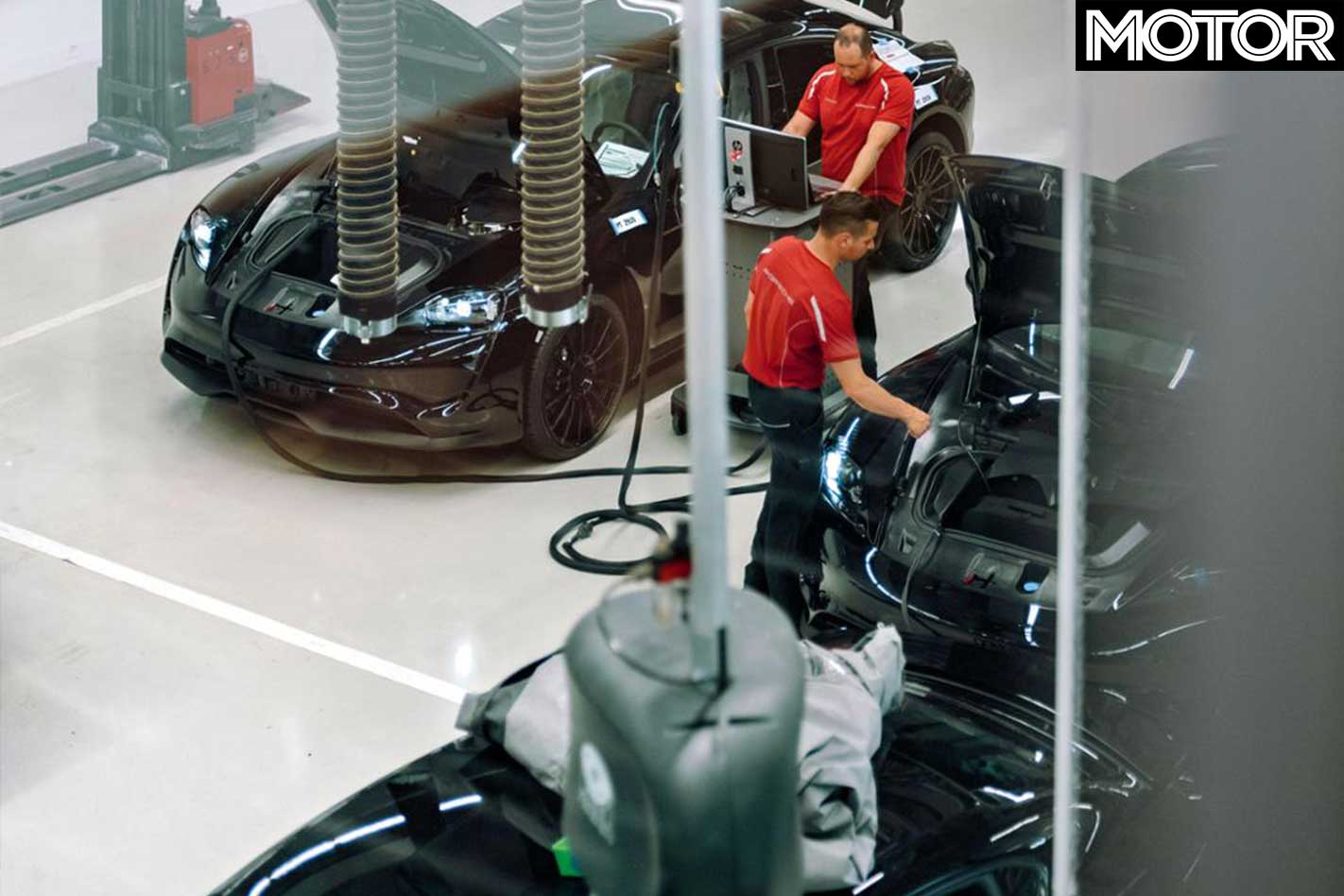
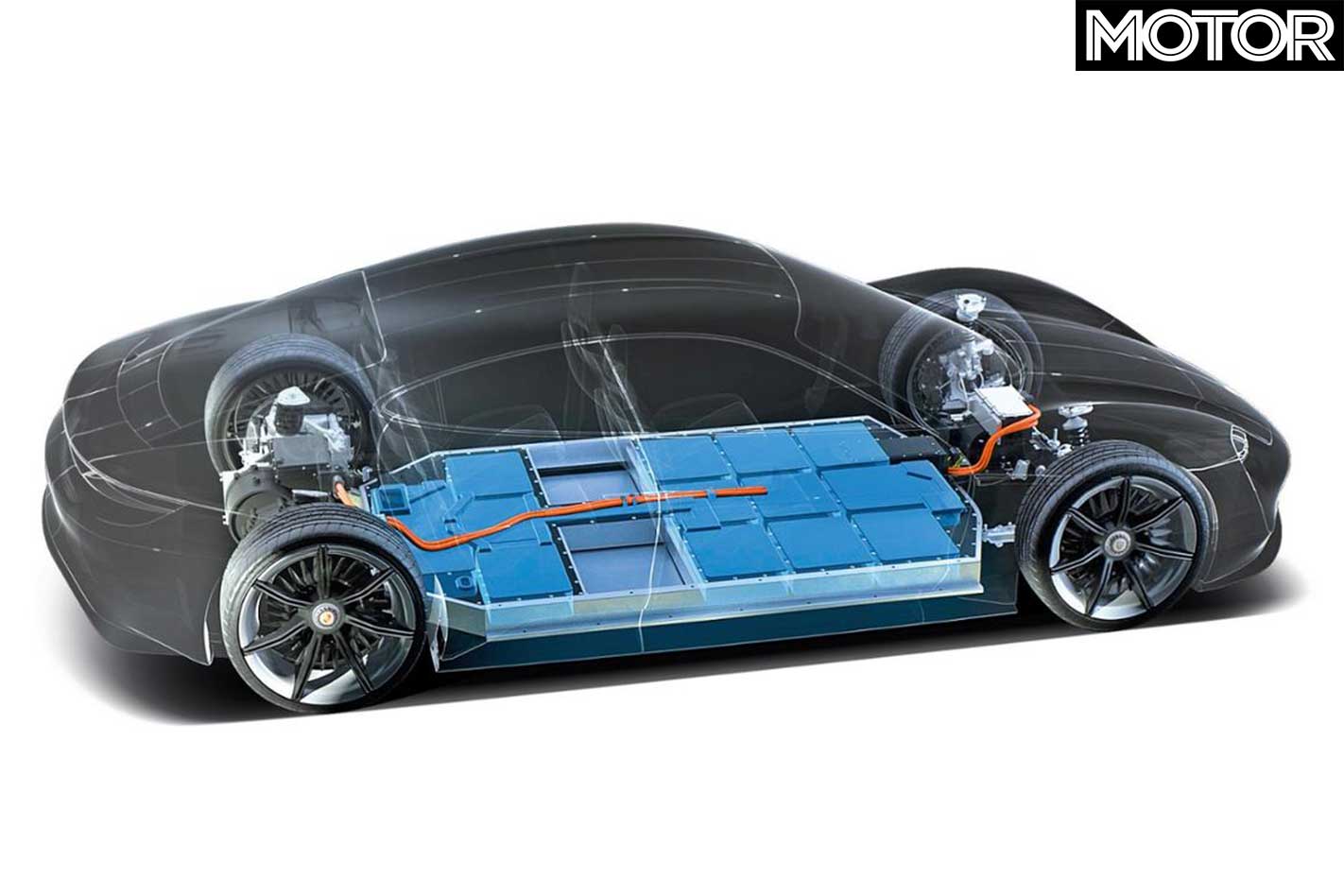
For its intentions, Porsche admits that there are three major obstacles to overcome: the weight, the temperature, and the availability of raw materials.
“It was a major challenge to achieve such enormous battery capacity both for charging and discharging over the entire temperature range,” says Nora Lobenstein, head of energy storage systems at Porsche.
That temperature range, Porsche says, is between 20 and 40°C. Additionally, due to the battery design, the Taycan can achieve a charge good for 400km in just 15 minutes.
To help achieve this, Porsche believes a model of ‘plug in and charge fast’ is necessary, with an idea to build regular fast-charging points along main traffic arteries.
Porsche hopes that, by 2020, ‘customers will gain access to thousands of brand- and capacity-independent “high-power charging” (HPC) points’.
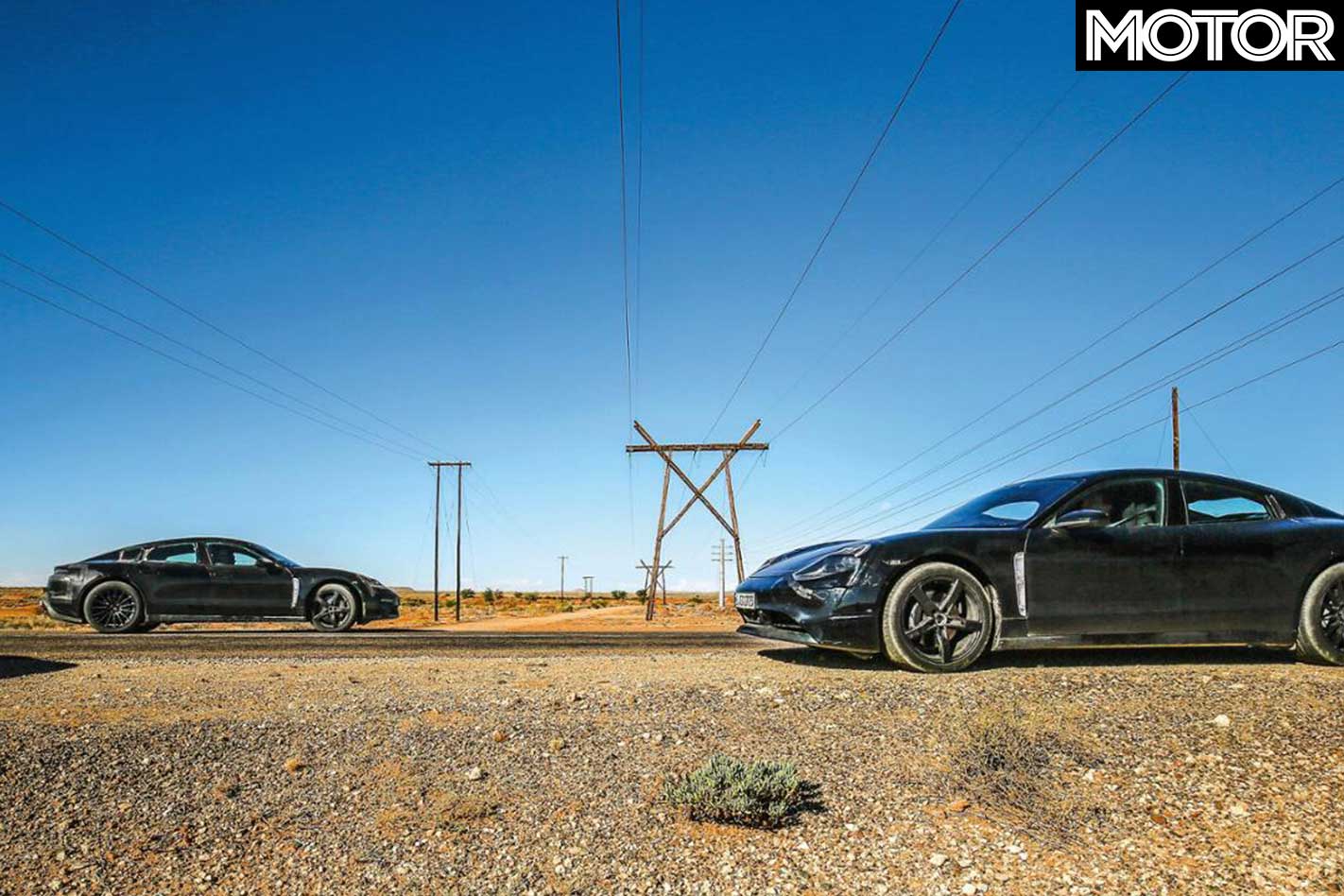
While the Taycan and its technology is still being developed, Porsche says ‘hundreds’ of Taycans are already undertaking ‘intensive testing tours in extremely hot and bitterly cold regions of the world’.
Stay tuned for our first drive in the Porsche Mission E Cross Turismo, featured in the August 2018 issue of MOTOR Magazine.
HOLDEN Special Vehicles (HSV) has extended the warranty period offered on its Colorado dual-cab ute-based Sportscat models.
HSV will now sell the Sportscat, and the pricier Sportscat+, with a five-year, unlimited kilometre warranty as standard, along with five-year roadside assistance.
The improved warranty package will be available on both new and demonstrator Colorado Sportscats sold locally on, or after, July 1.
“The decision was motivated by two things,” HSV spokesman Damon Paul told WhichCar.
“One, the movement of Holden [to a five-year standard warranty], given that we share the same donor vehicle, but I think largely it’s driven by the positive response we received to the five-year warranty promotion we offered on Sportscat models through June.”
HSV’s dual-cab offerings sit at the premium end of the booming segment, doing battle with the likes of Volkswagen’s V6 Amarok, Mercedes-Benz’s X-Class, and the recently launched Ford Ranger Raptor.
The entry-level Sportscat variant costs $60,790, while the more highly specified Sportscat+ carries a $66,790 price tag.
Additions over a regular Holden Colorado for the Sportscat duo include unique grilles, fascias, fender flares, wheels, tailgate, hard tonneau and sail plane, along with HSV sports suspension, a de-coupling rear anti-roll bar, AP Racing brakes and 18-inch forged alloy wheels. The Sportscat+ also gains SupaShock suspension.
Paul told WhichCar that HSV’s latest product has performed well during its first five months on sale.
“We have been really delighted in the way Sportscat models have been received by the public,” he explained.
“It’s a new model, in a mature segment, and the feedback that we have received from dealers, and the sales figures thus far and the levels of inquiry our dealers have been receiving are positive.”
The Sportscat and Sportscat+ aren’t the largest dual-cabs offered by HSV, with the brand converting and selling Chevrolet Silverado’s locally, with the large American pick-ups offered with a three-year, 100,000km warranty in Australia.
HSV would not comment on what warranty will be available for the Chevrolet Camaro sports car when that goes on sale locally later this year.
Audi has announced it will reveal its next show car, the electric Audi PB 18 e-tron, on August 23 during the Pebble Beach Car Week.
The car’s reveal time makes up the ‘PB 18’ part of its name (Pebble Beach 2018), though its initial reveal will take place at Laguna Seca, followed by a showing at The Quail the following day, and then finally on August 26, at the Concours d’Elegance in Pebble Beach.
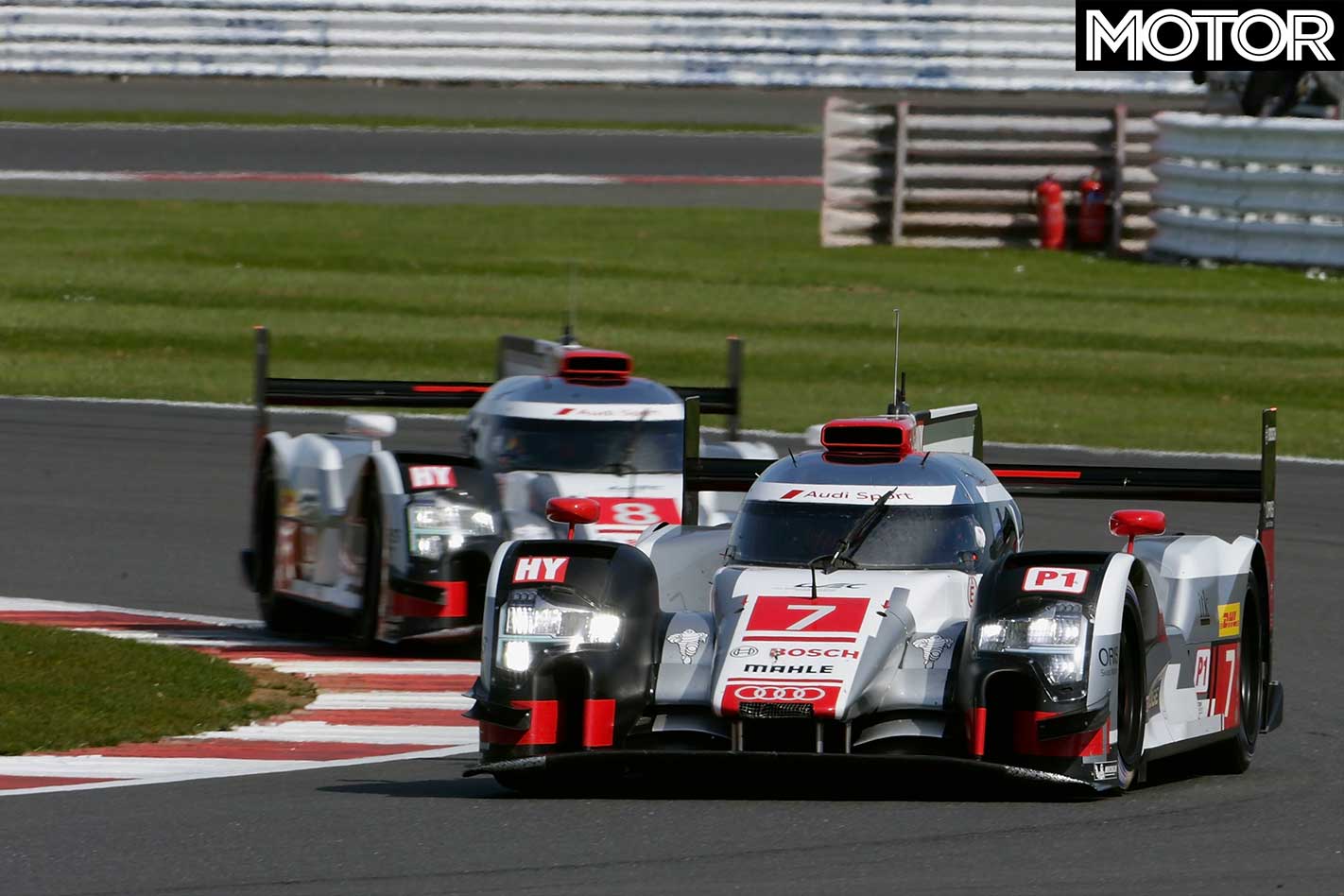
The design is also influenced by the similarly-named Audi R18 e-tron which competed in the FIA’s World Endurance Championship for several years.
While there’s speculation that this is the ‘next Audi R8’, MOTOR’s European Editor Georg Kacher recently revealed to us that there will be no direct replacement for the Audi R8 once it’s gone, and that the fully electric R8 e-tron is no longer under development.
“There will be no direct replacement for the slow-selling R8 which is going to be phased out in late 2020 when the new Huracan based on the promising carbon-fibre monofuselage matrix arrives,” Kacher said.
“Also dead are the proposed zero-emission R8 e-tron and the Scorpion supercar powered by a 1000bhp V8 boasting a high-tech desmodromic valve train redlined at 13,000rpm.”
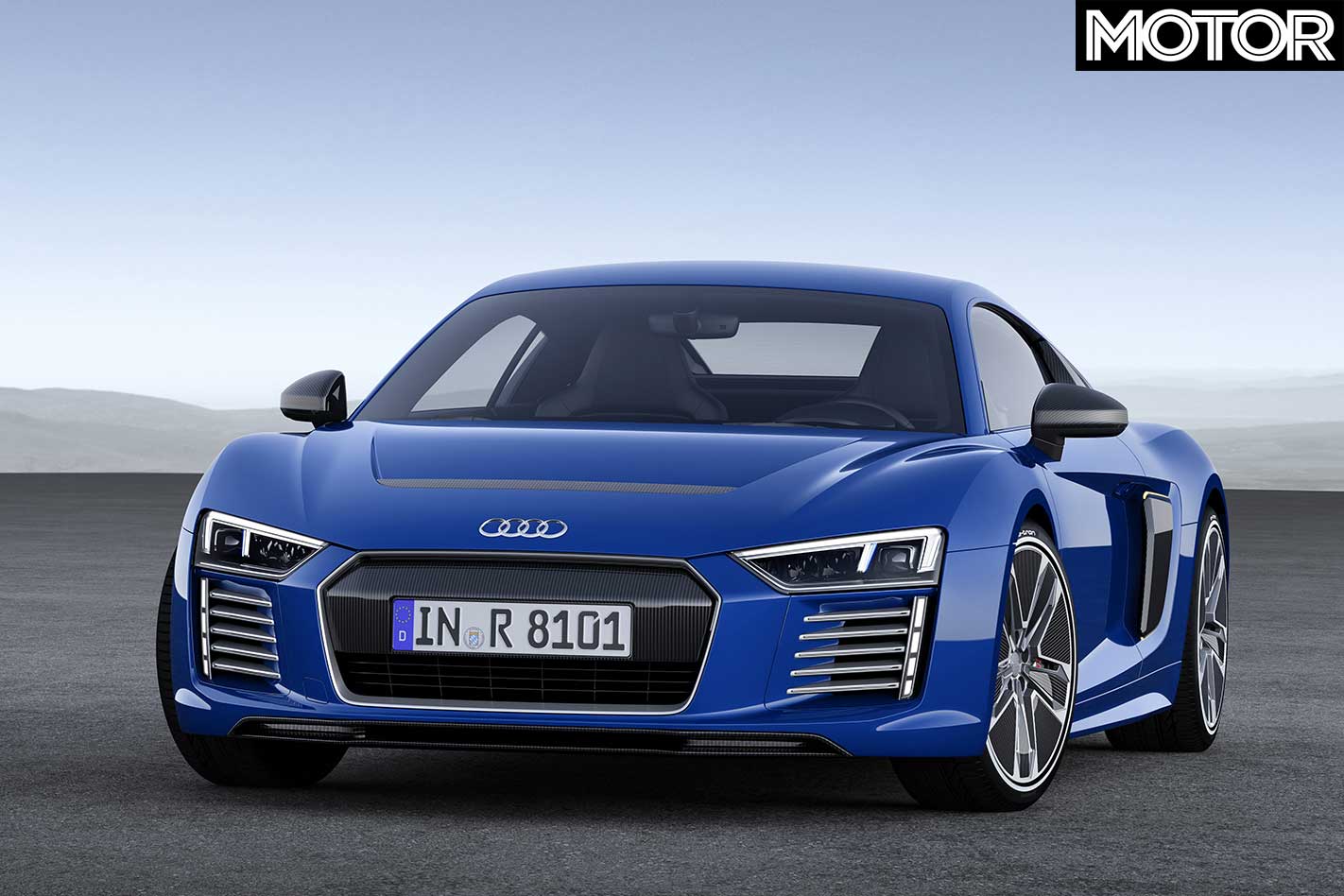
But Audi’s electric future is still set to pick up pace quickly as the brand’s E GT project (also known as J1, after the platform it shares with the Taycan) nears realisation.
Audi and Porsche are also jointly developing three versions of a new all-electric matrix dubbed ‘PPE’, according to Kacher.
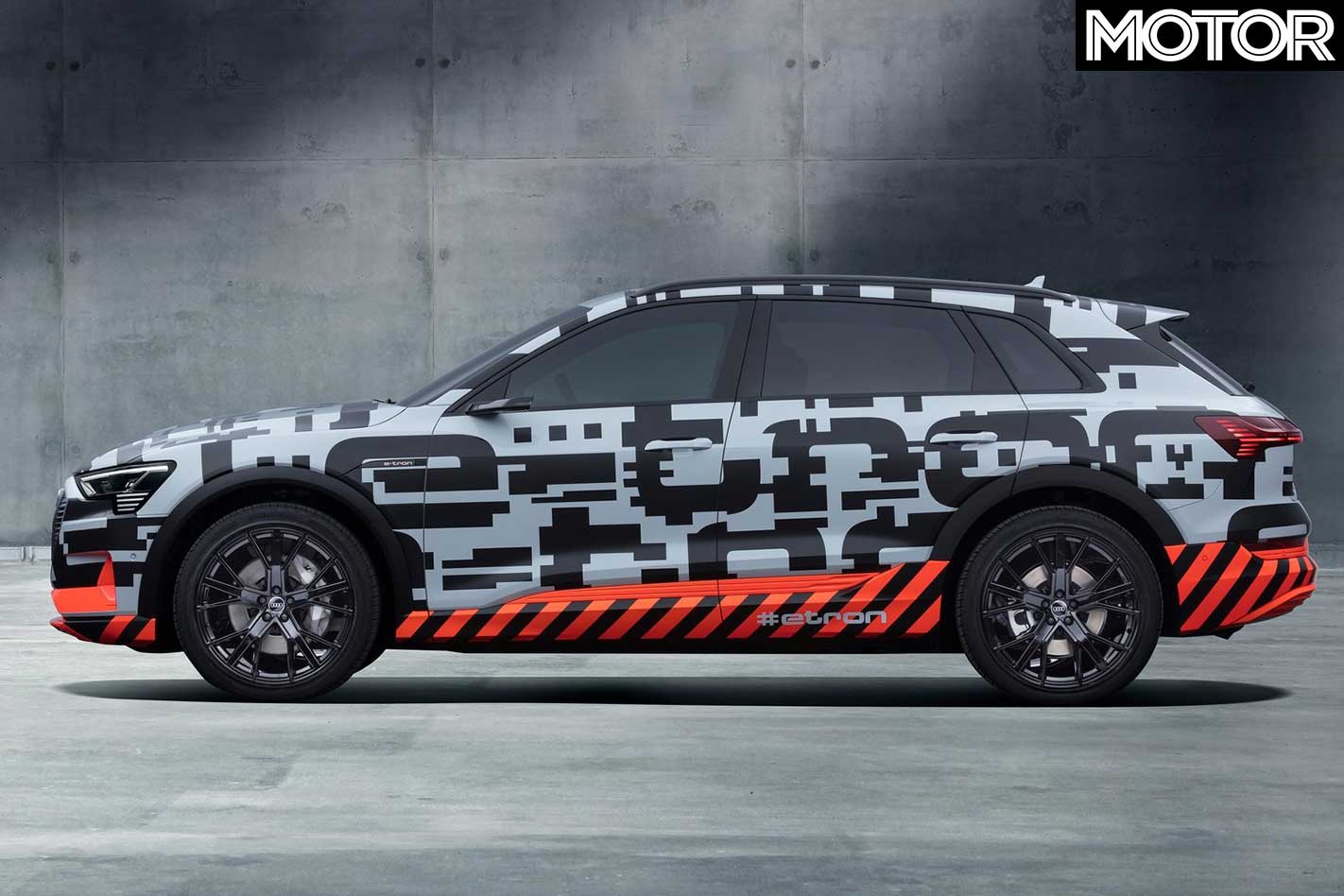
“Insiders expect this… to include S and RS versions of E5 (electric A5), E7 (electric A7) and EQ5/6/7/8/9 (all electric crossovers).
“Not surprisingly, the power boost that must come with every RS offering is fuelled (we’re not sure if Kacher intended this to be a pun) by high-performance batteries and more potent E-motors.
But Kacher also says not to expect a fully electric sports car from Audi, meaning the PB 18 e-tron will likely remain a concept.
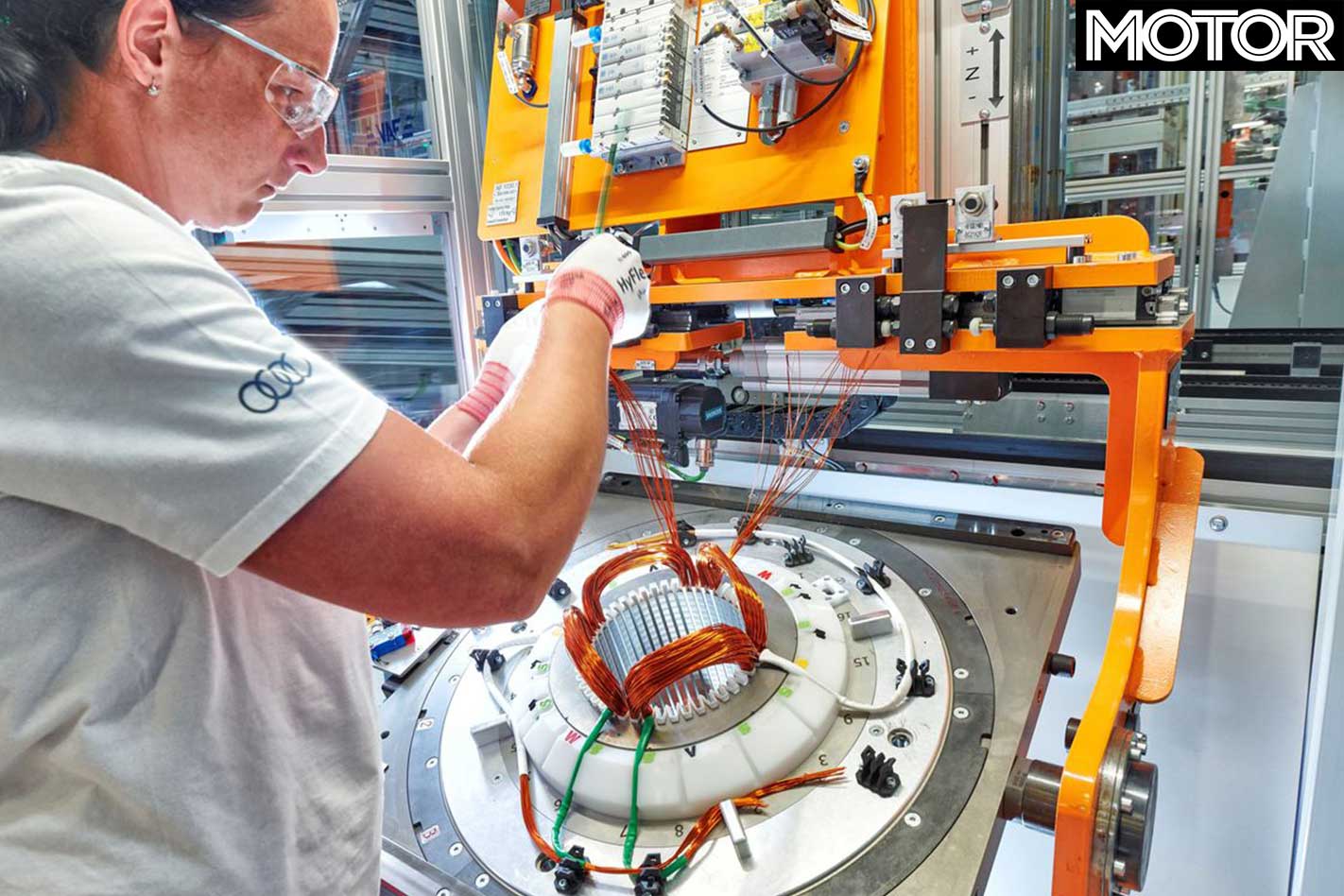
“Such a derivative [an electric Audi sports car] would have to be dialled in from the outset to the so-called SAZ (sports car architecture of the future) which is being compiled in Weissach as you read these lines.
“The first jointly conceived overtly sporty BEV may be a compact two-seater set to eventually replace both the Audi TT and the 718 Boxster/Cayman. The timing of this project is still unclear.
“Sources suggest that there will be one more redesign of the conventional models before the silent sports cars put in an appearance in 2025/26.”
SOME of the late Ayrton Senna’s greatest racing moments which have been lost to time are being recreated by a bunch of passionate artists with the help of visual technology.
When star Brazilian driver was at his peak in the late ‘80s and early ‘90s in Formula 1, coverage of the sport wasn’t what it was today.
Where modern grands prix have non-stop television coverage with hundreds of on-board and trackside cameras, along with a small army of professional photographers littered around the circuit, during Senna’s heyday certain moments could go unseen altogether.
These included two iconic events from Senna’s career; his breathtaking pole lap at the ’88 Monaco Grand Prix, and his pass on Nelson Piquet at Imola a race prior.
But now, thanks to modern technology, we can see how they transpired.
Unique & Limited, an art studio from Prague, tasked itself with the job of recreating a still image of Senna’s pass on Piquet at the San Marino Grand Prix, a bold move which went uncaptured by trackside photographers or TV cameras.
The team conducted extensive research on track layouts and details in order to accurately represent the moment of history, going so far as to Senna’s mechanic at the time.
Then, using 3D renderings, the studio comprehensively revived the moment in a striking image.
Road and Track have published an in-depth feature on the creative process behind the recreation, with the artwork able to be purchased for an undisclosed amount.
Earlier this year, McLaren took it upon itself to recreate Senna’s pole lap from the 1988 Monaco Grand Prix, which despite its status as one of the greatest single laps in F1 history was never caught on film.
The lap has become a legend in racing folklore, with Senna wrestling the McLaren MP4/4 on qualifying boost to pole position by a margin of 1.2 seconds over teammate Alain Prost. The Brazilian was 2.6-seconds quicker than the best non-McLaren driver.
On-board television cameras were in their infancy at the time of the ’88 lap, and weren’t used for that race. Footage from the 1990 Monaco Grand Prix is often mistakenly used as a stand-in for footage from ’88.
Although the qualifying session was broadcast in certain regions of the world, television cameras didn’t pick up Senna’s 1:26.464 lap.
In conjunction with Codemasters, McLaren produced a digital recreation of the event, commentated by the voice of F1 himself, Murray Walker.
However, not every Senna revival is recreated equally, with watchmaker TAG Heuer attempting to bring the Brazilian back to life as a hologram for a press event in 2015.
The company used technology which had allowed a Tupac hologram to perform at the Coachella music festival in 2012. The end result was an awkward interaction between Fernando Alonso and the Senna hologram which falls deep in the uncanny valley.
After a near three-year retail hiatus on our shores, SsangYong is ready to rekindle its local presence, with four fresh models lined up to lead the Australian resurrection late this year, followed by a fifth in 2019.
The South Korean car maker has now confirmed that three SUVs and a dual-cab ute will form the foray battalion from November, when it takes the reins from previous custodian Ateco as part of a multi-pronged factory-backed attack on our fearsomely competitive market.
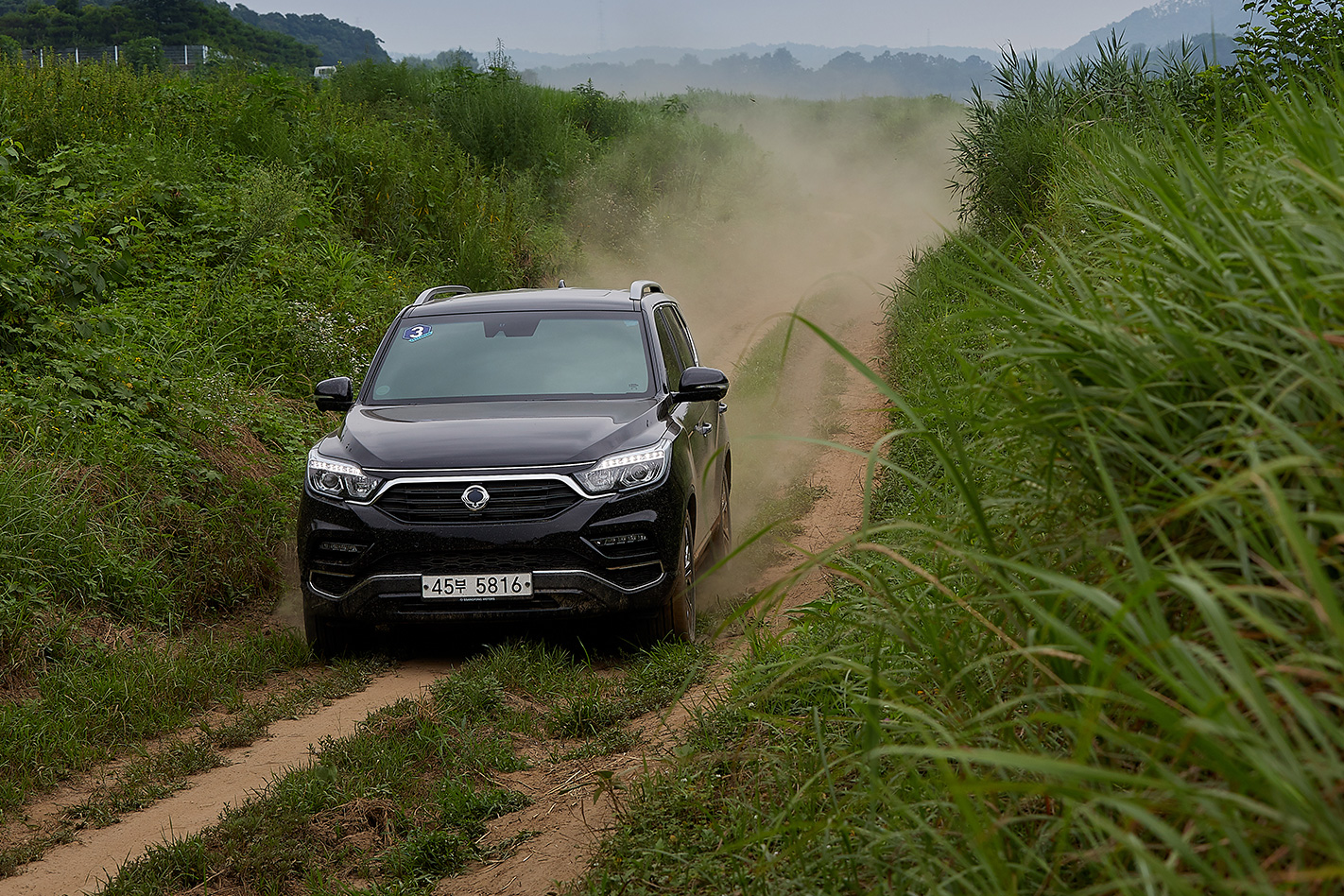
Significantly, it will be the first time SsangYong vehicles will be sold directly from the company, and not via an independent distributor, outside its native South Korea – a statement of intent and commitment, says the company.
Leading the charge will be the Musso dual-cab ute, which will attempt to steal a chunk of the action in the snowballing one-tonne arena. The mechanically related Rexton will look after the large SUV end of the market, while the Tivoli will compete at the more compact end against the likes of Kia’s Sportage, with a stretched version dubbed the XLV bringing a bigger boot.
Exact local specifications and pricing are yet to be confirmed, although company executives revealed that SsangYong will be bargaining hard with prices that are as much as “7.0 percent cheaper” than rival brands and no more than equal cash at the pricier end of each range.
The brand is pitching itself as an authority in off-roaders with each model arriving with all-wheel drive as standard, including the Musso which packs a 2.2-litre e-XDi220 four-cylinder turbodiesel packing 133kW and 400Nm.
Power is fed though a six-speed automatic transmission to switchable four-wheel drive with low-range and a locking rear differential for more all-terrain ability, while six airbags, 360-degree camera, keyless entry/start and Nappa leather are all available.
Like Nissan and Mercedes, which have made much of the coil-sprung rear axle fitted to their mechanically=related Navara and X-Class utes, SsangYong’s Musso will offer coil sprung rear end.
Sharing its platform with the Rexton, a short-tray version of the Musso will offer a more car-like multi-link independent suspension set up with coils, while the long-tray version will be on offer with either five-link coil spring live axle or more conventional leaf-sprung set up.
An engine update is expected before 2022 which will boost power to about 150kW and 440Nm for both Musso and Rexton.
The Rexton shares its diesel engine, but has a seven-speed auto that allows the torque to be pumped up to 420Nm and a host of extras to boost safety and interior comfort. Driver-assistance systems are available, including AEB, while nine airbags surround the cabin including driver’s knee type. Creature comforts include heated and ventilated electrically-adjustable front seats, heated steering wheel, and a central 9.2-inch touchscreen complemented by a second 7.0-inch digital display between the gauges.
The smallest end of the new SsangYong range will be occupied by two mechanically identical models with dramatically different names. The Tivoli small SUV differs from its XLV sibling only in boot size, with the latter offering a longer tail and larger luggage area.
In its native Korea, the Tivoli and XLV are powered by a choice of 1.6-litre diesel or petrol engines with 85kW/300Nm and 94kW/160Nm respectively, but both are likely to be updated next year with a new 1.5-litre turbo petrol for greater efficiency.
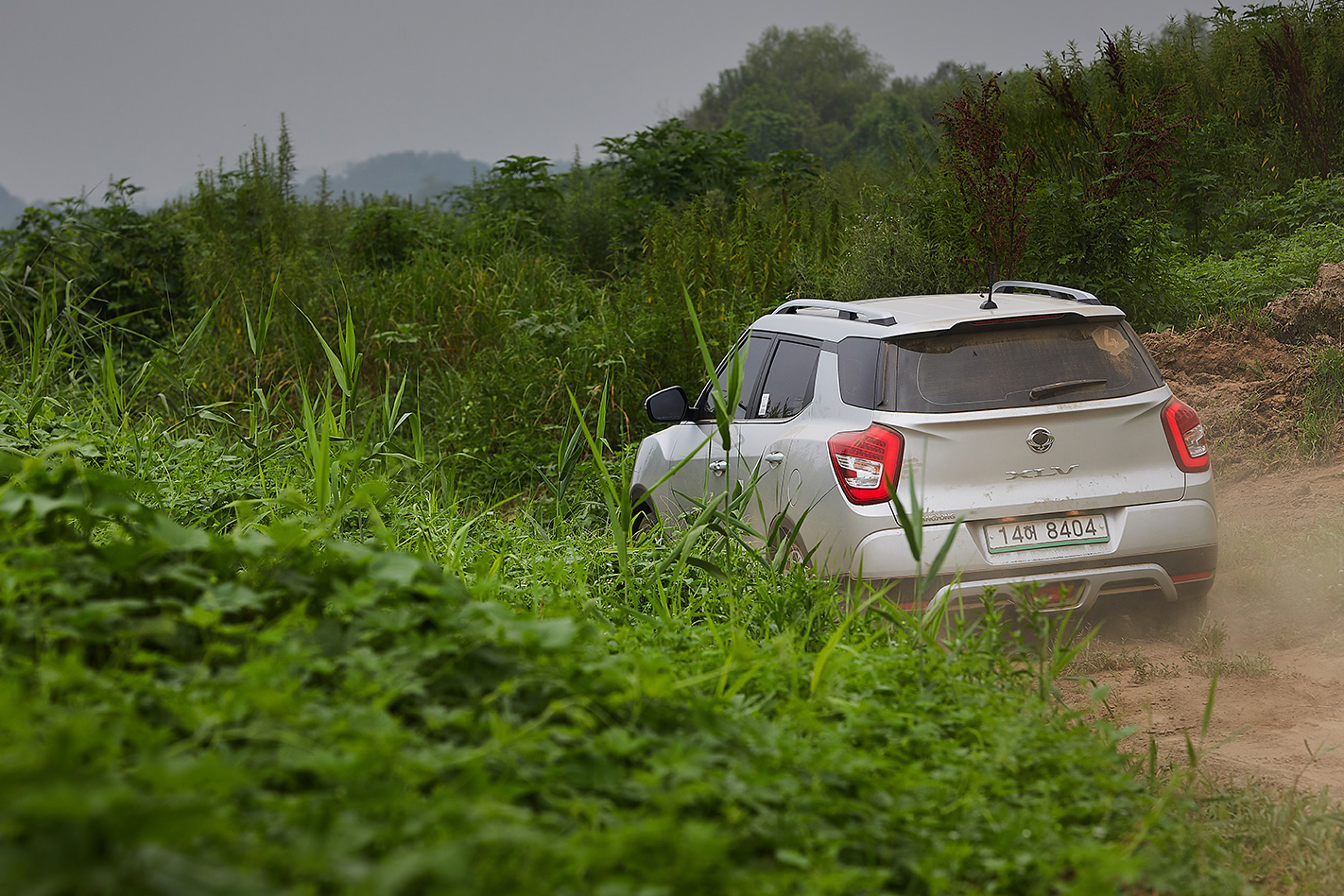
Meanwhile, an even leaner 1.2 litre engine has been confirmed, which loses no power over the current 1.6-litre but boosts torque to 230Nm thanks to a turbo.
As it stands, the Tivoli and XLV send power via a six-speed auto to a variable permanent four-wheel drive system that favours the front wheels for fuel economy, but can bring in the rear axle for extra traction off-road. A manual is also available but unlikely to be coming Down Under.
Following in the first fleet’s footsteps, an all-new Korando will join the range about the middle of 2019 filling the gap between the small and large SUVs to competes against Kia’s Sportage and the Hyundai Tucson.
Beyond that, the roadmap becomes less clear, but SsangYong doesn’t intend to relent with its product onslaught.
By 2022, the company will introduce a new mid-sized SUV that is yet to be revealed or named, completing the high-rider family for the most comprehensive SsangYong line-up yet offered in Australia.
By then we can also expect a new Tivoli with the downsized engines, refreshed Musso and Rexton, and large people mover that’s yet to be confirmed for Australia but is under consideration.
Stare even deeper in to the SsangYong crystal ball and the company will breach further territory with electrification plans including full EVs previewed by a 48-volt electrical sub-systems and starter/generator technology.
Autonomous tech is also on the company radar with Level 2 autonomy coming to the 2019 Korando and Level 3 making its debut in the next Tivoli.
The company’s freshly restructured local team is fully aware of the challenges that lie ahead reintroducing the brand, but says it is prepared for the fight with a strong line-up that is critical to its success.
Suzuki has revealed a significant update to its popular Vitara small-SUV in Europe, that’s headlined by a new engine option and the belated addition of advanced driver assistance systems.

The latter will make the Vitara the most technically advanced Suzuki model to date, bringing dual sensor (camera and radar) forward collision alert and autonomous emergency braking, plus lane departure warning, lane keeping assist, traffic sign recognition, blind spot monitor and rear cross traffic alert.
The full suite will be available in higher spec-models, with Suzuki yet to reveal which tech, if any, will be standard across the range.
The Vitara will also gain the Suzuki Swift and Baleno’s 82kW 1.0-litre three-cylinder ‘Boosterjet’ turbocharged petrol engine, but tweaked to produce 88kW to help account for the Vitara’s additional weight.
Available with front- and all-wheel-drive, the frugal 1.0-litre replaces the lumbering 1.6-litre petrol in the European market, prompted by tougher emissions standards, though there’s no word yet from Suzuki Australia if it will make its way down under.
The punchy 1.4-litre four-cylinder Boosterjet that forms the backbone of the Vitara range here, will carry over from the current model, with the 1.6-litre turbo diesel found in the range-topping RT-X expected to be dropped.
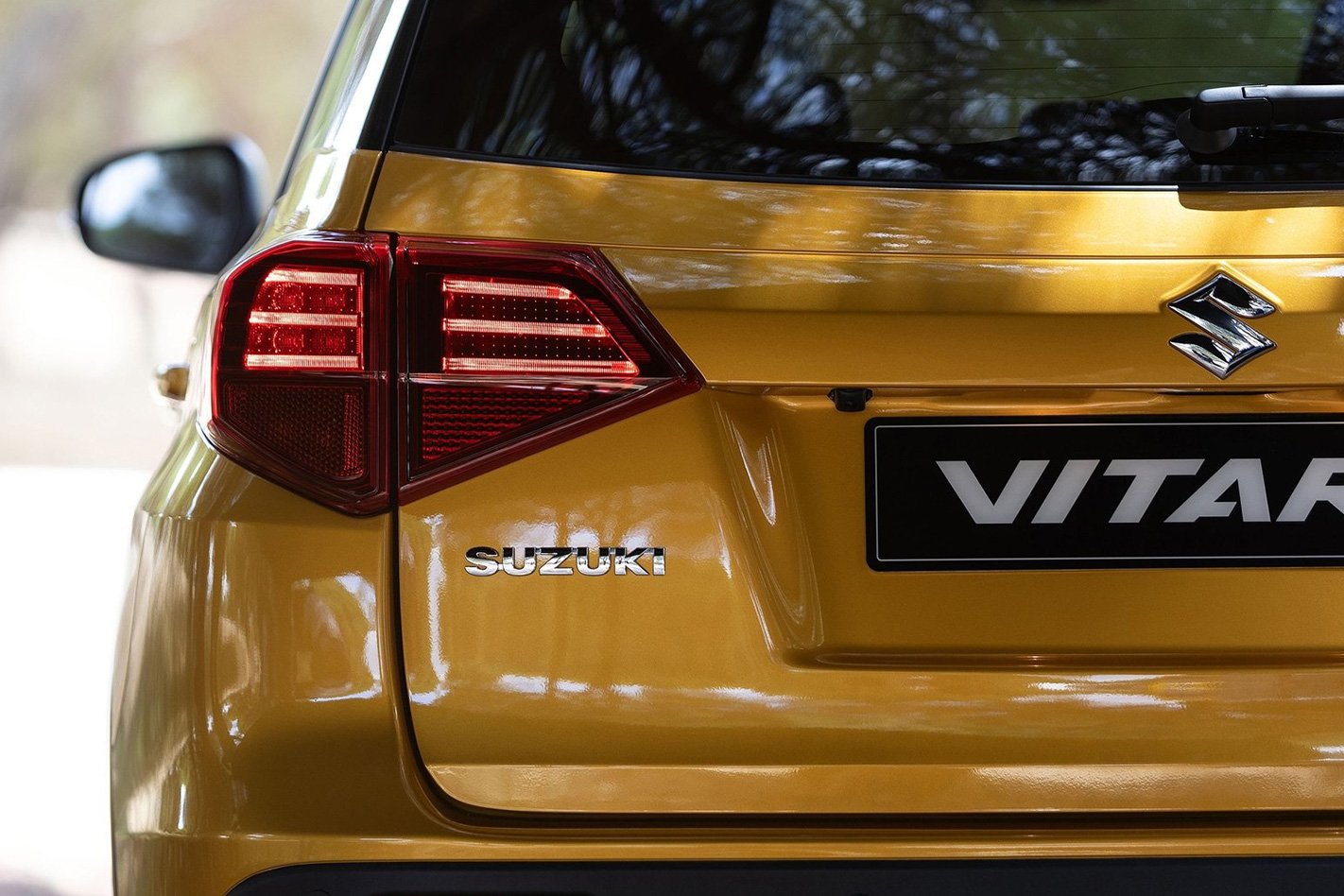
Design wise, obvious tweaks include a redesigned front grille and lower bumper, with the revised rear-end highlighted by distinctive LED combination lamps. New alloy wheel designs and two additional paint colours will complement the fresh look.
Inside, the instrument cluster has been redesigned with a colour central information display placed between the gauges, while the hard plastics make way for plusher soft-touch materials on the upper instrument panel.

The 2019 Suzuki Vitara will arrive in European showrooms in September and is scheduled to arrive in Aussie showrooms early next year.
Local details including range, specs and pricing will be revealed closer to launch.
If reactions on social media are any indication, Suzuki’s next-generation Jimny could be one of the most universally popular cars of this decade. Few vehicles have captured the attention of people quite like the all-new Jimny – at least not in a way where the praise is almost unanimous. Commercial success, it seems, is virtually guaranteed.
- UPDATE: 2019 Suzuki Jimny Review
- UPDATE: 2019 Suzuki Jimny Price and Features

“We would expect [to sell] at least 7 times what we saw with the previous model,” said Michael Pachota, general manager of Suzuki Australia’s automobile division. Given imports of the outgoing JB generation Jimny have been limited to just 100 vehicles per year since the start of 2017 (thanks to the absence of side airbag protection), that means 700 cars is the minimum yearly expectation for the all-new off-roader.
And it could be even more. In 2015 Suzuki Australia moved more than 1000 Jimnys through its dealership doors, and with the all-new replacement set to offer significant improvements in refinement, comfort and equipment, the appeal of the 2019 Jimny should be much broader than its predecessor. The only question is: can Suzuki’s factory keep up with demand?
According to Pachota, only a single factory in Japan is currently tooled up to build the new-generation Jimny. Having already launched in Japan (and receiving a strong reaction from the local press and overwhelming interest from the public since), it remains to be seen whether demand will dramatically outstrip supply as other markets – including Australia – begin receiving the car.
While Suzuki Australia was previously keen to bring in a two-variant line-up, with an affordably priced bare-bones enthusiast-grade opening the range and a high-specification model sitting above it, Pachota said it’s looking likely that we’ll only get the high-spec Jimny to start with.
The good news is both automatic and manual versions of this feature-rich Jimny are expected to land in Australian showrooms at a sharp price point – “We’ll have the full range under $30,000”, Pachota said to WhichCar. That suggests the automatic may slide in just under the $30K mark, with the manual hovering somewhere between $26-27K.
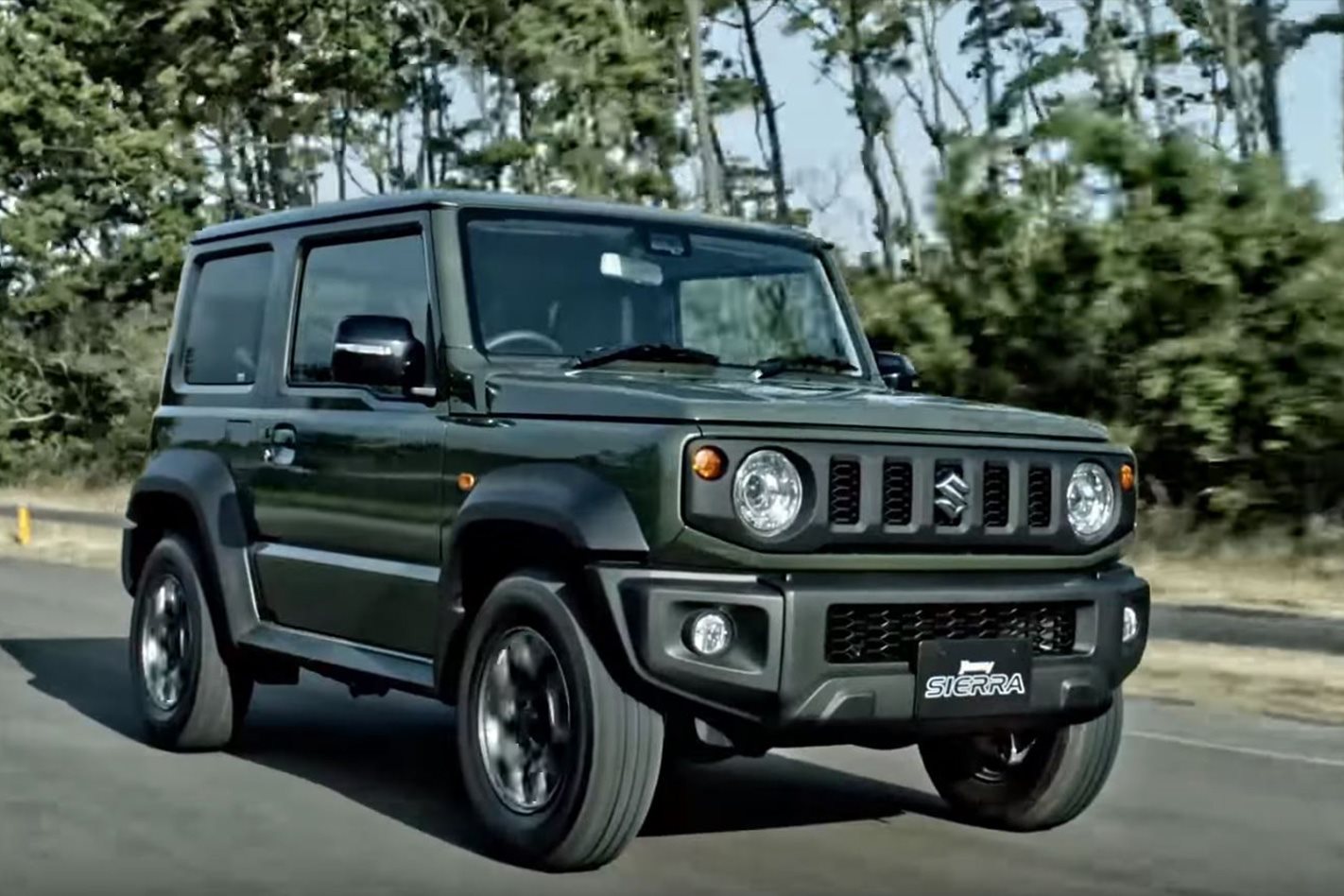
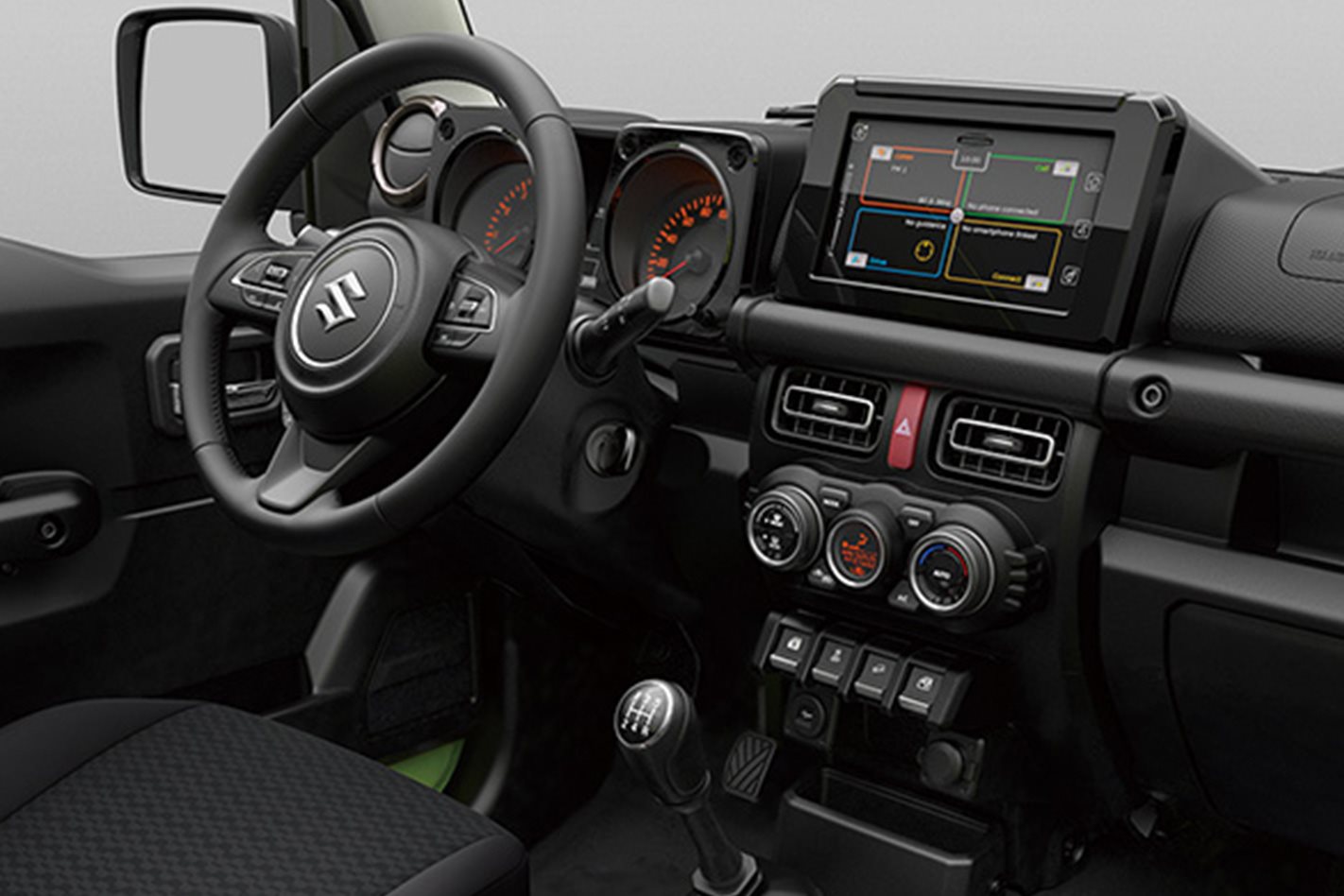
That represents roughly a $5000 increase, but compared with the outgoing model – a vehicle known as much for its austerity as its off-road prowess – the new Jimny will represent a significant step up in technology. For Australia, expect most of the headline features available on the Japanese market Jimny Sierra to be offered, including climate control, integrated navigation, smartphone mirroring, cruise control, dusk-sensing headlamps and autonomous emergency braking. All of those features are completely new to the Jimny nameplate – not to mention a full suite of six airbags (including full-length curtain ‘bags).
And that’s on top of the rugged ladder-frame chassis and dual live-axle suspension that will underpin the new Jimny. The transmission options may be limited to a five-speed manual or four-speed automatic, but with a selectable dual-range transfer case and traction-enhancing chassis electronics as standard, the new Jimny boasts impressive off-road credentials – just like every generation of Jimny before it.

Power will be provided by a 1.5-litre naturally-aspirated petrol inline four, developing a modest 75kW and 130Nm.
So far, 37 people have already placed orders for the new Jimny, sight unseen. Final pricing is still far from being locked in, but Pachota said punters are already keen to get in line for the first allocation of Jimnys. Want one? It’s slated to launch locally toward the end of this year, with deliveries expected to begin sometime in early 2019.
Tick-tock-tick-tock-tick-tock. Indicators aren’t usually very interesting. They vary slightly in tone, volume and speed, but in almost every car they’re as even and steady as a Ringo Starr drum beat.
Not so in the 2018 Mustang; its indicators shuffle like an old-school blues band, imitating the hooves of a galloping horse: tick-tock-tick-tock-tick-tock. This is far from the most important change to Ford’s heavily revised muscle car, but it’s an indication of the thoroughness of the update. Presumably, you have to go a long way down the priority list before you get to “change the indicator tone”.
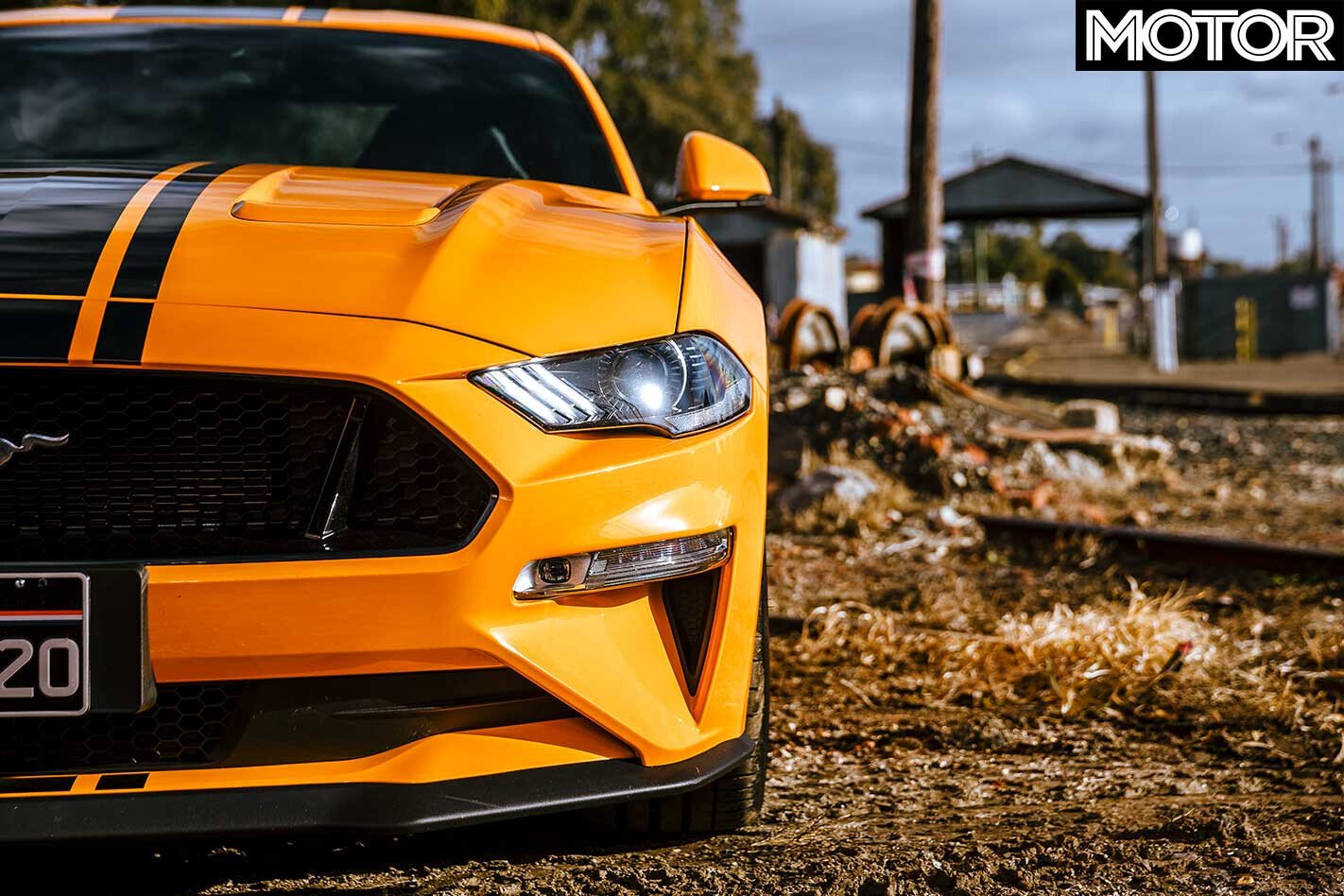
Few could have predicted just how successful the Mustang would be in Australia. Ford certainly didn’t see it coming, the onslaught of initial orders resulting in year-long wait lists as demand vastly outstripped supply.
As of May 2018, 17,779 Mustangs have been sold since its January 2016 introduction. This success only makes the extent of the changes to the latest iteration of Ford’s icon even more surprising – why radically change a winning formula?
We covered off these technical changes extensively before, now it’s time to discover what, if any, effect these changes have on the Mustang drive experience. Over the next three days, we’ll visit the dyno, the drag strip and cover hundreds of kilometres on road in an effort to definitively answer a very simple question: is this new Mustang better than its popular predecessor?

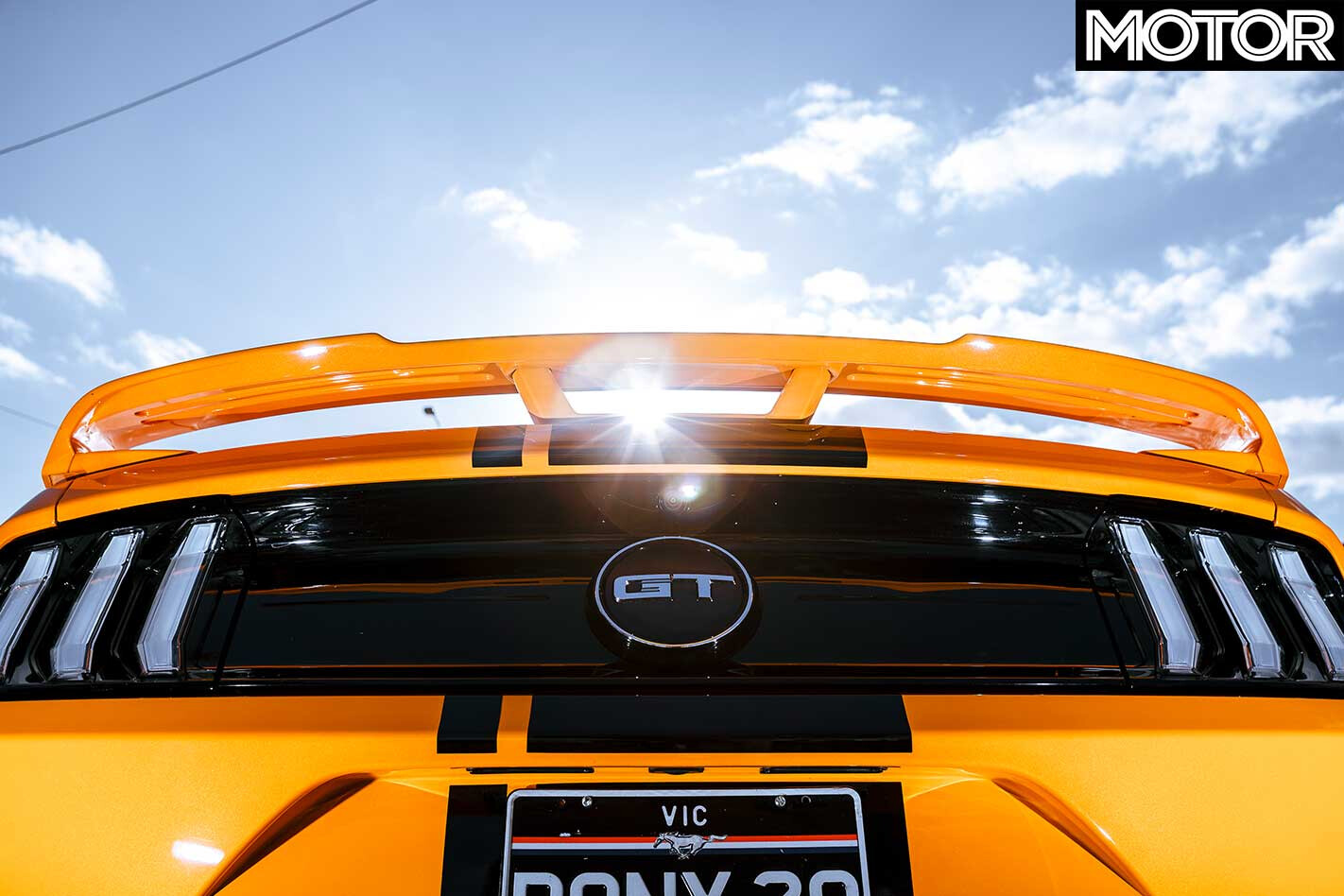
Our story starts at Ford’s Broadmeadows HQ, a few weeks ahead of the Mustang’s local launch. A pair of MY2018 cars await evaluation: a Kona Blue automatic, fitted with optional Recaro seats, MagneRide adaptive dampers and forged alloys, and an identically-specced Orange Fury manual wearing black OTT (‘Over-The-Top’) stripes and a wing spoiler.
It’s a cliché, but the new Mustang is a much better looking car in the metal than the awkward initial press photography would suggest. Narrower LED headlights are matched with a restyled vented bonnet, new bumpers front and rear, LED taillights, new grille and quad exhaust tips for the V8.
Our first stop on this journey is Herrod Performance and it’s remarkable how dated the 2018 model makes its predecessor look when parked side-by-side.
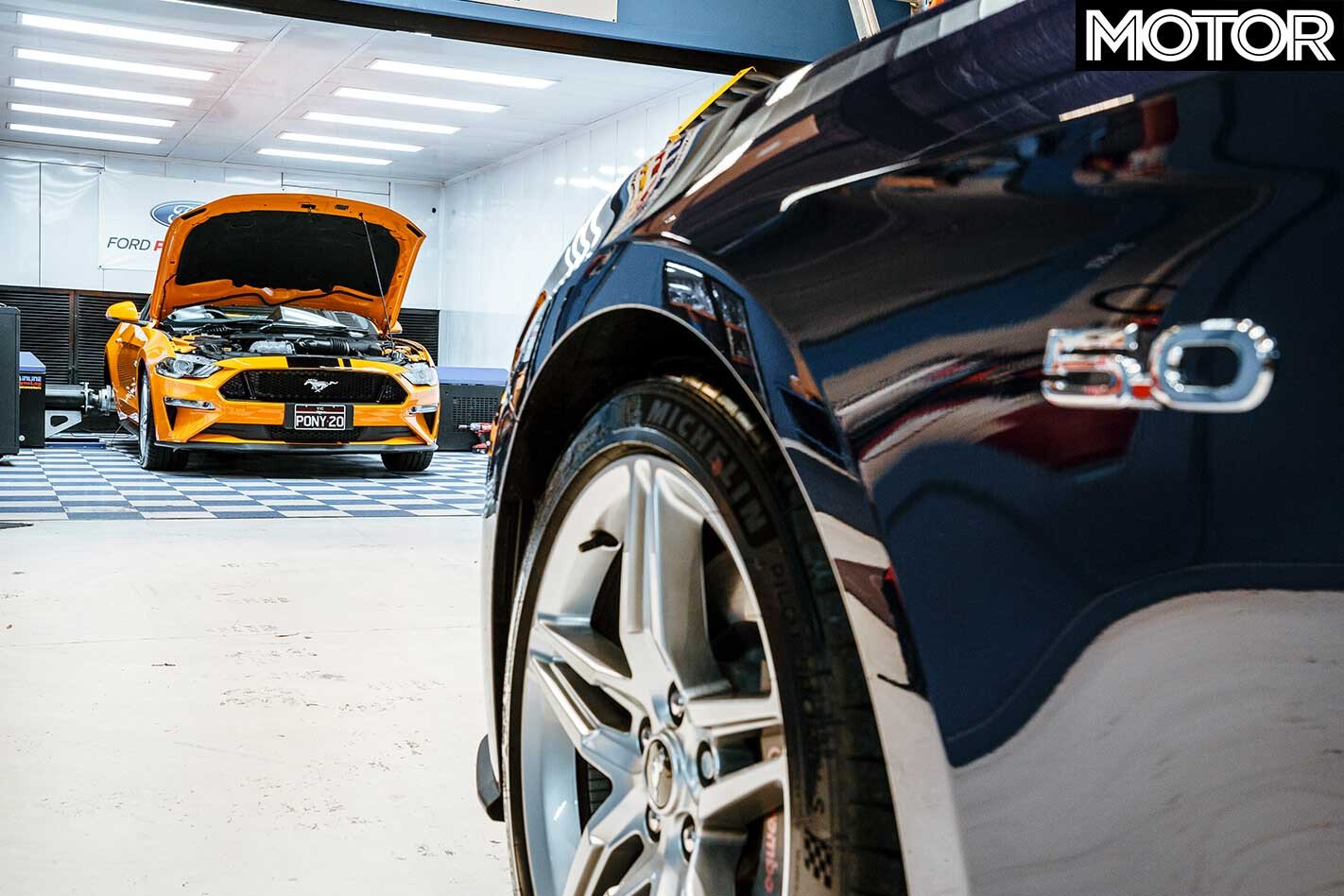
Herrod Performance has been at the forefront of local Coyote development, making them the perfect people to dyno test our 2018 cars. Rob Herrod and his team have built well over 200 ‘Compliance Pack’ supercharged Mustangs, Herrod’s close ties with Ford Performance in the US ensuring he has as good an understanding as any as to what makes Mustang engines tick.
“We’re a little bit different to most aftermarket people because I’m dealing with calibration engineers at Ford Performance,” explains Rob. “We have these avenues other people don’t have. Not that we’re trying to keep it all to ourselves, but it’s that bloody complicated!”

According to Rob’s son Chris, standard 2015-2017 Mustangs typically produce around 250-260kW on Herrod’s Mainline hub dyno, used to eliminate variables such as tyre pressure, tyre compound and strapping force. The manual is up first, Chris using fourth gear (for its 1:1 ratio) with the giant fans ensuring the intake air and cylinder head temperatures are at 18 and 90 degrees Celsius respectively.
Based on the previous Mustang, driveline loss appears to be roughly 50kW, so I’m expecting a figure of around 280kW. You can imagine the surprise, then, when the 2018 manual produces 311.6kW at the hubs on its first run. Two runs later that increases to 314.8kW and my jaw is firmly on the floor.

It’s no fluke, the auto – run in seventh (1:1) with identical temperatures – backing up the manual’s figures with 306.4kW; either Ford has developed the world’s most efficient transmissions or this new 5.0-litre is pumping out a lot more than the advertised 339kW. The entire power curve has shifted, too, a slight loss in low-to-midrange torque compensated for by a massive increase in top-end power.
The 2018 Mustang might wear the same ‘5.0’ badge as its predecessor on its front guards, but it’s clearly housing a very different engine under that restyled bonnet.
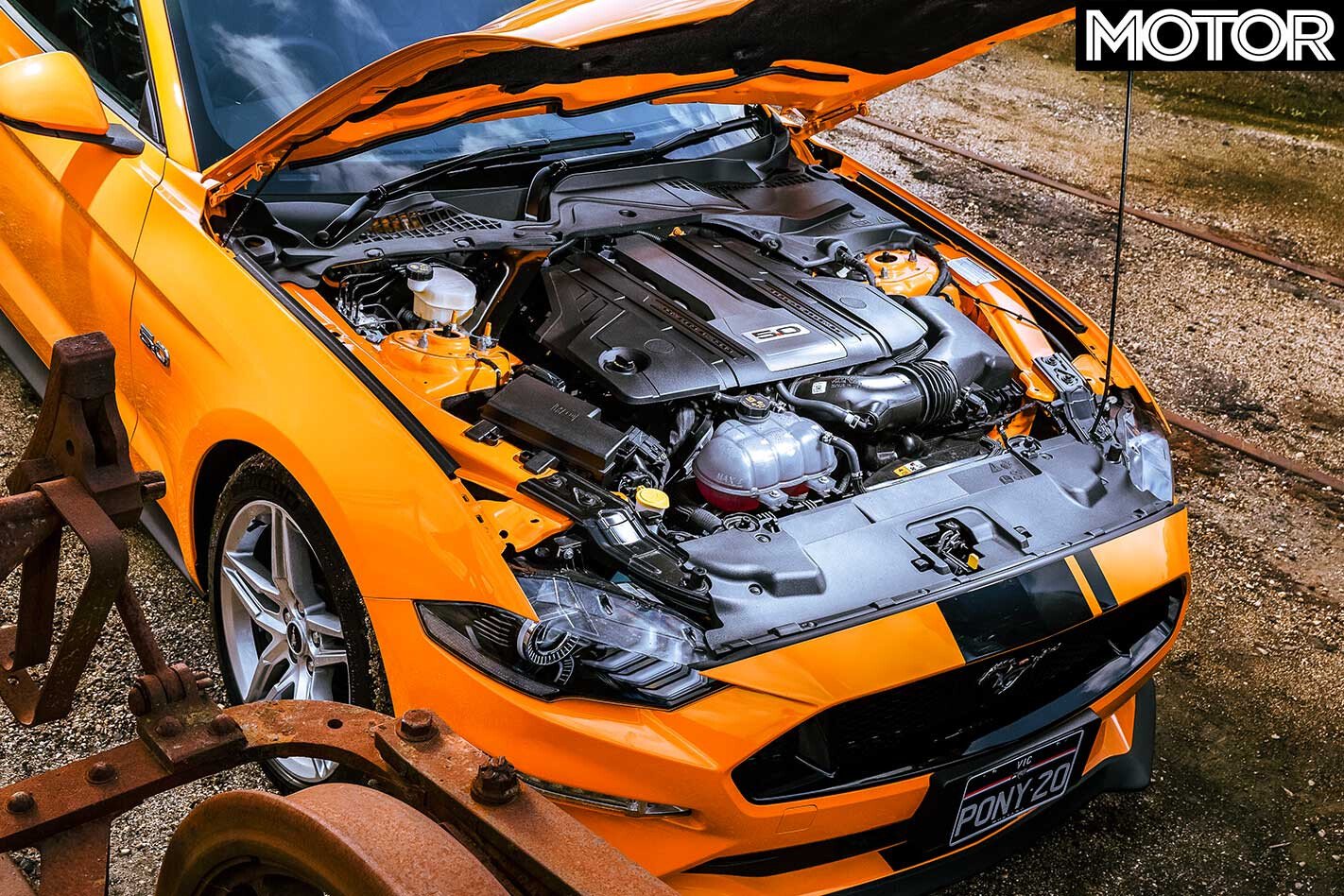
Regardless of whether the Mustang needed that extra grunt or not, it now has the soundtrack it’s needed since launch. From a deep bark at start-up – unless the neighbour-friendly ‘Quiet’ mode is selected – to a steady growl on light throttle to a crisp snarl at higher revs, like the LS3-powered VF II Commodores, it’s difficult to imagine too many 2018 Mustangs sprouting aftermarket exhausts.
The 150km drive to Heathcote offers an opportunity to assess the car’s cruising capabilities. Aussie Mustangs now feature the ‘Premium Plus’ interior as standard, including the snazzy 12-inch digital instrument display, heated steering wheel, hand-stitched centre console and wrapped knee bolster.
There’s also a new metallic starter button; small touches, but they eradicate a lot of the hard, scratchy plastic that made the previous Mustang’s interior feel so built to a budget.
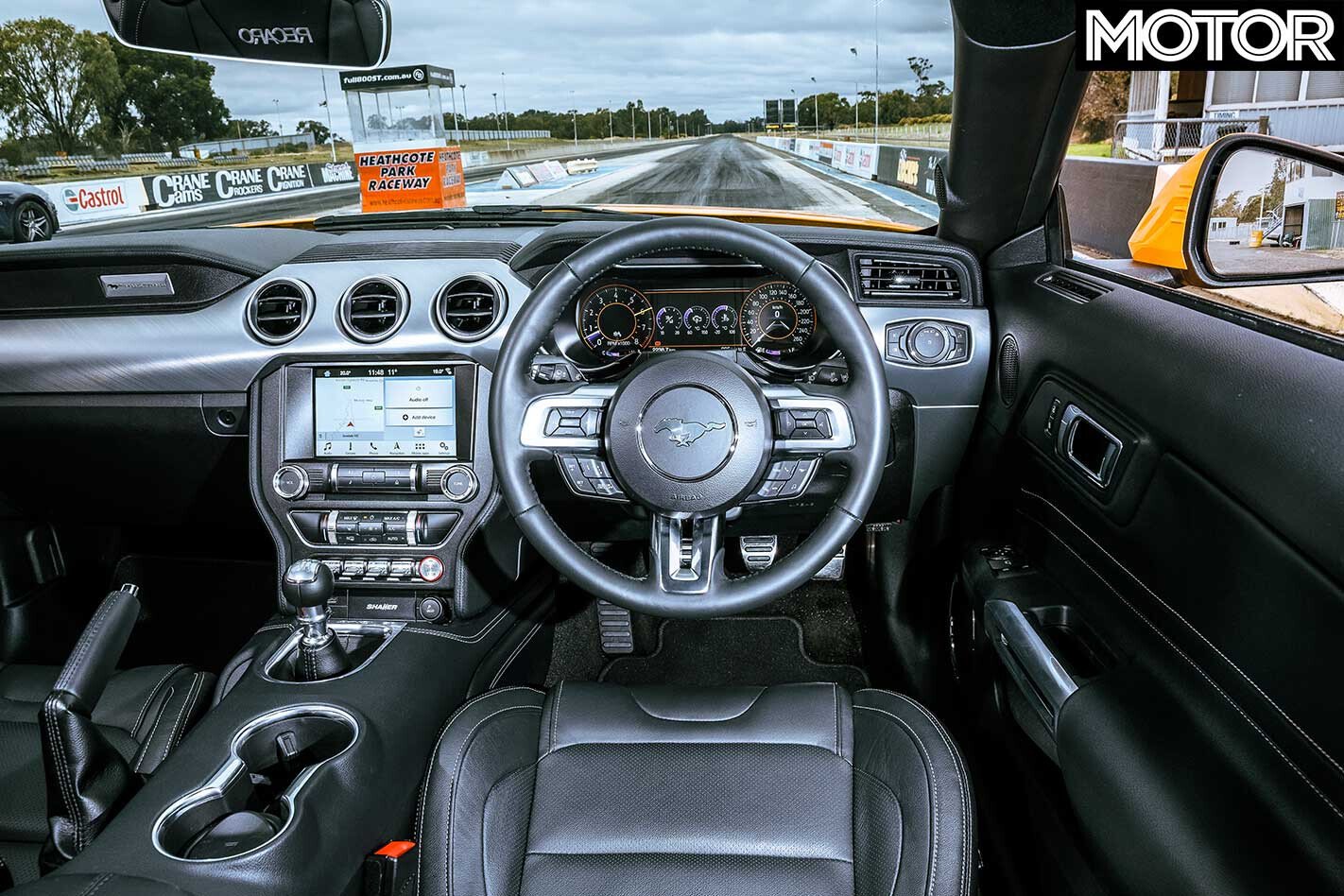
Fiddling with the digital instruments, it takes some time to figure out how to navigate the various modes and screens, but there’s plenty of useful information available if you dig hard enough and the different screens for each drive mode – Normal, Sport, Track and Drag Mode – are a nice touch.
The rest of the buttons will be familiar to current Mustang owners, bar the few that have moved to accommodate the new active safety systems – Lane Keep Assist, Pre-Collision Assist, Active Cruise – vital to improving the Mustang’s two-star ANCAP rating (it’s now three).
The Recaros are snug and comfortable, though whether they’re worth $3000 is another matter. That money is possibly better spent on the $2750 MagneRide adaptive suspension. Having not yet tried a car without it, it’s difficult to say for certain, however, the 2018 Mustang rides with more fluency than its predecessor.

It’s still firm, but with sensors monitoring road conditions 1000 times per second, it no longer bounces or hops over sharp bumps. Unusually, the base damping stiffness doesn’t alter with the different drive modes, but then it doesn’t really need to.
It’s 11 degrees and overcast when we arrive at Heathcote, a little colder than ideal but the track is mercifully dry – this is possibly the most important car MOTOR will performance test all year.
Early attempts with the automatic aren’t promising: the extra power is clearly there – even with a tardy launch the trap speed is 10km/h quicker than the best we’ve recorded with 2015-2017 models – but times of 5.0sec to 100km/h and 13.0sec aren’t what were hoped for.
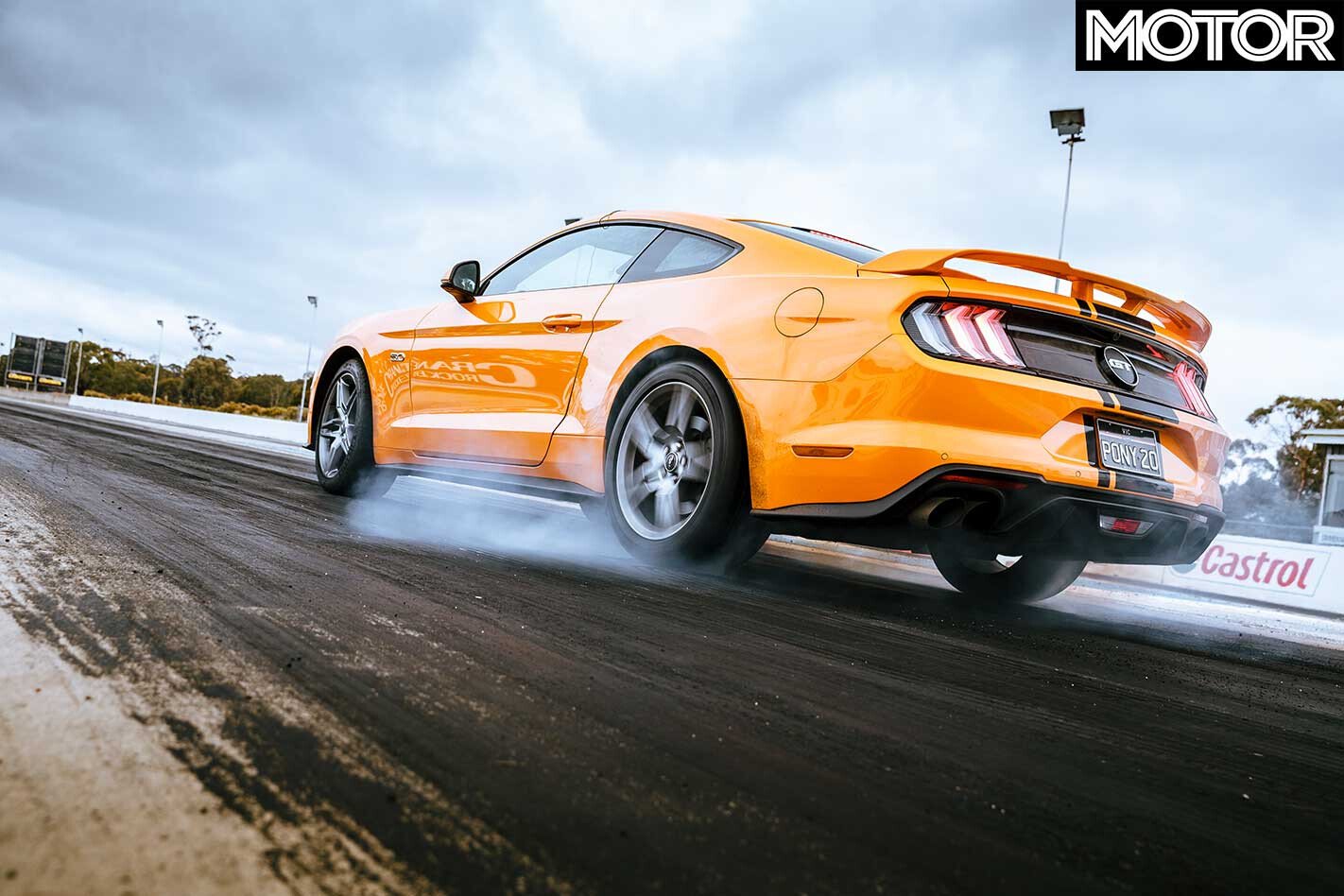
Thankfully, as the rubber builds up traction improves and with each run the stall revs creep a little higher and full throttle is reached a little sooner. As you’d hope, the quickest times of 0-100km/h in 4.53sec and 0-400m in 12.49sec at 188.16km/h come in Drag Mode with a 2100rpm stall, the maximum possible before the rear tyres start to slip.
Drag Mode also adjusts the MagneRide suspension to maximise traction and the gearshifts are savage, jolting the car to such an extent that ESP has to be fully disabled to prevent it cutting power, even on the 5-6 change.
Yes, the 10-speed auto’s ratios are so tightly stacked that it’s at the top of sixth gear as it flashes across the quarter mile mark. In contrast, the manual needs only three gears. Extracting so much more power out of the 5.0-litre V8 forced Ford to design a new gearbox and switch to a dual-mass flywheel and dual-plate clutch. It’s a great shift, light and accurate, but the ratios are l-o-n-g.
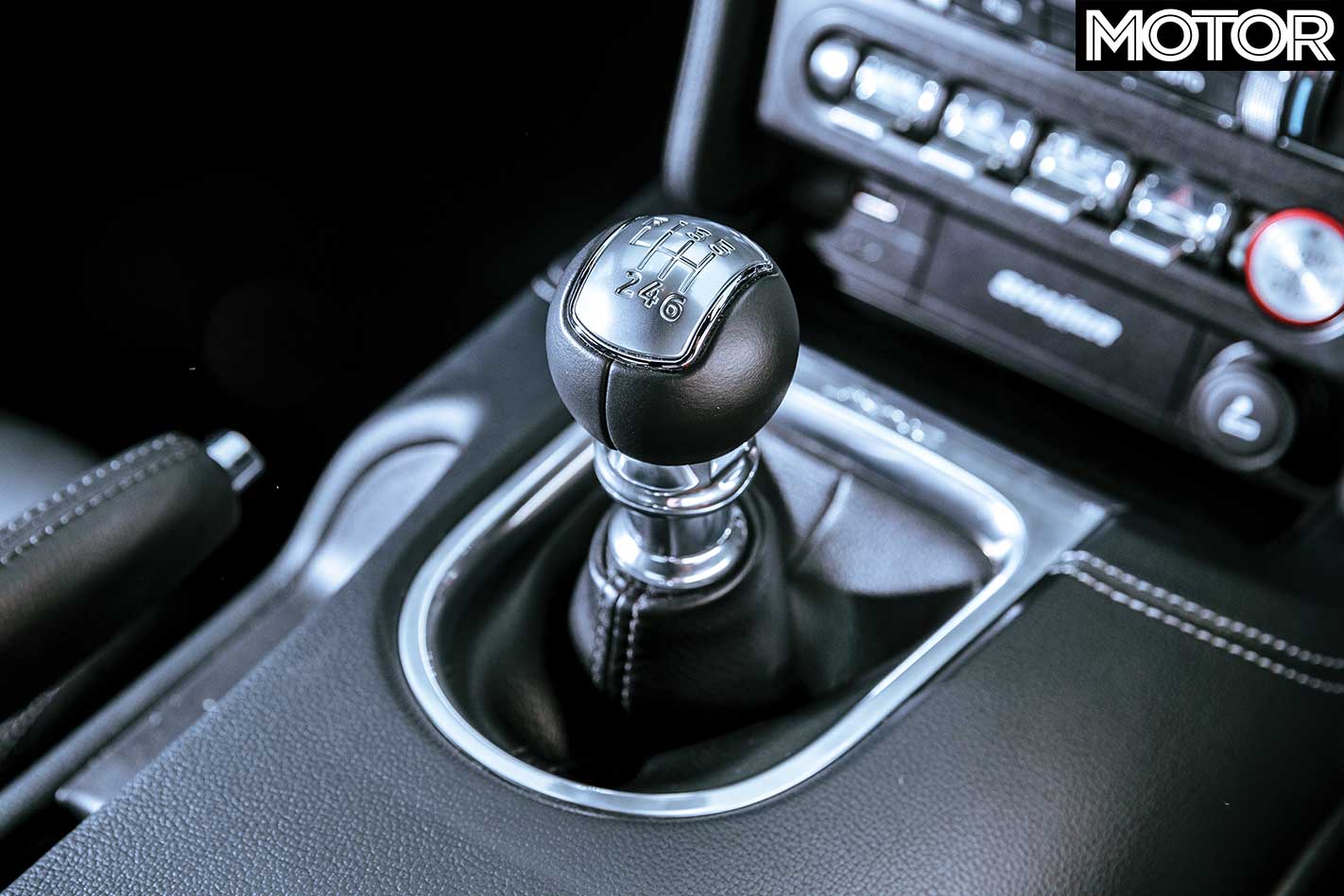
Previously, a manual Mustang’s speed in gears were 1st: 67km/h, 2nd: 101km/h, 3rd: 146km/h, 4th: 187km/h, 5th: 246km/h, 6th: 264km/h (top speed). Now, they are 1st: 85km/h, 2nd: 131km/h, 3rd: 194km/h with the last three gears irrelevant as the 250km/h limited top speed is reached 700rpm shy of the limiter in fourth.
There’s enough extra grunt to prevent the gearing feeling excessively tall, but it makes it a right pain to performance test. With such a long first gear it’s all too easy to bog down with too few revs, but use too many and you’ll vaporise the rear Michelins.
Ideally, the rear tyres would be just chirping across the surface, but this approach leads to axle tramp so vicious it’ll rattle your fillings out. As such, the manual’s best figures of 5.2sec 0-100km/h and 13.2sec 0-400m – little better than our previous bests – leave plenty of room for improvement. However, even with the tardy launches, the new car is over a second quicker to 180km/h.
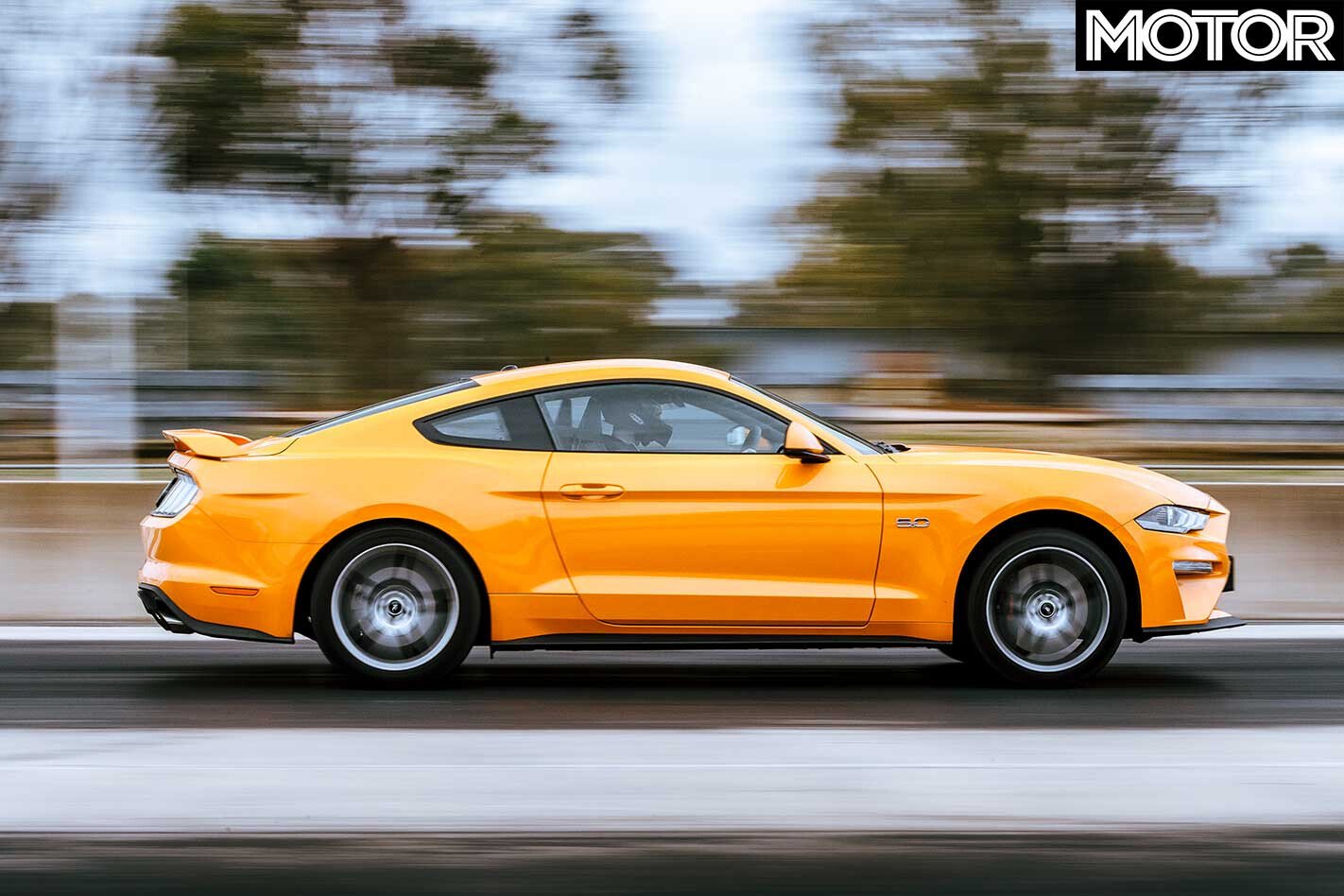
On the road your 2018 Mustang experience will depend solely on which gearbox you choose. Obviously, the gearbox itself makes no difference to the way the car handles, but it makes a massive difference to how you approach and exit a corner. The manual forces a more relaxed pace; most roads will require only second gear with the occasional shift to third, the engine extending at a less frenetic rate.
This has its own appeal, but the 10-speed auto really brings the Mustang to life. It’s a quantum shift in gearbox technology, the jump from the old six-speed like swapping a Nokia 3310 for an iPhone 7.
Its responsiveness is fantastic; brake firmly and the ’box will immediately and aggressively start firing in downshifts, rendering the paddles largely redundant. It’s beautifully decisive at maximum attack, yet will skip its way to 10th gear at just 70km/h on a cruise.
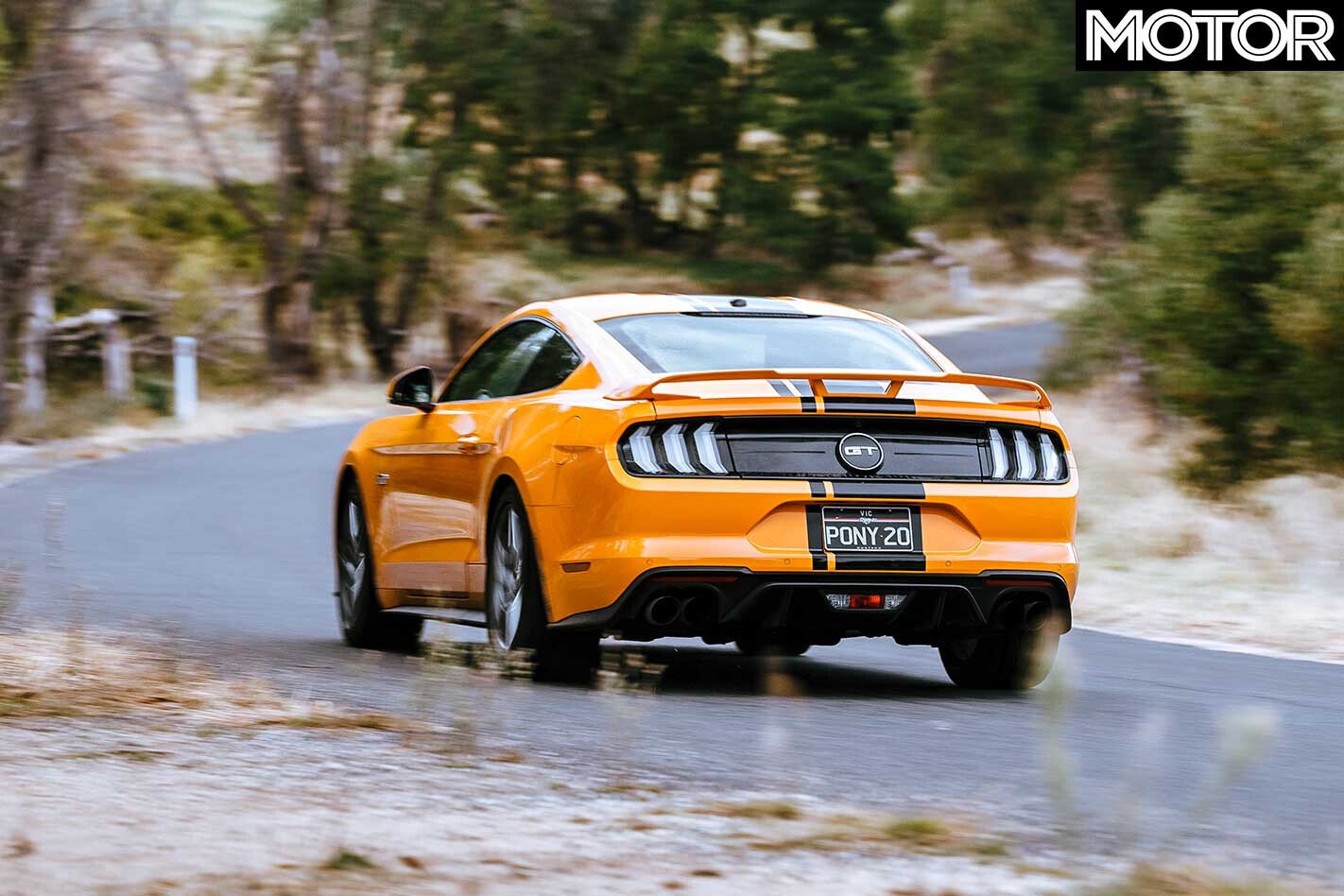
Only when you’re driving at six-tenths or so can the 10R80 be caught out, as it attempts to shuffle its 10 ratios like a Monaco croupier but inevitably drops a card or two.
Ford might have focused on the powertrain, but the chassis hasn’t gone untouched. Even without the optional MagneRide dampers there are recalibrated shocks, thicker anti-roll bars, a new rear cross-axis joint to reduce body movement, beefed up steering knuckles and Shelby GT350 wheel bearings.
All these modifications are intended to make the most of the extra grip offered by the new Michelin Pilot Sport 4 S tyres, the same as those fitted to the likes of the Mercedes-AMG E63 S and Porsche 718 Cayman GTS. Whether because of its chassis setup or Pirelli P Zero rubber – likely a combination of both – the previous Mustang could be a handful, particularly in the wet.
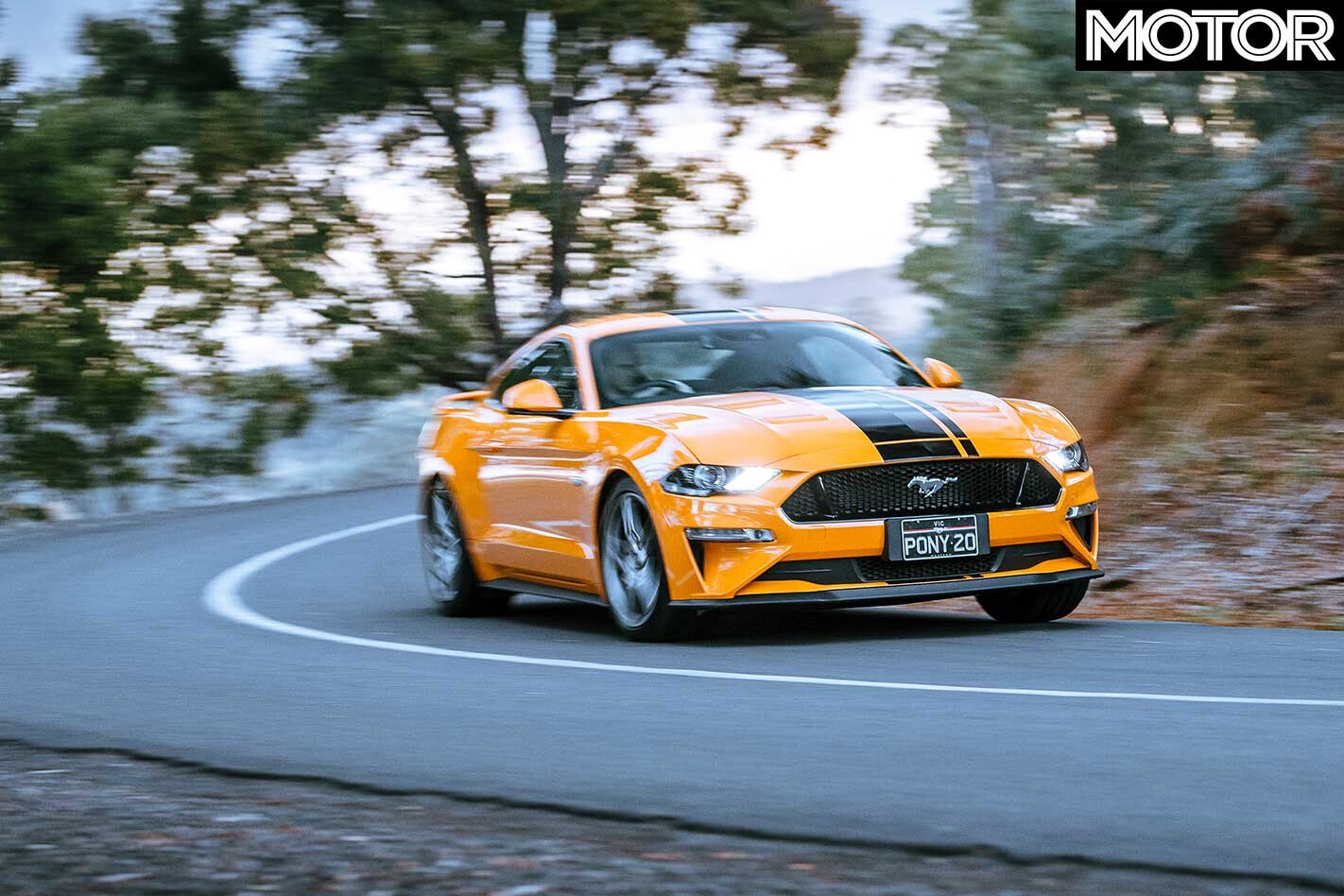
The 2018 model isn’t suddenly a razor-sharp handler, but it’s much more confidence-inspiring. It’s not a car that shrinks around you – it always feels big and quite heavy – but that’s entirely reasonable for a car of this type. Grip front and rear is markedly increased and there’s greater progression when it starts to run out.
The auto in particular is a riot, though be aware that if the rear wheels spin it’ll keep grabbing gears rather than run into the limiter – traction is limited in the first four gears on a slippery surface. Its greatest shortcoming is the steering, its refusal to weight up with lock applied robbing the driver of any connection with the front-end, but the 2018 Mustang is a better drive and rabidly fast in auto guise.
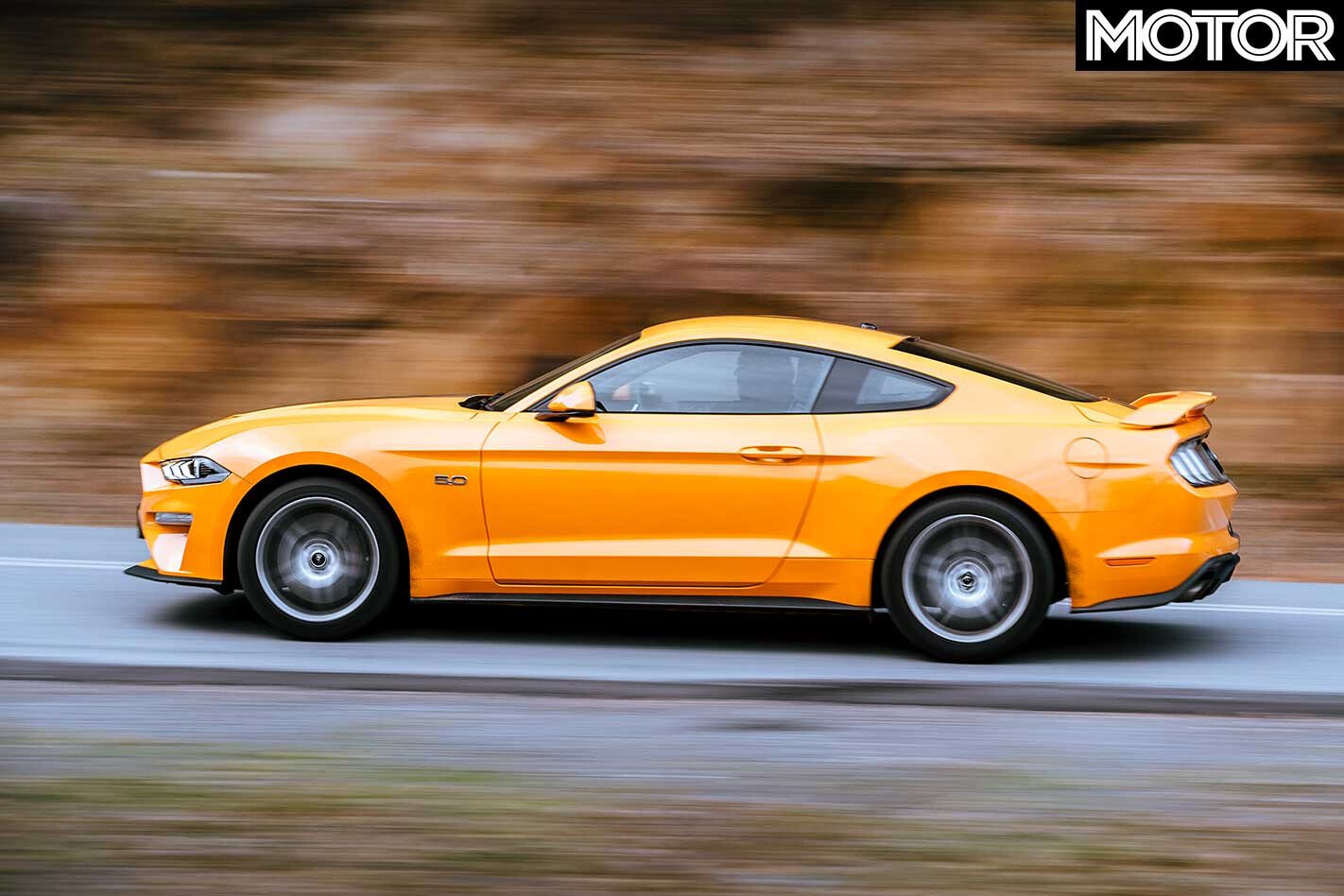
Whether Ford listened to media and customer feedback or it simply knew of previous Mustang’s shortcomings internally, the 2018 version successfully addresses virtually every one of them. It’s more polished and refined in almost every area, while also being significantly faster and more composed.
Ford is asking punters to pay a lot more money – both our test cars were well over $70,000 with options – but is delivering a much improved Mustang in return. Chances are, those indicators are merely mimicking the sound of Ford’s muscle car continuing to gallop out of showrooms.
The Numbers
| u00a0 | 2018 Ford Mustang GT | |
| u00a0 | Auto | Manual |
| 0-10km/h | 0.34sec | 0.50sec |
| 0-20km/h | 0.74sec | 1.01sec |
| 0-30km/h | 1.10sec | 1.44sec |
| 0-40km/h | 1.51sec | 1.79sec |
| 0-50km/h | 1.95sec | 2.29sec |
| 0-60km/h | 2.44sec | 2.74sec |
| 0-70km/h | 2.86sec | 3.20sec |
| 0-80km/h | 3.39sec | 4.01sec |
| 0-90km/h | 4.01sec | 4.60sec |
| 0-100km/h | 4.53sec | 5.21sec |
| 0-110km/h | 5.20sec | 5.86sec |
| 0-120km/h | 5.91sec | 6.84sec |
| 0-130km/h | 6.56sec | 7.68sec |
| 0-140km/h | 7.40sec | 8.59sec |
| 0-150km/h | 8.28sec | 9.52sec |
| 0-160km/h | 9.20sec | 10.52sec |
| 0-170km/h | 10.29sec | 11.63sec |
| 0-180km/h | 11.42sec | 12.80sec |
| 0-190km/h | 12.77sec | 14.18sec |
| 0-400m | 12.49sec @ 188.16km/h | 13.20sec @ 183.14km/h |
| 100-0km/h | 34.33m | 34.56m |
Speed in Gears
| u00a0 | Auto | Manual |
| 1st | 62km/h @ 7400rpm | 85km/h @ 7400rpm |
| 2nd | 98km/h @ 7400rpm | 131kmh @ 7400rpm |
| 3rd | 136km/h @ 7400rpm | 194km/h @ 7400rpm |
| 4th | 165km/h @ 7400rpm | 250km/h @ 6700rpm |
| 5th | 192km/h @ 7400rpm | 250km/h @ 5430rpm |
| 6th | 229km/h @ 7400rpm | 250km/h @ 4150rpm |
| 7th | 250km/h @ 6320rpm* | – |
| 8th | 250km/h @ 5380rpm* | – |
| 9th | 250km/h @ 4360rpm* | – |
| 10th | 250km/h @ 4050rpm* | – |
In-Gear Acceleration
| u00a0 | 80-120km/h | |
| Gear | Auto | Manual |
| Drive | 2.5sec | – |
| 2nd | – | 2.6sec |
| 3rd | – | 3.7sec |
| 4th | – | 6.2sec |
| 5th | – | 8.7sec |
| 6th | – | 13.7sec |
As tested by MOTOR: Heathcote Dragway, 11˚C, dry Driver: Scott Newman *Manufacturer’s claim
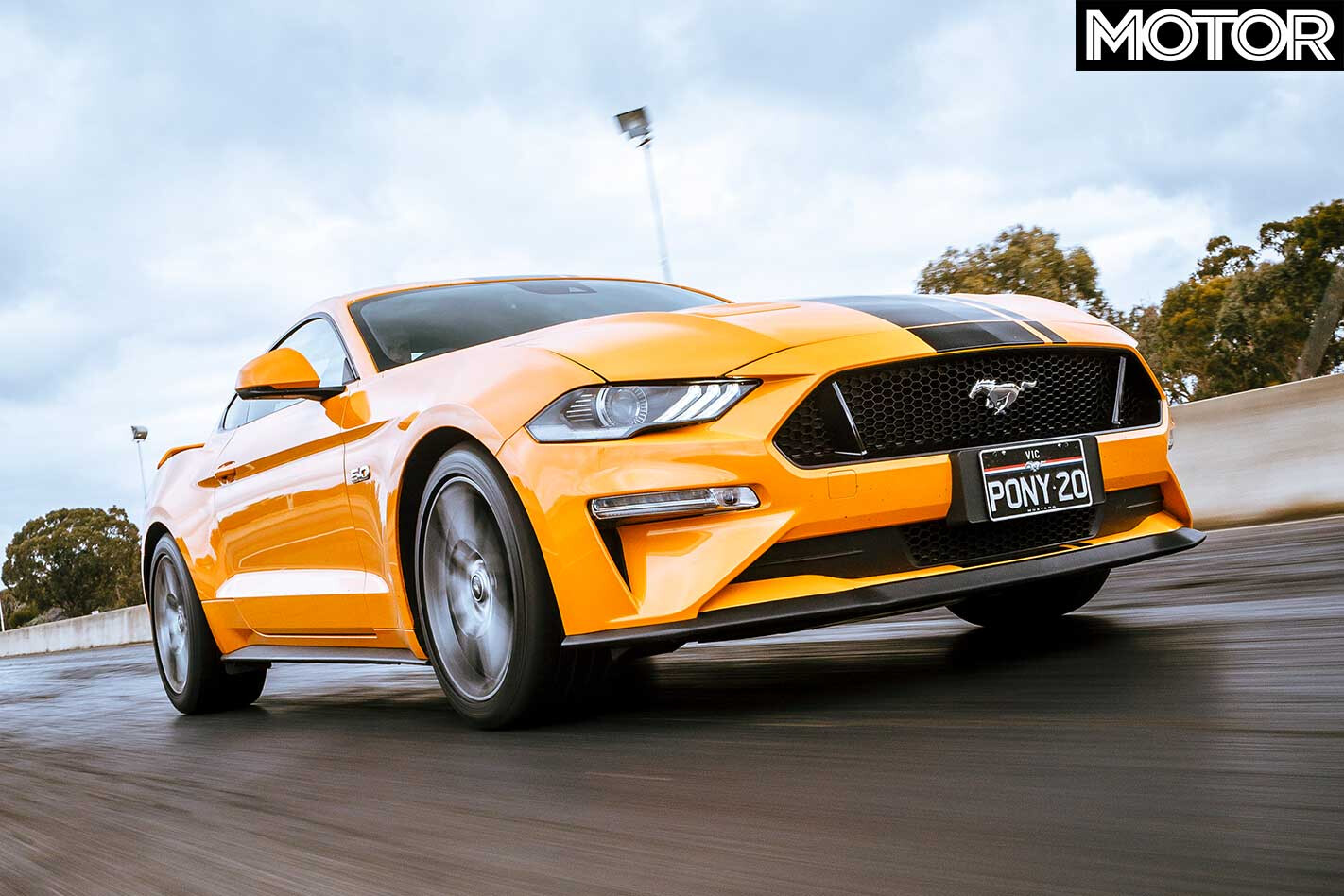
FAST FACTS 2018 Ford Mustang GT
BODY: 2-door, 4-seat coupe DRIVE: rear-wheel ENGINE: 5038cc V8, DOHC, 32v POWER: 339kW @ 7000rpm TORQUE: 556Nm @ 4600rpm BORE/STROKE: 93.0 x 92.7mm COMPRESSION RATIO: 12.0:1 WEIGHT: 1732-1756kg POWER-TO-WEIGHT: 193-196kW/tonne TRANSMISSION: 6-speed manual/10-speed automatic SUSPENSION: struts, coil springs, adaptive dampers, anti-roll bar (f); multi-links, coil springs, adaptive dampers, anti-roll bar (r) L/W/H: 4789/1916/1396mm WHEELBASE: 2720mm TRACKS: 1642mm (f/r) STEERING: electrically-assisted rack-and-pinion BRAKES: 380mm ventilated discs, 6-piston calipers (f); 330mm ventilated discs, single-piston calipers (r) WHEELS: 19.0 x 9.0-inch (f); 19.0 x 9.5-inch (r) TYRES: Michelin Pilot Sport 4S; 255/40 ZR19 (f); 275/40 ZR19 (r) PRICE: $62,990-$66,259
LIKE: Superb engine; great auto; improved handling DISLIKE: Manual gearing; more expensive; dull steering
RATING: 4 out of 5 stars
Don’t worry if you haven’t heard of Hartge, as the German tuning firm doesn’t quite have the same presence as the likes of Singer or Brabus.
Focusing on BMWs, Hartge has been making Bavarian cars go faster since the ‘70s. But a little over a decade ago, a few E90-generation 3 Series were given special treatment.
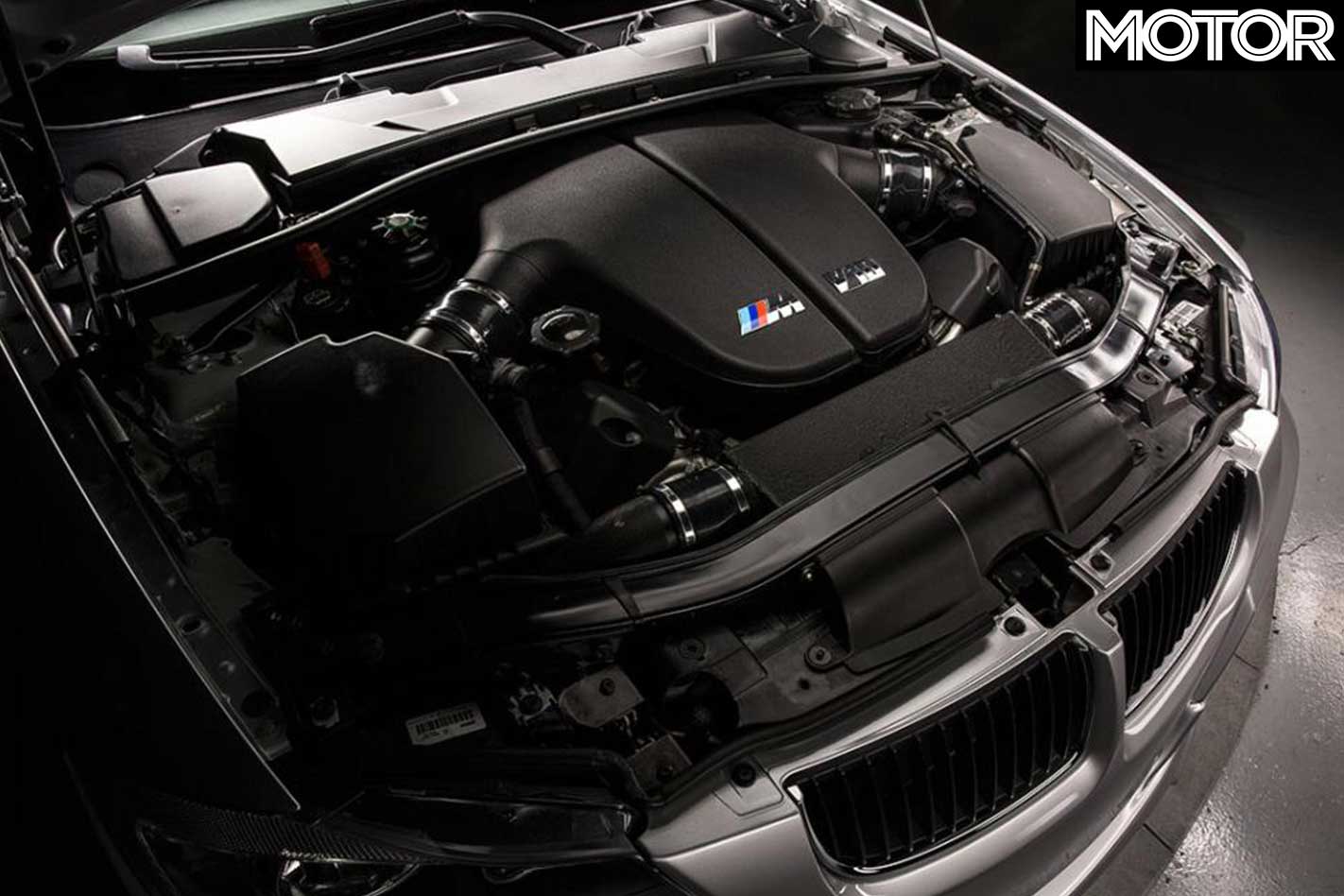
Roughly 410kW of M5 V10 from the E60 generation of 5 Series has been dropped into the engine bay of the lesser Bimmer, something carried out on only a handful of cars.
One of these rare beasts is now up for sale, believed to be the only one in the US.
Classic used BMW dealer Enthusiast Auto Group currently has the car sitting in its showroom with a relatively meagre USD$60,000 (AUD$81,000) written on the price tag.
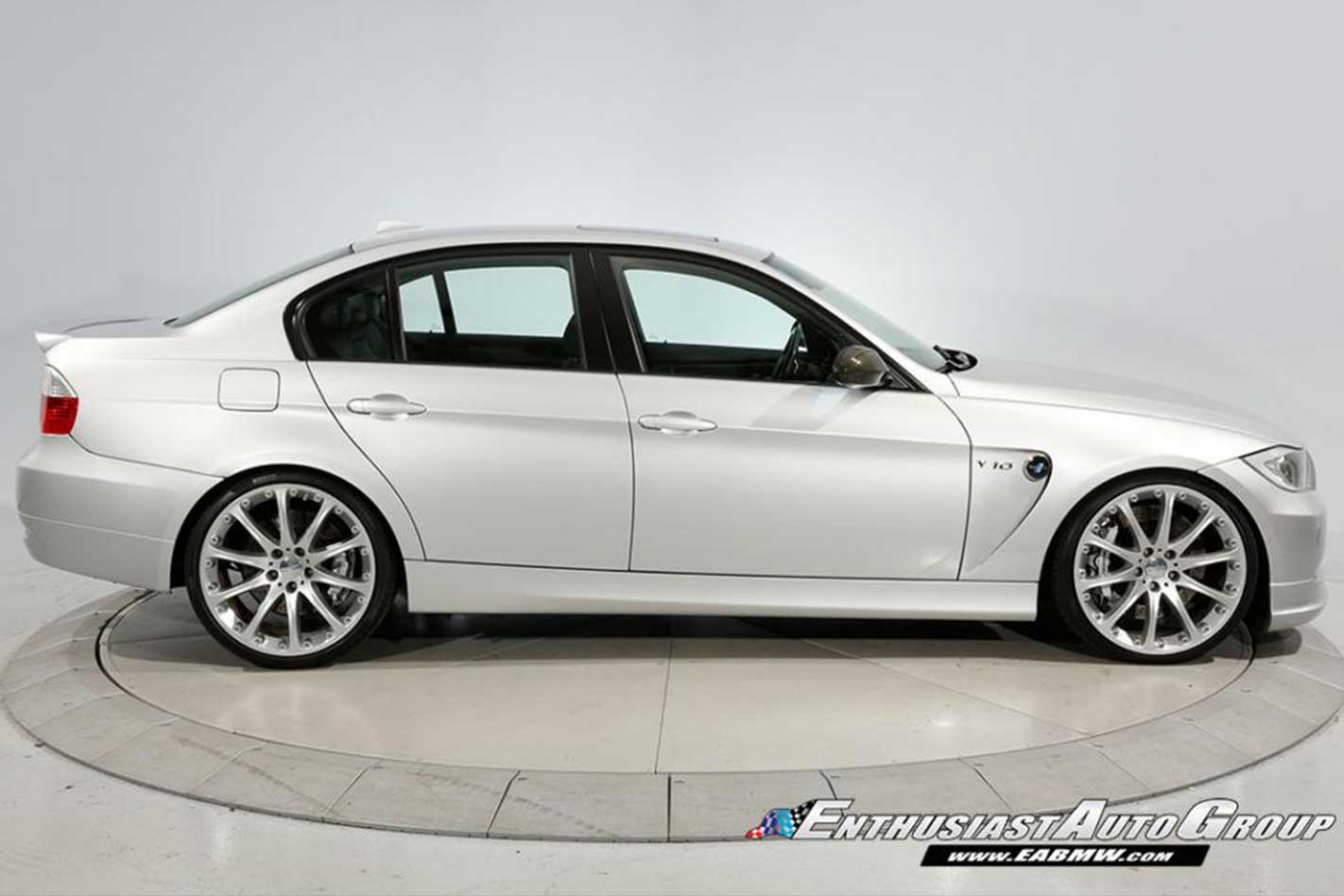
It sits amongst E28 M5s, various generations of M3 and… well almost anything else that’s got a Bimmer M badge on it.
But the Hartge H50 V10 isn’t really an M Car, as Hartge built it onto a regular 3 Series. This resulted in some other necessary changes to suspension, while Hartge’s own logo shows up almost everywhere any changes have been made to the car.
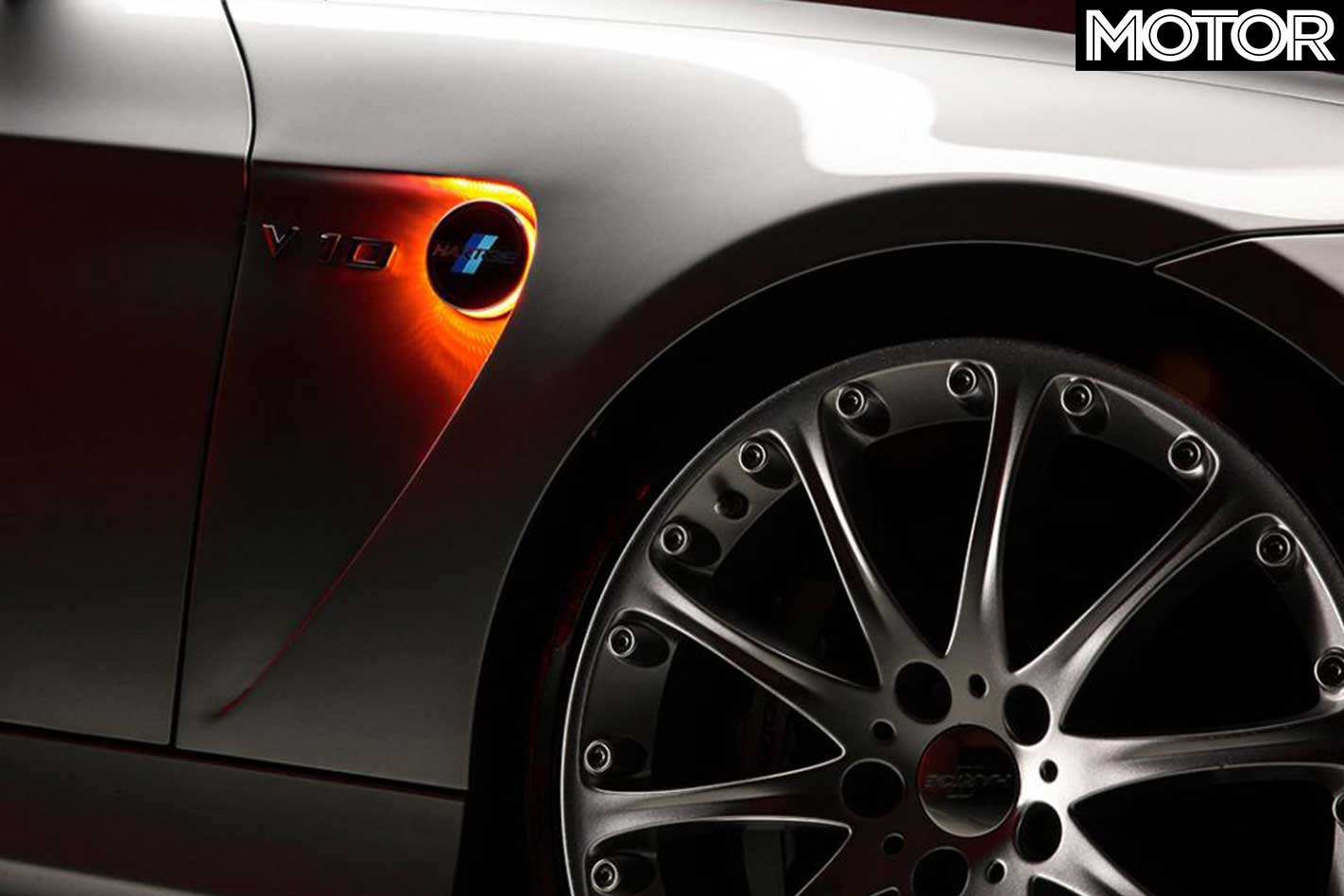
Pedals, badges, interior panels, wheels… plenty about this car has been changed if your eye is keen enough to pick it out, but for the most part it’s the ultimate BMW sleeper.
It’s been tested by US outlet Car and Driver to run 0-97km/h (0-60mph) in just 4.5 seconds, though claims a 4.3sec sprint, and knock over the quarter in 12.9. This all with a 6-speed manual ‘box.
If you want the H50 for yourself, you’d better call up any friends you’ve got in the Cincinnati area, pronto.
The 302kW/550Nm M2 Competition is the real deal.
It’s smaller and more chuckable than its in-house rivals and is just as fast when equipped with the optional DCT. Against the array of M-car porn it’s a bit of an understated sleeper.
Rumoured to be around $105,000 (final Australian pricing is yet to be confirmed), be in no doubt that the rawest, most pure 2 Series will be a bargain. If ever there was a case for head versus heart, the new Competition version takes the cake.
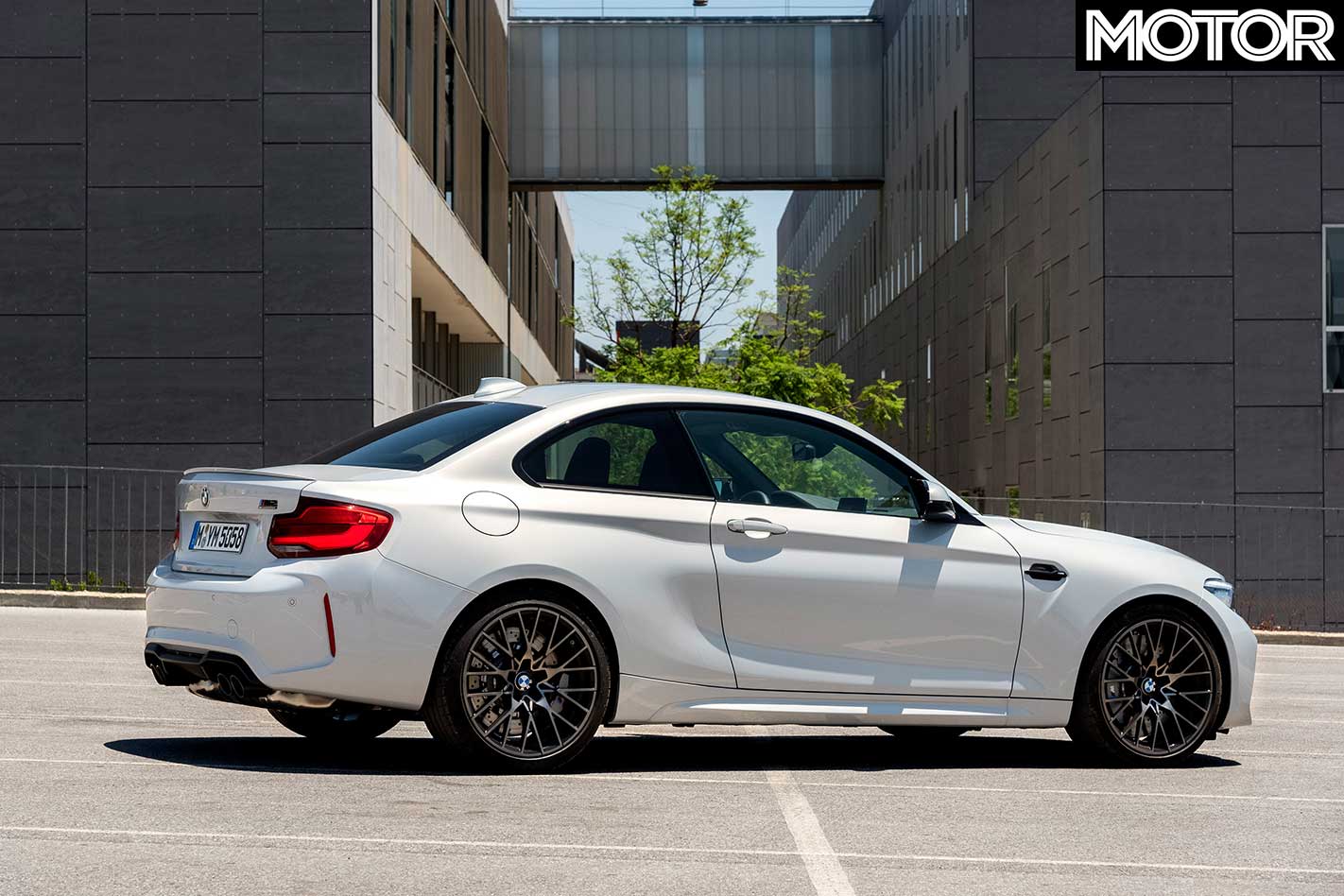
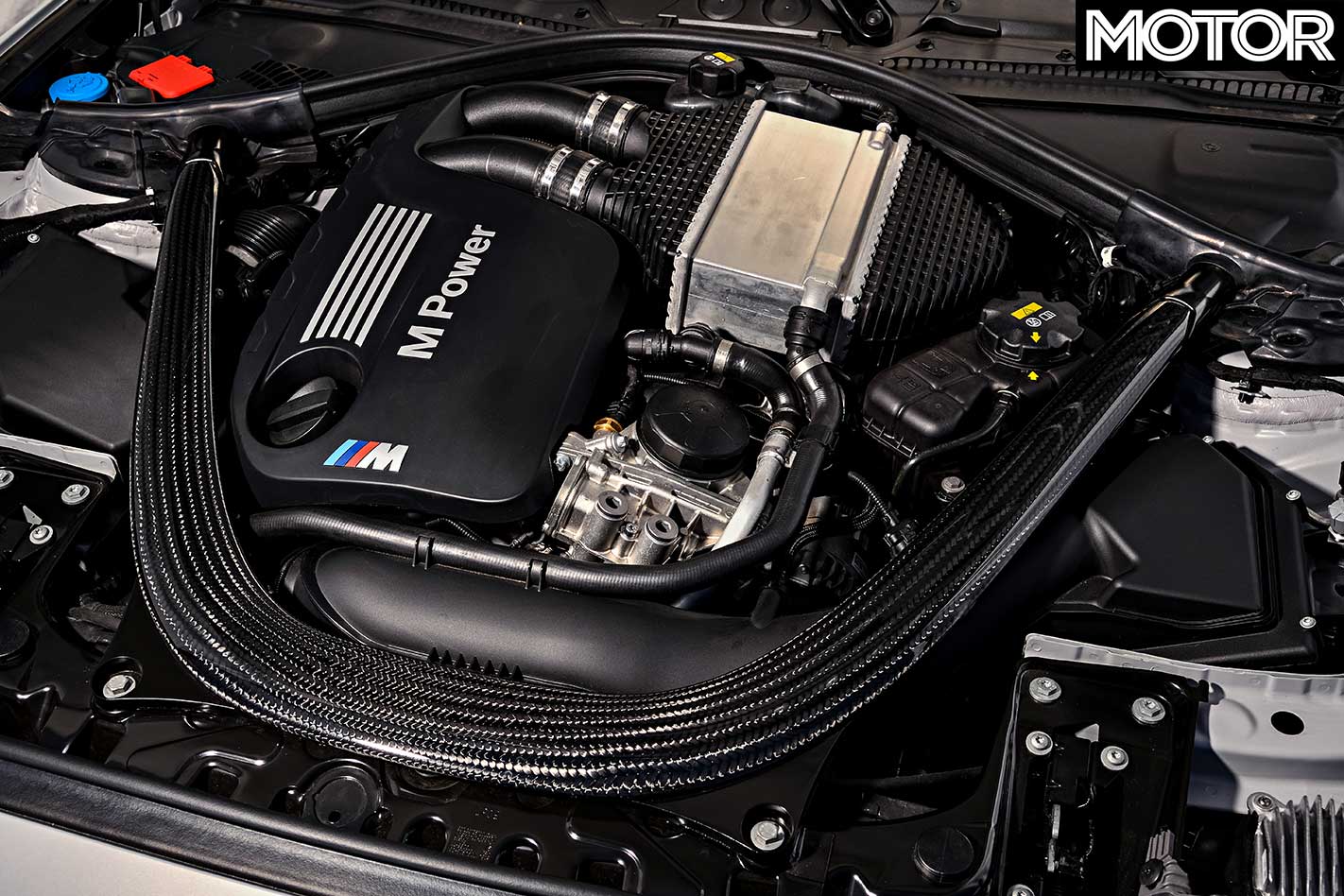
And while power and torque is up a significant 30kW and 50Nm over the base M2, the Competition doesn’t quite have the figures to match its older siblings. There has to be range progression, after all. Combined with the quick-shifting seven-speed dual clutch, the M2 Comp gets to 100km/h from rest in 4.2sec (0.1sec faster than the 272kW/500Nm M2).
Hit the red starter button, and then take a moment to listen to the idle speed, which runs at an elevated 1200rpm while the engine is still cold. Even though the 302kW unit is a melodic piece of kit, it doesn’t sound quite as vocal as its predecessor.
“True,” admits Mr M, Frank van Meel, “but we have a sports exhaust in the making which won´t disappoint.”
However, the time has come to finally drive away in the hyped baby M-car. And it’s the six-speed manual – its existence a factor the purists will love.
The clutch is light, smooth and talkative. The ’box, too, scores brownie points for a fast action and positive feedback. There’s also full marks for the throttle response, which is fast, but never jerky.
Below 2000rpm, the powertrain holds back and works to rule, but as soon as the torque wave rolls in, the M2 Comp seemingly peels tarmac in almost any gear. Sixth gear is a little too tall and aids economy on highway blasts, first has the 265/35 R19 rear Pirellis scrambling for traction, while third is spot-on for those twisty roads where the red mist descends.
However, on a track, the paddle-shifting DCT is the faster, more pragmatic option. Keeping both hands on the wheel helps, and so does the speedy, almost imperceptible shift action. Ultimately, if you live in a country area, the DIY option is a real treat. Yet, around town and on playful Sundays, the dual-clutch is the better bet.
Like every modern M-car worth a pinch of salt, this one comes with two M buttons on the steering wheel, which invites you to store your favoured setup. In addition, the shift speed of the DCT can be increased in three steps – from laid back to whack-in-the-back fast.
There’s also a separate ESP switch, but everything related to driving dynamics is best grouped under the M1 and M2 mode selectors. And don’t forget to dial in the MDM (M Dynamic Mode), which ramps up the entertainment while still maintaining a safety net.
While the S55’s redline sits high for a boosted six at 7600rpm, anything more than 5250rpm – where the power and torque curves intersect – results in rapid responses. It also explains why we’re running on empty after only 290km in rural Spain. Out here, you’ll never come close to the 280km/h top speed, which is part of an optional M Drivers Package if you decide to spend the extra cash.
The M2 is shorter and narrower than the M4, but it’s only a token amount lighter. While this seems like a deficiency on paper, the reality is it hardly slows the Comp’s responses. Before you can even think of its mass as a negative, it’s casting a spell on your senses.
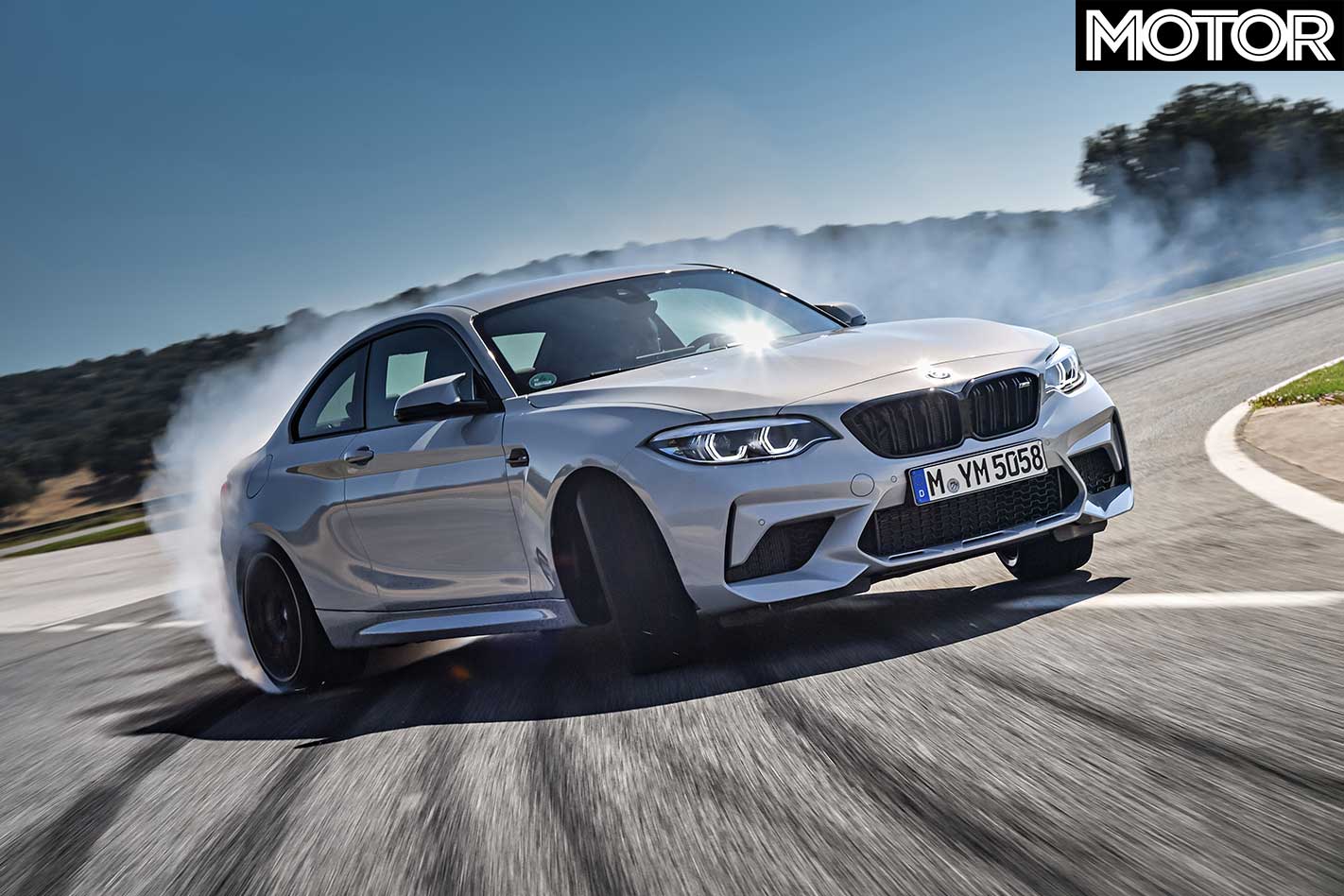
The racier M2 quickly proves that what stiffens up the front axle and the engine department is muscle, not fat. That taking off like a fighter plane is due to the trick active M differential, not just launch control. And that the huge amounts of speed carried through corners is the merit of the recalibrated chassis, not solely the wider 245/35 R19 front boots
Okay, the ride comfort could be better and hardly deserves special mention, the cornering grip at the very limit varies with almost every surface and the rear-end feels positively squirmish when pushed. The Comp also isn’t a fan of radical camber changes or cattle grids and is prone to tramlining. But this is an M product. Traditionally, they’ve never been mundane.
Traction and roadholding depends largely on the tyre performance. It pays not to overdrive this M2. On a track, saving the front tyres has a payback effect on cornering speed once you are deep into double digits on the lap count. Conversely, on the winding second-gear corners that snake up and down the Spanish hills, nursing the rear tyres makes all the difference.
A similar wear pattern applies to the sport brakes, which will, after a while, also feel the stresses and heat of repeated hard use. The absolute stopping power does not suffer overtly under pressure, it just takes a further stab to summon it and the pedal travel increases incrementally as the ABS remains on alert.
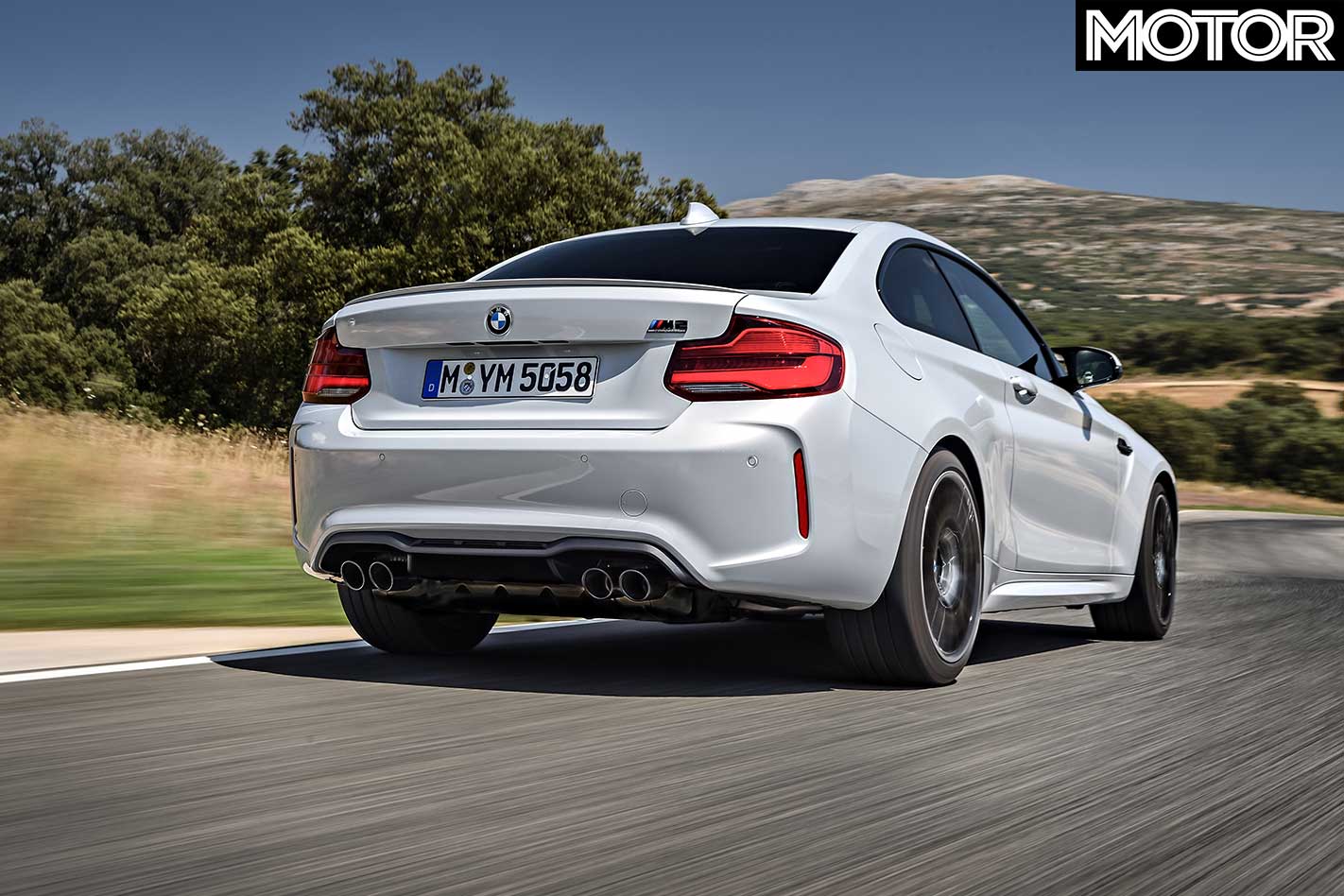
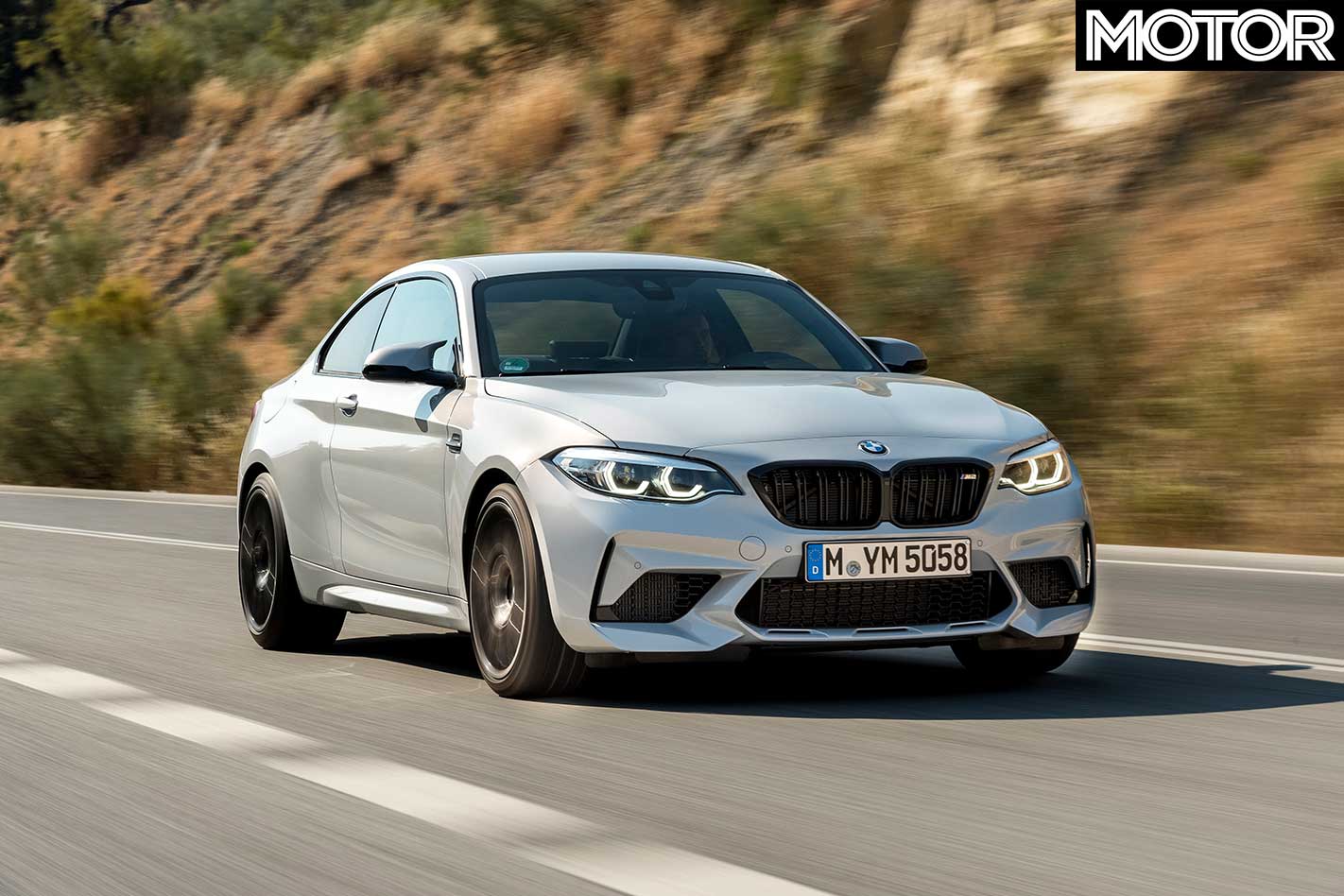
Visually the Competition is anything but subtle. There is barely enough front bumper left to accommodate the multiple air intakes. We quickly stopped counting the numerous flares, spoilers and splitters, too.
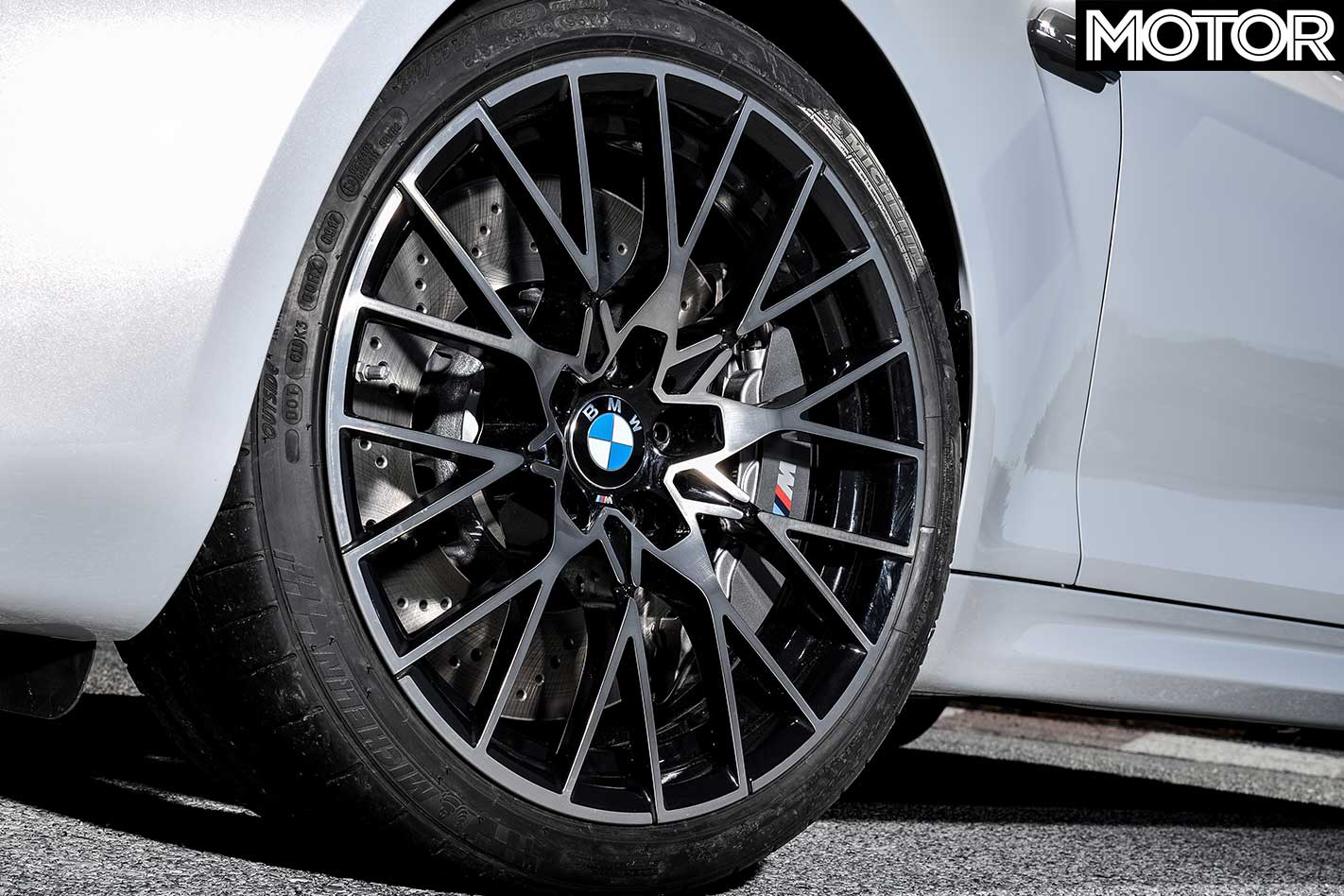
Among the more subtle bodywork upgrades are a wider grille, cooling slits, a full-width diffusor and a neat quad tailpipe arrangement. Other bespoke items include restyled 19-inch rims and a lowered suspension setting. A fetching extra-cost livery, Hockenheim silver, is also on the options list.
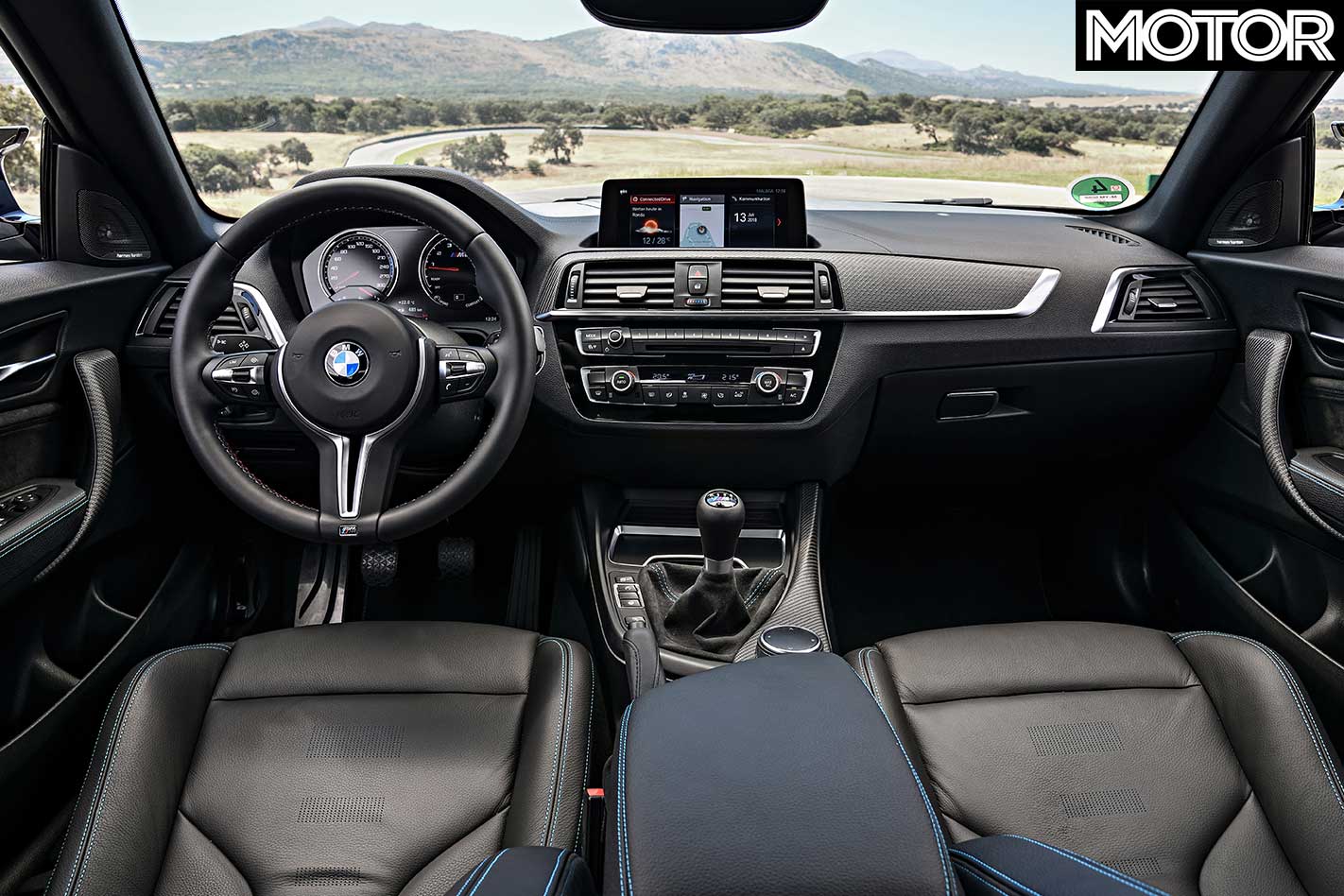
Inside, the M2 is an M240i with a twist. You get bespoke seats, fresh digital instrument graphics and higher-grade trim pieces, but the general cockpit design is unchanged – meaning the best-before date is fast approaching.
At the end of the day, the pumped-up M2 Competition is bound to shine on properly maintained Aussie country roads and will no doubt be a fan favourite through roundabouts and the odd highway on-ramp. And the decision between manual or DCT will largely come down to personal preference.
If you care about the stopwatch for pub banter, the self-shifter is two tenths faster than the manual to 100km/h, but it can’t match the tactility of the manual experience. It all plays back into the inner head-versus-heart debate that encapsulates the entire Competition premise.
The head says that perhaps you should grab one of the first M2 Comps, run it for a year and then sell it. Worst case, you’ll come out of it with a small loss (or you could wait for the rumoured Pure version for a speculated sub-$100K). After all, it costs about half as much as an M5, yet it’s about 85 per cent as rewarding.
However, the heart says to go left-of centre and grab an Alpine A110 instead and use the small change for a road trip. Although if the price was right, an even racier, lightweight and two-seat M2 GTS with carbon-ceramic brakes would rule all. C’mon Mr van Meel, we know you want to…
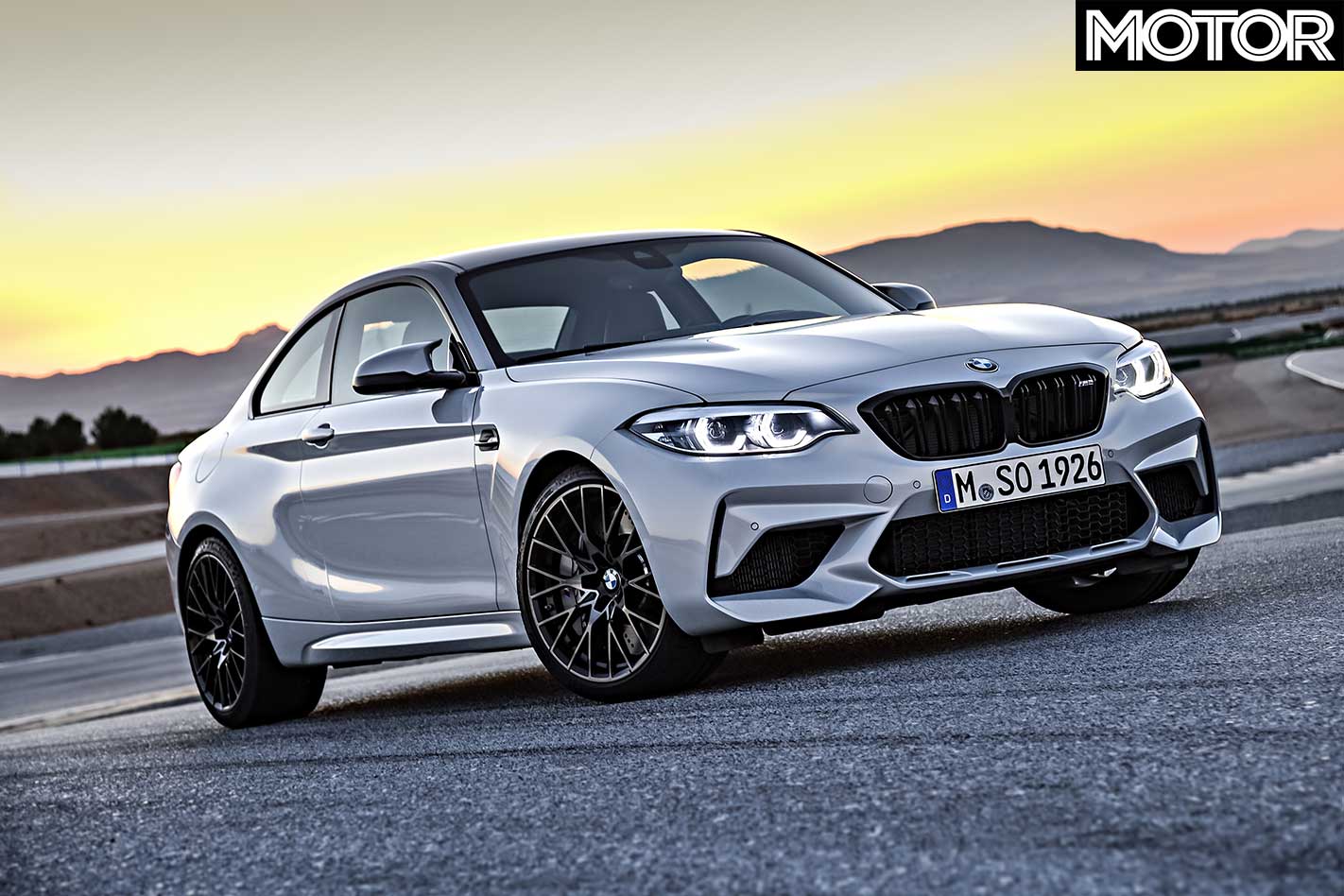
2018 BMW M2 COMPETITION SPECS: Engine: 2979cc inline-6, DOHC, 24v, twin-turbo Power: 302kW @ 5250-7000rpm Torque: 550Nm @ 2350-5200rpm Weight: 1550kg 0-100km/h: 4.2sec (claimed for DCT) Price: $105,000 (estimated) Rating: 4.5 out of 5
