
SERGIO MARCHIONNE, the former head of Fiat Chrysler Automobiles (FCA), has died aged 66, just days after he was replaced as the head of the business.
The Italian-Canadian underwent shoulder surgery to remove a tumour in late June, but reportedly suffered a cerebral embolism during the operation that led to him being placed in a coma. As his condition worsened he was replaced by Mike Manley as CEO of FCA and by John Elkann as CEO of Ferrari, however his injuries were too severe to recover from. Marchionne succumbed and passed away, July 25.
“Unfortunately, what we feared has come to pass. Sergio Marchionne, man and friend, is gone,” FCA chairman John Elkann said in a statement.
“I believe that the best way to honour his memory is to build on the legacy he left us, continuing to develop the human values of responsibility and openness of which he was the most ardent champion.
“My family and I will be forever grateful for what he has done. Our thoughts are with Manuela, and his sons Alessio and Tyler.”
Marchionne joined the board of Fiat in 2003 with no prior experience in the automotive industry, but had a reputation for transforming loss-making firms.
During his time at the head of the business Marchionne managed to turn Fiat around while simultaneously taking control of a then struggling Chrysler to create FCA, as well as spinning Ferrari into an independent division.
His tenacity and drive during this period will see him remembered as a titan of the automotive industry.
Marchionne had intended to continue in his role as the head of Ferrari for another five years, meaning his passing could have a short-term impact for the Italian manufacturer.
It was announced Mike Manley would take over Marchionne’s mantle at the head of FCA last weekend when the then-CEO fell ill. Louis Camilleri will take over at the top job in Maranello.
During Marchionne’s time at the helm, FCA focussed on its premium brands, growing Jeep, Alfa Romeo, and Maserati through new SUV models.
Marchionne will be remembered for his frank and outspoken opinions, and honest approach to dealing with the media, such as when he openly discussed finding another car company to merge FCA with.
MERCEDES-BENZ has revealed its all-new A-Class sedan to the world, and claims its slippery silhouette makes it the most aerodynamic car in production.
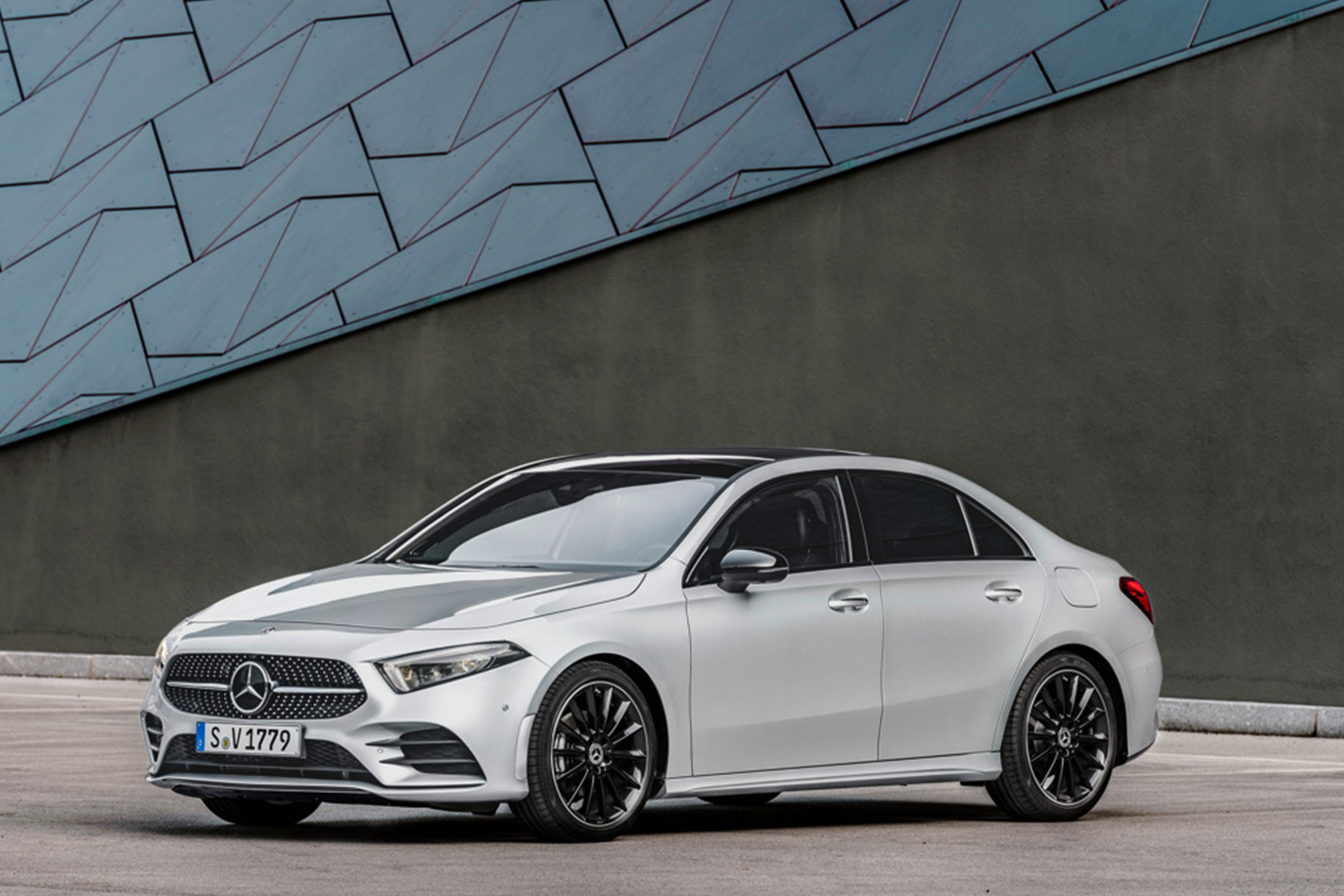
The first-generation body-style will begin production in Mexico later this year, before a second factory in Germany adds to production volume of the four-door in 2019. A long-wheelbase version of the A-Class sedan will also be built and sold exclusively in China.
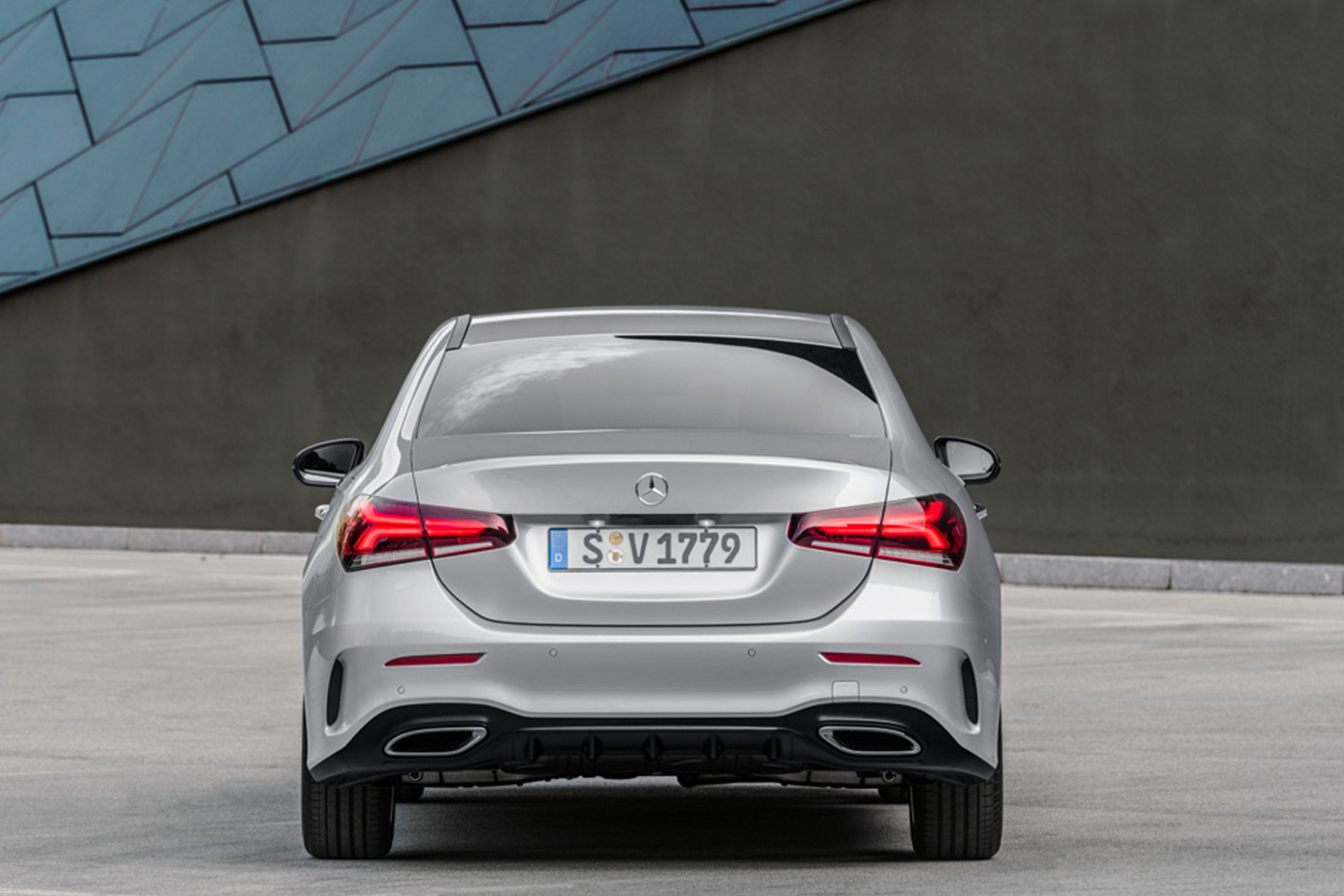
Mercedes-Benz believes the A-Class sedan will have the lowest drag coefficient of any production vehicle in the world when it goes on sale, something it has worked hard to achieve in order to make it as fuel efficient as possible.
The German brand says the sedan has a drag coefficient of just 0.22, which is equal to Merc’s previous record-holder, the CLA Coupe, but the new body style has a smaller frontal area of 2.19m².
Two engines will be available for the A-Class sedan at launch. A200 variants get a 120kW/250Nm turbocharged petrol engine, while the A180d is powered by an 85kW/260Nm turbo-diesel. Both will be mated to seven-speed dual-clutch transmissions with claimed combined fuel economy of 5.4-5.2L/100km and 4.3-4.0L/100km respectively.
A-Class engineers have also worked hard to increase interior room for front passengers in all dimensions: headroom, elbow room, shoulder room, and legroom. Rear occupants haven’t been forgotten, with efforts made there to make the back seat more accommodating than the CLA Coupe, which has a sloping roofline that robs some interior space.
Measuring in at 4.5-metres long, the A-Class sedan has a 2729mm wheelbase – longer than an A3 sedan – and 420-litres of seats-up luggage capacity, which about on par with rivals.
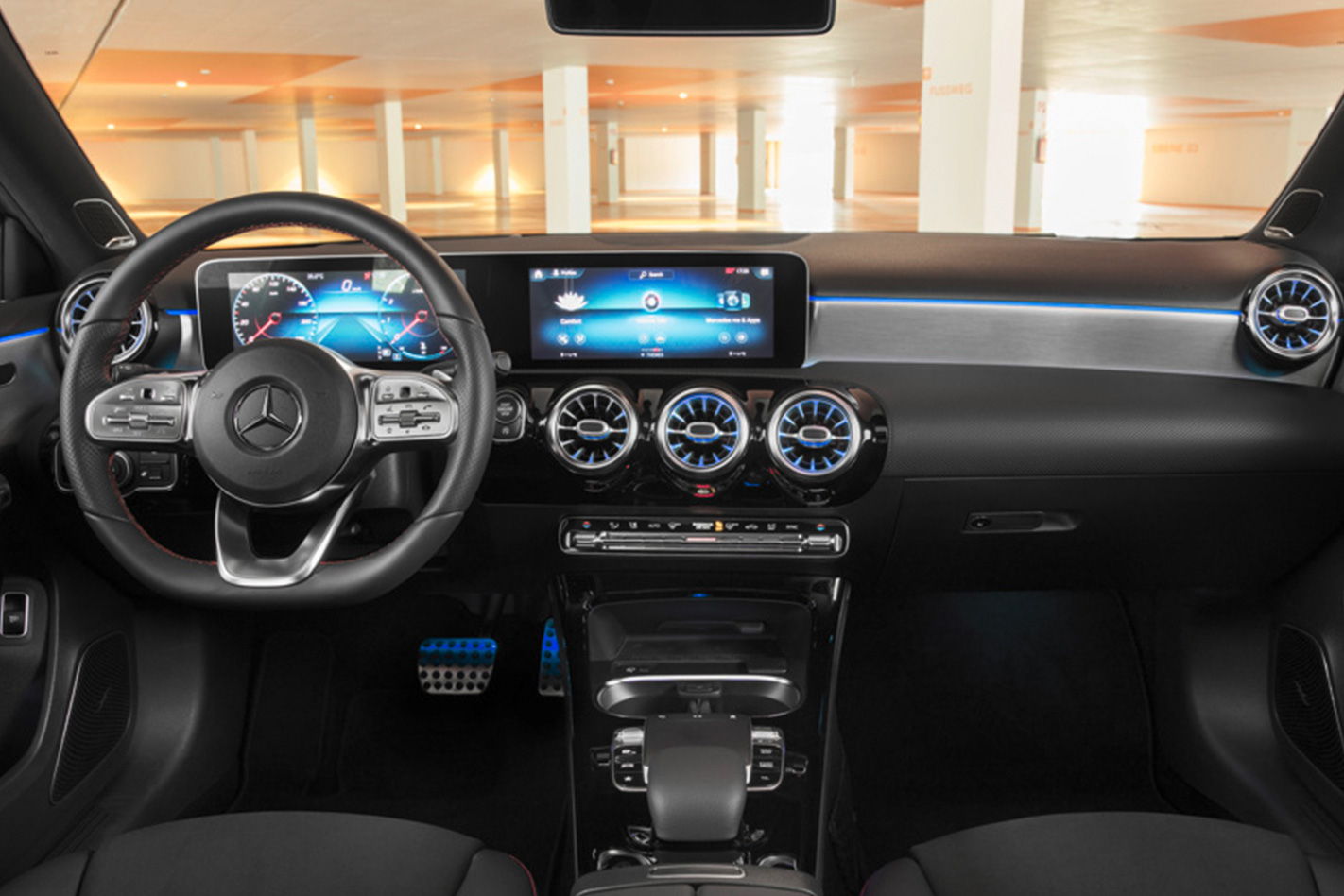
The same cutting-edge MBUX infotainment system that debuted with the A-Class hatch will be standard in the sedan, along with advanced driver assistance systems brought down from the flagship S-Class, such as active brake assist and active lane keeping assist.
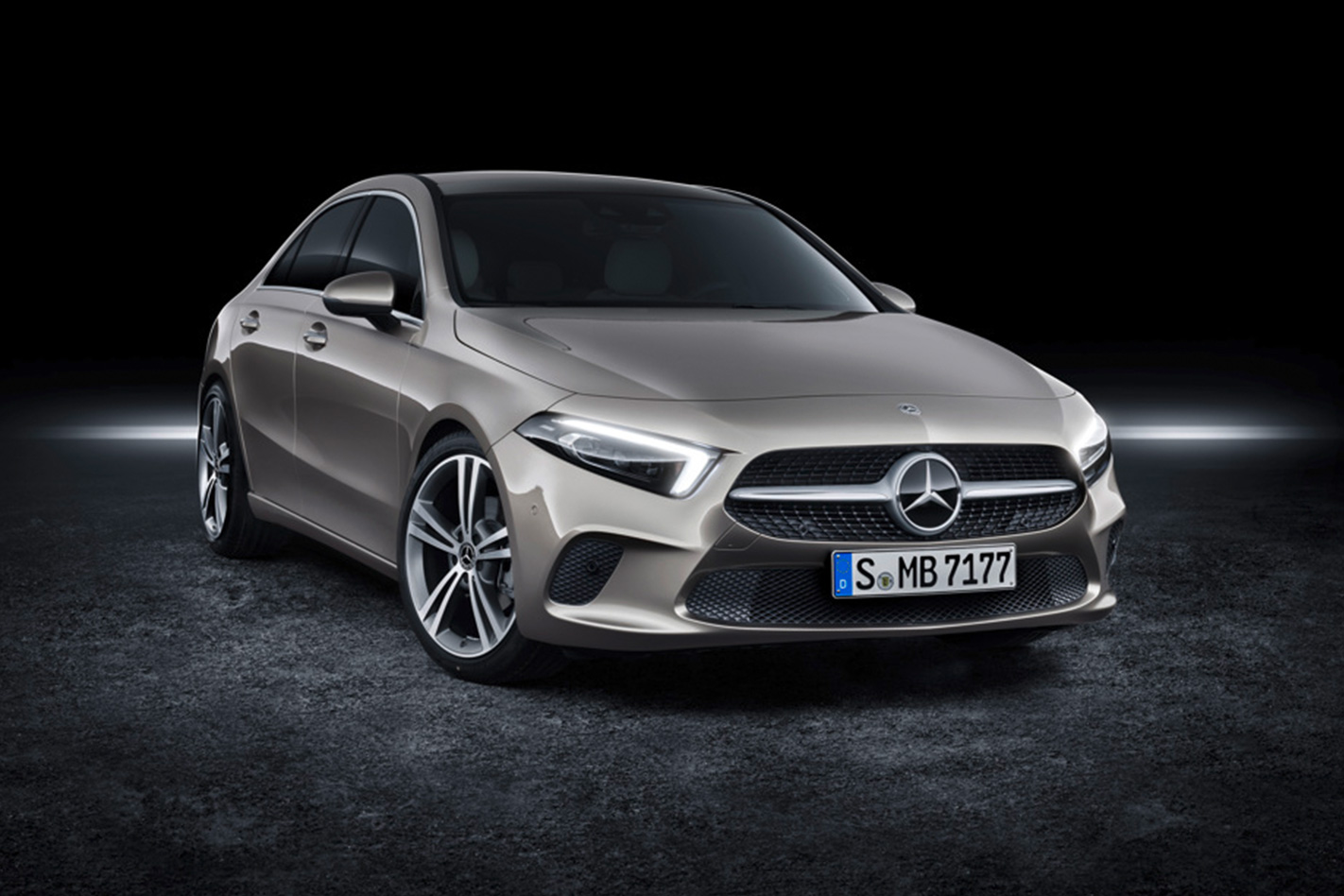
A-Class sedans can be optioned with four exterior design packs, including Style, Progressive, AMG Line, and Night Package.
Underpinning the A-Class sedan is Merc’s MFA II platform, with McPherson suspension up front for all variants, and either a torsion-beam or independent rear suspension set-up depending on engine output, drivetrain layout (FWD vs AWD), adaptive damping fitment, and wheel size.
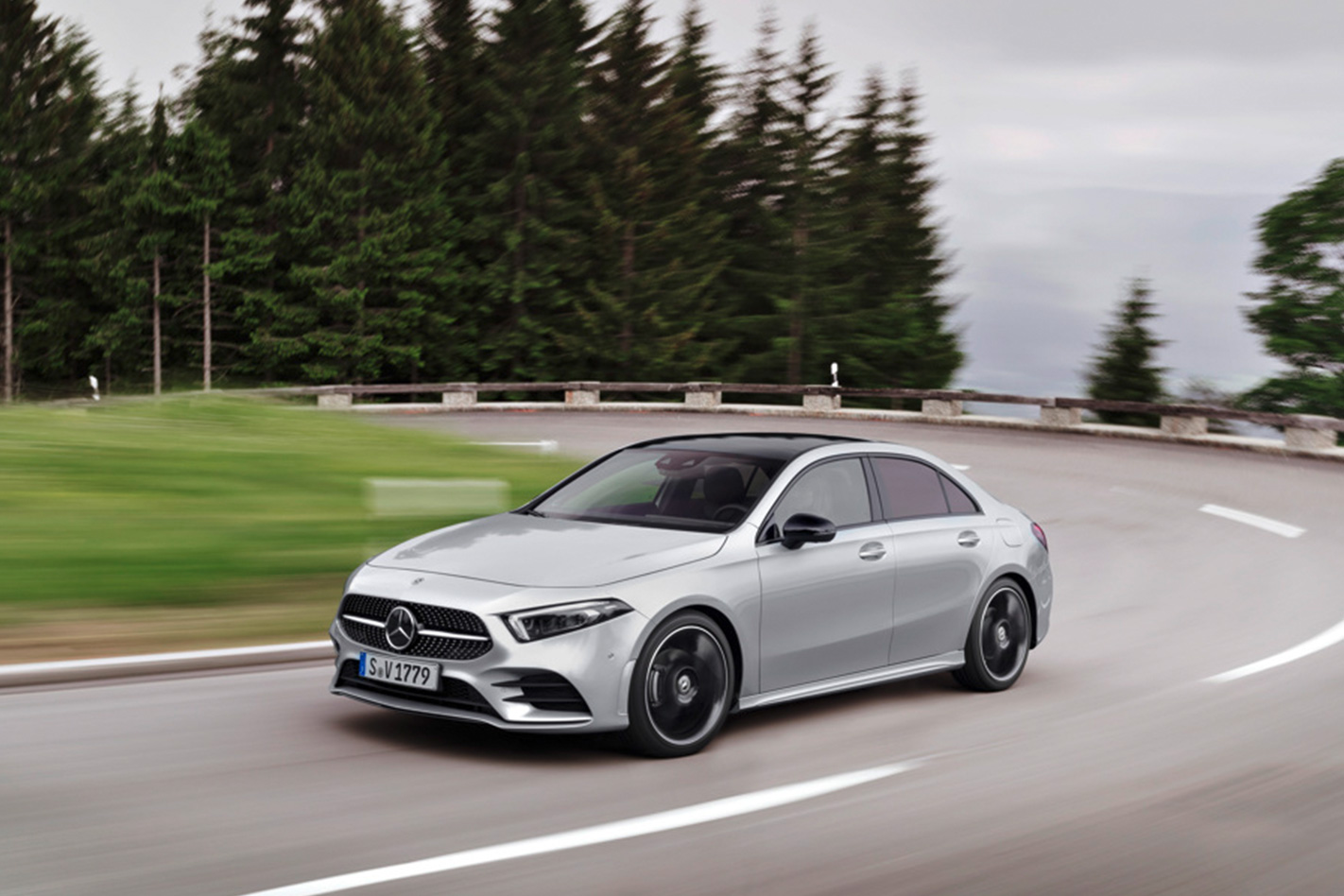
The A-Class sedan will make its public debut at the Paris Motor Show on October 4.
WHAT IS IT?
The all-new fourth generation of Ford’s small hatch.
WHY WE’RE TESTING IT
Sales of the current third-gen Focus have trailed off to be a tiny fraction of those of segment leaders the Toyota Corolla and Mazda 3. The international launch in the south of France gave us a good indicator of this car’s chances to redress that when it arrives in Australia in November.
MAIN RIVALS
Mazda 3, Toyota Corolla, Peugeot 308, Holden Astra, Volkswagen Golf
THE WHEELS VERDICT
Superb steering, well-judged damping and a compliant ride make the new Ford Focus a pleasure to drive swiftly. The new three-cylinder turbo-petrol engine is a triumph of downsizing, delivering a punchy mid-range, unstressed top end, and great frugality, the latter partly due to the new eight-speed automatic. The manual ST-Line, with its slightly lower ride height, is the choice for enthusiasts, especially when specced with the slick, sweet-shifting six-speed manual. It scores highly for equipment, safety and convenience tech. Only some iffy plastics and presentation take a slight sheen off an otherwise really well-executed small car.
PLUS: Steering; chassis balance; powertrain response and refinement; safety equipment; cabin quietness MINUS: Cabin still well short of Golf for finish and perceived quality; vision around A-pillar; lack of rear-seat vents; basic dash display
THE WHEELS REVIEW
‘DYNAMIC SIGNATURE’ is one of those terms, when I first heard it, that made me visualise Dwayne Johnson signing his name for a fan while doing one-armed push-ups. But no, it turns out to be something pretty much every car has. It’s just that some dynamic signatures are more distinctive and desirable than others. Think of a 911 doing its rear-biased squat when gassed hard at the apex, or perhaps a JCW Mini’s darty, ultra-eager front end. A dynamic signature becomes woven into a model line’s DNA, and even as one iteration supersedes another, there’s an onus on the development team to retain or refine it.
Ford’s Focus has always had an identifiable dynamic signature; one that blended slick, precise and super-linear steering with calm, supple damping. So the first question to answer is this: does the all-new fourth-gen Focus − the first car to use Ford’s new C2 platform, and now powered by a turbo triple − retain the road manners and driver connection the Focus nameplate has always embodied?
There’s a caveat attached to that which we’ll get to, but the broader answer appears to be: absolutely.
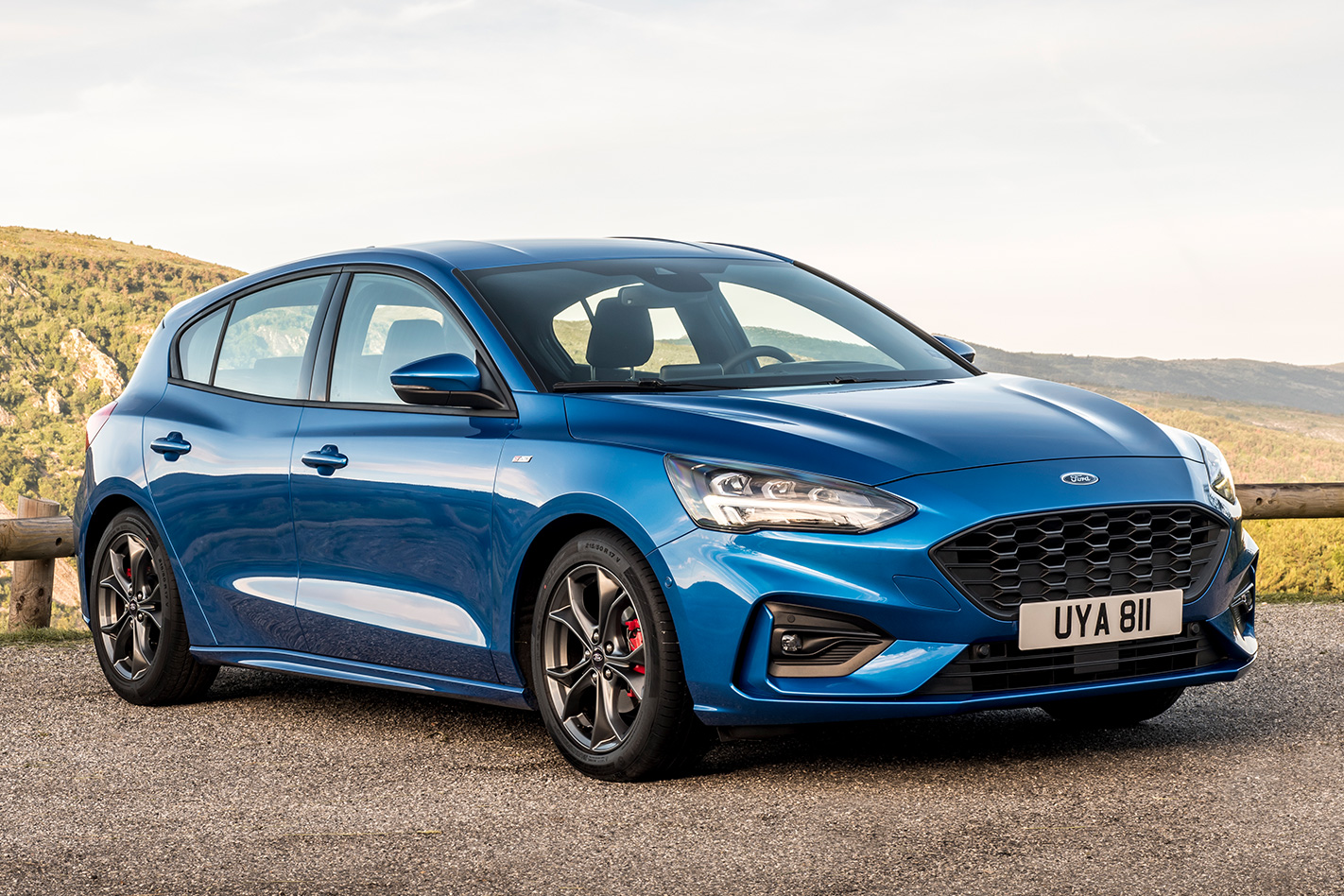
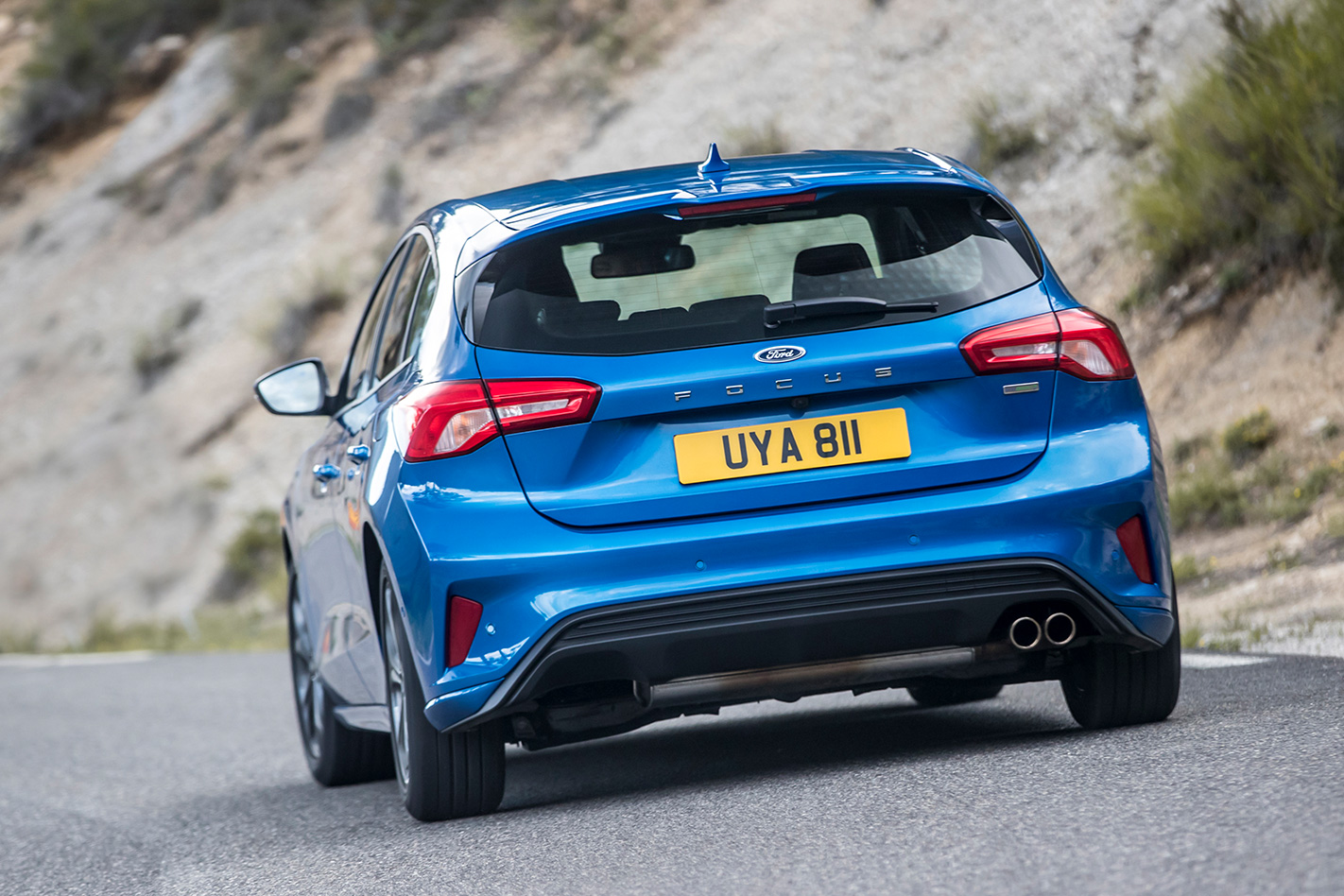
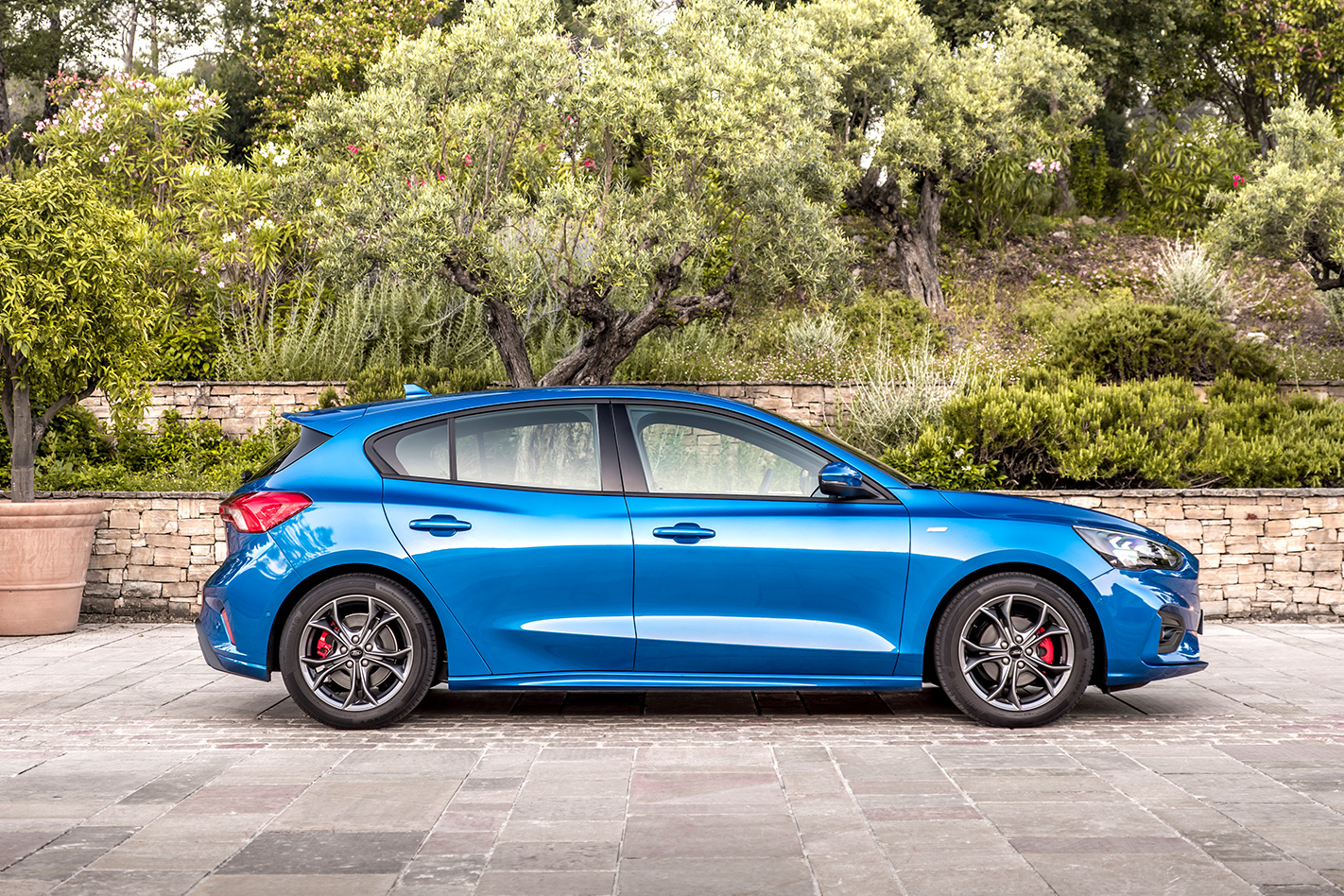
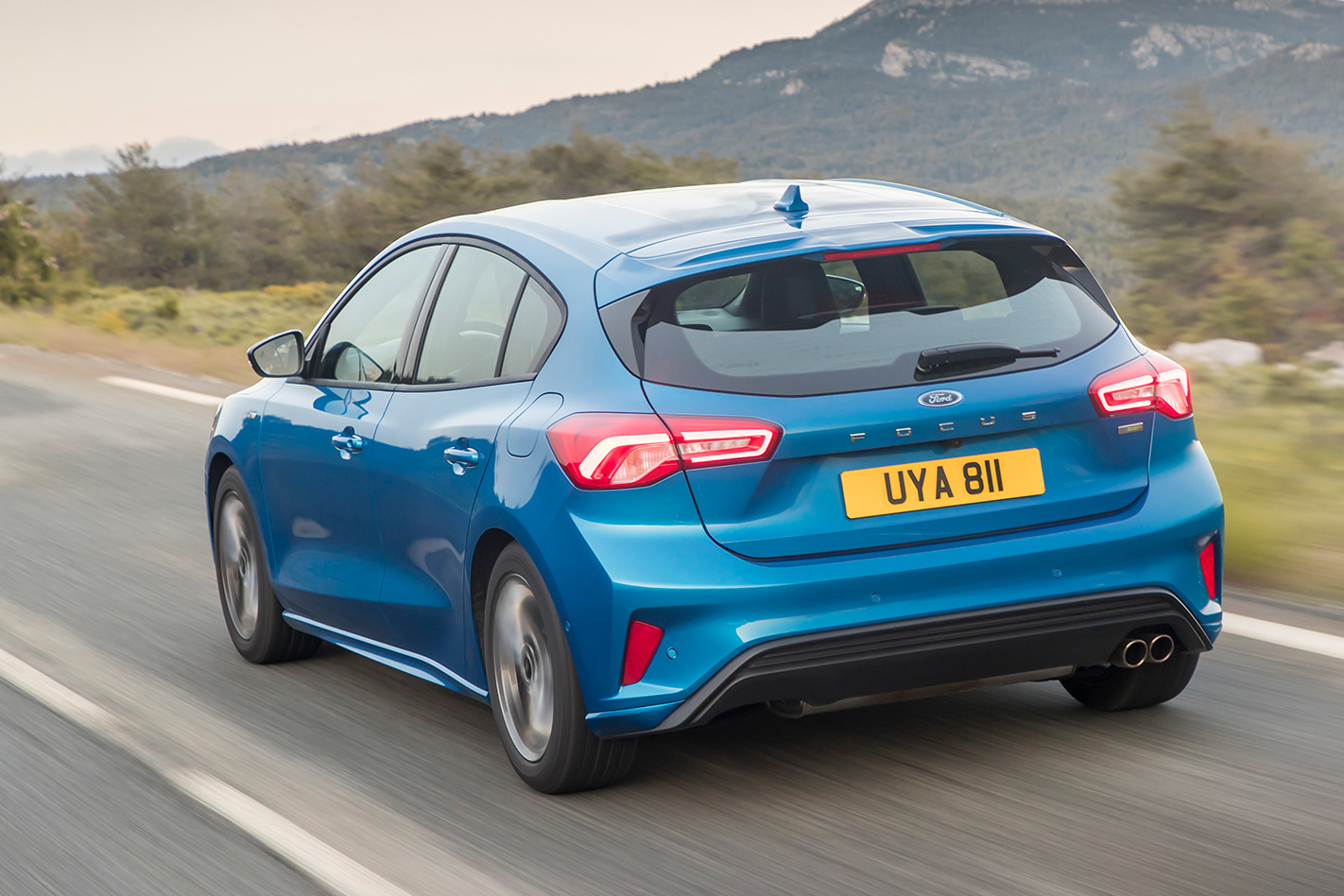
But before you’ll even consider a test drive of a new Focus when it arrives in November, you’ll need to have been won over by its exterior design. It’s the work of Aussie, Jordan Demkiw, who designed the exterior of the FG-X Falcon before accepting a senior role in Ford’s German design studio. The new car’s front-end treatment riffs heavily on the trapezoidal theme laid down by Mondeo, while the rear-end, at the risk of being uncharitable, comes off as a bit generic. Strip the badges off the back and it could be anything. Much better are the overall stance and proportions. The 53mm stretch of the wheelbase and more set-back A-pillars both contribute plenty, as do the reduced overhangs at each end. It’s also significantly roomier inside (especially in the back) without any real bloating of the existing car’s exterior dimensions. Crucially, around 88kg has been cut from the tubby third-gen car’s waistline, thanks in part to 30 percent greater use of boron steel for the construction of the passenger cell. It also contributes to the claim that the new car is 20 percent torsionally stiffer.
But it’s under the bum where there’s a whiff of something curious going on. While Ford’s new C2 platform is engineered to accommodate an independent rear end, Australia’s three-strong model line-up (Trend, ST-Line and Titanium) will come with the more basic torsion-beam set-up. Wait … that’s with the exception of what will likely be the smallest-selling variant, the ST-Line wagon (the only model grade offered as a wagon) which is fitted with its own variation of the independent rear end that pushes the rear strut towers further outboard to widen the cargo aperture and improve the load-carrying capability. We could only grab a short squirt in one of the few IRS cars available at the launch (a not-for-Oz four-pot diesel) making it difficult to give a conclusive assessment of how Aussie-spec cars, with the lighter turbo-triple up front, will actually drive. What we can say is that there didn’t seem to be a really marked difference between the two rear-suspension layouts, at least not on mostly smooth, fast French roads.
What won’t change is steering, which is a masterful blend of nuanced tactility, with perfect weighting overlaying a slick, ultra-consistent action. “We approached the [development of the] steering set-up with an almost obsessive attention to feel and driver connection,” says driving dynamics leader Guy Mathot. It shows. It’s quick at 2.6 turns, but the off-centre response is millimetre perfect, never nervous, and the weighting increases totally naturally as lock is wound on and the lateral load builds. So a continuation of the class-best steering of the old car? Almost certainly. I can’t think of another hatch in this segment that could top it.
Likewise the overall balance and compliance of the chassis. And grip. What this car manages to extract from its 215/50R17 Continental SportContact5s on the ST-Line set-up (riding 10mm lower than Trend and Titanium) is properly impressive, proving that geometry and chassis tuning is every bit as important as the size of the footprint. You’ll only uncover mild understeer if you really overdrive it; respect the clearly telegraphed limits and enjoy the subtle interplay of the throttle, and the Focus delivers a lovely, satisfying engagement from the rear end. Mathot tells us there’s no passive rear-steer action going on with either suspension layout, but the set-up is so good it almost suggests otherwise. We talk about a fluid quality to a car’s handling; the Focus, on admittedly flattering roads, feels borderline hygroscopic.
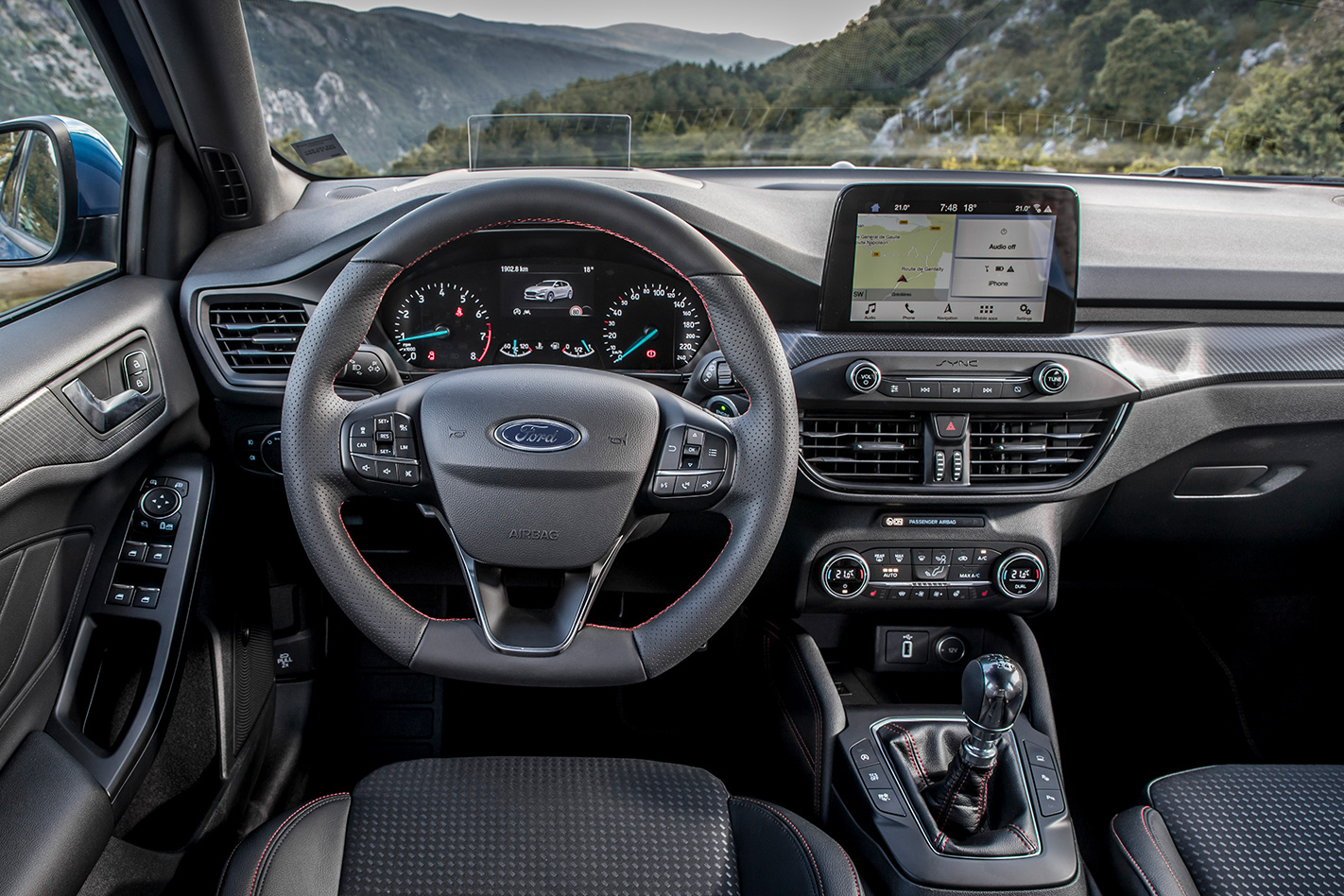
The powertrain, meanwhile, keeps up its end of the deal. I’ll happily admit to having open affection for a good triple, and Ford’s new 1.5 turbo in high-output guise (134kW/240Nm) is right up there with the VW unit (offered in Golf in other markets) for smoothness and overall refinement, and may pip it for parping, eager character. It’s never what you’d call super fruity in terms of soundtrack − in the ST-Line, especially, it could benefit from a switchable exhaust for more cheeky burble and pop, and sure, if conditions allow you to really rag it you may wish for a bit more grunt − but what is there is totally tractable and exploitable. There’s hardly any lag, a nicely plump mid-range, and top-end that, especially when teamed with the six-speed manual, doesn’t tail off as abruptly as plenty of turbo fours.
The eight-speed auto, meanwhile, cements a spot as best transmission in the class, and will hopefully diffuse any lingering negativity in the wake of the dual-clutch PowerShift debacle and the stinging A$10m slap-down Ford copped from the ACCC earlier this year. The eight-speeder’s calibration, in either normal or sport mode, is nicely in tune with those respective driving styles, and the tall eighth contributes to the frugal consumption, which ran at around mid-6s on our drive. Even the base Trend comes with paddles if you prefer to take manual control, but will auto up-shift at the 6500rpm redline if you chose not to. Only the occasional mild jolt on rapid downshifts mars an otherwise buttery smoothness.
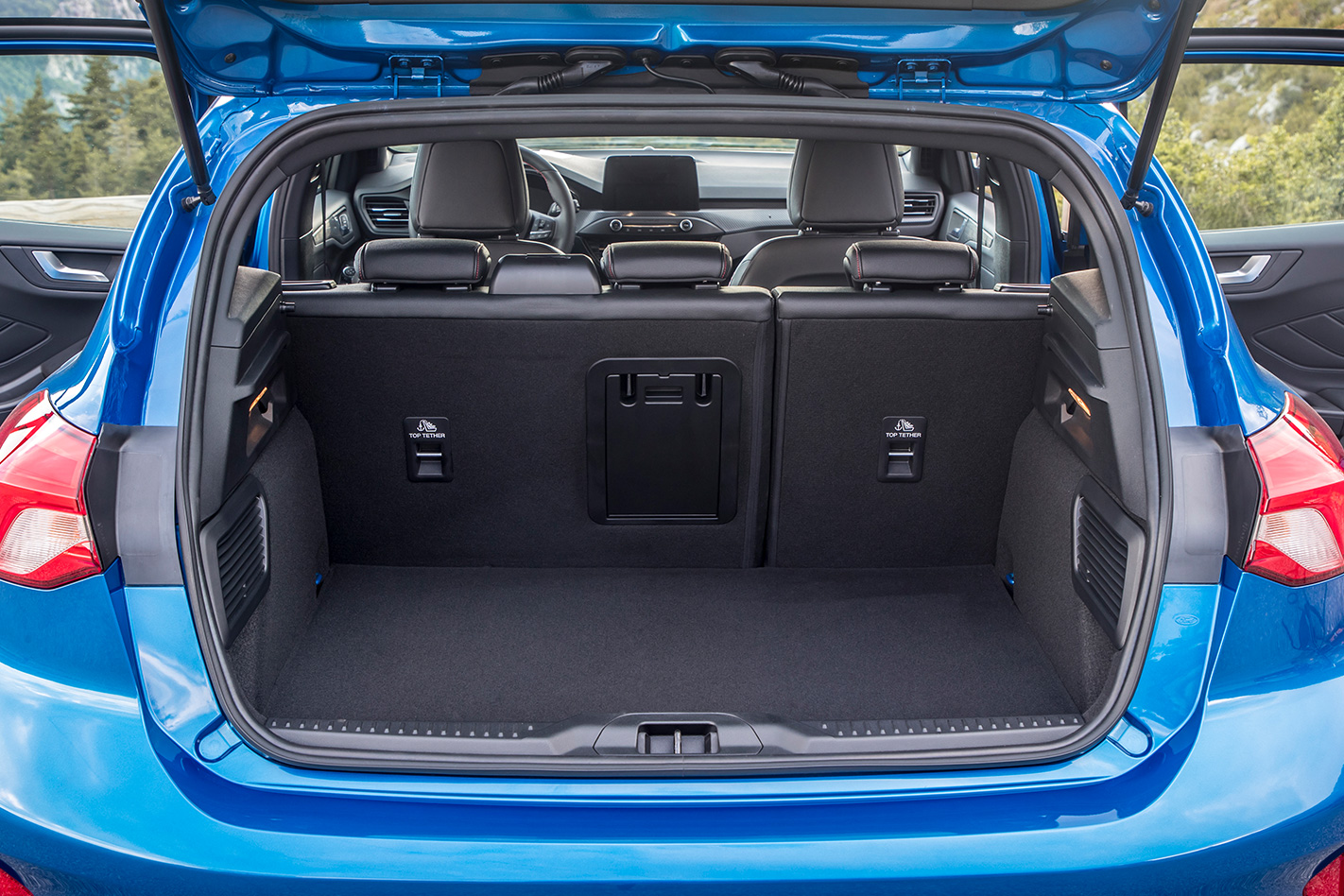
I’m not that keen on the rotary gear selector in Titanium spec − it comes off as a bit of a pseudo-premium affectation − but otherwise the interior has benefitted from a major button declutter, and the overall ergonomics and general user-friendliness are hard to fault. Likewise the equipment levels: all models get improved AEB which can detect pedestrians and cyclists at night, along with lane-departure warning and lane-keep assist. The tech and safety hits its peak, naturally, in Titanium spec with the addition of blind-spot warning, cross-traffic alert and adaptive cruise that can take care of speeds from 0-200km/h. The addition of a 650-watt B&O Play audio system, including subwoofer, shows how serious Ford is at matching the level of top-spec Mazda 3 and Golf.
Yet the Focus doesn’t quite reach those highs. There are still too many hard surfaces, fake plastic ‘stitching’ on door trims and missed opportunities inside to seriously compare the Ford’s interior with that of the VW benchmark. The dash, especially, stands to look very Fisher Price when the next Golf update ushers in a full TFT display.
But that’s a mild disappointment in the broader context of the dynamic goodness on offer. We want to drive a torsion-beam car on Aussie roads before we fully clutch the Focus to our hearts, but right now, (Euro) gut feel says this car has what it needs to atone for the shortfalls of its troublesome forebear.
SPECS
Model: Ford Focus ST-Line Engine: 1497cc 3cyl, dohc, 12v, turbo Max Power: 134kW @ 6000rpm Max Torque: 240Nm @ 1600rpm Transmission: 6-speed manual/8-speed automatic Weight: 1369kg 0-100km/h: 8.3sec (claimed) Fuel economy: 5.5L/100km Price: $27,490 (estimated) On sale: November
The facelifted Porsche Macan has been unveiled in Shanghai with new tech in an otherwise familiar-looking package.
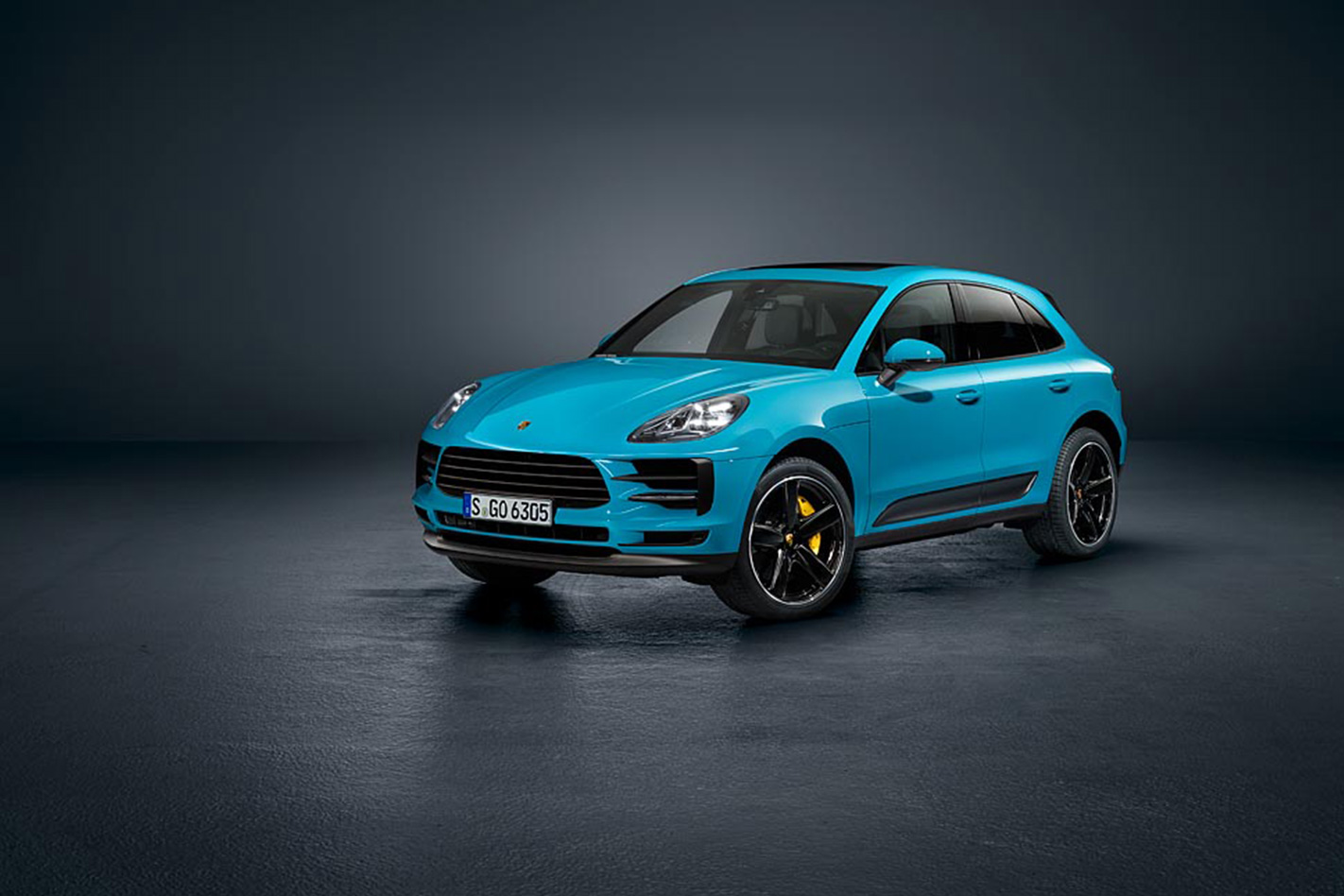
The design changes are typically evolutionary, with the most noticeable exterior differences being the front and rear lighting, which includes ice-cube style LED headlights, and a more subtle front fog-lamp strip.
The front end itself has been re-worked to appear wider than the current model, but it’s the tweaked rear-end that makes this model stand out, not least because of the three-dimensional LED tail light strip – as found on other models including the 911 GTS and Panamera. The four-point design of the brake lights also reflects the brand’s identity.
Inside, the most obvious change is the bigger 11-inch full-HD infotainment screen, shared with Panamera and the new Cayenne.
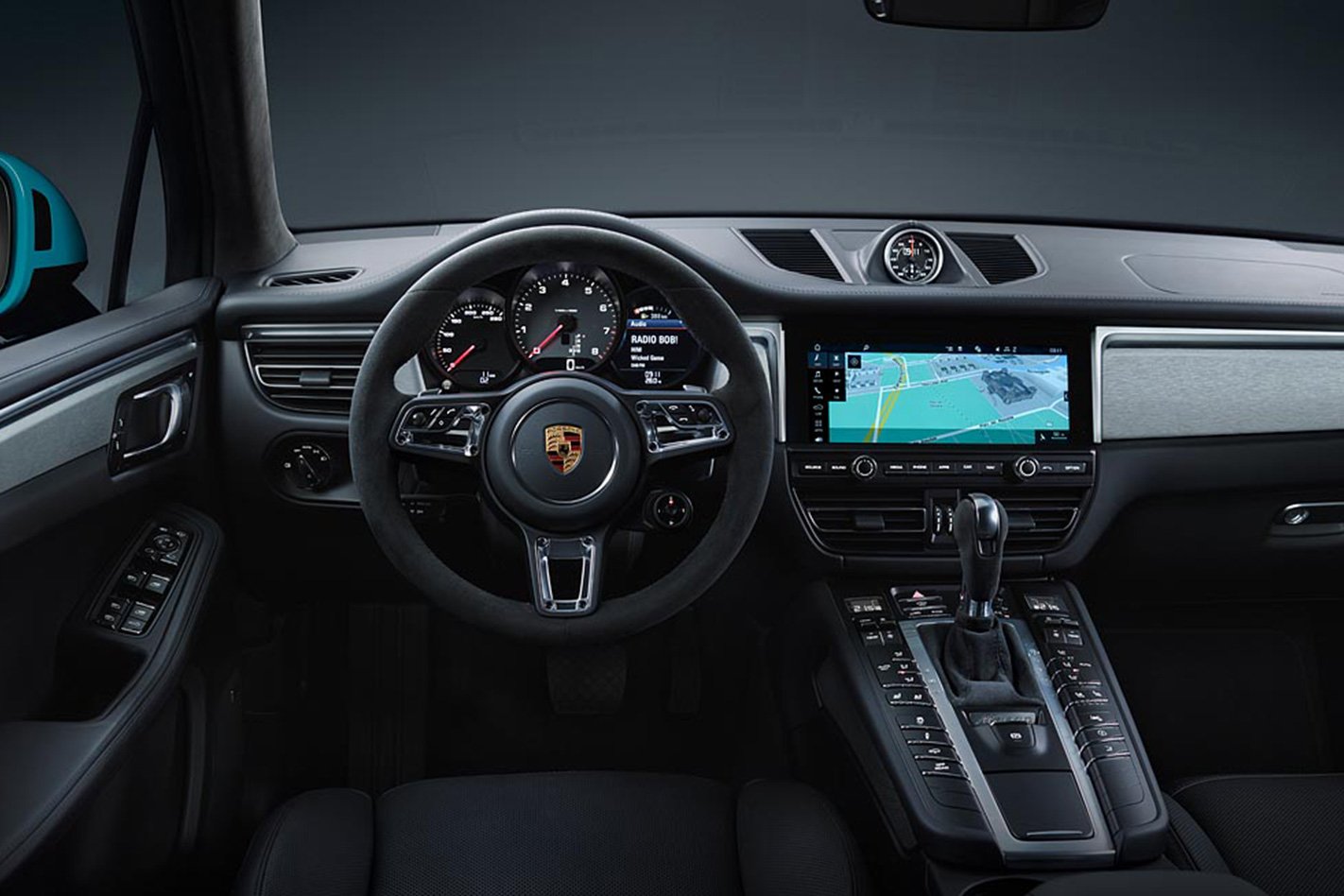
The air vents have also been redesigned and repositioned below the screen, but some elements of the pre-facelift model remain, including the familiar gauge and rows of buttons on either side of the gear shifter.
An optional GT sports steering wheel adds some 911 styling dynamics with its integrated driving mode switch and ‘sports response button’.
Porsche has extended the list of comfort options to include a heated windscreen and an ioniser to improve the air quality in the interior.
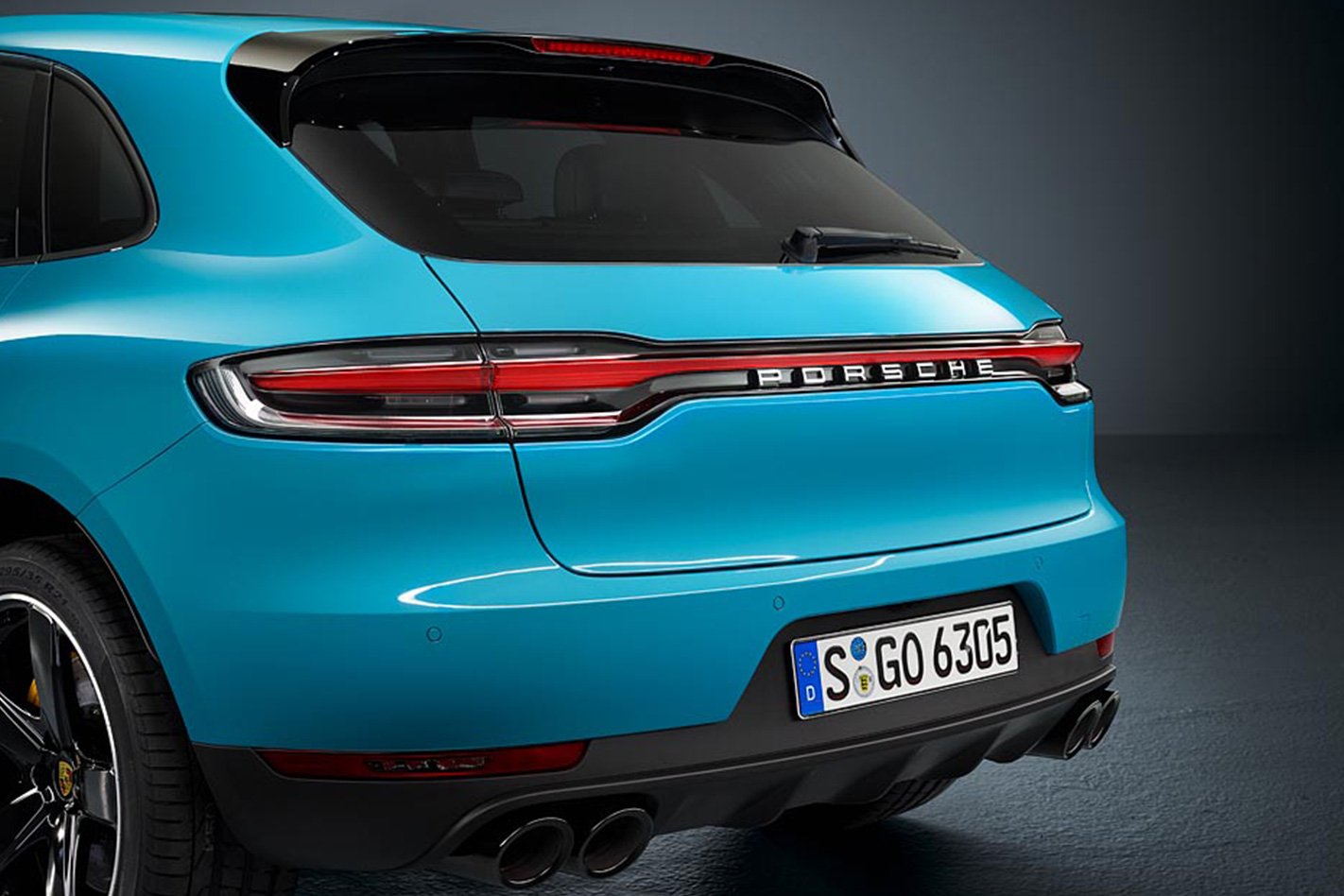
New exterior colours such as ‘Miami Blue’, ‘Mamba Green Metallic’, ‘Dolomite Silver Metallic’ and ‘Crayon’ combined with new interior packages provide a host of new ways to customise the Macan.
Unseen changes include the addition of traffic jam assist with adaptive cruise control which helps stop, start and steer the SUV in slow-moving traffic.
Porsche says the chassis has also been optimised to provide additional comfort while maintaining its sharp handling. Interestingly, the release notes say nothing about improved off-road handling, as hinted with recent teaser images of the new Macan trekking through the highlands of Southern Africa.
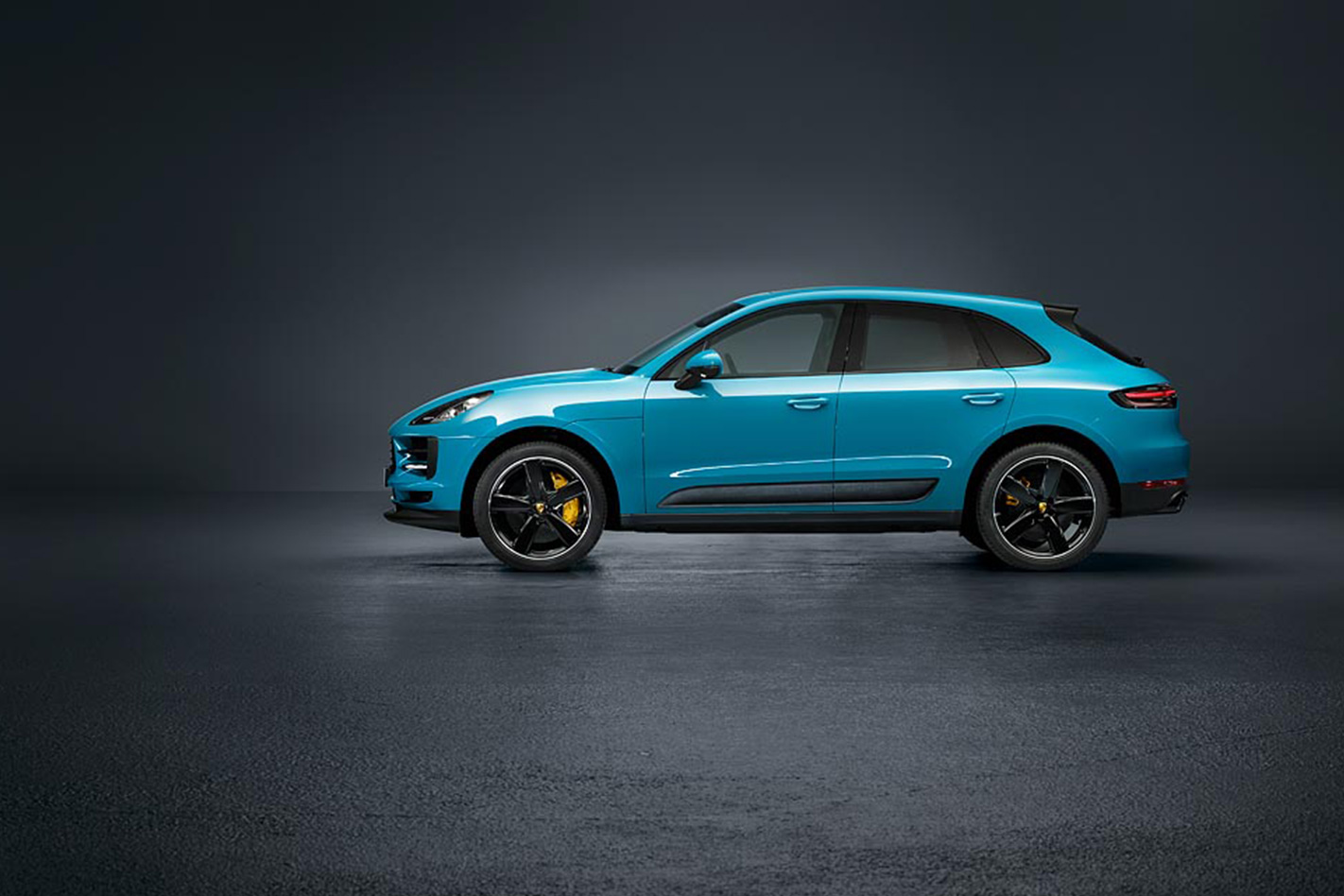
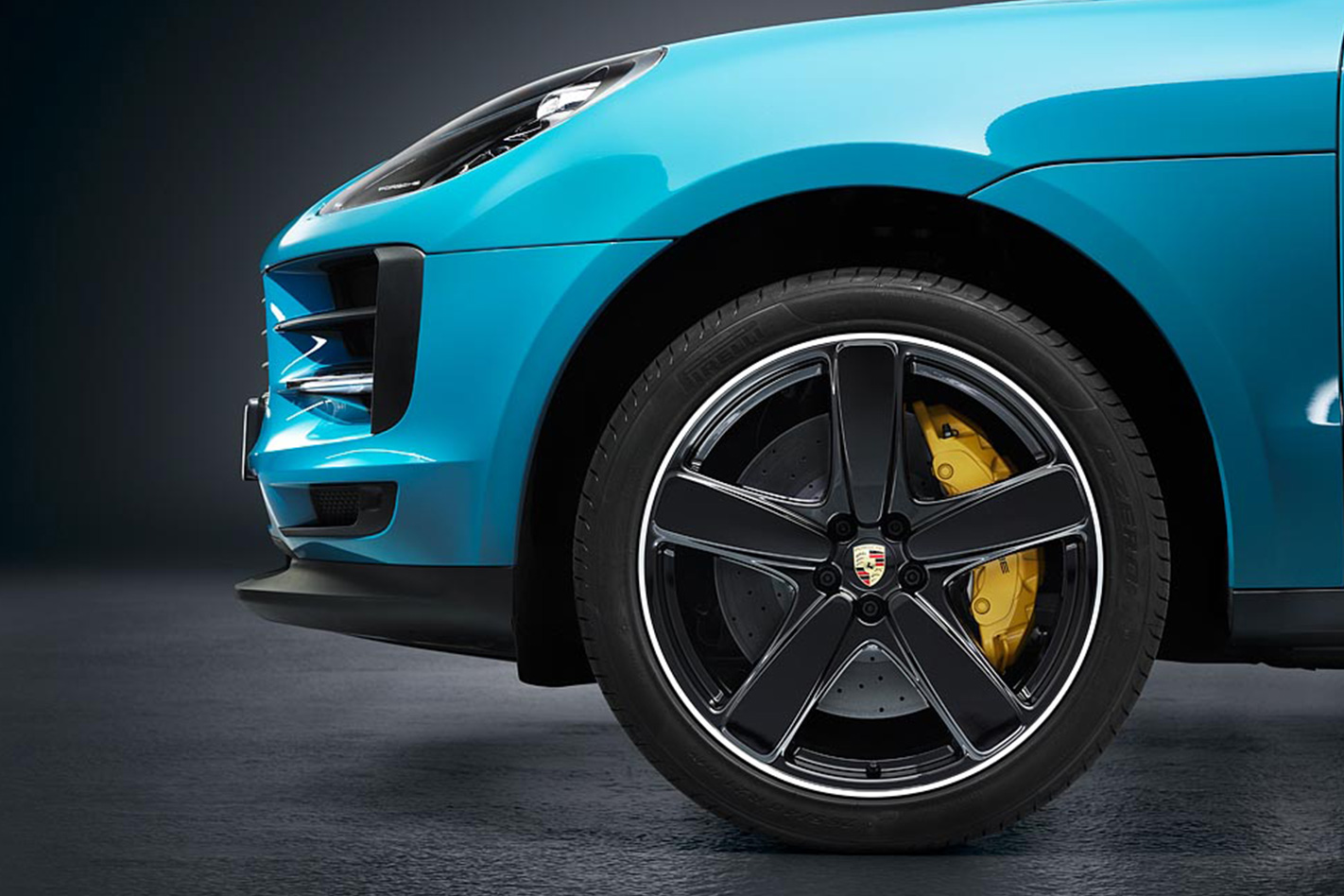
The Macan still features mixed tyres with different widths on the front and rear axles, as with Porsche sports cars, to take full advantage of the all-wheel drive Porsche Traction Management (PTM).
The system has been enhanced by the availability of new tyres with “improved performance characteristics”, wrapped around new 20- and 21-inch wheel designs that provide even more scope to customise the design.
Powertrain information is yet to be outlined. Further technical details are expected to be revealed later in a separate announcement.
The 2019 Porsche is due to arrive in Australia during the first half of 2019. Aussie specifications and pricing will be revealed closer to the local launch.
Speed freaks may hate chicanes for making racetracks slower. We think, however, they test a less appreciated side of a car’s performance.
The rapid weaving quickly shifts weight from one side to the other, rolling load across a tyre. As a result, a tyre’s lateral grip, feedback, and energy recovery become crucial to slicing a chicane.
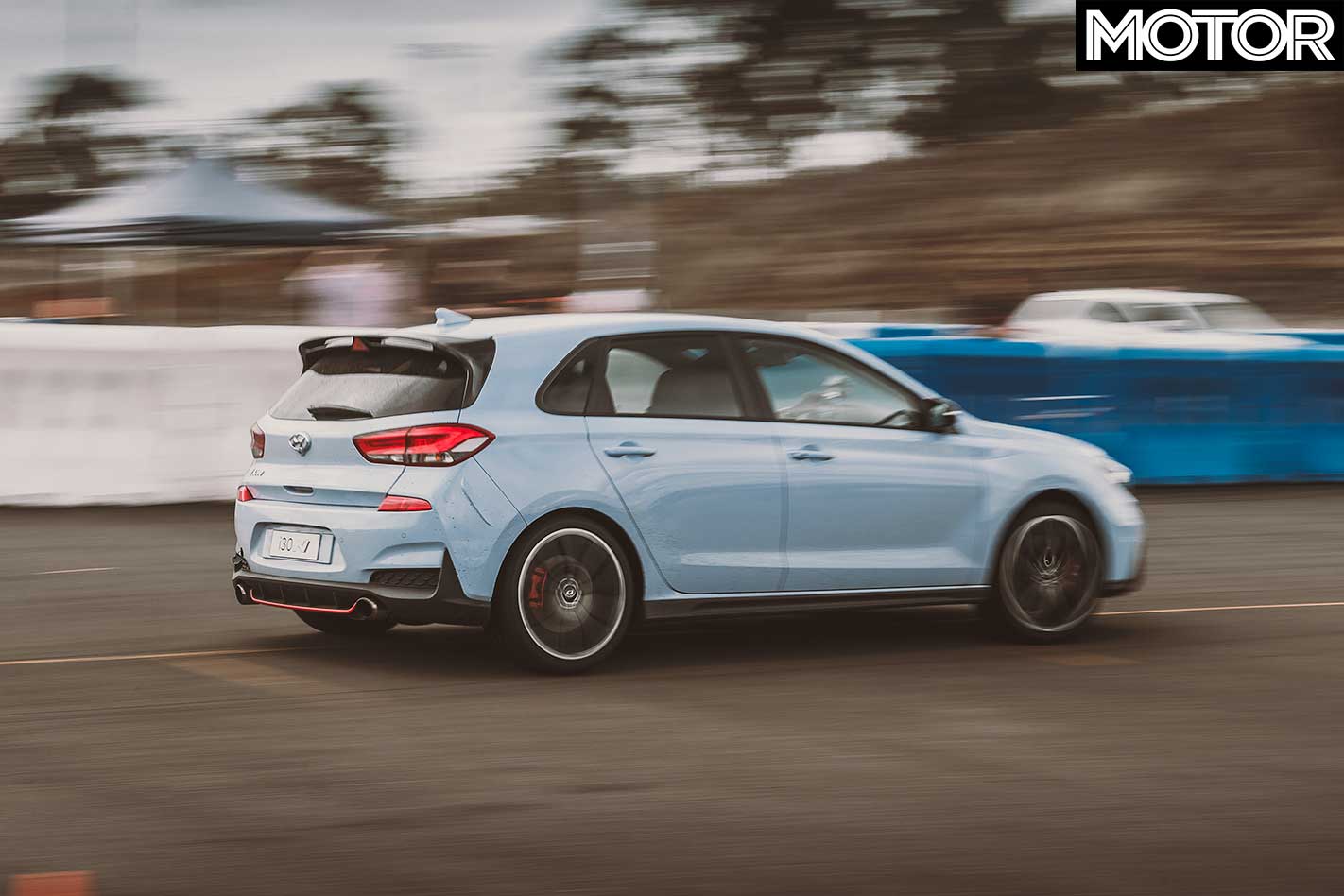
Our slalom is basically a string of them. Except, you don’t have to be a race car driver to appreciate its findings. Anyone who’s taken a bend only to discover another ‘road user’ using more bitumen than they’re allocated will know the importance of tyres that secure your side-step.
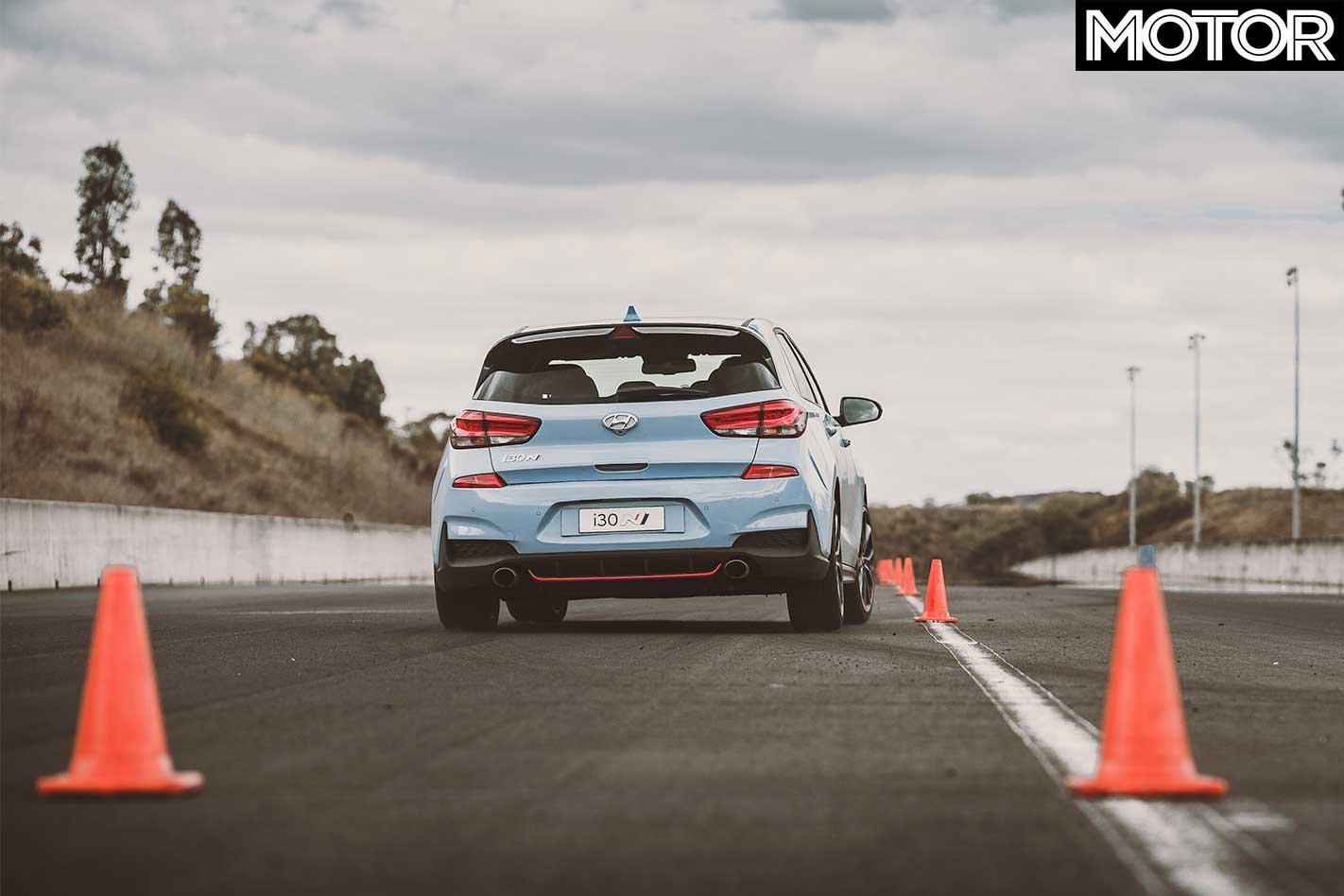
At the end of Sydney Dragway and facing a line of cones set apart at equal distances, our test sees Luffy blast through an entry gate at 45km/h. Once through, he is free to do with his right foot as he wishes, and weaves through cones in a left-right-left fashion as quickly as possible. He repeats this five times on each tyre. We fling the best and worst results then average the remaining three.
We also use the slalom to set the day’s testing order; choosing the Dunlop first, then the Continental, the Goodyear, Falken, Laufenn, Nitto, Nexen, HiFly, Pirelli, Kumho, and finally the Achilles tyre. It’s no easy feat.
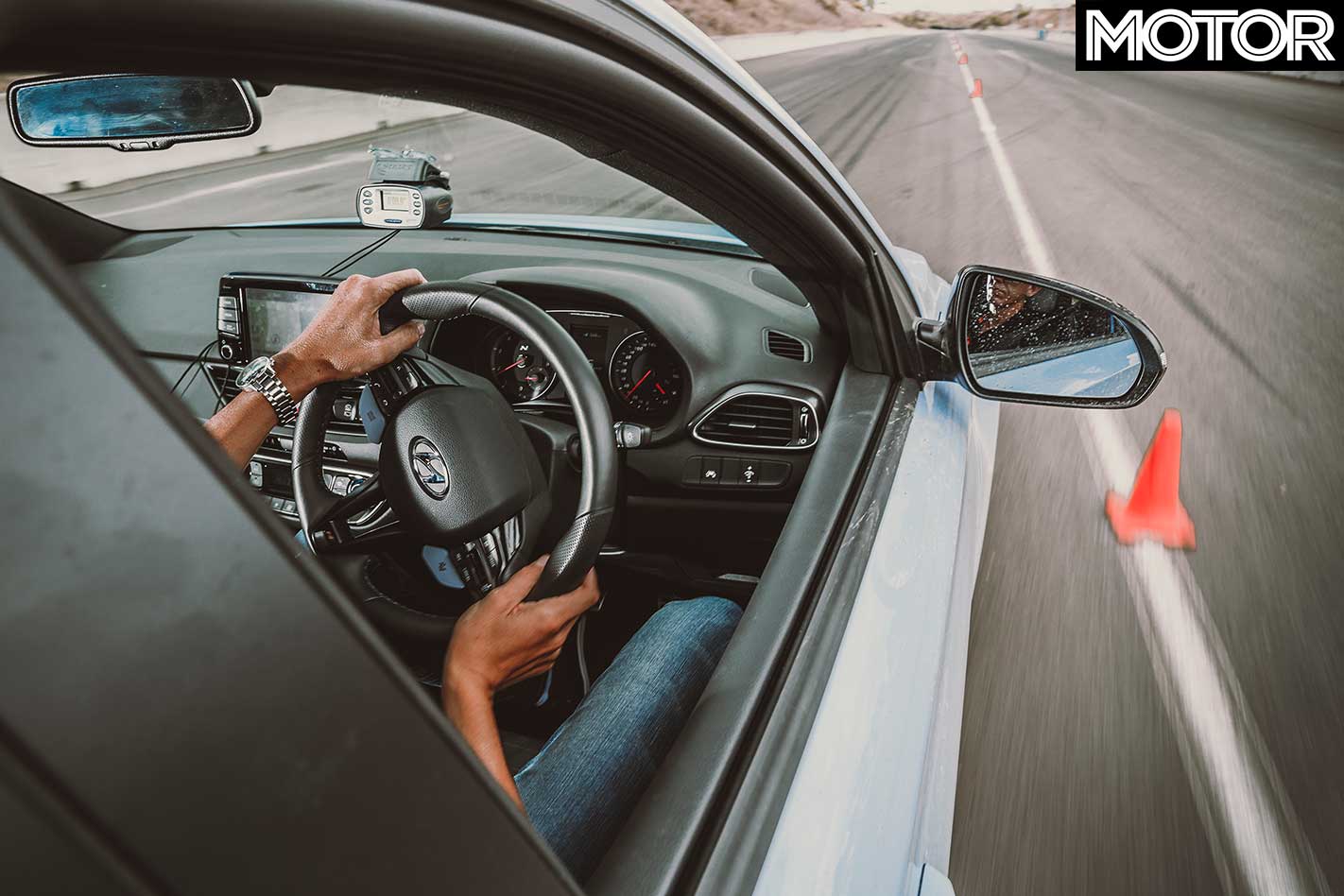
Luffy’s commitment isn’t to be argued with. After a quick scrub-in run, the i30 N’s pipes unleash a set of mighty cracks as he feathers the throttle through the cones. It quickly becomes obvious that the Hyundai snakes the slalom very well on the Dunlop, even though its special ‘MO’ compound is designed for Mercedes-Benz vehicles.
The Continental comes close to matching it, but almost every run afterwards extends the gap behind the Dunlop. Despite that, Luffy finds talent in the pack, singling out the Pirelli P Zero.
“Most importantly from a driver’s perspective,” he says, “it gives good driver feel and feedback.” While that’s to be expected from rubber fitted to the i30 N at the factory, our competitive P Zero uses an ‘R02’ compound designed for Audis.
The HiFly lives on the other side of such praise. It makes the i30 N look more tail-happy than a Focus ST and the stopwatch reveals the true cost of their looseness. Because the day’s conditions suited later runs, the HiFly doesn’t get any leg-up from a theoretical advantage either.
Our linear regression’s findings only magnify the HiFly’s and Achilles’ sub-standard speed. It also penalises the Pirelli and Kumho for being the second- and third-last runs. That the Pirelli’s raw time would have put it in the top-three illustrates how the conditions got faster through the day.
Dry Slalom Results
The recently released Driving Australia Forward report claims two thirds of Australians will own an electric car within the next 10 years.
Currently, less than one percent of Australians own a full-electric vehicle (EV), however the report predicts this will boom to 65 percent of the nation’s drivers in the next six to 10 years.
The report was funded by Jaguar, whose first fully-electric vehicle, the I-Pace SUV, goes on sale later this year, as a rival to Tesla’s Model X.
The report also claims 84 percent of Aussies “would like to own an EV at some point in their life”.
Millennials (which includes most adults under the age of 38) are the main drivers of this, with 43 percent saying they would like to own an EV. Meanwhile only 34 percent of Baby Boomers stated they would like to own an electric vehicle.
Men (42 percent) were more likely to state they wanted to own an EV than women (27 percent).
Of those eager to own an electric car, one in five (20 percent), claim they are likely to buy an EV within the next two years.
A large portion (38 percent) stating they “would like to own an electric vehicle a lot”.
The positive environmental outcomes of owning an EV was cited as the main reason for a potential purchase by the majority of respondents (58 percent). Other reasons for wanting an EV was the cars being cheaper to run (24 percent) and quieter (nine percent) compared to combustion-powered equivalents.
While the report indicates that many Australians are open to the idea of electric vehicle ownership, there remains multiple barriers to mainstream adoption of EVs locally – namely price, and a lack of charging infrastructure.
“While Aussies clearly see the benefits of electric vehicles they’re still hesitant about the price – 75 percent said that if electric vehicles cost the same as their petrol equivalent, it would be their next car purchase,” Kevin Nicholls, Marketing Director at Jaguar Land Rover Australia said.
“As a nation we’re looking forward about the next generation of cars – nearly three quarters of us (72 percent) find electric vehicles exciting. There just needs to be support from local industry and government to ensure we can take advantage of this once-in-a-hundred-year shift.”
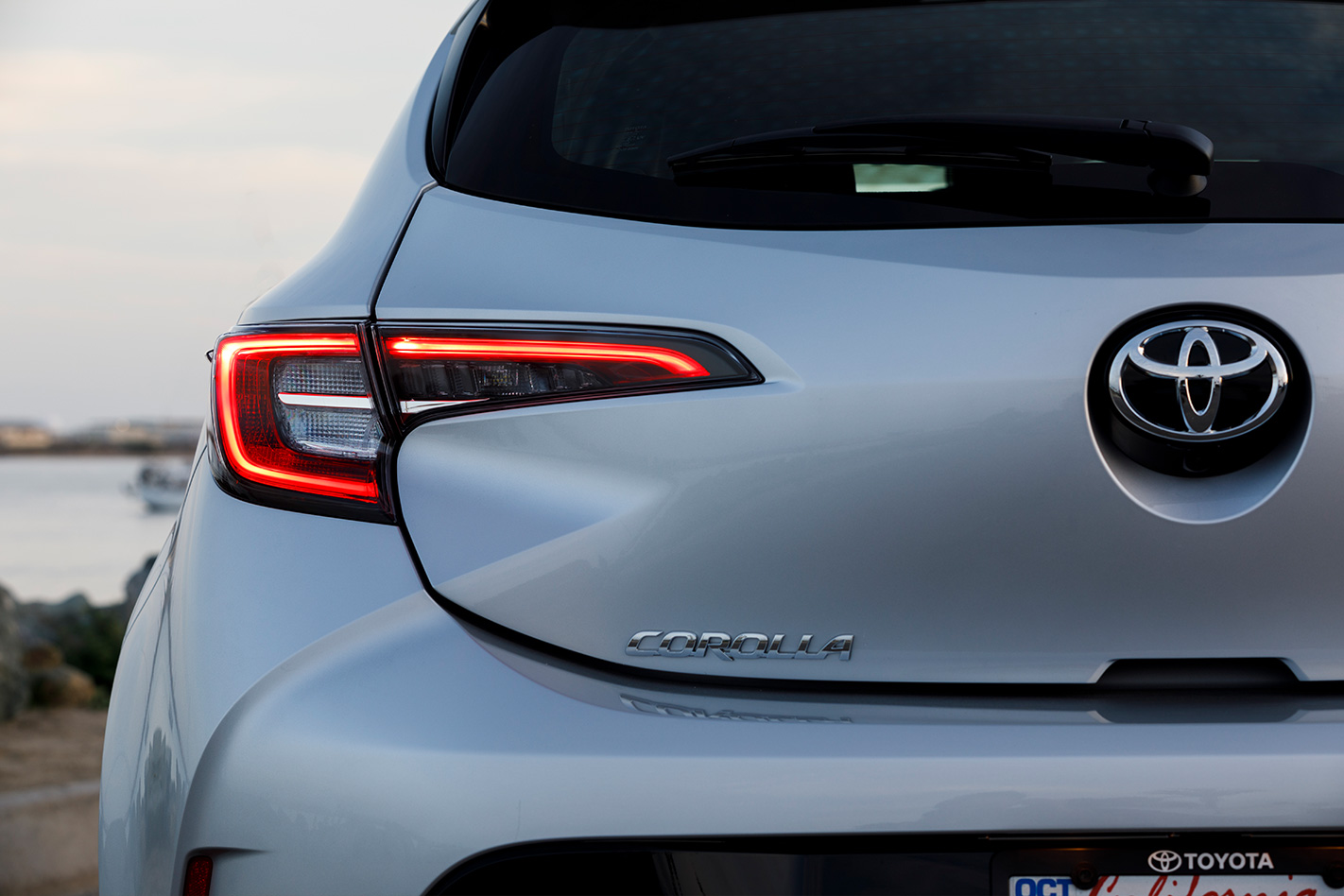
The all-new Toyota Corolla will bring a raft of advanced safety technology to the range as standard, when it goes on sale later this year.
The small hatch will feature active cruise control, a pre-collision safety system seven airbags, and reversing camera as standard across its three variants – the Corolla Ascent Sport, SX, and ZR.
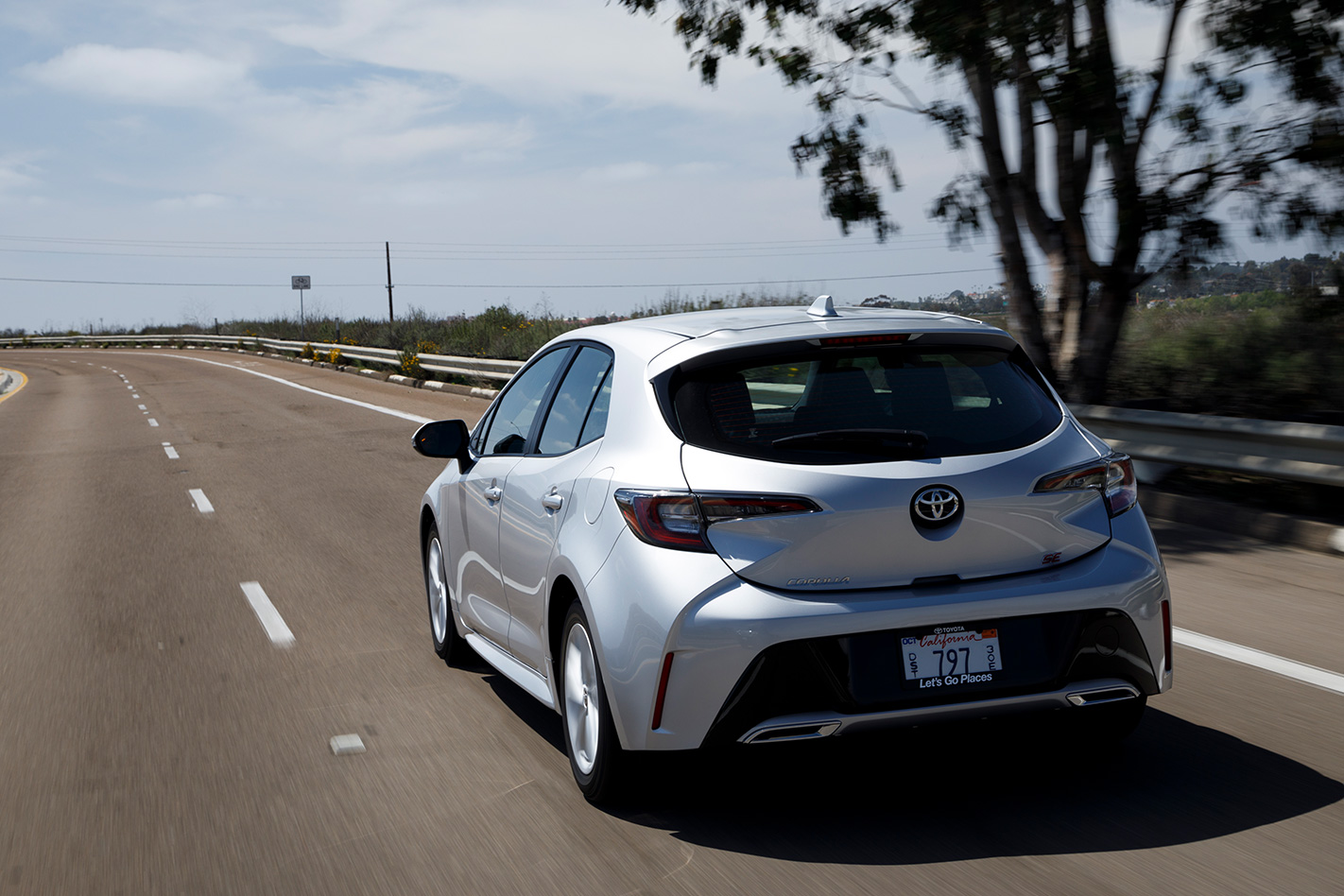
Introducing an adaptive cruise control system as standard across the range is unprecedented in the small car class, with the system able to be set at speeds between 30km/h and 180km/h, and operate all the way to a complete stop for Corollas fitted with an automatic CVT transmission.
For the manual Ascent Sport variants, the active cruise control only operates at speeds above 30km/h.
Also standard is an active pre-collision safety (PCS) system, with autonomous emergency braking and pedestrian and cyclist detection.
When the system detects a potential collision, Toyota says the PCS “will initially employ a visual and audible warning, then brake assistance and if the driver fails to heed the warnings”. The PCS system is capable of applying full automatic braking if needed to bring the Corolla to a complete stop.
All Corolla hatch variants will also feature an advanced lane departure warning system able to provide gentle steering inputs to “encourage the driver to move back into the lane” if it detects the vehicle straying from road markings.
The system is also able to detect if the Corolla is swerving in the lane due to driver inattention, and prompt a break from driving.
Automatic Corollas will also come fitted with lane trace assist as standard, which works in conjunction with the active cruise control to “provide steering assistance to ensure the car stays centred in the lane”.
Automatic high-beam headlights and a road sign assist system which can recognise speed limit signs and display them on the instrument cluster is also standard across the range.
SX and ZR model grades receive blind spot monitoring as standard, while the flagship ZR adds a heads-up display.
Toyota Australia vice-president sales and marketing Sean Hanley says the standard driver assistance technologies significantly raises the bar for the small car class.
“The all-new Corolla hatch is set to make its mark as one of the safest small cars in its class with many of its standard advanced safety technologies usually only found on luxury or higher grade vehicles,” Mr Hanley said.
“But along with its new-found stylish design and fun to drive attitude, we considered safety an absolute priority for the new Corolla hatch to ensure whatever market our customers are shopping in, they have the highest levels of protection and driver assistance possible.”
MORE: Toyota Corolla Range Review MORE: Toyota Corolla Specs, Range & Price
Bugatti’s AUD$4m Chiron hypercar is being held back by tyres – as in, there aren’t any that won’t explode as the brand attempts a 450km/h new production car top speed record.
The engine is there – a 1103kW, 1600Nm gravity-warping quad-turbo W16 – and the aero has been sculpted to the nth degree. Yet proving, as ever, that the four otherwise unremarkable rings of rubber are critical to the performance of a vehicle, there doesn’t yet exist a tyre that can cover the 125 metres per second without Bad Things Happening. Which means that Bugatti’s masterpiece of air-splitting engineering is going nowhere near 450km/h, until the rubber is sorted.
Tyres, as we are all constantly reminded – and learn for ourselves when we are seduced, by price, into buying a set we later regret halfway through the first wet roundabout – are important things. There’s no point paying for premium engineering if the bit connecting the chassis to the road surface is the weakest, dodgiest link. But with all brands telling you they’re the best, who do you believe?
Enter MOTOR’s annual Tyre Test. Every year we host Australia’s most thorough, most controlled performance tyre test to sort the grippy from the slippy. We’ve picked Sydney Dragway again on which to stage shoulderblock-straining tests like a dry slalom, emergency braking stop and motorkhana. We’ll then crank the sprinklers for our wet braking and lateral G disciplines in Sydney Dragway’s gigantic bitumen apron.
For this year’s car, Hyundai has supplied its much-hyped new i30 N. Front-drive, and having done many miles at the Nürburgring, it packs adaptive dampers, an electronically controlled locking diff, trick suspension, and an expertly tuned ESC – and Hyundai promises the brakes can cop a proper pounding. Its 19-inch wheels dictate our test’s 235/35 size, the going fitment for most of today’s fast metal.
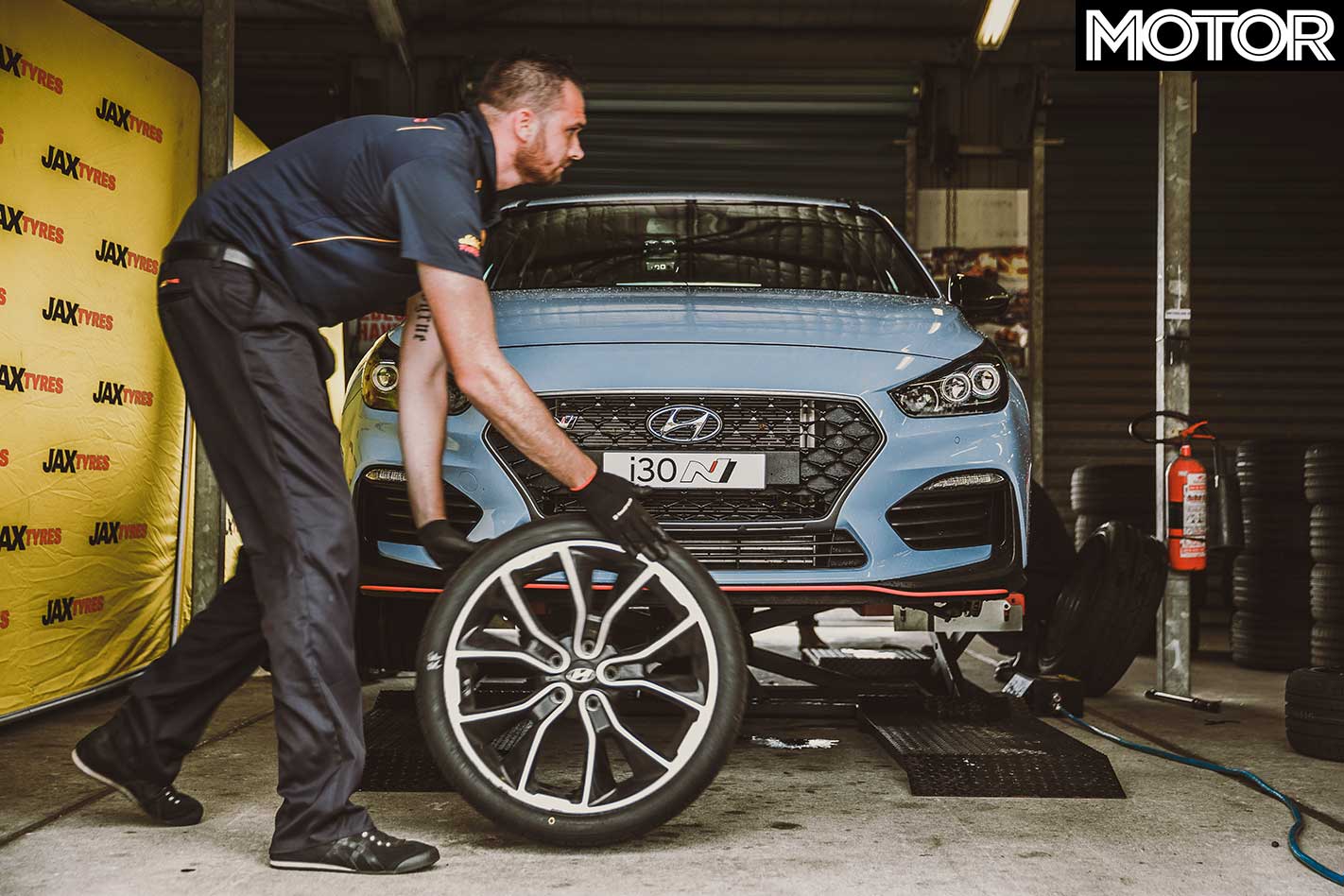
In the name of science and all things fair, we’ll test the Hyundai on its stock rubber (special ‘HN’-specification P-Zeros) at the start, middle, and end of the day, which spits out a linear regression formula we use to adjust every tyre’s performance, accounting for changes in variables such as ambient and surface temperature, the car and driver. It generally turns out to be very minimal, but fair is fair.
Warren Luff, MOTOR’s gun driver and Supercar hot-shoe, is Our Man – the best in Australia for testing tyres, with more than a decade’s experience doing so. Although some brands couldn’t put their rubber on the line, or didn’t want to (cough, Michelin – a real pity we couldn’t include the new Pilot Sport 4S) it hasn’t stopped us from gathering the best tyres on sale.
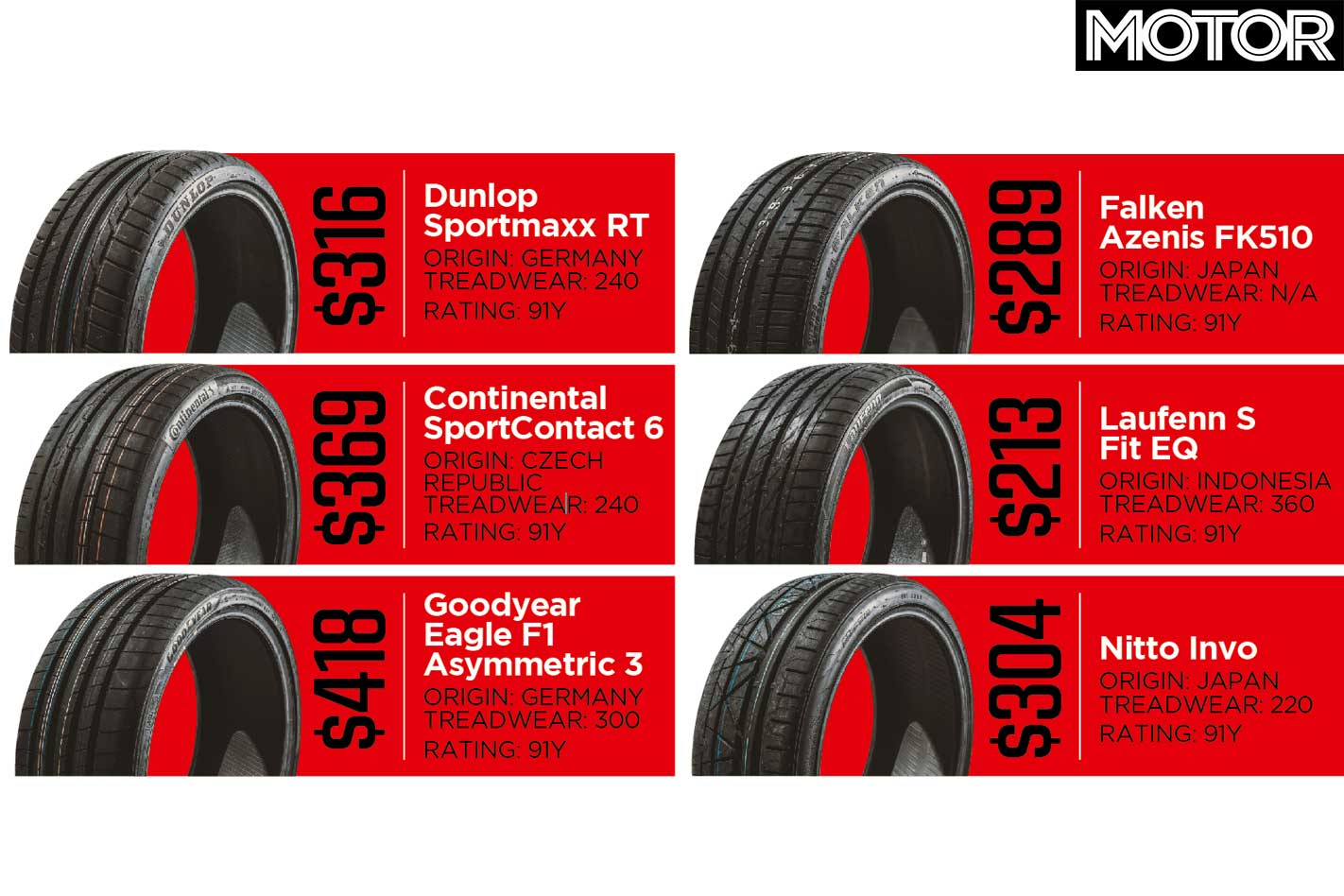
Originating from Italy to Indonesia and everywhere in between, they represent the market’s wide range of prices and, as we’ll see, performance. See the line-up for yourself in our panel on the right. And with all that out of the way, let’s get on with it.
Roll Call MOTOR Tyre Test 2018’s performance-focused hoops after your hard-earned cash
JAX Tyres, The Dream Team One very big thanks
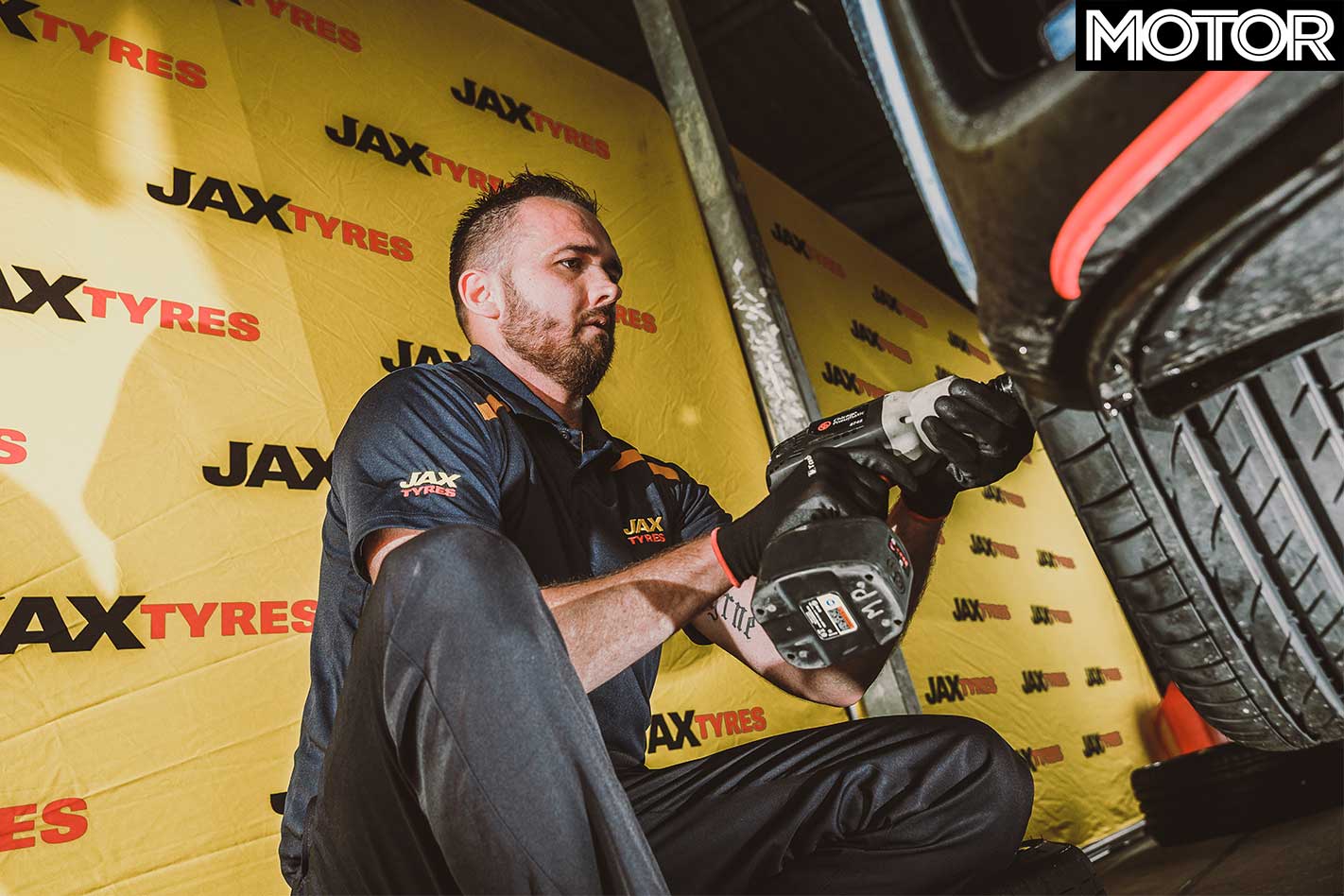
F1 pit crews are slick, but they rarely do half the 15 tyre changes MOTOR’s Tyre Test requires in a day. That’s why we partner with JAX Tyres every year for logistical and tyre-changing support during our Tyre Test.
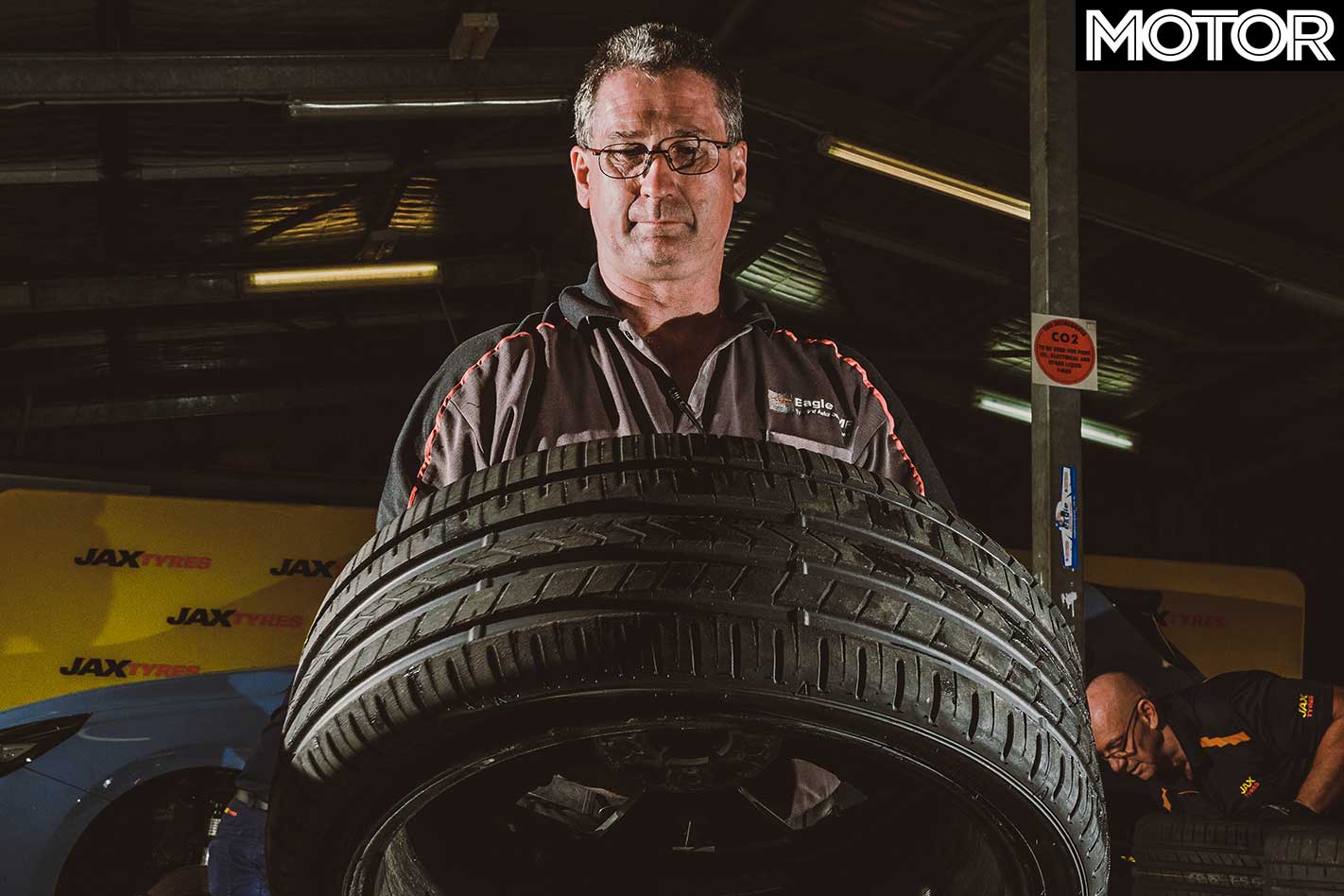
Not only can they talk the treadwear talk and shoot the speed rating breeze, but they can get through the 60 single wheel swaps quicker than we can serve them. Each wheel is bolted back on to exact torque ratings, tyres are pre-marked for their correct corner, and pressures are set exactly as placards say.
Of course, you’re only as good as your tools, and no sidewall can defeat the Eagle SMF equipment and its operators, also on hand to help us out. So next time you’re up for a tyre change make sure you head over to jaxtyres.com.au or give them a bell on 1300 367 897. Tell them we said thanks.
Mr Spookily Consistent Warren Luff, our gun driver
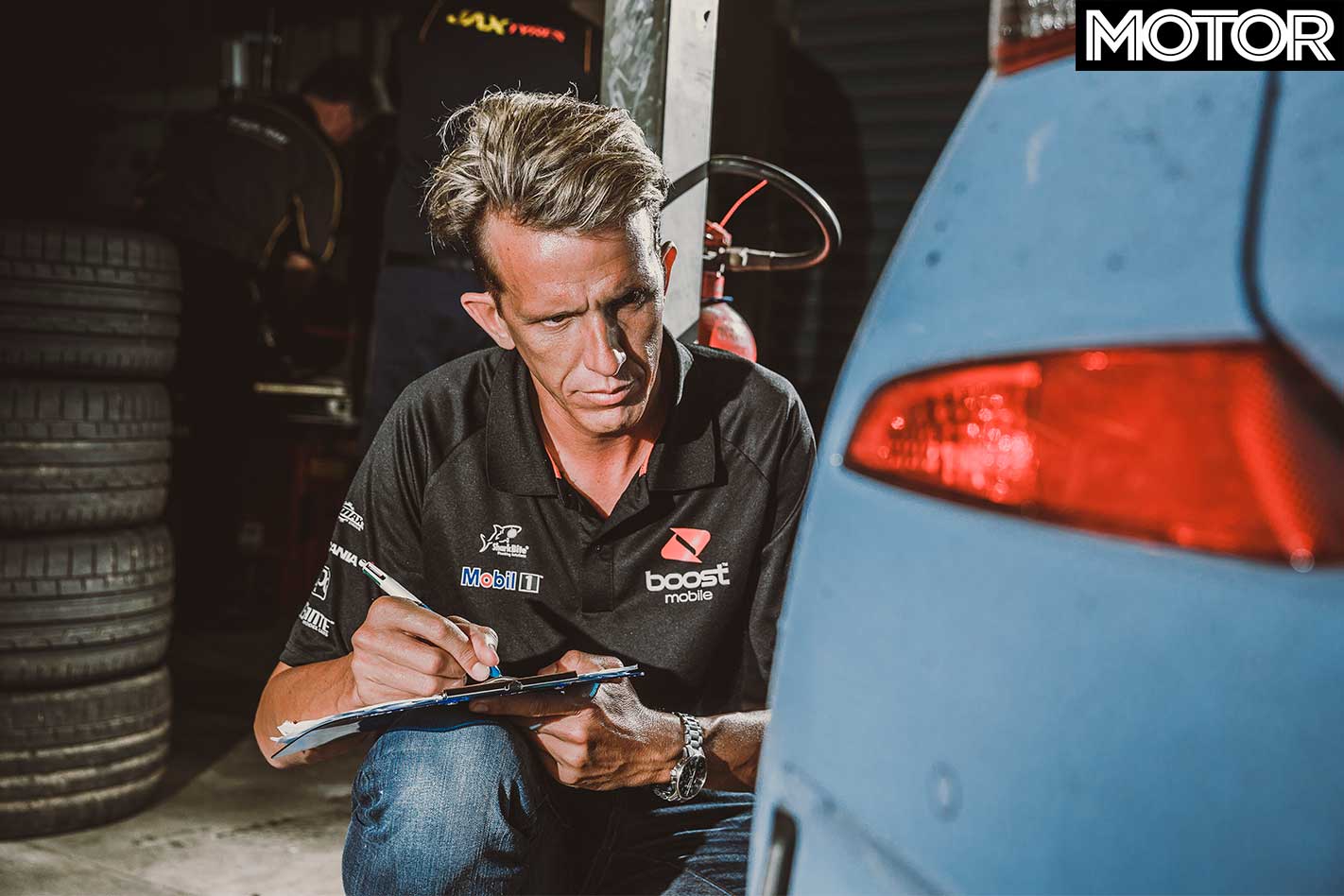
He drives Supercars and Time Attack machines, but outright speed and ability isn’t the only reason Warren Luff is our go-to when we need to know how fast something really is. It’s his ability to contribute insightful impressions about equipment that makes the Luffster invaluable to our operations.
His lap times are almost metronomic. On the Laufenn during the motorkhana he bung in two identical lap times and then trailed by only one tenth on the last. And standing as proof that he’s been in the thick of the world’s toughest endurance racing, you won’t catch him wasting a second out of the car, either.
He’s always doing what he can to keep the Tyre Test, a machine of many parts, ticking along smoothly. Keep an eye on the lightning quick legend we call Luffy on Facebook, Twitter (@wazzaluff) and/or Instagram (@luffy76).
THE SECOND-GENERATION Audi Q3 has been unveiled in Germany, featuring bold design cues taken from the Q8 flagship to provide a more mature, but less dour look than its predecessor.
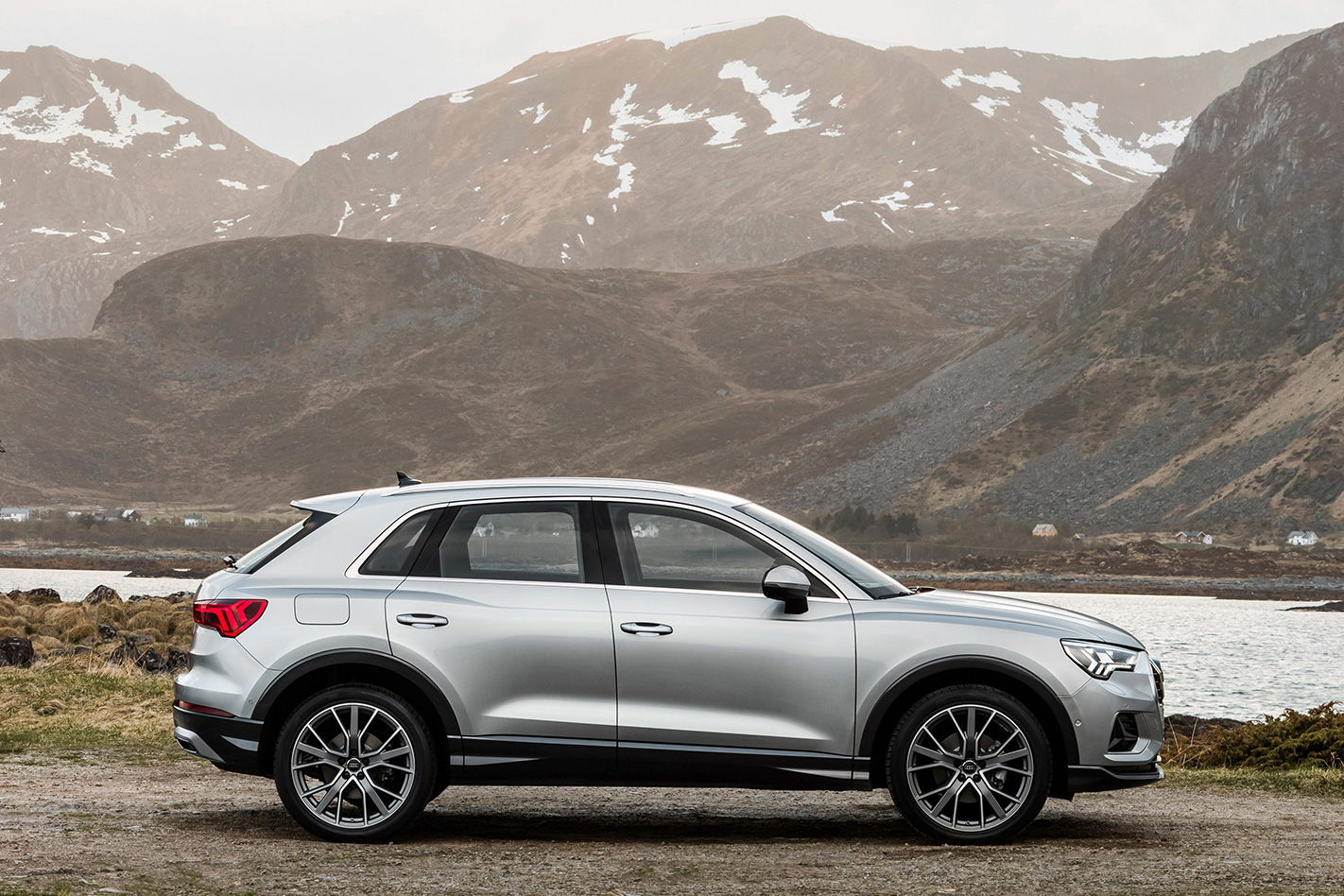
Now able to pass on junior-SUV duties to the Q2, the new Q3 offers more family-friendly practicality and comfort than before, while sharing much of the infotainment, connectivity and latest advanced driver assist systems with the bigger models.
Audi claims the new Q3 will be more drivable too, with a choice of powerful turbo-petrol and -diesel variants, and improved handling that retains its sporty character while offering a little more off-road capability.
Five four-cylinder turbocharged engines will eventually be available in the range, including an 110kW 1.5-litre turbo-petrol in the entry-level Q3 TFSI 35.
Reports suggest the other engines in the line-up will include the 140kW TFSI 40 and 169kW TFSI 45 petrols, and 2.0-litre 110kW TDI 35 and 140kW TDI 40 diesel variants that represent Ingolstadt’s continuing faith in oil-burners.
Audi is yet to reveal a high-performance RS Q3 variant.
Transmissions for the new Q3 include a six-speed manual, or seven-speed S tronic dual-clutch auto, with all variants riding on permanent quattro all-wheel-drive.
The standard suspension set-up includes MacPherson struts with four-link rear axle, with a sport suspension tune that brings tauter spring/damper tuning and progressive steering available as part of the S Line exterior package.
Audi says both suspension settings ably balance city, highway and dirt-road driving, helped by a 77mm longer wheelbase and six-mode ‘drive select dynamic handling system’ that tweaks throttle response, steering and shift characteristics, as well as damper control in Q3s fitted with optional adaptive dampers.
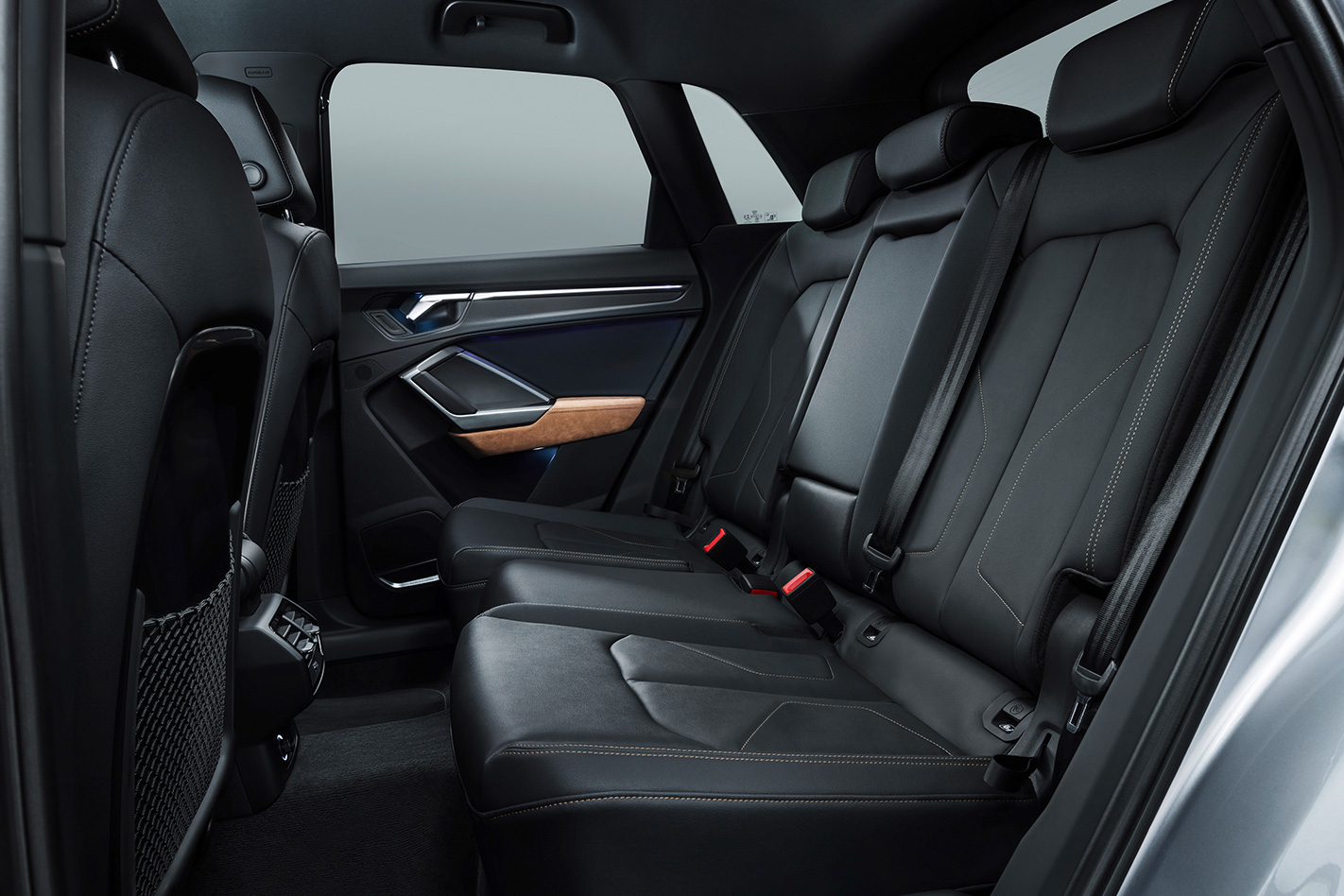
Based on Volkswagen’s modular MBQ platform that also underpins the Q2, Skoda Karoq and Volkswagen’s Golf and Tiguan, the 2019 Audi Q3 is longer and wider than its predecessor – its length has been stretched by 97mm to 4485mm and it is now 25mm wider, resulting in more knee and elbow room and Q5 rivalling comfort levels.
The boot space also grows, from 420- to 530-litres, though this can be extended to 675mm by sliding the rear seats forward. Folding down the 40:20:40-split backrests boosts capacity to 1525 litres.
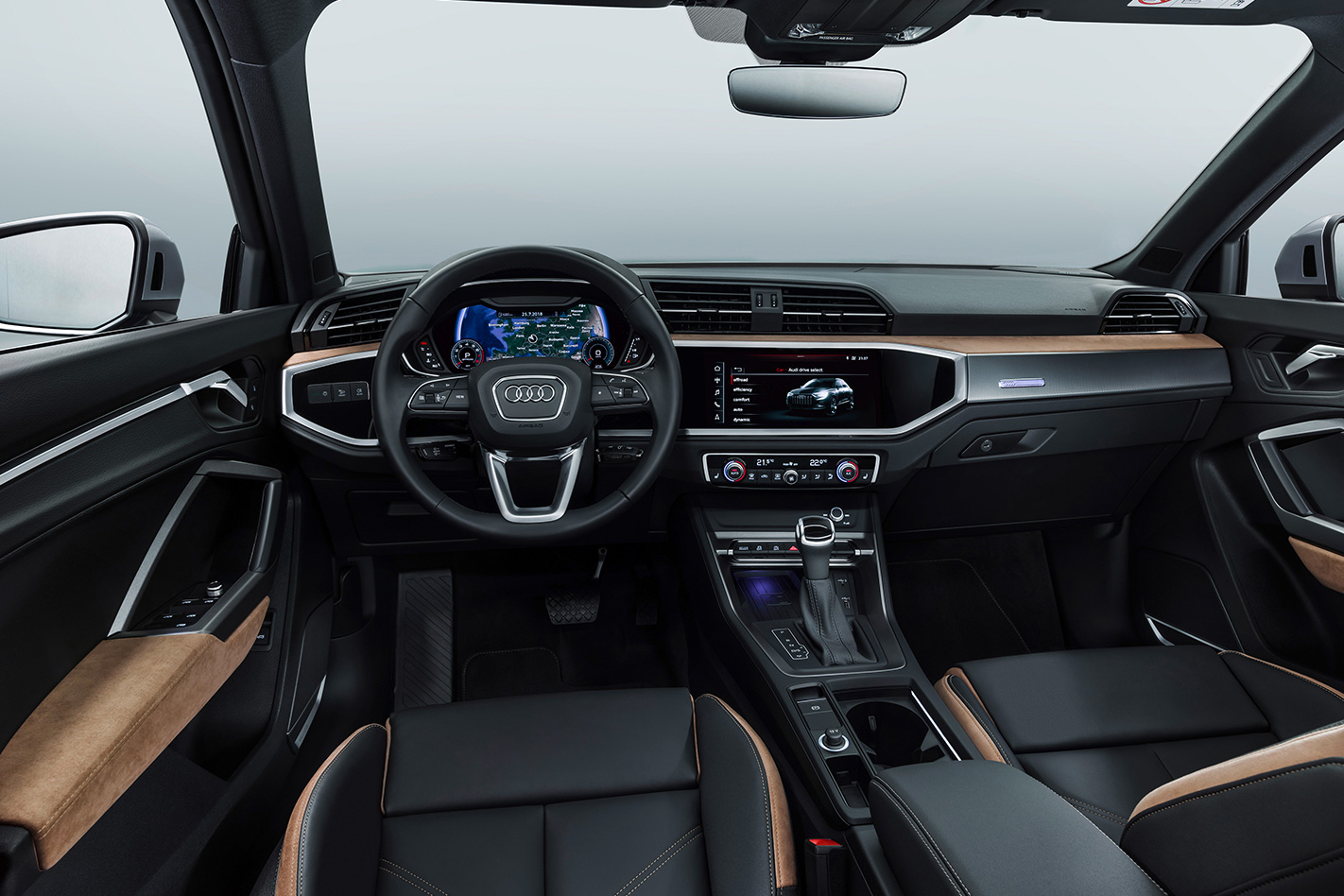
Up front, Audi has replaced analogue gauges with a 10.25-inch digital instrument screen that’s fitted as standard, with the 12.3-inch Virtual Cockpit display available as an option.
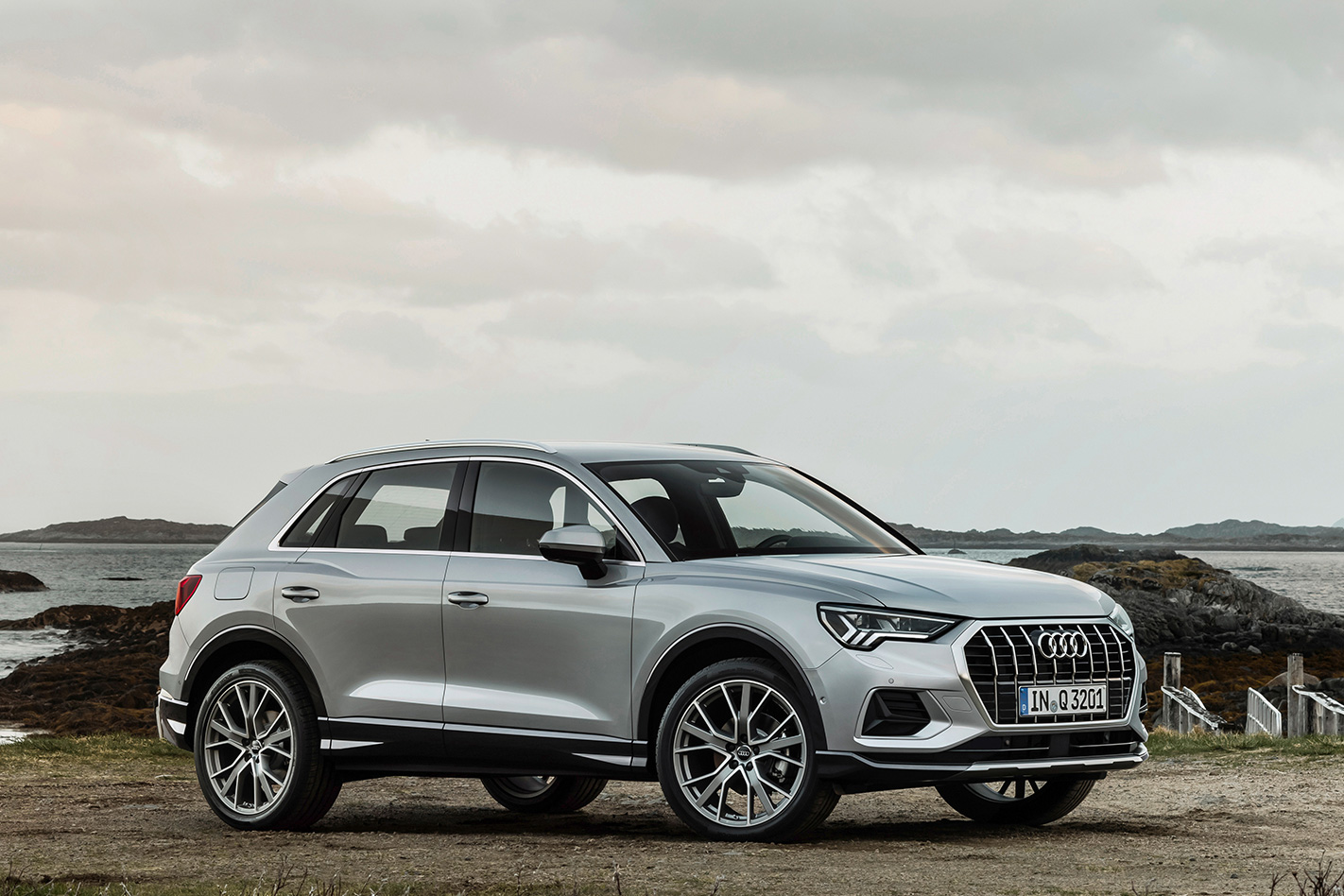
It also features Audi’s latest MMI infotainment system, which includes intelligent sat-nav that recognises the driver’s trip habits, Apple CarPlay/Android Auto and optional 15-speaker Bang & Olufsen sound system.
Outside, the new Audi Q3 looks more macho than its predecessor, taking on the brand’s new design language that includes the bold octagon grille flanked by gaping air inlet and narrow LED headlights.
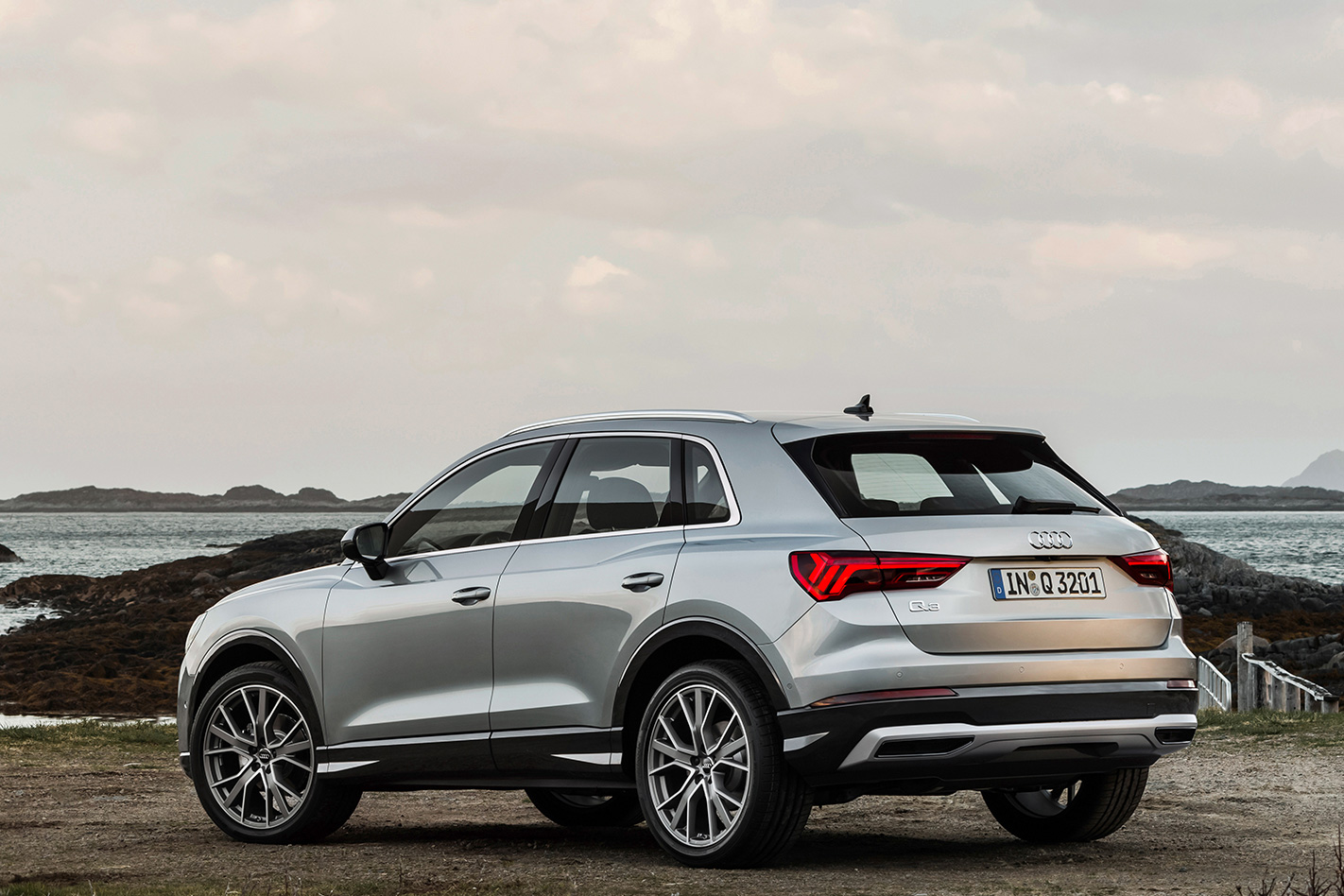
Its silhouette is accentuated by black wheel arch trims that give the impression of a higher, off-road ready, ride-height, while the forward-raked D-pillar and tailgate-spoiler provide a go-fast coupe-like outline.
The 2019 Audi Q3 will go on sale in Europe around November this year, and is due to arrive in Australia sometime in the middle of next year. Local specs and pricing will be revealed closer to launch.
FORD’S Australian order books for the forthcoming Ranger Raptor are already bulging, despite some initial grumbles from local Ford diehards about the modest 157kW diesel engine under the bonnet.
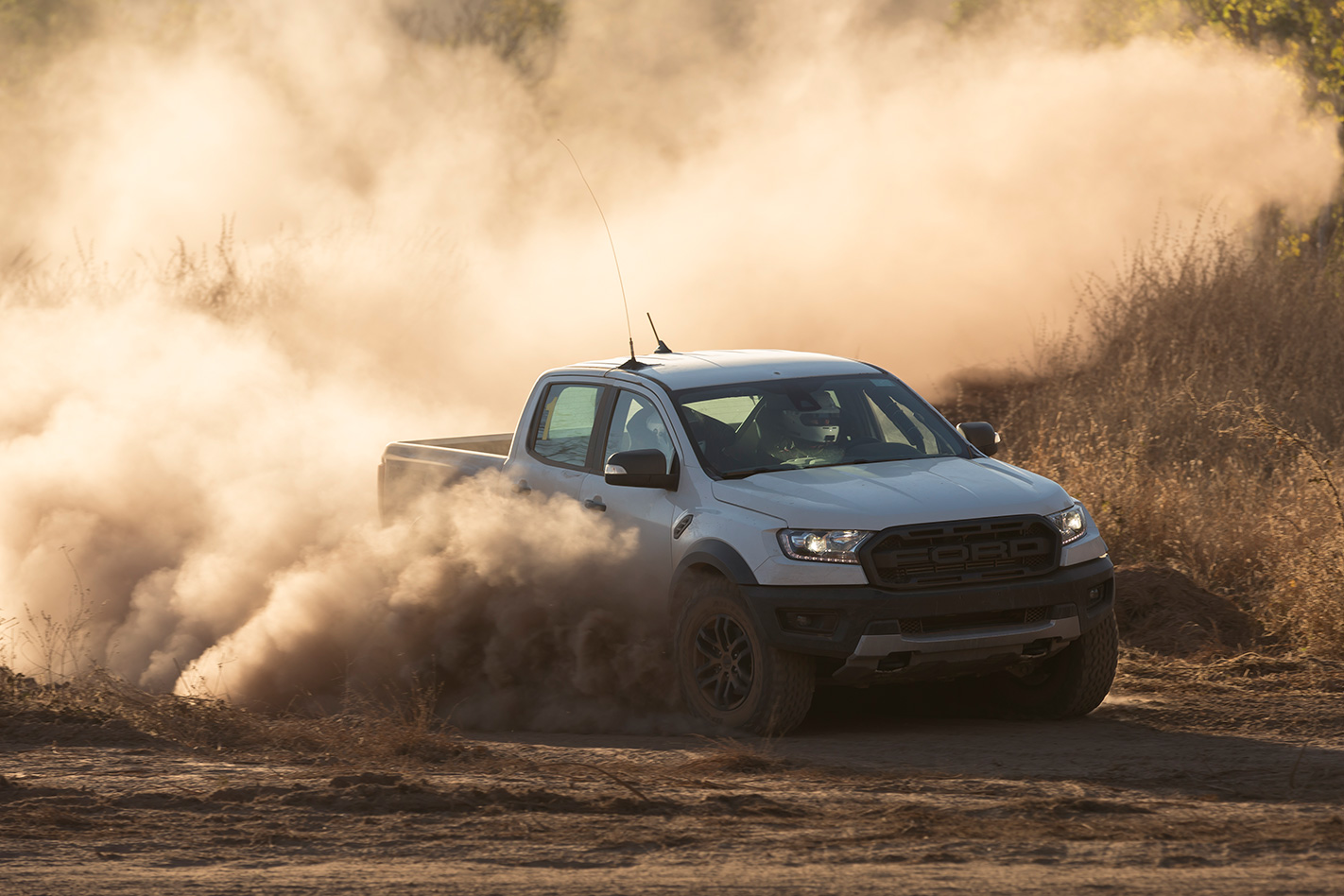
While there’s little that can be done about this for the time being, that may well change as the desert racer Ranger extends beyond its home markets. An Asia-Pacific vehicle built in Thailand, its key territories are, initially at least, overwhelmingly diesel-oriented.
Ford has the option to broaden the Raptor’s appeal by fitting it with a petrol engine, something that many Aussie enthusiasts have called for. With US market Rangers being engineered for the 2.3-litre EcoBoost engine seen in Ford Mustang and Focus RS, there’s a possibility that once these costs are sunk, right-hand drive markets could also get this engine.
Speaking at the launch of the Ranger Raptor, Nick Allen, of Ford’s Core Vehicle Integration – Off Road Capability and Trailer Tow division, batted back a couple of suggestions but flatly refused to deny the possibility of the what Ford calls the GTDi unit in future Ranger Raptors.
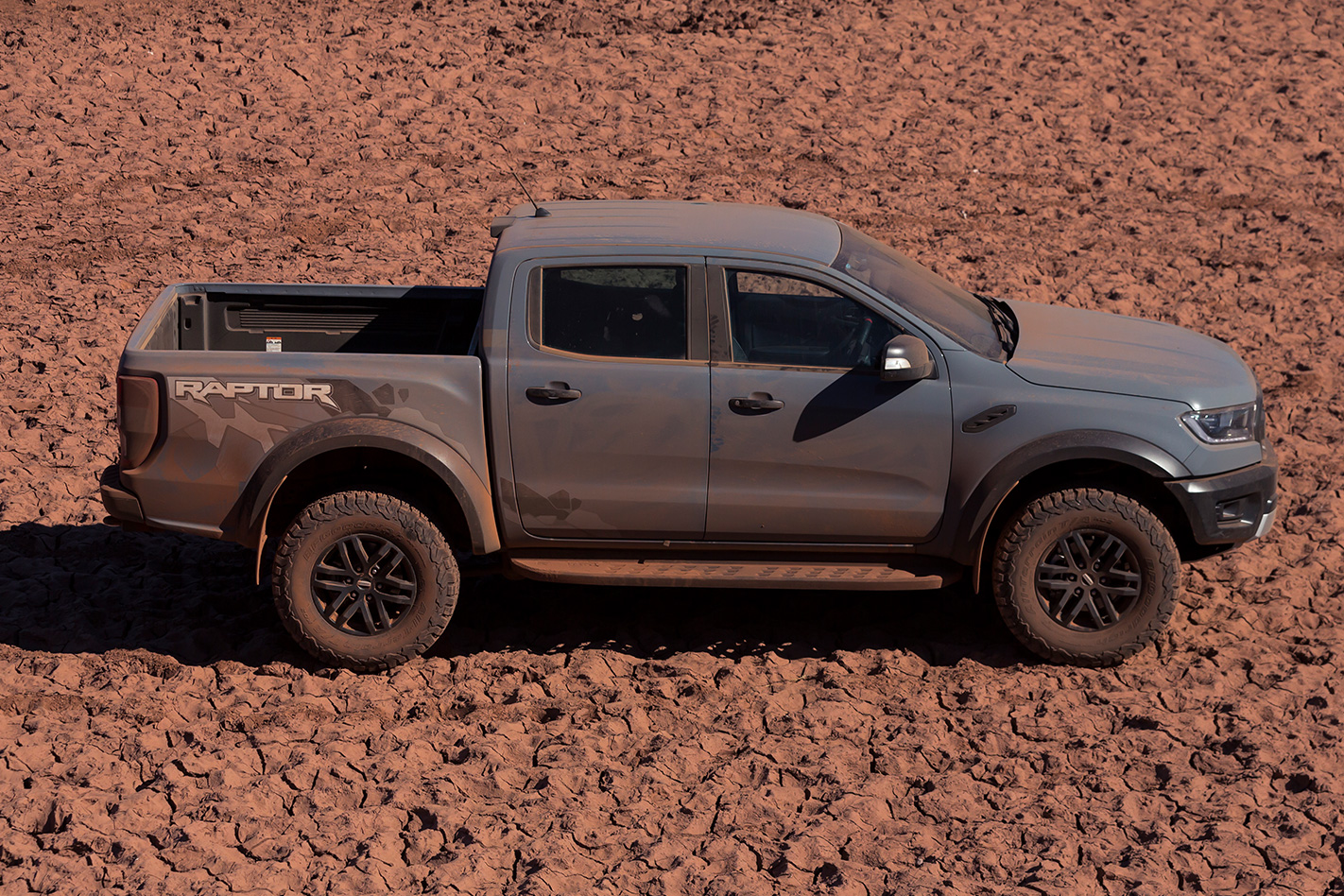
“The GTDi is our most commonly built engine. It just makes sense for Ranger in the US,” he said. “We have to look at what each market needs. The US Ranger gets a sliding rear window and it gets metal bumpers. We have to respond to customer demand.”
Asked whether Ford would respond to Australian customer demand, he smiled and said, “One thing I’ve learned at Ford is that the company is always listening. If we can make a solid business case for the car and it makes money for the business, then why not?”
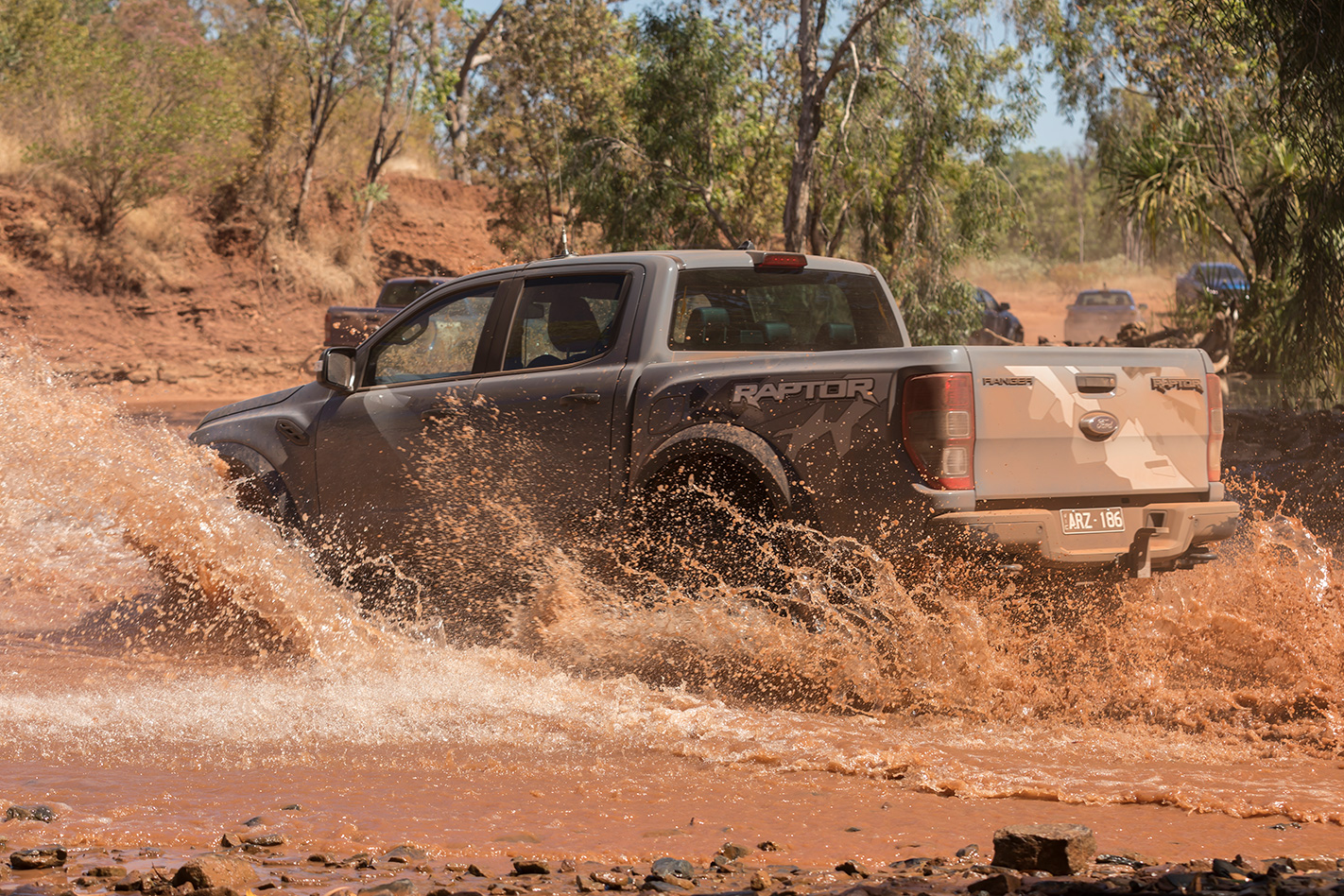
The prospect of a Focus RS-spec 257kW/440Nm Ranger Raptor is undoubtedly a tantalising one and would do a great deal to address the on-road performance shortcomings of the current vehicle. Ford has a rolling update schedule with Raptor. If the demand exists, it looks as if Ford will build it.
