
WHAT IS IT?
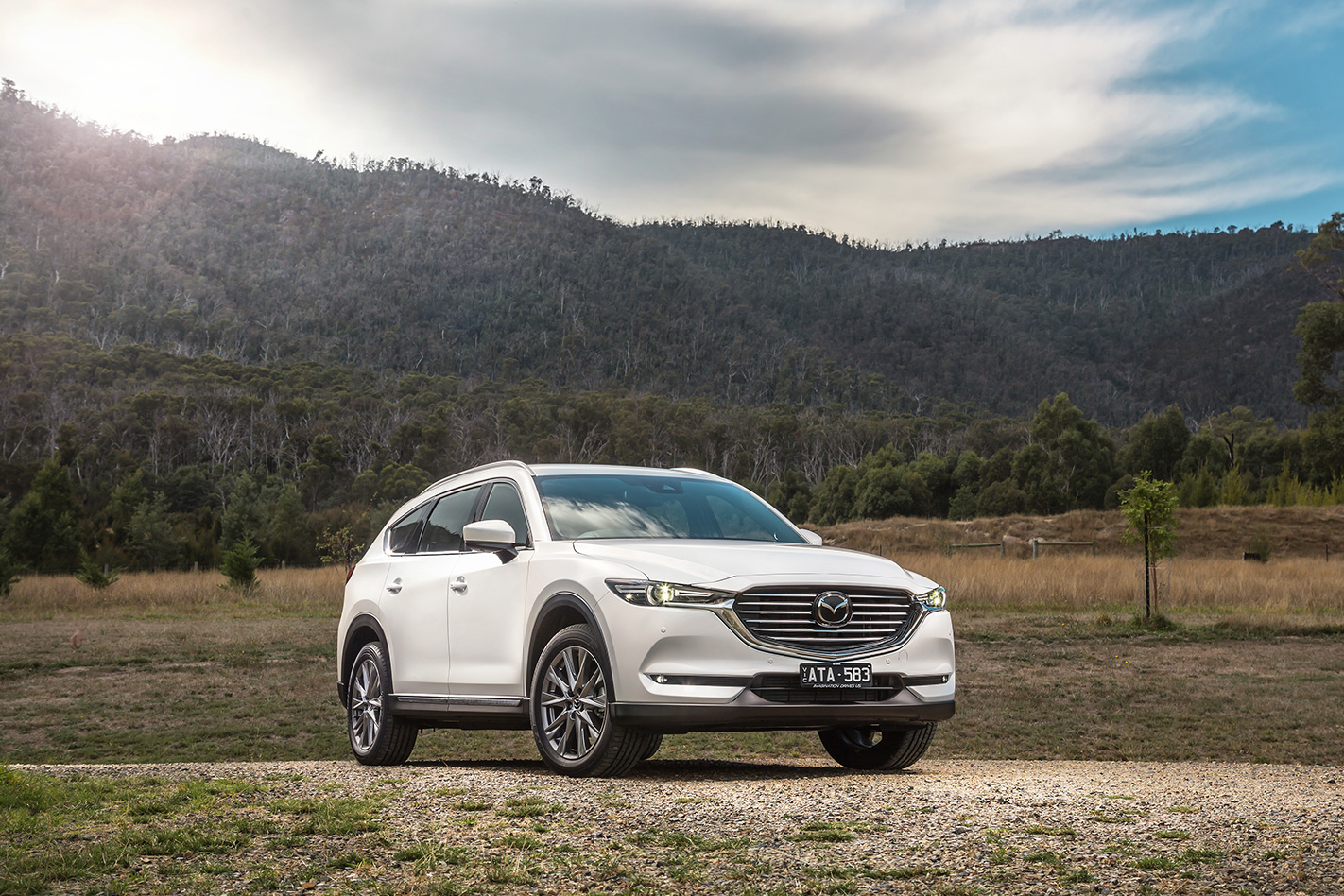
Mazda’s seven-seat, diesel-only SUV that slots above the five-seater CX-5, but is a little more compact and less expensive that the flagship (and also seven-seater) CX-9.
WHY WE’RE TESTING IT
The Australian media launch in Queensland gave us our first chance to try the CX-8 on local roads. It will soon face off against the Peugeot 5008 and Skoda Kodiaq in a three-SUV comparison to appear in the August issue of Wheels.
MAIN RIVALS
Nissan X Trail, Peugeot 5008, VW Tiguan Allspace, Skoda Kodiaq
THE WHEELS VERDICT
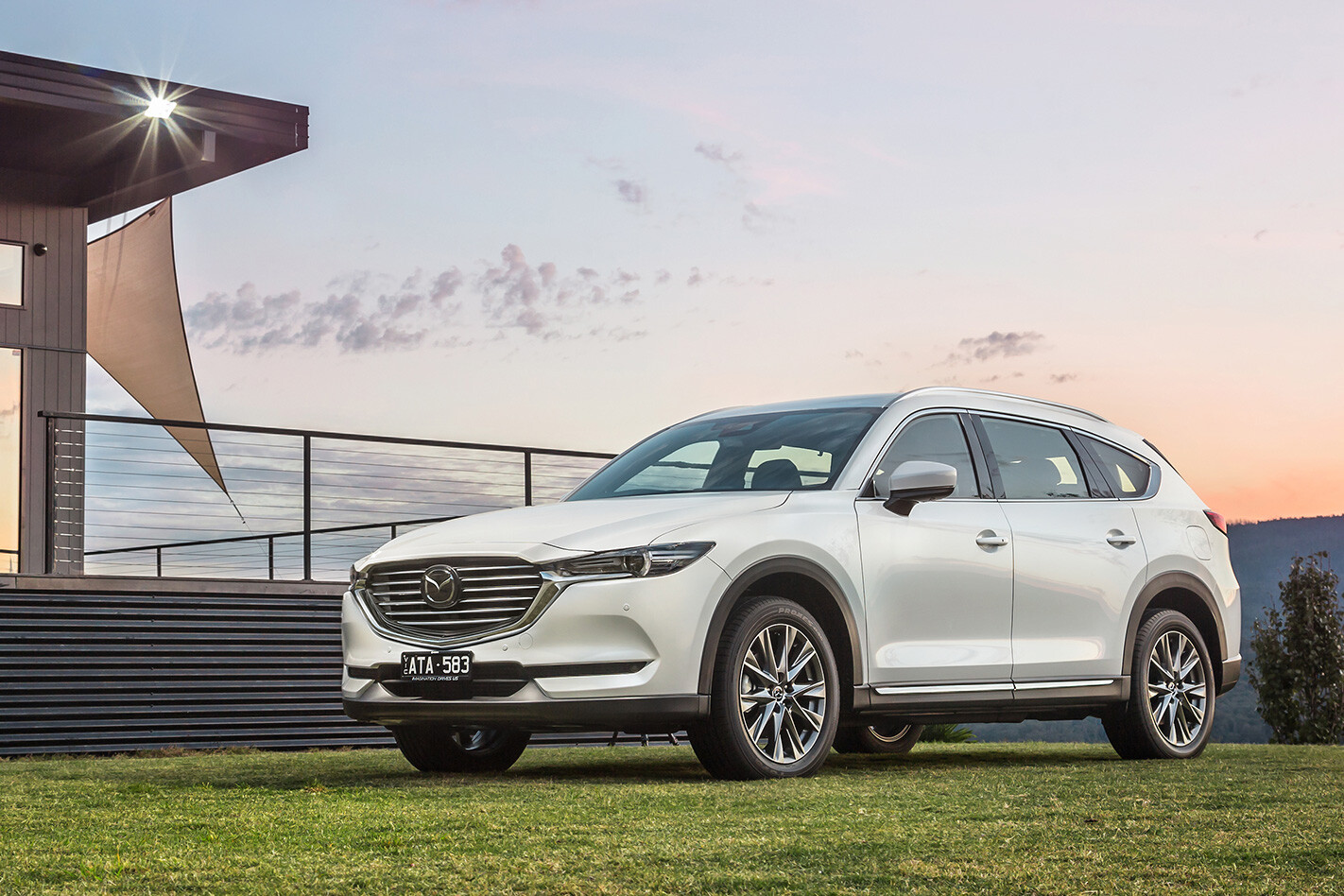
Mazda’s CX-8 drives more like a heavier, slighter softer-riding CX-5, rather than a more wieldy CX-9. The lack of a petrol engine may temper its appeal for some buyers, and the top-spec Asaki demands a hefty $15,000 premium over the all-wheel-drive Sport model. But the upgraded 2.2-litre diesel is strong and frugal, and the seven-seater functionality, equipment levels and elegant cabin presentation will be enough to seal the deal for plenty of families for whom the CX-9 is just a bit too bulky.
PLUS: Overall comfort and cabin quietness; good diesel refinement and economy; intelligent packaging and seating versatility MINUS: No petrol engine option; lack of (for now) Apple CarPlay and Android Auto; no paddle shifters on Sport; no air vents in third row
THE WHEELS REVIEW
WELCOME to the best Mazda seven-seater SUV never intended for Australia. To fully understand the CX-8, you first need to grasp its intended positioning from a global perspective – which is actually not global at all. This is a model designed and built for the Japanese market, aimed at customers who want the versatility of seven seats, but are part of the crowd abandoning MPVs in their droves. Mazda doesn’t offer the 2017 COTY-winning CX-9 large SUV in Japan, so the CX-8 was essential to provide a seven-seater for the home market.
The Japanese take-up of diesels in the SUV segment remains strong, hence the reason the CX-8 is built only with Mazda’s recently updated 2.2-litre twin-turbo four.
All of which explains why Mazda Australia saw fit to make the CX-8 the fourth member of its SUV line-up. The CX-5’s five-seater-only packaging limits its appeal for expanding families, while the large CX-9 does seat seven, it’s a petrol-only proposition. The CX-8, so the reasoning goes, slips in to provide a slightly shorter, narrower, oil-burner alternative.
Mazda claims the CX-8 is based largely on the CX-9, but the reality is a little more complex. Its wheelbase of 2930mm is shared with the large SUV, and the fundamental suspension hardware is CX-9-derived. Revisions to rebound springs and the addition of what are termed dynamic dampers to the front struts are intended to both sharpen dynamics and improve NVH. But plenty of other key components come courtesy of CX-5, and the CX-8’s body width of 1840mm is also shared with the smaller SUV. Front and rear track widths are separated by only a few millimetres compared with CX-5, while inside, forward of the B-pillar is virtually all CX-5.
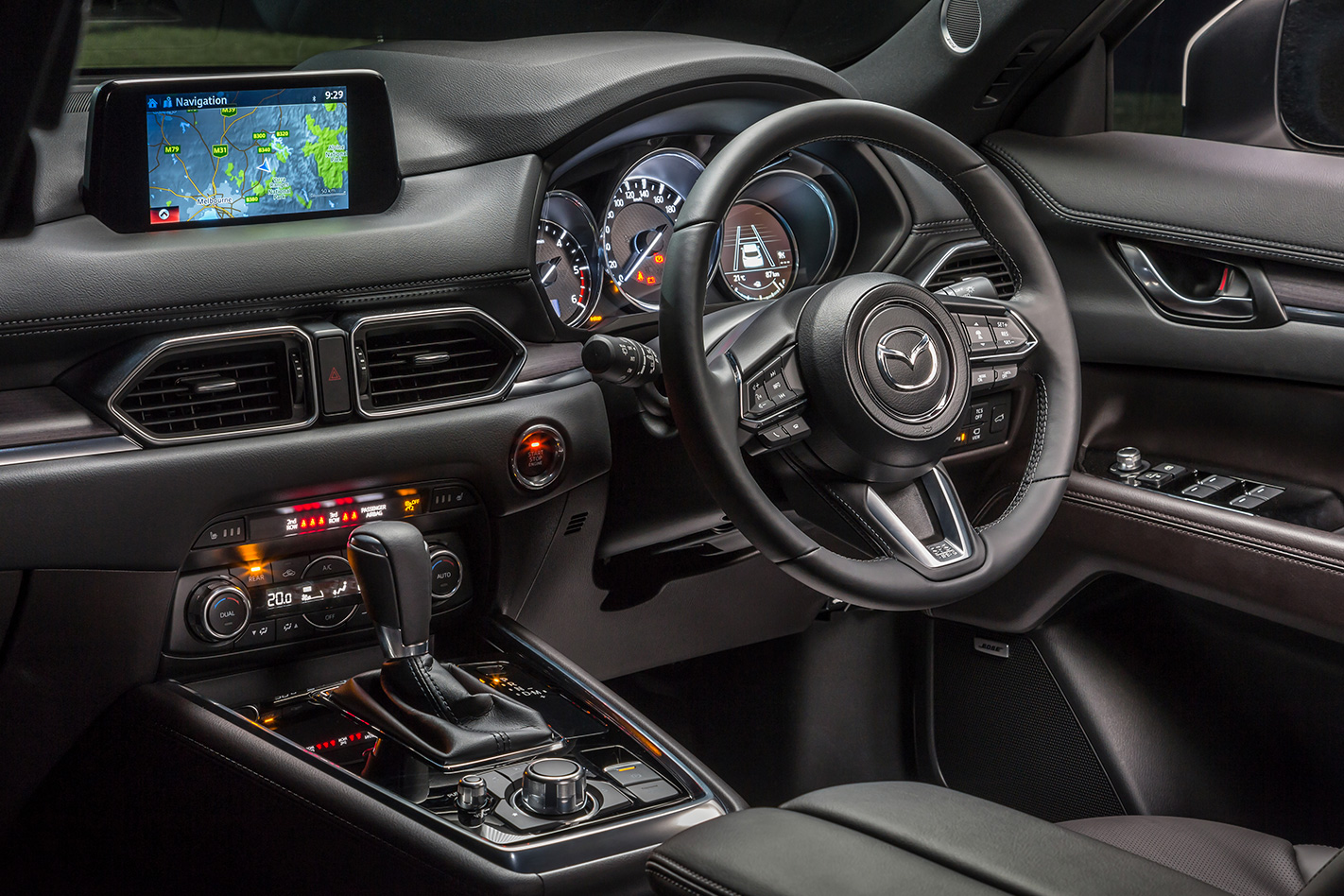
Models are contained to just three, in two equipment grades: Sport and Asaki. Sport can be had as a base front-driver for $42,490 (expected to take around 60 percent of sales in the first year) or as an all-wheel drive for an extra $4000. The (mandatory AWD) Asaki adds to an already fairly generous spec level, but takes the price deep into CX-9 territory at $61,490 – a figure that comes very close to securing the second-from-top-spec AWD GT model. The $15,000 hike from AWD Sport to top-spec Asaki does bring Nappa leather, heated steering wheel, heated and electric seats up front, heating for the second-row outer seats, adaptive LED headlights, and premium Bose audio, among other fruit. But still, it’s a hefty leap, and goes some way to explaining why Mazda Australia only expects one in every five CX-8s to be an Asaki.
So how does it drive? Let’s just say back-to-back testing with both a CX-5 and a CX-9 would prove very instructive. We didn’t have that opportunity at the car’s Queensland launch, but our impressions are that this is closer to a heavier, more compliant-riding CX-5 than it is a more compact and nimble iteration of the CX-9. In AWD spec, the CX-8 weighs in at 1957kg, some 200kg heavier than an equivalent CX-5, so don’t expect mid-size SUV levels of agility. The steering feels nicely weighted and responsive around town, and the 3.1 turns lock-to-lock helps with the general impression of wieldiness. Increase the pace to country cruising, though, and the steering reveals a slight on-centre vacancy, and the front end prefers a more measured approach that allows the weight of the nose to settle before probing the limits of tyre adhesion.
Overall, the body control and general dynamics are good, but arguably more noteworthy is the ride comfort and quietness in the cabin. After copping criticism in the past for less-than-hushed on-road manners, Mazda has declared war on NVH, and the CX-8 benefits from that campaign. There is extra soundproofing applied to the inner of the rear guards and at the base of the D-pillar to make things more quiet in the third row, and better sealing of the tailgate to help cut wind noise.
That’s just the start of it, and it all comes together to make this a really nicely muted and polished-feeling family car. Even the road noise on the 19-inch tyres of the Asaki is not appreciably louder than that from the same-width (225mm) but higher profile 17s on the Sport, and nor is there any stark degradation in ride quality between the two. The CX-8 mostly just cruises along with ample compliance and a general imperviousness to road surface that would make some higher-priced Euro SUVs look stiff-legged and restless by comparison. It’s not flawless – we did experience crash-through on a couple of occasions over ruts that didn’t outwardly look all that evil, but mostly the ride-handling balance feels sensibly calibrated towards keeping occupants comfortable and relaxed, rather than trying ramp up the zoom-zoom factor unnecessarily.
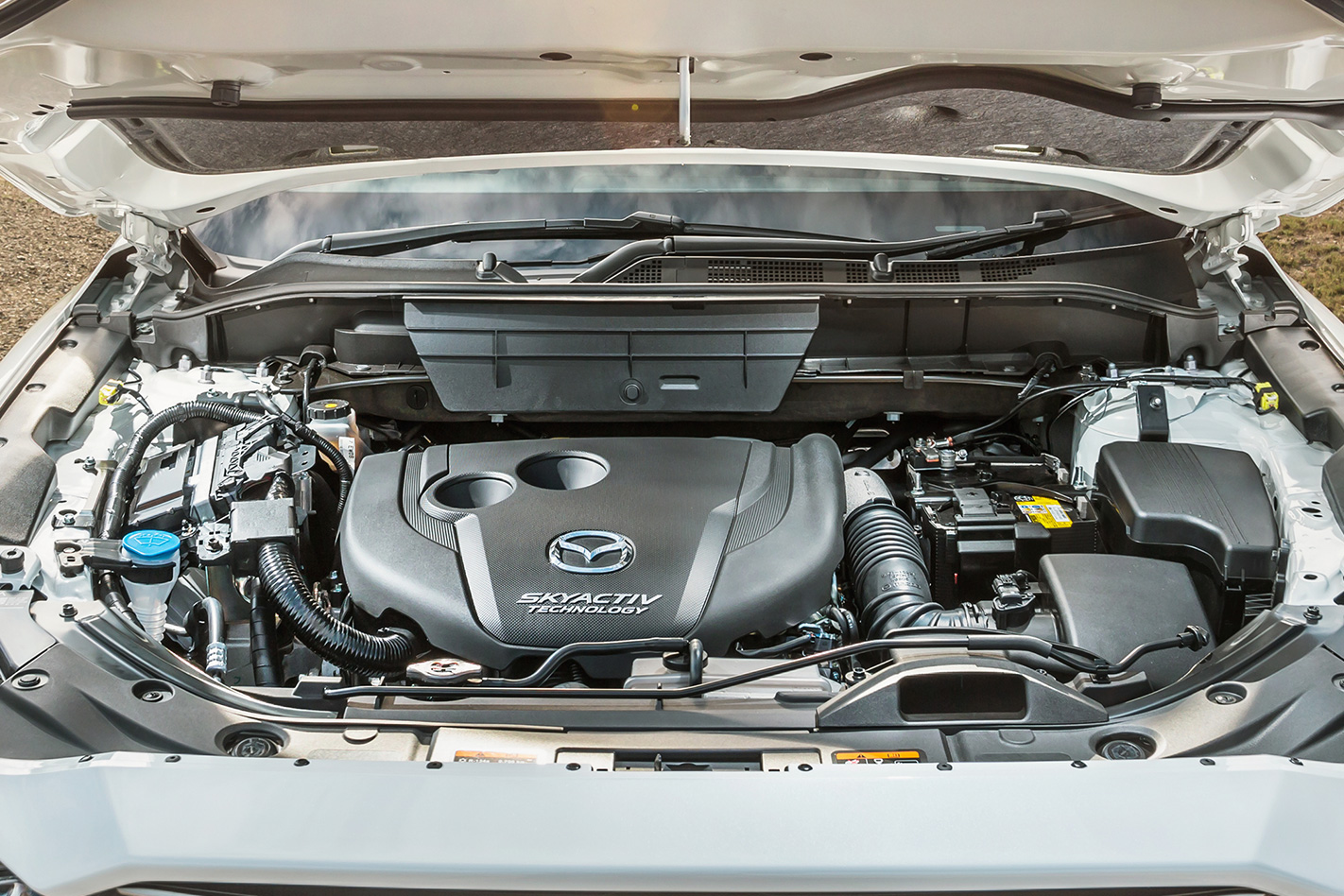
Which is in keeping with the broader character delivered by the turbo-diesel engine. This Skyactiv-D unit was recently updated with new pistons, revised injectors and variable-geometry turbine for the larger of the two turbochargers, along with a slight increase in compression (still very low for a diesel at 14.4:1.) All of which has helped bump power from 121kW to 140kW, with torque rising from 420Nm to 450Nm. A handful of NVH-targeted upgrades have also been implemented, keeping this engine at the pointy end in terms of general refinement.
Yes, of course it’s louder than a petrol, especially when compared with the excellent 2.5-litre turbo-petrol fitted to the CX-9. And yes, we’d probably be even more enamoured with the CX-8 if the turbo-petrol was available for it. But the diesel is reasonably clatter-free from inside the car at idle, and never turns properly uncouth, even when spun out to the 5000rpm upshift point under a wide-open throttle.
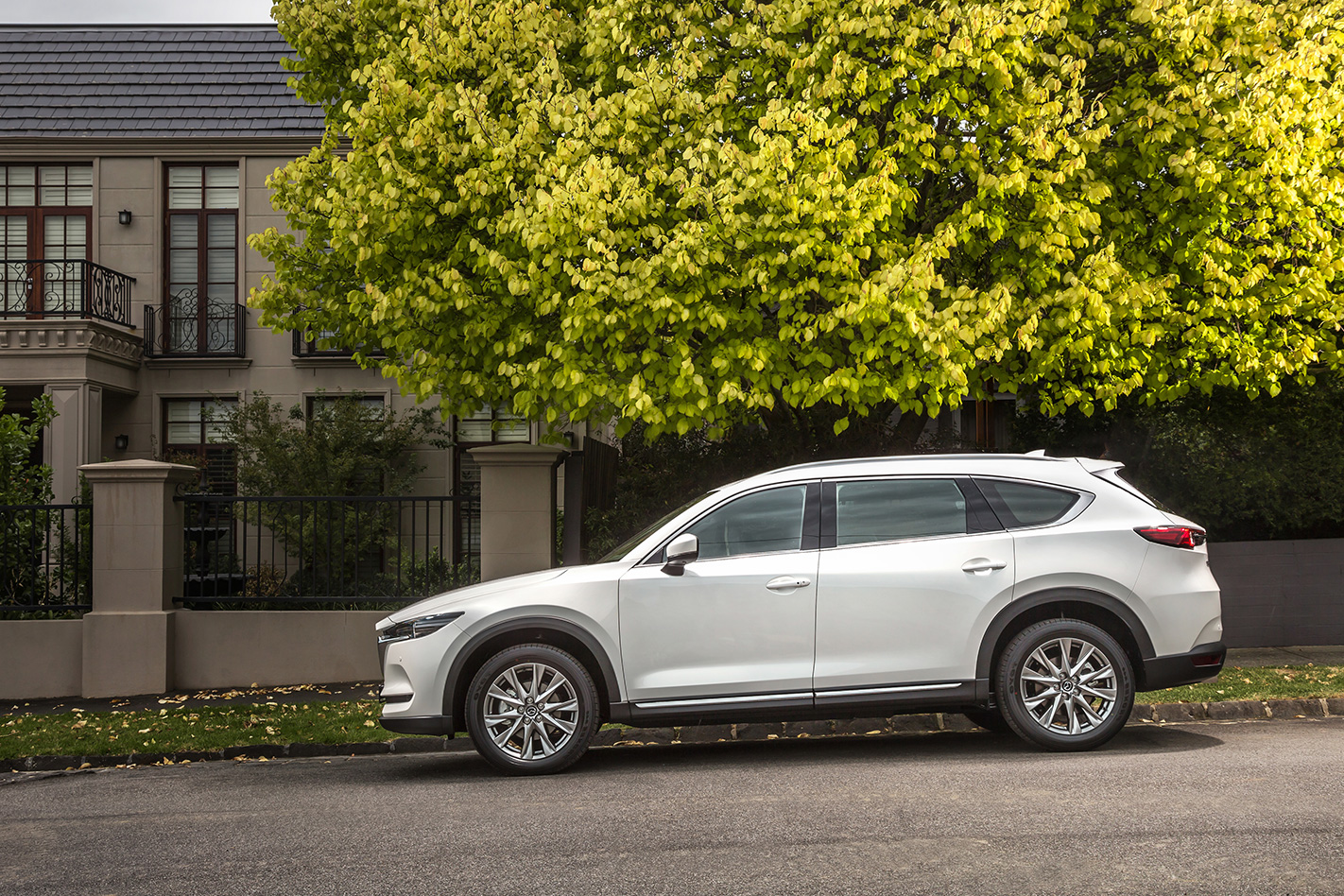
Mazda Australian claims its own customer research indicates potential buyers aren’t too fussed about which fuel type is being burnt; they’re more concerned with the actual consumption, so presumably the official numbers of 5.7L/100km for the front-driver and 6.0L/100km for the AWD models will be well received. They are, after all, well down on the mid- to high-8.0s delivered by the petrol CX-9 range on its official combined cycle.
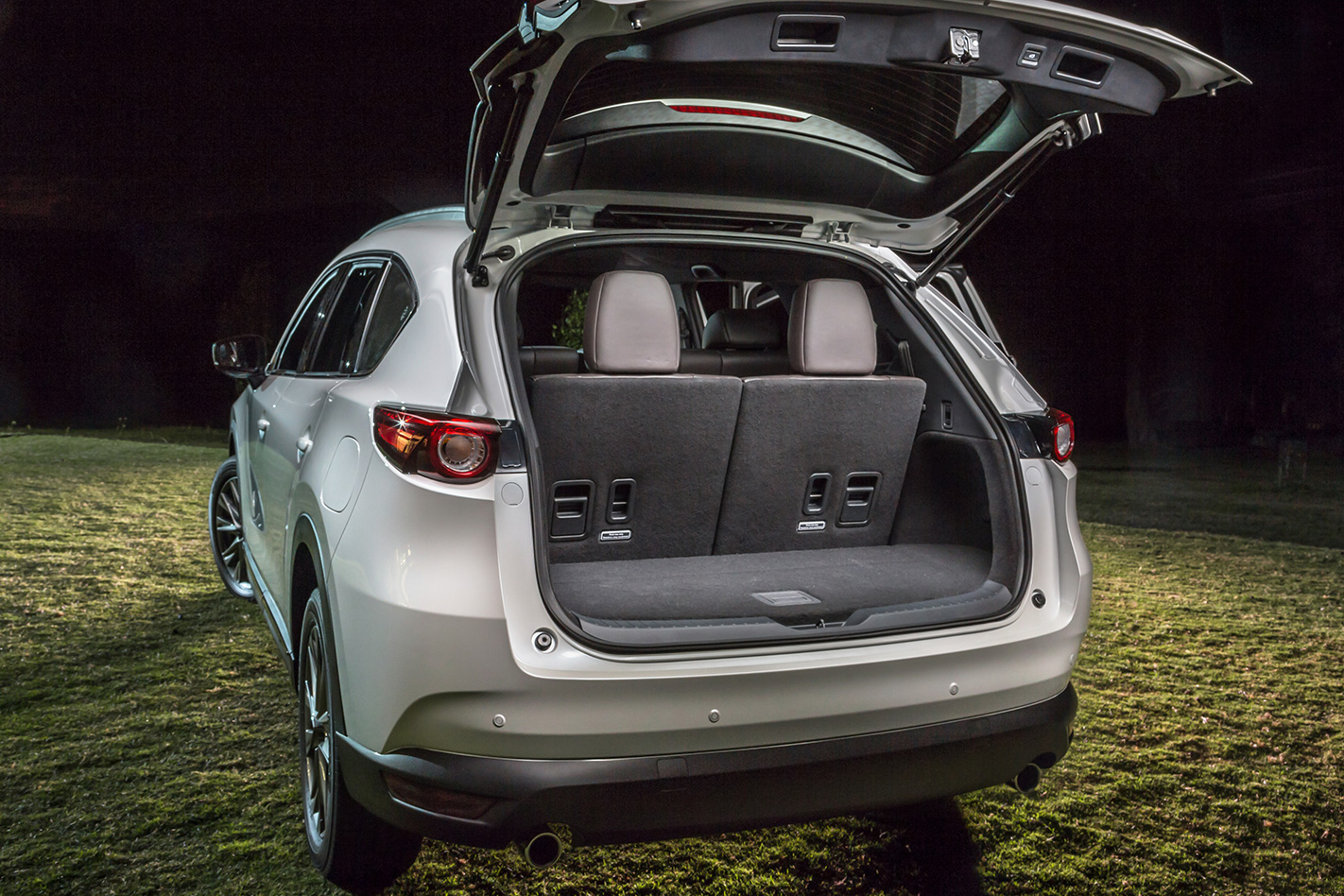
But central to the CX-8’s reason for being is that third-row seating, so it’s a good thing the packaging hits the mark. Granted, I did struggle to stuff my 180cm frame into there with anything approaching grace and dignity, but once in, I reckoned I could cope with a 20-minute run across town. Kids, meanwhile, won’t have too much to gripe about in terms of leg and shoulder room, although visibility for shorter bodies is not brilliant, and there are no dedicated air vents back there. If there’s only a sixth passenger to be accommodated, the third row can be split to allow extra luggage space over the folded seventh seat.
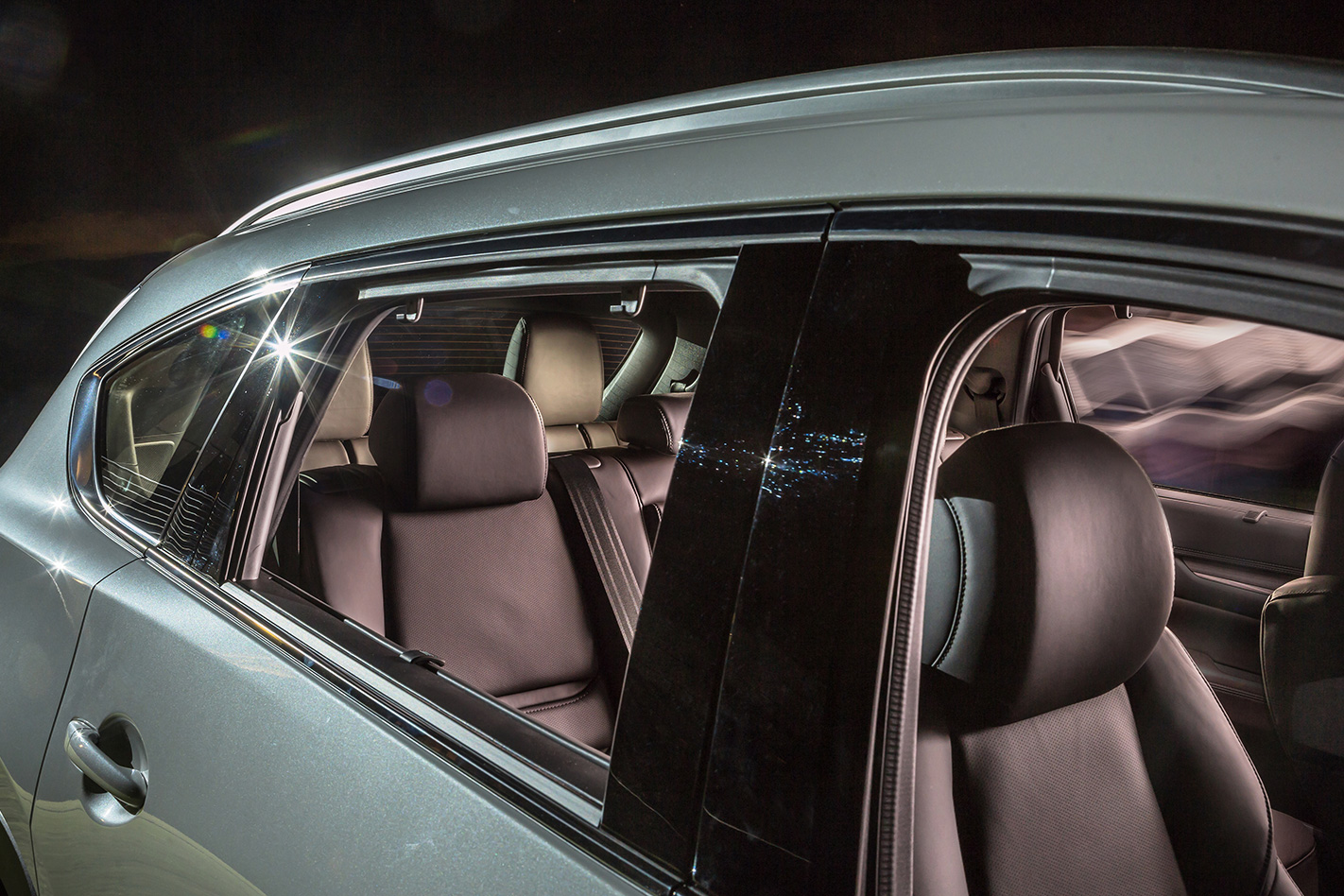
The only slight demerit we could level at the third row is the narrow void it creates in the luggage compartment when the seats are folded to enable the 742 litres (floor to ceiling) of cargo space to be used. But it’s a small moan; mostly the CX-8 delivers exactly the seating flexibility and load-carrying versatility owners will want from it.
First impressions, then are mostly very positive, but seven-seater rivals from VW, Peugeot, and Skoda are far from push-overs in this segment. Exactly how effectively the CX-8 counters the latter pair will become apparent in August’s issue of Wheels.
SPECS
Model: Mazda CX-8 Sport AWD Engine: 2191cc 4cyl, dohc, 16v, TTD Max power: 140kW @ 4500rpm Max torque: 450Nm @ 2200rpm Transmission: 6-speed automatic Weight: 1957kg 0-100km/h: 9.6sec (claimed) Fuel economy: 6.0L/100km Price: $46,490 On sale: Now
THERE’S virtually zero chance of Toyota’s impossibly venerable Crown coming to Australia, but the freshly revealed 15th generation – that’s right 15 – hides secrets under its body that could preview more exciting Toyotas on the horizon.
The Crown large luxo sedan is to Japan what the Commodore is to Australia, but, unlike the beloved Commo, throughout the Crown’s 63-year history it has always been offered in front-engined, rear-wheel drive – and that includes the newest incarnation.
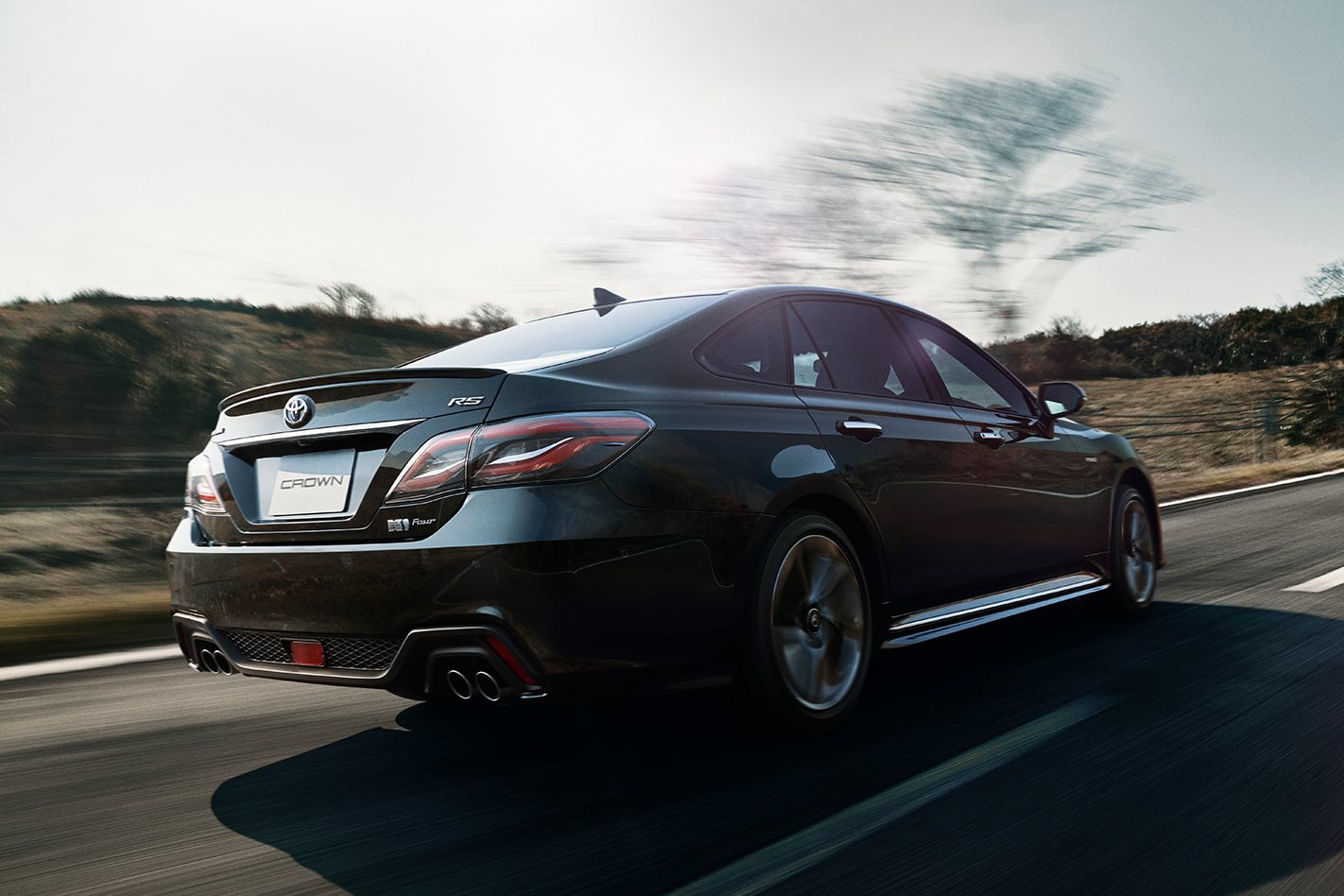
But the platform that underpins the 2019 Crown is the first rear-drive evolution of the Toyota New Global Architecture (TNGA), which also provides the basis for the Prius, CH-R and Corolla hatch (GA-C) as well as the Camry and RAV4 (GA-K).
That means Toyota has a new front-engined, rear-wheel drive platform that has the potential to underpin other models of all sizes aimed at driving enthusiasts. No it’s not the 86’s unique Subaru-derived ZN6 platform, and no it’s not the same as the revenant Supra’s architecture – that will come from partner BMW and will be shared with the new Z4.
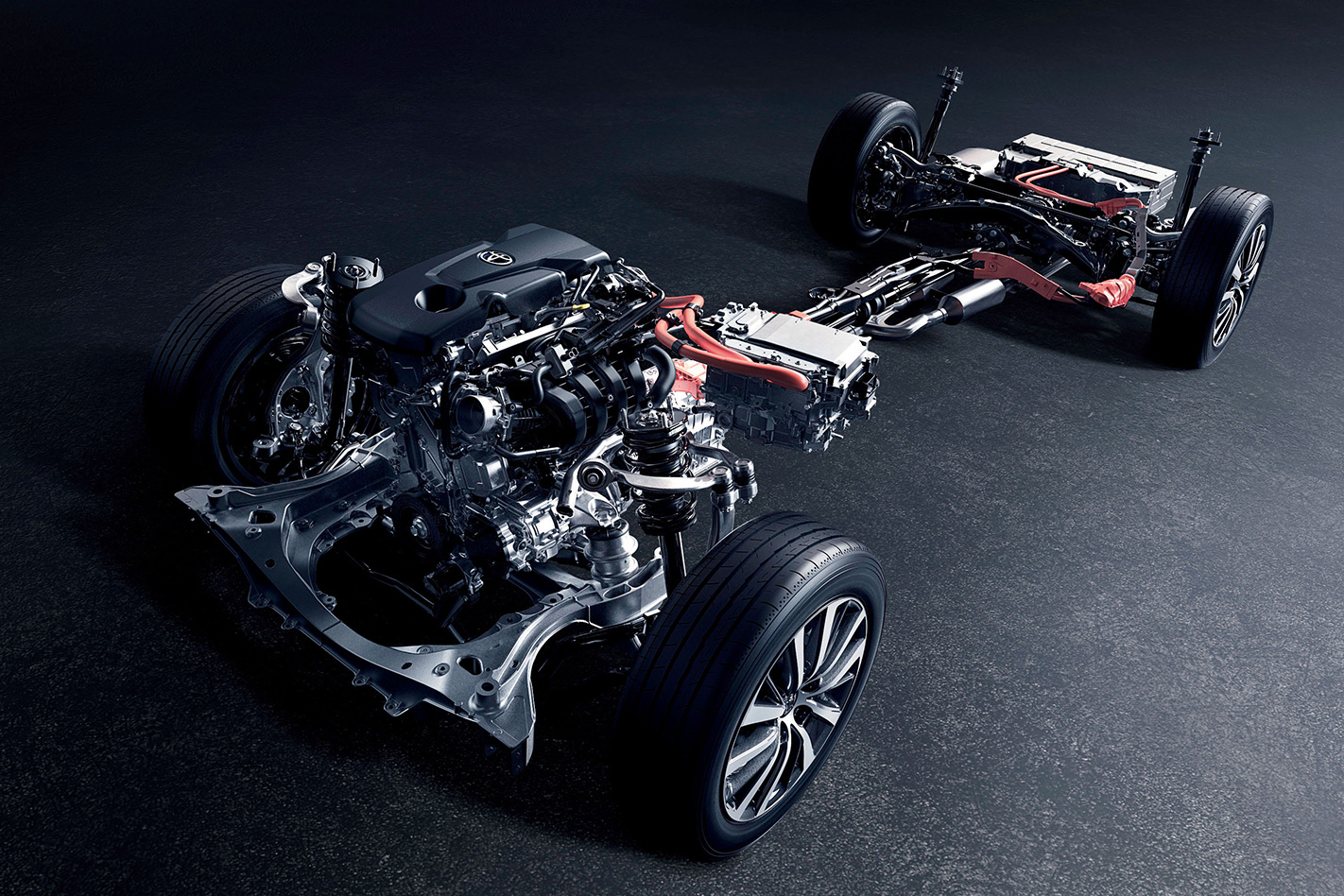
Like the S-Class, the Crown has frequently been the debut platform for Toyota’s cutting-edge tech, a testing ground before those features filter down to other Toyota models. Indeed, the Japanese car maker highlights the Crown as its technological showcase in previous years.
“Cutting-edge technologies that are now used in many vehicles featured in the Crown before any others on the road,” it says.
As for powertrains, while previous Crown models have evolved through an extraordinarily diverse range of engines including diesels, hybrids and V8s – in addition to the mainstay six-cylinder petrols, the latest version is in keeping with Toyota’s strategy to downsize and boost efficiency with three eco-focused options.
A 180kW 2.0-litre turbo four-cylinder opens the bidding coupled to an eight-speed automatic transmission, a 135kW 2.5-litre four-pot with 105kW Toyota Hybrid System II looks after the middle of the range, while a 220kW 3.5-litre V6 boosted by 132kW Multi-Stage Hybrid Transmission rounds out the top of the pack. Max power outputs for the hybrids total 166kW and 264kW respectively.
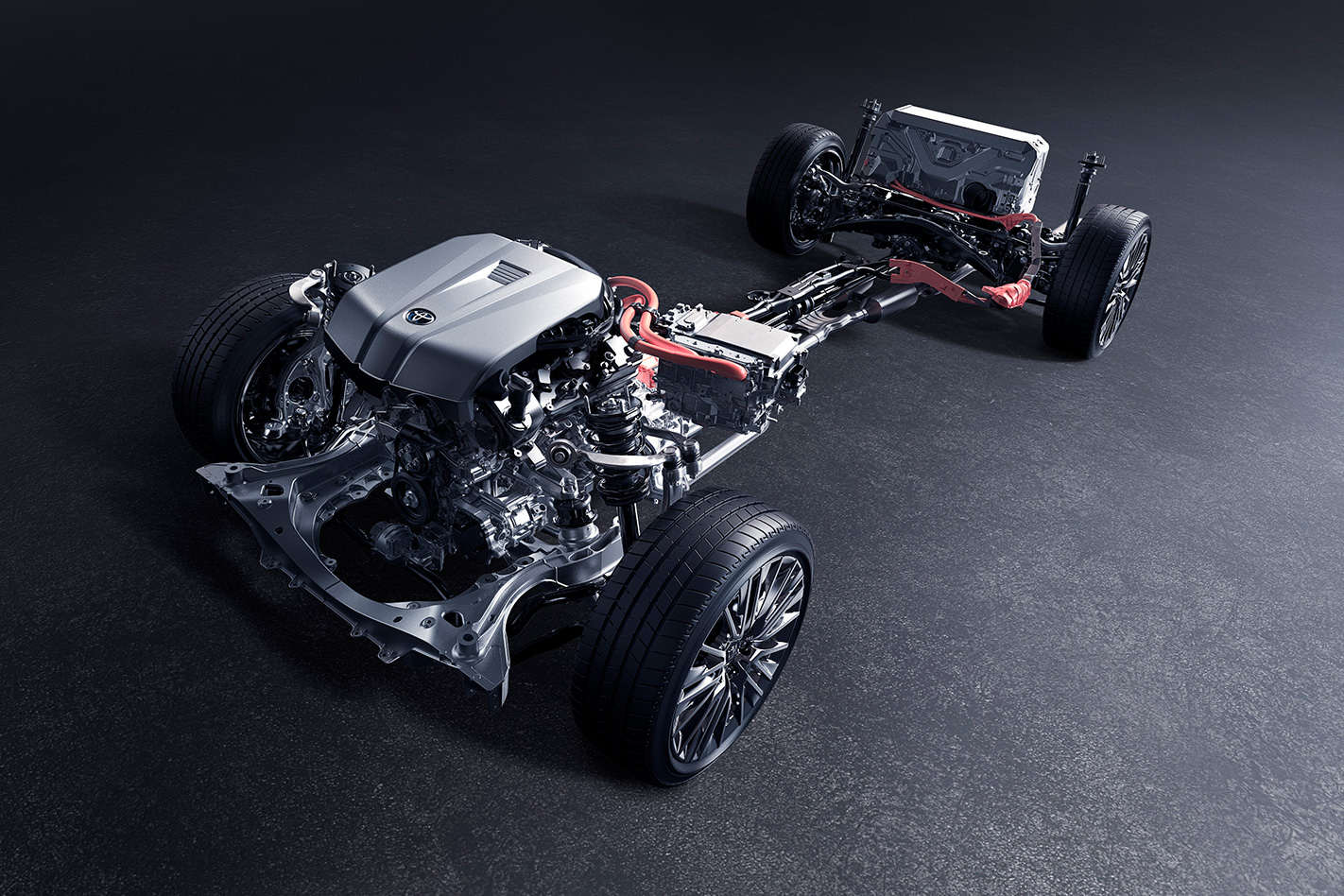
The latter drivetrain represents another first for the company and brings a more conventional gearbox to control the combined V6 engine and electric motor output. The result, says Toyota, is a drivetrain that offers strong acceleration from lower speeds but more cruising efficiency.
No range figures are provided, but the company confirms the new system allows pure electric power and emissions-free driving as well as hybrid operation. A nickel-metal hydride battery provides power to the 2.4-litre version, while a more cutting-edge lithium-ion pack powers the V6 version, suggesting it will be the EV range champ.
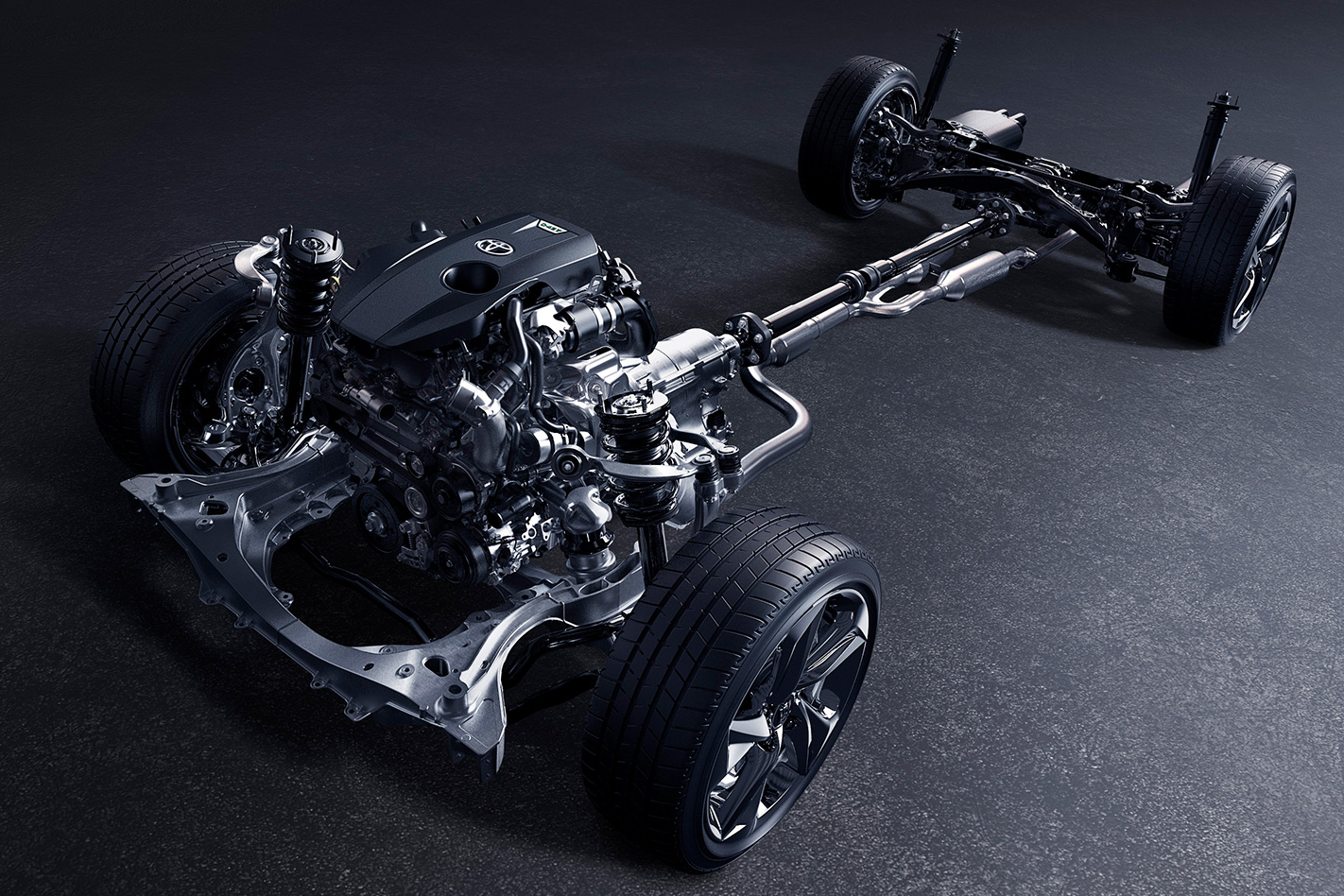
The car maker is remaining coy on plans for the bundle of new technology to debut in the new Crown, but with sparkly hybrid technology, a new turbo engine and almost endless rear-wheel drive model scope, Toyota has the potential to continue the performance car push, ignited by the 86 and eagerly anticipated Supra.
Pheasant Wood is the new name of the track formerly known as the Marulan Dirt and Tar Circuit.
As such, the track is actually located in a town Called Marulan, south-west of Wollongong.
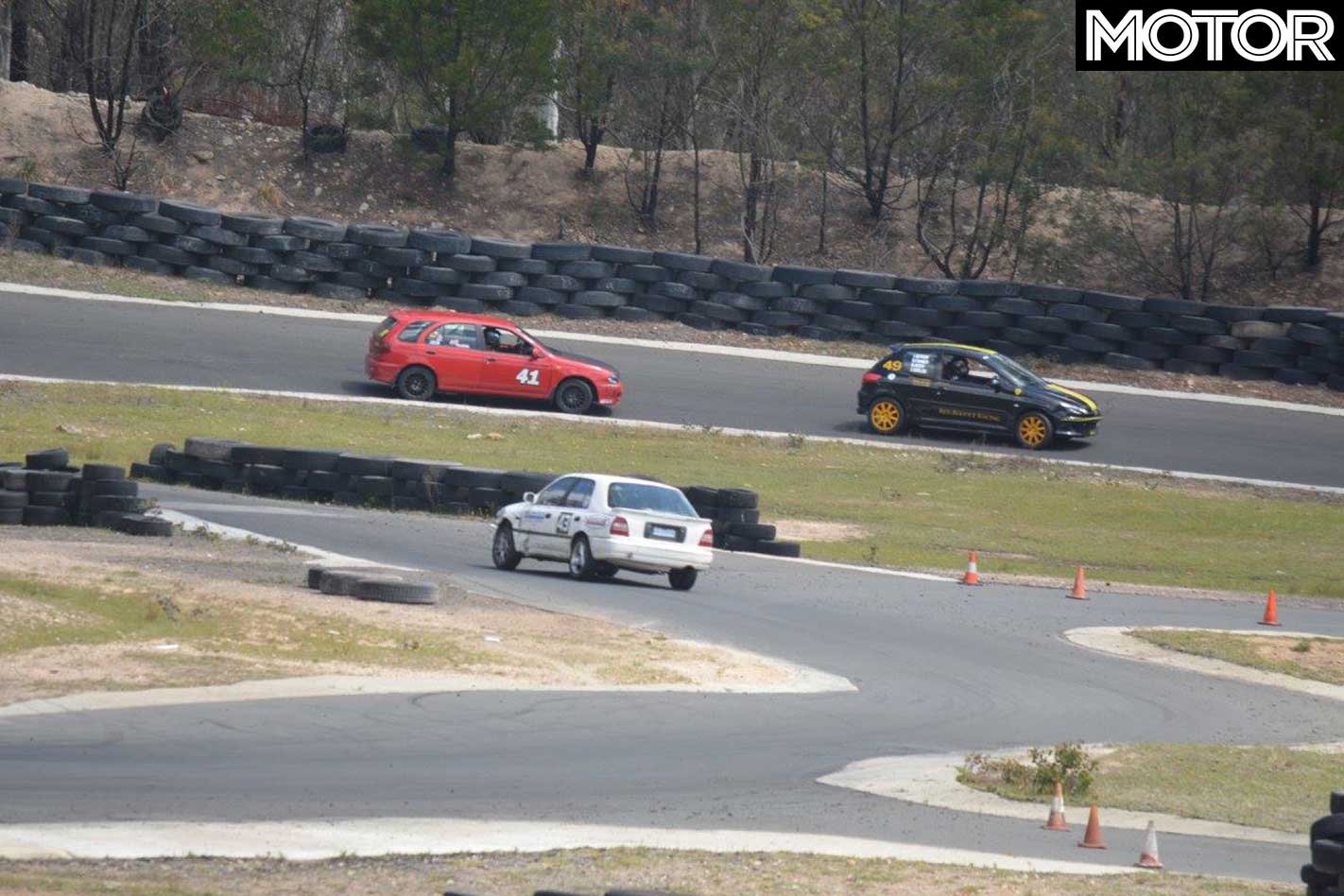
At MOTOR, we’ve been following the progress of several racetracks in various stages of development around the country, but the refurbishment of Marulan/Pheasant Wood seems to have been competed more suddenly than we expected.
Now, thankfully, a Vimeo user by the name of Quang Tran has uploaded some onboard footage of the newly-surfaced track.
A BMW 1M Coupe is the vehicle of choice, and the video is actually of quite good quality. Check it out:
The track was reportedly bought in 2016 by businessman and racer Steve Shelley, who began the re-vamp which has led the circuit to be known as Pheasant Wood.
Originally, in 2009, the track was opened by Garry Willmington, after a couple of decades of development.
Willmington has raced in 21 Bathurst 1000s, and drove in the early years of the V8 Supercars series.
He’s also started an amateur series at what is now Pheasant Wood called ‘Cheap Car Challenge’ which is rather self-explanatory.
In fact, the series ran its first race of the year a couple of weeks ago at Pheasant Wood. 2.0-litre cars built between ’86 and ’05 are eligible, and each round consists of a 4-hour drive with four drivers on a team.
The track is quite often closed during weekdays, but a calendar on its website stays up to date with open track days and events.
It seems to have flown slightly under the radar that Aston Martin seems to be planning on calling its new SUV the Varekai. Although it hasn’t been officially announced – and indeed may change between now and its unveiling – the Gaydon company has filed a trademark for the name and insiders say that it’s set to be attached to the voluptuous rump of the project we’d previously called DBX.
While Varekai sounds either like some form of South African hotpot or something you’d find on the bottom of your kid’s foot after a visit to the public baths, it stays true to Aston Martin’s loose V-for victory nomenclature. Vanquish, Virage, Vantage, and now Varekai. A quick Google tells us that Varekai was in fact one of Cirque du Soleil’s early shows and stems from the Romani word for ‘wherever’, evoking the romantic image of nomadic gypsies, travelling from town to town in their luxury SUV, offering quality driveway repair services.
It comes on the back of a few headscratching names in the last few months. Porsche renamed their Mission-E ‘Taycan’ which is apparently a spirited and wild young horse in Turkish. The name has led to internet wise cracks about bad Liam Neeson movies and the fact that Porsche had built a mustang. Meanwhile Audi seems to be persisting in its quest to name its electric SUV the E-tron, which has a certain lavatorial connotation in French.
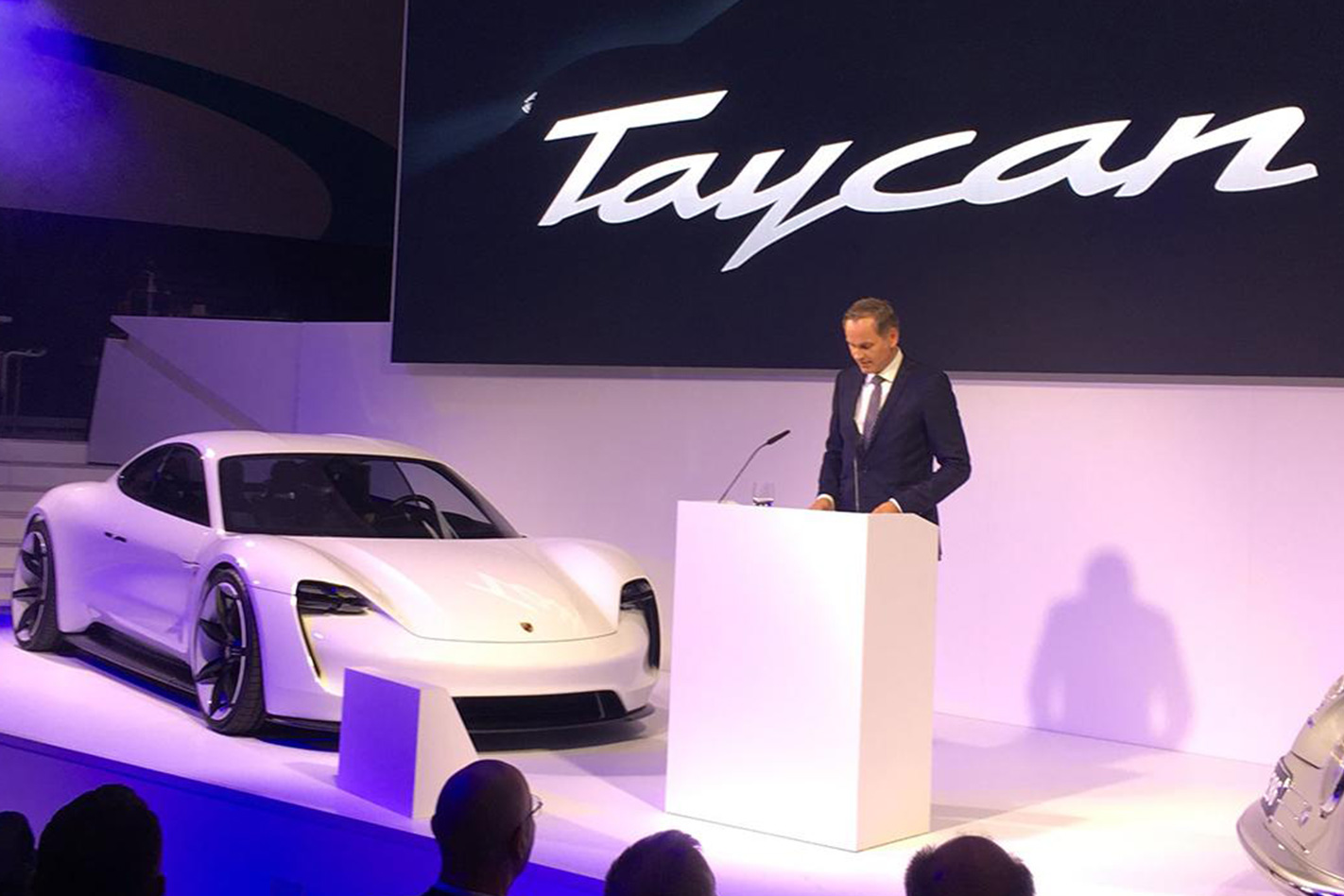
So let us know what you think of Varekai. It takes a bit of getting used to, but is it really any worse than Bentayga or Levante? Let’s hear your opinion.
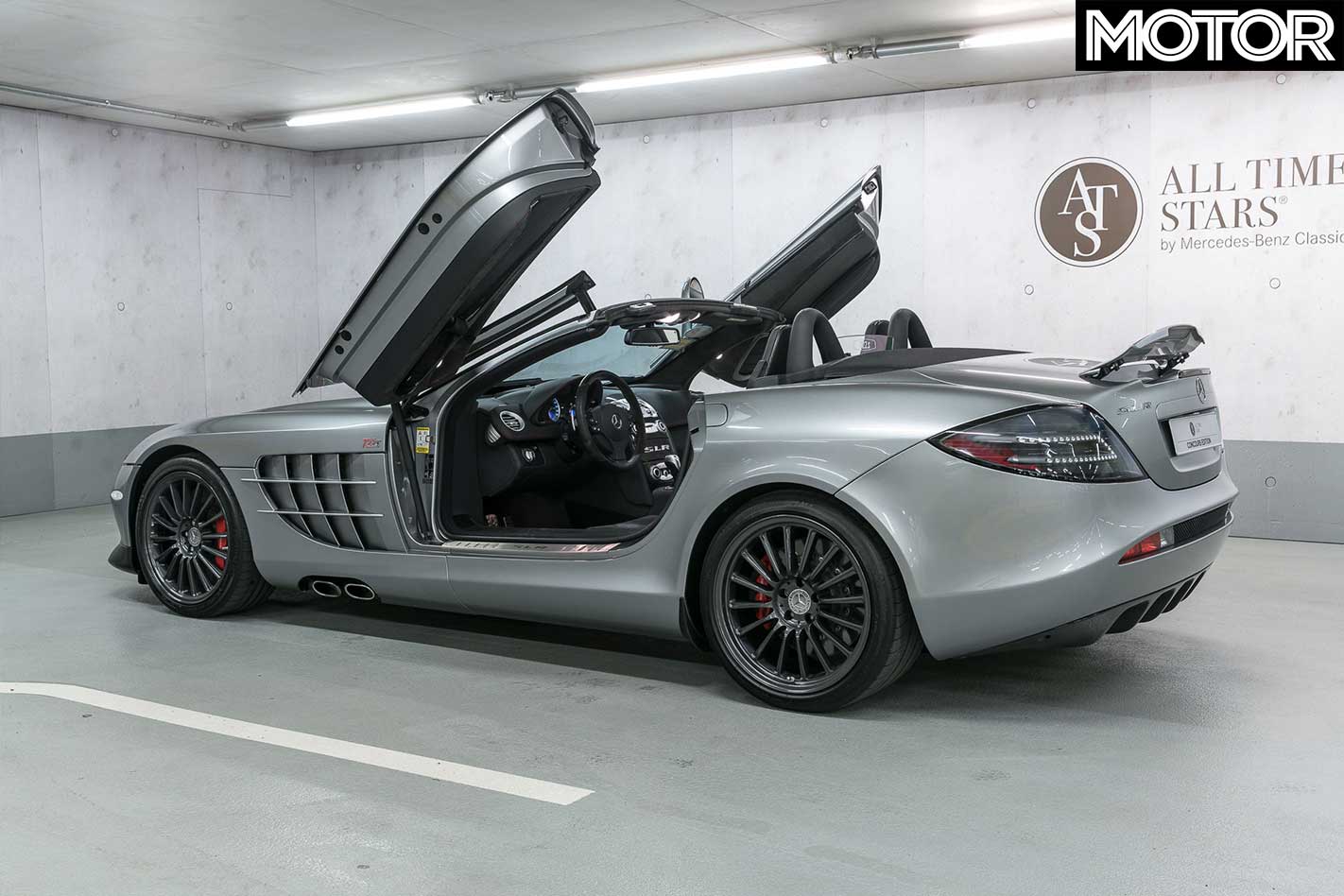
If there was ever a second-hand Mercedes-Benz SLR McLaren worth buying, it’s this one.
Not only is it a very rare (one of only 150) version, it’s also being sold by Mercedes-Benz Classic’s All-Time Stars program, which has deemed the car to be in concours condition.
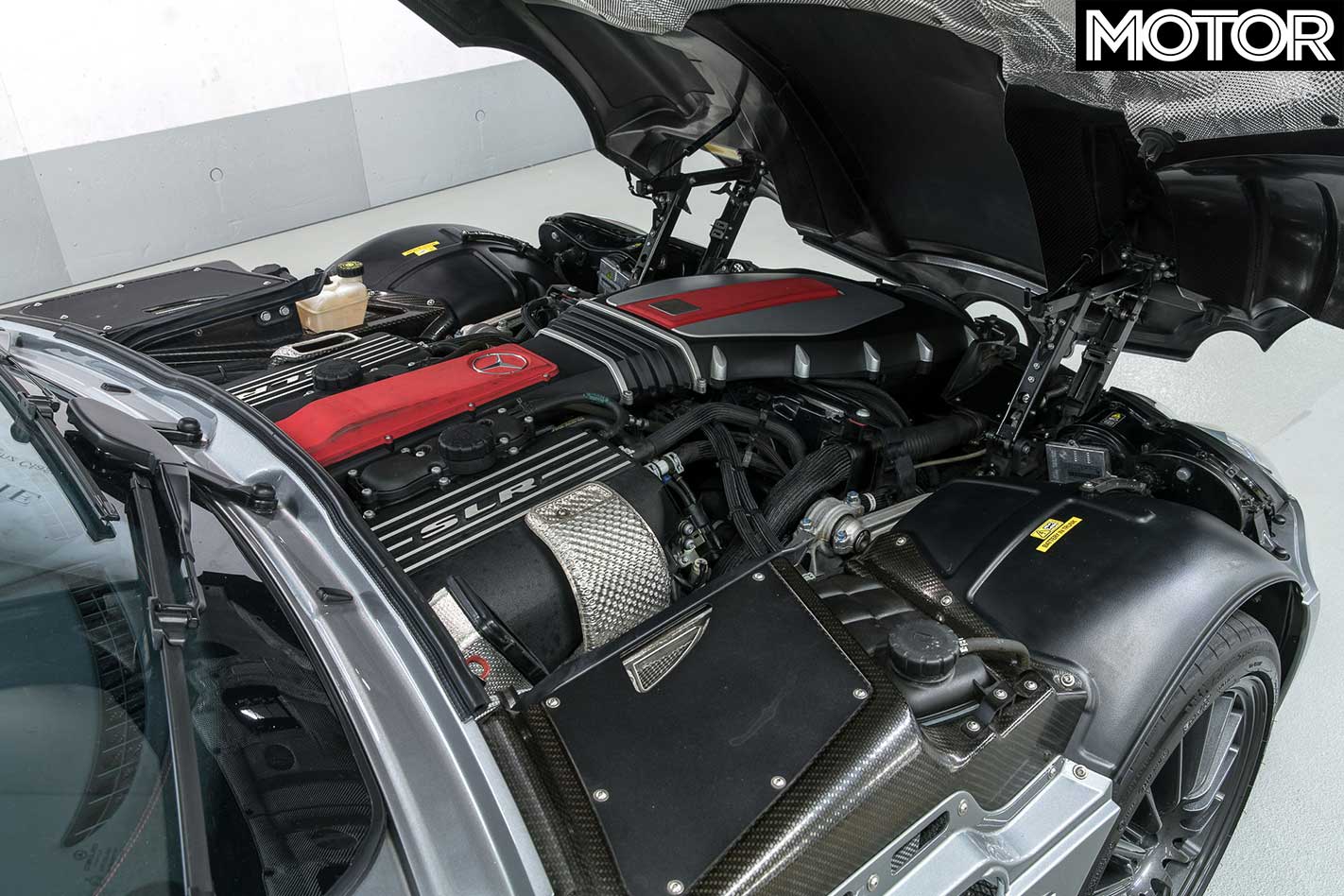
Its 5.4-litre supercharged V8 is good for 480kW, a sprint to 100km/h in just 3.6 seconds, and a top speed of 335km/h. Helpfully, Mercedes also points out it doesn’t have a sunroof.
The price? 1,240,000 Euros, which translates to AUD$1,950,000. Ouch.
As mentioned, this particular SLR is quite rare – nothing to do with its lack of sunroof. It’s the ‘722 S Roadster’, of which only 150 were built.
Its badging gives that away, but keen observers will also notice the ‘1000 Miglia’ sticker in the window.
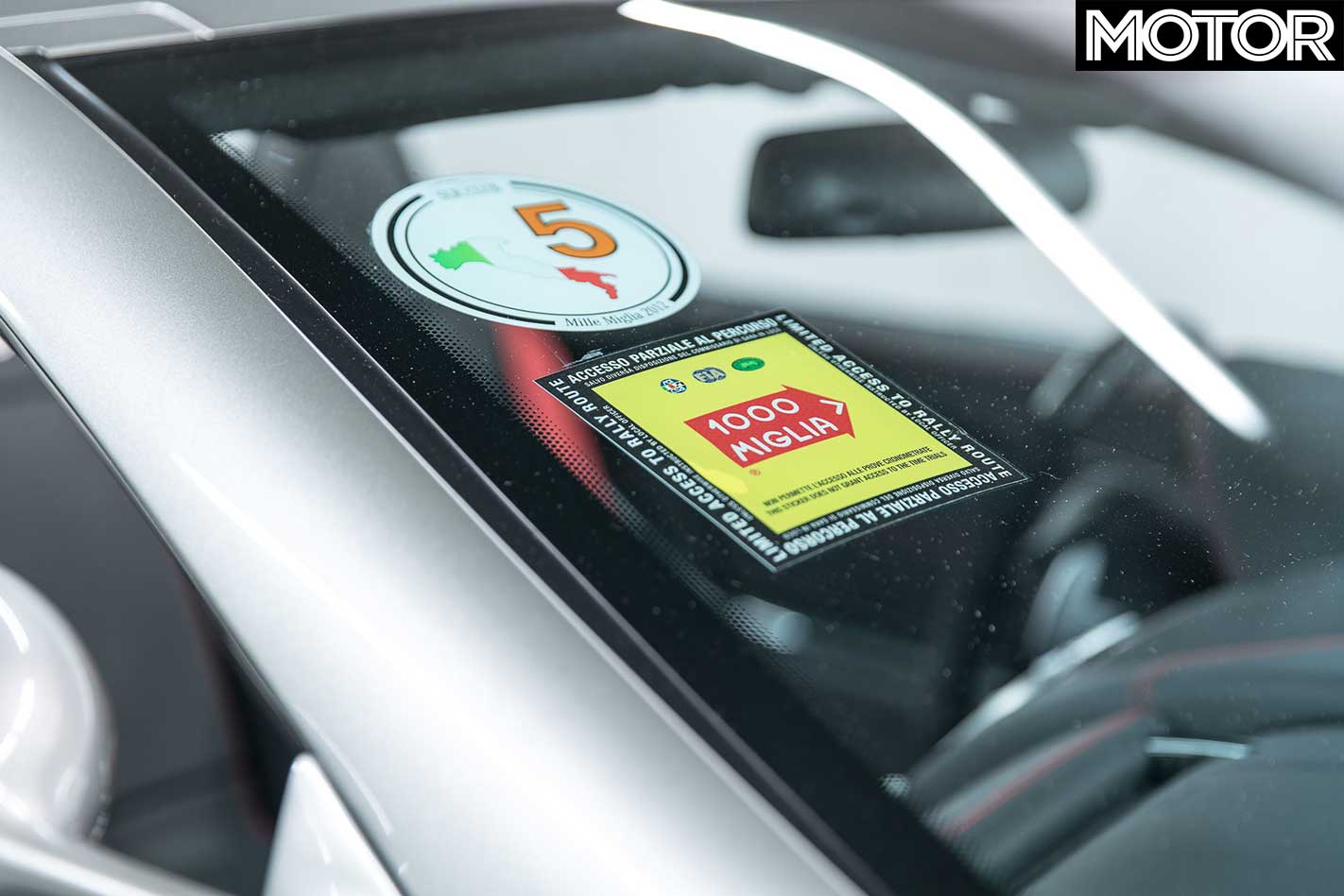
In this case, the sticker serves as a nod to the origin of the car’s name. In 1955, Mercedes-Benz factory driver Stirling Moss covered the entire 1596km distance of the race in 10 hours and 7 minutes.
It broke the record and it still stands today – primarily because the race hasn’t been run in that form since 1957.
According to an article in Motorsport Magazine from the year of the race, Moss said at the time:
“I’m so happy that we’ve proved that a Britisher can win the Mille Miglia, and that the legend ‘he who leads at Rome never leads at Brescia’ is untrue — also, I feel we have made up for the two cars we wrote off in practice.
“We’ve rather made a mess of the record, haven’t we — sort of spoilt it for anyone else, for there probably won’t be another completely dry Mille Miglia for twenty years.”
The Mercedes-Benz 300 SLR he drove to victory that year is actually quite reminiscent of the SLR 722 – 722 was the number on Moss’ car, and the time he began the race, 7:22am.
A new study from has provided the most extensive look at the distracted driving epidemic yet, revealing some worrying statistics about phone use behind the wheel.
Using data from the phones of 3.1 million anonymous drivers over a period of three months, the study, commissioned by US company Zendrive, discovered an estimated 69 million US drivers use their phone while behind the wheel each day – a drastic increase compared to the 660,000 estimated by the National Highway Traffic Safety Administration (NHTSA).
Zendrive’s investigation analysed 570 million trips, covering 9 billion kilometres by using technology which accessed a phone’s sensors and GPS.
The technology recorded driver behaviour, including speeding, aggressive driving, hard braking, collisions, and phone use. The raw data was analysed by machine learning algorithms to generate data for the study.
On average, US drivers used their phones in 88 out of 100 trips, with 60 percent of drivers using their phones at least once per day while behind the wheel. Of any given hour, an average of 40 percent of drivers use their phone at least once.
Phone use among drivers peaked during daytime hours, 72 percent of drivers using their device at least once during any given hour between 10am and 5pm.
The study found that Americans that used their phone at least once a day when driving did so for an average of 3.5 minutes for every hour behind the wheel.
While that may not seem like much, at 60km/h that is 3.5 kilometres travelled without looking at the road. At 100km/h it is six kilometres with your eyes away from the road. Another US study in 2015 by researchers from Oregon State University found taking your eyes off the road for only two seconds increases your chances of a collision by 24 times.
“In other words, that’s equivalent to 105 opportunities an hour that you could nearly kill yourself and/or others,” Noah Budnick, Director of Public Policy & Government Affairs for Zendrive, said.
The study found that of those that use phones during a trip, the vast majority do so during the first five percent of a journey.
This is your friendly reminder. Do not use your phone while driving.
Footage has been posted to YouTube of a driver pushing their 2018 BMW F90 M5 to the limits on the German Autobahn, travelling at speeds up to 310km/h (192mph).
The sedan uses the far left lane to reach its top speed of 310km/h, passing nearby cars at what seems like warp speed.
The M5 manages to pass a police vehicle without a flinch. Attempt that sort of speed in Australia and you’d probably end up in prison.
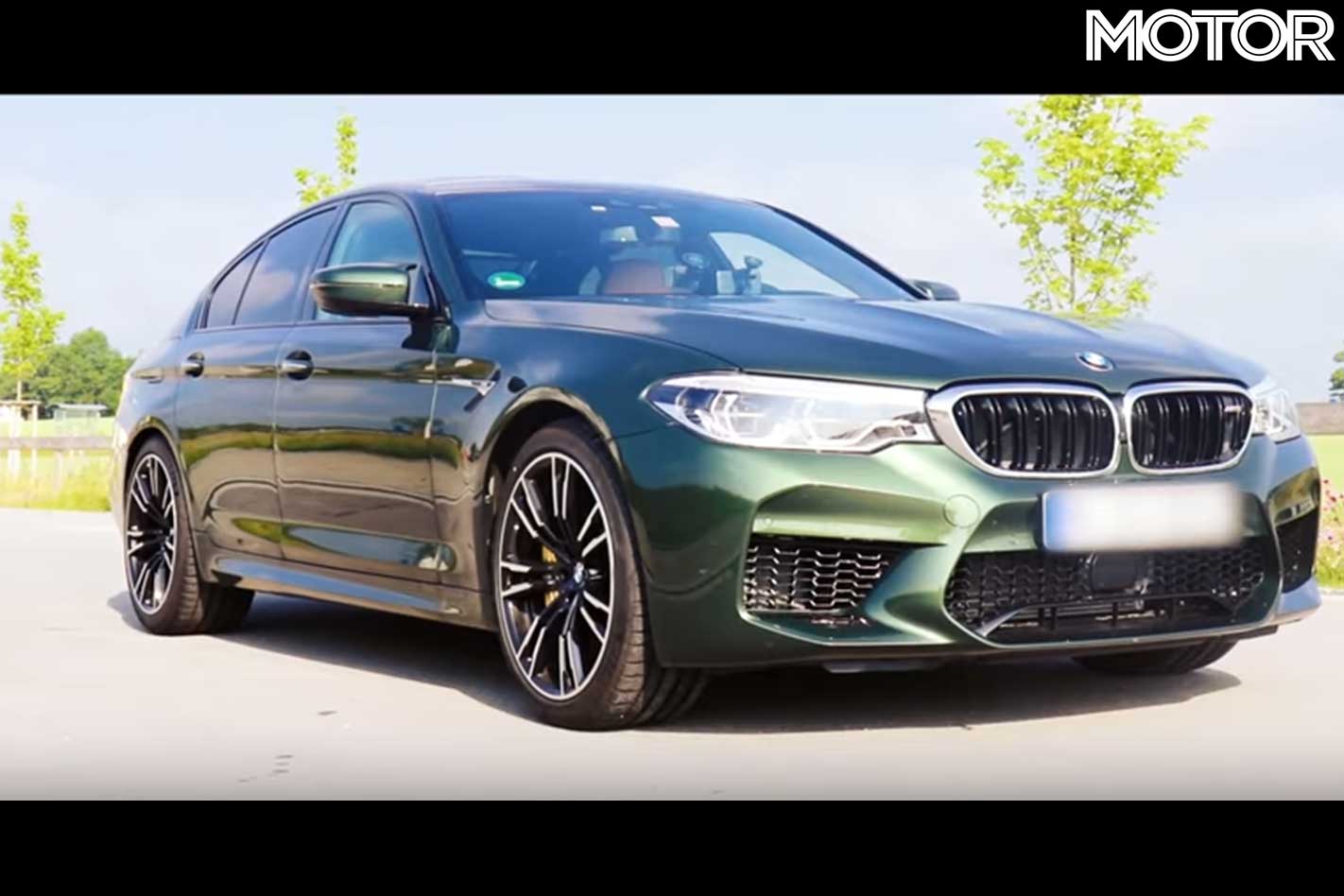
For the very first time, the F90 M5 features an all-wheel-drive (BMW calls it XDrive) system, which helps give such a ludicrous car some much needed traction.
For the drift enthusiasts and tyre-fryers out there, it has the ability to switch the all-wheel-drive system to operate in two-wheel-drive mode, which allows for significantly more power oversteer than an all-paw car would normally provide.
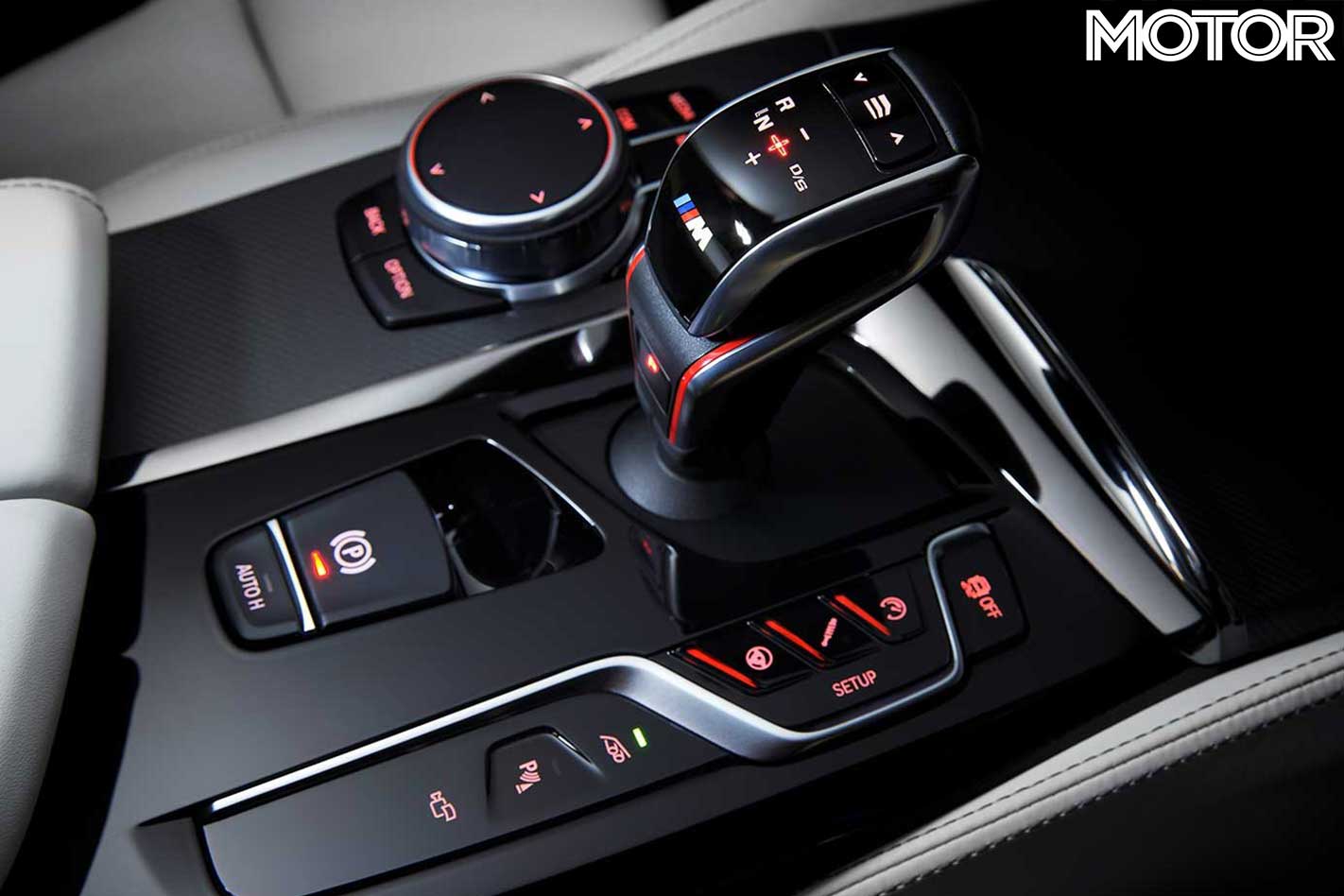
This system is similar to that of the Mercedes-AMG E63 4Matic which finds itself being the M5’s nearest competitor.
You might think that achieving such ridiculous speeds on a public highway is far from legal, and in many counties of the world, that is certainly the case.
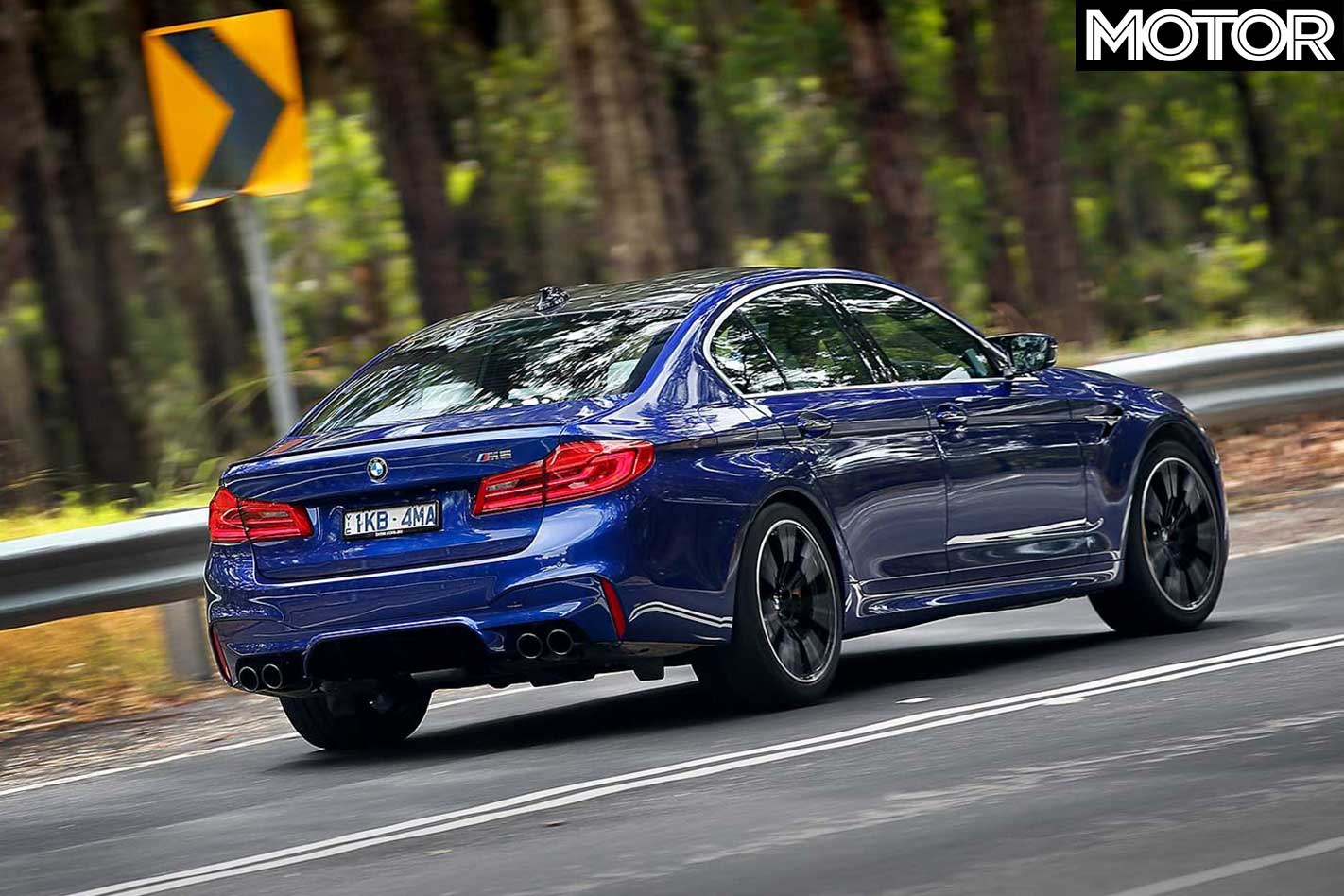
However, the German Autobahn differs by allowing certain vehicles (passenger cars, primarily) to drive at an ‘unrestricted’ speed limit. This allows cars to travel in the fast lane at any operating speeds.
Whilst the highway gives an advisory speed limit of 130km/hr, many of those blessed with exotic and high performance cars have the opportunity to stretch the legs of their cars and drive them as originally intended.
Here’s a little sneak peek into our new July issue of Motor Magazine, packed full of awesome news, reviews and photos of the world’s best performance cars.
This issue’s big feature is dedicated to our Bang For Your Bucks event, but keep an eye out for the story on our visit to The Bend with a Porsche 911 GT2 RS.
You can buy it digitally at Zinio, and find mags at retailers around Australia. Or you can subscribe and save yourself some cash.
Or, if you want to give us feedback and see behind the scenes, you can follow us on Facebook, Twitter, and Instagram.
Maloo W1 super ute exposed, and other news
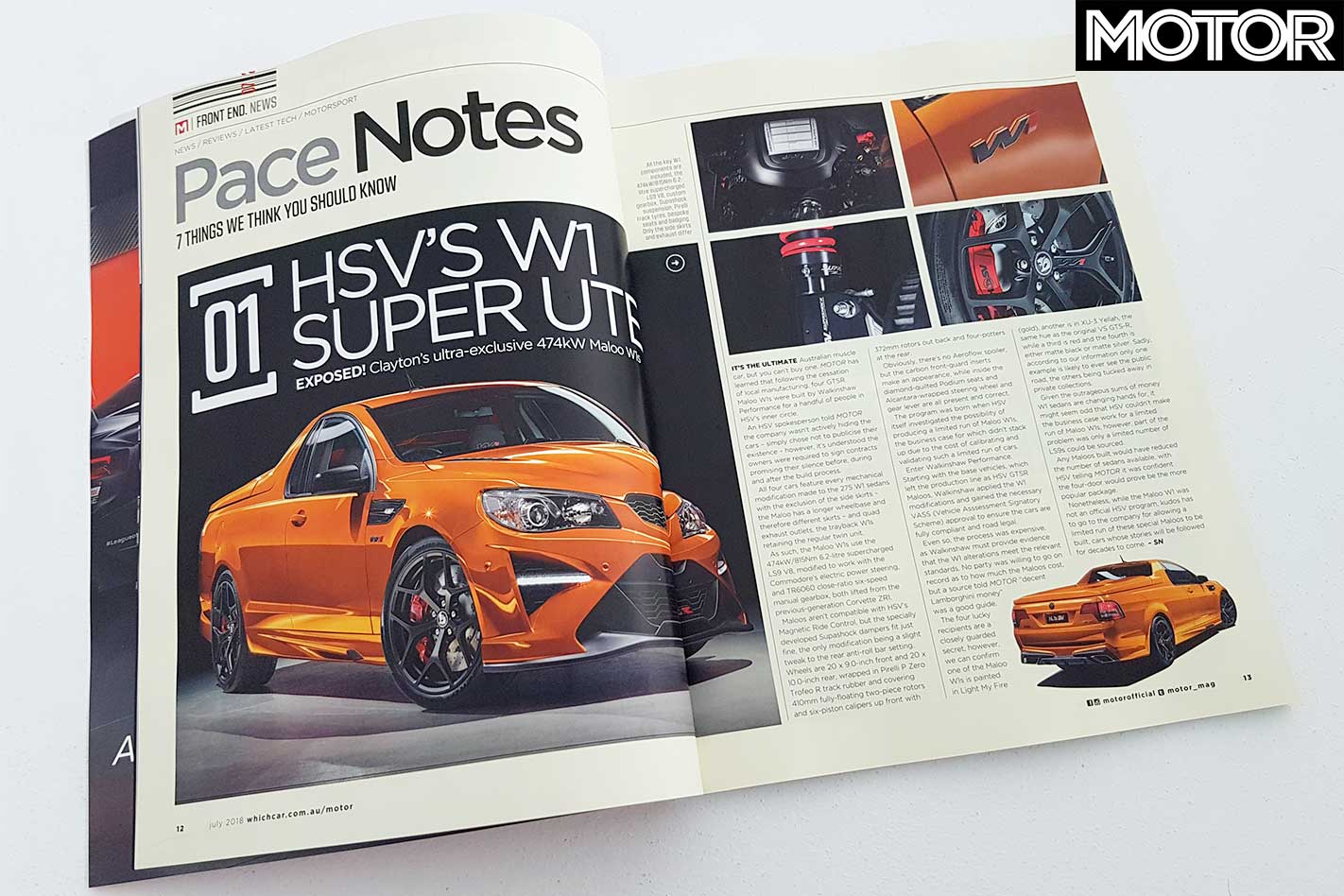
An insight into HSV’s super-rare GTSR W1 ute with 474kw of power.
Plus, Porsche 911 Speedster concept makes headlines for 70th anniversary.
First drive in the Ferrari Pista
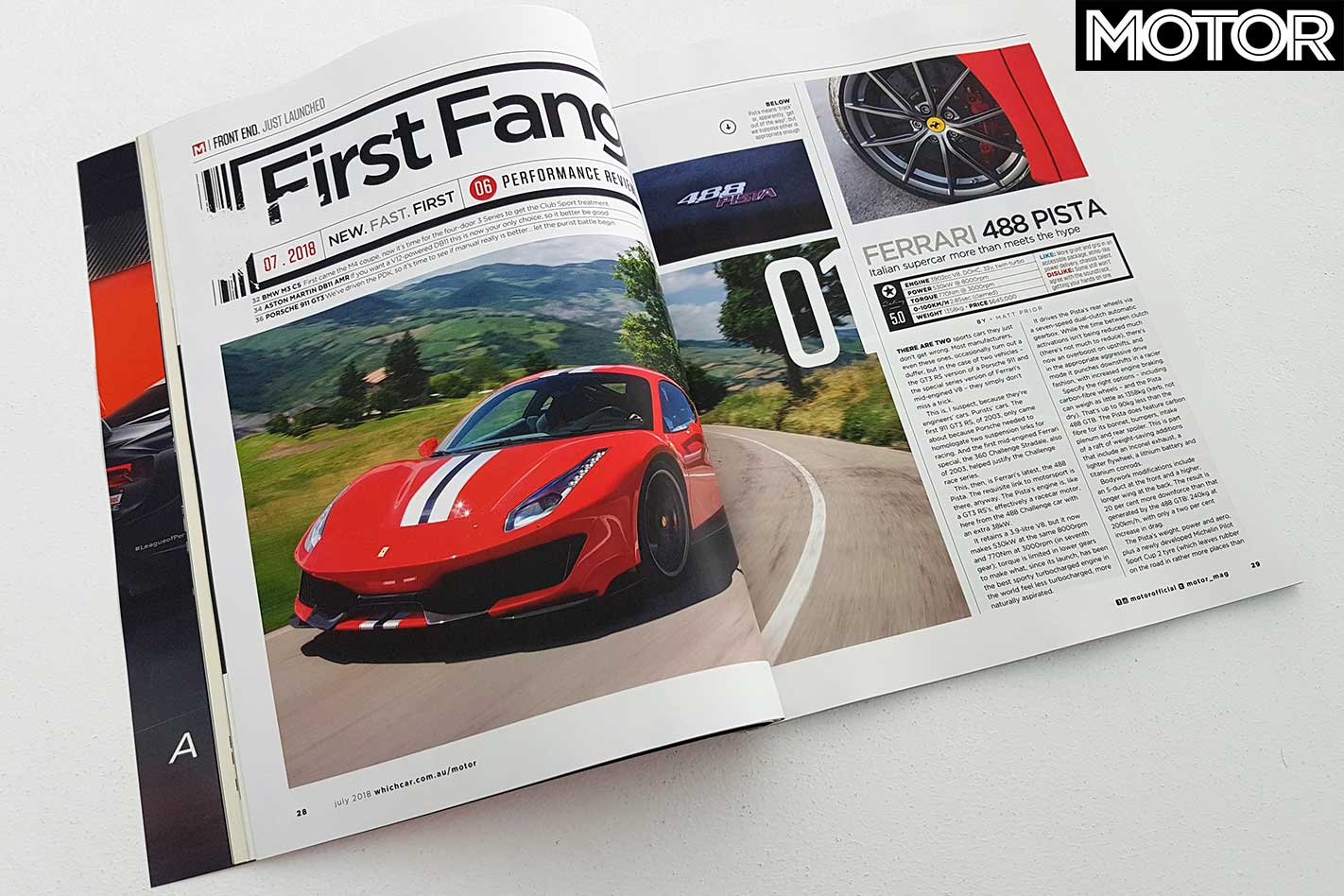
Ferrari 488 with track-focused bits (and more power!) hits European roads for a proper review.
The definitive 2018 Mustang review

More power, more tech, and more bark for Australia’s favourite American muscle car.
Porsche GT2 RS thrashed on track
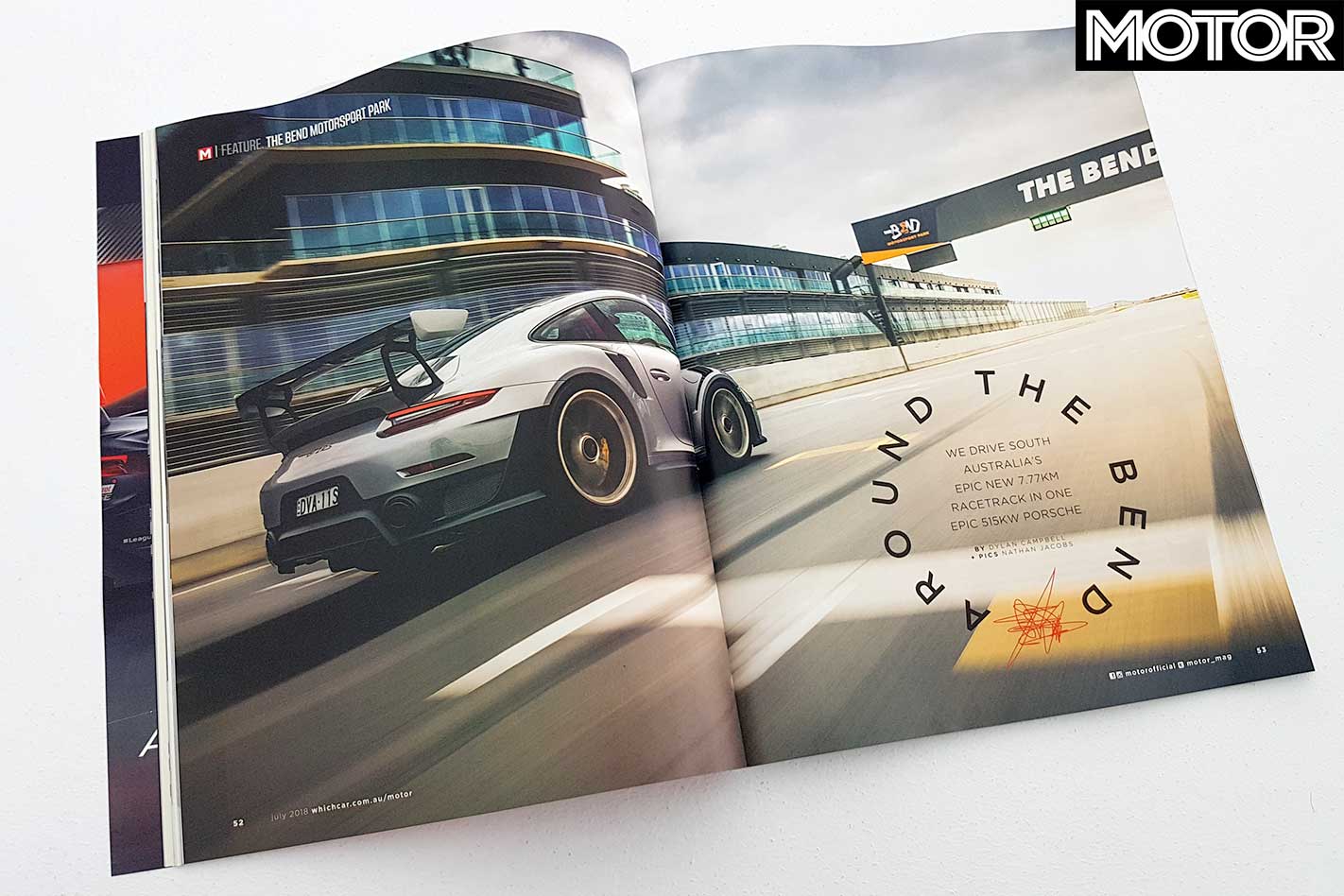
Stuttgart’s fastest 911 sets production lap record at Australia’s new circuit, The Bend.
Merc-AMG GLC63 S Coupe reviewed
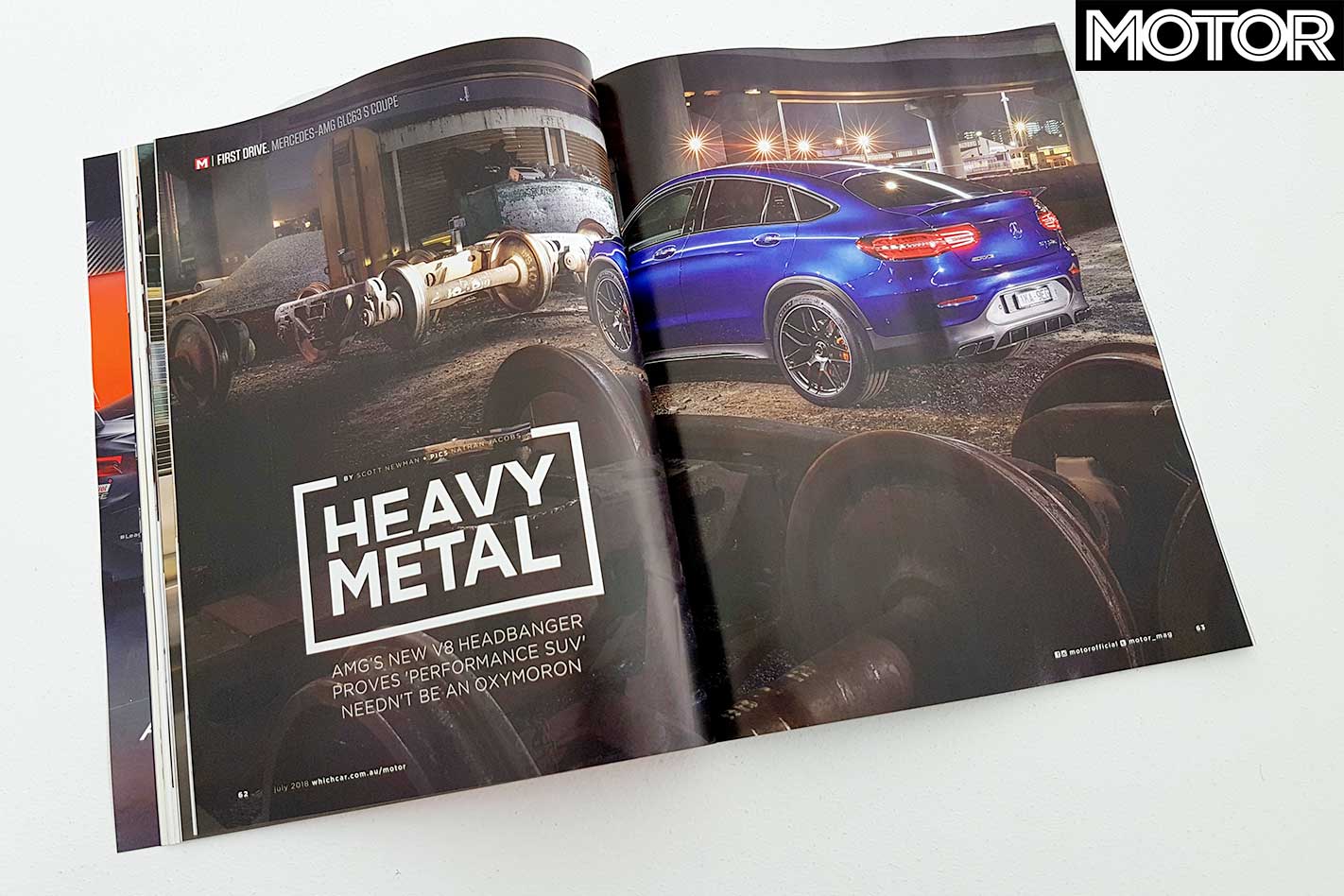
AMG’s beastly SUV comes with us on a spirited night drive through the city streets.
Bang For Your Bucks 2018
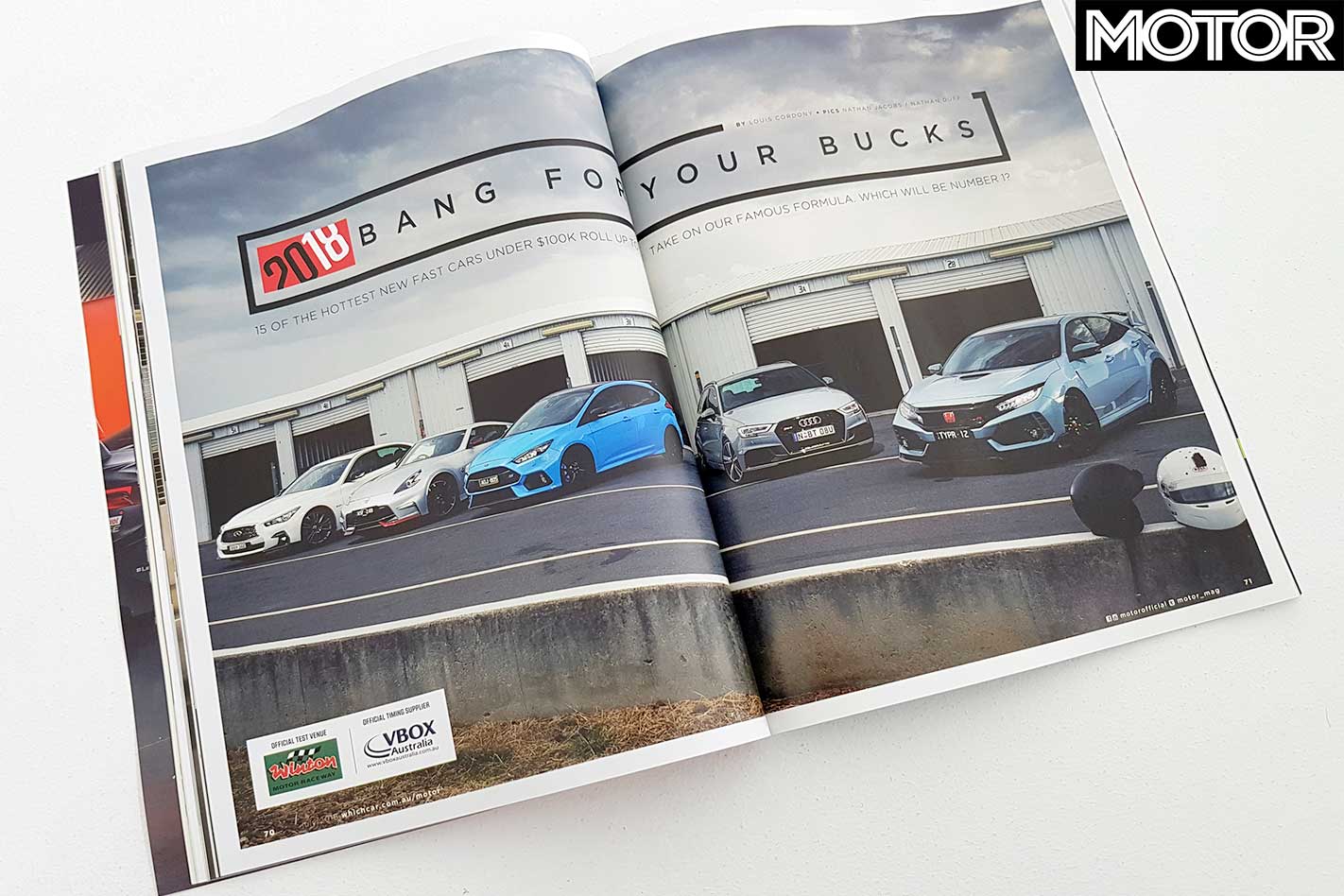
We pit 15 performance cars against each other in the ultimate bargain battle.
Cool Kit
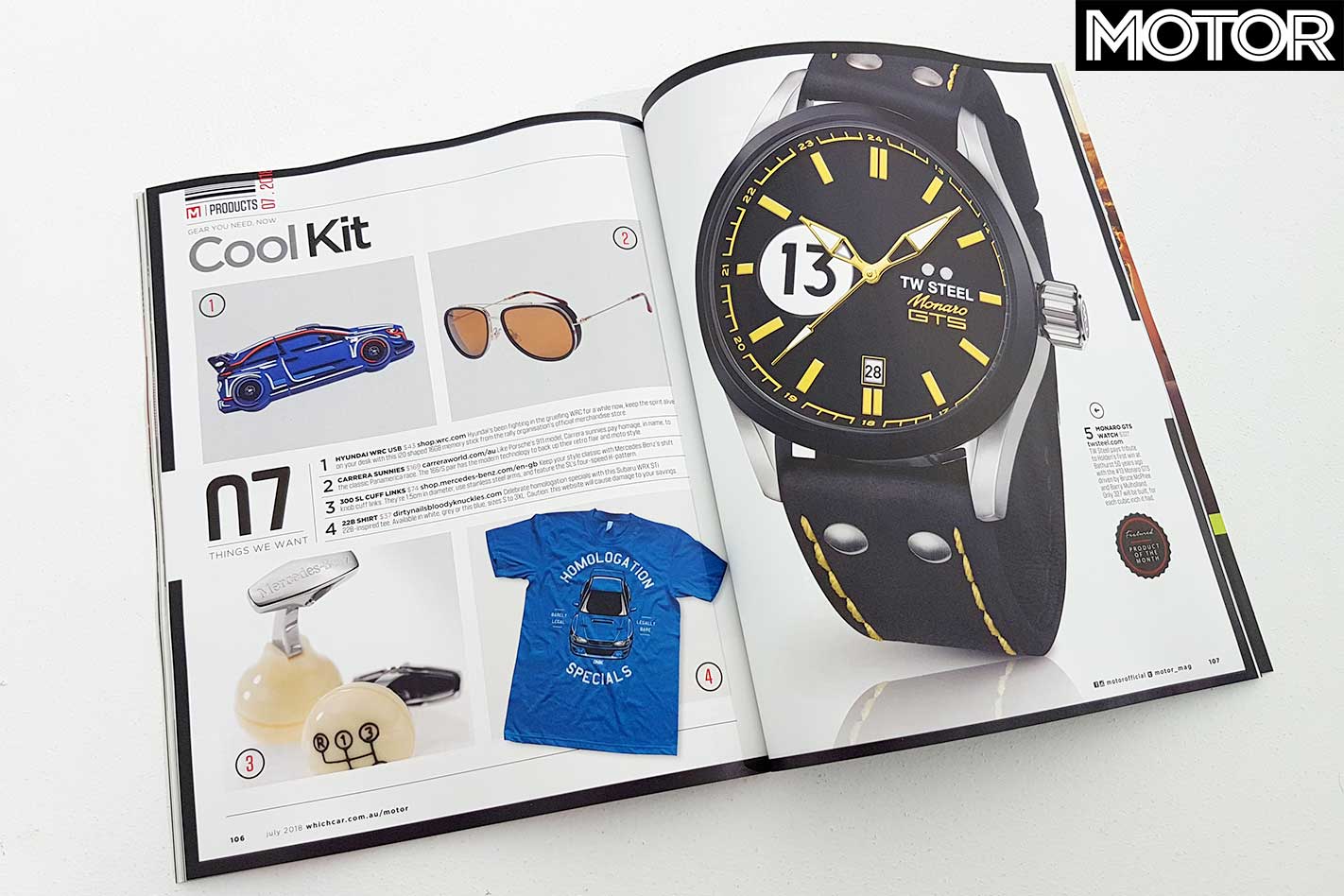
The coolest, must-have auto-related goodies that we want this month.
MOTOR Garage
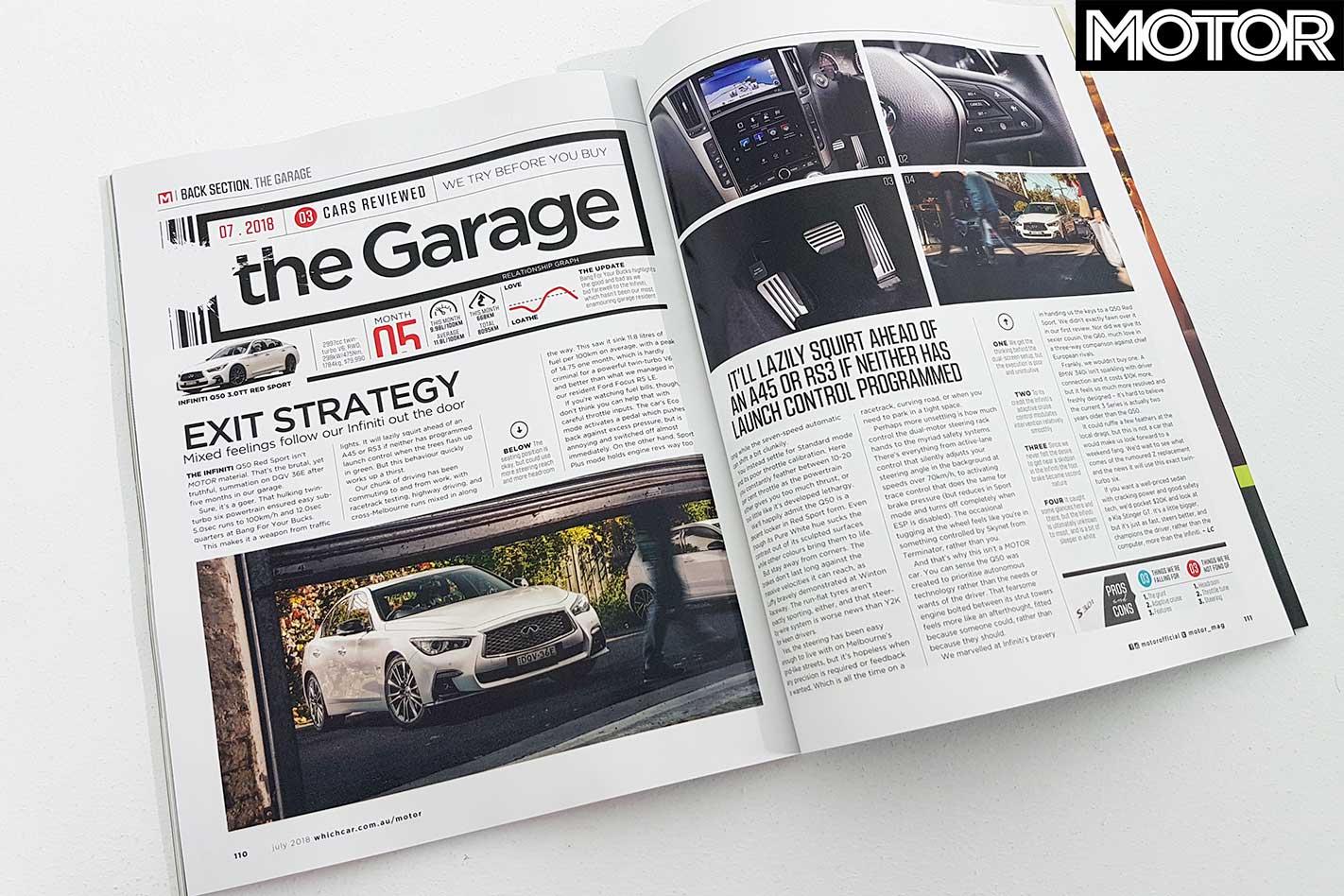
We say goodbye to the Infiniti Q50 Red Sport and the Ford Focus RS LE, our two long-termer test cars.
Tech talk
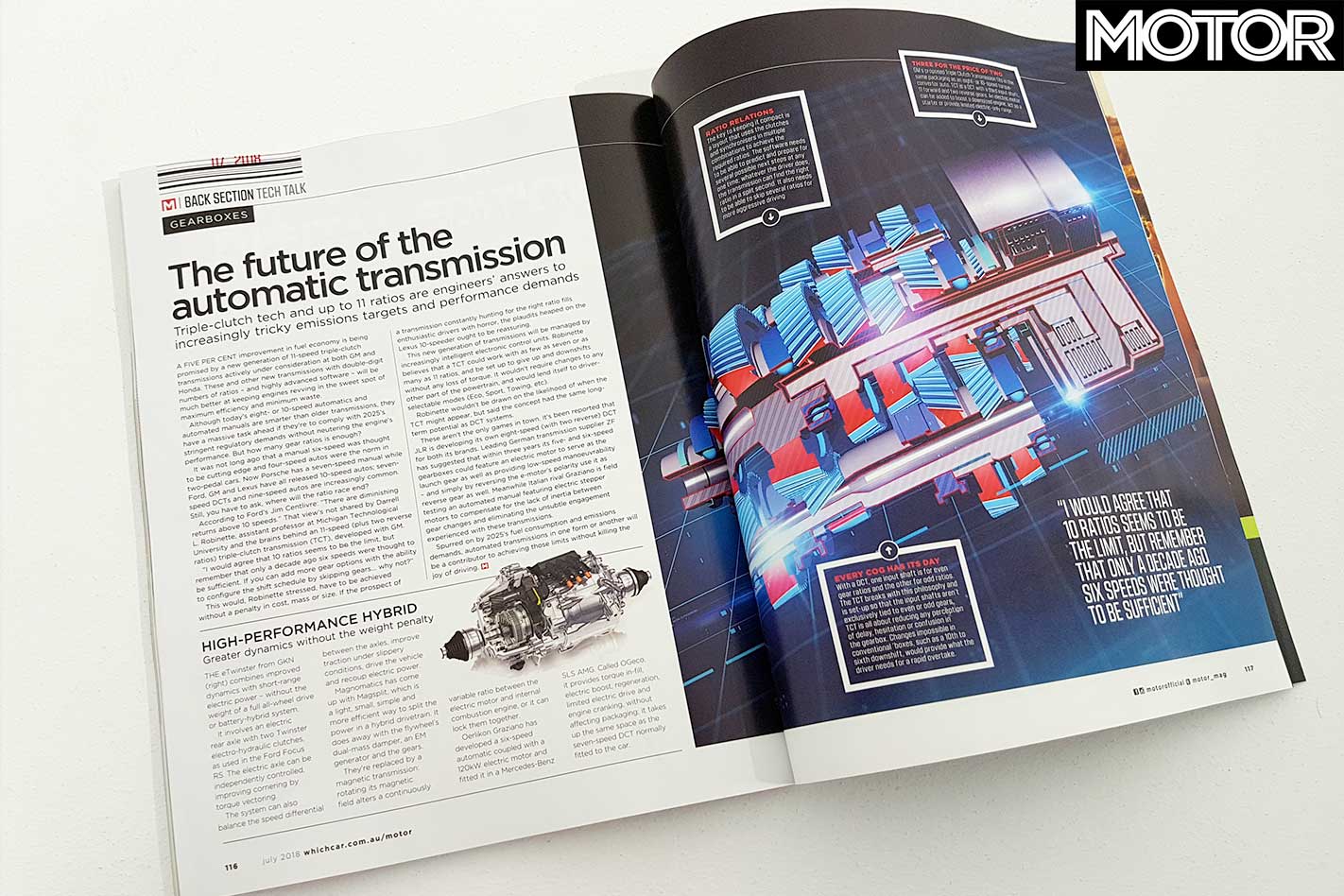
The future of automatic gearboxes discussed in detail. Will we say goodbye altogether to the manual gearbox?
Plus more! Columns, New vs Used, our buyer’s guide and more excellent motoring content is ready to be enjoyed by enthusiasts all around the country, and the world.
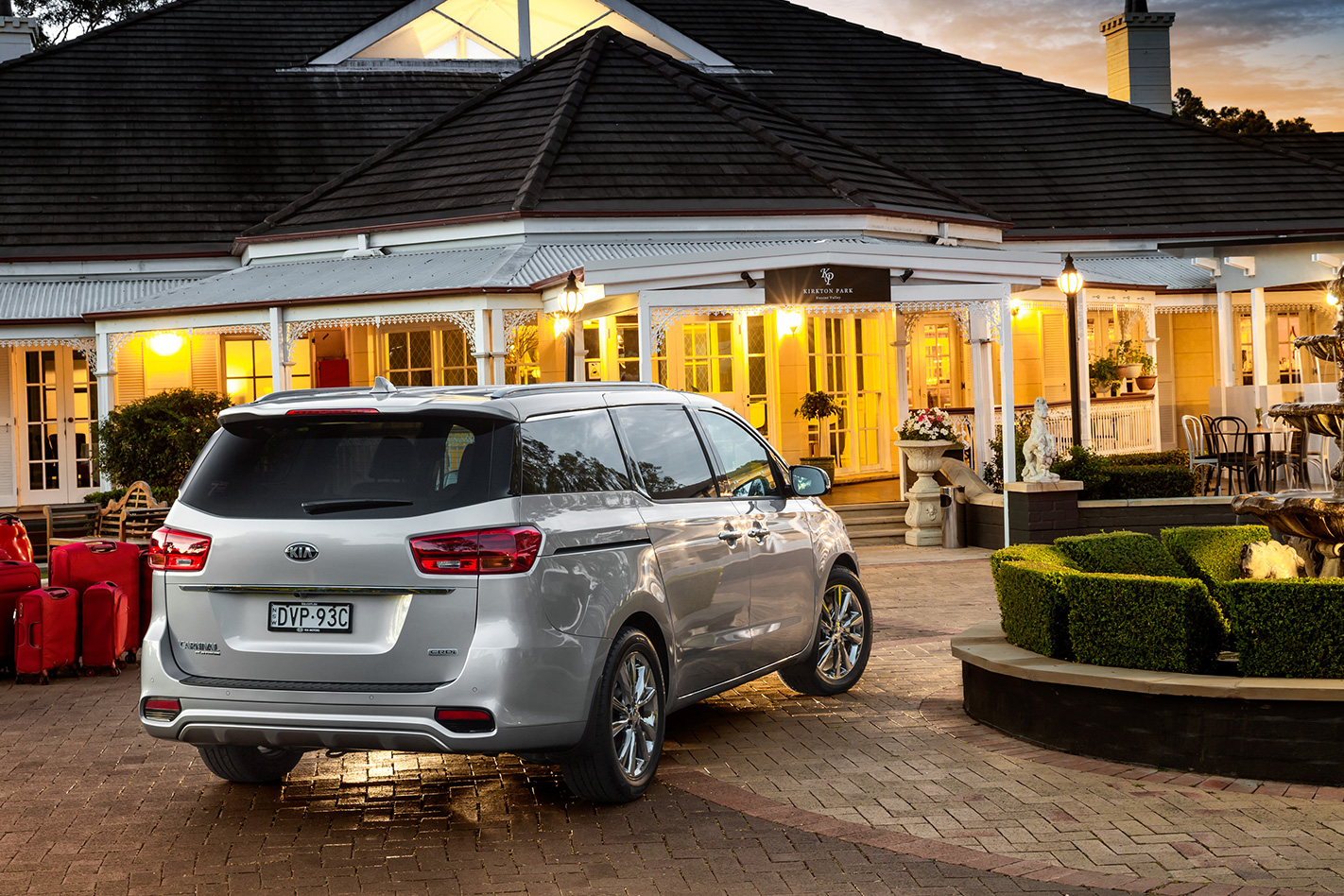
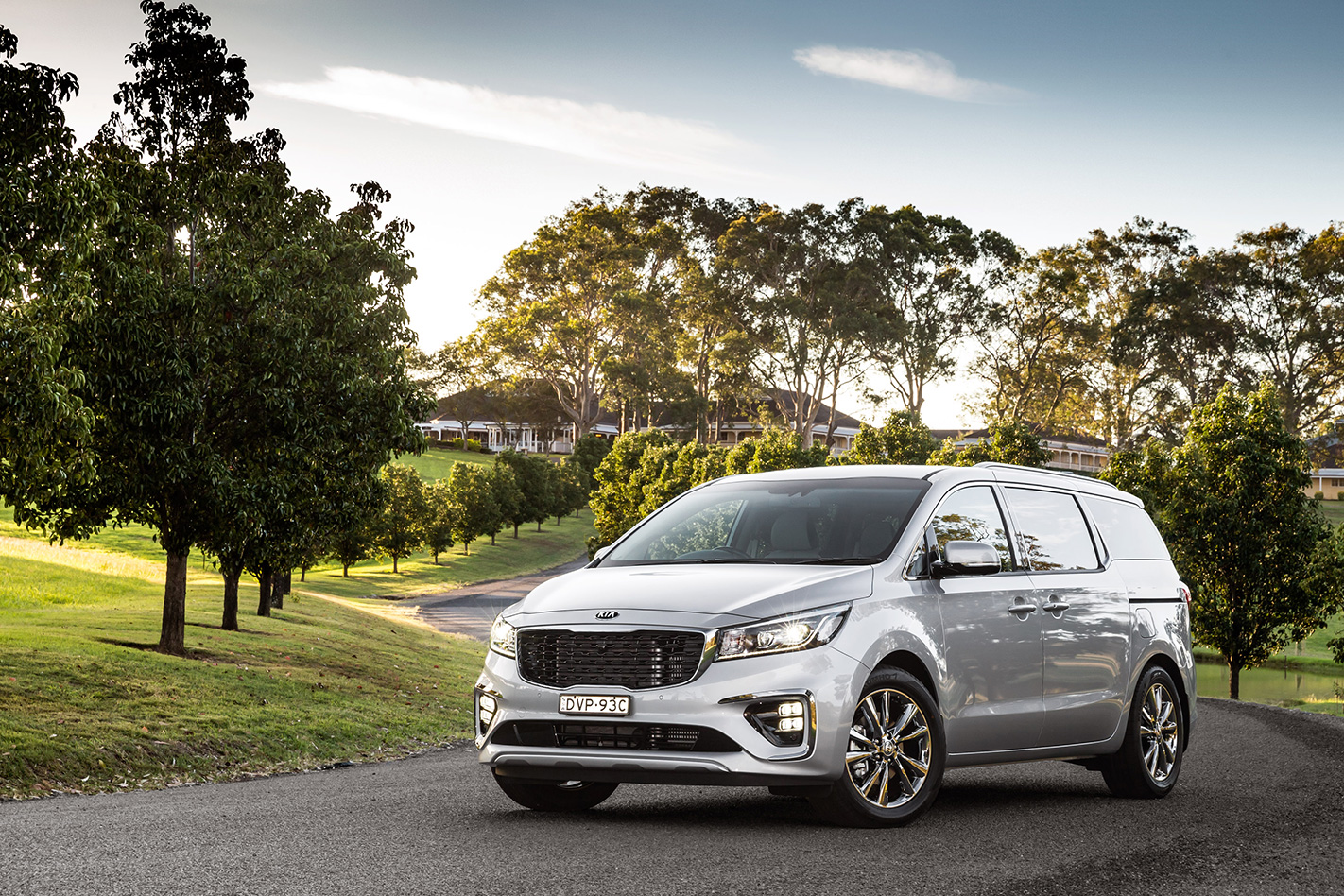
At $62,790, the Kia Carnival is the most expensive car you can buy in the Korean car maker’s Australian line-up and reaches well into luxury car territory.
TELL ME ABOUT THIS CAR
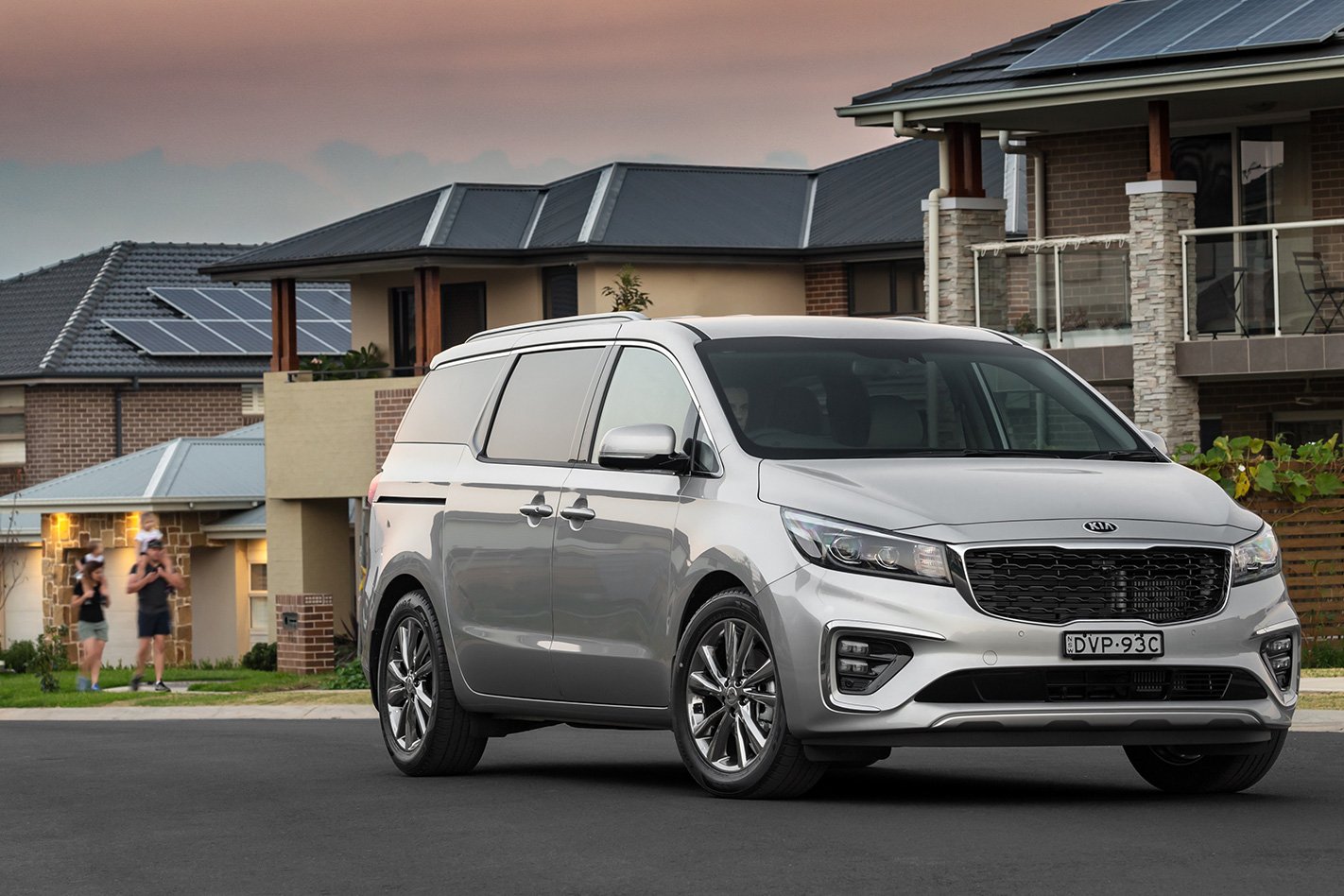
The diesel-engined Platinum sits right at the top of the Carnival people mover’s eight-variant line-up. It’s something of a halo model for the Australian Open sponsor; visit Melbourne in summer and you’ll see a fleet of these, featuring all the bells and whistles, shuffling players to and from the tennis centre.
In its earlier days, the Carnival was a bit dire, beset with hard-wearing, heavily plastic interiors with little visual or textural delight, thrummy and thirsty petrol engines and drive-’em-till-they-break ownership circle.
But this latest version of the Carnival is a new breed of breeder bus, updated earlier this year with a slick, new eight-speed automatic transmission as part of a midlife makeover, revised suspension and even higher levels of city-smart safety. And it’s all under the umbrella of a seven-year warranty.
STRENGTHS
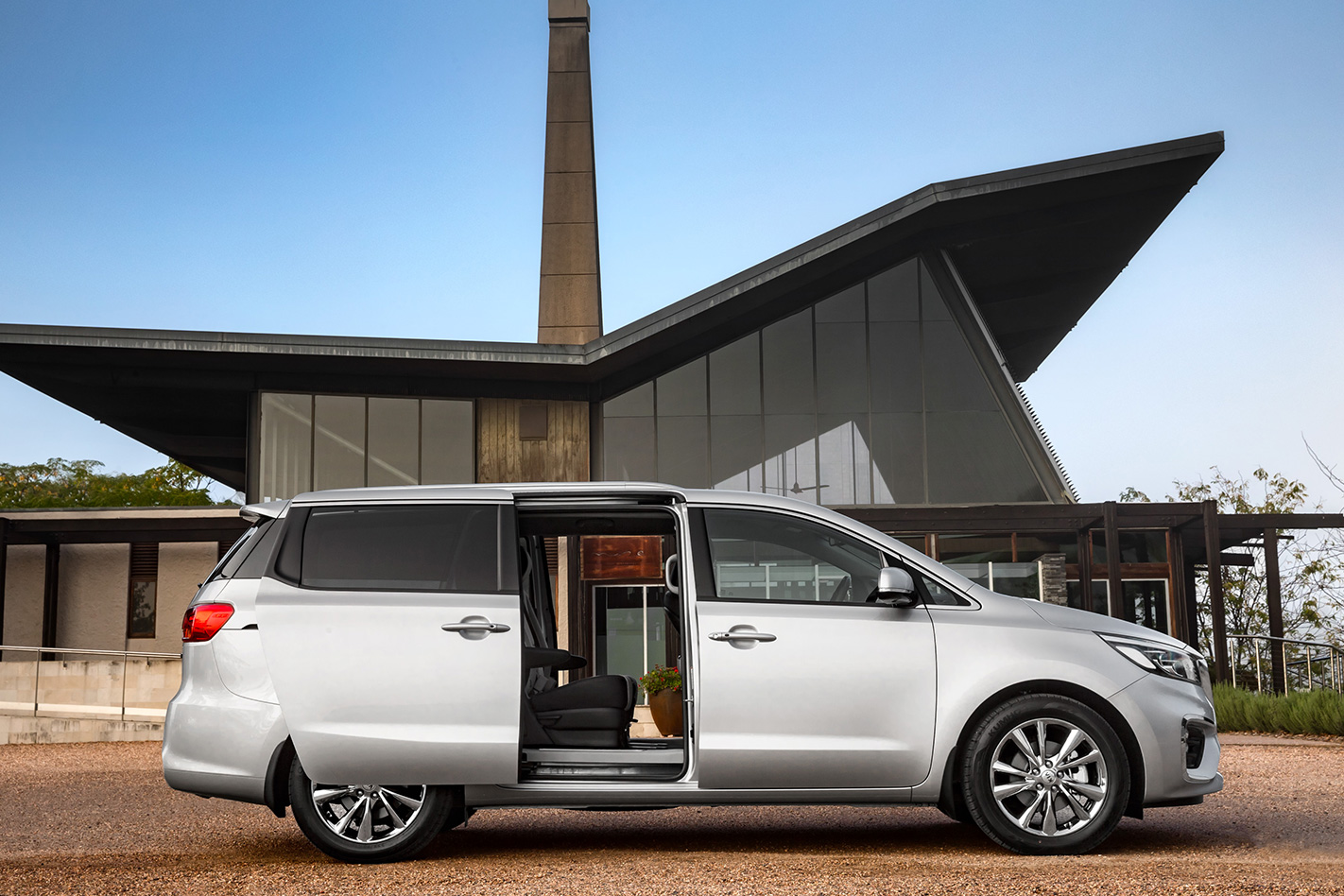
- It’s very well equipped for a Kia. Both sliding side doors and bootlid open electrically, either with the tug of a door handle or via a press of the button on the key fob. Once everyone’s inside, the driver can close everything via roof console-mounted buttons.
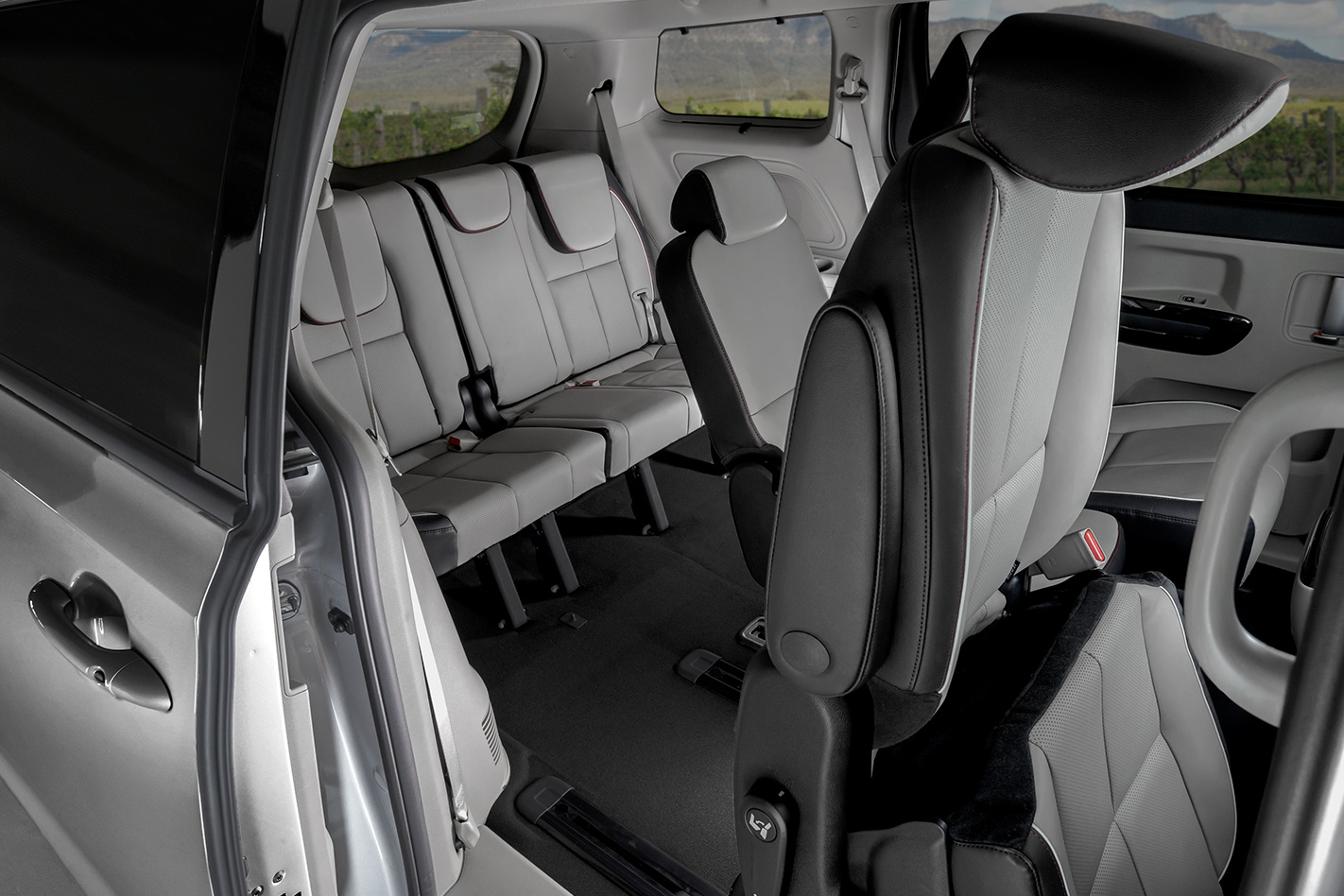
- It’s comfortable. The big, wide leather-trimmed seats in the first two rows, and even the smaller ones in the third row, fold flat into the boot floor are all comfy and supportive, and tuned for long distances. Outboard second-row seats are captain’s chairs with fold-down armrests.
- It can seat six adults in comfort, eight at a pinch. The narrow and firm second-row middle seat, which needs its seatbelt to drop down from the roof, serves better with the backrest flipped forward, revealing a storage tray and a couple of extra cupholders to complement the two on the back of the centre console. The rearmost bench split-folds 60:40
- That warranty. Keep the Carnival for four years as the kids grow up into it and, by the time you go to on-sell it, you’ll still have three years of warranty left to lure in a buyer.
- It’s comfy in the front row. The range-topping Carnival has swathes of leather and pleasant plastics (although the black wood trim on the steering wheel is an ugly contrast to the two-tone brown and beige trim on the dash) including heated and cooled front seats, a heated steering wheel, and a surround-view camera that helps with parking.
- The sliding rear doors are good in a car park. It’s a better alternative to large SUVs that use swinging rear doors that need plenty of room to accommodate less-than-attentive children who don’t think twice about dinging the doors of the car you’ve parked next to. The Carnival’s sliding doors open a huge aperture yet leave plenty of room to squeeze past.
- The second-row seats cleverly squash up on both sides to provide heaps of room to squeeze past into the third row. They can slide forward to yield even more room, and will return to the same place they were in before tumbling forward. Not all people movers do that. Some also only tumble forward on the passenger side.
- It now has an electric parking brake with a hill-hold function that stops it rolling back downhill. The previous foot-operated parking brake was a cheap and cumbersome solution. Now that it has gone, it won’t be missed.
- It’s very safe. Active cruise control that will even bring the big van to a complete stop on the freeway complements a five-star crash rating.
- The diesel engine is now much quieter. The 2.2-litre four-cylinder engine was a bit gruff, growly and whistling in the model this replaces, but it is now much quieter and smoother. It’s economical, too, given that effectively this is a big box that has to push a lot of air out of the way on a freeway run.
- It drives a lot better. The Carnival has dropped its old six-speed auto in exchange for the new eight-speeder fitted to the Kia Stinger sports sedan. It pairs well with the diesel engine, providing fast, smooth changes. Revisions to the suspension have really lifted the Carnival’s game with just a few people on board – we’re yet to experience it with a full book.
- It still has a useable boot, even with the third-row seats up. The space, though, is very deep. Drop the rearmost seats, and you have a surprising amount of real estate to fill.
- The rear seats gain their own climate control settings. Heating and cooling is vented to both back rows via roof-mounted vents.
WEAKNESSES
- The electrically assisted steering is still too highly assisted and overly feel-free. This probably won’t trouble too many buyers, because ease of manoeuvrability is key for such a wide, long vehicle, but you’re never exactly sure what the front wheels are doing.
- The engine doesn’t have a stop-start function. Instead, the range-topping Carnival has an “activeECO” button that makes the throttle doughy and less responsive, and encourages the transmission to chase higher gears. Leaving it in the default mode feels right.
- We’ve criticised the Carnival for having a ride that’s a little too bouncy in the third row of seats. That may have something to do in the fact that the fold-up seats are a lot thinner and firmer to sit on than the more plush seats for other two rows, which isn’t helped by being located above the rear axle.
- There’s only a single USB slot available to the rearmost five seats. Switched-on and power-hungry Gen Zedders will fight to the death over it.
ARE THERE ANY RIVALS I SHOULD CONSIDER?
The Hyundai iMax is basically a moving van with seats, and is a cheap, albeit less safe in the event of a crash, alternative to the Carnival. Other choices include the considerably more expensive Mercedes-Benz V-Class, the Volkswagen Multivan, the petrol-only (and quite thirsty) Toyota Tarago Ultima V6, Honda Odyssey and the very cheap and unproven nine-seat LDV G10, which uses a surprisingly small turbocharged 2.0-litre petrol engine to haul itself along the road.
Despite a complete lack of driver’s seat, a Roborace autonomous racing car will complete a run up the driveway at the 2018 Goodwood Festival of Speed.
Powered by four 135kW electric motors and flexing a total system output of 540kW, the Roborace car uses an artificial intelligence driver algorithm for guidance, with an NVIDIA Drive PX 2 computer processing data from its vast suite of sensors.
Weighing in at 1350kg, the autonomous racer uses LiDAR, radar, GPS, ultrasonic proximity sensors, as well as conventional cameras to ‘see’ its surroundings, and build a virtual map of the course.
“We are excited that the Duke of Richmond (the founder of the Festival of Speed) has invited us to make history at Goodwood as we attempt the first ever fully – and truly – autonomous uphill climb using only artificial intelligence,” said Lucas di Grassi, Roborace CEO and Audi Formula E race driver.
The Goodwood hillclimb poses a unique challenge for the Roborace car, due to the driveway’s narrow width, complex geometry, and overhanging trees in the latter-half of the 1.8-kilometre course.
A company called Arrival is responsible for developing the tech which guides Roborace’s autonomous racer.
“Turns and hills with a great deal of tree coverage mean you can’t rely on GPS/RTK signal for localisation,” said ARRIVAL’s chief of software and AI Sergey Malygin.
“Use of all advanced sensors, including LiDARs and cameras with deep learning-based computer vision methods are needed to perform well at this course.”
The car used for the run will be one of Roborace’s truly driverless autonomous cars, not one of the a LMP3-based ‘Devbots’ that can accommodate a human driver.
This year’s event is the 25th anniversary of the very first Festival of Speed, and will be held on July 12-15.
