
The Ford Escape is set for another update that will bring a new sporty-looking ST-Line, and autonomous emergency braking as standard across the range.
Due to arrive in September – less than two years after Ford dropped the Kuga badge in favour of the more global name as part of a major facelift – the updated Escape will debut the ST-Line badge to Australia, bringing bold athletic styling to the mid-sized SUV.
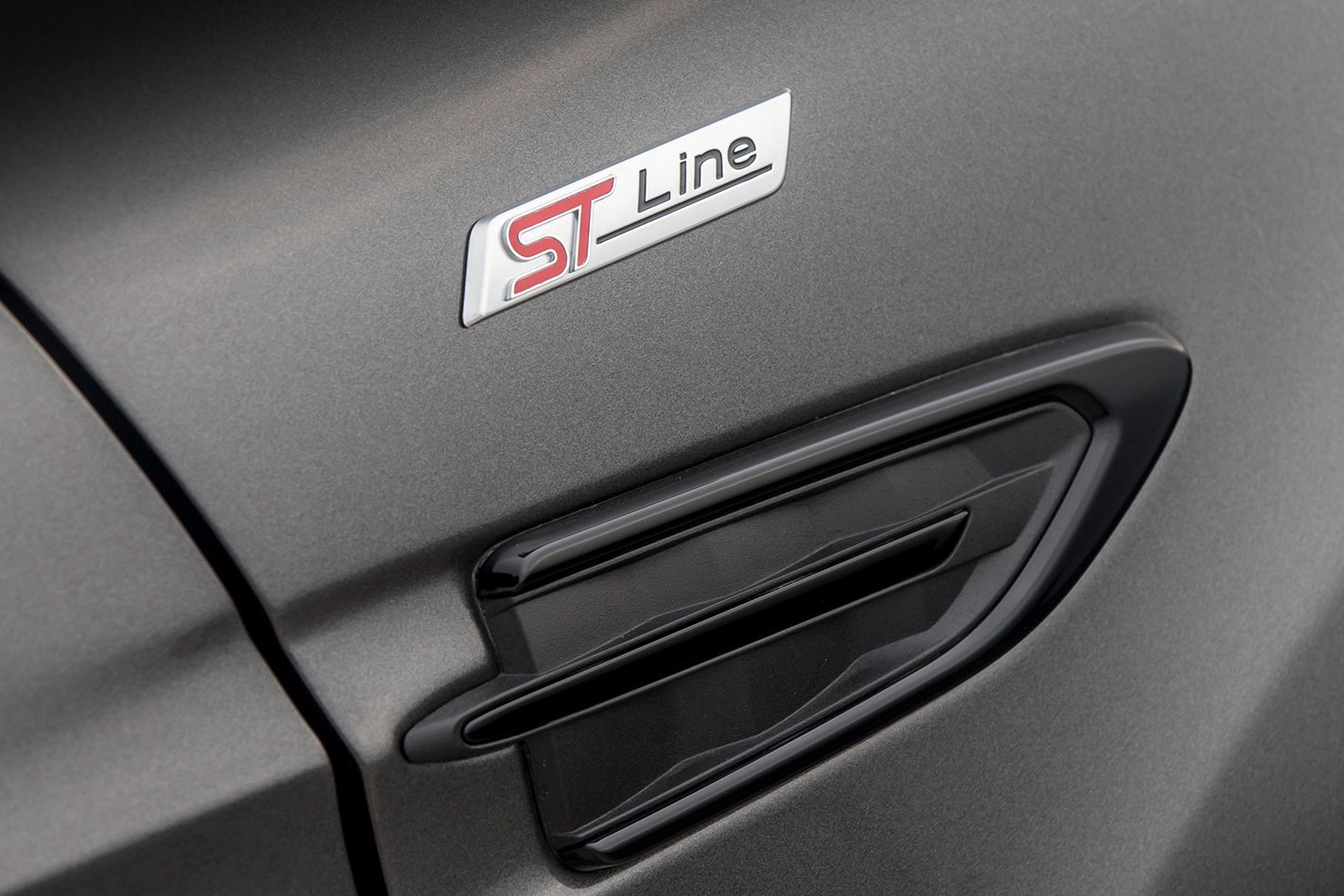
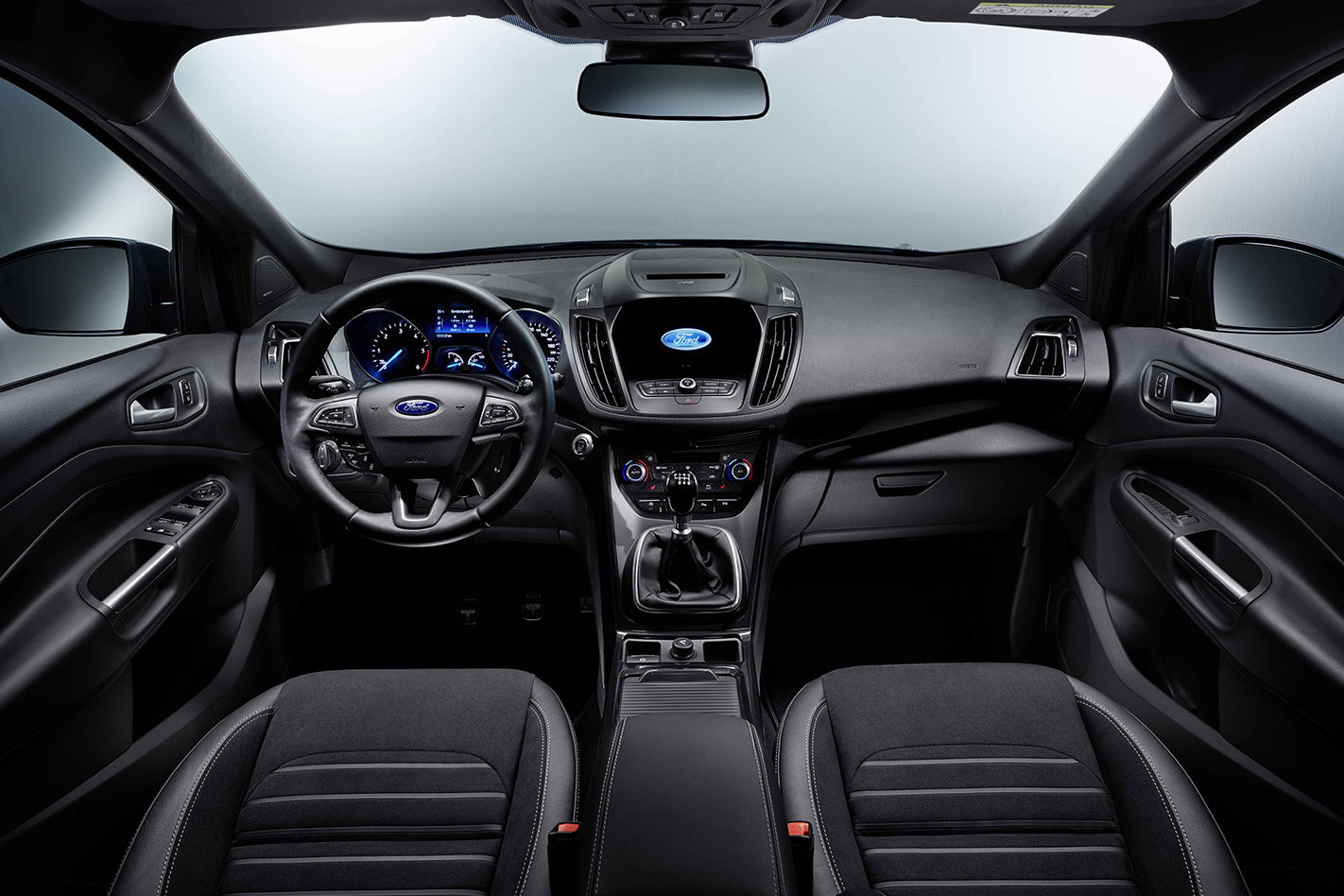
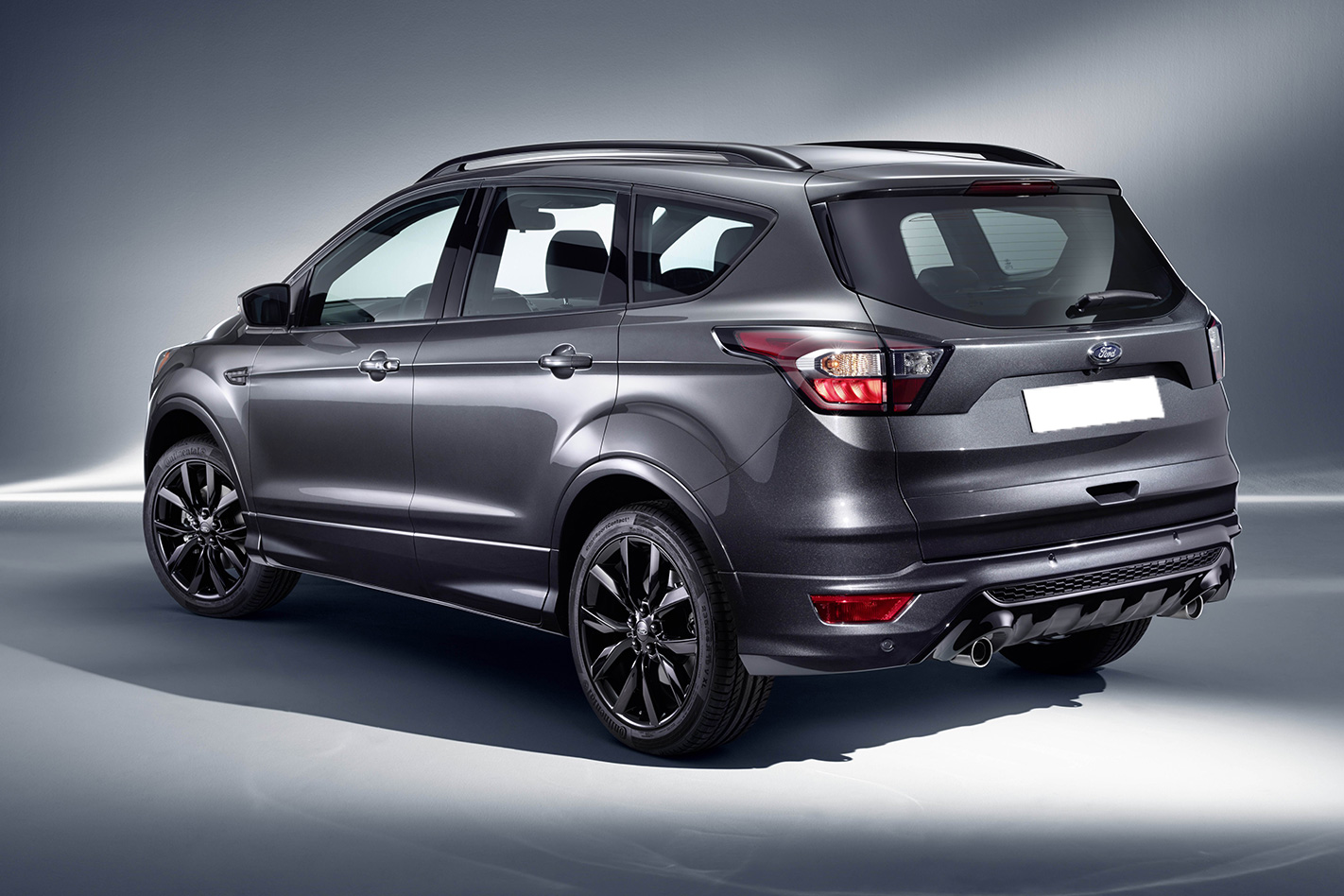
Visual changes include unique 18-inch Absolute Black alloy wheels that colour-match the grille, fog-lamp surrounds, roof rails and rear valence to give the Escape a bit more visual aggro. The interior is similarly styled with leather-trim sports seats in contrasting red stitching, ST-Line logos, stainless steel pedals and scuff plates, and ST-Line floor mats.
Beyond the look-at-me enhancements, the Escape ST-Line will offer sharper driving dynamics including a sportier chassis tune and optimised suspension that lowers ride height by 10mm, re-tuned steering, and thicker anti-roll bars for improved body control.
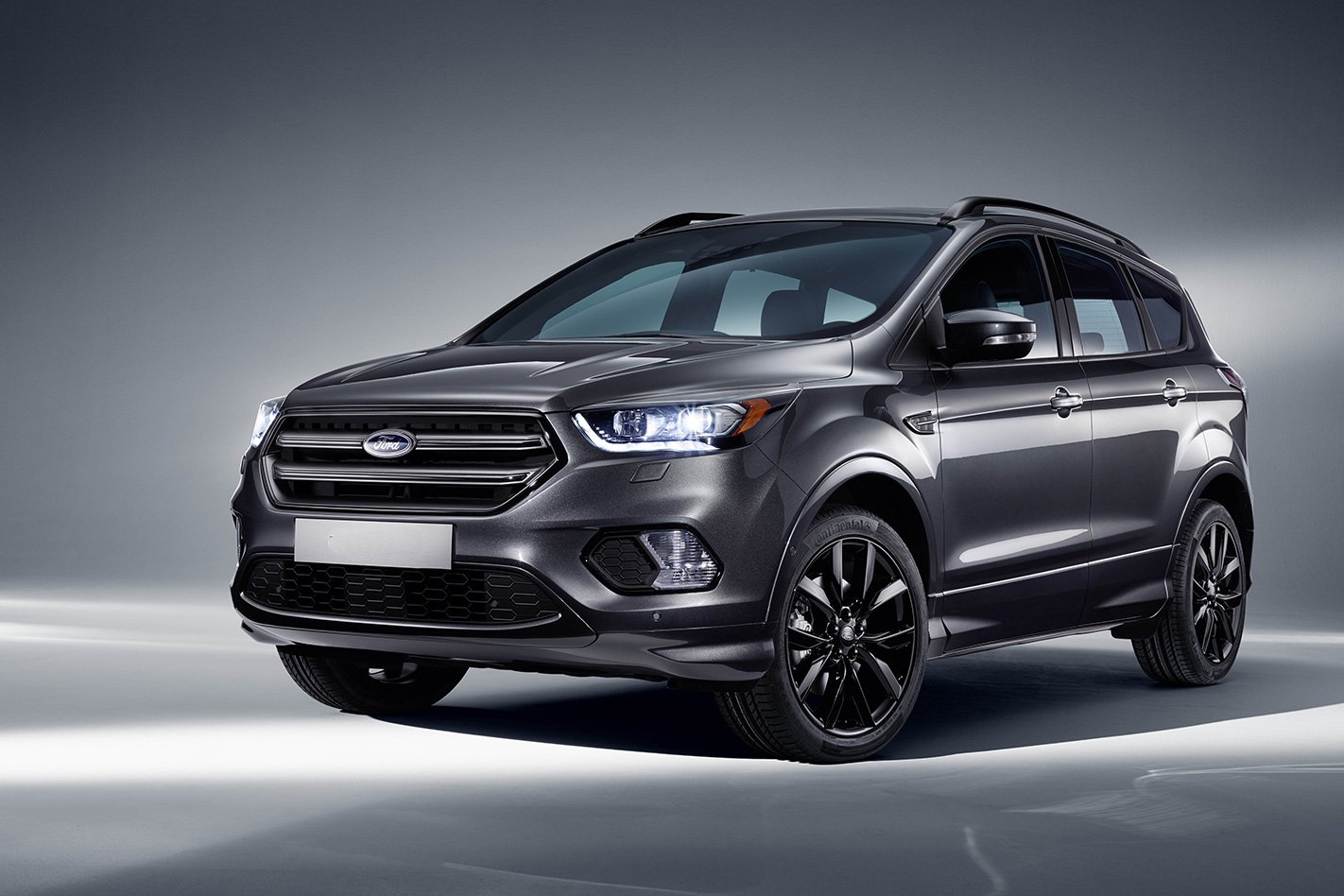
Power for the Holden Equinox LTZ-fighting Escape ST-Line will come from the same 178kW/345Nm 2.0-litre turbocharged four-cylinder engine as found in the Trend AWD and range-topping Titanium, and driving all four wheels via a six-speed automatic.
Priced from $39,990, the ST-Line will bridge the gap between the Trend and Titanium variants, and will come equipped with smart keyless entry, blind spot warning, rear cross-traffic alert and autonomous emergency braking.
As optional $800 ST-Line Technology Pack adds adaptive cruise control, forward collision alert, a tyre pressure monitoring system and lane keeping assist with lane departure warning.
Elsewhere in the Escape range, autonomous emergency braking, which Ford calls Advanced Active City Stop, will become standard kit in every variant rather than as part of the optional technology pack. This will bring the technology to the entry-level Ambiente for the first time, with that spec also receiving 17-inch alloys instead of the steel wheels.
The changes see the Ford Escape Ambiente’s entry-level pricing rise by $500 to $28,990.
Ford offers a five-year unlimited kilometre warranty on all its models, including the Escape.
The Escape ST-Line goes on sale with the updated Ford Escape line-up in September 2018.
2018 Ford Escape pricing
Escape Ambiente 1.5L petrol FWD 6MT – $28,990 Escape Ambiente 1.5L petrol FWD 6AT – $30,490 Escape Ambiente 1.5L petrol AWD 6AT – $33,490 Escape Trend 1.5L petrol FWD 6AT – $33,490 Escape Trend 1.5L petrol AWD 6AT – $36,490 Escape Trend 2.0L diesel AWD 6AT – $38,990 Escape ST-Line 2.0L petrol AWD 6AT – $39,990 Escape Titanium 2.0L petrol AWD 6AT – $45,480 Escape Titanium 2.0L diesel AWD 6AT – $48,340
VOLKSWAGEN will pay a €1 billion (AUD$1.55 billion) fine over Dieselgate as part of a settlement struck with the German government, the company has confirmed.
Announcing that the German courts had issued an “administrative order” against the car maker “in the context of the diesel crisis”, VW said it was hit with the maximum penalty under German law of just €5 million, but also had to account for “the disgorgement of economic benefits in the amount of €995 million” – in other words, paying back the profit it reaped from selling vehicles fitted with the emissions-cheating software.
“According to the findings of the investigation carried out by the Braunschweig public prosecutor, monitoring duties had been breached in the powertrain development department in the context of vehicle tests,” Volkswagen said in a statement.
“According to the results obtained by the Braunschweig public prosecutor, they were concurrent causes of 10.7 million vehicles in total with the diesel engines of the types EA288 (Gen3), in the United States and in Canada, and EA 189, world-wide, being advertised, sold to customers, and placed on the market with an impermissible software function in the period from mid-2007 until 2015.”
Volkswagen said it would accept the fine, and would not appeal against the severity of it. “ Volkswagen AG, by doing so, admits its responsibility for the diesel crisis and considers this as a further major step towards the latter being overcome,” it said.
The announcement of the fine – Volkswagen’s global bill for the emissions scandal is now well in excess of US$30 billion (AUD$40 billion) – comes as Germany’s legal system now weighs up levelling similar charges against Daimler, the owner of Mercedes-Benz. Bosch, the components supplier that supplied the engine management software to Volkswagen, and Porsche, which was also scooped up in the Dieselgate scandal, also face potential court action.
Daimler was earlier this week dragged into the Dieselgate scandal after German authorities asked for more than 240,000 Mercedes-Benz badged, diesel engined cars sold in Germany to be brought back into service centres to have similar emissions-cheating software replaced with fresh code. More than 770,000 vehicles across Europe are believed to be using the software.
Meanwhile, Australia’s highest road vehicles authority has confirmed it has launched an investigation into whether the German recall, affecting vehicles including the Mercedes-Benz C-Class passenger car and the GLC-Class SUV, should also be rolled out here.
“The Department of Infrastructure, Regional Development and Cities is engaging with both Mercedes-Benz Australia Pacific and the German Federal Motor Transport Authority to confirm if the road vehicles subject to recall in Europe are supplied to the Australian market, and to determine any appropriate action in the Australian context,” a spokesperson for the department told Wheels.
The Dieselgate scandal has forced Volkswagen to apply software – and in some cases also hardware – fixes for about 100,000 vehicles sold in Australia, across brands including VW, Audi, Porsche and Skoda.
The car maker is also fighting claims that it misled consumers in advertising by including the software-based “defeat devices” that could recognise if a vehicle was being emissions-tested, and switch to a special low-emissions mode.
Volkswagen vehicles affected by the Australian Competition and Consumer Commission’s Federal Court action include diesel engined versions of the following:
Volkswagen’s luxury vehicle offshoot, Audi, is facing similar court action from the consumer watchdog. Vehicles covered in this case include:
Volkswagen has consistently denied it has broken any Australian laws.
In the late 1980s new supercars were springing up at an incredible rate.
Some, like the Ferrari F40 and Porsche 959, were a success; others, like the Cizeta V16 and Yamaha OX99-11, were a total flop.Arguably the most interesting, however, were cars that landed in the middle like the Jaguar XJ220 and Bugatti EB110.
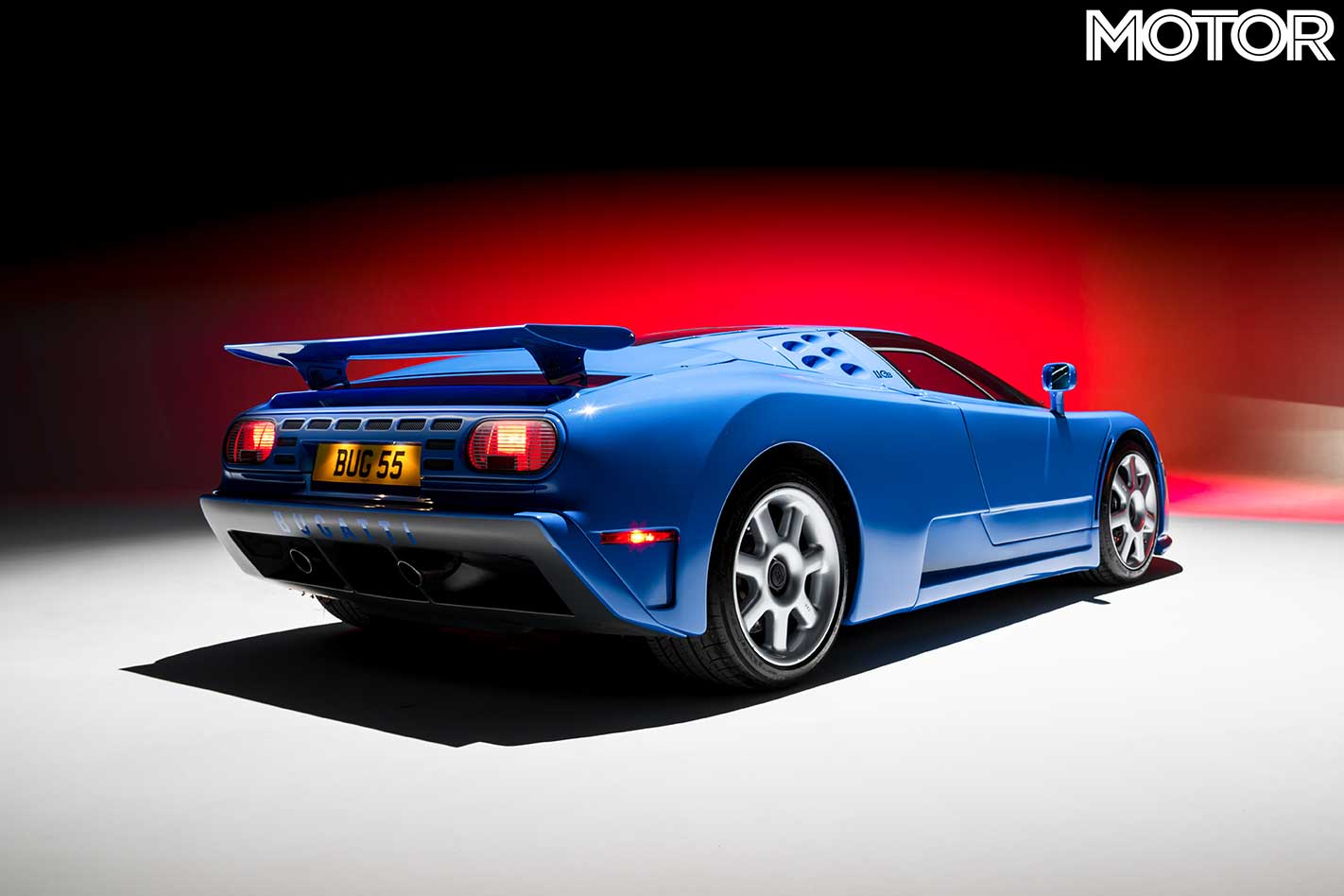
Italian entrepreneur Romano Artioli dreamt of reviving the once great Bugatti brand and in a similar fashion to VW a decade later, he wanted to create the world’s greatest supercar. Some of Italy’s finest engineers and designers were contracted to work on the project and no expense was spared in building a factory and promoting this bold venture.
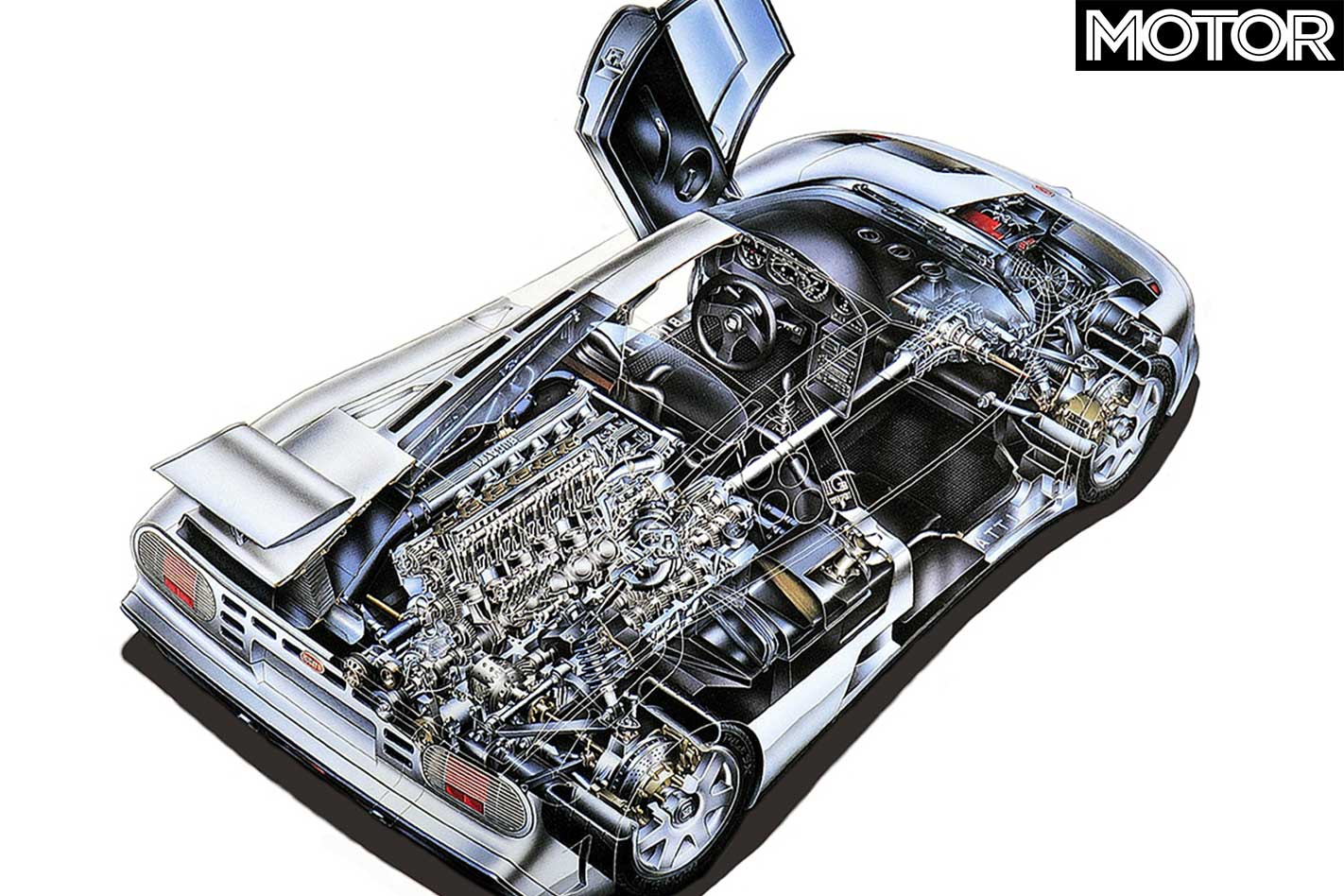
The car itself was radical. An aluminium chassis was ditched in favour of carbon fibre, but there would be all-wheel drive, the latest electronic driver aids and a bespoke V12.
Incredibly oversquare with a 81mm bore and 56.6mm stroke, the 3.5-litre V12 was fed by 60 valves and boosted by four turbochargers. Capable of revving to 8500rpm, it initially produced 412kW/611Nm, which increased to 441kW/637Nm with the introduction of the more focused Superport (SS).
Performance set a new benchmark, test driver Jean Phillipe Vittecoq recording 0-100km/h in 3.46sec, a 400m time of 11.4sec at 200.4km/h and a top speed of 342km/h. Vittecoq would soon best each of these figures with the Ss recording 0-100km/h in 3.26sec, a 10.9sec quarter mile and 351km/h top speed.
The EB110 was launched to the public in Paris on September 14, 1991, the 110th anniversary of the birth of Ettore Bugatti. Media reviews were overwhelming positive, while the sale of a yellow SS to a young Michael Schumacher brought welcome publicity.
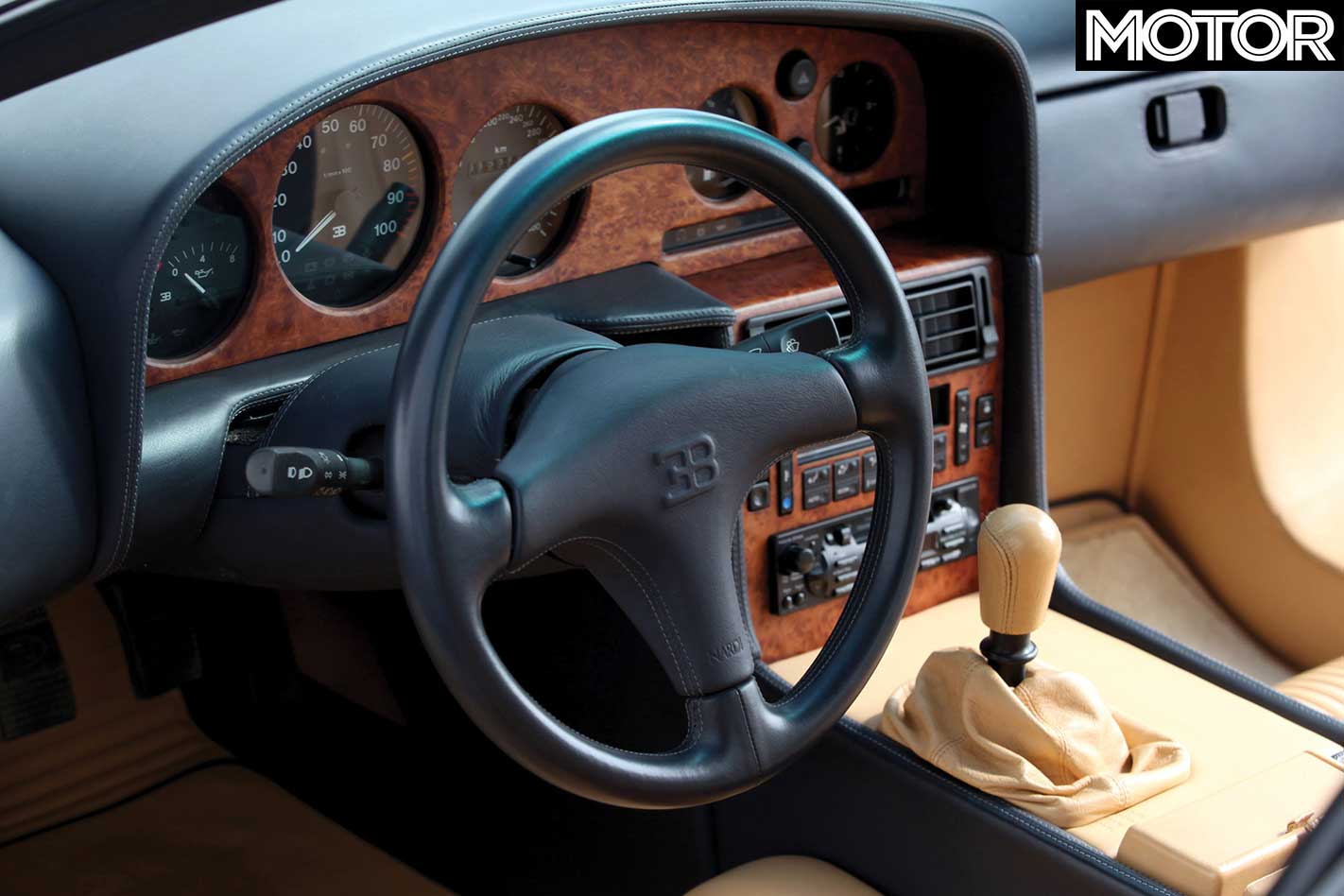
Sadly, financial pressures and parts supply problems – reportedly due to pressure from rival supercar makers – quickly brought the project undone, Bugatti declaring bankruptcy on September 23, 1995.
Carbon Copy
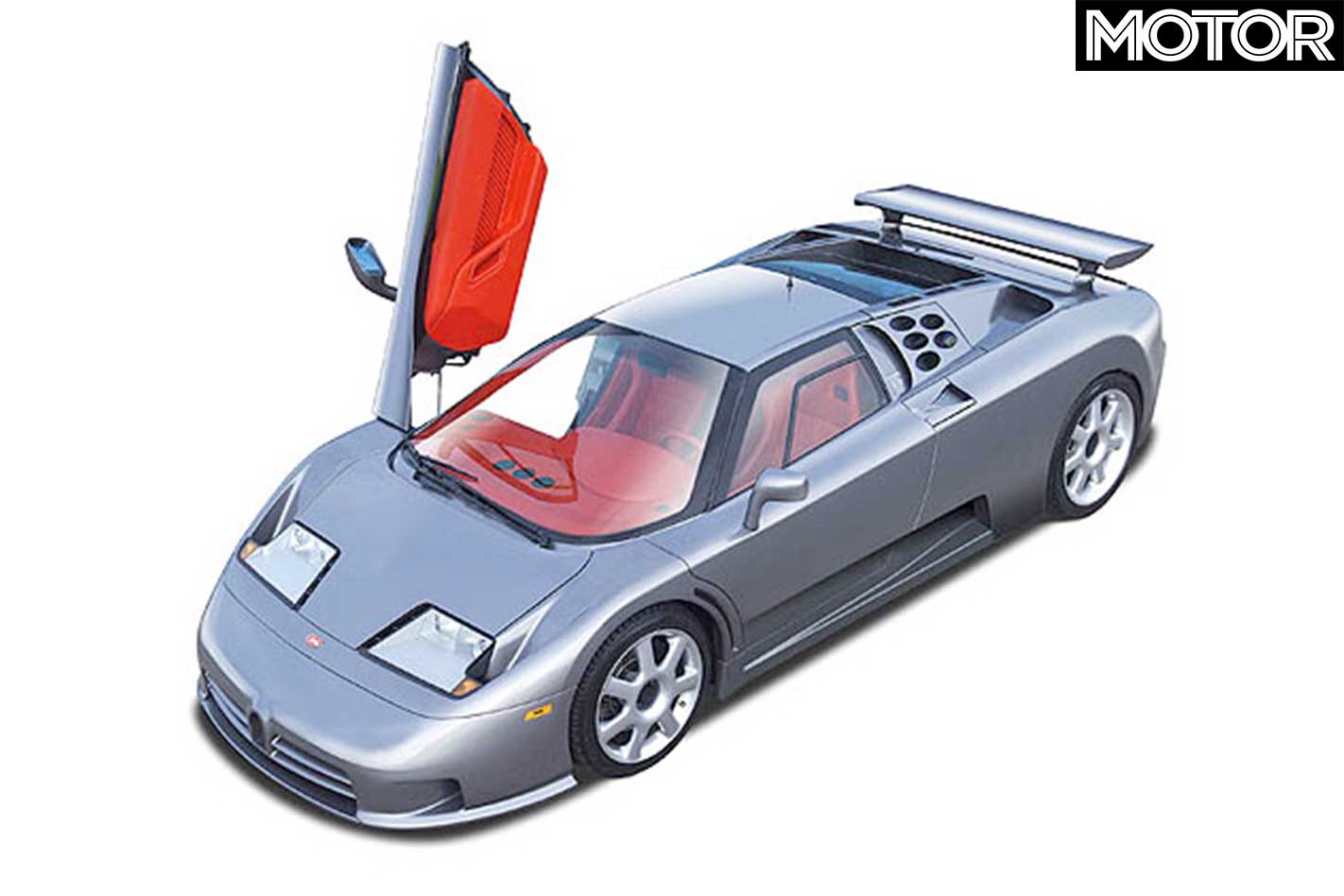
Following Bugatti’s bankruptcy, Dauer bought a number of unfinished chassis, turning five of them into the ‘Dauer EB110S’, with a full carbon body saving 200kg, up to 526kW and an upgraded interior. All in all, it’s believed 136 EB110s were built in total, but then no one really knows!
1991-1995 BUGATTI EB110 SPECS Engine: 3498cc V12, DOHC, 60v, quad-turbo Power: 412kW @ 8000rpm Torque: 611Nm @ 3750rpm 0-100km/h: 3.46sec (claimed) Price: AUD$950,000 (1994)
Mazda’s brand-new CX-8 three-row SUV will arrive in July priced from $42,490.
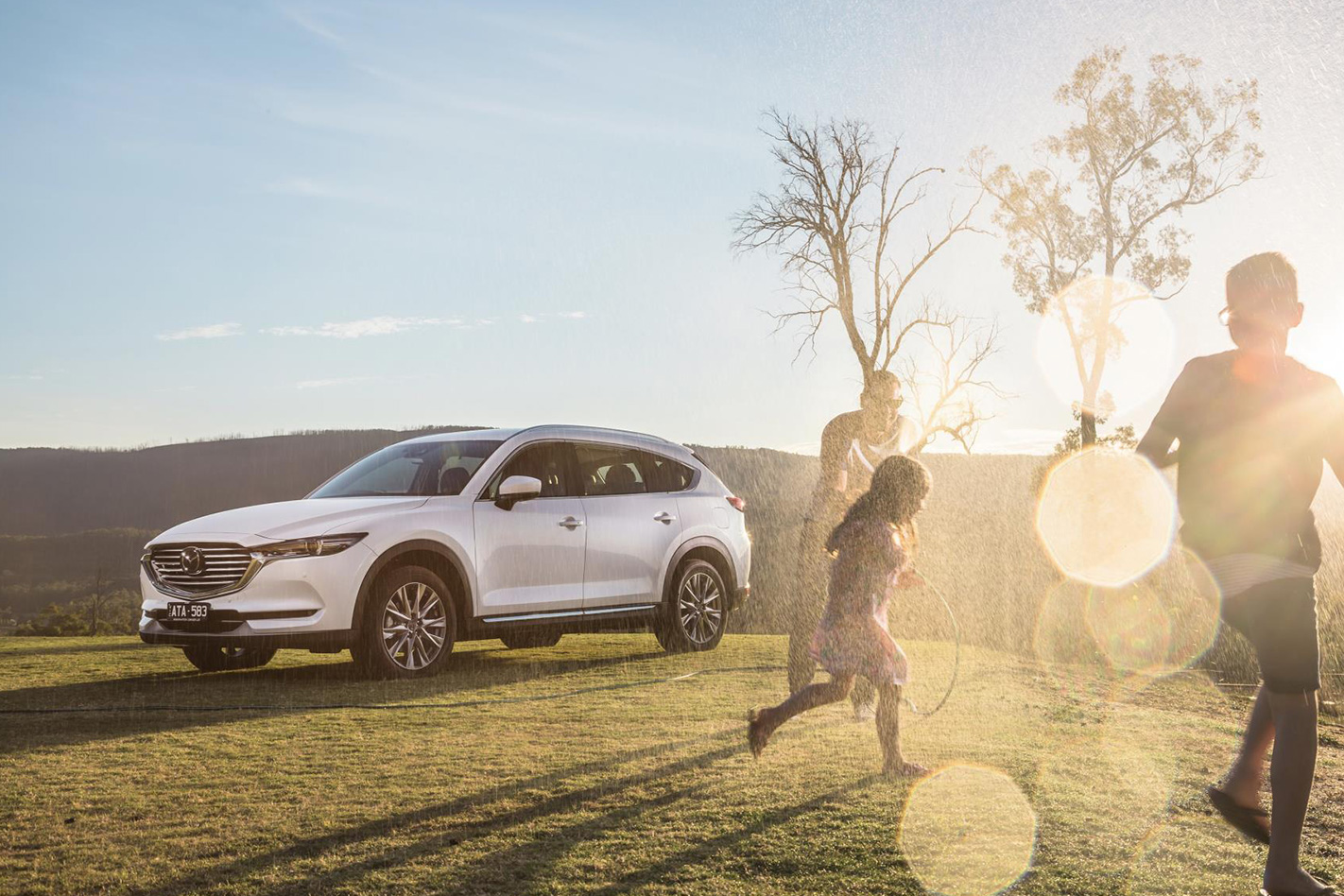
Bridging the gap between the CX-5 and CX-9, the fastback-styled CX-8 will be an all-diesel affair with three variants; the Sport FWD, Sport AWD, and the range-topping Asaki AWD.
Each is powered by the 140kW/450Nm 2.2-litre SKYACTIV-D twin-turbo diesel found in the new Mazda 6 and will feature a wide range of the Japanese brand’s ACTIVSENSE safety technologies as standard, including autonomous emergency braking.
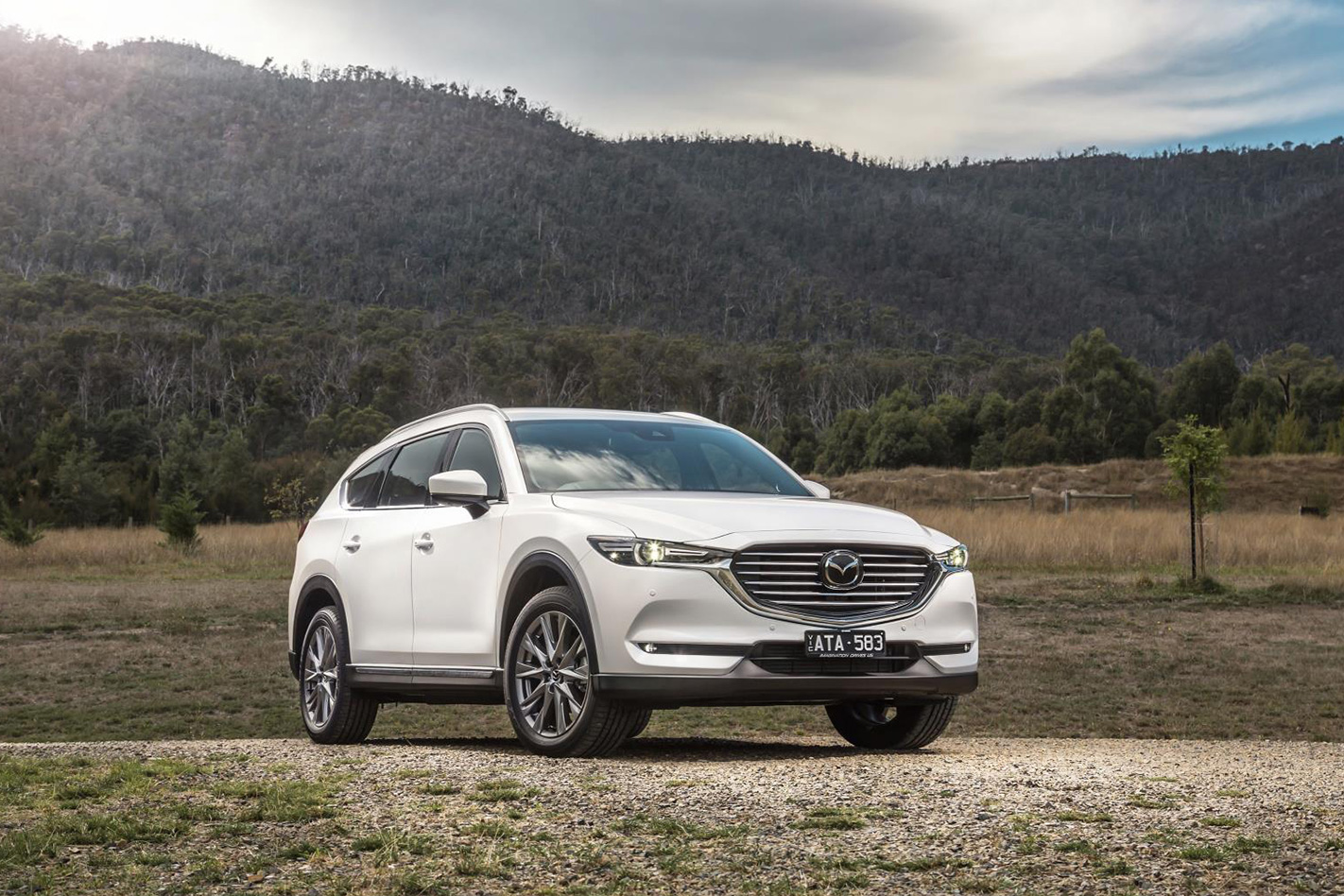
Built on the CX-5’s platform, the CX-8 was only meant to be available in Japan, where the CX-9 isn’t sold, but Mazda Australia pushed hard to bring it Down Under because of its potential to meet growing demand for seven-seat diesel-engined SUVs – something the bigger 2.5-litre turbo petrol-only CX-9 can’t offer.
The CX-8 Sport FWD is $1600 cheaper than the entry-level CX-9 Sport FWD. That price gap might seem paltry, but it’s worth bearing in mind that Mazda’s diesel powertrains attract a $3000 premium. The massive $15K price bump between the Sport and Asaki model is due to omission more than anything. There’s currently no imported equivalent to the CX-9’s mid-grade GT trim in the CX-8 portfolio. That may well change as supply frees up.
The CX-8 features a more sporty suspension tune than the others and gains beefier brakes, with 432mm ventilated discs up front and a larger master cylinder helping to improve stopping performance.
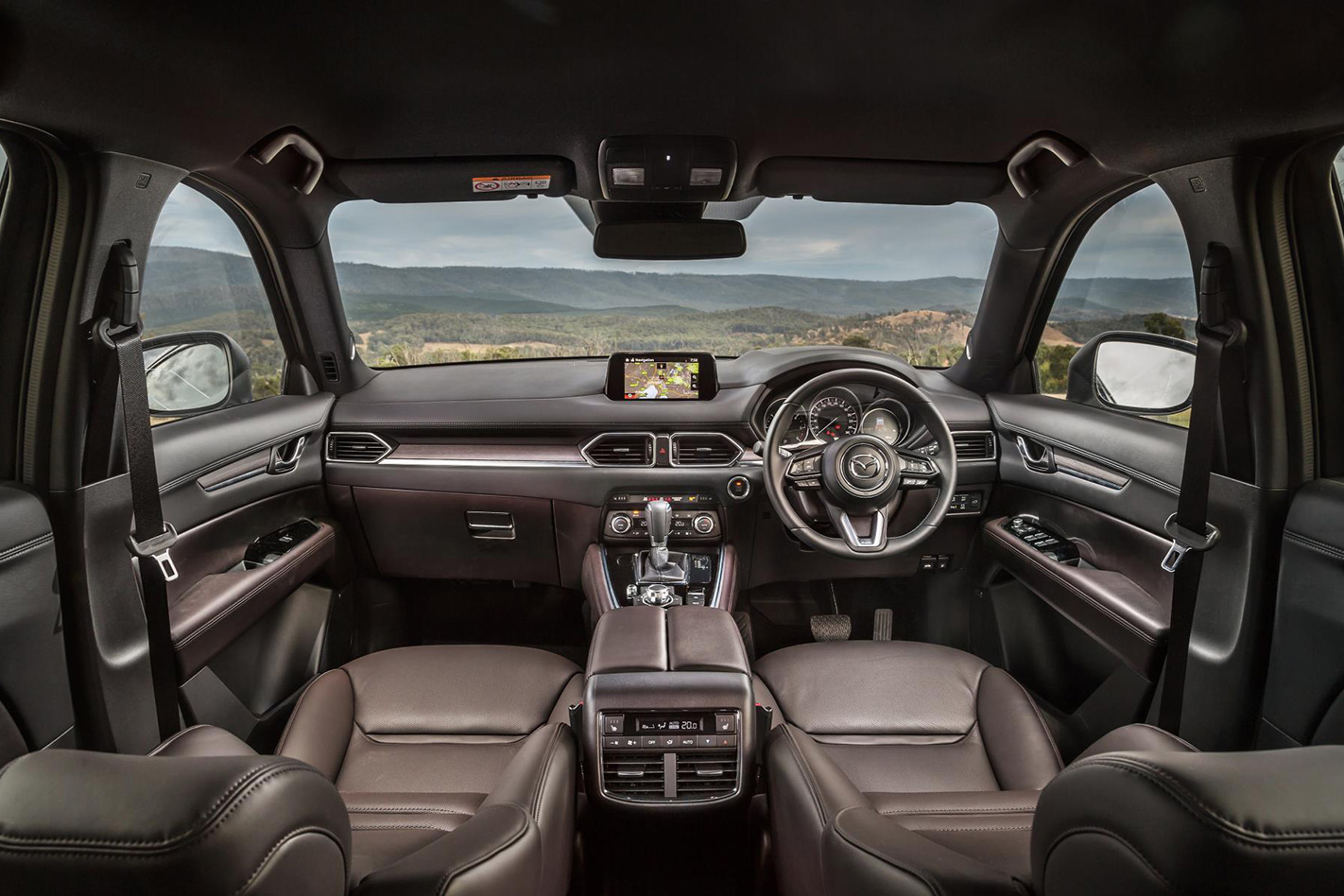
Full features and specifications will be revealed at its Australian launch at the end of this month.
2018 Mazda CX-8 Diesel pricing
- CX-8 Sport FWD – $42,490
- CX-8 Sport AWD – $46,490
- CX-8 Asaki AWD – $61,490
IT’S NOT power, it’s not aerodynamics and it’s not weight that’s holding production road cars on a very taut leash, preventing them from smashing through the next major V-max milestone – it’s rubber.
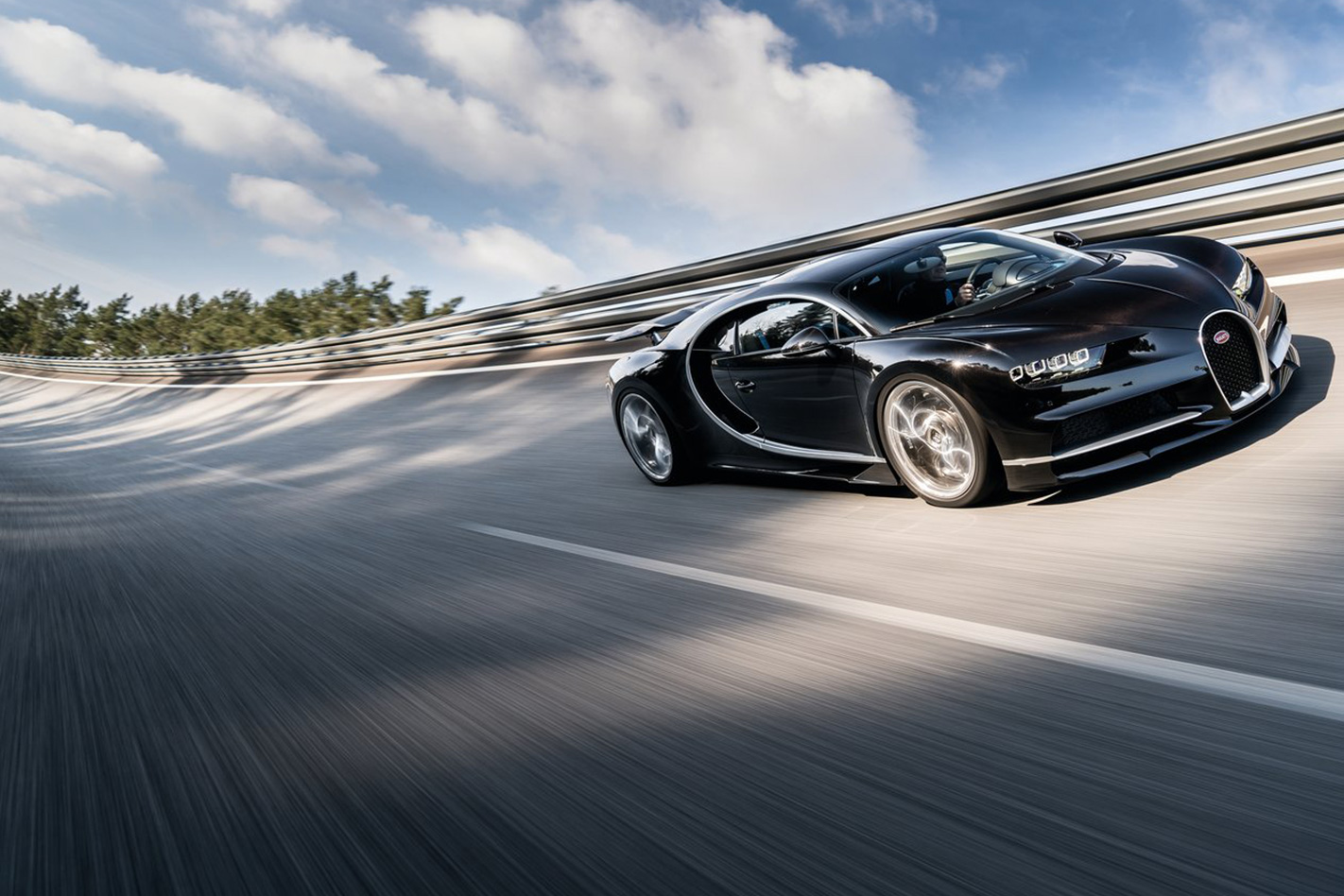
But if a morsel of information from one of Michelin’s top tyre executives is to be taken seriously, the French purveyor of fine tread may hold the key to the next dizzying straight-line speeds, enabling the most fearsome hypercars to break through the rubber ceiling.
Speaking to US publication Bloomberg.com, Michelin original equipment product manager Eric Schmedding said the company was “knocking on the door of 300 mph” – a gigantic speed that would blast a production car nearly 40km/h past the current record of 447km/h set by the Koenigsegg Agera RS last year.
If Michelin announces a tyre that is rated to 300mph (483km/h) it’s likely Bugatti’s Chiron and the Hennessey Venom F5 would slip on a set of the performance plimsolls to have a crack at stealing the title from the Swede, or perhaps Koenigsegg would push its champion even further.
Until a manufacturer comes up with a formula that can withstand the almost unfathomable stresses, all current tyres will simply disintegrate during record attempts – a problem no test driver wants to deal with when they’re covering 134 metres every second.
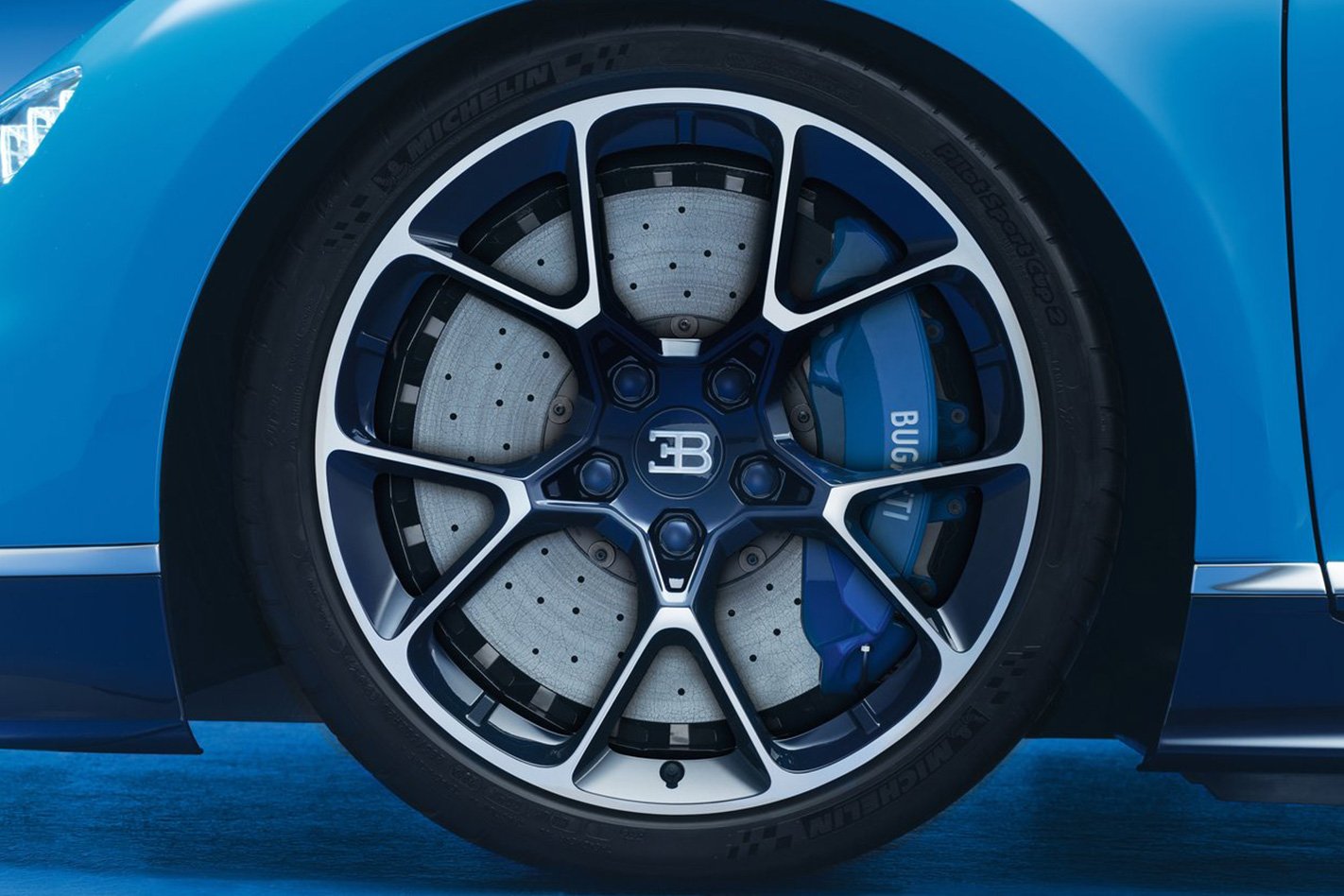
The problem is threefold. As the speed increases so does temperature and as the ‘rubber’ (actually a complex blend of synthetic materials and only a small part natural rubber) heats up it begins to lose strength.
At searing temperatures, immense centrifugal force starts to tear the liquefying rubber from the tyre’s structure and if the driver doesn’t realise and react in time, at least one corner will be rolling on alloy at warp speed. The prognosis is usually bleak.
Even if the worst doesn’t eventuate, the forces will deform the tread of the tyre, bowing the centre section of the tread out until the contact patch looks like a Tour de France tyre. Then aerodynamics start to attack.
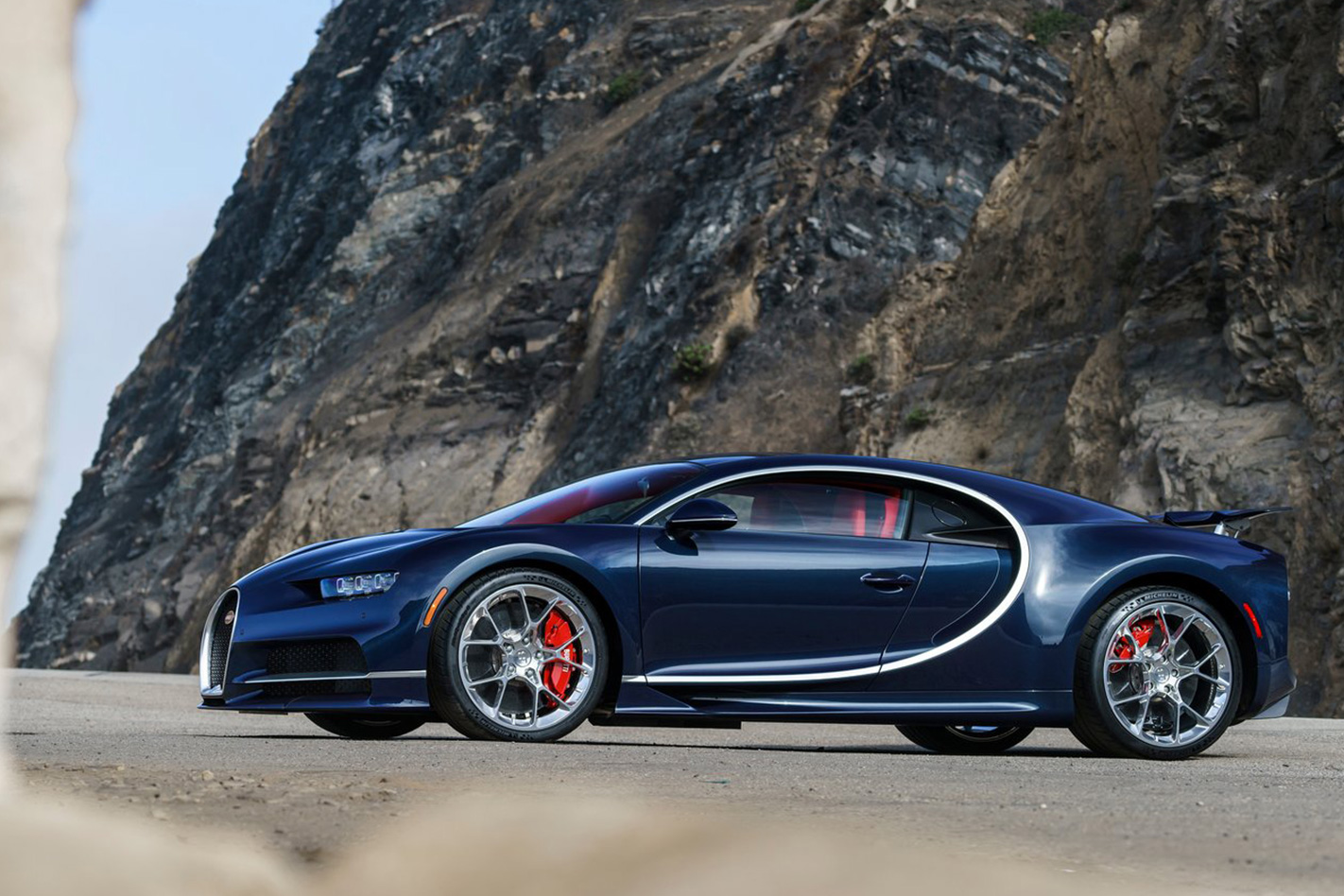
The problem is exacerbated as tyre widths increase, with ever-stronger tyre construction required to stop the belts giving in to centrifugal forces and deforming the shape of the carcass, but as the internals are made stronger, the weight increases and its back to square one. It’s physics fighting human endeavour and engineering.
If Michelin is close to cracking the 300mph code, its super-tyre will be light, incredibly strong and the rubber will have to be an exotic blend of synthetics the likes of which have never been seen before.
PERFORMANCE SUV; two simple words that still offend the more sensitive motoring purists out there. The rest of the world has wholeheartedly embraced the concept of powerful, high-riding wagons, but there remain some enthusiasts who consider them too compromised to be truly entertaining as cars for keen drivers. Why not just buy a fast sedan or a coupe instead?
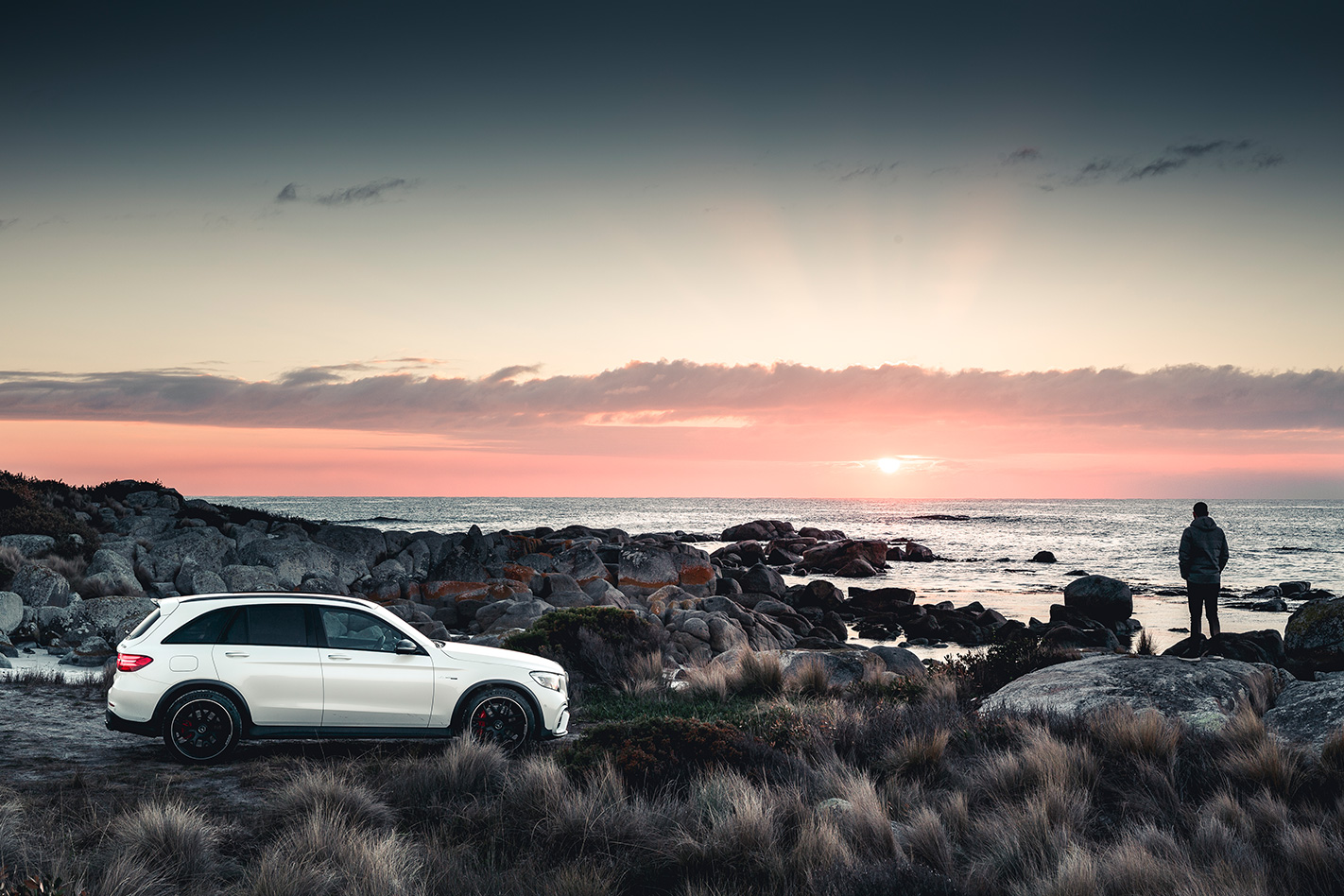
The thing is, less people are shopping for those sorts of vehicles these days. Regular consumers are relatively progressive and open-minded. More and more of them want SUVs. They want practical cars they can use every day, but they don’t want to neglect performance.
A lot of automotive engineers are enthusiasts on some level, and as this trend has emerged they’ve worked feverishly to make the faster versions of these family haulers drive like normal cars.
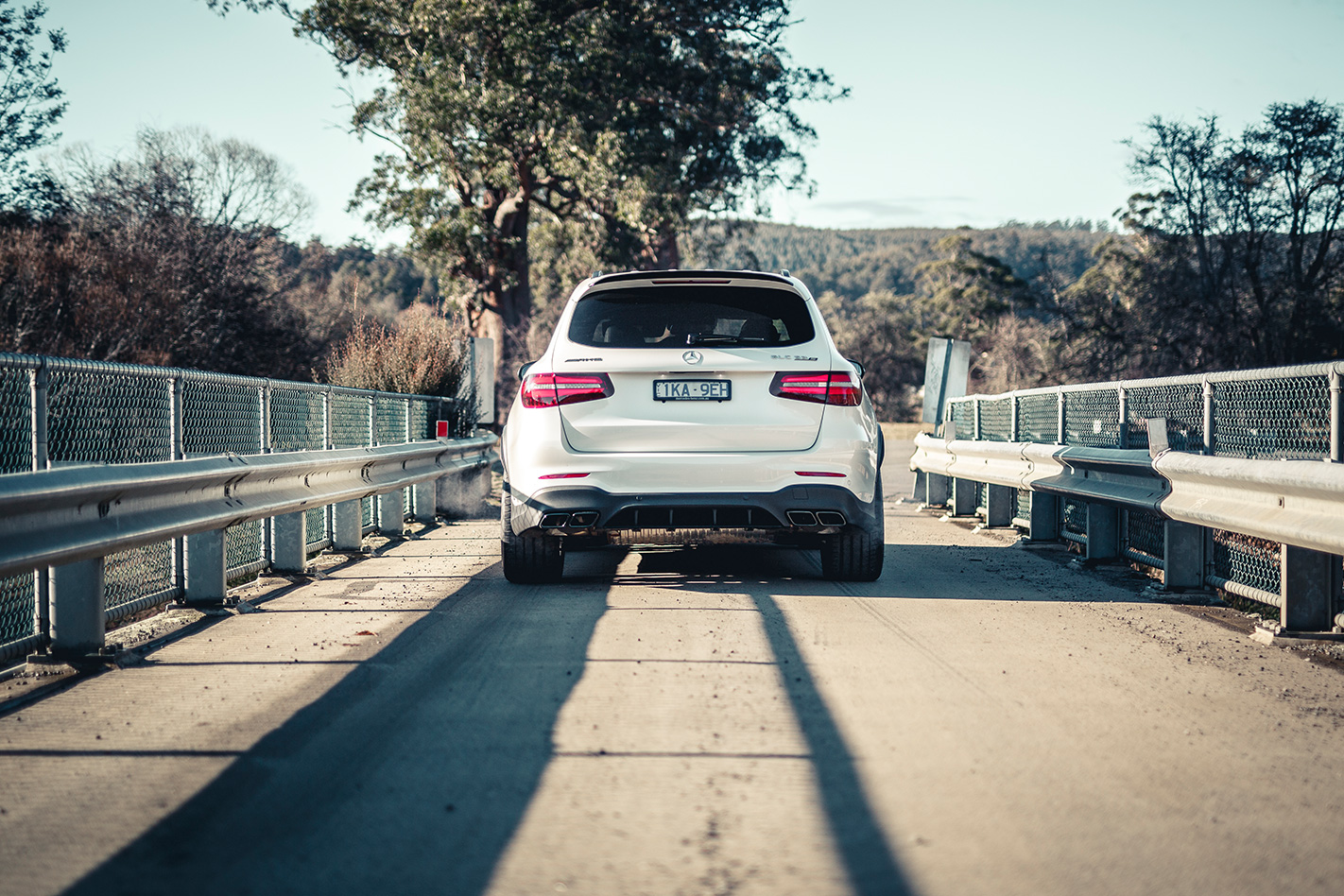
One such SUV is this; the Mercedes-AMG GLC63 S – a popular mid-sizer with room for five people and their luggage that now has a 4.0-litre twin-turbo V8 producing 375kW and 700Nm wedged between its forequarters. With all-wheel-drive grip this 1935kg SUV will shift its heft from 0-100km/h in less than four seconds.
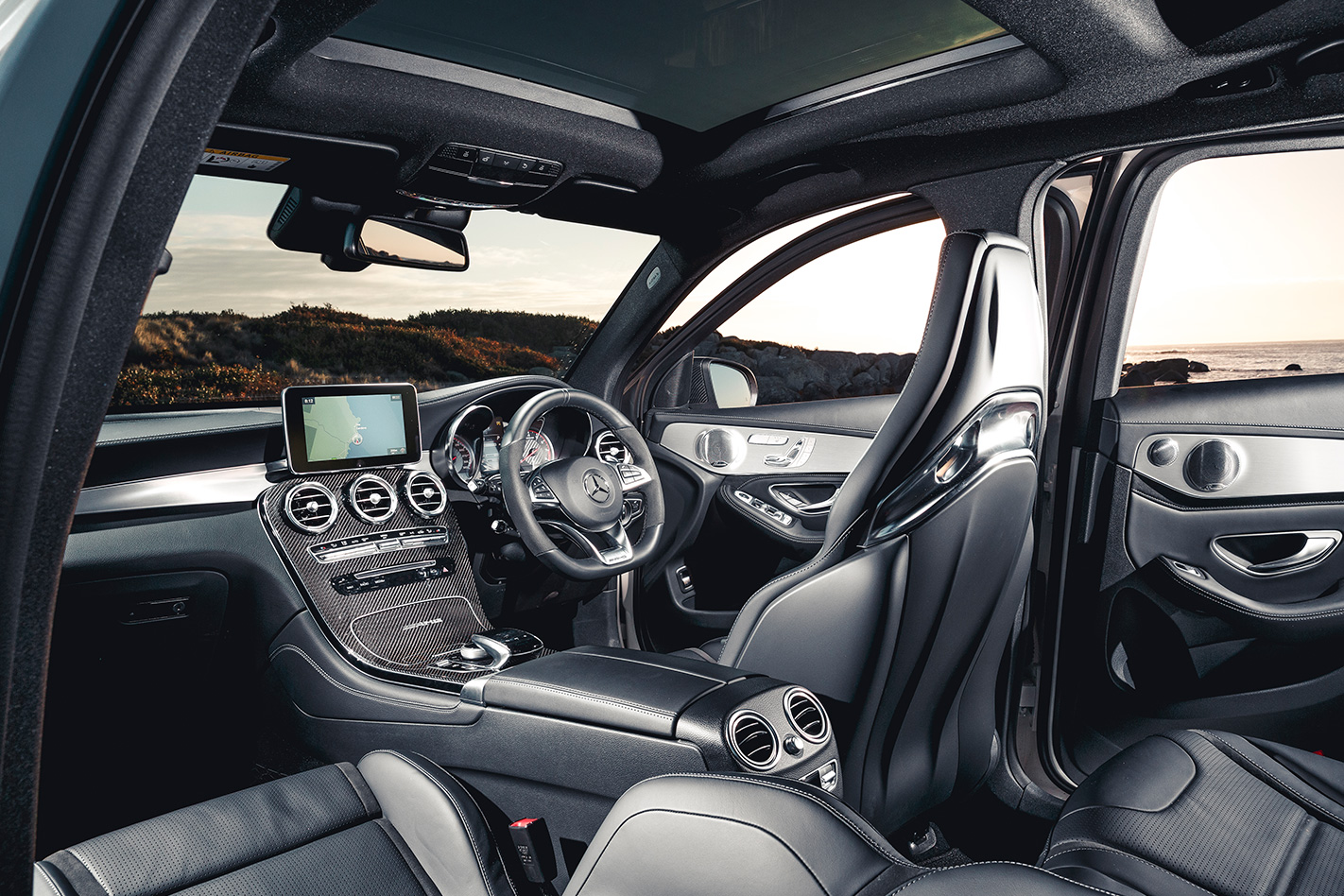
Manufacturers seem to think the latest crop of super SUVs is so good there’s nothing to lose; little to no compromise even for performance purists when comparing these high-performance high-riders with their conventional counterparts.
So we’ve come to Tasmania to find out how true that is. This island in Australia’s south-east is renowned for its beautiful and challenging terrain; the venue for a week-long road race held in late April every year – Targa Tasmania.
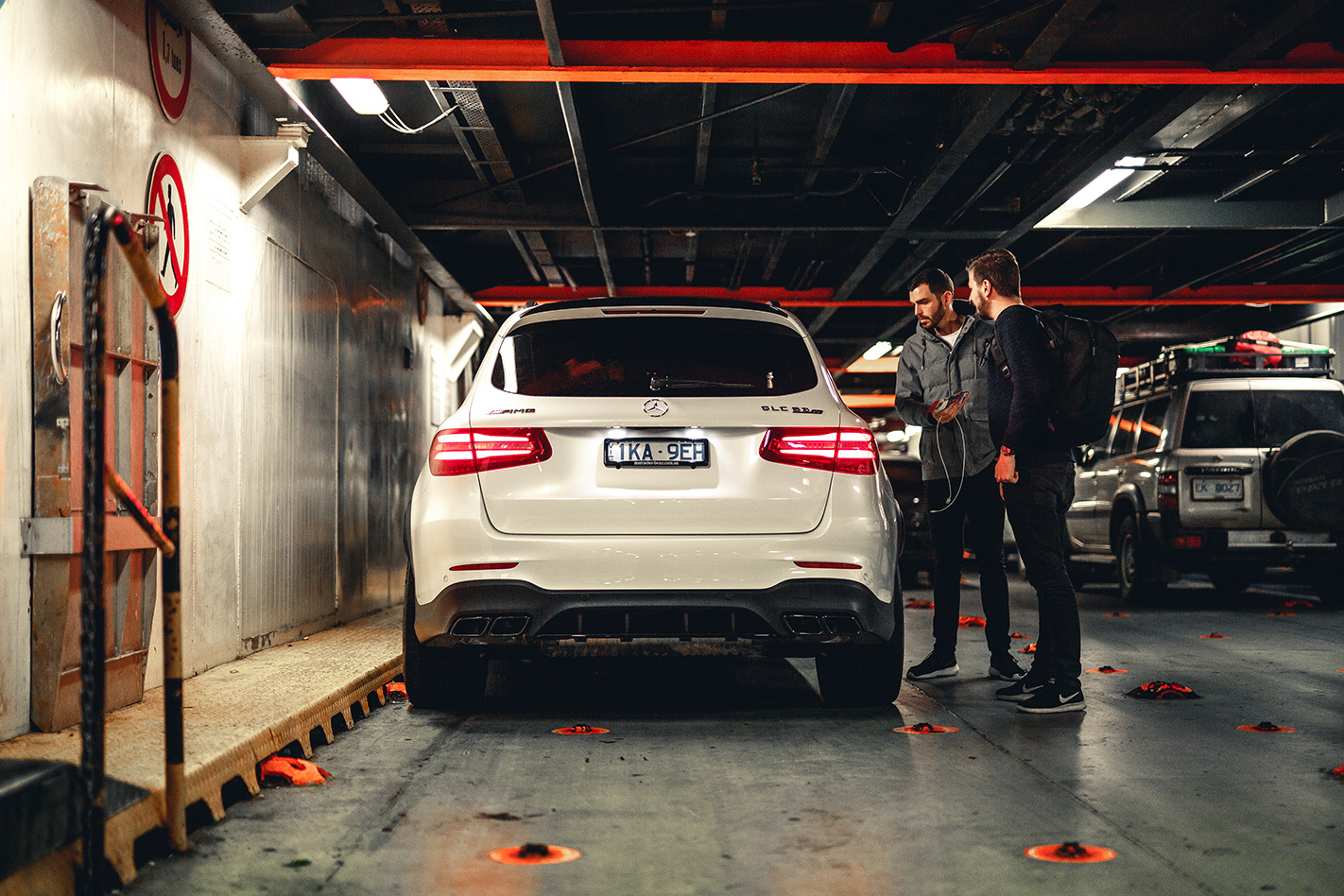
These fast and unforgiving roads are the perfect place to answer the big performance SUV question. Are these vehicles really good enough to deliver ultimate driving thrills? Watch to find out.
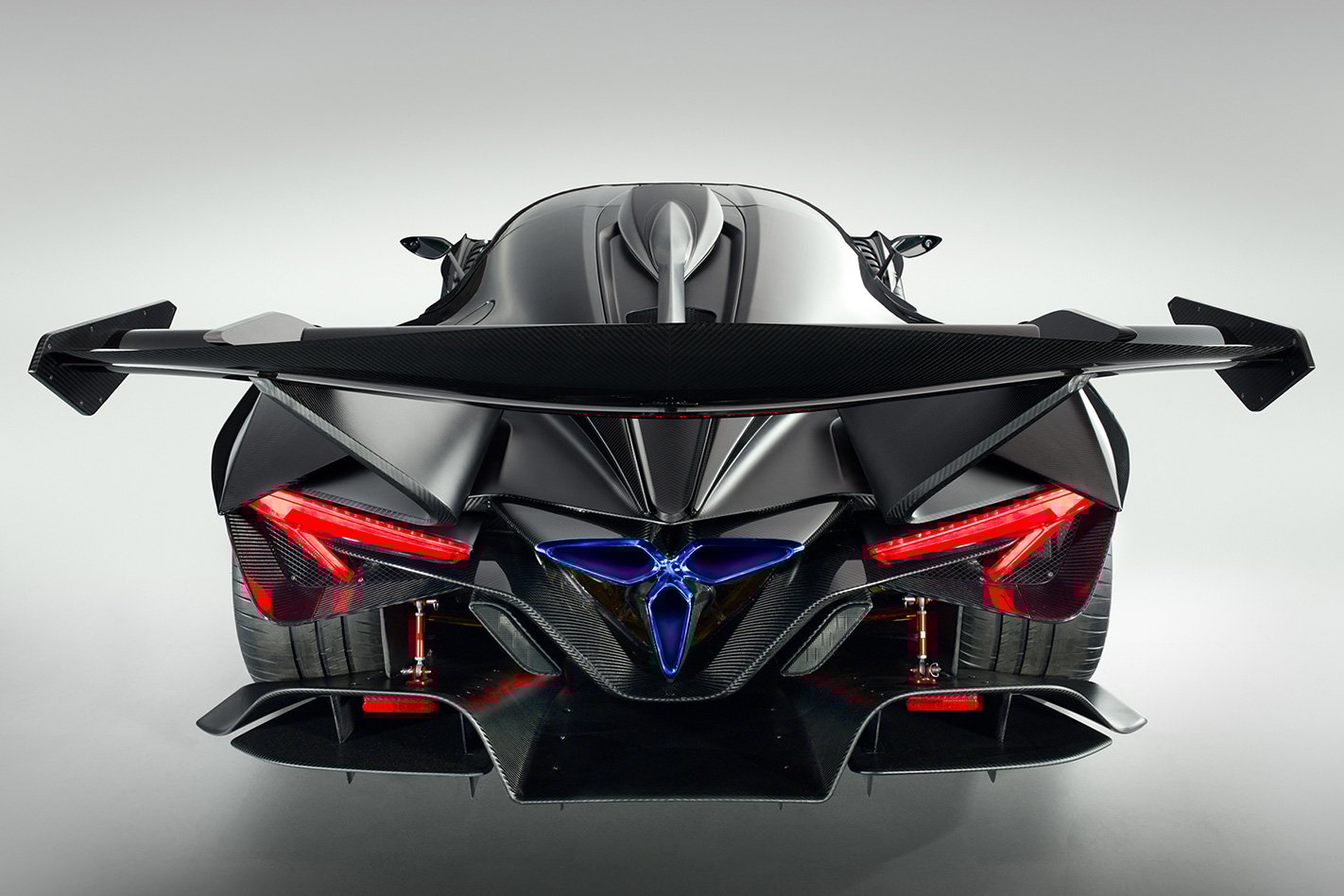
Several months after its initial reveal, it appears the Apollo IE hypercar is nearing its final stages of development.
The GT1-inspired Apollo IE – the letters standing for ‘Intensa Emozione’ – is set to be ready next year, but Apollo has just announced a new partner for its development as HWA AG.
HWA has proven itself a successful motorsport outfit in the DTM series, having won several championships since it began competing in 2000.
Apollo says the partnership will focus on ‘development areas such as safety, reliability, powertrain calibration, and thermal dynamics.’
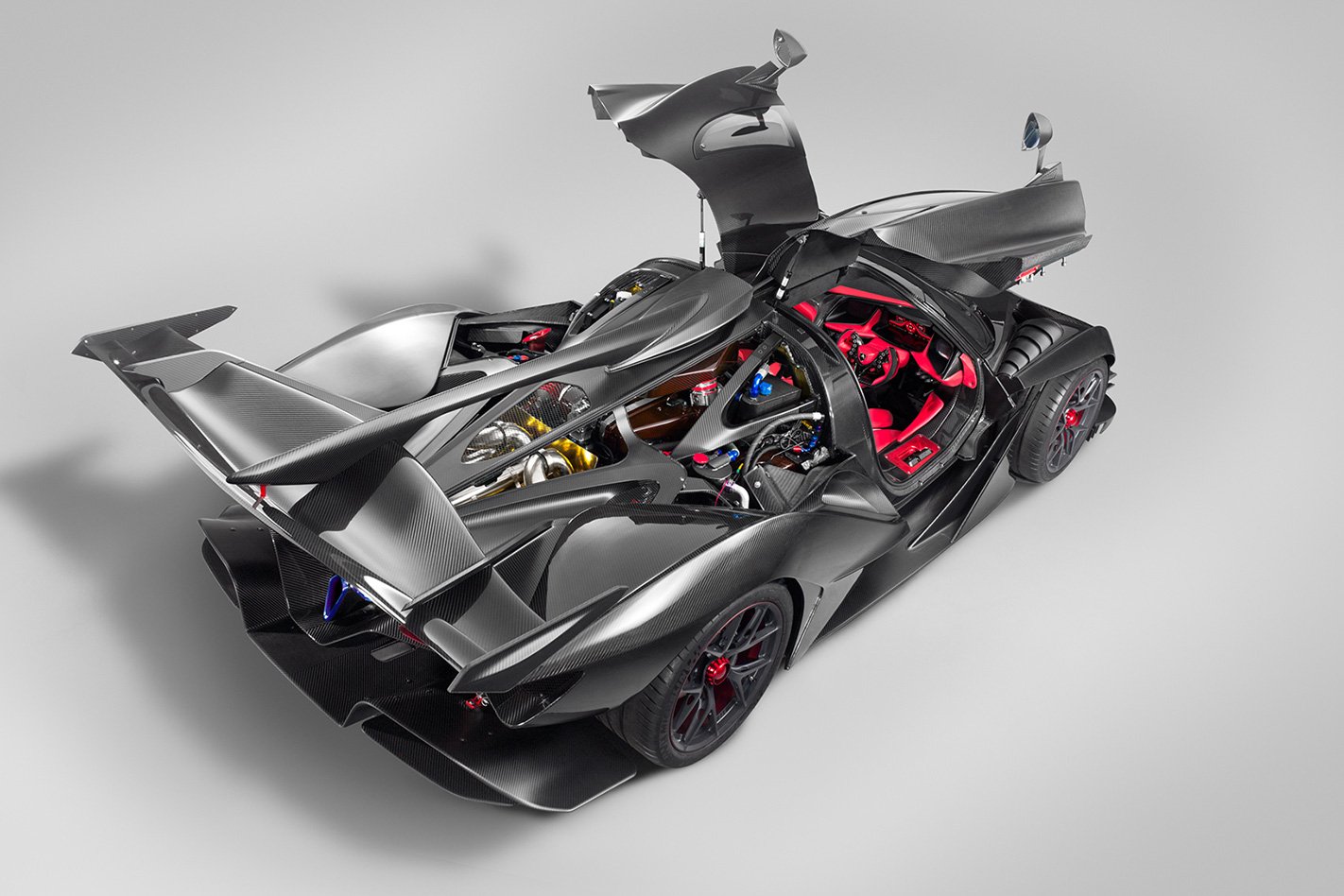
HWA’s history with AMG has placed it in a good position to work with Mercedes engines, though it would appear the Apollo IE is set to use a naturally-aspirated Ferrari V12, good for 582kW and 760Nm in this application.
The mid-engined IE is set to have a kerb weight of just 1250kg, allowing it to hit 100km/h in 2.7 seconds.
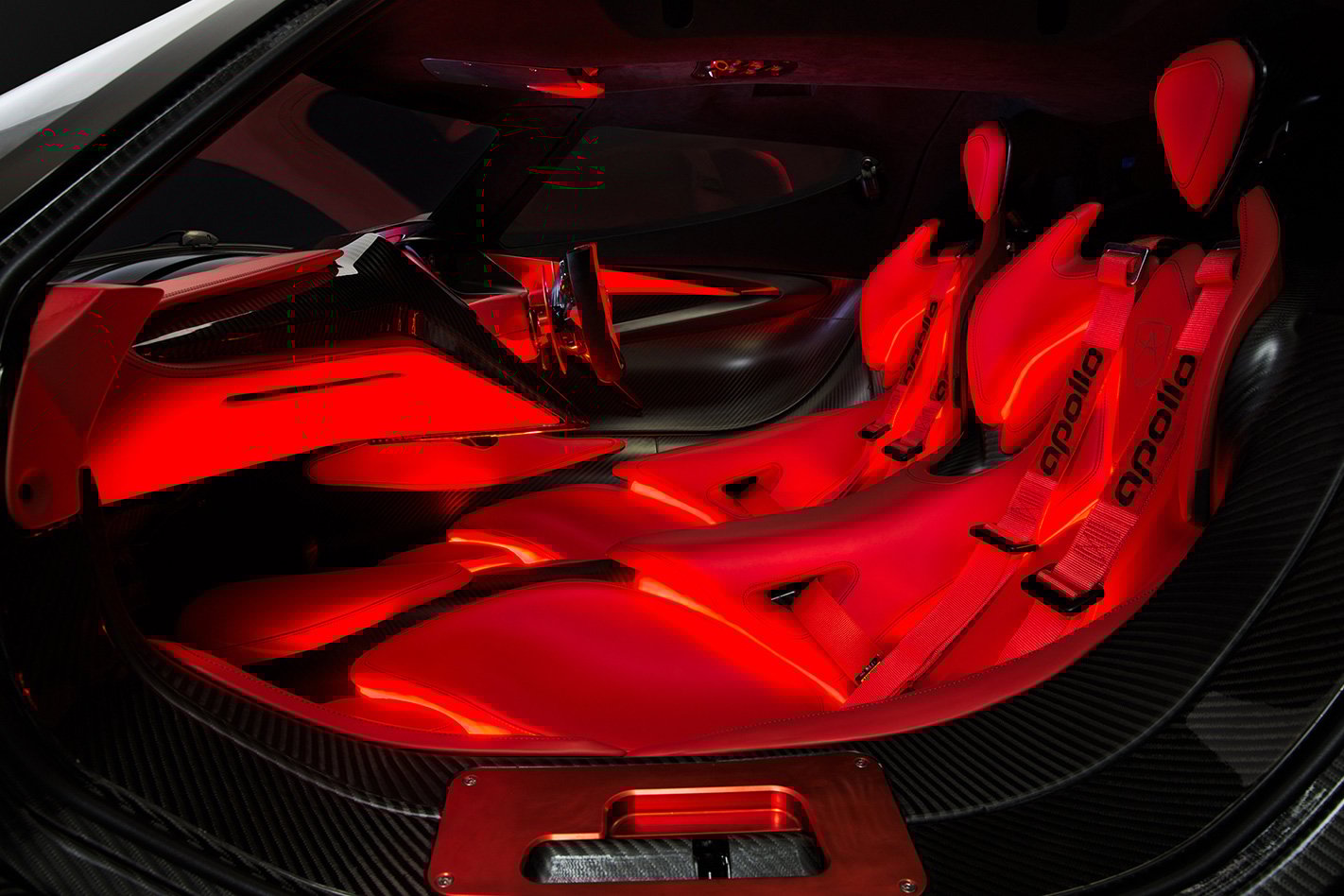
Apollo also expects it to top out at 335km/h, before which the downforce exerted on the IE will have reached a massive 1350kg.
Most of the IE will be made from carbon fibre – particularly its body panels and monocoque.
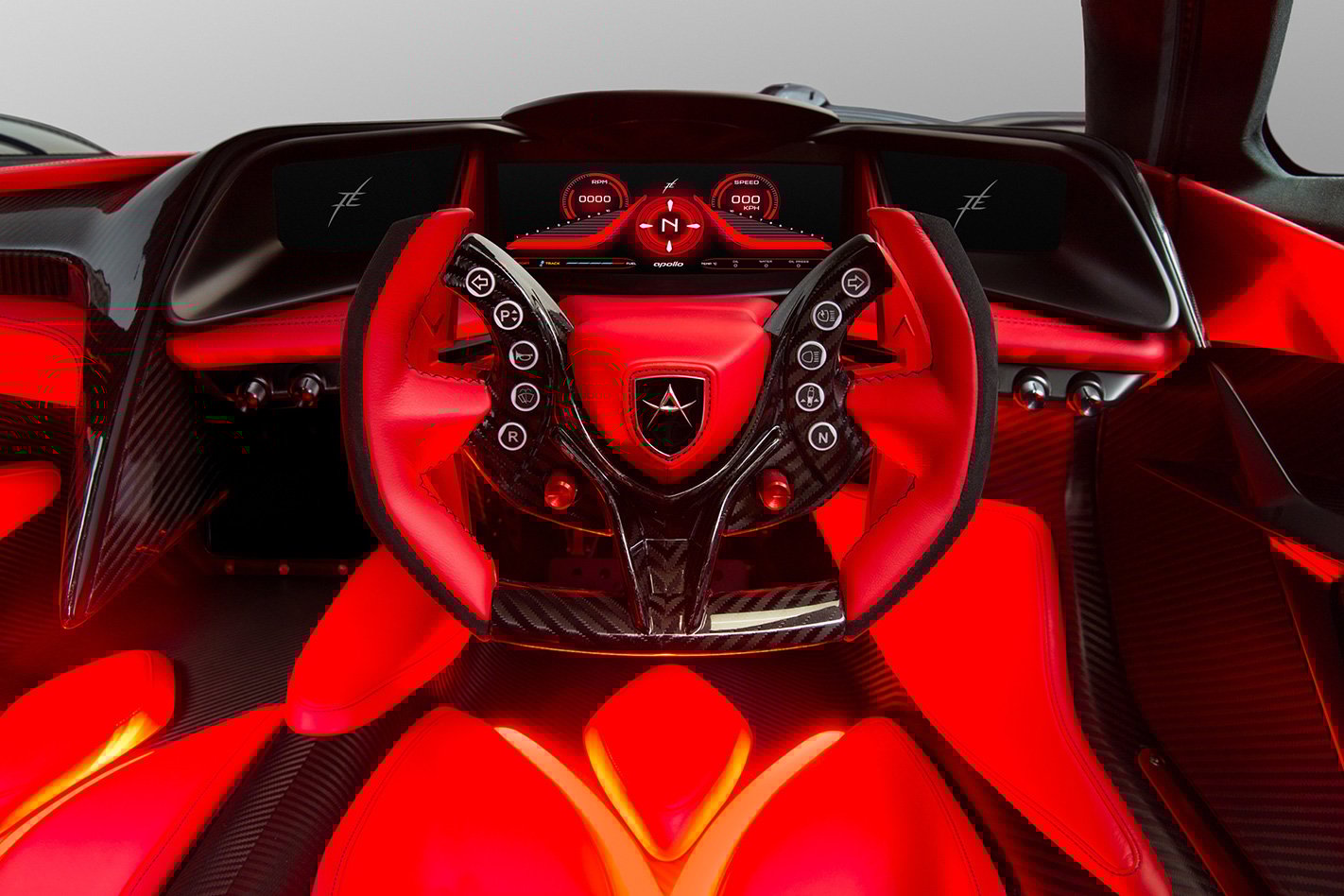
If the Apollo name sounds familiar, it should. It’s the current form of what used to be Gumpert Sportwagenmanufaktur, responsible for the unfortunately eponymous Gumpert Apollo.
Though retaining the Apollo name, the IE shares little in common with the Gumpert Apollo.
Apollo says production of the IE is “strictly limited to ten units with first customer deliveries expected to commence in 2019.”
WHAT IS IT
The all-new, third generation of Porsche’s large SUV
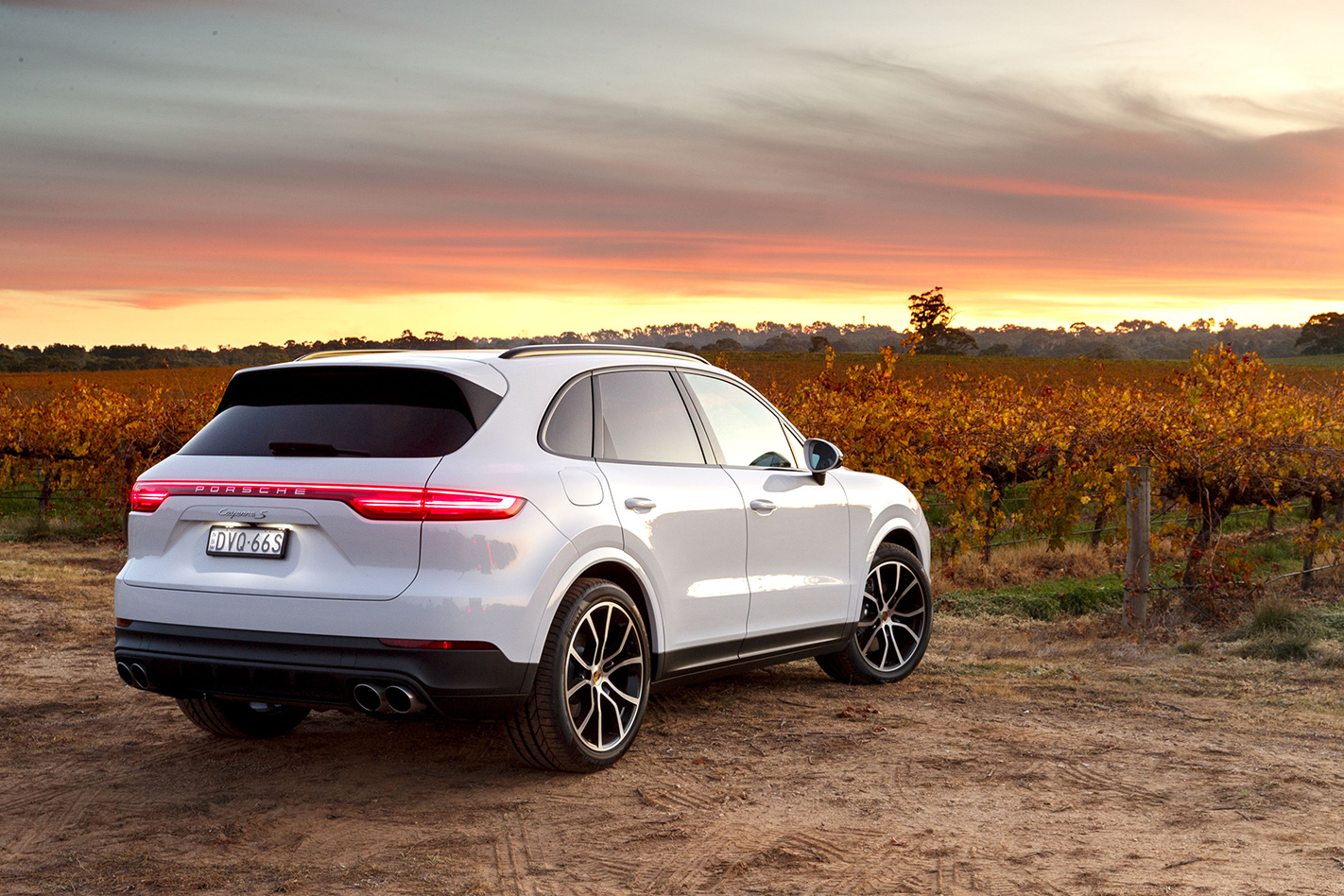
WHY ARE WE TESTING IT?
We first drove the Cayenne at its international launch in Crete (Wheels, December ’17 issue); this was a chance to drive it on local roads in Adelaide and the Barossa region.
MAIN RIVALS
BMW X5, Audi Q7, Mercedes-Benz GLE, Jaguar F-Pace, Range Rover Sport, and Volvo XC90
WHEELS VERDICT
Someone has to make the most dynamically adept SUV; seems fitting that it’s Porsche. There’s little in the remit that’s missed here: dynamics and roadholding, powertrain polish and performance, and a properly premium-feeling cabin. Only elements of low- to medium-speed ride quality, less-than-feelsome steering and the cost of options blot an otherwise superb showing for this segment.
PLUS: Lighter, stiffer body offers better rear-seat packaging and extra luggage room; sharp dynamics; strong, refined powertrains; attractive and functional interior MINUS: Lack of third-row seating option; patchy ride quality on steel springs; expensive option; incisive but low-feel steering
THE WHEELS REVIEW
Back in 2002, a new global sport was born. It was called kickin’ the Cayenne, and it seemed everyone wanted a turn to sink the slipper. Porsche purists scoffed at its high-riding hideousness and abrasive ride; others were outraged that this iconic German sports car specialist would succumb to the lure of filthy lucre in the SUV segment.
Well, as we acknowledge the debut of the all-new, third-generation model, total sales for the nameplate are now well past 750,000. So it’s fairly clear who’s having the last laugh. But just as importantly, we can’t think of another large premium SUV that can challenge the new Cayenne for dynamic ability and driver involvement.
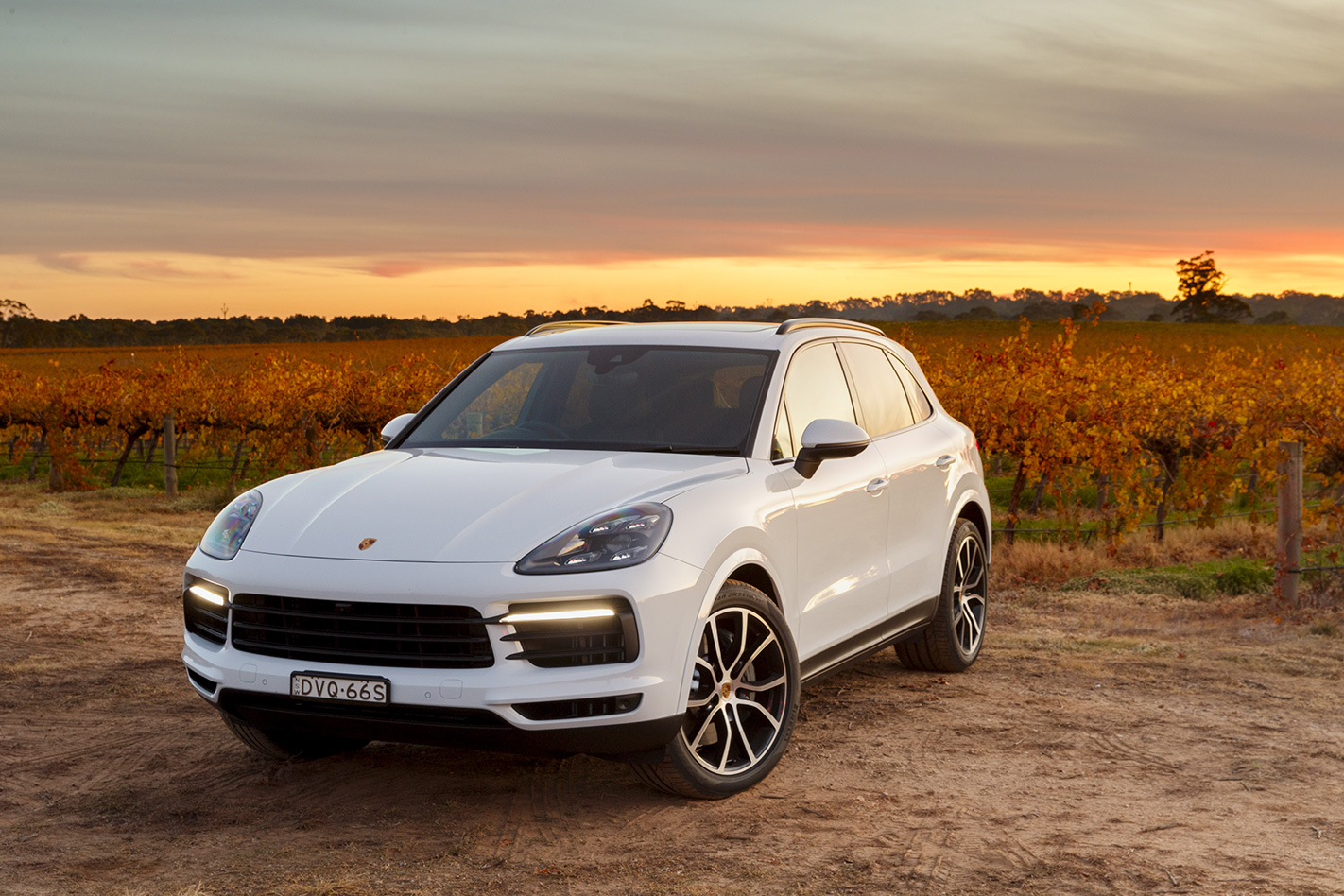
It’s a certainly less visually confronting these days … or perhaps we’ve just become more accepting of Porsche’s SUV design language via the Macan. Either way, the most salient point regarding Gen 3 is not the way it looks; rather the fact that virtually nothing of the previous model carries over. Only the wheelbase measurement is shared.
The modular architecture on which it’s built is the VW Group’s MLB Evo platform (shared with Audi Q7, Bentley Bentaga, Lambo Urus) although Porsche is quick to point out how much of the key chassis hardware – uprights, hubs, carriers, brakes, systems calibrations and more – are specific to the Cayenne.
There’s also been a significant change to structural materials and the construction method compared to the outgoing car. Greater use of aluminium means the bodyshell is now variously screwed, bonded and stitched, rather than purely welded, bringing increased rigidity while cutting weight by around 65kg, model-for-model.
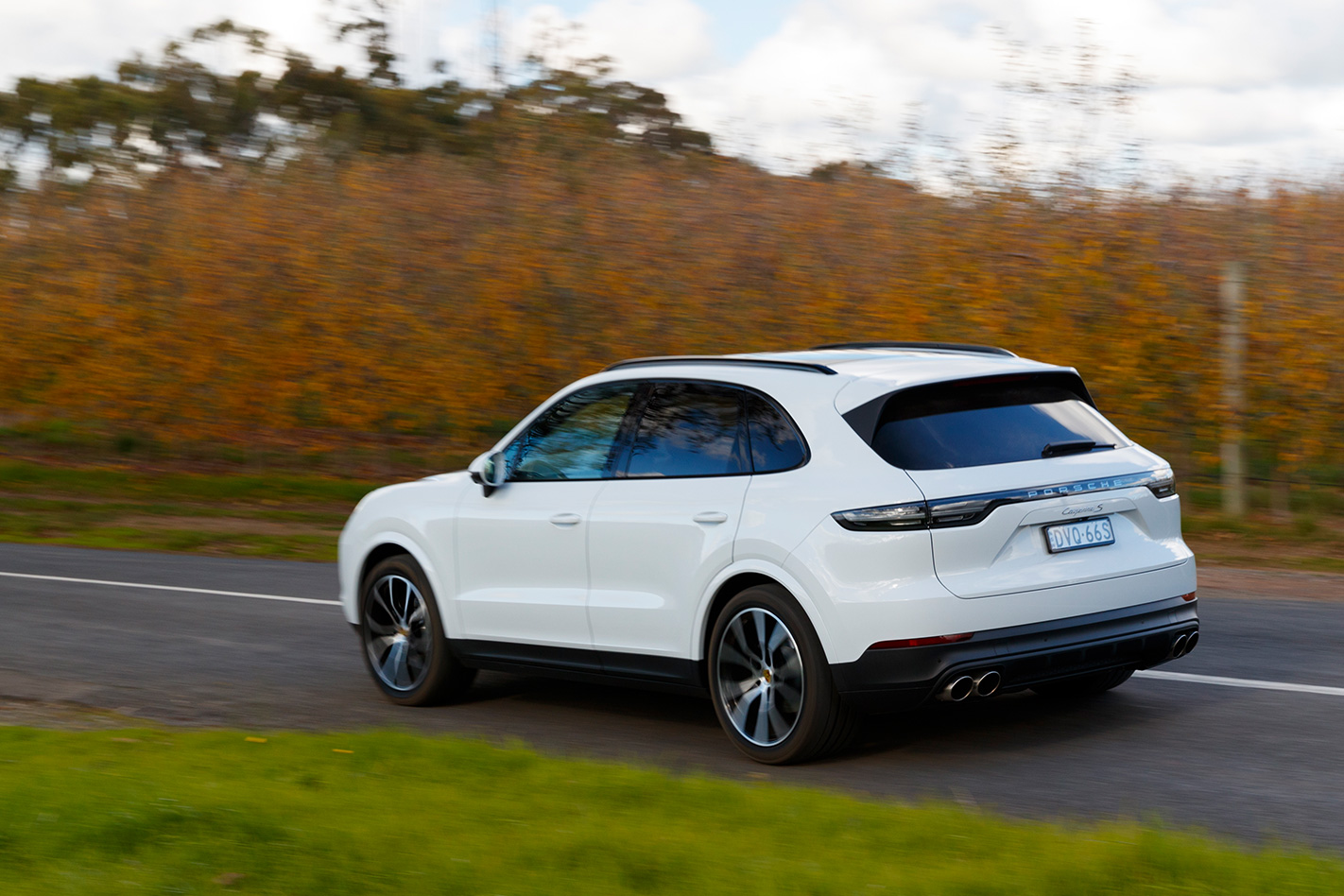
Initially, at least, buyers can order a Cayenne in one of three strengths that basically amount to swift, ultra-rapid or properly nuts. The engine line-up (all running an eight-speed torque-convertor auto) effectively mimics that of a trio of Panamera variants. The entry model (simply called Cayenne) runs a 3.0-litre, single-turbo petrol V6 making 250kW and 450Nm. It’s priced at $116,000 and delivers performance that will surely be deemed ‘more than ample’ for plenty of customers.
Porsche claims 0-100km/h in 6.2sec, and it always feels lively and responsive to the throttle. Critics may moan that this engine is a bit light-on for character, but there’s nothing wrong with its willingness to punch through the mid-range and remain unstressed when working hard up around 6000rpm. It’s worth noting that this model comes standard with steel springs for its adaptive dampers, and the ride (regardless of the dynamic mode selected) is never as composed as that of the upper two models that run three-chamber air springs. Fortunately, this air-sprung set-up is on the long list of options available for the base Cayenne.
Above it sits the Cayenne S, powered by the Panamera 4S’s 2.9-litre twin-turbo V6, tuned for an identical 324kW and 550Nm. The price jumps significantly (to $155,100, up nearly $39K over the base car) but so does performance, while a meaner, harder-edged character is bundled in free. Not only is must-have air suspension included, but the brake package steps up from a four-piston, 350mm (front) package on the base car to a six-piston set-up clamping 390mm front discs. If that’s not enough, both Cayenne and S can be optioned with the 10-piston/415mm front disc whopper-stopper set-up from the Turbo, though a minimum of 21-inch wheels is required for clearance.
Ah yes, the Turbo. Power junkies with money to burn may be unable to resist the lure of its fabulous, so-fruity twin-huffer 4.0-litre V8 (making 404kW and 770Nm), and its addictive, time-space-compression ability. The Turbo will also quickly strip your account of at least $239,400, but considering this engine with AWD in a Panamera costs $384,500, seeing it as a value proposition doesn’t seem utterly absurd.
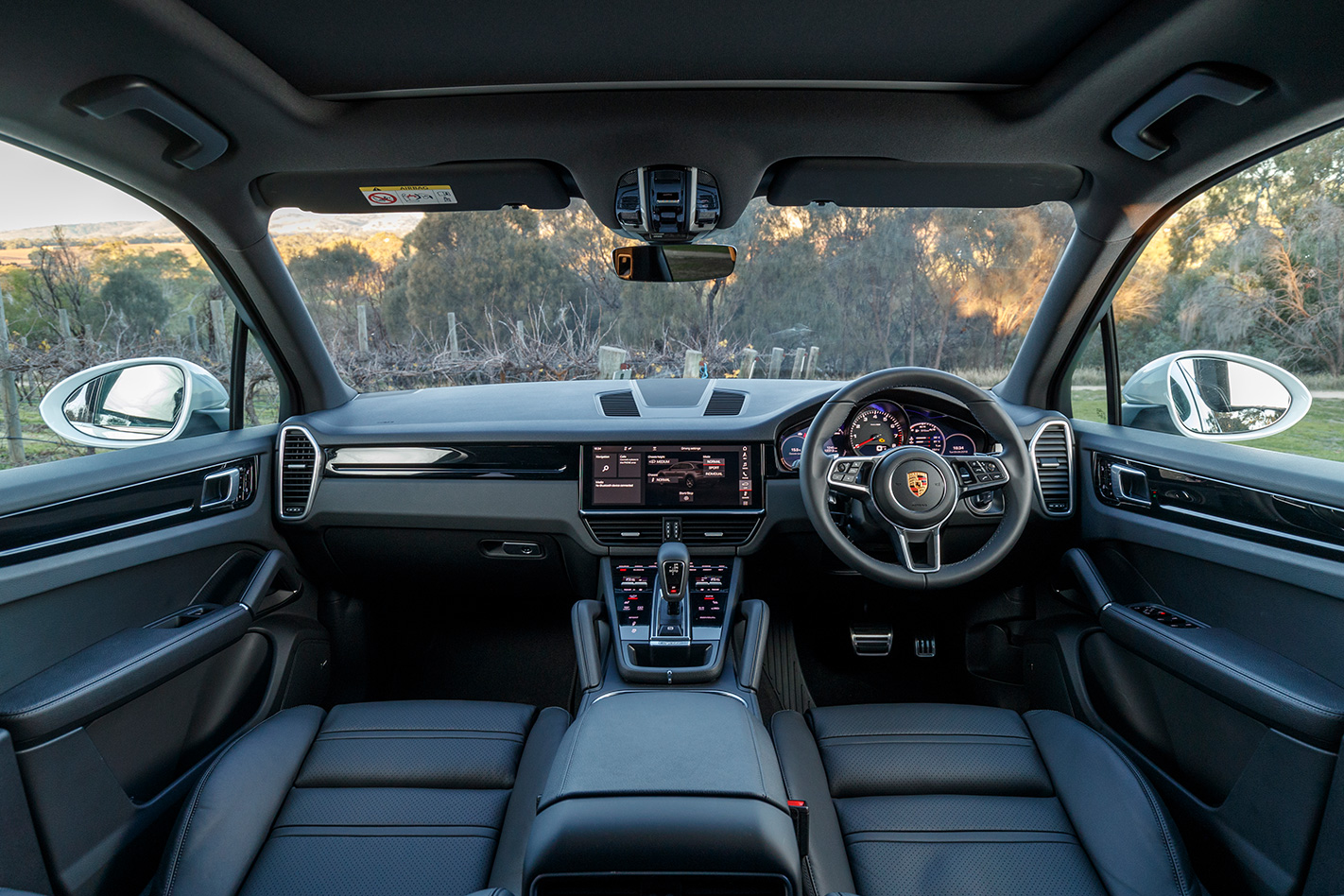
Especially in light of the improvements to the cabin’s sense of space and premium feel. The step forward in terms of design, materials, tactility and equipment levels is exactly what you’d expect of an all-new generation vehicle. Even in base spec, the Cayenne feels nicely executed. Start adding trim options and it becomes a properly high-end environment, from the size and resolution of the 12.3-inch display to the glossy, glassy panels either side of the gear selector that respond with a haptic click when key functions are pressed. Practicality has also been improved, with a rear seat that slides and tilts to free up an extra 100 litres more luggage space when shorties occupy the second row.
Perhaps you’re a late, even grudging convert to the SUV wave. Maybe you’ve driven a few in this segment only to find them still a little less than quit-witted and satisfying. The new Cayenne, with standard-setting levels of dynamic nous, may just be the antidote.
SPECS
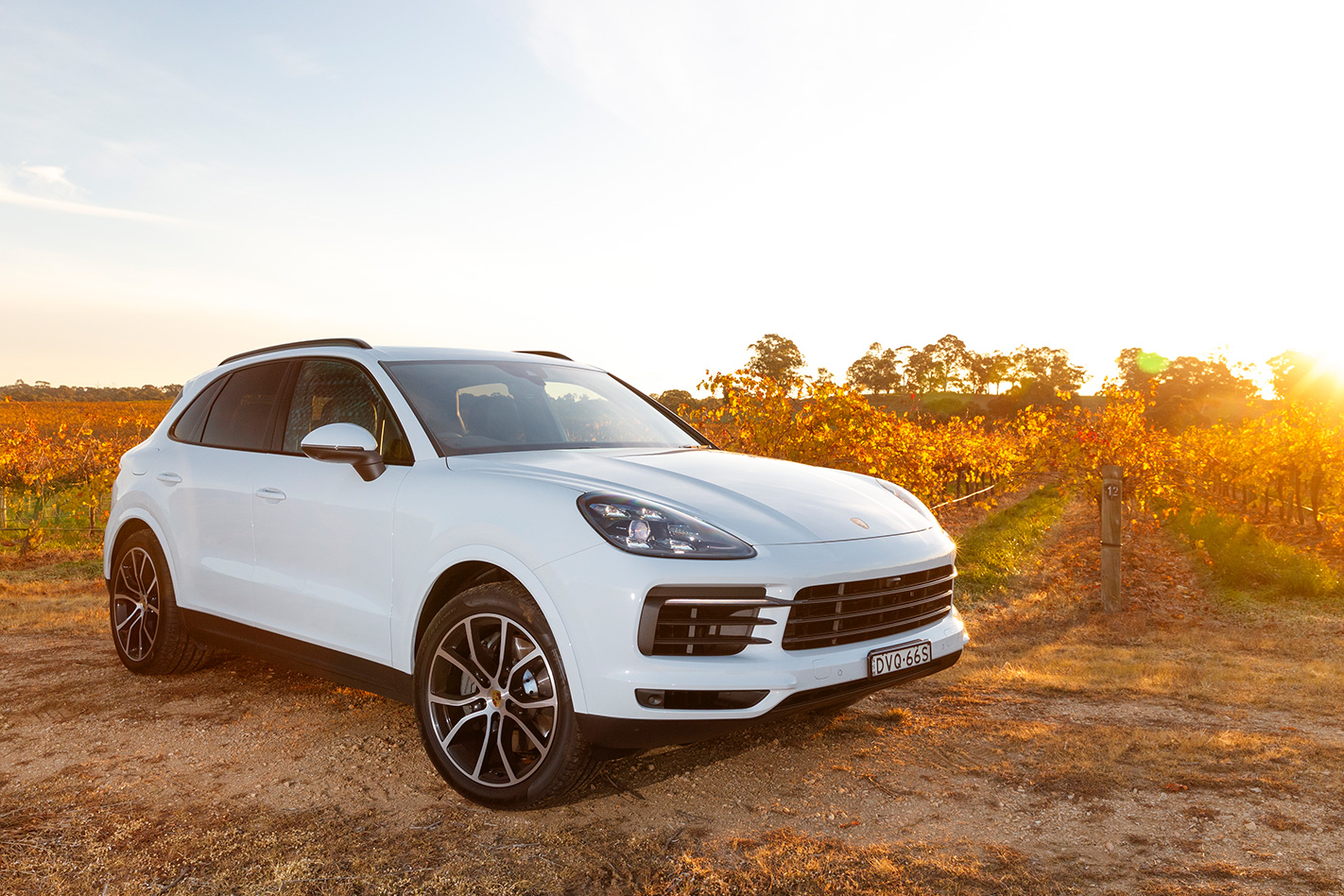
Model: Porsche Cayenne S Engine: 2894cc V6 (90º), dohc, 24v, twin-turbo Max Power: 324kW @ 5700-6600rpm Max Torque: 550Nm @ 1800-5500rpm Transmission: 8-speed automatic Weight: 1945kg 0-100km/h: 5.2sec (claimed) Fuel economy: 9.2L/100km (EU) Price: $155,100 On sale: Now
Safety conscious car buyers have helped drive a quiet technological revolution that’s driven a spike in popular models fitted with autonomous emergency braking as standard equipment.
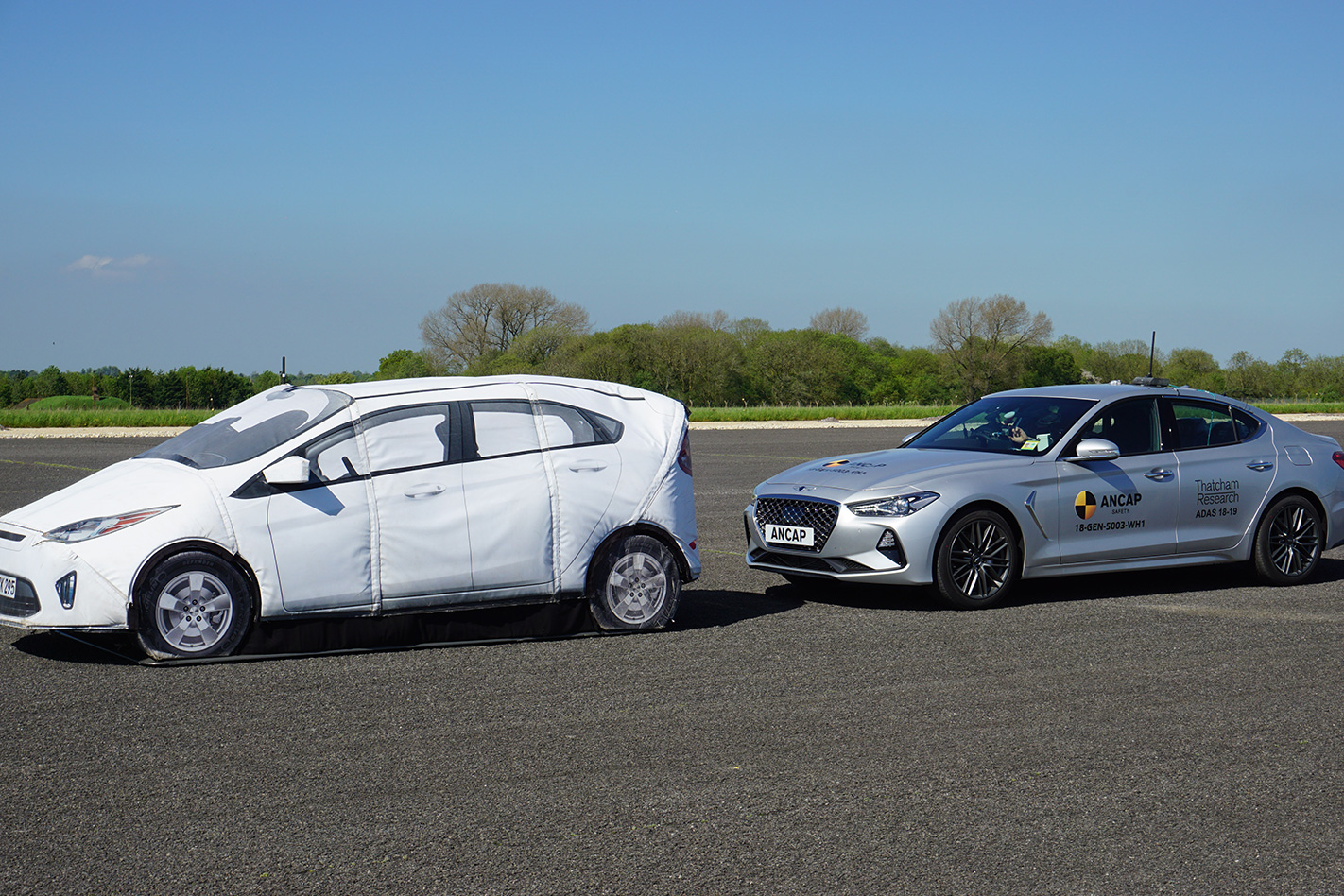
ANCAP figures show 31 percent of models sold in Australia have some level of AEB across the line-up, compared to just three percent in December 2015.
By the end of 2015, only six of the top-100* selling models featured range-wide auto-braking: BMW 3 Series and X5, Mercedes-Benz C-Class and CLA-Class, and Subaru Liberty and Outback.
The number has grown steadily to 37, with more manufacturers, including Audi, Kia, Hyundai, Mazda, Nissan, Toyota and Volkswagen, now installing AEB as standard in new and updated models.
This trend has seen the number of top-100 models with AEB as standard overtake those with no AEB at all – which have almost dropped by half, from 67 to 35, or 29 percent of the total light vehicle market, with most of these being trade utes and older models.
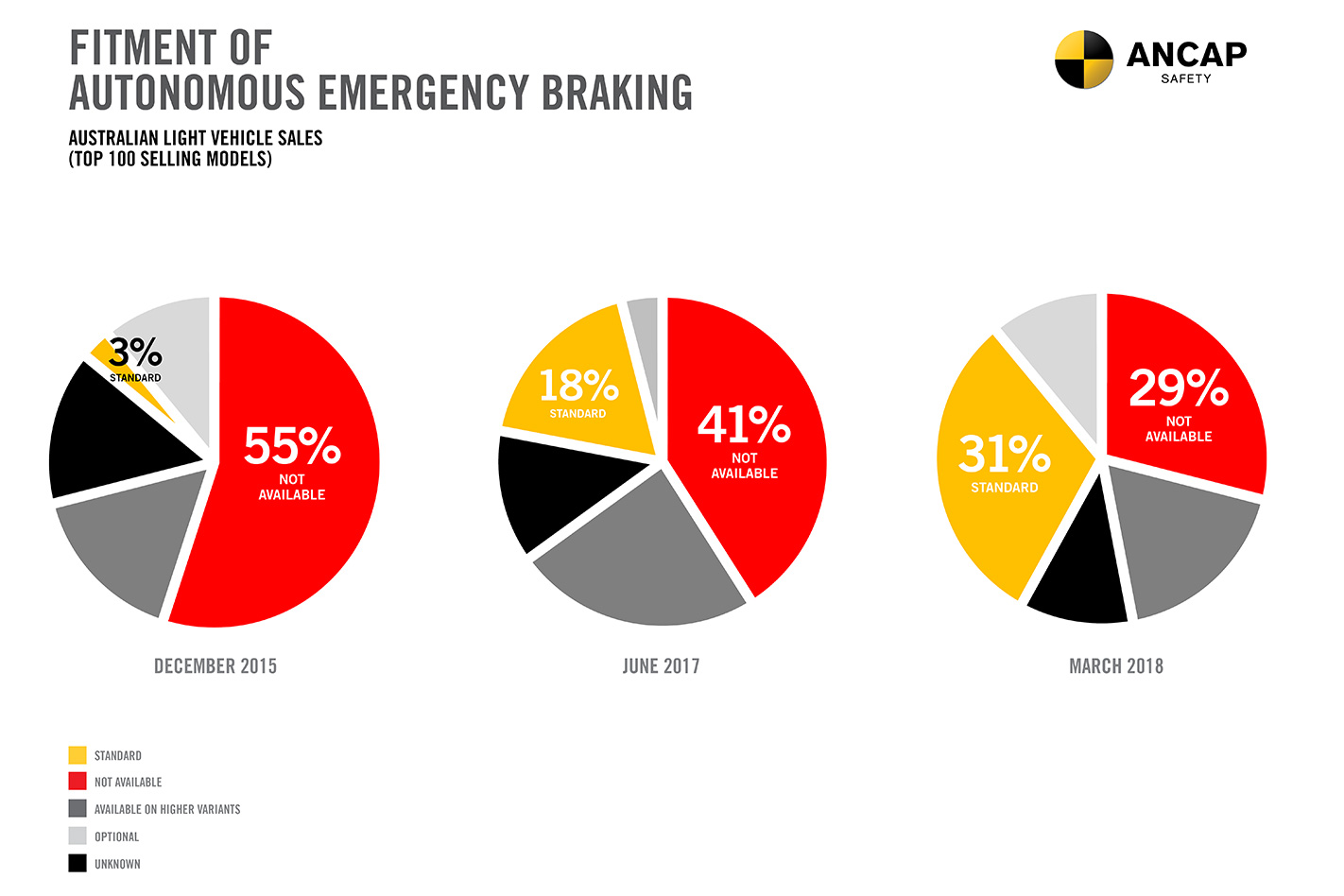
Meanwhile the number of popular models offering AEB as an option or in higher spec variants has risen marginally from 27 to 28.
ANCAP Chief Executive James Goodwin said the numbers vindicate his organisation’s decision to get tough on vehicles without AEB when awarding its all-important safety ratings.
“This is an encouraging result for consumers, and the vehicle brands leading the charge should be commended,” Goodwin said.
“Over the past few years we have been educating the community of the benefits of this technology, and in parallel, pushing vehicle brands to include AEB as standard across model ranges and price points.
“To see one-third of all popular-selling models now offer this driver assistance technology as standard, we’ve moved some way closer to achieving a reduction in crash incidence and severity – but there is still a long way to go.
“This year we have adopted significant changes to our rating system to encourage the standard offering of AEB across the market, and we’re confident this will see a further acceleration in AEB availability.”
* The top-100 selling models represent 81 percent of the light-vehicle market. The percentages mentioned reflect the entire market.
Models with AEB as standard (from top-100 sellers, March 2018)
- Audi A3
- Audi Q2
- Audi Q5
- BMW 3 Series
- BMW X1
- BMW X3
- BMW X5
- Holden Commodore
- Hyundai Kona
- Hyundai Santa Fe
- Kia Picanto
- Kia Sorento
- Land Rover Discovery Sport
- Land Rover Range Rover Sport
- Lexus NX
- Mazda 2
- Mazda 3
- Mazda 6
- Mazda CX-3
- Mazda CX-5
- Mazda CX-9
- Mercedes Benz A-Class
- Mercedes-Benz C-Class
- Mercedes-Benz CLA-Class
- Mercedes-Benz GLA-Class
- Mitsubishi Eclipse Cross
- Nissan Qashqai
- Nissan X-Trail
- Subaru Outback
- Toyota Camry
- Toyota C-HR
- Toyota Kluger
- Toyota RAV4
- Volkswagen Golf
- Volkswagen Polo
- Volkswagen Tiguan
You might not have heard of What3words, but the British technology company has a growing presence in the automotive world and its unique global mapping system will be plugging into more vehicle navigation systems in the future.
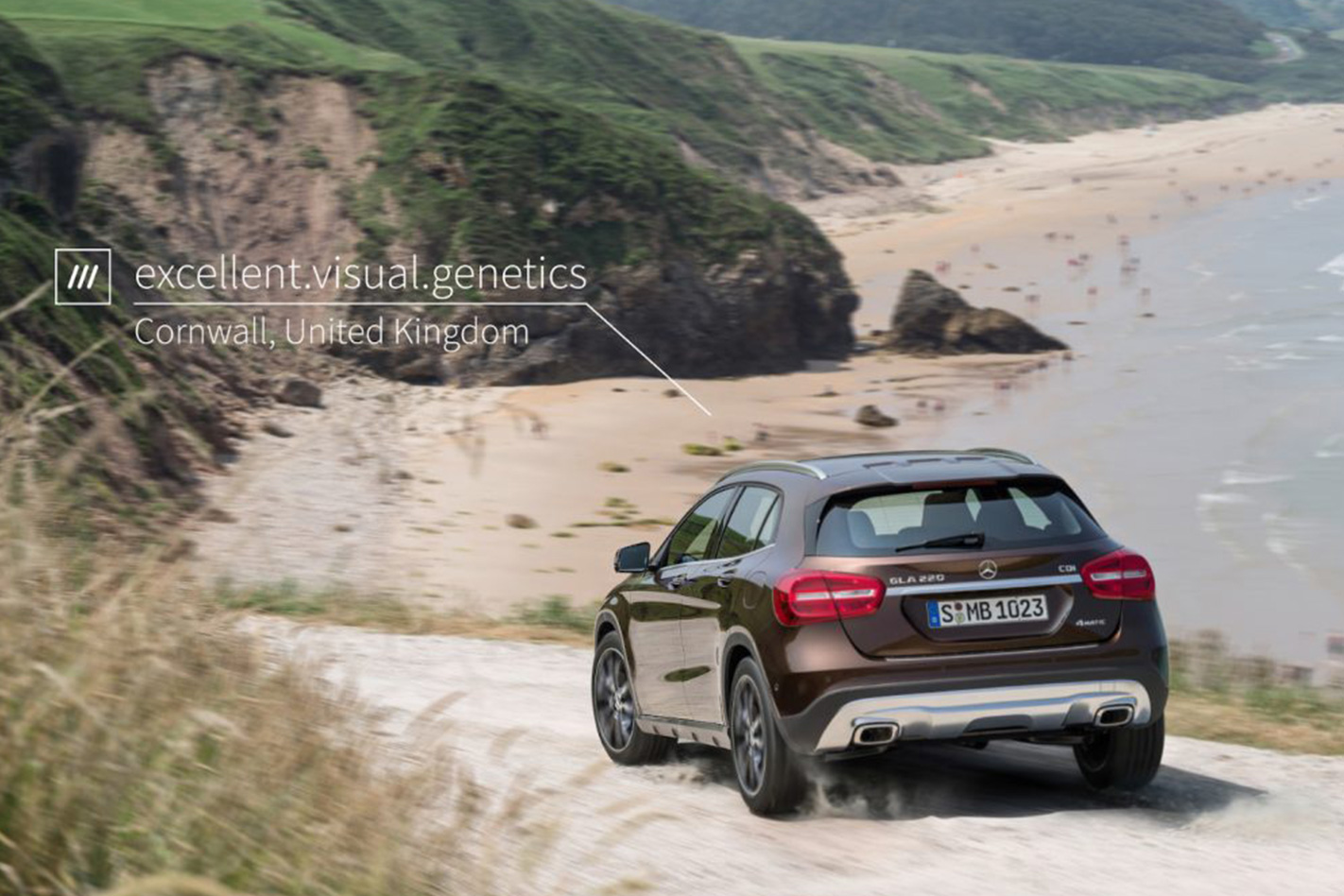
Mercedes-Benz was the first to form a partnership for its new MBUX in-car information system and now Land Rover has teamed up, integrating What3words into an off-road adventure application, and the early adopters will surely be joined by more automotive partners.
Like many great inventions, What3words is a simple idea made possible by an incredibly complex information network, requiring the entire planet to be divided into 57 trillion 3×3-metre squares.
Rather than a number or address, each square has already been allocated a unique identity of just three random words, such as:
- warns.booed.snoring
- solved.later.detect
The idea has a number of key advantages. Firstly, you don’t need a street address to pinpoint a location anywhere in the world. With a global grid of squares, you can indicate any location in the world in exactly the same way as longitude and latitude coordinates, but instead of a series of 12 digits, the location is described in three random words.
That has clear advantages when you are somewhere remote and there may not even be a landmark to guide directions, let alone a street address – precisely why Land Rover has incorporated the service into its ARDHI off-road application.
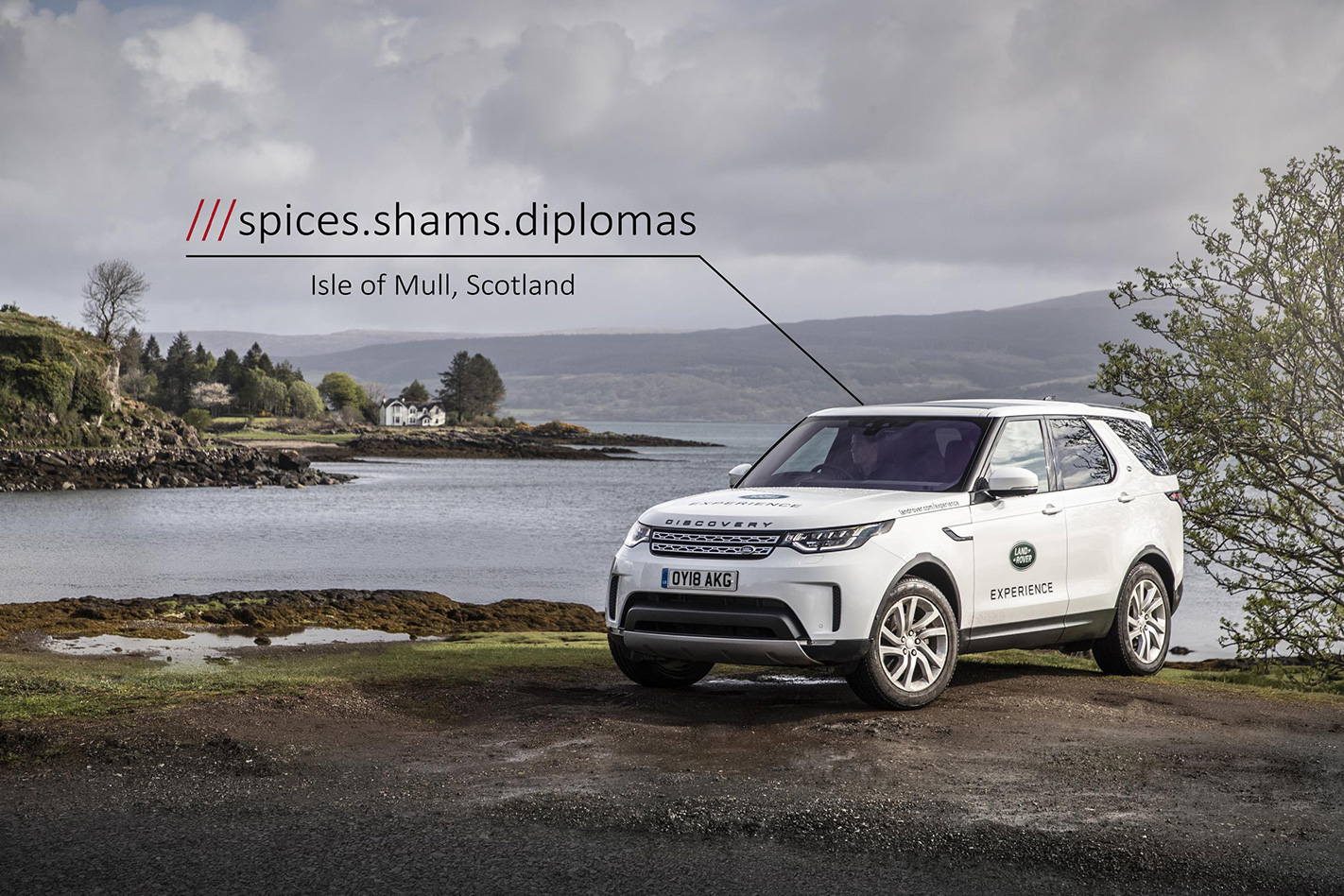
The application allows adventurous off-road enthusiasts to plan routes across the Middle East and Africa – areas without reliable mapping – as well as pinpointing key locations and can even send up a ‘flare’ for other users nearby, if you need assistance.
Coordinates, while accurate, are prone to errors and just one wrong digit can lead to an entirely different point on the planet. Twelve numbers are also hard to remember especially if the navigator has no way of recording them. Three words, however are far easier to recall, pass on and are less prone to mistakes.
In its latest application of What3words, Land Rover demonstrated the simplicity and effectiveness of the service on the remote Scottish island of Mull, where the local doctor had asked for help navigating the outpost.
Using the system, the locations of far-flung farms and businesses could be rapidly entered, allowing medical attention to be deployed to patients faster and more accurately.
But isolated locations are not the only use for the service and Mercedes has adopted the technology for vehicle navigation around more familiar urban landscapes as well.
The theory goes that remembering three short words is a lot simpler than a street number, street name, suburb and city.
Not convinced? Let’s try it. Which of these addresses would you rather have to remember, recall and enter into your navigation? All three will lead you to the same place on earth.
- 1829 North East Industrial Pkwy, Greenup, KY 41144, USA
- 38®31’58N 82®48’17W
- processes.declare.boat
