
Lexus has released a special edition variant of its RX SUV that bridges the gap between the entry-level Luxury and up-spec F-Sport.
Limited to 300 units, the RX Crafted costs an additional $7100 over the Luxury spec and is available with the five-seat RX300 four-cylinder turbo, RX350 V6 petrol and RX450h hybrid variants.
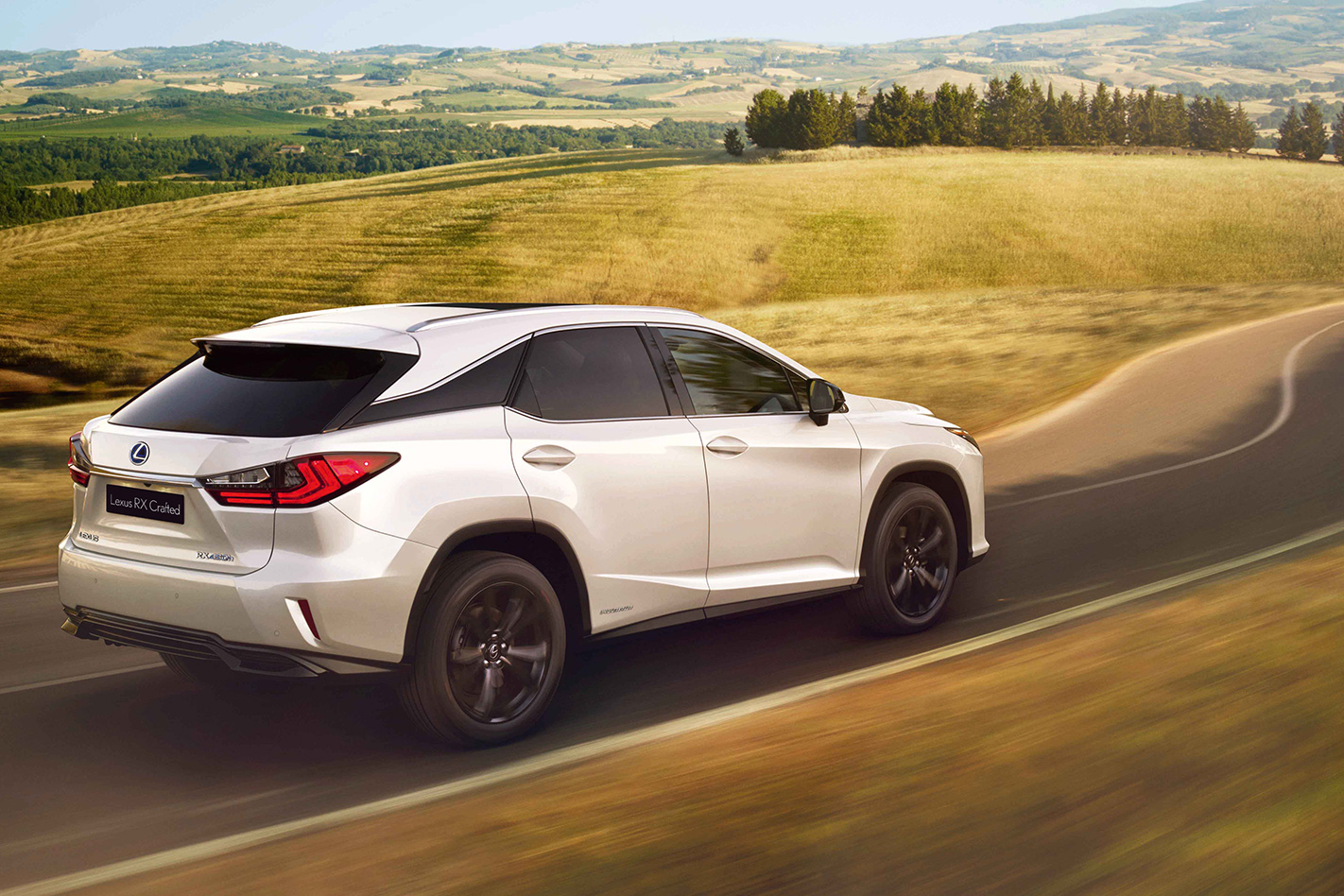
That extra coin brings a range of desirable features including a moonroof, colour head-up display, 12.3-inch high-definition infotainment screen (upgraded from 8-inch) and a premium 15-speaker Mark Levinson sound system.
The exterior has also been enhanced with bolder, black 20-inch alloy wheels complemented by black grille accents, fog-lamp surrounds, mirror caps and rear bumper.
Pricing starts at $81,351 for the RX300 Crafted, which is around $5000 less than the RX300 F-Sport.Like every vehicle in the RX Line, the Lexus RX Crafted comes standard with Lexus Safety System+, which includes pre-collision safety system with pedestrian detection and autonomous emergency braking.
The fourth generation Lexus RX range was expanded in February this year with the addition of seven-seat RX350L and RX450hL variants, which have helped see the premium SUV’s sales rise by 22.7 percent compared to the same time last year.2018 Lexus RX Crafted Special Edition pricing
- RX300 Crafted 2.0-litre turbo – $81,351
- RX350 Crafted – $88,521
- RX450h Crafted – $97,260
Jaguar has put its F-TYPE SVR and Jaguar XJR575 into service as taxis… at the Nürburgring.
The ‘Ring Taxi’ is a fairly standard phenomenon now, but was arguably made famous by racer and actual Nürburgring wizard Sabine Schmitz and the BMW M5 which was offered up for passenger rides around the Green Hell.
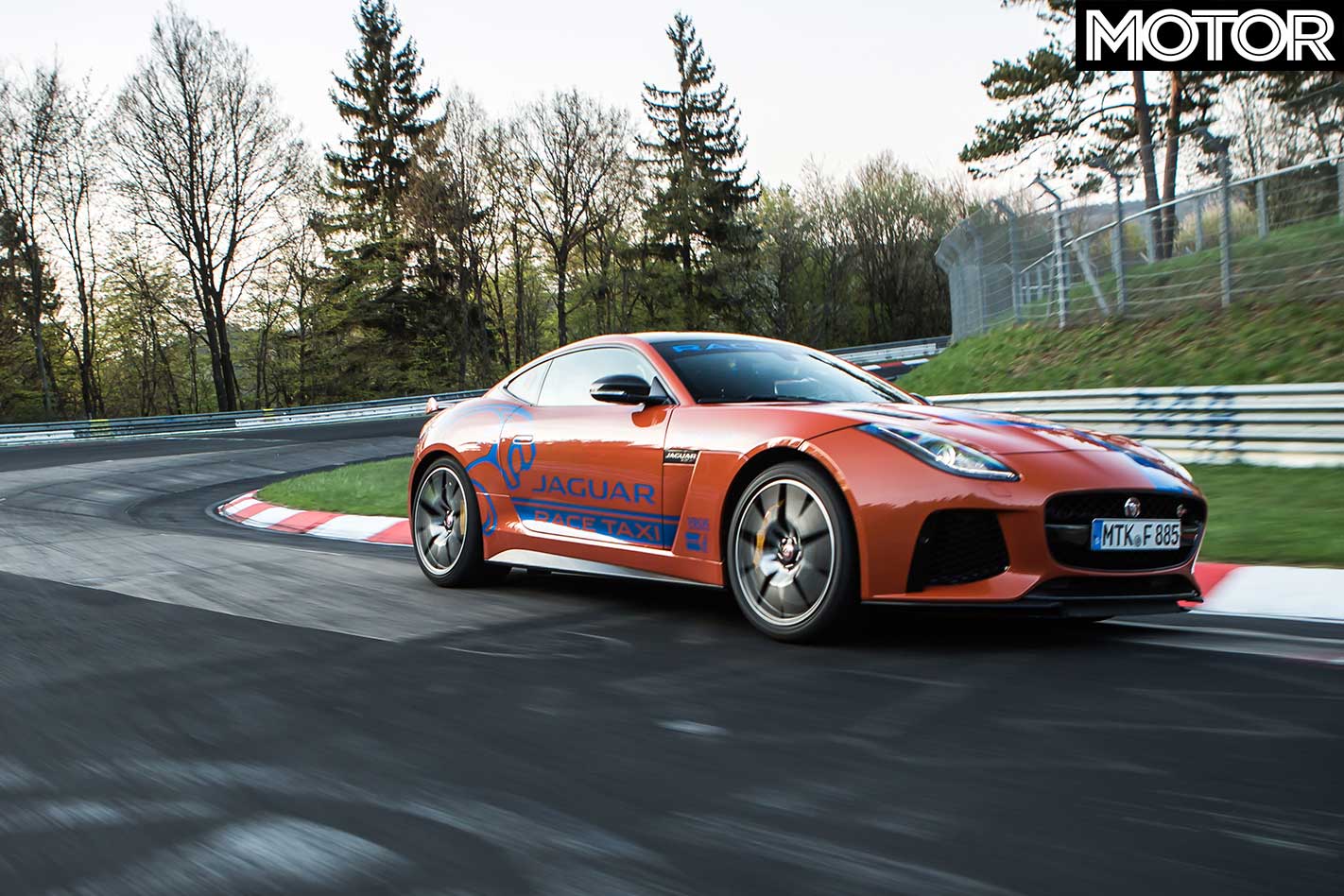
Following the trend, Jaguar is joining in by putting paying punters in their choice of a British super sedan or growling SVR coupe, both powered by Jag’s 423kW/700Nm supercharged 5.0-litre V8.
Jaguar’s calling them ‘Race Taxis,’ rather than Ring Taxis, which is a separate brand’s domain.
One passenger can join a professional driver for a round of the ‘Ring in the F-Type SVR – it’s only got two seats – but three can join in for a lap in Jaguar’s XJR575, “the fastest and most powerful XJ ever made.”
Unfortunately, Jaguar says passenger laps in the two supercharged taxis are only running until November.
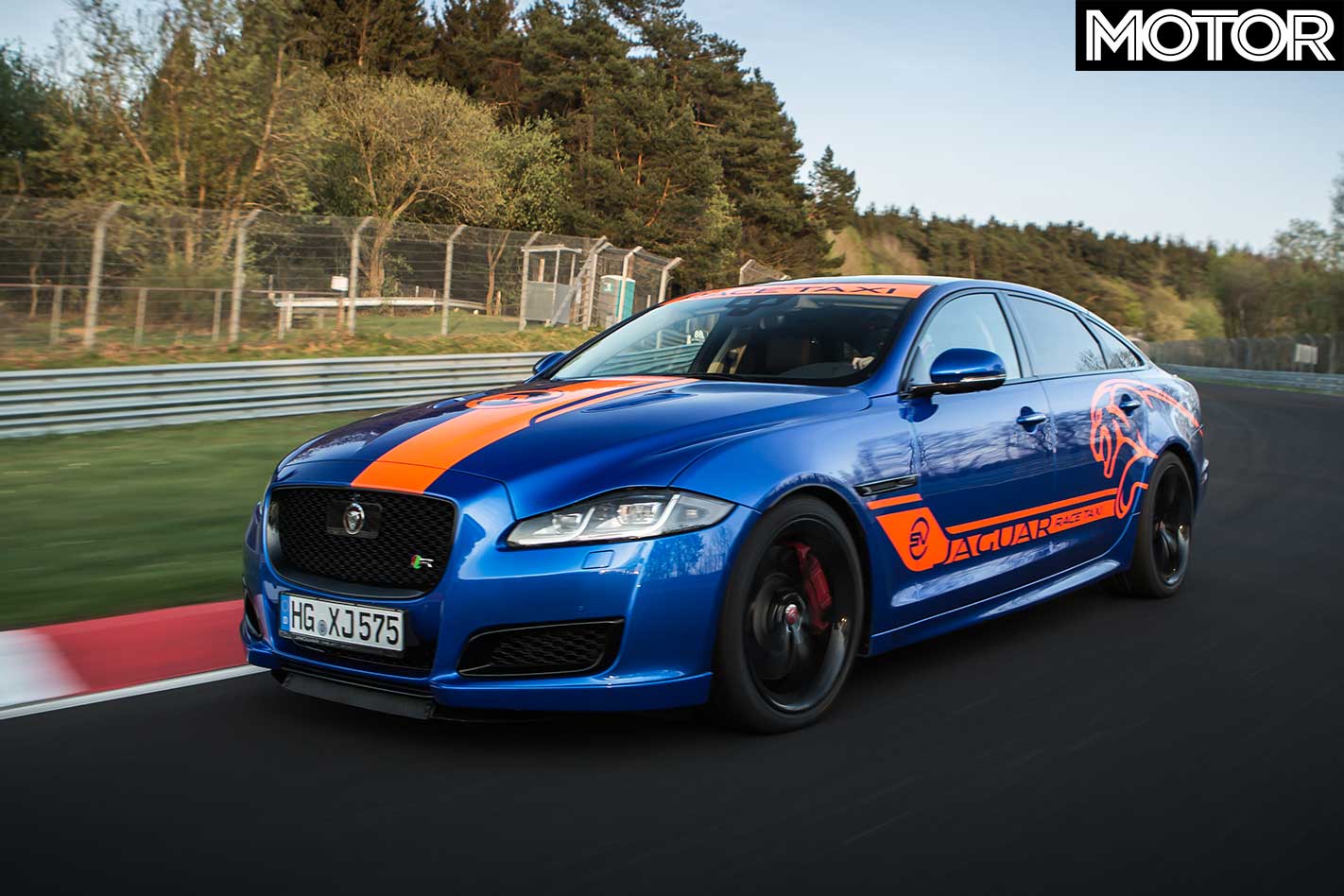
In the meantime, pricing is €199 per lap in both the F-TYPE SVR and XJR575, which makes the XJR575 much cheaper for a group of three.
For that, customers get half an hour in total, including the safety briefing and a video of their lap at the end of the trip.
Jaguar also notes that even though the exact spec on the F-Type might change, “it will always be a two-seat Jaguar Special Vehicle Operations model with 5.0l V8 supercharged engine and at least 423kW.”
Oddly enough, we’ve also actually known about the XJR575 ‘Race Taxi’ for a while – since at least April, when we spotted it in the below video of supercars testing at the ‘Ring.
The entire Kia Stinger range sold in Australia now boasts a five-star ANCAP safety rating following the inclusion of automatic emergency braking in entry-level S variants.
The Stinger’s release last year saw ANCAP award different ratings to different variants, including an embarrassing three stars to the lower-spec cars.
While all Stinger variants scored well structurally in terms of impact protection, the lack of impact avoidance technology meant that the Stinger 200S and 330S variants could only receive three stars.
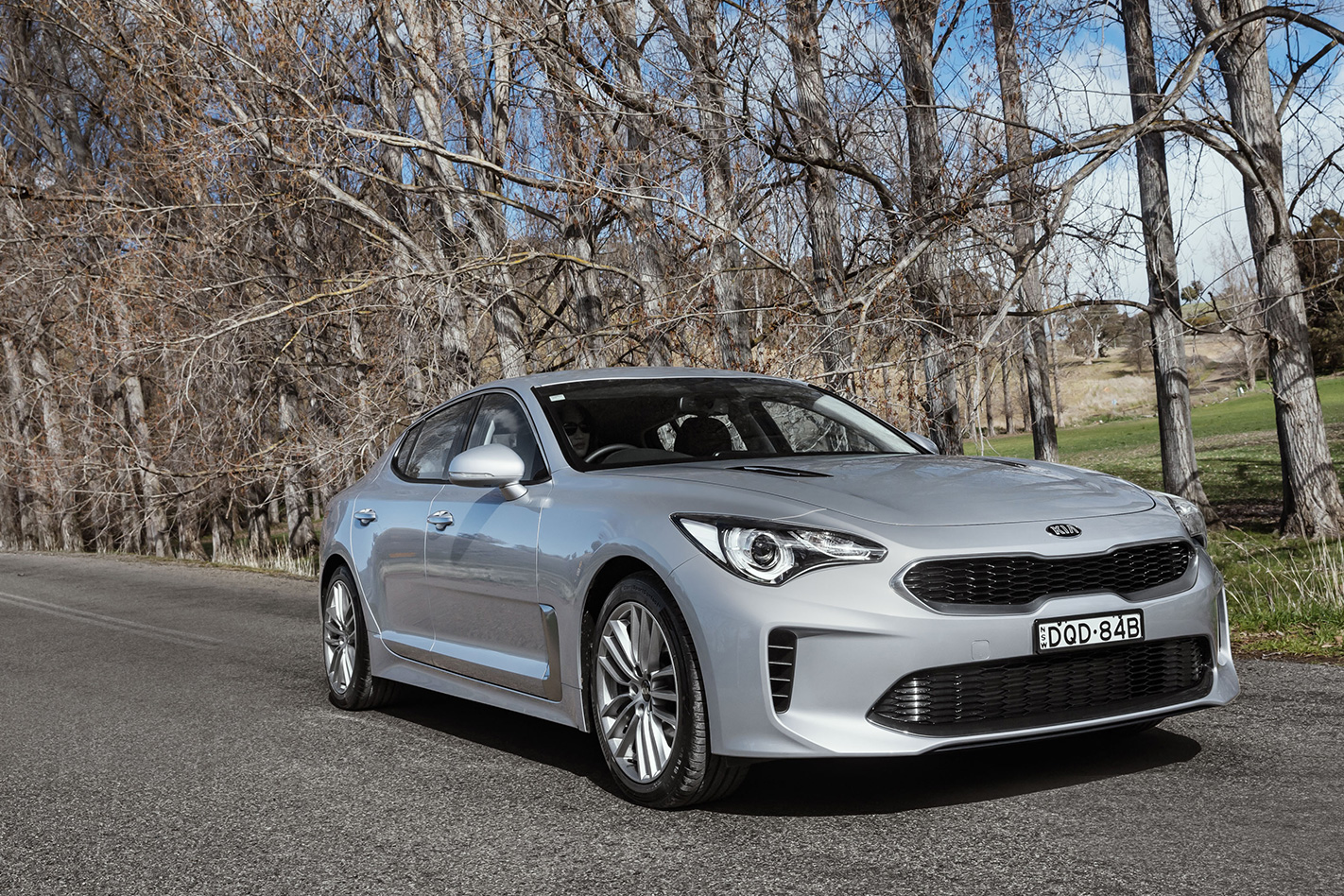
Meanwhile the Stinger Si, GT-Line and GT, which all had autonomous emergency braking and lane-keep assist, received the maximum 5-Star rating.
“As soon as we were made aware of the unusual situation regarding the original ANCAP rating of the Stinger, Kia Motors Australia took steps to rectify and ensure consistency across the model range,” said Kia Australia chief operating officer Damien Meredith.
“At no stage was there any suggestion that the physical crash safety of any Stinger model was less than any other grade, however the absence of some technology on the entry-level cars led to a split rating. With the inclusion of AEB on both S grade models that situation no longer exists.”
The addition of AEB and lane keeping assist on all Stingers manufactured from March 2018 results in a $1000 price bump for the S models, with the 200S and 330s now retailing for $46,990 and $49,990 respectively.
Mercedes-Benz Australia has confirmed it will bring the launch edition of the Mercedes-AMG GT four-door coupe, the 2019 Mercedes-AMG GT 63 S 4MATIC+ Edition 1, to Australia.
A spokesperson for the Affalterbach brand’s local importer told MOTOR that the car would “definitely” be headed to Australia, with deliveries expected to start in Q2 2019.
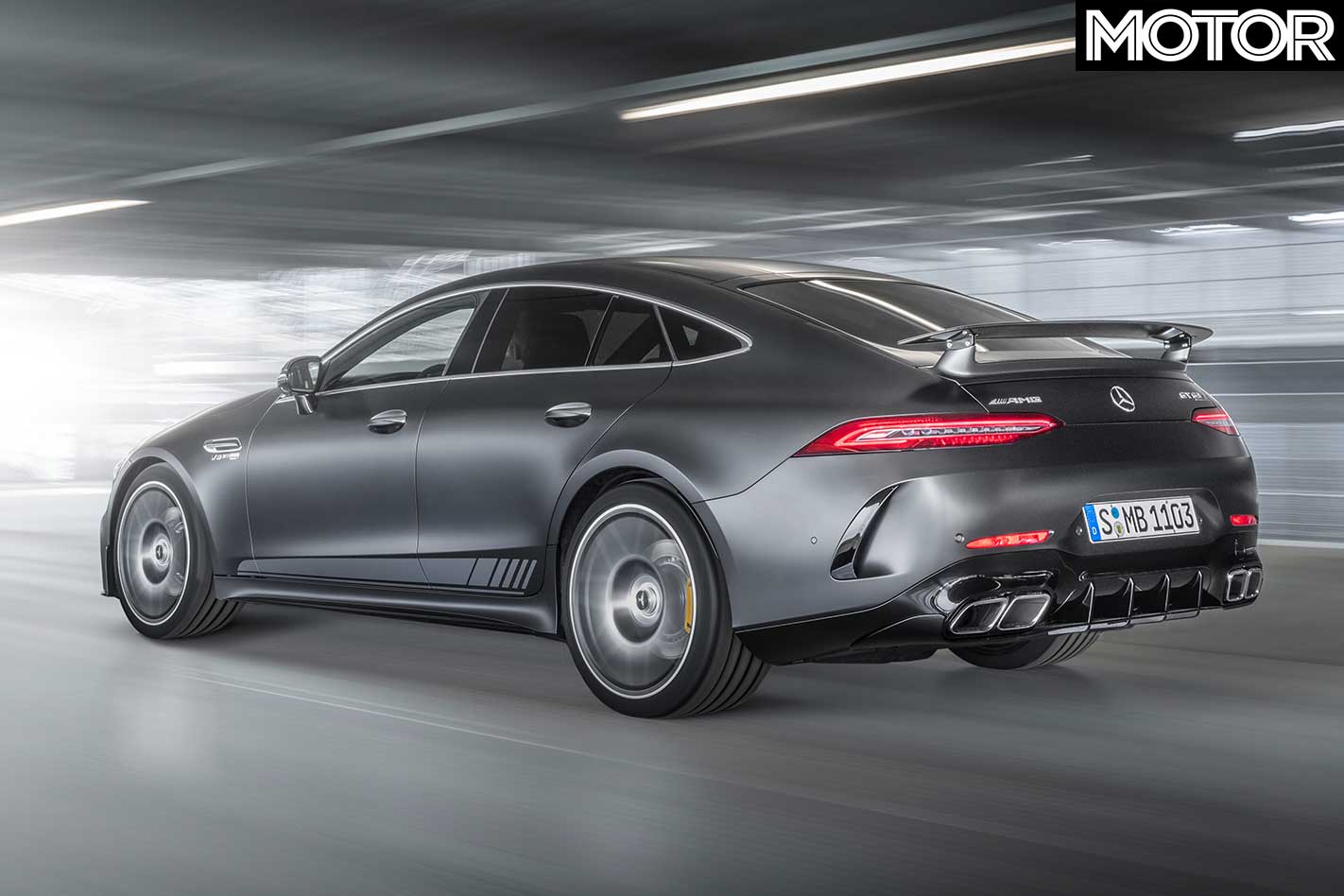
The Edition 1, which is only available for the first 12 months of the vehicle’s lifespan, shares its core specs with the Mercedes-AMG GT63 S, though is distinct through its aerodynamic changes and unique livery.
This means it’s still powered by a 4.0-litre twin-turbo V8, producing 470kW and 900Nm, and launching the 2045kg car to 100km/h in just 3.2 seconds, and on to a top speed of 315km/h.
AMG specifies that a larger front splitter, an enhanced diffuser, and an adjustable rear spoiler mark the most significant aerodynamic alterations to the four-door coupe, with an extra 30kg of downforce being generated at 300km/h.
In terms of its purely visual changes, the GT63 S Edition 1 receives 21-inch AMG spoke forged wheels, which are painted matte black to suit the also-matte graphite grey decal stripes on the bodywork.
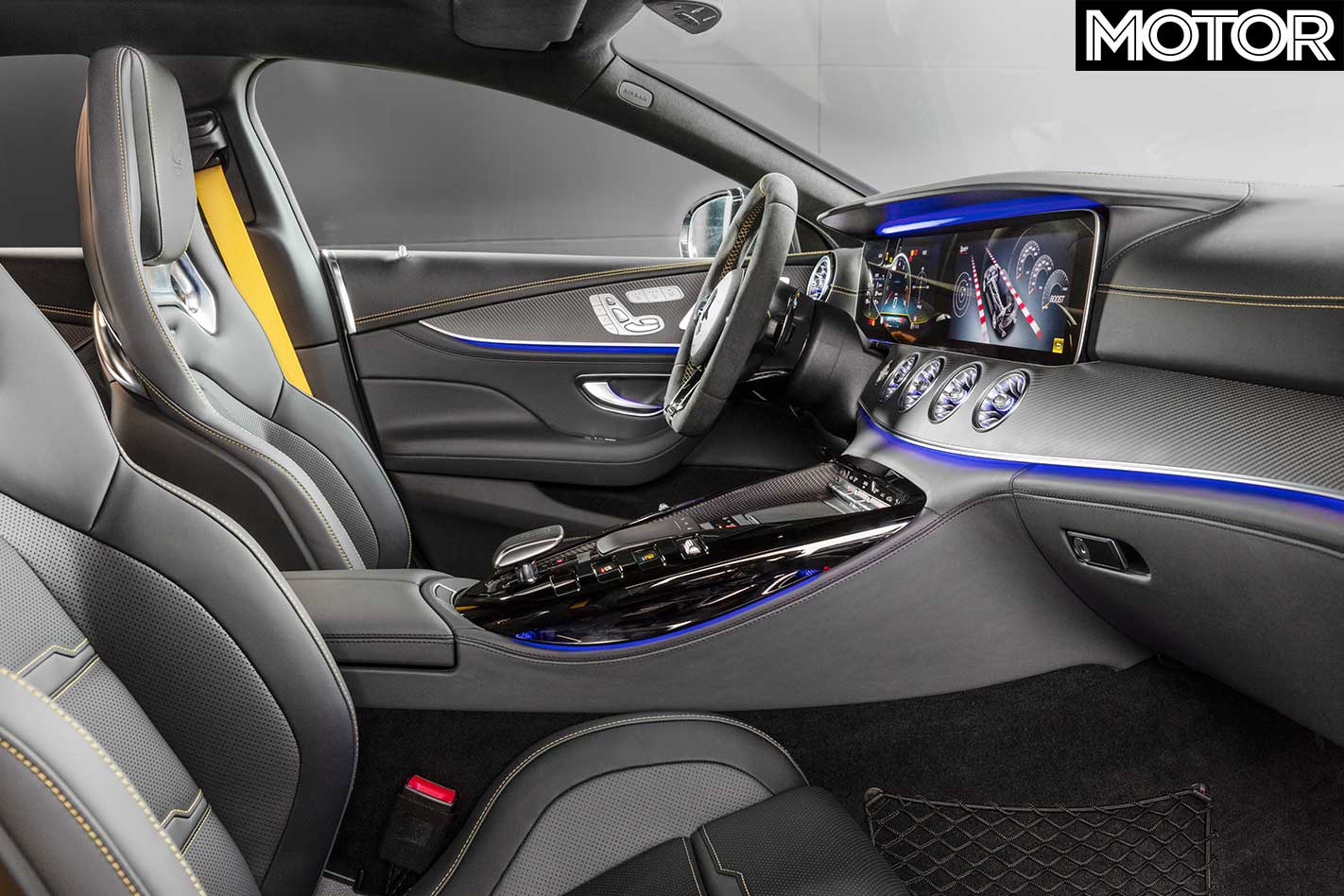
Interior additions to the Edition 1 consist of AMG Performance seats, yellow contrasting stitching through the grey and black Nappa leather, as well as yellow seat belts, plus plenty of carbon trim and specific Edition 1 badging.
Mercedes-Benz Australia hasn’t yet confirmed pricing for the Standard GT four-door, let alone the Edition 1, but a spokesperson told MOTOR that allocation will depend on local demand and how many units are built though the 12-month production period.
The other versions of AMG’s four-door, the GT53 and GT63 (non-S) aren’t available as an Edition 1 version.
SUVs have been blamed for a large spike in the number of pedestrians killed in the US, a study from an independent road safety advocacy claims.
However, the Insurance Institute for Highway Safety has also taken a swipe at the US’s increasing appetite for horsepower, laying part of the blame at the feet of performance car owners who are more likely to speed in urban areas.

“From 2009 to 2016, the largest increases in pedestrian deaths occurred under the circumstances that historically have seen the highest numbers of pedestrian fatalities,” the IIHS said. “Pedestrian deaths increased 54 percent in urban areas, which include both cities and what most people consider suburbs. They also increased 67 percent on arterials, 50 percent at non-intersections and 56 percent in the dark.”
It didn’t hold back in its assessment of where those extra deaths came from. “Although pedestrian crashes most frequently involved cars, fatal single-vehicle crashes involving SUVs increased 81 percent, more than any other type of vehicle,” it said. “The power of passenger vehicles involved in fatal single-vehicle pedestrian crashes, as measured by the ratio of horsepower to weight, also increased, with larger increases at the top of the scale.”
The IIHS also took a shot at the rush to add autonomous vehicles to US roads: “The March crash of an Uber vehicle that killed a woman in Tempe, Arizona, was unusual for involving a self-driving vehicle. But in other ways, it was typical of fatal pedestrian crashes: an SUV traveling on an urban arterial road struck a person crossing mid-block in the dark.”
Pedestrian deaths in the US have jumped 46 percent since reaching their lowest point in 2009, as pedestrian crashes have become both deadlier and more frequent. It is in stark contrast to Australia, where pedestrian deaths have fallen 18 percent over the same period.
The Australian Road Deaths Database, which records every road-based fatality since 1989, does not list the type of vehicle involved in a crash unless it is a truck or a bus. A spokesman for the Department of Infrastructure, which collates the data, told Wheels the information it collected did include police reports of a vehicle’s make or model.
However, “in over 25 percent of cases, vehicle details are not recorded and the vehicle coding is not sufficiently consistent to provide reliable data on model safety”, the spokesman said.

The IIHS report suggests speed enforcement will go a long way to helping reduce the pedestrian-based road toll.
“Reliable information on vehicle speeds is not available in fatality data, but IIHS researchers did find that the vehicles involved in fatal pedestrian crashes, like the overall vehicle fleet, are increasingly powerful,” it said. “Previous IIHS research has shown that vehicles with higher horsepower-to-weight ratios tend to be driven faster and are more likely to violate posted speed limits.
“Despite the dangers of high speeds, the story of speed limits in recent decades has been one of continual increases. In addition to lower speed limits, broader use of speed cameras to enforce existing limits is a proven solution. Institute research has shown that automated speed enforcement reduces speed limit violations and injury crashes.”
It said carmakers could also do their bit to help reduce the number of fatalities by changing designs to lessen the severity of crashes involving pedestrians.
“These make up an increasingly large percentage of registered vehicles, and previous studies have found that SUVs, pickups and vans are associated with a higher risk of death or severe injury to pedestrians,” it said. “Such vehicles have higher and often more vertical front ends than cars and are more likely to strike a pedestrian in the head or chest. Changes in the front-end design of these vehicles could help lessen the severity of injuries when they strike pedestrians.”
TOYOTA New Zealand claims its controversial experiment with haggle-free pricing is delivering the goods, despite a big slump in sales in April.
The brand, which last month introduced fixed prices for its showroom products as part of a rationalisation of the way it does business in the island nation, said the Drive Happy Project was “still on target” after posting just 1310 passenger car sales, and 712 commercial vehicle sales for April. The result was 26 percent lower than April last year.
“We expected a significant dip in sales for April,” Toyota New Zealand chief executive Alistair Davis said in a statement released to Wheels. “Transitioning to a new way of doing business is not going to happen overnight, or even in one month. We are in this for the long term.”
Davis said buyers still needed to get used to the idea of driveaway pricing for all new models in showrooms – some at up to $10,000 less than the previously negotiable list price and much closer to what the industry calls the transaction price – the dollar amount the customer actually pays for the car once the haggling ends.
The fixed price quoted includes delivery costs, number plates, registration, a full tank of fuel, floor mats, 1000km of NZ-specific road user charges on diesel vehicles and a seven-day money-back policy if the customer is not happy with the vehicle.
The timing of Toyota NZ’s big shift in the way it sells cars coincides with the end of the Japanese financial year, with higher sales traditionally recorded in March as dealerships clear their books of inventory ahead of the new financial year. “We had a good March, with Toyota stores contributing to this as they increased their demonstrator fleets as part of the Drive Happy Project,” Davis said.
He said April was also traditionally slower for fleet, rental and lease buyers, a factor that was also hurting numbers for a brand that traditionally commands one in every five of NZ’s new-car sales.
Toyota has completely rationalised the way it does its business in NZ, introducing a system it claims dramatically improves the customer experience. Dealers are now known as “agents”, and dealerships have become “stores” as the new model ditches sales commissions – the industry-wide incentive used to encourage new-car sales staff to close a deal – for a salaried job.
It is not known if the project is being considered for other Toyota markets globally.
Toyota Australia said NZ had different market conditions and regulations compared with here, although it was “looking at their [Toyota NZ’s] work with great interest”.
“It is quite a revolutionary change and approach to the selling of vehicles,” spokesman Orlando Rodriguez said. “We have no plans to go down this path here in Australia at present, but would definitely look at the impact of some elements of this change that could be adopted to give our customers a better experience at every touchpoint they have with us during their ownership experience.”
New design features for both 2019 Dodge Challenger SRT Hellcat and 2019 Dodge Charger have been teased by the brand, which is on the verge of revealing more information about the future of both models.
Though concrete facts are scarce at this stage, it’s clear each will still have an SRT Hellcat version, signified by the badge for the Charger and an outright confirmation for the Challenger.
It is, however unclear what power and specifications each car’s 2019 iterations will bring.
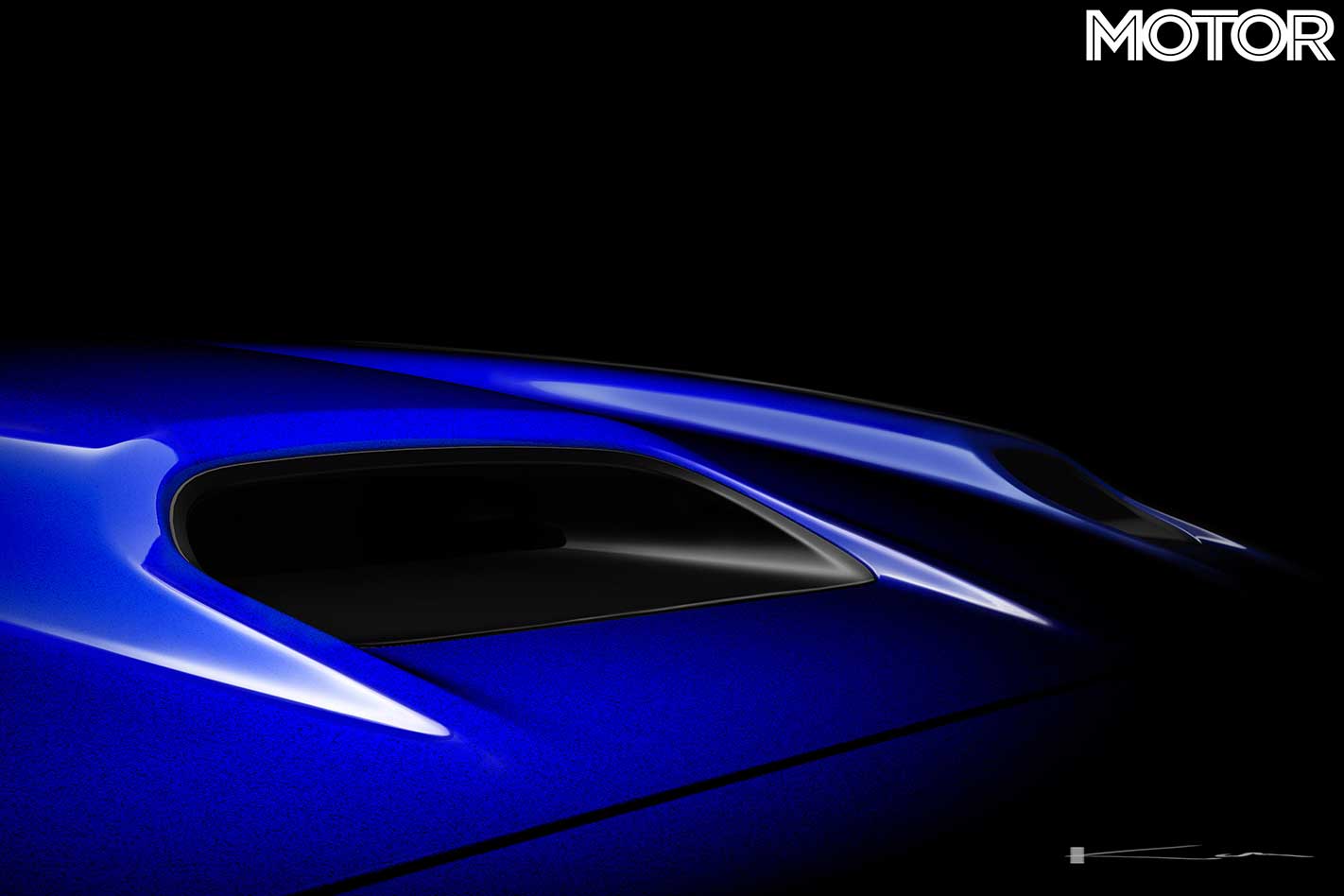
“Dodge is again reaching back to its 100-plus-year history as it evolves the Challenger lineup for 2019, introducing a new dual-snorkel bonnet on Hellcat models that pays homage to the distinctive Mopar design themes from some of its most famous muscle cars.
“This new fully functional hood harkens back to the mid-60s and early-70s, but with a modern interpretation that looks even more sinister and provides maximum air intake to the supercharged powerplant.”
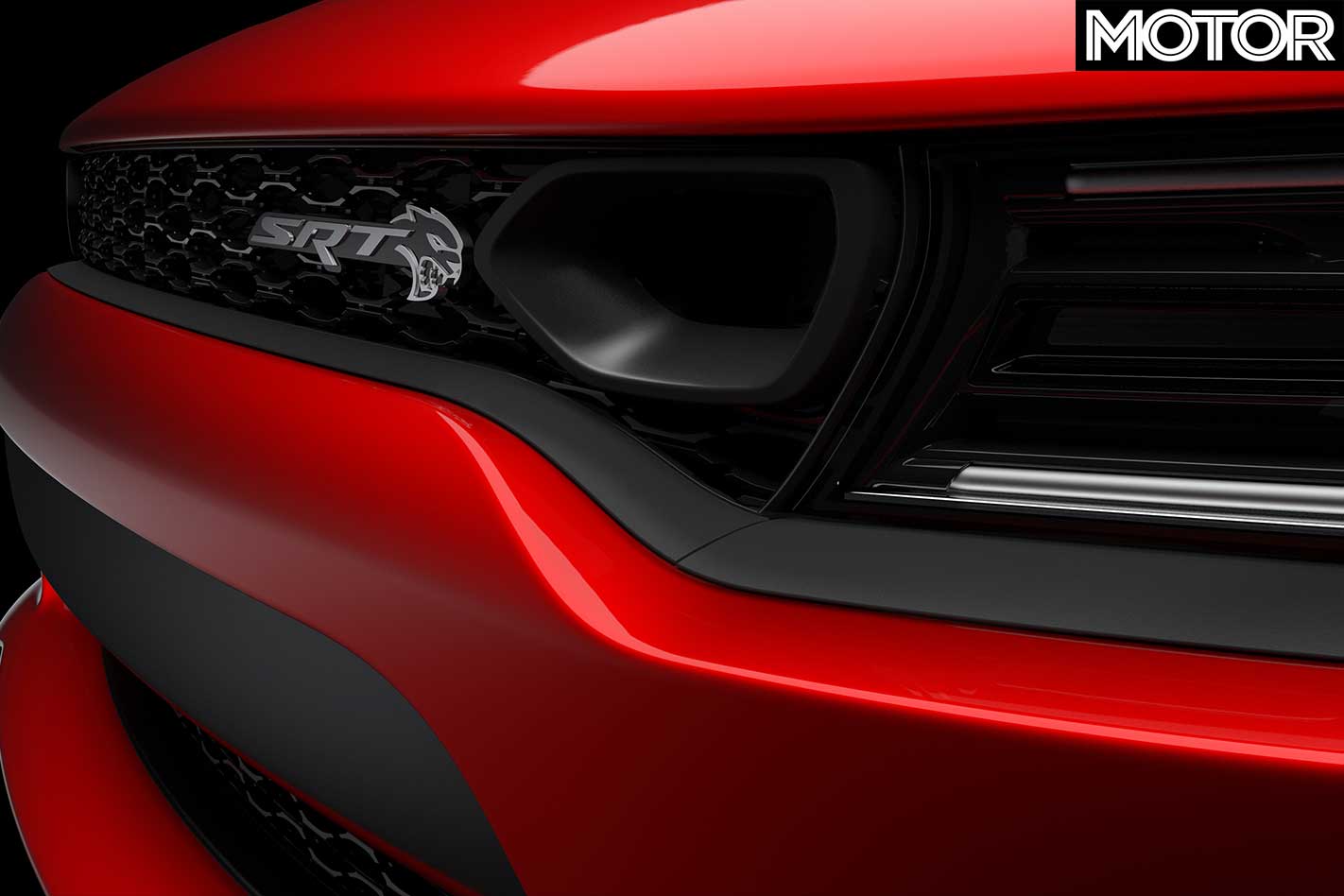
A similarly vague statement is presented to media regarding the Charger, though Dodge does say the grille will be an all-new design.
“The Dodge Charger, America’s only four-door muscle car and the sales leader in the large car segment for five years running, is doubling down with upgrades inside and out for the 2019 model year.”
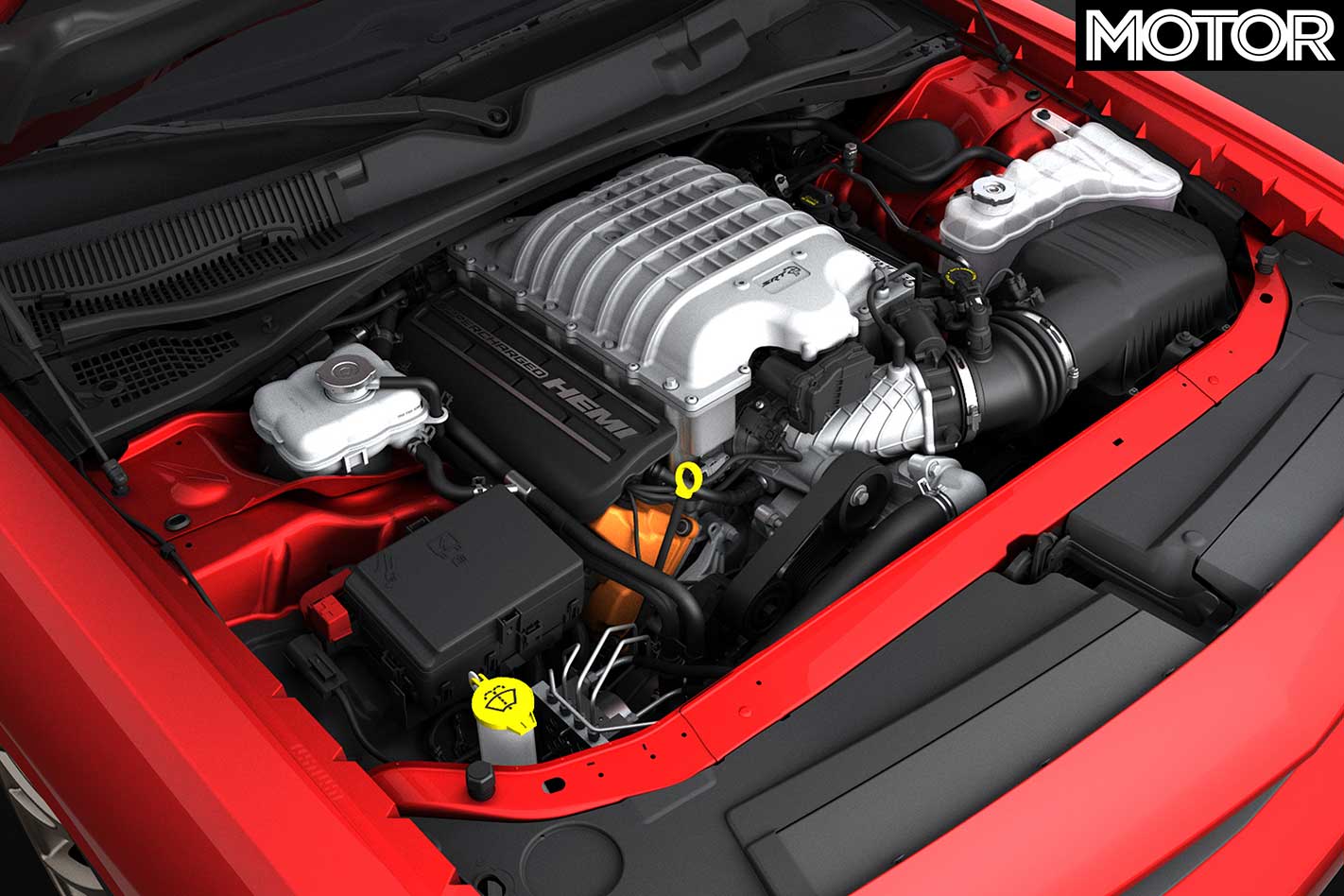
Whether the supercharged 6.2-litre ‘Hellcat’ Hemi V8 which will very likely power these cars is still going to produce 527kW and 881Nm is unclear, though a power upgrade wouldn’t be a surprise.
Dodge says it’s due to announce more details in the Northern Hemisphere’s summer, which is winter for us here in Australia. Stay tuned.
Japan’s ‘kei car’ regulations were introduced post-World War II to create a new affordable class of car for a population recovering from the ravages of global conflict. The regulations live on these days as a way of limiting vehicle size to ease parking and traffic congestion in one of the world’s most crowded countries.
Kei-car regulations have evolved over the years, but since 1998 cars are required to fit within a ‘box’ measuring 3400mm long, 1480mm wide and 2000mm tall. Maximum engine size is 660cc (though forced induction is allowed) and maximum power is capped at 47kW.
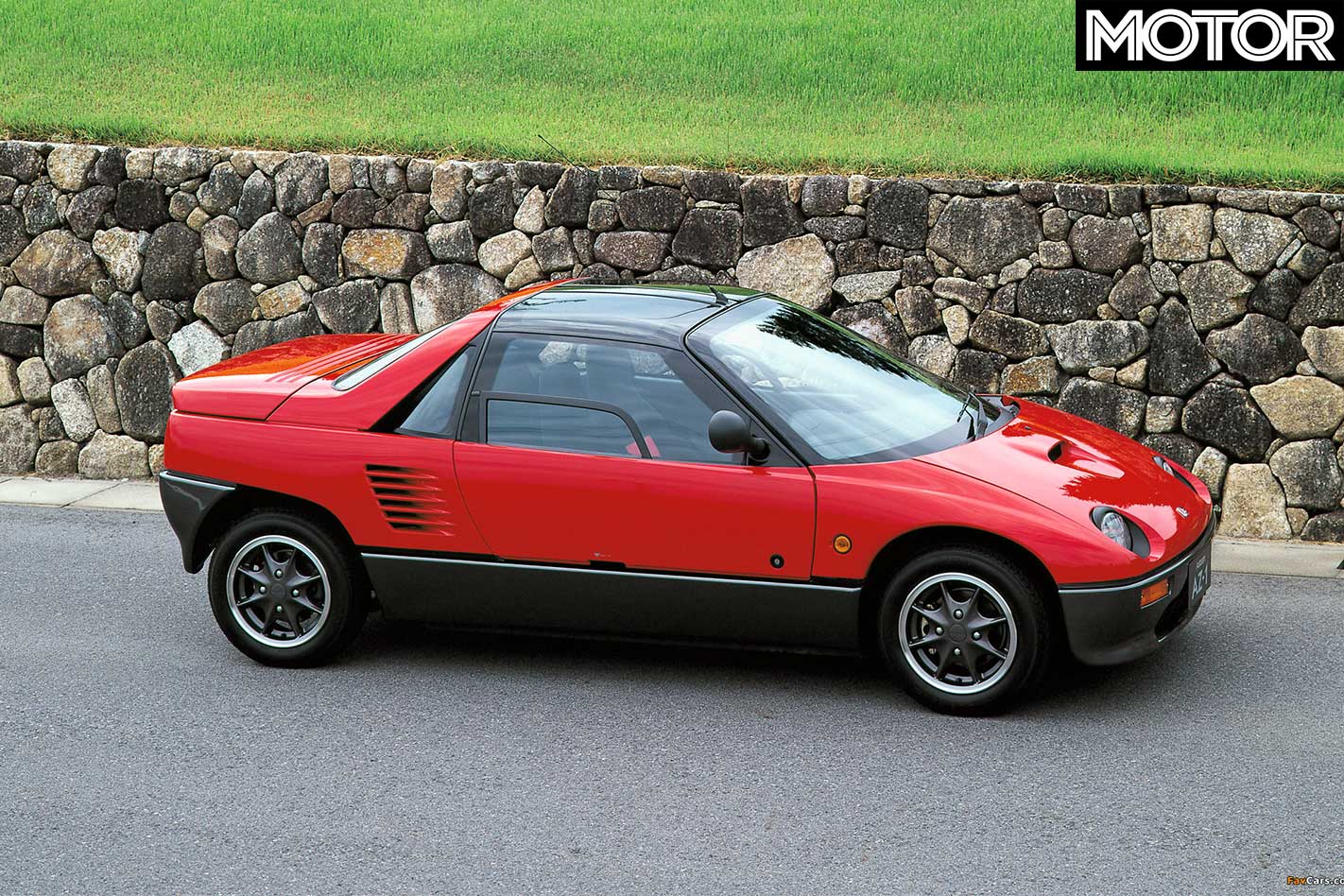
Generally, Kei cars take the shape of practical, yet bland vans. However, Japan’s booming economy in the late 1980s led three manufacturers to boldly develop Kei sports cars. Suzuki made the Cappuccino, Honda the Beat and Mazda the AZ-1. Not that it was called such, as Mazda sold the AZ-1 under its Autozam brand, which also sold Lancias. Strange.
The seeds of the AZ-1 idea were planted with Suzuki’s RS/1 concept from 1985. However, when Suzuki abandoned the mid-engined route in favour of the more conventional Cappuccino, Mazda picked up the baton.
It introduced three distinct versions of the ‘AZ-550’ as concepts at the 1989 Tokyo Motor Show, with ‘Type A’ being selected as the car for production. Google the other versions, as they’re extremely cool, especially the Group C-inspired race version.
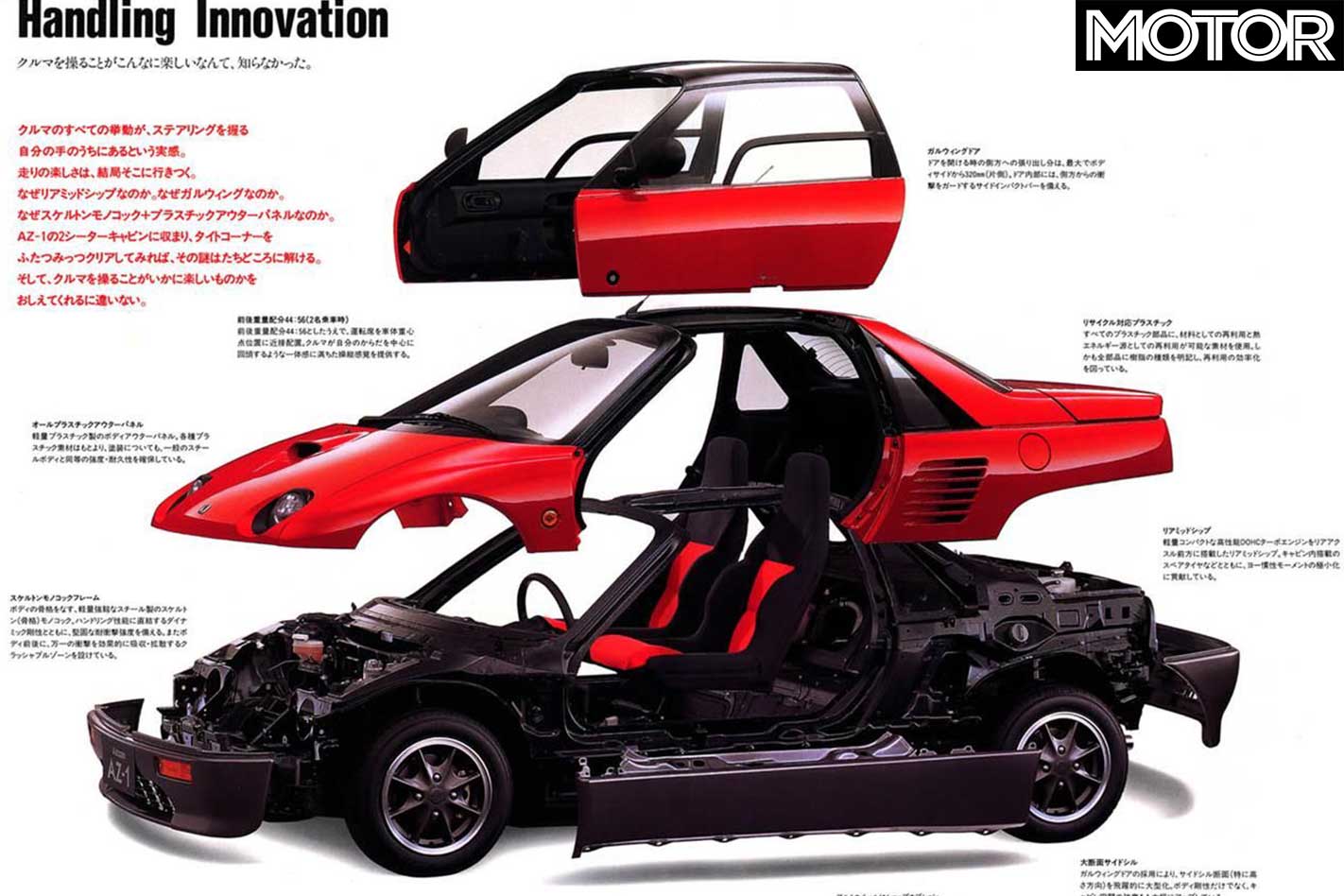
Stylistically, the only real change was fixed headlights replacing the pop-up units of the concept, though changing from aluminium to steel for the car’s internal tube frame skeleton delayed its introduction until September 1992.
Sadly, by this time Japan was in the grips of a fierce recession. Mazda planned to sell 800 AZ-1s a month, but ceased production having built just 4392, plus a further 531 for Suzuki called the Cara. A price tag within spitting distance of Mazda’s own MX-5 certainly didn’t help its cause.
SPECIAL DEAL In an effort to shift stock, Mazda developed all manner of AZ-1 special editions. One of the first was this Mazdaspeed version, including a body kit, alloy wheels and the option of uprated suspension, an LSD and sports exhaust.
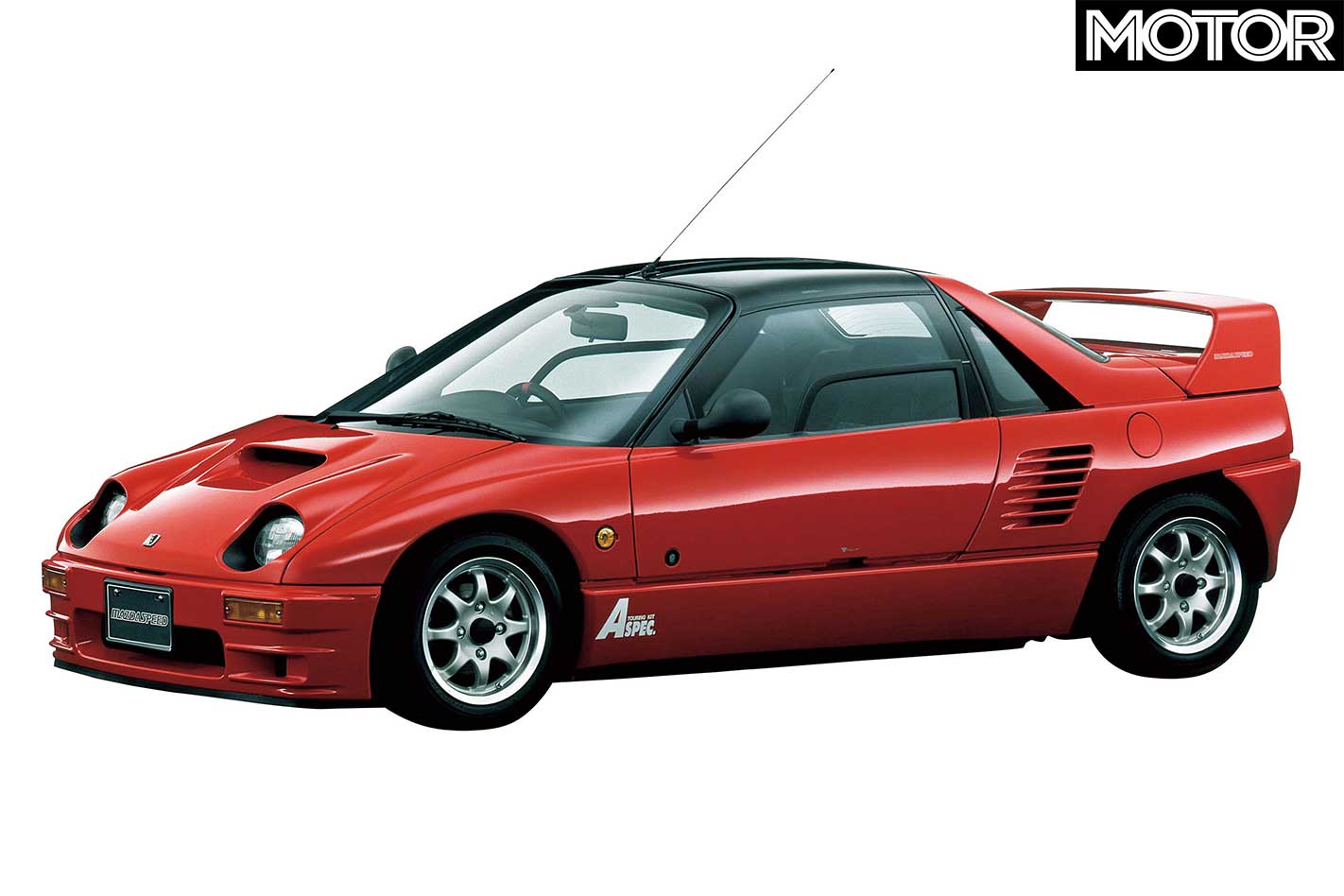
1992-1995 AUTOZAM AZ-1 SPECS Engine: 657cc I3, DOHC, 12v, turbo Power: 47kW @ 6500rpm Torque: 85Nm @ 4000rpm 0-100km/h: 9.2sec (claimed) Price: AUD$29,000 (est)
ASTON Martin has teased an SUV that will join its line-up in 2021 that will wear a Lagonda badge and swap out hydrocarbons for a strict diet of electrons.
It will be the first global-facing Aston Martin product to wear the Lagonda badge exclusively since it was stuck on an angular, wedge-shaped sedan, the Lagonda V8, in the mid-1970s. The badge has resurfaced briefly since then: the British carmaker re-tested the world’s appetite for the badge a few years ago by building a bespoke sedan called the Lagonda Taraf that was sold almost exclusively in the United Arab Emirates.
The SUV, though, will be a global product. It was teased earlier this year at the Geneva motor show in a concept car known as the Lagonda Vision Concept, a four-seat sedan that the British luxury brand teased could roll off the production line as early as 2021. Of note, the brand also had two 40 percent scale models in one corner of its stand, one of a coupe, and the other of an SUV.
“Scheduled to be unveiled in 2021, the Lagonda SUV will be the first luxury SUV exclusively driven by zero emission powertrain technologies and will uphold all the qualities of the reinvented super-luxury marque,” Aston Martin said in a statement. “Not only will it feature an evolution of the incredibly bold design language first seen with the show-stopping ‘Vision Concept’, the SUV will be built around near-future technologies, such as its advanced battery electric drivetrain, making the Lagonda SUV the first of its kind: an ultra-stylish, supremely luxurious, fully electric emission-free vehicle.”
What the release doesn’t say is how the SUV will fit into Aston’s vision that the Lagonda badge will also aim to take part, or all, of the task of driving away from the owner – another claim laid down at the Geneva reveal.
According to Aston, the form of the superfast, luxury-laden SUV will draw heavily on the design of the Geneva show car. That car was also claimed to have a driving range of about 650 kilometres before needing a recharge, which would make it one of the widest-ranging battery-powered vehicles on the market.
“Lagonda is a luxury brand, but it is also one rooted in technology,” Aston Martin chief creative officer Marek Reichman said. “It will be like no other SUV to drive, so its looks have to reflect that new reality and to serve as pathfinder to a future in which the most desirable and prestigious automobiles still have a place.”
Sometimes a company will send you the wrong item for your online order, and usually it’s a bit of a hassle to fix.
But in this case, the recipient of the incorrect item turned out to be quite lucky indeed, if not just for the story and interest it generated after being picked up by motorauthority.com.

Under the title, “Ordered new Sachs clutch kit from Amazon, this is what I got,” m3forum user ‘breadvan’ posted a few images to try and work out what had gone wrong.
“My clutch has been slipping progressively as of late and my buddy said it needs to be changed ASAP,” they wrote in the thread.
“Yesterday, I purchased a replacement OEM Sachs clutch kit off of Amazon. I received it today and this is what I got.
“It looks nothing like the stock photo on Amazon so I’m thinking I received the wrong part?”

It turns out that, yes, they had indeed been sent the wrong part. While an M3 clutch looks… well, pretty much like a standard passenger car’s clutch, this one was smaller and far more complicated.
In fact, it looks suspiciously like the clutch from a Formula 1 race car.
Just to be sure they hadn’t been mistaken regarding what to expect from a BMW E46 M3 clutch, they asked:

“Does anyone have a picture of what the OEM clutch is supposed to look like?”
MOTOR has tried contacting ZF for a price estimate on this part to no avail, but speculators have guessed anywhere between USD$7000 to USD$30,000.
Considering F1 gearboxes can cost hundreds of thousands of dollars, we’d say ‘Breadvan’ has come out on top with this clerical error.
